Research Articles
Microbial Biosensors for Fermentation Monitoring: Principles, Applications, and Future in Biomanufacturing
This article provides a comprehensive overview of microbial biosensors as transformative tools for monitoring and controlling fermentation processes.
Nanomaterial-Enhanced Biosensors: A Comprehensive Analysis of Performance Impact and Future Directions in Biomedical Research
This article provides a comprehensive examination of how nanomaterials fundamentally enhance biosensor performance, directly addressing the needs of researchers, scientists, and drug development professionals.
Biosensor Detection Limits: A Comparative Analysis for Research and Diagnostic Applications
This article provides a comprehensive comparison of detection limits (LODs) across major biosensor types, including optical (SPR, photonic crystal), electrochemical, and wearable devices.
Label-Based vs. Label-Free Biosensors: A Comparative Analysis for Biomedical Research and Clinical Diagnostics
This article provides a comprehensive comparative analysis of label-based and label-free biosensing technologies, tailored for researchers, scientists, and drug development professionals.
Evaluating Biosensor Reproducibility: A Strategic Framework for Reliable Research and Drug Development
Reproducibility is a critical determinant of reliability for biosensor platforms, directly impacting their utility in research, drug development, and clinical diagnostics.
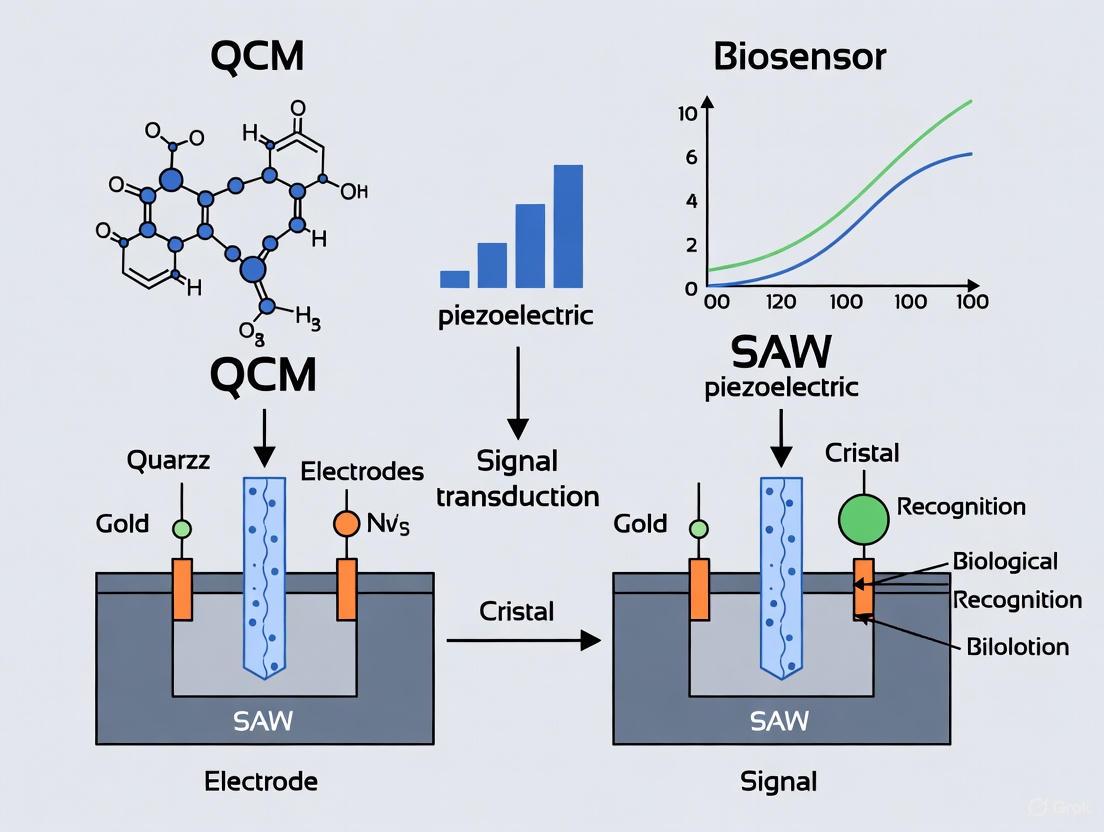
QCM vs. SAW Biosensors: A Performance Comparison for Biomedical Research and Drug Development
This article provides a comprehensive comparison of Quartz Crystal Microbalance (QCM) and Surface Acoustic Wave (SAW) biosensors, two leading label-free detection technologies.
Electrochemical vs. Optical Biosensors: A 2025 Guide for Clinical Diagnostic Applications
This article provides a comprehensive analysis of electrochemical and optical biosensors, two pivotal technologies reshaping clinical diagnostics.
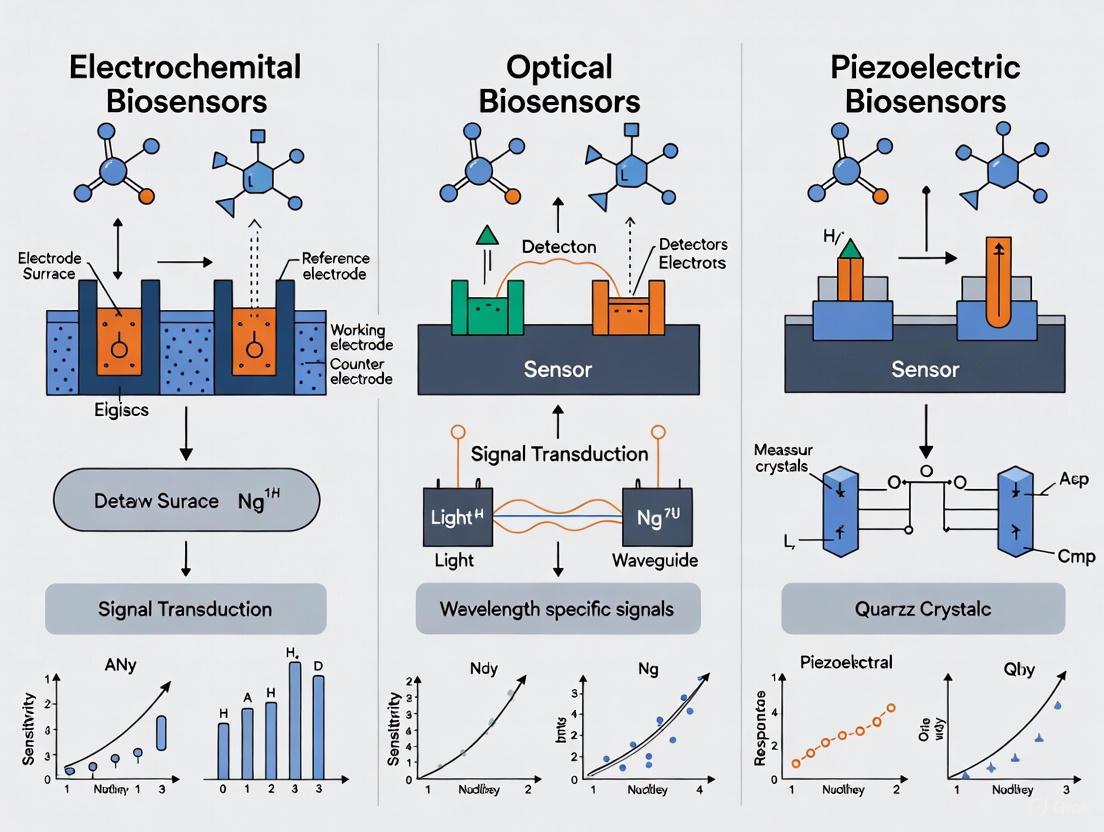
Electrochemical vs. Optical vs. Piezoelectric Biosensors: A Sensitivity and Application Comparison for Researchers
This article provides a comprehensive, comparative analysis of the sensitivity and performance of electrochemical, optical, and piezoelectric biosensors, tailored for researchers and drug development professionals.
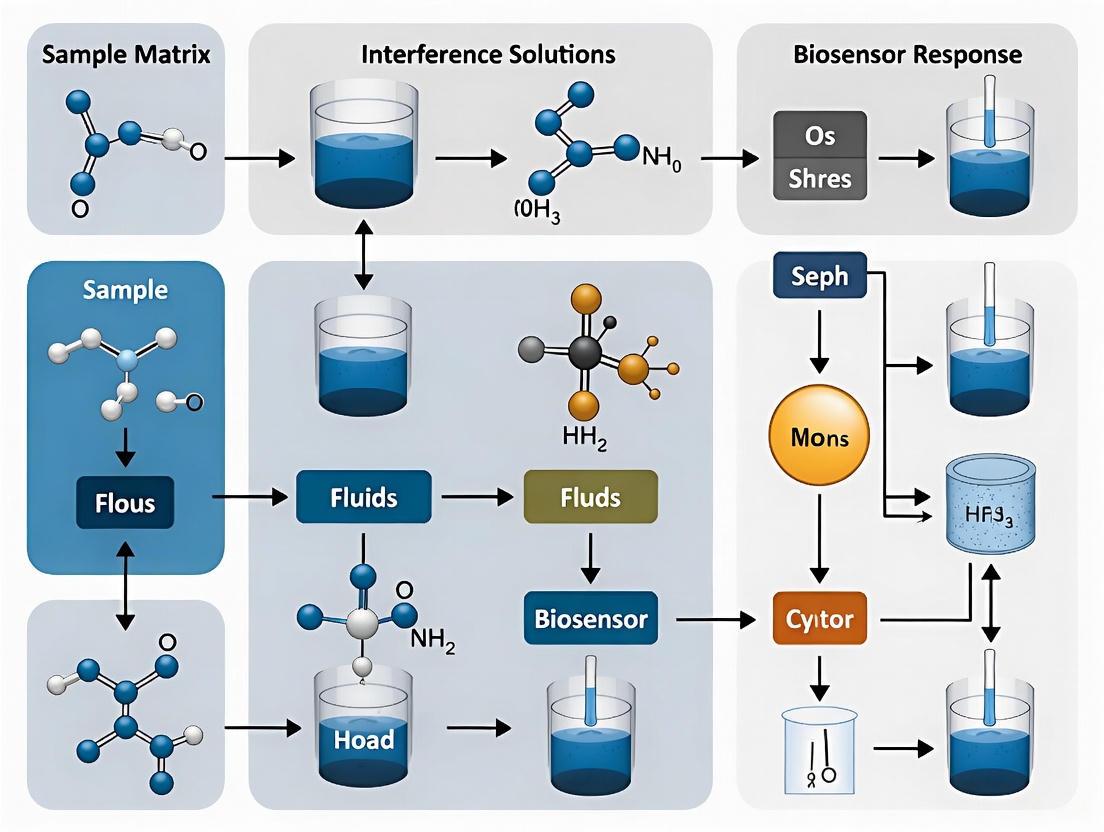
Overcoming Sample Matrix Interference in Complex Fluids: A Strategic Guide for Bioanalytical Researchers
This article provides a comprehensive guide for researchers and drug development professionals tackling the pervasive challenge of sample matrix interference in complex biological fluids like serum, plasma, and CSF.
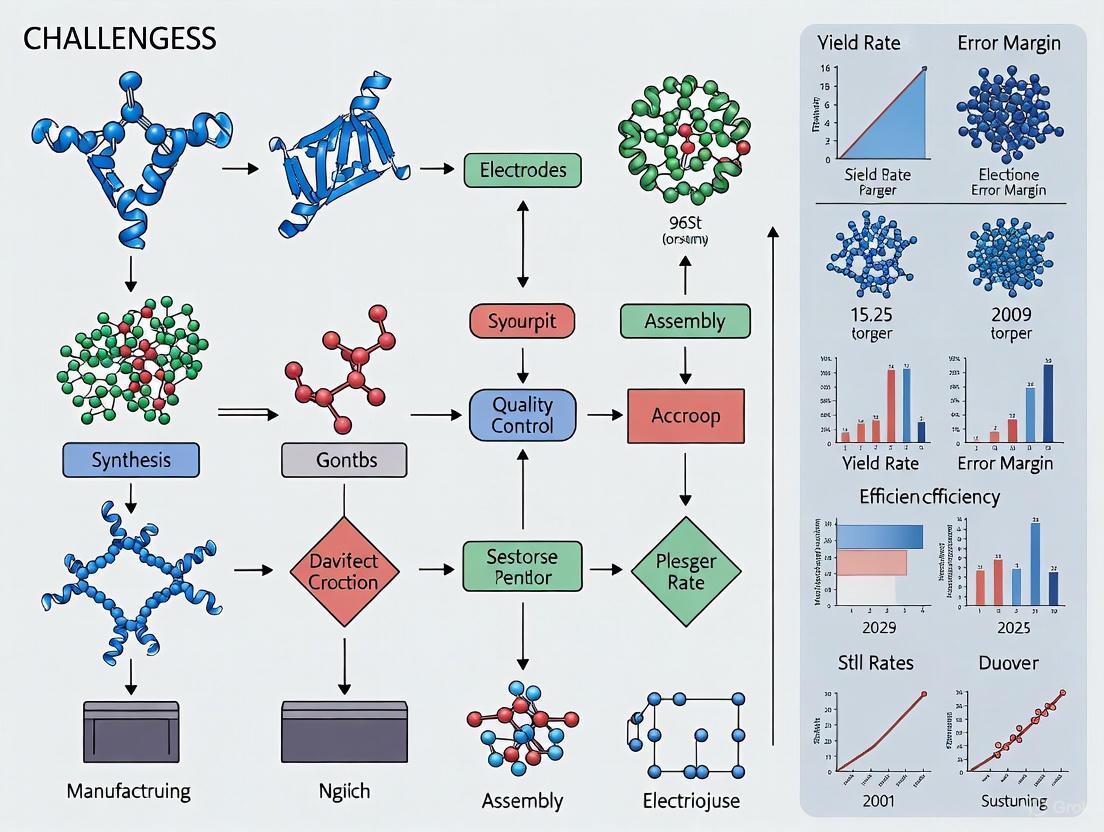
Scaling the Wall: Overcoming Mass Production Challenges in Biosensor Manufacturing for Biomedicine
This article addresses the critical technical and operational bottlenecks hindering the scalable manufacturing of reliable biosensors, a key concern for researchers and drug development professionals.