Advanced Biosensor Calibration Strategies: Combating Drift and Enhancing Accuracy for Biomedical Applications
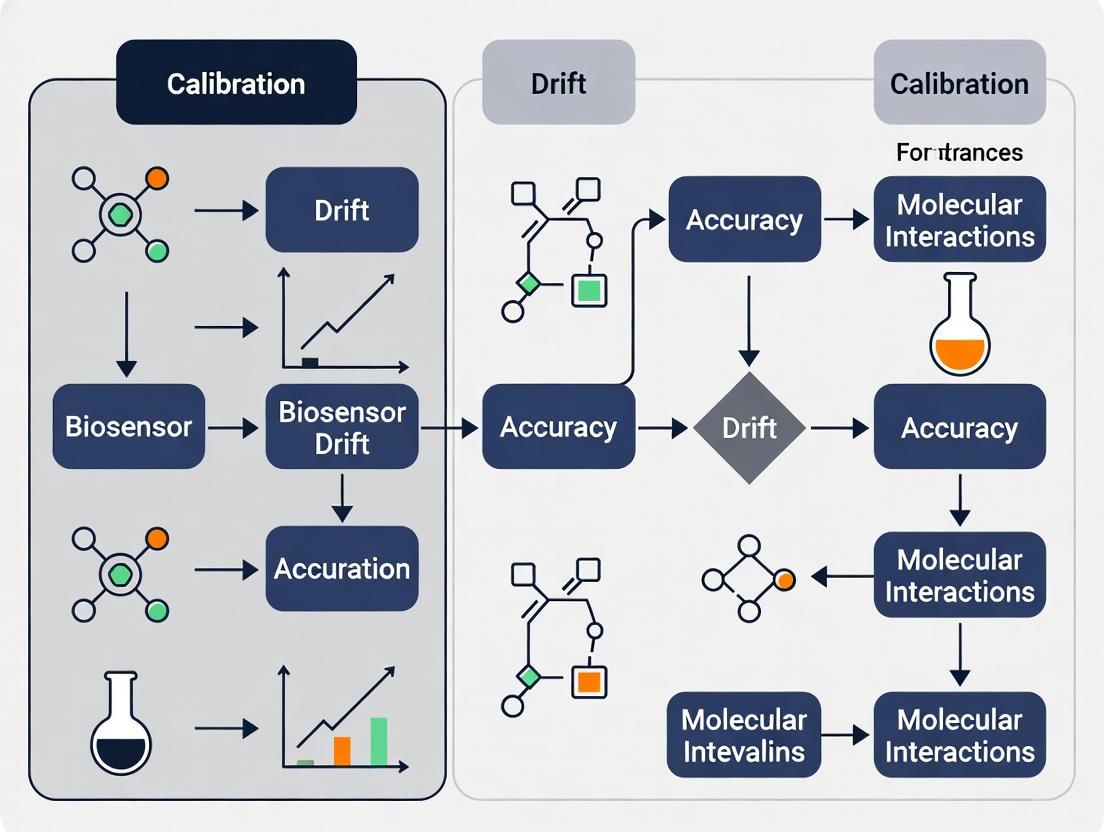
This article provides a comprehensive guide for researchers and drug development professionals on advanced calibration strategies to mitigate biosensor drift and enhance measurement accuracy.
Advanced Biosensor Calibration Strategies: Combating Drift and Enhancing Accuracy for Biomedical Applications
Abstract
This article provides a comprehensive guide for researchers and drug development professionals on advanced calibration strategies to mitigate biosensor drift and enhance measurement accuracy. Covering foundational concepts to cutting-edge methodologies, it explores the underlying causes of drift from environmental factors and aging, details empirical, computational, and machine learning correction techniques, and offers practical troubleshooting protocols. Through systematic validation frameworks and comparative analysis of real-world case studies in clinical and environmental monitoring, the content delivers actionable insights for developing robust, reliable biosensing systems capable of maintaining data integrity in long-term deployments.
Understanding Biosensor Drift: Fundamentals, Causes, and Impact on Data Integrity
FAQ: Troubleshooting Sensor Drift
Q1: What is the fundamental difference between short-term and long-term drift in biosensors?
Short-term and long-term drift are distinguished by their temporal characteristics and underlying physical causes.
- Short-Term Instability: This occurs over hours to days and is often reversible. It is primarily driven by variable environmental conditions and transient signal noise. Key factors include fluctuations in temperature and relative humidity, which can cause non-linear sensor responses, as well as initial biofouling or the unstable adsorption of biomolecules onto the sensor surface immediately after exposure to a complex sample matrix [1] [2].
- Long-Term Instability: This manifests over weeks to months and is typically irreversible, relating to the inherent degradation of the sensor system. The main mechanisms include the gradual denaturation or decomposition of the biological recognition element (such as enzymes, antibodies, or nucleic acids), ageing of the transducer material (e.g., electrode passivation), and the leaching of immobilized components from the sensor matrix. This ultimately leads to a consistent decline in signal over time [1] [3].
Q2: How can I experimentally determine if the signal change in my experiment is due to drift or a true biological response?
Differentiating drift from a true signal requires a controlled experimental design.
- Employ Control Measurements: Use a reference sensor or channel that is identical to your working sensor but is not exposed to the target analyte (e.g., blocked with a non-reactive protein). Any signal change in the control channel can be attributed to drift or non-specific binding and can be subtracted from the working sensor's signal [4].
- Implement a Standardized Calibration Check: Regularly introduce a solution with a known, fixed concentration of the analyte throughout your experimental timeline. A shift in the sensor's response to this standard over time is a direct indicator of sensor drift. This practice is crucial for maintaining measurement traceability [2] [5].
- Analyze the Signal Profile: Drift often produces a slow, monotonic change in the baseline signal, whereas a true biological response is typically correlated with the introduction or removal of the analyte and follows expected kinetic profiles (e.g., saturable binding curves for affinity-based sensors) [6].
Q3: What are the best strategies to mitigate baseline drift in electrochemical biosensors during long-term monitoring?
Mitigating baseline drift is critical for continuous monitoring applications, such as in intravascular biosensors or environmental networks.
- In-Situ Baseline Calibration (b-SBS Method): For electrochemical sensors, an effective strategy is the in-situ baseline calibration method. This approach leverages the finding that the sensitivity (
a) of a batch of similar sensors is often highly consistent. The method involves using a fixed, pre-determined median sensitivity value for all sensors, while regularly calibrating only the baseline offset (b) remotely. This can be done by exploiting periods of minimal analyte concentration (e.g., using the 1st percentile method) without needing physical co-location with a reference instrument. This strategy has been shown to significantly improve data quality, with one study reporting a 52.6% decrease in RMSE for NO2 sensors [5]. - Dynamic Baseline Tracking Technology: Some advanced sensor systems incorporate technology that physically mitigates the effects of temperature and humidity on the raw sensor signal. By isolating the concentration signal from environmental noise, this technology reduces non-linear drift and allows for the use of simpler, more robust linear calibration models, enhancing long-term stability [2].
- Regular Recalibration Cycles: Data from long-term field deployments suggest that for electrochemical sensors monitoring gases like NO2, NO, O3, and CO, baseline drift can remain stable within ±5 ppb over 6 months, supporting a semi-annual recalibration frequency to maintain accuracy [5].
Q4: My biosensor's sensitivity is dropping. Is this a calibration issue or sensor failure?
A drop in sensitivity indicates a potential failure of the biorecognition element or transducer surface.
- Diagnosis: This is likely not a simple calibration issue that can be fixed by adjusting the baseline offset. A loss of sensitivity points to a degradation of the active components. Re-calibrating will not restore lost sensitivity; it will only redefine the relationship for the now-less-sensitive device.
- Common Causes:
- Fouling or Passivation: The sensor surface becomes contaminated or blocked, preventing the analyte from reaching the recognition element [6].
- Denaturation of Biological Elements: Enzymes, antibodies, or aptamers lose their activity and specific binding capabilities over time, especially in sub-optimal storage or operating conditions [1] [3].
- Leaching of Immobilized Components: The biological layer slowly detaches from the transducer surface [1].
- Solution: This typically requires sensor replacement or regeneration. To prevent this, optimize immobilization methods, use more stable biological mutants, or apply protective coatings or membranes to enhance the operational stability of the recognition element [6] [1].
Quantitative Data on Sensor Drift and Stability
Table 1: Characteristics of Short-Term vs. Long-Term Drift
| Feature | Short-Term Instability | Long-Term Instability |
|---|---|---|
| Timescale | Hours to days [1] | Weeks to months, years [1] [3] |
| Primary Causes | Temperature/humidity fluctuation, non-specific binding, electronic noise [1] [2] | Biorecognition element denaturation, transducer ageing, component leaching [1] [3] |
| Reversibility | Often reversible [1] | Typically irreversible [1] |
| Impact on Signal | Increased noise, baseline wandering [6] | Consistent signal decline (loss of sensitivity) or baseline drift [1] |
| Mitigation Strategies | Environmental control, signal filtering, real-time compensation algorithms [6] [2] | Robust immobilization, optimized storage, periodic recalibration, use of stable materials [6] [1] |
Table 2: Empirical Data on Biosensor Stability from Recent Research
| Sensor Type / Application | Key Stability Observation | Quantitative Metric | Citation |
|---|---|---|---|
| Electrochemical Gas Sensors (NO₂, NO, O₃, CO) | Long-term baseline drift in field conditions | Remained within ±5 ppb (for NO₂, NO, O₃) and ±100 ppb (for CO) over 6 months [5] | [5] |
| Electrochemical Gas Sensor Network | Performance of in-situ baseline calibration (b-SBS method) for NO₂ | Median R² increased by 45.8% (from 0.48 to 0.70); RMSE decreased by 52.6% (from 16.02 to 7.59 ppb) [5] | [5] |
| General Biosensor Ageing | Consensus on stability challenge | Stability loss is the sum of all changes affecting the biological material, signal mediator, and matrix [1] | [1] |
| Intravascular Biosensors | Challenge for implantable devices | Long-term biostability and signal accuracy are listed as key challenges for clinical translation [3] | [3] |
Experimental Protocols for Drift Characterization
Protocol for Quantifying Long-Term Baseline Drift
Objective: To measure the baseline drift of a biosensor over an extended period under simulated or real operational conditions.
Materials:
- Biosensor system under test
- Stable, analyte-free buffer or matrix solution
- Environmental chamber (optional, for controlled T/ RH)
- Data logging system
Methodology:
- Initial Stabilization: Place the biosensor in the analyte-free solution and allow the signal to stabilize for a predetermined period (e.g., 1-2 hours).
- Continuous Monitoring: Record the sensor's output signal (e.g., current for amperometric sensors, frequency for acoustic sensors) at a fixed sampling rate over the entire test duration (e.g., 30 days).
- Environmental Recording: Simultaneously log environmental data (temperature, humidity) if not controlled.
- Data Analysis:
- Plot the signal versus time.
- Calculate the baseline drift as the change in signal from the initial stabilized value at the start of the experiment to the value at the end.
- Express drift as an absolute value (e.g., in nA, Hz) or as a percentage of the initial signal or the sensor's full-scale range.
- The study on electrochemical gas sensors used this principle, assessing drift over 6 months to recommend a recalibration frequency [5].
Protocol for Side-by-Side (SBS) Field Calibration
Objective: To calibrate a biosensor and characterize its performance by co-locating it with a reference-grade instrument.
Materials:
- Biosensor unit(s)
- Reference Grade Monitor (RGM)
- Power supply and data connectivity
Methodology:
- Co-Location: Install the biosensor immediately adjacent to the inlet of the RGM to ensure both devices are sampling the same air/fluid stream.
- Data Collection: Operate both the sensor and the RGM simultaneously for a recommended calibration period. Research suggests a 5–7 day calibration period is often sufficient to minimize errors in calibration coefficients for environmental gas sensors [2].
- Data Processing: Time-align the data series from the sensor and the RGM.
- Model Building: Develop a calibration model (e.g., linear regression, machine learning model) that predicts the RGM reference values based on the raw sensor signal(s) and any environmental covariates (e.g., temperature).
- Validation: Validate the model using a separate portion of the co-located data not used for training. Key performance indicators include R² (coefficient of determination) and RMSE (root mean square error) [2] [7] [5].
Visualizing Drift Mechanisms and Calibration Workflows
The Scientist's Toolkit: Research Reagent Solutions
Table 3: Essential Reagents and Materials for Biosensor Development and Drift Mitigation
| Research Reagent / Material | Function in Biosensor Development | Application Context |
|---|---|---|
| Reduced Graphene Oxide | Nanomaterial used to enhance electrode surface area, improving electron transfer and sensor sensitivity. A major research cluster focuses on its use for stability [1]. | Electrochemical biosensors for detecting various analytes like clenbuterol [1]. |
| Gold Nanoparticles (AuNPs) | Used for functionalizing electrode surfaces and signal amplification. Often combined with other nanomaterials like graphene [1] [8]. | Electrochemical immunosensors (e.g., for BRCA-1 protein) and aptasensors [1] [8]. |
| Poly(o-phenylenediamine) | A conducting polymer used for the entrapment and immobilization of biorecognition elements on transducer surfaces, potentially improving stability [1]. | Creating selective membranes in enzyme-based amperometric biosensors [1]. |
| Specific Recognition Elements | Engineered proteins (e.g., truncated ACE2), antibodies, or aptamers that provide the specific binding for the target analyte. Their stability is paramount [3] [4]. | Target recognition layer in affinity-based biosensors (e.g., SARS-CoV-2 detection) [4]. |
| Bio-layer Interferometry (BLI) Systems | An analytical instrument used to quantitatively study the kinetics (kon, koff) and affinity (KD) of biomolecular interactions in real-time, informing optimal receptor selection [4]. | Pre-screening of biorecognition elements prior to biosensor fabrication to ensure high specificity and affinity [4]. |
Troubleshooting Guides
Guide to Diagnosing Sudden or Gradual Signal Loss
Problem: Your biosensor is experiencing a continuous decline in signal output or a sudden signal drop.
Diagnostic Steps:
Step 1: Isolate the Environment. Test the sensor in a controlled phosphate-buffered saline (PBS) solution at 37°C and then in a complex medium like whole blood or serum.
- Observation A: Significant signal loss occurs in whole blood, but not in PBS.
- Diagnosis: This indicates biofouling or enzymatic degradation is the primary mechanism [9].
- Observation B: Signal loss occurs at a similar, slow rate in both environments.
- Diagnosis: This points to an intrinsic electrochemical degradation mechanism, such as monolayer desorption [9].
Step 2: Analyze the Signal Loss Pattern.
- Observation A: A rapid, exponential signal decrease within the first 1-2 hours, followed by a slower, linear decline.
- Diagnosis: The initial exponential phase is characteristic of biofouling. The subsequent linear phase is often due to electrochemical aging [9].
- Observation B: A steady, linear signal decrease from the beginning.
- Diagnosis: This is typically caused by electrochemical aging of the sensor surface, such as the desorption of a self-assembled monolayer (SAM) [9].
Step 3: Test for Reversibility. For sensors showing initial rapid drift, wash the electrode surface with a solubilizing agent like concentrated urea.
- Observation A: A significant portion (e.g., >80%) of the initial signal is recovered.
- Diagnosis: Confirms that biofouling (reversible adsorption of biomolecules) is a major contributor [9].
- Observation B: The signal loss is permanent.
- Diagnosis: Suggests irreversible damage, such as enzymatic cleavage of bioreceptors or permanent redox reporter degradation [9].
Guide to Mitigating Biofouling in Complex Media
Problem: Sensor performance degrades rapidly when deployed in biological fluids like blood, plasma, or interstitial fluid.
Mitigation Strategies:
- Strategy 1: Utilize Enzyme-Resistant Bioreceptors. Replace DNA aptamers with engineered backbones like 2'-O-methyl RNA or spiegelmers, which are highly resistant to nuclease degradation [9].
- Strategy 2: Optimize Physical Placement. For wearable epidermal biosensors, ensure conformal contact with the skin to minimize irritation and protein adsorption, and integrate microfluidic systems for continuous sweat sampling to reduce surface fouling [10].
- Strategy 3: Surface Regeneration. Implement periodic washing cycles with mild denaturants or detergents to remove adsorbed proteins and other contaminants from the sensor surface [9].
Guide to Minimizing Electrochemical Aging
Problem: Sensor signal steadily declines over time, even in clean, controlled environments.
Mitigation Strategies:
- Strategy 1: Optimize Electrochemical Interrogation Parameters. The stability of the thiol-gold bond in SAMs is highly dependent on the applied potential. Avoid scanning to overly reductive (below -0.5 V) or oxidative (above ~1.0 V) potentials. Using a narrow potential window (e.g., -0.4 V to -0.2 V) can dramatically reduce signal drift [9].
- Strategy 2: Select Stable Redox Reporters. Choose reporters with formal potentials that fall within the stable window of your SAM. Methylene blue (E⁰ ≈ -0.25 V) is a prime example of a stable reporter for thiol-on-gold systems [9].
- Strategy 3: Advanced Drift Compensation Algorithms. Implement data-driven approaches like Kalman filters or AI-based predictive models that can detect slow drifts and automatically correct sensor readings in real-time [11].
Frequently Asked Questions (FAQs)
Q1: What are the primary biological causes of biosensor drift in vivo? The two primary biological causes are biofouling and enzymatic degradation. Biofouling occurs when proteins, cells, or other biomolecules non-specifically adsorb to the sensor surface, physically blocking electron transfer or analyte access. Enzymatic degradation involves nucleases in biological fluids breaking down DNA or RNA-based bioreceptors [9] [10].
Q2: How does the electrochemical protocol itself contribute to sensor aging? Repeated electrochemical scanning can cause electrochemically driven desorption of the self-assembled monolayer (SAM) that anchors the bioreceptor to the electrode. This is particularly severe if the potential window encroaches on the reductive (below -0.5 V) or oxidative (above ~1.0 V) desorption potentials of the SAM. Furthermore, the redox reporter itself can undergo irreversible side reactions over time, leading to signal loss [9].
Q3: Can we design a biosensor that is completely immune to drift? While complete immunity is likely unattainable, its impact can be significantly managed through a multi-pronged strategy. This includes rational sensor design (using stable materials and bioreceptors), optimized operational protocols (using gentle electrochemical settings), and advanced data correction (using software algorithms for drift compensation) [9] [11]. The goal is to reduce drift to a level where it can be effectively corrected, enabling long-term, accurate measurements.
Q4: What is the difference between "bias drift" in physical sensors and drift in electrochemical biosensors? Bias drift in physical sensors (e.g., for humidity or pressure) often refers to a slow, monotonic shift in the baseline signal due to component wear or environmental stress [11] [12]. In electrochemical biosensors, drift is more complex, often involving a combination of signal decrease from surface processes (biofouling, SAM desorption) and changes in the bioreceptor's function, leading to a loss of sensitivity and accuracy [9].
Q5: How can I determine the optimal calibration frequency for my biosensor experiment? The frequency depends on the sensor's inherent stability and the demands of your application. For short-term, high-precision measurements in a stable environment, a single initial calibration may suffice. For long-term deployments in harsh environments (e.g., in vivo), continuous or periodic calibration using a reference method or drift-compensating algorithms is necessary [11]. Analyzing the rate of signal drift in pilot studies is crucial for establishing a viable calibration schedule.
Quantitative Data on Drift Mechanisms
The following tables summarize key quantitative findings on biosensor drift mechanisms from recent research.
Table 1: Impact of Electrochemical Parameters on Signal Drift in PBS at 37°C [9]
| Fixed Potential (V) | Scanned Potential Window (V) | Signal Loss After 1500 Scans | Inferred Primary Mechanism |
|---|---|---|---|
| Negative side at -0.4 V | Positive side exceeds 0.0 V | Increases significantly | Oxidative SAM desorption |
| Positive side at -0.2 V | Negative side falls below -0.4 V | Increases significantly | Reductive SAM desorption |
| N/A | -0.4 V to -0.2 V | ~5% | Minimal degradation |
Table 2: Efficacy of Drift Mitigation Strategies in Whole Blood at 37°C [9] [11]
| Mitigation Strategy | Experimental Result | Quantitative Improvement | Mechanism Addressed |
|---|---|---|---|
| Narrow Potential Window | Limited SAM desorption | ~5% loss vs. >50% loss with wide window [9] | Electrochemical Aging |
| Urea Wash (Post-exposure) | Reversal of initial signal loss | Recovery of >80% of initial signal [9] | Biofouling |
| 2'-O-Me RNA Bioreceptor | Reduced initial exponential drift | Similar drift profile to DNA, but nuclease-resistant [9] | Enzymatic Degradation |
| AI-Driven Auto-Calibration | Sustained accuracy in sensor fleets | 70-90% reduction in manual maintenance; accuracy within ±2% [11] | All Drift Mechanisms |
Experimental Protocols for Drift Analysis
Protocol: Differentiating Biofouling from Electrochemical Aging
Objective: To determine the relative contributions of biofouling and electrochemical aging to overall signal drift.
Materials:
- Biosensors (e.g., EAB sensors with thiol-on-gold SAM and methylene blue reporter)
- Undiluted whole blood, pre-warmed to 37°C
- Phosphate Buffered Saline (PBS), pre-warmed to 37°C
- Electrochemical workstation (e.g., potentiostat)
- Concentrated urea solution (e.g., 6-8 M)
Method:
- Baseline Measurement: In PBS, perform square-wave voltammetry (SWV) scans to establish a stable baseline signal for each sensor.
- Whole Blood Challenge: Immerse sensors in whole blood at 37°C and continuously interrogate with SWV using a defined potential window (e.g., -0.4 V to -0.0 V) for 2.5 hours. Record the signal versus time.
- PBS Control: In parallel, run a control experiment where sensors are interrogated identically in PBS at 37°C for the same duration.
- Fouling Recovery Test: After 2.5 hours in blood, wash the sensors thoroughly with the concentrated urea solution. Then, place them back in PBS and measure the SWV signal again.
- Data Analysis:
- Compare the signal loss trajectory in blood vs. PBS. The rapid, exponential loss seen only in blood is attributed to biofouling.
- The linear, slow signal loss common to both conditions is attributed to electrochemical aging.
- The percentage of signal recovered after the urea wash quantifies the reversible component of drift caused by biofouling [9].
Protocol: Optimizing Potential Window for SAM Stability
Objective: To identify the electrochemical potential window that minimizes SAM desorption.
Materials:
- Biosensors
- PBS, 37°C
- Potentiostat
Method:
- Define Test Windows: Select a series of potential windows for SWV interrogation. Examples:
- Wide window: -0.5 V to +0.3 V
- Moderate window: -0.4 V to +0.1 V
- Narrow, stable window: -0.4 V to -0.2 V
- Stability Test: For each sensor group (n≥3), perform continuous SWV scans for an extended period (e.g., 10-24 hours) in PBS at 37°C.
- Monitor Signal: Record the peak SWV current for each scan.
- Data Analysis: Plot normalized signal vs. scan number (or time). The rate of signal loss (slope of the linear phase) is directly related to the instability of the SAM. The window that yields the slowest decay rate is optimal for long-term stability [9].
Signaling Pathways and Workflow Diagrams
Biosensor Drift Mechanisms and Mitigation
Experimental Workflow for Drift Mechanism Analysis
The Scientist's Toolkit: Key Research Reagents & Materials
Table 3: Essential Reagents for Investigating and Mitigating Biosensor Drift
| Reagent / Material | Function in Drift Research | Specific Example / Note |
|---|---|---|
| Alkane-thiols (for SAM) | Forms the self-assembled monolayer on gold electrodes, providing a stable, ordered surface for bioreceptor attachment. | The choice of chain length (e.g., C6 vs. C11) can influence SAM stability and density [9]. |
| Methylene Blue | A redox reporter with a formal potential (E⁰ ≈ -0.25 V) that falls within the stable window of thiol-on-gold SAMs, minimizing driving force for desorption [9]. | Preferred over reporters with more extreme potentials due to its compatibility with stable SAM operation [9]. |
| 2'-O-methyl RNA / Spiegelmers | Enzyme-resistant bioreceptor backbones used to replace DNA and mitigate drift caused by nuclease degradation in biological fluids [9]. | Offers significantly enhanced stability against enzymatic degradation compared to native DNA or RNA [9]. |
| Urea Solution | A solubilizing agent used in diagnostic experiments to wash sensor surfaces. Recovery of signal post-wash indicates reversible biofouling [9]. | Typically used at high concentrations (e.g., 6-8 M) to denature and remove adsorbed proteins without damaging the underlying SAM [9]. |
| Screen-Printed Electrodes (SPE) | Disposable, low-cost electrode platforms ideal for high-throughput testing of sensor stability and drift under various conditions [13]. | Allows for rapid prototyping and statistical analysis of drift mechanisms across multiple sensor replicates. |
| Phosphate Buffered Saline (PBS) | A clean, controlled electrolyte solution used for baseline measurements and for isolating electrochemical aging from biologically-induced drift [9]. | Serves as the critical control medium in differential drift analysis experiments. |
The Critical Impact of Drift on Measurement Accuracy and Clinical Validity
FAQs: Understanding and Diagnosing Biosensor Drift
What is biosensor drift and why is it a critical issue for clinical diagnostics? Biosensor drift refers to the undesirable change in the sensor's output signal over time when the actual target analyte concentration remains constant [14]. It is a critical issue because it introduces inaccuracies that can lead to false positives or false negatives, compromising diagnostic reliability and clinical decision-making [15]. This temporal instability arises from various physical and chemical processes, such as the gradual formation of a hydration layer on the sensor's surface or the slow diffusion of ions into the sensing materials [16] [14].
What are the common root causes of drift in biosensing platforms? The root causes vary by technology but often involve:
- Ion Diffusion & Adsorption: In Organic Electrochemical Transistors (OECTs), ions from the solution (e.g., Na⁺, Cl⁻ in PBS buffer) can slowly adsorb into the gate material, altering its electrochemical properties and causing a temporal current drift [16].
- Charge Trapping: In electrolyte-gated graphene Field-Effect Transistors (EG-gFETs), charge carriers from the graphene channel can become trapped in defects of the underlying substrate (e.g., silicon oxide), doping the channel and shifting the transfer characteristics over time [17].
- Hydration Layer Formation: In electrochemical sensors like RuO₂-based urea biosensors, a hydration layer forms on the sensing film surface, changing the electrical double-layer capacitance and leading to a drifting response voltage [14].
How can I determine if my biosensor's signal change is due to specific binding or just drift? Implementing rigorous control experiments is essential [18]. This involves testing your biosensor in the same experimental conditions and timeframe but without the specific biorecognition element (e.g., an antibody) or target analyte. Any observed signal change in the control experiment is likely drift. The D4-TFT platform, for instance, incorporates a control device with no antibodies printed over the carbon nanotube channel to confirm that the signal originates from specific binding [18].
Troubleshooting Guides: Mitigating and Correcting Drift
Guide 1: Addressing Drift through Hardware and Circuit Design
This guide focuses on physical and electronic strategies to minimize drift.
Solution A: Dual-Gate OECT Architecture
- Principle: A dual-gate (D-OECT) configuration can actively prevent the accumulation of like-charged ions during measurement, a key driver of drift in single-gate designs [16].
- Experimental Protocol:
- Fabricate or acquire a D-OECT device where two OECTs are connected in series [16].
- Apply the gate voltage (VG) to the bottom of the first device and the drain voltage (VDS) to the second device.
- Measure the transfer curves from the second device.
- Expected Outcome: This design has been shown to largely cancel the temporal current drift, improving accuracy and sensitivity even in complex media like human serum [16].
Solution B: Dedicated Calibration Circuits
- Principle: A New Calibration Circuit (NCC) using voltage regulation can actively correct for the drift effect in the output signal [14].
- Experimental Protocol:
- Design a circuit composed of a non-inverting amplifier and a voltage calibrating circuit.
- Connect the output of your biosensor (e.g., a RuO₂ urea biosensor) to the input of this NCC.
- Measure the output voltage over an extended period (e.g., 12 hours) and compare it to the signal from a standard voltage-time (V–T) measurement system.
- Expected Outcome: One study demonstrated a 98.77% reduction in the drift rate (to 0.02 mV/h) for a urea biosensor using this method [14].
Guide 2: Addressing Drift through Measurement Protocol and Data Science
This guide focuses on software, measurement strategies, and data analysis to mitigate drift.
Solution A: Optimized Electrical Testing Methodology
- Principle: Minimize the sensor's exposure to constant voltage biases that drive drift by using infrequent DC sweeps instead of continuous static (DC) or AC measurements [18].
- Experimental Protocol:
- Use a stable electrical testing configuration with a palladium (Pd) pseudo-reference electrode to avoid bulky Ag/AgCl systems [18].
- Acquire transfer curves or full current-voltage (I-V) sweeps only at specific, infrequent time points.
- Avoid holding the sensor at a fixed gate voltage for prolonged periods during data acquisition.
- Expected Outcome: This method reduces the time-dependent ion diffusion or charge trapping effects, leading to more stable baseline signals and clearer detection of specific binding events [18].
Solution B: Theory-Guided Deep Learning for Drift Correction
- Principle: Use deep learning models, guided by the physical principles of biosensing, to predict and correct for drift using the sensor's dynamic response data [19].
- Experimental Protocol:
- Collect high-frequency time-series data of the biosensor's response (e.g., resonant frequency vs. time) during a calibration experiment.
- Train a neural network (e.g., an Artificial Neural Network or ANN) on this data, using a cost function that incorporates domain knowledge (e.g., physical laws of binding kinetics) to ensure predictions are physically plausible.
- Apply the trained model to predict and correct the output of new experimental data.
- Expected Outcome: This approach can significantly improve accuracy, reduce false results, and shorten the required data acquisition time by leveraging the initial transient response [19].
The following table summarizes key performance data from various drift mitigation strategies discussed in recent literature.
Table 1: Performance Comparison of Biosensor Drift Mitigation Strategies
| Mitigation Strategy | Biosensor Platform | Reported Reduction in Drift/Error | Test Medium |
|---|---|---|---|
| Dual-Gate (D-OECT) Architecture [16] | Organic Electrochemical Transistor (OECT) | "Largely canceled" temporal drift; Increased accuracy/sensitivity | PBS Buffer & Human Serum |
| New Calibration Circuit (NCC) [14] | RuO₂ Electrochemical Urea Biosensor | 98.77% reduction (to 0.02 mV/h) | Phosphate Buffer Solution |
| Probabilistic Drift Correction [20] | Dissolved Oxygen Sensors | Up to 90% reduction in Mean Squared Error (MSE) | Aqueous Solution |
| Polymer Coating & Testing Protocol [18] | Carbon Nanotube BioFET (D4-TFT) | Enabled stable, drift-free attomolar-level detection | 1X PBS (High Ionic Strength) |
| Cluster-based Self-Calibration [21] | Low-Cost Sensor Networks | 57.80% reduction in RMSE; 50.85% increase in R² | Environmental Data |
Experimental Protocols
Protocol 1: Investigating Ion Diffusion Drift in OECTs using a First-Order Kinetic Model
This protocol is adapted from studies on gate-functionalized OECTs [16].
Objective: To model and quantify the drift behavior caused by ion diffusion into the bioreceptor layer of a single-gate OECT (S-OECT).
Materials:
- Key Reagent Solutions:
- Phosphate Buffered Saline (PBS), 1X solution.
- Bioreceptor layer material (e.g., PT-COOH, PSAA, or a self-assembly layer).
- Bovine Serum Albumin (BSA) for a blocking layer.
Methodology:
- Device Preparation: Immobilize the chosen bioreceptor layer on the gate electrode of an S-OECT. Apply a BSA blocking layer.
- Data Acquisition: Immerse the biosensor in 1X PBS solution. Apply a constant gate voltage and record the drain current over time, ensuring no specific analyte is present.
- Data Fitting: Fit the obtained temporal current data to a first-order kinetic model. The model describes the change in ion concentration within the bioreceptor layer:
∂cₐ/∂t = c₀k₊ - cₐk₋wherecₐis the ion concentration in the bioreceptor layer,c₀is the ion concentration in the solution, andk₊andk₋are the ion adsorption and desorption rate constants, respectively [16]. - Validation: Compare the fitted model with experimental data to validate that ion adsorption is the primary drift mechanism.
Protocol 2: Characterizing Charge Trapping Drift in Electrolyte-Gated gFETs
This protocol is based on the analytical modeling of drift in graphene Field-Effect Transistors [17].
Objective: To characterize the drift of the Dirac point voltage (V_Dirac) in an electrolyte-gated graphene FET (EG-gFET) and model it as a charge trapping phenomenon.
Materials:
- Key Reagent Solutions:
- Various electrolytes (e.g., PBS, Ionic Liquids) at different concentrations and pH levels.
- Chemicals for graphene functionalization and gate electrode passivation.
Methodology:
- Device Setup: Fabricate or acquire an EG-gFET device with a graphene channel on a silicon oxide substrate.
- Dynamic Measurement: Place an electrolyte droplet on the device to gate the transistor. Repeatedly sweep the gate voltage (VGS) while applying a constant small drain-source voltage (VDS ~10 mV). Record the transfer curve (IDS vs. VGS) for each sweep over time.
- Data Extraction: For each recorded transfer curve, extract the Dirac point voltage (V_Dirac), which is the gate voltage at the minimum conductance.
- Trajectory Analysis: Plot the V_Dirac as a function of the measurement number or time. This trajectory visually represents the drift.
- Phenomenological Modeling: Model the drift by attributing it to electron trapping at oxide defects. The electron transition rates can be described using a non-radiative multiphonon (NPM) model, where the gate voltage modulates the graphene Fermi level, influencing the trapping and de-trapping rates [17].
Visualizing Drift Mitigation Strategies and Mechanisms
Diagram: Dual-Gate OECT Drift Mitigation Workflow
Diagram: Biosensor Signal Analysis Logic for Drift Identification
The Scientist's Toolkit: Research Reagent Solutions
Table 2: Essential Materials for Drift Investigation and Mitigation Experiments
| Research Reagent / Material | Function in Drift Research | Example Application Context |
|---|---|---|
| Phosphate Buffered Saline (PBS) | Provides a biologically relevant, high-ionic-strength environment to study ion-driven drift mechanisms. | Used as a standard test medium in OECT [16] and BioFET [18] drift studies. |
| Poly(ethylene glycol)-like Polymer (e.g., POEGMA) | Acts as a polymer brush interface to extend the Debye length and reduce biofouling, mitigating drift. | Coated on CNT-based BioFETs (D4-TFT) for stable operation in undiluted serum [18]. |
| Bovine Serum Albumin (BSA) | Serves as a blocking agent to passivate non-specific binding sites, helping to isolate drift from specific signals. | Used on OECT gate electrodes to study non-specific ion effects [16]. |
| Human Serum (IgG-depleted) | A complex biological fluid for validating drift mitigation strategies in clinically relevant conditions. | Testing D-OECT performance for protein detection in real human fluid [16]. |
| Ionic Liquids | Used as an electrolyte medium to isolate and rule out specific drift causes like water evaporation or ion size. | Characterizing charge trapping drift in electrolyte-gated graphene FETs [17]. |
| Ruthenium Oxide (RuO₂) | A stable transition metal oxide used as a sensing film to fabricate biosensors where drift can be studied. | Used in urea biosensors for evaluating calibration circuit efficacy [14]. |
Biosensor drift—the gradual deviation of a sensor's output from its true value over time—is a critical challenge that can compromise data reliability, lead to false conclusions, and necessitate frequent recalibrations. For researchers, scientists, and drug development professionals, developing a robust calibration strategy is paramount to ensuring biosensor accuracy throughout an experiment or monitoring period. This guide addresses the key drift mechanisms in major biosensor classes and provides targeted troubleshooting protocols to suppress these undesired temporal effects.
Troubleshooting Guides & FAQs
Fundamental Drift Mechanisms
What are the primary physical and chemical causes of signal drift in biosensors? Signal drift arises from a complex interplay of physical and chemical processes at the sensor-solution interface and within the sensor's electronic components.
- Electrode Fouling: The non-specific adsorption of proteins, cells, or other biomolecules from the sample matrix (e.g., whole blood) onto the sensing electrode can block active sites and insulate the sensor, leading to a gradual signal decrease [22].
- Degradation of Molecular Layers: For sensors relying on self-assembled monolayers (SAMs), the slow desorption of thiol molecules from a gold electrode surface is a major drift source. Improperly bound thiols exacerbate this instability, leading to a continuous baseline shift in impedimetric measurements [23].
- Hydration Layer Formation: In ion-sensitive sensors, a hydration layer can form on the sensing film's surface in solution. This layer, comprised of hydroxyl groups and hydrated ions, alters the electrical double layer capacitance, causing the surface potential to drift over time [24].
- Environmental Stressors:
- Component Aging: Long-term usage leads to the physical aging of materials, including electrolytes, semiconductors, and adhesives, changing their electrical properties [25].
How can I determine if my biosensor's performance loss is due to drift or permanent damage? Drift is often a reversible or correctable process, while damage is typically permanent. To diagnose:
- Perform a Calibration Check: Expose the sensor to a standard solution with a known analyte concentration. If the sensor reading is consistently offset but regains sensitivity and a stable baseline, the issue is likely drift. If it fails to respond or the signal is erratic and non-recoverable, the sensor may be damaged.
- Inspect the Baseline: In a constant, analyte-free environment (e.g., a clean buffer), monitor the baseline signal. A slow, continuous creep in the baseline is characteristic of drift. A sudden, large step change or continuous noise often indicates physical damage or failure.
- Examine Physically: Inspect the sensor for visible cracks, delamination, or corrosion.
Technology-Specific Drift Issues
Why does my electrochemical aptamer-based (EAB) sensor signal decay when deployed in whole blood? Drift in EAB sensors in complex media like whole blood is primarily driven by two concurrent mechanisms [22]:
- Biofouling: Proteins and cellular components adsorb onto the electrode surface, forming an insulating layer that attenuates the signal.
- Desorption of Self-Assembled Monolayer (SAM): The electrochemical potential cycling can cause the thiol-based SAM that forms the sensing foundation to slowly desorb from the gold electrode, leading to a loss of signal integrity over time.
My capacitive affinity biosensor shows high baseline instability. How can I improve it? Baseline drift in capacitive biosensors is heavily influenced by the quality and stability of the insulating layer on the electrode [27]. The key is to ensure the formation of a robust, defect-free monolayer.
- Use Long-Chain Thiols: Prefer alkanethiols with a large hydrophobic part (e.g., at least 11 methylene groups) for your SAM. These provide better stability than short-chain thiols [27].
- Avoid Harsh Solvents: The use of organic solvents like DMF and chloroform during the receptor immobilization stage can cause thiol desorption. Minimize or exclude their use to preserve monolayer integrity [27].
The focus in my Surface Plasmon Resonance Microscopy (SPRM) system drifts during long-term imaging. What can I do? SPRM systems, which use high-magnification objectives with a very short depth of field, are highly susceptible to focus drift from thermal changes or mechanical vibrations. This drift reduces image quality and signal-to-noise ratio [28].
- Implement a Focus Drift Correction (FDC) System: A method based on reflection-based positional detection can be used. This technique correlates the position of a reflected spot from the sensor surface with the degree of defocus, allowing for software-based prefocusing and continuous focus monitoring without complex hardware additions [28].
Drift Mitigation Strategies & Experimental Protocols
A multi-pronged approach is most effective for combating drift. The following table summarizes core strategies, and subsequent sections provide detailed experimental protocols.
Table 1: Core Biosensor Drift Mitigation Strategies
| Strategy Category | Specific Method | Underlying Principle | Applicable Biosensor Types |
|---|---|---|---|
| Material & Interface Engineering | Polymer Brush (e.g., POEGMA) Coating | Creates a non-fouling surface and can extend Debye length via Donnan potential, reducing biofouling and ionic screening [18]. | FET-based, Electrochemical |
| Stable Surface Linkers (e.g., o-ABA polymer) | Provides a more robust alternative to alkanethiol SAMs, minimizing baseline drift in impedimetric sensors [23]. | Electrochemical (Impedimetric) | |
| Measurement & Circuit Design | Infrequent DC Sweeps | Mitigates drift by avoiding continuous DC bias stress, unlike static or high-frequency AC measurements [18]. | FET-based (e.g., CNT BioFETs) |
| Dedicated Calibration Circuits (NCC) | Uses voltage regulation to actively correct for drift; shown to reduce drift rate by >98% in a urea biosensor [24]. | Potentiometric | |
| Data Processing & Modeling | Machine Learning (ML) / Multi Pseudo-Calibration (MPC) | Uses past sensor measurements with known analyte concentrations as references to model and subtract drift in real-time [29]. | Sensor Arrays, All types (post-processing) |
| On-line Drift Compensation (MPC) | Leverages periodic offline samples as "pseudo-calibration" points to update and correct a regression model without interrupting monitoring [29]. | Continuous Monitoring Systems |
Detailed Experimental Protocol: Suppressing Impedimetric Baseline Drift
This protocol is adapted from research demonstrating stable biosensing using polymer-based surface linkers [23].
Objective: To functionalize a gold electrode for stable impedimetric biosensing by minimizing baseline drift in the charge-transfer resistance (RCT). Key Principle: Replacing conventional alkanethiol SAMs with a electropolymerized ortho-aminobenzoic acid (o-ABA) layer to create a more stable gold-molecule interface.
Materials:
- Gold working electrode
- Ortho-aminobenzoic acid (o-ABA) solution
- Phosphate Buffered Saline (PBS), pH 7.4
- 16-mercaptohexadecanoic acid (for comparison)
- X-ray Photoelectron Spectroscopy (XPS) system (for validation)
Procedure:
- Electrode Cleaning: Clean the gold electrode using standard piranha solution (Caution: Highly corrosive) and/or oxygen plasma treatment.
- Surface Functionalization (Two Methods):
- Group A (Control): Immerse the electrode in a 1 mM solution of 16-mercaptohexadecanoic acid for 24 hours to form a SAM. Rinse and dry.
- Group B (Experimental): Electropolymerize o-ABA onto the gold electrode by cycling the potential in a solution of o-ABA and a supporting electrolyte (e.g., perchlorate) for a set number of cycles.
- Stabilization (Group A only): Stabilize the SAM-functionalized (Group A) electrodes in PBS buffer for a period (e.g., 12-24 hours) while monitoring RCT until it stabilizes. Note: o-ABA (Group B) electrodes typically do not require this extended stabilization.
- Baseline Drift Measurement:
- Immerse both functionalized electrodes in a stable PBS buffer solution.
- Measure the Electrochemical Impedance Spectroscopy (EIS) spectra at regular intervals over 12-24 hours.
- Extract the RCT value from each EIS spectrum and plot it over time.
- Validation: Use XPS to analyze the quality of the functionalized layers. A lower percentage of improperly bound sulfur on the SAM-based electrode will correlate with lower drift magnitude.
Expected Outcome: The o-ABA polymer-based electrode (Group B) will demonstrate significantly lower drift in RCT over time compared to the traditional SAM-based electrode (Group A).
Machine Learning for Drift Compensation: A Workflow
For sensor arrays in continuous monitoring applications (e.g., bioreactors), where physical recalibration is impossible, machine learning offers a powerful software-based solution [29]. The following diagram illustrates the Multi Pseudo-Calibration (MPC) workflow.
The Scientist's Toolkit: Research Reagent Solutions
Table 2: Essential Materials for Drift-Suppressed Biosensor Fabrication
| Material / Reagent | Function / Role in Drift Suppression | Key Reference |
|---|---|---|
| Poly(oligo(ethylene glycol) methyl ether methacrylate) (POEGMA) | A polymer brush interface that resists biofouling and can help overcome Debye length screening in biological solutions, stabilizing the signal in BioFETs [18]. | [18] |
| Ortho-aminobenzoic acid (o-ABA) | A polymer-based surface linker that forms a stable layer on gold, eliminating the baseline drift commonly seen with alkanethiol SAMs in impedimetric sensors [23]. | [23] |
| Long-Chain Alkanethiols (e.g., C16) | Forms a high-quality, densely packed self-assembled monolayer (SAM) on gold. The long hydrophobic chain minimizes defects and improves stability, reducing drift in capacitive and electrochemical sensors [27]. | [27] |
| RuO2 (Ruthenium Oxide) Urea Biosensor with NCC | A sensing film with high metallic conductivity and stability, used in conjunction with a New Calibration Circuit (NCC) to actively correct voltage drift [24]. | [24] |
| Hydrogel-based Magneto-resistive Sensor Array | A cross-sensitive sensor platform used in bioprocess monitoring, often paired with ML models (like MPC) for software-based drift correction without process interruption [29]. | [29] |
Biosensor Drift Correction Methods: From Linear Regression to Machine Learning
Frequently Asked Questions
Q1: What is the main advantage of using Multiple Linear Regression (MLR) for environmental compensation in biosensors? MLR provides a statistically robust method to quantify and correct for the influence of multiple environmental variables (like temperature and humidity) on your biosensor's signal. This is more effective than univariate regression because it can handle the complex, interacting effects these factors have on sensor response, leading to more accurate concentration readings in real-world conditions [30].
Q2: My MLR model works well in the lab but fails when deployed. What could be wrong? This is often due to overfitting or encountering environmental conditions outside the range of your calibration data. Ensure your training dataset covers the full expected range of both analyte concentrations and environmental interferents. Techniques like cross-validation during model training and using machine learning models like Random Forests, which are inherently better at handling non-linear relationships, can improve field performance [31] [32].
Q3: How do I know which environmental factors to include in the MLR model? Start with a scientific hypothesis about which factors (e.g., temperature, pH, humidity) most likely influence your specific biosensor's signal. Use experimental design to systematically vary these factors and record the sensor's response. Tools like Principal Component Analysis (PCA) can then help you identify which factors explain the most significant variance in your data and should be included in the model [30].
Q4: What does signal drift look like in biosensor data, and how can MLR help? Signal drift is a gradual change in the sensor's output over time, even when the analyte concentration remains constant. It can manifest as a steady increase or decrease in the baseline signal. In an MLR model, you can include time as an independent variable. The model's coefficient for time will quantify the drift, allowing you to statistically separate its effect from the analyte's signal [31].
Troubleshooting Guide
| Problem | Possible Cause | Solution |
|---|---|---|
| High Error in Predictions | MLR model cannot capture non-linear relationships between environmental factors and sensor response. | Use a non-linear model like Random Forest or Support Vector Regression (SVR) [31] [32]. |
| Model is Overfitted | The model is too complex for the amount of training data. | Simplify the model by reducing the number of environmental variables, or use regularization techniques (Ridge, Lasso regression) [31]. |
| Poor Generalization | Calibration data does not represent the full range of real-world conditions. | Expand the calibration dataset to cover all expected operating conditions and potential interferents [33]. |
| Unaccounted for Interferent | A critical environmental variable is missing from the model. | Perform a sensitivity analysis to identify influential factors not yet considered [30]. |
Experimental Protocol: Implementing an MLR Calibration Model
This protocol provides a step-by-step methodology for developing an MLR model to compensate for environmental effects on a biosensor, suitable for integration into thesis research on calibration strategies.
1. Hypothesis and Variable Definition:
- Define Dependent Variable (Y): The biosensor's raw output signal (e.g., current in µA, voltage in mV).
- Define Independent Variables (X₁, X₂, ..., Xₙ):
- X₁: Target analyte concentration (the primary quantity of interest).
- X₂, X₃, ...: Environmental factors (e.g., temperature (°C), relative humidity (%), pH).
2. Systematic Data Collection:
- Design experiments where the analyte concentration and environmental factors are varied independently across their expected operational ranges.
- Use a calibrated reference instrument to measure the true analyte concentration.
- Simultaneously log data from all environmental sensors. A large and diverse dataset is critical for model robustness [32].
3. Data Preprocessing:
- Clean the data, handling any missing points or obvious outliers.
- Normalize or standardize the data if the variables have different units and scales, as this can improve MLR model stability.
4. Model Construction and Training:
- Construct the MLR equation:
Y = β₀ + β₁*[Analyte] + β₂*Temperature + β₃*Humidity + ... + εWhereβ₀is the intercept,β₁,β₂, etc., are the coefficients, andεis the error term. - Use a statistical software package (e.g., R, Python with scikit-learn) to fit the model and calculate the coefficients (β-values) that minimize the error between the predicted and actual sensor signals.
5. Model Validation:
- Do not use the same data for training and testing. Use a hold-out test set or k-fold cross-validation [31].
- Evaluate model performance using metrics like R² (coefficient of determination), Mean Absolute Error (MAE), and Root Mean Square Error (RMSE) [31] [32].
The following diagram illustrates this multi-step workflow for developing a robust calibration model.
The Scientist's Toolkit: Essential Research Reagents & Materials
The following table lists key materials and their functions for experiments focused on the environmental calibration of electrochemical biosensors.
| Item | Function in Experiment |
|---|---|
| Glutaraldehyde | A common crosslinker for immobilizing biorecognition elements (e.g., enzymes) onto the sensor surface. Its concentration is a key optimization parameter [31]. |
| Enzyme (e.g., Glucose Oxidase) | The biorecognition element that provides selectivity to the target analyte. The amount used significantly affects sensor sensitivity and must be optimized [31] [30]. |
| Conducting Polymers / Nanomaterials | Materials like MXenes, graphene, and metal-organic frameworks (MOFs) used to modify the electrode. They enhance electron transfer and create a 3D structure for biomolecule immobilization, directly impacting signal intensity [31]. |
| Phosphate Buffered Saline (PBS) | Provides a stable pH and ionic strength environment for biochemical reactions at the sensor interface, minimizing non-specific interference [31]. |
| Reference Electrode (e.g., Ag/AgCl) | Provides a stable, known potential against which the working electrode's potential is measured, which is crucial for accurate electrochemical readings [30]. |
Workflow for Advanced Multi-Factor Calibration Strategy
For complex scenarios with strong non-linear effects or multiple interfering substances, a simple MLR may be insufficient. The following diagram outlines a more advanced strategy that leverages machine learning, which has been shown to outperform traditional MLR in many sensing applications [31] [32].
# Frequently Asked Questions (FAQs)
Q1: What is sensor drift, and why is it a critical problem in long-term biosensor applications? Sensor drift is a gradual change in a sensor's output signal over time, even when the input analyte concentration remains constant. It is primarily caused by environmental factor variations (like temperature and humidity), sensor aging, and exposure to interfering gases [34]. This phenomenon is a major obstacle in biosensing as it leads to frequent, expensive, and time-consuming recalibrations, which can hinder the deployment of low-cost, long-term monitoring systems [34] [35].
Q2: How does Particle Swarm Optimization (PSO) function in an unsupervised drift correction model? In an unsupervised drift correction context, PSO is used to automatically identify the optimal parameters of a correction model without requiring labeled reference data (i.e., frequent manual recalibrations). It works by having a population of candidate solutions, called particles, which move around in the parameter search space. The particles' movements are guided by their own best-known position and the entire swarm's best-known position, collectively searching for the parameter set that minimizes the drift error over time [34] [36]. This makes it a powerful tool for maintaining sensor accuracy over extended periods.
Q3: My PSO-based calibration model is converging slowly. What could be the issue? Slow convergence can often be attributed to improper parameter tuning of the PSO algorithm itself. Key parameters to examine and adjust are the inertia weight, which balances global and local exploration, and the acceleration coefficients, which control the movement toward personal and global best positions [36]. Furthermore, integrating PSO with other optimization techniques or using an improved PSO (IPSO) that combines local search efficiency with global exploration capabilities can significantly enhance convergence speed and performance [36].
Q4: Can PSO be integrated with other machine learning techniques for better performance? Yes, PSO is often hybridized with other methods to create more robust frameworks. For instance:
- PSO with Linear Models: PSO can identify the parameters (slope and intercept) of a linear drift correction model, compensating for changes in sensor sensitivity and baseline [34].
- PSO with XGBoost: PSO can be used to perform global hyperparameter tuning for an XGBoost classifier, enhancing the model's generalization and robustness in detection tasks [37].
- PSO with Domain Adaptation: For severe drift where data distribution changes, PSO can be part of a solution that includes domain transformation techniques to align data from different time periods [35].
Q5: How is the performance of a drift correction algorithm quantitatively evaluated? The performance is typically evaluated by comparing the sensor's output against a reference instrument before and after calibration. Key quantitative metrics are summarized in the table below [34] [38]:
Table 1: Key Performance Metrics for Drift Correction Evaluation
| Metric | Description | Interpretation |
|---|---|---|
| Coefficient of Determination (R²) | Measures how well the calibrated data matches the reference data. | Closer to 1.0 indicates a better fit. |
| Root-Mean-Square Error (RMSE) | Represents the standard deviation of the prediction errors. | A lower value indicates higher accuracy. |
| Mean Absolute Error (MAE) | The average absolute difference between calibrated and reference values. | A lower value indicates higher accuracy. |
# Troubleshooting Guides
# Problem: High Calibration Error After Drift Correction
Possible Causes and Solutions:
Cause: Inadequate Environmental Compensation
- Solution: Ensure your initial calibration model incorporates the influence of critical environmental variables like temperature and relative humidity. A Multiple Linear Regression (MLR) model that includes these factors as inputs can significantly improve baseline stability [34]. The model can take the form:
[Analyte] = (WE * a) - (AE * b) + (Temp * c) + (Humidity * d) + e, where parameters a-e are optimized.
- Solution: Ensure your initial calibration model incorporates the influence of critical environmental variables like temperature and relative humidity. A Multiple Linear Regression (MLR) model that includes these factors as inputs can significantly improve baseline stability [34]. The model can take the form:
Cause: Poor PSO Parameter Selection
- Solution: Systematically tune the PSO parameters. If the swarm size is too small, it may not explore the search space effectively. If the inertia weight is too high, it may fail to converge; if too low, it may converge prematurely. Refer to the following experimental protocol for guidance.
Cause: Incorrect Assumption of Drift Linearity
- Solution: The empirical linear drift correction model assumes drift behavior is linear over the calibration period. For highly non-linear drift, this assumption may break down. Validate the linearity of your sensor's drift over the intended calibration interval (e.g., 3 months) before applying a linear correction model [34].
# Problem: Algorithm Fails in Dynamic Real-World Environments
Possible Causes and Solutions:
Cause: Lack of Adaptability to Changing Conditions
- Solution: Implement a hybrid approach that combines unsupervised PSO with adaptive techniques. For example, using a variational Bayesian (VB) method to provide real-time estimates of measurement noise, paired with a robust PSO to ensure filter stability, can enhance performance in dynamic mooring conditions [36].
Cause: Sensor Failure or Severe Poisoning
- Solution: Unsupervised methods cannot correct for complete sensor failure. Implement a data validation step before applying the drift correction. Techniques like the Two-Sample Kolmogorov-Smirnov (TSKS) test can be used to automatically detect significant concept deviations in sensor data [21].
# Experimental Protocol: Implementing a PSO-based Unsupervised Drift Correction
This protocol outlines the key steps for establishing a linear, unsupervised drift correction model for electrochemical biosensors using PSO, based on a successful implementation for nitrogen dioxide (NO₂) monitoring [34].
Objective: To maintain adequate estimation accuracy for at least 3 consecutive months without needing labeled data for recalibration.
Workflow Overview:
Step-by-Step Methodology:
Initial Calibration Model Establishment:
- In a controlled lab setting, establish a baseline calibration model using Multiple Linear Regression (MLR).
- The model should use the raw sensor signals from the working electrode (WE) and auxiliary electrode (AE), alongside temperature and humidity as inputs [34].
- A recommended model form is:
[NO₂] = (WE * a) - (AE * b) + c, wherea,b, andcare the regression coefficients to be determined [34].
Field Deployment and Data Acquisition:
- Deploy the sensor in the target environment.
- Continuously collect time-series data, including WE and AE voltages, temperature, and relative humidity. The sampling frequency should be high (e.g., 200 Hz) but can be averaged over longer periods (e.g., 15 minutes) for analysis [34].
Drift Correction Model Definition:
- Define a linear drift correction model to be applied to the initial MLR output. The model compensates for the change in sensor sensitivity (slope,
m_t) and baseline (intercept,c_t) over time (t) [34]. - The model can be expressed as:
[NO₂]_corrected = m_t * [NO₂]_initial + c_t.
- Define a linear drift correction model to be applied to the initial MLR output. The model compensates for the change in sensor sensitivity (slope,
PSO Configuration and Execution:
- Configure the PSO algorithm to find the optimal values for
m_tandc_t. - Objective Function: The objective is to minimize the root-mean-square error (RMSE) or a similar metric between the corrected sensor data and an estimated ground truth, which in a fully unsupervised setting may be derived from the sensor network's own data [34] [21].
- Key PSO Parameters: Set the swarm size (e.g., 20-50 particles), inertia weight (e.g., 0.7-0.9), and acceleration coefficients (e.g., 1.4-2.0) [36]. The PSO will iteratively update the particles' positions until a stopping criterion is met (e.g., max iterations or minimum error).
- Configure the PSO algorithm to find the optimal values for
Validation and Performance Assessment:
- After applying the PSO-optimized correction model, validate its performance by comparing the corrected sensor readings with co-located reference instrument data, if available.
- Calculate quantitative metrics such as R², RMSE, and MAE to assess the improvement. Successful implementation should maintain adequate accuracy for over 3 months [34].
# Research Reagent Solutions
Table 2: Essential Components for a Drift Correction Research Setup
| Item | Function / Description | Example from Literature |
|---|---|---|
| Electrochemical Sensor | Core sensing element for detecting target analyte. | Alphasense NO₂-B41F sensor for nitrogen dioxide monitoring [34]. |
| Signal Conditioning Circuit | Amplifies and converts the micro-current from the sensor into a measurable voltage signal. | Potentiostat circuit for electrochemical sensors [34]. |
| Data Acquisition System | Records sensor signals and environmental data. | System using Matlab software to record averaged data points [34]. |
| Environmental Sensors | Monitors parameters that interfere with sensor signal, such as temperature and humidity. | Integrated temperature and relative humidity sensors [34]. |
| Reference Instrument | Provides ground truth data for initial model building and final validation. | Chemiluminescence-based NO₂ analyzer (e.g., NF EN 14211 standard) [34]. |
| Calibration Gas System | For generating known concentrations of analyte for supervised initial calibration. | Dynamic air-sampling system with mass flow controller [34]. |
Machine Learning and AutoML Frameworks for Automated Drift Compensation
Frequently Asked Questions (FAQs)
1. What is sensor drift and why is it a critical problem in biosensing? Sensor drift is a phenomenon where a sensor's output signal gradually deviates from the true value over time, even when the measured analyte remains constant. It is primarily caused by factors like the aging of sensor components, environmental changes (e.g., temperature, humidity), chemical contamination, or biofouling [18] [21]. In biosensors, this is critical because it progressively degrades the performance and reliability of machine learning models, leading to inaccurate biomarker concentrations and compromising diagnostic decisions [39] [18]. For long-term deployments, such as in continuous health monitoring or environmental sensing, manual recalibration is impractical, making automated drift compensation essential.
2. How can Machine Learning (ML) and Automated Machine Learning (AutoML) compensate for drift? ML models learn complex patterns from sensor data to distinguish between true analyte signals and low-frequency drift artifacts. Techniques include using temporal convolutional networks (TCNs) to model and subtract baseline wander or employing meta-learning and automated ensemble methods to create robust, adaptive models [39] [40]. AutoML frameworks automate the process of model selection, hyperparameter tuning, and feature engineering, which is particularly valuable for researchers without deep ML expertise. They systematically build and evaluate multiple pipelines to optimize for classification performance and drift resilience [39] [41] [42].
3. My model performs well in validation but fails in real-world deployment. What is wrong? A common pitfall is the use of standard cross-validation techniques that randomly split data, which can allow data from different temporal drift phases to appear in both training and testing sets. This leads to over-optimistic performance estimates and models that fail to generalize to future data [39]. The solution is to adopt a drift-aware validation paradigm, such as time-series split or chronological cross-validation, which ensures that models are trained on past data and tested on future data, simulating real-world deployment and providing a realistic performance estimate [39].
4. What are the key considerations for deploying drift compensation on low-power devices? Deploying on resource-constrained devices (TinyML) requires a focus on model efficiency. Key strategies include:
- Model Quantization: Reducing the numerical precision of model weights (e.g., from 32-bit floats to 8-bit integers), which can compress models by over 70% with minimal accuracy loss [40].
- Lightweight Architectures: Using Temporal Convolutional Networks (TCNNs) or other efficient layers that are easier to parallelize and require fewer parameters than recurrent models like LSTMs [40].
- Edge-First Processing: Performing drift compensation directly on the sensor node to minimize data transmission and power consumption [11] [40].
Troubleshooting Guides
Problem 1: Poor Model Generalization on New Drift Patterns
Symptoms:
- High accuracy on training and initial test sets.
- Significant performance drop when the sensor encounters new environmental conditions or after extended operation.
Solutions:
- Incorporate Data Balancing and Augmentation: Generate synthetic data or use sampling techniques to ensure your training dataset represents a wide range of potential drift severities and environmental conditions (e.g., varying humidity, temperature levels). This helps the model learn to be invariant to these factors [39].
- Leverage Meta-Learning and Ensemble Methods: Utilize AutoML frameworks that implement automated ensemble learning. Combining multiple models (e.g., through stacking or voting) often yields a more robust system that can adapt to varying drift patterns better than a single model [39].
- Employ Transfer Learning: If a large dataset is available from a controlled environment, pre-train a model on it. Then, fine-tune the model with a smaller amount of data collected from the actual deployment environment to adapt to its specific drift characteristics.
Problem 2: Data Quality and Instability in Electrical Biosensors
Symptoms:
- Noisy, unstable signal from BioFETs or electrochemical sensors in high ionic strength solutions.
- Inability to detect biomarkers due to signal drift obscuring the binding signal.
Solutions:
- Maximize Sensor Stability: Use appropriate device passivation and stable polymer brush coatings (e.g., POEGMA) to minimize nonspecific binding and create a stable electrical interface [18].
- Implement a Stable Measurement Protocol: Avoid static or AC measurements that can exacerbate drift. Instead, use a stable electrical testing configuration with infrequent DC sweeps to capture the signal [18].
- Extend the Debye Length: To overcome charge screening in biological solutions, functionalize the sensor surface with a polymer layer like POEGMA. This creates a Donnan potential that effectively increases the sensing distance, allowing for the detection of larger biomolecules like antibodies in physiologically relevant fluids [18].
Problem 3: High Computational Cost of Drift Compensation Models
Symptoms:
- Model cannot run in real-time on the target hardware.
- High power consumption, draining batteries quickly.
Solutions:
- Adopt a TinyML Approach: Implement a lightweight spectral-temporal neural network. For example, a TCNN combined with a Hadamard spectral transform can effectively separate drift from signal using primarily addition and subtraction operations, which are computationally very efficient [40].
- Apply Model Quantization: Convert your trained model to a lower precision format (e.g., INT8). As demonstrated in recent research, this can reduce model size by over 70% without sacrificing performance, making it suitable for microcontrollers [40].
- Utilize Collaborative Calibration: In a sensor network, you can use a "cluster-head" approach. Only a few powerful nodes run complex models to generate ground-truth estimates, while simpler nodes correct their drift based on these estimates, distributing the computational load [21].
Experimental Protocols for Key Studies
Protocol 1: AutoML for Multi-Class Drift Compensation
This protocol is based on the AutoML-DC model designed to enhance classification performance under sensor drift [39].
1. Objective: To build a machine learning model that automatically compensates for sensor drift and maintains high multi-class classification accuracy. 2. Materials and Reagents: * Sensor array with documented drift behavior. * Data logging system. * Computational environment (e.g., Python with AutoML libraries like Auto-sklearn, TPOT, or a custom framework). 3. Methodology: * Data Collection: Collect time-series sensor data over an extended period, ensuring to capture the evolution of drift. Metadata such as environmental conditions (temperature, humidity) and sensor uptime should be recorded. * Drift-Aware Data Splitting: Split the dataset chronologically. Do not use random shuffling. Use the earlier data for training/validation and the later data for testing to evaluate the model's ability to predict future drift. * AutoML Pipeline Configuration: * Feature Engineering: Allow the AutoML to explore temporal features (e.g., moving averages, slopes), and spectral features. * Model Selection & Hyperparameter Tuning: The AutoML system should test a wide range of models (e.g., Random Forests, Gradient Boosting, simple neural networks) and their hyperparameters. * Incorporating Drift Compensation Strategies: The pipeline should include specific techniques like data balancing and automated ensemble learning. * Validation: Use time-series cross-validation to tune the model. The final model should be evaluated on the held-out chronological test set.
Experimental Workflow: AutoML for Drift Compensation
Protocol 2: Real-Time TinyML Drift Compensation for Gas Sensors
This protocol outlines the methodology for deploying a real-time drift compensation model on a microcontroller, as demonstrated with the GMOS gas sensor [40].
1. Objective: To implement a lightweight neural network on a sensor node that compensates for baseline drift in real-time. 2. Materials and Reagents: * GMOS or similar gas sensor module (e.g., metal oxide sensor). * Microcontroller with sufficient memory (e.g., ARM Cortex-M4/M7 series). * TensorFlow Lite Micro or similar TinyML inference library. 3. Methodology: * Hardware Setup: Connect the sensor to the microcontroller's ADC. Ensure the sensor's thermal refresh cycles are active to maintain baseline stability. * Data Collection for Training: In a controlled environment, collect long-term sensor data (e.g., over 12+ hours) encompassing both baseline drift and target gas exposures. The ground truth can be established using reference instruments or during periods of known gas concentration. * Model Design & Training: * Architecture: Design a Temporal Convolutional Neural Network (TCNN) with causal convolutions to ensure real-time operation. * Sical Layer: Incorporate a Hadamard transform layer at the input to efficiently separate signal from drift in the spectral domain. * Training: Train the model to map the raw, drifting sensor signal to a stable, drift-free output. * Model Quantization & Deployment: * Quantization: Convert the trained TensorFlow model to a TensorFlow Lite Micro INT8 quantized model using post-training quantization. * Compilation: Compile the model into a C++ array and integrate it into the microcontroller's firmware. * Validation: Deploy the model and run continuous inference. Compare the model's output with ground-truth measurements to calculate metrics like Mean Absolute Error (MAE). The target should be an MAE below 1 mV (or equivalent concentration) [40].
Experimental Workflow: TinyML Drift Compensation
The following table summarizes quantitative results from recent studies on ML-based drift compensation.
Table 1: Performance Metrics of ML-Based Drift Compensation Methods
| Method / Framework | Application Context | Key Performance Improvement | Reference |
|---|---|---|---|
| AutoML-DC | Multi-class sensor drift | Significant improvement in classification performance against sensor drift; effective adaptation to varying drift severities. | [39] |
| TinyML TCNN with Quantization | Gas sensor (GMOS) | Mean Absolute Error (MAE) < 1 mV (<1 ppm); model size reduced by >70% via quantization. | [40] |
| New Calibration Circuit (NCC) | RuO₂ Urea Biosensor | Reduced drift rate to 0.02 mV/hr (a 98.77% reduction). | [24] |
| Enhanced Statistical Self-Calibration | Low-cost Sensor Networks | 57.80% reduction in RMSE; 50.85% increase in coefficient of determination (R²). | [21] |
| Zero-Touch Calibration | Large Sensor Fleets (IoT) | 70-90% reduction in manual maintenance costs; consistent accuracy within ±2% without manual recalibration. | [11] |
The Scientist's Toolkit: Research Reagent Solutions
Table 2: Essential Materials for Drift Compensation Experiments
| Material / Solution | Function in Drift Compensation Research |
|---|---|
| Poly(oligo(ethylene glycol) methyl ether methacrylate) (POEGMA) | A non-fouling polymer brush coating used to extend the Debye length in BioFETs, enabling detection in high ionic strength solutions and improving signal stability [18]. |
| Ruthenium Oxide (RuO₂) Sensing Film | A transition metal oxide used in electrochemical biosensors (e.g., for urea) due to its high stability and low resistivity. It serves as a platform for studying and mitigating drift [24]. |
| Phosphate Buffer Saline (PBS), 1X | A biologically relevant ionic solution used for testing biosensors. It presents a challenge due to its short inherent Debye length, making it a benchmark for evaluating drift compensation strategies [18]. |
| Urease Enzyme | A biological receptor immobilized on sensor surfaces (e.g., RuO₂) for urea detection. Its stability and binding activity are central to studying biosensor performance degradation over time [24]. |
| Platinum (Pt) Nanoparticle Catalyst | A catalytic layer used in catalytic gas sensors (e.g., GMOS). Its gradual degradation or contamination is a source of drift, making it a target for compensation algorithms [40]. |
# Technical FAQs on Domain Adaptation for Biosensor Calibration
### Fundamental Concepts
What is domain adaptation in the context of biosensing, and why is it needed? Domain adaptation is a machine learning technique that transfers knowledge from a labeled source domain (e.g., a biosensor calibrated in a controlled lab setting) to a different but related target domain (e.g., the same biosensor deployed in a complex, real-world biological sample) [43]. It is needed because domain shifts—changes in data distribution between training and operational environments—severely degrade biosensor performance. These shifts can be caused by variations in sample ionic strength, pH, temperature, or the presence of new interfering substances, leading to inaccurate readings and signal drift [18] [43] [44].
How can domain adaptation help mitigate biosensor signal drift? Signal drift is a persistent challenge where a biosensor's response slowly changes over time, even for the same analyte concentration [18] [14]. Domain adaptation algorithms can learn the pattern of this drift from unlabeled data collected in the target domain. By aligning the statistical distributions of the source (stable) and target (drifting) data, these models can compensate for the temporal shift, effectively stabilizing the sensor output and reducing the need for frequent recalibration [43] [31] [44].
### Implementation and Methodology
What are the primary categories of domain adaptation algorithms? Domain adaptation methods can be broadly categorized based on their underlying approach. The following table summarizes the main types, their mechanisms, and their applicability to biosensor data.
| Category | Core Mechanism | Suitability for Biosensor Data |
|---|---|---|
| Discrepancy-based [44] | Minimizes a pre-defined statistical distance (e.g., Maximum Mean Discrepancy - MMD) between source and target feature distributions. | Effective for aligning data from similar biosensor batches or slight environmental changes. |
| Adversarial-based [43] [44] | Uses a domain discriminator in a mini-max game to learn features that are indistinguishable between source and target domains. | Powerful for handling large domain shifts, such as moving from buffer solutions to undiluted serum. |
| Self-training [43] [44] | Iteratively generates pseudo-labels for confident target domain predictions and retrains the model on this expanded dataset. | Useful when no labeled target data exists; can adapt models to new patient physiologies. |
| Reconstruction-based [43] | Learns a shared latent representation that can reconstruct data from both domains, ensuring domain-invariant features. | Helps model the underlying physical sensing process, improving robustness. |
What is a practical experimental protocol for implementing domain adaptation on a biosensor? The following workflow provides a detailed methodology for a self-training-based domain adaptation experiment, which is highly applicable to biosensor data [43] [44].
Initial Model Training (Source Domain):
- Procedure: Train a baseline regression model (e.g., a Convolutional Neural Network or Support Vector Regressor) using a comprehensive dataset from your biosensor under controlled "lab" conditions.
- Data Collection: Collect a large set of
(sensor_raw_signal, known_analyte_concentration)pairs. This is your labeled source domain dataset, ( \mathcal{D}_S ) [43]. - Validation: Validate the model on a held-out test set from the same source domain to establish baseline performance (e.g., using R² score, Root Mean Square Error - RMSE).
Target Domain Data Collection:
- Procedure: Deploy the biosensor in the new, target environment (e.g., a different biofluid, a new sensor unit, or over an extended time period to capture drift).
- Data Collection: Collect a new set of sensor signals. For a small subset, labels (known concentrations) are helpful, but the method can proceed with mostly or entirely unlabeled data, ( \mathcal{D}_T ) [43].
Pseudo-Labeling and Model Adaptation:
- Procedure: Use the pre-trained source model to predict labels (pseudo-labels) for the unlabeled target domain data.
- Selection: Retain only the high-confidence predictions (e.g., predictions where the model's probability exceeds a set threshold) to form a new labeled target set.
- Iteration: Combine this high-confidence pseudo-labeled dataset with the original source data. Retrain the model on this combined dataset. Repeat this process for several iterations to progressively adapt the model to the target domain [44].
The logic of this self-training protocol is summarized below.
### Troubleshooting Common Problems
The adapted model performs poorly on the target domain. What are potential causes? This is often due to an excessive domain gap or issues with the adaptation process itself.
- Problem: Excessive Domain Shift. The source and target environments are too dissimilar (e.g., sensor data from buffer vs. whole blood). The model cannot find a common representation.
- Problem: Noisy Pseudo-Labels. In self-training, incorrect but confident predictions can corrupt the training process, causing the model to diverge.
- Solution: Implement a more conservative confidence threshold. Use ensemble methods to generate more robust pseudo-labels. Incorporate temporal smoothing if the sensor signal is a time series [44].
- Problem: Feature Mismatch. The features extracted from the source data are not discriminative in the target domain.
How do I quantify the success of a domain adaptation strategy for my biosensor? Success is measured by the model's performance on the target domain. It is crucial to hold out a labeled test set from the target domain that is never used during training or adaptation.
- Key Metrics: Compare the performance of the source-only model and the domain-adapted model on this target test set. Use standard regression metrics:
The table below shows a hypothetical example of successful adaptation.
| Model Type | R² on Target Domain | RMSE on Target Domain | Estimated Drift Rate |
|---|---|---|---|
| Source-Only Model | 0.45 | 1.24 mM | 0.15 mV/hr |
| Domain-Adapted Model | 0.88 | 0.38 mM | 0.02 mV/hr |
# The Scientist's Toolkit: Research Reagent Solutions
The following table details key materials and computational tools referenced in the featured research for developing and calibrating robust biosensors.
| Item Name | Function / Explanation | Experimental Relevance |
|---|---|---|
| POEGMA Polymer Brush [18] | A non-fouling polymer layer grafted onto the sensor surface that extends the Debye length, enabling antibody-based detection in high-ionic-strength solutions (e.g., 1X PBS). | Overcomes charge screening, a major source of domain shift and performance loss in biological fluids. |
| Pseudo-Reference Electrode (e.g., Pd) [18] | A stable, miniaturized reference electrode that replaces bulky Ag/AgCl electrodes. | Enables point-of-care form factor and improves portability, a common requirement for target domains. |
| RuO₂ (Ruthenium Oxide) Sensing Film [14] | A transition metal oxide used for its high stability, low resistivity, and good sensing properties for metabolites like urea. | Provides a stable sensing platform, mitigating one cause of intrinsic signal drift. |
| Support Vector Regression (SVR) [31] | A kernel-based machine learning algorithm effective for modeling nonlinear relationships in sensor data. | Used as a robust regression model for predicting analyte concentration from complex sensor signals. |
| Gaussian Process Regression (GPR) [31] | A probabilistic ML model that provides not only a prediction but also a measure of uncertainty. | Highly valuable for quantifying prediction confidence and identifying when a sensor operates outside its trained domain. |
| Random Forest / XGBoost [31] | Ensemble tree-based algorithms that are highly effective for tabular data and can capture complex feature interactions. | Often used for baseline modeling and feature importance analysis to understand key drift-influencing factors. |
# Advanced Experimental Protocol: An Adversarial Domain Adaptation Workflow
For researchers dealing with significant domain shifts, an adversarial learning approach is state-of-the-art. Below is a detailed protocol based on recent methodologies [43] [44].
Objective: To make a biosensor's signal interpretation model invariant to a specific domain shift (e.g., sensor-to-sensor variability or a change in sample matrix).
Procedure:
Network Architecture: Implement a neural network with three components:
- Feature Extractor (G~f~): A module (e.g., CNN) that takes raw sensor data as input and outputs a feature vector.
- Label Predictor (G~y~): A module that takes the features and outputs the analyte concentration (regression task).
- Domain Discriminator (G~d~): A module that takes the features and tries to classify whether they come from the source or target domain.
Adversarial Training Loop:
- Step 1 - Train Discriminator: Freeze G~f~ and G~y~. Train G~d~ on features from both source and target domains to accurately distinguish between them.
- Step 2 - Fool Discriminator: Freeze G~d~. Train G~f~ and G~y~ with a dual objective: (a) Minimize Label Prediction Loss for source data, and (b) Maximize Domain Discrimination Loss (i.e., make features from both domains indistinguishable). This adversarial step forces the feature extractor to learn domain-invariant representations.
Evaluation: After training, the label predictor G~y~ should perform accurately on the target domain data because the features it receives are no longer specific to the source domain.
The architecture and information flow of this adversarial setup are visualized below.
Troubleshooting Guide: Electrode Modification
Q1: My biosensor shows low sensitivity and high background noise. What could be the cause and how can I fix it?
This is often caused by inefficient electrode modification, poor electron transfer, or non-specific binding.
- Problem: Inadequate electrode surface area or poor conductivity.
- Solution: Modify the electrode surface with nanomaterials to increase the effective surface area and enhance electron transfer kinetics.
- Experimental Protocol:
- Electrode Preparation: Polish the glassy carbon electrode (GCE) with alumina slurry (e.g., 1.0, 0.3, and 0.05 µm) on a microcloth. Rinse thoroughly with deionized water between each polish and sonicate in ethanol and water for 1 minute each to remove residual alumina [45].
- Nanomaterial Modification: Prepare a dispersion of carbon nanotubes (1 mg/mL) in dimethylformamide (DMF) or water. Deposit a precise volume (e.g., 5-10 µL) onto the clean GCE surface and allow it to dry under an infrared lamp [46] [45]. Alternatively, electrodeposit conductive polymers like polyaniline (PAni) or PEDOT to form a stable, porous matrix [46].
- Problem: Non-specific adsorption (biofouling) of interfering molecules from complex samples like serum.
- Solution: Apply an antifouling coating to the sensor interface.
- Experimental Protocol:
- Formulate a solution of a non-fouling polymer like chitosan (CS) or poly(ethylene glycol) (PEG).
- Drop-cast the polymer solution onto the electrode or use electrochemical methods to graft it, creating a hydrophilic barrier that represents unrelated biomolecules [46] [18]. For example, a poly(oligo(ethylene glycol) methyl ether methacrylate) (POEGMA) brush layer has been shown to effectively resist biofouling and can be integrated with bioreceptors [18].
Q2: The biorecognition elements (e.g., enzymes, antibodies) on my electrode are unstable or inactive. How can I improve their immobilization?
This indicates a suboptimal immobilization strategy that may denature the biomolecules or block their active sites.
- Problem: Physical adsorption leads to leaching of biomolecules.
- Solution: Use covalent attachment for stable, oriented immobilization.
- Experimental Protocol:
- Surface Activation: For a gold electrode, form a self-assembled monolayer (SAM) of alkanethiols. For carbon-based electrodes, introduce carboxylic acid groups via electrochemical oxidation.
- Covalent Coupling: Activate the carboxylic groups with a mixture of EDC (1-Ethyl-3-(3-dimethylaminopropyl)carbodiimide) and NHS (N-hydroxysuccinimide) for 30 minutes. Then, incubate the electrode with the solution containing the antibody or enzyme for 1-2 hours. Rinse thoroughly to remove loosely bound molecules [47] [45]. This "one-step carbodiimide covalent attachment method" can form a stable monomolecular enzyme layer [47].
- Problem: Random orientation of antibodies reduces binding capacity.
- Solution: Use site-specific immobilization techniques.
- Experimental Protocol: Employ the "electro-click" strategy. This reagent-free, electrochemical method allows for controlled, oriented grafting of biomolecules onto electrode surfaces, improving the efficiency of the functionalized interface [48].
Summary of Electrode Modification Challenges and Solutions
| Problem | Root Cause | Solution | Key Reagents/Methods |
|---|---|---|---|
| Low Sensitivity | Poor electron transfer, small surface area. | Nanomaterial coating. | CNTs, Graphene, Conductive polymers (PEDOT, PAni) [46]. |
| High Background Noise | Non-specific binding (biofouling). | Antifouling polymer coating. | Chitosan, PEG, POEGMA brush [46] [18]. |
| Bioreceptor Instability | Leaching from weak physical adsorption. | Covalent immobilization. | EDC/NHS chemistry, SAMs on gold [47] [45]. |
| Low Binding Capacity | Random orientation of antibodies. | Site-specific immobilization. | Electro-click reaction, affinity-based anchoring [48]. |
Troubleshooting Guide: Membrane Engineering
Q3: My biomimetic membrane sensor suffers from poor receptor activity and inconsistent signal transduction. What factors should I investigate?
This typically relates to the lipid composition and the reconstitution of membrane proteins, which affect the fluidity and functionality of the membrane.
- Problem: Non-native lipid environment leading to protein denaturation or misfolding.
- Solution: Optimize the lipid composition to mimic the native membrane.
- Experimental Protocol:
- Lipid Selection: Use a mixture of phospholipids rather than a single type. Common choices include phosphatidylcholine (PC, neutral zwitterionic) as a base, supplemented with phosphatidylethanolamine (PE) and phosphatidylserine (PS) to better mimic mammalian cell membranes [49].
- Membrane Formation: For Supported Lipid Bilayers (SLBs), use vesicle fusion method. Prepare small unilamellar vesicles (SUVs) by extruding a lipid solution through a polycarbonate membrane (e.g., 50-100 nm pores). Incubate the SUV solution with a clean substrate (e.g., silica) above the lipid phase transition temperature to facilitate bilayer formation [49].
- Problem: Signal loss due to electrical charge screening in physiological ionic strength solutions.
- Solution: Integrate a polymer layer to extend the Debye length.
- Experimental Protocol: Grow or graft a polymer brush like POEGMA above the transducer surface. Antibodies are then printed into this polymer brush. The brush establishes a Donnan potential, which pushes the sensing plane further into the solution, allowing for the detection of antibody-analyte binding even in high ionic strength buffers like 1X PBS [18].
Q4: The transport kinetics of my pore-based membrane sensor are erratic. How can I stabilize the readings?
This can be caused by unstable pore protein insertion or inhomogeneous membrane formation.
- Problem: Uncontrolled insertion of pore-forming proteins.
- Solution: Use channel proteins that are selective and can be gated (e.g., ligand-gated, voltage-gated) for more controlled transport [49].
- Experimental Protocol:
- Protein Reconstitution: Select appropriate pore proteins like OmpF (for passive, size-dependent diffusion) or more selective channels like TREK (for potassium) or P2X2 (ligand-gated for cations) [49].
- Incorporate these proteins into pre-formed liposomes or SLBs by mixing the purified protein with pre-formed vesicles and using detergents or cyclodextrins to facilitate insertion, followed by dialysis or adsorption to remove detergents [49].
Summary of Membrane Engineering Challenges and Solutions
| Problem | Root Cause | Solution | Key Reagents/Methods |
|---|---|---|---|
| Poor Receptor Activity | Non-native lipid environment. | Optimize lipid composition. | Phosphatidylcholine, Phosphatidylethanolamine, Cholesterol [49]. |
| Signal Loss in Buffers | Charge screening (short Debye length). | Integrate a polymer brush layer. | POEGMA grafting [18]. |
| Erratic Transport Kinetics | Unstable pore insertion. | Use selective, gated ion channels. | OmpF, TREK, P2X2 proteins; detergent-assisted reconstitution [49]. |
| Low Signal-to-Noise | Non-specific binding to membrane. | Incorporate non-fouling components. | PEG-lipids, POEGMA brushes [49] [18]. |
Core Experimental Protocols
Protocol 1: Fabrication of a Nanomaterial-Modified Electrode for Enhanced Sensitivity
This protocol details the creation of an electrode modified with carbon nanotubes and a conductive polymer for biosensing applications [46] [45].
- Electrode Pretreatment:
- Polish a glassy carbon electrode (GCE) sequentially with alumina slurries of decreasing particle size (1.0, 0.3, and 0.05 µm) on a smooth polishing cloth.
- Rinse copiously with deionized water after each polish.
- Sonicate the electrode in absolute ethanol for 1 minute, followed by deionized water for 1 minute to remove any adsorbed particles.
- Dry the electrode under a gentle stream of nitrogen gas.
- Nanomaterial Deposition:
- Disperse multi-walled carbon nanotubes (MWCNTs) in anhydrous DMF at a concentration of 1 mg/mL using 30 minutes of ultrasonication to create a homogeneous suspension.
- Using a micropipette, deposit 8 µL of the MWCNT dispersion onto the surface of the pre-treated GCE.
- Allow the electrode to dry in a clean environment at room temperature, forming a uniform MWCNT film.
- Polymer Electrodeposition:
- Prepare an electrochemical deposition solution containing 0.1 M EDOT (3,4-ethylenedioxythiophene) and 0.1 M LiClO₄ in acetonitrile.
- Place the MWCNT-modified GCE into the solution as the working electrode.
- Perform cyclic voltammetry (CV) for 10 cycles between -0.5 V and +1.0 V (vs. Ag/AgCl) at a scan rate of 50 mV/s to electropolymerize a PEDOT film onto the MWCNT network.
Protocol 2: Constructing a Supported Lipid Bilayer (SLB) with Functional Receptors
This protocol describes the formation of a planar biomimetic membrane on a solid support, suitable for surface-based sensing techniques [49].
- Lipid Solution Preparation:
- Dissolve Dioleoylphosphatidylcholine (DOPC) and Dioleoylphosphatidylserine (DOPS) in chloroform at a 9:1 molar ratio in a glass vial.
- Evaporate the chloroform under a stream of nitrogen gas to form a thin lipid film on the vial's interior.
- Place the vial under vacuum for at least 2 hours to remove any trace organic solvent.
- Vesicle Formation (Small Unilamellar Vesicles, SUVs):
- Hydrate the dried lipid film with an appropriate buffer (e.g., 10 mM HEPES, 150 mM NaCl, pH 7.4) to a final lipid concentration of 1 mg/mL.
- Vortex the solution vigorously for 2-3 minutes to form multilamellar vesicles (MLVs).
- Extrude the MLV solution through a polycarbonate membrane with a pore size of 50 nm using a mini-extruder. Pass the solution through the membrane at least 21 times to obtain a clear solution of SUVs.
- Bilayer Formation via Vesicle Fusion:
- Use a clean silica or mica substrate as the support for the SLB.
- Inject the SUV solution into a chamber containing the substrate.
- Incubate the system at a temperature above the phase transition temperature of the lipids (e.g., 37°C) for 30-60 minutes.
- Rinse the chamber extensively with buffer to remove any unfused vesicles, leaving a continuous SLB on the substrate surface.
Visualization of Key Concepts
Diagram: POEGMA Polymer Brush for Debye Length Extension
Diagram: Systematic Biosensor Optimization Workflow
The Scientist's Toolkit: Research Reagent Solutions
Essential Materials for Hardware-Based Biosensor Development
| Item | Function | Example Application |
|---|---|---|
| Carbon Nanotubes (CNTs) | Enhance electrical conductivity and surface area of electrodes. | Used as the channel material in carbon nanotube field-effect transistors (CNT-FETs) for highly sensitive detection [18]. |
| Conductive Polymers (e.g., PEDOT, PAni, PPy) | Provide a stable, electroactive matrix for biomolecule immobilization and signal amplification. | Electropolymerized on electrodes to create a hydrogel-like film that improves sensitivity and biocompatibility [46]. |
| Phospholipids (e.g., DOPC, DOPS) | Form the structural basis of biomimetic lipid bilayers (vesicles or SLBs). | Used to create supported lipid bilayers (SLBs) that host functional membrane proteins for nature-inspired sensing [49]. |
| POEGMA Polymer | Creates a non-fouling brush layer that resists biofouling and extends the Debye length in ionic solutions. | Grafted above the transducer to enable antibody-antigen detection in physiological buffers (e.g., 1X PBS) by mitigating charge screening [18]. |
| EDC/NHS Crosslinkers | Activate carboxyl groups on surfaces for covalent immobilization of biomolecules (enzymes, antibodies). | Used to form a stable monomolecular layer of creatinine deiminase on an ammonium ion-selective membrane for a potentiometric biosensor [47]. |
| Pore Proteins (e.g., OmpF) | Facilitate selective or non-selective transport of molecules across engineered lipid membranes. | Reconstituted into lipid bilayers to create biosensors that detect ions, antibiotics, or peptides via transport-mediated signaling [49]. |
Optimizing Biosensor Performance: Practical Protocols and Error Mitigation
Frequently Asked Questions (FAQs)
Q1: Why do environmental factors like temperature and humidity cause biosensor signal drift? Environmental factors interfere with biosensors on both a physical and chemical level. Temperature fluctuations cause internal sensor components, often made of different materials, to expand or contract at different rates, creating mechanical stress and changing electrical properties like resistance [25]. Humidity, or water vapor, can interact directly with the gate oxide layer of a sensor, triggering undesirable ion reactions that manifest as signal noise or a baseline shift [50]. For many chemical sensors, these parameters are a fundamental part of the sensing environment and can directly modulate the conductivity of the sensing material [51].
Q2: What is a simple hardware-based method to reduce temperature-induced drift? A common and effective hardware method is the use of thermistor compensation. A thermistor, which is a temperature-sensitive resistor, can be integrated into the sensor's circuit (e.g., within a Wheatstone bridge configuration) to dynamically offset thermal variations. As the temperature changes, the thermistor's resistance changes in a predetermined way to counteract the drift caused by the sensor's other components [25].
Q3: How can software algorithms correct for environmental drift? Software-based compensation is a powerful and flexible approach. Key methods include:
- Polynomial Fitting: Modeling the non-linear relationship between the environmental parameter (e.g., temperature) and the sensor's output drift using polynomial regression. This model can then be used to subtract the drift from the signal in real-time [25].
- RBF Neural Network Compensation: Using a Radial Basis Function (RBF) neural network to approximate complex, non-linear drift functions. This AI-based method can achieve high precision with fewer data samples [25].
- Look-Up Tables: Storing pre-calibrated data that maps temperature or humidity to the sensor's output error. The system interpolates this data in real-time to correct the reading [25].
Q4: My biosensor is highly sensitive but suffers from humidity interference. Is there a way to compensate for this without an external sensor?
Yes, advanced sensor designs can enable self-humidity compensation. Research has demonstrated wireless chemical sensors that simultaneously output multiple parameters (e.g., return loss S11 and resonant frequency f). The sensing material is engineered so that these two parameters exhibit discriminative response behaviors to the target analyte (e.g., ammonia) and humidity. By analyzing both signals, the system can accurately quantify the target analyte while internally compensating for the humidity effect without needing a separate, external humidity sensor [51].
Troubleshooting Guide: Signal Drift
| Symptom | Potential Cause | Recommended Action |
|---|---|---|
| Gradual, consistent signal shift over time in a stable environment. | Long-term component aging or material fatigue [25]. | Implement software zero-drift subtraction by periodically measuring the baseline during known "no signal" periods [25]. |
| Signal fluctuates with room temperature changes. | Thermal expansion mismatch in sensor components [25]. | Apply hardware thermal compensation (e.g., thermistor) or develop a software temperature-drift model using polynomial fitting [25]. |
| Unstable baseline and high noise in liquid samples with varying ionic strength. | Undesirable ion reactions on the gate oxide layer [50]. | Chemically modify the sensor surface (e.g., with APTES and BSA) to improve specific binding and block nonspecific ionic interactions [50]. |
| Inaccurate readings in environments with variable humidity. | Direct interference of water vapor with the sensing mechanism [51]. | Utilize a sensor with multi-parameter output capability for self-humidity compensation, or place the system in a climate-controlled enclosure [51]. |
| Significant device-to-device variation in sensor response. | Inherent variations in transducer properties (e.g., conductance, threshold voltage) during fabrication [52]. | Apply a calibration method that correlates the absolute response (ΔI) with the device's gate dependence (dIds/dVg) to suppress variation [52]. |
Experimental Protocols for Mitigating Interference
Protocol 1: Surface Treatment to Minimize Ionic Interference in Liquid Samples This protocol details a chemical surface treatment for Ion-Sensitive Field-Effect Transistor (ISFET) biosensors to reduce signal drift caused by ions in phosphate-buffered saline (PBS) solutions [50].
- Gate Oxide Layer (GOL) Preparation: Deposit a thin film of SnO₂ (80 nm) on an ITO glass substrate using an RF magnetron sputtering system.
- Plasma Activation: Treat the GOL with O₂ plasma to form hydroxyl (OH) functional groups on the surface.
- Silane Functionalization: Quickly add a 5% solution of 3-aminopropyltriethoxysilane (APTES) to the GOL to form amine (NH₂) groups. Incubate in a sealed, dark environment for 1 hour. Sonicate in ethanol and dry with N₂ gas.
- Carboxyl Group Formation: Add a 5% solution of succinic anhydride in dimethylformamide (DMF) to the surface. Incubate overnight at 37°C to form carboxyl (COOH) functional groups. Wash with DMF and deionized water.
- Antibody Immobilization: Treat the surface with EDC and Sulfo-NHS chemistry to activate the carboxyl groups. Then, immobilize the specific antibody (e.g., PSMA antibody) onto the surface.
- Surface Blocking: Add 1M ethanolamine to deactivate any remaining active cross-linkers. Finally, add a 10% Bovine Serum Albumin (BSA) solution and incubate for 1 hour to block the surface against nonspecific binding. Wash with 1x PBS before use.
Protocol 2: Calibration Method to Suppress Device-to-Device Variation This analytical method calibrates nanowire biosensor responses to suppress variation between different devices, which can be exacerbated by environmental factors [52].
- Device Characterization: For each biosensor device, measure the drain-source current (
Ids) versus the liquid-gate voltage (Vg) to obtain theIds-Vgcurve. - Calculate Gate Dependence: From the
Ids-Vgcurve, calculate the gate dependence (dIds/dVg), which is the transconductance of the device. - Measure Absolute Response: Expose the functionalized biosensor to the target analyte and record the absolute change in current (
ΔI). - Perform Calibration: For each device, calculate the calibrated response using the formula: Calibrated Response =
ΔI / (dIds/dVg). - Validation: Compare the calibrated responses from multiple devices. This method has been shown to reduce the coefficient of variance (CV) from 59% (using absolute response) to 25% (using calibrated response) [52].
Quantitative Data on Drift and Compensation
Table 1: Impact of Surface Treatment on Signal Drift Error (ΔVdf) in ISFET Biosensors [50]
| Gate Oxide Layer (GOL) Type | Solution | Sensing Voltage Drift Error (ΔVdf) | Drift Rate |
|---|---|---|---|
| Bare GOL | 0.01x PBS | 21.5 mV / 5 min | 4.3 mV/min |
| Surface-Treated GOL (ST-GOL) without Antibodies | 0.01x PBS | 11.37 mV / 5 min | 2.3 mV/min |
| Surface-Treated GOL (ST-GOL) with Antibodies | 0.01x PBS | 8.85 mV / 5 min | 1.8 mV/min |
| Bare GOL | 1x PBS | 44.0 mV / 10 min | 4.4 mV/min |
| Surface-Treated GOL (ST-GOL) with Antibodies | 1x PBS | 12.5 mV / 10 min | 1.3 mV/min |
Table 2: Effectiveness of Different Calibration and Compensation Strategies
| Compensation Strategy | Sensor Type | Key Performance Improvement |
|---|---|---|
| Gate-Dependence Calibration [52] | In₂O₃ Nanowire FET | Reduced device-to-device variation (CV from 59% to 25%). |
| Self-Humidity Compensation [51] | Wireless LC (Pt-PPy) | Enabled accurate NH₃ detection without external calibration across varying humidity levels. |
| Software (RBF Neural Network) [25] | General Sensors | High precision compensation for complex non-linear drift using fewer samples. |
Experimental and Compensation Workflows
Diagram 1: Troubleshooting workflow for environmental interference.
Diagram 2: Surface treatment protocol for drift minimization.
The Scientist's Toolkit: Key Research Reagents & Materials
Table 3: Essential Materials for Drift Mitigation Experiments
| Item | Function in Research | Example Application |
|---|---|---|
| APTES (3-Aminopropyltriethoxysilane) | A silane coupling agent used to introduce amine (-NH₂) functional groups onto oxide surfaces (e.g., SnO₂, SiO₂) for further biomolecule immobilization [50]. | Functionalizing the gate oxide layer of an ISFET biosensor as a foundation for antibody attachment [50]. |
| BSA (Bovine Serum Albumin) | A common blocking agent used to passivate a sensor's surface, reducing nonspecific binding of proteins and other interferents which can cause signal noise and drift [50]. | Blocking unreacted sites on a sensor surface after antibody immobilization to minimize background signal [50]. |
| EDC & Sulfo-NHS | Cross-linking reagents that catalyze the formation of amide bonds between carboxyl (-COOH) and amine (-NH₂) groups. Essential for immobilizing biorecognition elements (e.g., antibodies, aptamers) [50]. | Activating carboxyl groups on a functionalized surface to covalently link antibodies for specific analyte detection [50]. |
| Polypyrrole (PPy) | A conductive polymer whose conductivity can be chemically tuned. When doped (e.g., with Platinum), it can be used as a sensing material with properties that allow for self-humidity compensation [51]. | Serves as the chemiresistive element in a wireless LC sensor for ammonia detection, enabling multi-parameter output [51]. |
| Thermistor | A temperature-sensitive resistor used in compensation circuits to dynamically offset the thermal drift of a sensor by changing its resistance in response to temperature [25]. | Integrated into a Wheatstone bridge circuit of a pressure or strain sensor to counteract temperature-induced output drift [25]. |
Cluster-based calibration networks represent an advanced strategy for maintaining the accuracy and reliability of biosensor arrays. This approach moves beyond individual sensor calibration by leveraging the collective data from communities of similar sensors to detect and correct for drift. By grouping sensors with similar response characteristics into clusters, these networks can identify deviations in individual sensors by comparing their outputs to the cluster norm, enabling proactive recalibration. This methodology is particularly vital in long-term applications, such as continuous biomarker monitoring in drug development, where sensor drift can compromise data integrity and lead to erroneous conclusions. The following sections provide a technical support framework to guide researchers in implementing and troubleshooting these systems.
Troubleshooting Guides
FAQ 1: Why is my sensor cluster failing to form or identify a coherent group?
Answer: Unsuccessful cluster formation often occurs when sensors with fundamentally different response characteristics are grouped. This can be due to inconsistencies in the manufacturing process, variations in the local microenvironment of individual sensors, or incorrect configuration of the clustering algorithm.
Troubleshooting Steps:
- Verify Sensor Data Integrity: Confirm that all sensors are reporting data correctly and that there are no failures in the data acquisition hardware or communication links. A single malfunctioning sensor can disrupt the entire clustering process.
- Check for Incompatible Sensor States: Ensure all sensors intended for a cluster are in a comparable state. A cluster should not mix brand-new sensors with those that have undergone significant aging or fouling, as their baseline characteristics will differ [53].
- Review Clustering Algorithm Inputs: The parameters used for clustering (e.g., similarity thresholds, number of clusters) must be appropriate for your data. A threshold that is too strict will leave many sensors unclustered, while one that is too lenient will group dissimilar sensors. Re-evaluate the similarity metric (e.g., using a measure like ΔE00 used in display calibration) and adjust the clustering parameters accordingly [54].
- Analyze Cluster Membership Status: Use a command analogous to
show lc-cluster group-membershipto diagnose the status of each sensor. Look for statuses likeINCOMPATIBLE(indicating a fundamental mismatch in sensor data) orDISCONNECTED(indicating a communication or data availability issue) [53].
FAQ 2: How do I address persistent sensor drift even after cluster-based calibration?
Answer: Persistent drift suggests that the calibration model is not adequately capturing the underlying drift dynamics of the sensor cluster. This can happen if the cluster is not truly homogeneous or if the drift is non-uniform.
Troubleshooting Steps:
- Reassess Cluster Homogeneity: The effectiveness of cluster-based calibration hinges on the assumption that all sensors in a cluster drift in a similar manner. Re-run your cluster analysis on a recent dataset to ensure the assigned clusters are still valid. Over time, sub-groups may emerge that require their own calibration profile [55].
- Validate the "Seed" Sensor: In a seed-based calibration strategy, the accuracy of the entire cluster depends on the selected seed sensor. Verify that the seed sensor's own drift is being properly corrected by a reference method or that it is the most stable sensor in the group [54].
- Implement a Two-Stage Clustering Framework: Consider a dynamic clustering approach. The first stage groups sensors based on their initial, static characteristics. The second stage performs a multivariate time-series clustering based on their ongoing drift behavior, ensuring that sensors with similar temporal drift patterns are calibrated together [55].
- Check Calibration Criteria: Ensure your calibration meets defined performance criteria. For instance, a certain percentage of simulated/calibrated outputs should fall within a statistical boundary (e.g., a ~2 Sigma Band) of the expected cluster behavior. If not, the calibration model may need refinement [56].
FAQ 3: Why are my biosensor readings becoming increasingly unreliable after a cluster failover event?
Answer: A "failover" in this context occurs when the primary reference sensor or model in a cluster becomes unavailable, and a secondary one takes over. Unreliable readings afterward indicate that the standby reference was not properly synchronized or is not a suitable replacement.
Troubleshooting Steps:
- Confirm Synchronization of Cluster State: During normal operation, the internal state (e.g., calibration parameters, drift models) must be continuously synchronized across all potential reference sensors in the cluster. Check that this synchronization process is functioning without errors [53].
- Inspect the Failover Logs: Analyze system logs from the time of the failover event. Look for errors related to state transfer or connection timeouts between cluster members.
- Validate the New Reference: After a failover, run a diagnostic to compare the new reference sensor's readings against a known ground truth or the last known stable state of the cluster. This will help determine if the new reference sensor itself has an underlying drift issue [53].
- Test Network Connectivity: Use diagnostic tools to ensure there is stable, low-latency connectivity between all sensors in the cluster. Intermittent connectivity can lead to incomplete state synchronization, making failover unreliable [53].
Experimental Protocols for Cluster-Based Calibration
Protocol 1: Establishing Initial Sensor Clusters
This protocol details the methodology for the initial grouping of sensors into calibration clusters based on their baseline characteristics.
Methodology:
- Data Collection: Under controlled conditions, expose all sensors in the network to a series of standardized solutions spanning the expected analytical range. Record the stable response signal from each sensor for each solution.
- Feature Extraction: For each sensor, calculate key calibration parameters from its dose-response curve. These may include:
- Sensitivity (Slope)
- Baseline Offset (Intercept)
- Dynamic Range
- White Point/Background Signal (Analogous to display calibration [54])
- Similarity Assessment: Calculate a pairwise similarity matrix for all sensors using a multi-dimensional distance metric (e.g., Euclidean distance) that incorporates all the extracted features.
- Clustering Execution: Apply a clustering algorithm such as k-means combined with hierarchical clustering to group sensors with similar feature vectors [55]. The number of clusters (k) can be determined using methods like the elbow method.
- Seed Selection: From each cluster, select the sensor whose feature vector is closest to the cluster centroid (most typical sensor) to act as the "seed" for calibration [54].
The following workflow summarizes this experimental protocol:
Protocol 2: Dynamic Drift Detection and Recalibration
This protocol outlines the continuous process of monitoring sensor clusters for drift and triggering recalibration.
Methodology:
- Continuous Monitoring: In deployment, continuously record the output of all sensors in a cluster when exposed to known background or control samples.
- Deviation Analysis: At regular intervals, compare the output of each sensor to the cluster's aggregate behavior (e.g., the median output of the seed sensor and its nearest neighbors). Calculate the absolute error or percentage difference for each sensor [56].
- Outlier Identification: Flag a sensor as drifting if its deviation consistently falls outside a pre-defined statistical envelope. A common criterion is the "~2 Sigma Band," where the acceptable range is the cluster mean ± 1.96 times the standard deviation of the cluster's readings [56].
- Recalibration Trigger: When a sensor is flagged, initiate a recalibration sequence. This may involve applying the calibration profile of the seed sensor to the drifting sensor, or it may require a full local recalibration of the affected sensor using on-demand standard solutions [54].
- Cluster Re-evaluation: Periodically, re-run the clustering algorithm from Protocol 1 on a larger dataset to account for long-term, non-uniform drift patterns that may necessitate a redefinition of the cluster groups themselves [55].
The following workflow summarizes the dynamic drift detection cycle:
The Scientist's Toolkit: Research Reagent Solutions
Table 1: Essential materials and their functions in cluster-based calibration experiments.
| Research Reagent / Material | Function in Experiment |
|---|---|
| Standardized Analytic Solutions | Used to generate the initial dose-response curve for determining each sensor's baseline characteristics (sensitivity, offset) for clustering [55]. |
| Control Sample / Buffer | A sample with a known, constant concentration of the analyte (or zero concentration). Used during the continuous monitoring phase to track sensor drift over time [56]. |
| Similarity/Distance Metric (e.g., ΔE00, Euclidean) | A mathematical function to quantify the similarity between the response profiles of different sensors, forming the basis for the clustering algorithm [54]. |
| Clustering Algorithm (e.g., k-means) | The computational method that automatically groups sensors into clusters based on their calculated similarities, replacing manual grouping based on physical attributes alone [55]. |
| Seed Sensor | The representative sensor from a cluster for which a high-accuracy calibration profile is developed. This profile is then applied to all other sensors in the same cluster to save time and resources [54]. |
Performance Metrics and Calibration Criteria
For a cluster-based calibration system to be considered valid, it should meet specific statistical performance criteria. The following table outlines key metrics and targets, adapted from microsimulation calibration guidelines for use in biosensor networks [56].
Table 2: Key calibration criteria and performance metrics for validating a cluster-based calibration network.
| Criterion | Rationale | Target Metric |
|---|---|---|
| Control for Time-Variant Outliers | To ensure the calibrated sensor readings do not exhibit extreme deviations from the cluster's expected behavior. | ≥95% of a sensor's calibrated readings should fall within the ~2 Sigma Band (cluster mean ± 1.96 × standard deviation) [56]. |
| Control for Time-Variant "Inliers" | To constrain calibrated results to fall closely in line with the cluster norm, avoiding consistently small but biased errors. | ≥2/3 of a sensor's calibrated readings should fall within the ~1 Sigma Band (cluster mean ± standard deviation) [56]. |
| Bounded Dynamic Absolute Error (BDAE) | To ensure that, on average, the calibrated sensor readings are close to the cluster's representative value. | The average absolute error of the sensor from the cluster representative should be less than or equal to the average absolute error observed across all sensors in the cluster during the analysis period [56]. |
| Representative Day Selection | To base the calibration on a dataset that accurately reflects normal operating conditions and variations. | The data used for setting cluster baselines should be the day (or period) with the lowest average percentage difference from the overall cluster mean across all key measures [56]. |
Enzyme immobilization is a foundational technology in the development of stable and reliable biosensors. It refers to the process of confining or localizing enzyme molecules onto a solid support or within a specific region of space while retaining their catalytic activity. This technology is critical for enhancing enzyme stability, enabling reuse, facilitating easy separation from reaction mixtures, and improving the operational performance of biosensors, which directly impacts calibration strategy, drift, and long-term accuracy [57] [58].
Within the context of biosensor research, the choice of immobilization technique is a key determinant of analytical performance. Two of the most prominent methods are entrapment and covalent crosslinking. Entrapment involves physically enclosing enzymes within the interstices of a polymer network or a microcapsule, while covalent crosslinking creates stable, often irreversible, chemical bonds between enzyme molecules and a functionalized support matrix or between the enzymes themselves [58] [59]. This technical support document provides a comparative analysis, troubleshooting guides, and detailed protocols to assist researchers in selecting and optimizing the appropriate immobilization technique for their specific biosensor applications.
Comparative Analysis: Entrapment vs. Covalent Crosslinking
The following table summarizes the core characteristics, advantages, and limitations of entrapment and covalent crosslinking immobilization techniques.
Table 1: Comparative Analysis of Entrapment and Covalent Crosslinking Immobilization Techniques
| Feature | Entrapment | Covalent Crosslinking |
|---|---|---|
| Fundamental Principle | Enzyme is physically confined within a porous polymer matrix or gel [59]. | Enzyme is linked to a support or other enzymes via stable covalent bonds [58] [60]. |
| Chemical Interaction | No formal chemical bonding with the matrix; relies on physical restriction [59]. | Involves the formation of strong covalent bonds (e.g., amide, ether) [57] [58]. |
| Immobilization Process | The support matrix forms (e.g., via gelation or solidification) in the presence of the enzyme [59]. | Enzyme is attached to a pre-activated support or cross-linked with a reagent like glutaraldehyde [58] [60]. |
| Impact on Enzyme Structure | Minimal structural change; the enzyme is not chemically modified [59]. | Potential for conformational changes due to multi-point attachment [57]. |
| Risk of Enzyme Leaching | Moderate to High; leaching can occur if the pore size is too large or the matrix degrades [58] [59]. | Low; strong covalent binding minimizes leaching under various conditions [60]. |
| Operational Stability | Good; the matrix protects the enzyme from the direct environment [59]. | High; stable binding confers excellent resistance to environmental shifts [60]. |
| Mass Transfer Limitations | Often Significant; diffusion of substrate and product through the matrix can be rate-limiting [59]. | Variable; can be lower than entrapment as the enzyme is more exposed, but tethering can sometimes hinder access [59]. |
| Typical Enzyme Loading | Can be high, as the entire matrix volume is used. | Depends on the available surface area of the support material. |
| Best-Suited Applications | Biosensors for small molecules, systems where enzyme conformation must be preserved. | Biosensors requiring high operational stability and reusability, flow systems [60]. |
Frequently Asked Questions (FAQs) and Troubleshooting Guides
FAQ 1: How does the choice of immobilization method impact biosensor calibration drift?
Answer: The immobilization method is a critical factor in controlling biosensor calibration drift. Covalent crosslinking typically provides superior long-term stability because the strong chemical bonds prevent enzyme loss (leaching) from the sensor surface, a primary cause of signal decay. Entrapment, while often gentler, is more susceptible to gradual enzyme leakage or matrix degradation over time, leading to a progressive drop in signal and requiring more frequent recalibration. For research demanding high accuracy over extended periods, covalent methods are generally preferred [60] [59].
FAQ 2: Under what conditions should I prioritize entrapment over covalent bonding?
Answer: Prioritize entrapment in the following scenarios:
- Preservation of Native Activity: When the enzyme is sensitive to the chemical reagents (e.g., glutaraldehyde) used in covalent protocols, as entrapment avoids direct chemical modification [59].
- Small Analytic Detection: When the target analyte is a small molecule that can easily diffuse through the polymer mesh of the entrapping matrix.
- Rapid Prototyping: When developing a proof-of-concept sensor, as some entrapment methods (e.g., in hydrogels) can be faster to implement.
FAQ 3: We are observing low signal output from our covalently immobilized biosensor. What could be the cause?
Troubleshooting Guide:
- Problem: Loss of Enzyme Activity.
- Potential Cause 1: Harsh coupling conditions (e.g., incorrect pH, excessive activator concentration) have denatured the enzyme.
- Solution: Optimize the activation and coupling pH to be within the enzyme's stable range. Systematically reduce the concentration of the crosslinker (e.g., glutaraldehyde) and shorten the reaction time [31].
- Potential Cause 2: The enzyme's active site is obstructed due to multi-point attachment or improper orientation on the support.
- Solution: Use a support with a different geometry or functional group to promote a more favorable orientation. Introduce a spacer arm between the support and the enzyme to increase flexibility and access.
- Problem: Mass Transfer Limitations.
- Potential Cause: The support material is too dense, or the enzyme layer is too thick, hindering the substrate from reaching the enzyme and the product from reaching the transducer.
- Solution: Use a support with higher porosity and a larger pore size. Ensure the immobilization protocol does not create a densely packed enzyme layer.
FAQ 4: Our entrapped enzyme biosensor shows high initial signal that decreases rapidly with reuse. How can we resolve this?
Troubleshooting Guide:
- Problem: Enzyme Leaching.
- Potential Cause 1: The pore size of the entrapping matrix is too large, allowing the enzyme to escape.
- Solution: Increase the polymer concentration to create a denser network with smaller pores. Alternatively, use a different matrix material with more uniform porosity.
- Potential Cause 2: The matrix itself is unstable and swells or degrades during operational cycles.
- Solution: Investigate the use of a more robust polymer or introduce mild cross-linking of the matrix itself (not the enzyme) to enhance its structural integrity without compromising the entrapment principle.
- Verification Test: Measure enzyme activity in the storage buffer or reaction supernatant after use. High activity confirms leaching.
Experimental Protocols for Immobilization
This section provides detailed methodologies for immobilizing enzymes via entrapment in chitosan beads and covalent bonding to glutaraldehyde-activated chitosan, based on a study comparing the efficiency of these techniques for a mutant β-xylosidase (XynB2Y509E) [60].
Protocol 1: Enzyme Entrapment in Chitosan Beads
Principle: The enzyme is mixed with a chitosan solution, which is then extruded into a coagulation bath. The chitosan precipitates to form solid spherical beads, physically trapping the enzyme molecules within its polymer network [60].
Workflow Diagram: Entrapment Protocol
Step-by-Step Methodology:
- Support Preparation: Dissolve low molecular weight chitosan (2% w/v) in an aqueous acetic acid solution (1% v/v) under constant stirring until a clear, viscous solution is obtained.
- Enzyme-Matrix Mixing: Gently mix the purified enzyme solution with the chitosan solution in a predetermined ratio to ensure uniform dispersion without causing foam or denaturation.
- Bead Formation: Using a syringe pump or peristaltic pump, extrude the enzyme-chitosan mixture dropwise through a needle into a coagulation bath containing 2 M sodium hydroxide and ethanol. The beads will form instantaneously upon contact.
- Maturation: Allow the beads to remain in the coagulation bath for 1 hour to ensure complete solidification and matrix stabilization.
- Washing: Carefully collect the beads by filtration and wash extensively with an appropriate buffer (e.g., 0.1 M CFG buffer, pH 6.5) to remove residual NaOH, ethanol, and any non-entrapped enzyme.
- Storage: Store the final immobilized enzyme beads in a suitable buffer at 4°C until use [60].
Protocol 2: Covalent Crosslinking on Glutaraldehyde-Activated Chitosan
Principle: The chitosan support is first activated with glutaraldehyde, which reacts with the primary amino groups on chitosan. The enzyme is then added, and its surface lysine residues form stable Schiff base linkages with the aldehyde groups on the activated support [60].
Workflow Diagram: Covalent Binding Protocol
Step-by-Step Methodology:
- Support Preparation: Begin with pre-formed chitosan beads, prepared as described in Steps 1-3 of the Entrapment Protocol.
- Support Activation: Incubate the chitosan beads with a 1% (v/v) glutaraldehyde solution in a buffer at pH 8.0 for 4 hours under gentle agitation. This step introduces reactive aldehyde groups onto the bead surface.
- Washing: Thoroughly wash the activated beads with distilled water and buffer to remove any unreacted glutaraldehyde.
- Enzyme Coupling: Incubate the activated beads with the enzyme solution at the optimal pH and temperature for the enzyme for a specified period (e.g., 12-24 hours).
- Washing and Blocking (Optional): Wash the beads extensively with buffer, sometimes containing a mild detergent (e.g., Triton X-100), to remove any physically adsorbed enzyme. An optional step is to block any remaining aldehyde groups with a small, inert molecule like ethanolamine.
- Storage: Store the covalently immobilized enzyme in buffer at 4°C [60].
Key Reagents and Materials
Table 2: Essential Research Reagent Solutions for Immobilization
| Reagent/Material | Function in Immobilization | Key Considerations |
|---|---|---|
| Chitosan | A natural polymer used as a support matrix for both entrapment and covalent binding. It is biocompatible, biodegradable, and has reactive amino groups for functionalization [60]. | The degree of deacetylation and molecular weight affect porosity and mechanical strength. |
| Glutaraldehyde | A homobifunctional crosslinker. It activates support materials by providing aldehyde groups for forming covalent Schiff base linkages with enzyme amino groups [60]. | Concentration and reaction time must be optimized to balance immobilization efficiency and enzyme activity retention. |
| Sodium Hydroxide (NaOH) | Used in the coagulation bath to precipitate chitosan into solid beads during the entrapment process [60]. | Concentration affects the rate of bead formation and final bead texture. |
| Carboxymethyl-Cellulose | An alternative organic support material for physical adsorption or as a component in composite entrapment matrices [57]. | Provides a hydrophilic environment for the enzyme. |
| Poly(methyl methacrylate) / Iron Oxide (PMMA/Fe₃O₄) Nanofibers | A nanostructured support for encapsulation, offering high surface area and magnetic properties for easy separation [61]. | The high surface area can lead to very high enzyme loadings. Magnetic properties facilitate reuse. |
| EDC/NHS | A carbodiimide-based coupling system used to activate carboxyl groups on supports or enzymes for forming amide bonds with primary amines. An alternative to glutaraldehyde chemistry. | Typically used in aqueous conditions at controlled pH. The reaction must be performed in buffers that do not contain primary amines (e.g., avoid Tris). |
The following decision framework visualizes the key questions a researcher should answer to select the most appropriate immobilization technique.
Decision Framework: Selecting an Immobilization Technique
Conclusion: The selection between entrapment and covalent crosslinking is a fundamental choice in biosensor design that directly influences calibration stability, accuracy, and operational lifespan. Covalent crosslinking is the definitive choice for applications demanding robust, long-term stability and high reusability, as it effectively mitigates enzyme leaching—a primary source of sensor drift. Entrapment, while potentially gentler and simpler, requires careful optimization of the matrix to prevent leaching and manage mass transfer limitations. By applying the comparative data, troubleshooting guides, and decision framework provided, researchers and drug development professionals can make an informed, strategic selection of an immobilization technique that ensures their biosensor meets the required performance and reliability specifications.
Multi-Stage Calibration Frameworks for Different Concentration Ranges
Frequently Asked Questions (FAQs)
Q1: What is the fundamental difference between bump testing and full calibration?
A: Bump testing and full calibration serve distinct purposes in sensor maintenance. A bump test is a functional check where the detector is exposed to a target gas to verify that it alarms and operates as programmed; it does not adjust the sensor. Calibration, however, is the systematic process of adjusting a gas detector's sensors to respond accurately to known gas concentrations using certified reference gas. This includes both zeroing the instrument in clean air and adjusting the span. If a sensor fails a bump test, a full calibration must be performed before use [62].
Q2: How often should I calibrate my biosensor, especially when detecting analytes in low concentration ranges (1-6 ppb)?
A: Calibration frequency is highly dependent on the application and sensor usage. For general gas detectors, a baseline calibration at least every 12 months is recommended. However, more frequent calibration is warranted for ultimate accuracy, or if the detector is exposed to extreme conditions (temperature, humidity), sensor poisons, or high gas concentrations. For sensitive applications like detecting heavy metals in the 1-6 ppb range, as with certain GEM biosensors, ensuring calibration before each use series is critical. Furthermore, for low-cost environmental sensors, maintaining a calibration frequency preferably within 3 months and not exceeding 6 months is advised to counter long-term drifts [62] [63].
Q3: What are the common causes of calibration failure?
A: Several factors can lead to calibration failure [62]:
- Expired or degraded calibration gas
- Contaminated or damaged sensors
- Incorrect flow rates during calibration gas application
- Blocked filters or sampling lines
- Depleted sensor life
- Extreme temperature or humidity during calibration or operation
- Incorrect calibration procedure being followed
Q4: How can I improve the accuracy of my low-cost sensor data?
A: Improving the accuracy of low-cost sensors involves a multi-faceted approach [64]:
- Proper Calibration: Use standardized calibration protocols with reference-grade instruments.
- Environmental Correction: Develop correction functions for environmental factors like temperature and humidity.
- Advanced Data Analysis: Incorporate machine learning and data analysis techniques to handle cross-sensitivities and drifts.
- Robust Hardware: Enhance the design of the sensing material and transducer for better selectivity and sensitivity.
Q5: What is sensor "drift" and how can it be corrected?
A: Sensor drift is a long-term change in a sensor's response, leading to increasingly inaccurate readings over time. This is a common challenge for low-cost sensors. A 30-month field study on CO2 sensors found long-term drifts produced biases of up to 27.9 ppm over two years. While environmental correction can address daily variations, it often cannot correct for long-term drift. Methods like linear interpolation between periodic calibrations using a reference instrument have been shown to effectively correct this drift, significantly improving long-term accuracy [63].
Troubleshooting Guides
Issue 1: Erratic or Inconsistent Readings
| Possible Cause | Investigation Steps | Solution |
|---|---|---|
| Sensor Drift | Compare sensor readings against a freshly calibrated reference instrument or known standard. | Perform a full span calibration. For long-term management, implement a scheduled drift correction protocol [63]. |
| Environmental Interference | Check ambient temperature and humidity levels against the sensor's operational specifications. | Apply environmental correction algorithms to the raw data [63] [64]. |
| Degraded Calibration Gas | Check the expiration date on the calibration gas cylinder's Certificate of Analysis. | Use fresh, certified calibration gas with a valid shelf life [62]. |
| Contaminated Sensor | Review the sensor's exposure history to poisons/inhibitors or high gas concentrations. | If contaminated, the sensor may need to be cleaned or replaced [62]. |
Issue 2: Calibration Failure (Unable to Span)
| Possible Cause | Investigation Steps | Solution |
|---|---|---|
| Incorrect Calibration Gas | Verify that the calibration gas concentration and type match the sensor's requirements. | Use the correct, certified calibration gas specified by the manufacturer [62]. |
| Improper Flow Rate | Check the regulator's flow rate against the manufacturer's specification (typically 0.5-1.0 L/min). | Adjust the regulator to deliver the correct flow rate for the calibration cap [62]. |
| Faulty Regulator or Calibration Cap | Inspect for physical damage and ensure a tight seal with the sensor. | Replace damaged equipment. Ensure the calibration cap is specific to your sensor model [62]. |
| Sensor End of Life | Check the operational hours and exposure history of the sensor. | Replace the sensor if it is depleted and no longer responds to calibration gas [62]. |
Issue 3: Poor Sensitivity at Low Concentrations
| Possible Cause | Investigation Steps | Solution |
|---|---|---|
| Insufficient Sensor Sensitivity | Validate the sensor's Limit of Detection (LOD) against your target concentration range. | For ultra-low concentrations (e.g., 1-6 ppb), use specialized biosensors like GEM biosensors calibrated for that specific range [65]. |
| High Background Noise | Measure the signal output in a zero-gas or blank solution. | Use signal processing techniques or ratiometric fluorescence methods to self-calibrate and reduce noise [66]. |
| Non-optimized Assay Conditions | Confirm parameters like pH, temperature, and incubation time are at their optimum for the assay. | Re-calibrate the biosensor under its optimal physiological conditions, e.g., pH=7.0 and 37°C for certain bacterial biosensors [65]. |
Experimental Protocols for Key Scenarios
Protocol 1: Establishing a Linear Calibration Curve for a GEM Biosensor
This protocol is adapted from procedures used to calibrate a novel GEM biosensor for detecting heavy metals (Cd²⁺, Zn²⁺, Pb²⁺) in a low concentration range [65].
Key Reagent Solutions:
- Stock Metal Solutions (100 ppm): Prepared using salts like CdCl₂, Pb(NO₃)₂, Zn(CH₃COO)₂ dissolved in ddH₂O.
- Serial Dilutions: Standards of 0.1, 0.5, 1.0, 2.0, 3.0, 4.0, and 5.0 ppm prepared from stock solutions.
- Growth Medium: Lysogeny broth (LB) or equivalent, suitable for maintaining E. coli-BL21 biosensor cells.
- Biosensor Cells: Genetically engineered E. coli-BL21 cells containing the heavy-metal-responsive genetic circuit.
Methodology:
- Preparation: Confirm the concentration of all stock solutions using a reference method like Microwave Plasma-Atomic Emission Spectrometry (MP-AES).
- Exposure: Incivate the GEM biosensor cells with the series of standardized metal solutions and a blank control. Incubation should be performed at optimal physiological conditions (e.g., 37°C, pH=7.0).
- Signal Measurement: After a defined incubation period, measure the fluorescent intensity of the reporter protein (e.g., eGFP) using a fluorometer or a calibrated smartphone-based fluorescence detection system [66].
- Data Analysis: Plot the measured fluorescent intensity against the known concentration of each metal standard. Perform linear regression analysis to generate a calibration curve. The R² value for a reliable sensor should be close to 1.0 (e.g., 0.9809 for Cd²⁺) [65].
Protocol 2: Environmental Correction and Drift Calibration for a Low-Cost Gas Sensor
This protocol is based on long-term field evaluation of low-cost CO₂ sensors, a process applicable to various environmental gas monitors [63].
Key Reagent Solutions:
- Reference Instrument: A high-precision analyzer (e.g., Picarro CRDS analyzer).
- Standard Calibration Gas: Certified CO₂ gas mixture at a known concentration.
Methodology:
- Co-located Observation: Deploy the low-cost sensor (LCS) alongside the reference instrument in the same location for an extended period (e.g., 30 months).
- Data Collection: Collect simultaneous readings from the LCS and the reference instrument, along with concurrent environmental data (temperature, relative humidity).
- Environmental Correction: Perform a multivariate linear regression analysis using the LCS raw data and environmental data against the reference data. This generates a correction function to compensate for the effects of temperature and humidity.
- Drift Assessment and Correction: After applying the environmental correction, assess the residual long-term drift by comparing the LCS data to the reference. Apply a method like linear interpolation between the start and end points of the deployment period (or between periodic calibrations) to correct for this systematic drift.
The following diagram illustrates the workflow for this multi-stage calibration and validation process.
Workflow for Environmental and Drift Correction
The Scientist's Toolkit: Essential Research Reagent Solutions
The following table details key reagents and materials essential for setting up and maintaining a robust calibration framework.
| Item | Function & Application |
|---|---|
| Certified Calibration Gas | A gas mixture with precisely known concentrations and NIST traceability, used for adjusting and verifying the accuracy of gas detectors [62]. |
| Calibration Gas Regulator | A precision device that reduces high cylinder pressure to a safe, usable flow rate (typically 0.5-1.0 L/min) required for sensor calibration [62]. |
| Certificate of Analysis (COA) | An official document provided with calibration gas that certifies its exact composition, traceability, uncertainty, and shelf life, crucial for regulatory compliance [62]. |
| NIST-Traceable Standard Solutions | For biosensors, certified standard solutions (e.g., for heavy metals) are used to establish a known reference point for generating accurate calibration curves [65]. |
| Reference-Grade Instrument | A high-precision analyzer (e.g., Picarro CRDS) used as a ground truth to calibrate, validate, and correct data from low-cost or experimental sensors [63] [64]. |
| Fluorescent Reporter Assays | Reagents like enhanced Green Fluorescent Protein (eGFP) used in GEM biosensors. Their fluorescence intensity, measured via fluorometry or smartphone systems, quantifies the target analyte [65] [66]. |
Resource-Aware Algorithms for Power-Constrained Deployment Scenarios
This technical support center provides essential guidance for researchers and scientists working on the deployment of biosensors in resource-constrained environments. A core challenge in this field, particularly within the context of calibration strategies for managing biosensor drift and accuracy, is designing systems that function reliably under strict power, computational, and communication limitations. The following FAQs, troubleshooting guides, and experimental protocols are designed to help you overcome specific issues related to resource-aware algorithm implementation, drawing from recent advances in electrochemical sensing, lightweight computation, and dynamic system control.
Troubleshooting Guide & FAQs
Frequently Asked Questions
1. What are the most common causes of inaccurate concentration readings from my electrochemical aptamer-based (E-AB) biosensor in vivo, and how can I mitigate them?
Inaccurate readings in E-AB biosensors are frequently caused by sensor drift and improper calibration protocols.
- Problem Details: Sensor performance parameters, such as signal gain (
KDMmax) and binding curve midpoint (K1/2), are highly sensitive to environmental conditions like temperature and sample matrix. Using a calibration curve collected at room temperature for measurements taken at body temperature can lead to significant concentration underestimates [67]. - Solution: Calibrate your sensor under conditions that match the measurement environment as closely as possible. For in vivo applications, this means generating calibration curves in freshly collected whole blood at body temperature (37°C). This practice has been shown to achieve accuracy better than ±10% for drugs like vancomycin over the clinical range [67].
2. My resource-constrained device has limited processing power. What algorithmic approaches can reduce computational load without sacrificing data quality?
You can employ resource-aware Model Predictive Control (MPC) and lightweight deep learning models.
- Problem Details: Traditional control and data processing algorithms are often designed for powerful computers and can over-utilize limited resources in embedded systems [68] [69].
- Solution:
- Rollout Algorithms for MPC: These strategies co-design the control inputs and the communication/update instants. They can be configured to provide either a guaranteed level of control performance (suboptimality) or a guaranteed average rate of resource utilization, dramatically reducing the number of computations and network transmissions required [68].
- Model Compression: For deep learning tasks, apply techniques like quantization (reducing numerical precision of weights from 32-bit to 8-bit) and pruning (removing redundant parameters or channels from the network) to shrink model size and computational demands [69].
3. Is it possible to operate a biosensor without frequent recalibration, and what methods enable this?
Yes, calibration-free operation is an active research area with several promising methods.
- Problem Details: Traditional biosensors require calibration to correct for sensor-to-sensor fabrication variations and signal drift over time, which is inconvenient and can introduce user error [70].
- Solution: The "dual-frequency" approach for E-AB sensors is a key method. It involves interrogating the sensor at two square-wave frequencies: one that is responsive to the target and one that is non-responsive. The ratio of the currents obtained (
i / i_NR) produces a ratiometric signal that is largely independent of drift and fabrication variations, effectively creating a self-referencing system [70]. This has demonstrated accuracy within ±20% across dynamic ranges of up to 100-fold without individual sensor calibration [70].
4. How can I reduce communication overhead in a network of wireless biosensors?
Implement aperiodic control strategies like Self-Triggered Control (STC).
- Problem Details: In networked control systems, continuously updating control inputs consumes significant communication bandwidth and power [68].
- Solution: Abandon the traditional time-triggered paradigm. In STC, the control law proactively computes not only the next control input but also the next time at which an update is needed. This "resource-aware" approach ensures constraints are met while updates occur only when necessary, drastically reducing network traffic [68].
Troubleshooting Common Experimental Issues
| Problem | Possible Cause | Diagnostic Steps | Solution |
|---|---|---|---|
| High signal noise in whole-blood measurements. | Degradation of blood sample (age). | Compare sensor response in fresh blood vs. blood stored for 24+ hours. | Use the freshest possible blood for experiments and calibration [67]. |
| Poor state reconstruction from limited sensor data. | Suboptimal sensor placement. | Perform Proper Orthogonal Decomposition (POD) on training data to identify key spatial modes. | Use the QR factorization with column pivoting to select sensor locations that maximize observability [71]. |
| Rapid battery drain in a deployed sensor node. | Control algorithm updating too frequently. | Log the control update rate and compare to a self-triggered MPC baseline. | Switch from time-triggered to a self-triggered MPC scheme to minimize unnecessary computations and transmissions [68]. |
| Biosensor performance varies between production batches. | Sensor-to-sensor fabrication variation. | Characterize i_min and i_max for a sample from each batch. |
Adopt a calibration-free method like the dual-frequency approach to generate a ratiometric signal [70]. |
Experimental Protocols & Methodologies
Protocol 1: Implementing a Dual-Frequency Calibration-Free E-AB Sensor
This protocol allows for the accurate measurement of a target molecule without the need to calibrate each individual sensor, ideal for mass deployment [70].
1. Sensor Fabrication:
- Immobilize a redox reporter-modified aptamer onto a gold electrode surface via a self-assembled monolayer.
- Ensure consistent fabrication across all sensors to the best of your ability.
2. Frequency Selection (Training Phase):
- Using a training set of sensors, perform square-wave voltammetry across a range of frequencies (e.g., 10 Hz to 1000 Hz) in the presence of a saturating target concentration and a blank solution.
- Identify a Responsive Frequency (
f_R): Select a frequency where the change in peak current between the blank and saturated states is maximal. - Identify a Non-Responsive Frequency (
f_NR): Select a frequency where the peak current remains constant, regardless of target concentration. (This occurs where the electron transfer kinetics of the bound and unbound states intersect [70]).
3. Parameter Determination (Training Phase):
- Challenge the training sensors with a titration series of known target concentrations, collecting peak currents at both
f_R(yieldingi) andf_NR(yieldingi_NR). - Globally fit the collected data to the following equation to determine the constants
α,γ, andK_D: ( [T] = KD \frac{(i / i{NR}) - \alpha}{\gamma \alpha - (i / i_{NR})} ) whereαis the proportionality factor betweeni_NRandi_min, andγis the ratio ofi_maxtoi_min[70].
4. Measurement (Deployment Phase):
- For a new, uncalibrated sensor, simply measure the peak currents
i(atf_R) andi_NR(atf_NR) in the unknown sample. - Calculate the target concentration using Equation 4 and the pre-determined constants
α,γ, andK_D.
Protocol 2: Resource-Aware MPC with Rollout for Constrained Systems
This methodology designs a control law that minimizes resource usage (computation, communication, actuation) while respecting state and input constraints [68].
1. System Modeling:
- Define the discrete-time linear state-space model of your system:
x_{k+1} = A x_k + B u_k. - Precisely define the constraints on states
xand control inputsu.
2. Base Policy Design:
- Design a simple, suboptimal backup controller (e.g., a linear state feedback controller
u = K x) that can stabilize the system. This is the "base policy."
3. Rollout Algorithm Implementation:
- At each triggering instant
t_k, solve a finite-horizon optimal control problem online:- Minimize a cost function (e.g., quadratic cost) over a lookahead horizon
N, using the current statex(t_k)as the initial state. - The key is that beyond the horizon
N, the cost-to-go is approximated by the cost of using the simple base policy.
- Minimize a cost function (e.g., quadratic cost) over a lookahead horizon
- The solution provides an optimal sequence of control inputs. Apply the first input to the system.
4. Triggering Mechanism:
- Performance-Guaranteed Approach: Predefine a level of suboptimality. The next update time is the first time this performance level is violated.
- Resource-Guaranteed Approach: Predefine a maximum average update rate. The algorithm allocates update times to maximize performance within this budget.
Key Signaling Pathways & Workflows
Diagram: Dual-Frequency E-AB Sensing Workflow
Diagram: Self-Triggered Model Predictive Control
The Scientist's Toolkit: Research Reagent Solutions
| Item | Function / Description | Example Application |
|---|---|---|
| Redox-Modified Aptamer | The core recognition and signaling element; a DNA or RNA strand with a redox tag (e.g., methylene blue) attached to one end. | Functional element of an E-AB sensor; binding to target alters electron transfer kinetics [70] [67]. |
| Self-Assembled Monolayer (SAM) | A thin, organized layer of molecules that anchors the aptamer to a gold electrode and minimizes non-specific binding. | Creates a stable, bio-compatible interface for the E-AB sensor on the electrode surface [70] [67]. |
| Allosteric Transcription Factor (TF) | A protein that changes its DNA-binding affinity upon binding a specific small molecule ligand. | Engineered into whole-cell biosensors to link metabolite concentration to a measurable output like fluorescence [72] [73]. |
| Proper Orthogonal Decomposition (POD) | A dimensionality reduction technique that extracts dominant spatial patterns ("modes") from high-dimensional system data. | Used in optimal sensor placement to reconstruct the full system state from a limited number of physical sensors [71]. |
| QR Factorization with Column Pivoting | A numerical linear algebra algorithm that identifies the most informative rows/columns in a matrix. | Applied to the POD mode matrix to automatically select the best sensor locations for state reconstruction [71]. |
Validating Calibration Strategies: Metrics, Case Studies, and Performance Benchmarks
Frequently Asked Questions (FAQs)
Understanding the Metrics
Q1: What do R² and RMSE tell me about my biosensor's performance?
R² (the coefficient of determination) and RMSE (Root Mean Square Error) are core metrics for evaluating your biosensor's performance against a reference.
- R² is a unitless value between 0 and 1 that measures correlation. It tells you how well changes in your biosensor's measurements track with changes in the reference measurements. An R² close to 1 indicates that your sensor can reliably detect increases and decreases in the analyte concentration [74].
- RMSE indicates the average magnitude of the error between your biosensor and the reference. It carries the same units as your measurement. A lower RMSE means that, on average, your sensor's measurements are closer to the true values. For example, an RMSE of 5 µg/m³ means the sensor's measurement is typically 5 micrograms off from the reference value [74].
The following table summarizes how to interpret these values:
| Metric | What it Measures | Ideal Value | Practical Interpretation |
|---|---|---|---|
| R² | Correlation & tracking of trends | Close to 1 | The sensor reliably follows concentration changes. A low R² means the data is poorly correlated [74]. |
| RMSE | Average error magnitude | Close to 0 | The sensor's readings are close to the true value on average. A high RMSE indicates larger deviations [74]. |
Q2: How are Limit of Detection (LOD) and sensitivity different?
Sensitivity and LOD are distinct but related figures of merit.
- Sensitivity is formally defined as the slope of the analytical calibration curve. A higher sensitivity means a larger change in the sensor's signal for a small change in analyte concentration [75] [76].
- Limit of Detection (LOD) is the lowest concentration of an analyte that can be reliably distinguished from a blank sample. It is a measure of detection capability, not the signal strength. The LOD is often calculated using the sensitivity (slope) and the standard deviation of the blank signal (sB): CLoD = k * sB / a, where k is a numerical factor (often 3) chosen for the desired confidence level [75].
In short, sensitivity tells you how strong the signal is per unit concentration, while LOD tells you the minimum concentration you can detect.
Q3: My biosensor readings are drifting over time. How can I maintain accuracy?
Biosensor drift is a common challenge where the sensor's response changes over time, affecting accuracy. A robust calibration strategy is essential to compensate for this [77].
- Implement a Regular Calibration Routine: The exact routine depends on your sensor, sample type, and system. Regular calibration with standards of known concentration allows you to correct for drift.
- Quantify Drift: Monitor the change in the sensor's signal for a standard concentration over time. This helps you understand the drift rate and pattern.
- Recalibrate the Model: Use the data from your calibration routine to update the model that converts your sensor's raw signal into a concentration value. This effectively "resets" the accuracy.
Troubleshooting Common Problems
Q4: My biosensor has a high R² but also a high RMSE. What does this mean?
This combination indicates that your sensor is excellent at tracking the relative trends in the data (e.g., it correctly shows when concentration goes up or down) but has a consistent offset or scale error from the true absolute values [74].
- Potential Cause: This often points to a calibration bias. The slope of your calibration curve might be correct (hence the good R²), but the intercept might be wrong.
- Solution: Recalibrate your sensor, paying close attention to the zero point and ensuring the calibration standards are accurate.
Q5: What does a low R² value indicate about my experimental setup?
A low R² value suggests that your sensor's measurements are poorly correlated with the reference measurements. This means the sensor is not reliably tracking changes in the analyte [74]. Potential causes include:
- High Sensor Noise: The sensor's signal may be too noisy relative to the measured changes.
- Interference from the Sample Matrix: Other components in your sample (e.g., blood, serum) could be interfering with the sensor's recognition element or transduction mechanism.
- Sensor Malfunction or Incorrect Setup: The sensor may be faulty, or the experimental conditions (e.g., temperature, pH) may be outside its operational range.
Experimental Protocols for Metric Determination
Protocol 1: Determining RMSE and R² for Performance Validation
This protocol outlines the steps to statistically validate your biosensor's accuracy against a reference method.
1. Objective: To quantify the correlation (R²) and average error (RMSE) of the biosensor under test. 2. Materials: * Biosensor system and reader. * Reference instrument (e.g., clinical-grade analyzer, HPLC). * Calibrated standards covering the operational range. * Test samples (can be spiked samples or clinical samples). 3. Procedure: * Step 1: Simultaneous Measurement. For a set of N samples, measure the concentration of the analyte using both your biosensor (yi) and the reference instrument (xi) under the same conditions. * Step 2: Data Collection. Record the paired measurements (xi, yi) for all samples. * Step 3: Statistical Calculation. Compute the metrics using the following formulas [78]:
| Metric | Formula | Interpretation |
|---|---|---|
| RMSE | ( \text{RMSE} = \sqrt{\frac{1}{N} \sum{i=1}^{N} (yi - x_i)^2} ) | Average magnitude of error. Sensitive to large deviations [74] [78]. |
| R² | ( R^2 = 1 - \frac{\sum{i=1}^{N} (yi - xi)^2}{\sum{i=1}^{N} (x_i - \bar{x})^2} ) | Proportion of variance explained by the model. Closer to 1 is better [79]. |
The diagram below illustrates the logical workflow for this validation protocol.
Protocol 2: Establishing the Limit of Detection (LOD)
This protocol follows established guidelines to determine the lowest concentration your biosensor can detect.
1. Objective: To calculate the LOD for the biosensor. 2. Materials: * Biosensor system. * Blank sample (matrix without the analyte). * Low-concentration standards. 3. Procedure: * Step 1: Measure the Blank. Perform n (e.g., n=20) independent measurements of the blank sample. * Step 2: Calculate Mean and Standard Deviation. Compute the mean signal (yB) and standard deviation (sB) of these blank measurements [75]. * Step 3: Determine LOD. Apply the IUPAC-recommended formula: ( \text{LOD} = yB + k \cdot sB ) where k is a factor chosen based on the desired confidence level. A value of k=3 is commonly used, corresponding to a confidence level of approximately 99% [75]. * Step 4: Convert to Concentration. Use the sensitivity (slope, a) from your calibration curve to convert the signal LOD to a concentration LOD: ( C{\text{LoD}} = \frac{k \cdot sB}{a} ) [75].
The Scientist's Toolkit: Research Reagent Solutions
The following table lists essential materials and strategies used in biosensing research to enhance performance, particularly sensitivity and LOD.
| Item or Strategy | Function in Biosensing | Example Application |
|---|---|---|
| Gold Nanoparticles | Nanomaterial used to amplify the analytical signal. Provides a high surface-to-volume ratio for immobilizing labels and recognition elements, improving sensitivity and lowering LOD [76]. | Signal amplification in electrochemical DNA sensors, leading to significantly enhanced peak currents and lower LOD [76]. |
| Enzyme-Linked Immunosorbent Assay (ELISA) | A gold-standard method that uses enzymes for chemical signal amplification. The enzyme repeatedly turns over a substrate to produce a detectable signal (color, fluorescence) [80]. | Standard protein detection and quantification in clinical diagnostics. |
| Polymerization-Based Amplification | A chemical signal amplification strategy. Biorecognition events trigger a polymerization reaction, growing a polymer body that transduces a much larger signal than a single tag [80]. | Detection of spotted oligonucleotides, achieving attomole-level sensitivity [80]. |
| Analyte Concentrating | A physical strategy to enhance sensitivity at the recognition step. Increases the probability of analyte-sensor contact by concentrating the target molecules from the sample [80]. | Pre-concentration of analytes from biological fluids like urine or blood before analysis. |
| Macroinitiators | A tool used in polymerization-based amplification. Molecules that perform the dual function of biorecognition and initiation of the polymerization reaction, improving efficiency [80]. | Used in photoinitiated radical polymerization schemes for nucleic acid detection [80]. |
The relationships between different performance metrics and the overall analytical process are visualized below.
Technical Support Center
The Core Challenges with Electrochemical NO₂ Sensors
Electrochemical sensors for Nitrogen Dioxide (NO₂) are prone to several interference and drift issues that can compromise data quality. Understanding these is the first step in effective troubleshooting [81] [82].
- Cross-Sensitivity to Ozone (O₃): This is the most significant challenge. Electrochemical NO₂ sensors are almost 100% cross-sensitive to ozone, another oxidizing gas commonly present in ambient air. The sensor cannot distinguish between them, leading to a combined signal (NO₂ + O₃) that overestimates the true NO₂ concentration [82].
- Environmental Interference: The sensors' output is highly sensitive to changes in temperature and relative humidity (RH). Chemical reaction rates within the sensor are temperature-dependent, and humidity variations can cause the electrolyte to dry out or become diluted, affecting sensitivity and baseline signal [34] [82].
- Long-Term Drift: As sensors age, their components degrade. The electrolyte can dry out, and electrodes can become contaminated. This leads to a gradual change in the sensor's baseline (offset) and a loss of sensitivity (slope) over time, a phenomenon known as drift [34] [81].
- Sensor-to-Sensor Variability: Unlike some other sensor types, each electrochemical NO₂ sensor has its own unique baseline, sensitivity, and aging pattern. A calibration model developed for one sensor cannot be reliably applied to another [81].
Quantitative Performance Data from Field Studies
The following table summarizes key quantitative findings from real-world deployments, illustrating the impact of the challenges above and the performance achievable with proper calibration.
| Metric | Performance without Robust Calibration | Performance with Robust Calibration | Source / Context |
|---|---|---|---|
| Correlation with Reference (R²) | 0.3 - 0.7 (with field calibration only) [83]As low as -0.1 to 0.23 (out-of-the-box) [81] | 0.6 - 0.9 (with MLR including T & RH) [83] >0.80 (with O₃ correction) [82] | Field calibration studies [83] [81] [82] |
| Root-Mean-Square Error (RMSE) | 19.5 ppb (manufacturer calibration) [84] | 3.8 ppb (period-specific recalibration) [84] | Sensor network in Phoenix, Arizona [84] |
| Calibration Model Validity | Significant signal drift over 2 months [83] | Adequate accuracy for 3+ months with unsupervised correction [34] | Six-month field deployment (July-Dec) [34] |
| Key Calibration Factors | — | Temperature, Relative Humidity, Ozone [84] [83] | Identified as critical parameters [84] |
The workflow below outlines the core process for deploying and maintaining sensor data quality, from initial setup to data correction.
Experimental Protocols for Drift Correction & Calibration
Protocol 1: Multiple Linear Regression (MLR) with Environmental Compensation
This is a foundational method for correcting the effects of temperature, humidity, and ozone interference [83] [84].
- Collocation Period: Deploy the sensor system side-by-side with a reference-grade NO₂ analyzer for a minimum of 8 days to several weeks. Collect concurrent data for sensor output (WE, AE), reference NO₂, temperature, relative humidity, and ozone (O₃) [83] [84].
- Data Preprocessing: Average raw sensor readings to hourly values. Filter out outliers and discard data collected at sensor temperatures above 30°C to avoid non-linear effects [83].
- Model Formulation: Construct a multiple linear regression model. A robust model is:
[NO₂] = (a * WE) - (b * AE) - (c * O₃) - (d * Temp) - (e * RH) + f[34] [81] [83] wherea, b, c, d, e, fare the regression coefficients. - Coefficient Calculation: Use the collocated dataset to compute the model coefficients through multivariate regression analysis [83].
Protocol 2: Unsupervised Long-Term Drift Correction using Particle Swarm Optimization (PSO)
For extending the time between full recalibrations, an empirical drift correction model can be employed [34].
- Establish Baseline Model: Perform an initial full calibration using Protocol 1 to establish the starting coefficients for sensitivity and baseline.
- Define Drift Model: Propose a linear drift model where the sensitivity (slope) and baseline (intercept) change linearly over time.
- Optimize with PSO: Use Particle Swarm Optimization, a computational method, to identify the optimal drift rates for slope and intercept that minimize the error between the sensor's output and expected readings over the deployment period, without requiring new labeled reference data [34].
- Apply Correction: Continuously apply the PSO-optimized drift correction to the sensor readings to maintain accuracy for over three months without recalibration [34].
Frequently Asked Questions (FAQs)
Q1: Why does my NO₂ sensor show positive readings even when I know NO₂ levels are zero? This is likely due to cross-sensitivity to ozone. In ambient air, ozone is almost always present. Your sensor is measuring the combined signal of NO₂ and O₃. To resolve this, you need to measure ozone concurrently with a dedicated O₃ sensor and subtract its weighted contribution from the NO₂ signal [81] [82].
Q2: How often do I need to recalibrate my electrochemical NO₂ sensors? The recalibration frequency depends on the sensor's drift rate and your required accuracy. Studies show that recalibration every 6 to 12 weeks is necessary to maintain good performance against reference instruments. With advanced drift correction algorithms, this period can be extended to over 3 months [84] [34] [83].
Q3: Can I use a single calibration for multiple sensors of the same model? No. Electrochemical NO₂ sensors exhibit significant unit-to-unit variability. Each sensor has its own unique baseline, sensitivity, and aging pattern. It is essential to individually calibrate each sensor against a reference instrument to ensure data accuracy [81].
Q4: What is the typical operational lifespan of an electrochemical NO₂ sensor? These sensors have a limited lifespan due to the gradual drying of the electrolyte and contamination of the electrodes. While some manufacturers guarantee signal integrity for 18 months, in practice, they often require replacement after approximately 1 to 1.5 years (250-600 days) of continuous operation [81].
Q5: My sensor data is noisy. How can I improve the signal-to-noise ratio? A key step is data averaging. Raw, minute-based data can be averaged over longer periods (e.g., 15-minute or 1-hour intervals). This significantly improves the signal-to-noise ratio and makes the data more comparable to hourly reference data [34] [83].
The Scientist's Toolkit: Essential Research Reagents & Materials
The table below lists key components and their functions for a typical experimental setup for field-deploying NO₂ electrochemical sensors.
| Item | Function / Rationale |
|---|---|
| Electrochemical NO₂ Sensor (e.g., Alphasense NO2-B4x Series) | Core sensing element; generates an electrical current proportional to NO₂ concentration [34] [83]. |
| Potentiostat Circuit / Sensor Board | Essential interface electronics; provides a low-noise environment, applies appropriate potentials, and converts sensor current to a measurable voltage [83]. |
| Reference NO₂ Analyzer (e.g., Chemiluminescence-based) | Gold-standard instrument for generating labeled data required for calibrating the low-cost sensors [34] [81]. |
| Ozone (O₃) Sensor (e.g., Metal Oxide or Electrochemical) | Critical for correcting the primary cross-interference; allows for mathematical compensation of the O₃ signal in the NO₂ reading [81] [82]. |
| Temperature & Relative Humidity Sensor (e.g., DHT22) | Measures environmental parameters that are major sources of interference; data is fed into the calibration model [83] [34]. |
| Particle Swarm Optimization (PSO) Library (Software) | Computational algorithm used to identify optimal parameters for unsupervised long-term drift correction models [34]. |
The relationships between a sensor's internal components and the external factors that influence its signal are summarized in the following diagram.
Troubleshooting Guides and FAQs
Biosensor Performance and Calibration
Q: My biosensor shows inconsistent readings between experiments. How can I manage this drift? A: Sensor drift is a common challenge. To ensure consistent performance, implement a robust calibration strategy using standard solutions with known ALT concentrations before each use. For amperometric biosensors, consistently apply the working potential of +0.6 V vs. Ag/AgCl. Store sensors in a dry state at 8°C between measurements to preserve enzyme activity [85]. Research in electrochemical sensors shows that applying machine learning algorithms directly to raw voltage signals, rather than relying solely on manufacturer conversions, can significantly improve consistency and compensate for drift and inter-unit variability [86].
Q: The sensitivity of my POx-based biosensor has degraded. What could be the cause? A: The most common causes are enzyme leaching or deactivation. Ensure your immobilization protocol strictly follows optimized parameters: use a mixture with 1.62 U/µL POx and 13.2% PVA-SbQ photopolymer in 25 mM HEPES buffer (pH 7.4) for UV-induced entrapment. Confirm that the protective poly(m-phenylenediamine) membrane is properly applied to block interference from larger molecules, which can foul the electrode and reduce performance over time [85].
Q: My GlOx-based biosensor might be cross-reacting with AST. How can I confirm and address this? A: This is a known limitation of the GlOx system, as it detects glutamate, a product of both the ALT and aspartate aminotransferase (AST) reactions. To verify, test your biosensor with a sample containing only AST. If cross-reactivity is confirmed, you have two options: (1) use the POx-based configuration which is specific to the pyruvate produced by ALT, or (2) pre-treat samples to remove AST interference. Alternatively, this cross-reactivity can be leveraged to develop a multiplexed sensor for both ALT and AST [85] [87].
Experimental Setup and Operation
Q: What is the proper procedure for measuring ALT activity with the biosensor? A: Follow this workflow for accurate results:
- Preparation: Pre-rinse the modified platinum working electrode 2-3 times in working buffer.
- Setup: Conduct measurements in a stirred cell at room temperature with a 2 mL sample volume.
- Electrochemistry: Apply a constant potential of +0.6 V vs. Ag/AgCl reference electrode.
- Measurement: Monitor the steady-state current change, which is proportional to the H₂O₂ generated by the oxidase enzyme (POx or GlOx) and thus to the ALT activity [85].
Q: The biosensor signal is weak or non-existent. What should I check? A: Execute this diagnostic checklist:
- Electrode: Verify the platinum working electrode is properly polished and cleaned.
- Membrane Integrity: Confirm the selective PPD membrane was successfully electropolymerized (typically requiring 10-20 cycles of cyclic voltammetry).
- Enzyme Layer: Check the enzyme immobilization gel for activity and ensure it was applied uniformly.
- Cofactors: For POx-based sensors, ensure the working solution contains essential cofactors Thiamine Pyrophosphate (TPP) and Mg²⁺. For the ALT reaction itself, Pyridoxal Phosphate (PLP) must be present [85].
Performance Data and Experimental Protocols
Quantitative Performance Comparison
The table below summarizes the key analytical parameters for the two biosensor configurations, enabling an informed choice for your specific application.
| Analytical Parameter | POx-Based Biosensor | GlOx-Based Biosensor |
|---|---|---|
| Detection Principle | Detects pyruvate via Pyruvate Oxidase | Detects glutamate via Glutamate Oxidase |
| Immobilization Method | Entrapment in PVA-SbQ (UV crosslinking) | Covalent crosslinking with Glutaraldehyde |
| Optimal Immobilization pH | 7.4 | 6.5 |
| Enzyme Loading | 1.62 U/µL | 2.67% |
| Linear Range | 1–500 U/L | 5–500 U/L |
| Limit of Detection (LOD) | 1 U/L | 1 U/L |
| Sensitivity (at 100 U/L ALT) | 0.75 nA/min | 0.49 nA/min |
| Key Advantage | Higher sensitivity, specific to ALT | Greater stability in complex solutions, lower cost |
| Key Limitation | More complex working solution | Potential cross-reactivity with AST |
Table 1: Direct comparison of the key performance characteristics and operational parameters for the POx and GlOx-based ALT biosensors [85] [87].
Detailed Experimental Protocols
Protocol 1: Fabrication of the POx-Based Biosensor
This protocol describes the enzyme entrapment method for the POx sensor.
- Prepare Enzyme Gel: Mix 10% glycerol, 5% BSA, and 4.86 U/µL POx in 25 mM HEPES buffer (pH 7.4).
- Create Photopolymer Mixture: Combine the enzyme gel with 19.8% PVA-SbQ photopolymer in a 1:2 ratio. The final mixture should contain 1.62 U/µL POx and 13.2% PVA-SbQ.
- Apply to Electrode: Deposit 0.15 µL of the mixture onto the surface of the platinum working electrode.
- Polymerize: Expose the electrode to UV light (365 nm) for approximately 8 minutes until an energy dose of 2.4 J is delivered.
- Rinse and Store: Rinse the finished biosensor 2-3 times in working buffer for 3 minutes each. Store dry at 8°C [85].
Protocol 2: Fabrication of the GlOx-Based Biosensor
This protocol describes the covalent crosslinking method for the GlOx sensor.
- Prepare Enzyme Gel: Mix 10% glycerol, 4% BSA, and 8% GlOx in 100 mM phosphate buffer (pH 6.5).
- Add Crosslinker: Mix this gel with a 0.5% glutaraldehyde (GA) solution in a 1:2 ratio. The final mixture will contain 2.67% GlOx and 0.3% GA.
- Apply to Electrode: Deposit a smaller volume of 0.05 µL onto the electrode surface.
- Crosslink: Air-dry the electrode for 35 minutes to allow for complete crosslinking.
- Rinse and Store: Rinse thoroughly with working buffer to remove any unbound molecules and store dry at 8°C [85].
Diagrams and Workflows
ALT Detection Principles and Biosensor Configurations
Experimental Workflow for Biosensor Fabrication and Measurement
The Scientist's Toolkit: Research Reagent Solutions
| Reagent / Material | Function in the Experiment |
|---|---|
| Pyruvate Oxidase (POx) | Key biorecognition element for the POx-pathway; catalyzes the oxidation of pyruvate to produce H₂O₂ [85]. |
| Glutamate Oxidase (GlOx) | Key biorecognition element for the GlOx-pathway; catalyzes the oxidation of glutamate to produce H₂O₂ [85]. |
| Alanine Aminotransferase (ALT) | The target enzyme (analyte); used for calibration and validation of the biosensor performance [85]. |
| Polyvinyl Alcohol (PVA-SbQ) | A photopolymer used for the entrapment and immobilization of POx enzyme on the electrode surface [85]. |
| Glutaraldehyde (GA) | A crosslinking agent used for the covalent immobilization of the GlOx enzyme and BSA on the electrode [85]. |
| meta-Phenylenediamine (m-PD) | Used to electropolymerize a selective membrane on the Pt electrode; blocks interferents while allowing H₂O₂ diffusion [85]. |
| Thiamine Pyrophosphate (TPP) | An essential cofactor for the POx enzyme; must be included in the working solution for sensor operation [85]. |
| Pyridoxal Phosphate (PLP) | A cofactor for the ALT enzyme reaction; necessary for the transamination reaction to occur in the sample [85]. |
Benchmarking Machine Learning Against Traditional Statistical Methods
Troubleshooting Guide: Frequently Asked Questions
Which method should I choose for calibrating my biosensor: traditional statistical or machine learning?
The choice depends on your specific data characteristics, research goals, and practical constraints. Consider the following factors:
| Factor | Choose Traditional Statistical Methods When | Choose Machine Learning Methods When |
|---|---|---|
| Data Volume | Limited data samples available | Large, complex datasets available [88] |
| Interpretability | Understanding variable relationships is crucial | Predictive accuracy is the primary goal [88] |
| Data Linearity | Linear relationships dominate your data | Complex nonlinear patterns are present [89] |
| Computational Resources | Limited computing power available | Substantial computational resources accessible |
| Implementation Timeline | Rapid implementation needed | Sufficient time for model tuning available |
Traditional statistical models like ARIMA and Cox proportional hazards excel when the number of cases exceeds variables and substantial prior knowledge exists [89] [90] [88]. Machine learning methods like Random Forests and neural networks perform better in innovative fields with complex data patterns, such as omics, radiodiagnostics, and personalized treatment [89] [88].
My ML model for biosensor calibration is overfitting. What should I do?
Overfitting occurs when models become too closely tied to the training data, limiting generalization. Address this through:
- Data Splitting Strategies: Implement proper training/validation/test splits, ensuring no subject information leaks between sets [91]
- Cross-Validation: Use 10-fold cross-validation to ensure statistical reliability [31]
- Regularization Techniques: Apply L1/L2 regularization to constrain model complexity
- Feature Selection: Reduce input features using permutation importance or SHAP analysis [31]
- Ensemble Methods: Use Random Forests or Gradient Boosting which are less prone to overfitting [92]
How can I improve the interpretability of my machine learning calibration model?
Despite ML's "black box" reputation, several approaches enhance interpretability:
- SHAP Analysis: Calculate SHapley Additive exPlanations for global and local interpretability [31]
- Feature Importance: Use permutation feature importance to identify critical variables [31]
- Partial Dependence Plots: Visualize relationship between features and predictions [31]
- Model Selection: Choose inherently interpretable models like Random Forests over neural networks when possible [88]
- Hybrid Approaches: Combine statistical models for inference with ML for prediction [88]
My biosensor signals are noisy. How can I preprocess the data effectively?
Noise reduction is critical for reliable calibration:
- Signal Filtering: Apply appropriate digital filters based on signal characteristics
- Global Data Scaling: Use affine transformations to enhance correlation with reference data [93]
- Environmental Parameter Differentials: Incorporate temporal changes in temperature, humidity for correction [93]
- Anomaly Detection: Identify and remove outliers before model training [92]
- Waveform Analysis: For electrochemical biosensors, extract morphological features from continuous waveforms [91]
I have limited calibration data. Can I still use machine learning methods?
Yes, with strategic approaches:
- Transfer Learning: Leverage models pre-trained on similar biosensing tasks [94]
- Data Augmentation: Create synthetic data through realistic transformations
- Simpler ML Models: Use Random Forests or Gradient Boosting which can perform well with moderate data [92]
- Hybrid Statistical-ML: Combine traditional models for baseline predictions with ML for residual correction
- Bayesian Methods: Implement approaches that incorporate prior knowledge [90]
Performance Comparison Tables
Table 1: Quantitative Performance Comparison Across Domains
| Application Domain | Best Performing Method | Key Metrics | Runner-Up Method | Performance Gap |
|---|---|---|---|---|
| Time Series Forecasting | Random Forests | Forecasting accuracy in complex scenarios | TBATS models | ML superior in nonlinear, high-noise environments [89] |
| Electrochemical Biosensing | Stacked Ensembles (GPR, XGBoost, ANN) | RMSE, MAE, R² | Gaussian Process Regression | Ensemble marginally outperforms individual models [31] |
| Air Quality Sensor Calibration | Gradient Boosting | R² = 0.970, RMSE = 0.442 | k-Nearest Neighbors | GB superior for CO₂, kNN for PM2.5 [92] |
| Gamma-Ray Spectrometry | Statistical Unmixing | Identification accuracy across scenarios | Convolutional Neural Networks | Statistical approach consistently outperforms ML [95] |
| Survival Analysis (Medical) | Cox Proportional Hazards | C-index = 73.0% | DeepSurv | Comparable performance in larger samples [90] |
Table 2: Method Characteristics and Implementation Requirements
| Method Category | Typical Implementation Complexity | Data Requirements | Computational Demand | Interpretability |
|---|---|---|---|---|
| Traditional Statistical (ARIMA, CoxPH) | Low to Moderate | Can work with smaller datasets | Low | High [89] [88] |
| Tree-Based ML (Random Forest, XGBoost) | Moderate | Benefits from larger datasets | Moderate | Moderate [31] |
| Neural Networks (ANN, CNN, LSTM) | High | Requires large datasets | High | Low [93] [94] |
| Ensemble Methods | High | Requires large datasets | High | Moderate to Low [31] |
| Hybrid Approaches | Variable | Adaptable to data availability | Variable | Variable [88] |
Experimental Protocols
Protocol 1: Systematic Method Comparison Framework
For rigorous benchmarking between statistical and ML methods:
Data Preparation
- Collect datasets representing various scenarios (linear, nonlinear, low/high noise)
- Implement proper train/validation/test splits avoiding information leak [91]
- Apply consistent preprocessing across all methods
Model Implementation
Evaluation Metrics
Statistical Validation
- Perform significance testing on performance differences
- Assess performance across different data conditions
- Evaluate practical implementation requirements
Protocol 2: Biosensor Calibration-Specific Benchmarking
For biosensor drift correction and accuracy research:
Data Collection
Feature Engineering
Model Training
- Implement both statistical (linear regression, GPR) and ML (Random Forest, XGBoost, ANN) approaches [31]
- Train models using k-fold cross-validation
- Optimize hyperparameters using grid search or Bayesian optimization
Performance Assessment
- Evaluate calibration accuracy against reference standards
- Test robustness to environmental variations
- Assess long-term stability and drift resistance
Workflow Diagrams
Diagram 1: Method Selection Strategy
Diagram 2: Biosensor Calibration Workflow
Research Reagent Solutions
Essential Materials for Biosensor Calibration Research
| Research Material | Function/Purpose | Example Applications |
|---|---|---|
| Reference Sensors | Provide gold-standard measurements for model training and validation | Calibration target for low-cost sensors [93] [92] |
| Environmental Chambers | Control temperature, humidity for testing robustness | Evaluate performance under varying conditions [93] |
| Data Acquisition Systems | Collect synchronized sensor and reference data | IoT-based monitoring platforms [92] |
| Signal Processing Tools | Filter noise, extract features, transform signals | Preprocessing for both statistical and ML methods [91] |
| Benchmark Datasets | Standardized data for method comparison | Reproducible evaluation across studies [91] [95] |
| Computational Resources | Enable model training and optimization | Essential for complex ML algorithms [31] [94] |
Protocols for Longitudinal Stability Assessment and Clinical Validation
Frequently Asked Questions (FAQs)
Q1: What are the core levels of a standardized validity assessment for a wearable biosensor? A standardized protocol should assess biosensor validity on three distinct levels:
- Signal Level: This compares the raw data output (e.g., the electrophysiological waveform) of the new biosensor against a reference device, typically using cross-correlation to check for similarity and time delays [96].
- Parameter Level: This evaluates the accuracy of physiomarkers (e.g., Heart Rate, RMSSD) derived from the raw signal. Analysis with Bland-Altman plots is recommended to quantify agreement and bias between the biosensor and the reference device [96].
- Event Level: This assesses the biosensor's ability to detect significant physiological changes in response to a controlled event or stressor, using methods like event difference plots to compare group mean responses [96].
Q2: Which statistical methods are appropriate for validating biosensor data at each level? The choice of statistical method is level-dependent and critical for conclusive validation. Inappropriate methods are a common source of inconclusive results [96]. The following table summarizes the standardized methods.
Table 1: Standardized Statistical Methods for Biosensor Validation
| Validation Level | Recommended Statistical Method | Purpose of the Analysis |
|---|---|---|
| Signal Level | Cross-Correlation | Determines the similarity of two raw signal time series and identifies any systematic time delays [96]. |
| Parameter Level | Bland-Altman Plots | Quantifies the agreement between two measurement techniques by estimating the mean bias and limits of agreement [96]. |
| Event Level | Event Difference Plots | Assesses the ability of both the biosensor and reference device to detect a significant change in a physiological parameter due to an external stressor [96]. |
Q3: How can sensor drift be managed in low-cost sensor networks used for large-scale studies? Automated self-calibration techniques are essential. One innovative approach involves:
- Clustering: Grouping sensor nodes based on their spatial proximity and data acquisition patterns [21].
- Ground-Truth Estimation: Using interpolation methods like Inverse Distance Weighting (IDW) to estimate reference values within a cluster [21].
- Drift Detection & Correction: Employing advanced statistical tools like the Two-Sample Kolmogorov-Smirnov (TSKS) test and Exponential Moving Average (EMA) to detect non-stationary behavior and data drift, followed by correction using a Root Update Estimator (RUE) [21]. This method has been shown to reduce the Root Mean Square Error (RMSE) by over 57% [21].
Q4: What is an example of a longitudinal study design for validating wearable biosensors? The WE SENSE study provides a robust clinical trial model:
- Objective: To define physiological and immunological signatures of viral respiratory tract infections (VRTI) using machine learning on wearable data [97].
- Design: A controlled, longitudinal study where a low-grade viral challenge is simulated in healthy adults using a live attenuated influenza vaccine (LAIV) [97].
- Monitoring: Continuous physiological data is collected via multiple wearable biosensors (e.g., embedded in a shirt, wristwatch, ring) for 7 days pre- and 5 days post-challenge [97].
- Validation: Sensor data is enriched and validated against inflammatory biomarker assays (e.g., IL-6, IP-10), PCR testing, and digital symptom tracking [97].
Experimental Protocols
Protocol 1: Three-Level Validity Assessment for Wearable Biosensors
This protocol provides a framework to rigorously validate a new wearable biosensor against a gold-standard reference device [96].
1. Objective To assess the concurrent validity of a new wearable biosensor on signal, parameter, and event levels.
2. Materials and Equipment
- New wearable biosensor(s) under investigation.
- Gold-standard reference device (e.g., clinical-grade electrocardiography (ECG) for CVA, or standard skin conductance measurement at the fingers for EDA) [96].
- Data synchronization setup.
- Software for statistical analysis (e.g., R, Python, MATLAB).
3. Procedure
- Step 1: Participant Setup. Simultaneously fit the reference device and the wearable biosensor(s) on the participant according to manufacturers' specifications.
- Step 2: Data Collection. Collect data from all devices simultaneously in a controlled laboratory setting. For a comprehensive assessment, include a period of rest and a standardized stressor (e.g., a cognitive task) to induce a measurable physiological response [96].
- Step 3: Data Preprocessing. Synchronize the data streams from all devices temporally. Extract relevant raw signals and derive parameters of interest (e.g., Heart Rate, HRV metrics from CVA; Signal Level Response amplitude from EDA).
- Step 4: Statistical Analysis.
- Signal Level: Calculate the cross-correlation between the raw signals from the biosensor and the reference device to determine similarity and identify time lags [96].
- Parameter Level: For each derived parameter, create a Bland-Altman plot to visualize the mean difference (bias) and the 95% limits of agreement between the two devices [96].
- Event Level: For each device, calculate the mean change in a parameter from baseline to the stressor event. Use event difference plots to compare the effect sizes and statistical significance of the change detected by each device [96].
4. Analysis and Interpretation
- A high cross-correlation at the signal level indicates good fidelity of the raw data.
- At the parameter level, the Bland-Altman plot should show a small mean bias with narrow limits of agreement for the biosensor to be deemed clinically acceptable.
- At the event level, a valid biosensor should detect a statistically significant response to the stressor that is consistent with the reference device.
Protocol 2: Longitudinal Drift Monitoring and Self-Calibration in a Sensor Network
This protocol outlines a method to automate drift detection and correction in a network of low-cost sensors [21].
1. Objective To implement a cluster-based self-calibration algorithm that detects and corrects for sensor drift over time.
2. Materials and Equipment
- Network of low-cost sensor nodes.
- A subset of high-precision (reference) nodes, if available.
- Central server or cluster head for data processing.
3. Procedure
- Step 1: Network Clustering. Group sensor nodes into clusters based on their spatial location and similarity in temporal data acquisition [21].
- Step 2: Data Collection & Ground-Truth Estimation. Each node collects and transmits its readings. For each node, a local "ground-truth" value is estimated using the readings from its neighboring nodes within the cluster, typically using the Inverse Distance Weighting (IDW) method [21].
- Step 3: Drift Detection. The Two-Sample Kolmogorov-Smirnov (TSKS) test is applied to compare the distribution of a sensor's recent readings against the distribution of the estimated ground-truth values to detect significant concept drift [21]. The Exponential Moving Average (EMA) is used to track data stability over time [21].
- Step 4: Drift Correction. When drift is detected, the Root Update Estimator (RUE) technique is applied to adjust the sensor's predicted values, aligning them with the estimated ground-truth and improving the model's adaptability [21].
4. Analysis and Interpretation
- The algorithm's performance can be evaluated by the reduction in Root Mean Square Error (RMSE) and the increase in the coefficient of determination (R²) after correction [21].
- Successful implementation is indicated by the network's ability to maintain data accuracy with minimal manual recalibration.
Visualization of Protocols and Workflows
Diagram: Three-Level Biosensor Validation Workflow
This diagram illustrates the sequential process for validating a wearable biosensor on three levels, from raw signal comparison to event detection capability.
Diagram: Sensor Network Self-Calibration Logic
This diagram outlines the logical flow of the automated drift detection and correction process within a cluster of wireless sensor nodes.
The Scientist's Toolkit: Research Reagent Solutions
Table 2: Essential Materials for Biosensor Validation and Calibration Research
| Item / Solution | Function in Experimentation |
|---|---|
| Live Attenuated Influenza Vaccine (LAIV) | Used as a safe, controlled viral challenge in longitudinal studies (e.g., WE SENSE) to simulate a low-grade immune response and generate physiomarker data for algorithm training [97]. |
| Inflammatory Biomarker Panels | Multiplex assays for biomarkers like IL-6, IL-8, MCP-1, and IP-10. They provide an objective, biochemical ground truth for validating physiomarker changes detected by wearables during an immune response [97]. |
| Gold-Standard Reference Devices | Clinical-grade equipment (e.g., ECG for HR, laboratory potentiometers for ions) serving as the benchmark against which new, low-cost, or wearable biosensors are validated at the signal and parameter levels [96]. |
| Multiplex PCR Testing | Used for baseline screening of participants to rule out pre-existing infections and as a virological endpoint to confirm infection in challenge studies, ensuring data integrity [97]. |
| Cluster-Based Calibration Algorithms | A software-based solution, not a physical reagent, essential for managing sensor networks. It automates drift correction using statistical tools (TSKS, EMA, RUE) to maintain long-term data accuracy [21]. |
Conclusion
Effective biosensor calibration requires a multifaceted strategy that addresses both environmental interference and inherent long-term aging effects. The integration of empirical models with advanced machine learning and domain adaptation techniques offers a powerful paradigm for maintaining measurement accuracy over extended deployments. Future directions point toward fully autonomous self-calibrating systems, multi-analyte compensation frameworks, and standardized validation protocols that will accelerate the translation of biosensor technologies from research laboratories to clinical and point-of-care applications. By adopting these comprehensive calibration strategies, researchers can significantly enhance data reliability, reduce maintenance costs, and unlock the full potential of biosensors in drug development and personalized medicine.
References
- 1. Stability in biosensors derived from domain map analysis of ... [https://pmc.ncbi.nlm.nih.gov/articles/PMC11077358/]
- 2. Performance validation and calibration conditions for novel ... [https://amt.copernicus.org/articles/18/1771/2025/]
- 3. Recent Advances in Micro- and Nano-Enhanced Intravascular ... [https://pmc.ncbi.nlm.nih.gov/articles/PMC12349352/]
- 4. An Experimental Framework for Developing Point-of-Need ... [https://www.mdpi.com/2079-6374/12/11/938]
- 5. In-situ baseline calibration approach for enhanced data ... [https://www.nature.com/articles/s41612-025-01184-9]
- 6. A Closer Look at Biosensors: A Practical Tutorial for ... [https://www.spectroscopyonline.com/view/a-closer-look-at-biosensors-a-practical-tutorial-for-spectroscopists]
- 7. Field-based calibration and operation of low-cost sensors ... [https://www.sciencedirect.com/science/article/pii/S1309104225002788]
- 8. Biosensors, Volume 15, Issue 5 (May 2025) – 69 articles [https://www.mdpi.com/2079-6374/15/5]
- 9. Elucidating the Mechanisms Underlying the Signal Drift of ... [https://pmc.ncbi.nlm.nih.gov/articles/PMC12038169/]
- 10. Wearable biosensors for healthcare monitoring - PMC [https://pmc.ncbi.nlm.nih.gov/articles/PMC8183422/]
- 11. Zero-Touch Calibration and Auto- Drift in Large... Compensation [https://promwad.com/news/zero-touch-calibration-auto-drift-compensation-sensor-fleets]
- 12. Humidity Sensors, Relative Humidity Sensors Accuracy Calibration [https://garanord.md/mitigating-sensor-drift-and-hysteresis-strategies-to-improve-humidity-measurement-accuracy/]
- 13. A review of biosensor for environmental monitoring [https://pmc.ncbi.nlm.nih.gov/articles/PMC10308875/]
- 14. A New Calibration Circuit Design to Reduce Drift Effect of ... [https://www.mdpi.com/1424-8220/19/20/4558]
- 15. Biosensors, Artificial Intelligence Biosensors, False Results ... [https://pmc.ncbi.nlm.nih.gov/articles/PMC12025796/]
- 16. A Study of the Drift Phenomena of Gate-Functionalized ... [https://pmc.ncbi.nlm.nih.gov/articles/PMC11013244/]
- 17. Analytical modeling and experimental characterization of ... [https://www.nature.com/articles/s41699-025-00547-3]
- 18. Addressing Signal Drift and Screening for Detection of ... [https://pmc.ncbi.nlm.nih.gov/articles/PMC12327215/]
- 19. Improving biosensor accuracy and speed using dynamic ... [https://www.sciencedirect.com/science/article/abs/pii/S0956566323007716]
- 20. Drift correction and calibration scheduling for the IoT [https://arxiv.org/abs/2506.09186]
- 21. Enhanced drift self-calibration of low-cost sensor networks ... [https://www.sciencedirect.com/science/article/abs/pii/S0263224124010431]
- 22. Elucidating the Mechanisms Underlying the Signal Drift of... [https://pubmed.ncbi.nlm.nih.gov/34491055/]
- 23. Suppression of Impedimetric Baseline Drift for Stable... | CoLab [https://colab.ws/articles/10.1149%2F2754-2726%2Fac8fa1]
- 24. A New Calibration Circuit Design to Reduce Drift Effect ... [https://pmc.ncbi.nlm.nih.gov/articles/PMC6832896/]
- 25. Sensor Drift: Causes, Mechanisms, and Effective ... [https://zeroinstrument.com/sensor-drift-causes-mechanisms-and-effective-compensation-methods/]
- 26. which environmental stressors trigger calibration drift [https://www.clarity.io/blog/which-environmental-stressors-most-often-trigger-calibration-drift-and-necessitate-shorter-calibration-intervals]
- 27. Optimization of capacitive affinity sensors: drift suppression ... [https://www.sciencedirect.com/science/article/abs/pii/S0003267099001956]
- 28. Focus drift correction enhanced surface plasmon ... [https://www.sciencedirect.com/science/article/abs/pii/S092540052401311X]
- 29. On-line drift compensation for continuous monitoring with ... [https://www.sciencedirect.com/science/article/abs/pii/S0925400522007225]
- 30. Application of Chemometrics in Biosensing: A Brief Review [https://pmc.ncbi.nlm.nih.gov/articles/PMC7460467/]
- 31. Machine learning-based prediction and interpretation of ... [https://www.sciencedirect.com/science/article/abs/pii/S0026265X25030048]
- 32. A machine learning calibration model using random forests ... [https://amt.copernicus.org/articles/11/291/2018/amt-11-291-2018.html]
- 33. AI-Enhanced Electrochemical Sensing Systems: A Paradigm ... [https://pmc.ncbi.nlm.nih.gov/articles/PMC12467342/]
- 34. Empiric Unsupervised Drifts Correction Method of ... [https://pmc.ncbi.nlm.nih.gov/articles/PMC8196723/]
- 35. An Improved Algorithm of Drift Compensation for Olfactory ... [https://www.mdpi.com/2076-3417/12/19/9529]
- 36. An adaptive robust method for azimuth gyro drift calibration ... [https://www.sciencedirect.com/science/article/abs/pii/S0263224125021049]
- 37. A Physics-Informed Residual and Particle Swarm ... [https://www.mdpi.com/1424-8220/25/22/6925]
- 38. Enhancing Accuracy of Indoor Air Quality Sensors via ... [https://egusphere.copernicus.org/preprints/2025/egusphere-2025-3839/]
- 39. AutoML for Multi-Class Anomaly Compensation of Sensor ... [https://www.arxiv.org/abs/2502.19180]
- 40. TinyML-Based Real-Time Drift Compensation for Gas ... [https://www.mdpi.com/2227-9040/13/7/223]
- 41. Advancement of machine learning algorithms in biosensors [https://www.sciencedirect.com/science/article/abs/pii/S000989812500556X]
- 42. An automated machine learning-based framework for ... [https://www.sciencedirect.com/science/article/abs/pii/S0301479725027057]
- 43. Deep Learning Based Domain Adaptation Methods in ... [https://arxiv.org/html/2510.15615v1]
- 44. Optimized loss and self attention for enhanced domain ... [https://www.nature.com/articles/s41598-025-24115-3]
- 45. Multivariate Optimization of Electrochemical Biosensors for the ... [https://pmc.ncbi.nlm.nih.gov/articles/PMC10377565/]
- 46. Polymers and Plastics Modified Electrodes for Biosensors [https://pmc.ncbi.nlm.nih.gov/articles/PMC7287907/]
- 47. Biochemical modifications of membrane ion-selective ... [https://www.sciencedirect.com/science/article/abs/pii/S0165993697000666]
- 48. Recent Advances in Functionalization Strategies for ... [https://www.mdpi.com/2227-9040/11/9/481]
- 49. Emerging Designs and Applications for Biomembrane ... [https://pmc.ncbi.nlm.nih.gov/articles/PMC11913122/]
- 50. A strategy to minimize the sensing voltage drift error in ... [https://pmc.ncbi.nlm.nih.gov/articles/PMC5396965/]
- 51. Wide-range and high-accuracy wireless sensor with self ... [https://www.nature.com/articles/s41467-024-51279-9]
- 52. A Calibration Method for Nanowire Biosensors to Suppress ... [https://pmc.ncbi.nlm.nih.gov/articles/PMC2805439/]
- 53. Troubleshooting Cluster [https://arubanetworking.hpe.com/techdocs/Archived/AOS-8/ArubaOS_85_Web_Help/Content/arubaos-solutions/cluster/trbl-clus.htm]
- 54. "Clustering-Based Display Calibration" by Farnaz Agahian ... [https://www.tdcommons.org/dpubs_series/5611/]
- 55. A big data approach for clustering and calibration of link ... [https://www.sciencedirect.com/science/article/abs/pii/S0968090X17302164]
- 56. Section 3: Calibration Criteria Calculations Example [https://www.txdot.gov/manuals/des/tsp/chapter-13---appendix-n---microsimulation-analysis/section-3--calibration-criteria-calculations-examp.html]
- 57. An overview of technologies for immobilization of enzymes ... [https://pmc.ncbi.nlm.nih.gov/articles/PMC4434042/]
- 58. An Overview of Techniques in Enzyme Immobilization [https://www.e-asct.org/journal/view.html?doi=10.5757/ASCT.2017.26.6.157]
- 59. Enzyme entrapment, biocatalyst immobilization without ... [https://pubs.rsc.org/en/content/articlehtml/2021/gc/d1gc01852c]
- 60. Efficiency Assessment between Entrapment and Covalent ... [https://www.mdpi.com/2073-4360/15/15/3170]
- 61. Progress on encapsulation and entrapment of enzymes in ... [https://link.springer.com/article/10.1007/s00449-025-03244-z]
- 62. Calibration of Gas Meters and Detectors [https://www.forensicsdetectors.com/pages/calibration-1?srsltid=AfmBOorn15G5yMjs2Isp6XW-FY_2yBzEq6gaSFQY4G2MS0pLK8Jhu9KD]
- 63. A 30-month field evaluation of low-cost CO2 sensors using a ... [https://amt.copernicus.org/articles/18/4871/2025/amt-18-4871-2025.html]
- 64. Challenges and Opportunities in Calibrating Low-Cost ... [https://pmc.ncbi.nlm.nih.gov/articles/PMC11175279/]
- 65. Validation and calibration of a novel GEM biosensor for ... [https://pmc.ncbi.nlm.nih.gov/articles/PMC10709830/]
- 66. Sensitivity, high throughput, and smart detection [https://www.sciencedirect.com/science/article/abs/pii/S0924424724001134]
- 67. Improved calibration of electrochemical aptamer-based ... [https://www.nature.com/articles/s41598-022-09070-7]
- 68. Resource-aware MPC for constrained linear systems [https://www.sciencedirect.com/science/article/abs/pii/S0959152416301792]
- 69. Lightweight Deep Learning for Resource-Constrained ... [https://arxiv.org/html/2404.07236v2]
- 70. Calibration-Free Electrochemical Biosensors Supporting ... [https://pmc.ncbi.nlm.nih.gov/articles/PMC6519131/]
- 71. Constrained sensor placement and state reconstruction in ... [https://www.sciencedirect.com/science/article/pii/S0142061522007165]
- 72. Context-Aware Biosensor Design Through Biology-Guided ... [https://pmc.ncbi.nlm.nih.gov/articles/PMC12186671/]
- 73. Challenges and Opportunities in Smart Biosensing for ... [https://pmc.ncbi.nlm.nih.gov/articles/PMC12455640/]
- 74. What are R² and RMSE? [https://click.clarity.io/knowledge/r2-rmse]
- 75. On the Determination of Uncertainty and Limit of Detection in ... [https://pmc.ncbi.nlm.nih.gov/articles/PMC6068557/]
- 76. Critical overview on the application of sensors and biosensors ... [https://pmc.ncbi.nlm.nih.gov/articles/PMC7112812/]
- 77. Biosensor drift and accuracy – a calibration strategy [https://www.zimmerpeacock.com/2020/05/19/biosensor-drift-and-accuracy-a-calibration-strategy/]
- 78. Role of Machine Learning Assisted Biosensors in Point-of ... [https://pmc.ncbi.nlm.nih.gov/articles/PMC11443532/]
- 79. ( Coefficient ) | Calculation & Interpretation of Determination R ² [https://www.scribbr.com/statistics/coefficient-of-determination/]
- 80. Sensitivity-Enhancing Strategies in Optical Biosensing - PMC [https://pmc.ncbi.nlm.nih.gov/articles/PMC7884068/]
- 81. The Hidden Challenges of Measuring NO₂ [https://www.airgradient.com/blog/challenges-of-no2-measurements/]
- 82. Challenges with electrochemical NO2 sensors in outdoor ... [https://www.aeroqual.com/blog/challenges-electrochemical-no2-sensors-outdoor-air-monitoring]
- 83. Field calibration of electrochemical NO 2 sensors in a ... [https://amt.copernicus.org/articles/11/1297/2018/]
- 84. In situ drift correction for a low-cost NO 2 sensor network [https://www.sciencedirect.com/org/science/article/pii/S2634360623000596]
- 85. Development and Comparative Evaluation of Two Enzyme ... [https://pmc.ncbi.nlm.nih.gov/articles/PMC12566202/]
- 86. Calibration and Inter-Unit Consistency Assessment of an ... [https://www.mdpi.com/1424-8220/24/13/4110]
- 87. Development and Comparative Evaluation of Two Enzyme ... [https://pubmed.ncbi.nlm.nih.gov/41156414/]
- 88. Comparison of Conventional Statistical Methods with ... [https://www.mdpi.com/1648-9144/56/9/455]
- 89. Comparing Statistical and Machine Learning Methods for ... [https://www.mdpi.com/1099-4300/27/1/25]
- 90. Comparing the performance of statistical, machine learning ... [https://pmc.ncbi.nlm.nih.gov/articles/PMC10802955/]
- 91. A benchmark for machine-learning based non-invasive ... [https://www.nature.com/articles/s41597-023-02020-6]
- 92. Machine Learning–Based Calibration and Performance ... [https://pmc.ncbi.nlm.nih.gov/articles/PMC12115728/]
- 93. High-performance machine-learning-based calibration of ... [https://www.nature.com/articles/s41598-024-77214-y]
- 94. Machine‐Learning‐Aided Advanced Electrochemical ... [https://pmc.ncbi.nlm.nih.gov/articles/PMC12369699/]
- 95. Comparative study of machine learning and statistical ... [https://arxiv.org/html/2508.08306v1]
- 96. A standardized validity assessment protocol for ... [https://link.springer.com/article/10.3758/s13428-019-01263-9]
- 97. A controlled, longitudinal clinical trial on the use of wearable ... [https://pmc.ncbi.nlm.nih.gov/articles/PMC10049920/]