Advanced Biosensors for Foodborne Pathogen Detection: Integrating AI, Microfluidics, and Novel Biorecognition for Enhanced Food Safety
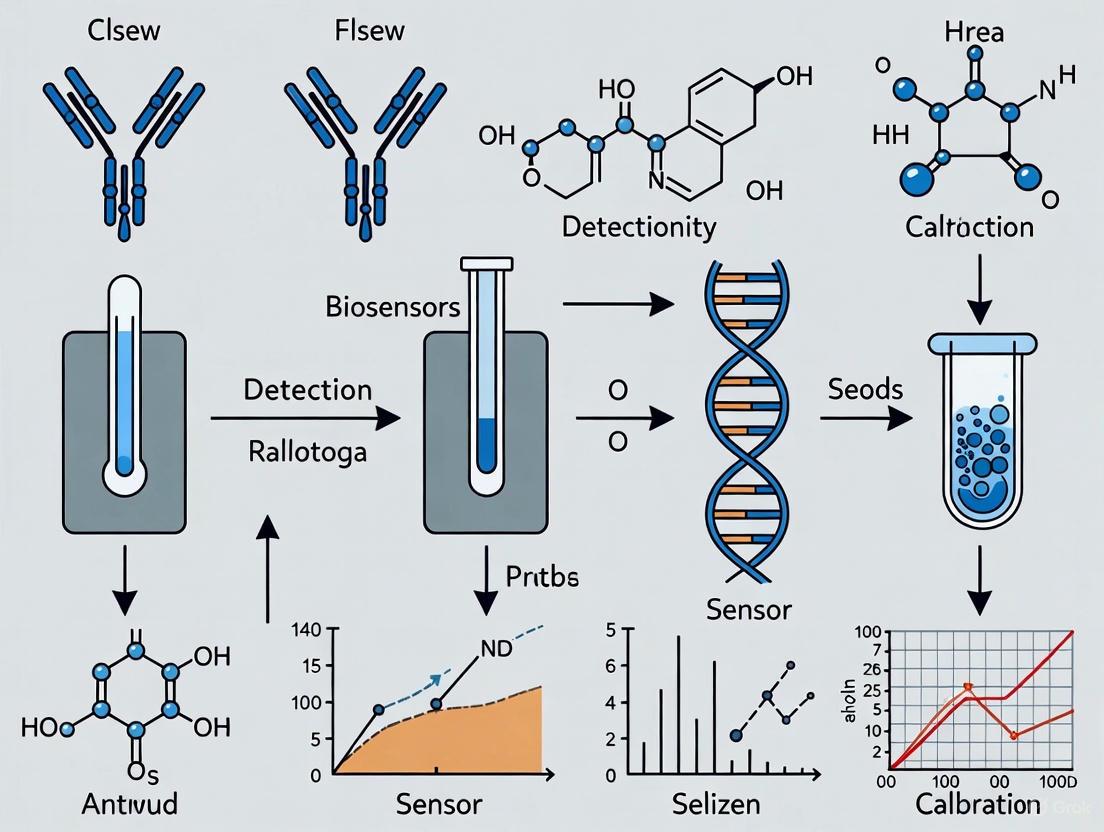
This article provides a comprehensive review of the rapidly evolving field of biosensors for detecting foodborne pathogens, tailored for researchers and drug development professionals.
Advanced Biosensors for Foodborne Pathogen Detection: Integrating AI, Microfluidics, and Novel Biorecognition for Enhanced Food Safety
Abstract
This article provides a comprehensive review of the rapidly evolving field of biosensors for detecting foodborne pathogens, tailored for researchers and drug development professionals. It explores the foundational principles of biosensors, including their core components and the limitations of conventional detection methods. The scope extends to a detailed analysis of advanced methodological platforms such as electrochemical, optical, and microfluidic biosensors, highlighting their application in complex food matrices. Furthermore, the review critically examines cutting-edge optimization strategies, particularly the integration of Artificial Intelligence (AI) and machine learning for data interpretation and signal enhancement. Finally, it addresses the crucial aspects of validation, comparative performance against gold-standard techniques, and the persistent challenges in real-world implementation, offering insights into future directions for clinical and biomedical research.
The Foundation of Biosensing: Core Principles and the Imperative for Rapid Pathogen Detection
Foodborne illnesses represent a critical global public health challenge, imposing significant health and economic burdens on societies worldwide. The World Health Organization (WHO) reports that annually, approximately 10% of the global population suffers from diseases caused by consuming contaminated food, resulting in nearly 2 million deaths [1]. These illnesses can lead to severe health consequences, including intestinal inflammation, diarrhea, chronic kidney diseases, reactive arthritis, blindness, and mortality [1]. In the United States alone, seven major foodborne pathogens cause an estimated 9.9 million illnesses, 53,300 hospitalizations, and 931 deaths each year [2]. The economic impact is equally staggering, with bacterial pathogens alone imposing an estimated annual economic burden of $17.6 billion in the United States [1]. These compelling public health and economic drivers necessitate innovative approaches for foodborne pathogen detection and control, positioning biosensor technologies as pivotal tools for enhancing food safety systems globally.
Quantitative Assessment of the Foodborne Disease Burden
Global Burden Estimates
The global burden of foodborne diseases is substantial, with the WHO's first global assessment estimating that 31 foodborne agents caused 600 million foodborne illnesses and 420,000 deaths annually in 2010 [3]. This burden, measured at 33 million Disability-Adjusted Life Years (DALYs), is comparable to major infectious diseases like HIV/AIDS, malaria, or tuberculosis [3]. The WHO is currently preparing updated estimates for 2025, which will include up to 42 foodborne hazards, incorporating four heavy metals (arsenic, cadmium, lead, and methylmercury) alongside the original 31 hazards [4]. For the first time, these estimates will be available at the national level, enhancing their utility for targeted interventions [4].
Table 1: Global Burden of Major Foodborne Pathogens (WHO Estimates)
| Pathogen | Estimated Annual Foodborne Cases | % Foodborne | Population Most Affected |
|---|---|---|---|
| Norovirus | 125 million | 18% | High-income countries |
| Campylobacter | 96 million | 58% | High-income countries |
| Non-typhoidal Salmonella | 78 million | 52% | All countries |
| Shigella | 51 million | 27% | Low- and middle-income countries |
| Enteropathogenic E. coli | 24 million | 30% | Low- and middle-income countries |
| Salmonella Typhi | 7 million | 37% | Low- and middle-income countries |
National Burden Estimates: United States Example
The Centers for Disease Control and Prevention (CDC) estimates provide a detailed perspective on the national burden within a high-income country. Their data illustrates the significant impact of major pathogens, with norovirus representing the leading cause of foodborne illnesses.
Table 2: Estimated Annual Burden of Domestically Acquired Foodborne Illnesses from Seven Major Pathogens, United States, 2019 [2]
| Pathogen | Illnesses | Hospitalizations | Deaths |
|---|---|---|---|
| Norovirus | 5,540,000 | 22,400 | 174 |
| Campylobacter spp. | 1,870,000 | 13,000 | 197 |
| Salmonella | 1,280,000 | 12,500 | 238 |
| Clostridium perfringens | 889,000 | 338 | 41 |
| STEC | 357,000 | 3,150 | 66 |
| Listeria | 1,250 | 1,070 | 172 |
| Toxoplasma gondii | - | 848 | 44 |
| Total | 9.9 million | 53,300 | 931 |
Economic Impact Across Countries
The economic burden of foodborne illnesses extends beyond healthcare costs to include productivity losses, quality of life reductions, and broader economic impacts. These costs vary significantly across countries and pathogens, reflecting different economic structures and healthcare systems.
Table 3: Estimated Economic Costs per Case of Select Foodborne Pathogens Across Countries
| Pathogen | Country | Year | Cost per Case (Currency) | Cost Components |
|---|---|---|---|---|
| Campylobacter | United States | 2010 | USD 1,846 (productivity) + USD 8,141 (QALYs) | Productivity, Quality-Adjusted Life Years |
| United Kingdom | 2018 | GBP 2,400 | Not specified | |
| Netherlands | 2011 | EURO 757 | Not specified | |
| Australia | 2019 | AUD 1,383 | Total cost | |
| New Zealand | 2009 | NZD 872 | Total cost | |
| Non-typhoidal Salmonella | United States | 2010 | USD 4,312 (productivity) + USD 11,086 (QALYs) | Productivity, Quality-Adjusted Life Years |
| United Kingdom | 2018 | GBP 6,700 | Not specified | |
| Australia | 2019 | AUD 2,272 | Total cost | |
| Norovirus | United States | 2010 | USD 530 (productivity) + USD 633 (QALYs) | Productivity, Quality-Adjusted Life Years |
| Australia | 2019 | AUD 390 | Total cost |
Innovative Biosensing Technologies for Foodborne Pathogen Detection
Microfluidic Biosensors
Microfluidic biosensors represent a transformative approach to foodborne pathogen detection, integrating biosensing methods with microfluidic chip platforms to create "lab-on-a-chip" systems with "sample-in-answer-out" capabilities [1]. These devices guide sample liquids through microscale fluidic channels while employing biorecognition elements (antibodies, enzymes, aptamers, phages, or lectins) to specifically bind with target analytes, generating detectable signal changes [1]. The fundamental components of a microfluidic biosensor include:
- Target biorecognition elements: Biological receptors that recognize specific targets (pathogenic bacteria cells, nucleic acids, antigens) from samples
- Transducer: Converts the biological response into a measurable electrical or optical signal
- Microfluidic chip: Manages fluid handling, reagent mixing, separation, and biochemical reactions in a miniaturized format [1]
These systems offer significant advantages including low sample and reagent consumption, operational flexibility, high integration, short detection times, and compatibility with various detection modalities including electrical, magnetic, and optical systems [1].
Electrochemical Biosensors
Electrochemical biosensors have emerged as powerful tools for food safety applications due to their simplicity, rapidity, cost-effectiveness, and portability [5]. These devices are classified based on their biorecognition systems and transduction mechanisms:
- Biocatalytic sensors: Utilize immobilized enzymes that interact with the analyte to produce a chemical change
- Affinity biosensors: Incorporate biological receptor molecules that reversibly detect receptor-ligand interactions, including:
- Immunosensors (antibody-based)
- Aptasensors (aptamer-based)
- Genosensors (nucleic acid-based)
- Cell-based biosensors
- Bacteriophage-based biosensors [5]
Electrochemical techniques commonly employed in biosensing include amperometry (A), chronoamperometry (CA), cyclic voltammetry (CV), differential pulse voltammetry (DPV), square-wave voltammetry (SWV), and electrochemical impedance spectroscopy (EIS) [5]. DPV, SWV, and EIS are particularly valued for their high sensitivity, as they measure faradaic current while minimizing charging current components [5].
Fluorescent Biosensors
Fluorescent biosensors combine highly specific biological recognition elements with sensitive fluorescent signal output, offering significant advantages for detecting foodborne pathogens [6]. Recent advances in this field have incorporated signal amplification strategies using functional nanomaterials, amplification techniques, CRISPR/Cas systems, and Argonaute proteins [6]. These developments have enhanced performance metrics including multiplex pathogen detection, real-time quantification, anti-interference capability, and on-site applicability, addressing limitations of conventional methods that require long turnaround times, complex operations, and reliance on large-scale instruments [6].
Experimental Protocols for Biosensor Development
Protocol 1: Fabrication of Microfluidic Biosensor Chip
Objective: To fabricate a polydimethylsiloxane (PDMS)-based microfluidic biosensor chip for detection of Salmonella spp.
Materials:
- PDMS base and curing agent (Sylgard 184)
- Silicon wafer
- SU-8 photoresist
- Plasma cleaner
- Glass slides
- Biorecognition elements (anti-Salmonella antibodies or aptamers)
Procedure:
- Photolithography Master Fabrication:
- Spin-coat SU-8 photoresist onto silicon wafer at 1500 rpm for 30 seconds to achieve 100 μm thickness
- Soft bake at 95°C for 5 minutes
- Expose to UV light through photomask with designed microchannel patterns for 45 seconds
- Post-exposure bake at 95°C for 3 minutes
- Develop in SU-8 developer for 5 minutes with gentle agitation
- Hard bake at 150°C for 15 minutes
PDMS Chip Fabrication:
- Mix PDMS base and curing agent at 10:1 ratio
- Degas mixture under vacuum until no bubbles remain
- Pour onto SU-8 master, bake at 75°C for 45 minutes
- Peel cured PDMS from master, cut to size
- Create inlet/outlet ports using 1.5 mm biopsy punch
Surface Functionalization:
- Treat PDMS and glass slide surfaces with oxygen plasma for 45 seconds
- Bond PDMS to glass slide immediately after treatment
- Incubate with 2% (v/v) (3-aminopropyl)triethoxysilane (APTES) in ethanol for 1 hour
- Rinse with ethanol, dry under nitrogen stream
- Activate with 2.5% glutaraldehyde in PBS for 2 hours
- Immobilize biorecognition elements (antibodies at 50 μg/mL or aptamers at 10 μM) overnight at 4°C
Blocking:
- Incubate with 1% bovine serum albumin (BSA) in PBS for 1 hour to block nonspecific binding sites
- Store in PBS at 4°C until use [1]
Protocol 2: Electrochemical Aptasensor forE. coliO157:H7 Detection
Objective: To develop an electrochemical aptasensor for rapid detection of E. coli O157:H7 using differential pulse voltammetry (DPV)
Materials:
- Gold working electrode (2 mm diameter)
- Platinum counter electrode
- Silver/silver chloride (Ag/AgCl) reference electrode
- Electrochemical workstation
- E. coli O157:H7-specific aptamer (5'-NH₂-(CH₂)₆- sequence -3')
- Methylene blue redox reporter
- Phosphate buffered saline (PBS, 0.1 M, pH 7.4)
Procedure:
- Electrode Pretreatment:
- Polish gold electrode with 0.3 μm and 0.05 μm alumina slurry sequentially
- Rinse thoroughly with deionized water
- Electrochemically clean in 0.5 M H₂SO₄ by cycling between -0.3 V and +1.5 V until stable cyclic voltammogram obtained
- Rinse with deionized water, dry under nitrogen
Aptamer Immobilization:
- Incubate gold electrode with 1 μM thiol-modified aptamer in immobilization buffer (10 mM Tris-HCl, 1 mM EDTA, 0.1 M NaCl, 10 mM TCEP, pH 7.4) for 16 hours at 4°C
- Rinse with deionized water to remove unbound aptamer
- Backfill with 1 mM 6-mercapto-1-hexanol in PBS for 1 hour to passivate surface
Electrochemical Measurement:
- Incubate aptasensor with 100 μL sample containing E. coli O157:H7 for 30 minutes at room temperature
- Rinse gently with PBS to remove unbound bacteria
- Transfer to electrochemical cell containing 5 mL PBS with 50 μM methylene blue
- Record DPV from -0.5 V to 0 V with amplitude of 50 mV, pulse width of 50 ms, step potential of 4 mV
- Measure current decrease relative to baseline, proportional to bacterial concentration [5]
Protocol 3: Fluorescent Biosensor Using CRISPR/Cas System
Objective: To implement a CRISPR/Cas-based fluorescent biosensor for specific detection of Listeria monocytogenes DNA sequences
Materials:
- Cas12a enzyme (cpf1)
- crRNA specific for Listeria monocytogenes hlyA gene
- Single-stranded DNA reporter (5'-FAM-TTATT-BHQ1-3')
- Target DNA from sample
- Fluorescence plate reader or real-time PCR instrument
- Reaction buffer (20 mM HEPES, 100 mM NaCl, 5 mM MgCl₂, pH 6.5)
Procedure:
- Reaction Setup:
- Prepare master mix containing:
- 50 nM Cas12a enzyme
- 60 nM crRNA
- 500 nM ssDNA reporter
- 1× reaction buffer
- Aliquot 18 μL master mix per reaction well
- Add 2 μL sample DNA (or negative control)
- Mix gently by pipetting
- Prepare master mix containing:
Fluorescence Measurement:
- Incubate reaction at 37°C
- Monitor fluorescence signal every 2 minutes for 60 minutes using plate reader (excitation: 485 nm, emission: 535 nm)
- Calculate rate of fluorescence increase or endpoint fluorescence
Data Analysis:
- Establish calibration curve using known concentrations of target DNA
- Determine limit of detection (LOD) based on 3σ of negative control
- Calculate sample concentration from calibration curve [6]
The Scientist's Toolkit: Essential Research Reagent Solutions
Table 4: Key Research Reagent Solutions for Biosensor Development
| Reagent Category | Specific Examples | Function | Application Notes |
|---|---|---|---|
| Biorecognition Elements | Anti-Salmonella antibodies, E. coli O157:H7-specific aptamers, Listeria spp.-specific phages | Target capture and specificity | Antibodies offer high specificity; aptamers provide better stability and regeneration capability |
| Transducer Materials | Gold electrodes, glassy carbon electrodes, indium tin oxide (ITO) semiconductors, PDMS microfluidic chips | Signal transduction and platform fabrication | Gold offers excellent biocompatibility; glassy carbon provides wide potential window |
| Signal Amplification Strategies | Functional nanomaterials (quantum dots, gold nanoparticles), CRISPR/Cas systems, Argonaute proteins, enzymatic amplification | Enhanced detection sensitivity | Nanomaterials increase surface area; CRISPR systems provide sequence-specific recognition |
| Detection Reagents | Methylene blue, ferricyanide/ferrocyanide, fluorescent dyes (FAM, Cy3), horseradish peroxidase (HRP) substrates | Signal generation and measurement | Redox reporters for electrochemical detection; fluorophores for optical detection |
| Immobilization Chemistry | (3-aminopropyl)triethoxysilane (APTES), glutaraldehyde, thiol-gold chemistry, streptavidin-biotin systems | Surface functionalization and bioreceptor attachment | Thiol-gold chemistry ideal for gold surfaces; streptavidin-biotin offers high binding affinity |
The significant global burden of foodborne illnesses, with approximately 600 million cases and 420,000 deaths annually, represents a critical public health challenge that demands innovative solutions [3]. The development and implementation of advanced biosensing technologies, including microfluidic, electrochemical, and fluorescent biosensors, offer promising approaches to address this challenge by enabling rapid, sensitive, and specific detection of foodborne pathogens. These technologies directly respond to the substantial economic drivers, including the $17.6 billion annual economic burden attributed to bacterial pathogens in the United States alone [1]. As research continues to enhance the performance, affordability, and accessibility of these biosensing platforms, their integration into food safety systems worldwide holds tremendous potential to reduce the global burden of foodborne diseases, protecting public health and mitigating economic impacts through early detection and intervention.
Core Components and Principles
A biosensor is an analytical device that converts a biological response into a measurable signal [1]. The fundamental operation involves the specific binding of a target analyte by a biorecognition element, which produces a physicochemical change that a transducer converts into a quantifiable output [7]. These integrated devices are crucial for applications ranging from clinical diagnostics to food safety, enabling rapid, sensitive, and specific detection of pathogens like Salmonella, Listeria monocytogenes, and E. coli O157:H7 [8] [9].
The three core components, as defined by the International Union of Pure and Applied Chemistry (IUPAC), are [1]:
- Biorecognition Element: A biological or biomimetic receptor that specifically identifies the target analyte.
- Transducer: A physicochemical detector that converts the biological interaction into a measurable signal.
- Signal Output/Reader: A system that processes and displays the signal in a user-interpretable format.
Table 1: Core Components of a Biosensor
| Component | Description | Key Function | Common Examples |
|---|---|---|---|
| Biorecognition Element | Biological or biomimetic receptor | Specifically recognizes and binds to the target analyte from a sample [1]. | Antibodies, enzymes, aptamers, nucleic acids, phages, lectins, whole cells [1] [9] [7]. |
| Transducer | Physicochemical detector | Converts the biorecognition event into a measurable signal [1] [7]. | Electrochemical (electrodes), Optical (fiber optics, SPR), Piezoelectric, Thermal [1] [7]. |
| Signal Output/Reader | Electronic processing unit | Amplifies, processes, and displays the signal from the transducer [7]. | Potentiostats, photodetectors, software for data analysis and readout [7]. |
Biorecognition Elements
Biorecognition elements are the cornerstone of biosensor specificity. They are immobilized on the transducer surface and are selected for their high affinity and selectivity towards a specific target, such as a foodborne pathogen [10].
Table 2: Common Biorecognition Elements in Pathogen Detection
| Biorecognition Element | Composition | Mechanism of Action | Advantages | Disadvantages |
|---|---|---|---|---|
| Antibodies | Proteins (Immunoglobulins) | Binds specifically to target antigens on the pathogen surface [1]. | High specificity and affinity; well-established immobilization methods [8]. | Susceptible to denaturation; expensive to produce; batch-to-batch variation [7]. |
| Aptamers | Single-stranded DNA or RNA oligonucleotides | Folds into a 3D structure that binds to targets (cells, proteins) with high affinity [11]. | Chemical stability, easy synthesis/modification, small size, reusability [11] [7]. | Susceptible to nuclease degradation; requires in vitro selection (SELEX) [9]. |
| Nucleic Acids | DNA or RNA probes | Hybridizes with complementary target sequences via Watson-Crick base pairing [11]. | High specificity; enables amplification (PCR, LAMP) for ultra-sensitive detection [11] [9]. | Requires sample preprocessing to isolate nucleic acids [9]. |
| Enzymes | Proteins | Catalyzes a reaction producing a detectable product (e.g., H₂O₂) [7]. | Signal amplification via catalytic activity; well-characterized [7]. | Sensitivity to environmental conditions (pH, temperature); limited target scope. |
| Bacteriophages | Viruses infecting bacteria | Binds to specific bacterial surface receptors, causing lysis or genetic material insertion [8]. | High specificity, natural affinity, cost-effective, robust [8]. | Complex immobilization; potential for host bacteria resistance. |
Transducers and Signal Output
The transducer is the component that translates the specific interaction between the biorecognition element and the target into a quantifiable signal. The choice of transducer dictates key performance metrics like sensitivity, detection limit, and suitability for point-of-care use [7].
Table 3: Common Transduction Mechanisms in Biosensors
| Transducer Type | Principle | Measurable Signal | Common Readout Techniques | Advantages |
|---|---|---|---|---|
| Electrochemical | Measures changes in electrical properties due to biorecognition event [7]. | Current, Voltage, Impedance [8] [7]. | Amperometry, Potentiometry, Electrochemical Impedance Spectroscopy (EIS) [8] [7]. | High sensitivity, portability, low cost, low power requirement, miniaturization [8] [7]. |
| Optical | Measures changes in light properties [1]. | Fluorescence, Absorbance, Refractive Index (Surface Plasmon Resonance) [6] [7]. | Fluorescence spectroscopy, colorimetry, SPR readers [6] [10]. | High sensitivity and specificity, resistance to electromagnetic interference, potential for multiplexing [6] [7]. |
| Piezoelectric | Measures change in mass on the sensor surface. | Frequency, Resonance | Quartz Crystal Microbalance (QCM) | Real-time, label-free detection. |
| Mass-Based | Measures change in mass on the sensor surface. | Frequency | Surface Acoustic Wave (SAW) devices | High sensitivity for mass changes. |
Experimental Protocol: Electrochemical Impedance Spectroscopy (EIS) for Pathogen Detection
Application: Label-free detection of E. coli O157:H7 in a buffer sample [8].
Principle: The binding of bacterial cells to the electrode surface impedes electron transfer, increasing the system's electrical impedance. This change is measured to quantify the pathogen concentration [8].
Materials:
- Working Electrode: Gold or Screen-printed carbon electrode, functionalized with specific anti-E. coli aptamers [8].
- Reference Electrode: Ag/AgCl.
- Counter Electrode: Platinum wire.
- Analyte: Purified E. coli O157:H7 cells in phosphate-buffered saline (PBS).
- Instrument: Potentiostat capable of EIS measurements.
Procedure:
- Electrode Functionalization:
- Clean the working electrode.
- Immerse the electrode in a solution of thiol-modified aptamers specific to E. coli O157:H7 for 12-16 hours to form a self-assembled monolayer.
- Rinse with buffer to remove unbound aptamers.
- Block with Bovine Serum Albumin (BSA) to prevent non-specific binding.
Baseline Measurement:
- Place the functionalized electrode in a measuring cell containing only PBS.
- Apply a small AC voltage (e.g., 10 mV) over a frequency range (e.g., 0.1 Hz to 100 kHz) at a fixed DC potential.
- Record the impedance spectrum (Nyquist plot) as the baseline.
Sample Measurement:
- Introduce the sample containing E. coli O157:H7 into the measuring cell.
- Incubate for 20 minutes to allow pathogen binding.
- Rinse gently with PBS to remove unbound cells.
- Record a new impedance spectrum under identical conditions.
Data Analysis:
- Fit the EIS spectra to an equivalent circuit model.
- The charge transfer resistance (Rₑₜ) is the key parameter that increases upon pathogen binding.
- Plot the change in Rₑₜ (ΔRₑₜ) against pathogen concentration to generate a calibration curve.
The Scientist's Toolkit: Research Reagent Solutions
Table 4: Essential Reagents and Materials for Biosensor Development
| Item | Function/Description | Application Example |
|---|---|---|
| Thiol-modified Aptamers | Single-stranded DNA with a thiol group (-SH) for covalent immobilization on gold electrodes via gold-thiol self-assembled monolayers [7]. | Functionalizing electrodes in electrochemical biosensors for specific pathogen capture [8]. |
| EDC/NHS Crosslinkers | 1-Ethyl-3-(3-dimethylaminopropyl)carbodiimide (EDC) and N-Hydroxysuccinimide (NHS). Activates carboxyl groups for covalent bonding with amine groups on antibodies or proteins [12]. | Immobilizing antibodies on sensor surfaces for immunoassays [12]. |
| Polymerase (Taq, Bst) | Enzymes for nucleic acid amplification. Taq for PCR, Bst for isothermal amplification (LAMP, RCA) [11] [9]. | Amplifying target pathogen DNA/RNA to enhance detection sensitivity [11]. |
| CRISPR/Cas System | CRISPR-associated proteins (e.g., Cas12a, Cas13) that, when activated by a specific nucleic acid sequence, exhibit collateral cleavage activity against reporter molecules [6] [9]. | Providing high specificity for nucleic acid detection; used as a transducing element after amplification [6]. |
| Gold Nanoparticles (AuNPs) | Nanomaterials with unique optical and electrical properties; serve as signal labels or to enhance the electrode's active surface area [7]. | Used in colorimetric assays (aggregation causes color change) or to amplify electrochemical signals [12] [7]. |
| Magnetic Nanoparticles | Nanoparticles functionalized with biorecognition elements (e.g., antibodies) [9]. | Rapid concentration and separation of target pathogens from complex food matrices (e.g., milk, meat slurry) before detection, reducing interference [9]. |
Biosensor Assembly and Workflow
The following diagram illustrates the integration of the core components into a functional biosensor and a general workflow for detecting a foodborne pathogen.
Diagram Title: Biosensor Core Components and Detection Workflow
Foodborne diseases, causing an estimated 600 million illnesses and 420,000 deaths globally each year, represent a significant challenge to public health systems and the food industry worldwide [13]. The rapid and accurate detection of pathogenic microorganisms in food products is a critical line of defense in preventing these illnesses. Traditional detection methods, primarily based on microbiological culture, have long been the standard for pathogen identification. However, the evolving landscape of food safety demands has exposed the limitations of these conventional approaches, particularly their time-consuming nature and labor-intensive protocols [14].
This application note provides a structured comparison of conventional foodborne pathogen detection methods—culture-based techniques, enzyme-linked immunosorbent assay (ELISA), and polymerase chain reaction (PCR)—alongside the emerging potential of biosensor technologies. Framed within broader thesis research on biosensors, this document summarizes quantitative performance data in structured tables, outlines detailed experimental protocols, and provides visual workflows to assist researchers, scientists, and drug development professionals in selecting and implementing these methods effectively. The focus remains on the technical specifications, limitations, and complementary roles these techniques play in advancing food safety diagnostics.
Conventional Methods: Technical Limitations and Protocols
Culture-Based Methods
Protocol: Standard Plate Culture for Foodborne Pathogen Isolation
- Sample Collection and Preparation: Aseptically collect 25 g of food sample. Homogenize with 225 mL of appropriate enrichment broth (e.g., Alkaline Peptone Water with Cephalothin for Aeromonas spp.) [15].
- Enrichment: Incubate the homogenate at the optimal temperature (e.g., 37°C for many pathogens) for 12-48 hours to selectively amplify target bacteria.
- Plating and Isolation: After enrichment, streak a loopful of culture onto a selective solid medium (e.g., Ampicillin Dextrin Agar for Aeromonas). Incubate plates for 18-24 hours at the appropriate temperature.
- Purification and Identification: Pick characteristic colonies and sub-culture onto non-selective media to obtain pure isolates. Confirm identity through Gram staining, hemolysis testing, and a series of biochemical tests (e.g., oxidase, catalase, sugar fermentation profiles) [15] [14].
Immunological Method (ELISA)
Protocol: Indirect ELISA for Pathogen Detection
- Coating: Adsorb a specific capture antigen (e.g., crude outer membrane protein (OMP) extract) to the wells of a microtiter plate by incubating overnight at 4°C [15].
- Blocking: Aspirate the coating solution and block remaining protein-binding sites with a blocking buffer (e.g., 1% Bovine Serum Albumin or 0.1% casein in PBS) for 1-2 hours at room temperature.
- Sample Incubation: Add the prepared food sample extract or enriched culture to the wells. Incubate for 1-2 hours to allow specific antibodies (if present) to bind to the immobilized antigen.
- Detection Antibody Incubation: Wash the plate to remove unbound components. Add an enzyme-conjugated secondary antibody (e.g., Horseradish Peroxidase-anti-bovine IgG) specific to the primary antibody. Incubate for 1 hour.
- Substrate Addition and Reading: Perform a final wash step. Add an enzyme-specific chromogenic substrate (e.g., TMB). Stop the reaction after a set time and measure the color intensity (Optical Density) with a plate reader at the appropriate wavelength (e.g., 450 nm) [15] [16].
Molecular Biology Method (PCR)
Protocol: Duplex-PCR for Multiplex Pathogen Detection
- DNA Extraction: Extract nucleic acids from the food sample or enriched broth using a commercial kit (e.g., QIAamp Fast DNA Mini Kit). This may involve a bead-beating step for mechanical lysis of bacterial cells [16].
- PCR Master Mix Preparation: Prepare a reaction mixture containing:
- PCR buffer (with MgCl₂).
- dNTPs (deoxynucleotide triphosphates).
- Forward and reverse primers targeting specific genes (e.g., aerolysin gene and 16S rRNA gene for Aeromonas detection) [15].
- Thermostable DNA polymerase (e.g., Taq polymerase).
- Template DNA.
- Amplification: Run the PCR in a thermal cycler using a program tailored to the primers, typically involving an initial denaturation (95°C for 5 min), followed by 30-40 cycles of denaturation (95°C for 30 s), annealing (primer-specific temperature for 30 s), and extension (72°C for 1 min/kb), with a final extension (72°C for 7 min).
- Analysis: Separate the PCR amplicons by gel electrophoresis (e.g., 1.5% agarose gel). Visualize the DNA bands under UV light after staining with ethidium bromide or a safer alternative. The presence of bands at the expected sizes (e.g., 252 bp and 599 bp) confirms the target pathogen [15].
The Emergence of Biosensor Platforms
Biosensors are analytical devices that combine a biological recognition element (e.g., antibody, DNA probe, enzyme) with a physicochemical transducer to convert a biological response into a quantifiable electrical signal [17]. This synergistic combination aims to overcome the key limitations of conventional methods.
Key Advantages:
- Rapidity: Detection times can range from 10 minutes to a few hours, enabling real-time or near-real-time monitoring [13].
- Sensitivity: Biosensors can achieve high sensitivity, with reported detection limits for pathogens as low as 1 CFU/mL in some optimized systems [13] [17].
- Portability: Many biosensor designs are compact and suitable for development into portable devices for field-use or point-of-care testing [18].
- Potential for Multi-Analyte Detection: Innovative biosensor platforms are being designed to simultaneously detect multiple foodborne pathogens, providing comprehensive screening in a single test [13].
Comparative Analysis: Performance Data
The following tables summarize the key performance metrics and characteristics of the detection methods discussed.
Table 1: Comparative Performance of Pathogen Detection Methods
| Method | Typical Detection Limit | Time to Result | Key Advantages | Key Limitations |
|---|---|---|---|---|
| Culture-Based | 1 CFU/g (post-enrichment) [15] | 2 - 5 days [14] | Considered the "gold standard"; allows viability assessment | Lengthy process; labor-intensive; requires skilled personnel [13] [14] |
| ELISA | 10³ CFU/mL [15] | 3 - 6 hours [17] | High throughput; relatively easy to use | Moderate sensitivity; requires specific antibodies; may miss live/dead distinction [13] |
| PCR | 1 CFU/g (post-enrichment) [15] | 8 - 24 hours [13] | High specificity and sensitivity; detects non-culturable organisms | Requires DNA extraction; risks false positives from dead cells; complex food matrices can inhibit reaction [16] |
| Biosensors | 1 to 1×10⁸ CFU/mL [13] | 10 min - 8 hours [13] | Rapid; portable; high potential for automation and multiplexing | Many still in research/development stage; matrix interference can be an issue [13] [17] |
Table 2: Researcher's Toolkit: Essential Reagents and Materials
| Item | Function / Application | Example / Specification |
|---|---|---|
| Selective Enrichment Broth | Promotes growth of target pathogen while inhibiting competitors. | Alkaline Peptone Water with Cephalothin (APW-C) [15] |
| Chromogenic Substrate | Produces a measurable color change in ELISA upon enzyme action. | TMB (3,3',5,5'-Tetramethylbenzidine) [15] |
| Specific Primers | Binds to unique gene sequences of the target pathogen for PCR amplification. | Primers for aerolysin gene (252 bp) and 16S rRNA (599 bp) for Aeromonas [15] |
| Polyaniline (Pani) | Conductometric polymer that transduces biological binding into an electrical signal. | AquaPass polyaniline; used in biosensor fabrication [18] |
| Anti-Bovine IgG Antibody | Secondary detection antibody in immunoassays and immunosensor development. | Monoclonal anti-bovine IgG (clone BG-18); conjugated with Pani for biosensors [18] |
| Capture Antigen | Immobilized molecule for specific pathogen or antibody capture in ELISA/biosensors. | Crude Outer Membrane Protein (OMP) extract or specific viral/bacterial antigens [15] [16] |
Experimental Workflow and Biosensor Mechanism
The diagrams below illustrate the general workflows for the conventional methods and the operating principle of a conductometric biosensor.
Diagram 1: Comparative Workflows of Detection Methods
Diagram 2: Conductometric Biosensor Detection Mechanism
The limitations of conventional culture-based methods, ELISA, and PCR—namely, their prolonged turnaround times, labor requirements, and inability to provide real-time data—create a significant gap in modern food safety monitoring. While PCR and ELISA offer improved speed and specificity over traditional culturing, they often still require sample enrichment and sophisticated laboratory infrastructure.
Biosensor technology represents a paradigm shift, offering a pathway to rapid, sensitive, on-site detection that aligns with the principles of Hazard Analysis and Critical Control Points (HACCP). The future of foodborne pathogen detection lies in the continued refinement of these biosensing platforms, particularly through the integration of nanomaterials [13], CRISPR/Cas systems for enhanced specificity [14], and the development of multimodal sensors capable of distinguishing between live and dead cells and detecting multiple pathogens simultaneously [13]. For researchers in this field, the challenge and opportunity reside in translating these innovative biosensor potentials from robust laboratory prototypes into reliable, commercially viable tools that can fundamentally enhance global food safety.
The accurate and reliable detection of foodborne pathogens is a critical public health objective, with biosensors emerging as powerful analytical tools to meet this demand. The performance and practical utility of these biosensors are quantitatively assessed using a set of standardized metrics. Sensitivity defines a sensor's ability to correctly identify the presence of a target pathogen, while specificity indicates its capacity to distinguish the target from other non-target organisms, thereby minimizing false-positive results [19]. The Limit of Detection (LOD) is the lowest concentration of an analyte that can be consistently distinguished from a blank sample, representing the ultimate sensitivity of the assay [20] [21]. Finally, multiplexing capability refers to the biosensor's ability to detect multiple different pathogens simultaneously within a single assay, greatly enhancing analysis throughput and efficiency for complex samples [22]. This document details these core performance metrics within the context of foodborne pathogen detection, providing structured data comparisons and detailed experimental protocols to guide researchers in the development, optimization, and validation of biosensing platforms.
Quantitative Performance Comparison of Biosensing Platforms
The evaluation of biosensor performance across different transduction mechanisms and detection strategies reveals distinct strengths and limitations. The table below synthesizes key performance data from recent research, providing a comparative overview of metrics including LOD, sensitivity, and multiplexing capacity.
Table 1: Performance Metrics of Selected Biosensors for Foodborne Pathogen Detection
| Detection Technology / Platform | Target Pathogen(s) | Limit of Detection (LOD) | Multiplexing Capacity | Key Performance Highlights |
|---|---|---|---|---|
| Multi-channel SPR Sensor [20] | E. coli O157:H7, Salmonella Typhimurium, Listeria monocytogenes, Campylobacter jejuni | 3.4 × 10³ - 1.2 × 10⁵ CFU/mL | 4 pathogens | Quantitative, simultaneous detection in buffer and food matrices (apple juice). |
| Pedestal High-Contrast Grating (PHCG) [21] | Avidin (Model Analyte) | 2.1 ng/mL | Not Specified | Demonstrated superior LoD and surface sensitivity compared to conventional HCG. |
| Colorimetric Biosensor (Nanoarrays) [22] | S. aureus, E. coli | 10 CFU/mL | 2 pathogens | Detection time below 10 minutes. |
| CRISPR-Cas12a-assisted MRS Biosensor [23] | E. coli, Salmonella, L. monocytogenes, C. jejuni | Implied high sensitivity | 4 pathogens | Enhanced sensitivity and specificity over traditional MRS; targets common foodborne pathogens. |
| Achromatic Colorimetric Biosensor (Plasmonic Nanoparticles) [22] | SARS-CoV-2, S. aureus, Salmonella | Not Specified | 3 pathogens | Distinct color changes enable visual discrimination of individual pathogens in a mixture. |
| Slidable Paper-Embedded Plastic Biosensor (LAMP) [22] | Salmonella, S. aureus, E. coli O157:H7 | Not Specified | 3 pathogens | Simple, fast design suitable for on-site use; colorimetric readout. |
Detailed Experimental Protocols
Protocol 1: Multiplexed Pathogen Detection Using a Multi-channel SPR Biosensor
This protocol describes the procedure for the simultaneous, label-free, and quantitative detection of four major foodborne pathogens (E. coli O157:H7, Salmonella Typhimurium, Listeria monocytogenes, and Campylobacter jejuni) using an eight-channel Surface Plasmon Resonance (SPR) sensor, as adapted from Taylor et al. (2006) [20].
Research Reagent Solutions
Table 2: Essential Reagents for Multi-channel SPR Biosensor Experiment
| Reagent/Material | Function in the Protocol |
|---|---|
| Sensor Chip | Solid substrate for immobilizing biorecognition elements. |
| Biotinylated Alkanethiol (BAT) | Forms a self-assembled monolayer (SAM) on gold sensor surfaces, providing biotin groups for streptavidin binding. |
| Oligo (ethylene glycol) (OEG) Alkanethiol | Co-adsorbed with BAT to create a non-fouling, mixed SAM that resists non-specific protein adsorption. |
| Streptavidin | Binds to biotin on the SAM, serving as a bridge to immobilize biotinylated antibodies. |
| Biotinylated Polyclonal Antibodies | Pathogen-specific recognition elements; binding to streptavidin immobilizes them on the sensor surface. |
| Phosphate Buffered Saline (PBS) | Running buffer for the SPR system, maintains a stable pH and ionic environment. |
| Target Pathogen Samples | Analyte solutions of E. coli O157:H7, S. Typhimurium, L. monocytogenes, and C. jejuni in pure culture or spiked food samples. |
| Apple Juice Matrix | Representative complex food matrix for testing sensor performance under realistic conditions. |
Step-by-Step Procedure
Sensor Surface Functionalization:
- Prepare a mixed self-assembled monolayer (SAM) by immersing the gold sensor chip in an ethanol solution containing a 1:200 ratio of Biotinylated Alkanethiol (BAT) to Oligo (ethylene glycol) (OEG) alkanethiol for a minimum of 12 hours.
- Rinse the chip thoroughly with pure ethanol and dry under a stream of nitrogen gas.
- Mount the chip in the SPR instrument and prime the system with PBS buffer.
- Inject a solution of streptavidin (50 µg/mL in PBS) over the SAM surface until a stable SPR signal indicates successful binding.
- Inject solutions of biotinylated, pathogen-specific polyclonal antibodies over individual flow channels, allowing them to bind to the immobilized streptavidin, creating distinct sensing spots.
Sample Preparation and Analysis:
- Prepare serial dilutions of each target pathogen in PBS, pH-adjusted apple juice (pH 7.4), and native pH apple juice (pH 3.7) to generate calibration curves.
- For multiplexed detection, prepare a mixture containing all four bacterial species in PBS.
- Inject sample solutions over the functionalized sensor surface at a constant flow rate.
- Monitor the SPR signal (resonance angle or wavelength shift) in real-time as the bacteria bind to their specific antibodies on the sensor surface.
Data Processing and Quantification:
- Record the steady-state SPR response for each analyte concentration.
- Plot the SPR response versus analyte concentration for each pathogen to establish a calibration curve.
- Determine the Limit of Detection (LOD) for each pathogen in each matrix from the calibration data, typically defined as the concentration corresponding to the signal of the blank plus three times its standard deviation.
- For the pathogen mixture, correlate the response in each channel to the individual calibration curves to confirm specific and quantitative detection.
Protocol 2: Multiplexed Colorimetric Detection via Plasmonic Nanoparticles
This protocol outlines a method for the simultaneous detection of multiple pathogens using an achromatic colorimetric biosensor based on antibody-conjugated plasmonic nanoparticles and magnetic separation [22].
Research Reagent Solutions
Table 3: Essential Reagents for Plasmonic Nanoparticle Biosensor Experiment
| Reagent/Material | Function in the Protocol |
|---|---|
| Plasmonic Nanoparticles | Gold (red), Silver (yellow), Silver Triangular (blue) nanoparticles act as color reporters. |
| Magnetic Nanoparticles (MNPs) | Functionalized with pathogen-specific antibodies; used for target separation and concentration. |
| Pathogen-Specific Antibodies | Conjugated to nanoparticles for target recognition and sandwich complex formation. |
| Magnetic Separation Rack | Device for immobilizing and washing magnetic complexes to remove unbound reagents. |
Step-by-Step Procedure
Nanoparticle Probe Preparation:
- Synthesize or purchase three distinct types of plasmonic nanoparticles: red gold nanoparticles (AuNPs), yellow silver nanoparticles (AgNPs), and blue silver triangular nanoplates.
- Functionalize each nanoparticle type with a different pathogen-specific antibody (e.g., AuNPs for SARS-CoV-2, AgNPs for S. aureus, blue nanoplates for Salmonella).
- Separately, prepare magnetic nanoparticles (MNPs) and conjugate them with the same set of pathogen-specific antibodies to create magnetic capture probes.
Sample Incubation and Separation:
- Mix the sample containing the target pathogen(s) with the three different magnetic capture probes. Allow the pathogens to be captured by the probes via antibody-antigen interaction.
- Add the three different color reporter nanoparticle probes to the mixture to form a magnetic pathogen nanoparticle sandwich complex.
- Incubate the mixture to ensure complete binding and complex formation.
- Apply the mixture to a magnetic separation rack. The magnetic field will pull all sandwich complexes (bound to magnetic beads) out of the suspension.
Signal Readout and Interpretation:
- Observe the color of the supernatant after magnetic separation.
- The absence of a specific pathogen will result in its corresponding colored reporter nanoparticles remaining in the supernatant, contributing its color.
- The presence of a specific pathogen will pull its corresponding colored nanoparticles into the pellet, removing that color from the supernatant.
- The final color hue of the supernatant provides a visual indication of which pathogens are present or absent, enabling multiplexed identification.
Advanced Techniques and Future Directions
The integration of advanced materials and signal amplification strategies is pivotal for enhancing biosensor performance. Nanomaterials such as magnetic nanoparticles (MNPs) are extensively used for sample preparation and concentration, improving overall sensitivity and specificity by efficiently separating targets from complex food matrices [23]. Furthermore, two-dimensional materials like black phosphorus (BP) are being incorporated into transducer designs. BP's high surface area and strong light-matter interaction significantly enhance the sensitivity of optical biosensors like SPR by providing greater biomolecule adsorption and stronger plasmonic field confinement [24].
Signal amplification technologies, particularly the CRISPR-Cas system, represent a transformative advancement. When integrated with biosensors like MRS, the CRISPR-Cas12a system provides an additional layer of specific target nucleic acid recognition. Upon binding to its target DNA, the Cas12a enzyme exhibits collateral cleavage activity, which can be designed to trigger a measurable signal change (e.g., aggregation or dispersion of MNPs), leading to a dramatic improvement in both sensitivity and specificity for pathogen detection [23].
The application of Artificial Intelligence (AI) and machine learning is also emerging as a powerful tool for optimizing biosensor performance. AI algorithms can process complex data outputs from biosensors, such as spectral patterns from SERS or signal trajectories from real-time sensors, to improve pathogen classification accuracy, reduce false positives/negatives, and even enable the identification of unknown pathogens in multiplexed assays [19].
Biosensor Platforms in Action: From Electrochemical to Optical and Microfluidic Systems
Foodborne illnesses, caused by pathogens such as Escherichia coli O157:H7, Salmonella spp., and Listeria monocytogenes, remain a severe global public health challenge, resulting in an estimated 600 million cases and 420,000 deaths annually [13]. Ensuring food safety requires robust, rapid, and reliable detection systems. Electrochemical biosensors have emerged as a promising alternative to conventional methods like polymerase chain reaction (PCR) and enzyme-linked immunosorbent assay (ELISA), which are often time-consuming, labor-intensive, and require skilled personnel and complex instrumentation [8] [25]. These biosensors function by converting a biological recognition event into a quantifiable electrical signal, such as a change in current (amperometry), potential (potentiometry), or impedance (impedimetry) [25]. Their advantages include high sensitivity, portability, cost-effectiveness, and the potential for real-time and on-site analysis, making them particularly suitable for monitoring the food supply chain [5] [26].
The core of an electrochemical biosensor is the integration of a biological recognition element (bioreceptor) with an electrochemical transducer. The analytical performance of these sensors is critically determined by the electrode material. Recent advancements have focused on the application of functional nanomaterials to enhance electron transfer, increase surface area, and improve the stability and specificity of the bioreceptor immobilization [27]. This document outlines the core principles of electrochemical biosensors, details the role of nanomaterials, provides pathogen-specific case studies with experimental protocols, and discusses key reagents and future perspectives within the context of advanced food safety research.
Principles and Working Mechanisms
Electrochemical biosensors are defined as self-contained integrated devices that provide specific quantitative or semi-quantitative analytical information using a biological recognition element (biochemical receptor) retained in direct spatial contact with an electrochemical transduction element [27]. Their operation can be broken down into two fundamental processes: biorecognition and signal transduction.
Biorecognition Elements
The specificity of a biosensor is conferred by its biorecognition element, which selectively binds to the target analyte. The main types of affinity-based biosensors used in foodborne pathogen detection are:
- Immunosensors: These utilize antibodies immobilized on the transducer surface to capture specific antigenic markers on the surface of pathogenic bacteria [5]. The formation of the antibody-antigen complex alters the electrochemical properties at the electrode interface.
- Aptasensors: These employ single-stranded DNA or RNA oligonucleotides (aptamers) that fold into unique three-dimensional structures capable of binding to specific targets with high affinity, similar to antibodies [5]. Aptamers offer advantages such as better stability, ease of synthesis, and the ability to be regenerated.
- Genosensors: These rely on immobilized DNA or RNA probes that hybridize with a complementary nucleic acid sequence from the target pathogen [5]. This is particularly useful for detecting pathogen-specific genetic markers.
- Bacteriophage-based sensors: These use engineered viruses that specifically infect target bacteria as recognition elements, offering high specificity and stability [8].
Transduction Mechanisms and Electrochemical Techniques
The transduction mechanism converts the biological binding event into a measurable electrical signal. Electrochemical biosensors are classified based on the electrical parameter they measure:
- Amperometric Sensors: Measure the current resulting from the oxidation or reduction of an electroactive species at a constant applied potential. The current is proportional to the concentration of the analyte [25].
- Potentiometric Sensors: Measure the potential difference between a working electrode and a reference electrode at zero current, which changes as a function of the analyte concentration [25].
- Impedimetric Sensors: Monitor changes in the impedance (resistance to alternating current) at the electrode surface due to the binding of the target, which hinders electron transfer. Electrochemical Impedance Spectroscopy (EIS) is a common, label-free technique for this purpose [25].
- Conductometric Sensors: Measure the change in the electrical conductivity of a solution resulting from a biochemical reaction [25].
Techniques like Differential Pulse Voltammetry (DPV) and Square Wave Voltammetry (SWV) are also widely used due to their high sensitivity and low detection limits, as they minimize the contribution of the charging current [5] [27].
The following diagram illustrates the core working principle of an electrochemical biosensor, from biorecognition to signal output.
Nanomaterial-Enhanced Electrodes
The integration of nanomaterials into electrode design has revolutionized electrochemical biosensing by dramatically improving sensitivity, selectivity, and response time. These materials provide a high surface-to-volume ratio for efficient bioreceptor immobilization, enhance electrical conductivity, and can catalyze electrochemical reactions [27].
Key Nanomaterials and Their Functions
- Carbon Nanotubes (CNTs): Both single-walled and multi-walled CNTs are renowned for their excellent electrical conductivity, high mechanical strength, and large surface area. They facilitate rapid electron transfer between the bioreceptor and the electrode surface, significantly boosting signal strength [8] [27].
- Graphene and Reduced Graphene Oxide (rGO): Graphene's two-dimensional structure offers exceptional electrical conductivity and a vast, functionalizable surface. rGO is particularly popular as it can be decorated with various nanoparticles and functional groups to enhance biosensor performance [8] [25].
- Metal Nanoparticles (e.g., Gold, Silver): Gold nanoparticles (AuNPs) are extensively used due to their excellent biocompatibility, high conductivity, and facile surface chemistry, which allows for easy conjugation with antibodies, aptamers, or DNA probes. They act as tiny conduction centers and can be used for signal amplification [8] [28]. Silver nanoparticles and 3D silver nanoflowers have also been employed to enhance signal output [25].
- Metal-Organic Frameworks (MOFs): MOFs are porous crystalline materials that can be engineered to have large surface areas and tunable pore sizes. They are used to encapsulate signal probes or enzymes, pre-concentrate analytes, and improve the stability of the sensing interface [25].
- Magnetic Nanoparticles: These particles, such as functionalized iron oxide nanoparticles, are used for pre-concentrating target pathogens from complex food matrices (e.g., milk, meat slurry) by applying an external magnetic field. This step significantly reduces interference and improves the detection limit [8].
Table 1: Functional Roles of Nanomaterials in Electrochemical Biosensors
| Nanomaterial | Key Functional Role | Impact on Biosensor Performance |
|---|---|---|
| Carbon Nanotubes (CNTs) | Facilitate electron transfer, provide high surface area for immobilization | Increases sensitivity and lowers detection limit |
| Graphene/Reduced Graphene Oxide (rGO) | Enhances electrical conductivity, provides functional groups for bioconjugation | Improves signal-to-noise ratio and stability |
| Gold Nanoparticles (AuNPs) | Acts as electron conductor, enables efficient antibody/aptamer immobilization | Amplifies signal, enhances selectivity and biocompatibility |
| Metal-Organic Frameworks (MOFs) | Encapsulates signal probes, pre-concentrates analytes at the electrode surface | Increases loading capacity and sensor stability |
| Magnetic Nanoparticles | Separates and pre-concentrates target from complex sample matrices | Reduces interference, simplifies sample preparation, improves sensitivity |
Pathogen-Specific Case Studies and Experimental Data
The application of nanomaterial-enhanced electrochemical biosensors has led to significant advancements in detecting specific foodborne pathogens. The following table summarizes performance data from recent studies.
Table 2: Performance of Selected Nanomaterial-Enhanced Electrochemical Biosensors for Pathogen Detection
| Target Pathogen | Bioreceptor | Nanomaterial Used | Detection Technique | Detection Limit (CFU/mL) | Linear Range (CFU/mL) | Reference |
|---|---|---|---|---|---|---|
| E. coli | DNA aptamer | Reduced Graphene Oxide-Carbon Nanotube (rGO-CNT) | EIS | 3.8 | 100–10⁸ | [25] |
| E. coli | Antibody | 3D Silver Nanoflowers (AgNFs) | EIS | 100 | 3.0×10²–3.0×10⁸ | [25] |
| E. coli | DNA nanopyramids | Not Specified | Amperometry | 1.20 | 1–10² | [25] |
| Salmonella Typhi | DNA probe | Carbon Nanosheets | Amperometry | 0.8 | 10–10⁷ | [8] |
| Salmonella Typhimurium | CRISPR/Cas12a | CG@MXene Nanocomposite | Amperometry | 10 | 10²–10⁷ | [8] |
| Staphylococcus aureus | Aptamer | rGO-AuNP | EIS | 10 | 10–10⁶ | [25] |
| Bacillus cereus | DNA probe | Gold Nanoparticles (GNPs) | Amperometry | 10.0 | 5.0×10¹–5.0×10⁴ | [25] |
Case Study: Impedimetric Aptasensor forE. coliDetection
This case study details a specific protocol for constructing a highly sensitive impedimetric aptasensor for E. coli using a reduced graphene oxide-carbon nanotube (rGO-CNT) nanocomposite [25].
1. Principle: The sensor is based on the specific binding of an E. coli-specific aptamer immobilized on a rGO-CNT modified gold electrode. When E. coli cells bind to the aptamer, they obstruct the electron transfer pathway at the electrode surface, leading to an increase in electron transfer resistance (Rₑₜ) that is measured by Electrochemical Impedance Spectroscopy (EIS). The change in Rₑₜ (ΔRₑₜ) is proportional to the bacterial concentration.
2. Experimental Protocol:
Materials:
- Gold disk electrode or screen-printed gold electrode
- Reduced Graphene Oxide (rGO) and Carbon Nanotubes (CNTs)
- N-Hydroxysuccinimide (NHS) and 1-Ethyl-3-(3-dimethylaminopropyl)carbodiimide (EDC)
- E. coli-specific DNA aptamer with amino modification
- Phosphate Buffered Saline (PBS), Ethanolamine
- E. coli O157:H7 culture and other bacteria for selectivity testing (e.g., S. aureus)
Procedure:
- Step 1: Electrode Pretreatment. Clean the gold electrode by polishing with alumina slurry (0.3 µm and 0.05 µm), followed by sonication in ethanol and deionized water. Electrochemically clean in 0.5 M H₂SO₄ via cyclic voltammetry (CV) until a stable voltammogram is obtained.
- Step 2: Nanocomposite Modification.
- Prepare a homogeneous dispersion of rGO-CNT in deionized water (e.g., 1 mg/mL) via prolonged sonication.
- Drop-cast a precise volume (e.g., 5 µL) of the rGO-CNT dispersion onto the clean gold electrode surface and allow it to dry at room temperature. This forms the rGO-CNT/Au electrode.
- Step 3: Aptamer Immobilization.
- Activate the carboxyl groups on the rGO-CNT surface by treating the electrode with a mixture of NHS and EDC for 30-60 minutes.
- Wash the electrode gently with PBS to remove excess NHS/EDC.
- Incubate the electrode with the amino-modified aptamer solution for 2-4 hours. The aptamer covalently binds to the activated surface.
- Block any remaining active sites by treating with 1 M ethanolamine for 1 hour to minimize non-specific binding.
- Rinse thoroughly with PBS to remove unbound aptamers. The aptamer/rGO-CNT/Au biosensor is now ready.
- Step 4: Electrochemical Detection and Quantification.
- Perform EIS measurements in a solution containing 5 mM [Fe(CN)₆]³⁻/⁴⁻ as a redox probe.
- Record the EIS spectrum (Nyquist plot) of the biosensor in pure PBS as a baseline.
- Incubate the biosensor with the sample containing E. coli for a set time (e.g., 30-60 minutes).
- Wash the electrode gently with PBS to remove unbound cells.
- Record the EIS spectrum again in the [Fe(CN)₆]³⁻/⁴⁻ solution. The binding of E. coli cells will cause a measurable increase in the diameter of the semicircle in the Nyquist plot, corresponding to an increase in Rₑₜ.
- Construct a calibration curve by plotting ΔRₑₜ against the logarithm of E. coli concentration.
The following workflow diagram summarizes the key steps in the biosensor fabrication and detection process.
The Scientist's Toolkit: Essential Research Reagents and Materials
The development and operation of high-performance electrochemical biosensors rely on a suite of specialized reagents and materials. The following table details key components and their functions in a typical research and development workflow.
Table 3: Key Research Reagent Solutions for Biosensor Development
| Reagent/Material | Function/Application | Specific Example & Rationale |
|---|---|---|
| Screen-Printed Electrodes (SPEs) | Disposable, portable, low-cost sensing platform; ideal for on-site testing. | Carbon, Gold, or Platinum SPEs: Provide a robust and miniaturized base for sensor modification and integration into portable devices [27]. |
| Biorecognition Elements | Confer specificity by binding to the target pathogen. | Anti-E. coli O157:H7 Antibody / Salmonella-specific Aptamer: High-affinity recognition elements are crucial for selective detection amidst complex food matrices [5]. |
| Functional Nanomaterials | Enhance signal transduction and provide a scaffold for immobilization. | Carboxylated Multi-Walled Carbon Nanotubes (MWCNTs): Improve conductivity and allow for covalent attachment of bioreceptors via EDC/NHS chemistry [8] [27]. |
| Crosslinking Agents | Covalently immobilize bioreceptors onto the electrode surface. | EDC & NHS Coupling Reagents: Activate carboxyl groups on nanomaterials or electrode surfaces for stable amide bond formation with amine-containing biomolecules [27]. |
| Electrochemical Redox Probes | Act as mediators for electron transfer in voltammetric and impedimetric measurements. | Potassium Ferricyanide/K Ferrocyanide ([Fe(CN)₆]³⁻/⁴⁻): A common and reversible redox couple used to monitor changes in electron transfer resistance at the electrode interface [25]. |
| Blocking Agents | Reduce non-specific adsorption on the sensor surface, improving selectivity. | Bovine Serum Albumin (BSA) or Ethanolamine: Used to cover unreacted active sites on the electrode after bioreceptor immobilization, minimizing false-positive signals [25]. |
Electrochemical biosensors, particularly those enhanced with advanced nanomaterials, represent a powerful technological shift in foodborne pathogen detection. They offer a compelling combination of high sensitivity, rapid analysis, and potential for portability that is difficult to achieve with conventional methods. However, a significant challenge hindering their widespread commercialization is the "lab-to-real world" gap. A recent systematic review highlighted that only one out of 77 studies conducted direct testing on naturally contaminated food matrices, with the vast majority relying on spiked samples and pre-enriched bacterial cultures [8]. This raises concerns about biosensor performance in real-world, complex food environments with inherent matrix effects and low pathogen concentrations.
Future research must prioritize several key areas to bridge this gap:
- Standardization and Validation: Developing standardized protocols for sensor fabrication and validation against international standards (ISO, FDA) is crucial for regulatory acceptance and comparability between studies [8].
- Real-World Sample Testing: Intensified focus on testing with naturally contaminated samples and minimal sample preparation is essential to demonstrate practical applicability [26].
- Digital Integration: The integration of biosensors with digital technologies like the Internet of Things (IoT) and Artificial Intelligence (AI) can enable real-time data transmission, remote monitoring, and smarter food safety management systems across the supply chain [8].
- Multiplexing: Developing sensors capable of simultaneously detecting multiple pathogens in a single assay will greatly enhance screening efficiency and provide a more comprehensive safety assessment [13].
By addressing these challenges through collaborative efforts between researchers, industry stakeholders, and regulators, electrochemical biosensors are poised to transition from promising laboratory prototypes to indispensable tools for ensuring global food safety.
Optical biosensors have emerged as powerful analytical tools for the detection of foodborne pathogens, offering rapid, sensitive, and specific identification capabilities essential for ensuring food safety and public health. These sensors transform biological interactions into measurable optical signals, enabling real-time and label-free detection in many cases. Traditional detection methods, including culture-based techniques, enzyme-linked immunosorbent assay (ELISA), and polymerase chain reaction (PCR), are often limited by extended processing times, complex operations, and requirement for sophisticated laboratory equipment [29] [30]. In contrast, optical biosensors provide significant advantages through their fast response, high sensitivity, ease of integration, and potential for on-site application, making them increasingly valuable in food safety monitoring systems worldwide [30].
The fundamental principle underlying optical biosensors involves the specific recognition of target pathogens by biological elements such as antibodies, aptamers, enzymes, or phages, coupled with optical transduction mechanisms that convert molecular binding events into quantifiable signals [30]. These sensors can be broadly categorized into label-free and label-dependent systems, with prominent technologies including surface plasmon resonance (SPR), fluorescence-based detection, and colorimetric assays, each offering distinct advantages for specific applications in foodborne pathogen detection [30]. Recent advancements in nanotechnology, material science, and artificial intelligence have further enhanced the performance of these biosensors, enabling unprecedented levels of sensitivity and specificity in complex food matrices [19].
Surface Plasmon Resonance (SPR) Biosensors
Technical Fundamentals and Principles
Surface Plasmon Resonance (SPR) biosensors operate on the principle of attenuated total internal reflection at a metal-dielectric interface, typically utilizing a thin gold or silver film. When incident light strikes this metal film under specific conditions, it excites surface plasmons—collective oscillations of free electrons—resulting in a resonant absorption of light [29]. This resonance is highly sensitive to changes in the local refractive index at the sensor surface, which alters when target analytes such as pathogens bind to recognition elements immobilized on the metal film [29].
The key to SPR technology lies in the optical wave coupling mechanism, which can be achieved through several configurations. Prism coupling in the Kretschmann configuration is the most widely employed approach, where a thin metal film is deposited directly onto the prism, and light undergoes total internal reflection, generating an evanescent wave that penetrates the metal film to excite surface plasmons at the opposite interface with the sample medium [29]. Grating coupling represents an alternative approach, where a periodically corrugated metal surface diffracts incident light, with specific diffraction orders matching the wave vector of surface plasmon waves [29]. Waveguide coupling provides another mechanism, particularly suited for portable devices, where light propagates through a waveguide layer with micrometer-scale width, generating evanescent waves that penetrate an adjacent metal film to induce SPR effects [29].
Application Notes and Performance Data
SPR biosensors have demonstrated significant capabilities in detecting major foodborne pathogens with high sensitivity and specificity. These systems enable real-time, label-free monitoring of bacterial binding events, providing quantitative analysis without the need for secondary labeling or amplification steps [29]. The direct detection method relies on the specific affinity of ligands such as antibodies, nucleic acid probes, aptamers, or peptides immobilized on the sensor surface, with the SPR response signal variation directly correlating with pathogenic bacterial concentration [29].
Table 1: Performance of SPR Biosensors in Foodborne Pathogen Detection
| Pathogen | Recognition Element | Detection Limit | Sample Matrix | Reference |
|---|---|---|---|---|
| Salmonella enteritidis | Antibody (crosslinked double-layer) | 10⁶ cells/mL | PBS Buffer | [31] |
| Listeria monocytogenes | Antibody (on BSA coating) | 10⁶ cells/mL | PBS Buffer | [31] |
| Salmonella spp. | Antibody | Real-time detection | Food samples | [32] |
| E. coli O157:H7 | Antibody | 20 minutes | Food samples | [32] |
The sensitivity of SPR detection has been shown to be comparable with ELISA, while offering significant advantages in terms of speed and the ability to monitor binding events in real-time [31]. However, detection limits must be improved for practical applications, as pathogen concentrations as low as 10⁴ cells/g in enriched samples are often required for effective food safety monitoring [31]. Recent advancements in surface functionalization strategies and the integration of nanomaterials have demonstrated potential for enhancing the sensitivity and performance of SPR biosensors for foodborne pathogen detection.
Experimental Protocol: SPR-based Pathogen Detection
Title: Direct Detection of Foodborne Pathogens using Surface Plasmon Resonance Biosensor
Principle: This protocol describes the direct detection of foodborne pathogens through specific antibody-pathogen binding interactions on an SPR sensor surface, monitoring refractive index changes in real-time without labeling requirements [29] [31].
Materials and Reagents:
- SPR instrument (e.g., Biacore series or equivalent)
- Sensor chips with gold film (e.g., CM5 chips)
- Pathogen-specific antibodies (monoclonal or polyclonal)
- Bovine Serum Albumin (BSA)
- Crosslinking agents (e.g., EDC/NHS)
- Phosphate Buffered Saline (PBS), pH 7.4
- Regeneration solution (e.g., 10 mM glycine-HCl, pH 2.0)
- Standardized pathogen samples (e.g., Salmonella enteritidis, Listeria monocytogenes)
- Food samples for analysis (properly homogenized)
Procedure:
- Sensor Surface Preparation:
- Clean the gold sensor surface with oxygen plasma treatment for 2 minutes
- Immerse the sensor chip in 1 mM 11-mercaptoundecanoic acid solution for 24 hours to form a self-assembled monolayer
- Activate carboxyl groups with EDC/NHS mixture (1:1 ratio, 0.4 M/0.1 M) for 15 minutes
Antibody Immobilization (Two Alternative Methods):
- Method A (Crosslinked Double-layer):
- Apply antibody solution (50 μg/mL in 10 mM acetate buffer, pH 4.5) for 30 minutes
- Treat with EDC/NHS to crosslink antibodies, forming a stable double-layer
- Block remaining active groups with 1 M ethanolamine-HCl, pH 8.5
- Method B (BSA-Coating Approach):
- Immobilize BSA layer using standard amine coupling
- Crosslink antibodies to the BSA matrix using glutaraldehyde
- Block excess aldehyde groups with 100 mM glycine, pH 2.0
- Method A (Crosslinked Double-layer):
Sample Measurement:
- Dilute food samples in PBS and inject over sensor surface at 5-20 μL/min flow rate
- Monitor SPR angle shift in real-time for 10-15 minutes
- Regenerate surface with glycine-HCl (pH 2.0) for 1 minute between measurements
Data Analysis:
- Calculate response units (RU) corresponding to pathogen concentration
- Generate calibration curve using standard solutions
- Determine unknown concentrations from calibration curve
Troubleshooting Notes:
- Non-specific binding can be minimized by optimizing blocking conditions
- Sensor surface regeneration is critical for multiple measurement cycles
- Flow rate optimization enhances binding efficiency and detection sensitivity
Fluorescence-Based Biosensors
Principles and Signaling Mechanisms
Fluorescence biosensors represent one of the most sensitive and versatile categories of optical biosensors for foodborne pathogen detection. These systems operate on the principle that certain substances absorb light at higher energy (shorter wavelength) and emit light at lower energy (longer wavelength) in a very short-lived phenomenon (10⁻⁹ to 10⁻⁸ seconds) known as fluorescence [33]. The exceptional sensitivity and selectivity of fluorescence detection have made it particularly valuable for clinical and environmental monitoring applications, including food safety analysis [33].
The fundamental signaling mechanisms in fluorescence biosensing include several sophisticated approaches. Fluorescence Correlation Spectroscopy (FCS) analyzes temporal fluctuations in fluorescence intensity to extract information about molecular dynamics and concentrations. Förster Resonance Energy Transfer (FRET) involves non-radiative energy transfer between two light-sensitive molecules—a donor and an acceptor—when they are in close proximity, enabling monitoring of molecular interactions at nanometer scales. Fluorescence Lifetime Imaging Microscopy (FLIM) generates images based on differences in the exponential decay rate of fluorescence from a sample, providing information independent of fluorophore concentration or excitation light intensity [33].
Recent advancements in nanotechnology have revolutionized fluorescence biosensing by introducing nanomaterials with superior optical properties compared to traditional organic dyes. Quantum dots, carbon nanotubes, carbon dots, and various metal nanoparticles offer wider excitation and emission ranges, brighter fluorescence with enhanced photostability, and improved biocompatibility [33]. These nanomaterials serve as excellent fluorescent probes, imparting solid support systems for biosensing conjugated with multiple probes that yield high sensitivity and low detection limits.
Application Notes and Performance Data
Fluorescence-based biosensors have demonstrated remarkable capabilities in detecting various foodborne pathogens with exceptional sensitivity. The integration of functional nanomaterials has enabled detection limits previously unattainable with conventional organic dyes, making these systems particularly valuable for identifying low concentrations of pathogens in complex food matrices [33] [34].
Table 2: Performance of Fluorescence Biosensors Using Nanomaterials for Pathogen Detection
| Nanomaterial | Analyte | Biorecognition Element | Detection Limit | Reference |
|---|---|---|---|---|
| Gold nanoparticles | Salmonella typhimurium | DNA aptamer | 36 CFU/mL | [33] |
| Carbon nanotubes | Escherichia coli O157:H7 | DNA aptamer | 3.15 × 10² CFU/mL | [33] |
| Gold nanoparticles | Dipicolinic acid | Eu³⁺ ion/gold nanocluster | 0.8 μM | [33] |
| Silver nanoparticles | Staphylococcal enterotoxin A | DNA aptamer | 0.3393 ng/mL | [33] |
| Carbon dots | Tetracyclines and Al³⁺ | Fluorescent carbon dots | 0.057–0.23 μM | [33] |
The enhanced performance of nanomaterial-based fluorescence biosensors stems from their unique physicochemical properties, including high surface-to-volume ratios, tunable optical characteristics, and greater quantum yields compared to traditional fluorescent dyes [33]. These attributes facilitate improved labeling ratios and signal amplification, enabling the detection of pathogens at exceptionally low concentrations that pose significant threats to food safety.
Experimental Protocol: Fluorescence Aptasensor for Salmonella Detection
Title: Fluorescence Aptasensor for Salmonella typhimurium Detection Using Gold Nanoparticles
Principle: This protocol describes a fluorescence-based detection method for Salmonella typhimurium using DNA aptamer-functionalized gold nanoparticles, which provides high specificity and sensitivity through fluorescence signal generation upon pathogen binding [33].
Materials and Reagents:
- Gold nanoparticles (20 nm diameter)
- Thiol-modified DNA aptamers specific to Salmonella typhimurium
- Fluorescent dyes (e.g., Cy5, FAM, or equivalent)
- Phosphate buffered saline (PBS), pH 7.4
- Tris-EDTA (TE) buffer
- Sodium dodecyl sulfate (SDS)
- Dithiothreitol (DTT)
- Salmonella typhimurium cultures
- Other bacterial strains for specificity testing
- Food samples (milk, chicken extract)
Procedure:
- Aptamer Functionalization:
- Reduce thiolated DNA aptamers in 10 mM DTT for 1 hour
- Purify aptamers using desalting column
- Mix aptamers (5 μM) with gold nanoparticles (10 nM) in TE buffer
- Incubate for 16 hours at room temperature with gentle shaking
- Add SDS to 0.1% concentration and age for 24 hours
- Centrifuge at 14,000 rpm for 30 minutes to remove excess aptamers
- Resuspend conjugated nanoparticles in PBS buffer
Fluorescence Labeling:
- Add fluorescent dye to aptamer-conjugated gold nanoparticles
- Incubate for 2 hours at room temperature in dark
- Remove unbound dye through centrifugation
Sample Preparation:
- Homogenize food samples in PBS buffer (1:10 ratio)
- Centrifuge at 5,000 rpm for 10 minutes to remove large particles
- Filter supernatant through 0.45 μm membrane
- Serial dilute for standard curve generation
Detection Assay:
- Mix 100 μL of functionalized nanoparticles with 100 μL sample
- Incubate at 37°C for 30 minutes with gentle mixing
- Centrifuge at 10,000 rpm for 10 minutes
- Resuspend pellet in 100 μL PBS
- Measure fluorescence intensity at excitation/emission appropriate for dye
Data Analysis:
- Generate standard curve with known pathogen concentrations
- Calculate unknown concentrations from standard curve
- Perform specificity tests with non-target bacteria
Troubleshooting Notes:
- Optimize aptamer concentration for maximum surface coverage
- Control temperature during incubation to ensure reproducibility
- Include appropriate controls to account for non-specific binding
- Validate with spiked food samples to determine matrix effects
Colorimetric Biosensors
Principles and Signaling Mechanisms
Colorimetric biosensors represent a highly versatile and user-friendly category of optical biosensors that generate visible color changes in response to target pathogen detection. These systems are particularly valuable for field applications and point-of-care testing due to their simplicity, low cost, and minimal instrumentation requirements [35]. The most common mechanism underlying colorimetric detection involves the unique optical properties of gold nanoparticles (AuNPs) and their localized surface plasmon resonance (LSPR) characteristics [35].
Localized surface plasmon resonance occurs when metallic nanoparticles smaller than the wavelength of incident light confine surface plasmons, causing free electrons to collectively oscillate [35]. For gold nanoparticles, this LSPR phenomenon results in intense visible colors that are highly dependent on the size, shape, and aggregation state of the nanoparticles [35]. Spherical AuNPs ranging from 5 to 50 nm exhibit distinct absorbance peaks between 515 and 545 nm, with corresponding colors from red to purple [35]. When AuNPs are in a dispersed state, they appear red, while aggregated AuNPs undergo a red shift in absorbance and appear purple or blue, providing a clear visual indication of target presence [35].
The significant advantage of colorimetric biosensors lies in their ability to translate molecular recognition events into directly observable color changes without requiring sophisticated instrumentation. This makes them particularly suitable for resource-limited settings and applications requiring rapid screening. Recent advancements have further enhanced these systems through the development of nanozymes—nanomaterials with enzyme-like catalytic activity—that can amplify colorimetric signals and improve detection sensitivity [36].
Application Notes and Performance Data
Colorimetric biosensors have demonstrated excellent performance in detecting various foodborne pathogens, with recent innovations significantly improving their sensitivity and multiplexing capabilities. The integration of novel nanomaterials and advanced signal amplification strategies has enabled detection limits competitive with more complex analytical methods while maintaining the simplicity inherent to colorimetric detection [35] [36].
Table 3: Performance of Colorimetric Biosensors and Sensor Arrays for Pathogen Detection
| Detection System | Pathogens Detected | Recognition Element | Detection Range | Detection Limit | Reference |
|---|---|---|---|---|---|
| AuNP-based LSPR | Multiple foodborne pathogens | Antibodies, aptamers | Varies by target | Visual detection ~10⁶ CFU/mL | [35] |
| Fe-N-C SAzyme sensor array | S. aureus, Salmonella, V. vulnificus, V. harveyi, L. monocytogenes, V. parahaemolyticus | Peroxidase-like activity | 10⁵ to 10⁸ CFU/mL | Differential identification | [36] |
| Single-atom nanozyme array | Six foodborne pathogens | Peroxidase-like activity | - | Simultaneous detection | [36] |
A particularly significant advancement in colorimetric sensing is the development of sensor arrays that overcome the limitations of traditional "lock-and-key" biosensors through pattern recognition approaches [36]. These systems utilize multiple sensing elements that produce differential responses to various pathogens, creating unique fingerprint-like patterns for each target that can be distinguished using machine learning algorithms [36]. This approach enables simultaneous detection and identification of multiple pathogens without requiring highly specific recognition elements for each target.
Experimental Protocol: Nanozyme-based Colorimetric Sensor Array
Title: Colorimetric Sensor Array for Multiple Foodborne Pathogen Detection Using Fe-N-C Single-Atom Nanozymes
Principle: This protocol utilizes Fe-N-C single-atom nanozymes (SAzymes) with peroxidase-like activity to catalyze chromogenic substrates, producing distinct colorimetric response patterns for different pathogens, which are differentiated using machine learning algorithms [36].
Materials and Reagents:
- Fe-N-C single-atom nanozymes (synthesized as described)
- Chromogenic substrates: TMB, OPD, ABTS
- Acetic acid (for stopping reaction)
- Pathogen standards: S. aureus, Salmonella, V. vulnificus, V. harveyi, L. monocytogenes, V. parahaemolyticus
- Buffer solutions (PBS, acetate buffer)
- 96-well microplate
- Microplate reader
- Machine learning software (Python with scikit-learn, or equivalent)
Procedure:
- SAzyme Preparation:
- Synthesize Fe-N-C SAzymes using biomimetic method with PVP template
- Characterize using SEM, TEM, HAADF-STEM, and XPS
- Confirm atomic dispersion of Fe and uniform distribution of Fe, N, C
- Prepare SAzyme suspension in buffer (0.1 mg/mL)
Pathogen Sample Preparation:
- Culture pathogen strains in appropriate media
- Adjust concentrations to 10⁵ to 10⁸ CFU/mL range
- Prepare binary mixtures for specificity testing
Colorimetric Reaction:
- Add 50 μL SAzyme suspension to each well
- Add 50 μL pathogen sample to respective wells
- Incubate for 15 minutes at room temperature
- Add 50 μL chromogenic substrate (TMB, OPD, or ABTS)
- Incubate for 10-20 minutes to allow color development
- Add 50 μL stopping solution (2M H₂SO₄ for TMB)
Signal Acquisition:
- Measure absorbance spectra from 400-700 nm
- Record absorbance at characteristic wavelengths:
- TMB: 652 nm
- OPD: 450 nm
- ABTS: 414 nm
- Capture digital images of color patterns
Data Analysis and Pattern Recognition:
- Preprocess data (normalization, baseline correction)
- Apply machine learning algorithms:
- Principal Component Analysis (PCA) for dimensionality reduction
- Linear Discriminant Analysis (LDA) for classification
- Hierarchical Clustering Analysis (HCA) for similarity assessment
- Train classifier using known samples
- Validate with unknown samples
Troubleshooting Notes:
- Optimize SAzyme concentration for maximum catalytic activity
- Control incubation time and temperature for reproducibility
- Validate pattern recognition with independent test sets
- Include control wells without pathogens for reference
The Scientist's Toolkit: Essential Research Reagents and Materials
Table 4: Essential Research Reagent Solutions for Optical Biosensor Development
| Category | Specific Examples | Function/Application | Key Characteristics |
|---|---|---|---|
| Nanomaterials | Gold nanoparticles (5-50 nm), Quantum dots, Carbon dots, Fe-N-C Single-Atom Nanozymes | Signal generation, amplification, and transduction | Tunable optical properties, high surface-to-volume ratio, catalytic activity |
| Recognition Elements | Antibodies (monoclonal/polyclonal), DNA aptamers, Phages, Antimicrobial peptides | Specific target recognition and binding | High affinity and specificity, stability, reproducible production |
| Chromogenic Substrates | TMB (3,3',5,5'-tetramethylbenzidine), ABTS (2,2'-azino-bis(3-ethylbenzothiazoline-6-sulfonic acid)), OPD (o-phenylenediamine) | Color development in peroxidase-based systems | Distinct color changes, high sensitivity, stability |
| Surface Chemistry Reagents | EDC/NHS, MUA (11-mercaptoundecanoic acid), Glutaraldehyde, BSA | Sensor surface functionalization and bioreceptor immobilization | Efficient coupling, stable film formation, minimal non-specific binding |
| Fluorescent Labels | Cyanine dyes (Cy3, Cy5), FAM, Quantum dots, Gold nanoclusters | Fluorescence signal generation | High quantum yield, photostability, appropriate excitation/emission profiles |
| Buffer Systems | PBS (phosphate buffered saline), HEPES, Acetate buffer, TE buffer | Maintain optimal pH and ionic conditions | Chemical compatibility, stability, non-interfering |
| Signal Enhancement Reagents | Polyethyleneimine, Dextran sulfate, Silver enhancement solutions | Amplification of detection signals | Compatibility with detection system, low background, reproducible enhancement |
Optical biosensors incorporating fluorescent, colorimetric, and SPR technologies have demonstrated remarkable capabilities in addressing the critical need for rapid, sensitive, and specific detection of foodborne pathogens. The advances documented in these application notes highlight the progressive refinement of these technologies, from fundamental principles to sophisticated implementations capable of operating in complex food matrices. Each technology offers distinct advantages: SPR provides label-free, real-time monitoring; fluorescence detection delivers exceptional sensitivity; and colorimetric approaches enable simple, instrument-free visual detection [35] [29] [33].
The integration of nanotechnology has been particularly transformative, with functional nanomaterials enhancing sensitivity through unique optical properties and signal amplification capabilities [35] [33] [36]. Similarly, the incorporation of artificial intelligence and machine learning has enabled new paradigms in data analysis and pattern recognition, facilitating the development of sensor arrays capable of simultaneously detecting and differentiating multiple pathogens [19] [36]. These advancements represent significant progress toward addressing the challenges of complex food matrices, low pathogen concentrations, and the need for rapid, on-site detection in food safety monitoring.
Future developments in optical biosensing will likely focus on several key areas, including further miniaturization and integration with microfluidic systems for automated sample processing, enhanced multiplexing capabilities for comprehensive pathogen screening, and improved connectivity for real-time data transmission within food safety monitoring networks [30] [32]. Additionally, the growing challenge of antimicrobial resistance necessitates the development of biosensors capable of detecting resistance markers and viable but non-culturable pathogens [32]. As these technologies continue to evolve, optical biosensors are poised to play an increasingly central role in global food safety systems, providing the rapid, sensitive, and accessible detection capabilities necessary to protect public health in an increasingly complex and globalized food supply chain.
Within the ongoing research on biosensors for foodborne pathogen detection, the integration of microfluidic technology has emerged as a transformative advancement. Microfluidic biosensors consolidate multiple laboratory functions—including sample preparation, reaction, and detection—onto a single, miniaturized chip platform [1] [37]. This convergence enables the realization of true "lab-on-a-chip" (LOC) systems, which perform complete analyses with "sample-in-answer-out" automation, thereby eliminating complex manual procedures [1]. For food safety applications, where rapid screening for pathogens like Salmonella, Listeria, and E. coli O157:H7 is critical for public health, these systems offer compelling advantages: drastically reduced reagent consumption, shorter analysis times, and portability for on-site testing [1] [29]. This document details the core principles, provides specific application protocols, and outlines the essential tools for developing microfluidic biosensors tailored to foodborne pathogen detection.
Core Detection Mechanisms in Microfluidic Biosensors
Microfluidic biosensors for foodborne pathogens operate by integrating a biological recognition element with a transducer on a microchip. The recognition element (e.g., antibody, aptamer) specifically binds to the target pathogen, and the transducer converts this binding event into a quantifiable signal [1] [38]. The table below summarizes the primary transduction mechanisms used in this field.
Table 1: Key Transduction Mechanisms in Microfluidic Biosensors for Pathogen Detection
| Detection Mechanism | Principle | Typical Analytes | Reported Advantages | Example Limits of Detection |
|---|---|---|---|---|
| Electrochemical [39] [38] | Measures changes in electrical properties (current, potential, impedance) due to pathogen binding. | Whole cells, nucleic acids, toxins | High sensitivity, ease of miniaturization, low cost, compatibility with complex samples. | Varies with design; can achieve detection of single bacteria [39]. |
| Optical (Fluorescence) [1] [40] | Detects fluorescence emission from labeled probes or labels after specific binding. | Nucleic acids, whole cells | High sensitivity and specificity, multiplexing capability. | ~465 nM (RNA) [40]; can reach pM levels with optimized systems [40]. |
| Optical (Surface Plasmon Resonance - SPR) [29] | Measures changes in refractive index on a sensor surface upon pathogen binding. | Whole cells, proteins | Label-free, real-time monitoring. | Highly dependent on surface functionalization; can detect low colony-forming unit (CFU) counts [29]. |
| Mass-Sensitive [38] | Detects changes in mass on a sensor surface (e.g., using a quartz crystal microbalance). | Whole cells, toxins | Label-free, suitable for gas-phase sensing. | Information missing from search results. |
The following diagram illustrates a generalized workflow for a microfluidic biosensor, integrating fluid handling, target capture, and signal detection.
Application Notes & Experimental Protocols
Protocol 3.1: On-chip Electrochemical Impedance Spectroscopy (EIS) forE. coliO157:H7 Detection
This protocol describes the detection of E. coli O157:H7 using a microfluidic chip with an integrated electrode array functionalized with specific antibodies [39].
1. Chip Fabrication and Electrode Functionalization
- Materials:
- PDMS microfluidic chip with integrated gold working, counter, and reference electrodes.
- Phosphate Buffered Saline (PBS), pH 7.4.
- 11-mercaptoundecanoic acid (11-MUA) in ethanol.
- E. coli O157:H7 specific monoclonal antibody.
- Ethanolamine (1M, pH 8.5) for blocking.
- Procedure:
- Chip Preparation: Clean the gold electrode surface with oxygen plasma for 1 minute.
- Self-Assembled Monolayer (SAM) Formation: Introduce 1 mM 11-MUA solution into the microchannel and incubate for 12 hours at room temperature to form a SAM on the gold surface. Rinse thoroughly with ethanol and DI water.
- Antibody Immobilization: Flush the channel with a mixture of E. coli O157:H7 antibody and EDC/NHS crosslinking reagents. Incubate for 2 hours to covalently immobilize the antibody onto the SAM.
- Blocking: Introduce 1M ethanolamine for 30 minutes to deactivate and block any remaining reactive esters. Rinse with PBS.
2. Sample Analysis and EIS Measurement
- Materials:
- Spiked food sample (e.g., ground beef homogenate, centrifuged and filtered).
- Potassium ferrocyanide/ferricyanide ([Fe(CN)₆]³⁻/⁴⁻) redox probe in PBS.
- Potentiostat connected to the chip electrodes.
- Procedure:
- Baseline Measurement: Flow the redox probe solution over the functionalized electrode and record the EIS spectrum (frequency range: 0.1 Hz to 100 kHz, amplitude: 10 mV) as a baseline.
- Sample Introduction: Introduce the prepared food sample into the microchannel at a controlled flow rate (e.g., 10 µL/min) for 15 minutes.
- Pathogen Capture and Washing: Allow the target bacteria to bind to the immobilized antibodies. Rinse with PBS to remove unbound cells and matrix components.
- Post-Capture EIS Measurement: Flow the redox probe solution again and record a new EIS spectrum.
- Data Analysis: The increase in electron-transfer resistance (Rₑₜ) between the baseline and post-capture measurements is quantitatively correlated to the concentration of captured E. coli O157:H7 cells.
Protocol 3.2: On-chip Fluorescence Detection ofSalmonellaspp. via Immunoassay
This protocol outlines a microfluidic immunoassay for detecting Salmonella using fluorescent labeling [1] [41].
1. Chip Priming and Sample Loading
- Materials:
- Glass or PMMA microfluidic chip with serpentine mixing channels.
- Capture antibody (anti-Salmonella) immobilized on the channel surface.
- Fluorescently-labeled detection antibody (e.g., conjugated with Alexa Fluor 488).
- Blocking buffer (e.g., 1% BSA in PBS).
- Washing buffer (PBS with 0.05% Tween 20).
- Procedure:
- Blocking: Prime the chip with blocking buffer for 30 minutes to prevent non-specific adsorption.
- Sample & Detection Antibody Incubation: Mix the pre-enriched food sample with the fluorescent detection antibody. Introduce the mixture into the microfluidic chip.
- On-chip Incubation: Let the mixture flow through the channel and incubate for 20 minutes. This allows the formation of a "capture antibody-Salmonella-detection antibody" sandwich complex on the chip surface.
- Washing: Flush the channel with washing buffer to remove excess and unbound detection antibody.
2. Fluorescence Detection and Quantification
- Materials:
- Fluorescence microscope or integrated LED-PD (photodiode) detection system.
- Appropriate optical filters for the fluorophore.
- Procedure:
- Signal Measurement: Activate the excitation light source (e.g., blue LED for Alexa Fluor 488) and measure the fluorescence intensity emitted from the detection zone of the chip.
- Data Correlation: The measured fluorescence intensity is directly proportional to the concentration of the captured Salmonella in the sample. Compare the signal to a standard calibration curve obtained with known concentrations of Salmonella.
The specific workflow for this sandwich immunoassay is detailed below.
The Scientist's Toolkit: Research Reagent Solutions
Successful development of microfluidic biosensors requires a carefully selected set of materials and reagents. The following table catalogs essential components for constructing and operating these systems for foodborne pathogen detection.
Table 2: Essential Research Reagents and Materials for Microfluidic Pathogen Biosensors
| Category / Item | Specific Examples | Function / Application |
|---|---|---|
| Chip Substrate Materials [37] | Polydimethylsiloxane (PDMS), Polymethyl methacrylate (PMMA), Glass, Paper-based substrates | Forms the structural body of the microfluidic chip. PDMS is prized for its gas permeability and ease of prototyping; PMMA for its optical clarity; paper for low cost and capillary-driven flow. |
| Biorecognition Elements [1] [29] | Polyclonal/Monoclonal Antibodies, DNA/Aptamers, Lectins | Provides specific binding to target pathogens or their markers (e.g., surface antigens, unique DNA sequences). |
| Signal Transduction Reagents | Fluorescent Dyes (e.g., Alexa Fluor series), Enzyme Labels (e.g., HRP), Redox Mediators (e.g., [Fe(CN)₆]³⁻/⁴⁻) | Generates a measurable signal. Fluorescent dyes and enzymes are used in optical detection; redox mediators are key for electrochemical sensors. |
| Surface Chemistry Reagents [39] | (3-Aminopropyl)triethoxysilane (APTES), 11-mercaptoundecanoic acid (11-MUA), EDC/NHS crosslinker kit | Modifies sensor or chip surfaces to enable stable immobilization of biorecognition elements. |
| Buffer & Solution Kits | PBS Buffer, TE Buffer, Blocking Buffers (BSA, Casein), Surfactants (Tween 20) | Maintains pH and ionic strength, reduces non-specific binding, and aids in sample handling and washing steps. |
The rapid and accurate detection of foodborne pathogens is a critical challenge in ensuring global food safety. Central to modern biosensing technologies are biorecognition elements (BREs), which provide the essential specificity to identify and bind to target pathogens. While antibodies have long been the traditional cornerstone of biorecognition, novel elements such as aptamers, bacteriophages, and CRISPR/Cas systems are emerging with transformative potential [42] [43]. These alternatives offer compelling advantages, including enhanced stability, simpler production, and programmable functionality, which are particularly valuable for point-of-care (POC) diagnostics and on-site food safety monitoring [42] [44]. This application note provides a comparative analysis of these four key biorecognition platforms, supported by structured data and detailed experimental protocols, to guide researchers in selecting and applying these tools for advanced pathogen detection.
Comparative Analysis of Biorecognition Elements
The selection of an appropriate biorecognition element is paramount to the performance of a biosensor. The table below provides a quantitative comparison of the key characteristics of antibodies, aptamers, bacteriophages, and CRISPR/Cas systems.
Table 1: Performance Comparison of Novel Biorecognition Elements for Pathogen Detection
| Biorecognition Element | Detection Limit (CFU/mL) | Assay Time (Minutes) | Stability | Relative Cost | Key Pathogens Detected |
|---|---|---|---|---|---|
| Antibodies [43] | 3 - 73 | 60 - 120 | Low (sensitive to temperature, pH) | High | S. aureus, L. monocytogenes, Salmonella |
| Aptamers [42] [43] | ~10² | 30 - 90 | High (thermal stability) | Low | E. coli O157:H7, Salmonella, Campylobacter |
| Bacteriophages [45] [43] | 10¹ - 10² | 90 - 360 | Moderate (environmentally sensitive) | Low | L. monocytogenes, S. aureus, Salmonella |
| CRISPR/Cas [44] | 1 - 100 | < 60 | High (robust enzymes) | Moderate | Salmonella, E. coli, L. monocytogenes, Norovirus |
Each class of biorecognition element operates through a distinct mechanism, which directly influences its application in biosensor design.
- Antibodies: These proteins provide high specificity through a "lock-and-key" mechanism, binding to specific antigens on the pathogen surface. They are often used in sandwich immunoassay formats, where a capture antibody immobilizes the target, and a detection antibody generates a signal [43].
- Aptamers: These are single-stranded DNA or RNA oligonucleotides selected in vitro to bind specific targets with high affinity. Their binding mechanism involves folding into distinct three-dimensional structures that encapsulate the target molecule [42] [43].
- Bacteriophages: These viruses infect specific bacterial hosts. In biosensing, they can be used as recognition elements that bind to the bacterial surface, and the subsequent infection or lysis event can be transduced into a detectable signal [45] [43].
- CRISPR/Cas Systems: Unlike direct binders, these systems recognize specific nucleic acid sequences. The Cas enzyme (e.g., Cas12, Cas13) is programmed with a guide RNA (crRNA) to bind target pathogen DNA or RNA. Upon recognition, the enzyme becomes activated and exhibits "collateral cleavage" activity, non-specifically cutting reporter molecules to generate an amplified signal [44].
The following diagram illustrates the core functional mechanisms of these four biorecognition elements.
Application Notes & Experimental Protocols
Aptamer-Based Electrochemical Detection ofE. coliO157:H7
Aptamers offer a robust and cost-effective alternative to antibodies. This protocol details their use in a gold nanoparticle (AuNP)-enhanced electrochemical biosensor [46].
Table 2: Key Reagents for Aptamer-Based Detection
| Reagent / Material | Function | Specifications / Notes |
|---|---|---|
| DNA Aptamer | Biorecognition element | Specific to E. coli O157:H7 surface antigen; thiol-modified at 5' end for AuNP conjugation. |
| Gold Nanoparticles (AuNPs) | Signal amplification platform | ~20 nm diameter; functionalized with thiolated aptamers. |
| Electrochemical Cell | Transduction platform | Includes working, counter, and reference electrodes. |
| Potassium Ferricyanide Solution | Redox probe | [Fe(CN)₆]³⁻/⁴⁻; changes in current indicate target binding. |
Experimental Workflow:
- Aptamer Immobilization: Incubate thiolated aptamers with AuNPs for 2 hours at 37°C to form a self-assembled monolayer via Au-S bonds. Wash with buffer to remove unbound aptamers.
- Sensor Assembly: Deposit the aptamer-conjugated AuNPs onto a carbon working electrode and allow to dry.
- Sample Incubation: Expose the functionalized electrode to a prepared sample (e.g., spiked food homogenate) for 30 minutes. Target bacteria will bind to the immobilized aptamers.
- Electrochemical Measurement: Wash the electrode and transfer it to an electrochemical cell containing a potassium ferricyanide solution. Perform electrochemical impedance spectroscopy (EIS). The binding of bacterial cells hinders electron transfer, resulting in an increased charge transfer resistance (Rct) that is proportional to the bacterial concentration [46].
CRISPR/Cas12a-Mediated Fluorescent Detection ofSalmonellaspp.
CRISPR diagnostics combine high specificity with isothermal amplification for rapid, sensitive detection. This protocol uses the collateral cleavage activity of Cas12a [44].
Experimental Workflow:
- Nucleic Acid Extraction: Extract total DNA from the food sample (e.g., 1 mL of enriched broth culture) using a commercial kit.
- Isothermal Amplification: Perform Recombinase Polymerase Amplification (RPA) on the extracted DNA. Use primers targeting the invA gene of Salmonella. Incubate the RPA reaction at 39°C for 15-20 minutes to amplify the target sequence.
- CRISPR/Cas12a Detection:
- Prepare the Cas12a detection cocktail containing: LbCas12a enzyme, crRNA designed to target the invA amplicon, and a single-stranded DNA (ssDNA) reporter molecule labeled with a fluorophore and a quencher.
- Mix the RPA product with the detection cocktail and incubate at 37°C for 10-15 minutes.
- If the target DNA is present, Cas12a binds to it via the crRNA and becomes activated. The activated Cas12a then cleaves the ssDNA reporter, separating the fluorophore from the quencher and producing a fluorescent signal that can be read with a portable fluorometer [44].
The workflow for this protocol is illustrated below.
Bacteriophage-Based Cell Lysis for Impedimetric Sensing ofL. monocytogenes
Bacteriophages offer natural specificity for their bacterial hosts. This protocol leverages phage-induced cell lysis to create a measurable change in impedance [45] [43].
Experimental Workflow:
- Phage Propagation and Purification: Amplify Listeria-specific bacteriophages (e.g., from commercial cocktails) in a cultured host strain of L. monocytogenes. Purify the phage lysate via centrifugation and filtration to remove bacterial debris.
- Sensor Functionalization: Immobilize the purified phages onto the surface of a gold interdigitated microelectrode (IDE) using a crosslinker like EDC/NHS.
- Sample Introduction and Infection: Introduce the test sample to the phage-functionalized IDE and incubate for 60-90 minutes at 37°C to allow phage attachment and infection.
- Impedance Measurement: Monitor electrochemical impedance in real-time. Upon phage infection and subsequent lysis of the captured L. monocytogenes cells, ionic contents are released into the solution near the electrode surface. This causes a significant decrease in the impedance magnitude, which serves as the detection signal [45].
The Scientist's Toolkit: Essential Research Reagents
Successful implementation of the aforementioned protocols requires a suite of specialized reagents and materials.
Table 3: Essential Research Reagent Solutions for Biorecognition Research
| Reagent / Kit | Core Function | Application Notes |
|---|---|---|
| Thiol-Modified DNA Aptamers | Synthetic biorecognition element | Custom-synthesized for specific pathogen targets; require strict anaerobic conditions for Au-S conjugation [46]. |
| CRISPR/Cas12a Kit | Programmable nucleic acid detection | Commercial kits (e.g., DETECTR) provide pre-complexed Cas12a-crRNA and optimized buffers; crucial for assay reproducibility [44]. |
| High-Titer Bacteriophage Cocktail | Whole-cell biorecognition and lysis agent | Must be propagated and titrated to ensure sufficient infectivity; host range specificity is a key selection criterion [45]. |
| Recombinase Polymerase Amplification (RPA) Kit | Isothermal nucleic acid amplification | Enables rapid target amplification at constant temperature (37-42°C), ideal for field use with CRISPR assays [44]. |
| N-Hydroxysuccinimide (NHS)/EDC Crosslinker | Covalent immobilization of biomolecules | Standard chemistry for attaching proteins (antibodies) or phages with amine groups to carboxylated sensor surfaces [47]. |
The landscape of biorecognition elements is rapidly evolving beyond traditional antibodies. Aptamers, bacteriophages, and CRISPR/Cas systems each offer unique combinations of specificity, stability, and operational flexibility that can be leveraged to meet the demanding requirements of modern foodborne pathogen detection. The choice of element depends on the specific application context, including the target pathogen, required detection limit, sample matrix, and available infrastructure. The protocols and data provided herein serve as a foundational guide for researchers developing next-generation biosensors to enhance food safety and protect public health.
Overcoming Analytical Challenges: AI Integration and Signal Amplification Strategies
The accurate detection of foodborne pathogens is paramount for public health, yet the inherent complexity of food matrices presents a significant analytical challenge. Matrix effects refer to the combined interference from all sample components other than the target analyte, which can alter detection sensitivity, specificity, and accuracy [48]. In complex food samples like meat, dairy, and produce, proteins, fats, carbohydrates, dietary fibers, and pigments can co-elute with target pathogens or interfere with biosensor performance, leading to signal suppression or enhancement and potentially compromising detection reliability [49] [32]. These effects are particularly problematic when detecting low levels of pathogens, a common scenario in food safety monitoring where contamination can occur at levels as low as 10-1000 CFU per serving [49]. The growing demand for rapid, on-site diagnostics intensifies this challenge, as these methods often forego the extensive sample cleanup used in laboratory-based techniques. Consequently, developing robust strategies to mitigate matrix interference is a critical research frontier for enabling the practical application of biosensors and other rapid detection platforms within the food industry.
Quantitative Comparison of Detection Strategies and Their Performance
Evaluating the effectiveness of different detection strategies requires a comparative analysis of their performance metrics across various food matrices. The following table summarizes key characteristics of contemporary approaches, highlighting their applicability to complex food samples.
Table 1: Comparison of Rapid Detection Strategies for Foodborne Pathogens in Complex Matrices
| Detection Strategy | Sample Preparation Method | Total Analysis Time | Limit of Detection (LOD) | Target Pathogens | Applicable Food Matrices |
|---|---|---|---|---|---|
| Filter-Assisted Colorimetric Biosensor [49] | Double filtration (GF/D & 0.45 μm CA filter) | ~123 min (3 min prep + 120 min detection) | 10¹ CFU/mL | E. coli O157:H7, S. Typhimurium, L. monocytogenes | Vegetables, meats, cheese brine |
| Immunomagnetic Separation & QCM Sensor [49] | Immunomagnetic Separation | ≥15 min | 10² CFU/mL | L. monocytogenes | Poultry, milk |
| Nanozyme Colorimetric Biosensor [49] | Filtration & Centrifugation | ≥120 min | 10¹ CFU/mL | S. Typhimurium | Milk |
| Phage-Based Electrochemical Biosensor [50] | Varies (often minimal) | 6–8 hours (including enrichment) | 1–40 CFU/mL | E. coli, B. cereus | Water, various food matrices |
| Multiplex qPCR [51] | Enrichment culture & nucleic acid extraction | Several hours to >1 day | Varies by target | Multiple pathogens simultaneously | Diverse foodstuffs |
The data reveals that strategies integrating physical separation, such as filtration, consistently achieve lower limits of detection (LOD) around 10¹ CFU/mL, which is critical for detecting pathogens without lengthy enrichment cultures [49]. Furthermore, the broad applicability of methods like the filter-assisted biosensor across vegetables, meats, and dairy demonstrates their robustness against a wide range of matrix interferents. In contrast, while highly sensitive, phage-based and nucleic acid amplification methods like qPCR can be more susceptible to inhibitors present in food unless coupled with effective sample clean-up, potentially prolonging total analysis time [50] [51].
Detailed Experimental Protocols for Mitigating Matrix Effects
Protocol 1: Filter-Assisted Sample Preparation (FASP) for Biosensor Analysis
This protocol, adapted from an integrated system for pathogen detection, is designed to rapidly remove food particulates and concentrate bacteria from solid and semi-solid food matrices, enabling subsequent analysis by colorimetric, electrochemical, or other biosensors [49].
1. Principle A two-stage filtration process first removes large food particles and debris, followed by a secondary filtration that captures target microorganisms. This physical separation minimizes nonspecific interactions from food components that can interfere with biosensor recognition elements and signal transduction [49].
2. Materials and Reagents
- Stomacher or laboratory blender for sample homogenization.
- Sterile Peptone Water Buffered (BPW) or similar nutritive diluent.
- Primary Filter: Glass fiber filter (GF/D) or equivalent.
- Secondary Filter: Cellulose acetate (CA) membrane filter, 0.45 μm pore size.
- Vacuum Filtration Manifold and compatible filtration cups.
- Vacuum Pump.
- Elution Buffer: Phosphate-Buffered Saline (PBS), pH 7.4.
3. Step-by-Step Procedure
- Homogenization: Aseptically weigh 25 g of the food sample (e.g., lettuce, ground beef) into a filtered stomacher bag. Add 225 mL of sterile BPW and homogenize for 2 minutes using a stomacher or blender. This creates a 1:10 dilution.
- Primary Filtration: Pour the homogenate through a primary GF/D filter placed in the filtration manifold under vacuum. This step removes large particulate matter, fibers, and other coarse debris from the sample liquid.
- Secondary Filtration: Pass the filtrate from step 2 through a sterile 0.45 μm cellulose acetate membrane filter. This membrane captures bacterial cells while allowing smaller soluble interferents to pass through.
- Bacterial Recovery: Carefully transfer the secondary membrane filter to a tube containing 5-10 mL of elution buffer. Vortex vigorously for 1-2 minutes to resuspend the captured bacterial cells.
- Analysis: The resulting sample solution is now significantly purified and concentrated, and can be directly introduced into the biosensor detection platform. The entire process can be completed in under 3 minutes [49].
4. Critical Notes
- Matrix-Specific Recovery: Bacterial recovery efficiency varies by food matrix. Vegetables may show a 1-log reduction, while meats and cheese brine can show a 2-log reduction relative to the initial inoculum. This must be accounted for during quantitative analysis [49].
- Filter Compatibility: Ensure the filter materials are compatible with the target analytes and do not adsorb bacteria excessively.
Protocol 2: Immunomagnetic Separation (IMS) for Selective Pathogen Enrichment
IMS is a highly specific technique used to isolate and concentrate target pathogens directly from complex sample suspensions, thereby reducing background interference and improving detection sensitivity.
1. Principle Magnetic beads coated with antibodies specific to surface antigens of the target pathogen (e.g., E. coli O157:H7, Salmonella, Listeria) are mixed with the sample. The antibodies bind to the target cells, which are then separated from the sample matrix using an external magnetic field. The purified cells can be used for cultural enrichment, DNA extraction, or direct detection [52].
2. Materials and Reagents
- Immunomagnetic Beads (IMB): Paramagnetic beads conjugated with specific monoclonal or polyclonal antibodies.
- Magnetic Particle Concentrator (MPC): A rack or separator capable of holding standard microcentrifuge or test tubes.
- Washing Buffer: PBS containing 0.05% Tween-20 (PBST).
- Sample Homogenate: Prepared as described in Protocol 1, Step 1.
3. Step-by-Step Procedure
- Sample Incubation with IMB: Add a recommended volume of IMB (e.g., 20 μL) to 1 mL of the sample homogenate in a microcentrifuge tube. Mix thoroughly by continuous inversion or rotation for 15-30 minutes at room temperature to facilitate antigen-antibody binding.
- Magnetic Separation: Place the tube in the magnetic concentrator for 2-3 minutes. The magnetic beads with captured target cells will migrate to the tube wall. Carefully aspirate and discard the supernatant without disturbing the bead pellet.
- Washing: Remove the tube from the magnet. Resuspend the bead pellet in 1 mL of washing buffer to remove unbound cells and matrix components. Repeat the magnetic separation and aspiration steps. Perform this wash cycle 2-3 times.
- Elution/Enrichment: The bead-bacteria complex can be:
- Resuspended in a small volume of buffer (e.g., 100 μL PBS) for direct analysis via PCR or biosensor.
- Transferred to an enrichment broth for cultural amplification to increase cell numbers before detection.
- Lysed for molecular analysis like qPCR.
4. Critical Notes
- Antibody Specificity: The quality and specificity of the antibody coating the beads are the most critical factors determining the success of IMS. Cross-reactivity with non-target microflora can lead to false positives.
- Matrix Inhibition: Highly viscous or fatty samples may require additional dilution or pre-filtration to ensure efficient bead-cell interaction and separation.
Essential Research Reagent Solutions
The successful implementation of the aforementioned protocols relies on a suite of specialized reagents and materials. The following table outlines key solutions and their functions in managing matrix effects.
Table 2: Research Reagent Solutions for Managing Matrix Effects
| Research Reagent / Material | Function & Role in Addressing Matrix Effects |
|---|---|
| Immunomagnetic Beads [52] | Core element of IMS; provides selective capture and concentration of target pathogens from complex sample liquids using antibody-antigen binding, directly separating them from interfering substances. |
| Cellulose Acetate/Nitrocellulose Filters [49] | Acts as a physical barrier in filtration-based prep; removes fine particulates and allows concentration of bacterial cells on the membrane surface, clarifying the sample. |
| Glass Fiber (GF/D) Pre-filters [49] | Used in a double-filtration system; removes large, coarse debris and particles from food homogenates to prevent clogging of the final microporous membrane. |
| Phage Receptor-Binding Proteins (RBPs) [50] | Serve as highly stable and specific biorecognition elements in biosensors; resistant to harsh conditions (pH, temperature) and can replace antibodies for capturing pathogens in complex matrices. |
| Stable Isotope-Labelled Internal Standards (SIL-IS) [48] [53] | Used primarily in LC-MS; co-elutes with the analyte and experiences identical matrix-induced ionization suppression/enhancement, allowing for precise correction of the signal. |
| Nanobodies [52] | Recombinant single-domain antibodies; offer superior stability and ability to recognize unique epitopes, improving sensor performance in challenging food matrices compared to traditional antibodies. |
Workflow Visualization for Strategy Selection
The following diagram illustrates the logical decision process for selecting an appropriate strategy based on sample matrix and detection requirements.
Effectively addressing matrix effects is not merely a preliminary step but a cornerstone of reliable foodborne pathogen detection. The strategies outlined herein—ranging from simple physical filtration to sophisticated immunomagnetic separation—provide a robust toolkit for researchers to enhance the accuracy and sensitivity of their analytical methods. The choice of strategy is contingent upon the specific food matrix, the target pathogen, and the requirements of the downstream detection platform. As the field advances, the integration of these sample preparation methods with novel biosensors, phage-based probes, and portable platforms will be crucial for transitioning from laboratory research to practical, on-site food safety monitoring solutions. Future work should focus on standardizing these protocols, automating the processes to reduce hands-on time and operator error, and developing even more robust and universal biorecognition elements to further combat the challenges posed by complex food matrices.
The persistent threat of foodborne diseases necessitates the development of rapid, sensitive, and accurate detection methods for pathogenic bacteria. Traditional culture-based techniques, while reliable, are often time-consuming and labor-intensive, creating a critical window of vulnerability in the food supply chain [10]. The integration of biosensors has significantly advanced the field of pathogen detection, offering improved speed and portability. However, the true transformative potential of these devices is unlocked through their fusion with artificial intelligence (AI), specifically machine learning (ML) and deep learning (DL). AI enhances biosensing platforms by enabling the intelligent analysis of complex signal data, moving beyond simple detection to sophisticated classification, prediction, and real-time monitoring [54] [55]. This document details the application of AI-driven signal processing for pathogen classification, providing structured protocols and resource guides to facilitate its adoption in research and development aimed at strengthening food safety frameworks.
Technical Foundations: AI and Signal Processing in Biosensing
The synergy between AI and signal processing forms the core of next-generation biosensors. Signal processing involves the mathematical manipulation of signals—such as electrical, optical, or electrochemical data—to extract meaningful information [55]. In biosensing, this could involve filtering out noise from a complex sample matrix or transforming a raw sensor readout into a usable feature.
Core AI Techniques for Signal Enhancement:
- Fourier and Wavelet Transforms: These techniques decompose signals into their frequency components. Fourier transforms are ideal for identifying dominant frequencies and compressing data, while wavelet transforms excel at analyzing signals with properties that change over time, making them suitable for non-stationary biosensor data [55].
- Convolution and Adaptive Filtering: Convolution operations are fundamental for pattern recognition within signal data. AI-enhanced adaptive filters can automatically adjust their parameters to changing signal environments, such as fluctuating background interference in a sample, ensuring consistent and accurate signal cleaning [55].
- Feature Extraction using Deep Learning: Instead of manual feature engineering, DL models such as Convolutional Neural Networks (CNNs) and Recurrent Neural Networks (RNNs) can automatically learn and extract the most relevant features from raw or pre-processed signal data. This is particularly powerful for complex data types like hyperspectral images or time-series data from electrochemical sensors [55] [56].
Table 1: Core AI Signal Processing Techniques in Pathogen Detection
| Technique | Primary Function | Application Example in Pathogen Detection |
|---|---|---|
| Fourier Transform | Converts signals from time/space to frequency domain. | Identifying characteristic frequency signatures in spectral data from pathogen-bound optical sensors. |
| Wavelet Transform | Analyzes signals with localized time-frequency details. | Detecting transient binding events in real-time sensor data. |
| Convolutional Filtering | Identifies local patterns and features within data. | Feature extraction from images of immunoassays or microfluidic arrays. |
| Adaptive Filtering | Automatically adjusts filter parameters in real-time. | Compensating for drift or non-specific binding in continuous monitoring biosensors. |
Application Notes: AI-Driven Classification of Foodborne Pathogens
The application of ML and DL models has led to significant advancements in the capabilities of biosensing platforms for food safety. These applications can be broadly categorized based on the type of data being analyzed.
Analysis of Genomic and Novel Data Streams
Machine learning can leverage large-scale genomic data of foodborne pathogens to predict critical characteristics such as antibiotic resistance and to perform source attribution during outbreak investigations. Furthermore, ML models can integrate novel data streams, including text from clinical reports, transactional data, and trade information, to enable predictive analytics for outbreak detection and risk assessment [54].
Integration with Non-Destructive Sensing Techniques
AI algorithms are increasingly paired with non-destructive spectroscopic and imaging techniques. For instance, ML models like Support Vector Machines (SVM) and Random Forests (RF) are used to analyze data from Raman spectroscopy or hyperspectral imaging to detect and quantify microbial contamination on food surfaces rapidly and without contact [56]. This allows for the high-throughput screening of products.
Enhancement of Microfluidic Biosensors
Microfluidic chips, known for their portability and low reagent consumption, benefit immensely from AI. ML can process the complex electrochemical or optical signals generated within the chip to not only detect the presence of a pathogen but also to classify its type and even estimate load, moving beyond a simple positive/negative result [10].
Experimental Protocols
This section provides a detailed methodology for implementing a deep learning-based workflow for pathogen image classification, adaptable for data from microscopy, microfluidic arrays, or other imaging-based biosensors.
Protocol 1: DL-Based Pathogen Image Classification and Severity Assessment
Application: This protocol is designed for classifying pathogen types and assessing contamination severity or load using image data. It is inspired by state-of-the-art frameworks used in large-scale plant disease detection [57] and pathological image analysis [58].
Experimental Workflow:
The following diagram illustrates the end-to-end workflow for developing and deploying the DL model.
Data Preparation and Pre-processing
- Image Acquisition: Collect a large dataset of images representing different pathogen types and contamination levels. Data can be sourced from public repositories or generated in-house via microscopy, smartphone-based sensors, or microfluidic chip imaging [56] [57].
- Annotation: Manually or semi-automatically label all images. Labels should include the pathogen class (e.g., E. coli, Salmonella spp.) and, if applicable, a severity or quantitative load score. Involving expert microbiologists for annotation is crucial for ground truth accuracy [58].
- Pre-processing:
- Resizing: Standardize all image dimensions to match the input requirements of the chosen DL model (e.g., 224x224 pixels).
- Normalization: Scale pixel values to a range of [0, 1] to stabilize and accelerate the training process.
- Grayscale Conversion: Apply if color information is not a discriminative feature for the classification task.
Data Augmentation
To increase the diversity of the training set and prevent overfitting, apply a series of random transformations to the images during training. This improves model robustness for real-world scenarios with varying conditions [57].
- Techniques include: random rotation (±15°), horizontal and vertical flipping, zooming (up to 10%), and width/height shifting (up to 10%).
Model Training with Transfer Learning
- Base Model Selection: Choose a pre-trained CNN architecture such as NASNetLarge, DenseNet201, or ResNet152V2. Models pre-trained on the ImageNet dataset provide a strong foundational understanding of visual features [57].
- Transfer Learning & Fine-Tuning:
- Remove the top classification layers of the pre-trained model.
- Add new, randomly initialized layers tailored to the specific number of pathogen classes or severity levels in your dataset.
- Initially, freeze the weights of the pre-trained layers and train only the new top layers for a few epochs.
- Unfreeze some of the deeper layers of the base model and continue training with a very low learning rate to fine-tune the features for your specific task [58] [57].
- Training Configuration:
- Optimizer: Use the AdamW optimizer, which decouples weight decay, leading to better generalization [57].
- Callbacks: Implement
EarlyStoppingto halt training if validation performance plateaus andReduceLROnPlateauto dynamically reduce the learning rate for finer convergence. - Mixed Precision Training: Use this technique to speed up training and reduce memory usage without significant loss of accuracy [57].
Model Evaluation and Interpretation
- Performance Metrics: Evaluate the model on a held-out test set using accuracy, precision, recall, F1-score, and multi-class confusion matrices.
- Visualization with Grad-CAM: Apply Gradient-weighted Class Activation Mapping (Grad-CAM) to generate heatmaps that highlight the regions in the input image that were most influential in the model's prediction. This is critical for validating the model's decision-making process and building trust among end-users [57].
Table 2: Key Deep Learning Models for Pathogen Image Classification
| Model Architecture | Reported Accuracy | Strengths | Considerations |
|---|---|---|---|
| NASNetLarge | 97.33% (on plant disease dataset) [57] | High accuracy across scales, efficient architecture. | Computationally intensive. |
| DenseNet201 | 96.4% (on plant disease dataset) [57] | Feature reuse, parameter efficiency. | Can require more memory during training. |
| InceptionResNetV2 | 95.7% (on plant disease dataset) [57] | Balances residual and inception modules. | Complex architecture. |
| ResNet152V2 | 93.23% (on plant disease dataset) [57] | Solves vanishing gradient problem with skip connections. | Deeper networks can be slower to train. |
Protocol 2: ML-Enhanced Analysis of Electrochemical Biosensor Data
Application: This protocol outlines the use of machine learning for classifying pathogens based on signal data from electrochemical biosensors, such as those integrated with microfluidic chips [10] [59].
Signal Analysis Workflow:
The logical flow for processing sensor data with ML is outlined below.
- Signal Acquisition and Pre-processing: Collect amperometric, potentiometric, or impedimetric signals from the biosensor upon exposure to samples. Apply digital filters (e.g., low-pass filters) to remove high-frequency noise and baseline correction to account for signal drift [55].
- Feature Extraction: Extract discriminative features from the processed signal. This can include:
- Direct Features: Peak current, peak potential, charge transfer, and signal slope.
- Dimensionality Reduction: Apply algorithms like Principal Component Analysis (PCA) to transform the high-dimensional signal data into a lower-dimensional space while retaining most of the variance [56].
- Model Training and Classification:
- Split the feature dataset into training and testing sets.
- Train a classical ML classifier such as Support Vector Machine (SVM), Random Forest (RF), or Gaussian Naïve Bayes (GNB) using the training features [56].
- The model learns the unique "electrochemical fingerprint" associated with each pathogen type.
- Validation: Validate the model's performance on the unseen test set to report final classification accuracy, sensitivity, and specificity.
The Scientist's Toolkit: Research Reagent Solutions
The following table catalogues essential materials and computational tools for developing AI-enhanced biosensors for pathogen detection.
Table 3: Essential Research Reagents and Tools for AI-Enhanced Pathogen Detection
| Item/Category | Function/Description | Example Application |
|---|---|---|
| Graphene-QD Hybrid Biosensor | A transducer material providing femtomolar (fM) sensitivity via a charge-transfer-based quenching mechanism. Used for high-sensitivity, dual-mode (optical/electrical) detection [59]. | Detection of biotin-streptavidin and IgG-anti-IgG interactions, adaptable for pathogen biomarker detection [59]. |
| Molecularly Imprinted Polymers (MIPs) | Synthetic antibody mimics with pre-defined cavities for specific target recognition. Integrated into sensor surfaces for selective pathogen capture [59]. | SERS-based detection of small molecules like Malachite Green; can be designed for bacterial surface antigens [59]. |
| Gold Nanoparticles (AuNPs) | Enhance electrochemical signal amplification and facilitate biomolecule immobilization due to high conductivity and surface area [59]. | Used in electrochemical immunosensors for cancer biomarkers (e.g., BRCA-1); applicable for pathogen immunoassays [59]. |
| Microfluidic Chip | A miniaturized device that automates and integrates sample preparation, reaction, and detection. Reduces reagent use and analysis time [10]. | Pre-concentration and detection of foodborne pathogenic bacteria like E. coli and Salmonella [10]. |
| Pre-trained DL Models (e.g., NASNetLarge) | Provide a foundational model for transfer learning, significantly reducing the data and computational resources required for new image classification tasks [57]. | Fine-tuning for specific pathogen image classification using a limited, domain-specific dataset [58] [57]. |
| Feature Selection Algorithms (e.g., Boruta, RFE) | Identify the most relevant features from a high-dimensional dataset (e.g., spectral data), improving model performance and interpretability [56]. | Selecting optimal wavelengths from hyperspectral imaging data or key features from electrochemical signals for pathogen identification [56]. |
The rapid and sensitive detection of foodborne pathogens is a critical challenge in ensuring global food safety and public health. Traditional methods, including plate culture and polymerase chain reaction (PCR), are often limited by long turnaround times, complex operations, and reliance on sophisticated laboratory instruments, making them unsuitable for on-site rapid detection [34] [29]. In response, biosensing technologies incorporating advanced signal amplification strategies have emerged as powerful alternatives. Among these, functional nanomaterials, CRISPR/Cas systems, and Argonaute proteins have demonstrated significant potential to enhance the sensitivity, specificity, speed, and portability of pathogen detection assays [34] [52]. This document provides detailed application notes and experimental protocols for leveraging these advanced signal amplification technologies within the context of biosensor development for foodborne pathogen detection, aimed at supporting researchers and scientists in the field.
The integration of functional nanomaterials, CRISPR/Cas, and Argonaute proteins into biosensing platforms addresses key limitations of conventional diagnostics. Functional nanomaterials, such as quantum dots, metal-organic frameworks (MOFs), and gold nanoparticles, enhance signal transduction through their unique optical, electrical, and catalytic properties [60] [61] [62]. CRISPR/Cas systems offer unparalleled sequence-specificity and can be coupled with collateral cleavage activities for signal amplification [34] [52]. Argonaute (Ago) proteins, particularly prokaryotic Ago (pAgo), represent a newer class of programmable nucleases that use guide DNA for target recognition, operating without the protospacer adjacent motif (PAM) sequence restrictions of CRISPR/Cas systems, thus offering greater design flexibility [63] [64] [65].
Table 1: Comparison of Advanced Signal Amplification Technologies in Pathogen Detection
| Technology | Key Mechanism | Typical Detection Limit | Assay Time | Key Advantages | Major Challenges |
|---|---|---|---|---|---|
| Functional Nanomaterials | Signal enhancement via unique optical/electrical properties and high surface area. | Varies by material and target; e.g., single-cell level (1 CFU/mL) achievable in some setups [64]. | Minutes to hours [62]. | Enhanced signal strength, multi-modal detection, suitability for miniaturization and portability [60] [61]. | Potential toxicity, batch-to-batch variability, complex functionalization protocols [62]. |
| CRISPR/Cas Systems | Sequence-specific recognition and collateral cleavage of nucleic acids (e.g., Cas12, Cas13) [52]. | ~100 CFU/mL for qPCR-based methods [64]. | 1-3 hours including amplification [52]. | High specificity, single-base resolution, compatibility with isothermal amplification [34]. | PAM sequence restriction, guide RNA cost and stability, potential for nonspecific trans-cleavage [63] [64]. |
| Argonaute Proteins (pAgo) | DNA-guided sequence-specific cleavage of nucleic acids without PAM restriction [63] [65]. | As low as 1 CFU/mL when combined with amplification and readout systems [64] [65]. | ~45 minutes to 1.5 hours [64] [65]. | Flexible guide design, DNA guide stability, high-temperature robustness (thermophilic variants), multiplexing capability [63] [64]. | Requires 5'-phosphorylated guides, optimization for complex samples can be challenging [63]. |
Detailed Experimental Protocols
Protocol 1: Ultrasensitive Detection ofListeria monocytogenesUsing PfAgo-coupled Fluorescent Lateral Flow Biosensor
This protocol describes a method for detecting Listeria monocytogenes and its antibiotic resistance genes with single-cell sensitivity by integrating Pyrococcus furiosus Argonaute (PfAgo) with a reverse-phase enhanced fluorescent lateral flow test strip (rLFTS) and a smartphone-based readout system [64].
Table 2: Key Reagent Solutions for PfAgo-rLFTS Protocol
| Reagent/Material | Function/Description | Specifications/Notes |
|---|---|---|
| PfAgo Protein | Programmable nuclease for specific target cleavage. | Recombinantly expressed and purified. Guide DNA must be 5'-phosphorylated. |
| LAMP Primers | Isothermal amplification of target genomic DNA (e.g., hly and lde genes). | Design specific to conserved gene regions. |
| Guide DNAs (gDNAs) | Direct PfAgo cleavage activity to specific amplicon sequences. | 5'-phosphorylated, HPLC-purified oligonucleotides. |
| rLFTS Strip | Dual-mode (colorimetric/fluorescent) signal readout. | Contains test and control lines with specific capture probes. |
| Linker DNA | Connector molecule cleaved by PfAgo to generate detectable signal on rLFTS. | Designed with a FAM label and biotin modification. |
| 3D-printed Visualizer & Smartphone App | Portable signal acquisition and data analysis. | Custom-designed to hold the smartphone and rLFTS, with an app for automated image analysis and cloud storage. |
Procedure:
- Sample Preparation and DNA Extraction: Process food samples (e.g., 25 g of ready-to-eat food) following standard microbiological enrichment protocols. Extract genomic DNA from the enriched culture using a commercial bacterial DNA extraction kit. Determine DNA concentration and purity via spectrophotometry.
- Loop-mediated Isothermal Amplification (LAMP):
- Prepare a 25 µL LAMP reaction mixture containing: 1x Isothermal Amplification Buffer, 1.4 mM dNTPs, 8 mM MgSO₄, 0.8 µM each inner primer (FIP/BIP), 0.2 µM each outer primer (F3/B3), 0.4 µM each loop primer (LF/LB), 8 U of Bst 2.0 WarmStart DNA Polymerase, and 2 µL of template DNA.
- Incubate the reaction at 65°C for 45 minutes, followed by enzyme inactivation at 80°C for 5 minutes.
- PfAgo Cleavage Reaction:
- Prepare a 20 µL PfAgo reaction mix containing: 1x PfAgo Reaction Buffer (100 mM NaCl, 50 mM Tris-HCl, 10 mM MgCl₂, pH 8.5), 500 nM each 5'-phosphorylated guide DNA (gDNA1 and gDNA2, specific to the LAMP amplicon), 200 nM linker DNA (FAM- and biotin-modified), 100 ng of purified PfAgo protein, and 2 µL of the LAMP amplicon.
- Incubate the reaction at 95°C for 20 minutes to activate PfAgo-mediated cleavage. The cleavage products include short FAM- and biotin-labeled DNA fragments.
- Dual-mode rLFTS Detection:
- Directly apply 5 µL of the PfAgo cleavage reaction product to the sample pad of the rLFTS.
- Add 100 µL of running buffer to facilitate capillary flow.
- Allow the strip to develop for 10-15 minutes at room temperature.
- Signal Acquisition and Analysis:
- Place the developed rLFTS into the custom 3D-printed visualizer.
- Use the smartphone app to capture an image of the strip under optimized lighting conditions.
- The app automatically analyzes the intensity of both the colorimetric (visible) and fluorescent (quenching-based) signals at the test line, providing a quantitative result. The dual signals cross-validate each other, minimizing false positives/negatives.
PfAgo-rLFTS Pathogen Detection Workflow
Protocol 2: One-step, Amplification-free Detection of Carbapenem-resistant Bacteria using an Artificial Nucleic Acid Circuit with Argonaute (ANCA)
This protocol outlines the ANCA method for detecting antibiotic-resistant bacteria, such as carbapenemase-producing Klebsiella pneumoniae (CPKP), directly from clinical samples without the need for target pre-amplification [65].
Procedure:
- ANCA Reaction Mix Preparation:
- Prepare a 50 µL master mix containing: 1x Thermostable Ago Reaction Buffer, 200 nM each of two guide DNAs (G1 and G2, designed to recognize adjacent sites on the target DNA), 250 nM fluorescent reporter duplex (R-R*, e.g., FAM-labeled reporter with a quencher), 100 nM Ago protein (thermophilic variant such as PfAgo or CbAgo), and the target DNA (e.g., bacterial lysate or purified DNA, up to 10 µL volume).
- One-step Isothermal Reaction:
- Incubate the reaction mix at a constant temperature (e.g., 60-75°C depending on the Ago protein used) for 60-90 minutes in a real-time PCR instrument or a fluorescence plate reader to monitor the kinetics.
- Signal Measurement and Analysis:
- Measure the fluorescence intensity (FAM channel) every minute throughout the incubation period.
- A positive reaction is indicated by a significant, exponential increase in fluorescence over time compared to a no-template control. The time to threshold (Tt) can be used for semi-quantification.
ANCA Autocatalytic Nucleic Acid Detection
Protocol 3: Enhancing Electrochemical Biosensors with Functional Nanomaterials for Pathogen Detection
This protocol describes the modification of electrode surfaces with functional nanomaterials to create highly sensitive platforms for capturing and detecting foodborne pathogens [60] [61] [62].
Procedure:
- Electrode Functionalization:
- Clean the working electrode (e.g., glassy carbon or gold electrode) sequentially with alumina slurry and sonicate in ethanol and deionized water.
- Drop-cast a suspension of functional nanomaterial (e.g., graphene oxide, carboxylated multi-walled carbon nanotubes, or gold nanoparticle solution) onto the electrode surface and allow it to dry. Optimize the volume and concentration for a uniform layer.
- Immobilization of Recognition Element:
- Activate the nanomaterial surface by incubating with a cross-linker solution (e.g., a mixture of EDC and NHS for carboxylated nanomaterials) for 30 minutes.
- Wash the electrode and incubate with a solution of the specific recognition element (e.g., antibody, aptamer, or peptide) for 2 hours at room temperature or overnight at 4°C.
- Blocking and Storage:
- Block non-specific binding sites by incubating the modified electrode with a blocking agent (e.g., 1% BSA or casein in PBS) for 1 hour.
- Rinse the biosensor with PBS and store at 4°C until use.
- Electrochemical Detection:
- Incubate the functionalized biosensor with the processed sample (e.g., pathogen suspension or enriched food sample) for 20-30 minutes.
- Wash thoroughly to remove unbound cells.
- Perform electrochemical measurements (e.g., electrochemical impedance spectroscopy (EIS) or differential pulse voltammetry (DPV)) in a suitable redox probe solution (e.g., [Fe(CN)₆]³⁻/⁴⁻). The binding of pathogenic cells to the electrode surface alters the electron transfer kinetics, resulting in a measurable change in impedance or current.
The Scientist's Toolkit: Essential Research Reagent Solutions
Table 3: Key Research Reagent Solutions for Advanced Biosensing
| Item Category | Specific Examples | Critical Function |
|---|---|---|
| Programmable Nucleases | PfAgo (from Pyrococcus furiosus), CbAgo (from Clostridium butyricum), Cas12a, Cas13a. | Serve as the core recognition and signal transduction element for nucleic acid targets, providing high specificity and, in some cases, signal amplification via collateral activity (Cas) or autocatalytic circuits (Ago) [63] [64] [65]. |
| Functional Nanomaterials | Gold Nanoparticles (AuNPs), Quantum Dots (QDs), Graphene Oxide, Metal-Organic Frameworks (MOFs), Carbon Dots. | Enhance signal transduction by improving electrical conductivity, providing high surface area for bioreceptor immobilization, acting as fluorescent labels, or serving as quenchers in FRET-based assays [60] [61] [62]. |
| Signal Reporters | FAM-labeled reporters, BHQ quenchers, Biotin-Streptavidin systems, Horseradish Peroxidase (HRP) for chemiluminescence. | Generate a measurable signal (optical, electrochemical) upon target identification, enabling the quantification of the detection event. |
| Isothermal Amplification Kits | LAMP (Loop-mediated Isothermal Amplification) Kits, RPA (Recombinase Polymerase Amplification) Kits. | Pre-packaged reagents for rapidly amplifying target nucleic acid sequences at a constant temperature, essential for achieving high sensitivity in field-deployable formats [64] [52]. |
| Specialized Guides/Probes | 5'-Phosphorylated DNA guides for Ago, crRNA for CRISPR/Cas systems, specific aptamers. | Dictate the specificity of the nuclease or sensor by guiding it to the complementary target sequence. Requires high-purity synthesis and proper modification [63] [64]. |
In the field of biosensors for foodborne pathogen detection, the analytical performance and commercial viability of devices are critically dependent on two fundamental parameters: specificity and operational stability. Specificity is primarily compromised by non-specific binding (NSB), where non-target molecules in complex food matrices adhere to the sensor surface, generating false-positive signals and reducing accuracy [66]. Concurrently, stability is challenged by the degradation of bioreceptors—such as antibodies, aptamers, and enzymes—which can denature, leach from the sensor interface, or lose activity under operational conditions (e.g., variable pH, temperature, or repeated use), leading to signal drift and a shortened device lifespan [67] [68] [69]. These issues are acutely present in the detection of pathogens like Salmonella, Listeria monocytogenes, and E. coli O157:H7 in food samples, where the matrix can include proteins, fats, and other contaminants that interfere with sensing [67] [17]. This document details standardized protocols and application notes to mitigate these challenges, thereby enhancing the reliability of biosensors for food safety monitoring. The strategies outlined are framed within the broader research objective of developing robust, field-deployable biosensing platforms.
The selection of an appropriate bioreceptor and stabilization strategy is paramount. The table below summarizes the key characteristics, advantages, and limitations of common biorecognition elements, and quantifies the enhancement achievable through stabilization techniques.
Table 1: Bioreceptor Profiles and Stabilization Efficacy
| Biorecognition Element | Recognition Mechanism | Key Advantages | Major Stability/Specificity Challenges | Stabilization Method | Quantified Improvement |
|---|---|---|---|---|---|
| Antibodies [67] | Antigen-antibody binding | High specificity; commercial availability | Sensitive to pH/temperature; high production cost | Incorporation of Lysozyme [68] | >750 analyses over 230 days for glucose oxidase-based sensor [68] |
| Aptamers [67] | Conformational change upon target binding | Chemically stable; easily modified | Structural instability; potential for off-target binding | Integration with AuNPs for oriented immobilization [69] | Improved electron transfer and signal-to-noise ratio [69] |
| Enzymes [67] [70] | Catalytic reaction with substrate | Signal amplification capability | Sensitive to environment; short shelf-life | Forming GOx-CS composite [69] | RSD from 0.21% to 1.95%, indicating high stability [69] |
| Molecularly Imprinted Polymers (MIPs) [67] | Template-based molecular imprinting | High stability; low cost; suitable for harsh conditions | Lower selectivity compared to biological receptors | Use of nanoporous structures [69] | Increased effective surface area and capacitive properties [69] |
Experimental Protocols
Protocol 1: Mitigating Non-Specific Binding via Surface Passivation
Principle: This protocol describes the use of inert proteins or polymers to block uncovered sites on the transducer surface, thereby preventing the adsorption of non-target molecules from complex food samples [67] [69].
Materials:
- Bovine Serum Albumin (BSA)
- Phosphate Buffered Saline (PBS), pH 7.4
- Tween-20
- Ethanolamine (for amine-coupling surfaces)
- Casein
- Biosensor with immobilized bioreceptor (e.g., antibody-modified electrode)
Procedure:
- Bioreceptor Immobilization: After covalently immobilizing the primary bioreceptor (e.g., anti-Salmonella antibody) on the sensor surface (e.g., a gold electrode functionalized with a self-assembled monolayer), rinse the surface three times with PBS.
- Prepare Blocking Solution: Prepare a 1% (w/v) BSA solution or a 1% (w/v) casein solution in PBS. For additional stringency, 0.05% (v/v) Tween-20 can be added.
- Surface Blocking: Incubate the functionalized sensor surface with the blocking solution for 60 minutes at room temperature (25°C) with gentle agitation.
- Washing: Thoroughly rinse the sensor surface with PBS containing 0.05% Tween-20 (PBST) to remove any unbound blocking agent. Follow with a final rinse in pure PBS.
- Validation: Validate the efficacy of blocking by exposing the sensor to a complex matrix control (e.g., sterile food homogenate without the target pathogen) and measuring the signal. A successful block will yield a signal equivalent to the baseline noise.
Protocol 2: Enhancing Bioreceptor Stability via Lysozyme Incorporation
Principle: This protocol leverages protein-based stabilizing agents, such as lysozyme, to enhance the operational stability of enzyme-based biosensors, preventing denaturation and extending the sensor's usable life [68].
Materials:
- Glucose Oxidase (GOx)
- Lysozyme from chicken egg white
- Glutaraldehyde (Glu)
- Bovine Serum Albumin (BSA)
- Phosphate Buffered Saline (PBS), pH 7.4
- Transducer surface (e.g., glassy carbon electrode)
Procedure:
- Prepare Enzyme Mixture: Prepare an enzyme solution containing 10 mg/mL of GOx and 5 mg/mL of BSA in PBS. Add lysozyme to this mixture to a final concentration of 1 mg/mL.
- Cross-linking: Add glutaraldehyde to the enzyme-stabilizer mixture to a final concentration of 0.2% (v/v). Mix gently and allow to incubate for 5 minutes to initiate cross-linking.
- Immobilization: Deposit a precise volume (e.g., 5 µL) of the cross-linked mixture onto the clean transducer surface. Allow it to sit for 60 minutes at 4°C in a humidified chamber to prevent evaporation.
- Quenching and Washing: To quench any unreacted aldehyde groups, incubate the surface with 1M ethanolamine for 30 minutes. Subsequently, wash the sensor thoroughly with PBS to remove any loosely bound material.
- Stability Testing: Characterize the operational stability by performing repeated analyses (e.g., 50 cycles) of the target analyte and monitoring the signal deviation. Compare the performance with a control sensor fabricated without lysozyme.
The Scientist's Toolkit: Essential Research Reagent Solutions
Table 2: Key Reagents for Enhancing Biosensor Specificity and Stability
| Reagent / Material | Primary Function | Application Note |
|---|---|---|
| Gold Nanoparticles (AuNPs) [69] | Provides a high-surface-area, biocompatible interface for bioreceptor immobilization. | Enhances electron transfer and stability. Can be functionalized with thiolated aptamers or antibodies for oriented immobilization. |
| Chitosan (CS) [69] | A natural biopolymer used to form hydrogel matrices for entrapping bioreceptors. | Excellent film-forming ability and biocompatibility. Often combined with graphene oxide (GO) to form stable composite interfaces. |
| Bovine Serum Albumin (BSA) [67] [69] | A standard blocking agent to passivate sensor surfaces and prevent non-specific binding. | Used at 1% concentration in buffer. Effective for blocking uncovered sites on antibody- or aptamer-modified surfaces. |
| Lysozyme [68] | A protein-based stabilizing agent that enhances the operational stability of immobilized enzymes. | Incorporated during the cross-linking immobilization step. Documented to significantly extend the number of possible analyses. |
| Molecularly Imprinted Polymers (MIPs) [67] | Synthetic polymeric receptors with high physical and chemical stability. | Serve as robust, biomimetic recognition elements, especially useful in harsh conditions where biological receptors would degrade. |
| Graphene Oxide (GO) [69] | A 2D nanomaterial with high surface area and water solubility, used as a substrate for bioreceptor immobilization. | Its high specific surface area provides a platform for high-density bioreceptor loading, improving sensitivity and stability. |
The systematic application of the protocols and materials described herein provides a clear pathway to significantly improve the specificity and operational stability of biosensors for foodborne pathogen detection. By rigorously addressing the dual challenges of non-specific binding and bioreceptor degradation, researchers can enhance the accuracy, reliability, and longevity of their biosensing platforms. The integration of advanced nanomaterials like AuNPs and GO with biochemical strategies such as surface passivation and protein-based stabilization represents a powerful approach to bridge the gap between laboratory research and the practical demands of food safety monitoring in real-world settings. Future work should focus on the development of universal, modular surface chemistry platforms and the integration of these stabilized interfaces with portable transducers for field-ready devices.
From Bench to Market: Validation, Regulatory Hurdles, and Comparative Performance Analysis
In the field of foodborne pathogen detection, a significant translational gap exists between promising biosensor research and practical, real-world application. This gap is largely characterized by a pervasive reliance on spiked samples—where known quantities of laboratory-cultured pathogens are introduced into clean matrices—rather than validation with naturally contaminated samples that reflect the complex realities of food production environments [9]. While spiked samples offer convenience and controlled quantification, they fail to replicate the physiological states of pathogens in real food systems, including the presence of sub-lethally injured cells, viable but non-culturable (VBNC) states, and complex matrix effects that substantially impact detection efficacy [9]. This validation shortfall creates a problematic disconnect between published biosensor performance and practical utility, potentially undermining the reliability of food safety monitoring systems that depend on these technologies.
The implications of this validation gap extend throughout the food safety ecosystem. Food manufacturers relying on detection technologies may face undetected contamination events, regulatory bodies may establish standards based on incomplete performance data, and public health risks may escalate due to delayed outbreak identification. This application note examines the critical technical distinctions between spiked and natural contamination, provides detailed protocols for robust validation, and offers a framework for advancing biosensor development toward enhanced real-world applicability.
Technical Background: Fundamental Distinctions in Sample Types
Physiological States of Foodborne Pathogens
Pathogens in naturally contaminated foods exist in diverse physiological states that directly impact detection efficiency but are rarely replicated in spiked samples. As illustrated in the diagram below, microorganisms in food products can transition between multiple metabolic states in response to environmental stresses during processing and preservation:
Viable but non-culturable (VBNC) cells represent a dormant state where pathogens maintain metabolic activity and pathogenicity but cannot be cultured using standard laboratory media, rendering them undetectable by culture-based methods but potentially detectable by molecular biosensors [9]. Sub-lethally injured cells have sustained damage to cell membranes or metabolic pathways that temporarily inhibits growth under standard conditions but may repair under favorable environments, while persister cells exhibit multidrug tolerance without genetic modification and can survive antimicrobial treatments [9]. These physiological states significantly impact detection sensitivity, as detection methods that target active metabolic pathways may fail to identify VBNC cells, while methods requiring cellular replication may miss sub-lethally injured cells.
Comparative Analysis: Spiked vs. Naturally Contaminated Samples
Table 1: Characteristics of Spiked vs. Naturally Contaminated Samples for Biosensor Validation
| Parameter | Spiked Samples | Naturally Contaminated Samples |
|---|---|---|
| Pathogen Physiological State | Typically healthy, log-phase laboratory strains | Mixed populations including VBNC, sub-lethally injured, and healthy cells [9] |
| Matrix Effects | Controlled, minimal interference | Complex, variable interference from food components (proteins, fats, carbohydrates) [71] [72] |
| Competitive Microflora | Absent or controlled | Present, potentially competing or interfering with detection [9] |
| Distribution Uniformity | Homogeneous, predictable distribution | Heterogeneous, unpredictable distribution [73] |
| Quantification Accuracy | Highly accurate spike quantification | Uncertain initial concentration requiring reference methods |
| Availability & Reproducibility | Readily prepared, highly reproducible | Difficult to source, highly variable |
| Regulatory Acceptance | Widely accepted for preliminary validation | Required for definitive method validation |
The fundamental distinctions between these sample types create significant implications for biosensor performance. Spiked samples typically contain pathogens in optimal physiological states with even distribution throughout simple matrices, while natural contamination features heterogeneous distribution of pathogens in varying physiological states within complex food matrices that may contain enzymatic inhibitors, particulate matter, and competing microflora [9]. These differences directly impact key biosensor performance parameters including sensitivity, limit of detection, and quantification accuracy.
Experimental Protocols for Comprehensive Biosensor Validation
Protocol 1: Standard Spiked Sample Preparation for Baseline Characterization
Purpose: To establish baseline performance characteristics of biosensors under controlled conditions using spiked samples.
Materials:
- Pure cultures of target pathogens (e.g., E. coli O157:H7, Salmonella spp., Listeria monocytogenes)
- Sterile food matrices (representative of final application)
- Phosphate buffered saline (PBS) or peptone water
- Biosensor platform and associated reagents
Procedure:
- Culture Preparation: Grow target pathogens to mid-log phase (OD₆₀₀ ≈ 0.4) in appropriate broth, then serially dilute in PBS to obtain concentrations from 10¹ to 10⁸ CFU/mL.
- Matrix Inoculation: Aseptically add 100 μL of bacterial suspension to 900 μL of sterile food homogenate, creating a 1:10 dilution series.
- Homogenization: Mix thoroughly by vortexing for 30 seconds to ensure even distribution.
- Biosensor Application: Apply prepared samples to biosensor according to manufacturer's instructions.
- Data Collection: Record detection results, signal intensity, and time to result for each concentration.
- Analysis: Calculate limit of detection (LOD), limit of quantification (LOQ), and dynamic range using standard curves.
Validation: Compare results with parallel plating on selective media for correlation analysis.
Protocol 2: Natural Contamination Assessment Using Artificially Stressed Populations
Purpose: To evaluate biosensor performance with pathogen populations that mimic the physiological states found in naturally contaminated samples.
Materials:
- Pure cultures of target pathogens
- Food matrices (sterile and non-sterile)
- Stress induction agents (heat, cold, acid, sanitizers)
- Viability staining kits (e.g., LIVE/DEAD BacLight)
Procedure:
- Stress Induction: Subject pathogen cultures to sub-lethal stresses:
- Heat Stress: 55°C for 15 minutes
- Cold Stress: 4°C for 72 hours
- Acid Stress: pH 4.5 for 2 hours
- Sanitizer Stress: Sub-lethal chlorine exposure (5 ppm for 10 minutes)
- Viability Assessment: Confirm induction of stressed states using viability staining and culture methods.
- Sample Preparation: Inoculate stressed populations into food matrices as in Protocol 1.
- Comparative Analysis: Test stressed samples alongside unstressed controls using the biosensor platform.
- Data Interpretation: Calculate detection efficiency relative to culture methods and note any signal attenuation.
Protocol 3: Field Validation with Naturally Contaminated Samples
Purpose: To assess biosensor performance under real-world conditions with naturally contaminated samples.
Materials:
- Suspect contaminated food samples from processing environments
- Reference method materials (culture media, PCR reagents)
- Biosensor platform and associated reagents
- Sample transport and storage equipment
Procedure:
- Sample Collection: Obtain food samples from processing environments with known contamination issues or outbreak investigations.
- Sample Preparation: Homogenize samples following standard food microbiology protocols (e.g., 1:10 dilution in buffered peptone water).
- Split-Sample Analysis: Divide each homogenized sample for parallel testing:
- Aliquot A: Biosensor analysis
- Aliquot B: Reference culture method
- Aliquot C: Molecular confirmation (PCR, if available)
- Blinded Testing: Conduct biosensor analysis without knowledge of reference method results.
- Data Correlation: Compare biosensor results with reference methods using statistical analysis (e.g., Cohen's kappa, receiver operating characteristic curves).
Statistical Analysis: Calculate sensitivity, specificity, positive predictive value, and negative predictive value relative to reference methods.
Research Reagent Solutions for Enhanced Validation
Table 2: Essential Research Reagents for Comprehensive Biosensor Validation
| Reagent/Category | Specific Examples | Application in Validation |
|---|---|---|
| Viability Markers | LIVE/DEAD BacLight, Propidium Monoazide (PMA), Resazurin | Differentiation between viable, dead, and VBNC cells [9] |
| Matrix Modifiers | Protein blockers (BSA, casein), surfactants (Tween-20), viscosity reducers | Simulation and mitigation of food matrix effects [71] [72] |
| Reference Materials | Certified reference materials (NIST, FAPAS), in-house characterized strains | Method calibration and performance benchmarking |
| Molecular Detection Kits | PCR/qPCR kits, isothermal amplification kits, CRISPR-based detection | Confirmatory testing and discrepancy resolution [9] |
| Sample Preparation Kits | Immunomagnetic separation, filtration concentrators, nucleic acid extraction | Target enrichment and interference reduction [73] |
| Biofilm Disruption Agents | Dispersin B, DNase I, chelating agents | Access to biofilm-associated pathogens |
Analytical Framework and Data Interpretation
Workflow for Comprehensive Biosensor Validation
The following diagram illustrates a systematic workflow for validating biosensors using both spiked and naturally contaminated samples:
Performance Metrics and Acceptance Criteria
When comparing biosensor performance between spiked and naturally contaminated samples, several key metrics should be evaluated:
- Limit of Detection (LOD) Discrepancy: The difference in LOD between spiked and natural samples. A discrepancy greater than one log unit indicates significant matrix or physiological state effects.
- Detection Time Consistency: Variation in time-to-result between sample types. Inconsistent detection times may indicate interference with signal generation pathways.
- Signal Intensity Profile: Comparison of signal strength at equivalent pathogen concentrations. Attenuated signals in natural samples suggest matrix inhibition effects.
- False Positive/Negative Rates: Differences in error rates between sample types, with elevated rates in natural samples indicating specificity issues.
Acceptance criteria should include not more than 0.5 log unit difference in LOD between spiked and natural samples, equivalent detection times within 10% variation, and false negative rates below 5% for natural samples.
The reliance on spiked samples alone presents a critical barrier to the translational success of biosensors for foodborne pathogen detection. While spiked samples provide valuable preliminary data and standardization, they insufficiently represent the complex realities of natural contamination. A robust validation framework must incorporate progressively challenging samples—from controlled spikes to stressed populations to naturally contaminated materials—to fully characterize biosensor performance [74] [9].
This comprehensive approach to validation aligns with the growing emphasis on practical utility in biosensor development, where the ability to detect pathogens in real-world conditions takes precedence over achieving ultra-low detection limits under idealized circumstances [74]. By adopting the protocols and frameworks outlined in this application note, researchers can bridge the critical gap between laboratory performance and field utility, ultimately accelerating the development of biosensors that reliably enhance food safety systems and protect public health.
Foodborne diseases present a major global public health challenge, causing millions of illnesses annually and imposing significant economic burdens [75] [43]. Ensuring food safety requires rapid, sensitive, and accurate detection methods to identify pathogenic contaminants before products reach consumers. Traditional pathogen detection methods, particularly culture-based techniques, have long served as gold standards but are hampered by lengthy turnaround times, limiting their utility for rapid outbreak investigation and timely food safety assurance [76] [77].
The evolving landscape of food safety surveillance has witnessed the emergence of sophisticated detection technologies, including immunoassays, molecular biological methods, and more recently, biosensors [29] [43]. These advanced techniques offer promising alternatives to conventional methods, potentially delivering faster results with comparable or superior sensitivity. However, researchers and food safety professionals require comprehensive performance benchmarking to select appropriate methodologies for specific applications.
This application note provides a systematic comparison of the analytical performance of major foodborne pathogen detection platforms, with particular emphasis on the rapidly advancing field of biosensor technology. We present structured quantitative data on limits of detection (LOD) and analysis time, detailed experimental protocols for key methodologies, and visual workflows to guide method selection and implementation.
Performance Benchmarking of Detection Methods
The evaluation of detection methods for foodborne pathogens primarily revolves around key performance metrics including limit of detection (LOD), analysis time, specificity, and suitability for point-of-care testing (POCT). The following table provides a comparative analysis of major detection methodologies currently employed in food safety testing.
Table 1: Performance comparison of major foodborne pathogen detection methods
| Detection Method | Limit of Detection (LOD) | Total Analysis Time | Key Advantages | Major Limitations |
|---|---|---|---|---|
| Culture-Based Methods [76] [77] | 1-10 CFU/mL (post-enrichment) | 2-7 days | Considered "gold standard", cost-effective, high reliability | Time-consuming, labor-intensive, requires viable cells |
| Immunoassays (ELISA) [76] [78] | 10³-10⁵ CFU/mL | 4-24 hours (including enrichment) | High throughput, relatively simple operation | Moderate sensitivity, requires antibody development |
| Molecular Methods (PCR/qPCR) [77] [79] | 1-100 CFU/mL (post-enrichment) | 3-24 hours (including sample preparation) | High sensitivity and specificity, detects non-viable cells | Requires skilled technicians, expensive equipment |
| Digital PCR (dPCR) [80] | Superior accuracy for medium-high viral loads | Similar to qPCR | Absolute quantification without standard curves, high precision | Higher cost, reduced automation compared to qPCR |
| Biosensors (General) [81] [43] | 1-100 CFU/mL | Minutes to hours (minimal enrichment) | Rapid response, suitability for POCT, miniaturization potential | Matrix interference in complex foods, requires validation |
| Electrochemical Biosensors [43] | 3-73 CFU/mL (in reported studies) | ~1 hour | High sensitivity, portable instrumentation | Sensor fouling, requires signal amplification |
| Optical Biosensors (SPR) [29] | As low as 10 CFU/mL (in model systems) | Real-time monitoring (minutes) | Label-free detection, real-time monitoring | Bulk instrument, sensitive to non-specific binding |
| Microfluidic Biosensors [1] | <10 CFU/mL (in reported configurations) | < 30 minutes | Integration of multiple steps, minimal reagent use | Complex fabrication, potential channel clogging |
The data reveal a clear trade-off between analysis time and detection sensitivity across different technological platforms. While culture-based methods remain the undisputed reference standard for viability determination, their extended time-to-result (2-7 days) renders them inadequate for rapid decision-making in food supply chains [77]. Molecular methods such as PCR and qPCR effectively bridge the sensitivity gap, detecting as few as 1-100 bacterial cells, but still typically require pre-enrichment steps to achieve these detection limits in complex food matrices, bringing total analysis time to 3-24 hours [77] [79].
Biosensor technologies demonstrate the most promising metrics for rapid detection, with analysis times ranging from minutes to a few hours and increasingly competitive detection limits [81] [43]. Advanced biosensor platforms, particularly those incorporating microfluidic integration and sophisticated signal transduction mechanisms, have achieved detection capabilities approaching single-cell levels in significantly reduced timeframes, making them strong candidates for point-of-care food safety testing [1].
Key Research Reagent Solutions
The implementation of effective detection protocols requires specific reagents and materials tailored to each methodological approach. The following table outlines essential research reagent solutions for the featured detection methodologies.
Table 2: Essential research reagents and materials for foodborne pathogen detection
| Reagent/Material | Function/Application | Key Characteristics |
|---|---|---|
| Selective Culture Media (e.g., SMAC Agar, CIN Agar) [76] | Selective isolation and differentiation of target pathogens | Contains inhibitors for competing flora, chromogenic/fluorogenic substrates |
| Immunomagnetic Beads (IMB) [43] [78] | Specific capture and concentration of target cells from complex samples | Superparamagnetic particles coated with specific antibodies |
| Specific Antibodies (Monoclonal/Polyclonal) [29] [43] | Primary recognition element in immunoassays and immunobiosensors | High affinity and specificity toward target pathogen surface antigens |
| Aptamers [43] | Synthetic recognition elements in biosensors | Single-stranded DNA/RNA oligonucleotides with high specificity and stability |
| Primers and Probes [77] [79] | Target amplification and detection in molecular methods | Sequence-specific oligonucleotides for pathogen DNA/RNA regions |
| Functionalized Nanomaterials (e.g., AuNPs, MOFs) [43] | Signal amplification in biosensors | High surface-area-to-volume ratio, tunable surface chemistry |
Experimental Protocols
Protocol 1: Standard Plate Culture Method forListeria monocytogenes
Principle: This conventional method relies on the growth of viable microorganisms on selective and differential culture media, followed by biochemical and serological confirmation [76] [77].
Materials:
- Fraser Broth (enrichment medium)
- Oxford Agar or PALCAM Agar (selective media)
- Blood Agar (for hemolysis testing)
- API Listeria test kit or equivalent biochemical test strips
- Specific Listeria antisera for serotyping
Procedure:
- Sample Preparation and Enrichment:
- Aseptically weigh 25 g of food sample into 225 mL of primary enrichment broth (e.g., Half-Fraser Broth).
- Homogenize using a stomacher or vortex mixer and incubate at 30°C for 24-48 hours.
- Transfer 0.1 mL of primary enrichment to 10 mL of secondary enrichment broth (e.g., Fraser Broth) and incubate at 30°C for 24-48 hours.
Plating and Isolation:
- Streak a loopful of secondary enrichment culture onto selective agar plates (Oxford and PALCAM Agar).
- Incubate plates at 35-37°C for 24-48 hours.
- Examine plates for typical Listeria colonies: greyish, surrounded by black halo on Oxford Agar; grey-green with black sunken centers on PALCAM.
Confirmation:
- Pick 3-5 typical colonies and subculture onto Blood Agar and Tryptic Soy Agar (TSA).
- Perform catalase test, tumbling motility test, and CAMP test.
- Conduct biochemical identification using API Listeria or similar system.
- Confirm species and serotype using specific antisera.
Typical Results: Presumptive positive results are available after 2-3 days, with confirmed results requiring 4-5 days. The method detects approximately 1 CFU/25g after enrichment [77].
Protocol 2: Real-Time PCR (qPCR) Detection ofSalmonellaspp.
Principle: This molecular method detects and quantifies specific DNA sequences of Salmonella pathogens through amplification and fluorescence monitoring in real-time [77].
Materials:
- DNA extraction kit (commercial kit recommended)
- Primers and probe specific for Salmonella invA gene or other validated targets
- qPCR master mix (containing DNA polymerase, dNTPs, buffer)
- Real-time PCR instrument
- Microcentrifuge tubes and pipettes
Procedure:
- DNA Extraction:
- Concentrate cells from 1 mL of pre-enriched food sample by centrifugation (12,000 × g, 5 min).
- Extract genomic DNA using a commercial DNA extraction kit according to manufacturer's instructions.
- Quantify DNA concentration using a spectrophotometer and adjust to working concentration (e.g., 10-100 ng/μL).
qPCR Reaction Setup:
- Prepare 20-25 μL reaction mixture containing:
- 1× qPCR master mix
- Forward and reverse primers (200-400 nM each)
- Fluorogenic probe (100-200 nM)
- 2-5 μL of template DNA
- Include negative control (nuclease-free water) and positive control (Salmonella DNA).
- Prepare 20-25 μL reaction mixture containing:
Amplification and Detection:
- Place reaction tubes/strips in real-time PCR instrument.
- Use the following typical cycling conditions:
- Initial denaturation: 95°C for 5-10 min
- 40 cycles of:
- Denaturation: 95°C for 15-30 sec
- Annealing/Extension: 60°C for 30-60 sec (with fluorescence acquisition)
- Analyze amplification curves and determine cycle threshold (Ct) values.
Typical Results: The assay can detect 1-10 CFU per reaction after enrichment. The entire process, including sample preparation, can be completed within 3-4 hours post-enrichment [77].
Protocol 3: Electrochemical Immunosensor forE. coliO157:H7
Principle: This biosensor employs antibody-functionalized electrodes to specifically capture target bacteria, with detection achieved through electrochemical impedance spectroscopy (EIS) or amperometry [43].
Materials:
- Interdigitated microelectrodes (IDEs)
- Specific anti-E. coli O157:H7 antibodies
- Magnetic nanoparticles (MNPs) functionalized with capture antibodies
- Glucose oxidase (GOx)-conjugated detection antibodies
- Phosphate buffered saline (PBS, pH 7.4)
- Electrochemical impedance analyzer or potentiostat
- Blocking solution (e.g., 1% BSA in PBS)
Procedure:
- Sensor Surface Functionalization:
- Clean IDEs with oxygen plasma or piranha solution (Caution: highly corrosive).
- Immerse IDEs in antibody solution (10-50 μg/mL in PBS) for 2 hours at room temperature.
- Rinse with PBS to remove physically adsorbed antibodies.
- Block non-specific binding sites with 1% BSA for 1 hour.
Sample Processing and Detection:
- Incubate food sample (1 mL) with immunomagnetic beads (IMBs) for 30 min with gentle mixing.
- Separate IMB-bacteria complexes using a magnetic rack and wash twice with PBS.
- Resuspend complexes in PBS containing GOx-conjugated detection antibodies and incubate for 20 min.
- Apply the complex suspension to the functionalized IDE.
- Measure impedance changes before and after bacterial capture.
Signal Measurement and Analysis:
- Perform EIS measurements in 5 mM [Fe(CN)₆]³⁻/⁴⁻ solution with 0.1 M KCl.
- Apply frequency range from 0.1 Hz to 100 kHz with 10 mV amplitude.
- Monitor changes in charge transfer resistance (Rct) correlated to bacterial concentration.
Typical Results: The sensor can detect 10-100 CFU/mL within 1-2 hours total analysis time, with a linear range of 10² to 10⁶ CFU/mL [43].
Technology Workflows
To visualize the key procedural steps and decision points in the major detection methodologies, the following workflow diagrams were created using Graphviz DOT language.
Culture-Based Method Workflow
Molecular Detection (qPCR) Workflow
Biosensor Detection Workflow
This performance benchmarking analysis demonstrates significant advancements in foodborne pathogen detection technology, with biosensors emerging as promising platforms that combine rapid analysis with increasingly competitive sensitivity. While traditional culture methods remain essential for viability determination and regulatory compliance, and molecular techniques provide robust genetic detection, biosensor technologies offer distinct advantages for point-of-care testing and rapid screening applications.
The choice of an appropriate detection method ultimately depends on the specific application requirements, including needed sensitivity, available analysis time, technical expertise, and infrastructure. As biosensor technology continues to evolve, addressing current limitations related to matrix interference and commercialization challenges, these platforms are poised to play an increasingly vital role in global food safety surveillance systems, potentially enabling real-time monitoring and significantly reduced outbreak response times.
The commercialization of biosensors for foodborne pathogen detection transcends mere technical performance; it necessitates rigorous alignment with international regulatory standards to ensure safety, efficacy, and market access. A critical analysis of the current research landscape reveals a significant gap: a systematic review of electrochemical biosensors found that only 1 out of 77 studies conducted direct testing on naturally contaminated food matrices [8]. This over-reliance on spiked samples and pre-enriched cultures in laboratory settings highlights a major hurdle in the path to regulatory acceptance and real-world deployment [8]. This document provides detailed application notes and experimental protocols designed to guide researchers in validating biosensor technologies within the frameworks established by the U.S. Food and Drug Administration (FDA), the International Organisation for Standardisation (ISO), and the Food and Agriculture Organisation (FAO). The goal is to bridge the gap between laboratory innovation and practical, commercially viable diagnostic solutions for the food industry.
Understanding the Regulatory Framework
A foundational step in biosensor commercialization is understanding the scope, requirements, and interrelationships of the key regulatory bodies and their standards.
2.1 Food and Drug Administration (FDA) The FDA's Food Code, while not federal law, provides a science-based model for safeguarding public health at the retail and food service level, and is adopted in some form by nearly 90% of the U.S. population [82]. The newly established Human Food Program (HFP) prioritizes preventing foodborne illness through a risk-management approach, emphasizing pre-harvest agricultural water safety, enhanced food traceability, and the integration of advanced tools like whole-genome sequencing for outbreak surveillance [83]. For biosensors, this translates to a need for data demonstrating effectiveness in preventing contamination and enabling rapid response.
2.2 International Organisation for Standardisation (ISO) ISO standards provide internationally recognized benchmarks for quality, safety, and efficiency. Key standards for food safety management include ISO 22000, which outlines requirements for a Food Safety Management System, and specific horizontal methods (e.g., ISO 16140) for the validation of alternative (microbiological) methods against reference methods [8]. Alignment with ISO standards is crucial for global market acceptance and demonstrates a commitment to methodological rigor.
2.3 Food and Agriculture Organisation (FAO) The FAO works internationally to eliminate hunger, improve food security, and ensure that food is safe and nutritious. Its role in setting guidelines and providing capacity building is particularly vital for creating harmonized regulatory approaches across borders, especially in low- and middle-income regions where food safety challenges are acute [84].
Table 1: Key Regulatory Bodies and Their Relevance to Biosensor Commercialization
| Regulatory Body | Primary Focus | Key Documents/Standards | Relevance to Biosensor Development |
|---|---|---|---|
| U.S. FDA (Food Code) | Public health protection at retail level; pre-market review of additives/submissions. | FDA Food Code; FSMA Final Rules (e.g., Pre-harvest Water, Traceability). | Requires data for on-site use, prevention efficacy, and integration with traceability systems like the Food Traceability Final Rule [82] [83]. |
| ISO | International standardization of methods and systems. | ISO 22000 (FSMS); ISO 16140 (Method Validation). | Provides the framework for validating biosensor performance against gold-standard methods [8]. |
| FAO | Global food security, safety, and agricultural development. | Codex Alimentarius (International Food Standards). | Guides harmonization of international regulations, crucial for export and deployment in developing regions [84]. |
Experimental Protocols for Regulatory Alignment
Successful regulatory alignment must be built on robust, standardized experimental validation. The following protocols are designed to generate the comprehensive data required by regulatory agencies.
3.1 Protocol for Biosensor Validation Against Reference Methods
Objective: To validate the performance (sensitivity, specificity, accuracy) of a novel biosensor against culture-based (the "gold standard") and/or molecular reference methods (e.g., ISO 16140-2) in relevant food matrices.
Materials:
- Biosensor System: Prototype device, including transducer, bioreceptors, and signal readout unit.
- Reference Method: Materials for culture-based method (e.g., selective agars, enrichment broths) or PCR (thermocycler, primers, probes).
- Strains: Target pathogen (e.g., E. coli O157:H7, ATCC 35150) and non-target strains for specificity testing.
- Food Matrices: A minimum of three food types (e.g., ground beef, lettuce, milk) representing different matrix complexities.
- Preparation: Artificially contaminate food samples with serial dilutions of the target pathogen. Crucially, include a subset of naturally contaminated samples where feasible [8].
Procedure:
- Sample Preparation: Inoculate 25g of each food matrix with the target pathogen at concentrations spanning the biosensor's claimed Limit of Detection (LOD), including a negative control.
- Testing: Analyze all samples in parallel using the biosensor and the reference method. Perform all tests in a minimum of triplicate (n=3) across three separate days to assess repeatability and reproducibility.
- Data Analysis:
- Calculate Sensitivity: (True Positives / (True Positives + False Negatives)) * 100.
- Calculate Specificity: (True Negatives / (True Negatives + False Positives)) * 100.
- Determine the LOD (lowest concentration detected in ≥95% of replicates) and LOQ (Limit of Quantification).
- Perform statistical analysis (e.g., regression analysis) to correlate biosensor results with reference method results.
3.2 Protocol for Assessing Matrix Interference
Objective: To evaluate the impact of complex food components (fats, proteins, carbohydrates) on biosensor signal and accuracy.
Materials:
- High-fat, high-protein, and high-carbohydrate food matrices (e.g., peanut butter, meat homogenate, fruit juice).
- PBS or suitable buffer as a control matrix.
Procedure:
- Spike and Recovery: Prepare samples of each matrix and the control, spiked with a known, mid-range concentration of the target pathogen.
- Analysis: Measure the signal response for each matrix sample and the control.
- Calculation: Calculate the percent recovery: (Measured Concentration in Matrix / Measured Concentration in Control) * 100.
- Acceptance Criterion: A recovery of 80-120% is typically considered acceptable, indicating minimal matrix interference.
Visualization of the Commercialization Pathway
The journey from laboratory research to a commercialized biosensor involves a series of interconnected stages, each with specific regulatory considerations. The following workflow diagram outlines this critical path.
The Scientist's Toolkit: Research Reagent Solutions
Selecting the appropriate reagents and materials is critical for developing a biosensor that meets regulatory standards for sensitivity and specificity.
Table 2: Essential Research Reagents for Biosensor Development
| Reagent/Material | Function | Regulatory Considerations |
|---|---|---|
| Bioreceptors (Antibodies, Aptamers) | Molecular recognition element for specific pathogen binding. | Specificity must be demonstrated against a panel of related non-target organisms to minimize false positives. Cross-reactivity data is required. |
| Nanomaterials (AuNPs, CNTs, Graphene) | Enhance signal transduction, improve conductivity, and increase surface area for bioreceptor immobilization. | Biocompatibility and potential toxicity must be assessed. Consistency in synthesis is vital for batch-to-batch reproducibility [85]. |
| Electrode Substrates (SPCE, Gold Films) | Platform for constructing the electrochemical cell and immobilizing bioreceptors. | Surface functionalization protocols must be robust and reproducible. Stability over time and under storage conditions must be validated. |
| Reference Pathogen Strains | Used for calibration, LOD determination, and specificity testing. | Strains must be obtained from recognized culture collections (e.g., ATCC) and be traceable. Inclusivity (detecting all strains of a target) and exclusivity (not detecting non-targets) testing is required. |
Navigating the regulatory landscape for biosensor commercialization is a complex but essential process. The path forward requires a deliberate shift from laboratory-centric validation to real-world application, underpinned by rigorous, standardized testing. Key to success is the early and continuous integration of regulatory requirements into the R&D lifecycle. This includes proactively planning for studies that use naturally contaminated samples, demonstrate minimal matrix interference, and generate data comparable to reference methods. Furthermore, embracing digital integration with AI for data interpretation and IoT for supply chain traceability will align with the FDA's and global market's forward-looking priorities [8] [83] [19]. By adhering to the structured protocols and frameworks outlined in this document, researchers can significantly accelerate the transition of their biosensor technologies from promising prototypes to trusted tools that enhance global food safety.
The persistent global burden of foodborne illnesses underscores a critical public health challenge, driving the need for rapid, sensitive, and reliable pathogen detection methods [86] [66]. While conventional techniques like microbial culture, polymerase chain reaction (PCR), and enzyme-linked immunosorbent assay (ELISA) remain gold standards, their limitations in speed, portability, and cost are well-documented [87] [8]. Biosensor technology, particularly electrochemical and optical variants, has emerged as a transformative alternative, promising rapid, on-site, and cost-effective diagnostics for the food industry [88] [89].
This application note examines the current market trends and adoption barriers for biosensors in foodborne pathogen detection. It is structured within a broader thesis on advancing biosensor research and is tailored for an audience of researchers, scientists, and drug development professionals. We synthesize recent data on biosensor performance, provide a detailed experimental protocol for a microfluidic electrochemical biosensor, and analyze the key challenges of cost, technical complexity, and the pressing need for standardized validation protocols that hinder widespread commercialization and regulatory acceptance.
Market Trends and Performance Data
The field of biosensing for food safety is characterized by rapid technological evolution. Key trends include the miniaturization of devices into lab-on-a-chip (LOC) platforms, the integration of artificial intelligence (AI) for data analysis, and the use of novel nanomaterials to enhance sensitivity [66] [89] [1].
Table 1: Performance Comparison of Biosensor Transduction Mechanisms
| Transduction Mechanism | Detection Limit (CFU/mL) | Assay Time | Key Advantages | Inherent Challenges |
|---|---|---|---|---|
| Electrochemical [8] [88] | 10-100 | Minutes to Hours | High sensitivity, portability, cost-effectiveness, miniaturization | Signal drift in complex matrices, requires redox probes |
| Optical (e.g., SPR, Fluorescence) [90] | 1-100 | Minutes to Hours | Label-free options (SPR), high sensitivity, multiplexing capability | Bulky instrumentation, interference from food components |
| Colorimetric [90] | 10^3-10^5 | Hours | Visual readout, simplicity, low cost | Lower sensitivity, subjective interpretation |
The integration of AI and machine learning (ML) is a significant trend addressing data complexity. AI algorithms enhance biosensor performance by improving signal-to-noise ratios, enabling accurate pathogen classification in complex food matrices, and facilitating real-time, automated analysis [66] [91]. For instance, AI-assisted biosensors have demonstrated pathogen classification accuracies exceeding 95% [66].
Table 2: Cost and Complexity Analysis of Pathogen Detection Methods
| Method | Estimated Cost per Test | Technical Skill Requirement | Throughput | Platform Portability |
|---|---|---|---|---|
| Traditional Culture [86] | Low | High | Low (Days) | No |
| PCR/ELISA [8] [88] | Medium-High | Medium-High | Medium | No |
| Electrochemical Biosensor [8] [88] | Low-Medium | Low-Medium | High | Yes |
| Microfluidic Biosensor [89] [1] | Medium | Medium | High | Yes |
Critical Adoption Barriers
The Validation Crisis: Lack of Real-World Sample Testing
A critical systematic review of 77 studies on electrochemical biosensors revealed a profound gap in real-world validation. Only one study conducted direct testing on naturally contaminated food samples, with the overwhelming majority relying on artificially spiked samples in buffer or pre-enriched cultures [8]. This practice raises significant concerns about biosensor performance in authentic, complex food matrices containing fats, proteins, and background microbiota that can interfere with detection [8] [26]. The reliance on simplified models limits predictability for real-world application and delays regulatory approval.
Technical Complexity and Matrix Interference
Biosensors face inherent technical challenges related to the complexity of food samples. The biorecognition elements (e.g., antibodies, aptamers) can suffer from instability or non-specific binding when exposed to variable pH, salinity, or organic compounds in food [66] [26]. Furthermore, achieving a low detection limit in a complex matrix without time-consuming sample pre-treatment remains a significant technical hurdle. While AI and new nanomaterials offer solutions, they also add layers of complexity to sensor design and fabrication [91].
The Standardization and Regulatory Gap
The absence of standardized validation protocols and universal performance metrics is a major barrier to commercialization. Biosensor studies exhibit high variability in fabrication protocols, detection procedures, and signal amplification techniques, making it difficult to compare performance across platforms and build a compelling case for regulatory bodies like the FDA or EFSA [8] [89]. Establishing benchmarks aligned with International Organisation for Standardisation (ISO) and other regulatory standards is crucial for transitioning biosensors from laboratory research to industry adoption [8].
Detailed Experimental Protocol: Microfluidic Electrochemical Biosensor forSalmonellaDetection
This protocol details the fabrication and application of a microfluidic lab-on-a-chip device with an electrochemical biosensor for the detection of Salmonella Typhimurium, integrating principles to address matrix interference and enhance sensitivity [89] [1].
Principle
The biosensor employs DNA aptamers, selected via Systematic Evolution of Ligands by Exponential Enrichment (SELEX), as biorecognition elements immobilized on a gold nanoparticle-modified screen-printed carbon electrode (SPCE) within a polydimethylsiloxane (PDMS) microfluidic chip [87]. The specific capture of target cells alters the interfacial properties of the electrode, which is measured quantitatively using electrochemical impedance spectroscopy (EIS). The increase in electron transfer resistance (R~et~) is proportional to the bacterial concentration [89].
Workflow Diagram
Materials and Reagents
Table 3: Research Reagent Solutions
| Item | Function / Description | Supplier Example / Specification |
|---|---|---|
| Screen-Printed Carbon Electrodes (SPCEs) | Disposable, cost-effective transducer platform. | Metrohm DropSens |
| Gold Nanoparticle (AuNP) Colloid | Enhances electrode surface area and conductivity for signal amplification. | Sigma-Aldrich, 20 nm diameter |
| Thiolated DNA Aptamer (anti-Salmonella) | High-affinity biological recognition element. | Integrated DNA Technologies (IDT) |
| N-(3-Dimethylaminopropyl)-N'-ethylcarbodiimide (EDC)/N-Hydroxysuccinimide (NHS) | Crosslinkers for covalent immobilization of biorecognition elements. | Thermo Fisher Scientific |
| Electrochemical Redox Probe | Generates measurable current; typically [Fe(CN)₆]³⁻/⁴⁻. | Sigma-Aldrich |
| Polydimethylsiloxane (PDMS) | Material for fabricating transparent, flexible microfluidic channels. | Dow Sylgard 184 Kit |
| Phosphate Buffered Saline (PBS) | Washing buffer and sample dilution matrix. | Thermo Fisher Scientific |
| Artificial Food Sample | Validation matrix (e.g., homogenized milk or chicken rinse). | Prepared in-house |
Step-by-Step Procedure
Step 1: Electrode Surface Modification
- Clean the SPCEs by cycling in 0.5 M H~2~SO~4~ via cyclic voltammetry (CV).
- Drop-cast 5 µL of the AuNP colloid onto the working electrode and dry under nitrogen.
- Activate the surface with a mixture of 2 mM EDC and 5 mM NHS for 30 minutes.
- Immobilize the thiolated aptamer (1 µM in PBS) on the AuNP/SPCE overnight at 4°C.
- Rinse thoroughly with PBS to remove unbound aptamers.
- Block non-specific sites with 1% Bovine Serum Albumin (BSA) for 1 hour.
Step 2: Microfluidic Chip Assembly
- Fabricate the microfluidic channel mold via soft lithography.
- Pour a 10:1 mixture of PDMS base and curing agent onto the mold, degas, and cure at 70°C for 2 hours.
- Peel off the PDMS layer and create inlet/outlet ports using a biopsy punch.
- Plasma treat the PDMS layer and the aptamer-functionalized SPCE, then bond them together to form sealed microchannels.
Step 3: Sample Preparation and Analysis
- For solid food, homogenize 25 g of sample with 225 mL of buffered peptone water.
- Centrifuge or pre-filter the homogenate to remove large particulate matter.
- Introduce the prepared sample into the microfluidic chip's inlet at a controlled flow rate (e.g., 10 µL/min).
- Allow the sample to flow over the sensing electrode for a defined period (e.g., 15 min) for pathogen capture.
- Flush the channel with PBS to wash away unbound cells and matrix components.
Step 4: Electrochemical Impedance Spectroscopy (EIS) Measurement
- Fill the microchannel with a solution of 5 mM [Fe(CN)₆]³⁻/⁴⁻ in 0.1 M KCl.
- Perform EIS measurement on the integrated biosensor using a potentiostat.
- Parameters: Frequency range: 0.1 Hz to 100 kHz; DC potential: Open circuit potential; AC amplitude: 10 mV.
- Record the charge transfer resistance (R~et~) from the Nyquist plot.
Step 5: Data Processing and Analysis
- Fit the EIS data to a modified Randles equivalent circuit to extract R~et~ values.
- Plot the change in R~et~ (ΔR~et~) against the logarithm of Salmonella concentration to generate a calibration curve.
- For enhanced accuracy, employ a pre-trained machine learning model (e.g., a support vector machine) to classify and quantify the signal, compensating for baseline drift and matrix effects [91].
Biosensor Signaling Pathway
The following diagram illustrates the molecular and electrical signaling pathway of the electrochemical aptasensor described in the protocol.
Biosensors hold immense potential to revolutionize food safety monitoring by providing rapid, sensitive, and on-site detection of foodborne pathogens. The current market trends are positively shaped by advancements in microfluidics, nanotechnology, and AI integration. However, the path to widespread adoption is impeded by significant barriers, most notably the lack of validation with naturally contaminated foods, technical challenges related to matrix complexity, and the absence of standardized protocols.
For future research, we recommend a concerted effort to:
- Prioritize real-world validation using naturally contaminated food samples to generate credible performance data [8].
- Develop universal standards for biosensor validation in collaboration with international regulatory bodies to streamline approval [8] [89].
- Advance AI integration to create smarter, more adaptive biosensors that can self-calibrate and compensate for matrix effects [66] [91].
- Focus on multiplexing to detect multiple pathogens simultaneously, providing comprehensive safety screening [1] [90].
Addressing these challenges through interdisciplinary collaboration is essential for translating the promising technology of biosensors into reliable, commercially successful, and regulatory-approved tools that enhance global food safety.
Conclusion
Biosensor technology represents a paradigm shift in foodborne pathogen detection, offering unprecedented speed, sensitivity, and potential for on-site analysis. The integration of sophisticated biorecognition elements, microfluidics, and particularly AI-driven data analytics is pushing the boundaries of what is possible, enabling real-time, accurate diagnostics. However, the transition from promising laboratory prototypes to reliable, widely adopted tools hinges on overcoming significant challenges. Future progress must prioritize rigorous validation using naturally contaminated food samples, the development of standardized protocols for cross-study comparisons, and the creation of explainable AI models to build regulatory and user confidence. For biomedical and clinical research, these advancements promise not only safer food supplies but also the adaptation of these platforms for rapid clinical diagnostics and therapeutic monitoring, ultimately converging towards a more proactive and data-driven public health ecosystem.
References
- 1. Frontiers | Microfluidic biosensors for rapid detection of foodborne ... [https://www.frontiersin.org/journals/chemistry/articles/10.3389/fchem.2025.1536928/full]
- 2. Estimates: Burden of Foodborne Illness in the United States [https://www.cdc.gov/food-safety/php/data-research/foodborne-illness-burden/index.html]
- 3. Quantifying national burdens of foodborne disease—Four ... [https://pmc.ncbi.nlm.nih.gov/articles/PMC11981155/]
- 4. WHO Foodborne Disease Estimates 2025 [https://www.who.int/teams/nutrition-and-food-safety/monitoring-nutritional-status-and-food-safety-and-events/foodborne-disease-estimates/2nd-edition-(2025)]
- 5. Electrochemical (Bio) Sensors for Toxins, Foodborne ... Pathogens [https://www.mdpi.com/2079-6374/15/7/468]
- 6. Fluorescent biosensors for the detection of foodborne ... pathogenic [https://pubs.rsc.org/en/content/articlelanding/2025/ay/d5ay01025j]
- 7. Point-of-care biosensors for infectious disease diagnosis [https://pubs.rsc.org/en/content/articlehtml/2025/ra/d5ra03897a?page=search]
- 8. A systematic review of electrochemical biosensors for ... [https://www.sciencedirect.com/science/article/abs/pii/S0956713525004724]
- 9. Emerging analytical techniques for determination of ... [https://link.springer.com/article/10.1007/s44187-025-00590-5]
- 10. Recent advancements in microfluidic chip biosensor of... detection [https://pubmed.ncbi.nlm.nih.gov/35064302/]
- 11. Recent Progress in DNA Biosensors: Target-Specific and ... [https://pmc.ncbi.nlm.nih.gov/articles/PMC12384124/]
- 12. Biosensors, Volume 15, Issue 9 (September 2025) [https://www.mdpi.com/2079-6374/15/9]
- 13. Advancing foodborne pathogen detection: a review of ... [https://pubmed.ncbi.nlm.nih.gov/39843762/]
- 14. Research progress on detection of foodborne pathogens [https://www.sciencedirect.com/science/article/abs/pii/S0963996924008378]
- 15. Comparison of ELISA and PCR vis-à-vis cultural methods ... [https://www.sciencedirect.com/science/article/abs/pii/S0168160505004307]
- 16. Examination of ELISA against PCR for assessing treatment ... [https://pmc.ncbi.nlm.nih.gov/articles/PMC10490871/]
- 17. Application of Biosensors for Detection of Pathogenic Food ... [https://pmc.ncbi.nlm.nih.gov/articles/PMC7344754/]
- 18. Comparison between a Conductometric Biosensor and ... [https://www.mdpi.com/1424-8220/14/10/19128]
- 19. Integration of Artificial Intelligence in Biosensors for Enhanced ... [https://pmc.ncbi.nlm.nih.gov/articles/PMC12564411/]
- 20. Quantitative and simultaneous detection of four foodborne ... [https://www.sciencedirect.com/science/article/abs/pii/S095656630600090X]
- 21. Pedestal High-Contrast Gratings for Biosensing - PMC [https://pmc.ncbi.nlm.nih.gov/articles/PMC9145707/]
- 22. Research Progress on Multiplexed Pathogen Detection ... [https://pmc.ncbi.nlm.nih.gov/articles/PMC12191064/]
- 23. Exploring the versatility of Magnetic Relaxation Switching ... [https://www.sciencedirect.com/science/article/pii/S2772502225004950]
- 24. A high-performance BaTiO3/Ag/BP-based plasmonic ... [https://www.sciencedirect.com/science/article/abs/pii/S0924424725009276]
- 25. Electrochemical Biosensors for Detection of Foodborne ... [https://pmc.ncbi.nlm.nih.gov/articles/PMC6523478/]
- 26. Electrochemical biosensors: The beacon for food safety ... [https://www.sciencedirect.com/science/article/pii/S0308814625005357]
- 27. Functional Nanomaterials Enhancing Electrochemical ... [https://pmc.ncbi.nlm.nih.gov/articles/PMC10180161/]
- 28. Revolutionary advances in nanomaterials-based ... [https://www.sciencedirect.com/science/article/pii/S2666831925001110]
- 29. The Development of Foodborne Pathogen Detection and ... [https://www.mdpi.com/2079-6374/15/12/774]
- 30. Optical biosensors for the detection of foodborne pathogens [https://www.sciencedirect.com/science/article/abs/pii/S0165993624002681]
- 31. Detection of foodborne pathogens using surface plasmon ... [https://www.sciencedirect.com/science/article/abs/pii/S0925400500007176]
- 32. Biosensors in Microbial Ecology: Revolutionizing Food ... [https://pmc.ncbi.nlm.nih.gov/articles/PMC12300841/]
- 33. Progress in Fluorescence Biosensing and Food Safety ... [https://pmc.ncbi.nlm.nih.gov/articles/PMC9953818/]
- 34. Fluorescent biosensors for the detection of foodborne ... [https://pubs.rsc.org/en/content/articlehtml/2025/ay/d5ay01025j]
- 35. Gold Nanoparticle-Based Colorimetric Biosensing for ... [https://pmc.ncbi.nlm.nih.gov/articles/PMC10778349/]
- 36. Identification of multiple foodborne pathogens using single ... [https://www.sciencedirect.com/science/article/abs/pii/S1385894725029419]
- 37. Microfluidic Biosensors: Enabling Advanced Disease ... [https://pmc.ncbi.nlm.nih.gov/articles/PMC11945667/]
- 38. Biosensors and Microfluidic Biosensors: From Fabrication ... [https://pmc.ncbi.nlm.nih.gov/articles/PMC9313327/]
- 39. Designing and integrating microfluidic electrodes for ... [https://www.sciencedirect.com/science/article/pii/S2666998625002777]
- 40. Microfluidic-based biosensors toward point-of-care ... [https://pmc.ncbi.nlm.nih.gov/articles/PMC7087901/]
- 41. Recent advancements in microfluidic-based biosensors for ... [https://www.sciencedirect.com/science/article/pii/S2590137024000530]
- 42. Novel Biorecognition Elements against Pathogens in the ... [https://pmc.ncbi.nlm.nih.gov/articles/PMC8615483/]
- 43. Advancing Food Safety Surveillance: Rapid and Sensitive ... [https://www.mdpi.com/2304-8158/14/15/2654]
- 44. CRISPR revolution: Unleashing precision pathogen ... [https://www.sciencedirect.com/science/article/pii/S104620232500115X]
- 45. Use of Bacteriophage Amended with CRISPR-Cas ... [https://pmc.ncbi.nlm.nih.gov/articles/PMC8002625/]
- 46. Biorecognition elements appended gold nanoparticle ... [https://www.sciencedirect.com/science/article/abs/pii/S0956713522007034]
- 47. Recent Advances in Electrochemical Enzyme-Based Biosensors for... [https://pmc.ncbi.nlm.nih.gov/articles/PMC10529900/]
- 48. Compensate for or Minimize Matrix Effects? Strategies ... [https://pmc.ncbi.nlm.nih.gov/articles/PMC7412464/]
- 49. An Integrated System Combining Filter-Assisted Sample ... [https://pmc.ncbi.nlm.nih.gov/articles/PMC12428675/]
- 50. Bacteriophage-Based Biosensors : A Platform for Detection of... [https://pmc.ncbi.nlm.nih.gov/articles/PMC9599427/]
- 51. Advances in Rapid Detection Methods for Foodborne ... Pathogens [https://www.koreascience.kr/article/JAKO201418942861213.page]
- 52. Recognition Element-Based Strategies for Rapid Detection ... [https://www.mdpi.com/2079-6374/15/11/717]
- 53. Strategies for the Detection and Elimination of Matrix ... [https://www.chromatographyonline.com/view/strategies-detection-and-elimination-matrix-effects-quantitative-lc-ms-analysis-0]
- 54. Emerging Applications of Machine Learning in Food Safety [https://pubmed.ncbi.nlm.nih.gov/33472015/]
- 55. AI Signal Processing: Techniques and Applications in ... [https://persana.ai/blogs/ai-signal-processing]
- 56. Applications of Machine Learning in Food Safety and ... [https://www.mdpi.com/2304-8158/14/6/922]
- 57. A deep learning-based framework for large-scale plant ... [https://journalofbigdata.springeropen.com/articles/10.1186/s40537-025-01265-9]
- 58. Deep learning approaches for pathological image ... [https://pubmed.ncbi.nlm.nih.gov/41274680/?utm_source=FeedFetcher&utm_medium=rss&utm_campaign=None&utm_content=0MUDgoX_3AKQ_8FjIHbDSim-inHbHvZmzgZIOj5My8q&fc=None&ff=20251124185841&v=2.18.0.post22+67771e2]
- 59. Biosensors, Volume 15, Issue 5 (May 2025) – 69 articles [https://www.mdpi.com/2079-6374/15/5]
- 60. Special Issue : Functional Nanomaterials for Biosensors [https://www.mdpi.com/journal/biosensors/special_issues/3RQBPXO763]
- 61. Smart and Multifunctional Nanomaterials and Applications ... [https://pmc.ncbi.nlm.nih.gov/articles/PMC10605715/]
- 62. Emerging trends in nano-sensors: A new frontier in food ... [https://www.sciencedirect.com/science/article/pii/S240584402417212X]
- 63. Argonaute protein-based nucleic acid detection technology [https://pmc.ncbi.nlm.nih.gov/articles/PMC10515653/]
- 64. Ultrasensitive, portable and multiplexed molecular ... [https://www.sciencedirect.com/science/article/abs/pii/S0304389425021351]
- 65. ANCA: artificial nucleic acid circuit with argonaute protein ... [https://www.nature.com/articles/s41467-023-43899-4]
- 66. Integration of Artificial Intelligence in Biosensors for Enhanced Detection of Foodborne Pathogens | MDPI [https://www.mdpi.com/2079-6374/15/10/690]
- 67. Advancing Food Safety Surveillance: Rapid and Sensitive Biosensing Technologies for Foodborne Pathogenic Bacteria - PMC [https://pmc.ncbi.nlm.nih.gov/articles/PMC12346877/]
- 68. Enhancement of Operational Stability of an Enzyme ... [https://pubmed.ncbi.nlm.nih.gov/11959471/]
- 69. Materials and Methods of Biosensor Interfaces With Stability [https://www.frontiersin.org/journals/materials/articles/10.3389/fmats.2020.583739/full]
- 70. Biosensors: A Novel Approach to Detect Food-borne Pathogens. [https://www.longdom.org/open-access/biosensors-a-novel-approach-to-detect-foodborne-pathogens-37389.html]
- 71. Advances and challenges in biosensor-based diagnosis of ... [https://pmc.ncbi.nlm.nih.gov/articles/PMC4104499/]
- 72. Biosensing Strategies to Monitor Contaminants and Additives ... [https://pmc.ncbi.nlm.nih.gov/articles/PMC12293825/]
- 73. A Photonic Immunosensor Detection Method for Viable and ... [https://www.mdpi.com/2076-2607/12/7/1328]
- 74. When lower isn't always better in biosensor research and ... [https://www.sciencedirect.com/science/article/abs/pii/S0956566324006766]
- 75. Recent Advances in Biosensor Development for Foodborne ... [https://pmc.ncbi.nlm.nih.gov/articles/PMC5646734/]
- 76. A review on detection methods used for foodborne ... [https://pmc.ncbi.nlm.nih.gov/articles/PMC5320838/]
- 77. Rapid methods for the detection of foodborne bacterial ... [https://pmc.ncbi.nlm.nih.gov/articles/PMC4290631/]
- 78. Research progress on detection techniques for point-of- ... [https://www.frontiersin.org/journals/bioengineering-and-biotechnology/articles/10.3389/fbioe.2022.958134/full]
- 79. An improved real-time quantitative PCR assay for the ... [https://www.sciencedirect.com/science/article/abs/pii/S0740002025002023]
- 80. Comparative Performance of Digital PCR and Real-Time RT ... [https://pmc.ncbi.nlm.nih.gov/articles/PMC12474457/]
- 81. Current State of Development of Biosensors and Their ... [https://www.sciencedirect.com/science/article/pii/S0362028X22056812]
- 82. Complete Guide To FDA Food Code Compliance (2025 ... [https://foodtech.folio3.com/blog/fda-food-code-explained/]
- 83. Human Food Program (HFP) FY 2025 Priority Deliverables [https://www.fda.gov/about-fda/human-foods-program/human-food-program-hfp-fy-2025-priority-deliverables]
- 84. Biosensors at the crossroads of food safety and ... [https://link.springer.com/article/10.1007/s44373-025-00061-7]
- 85. Nanoparticle-based detection of foodborne pathogens [https://pmc.ncbi.nlm.nih.gov/articles/PMC12266482/]
- 86. Current Technical Approaches for the Early Detection of ... [https://pmc.ncbi.nlm.nih.gov/articles/PMC5666760/]
- 87. Research Progress of Functional Nucleic Acids-Based ... [https://pubmed.ncbi.nlm.nih.gov/41147092/?utm_source=FeedFetcher&utm_medium=rss&utm_campaign=None&utm_content=1TOjW_LBRK9_qxvXqaCXc4RtH8pq9gaK-5lQ1w6F3yWD11kEm6&fc=None&ff=20251102013323&v=2.18.0.post22+67771e2]
- 88. Food Safety Analysis Using Electrochemical Biosensors [https://pmc.ncbi.nlm.nih.gov/articles/PMC6164425/]
- 89. Lab-on-a-Chip Electrochemical Biosensors for Foodborne ... [https://pmc.ncbi.nlm.nih.gov/articles/PMC9954316/]
- 90. Advancements in Optical Biosensor Technology for Food ... [https://www.mdpi.com/2673-4591/106/1/6]
- 91. Artificial intelligence algorithms-assisted biosensors in the ... [https://www.sciencedirect.com/science/article/abs/pii/S0924224425002080]