Advanced Biosensors for Heavy Metal Detection in Water: From Molecular Design to Real-World Application
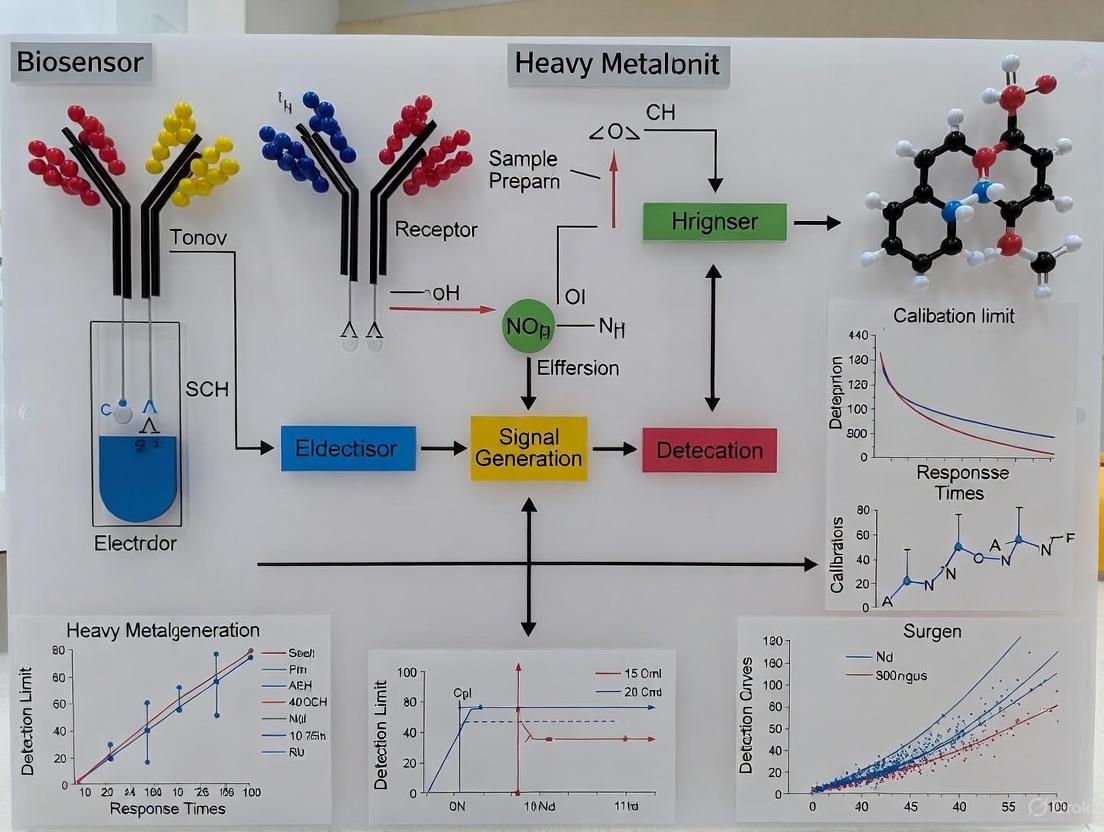
This article provides a comprehensive overview of the latest advancements in biosensor technologies for detecting heavy metals in water, a critical issue for environmental and public health.
Advanced Biosensors for Heavy Metal Detection in Water: From Molecular Design to Real-World Application
Abstract
This article provides a comprehensive overview of the latest advancements in biosensor technologies for detecting heavy metals in water, a critical issue for environmental and public health. Tailored for researchers, scientists, and drug development professionals, it explores the foundational principles of biosensor operation, including electrochemical, optical, and genetically engineered systems. The scope extends to cutting-edge methodological applications that integrate nanomaterials, IoT, and deep learning for enhanced sensitivity and on-site monitoring. It further addresses key challenges in sensor stability and selectivity, offers validation strategies against traditional spectroscopic methods, and discusses the implications of these technologies for mitigating health risks linked to antibiotic resistance and environmental contamination.
The Urgent Need and Core Principles of Heavy Metal Biosensing
Heavy metal pollution represents a pervasive and persistent threat to global ecosystems and public health. A seminal study published in Science reveals the staggering scope of this crisis: approximately 1.4 billion people worldwide live in regions where soils are dangerously polluted by toxic heavy metals including arsenic, cadmium, cobalt, chromium, copper, nickel, and lead [1]. The research, which analyzed nearly 800,000 soil samples through advanced machine learning, estimates that 14-17% of the world's cropland (approximately 242 million hectares) is contaminated with at least one heavy metal exceeding safety thresholds for agriculture and human health [1]. This widespread contamination threatens food security, ecosystem health, and public safety by reducing crop yields and introducing toxic metals into the food chain.
The health implications of this pollution are severe. Heavy metals are persistent environmental pollutants that can bioaccumulate in living organisms, leading to diverse toxic effects affecting multiple organ systems [2]. The detrimental impacts occur primarily through their capacity to interfere with antioxidant defense mechanisms, often by interacting with intracellular glutathione or sulfhydryl groups of critical antioxidant enzymes [2]. Understanding both the environmental transport and biological mechanisms of heavy metal toxicity is crucial for developing effective detection and remediation strategies.
Heavy Metal Contamination in the Food Chain: A Case Study in Rice
The transfer of heavy metals from contaminated environments to food staples creates significant public health vulnerabilities. A comprehensive study of rice contamination in Henan Province, China, provides concerning evidence of this transfer mechanism. Researchers collected 6,632 rice samples from 18 regions between 2020 and 2022 and analyzed them for cadmium (Cd), chromium (Cr), lead (Pb), mercury (Hg), and inorganic arsenic (As) using inductively coupled plasma mass spectrometry (ICP-MS) [3].
Table 1: Detection Rates of Heavy Metals in Rice Samples from Henan Province (2020-2022)
| Heavy Metal | Detection Rate | Urban vs. Rural Variation | Regional Distribution Patterns |
|---|---|---|---|
| Arsenic (As) | 99.59% | Not statistically significant | Consistently high across all regions |
| Cadmium (Cd) | 27.69% | Significantly higher in urban areas (30.42%) vs. rural (23.13%) | Higher detection in southern region |
| Chromium (Cr) | 22.57% | Not detailed in study | Highest detection in eastern region |
| Lead (Pb) | 2.25% | Not detailed in study | No strong regional pattern observed |
| Mercury (Hg) | 1.95% | Not detailed in study | No strong regional pattern observed |
The health risk assessment conducted in this study revealed particularly alarming findings for arsenic. The Hazard Quotient (HQ) for inorganic arsenic exceeded 1, indicating potential health risks, with children and toddlers at relatively higher risk of exposure compared to adults [3]. This demonstrates how environmental contamination directly translates to public health concerns through dietary exposure pathways.
Biosensing Technologies for Heavy Metal Detection in Water
Monitoring heavy metal contamination in water requires sophisticated analytical techniques. Biosensors have emerged as powerful alternatives to conventional methods, offering advantages including minimal sample preparation, short measurement times, high specificity and sensitivity, and low detection limits [4]. These devices utilize biological recognition elements connected to transducers to generate signals proportional to contaminant concentrations.
Optical Biosensors: Principles and Applications
Optical biosensors represent a particularly promising category for environmental monitoring. Recent analysis of published research indicates that fluorescence-based biosensors constitute approximately 33% of applications, followed by surface plasmon resonance (SPR) at 28% [4]. SPR biosensors have achieved the most impressive detection limits to date, while emerging technologies like interferometers and resonators (collectively ~26%) show significant promise due to their potential for extremely low detection limits [4].
Table 2: Optical Biosensor Platforms for Heavy Metal Detection in Water
| Transducer Type | Percentage of Applications | Key Advantages | Reported Detection Limits |
|---|---|---|---|
| Fluorescence-based | 33% | High sensitivity, multiplexing capability | Varies by specific design and target |
| Surface Plasmon Resonance (SPR) | 28% | Lowest current detection limits, label-free detection | Down to attomolar concentrations [4] |
| Interferometers | 22% | High potential for low detection limits | Not specified in literature reviewed |
| Resonators | 4% | High potential for low detection limits | Not specified in literature reviewed |
| Other/Combined | 13% | Application-specific advantages | Varies by specific design |
The market projection for biosensors underscores their growing importance, valued at USD 25.5 billion in 2021 and projected to reach USD 36.7 billion by 2026 [4]. While currently dominated by medical applications, environmental monitoring represents a rapidly expanding segment of this market.
Experimental Protocols for Heavy Metal Detection
Sample Preparation and ICP-MS Analysis Protocol
The reference method for heavy metal detection in environmental samples involves rigorous sample preparation followed by instrumental analysis:
- Sample Homogenization: Solid samples (e.g., rice, soil) must be crushed into fine powder using ceramic or stainless-steel grinders to ensure representative sub-sampling [3].
- Microwave-Assisted Digestion:
- Weigh 0.3 g (accurate to 0.001 g) of homogenized sample into microwave digestion vessel
- Add 7 mL of high-purity nitric acid and allow to pre-digest for 1 hour with lid loosely attached
- Secure digestion vessel lid and program microwave system according to standardized temperature ramp procedure (see Supplementary Table S1 in [3])
- After cooling, slowly release pressure and open vessels
- Rinse inner lid with small volume of deionized water into digestion vessel
- Transfer digestate to temperature-controlled hot plate or ultrasonic water bath and heat at 100°C for 30 minutes
- Dilute to 25 mL final volume with deionized water and mix thoroughly
- Quality Control Measures:
- Include duplicate samples for precision assessment
- Process blank samples to monitor contamination
- Spike recovery samples to evaluate accuracy
- Analyze certified reference materials for validation
- ICP-MS Analysis:
- Calibrate instrument with matrix-matched standards
- Monitor internal standards to correct for instrumental drift
- Utilize collision/reaction cell technologies to eliminate polyatomic interferences
- Re-analyze exceeding samples to confirm results [3]
Whole-Cell Microbial Biosensor Implementation Protocol
Whole-cell microbial biosensors offer a synthetic biology approach for environmental sensing of heavy metals [5]:
- Biosensor Preparation:
- Culture microbial chassis (e.g., E. coli, B. subtilis) containing heavy metal-responsive genetic constructs
- Harvest cells during mid-logarithmic growth phase
- Wash cells with appropriate buffer to remove culture media
- Suspend cells in monitoring buffer at standardized optical density
- Sample Exposure:
- Filter water samples if excessive particulate matter present
- Mix standardized cell suspension with sample in predetermined ratio
- Incubate under optimal conditions for signal development
- Signal Detection:
- For colorimetric outputs: measure absorbance at appropriate wavelength
- For fluorescent outputs: excite at appropriate wavelength and measure emission
- For luminescent outputs: integrate photon counts over specified period
- Data Interpretation:
- Compare sample signals to calibration curve generated from standards
- Normalize signals to cell density controls when necessary
- Apply statistical validation of results
Smartphone-Based Optical Biosensing Protocol
Emerging technologies leverage smartphone capabilities for field-deployable heavy metal detection:
- Device Configuration:
- Utilize smartphone camera for signal acquisition
- Implement exposure lights or external LEDs for illumination
- Develop dedicated mobile application for data processing
- Assay Implementation:
- Adapt colorimetric, fluorescence, or bright-field detection principles
- Process optical characteristics (color, luminescence, pixel counts)
- Apply machine learning algorithms for signal interpretation [4]
- Validation:
- Compare smartphone-derived results with reference laboratory methods
- Establish limit of detection and quantitative range for each analyte
Molecular Mechanisms of Heavy Metal Toxicity
Heavy metals exert their toxic effects through multiple biochemical pathways, with oxidative stress representing a central mechanism. The molecular interactions disrupt cellular homeostasis and can lead to various pathological states.
The molecular mechanisms illustrated above demonstrate how heavy metals like cadmium can affect the BCL-2 family of proteins involved in mitochondrial death pathways, while lead-induced oxidative stress can deplete nitric oxide, resulting in the formation of peroxynitrite, a potent biological oxidant [2]. The nuclear factor erythroid 2-related factor 2 (Nrf2), an important regulator of antioxidant enzymes, acts as a double-edged sword in response to arsenic-induced oxidative stress [2]. Understanding these mechanisms is crucial for developing both detection methods and therapeutic interventions.
The Scientist's Toolkit: Research Reagent Solutions
Table 3: Essential Research Reagents for Heavy Metal Detection and Analysis
| Reagent/Material | Function | Application Examples |
|---|---|---|
| Nitric Acid (High Purity) | Sample digestion and matrix dissolution | Microwave-assisted digestion of environmental samples for ICP-MS analysis [3] |
| ICP-MS Calibration Standards | Instrument calibration and quantification | Preparation of matrix-matched standard curves for heavy metal quantification |
| Certified Reference Materials | Quality control and method validation | Verification of analytical accuracy for specific sample matrices |
| Heavy Metal-Responsive Promoters | Biological recognition elements | Construction of whole-cell microbial biosensors for specific metal detection [5] |
| Antibodies (Metal-Specific) | Molecular recognition for immunoassays | Development of immunosensors for heavy metal detection [4] |
| Fluorescent Reporters | Signal generation in biosensors | Labeling biological elements for optical detection (e.g., GFP, luciferase) |
| Surface Plasmon Resonance Chips | Transducer platform for label-free detection | Immobilization of biological recognition elements for SPR biosensors [4] |
| Chelating Agents (EDTA, DMSA, DMPS) | Metal binding and detoxification | Positive controls for metal binding studies; therapeutic applications [2] |
The global scale of heavy metal pollution demands innovative approaches for environmental monitoring and public health protection. Biosensor technologies, particularly optical platforms, offer promising solutions for rapid, sensitive, and field-deployable heavy metal detection in water and other environmental matrices. Current research focuses on improving sensitivity through novel transducers, enhancing specificity via engineered biological elements, and increasing robustness through alternative microbial chassis [5].
Future directions in this field include the development of multiplexed detection systems capable of simultaneously monitoring multiple heavy metals, integration of biosensors with wireless technologies for continuous environmental monitoring, and implementation of machine learning algorithms for data analysis and interpretation [4]. As these technologies mature, they will play an increasingly vital role in addressing the pervasive public health crisis posed by heavy metal pollution worldwide.
The co-selective pressure exerted by heavy metals is a significant contributor to the dissemination and persistence of antibiotic resistance genes (ARGs) in environmental reservoirs. This interplay represents a critical challenge within the One Health framework, connecting environmental pollution with clinical therapeutic failure. The overlapping contamination of antibiotics and metals, coupled with similarities in bacterial resistance mechanisms, points to an intertwined evolutionary history. Metals can indirectly select for antibiotic-resistant bacteria through genetic linkage and physiological adaptation, even in the absence of antibiotics themselves [6] [7] [8].
Molecular Mechanisms of Metal-Driven Co-selection
Heavy metals trigger specific molecular responses in bacteria that inadvertently foster antimicrobial resistance through several interconnected mechanisms.
Genetic Co-selection Models
Table 1: Genetic Models of Heavy Metal and Antibiotic Co-selection
| Mechanism | Functional Principle | Key Elements | Result |
|---|---|---|---|
| Co-resistance | Different resistance genes (metal & antibiotic) located on the same mobile genetic element [9] [8]. | Plasmids, transposons, integrons [6]. | Simultaneous acquisition and selection of multiple resistance traits. |
| Cross-resistance | A single cellular mechanism confers resistance to both metal and antibiotic compounds [9] [8]. | Efflux pumps (e.g., AcrAB), detoxifying enzymes [9] [7]. | Exposure to one agent selects for resistance to the other. |
| Co-regulation | Shared regulatory systems control the expression of multiple resistance genes [6] [7]. | Global regulons (e.g., SoxS), oxidative stress responses [9]. | Coordinated gene expression under stress. |
Co-selection Pathways and Cellular Interactions
The following diagram illustrates the interconnected pathways through which heavy metal exposure drives antibiotic resistance in bacteria.
Critical Heavy Metals and Their Resistance Thresholds
Certain heavy metals are particularly associated with co-selection due to their toxicity, mobility, and prevalence in contaminated environments.
Table 2: Critical Heavy Metals in Co-selection and Their Resistance Thresholds
| Heavy Metal | Primary Sources | Toxicity Mechanism | Resistance Threshold | Linked Antibiotic Resistances |
|---|---|---|---|---|
| Copper (Cu) | Anti-fouling agents, pesticides, feed additives [8]. | Oxidative stress through Fenton reactions [7]. | 1.5 - 2.5 mg/L [7]. | Multidrug resistance (MDR) [7]. |
| Zinc (Zn) | Animal feed supplement, industrial discharge [6] [8]. | Competes with essential metals for binding sites [10]. | 5 - 10 mg/L [7]. | Macrolides, β-lactams via co-resistance [6]. |
| Cadmium (Cd) | Mining, industrial waste, fertilizers [6]. | Strong affinity for thiol groups, enzyme inhibition [8]. | 0.1 - 0.5 mg/L [7]. | Tetracycline, sulfonamide [6]. |
| Mercury (Hg) | Fossil fuel combustion, healthcare waste [6]. | Binds to proteins, inhibits cellular functions [8]. | >0.01 mg/L [7]. | β-lactam, aminoglycoside [8]. |
| Arsenic (As) | Geogenic sources, mining, wood preservatives [6]. | Mimics phosphorus, disrupts energy metabolism [7]. | >0.5 mg/L [7]. | Fluoroquinolones, chloramphenicol [6]. |
Experimental Protocols for Investigating Co-selection
Standardized methodologies are essential for generating comparable data on metal-antibiotic co-selection.
Protocol 1: Determination of Minimum Inhibitory Concentration (MIC) for Heavy Metals and Disinfectants
This broth microdilution method determines the lowest concentration of an antimicrobial that prevents visible bacterial growth [9].
Materials:
- Mueller Hinton Broth
- Heavy metal salt stock solutions (CoCl₂, ZnCl₂, CdCl₂, CuCl₂·2H₂O, HgCl₂, NiCl₂, PbCl₂)
- Sterile 96-well microtiter plates
- McFarland standard (0.5)
- Bacterial isolates (e.g., MRSA, Vancomycin-resistant Enterococci)
Procedure:
- Preparation of Stock Solutions: Dissolve heavy metal salts in distilled water to create concentrated stock solutions. Sterilize by filtration through 0.22 μm membranes [9].
- Dilution Series: In a sterile 96-well plate, prepare two-fold serial dilutions of each heavy metal in Mueller Hinton Broth. A typical concentration range is 6.25 to 3200 μg/mL. For mercury, use 0.78 to 400 μg/mL due to its higher toxicity [9].
- Inoculum Preparation: Suspend test bacterial strains in Mueller Hinton Broth and incubate overnight at 37°C. Adjust the turbidity of the suspension to the 0.5 McFarland standard (approximately 1-2 x 10⁸ CFU/mL). Further dilute the suspension to achieve a final inoculum of 5 x 10⁵ CFU/mL in the test well [9].
- Inoculation: Add 50 μL of the standardized bacterial suspension to each well containing 50 μL of the heavy metal dilution.
- Controls: Include a growth control well (broth + inoculum), a sterility control (broth only), and a positive control with a standard strain (e.g., S. aureus ATCC 25923) [9].
- Incubation: Cover the plate and incubate at 37°C for 24 hours.
- Result Interpretation: The MIC is recorded as the lowest concentration of the heavy metal that completely inhibits visible bacterial growth. Compare the MIC values of test isolates to those of standard control strains to determine resistance [9].
Protocol 2: Detection of Co-resistance via Molecular Analysis of Mobile Genetic Elements
This protocol identifies the physical linkage between metal and antibiotic resistance genes on plasmids, transposons, or integrons.
Materials:
- DNA extraction kit
- PCR reagents (polymerase, dNTPs, buffers)
- Gel electrophoresis equipment
- Specific primers for target genes (e.g., merA for mercury, czc for Cd/Zn/Co, bla for β-lactams, tet for tetracyclines)
- Plasmid extraction kit
Procedure:
- DNA Extraction: Extract total genomic DNA from bacterial isolates using a commercial kit.
- PCR Screening: Perform PCR amplification using primers specific for both heavy metal resistance genes (HMRGs) and antibiotic resistance genes (ARGs).
- Plasmid Profiling: Isolate plasmid DNA from isolates that test positive for both HMRGs and ARGs.
- Southern Blot Hybridization (Optional): Digest plasmid DNA with restriction enzymes, separate via gel electrophoresis, and transfer to a membrane. Hybridize with labeled probes for specific HMRGs and ARGs to confirm their co-localization on the same plasmid.
- Sequencing and Annotation: Sequence the plasmid and annotate the resistance genes to confirm their physical linkage and operon structure.
The Scientist's Toolkit: Essential Research Reagents and Materials
Table 3: Key Research Reagents and Materials for Co-selection Studies
| Reagent/Material | Function/Application | Example Specifications |
|---|---|---|
| Heavy Metal Salts | Used to prepare stock solutions for MIC determination and selective pressure experiments [9]. | CoCl₂, ZnCl₂, CdCl₂, CuCl₂·2H₂O, HgCl₂, NiCl₂, PbCl₂; analytical grade [9]. |
| Cation-Adjusted Mueller Hinton Broth | Standardized growth medium for MIC assays, ensuring reproducible cation concentrations that affect metal bioavailability [9]. | Complies with CLSI standards for antimicrobial susceptibility testing. |
| 96-Well Microtiter Plates | Platform for broth microdilution assays, allowing high-throughput screening of MIC values [9]. | Sterile, U-bottom or flat-bottom, polystyrene. |
| DNA Extraction Kit | For isolating high-quality genomic and plasmid DNA from bacterial isolates for molecular analysis. | Designed for Gram-positive and Gram-negative bacteria. |
| PCR Reagents | For amplifying specific resistance genes to screen for co-resistance and cross-resistance. | Includes thermostable polymerase, dNTPs, MgCl₂, and reaction buffers. |
| Class 1 Integron Primers | Specific primers to detect integron presence, often a genetic platform for co-located metal and antibiotic resistance genes [9]. | Targets conserved segments (5'-CS and 3'-CS) of class 1 integrons. |
Application Notes: Integration with Biosensor Development for Water Research
Understanding co-selection mechanisms directly informs the development of biosensors for heavy metal detection in water, framing them within a critical public health context.
Rationale for Biosensor Deployment
Biosensors provide a simple, reliable, and fast solution for monitoring water pollution by heavy metals, enabling in-situ application and avoiding lengthy laboratory analyses [10]. Given the established role of metals in driving antibiotic resistance, biosensors serve as early warning systems not just for metal pollution, but for potential hotspots of antimicrobial resistance development [11].
Whole-Cell Biosensors (WCBs) for Bioavailable Metals
- Principle: Genetically engineered microorganisms that produce a detectable signal (e.g., fluorescence, luminescence) in response to bioavailable heavy metals [11].
- Advantage: Unlike chemical assays that measure total metal concentration, WCBs detect the biologically available fraction, which is directly relevant for assessing co-selection pressure [11].
- Design: Regulatory elements from metal resistance operons (e.g., merR for mercury, cadR for cadmium) are fused to reporter genes (e.g., gfp for green fluorescent protein) [7].
Protocol 3: Conceptual Workflow for a Heavy Metal Whole-Cell Biosensor
The following diagram outlines the development and application process for a whole-cell biosensor designed to detect bioavailable heavy metals in water samples.
This workflow allows researchers to move from genetic engineering to the practical application of detecting bioavailable metals, which are the primary drivers of co-selection in aquatic environments [11].
A biosensor is an integrated analytical device that converts a biological response into a quantifiable electrical signal through the synergistic combination of a biological recognition element and a physicochemical transducer [12] [13]. These devices provide specific, rapid, and cost-effective analysis, making them powerful tools for environmental monitoring, particularly for detecting heavy metals in water systems [10] [14].
The core components of a biosensor work in sequence to achieve detection. The process begins with the analyte, the substance of interest to be detected (e.g., a heavy metal ion). The bioreceptor is a biological or biomimetic element that specifically interacts with this analyte. This interaction produces a biochemical change, which is converted into a measurable signal by the transducer. Finally, the electronics and display process this signal and present it in a user-interpretable format [15] [13]. This application note details these fundamental components within the context of developing biosensors for heavy metal detection in water, providing researchers with structured protocols and reference data.
Core Components of a Biosensor
Bioreceptors: The Recognition Elements
Bioreceptors are the key to a biosensor's selectivity, as they are responsible for the specific recognition of the target analyte [13]. The choice of bioreceptor depends on the specific heavy metal ion and the required sensitivity and selectivity.
Table 1: Common Bioreceptors Used in Heavy Metal Biosensors
| Bioreceptor Type | Recognition Principle | Example Application in Heavy Metal Detection | Advantages | Limitations |
|---|---|---|---|---|
| Enzymes [12] [4] | Enzyme inhibition or activation by the metal ion. | Urease inhibition for Hg²⁺ detection [10]. | High catalytic activity; signal amplification. | Susceptible to denaturation; can lack absolute specificity. |
| Antibodies [12] [4] | Specific binding between antibody and metal-chelate complex. | Immunosensors for Cd-EDTA complexes [14]. | Very high specificity and affinity. | Require metal chelation; sensitive to assay conditions. |
| Nucleic Acids (Aptamers) [12] [16] | Folding of DNA/RNA into structures that bind specific metal ions. | Aptasensors for Cd(II) using Ti-Co₃O₄ nanoparticles [17]. | High stability; tunable specificity; small size. | Selection process (SELEX) can be complex. |
| Whole Cells [12] [5] | Use of natural or engineered microorganisms that respond to metal stress. | Microbial biosensors using genetic circuits for Pb²⁺ or As³⁺ [5]. | Can report on bioavailability and toxicity; low cost. | Longer response time; lower specificity; maintenance required. |
| Proteins [10] [4] | Binding by metal-binding proteins (e.g., metallothioneins). | Concanavalin A as an affinity receptor for assays [12]. | Natural affinity for metals; can be engineered. | Can be difficult to isolate and stabilize. |
Transducers: Converting Biological Events into Measurable Signals
The transducer translates the biorecognition event into a quantifiable electronic signal. The transduction method is chosen based on the required sensitivity, detection limit, and potential for device miniaturization.
Table 2: Common Transduction Methods in Heavy Metal Biosensors
| Transducer Type | Detection Principle | Measured Signal | Example Application | Detection Limit |
|---|---|---|---|---|
| Electrochemical - Voltammetric [17] [16] | Measures current from redox reactions of metal ions at an electrode under applied potential. | Current (Amperes). | Detection of As(III) using Fe-MOF/MXene nanocomposite [17]. | 0.58 ng/L [17] |
| Electrochemical - Potentiometric [16] | Measures potential difference at zero current. | Potential (Volts). | Urea electrode by Guilbault and Montalvo (historical) [13]. | Varies by application |
| Electrochemical - Impedimetric [16] | Measures impedance change due to biorecognition event on electrode surface. | Impedance (Ohms). | Detection of E. coli and S. aureus using Concanavalin A [16]. | 50 μg/mL [16] |
| Optical - SPR [4] | Detects change in refractive index on a metal surface upon binding. | Shift in resonance angle/wavelength. | Label-free detection of various contaminants [4]. | Can reach femtomolar [4] |
| Optical - Fluorescent [4] | Measures fluorescence emission from a labeled bioreceptor. | Fluorescence intensity. | Detection of Bisphenol A in lake water [4]. | Varies by application |
| Gravimetric - QCM [16] | Measures mass change on a piezoelectric crystal surface. | Frequency change (Hertz). | Mass-based detection in lectin-sensors [16]. | Varies by application |
Signal Processors: Data Acquisition and Display
The electronic system is a critical component that conditions the raw signal from the transducer. Its functions typically include [15] [13]:
- Signal Amplification: Increasing the magnitude of the often weak signal from the transducer.
- Signal Conditioning: Filtering out electrical noise to improve the signal-to-noise ratio.
- Analog-to-Digital Conversion (ADC): Converting the analog signal into a digital format for processing.
- Microprocessor: Analyzing the digital signal, comparing it to calibration curves, and calculating the analyte concentration.
- Display: Presenting the final result in a user-friendly format, such as an LCD screen or a data interface to a computer [13].
The following diagram illustrates the logical workflow and the relationship between these core components in a typical biosensing operation.
Experimental Protocols for Heavy Metal Biosensing
This section provides a generalized protocol for developing and operating an electrochemical biosensor for heavy metal detection, which is one of the most common transducer types used in this field [17].
Protocol: Electrochemical Detection of Heavy Metals Using an Aptamer-Based Sensor
Principle: This protocol utilizes a DNA aptamer as the bioreceptor, immobilized on a nanomaterial-modified working electrode. Upon binding to the target heavy metal ion (e.g., Cd²⁺), the conformation of the aptamer changes, altering the electrochemical signal of a redox probe, which is measured using Cyclic Voltammetry (CV) or Differential Pulse Voltammetry (DPV) [17].
Workflow Overview:
Materials
- Equipment: Potentiostat/Galvanostat, Three-electrode system (e.g., Glassy Carbon Working Electrode, Ag/AgCl Reference Electrode, Pt wire Counter Electrode), pH meter, analytical balance.
- Reagents: DNA aptamer specific to the target metal (e.g., Cd²⁺), nanomaterial for electrode modification (e.g., Ti-Co₃O₄ nanoparticles, MWCNTs), thionine or [Fe(CN)₆]³⁻/⁴⁻ as redox probe, buffer solutions (e.g., 10 mM Tris-HCl, pH 7.4), standard solutions of the target heavy metal ion.
- Software: Software compatible with the potentiostat for controlling experiments and data analysis.
Step-by-Step Procedure
Step 1: Electrode Preparation and Modification
- Polishing: Polish the Glassy Carbon Working Electrode (GCE) sequentially with 1.0, 0.3, and 0.05 µm alumina slurry on a microcloth pad. Rinse thoroughly with deionized water between each polish and after the final polish.
- Cleaning: Sonicate the electrode in ethanol and then in deionized water for 2 minutes each to remove any residual alumina particles. Dry under a gentle stream of nitrogen gas.
- Nanomaterial Modification: Prepare a dispersion of the nanomaterial (e.g., 1 mg/mL Ti-Co₃O₄ in deionized water) and sonicate for 30 minutes to achieve a homogeneous suspension. Drop-cast a precise volume (e.g., 5 µL) of the dispersion onto the clean GCE surface and allow it to dry at room temperature. This forms the Ti-Co₃O₄/GCE modified electrode [17].
Step 2: Aptamer Immobilization
- Aptamer Preparation: Dilute the thionine-labeled aptamer stock solution to a concentration of 1 µM using the immobilization buffer (e.g., 10 mM Tris-HCl, pH 7.4).
- Immobilization: Drop-cast the aptamer solution onto the surface of the Ti-Co₃O₄/GCE modified electrode. Incubate in a humidified chamber for 12-16 hours at 4°C to allow for effective immobilization.
- Rinsing: After incubation, gently rinse the electrode with the same buffer to remove any physically adsorbed aptamer strands. The fabricated sensor is now ready for measurement [17].
Step 3: Measurement and Signal Acquisition
- Baseline Measurement: Place the modified electrode into an electrochemical cell containing the redox probe solution (e.g., 5 mM [Fe(CN)₆]³⁻/⁴⁻ in 0.1 M KCl). Record a Cyclic Voltammogram (CV) or a Differential Pulse Voltammogram (DPV) as the baseline signal.
- Analyte Incubation: Incubate the aptasensor in a sample solution containing the target heavy metal ion (Cd²⁺) for a fixed time (e.g., 15-20 minutes).
- Post-Incubation Measurement: Remove the electrode from the sample, rinse gently, and place it back into the redox probe solution. Record the CV or DPV signal again.
- Data Collection: The change in the electrochemical signal (e.g., peak current of thionine or [Fe(CN)₆]³⁻/⁴⁻) before and after incubation with the analyte is recorded for analysis [17].
Step 4: Data Analysis and Quantification
- Calibration Curve: Repeat Steps 3.1-3.4 using a series of standard solutions with known concentrations of the target heavy metal ion.
- Plotting: Plot the change in the electrochemical signal (ΔI) against the logarithm of the heavy metal ion concentration.
- Quantification: Use the resulting calibration curve to determine the concentration of the target metal in unknown samples by interpolating the measured ΔI value. The limit of detection (LOD) can be calculated as 3σ/slope, where σ is the standard deviation of the blank signal [17].
The Scientist's Toolkit: Essential Research Reagents and Materials
Table 3: Key Research Reagent Solutions for Biosensor Development
| Item Name | Function/Application | Example & Notes |
|---|---|---|
| Specific Aptamers | Bioreceptor for selective metal ion recognition. | DNA/RNA sequences selected via SELEX; can be modified with thiol or amine groups for surface immobilization [17]. |
| Functionalized Nanoparticles | Enhance electrode surface area and electron transfer; can be signal amplifiers. | Ti-Co₃O₄ NPs, Gold Nanoparticles (AuNPs), multi-walled carbon nanotubes (MWCNTs) [17] [15]. |
| Electrochemical Redox Probes | Provide a measurable current signal in voltammetric techniques. | Thionine, Potassium Ferricyanide [K₃Fe(CN)₆]; stability and reversibility are key selection criteria [17]. |
| Immobilization Matrices | Provide a stable scaffold for attaching bioreceptors to the transducer surface. | Nafion, chitosan, self-assembled monolayers (SAMs) of alkanethiols on gold surfaces [15]. |
| Buffer Solutions | Maintain optimal pH and ionic strength for bioreceptor activity and stability. | Tris-HCl, Phosphate Buffered Saline (PBS); concentration and pH must be optimized for each biosensor [17]. |
Biosensors are analytical devices that combine a biological recognition element with a transducer to produce a measurable signal proportional to the concentration of a target analyte. According to the International Union of Pure and Applied Chemistry (IUPAC), a biosensor represents a "self-contained integrated device, which is capable of providing specific quantitative or semi-quantitative analytical information using a biological recognition element (biochemical receptor) which is retained in a direct spatial contact with an electrochemical transduction element" [10]. In the context of heavy metal detection in water, biosensors have emerged as powerful alternatives to conventional analytical techniques like atomic absorption spectrometry and inductively coupled plasma mass spectrometry, offering advantages such as minimal sample preparation, short measurement times, high specificity, portability, and cost-effectiveness for on-site monitoring [10] [18] [19].
The critical importance of detecting heavy metals in water resources cannot be overstated. Metals such as lead, cadmium, mercury, and arsenic are highly toxic even at trace concentrations, causing severe environmental and health impacts due to their non-biodegradable nature and tendency to bioaccumulate in the food chain [10] [19]. This application note provides a structured classification of biosensing platforms, detailed experimental protocols, and resource guidance to support research and development activities aimed at addressing these pressing environmental monitoring challenges.
Biosensor Classification and Working Principles
Biosensors are primarily classified based on their transduction mechanism (the method of signal measurement) and the type of biorecognition element (the biological component that interacts specifically with the target analyte). The following sections detail the three major categories: electrochemical, optical, and whole-cell biosensors.
Electrochemical Biosensors
Electrochemical biosensors transduce a biological recognition event into an electrical signal such as current, potential, or impedance. They are among the most widely developed biosensors for heavy metal detection due to their high sensitivity, portability, and capacity for miniaturization [20] [19].
Working Principle: The core of these sensors is an electrode system where the biorecognition element is immobilized. Upon interaction with the target heavy metal ions, a biochemical reaction occurs that alters the electrochemical properties at the electrode-solution interface. This change is measured using techniques like differential pulse voltammetry (DPV) or square-wave anodic stripping voltammetry (SWASV). The latter involves a two-step process: first, heavy metal ions are electrodeposited onto the working electrode, and then they are stripped back into solution, generating a current signal proportional to their concentration [20] [21].
Key Innovations: Recent advancements include the use of nanomaterial-modified electrodes to enhance sensitivity. For instance, screen-printed carbon electrodes (SPCEs) modified with gold nanoparticles (AuNPs) have been developed for the simultaneous detection of Cd(II), Pb(II), As(III), and Hg(II) [21]. Furthermore, the integration of Internet of Things (IoT) technology and deep learning algorithms, such as convolutional neural networks (CNNs), has enabled the interpretation of complex signals from multi-analyte solutions and facilitated remote monitoring capabilities [20].
Optical Biosensors
Optical biosensors measure changes in light properties resulting from the interaction between the bioreceptor and the target analyte. These changes can include intensity, wavelength, polarization, or phase [22] [23].
Working Principle: The sensing mechanism often relies on labeled or label-free detection. A common strategy involves structure-switching DNA. For example, a fluorescence-labeled DNA sequence containing a T-T mismatch structure is immobilized on a sensor surface. In the presence of Hg²⁺, the DNA folds into a hairpin structure via the formation of a T-Hg²⁺-T complex, leading to its dehybridization from the surface and a consequent decrease in fluorescence signal [18]. Another prominent principle is surface plasmon resonance (SPR), which detects refractive index changes near a metal surface without requiring labels [22].
Key Innovations: A significant advancement is the use of metal-organic frameworks (MOFs) as versatile sensing platforms. MOFs are crystalline porous materials with high surface areas and tunable optical properties. They can be functionalized with biorecognition elements like aptamers or antibodies, and their intrinsic luminescence can be quenched or enhanced upon binding to heavy metal ions, enabling highly sensitive detection [23]. Evanescent wave fiber optic biosensors are another innovation, allowing for real-time, on-site measurement by distinguishing bound fluorescent molecules from unbound ones in the bulk solution [18].
Whole-Cell Biosensors
Whole-cell biosensors utilize living microorganisms, such as bacteria or microalgae, as the biorecognition element. These cells are engineered or naturally possess the ability to respond to heavy metal stress [24] [25].
Working Principle: The detection mechanism is based on the physiological response of the living cell to the toxic metal. This can be achieved by genetically engineering the organism to link a metal-responsive promoter to a reporter gene, such as one encoding a fluorescent protein (e.g., GFP or DsRed). When the heavy metal enters the cell and activates the promoter, the fluorescent protein is expressed, generating a measurable signal [24]. Alternatively, native biochemical and metabolic changes in non-engineered cells, such as microalgae, can be monitored using spectroscopic techniques [25].
Key Innovations: Applications range from engineered bacterial strains (e.g., E. coli) to microalgae-based biosensors. Species like Ankistrodesmus falcatus and Scenedesmus obliquus have demonstrated high biosorption capacities and exhibit distinct biochemical changes—measurable via Fourier-Transform Infrared Spectroscopy (FTIR) and fluorescence spectroscopy—when exposed to metals like lead, cadmium, and mercury [25]. These systems offer the unique advantage of assessing the bioavailable fraction of metals and their overall toxicity.
Table 1: Comparison of Biosensor Types for Heavy Metal Detection
| Biosensor Type | Biorecognition Element | Transduction Method | Example Metals Detected | Key Advantages |
|---|---|---|---|---|
| Electrochemical | Enzymes, DNAzymes, Aptamers | Current / Potential (DPV, SWASV) | Cd²⁺, Pb²⁺, Cu²⁺, Hg²⁺, As³⁺ | High sensitivity, portability, low cost, suitable for multiplexing [20] [21] [19] |
| Optical | Antibodies, DNA, Aptamers | Fluorescence, SPR, Colorimetry | Hg²⁺, Pb²⁺, Cu²⁺ | High specificity, resistance to electromagnetic interference, real-time kinetics [18] [22] [23] |
| Whole-Cell | Bacteria, Microalgae | Bioluminescence, Fluorescence | Hg²⁺, Pb²⁺, Cd²⁺, Cu²⁺ | Measures bioavailability & toxicity, cost-effective for broad toxicity screening [24] [25] |
Experimental Protocols
Protocol: DNA-Based Optical Biosensor for Hg²⁺ Detection
This protocol details the fabrication and operation of an evanescent wave optical biosensor for the rapid, on-site detection of mercury ions, as adapted from published research [18].
Principle: A fluorescence-labeled, thymine-rich complementary DNA (cDNA) is hybridized with a DNA probe immobilized on a fiber optic sensor. Hg²⁺ selectively binds between T-T base pairs (forming T-Hg²⁺-T), causing the cDNA to fold into a hairpin structure and dehybridize, leading to a measurable decrease in fluorescence signal.
Materials:
- Fiber Optic Probe: Silica core, polymer cladding.
- DNA Probe: 5'-Amine-C6-AAAAAAAAAABlue sequence in Fig. 2 of [18]-3' (immobilization via amine coupling).
- cDNA: 5'-Cy5.5-Fluorophore-Green and Red sequences in Fig. 2 of [18]-3' (contains T-T mismatch region).
- Regeneration Solution: 0.5% SDS, pH 1.9.
- Buffer: PBS or HEPES for hybridization and sensing.
Procedure:
- Sensor Functionalization:
- Clean the fiber optic probe with piranha solution and rinse thoroughly with deionized water.
- Immerse the probe in an aqueous solution of the amine-terminated DNA probe (1 µM) for 12 hours at room temperature to allow covalent immobilization.
- Wash the probe with buffer to remove non-specifically bound DNA.
Hybridization:
- Introduce a solution of the Cy5.5-labeled cDNA (20 nM in buffer) over the functionalized sensor surface.
- Monitor the fluorescence signal in real-time until a stable plateau is reached (approximately 2 minutes), indicating complete hybridization.
Hg²⁺ Detection:
- Replace the cDNA solution with the sample solution containing Hg²⁺.
- Incubate for 5-10 minutes while monitoring the fluorescence signal. The signal will decrease as Hg²⁺ induces cDNA dehybridization.
- The signal loss is quantitatively correlated to the Hg²⁺ concentration.
Sensor Regeneration:
- Flush the sensor with the regeneration solution (0.5% SDS, pH 1.9) for 1-2 minutes to completely remove the bound cDNA and Hg²⁺.
- Re-equilibrate the sensor with buffer. The sensor is now ready for a new measurement cycle.
Protocol: Electrochemical Sensor for Multiplexed Heavy Metal Detection
This protocol describes the fabrication of a gold nanoparticle-modified electrode and its use for the simultaneous detection of Cd²⁺, Pb²⁺, Cu²⁺, and Hg²⁺ via differential pulse voltammetry (DPV) [20].
Principle: Metal ions are simultaneously electrodeposited onto a nanostructured working electrode and subsequently stripped off by an anodic potential sweep. The oxidation current peaks, occurring at characteristic potentials for each metal, are proportional to their concentration.
Materials:
- Electrode Substrate: Carbon thread electrodes or screen-printed carbon electrodes (SPCEs).
- Chloroauric Acid (HAuCl₄): For electrochemical deposition of gold nanoparticles (AuNPs).
- Ag/AgCl Ink: For reference electrode modification.
- Electrolyte: HCl-KCl buffer, pH 2.0.
- Portable Potentiostat: For on-site measurements.
Procedure:
- Working Electrode Modification (AuNPs Deposition):
- Clean the carbon-based working electrode by cycling the potential in 0.5 M H₂SO₄.
- Immerse the electrode in a 1 mM HAuCl₄ solution (in 0.1 M KNO₃).
- Perform electrodeposition by applying a constant potential of -0.4 V (vs. Ag/AgCl) for 60-120 seconds. A visible color change on the electrode surface confirms AuNP formation.
- Rinse the modified electrode (AuNP-SPCE) thoroughly with deionized water.
- Simultaneous Metal Detection via DPV:
- Prepare standard solutions or real water samples in HCl-KCl buffer (pH 2.0).
- Transfer the solution to the electrochemical cell containing the AuNP-SPCE, reference, and counter electrodes.
- Optional Pre-concentration: Apply a negative deposition potential (e.g., -1.2 V) for 60-120 seconds with stirring to pre-concentrate metal ions on the electrode surface.
- Stripping Analysis: Perform a DPV scan from -1.0 V to +0.5 V (parameters: pulse amplitude 90 mV, pulse time 25 ms, scan rate 15 mV/s).
- Identify the oxidation peaks for Cd²⁺ (~ -0.85 V), Pb²⁺ (~ -0.60 V), Cu²⁺ (~ -0.20 V), and Hg²⁺ (~ +0.20 V).
- Construct a calibration curve by plotting peak current versus metal concentration for quantitative analysis.
Protocol: Microalgae-Based Whole-Cell Biosensor for Metal Toxicity Screening
This protocol utilizes the biochemical response of microalgae to heavy metal stress for screening water samples [25].
Principle: Exposure to heavy metals induces physiological and metabolic changes in microalgae, including alterations in pigment content (e.g., chlorophyll fluorescence) and shifts in functional groups on the cell wall. These changes can be detected spectroscopically.
Materials:
- Microalgae Strains: Ankistrodesmus falcatus, Scenedesmus obliquus.
- Culture Medium: BG-11 or similar suitable medium.
- Analytical Instruments: Fluorescence spectrophotometer, FTIR spectrometer.
Procedure:
- Algal Cultivation and Exposure:
- Grow microalgae in sterile medium under controlled light and temperature to the mid-exponential growth phase.
- Harvest cells by gentle centrifugation and re-suspend in the test water sample or a medium spiked with known concentrations of heavy metals (e.g., Pb²⁺, Cd²⁺, Hg²⁺).
- Incubate for a defined period (e.g., 24-72 hours).
Signal Measurement:
- Chlorophyll Fluorescence: Measure the in-vivo chlorophyll fluorescence intensity using a fluorometer. A decrease in fluorescence indicates photosynthetic apparatus damage and is a general indicator of metal-induced stress.
- FTIR Analysis: Centrifuge the exposed algal cells, wash, and prepare as KBr pellets. Acquire FTIR spectra in the range of 4000-400 cm⁻¹. Analyze shifts in absorption bands (e.g., for -OH, -NH, -C=O groups) to identify the functional groups involved in metal biosorption and to gain insights into the biochemical changes induced by specific metals.
Data Analysis:
- Correlate the magnitude of the fluorescence quenching or the spectral shifts in the FTIR profile with the concentration and type of heavy metal present.
- Compare the response of different algal species to determine their relative sensitivity and suitability as biosensors for specific metals.
The Scientist's Toolkit: Research Reagent Solutions
Table 2: Essential Materials for Biosensor Development
| Reagent/Material | Function/Application | Example Use Case |
|---|---|---|
| Gold Nanoparticles (AuNPs) | Enhances electrode conductivity and surface area; can be functionalized with biorecognition elements. | Modification of screen-printed carbon electrodes (SPCEs) for simultaneous detection of Cd, Pb, As, Hg [21]. |
| Screen-Printed Electrodes (SPEs) | Disposable, miniaturized platforms for electrochemical sensing. | Base transducer for portable heavy metal sensors [20] [21]. |
| Structure-Switching DNA | Acts as a highly specific bioreceptor; conformation changes upon metal binding. | Fluorescence-based and electrochemical detection of Hg²⁺ (T-Hg²⁺-T) and Pb²⁺ (DNAzyme) [18] [24]. |
| Metal-Organic Frameworks (MOFs) | Porous materials with high surface area; provide signal amplification and hosting for bioreceptors. | Fluorescence quenching/enhancement-based sensors for heavy metals and pathogens [23]. |
| Fluorescent Proteins (e.g., GFP, DsRed) | Reporter molecules in whole-cell biosensors. | Genetically engineered into bacteria or yeast under control of metal-responsive promoters [24]. |
| Microalgae Strains | Whole-cell biosensors that respond to metal-induced physiological stress. | Detection of metal toxicity and biosorption efficiency via spectroscopic analysis (FTIR, fluorescence) [25]. |
Technology Workflow and Signaling Pathways
The following diagrams illustrate the core operational workflows and signaling principles for the key biosensor types discussed.
Electrochemical Biosensor Workflow with IoT Integration
Diagram Title: Electrochemical Sensing with IoT Data Flow
DNA-Based Optical Biosensor Signaling Mechanism
Diagram Title: Optical DNA-Switch Mechanism for Hg²⁺
Whole-Cell Biosensor Induction Pathway
Diagram Title: Genetic Circuit for Whole-Cell Sensing
Cutting-Edge Biosensing Platforms and Technological Integration
Screen-printed electrodes (SPEs) represent a transformative technology in electrochemical biosensing, constructed via thick film deposition onto plastic or ceramic substrates [26]. This fabrication approach allows for simple, inexpensive, and rapid on-site analysis with high reproducibility, sensitivity, and accuracy [26]. SPEs function as complete electrochemical cells that integrate working, reference, and counter electrodes on a single chip, significantly simplifying the analytical procedure compared to conventional electrochemical systems [27]. The versatility of SPE designs enables the selection of appropriate electrode materials—including gold, silver, platinum, and carbon—based on the specific analytical requirements for detecting target analytes [26]. This flexibility, combined with their disposable nature, makes SPEs particularly advantageous for environmental monitoring applications where portability, cost-effectiveness, and minimal sample preparation are essential considerations [27] [26].
The manufacturing process of SPEs involves the sequential deposition of specialized inks through a patterned mesh screen onto various substrates [27]. Key parameters such as ink rheology, mesh pore size, and squeegee motion must be carefully optimized to ensure consistent electrode performance [27]. This robust fabrication technique has opened broad inroads in the domain of flexible electronics, radically redefining the perception towards field-deployable analytical devices [27]. The application of SPEs has seen remarkable growth across multiple domains, including clinical diagnostics, food safety, and environmental monitoring, with particular relevance for detecting heavy metal contaminants in water systems [26] [28]. Their compatibility with various surface modification strategies and nanomaterials further enhances their utility for trace-level detection of environmental pollutants [29] [26].
Nanomaterial Enhancement Strategies for SPEs
The integration of nanomaterials with SPEs has dramatically improved biosensor performance through enhanced electron transfer kinetics, increased electroactive surface area, and improved biocompatibility for biomolecule immobilization [29]. Nanomaterials provide exceptional electrical properties, high surface-to-volume ratios, and unique catalytic activities that synergistically enhance sensor sensitivity, selectivity, and stability [29] [30]. These enhancement strategies can be categorized into carbon-based nanomaterials, metallic nanostructures, and composite materials that combine multiple nanoscale components.
Carbon-Based Nanomaterials
Carbon nanomaterials, particularly carbon nanotubes (CNTs) and graphene, have been extensively employed to modify SPE surfaces [29]. Single-walled carbon nanotubes (SWCNTs) exhibit extraordinary electronic and mechanical characteristics that significantly increase the quantity of immobilized biomolecules, widen reaction areas between biological recognition elements and substrates, and facilitate electrical conductivity [29]. Multi-walled carbon nanotubes (MWCNTs) comprise multiple layers of concentric single-walled graphene cylinders supported via Van der Waals forces, exhibiting excellent conduction and electrocatalytic characteristics that enhance electron transfer kinetics [29]. Graphene and its derivatives, including graphene oxide (GO) and reduced graphene oxide (rGO), offer even higher specific surface area than CNTs, though pristine graphene suffers from hydrophobicity that limits its biosensing applications [29]. The oxygen functional groups in GO improve hydrophilicity and facilitate biomolecule attachment, while rGO provides extraordinary electrical conductivity after reduction processes [29].
Metallic Nanostructures and Composite Materials
Metallic nanoparticles and nanowires constitute another important category of enhancing nanomaterials [31] [30]. Silver nanowires (AgNWs) demonstrate excellent conductivity that significantly improves electron transfer rates when incorporated into SPE modifications [31]. Gold nanoparticles (AuNPs) provide similar benefits and can be functionalized with various biomolecules through thiol chemistry [30]. Core-shell nanostructures, such as Au@Ag core-shell nanoparticles, leverage the synergistic properties of different metals to enhance electrochemical signals through catalytic processes [30]. One innovative approach combined silver nanowires with hydroxymethyl propyl cellulose, chitosan, and urease (AgNWs/HPMC/CS/Urease) to create a composite layer that significantly improved Hg(II) detection sensitivity [31]. The AgNWs provided excellent conductivity, while the chitosan matrix enabled high enzyme loading capacity, and HPMC contributed biodegradability and hydrophilicity [31].
Table 1: Performance Comparison of Nanomaterial-Enhanced SPE Biosensors for Heavy Metal Detection
| Target Analyte | Nanomaterial | Recognition Element | Linear Range | Limit of Detection | Reference |
|---|---|---|---|---|---|
| Hg(II) | AgNWs/HPMC/CS | Urease | 5–25 µM | 3.94 µM | [31] |
| Cr(VI) | Chitosan | Glucose oxidase | 0.05–1 ppm | 0.05 ppm | [32] |
| Various heavy metals | DNA-functionalized CNT | Specific DNA sequences | - | - | [30] |
| Heavy metals | Core-shell nanoparticles | DNA | - | Trace level | [30] |
Detection Mechanisms for Heavy Metals
Electrochemical biosensors for heavy metal detection employ several sophisticated mechanisms that leverage biological recognition elements to achieve high specificity. The most prominent approaches include enzyme inhibition-based detection, DNA-based sensing, and whole-cell biosensing, each offering distinct advantages for particular applications and target analytes [28].
Enzyme Inhibition-Based Biosensors
Enzyme inhibition-based biosensors operate on the principle that heavy metal ions can selectively inhibit enzymatic activity, with the degree of inhibition proportional to the metal ion concentration [31] [32]. Urease-based biosensors capitalize on the enzyme's sensitivity to Hg(II) ions, where the metal ion interacts with thiol groups in the enzyme's active site, diminishing its catalytic activity [31]. Similarly, glucose oxidase (GOx) exhibits sensitivity to hexavalent chromium (Cr(VI)), enabling the development of inhibition-based sensors for this toxic heavy metal [32]. The inhibition mechanism typically follows either competitive, non-competitive, or uncompetitive patterns, with Cr(VI) demonstrating uncompetitive inhibition of GOx [32]. The measurable signal reduction resulting from enzyme inhibition provides a quantitative relationship between electrochemical response and heavy metal concentration, allowing for precise quantification of contaminant levels in water samples [31] [32].
DNA-Based and Whole-Cell Biosensors
DNA-based electrochemical biosensors utilize specific interactions between heavy metal ions and nucleic acid structures [30] [28]. Notable examples include the thymine-Hg²⁺-thymine (T-Hg²⁺-T) mismatch, where Hg²⁺ ions selectively coordinate between two thymine bases, and the cytosine-Ag⁺-cytosine (C-Ag⁺-C) mismatch for silver ion detection [30]. Additional DNA structures like the G-quadruplex, stabilized by Pb²⁺ ions, provide recognition mechanisms for lead detection [30]. These DNA-metal interactions can trigger conformational changes in DNA structures, which are subsequently transduced into measurable electrochemical signals [30]. Whole-cell biosensors employ either specific or nonspecific biological responses to heavy metal exposure [28]. Specific whole-cell biosensors utilize metal-responsive genetic regulatory elements, such as the ars operon for arsenic detection or the cad operon for cadmium sensing [28]. Nonspecific versions rely on general stress responses, including heat shock or DNA damage pathways, which activate upon exposure to various toxic metals [28].
Diagram 1: Heavy metal detection mechanisms in electrochemical biosensors showing recognition pathways and signal transduction methods.
Application Notes: Heavy Metal Detection in Water
Mercury (Hg(II)) Detection Using AgNWs-Modified SPEs
The detection of mercury ions represents a critical application for electrochemical biosensors due to the severe toxicity of Hg(II) even at trace concentrations [31]. Mercury exposure can damage human organs, resulting in serious diseases including kidney failure, brain, and heart damage [31]. A highly effective biosensing approach for Hg(II) detection utilizes screen-printed carbon electrodes modified with a composite layer of silver nanowires, hydroxymethyl propyl cellulose, chitosan, and urease (AgNWs/HPMC/CS/Urease) [31]. The presence of AgNWs significantly enhances electrode conductivity, while the chitosan matrix provides excellent enzyme immobilization capacity [31]. This biosensor operates based on the inhibition of urease enzyme by Hg(II) ions, with the degree of inhibition quantitatively correlated to mercury concentration through electrochemical measurement [31].
Under optimal conditions, this AgNWs-modified SPE biosensor demonstrates excellent performance for Hg(II) detection with an incubation time of 10 minutes and a linear sensitivity range of 5–25 µM [31]. The system achieved a limit of detection (LOD) of 3.94 µM and limit of quantitation (LOQ) of 6.50 µM, sufficient for monitoring mercury levels in drinking water [31]. When validated with commercial drinking water samples, the biosensor exhibited excellent recoveries in the range of 101.62–105.26%, with results closely correlated with those obtained from inductively coupled plasma optical emission spectrometry (ICP-OES) [31]. This performance confirms the reliability of the developed sensor as a practical method for Hg(II) detection in real water samples, offering a simple, effective, portable, low-cost, and user-friendly platform for real-time monitoring of heavy metal ions in field measurements [31].
Hexavalent Chromium (Cr(VI)) Detection Using Paper-Based SPEs
Hexavalent chromium presents significant environmental and health concerns due to its classification as a carcinogen by the World Health Organization, with the standard permissible limit in drinking water set at 0.05 mg/L [32]. Paper-based biosensors integrated with SPEs have emerged as promising platforms for Cr(VI) detection, leveraging paper's capillary action for liquid wicking, lightweight properties, low cost, and ease of patterning [32]. These systems typically employ glucose oxidase (GOx) immobilized on filter paper using chitosan as an entrapping agent, associated with a screen-printed carbon electrode for amperometric measurements [32].
The inhibition of GOx by Cr(VI) follows an uncompetitive mechanism, where the inhibitor binds exclusively to the enzyme-substrate complex rather than the free enzyme [32]. This paper-based biosensor achieves a linear detection range of 0.05–1 ppm with a detection limit of 0.05 ppm for Cr(VI), precisely matching the permissible limit in potable water [32]. The biosensor demonstrates good reproducibility with a relative standard deviation of 5.6%, making it suitable for reliable field deployment [32]. The incorporation of chitosan as an enzyme entrapment matrix provides approximately 90% entrapment efficiency at 0.3% (w/v) concentration, with excellent stability retaining nearly 97% activity after one week of storage at 4°C [32]. This approach significantly reduces the complexity and cost of biosensor fabrication while maintaining analytical performance comparable to conventional laboratory methods [32].
Table 2: Research Reagent Solutions for Heavy Metal Biosensor Development
| Reagent/Material | Function/Application | Specifications/Alternatives |
|---|---|---|
| Screen-printed carbon electrodes | Platform for biosensor construction | Carbon, gold, or platinum working electrodes |
| Silver nanowires (AgNWs) | Conductivity enhancement for signal amplification | Diameter: 20-100 nm, Length: 10-50 μm |
| Chitosan | Biopolymer for enzyme immobilization | 0.3-0.5% (w/v) in dilute acetic acid |
| Urease enzyme | Biological recognition element for Hg(II) | Source: Jack bean or microbial |
| Glucose oxidase (GOx) | Biological recognition element for Cr(VI) | Source: Aspergillus niger |
| Glutaraldehyde | Crosslinking agent for enzyme stabilization | 2-3% (v/v) in aqueous solution |
| Single-walled carbon nanotubes | Electrode modification for signal enhancement | Functionalized with -COOH or -NH₂ groups |
| Heavy metal stock solutions | Standard preparation for calibration | 1000 ppm in deionized water |
Experimental Protocols
Protocol 1: AgNWs-Modified SPE Biosensor for Hg(II) Detection
Objective: To fabricate a disposable electrochemical biosensor for detection of Hg(II) ions in water samples using silver nanowire-modified screen-printed carbon electrodes.
Materials and Reagents:
- Screen-printed carbon electrodes (SPCEs)
- Silver nitrate (AgNO₃, 99.9%)
- Polyvinylpyrrolidone (PVP)
- Ethylene glycol
- Hydroxypropyl methylcellulose (HPMC)
- Chitosan (medium molecular weight)
- Urease enzyme (from Jack beans)
- Mercury(II) chloride (HgCl₂) for standard solutions
- Potassium ferricyanide (K₃Fe(CN)₆) for electrochemical characterization
- Sodium acetate buffer (0.1 M, pH 5.6)
Synthesis of Silver Nanowires (AgNWs):
- Prepare a solution by dissolving 0.056 g PVP in 1 mL of ethylene glycol in a three-neck round bottom flask.
- Add 7.7 mL of ethylene glycol, 0.2 mL of 308.4 mM NaCl, and 0.1 mL of 241.0 mM NaBr to the solution.
- Stir the mixture for 10 minutes at room temperature, then heat to 170°C with continuous stirring for 30 minutes under nitrogen atmosphere.
- Add 1 mL of freshly prepared 265.6 mM AgNO₃ dropwise to the stirring solution until a grey colloid forms.
- Cap the flask and allow the reaction to proceed for 1 hour without stirring or heating.
- Centrifuge the resulting AgNWs and wash with acetone and ethanol to remove excess PVP [31].
Electrode Modification Procedure:
- Prepare a composite solution containing AgNWs (0.5 mg/mL), HPMC (0.2%), chitosan (0.3%), and urease (2.0 mg/mL) in sodium acetate buffer (pH 5.6).
- Deposit 5 μL of the composite solution onto the working electrode surface of the SPCE.
- Allow the modified electrode to dry at room temperature for 2 hours.
- Cross-link the enzymatic layer by exposing the electrode to glutaraldehyde vapor for 5 minutes.
- Store the prepared biosensors at 4°C when not in use [31].
Measurement Procedure:
- Pre-incubate the modified SPCE in the sample solution containing Hg(II) ions for 10 minutes.
- Perform electrochemical measurements using cyclic voltammetry in 0.1 M KCl solution containing 5 mM K₃Fe(CN)₆.
- Record the cyclic voltammograms between -0.2 and +0.6 V at a scan rate of 50 mV/s.
- Measure the decrease in peak current relative to a control without Hg(II) inhibition.
- Quantify Hg(II) concentration using a calibration curve prepared with standard solutions [31].
Diagram 2: Experimental workflow for fabricating AgNWs-modified SPE biosensor for Hg(II) detection.
Protocol 2: Paper-Based Biosensor for Cr(VI) Detection
Objective: To develop a paper-based electrochemical biosensor strip for detection of hexavalent chromium using glucose oxidase immobilization on filter paper integrated with screen-printed electrodes.
Materials and Reagents:
- Screen-printed carbon electrodes (SPCEs)
- Whatman No. 1 filter paper
- Glucose oxidase (GOx) from Aspergillus niger
- Chitosan (low molecular weight)
- Glutaraldehyde (25% solution)
- β-D-glucose
- Potassium dichromate (K₂Cr₂O₇) for Cr(VI) standards
- Phosphate buffer (0.1 M, pH 6.0)
- Acetic acid (0.5% for chitosan dissolution)
Enzyme Immobilization on Paper:
- Prepare chitosan solution (0.3% w/v) by dissolving in 0.5% acetic acid with pH adjusted to 5.0.
- Mix glucose oxidase solution (1 mg/mL) with chitosan solution in 1:2 ratio.
- Cut filter paper into 1 × 1 cm pieces and immerse in the enzyme-chitosan mixture for 30 minutes.
- Remove the paper strips and expose to glutaraldehyde vapor (3% v/v) for 5 minutes for cross-linking.
- Wash the immobilized enzyme strips with phosphate buffer (pH 6.0) to remove unbound enzyme.
- Store the prepared biosensor strips at 4°C in dry condition [32].
Biosensor Assembly and Measurement:
- Attach the enzyme-immobilized paper strip to the working electrode surface of the SPCE.
- Apply 50 μL of sample solution containing Cr(VI) to the paper matrix and incubate for 5 minutes.
- Add 50 μL of glucose solution (100 mM) to initiate the enzymatic reaction.
- Perform chronoamperometric measurements at an applied potential of +0.7 V vs. Ag/AgCl reference.
- Record the current decrease due to enzyme inhibition by Cr(VI) over 60 seconds.
- Calculate Cr(VI) concentration using a calibration curve of inhibition percentage versus concentration [32].
Analytical Performance Validation:
- Prepare Cr(VI) standard solutions in the concentration range of 0.05–1 ppm.
- Measure the response for each standard solution in triplicate.
- Calculate the inhibition percentage using the formula: % Inhibition = [(I₀ - I)/I₀] × 100, where I₀ is the current without inhibitor and I is the current with inhibitor.
- Determine the limit of detection (LOD) as the concentration giving signal equivalent to 3 times the standard deviation of the blank.
- Validate the method by testing recovery in spiked real water samples [32].
The integration of screen-printed electrodes with nanomaterial enhancement strategies has revolutionized the field of electrochemical biosensing for heavy metal detection in water [31] [29] [26]. These advanced biosensing platforms offer significant advantages over conventional analytical methods, including portability, cost-effectiveness, rapid analysis, and suitability for on-site monitoring [31] [26]. The incorporation of nanomaterials such as silver nanowires, carbon nanotubes, and graphene has dramatically improved sensor performance through enhanced electron transfer kinetics, increased surface area for biomolecule immobilization, and signal amplification [31] [29] [30]. These advancements have enabled the detection of heavy metals at environmentally relevant concentrations, meeting regulatory requirements for drinking water quality monitoring [31] [32].
Future development in this field should focus on addressing several remaining challenges, including matrix interference effects from complex environmental samples, long-term stability of biological recognition elements, and simultaneous detection of multiple heavy metal contaminants [29] [30]. The integration of microfluidic systems with SPE-based biosensors could enable automated sample pretreatment and multi-analyte detection capabilities [26]. Additionally, the development of robust biomimetic recognition elements, such as aptamers and molecularly imprinted polymers, could enhance sensor stability and shelf-life while maintaining high specificity [30] [28]. As these technologies continue to mature, SPE-based biosensors are poised to make significant contributions to environmental monitoring and public health protection through their implementation in widespread water quality surveillance networks [26] [28].
The detection of heavy metal ions in water is a critical challenge in environmental monitoring. Traditional analytical techniques, while highly sensitive, often require sophisticated instrumentation, extensive sample preparation, and laboratory settings, making them unsuitable for rapid, on-site screening [33] [10]. Optical biosensors have emerged as powerful alternatives, offering advantages such as high specificity, sensitivity, minimal sample preparation, short measurement times, and potential for real-time and on-site analysis [4] [34]. This article details the application of fluorescence, surface plasmon resonance (SPR), and evanescent wave techniques within the broader context of heavy metal detection in water research, providing structured data and experimental protocols for the scientific community.
Biosensor Fundamentals and Classification
An optical biosensor is a compact analytical device comprising a biological recognition element integrated with an optical transducer system [35]. The biological element (e.g., enzyme, antibody, DNA, whole cell) is responsible for the specific interaction with the target analyte. The transducer converts this biorecognition event into a quantifiable optical signal [4] [35].
Optical biosensing can be broadly classified into label-free and label-based modes. In label-free sensing, the signal is generated directly by the interaction of the analyte with the transducer, as seen in SPR. Label-based sensing involves a fluorescent, colorimetric, or luminescent tag to generate the signal [35].
Table 1: Common Biological Recognition Elements for Heavy Metal Detection
| Biological Element | Mechanism of Action | Example Targets | Key Characteristics |
|---|---|---|---|
| Functional Nucleic Acids (Aptamers, DNAzymes) | Metal-ion specific binding or catalytic activity [34]. | Hg²⁺, Pb²⁺, Ag⁺ | High selectivity (e.g., T-Hg²⁺-T complex); can be engineered [36] [33] [34]. |
| Proteins & Enzymes | Metal-binding induces conformational change or inhibits activity [4] [37]. | Cd²⁺, Cu²⁺, Ni²⁺, Hg²⁺ | Includes metallothioneins; sensitivity can be affected by environment [38] [37]. |
| Antibodies | Bind to metal-chelate complexes [4] [34]. | Various metal ions | High affinity and stability; production can be complex [4]. |
| Whole Cells | Metal-induced gene expression or physiological stress response [4]. | Broad-range toxicity | Measure bioavailability; can be less specific and slower [4]. |
Optical Biosensing Techniques for Heavy Metal Detection
Fluorescence-Based Biosensors
Fluorescence-based biosensors are highly prevalent due to their exceptional sensitivity and versatility [4]. A prominent mechanism is Förster Resonance Energy Transfer (FRET), where a metal-binding event alters the distance or orientation between a donor and an acceptor fluorophore, changing the FRET efficiency.
Application Example: A FRET-based biosensor was constructed for the quantification of bioavailable heavy metals in microalgae. The biosensor consisted of cyan fluorescent protein (CFP) and yellow fluorescent protein (YFP) fused via a chicken metallothionein II (MT-II) protein. Metal binding induced a conformational change in MT-II, bringing CFP and YFP closer and increasing FRET. The sensor showed a maximum YFP/CFP fluorescence ratio of 2.8 with saturating Cd²⁺ or Pb²⁺, with sensitivity following the order: Hg²⁺ > Cd²⁺ ≈ Pb²⁺ > Zn²⁺ > Cu²⁺ [38].
Another approach uses direct fluorescence changes in engineered proteins. For instance, the mApple-D6A3 biosensor, a fusion of a red fluorescent protein and a rice-derived cadmium-binding protein, exhibited a strong linear relationship between fluorescence intensity and concentrations of Cd²⁺ (0–100 μM), Cu²⁺ (0–60 μM), and Ni²⁺ (0–120 μM) [37].
Surface Plasmon Resonance (SPR) Biosensors
SPR biosensors are label-free techniques that detect changes in the refractive index on a thin metal (typically gold) sensor surface [35]. When biomolecules bind to the surface, the mass increases, altering the refractive index and shifting the resonance angle or wavelength, which can be monitored in real-time [35] [39].
Application Example: A high-resolution differential SPR sensor was developed for detecting heavy metal ions in drinking water. The sensor surface was functionalized with specific peptides: Gly-Gly-His for Cu²⁺ and (His)₆ for Ni²⁺. The specific binding of metal ions onto the peptide-coated surface provided real-time quantification in the parts-per-trillion (ppt) to parts-per-billion (ppb) range [39]. SPR imaging (SPRi) extends this capability to multiplexed analysis, allowing simultaneous study of multiple interactions on a patterned array [35]. A variation, Localized SPR (LSPR), utilizes metallic nanoparticles and their intense, tunable absorption to create highly sensitive platforms [35].
Evanescent Wave Biosensors
Evanescent wave biosensors operate on the principle of total internal reflection fluorescence (TIRF). When light travels through an optical fiber, an evanescent wave is generated at the interface, which decays exponentially and can only excite fluorophores within a few hundred nanometers of the surface. This allows for the distinction between bound and unbound fluorescent molecules, facilitating real-time monitoring of surface reactions [36] [33].
Application Example: A reusable evanescent wave DNA biosensor was created for Hg²⁺ detection. A DNA probe was immobilized on the fiber optic. A fluorescently-labeled complementary DNA (cDNA) hybridized with this probe. In the presence of Hg²⁺, the cDNA formed a T-Hg²⁺-T complex, folding into a hairpin structure and dehybridizing from the surface, thereby decreasing the fluorescence signal. This "turn-off" sensor achieved a detection limit of 2.1 nM for Hg²⁺ with a total analysis time of under 6 minutes and could be regenerated over 100 times [36] [33].
Table 2: Performance Comparison of Optical Biosensors for Heavy Metal Detection
| Transduction Method | Analyte | Biological Element | Limit of Detection (LOD) | Linear Range | Real Sample Tested |
|---|---|---|---|---|---|
| SPR [39] | Cu²⁺ | Gly-Gly-His peptide | ppt-ppb range | Not specified | Drinking Water |
| Evanescent Wave [36] | Hg²⁺ | T-rich DNA | 2.1 nM | Not specified | Not specified |
| Evanescent Wave [33] | Hg²⁺ | T-rich DNA | 1.2 nM | Not specified | Natural Water |
| FRET [38] | Cd²⁺ | Metallothionein Protein | ~200 μM (Half-saturation) | Not specified | In vitro buffer |
| Fluorescence (Protein) [37] | Cd²⁺ | D6A3 protein | -- | 0–100 μM | Water, Culture Medium |
| Luminescence [34] | Hg²⁺ | Enzyme | 1 pg/mL | 5–500 pg/mL | Tap Water, Mineral Water |
Detailed Experimental Protocols
Protocol: Evanescent Wave DNA Biosensor for Hg²⁺
This protocol outlines the procedure for detecting Hg²⁺ using a structure-switching DNA optical biosensor [36] [33].
Research Reagent Solutions:
- Immobilization Buffer: Typically a phosphate buffer (e.g., PBS, pH 7.4) for DNA probe attachment.
- Hybridization Buffer: A low-salt buffer containing the fluorescently-labeled cDNA.
- Regeneration Solution: 0.5% SDS, pH 1.9, to dissociate remaining complexes and regenerate the sensor surface.
- Analyte Solution: Hg²⁺ standards prepared in deionized water or an appropriate buffer.
Procedure:
- Sensor Surface Preparation: A short, aminated DNA probe (e.g., 5'-NH₂-(CH₂)₆-XXXXXXXXXX-3') is covalently immobilized onto the silanized surface of an optical fiber using standard NHS-EDC chemistry.
- Baseline Establishment: The sensor is immersed in hybridization buffer, and the laser is turned on to establish a stable fluorescence baseline.
- cDNA Hybridization (Phase I): Introduce 0.3 mL of fluorescence-labeled cDNA (e.g., 20 nM) to the sensor surface. Monitor the fluorescence signal in real-time until it reaches a plateau (approximately 2 minutes), indicating complete hybridization.
- Analyte Exposure (Phase II): Introduce the Hg²⁺ sample (0.3 mL). As Hg²⁺ ions bind to the cDNA, forming T-Hg²⁺-T complexes, the cDNA dehybridizes, leading to a decrease in fluorescence signal over time (typically 3-5 minutes). The signal drop is proportional to the Hg²⁺ concentration.
- Sensor Regeneration (Phase III): Flush the sensor with the regeneration solution (0.5% SDS, pH 1.9) for about 1 minute to completely remove the bound cDNA and Hg²⁺, readying the sensor for the next cycle.
Diagram 1: Workflow for Evanescent Wave DNA Biosensor Operation.
Protocol: FRET-Based Protein Biosensor for Metals
This protocol describes using a FRET-based biosensor, like the CFP-MT-II-YFP (CMY) construct, for detecting bioavailable metals [38].
Research Reagent Solutions:
- Purified Biosensor Protein: The fusion protein (e.g., CMY) must be expressed and purified. A reducing agent (e.g., 15 mM 2-mercaptoethanol) may be required to reduce oxidized thiols in the metallothionein before assay.
- Metal Standards: Stock solutions of target metals (Cd²⁺, Pb²⁺, Zn²⁺, etc.) prepared in a non-interfering buffer.
- Assay Buffer: A stable, pH-buffered solution.
Procedure:
- Protein Reduction (if needed): Treat the purified biosensor protein with 2-mercaptoethanol to reduce disulfide bonds, then remove the reducing agent via dialysis or desalting.
- Baseline FRET Measurement: Place the reduced biosensor in a cuvette and measure the fluorescence emissions at both the CFP peak (~485 nm) and YFP peak (~527 nm) with CFP excitation (~440 nm). Calculate the baseline YFP/CFP emission ratio.
- Titration with Metal Ions: Add incremental concentrations of the metal ion standard to the cuvette, mixing thoroughly after each addition.
- FRET Monitoring: After each metal addition, measure the fluorescence emissions and calculate the new YFP/CFP ratio. Metal binding will cause an increase in this ratio.
- Data Analysis: Plot the YFP/CFP fluorescence ratio against the metal ion concentration. Fit the data to determine the half-maximal saturation concentration and maximum FRET response.
Diagram 2: FRET-Based Biosensor Signaling Mechanism.
The Scientist's Toolkit
Table 3: Essential Research Reagent Solutions for Optical Biosensing
| Reagent / Material | Function / Application | Examples / Specifications |
|---|---|---|
| Functional Nucleic Acids | Biological recognition element for specific metal ions. | T-rich DNA for Hg²⁺; C-rich DNA for Ag⁺; DNAzymes for Pb²⁺ [36] [33] [34]. |
| Metal-Binding Proteins/Peptides | Biological recognition element for a range of metals. | Metallothionein, Gly-Gly-His peptide, engineered proteins like D6A3 or mApple-D6A3 [38] [39] [37]. |
| Fluorescent Proteins/ Dyes | Label for signal generation in fluorescence/FRET/evanescent wave sensors. | CFP/YFP for FRET; mApple; Cy5.5 [38] [36] [37]. |
| Sensor Substrates | Platform for immobilizing biorecognition elements. | SPR gold chips; optical fibers; glass slides for LSPR or SPRi [35] [39] [36]. |
| Immobilization Chemicals | Covalent attachment of biorecognition elements to the sensor surface. | NHS/EDC chemistry for aminated DNA/proteins; silanization reagents [35] [36]. |
| Regeneration Buffers | Reusable sensor regeneration by breaking analyte-bioreceptor bonds. | Low pH solutions (e.g., Gly-HCl), SDS solutions, chelating agents (e.g., EDTA) [36]. |
Optical biosensors leveraging fluorescence, SPR, and evanescent wave techniques provide robust, sensitive, and often rapid platforms for detecting heavy metal ions in water. The choice of biological element and transduction mechanism dictates the sensor's specificity, sensitivity, and applicability in the field. The continuous development of new biological receptors and advancements in optical transducer technology promise further improvements in portable, high-performance biosensing systems for environmental monitoring.
Genetically Engineered Microbial (GEM) Biosensors for Specific Metal Ion Detection
The detection of bioavailable heavy metal ions in water is a critical challenge in environmental monitoring. Genetically Engineered Microbial (GEM) biosensors represent a synergistic combination of biotechnology and microelectronics, offering a powerful alternative to conventional analytical methods such as atomic absorption spectrometry and inductively coupled plasma mass spectrometry [40] [41]. These biosensors are designed to respond to specific environmental contaminants by linking biological recognition elements to measurable signals, providing advantages in specificity, cost, portability, and real-time monitoring capability [40] [28]. This application note details the development, calibration, and implementation of a novel GEM biosensor for the specific detection of Cd²⁺, Zn²⁺, and Pb²⁺ ions in water samples, providing researchers with a validated protocol for environmental heavy metal detection.
Biosensor Design and Operating Principle
Genetic Circuit Architecture
The GEM biosensor described herein employs a synthetic genetic circuit modeled after the native CadA/CadR operon system from Pseudomonas aeruginosa, which naturally mediates heavy metal homeostasis [40] [41]. The circuit was reconfigured to function as a NOT-type logic gate, where the presence of target metal ions triggers expression of a reporter gene:
- Sensing Component: The CadR regulatory gene, expressed under a T7 promoter, produces a metalloregulatory protein that acts as a transcriptional repressor in the absence of target metals [40].
- Reporting Component: The enhanced Green Fluorescent Protein (eGFP) gene, placed under the control of the CadA promoter, serves as the quantitative output signal [40] [41].
- Circuit Logic: In the absence of target metals, CadR binds the CadA promoter region, suppressing eGFP transcription. When Cd²⁺, Zn²⁺, or Pb²⁺ ions are present, they bind to CadR, causing a conformational change that releases its repression of the CadA promoter, thereby initiating eGFP transcription and fluorescence [40].
This genetic construct was chemically synthesized and cloned into a pJET1.2 plasmid vector, which was subsequently transformed into Escherichia coli BL21(DE3) to create the functional biosensor strain designated E. coli-BL21:pJET1.2-CadA/CadR-eGFP [40] [41].
Signal Transduction Pathway
The following diagram illustrates the molecular mechanism of heavy metal detection in the engineered biosensor:
Performance Characteristics and Validation
Sensitivity and Detection Range
The biosensor was quantitatively calibrated against standard solutions of target and non-target metals, demonstrating specific responsiveness to Cd²⁺, Zn²⁺, and Pb²⁺ in environmentally relevant concentration ranges [40]. The following table summarizes the detection performance characteristics:
Table 1: Biosensor Performance Metrics for Heavy Metal Detection
| Metal Ion | Linear Range (ppb) | R² Value | Detection Limit | Specificity Compared to Non-target Metals |
|---|---|---|---|---|
| Cd²⁺ | 1-6 ppb | 0.9809 | ~1 ppb | High (Fe³⁺: R² = 0.0373) |
| Zn²⁺ | 1-6 ppb | 0.9761 | ~1 ppb | High (AsO₄³⁻: R² = 0.3825) |
| Pb²⁺ | 1-6 ppb | 0.9758 | ~1 ppb | High (Ni²⁺: R² = 0.8498) |
The biosensor exhibits strong linear correlation between fluorescence intensity and metal concentration in the 1-6 ppb range, making it suitable for detecting low-level contamination that falls below regulatory limits for drinking water [40]. The specificity was validated against non-target metals (Fe³⁺, AsO₄³⁻, and Ni²⁺), which showed significantly lower R² values, confirming selective detection of the target metals [40].
Comparison with Alternative Detection Methods
The developed GEM biosensor provides distinct advantages over both traditional analytical methods and other biosensing approaches:
Table 2: Comparison of Heavy Metal Detection Methods
| Method Type | Examples | Detection Limit | Analysis Time | Cost | Portability | Bioavailability Assessment |
|---|---|---|---|---|---|---|
| Traditional Analytical | Atomic Absorption Spectrometry, ICP-MS | Sub-ppb | Hours to days | High | Low | No |
| Protein-based Biosensors | mApple-D6A3 [37] | ~0.1 μM | Minutes to hours | Moderate | Moderate | Limited |
| Whole-cell Biosensors | GEM biosensor (this work) | ~1 ppb (Cd²⁺, Zn²⁺, Pb²⁺) | 2-3 hours | Low | High | Yes |
GEM biosensors uniquely provide information about metal bioavailability rather than just total concentration, which is more relevant for assessing environmental risk and toxicity [40] [28]. The detection limits achieved with this biosensor are comparable to or better than many recently reported biosensors, including those based on carbon nanotubes (0.27 nM for Cd²⁺) and whole-cell bacterial fluorescence (10 nM for Cd²⁺) [24].
Experimental Protocols
Biosensor Preparation and Culture
Materials:
- E. coli-BL21:pJET1.2-CadA/CadR-eGFP glycerol stock [41]
- Luria-Bertani (LB) broth: 10 g/L bacto-tryptone, 5 g/L bacto-yeast extract, 5 g/L NaCl [41]
- Ampicillin stock solution (100 mg/mL)
- Sterile culture tubes and flasks
- Incubator shaker capable of maintaining 37°C
Procedure:
- Prepare LB agar plates supplemented with 100 μg/mL ampicillin for selective growth of transformed biosensor cells.
- Inoculate a single colony from fresh plates into 5 mL LB broth with 100 μg/mL ampicillin.
- Incubate culture overnight at 37°C with vigorous shaking (200-250 rpm).
- Dilute the overnight culture 1:100 in fresh LB medium with ampicillin and grow to mid-log phase (OD₆₀₀ ≈ 0.4-0.6).
- Harvest cells by gentle centrifugation (3,000 × g, 5 min) and resuspend in appropriate buffer for metal exposure experiments.
Heavy Metal Exposure and Fluorescence Measurement
Materials:
- Stock solutions of target metals (100 ppm Cd²⁺, Zn²⁺, Pb²⁺) prepared from CdCl₂, Zn(CH₃COO)₂, and Pb(NO₃)₂ in ddH₂O [40]
- Non-target metal solutions (Fe³⁺, AsO₄³⁻, Ni²⁺) for specificity testing
- Phosphate buffer (pH 7.0)
- 96-well microplate suitable for fluorescence measurements
- Microplate reader capable of detecting eGFP fluorescence (excitation: 488 nm, emission: 507 nm)
Procedure:
- Prepare serial dilutions of heavy metal standards in the concentration range of 0.1-5.0 ppm in phosphate buffer (pH 7.0).
- Mix 100 μL of biosensor cell suspension with 100 μL of metal standard solution in microplate wells.
- Incubate the plate at 37°C for 2-3 hours to allow fluorescence development.
- Measure fluorescence intensity using appropriate eGFP filters (excitation: 488 nm, emission: 507 nm).
- Include control wells without metal ions (negative control) and with non-target metals (specificity controls).
- Plot fluorescence intensity versus metal concentration to generate calibration curves for quantitative analysis.
Data Analysis and Quantification
Calibration Curve Generation:
- Subtract background fluorescence from negative controls from all measurements.
- Plot corrected fluorescence values against known metal concentrations.
- Perform linear regression analysis to establish the relationship between fluorescence intensity and metal concentration.
- Use the resulting equation to calculate unknown concentrations in test samples.
Quality Control:
- Include standard concentrations in each experimental run to monitor biosensor performance
- Test a subset of samples with conventional analytical methods (e.g., MP-AES) for validation [40]
- Monitor bacterial growth (OD₆₀₀) to ensure normal physiological conditions during assays
The Scientist's Toolkit: Essential Research Reagents
Table 3: Key Research Reagents for GEM Biosensor Implementation
| Reagent/Component | Function | Specifications | Source/Reference |
|---|---|---|---|
| Biosensor Strain | Biological detection element | E. coli-BL21:pJET1.2-CadA/CadR-eGFP | [40] [41] |
| Vector System | Genetic circuit maintenance | pJET1.2 cloning vector, ampicillin resistance | [40] |
| Culture Medium | Cell growth and maintenance | LB broth: 10 g/L tryptone, 5 g/L yeast extract, 5 g/L NaCl | [41] |
| Selection Antibiotic | Selective pressure for plasmid retention | Ampicillin, 100 μg/mL working concentration | [41] |
| Metal Standards | Calibration and quantification | 100 ppm stock solutions of Cd²⁺, Zn²⁺, Pb²⁺ in ddH₂O | [40] |
| Fluorescence Reporter | Signal generation and detection | eGFP (excitation: 488 nm, emission: 507 nm) | [40] [42] |
| Optimal Buffer | Maintain physiological pH | Phosphate buffer, pH 7.0 | [40] |
Environmental Application Workflow
The implementation of GEM biosensors for water quality monitoring follows a systematic workflow that ensures reliable and interpretable results:
The GEM biosensor platform described herein provides researchers with a robust, specific, and sensitive method for detecting bioavailable Cd²⁺, Zn²⁺, and Pb²⁺ in water samples. The genetic circuit design based on the CadA/CadR operon system offers specific recognition of target metals while excluding interference from non-target metals. With detection capabilities in the 1-6 ppb range and linear response correlations (R² > 0.97), this biosensor is suitable for environmental monitoring applications where rapid, cost-effective assessment of metal bioavailability is required. The standardized protocols and performance metrics outlined in this application note enable implementation in research settings and facilitate further development of advanced biosensing platforms for environmental protection and public health.
Application Note 1: Bioelectric Active Hydrogel Sensor for Heavy Metal Detection
Principle of Operation
This application note details the use of a bioelectric active hydrogel sensor that integrates microbial surface display technology with graphene hydrogel for trace detection of heavy metal ions in water samples. The sensor operates on the principle of enzyme inhibition, where heavy metal ions selectively inhibit the activity of glucose oxidase (GOx) displayed on yeast cell surfaces, causing measurable electrochemical changes [43] [44].
The displayed GOx enzyme is covalently incorporated into a three-dimensional graphene hydrogel matrix through the bio-reduction activity of Shewanella oneidensis MR-1 bacteria [44]. When heavy metal ions such as Cu²⁺ or Zn²⁺ are present in the sample, they diffuse into the porous hydrogel structure and inhibit the enzyme's activity, reducing the electrochemical signal in proportion to the metal ion concentration [43]. This sensor is particularly effective for assessing overall heavy metal content when multiple ions coexist, as they produce a synergistic inhibitory effect on enzyme activity [43].
Experimental Protocol
Materials and Reagents
- Strains: S. oneidensis MR-1 and EBY100 (pYD1-GOx) yeast strain
- Culture Media: LB medium for Shewanella; YNB-CAA medium for yeast cultivation and induction
- Chemical Reagents: Graphene oxide (GO) solution, D-luciferin potassium salt, ATP, MgSO₄, Tris-HCl buffer (pH 8.0)
- Electrodes: Titanium wire (working electrode), platinum wire (counter electrode), silver wire (reference electrode)
- Equipment: Capillary glass tubes, centrifuges, constant temperature incubator [44]
Procedure
Day 1: Strain Cultivation and Induction
- Culture S. oneidensis MR-1 strains in LB medium at 30°C with shaking at 180 rpm until OD600 reaches 2-5 [44].
- In parallel, culture EBY100 (pYD1-GOx) yeast strain in YNB-CAA medium with glucose at 30°C with shaking at 180 rpm overnight [44].
- When yeast OD600 reaches 2-5, collect cells by centrifugation at 4000× g for 5 minutes [44].
- Resuspend yeast cells in YNB-CAA induction medium with galactose to OD600 of 0.5-1 and induce at 20°C for 20 hours with shaking at 180 rpm [44].
Day 2: Hydrogel Electrode Preparation
- Centrifuge both bacterial and yeast broths at 5000 rpm for 5 minutes, discard supernatant, and wash three times with sterile water [44].
- Resuspend bacterial cells in culture medium to final OD600 of 3 in a 1mL system [44].
- Prepare graphene hydrogel solution by adding 250μL of GO and 250μL of pure water for final GO concentration of 1 mg/mL [44].
- Adjust bacterial suspension to final OD600 = 3 in the 1mL system (500μL concentrated culture + 250μL GO + 250μL water) [44].
- Inject 60μL of the hydrogel solution into a pretreated capillary glass tube [44].
- Insert a titanium wire as the working electrode, secure with parafilm, and incubate at 30°C for 20-24 hours to form graphene hydrogel [44].
Day 3: Detection and Analysis
- Prepare assay solution containing 0.10 M Tris-HCl pH 8.0, 10% glycerol, 0.5 mM luciferin, 2 mM ATP, and 4 mM MgSO₄ [44].
- Expose hydrogel electrode to water samples containing heavy metals for 5-10 minutes [44].
- Measure electrochemical response using a potentiostat [44].
- Quantify heavy metal concentration based on signal reduction compared to standard curves [43].
Performance Data
Table 1: Performance characteristics of bioelectric active hydrogel sensor for heavy metal detection
| Heavy Metal Ion | Detection Limit | Linear Range | Recovery Rate in Real Samples | Key Characteristics |
|---|---|---|---|---|
| Cu²⁺ | 17.0 µM | Not specified | 88% - 106.5% | Excellent sensitivity and stability [43] |
| Zn²⁺ | Not specified | Not specified | Not specified | Applicable for wastewater detection [43] |
| Multiple Ions | Not specified | Not specified | Not specified | Synergistic inhibitory effect for total heavy metal assessment [43] |
Workflow Diagram
Application Note 2: Bioluminescence-Based Biosensor for Cadmium Detection
Principle of Operation
The CadmiLume biosensor utilizes the unique properties of Amydetes vivianii firefly luciferase, which undergoes a bioluminescence color change from green to orange in the presence of cadmium ions [45]. This colorimetric shift serves as the detection mechanism, enabled by the enzyme's specific sensitivity to cadmium compared to other heavy metals [45].
The technology capitalizes on the ratiometric sensing capability of bioluminescence, where the ratio of emission wavelengths changes in response to cadmium concentration. This approach eliminates common drawbacks of fluorescence-based methods such as the need for external irradiation, phototoxicity, and autofluorescence of samples [45]. When integrated with smartphone technology, it creates a portable, field-deployable detection system suitable for on-site water quality assessment [45].
Experimental Protocol
Materials and Reagents
- Enzyme: Purified Amydetes vivianii firefly luciferase (AmyLuc)
- Substrates: D-luciferin potassium salt, ATP, MgSO₄
- Buffer: 0.10 M Tris-HCl buffer (pH 8.0) with 15% glycerol
- Equipment: 96-well Elisa plate, smartphone with CCD camera, dark box for imaging [45]
Procedure
Step 1: Reagent Preparation
- Prepare cadmium sulfate stock solutions in MilliQ water at concentrations: 20 mM, 15 mM, 10 mM, 7.5 mM, 5 mM, 2.5 mM, and 1 mM [45].
- Prepare assay solution containing 0.10 M Tris-HCl pH 8.0, 10% glycerol, 0.5 mM luciferin, 2 mM ATP, and 4 mM MgSO₄ (final concentrations) [45].
- Add 50μL of AmyLuc (0.5 mg/mL) to 950μL of assay solution, keep on ice [45].
Step 2: Sample Pre-treatment (if needed)
- For trace metal detection in diluted water samples, concentrate samples 10-10,000× by evaporation at 75-85°C [45].
- Resuspend concentrated samples in 0.10 M Tris-HCl buffer at pH 8.0 [45].
Step 3: Assay Execution
- Add 10μL of pure water (control), cadmium standards (0.1-2 mM), or water samples to wells of a 96-well Elisa plate [45].
- To each well, add 90μL of freshly prepared ice-cold assay solution containing AmyLuc [45].
- Incubate reactions at room temperature (20-25°C) for 5-10 minutes in a dark box [45].
- Capture bioluminescence images using smartphone CCD camera in the dark environment [45].
Step 4: Data Analysis
- Use smartphone image analysis software to quantify cadmium concentration based on RGB color values [45].
- Compare sample color values to standard curve generated from reference cadmium standards [45].
- Calculate cadmium concentration in original samples, accounting for any pre-concentration factors [45].
Performance Data
Table 2: Performance characteristics of CadmiLume bioluminescence biosensor
| Parameter | Specification | Conditions |
|---|---|---|
| Detection Range | 0.10 - 2 mM (direct); 0.1 - 2 µM (with sample concentration) | After 5-10 min incubation at 22°C [45] |
| Precision | High precision between 0.10 and 2 mM | Based on RGB color discrimination [45] |
| Specificity | Selective for cadmium | Uses cadmium-sensitive AmyLuc luciferase [45] |
| Time to Result | 5-15 minutes | Temperature-dependent [45] |
Workflow Diagram
Application Note 3: Molecularly Imprinted Polymers for Heavy Metal Sensing
Principle of Operation
Molecularly Imprinted Polymers (MIPs) are biomimetic recognition elements that create artificial binding sites complementary to target heavy metal ions in shape, size, and functional group orientation [46]. These synthetic polymers are fabricated using the target metal ion as a template around which functional monomers are cross-linked, forming specific recognition cavities after template removal [46].
MIPs overcome limitations of biological recognition elements such as limited stability, high cost, and batch-to-batch variation [46]. Their binding mechanisms include ionic interactions, hydrogen bonds, π-π interactions, van der Waals forces, metal coordination interactions, and hydrophobic interactions [46]. The greater the variety and number of interactions between the imprint species and functional monomer, the more effective the artificial binding site becomes [46].
When coupled with electrochemical transducers, MIP-based sensors demonstrate excellent sensitivity and selectivity for heavy metal detection, with some systems achieving detection limits in the picomolar range [47].
Experimental Protocol
Materials and Reagents
- Functional Monomers: Selected based on target metal ion (e.g., pyrrole, aniline)
- Cross-linkers: Appropriate for selected polymerization method
- Template: Target heavy metal ion (e.g., Cd²⁺, Pb²⁺, Hg²⁺)
- Solvent: Suitable for non-covalent imprinting process
- Electrode Materials: Screen-printed carbon electrodes (SPCEs), gold electrodes, or glassy carbon electrodes [47] [46]
Procedure
Step 1: MIP Preparation
- Select functional monomers with complementary functional groups for target heavy metal ion [46].
- Combine template metal ion, functional monomers, cross-linker, and initiator in appropriate solvent [46].
- Polymerize using method appropriate for monomer system (e.g., electrochemical polymerization, thermal initiation, UV initiation) [46].
- Extract template molecules from polymerized MIP using solvent extraction, physically assisted methods, or subcritical/supercritical solvents [46].
- Characterize binding cavities and polymer morphology [46].
Step 2: Sensor Fabrication
- Prepare electrode surface through cleaning and activation protocols [47].
- Immobilize MIP recognition layer on transducer surface using appropriate method:
- Validate MIP immobilization and template removal through electrochemical characterization [47].
Step 3: Detection and Analysis
- Expose MIP-based sensor to water samples containing target heavy metal ions [47].
- Allow sufficient incubation time for metal ion binding to recognition sites (typically 5-15 minutes) [47].
- Apply appropriate electrochemical technique:
- Measure electrochemical signal proportional to bound metal ions [47].
- Regenerate sensor surface for reuse by applying appropriate washing conditions [47].
Performance Data
Table 3: Performance characteristics of MIP-based electrochemical sensors for heavy metal detection
| Sensor Configuration | Metal Ions | Detection Limit | Linear Range | Regeneration Potential |
|---|---|---|---|---|
| PANI-co-PDTDA/HRP | Cd²⁺, Pb²⁺, Hg²⁺ | 3.93 × 10⁻¹² - 7.11 × 10⁻¹² M | 0 - 8.89 × 10⁻¹¹ M | Not specified [47] |
| PPy/GOx | Cu²⁺, Hg²⁺, Pb²⁺, Cd²⁺ | 2.4 × 10⁻⁸ - 7.9 × 10⁻⁸ M | 7.9 × 10⁻⁸ - 1.6 × 10⁻⁵ M | Water and PBS for 10-15 minutes [47] |
| MT-MWCNT/HRP | Pb²⁺, Cu²⁺ | 7.55 × 10⁻⁹ - 2.24 × 10⁻⁸ M | 2.78 × 10⁻⁷ - 1.66 × 10⁻⁶ M | Not specified [47] |
Workflow Diagram
The Scientist's Toolkit: Essential Research Reagent Solutions
Table 4: Key research reagents and materials for implementing innovative heavy metal detection biosensors
| Reagent/Material | Function/Application | Examples/Specifications |
|---|---|---|
| Microbial Strains | Display platform for functional proteins | S. oneidensis MR-1 (bio-reduction), EBY100 (pYD1-GOx) yeast (enzyme display) [44] |
| Graphene Oxide | Hydrogel matrix component | 1 mg/mL solution for hydrogel formation [43] [44] |
| Luciferase Enzymes | Bioluminescent sensing element | Amydetes vivianii firefly luciferase (cadmium-sensitive) [45] |
| Functional Monomers | MIP recognition element synthesis | Pyrrole, aniline derivatives with metal-coordinating groups [47] [46] |
| Electrode Systems | Signal transduction platform | Screen-printed carbon electrodes (SPCEs), titanium wires, platinum counter electrodes [44] [47] |
| Culture Media | Microbial growth and induction | LB medium for bacteria, YNB-CAA with galactose for yeast induction [44] |
| Enzyme Substrates | Bioluminescence generation | D-luciferin potassium salt, ATP, MgSO₄ for luciferase activity [45] |
| Cross-linkers | MIP structural integrity | Various agents depending on polymerization method [46] |
Comparative Analysis and Implementation Considerations
The three innovative material platforms offer complementary advantages for heavy metal detection in water research. Bioelectric hydrogel sensors provide excellent sensitivity and stability for copper and zinc detection, with the added benefit of assessing total heavy metal content through synergistic inhibition effects [43]. The bioluminescence-based approach offers exceptional specificity for cadmium detection with the advantage of portability through smartphone integration [45]. MIP-based sensors deliver remarkable versatility with the ability to tailor recognition sites for specific heavy metal ions, achieving detection limits rivaling traditional analytical methods [47] [46].
Selection among these platforms should consider the specific research requirements: target metal ions, required detection limits, sample matrix complexity, need for portability, and available instrumentation. The hydrogel and MIP platforms show particular promise for continuous monitoring applications, while the bioluminescence system excels in field-deployable spot testing scenarios. All three platforms address the critical need for alternatives to traditional heavy metal detection methods such as AAS, ICP-MS, and HPLC, which despite their sensitivity, involve complex instrumentation, require expert operation, and are unsuitable for on-site analysis [48] [49].
Future development directions include integrating these material platforms with microfluidic systems for automated sample processing, combining multiple recognition elements for expanded metal ion panels, and further miniaturization for wearable environmental monitors. The continued advancement of these innovative materials holds significant potential for addressing growing concerns about heavy metal contamination in aquatic environments worldwide.
Integration with IoT and Deep Learning for Real-Time, Multiplexed Analysis
The contamination of water resources by heavy metal ions (HMIs) represents a significant global threat to public health and ecosystem stability. Toxic metals such as lead (Pb²⁺), cadmium (Cd²⁺), mercury (Hg²⁺), and copper (Cu²⁺) persist in the environment and accumulate in biological systems, leading to severe health consequences including renal damage, nervous system disorders, and cancer [20] [50]. Traditional analytical methods for HMI detection including atomic absorption spectroscopy (AAS) and inductively coupled plasma mass spectrometry (ICP-MS) offer high sensitivity but require sophisticated laboratory infrastructure, skilled operators, and extensive sample preparation time, making real-time monitoring impractical [20] [50] [51]. The World Health Organization reports that water pollution-related diseases cause an estimated 3-4 million deaths annually worldwide, highlighting the critical need for advanced monitoring solutions [50].
Biosensor technology has emerged as a powerful alternative to conventional methods, offering portability, rapid response, and reduced operational costs [50] [10]. Recent advancements have focused on enhancing sensor capabilities through integration with the Internet of Things (IoT) for real-time data transmission and deep learning algorithms for improved signal processing and analysis [20] [50]. This integration enables multiplexed detection of multiple heavy metals simultaneously in water samples, providing a comprehensive approach to water quality assessment. The synergy between advanced sensor technology, real-time data analysis, and enhanced decision-making capabilities offers a robust framework for addressing environmental safety and implementing effective water pollution management strategies [20]. These technological innovations are particularly valuable for resource-limited regions where laboratory-based analysis is inaccessible, making water quality monitoring more democratic and widely available.
Technological Foundations and System Architecture
Electrochemical Sensing Platforms
Electrochemical sensors form the core of modern heavy metal detection systems due to their robust quantitative capabilities, relatively simple instrumentation, and suitability for miniaturization [50]. These sensors typically employ a three-electrode system (working, counter, and reference electrodes) within an electrochemical cell connected to a portable workstation [50]. For heavy metal detection, differential pulse voltammetry (DPV) and square-wave anodic stripping voltammetry (SWASV) have emerged as particularly effective techniques due to their high sensitivity and ability to distinguish multiple metal ions simultaneously [20] [51].
Recent innovations in sensor design have incorporated nanomaterial-modified electrodes to enhance performance characteristics. Gold nanoparticle-modified carbon thread electrodes have demonstrated excellent capability for simultaneous detection of Cd²⁺, Pb²⁺, Cu²⁺, and Hg²⁺ in water samples with detection limits of 0.99 µM, 0.62 µM, 1.38 µM, and 0.72 µM, respectively, across a linear range of 1–100 µM [20]. Similarly, carbon nanotube (CNT)-based sensors show significant promise due to their high conductivity and large surface area, though they face challenges with signal instability and baseline drift in complex environmental samples [51]. The integration of metal-organic frameworks (MOFs) and covalent organic frameworks (COFs) has further improved sensor performance through their high surface area, tunable pore structures, and abundant binding sites that enable efficient analyte diffusion and selective adsorption [50].
IoT-Enabled Monitoring Systems
The Internet of Things (IoT) component enables real-time water quality monitoring by creating an interconnected network of sensing devices, data transmission systems, and cloud-based analytics platforms. A typical IoT-enabled water quality monitoring system consists of three main subsystems: data collection, data transmission, and data management [52].
The data collection subsystem incorporates multi-parameter sensors that convert physical water quality parameters into measurable electrical signals. The data transmission subsystem employs wireless communication technologies such as ZigBee for short-range communication between sensor nodes and controllers, and 3G/4G or Internet protocols for long-range data transfer to cloud storage [52]. The data management subsystem includes cloud-based applications that process, analyze, and visualize the collected data while providing alert mechanisms when parameters deviate from predefined safety thresholds [20] [52]. This integrated architecture enables continuous, remote monitoring of water sources with immediate notification capabilities, significantly reducing the time between contamination detection and remedial action.
Deep Learning Integration
Deep learning algorithms address a critical challenge in electrochemical biosensing: the interpretation of complex output signals that often lead to misinterpretation, especially by non-experts [20]. Convolutional Neural Networks (CNNs) have demonstrated remarkable efficacy in processing and interpreting intricate electrochemical data patterns that traditional methods might overlook [20]. These algorithms enhance heavy metal ion classification accuracy by extracting subtle features from voltammetric signals that may not be discernible through conventional analysis.
For carbon nanotube-based sensors, advanced signal processing techniques like Truncated Factorization Nuclear Norm-based Singular Value Decomposition (TF-NN SVD) have been developed to separate true electrochemical responses from background noise [51]. This approach leverages the fact that voltammetric signals from multiple measurements naturally form low-rank structures when organized as matrices, while random noise appears as sparse perturbations. The denoised signals are then processed by machine learning classifiers, such as Random Forest algorithms, for real-time identification of heavy metal types and concentrations with significantly improved accuracy [51]. This combination of advanced signal processing and machine learning enables reliable trace-level detection even in complex environmental samples where signal-to-noise ratios are traditionally low.
Table 1: Performance Comparison of Heavy Metal Detection Technologies
| Technology | Detection Limits | Analysis Time | Multiplexing Capability | Field Deployment |
|---|---|---|---|---|
| ICP-MS | ppt-ppb range | 2-4 hours | Limited | No |
| AAS | ppb range | 30-60 minutes | Limited | No |
| Electrochemical Sensors | ppb-ppm range | Minutes | Excellent | Yes |
| IoT-Enabled DL Sensors | ppb-ppm range | Real-time | Excellent | Yes |
Research Reagent Solutions and Materials
Table 2: Essential Research Reagents and Materials for Biosensor Fabrication
| Material/Reagent | Function/Application | Specifications |
|---|---|---|
| Gold Nanoparticles (AuNPs) | Electrode modification to enhance sensitivity and surface area | Electrodeposited on carbon thread working electrode |
| Carbon Nanotubes (CNTs) | Electrode modification for increased conductivity and surface area | Multi-walled, carboxyl-functionalized |
| Metal-Organic Frameworks (MOFs) | Selective adsorption and preconcentration of target metal ions | High surface area, tunable pore structures |
| HCl-KCl Buffer | Supporting electrolyte for electrochemical measurements | pH 2.0, optimized for heavy metal detection |
| Nafion Perfluorinated Resin | Polymer binder for electrode modification | Provides stability and selective permeability |
| Screen-Printed Electrodes | Disposable electrode platforms for field deployment | Carbon, silver, and platinum inks |
Experimental Protocols and Methodologies
Sensor Fabrication and Modification Protocol
Objective: To fabricate and characterize gold nanoparticle-modified carbon thread electrodes for multiplexed heavy metal detection.
Materials Required:
- Carbon thread electrodes (3-electrode system)
- Gold chloride solution (1-5 mM) for nanoparticle synthesis
- HCl-KCl buffer solution (pH 2.0)
- Ag/AgCl ink for reference electrode modification
- Plastic waste bottles as substrate material
Procedure:
- Substrate Preparation: Cut discarded plastic bottles into appropriate-sized substrates (approximately 2 × 2 cm). Clean thoroughly with ethanol and deionized water.
- Electrode Assembly: Fix carbon threads onto the plastic substrate in a three-electrode configuration (working, counter, and reference electrodes) using conductive epoxy.
- Reference Electrode Modification: Apply Ag/AgCl ink to the reference electrode and allow to cure at 60°C for 2 hours.
- Working Electrode Functionalization:
- Prepare 1 mM gold chloride solution in deionized water.
- Using electrochemical deposition, apply a constant potential of -0.2 V for 60 seconds to deposit gold nanoparticles onto the carbon thread working electrode.
- Rinse the modified electrode thoroughly with deionized water.
- Characterization:
- Perform SEM analysis to confirm gold nanoparticle deposition and distribution.
- Conduct EDX analysis to verify elemental composition (expected: ~5.56% gold content).
- Electrochemically characterize using cyclic voltammetry in 0.1 M KCl solution containing 1 mM K₃Fe(CN)₆.
Quality Control: The modification process is successful when the electrode demonstrates enhanced electrochemical response compared to unmodified electrodes and SEM shows nearly spherical nanoparticle structures distributed across the fiber surfaces [20].
Multiplexed Heavy Metal Detection Protocol
Objective: To simultaneously detect and quantify Cd²⁺, Pb²⁺, Cu²⁺, and Hg²⁺ in water samples using DPV.
Materials Required:
- Fabricated sensor system (as described in Protocol 4.1)
- Standard solutions of Cd²⁺, Pb²⁺, Cu²⁺, and Hg²⁺ (1000 ppm stock)
- HCl-KCl buffer solution (pH 2.0)
- Deionized water
- Real water samples (lake, river, or tap water)
Procedure:
- Standard Solution Preparation:
- Prepare individual stock solutions of each metal ion (Cd²⁺, Pb²⁺, Cu²⁺, Hg²⁺) at 1000 µM concentration in HCl-KCl buffer.
- Create calibration standards in the range of 1-100 µM for each metal, including mixtures for multiplexed analysis.
- Sample Preparation:
- Filter real water samples through 0.45 µm membrane filters.
- Acidify samples to pH 2.0 using concentrated HCl.
- Add an equal volume of HCl-KCL buffer to maintain consistent electrolyte conditions.
- DPV Measurements:
- Set DPV parameters: voltage range -1V to +1V, scan rate 15 mV/s, pulse amplitude 90 mV, pulse time 25 ms.
- Immerse the sensor in the sample solution and allow to equilibrate for 30 seconds.
- Run DPV measurement and record the voltammogram.
- Identify peak potentials for each metal: approximately -0.85 V (Cd²⁺), -0.60 V (Pb²⁺), -0.20 V (Cu²⁺), and +0.20 V (Hg²⁺).
- Data Analysis:
- Measure peak currents for each identified metal ion.
- Generate calibration curves for each metal by plotting peak current versus concentration.
- Calculate concentrations in unknown samples using the calibration equations.
Troubleshooting: If peak resolution is poor, optimize DPV parameters (particularly pulse amplitude and time). If sensitivity is low, check electrode modification and consider refreshing the gold nanoparticle layer [20].
IoT System Integration and Data Transmission Protocol
Objective: To establish real-time data transmission from sensors to cloud-based monitoring platforms.
Materials Required:
- Microcontroller with built-in Wi-Fi capability
- IoT platform access
- Power supply
- Data visualization software
Procedure:
- Hardware Setup:
- Connect the electrochemical sensor to the microcontroller's analog input pins.
- Ensure stable power supply to both sensor and microcontroller.
- Establish internet connectivity via Wi-Fi or cellular network.
- Firmware Programming:
- Program the microcontroller to read sensor data at predefined intervals.
- Implement data packet structure including sensor ID, timestamp, and measurement values.
- Include error-checking algorithms to ensure data integrity.
- Cloud Integration:
- Configure IoT platform to receive data from the microcontroller.
- Set up database to store historical measurements.
- Implement alert system triggered when metal concentrations exceed regulatory thresholds.
- Data Visualization:
- Create dashboard displaying real-time concentration measurements.
- Implement trend analysis tools for long-term monitoring data.
- Enable remote access via web interfaces or mobile applications.
Validation: Verify data transmission accuracy by comparing locally stored measurements with those received on the cloud platform. Test alert system by introducing standard solutions above threshold concentrations [52].
Deep Learning Model Development Protocol
Objective: To develop a CNN model for processing DPV signals and classifying heavy metal ions.
Materials Required:
- Dataset of DPV signals (minimum 5000 spectra recommended)
- Python programming environment with TensorFlow/Keras
- Computational resources for model training
Procedure:
- Data Collection and Preprocessing:
- Collect DPV signals for various concentrations and combinations of heavy metal ions.
- Normalize data to account for sensor-to-sensor variations.
- Augment dataset through synthetic signal generation if needed.
- Model Architecture Design:
- Implement a CNN architecture with input layer sized to match DPV data dimensions.
- Include convolutional layers for feature extraction (typically 3-5 layers).
- Add pooling layers for dimensionality reduction.
- Implement fully connected layers for final classification.
- Use appropriate activation functions (ReLU for hidden layers, softmax for output).
- Model Training:
- Split dataset into training (70%), validation (20%), and test (10%) sets.
- Train model using appropriate optimizer and loss function.
- Implement early stopping to prevent overfitting.
- Model Evaluation:
- Assess model performance using precision, recall, and F1 score.
- Validate with independent test set not used during training.
- Deploy trained model for real-time classification of new DPV signals.
Performance Metrics: Successful models should achieve classification accuracy >95% for heavy metal ion identification and concentration prediction with mean relative error <10% [20] [51].
System Workflows and Signaling Pathways
The integration of IoT and deep learning with electrochemical biosensors creates a sophisticated workflow that transforms raw electrochemical signals into actionable information. The following diagrams illustrate the key processes and relationships within this integrated system.
Diagram 1: Experimental Workflow for Heavy Metal Detection
Diagram 2: IoT System Architecture for Water Quality Monitoring
Diagram 3: Deep Learning Signal Processing Workflow
Performance Metrics and Validation
Table 3: Analytical Performance of Integrated Detection System
| Heavy Metal Ion | Detection Limit (µM) | Linear Range (µM) | Coefficient of Determination (R²) | Classification Accuracy |
|---|---|---|---|---|
| Cadmium (Cd²⁺) | 0.99 | 1-100 | 0.9773 | >95% |
| Lead (Pb²⁺) | 0.62 | 1-100 | 0.9908 | >95% |
| Copper (Cu²⁺) | 1.38 | 1-100 | 0.9572 | >95% |
| Mercury (Hg²⁺) | 0.72 | 1-100 | 0.9877 | >95% |
The integrated system has been validated using real water samples from various lakes in Hyderabad, India, demonstrating its practical application in environmental monitoring [20]. The sensor system operates effectively in acidic conditions (pH 2.0) with excellent selectivity, repeatability, and reproducibility. When compared to traditional methods, the IoT-enabled deep learning approach provides significant advantages in analysis time, reducing detection from hours to minutes while maintaining acceptable sensitivity for environmental monitoring applications [20] [51].
For carbon nanotube-based sensors enhanced with machine learning, the TF-NN SVD method combined with Random Forest classification has demonstrated significant improvement in detection accuracy, particularly for trace concentrations in complex environmental samples [51]. This advanced signal processing approach effectively addresses challenges of signal noise, non-linearity, and poor reproducibility that have traditionally limited the field deployment of electrochemical sensors.
The integration of IoT and deep learning with electrochemical biosensors represents a transformative approach to heavy metal detection in water resources. This integrated system addresses critical limitations of conventional laboratory-based methods by enabling real-time, multiplexed analysis with remote monitoring capabilities. The combination of nanomaterial-enhanced sensors, advanced signal processing algorithms, and cloud-based data analytics creates a robust platform for comprehensive water quality assessment.
Future developments in this field will likely focus on enhancing sensor sensitivity to detect heavy metals at trace concentrations (parts-per-trillion levels), improving selectivity in increasingly complex environmental matrices, and developing energy-efficient systems for long-term deployment. The integration of additional sensing modalities, such as optical detection methods, could further enhance system capabilities [50] [53]. As these technologies mature, they will play an increasingly vital role in global efforts to ensure water safety and protect public health from the threats posed by heavy metal contamination.
Overcoming Practical Challenges in Biosensor Performance and Deployment
The accurate detection of heavy metals in environmental water samples is paramount for public health and ecological monitoring [10]. However, a significant challenge persists: complex sample matrices—containing organic matter, competing ions, and particulates—can severely interfere with biosensor accuracy, leading to both false positives and false negatives [54] [55]. Selectivity, the ability of a biosensor to reliably detect a specific target analyte amidst these potential interferents, is therefore a critical performance criterion. These interferences can obstruct the biological recognition element, skew the transducer signal, or mimic the target's effect, ultimately compromising data integrity for researchers and risk assessments [37]. This application note provides detailed protocols and strategies, framed within advanced biosensor research, to identify, characterize, and mitigate these interferences, ensuring robust and reliable heavy metal detection.
Core Challenge: Interference in Complex Matrices
The fundamental obstacle in real-world water analysis is the discrepancy between results obtained in idealized laboratory buffers and those from complex environmental samples. Matrix effects can alter biosensor performance through several mechanisms:
- Competitive Binding: Non-target metal ions (e.g., Zn²⁺, Cu²⁺) may bind to metal-responsive promoters or proteins, activating signaling pathways unintentionally [37].
- Signal Masking: Colored dissolved organic matter (CDOM) or turbidity in water samples can absorb light, interfering with optical signals from luminescent or fluorescent reporters [54].
- Cellular Toxicity: In whole-cell biosensors, other contaminants in the sample can inhibit cellular metabolism or cause cytotoxicity, reducing the signal output irrespective of the target metal concentration [54].
- Protein Fouling: Sample constituents can denature or adsorb onto protein-based recognition elements, reducing their affinity and functional lifespan [37].
Conventional techniques like atomic absorption spectroscopy can determine total metal content but fail to report on the biologically available fraction, which is a key advantage of biosensors [10]. Therefore, mitigating interference is not about eliminating all matrix effects but about ensuring that the biosensor signal accurately reflects the bioavailable concentration of the target heavy metal.
Biosensor Platforms and Selectivity Profiles
Different biosensor platforms exhibit inherent selectivity profiles based on their recognition mechanism. The table below summarizes the performance and interference challenges of three prominent platforms.
Table 1: Selectivity Profiles of Heavy Metal Biosensor Platforms
| Biosensor Platform | Recognition Element | Primary Target(s) | Common Interferents | Key Advantage |
|---|---|---|---|---|
| Whole-Cell (Tetrahymena thermophila) [54] | Metallothionein Promoter (MTT1, MTT5) | Cd²⁺, Cu²⁺ | Other divalent cations (Zn²⁺, Pb²⁺), cytotoxic agents | Reports bioavailability; No cell wall increases sensitivity |
| Protein-Based (mApple-D6A3) [37] | Fusion Protein (mApple + D6A3) | Cu²⁺, Cd²⁺, Ni²⁺ | Cross-reactivity between primary targets (Cu>Cd>Ni) | Cell-free system; Applicable in harsh environments |
| Electrochemical (Graphene-Based) [56] | Functionalized Graphene Electrode | Cd²⁺, Pb²⁺, Hg²⁺, Cu²⁺ | Surfactants, organic matter, other metal ions with similar redox potentials | High sensitivity; Portability for field use |
Experimental Protocols for Selectivity Assessment
Protocol: Evaluating Cross-Reactivity for a Protein Biosensor
This protocol is adapted from the methodology used to characterize the mApple-D6A3 biosensor [37].
Objective: To determine the specificity of a fluorescent protein biosensor against a panel of heavy metal ions and quantify cross-reactivity.
Research Reagent Solutions:
- Recombinant mApple-D6A3 Protein: Purified biosensor, aliquoted and stored at -80°C.
- Metal Stock Solutions (1 mM): Prepared in ultrapure water from CdCl₂, CuCl₂, NiCl₂, ZnCl₂, Pb(NO₃)₂, HgCl₂.
- Assay Buffer (10 mM): Disodium hydrogen phosphate-citric acid buffer, pH 6.8.
- 96-Well Microplate: Black-walled, clear-bottom plate for fluorescence measurement.
- Microplate Reader: Capable of fluorescence excitation at 568 nm and emission detection at 592 nm.
Procedure:
- Protein Dilution: Thaw and dilute the mApple-D6A3 protein to a final concentration of 0.5 mg/mL in the assay buffer.
- Sample Preparation: In each well of the microplate, add 100 µL of the diluted protein solution. Add 100 µL of assay buffer containing the target metal (Cd²⁺) or a potential interfering metal (e.g., Cu²⁺, Ni²⁺) to create a concentration series (e.g., 0-100 µM). Include a buffer-only control.
- Incubation: Allow the plate to incubate at room temperature for 20 minutes protected from light.
- Fluorescence Measurement: Load the plate into the reader and measure the fluorescence intensity (Ex/Em = 568/592 nm).
- Data Analysis: Plot fluorescence intensity versus metal concentration for each ion. Calculate the half-maximal effective concentration (EC₅₀) for each metal. The ratio of EC₅₀ values (e.g., EC₅₀(Cu²⁺)/EC₅₀(Cd²⁺)) provides a quantitative measure of selectivity.
Protocol: Validating a Whole-Cell Biosensor with Natural Samples
This protocol is based on validation procedures for Tetrahymena thermophila WCBs [54].
Objective: To assess the performance of a whole-cell biosensor in a natural water matrix and identify false positives/negatives.
Research Reagent Solutions:
- MTT5Luc Strain: Tetrahymena thermophila cells with luciferase reporter under the MTT5 promoter.
- Tris-HCl Buffer (0.01 M, pH 6.8): Low metal-chelating capacity buffer for assays.
- Natural Water Sample: Filtered (0.22 µm) environmental water sample.
- Cd²⁺ Standard for Spiking: For standard addition calibration.
- Luciferase Assay Reagent: In-vitro luciferase detection kit (e.g., with D-luciferin).
- BCA Protein Assay Kit: For normalization of cell density.
Procedure:
- Cell Preparation: Grow MTT5Luc cells to log phase. Harvest and wash cells twice with Tris-HCl buffer.
- Exposure: Resuspend cells in the filtered natural water sample. Divide into aliquots and spike with known concentrations of Cd²⁺ (standard addition method). Include an unspiked sample and a buffer control.
- Incubation: Incubate the samples for 2 hours at room temperature with mild agitation.
- Luciferase Measurement: Lyse an aliquot of cells from each condition using a detergent-based lysis buffer. Mix the lysate with luciferase assay reagent and measure bioluminescence immediately.
- Normalization: Use another aliquot of the lysate to determine the total protein content using the BCA assay.
- Data Analysis: Normalize bioluminescence to total protein (RLU/µg protein). Plot the dose-response curve for the spiked samples to determine the recovery efficiency and detect any significant matrix-induced suppression (false negative) or activation (false positive).
Data Analysis and Interpretation
Quantitative data from selectivity experiments should be consolidated for clear interpretation. The following table exemplifies how to present the binding affinity and cross-reactivity data for a protein biosensor.
Table 2: Quantitative Selectivity Analysis of the mApple-D6A3 Biosensor [37]
| Metal Ion | Linear Detection Range (μM) | Relative Affinity (vs. Cd²⁺) | R² of Calibration Curve |
|---|---|---|---|
| Cu²⁺ | 0 - 60 | Highest | 0.973 |
| Cd²⁺ | 0 - 100 | Baseline | 0.994 |
| Ni²⁺ | 0 - 120 | Lower | 0.973 |
Interpretation: The mApple-D6A3 biosensor shows a strong linear response to all three metals but with differing affinities. The high R² values indicate a reliable linear relationship within the specified ranges. The established detection ranges and affinity hierarchy are critical for interpreting signals from samples containing metal mixtures, as the signal will represent a weighted sum of contributions.
Strategic Workflow for Mitigating Interference
The following diagram visualizes a systematic workflow for troubleshooting and mitigating interference in biosensor applications, integrating the protocols described above.
Interference Mitigation Workflow
The Scientist's Toolkit: Essential Reagent Solutions
Table 3: Key Research Reagent Solutions for Selectivity Studies
| Reagent / Material | Function / Application | Key Consideration |
|---|---|---|
| Metal-Binding Protein (e.g., D6A3) [37] | Biological recognition element for specific heavy metal ions. | Specificity profile (e.g., binds Cd²⁺, Cu²⁺, Ni²⁺) must be characterized. |
| Reporter Protein (e.g., Luciferase, mApple) [54] [37] | Generates quantifiable signal upon metal binding. | Choice depends on detector availability and susceptibility to optical interference. |
| Low-Chelating Assay Buffer [54] | Medium for exposure experiments. | Tris-HCl is preferred over organic-rich media to maximize bioavailability of metals. |
| Functionalized Graphene Electrodes [56] | Transduction element for electrochemical sensors. | Surface modification (e.g., with ligands) can enhance selectivity for specific metals. |
| Standard Metal Solutions | For calibration and standard addition methods. | High-purity stocks are essential for accurate quantification and avoiding contamination. |
Enhancing Stability and Reproducibility of Bioreceptor Elements
The performance of biosensors for heavy metal detection in water research is fundamentally governed by the stability and reproducibility of their core component: the bioreceptor element. These biological recognition molecules, which include enzymes, antibodies, nucleic acids, and whole cells, are responsible for the specific interaction with target heavy metal ions such as Hg²⁺, Pb²⁺, Cd²⁺, and Cr⁶⁺ [49] [57]. Achieving consistent analytical performance across sensor platforms and over extended deployment periods remains a significant challenge in environmental monitoring [5]. This protocol details standardized methodologies for enhancing bioreceptor stability through advanced immobilization techniques, environmental protection strategies, and rigorous validation procedures specifically tailored for heavy metal sensing applications in aquatic environments.
Core Stabilization Challenge
Bioreceptors in heavy metal detection biosensors face unique destabilization pathways distinct from other biosensing applications:
- Heavy Metal-Induced Denaturation: Target heavy metal ions can directly denature protein-based bioreceptors and disrupt cellular integrity in whole-cell biosensors, creating a paradoxical situation where the analyte itself compromises detection capability [10] [5].
- Matrix Effects in Water Samples: Variable water parameters including pH, ionic strength, organic content, and competing ions in environmental samples significantly impact bioreceptor activity and binding affinity [10] [57].
- Operational Deployment Stressors: Field-deployable biosensors for water monitoring face additional challenges from temperature fluctuations, biofilm formation, and prolonged storage that accelerate bioreceptor degradation [5] [58].
Table 1: Bioreceptor-Specific Vulnerabilities to Heavy Metals and Stabilization Targets
| Bioreceptor Type | Primary Vulnerability | Stabilization Approach | Stability Indicator |
|---|---|---|---|
| Enzymes | Active site inactivation via metal binding [10] | Site-directed mutagenesis of non-essential cysteine residues | Residual activity >85% after 50 assays |
| Antibodies | Structural denaturation, aggregation [57] | Rigidification via cross-linking, lyoprotectant formulation | Binding affinity retention >90% after 30 days |
| DNA Aptamers | Nucleotide oxidation, nuclease degradation [49] [57] | Backbone phosphorothioate modification, LNA nucleotides | ΔTm <2°C after 100 thermal cycles |
| Whole Cells | Membrane disruption, metabolic inhibition [5] [58] | Hydrogel encapsulation, trehalose supplementation | Viability >80% after 30 days storage |
Quantitative Stability Assessment
Standardized metrics for evaluating bioreceptor stability enable cross-platform comparison and reproducibility assessment:
Table 2: Stability Performance Benchmarks for Heavy Metal Detection Bioreceptors
| Performance Parameter | Acceptable Range | Optimal Performance | Testing Methodology |
|---|---|---|---|
| Operational Half-life | >30 assay cycles | >100 assay cycles | Consecutive calibration in spiked water samples |
| Storage Stability (4°C) | >60 days | >180 days | Periodic activity assessment in standard buffer |
| Temperature Tolerance | 15-30°C | 4-37°C | Arrhenius activity profiling |
| pH Operating Range | 6.0-8.5 | 5.5-9.0 | Titration with constant ionic strength |
| Signal Reproducibility | CV <15% | CV <8% | Inter-assay, inter-operator, inter-lot validation |
| Regeneration Capacity | >5 cycles | >20 cycles | Acid/base or chelator treatment between assays |
Detailed Stabilization Protocols
Agarose-Based Whole-Cell Encapsulation for Heavy Metal Biosensing
Whole-cell biosensors using microorganisms such as E. coli or Aliivibrio fischeri provide integrated detection systems but require careful stabilization for environmental deployment [5] [58].
Materials:
- Bioreceptor: Aliivibrio fischeri (OD₆₀₀ = 5.0) in LB medium with high salinity (30 g/L NaCl) [58]
- Immobilization Matrix: Low-gelling temperature agarose (0.5% w/v final concentration)
- Stabilization Additives: Trehalose (10% w/v), glycerol (5% v/v)
- Support Material: Wax-patterned chromatography paper (Whatman 1 CHR) [58]
- Equipment: Wax printer, dark incubation chamber, temperature-controlled water bath
Procedure:
- Support Preparation: Create hydrophilic well arrays (7mm diameter) on chromatography paper using wax printing. Heat at 150°C for 1 minute to ensure complete wax penetration and form hydrophobic barriers [58].
- Hydrogel Formation: Prepare 3% w/v agarose in sterile Milli-Q water by heating until complete dissolution. Cool to approximately 60°C before mixing.
- Cell-Hydrogel Composite: Combine 80 μL melted agarose with 420 μL A. fischeri suspension (final agarose concentration 0.5% w/v). Maintain mixture at 30°C to prevent thermal shock to cells [58].
- Immobilization: Immediately deposit 20 μL aliquots of cell-hydrogel mixture into each hydrophilic well. Allow to solidify at room temperature for 30 minutes.
- Stabilization Treatment: Apply trehalose-glycerol solution (10μL/well) as cryoprotectant for long-term storage at -20°C.
Validation: Assess immobilized cell viability via bioluminescence intensity measurement after exposure to 0.1-4.0 ppm NaClO standard. Successful immobilization maintains >80% initial bioluminescence after 15 freeze-thaw cycles [58].
Aptamer Stabilization for Electrochemical Heavy Metal Detection
Nucleic acid aptamers, particularly thymine-rich sequences for Hg²⁺ detection and guanine-rich sequences for Pb²⁺, require stabilization against nuclease degradation and signal drift [49] [57].
Materials:
- Bioreceptor: Thiolated DNA aptamer (5'-TTCTTTCTTCCCG-3' for Hg²⁺ recognition) [49]
- Electrode: Screen-printed carbon electrode (SPCE) or gold electrode
- Stabilization Reagents: 6-mercapto-1-hexanol (MCH), Tris(2-carboxyethyl)phosphine (TCEP)
- Storage Buffer: 10 mM Tris-HCl (pH 7.4), 1 mM EDTA, 100 mM NaCl
- Modified Nucleotides: 2'-Fluoro RNA, Locked Nucleic Acids (LNA)
Procedure:
- Aptamer Modification:
- Incorporate 2'-fluoro modified pyrimidines during synthesis to enhance nuclease resistance
- Include phosphorothioate linkages at terminal three positions on both 5' and 3' ends
- Purify via HPLC and verify modification efficiency by MALDI-TOF
Electrode Functionalization:
- Pretreat SPCEs by electrochemical cycling in 0.5 M H₂SO₄ (-0.5V to +1.5V, 10 cycles)
- Reduce thiolated aptamers with 10 mM TCEP for 1 hour, then purify via gel filtration
- Immobilize aptamers at 1μM concentration in immobilization buffer overnight at 4°C
- Backfill with 1 mM MCH for 1 hour to passivate unmodified gold surfaces
Stabilization Cross-linking:
- Expose functionalized electrodes to 0.1% glutaraldehyde in PBS for 10 minutes
- Rinse thoroughly with deionized water to remove unreacted cross-linker
- Condition electrodes in storage buffer with 0.05% sodium azide
Validation: Assess hybridization efficiency with complementary FAM-labeled strands via fluorescence measurement. Successful stabilization maintains >90% signal intensity after 72-hour incubation in wastewater samples [49] [57].
Enzyme Stabilization for Metalloenzyme-Based Biosensors
Enzymes such as urease and alkaline phosphatase are used in heavy metal detection through inhibition assays but require stabilization against metal-induced inactivation [10] [59].
Materials:
- Bioreceptor: Urease (Jack bean, Type III, 50,000 U/g)
- Stabilization Matrix: Bovine serum albumin (BSA), glutaraldehyde (25%)
- Cross-linking Agent: Polyethyleneimine (PEI, 50% w/v)
- Immobilization Support: Magnetic nanobeads (200nm, carboxylated)
Procedure:
- Enzyme Protection:
- Pre-incubate urease with 5 mM EDTA for 30 minutes to chelate pre-bound inhibitory metals
- Dialyze against 50 mM Tris-HCl (pH 7.5) to remove EDTA while maintaining activity
Nanocomposite Formation:
- Activate carboxylated magnetic beads with EDC/NHS chemistry for 30 minutes
- Mix activated beads with urease-BSA mixture (1:5 ratio) in 50 mM phosphate buffer (pH 7.0)
- Add 0.5% v/v glutaraldehyde dropwise with constant stirring for 2 hours at 4°C
- Block residual active sites with 1 M glycine for 1 hour
Storage Optimization:
- Suspend cross-linked enzyme beads in storage buffer with 50% glycerol
- Aliquot and store at -20°C for long-term preservation
Validation: Measure urease activity via conductometric detection of ammonia production from urea substrate. Compare Cd²⁺ IC₅₀ values before and after stabilization; successful stabilization shows <10% shift in IC₅₀ after 30 days storage [59].
Research Reagent Solutions
Table 3: Essential Materials for Bioreceptor Stabilization
| Reagent/Material | Function | Application Specifics | Supplier Examples |
|---|---|---|---|
| Trehalose | Cryoprotectant, water replacement | 10% w/v in cell immobilization | Sigma-Aldrich, Thermo Fisher |
| Low-gelling Agarose | Thermally reversible hydrogel | 0.5% w/v for cell encapsulation | Bio-Rad, Lonza |
| 2'-Fluoro RNA Nucleotides | Nuclease resistance | Aptamer modification for field deployment | Glen Research, TriLink BioTechnologies |
| Carboxylated Magnetic Beads | Enzyme immobilization support | 200nm for high surface area | Thermo Fisher, Bangs Laboratories |
| Screen-Printed Carbon Electrodes | Disposable transducer platform | Customizable electrode design | Metrohm DropSens, PalmSens |
| Polyethyleneimine (PEI) | Cross-linking polymer | Enzyme co-immobilization with BSA | Sigma-Aldrich, Polysciences |
Experimental Workflows
Bioreceptor Immobilization and Validation Workflow
Heavy Metal Detection Signaling Pathways
Validation and Quality Control
Rigorous validation ensures biosensor reliability for water quality monitoring applications:
Performance Metrics:
- Limit of Detection (LOD): Verify against EPA maximum contaminant levels (e.g., Hg²⁺: 0.002 μg/mL, Pb²⁺: 0.5 μg/mL) [10]
- Cross-Reactivity: Test against common water ions (Ca²⁺, Mg²⁺, Na⁺, K⁺) at 100-fold higher concentrations
- Matrix Effects: Validate in real water samples (tap, river, wastewater) with standard addition method
- Reproducibility: Inter-assay coefficient of variation <10%, inter-lot variation <15%
Accelerated Stability Testing:
- Thermal stress testing: 4°C, 25°C, 37°C for 30 days with weekly activity assessment
- Operational cycling: Continuous calibration curve generation until 50% signal degradation
- Real sample testing: Daily exposure to filtered wastewater with periodic recalibration
Implementing these standardized protocols for enhancing bioreceptor stability and reproducibility will significantly advance the deployment of robust biosensing platforms for heavy metal detection in water research. The integration of appropriate immobilization strategies, stabilization additives, and rigorous validation procedures addresses the critical challenges facing environmental biosensors. Following these application notes will enable researchers to develop biosensors with extended operational lifetimes, reduced false positives/negatives, and reliable performance under diverse field conditions, ultimately contributing to more effective water quality monitoring and public health protection.
The contamination of water resources by heavy metal ions (HMIs) represents a significant threat to environmental integrity and human health. Metals such as lead, cadmium, mercury, and arsenic are non-biodegradable, carcinogenic, and can accumulate in the food chain, causing severe physiological damage even at trace concentrations [17] [10]. Conventional methods for HMI detection, including atomic absorption spectrometry (AAS) and inductively coupled plasma mass spectrometry (ICP-MS), offer high sensitivity but are limited by high equipment costs, complex operational procedures, lack of portability, and inability to provide real-time, on-site analysis [60] [17].
Electrochemical biosensors have emerged as powerful alternatives, combining the specificity of biological recognition elements with the sensitivity and portability of electrochemical transducers. These devices are characterized by their low development cost, simple operation, rapid response times, and suitability for real-time monitoring [17] [61]. The performance of these biosensors is critically dependent on two fundamental aspects of their fabrication: the effective modification of the electrode surface with functional nanomaterials and the stable, oriented immobilization of biological recognition elements, such as enzymes [62] [29]. This document provides detailed application notes and protocols for optimizing these crucial fabrication steps, framed within the context of developing high-performance biosensors for detecting heavy metals in water.
Electrode Modification with Nanomaterials
The modification of the working electrode is a critical first step in biosensor fabrication. Nanomaterials are extensively used for this purpose due to their high surface-to-volume ratio, excellent electrical conductivity, catalytic activity, and the ability to provide more efficient sites for enzyme immobilization [62] [29]. These properties directly enhance the analytical characteristics of the biosensor, including its sensitivity, limit of detection, and stability [63].
Table 1: Key Nanomaterials for Electrode Modification in Heavy Metal Ion Sensing
| Nanomaterial Category | Specific Examples | Key Properties | Impact on Sensor Performance |
|---|---|---|---|
| Carbon-Based | Graphene, Graphene Oxide (GO), Reduced GO (rGO), Carbon Nanotubes (SWCNTs, MWCNTs) [56] [29] | High electrical conductivity, large specific surface area, ease of functionalization [29] | Increases electron transfer rate and active surface area; improves loading capacity for bioreceptors [62] [56] |
| Metallic & Metal Oxide Nanoparticles | Gold Nanoparticles (AuNPs), MnO, Fe-MOF [17] [56] | Electro-catalytic properties, biocompatibility, high surface energy [62] | Enhances signal amplification; facilitates electron shuttleing; can mimic enzyme activity (nanozymes) [62] [17] |
| Metal-Organic Frameworks (MOFs) | Fe-MOF, Cu-MOF [62] [17] | Ultra-high porosity, tunable pore size, abundant active sites [62] | Improves preconcentration of target HMIs; enhances selectivity through specific interactions [17] |
| Conducting Polymers | Polypyrrole, Polyethylenimine (PEI) [62] [29] | Intrinsic conductivity, reversible redox activity, can be electro-polymerized [62] | Provides a 3D matrix for entrapment of enzymes; can act as a redox mediator [63] |
The choice of nanomaterial depends on the target analyte and the desired sensor architecture. For instance, a nanocomposite combining multiple materials can leverage synergetic effects. A sensor for As(III) detection demonstrated high performance using a Fe-MOF/MXene composite, where the strong bonding between As(III) and hydroxyl groups on the material surface provided exceptional electrochemical response [17].
Protocol: Modification of a Glassy Carbon Electrode (GCE) with a Graphene-Based Nanocomposite
This protocol outlines the steps for modifying a GCE with a nanocomposite of reduced Graphene Oxide (rGO) and Gold Nanoparticles (AuNPs) to create a highly sensitive platform for heavy metal detection [56].
Research Reagent Solutions:
- Graphene Oxide (GO) dispersion: (0.5 mg/mL in deionized water) Serves as the foundational conductive carbon scaffold.
- Chloroauric acid (HAuCl₄) solution: (1 mM) Precursor for in-situ synthesis of gold nanoparticles.
- Sodium citrate solution: (1% w/v) Reducing and stabilizing agent for AuNP formation.
- Phosphate Buffered Saline (PBS): (0.1 M, pH 7.4) Electrolyte solution for electrochemical cleaning and characterization.
- Nafion perfluorinated resin solution: (0.05% in ethanol) Binder to form a stable film on the GCE surface.
Procedure:
- Electrode Pre-treatment: Polish the bare GCE sequentially with 1.0, 0.3, and 0.05 µm alumina slurry on a microcloth pad. Rinse thoroughly with deionized water between each polishing step and sonicate in ethanol and deionized water for 1 minute each to remove any adsorbed particles.
- Electrochemical Activation: Place the cleaned GCE in a standard three-electrode cell containing 0.1 M PBS (pH 7.4). Perform cyclic voltammetry (CV) scanning between -0.2 V and +0.6 V (vs. Ag/AgCl) at a scan rate of 50 mV/s for 20-30 cycles until a stable voltammogram is obtained. This step activates the electrode surface.
- Nanocomposite Synthesis: Mix 10 mL of GO dispersion (0.5 mg/mL) with 1 mL of HAuCl₄ solution (1 mM). Heat the mixture to 90°C under continuous stirring. Rapidly add 1 mL of sodium citrate solution (1%) and maintain the temperature and stirring for 30 minutes. The solution color will change from brown to dark black, indicating the simultaneous reduction of GO to rGO and the formation of AuNPs.
- Electrode Modification: Deposit 5 µL of the synthesized rGO-AuNP nanocomposite suspension onto the pre-treated GCE surface. Allow it to dry at room temperature in a clean environment. Then, deposit 2 µL of Nafion solution (0.05%) over the modified surface to form a protective layer and improve adhesion. Dry thoroughly before use.
Immobilization of Biological Recognition Elements
The immobilization of enzymes onto the modified electrode is a crucial step that determines the biosensor's stability, specificity, and overall lifetime. The method must preserve the biological activity of the enzyme, allow accessibility to its active site, and promote efficient electron transfer between the enzyme and the electrode [61] [64].
Table 2: Comparison of Common Enzyme Immobilization Techniques
| Immobilization Technique | Mechanism | Advantages | Disadvantages | Suitability for HMI Detection |
|---|---|---|---|---|
| Physical Adsorption [61] [64] | Weak bonds (Van der Waals, electrostatic, hydrophobic) | Simple, inexpensive, minimal enzyme activity loss [61] | Weak binding, enzyme leaching, susceptible to environmental changes [64] | Low; instability is problematic for complex water samples |
| Covalent Binding [61] [64] | Covalent bonds between enzyme groups (-NH₂, -COOH) and functionalized support | Very stable immobilization, minimal leaching, good reproducibility [61] [64] | Can cause significant enzyme activity loss, multi-step procedure, requires coupling agents [64] | High; provides robust sensors for field use |
| Entrapment [61] [64] | Enzyme physically confined within a polymeric matrix (e.g., polymer, silica gel) | Simple, protects enzyme from denaturation and contamination [64] | Can hinder substrate diffusion, risk of enzyme leakage, low loading capacity [61] | Medium; useful for protecting enzymes in harsh environments |
| Cross-Linking [61] [64] | Enzyme molecules linked to each other via bifunctional reagents (e.g., glutaraldehyde) | High stability, no need for a solid support carrier, prevents leaching [61] [64] | Can reduce enzyme activity due to structural rigidity, requires optimization of cross-linker concentration [64] | High; excellent stability and reproducibility, commonly used |
For heavy metal detection, tyrosinase is a commonly used enzyme due to its ability to catalyze the oxidation of various phenolic compounds, which can be inhibited by the presence of specific HMIs, providing a measurable signal [64]. Cross-linking and covalent binding are often preferred for their stability.
Protocol: Cross-Linking Immobilization of Tyrosinase on a Nanomaterial-Modified GCE
This protocol describes the immobilization of tyrosinase using glutaraldehyde (GTA) as a cross-linker on an rGO-AuNP modified GCE, creating a robust biosensing interface [64].
Research Reagent Solutions:
- Tyrosinase enzyme solution: (2 mg/mL in 0.1 M phosphate buffer, pH 7.0) The biological recognition element.
- Glutaraldehyde (GTA) solution: (2.5% v/v in deionized water) Bifunctional cross-linking agent.
- Bovine Serum Albumin (BSA) solution: (1% w/v in 0.1 M phosphate buffer) Used to block non-specific binding sites and stabilize the enzyme layer.
- Phosphate buffer: (0.1 M, pH 7.0) For preparing enzyme and BSA solutions.
Procedure:
- Surface Activation: Prepare a fresh cross-linking solution by mixing 10 µL of GTA solution (2.5%) with 10 µL of phosphate buffer.
- Enzyme/Cross-Linker Mixture: In a separate vial, mix 10 µL of tyrosinase solution (2 mg/mL) with 5 µL of the freshly prepared GTA/buffer solution. Allow this mixture to pre-react for 2-3 minutes at 4°C.
- Immobilization: Deposit 8 µL of the tyrosinase-GTA mixture directly onto the active surface of the rGO-AuNP/Nafion-modified GCE. Incubate the electrode in a humid chamber at 4°C for 1 hour to allow the cross-linking reaction to complete.
- Blocking and Storage: Rinse the electrode gently with phosphate buffer to remove any unbound enzyme. Deposit 5 µL of BSA solution (1%) onto the modified surface and incubate for 20 minutes at room temperature to block non-specific sites. Rinse again and store the finished biosensor in fresh phosphate buffer at 4°C when not in use.
Detection Principles and Electrochemical Techniques
Heavy metal detection using enzymatic biosensors often relies on the inhibition of enzyme activity by the target metal ion. The decrease in the electrochemical signal generated by the enzyme's natural reaction is proportional to the concentration of the inhibiting HMI [10]. Voltammetric techniques are the most prominent electrochemical methods for direct HMI detection due to their remarkable sensitivity and ability to perform simultaneous multi-analyte detection [17] [56].
Table 3: Electrochemical Techniques for Heavy Metal Ion Detection
| Technique | Principle | Key Parameters | Application Example |
|---|---|---|---|
| Cyclic Voltammetry (CV) [17] | Potential is scanned linearly in a cyclic pattern while current is measured. | Used for characterizing sensor surface, studying redox properties, and reaction kinetics. | Characterization of each modification step on a GCE [17]. |
| Differential Pulse Voltammetry (DPV) [17] | Small pulse potentials superimposed on a linear baseline potential; current measured before and after pulse. | High resolution, low detection limits, reduced capacitive current. | Quantitative detection of Cd(II) using a CNT-Cu-MOF sensor with LOD of 0.27 nM [17]. |
| Square Wave Voltammetry (SWV) [17] | Similar to DPV but with a square waveform; measures forward and reverse currents. | Very fast, extremely low detection limits, high sensitivity. | Detection of As(III) using Fe-MOF/MXene sensor with LOD of 0.58 ng/L [17]. |
| Anodic Stripping Voltammetry (ASV) [17] | Two-step technique: (1) Pre-concentration of metal ions by electrochemical reduction, (2) Stripping by scanning potential to oxidize metals back into solution. | Extremely sensitive for trace metal analysis. | Not explicitly detailed in results, but a cornerstone technique for HMI detection. |
Protocol: Measuring Cd(II) Concentration via Enzyme Inhibition and DPV
This protocol utilizes a tyrosinase-based biosensor to detect Cd(II) by measuring its inhibitory effect on the enzymatic oxidation of catechol, quantified using DPV.
Procedure:
- Baseline Measurement: Place the fabricated tyrosinase biosensor in an electrochemical cell containing 10 mL of 0.1 M phosphate buffer (pH 7.0) and 50 µM catechol (the enzyme substrate). Record a DPV scan in the potential range from -0.2 V to +0.4 V. This provides the baseline current signal (I₀).
- Inhibition Step: Incubate the same biosensor in a sample solution containing a known concentration of Cd(II) for a fixed period (e.g., 10 minutes). This allows the metal ion to inhibit the enzyme.
- Signal Measurement After Inhibition: Rinse the biosensor gently with buffer and place it back in the fresh catechol/buffer solution. Record a second DPV scan under identical conditions to obtain the current signal after inhibition (I).
- Quantification: The percentage of enzyme inhibition is calculated as: Inhibition (%) = [(I₀ - I) / I₀] × 100. A calibration curve is constructed by plotting the % Inhibition against the logarithm of Cd(II) concentration, which is used to determine the concentration of Cd(II) in unknown samples.
The Scientist's Toolkit: Essential Research Reagents
Table 4: Key Reagent Solutions for Biosensor Fabrication and Heavy Metal Detection
| Reagent Solution | Composition / Example | Primary Function in Fabrication/Detection |
|---|---|---|
| Electrode Polishing Suspension | Alumina powder (1.0, 0.3, 0.05 µm) in water | Creates a clean, reproducible, and atomically smooth electrode surface prior to modification. |
| Nanomaterial Inks | Dispersions of Graphene Oxide, SWCNTs, or AuNPs | Forms the conductive nanomaterial layer on the electrode, enhancing surface area and electron transfer. |
| Cross-Linking Agent | Glutaraldehyde (GTA, 2.5% v/v) | Creates stable covalent bonds between enzyme molecules and/or the support matrix. |
| Enzyme Solution | Tyrosinase (2 mg/mL in phosphate buffer) | Serves as the biological recognition element that selectively interacts with or is inhibited by the target. |
| Blocking Agent | Bovine Serum Albumin (BSA, 1% w/v) | Covers non-specific binding sites on the sensor surface to minimize false signals and improve selectivity. |
| Electrochemical Probe | Catechol (50-100 µM in buffer) | Substrate for tyrosinase; its oxidation generates a measurable current signal used for inhibition assays. |
Visualizing Biosensor Architecture and Workflow
Diagram 1: The layered architecture of a typical electrochemical enzymatic biosensor, showing the sequential fabrication from the bare electrode to the final functional device.
Diagram 2: A detailed experimental workflow for the fabrication of an enzymatic electrochemical biosensor, from electrode preparation to final measurement.
The transition of biosensors from controlled laboratory settings to real-world environmental monitoring, particularly for heavy metals in water, is primarily hampered by two significant analytical challenges: biofouling and matrix effects. These phenomena introduce substantial interference that compromises the sensitivity, accuracy, and reliability of biosensing platforms, ultimately limiting their practical deployment for water quality assessment [10] [65].
Biofouling refers to the nonspecific adsorption of proteins, cells, oligonucleotides, and other biological materials onto the sensor surface. This process creates an increasingly impermeable layer that passivates the transducer, inhibiting the direct contact of target analytes with the recognition element and deteriorating analytical performance over time [66]. Simultaneously, matrix effects arise from the complex composition of environmental samples, where components such as organic matter, competing ions, pH variations, and dissolved salts interfere with the biosensing mechanism, either by chelating target heavy metals, inhibiting biorecognition elements, or generating false signals [67] [68] [65].
Within the context of a broader thesis on biosensors for heavy metal detection in water research, this document provides detailed application notes and experimental protocols to systematically identify, evaluate, and mitigate these limitations, enabling more robust and field-deployable sensing solutions.
Understanding and Mitigating Matrix Effects
Matrix effects in environmental samples can significantly alter biosensor response compared to ideal buffer conditions. In cell-free biosensors, clinical samples like serum, plasma, and urine have been shown to inhibit reporter production by over 90%, with plasma and serum causing almost complete signal loss [67]. Similar inhibition occurs in food and environmental samples, where components like phytic acid, starch, and proteins act as stabilizers that chelate heavy metals, reducing the freely available target concentration and leading to false-negative results [68].
Protocol: Evaluating Matrix Effects in Heavy Metal Biosensing
This protocol outlines a systematic approach to quantify matrix interference in complex water samples.
- Objective: To assess the inhibitory effect of a sample matrix on biosensor response and determine the necessary correction factors for accurate heavy metal quantification.
Materials:
- Biosensor (whole-cell, cell-free, or enzymatic)
- Standard solutions of target heavy metals (e.g., Hg²⁺, Pb²⁺, Cd²⁺)
- Real water samples (e.g., lake, river, wastewater)
- Control buffer (e.g., HCl-KCl buffer, pH 2 for electrochemical sensors) [69]
- Microcentrifuge tubes and pipettes
- Incubator or shaker
- Signal detection equipment (e.g., fluorimeter, luminometer, potentiostat)
Procedure:
- Sample Preparation: Centrifuge the real water sample at 10,000 × g for 10 minutes to remove particulate matter. Retain the supernatant.
- Standard Addition: Spike the pre-processed real water sample with a known concentration of the target heavy metal (e.g., 100 µM Hg²⁺).
- Control Preparation: Prepare an identical concentration of the heavy metal standard in control buffer.
- Biosensor Incubation:
- Aliquot the biosensor reaction mixture into separate tubes.
- Add the spiked real sample and the control solution to their respective tubes. Ensure the sample makes up no more than 10% of the final reaction volume to minimize dilution effects [67].
- Incubate under optimal sensor conditions (e.g., 37°C for 30-60 minutes).
- Signal Measurement: Measure the output signal (e.g., fluorescence, luminescence, current) for both the spiked real sample and the control.
- Data Analysis: Calculate the signal inhibition percentage using the formula:
- Inhibition (%) = [(SignalControl - SignalSample) / Signal_Control] × 100
Strategy 1: Biological Digestion of Interfering Matrices
A novel approach to overcome matrix effects is the integration of a biological digestion pathway directly into the biosensor construct. This method uses enzymes to break down macromolecules that chelate heavy metals, releasing the contaminants for detection [68].
Table 1: Enzymes for Biological Digestion of Food Matrices in Heavy Metal Sensing
| Enzyme | Source | Target Matrix | Effect on Hg²⁺ Detection |
|---|---|---|---|
| Phytase (appA) | Escherichia coli | Phytic acid | 1.43-fold signal improvement |
| α-Amylase (amyA) | Escherichia coli MG1655 | Starch | 1.38-fold signal improvement |
| Protease (AO090120000474) | Aspergillus oryzae RIB40 | Proteins | 1.11-fold signal improvement |
Workflow: The genes for these enzymes are identified via bioinformatics screening (e.g., KEGG database), codon-optimized, synthesized, and cloned into a plasmid vector alongside the heavy metal detection gene circuit (e.g., ebMerR-RFP for Hg²⁺) [68].
Figure 1: Workflow of a biological digestion biosensor for mitigating matrix interference.
Strategy 2: Additives to Restore Cell-Free Biosensor Activity
For cell-free biosensors, the addition of specific inhibitors can counteract matrix-induced suppression of transcription and translation.
- RNase Inhibitor: Addition of RNase inhibitor has been shown to restore protein production by approximately 70% in urine, 40% in plasma, and 20% in serum [67].
- Critical Consideration: Commercial RNase inhibitors are often supplied in glycerol-based buffers. Glycerol can itself inhibit cell-free reactions, reducing signal output by ~50%. A superior solution is to use engineered cell strains that produce their own RNase inhibitor during extract preparation, eliminating the need for exogenous addition and avoiding glycerol interference [67].
Combating Biofouling in Electrochemical Biosensors
Biofouling leads to the gradual passivation of electrode surfaces, severely affecting sensitivity, reproducibility, and long-term stability. This is especially critical for continuous monitoring applications in complex biofluids or harsh environments [66].
Protocol: Assessing Antifouling Performance
- Objective: To evaluate the effectiveness of an antifouling coating on an electrochemical biosensor.
Materials:
- Modified and unmodified electrodes
- Undiluted human serum or other complex biofluid
- Phosphate Buffered Saline (PBS)
- Electrochemical workstation
- Redox probe (e.g., Ferro/ferricyanide)
Procedure:
- Initial Measurement: Perform electrochemical characterization (e.g., Cyclic Voltammetry or Electrochemical Impedance Spectroscopy) of the modified electrode in PBS with the redox probe. Record the peak current or charge transfer resistance.
- Fouling Challenge: Incubate the electrode in undiluted human serum for a prolonged period (e.g., 1-24 hours) at 37°C.
- Post-Fouling Measurement: Rinse the electrode gently with PBS and repeat the electrochemical measurement under identical conditions.
- Data Analysis: Calculate the percentage of signal retention.
- Signal Retention (%) = (SignalPostFouling / Signal_Initial) × 100 A well-performing antifouling surface should retain >90% of its initial signal after incubation [66].
Antifouling Material Strategies
Several biomaterial-based strategies have been developed to create fouling-resistant interfaces. The following table summarizes key materials and their mechanisms of action.
Table 2: Antifouling Materials for Electrochemical Biosensor Interfaces
| Material | Mechanism of Action | Reported Performance |
|---|---|---|
| Poly(ethylene glycol) (PEG) | Forms a highly hydrated layer via hydrogen bonding, creating steric hindrance and repelling biomolecules. | DNA sensor retained 92.17% signal after incubation in undiluted human serum [66]. |
| Zwitterionic Polymers | Forms a super-hydrophilic surface with a strong, stable hydration layer via electrostatic interactions. | Enabled detection of 10 ng mL⁻¹ BSA in 100% bovine serum with excellent antifouling properties [66]. |
| Conducting Polymers (e.g., PEDOT:PSS) | High electronic conductivity and porosity; amphiphilic components can repel reaction products that cause fouling. | Sensor retained 85% signal after 20 repetitive measurements vs. 30% for bare electrode [66]. |
Advanced Sensing Platform: An Integrated Case Study
A modern approach combines sophisticated sensor design with data processing to overcome analytical challenges. An IoT-integrated electrochemical sensor was developed for multiplexed heavy metal sensing in water samples [69].
- Sensor Fabrication: Gold nanoparticle-modified carbon thread electrodes were used as the working electrode, with a discarded plastic bottle as the substrate, enabling low-cost, portable sensing.
- Detection: Differential Pulse Voltammetry (DPV) in HCl-KCl buffer (pH 2) was employed for the simultaneous detection of Cd²⁺, Pb²⁺, Cu²⁺, and Hg²⁺ without a pre-concentration step.
- Matrix Effect Mitigation: The use of a convolutional neural network (CNN) to process complex DPV signals enhanced the classification accuracy of heavy metal ions in mixed samples, improving reliability in the face of overlapping signals from the sample matrix.
- Performance: The sensor demonstrated excellent selectivity, repeatability, and applicability for analyzing real water samples from lakes [69].
Figure 2: IoT and deep learning assisted sensor workflow for robust heavy metal detection.
The Scientist's Toolkit: Essential Reagents and Materials
Table 3: Key Research Reagent Solutions for Mitigating Biofouling and Matrix Effects
| Item | Function/Benefit | Example Application |
|---|---|---|
| RNase Inhibitor | Protects RNA in cell-free systems from degradation by nucleases in sample matrices. | Restores activity in cell-free biosensors exposed to clinical samples [67]. |
| Zwitterionic Polymer (e.g., pCBMA) | Creates an ultra-low fouling surface via a strong bound water layer; biodegradable and low immunogenicity. | Antifouling coating for sensors operating in blood serum or plasma [66]. |
| Screen-Printed Carbon Electrodes (SPCE) | Disposable, customizable, low-cost electrodes; minimize cross-contamination and enable mass production. | Base transducer for heavy metal detection; can be modified with antifouling layers [49]. |
| Custom Plant-Based Reference Materials | XRF reference materials with matrix commutability to vegetable samples, mitigating inter-element effects. | Accurate calibration for heavy metal quantification in plant tissues via XRF [70]. |
| Biological Digestion Enzymes (Phytase, Amylase, Protease) | Digest complex food matrices to release chelated heavy metals, reducing false negatives. | Integrated into whole-cell biosensors for direct detection of metals in food samples [68]. |
| Gold Nanoparticles (AuNPs) | Enhance electrode conductivity and surface area; improve sensitivity and stability of electrochemical sensors. | Electrode modification for simultaneous detection of Cd²⁺, Pb²⁺, Cu²⁺, and Hg²⁺ [69]. |
Benchmarking Biosensor Performance Against Standard Methods
The accurate detection of heavy metals in water is a critical requirement for environmental monitoring, public health protection, and regulatory compliance. Biosensor technology has emerged as a powerful alternative to conventional analytical techniques, offering the potential for rapid, specific, and cost-effective measurement of metal ion concentrations [10]. Unlike traditional methods such as atomic absorption spectrometry or inductively coupled plasma mass spectrometry, which require sophisticated equipment and extensive sample preparation, biosensors can be deployed for on-site monitoring and provide insights into the biologically available fraction of heavy metals, which is often more relevant for assessing toxicological effects [10] [71].
The performance and reliability of these biosensors are fundamentally dependent on rigorous calibration and analytical validation. This process ensures that the biosensor provides accurate, precise, and reproducible data that can be trusted for making critical decisions. Among the most crucial validation parameters are the limit of detection (LOD), which defines the lowest concentration of an analyte that can be reliably distinguished from background noise; sensitivity, which reflects the change in output signal per unit change in analyte concentration; and linearity, which confirms that the sensor's response is directly proportional to the analyte concentration across a specified range [72] [73]. This document outlines detailed application notes and experimental protocols for establishing these key parameters, with a specific focus on biosensors designed for detecting heavy metals in water matrices.
Theoretical Foundations of Key Validation Parameters
Limit of Detection (LOD) and Limit of Quantification (LOQ)
The Limit of Detection (LOD) is the lowest concentration of an analyte that can be detected, but not necessarily quantified, under stated experimental conditions. It is a critical parameter for determining a biosensor's utility in detecting trace levels of contaminants like heavy metals. The Limit of Quantification (LOQ), on the other hand, is the lowest concentration that can be quantitatively measured with acceptable precision and accuracy [72].
For biosensors, the LOD is particularly important because it defines the threshold for early warning of contamination. The LOD and LOQ are inextricably linked to the biosensor's breadth of coverage; a sensor designed to detect a wide range of related heavy metals must be validated to ensure its LOD is sufficient for all intended targets [74]. These parameters are typically determined from the analysis of blank samples and the construction of a calibration curve, using statistical methods based on the standard deviation of the response and the slope of the curve.
Sensitivity
Sensitivity in the context of biosensors refers to the magnitude of the output signal change in response to a given change in analyte concentration. A highly sensitive biosensor will generate a significant signal shift even with a small increase in heavy metal concentration, enabling the detection of low-level pollution. Sensitivity is often determined from the slope of the calibration curve within the linear range [73]. For heavy metal detection, high sensitivity is paramount due to the low maximum allowable concentrations of metals like cadmium (0.04 µg/mL) and mercury (0.002 µg/mL) in natural waters [10].
Linearity
Linearity demonstrates the ability of a biosensor to produce results that are directly proportional to the concentration of the analyte within a given range. This range is defined by the lower limit of quantification (LLOQ) and the upper limit of quantification (ULOQ) [72]. A well-defined linear range allows for accurate quantification of heavy metal concentrations without the need for excessive sample dilution, which can introduce error. Linearity is typically assessed by analyzing a series of standard solutions and evaluating the coefficient of determination (R²) of the calibration curve.
Table 1: Maximum Allowable Concentrations of Select Heavy Metals in Natural Waters
| Metal | Max. Allowable Concentration (µg/mL) |
|---|---|
| Mercury | 0.002 |
| Arsenic | 0.5 |
| Lead | 0.5 |
| Copper | 0.6 |
| Cadmium | 0.04 |
| Zinc | 5 |
Source: [10]
Experimental Protocols for Validation
The following protocols provide a step-by-step guide for determining the LOD, LOQ, sensitivity, and linearity of a heavy metal biosensor. The example is based on a Genetically Engineered Microbial (GEM) biosensor for Cd²⁺, Zn²⁺, and Pb²⁺, as described in recent research [40].
Protocol 1: Preparation of Standard Solutions and Calibration Curve
Objective: To prepare a series of heavy metal standard solutions and generate a calibration curve to establish the relationship between metal concentration and biosensor response.
Materials:
- Cadmium chloride (CdCl₂), Lead nitrate (Pb(NO₃)₂), Zinc acetate (Zn(CH₃COO)₂)
- Deionized water
- Volumetric flasks (e.g., 100 mL, 50 mL)
- Micropipettes and tips
- Biosensor cells (e.g., E. coli BL21:pJET1.2-CadA/CadR-eGFP) [40]
Procedure:
- Stock Solution Preparation: Prepare 100 ppm stock solutions of each heavy metal (Cd²⁺, Pb²⁺, Zn²⁺) by dissolving the appropriate salts in deionized water. Confirm concentrations using a reference method such as Microwave Plasma-Atomic Emission Spectrometry (MP-AES) [40].
- Serial Dilution: Perform serial dilutions from each stock solution to create standard working solutions covering a concentration range from 0.1 ppm to 5.0 ppm (e.g., 0.1, 0.5, 1.0, 2.0, 3.0, 4.0, 5.0 ppm) [40].
- Biosensor Exposure:
- Inoculate a fixed volume of biosensor cell culture into each standard solution and a blank (deionized water).
- Incubate under optimal physiological conditions (e.g., 37°C, pH 7.0) for a predetermined period to allow for reporter gene expression [40].
- Signal Measurement: Measure the fluorescent intensity of each sample using a fluorometer, ensuring that the biosensor cells are growing naturally and that the fluorescence is measured at the optimal incubation period [40].
- Calibration Curve Generation: Plot the measured fluorescent intensity (y-axis) against the known heavy metal concentration (x-axis). Use linear regression to determine the equation of the line and the R² value.
Protocol 2: Determination of LOD and LOQ
Objective: To calculate the Limit of Detection and Limit of Quantification for the biosensor based on the calibration curve data.
Procedure:
- Analyze Blanks: Measure the fluorescent response of at least 10 independent blank samples (samples containing no heavy metal).
- Calculate Standard Deviation: Calculate the standard deviation (σ) of the blank responses.
- Determine Slope: From the calibration curve generated in Protocol 1, determine the slope (S) of the linear region.
- Calculation:
- LOD = 3.3 × (σ / S)
- LOQ = 10 × (σ / S)
These calculations provide a statistical estimate of the lowest detectable and quantifiable concentrations [72].
Protocol 3: Assessment of Linearity and Sensitivity
Objective: To evaluate the linear range of the biosensor and determine its sensitivity.
Procedure:
- Visual Inspection: Examine the calibration curve for any obvious deviations from linearity.
- Statistical Analysis: Calculate the coefficient of determination (R²). An R² value ≥ 0.98 is generally considered indicative of acceptable linearity for a GEM biosensor, as demonstrated in studies where R² values for Cd²+, Zn²+, and Pb²+ were 0.9809, 0.9761, and 0.9758, respectively [40].
- Determine Sensitivity: The sensitivity is given by the slope of the linear portion of the calibration curve. A steeper slope indicates higher sensitivity.
Table 2: Exemplary Validation Data for a GEM Biosensor for Heavy Metal Detection
| Heavy Metal Ion | Linear Range (ppb) | Sensitivity (Fluorescence Intensity/ppb) | LOD (ppb) | R² Value |
|---|---|---|---|---|
| Cd²⁺ | 1 - 6 | To be determined from curve slope | ~1 | 0.9809 |
| Zn²⁺ | 1 - 6 | To be determined from curve slope | ~1 | 0.9761 |
| Pb²⁺ | 1 - 6 | To be determined from curve slope | ~1 | 0.9758 |
| Fe³⁺ (Non-specific) | N/A | N/A | N/A | 0.0373 |
| AsO₄³⁻ (Non-specific) | N/A | N/A | N/A | 0.3825 |
Adapted from: [40]
Experimental Workflow and Logical Relationships
The following diagram illustrates the complete experimental workflow for the calibration and validation of a heavy metal biosensor, from initial preparation to final data analysis.
Diagram 1: Workflow for biosensor calibration and validation.
The Scientist's Toolkit: Research Reagent Solutions
The successful development and validation of a heavy metal biosensor rely on a set of key reagents and materials. The following table details essential components and their functions.
Table 3: Essential Research Reagents and Materials for Heavy Metal Biosensor Validation
| Item | Function/Application | Example/Notes |
|---|---|---|
| Cadmium Chloride (CdCl₂) | Preparation of Cd²⁺ standard solutions for calibration | Used to create stock solutions; handle as toxic material [40] |
| Lead Nitrate (Pb(NO₃)₂) | Preparation of Pb²⁺ standard solutions for calibration | Used to create stock solutions; handle as toxic material [40] |
| Zinc Acetate (Zn(CH₃COO)₂) | Preparation of Zn²⁺ standard solutions for calibration | Used to create stock solutions [40] |
| pJET1.2 Plasmid Vector | Cloning vector for the genetic circuit | Hosts the synthetic CadA/CadR-eGFP gene circuit [40] |
| E. coli BL21 Bacterial Strain | Host for the genetically engineered biosensor | Provides optimal environment for molecular mechanism [40] |
| Luria-Bertani (LB) Broth/Agar | Culture medium for biosensor cell growth | Supports natural growth of biosensor cells [40] |
| Fluorometer | Instrument for measuring reporter gene signal | Quantifies eGFP fluorescent intensity [40] |
| MP-AES Instrument | Reference method for confirming metal concentrations | Validates accuracy of prepared standard solutions [40] |
Rigorous calibration and validation are indispensable steps in the development and application of biosensors for heavy metal detection in water. The protocols outlined herein for determining limits of detection, sensitivity, and linearity provide a framework for ensuring that these analytical tools generate reliable, accurate, and meaningful data. As biosensor technology continues to advance, adherence to these fundamental validation principles will be crucial for their acceptance in environmental monitoring, regulatory decision-making, and safeguarding public health.
Performance Comparison with ICP-MS, AAS, and Other Standard Techniques
The accurate detection of heavy metals in water is a critical requirement for public health, environmental protection, and regulatory compliance. Within a broader research context focused on developing advanced biosensors, understanding established analytical techniques provides an essential foundation for performance benchmarking and method validation [75]. Traditional laboratory-based methods, including Inductively Coupled Plasma Mass Spectrometry (ICP-MS), Atomic Absorption Spectroscopy (AAS), and Inductively Coupled Plasma Optical Emission Spectrometry (ICP-OES), represent the gold standard for elemental analysis with well-characterized performance parameters [76] [77]. These techniques offer high sensitivity and reliability but differ significantly in their operational principles, detection capabilities, and applicability to various research scenarios.
This application note provides a detailed technical comparison of these established techniques, framing their performance characteristics within the context of emerging biosensor development. We present structured quantitative comparisons, detailed experimental protocols for key methodologies, and visual workflows to assist researchers in selecting appropriate reference methods for validating novel heavy metal detection platforms. The comprehensive data provided herein enables informed methodological decisions when designing experiments that bridge traditional analytical chemistry with cutting-edge biosensing applications.
Fundamental Principles and Instrumentation
Inductively Coupled Plasma Mass Spectrometry (ICP-MS) utilizes a high-temperature argon plasma (6000-8000 K) to atomize and ionize sample constituents. The resulting ions are then separated based on their mass-to-charge ratio (m/z) in a mass spectrometer detector. This technique offers exceptional sensitivity with detection limits ranging from a few parts per quadrillion (ppq) to a few hundred parts per million (ppm), along with a wide linear dynamic range of 8-9 orders of magnitude [76] [78]. ICP-MS is particularly valued for its ability to perform rapid multi-element analysis and isotope ratio measurements, though it requires significant operational expertise and represents the highest cost option among the techniques discussed [76].
Atomic Absorption Spectroscopy (AAS) operates on the principle that ground-state atoms absorb light at specific characteristic wavelengths. The instrument consists of a primary light source (hollow cathode lamp or electrodeless discharge lamp), an atomizer (flame or graphite furnace), a monochromator for wavelength selection, and a detector [76] [77]. The absorption measured is directly proportional to the concentration of the analyte according to the Beer-Lambert law. AAS is a single-element technique with relatively low operational costs but limited dynamic range (2-3 orders of magnitude) compared to plasma-based methods [77].
Inductively Coupled Plasma Optical Emission Spectrometry (ICP-OES) employs a similar plasma source to ICP-MS (6000-8000 K) to atomize and excite sample elements. As these excited atoms return to ground state, they emit element-specific wavelengths of light, which are separated by a spectrometer and detected. ICP-OES offers multi-element capability with detection limits typically in the parts-per-billion (ppb) range and a linear dynamic range of 4-5 orders of magnitude [79] [76]. It serves as a robust compromise between sensitivity, cost, and analytical throughput for many environmental water analysis applications.
Comprehensive Performance Comparison Table
The following table summarizes the key performance characteristics and technical specifications of major analytical techniques for heavy metal detection in water, providing researchers with critical data for method selection.
Table 1: Performance comparison of established heavy metal detection techniques
| Parameter | Flame AAS | Graphite Furnace AAS | ICP-OES | ICP-MS |
|---|---|---|---|---|
| Detection Limits | ppm to ppb range [77] | ppb to ppt range [76] [77] | High ppt to mid % range (varies with axial/radial view) [76] | ppq to ppt range (exceptional sensitivity) [76] |
| Multi-element Capability | No (single element) [77] | No (single element) [77] | Yes (simultaneous) [76] | Yes (simultaneous) [76] |
| Linear Dynamic Range | 2-3 orders of magnitude [77] | 2-3 orders of magnitude [77] | 4-5 orders of magnitude [77] | 8-9 orders of magnitude [77] |
| Sample Throughput | High (fast analysis) | Low (slow furnace program) | High (simultaneous detection) | High (rapid multi-element) |
| Operational Cost | Low [77] | Moderate [77] | Medium [77] | High [77] |
| Interference Challenges | Spectral, chemical, physical, background absorption [77] | Matrix effects, background absorption [77] | Spectral overlaps (require high-resolution spectrometers) | Polyatomic interferences (e.g., ArCl⁺ on As⁺) [79] |
| Sample Volume | 1-5 mL [77] | 5-50 µL [77] | 1-5 mL | 1-5 mL |
Regulatory Context and Application Suitability
The regulatory landscape significantly influences technique selection for water analysis. In the United States, the Safe Drinking Water Act (SDWA) and Clean Water Act (CWA) establish stringent limits for heavy metals in water supplies [79]. Notably, when the arsenic maximum contaminant level (MCL) was lowered to 10 ppb, the U.S. EPA withdrew approval for ICP-OES method 200.7 for arsenic compliance monitoring in drinking water because its detection limit was not routinely sufficient. Currently, ICP-MS (method 200.8) or Graphite Furnace AAS (method 200.9) are required for this application, making ICP-MS the only multi-element technique approved for regulated arsenic analysis [79].
For environmental water quality monitoring under National Pollutant Discharge Elimination System (NPDES) permits, ICP-OES methods remain fully approved, while ICP-MS methods have not yet received formal approval for this application, though general approval was proposed in 2004 [79]. This regulatory distinction creates practical challenges for laboratories servicing both drinking water and environmental compliance monitoring, often necessitating multiple instruments and methods.
Experimental Protocols for Established Techniques
ICP-MS Analysis for Regulated Water Compliance
Principle: This protocol follows EPA Method 200.8 for determining trace elements in waters and wastes using inductively coupled plasma-mass spectrometry [79].
Materials and Reagents:
- ICP-MS Instrumentation: System equipped with collision-reaction cell (CRC) technology capable of polyatomic interference reduction [79]
- Autosampler: ASX-520 series or equivalent with sample tray
- Calibration Standards: Multi-element stock solutions (SPEX CertiPrep or equivalent) prepared in 0.8% (v/v) nitric acid and 0.4% (v/v) hydrochloric acid [79]
- Internal Standard Solution: Mixed solution containing isotopically enriched ⁶Li, Sc, In, Tb, and Bi at approximately 50 ppb [79]
- Nitric Acid: Trace metal grade (69%)
- Hydrochloric Acid: Trace metal grade (36%)
- Gold Stabilization Solution: 100 ppb gold in dilute acid to stabilize mercury [79]
Procedure:
- Sample Preservation: Acidify all water samples to pH <2 with ultrapure nitric acid at time of collection.
- Calibration: Prepare a four-point calibration curve (e.g., 0.5, 5, 50, 100 ppb) covering the expected concentration range. Include a calibration blank.
- Internal Standard Addition: Add mixed internal standard solution online via peristaltic pump and mixing tee prior to nebulization.
- Mercury Stabilization: Add gold solution (100 ppb final concentration) to all standards, samples, and blanks to stabilize mercury through redox chemistry.
- Quality Control: Analyze an independently prepared Quality Control Standard (QCS) at 50% of the highest calibration standard to verify calibration accuracy.
- Instrument Operation: For regulated drinking water analysis using EPA 200.8, operate CRC-equipped instruments in standard mode only, as CRC technology is not currently approved for this method despite its effectiveness in reducing interferences [79].
- Data Analysis: Apply interference correction equations specified in Method 200.8. Quantify elements using internal standard calibration with isotopic dilution where applicable.
Graphite Furnace AAS for Ultra-Trace Metal Analysis
Principle: Electrothermal atomization in a graphite tube provides enhanced sensitivity for trace metal determination in small sample volumes, following EPA Method 200.9.
Materials and Reagents:
- Graphite Furnace AAS System: With background correction (Zeeman or Deuterium lamp)
- Matrix Modifiers: Palladium nitrate, magnesium nitrate, or ammonium phosphate for specific elements
- Calibration Standards: Single-element stock solutions prepared in same acid matrix as samples
- Argon Gas: High purity for furnace purging
Procedure:
- Sample Preparation: Dilute acid-preserved samples to appropriate concentration range within linear dynamic range.
- Furnace Program Development: Optimize temperature stages for drying (100-150°C), ashing (300-1200°C), atomization (1500-2400°C), and cleaning (above 2500°C) for each target element.
- Matrix Modification: Add appropriate chemical modifiers to stabilize analyte or modify matrix volatility.
- Calibration: Use standard addition method for complex matrices to compensate for matrix effects.
- Injection: Automatically inject 5-50 µL of sample or standard into graphite tube.
- Analysis: Run temperature program with multiple reading replicates for improved precision.
- Cleaning: Implement high-temperature cleanout step between replicates to prevent memory effects.
Experimental Workflow Visualization
The following diagram illustrates the generalized operational workflow for atomic spectroscopy techniques, highlighting common procedural steps and technique-specific variations:
Essential Research Reagent Solutions
The following table details key reagents and materials required for implementing standard heavy metal analysis techniques, particularly useful for researchers establishing laboratory capabilities or validating new methodologies.
Table 2: Essential research reagents for heavy metal analysis
| Reagent/Material | Technical Function | Application Notes |
|---|---|---|
| Trace Metal Grade Acids | Sample preservation and digestion; calibration standard matrix matching | Critical for maintaining analyte stability and preventing precipitation; hydrochloric acid required for silver solubility [79] |
| Multi-element Calibration Standards | Instrument calibration and quantitative analysis | Certified reference materials with uncertainty traceability; prepared in acid matrix matching samples [79] |
| Internal Standard Mixture | Correction for instrumental drift and matrix effects | Typically contains ⁶Li, Sc, In, Tb, Bi for ICP-MS; yttrium for ICP-OES; added online via peristaltic pump [79] |
| Gold Stabilization Solution | Mercury stabilization in solution | Prevents mercury loss through redox chemistry; added to all solutions including wash blanks in ICP-MS [79] |
| Chemical Modifiers (Pd/Mg salts) | Matrix modification in GFAA | Stabilizes volatile analytes during asking stage; reduces background interference [77] |
| Collision/Reaction Gases | Polyatomic interference removal in ICP-MS | Ammonia, helium, or hydrogen gases for CRC technology; effective for arsenic measurement in chloride matrices [79] |
This application note provides a comprehensive technical comparison of established heavy metal detection techniques, with particular emphasis on their relevance to biosensor research and development. The performance data, experimental protocols, and workflow visualizations offer researchers a solid foundation for method selection when designing validation studies for novel detection platforms. While ICP-MS, AAS, and ICP-OES represent the current gold standard for regulatory compliance monitoring, their operational complexity, cost, and lack of portability continue to drive innovation in biosensor technologies that can complement these laboratory-based methods. The experimental details provided herein enable appropriate benchmarking of emerging biosensing platforms against established performance metrics, facilitating the development of next-generation detection systems for water quality monitoring.
Within the broader context of developing robust biosensors for heavy metal detection in water, demonstrating performance in real-world environmental samples is a critical validation step. This document details the protocols and application notes for conducting recovery studies, which are essential for assessing the practical accuracy and reliability of biosensors when deployed for environmental monitoring. Recovery studies evaluate a sensor's ability to accurately measure the concentration of an analyte in a complex, real sample matrix, providing crucial data on matrix effects and the method's trueness [80]. The following sections provide a consolidated summary of published performance data, detailed experimental methodologies for key biosensor types, and a curated toolkit to facilitate these essential evaluations.
The table below summarizes the performance of selected biosensors, as reported in the literature, for the detection of heavy metals in various real water samples. Recovery rates close to 100% indicate minimal matrix interference and high practical accuracy.
Table 1: Reported Performance of Biosensors in Real Water Samples
| Target Analyte | Biosensor Type | Real Sample Matrix | Spiked Concentration | Average Recovery (%) | Reference / Key Identifier |
|---|---|---|---|---|---|
| Phenol | Tyrosinase-based Metal-Supported BLM | Tap Water | 2.5 ppb | ~100% | [81] |
| River Water | 2.5 ppb | ~100% | |||
| Lake Water | 6.1 ppb | ~100% | |||
| Cd²⁺, Pb²⁺, Cu²⁺, Hg²⁺ | AuNP-modified Carbon Thread Electrode | Lake Waters (Hyderabad, India) | 1–100 µM | Data validated vs. standards | [20] |
| Cd(II) | Aptasensor (Ti-Co₃O₄ NPs) | Tap Water | 0.20–15 ng/mL | 98.71 – 109.95 | [17] |
| As(III) | Fe-MOF/MXene modified electrode | Real Water Samples | Not Specified | Successful Application | [17] |
Experimental Protocols for Recovery Studies
The following protocols outline the standard methodology for conducting recovery studies to validate biosensor accuracy in real water samples.
General Sample Preparation Workflow
The foundational steps for preparing real water samples for analysis are standardized to ensure consistency and reliability. The following workflow visualizes this process from collection to analysis.
Title: Real Water Sample Prep Workflow
Protocol Steps:
- Sample Collection: Collect real water samples (e.g., from tap, river, or lake) in pre-cleaned containers, typically made of glass or high-density polyethylene. Record the source, time, and date of collection [81] [20].
- Filtration: Filter the water samples through a standard 0.45 μm membrane filter to remove suspended particulates, algae, and bacteria that could interfere with the biosensor's operation or foul the sensing interface [80].
- Preservation: Adjust the sample to the optimal pH required for the specific biosensor's function using appropriate buffers (e.g., HCl-KCl buffer for pH 2 [20]). Samples should be analyzed promptly or preserved as per standard protocols to prevent analyte degradation.
- Spiking: Precisely spike the prepared real water sample with a known concentration of the target heavy metal ion(s) (e.g., Cd²⁺, Pb²⁺) from a certified standard stock solution. This creates the "spiked sample" [81].
- Biosensor Analysis: Analyze both the unspiked real sample and the spiked sample using the target biosensor according to its standard operating procedure. The measured signal (e.g., current, voltage) is converted to concentration using a pre-established calibration curve [20].
- Recovery Calculation: Calculate the percentage recovery using the formula: Recovery (%) = [(Concentration found in spiked sample - Concentration found in unspiked sample) / Known spiked concentration] × 100 [81].
A recovery rate between 90–110% is generally considered excellent, indicating that the biosensor's performance is not significantly adversely affected by the sample's matrix [81].
Protocol for Whole-Cell Microbial Biosensor Analysis
Whole-cell biosensors utilize living microorganisms as the recognition element and are particularly useful for assessing bioavailability and general toxicity.
Table 2: Research Reagent Solutions for Whole-Cell Biosensors
| Item Name | Function / Explanation |
|---|---|
| Genetically Engineered Microorganism | e.g., E. coli with metal-responsive promoters. Serves as the bioreceptor element; produces a measurable signal (e.g., fluorescence) upon exposure to the target heavy metal [82] [57]. |
| Luria-Bertani (LB) Broth/Agar | Standard microbial growth medium used to culture and maintain the engineered bacterial strains prior to analysis. |
| Induction Buffer | A defined, minimal salts buffer used to suspend the cells during the assay, ensuring optimal metabolic activity and minimizing background interference. |
| Microplate Reader | Instrument used to measure the optical density (for cell growth) and the fluorescence/ luminescence signal output from the cells in a high-throughput format. |
Procedure:
- Cell Culture: Inoculate the recombinant bacterial strain into LB medium containing the appropriate selective antibiotic. Incubate with shaking until the culture reaches the mid-logarithmic growth phase.
- Cell Harvesting and Washing: Centrifuge the culture, discard the supernatant, and resuspend the cell pellet in an appropriate induction buffer. Repeat to ensure removal of residual growth medium.
- Exposure to Sample: Dispense the washed cell suspension into multi-well plates. Add aliquots of the prepared real water samples (both unspiked and spiked) to the wells.
- Incubation and Signal Measurement: Incubate the plate for a specified period (e.g., 1-2 hours) to allow the cellular response to occur. Measure the resulting signal (e.g., fluorescence intensity) using a microplate reader.
- Data Analysis: Correlate the signal intensity to the heavy metal concentration using a calibration curve generated from standards, and calculate the recovery percentage as described in section 3.1 [82] [57].
Protocol for Aptamer-Based Electrochemical Biosensor Analysis
Aptasensors offer high specificity and are well-suited for integration with portable electrochemical systems for on-site testing.
Table 3: Research Reagent Solutions for Aptamer-Based Biosensors
| Item Name | Function / Explanation |
|---|---|
| DNA or RNA Aptamer | Synthetic single-stranded oligonucleotide selected for high-affinity binding to a specific heavy metal ion. Acts as the biorecognition element [83] [57]. |
| Electrochemical Redox Probe | e.g., Thionine, Methylene Blue. A molecule that undergoes a reversible electrochemical reaction; its signal changes upon aptamer conformation shift or binding event, enabling detection [17]. |
| Nanomaterial-Modified Electrode | e.g., Ti-Co₃O₄ NPs, AuNPs. The transducer surface. Nanomaterials enhance the electroactive surface area, improve electron transfer, and can facilitate aptamer immobilization, boosting sensitivity [20] [17]. |
| Buffer with Cations (e.g., Mg²⁺) | The assay buffer. Divalent cations are often critical for stabilizing the active conformation of the aptamer, ensuring proper folding and binding capability. |
Procedure:
- Aptamer Immobilization: Drop-cast the aptamer solution onto the surface of the nanomaterial-modified working electrode (e.g., a glassy carbon or screen-printed electrode) and allow it to immobilize, often via thiol-gold or amine-carboxyl chemistry.
- Blocking: Treat the electrode surface with a blocking agent (e.g., bovine serum albumin or 6-mercapto-1-hexanol) to cover any non-specific binding sites.
- Electrochemical Measurement: Immerse the modified electrode in an electrochemical cell containing a buffer solution with the redox probe. Perform a measurement (e.g., Differential Pulse Voltammetry or Cyclic Voltammetry) to record the initial signal.
- Analyte Incubation: Incubate the modified electrode with the prepared real water sample (unspiked or spiked) for a set time to allow the target metal ion to bind to the aptamer.
- Signal Measurement Post-Incubation: After incubation and a gentle rinse, perform the electrochemical measurement again in the fresh buffer with redox probe. The binding event typically causes a measurable change in the current signal.
- Data Analysis: The difference in the signal (ΔI) before and after incubation, or the signal after incubation alone, is used to quantify the analyte concentration via a calibration curve, followed by recovery calculation [17].
The Scientist's Toolkit: Essential Research Reagents
The table below consolidates key materials and their functions for conducting biosensor recovery studies, based on the protocols and literature cited.
Table 4: Essential Research Reagents and Materials for Recovery Studies
| Category / Item | Specific Examples | Function in Experiment |
|---|---|---|
| Biorecognition Elements | Tyrosinase Enzyme [81], DNA/Aptamers [83] [57], Genetically Modified E. coli [57] | The core sensing component that specifically interacts with the target heavy metal ion, initiating the detection signal. |
| Transducer Materials | Metal-supported BLM [81], Gold Nanoparticle (AuNP)-modified Electrodes [20] [17], Carbon Thread Electrodes [20] | Converts the biological recognition event into a quantifiable electrical or electrochemical signal. |
| Buffer & Chemical Reagents | HCl-KCl Buffer (for pH control) [20], Redox Probes (Thionine) [17], Certified Heavy Metal Standard Solutions | Creates optimal chemical conditions for the biosensor's function and provides known analyte concentrations for spiking and calibration. |
| Sample Prep Equipment | 0.45 μm Membrane Filters [80], Precision Micropipettes, Centrifuge | Prepares real water samples by removing interferents and ensuring accurate liquid handling. |
| Signal Processing Aids | Convolutional Neural Network (CNN) Models [20], IoT-based Data Acquisition Systems [20] | Assists in interpreting complex sensor signals, classifying analytes, and enabling remote monitoring for advanced data analysis. |
Advantages of Ratiometric Sensing Strategies for High-Reliability Detection
Ratiometric sensing strategies represent a significant advancement in detection methodologies, offering enhanced reliability and accuracy for critical applications such as heavy metal detection in water. Unlike conventional "single-signal" sensors, which are vulnerable to environmental interference and instrumental fluctuations, ratiometric systems employ internal references to provide a built-in correction mechanism. This article details the operational principles of these strategies, presents comparative data on their performance, and provides detailed protocols for implementing ratiometric electrochemical and optical sensors. Framed within the context of biosensor development for water research, this application note serves as a practical guide for researchers and scientists seeking to deploy robust, high-fidelity detection systems.
In biomedical, environmental, and diagnostic applications, the accuracy of a single measurement is often not sufficient. Factors such as sensor concentration, instrumental efficiency, sample matrix effects, and environmental conditions (e.g., temperature and humidity) can introduce significant errors in single-signal sensors [84]. The true benefit of employing a ratiometric detection method is for improved assay reliability and reproducibility [84]. This approach is particularly valuable for the detection of heavy metals in water, where precision at low concentrations is crucial for assessing toxicity and ensuring public safety [10].
Ratiometric sensing counters these challenges by measuring the ratio between two signals: one that responds to the target analyte and another that serves as an invariant internal reference. This self-referencing capability corrects for the aforementioned variables, providing a more robust and dependable quantitative analysis [84] [85]. The following sections explore the implementation and advantages of these strategies across different sensing platforms.
Comparative Analysis of Ratiometric vs. Single-Signal Sensors
The enhanced performance of ratiometric sensors is clearly demonstrated when their key characteristics are compared directly with those of traditional single-signal sensors.
Table 1: Performance Comparison of Sensing Strategies
| Characteristic | Single-Signal Sensor | Ratiometric Sensor | Key Advantage of Ratiometric |
|---|---|---|---|
| Signal Stability | Susceptible to environmental and instrumental drift [84] | High stability due to internal correction [84] [86] | Improved accuracy and reproducibility |
| Reproducibility | Lower; higher variance between tests and electrodes [84] | Higher; significantly lower variance (e.g., RSD of 3.7%) [84] | Greater confidence in results across multiple assays |
| Sensitivity (LOD) | Comparable, but can be compromised by noise | Can remain similar or be improved; e.g., 25 pM for DNA [84] | Maintains sensitivity while adding robustness |
| Quantification | Absolute signal intensity can be misleading | Ratio of signals provides a built-in calibration [85] | More reliable quantification in complex samples |
Experimental Approaches and Signaling Mechanisms
Ratiometric sensing can be achieved through various transduction methods, including electrochemical and optical techniques. The core principle across all platforms is the use of two distinct signals to generate a ratiometric output.
Ratiometric Electrochemical Sensing
This is the most common approach, where two redox-active labels with distinct oxidation potentials are used. Ferrocene (Fc) and methylene blue (MB) are a frequent pairing due to their well-separated potentials [84]. The internal reference signal (e.g., from Fc) remains constant, while the signal from the reporter (e.g., MB) changes in response to the target analyte. The ratio of these two signals (e.g., IMB/IFc) is used for quantification, effectively canceling out fluctuations caused by variable electrode surfaces or sample conditions [84] [86].
A prominent application is the detection of heavy metal ions using a sensor constructed from a composite of ferrocene-functionalized metal-organic framework (Fc-NH₂-UiO-66) and thermally reduced graphene oxide (trGNO). In this platform, the Fc signal serves as the internal reference, while the deposition of heavy metals like Cd²⁺, Pb²⁺, and Cu²⁺ on the electrode surface generates their own distinct signals. The ratio of the heavy metal signal to the Fc signal provides a reliable measurement of concentration, minimizing errors from electrode fouling or instrumental drift [86].
Ratiometric Optical Sensing
In optical sensing, ratiometric methods rely on measuring the ratio of intensities at two different wavelengths or color channels. This can be achieved with fluorescence or bioluminescence. For instance, a tricolor fluorescence probe was developed using blue, green, and red quantum dots (B-QDs, G-QDs, R-QDs). Upon adding Cu²⁺, the fluorescence of G-QDs and R-QDs is quenched, while the B-QDs remain constant, causing a visible color change from orange-red to blue. The ratio of the RGB values (e.g., R/B or G/B) captured by a smartphone camera is then used for quantification, making the system resistant to variations in light source intensity or probe concentration [85].
Another innovative optical sensor, "CadmiLume," utilizes the firefly luciferase from Amydetes vivianii, which changes bioluminescence color from green to orange in the presence of cadmium. The ratio of the green and red color components in the emitted light provides a concentration-dependent signal that can be analyzed using a smartphone's camera, enabling field-deployable cadmium detection [87].
The logical workflow and decision points for selecting and implementing a ratiometric strategy are summarized in the diagram below.
Detailed Experimental Protocols
Protocol: Ratiometric Electrochemical Sensor for Multiple Heavy Metals
This protocol outlines the procedure for detecting Cd²⁺, Pb²⁺, and Cu²⁺ using a ferrocene-functionalized metal-organic framework (MOF) composite, based on the work of Qi et al. [86].
Principle: The sensor uses trGNO/Fc-NH₂-UiO-66 composite. The Fc group provides a stable internal reference signal. The simultaneous deposition and stripping of heavy metal ions on the composite-modified electrode generates analyte-specific signals. The ratio of the metal ion peak current to the Fc peak current quantifies the concentration, correcting for system variations.
Materials:
- Screen-Printed Electrodes (SPEs) or Gold Electrodes (AuE)
- trGNO/Fc-NH₂-UiO-66 composite suspension (e.g., 1 mg/mL in DMF)
- Acetate buffer (0.1 M, pH 5.0) as the supporting electrolyte
- Standard solutions of Cd²⁺, Pb²⁺, and Cu²⁺
- Electrochemical workstation with Square-Wave Anodic Stripping Voltammetry (SWASV) capability
Procedure:
- Electrode Modification: Deposit 5-10 µL of the trGNO/Fc-NH₂-UiO-66 composite suspension onto the working electrode surface. Allow it to dry under an infrared lamp to form a uniform film.
- Analyte Preconcentration: Immerse the modified electrode in a stirred acetate buffer solution (pH 5.0) containing the target heavy metal ions. Apply a deposition potential (e.g., -1.2 V vs. Ag/AgCl) for a fixed time (e.g., 120 seconds) to electrochemically reduce and deposit the metal ions onto the electrode surface.
- Signal Measurement: After a quiet time of 15 seconds, perform an SWASV scan from -1.0 V to 0 V. The stripping peaks for Cd²⁺, Pb²⁺, and Cu²⁺ will appear at characteristic potentials (e.g., ~ -0.8 V, ~ -0.5 V, and ~ -0.1 V, respectively), while the Fc signal will appear at a distinct, constant potential (~ 0.3 V).
- Data Analysis: Measure the peak currents for each heavy metal (IMetal) and the Fc internal reference (IFc). Plot the ratio IMetal/IFc against the known concentration of each metal ion to create a calibration curve. Unknown concentrations are determined from this curve.
Protocol: Smartphone-Based Ratiometric Fluorescence Sensor for Cu²⁺
This protocol describes the visual detection of Cu²⁺ using a tricolor quantum dot (QD) probe and a smartphone, adapted from Liu et al. [85].
Principle: A composite probe is formed by mixing blue-emitting carbon QDs (B-QDs) with green and red-emitting CdTe QDs (G-QDs and R-QDs). Cu²⁺ quenches the fluorescence of G-QDs and R-QDs via electron transfer, while the B-QDs remain unaffected, serving as an internal reference. This causes a clear color change from orange-red to blue, which is captured and quantified by a smartphone.
Materials:
- Tricolor QD Probe: B-QDs, G-QDs, and R-QDs suspended in buffer.
- 96-well ELISA plate (white, for high contrast)
- Smartphone with a high-resolution camera and a custom-built dark box to minimize ambient light.
- Image analysis software (e.g., ImageJ or a custom app that can extract RGB values).
Procedure:
- Sample Preparation: In each well of the ELISA plate, add 90 µL of the prepared tricolor QD probe mixture. Then, add 10 µL of the standard Cu²⁺ solution or water sample to be tested. Mix gently and incubate at room temperature for 10 minutes.
- Image Acquisition: Place the ELISA plate inside the dark box. Using the smartphone mounted at a fixed distance (e.g., 6 cm) above the plate, capture an image of the wells under UV excitation (365 nm). Ensure all images are taken with identical camera settings (ISO, exposure, white balance).
- Data Analysis:
- Transfer the image to the analysis software.
- For each well, select a circular region of interest (ROI) covering the luminescent solution.
- Extract the average intensity values for the Red (R), Green (G), and Blue (B) channels.
- Calculate the intensity ratio R/B or (R+G)/B.
- Plot the calculated ratio against the Cu²⁺ concentration to generate a calibration curve. The concentration of an unknown sample is determined by interpolating its ratio value from this curve.
The experimental workflow for this smartphone-based optical sensing protocol is visually outlined below.
The Scientist's Toolkit: Essential Reagents and Materials
Successful implementation of ratiometric sensors requires specific reagents and materials tailored to the chosen sensing strategy.
Table 2: Key Research Reagent Solutions for Ratiometric Sensing
| Reagent/Material | Function in Ratiometric Sensing | Example Application |
|---|---|---|
| Ferrocene (Fc) and Derivatives | A robust, redox-active molecule used as an internal reference signal in electrochemical sensors. Its signal remains constant, providing a baseline for ratio calculation [84] [86]. | Ratiometric electrochemical DNA or heavy metal sensors [84] [86]. |
| Methylene Blue (MB) | A redox-active label used as the reporter probe in electrochemical systems. Its signal changes upon a recognition event (e.g., DNA hybridization) [84]. | "Switch-off" detection of target DNA in a molecular beacon configuration [84]. |
| Quantum Dots (QDs) | Nanoscale semiconductors with tunable fluorescence emission. Different colored QDs (e.g., blue, green, red) can be combined, with one serving as a constant reference and others as analyte-responsive reporters [85]. | Smartphone-based tricolor fluorescence sensor for Cu²⁺ [85]. |
| Functionalized Metal-Organic Frameworks (MOFs) | Porous materials that can be engineered with specific recognition sites and signal reporters (e.g., Fc). They provide a high surface area for analyte preconcentration and a platform for stable signal generation [86]. | Simultaneous electrochemical detection of Cd²⁺, Pb²⁺, and Cu²⁺ [86]. |
| Specialized Luciferases | Enzymes that produce light. Certain variants, like from Amydetes vivianii, change bioluminescence color in response to specific analytes, enabling a built-in ratio signal [87]. | "CadmiLume" assay for cadmium detection in water [87]. |
Ratiometric sensing strategies offer a paradigm shift from merely detecting an analyte to doing so with high reliability and robustness. By incorporating an internal reference signal, these methods effectively compensate for the ubiquitous problems of instrumental drift, environmental fluctuations, and variable sample matrices that plague single-signal approaches. As demonstrated in the protocols for heavy metal detection, the integration of ratiometric principles with modern materials like MOFs and QDs, as well as with accessible technology like smartphones, paves the way for the next generation of analytical tools. For researchers focused on critical areas such as water safety and biomedical diagnostics, adopting ratiometric strategies is a decisive step toward generating data that is not just positive or negative, but is truly trustworthy.
Conclusion
Biosensors represent a paradigm shift in water quality monitoring, offering rapid, sensitive, and portable alternatives to traditional lab-based methods for heavy metal detection. The integration of advanced nanomaterials, sophisticated genetic circuits, and smart technologies like IoT and AI has significantly boosted their analytical capabilities, paving the way for widespread on-site and real-time deployment. Future directions should focus on developing multi-analyte platforms for simultaneous detection, improving long-term stability and shelf-life for commercial viability, and deepening the understanding of the biosensor-environment interface. For biomedical research, these tools are not only vital for environmental surveillance but also provide a critical window into the role of metal pollution in driving antimicrobial resistance, thereby informing public health strategies and drug development initiatives aimed at combating this global threat.
References
- 1. 1.4 billion people are at high risk from living in areas polluted by... [https://www.indiatoday.in/environment/story/toxic-soil-crisis-14-billion-people-at-risk-from-heavy-metal-contamination-2711056-2025-04-19]
- 2. : toxicity and human Heavy metals health effects [https://pubmed.ncbi.nlm.nih.gov/39567405/]
- 3. Frontiers | From farm to table: assessing the status and health ... risk [https://www.frontiersin.org/journals/public-health/articles/10.3389/fpubh.2025.1499653/full]
- 4. Optical Biosensors and Their Applications for the Detection of... [https://pmc.ncbi.nlm.nih.gov/articles/PMC10046542/]
- 5. Environmental sensing of heavy metals through whole cell microbial biosensors: a synthetic biology approach - PubMed [https://pubmed.ncbi.nlm.nih.gov/25299321/]
- 6. Unravelling the mechanisms of antibiotic and heavy ... metal [https://pmc.ncbi.nlm.nih.gov/articles/PMC11253441/]
- 7. Mechanistic Role of Heavy Metals in Driving Antimicrobial Resistance: From Rhizosphere to Phyllosphere [https://www.mdpi.com/2673-8007/5/3/79]
- 8. Frontiers | Heavy driven metal - co of selection ... antibiotic resistance [https://www.frontiersin.org/journals/microbiology/articles/10.3389/fmicb.2012.00399/full]
- 9. OBM Genetics | Comparison of Heavy and Disinfectant... Metal [https://www.lidsen.com/journals/genetics/genetics-09-01-278]
- 10. for Determination of Biosensors in Heavy | IntechOpen Metals Waters [https://www.intechopen.com/chapters/66031]
- 11. Engineered Whole-Cell-Based Biosensors : Sensing Environmental... [https://pubmed.ncbi.nlm.nih.gov/34783990/]
- 12. Biosensor - Wikipedia [https://en.wikipedia.org/wiki/Biosensor]
- 13. Introduction to biosensors - PMC [https://pmc.ncbi.nlm.nih.gov/articles/PMC4986445/]
- 14. Biosensors for heavy metals - PubMed [https://pubmed.ncbi.nlm.nih.gov/15954738/]
- 15. A Review on Biosensors and Recent Development of Nanostructured Materials-Enabled Biosensors - PMC [https://pmc.ncbi.nlm.nih.gov/articles/PMC7915135/]
- 16. A comprehensive review of transduction methods of lectin-based biosensors in biomedical applications - PMC [https://pmc.ncbi.nlm.nih.gov/articles/PMC11462017/]
- 17. Advancements in electrochemical sensingTechnology for Heavy Metal Ions Detection - PMC [https://pmc.ncbi.nlm.nih.gov/articles/PMC11795542/]
- 18. Rapid on-site/in-situ detection of heavy metal ions in environmental water using a structure-switching DNA optical biosensor | Scientific Reports [https://www.nature.com/articles/srep02308]
- 19. Biosensor for heavy metals detection in wastewater: A review - ScienceDirect [https://www.sciencedirect.com/science/article/abs/pii/S0278691522005051]
- 20. IoT integrated and deep learning assisted electrochemical sensor for... [https://www.nature.com/articles/s41545-025-00441-x?error=cookies_not_supported&code=5567ba91-66dc-43f5-a17d-bb454804d591]
- 21. AuNPs-SPCE: A versatile sensor for multi- heavy in... metal detection [https://colab.ws/articles/10.1016%2Fj.microc.2025.113028]
- 22. Optical Biosensors and Their Applications for the Detection of Water Pollutants - PubMed [https://pubmed.ncbi.nlm.nih.gov/36979582/]
- 23. Metal–Organic-Framework-Based Optical Biosensors: Recent Advances in Pathogen Detection and Environmental Monitoring [https://www.mdpi.com/1424-8220/25/16/5081]
- 24. Sensitivity limits of biosensors used for the detection of metals in drinking water - PMC [https://pmc.ncbi.nlm.nih.gov/articles/PMC6233349/]
- 25. Microalgae as Biosensors for Heavy Using... Metal Detection [https://acopen.umsida.ac.id/index.php/acopen/article/view/12853]
- 26. (PDF) Screen - Printed : Electrodes , Modification, and... Fabrication [https://www.academia.edu/127510306/Screen_Printed_Electrodes_Fabrication_Modification_and_Biosensing_Applications]
- 27. of Fabrication - screen : opportunities and challenges printed electrodes [https://link.springer.com/article/10.1007/s10853-020-05499-1]
- 28. A review of biosensor for environmental monitoring: principle, application, and corresponding achievement of sustainable development goals - PMC [https://pmc.ncbi.nlm.nih.gov/articles/PMC10308875/]
- 29. : perspective on functional... Electrochemical biosensors [https://biomaterialsres.biomedcentral.com/articles/10.1186/s40824-019-0181-y]
- 30. Signal enhancement of electrochemical DNA biosensors for the detection of trace heavy metals - ScienceDirect [https://www.sciencedirect.com/science/article/abs/pii/S2451910319300390]
- 31. A Disposable Electrochemical Based on Biosensor - Screen ... Printed [https://pmc.ncbi.nlm.nih.gov/articles/PMC8534075/]
- 32. Development of glucose oxidase-chitosan immobilized paper... [https://pmc.ncbi.nlm.nih.gov/articles/PMC7982374/]
- 33. Rapid on-site/in-situ detection of heavy ions in environmental... metal [https://www.nature.com/articles/srep02308?error=cookies_not_supported&code=c917bc51-c3d9-445e-b2f9-e96292030926]
- 34. Bio-Recognition in Spectroscopy-Based Biosensors for *Heavy ... [https://ncbi.nlm.nih.gov/pmc/articles/PMC6784378]
- 35. Optical biosensors - PMC [https://pmc.ncbi.nlm.nih.gov/articles/PMC4986466/]
- 36. Reusable evanescent wave DNA biosensor for rapid, highly sensitive, and selective detection of mercury ions - PubMed [https://pubmed.ncbi.nlm.nih.gov/21550227/]
- 37. Construction of a mApple-D6A3-mediated biosensor for detection of... [https://amb-express.springeropen.com/articles/10.1186/s13568-020-01154-9]
- 38. Noninvasive Evaluation of Heavy Uptake and Storage in... Metal [https://pmc.ncbi.nlm.nih.gov/articles/PMC3912079/]
- 39. Detection of heavy metal ions in drinking water using a high-resolution differential surface plasmon resonance sensor - PubMed [https://pubmed.ncbi.nlm.nih.gov/15787364/]
- 40. Validation and calibration of a novel GEM for specific... biosensor [https://bmcbiotechnol.biomedcentral.com/articles/10.1186/s12896-023-00820-7]
- 41. A novel Genetically Engineered Microbial ( GEM ) biosensor for specific... [https://www.researchsquare.com/article/rs-2455659/v1]
- 42. Genetically Encoded Biosensors Based on Fluorescent Proteins - PMC [https://www.ncbi.nlm.nih.gov/pmc/articles/PMC7865379/]
- 43. A Bioelectric Active Hydrogel Sensor for Trace Detection of Heavy ... [https://pubmed.ncbi.nlm.nih.gov/40558423/]
- 44. A Bioelectric Active Hydrogel Sensor for Trace Detection of Heavy ... [https://www.mdpi.com/2079-6374/15/6/341]
- 45. CadmiLume: A Novel Smartphone-Based Bioluminescence Color-Tuning Assay and Biosensor for Cadmium and Heavy Metal Detection in Water Samples [https://www.mdpi.com/2409-9279/8/2/33]
- 46. A Critical Review on the Use of Molecular Imprinting for Trace Heavy Metal and Micropollutant Detection [https://www.mdpi.com/2227-9040/10/8/296]
- 47. From Electrochemical Biosensors to Biomimetic Sensors Based on ... [https://ncbi.nlm.nih.gov/pmc/articles/PMC5498461]
- 48. Recent Studies and Applications of Hydrogel-Based Biosensors in Food Safety - PMC [https://pmc.ncbi.nlm.nih.gov/articles/PMC10742584/]
- 49. Recent Advances in the Application of Bionanosensors for the Analysis of Heavy Metals in Aquatic Environments - PMC [https://pmc.ncbi.nlm.nih.gov/articles/PMC10780001/]
- 50. Future prospects, challenges and opportunities in detecting heavy metal ions in water - ScienceDirect [https://www.sciencedirect.com/science/article/abs/pii/S2214714425010645]
- 51. Real-time heavy metal detection in water using machine learning-augmented CNT sensors via truncated factorization nuclear norm-based SVD - ScienceDirect [https://www.sciencedirect.com/science/article/abs/pii/S0026265X25027237]
- 52. of Internet enabled real time things monitoring system water quality [https://smartwaterjournal.springeropen.com/articles/10.1186/s40713-017-0005-y]
- 53. Progress in Remote Sensing of Heavy Metals in Water [https://www.mdpi.com/2072-4292/16/20/3888]
- 54. Whole‐cell biosensors for detection of heavy metal ions in environmental samples based on metallothionein promoters from Tetrahymena thermophila - PMC [https://pmc.ncbi.nlm.nih.gov/articles/PMC3815263/]
- 55. Frontiers | Electrochemical sensors and devices for heavy metals assay in water: the French groups' contribution [https://www.frontiersin.org/journals/chemistry/articles/10.3389/fchem.2014.00019/full]
- 56. (PDF) Electrochemical Detection of Heavy Using... Metals [https://www.academia.edu/144188312/Electrochemical_Detection_of_Heavy_Metals_Using_Graphene_Based_Sensors_Advances_Meta_Analysis_Toxicity_and_Sustainable_Development_Challenges]
- 57. A Review on the Application of Biosensors for Monitoring Emerging Contaminants in the Water Environment - PMC [https://pmc.ncbi.nlm.nih.gov/articles/PMC12390133/]
- 58. An All-in-One Sustainable Smartphone Paper Biosensor for Water Toxicity Monitoring Combining Bioluminescence Detection with Artificial Intelligence - PMC [https://pmc.ncbi.nlm.nih.gov/articles/PMC12392259/]
- 59. (PDF) Escherichia coli-functionalized magnetic nanobeads as an... [https://www.academia.edu/111001569/Escherichia_coli_functionalized_magnetic_nanobeads_as_an_ultrasensitive_biosensor_for_heavy_metals?uc-sb-sw=33883454]
- 60. Progress in flexible and rigid sensors for highly sensitive detection of... [https://link.springer.com/article/10.1007/s11706-025-0736-x]
- 61. Immobilized Enzymes in Biosensor Applications - PMC [https://pmc.ncbi.nlm.nih.gov/articles/PMC6337536/]
- 62. Immobilization of Enzyme Electrochemical Biosensors and Their Application to Food Bioprocess Monitoring - PMC [https://pmc.ncbi.nlm.nih.gov/articles/PMC10526424/]
- 63. Immobilization Techniques in the Fabrication of Nanomaterial-Based Electrochemical Biosensors: A Review - PMC [https://www.ncbi.nlm.nih.gov/pmc/articles/PMC3673113/]
- 64. Tyrosinase Immobilization Strategies for the Development of Electrochemical Biosensors—A Review - PMC [https://pmc.ncbi.nlm.nih.gov/articles/PMC9962745/]
- 65. AChE-based electrochemical biosensor for pesticide detection in... [https://link.springer.com/article/10.1007/s00216-022-04448-y]
- 66. Antifouling (Bio)materials for Electrochemical (Bio)sensing - PMC [https://pmc.ncbi.nlm.nih.gov/articles/PMC6358752/]
- 67. Evaluating and mitigating clinical samples matrix on TX-TL... effects [https://pmc.ncbi.nlm.nih.gov/articles/PMC9374283/]
- 68. Replacing Manual Operation with Bio-Automation II: Construction of a Biological Digestion Gene Circuit to Eliminate the Interference of Food Matrices in the Rapid Detection of Heavy Metals [https://www.mdpi.com/2304-8158/14/21/3798]
- 69. IoT integrated and deep learning assisted electrochemical sensor for multiplexed heavy metal sensing in water samples | npj Clean Water [https://www.nature.com/articles/s41545-025-00441-x]
- 70. XRF techniques to quantify heavy metals in vegetables at low detection limits - PMC [https://pmc.ncbi.nlm.nih.gov/articles/PMC6694857/]
- 71. Biosensor Technologies for Water Quality: Detection of Emerging Contaminants and Pathogens [https://www.mdpi.com/2079-6374/15/3/189]
- 72. A Practical Guide to Immunoassay Method Validation - PMC [https://pmc.ncbi.nlm.nih.gov/articles/PMC4541289/]
- 73. Requirements in Validation | 17 | Biosensors Biosensors [https://www.taylorfrancis.com/chapters/edit/10.1201/9781003189435-17/validation-requirements-biosensors-leyla-karadurmus-irem-kaya-goksu-ozcelikay-mehmet-gumustas-bengi-uslu-sibel-ozkan]
- 74. The value and validation of broad spectrum biosensors for diagnosis... [https://pmc.ncbi.nlm.nih.gov/articles/PMC3925709/]
- 75. A novel biosensing system for rapid and sensitive detection of heavy metal toxicity in water - ScienceDirect [https://www.sciencedirect.com/science/article/abs/pii/S0304389421010876]
- 76. of Comparison Techniques and the... Atomic Spectroscopy [https://csanalytical.com/comparison-atomic-spectroscopy-techniques-advantages-icp-ms-vs-aa-icp-oes/]
- 77. Spectrophotometry (AAS): Principles... Atomic Absorption [https://www.sepscience.com/atomic-absorption-spectrophotometry-aas-principles-instrumentation-and-comparisons-with-other-as-techniques-12134]
- 78. Advanced Mass Spectrometry for Trace-Level Hazmat Analysis [https://www.azolifesciences.com/article/Next-Generation-Mass-Spectrometry-Coupled-with-Microfluidics-for-Trace-Level-Hazmat-Analysis.aspx]
- 79. ICP Source Spectrometry Techniques in Regulated Water Analysis | Spectroscopy Online [https://www.spectroscopyonline.com/view/icp-source-spectrometry-techniques-regulated-water-analysis]
- 80. Removal of toxic contaminants from drinking water using biosensors: A systematic review - ScienceDirect [https://www.sciencedirect.com/science/article/abs/pii/S2352801X22001655]
- 81. A Ready-to-Use Metal -Supported Bilayer Lipid Membrane Biosensor ... [https://pmc.ncbi.nlm.nih.gov/articles/PMC8622659/]
- 82. Biosensors for heavy metals | BioMetals [https://link.springer.com/article/10.1007/s10534-004-5787-3]
- 83. Biosensor Technologies for Water Quality: Detection of Emerging Contaminants and Pathogens - PMC [https://pmc.ncbi.nlm.nih.gov/articles/PMC11940157/]
- 84. Electrochemistry: Improving the Robustness... Ratiometric [https://pmc.ncbi.nlm.nih.gov/articles/PMC8068091/]
- 85. Smartphone-integrated multi-color ratiometric fluorescence portable optical device based on deep learning for visual monitoring of Cu2+ and thiram - ScienceDirect [https://www.sciencedirect.com/science/article/abs/pii/S138589472201186X]
- 86. A ratiometric electrochemical sensor for simultaneous... | CoLab [https://colab.ws/articles/10.1016/j.snb.2020.127756]
- 87. CadmiLume: A Novel Smartphone-Based Bioluminescence... [https://pmc.ncbi.nlm.nih.gov/articles/PMC11932295/]