Advanced Hydrophilic Surface Treatments for Anti-Biofouling: Mechanisms, Applications, and Future Directions
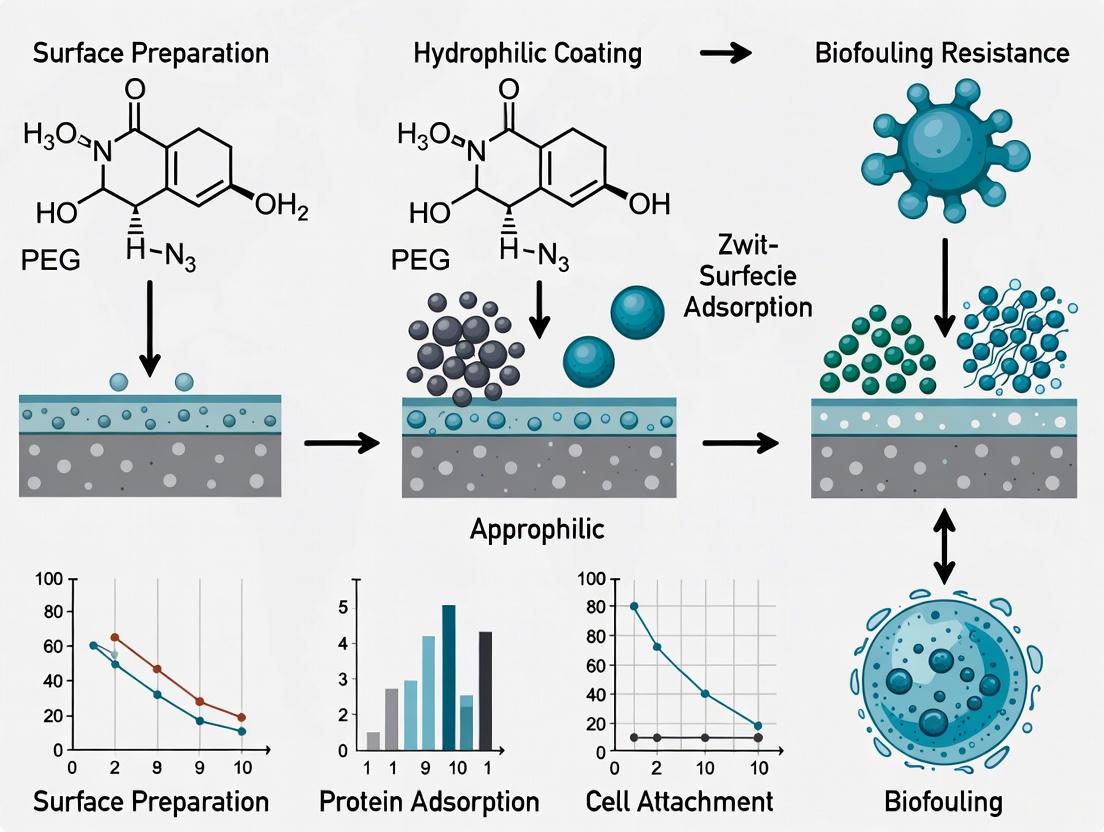
This article provides a comprehensive review of hydrophilic surface treatments as a sustainable strategy for mitigating biofouling in biomedical and clinical applications.
Advanced Hydrophilic Surface Treatments for Anti-Biofouling: Mechanisms, Applications, and Future Directions
Abstract
This article provides a comprehensive review of hydrophilic surface treatments as a sustainable strategy for mitigating biofouling in biomedical and clinical applications. It explores the foundational science behind surface hydrophilicity and its role in preventing the adhesion of proteins, microorganisms, and biofilms. The scope ranges from established methodological approaches, including plasma treatment and polymer grafting, to advanced protein-based and eco-friendly coatings. It further addresses critical troubleshooting for manufacturing challenges and offers a comparative analysis of material performance through standardized validation techniques. Designed for researchers, scientists, and drug development professionals, this review synthesizes current innovations and practical insights to guide the development of next-generation anti-biofouling medical devices.
The Science of Hydrophilicity: Fundamental Principles and Anti-Biofouling Mechanisms
In the pursuit of effective hydrophilic surface treatments for reducing biofouling, a fundamental understanding of surface hydrophilicity is paramount. Biofouling, the undesirable adhesion and accumulation of microorganisms on submerged surfaces, represents a significant challenge across biomedical devices and water treatment systems [1]. The initial attachment of microbial cells is strongly influenced by surface properties, with hydrophilicity playing a decisive role [1] [2]. This application note delineates the quantitative definition of surface hydrophilicity through the complementary metrics of water contact angle (WCA) and interfacial energy, providing researchers with standardized protocols for characterization. Establishing this correlation is crucial for designing advanced anti-biofouling surfaces, as surfaces exhibiting high interfacial energy and consequent low water contact angles have demonstrated reduced bacterial adhesion and biofilm formation [1] [2].
Theoretical Foundation: From Contact Angle to Interfacial Energy
Defining the Key Parameters
Surface Hydrophilicity is quantitatively characterized by a surface's affinity for water, typically defined by a Water Contact Angle (WCA) less than 90°. Lower WCA values indicate greater hydrophilicity [2].
Water Contact Angle (WCA) is the angle formed between a water droplet's edge and the solid surface it rests upon, measured using the sessile drop technique. It provides a direct measure of surface wettability [2] [3].
Interfacial Energy (often termed Surface Free Energy for solid-air interfaces) quantifies the excess energy at a material's surface compared to its bulk. It represents the work required to create a unit area of a new surface and is measured in mJ/m² [4] [3]. A higher interfacial energy generally corresponds to a lower contact angle, indicating a stronger driving force for wetting and greater adhesion potential [4] [5].
The relationship between these parameters is formally described by the Young-Dupré equation, which connects the measurable contact angle to the intrinsic interfacial energies of the solid-vapor, solid-liquid, and liquid-vapor interfaces [5] [3].
The Hydrophilicity-Biofouling Nexus
The critical link between hydrophilicity and biofouling resistance lies in the initial conditioning film and microbial attachment phases. Hydrophilic surfaces (high interfacial energy, low WCA) typically exhibit stronger hydration layers, creating a physical and energetic barrier that reduces the adhesion of microorganisms and their subsequent secretion of extracellular polymeric substances (EPS) [1]. The hydrophobic components of EPS tend to preferentially adhere to hydrophobic surfaces, accelerating biofilm formation [1]. Consequently, enhancing surface hydrophilicity is a primary strategy for mitigating biofouling.
Diagram 1: Conceptual pathway linking high interfacial energy to biofouling resistance.
Experimental Protocols for Hydrophilicity Assessment
Protocol 1: Static Water Contact Angle Measurement
Principle: This foundational protocol determines surface wettability by measuring the angle a static water droplet forms on a solid surface, providing an immediate assessment of hydrophilicity [2].
Materials:
- Research-grade contact angle goniometer
- High-purity deionized water (Surface Tension: 72.8 mN/m at 20°C)
- Solid substrate sample (cleaned and dried)
- Automated syringe system with blunt-ended needle (typical volume: 2-5 µL)
Procedure:
- Sample Preparation: Clean the substrate thoroughly to remove any organic or particulate contaminants. Use plasma cleaning or appropriate solvents, and ensure the sample is completely dry before measurement [2].
- Droplet Deposition: Using the automated syringe, dispense a single, precise water droplet (typically 2-5 µL) onto the sample surface. Ensure the droplet is deposited gently to avoid surface impact deformation.
- Image Capture: Immediately after droplet stabilization (within 10-30 seconds), capture a high-contrast side-view image of the sessile drop.
- Angle Calculation: Use the instrument's software to perform tangent fitting or ellipse-fitting algorithms to determine the static water contact angle at the three-phase boundary line.
- Replication: Perform measurements on at least five different locations on the sample surface to account for heterogeneity, and report the mean value with standard deviation.
Interpretation: A WCA < 90° indicates a hydrophilic surface; a lower angle signifies greater hydrophilicity. Surfaces with WCA < 10° are often termed superhydrophilic [2].
Protocol 2: Dynamic Contact Angle and Surface Energy Calculation
Principle: This advanced protocol provides a more comprehensive surface characterization by measuring both advancing (θA) and receding (θR) contact angles, which are crucial for calculating Surface Free Energy (SFE) and its components. Recent studies indicate that receding angles often correlate better with surface modifications and adhesion properties [5].
Materials:
- Automated contact angle meter with dual-dispensing capability
- Probe Liquid 1: Deionized water (highly polar, γ = 72.8 mN/m; γ^P = 51.0 mN/m, γ^D = 21.8 mN/m)
- Probe Liquid 2: Diiodomethane (dispersive, γ = 50.8 mN/m; γ^D ≈ 50.8 mN/m, γ^P ≈ 0 mN/m) [6]
- Solid substrate sample
Procedure:
- Sample Preparation: Follow the cleaning and drying steps from Protocol 1.
- Liquid Loading: Load the dual dispensing system with water and diiodomethane in separate, disposable syringe tips to avoid cross-contamination [6].
- Advancing Angle Measurement:
- Program the instrument to slowly increase the volume of the deposited droplet (e.g., 0.5 µL/sec).
- Record the contact angle just before the three-phase contact line advances.
- Receding Angle Measurement:
- After achieving the maximum droplet volume, program the instrument to slowly withdraw liquid.
- Record the contact angle just before the contact line recedes.
- SFE Calculation: Input the advancing and receding contact angle data for both probe liquids into an SFE model within the analysis software. The Owens-Wendt-Rabel-Kaeble (OWRK) model is recommended for initial analysis, as it calculates the total SFE (γS) and divides it into dispersive (γS^D) and polar (γ_S^P) components, the latter being critical for predicting interactions with biological entities [5] [3] [6].
Interpretation: A high polar component of SFE often indicates a surface with improved hydrophilicity and potential for enhanced biocompatibility and fouling resistance [5].
Diagram 2: Workflow for dynamic contact angle measurement and surface energy calculation.
Data Presentation: Quantitative Correlations
Experimental Data from Laser-Textured Metallic Alloys
The following table summarizes data from a recent study on nanosecond-pulsed laser-engineered surface textures, demonstrating the correlation between material type, surface roughness, measured WCA, and the resultant surface hydrophilicity relevant for implant biointegration [7].
Table 1: Hydrophilicity and Surface Characteristics of Laser-Textured Bio-Metals [7]
| Material | Surface Roughness, Ra (µm) | Mean Water Contact Angle, WCA (°) | Hydrophilicity Classification | Key Finding for Bio-Integration |
|---|---|---|---|---|
| SS316L Stainless Steel | 0.897 | 71.1 ± 0.17 | Moderately Hydrophilic | High uniformity; facilitates better cellular adhesion. |
| Titanium Alloy (Ti-6Al-4V) | Data Not Specified | >71.1 (Less Hydrophilic) | Less Hydrophilic | Reduced performance compared to SS316L. |
| Cobalt-Chromium Alloy | Data Not Specified | >71.1 (Less Hydrophilic) | Less Hydrophilic | Reduced performance compared to SS316L. |
Surface Energy Components and Work of Adhesion
Calculated surface energy parameters provide deeper insight into the potential for interfacial interactions, such as protein or cellular adhesion, which directly influence biofouling.
Table 2: Surface Energy Analysis and Adhesion Work for Modified Polyethylene (PE) [5]
| Surface Treatment | Surface Free Energy (SFE) (mJ/m²) | Polar Component (mJ/m²) | Dispersive Component (mJ/m²) | Work of Adhesion, W_ad (mJ/m²) |
|---|---|---|---|---|
| Untreated PE | 32.5 | 2.1 | 30.4 | 65.5 |
| Treatment A | 44.8 | 15.9 | 28.9 | 89.2 |
| Treatment B | 58.2 | 32.5 | 25.7 | 110.1 |
| Treatment C | 62.1 | 38.4 | 23.7 | 119.8 |
The Scientist's Toolkit: Essential Reagents and Materials
Successful experimental characterization of hydrophilicity requires specific, high-purity reagents and materials.
Table 3: Key Research Reagent Solutions for Hydrophilicity Analysis
| Item | Function / Application | Critical Specification / Notes |
|---|---|---|
| Contact Angle Goniometer | Instrument for measuring water contact angles. | Should allow for both static and dynamic (advancing/receding) measurements [5] [2]. |
| High-Purity Deionized Water | Primary polar probe liquid for WCA and SFE. | Resistivity >18 MΩ·cm; used to measure the polar interactions of a surface [6]. |
| Diiodomethane (DIM) | Dispersive probe liquid for Surface Free Energy calculation. | High-purity grade; provides the dispersive component reference due to its negligible polarity [6]. |
| Plasma Cleaner | For reproducible surface preparation and activation. | Effective for removing organic contaminants and temporarily increasing surface energy for consistent baseline measurements [2]. |
| Software with OWRK/VOGC Models | For calculating Surface Free Energy from contact angle data. | Essential for deconvoluting SFE into polar and dispersive components, which predict biological adhesion [5] [3] [6]. |
Application in Biofouling Mitigation: A Case Study
The principles outlined herein find direct application in mitigating membrane biofouling in water treatment, a major operational and economic challenge where biofouling can contribute to over 45% of all membrane fouling [1]. A promising strategy involves developing hydrophilic nanocomposite membranes. For instance, embedding biogenic silver nanoparticles (Bio-AgNPs) into polymer membranes alters the surface properties, enhancing hydrophilicity (reducing WCA) and imparting strong antibacterial properties [8]. This combined effect—creating a high-energy, hydrophilic surface that minimizes initial bacterial adhesion and an active component that inhibits growth—synergistically reduces biofilm formation and extends membrane lifespan [8]. The enhanced hydrophilicity also improves water permeability, countering the flux decline typically caused by traditional fouling [1] [8].
Concluding Remarks
This application note establishes a clear protocol for defining and measuring surface hydrophilicity through the integrated assessment of water contact angle and interfacial energy. For researchers focused on anti-biofouling strategies, this dual-parameter approach is indispensable. The data demonstrates that surfaces engineered for high interfacial energy, particularly with a significant polar component, achieve lower water contact angles. This state of hydrophilicity has been directly linked to reduced microbial adhesion and improved fouling resistance in applications ranging from biomedical implants to water treatment membranes. By adhering to these standardized protocols, scientists can reliably characterize and develop next-generation hydrophilic surfaces to address the persistent challenge of biofouling.
Surface fouling, the undesirable adhesion of proteins, microorganisms, and other organic matter to surfaces, presents a significant challenge across biomedical devices, drug delivery systems, and marine infrastructure. The intrinsic hydrophilicity of a material—its affinity for water over oil—is a primary determinant of its antifouling performance [9]. Hydrophilic surfaces, characterized by water contact angles typically less than 90°, possess a high surface tension and ability to form hydrogen bonds with surrounding water molecules [9]. This interaction leads to the spontaneous formation of a dense, tightly bound hydration layer that acts as a physical and energetic barrier, preventing foulants from directly interacting with the surface [9]. This article details the mechanisms of this protective barrier and provides standardized protocols for developing and characterizing effective hydrophilic antifouling coatings, with a specific focus on applications in biomedical research and drug development.
Mechanisms of Fouling Prevention
The Hydration Layer as an Energetic Barrier
The antifouling performance of hydrophilic surfaces is fundamentally rooted in the principles of interfacial energy. When a hydrophilic surface is immersed in an aqueous solution, its functional groups (e.g., hydroxyl, carboxyl, or zwitterionic moieties) form strong, dipole-dipole interactions with water molecules, creating a highly structured hydration layer [9]. This layer presents a formidable energetic barrier to approaching foulants. Most proteins and microorganisms possess hydrophobic domains, and to adhere to the underlying surface, these foulants must first displace the bound water molecules [9]. This displacement process is energetically unfavorable; it requires significant energy input to break the strong hydrogen bonds and disrupt the structured water network [9]. The system resists this change, leading to the repulsion of hydrophobic foulants. Research on self-assembled monolayers (SAMs) has revealed that this transition can be sharp, with a pronounced change in interfacial electrolyte structure occurring at a water contact angle of approximately 37°, highlighting the critical nature of surface energy in dictating solvent structuring [10].
Key Surface Properties and Their Interplay
While hydrophilicity is crucial, it is not the sole factor governing fouling resistance. A systematic approach to material design must consider the interplay of multiple surface properties, as summarized in Table 1.
Table 1: Key Surface Properties Influencing Fouling Resistance
| Surface Property | Description | Impact on Fouling |
|---|---|---|
| Hydrophilicity | Measured by water contact angle; affinity for water. | Forms a protective hydration layer; reduces hydrophobic interactions with foulants [9]. |
| Surface Chemistry | Presence of specific functional groups (e.g., PEG, zwitterions). | Dictates strength of hydrogen bonding with water and biocompatibility [11]. |
| Surface Roughness | Topographical features at the micro- and nano-scale. | Increased roughness can entrap foulants; smooth surfaces are often preferred for fouling-release [12]. |
| Surface Charge | Electrostatic potential at the surface-solution interface. | Can electrostatically repel similarly charged foulants like many proteins [13]. |
| Hansen Solubility Parameter (HSP) Distance | A measure of the affinity between the surface material and the foulant. | A smaller HSP distance indicates higher affinity and can lead to increased fouling, sometimes outweighing the effect of hydrophilicity [12]. |
Recent studies suggest that the HSP distance between the membrane material and foulants can be a more significant predictor of protein adsorption than hydrophilicity alone. A smaller HSP distance indicates greater chemical compatibility, which can lead to stronger adhesion and more severe fouling [12].
Quantitative Data and Material Performance
The efficacy of hydrophilic coatings is quantitatively demonstrated through rigorous testing. Table 2 summarizes performance data for common antifouling polymers, highlighting how material selection and coating parameters determine success.
Table 2: Quantitative Antifouling Performance of Hydrophilic Coatings
| Coating Material | Coating Thickness (nm) | Protein Adsorption Reduction | Key Findings |
|---|---|---|---|
| Zwitterionic Polymer (PMEN) | ~1.0 | Strong resistance to BSA | Superior performance at ultra-thin thicknesses due to strong electrostatic hydration [11]. |
| PEG (HO-PEG-COOH) | ~1.0 | Moderate resistance to BSA | Performance is highly dependent on end-group chemistry and chain density [11]. |
| PEG (HO-PEG-COOH) | 1.5 - 3.3 | Resistance exceeds PMEN | Thicker coatings provide stronger steric repulsion [11]. |
| PEG & PMEN (optimized) | ~3.6 | Ultralow fouling (BSA & Fg) | Both coatings achieve exceptional performance at optimal thickness [11]. |
| Silicone-Hydrogel Coating | 200 µm | 99.8% anti-adhesion rate | Combines fouling release, resistance, and killing; theoretical lifespan of 5.5 years [14]. |
The data reveals a critical trade-off: zwitterionic polymers can achieve excellent antifouling at minimal thickness, while PEG coatings require greater thickness for optimal steric repulsion. Furthermore, changing the PEG terminal group from -OH to -COOH can increase protein adsorption tenfold, underscoring the profound influence of surface chemistry [11].
Experimental Protocols
Protocol: Fabrication of Polydopamine-Assisted Antifouling Coatings
This protocol describes a substrate-independent method for immobilizing PEG or zwitterionic polymers via a polydopamine (PDA) adhesive layer, ideal for coating inert materials like plastics and metals [11].
Workflow Overview:
Materials:
- Substrates: Gold sensor chips, glass, stainless steel, or polymers (e.g., polycarbonate, PTFE).
- Dopamine hydrochloride.
- Tris-HCl buffer (10 mM, pH 8.5).
- Antifouling Polymers: HOOC-PEG-COOH (Mw 2000-5000) or zwitterionic copolymer (PMEN).
- Coupling Agents: 1-Ethyl-3-(3-dimethylaminopropyl) carbodiimide hydrochloride (EDC) and N-Hydroxysuccinimide (NHS).
- Equipment: Surface Plasmon Resonance (SPR) instrument or standard lab glassware with agitation.
Procedure:
- Substrate Cleaning: Clean all substrates thoroughly with ethanol and water. Dry under a stream of nitrogen gas.
- Polydopamine (PDA) Coating: a. Prepare a 2 mg/mL solution of dopamine hydrochloride in Tris-HCl buffer (10 mM, pH 8.5). b. Immerse the substrates in the dopamine solution for 4-8 hours at room temperature with gentle agitation. c. Remove the substrates and rinse extensively with deionized water to remove any loosely bound PDA particles. Dry with nitrogen.
- Polymer Immobilization: a. For PEG: Dissolve HOOC-PEG-COOH in a buffer (e.g., MES, pH 5.5) at a concentration of 1 mg/mL. Add EDC and NHS to final concentrations of 50 mM and 25 mM, respectively, to activate the carboxyl groups. React for 20 minutes. Immerse the PDA-coated substrates in this solution for 4-12 hours [11]. b. For Zwitterionic Polymer (PMEN): Dissolve the PMEN copolymer in an appropriate aqueous buffer at 1 mg/mL. The active ester side chains readily react with the amine groups on the PDA layer without pre-activation. Immerse the PDA-coated substrates for 4-12 hours [11].
- Post-treatment: After reaction, rinse the coated substrates thoroughly with buffer and deionized water to remove any unreacted polymer. Dry and store under nitrogen until use.
Validation: Coating thickness and success can be quantitatively monitored in real-time using SPR, or verified post-fabrication using ellipsometry and water contact angle measurements [11].
Protocol: Characterizing Hydration and Antifouling Performance
Workflow Overview:
Materials:
- Coated substrates from Protocol 4.1.
- Contact Angle Goniometer.
- Atomic Force Microscope (AFM) with a colloidal probe.
- SPR instrument or fluorescence microscope.
- Model Proteins: Bovine Serum Albumin (BSA), Fibrinogen (Fg).
- Bacterial Cultures: e.g., E. coli or S. aureus.
- Staining Solutions: Fluorescein isothiocyanate (FITC) labeled BSA or live/dead bacterial stains.
Procedure:
- Surface Hydrophilicity: a. Using a contact angle goniometer, place a 2 µL sessile water droplet on the coated surface. b. Capture an image and measure the static water contact angle. A value below 65° is generally considered hydrophilic for biological applications [9]. Perform measurements in triplicate.
- Hydration Force Measurement (AFM): a. Functionalize an AFM cantilever with the same coating as the substrate to ensure symmetric interaction. b. Approach the coated surface in a 0.1 M HCl electrolyte (pH ~1) or relevant buffer at a constant speed (e.g., 0.5 µm/s). c. Record force-distance curves. The repulsive forces observed during approach are indicative of hydration forces. Model these forces using the Hydra model to quantify characteristic hydration lengths [10].
- Protein Adsorption Assay: a. SPR Method: Prime the SPR sensor chip with buffer to establish a stable baseline. Inject a 1 mg/mL solution of BSA or Fg in PBS at a constant flow rate. Monitor the change in resonance units (RU) over time. Rinse with buffer to determine the amount of irreversibly adsorbed protein [11]. b. Fluorescence Method: Incubate coated substrates in a solution of FITC-labeled BSA (1 mg/mL) for 1 hour. Rinse thoroughly with PBS to remove non-adsorbed protein. Image using a fluorescence microscope or measure fluorescence intensity with a plate reader. Compare against a negative control.
- Bacterial Adhesion Test: a. Incubate coated substrates in a bacterial suspension (e.g., ~10⁸ CFU/mL in nutrient broth) for 2-4 hours at 37°C. b. Rinse gently with PBS to remove non-adherent cells. c. Stain with a live/dead bacterial viability kit and image with a fluorescence microscope. Quantify the surface coverage of adhered bacteria using image analysis software.
The Scientist's Toolkit: Research Reagent Solutions
Table 3: Essential Reagents for Hydrophilic Antifouling Research
| Reagent / Material | Function | Key Characteristic |
|---|---|---|
| Polydopamine (PDA) | Universal adhesive primer | Enables strong, covalent attachment of polymers to virtually any substrate [11]. |
| Poly(ethylene glycol) (PEG) | Antifouling polymer | Provides steric repulsion via flexible, water-soluble chains; performance depends on density and chain length [11]. |
| Zwitterionic Polymers (e.g., PMEN) | Antifouling polymer | Forms a super-hydrophilic surface via electrostatically induced hydration; exceptional performance at low thickness [11]. |
| EDC / NHS Crosslinkers | Carboxyl group activators | Facilitates amide bond formation between carboxylated polymers and amine-functionalized surfaces [11]. |
| Surface Plasmon Resonance (SPR) | Quantitative analysis tool | Enables real-time, label-free monitoring of polymer coating formation and protein adsorption kinetics [11]. |
| Hansen Solubility Parameters (HSP) | Material screening tool | Predicts affinity between foulant and surface; a larger HSP distance correlates with reduced fouling propensity [12]. |
| Silicone-Hydrogel Hybrids | Multifunctional coating | Combines fouling-release (silicone) with fouling-resistance/killing (hydrogel) for long-lasting protection [14]. |
Economic and Clinical Hazards of Biofouling on Medical Devices
Biofouling—the undesirable accumulation of microorganisms, proteins, and other biological molecules on submerged surfaces—poses a significant threat within the healthcare sector, particularly on medical devices [15]. When interfaced with the biological environment, biomedical devices are prone to surface biofouling due to the adhesion of microbial or thrombotic agents as part of the foreign body response [16]. This phenomenon is a primary contributor to device-associated infections, which lead to substantial clinical complications and economic burdens [17].
The formation of bacterial biofilms on device surfaces represents a key virulence mechanism, creating a protective barrier that renders pathogens up to 500–5,000 times more resistant to antibiotics than their planktonic counterparts [17]. According to the National Institutes of Health, biofilms are responsible for up to 80% of human microbial infections, underscoring the critical nature of this problem [17]. Within the context of hydrophilic surface treatment research, this application note details the economic and clinical consequences of medical device biofouling and provides standardized experimental protocols for evaluating anti-biofouling coatings.
Economic Impact of Medical Device Biofouling
The economic ramifications of biofouling on medical devices are multifaceted, encompassing direct healthcare costs, market expenditures for preventive solutions, and indirect costs associated with extended treatment.
Direct Healthcare Costs
Device-associated infections lead to prolonged hospital stays, additional surgical procedures, and increased antimicrobial therapy requirements. Infections related to prosthetic and implantable devices can result in reoperation rates of up to 30%, costing billions of dollars annually in the U.S. healthcare system [18]. Bloodstream infections associated with contaminated central venous catheters significantly increase intensive care unit stays and healthcare costs [17].
Market for Preventive Coatings
The growing recognition of biofouling hazards has driven substantial investment in preventive technologies. The global medical device coatings market is currently valued at approximately USD 8.8 billion and is projected to reach USD 17.3 billion by 2040, growing at a compound annual growth rate (CAGR) of 7.1% [19]. The hydrophilic coatings segment specifically for medical devices continues to experience significant growth, with revenue projected to increase from USD 2.50 Billion in 2024 to USD 4.75 Billion by 2033 [20].
Table 1: Economic Impact of Medical Device Biofouling
| Cost Category | Impact Scale | Primary Contributing Factors |
|---|---|---|
| Direct Healthcare Costs | Billions of dollars annually in the U.S. [18] | Extended hospital stays, reoperations (up to 30%), additional treatments [17] [18] |
| Preventive Coatings Market | Market valued at USD 8.8B, projected to reach USD 17.3B by 2040 [19] | Demand for antimicrobial coatings, minimally invasive surgical devices [19] [21] |
| Infection Management | 40,000 annual global deaths from healthcare-associated infections [17] | Antibiotic-resistant infections, prolonged ICU stays [17] |
Clinical Hazards and Pathogenesis
Biofilm formation on medical devices follows a multi-step process that presents severe clinical hazards, particularly through the development of antimicrobial-resistant infections.
Biofilm Development Process
The establishment of biofilms occurs through a sequential process: 1) single bacterial attachment (reversible and irreversible), 2) bacterial aggregation, 3) microcolony formation, 4) maturation, and 5) dispersion/detachment [17]. This process is facilitated by an initial conditioning film of organic molecules that adheres to the device surface upon contact with biological fluids, creating a favorable environment for microbial attachment and biofilm formation by acting as a nutrient source [17] [18].
Diagram 1: Biofilm development process on medical devices.
Device-Specific Infections
The clinical manifestations of device-related biofouling vary depending on the medical device type:
- Catheter-Associated Urinary Tract Infections (CAUTI): Affect over 150 million individuals worldwide annually, representing the most prevalent biofilm-based illness caused by medical equipment [17].
- Central Venous Catheters: The majority of indwelling central venous catheters become colonized by microorganisms embedded in a biofilm matrix, potentially leading to bloodstream infections [17].
- Orthopedic Implants: Exogenous infections can occur when wound healing is disrupted, particularly in patients with large hematomas, potentially leading to implant failure [17].
- Flexible Endoscopes: Biofilm growth occurs in damp, nutrient-rich conditions inside the lumen if reprocessing guidelines are not properly followed [17].
Antimicrobial Resistance Mechanisms
Biofilm-forming bacteria exhibit recalcitrance—the ability to survive high doses of antibiotics—through multiple mechanisms [17]. The extracellular polymeric substance (EPS) matrix physically restricts antibiotic penetration, and the heterogeneous metabolic states of cells within biofilms contribute to tolerance [17]. Additionally, biofilms facilitate the horizontal transfer of antimicrobial resistance genes between and within species, compounding the resistance problem [17].
Table 2: Clinical Hazards Associated with Medical Device Biofouling
| Device Category | Clinical Consequences | Prevalent Pathogens |
|---|---|---|
| Urinary Catheters | Catheter-associated UTIs (150 million cases annually) [17] | Staphylococcus, Enterococcus, E. coli, Candida spp. [17] |
| Vascular Catheters | Bloodstream infections, sepsis, prolonged ICU stay [17] | Staphylococcus aureus, Pseudomonas aeruginosa, Klebsiella pneumoniae [17] |
| Implants & Prosthetics | Implant failure, chronic infections, reoperations [17] [18] | Staphylococcus aureus, Escherichia coli, Acinetobacter baumannii [17] |
| Endoscopes | Cross-contamination, healthcare-associated infections [17] | Various Gram-positive and Gram-negative bacteria [17] |
Hydrophilic Coatings as a Mitigation Strategy
Hydrophilic coatings represent a promising approach to mitigating biofouling by creating surfaces that resist protein adsorption and bacterial adhesion.
Mechanism of Action
Hydrophilic coatings are designed to form a hydrated layer at the surface that acts as a physical and energetic barrier to foulants [21]. These coatings provide surface properties like biocompatibility, lubricity, and corrosion resistance, which are essential for medical device functionality [21]. The hydrophilic functional groups interact strongly with water molecules, creating an energetic barrier that prevents the adhesion of proteins and microorganisms, thereby interrupting the initial step in biofilm formation [21].
Emerging Coating Technologies
Research in hydrophilic coatings has expanded to include advanced formulations:
- Self-healing superhydrophilic coatings: Designed to restore structural damage and recover original properties in harsh aqueous environments, including extreme pH conditions and high salinity [22].
- Stimuli-responsive coatings: "Smart" coatings that respond to external stimuli like pH, temperature, or humidity, showing promise for drug delivery and infection prevention [21].
- Nanotechnology-based coatings: Utilize nanoscale engineering to enhance lubricity, uniformity, and microscopic adhesion for complex medical devices [21].
Experimental Protocols for Anti-Biofouling Coating Evaluation
Protocol: Bacterial Adhesion and Biofilm Formation Assay
Purpose: To evaluate the resistance of hydrophilic coatings to bacterial adhesion and biofilm formation.
Materials:
- Coated and uncoated medical device substrates
- Bacterial strains (e.g., Staphylococcus aureus, Pseudomonas aeruginosa)
- Culture media (TSB, LB)
- Phosphate Buffered Saline (PBS)
- Fixative (e.g., 4% formaldehyde)
- Staining solutions (crystal violet, SYTO 9/propidium iodide for live/dead)
- Fluorescence microscope or confocal laser scanning microscope
Procedure:
- Prepare bacterial suspension in appropriate media at approximately 10^7 CFU/mL.
- Incubate test substrates with bacterial suspension under static or flow conditions (37°C, 24h).
- Gently rinse samples with PBS to remove non-adherent cells.
- Fix biofilms with 4% formaldehyde for 30 minutes.
- For quantification: Stain with 0.1% crystal violet for 15 minutes, elute with acetic acid, measure OD590nm.
- For viability assessment: Stain with live/dead bacLight bacterial viability kit, visualize via fluorescence microscopy.
- Analyze minimum 3 replicates per condition, repeat experiment independently 3 times.
Data Analysis: Compare adherent bacterial biomass and viability on coated versus uncoated surfaces. Calculate percentage reduction in biofilm formation.
Protocol: Coating Durability and Self-Healing Assessment
Purpose: To evaluate the mechanical durability and self-healing capability of hydrophilic coatings under simulated physiological conditions.
Materials:
- Coated test substrates
- Abrasion tester (Taber abrader or equivalent)
- Environmental chambers
- Contact angle goniometer
- Surface profilometer
- Artificial body fluids or seawater simulation
Procedure:
- Characterize initial surface properties: water contact angle, surface morphology, lubricity.
- Subject coatings to abrasion resistance test using CS-10 abraders with 500g load for 100 cycles.
- Expose abraded samples to harsh aqueous environments (pH=2, pH=12, artificial seawater) at 37°C.
- Monitor self-healing capability by measuring water contact angle recovery at intervals (1h, 6h, 24h, 48h).
- Assess restoration of anti-biofouling properties using bacterial adhesion assay (Protocol 5.1).
- For thermally responsive coatings: Apply thermal stimulus (e.g., 45°C for 2h) to accelerate healing.
Data Analysis: Calculate healing efficiency based on recovery of contact angle and anti-biofouling performance. Compare drag reduction properties pre- and post-healing.
Diagram 2: Coating durability and self-healing assessment workflow.
The Scientist's Toolkit: Essential Research Reagents
Table 3: Essential Research Reagents for Anti-Biofouling Coating Development
| Reagent/Category | Function | Example Applications |
|---|---|---|
| Polymer Substrates | Primary coating material offering flexibility and durability [21] | Base matrix for hydrophilic coatings (64% of coatings use polymer substrates) [21] |
| Fluorinated Phosphate Ester Surfactants | Forms covalent bonds with substrate for hydrophobic modification [18] | Creating aerophilic surfaces with stable plastron underwater [18] |
| Polyethylene Imine (PEI) | Enhances superhydrophilic properties via hydrophilic functional groups [22] | Grafting onto self-healing substrates for superhydrophilic coatings [22] |
| Lubricant Infusions | Creates liquid-infused slippery surfaces [18] | SLIPS technology for repelling biological media [18] |
| Live/Dead Bacterial Viability Kits | Differentiates viable vs. non-viable cells in biofilms [17] | Quantifying antibacterial efficacy of coatings (SYTO 9/propidium iodide) [17] |
| Crystal Violet Stain | Quantifies total adherent biofilm biomass [17] | High-throughput screening of anti-biofouling coatings [17] |
| Dynamic Contact Angle Analyzer | Measures surface wettability and coating uniformity [22] | Characterizing hydrophilic/hydrophobic properties pre/post abrasion [22] |
Biofouling on medical devices presents grave economic and clinical hazards, contributing to billions in healthcare costs and significant patient morbidity and mortality. The development of advanced hydrophilic coatings represents a promising strategy to address these challenges by preventing the initial stages of biofilm formation. The experimental protocols outlined herein provide standardized methodologies for evaluating novel anti-biofouling surfaces, with particular emphasis on durability and self-healing capabilities under physiologically relevant conditions. As research in this field advances, hydrophilic surface treatments hold substantial potential to reduce device-associated infections and improve patient outcomes.
The strategic implementation of hydrophilic surfaces is a cornerstone of modern anti-biofouling research. Surface hydrophilicity, characterized by a water contact angle (WCA) below 90 degrees, is fundamentally governed by the presence of specific, polar functional groups that interact favorably with water molecules via hydrogen bonding and dipole-dipole interactions [23]. These groups impart a high surface energy, causing water to spread and form a thin, hydrating layer. This layer is critical as it can form a physical and energetic barrier that reduces the adhesion of proteins, microorganisms, and other foulants [24] [25]. The primary functional groups responsible for these properties are the hydroxyl (-OH), carbonyl (-C=O), carboxyl (-COOH), and amino (-NH₂) groups. Their presence, whether inherent to a material or introduced via surface treatment, directly determines the material's performance in biomedical and marine applications by creating a hydrating interface that is thermodynamically unfavorable for biofouling adhesion [23] [25].
Core Functional Groups: Structures and Properties
The efficacy of each key functional group in promoting hydrophilicity is determined by its chemical structure and resulting polarity. The following table summarizes their defining characteristics and roles in surface interactions.
Table 1: Key Hydrophilic Functional Groups and Their Properties
| Functional Group | Chemical Structure | Polarity & Key Interactions | Role in Surface Hydrophilicity |
|---|---|---|---|
| Hydroxyl (-OH) | R–OH | High polarity; acts as both a hydrogen bond donor and acceptor [23]. | Introduces strong hydrogen-bonding sites; a primary group for surface hydration. |
| Carbonyl (-C=O) | R–C=O | High polarity; the oxygen atom is a strong hydrogen bond acceptor [23]. | Enhances surface energy and water adhesion through dipole interactions. |
| Carboxyl (-COOH) | R–COOH | Very high polarity; can act as both a strong hydrogen bond donor and acceptor; can ionize to -COO⁻ [23]. | Provides strong, often charged, binding sites for water molecules; significantly increases surface energy. |
| Amino (-NH₂) | R–NH₂ | High polarity; the nitrogen atom can act as a hydrogen bond acceptor; can protonate to -NH₃⁺ [23]. | Introduces basicity and positive charge at physiological pH, facilitating hydration. |
Anti-Biofouling Mechanisms of Hydrophilic Surfaces
Hydrophilic surfaces combat biofouling through non-toxic, physical-mechanistic pathways. The primary mechanism involves the formation of a tightly bound hydration layer via the functional groups described above. When water molecules interact strongly with these polar groups, they form a dense, structured network at the interface [25]. This layer creates a physical barrier and an energetic shield that poses a significant thermodynamic penalty for fouling organisms. For an organism to adhere, it must displace this highly ordered water, which is energetically unfavorable [24]. Furthermore, hydrophilic surfaces, particularly those with charged groups like carboxylate and ammonium ions, exhibit reduced protein adsorption. Since proteins are the primary constituents of the conditioning film that initiates biofouling, their suppression is critical [23] [25]. This combination of mechanisms—hydration layer formation and protein resistance—makes hydrophilic surface treatments a powerful and environmentally benign anti-biofouling strategy, effectively reducing the attachment of microorganisms such as bacteria, microalgae, and viruses in both medical and marine environments [24] [25].
Quantitative Data in Hydrophilic Surface Engineering
The performance of hydrophilic surfaces is quantitatively assessed through key parameters, with water contact angle (WCA) being the most direct measure.
Table 2: Hydrophilicity Classification and Anti-Biofouling Performance Based on Water Contact Angle (WCA)
| Surface Classification | Water Contact Angle (WCA) | Representative Coating/Material | Reported Anti-Biofouling Efficacy |
|---|---|---|---|
| Superhydrophilic | < 10° [23] [25] | Oxygen plasma-treated titanium [26] | Forms a robust hydration barrier; highly effective against microorganism attachment [25]. |
| Hydrophilic | < 90° [23] [25] | Pulsed plasma poly(4-vinylpyridine) (WCA = 38 ± 5°) [24] | Significantly reduces biofouling in microalgae cultures; outperforms hydrophobic surfaces [24]. |
| Hydrophobic | ≥ 90° [25] | — | Generally less effective than hydrophilic surfaces in reducing biofouling in aquaculture settings [24]. |
| Superhydrophobic | ≥ 150° [25] | Fluorocarbon-based coatings [26] | Relies on air entrapment; can be susceptible to biofilm formation under prolonged immersion. |
Experimental Protocols for Surface Treatment and Analysis
Protocol: Oxygen Plasma Treatment for Rendering Polymer Surfaces Hydrophilic
Oxygen plasma treatment is a versatile and dry method for introducing oxygen-containing functional groups (e.g., hydroxyl, carbonyl, carboxyl) onto polymer surfaces to achieve temporary superhydrophilicity [23] [26].
- Principle: Energetic species in oxygen plasma (O, O₂⁺, O⁻) bombard the polymer surface, breaking C–H and C–C bonds and grafting oxygen-containing polar functional groups, thereby dramatically increasing surface energy [26].
- Materials & Equipment:
- Vacuum plasma chamber system
- High-purity oxygen gas supply
- Polymer substrates (e.g., Polycarbonate (PC), Polyethylene terephthalate (PET))
- Plasma-compatible sample holders
- Step-by-Step Procedure:
- Sample Preparation: Cut polymer substrates to desired size. Clean substrates sequentially in an ultrasonic bath with isopropanol and deionized water for 10 minutes each to remove surface contaminants. Dry under a stream of nitrogen gas.
- Chamber Loading: Place the cleaned and dried samples on the sample holder in the vacuum plasma chamber.
- System Evacuation: Evacuate the chamber to a base pressure of ≤ 0.1 Torr.
- Gas Introduction: Introduce oxygen gas into the chamber at a controlled flow rate (e.g., 10-50 sccm) to maintain a stable operating pressure (e.g., 0.2-0.5 Torr).
- Plasma Ignition & Treatment: Ignite the plasma using RF power (e.g., 50-100 W) for a predetermined treatment time (e.g., 30 seconds to 5 minutes). Optimize power and time to prevent excessive surface damage.
- Ventilation and Retrieval: After treatment, shut off the plasma and RF power. Vent the chamber with air or nitrogen and retrieve the samples promptly.
- Validation & Analysis:
- Water Contact Angle (WCA): Measure the static WCA immediately after treatment using a contact angle goniometer. A successful treatment will yield a WCA of < 10° [26].
- X-ray Photoelectron Spectroscopy (XPS): Confirm the introduction of oxygen-containing functional groups by analyzing the carbon (C1s) and oxygen (O1s) spectra, which will show peaks for C-O, C=O, and O-C=O bonds [26].
Diagram 1: Oxygen Plasma Treatment Workflow
Protocol: Coating with Ionic-Complementary Peptides (e.g., EAK16-II) for Stable Hydrophilic Modification
This protocol describes the use of self-assembling ionic-complementary peptides to create stable nanofiber coatings that alter surface wettability, suitable for modifying both hydrophilic and hydrophobic substrates [27].
- Principle: Peptides like EAK16-II (sequence: AEAKAEAKAEAKAEAK) possess alternating hydrophobic and hydrophilic residues. They self-assemble into β-sheet nanofibers on surfaces, exposing hydrophilic amino and carboxyl groups to the aqueous environment, thereby modulating the surface's water contact angle [27].
- Materials & Equipment:
- EAK16-II peptide (synthetic, purified >95%)
- Ultrapure water (e.g., 18 MΩ·cm)
- Hydrophilic (e.g., mica) and/or hydrophobic (e.g., HOPG) substrates
- Atomic Force Microscope (AFM)
- Contact Angle Goniometer
- Step-by-Step Procedure:
- Solution Preparation: Prepare an aqueous EAK16-II peptide solution at a desired concentration (e.g., 29 µM) by dissolving the peptide in ultrapure water and gently agitating.
- Substrate Preparation: Clean substrates appropriately. For HOPG, use fresh cleaving with adhesive tape.
- Surface Coating: Pipette a volume of the peptide solution (e.g., 50-100 µL) onto the substrate surface. Ensure the entire surface is covered.
- Incubation: Allow the peptide solution to incubate on the surface for a controlled period (e.g., 2 hours) at room temperature in a humidity chamber to prevent evaporation.
- Rinsing and Drying: Gently rinse the coated surface three times with ultrapure water to remove non-adhered peptides and salts. Dry under a gentle stream of nitrogen gas.
- Validation & Analysis:
- Atomic Force Microscopy (AFM): Image the coated surface in tapping mode to visualize the formation and morphology of the peptide nanofiber network. On mica, expect random nanofiber networks; on HOPG, expect oriented nanofibers [27].
- Water Contact Angle (WCA): Measure the WCA. A successful coating on a hydrophobic HOPG surface will significantly reduce the WCA (e.g., from ~71° to ~39°) [27].
Diagram 2: Peptide Surface Coating Process
The Scientist's Toolkit: Essential Research Reagents and Materials
Table 3: Key Reagents and Materials for Hydrophilic Surface Research
| Item Name | Function/Application | Specific Example |
|---|---|---|
| Oxygen Plasma System | Introduces hydroxyl, carbonyl, and carboxyl groups onto material surfaces for creating superhydrophilic interfaces [26]. | Low-pressure RF plasma system using O₂ gas. |
| Ionic-Complementary Peptides | Self-assemble into stable nanofiber coatings to modify surface wettability and enhance biocompatibility [27]. | EAK16-II (AEAKAEAKAEAKAEAK) for coating mica and HOPG. |
| Poly(4-vinylpyridine) Pulsed Plasma | Forms a non-toxic, hydrophilic nanocoating effective as an anti-biofouling surface in marine aquaculture [24]. | Pulsed plasma deposition to create coatings with WCA of 38±5°. |
| Contact Angle Goniometer | The primary instrument for quantitatively measuring surface wettability by determining the water contact angle (WCA) [23]. | Used to confirm hydrophilicity (WCA < 90°) after treatment. |
| Atomic Force Microscope (AFM) | Characterizes nanoscale topography and the formation of self-assembled structures, such as peptide nanofibers, on surfaces [27]. | Imaging EAK16-II nanofiber networks on mica and HOPG. |
Comparative Analysis of Innately Hydrophilic vs. Treated Hydrophobic Materials
Biofouling, the undesirable accumulation of microorganisms, algae, and other organisms on submerged surfaces, presents a significant challenge across biomedical and marine industries [25]. Surface wettability, governed by both chemical composition and physical topography, is a critical property in designing materials that can resist biofouling [25] [23]. This parameter is quantitatively measured by the water contact angle (WCA), which categorizes surfaces as superhydrophilic (WCA < 10°), hydrophilic (WCA < 90°), hydrophobic (WCA ≥ 90°), or superhydrophobic (WCA ≥ 150°) [25]. This application note provides a comparative analysis of two primary strategies for managing biofouling: the use of innately hydrophilic materials and surfaces modified to be hydrophobic. We detail their underlying mechanisms, performance data, and provide standardized experimental protocols for their evaluation within the context of biomedical and marine applications.
Surface Wettability and Anti-Biofouling Mechanisms
The interaction between a water droplet and a solid surface is foundational to anti-biofouling strategies. Hydrophilic surfaces are characterized by their ability to spread water completely, a property stemming from the presence of polar functional groups like hydroxyl, carbonyl, carboxyl, and amino groups that form strong hydrogen bonds with water molecules [23]. This leads to the formation of a tightly bound, stable hydration layer that acts as a physical and energetic barrier, preventing the adhesion of proteins, bacteria, and other foulants [25] [23].
Conversely, hydrophobic and superhydrophobic surfaces rely on low surface energy chemistry (e.g., fluorinated or silicone-based polymers) and often feature micro/nanoscale roughness [25] [18]. These surfaces minimize the contact area with water and, in the case of superhydrophobic surfaces, can trap an air layer (a plastron) underwater [18]. This air layer creates a physical barrier that reduces the adhesion strength of settling organisms, facilitating their release under low hydrodynamic stress, a concept known as the "fouling-release" (FR) strategy [18]. The following diagram illustrates the logical pathway from material composition to anti-biofouling function.
Comparative Performance Data
The following tables summarize key characteristics and performance metrics of hydrophilic and hydrophobic materials in the context of biofouling.
Table 1: Fundamental Properties and Fabrication Methods
| Property | Innately Hydrophilic Materials | Treated Hydrophobic Materials |
|---|---|---|
| WCA Range | < 90° (Superhydrophilic: < 10°) [25] [23] | ≥ 90° (Superhydrophobic: ≥ 150°) [25] |
| Surface Energy | High | Low |
| Primary Anti-Fouling Mechanism | Formation of a hydration barrier to prevent adhesion [25] [23] | Minimizing adhesion strength; fouling-release via hydrodynamic stress [18] |
| Common Materials & Fabrication | • Innate: Glass, certain ceramics [23]• Treatment: Plasma treatment of polymers; grafting with hydrophilic polymers (e.g., PEG, PVA); silanization with hydrophilic groups [28] [29] | • Treatment: Application of fluorinated/silicone-based coatings; chemical etching; layer-by-layer assembly; magnetron sputtering [25] [29] |
Table 2: Biofouling Performance and Application Considerations
| Aspect | Innately Hydrophilic Materials | Treated Hydrophobic Materials |
|---|---|---|
| Protein Adsorption | Effectively reduces adsorption [23] | Varies; can be high if surface is damaged or foulants penetrate the air layer. |
| Bacterial Biofilm Prevention | Good performance by resisting initial cell attachment [25] | Can delay formation, but protection period may be short-lived if the plastron is metastable [18]. |
| Macrofouler Adhesion | Zebra mussels show ~6x weaker attachment on hydrophilic (acrylic) vs. hydrophobic (silicone) coatings [30]. | Adhesion strength can be low, enabling easy release. Barnacle attachment strength is significantly reduced on stable aerophilic surfaces [18]. |
| Durability & Stability | Chemically stable; hydration layer is self-renewing in aqueous environments. | Micro/nano-topography can be mechanically fragile; hydrophobic coatings can degrade, and the plastron can be lost under high pressure or over time [18] [29]. |
| Key Applications | Biomedical devices (catheters, implants, biosensors), anti-fogging surfaces, marine coatings [25] [23]. | Marine fouling-release hull coatings, anti-icing surfaces, liquid-infused slippery surfaces (SLIPS) for medical devices [18]. |
Experimental Protocols
To ensure reproducible and comparable results in biofouling research, standardized experimental protocols are essential. The following sections outline key methodologies.
Protocol for Surface Wettability Characterization
Objective: To quantitatively determine the wettability of a material surface by measuring the static water contact angle (WCA).
Materials:
- Research-grade contact angle goniometer
- High-purity deionized water
- Automated liquid dispensing system
- Temperature and humidity-controlled chamber
- Test substrate (minimum 1 cm x 1 cm)
- Syringe with a blunt-ended needle
Procedure:
- Substrate Preparation: Clean the substrate thoroughly using appropriate solvents (e.g., ethanol, isopropanol) and plasma treat if necessary to remove organic contaminants. Ensure the surface is completely dry.
- Instrument Calibration: Calibrate the goniometer according to the manufacturer's instructions, ensuring the camera is level and focused on the needle tip.
- Environment Equilibration: Place the substrate in the measurement chamber and allow it to equilibrate for 15 minutes to stabilize temperature and humidity.
- Droplet Dispensing: Using the automated dispenser, place a 2-5 µL water droplet gently onto the substrate surface. Ensure the needle does not touch the droplet after deposition.
- Image Capture: Capture a high-resolution image of the droplet within 1-3 seconds of deposition.
- Angle Measurement: Use the instrument's software to fit the droplet profile (typically using the Young-Laplace method) and record the contact angle.
- Replication: Perform at least 10 independent measurements on different areas of the same sample to calculate a mean WCA and standard deviation.
Protocol for Evaluating Biofouling in Hydrodynamic Conditions
Objective: To assess biofouling growth and adhesion strength on test surfaces under controlled hydrodynamic shear stresses, mimicking conditions on marine structures like tidal turbines [31].
Materials:
- Dedicated marine test platform with a twin-blade vertical axis impeller
- Sample holders for radial mounting on the impeller
- Computational Fluid Dynamics (CFD) software (e.g., using a k-ω SST model)
- Natural seawater source and test tank
- Non-destructive field microscopy equipment (e.g., digital holographic microscopy)
- Image analysis software (e.g., FIJI, WEKA)
Procedure:
- Sample Mounting: Securely mount test surface samples radially on the symmetrical impeller surfaces. This design exposes samples to a continuous gradient of shear stress, increasing from the root to the tip.
- CFD Stress Calibration: Perform CFD simulations to map the hydrodynamic shear stress distribution across the impeller surfaces at the designated operational rotational speed. The useful range is typically 50 Pa to 250 Pa [31].
- Immersion and Stress Application: Immerse the impeller in natural seawater and operate it at a constant speed to apply cyclic-dynamic stresses for the duration of the test (e.g., several weeks).
- Control Setup: Immerse identical static control samples in the same body of water without applied flow.
- Monitoring and Imaging: At regular intervals, use non-destructive microscopy to capture images of the biofouling community on the samples.
- Image Analysis: Utilize the FIJI/WEKA platform to perform quantitative analysis of biofouling coverage, type (e.g., biofilm vs. macrofouling), and diversity.
- Data Analysis: Compare the fouling on dynamic samples against static controls. Correlate the type and density of fouling with the localized shear stress determined by CFD, identifying threshold stresses for different fouling types (e.g., ~100 Pa for transition from macrofouling to biofilm dominance) [31].
The workflow for this protocol is outlined below.
The Scientist's Toolkit: Key Research Reagents and Materials
Table 3: Essential Materials for Hydrophilic and Hydrophobic Surface Research
| Item Name | Function/Application | Relevant Context |
|---|---|---|
| Sulfobetaine Silane | A chemical used to create a highly hydrophilic, non-fouling surface via silanization on glass or stainless steel, achieving a WCA < 5° [29]. | Used to create stable, covalently bonded hydrophilic coatings that resist protein adsorption. |
| Poly(ethylene glycol) (PEG) | A hydrophilic polymer grafted onto surfaces to create a steric repulsion layer against biomolecules and microorganisms [25]. | A gold standard for non-fouling surfaces in biomedical applications like implants and biosensors. |
| Fluorinated Phosphate Ester Surfactant | A low-surface-energy compound used to create hydrophobic and superhydrophobic coatings, often via self-assembly on metallic substrates [18]. | Key for fabricating stable aerophilic surfaces (a type of SHS) with a long-lasting plastron for anti-biofouling. |
| Polydimethylsiloxane (PDMS) | A silicone-based polymer used as a base for hydrophobic, fouling-release coatings [18]. | Provides a low modulus and low surface energy, facilitating the release of adhered macrofoulers like barnacles and mussels. |
| Glycidyl Methacrylate (GMA) | A monomer used in the synthesis of environmentally friendly, degradable antifouling polymers [32]. | Serves as a building block in coatings designed to hydrolyze over time, providing a self-renewing surface. |
The choice between innately hydrophilic and treated hydrophobic materials for anti-biofouling applications is not a matter of superiority but of strategic alignment with the operational environment and performance requirements. Hydrophilic surfaces excel in environments where preventing the initial attachment of foulants is paramount, such as in sensitive biomedical devices, and they offer excellent stability. Hydrophobic and superhydrophobic surfaces are highly effective in marine settings where the fouling-release capability can be leveraged by natural or applied hydrodynamic forces, though their long-term mechanical durability remains a key area of development. Future research is likely to focus on combining these strategies—for example, by developing liquid-infused slippery surfaces (which can be hydrophilic or hydrophobic) or durable, degradable polymer coatings—to create multi-functional solutions that address the complex challenges of biofouling across diverse industries.
Implementing Hydrophilic Coatings: Techniques, Materials, and Biomedical Applications
Within the field of surface science, the strategic modification of material surfaces is a cornerstone for advancing technology, particularly in biomedical and environmental applications. This document details application notes and protocols for three pivotal surface modification techniques—Plasma, UV/Ozone, and Grafting—framed within a research thesis focused on hydrophilic surface treatments for mitigating biofouling. Biofouling, the undesirable adhesion of microorganisms and organic substances on surfaces, poses significant challenges to medical devices and water filtration membranes, often leading to device failure, increased operational costs, and health risks [33] [34]. By creating hydrophilic (water-attracting) surfaces, these techniques enhance wettability, reduce protein adsorption, and impart anti-fouling properties, thereby improving the performance and longevity of critical materials [35] [34]. This guide is structured for researchers, scientists, and drug development professionals, providing quantitative comparisons, detailed experimental protocols, and visual workflows to support laboratory implementation.
Plasma Surface Treatment
Plasma surface treatment is a versatile dry process utilizing a partially ionized gas—comprising ions, electrons, and reactive radicals—to modify surface properties without altering the bulk material [26] [36]. The process functions through two primary mechanisms: reactive species chemically interact with surface atoms, introducing new functional groups, and physical sputtering from ion bombardment cleans and activates the surface [26] [37]. For hydrophilic and anti-biofouling applications, oxygen-containing plasma is particularly effective, grafting polar functional groups (e.g., hydroxyl -OH, carboxyl -COOH) that dramatically increase surface energy and wettability [26] [34]. This creates a surface that binds water, forming a physical and energetic barrier that reduces the adhesion of proteins and microorganisms [34].
Key Experimental Parameters and Data
The efficacy of plasma treatment is governed by several critical parameters, summarized in Table 1. The choice of process gas is the primary determinant of the resulting surface chemistry [26].
Table 1: Effect of Plasma Process Gases on Surface Properties
| Process Gas | Reactive Species Generated | Surface Effects | Impact on Hydrophilicity & Biofouling |
|---|---|---|---|
| Oxygen (O₂) | O, O₂⁺, O⁻, O₃, electrons, UV photons [26] | Oxidative functionalization; adds carbonyl, carboxyl, hydroxyl groups; removes organic contaminants [26] | Greatly increases surface energy → highly hydrophilic; effective for biofouling control [26] [34] |
| Air | O, N, O₂⁺, N₂⁺, NO, O₃ [26] | Combined oxidation and nitridation; adds both oxygen and nitrogen functional groups [26] | Increases surface energy significantly; convenient and effective hydrophilic treatment [26] |
| Water Vapor | OH, H, O, HO₂ [26] | Enhances hydroxylation and oxidation [26] | Increases surface energy and hydrophilicity [26] |
| Argon (Ar) | Ar⁺ ions, Ar* metastable atoms [26] | Physical sputtering; creates free radicals/dangling bonds; introduces –OOH, –OH upon air exposure [26] | Increases hydrophilicity post-air exposure; gentle cleaning without excessive chemical change [26] |
| Nitrogen (N₂) | N₂⁺, N atoms, nitrogen radicals [26] | Nitrogenous functionalization; adds –NH₂, imine, or amide groups [26] | Increases surface energy (moderate hydrophilicity); can improve biocompatibility [26] |
| CF₄ | CFₓ, atomic F, CF₄⁺ [26] | Fluorination; can deposit fluorocarbon layers (–CF₂–, –CF₃) [26] | Surfaces become highly hydrophobic (contact angle >100°); not suitable for hydrophilic modification [26] |
Other vital parameters include power (typically 50-1000 W), treatment time (seconds to minutes), pressure (low-pressure vacuum or atmospheric), and gas flow rate [26] [36]. Treatment effects are temporary, lasting from hours to months, influenced by material and storage conditions [37].
Detailed Experimental Protocol: Oxygen Plasma for Hydrophilic Polymer Membranes
Application Objective: To create a stable, hydrophilic surface on a polyethersulfone (PES) ultrafiltration membrane to reduce biofouling propensity.
Materials & Equipment:
- Substrate: PES membrane [34].
- Equipment: Low-pressure (vacuum) plasma system [36].
- Process Gases: High-purity Oxygen (O₂) [26].
- Characterization Tools: Water Contact Angle Goniometer, X-ray Photoelectron Spectroscopy (XPS).
Step-by-Step Procedure:
- Substrate Preparation: Cut the PES membrane into 2 cm x 2 cm samples. Clean samples by immersing in isopropanol for 10 minutes, followed by ultrasonic agitation for 5 minutes to remove surface contaminants. Dry in a clean oven at 40°C for 30 minutes [34].
- System Setup: Place the dried samples in the vacuum plasma chamber, ensuring they are flat and securely positioned on the sample holder.
- Chamber Evacuation: Evacuate the chamber to a base pressure of approximately 0.1 mTorr to remove atmospheric contaminants [37].
- Gas Introduction: Introduce oxygen gas into the chamber at a controlled flow rate of 50 sccm, maintaining a stable operating pressure of 200 mTorr.
- Plasma Generation & Treatment: Ignite the plasma using a radio frequency (RF) power source set to 100 W. Treat the samples for 60 seconds [36].
- Vent and Unload: After treatment, shut off the RF power and gas flow. Vent the chamber with clean, dry air and remove the samples promptly.
- Post-Treatment Handling: For best results, use the treated membranes immediately for subsequent experiments or coating steps. If storage is necessary, keep them in a clean, dry, and dark environment to slow down hydrophobic recovery [38].
Expected Outcomes: A successful treatment will yield a water contact angle of <10° immediately post-treatment, indicating super-hydrophilicity [26]. XPS analysis will show a significant increase in the oxygen-to-carbon (O/C) ratio on the surface, confirming the incorporation of oxygen-containing polar groups [34].
UV/Ozone Surface Treatment
UV/Ozone (UVO) treatment is a photochemical oxidation process that provides a milder alternative to plasma for surface cleaning and activation [39] [38]. The mechanism relies on ultraviolet light generated by a low-pressure mercury grid, emitting two key wavelengths: 184.9 nm and 253.7 nm [38]. The 184.9 nm radiation dissociates molecular oxygen (O₂), leading to the formation of ozone (O₃). The 253.7 nm radiation then dissociates ozone, producing highly reactive atomic oxygen (O) [38]. This atomic oxygen acts as a potent oxidizing agent, breaking C-H and C-C bonds on polymer surfaces and introducing oxygen-containing hydrophilic groups such as hydroxyls, carboxyls, and aldehydes [39] [38]. A significant advantage of UVO is its ability to modify surfaces with only a slight temperature increase, avoiding thermal damage to sensitive substrates [39].
Key Experimental Parameters and Data
UVO treatment effectiveness depends on several interdependent parameters, as shown in Table 2. Notably, UVO can create a long-term stable hydrophilic surface, with studies reporting stability for up to 6 months on certain polymers, outperforming oxygen plasma which suffers from faster hydrophobic recovery [40].
Table 2: Critical Parameters for UV/Ozone Treatment Optimization
| Parameter | Typical Range / Options | Impact on Treatment Outcome |
|---|---|---|
| Exposure Time | Seconds to 30+ minutes [39] [38] | Longer times increase modification depth and hydrophilicity, but can form a brittle silica-like layer on silicones [39]. |
| UV Intensity & Distance | Varies with lamp power and sample proximity [38] | Higher intensity and closer distance accelerate the surface modification rate. |
| Ozone Concentration | Influenced by UV power and gas environment [38] | Higher ozone concentration enhances the oxidation rate and efficiency. |
| Polymer Type | PDMS, PVMS, COC, PC, PMMA [39] [38] | Material-specific reactivity; e.g., PVMS modifies throughout the bulk much faster than PDMS [39]. |
| Gas Environment | Air, or oxygen-supplemented air [38] | Using air is common; supplementing with oxygen can increase oxidation rate. |
| Storage Condition | Ambient, vacuum, dehumidified [38] | Hydrophobic recovery can be inhibited by storing treated samples in dehumidified or vacuum conditions [38]. |
Detailed Experimental Protocol: UV/Ozone Treatment of Cyclic Olefin Copolymer (COC)
Application Objective: To achieve a stable, hydrophilic surface on a COC microfluidic device for improved capillary flow and reduced protein adsorption.
Materials & Equipment:
- Substrate: COC microfluidic chip or plaques [40] [38].
- Equipment: UV/Ozone cleaner with a low-pressure mercury grid lamp [38].
- Characterization Tools: Water Contact Angle Goniometer.
Step-by-Step Procedure:
- Substrate Pre-cleaning: Clean COC substrates with a mild detergent solution, rinse thoroughly with deionized water, and dry with a stream of nitrogen or clean, dry air. This removes inorganic salts and particulates that UVO cannot volatilize [38].
- System Setup: Place the pre-cleaned COC samples in the UVO chamber, ensuring the surface to be treated is facing and is parallel to the UV lamp.
- Treatment Execution: Close the chamber door and initiate the treatment. A typical protocol for COC involves an exposure time of 10 minutes at ambient temperature and pressure [40].
- Sample Retrieval: After the cycle is complete, open the chamber and remove the samples immediately.
- Post-Treatment Handling: For long-term stability, store the treated COC devices in a dehumidified or vacuum desiccator to significantly slow down hydrophobic recovery [38].
Expected Outcomes: Post-treatment, the water contact angle is expected to drop sharply, indicating high hydrophilicity. The modified surface should maintain its hydrophilic character for several months under proper storage conditions [40].
Grafting Techniques
Grafting is a chemical surface modification method that involves the covalent attachment of polymer chains onto a substrate material [41]. This technique ensures long-term chemical stability of the modified surface, as the grafted chains are permanently anchored and cannot desorb like physically coated layers [41]. The process typically involves two key stages: Surface Activation, which creates reactive sites (free radicals, peroxides, etc.) on the inert substrate using methods like plasma, UV, or ozone exposure, and Graft Polymerization, where monomers are polymerized from these active sites [41]. The "grafting-from" method, which initiates polymerization directly from the surface, is often favored as it overcomes diffusion barriers and allows for a high density of grafted chains [41]. For anti-biofouling, hydrophilic polymers like Polyethylene Glycol (PEG) and Zwitterionic polymers are grafted to create a hydrated brush layer that sterically repels proteins and microorganisms [35] [34].
Key Experimental Parameters and Data
The success of grafting is determined by the choice of activation method, monomer, and grafting technique, as detailed in Table 3.
Table 3: Grafting Methods and Materials for Hydrophilic/Anti-fouling Surfaces
| Grafting Method | Description | Common Hydrophilic Monomers/Polymers | Key Advantages |
|---|---|---|---|
| 'Grafting-From' | Monomers are polymerized from initiators covalently immobilized on the activated surface [41]. | Polyethylene Glycol (PEG), Polyacrylamide, Zwitterionic monomers [35] [34] | High grafting density; effective steric repulsion of foulants [41]. |
| 'Grafting-To' | Pre-synthesized polymer chains carrying reactive end-groups are coupled to the activated surface [41]. | PEG, Polyvinylpyrrolidone (PVP), Chitosan [35] | Known molecular weight of the grafted chain. |
| Self-Assembled Monolayer (SAM) Mediated | A silane- or thiol-based SAM with terminal functional groups is formed first, providing a well-ordered platform for subsequent grafting [41]. | Various, depending on the terminal group of the SAM and the subsequent chemistry used [41] | Provides a closely packed, well-ordered, and stable configuration [41]. |
Detailed Experimental Protocol: Plasma-Initiated Grafting of PEG-like Monomers
Application Objective: To create a durable, protein-repellent coating on a polyvinylidene fluoride (PVDF) membrane.
Materials & Equipment:
- Substrate: PVDF membrane [34].
- Activation Equipment: Low-pressure plasma system.
- Grafting Solution: 5% w/v solution of Polyethylene Glycol Methyl Ether Methacrylate (a PEG-like monomer) in deionized water.
- Reaction Vessel: Sealed glass vial.
Step-by-Step Procedure:
- Surface Activation: Follow the plasma treatment protocol (Section 2.3) using argon gas on the PVDF membrane. Argon plasma creates surface radicals without adding oxygen-containing groups, which are ideal for subsequent grafting. Transfer the activated membrane immediately to the grafting solution. Critical Step: Minimize exposure to air between activation and grafting to prevent premature reaction of the surface radicals with atmospheric oxygen [41].
- Grafting Reaction: Submerge the activated membrane in the grafting solution within a sealed glass vial. Purge the headspace with nitrogen to remove oxygen, which can inhibit free radical polymerization. Place the vial in a water bath at 60°C for 2-4 hours to initiate and propagate the grafting reaction from the surface radicals.
- Post-Grafting Rinsing: After the reaction, remove the membrane and rinse it extensively with copious amounts of deionized water, optionally with gentle sonication, to remove any physically adsorbed (ungrafted) homopolymer.
- Drying and Storage: Dry the grafted membrane under a stream of nitrogen or in a vacuum oven at room temperature. Store in a clean, dry environment.
Expected Outcomes: The successfully grafted PVDF membrane will exhibit a significantly lower water contact angle than the untreated or merely plasma-activated membrane. Protein adsorption tests (e.g., using Bovine Serum Albumin) should show a marked reduction (>80%) compared to the untreated control, confirming the anti-fouling efficacy of the grafted PEG brush layer [35] [34].
The Scientist's Toolkit: Essential Research Reagents and Materials
Table 4: Essential Materials for Hydrophilic Surface Modification Research
| Item / Reagent Solution | Function / Application Note |
|---|---|
| Low-Pressure Plasma System | Versatile equipment for surface cleaning, activation, and initiation of grafting reactions under controlled vacuum conditions [36]. |
| UV/Ozone Cleaner | Equipment for photochemical surface oxidation and cleaning; ideal for creating stable hydrophilic surfaces on polymers like COC and PC [40] [38]. |
| Oxygen Gas (High Purity) | Process gas for plasma and UVO systems to introduce oxygen-containing polar groups for hydrophilicity [26]. |
| Polyethylene Glycol (PEG) Derivatives | The gold-standard hydrophilic polymer for grafting; its high chain mobility and hydration create effective protein-repellent surfaces [35] [34]. |
| Zwitterionic Monomers | Monomers containing both positive and negative charges (e.g., phosphorylcholine, sulfobetaine); form highly hydrated surfaces that are exceptionally resistant to biofouling [35] [34]. |
| Silane Coupling Agents | Used to form Self-Assembled Monolayers (SAMs) on hydroxylated surfaces (e.g., glass, SiO₂), providing a well-defined platform for further chemical functionalization and grafting [41]. |
| Water Contact Angle Goniometer | Critical analytical instrument for quantitatively measuring surface wettability and tracking the success of hydrophilic modifications. |
| X-ray Photoelectron Spectrometer (XPS) | Surface-sensitive analytical technique used to quantify elemental composition and identify the chemical states of elements (e.g., confirming oxidation) after treatment [39]. |
Medical coatings are a thin layer of material applied to a medical device or implant to enhance the device’s performance, safety, and biocompatibility [42]. These coatings are critical for improving the function of devices that contact the human body, particularly in challenging environments like blood vessels or surgical sites, and are used on both temporary devices (e.g., catheters) and permanent implants (e.g., stents, joint replacements) [42]. The ability of a coating to mitigate biofouling—the undesirable adhesion of proteins, cells, and bacteria to a surface—is a key determinant of a medical device's success [42] [43]. Hydrophilic surface treatments, in particular, are a primary research focus for reducing biofouling, as they create a hydrated barrier that can repel the initial adhesion of foulants [43] [24].
The performance of an antifouling coating is profoundly influenced by its application method. The technique used determines critical coating attributes such as thickness uniformity, morphology, and adhesion strength, which in turn dictate the coating's efficacy and durability [44]. This application note provides detailed protocols and comparative analysis for three central coating application methods—dip coating, spray coating, and meniscus coating—within the context of hydrophilic surface treatments for biofouling reduction. It is designed to equip researchers and scientists in the drug development and medical device fields with the practical knowledge to select and optimize these techniques for their specific research applications.
Coating Application Methods: Principles and Comparative Analysis
The selection of an application method is driven by the substrate geometry, desired film properties, solution characteristics, and scalability requirements. Below is a detailed examination of the three core techniques.
- Dip Coating is a classic and simple immersion-and-withdrawal process. It is highly suitable for coating complex, three-dimensional objects and porous substrates, providing excellent conformity. However, it can be challenging to control thickness precisely on complex geometries, and it typically has lower material transfer efficiency compared to other methods [42] [44].
- Spray Coating employs a nozzle to atomize a coating solution into fine droplets, which are then directed onto a substrate. This method offers superior control over layer thickness and morphology and is highly scalable. It requires optimization of numerous parameters to achieve uniform deposition and avoid defects [44].
- Meniscus Coating is a precision technique where a substrate is translated past a fixed coating head that maintains a liquid meniscus with the surface. It is renowned for producing highly uniform thin films and is exceptionally efficient in its material usage, making it ideal for high-value coatings. Its primary limitation is that it is best suited for flat or simple-curvature substrates [42].
Table 1: Comparative Analysis of Coating Application Methods
| Parameter | Dip Coating | Spray Coating | Meniscus Coating |
|---|---|---|---|
| Primary Principle | Immersion and withdrawal of substrate from coating solution [42]. | Atomization of solution onto substrate via a nozzle [44]. | Substrate translation past a fixed coating head maintaining a liquid meniscus [42]. |
| Typical Coating Thickness Range | 1–100 µm (highly dependent on viscosity and withdrawal speed) | 0.1–50 µm (highly controllable via passes and concentration) [44] | 0.05–10 µm (exceptional control and uniformity) |
| Best Suited Substrate Geometry | Complex, 3D objects, porous structures [42]. | Large, simple-curvature surfaces; can be adapted for 3D with robotics. | Flat surfaces, rolls, and sheets; simple curvatures. |
| Material Efficiency | Low to moderate (excess solution drips off) [44]. | Moderate to High (reduced waste vs. dip-coating) [44]. | Very High (solution confined to meniscus). |
| Key Advantages | Simplicity, versatility, ability to coat complex shapes internally/externally [42]. | Scalability, precise control over thickness/morphology, rapid processing [44]. | Extreme thickness uniformity, low material waste, compatible with multi-layer deposition. |
| Key Limitations | Lower material efficiency, thickness variation on complex parts, solvent evaporation from bath. | Complex parameter optimization, risk of overspray/defects, requires specialized equipment [44]. | Line-of-sight process; not suitable for complex 3D geometries. |
Table 2: Optimized Coating Parameters for Hydrophilic Antifouling Formulations
| Parameter | Dip Coating | Spray Coating | Meniscus Coating |
|---|---|---|---|
| Solution Viscosity | 10–500 cP | 1–50 cP (for optimal atomization) [44] | 5–100 cP |
| Withdrawal/Translation Speed | 1–20 mm/s | N/A | 1–100 mm/s |
| Nozzle Speed/Spray Rate | N/A | 100–500 mm/s [44] | N/A |
| Nozzle-to-Substrate Distance | N/A | 10–30 cm [44] | N/A (Head Gap: 50–500 µm) |
| Spray Pattern | N/A | Overlap 30–50% [44] | N/A |
| Curing Method | Thermal or UV [42] | Thermal or UV [42] [44] | Thermal or UV [42] |
Experimental Protocols
Protocol 1: Dip Coating of a Hydrophilic Polymer Layer
Objective: To apply a uniform hydrophilic coating onto a metallic stent substrate to reduce protein adsorption and thrombus formation.
Materials:
- Substrate: Stainless steel coronary stent.
- Coating Solution: 2% (w/v) Polyvinylpyrrolidone (PVP) in deionized water.
- Equipment: Programmable dip coater, vacuum oven, UV curing chamber (if using UV-curable formulation), plasma cleaner.
Pre-coating Substrate Preparation:
- Degrease: Clean the stent by immersing in isopropanol and sonicating for 15 minutes.
- Plasma Treat: Place the stent in a plasma cleaner and treat for 2 minutes at 100 W to activate the surface and enhance wettability and adhesion.
- Rinse: Rinse thoroughly with deionized water and dry under a stream of nitrogen gas.
Coating Procedure:
- Fixture: Secure the stent vertically in the dip coater grip.
- Immerse: Program the dip coater to lower the stent into the coating solution at a speed of 10 mm/s and hold for 30 seconds to ensure complete wetting.
- Withdraw: Withdraw the stent at a constant, optimized speed of 5 mm/s. The withdrawal speed is the primary parameter controlling final film thickness.
- Drain & Dry: Allow the coated stent to drain for 60 seconds in a saturated solvent atmosphere to minimize defects, then air-dry for 5 minutes.
- Cure: Transfer the stent to a vacuum oven and cure at 80°C for 2 hours to crosslink the polymer and form a stable film.
Quality Control:
- Inspect the coated stent under a light microscope for uniformity and the absence of bubbles, streaks, or debris.
- Confirm hydrophilicity by measuring the water contact angle; a successful coating will yield a contact angle of <30°.
Protocol 2: Spray Coating an Antifouling Hydrogel
Objective: To deposit a thin, uniform layer of a crosslinkable polyethylene glycol (PEG)-based hydrogel onto a flat silicone membrane for a biosensor application.
Materials:
- Substrate: Silicone sheet (10 cm x 10 cm).
- Coating Solution: 4-arm PEG-acrylate (10% w/v) and the photoinitiator Irgacure 2958 (0.1% w/v) in a 70/30 (v/v) water/ethanol mixture.
- Equipment: Automated airbrush spray system with a 0.5 mm nozzle, compressed nitrogen source, hot plate, UV curing chamber.
Pre-coating Substrate Preparation:
- Clean: Wipe the silicone sheet with ethanol-soaked lint-free wipes.
- Oxygen Plasma Treat: Use plasma treatment to create a transient hydrophilic surface on the silicone, which improves the wetting and adhesion of the aqueous coating solution.
- Pre-heat: Place the substrate on a hot plate stabilized at 40°C. A warm substrate facilitates solvent evaporation and leveling.
Coating Procedure:
- Parameter Setup: Configure the spray system with a nozzle-to-substrate distance of 15 cm, a nitrogen pressure of 20 psi, and a nozzle traverse speed of 200 mm/s.
- Spray Application: Program the system to perform 10 passes with a 40% line overlap. A 30-second interval between passes is maintained to allow for solvent evaporation.
- Leveling: Let the as-sprayed film rest for 2 minutes on the hotplate to level and form a continuous layer.
- UV Cure: Immediately transfer the substrate to a UV curing chamber and expose to 365 nm UV light at an intensity of 10 mW/cm² for 3 minutes to polymerize the PEG hydrogel.
Quality Control:
- Use profilometry to verify the dry film thickness is 5 ± 0.5 µm.
- Assess coating uniformity and surface morphology using atomic force microscopy (AFM).
Workflow Diagram: Hydrophilic Coating R&D Pipeline
The following diagram illustrates the integrated research and development pipeline for creating and validating a hydrophilic antifouling coating, from surface preparation through to functional testing.
The Scientist's Toolkit: Research Reagent Solutions
The following table lists key materials and reagents essential for developing and applying hydrophilic antifouling coatings.
Table 3: Essential Research Reagents for Hydrophilic Antifouling Coatings
| Reagent/Material | Function/Application | Key Characteristics |
|---|---|---|
| Polyethylene Glycol (PEG) & Derivatives | Gold standard for creating non-fouling surfaces; resists protein and cell adhesion via steric repulsion and hydration [43]. | Highly hydrophilic, tunable molecular weight, can be functionalized (e.g., PEG-acrylate). |
| Polyvinylpyrrolidone (PVP) | Hydrophilic polymer used to create lubricious and protein-resistant coatings on devices like catheters [42]. | Water-soluble, biocompatible, good film-forming properties. |
| Zwitterionic Polymers (e.g., PSBMA) | Form super-hydrophilic surfaces that bind a tight water layer, providing exceptional resistance to biofouling [33]. | Betaine-based, electrically neutral, strong hydration via electrostatic interactions. |
| 3-allyl-5,5-dimethylhydantoin (ADMH) | A grafting monomer that imparts antibacterial activity to modified surfaces, such as reverse osmosis membranes [45]. | N-halamine precursor, can be graft-polymerized onto surfaces. |
| Irgacure 2959 | A widely used, water-compatible photoinitiator for UV-curing of hydrogels and polymer films [43]. | Cleaves upon ~365 nm UV exposure to generate free radicals for polymerization. |
| Dimethoxydimethylsilane (DMDMS) | Precursor for creating low-surface-energy, repellent siloxane-based coatings [46]. | Used in sol-gel and grafting reactions to form hydrophobic/oleophobic layers. |
Coating Characterization and Biofouling Performance Evaluation
Rigorous characterization is vital to correlate coating properties with antifouling performance.
- Surface Wettability: Quantified using water contact angle goniometry. Hydrophilic coatings are characterized by low water contact angles, typically <60°, with super-hydrophilic surfaces approaching 0° [24].
- Coating Chemistry: Analyzed using Fourier-Transform Infrared Spectroscopy (FTIR) to confirm the successful incorporation of functional groups (e.g., hydroxyl, ether, carboxyl) from hydrophilic polymers [45].
- Surface Morphology and Thickness: Assessed using techniques like Scanning Electron Microscopy (SEM) and Atomic Force Microscopy (AFM) to evaluate uniformity, roughness, and dry film thickness [45].
- Biofouling Assays:
- Protein Adsorption: The coating is exposed to a solution of a model protein like Bovine Serum Albumin (BSA). The amount of adsorbed protein is quantified using spectroscopic methods (e.g., BCA assay) or fluorescent tagging [12]. A reduction of >70% in BSA adsorption compared to an uncoated substrate is a strong indicator of efficacy.
- Bacterial Adhesion: The coated surface is incubated with relevant bacterial strains (e.g., E. coli, S. aureus). Adhered bacteria are enumerated via colony-forming unit (CFU) counts, live/dead staining, or SEM. A successful coating should show a reduction in bacterial adhesion of at least 1-2 log units compared to the control [45].
Antifouling Mechanism Diagram
Hydrophilic coatings prevent biofouling through the formation of a dense, tightly bound hydration layer. This layer creates a physical and energetic barrier that opposes the adhesion of biological entities, as illustrated below.
Application Notes: Performance of Hydrophilic Anti-Biofouling Polymers
Advanced hydrophilic polymers prevent biofouling by forming a physical and energetic barrier against the non-specific adsorption of proteins, microbes, and cells. The primary mechanism is the formation of a tightly bound hydration layer via hydrogen bonding or ionic solvation, which creates a steric repulsion effect that prevents foulants from reaching the underlying surface [25] [47] [48]. The following table summarizes the anti-biofouling performance of key polymer classes.
Table 1: Anti-Biofouling Performance of Hydrophilic Polymer Chemistries
| Polymer Class | Key Mechanism | Tested Organisms/Conditions | Reported Efficacy | Key Advantages | Notable Formulations/Systems |
|---|---|---|---|---|---|
| Polyethylene Glycol (PEG) | Steric repulsion via a hydrated layer; hydrogen bond acceptor [47]. | E. coli, S. aureus, P. aeruginosa [47]. | Up to 99% reduction in bacterial adhesion over 7 days [47]. | Considered the historical "gold standard"; well-established chemistry [47] [49]. | High-density graft (4.06 chains/nm²) on PC-Cu MPNs [49]; PEG-diacrylate hydrogels [50]. |
| Zwitterionic Polymers | Ultra-strong ionic solvation; forms a compact, stable hydration layer via electrostatic interactions [48]. | Proteins, platelets, bacteria, blood components [51] [48] [52]. | ~70% reduction in protein adsorption; long-term (14-day) antithrombogenic activity in vivo [51] [48]. | Superior stability vs. PEG; high salt tolerance; ultra-low immunogenicity [47] [48] [52]. | pMPC (poly(MPC)); PSBMA (poly(SBMA)); "Armored-tank" with PCTL and pMPC [51] [48] [52]. |
| Poly(oxazoline) (POZ) | Hydration and osmotic repulsion; properties similar to PEG [47]. | Resists nonspecific protein adsorption [47]. | High performance, considered a promising PEG alternative [47]. | Proposed as a next-generation polymer with excellent non-fouling properties [47]. | Not specified in detail within the reviewed literature. |
| Protein-Based Systems | Active attack (bacterial killing) combined with passive zone defense [51]. | Gram-positive and Gram-negative bacteria; platelet adhesion [51]. | Potent and durable antibacterial properties over 30 days; long-term antithrombogenic properties over 14 days in vivo [51]. | Dual-functionality (anti-adhesion and antimicrobial); utilizes naturally derived proteins. | Zwitterionic polymer-armored amyloid-like protein (PCTL) surface [51]. |
Experimental Protocols
Protocol: Grafting Ultra-High Density PEG via Metal-Polyphenol Networks
This protocol describes a "graft-to" method for achieving ultra-high density PEG coatings on diverse substrates using a green, aqueous process, adapted from a 2024 study [49]. The resulting coating demonstrates robust resistance to proteins, microbes, and platelets.
Research Reagent Solutions
| Reagent | Function/Brief Explanation |
|---|---|
| Proanthocyanidins (PC) | Polyphenol for forming the adhesive Metal-Polyphenol Network (MPN) base layer. |
| K6-PEG (PEG conjugated to hexa-lysine) | The active anti-biofouling agent; the cationic K6 peptide anchors the PEG to the anionic MPN. |
| Anhydrous Copper Chloride (CuCl₂) | Metal ion that coordinates with PC to form the crosslinked MPN adhesive layer. |
| Tris(hydroxymethyl)aminomethane (Tris) Buffer | Provides a controlled pH environment for the assembly process. |
Procedure:
- Substrate Preparation: Clean substrates (e.g., silicon, titanium, glass) rigorously. For silicon wafers, clean with piranha solution (a 3:1 mixture of concentrated sulfuric acid to 30% hydrogen peroxide) CAUTION: Piranha solution is extremely corrosive and must be handled with extreme care. at 98°C for 2 hours. Rinse thoroughly with Milli-Q water and dry under a stream of air or nitrogen [49].
- PC-Cu MPN Deposition: Prepare a 2 mg/mL solution of Proanthocyanidins (PC) in a 10 mM Tris-HCl buffer (pH 8.5). Prepare a 1 mg/mL solution of CuCl₂ in the same buffer. Immerse the clean substrate into the PC solution for 10 minutes. Without drying, transfer the substrate to the CuCl₂ solution for another 10 minutes. This cycle allows for the formation of a stable PC-Cu network on the substrate surface. Rinse gently with Milli-Q water to remove loosely bound complexes [49].
- K6-PEG Grafting: Prepare a 2 mg/mL solution of K6-PEG in Tris buffer. Immerse the PC-Cu-coated substrate into the K6-PEG solution. Allow the grafting to proceed for 12 hours at room temperature. The strong electrostatic and other non-covalent interactions between the anionic PC-Cu network and the cationic K6 peptide will anchor the PEG chains at an ultra-high density [49].
- Rinsing and Storage: After grafting, remove the substrate and rinse it thoroughly with copious amounts of Milli-Q water to remove any physisorbed K6-PEG. Dry the substrate under a gentle stream of nitrogen and store in a clean, dry environment until use [49].
Validation:
- Measure the grafting density of PEG, for example, using ellipsometry or X-ray photoelectron spectroscopy (XPS). The described method achieved a density of 4.06 PEG chains/nm² [49].
- Test anti-biofouling performance by evaluating resistance to protein adsorption (e.g., using bovine serum albumin) and bacterial adhesion (e.g., with S. aureus and E. coli).
Protocol: Constructing a Zwitterionic "Armored-Tank" Coating
This protocol outlines the creation of a dual-functional surface that combines the passive, non-fouling properties of a zwitterionic polymer with the active antimicrobial properties of an amyloid-like protein, as presented in a 2024 study [51].
Research Reagent Solutions
| Reagent | Function/Brief Explanation |
|---|---|
| Lysozyme (LZM) | Model protein that can be partially conformationally transformed into an amyloid-like state. |
| Poly(2-methacryloyloxyethyl phosphorylcholine) (pMPC) | Zwitterionic polymer forming the outer "armor"; provides passive zone defense via its super-hydrophilic nature. |
| Oxidizing Agent | Facilitates the partial conformational transformation of the protein. |
Procedure:
- Surface Preparation: Ensure the medical device or substrate surface is clean and sterile.
- Formation of Amyloid-like Protein Layer: Subject Lysozyme (LZM) to an oxidant-mediated process to induce a partial conformational transformation into PCTL (Partially Conformationally Transformed LZM). This creates a base layer with inherent antibacterial properties. Decorate the target substrate with this PCTL assembly [51].
- "Armoring" with Zwitterionic Polymer: Armor the PCTL-modified surface by applying a layer of super-hydrophilic poly-2-methacryloyloxyethyl phosphorylcholine (pMPC). The specific method of pMPC attachment (e.g., grafting-to, in-situ polymerization) should be optimized for the substrate. This outer layer provides potent and durable zone defense against fibrinogen, platelets, and bacteria [51].
- Curing and Validation: Cure the coating as required. The resulting "armored-tank" surface is designed to release PCTL actively to kill bacteria while the pMPC armor passively resists biofouling and thrombosis for extended periods [51].
Validation:
- Conduct in vivo evaluations to confirm long-term (e.g., 14-day) antithrombogenic properties without anticoagulation.
- Perform antibacterial assays against both Gram-positive and Gram-negative bacteria over extended periods (e.g., 30 days) to validate the sustained active killing function [51].
Signaling Pathways and Workflow Visualizations
Anti-Biofouling Hydration Layer Mechanism
Zwitterionic Armored-Tank Coating Strategy
Protein-based hydrophilic coatings represent a promising and environmentally friendly strategy for mitigating biofouling—the undesirable accumulation of proteins, microorganisms, and biofilms on surfaces. This framework advances beyond traditional antifouling approaches that often rely on toxic biocides or non-degradable polymers, which raise significant environmental and biocompatibility concerns [53]. By leveraging the intrinsic properties of proteins, these coatings offer high biocompatibility, biodegradability, and multifunctionality. The following application notes detail a novel, mechanism-oriented framework that categorizes these coatings into three distinct groups: native protein coatings, phase-transitioned protein (PTP) coatings, and polyphenol-mediated protein (PMP) self-assembly coatings [53] [54].
The antifouling mechanism of these hydrophilic coatings primarily relies on the formation of a dense hydration layer on the surface. This layer creates a physical and energetic barrier that reduces the adsorption of proteins and the attachment of microorganisms and cells, thereby preventing the initial stages of biofouling [53] [54]. The molecular architecture of each coating type directly influences its hydration capacity, stability, and overall antifouling performance.
The table below provides a comparative summary of the three coating types within the proposed framework, highlighting their key characteristics, advantages, and limitations.
Table 1: Comparative Analysis of Protein-Based Hydrophilic Coating Types
| Coating Type | Key Characteristics | Primary Antifouling Mechanism | Advantages | Limitations/Challenges |
|---|---|---|---|---|
| Native Protein Coatings | Utilizes proteins in their natural, unmodified state [54]. | Formation of a hydrophilic surface and hydration layer [54]. | High biocompatibility; derived from renewable biomass; environmentally friendly [54]. | Susceptible to enzymatic degradation; limited long-term stability [54]. |
| Phase-Transitioned Protein (PTP) Coatings | Comprises fibrillar structures formed by proteins/peptides via intramolecular and intermolecular β-sheet interactions (amyloid-like structures) [54]. | Robust, cross-β-sheet network providing strong hydration and steric repulsion [54]. | High structural stability and mechanical robustness; strong substrate adhesion [54]. | Potential cytotoxicity concerns associated with some amyloid structures [54]. |
| Polyphenol-Mediated Protein (PMP) Coatings | Formed through self-assembly driven by multi-faceted interactions between polyphenols and proteins [53] [54]. | Multivalent coordination and hydrogen bonding creating a dense, hydrated network [53]. | Versatile substrate adhesion; high grafting density; enhanced stability from polyphenol antioxidants [54]. | Susceptibility to enzymatic degradation of protein components [54]. |
A critical quantitative comparison, particularly for PMP coatings, demonstrates the dramatic performance improvements possible with this framework. The table below summarizes key experimental findings from recent research on a high-density PEG coating fabricated using a polyphenol-mediated strategy.
Table 2: Quantitative Performance Metrics of a High-Density PEG/PMP Coating
| Performance Metric | Result | Significance & Comparison |
|---|---|---|
| PEG Grafting Density | 4.06 chains/nm² [49] | More than double the previously highest reported density of 1.9 chains/nm², leading to an exceptionally dense hydration layer [49]. |
| Antifouling Efficacy | Robust resistance to non-specific adhesion of various proteins, microorganisms, and platelets [49] | Prevents biofilm formation and thrombosis, crucial for biomedical devices like catheters [49]. |
| Coating Stability & Modulus | Enhanced stability and mechanical modulus after PEG incorporation [49] | Improved durability and resistance to mechanical stress under physiological conditions. |
| Surface Adhesion Energy | Reduced after coating application [49] | Lower adhesion energy contributes to reduced fouling and easier cleaning. |
| Contact Angle | Reduced after coating application [49] | Confirms increased surface hydrophilicity, which aids in hydration layer formation. |
Experimental Protocols
Protocol 1: Fabrication of Polyphenol-Mediated Protein (PMP) Coating with Ultra-High Grafting Density
This protocol details the fabrication of a PMP coating based on a metal-polyphenol network (MPN) for grafting polycation-functionalized PEG (K6-PEG) onto various substrates, achieving an ultra-high grafting density that provides exceptional resistance to protein adsorption, microbial attachment, and platelet adhesion [49].
Research Reagent Solutions
Table 3: Essential Reagents for PMP Coating Fabrication
| Reagent/Material | Function in the Protocol | Specifications & Notes |
|---|---|---|
| Proanthocyanidins (PC) | Polyphenol component for building the foundational MPN layer. | Purity ≥95% [49]. |
| Anhydrous Copper Chloride (CuCl₂) | Metal ion source for coordination with polyphenols to form the MPN. | Purity ≥98% [49]. |
| K6-PEG | The active antifouling agent; a polyethylene glycol chain conjugated to a short, positively charged peptide (hexameric lysine, K6). | Molecular Weight: ~3095 Da; Purity >95%. The K6 peptide enables strong interaction with the PC-Cu network [49]. |
| Tris(hydroxymethyl)aminomethane (Tris) Buffer | Provides a stable, biocompatible pH environment for the coating process. | Typical concentration: 10 mM, pH ~7.4 [49]. |
| Substrates (e.g., Silicon, Titanium, Glass) | Surfaces to be functionalized. | Must be thoroughly cleaned (e.g., with piranha solution for 2h at 98°C) before coating to ensure proper adhesion [49]. |
Step-by-Step Procedure
Substrate Preparation: Clean the substrates (e.g., silicon wafers, titanium plates, glass coverslips) by immersing them in piranha solution (a 7:3 v/v mixture of concentrated sulfuric acid [H₂SO₄] and hydrogen peroxide [H₂O₂]) for 2 hours at 98°C. Caution: Piranha solution is highly corrosive and must be handled with extreme care. After treatment, rinse the substrates extensively with Milli-Q water and dry under a gentle stream of nitrogen or clean air [49].
PC-Cu MPN Precursor Coating: a. Prepare a coating solution containing 0.5 mg/mL Proanthocyanidins (PC) and 0.25 mg/mL CuCl₂ in a 10 mM Tris buffer solution. b. Immerse the clean, dry substrates into the PC-Cu solution. c. Allow the Metal-Polyphenol Network (MPN) to assemble and adsorb onto the substrate surface for a minimum of 30 minutes at room temperature with gentle agitation [49]. d. Remove the substrates from the solution and rinse them gently with Milli-Q water to remove any loosely bound complexes. Dry the coated substrates (now PC-Cu) as before.
K6-PEG Grafting: a. Prepare an aqueous solution of K6-PEG at a concentration of 0.5 mg/mL. b. Immerse the PC-Cu-coated substrates into the K6-PEG solution. c. Incubate for 2 hours at room temperature. During this step, the positively charged K6-PEG diffuses throughout the PC-Cu network and attaches via strong multi-faceted interactions (e.g., hydrogen bonding, electrostatic), leading to an extremely high grafting density [49]. d. After incubation, remove the substrates and rinse thoroughly with Milli-Q water to remove any unbound K6-PEG. The final coated substrate (PC-Cu@K6-PEG) should be dried gently and stored appropriately.
The following workflow diagram illustrates this fabrication process:
Diagram 1: Fabrication workflow for PMP coating.
Protocol 2: Assessment of Antifouling Performance
This protocol outlines standard methods for evaluating the resistance of the fabricated coatings to protein adsorption, microbial attachment, and platelet adhesion.
Research Reagent Solutions
Table 4: Essential Reagents for Antifouling Assessment
| Reagent/Material | Function in the Protocol | Specifications & Notes |
|---|---|---|
| FITC-labeled Proteins | Model proteins for quantitative analysis of non-specific protein adsorption. | Common examples: Bovine Serum Albumin (BSA), lysozyme. FITC label allows for fluorescence-based quantification [49]. |
| Microbial Cultures | Test organisms for evaluating resistance to bacterial adhesion and biofilm formation. | Common strains: Escherichia coli (DH5α), Staphylococcus aureus (SH1000) [49]. |
| LIVE/DEAD BacLight Kit | Fluorescent stain to assess bacterial viability and visualize biofilms on the coating surface. | Typically contains SYTO 9 (green, live cells) and propidium iodide (red, dead cells) [49]. |
| Platelet-Rich Plasma (PRP) | Used to test the hemocompatibility and anti-thrombogenicity of the coating. | Isolated from fresh whole blood via centrifugation. |
Step-by-Step Procedure
Protein Adsorption Test: a. Incubate the coated substrates in a solution of FITC-labeled protein (e.g., 1 mg/mL BSA in buffer) for 1-2 hours at 37°C. b. Rinse the substrates thoroughly with buffer to remove any unbound or loosely adsorbed protein. c. Use fluorescence microscopy or a fluorescence plate reader to quantify the intensity of the FITC signal on the surface, which is directly proportional to the amount of adsorbed protein. Compare against uncoated controls and other coating types [49].
Microbial Adhesion Assay: a. Inoculate coated substrates with a suspension of a test bacterium (e.g., S. aureus or E. coli) in nutrient broth at a standard concentration (e.g., 10⁷ CFU/mL). b. Incubate for a set period (e.g., 4-24 hours) at 37°C to allow for bacterial adhesion and initial biofilm formation. c. Gently rinse the substrates with a saline solution to remove non-adherent cells. d. Stain the adhered bacteria using the LIVE/DEAD BacLight kit according to the manufacturer's instructions. e. Visualize and count the adhered bacteria using fluorescence microscopy or confocal laser scanning microscopy (CLSM) [49].
Platelet Adhesion Test: a. Incubate coated substrates in Platelet-Rich Plasma (PRP) for a specified time (e.g., 1-2 hours) at 37°C. b. Rinse gently with phosphate-buffered saline (PBS) to remove non-adherent platelets. c. Fix the adhered platelets with a glutaraldehyde solution (e.g., 2.5% v/v). d. Dehydrate the samples using a graded series of ethanol solutions (e.g., 50%, 70%, 90%, 100%). e. Critical point dry the samples, sputter-coat with gold, and observe the morphology and density of adhered platelets using scanning electron microscopy (SEM). A low count of non-activated platelets indicates good anti-thrombogenic performance [49].
The logical relationship between coating properties, antifouling mechanisms, and performance outcomes is summarized below:
Diagram 2: Antifouling mechanism and outcomes.
Application Notes: Performance and Efficacy
Hydrophilic surface treatments significantly enhance the performance and biocompatibility of cardiovascular medical devices. These coatings create a lubricious, "slippery-when-wet" barrier that minimizes interactions with biological components, thereby reducing complications such as thrombosis and infection [55].
Quantitative Performance Metrics
The following table summarizes key quantitative benefits of hydrophilic coatings across various cardiovascular applications.
Table 1: Quantitative Performance Metrics of Hydrophilic Surface Treatments
| Application | Key Performance Metric | Reported Improvement/Value | Primary Benefit |
|---|---|---|---|
| Cardiovascular Catheters & Guidewires | Reduction in Frictional Force | Up to 90% reduction [55] | Easier, less traumatic insertion and navigation [55] |
| Vascular Catheters (PICC/Midline) | Reduction in Platelet Adhesion | 97% reduction compared to standard polyurethane [56] | Lower risk of catheter-related thrombosis [56] |
| Thromboresistance | Prevention of Blood Clot Adherence | "Slippery-when-wet" surface prevents blood adhesion [55] | Reduces risk of strokes and heart attacks [55] |
| Antimicrobial Properties | Custom-formulated functionality | Prevents growth of microorganisms [55] | Reduces healthcare-associated infections (HAIs) [55] |
Mechanisms of Action and Targeted Applications
Hydrophilic coatings function through multiple mechanisms to mitigate biofouling and its associated complications. The specific mechanism is often tailored to the device's clinical purpose.
Table 2: Mechanisms and Targeted Applications of Hydrophilic Treatments
| Targeted Complication | Mechanism of Action | Relevant Cardiovascular Applications |
|---|---|---|
| Protein Adsorption & Thrombosis | Formation of a hydrated, lubricious physical barrier that reduces protein adherence and blood cell attachment [55] [56]. | Catheters (diagnostic, guiding, balloon, aspiration), guidewires, introducer sheaths, stents [55]. |
| Bacterial Colonization & Infection | Prevention of initial microbial attachment and biofilm formation via a slippery surface; can be enhanced with embedded antimicrobial agents [55] [57]. | Implantable sensors, pacemakers, cardioverter-defibrillators, vascular access devices [55] [57]. |
| Foreign Body Response (FBR) | Biomimetic surface modifications that replicate natural structures to minimize immune recognition and subsequent fibrous encapsulation [58]. | All chronic implants, including biosensors, stents, and neural interfaces [58] [57]. |
| Device-Tissue Integration | Engineering of surface chemistry (e.g., with RGD peptides) to promote specific cell adhesion and tissue integration where required [58]. | Implants where stable tissue integration is beneficial for long-term function [58]. |
Experimental Protocols
Protocol: Coating Efficacy and Biocompatibility Assessment
This protocol outlines a standard methodology for evaluating the lubricity, durability, and biocompatibility of hydrophilic coatings on cardiovascular devices.
Title: In-Vitro Hydrophilic Coating Performance and Biocompatibility Testing Objective: To quantitatively assess the coefficient of friction, coating durability, and thromboresistance of hydrophilic-coated cardiovascular devices under simulated physiological conditions. Materials:
- Coated Test Devices: e.g., catheter segments, guidewires, or coupon samples.
- Control Devices: Uncoated equivalents.
- Simulated Biological Fluid: Phosphate-buffered saline (PBS) or heparinized porcine blood.
- Testing Instrument: A custom-built or commercial friction tester capable of measuring pull-force.
- Analytical Balance: For gravimetric analysis.
- Scanning Electron Microscope (SEM) / Atomic Force Microscope (AFM): For surface morphology characterization [59].
Procedure:
- Hydration: Immerse test and control devices in Simulated Biological Fluid at 37°C for the manufacturer's specified hydration time (e.g., 30 seconds).
- Friction Testing:
- Secure one end of the device.
- Using the testing instrument, pull the device through a simulated vessel model or a calibrated clamp at a constant speed (e.g., 100 mm/min).
- Record the peak and average force required for withdrawal.
- Calculate the coefficient of friction. Compare against the control to determine the percentage reduction [55] [56].
- Durability Testing:
- Subject the hydrated coating to repeated friction cycles or abrasion against a standard surface.
- Use gravimetric analysis (weight change) or SEM/AFM imaging post-testing to evaluate coating integrity and wear resistance [55].
- Thromboresistance Assessment (In-Vitro):
- Incubate coated and uncoated samples in heparinized whole blood under dynamic flow conditions (e.g., using a rotational shear stress device).
- Quantify platelet adhesion by measuring luminal adenosine triphosphate (ATP) content or via SEM analysis of the surface [56].
Protocol: Surface Characterization via Atomic Force Microscopy (AFM)
AFM is a powerful tool for high-resolution topographical imaging and mechanical property mapping of hydrophilic coatings in their native, hydrated state [59] [60].
Title: AFM Characterization of Hydrophilic Coatings Objective: To image coating surface morphology and measure local elastic modulus at the micro- and nanoscale. Materials:
- Coated Sample Coupons: (Approx. 1 cm x 1 cm).
- Atomic Force Microscope: Equipped with a fluid cell.
- Cantilevers: For soft materials, use silicon cantilevers with a low spring constant (e.g., 0.01–0.60 N/m) and a sharp tip [59].
- PBS or Deionized Water: For imaging in liquid.
Procedure:
- Sample Preparation: Mount the coated coupon securely on the AFM sample stage. If imaging in liquid, carefully add a droplet of PBS to fully cover the sample surface.
- Cantilever Selection and Calibration: Select an appropriate cantilever for soft materials and calibrate its spring constant.
- Imaging:
- Engage the tip with the surface in tapping (intermittent) mode to minimize lateral forces and sample damage [59] [60].
- Raster the tip across the sample surface (e.g., over a 10 µm x 10 µm area) to obtain a topographical image.
- Analyze the images for surface roughness, pore structure, and homogeneity.
- Force Spectroscopy (Mechanical Property Mapping):
- At a single location, obtain a force-distance curve by extending the tip towards the surface until contact, indenting, and then retracting.
- Fit the retraction curve with an appropriate model (e.g., Hertz model for a spherical or conical indenter) to calculate the local elastic modulus (E) [60].
- Collect force curves over a grid of points (e.g., 32x32) to create a spatial map of the elastic modulus, revealing heterogeneities in coating stiffness.
AFM Characterization Workflow: This diagram outlines the decision process for using Atomic Force Microscopy to characterize hydrophilic coatings, highlighting the two primary operational modes: topographical imaging and mechanical property mapping.
The Scientist's Toolkit: Research Reagent Solutions
The following table lists essential materials and reagents used in the development and testing of anti-biofouling hydrophilic surface treatments.
Table 3: Key Research Reagents for Hydrophilic Coating Development
| Reagent / Material | Function / Role | Specific Application Example |
|---|---|---|
| Polyethylene Glycol (PEG) & Derivatives | Forms a hydratable, steric barrier that repels proteins and cells; a classic "anti-fouling" polymer [50] [57]. | Base polymer for hydrogel coatings on catheters and sensors to reduce biofouling [50]. |
| Zwitterionic Polymers (e.g., Poly(sulfobetaine)) | Creates a superhydrophilic surface via a bound water layer; highly effective at resisting non-specific protein adsorption [50] [57]. | Coating for implantable biosensors to improve long-term stability by minimizing fouling [57]. |
| Poly(Vinyl Alcohol) (PVA)-based Hydrogel | Forms a high-strength, thromboresistant, and lubricious hydrogel composite [56]. | Material for vascular access catheters to reduce thrombosis and cellular adherence [56]. |
| Catechol-Based Polymers (e.g., Polydopamine) | Provides strong, versatile surface adhesion inspired by mussel proteins; serves as a primer layer for subsequent functionalization [58]. | Adhesion-promoting layer on implant surfaces (e.g., stents) for robust coating attachment [58]. |
| RGD (Arg-Gly-Asp) Peptides | Promotes specific cell adhesion and integration by mimicking the extracellular matrix and binding to integrin receptors [58]. | Functionalization of cardiovascular implants to enhance endothelialization and tissue integration [58]. |
| Silicon Cantilevers (Low Spring Constant) | The sensing probe for Atomic Force Microscopy (AFM), enabling high-resolution imaging and nanomechanical property measurement [59]. | Characterization of coating topography and elastic modulus in hydrated conditions [59] [60]. |
| Nafion Membrane | A perfluorosulfonic acid ionomer with high proton conductivity; used as a benchmark material but susceptible to biofouling [33]. | A control or comparative material in studies developing novel anti-fouling membranes for biosensors or BEC cells [33]. |
Anti-Biofouling Strategy Map: This diagram categorizes primary strategies to combat biofouling on medical devices, linking each approach to its fundamental mechanism of action.
Overcoming Production Hurdles: Stability, Adhesion, and Manufacturing Challenges
Within the broader research on hydrophilic surface treatments for reducing biofouling, the performance of any applied coating is fundamentally constrained by the cleanliness and quality of the underlying substrate. Contaminants on a material's surface, including organic residues, particulate matter, or adsorbed gases, can severely compromise coating adhesion, leading to premature failure, delamination, and reduced antifouling efficacy. This application note provides detailed protocols for verifying and ensuring substrate cleanliness, a critical preparatory step for research into hydrophilic antifouling coatings such as the zwitterionic polymers and amphiphilic copolymers that show great promise in preventing biofouling on biomedical devices and aquatic infrastructure [61] [62]. The procedures outlined herein are designed for researchers, scientists, and drug development professionals who require robust, reproducible methods to maximize coating adhesion in both experimental and production settings.
The Critical Link Between Substrate Cleanliness and Hydrophilic Coating Performance
The formation of a durable, functional hydrophilic coating is predicated on achieving intimate molecular-level contact between the coating material and the substrate. Contaminants disrupt this interface by:
- Creating a Weak Boundary Layer: Weakly bonded contaminants become the primary failure point under mechanical or environmental stress.
- Blocking Chemical Interactions: They prevent the formation of strong covalent, hydrogen, or ionic bonds between the coating and the substrate.
- Altering Surface Energy: Unclean surfaces often have heterogeneous and unpredictable surface energies, leading to non-uniform coating application, dewetting, and defects [61].
For hydrophilic antifouling coatings, which often rely on the precise presentation of functional groups (e.g., zwitterions, polyethylene glycol) to form a protective hydration layer, a contaminated substrate can mask this functionality. Research has demonstrated that substrate-responsive coatings, such as amphiphilic copolymers, self-assemble into nanostructured domains whose orientation is directly influenced by the underlying substrate chemistry. A clean, predictable surface is essential for this adaptive organization to occur, which in turn enables reductions in bacterial adhesion of up to 80% [61]. Furthermore, in the context of preventing biofouling by organisms like the golden mussel (Limnoperna fortunei), durable adhesion is critical to prevent microbial colonization that facilitates larval settlement [63].
Quantitative Surface Characterization for Cleanliness Verification
Objective verification of cleanliness requires quantitative surface characterization techniques. The following table summarizes key methodologies applicable to hydrophilic coating research.
Table 1: Surface Characterization Techniques for Cleanliness and Quality Assessment
| Technique | Measured Parameters | Application in Cleanliness Verification | Typical Clean Surface Indicator |
|---|---|---|---|
| Atomic Force Microscopy (AFM) | Topography (Roughness parameters: Ra, Rq), Adhesion Forces, Surface Morphology [64] [65] | Maps nano-scale contaminants and verifies surface uniformity post-cleaning. Can measure in liquid. | Low adhesion force variance, absence of particulate protrusions in morphology scans. |
| Profilometry | Topography (Roughness parameters: Ra, Rq) [65] | Provides faster, larger-area roughness measurements than AFM. Ideal for tracking changes from abrasive cleaning. | Surface roughness (Ra) below a critical threshold (e.g., < 0.2 μm for some biomedical coatings) [65]. |
| Contact Angle Goniometry | Water Contact Angle (θ), Surface Free Energy [62] [66] | Detects molecular-level contaminants that alter surface energy. A direct measure of hydrophilicity/hydrophobicity. | Consistent, expected contact angle value (e.g., a low θ for a hydrophilic substrate like clean glass). |
| Fourier Transform Infrared Spectroscopy (FTIR-ATR) | Chemical Functional Groups, Molecular Bonding [62] [66] | Identifies organic contaminant residues (e.g., oils, silicones) by their unique infrared absorption signatures. | Absence of IR peaks associated with contaminants (e.g., C-H stretches from hydrocarbons). |
| X-ray Photoelectron Spectroscopy (XPS) | Elemental Surface Composition, Chemical State [67] | Quantifies atomic percent of elements present on the top 1-10 nm of a surface, detecting inorganic and organic contaminants. | Elemental composition matches the expected base material (e.g., high Si and O for clean glass). |
Experimental Protocol: Atomic Force Microscopy (AFM) for Nano-Scale Cleanliness Assessment
AFM is exceptionally powerful for quantifying nano-scale surface topography and detecting particulate or film-based contaminants that other techniques may miss [64].
Principle: A micro-cantilever with a sharp nanoscale tip is scanned across the sample surface. Forces between the tip and the surface cause cantilever deflection, which is measured to construct a 3D topographical map with sub-nanometer resolution [64] [65].
Materials & Reagents:
- Atomic Force Microscope (e.g., multi-mode with TappingMode)
- Standard AFM cantilevers (e.g., silicon, silicon nitride)
- Sample substrates (e.g., titanium, silicon wafer, glass)
- Vibration-isolation table
- Compressed dry air or nitrogen gas
Procedure:
- Sample Mounting: Secure the cleaned substrate firmly onto the AFM specimen stub using a double-sided adhesive tape or a compatible mounting clip.
- Cantilever Engagement: Select an appropriate cantilever for the measurement mode (e.g., contact vs. tapping mode). Engage the cantilever following the manufacturer's protocol.
- Scan Parameter Setup:
- Set the scan size to a representative area (e.g., 10 μm x 10 μm for general contamination checks; 1 μm x 1 μm for fine detail).
- Adjust the scan rate (typically 0.5-2 Hz) to optimize image clarity and minimize tracking error.
- Set the integral and proportional gains to maintain stable feedback.
- Data Acquisition: Initiate the scan. Acquire at least three images from different locations on the substrate to ensure statistical significance.
- Image Analysis:
- Apply a first-order flattening algorithm to correct for sample tilt.
- Use the instrument's software to calculate roughness parameters, including Average Roughness (Ra) and Root Mean Square Roughness (Rq).
- Visually inspect the height and phase images for anomalies indicative of contamination, such as irregularly shaped particulates or amorphous deposits.
Interpretation: A clean surface will exhibit a consistent topography and a low, uniform roughness profile. The presence of sharp, irregular peaks or deep pits often suggests particulate contamination or residue, which would necessitate re-cleaning.
Substrate Cleaning and Preparation Protocols
The following workflow outlines a comprehensive, multi-step process for achieving and validating substrate cleanliness for hydrophilic coating adhesion. This integrated approach ensures that both particulate and molecular contaminants are addressed.
Diagram 1: Substrate Cleaning and Validation Workflow
Experimental Protocol: Ultrasonic Cleaning and Plasma Activation for Polymer Substrates
This protocol is optimized for common polymer substrates (e.g., PVC, PDMS) used in biomedical device research, such as urinary catheters, prior to applying hydrophilic antifouling coatings [62].
Principle: Sequential cleaning removes contaminants of increasing adhesion: loose particles are removed with gas, followed by soluble and organic contaminants via ultrasonic agitation in a surfactant solution. Final plasma treatment removes tenacious organic monolayers and functionalizes the surface to enhance coating bonding.
Research Reagent Solutions:
Table 2: Essential Reagents for Substrate Cleaning
| Item | Function/Explanation | Example |
|---|---|---|
| Laboratory Detergent | Aqueous surfactant solution to solubilize organic contaminants and reduce water surface tension for improved wetting. | 2% v/v Hellmanex or Citranox in deionized water. |
| Deionized Water | High-purity rinse solvent to remove detergent residues and ionic contaminants without leaving spots. | Type II water (resistivity >1 MΩ·cm). |
| Isopropyl Alcohol (IPA) | Polar organic solvent for removing grease, oils, and other non-polar residues via dissolution. | 70% v/v IPA in deionized water. |
| Oxygen Gas | Feedstock for plasma generation; produces reactive oxygen species that oxidize and volatilize organic matter. | High-purity (≥99.5%) oxygen gas. |
| Compressed Dried Air (CDA) or Nitrogen | Inert, moisture-free gas for drying surfaces without introducing water spots or new contaminants. | Filtered through a 0.2 μm particulate filter. |
Materials & Reagents:
- Ultrasonic bath (e.g., 40 kHz frequency)
- Plasma cleaner/sterilizer (with oxygen capability)
- Laboratory detergent (e.g., 2% Hellmanex solution)
- Deionized water (Type II)
- Isopropyl Alcohol (IPA), 70% v/v
- Compressed dry air or nitrogen gun
- Tweezer and sample holders (e.g., glass beakers)
Procedure:
- Dry Cleaning:
- Hold the substrate using clean, powder-free tweezers.
- Use a stream of filtered, compressed dry air or nitrogen to blow off loose particulate matter from the substrate surface. Direct the stream at an angle across the surface.
- Ultrasonic Cleaning:
- Prepare a 2% v/v solution of laboratory detergent in deionized water in a clean glass beaker.
- Submerge the substrate completely in the solution.
- Sonicate for 15 minutes at ambient temperature.
- Remove the substrate and rinse thoroughly by immersing and agitating in a fresh beaker of deionized water for 1 minute. Repeat the rinse in a second beaker of fresh deionized water.
- Solvent Rinse (Optional, for greasy contaminants):
- Immerse the substrate in 70% IPA for 5 minutes without sonication.
- Remove and perform a final rinse in deionized water as in Step 2.
- Drying:
- Use a stream of clean, compressed dry air or nitrogen to dry the substrate completely. Do not wipe the surface, as this can reintroduce contaminants or generate static charge.
- Plasma Activation:
- Place the dried substrate in the plasma chamber.
- Evacuate the chamber and introduce oxygen gas to a pressure of 0.2 - 0.4 mbar.
- Apply RF power (e.g., 100 W) for 2-5 minutes. This step will aggressively remove any remaining organic contamination and simultaneously introduce hydroxyl (-OH) and carboxyl (-COOH) groups, creating a highly hydrophilic and reactive surface [62].
- Vent the chamber and remove the substrate. Note: Plasma-treated surfaces are highly active and should be used for coating within minutes to hours to prevent hydrophobic recovery.
Validation and Quality Control
Post-cleaning validation is mandatory. The following diagram illustrates the logical relationship between a clean substrate, its measurable properties, and the resulting coating performance.
Diagram 2: The Causative Pathway from Surface Cleanliness to Coating Performance
- Immediate Verification: Measure the water contact angle immediately after plasma treatment. A successful clean and activation will result in a very low contact angle (e.g., <10° for glass or activated polymers), indicating high surface energy and hydrophilicity [62].
- Performance Testing: The ultimate validation is a coating adhesion test. Perform standardized tests such as tape tests (ASTM D3359) or shear adhesion tests on coated samples. Correlate adhesion failure loads with the pre-coating surface characterization data (roughness, contact angle) to establish pass/fail criteria for your specific coating system.
By rigorously implementing these protocols for ensuring substrate cleanliness, researchers can lay a solid foundation for the development of robust and effective hydrophilic antifouling coatings, thereby enhancing the reliability and translational potential of their research.
Within biomedical and drug development research, hydrophilic surface treatments represent a promising strategy for mitigating biofouling—the undesirable adhesion of proteins, microorganisms, and other biological substances to surfaces. These coatings function by creating a highly hydrated surface layer that forms a physical and energetic barrier, reducing the adhesion forces that facilitate fouling. The performance of these coatings is critically dependent on their curing process, which directly influences their final physicochemical properties, stability, and antifouling efficacy. Inconsistent UV light exposure, suboptimal temperature management, and inadequate cross-linking during curing can lead to coatings with poor firmness, non-uniform surface energy, and ultimately, compromised biofouling resistance. This application note details protocols to address these key challenges, ensuring the development of robust, reliable hydrophilic surfaces for biomedical applications.
Quantitative Data on Curing Parameters and Coating Performance
The following tables summarize critical quantitative data from research on curing parameters and their impact on the properties of hydrophilic coatings, particularly those relevant for biofouling applications.
Table 1: Impact of UV Light Treatment on Surface Hydrophilicity
| Surface Material / Coating Type | Initial Water Contact Angle (°) | Post-UV Water Contact Angle (°) | UV Treatment Duration | Reference / Context |
|---|---|---|---|---|
| Non-coated Ti-6Al-4V (Control) | 50.3 | Considerably more hydrophilic | 15 minutes | [68] |
| Hydrothermally-coated TiO₂ | 31.1 | Considerably more hydrophilic | 15 minutes | [68] |
| Sol-Gel-derived TiO₂ (MetAlive) | 35.3 | Considerably more hydrophilic | 15 minutes | [68] |
| TiO₂-coated film (without light) | 72 | 0 (superhydrophilic) | Not Specified | [69] |
| TiO₂–ZnO Composite (1:0.05) | - | <5 (superhydrophilic) | Not Specified | [69] |
Table 2: Performance Characteristics of Hydrophilic Coatings
| Coating Type / Composition | Key Performance Metric | Value / Outcome | Function in Biofouling Context |
|---|---|---|---|
| Ag-exchanged Zeolite A (Ag–ZA) | Water Contact Angle | <8° | Hydrophilicity & antimicrobial activity [69] |
| rGO-TiO₂ Composite | Electron Transfer | Highly efficient | Enhanced superhydrophilicity & self-cleaning [69] |
| PDMS-modified h-TiO₂ | Oil Contaminant Repellency | Exceptional ability | Maintains photocatalytic activity by easy rinsing [69] |
| Doped Y³⁺-TiO₂ & Er³⁺-TiO₂ | Water Contact Angle | 0° (superhydrophilic) | Efficient degradation of oleic acid [69] |
Experimental Protocols for Curing Optimization
Protocol: UV Photofunctionalization of Titanium Surfaces
This protocol is adapted from studies on enhancing the wettability and biological response of titanium implants [68]. The procedure describes a pre-application UV treatment of the substrate to ensure a highly hydrophilic surface prior to coating deposition, which can improve subsequent coating adhesion and uniformity.
1. Reagents and Equipment:
- Substrates: Ti-6Al-4V alloy discs or components.
- Cleaning Solvents: Acetone, absolute Ethanol.
- Equipment: Ultrasonic cleaning bath, UV light source (wavelength ~254 nm or UVC), laminar flow hood (optional for sterile applications).
2. Step-by-Step Methodology: 1. Surface Preparation: Polish and clean substrates ultrasonically in acetone for 5 minutes, followed by ethanol for 5 minutes. Air-dry thoroughly in a clean environment. 2. UV Irradiation: Place the clean, dry substrates directly under the UV light source. 3. Treatment Duration: Irradiate the surfaces for a minimum of 15 minutes. Ensure the entire surface area receives direct exposure. 4. Post-Treatment Handling: Use the UV-treated substrates immediately for subsequent coating processes to minimize hydrocarbon recontamination from the ambient atmosphere.
3. Critical Control Parameters:
- UV Light Uniformity: The distance from the UV source and its power output must be consistent across all samples to ensure uniform surface activation.
- Cleanliness: The initial cleaning step is crucial for removing organic contaminants that would shield the surface from UV energy.
- Time-to-Coating: The enhanced hydrophilicity is time-sensitive; prolonged exposure to air after UV treatment can reduce its efficacy.
Protocol: Application and Thermal Curing of Sol-Gel Hydrophilic Coatings
This protocol outlines the process for depositing and curing a sol-gel-derived hydrophilic coating, such as TiO₂, with a focus on achieving coating firmness through controlled thermal treatment [68].
1. Reagents and Equipment:
- Coating Sol: Prepared sol solution (e.g., tetra isopropyl orthotitanate in ethanol, mixed with ethyleneglycol monoethylether, deionized water, and HCl) [68].
- Substrates: UV-pretreated substrates (from Protocol 3.1).
- Equipment: Dip-coater or spin-coater, programmable sintering furnace or hotplate, fume hood.
2. Step-by-Step Methodology: 1. Sol Aging: Age the prepared sol for 24 hours at 0°C. 2. Coating Deposition: Apply the coating using dip-coating or spin-coating. For multilayer coatings, deposit one layer at a time. 3. Thermal Curing (Sintering): After each layer is deposited, sinter the coating at a defined temperature. For TiO₂, a temperature of 500°C is commonly used [68]. The dwell time and ramp rate must be precisely controlled. 4. Layer Repetition: Repeat the deposition and sintering steps for each subsequent layer (e.g., five layers total).
3. Critical Control Parameters:
- Temperature Control: The sintering temperature is critical for driving the sol-gel transition, forming the metal oxide network, and ensuring coating firmness. Inadequate temperature can lead to poor mechanical stability, while excessive heat can cause cracking or degradation of the substrate.
- Thermal Uniformity: The furnace must provide a uniform thermal environment to prevent regional variations in coating crystallinity and porosity.
- Ramp Rates: Controlled heating and cooling rates are essential to minimize thermal stress and prevent delamination or cracking of the coating.
Visualization of Workflows and Relationships
Hydrophilic Coating Development Workflow
The following diagram illustrates the end-to-end process for developing a robust hydrophilic coating, integrating the key protocols for substrate preparation, coating application, and performance validation.
UV-Thermal Curing Parameter Interplay
This diagram maps the logical relationships and potential failure modes between key curing parameters (UV Light Uniformity and Temperature Control) and the resulting coating properties, leading to success or failure in achieving coating firmness.
The Scientist's Toolkit: Research Reagent Solutions
Table 3: Essential Materials for Hydrophilic Coating Research
| Item | Function / Relevance in Research | Example Application / Note |
|---|---|---|
| Titanium Alloy (Ti-6Al-4V) | A primary substrate for biomedical implant research due to its biocompatibility. | Used as a model surface for testing biofouling resistance and cellular response [68]. |
| Tetra isopropyl orthotitanate (TIPT) | A common titanium precursor for sol-gel synthesis of TiO₂ coatings. | Forms the base for creating nanoporous, hydrophilic TiO₂ thin films [68] [69]. |
| Zinc Acetate | A zinc source for creating ZnO or composite TiO₂-ZnO hydrophilic coatings. | Combined with TIPT to form superhydrophilic composite coatings [69]. |
| Titanium(IV) bisammonium lactate dihydroxide (TBLAD) | A water-stable TiO₂ precursor for spin-coating applications. | Enables the preparation of transparent, conductive, and photocatalytic films, e.g., with graphene [69]. |
| UV Light Source (UVC, ~254 nm) | For substrate photofunctionalization and triggering photocatalytic reactions. | Critical for enhancing surface wettability and achieving superhydrophilicity on TiO₂ surfaces [68] [69]. |
| Programmable Sintering Furnace | For the thermal curing (sintering) of sol-gel coatings to achieve mechanical firmness. | Must offer precise temperature control (e.g., up to 500°C) and uniform thermal distribution [68]. |
Achieving Uniform Coating Thickness on Complex Device Geometries
Within the broader research on hydrophilic surface treatments for reducing biofouling, achieving a uniform coating thickness is not merely a manufacturing ideal but a critical determinant of performance and safety. Biofouling—the undesirable accumulation of proteins, microorganisms, and biofilms on surfaces—compromises the function and safety of biomedical devices [54]. Hydrophilic coatings combat this primarily by forming a hydrated surface layer that prevents the adhesion of contaminants [54]. The efficacy of this hydration layer and its associated antifouling mechanisms, such as steric repulsion, can be severely undermined by inconsistencies in coating thickness. For sensitive medical implants, non-uniformity can lead to localized coating failure, resulting in increased risks of infection, corrosion of the underlying device, and ultimately, patient harm [70]. This document outlines the key challenges, advanced deposition techniques, and rigorous characterization protocols essential for ensuring uniform coating thickness on complex geometries, such as those found in stents and catheters, within the context of hydrophilic anti-biofouling research.
Key Challenges in Coating Complex Geometries
Complex medical devices present unique challenges that complicate the deposition of uniform coatings:
- 3D Topographies: Devices like stents feature intricate, curved, and often porous structures with both convex and concave surfaces, creating "shadow effects" where certain areas are obscured from a direct line of sight with the coating source [70].
- Flexibility Requirements: Coatings applied to flexible substrates like catheters must not only be uniform but also withstand bending and deformation without cracking, delaminating, or losing their antifouling properties [70].
- Biocompatibility Preservation: The chosen coating process and materials must not compromise the biocompatibility of the medical device. Any inconsistency, such as a locally thin area, can expose the underlying material and trigger adverse biological responses [71] [70].
Advanced Deposition Techniques for Enhanced Uniformity
Traditional coating methods like simple dipping or spraying struggle with complex geometries. Advanced physical vapor deposition (PVD) techniques offer superior control.
Table 1: Comparison of Surface Treatment Methods for Enhanced Coating Adhesion
| Treatment Method | Key Mechanism | Effect on Surface Chemistry | Impact on Coating Adhesion | Best For Substrate Types |
|---|---|---|---|---|
| Oxygen Plasma | Energetic ion bombardment increases surface energy | Introduces polar oxygen-containing functional groups | Strongly improves adhesion by creating a chemically active surface | Polymers (PC, PMMA), Metals |
| Sputter Etching | Physical removal of surface atoms via ion bombardment | Cleans contaminants and increases micro-roughness | Enhances mechanical interlocking; good adhesion improvement | Metals, Ceramics |
| Ultraviolet-Ozone (UV-O) | Photochemical reaction with organic contaminants | Increases oxygen content, removes organic layers | Can generate weakly bonded low-weight molecules; may yield weakest adhesion | Polymers sensitive to higher energy treatments |
Among deposition technologies, Inverted Cylindrical Magnetron (ICM) Sputtering is specifically engineered for high uniformity on 3D substrates. In this design, the sputtering target is a cylindrical cathode that surrounds the medical device (e.g., a stent). The sputtering direction is inward, allowing the entire surface area of the complex substrate to be coated simultaneously without requiring complex fixturing or rotation [70]. This method eliminates line-of-sight limitations and provides a highly uniform, conformal coating over the entire device geometry.
Experimental Protocols for Deposition and Characterization
Protocol: Inverted Cylindrical Magnetron (ICM) Sputtering of Hydrophilic Tantalum Coating
This protocol is adapted for applying a uniform, nanostructured hydrophilic coating to a metallic stent to enhance radiopacity and impart anti-biofouling properties [70].
- Objective: To deposit a uniform, conformal layer of nanostructured tantalum (VisTa) on a Nitinol cardiac stent.
Materials & Equipment:
- Denton Discovery sputter module with Isoflux ICM cathode [70].
- High-purity (99.95%) tantalum sputtering target.
- High-purity Argon and Oxygen process gases.
- Nitinol stent substrates.
- Ultrasonic cleaner and solvents (e.g., isopropanol).
Procedure:
- Substrate Preparation:
- Clean Nitinol stents ultrasonically in a series of solvents to remove organic contaminants.
- Perform oxygen plasma treatment (100 W, 5 minutes, 0.1 Torr O₂) to increase surface energy and ensure optimal adhesion [72].
- Mount the stents securely in the fixture at the center of the ICM chamber.
- System Evacuation:
- Pump down the deposition chamber to a base pressure of ≤ 5.0 x 10⁻⁶ Torr.
- Deposition Process:
- Introduce Argon gas to a working pressure of 3.0 mTorr.
- Ignite the plasma and initiate the sputtering process at a power density of 5 W/cm².
- Introduce a controlled flow of Oxygen gas to react with the sputtered tantalum, forming a hydrophilic tantalum oxide coating.
- Maintain the deposition process for 45 minutes to achieve a target thickness of 500 nm ± 5% across the stent geometry.
- Post-Processing:
- Vent the chamber with pure Nitrogen.
- Carefully remove the coated stents and store in a Class 1000 cleanroom environment.
- Substrate Preparation:
Protocol: Characterizing Coating Thickness and Uniformity
Accurate measurement is critical for validating the deposition process.
- Objective: To quantify the thickness and uniformity of the applied coating on the complex stent geometry.
Materials & Equipment:
- Scanning Electron Microscope (SEM).
- Surface Profilometer (contact or optical).
- Focused Ion Beam (FIB) or micro-cross-sectioning apparatus.
Procedure:
- Cross-sectional Analysis (Destructive):
- Using FIB, mill a small trench perpendicular to the coating surface on a representative area of the stent (e.g., a strut edge and valley).
- Image the cross-section with SEM to directly measure the coating thickness at these critical points. Take a minimum of 10 measurements per region.
- Surface Profilometry (Non-destructive):
- Use a non-contact optical profilometer to scan the surface topography of the coated stent.
- Analyze the surface roughness parameters (Sa, Sq) to infer uniformity and detect any gross defects or irregularities [73].
- Cross-sectional Analysis (Destructive):
Table 2: Target Coating Thickness and Performance Specifications
| Parameter | Target Value | Acceptable Range | Measurement Technique | Performance Implication |
|---|---|---|---|---|
| Average Thickness | 500 nm | 475 nm - 525 nm | SEM Cross-section | Ensures sufficient radiopacity and biofouling resistance |
| Thickness Uniformity | - | ≤ ±5% across device | Multiple SEM Measurements | Prevents localized coating failure and corrosion |
| Surface Roughness (Sa) | < 50 nm | < 100 nm | Optical Profilometry | Minimizes areas for bacterial adhesion and biofilm formation |
| Water Contact Angle | < 30° | < 40° | Goniometry | Confirms desired hydrophilicity for anti-biofouling |
The Scientist's Toolkit: Essential Research Reagents and Materials
Table 3: Key Reagents and Materials for Hydrophilic Coating Research
| Item | Function/Description | Application Example |
|---|---|---|
| Inverted Cylindrical Magnetron (ICM) Sputtering System | Deposition tool designed for uniform coating on complex 3D geometries. | Conformal coating of cardiovascular stents with hydrophilic/radiopaque layers [70]. |
| High-Purity Tantalum Target | Sputtering source material for forming a biocompatible, hydrophilic oxide coating. | Used in ICM sputtering to create a uniform, nanostructured tantalum coating (e.g., VisTa) [70]. |
| Oxygen Plasma Treatment System | Surface activation tool that increases surface energy and improves coating adhesion. | Pre-treatment of polymer substrates (e.g., PMMA, PC) before coating application [72]. |
| Chitosan Biopolymer | A natural, biocompatible polysaccharide used to form functional, hydrophilic coatings. | Creating anti-biofouling coatings on polyester fabrics after alkaline hydrolysis pretreatment [73]. |
| Phase-Transited Protein (PTP) | A class of protein coating forming a stable, β-sheet-rich amyloid-like film. | Used as a stable, hydrophilic matrix for building advanced anti-biofouling surfaces [54] [53]. |
| Non-Contact Optical Profilometer | Instrument for measuring surface topography and roughness without damaging the coating. | Characterizing coating uniformity and surface morphology post-deposition [73]. |
Workflow Diagrams
Diagram 1: Coating Deposition and Quality Control Workflow.
Diagram 2: Anti-Biofouling Mechanism of Uniform Hydrophilic Coatings.
Enhancing Durability and Resistance to Enzymatic Degradation and Mechanical Wear
Within the scope of advanced anti-biofouling research, hydrophilic surface treatments have emerged as a premier strategy for preventing the undesirable adsorption of proteins, microorganisms, and broader biofilms. These coatings function by creating a physical barrier of tightly bound water molecules at the surface, which reduces interfacial energy and thereby discourages the initial stages of biofouling, a phenomenon critical to the performance and safety of marine equipment, biomedical devices, and water treatment systems [53]. However, the long-term efficacy of these coatings in practical applications is contingent upon their ability to withstand two primary stress factors: enzymatic degradation from biological environments and mechanical wear from operational use. This document provides detailed application notes and experimental protocols to rigorously evaluate and enhance coating durability against these challenges, providing a framework for researchers and drug development professionals.
Core Principles and Enhancement Strategies
Mechanisms of Hydrophilic Anti-Biofouling
Hydrophilic coatings resist biofouling through several interconnected mechanisms:
- Formation of a Hydration Layer: The high surface energy and water affinity of hydrophilic coatings promote the formation of a dense, structured layer of water molecules. This layer creates a physical and energetic barrier that proteins and microorganisms must disrupt prior to adhesion, which is thermodynamically unfavorable [53].
- Steric Repulsion: Certain polymer chains, when grafted onto a surface in a hydrated, "brush"-like configuration, create a physical barrier that repels approaching foulants through steric hindrance [74].
Strategies for Enhancing Durability
To fortify hydrophilic coatings against degradation, three principal strategies can be employed, often in combination:
- Cross-linking Density Optimization: Increasing the cross-link density within the coating matrix enhances its resistance to both enzymatic cleavage and mechanical abrasion by creating a more robust polymeric network. However, this must be balanced to maintain coating flexibility and prevent brittleness.
- Hybrid and Composite Architectures: Incorporating durable inorganic components, such as ceramic beads (e.g., in Armor Plate Wear Compounds) or metal oxides, into the organic polymer matrix significantly improves abrasion resistance and can shield vulnerable chemical bonds from enzymatic attack [75] [74].
- Strategic Chemical Design: Designing coatings with proteolytically stable chemical bonds (e.g., non-natural peptide sequences or non-peptide linkages) that are not recognized by common bacterial secreted enzymes is a fundamental approach to combating biodegradation [53]. Understanding enzymatic degradation mechanisms, such as hydrolysis and group transfer, is key to this design process [76] [77].
Experimental Protocols for Durability Assessment
Protocol: Resistance to Enzymatic Degradation
1. Objective: To quantify the stability of a hydrophilic coating when exposed to solutions of relevant hydrolytic enzymes.
2. Materials:
- Coated test substrates (e.g., 1 cm x 1 cm coupons)
- Enzyme solutions: 1 mg/mL solutions of Protease (e.g., Trypsin), Esterase (e.g., Lipase), and a relevant β-lactamase in appropriate buffers (e.g., PBS, Tris-HCl).
- Incubation chamber (e.g., temperature-controlled shaker)
- Analytical balance (precision ±0.01 mg)
- Contact Angle Goniometer
- Attenuated Total Reflectance Fourier-Transform Infrared (ATR-FTIR) Spectrometer
3. Methodology:
- Baseline Characterization: Pre-weigh each coated coupon (Massinitial) and measure the initial water contact angle (WCAinitial) and ATR-FTIR spectrum.
- Exposure: Immerse individual coupons in 2 mL of each enzyme solution and control buffer (n=3 per group). Incubate at 37°C with gentle agitation for 24 hours.
- Post-Exposure Analysis:
- Gently rinse coupons with deionized water and dry under a stream of nitrogen gas.
- Measure the final mass (Massfinal).
- Re-measure the WCA (WCAfinal) and ATR-FTIR spectrum.
4. Data Analysis:
- Calculate mass loss:
% Mass Loss = [(Mass_initial - Mass_final) / Mass_initial] * 100. - Determine the change in hydrophilicity:
ΔWCA = WCA_final - WCA_initial. - Compare ATR-FTIR spectra for evidence of chemical bond cleavage (e.g., disappearance of ester carbonyl peak at ~1730 cm⁻¹).
Protocol: Resistance to Mechanical Wear
1. Objective: To simulate and quantify the loss of coating material and performance under abrasive conditions.
2. Materials:
- Coated test substrates
- Taber Abraser or equivalent linear abrader
- Standard abrasive wheels (e.g., CS-10) or abrasive paper
- Slurry for wet abrasion (if applicable, e.g., 10 wt% alumina particles in water)
3. Methodology:
- Baseline Characterization: Measure the initial coating thickness (via profilometer), WCA_initial, and surface morphology (via optical microscopy or White Light Interferometry).
- Abrasion Test: Mount the coated coupon in the abrader. Apply a specified load (e.g., 500 g) and perform a set number of cycles (e.g., 100, 500, 1000). For wet abrasion, apply the slurry continuously.
- Post-Test Analysis:
- Clean the coupon and measure final coating thickness.
- Measure WCA_final and observe surface morphology for scratches or wear tracks.
4. Data Analysis:
- Calculate wear volume or thickness loss.
- Plot WCA_final versus number of abrasion cycles to determine the durability of hydrophilic performance.
- Correlate visual observations with quantitative data.
Table 1: Quantitative Data from Durability Testing of Hypothetical Coating Formulations
| Coating Formulation | Enzyme: % Mass Loss | ΔWCA after Enzyme Exposure (°) | Abrasion: Thickness Loss after 500 cycles (µm) | ΔWCA after Abrasion (°) |
|---|---|---|---|---|
| PMMA + Untreated | 8.5 ± 0.9 | +25.1 ± 3.5 | 12.4 ± 1.8 | +40.7 ± 5.2 |
| PMMA + O₂ Plasma | 5.2 ± 0.6 | +12.3 ± 2.1 | 8.9 ± 1.2 | +22.5 ± 3.8 |
| PC + Sputter Etching | 3.1 ± 0.4 | +5.5 ± 1.2 | 5.5 ± 0.7 | +10.8 ± 2.4 |
| Protein-Based Coating [53] | 1.8 ± 0.3 | +2.1 ± 0.8 | 7.2 ± 1.1 | +15.3 ± 2.9 |
| Ceramic-Filled Epoxy [75] | 4.5 ± 0.5 | +8.9 ± 1.5 | 2.1 ± 0.3 | +5.2 ± 1.1 |
The Scientist's Toolkit: Research Reagent Solutions
Table 2: Essential Materials for Developing Durable Hydrophilic Coatings
| Item Name | Function/Description | Key Characteristic | Exemplar Use Case |
|---|---|---|---|
| HYDAK Hydrophilic Coatings [78] | A family of thermal- or UV-cure polymeric coatings providing surface lubricity. | Can be applied directly to metals without a primer; excellent lubricity on soft, sticky substrates. | Coatings for minimally invasive medical devices like catheters and guides. |
| Armor Plate Wear Compound [75] | A two-component, ceramic bead-filled epoxy system for high abrasion and chemical resistance. | Ceramic bead matrix provides outstanding slide and impact resistance; fast-curing. | Protecting industrial equipment like pump casings, slurry lines, and chutes. |
| Titanium Implants (SLActive) [79] | Titanium implant with a hydrophilic, large-grit sandblasted and acid-etched surface. | Superhydrophilic (contact angle <10°), accelerating osseointegration. | In vivo model for evaluating biointegration of hydrophilic surfaces. |
| Polymethyl Methacrylate (PMMA) [72] | A transparent polymer substrate for coating deposition and testing. | Enables easy study of coating adhesion and optical properties post-treatment. | Substrate for studying the effect of UV-ozone, plasma on TiO₂ coating adhesion. |
| Oxygen Plasma System [72] | A surface treatment unit that functionalizes polymer surfaces with oxygen-containing groups. | Increases surface energy and oxygen content, enhancing coating adhesion and wettability. | Pre-treatment step for polycarbonate and PMMA substrates prior to coating. |
Workflow and Structural Relationships
Durability Enhancement Workflow - This diagram outlines the logical progression from identifying degradation challenges to implementing chemical and physical strategies for developing a durable hydrophilic coating.
Application Notes and Implementation
Surface Pre-Treatment for Enhanced Adhesion
Strong adhesion between the coating and substrate is the first line of defense against delamination under mechanical stress. Research indicates that oxygen plasma treatment is highly effective for polymeric substrates like polycarbonate (PC) and polymethyl methacrylate (PMMA). It increases surface oxygen species and wettability, creating a more receptive surface for coating application. Studies show that regardless of the surface treatment employed, PC substrates generally exhibit superior coating adhesion compared to PMMA [72]. For metallic substrates, techniques like anodizing (for titanium) or specialized grit-blasting create micro-rough surfaces that provide strong mechanical interlocking for coatings.
Application Methods and Curing Protocols
The chosen application method directly impacts coating uniformity and final performance:
- Dip Coating: Provides a uniform film and is suitable for complex geometries. Withdrawal speed and solution viscosity dictate final thickness.
- Spray Coating: Ideal for large or fixed surfaces. Requires optimization of nozzle pressure, distance to substrate, and number of passes.
- In-Situ Polymerization: For covalently bound coatings, this can offer superior adhesion and durability.
For curing, follow manufacturer or developed protocols precisely. UV-cure systems (e.g., HYDAK UV) offer rapid processing times, which is advantageous for high-throughput manufacturing and heat-sensitive substrates [78]. Thermal-cure systems may provide higher cross-link density and ultimate durability for applications that can withstand the required temperatures.
Performance Verification and Quality Control
A robust QC protocol is essential for batch-to-batch consistency and performance validation.
- Contact Angle Measurement: The primary metric for hydrophilicity. A superhydrophilic surface is defined by a water contact angle of less than 10° [79]. Track this metric before and after simulated aging (e.g., incubation in buffer, abrasion testing).
- Adhesion Testing: Use a standardized cross-cut test per ASTM D3359 to qualitatively assess adhesion [72].
- Lubricity Testing: For medical devices, measure the coefficient of friction using a push-pull gauge to ensure the coating provides the required lubricity for device function [78].
- Particulate Testing: Critical for medical devices; flush the coated device and analyze the effluent for shed particles to ensure coating integrity.
Strategies for Low-Particulate Generation in Neurological and Cardiovascular Devices
Biofouling, the undesirable adhesion of proteins, cells, and microorganisms on medical device surfaces, poses significant risks in neurological and cardiovascular applications, potentially leading to thrombosis, inflammation, infection, and device failure [80] [81]. Surface modification strategies, particularly hydrophilic coatings, have emerged as powerful tools to mitigate these risks by creating anti-fouling surfaces that resist nonspecific adsorption [35] [82]. However, for devices navigating the delicate vasculature of the neurovascular system or the coronary arteries, the generation of particulate matter from coating degradation or delamination presents an additional critical safety concern. Particulates can embolize, causing ischemic events, infarction, or inflammatory reactions with potentially devastating clinical consequences [82].
This Application Note examines strategies for developing and applying low-particulate hydrophilic coatings, framing them within broader research on advanced anti-fouling surface treatments. We provide detailed protocols for coating application, characterization, and validation specifically tailored to the stringent requirements of neurological and cardiovascular devices.
The Critical Role of Hydrophilic Coatings in Medical Devices
Hydrophilic coatings are "slippery-when-wet" coatings that absorb water to form a lubricious hydrogel layer on a device's surface [83] [82]. This layer significantly reduces friction between the device and vessel walls, which is crucial for navigating tortuous anatomy while minimizing vessel trauma and patient discomfort [35] [82]. For researchers, the primary functional benefit is quantified as a dramatically reduced coefficient of friction (CoF). While uncoated materials like PEBAX exhibit CoF values of 1.0-1.2, hydrophilic coatings can achieve CoF values as low as 0.01 [83]. This reduction directly correlates to improved device trackability and precision.
Beyond lubricity, these coatings provide a foundational anti-fouling strategy. The bound water layer creates a physical and energetic barrier that reduces the adsorption of proteins, platelets, and bacteria, thereby addressing key triggers for thrombosis and infection [80] [35]. This makes them particularly valuable for blood-contacting devices like stents, catheters, and guidewires [80].
Application in Neurological and Cardiovascular Devices
The following table summarizes key neurovascular and cardiovascular devices that benefit from low-particulate hydrophilic coatings:
Table 1: Medical Devices Utilizing Hydrophilic Coatings
| Device Category | Specific Examples | Primary Coating Function | Particulate Concern |
|---|---|---|---|
| Neurovascular Devices | Microcatheters, Guidewires, Flow Diverters, Thrombectomy Devices, Cerebrospinal Fluid Shunts [82] | Lubricity for navigation, Thromboresistance, Antimicrobial properties [82] | High; particulates in cerebral vasculature can cause stroke or neurological deficits [82] |
| Cardiovascular Devices | Vascular Stents, Intravascular Catheters, Balloon Catheters, Guidewires [80] [84] | Lubricity, Anti-fouling, Inhibition of restenosis, Promotion of re-endothelialization [80] [84] | High; particulates in coronary arteries can cause myocardial infarction [80] |
Quantifying Coating Performance and Particulate Generation
A rigorous development workflow is essential for creating effective and safe coatings. The diagram below outlines the key stages from material selection to validation.
Performance Metrics for Hydrophilic Coatings
The performance of hydrophilic coatings is evaluated against several key metrics, with quantitative data essential for justifying their use in research and development.
Table 2: Key Performance Metrics for Hydrophilic Coatings
| Performance Metric | Description | Measurement Technique | Typical Target Values |
|---|---|---|---|
| Coefficient of Friction (CoF) | Measure of lubricity; ratio of pull force to clamp force [83] | Pinch Test [83] | 0.01 - 0.05 (when hydrated) [83] |
| Particulate Generation | Measure of coating durability and safety; count of particles shed during simulated use [82] | ISO 18562/3, Simulated Use Testing with light obscuration or microscopy [82] | Device-specific, but target is >98% reduction vs. uncoated [83] |
| Lubricity Durability | Ability to maintain low CoF over repeated cycles or prolonged hydration | Cyclic Pinch Testing | <20% increase in CoF over specified test cycles |
| Hydration Rate | Speed at which coating achieves full lubricity | Weight gain measurement or friction measurement over time | Device-specific (e.g., <30 seconds for rapid-access devices) |
Experimental Protocols for Coating Application and Testing
Protocol: Dip Coating Application for Complex Geometries
Dip coating is a widely used method for applying uniform coatings to devices with complex geometries, such as catheters and guidewires [35].
Materials:
- Hydromer-type hydrophilic coating solution (e.g., based on PVP or PEG) [35] [82]
- Substrate (e.g., PEBAX catheter, nitinol guidewire)
- Precision dip coater
- Oven or UV curing system
- Deionized water
Procedure:
- Substrate Preparation: Clean the substrate thoroughly to remove contaminants. Plasma treatment is recommended to increase surface energy and improve coating adhesion [35].
- Coating Solution Preparation: Prepare the coating solution according to the manufacturer's specifications, ensuring complete dissolution of polymers.
- Immersion: Immerse the substrate into the coating solution at a constant speed (e.g., 100 mm/min) to ensure uniform wetting.
- Withdrawal: Withdraw the substrate at a controlled, slow speed (e.g., 20-60 mm/min). The withdrawal speed is a critical parameter controlling final coating thickness.
- Drainage: Allow excess solution to drain from the substrate for a fixed period in a controlled environment.
- Curing: Cure the coating immediately. For thermal-cure coatings, place in an oven at the specified temperature (e.g., 50-80°C) and time (e.g., 30-60 minutes). For UV-cure coatings, expose to UV light at the specified intensity and duration [35].
- Rinsing & Hydration: Rinse the cured coating gently in deionized water to remove any unreacted monomers and hydrate the coating before performance testing.
Protocol: Pinch Testing for Coefficient of Friction
The pinch test is the standard method for quantifying the lubricity of coated medical devices [83].
Materials:
- Coated device sample
- Pinch tester (equipped with a force gauge and calibrated clamps)
- Hydration fluid (e.g., saline or deionized water)
- Container for hydration
Procedure:
- Hydration: Hydrate the coated device sample in fluid for the time specified by the manufacturer (typically 30-60 seconds).
- Clamp Setup: Secure the ends of the device sample on the tester. Position the sample between the polished clamp jaws.
- Clamp Force: Apply a standard normal force (e.g., 500 grams) to the sample via the clamps [83].
- Pull Test: Initiate the test. The instrument pulls the device through the clamps at a fixed speed (e.g., 100 mm/min) for a fixed distance while measuring the pull force (in grams).
- Data Collection: Record the static friction (initial peak force) and the dynamic friction (average force during motion) [83].
- Calculation: Calculate the CoF using the formula: CoF = Pull Force (g) / Clamp Force (g) [83]. A lower CoF indicates superior lubricity.
- Replicates: Perform a minimum of n=5 replicates per sample lot to ensure statistical significance.
Protocol: Particulate Generation Testing
Testing for particulate generation is critical for validating coating durability and safety, especially for neurovascular and cardiovascular applications [82].
Materials:
- Coated device sample
- Particulate-free water or saline
- Immersion container or flow loop simulating clinical use
- Light obscuration particle counter or microscope with filter setup
Procedure:
- Fluid Preparation: Filter the test fluid through a 0.2 µm filter to ensure it is initially free of background particulates.
- Test Setup:
- Static Immersion: Place the coated device in a container with a known volume of test fluid.
- Dynamic Simulation: Install the device in a flow loop that simulates the clinical path of use (e.g., through a tortuous pathway model).
- Simulated Use: Agitate the container or run the flow loop for a set number of cycles or duration that represents a worst-case clinical scenario.
- Sample Collection: After testing, collect the fluid from the container or the output of the flow loop.
- Analysis:
- Light Obscuration: Pass the fluid through a calibrated liquid particle counter. The instrument counts and sizes particles based on the principle of light blocking.
- Microscopic Particle Count: Pass the test fluid through a membrane filter with a pore size of 0.45 µm or 1.0 µm. Stain the filter and count the particles of ≥ 10 µm and ≥ 25 µm using a microscope.
- Reporting: Report the total number of particles per device (or per unit surface area) in the specified size ranges. Compare results against internal safety thresholds or relevant regulatory guidance.
The Scientist's Toolkit: Research Reagent Solutions
Successful development of low-particulate coatings relies on a specific set of materials and reagents. The following table details key components and their functions in the research context.
Table 3: Essential Research Reagents for Hydrophilic Coating Development
| Reagent / Material | Function in Research & Development | Example Applications |
|---|---|---|
| Polyvinylpyrrolidone (PVP) | Hydrophilic polymer that provides lubricity and forms the hydrogel matrix [35] [82]. | Base polymer for lubricious coatings on catheters and guidewires [35]. |
| Polyethylene Glycol (PEG) | Hydrophilic polymer known for its protein-repellent (anti-fouling) properties [80] [35]. | Used in anti-fouling coatings for blood-contacting devices; often grafted to surfaces [80]. |
| Zwitterionic Polymers | Contain both positive and negative charges; create a strong hydration layer via electrostatic interactions, leading to ultra-low fouling surfaces [80]. | High-performance anti-fouling coatings for stents and implants where thrombosis is a major concern [80]. |
| Crosslinkers (e.g., multifunctional aziridines, isocyanates) | Chemicals that form covalent bonds between polymer chains, increasing coating durability and reducing particulate generation. | Added to coating formulations to enhance mechanical strength and adhesion to the substrate. |
| Photoinitiators | Compounds that generate reactive species upon UV exposure to initiate polymerization of UV-cure coatings [35]. | Essential component in UV-cure hydrophilic coatings for rapid, solvent-free processing [35]. |
Advanced Coating Strategies: Passive and Active Anti-Fouling
The relationship between coating strategy, functionality, and particulate risk can be visualized as a spectrum from passive barrier approaches to active biological strategies.
Passive Anti-Fouling Strategies
Passive strategies rely on creating a physical or chemical barrier that prevents the initial adhesion of foulants. Hydrophilic coatings like PVP and PEG fall into this category, as do zwitterionic polymers and superhydrophobic surfaces [80] [85]. Their primary mechanism is the formation of a hydration layer that is thermodynamically unfavorable for proteins to displace, thereby resisting the first step in biofouling [80]. These strategies are often favored for their relatively lower risk of adverse biological reactions and, with robust crosslinking, lower inherent particulate risk.
Active Anti-Fouling Strategies
Active strategies incorporate bioactive agents that actively repel or kill approaching organisms. This includes drug-eluting coatings that release anticoagulants (e.g., heparin) or antibiotics, and coatings incorporating antimicrobial nanoparticles (e.g., Zinc Oxide, Copper) [81] [84]. While highly effective, these systems can be more complex. The incorporation of particles or the erosion of the polymer matrix during drug release can potentially increase the risk of particulate generation, requiring meticulous formulation and testing [81].
The development of high-performance hydrophilic coatings for neurological and cardiovascular devices requires a balanced focus on achieving exceptional lubricity and anti-fouling properties while ensuring minimal particulate generation. This balance is achieved through careful selection of coating chemistry (e.g., PVP, PEG, zwitterions), robust application and curing protocols, and rigorous mechanical testing. As the field advances, the integration of passive anti-fouling strategies with controlled active therapeutic release will continue to evolve, pushing the need for even more sophisticated and sensitive particulate characterization methods. By adhering to the detailed application and testing protocols outlined in this document, researchers and device developers can effectively mitigate the risks of biofouling and particulate-induced complications, paving the way for safer and more effective medical devices.
Evaluating Performance: Standardized Testing, Comparative Analysis, and Clinical Correlation
The control of biofouling on medical devices and drug delivery systems remains a significant challenge, directly impacting device performance, patient safety, and therapeutic efficacy. Within the context of hydrophilic surface treatments for anti-biofouling research, the precise quantification of surface wettability is paramount. This application note details the use of water contact angle (WCA) measurement as a primary, surface-sensitive technique for quantifying hydrophilicity and relates these measurements to the fundamental thermodynamic property of interfacial Gibbs free energy. A hydrophilic surface, typically defined by a water contact angle below 90°, can reduce the unspecific adhesion of bacteria and biomolecules, a critical step in mitigating biofilm formation [1] [86]. This document provides researchers and drug development professionals with both the theoretical framework and standardized experimental protocols for robust characterization of engineered surfaces.
Theoretical Foundation
The Young Equation and Interfacial Free Energy
The interaction between a liquid, solid, and vapor phase at the three-phase contact line is described by Young's equation, which establishes a relationship between the interfacial tensions and the equilibrium contact angle, θY [87] [86].
γSV = γSL + γLV cos θY
Here, γSV represents the solid-vapor interfacial tension (often approximated as the solid surface free energy), γSL is the solid-liquid interfacial tension, and γLV is the liquid-vapor surface tension (e.g., 72.8 mN/m for water at 20°C) [86]. The interfacial Gibbs free energy for the solid-liquid interface is inherently embedded within the γSL term. A lower solid-liquid interfacial free energy promotes better wetting, leading to a smaller contact angle and higher hydrophilicity. From a thermodynamic perspective, the interfacial free energy (γsl) is defined as the reversible work required to create a unit area of the interface under coexistence conditions [88]. The accurate determination of this value is complex and often relies on advanced computational simulations, but its magnitude directly influences phenomena critical to biofouling, including microbial adhesion and protein adsorption [88].
From Ideal Surfaces to Real-World Hysteresis
Young's equation assumes an ideal surface: perfectly smooth, rigid, and chemically homogeneous. Real-world surfaces used in research and applications invariably deviate from this ideal, leading to a phenomenon known as contact angle hysteresis [87] [86]. Instead of a single equilibrium value, a spectrum of metastable contact angles can be measured on a real surface. This range is bounded by the advancing contact angle (ACA), the maximum stable angle measured when the liquid front advances over a dry surface, and the receding contact angle (RCA), the minimum stable angle measured when the liquid front recedes from a wetted surface [86]. The difference, Hysteresis (Δθ) = ACA - RCA, is a critical parameter in biofouling research. A large hysteresis indicates higher drop adhesion and pinning, often resulting from surface roughness or chemical heterogeneity, which can influence the distribution and anchoring of fouling agents [87] [86].
Experimental Protocols
Static Sessile Drop Method
The static sessile drop method is the most straightforward technique for an initial wettability assessment [89] [90] [86].
Procedure:
- Sample Preparation: Clean the substrate thoroughly using appropriate solvents (e.g., ethanol, isopropanol) and plasma treatment if necessary to remove any organic contaminants. Ensure the surface is completely dry before measurement.
- Instrument Setup: Place the sample on the stage of an optical tensiometer (or goniometer). Level the stage to ensure the surface is horizontal.
- Dispensing: Using a motorized syringe and a blunt needle, dispense a 5 µL droplet of deionized water onto the substrate surface [89]. The needle should be close to the surface but not touching it during droplet deposition.
- Image Acquisition: Immediately after the droplet stabilizes (typically within 1-2 seconds), capture a high-resolution side-view image of the droplet.
- Analysis: Use image analysis software (e.g., DropShape Analyzer, or open-source tools like Dropen [87]) to fit the droplet profile and calculate the contact angle. The software typically employs circle fitting, polynomial fitting, or the Young-Laplace method [87].
Dynamic Advancing and Receding Contact Angle Method
For a comprehensive surface characterization, measuring dynamic angles is essential to quantify hysteresis [86].
Procedure:
- Initial Droplet Deposition: Place a small droplet (e.g., 2-3 µL) on the substrate using the optical tensiometer. Keep the needle positioned inside the droplet.
- Advancing Angle Measurement: Steadily inject liquid into the droplet at a slow, constant rate (e.g., 0.5 µL/s). The contact angle will increase while the three-phase contact line remains initially pinned. Continue injection until the contact line just begins to advance across the surface. The contact angle at this point of initial advancement is recorded as the Advancing Contact Angle (ACA).
- Receding Angle Measurement: After reaching the ACA, pause briefly, then steadily withdraw liquid from the droplet at the same slow rate. The contact angle will decrease while the contact line is pinned. Continue withdrawal until the contact line just begins to recede. The contact angle at this point of initial recession is recorded as the Receding Contact Angle (RCA).
- Calculation: Calculate the hysteresis as Δθ = ACA - RCA. This process should be repeated at several different locations on the sample to ensure statistical significance [86].
Data Presentation and Analysis
Quantitative Hydrophilicity Classification
The table below summarizes the standard classification of surface wettability based on the water contact angle, which directly informs the potential application in anti-biofouling strategies.
Table 1: Classification of Surface Wettability Based on Water Contact Angle
| Water Contact Angle Range | Classification | Characteristics | Relevance to Biofouling |
|---|---|---|---|
| θ < 10° | Superhydrophilic | Immediate spreading; formation of a water film. | High resistance to protein and bacterial adhesion due to strong hydration layer [1]. |
| 10° ≤ θ < 90° | Hydrophilic | Water wets the surface, forming a flattened droplet. | Generally reduces non-specific hydrophobic interactions, potentially lowering the adhesion rate of fouling organisms [1]. |
| 90° ≤ θ < 150° | Hydrophobic | Water "beads up," forming a high-angle, spherical droplet. | Increased potential for adhesion via hydrophobic effects, often promoting biofouling. |
| θ ≥ 150° | Superhydrophobic | Nearly spherical droplet that may roll off easily; requires low hysteresis. | Prevents adhesion if hysteresis is low; however, high hysteresis can still lead to fouling and is not suitable for all implants [86]. |
Key Research Reagent Solutions
The following table outlines essential materials and reagents required for conducting water contact angle measurements in a research setting.
Table 2: Essential Research Reagents and Materials for Contact Angle Measurement
| Item | Function/Description | Example & Notes |
|---|---|---|
| Optical Tensiometer | Core instrument for capturing droplet images and automating angle measurement. Also known as a goniometer or drop shape analyzer [89]. | Krüss DSA series, Biolin Scientific Theta; systems include a camera, light source, precision syringe, and software. |
| High-Precision Syringe | To dispense probe liquid with precise volume control for consistent droplet size. | Typically part of the tensiometer system; used with blunt-ended needles. |
| Probe Liquids | Ultrapure water is standard for hydrophilicity assessment. Diiodomethane or ethylene glycol can be used for Surface Free Energy (SFE) calculations. | Deionized water (γLV = 72.8 mN/m) is essential [89]. Other solvents of high purity may be used for SFE analysis. |
| Image Analysis Software | To analyze droplet images and compute the contact angle using various fitting algorithms. | Manufacturer software (e.g., Krüss ADVANCE); Open-source options like Dropen (MATLAB) [87] or ImageJ plugins (DropSnake, LB-ADSA) offer flexibility. |
| Cleaning Solvents | To ensure the sample surface is free of contaminants that could skew measurements. | HPLC-grade isopropanol and acetone are commonly used. Plasma cleaners offer a more rigorous cleaning and surface activation method. |
Visualization of Concepts and Workflows
Theoretical Basis of Contact Angle
Experimental Workflow for Contact Angle Measurement
Application in Anti-Biofouling Research
In the context of hydrophilic surface treatments for mitigating biofouling, water contact angle serves as a crucial performance indicator. Biofouling initiation is governed by the rapid adsorption of organic molecules (proteins, polysaccharides) to form a "conditioning film," followed by the adhesion of microorganisms [1]. Hydrophilic surfaces, characterized by low water contact angles, are known to resist this initial stage. The mechanism is attributed to the formation of a tightly bound hydration layer on the surface, which creates a physical and energetic barrier that reduces the adsorption of foulants through weaker hydrophobic interactions [1]. Furthermore, the extracellular polymeric substances (EPS) that anchor biofilms exhibit both hydrophilic and hydrophobic sites; a hydrophilic membrane surface can reduce the hydrophobic driving force for EPS adhesion [1]. Therefore, quantifying the hydrophilicity of modified surfaces—such as polymer membranes embedded with biogenic silver nanoparticles or other hydrophilic coatings—via water contact angle measurement is a fundamental step in developing effective and durable anti-biofouling strategies for medical devices and water treatment membranes [8].
Within the broader research on hydrophilic surface treatments for reducing biofouling, the accurate and standardized benchmarking of coating performance is paramount. For researchers and drug development professionals, performance metrics such as lubricity, durability, and particulate shedding are critical indicators of a coating's viability, whether for marine antifouling applications or medical device development [91] [24] [62]. These properties directly influence the functional lifetime of a treatment and its compatibility with biological systems. This application note provides detailed protocols and data presentation frameworks for the quantitative assessment of these key performance parameters, enabling cross-study comparisons and supporting the development of advanced hydrophilic anti-biofouling surfaces.
Experimental Protocols
Lubricity and Durability Assessment via Pinch Test
The pinch test is a widely adopted method for evaluating the lubricity (low coefficient of friction) and durability of hydrophilic coatings on substrates such as catheters, guidewires, and other medical or marine devices [92] [93]. The following is a standardized protocol.
2.1.1 Principle A coated sample is pinched between two pads with a defined force. The force required to pull or push the sample through the pads is measured, from which the coefficient of friction (COF) is calculated. Repeating this process over multiple cycles assesses the coating's durability by monitoring the increase in friction as the coating wears [92].
2.1.2 Materials and Equipment
- Endovascular Test Bench: Includes a constant flow pump and a temperature-regulated tank capable of maintaining fluid at 37 ± 2°C to simulate physiological or specified environmental conditions [92].
- Linear Actuator: A stepper motor system to pull/push the sample at a defined, constant speed [92].
- Load Cell: For force measurement (e.g., 1 kg or 30N capacity), with a defined measurement uncertainty [92].
- Pinch Fixture: Two pads of a defined material (e.g., silicone) between which the sample is pinched [92] [93].
- Data Acquisition System: Computer with software for controlling the test and recording parameters (e.g., force, distance) [92].
2.1.3 Procedure
- Conditioning: Hydrate the coated sample in a defined fluid (e.g., deionized water, simulated body fluid, or seawater analogue) at the specified temperature (e.g., 37°C) for a standardized duration [92] [94].
- Setup: Mount the pinch fixture. Position the conditioned sample between the pads. Define the initial distance from the pads to the sample's distal tip.
- Application of Force: Apply a predefined normal pinch force or set a specific pinch distance between the pads.
- Test Execution: Activate the linear actuator to pull (or push) the sample through the pads at a defined speed over a defined length.
- Data Recording: Record the force profile throughout the movement. The initial peak force represents static friction; the force measured during sustained movement represents dynamic friction [92].
- Durability Cycling: For durability assessment, two primary methodologies can be employed:
- Continuous Cycling: The pinch force remains applied, and the sample is pushed and pulled through the pads for multiple cycles [92].
- Discrete Cycling: The pinch force is removed after each pull, the sample is manually returned to its start position, the force is reapplied, and the pull is repeated. The choice depends on the device's ability to be pushed back without damage [92].
- Calculation: Calculate the Coefficient of Friction (COF) by dividing the measured tracking force by the applied pinch load [92]. A high-performance lubricious coating typically exhibits a COF of <0.05, whereas an uncoated device may have a COF >1.0 [93].
Particulate Testing
Particulate testing is critical for invasive medical devices to ensure coating integrity and prevent the introduction of foreign bodies.
2.2.1 Principle This test evaluates the propensity of a coating to shed particles when subjected to mechanical stress, such as navigating a tortuous path. The number and size of particles released into a solution are measured and counted [93].
2.2.2 Procedure
- Test Article Preparation: The coated device is subjected to a simulated use condition. This may involve repeatedly advancing and retracting the device through a tortuous path model filled with a collection fluid [93].
- Fluid Collection: The fluid from the test circuit is collected after the procedure.
- Analysis: The collected fluid is analyzed using a microscopic particle counting system. The number and size distribution of particles in the test fluid are compared against a control sample of the fluid to determine the particulate contribution from the coating.
Anti-Biofouling Performance Assays
For research focused on preventing biological adhesion, the following assays are essential for benchmarking.
2.3.1 Protein Adsorption Test
- Principle: The adsorption of proteins like fibrinogen (Fgn) onto a surface is a primary step in biofilm formation. Surfaces that resist protein adsorption are likely to resist biofouling [62].
- Procedure: Incubate the coated sample in a solution containing a representative protein (e.g., Fgn) for a set time. After incubation, rinse the sample thoroughly to remove non-adsorbed protein. Quantify the amount of adsorbed protein using a technique such as enzyme-linked immunosorbent assay (ELISA) or by labeling with fluorescent dyes and measuring fluorescence intensity [62]. The percentage reduction in protein adsorption compared to an uncoated control is calculated.
2.3.2 Bacterial Adhesion Assay
- Principle: This test directly measures a coating's ability to reduce the attachment of bacteria, a key metric for anti-biofouling performance [62].
- Procedure:
- Incubate coated samples in a bacterial suspension (e.g., E. coli, S. aureus, or marine-specific microfoulers like Nitratireductor spp.) under relevant conditions (temperature, agitation) for a defined period [91] [62].
- Gently rinse the samples to remove non-adherent cells.
- Fix the adherent bacteria and stain them (e.g., with a LIVE/DEAD kit or crystal violet).
- Quantify the adhered bacteria either by: a) Detaching and counting colony-forming units (CFUs). b) Measuring the absorbance of dissolved crystal violet stain (for total biomass). c) Using fluorescence microscopy for direct visualization and counting [62].
- Calculation: Report the percentage reduction in bacterial adhesion relative to an uncoated control surface.
Data Presentation and Benchmarking
Quantitative Performance Data
The following tables summarize typical performance metrics for various hydrophilic and anti-biofouling coatings, providing a benchmark for researchers.
Table 1: Benchmarking Lubricity and Durability of Hydrophilic Coatings
| Coating Type | Coefficient of Friction (COF) | Durability (Cycles to Failure) | Key Measurement Technique |
|---|---|---|---|
| Commercial Lubricious Coating (ISurGlide) [93] | 0.02 - 0.03 | To be determined by project-specific criteria | Pinch Test |
| Uncoated Substrate (Reference) [93] | > 1.0 | N/A | Pinch Test |
| Superhydrophilic Zwitterionic Coating [62] | 0.35 (Dynamic on PVC) | Performance maintained after bacterial exposure | Pinch Test / Friction Test |
Note: "Failure" is often defined as a specific percentage increase in COF (e.g., 50-100%) from the initial value.
Table 2: Anti-Biofouling Performance of Various Surface Treatments
| Coating Type | Protein Adsorption Reduction (%) | Bacterial Adhesion Reduction (%) | Test Organisms | Ref. |
|---|---|---|---|---|
| Superhydrophilic Zwitterionic | 72.3% (Fibrinogen) | >75% (E. coli, S. aureus) | E. coli, S. aureus | [62] |
| Seaweed Pyrolysis Bio-oil | N/R | 73-80% (Biofilm/ EPS formation) | Nitratireductor spp., Stutzerimonas stutzeri | [91] |
| Pulsed Plasma Poly(4-vinylpyridine) | N/R | Significant reduction observed | Chaetoceros calcitrans, Tisochrysis lutea | [24] |
N/R: Not explicitly reported in the sourced context.
The Scientist's Toolkit: Essential Research Reagents and Materials
Table 3: Key Reagent Solutions and Materials for Coating Performance Research
| Item | Function/Application | Example / Specification |
|---|---|---|
| Pinch Test Pads | Simulate tissue contact and provide a normalized surface for friction measurement. Material (e.g., silicone) must be defined and consistent. | Silicone pads [92] [93] |
| Simulated Biological Fluids | To hydrate coatings and simulate the ionic and pH conditions of the target environment (e.g., body, sea). | Phosphate Buffered Saline (PBS), Simulated Body Fluid (SBF), Artificial Sea Water [92] [62] |
| Model Proteins | For quantifying the protein adsorption resistance of a surface, a critical step in biofouling. | Fibrinogen (Fgn), Albumin [62] |
| Model Bacterial Strains | For standardized assessment of anti-biofouling performance against specific organisms. | E. coli (ATCC 25922), S. aureus (ATCC 29213), Marine microfoulers (e.g., Nitratireductor kimnyeongensis) [91] [62] |
| Surface Preparation Agents | For cleaning and activating substrate surfaces to ensure optimal coating adhesion. | Isopropyl Alcohol (IPA), Heptane, Hexane, Acetone; Plasma Pretreatment Systems [94] |
Workflow and Relationship Visualizations
Coating Performance Benchmarking Workflow
The following diagram illustrates the logical workflow for a comprehensive coating performance assessment, integrating the protocols described in this document.
Surface Property and Biofouling Resistance Relationship
This diagram conceptualizes the relationship between surface properties and the subsequent biofouling process, highlighting the intervention point of high-performance hydrophilic coatings.
Biofouling on biomedical devices and implants, initiated by non-specific protein adsorption followed by microbial adhesion, is a major cause of device failure and healthcare-associated infections [95]. This application note provides detailed methodologies for evaluating the anti-biofouling efficacy of hydrophilic surface treatments, specifically focusing on protein adsorption and microbial adhesion assays. The protocols are designed for researchers developing novel biomaterials who require standardized in vitro assessment techniques that correlate with in vivo performance. Hydrophilic surface treatments create a hydration barrier through steric repulsion and hydrogen bonding, effectively reducing initial protein deposition that serves as a conditioning layer for subsequent bacterial colonization [96] [97]. The assays detailed herein enable quantification of this anti-fouling performance, supporting the development of advanced biomaterials with enhanced biocompatibility and reduced infection risk.
Theoretical Framework and Key Principles
The Biofouling Cascade
Biofouling occurs through a sequential process initiated immediately upon material exposure to biological fluids. The cascade begins with rapid adsorption of biomacromolecules (proteins, polysaccharides) forming a conditioning film that modulates subsequent microbial attachment [95] [50]. Planktonic bacteria then adhere to this protein layer through a combination of non-specific physical forces (electrostatic interactions, van der Waals forces, acid-base interactions) and specific receptor-ligand binding [96] [95]. Adherent bacteria proliferate and produce extracellular polymeric substances, developing into complex biofilm architectures that confer significant resistance to antimicrobial agents and host immune responses [95].
Surface wettability, governed by both chemical functionality and topography, plays a critical role in initial biofouling stages [96]. Hydrophilic surfaces (water contact angle 10°-90°) and superhydrophilic surfaces (water contact angle <10°) create a tightly bound hydration layer that acts as a physical and energetic barrier to protein adsorption and microbial adhesion [97]. This effect is maximized in surfaces with optimized surface energy, which can be quantified to predict anti-fouling performance [98].
Hydrophilic Surface Mechanisms
Hydrophilic surface treatments mitigate biofouling through multiple concurrent mechanisms:
- Hydration Layer Formation: Strong hydrogen bonding with water molecules creates a highly structured interfacial water layer that increases the energetic barrier for biomolecular adsorption [96] [97].
- Steric Repulsion: Polymer chains such as polyethylene glycol (PEG) create dynamic physical barriers that prevent foulants from reaching the underlying substrate [50].
- Electrostatic Repulsion: Surfaces with balanced charge characteristics, including zwitterionic materials, minimize electrostatic interactions with typically negatively charged microbial cells and many proteins [96] [50].
The following diagram illustrates the anti-biofouling mechanism of hydrophilic surfaces compared to conventional surfaces:
Experimental Protocols
Protein Adsorption Assay
Principle
This protocol quantifies protein adsorption on test surfaces using fluorescently labeled model proteins, simulating the initial conditioning film formation that occurs upon biomaterial implantation [95]. The assay measures the anti-fouling capacity of hydrophilic surfaces by quantifying their ability to resist non-specific protein adsorption, a critical determinant of subsequent microbial adhesion [98].
Materials and Reagents
Table 1: Key Reagents for Protein Adsorption Assay
| Reagent | Specifications | Function | Handling Notes |
|---|---|---|---|
| Fibrinogen (Fgn) | Alexa Fluor 488-conjugated, >95% purity | Model blood protein for conditioning film simulation | Protect from light; prepare fresh solutions |
| Bovine Serum Albumin (BSA) | FITC-conjugated, >98% purity | Model serum protein | Store at 4°C; avoid freeze-thaw cycles |
| Phosphate Buffered Saline (PBS) | 1X, pH 7.4 ± 0.1 | Physiological simulation buffer | Filter sterilize (0.22 μm) before use |
| Sodium hydroxide (NaOH) | 1M solution | Cleaning agent for surface regeneration | Use with appropriate PPE |
| Test surfaces | 1cm × 1cm coupons | Hydrophilic modified substrates | Handle with gloves; pre-clean per protocol |
Procedure
Surface Pre-conditioning: Immerse test surfaces in 70% ethanol for 15 minutes, followed by three rinses with sterile deionized water. Perform UV irradiation (254 nm) for 30 minutes per side for sterilization [98].
Protein Solution Preparation: Prepare working solutions of fluorescently labeled fibrinogen (100 μg/mL) and BSA (150 μg/mL) in PBS. Protect from light and use within 2 hours of preparation.
Incubation: Completely immerse test surfaces in protein solution (500 μL per cm²) and incubate at 37°C for 60 minutes with gentle agitation (50 rpm) to simulate physiological flow conditions.
Washing: Remove protein solution and gently rinse surfaces three times with PBS (1 mL per cm²) to remove loosely adsorbed proteins.
Quantification: Measure fluorescence intensity using a microplate reader (excitation/emission: 495/519 nm for Alexa Fluor 488). Include negative controls (surfaces without protein incubation) for background subtraction.
Data Calculation: Generate a standard curve with known protein concentrations to convert fluorescence units to adsorbed protein mass (ng/cm²).
The following workflow diagram illustrates the complete protein adsorption assay procedure:
Data Interpretation
Calculate percentage reduction in protein adsorption for modified surfaces compared to unmodified controls using the formula:
% Reduction = [(Control - Test)/Control] × 100
Effective hydrophilic coatings typically achieve >60% reduction in fibrinogen adsorption compared to control surfaces [98]. Fibrinogen deposition significantly promotes bacterial binding, making its reduction particularly important for anti-biofouling applications [98].
Microbial Adhesion Assay
Principle
This protocol quantifies the adhesion of representative Gram-positive and Gram-negative bacterial strains to test surfaces, evaluating the anti-adhesion efficacy of hydrophilic treatments against the primary pathogens responsible for device-associated infections [95].
Materials and Reagents
Table 2: Key Reagents for Microbial Adhesion Assay
| Reagent | Specifications | Function | Quality Control |
|---|---|---|---|
| Staphylococcus aureus | ATCC 25923 | Model Gram-positive pathogen | Confirm purity and colony morphology |
| Escherichia coli | ATCC 25922 | Model Gram-negative pathogen | Verify lactose fermentation |
| Nutrient Broth | Standard formulation | Bacterial culture medium | Sterility check; pH verification (7.3 ± 0.2) |
| Phosphate Buffered Saline (PBS) | 1X, pH 7.4 ± 0.1 | Washing buffer | Filter sterilize (0.22 μm) before use |
| Crystal Violet Solution | 0.1% (w/v) in PBS | Bacterial staining | Filter before use to remove crystals |
| Acetic Acid | 33% (v/v) solution | Crystal violet elution | Prepare fresh for each experiment |
Procedure
Bacterial Culture: Inoculate single colonies of test strains in 10 mL nutrient broth and incubate at 37°C with shaking (180 rpm) for 16-18 hours to reach stationary phase (approximately 10⁹ CFU/mL).
Cell Preparation: Centrifuge bacterial cultures at 5,000 × g for 10 minutes, wash twice with PBS, and resuspend to a final concentration of 10⁷ CFU/mL in fresh nutrient broth.
Surface Inoculation: Apply bacterial suspension (500 μL per cm²) to test surfaces and incubate at 37°C for 2 hours without agitation to allow adhesion.
Washing: Gently rinse surfaces three times with PBS (1 mL per cm²) to remove non-adherent cells.
Fixation and Staining: Immerse surfaces in methanol for 5 minutes, then stain with 0.1% crystal violet for 15 minutes at room temperature.
Elution and Quantification: Elute bound crystal violet with 33% acetic acid (300 μL per cm²) and measure absorbance at 590 nm.
Colony Counting (Alternative Method): After washing, place surfaces in PBS and sonicate (40 kHz, 5 minutes) to detach adherent bacteria. Serial dilute and plate on nutrient agar for CFU enumeration after 24 hours incubation at 37°C.
Data Interpretation
Calculate bacterial adhesion reduction using the formula:
% Reduction = [(Control - Test)/Control] × 100
Effective hydrophilic surfaces typically demonstrate 50-80% reduction in bacterial adhesion compared to control surfaces [98]. Surface characterization should correlate adhesion results with water contact angle measurements, where superhydrophilic surfaces (WCA <10°) generally exhibit superior anti-adhesion properties [97].
Data Analysis and Representation
Quantitative Assessment
Table 3: Representative Data for Hydrophilic Surface Anti-Biofouling Performance
| Surface Type | Water Contact Angle (°) | Fibrinogen Adsorption (ng/cm²) | % Reduction vs Control | S. aureus Adhesion (CFU/cm²) | % Reduction vs Control | E. coli Adhesion (CFU/cm²) | % Reduction vs Control |
|---|---|---|---|---|---|---|---|
| Control (Untreated) | 85.2 ± 3.5 | 345.6 ± 28.7 | - | 4.2 × 10⁵ ± 3.1 × 10⁴ | - | 3.8 × 10⁵ ± 2.9 × 10⁴ | - |
| PEGylated Surface | 28.7 ± 2.1 | 98.3 ± 12.4 | 71.5% | 1.3 × 10⁵ ± 1.2 × 10⁴ | 69.0% | 1.1 × 10⁵ ± 0.9 × 10⁴ | 71.1% |
| Zwitterionic Coating | 15.3 ± 1.8 | 62.5 ± 8.9 | 81.9% | 8.2 × 10⁴ ± 6.3 × 10³ | 80.5% | 7.6 × 10⁴ ± 5.8 × 10³ | 80.0% |
| Liquid-Infused Surface | 109.4 ± 4.2* | 45.2 ± 6.3 | 86.9% | 5.5 × 10⁴ ± 4.2 × 10³ | 86.9% | 4.9 × 10⁴ ± 3.8 × 10³ | 87.1% |
Note: Liquid-infused surfaces demonstrate hydrophobic underlying chemistry but achieve slippery characteristics through infused lubricants [98].
Surface Energy Optimization
Research indicates the existence of two separate optimum surface energy regions where bacterial adhesion and protein adsorption are minimized [98]. The relationship between surface energy and biofouling can be visualized as follows:
Research Reagent Solutions
Table 4: Essential Materials for Anti-Biofouling Research
| Category | Specific Product/Model | Research Application | Key Characteristics |
|---|---|---|---|
| Hydrophilic Polymers | Polyethylene glycol (PEG) | Anti-adhesion coatings | Creates steric and hydration barriers [97] [50] |
| Zwitterionic Materials | Poly(sulfobetaine methacrylate) | Non-fouling surfaces | Balanced charge resists protein adsorption [96] [50] |
| Liquid-Infused Systems | PFOTES-modified AgFP coating | Slippery liquid-infused surfaces | Ultra-low fouling with high stability [98] |
| Surface Modification Agents | 3-allyl-5,5-dimethylhydantoin (ADMH) | Graft polymerization | Enhances antibacterial activity [45] |
| Model Proteins | Fluorescently-labeled fibrinogen | Protein adsorption studies | Simulates conditioning film formation [98] [95] |
| Test Microorganisms | S. aureus (ATCC 25923) | Bacterial adhesion assays | Representative Gram-positive pathogen [98] [95] |
| Test Microorganisms | E. coli (ATCC 25922) | Bacterial adhesion assays | Representative Gram-negative pathogen [98] [95] |
| Characterization Equipment | Contact angle goniometer | Surface wettability analysis | Quantifies hydrophilicity/hydrophobicity [97] |
Troubleshooting and Technical Notes
Common Experimental Challenges
- High Variability in Protein Adsorption Measurements: Ensure consistent surface pre-treatment and precise control of incubation conditions. Include replicate samples (n ≥ 5) to account for biological variability.
- Incomplete Bacterial Removal During Washing: Standardize washing protocol with controlled flow rate and volume. Validate removal efficiency through microscopy.
- Surface Contamination: Implement strict sterile technique and include negative controls to monitor potential contamination.
- Fluorescence Quenching: Confirm linearity of standard curve and avoid protein concentrations exceeding detection limits.
Quality Control Measures
- Surface Characterization: Perform water contact angle measurements before and after assays to confirm surface stability.
- Microbial Viability: Verify bacterial culture viability through plating and colony counting prior to adhesion assays.
- Reagent Validation: Confirm protein concentrations spectrophotometrically and verify fluorescent label integrity.
- Data Normalization: Express all results relative to appropriate positive and negative controls included in each experiment.
The protocols described herein provide standardized methodologies for evaluating the anti-biofouling efficacy of hydrophilic surface treatments through protein adsorption and microbial adhesion assays. These in vitro assessments are critical for screening and optimizing novel biomaterials before advancing to complex in vivo models. The correlation between surface hydrophilicity and reduced biofouling demonstrated through these assays supports the continued development of advanced surface treatments that prevent device-associated infections through non-toxic, anti-adhesion mechanisms [96] [98] [97]. Researchers should select assay combinations based on their specific application environment, as surface performance can vary significantly across different biological contexts.
Comparative Analysis of Premium vs. Standard Implant Surfaces
The long-term success of dental implants is critically dependent on the complex interplay between their surface properties and the biological environment. Two pivotal and competing processes govern this interaction: osseointegration, which is the desired direct bone-to-implant connection, and biofilm formation, a primary cause of inflammatory peri-implant diseases that can lead to implant failure [99] [100]. Surface hydrophilicity, or wettability, has emerged as a key parameter influencing both these processes, creating a paradigm where optimizing one can inadvertently affect the other.
Highly hydrophilic implant surfaces promote superior osseointegration by enhancing the interaction between the implant surface and the surrounding biological fluids, leading to faster bone cell spreading and adhesion [79]. However, the same hydrophilic properties may also influence the initial attachment of microorganisms, although the relationship is complex and moderated by other surface characteristics. This application note provides a comparative analysis of premium and standard implant surfaces, focusing on their hydrophilicity, biological outcomes, and susceptibility to biofilm formation, while detailing standardized protocols for their evaluation.
Surface Hydrophilicity and Wettability
Hydrophilicity is most commonly quantified using the contact angle method, where a smaller contact angle indicates higher hydrophilicity. Surfaces are categorized based on their water contact angle (WCA) as follows:
- Superhydrophilic: WCA < 10°
- Hydrophilic: WCA between 10° and 90°
- Hydrophobic: WCA between 90° and 150°
- Superhydrophobic: WCA > 150° [97]
Superhydrophilic surfaces are completely wetted by water, forming a stable hydration layer that can act as a physical and energetic barrier to prevent the adhesion of proteins, cells, and bacteria [97] [53]. The hydrophilic properties of an implant are primarily determined by its material composition and specific surface treatment.
Table 1: Categorization of Surface Wettability Based on Water Contact Angle (WCA)
| Wettability Category | Water Contact Angle (WCA) | Characteristic Anti-Biofouling Mechanism |
|---|---|---|
| Superhydrophilic | < 10° | Formation of a dense, stable hydration layer that sterically hinders the approach of fouling agents. |
| Hydrophilic | 10° - 90° | Creation of a hydration barrier through strong water-material interactions, reducing protein adsorption. |
| Hydrophobic | 90° - 150° | Generally poor anti-biofouling performance, though some specific chemistries may exhibit resistance. |
| Superhydrophobic | > 150° | Trapped air at the surface minimizes contact area between water and the material, reducing adsorption. |
Comparative Analysis: Premium vs. Standard Implants
Quantitative Hydrophilicity and Clinical Performance
A direct in vitro comparison of 15 different implants revealed significant disparities in surface hydrophilicity, which correlate with their classification as premium or standard systems and their clinical performance [79].
Table 2: Hydrophilicity and Clinical Outcomes of Select Premium and Standard Implants
| Implant System | Material | Surface Designation | Key Surface Treatment | Relative Hydrophilicity (Contact Angle) | Associated Clinical Advantages |
|---|---|---|---|---|---|
| Straumann Roxolid SLActive | Titanium alloy | Premium | Large-grit sandblasted and acid-etched (hydrophilic) | Highest | Accelerated healing, facilitation of immediate loading protocols [79]. |
| Nobel Biocare TiUltra | Titanium | Premium | Anodized with protective hydrophilic layer | Highest | Accelerated healing, facilitation of immediate loading protocols [79]. |
| BTI UniCa | Titanium | Premium | Modified with calcium ions | Highest | Accelerated healing, facilitation of immediate loading protocols [79]. |
| Alpha Bio MultiNeO | Titanium | Standard | Sandblasted and acid-etched with TiO₂ layer | Lower | Standard osseointegration potential. |
| Nobel Pearl | Zirconia | Premium (Material) | ZARAFIL surface (sandblasted & acid-etched) | Lower (but highest among zirconia) | Better esthetics, suitable for anterior regions [79]. |
| Bredent whiteSKY | Zirconia | Standard | Sandblasted | Lowest | Better esthetics, suitable for anterior regions [79]. |
The study concluded that high-quality premium titanium implants consistently demonstrated superior hydrophilicity compared to both standard titanium implants and zirconia alternatives [79]. This enhanced wettability is engineered through specialized surface treatments and is preserved by wet storage until surgical use to prevent damage to the hydrophilic properties.
Surface Characteristics and Long-Term Disease Management
The surface characteristics that enhance osseointegration also significantly impact the long-term risk and management of peri-implantitis. A systematic review indicates that rough, modified surfaces are generally associated with a higher risk of peri-implantitis recurrence and implant loss compared to smooth, machined surfaces following surgical treatment [100]. This is attributed to the greater difficulty in achieving effective surface decontamination of rough topographies.
Table 3: Impact of Implant Surface Type on Surgical Peri-Implantitis Treatment Outcomes
| Surface Type | Roughness Category | Long-Term Surgical Treatment Outcome (vs. Smooth Surfaces) | Recommended Surgical Approach |
|---|---|---|---|
| Machined/Turned | Smooth | Lower risk of disease recurrence and implant loss [100]. | Both reconstructive and non-reconstructive approaches show more favorable outcomes. |
| Modified (e.g., SLA, anodized) | Rough | Higher risk of disease recurrence and implant loss [100]. | Reconstructive approaches (using bone grafts & membranes) demonstrate superior outcomes over non-reconstructive methods. |
Experimental Protocols
Protocol: Measurement of Implant Surface Hydrophilicity
Objective: To quantitatively assess the hydrophilicity of dental implant surfaces using the contact angle method.
Materials & Reagents:
- Test Implants: Implant systems under investigation (e.g., Titanium and Zirconia).
- Saline Solution: Phosphate-buffered saline (PBS) or 0.9% sodium chloride solution.
- Contact Angle Goniometer: Instrument equipped with a high-resolution camera and automated droplet dispenser.
- Sample Mounting Stage: Stable platform to hold the implant at a fixed angle.
- Image Analysis Software: Dedicated software for contact angle calculation (e.g., Image Color Summarizer) [79] [101].
Procedure:
- Sample Preparation: Handle all implants with gloves to prevent contamination. If simulating clinical conditions, store hydrophilic implants in sterile saline per manufacturer instructions until testing [79].
- Instrument Calibration: Calibrate the goniometer according to the manufacturer's guidelines. Ensure the stage and camera are level.
- Sample Mounting: Securely mount the apical part of the implant on the stage. Ensure the measurement surface is horizontal and properly aligned with the camera.
- Droplet Dispensing: Using an automated pipette, dispense a 1-2 µL droplet of saline solution onto the implant surface from a fixed height.
- Image Acquisition: Capture an image of the static sessile droplet immediately after contact with the surface (within 1-2 seconds).
- Angle Measurement: Use the software's tangent-fitting algorithm to measure the internal contact angle at the point of tangency between the liquid and the solid surface.
- Replication: Repeat steps 4-6 for a minimum of 30 measurements per implant to ensure statistical reliability [79].
- Data Analysis: Calculate the average contact angle and standard deviation for each implant type. Classify surfaces based on Table 1.
Protocol: Efficacy of Implant Surface Decontamination
Objective: To evaluate the efficacy of various non-surgical instruments in decontaminating different implant surface topographies within simulated bone defect morphologies.
Materials & Reagents:
- Test Implants: Implants coated with a simulated biofilm (e.g., fuchsia nail polish for standardized quantification) [101].
- Resin Models: Experimental blocks with 360° bone defects of varying conformations (e.g., 30°, 60°, 90° angles).
- Silicone Soft Tissue Simulant: Pink silicone-based prosthesis liner (e.g., Ufi Gel) [101].
- Decontamination Instruments:
- Titanium curette (TiCu)
- Ultrasonic scaler (US) with implant-safe tip
- Titanium brush (TiBr)
- Air-polishing device (AirPo) with erythritol powder [101].
- Analysis Setup: Reflex camera with macro lens, image analysis software (e.g., Image Color Summarizer) [101].
Procedure:
- Model Setup: Mount the coated implant into the resin defect model. Apply the silicone soft tissue simulant around the coronal portion to create a realistic probing depth.
- Operator Standardization: Operators with varying experience levels (e.g., student, experienced hygienist, dentist) should perform the decontamination to assess operator dependence.
- Decontamination Procedure: Assign each instrument to clean three different defect models. The operator has a standardized time (e.g., 3 minutes) to clean the implant surface to the best of their ability without knowing the specific defect configuration.
- Post-Treatment Analysis: Carefully remove the implant and photograph it under standardized conditions (distance, lighting, lens).
- Efficacy Quantification: Analyze the images with software set to cluster colors and quantify the total surface area and the remaining colored (uncleaned) area. The cleaning efficacy is calculated as:
(Initial Coated Area - Final Coated Area) / Initial Coated Area × 100%. - Data Interpretation: Compare the average cleaning percentage across different instruments, defect angles, and operator experience levels.
The Scientist's Toolkit: Key Research Reagents & Materials
Table 4: Essential Materials for Implant Surface Biofouling Research
| Item | Function/Application | Exemplars / Specifications |
|---|---|---|
| Contact Angle Goniometer | Quantifies surface wettability by measuring the angle between a liquid droplet and the solid surface. | Automated systems with droplet dispensing and software analysis. |
| Surface Profiler / Profilometer | Measures surface roughness parameters (e.g., Ra, Rq) that influence both biointegration and biofilm adhesion. | Veeco Dektak profiler; scanning length of 1000 µm [102]. |
| Scanning Electron Microscope (SEM) | Provides high-resolution imaging of surface topography at micro- and nano-scale. | JSM 5600 SEM [102]. |
| Simulated Biofilm Coating | Standardized surrogate for real biofilm to allow for reproducible quantification of cleaning efficacy. | Fuchsia nail polish applied uniformly [101]. |
| Titanium Brush (TiBr) | Mechanical decontamination tool for implant surfaces; shows high efficacy and low operator-dependence. | Commercially available titanium brushes for implant decontamination [101]. |
| Ultrasonic Scaler (US) | Instrument for ultrasonic decontamination of implant surfaces. | Devices with implant-specific tips to minimize surface alteration. |
| Air-Polishing Device (AirPo) | Device for powder-based decontamination, using low-abrasive powders like erythritol. | Standard clinical air-polishing units [101]. |
| Image Analysis Software | Software for objective, automated quantification of surface coverage (e.g., of biofilm or cleaning residue). | Image Color Summarizer v0.80 with color cluster analysis [101]. |
Visual Experimental Workflows
Hydrophilicity and Decontamination Research Workflow
Bacterial Adhesion and Surface Property Interaction
The clinical success of implantable medical devices, from coronary stents to orthopedic and dental implants, is fundamentally governed by their interfacial interactions with host blood and tissues. Two primary challenges impede this success: thrombogenicity, the formation of blood clots on the device surface, and poor osseointegration, the failure to form a direct structural and functional connection between the implant and bone. These adverse events are initiated by the non-specific adsorption of proteins, a process known as biofouling, which triggers a cascade of biological responses including platelet activation and bacterial colonization [103] [99]. Engineering hydrophilic surface treatments presents a versatile strategy to mitigate these risks. By manipulating surface properties such as wettability, chemistry, and topography, researchers can direct biological responses toward desired outcomes—specifically, reducing thrombogenicity and promoting osseointegration. This Application Note details the quantitative relationships between surface parameters and clinical performance and provides standardized protocols for developing and evaluating advanced anti-biofouling coatings.
Quantitative Data on Surface Properties and Performance
The efficacy of surface modifications is quantified through specific physicochemical and biological metrics. The tables below summarize key performance data from recent studies.
Table 1: Performance Metrics of Advanced Hydrophilic Coatings for Reducing Thrombogenicity
| Coating Type | Key Surface Property | Grafting Density | Protein Adhesion Reduction | Thrombogenicity Reduction | Citation |
|---|---|---|---|---|---|
| PC-Cu@K6-PEG | High-density PEG network | 4.06 PEG chains/nm² | Robust resistance to a variety of proteins | Prevents platelet attachment and thrombosis | [103] |
| Cationic/Amphiphilic Polymers | Tunable charge & amphiphilicity | N/A | Manipulates serum protein adsorption | Varies with polymer composition; can be tuned for selectivity | [104] |
| Smart Hydrophilic Coatings | Lubricity & antimicrobial properties | N/A | Reduces non-specific fouling | Incorporated antimicrobials reduce infection-driven thrombosis | [105] |
Table 2: Performance Metrics of Surface Treatments for Enhancing Osseointegration
| Treatment Type | Key Surface Property | In-Vivo BIC Increase | Key Cellular Response | Antibacterial Efficacy | Citation |
|---|---|---|---|---|---|
| Cold Plasma (CAP) | Increased hydrophilicity & surface energy | Up to +20% | Enhanced osteoblast activity & metabolic function | Potent antimicrobial and decontaminating effects | [106] |
| Osteoblast-Selective Polymer (MM50CH50) | Selective protein adsorption | N/A (Promotes osseoin. in vivo) | Superior osteoblast over fibroblast adhesion | N/P | [104] |
| Nanotextured & Drug-Eluting (TNTs) | Hydrophilic nanotextured topography | N/A | Up-regulated bone-related gene expression in 7 days | Controlled antibiotic release for 7 days inhibits S. epidermidis | [107] |
Experimental Protocols
Protocol: Fabrication of a High-Density PEG Anti-Biofouling Coating
This protocol describes the creation of a metal-polyphenol network (MPN) based coating for achieving ultra-high PEG density to prevent protein adsorption and thrombogenesis [103].
1. Materials and Reagents:
- Substrates: Silicon, quartz, gold, or polypropylene sheets.
- Polyphenol Solution: 2 mg/mL Proanthocyanidins (PC, 95%) in Tris-HCl buffer (10 mM, pH 8.5).
- Metal Ion Solution: 1 mg/mL Copper Chloride (CuCl₂, 98%) in deionized water.
- PEG-Peptide Conjugate: K6-PEG (MW ~3095 Da, purity >95%) in deionized water.
2. Equipment:
- Plasma cleaner or UV/Ozone generator.
- Controlled-temperature orbital shaker.
- X-ray Photoelectron Spectrometer (XPS).
- Water Contact Angle (WCA) goniometer.
3. Procedure: 1. Substrate Pre-cleaning: Clean substrates using an oxygen plasma treatment or UV/ozone for 20 minutes to ensure a hydrophilic, contaminant-free surface. 2. MPN Coating Deposition: Immerse the clean substrates in a mixed solution of PC and CuCl₂ (typical volume ratio 1:1) for 30-60 minutes at room temperature with gentle agitation. The PC-Cu network will self-assemble on the substrate surface. 3. Washing: Rinse the PC-Cu coated substrates thoroughly with deionized water to remove any loosely bound complexes and gently dry under a stream of nitrogen. 4. High-Density PEG Grafting: Immerse the PC-Cu coated substrates in a 1 mg/mL aqueous solution of K6-PEG for 2 hours at room temperature. The positively charged K6 peptide strongly interacts with the PC-Cu network, allowing the PEG chains to diffuse throughout the coating, achieving high grafting density. 5. Final Washing and Drying: Rise the resulting PC-Cu@K6-PEG coatings with deionized water and dry under a nitrogen stream before characterization and testing.
4. Quality Control and Characterization:
- Surface Chemistry: Verify the successful deposition and PEG grafting using XPS, observing the characteristic peaks for carbon, oxygen, nitrogen, and copper.
- Wettability: Measure the Water Contact Angle (WCA). The introduction of K6-PEG should result in a reduced WCA compared to the PC-Cu coating alone, indicating enhanced hydrophilicity.
- Grafting Density: Quantify PEG density via spectroscopic ellipsometry or a labeled protein binding assay. The described method can achieve up to 4.06 PEG chains/nm² [103].
Protocol: Applying Cold Plasma Treatment to Enhance Osseointegration of Titanium Implants
This protocol outlines the use of Cold Atmospheric Plasma (CAP) to increase the surface energy and hydrophilicity of titanium implants, thereby enhancing early-stage osseointegration [106].
1. Materials and Reagents:
- Implants: Commercially pure titanium or titanium alloy (Ti-6Al-4V) implants or disks.
- Cleaning Solvents: Absolute ethanol (≥99.8%) and deionized water.
2. Equipment:
- Ultrasonic bath.
- Autoclave.
- Cold Atmospheric Pressure Plasma (CAP) jet system (e.g., using argon or argon/oxygen gas mixtures).
3. Procedure: 1. Implant Cleaning: Sonicate titanium implants sequentially in ethanol and deionized water for 10 minutes each to remove organic and particulate contaminants. 2. Sterilization: Autoclave the cleaned implants using a standard sterilization cycle (e.g., 121°C for 20 minutes). 3. Plasma Treatment: - Place the sterile implant within the treatment area of the CAP jet. - Set the plasma system parameters. Typical parameters for an argon plasma system include a gas flow rate of 5-10 standard liters per minute (slm), an applied power of 50-200 W, and a treatment time of 1-5 minutes. - Treat the entire implant surface by moving the plasma jet or the sample stage to ensure uniform exposure. 4. Post-Treatment Handling: Use the plasma-treated implants immediately for in-vivo implantation to maximize the benefit of the activated, hydrophilic surface.
4. Quality Control and Characterization:
- Hydrophilicity: Assess treatment success by measuring the Water Contact Angle (WCA). Effective CAP treatment should yield a WCA of <10°, indicating superhydrophilicity [106].
- In-Vivo Validation: Evaluate osseointegration in animal models. CAP-treated implants should show a statistically significant increase in Bone-to-Implant Contact (BIC) and biomechanical fixation metrics (e.g., removal torque value) compared to untreated controls at early healing time points (2-6 weeks).
Signaling Pathways and Biological Mechanisms
The biological response to hydrophilic surfaces is mediated by specific signaling pathways that dictate cell fate. The diagram below illustrates the key pathways through which optimized hydrophilic surfaces promote osteoblast activity for osseointegration and inhibit platelet adhesion for reduced thrombogenicity.
Diagram 1: Signaling pathways through which hydrophilic surfaces promote osseointegration and reduce thrombogenicity. Key surface properties simultaneously inhibit platelet activation and promote osteogenic differentiation via specific protein adsorption and intracellular signaling events.
The Scientist's Toolkit: Essential Research Reagents and Materials
The following table catalogues critical materials and reagents for developing and testing hydrophilic, anti-biofouling surface coatings.
Table 3: Essential Research Reagents for Hydrophilic Coating Development
| Reagent/Material | Function in Research | Specific Example & Notes |
|---|---|---|
| Polyethylene Glycol (PEG) Derivatives | The "gold standard" for creating anti-fouling surfaces; resists non-specific protein adsorption. | K6-PEG conjugate: Used to achieve ultra-high grafting density (4.06 chains/nm²) via interaction with metal-polyphenol networks [103]. |
| Cationic and Amphiphilic Polymers | To create surfaces with selective cell adhesion properties, e.g., for osteoblast over fibroblast. | MM50CH50 (β-amino acid polymer): Demonstrates exceptional osteoblast selectivity and proteolytic stability [104]. |
| Polyphenol-Metal Ion Complexes | To form versatile, substrate-independent adhesive underlayers for subsequent functionalization. | Proanthocyanidin-Cu (PC-Cu) Networks: Serves as a universal platform for grafting functional molecules like PEG [103]. |
| Cold Plasma Systems | To permanently increase surface energy, hydrophilicity, and bioactivity of materials like titanium. | Argon/Oxygen Cold Plasma: Creates superhydrophilic (WCA <10°) implant surfaces, boosting early osseointegration [106]. |
| Antimicrobial Nanoparticles | To provide sustained, localized antimicrobial activity to prevent biofilm formation. | Silver (Ag) & Gold (Au) Nanoparticles: Often integrated into hydrophilic coatings for catheters and bone implants to reduce infection [105]. |
| Drug-Eluting Polymer Carriers | To enable controlled, localized release of bioactive agents (antibiotics, growth factors). | Poly(lactide-co-glycolide) (PLGA): Coated on anodized titanium for sustained rifampicin release over 7 days [107]. |
Conclusion
Hydrophilic surface treatments represent a paradigm shift towards eco-friendly and biocompatible strategies for combating biofouling. The synthesis of knowledge across the four intents confirms that surface energy and hydration layer formation are foundational to effective fouling resistance. While methodological advances in polymer and protein-based coatings offer versatile application routes, their clinical translation hinges on solving persistent challenges in coating durability, adhesion, and scalable manufacturing. Future directions should focus on the development of intelligent, multifunctional hybrid coatings that integrate sustained anti-fouling properties with drug-delivery capabilities. Continued innovation in this field is imperative for enhancing the safety, performance, and longevity of next-generation biomedical devices, ultimately improving patient outcomes.
References
- 1. Biofouling of Water Treatment Membranes - PubMed Central [https://pmc.ncbi.nlm.nih.gov/articles/PMC4021920/]
- 2. The role of coatings and contact angle measurements on ... [https://www.biolinscientific.com/blog/enhancing-biomedical-devices-the-role-of-coatings-and-contact-angle-measurements]
- 3. Surface energy [https://en.wikipedia.org/wiki/Surface_energy]
- 4. Interfacial energy explained [https://www.dataphysics-instruments.com/us/knowledge-hub/interfacial-energy/]
- 5. Major considerations for using surface energy models as a ... [https://www.sciencedirect.com/science/article/pii/S2468023025002184]
- 6. How To Measure Surface Free Energy? [https://www.biolinscientific.com/blog/how-to-measure-surface-free-energy?update_2025=1]
- 7. Evaluation of hydrophilicity and surface morphology ... [https://pubmed.ncbi.nlm.nih.gov/41236672/]
- 8. A critical review of the anti-biofouling properties of biogenic ... [https://www.sciencedirect.com/science/article/pii/S1226086X25000930]
- 9. Surface Hydrophilicity - an overview [https://www.sciencedirect.com/topics/engineering/surface-hydrophilicity]
- 10. the hydrophobic-to- Characterizing transition of electrolyte... hydrophilic [https://pubs.rsc.org/en/content/articlehtml/2018/cp/c8cp01625a]
- 11. Quantitative fabrication, performance optimization and ... [https://www.sciencedirect.com/science/article/abs/pii/S1742706117304166]
- 12. Combined Effects of Surface Roughness, Solubility ... [https://pmc.ncbi.nlm.nih.gov/articles/PMC11596770/]
- 13. A Review on the Mechanism, Impacts and Control Methods ... [https://pmc.ncbi.nlm.nih.gov/articles/PMC7073750/]
- 14. Scientists Develop Degradable Coating to Tackle Marine ... [https://english.cas.cn/newsroom/research_news/tech/202505/t20250528_1044642.shtml]
- 15. Biofouling [https://www.imo.org/en/ourwork/environment/pages/biofouling.aspx]
- 16. Combating medical device fouling [https://pubmed.ncbi.nlm.nih.gov/24438709/]
- 17. Medical Device-Associated Infections Caused by Biofilm ... [https://pmc.ncbi.nlm.nih.gov/articles/PMC11274200/]
- 18. Anti‐Biofouling Coatings Based on Ultra‐Slippery Surfaces [https://pmc.ncbi.nlm.nih.gov/articles/PMC12519937/]
- 19. Medical Device Coating and Surface Modification Market ... [https://www.businesswire.com/news/home/20251029266270/en/Medical-Device-Coating-and-Surface-Modification-Market-Industry-Trends-and-Global-Forecasts-Report-2025-2035-Hydrophilic-Coatings-Capture-Majority-Market-Share-in-Medical-Device-Industry---ResearchAndMarkets.com]
- 20. Medical Hydrophilic Surface Coating Market by Application [https://www.linkedin.com/pulse/medical-hydrophilic-surface-coating-market-application-xrgzf]
- 21. Hydrophilic Coatings Market Size, YoY Growth Rate, 2025- ... [https://www.coherentmarketinsights.com/market-insight/hydrophilic-coatings-market-986]
- 22. Self-healing superhydrophilic coatings for extreme ... [https://www.sciencedirect.com/science/article/abs/pii/S0009250925016082]
- 23. Applications for hydrophilic surfaces [https://www.biolinscientific.com/blog/hydrophilic-surfaces-applications-for-hydrophilic-surfaces]
- 24. Anti-biofouling functional surfaces for marine aquaculture [https://www.sciencedirect.com/science/article/pii/S092777572200067X]
- 25. Anti-Biofouling Polymers with Special Surface Wettability ... [https://pmc.ncbi.nlm.nih.gov/articles/PMC8688920/]
- 26. Plasma surface treatment process and mechanism [https://piescientific.com/plasma-surface-treatment-process-and-mechanism/]
- 27. Modification of Hydrophilic and Hydrophobic Surfaces ... [https://pmc.ncbi.nlm.nih.gov/articles/PMC2117347/]
- 28. Hydrophilic Surface - an overview [https://www.sciencedirect.com/topics/chemistry/hydrophilic-surface]
- 29. Hydrophilic and Hydrophobic Surfaces: Features of ... [https://www.mdpi.com/1996-1944/16/17/5932]
- 30. Development of durable, potent biologicals to mitigate the ... [https://maisrc.umn.edu/research/28]
- 31. A method of testing biofouling growth over surfaces ... [https://www.sciencedirect.com/science/article/pii/S0029801825021572]
- 32. Research progress of environmentally friendly degradable ... [https://www.sciencedirect.com/science/article/pii/S2468013325000580]
- 33. Mitigation Techniques of Membranes' Biofouling in ... [https://www.mdpi.com/2077-0375/15/11/332]
- 34. Surface Treatment of Polymer Membranes for Effective ... [https://pmc.ncbi.nlm.nih.gov/articles/PMC10456448/]
- 35. How to Make Surfaces Hydrophilic For Use in Medical ... [https://hydromer.com/how-to-make-surfaces-hydrophilic-for-use-in-medical-devices/]
- 36. Plasma Treatment - Learn the basics and much more here [https://tantec.com/the-basics-of-plasma-treatment/]
- 37. Plasma Surface Activation: Learn About What It Is and How ... [https://www.sciplasma.com/post/plasma-activation-overview]
- 38. UV/Ozone Surface Pretreatment to Improve Adhesion of ... [https://plasticsdecorating.com/articles/2022/uv-ozone-surface-pretreatment-to-improve-adhesion-of-polymers/]
- 39. Effect of ultraviolet/ozone treatment on the surface and bulk ... [https://www.sciencedirect.com/science/article/abs/pii/S0032386114004042]
- 40. UV/ozone Surface Modification for Long-term Stable ... [https://link.springer.com/article/10.1557/adv.2016.167]
- 41. Surface modification and functionalization through the self ... [https://www.sciencedirect.com/science/article/abs/pii/S0001868604000971]
- 42. Understanding Medical Coatings: Complete Guide [https://hydromer.com/understanding-medical-coatings-complete-guide/]
- 43. Design and Application of Antifouling Bio-Coatings - PMC [https://pmc.ncbi.nlm.nih.gov/articles/PMC11945268/]
- 44. Spray-coating technique in the fabrication and modification ... [https://www.sciencedirect.com/science/article/abs/pii/S1383586625033490]
- 45. Biofouling Resistance Improvement in Membrane-Based ... [https://pmc.ncbi.nlm.nih.gov/articles/PMC12565836/]
- 46. Design and application of a reversible anti-biofouling coating [https://www.sciencedirect.com/science/article/abs/pii/S1385894725095993]
- 47. A Review of Recent Progress in Synthetic Polymer Surface ... [https://pmc.ncbi.nlm.nih.gov/articles/PMC12250919/]
- 48. Preparation of hydrophilic and antifouling coatings via tannic ... [https://pubs.rsc.org/en/content/articlehtml/2025/ra/d5ra00643k]
- 49. A green, versatile, and facile strategy for anti-biofouling ... [https://jnanobiotechnology.biomedcentral.com/articles/10.1186/s12951-024-03026-x]
- 50. Polymers for anti-fouling applications: a review - RSC Publishing [https://pubs.rsc.org/en/content/articlehtml/2025/va/d5va00034c]
- 51. Zwitterionic polymers-armored amyloid-like protein surface ... [https://www.sciencedirect.com/science/article/pii/S2452199X23002748]
- 52. Comparison between SBMA and MPC coatings on PEEK ... [https://www.nature.com/articles/s41598-025-25082-5]
- 53. Advanced protein - based for anti- hydrophilic ... coatings biofouling [https://pubmed.ncbi.nlm.nih.gov/41005390/]
- 54. Review Advanced protein-based hydrophilic coatings for ... [https://www.sciencedirect.com/science/article/abs/pii/S0141813025084399]
- 55. Hydrophilic Coatings for Cardiovascular Devices [https://hydromer.com/hydrophilic-coatings-for-cardiovascular-devices-benefits-uses/]
- 56. Hydrogel and Hydrophilic Catheters - Access Vascular [https://www.accessvascularinc.com/take-action/hydrophilic-and-hydrogel]
- 57. Anti-Biofouling Strategies for Long-Term Continuous Use ... [https://www.mdpi.com/2227-9040/8/3/66]
- 58. Nature-inspired surface modification strategies for ... [https://pmc.ncbi.nlm.nih.gov/articles/PMC11925587/]
- 59. Atomic force microscopy (AFM) and 3D confocal ... [https://www.sciencedirect.com/science/article/abs/pii/S0167577X15309095]
- 60. The Applications of Atomic Force Microscopy to Vision Science [https://pmc.ncbi.nlm.nih.gov/articles/PMC3055745/]
- 61. Surface-adaptive antifouling coatings from amphiphilic ... [https://www.sciencedirect.com/science/article/pii/S0021979725024737]
- 62. Comparison of Superhydrophilic, Liquid-Like, ... [https://pmc.ncbi.nlm.nih.gov/articles/PMC10865292/]
- 63. Prevention and Control of Biofouling Coatings in ... [https://pmc.ncbi.nlm.nih.gov/articles/PMC11548153/]
- 64. Advancing the application of atomic force microscopy (AFM ... [https://www.sciencedirect.com/science/article/abs/pii/S0166516221001798]
- 65. Profilometry and atomic force microscopy for surface ... [https://www.sciopen.com/article/10.26599/NTM.2023.9130017]
- 66. Quantitative Analysis of Morphology and Surface ... [https://www.mdpi.com/2073-4360/16/12/1739]
- 67. Quantitative assessment of interactions of hydrophilic ... [https://www.sciencedirect.com/science/article/abs/pii/S0043135422009708]
- 68. Effect of ultraviolet light treatment on surface hydrophilicity ... [https://pmc.ncbi.nlm.nih.gov/articles/PMC6010723/]
- 69. Hydrophilic Coating - an overview [https://www.sciencedirect.com/topics/engineering/hydrophilic-coating]
- 70. Enhancing Thickness Uniformity for Medical Device Coatings [https://www.dentonvacuum.com/blog/enhancing-thickness-uniformity-for-medical-device-coatings/]
- 71. How Medical Grade Coatings Works — In One Simple Flow (2025) [https://www.linkedin.com/pulse/how-medical-grade-coatings-works-one-simple-flow-2025-wbhzc/]
- 72. A comparative study of the effect of different surface ... [https://www.sciencedirect.com/science/article/pii/S0042207X22000525]
- 73. Quantitative Analysis of the Impact of Finishing and Washing ... [https://pmc.ncbi.nlm.nih.gov/articles/PMC11314936/]
- 74. Dual-functional surface coatings integrating antimicrobial and ... [https://pubs.rsc.org/en/content/articlehtml/2025/mh/d5mh01132a?page=search]
- 75. Choosing the Right Wear-Resistant Material for Your ... [https://www.coppsindustries.com/blog/choosing-the-right-wear-resistant-material-for-your-industry-needs-2/]
- 76. Bacterial resistance to antibiotics: enzymatic degradation ... [https://pubmed.ncbi.nlm.nih.gov/15950313/]
- 77. Bacterial resistance to antibiotics: Enzymatic degradation ... [https://www.sciencedirect.com/science/article/abs/pii/S0169409X05000980]
- 78. Current Challenges for Hydrophilic Coatings [https://biocoat.com/current-challenges-for-hydrophilic-coatings/]
- 79. Comparison of Hydrophilic Properties of Titanium and ... [https://pmc.ncbi.nlm.nih.gov/articles/PMC12028884/]
- 80. Anti-fouling coatings for blood-contacting devices [https://www.sciencedirect.com/science/article/pii/S2590183423000431]
- 81. Bioinspired ultra-low fouling coatings on medical devices to ... [https://pmc.ncbi.nlm.nih.gov/articles/PMC8665144/]
- 82. Hydrophilic Coatings for Neurovascular Devices: Benefits ... [https://hydromer.com/hydrophilic-coatings-for-neurovascular-devices-benefits-uses/]
- 83. Understanding Low Friction Coatings for Medical Devices [https://harlandmedical.com/understanding-low-friction-coatings-for-medical-devices-2/]
- 84. Recent advances in surface functionalization of ... [https://www.sciencedirect.com/science/article/pii/S2452199X24004705]
- 85. a review focusing on active and passive anti-fouling strategies [https://pubs.rsc.org/en/content/articlehtml/2025/ta/d5ta03722k]
- 86. Contact Angle Measurements and Wettability [https://www.nanoscience.com/techniques/tensiometry/contact-angle-measurements-and-wettability/]
- 87. Contact angle measurements: From existing methods to an ... [https://www.sciencedirect.com/science/article/abs/pii/S0001868621001111]
- 88. Solid–Liquid Interfacial Free Energy from Computer Simulations [https://pmc.ncbi.nlm.nih.gov/articles/PMC12123632/]
- 89. 2.3. Water contact angle measurement [https://bio-protocol.org/exchange/minidetail?id=9762191&type=30]
- 90. How to utilize contact angles in surface characterization [https://www.biolinscientific.com/blog/how-to-utilize-contact-angles-in-surface-characterization-static-contact-angles?update_2025=1]
- 91. Bioprospecting seaweed derived bio-oil as a marine ... [https://pubmed.ncbi.nlm.nih.gov/40685974/]
- 92. Hydrophilic Coating Friction Test - Lubricity/Pinch Test [https://vivitrolabs.com/testing-services/hydrophilic-coating-friction-test-lubricity/]
- 93. Resources [https://www.isurtec.com/resources/]
- 94. Medical Device Surface Preparation For a Hydrophilic ... [https://hydromer.com/medical-device-surface-preparation-hydrophilic-coating/]
- 95. Fabrication of Antimicrobial and Antibiofouling Biomaterials [https://www.dovepress.com/recent-strategies-and-future-recommendations-for-the-fabrication-of-an-peer-reviewed-fulltext-article-IJN]
- 96. Strategies and applications of antibacterial surface-modified ... [https://pmc.ncbi.nlm.nih.gov/articles/PMC12274879/]
- 97. Different wetting strategies support anti-biofouling of ... [https://www.biolinscientific.com/blog/different-wetting-strategies-support-anti-biofouling-of-polymers?update_2025=1]
- 98. Enhanced anti-biofilm and anti-protein adsorption ... [https://www.sciencedirect.com/science/article/pii/S0169433223001393]
- 99. Implication of Surface Properties, Bacterial Motility, and ... [https://pmc.ncbi.nlm.nih.gov/articles/PMC7907602/]
- 100. Impact of implant surface modifications on long-term ... [https://www.frontiersin.org/journals/dental-medicine/articles/10.3389/fdmed.2025.1661369/full]
- 101. Comparison of Non-Surgical Methods for Implant Surface ... [https://pmc.ncbi.nlm.nih.gov/articles/PMC12565361/]
- 102. Comparative Study of Surface Modification Techniques for ... [https://www.mdpi.com/2076-3417/14/23/10904]
- 103. A green, versatile, and facile strategy for anti-biofouling ... [https://pmc.ncbi.nlm.nih.gov/articles/PMC11610065/]
- 104. Promoting implant osseointegration via the osteoblast- ... [https://www.nature.com/articles/s41467-025-58394-1]
- 105. Smart Hydrophilic Coatings: Future of Medical Device ... [https://hydromer.com/smart-hydrophilic-coatings-future-of-medical-device-coatings/]
- 106. Cold Plasma Treatment on Titanium Implants and ... [https://www.mdpi.com/2076-3417/15/19/10302]
- 107. Nano-scaled surfaces and sustainable-antibiotic-release ... [https://www.sciencedirect.com/science/article/pii/S0927776523002953]