Advanced Signal Processing Techniques for Biosensor Baseline Drift Correction: From Foundations to AI Integration
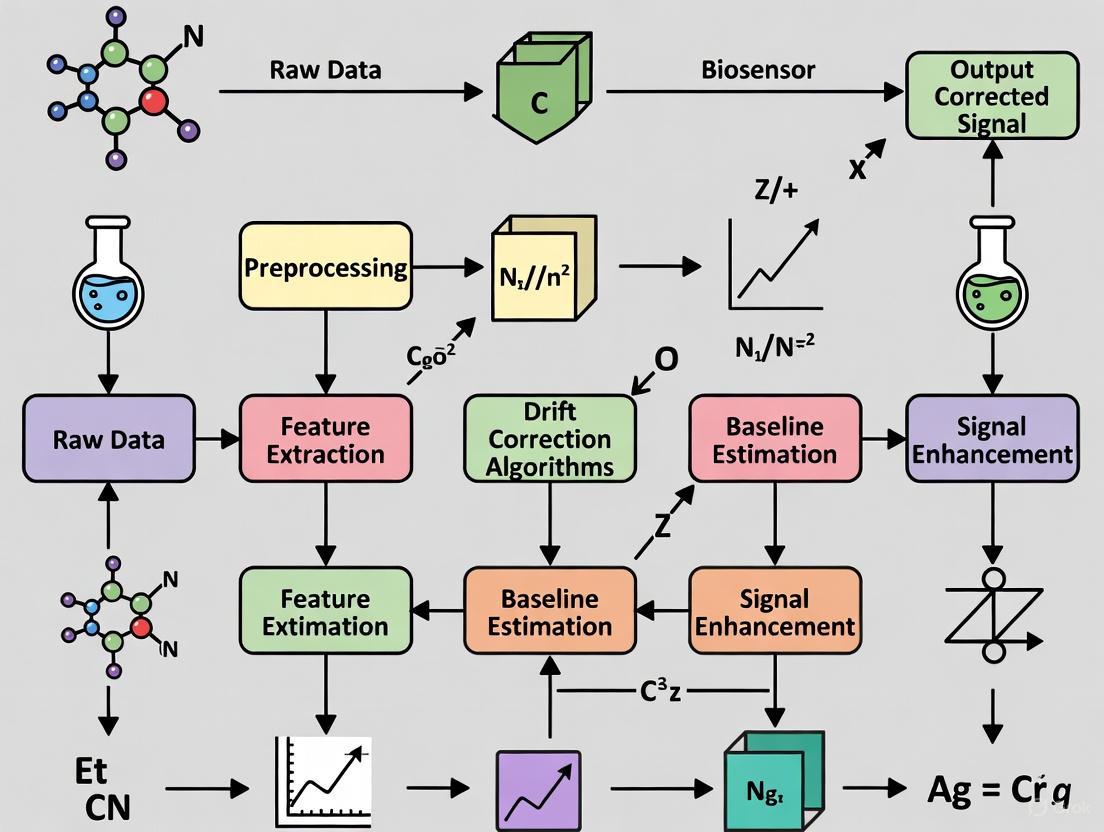
This article provides a comprehensive overview of signal processing techniques specifically designed for correcting baseline drift in biosensors, a critical challenge that impacts data accuracy and reliability.
Advanced Signal Processing Techniques for Biosensor Baseline Drift Correction: From Foundations to AI Integration
Abstract
This article provides a comprehensive overview of signal processing techniques specifically designed for correcting baseline drift in biosensors, a critical challenge that impacts data accuracy and reliability. Tailored for researchers, scientists, and drug development professionals, it covers the foundational causes of drift, explores a range of algorithmic and digital correction methodologies, and offers practical troubleshooting guidance. It further delivers a comparative analysis of classical and modern techniques, including the role of artificial intelligence (AI), and validates performance through real-world case studies and metrics. The goal is to equip professionals with the knowledge to select, implement, and optimize drift correction strategies, thereby enhancing the quality of biosensor data in biomedical research and clinical applications.
Understanding Biosensor Baseline Drift: Causes, Impacts, and Fundamental Concepts
Defining Baseline Drift and Its Critical Impact on Quantitative Biosensing
What is Baseline Drift?
In quantitative biosensing, baseline drift refers to the slow, unwanted low-frequency change in the biosensor's output signal when no analyte is present or during a constant measurement condition. It is a deviation from the stable, expected baseline and appears as a gradual upward or downward trend in the sensorgram or measurement data [1].
This phenomenon is critically different from abrupt signal changes like spikes or jumps. Drift is a sign that the sensor system is not fully equilibrated and can be caused by factors such as [1]:
- System Inequilibration: The sensor surface is not fully adjusted to the running buffer, often seen after docking a new sensor chip or immobilizing a new ligand.
- Environmental Factors: During long-term operation, changes in light source, temperature, or humidity can cause the baseline to wander [2].
- Sensor Aging: The biological recognition element (e.g., an enzyme) can degrade over time, leading to a loss of sensitivity and a drifting signal [3].
- Buffer Changes: Inadequate system priming after a buffer change can cause mixing and a wavy baseline until equilibrium is re-established [1].
Why is Correcting Baseline Drift Critical?
The critical impact of baseline drift lies in its direct threat to the accuracy, reliability, and precision of quantitative biosensor data.
- Reduced Predictive Accuracy: When baseline-drifted spectra are used for quantitative and qualitative analysis, the prediction accuracy of the analytical model is significantly reduced, leading to inaccurate or even erroneous results [2].
- Compromised Data Interpretation: Drift affects the precision of results from pattern recognition algorithms, making it difficult to correctly identify and quantify analytes, especially in complex mixtures [3].
- False Positives/Negatives: Uncorrected drift is one of the underlying factors that can contribute to false diagnostic results in both conventional and AI-powered biosensors [4].
The following table summarizes the key challenges drift introduces.
| Challenge | Impact on Quantitative Biosensing |
|---|---|
| Quantification Errors | Inaccurate calculation of analyte concentration due to an incorrect baseline reference point. |
| Compromised Sensitivity | Reduced ability to detect low concentrations of analyte, as the drift can obscure small signal changes. |
| Impaired Kinetics Analysis | Incorrect determination of binding affinities and reaction rates in real-time monitoring assays. |
| Degraded Model Performance | Introduces noise and error into multivariate calibration models (e.g., PLS, PCA), reducing their robustness [3]. |
Troubleshooting Guide: Identifying and Minimizing Drift
This section addresses frequently asked questions to help you diagnose and prevent common sources of baseline drift.
Q: I've just immobilized a new ligand, and my baseline is drifting. What should I do? A: This is a common sign of a non-optimally equilibrated sensor surface. The surface may be rehydrating, or chemicals from the immobilization procedure may be washing out.
- Solution: Flow running buffer overnight to fully equilibrate the surface before beginning your analyte injections [1].
Q: My baseline is unstable after changing the running buffer. Why? A: The system likely contains a mixture of the old and new buffers, creating a concentration gradient and an unstable signal.
- Solution: Always prime the system after each buffer change and wait for a stable baseline before starting experiments [1].
Q: My biosensor's sensitivity is decreasing over time, causing a downward drift in signal. How can I manage this? A: Ageing of the biological element (e.g., enzyme deactivation) is a key cause of sensitivity loss.
- Solution: Implement mathematical sensitivity correction algorithms. One approach is to regularly analyze reference samples and use a multiplicative drift correction algorithm to compensate for the ageing effect within a measurement sequence [3].
Q: What general practices can minimize baseline drift? A:
- Use Fresh Buffers: Prepare fresh, filtered (0.22 µm), and degassed buffers daily. Do not top up old buffer solutions [1].
- Add Start-up Cycles: Include at least three start-up cycles in your method that inject buffer instead of analyte. This "primes" the surface and stabilizes it before real data collection [1].
- Incorporate Blank Injections: Space blank (buffer alone) cycles evenly throughout your experiment (e.g., one every five to six analyte cycles). These are essential for robust data correction [1].
Advanced Correction: Methodologies and Protocols
For advanced research and data processing, several algorithmic methods exist to correct for baseline drift post-measurement. The workflow for implementing these corrections generally follows a logical sequence, as outlined below.
Experimental Protocol: Correcting Drift with the erPLS Algorithm
The extended Range Penalized Least Squares (erPLS) method is an advanced, automatic technique for correcting baseline drift in spectroscopic biosensor data [2].
- Principle: The method balances the fidelity (how well the fitted baseline matches the original data in non-peak regions) and smoothness of the fitted baseline. It automatically selects the optimal smoothing parameter (λ), which is often a user-dependent hurdle in other methods [2].
- Procedure:
- Linear Expansion: The ends of the spectrum signal are linearly expanded.
- Gaussian Peak Addition: A Gaussian peak is added to the expanded range to create a known reference signal.
- Parameter Optimization: The asPLS algorithm is run with different λ values. The optimal λ is selected as the one that yields the minimal root-mean-square error (RMSE) in the extended range where the Gaussian peak was added.
- Baseline Estimation: The entire original signal's baseline is estimated using the asPLS method with this optimally selected λ.
- Subtraction: The estimated baseline is subtracted from the original signal to yield a corrected, drift-free spectrum [2].
Experimental Protocol: Multivariate Drift Correction for Sensor Arrays
For biosensor arrays or electronic tongues, drift can be corrected using component correction, a multivariate method.
- Principle: This method assumes that sensor drift has a preferred direction in multivariate space. The correction is done by subtracting the drift direction component, identified from the responses of reference samples, from the entire dataset [3].
- Procedure:
- Reference Measurement: Regularly measure a stable reference sample throughout the analysis sequence.
- Model Drift: Use a multivariate method like Principal Component Analysis (PCA) or Partial Least Squares (PLS) to model the direction of the drift in the response data from the reference samples.
- Apply Correction: Subtract this modeled "drift component" from the analyte sample responses [3].
The Scientist's Toolkit: Key Reagent Solutions
The following table details key materials and their functions in managing and studying baseline drift.
| Research Reagent / Material | Function in Drift Investigation & Correction |
|---|---|
| Stable Reference Samples | Used for periodic calibration and to model drift direction in multivariate correction methods [3]. |
| Fresh, Degassed Buffers | Prevents bubble formation and chemical instability, which are common physical causes of baseline drift [1]. |
| Antifoaming Agents (Detergents) | Added to running buffer after degassing to prevent foam, which can cause spikes and baseline instability [1]. |
| Tyrosinase Enzyme with Stabilizing Polymers (e.g., Eastman AQ55D) | Used to create more stable enzymatic biosensors; studying its immobilization helps understand and reduce biological drift [3]. |
| Polynomial and Penalized Least Squares Algorithms (e.g., arPLS, asPLS) | Mathematical tools implemented in software (e.g., MATLAB, R) for automatic baseline estimation and subtraction from spectral data [2]. |
Quantitative Impact: Data at a Glance
The table below synthesizes data from various studies to illustrate the quantitative impact of baseline drift and the efficacy of correction methods.
| Study Focus / Method | Key Quantitative Finding / Performance Metric |
|---|---|
| General Impact of Drift | Using baseline-drifted spectra for analysis reduces the prediction accuracy of quantitative models [2]. |
| erPLS Correction Method | An automatic algorithm capable of handling diverse baseline drift types without user-tuned parameters, improving model accuracy [2]. |
| Multivariate Drift Correction | Applying multiplicative drift correction to a tyrosinase-based biosensor enabled accurate quantification of components in binary mixtures despite sensor ageing [3]. |
| AI-Enhanced Biosensors | AI biosensors can provide high prediction performance (r > 0.8) but are still susceptible to inaccuracies from underlying drift and noise [5]. |
Frequently Asked Questions (FAQs)
Q1: How do temperature fluctuations specifically lead to biosensor signal drift? Temperature fluctuations induce drift by directly altering the kinetics of biological interactions and the physical properties of the sensor materials. For evanescent-field silicon photonic (SiP) biosensors, temperature changes cause a shift in the refractive index of the analyte solution and the sensor waveguide itself, leading to a measurable shift in the resonance wavelength (Δλres) that is indistinguishable from a true binding signal [6]. In electrochemical biosensors, temperature affects enzyme activity and electron transfer rates, creating signal instabilities that complicate calibration [7].
Q2: What are the primary mechanisms of sensor aging that contribute to baseline drift over time? Sensor aging is primarily driven by the gradual degradation of the sensor's functional layers. Key mechanisms include:
- Bioreceptor Deactivation: Over time, immobilized antibodies, enzymes, or aptamers can lose their activity due to denaturation or chemical decomposition, reducing the sensor's response [6].
- Surface Fouling: The non-specific accumulation of biomolecules (biofouling) from complex samples like blood serum can block binding sites and alter the sensor surface properties, leading to a continuous drift in the baseline signal [8] [6].
- Material Instability: Degradation of sensitive nanomaterials (e.g., oxidation of conductive polymers or leaching of metal nanoparticles) used to enhance signal transduction can permanently alter the sensor's performance characteristics [7].
Q3: Which surface reactions beyond target binding can cause unwanted signal drift? Several non-specific surface reactions can cause drift:
- Non-specific Adsorption (NSA): Proteins, lipids, or other molecules in a sample can physisorb to the sensor surface, changing its mass and optical properties [8] [6].
- Off-target Binding: Molecules structurally similar to the target analyte may bind weakly to the bioreceptor or other surface sites [6].
- Chemical Alteration of the Surface: The functionalization chemistry (e.g., a self-assembled monolayer on a gold electrode) can degrade or react with components in the sample buffer, leading to signal instability [8].
Q4: What signal processing techniques can correct for drift caused by these factors? Machine learning (ML) techniques are highly effective for drift correction. A comprehensive study evaluating 26 regression models found that decision tree regressors, Gaussian Process Regression (GPR), and artificial neural networks (ANNs) can achieve near-perfect signal prediction (R² = 1.00, RMSE ≈ 0.1465) [7]. Table 3 summarizes top-performing models. Furthermore, a co-simulation framework integrating COMSOL Multiphysics for physics-based modeling and CODIS+ for real-time signal processing with a 1D Convolutional Neural Network (CNN) has been shown to effectively reduce noise and signal errors (RMSE reduced from 7.8 to 2.1) [9].
Q5: How can I experimentally validate that observed drift is due to temperature and not other factors? A standard protocol involves performing a controlled temperature sweep experiment:
- Setup: Place the biosensor in a temperature-controlled chamber (e.g., a Peltier device) with a stable buffer solution and no analyte present.
- Measurement: Record the baseline signal while systematically varying the temperature (e.g., from 20°C to 40°C in 1°C increments).
- Analysis: Plot the signal output against temperature to establish a drift coefficient (e.g., signal change per °C). This calibration curve can later be used for software-based compensation [6] [7].
Troubleshooting Guides
Issue: Temperature-Induced Drift in Optical Biosensors
Symptoms: A steady, cyclical, or unpredictable shift in the baseline resonance wavelength or output signal that correlates with ambient temperature changes.
Step-by-Step Resolution:
- Confirm the Source: Monitor the sensor signal in a pure buffer solution while logging the room temperature. A direct correlation confirms thermal drift.
- Implement Physical Control:
- Use an incubator or a miniaturized Peltier device to maintain a constant temperature around the sensor and fluidic components.
- Use tubing with low thermal conductivity and pre-warm/cool all reagents to the assay temperature.
- Implement Signal Processing Correction:
- Reference Sensor: Use an on-chip reference sensor that is functionalized with a non-responsive molecule but is exposed to the same thermal environment. Subtract its signal from the active sensor's signal [6].
- ML Correction: Train a machine learning model (e.g., GPR or XGBoost) on data where temperature and sensor output are recorded. The model can then predict and subtract the thermal component of the signal in real-time [9] [7].
Issue: Signal Degradation and Drift Due to Sensor Aging
Symptoms: A consistent downward trend in the maximum signal output upon exposure to a known analyte concentration over days or weeks; increased signal noise; longer time to reach signal stability.
Step-by-Step Resolution:
- Characterize Aging Rate: Periodically calibrate the sensor with a standard analyte solution to track the decay of its sensitivity and baseline over time.
- Optimize Storage Conditions:
- Store sensors in a stable, dry environment, often in a protective buffer (e.g., with sucrose or BSA) to prevent dehydration and preserve bioreceptor activity.
- Improve Surface Stability:
- For electrochemical sensors, use covalent immobilization strategies (e.g., via EDC-NHS chemistry) instead of physical adsorption to secure bioreceptors to the surface [8] [7].
- For optical sensors, employ antifouling surface chemistries like self-assembled monolayers (SAMs) with longer alkyl chains or polyethylene glycol (PEG) to minimize non-specific adsorption and biofouling [8] [6].
Issue: Drift from Non-Specific Surface Reactions and Fouling
Symptoms: A gradual signal increase in control channels or when exposed to complex sample matrices (e.g., serum, blood); poor washout; inconsistent calibration curves.
Step-by-Step Resolution:
- Include Robust Controls: Always run a parallel control with a sensor that lacks the specific bioreceptor or is blocked with an inert protein.
- Enhance Surface Passivation:
- After immobilizing the bioreceptor, incubate the sensor with a blocking agent like BSA, casein, or specialized commercial blockers to cover any remaining reactive sites.
- Optimize Microfluidic Design and Operation:
- Implement effective bubble mitigation strategies, as bubbles can damage functionalization and cause massive signal instability. This includes microfluidic device degassing, plasma treatment, and the use of surfactant solutions [6].
- Ensure consistent and stable flow rates to prevent fluctuations in mass transport to the sensor surface [6].
- Utilize Advanced Functionalization: Consider using polydopamine coatings or protein A layers to improve the orientation and stability of immobilized antibodies, which can reduce heterogeneity and non-specific interactions [6].
Table 1: Impact of Common Factors on Biosensor Signal and Variability
| Factor | Impact on Signal & Variability | Mitigation Strategy |
|---|---|---|
| Temperature Fluctuations | Alters reaction kinetics & transducer physics; major source of baseline drift [6] [7] | Use on-chip reference sensors; implement ML-based thermal compensation [9] [7] |
| Bioreceptor Immobilization | Inconsistent density/orientation causes inter-assay variability [6] | Use covalent chemistry (e.g., EDC-NHS); optimize via polydopamine or protein A [8] [6] |
| Non-Specific Binding | Gradual signal drift in complex samples; increases noise [8] [6] | Apply blocking agents (BSA, casein); use antifouling SAMs/PEG coatings [8] |
| Microfluidic Bubbles | Sudden signal artifacts and functionalization damage [6] | Degas devices & reagents; use plasma treatment & surfactants [6] |
Table 2: Performance of Machine Learning Models for Signal Prediction and Drift Correction [7]
| Model Family | Example Algorithm | RMSE | R² | Key Advantage for Drift Correction |
|---|---|---|---|---|
| Tree-Based | Decision Tree Regressor | 0.1465 | 1.00 | High accuracy & interpretability |
| Gaussian Process | Gaussian Process Regression (GPR) | 0.1465 | 1.00 | Provides uncertainty estimates |
| Artificial Neural Network | Wide Neural Network | 0.1465 | 1.00 | Models complex non-linearities |
| Stacked Ensemble | GPR + XGBoost + ANN | 0.1430 | 1.00 | Superior stability & generalization |
Experimental Protocols
Protocol 1: Characterizing Temperature Drift Coefficient
Objective: To quantify the baseline signal change of a biosensor per degree Celsius of temperature change.
Materials:
- Biosensor chip integrated with a microfluidic system.
- Temperature-controlled stage or incubator with high accuracy (±0.1°C).
- Data acquisition system for continuous signal monitoring.
- Phosphate Buffered Saline (PBS), pH 7.4.
Methodology:
- Flush the sensor microchannel with PBS at a constant flow rate until a stable baseline is achieved.
- Set the temperature controller to a starting point (e.g., 20°C) and allow the system to equilibrate for 15 minutes.
- Record the baseline signal (e.g., resonance wavelength, current, or impedance) for 5 minutes.
- Increase the temperature by a fixed increment (e.g., 1°C or 2°C).
- Repeat steps 3 and 4 until the desired temperature range (e.g., up to 40°C) is covered.
- Plot the average baseline signal at each temperature versus the temperature. The slope of the linear fit is the temperature drift coefficient.
Protocol 2: Evaluating Sensor Aging via Accelerated Aging Study
Objective: To predict the long-term stability of a biosensor by studying its performance under stressed conditions.
Materials:
- Multiple biosensor units from the same production batch.
- High-temperature incubator.
- Calibration standard solution (known concentration of target analyte).
Methodology:
- Calibrate all fresh biosensors (Day 0) with the standard solution to establish initial sensitivity and baseline.
- Store one group of sensors at the recommended storage condition (control). Store other groups at elevated temperatures (e.g., 37°C, 45°C) in a dry environment or in a destabilizing buffer.
- At regular intervals (e.g., Day 1, 3, 7, 14), remove a sensor from each storage condition and perform the same calibration as in Step 1.
- Plot the normalized sensitivity (Sensitivityt / Sensitivityinitial) versus time for each condition.
- Use the Arrhenius equation to model the degradation rate and extrapolate the sensor's shelf-life at standard storage temperatures.
Research Reagent Solutions
Table 4: Key Reagents for Biosensor Functionalization and Drift Mitigation
| Reagent | Function | Example Application |
|---|---|---|
| EDC / NHS | Crosslinker pair for covalent immobilization of biomolecules to carboxylated surfaces [8] [7]. | Creating stable amide bonds between antibodies and graphene oxide electrodes. |
| Polydopamine | A versatile coating that facilitates a strong, universal adhesion layer for subsequent bioreceptor immobilization [6]. | Functionalizing silicon photonic microring resonators; shown to improve detection signal by 8.2x compared to some flow-based methods [6]. |
| Protein A | Binds the Fc region of antibodies, promoting a uniform, oriented immobilization on sensor surfaces [6]. | Improving antigen-binding efficiency and consistency on gold surfaces or optical sensors. |
| BSA / Casein | Blocking agents used to passivate unoccupied binding sites on the sensor surface after functionalization [8] [6]. | Reducing non-specific binding from serum proteins in immunoassays. |
| Pluronic F-127 | A non-ionic surfactant used in microfluidics to reduce bubble formation and minimize surface fouling [6]. | Adding to running buffers to improve wetting and prevent bubble-related artifacts in microfluidic channels. |
Signal Drift Analysis and Correction Workflow
How Drift Obscures Signals and Compromises Data Integrity in Biomedical Assays
Understanding Drift in Biomedical Data
What is drift and why is it a critical issue in biomedical assays?
In biomedical assays, drift refers to the unwanted change in a sensor's signal or a model's performance over time, which is not due to the target analyte but to external or systemic factors. It is a critical issue because it can obscure true biological signals, leading to inaccurate data, false positives/negatives, and ultimately, compromised diagnostic or research conclusions [10] [11].
It is important to distinguish between two key types of drift:
- Data Drift: This occurs when the statistical properties of the input data change. For example, variations in experimental setups, instrument calibration, or environmental conditions during data collection can cause data drift [12].
- Concept Drift: This is a more fundamental shift in the relationship between the input data (e.g., a biomarker) and the target output (e.g., a disease diagnosis). This can happen due to the emergence of new viral strains or changes in population demographics, making a previously reliable predictive model less accurate [13] [12].
What are the common root causes of signal drift in electrochemical biosensors?
Research into Electrochemical Aptamer-Based (EAB) sensors has identified two primary mechanisms that cause signal degradation in complex biological environments like whole blood:
- Fouling by Blood Components: Proteins, cells, and other biomolecules adsorb onto the sensor surface, physically blocking the redox reporter from reaching the electrode and slowing the electron transfer rate. This causes an initial, rapid, exponential signal loss [11].
- Electrochemically Driven Desorption: The repeated electrochemical interrogation of the sensor can cause the breakage of the gold-thiol bonds that anchor the sensing molecule to the electrode. This leads to a slower, linear degradation of the signal over time [11].
Other contributing factors can include enzymatic degradation of biological recognition elements (e.g., DNA or enzymes) and irreversible reactions of the redox reporter molecule itself [11].
How does "model drift" in machine learning affect COVID-19 diagnostic tools?
The dynamic nature of the COVID-19 pandemic, with evolving viral strains and changing demographics, has led to a phenomenon known as model drift in machine learning-based diagnostic tools. A study on models designed to detect COVID-19 from cough audio data demonstrated this clearly.
A baseline model experienced a significant performance drop when applied to data collected after its development period. To mitigate this, researchers successfully applied adaptation techniques:
- Unsupervised Domain Adaptation (UDA), which aligns data distributions from different periods without needing new labels, improved balanced accuracy by up to 24% [13].
- Active Learning (AL), which selectively labels the most informative new data points for model retraining, yielded even greater improvements, increasing balanced accuracy by up to 60% for one dataset [13].
This underscores that without continuous monitoring and adaptation, the accuracy of AI-driven diagnostic models can degrade over time.
Troubleshooting Guides & FAQs
FAQ: Addressing Common Assay and Sensor Problems
Q: My ELISA has a weak or no signal. What should I check? A: This is often a reagent or procedural issue. Follow this checklist:
- Temperature: Ensure all reagents are at room temperature before starting the assay [14].
- Reagent Integrity: Confirm reagents are within their expiration date and have been stored correctly [14].
- Protocol Adherence: Verify that all reagents were added in the correct order, with correct dilutions and incubation times [14].
- Washing: Ensure thorough and consistent washing to remove unbound components [14].
- Equipment: Check that the plate reader is set to the correct wavelength [14].
Q: The signal in my microplate-based fluorescence assay is inconsistent across the plate. What could be wrong? A: Inconsistent signals can stem from several factors related to your experimental setup:
- Meniscus Formation: A curved liquid surface can distort readings. Use hydrophobic plates, avoid detergents like Triton X, and ensure consistent sample volumes. Using a path length correction tool, if available, can also help [15].
- Autofluorescence: Media components like phenol red can cause high background. Switch to phenol-red-free media or PBS for measurements [15].
- Reader Settings: Optimize the gain setting to avoid saturation and ensure the focal height is correctly adjusted to the sample layer [15].
- Well Scanning: If your sample is unevenly distributed, use a well-scanning function that takes multiple measurements across the well to get a representative average [15].
Q: My electrochemical biosensor signal is decaying rapidly during a measurement. Is this reversible? A: It depends on the cause. Research suggests that the initial rapid (exponential) signal loss is often due to fouling and can be at least partially reversed. One study showed that washing the sensor with a concentrated urea solution recovered over 80% of the initial signal. However, signal loss from electrochemical desorption or enzymatic degradation is typically irreversible [11].
Systematic Troubleshooting Methodology
When faced with an experimental failure, a structured approach is more efficient than random checks. The following workflow outlines a general troubleshooting methodology that can be adapted for various experimental types, from molecular biology to sensor development [16].
Experimental Insights & Data
The table below summarizes key quantitative findings from recent research on drift in different biomedical contexts.
Table 1: Quantifying Drift and Mitigation Efficacy Across Studies
| Assay/Model Type | Impact of Drift | Mitigation Method | Performance Improvement | Source |
|---|---|---|---|---|
| COVID-19 Cough Audio Model | Performance decline on post-development data | Unsupervised Domain Adaptation (UDA) | Balanced accuracy ↑ up to 24% | [13] |
| COVID-19 Cough Audio Model | Performance decline on post-development data | Active Learning (AL) | Balanced accuracy ↑ up to 60% | [13] |
| Electrochemical Biosensor | Biphasic signal loss in whole blood | Optimizing potential window | Signal loss reduced to ~5% (vs. significant loss) | [11] |
| Metabolomic Predictions | Prediction inaccuracy due to confounding factors | Concept Drift Detection (CDD) | Enhanced prediction accuracy, reduced false negatives | [12] |
Experimental Protocol: Investigating Drift Mechanisms in Electrochemical Biosensors
Objective: To systematically evaluate the mechanisms underlying signal drift of an electrochemical biosensor in a biologically relevant environment (e.g., whole blood) [11].
Materials:
- Electrochemical biosensors (e.g., EAB sensors with a thiol-on-gold monolayer).
- Potentiostat.
- Whole blood sample (undiluted), maintained at 37°C.
- Phosphate Buffered Saline (PBS), for control experiments.
- Urea solution (e.g., concentrated) for fouling reversal tests.
Methodology:
- Baseline Measurement: Place the sensor in PBS at 37°C and record the stable square-wave voltammetry (SWV) signal.
- Blood Challenge: Transfer the sensor to undiluted whole blood at 37°C and initiate continuous or frequent SWV interrogation.
- Signal Monitoring: Record the sensor signal over several hours. Note the characteristic biphasic decay: an initial exponential drop followed by a linear decline.
- Mechanism Isolation:
- Fouling Test: After signal decay in blood, wash the sensor with a concentrated urea solution and re-measure the signal in PBS to assess recovery.
- Electrochemical Desorption Test: In a separate experiment in PBS, vary the SWV potential window to avoid reductive (< -0.5 V) and oxidative (> 1.0 V) desorption limits. Monitor the signal stability.
- Data Analysis: Plot signal amplitude over time. Compare degradation rates and signal recovery under different conditions to attribute drift to specific mechanisms.
Research Reagent Solutions for Drift Studies
Table 2: Essential Materials for Investigating and Correcting Drift
| Item | Function / Application | Specific Example / Note |
|---|---|---|
| Electrochemical Aptamer-Based (EAB) Sensor | A platform for real-time, in vivo molecular monitoring; subject to drift from fouling and desorption. | Used to study mechanisms of drift in biological fluids [11]. |
| Urea Solution | A denaturant used to solubilize proteins; can reverse signal loss caused by biofouling. | Recovered >80% of signal in EAB sensor studies [11]. |
| Concept Drift Detection (CDD) Algorithms | Software methods to detect changes in the underlying data-model relationship in ML. | DDM and EDDM are effective for metabolomic data [12]. |
| Baseline Correction Algorithms (e.g., arPLS, ConvAuto) | Computational methods to remove instrumental baseline drift from spectral/analytical data. | Crucial for accurate quantification in spectroscopy/chromatography [17]. |
The Scientist's Toolkit: Diagrams & Workflows
Signaling Pathway of Sensor Degradation
The following diagram illustrates the two primary competing pathways that lead to signal loss in electrochemical biosensors deployed in biological environments, based on the mechanistic study cited [11].
Machine Learning Model Drift Correction Workflow
For machine learning models used in biomedical diagnostics, maintaining performance requires continuous monitoring and adaptation. This workflow outlines a proactive framework to combat model drift [13].
Frequently Asked Questions
Q1: What are the most common causes of baseline drift in biosensor signals? Baseline drift is a low-frequency trend that causes a signal's baseline to shift over time. Common causes include changes in electrode-skin impedance, physiological processes like respiration or perspiration in biological measurements, and environmental fluctuations in sensing equipment. This drift can distort key signal parameters such as peak height and area [18] [19].
Q2: My peak identification algorithm is detecting too many false positives from noise. How can I improve its accuracy? This is often due to the algorithm's inability to distinguish between true peaks and random noise fluctuations. You can improve accuracy by:
- Adjusting the
SmoothWidthparameter in derivative-based methods (likefindpeaksx). A larger value will neglect small, sharp features, effectively reducing sensitivity to high-frequency noise [20]. - Increasing the
SlopeThreshold. This discriminates based on peak width, making the algorithm less likely to flag broad, noise-induced features as peaks [20]. - Applying a pre-smoothing filter (e.g., a Savitzky-Golay filter) to your data before peak detection to suppress high-frequency noise [21].
Q3: What is the advantage of using a method that performs baseline correction and peak finding jointly? Joint methods, such as the Derivative Passing Accumulation (DPA) method, can provide a more robust and accurate analysis. By solving these two interdependent problems together, these methods prevent error propagation that can occur when the output of a standalone baseline correction step (which might be imperfect) is fed into a separate peak finding algorithm. Testing has shown that joint methods can achieve lower peak area loss rates compared to processing steps performed in isolation [18].
Q4: When should I use an asymmetric least squares (ALS) algorithm for baseline correction? ALS is particularly powerful when your signal has a broad, slowly varying baseline superimposed with sharp peaks, a common characteristic in Raman and X-ray fluorescence (XRF) spectra. Its key feature is applying a much higher penalty to positive deviations (the peaks) than to negative deviations, which allows the fitted baseline to neglect the peaks and adapt closely to the true baseline points [22].
Troubleshooting Guides
Problem 1: Ineffective Baseline Removal
Symptoms: The corrected signal does not have a flat baseline; significant low-frequency trends remain, or the baseline is over-corrected and distorts the signal peaks.
| Possible Cause | Diagnostic Steps | Solution |
|---|---|---|
| Incorrect method selection | Visually inspect your signal. Is the baseline linear, polynomial, or a complex, slow undulation? | For simple linear drift, use detrend or polynomial fitting. For complex, non-linear drift, use wavelet-based methods or Asymmetric Least Squares (ALS) [23] [22]. |
| Poor parameter tuning | Check the baseline fit generated by your algorithm. Does it follow the baseline valleys or get pulled up into the peaks? | For ALS, increase the lam (smoothing) parameter for a smoother baseline. For wavelet methods, adjust the decomposition level or the coefficients being zeroed out [22]. |
| High-frequency noise interference | Apply a low-pass filter to your signal and attempt baseline correction again. If performance improves, noise is the issue. | Smooth the signal before baseline correction or use a baseline method that incorporates smoothing internally, such as the derivative-based methods used in findpeaksx [20]. |
Problem 2: Poor Peak Detection Accuracy
Symptoms: The algorithm misses valid peaks (low recall) or incorrectly identifies noise as peaks (low precision).
| Possible Cause | Diagnostic Steps | Solution |
|---|---|---|
| Insufficient smoothing | Zoom in on a region of baseline noise. If many small, sharp spikes are visible, the data is too noisy for direct peak detection. | Increase the SmoothWidth parameter in functions like findpeaksx. This smooths the first derivative, reducing false zero-crossings caused by noise [20]. |
| Poorly set amplitude or slope thresholds | Run your peak finder and plot the results. Are missed peaks small and broad? Are false peaks small and sharp? | Increase AmpThreshold to ignore small-amplitude noise. Increase SlopeThreshold to discriminate against broad, low-slope features [20]. |
| Overlapping peaks | Check if the detected peak width is much larger than expected or if the peak shape is asymmetric. | Use algorithms capable of deconvolution or those that fit multiple peak models (e.g., findpeaksfit). Fourier Self-Deconvolution (FSD) can also help resolve overlapping peaks [21]. |
Comparative Performance of Signal Processing Methods
The table below summarizes the performance of various algorithms tested on authentic biological and spectroscopic data, as reported in the literature [18].
| Method | Principle | Best For | Performance Notes |
|---|---|---|---|
| Derivative Passing Accumulation (DPA) | Uses accumulation of first-order derivatives | General-purpose, especially for joint baseline and peak finding | Accurate, flexible; outperforms others on ECG and EEG data. |
| airPLS | Penalized least squares with asymmetry | Spectroscopic data (Raman, IR) | Excellent for spectra; can produce "dental" baselines in mass spectrometry. |
| Wavelet Transform | Multi-scale decomposition by frequency | Signals with well-separated noise/baseline/peak features | Can produce undercut baselines; performance depends on wavelet type and level. |
| Empirical Mode Decomposition (EMD) | Adaptive decomposition into intrinsic mode functions | Non-stationary signals like ECG | Often generates overestimated baselines. |
| Asymmetric Least Squares (ALS) | Iterative fitting with asymmetric penalties | Complex, non-linear baselines in Raman/XRF | Highly effective; baseline adapts well to valleys, neglecting peaks. |
Detailed Experimental Protocols
Protocol 1: Implementing Derivative Passing Accumulation (DPA)
The DPA method is a joint baseline correction and peak extraction algorithm that uses only first-order derivative information [18].
- Input: Acquire the raw signal profile, denoted as vector y.
- Differentiation: Calculate the discrete first-order derivative of y. This is often done via simple differencing:
dy = diff(y). - Separation and Accumulation: Separate the positive and negative parts of the derivative vector. Accumulate these parts to build a new signal descriptor that amplifies peak-related features.
- Thresholding: Apply a threshold to this new descriptor. The threshold value separates regions belonging to the baseline from regions containing signal peaks.
- Output: The procedure outputs a corrected baseline and the locations (intervals) of the identified signal peaks simultaneously.
Protocol 2: Baseline Correction with Asymmetric Least Squares (ALS)
This protocol is effective for Raman and XRF spectra [22].
- Initialization: Start with the original spectrum z and an initial weight vector w = 1.
- Iteration Loop: For a specified number of iterations (e.g.,
niter=5): a. Solve Linear System: Compute the baseline b by solving the linear system:(D' * W * D + λ * I) * b = D' * W * z, where D is a second-order difference matrix, W is a diagonal weight matrix, and λ is the smoothness parameter (e.g.,lam=1e6). b. Update Weights: Compute new weights w based on the residuals r = z - b. For positive residuals (points above the baseline, likely peaks), assign a small penalty p (e.g., 0.01). For negative residuals, assign a weight of 1. - Finalization: After the final iteration, subtract the fitted baseline b from the original signal z to obtain the baseline-corrected spectrum.
The Scientist's Toolkit: Essential Computational Reagents
| Item | Function in Analysis | Example / Note |
|---|---|---|
| Savitzky-Golay Filter | Smoothing and calculating derivatives while preserving peak shape. | Ideal for pre-processing before peak finding; available in most data analysis software [21]. |
| Daubechies Wavelets (db6) | Multi-resolution analysis for denoising and baseline correction. | Used in wavelet transform methods to separate signal components by frequency [22]. |
| Asymmetric Least Squares (ALS) Code | Iterative baseline fitting for complex, non-linear drifts. | Key parameters are smoothness (lam, e.g., 1e5-1e8) and asymmetry (p, e.g., 0.001-0.1) [22]. |
| findpeaksG / findpeaksx Functions | Command-line peak detection with Gaussian fitting or derivative-based search. | Provides precise estimation of peak position, height, and width [20]. |
| Polynomial Fitting Functions | Modeling and removing simple linear or polynomial baseline trends. | Use polyfit and polyval; careful not to overfit with high degrees [23]. |
Algorithmic Solutions: From Classical Methods to AI-Enhanced Correction Techniques
Frequently Asked Questions (FAQs)
Q1: What are the typical symptoms of an incorrectly chosen baseline correction method? You may observe an underestimated or boosted baseline in peak regions, distorted peak shapes, or the introduction of artificial oscillations near the signal edges. For instance, the airPLS algorithm can tend to produce an underestimated baseline if the signal has additive noise, while a poorly configured wavelet method might not fully capture a complex, non-linear baseline drift [24] [25].
Q2: The airPLS algorithm is not converging. What could be the reason? Slow or non-convergence in airPLS is often due to an improperly set smoothness parameter (λ) or an insufficient number of maximum iterations. If λ is too small, the fitted baseline may be too flexible and fit the peaks. If it is too large, the baseline may be overly rigid. It is recommended to use the default maximum iteration count (e.g., 20) and monitor the termination criterion, which stops the iteration when the difference between successive fits is minimal [26] [27].
Q3: For wavelet-based correction, how do I select the right wavelet and decomposition level?
Selecting an optimal wavelet basis (e.g., sym8) and the number of decomposition layers is critical and depends on your signal. A higher decomposition level is needed for baselines with very low-frequency drift. However, there is no universal rule; it requires experimentation. The key disadvantage of wavelet methods is this difficulty in selecting the right parameters without prior signal knowledge, which reduces its adaptability [28] [24].
Q4: My signal has a highly non-stationary and non-linear baseline. Which method is most suitable? The Empirical Mode Decomposition (EMD) method is particularly well-suited for non-linear and non-stationary signals, such as those from biosensors. Its major advantage is that the decomposition is fully data-driven and does not require a predefined basis function, unlike Fourier or wavelet transforms. This makes it adaptive to the complex characteristics of your signal [28] [25].
Q5: How can I automatically determine the best parameters for a baseline correction algorithm like airPLS?
Some advanced methods have been proposed to automate parameter selection. For example, the erPLS method automatically selects the optimal smoothness parameter λ for the asPLS algorithm by linearly expanding the ends of the spectrum, adding a Gaussian peak, and choosing the λ that yields the minimal root-mean-square error (RMSE) in the extended range [24].
Troubleshooting Guides
Issue 1: Overfitting Baseline in airPLS
- Problem: The fitted baseline appears to follow the peaks of the signal rather than the underlying drift.
- Solutions:
- Increase the Smoothness Parameter (λ): A higher λ places more emphasis on the smoothness of the baseline. For airPLS, values can range from
10^3to10^9, with10^7often used as a starting point [27]. - Check the Weight Vector: The iterative reweighting in airPLS should set weights to zero for data points identified as peaks. Verify that the algorithm is correctly identifying and down-weighting these points by examining the weight vector over iterations [27].
- Use an Improved Variant: Consider using the
arPLSorasPLSalgorithms, which are designed to be less vulnerable to noise and avoid treating small peaks as part of the baseline, thus reducing the chance of an underestimated baseline [24].
- Increase the Smoothness Parameter (λ): A higher λ places more emphasis on the smoothness of the baseline. For airPLS, values can range from
Issue 2: Edge Effects and Signal Distortion in Wavelet and EMD
- Problem: The corrected signal shows significant distortions or artifacts at the beginning and end after applying Wavelet or EMD correction.
- Solutions:
- Signal Extension: Prior to decomposition, extend the signal symmetrically or periodically at both ends. After correction, remove the extended parts. MATLAB's
cwtfunction, for example, has anExtendSignaloption to mitigate this [29]. - For EMD: Investigate IMFs: In EMD, the baseline wander is often contained in the higher-order Intrinsic Mode Functions (IMFs). Instead of simply discarding them, use an adaptive filtering approach (EEMD-AF) to process these IMFs and subtract the estimated baseline, which can reduce distortion [28].
- Avoid Short Epochs: Ensure your signal is long enough to contain multiple cycles of your lowest frequency of interest. Edge effects become more pronounced relative to the total signal length with shorter epochs [29].
- Signal Extension: Prior to decomposition, extend the signal symmetrically or periodically at both ends. After correction, remove the extended parts. MATLAB's
Issue 3: Mode Mixing and Incomplete Decomposition in EMD
- Problem: In EMD, a single IMF contains oscillations of dramatically different scales, or a similar scale of oscillation is spread across different IMFs.
- Solutions:
- Use Ensemble EMD (EEMD): This improved method adds white noise of finite amplitude to the original signal and performs the decomposition multiple times. The final IMFs are obtained by averaging the respective components from each realization. This helps resolve the mode mixing problem [28].
- Adjust Sifting Parameters: The sifting process in EMD has a stopping criterion (threshold ε, typically between 0.2 and 0.3). Adjusting this threshold or the maximum number of sifting iterations can sometimes lead to more physically meaningful IMFs [28] [30].
Comparison of Classical Baseline Correction Algorithms
Table 1: Key Characteristics, Advantages, and Limitations of Classical Algorithms
| Algorithm | Key Principle | Typical Applications | Key Parameters | Primary Advantages | Main Limitations |
|---|---|---|---|---|---|
| airPLS [26] [24] [27] | Adaptive iteratively reweighted Penalized Least Squares. Iteratively changes weights of SSE. | Raman imaging, various spectra (IR), chromatography. | Smoothness (λ), maximum iteration. | Fast, flexible, requires no peak detection, only one parameter to optimize. | Can underestimate baseline with noise; sensitive to λ choice. |
| Wavelet-Based [28] [24] | Multi-resolution decomposition analysis using wavelet transforms. | GREATEM signals, spectroscopy, ECG denoising. | Wavelet basis (e.g., sym8), decomposition levels. |
Good for non-stationary signals, can separate signal and noise in different frequency bands. | Poor adaptability; difficult to choose optimal wavelet and decomposition level. |
| EMD/EEMD [28] [30] [25] | Data-adaptive decomposition of a signal into Intrinsic Mode Functions (IMFs). | ECG BW removal, non-stationary signals (vibration, biomedical). | Number of IMFs (N), sifting stopping criterion (ε). | Fully adaptive, no pre-defined basis, excellent for non-linear and non-stationary signals. | Prone to mode mixing, can be computationally expensive, edge effects. |
Table 2: Algorithm Performance in Different Scenarios (Based on Published Studies)
| Algorithm | Signal-to-Noise Ratio (SNR) / Improvement | Mean-Square Error (MSE) | Qualitative Performance Notes |
|---|---|---|---|
| airPLS | N/A | N/A | Effective for various spectra; can be combined with machine learning (ML-airPLS) for parameter prediction [24]. |
| Wavelet-Based (sym8, 10 layers) | Result indicated higher SNR [28] | Result indicated lower MSE [28] | Practical but has poor adaptability; performance highly depends on parameter choice [28]. |
| EEMD-AF (Improved EEMD) | Higher SNR achieved in GREATEM signals [28] | Lower MSE achieved in GREATEM signals [28] | Outperformed standard EEMD and wavelet-based methods in suppressing baseline wander for specific applications [28]. |
| Median Window (MW) | N/A | N/A | Emerged as the best-performing method in correcting UPLC data of soil, based on prediction accuracy [31]. |
Detailed Experimental Protocols
Protocol 1: Implementing airPLS for Raman Spectral Data
This protocol is adapted from the method described by Zhang et al. [27].
- Initialization: The weight vector for fidelity
w^0is initialized to 1 for all data points. Set the smoothness parameterλ(a common starting value is10^7) and the maximum number of iterations (e.g., 20). - Iterative Fitting:
a. Compute the fitted baseline
z_tat iterationtby solving the weighted penalized least squares problem:(W + λ D' D) z_t = W x, wherexis the original signal,Wis the diagonal weight matrix, andDis the derivative matrix. b. Update the weight vector for the next iteration. For points where the signalxis greater than the candidate baselinez_t, their weight is set to zero, effectively identifying them as peaks. c. Calculate the termination criterion vectord_t, which contains the negative differences betweenxandz_t. - Termination Check: The iteration stops when the sum of absolute values in
d_tis less than a termination threshold (e.g., 0.001) or the maximum iteration count is reached. - Baseline Subtraction: The final corrected data
x*is obtained by subtracting the fitted baselinezfrom the original datax.
Protocol 2: EEMD with Adaptive Filtering (EEMD-AF) for Baseline Wander Correction
This protocol is based on the work by Li et al. for processing electromagnetic signals [28].
- Ensemble Decomposition:
a. Produce an ensemble of datasets by adding Gaussian white noise of finite amplitude (σ) to the original signal
S(t). b. Apply the standard EMD method to each noisy realization to obtain a set of IMFs for each run. c. Obtain the final set of IMFs by averaging the respective components from each realization:IMF^j(t) = (1/NE) * ∑(i=1 to NE) IMF_i(t), whereNEis the ensemble number. - Adaptive Filtering of IMFs: a. Identify the higher-index IMF components (e.g., IMF5 and above) that primarily contain the baseline wander. b. Apply an adaptive low-pass filter to these specific IMFs to obtain a refined estimate of the baseline wander.
- Signal Reconstruction: Subtract the filtered baseline wander (from step 2b) from the original noisy signal to obtain the de-noised signal.
Workflow and Signaling Pathways
Baseline Correction Algorithm Selection Workflow
EMD-based Baseline Wander Correction Pathway
The Scientist's Toolkit: Essential Research Reagents & Materials
Table 3: Key Computational Tools and Resources for Baseline Correction Research
| Item Name | Function / Purpose | Example / Note |
|---|---|---|
| R Statistical Software | Primary environment for implementing and testing algorithms like airPLS. | The airPLS R package is available on GitHub (zmzhang/airPLS) [26]. The baseline package in R provides implementations of AsLS, fill peak, and Median Window methods [31]. |
| MATLAB | Environment with built-in toolboxes for signal processing, including EMD and wavelet transforms. | The emd function is available in the Signal Processing Toolbox, providing empirical mode decomposition [30]. The cwt function performs continuous wavelet transform [29]. |
| C++/MFC Implementation | A high-performance version of airPLS for applications requiring real-time tuning. | Provides a user interface for easily tuning the lambda parameter via a slider, addressing parameter optimization issues found in the R and Matlab versions [26]. |
| Benchmark Datasets | Publicly available data for validating and comparing algorithm performance. | The MIT-BIH Arrhythmia Database is a common benchmark for ECG signal processing methods, including baseline wander correction [25]. |
| Python with SciPy/NumPy | A flexible platform for implementing custom baseline correction scripts and newer deep learning approaches. | Libraries like scipy.signal can be used for wavelet transforms and spline fitting. Custom implementations of airPLS, EMD, and other algorithms are also common. |
Frequently Asked Questions (FAQs)
Q1: What is the core principle behind the Derivative Passing Accumulation (DPA) method? The DPA method is a signal processing algorithm that uses only first-order derivative information to simultaneously perform baseline correction and signal peak extraction. The core principle involves dividing the vector representing the discrete first-order derivative into negative and positive parts, which are then accumulated to build a signal descriptor. This descriptor allows for easy separation of signals from background fluctuations via thresholding, enabling both baseline correction and peak identification in a single procedure [18].
Q2: On which types of biological signals has the DPA method been successfully tested? Testing on authentic data has demonstrated the proficiency of the DPA method across a range of biological and analytical signals, including [18]:
- Mass spectrometry data, where it effectively captured the basic trend of baseline drift.
- Raman spectroscopy curves, where its performance was very close to specialized baseline detection methods.
- Electrocardiogram (ECG) and Electroencephalogram (EEG) data, where it produced stable, waveform-corrected results.
- Audio signals (e.g., from animal monitoring) and infrared spectroscopy data.
Q3: How does the DPA method's performance compare to classical baseline correction algorithms? The DPA method has been compared against several classical algorithms, such as wavelet analysis, Empirical Mode Decomposition (EMD), and the airPLS method. Results indicate that DPA is a powerful and often better choice for practical processing. It reportedly outperforms EMD and wavelet methods on several data types and performs similarly to the specialized airPLS method on Raman spectra, while avoiding the "dental baseline" artifact that airPLS can produce on mass spectrometry data [18].
Q4: What are the main advantages of using a derivative-based approach like DPA? The primary advantages of the DPA method include [18]:
- Simplicity and Efficiency: It relies solely on simple first-order differences, making the algorithm cleaner and more computationally efficient.
- Joint Processing: It performs baseline computation and peak identification simultaneously.
- Automatic Operation: The procedure is fully automatic, requiring no user intervention for peak detection operations.
Troubleshooting Guide: Common DPA Implementation Challenges
Issue 1: Poor Separation of Signal Peaks from Background Noise
- Problem: After applying DPA, the baseline is not adequately corrected, or noise is still misinterpreted as signal peaks.
- Solution: The effectiveness of DPA relies on thresholding the accumulated derivative descriptor. Re-evaluate and adjust the thresholding criteria. Ensure that the first-order derivative is calculated correctly from your discrete signal data. Testing the algorithm on synthesized data with known peak positions and areas can help calibrate the threshold parameters for your specific instrument and signal type [18].
Issue 2: Inaccurate Peak Location or Area Calculation
- Problem: The positions or areas of the extracted signal peaks do not match expected values.
- Solution: This issue can arise from improper handling of the derivative accumulation steps. Verify the algorithm's logic for building the signal descriptor from the positive and negative derivative parts. On artificially synthesized data, the DPA method has been analyzed for peak area loss rate, confirming its accuracy when correctly implemented. Ensure that the signal peaks in your data conform to the model (like Gaussian peaks) that the algorithm is designed to handle [18].
Issue 3: Performance Variation Across Different Data Modalities
- Problem: The DPA method works well on one type of data (e.g., Raman spectra) but underperforms on another (e.g., mass spectrometry).
- Solution: The DPA method is a general-purpose algorithm, and its performance can vary. Consult the comparative testing results [18]. For instance, if processing mass spectroscopy data where DPA performed well, it may be a suitable choice. However, for a specific application, other methods like asymmetric least squares (ALS) variants [32] or deep learning models [33] might offer better performance. Always validate the method against a known benchmark for your specific data.
Experimental Protocols & Data Presentation
The DPA method was validated using artificially synthesized data comprising a softly fluctuating baseline, Gaussian signal peaks of different heights/widths, and added white noise. The table below summarizes key performance metrics based on this testing [18].
Table 1: Performance of DPA on Synthesized Data with Known Signals
| Performance Metric | Description | DPA Method Outcome |
|---|---|---|
| Peak Area Loss Rate | Measures the quantitative accuracy of the extracted signals by comparing the calculated peak area after correction with the preset known area. | The method demonstrated accurate calculation of peak area at the preset peak locations, with low loss rates. |
| Peak Identification | Assesses the algorithm's ability to correctly locate the position of the simulated signal peaks. | The DPA method was able to directly and successfully locate the signal peaks. |
| Baseline Removal | Evaluates how effectively the underlying slow baseline drift was removed from the signal. | The algorithm effectively separated and removed the simulated baseline drift. |
Protocol: Testing DPA on Your Own Signal Data
This protocol outlines the steps to implement and validate the DPA method for a generic one-dimensional biological profile.
Objective: To apply the Derivative Passing Accumulation (DPA) algorithm for baseline correction and peak extraction on a given signal. Materials:
- Raw signal data (e.g., from a mass spectrometer, Raman spectroscope, or other biological instrument).
- Computational environment (e.g., MATLAB, Python, or R) for algorithm implementation.
Procedure:
- Data Input: Load the raw, digitized signal profile into your computational environment.
- First-Order Derivative Calculation: Compute the discrete first-order derivative of the signal. This is typically achieved by calculating the simple differences between consecutive data points:
derivative[i] = signal[i+1] - signal[i][18]. - Descriptor Construction: Split the derivative vector into its negative and positive components. Accumulate these parts to build the specific signal descriptor used for separation [18].
- Thresholding: Apply a threshold to the accumulated descriptor to distinguish regions containing true signal peaks from regions of background fluctuation.
- Baseline Correction & Peak Picking: Based on the thresholding result:
- Construct and subtract the estimated baseline from the original signal.
- Simultaneously, identify the intervals in the signal that correspond to genuine peaks.
- Output: The final outputs are the baseline-corrected signal and the coordinates (position, area) of the extracted peaks.
Validation:
- If available, validate the results against a dataset with known baseline and peak information.
- Visually inspect the corrected signal to ensure the baseline has been properly flattened without distorting the true signal peaks.
- Compare the peak areas and positions obtained from DPA with those from other established methods (e.g., airPLS, wavelet analysis) for consistency [18].
The Scientist's Toolkit: Research Reagent Solutions
Table 2: Essential Components for a Strain Measurement System Utilizing Drift Correction
| Item | Function in the Context of Signal Acquisition & Drift Correction |
|---|---|
| Resistive Strain Gauge | The primary sensor that translates mechanical deformation (strain) into a small change in electrical resistance. This is the source of the signal [33]. |
| Wheatstone Bridge Circuit | Converts the minute resistance change from the strain gauge into a measurable voltage signal. This configuration is highly sensitive but susceptible to baseline drift [33]. |
| Signal Conditioning Circuit | Amplifies and filters the weak analog voltage signal from the bridge, preparing it for digitization. Proper design is crucial to minimize introduced noise [33]. |
| High-Precision ADC | The Analog-to-Digital Converter (ADC) transforms the conditioned analog signal into a discrete digital signal for computational processing and algorithm application [33]. |
| Computational Environment | The hardware (e.g., PC, embedded system) and software (e.g., MATLAB, Python) used to implement and run the DPA or other baseline correction algorithms on the digitized signal [18] [33]. |
Signaling Pathways & Workflow Visualizations
Diagram 1: DPA algorithm workflow.
Diagram 2: Baseline correction algorithm comparison.
Digital Calibration and Correction for Sensor Arrays (e.g., GMR Biosensors)
Giant Magnetoresistive (GMR) biosensors are highly sensitive devices capable of detecting proteins and nucleic acids by monitoring minute resistance changes, often as small as a few micro-ohms, when magnetic nanoparticle (MNP)-labeled analytes bind to the sensor surface [34] [35]. These sensors are typically deployed in array formats (e.g., 8x8 grids) for simultaneous monitoring of multiple biomarkers [34]. The core sensing mechanism involves measuring magnetoresistance (MR) changes proportional to the number of surface-bound MNPs, which are then translated into analyte concentration via calibration curves [35].
The fundamental requirement for digital calibration stems from several inherent challenges that affect measurement reproducibility and sensitivity. Process variations during manufacturing cause significant deviations in resistance, MR ratio, and transfer curves across individual sensors within an array [34] [35]. Additionally, GMR sensors exhibit substantial temperature dependence with temperature coefficients ranging from hundreds to thousands of parts per million per degree Celsius (°C) for both resistive and magnetoresistive components [35]. Magnetic field non-uniformity across the sensor array further compounds these issues, as the magnetic moment of superparamagnetic tags and sensor operating points are highly field-dependent [35]. Without sophisticated correction techniques, these factors severely hinder the utility and sensitivity of GMR biosensing systems, making digital calibration not merely beneficial but imperative for reliable operation [35].
Core Calibration and Correction Techniques
Dynamic Operating Point Adjustment
Principle: This technique maximizes sensor sensitivity and reproducibility by dynamically adjusting the magnetic "tickling field" amplitude to target a specific MR value, rather than applying a fixed magnetic field [35].
Methodology:
- Apply several different magnetic tickling fields to the sensor array
- Calculate the MR at each field using the equation:
MR = (CT + 2*ST)/(CT - 2*ST) - 1where CT is the carrier tone amplitude and ST is the side tone amplitude [35] - Interpolate the measured values to determine the tickling field amplitude that yields the target MR ratio
Benefits: This approach desensitizes the system to variability in sensor parameters, power amplifier characteristics, and electromagnet performance due to aging or temperature fluctuations. It ensures optimal operating points despite process variations [35].
MR Calibration for Magnetic Field Non-Uniformity
Principle: Corrects for magnetic field variations across the sensor array and sensor-to-sensor MR variations that would otherwise cause identical MNP counts to produce different signals [35].
Implementation Methods:
Table 1: MR Calibration Methods Comparison
| Method | Procedure | Advantages | Limitations |
|---|---|---|---|
| One-Point Calibration | Apply a tickling field step, calculate MR change, compute calibration coefficient as inverse MR change relative to array median [35] | Simple, rapid implementation | Assumes linear response within operating range |
| Absolute Amplitude Calibration | Utilize absolute side tone (ST) amplitudes rather than response to field changes [35] | Enables verification via magnetic field steps, identifies defective sensors | Assumes identical transfer curves with different operating points |
Effectiveness: MR calibration significantly improves signal uniformity across the array, with correction techniques demonstrating the ability to enhance reproducibility by over 3 times and improve the limit of detection by more than three orders of magnitude [34] [35].
Temperature Correction Algorithm
Principle: Compensates for temperature-induced signals without requiring precise temperature regulation or taking sensors offline, using the sensors themselves to detect relative temperature changes [35].
Technical Implementation: The double modulation scheme separates resistive and magnetoresistive components by modulating them to different frequencies. The output current of a GMR sensor using this scheme is represented by:
I_GMR(t) = [Vcos(2πf_c t)] / [R_0(1+αΔT) + (ΔR_0(1+βΔT))/2 * cos(2πf_f t)]
Where:
R_0= sensor resistance at operating pointΔR_0= magnetoresistive component at operating pointα= temperature coefficient (TC) of non-magnetoresistive portionβ= TC of magnetoresistive portionΔT= temperature change [35]
The relationship between α and β remains independent of temperature, enabling mathematical correction of temperature effects in the digital domain.
Performance: This background correction technique effectively renders sensors temperature-independent without the need for physical temperature regulation systems [35].
Adaptive Filtering for Noise Reduction
Principle: Applied post-assay to decrease noise and improve signal-to-noise ratio after completing temperature correction and other calibration steps [35].
Workflow Integration: This represents the final signal processing step in the correction pipeline, further refining signal quality after addressing major sources of error and variation [35].
Troubleshooting Guide: Common Experimental Issues and Solutions
Table 2: Troubleshooting Guide for GMR Biosensor Experiments
| Problem | Possible Causes | Diagnostic Steps | Solution |
|---|---|---|---|
| Non-uniform responses across array | Magnetic field non-uniformity, process variations [35] | Apply magnetic field steps and observe response patterns | Implement MR calibration using one-point or absolute amplitude methods [35] |
| Signal drift during experiments | Temperature fluctuations [35] | Monitor carrier tone (CT) and side tone (ST) amplitudes over time | Apply temperature correction algorithm using sensor-derived temperature data [35] |
| Poor reproducibility between assays | Uncorrected process variations, suboptimal operating points [34] | Compare transfer curves across sensors and experiments | Implement dynamic operating point adjustment and comprehensive calibration [34] |
| Low signal-to-noise ratio | Electronic flicker noise, environmental interference [34] | Analyze frequency spectrum of output signals | Apply double modulation scheme and post-assay adaptive filtering [34] [35] |
| False positive/negative results | Defective sensors, insufficient calibration [35] | Perform MR calibration and identify non-responsive sensors | Mark unresponsive sensors as defective during calibration procedures [35] |
Frequently Asked Questions (FAQs)
Q1: Why is digital calibration particularly important for GMR biosensor arrays compared to single sensors? As array size increases, statistical variations in sensor characteristics become more pronounced and significantly interfere with obtaining reproducible results. Digital correction techniques compensate for process variations across sensors, front-end electronics, temperature-induced signals, and magnetic field non-uniformity, which are exacerbated in array configurations [34].
Q2: Can temperature effects be compensated without physical temperature control systems? Yes, through a novel background correction technique that uses the sensors themselves to detect relative temperature changes. The double modulation scheme separates temperature-dependent parameters, enabling mathematical correction without taking sensors offline or requiring precise temperature regulation [35].
Q3: What performance improvements can be expected from implementing these correction techniques? Research demonstrates that comprehensive calibration and correction can improve reproducibility by over 3 times and enhance the limit of detection by more than three orders of magnitude. The techniques also effectively render sensors temperature-independent without physical cooling or heating systems [34] [35].
Q4: How is the optimal operating point for GMR sensors determined? Rather than applying a fixed tickling field, the system targets a specific MR value by applying several different magnetic fields, calculating MR at each field, and interpolating to find the field that yields the target MR. This maximizes sensitivity despite process variations [35].
Q5: What is the purpose of the double modulation scheme in GMR sensing? Double modulation modulates the signal from MNPs away from the flicker noise of both the sensor and electronics. By modulating the magnetic field (frequency ff) and the sensor voltage (frequency fc), the output contains a carrier tone at fc and side tones at fc±f_f, effectively separating desired signals from noise [34].
Experimental Protocols and Workflows
Comprehensive Calibration Protocol
Signal Processing Pathway
Research Reagent Solutions and Essential Materials
Table 3: Essential Research Materials for GMR Biosensor Experiments
| Material/Reagent | Function/Purpose | Application Notes |
|---|---|---|
| GMR Spin-Valve Sensor Array | Detection platform for magnetic nanoparticles [34] | Typically configured as 8×8 grid of individually addressable sensors [34] |
| Magnetic Nanoparticles (MNPs) | Magnetic labels for biomolecules [35] | Superparamagnetic nanoparticles (e.g., MACS beads) function as detectable tags [35] |
| Capture Antibodies | Immobilized recognition elements for target analytes [34] | Provide specificity through selective binding to target proteins or nucleic acids [34] |
| Detection Antibodies | Secondary binding elements conjugated to MNPs [34] | Form sandwich complexes with captured analytes for detection [34] |
| Transimpedance Amplifier | Converts sensor current to voltage [35] | Critical first-stage signal conditioning electronics [35] |
| Instrumentation Amplifier | Provides additional gain and carrier suppression [35] | Enhances signal quality and suppresses unwanted carrier components [35] |
In-Situ Calibration Approaches for Large-Scale Sensor Networks
Troubleshooting Guides and FAQs
Frequently Asked Questions
Q1: What is sensor calibration drift and why is it a critical problem for biosensor data in drug development? Sensor calibration drift is the gradual deviation of a sensor's readings from its true, calibrated state over time. It signifies a time-dependent alteration in the functional relationship between a sensor's input and its output signal [36]. In the context of biosensors and drug development, this is critical because uncorrected drift compromises the veracity and reliability of data sets used for scientific inquiry. It can lead to flawed conclusions about a drug's mechanism of action or a patient's physiological response during clinical trials, directly impacting the understanding of treatment efficacy and underlying biological mechanisms [37] [36].
Q2: My large-scale biosensor network is showing inconsistent data. How can I determine if the issue is calibration drift? Inconsistent data across a sensor network can stem from various issues. To diagnose calibration drift specifically, we recommend a multi-step verification process:
- Check Data Consistency: Analyze data from multiple biosensors measuring the same physiological construct (e.g., heart rate). Significant, sustained deviations from the group consensus in one sensor can indicate drift [38].
- Perform a Baseline Check: If possible, expose the biosensor to a known baseline condition. For example, an electrodermal activity (EDA) sensor should show a stable, low reading in a resting state. A deviation from this expected baseline is a strong indicator of zero drift [36].
- Review Historical Performance: Compare the current sensor data against its own historical performance under similar conditions. A gradual, monotonic shift in reported values over weeks or months is characteristic of drift [36].
Q3: Are there remote calibration methods that do not require physically retrieving every biosensor? Yes, recent advances have led to several effective remote or in-situ calibration methods suitable for large-scale networks:
- In-situ Baseline Calibration (b-SBS): This method establishes a universal sensitivity value for a batch of similar sensors, requiring only the remote calibration of the baseline value. It has been shown to significantly improve data quality (e.g., 45.8% increase in median R² for NO2 sensors) without co-location with a reference monitor [39].
- Autoencoder with Virtual Samples: This machine learning approach uses an autoencoder trained on a large set of virtually generated faulty-normal sample pairs. Once trained, the model can perform end-to-end correction of faulty sensor data in-situ, leveraging correlations between different sensor variables in the network [40].
- Exploiting Network-Wide Uniformity: Some methods leverage periods where pollutant concentrations or physiological states are uniform across a network to establish concentration ranges for calibration [39].
Q4: What are the best practices for maintaining calibration in a large-scale deployment? Maintaining calibration at scale requires a proactive, layered strategy:
- Establish a Recalibration Schedule: Define a routine based on manufacturer recommendations and observed performance. For some electrochemical sensors, semi-annual recalibration may be sufficient, as baseline drift can remain stable within ±5 ppb over 6 months [39].
- Utilize Batch Calibration: Group sensors with closely matching output behavior and calibrate them together using universal parameters (e.g., median sensitivity values) to reduce effort and increase consistency [39] [38].
- Incorporate Redundancy: Deploy multiple sensors to measure the same key parameter. This allows for statistical cross-verification (e.g., majority voting) to detect and isolate a miscalibrated sensor in real-time [38].
- Automate Where Possible: Use software and machine learning models to automate drift detection and correction, minimizing human error and operational costs [40] [38].
Troubleshooting Common Experimental Issues
Problem: Rapid performance degradation of electrochemical biosensors in a clinical trial.
- Possible Cause: Sensor poisoning or irreversible fouling from exposure to specific biological analytes or contaminants in the sample matrix [36].
- Solution:
- Investigate the use of sensor-specific protective membranes or filters.
- Implement a more frequent baseline checking protocol to monitor for sudden sensitivity changes [36].
- If using a machine learning calibration model, ensure the training data (virtual or real) includes examples of fault conditions relevant to the clinical environment [40].
Problem: High inter-sensor variability in a distributed network measuring heart rate variability (HRV).
- Possible Cause: Sensitivity drift, where the response slope of individual sensors has changed at different rates [36].
- Solution:
- Apply a batch calibration approach. Determine the median sensitivity coefficient from a representative sample of the sensors and apply it universally across the network [39].
- Perform a multi-point calibration on a subset of sensors to fully characterize and correct for non-linear drift patterns [41].
Problem: Inability to perform frequent physical recalibration of biosensors in a naturalistic study.
- Possible Cause: The logistical burden and cost of retrieving and redeploying sensors are too high.
- Solution: Implement a purely data-driven in-situ calibration method. Train an autoencoder model on the correlations between different physiological signals (e.g., EDA, HR, HRV) from your network. The model can then be used to correct faulty readings remotely, relying only on the data stream [40].
Detailed Methodology: In-situ Baseline Calibration (b-SBS)
The following protocol is adapted from studies on electrochemical sensor networks and can be conceptually applied to certain biosensor types for baseline drift correction [39].
1. Objective: To calibrate sensors remotely by establishing a fixed, universal sensitivity while only adjusting the baseline value.
2. Preliminary Investigation - Coefficient Characterization:
- Co-location Trial: Co-locate a large batch of new sensors (e.g., 75 units) with a reference-grade instrument for a period of 5-10 days.
- Traditional Calibration: For each sensor, calculate its unique sensitivity (slope) and baseline (zero) coefficients using simple linear regression against the reference data.
- Statistical Analysis: Analyze the distribution of all calculated sensitivity coefficients. The study on air quality sensors found coefficients clustered with a variation within 15-22% (Coefficient of Variation), supporting the use of a single median value for all sensors of that type [39].
3. Establishing Universal Parameters:
- Calculate the median sensitivity value from the distribution obtained in the previous step for your specific biosensor model and target analyte.
- This median value becomes the fixed
ain the concentration calculation formula:Concentration = a * (Raw_Signal - Baseline)[39].
4. Remote In-situ Calibration (b-SBS Method):
- For sensors deployed in the field, the baseline is calibrated remotely.
- The baseline value can be determined by identifying the sensor's output during a known "zero" or baseline condition for the target analyte. The 1st percentile method can be used, where the 1st percentile of the sensor's signal distribution over a period is assumed to represent the baseline [39].
- With the fixed median sensitivity and the remotely determined baseline, the sensor's data can be accurately calibrated without physical retrieval.
Table 1: Distribution of Sensitivity Coefficients from a Batch Sensor Analysis [39]
| Target Gas | Number of Samples | Mean Sensitivity (ppb/mV) | Median Sensitivity (ppb/mV) | Coefficient of Variation |
|---|---|---|---|---|
| NO2 | 151 | 3.36 | 3.57 | 15% |
| NO | 102 | 1.78 | 1.80 | 16% |
| CO | 132 | - | 2.25 | 16% |
| O3 | 143 | - | 2.50 | 22% |
Table 2: Performance Improvement using b-SBS Calibration on 73 NO2 Sensors [39]
| Performance Metric | Original Calibration | After b-SBS Calibration | Relative Change |
|---|---|---|---|
| Median R² | 0.48 | 0.70 | +45.8% |
| RMSE (ppb) | 16.02 | 7.59 | -52.6% |
Table 3: Long-Term Baseline Drift Stability Informing Calibration Frequency [39]
| Target Gas | Observed Baseline Drift over 6 Months |
|---|---|
| NO2, NO, O3 | Remained stable within ±5 ppb |
| CO | Remained stable within ±100 ppb |
Workflow Visualization
In-situ Baseline Calibration Flow
Autoencoder Calibration Workflow
The Scientist's Toolkit: Essential Research Reagents & Materials
Table 4: Key Resources for Sensor Network Calibration Research
| Item / Solution | Function / Explanation |
|---|---|
| Reference-Grade Monitor (RGM) | Provides the "ground truth" measurement for initial calibration and validation. Essential for establishing traceability to international standards [39] [38]. |
| Universal Sensitivity Coefficient | A fixed sensitivity value (e.g., the median from a batch analysis) that allows for remote calibration by only adjusting the baseline, drastically reducing maintenance effort [39]. |
| Autoencoder (AE) Model | A machine learning model used to learn the complex, non-linear correlations between variables in a sensor network. It can be trained to map faulty sensor inputs directly to corrected outputs [40]. |
| Virtual Sample Dataset | A synthetically generated dataset created using methods like Monte Carlo sampling. It contains pairs of faulty and normal sensor readings, which are used to train calibration models when real faulty data is scarce [40]. |
| Calibration Management Software | Specialized software used to automate the calibration process, manage schedules, log calibration events, and reduce human error [38] [41]. |
| Mobile Reference Sensors | Temporary, high-precision sensors deployed alongside permanent networks to provide periodic, localized reference data for in-situ calibration checks [38]. |
The Emerging Role of AI and Machine Learning in Automated Drift Compensation
Frequently Asked Questions: Understanding Drift and AI Compensation
What is biosensor signal drift, and why is it a problem? Signal drift is a slow, unwanted change in a biosensor's baseline signal over time, even when the target analyte concentration remains constant. It is often caused by factors like temperature fluctuations, biofouling, sensor aging, and instability of the immobilized biological layer [35] [42]. This drift degrades the accuracy and reliability of measurements, leading to false positives or incorrect quantification of biomarkers, which is particularly critical in long-term monitoring applications like bioprocess control or continuous health monitoring [42].
How can AI and Machine Learning help with drift compensation? AI and ML models learn the complex, non-linear relationship between the sensor's raw signal, environmental conditions (e.g., temperature), and time. They can model the drift behavior and separate it from the true analytical signal. This allows for real-time correction without requiring frequent manual recalibration, which can interrupt monitoring processes [7] [42] [43].
My sensor array suffers from complex, multi-factor drift. What AI approach is suitable? For sensor arrays affected by multiple drifting factors, a Multi Pseudo-Calibration (MPC) approach combined with ensemble models is highly effective [42]. This method uses occasional ground-truth measurements (from offline analysis) as "pseudo-calibration" points. The AI model uses these points to learn and correct the drift for all subsequent measurements. Stacked ensemble models, which combine the predictions of algorithms like Gaussian Process Regression (GPR), XGBoost, and Artificial Neural Networks (ANNs), have been shown to provide robust performance in such scenarios [7] [42].
Are there hardware-based solutions that work with AI for drift reduction? Yes, a combined hardware-algorithm approach is most effective. At the hardware level, using redundant sensors and micro-thermal control modules can significantly reduce temperature-induced drift from physical causes [43]. These hardware solutions provide a stable foundation, upon which AI algorithms can then perform more precise software-based corrections, such as dynamic signal compensation and noise filtering [43].
I have a limited dataset for my specific sensor. Can I still train an effective drift-compensation model? Yes, techniques like Gaussian Process Regression (GPR) are well-suited for small datasets, as they provide uncertainty estimates along with predictions [7]. Furthermore, transfer learning approaches can be used. A model pre-trained on a large, general sensor dataset can be fine-tuned with your limited specific data, reducing the amount of new data required for effective calibration [42].
Troubleshooting Guides
Problem 1: Gradual Signal Decrease/Increase Over Long Experiments
- Symptoms: A consistent downward or upward trend in the baseline signal during prolonged monitoring, making the quantitative data unreliable.
- Possible Causes: Sensor aging, degradation of the biorecognition element (e.g., enzyme denaturation), or biofouling [42].
- AI-Driven Solutions:
- Implement an Online Drift Compensation Algorithm: Utilize the Multi Pseudo-Calibration (MPC) method. Periodically take a sample from your experiment for offline analysis to get a ground-truth concentration. Feed this data point, along with the sensor's output and a timestamp, into a regression model (e.g., XGBoost, MLP). The model will learn the drift pattern and correct subsequent measurements in real-time [42].
- Apply a Trend-Prediction Model: Use time-series forecasting models like ARIMA or Long Short-Term Memory (LSTM) networks to predict the drift trend. This forecast can then be subtracted from the signal to isolate the true analyte response [43].
Problem 2: Sudden Signal Jumps or Unstable Baseline
- Symptoms: Sharp, erratic changes in the signal, often coinciding with environmental changes or external interference.
- Possible Causes: Temperature fluctuations, electromagnetic interference, or sudden changes in sample matrix [35] [43].
- AI-Driven Solutions:
- Deploy a Dual-Sensor System with AI Voting: Use a hardware setup with redundant sensors. An AI model can continuously compare the signals from both sensors. If one sensor shows an anomalous jump while the other is stable, the AI can discard the faulty reading and seamlessly switch to the stable sensor [43].
- Use Advanced Filtering: Apply AI-enhanced Kalman filters or Bayesian filters. These algorithms can distinguish between the high-frequency noise of a sudden jump and the true sensor signal, effectively smoothing the output and providing a stable baseline [43].
Problem 3: Poor Model Performance After Drift Correction
- Symptoms: After applying a drift-correction algorithm, the results are still inaccurate, or the model does not generalize well to new data.
- Possible Causes: Insufficient training data, overfitting, or using an inappropriate model for the type of drift.
- AI-Driven Solutions:
- Systematic Model Evaluation: Follow a rigorous framework to select the best algorithm. Train and compare multiple model families (e.g., Linear, Tree-based, ANN, GPR) using 10-fold cross-validation. Select the model with the lowest Root Mean Square Error (RMSE) and highest R² score on a withheld test set [7].
- Leverage Model Interpretability Tools: Use tools like SHapley Additive exPlanations (SHAP) to understand which features (e.g., temperature, pH, enzyme load) most influence your model's predictions. This insight can help you refine your sensor design and data collection strategy [7].
- Employ Stacked Ensemble Models: Combine the predictions of several strong models (e.g., GPR, XGBoost, and ANN) using a meta-learner. This ensemble approach often outperforms any single model and is more robust to overfitting [7].
Performance Comparison of AI/ML Models for Drift Compensation
The table below summarizes the performance of various ML algorithms evaluated for optimizing and correcting electrochemical biosensor signals. Data is based on a systematic study comparing 26 regression models [7].
| Model Category | Example Algorithms | Key Strengths | Typical Performance (Relative) | Best for Drift Type |
|---|---|---|---|---|
| Tree-Based | Random Forest, XGBoost | High predictive accuracy, handles non-linear data well [7] | Top performer in multi-parameter optimization [7] | Complex, multi-factor drift [7] |
| Gaussian Process (GPR) | Standard GPR | Provides uncertainty estimates, good for small datasets [7] | High accuracy, robust [7] | Slow, predictable drift with confidence intervals [7] |
| Artificial Neural Networks (ANN) | Multilayer Perceptron (MLP) | Can model extremely complex, non-linear relationships [7] | High accuracy with sufficient data [7] | Highly non-linear and complex drift patterns [7] |
| Kernel-Based | Support Vector Regression (SVR) | Effective in high-dimensional spaces [7] | Moderate to high performance [7] | Drift in complex feature spaces [7] |
| Stacked Ensemble | GPR + XGBoost + ANN | Combines strengths of multiple models, most robust [7] | Often achieves the highest overall accuracy [7] | Challenging drift with multiple unknown causes [7] |
| Linear | Linear Regression, PLS | Simple and interpretable [42] | Lower accuracy for non-linear drift [7] [42] | Simple, linear drift components [42] |
Experimental Protocol: Implementing an MPC-Based Drift Correction System
This protocol outlines the steps to implement the Multi Pseudo-Calibration (MPC) method for continuous biosensor monitoring, as described by Paul et al. [42]
1. Objective: To enable long-term, accurate quantification of an analyte (e.g., glucose, lactate) in a bioreactor using an embedded biosensor array, by compensating for time-dependent drift without process interruption.
2. Materials and Equipment:
- Biosensor array (e.g., hydrogel-based magneto-resistive sensors, electrochemical sensor) [42].
- Data acquisition system connected to the sensor array.
- Offline analyzer (e.g., HPLC, mass spectrometer) for ground-truth validation.
- Computing environment (e.g., Python with scikit-learn, XGBoost, PyTorch/Keras for MLPs).
3. Procedure:
- Step 1: Data Collection and Preprocessing
- Continuously collect raw signal data from all sensors in the array throughout the bioprocess run.
- At regular, pre-defined intervals (e.g., every 4-8 hours), extract a small sample from the bioreactor.
- Analyze these samples using the offline analyzer to obtain the ground-truth concentration of the target analyte. This creates a set of pseudo-calibration points
(sensor_measurement, ground_truth_concentration, timestamp).
Step 2: Data Augmentation for MPC
- For the training phase, take all
Ncollected data points. - Create an augmented training set by pairing each data point with every data point that was measured before it. This generates
N(N-1)/2training samples [42]. - For each pair (current sample
i, past pseudo-calibration samplej), the input feature vector for the model is:[sensor_reading_i - sensor_reading_j, ground_truth_concentration_j, timestamp_i - timestamp_j]
- For the training phase, take all
Step 3: Model Training and Selection
- Split the augmented dataset into training and validation sets using a leave-one-probe-out or similar robust cross-validation method [42].
- Train multiple regression models (e.g., PLS, XGBoost, MLP) on the augmented training set.
- Select the best-performing model based on the lowest RMSE on the validation set.
Step 4: Real-Time Prediction
- During monitoring, for a new sensor measurement, the system retrieves the most recent pseudo-calibration point.
- It constructs the input vector using the difference from this calibration point and the time difference.
- The trained model then predicts the current, drift-corrected analyte concentration.
The workflow for this experimental setup and correction process is as follows:
The Scientist's Toolkit: Research Reagent Solutions
The table below lists key materials and computational tools used in developing AI-enhanced drift compensation for biosensors.
| Item Name | Function / Role in Drift Compensation |
|---|---|
| Hydrogel-based Magneto-resistive Sensor Array [42] | A physical sensor platform used for continuous monitoring in bioprocesses; its drift behavior is modeled and corrected by AI. |
| Enzymatic Glucose Biosensor (with CP-decorated nanofibers) [7] | A model biosensor system for generating data to optimize fabrication parameters (e.g., enzyme load, crosslinker amount) using ML. |
| Pseudo-Calibration Samples [42] | Samples with ground-truth analyte concentrations (from offline analysis) used to anchor and correct the drifting sensor signal in the MPC method. |
| SHAP (SHapley Additive exPlanations) [7] | A game-theoretic AI interpretability tool used to explain the output of any ML model, identifying which sensor parameters most influence drift. |
| Gaussian Process Regression (GPR) Model [7] | An ML algorithm that provides predictions with uncertainty estimates, ideal for modeling drift when data is limited. |
| Stacked Ensemble Meta-Learner [7] | A machine learning model that combines predictions from GPR, XGBoost, and ANN models to achieve more robust and accurate drift correction. |
| Dual-Chronoamperometry Pulse Sequence [44] | An electrochemical method that applies two voltage pulses to separate faradaic (target) current from capacitive and drift currents, providing cleaner data for AI. |
Experimental Protocol: Dual-Chronoamperometry with Faradaic Current Extraction
This protocol is based on the work presented by S. G. et al. for correcting drift in electrochemical aptamer-based (EAB) and similar sensors [44].
1. Objective: To accurately measure a target biomarker concentration by isolating the faradaic current from drift caused by biofouling and monolayer instability.
2. Principles: The method applies two sequential chronoamperometry pulses: a reference pulse at a potential where no faradaic current from the target occurs, and a test pulse at a potential where the target analyte is oxidized/reduced. The drift behavior is captured in the reference pulse and used to correct the signal from the test pulse [44].
3. Procedure:
- Step 1: Sensor Preparation
- Prepare your electrochemical biosensor (e.g., DNA-based, aptamer-based, monolayer sensor) following standard immobilization protocols.
Step 2: Apply Dual-Pulse Sequence
- In a continuous monitoring setup, apply the following pulse sequence to the working electrode vs. reference:
- Reference Pulse: Apply a low voltage (e.g., -500 mV) for a short duration (e.g., 0.5-1 sec). At this potential, the target analyte does not undergo a redox reaction. The current measured is primarily non-faradaic (capacitive) and contains the drift component.
- Test Pulse: Immediately switch to a higher voltage (e.g., +500 mV) for the same duration. At this potential, the target analyte is electroactive, and the current measured contains both the faradaic signal and the drift component.
- In a continuous monitoring setup, apply the following pulse sequence to the working electrode vs. reference:
Step 3: Data Collection
- Record the current transients for both pulses over multiple cycles throughout the experiment.
Step 4: Drift Modeling and Signal Extraction
- Option A (Linear Relationship): In the absence of the target, establish a multilinear relationship between the drift in the reference current and the test current. Use this model to predict and subtract the drift component from the test pulse current when the target is present, leaving the corrected faradaic signal [44].
- Option B (ML Model): Use the collected current data from both pulses as features to train a simple linear regression or other ML model. The model will learn to predict the true target concentration based on the differential signal, effectively canceling out the shared drift noise [44].
The logical relationship of this correction technique is illustrated below:
Practical Guide to Troubleshooting and Optimizing Baseline Stability
What is baseline stability and why is it critical in biosensing?
In analytical measurements, the baseline is the signal output by a biosensor or sensor system when no targeted analyte is present or during a period of no active biological event. Baseline stability refers to the ability of this signal to remain constant over time [45] [46].
A stable baseline is the foundational reference point for all subsequent measurements. It is critical because any drift—a gradual increase or decrease in the baseline signal—can distort data, leading to inaccurate quantification of analyte concentration, miscalculation of binding kinetics, or false positives/negatives [45] [46]. In quantitative analysis, drift directly induces errors in the determination of critical parameters like peak height and area [46].
What are the acceptable benchmarks for a stable baseline?
Stability benchmarks can vary depending on the specific technology. The table below summarizes typical baseline drift tolerances for a Quartz Crystal Microbalance with Dissipation monitoring (QCM-D) system, a common gravimetric biosensor [45].
Table 1: Typical QCM-D Baseline Stability Benchmarks for a 5 MHz Sensor
| Environment | Measurement | Acceptable Drift |
|---|---|---|
| Air | Frequency (Δf) | < 0.5 Hz/hour |
| Dissipation (ΔD) | < 2.0 x 10⁻⁸/hour | |
| Liquid (e.g., Water) | Frequency (Δf) | < 1.5 Hz/hour |
| Dissipation (ΔD) | < 2.0 x 10⁻⁷/hour |
What are the key factors that affect baseline stability?
Baseline drift is almost always caused by physical processes affecting the sensor system, not by electronic drift in a well-built instrument [45]. The following table provides a structured checklist for troubleshooting the most common factors.
Table 2: Troubleshooting Checklist for Baseline Drift
| Category | Factor | Description & Impact |
|---|---|---|
| Fluidic System | Air Bubbles | Air bubbles passing through the flow cell cause sharp, transient spikes in the signal and disrupt the baseline [45]. |
| Solvent Leaks | Leaks, even minor ones, can cause slow drift and increase system noise [45]. | |
| Pressure Changes | Fluctuations in flow pressure, often from pump strokes or blockages, induce short-term and long-term signal drift [45] [1]. | |
| Thermal & Mechanical | Temperature Changes | This is a primary cause of drift. Temperature fluctuations alter the physical properties of the solvent and sensor, directly impacting the signal [45] [46]. |
| Mounting Stresses | Mechanical stress on the sensor chip from improper mounting can relax over time, causing a slow baseline drift [45]. | |
| Chemical & Biological | Unanticipated Surface Reactions | The sensor coating may slowly dissolve, swell, or react with the solvent, creating a signal that mimics drift but is a real measurement [45]. |
| O-ring Swelling | O-rings absorbing solvent can swell, gradually changing the pressure and volume of the flow cell, leading to drift [45]. | |
| Backside Reactions | Contamination or condensation on the non-active side of the sensor chip can affect the signal [45]. | |
| Surface Equilibration | Insufficient Equilibration | Newly docked or immobilized sensor surfaces require time to rehydrate and equilibrate with the running buffer, causing initial drift [1]. |
| Experimental Setup | Bad Electrical Contact | Poor connections can result in a noisy and drifting signal [45]. |
What are the essential protocols to establish a stable baseline?
Following a rigorous experimental setup procedure is the most effective way to minimize baseline drift.
Protocol 1: System Preparation and Buffer Management
- Buffer Preparation: Always prepare fresh running buffer daily. Filter it through a 0.22 µm filter and degas it thoroughly to remove dissolved air that can form bubbles [1].
- System Priming: After any buffer change, prime the system thoroughly to ensure complete purging of the previous solution from all tubing and the fluidic path [1].
- Add Detergent: To reduce nonspecific binding and bubble formation, add an appropriate detergent to the buffer after the degassing step to prevent foam [1].
Protocol 2: Surface Equilibration and Start-up Cycles
- Initial Equilibration: After docking a new sensor chip or performing an immobilization, flow running buffer over the surface for an extended period (sometimes overnight may be necessary) to fully hydrate the matrix and wash out all immobilization chemicals [1].
- Incorporate Start-up Cycles: Before data collection, run at least three "start-up" or "dummy" cycles. These cycles should mimic your experimental method but inject only running buffer. This practice stabilizes the surface and the instrument's fluidics, conditioning them for the actual experiment [1].
- Verify Stability: Before injecting your first analyte, wait for a stable baseline. A short buffer injection followed by a five-minute observation period can help confirm stability [1].
Protocol 3: Data Acquisition and Referencing
- Include Blank Injections: Throughout your experimental run, regularly intersperse blank (buffer) injections. It is recommended to include one blank cycle for every five to six analyte cycles. This provides a running record of the baseline for later correction [1].
- Use Double Referencing: During data analysis, employ double referencing. First, subtract the signal from a reference flow channel (with no active ligand) from the active channel signal. Second, subtract the average signal from the blank injections. This powerful technique compensates for bulk refractive index changes, drift, and differences between channels [1].
The logical workflow for achieving baseline stability is summarized in the diagram below.
What are the key reagent solutions for reliable biosensor experiments?
Table 3: Research Reagent Solutions for Baseline Stability
| Reagent / Material | Function in Maintaining Stability |
|---|---|
| High-Purity Running Buffer | The consistent ionic strength and pH of a fresh, filtered buffer minimize unwanted chemical interactions and signal noise [1]. |
| Appropriate Detergents (e.g., Tween 20) | Added to the buffer to reduce nonspecific binding of analyte to the sensor surface and to prevent bubble formation, which are major sources of spikes and drift [1]. |
| Reference Sensor Chips | Sensor chips with an inert surface (e.g., coated with BSA) for the reference channel are essential for double referencing to subtract bulk effect and drift [1]. |
| Regeneration Solutions | Solutions (e.g., low pH or high salt) used to remove bound analyte from the biosensor surface without damaging the immobilized ligand. Consistent regeneration is key to reproducible baselines across multiple cycles [1]. |
| Filtered & Degassed Solvents | Removing particulates via 0.22 µm filtration prevents clogging in microfluidic paths. Degassing removes dissolved air that nucleates into disruptive bubbles [1]. |
Frequently Asked Questions (FAQs)
Q1: Why is careful buffer preparation so critical for biosensor experiments? Buffer composition directly influences the refractive index of your solution. Mismatches between your running buffer and analyte buffer can cause a bulk shift (or solvent effect), resulting in a large, rapid response change at the start and end of injection that obscures true binding data [47]. Furthermore, buffer conditions (pH, salt concentration, additives) are essential for maintaining the biological activity of your biorecognition elements and minimizing non-specific binding [48].
Q2: What are the common signs of an inadequately equilibrated surface or primed system? An inadequately equilibrated surface often shows significant baseline drift, where the signal baseline shifts continuously over time instead of stabilizing [19]. In SPR, a poorly prepared surface can also lead to high non-specific binding (NSB), where the analyte interacts with non-target sites on the sensor surface, inflating the measured response and skewing calculations [47]. For systems requiring regeneration, incomplete analyte removal between cycles also indicates poor surface equilibration [47].
Q3: How can I reduce non-specific binding on my biosensor surface? Non-specific binding can be mitigated through several strategies [47] [48]:
- Use blocking agents like Bovine Serum Albumin (BSA), casein, or polyethylene glycol (PEG) to coat unused active sites on the sensor surface.
- Adjust buffer pH to neutralize charge-based interactions between the analyte and sensor surface.
- Add non-ionic surfactants like Tween 20 at low concentrations (e.g., 0.005-0.01%) to disrupt hydrophobic interactions.
- Increase salt concentration to shield charged proteins from interacting with the sensor surface.
- Select an appropriate sensor chemistry to avoid opposite charges between your sensor surface and analyte.
Q4: My baseline is drifting. What could be the cause and how can I fix it? Baseline drift is a low-frequency trend causing the baseline to shift over time [19]. Common causes and solutions include:
- Cause: Changes in electrode-skin impedance, respiration, or perspiration in physiological samples.
- Solution: Apply digital high-pass filtering or baseline correction techniques like polynomial fitting or wavelet-based approaches to remove low-frequency noise [19].
- Cause: Temperature fluctuations or improper system priming.
- Solution: Ensure adequate system priming with degassed buffers and allow sufficient time for temperature equilibration before starting experiments.
Troubleshooting Guides
Buffer Preparation Issues
Table 1: Troubleshooting Buffer-Related Problems
| Problem | Possible Cause | Solution |
|---|---|---|
| Bulk Refractive Index Shift [47] | Buffer mismatch between running buffer and analyte sample. | Match the components of the analyte buffer to the running buffer as closely as possible. |
| High Non-Specific Binding [47] [48] | Charge-based or hydrophobic interactions. | Adjust pH; add BSA (e.g., 1%) or Tween 20 (e.g., 0.005-0.01%); increase salt concentration. |
| Poor Biomolecule Activity | Incorrect pH or ionic strength; missing stabilizers. | Confirm buffer pH and osmolarity; include necessary stabilizers or cofactors. |
| Air Bubbles in System | Buffers not properly degassed. | Degas buffers thoroughly before use, especially for flow-based systems. |
Surface Equilibration Failures
Table 2: Troubleshooting Surface Equilibration
| Problem | Possible Cause | Solution |
|---|---|---|
| Continuous Baseline Drift [19] | Surface not fully hydrated or temperature not stabilized; non-specific binding. | Extend equilibration time with buffer flow; use a high-pass filter; apply blocking agents [48]. |
| Inconsistent Binding Replicates | Incomplete or harsh surface regeneration. | Optimize regeneration solution (see Table 3); use short contact times at high flow rates (100-150 µL/min) [47]. |
| Low Signal Response | Low ligand density; improper ligand orientation. | Optimize ligand immobilization density; use tag-based capture for proper orientation [47]. |
| Unexpected Peaks in Sensorgram | Air bubbles or contaminants in flow system. | Prime system thoroughly; ensure buffers and samples are particle-free. |
System Priming and Flow Problems
Table 3: Troubleshooting System Priming and Fluidics
| Problem | Possible Cause | Solution |
|---|---|---|
| Bubbles in Flow Cell | Buffers not degassed; priming procedure too fast. | Degas all buffers; prime system at recommended flow rate; use buffer filters. |
| Noisy or Unstable Baseline | Contaminated flow system; air in lines. | Perform extensive system washing and priming; check for leaks. |
| Pressure Errors | Blocked tubing or microfluidic channels. | Flush system with cleaning solution; check and replace in-line filters. |
| Mass Transport Limitations [47] | Low flow rate; high ligand density; poorly diffusing analyte. | Increase flow rate; reduce ligand density; confirm with flow rate experiment. |
Detailed Experimental Protocols
Protocol 1: Optimizing a Blocking Buffer to Minimize Non-Specific Binding
This protocol is adapted from optimization work for an electrochemical biosensor, with general principles applicable to various biosensor platforms [48].
Objective: To prepare and test different blocking agent formulations to find the most effective one for your specific biosensor surface and sample matrix.
Materials:
- Potential blocking agents: Bovine Serum Albumin (BSA), gelatin, polyethylene glycol (PEG) of varying molecular weights.
- Surfactants: Tween 20, Triton X-100.
- Buffer: 0.01 M Phosphate Buffered Saline (PBS), pH 7.4.
- Your functionalized biosensor surface.
- Sample containing your target analyte and potential interferents.
Method:
- Prepare Blocking Buffer Formulations: Create a matrix of different blocking solutions. The study tested 12 different combinations [48]. Example formulations include:
- 1% BSA in 0.01 M PBS
- 1% BSA + 0.05% Tween 20 in 0.01 M PBS
- 1% Gelatin in 0.01 M PBS
- 1% Gelatin + 0.05% Tween 20 in 0.01 M PBS
- 1% PEG (3500-4500 Da) in 0.01 M PBS
- 1% PEG (5000-7000 Da) in 0.01 M PBS
Apply Blocking Buffer: After immobilizing your biorecognition element (e.g., probe DNA, antibody), incubate the sensor surface with your chosen blocking buffer for a determined time (e.g., 30-60 minutes).
Wash: Rinse the surface thoroughly with running buffer to remove unbound blocking agent.
Test for Non-Specific Binding (NSB):
- Inject a sample that contains potential interferents but does not contain your specific target analyte.
- Monitor the response. A significant signal indicates that NSB is still occurring.
Test for Specific Binding:
- Inject a sample containing your target analyte at a known concentration.
- A strong signal with minimal response in the NSB test indicates successful blocking.
Compare and Optimize: Repeat steps 2-5 with different blocking buffers. Select the formulation that gives the highest specific signal with the lowest non-specific signal.
Protocol 2: Scouting for an Effective Surface Regeneration Solution
Objective: To find a regeneration solution that completely removes bound analyte without damaging the immobilized ligand.
Materials:
- Biosensor with immobilized ligand.
- Running buffer.
- Analyte sample.
- Candidate regeneration solutions (see Table 4).
Table 4: Common Regeneration Buffers and Applications [47]
| Regeneration Solution | Typical Use Case | Notes |
|---|---|---|
| 10-100 mM Glycine-HCl (pH 1.5-3.0) | Antibody-antigen complexes. | Mild and effective for many protein-protein interactions. |
| 10-50 mM NaOH | High stability complexes. | More harsh; test ligand stability carefully. |
| 1-5 M NaCl | Charge-based interactions. | High salt disrupts ionic bonds. |
| 0.1-1% SDS | Very stable complexes. | Extremely harsh; often strips off the ligand. |
| 1-10 mM EDTA | Metal ion-dependent binding. | Chelates metal ions required for some interactions. |
| High concentrations of imidazole (e.g., 300-500 mM) | His-tagged ligand systems. | Removes the His-tagged ligand itself; re-immobilization is needed. |
Method:
- Condition the Surface: Perform 1-3 injections of a mild regeneration buffer on the sensor chip before starting the experiment [47].
- Bind Analyte: Inject your analyte over the ligand surface to form a complex.
- Test Regeneration Solution: Inject a candidate regeneration solution for a short contact time (10-60 seconds) at a high flow rate (100-150 µL/min).
- Check Regeneration Efficiency: Return to running buffer and check the baseline. Complete regeneration returns the signal to the pre-injection baseline level.
- Check Ligand Activity: Inject a known concentration of analyte again. The response should be very similar to the initial binding response. A decreased signal indicates ligand damage.
- Iterate: If regeneration is incomplete, try a slightly harsher condition. If ligand is damaged, try a milder condition. The optimal buffer completely removes the analyte while maintaining ligand activity for multiple cycles.
Research Reagent Solutions
Table 5: Essential Materials for Biosensor Surface Preparation and Stabilization
| Reagent | Function | Example Use Cases |
|---|---|---|
| Bovine Serum Albumin (BSA) | Protein-based blocking agent. Adsorbs to free sites on the sensor surface to prevent non-specific protein binding [48]. | Standard blocking for immunoassays; used at 1-2% concentration, often with surfactants like Tween 20 [48]. |
| Tween 20 | Non-ionic surfactant. Disrupts hydrophobic interactions that cause NSB [47] [48]. | Added to running buffers or sample diluents at low concentrations (0.005%-0.05%). |
| Polyethylene Glycol (PEG) | Polymer-based blocking agent. Forms a hydrophilic, non-fouling layer resistant to protein adsorption [48]. | Coating for hydrophobic surfaces; effective at various molecular weights (e.g., 3500-7000 Da) [48]. |
| Casein / Gelatin | Protein-based blocking agents from milk. Effective at reducing NSB, though gelatin may block specific binding sites if not optimized [48]. | Alternative to BSA; often used in commercial blocking buffers. |
| Cysteamine Hydrochloride | Small molecule for surface functionalization. Provides ionic character and reactive groups for further conjugation [48]. | Used to functionalize carbon electrode surfaces prior to nanoparticle attachment in electrochemical biosensors [48]. |
Experimental Workflow and Signaling Diagrams
This diagram outlines the critical steps for preparing a biosensor system, with a focus on quality control checks to ensure a stable baseline and minimal non-specific binding before proceeding with the main binding assay.
This troubleshooting map guides the systematic identification and resolution of baseline drift issues, connecting experimental fixes with subsequent signal processing techniques for comprehensive baseline correction.
Implementing Double Referencing and Blank Cycles to Minimize Drift Effects
In biosensor research, the accurate measurement of biomolecular interactions is fundamental to drug discovery and diagnostic development. Baseline drift—a slow, monotonic change in the sensor signal over time—poses a significant threat to data integrity, potentially obscuring true binding events and compromising kinetic analysis. This technical guide focuses on two powerful, synergistic techniques—double referencing and blank cycles—which are essential for isolating specific binding signals from instrumental and buffer-related artifacts. These methods are not merely best practices but are foundational to generating publication-quality data in techniques like Surface Plasmon Resonance (SPR) and Biolayer Interferometry (BLI). Their proper implementation ensures that the measured binding constants (KD) and kinetic rates (kon, koff) reflect biology, not experimental noise [49] [50].
Before implementing corrections, understanding the sources of drift is crucial. The table below categorizes common artifacts and their origins.
Table 1: Common Sources of Drift and Noise in Biosensor Experiments
| Source Type | Specific Examples | Impact on Sensorgram |
|---|---|---|
| Instrument-Related | Electronic instability, temperature fluctuations, uneven fluidics | Gradual, monotonic baseline increase or decrease |
| Buffer-Related | Differences in composition, refractive index, or purity between sample and running buffer | Sharp "bulk effect" shifts during injection [49] |
| Surface-Related | Non-specific binding (NSB) to the sensor chip or ligand; ligand leaching | Slow signal drift; inability to return to baseline [50] |
| Analyte-Related | Analyte aggregation, instability, or heterogeneity | Complex binding curves not fitting a 1:1 model [49] |
Core Correction Methodologies
The Principle of Double Referencing
Double referencing is a two-step data processing method that removes both systematic and buffer-specific artifacts. It is considered the gold standard for referencing in biosensor experiments [49].
Step 1: Reference Surface Subtraction. The primary sensorgram, obtained from the ligand-bound channel, is subtracted by the sensorgram from an untreated or control surface. This step removes signal arising from non-specific binding and bulk refractive index shifts.
Step 2: Blank Injection Subtraction. The reference-subtracted sensorgram is further subtracted by a sensorgram from a blank injection (buffer only). This step removes systematic artifacts and injection spikes that are consistent across all cycles.
Diagram: Double Referencing Data Processing Workflow
Implementing Blank Cycles
Blank cycles are injections of running buffer (containing no analyte) interspersed throughout the experimental run. They serve as a critical internal control for system stability and are a required component for double referencing [49].
- Purpose: To capture and correct for instrument-derived drift and injection artifacts that are consistent across all cycles.
- Placement: They should be run at the beginning, end, and periodically throughout the analyte concentration series.
- Usage in Analysis: The blank cycle sensorgram is subtracted from all analyte sensorgrams during data processing, as shown in the workflow above.
Essential Research Reagent Solutions
The quality of reagents is paramount for a stable baseline. The following table lists key materials and their functions for a successful, low-drift experiment.
Table 2: Essential Reagents for Minimizing Experimental Drift
| Reagent / Material | Function & Importance | Considerations for Optimal Performance |
|---|---|---|
| Running Buffer | The liquid phase carrying analyte; its consistency is critical. | Must be filtered (0.22 µm) and degassed. Use the same batch for all steps [49]. |
| Ligand | The immobilized binding partner. | Should be highly pure and stable. A homogeneous ligand minimizes heterogeneous binding curves [49]. |
| Analyte | The molecule in solution that binds the ligand. | Should be in a buffer matched to the running buffer to prevent bulk shifts [49]. |
| Reference Surface | Provides the control for subtraction in Step 1 of double referencing. | Can be a blocked surface with no ligand, or a surface with an irrelevant, matched protein [49] [50]. |
| Regeneration Solution | Removes bound analyte without damaging the immobilized ligand. | Must be optimized for each ligand-analyte pair to allow surface re-use with consistent activity [51]. |
Step-by-Step Experimental Protocol
This protocol outlines the key steps for setting up an SPR or BLI experiment that incorporates double referencing and blank cycles from the start.
Diagram: Step-by-Step Experimental Setup for Drift Correction
Step 1: Surface Preparation
- Immobilize your ligand onto one flow cell or biosensor tip. The amount should be as low as possible while still giving a robust signal to minimize mass transport effects and rebinding [49].
- Prepare a reference surface. This is often a activated-and-blocked surface with no ligand captured. For more advanced applications, a surface with an irrelevant protein that has similar properties to your ligand can provide better correction for non-specific binding [50].
Step 2: Experimental Design and Execution
- Buffer Matching: Prepare all analyte samples and the blank in the running buffer that will be used throughout the experiment. This is critical to minimize bulk refractive index shifts [49].
- Cycle Setup: Program your instrument's method to include regular blank buffer injections. A standard approach is to run a blank at the start, after every 2-3 analyte injections, and at the end of the series.
- Analyte Series: Use at least a five-point concentration series, ideally spanning from 0.1 to 10 times the expected KD. Replicate injections of at least one concentration are recommended to confirm system stability [49].
Step 3: Data Processing and Analysis
- Apply the double referencing procedure: first subtract the reference surface data, then subtract the average blank injection response.
- Fit the corrected, reference-subtracted sensorgrams to an appropriate binding model (e.g., 1:1 Langmuir). A well-executed experiment will yield sensorgrams that fit the model cleanly [49].
Troubleshooting Common Issues: FAQs
FAQ 1: After double referencing, my baseline is still drifting. What could be wrong?
- Cause: Persistent drift often points to a unstable ligand or system. The ligand could be degrading or detaching from the surface. Alternatively, the instrument may not be fully equilibrated or could have a temperature fluctuation.
- Solution: Ensure the instrument and all solutions are fully thermally equilibrated. Check the stability of your ligand surface by running multiple blank injections over an extended period before the main experiment. If the ligand is unstable, consider a different immobilization chemistry or a more stable ligand construct.
FAQ 2: My blank injection shows a significant "injection spike" or bulk shift. How can I minimize this?
- Cause: This is a classic symptom of a buffer mismatch. Even small differences in salt concentration, DMSO content, or pH between the running buffer and the analyte/blank sample can cause this.
- Solution: Meticulously match the buffer of your analyte and blank samples to the running buffer. The best practice is to prepare all samples and the blank buffer from the same master stock of running buffer. If the analyte requires a storage buffer that cannot be matched, use a desalting column or dialysis to transfer it into the running buffer immediately before the experiment [49].
FAQ 3: I cannot fully regenerate my surface. How does this impact drift and data analysis?
- Cause: Incomplete regeneration leaves some analyte bound, reducing the active ligand available for the next cycle and causing a downward drift in the maximum response (Rmax).
- Solution: Optimize your regeneration solution and contact time. If regeneration is too harsh and damages the ligand, consider using a "single-cycle kinetics" approach where a concentration series is injected without regeneration in between [49]. For BLI, a "sink method" using a competing molecule in the dissociation buffer can be effective [51].
FAQ 4: Are there technologies that are inherently more robust against drift in complex samples?
- Emerging Solution: Yes, new technologies like Focal Molography (FM) are being developed to address classic biosensor challenges. FM uses an internal referencing pattern (a "mologram") where the signal is generated only by molecules binding coherently to the patterned spots. Non-specific binding that occurs randomly across the sensor does not generate a coherent signal, making FM particularly robust for measurements in complex matrices like blood serum without the need for external referencing [50].
Strategies for Long-Term Sensor Deployment and Recalibration Scheduling
Within the broader research on signal processing techniques for biosensor baseline drift correction, establishing robust strategies for long-term deployment and recalibration is paramount. Biosensors, which integrate a biological recognition element with a physicochemical transducer, are indispensable in modern diagnostics, environmental monitoring, and bioprocess control [10]. However, their analytical performance is invariably compromised over time by signal drift—a gradual, systematic deviation from the calibrated baseline caused by factors such as sensor aging, material degradation, fouling, and environmental fluctuations [42] [52]. This technical support guide outlines practical, evidence-based strategies to manage these challenges, ensuring data integrity throughout the sensor lifecycle.
Troubleshooting Guides
Guide 1: Diagnosing and Correcting Baseline Drift
Problem: A gradual, systematic shift in the sensor's baseline signal is observed over time, leading to inaccurate measurements.
Investigation & Solution:
- Confirm the Drift Pattern: First, characterize the drift. Plot the sensor's response in a controlled, analyte-free environment over an extended period. Linear, exponential, or more complex drift patterns will inform the correction strategy.
- Check Environmental Controls: Fluctuations in temperature and humidity are primary contributors to baseline instability [53] [54]. Verify the stability of your environmental chamber. For field-deployable sensors, ensure that environmental compensation algorithms (e.g., based on multiple linear regression) are in place and functioning [53].
- Inspect for Sensor Aging: Electrochemical and metal-oxide sensors have a finite lifespan. Consult manufacturer specifications. If the sensor is nearing its end-of-life, the drift may be irreversible, and sensor replacement is the only solution.
- Apply a Baseline Correction Algorithm: Implement a digital signal processing method to correct the acquired data.
- For Spectral Data: The automatic baseline correction method based on Penalized Least Squares (erPLS) is highly effective. This algorithm expands the spectral ends, adds a Gaussian peak, and iteratively finds the optimal smoothing parameter (λ) to estimate and subtract the baseline [2].
- For General Time-Series Data: The Multi Pseudo-Calibration (MPC) approach is recommended for deeply-embedded sensors. It uses past sensor measurements for which ground-truth concentrations are available (from offline analysis) as "pseudo-calibration" points. A regression model (like Partial Least Squares or a neural network) is then trained to predict analyte concentration based on the difference between current measurements and these pseudo-calibration points, effectively learning and compensating for the non-linear drift [42].
Guide 2: Establishing a Recalibration Schedule
Problem: Uncertainty regarding how often a sensor should be recalibrated to maintain measurement accuracy.
Investigation & Solution:
- Perform an Initial Long-Term Stability Test: Co-locate the sensor with a reference-grade instrument for an extended period (e.g., 1-3 months) to quantitatively characterize the rate of baseline and sensitivity drift [39].
- Determine Critical Performance Thresholds: Define the maximum allowable error for your application. The recalibration frequency is the maximum time interval before the sensor's drift is projected to exceed this error threshold.
- Adopt a Standardized Schedule: Based on empirical data from stability tests, establish a fixed recalibration schedule.
- Example from Research: Long-term studies on electrochemical sensors for gases like NO₂, NO, O₃, and CO have shown that baseline drift can remain stable within ±5 ppb over 6 months, supporting a semi-annual recalibration schedule [39].
- Implement In-Situ Baseline Calibration (b-SBS): For large-scale sensor networks, frequent manual recalibration is impractical. The b-SBS method simplifies the process by using a pre-established, universal sensitivity value for a batch of similar sensors, requiring only the baseline to be calibrated remotely. This can be done by leveraging spatial homogeneity in pollutant concentrations or using statistical methods (e.g., the 1st percentile method) to estimate the new baseline, drastically reducing operational costs [39].
Guide 3: Managing Drift in Multi-Sensor Arrays
Problem: In an array of cross-sensitive chemical sensors, individual sensors drift at different rates, corrupting the overall multivariate pattern used for identification or quantification.
Investigation & Solution:
- Characterize Individual Sensor Drift: Track the response of each sensor in the array to a standard calibration sample over time.
- Apply Domain Adaptation Algorithms: Use machine learning techniques designed to handle distributional shifts between data collected at different times.
- Incremental Domain-Adversarial Network (IDAN): This deep learning model integrates domain-adversarial learning with an incremental adaptation mechanism. It learns to extract features that are discriminative for the sensing task (e.g., gas classification) while being invariant to the temporal domain (i.e., drift), effectively compensating for severe long-term drift [52].
- Iterative Random Forest: This algorithm can be used in tandem for real-time error correction, leveraging the collective data from all sensor channels to identify and rectify abnormal sensor responses before they enter the drift compensation model [52].
Frequently Asked Questions (FAQs)
FAQ 1: What are the primary physical causes of baseline drift in electrochemical biosensors? Baseline drift originates from multiple sources. Key factors include the aging of the biological recognition element (e.g., enzyme denaturation), passivation or fouling of the electrode surface by sample matrix components, and instability in the electrode-electrolyte interface [10] [55]. Environmental factors like temperature fluctuations and changes in humidity also directly impact the sensor's zero-output [53] [54].
FAQ 2: Can software-based drift correction completely replace hardware recalibration? While advanced algorithms can significantly extend the period between hardware recalibrations, they cannot eliminate the need for it entirely. Software correction models are built on initial calibrations and will themselves diverge from reality over very long timeframes as sensor degradation becomes severe or non-linear. A hybrid approach, combining periodic physical recalibration with continuous software compensation, is considered the most robust strategy [42] [52].
FAQ 3: How can I handle drift when it's not feasible to recalibrate my sensors with a reference standard? The Multi Pseudo-Calibration (MPC) method is designed for this scenario. If you can periodically obtain ground-truth measurements of your sample via an offline analyzer (e.g., from a bioreactor), you can use these data points as pseudo-calibration standards to update your predictive model without interrupting the sensor's operation [42].
FAQ 4: Are there specific signal processing techniques to correct for baseline wander in bioelectrical signals like ECG? Yes, baseline wander in signals like ECG, characterized by low-frequency noise (< 1 Hz), is commonly corrected using digital filters. High-pass filtering with a cutoff frequency of 0.5 Hz is a standard approach. More advanced methods include adaptive filtering and decomposition techniques like wavelet transforms, which can separate the drift component from the signal of interest without distorting its morphological features [54].
The following tables consolidate key quantitative findings from recent research to inform recalibration scheduling and method selection.
Table 1: Empirical Data on Long-Term Sensor Drift and Recalibration Frequency
| Sensor Type | Target Analytic | Observed Baseline Drift | Recommended Recalibration Frequency | Study Context |
|---|---|---|---|---|
| Electrochemical [39] | NO₂, NO, O₃ | ±5 ppb | Semi-annual (6 months) | Field deployment, controlled environment |
| Electrochemical [39] | CO | ±100 ppb | Semi-annual (6 months) | Field deployment, controlled environment |
| Electrochemical [53] | NO₂ | Not Specified | >3 months (with correction model) | Field deployment, real urban conditions |
Table 2: Key Parameters for Baseline Correction Algorithms
| Algorithm Name | Key Tuning Parameters | Automation Level | Best Suited For |
|---|---|---|---|
| erPLS [2] | Smoothing parameter (λ) | Full automation | Spectral data (Raman, IR) |
| asPLS [2] | Smoothing parameter (λ) | Manual optimization | Spectral data |
| b-SBS Calibration [39] | Universal sensitivity, baseline | Semi-automated | Large-scale electrochemical sensor networks |
| MPC Framework [42] | Number of pseudo-calibration points | Supervised (requires some ground truth) | Deeply-embedded sensors in bioreactors |
Experimental Protocols
Protocol 1: Implementing the erPLS Algorithm for Spectral Baseline Correction
This protocol details the steps to automatically correct the baseline of spectroscopic data (e.g., IR, Raman) using the extended Range Penalized Least Squares (erPLS) method [2].
- Define Parameters: Set the key parameters for the algorithm:
- Ω (Selected Wavenumber Range): Typically set to 1/20th of the spectral length (N).
- W (Gaussian Peak Width): Usually 1/5th of N.
- H (Gaussian Peak Height): Set equal to the maximum intensity value of your spectrum.
- Linear Fit and Expansion:
- Perform a first-order polynomial linear fit on the spectral data within the range Ω.
- Use the resulting regression coefficients to linearly expand both ends of the spectrum, creating an extended signal
y_eof length W.
- Add Gaussian Peak: Generate a Gaussian peak signal
y_gwith a width of W/2 and a height of H. Add this peak to the extended signaly_e. - Iterative Baseline Estimation:
- Use the adaptive smoothness parameter penalized least squares (asPLS) method to estimate the baseline of this modified spectrum (original + extended + Gaussian).
- Iterate over different values of the smoothing parameter λ.
- For each λ, calculate the Root-Mean-Square Error (RMSE) within the expanded range that contains the artificial Gaussian peak.
- Select Optimal Parameter: Choose the value of λ that yields the minimal RMSE in the expanded range.
- Apply Correction: Finally, estimate the baseline of the original spectrum using asPLS with the optimal λ, and subtract this baseline from the original signal.
Protocol 2: Establishing a Recalibration Schedule via Co-Location
This protocol outlines the procedure to determine a data-driven recalibration schedule through co-location with a reference instrument [39].
- Experimental Setup: Co-locate the sensor(s) to be tested with a certified reference-grade monitor (RGM) in an environment representative of its intended deployment.
- Data Collection: Collect simultaneous measurement data from both the sensor and the RGM continuously for a period long enough to observe drift. A minimum of one month is recommended; three to six months provides more robust data.
- Calculate Calibration Coefficients: At regular intervals (e.g., daily or weekly), perform a simple linear regression (
[Analyte] = Sensitivity × Sensor_Output + Baseline) between the sensor signal and the RGM concentration data. - Track Coefficient Drift: Plot the sensitivity and baseline coefficients over the entire co-location period. This visualizes the temporal drift of these parameters.
- Set Performance Thresholds: Define the maximum allowable deviation for each coefficient (e.g., ±15% for sensitivity, ±10% for baseline) based on your application's data quality objectives.
- Determine Frequency: The recalibration frequency is the shortest time interval after which one or both of the coefficients consistently exceed the defined performance thresholds.
Workflow and System Diagrams
Sensor Drift Compensation Strategy Workflow
The diagram below outlines a logical workflow for selecting and implementing a drift compensation strategy based on sensor type and operational constraints.
Multi Pseudo-Calibration (MPC) System Architecture
This diagram illustrates the data flow and core mechanism of the Multi Pseudo-Calibration (MPC) method for on-line drift compensation.
The Scientist's Toolkit: Research Reagent Solutions
Table 3: Essential Materials and Computational Tools for Drift Management
| Item / Solution | Function & Application in Drift Management |
|---|---|
| Reference-Grade Monitor (RGM) | Provides ground-truth analyte concentrations for initial sensor calibration and for validating long-term stability during co-location studies [39]. |
| Standard Gas Generators / Analytic Standards | Used to create controlled atmospheres with known analyte concentrations for periodic validation of sensor sensitivity and baseline in the lab or field [55]. |
| Penalized Least Squares (PLS) Software | Computational algorithms (e.g., AsLS, airPLS, arPLS, asPLS) for mathematically estimating and subtracting complex baselines from spectral and sensor data [2]. |
| Domain Adaptation Toolboxes | Software libraries (e.g., in Python or MATLAB) containing implementations of algorithms like Domain-Adversarial Neural Networks (DANN) for compensating for temporal drift in sensor arrays [52]. |
| Particle Swarm Optimization (PSO) | An optimization algorithm used to identify the optimal parameters for empirical drift correction models, especially in unsupervised or semi-supervised learning scenarios [53]. |
Performance Validation and Comparative Analysis of Correction Methods
## FAQs on Core Performance Metrics
1. What is Peak Area Loss and why is it a critical metric in biosensing?
Peak area refers to the total area under a signal peak, which is often proportional to the quantity of an analyte passing through a detection system [56]. In chromatography and techniques like nanopore sensing, peak area is a more reliable quantifier than peak height because it is less affected by peak broadening mechanisms that dilute the signal over time without changing the total number of molecules detected [56]. Peak Area Loss occurs when the measured area under a peak decreases despite a constant quantity of analyte, often as a consequence of baseline drift. Drift can artificially raise or lower the baseline, leading to an incorrect estimation of the peak's start and end points, and consequently, an erroneous area calculation. This makes it a crucial metric for diagnosing the impact of drift on quantification accuracy.
2. How is Signal-to-Noise Ratio (SNR) defined and calculated for biosensors?
Signal-to-Noise Ratio (SNR) is a measure that compares the level of a desired signal to the level of background noise [57]. A higher SNR indicates a clearer, more detectable signal and is a leading indicator of measurement accuracy [57]. It can be calculated in several ways:
- For DC signals: If the impedance for the signal and noise is the same, SNR can be calculated using amplitudes. The signal amplitude is often the average of the measured signal, while the noise amplitude is its standard deviation [57]. The formula is:
- ( SNR = \frac{\text{Average Signal Amplitude}}{\text{Standard Deviation of Noise}} )
- For optical or complex signals (like PPG): SNR can be calculated as the ratio of total detected photons to the total system noise, which includes photon shot noise, dark noise, and read noise [58].
- In decibels (dB): SNR is frequently expressed in logarithmic scale for a more manageable number range [57]:
- ( SNR{(dB)} = 20 \times \log{10}\left(\frac{\text{Signal Amplitude}}{\text{Noise Amplitude}}\right) )
3. What is the difference between repeatability and reproducibility?
These are two key aspects of precision in biosensor performance:
- Repeatability refers to the precision of an assay when it is repeated under constant and unchanged conditions, such as using the same device, operator, and laboratory [59]. It answers the question: "If I run the same sample multiple times right now, how consistent are my results?"
- Reproducibility refers to the precision of an assay under varying conditions, such as across different devices, different operators, or different laboratories [59]. It answers the question: "If another lab across the country runs the same sample, will they get a similar result?" A robust biosensor must demonstrate both high repeatability and reproducibility to be considered reliable.
4. What are the common sources of baseline drift in biosensor signals?
Baseline drift is a persistent challenge that can undermine all quantitative metrics. Common sources include:
- Insufficient Equilibration: A sensor surface that is not fully equilibrated with the running buffer is a frequent cause of drift. This may require running the buffer overnight or performing multiple buffer injections before an experiment [60].
- Buffer Mismatch: Differences between the flow buffer and the analyte buffer can cause bulk shifts at the beginning and end of injections [60].
- Sensor Aging and Environmental Factors: Electrochemical sensors, for instance, are susceptible to long-term drift due to aging, where sensitivity and baseline change over time [53]. They are also highly sensitive to variations in temperature and humidity, which directly influence the sensor's signal [53].
- Fouling: The accumulation of non-specifically bound material on the sensor surface can alter its properties and cause a drifting baseline.
## Troubleshooting Guides
### Guide 1: Diagnosing and Correcting Baseline Drift
Baseline drift obscures true signals and compromises data integrity. The following workflow outlines a systematic approach for diagnosis and correction.
Detailed Actions:
- Extend System Equilibration: If the sensor surface or flow cell is new or has been regenerated, it may not be fully stabilized. Allow the running buffer to flow over the sensor surface for an extended period (e.g., several hours or overnight) until a stable baseline is achieved. Performing several blank buffer injections before the actual experiment can also minimize drift [60].
- Match Flow and Analyte Buffer: Ensure the buffer used to prepare the analyte sample is identical to the running buffer. Even minor differences in salt concentration, pH, or additives can cause significant bulk shifts upon injection [60].
- Control Environmental Factors: For sensors sensitive to temperature and humidity, implement active control systems. If that is not possible, characterize the sensor's response to these variables and use a multiple linear regression model to compensate for their influence during data analysis [53].
- Apply a Drift Correction Model: For long-term drift due to aging, empirical models can be employed. One approach uses an optimization algorithm like Particle Swarm Optimization (PSO) to identify the parameters of a linear correction model that compensates for the change in sensor sensitivity and baseline over time, which can extend the usable period between full calibrations [53].
### Guide 2: Resolving Poor Signal-to-Noise Ratio (SNR)
A low SNR makes it difficult to distinguish genuine translocation events from noise.
Step 1: Identify the Noise Source
- Electrical Noise: Check connections, cabling, and grounding. Shielding cables and using Faraday cages can mitigate electromagnetic interference.
- Thermal Noise: For optical systems, cooling the camera sensor can minimize dark noise [58].
- Environmental Noise: Isolate the setup from vibrations and control ambient light for optical biosensors [57].
Step 2: Optimize Signal Acquisition
- Maximize Signal: Increase the signal strength within permissible limits. For example, in optical biosensors, this could involve optimizing LED drive current or pulse width, but this must be balanced against power consumption [57].
- Use Signal Processing Techniques: Employ a lock-in amplifier, which uses a narrow bandwidth to confine the signal and filter out most broadband noise, thereby enhancing SNR [58]. Digital filters (e.g., low-pass filters) can also be applied, but with caution to avoid distorting the signal [61].
Step 3: Verify Setup Stability
- Ensure all components, especially reflectors in optical setups, are mechanically stable. Unstable fixtures can cause variations in signal that are misinterpreted as noise [57].
### Guide 3: Improving Low Reproducibility
If results vary significantly between runs or devices, follow this protocol.
Step 1: Standardize the Experimental Protocol
- Develop and adhere to a detailed Standard Operating Procedure (SOP) covering sample preparation, sensor handling, buffer recipes, and environmental conditions.
Step 2: Control Pre-Analytical Variables
- Use consistent and high-quality reagents. For quantitative measurements, normalize readings to a standard, such as hemoglobin (Hb) levels for G6PD activity, to account for variations in sample matrix [59].
Step 3: Implement Rigorous Calibration and Controls
- Regularly calibrate devices using standardized controls. Run controls with known high, intermediate, and low activity at the start and end of each session to monitor performance drift [59].
- Ensure all users receive standardized training on the device operation and SOPs to minimize operator-induced variability [59].
## Quantitative Metrics and Experimental Protocols
### Table 1: Benchmark Values for Key Performance Metrics
This table summarizes typical performance indicators based on published studies, which can serve as benchmarks for evaluating your own biosensor system.
| Metric | Target Value / Benchmark | Context & Notes | Source |
|---|---|---|---|
| Repeatability (Coefficient of Variation - CV) | CV: 0.111 (High), 0.172 (Intermediate), 0.260 (Low) | Measured for a handheld G6PD biosensor testing controls of different activities under constant conditions. Lower CV indicates higher repeatability. | [59] |
| Reproducibility (Statistical Significance) | No significant difference between devices (p = 0.436) | A high p-value (>0.05) indicates that measurements across multiple devices and sites were not significantly different, demonstrating good reproducibility. | [59] |
| SNR vs. Power Consumption | SNR increases with input current/power, but requires optimization | A higher LED current improves SNR in optical biosensors but also increases system power consumption. The optimal solution balances both for the application. | [57] |
| Long-term Calibration Stability | Adequate accuracy maintained for 3+ months | An unsupervised drift correction model for electrochemical NO2 sensors allowed for extended operation without full recalibration. | [53] |
### Protocol 1: Measuring Peak Area with the Perpendicular Drop Method
This protocol is used for quantifying the area of partially overlapping peaks [56].
- Identify the Peak and Baselines: Determine the start point, end point, and peak maximum for the peak of interest.
- Establish Boundaries: Draw a vertical line from the start point (valley to the left of the peak) down to the x-axis. Draw a second vertical line from the end point (valley to the right of the peak) down to the x-axis.
- Integrate: Calculate the total area bounded by the signal curve, the x-axis, and the two vertical lines. This is often done by summing the digital signal values between the start and end points and multiplying by the time interval.
- Assumption: This method assumes that the area missed by cutting off the feet of one peak is compensated by including the feet of the adjacent peak. It works best for symmetrical peaks of similar height and width.
### Protocol 2: Evaluating Biosensor Repeatability and Reproducibility
This protocol is adapted from studies evaluating quantitative point-of-care biosensors [59].
- Sample Preparation: Acquire commercial lyophilized controls with high, intermediate, and low levels of the target analyte.
- Repeatability (Single-Site) Testing:
- Use a single device and a single operator.
- Test each control 20 times over the course of several days.
- Calculate the mean and Coefficient of Variation (CV = Standard Deviation / Mean) for each control.
- Reproducibility (Multi-Site) Testing:
- Dispatch multiple devices (e.g., 10) to different laboratories, each with a standard set of controls.
- Each site tests each control 40 times over 10 days.
- Statistically compare the results from all sites using methods like correlation analysis (e.g., Spearman's rank) and tests for significant differences (e.g., ANOVA).
- Analysis: Good repeatability is indicated by low CVs for each control at a single site. Good reproducibility is indicated by a strong correlation between devices/sites and no statistically significant difference in their results.
## The Scientist's Toolkit: Essential Research Reagents & Materials
### Table 2: Key Materials for Biosensor Performance Evaluation
A list of critical reagents and tools for establishing the performance metrics discussed in this guide.
| Item | Function & Application | Example / Specification |
|---|---|---|
| Lyophilized Control Samples | Provide standardized samples with known analyte activity for calibrating devices and assessing precision (repeatability/reproducibility) across multiple sites and over time. | Commercial human blood controls (e.g., from ACS Analytics) for G6PD testing [59]. |
| Potentiostat Circuit | Conditions the signal from electrochemical biosensors; amplifies and converts the working and auxiliary electrode currents into a measurable voltage for concentration calculation. | Custom-built or commercial circuits for use with sensors from manufacturers like Alphasense [53]. |
| White Reflector Card | Used in standardized test setups for optical biosensors (e.g., PPG) to provide a consistent reflection surface for SNR testing, isolating the device's performance. | White styrene high-impact plastic card [57]. |
| Lysis Buffer | Prepares blood samples for analysis by lysing red blood cells to release contents for measurement, a key step in assays like the STANDARD G6PD test. | Buffer provided with the biosensor kit (e.g., by SD Biosensor) [59]. |
| Particle Swarm Optimization (PSO) Algorithm | An optimization technique used to identify the parameters for empirical, unsupervised drift correction models, extending the time between full sensor calibrations. | Used to correct for long-term drift in electrochemical NO2 sensors [53]. |
Troubleshooting Guides and FAQs
This technical support center provides targeted guidance for researchers addressing the critical challenge of baseline drift in biosensor signals. The following FAQs and troubleshooting guides are framed within the context of advanced signal processing techniques for biosensor data.
Spectroscopic Data FAQ
Q1: What are the most effective methods for correcting multiplicative scatter effects in NIR spectroscopy?
Multiplicative scatter correction (MSC) and Standard Normal Variate (SNV) are considered the most robust traditional methods for addressing multiplicative scatter effects in Near-Infrared (NIR) spectroscopy. These techniques effectively correct for both additive and multiplicative effects caused by particle size variations and sample packing inconsistencies. MSC operates by assuming each measured spectrum can be approximated as a linear transformation of an ideal reference spectrum, while SNV performs a spectrum-specific transformation that centers and scales each spectrum individually without requiring a reference [62].
Q2: How can I handle complex, nonlinear baselines in Raman spectra that simple polynomial fitting cannot correct?
For complex, nonlinear baselines, modern approaches like Asymmetric Least Squares (AsLS) and wavelet-based techniques are significantly more effective than traditional polynomial fitting. The AsLS method estimates the baseline as a smooth function that penalizes positive and negative residuals differently, allowing flexible adaptation to nonlinear baselines. Wavelet transforms decompose spectra into approximation and detail components, enabling the separation of low-frequency baseline drift from higher-frequency analyte signals without distorting chemical peaks [62]. Recent advances like the NasPLS (Non-sensitive area baseline automatic correction method based on weighted penalty least squares) method further improve accuracy by utilizing non-sensitive spectral regions where analyte absorbance is zero to guide baseline estimation, proving particularly effective across different signal-to-noise ratios [63].
ECG Data FAQ
Q3: What approach should I use for severely corrupted ECG signals with significant baseline wander and power line interference?
For extremely corrupted ECG signals, an adaptive iterative subtraction approach combined with high-order filtering has demonstrated exceptional effectiveness. This method employs iterative 50Hz subtraction circuits and high-order low-pass filters to eliminate various harmonics of 50/60Hz power line interference and other noise sources. The technique is particularly valuable when severe noise obscures critical components like P-waves and QRS complexes, making it suitable for cardiovascular diagnostics in challenging recording environments [64].
Q4: Are data-driven denoising methods superior to classical filters for ECG baseline wander removal?
Yes, recent research confirms that data-driven approaches, particularly diffusion models, outperform classical finite impulse response (FIR) and infinite impulse response (IIR) filters for ECG denoising. The Improved Diffusion Probabilistic Model (IDPM) adapted for 1D ECG signals represents the current state-of-the-art, effectively handling severe corruption while preserving clinical information. These models incorporate residual blocks with group normalization and Swish activation, specifically targeting relevant ECG features. When combined with quality assignment pruning, they achieve superior noise removal with significantly reduced computational overhead, making them suitable for real-time applications [65].
EEG Data FAQ
Q5: How do preprocessing choices for baseline correction and detrending impact EEG decoding performance?
Preprocessing choices significantly influence EEG decoding performance, with optimal parameters depending on your specific analytical framework. The table below summarizes key findings from systematic investigations:
Table: EEG Preprocessing Impact on Decoding Performance
| Preprocessing Step | Impact on EEGNet | Impact on Time-Resolved Classifiers |
|---|---|---|
| High-Pass Filter Cutoff | Higher cutoffs increase performance | Higher cutoffs increase performance |
| Low-Pass Filter Cutoff | No consistent trend observed | Lower cutoffs increase performance |
| Baseline Correction | Longer baseline windows improve performance | Less critical than for EEGNet |
| Linear Detrending | Moderately positive effect | Increases performance |
| Artifact Correction | Reduces performance (removes predictive structured noise) | Reduces performance (removes predictive structured noise) |
Critical Consideration: While artifact correction typically reduces decoding performance, this often occurs because classifiers learn to exploit structured noise (like ocular artifacts in visual tasks) that is systematically associated with experimental conditions. Removing these artifacts sacrifices some decoding accuracy but substantially improves interpretability and model validity [66] [67].
Q6: What is the optimal re-referencing strategy for EEG in brain-computer interface applications?
Research comparing common re-referencing approaches—Common Averaged Reference (CAR), robust CAR (rCAR), Reference Electrode Standardization Technique (REST), and Reference Electrode Standardization and Interpolation Technique (RESIT)—has found that CAR, REST, and RESIT produce similar topographical representations in sensorimotor rhythm studies. However, rCAR demonstrated the most different event-related spectral perturbation patterns, suggesting standard CAR may be preferable for most BCI applications [68].
Experimental Protocols for Baseline Correction
Protocol 1: NasPLS for Spectroscopic Baseline Correction
Application: Fourier Transform Infrared (FTIR) Spectroscopy of gases [63]
Principle: This method leverages "non-sensitive regions" in spectra where the target gas absorbance approaches zero to accurately estimate and correct baseline drift.
Procedure:
- Identify Non-Sensitive Regions: Algorithmically search for spectral regions where analyte absorbance is negligible (approaching zero).
- Calculate Root Mean Square Error (RMSE): Compute RMSE between the original spectrum and the fitted baseline.
- Iterative Optimization: Adaptively update smoothing parameters by minimizing RMSE.
- Baseline Estimation: Apply reweighted penalized least squares to estimate the baseline using guidance from non-sensitive regions.
- Correction: Subtract the estimated baseline from the original spectrum.
Validation: Test using simulated data with known baseline types (linear, sine, Gaussian, exponential) and compare against established methods (AsLS, AirPLS, ArPLS) using quantitative metrics [63].
Protocol 2: Conditional Diffusion for ECG Denoising
Application: Severely corrupted ECG signals from clinical or ambulatory monitoring [65]
Principle: Leverages an Improved Diffusion Probabilistic Model (IDPM) specifically adapted for 1D ECG signals to iteratively remove noise while preserving clinically relevant features.
Procedure:
- Signal Preparation: Format 1D ECG signals without transformation to 2D representations.
- Forward Process: Gradually add Gaussian noise to the corrupt ECG signal over multiple steps.
- Reverse Process: Employ a conditional model with Residual Blocks, Group Normalization, and Swish Activation to iteratively denoise.
- Feature Targeting: Process the most relevant ECG features through specialized architecture components.
- Quality Assignment Pruning: Apply pruning to remove unnecessary filters, optimizing computational efficiency.
Implementation Details:
- Environment: Python 3.11.5 with PyTorch 2.1.0
- Training: 400 epochs with initial learning rate of 0.001 with decay
- Validation: Use QT database and MIT-BIH Noise Stress Test database with comparison against FIR filters, DRNN, FCN-DAE, CGAN, and DeepFilter benchmarks [65]
Protocol 3: Systematic EEG Preprocessing for Decoding
Application: EEG decoding across various experimental paradigms [66] [67]
Principle: Systematically optimize preprocessing steps to maximize decoding performance while maintaining interpretability.
Procedure:
- Data Segmentation: Segment continuous EEG data into epochs time-locked to events of interest.
- Filtering: Apply high-pass filter (≥0.3Hz cutoff recommended) and low-pass filter (lower cutoffs beneficial for time-resolved decoding).
- Detrending: Implement linear detrending within epochs.
- Baseline Correction: Apply baseline correction using longer time windows for improved performance.
- Artifact Handling: Carefully consider whether to apply artifact correction (ICA, autoreject) based on research goals, noting that correction typically reduces decoding performance but improves interpretability.
- Re-referencing: Apply Common Averaged Reference (CAR) for optimal results across most paradigms.
Analytical Framework:
- For trial-wise classification: Utilize EEGNet architecture
- For time-resolved analysis: Implement logistic regression classifiers at each time point
- Validation: Employ 5-fold cross-validation and calculate balanced accuracy or T-sum statistics [67]
Experimental Workflows
Spectroscopy Baseline Correction Workflow
ECG Denoising Workflow
EEG Preprocessing Multiverse
The Scientist's Toolkit: Research Reagent Solutions
Table: Essential Computational Tools for Biosignal Processing
| Tool/Method | Function | Application Context |
|---|---|---|
| Asymmetric Least Squares (AsLS) | Estimates smooth baselines with asymmetric weighting of residuals | Spectroscopic baseline correction [62] |
| Multiplicative Scatter Correction (MSC) | Corrects additive and multiplicative scatter effects | NIR spectroscopy of heterogeneous samples [62] |
| Improved Diffusion Probabilistic Model | Denoises severely corrupted signals through iterative refinement | ECG signal reconstruction in noisy environments [65] |
| EEGNet | Neural network architecture for trial-wise EEG classification | Brain-computer interfaces, cognitive state decoding [66] [67] |
| NasPLS Algorithm | Automated baseline correction using non-sensitive spectral regions | FTIR gas analysis with complex baselines [63] |
| Autoreject Package | Automated artifact detection and rejection in EEG data | Improving signal quality in motion-contaminated EEG [67] |
| Continuous Wavelet Transform | Generates time-frequency representations of non-stationary signals | Converting 1D ECG to 2D scalograms for deep learning [69] |
Frequently Asked Questions (FAQs)
Q1: What is baseline drift and why is it a problem for data analysis? Baseline drift is a low-frequency signal variation that causes the baseline of a signal to shift from its ideal stable position. It is a common issue in analytical instruments such as chromatographs and biosensors. This drift is primarily caused by factors like changes in temperature, solvent programming, detector effects, or insufficient equilibration of sensor surfaces [46] [1]. It poses a significant problem because it can introduce errors in the determination of critical parameters like peak location and peak area, leading to inaccurate quantitative and qualitative analysis [46].
Q2: How can synthesized data help in validating signal processing methods? Synthesized, or simulated, data provides a powerful tool for validation because the "ground truth"—the exact peak locations and areas—is known in advance. Using such data allows researchers to:
- Benchmark Performance: Precisely quantify the accuracy and precision of peak detection and area calculation algorithms by comparing results against known values [70].
- Test Robustness: Systematically evaluate how a signal processing technique performs under controlled, challenging conditions, such as high noise levels or severe baseline drift, which may be difficult or expensive to reproduce consistently with real samples [70].
- Ensure Reproducibility: Create a standardized framework for comparing different signal processing techniques, fostering reproducible research [70].
Q3: What are the key metrics for quantifying accuracy in peak analysis? When validating with synthesized data, you can quantify accuracy using several key metrics. The following table summarizes the most critical ones:
Table 1: Key Metrics for Quantifying Peak Analysis Accuracy
| Metric | Description | Ideal Value |
|---|---|---|
| Peak Location Error | The difference between the detected peak location (e.g., in time or scan number) and the known, true location. | 0 |
| Peak Area Error | The difference between the calculated peak area and the known, true area. | 0 |
| Signal-to-Noise Ratio (SNR) | A measure of the peak's intensity relative to the background noise. A high SNR facilitates more accurate detection [71]. | > 3 for confident detection |
| False Positive Rate | The rate at which the algorithm detects peaks where none exist. | 0 |
| False Negative Rate | The rate at which the algorithm fails to detect actual peaks. | 0 |
Troubleshooting Guides
Problem: Incorrect Peak Area Calculation Due to Baseline Drift
Description: The calculated area of a peak is consistently over- or under-estimated because the algorithm is using an incorrect baseline, often due to a drifting signal [46].
Solution: Implement a robust baseline correction algorithm before peak integration.
- Diagnose: Visually inspect your raw data to confirm the baseline is not horizontal. A polynomial or rolling-ball algorithm can be used to model the drift [46].
- Correct: Apply a baseline correction method. Effective techniques include:
- Polynomial Fitting: Fit a low-order polynomial to user-identified baseline points and subtract it from the signal [23].
- Wavelet Transform: Use wavelet-based methods (e.g., with a Daubechies function) to separate the high-frequency peak information from the low-frequency baseline drift [46].
- Detrending: For simple linear drifts, a
detrendfunction can be sufficient [23].
- Validate: After correction, ensure the baseline of the signal is now centered around zero before proceeding with peak area calculation [46].
Problem: Failure to Detect True Peaks or Detection of False Peaks
Description: The peak-finding algorithm misses real peaks (low sensitivity) or identifies noise spikes as peaks (low specificity), often due to improper settings for peak height or width.
Solution: Optimize peak detection parameters using a validated synthetic dataset.
- Create Ground Truth: Generate a synthetic signal with known peak locations, areas, and a known amount of baseline drift and noise [70].
- Tune Parameters: Adjust your algorithm's parameters, such as the minimum peak prominence, minimum peak height, and minimum peak width.
- Quantify and Iterate: Run the algorithm on the synthetic data and calculate the false positive and false negative rates. Iteratively adjust the parameters until these rates are minimized and the peak location/area errors are acceptable.
Problem: Poor Reproducibility of Results Across Multiple Samples
Description: The results from the same signal processing technique vary unacceptably when applied to different sample runs.
Solution: Standardize the entire preprocessing workflow.
- Establish a Protocol: Define a fixed sequence of preprocessing steps. A typical, effective order is: Noise Reduction -> Baseline Correction -> Retention Time Alignment (if needed) -> Peak Detection & Integration [46].
- Use Consistent Algorithms: Avoid switching between different algorithms or software for the same step in different analyses.
- Document Everything: Keep clear records of all software, algorithms, and parameters used for data processing. This is critical for auditability and troubleshooting [72].
Experimental Protocol: Validating a Peak Detection Algorithm
This protocol provides a detailed methodology for using synthesized data to validate the accuracy of a peak detection and area calculation algorithm.
1. Objective To quantitatively evaluate the accuracy of a signal processing algorithm in determining peak locations and areas under controlled conditions of baseline drift and noise.
2. Materials and Reagents
- Software: A computational environment like MATLAB, Python (with SciPy, NumPy), or similar.
- Synthetic Data Generator: Code to create synthetic signals with predefined peaks and drift.
3. Synthetic Data Generation Procedure
- Define Base Peaks: Model individual peaks using a Gaussian or Exponentially Modified Gaussian (EMG) function. Define their exact positions (μ), amplitudes (A), and widths (σ).
- Introduce Baseline Drift: Superimpose a low-frequency signal to simulate drift. This can be a linear function, a sigmoidal curve, or a low-order polynomial [46].
- Add Noise: Add random noise (e.g., Gaussian white noise) to the signal to mimic real-world instrument noise [70].
- Combine Components: Sum the peaks, baseline drift, and noise to generate the final synthetic signal. The ground truth for peak locations and areas is known from the definitions in the first step.
4. Validation and Analysis Procedure
- Apply Algorithm: Process the synthesized signal with your target peak detection and integration algorithm.
- Record Outputs: Document the algorithm's output for each peak: detected location and calculated area.
- Calculate Metrics: For each peak, compute:
- Location Error = |Detected Location - True Location|
- Area Error = |(Calculated Area - True Area) / True Area| * 100%
- Statistical Summary: Calculate the mean, standard deviation, and root mean square error (RMSE) for both location and area errors across all peaks to get a comprehensive view of algorithm performance.
The Scientist's Toolkit: Research Reagent Solutions
Table 2: Essential Materials and Algorithms for Signal Validation
| Item / Reagent | Function / Explanation |
|---|---|
| Synthetic Data | Artificially generated signal used as a benchmark to validate processing algorithms because the "true" peak properties are known [70]. |
| Savitzky-Golay Filter | A digital filter that can smooth data and calculate derivatives, useful for both noise reduction and peak identification [71] [46]. |
| Wavelet Transform | A mathematical tool highly effective for separating signal components, used for denoising and baseline drift removal [46]. |
| Polynomial Fitting Algorithm | Used to model and subtract complex, non-linear baseline drift from a signal [23] [46]. |
| Biosensor Validation Assay | A high-content screening method (e.g., in a 96-well plate format) used to experimentally validate biosensor response and specificity, providing a real-world benchmark [73]. |
Workflow Diagram
The following diagram illustrates the logical workflow for the validation of a signal processing technique using synthesized data.
Workflow for Algorithm Validation
Baseline Correction Methods
The diagram below outlines the decision pathway for selecting an appropriate baseline correction method based on the characteristics of the signal.
Baseline Correction Selection Guide
In the field of food safety, accurate detection of foodborne pathogens is critical for public health. A significant challenge in biosensor-based detection is baseline drift, where slow, unwanted shifts in the sensor's signal output can obscure the true analytical signal, leading to inaccurate results. This technical support article compares the performance of traditional algorithms with modern Artificial Intelligence (AI)-driven approaches for correcting this drift, providing troubleshooting guidance for researchers and scientists.
The following diagram illustrates the core workflow for processing biosensor signals, highlighting where baseline correction occurs.
Performance Comparison: AI vs. Traditional Algorithms
The table below summarizes the key performance characteristics of traditional and AI-driven baseline correction algorithms, based on recent experimental findings.
| Algorithm Type | Example Algorithms | Reported Accuracy/Performance | Key Advantages | Major Limitations |
|---|---|---|---|---|
| Traditional | Polynomial Fitting [17], Penalized Least Squares (PLS) [17], AsLS, airPLS [17] | Varies; requires manual parameter tuning | Simple implementation, low computational cost, mathematically interpretable [17] | Manual parameter selection, poor performance with nonlinear/noisy baselines, can oversmooth peaks [17] |
| AI-Driven | Convolutional Autoencoder (ConvAuto) [17], ResUNet [17], CNN-based models [17] | ConvAuto RMSE: 0.0263 on complex signals vs. ResUNet: 1.7957 [17]; AI-Biosensor sensitivity >90% [74] | Fully automatic, parameter-free, handles complex signals of varying lengths, high accuracy on nonlinear baselines [17] | Requires large datasets for training, "black box" interpretability challenges, higher computational needs [75] [17] |
Frequently Asked Questions (FAQs)
▷ My biosensor signal has a highly fluctuating baseline. Why do traditional algorithms like AsLS fail to correct it properly?
Traditional algorithms like Asymmetric Least Squares (AsLS) operate on fixed mathematical assumptions about baseline smoothness. When faced with highly fluctuating, non-linear drift caused by complex food matrices or sensor instability, these models lack the adaptability to distinguish the complex background from the true analyte signal [17]. They often either over-smooth (removing small peaks) or under-fit, leaving significant residual drift.
- Troubleshooting Steps:
- Switch to an AI model: Implement a deep learning model like a Convolutional Autoencoder (ConvAuto), which is designed to learn complex, non-linear patterns directly from data without manual parameter tuning [17].
- Data Validation: Ensure your training data includes examples of the fluctuating baseline types you encounter experimentally.
- Model Assessment: Use the RMSE metric to quantitatively compare the performance of the AI model against the traditional method on a validation dataset [17].
▷ After applying a deep learning baseline correction, my quantitative recovery is still low. What could be the issue?
Even powerful AI models can perform poorly if the data or model is not optimal. The most common causes are insufficient or non-representative training data and a mismatch between the model architecture and the signal characteristics.
- Troubleshooting Steps:
- Audit Your Training Data: Verify that your training dataset is large enough and contains a wide variety of baseline shapes and noise levels that are representative of your real-world experiments [75] [17].
- Check for Overfitting: If the model performs well on training data but poorly on new data, it has overfitted. Augment your training data or use a simpler model architecture.
- Try a Different AI Architecture: If using a ResUNet model gives a recovery of 89.6%, a ConvAuto model might improve it, as it achieved a 1% higher recovery in a certified reference material analysis [17]. Experiment with different models.
▷ How can I implement AI-based correction without a large, pre-labeled dataset of corrected signals?
The lack of comprehensive signal databases with pre-defined "true" baselines is a major hurdle in applying deep learning for baseline correction [17].
- Troubleshooting Steps:
- Leverage Pre-trained Models: Explore the use of parameter-free, pre-trained models like the ConvAuto model combined with its ApplyModel procedure, which is designed to handle 1D signals of various lengths and resolutions without retraining [17].
- Data Simulation: Generate a synthetic dataset of realistic signals with and without baseline drift. This simulated data can be used to train a robust model that can then be fine-tuned with a smaller set of real experimental data.
- Combine Methods: Use a classical method like airPLS to generate an initial baseline estimate for your data. This can serve as a "pseudo-ground truth" for training a more refined AI model [17].
Experimental Protocol: Comparing Correction Algorithms
This protocol provides a step-by-step methodology for a comparative study of baseline correction algorithms, as referenced in recent literature [17].
Objective: To quantitatively evaluate the performance of traditional (e.g., airPLS) and AI-driven (e.g., ConvAuto) baseline correction algorithms on biosensor signals for pathogen detection.
Materials & Reagents:
- Biosensor Platform: Electrochemical or spectroscopic (e.g., SERS) biosensor.
- Data Acquisition System: Software for recording raw signal output.
- Computing Environment: Python (with libraries like NumPy, SciPy, TensorFlow/PyTorch) or MATLAB.
- Reference Material: Certified samples with known analyte concentrations (e.g., Pb(II) for validation) [17].
- Algorithm Packages: Code implementations for airPLS/AsLS and pre-trained ConvAuto or ResUNet models.
Procedure:
- Data Collection:
- Collect a minimum of 50 raw signal datasets from your biosensor. These should include signals spiked with target pathogens (e.g., Salmonella, L. monocytogenes) and blank samples, covering a range of baseline drift complexities.
Algorithm Implementation:
- Traditional Algorithm: Apply the airPLS or AsLS algorithm. Manually optimize its parameters (e.g., smoothness parameter
λ, asymmetry parameterp) for each signal to achieve the best visual fit. - AI Algorithm: Implement the ApplyModel procedure with a pre-trained ConvAuto model. This is a parameter-free process where the raw signal is fed directly into the model to output the corrected signal.
- Traditional Algorithm: Apply the airPLS or AsLS algorithm. Manually optimize its parameters (e.g., smoothness parameter
Performance Evaluation:
- For simulated signals where the "true" baseline is known, calculate the Root Mean Square Error (RMSE) between the algorithm's estimated baseline and the true baseline.
- For experimental signals, calculate the percent recovery of a known analyte concentration after baseline correction. Compare the results to the certified value.
Data Analysis:
- Tabulate the RMSE and percent recovery for all signals and algorithms.
- Perform a statistical analysis (e.g., paired t-test) to determine if the performance differences between AI and traditional methods are significant.
Research Reagent Solutions
The table below lists key materials and their functions for experiments in AI-enhanced biosensing for pathogen detection.
| Item Name | Function in Experiment |
|---|---|
| Certified Reference Material (CRM) | Validates the quantitative accuracy and recovery rate of the baseline correction method after it has been applied [17]. |
| Pre-trained AI Model (e.g., ConvAuto) | Provides a ready-to-use, parameter-free tool for baseline correction, eliminating the need for extensive manual tuning and expertise [17]. |
| Selective Culture Media (e.g., CHROMagar) | Used for traditional, culture-based pathogen detection to create ground-truth samples for validating and training biosensor systems [76]. |
| Biorecognition Elements (e.g., Antibodies, Aptamers) | Immobilized on the biosensor transducer to provide specific binding to target pathogens, generating the initial analytical signal [10] [75]. |
| Loop-mediated Isothermal Amplification (LAMP) Kits | A molecular method used for rapid, specific nucleic acid amplification of pathogens; can be used in parallel with biosensors for result confirmation [77] [78]. |
▸ Conceptual Diagram: AI's Role in Enhanced Biosensing
The following diagram outlines the logical framework of an intelligent biosensor system, showing how AI integrates with hardware to improve pathogen detection.
Conclusion
Effective baseline drift correction is not a one-size-fits-all endeavor but a critical component for ensuring the accuracy and reliability of biosensor data. A successful strategy combines a deep understanding of drift sources with the judicious selection of processing algorithms, ranging from robust classical methods like airPLS and DPA to emerging AI-enhanced techniques. Practical experimental hygiene and systematic troubleshooting are equally vital for optimizing signal stability. As biosensing technologies evolve toward larger, interconnected networks and point-of-care diagnostics, future efforts must focus on developing fully automated, self-calibrating systems. The integration of explainable AI, standardized validation protocols, and adaptive in-situ calibration will be paramount in unlocking the full potential of biosensors for advanced biomedical research and clinical diagnostics.
References
- 1. Baseline drift [https://www.sprpages.nl/troubleshooting/baseline-drift]
- 2. An Automatic Baseline Correction Method Based on the ... [https://www.mdpi.com/1424-8220/20/7/2015]
- 3. Multivariate data analysis of dynamic amperometric ... [https://www.sciencedirect.com/science/article/abs/pii/S0039914004003807]
- 4. Biosensors, Artificial Intelligence Biosensors, False Results ... [https://pmc.ncbi.nlm.nih.gov/articles/PMC12025796/]
- 5. A quantitative prediction method utilizing whole omics data ... [https://www.nature.com/articles/s41598-024-84323-1]
- 6. factors shaping assay yield and variability in microfluidics ... [https://pubs.rsc.org/en/content/articlehtml/2025/lc/d5lc00575b]
- 7. Machine learning-based prediction and interpretation of ... [https://www.sciencedirect.com/science/article/abs/pii/S0026265X25030048]
- 8. Surface-Functionalizing Strategies for Multiplexed ... [https://pmc.ncbi.nlm.nih.gov/articles/PMC11677728/]
- 9. A co-simulation framework for biosensor modeling and real ... [https://peerj.com/articles/cs-3372/]
- 10. A Closer Look at Biosensors: A Practical Tutorial for ... [https://www.spectroscopyonline.com/view/a-closer-look-at-biosensors-a-practical-tutorial-for-spectroscopists]
- 11. Elucidating the Mechanisms Underlying the Signal Drift of ... [https://pmc.ncbi.nlm.nih.gov/articles/PMC12038169/]
- 12. Enhanced metabolomic predictions using concept drift ... [https://pmc.ncbi.nlm.nih.gov/articles/PMC12037104/]
- 13. A Comprehensive Drift-Adaptive Framework for Sustaining ... [https://www.jmir.org/2025/1/e66919]
- 14. ELISA Troubleshooting Guide [https://www.thermofisher.com/us/en/home/life-science/protein-biology/protein-biology-learning-center/protein-biology-resource-library/pierce-protein-methods/overview-elisa/elisa-troubleshooting-guide.html]
- 15. The Ultimate Guide to Troubleshooting Microplate Assays [https://bitesizebio.com/81249/troubleshooting-microplate-assays/]
- 16. How to be a Better Troubleshooter in Your Laboratory [https://www.goldbio.com/blogs/articles/how-to-be-a-better-troubleshooter?srsltid=AfmBOorHeoNVvKxcnYohs-HpmELPNMg9worlnlJdeuDqPP610hYskjfy]
- 17. Automatic Baseline Correction of 1D Signals Using a ... [https://www.mdpi.com/2076-3417/15/22/12069]
- 18. A general-purpose signal processing algorithm for biological ... [https://bmcbioinformatics.biomedcentral.com/articles/10.1186/s12859-019-3188-4]
- 19. 11.3 Artifact removal and baseline correction [https://fiveable.me/bioengineering-signals-systems/unit-11/artifact-removal-baseline-correction/study-guide/K9K3fCh52ENHrcEG]
- 20. Peak Finding and Measurement [https://www.grace.umd.edu/~toh/spectrum/PeakFindingandMeasurement.htm]
- 21. Origin Help - Algorithms (Peak Analyzer) [https://www.originlab.com/doc/Origin-Help/PA-Algorithm]
- 22. Two methods for baseline correction of spectral data [https://nirpyresearch.com/two-methods-baseline-correction-spectral-data/]
- 23. matlab - Help for baseline drift removal/correction [https://dsp.stackexchange.com/questions/23741/help-for-baseline-drift-removal-correction]
- 24. An Automatic Baseline Correction Method Based on the ... [https://pmc.ncbi.nlm.nih.gov/articles/PMC7181009/]
- 25. ECG signal denoising and baseline wander correction ... [https://www.sciencedirect.com/science/article/pii/S0010482507001114]
- 26. zmzhang/airPLS: baseline correction using adaptive ... [https://github.com/zmzhang/airPLS]
- 27. Baseline correction method: airPLS algorithm [https://bio-protocol.org/exchange/minidetail?id=2368450&type=30]
- 28. The baseline wander correction based on the improved ... - GI [https://gi.copernicus.org/articles/9/443/2020/]
- 29. Question Regarding Baseline Correction in Time ... [https://www.mathworks.com/matlabcentral/answers/2151029-question-regarding-baseline-correction-in-time-frequency-analysis-of-auditory-mmn-data]
- 30. emd - Empirical mode decomposition - MATLAB [https://www.mathworks.com/help/signal/ref/emd.html]
- 31. Comparing baseline correction algorithms in discriminating ... [https://pmc.ncbi.nlm.nih.gov/articles/PMC10894064/]
- 32. for Raman spectra using a spectral... | CoLab Baseline correction [https://colab.ws/articles/10.1364%2Fao.489478]
- 33. A Baseline Drift-Elimination Algorithm for Strain ... [https://www.mdpi.com/2076-3417/14/11/4447]
- 34. GMR biosensor arrays: Correction techniques for ... [https://www.sciencedirect.com/science/article/abs/pii/S0956566310000709]
- 35. GMR Biosensor Arrays: Correction Techniques for ... [https://pmc.ncbi.nlm.nih.gov/articles/PMC2881564/]
- 36. Sensor Calibration Drift → Term [https://pollution.sustainability-directory.com/term/sensor-calibration-drift/]
- 37. Leveraging biosensors in clinical and research settings [https://www.nature.com/articles/s44277-025-00037-w]
- 38. Tips for calibrating large-scale sensor networks [https://insights.globalspec.com/article/24031/tips-for-calibrating-large-scale-sensor-networks]
- 39. In-situ baseline calibration approach for enhanced data ... [https://www.nature.com/articles/s41612-025-01184-9]
- 40. A novel in-situ sensor calibration method for building ... [https://www.sciencedirect.com/science/article/abs/pii/S0360544224010879]
- 41. What Is Sensor Calibration And Why It Matters [https://www.botasys.com/post/sensor-calibration]
- 42. On-line drift compensation for continuous monitoring with ... [https://www.sciencedirect.com/science/article/abs/pii/S0925400522007225]
- 43. How AI Calibration and Anti-Drift Technologies Achieve Both ... [https://zeroinstrument.com/future-instruments-how-ai-calibration-and-anti-drift-technologies-achieve-both-accuracy-and-stability/]
- 44. Dual-Chronoamperometry Drift Correction for ... [https://pubmed.ncbi.nlm.nih.gov/40957077/]
- 45. How to optimize the QCM baseline stability [https://www.biolinscientific.com/blog/how-to-optimize-the-qcm-baseline-stability?update_2025=1]
- 46. Baseline Drift - an overview [https://www.sciencedirect.com/topics/computer-science/baseline-drift]
- 47. Top 10 tips for high quality SPR data | SPR Guide [https://nicoyalife.com/blog/spr-tips/top-10-tips-for-high-quality-spr-data/]
- 48. An optimization of blocking agents for designing reliable ... [https://www.sciencedirect.com/science/article/abs/pii/S2214785323023866]
- 49. SPR is not an Art! [https://www.sprpages.nl/?view=article&id=108:spr-is-not-an-art&catid=21]
- 50. Focal Molography Allows for Affinity and Concentration ... [https://www.mdpi.com/2079-6374/15/2/66]
- 51. Biolayer Inferometry | MyBioSource Learning Center [https://www.mybiosource.com/learn/testing-procedures/biolayer-inferometry/]
- 52. Real-Time Correction and Long-Term Drift Compensation ... [https://www.mdpi.com/2072-666X/16/9/991]
- 53. Empiric Unsupervised Drifts Correction Method of ... [https://pmc.ncbi.nlm.nih.gov/articles/PMC8196723/]
- 54. Advanced Bioelectrical Signal Processing Methods [https://pmc.ncbi.nlm.nih.gov/articles/PMC8346990/]
- 55. A calibration method for handling the temporal drift of solid ... [https://www.sciencedirect.com/science/article/abs/pii/S0003267099007849]
- 56. Integration and Peak Area Measurement [https://terpconnect.umd.edu/~toh/spectrum/Integration.html]
- 57. Signal-to-Noise Ratio as a Quantitative Measure for Optical ... [https://www.analog.com/en/resources/design-notes/signaltonoise-ratio-as-a-quantitative-measure-for-optical-biosensors.html]
- 58. Signal to Noise Ratio (SNR) [https://www.teledynevisionsolutions.com/learn/learning-center/imaging-fundamentals/signal-to-noise-ratio-snr/]
- 59. Repeatability and reproducibility of a handheld quantitative ... [https://pmc.ncbi.nlm.nih.gov/articles/PMC8853557/]
- 60. Troubleshooting [https://www.sprpages.nl/troubleshooting]
- 61. A Guide to Signal Processing Algorithms for Nanopore Sensors [https://pmc.ncbi.nlm.nih.gov/articles/PMC8546757/]
- 62. Baseline and Scatter: Correcting the Spectral Chameleons [https://www.spectroscopyonline.com/view/baseline-and-scatter-correcting-the-spectral-chameleons]
- 63. An automatic baseline correction method based on ... [https://www.sciencedirect.com/science/article/abs/pii/S0924203125000402]
- 64. Extracting an Extremely Corrupted ECG Signal [https://biomedpharmajournal.org/vol18no3/extracting-an-extremely-corrupted-ecg-signal/]
- 65. Leveraging conditional diffusion and pruning for optimal ... [https://www.sciencedirect.com/science/article/abs/pii/S0010482525006924]
- 66. How EEG preprocessing shapes decoding performance [https://pubmed.ncbi.nlm.nih.gov/40640472/]
- 67. How EEG preprocessing shapes decoding performance [https://www.nature.com/articles/s42003-025-08464-3]
- 68. Selecting methods for a modular EEG pre-processing ... [https://www.sciencedirect.com/science/article/pii/S1746809423012636]
- 69. ECG Signal Analysis for Detection and Diagnosis of Post ... [https://pmc.ncbi.nlm.nih.gov/articles/PMC12155154/]
- 70. A tool for validating and benchmarking signal processing ... [https://www.sciencedirect.com/science/article/abs/pii/S0888327020300042]
- 71. Quantitative Method for Liquid Chromatography–Mass ... [https://www.mdpi.com/2227-9717/10/6/1098]
- 72. Synthetic Data Validation: Methods & Best Practices [https://www.qualtrics.com/articles/strategy-research/synthetic-data-validation/]
- 73. A high content assay for biosensor validation and ... [https://pmc.ncbi.nlm.nih.gov/articles/PMC4324324/]
- 74. Artificial intelligence applications for strengthening global ... [https://link.springer.com/article/10.1007/s44187-025-00678-y]
- 75. Integration of Artificial Intelligence in Biosensors for Enhanced ... [https://pmc.ncbi.nlm.nih.gov/articles/PMC12564411/]
- 76. A review on detection methods used for foodborne ... [https://pmc.ncbi.nlm.nih.gov/articles/PMC5320838/]
- 77. Ultimate Guide to Pathogen Testing: Key Terms & Modern ... [https://www.spectacularlabs.com/pathogenu/ultimate-guide-pathogen-testing]
- 78. Pathogen Detection Guidance in 2020 [https://foodsafetytech.com/column/pathogen-detection-guidance-in-2020/]