Antifouling Peptide Coatings for Electrochemical Biosensors: Enhancing Stability and Sensitivity in Complex Biofluids
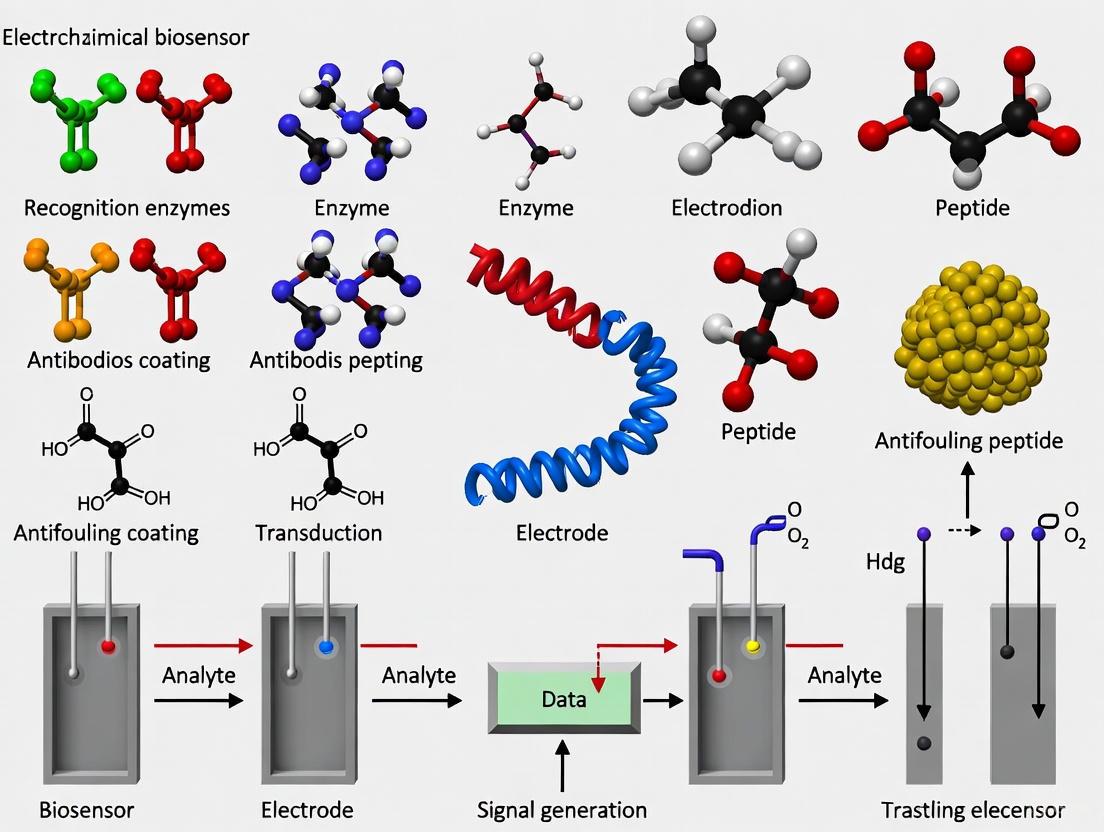
This article provides a comprehensive review of the latest advancements in electrochemical biosensors integrated with antifouling peptide coatings.
Antifouling Peptide Coatings for Electrochemical Biosensors: Enhancing Stability and Sensitivity in Complex Biofluids
Abstract
This article provides a comprehensive review of the latest advancements in electrochemical biosensors integrated with antifouling peptide coatings. Tailored for researchers, scientists, and drug development professionals, it explores the foundational principles of biofouling and the unique properties of peptides that mitigate it. The content delves into innovative fabrication methodologies, practical applications in clinical and environmental monitoring, strategies for troubleshooting common challenges like stability and sensitivity, and rigorous validation techniques. By synthesizing current research and future prospects, this resource aims to guide the development of more reliable and robust biosensing platforms for accurate detection in complex biological samples.
The Biofouling Challenge and Peptide-Based Solutions: Foundations for Reliable Sensing
Biofouling presents a fundamental challenge to the reliability and longevity of electrochemical biosensors, particularly in complex biological environments. It is defined as the nonspecific, spontaneous accumulation of macromolecules (such as proteins, lipids, and carbohydrates) or microorganisms at the liquid-solid interface of a sensor [1] [2]. This accumulation can physically block the diffusion of target analytes to the sensor's sensing area, significantly degrading its analytical characteristics by reducing sensitivity, increasing background noise, and diminishing reproducibility [1]. In implantable biosensors, the adsorbed proteins can further trigger a foreign body response (FBR), leading to fibrous encapsulation that blocks analyte access and ultimately causes sensor failure [2]. For biosensors detecting low analyte concentrations, even minor degradation of the sensing area can be disastrous, as increased background noise can completely overwhelm the already weak target signal [1].
The core challenge is that most biological samples represent a complex mixture of potentially fouling agents. When electrochemical biosensors are exposed to these environments—such as undiluted serum, plasma, or whole blood—contaminants quickly create an impermeable layer on the electrode surface [1] [3]. This problem is especially acute for implantable biosensors designed for continuous monitoring, where the goal is to maintain functionality for extended periods exceeding 30 days [2]. The initial fouling process begins rapidly, with the most significant signal deterioration often occurring within the first few hours of exposure to a complex biological medium [1].
Experimental Evaluation of Antifouling Strategies
Quantitative Comparison of Antifouling Coatings
Research has systematically evaluated numerous antifouling layers with different mechanisms of action for electrochemical sensor protection. These include porous materials, permselective membranes, hydrogels, silicate sol-gels, proteins, and sp³ hybridized carbon materials [1]. When tested for their ability to preserve the electrochemical properties of a redox mediator during prolonged incubation in cell culture medium, these coatings demonstrated markedly different protective dynamics and long-term efficacy, as quantified in the table below.
Table 1: Performance Characteristics of Select Antifouling Coatings for Electrochemical Sensors
| Coating Material | Protective Mechanism | Initial Performance (3 hours) | Long-term Performance (6 weeks) | Key Advantages |
|---|---|---|---|---|
| Silicate Sol-Gel | Porous barrier | Signal intensity reduced by approximately 50% | Signal still detectable | Exceptional long-term stability, thermal and mechanical stability [1] |
| Poly-L-lactic Acid (PLLA) | Physical barrier | Lower initial signal changes | Complete signal deterioration after 72 hours | Better initial protection [1] |
| Poly(L-lysine)-g-poly(ethylene glycol) | Hydrophilic repulsive barrier | Moderate signal preservation | Moderate long-term stability | Biocompatibility, established chemistry [1] [3] |
| Zwitterionic Polymers | Hydrated surface via electrostatic interaction | High fouling resistance | High hydrolytic stability | Oxidative resistance, hydrolytic stability [2] [3] |
| Peptide-based Coatings | Molecular antifouling properties | Exceptional antifouling against proteins | Maintains performance in complex media | Design flexibility, compatibility with biorecognition elements [4] |
High-Throughput Screening of Novel Materials
Innovative discovery approaches have employed combinatorial libraries to identify superior antifouling materials. One study created a library of 172 polyacrylamide-based copolymer hydrogels assembled from 11 distinct acrylamide-based monomers, screening their ability to prevent fouling from serum and platelet-rich plasma in high-throughput parallel assays [3]. Remarkably, certain non-intuitive copolymer compositions exhibited superior anti-biofouling properties over current "gold standard" materials like poly(ethylene glycol) and zwitterionic polymers. Machine learning techniques were employed to identify key molecular features underpinning their performance, enabling the discovery of optimized materials that preserved electrochemical biosensor function better than conventional coatings in both in vitro and in vivo rodent models [3].
Detailed Experimental Protocols
Protocol 1: Fabrication and Testing of Antifouling Peptide-Based Biosensors
This protocol outlines the procedure for constructing an electrochemical biosensor with enhanced antifouling capability for nucleic acid detection in complex biological media, based on the work of Song et al. [4].
Materials
- Electrode Materials: Glassy carbon electrodes (eDAQ) or pencil lead electrodes (Pentel Ain Stein 2B 0.2)
- Biorecognition Element: Biotin-labeled probes specific to target gene (e.g., COVID-19 N-gene)
- Antifouling Coating: Inverted Y-shaped peptides with two anchoring branches
- Conductive Polymer: Aniline monomer for electropolymerization
- Affinity System: Streptavidin-biotin system
- Chemical Reagents: Syringaldazine (99%, Sigma-Aldrich), ethanol (99.8%, POCH), phosphate buffer solutions of varying pH
Equipment
- Potentiostat (PalmSens 4)
- Three-electrode electrochemical cell
- Ag/AgCl (3 M KCl) reference electrode
- Platinum wire auxiliary electrode (1 mm diameter)
- Glass capillaries (1.6 mm diameter)
- Sandpaper and alumina slurry for polishing
Procedure
Step 1: Electrode Preparation and Polishing
- For pencil lead electrodes: Position pencil lead in a 1.6 mm diameter glass capillary and fix using a Bunsen burner. Insert a copper wire at the other end and secure with conductive silver glue, then reinforce with hot glue to form a stable electrode connection [1].
- Polish electrodes first on sandpaper, then on copy paper.
- Perform initial screening by running a cyclic voltammogram in a redox probe solution. Select electrodes showing similar current ranges indicating proper enclosure.
- Further polish selected electrodes using an alumina slurry to achieve a uniform surface.
Step 2: Formation of Polyaniline Nanowires
- Using electropolymerization, deposit polyaniline (PANI) nanowires onto the electrode surface to enhance conductivity and provide a nanostructured substrate for subsequent modifications [4].
Step 3: Application of Antifouling Peptide Layer
- Immobilize the designed inverted Y-shaped peptides onto the PANI nanowire-modified electrode. These peptides feature excellent antifouling properties and two anchoring branches for stable attachment [4].
- Validate the antifouling performance of the peptide layer against proteins and complex biological media using appropriate characterization techniques.
Step 4: Immobilization of Biorecognition Elements
- Utilize the biotin-streptavidin affinity system to immobilize biotin-labeled probes specific to the target gene (e.g., COVID-19 N-gene) onto the peptide-coated PANI nanowires [4].
- This forms a highly sensitive and antifouling electrochemical sensing interface for specific nucleic acid detection.
Step 5: Electrochemical Characterization and Testing
- Perform electrochemical measurements using a three-electrode system with the modified electrode as working electrode, Ag/AgCl reference electrode, and platinum wire auxiliary electrode.
- Use cyclic voltammetry (CV) measurements in the potential range from -0.2 to +0.8 V with 100 mV/s scan rate and 10 mV potential step.
- Employ differential pulse voltammetry (DPV) in the potential range from -0.5 to +0.5 V with 25 mV/s scan rate, 10 mV potential step, 0.2 V potential pulse, and 0.02 ms pulse time for enhanced sensitivity.
- Test sensor performance in complex biological media including undiluted serum and plasma to validate antifouling capability.
Expected Outcomes
The constructed genosensor should demonstrate a wide linear range (10⁻¹⁴ to 10⁻⁹ M) with an exceptionally low detection limit (3.5 fM) for the target nucleic acid, while maintaining performance in complex biological media due to the extraordinary antifouling properties of the designed peptides [4].
Protocol 2: High-Throughput Screening of Anti-biofouling Hydrogel Coatings
This protocol describes a high-throughput method for screening combinatorial polyacrylamide hydrogels for preventing biofouling on biosensor surfaces, based on the methodology described in [3].
Materials
- Monomer Library: 11 commercially-available acrylamide-derived monomers
- Photoinitiator: Lithium phenyl-2,4,6-trimethylbenzoylphosphinate (LAP)
- Light Source: LED (λ = 350 nm) for photopolymerization
- Biological Testing Media: Serum, platelet-rich plasma, whole blood
- Reference Materials: Poly(ethylene glycol) and zwitterionic polymer controls
Equipment
- High-throughput synthesis platform
- Oscillatory shear rheometer
- Platelet counting equipment
- Fluorescence microscopy for visualization
- Computational resources for machine learning analysis
Procedure
Step 1: Design and Fabrication of Hydrogel Library
- Prepare a combinatorial library of polyacrylamide copolymer hydrogels comprising unique binary mixtures (100:0, 75:25, 50:50, 25:75) of the 11 selected monomers formulated at 20 wt% monomer concentration [3].
- Use photopolymerization of prepolymer solutions with LAP as a radical photoinitiator and a 350 nm LED light source.
- Exclude formulations that turn opaque due to insolubility of polymer chains in aqueous media.
- Verify similar mechanical properties across hydrogel library members using oscillatory shear rheology.
Step 2: High-Throughput Biofouling Assay
- Subject hydrogel materials to severe fouling conditions using high concentrations of serum proteins and platelet-rich plasma over prolonged timeframes (exceeding typical 10-25 minute assays) [3].
- Use platelet counting as a straightforward and realistic metric for anti-biofouling performance.
- Compare results against gold standard materials (PEG and zwitterionic polymers).
Step 3: Data Analysis and Machine Learning
- Employ machine learning techniques to identify key molecular features of the copolymer hydrogels that correlate with anti-biofouling performance.
- Identify non-intuitive copolymer compositions that exhibit superior properties compared to gold standard materials.
Step 4: Validation on Electrochemical Biosensors
- Coat surfaces of electrochemical biosensors with top-performing hydrogel formulations.
- Evaluate anti-biofouling performance in vitro and in vivo using rodent models.
- Assess the ability of coated sensors to maintain function for continuous measurement of small-molecule drugs in vivo compared to gold standard coatings.
Expected Outcomes
This high-throughput screening approach should identify novel polyacrylamide-based copolymer hydrogels that prevent protein and platelet adhesion in conditions where gold-standard polymers exhibit significant fouling. The top-performing materials should extend functional lifetime of electrochemical biosensors in vivo better than current coating technologies [3].
Signaling Pathways and Protective Mechanisms
The protective mechanisms of antifouling coatings can be categorized into passive barrier strategies and active repellent strategies, each with distinct molecular pathways for preventing biofouling as illustrated in the following diagram:
Diagram 1: Molecular Mechanisms of Antifouling Coatings in Biosensors
Research Reagent Solutions
Table 2: Essential Research Reagents for Antifouling Biosensor Development
| Reagent Category | Specific Examples | Function in Antifouling Research |
|---|---|---|
| Polymer Coating Materials | Poly(ethylene glycol) derivatives, Zwitterionic polymers, Polyacrylamide-based copolymers, Silicate sol-gels | Form passive barrier layers that prevent fouling agent contact with sensor surface [1] [2] [3] |
| Biomimetic Peptides | Inverted Y-shaped peptides with anchoring branches | Provide molecular-level antifouling properties with specific attachment points [4] |
| Conductive Polymers | Polyaniline nanowires, Poly-L-lactic acid, Nafion | Enhance conductivity while contributing to fouling resistance [1] [4] |
| Crosslinking Agents | Lithium phenyl-2,4,6-trimethylbenzoylphosphinate | Enable photopolymerization of hydrogel coatings on sensor surfaces [3] |
| Characterization Probes | Syringaldazine, Ruthenium II/III hexaammine | Serve as redox mediators to evaluate protective effects of antifouling layers [1] |
| Biological Testing Media | Serum, Platelet-rich plasma, Cell culture media | Provide complex biological environments for realistic antifouling testing [1] [3] |
Biofouling remains a critical barrier to the widespread implementation of electrochemical biosensors in clinical and research applications, particularly for long-term continuous monitoring. The development of effective antifouling strategies requires a multifaceted approach combining material science, surface engineering, and thorough biological validation. The experimental protocols and materials detailed in this application note provide researchers with robust methodologies for evaluating and implementing antifouling coatings, with particular relevance to the development of electrochemical biosensors with antifouling peptide coatings. As research in this field advances, the integration of high-throughput screening approaches with machine learning analysis promises to accelerate the discovery of novel materials that can extend functional sensor lifetimes in complex biological environments, ultimately enabling more reliable continuous monitoring for therapeutic drug monitoring, disease management, and fundamental biomedical research.
The application of electrochemical biosensors for the direct analysis of targets in complex biological matrices—such as serum, sweat, and milk—is severely hampered by biofouling. This process involves the nonspecific adsorption of proteins, lipids, carbohydrates, and entire cells onto the sensor surface, which passivates the electrode, degrades its electron transfer kinetics, and ultimately leads to a significant loss of detection sensitivity, accuracy, and operational lifespan [5] [6] [7]. Overcoming this challenge is a critical hurdle in the development of reliable point-of-care diagnostics and implantable monitoring devices. Among the various strategies explored, antifouling peptides have emerged as a uniquely promising solution. Their appeal lies in an unparalleled combination of superior biocompatibility, highly specific molecular recognition, and exceptional design flexibility, allowing researchers to engineer multifunctional surfaces that actively repel foulants while simultaneously fulfilling sensing, anchoring, and antibacterial roles [5] [6]. This Application Note, framed within a broader thesis on advancing electrochemical biosensors, details the key design principles, quantitative performance metrics, and detailed experimental protocols for leveraging peptides as ideal antifouling agents.
Design Strategies and Molecular Engineering of Antifouling Peptides
The design of effective antifouling peptides extends beyond simple hydrophilicity. It involves a rational, multi-parameter approach to create molecules that can self-assemble into a robust, hydrated barrier on sensor surfaces.
Zwitterionic Principle and Charge Balance: The most effective antifouling peptides are zwitterionic, meaning they contain a balanced mixture of positively and negatively charged amino acids. This charge balance is crucial for achieving overall electrical neutrality, which minimizes electrostatic interactions with charged biomolecules in biofluids. For instance, a U-shaped four-in-one peptide was designed with an overall zeta potential of -0.84 mV, indicating a near-neutral surface charge that effectively mitigates fouling [5]. The spatial arrangement of these charges also matters; adjusting the distance between adjacent amino and carboxyl groups can enhance superhydrophilicity and structural rigidity, leading to superior antifouling performance [8].
Modular and Multifunctional Design: A significant advantage of peptides is their capacity for modular design, where distinct functional domains are integrated into a single sequence. A "four-in-one" peptide (Ac-FLKLLKKLL-DOPA3-PPPPEEKDQDKEKaa) exemplifies this, combining:
- Anchoring Domain (DOPA3): The 3,4-dihydroxyphenylalanine (DOPA) residues provide strong adhesion to electrode surfaces through catechol-mediated binding [5].
- Antifouling Domain (PPPPEEKDQDKEK): A sequence rich in proline (P), glutamic acid (E), and lysine (K) that forms a hydrophilic, zwitterionic brush, creating a steric and hydrative barrier [5].
- Antibacterial Domain (FLKLLKKLL): A sequence with broad-spectrum antibacterial activity that disrupts negatively charged bacterial membranes [5].
- Recognition Domain (Kaa): A D-amino acid sequence derived from the bacterial cell wall that specifically binds to the target analyte, vancomycin [5]. This modularity simplifies sensor construction and enhances functionality.
Enhanced Stability via D-Amino Acids and Unnatural Backbones: To combat degradation by proteases present in real-world samples, peptides can be engineered using D-amino acids, which are the mirror-image isomers of natural L-amino acids. These are not readily recognized or cleaved by natural proteases, conferring robust stability. For example, a multifunctional branched peptide (MBP) constructed exclusively from D-amino acids maintained its performance in clinical serum samples over weeks [6]. Alternatively, incorporating unnatural amino acids like sarcosine (N-methylglycine) into the peptide backbone can significantly enhance stability against hydrolysis while maintaining strong antifouling capability [9].
Structural Configuration for Steric Hindrance: The three-dimensional structure of the surface-bound peptide layer is critical. A U-shaped peptide configuration enhances spatial hindrance at the modified surface, generating potent repulsive forces that more effectively prevent large foulants like proteins and bacteria from reaching the electrode surface [5].
Table 1: Engineered Antifouling Peptides and Their Key Characteristics
| Peptide Name / Type | Sequence / Composition (Simplified) | Key Functional Domains | Unique Design Feature |
|---|---|---|---|
| U-shaped Four-in-One Peptide [5] | Ac-FLKLLKKLL-DOPA3-PPPPEEKDQDKEKaa | Anchoring (DOPA3), Antibacterial (FLKLLKKLL), Antifouling (PPPPEE...), Recognition (Kaa) | U-shape enhances steric hindrance; integrates four functions. |
| Multifunctional Branched Peptide (MBP) [6] | cpppp(ek)4(hgg)refvffly | Antifouling backbone (cppppekekekek), Antibacterial branch (hgg+Cu²⁺), Recognition branch (refvffly) | Y-shaped architecture; uses ATCUN motif for antibacterial activity. |
| Sarcosine Branch-Chain Peptide (SBCP) [9] | CPPPPEK(Sar)EK(Sar)EK(Sar)EK(Sar)HLTVSPWY | Anchoring (CPPPP), Antifouling (EK(Sar)...), Recognition (HLTVSPWY) | Sarcosine branches resist protease hydrolysis. |
| Zwitterionic Peptide (CP(DDap)) [8] | CPPPP(D-Dap)(D-Dap)(D-Dap)(D-Dap) | Anchoring (CPPPP), Antifouling (D-Dap repeats) | Adjusted carboxyl-amino spacing for superhydrophilicity. |
Quantitative Performance of Peptide-Based Sensors
The efficacy of these engineered peptides is demonstrated through rigorous electrochemical testing, yielding quantitative data on sensitivity and antifouling performance.
Table 2: Analytical Performance of Selected Peptide-Based Electrochemical Biosensors
| Target Analyte | Sample Matrix | Peptide Interface | Linear Range | Limit of Detection (LOD) | Antifouling Performance |
|---|---|---|---|---|---|
| Vancomycin [5] | Fresh goat milk | U-shaped four-in-one peptide on PEDOT | 0.05–10 μg mL⁻¹ | 2.06 ng mL⁻¹ | Signal inhibition ≤ 0.51% in single-protein solution. |
| HER2 [6] | Human serum | Multifunctional Branched Peptide (MBP) on AuNPs/PEDOT | Not specified | 0.14 pg mL⁻¹ | Accurate detection in complex biofluids; agreement with ELISA. |
| HER2 [9] | Human serum | Sarcosine branch-chain peptide (SBCP) on AuNPs/PEDOT | 1.0 pg mL⁻¹–1.0 μg mL⁻¹ | 0.37 pg mL⁻¹ | Antifouling ability in human serum; agreement with ELISA. |
| Cortisol [8] | Human serum | Zwitterionic Peptide CP(DDap) | Not specified | 3.5 pg mL⁻¹ | Superior antifouling in real serum over 3 weeks. |
| Cortisol [10] | Human sweat | Antifouling peptides on PANI hydrogel | 10⁻¹⁰ to 10⁻⁶ g/mL | 33 pg/mL | Prevents nonspecific adsorption in complex sweat. |
The data in Table 2 underscores that peptide-modified sensors achieve exceptional sensitivity with detection limits in the picogram to nanogram per milliliter range, which is crucial for detecting low-abundance biomarkers. Furthermore, their antifouling capability is proven by reliable operation in complex, unprocessed media like serum, sweat, and milk, with performance matching the gold-standard ELISA method [6] [9].
Experimental Protocols
This section provides a detailed, step-by-step workflow for constructing a robust electrochemical biosensor utilizing a multifunctional antifouling peptide, based on methodologies consolidated from recent literature [5] [6] [10].
Protocol 1: Sensor Fabrication and Peptide Modification
Objective: To fabricate a gold nanoparticle (AuNP) and conductive polymer-modified electrode and functionalize it with a designed antifouling peptide.
Materials:
- Glass Carbon Electrode (GCE) or gold electrode.
- 3,4-Ethylenedioxythiophene (EDOT) monomer and poly(sodium-p-styrenesulfonate) (PSS) for PEDOT electrodeposition.
- Chloroauric acid (HAuCl₄) for AuNP electrodeposition.
- Synthesized Antifouling Peptide (e.g., D-MBP or U-shaped four-in-one peptide), purified and lyophilized.
- Phosphate Buffered Saline (PBS, 0.1 M, pH 7.4).
- Potassium ferricyanide/ferrocyanide ([Fe(CN)₆]³⁻/⁴⁻) solution for electrochemical characterization.
Procedure:
- Electrode Pretreatment: Polish the GCE sequentially with 1.0, 0.3, and 0.05 μm alumina slurry on a microcloth. Ruminate thoroughly with deionized water and dry under nitrogen stream.
- PEDOT Electrodeposition: Prepare an aqueous solution containing 0.01 M EDOT and 0.1 M PSS. Perform cyclic voltammetry (CV) on the GCE in this solution, typically between -0.8 V and 1.0 V (vs. Ag/AgCl) for 5-10 cycles, to form a conductive PEDOT:PSS film. Rinse the modified electrode (now GCE/PEDOT) with water.
- AuNP Electrodeposition: Immerse the GCE/PEDOT in a 0.5 mM HAuCl₄ solution (in 0.1 M KNO₃). Perform amperometric i-t curve analysis at a constant potential of -0.2 V for 60-120 s to electrodeposit AuNPs, forming GCE/PEDOT/AuNPs. Rinse thoroughly.
- Peptide Immobilization (Freeze-Assisted Method): a. Prepare a peptide solution (e.g., 100 μM) in PBS. b. Deposit a droplet (e.g., 10 μL) of the peptide solution onto the GCE/PEDOT/AuNPs surface. c. Immediately place the electrode in a freezer (e.g., -20 °C) for a set time (e.g., 3 hours). This freeze-assisted conjugation enhances the density and orderliness of the peptide self-assembly on the AuNP surface [6]. d. Thaw and rinse the electrode (now GCE/PEDOT/AuNPs/Peptide) gently with PBS to remove physically adsorbed peptides.
- Metal Ion Incubation (For ATCUN-motif peptides): If the peptide contains an ATCUN motif (e.g., HGG sequence), incubate the modified electrode in a Cu²⁺ or Ni²⁺ solution (e.g., 50 μM) for 30 minutes to form the metal-peptide complex, which confers antibacterial properties [6]. Rinse with PBS.
- Electrochemical Characterization: Use CV and Electrochemical Impedance Spectroscopy (EIS) in a 5 mM [Fe(CN)₆]³⁻/⁴⁻ solution to monitor the successful modification of the electrode after each step. A well-assembled peptide layer should show a slight increase in electron transfer resistance due to its insulating nature.
Protocol 2: Antifouling and Antibacterial Efficacy Assessment
Objective: To quantitatively and qualitatively evaluate the resistance of the peptide-modified sensor to biofouling and bacterial adhesion.
Materials:
- Fouling Solutions: 0.1 mg mL⁻¹ Bovine Serum Albumin (BSA), 10% (v/v) human serum, undiluted sweat, or milk.
- Bacterial Strain: E. coli or S. aureus in Luria-Bertani (LB) broth.
- Live/Dead BacLight Bacterial Viability Kit or similar.
- Fluorescence Microscope.
Procedure:
- Protein Fouling Test:
a. Incubate the peptide-modified sensor and a bare control sensor in a concentrated protein solution (e.g., BSA) or complex fluid (e.g., 10% serum) for 30-60 minutes at 37°C.
b. Rinse gently with PBS.
c. Measure the electrochemical signal (e.g., via EIS or CV) before and after incubation.
d. Calculate the Signal Inhibition Rate:
Signal Inhibition Rate (%) = [(Rₑₜ,ₐfₜₑᵣ − Rₑₜ,բₑfₒᵣₑ) / Rₑₜ,բₑfₒᵣₑ] × 100%, where Rₑₜ is the charge transfer resistance. A low rate (e.g., <1-2%) indicates excellent antifouling performance [5]. - Antibacterial Assay (Plate Counting): a. Incubate the sensors in a bacterial suspension (e.g., ~10⁶ CFU mL⁻¹) for a set period (e.g., 2-4 hours). b. Remove the sensors and rinse gently to remove non-adherent bacteria. c. Place the sensors in sterile PBS and sonicate to detach the adhered bacteria. d. Plate the resulting bacterial suspension on LB agar plates and incubate overnight at 37°C. e. Count the number of bacterial colonies (CFU) formed. A significant reduction in CFU on the peptide-modified sensor compared to a control demonstrates potent antibacterial activity [6].
- Antibacterial Assay (Fluorescence Imaging): a. After incubating with bacteria and rinsing, stain the sensor surface with a Live/Dead staining solution. b. Observe under a fluorescence microscope. A surface with few red (dead) or green (live) bacteria indicates effective resistance to bacterial adhesion and killing activity [6].
The Scientist's Toolkit: Essential Research Reagents and Materials
Table 3: Key Reagent Solutions for Antifouling Peptide Sensor Development
| Reagent / Material | Function / Application | Specific Example |
|---|---|---|
| D-Amino Acid Peptides | Engineered peptide sequences with enhanced stability against proteolytic degradation in biological fluids. | D-Multifunctional Branched Peptide (D-MBP) [6]. |
| Conductive Polymers (PEDOT) | Enhances electrochemical sensitivity and provides a substrate for further modification. | PEDOT doped with PSS [5] [6]. |
| Gold Nanoparticles (AuNPs) | Provide a high-surface-area platform for dense peptide immobilization via thiol-gold chemistry. | Electrodeposited AuNPs [6] [9]. |
| ATCUN Motif Peptides | Provides antibacterial functionality through coordination with Cu²⁺ or Ni²⁺ ions, generating reactive oxygen species. | Peptide sequence with 'HGG' at the N-terminus [6]. |
| Sarcosine-Modified Peptides | Increases peptide stability against hydrolysis and enhances antifouling via altered hydrophilicity and sterics. | SBCP with sarcosine branches [9]. |
| Zwitterionic Peptide Libraries | Provides a toolkit of highly hydrophilic, charge-balanced sequences for optimizing antifouling performance. | Peptides with adjusted carboxyl-amino spacing (e.g., CP(DDap)) [8]. |
Workflow and Signaling Visualization
The following diagram illustrates the integrated workflow for constructing and validating a multifunctional antifouling peptide-based electrochemical biosensor, incorporating key design and validation steps.
The molecular architecture of a multifunctional peptide and its role in sensor interface is complex. The next diagram deconstructs a representative "four-in-one" peptide to show how its modular domains contribute to sensor function.
In the field of electrochemical biosensors, the non-specific adsorption of biomolecules such as proteins, cells, and other interferents from complex biological samples (e.g., serum, saliva, urine) onto sensing interfaces presents a significant challenge to analytical accuracy and operational stability [11] [12]. This phenomenon, known as biofouling, can obscure recognition elements, increase background noise, and generate false-positive signals, ultimately compromising the reliability of biomarker detection in clinical diagnostics and drug development [12] [13]. Peptide-based coatings have emerged as a powerful and versatile strategy to engineer antifouling surfaces. These coatings function through well-defined chemical and physical mechanisms that create a robust barrier against non-specific interactions while maintaining the specific biorecognition capabilities essential for sensitive biosensing [11] [12]. This Application Note delineates the primary mechanisms by which peptides prevent fouling and provides detailed protocols for developing and evaluating peptide-modified antifouling biosensors.
Core Mechanisms of Peptide-Mediated Antifouling
Peptides impart antifouling properties through several interconnected mechanisms, predominantly by forming a highly hydrophilic, neutrally charged barrier that is sterically hindering and thermodynamically unfavorable for the adsorption of biomolecules.
Table 1: Fundamental Antifouling Mechanisms of Peptides
| Mechanism | Chemical/Physical Basis | Effect on Biomolecules |
|---|---|---|
| Hydration Layer Formation | Peptide sequences rich in polar, hydrophilic amino acids (e.g., Serine (S), Glutamine (Q), Asparagine (N)) strongly bind water molecules via hydrogen bonding, creating a tightly held hydration layer [11]. | The adsorbed water layer creates a physical and energetic barrier, making it thermodynamically unfavorable for proteins to displace water and adsorb onto the surface. |
| Electrostatic Repulsion | Zwitterionic peptide sequences containing a balanced mix of positively (e.g., Lysine (K), Arginine (R)) and negatively charged (e.g., Aspartic acid (D), Glutamic acid (E)) residues result in a net neutral, super-hydrophilic surface [12]. | The strong hydration layer associated with zwitterionic structures effectively shields the surface from electrostatic interactions with charged regions of proteins, preventing nonspecific adsorption. |
| Steric Hindrance | Peptides, especially when designed to form dense, brush-like layers or self-assembled monolayers (SAMs), create a physical barrier [11] [14]. | The conformational freedom and dense packing of peptide chains physically prevent large biomolecules from penetrating the layer and reaching the sensor surface. |
| Reduced Hydrophobic Interactions | Peptide sequences are engineered to minimize hydrophobic amino acids (e.g., Alanine (A), Leucine (L), Phenylalanine (F)) at the interface with the solution [11] [15]. | This reduces the driving force for hydrophobic adsorption, a primary mechanism for protein fouling on untreated polymeric or metallic surfaces. |
Advanced Material Design and Enhanced Stability
Beyond fundamental antifouling principles, advanced peptide material designs are critical for application in complex biological environments. A key innovation involves combining peptides with other antifouling polymers to create synergistic effects. For instance, a composite of a specially designed functional peptide and mussel-inspired poly(norepinephrine) (PNE) has been demonstrated to offer superior antifouling capability. PNE forms a more uniform and thinner layer compared to its analog polydopamine (PDA), leading to more effective reduction of nonspecific adsorption in serum samples [12].
Another significant advancement addresses the stability of the peptide immobilization on the sensor surface. While traditional gold-sulfur (Au-S) bonds are commonly used, they possess low affinity and are prone to ligand displacement in complex biological environments by molecules like glutathione. A novel approach utilizes a trifunctional branched-cyclopeptide (TBCP) immobilized on platinum nanoparticles (PtNP) via Pt-S interactions. Research confirms that Pt-S bonds are significantly more stable than Au-S bonds, with biosensors constructed this way showing less than 10% signal degradation over an 8-week period. This robust immobilization is crucial for the long-term stability and reliability of biosensors operating in biological fluids [13].
Experimental Protocols
Protocol: Fabrication of a Peptide/Poly(Norepinephrine)-Based Antifouling Biosensor
This protocol outlines the construction of an electrochemical biosensor for the detection of extracellular signal-regulated kinase 2 (ERK2) in human serum, leveraging the synergistic antifouling properties of a functional peptide and PNE [12].
Workflow Overview:
(Sensor Fabrication Workflow)
Materials & Reagents:
- Working Electrode: Glassy Carbon Electrode (GCE)
- Conducting Polymer: 3,4-ethylenedioxythiophene (EDOT) and poly(sodium 4-styrenesulfonate) (PSS)
- Antifouling Polymer: Norepinephrine hydrochloride
- Nanoparticles: Chloroauric acid (HAuCl₄) for AuNP synthesis
- Functional Peptide: Sequence: CPPPPKSESKSESDWKGRKPRDLEL
- C: Cysteine for thiol-based anchoring to AuNPs.
- PPPPP: Rigid proline-rich spacer.
- KSESKSES: Antifouling sequence.
- WKGRKPRDLEL: ERK2-specific recognition sequence.
Procedure:
- PEDOT Electrodeposition: Clean and polish the GCE. Perform electrochemical deposition of PEDOT:PSS from an aqueous solution containing EDOT and PSS. Parameters: Cyclic voltammetry (CV) from 0 to 1.0 V (vs. Ag/AgCl) for 10 cycles. This enhances conductivity and provides a foundation for subsequent layers [12].
- PNE Coating: Immerse the PEDOT/GCE in a Tris-HCl buffer (pH 8.5) containing 2 mg/mL norepinephrine. Incubate for 4-6 hours at room temperature under gentle shaking to allow for the self-polymerization of PNE and formation of a uniform, adhesive coating [12].
- AuNPs Deposition: Electrodeposit AuNPs onto the PNE-modified electrode by cycling the potential in a deoxygenated solution of HAuCl₄ (e.g., 0.5 mM in 0.1 M KNO₃). This provides a high-surface-area platform for subsequent peptide anchoring [12].
- Peptide Immobilization: Incubate the modified electrode overnight at 4°C in a solution of the functional peptide (e.g., 1.0 µM in PBS, pH 7.4). The cysteine residue spontaneously forms a stable Au-S bond with the AuNPs, presenting the antifouling and recognition sequences towards the solution [12].
Protocol: Evaluating Antifouling Performance
Objective: To quantify the resistance of the modified biosensor to non-specific adsorption in complex media.
Procedure:
- Sample Exposure: Incubate the fabricated biosensor in undiluted human serum for a predetermined period (e.g., 30-60 minutes).
- Electrochemical Measurement: Use Differential Pulse Voltammetry (DPV) or Electrochemical Impedance Spectroscopy (EIS) with a redox probe (e.g., [Fe(CN)₆]³⁻/⁴⁻) to measure the signal before and after serum exposure.
- Data Analysis: Calculate the signal retention rate. A high-performance antifouling surface will show a signal retention rate above 90% even after prolonged exposure, indicating minimal fouling [12] [13].
Table 2: Key Performance Metrics from Cited Studies
| Sensor Design | Target Analyte | Linear Detection Range | Limit of Detection (LOD) | Antifouling Performance (Signal Retention) | Application Medium |
|---|---|---|---|---|---|
| Peptide/PNE-based [12] | ERK2 | 10.0 pg·mL⁻¹ - 10.0 µg·mL⁻¹ | 3.97 pg·mL⁻¹ | >90% after 26 days in serum | Human Serum |
| TBCP/PtNP-based [13] | ErbB2 | Not Specified | Not Specified | <10% signal degradation over 8 weeks | Undiluted Human Serum |
The Scientist's Toolkit: Research Reagent Solutions
Table 3: Essential Reagents for Antifouling Peptide Biosensor Development
| Reagent / Material | Function / Role | Example & Notes |
|---|---|---|
| Functional Peptides | Serves as the dual-purpose biorecognition and antifouling element. | CPPPPPKSESKSESDWKGRKPRDLEL [12]: Contains anchoring (C), antifouling (KSESKSES), and recognition (WKGRKPRDLEL) domains. |
| Zwitterionic Peptides | Creates a strong hydration layer via balanced positive and negative charges. | Sequences with alternating charged residues (e.g., EKEKEK or CPPPPPKSESKSES) are highly effective [12]. |
| Mussel-Inspired Polymers | Provides a universal, hydrophilic adhesive layer for surface priming. | Poly(norepinephrine) (PNE) or Polydopamine (PDA). PNE is preferred for its slower polymerization kinetics, leading to smoother, more uniform films [12]. |
| Conducting Polymers | Enhances electron transfer and provides a scaffold for modification. | PEDOT:PSS is electrodeposited to form a conductive layer on the electrode surface [12]. |
| Metal Nanoparticles | Increases surface area for biomolecule immobilization and facilitates electron transfer. | Gold Nanoparticles (AuNPs) for thiol-based peptide anchoring; Platinum Nanoparticles (PtNPs) for more stable Pt-S bonding [13]. |
Peptides represent a versatile and powerful tool for combating biofouling in electrochemical biosensors. Their efficacy stems from a combination of molecular mechanisms, including the formation of a robust hydration layer, electrostatic neutrality, and steric hindrance. By strategically designing peptide sequences and combining them with advanced materials like PNE and PtNPs, researchers can create highly stable and sensitive biosensing interfaces capable of reliable operation in complex biological fluids such as serum. The protocols and data summarized herein provide a foundational roadmap for the development and rigorous evaluation of next-generation peptide-based antifouling biosensors for clinical and pharmaceutical applications.
Electrochemical biosensors represent a powerful class of analytical tools for clinical diagnostics, environmental monitoring, and drug development due to their high sensitivity, cost-effectiveness, and potential for miniaturization [16] [17]. However, their application to complex biological samples such as blood, serum, or milk is significantly hampered by biofouling—the nonspecific adsorption of proteins, cells, and other biomolecules onto the sensor surface [16] [18]. This fouling insulates the electrode, degrades signal stability, and leads to inaccurate readings, false positives, or false negatives, ultimately limiting the reliability and longevity of biosensors in real-world applications [18].
Innovative solutions are imperative to overcome this fundamental challenge. Among the various antifouling strategies, peptides have emerged as exceptionally versatile biomaterials [11] [17]. While traditionally explored for their antifouling properties, specific peptide sequences can be engineered to perform a dual function: they form a highly effective antifouling layer that resists nonspecific adsorption while simultaneously acting as a biorecognition element for specific target analytes [16] [19]. This dual capability simplifies biosensor design, enhances stability by avoiding the need for multiple surface coatings, and improves the reliability of detection in complex media. This Application Note details the underlying principles, provides validated protocols, and presents key performance data for leveraging multifunctional peptides in advanced electrochemical biosensing platforms.
Scientific Foundations: The Multifunctionality of Peptides
Mechanisms of Antifouling and Recognition
The dual functionality of peptides stems from the intelligent design of their amino acid sequences, which dictates their physicochemical interactions with both the sensor surface and the sample matrix.
- Antifouling Mechanisms: Effective antifouling peptides typically incorporate hydrophilic, electrically neutral, and hydrogen-bonding amino acids such as glutamine (Q), asparagine (N), serine (S), and glutamic acid (E) [16] [11]. Sequences like
KNQEKNQEDcreate a hydrated barrier through strong hydrogen bonding with water molecules, forming a physical and energetic shield that reduces the hydrophobic interactions and charge attractions that drive the nonspecific adsorption of biomolecules [16] [18]. - Recognition Mechanisms: The biorecognition function is engineered into a distinct segment of the peptide sequence. This segment is designed to mimic the epitope of a target protein or to possess a structure with high affinity for a specific analyte. For instance, the sequence
HWRGWVAexhibits high specificity for the Fc region of human immunoglobulin G (IgG), allowing it to function as a synthetic capture probe in immunosensors [16] [19].
Synergy in Dual-Function Design
In a conjugate structure, these two functionalities are combined. A well-designed dual-function peptide may feature:
- A C-terminal antifouling domain (e.g.,
KNQEKNQE). - A N-terminal recognition domain (e.g.,
DHWRGWVA). The two domains are linked, often via a flexible spacer, ensuring that the recognition moiety is accessible for target binding while the antifouling moiety effectively passivates the underlying surface and the peptide backbone [16].
Application Note: IgG Detection in Human Serum
Principle
This application describes the use of a designed DNA-Peptide (DP) conjugate for the electrochemical detection of human immunoglobulin G (IgG) in undiluted human serum. The strategy leverages the enhanced antifouling properties of the conjugate and its specific binding to the target protein [16].
Protocol
Materials and Reagents
Table 1: Key Research Reagent Solutions
| Reagent / Material | Function / Explanation |
|---|---|
Antifouling Peptide (e.g., N3-KNQEKNQEDHWRGWVA) |
Provides the dual function: HWRGWVA for IgG recognition and KNQEKNQED for antifouling. The azide (N3) group enables "click" conjugation [16]. |
Anchoring DNA (e.g., DBCO-polyA₇-polyT₅) |
Serves as a stable anchor to the gold surface via polyA and provides additional antifouling. Dibenzocyclooctyne (DBCO) allows for copper-free click chemistry with the azide-functionalized peptide [16]. |
| Gold Nanoparticles (AuNPs) & PEDOT | The electrode is modified with a PEDOT/AuNPs nanocomposite to enhance conductivity, specific surface area, and biomolecule loading capacity [16]. |
| Dopamine Hydrochloride | In alternative immobilization strategies, dopamine can form an adhesive polydopamine (PDA) layer on various substrates, facilitating the subsequent immobilization of peptides [20]. |
Potassium Ferri/Ferrocyanide ([Fe(CN)₆]³⁻/⁴⁻) |
A common redox probe used in solution to monitor the electron transfer efficiency at the electrode interface, which changes upon surface modification and target binding [19]. |
Biosensor Fabrication and Assay Workflow
The following diagram illustrates the key steps involved in fabricating the biosensor and performing the detection assay.
Step 1: Electrode Modification. Electrodeposit the conductive polymer poly(3,4-ethylenedioxythiophene) (PEDOT) onto a clean glassy carbon or gold electrode. Subsequently, electrodeposit a layer of gold nanoparticles (AuNPs) onto the PEDOT film [16].
Step 2: DP Conjugate Immobilization. Incubate the PEDOT/AuNP-modified electrode with the DBCO-functionalized anchoring DNA (e.g., DBCO-polyA₇-polyT₅) for a defined period (e.g., 1-2 hours). The polyadenine (polyA) segment spontaneously and stably adsorbs onto the AuNP surface. Afterwards, incubate the electrode with the azide-functionalized antifouling-recognition peptide to form the final DP conjugate via a DBCO-azide cycloaddition reaction [16].
Step 3: Target Detection. Incubate the functionalized biosensor with the sample solution (e.g., undiluted human serum) containing the target IgG. After a suitable incubation time (e.g., 30-60 minutes), gently rinse the electrode with buffer to remove unbound molecules. Perform electrochemical measurements, such as Differential Pulse Voltammetry (DPV) or Cyclic Voltammetry (CV), in a solution containing the [Fe(CN)₆]³⁻/⁴⁻ redox probe. The binding of the target protein hinders electron transfer to the electrode surface, resulting in a measurable decrease in the redox current, which is proportional to the analyte concentration [16] [19].
Performance Data
The table below summarizes the typical analytical performance achieved with this and similar peptide-based biosensing strategies.
Table 2: Performance Metrics of Peptide-Based Electrochemical Biosensors
| Target Analytic | Sample Matrix | Linear Range | Limit of Detection (LOD) | Antifouling Strategy | Reference |
|---|---|---|---|---|---|
| Human IgG | Undiluted Human Serum | 0.1 ng·mL⁻¹ - 10 μg·mL⁻¹ | 0.037 ng·mL⁻¹ | DNA-Peptide Conjugate | [16] |
| Dengue Virus IgG | Human Serum | N/S | 0.43 ng·mL⁻¹ (DPV) | Peptide Epitope (DENV/18) on L-Cys/Au | [19] |
| S. epidermidis | Buffer / Model | N/S | >97% Inhibition (Colony Counting) | Cationic AMPs on AuNPs | [21] |
N/S: Not Specified in the provided search results.
Advanced Concepts and Alternative Configurations
Cationic Antimicrobial Peptides (AMPs) for Fouling Control
Beyond hydrophilic peptides, cationic Antimicrobial Peptides (AMPs) can be tethered to surfaces to impart antifouling and antibacterial properties. Their mechanism involves interacting with and disrupting the anionic phospholipid bilayers of bacterial cells, leading to cell lysis and death, thereby preventing biofilm formation [20] [21]. A key consideration is that the efficacy of tethered AMPs is highly dependent on their surface density and conformational freedom. Recent studies show that cyclic AMPs retain significantly higher activity when surface-immobilized compared to their linear counterparts, as cyclization reduces unfavorable conformational changes upon tethering and may promote cooperative interactions [21].
The Role of Peptides in Miniaturization and Point-of-Care Devices
The stability, synthetic simplicity, and functional versatility of peptides make them ideal for integration into miniaturized, point-of-care (POC) diagnostic devices. Their use aligns with the development of lab-on-a-chip systems and biosensors interfaced with smartphones for data readout [22] [17]. The robust nature of synthetic peptides, compared to labile biological receptors like antibodies, ensures a longer shelf life and operational stability, which are critical for devices deployed in resource-limited settings [17] [19].
Troubleshooting and Technical Notes
- Low Signal-to-Noise Ratio: This is often a consequence of insufficient antifouling. Ensure the peptide coating forms a dense, well-ordered layer. Characterize the modified surface using techniques like Electrochemical Impedance Spectroscopy (EIS) to confirm a reduction in nonspecific adsorption.
- Poor Binding Affinity: The recognition peptide may require optimization. Techniques like phage display are powerful for selecting high-affinity peptide ligands against specific targets from vast combinatorial libraries [11] [17].
- Inconsistent Immobilization: The choice of anchoring chemistry is critical. For gold surfaces, the Au-S bond from cysteine or the high-affinity adsorption of polyA sequences are reliable. For other materials like stainless steel or carbon, a polydopamine pre-coating can provide a universal, functional platform for peptide immobilization [16] [20].
The integration of multifunctional peptides represents a significant advancement in the design of robust electrochemical biosensors. By combining specific biorecognition with potent antifouling capabilities in a single molecular entity, these interfaces enable highly sensitive and reliable detection of biomarkers directly in complex, fouling-prone biological fluids. The protocols and data outlined in this document provide a foundation for researchers to implement and further develop these sophisticated bioanalytical tools for applications spanning clinical diagnostics, drug discovery, and environmental monitoring.
Design, Fabrication, and Real-World Applications of Peptide-Modified Biosensors
The performance of electrochemical biosensors is critically dependent on the method used to immobilize biological recognition elements onto the electrode surface. While gold-thiol (Au-S) chemistry has been the cornerstone for creating self-assembled monolayers (SAMs), the exploration of more robust interactions, such as platinum-sulfur (Pt-S) bonds, is advancing the field towards greater sensor stability and reliability. These strategies are paramount in developing the next generation of biosensors for clinical diagnostics, especially when integrated with antifouling peptide coatings to minimize nonspecific binding in complex biological matrices. This application note provides a detailed overview of these immobilization chemistries, complete with structured protocols and reagent guides to facilitate their implementation in research and development.
Electrochemical biosensors function by converting a biological recognition event into a quantifiable electrical signal. The initial and often most critical step in fabricating a robust biosensor is the effective immobilization of the biorecognition element (e.g., oligonucleotide, enzyme, or peptide) onto the conductive surface of the electrode [23]. The chosen immobilization strategy must not only anchor the probe firmly but also preserve its biological activity and ensure optimal orientation for target binding. Furthermore, in the context of a broader thesis on biosensors with antifouling coatings, the immobilization chemistry must be compatible with subsequent application of peptide-based passivation layers designed to resist non-specific adsorption of proteins and other interferents present in samples like blood or serum [23].
For years, the Au-S bond, formed between gold electrodes and thiolated molecules, has been the most extensively studied and utilized system, prized for its ability to form well-ordered SAMs [23]. However, the search for more stable and versatile interfaces has led to the investigation of other noble metals, notably platinum. Pt electrodes, while historically less common for biomolecule immobilization, offer significant advantages, including a wider working potential window in electrochemical measurements and superior resistance to oxidation [23]. The development of robust Pt-S interactions, often facilitated by isocyanide or other surface modifiers, presents a promising alternative to Au-S chemistry, particularly for applications demanding long-term stability and operation under harsh conditions.
Quantitative Comparison of Immobilization Strategies
The selection of an immobilization strategy involves trade-offs between binding strength, surface order, stability, and material compatibility. The following table summarizes key parameters for the two primary systems discussed in this note.
Table 1: Quantitative Comparison of Au-S and Pt-Based Immobilization Strategies
| Immobilization Strategy | Typical Bond Strength (kcal/mol) | Key Electrode Material | Stability Against Oxidation | Common Probe Molecules | Primary Advantages |
|---|---|---|---|---|---|
| Gold-Thiol (Au-S) | ~40-45 [23] | Gold | Moderate | Thiolated DNA, RNA, PNA | Well-established protocol, highly ordered SAMs, excellent for controlling probe density and orientation. |
| Platinum-Sulfur (Pt-S) | Information missing | Platinum | High [23] | Isocyanide-based thiols, thiolated peptides | Wider working potential window, robust electrochemical performance, high stability. |
| Physical Adsorption | N/A (Physical) | Carbon, Gold, Platinum | N/A | Unmodified oligonucleotides, peptides | Simple, no probe modification required. |
| Avidin-Biotin | ~80 (Non-covalent) | Universal (via adsorbtion) | High (Protein dependent) | Biotinylated probes | Very strong non-covalent binding, versatile for any biotinylated molecule. |
Another critical consideration is the choice of biorecognition element itself, which influences the sensor's specificity and applicability. Aptamers, for instance, are increasingly popular due to their high stability and specificity.
Table 2: Key Characteristics of Biorecognition Elements for Biosensors
| Biorecognition Element | Type | Stability | Cost | Example Targets |
|---|---|---|---|---|
| Antibodies | Protein | Moderate (can denature) | High | Proteins, Viruses, Cells |
| DNA Aptamers | Oligonucleotide | High | Moderate | Ions, Small Molecules, Proteins [24] |
| Enzymes (e.g., Glucose Oxidase) | Protein | Moderate (can denature) | Low to Moderate | Metabolites (Glucose, Lactate) [25] |
| Peptide Nucleic Acids (PNA) | Synthetic DNA Analog | Very High | High | Nucleic Acids [23] |
Experimental Protocols
Protocol 1: Immobilization via Gold-Thiol (Au-S) Chemistry
This protocol describes the formation of a self-assembled monolayer of a thiolated DNA probe on a polycrystalline gold electrode.
Materials:
- Working Electrode: Polycrystalline gold disk electrode (2 mm diameter).
- DNA Probe: Thiolated oligonucleotide (e.g., 5'-HS-(CH₂)₆-AGT-CAG-TGT-GGA-AAA-TCT-CA-3').
- Chemicals: 6-Mercapto-1-hexanol (MCH), Tris-EDTA (TE) buffer, Potassium chloride (KCl).
- Solutions:
- Probe Solution: 1 µM thiolated DNA in 10 mM Tris-HCl, 1 mM EDTA, pH 8.0 (TE buffer).
- Backfilling Solution: 1 mM MCH in absolute ethanol.
- Washing Buffer: 10 mM Tris-HCl, 50 mM KCl, pH 7.4.
Procedure:
- Electrode Pretreatment:
- Polish the gold electrode sequentially with 1.0, 0.3, and 0.05 µm alumina slurry on a microcloth.
- Rinse thoroughly with deionized water.
- Electrochemically clean by performing cyclic voltammetry (CV) in 0.5 M H₂SO₄ from -0.2 V to +1.5 V (vs. Ag/AgCl) at a scan rate of 100 mV/s until a stable CV profile is obtained.
- Rinse with copious amounts of deionized water and dry under a stream of nitrogen gas.
Probe Immobilization:
- Pipette 10 µL of the 1 µM thiolated DNA probe solution directly onto the cleaned electrode surface.
- Incubate the electrode in a humidified chamber for 60 minutes at room temperature to allow for the formation of the Au-S bond.
Surface Backfilling:
- Rinse the electrode gently with TE buffer to remove unbound DNA.
- Incubate the electrode in 1 mM MCH solution for 30 minutes. This step displaces non-specifically adsorbed DNA and fills pinholes in the monolayer, creating a well-ordered, upright probe orientation and reducing non-specific binding.
Final Preparation:
- Rinse the functionalized electrode with washing buffer (10 mM Tris-HCl, 50 mM KCl, pH 7.4).
- The sensor is now ready for hybridization assays or can be stored in washing buffer at 4°C for short-term use.
Protocol 2: Robust Immobilization on Platinum via Isocyanide-Mediated Pt-S Interactions
This protocol leverages isocyanide as an anchoring group to form a stable monolayer on platinum, followed by conjugation of thiolated peptides or other probes.
Materials:
- Working Electrode: Polycrystalline platinum disk electrode.
- Anchor Molecule: 4-Isocyanobenzoic acid.
- Conjugation Reagents: N-(3-Dimethylaminopropyl)-N'-ethylcarbodiimide (EDC), N-Hydroxysuccinimide (NHS).
- Probe Molecule: Thiolated antifouling peptide (e.g., Cys-(EG)₃-KKKE-EG-KKKE, where EGG is a short peptide sequence with antifouling properties).
- Solutions:
- Anchor Solution: 1 mM 4-isocyanobenzoic acid in anhydrous dimethylformamide (DMF).
- Activation Buffer: 0.1 M MES, pH 6.0.
- Peptide Solution: 100 µM thiolated peptide in nitrogen-degassed 1X PBS, pH 7.4.
Procedure:
- Electrode Pretreatment:
- Polish the platinum electrode as described for gold in Protocol 1.
- Perform electrochemical cleaning by CV in 0.5 M H₂SO₄, typically between -0.2 V and +1.2 V.
- Rinse and dry under nitrogen.
Isocyanide Monolayer Formation:
- Immerse the clean, dry Pt electrode in the 1 mM 4-isocyanobenzoic acid solution in DMF.
- Incubate for 12-16 hours (overnight) at room temperature under an inert atmosphere (e.g., in a sealed vial with nitrogen purge).
- Rinse thoroughly with DMF followed by absolute ethanol to remove physisorbed molecules.
Carboxylic Acid Activation:
- Prepare a fresh solution of 0.4 M EDC and 0.1 M NHS in activation buffer.
- Incubate the isocyanide-modified electrode in this activation solution for 30 minutes to convert the terminal carboxylic acids to NHS esters.
- Rinse quickly with cold, deionized water to stop the reaction.
Peptide Coupling:
- Immediately place the activated electrode in the 100 µM thiolated peptide solution.
- Incubate for 2-4 hours at 4°C. During this step, the primary amine on the peptide's lysine (K) residue reacts with the NHS ester, forming a stable amide bond while the terminal cysteine thiol remains available for potential downstream chemistry or metal coordination.
- Rinse the functionalized electrode with 1X PBS to remove unreacted peptide.
The resulting electrode surface features a robust Pt-isocyanide layer with covalently attached, oriented antifouling peptides, making it ideal for sensing in complex media.
Visualizing Experimental Workflows
The following diagrams, generated with Graphviz, illustrate the logical flow of the two key immobilization protocols.
Au-S DNA Probe Immobilization Workflow
Pt-S Peptide Interface Construction
The Scientist's Toolkit: Essential Research Reagent Solutions
Successful implementation of these protocols requires specific, high-quality reagents. The following table details the essential materials and their functions.
Table 3: Key Research Reagent Solutions for Surface Immobilization
| Reagent / Material | Function / Role | Critical Notes for Use |
|---|---|---|
| Thiolated DNA/Oligonucleotide | Biorecognition probe; thiol group forms covalent bond with Au/Pt surfaces. | Use a carbon spacer (e.g., C6) between thiol and sequence to improve binding efficiency and flexibility. |
| 4-Isocyanobenzoic Acid | Anchor molecule; isocyanide group binds Pt, carboxylic acid enables further conjugation. | Handle under inert atmosphere and use anhydrous DMF to prevent decomposition. |
| 6-Mercapto-1-hexanol (MCH) | Backfilling agent; improves probe orientation and reduces non-specific binding on Au. | Essential for creating a well-ordered, mixed monolayer on gold surfaces. |
| EDC and NHS | Crosslinking agents; activate carboxylic acids for conjugation with primary amines. | Must be used fresh; MES buffer (pH 6.0) is ideal for the activation reaction. |
| Thiolated Antifouling Peptide | Surface passivation layer; resists protein adsorption and biofouling. | Peptides with alternating charged and hydrophilic residues (e.g., EGG) are highly effective. |
| Alumina Polishing Slurry | For electrode surface preparation; creates a mirror-finish, reproducible surface. | Sequential polishing from 1.0 µm to 0.05 µm is critical for a clean, atomically flat surface. |
The performance and reliability of electrochemical biosensors are profoundly influenced by their surface architecture and coating. Advanced coating techniques enhance sensor sensitivity and selectivity and are paramount for developing robust antifouling surfaces that resist nonspecific adsorption in complex biological matrices. This document details application notes and protocols for three pivotal coating methodologies—Nozzle-Printing, Self-Assembly, and Emulsion Templating—within the context of developing advanced electrochemical biosensors incorporating antifouling peptide coatings. These techniques enable precise control over the physical and chemical properties of sensor surfaces, facilitating the creation of highly specific, stable, and fouling-resistant interfaces crucial for applications in diagnostic and drug development [26] [27] [10].
Nozzle-Printing of Conductive Bioinks
Application Notes
Nozzle-printing, encompassing techniques like inkjet and aerosol jet printing, is a non-contact, additive manufacturing method ideal for depositing functional inks onto electrode surfaces. It allows for the precise patterning of conductive bioinks and bioreceptors, enabling the fabrication of miniaturized, high-resolution, and customizable biosensor platforms. A key advantage is its ability to create complex, multi-material structures and integrate biosensing elements directly with microfluidic or electronic systems. This technique is particularly suited for rapid prototyping and scaling up production of disposable or wearable biosensors [26] [28] [29]. The formulation of the bioink is critical, as it determines the printed structure's conductivity, biocompatibility, and bio-functionality.
Experimental Protocol: Inkjet Printing of an Antifouling Peptide-Based Conductive Hydrogel
Objective: To fabricate a wearable electrochemical biosensor by inkjet printing a conductive hydrogel ink incorporating antifouling peptides onto a screen-printed electrode for the detection of cortisol in sweat [10].
Materials:
- Substrate: Screen-printed carbon or gold electrodes.
- Bioink Components: Conducting polymer (e.g., Polyaniline (PANI)), hydrophilic antifouling peptides, cross-linker, and deionized water.
- Equipment: Piezoelectric inkjet printer, sonicator.
Procedure:
- Bioink Formulation: Synthesize the conductive PANI hydrogel according to established methods. Integrate the hydrophilic antifouling peptides into the pre-polymer hydrogel solution at a concentration of 1-5 mg/mL. Ensure homogeneous dispersion by gentle stirring or brief sonication.
- Printer Setup: Load the prepared bioink into a sterile, piezoelectric inkjet cartridge. Install the cartridge into the printer and prime the nozzles.
- Substrate Preparation: Clean the screen-printed electrodes with ethanol and deionized water, then dry under a stream of nitrogen gas.
- Pattern Design and Printing: Design the desired electrode pattern (e.g., a circular working electrode coating) using the printer's software. Print the bioink onto the working electrode area using optimized waveform parameters (e.g., voltage pulse of 20-30 V, frequency of 1-5 kHz) and a stage speed of 10 mm/s.
- Post-processing: Cure the printed hydrogel layer by exposing it to UV light (365 nm) for 5-10 minutes or by allowing it to cross-link at room temperature for one hour to form a stable, antifouling film.
Troubleshooting Tips:
- Clogged Nozzles: Filter the bioink through a 0.2 µm membrane before loading and perform regular nozzle cleaning cycles.
- Poor Adhesion: Ensure the substrate surface is clean and consider applying a surface plasma treatment to increase hydrophilicity before printing.
Research Reagent Solutions
| Item | Function/Benefit |
|---|---|
| Polyaniline (PANI) Hydrogel | Provides a conductive, water-rich 3D matrix that enhances signal transduction and is compatible with biological environments [10]. |
| Hydrophilic Antifouling Peptides | Prevents nonspecific adsorption of proteins and other biomolecules from complex samples like sweat, ensuring accuracy [10]. |
| Piezoelectric Inkjet Printer | Enables non-contact, maskless deposition of picoliter-volume droplets, allowing for high-resolution and customizable patterning [26]. |
| Conductive Graphene/PLA Filament | A bespoke filament for fused deposition modeling (FDM) 3D printing, allowing for the direct fabrication of conductive electrode substrates [29]. |
Workflow Visualization
Molecular Self-Assembly for Nanostructured Coatings
Application Notes
Molecular self-assembly is a bottom-up technique for creating highly ordered, stable, and functional monolayers (SAMs) or multilayers on sensor surfaces. This method leverages spontaneous organization of molecules via non-covalent interactions like hydrogen bonding, electrostatic, and van der Waals forces. In biosensing, self-assembly is used to form antifouling monolayers and to immobilize biorecognition elements (e.g., peptides, antibodies) in a controlled orientation, which enhances binding affinity and selectivity. Supramolecular structures can be engineered to undergo disassembly or conformational changes upon target binding, generating a measurable signal [27] [30] [31]. This technique provides exceptional control over the molecular architecture of the sensor interface.
Experimental Protocol: Forming an Antifouling Peptide Self-Assembled Monolayer (SAM) on Gold
Objective: To create a stable, fouling-resistant SAM on a gold electrode surface using thiolated peptides for the specific detection of a target analyte [27] [31].
Materials:
- Substrate: Polycrystalline gold disk electrode (2 mm diameter).
- SAM Solution: 1.0 mM solution of thiolated antifouling peptide in absolute ethanol.
- Reagents: Sulfuric acid (H₂SO₄), sodium hydroxide (NaOH), ethanol, potassium ferricyanide (K₃[Fe(CN)₆]).
Procedure:
- Electrode Cleaning: Polish the gold electrode with alumina slurry (0.3 down to 0.05 µm), and sonicate in water/chloroform/water for 5 minutes each.
- Electrochemical Cleaning: Immerse the electrode in 0.5 M H₂SO₄ and cycle the potential between 0.000 V and +1.500 V (vs. Ag/AgCl) until a stable voltammogram is obtained. Alternatively, clean in 0.5 M NaOH by cycling between 0.000 V and -1.400 V.
- SAM Formation: Incubate the clean, dry gold electrode in the 1.0 mM thiolated antifouling peptide ethanolic solution for 8-12 hours at room temperature in a sealed container, protected from light.
- Rinsing and Drying: Thoroughly rinse the modified electrode with pure ethanol followed by deionized water to remove physically adsorbed molecules. Dry gently under a stream of nitrogen.
- Characterization: Characterize the SAM by Electrochemical Impedance Spectroscopy (EIS) and Cyclic Voltammetry (CV) using a 5 mM [Fe(CN)₆]³⁻/⁴⁻ redox probe in 0.1 M KCl. A successful SAM will show a significant increase in charge-transfer resistance (Rₛ́) and a decrease in redox peak currents.
Troubleshooting Tips:
- Incomplete SAM: Ensure the gold surface is impeccably clean before incubation and use fresh, high-purity thiol solutions.
- Low Stability: Optimize incubation time and temperature. Using peptides with multiple thiol anchor groups can improve stability.
Key Analytical Parameters for SAM Characterization
| Parameter | Measurement Technique | Interpretation for a Successful SAM |
|---|---|---|
| Surface Coverage (θ) | CV (from Au oxide reduction charge) | High coverage (>95%) indicates a dense, compact monolayer [31]. |
| Charge-Transfer Resistance (Rct) | EIS (in [Fe(CN)₆]³⁻/⁴⁻ solution) | A large increase in Rct confirms the SAM acts as a barrier to electron transfer [31]. |
| Electrocatalytic Rate Constant (kₕ) | Chronoamperometry | Quantifies the efficiency of the modified surface in mediating the reaction of the target analyte [31]. |
Workflow Visualization
Emulsion Templating for Porous 3D Scaffolds
Application Notes
Emulsion templating is a powerful method for fabricating porous 3D scaffolds with extremely high porosity (up to 99%) and interconnected pore networks. These structures, known as PolyHIPEs (Polymerized High Internal Phase Emulsions), are created by solidifying the continuous phase of an emulsion and subsequently removing the internal dispersed phase. In biosensors, these scaffolds offer a massive surface area for immobilizing bioreceptors and antifouling peptides, significantly amplifying the signal by allowing efficient analyte diffusion throughout the 3D matrix. The high interconnectivity facilitates enhanced cell infiltration and nutrient flow, making them suitable for complex in vitro models and implantable sensors [32].
Experimental Protocol: Fabricating a PolyHIPE Scaffold with Immobilized Peptides
Objective: To create a highly porous and interconnected polymer scaffold via emulsion templating for use as a 3D biosensing platform [32].
Materials:
- Continuous Phase: Monomers (e.g., styrene, divinylbenzene), cross-linker, and surfactant (e.g., Span 80).
- Internal Phase: Aqueous solution containing calcium chloride or pure water.
- Functionalization Reagents: Activated esters (e.g., NHS), coupling agents (e.g., EDC), and antifouling peptides.
Procedure:
- Emulsion Preparation: Combine the organic monomers, cross-linker, and surfactant to form the continuous oil phase. Slowly add the internal aqueous phase (volume fraction > 74%) dropwise under vigorous mechanical stirring (500-1000 rpm) to form a high internal phase emulsion (HIPE).
- Polymerization: Transfer the stable HIPE into a mold and place it in an oven at 60-70°C for 24-48 hours to initiate and complete thermal polymerization.
- Purification: Remove the polymerized monolith from the mold and extract the internal phase and residual surfactants by Soxhlet extraction with ethanol or acetone for 24 hours. Dry the resulting porous scaffold under vacuum.
- Peptide Immobilization: Activate carboxyl groups on the polymer surface using a solution of EDC/NHS. Subsequently, incubate the scaffold with a solution of the antifouling peptides (e.g., containing primary amine groups) for several hours to allow covalent coupling.
- Characterization: Analyze the scaffold morphology using Scanning Electron Microscopy (SEM) to confirm pore size and interconnectivity. Confirm peptide immobilization via Fourier-Transform Infrared Spectroscopy (FTIR) or X-ray Photoelectron Spectroscopy (XPS).
Troubleshooting Tips:
- Emulsion Instability: Optimize the surfactant type and concentration. Ensure the aqueous phase is added slowly with consistent, vigorous stirring.
- Low Pore Interconnectivity: Tune the volume fraction of the internal phase and the cross-linking density of the polymer.
Workflow Visualization
Marine biofouling, the undesirable accumulation of microorganisms, plants, and animals on submerged surfaces, presents a critical challenge for electrochemical biosensors deployed in marine environments and biomedical applications [33] [34]. This complex process begins with the rapid formation of a conditioning film of organic molecules, followed by bacterial colonization and biofilm formation, ultimately culminating in the attachment of larger macrofoulers [33] [35]. Biofouling severely compromises electrochemical sensor performance by causing mechanical blockages, promoting corrosion, and most critically, leading to inaccurate readings through nonspecific binding and fouling of electrode surfaces [33] [11]. The economic impacts are substantial, with biofouling costing the marine industry hundreds of millions of dollars annually [33].
Traditional antifouling strategies, particularly those based on biocidal coatings containing copper or tributyltin, have raised significant environmental concerns due to their broad-spectrum toxicity to non-target marine organisms [34] [36]. This has prompted the search for environmentally benign alternatives. Among these, antimicrobial peptides (AMPs) have emerged as a promising class of biomolecules that can be harnessed to create effective antifouling surfaces for electrochemical biosensors [11] [34]. AMPs are short, cationic peptides that form part of the innate immune system of most organisms and demonstrate broad-spectrum activity against bacteria, fungi, and viruses [33] [34]. Their mechanism of action, which primarily involves disruption of microbial membranes, makes it difficult for organisms to develop resistance [34].
The marine environment, covering more than 70% of our planet's surface and hosting immense biodiversity, represents a particularly rich source of novel AMPs with unique structural and functional properties [33]. Marine organisms have evolved a diverse arsenal of AMPs to thrive in challenging conditions, making these molecules especially attractive for developing robust antifouling strategies [33] [34]. This Application Note explores the application of marine-derived AMPs as selective, stable, and environmentally compatible coatings to mitigate biofouling on electrochemical biosensing platforms, thereby enhancing their reliability and longevity in complex biological and marine environments.
Marine Antimicrobial Peptides: Structures and Mechanisms
Structural Diversity of Marine AMPs
Marine antimicrobial peptides exhibit remarkable structural diversity that underpins their functional versatility. Most AMPs are relatively short molecules, typically comprising up to 60 amino acid residues, and are characterized by a net positive charge ranging from +2 to +9 due to the abundance of basic amino acids such as lysine and arginine [33]. This cationic nature facilitates the initial electrostatic interaction with negatively charged microbial membranes. Structurally, marine AMPs can adopt various configurations including α-helical structures, β-sheets stabilized by disulfide bridges, loop structures, and extended linear conformations [33].
Notable examples of marine AMPs include piscidin isolated from teleost fish, aurelin from the mesoglea of scyphoid jellyfish, and Epinecidin-1 from fish [33]. The structural architecture of these peptides enables them to fold into amphipathic conformations upon interaction with membranes, presenting both hydrophobic and hydrophilic faces that enhance their membrane-disrupting capabilities [33]. This structural adaptability allows marine AMPs to maintain activity across diverse environmental conditions, making them particularly suitable for antifouling applications where environmental fluctuations are common.
Antifouling Mechanisms of Action
The antifouling activity of marine AMPs operates through multiple mechanisms that target various stages of the biofouling process. The primary mechanism involves disruption of microbial cell membranes through electrostatic interactions between the cationic peptides and anionic components of bacterial membranes [34] [36]. This interaction leads to membrane permeabilization, leakage of cellular contents, and ultimately cell death [34].
Beyond direct antimicrobial activity, AMPs effectively inhibit biofilm formation, a crucial stage in the biofouling process that facilitates the attachment of other fouling organisms [33] [35]. Biofilms act as adhesives that firmly fix macrofoulers to submerged surfaces, and their prevention is strategic to comprehensive antifouling protection [35]. Some AMPs exhibit additional inhibitory effects on the settlement of algal spores and invertebrate larvae, thereby preventing the establishment of more complex fouling communities [34].
Table 1: Antifouling Mechanisms of Marine Antimicrobial Peptides
| Mechanism | Target | Effect on Biofouling |
|---|---|---|
| Membrane Disruption | Bacterial cell membranes | Causes cell lysis and death, reducing bacterial colonization |
| Biofilm Inhibition | Bacterial adhesion and EPS production | Prevents formation of the biofilm matrix that anchors other foulers |
| Settlement Inhibition | Algal spores and invertebrate larvae | Blocks secondary colonization by macrofouling organisms |
| Intracellular Targeting | Cellular components (DNA, proteins) | Impairs essential cellular functions after membrane penetration |
Advanced computational studies, including molecular dynamics simulations, have provided detailed insights into the molecular-level interactions between AMPs and cell membranes. For instance, research on the marine peptide LWFYTMWH demonstrated that the peptide primarily interacts with phospholipid membranes through amino residues at the carboxyl terminus, resulting in changes to membrane thickness and local curvature that eventually lead to membrane rupture [36]. These simulations revealed that the peptides insert into the membrane bilayer, disrupting its structural integrity through a combination of electrostatic and hydrophobic interactions [36].
Application Notes: Marine AMPs for Electrochemical Biosensors
AMP Immobilization Strategies for Sensor Interfaces
Effective integration of marine AMPs onto electrochemical biosensor surfaces requires immobilization strategies that maintain peptide orientation, stability, and bioactivity. Several approaches have been developed for covalent attachment of AMPs to various substrate materials commonly used in sensor fabrication:
Aryldiazonium Chemistry for Metal Surfaces: This method enables the formation of stable metal-carbon bonds on surfaces such as aluminum alloys (#5083). The process involves spontaneous reduction of aryldiazonium salts (e.g., 4-carboxybenzenediazonium tetrafluoroborate) on the metal surface to introduce carboxyl groups, followed by activation with EDC/NHS chemistry to facilitate peptide coupling [35] [36]. This directional grafting strategy helps retain the antibacterial properties of the peptides by controlling their orientation on the surface [36].
Dopamine-Based Coupling: Polydopamine coatings can be applied to virtually all types of material surfaces through oxidative self-polymerization in weakly alkaline solutions. The resulting coating contains functional groups such as catechol and phenethylamine that enable subsequent peptide immobilization [37]. This approach has been successfully used to modify 304 stainless steel and nylon surfaces with AMPs extracted from Viola philippica, achieving antibacterial adhesion properties of 88.68% and 82.61%, respectively [37].
Self-Assembled Monolayers (SAMs): Peptides can be immobilized on noble metal surfaces (particularly gold) through spontaneous chemisorption processes, often utilizing thiol-containing amino acids like cysteine to form gold-sulfur bonds [11]. This approach allows the creation of highly ordered two-dimensional supermolecular systems with controlled peptide density and orientation [11].
Performance Enhancement Through Peptide Modification
Natural marine AMPs can be chemically modified to enhance their stability and antifouling efficacy for sensor applications. PEGylation, the covalent conjugation of polyethylene glycol (PEG) to peptides, has emerged as a particularly effective strategy [35]. Research demonstrates that PEGylated marine peptides (H₂N-PEG₂-LWFYTMWH-COOH) immobilized on aluminum surfaces exhibit significantly enhanced antifouling performance compared to unmodified peptides, achieving 90.0% efficacy against Escherichia coli (Gram-negative) and 76.1% against Bacillus sp. (Gram-positive) [35].
Molecular dynamics simulations have revealed that PEGylation enhances antifouling through two primary mechanisms: increased membrane disruption capability and the creation of a hydrophilic barrier that hinders bacterial settlement [35]. The PEG component increases peptide flexibility and improves solubility, while also providing steric hindrance that reduces non-specific adsorption of biomolecules on sensor surfaces [35].
Table 2: Performance of Selected Marine AMPs and Their Modified Variants
| Peptide Name/Sequence | Source | Modification | Antifouling Efficacy | Test Organisms |
|---|---|---|---|---|
| LWFYTMWH | Microalga Tetraselmis suecica | None | Effective membrane disruption | Bacillus sp., E. coli [36] |
| H₂N-PEG₂-LWFYTMWH-COOH | Synthetic derivative | PEGylation | 90.0% (E. coli), 76.1% (Bacillus sp.) | Gram-negative, Gram-positive [35] |
| Magainin II | Natural source | Dopamine conjugation | 98.07% adhesion reduction | Vibrio natriegens [35] |
| Peptide SAMs | Various | Self-assembled monolayers | Up to 97% (Navicula perminuta) | Diatoms, Cobetia marina [35] |
Synergistic Topographical and AMP Strategies
Recent advances in antifouling strategies for electrochemical sensors combine physical surface modifications with biological AMP coatings to create synergistic effects. Inspired by natural antifouling surfaces, micro/nanostructured topographies can reduce the available attachment points for fouling organisms [38]. When combined with AMP coatings, these structured surfaces demonstrate enhanced and more durable antifouling performance.
For instance, springtails-inspired papillate-like micropillar arrays on aluminum surfaces, when modified with the antimicrobial peptide A-2S using dopamine as a coupling agent, exhibited superior antifouling performance (over 80%) compared to bare aluminum or microstructured surfaces alone (approximately 50%) [38]. This synergistic approach leverages both the contact point effect of the microstructure and the excellent antibacterial properties of AMPs, while also enhancing corrosion resistance with inhibition efficiency of 86.57% [38].
For electrochemical biosensors, porous nanocomposite coatings approximately 1 micrometer thick have been developed that combine cross-linked albumin with interconnected pores and gold nanowires [39]. These coatings resist biofouling while maintaining rapid electron transfer kinetics for over one month when exposed to complex biological fluids, including serum and nasopharyngeal secretions [39]. The porous structure enhances mass transport of target analytes while resisting non-specific adsorption, addressing a key challenge in sensor design where antifouling layers often impede sensitivity.
Experimental Protocols
Protocol 1: Surface Modification of Aluminum Alloy Using Aryldiazonium Chemistry and AMP Grafting
Principle: This protocol describes the covalent immobilization of marine-derived antimicrobial peptides onto aluminum alloy surfaces (#5083) through aryldiazonium chemistry, creating stable Al-C bonds that enable directional peptide grafting to preserve antibacterial functionality [35] [36].
Materials:
- Aluminum alloy discs (#5083, Φ 10 mm)
- 4-carboxybenzenediazonium tetrafluoroborate (10 mM in 0.01M HBF₄)
- EDC (0.4 M), NHS (0.1 M) in deionized water
- Marine antimicrobial peptide (LWFYTMWH, 0.5 μg/mL in 0.1 M acetic acid)
- Sodium hydroxide (0.1 M)
- Acetone, ethanol, and deionized water
- Sandpapers (800#, 1000#, 2000#) and alumina slurry (0.05 μm)
Procedure:
- Surface Polishing: Polish aluminum discs sequentially with 800#, 1000#, and 2000# sandpapers, followed by 0.05 μm alumina slurry to create a uniform surface.
- Ultrasonic Cleaning: Sonicate polished discs in acetone for 10 minutes, followed by ethanol and deionized water to remove residual contaminants.
- Alkaline Etching: Immerse discs in 0.1 M sodium hydroxide solution for 5 minutes to enhance surface hydroxyl groups, then rinse thoroughly with deionized water.
- Aryldiazonium Modification: Submerge etched discs in 10 mM 4-carboxybenzenediazonium tetrafluoroborate solution with 0.01M HBF₄ for 8 hours at room temperature to introduce surface carboxyl groups (Al-COOH).
- Carboxyl Activation: Activate carboxyl groups by immersing Al-COOH specimens in a solution containing 0.4 M EDC and 0.1 M NHS for 4 hours to form NHS esters.
- Peptide Immobilization: Transfer activated discs to 0.1 M acetic acid solution containing 0.5 μg/mL marine peptide (LWFYTMWH) and incubate for 24 hours to facilitate covalent bonding between surface NHS esters and peptide amino groups.
- Final Rinsing: Rinse modified surfaces thoroughly with deionized water to remove non-covalently attached peptides and dry under nitrogen stream.
Validation:
- Confirm successful modification using ATR-FTIR spectroscopy (characteristic amide I and II bands at 1650 cm⁻¹ and 1540 cm⁻¹) [36].
- Analyze surface composition via X-ray photoelectron spectroscopy (XPS) to detect nitrogen element from peptide backbone [35] [36].
- Evaluate antifouling performance using bacterial adhesion assays with Gram-positive (Bacillus sp.) and Gram-negative (Escherichia coli) bacteria [36].
Protocol 2: PEGylated AMP Synthesis via Solid-Phase Peptide Synthesis
Principle: This protocol describes the chemical synthesis and PEGylation of marine antimicrobial peptides using Fmoc-protected solid-phase methodology to enhance stability, solubility, and antifouling efficacy [35].
Materials:
- Rink amide resin (1 equiv.)
- Fmoc-protected amino acids: Fmoc-His(Trt)-OH, Fmoc-Trp(Boc)-OH, Fmoc-Met-OH, Fmoc-Thr(tBu)-OH, Fmoc-Tyr(tBu)-OH, Fmoc-Phe-OH, Fmoc-Leu-OH
- H₂N-PEG₂-COOH
- Deprotection solution: 20% piperidine in N,N-dimethylformamide (DMF)
- Coupling reagents: PyBOP (4 equiv.), DIEA (8 equiv.)
- Cleavage cocktail: TFA with 2.5% H₂O and 2.5% triisopropylsilane
- Dichloromethane (DCM), DMF, diethyl ether
- Kaiser test reagents
Procedure:
- Resin Swelling: Place rink amide resin (1 equiv.) in a solid-phase peptide synthesis vessel and swell in DCM for 5 minutes.
- Fmoc Deprotection: Treat resin with 20% piperidine in DMF for 10 minutes to remove Fmoc protecting group, then wash thoroughly with DMF.
- Amino Acid Coupling: According to desired peptide sequence (LWFYTMWH), couple Fmoc-protected amino acids sequentially using PyBOP (4 equiv.) as condensation reagent and DIEA (8 equiv.) as organic base in DMF. Perform Kaiser test after each coupling to confirm completion.
- PEGylation: Couple H₂N-PEG₂-COOH to the N-terminus of the resin-bound peptide using same coupling conditions.
- Final Cleavage: Cleave PEGylated peptide from resin and remove side-chain protecting groups using TFA cocktail (2.5% H₂O, 2.5% triisopropylsilane) for 3 hours.
- Precipitation and Purification: Precipitate crude peptide in cold diethyl ether, purify by reversed-phase high-performance liquid chromatography (RP-HPLC), and verify molecular mass by mass spectrometry.
- Lyophilization: Lyophilize purified PEGylated peptide and store at -20°C until use.
Validation:
- Confirm peptide identity using mass spectrometry (expected molecular mass for H₂N-PEG₂-LWFYTMWH-COOH).
- Assess purity by analytical RP-HPLC (>95% purity).
- Evaluate enhanced antifouling performance compared to non-PEGylated peptide using bacterial adhesion assays [35].
The Scientist's Toolkit: Essential Research Reagents and Materials
Table 3: Essential Research Reagents for Marine AMP Antifouling Studies
| Reagent/Material | Specifications | Function/Application | Representative Examples |
|---|---|---|---|
| Marine AMPs | >95% purity, mass spectrometry verified | Primary antifouling agent; membrane disruption | LWFYTMWH, Piscidin, Aurelin [33] [36] |
| Coupling Agents | EDC (98.5%), NHS (98%) | Carboxyl group activation for peptide immobilization | Peptide conjugation to surfaces [35] [36] |
| Aryldiazonium Salts | 4-carboxybenzenediazonium tetrafluoroborate | Surface functionalization with carboxyl groups | Aluminum surface modification [35] [36] |
| Solid-Phase Resin | Rink amide resin | Peptide synthesis solid support | PEGylated peptide synthesis [35] |
| PEGylation Reagents | H₂N-PEG₂-COOH | Peptide modification to enhance stability and efficacy | PEG₂-LWFYTMWH synthesis [35] |
| Dopamine Hydrochloride | ≥98% purity | Surface coupling agent for various substrates | Stainless steel and nylon modification [37] |
Marine antimicrobial peptides represent a promising and environmentally sustainable solution to the persistent challenge of biofouling in electrochemical biosensors. Their broad-spectrum activity, multiple mechanisms of action, and potential for chemical modification make them ideal candidates for developing advanced antifouling interfaces. The experimental protocols outlined in this Application Note provide robust methodologies for the immobilization and enhancement of marine AMPs on sensor surfaces. Through strategic surface engineering, including PEGylation and synergistic combination with microstructured topographies, the performance and durability of AMP-based antifouling coatings can be significantly enhanced. As research in this field advances, marine AMPs are poised to play an increasingly important role in enabling reliable, long-term operation of electrochemical biosensors in complex biological and marine environments.
Electrochemical biosensors represent a powerful analytical technology, leveraging the specificity of biological recognition elements and the sensitivity of electrochemical transducers. However, their application to complex real-world samples like blood, serum, or environmental waters is severely hampered by biofouling—the nonspecific adsorption of proteins, cells, or other organic matter onto the sensor surface [40]. This fouling leads to signal drift, reduced sensitivity, and inaccurate readings, ultimately causing biosensor malfunction [40] [41].
Integrating antifouling peptide coatings has emerged as a transformative strategy to overcome this limitation. These coatings form a robust, hydrophilic barrier that minimizes nonspecific interactions, ensuring the analytical performance of biosensors in challenging environments [40]. This application note details how these advanced biosensors are engineered and applied in clinical diagnostics and environmental monitoring, providing structured data and detailed protocols for the research community.
Antifouling Peptide Coatings: Mechanisms and Materials
Antifouling Mechanisms
Antifouling peptides prevent biofouling through several key mechanisms rooted in their physicochemical properties:
- Formation of a Hydration Layer: Peptides with proper surface hydration and charge can be prepared by varying the number and types of amino acid monomers. This high surface hydration forms a physical and energetic barrier that greatly prevents protein adsorption through hydrophobic interaction [40].
- Electrostatic Neutrality: Electrically neutral surfaces reduce electrostatic interactions with charged foulants present in biological fluids [40].
- Creating a Physical Barrier: The peptide layer provides a dense, conformal coating that sterically hinders foulants from reaching the electrode surface.
Key Peptide-Based Materials
Research has identified several effective peptide sequences and compositions for antifouling applications:
Table 1: Key Antifouling Peptide Compositions and Their Properties
| Peptide Composition/Type | Key Characteristics | Primary Antifouling Mechanism | Reported Performance |
|---|---|---|---|
| DOPA Homopolypeptides [42] | High molecular weight polypeptides synthesized via N-carboxyanhydride (NCA) ring-opening polymerization. | Superior surface anchoring via catechol groups; forms a hydrophilic, neutral barrier. | Optimal for anchoring high-MW polymers; outperforms copolymers with lysine/glutamate on Ti6Al4V and PEEK. |
| Ultra-low Fouling Peptide Sequences [40] | Composed of natural amino acids (e.g., peptides rich in glutamic acid and serine). | High hydrophilicity and charge neutrality. | Resist >90% of nonspecific protein adsorption from undiluted blood serum. |
| Zwitterionic Peptides [40] | Peptides engineered with mixed charged groups (e.g., EK). | Creates a strong hydration layer via electrostatic interactions with water molecules. | Used in electrochemical DNA sensors, enabling detection in 100% serum. |
| Mussel-Inspired Peptides [(ȲK)x] [42] | Oligopeptides containing 3,4-dihydroxyphenylalanine (DOPA) and lysine repeats. | Catechol (DOPA) enables strong surface binding; lysine disrupts surface hydration. | Effective for short oligopeptides; less effective than DOPA homopolymers for tethering high-MW polymers. |
Application in Clinical Diagnostics
Detection of Cancer Biomarkers
The early detection of cancer biomarkers in blood-based fluids is critical for improving patient survival rates. For instance, the 5-year survival rate for ovarian cancer can reach up to 90% if detected at Stage I, compared to late-stage detection where the mortality rate is about 65.9% [41]. Antifouling peptide-based electrochemical biosensors enable this by operating directly in complex media.
Experimental Protocol: Detection of Ovarian Cancer Biomarker in Serum
- Electrode Modification: A gold electrode is first functionalized with a self-assembled monolayer of a thiolated, zwitterionic antifouling peptide (e.g., EK sequence).
- Biorecognition Immobilization: An aptamer or antibody specific to the target biomarker (e.g., CA-125 for ovarian cancer) is covalently conjugated to the peptide layer.
- Measurement:
- Incubation: The modified electrode is incubated in a sample of human serum.
- Electrochemical Analysis: After washing, the electrode is transferred to a buffer solution, and the differential pulse voltammetry (DPV) signal is recorded.
- Quantification: The change in current, resulting from the specific binding of the biomarker, is measured. The antifouling peptide layer prevents nonspecific adsorption from serum, ensuring the signal is solely from the target biomarker.
The workflow below illustrates this specific protocol for detecting a cancer biomarker in serum.
Detection of Pathogens
Similar strategies are applied for pathogen detection. A robust photoelectrochemical cytosensor was developed using a zwitterionic peptide interface for the detection of Streptococcus pneumoniae markers in human serum [40]. The peptide layer effectively minimized fouling, allowing for sensitive and accurate detection directly in clinical samples.
Table 2: Electrochemical Techniques for Biosensing
| Electrochemical Technique | Measured Signal | Advantages for Antifouling Applications |
|---|---|---|
| Amperometric [41] | Current from redox reaction at constant voltage. | High sensitivity; suitable for enzyme-based biosensors. |
| Impedimetric [41] | Impedance (resistance to AC current). | Label-free; allows real-time monitoring of binding events. |
| Potentiometric [41] | Potential difference at zero current. | Simple instrumentation; good for ion concentration changes. |
| Conductimetric [41] | Change in solution/medium conductivity. | Simple; sensitive to ionic species. |
| Capacitive [41] | Change in capacitance upon biomarker binding. | Highly sensitive; label-free. |
Application in Environmental Monitoring
While the search results focus on clinical applications, the principles of antifouling peptide coatings are directly transferable to environmental monitoring. In water treatment, filtration membranes and sensors are highly susceptible to fouling by macromolecular proteins, high concentrations of inorganic ions, and microorganisms, leading to blocked pores and significantly decreased performance [7] [43]. Zwitterionic polymer coatings, such as poly(sulfobetaine methacrylate) (pSBMA), anchored by DOPA homopolypeptides, have demonstrated excellent stability and resistance to bacterial colonization over one month in aqueous buffers, making them ideal for long-term environmental deployments [42].
The Scientist's Toolkit: Essential Research Reagents
Table 3: Key Reagent Solutions for Developing Antifouling Electrochemical Biosensors
| Reagent / Material | Function / Description | Example Use Case |
|---|---|---|
| DOPA-Containing NCA Monomers [42] | Building block for synthesizing high molecular weight mussel-inspired polypeptide anchors via ring-opening polymerization. | Creating a universal, stable anchor layer on diverse implant/substrate materials (Ti6Al4V, PEEK). |
| Zwitterionic Polymer (DBCO-pSBMA) [42] | Antifouling polymer conjugated to the surface anchor via click chemistry; resists nonspecific protein adsorption and bacterial colonization. | Forming the primary antifouling brush layer on the sensor surface. |
| Thiolated Zwitterionic Peptides [40] | Short peptides (e.g., EK) terminated with a thiol group for self-assembly on gold electrodes. | Forming a simple, effective antifouling monolayer on gold electrochemical sensors. |
| Strain-Promoted Azide-Alkyne Cycloaddition (SPAAC) Kit [42] | A bioorthogonal "click chemistry" reagent set for linking DBCO-functionalized polymers to azide-terminated surface anchors. | Covalently and efficiently tethering antifouling polymers to polypeptide-coated surfaces. |
Experimental Protocol: Fabricating a Peptide-Based Antifouling Biosensor
This detailed protocol outlines the dip-coating method for creating a stable, antifouling biosensor surface, adapted from recent research [42].
Title: Dip-Coating of Antifouling Polymer Coatings via DOPA Polypeptide Anchors Objective: To create a stable, antifouling zwitterionic polymer coating on a biomedical substrate (e.g., Ti6Al4V) to enable biosensing in complex media.
Materials:
- Substrates: Ti6Al4V plates (1 cm²)
- Synthesized Azide-terminated DOPA Homopolypeptide
- Dibenzocyclooctyne-terminated poly(sulfobetaine methacrylate) (DBCO-pSBMA)
- Phosphate Buffered Saline (PBS), pH 7.4
- Solvent (e.g., Dimethylformamide, DMF)
Procedure:
- Substrate Preparation: Sequentially polish Ti6Al4V substrates with wet silicon carbide sandpapers. Sonicicate sequentially in Milli-Q water, acetone, dichloromethane, hexane, and acetone (10 min each). Autoclave to sterilize.
- Polypeptide Anchor Dip-Coating:
- Prepare a solution of the azide-terminated DOPA homopolypeptide in a suitable solvent.
- Immerse the clean, dry Ti6Al4V substrate into the polypeptide solution for a defined period (e.g., 1-2 hours) to allow for catechol-mediated surface adhesion.
- Gently rinse the substrate with clean solvent and Milli-Q water to remove physically adsorbed polypeptide.
- Antifouling Polymer Conjugation:
- Prepare a solution of high-molecular-weight DBCO-pSBMA in PBS.
- Incubate the polypeptide-coated substrate in the DBCO-pSBMA solution for 24 hours at room temperature. This facilitates the SPAAC "click" reaction between the surface azide groups and the DBCO group on the polymer.
- Thoroughly rinse the substrate with PBS and Milli-Q water to remove any unreacted polymer.
- Validation and Characterization:
- Water Contact Angle (WCA): Measure the WCA. A significant decrease indicates successful conjugation of the hydrophilic pSBMA and efficient surface coverage.
- X-ray Photoelectron Spectroscopy (XPS): Confirm the presence of elemental signatures from the pSBMA coating (e.g., sulfur from the sulfobetaine group).
- Antifouling Validation: Test the coated sensor's resistance to nonspecific protein adsorption (e.g., using fibrinogen or serum) and bacterial colonization (e.g., using S. aureus).
The following diagram summarizes the key chemical steps involved in this fabrication process.
Overcoming Practical Hurdles: Stability, Conductivity, and Performance Optimization
For electrochemical biosensors, long-term functional stability is a critical determinant of their real-world applicability, particularly for point-of-care diagnostics and continuous monitoring. A primary challenge is the degradation and displacement of the immobilized biological recognition elements (e.g., aptamers, enzymes, antibodies) from the sensor surface under complex biological conditions. This application note, framed within research on electrochemical biosensors with antifouling peptide coatings, details the mechanisms of sensor decay and provides evidence-based strategies and protocols to enhance operational stability. By addressing the root causes of ligand displacement and degradation, researchers can develop more reliable and robust biosensing platforms for clinical and environmental monitoring.
The stability of the biorecognition layer is compromised by two main classes of events: ligand displacement, often caused by nonspecific adsorption of proteins or other biomolecules (fouling) that mask the active site or physically disrupt binding; and ligand degradation, which involves the chemical or conformational alteration of the bioreceptor itself, leading to loss of binding affinity [44] [45]. Recent innovations, such as the integration of antifouling peptide coatings with conducting hydrogel materials, have demonstrated significant improvements in maintaining sensor integrity and function in prolonged use [10].
Signal Transduction and Stability Challenges in Electrochemical Biosensors
Electrochemical biosensors synergize the molecular recognition specificity of a bioreceptor (the ligand) with the sensitive signal transduction of an electrode interface [46]. The analytical signal—whether amperometric, potentiometric, or impedimetric—is directly dependent on the stability and accessibility of this immobilized ligand.
Key Degradation and Displacement Mechanisms
The following table summarizes the primary challenges to ligand stability on sensor surfaces.
Table 1: Mechanisms of Ligand Instability in Electrochemical Biosensors
| Mechanism | Impact on Biosensor Function | Contributing Factors |
|---|---|---|
| Surface Fouling (Nonspecific Adsorption) | Increases background noise, masks binding sites, causes ligand displacement by blocking analyte access [45] [10]. | Complex matrices (serum, sweat, whole blood); hydrophobic sensor surfaces. |
| Ligand Oxidation | Compromises ligand structure and binding affinity, leading to irreversible signal loss [44]. | Reactive oxygen species (e.g., H₂O₂), metal ions, exposure to light. |
| Enzyme Denaturation/Leaching | Loss of catalytic activity and signal amplification for enzyme-based sensors [47]. | Harsh thermal or chemical conditions; weak immobilization strategies. |
| Aptamer/Antibody Conformational Changes | Reduces target affinity and specificity, leading to decreased sensitivity and selectivity. | Temperature fluctuations, ionic strength changes, repeated regeneration cycles. |
Core Strategies for Enhancing Stability
Two interconnected approaches form the cornerstone of modern stability enhancement: advanced material design to create a protective and conductive environment, and molecular strategies to shield critical ligand residues.
Material-Based Strategies: Engineered Interfaces
1. Antifouling and Conducting Hydrogels: The combination of conducting polymers (e.g., polyaniline, PANI) with hydrophilic antifouling peptides creates a robust, non-fouling, and signal-transducing interface. The 3D hydrogel structure retains significant water, forming a physical and energetic barrier against nonspecific adsorption [10]. Simultaneously, its conductivity allows for efficient electron transfer. For instance, a wearable cortisol sensor based on this design maintained reliable performance in human sweat by effectively preventing fouling [10].
2. Redox-Active Metal-Organic Frameworks (MOFs): MOFs are porous crystalline structures that can be engineered to act as efficient "wires" for electron transfer between enzymes and electrodes. A recent innovation involved modifying MOFs with redox mediators, which dramatically improved the efficiency and long-term stability of immobilized enzymes in electrochemical biosensors. This design also prevents enzyme leaching, a common cause of signal drift [47].
3. Graphene-Based Nanomaterials: Derivatives like reduced graphene oxide and graphene quantum dots provide a high-surface-area, conductive scaffold for ligand immobilization. Their superior electrochemical properties enhance signal sensitivity, while various functionalization strategies can improve the stability of attached biomolecules [48].
Molecular and Chemical Strategies: Ligand Protection
Ligand-Bound Forced Degradation Analysis: This strategy involves binding a ligand to its target during an oxidative stressor to identify residues critical for function. During oxidative stress, residues bound to the ligand are protected, while exposed residues are oxidized. By comparing oxidation patterns with and without the bound ligand, researchers can identify specific methionine or tryptophan residues whose oxidation disrupts binding [44]. This knowledge allows for the rational design of more stable ligand variants or the implementation of protective measures for these critical sites.
Experimental Protocols
This section provides detailed methodologies for implementing the aforementioned strategies.
Protocol: Fabrication of an Antifouling Peptide-Based Conducting Hydrogel Sensor
This protocol outlines the construction of a wearable electrochemical sensor for cortisol detection, as demonstrated by Qiao et al. [10].
1. Research Reagent Solutions
Table 2: Essential Materials for Hydrogel Biosensor Fabrication
| Reagent/Material | Function |
|---|---|
| Polyaniline (PANI) | Conducting polymer backbone providing electrochemical activity and a 3D scaffold. |
| Antifouling Peptides (Pep) | Hydrophilic peptides that form a hydration layer to resist nonspecific protein adsorption. |
| Cortisol-Specific Antibody | Biological recognition element that selectively binds the target analyte. |
| 1-Ethyl-3-(3-dimethylaminopropyl)carbodiimide (EDC) | Crosslinking agent for covalent immobilization of antibodies to the hydrogel matrix. |
| N-Hydroxysuccinimide (NHS) | Stabilizes the EDC-activated esters, improving immobilization efficiency. |
| Artificial Sweat | Validation medium mimicking the complex ionic and protein composition of real sweat. |
2. Step-by-Step Procedure
- Synthesis of PANI-Pep Hydrogel: Co-polymerize aniline monomers with the designed antifouling peptides in an acidic aqueous solution. Initiate polymerization using ammonium persulfate. Purify the resulting PANI-Pep hydrogel via dialysis.
- Electrode Modification: Deposit the PANI-Pep hydrogel suspension onto a pre-cleaned flexible carbon electrode (e.g., screen-printed electrode). Allow it to dry under ambient conditions to form a stable, conductive film.
- Antibody Immobilization: Activate the carboxylic acid groups on the peptide motifs of the hydrogel by incubating with a fresh mixture of EDC and NHS. Rinse the electrode and incubate it with a solution of cortisol-specific antibody. The antibodies form amide bonds with the activated hydrogel surface.
- Blocking and Storage: Incubate the functionalized sensor with a solution of bovine serum albumin (BSA) or the free antifouling peptide to block any remaining active sites. Store the finalized sensors in PBS at 4°C until use.
Protocol: Assessing Ligand Stability via Ligand-Bound Forced Degradation
This protocol, adapted from the study on therapeutic antibodies, is used to identify ligand residues susceptible to oxidation [44].
1. Research Reagent Solutions
- Ligand of Interest (e.g., NISTmAb): The bioreceptor being studied.
- Binding Partner/Antigen: The molecule that specifically binds the ligand.
- Hydrogen Peroxide (H₂O₂, 30% w/w): Oxidizing stressor.
- Protein A Resin: For purifying or immobilizing antibody-based ligands.
- Zeba Spin Desalting Columns (7K MWCO): For rapid buffer exchange to quench the oxidation reaction.
- Phosphate-Buffered Saline (PBS), pH 7.4: Reaction buffer.
2. Step-by-Step Procedure
- Sample Preparation:
- Protected Sample: Incubate the ligand with a molar excess of its binding partner to form a complex.
- Control Sample: Prepare an identical sample of the ligand alone.
- Oxidative Stress:
- Add H₂O₂ to both samples to a final concentration of 0.3% - 1%.
- Incubate at 25°C in the dark for a predetermined time (e.g., 1, 3, 6 hours).
- Reaction Quenching:
- At each time point, stop the reaction by buffer-exchanging the samples into a stable formulation buffer (e.g., 25 mM L-Histidine, pH 6.0) using the desalting columns.
- Analysis:
- Liquid Chromatography-Mass Spectrometry (LC-MS): Perform peptide mapping to identify and quantify the specific methionine (or other) residues that were oxidized in the control sample but protected from oxidation in the ligand-bound sample. These protected residues are critical for binding.
- Surface Plasmon Resonance (SPR): Use the oxidized materials to develop a rapid binding assay. The loss of binding affinity in samples where critical residues are oxidized confirms their functional importance.
Data Presentation and Analysis
Quantitative Stability Metrics
The effectiveness of stability strategies should be quantified using the following metrics, which can be summarized in a comparative table.
Table 3: Quantitative Metrics for Evaluating Biosensor Stability
| Evaluation Metric | Description | Target Outcome |
|---|---|---|
| Signal Retention | Percentage of initial signal remaining after a defined period (e.g., 30 days) of storage or multiple assay cycles. | >90% signal retention demonstrates high stability. |
| Fouling Resistance | Percentage reduction in nonspecific signal in a complex matrix (e.g., serum) compared to a bare electrode. | >95% reduction in nonspecific adsorption. |
| Detection Limit Shift | Change in the lower limit of detection (LOD) after stability testing. | Minimal to no increase in LOD. |
| Operational Half-Life | Time or number of assay cycles required for the sensor signal to decrease to half of its initial value. | A longer half-life indicates superior durability. |
Stability Enhancement Workflow
The following diagram visualizes the integrated strategies from material design and molecular analysis to final sensor validation, providing a logical workflow for developing stable biosensors.
The Scientist's Toolkit
A selection of key reagents and their functions for developing stable electrochemical biosensors is provided below.
Table 4: Research Reagent Solutions for Enhanced Biosensor Stability
| Category | Item | Specific Function & Rationale |
|---|---|---|
| Advanced Materials | PANI-Pep Hydrogel | Creates a conductive, water-retentive 3D matrix that resists biofouling in complex fluids like sweat [10]. |
| Redox-Active MOFs | Serves as a nano-structured "wire" for efficient electron transfer, stabilizing enzyme activity and preventing leaching [47]. | |
| Graphene Derivatives | Provides high surface area and excellent conductivity for sensitive detection; can be functionalized with stabilizers [48]. | |
| Stability Analysis | Ligand-Bound Forced Degradation Kit | Generates site-specifically oxidized challenge materials to identify residues critical for ligand function and stability [44]. |
| Immobilization Chemistry | EDC/NHS Crosslinkers | Enables strong, covalent attachment of bioreceptors (antibodies, enzymes) to sensor surfaces, reducing leaching. |
Application Notes
The integration of conductive nanomaterials with antifouling peptides addresses a central challenge in developing electrochemical biosensors for complex biological and food matrices: the loss of signal and sensitivity caused by the non-specific adsorption of proteins and other foulants onto the sensor surface. This non-specific attachment, known as biofouling, obstructs target recognition, compromises detection accuracy and stability, and severely limits the practical application of sensors in real-world samples [49]. The strategic combination of materials aims to create a sensing interface that is both highly sensitive, due to enhanced electron transfer, and highly selective, due to effective fouling resistance.
Table 1: Key Performance Metrics of Recent Antifouling Electrochemical Sensors
| Sensor Platform | Target Analyte | Antifouling Material | Conductive Nanomaterial | Detection Limit | Linear Range | Application in Real Sample |
|---|---|---|---|---|---|---|
| Glycopeptide Aptasensor [49] | Aflatoxin B1 (AFB1) | Y-shaped glycopeptide (CPPPPEK[KS(Glc)RE]DER) | Platinum Nanoparticles (Pt NPs) | Not Specified | Not Specified | Soy sauce, milk powder, chestnuts (Recovery: 100.3–111.5%) |
| Macrocycle-based Biosensor [50] | Furin Protein | Peptide encapsulated by Quaterphen[4]arene sulfate (WQP[4]S) | Not Specified | 0.81 U L⁻¹ | Not Specified | Human blood (Healthy & Diabetic patients) |
The core principle involves designing the sensor surface to form a robust hydration layer that acts as a physical and energetic barrier to foulants. Materials such as zwitterionic compounds, polyethylene glycol (PEG) derivatives, and antifouling peptides achieve this by forming strong hydrogen bonds with water molecules [49]. Peptides, in particular, offer significant advantages due to their ease of synthesis, structural versatility, and biocompatibility. For instance, moving from linear to more complex three-dimensional structures like Y-shaped peptides provides stronger steric hindrance against approaching foreign molecules, thereby enhancing antifouling performance [49]. A recent innovation involves the synthesis of a Y-shaped glycopeptide (CPPPPEK[KS(Glc)RE]DER), where the grafting of glucose molecules onto the peptide's side chains significantly boosts interactions with water molecules, leading to a denser and more structured hydration layer compared to the original Y-shaped peptide [49].
However, these antifouling layers are often inherently insulating, which reduces the electron transfer rate and diminishes sensor sensitivity. To counteract this, highly conductive nanomaterials are incorporated. Platinum Nanoparticles (Pt NPs) are a prime example, characterized by their strong electrocatalytic activity, large surface area, and well-defined lattice structure. When electrodeposited onto an electrode, Pt NPs enhance conductivity, provide active sites for electrochemical reactions, and facilitate the stable immobilization of biorecognition elements like aptamers and peptides via Pt-S bonds [49]. This nanoengineering approach successfully decouples the antifouling function from the signal transduction function, allowing each to be optimized independently and then integrated into a single, high-performance device.
Experimental Protocols
Protocol: Fabrication of a Y-Shaped Glycopeptide and Pt NP-based Antifouling Aptasensor
This protocol details the construction of an electrochemical aptasensor for the detection of Aflatoxin B1 (AFB1) in complex food samples, as described in the search results [49].
Materials and Reagents
- Synthetic Peptides: Linear peptide (NH₂-CPPPPEKEKEKE), original Y-shaped peptide (CPPPPEK(KSRE)DER), and Y-shaped glycopeptide (CPPPPEK[KS(Glc)RE]DER). Purity should be >95% [49].
- AFB1-specific Aptamer: Sequence: 5'-SH-(CH₂)₆-GTT GGG CAC GTG TTG TCT CTC TGT GTC TCG TGC CCT TCG CTA GGC CCA CA-3' [49].
- Chemical Reagents: Chloroplatinic acid (H₂PtCl₆), aflatoxin B1 (AFB1), and other chemicals for buffer preparation.
- Buffer Solutions: Phosphate-buffered saline (PBS, 0.1 M, pH 7.4) and other appropriate immobilization and washing buffers.
- Apparatus: Electrochemical workstation, three-electrode system (e.g., glassy carbon working electrode, platinum wire counter electrode, Ag/AgCl reference electrode).
Step-by-Step Procedure
Step 1: Electrodeposition of Platinum Nanoparticles (Pt NPs)
- Polish the glassy carbon electrode (GCE) sequentially with alumina slurry (1.0, 0.3, and 0.05 μm) and rinse thoroughly with ultrapure water.
- Place the cleaned GCE into an electrodeposition solution containing 3.0 mM H₂PtCl₆.
- Using an electrochemical workstation, perform electrodeposition via amperometry (i-t) at a constant potential of -0.2 V (vs. Ag/AgCl) for a duration of 120 seconds.
- Rinse the modified electrode (now GCE/Pt NPs) gently with ultrapure water to remove loosely adsorbed ions or particles. The Pt NPs enhance conductivity and provide a substrate for subsequent immobilization.
Step 2: Co-immobilization of Y-shaped Glycopeptide and Aptamer
- Prepare a mixed solution containing the Y-shaped glycopeptide (Pep3, 2.0 μM) and the thiolated AFB1 aptamer (2.0 μM).
- Dropcast 8 μL of this mixed solution onto the freshly prepared GCE/Pt NPs surface and allow it to incubate at room temperature for 12 hours.
- During this incubation, the thiol groups (-SH) on both the cysteine residue of the glycopeptide and the aptamer will form stable covalent bonds (Pt-S bonds) with the Pt NP surface.
- After incubation, rinse the electrode (now GCE/Pt NPs/Pep3/Apt) carefully with PBS to remove unbound peptides and aptamers.
Step 3: Analytical Measurement and Fouling Resistance Validation
- For AFB1 detection, incubate the sensor with samples containing different concentrations of AFB1 for a set time (e.g., 40 minutes).
- Perform electrochemical measurements (e.g., electrochemical impedance spectroscopy or differential pulse voltammetry) to record the signal response.
- To validate antifouling performance, expose the sensor to complex, fouling-rich media such as undiluted serum, blood, or food homogenates (e.g., soy sauce).
- After exposure, electrochemical techniques can be used to verify that the signal baseline remains stable and that non-specific adsorption is minimal. The sensor's performance can be quantified by calculating recovery rates from spiked real samples.
Protocol: Antifouling Interface Construction via Macrocycle Encapsulation
This protocol describes an alternative strategy for creating an antifouling sensing interface using host-guest macrocycle encapsulation, suitable for biomarker detection in biological fluids [50].
Materials and Reagents
- Macrocycle Host: Water-soluble quaterphen[4]arene sulfate (WQP[4]S).
- Peptide Probe: A peptide sequence specific to the target protein (e.g., Furin).
- Signal Reporter: Methylene blue (MB) for constructing a ratiometric electrochemical sensor.
Step-by-Step Procedure
- Step 1: Pre-complexation of Peptide Probe. Mix the peptide recognition unit with the WQP[4]S macrocycle in solution. Allow them to incubate to form a stable host-guest complex. This encapsulation is designed to shield the peptide from proteolytic degradation and to confer a highly hydrophilic and electrically neutral character to the complex [50].
- Step 2: Sensor Interface Assembly. Immobilize the pre-formed WQP[4]S-peptide complex onto the electrode surface. The specific chemistry for this immobilization will depend on the functional groups available on the peptide or the macrocycle.
- Step 3: Introduction of Ratiometric Reporter. Co-immobilize or incorporate methylene blue (MB) into the sensing layer. MB acts as an internal reference signal, allowing for a ratiometric measurement (target signal vs. MB reference) that minimizes inaccuracies caused by instrumental or environmental fluctuations, thereby enhancing detection accuracy [50].
The Scientist's Toolkit: Essential Research Reagents & Materials
Table 2: Key Research Reagent Solutions for Antifouling Sensor Development
| Item Name | Function/Description | Key Characteristics |
|---|---|---|
| Antifouling Peptides | Form a hydration layer to resist non-specific adsorption. | Structural diversity (Linear, Y-shaped, U-shaped); Customizable sequences; Biocompatible [49]. |
| Y-shaped Glycopeptide | Advanced antifouling peptide with enhanced performance. | Glucose moieties increase hydrogen bonding with water; Superior antifouling in complex matrices [49]. |
| Platinum Nanoparticles (Pt NPs) | Conductive nanomaterial to enhance signal transduction. | High electrocatalytic activity; Large surface area; Facilitates immobilization via Pt-S bonds [49]. |
| Water-soluble Macrocycle (WQP[4]S) | Host molecule for peptide encapsulation. | Provides enzymatic resistance and antifouling via host-guest chemistry; Enhances peptide stability [50]. |
| Thiolated Aptamers | Biorecognition element for specific target binding. | High affinity and specificity; Easy modification with thiol group for surface attachment [49]. |
Experimental Workflow and Material Property Diagrams
Sensor Fabrication and Sensing Mechanism
Material Properties and Performance Relationship
Optimizing Peptide Structure and Surface Density for Maximum Fouling Resistance
For electrochemical biosensors, achieving reliable, long-term operation in complex biological fluids such as blood, serum, or sweat is a paramount challenge. A primary failure mechanism is the nonspecific adsorption of proteins, cells, and other biomolecules onto the sensor surface, a phenomenon known as biofouling. This fouling layer can severely compromise sensor performance by obstructing analyte access to the recognition element, generating background noise, and reducing sensitivity and specificity [51] [52]. Among various strategies, coatings based on engineered peptides have emerged as a highly promising solution due to their biocompatibility, structural versatility, and potent antifouling properties. This application note details protocols for optimizing two critical design parameters—peptide structure and surface density—to confer maximum fouling resistance to electrochemical biosensors, directly supporting research efforts in continuous monitoring and diagnostic device development.
Key Optimization Parameters and Quantitative Data
The efficacy of an antifouling peptide coating is determined by the interplay of its molecular structure and its packing density on the sensor surface. The table below summarizes the key parameters, their impact on fouling resistance, and relevant quantitative findings from the literature.
Table 1: Key Parameters for Optimizing Antifouling Peptide Coatings
| Parameter | Description & Impact on Fouling Resistance | Supporting Data & Experimental Findings |
|---|---|---|
| Hydrophilicity | Peptides composed of hydrophilic residues form a hydration layer via hydrogen bonding, creating a physical and energetic barrier that prevents protein adsorption [7]. | Surfaces modified with hydrophilic polymers like PEG and zwitterionic peptides exhibit ultralow fouling [53]. |
| Charge Distribution | Zwitterionic sequences containing evenly mixed positive and negative charges (e.g., alternating Lysine and Glutamic acid) demonstrate superior antifouling. Charge segregation can reduce effectiveness [53] [52]. | A multifunctional peptide with an alternating KE sequence showed a <12.76% interference coefficient in serum, outperforming its non-zwitterionic counterpart [52]. |
| Peptide Length | The length of the peptide influences the steric hindrance and the robustness of the hydration barrier. An optimal length is required for sufficient surface coverage and conformational flexibility. | Studies have tested the effect of different peptide lengths on protein adsorption, though specific optimal lengths are sequence-dependent [53]. |
| Surface Density | High, uniform surface density is critical to eliminate gaps in the coating where foulants can adsorb. It ensures a continuous, conformational barrier against fouling [53]. | A screening method that presents a full surface of peptides on glass beads (as opposed to sparse display) is essential for accurately evaluating nonfouling sequences [53]. |
| Linker Spacer | A hydrophilic spacer (e.g., tetraethylene glycol) between the peptide and the surface substrate improves coupling efficiency and provides flexibility for the peptide to adopt its optimal antifouling conformation [53]. | Using a tetraethylene glycol diamine linker, as opposed to shorter diamines, was shown to improve amino acid coupling efficiency during solid-phase peptide synthesis on glass beads [53]. |
Experimental Protocols
The following protocols provide a detailed methodology for fabricating and evaluating peptide-modified surfaces with optimized fouling resistance.
Protocol: Solid-Phase Peptide Synthesis on Glass Beads for Screening
This protocol is adapted from a method developed to screen nonfouling peptides by presenting them uniformly on a surface, eliminating background binding from traditional display systems [53].
I. Materials
- Substrate: Glass beads (212 – 300 µm)
- Silane Coupling Agent: γ-glycidoxypropyltrimethoxysilane (GPTMS)
- Linker: Tetraethyleneglycol diamine (PEO4-Bis Amine)
- Amino Acids: Fmoc-protected natural and unnatural amino acids
- Coupling Reagents: HOBt, HBTU, DIPEA
- Solvents: Anhydrous toluene, DMF, DCM, acetonitrile
II. Step-by-Step Procedure
- Glass Bead Activation:
- Reflux glass beads in 37% hydrochloric acid overnight.
- Wash thoroughly with water and methanol, then dry under reduced pressure and heating.
- Treat beads with a piranha solution (3:1 v/v concentrated sulfuric acid : 30% hydrogen peroxide) for 30 minutes.
- Rinse with water, then treat with a base piranha solution (5:1:1 v/v/v water : 29% ammonium hydroxide : 30% hydrogen peroxide) for 30 minutes.
- Wash extensively with water and methanol, then dry. Heat at 130°C for 2 hours to remove trace water.
Surface Silanization:
- Incubate the activated beads in a solution of anhydrous toluene, GPTMS, and DIPEA (94:5:1 v/v/v) at 80°C for 18 hours.
- Wash the silanized beads with anhydrous toluene and DCM, then dry.
Linker Attachment:
- React the silanized beads with a 5% (w/v) solution of PEO4-Bis Amine in anhydrous acetonitrile at 80°C for 18 hours.
- Wash with acetonitrile and dry.
- To deactivate any unreacted epoxide groups, incubate the beads in 2% sulfuric acid overnight.
- Perform a final wash with water and methanol, then dry. The surface is now primed with primary amines for peptide synthesis.
Automated Peptide Synthesis:
- Use a solid-phase peptide synthesizer. For each coupling cycle:
- Deprotection: Remove the Fmoc group using 20% piperidine in DMF.
- Coupling: Couple the next Fmoc-protected amino acid using a solution of 80 mM amino acid, 80 mM HBTU, 80 mM HOBt, and 160 mM DIPEA in DMF for 60 minutes.
- After the final sequence is assembled, acetylate the N-terminus using acetic anhydride/pyridine/DMF (5:5:90 v/v/v) to block reactive amine groups.
- Cleave the peptide from the resin and deprotect side chains using a cocktail of TFA/phenol/water/TIPS (88:4:4:4 v/v/v/v) for 3 hours.
- Wash the final peptide-coated beads with DCM and dry.
- Use a solid-phase peptide synthesizer. For each coupling cycle:
Protocol: Electrochemical Sensor Fabrication and Antifouling Validation
This protocol describes the modification of a gold electrode with a designed multifunctional (MF) peptide for specific and antifouling detection, as demonstrated for β-amyloid aggregates [52].
I. Materials
- Electrode: Gold working electrode (GE)
- Gold Salt: HAuCl4
- Peptide: Synthetic MF-peptide with a C-terminal cysteine (for Au-S bond), a specific recognition sequence, and a hydrophilic zwitterionic segment (e.g., (KE)n).
- Blocking Agent: 6-Mercapto-1-hexanol (MCH)
- Test Protein: Alexa Fluor 488-labeled fibrinogen
II. Step-by-Step Procedure
- Electrode Pretreatment:
- Clean the gold electrode mechanically (alumina slurry) and electrochemically (cycling in sulfuric acid) to obtain a clean, reproducible surface.
Nanostructuring with Gold Nanoparticles (AuNPs):
- Immerse the clean electrode in a 6 mM HAuCl4 solution containing 0.1 M KNO3.
- Perform electrodeposition via cyclic voltammetry (CV) with a potential range of -0.2 V to -1.2 V (vs. Ag/AgCl) at a scan rate of 50 mV/s for 35 cycles. This creates a high-surface-area AuNP layer.
Peptide Self-Assembly:
- Incubate the AuNP-modified electrode with 10 µL of a 2.0 µM solution of the MF-peptide for 12 hours at room temperature. The cysteine thiol group will form a stable Au-S bond.
- Rinse the electrode gently with buffer to remove physisorbed peptides.
Surface Blocking:
- Incubate the peptide-modified electrode in 1.0 mM MCH for 20 minutes. This step passives any remaining exposed gold surfaces to prevent nonspecific adsorption.
Antifouling Performance Evaluation:
- Incubate the modified electrode in a challenging biological medium (e.g., 10% human serum, 0.5 mg/mL fluorescently labeled fibrinogen in PBS) for 30-60 minutes.
- Rinse thoroughly with PBS to remove loosely bound molecules.
- Quantitative Analysis:
- Fluorescence: Image the electrodes using confocal microscopy and quantify the fluorescence intensity of adsorbed labeled protein. Compare against control surfaces (e.g., bare gold, peptide without antifouling sequence) [53] [52].
- Electrochemistry: Use Electrochemical Impedance Spectroscopy (EIS) or CV in a [Fe(CN)6]3-/4- solution. A significant retention of electron transfer efficiency after exposure to fouling solutions indicates a successful antifouling coating [52].
The following workflow diagram summarizes the key stages of optimizing and evaluating an antifouling peptide-coated biosensor.
The Scientist's Toolkit: Essential Research Reagents
The table below lists key materials and reagents required for the development and testing of antifouling peptide coatings for biosensors.
Table 2: Essential Research Reagents for Antifouling Peptide Coatings
| Reagent / Material | Function / Application | Specific Example / Note |
|---|---|---|
| Fmoc-Protected Amino Acids | Building blocks for solid-phase peptide synthesis. Enables custom sequence design. | Include natural and unnatural amino acids to explore a wide chemical space [53]. |
| Zwitterionic Peptide Sequences | The active antifouling element. Forms a strong hydration barrier via electrostatic interactions. | Alternating Lysine (K) and Glutamic Acid (E) residues are a validated motif [52]. |
| Gold Electrodes & HAuCl₄ | Standard substrate for biosensors. Used for electrode fabrication and nanostructuring. | AuNP electrodeposition increases surface area for higher peptide density [52]. |
| Thiol-Terminated Linkers | Anchors peptides to gold surfaces via stable Au-S bonds. | A terminal Cysteine residue is incorporated into the peptide sequence for this purpose [52]. |
| Tetraethylene Glycol Diamine | A hydrophilic spacer/linker that separates the peptide from the solid substrate. | Improves coupling efficiency and peptide flexibility, enhancing antifouling performance [53]. |
| 6-Mercapto-1-hexanol (MCH) | A blocking agent that passivates uncoated gold surfaces after peptide immobilization. | Critical for minimizing nonspecific adsorption on any remaining bare gold [52]. |
| Alexa Fluor 488-Labeled Fibrinogen | A model foulant protein for quantitative evaluation of antifouling performance. | Protein adsorption is measured via fluorescence intensity on the sensor surface [53]. |
| Electrochemical Redox Probes | Used to electrochemically characterize surface modification and fouling. | Potassium ferricyanide/ferrocyanide ([Fe(CN)₆]³⁻/⁴⁻) is commonly used for EIS and CV [52]. |
Addressing Scalability and Reproducibility in Sensor Fabrication
For electrochemical biosensors to transition from promising lab prototypes to commercially viable and clinically accepted tools, overcoming the dual challenges of scalability and reproducibility is paramount. This is especially critical in the context of biosensors incorporating antifouling peptide coatings, where consistent performance in complex biological matrices is a key performance indicator. Scalability ensures that a fabrication process developed for a single sensor in a research laboratory can produce thousands of units with identical performance, while reproducibility guarantees that this performance is maintained across different production batches and locations. This Application Note outlines structured protocols and analytical frameworks to address these critical challenges, framed within the broader research on robust electrochemical biosensors.
Quantitative Performance of Antifouling Sensor Strategies
A comparison of recent antifouling strategies reveals a common pursuit of high sensitivity and robustness in complex samples. The quantitative performance of several approaches is summarized in the table below.
Table 1: Comparison of Recent Antifouling Electrochemical Sensing Strategies
| Sensor Type / Antifouling Strategy | Target Analyte | Linear Range | Detection Limit | Antifouling Performance & Key Material | Tested Real Sample Matrix |
|---|---|---|---|---|---|
| Self-signal Aptasensor [54] | Salmonella typhimurium | 101 to 107 CFU/mL | 3 CFU/mL | Chondroitin sulfate (Glycosaminoglycan) | Milk, Orange Juice |
| Bismuth Composite Sensor [55] | Heavy Metals | Not Specified | Not Specified | 3D Porous Cross-linked BSA matrix with 2D g-C3N4 | Human Plasma, Serum, Wastewater |
| Peptide-based Biosensor [56] | Cancer Biomarkers | Not Specified | Not Specified | Antifouling Peptides | Human Bodily Fluids |
The data demonstrates that hydrophilic materials like chondroitin sulfate and cross-linked protein matrices can effectively resist biofouling, enabling direct detection in challenging samples like milk, juice, and blood plasma without pre-treatment [54] [55].
Experimental Protocols for Reproducible Fabrication
Protocol: Fabrication of an Antifouling Peptide-Based Electrode
This protocol details the construction of an electrochemical biosensor with a peptide-based antifouling layer, emphasizing steps critical for reproducibility.
I. Principle The sensor is constructed by sequentially modifying a glassy carbon electrode (GCE). An electroactive polymer provides a self-signal, a polydopamine (PDA) layer enables robust covalent immobilization, and an antifouling peptide layer minimizes non-specific adsorption, ensuring specificity in complex media [54].
II. Reagents and Equipment
- Electrode: Glassy Carbon Electrode (GCE, 3 mm diameter)
- Polymers: Xanthurenic Acid (XA), Dopamine Hydrochloride
- Coupling Agents: EDC, NHS
- Antifouling Layer: Synthetic antifouling peptide sequence (e.g., a zwitterionic peptide)
- Biological Reagents: Aptamer or antibody specific to the target analyte
- Buffers: Phosphate Buffered Saline (PBS, 0.1 M, pH 7.4)
- Equipment: Electrochemical Workstation, Scanning Electron Microscope (SEM), Ultrasonic Cleaner
III. Step-by-Step Procedure
- Electrode Pre-treatment:
- Politely polish the GCE with 0.3 μm and 0.05 μm alumina slurry sequentially on a microcloth.
- Rinse thoroughly with ultrapure water between each polish.
- Sonicate the electrode in ethanol and then ultrapure water for 2 minutes each to remove residual alumina.
- Electrochemically clean in 0.5 M H2SO4 via cyclic voltammetry (CV) between -0.2 V and +1.0 V until a stable CV profile is obtained.
Electrodeposition of Poly-Xanthurenic Acid (PXA) Self-Signal Layer:
- Prepare a 1 mM XA solution in PBS (0.1 M, pH 7.4).
- Immerse the cleaned GCE in the XA solution and perform CV scanning between 0 V and +1.0 V (vs. Ag/AgCl) for 10 cycles at a scan rate of 50 mV/s.
- Rinse the modified electrode (now GCE/PXA) gently with PBS to remove physically adsorbed monomers [54].
Electrodeposition of Polydopamine (PDA) Adhesion Layer:
- Prepare a 2 mg/mL dopamine solution in Tris-HCl buffer (10 mM, pH 8.5).
- Immerse the GCE/PXA in the dopamine solution and perform CV scanning between -0.5 V and +0.5 V for 5 cycles.
- A thin, uniform PDA film will form on the electrode surface (GCE/PXA/PDA). Rinse with ultrapure water [54].
Covalent Immobilization of Antifouling Peptides:
- Activate the carboxyl groups on the peptide by incubating it with a mixture of 400 mM EDC and 100 mM NHS in MES buffer for 30 minutes.
- Drop-coat 8 μL of the activated peptide solution onto the GCE/PXA/PDA surface and incubate in a humidified chamber for 4 hours at room temperature.
- Rise thoroughly with PBS to remove unbound peptides. The electrode is now GCE/PXA/PDA/Peptide.
Immobilization of Biorecognition Element:
- For an aptamer, pre-incubate it with EDC/NHS to activate terminal carboxyl or amine groups.
- Drop-coat the activated aptamer solution onto the GCE/PXA/PDA/Peptide surface and incubate overnight at 4°C.
- Rinse with PBS to remove unbound aptamers. The final sensor (GCE/PXA/PDA/Peptide/Aptamer) is ready for use or storage at 4°C.
IV. Critical Control Points for Reproducibility
- Polishing Pressure and Duration: Use an automated polisher or train technicians to apply consistent pressure and timing.
- Electrodeposition Parameters: Strictly control the concentration of monomers (XA, dopamine), scan rate, and number of cycles for PXA and PDA formation.
- Coupling Reaction Environment: Maintain consistent pH, temperature, and incubation time during peptide and aptamer immobilization.
- Batch Testing of Reagents: Use peptides, aptamers, and chemical reagents from the same production batch for a single sensor validation study.
Workflow Visualization: Sensor Fabrication and Fouling Defense
The following diagram illustrates the layered fabrication process and the subsequent antifouling mechanism that enables specific detection in complex samples.
The Scientist's Toolkit: Essential Research Reagents
The successful fabrication of reproducible and scalable antifouling biosensors relies on a defined set of high-quality materials. The table below lists key reagents and their critical functions.
Table 2: Research Reagent Solutions for Antifouling Biosensor Fabrication
| Reagent / Material | Function and Role in Fabrication |
|---|---|
| Antifouling Peptides | Forms a hydrophilic, biocompatible layer that resists non-specific adsorption of proteins and other biomolecules via a strong surface hydration effect [54]. |
| Chondroitin Sulfate | A glycosaminoglycan used as a hydrophilic antifouling polymer; its abundant functional groups (-COOH, -OH) enhance hydration and allow for easy chemical modification [54]. |
| Polydopamine (PDA) | Serves as a universal, adhesion-promoting layer that facilitates the robust covalent anchoring of subsequent layers (e.g., peptides, aptamers) to various electrode surfaces [54]. |
| EDC / NHS | Cross-linking agents that activate carboxyl groups, enabling the formation of stable amide bonds between the sensor surface, peptides, and biorecognition elements. |
| Bovine Serum Albumin (BSA) | Used as a blocking agent to passivate any remaining reactive sites on the sensor surface, minimizing non-specific binding. Also used as a matrix in cross-linked antifouling composites [55]. |
| Specific Aptamer | The biorecognition element that provides high specificity and affinity for the target analyte (e.g., pathogen, biomarker). |
| Bismuth-Based Composites | Provides an environmentally friendly alternative to mercury electrodes for heavy metal detection, offering high sensitivity and the ability to form alloys with target metals [55]. |
Scaling Up: From Single Electrode to Mass Production
Transitioning from a manual, lab-scale protocol to industrial-scale manufacturing requires addressing several key challenges.
- Process Automation and Control: Replace manual drop-coating and electrodeposition with automated inkjet printing or spray coating systems. This ensures uniform layer formation and high throughput.
- Quality Control (QC) Metrics: Implement inline or at-line QC checks. For antifouling coatings, key metrics include:
- Water Contact Angle: To verify consistent surface hydrophilicity.
- Electrochemical Impedance Spectroscopy (EIS): To monitor the charge transfer resistance (Rct) in a standard redox probe, ensuring consistent interface properties batch-to-batch.
- Fouling Challenge Test: A quick test involving incubation in a defined concentration of a model foulant (e.g., BSA, serum) followed by EIS to confirm antifouling efficacy.
- Material Sourcing and Standardization: Establish supply chains for critical raw materials (e.g., peptides, aptamers) that can provide gram-to-kilogram quantities with verified purity and activity.
The integration of robust antifouling strategies, such as peptide coatings, with rigorous, controlled fabrication protocols is the cornerstone of developing electrochemical biosensors that are not only sensitive and specific but also scalable and reproducible. By adhering to the detailed application notes and protocols outlined above, researchers and developers can significantly enhance the translational potential of their biosensing technologies.
Benchmarking Performance: Analytical Validation and Comparative Analysis with Existing Technologies
A paramount challenge in clinical diagnostics and therapeutic drug monitoring is the reliable detection of specific biomarkers directly in complex biological fluids. These biofluids, such as serum, blood, and saliva, contain a high concentration of interfering proteins, lipids, and other biomolecules that can non-specifically adsorb to sensor surfaces, a phenomenon known as biofouling [57]. This fouling passivates the electrode surface, severely compromising the analytical performance of electrochemical biosensors by reducing their sensitivity and selectivity, and elevating the limit of detection (LOD), ultimately leading to inaccurate readings [6] [58]. The integration of antifouling peptide coatings has emerged as a groundbreaking strategy to overcome these limitations. These peptides, engineered to form a protective hydration barrier, preserve the integrity of the sensing interface, thereby enabling accurate and reliable quantification of target analytes in challenging matrices [6] [59]. This application note provides a detailed protocol and performance assessment for developing such robust biosensing platforms.
Performance Metrics of Antifouling Peptide-Based Biosensors
The following table summarizes the exemplary analytical performance of recently reported electrochemical biosensors that utilize various antifouling peptides, demonstrating their capability for ultrasensitive detection in complex biofluids.
Table 1: Analytical Performance of Electrochemical Biosensors with Antifouling Peptide Coatings
| Target Analyte | Antifouling Peptide Strategy | Linear Detection Range | Limit of Detection (LOD) | Tested Biofluid |
|---|---|---|---|---|
| HER2 (Breast cancer biomarker) [6] | Multifunctional Branched Peptide (MBP) with zwitterionic (EK)₄ backbone | Not Specified | 0.14 pg mL⁻¹ | Human Serum |
| SARS-CoV-2 Spike RBD Protein [59] | Arched-Peptide (APEP) with SESK sequence | 0.01 pg mL⁻¹ to 1.0 ng mL⁻¹ | 2.40 fg mL⁻¹ | Human Serum |
| Lactoferrin (GI inflammatory biomarker) [58] | Zwitterionic Peptide (EKEKEKEKEKGGC) on Porous Silicon | Not Specified | >10x improvement vs. PEG | Gastrointestinal Fluid |
Experimental Protocol: Construction of an MBP-Based HER2 Biosensor
This protocol details the construction of the highly sensitive and antifouling biosensor for Human Epidermal Growth Factor Receptor 2 (HER2) as described by Yu et al. [6].
Reagents and Materials
- Glassy Carbon Electrode (GCE): 3 mm diameter, polished to a mirror finish.
- Monomer Solution: 3,4-Ethylenedioxythiophene (EDOT) in aqueous solution.
- Gold Salt Solution: Chloroauric acid (HAuCl₄).
- Multifunctional Branched Peptide (MBP): Synthesized with D-amino acids for enhanced stability. Sequence:
cpppp(ek)4(hgg)refvffly[6].(ek)4: Zwitterionic antifouling backbone.hgg: ATCUN motif for antibacterial copper binding.refvffly: HER2 recognition sequence.
- Copper(II) Sulfate Solution: 100 µM.
- HER2 Protein Standards: Diluted in PBS or synthetic serum.
- Complex Biofluids: Undiluted human serum, saliva, or blood plasma.
Step-by-Step Procedure
Electrode Pre-treatment:
- Polish the GCE with 0.05 µm alumina slurry on a microcloth pad.
- Rinse thoroughly with deionized water and ethanol, then dry under a nitrogen stream.
Electrodeposition of PEDOT:
- Immerse the GCE in an EDOT monomer solution.
- Perform cyclic voltammetry (CV) from -0.8 V to +1.2 V (vs. Ag/AgCl) for 10 cycles at a scan rate of 50 mV/s.
- Rinse the poly(3,4-ethylenedioxythiophene) (PEDOT)-modified electrode with water.
Electrodeposition of Gold Nanoparticles (AuNPs):
- Immerse the PEDOT/GCE in a HAuCl₄ solution.
- Apply a constant potential of -0.8 V for 60 s to deposit AuNPs.
- This creates a nano-structured surface with enhanced conductivity and sites for peptide attachment.
Peptide Immobilization:
- Drop-cast 8 µL of the D-MBP solution (100 µM) onto the AuNPs/PEDOT/GCE surface.
- Incubate the electrode at -20°C for 2 hours (freeze-assisted thiol-gold conjugation) to directionally immobilize the MBP.
- Rinse gently with PBS to remove physically adsorbed peptides.
Copper Ion Activation:
- Incubate the MBP-modified electrode in a 100 µM Cu²⁺ solution for 30 minutes.
- This coordinates with the ATCUN (
hgg) motif, activating the antibacterial property of the peptide.
Electrochemical Detection of HER2:
- Incubate the biosensor with sample solutions containing HER2 for 20 minutes.
- Perform electrochemical measurements (e.g., Electrochemical Impedance Spectroscopy (EIS) or Differential Pulse Voltammetry (DPV)) in a solution containing 5 mM [Fe(CN)₆]³⁻/⁴⁻ as a redox probe.
- The binding of HER2 increases electron transfer resistance (in EIS) or causes a measurable change in current (in DPV), which is correlated to HER2 concentration.
Performance Validation
- Antifouling Assessment: Expose the biosensor to 100% human serum for 1 hour. Measure the change in electron transfer resistance (Rₑₜ). A minimal change (< 5%) indicates excellent antifouling performance [6].
- Antibacterial Assessment: Incubate the sensor with E. coli for 12 hours. Use fluorescence imaging and plate counting to confirm the ATCUN motif's efficacy in preventing bacterial adhesion and biofilm formation [6].
- Clinical Validation: Compare HER2 detection results from clinical serum samples with those obtained from a commercial ELISA kit to establish correlation and clinical utility [6].
The Scientist's Toolkit: Essential Research Reagents
Table 2: Key Reagent Solutions for Antifouling Biosensor Development
| Reagent / Material | Function / Explanation | Exemplar Use Case |
|---|---|---|
| Zwitterionic Peptides (e.g., EK, SESK) | Forms a strong, neutral hydration layer via ionic solvation; resists nonspecific protein adsorption. | Primary antifouling coating on electrode or porous silicon surfaces [6] [58] [59]. |
| Multifunctional Branched Peptides (MBP) | Integrates antifouling, antibacterial (ATCUN motif), and target recognition functions into a single molecule. | Enables multi-functional sensing interfaces for detection in complex, contaminant-rich fluids [6]. |
| Phosphorothioate Aptamer (PS-Apt) | Nuclease-resistant recognition element; sulfur substitution in backbone enhances stability in serum. | Used as a stable capture probe in arched-peptide-based biosensors [59]. |
| Poly(3,4-ethylenedioxythiophene) (PEDOT) | Conductive polymer for electrode modification; enhances electron transfer and provides a substrate for nanostructuring. | Serves as a conductive layer for subsequent AuNP electrodeposition [6]. |
| Gold Nanoparticles (AuNPs) | Provides high surface area, excellent conductivity, and facilitates thiol-based conjugation of peptides/aptamers. | Immobilization platform for thiol-terminated antifouling peptides [6]. |
Signaling and Antifouling Mechanism
The core functionality of these biosensors relies on the specific binding event and the subsequent signal transduction, which is only possible due to the effective antifouling barrier.
As illustrated, the zwitterionic peptide layer creates a physical and energetic barrier by binding water molecules, effectively repelling proteins and other interferents. Simultaneously, the antibacterial motif prevents biofilm formation. This dual action ensures that only the target biomarker (HER2) can access and bind to the recognition element, leading to a clean, measurable electrochemical signal directly correlated to the analyte concentration.
The performance of electrochemical biosensors in complex biological media is critically dependent on their surface chemistry. A primary challenge is biofouling—the nonspecific adsorption of proteins, lipids, and other biomolecules onto the sensor surface. This fouling can cause signal drift, reduce sensitivity, and generate false positives, thereby compromising diagnostic accuracy [60]. While traditional antifouling materials like polyethylene glycol (PEG) and zwitterionic polymers have been widely investigated, emerging peptide-based coatings offer a promising alternative due to their potential for robust self-assembly and high stability [13]. This Application Note provides a direct performance comparison and detailed experimental protocols for these key antifouling coating classes, contextualized within the development of next-generation electrochemical biosensors.
Antifouling Coating Platforms: Mechanisms and Performance
Established Polymer Coatings: PEG and Zwitterions
Polyethylene Glycol (PEG): PEG resists fouling by forming a hydrated layer that creates a steric barrier, preventing proteins from reaching the surface. However, PEG is susceptible to oxidative degradation in the presence of oxygen or transition metal ions, which can limit the long-term stability of sensors [60]. Performance is highly dependent on grafting density and chain length. For instance, changing the PEG end-group from -OH to -COOH can increase protein adsorption by an order of magnitude [61].
Zwitterionic Polymers: These materials, such as poly(sulfobetaine methacrylate) (pSBMA), possess moieties with equal positive and negative charges. They exhibit superior antifouling primarily through electrostatically induced hydration; water molecules bind so strongly to the charged groups that they form a physical and energy barrier to protein adsorption [60] [62]. Studies show that pSBMA allows for a higher density of immobilized capture antibodies compared to PEG of similar size, leading to significantly enhanced target capture efficiency (>2-fold increase in signal) in complex environments like skin tissue [63].
Emerging Hydrogel Matrices
Hydrogels are three-dimensional, water-swollen polymer networks that provide a solution-like environment for biomolecule immobilization. They can be fabricated from various materials, including PEG, chitosan, alginate, or zwitterionic polymers [64] [62]. Their high water content and porous structure contribute to antifouling, while the 3D matrix significantly increases the loading capacity for biorecognition elements (e.g., antibodies, enzymes), thereby enhancing sensor sensitivity [64]. Zwitterionic hydrogels, in particular, combine high ion conductivity with exceptional antifouling properties, making them ideal for electrochemical biosensing platforms [62].
Peptide-Based Coatings
Peptide coatings represent a novel strategy where designed sequences self-assemble into ordered, stable antifouling layers. A key advancement involves using a trifunctional branched-cyclopeptide (TBCP) that self-assembles onto electrode surfaces. A significant innovation is the use of platinum-sulfur (Pt-S) interactions for immobilization, which are demonstrated to be more stable than traditional gold-sulfur (Au-S) bonds [13]. This robust anchoring, combined with the peptide's inherent resistance to nonspecific adsorption and protease hydrolysis, results in a biosensor interface with exceptional stability—showing less than 10% signal degradation over eight weeks [13].
Table 1: Quantitative Comparison of Antifouling Coating Performance
| Coating Type | Antifouling Mechanism | Key Performance Metrics | Advantages | Limitations |
|---|---|---|---|---|
| PEG [60] [61] | Steric repulsion; Hydration | ~1.5-3.3 nm thickness for ultralow fouling; Performance sensitive to end-group chemistry. | Well-established chemistry; Effective at optimal thickness. | Susceptible to oxidation; Performance depends on grafting density. |
| Zwitterionic Polymer (pSBMA) [63] [65] | Electrostatically induced hydration | >2x signal-to-noise vs. PEG in vivo; Lower electrochemical impedance than bare or PPy electrodes. | High hydration capacity; Allows high probe density; Can be electropolymerized. | Performance can be affected by extreme pH or ionic strength [60]. |
| Zwitterionic Hydrogel [64] [62] | Hydration; Steric exclusion; 3D matrix | High ionic conductivity; Can increase probe loading capacity by orders of magnitude. | High biocompatibility; Protects biomolecule activity; Multifunctional. | Swelling can be sensitive to environment; Diffusion kinetics may be slower. |
| Peptide (TBCP/Pt-S) [13] | Self-assembled monolayer; Hydration | <10% signal loss over 8 weeks; Stable in 5 mM glutathione (vs. Au-S displacement). | Extremely stable interface; Resists protease hydrolysis; Designed multifunctionality. | Synthesis complexity; Relatively new technology. |
Experimental Protocols for Coating Fabrication and Evaluation
Application: Creating a highly hydrophilic, antifouling, and conductive coating on electrochemical biosensor electrodes.
Materials:
- ZiPy monomer (zwitterionic pyrrole derivative)
- Bare gold or carbon working electrode
- Potentiostat
- Aqueous electrolyte solution (e.g., 0.1 M NaClO₄)
Procedure:
- Monomer Solution Preparation: Prepare a fresh solution containing the ZiPy monomer in the aqueous electrolyte.
- Electrode Preparation: Clean the bare electrode (e.g., gold) sequentially with acetone, ethanol, and deionized water, followed by oxygen plasma treatment for 2 minutes.
- Electropolymerization: Drop-cast the ZiPy monomer solution onto the electrode surface. Apply a controlled electrical potential (e.g., cyclic voltammetry from -0.5 V to +0.9 V vs. Ag/AgCl for 5-10 cycles) to polymerize the ZiPy into a ZiPPy film directly on the electrode.
- Ligand Incorporation (Optional): To functionalize the sensor, mix the affinity ligand (e.g., antibody, antigen) directly into the ZiPy monomer solution before electropolymerization. The ligands are entrapped within the growing polymer brush during the one-step process.
- Rinsing and Storage: Rinse the coated electrode thoroughly with PBS buffer to remove unreacted monomers and store at 4°C until use.
Application: Fabricating an ultra-stable, low-fouling biosensor interface for operation in complex biological fluids.
Materials:
- Trifunctional Branched-Cyclopeptide (TBCP)
- Platinum nanoparticle (PtNP)-modified electrode
- Phosphate Buffered Saline (PBS), pH 7.4
Procedure:
- Electrode Modification: Deposit platinum nanoparticles onto the surface of the base electrode to create a PtNP-modified working electrode.
- Peptide Solution Preparation: Dissolve the synthetic TBCP in degassed PBS buffer to a final concentration of 1.0 mg/mL.
- Self-Assembly: Incubate the PtNP-modified electrode in the TBCP solution for 12 hours at room temperature in a humidified chamber to allow for the formation of a dense, self-assembled monolayer via robust Pt-S bonds.
- Rinsing: Gently rinse the functionalized electrode with copious amounts of PBS to remove physically adsorbed peptides.
- Bioreceptor Immobilization: Utilize the exposed functional groups on the TBCP layer to immobilize the desired biorecognition element (e.g., an antibody for a cancer biomarker) through standard coupling chemistry.
Assessment of Antifouling Performance and Stability
Method 1: Electrochemical Impedance Spectroscopy (EIS) in Complex Media
- Procedure: Measure the charge transfer resistance (Rct) of the coated electrode in a benchmark solution like 5 mM [Fe(CN)₆]³⁻/⁴⁻. Then, incubate the electrode in a challenging biological fluid (e.g., 100% human serum, diluted plasma) for a set period (e.g., 30-60 minutes). After rinsing, re-measure Rct in the benchmark solution. A minimal change in Rct indicates excellent antifouling performance [13] [65].
Method 2: Ligand Displacement Stability Test
- Procedure: To test the stability of the underlying immobilization chemistry (e.g., Au-S vs. Pt-S), incubate the functionalized electrode in a solution of a competitive thiolate molecule like glutathione (e.g., 5 mM). Monitor the sensor's signal (e.g., via EIS or voltammetry) over time or after a fixed incubation period. A stable signal indicates a robust, displacement-resistant interface [13].
The Scientist's Toolkit: Essential Research Reagents
Table 2: Key Reagent Solutions for Antifouling Biosensor Research
| Reagent / Material | Function in Research | Example Application |
|---|---|---|
| Silane-PEG [66] | Creates a hydrated, antifouling polymer brush on oxide surfaces (e.g., SiNW). | Modifying silicon nanowire FET biosensors to reduce Debye screening and minimize nonspecific binding. |
| Dopamine Hydrochloride [61] | Forms a polydopamine (PDA) intermediate layer for universal adhesion of coatings to inert substrates. | Enabling quantitative fabrication of PEG and zwitterionic polymer coatings on diverse materials for comparative studies. |
| Zwitterionic Monomer (e.g., SBMA) [63] [62] | Polymerizes to form a super-hydrophilic coating that resists non-specific protein adsorption. | Crafting hydrogels or polymer brushes for implantable sensors or wearable devices. |
| Trifunctional Branched-Cyclopeptide (TBCP) [13] | Self-assembles to form a stable, protease-resistant, and antifouling monolayer on Pt surfaces. | Constructing highly stable electrochemical biosensors for direct detection in serum or saliva. |
| Platinum Nanoparticles (PtNP) [13] | Provides a high-surface-area substrate for forming robust Pt-S bonds with thiolated peptides. | Enhancing the stability and biomolecule loading capacity of peptide-based biosensor interfaces. |
| Agarose [67] | Forms a natural, biocompatible hydrogel matrix for embedding biomolecules and cells. | Modifying screen-printed electrodes for rapid, low-cost electrochemical detection of bacteria or biomarkers. |
Workflow and Performance Logic
The following diagram illustrates the logical pathway for selecting and evaluating an antifouling coating, leading to the final biosensor performance outcome.
The selection of an antifouling coating is a critical determinant in the success of electrochemical biosensors for real-world applications. While PEG and zwitterionic polymers provide strong baseline performance, the emerging data on peptide-based coatings utilizing Pt-S chemistry highlight a path toward unprecedented interfacial stability. The choice between these materials hinges on the specific application requirements: zwitterionic materials for superior hydration and signal-to-noise in complex tissues, hydrogels for maximum probe loading and 3D biocompatibility, and peptide coatings where long-term stability in harsh biological fluids is paramount. These detailed protocols and comparisons provide a foundational toolkit for advancing research in robust, fouling-resistant biosensing.
The transition of electrochemical biosensors from research to clinical diagnostics hinges on their reliable performance in complex biological matrices. For biosensors, particularly those with advanced antifouling coatings, validation in these matrices is not merely a procedural step but a critical assessment of their real-world utility. This document details application notes and protocols for evaluating biosensor performance, framed within ongoing research on electrochemical biosensors featuring antifouling peptide coatings. The core challenge in complex matrices like serum, plasma, and whole blood is the presence of innumerable interfering components that can foul sensor surfaces, degrade sensitivity, and compromise reproducibility [68]. Robust validation and standardized protocols are therefore essential for researchers and drug development professionals to accurately quantify biomarkers, such as the breast cancer marker ErbB2, in undiluted biological fluids [13].
Quantitative Performance Data in Blood Matrices
A foundational study analyzing nerve agent metabolites provides critical quantitative benchmarks for precision and accuracy across different blood matrices. The following data, while from a different analytical context (LC-MS/MS), establishes performance standards that biosensor technologies must meet or exceed.
Table 1: Analytical Figures of Merit for Biomarker Quantification in Multiple Blood Matrices [69]
| Blood Matrix | Reportable Range (ng/mL) | Accuracy Range (%) | Precision (CV %) | Key Characteristics |
|---|---|---|---|---|
| Serum | 1 - 100 | 100 - 113 | 2.31 - 13.5 | Ideal for many diagnostic assays; requires clotting. |
| Plasma | 1 - 100 | 100 - 113 | 2.31 - 13.5 | Contains clotting factors; separation from whole blood is required. |
| Whole Blood | 1 - 100 | 100 - 113 | 2.31 - 13.5 | Most complex matrix; direct analysis can be necessary with low-volume samples. |
| Lysed Blood | 1 - 100 | 100 - 113 | 2.31 - 13.5 | Simulates hemolyzed samples; a challenge for antifouling properties. |
| Postmortem Blood | 1 - 100 | 100 - 113 | 2.31 - 13.5 | Highly variable quality; ultimate test for robustness. |
A pivotal finding for data interpretation is the established blood-to-plasma (B:P) ratio. Analysis of individually fortified blood samples (n=40) demonstrated an average B:P ratio for specific metabolites ranging from 0.53 to 0.56 [69]. This ratio is essential for translating quantitative results obtained from whole blood to equivalent plasma concentrations, enabling cross-comparison of exposure or concentration data from variable sample types.
Experimental Protocols for Biosensor Validation
The following protocols outline the key procedures for fabricating a robust electrochemical biosensor and validating its performance in complex matrices.
Protocol: Fabrication of an Antifouling Biosensor via Pt-S Interaction
This protocol describes the construction of a highly stable biosensor interface using a trifunctional branched-cyclopeptide (TBCP) immobilized on platinum nanoparticles (PtNP) [13].
- Principle: Exploits the superior strength and stability of platinum-sulfur (Pt-S) bonds compared to traditional gold-sulfur (Au-S) bonds to create a robust, antifouling surface that resists degradation in complex biological fluids.
- Materials:
- PtNP-modified electrode
- Trifunctional branched-cyclopeptide (TBCP)
- Phosphate Buffered Saline (PBS), pH 7.4
- Procedure:
- Electrode Preparation: Clean the PtNP-modified electrode according to standard protocols.
- Peptide Immobilization: Incubate the electrode in a solution of TBCP (e.g., 1.0 µM in PBS) for a defined period (e.g., 2 hours) at room temperature to allow self-assembly via Pt-S interactions.
- Washing: Rinse the modified electrode thoroughly with PBS and deionized water to remove any physically adsorbed peptides.
- Biomolecule Functionalization: Immobilize the specific recognition element (e.g., anti-ErbB2 antibody) onto the TBCP/PtNP surface using the peptide's available functional groups.
- Storage: The fabricated TBCP/PtNP biosensor can be stored in PBS at 4°C prior to use. This interface has demonstrated less than 10% signal degradation over 8 weeks [13].
Protocol: Assessing Biosensor Performance in Blood Matrices
This protocol validates the fabricated biosensor's analytical performance using spiked blood samples.
- Principle: Determines the precision, accuracy, and limit of detection (LOD) of the biosensor by testing in relevant, fortified biological matrices.
- Materials:
- Fabricated biosensor (from Protocol 3.1)
- Pooled human serum, plasma, and whole blood (from commercial sources)
- Stock solution of the target analyte (e.g., ErbB2 protein)
- Electrochemical workstation (e.g., for DPV, EIS, or Amperometry)
- Procedure:
- Sample Preparation: Fortify the serum, plasma, and whole blood matrices with the target analyte across a defined concentration range (e.g., 1–100 ng/mL) to create calibrators and quality controls (QCL at 4.0 ng/mL, QCH at 40 ng/mL) [69].
- Analysis: Analyze the fortified samples using the biosensor's standard measurement technique. For whole blood, an initial dilution or minimal processing (e.g., centrifugation) may be applied to simulate realistic low-volume direct analysis [69] [68].
- Data Analysis:
- Calibration Curve: Plot the sensor response against the nominal concentration of the calibrators in each matrix.
- Precision & Accuracy: Calculate the percent coefficient of variation (%CV) for precision and the percent recovery for accuracy from the quality control samples.
- LOD Calculation: Determine the LOD based on the response of the lowest calibrator or a signal-to-noise ratio of 3:1.
Visualizing Workflows and Logical Relationships
Diagram 1: Biosensor Fabrication and Validation Workflow. This diagram outlines the key stages, from creating the antifouling interface to final performance assessment in blood matrices.
Diagram 2: The Challenge of Matrix Effects and Antifouling Solutions. This logic diagram contrasts the consequences of a weak biosensor interface versus a stable, antifouling one when exposed to complex samples.
The Scientist's Toolkit: Key Reagent Solutions
Table 2: Essential Research Reagents for Biosensor Development and Validation [69] [13]
| Reagent / Material | Function / Rationale | Example / Note |
|---|---|---|
| Platinum Nanoparticles (PtNP) | Electrode modification to enable strong Pt-S bonds for stable biomolecule immobilization. | Superior stability versus traditional gold surfaces; reduces ligand displacement [13]. |
| Antifouling Peptides (e.g., TBCP) | Self-assemble on sensor surface to form a barrier against non-specific adsorption (biofouling). | Multifunctional peptides can provide antifouling, recognition, and protease resistance [13]. |
| Pooled Human Serum & Plasma | Biologically relevant matrices for assessing sensor performance and specificity. | Commercially sourced; used for preparing calibration standards and quality controls [69]. |
| Whole Blood (K2EDTA/Li Heparin) | Most challenging matrix for validation, testing robustness against cellular components. | Limited shelf life; experiments should be completed within 3 weeks of receipt [69]. |
| Lysed Blood | Prepared by freeze-thaw cycles to simulate hemolyzed clinical samples. | Tests biosensor performance in damaged or low-quality samples [69]. |
| Internal Standards (IS) | Correct for variability in sample preparation and matrix effects during analysis. | Isotopically labeled analogs of the target analyte are ideal for mass spectrometry [69]. |
| Solid-Phase Extraction (SPE) | A sample preparation method to purify and concentrate analytes, reducing matrix effects. | Can be adopted to a 96-well plate format for higher throughput [68]. |
Long-Term Durability and Signal Stability Testing Over Weeks and Months
For electrochemical biosensors, long-term durability and signal stability are paramount for translating laboratory research into reliable real-world applications, particularly in clinical diagnostics and environmental monitoring. Signal stability refers to the consistency of the biosensor's electrochemical response (e.g., current, impedance) to a fixed concentration of analyte over time and across repeated measurements. Durability, on the other hand, encompasses the sensor's physical and functional robustness against chemical degradation and biofouling—the non-specific adsorption of proteins, cells, or other biomolecules onto the sensor surface, which can severely degrade performance [58] [70].
The integration of antifouling peptide coatings represents a promising strategy to mitigate these challenges. These coatings, such as zwitterionic peptides, form a strong hydration layer that acts as a physical and energetic barrier to non-specific adsorption [58]. This application note details standardized protocols for evaluating the long-term performance of peptide-functionalized electrochemical biosensors, providing a framework for researchers to generate comparable and reproducible stability data.
Key Challenges and Stability Targets
Before initiating long-term tests, it is crucial to define the key failure modes and establish performance targets. The table below summarizes the primary challenges and corresponding stability goals for a robust biosensor.
Table 1: Key Challenges and Stability Targets for Long-Term Biosensor Testing
| Challenge | Impact on Biosensor Performance | Stability Target |
|---|---|---|
| Surface Hydrolysis | Degradation of the underlying substrate (e.g., porous silicon), leading to signal drift and structural failure [70]. | Stable baseline reflectance/current in buffer over ≥30 days [70]. |
| Biofouling | Non-specific adsorption of biomolecules causing increased background noise, reduced sensitivity, and false positives [58]. | >90% signal retention after exposure to complex biofluids (e.g., serum, GI fluid) [58]. |
| Biorecognition Element Inactivation | Loss of activity for immobilized enzymes, antibodies, or aptamers, reducing sensitivity and specificity [71]. | <20% loss in sensitivity to target analyte after 4 weeks of storage. |
| Electrode Fouling/Passivation | Accumulation of oxidation products or contaminants on the electrode surface, reducing electron transfer efficiency [72]. | Stable chronoamperometric current with <10% signal drop over 1000 seconds in a moving sensor system [72]. |
Quantitative Stability Data from Literature
Recent studies have demonstrated the efficacy of advanced materials and configurations in enhancing sensor stability. The following table compiles quantitative stability data from the literature.
Table 2: Documented Long-Term Stability Performance of Various Biosensor Platforms
| Sensor Platform / Coating | Test Conditions & Duration | Key Stability Metrics & Results |
|---|---|---|
| Zwitterionic Peptide (EKEKEKEKEKGGC) on Porous Silicon (PSi) [58] | Exposure to gastrointestinal (GI) fluid and bacterial lysate. | Superior antibiofouling vs. PEG; enabled sensitive lactoferrin detection in clinical range with one order of magnitude improved LOD and signal-to-noise ratio. |
| PolySBMA Grafted PSi (via thermal hydrosilylation) [70] | PBS (pH 7.4) and human blood serum; duration relevant to biosensing. | Minimal corrosion and "little to no nonspecific binding" in serum; stable Si-C bonding prevented hydrolysis. |
| Vertically Moving LIG-MIDA Sensor [72] | Measurement of e-ELISA byproduct (PAP) and Alzheimer's biomarkers. | Higher signal stability, lower standard deviations vs. static sensor; LODs of 0.63 pg/mL (Aβ-40) and 0.78 pg/mL (Aβ-42) maintained in real plasma. |
Experimental Protocols for Long-Term Testing
This section provides detailed methodologies for assessing the long-term durability and signal stability of electrochemical biosensors with antifouling peptide coatings.
Protocol: Baseline Stability and Hydrolysis Resistance Testing
This protocol evaluates the intrinsic physical and chemical stability of the sensor substrate and coating in aqueous environments [70].
1. Reagents and Equipment:
- Phosphate Buffered Saline (PBS), pH 7.4
- Deionized (DI) water
- Thermostatic bath or controlled environment chamber
- Electrochemical workstation or optical reflectance spectrometer (for PSi)
2. Procedure: 1. Initial Characterization: Record the baseline signal of the sensor in a clean, dry state. For electrochemical sensors, measure the baseline current in a supporting electrolyte at a fixed potential. For optical PSi sensors, acquire a baseline reflectance spectrum [70]. 2. Immersion Test: Immerse the functionalized sensor in PBS (pH 7.4) at a controlled temperature (e.g., 25°C or 37°C). Store the setup in a stable environment, protected from light and evaporation. 3. Periodic Monitoring: At predetermined intervals (e.g., 1, 7, 14, 21, 30 days), remove the sensor, rinse gently with DI water, and dry with N₂. 4. Signal Measurement: Re-measure the baseline signal under the same conditions as the initial characterization. 5. Data Analysis: Plot the baseline signal (e.g., current, wavelength shift) versus time. A stable, flat baseline indicates high resistance to hydrolysis. A negative baseline shift suggests progressive degradation of the sensor material [70].
Protocol: Antibiofouling Performance in Complex Biofluids
This test quantifies the sensor's ability to resist non-specific adsorption from complex biological samples, which is critical for functionality in real-world applications [58].
1. Reagents and Equipment:
- Pooled human blood serum or plasma
- Other relevant biofluids (e.g., gastrointestinal fluid, bacterial lysate [58])
- Target analyte at a known, low concentration
- Incubator or static/dynamic flow cell system
2. Procedure: 1. Control Measurement: Measure the sensor's response to the target analyte in a clean buffer to establish its initial sensitivity. 2. Fouling Challenge: Expose the sensor to the complex biofluid (e.g., 100% human serum) for a specified period (e.g., 1-2 hours at 37°C) to simulate a challenging fouling event. 3. Rinsing and Measurement: Gently rinse the sensor with PBS to remove loosely adsorbed material. 4. Post-Fouling Performance Test: Re-measure the sensor's response to the same concentration of the target analyte as in Step 1. 5. Long-Term Fouling Test: For extended tests, store the sensor in a diluted biofluid or perform repeated fouling challenges over weeks, periodically checking analyte response.
3. Data Analysis: * Calculate the % Signal Retention: (Post-fouling Response / Initial Response) × 100%. * A value close to 100% indicates excellent antibiofouling performance [58]. * Use techniques like ATR-FTIR or fluorescence microscopy to visually confirm the absence of non-specific adsorption on the sensor surface [70].
Protocol: Functional Stability of Biorecognition Elements
This protocol assesses the long-term activity of the immobilized capture probes (antibodies, aptamers, etc.) on the sensor.
1. Reagents and Equipment:
- Aliquots of target analyte at a fixed, clinically relevant concentration
- Appropriate assay buffers
- Refrigerated storage facility (4°C)
2. Procedure: 1. Initial Calibration: Perform a full calibration curve with the freshly prepared sensor to determine its initial sensitivity and Limit of Detection (LOD). 2. Aged Storage: Store multiple functionalized sensors in a stable, dry environment (e.g., under argon at 4°C) or in a stabilizing buffer. 3. Periodic Re-calibration: At weekly or monthly intervals, retrieve a sensor from storage and measure its response to the fixed concentration of analyte. A full calibration curve can be performed at key time points (e.g., every 4 weeks). 4. Data Analysis: Plot the sensor's sensitivity (slope of the calibration curve or response at fixed concentration) against storage time. The time point at which sensitivity drops by more than 20% can be defined as the functional shelf-life.
The following diagram illustrates the core workflow and logical relationships of the long-term testing protocols described above.
The Scientist's Toolkit: Research Reagent Solutions
The following table lists key reagents and materials essential for developing and testing durable, antifouling electrochemical biosensors.
Table 3: Essential Research Reagents for Antifouling Biosensor Development
| Reagent / Material | Function / Application | Specific Example |
|---|---|---|
| Zwitterionic Peptides | Forms a highly hydrated, net-neutral surface layer that minimizes non-specific adsorption of proteins and cells [58]. | EKEKEKEKEKGGC peptide for covalent conjugation to porous silicon [58]. |
| Vinylbenzyl Chloride (VBC) | A hydrosilylation agent for forming stable Si-C bonds on PSi, providing a hydrolytically stable surface with alkyl halide termination for further polymer grafting [70]. | Used in thermal hydrosilylation to passivate PSi and initiate ARGET-ATRP [70]. |
| Sulfobetaine Methacrylate (SBMA) | A zwitterionic monomer for grafting antifouling polymer brushes (e.g., via ARGET-ATRP) onto sensor surfaces [70]. | Grafted from PSi-VBC to form polySBMA coating, resistant to fouling from human serum [70]. |
| Laser-Induced Graphene (LIG) | A porous, highly conductive electrode material suitable for creating complex sensor geometries like interdigitated arrays [72]. | Used as the base material for LIG-MIDA (Metal Interdigitated Array) in moving sensor systems [72]. |
| Moving Sensor System | A mechanical system that moves the sensor vertically in the analyte to enhance signal stability, reduce fouling, and improve reproducibility [72]. | Vertically moving LIG-MIDA sensor with optimized amplitude (4 mm) and speed (8 mm/s) [72]. |
Conclusion
The integration of antifouling peptide coatings represents a paradigm shift in the development of electrochemical biosensors, directly addressing the critical challenge of biofouling to enable reliable operation in complex biological environments. Key takeaways from this analysis confirm that peptides offer a versatile and powerful solution, combining exceptional fouling resistance with the potential for incorporating molecular recognition. Innovations in immobilization chemistry, such as Pt-S bonds, and advanced coating fabrication, like micrometer-thick porous emulsions, have significantly enhanced sensor stability, sensitivity, and longevity. Looking forward, the future of this field lies in the continued design of multi-functional peptides, the integration of machine learning for data analysis and peptide discovery, and the push toward fully integrated, point-of-care diagnostic devices. These advancements promise to unlock new possibilities in continuous health monitoring, personalized medicine, and rapid diagnostics, ultimately translating laboratory research into tangible clinical and environmental benefits.
References
- 1. Methods of Protection of Electrochemical Sensors against Biofouling ... [https://pmc.ncbi.nlm.nih.gov/articles/PMC10831843/]
- 2. Anti-Biofouling Strategies for Long-Term Continuous Use ... [https://www.mdpi.com/2227-9040/8/3/66]
- 3. Combinatorial Polyacrylamide Hydrogels for Preventing ... [https://pmc.ncbi.nlm.nih.gov/articles/PMC9793805/]
- 4. Electrochemical Biosensor with Enhanced Antifouling ... [https://pubmed.ncbi.nlm.nih.gov/33797892/]
- 5. An antifouling electrochemical sensor based on a U- ... [https://www.sciencedirect.com/science/article/abs/pii/S0308814624027067]
- 6. Antifouling peptides engineered with amino-terminal ... [https://www.sciencedirect.com/science/article/abs/pii/S0956566325006359]
- 7. Design and Application of Antifouling Bio-Coatings - PMC [https://pmc.ncbi.nlm.nih.gov/articles/PMC11945268/]
- 8. Designing Zwitterionic Peptide with Superhydrophilicity ... [https://pubmed.ncbi.nlm.nih.gov/40773245/]
- 9. Engineered Antifouling Peptides with Sarcosine Branches ... [https://pubmed.ncbi.nlm.nih.gov/40415312/]
- 10. A wearable electrochemical biosensor based on ... [https://www.sciencedirect.com/science/article/pii/S1001841725000713]
- 11. The Role of Peptides in the Design of Electrochemical ... [https://pmc.ncbi.nlm.nih.gov/articles/PMC8391273/]
- 12. Antifouling electrochemical biosensors based on mussel ... [https://www.sciencedirect.com/science/article/abs/pii/S0925400524016940]
- 13. An electrochemical biosensor with enhanced antifouling ... [https://www.sciencedirect.com/science/article/abs/pii/S0925400524010517]
- 14. Multi-Peptide Adsorption on Uncharged Solid Surfaces [https://www.sciencedirect.com/science/article/pii/S209580991830818X]
- 15. Electric fields control the orientation of peptides irreversibly ... [https://www.nature.com/articles/s41467-017-02545-6]
- 16. Functional DNA-peptide conjugates with enhanced ... [https://www.sciencedirect.com/science/article/abs/pii/S0925400522007523]
- 17. Breaking barriers in electrochemical biosensing using ... [https://pmc.ncbi.nlm.nih.gov/articles/PMC11584481/]
- 18. Promising Solutions to Address the Non-Specific ... [https://www.mdpi.com/2227-9040/13/3/92]
- 19. Ultrasensitive Peptide-Based Electrochemical Biosensor ... [https://www.mdpi.com/2079-6374/15/4/236]
- 20. Dopamine-mediated Immobilization of Antimicrobial ... [https://www.sciencedirect.com/science/article/abs/pii/S092777652500414X]
- 21. Antifouling Efficacy on S. epidermidis of Nano-Au Surfaces ... [https://pmc.ncbi.nlm.nih.gov/articles/PMC12175129/]
- 22. Biosensor nanoengineering: Design, operation, and ... [https://www.sciencedirect.com/science/article/pii/S2666351120300401]
- 23. Surface immobilization strategies for the development of ... [https://www.sciencedirect.com/science/article/abs/pii/S0956566323003822]
- 24. Advances in aptamer-based electrochemical biosensors for ... [https://pubs.rsc.org/en/content/articlehtml/2025/nh/d5nh00368g]
- 25. Immobilization of Enzyme Electrochemical Biosensors and ... [https://pmc.ncbi.nlm.nih.gov/articles/PMC10526424/]
- 26. Printed Electrochemical Biosensors: Opportunities and ... [https://pmc.ncbi.nlm.nih.gov/articles/PMC7694196/]
- 27. Self-assembling biomolecules for biosensor applications [https://pmc.ncbi.nlm.nih.gov/articles/PMC10696764/]
- 28. Bioinks and biofabrication techniques for biosensors ... [https://www.sciencedirect.com/science/article/pii/S2590006424002461]
- 29. Electrochemical Biosensors 3D Printed by Fused Deposition ... [https://pmc.ncbi.nlm.nih.gov/articles/PMC11763630/]
- 30. Layer-by-layer self-assembly and electrochemistry [https://www.sciencedirect.com/science/article/abs/pii/S0956566311007275]
- 31. Applied electrochemical biosensor based on covalently self ... [https://arabjchem.org/applied-electrochemical-biosensor-based-on-covalently-self-assembled-monolayer-at-gold-surface-for-determination-of-epinephrine-in-the-presence-of-ascorbic-acid/]
- 32. Frontiers | Basic Principles of Emulsion and Its Use as an... Templating [https://www.frontiersin.org/journals/bioengineering-and-biotechnology/articles/10.3389/fbioe.2020.00875/full]
- 33. Marine Antimicrobial Peptides-Based Strategies for ... [https://pmc.ncbi.nlm.nih.gov/articles/PMC9656538/]
- 34. Advances in modified antimicrobial peptides as marine ... [https://www.sciencedirect.com/science/article/abs/pii/S0927776522005847]
- 35. Enhanced antifouling properties of marine antimicrobial ... [https://pmc.ncbi.nlm.nih.gov/articles/PMC9909351/]
- 36. Antifouling performance and mechanism analysis of ... [https://www.sciencedirect.com/science/article/abs/pii/S0257897222006636]
- 37. An Antimicrobial Marine Cage Surface Modified with ... [https://www.mdpi.com/2079-6412/13/10/1711]
- 38. Enhanced Marine Biofouling and Corrosion Resistance ... [https://papers.ssrn.com/sol3/papers.cfm?abstract_id=4758082]
- 39. Micrometer-thick and porous nanocomposite coating for ... [https://www.nature.com/articles/s41467-024-44822-1]
- 40. Antifouling sensors based on peptides for biomarker ... [https://www.sciencedirect.com/science/article/abs/pii/S0165993620301321]
- 41. Comprehensive analysis of electrochemical biosensors for ... [https://pmc.ncbi.nlm.nih.gov/articles/PMC11587864/]
- 42. Versatile Polypeptide-Anchored Antifouling Dip-Coatings ... [https://pmc.ncbi.nlm.nih.gov/articles/PMC12479112/]
- 43. Design and Application of Antifouling Bio-Coatings [https://www.mdpi.com/2073-4360/17/6/793]
- 44. Ligand-Bound Forced Degradation as a Strategy to ... [https://pmc.ncbi.nlm.nih.gov/articles/PMC9035890/]
- 45. Electrochemical Biosensors - Sensor Principles and ... [https://pmc.ncbi.nlm.nih.gov/articles/PMC3663003/]
- 46. Aptamer-based electrochemical biosensors: Signal ... [https://www.sciencedirect.com/science/article/pii/S2666053925000840]
- 47. Improving the performance of biosensors: Developing new ... [https://www.sciencedaily.com/releases/2025/01/250130140825.htm]
- 48. Recent advances in graphene-based electrochemical ... [https://www.sciencedirect.com/science/article/pii/S2451910325000961]
- 49. High-performance antifouling electrochemical aptsensor ... [https://www.sciencedirect.com/science/article/abs/pii/S0308814625038075]
- 50. A Superb Antifouling Electrochemical Biosensor Based on ... [https://pubmed.ncbi.nlm.nih.gov/41034151/]
- 51. Implantable electrochemical biosensors: Challenges, ... [https://www.sciencedirect.com/science/article/pii/S2451910325001048]
- 52. A reagent-free, fouling-resistant electrochemical ... [https://pmc.ncbi.nlm.nih.gov/articles/PMC12281522/]
- 53. Screening Nonspecific Interactions of Peptides without ... [https://pmc.ncbi.nlm.nih.gov/articles/PMC3826821/]
- 54. An antifouling electrochemical biosensor using self-signal ... [https://www.sciencedirect.com/science/article/abs/pii/S0308814624011865]
- 55. Antifouling bismuth composite for robust electrochemical ... [https://www.nature.com/articles/s43246-025-00990-1]
- 56. Challenges and Opportunities in Smart Biosensing for ... [https://pmc.ncbi.nlm.nih.gov/articles/PMC12455640/]
- 57. Beyond Sensitive and Selective Electrochemical Biosensors [https://www.mdpi.com/1424-8220/20/12/3376]
- 58. Porous silicon biosensors meet zwitterionic peptides [https://pubs.rsc.org/en/content/articlehtml/2025/nh/d5nh00478k]
- 59. A Non-fouling and Highly Stable Electrochemical ... [https://www.sciencedirect.com/science/article/abs/pii/S0925400525011608]
- 60. Zwitterions modified biosensors improve detection ... [https://www.sciencedirect.com/science/article/abs/pii/S0924224424000505]
- 61. Quantitative fabrication, performance optimization and comparison of PEG and zwitterionic polymer antifouling coatings - PubMed [https://pubmed.ncbi.nlm.nih.gov/28663144/]
- 62. Zwitterionic hydrogels and their biomedical applications: a review [https://www.oaepublish.com/articles/cs.2023.50]
- 63. Comparison between polyethylene glycol and zwitterionic polymers as antifouling coatings on wearable devices for selective antigen capture from biological tissue - PubMed [https://pubmed.ncbi.nlm.nih.gov/26446192/]
- 64. Hydrogels and Their Role in Biosensing Applications - PMC [https://pmc.ncbi.nlm.nih.gov/articles/PMC11468738/]
- 65. Zwitterionic polymer electroplating facilitates the ... [https://pmc.ncbi.nlm.nih.gov/articles/PMC8881349/]
- 66. Polyethylene Glycol Functionalized Silicon Nanowire Field- ... [https://pmc.ncbi.nlm.nih.gov/articles/PMC9919870/]
- 67. A hydrogel-modified electrochemical biosensor for the ... [https://www.sciencedirect.com/science/article/abs/pii/S0048969724029759]
- 68. Matrix Effects—A Challenge toward Automation of ... [https://www.sciencedirect.com/science/article/pii/S1535553510000158]
- 69. Evaluation of Multiple Blood Matrices for Assessment ... [https://pmc.ncbi.nlm.nih.gov/articles/PMC4885925/]
- 70. Baseline Stability of Thermally Hydrosilated Porous Silicon ... [https://pmc.ncbi.nlm.nih.gov/articles/PMC12311861/]
- 71. AI-Enhanced Electrochemical Sensing Systems [https://www.mdpi.com/2079-6374/15/9/565]
- 72. Amplification of Electrochemical Signal by Moving ... [https://www.sciencedirect.com/science/article/abs/pii/S095656632500939X]