Automated Design of Experiments (DoE) for Genetic Biosensor Circuits: A Scalable Framework for Optimizing Dynamic Control in Synthetic Biology
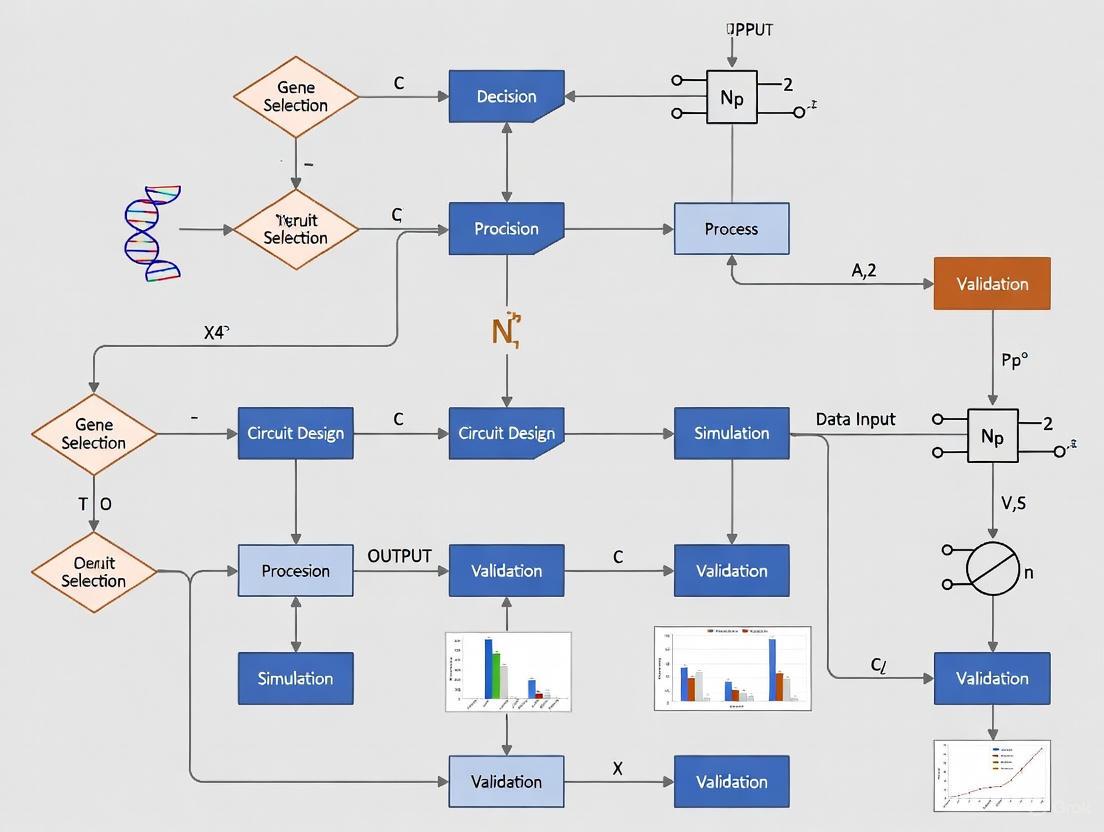
This article details the implementation of automated Design of Experiments (DoE) workflows to efficiently navigate the vast combinatorial design space of genetically encoded biosensor circuits.
Automated Design of Experiments (DoE) for Genetic Biosensor Circuits: A Scalable Framework for Optimizing Dynamic Control in Synthetic Biology
Abstract
This article details the implementation of automated Design of Experiments (DoE) workflows to efficiently navigate the vast combinatorial design space of genetically encoded biosensor circuits. Tailored for researchers, scientists, and drug development professionals, it covers foundational principles for mapping complex experimental spaces, high-throughput methodological pipelines for circuit construction and screening, strategies for troubleshooting evolutionary instability and performance bottlenecks, and robust validation through quantitative performance metrics and comparative analysis with traditional methods. By integrating computational design with laboratory automation, this framework enables the predictive and scalable development of biosensors for advanced applications in biomanufacturing, diagnostics, and therapeutic control.
Navigating the Complexity: Why Automated DoE is Essential for Modern Biosensor Design
The Bottleneck of Vast Combinatorial Design Spaces in Genetic Circuits
The engineering of sophisticated genetic circuits is fundamentally constrained by the vast combinatorial design space generated by the assembly of biological parts. As circuit complexity increases, the number of possible genetic configurations grows exponentially, creating a critical bottleneck in the design-build-test-learn (DBTL) cycle [1]. For instance, scaling from 2-input to 3-input Boolean logic expands the combinatorial space from 16 to 256 distinct truth tables, with the number of putative circuits reaching the order of 10^14 [2]. This complexity is compounded by the need to optimize component stoichiometry, host-biosensor interactions, and performance traits such as tunability and dynamic range [3]. Traditional one-shot optimization approaches become computationally prohibitive and experimentally intractable under these conditions, necessitating structured methodologies for efficient design space exploration.
Quantitative Analysis of the Combinatorial Bottleneck
The tables below summarize the quantitative dimensions of the combinatorial design challenge and characterization data for circuit components.
Table 1: Scaling Complexity of Genetic Circuit Design Spaces
| Design Dimension | 2-Input Logic | 3-Input Logic | Experimental Impact |
|---|---|---|---|
| Boolean Operations | 16 | 256 | Exponential growth in functional variants |
| Putative Circuits | ~10^3 | >10^14 | Comprehensive testing becomes impossible |
| Regulatory States | 4 (00, 01, 10, 11) | 8 (000, 001, ..., 111) | Increased characterization requirements |
| Optimization Parameters | Component stoichiometry, host interactions, performance traits | Multi-dimensional optimization challenge |
Table 2: Characterization Data for Fungal Gene Regulatory Circuit Components
| Transcription Factor | Promoter | Expression Intensity (a.u.) | Timing (hours) | Application |
|---|---|---|---|---|
| PfmaH | PmelA | 1,850 ± 120 | 14.2 ± 1.1 | DHN melanin synthesis |
| PfmaH | Ppks1 | 920 ± 85 | 16.8 ± 1.3 | DHN melanin synthesis |
| AflR | PstcU | 2,150 ± 140 | 12.5 ± 0.9 | Sterigmatocystin production |
| AflR | Pver1 | 1,760 ± 110 | 13.7 ± 1.0 | Sterigmatocystin production |
Automated Design of Experiments Workflow Protocol
This protocol describes an automated DoE workflow for efficient sampling of genetically encoded biosensor design space, enabling the identification of optimal configurations with minimal experimental iterations [3].
Equipment and Software Requirements
- Liquid handling automation platform (e.g., Beckman Coulter Biomek FXP)
- High-throughput flow cytometer or microplate reader
- Design of Experiment software (e.g., JMP, MODDE, or custom algorithms)
- Microfluidic device for single-cell analysis (optional, for dynamic characterization)
- Molecular biology tools for DNA assembly (e.g., Golden Gate, MoClo toolkit)
Library Design and Assembly
Define Design Variables: Identify key circuit components to be varied, including:
- Promoter libraries (5-20 variants with varying strengths)
- Ribosome binding site (RBS) libraries (3-10 variants)
- Transcription factor coding sequences (2-5 orthogonal variants)
- Effector-responsive elements (as required for biosensor function)
Implement DoE Algorithm: Apply statistical design (e.g., fractional factorial, D-optimal) to select a representative subset (typically 10-30%) of all possible combinations that maximizes information gain while minimizing experimental effort [3].
Automated DNA Assembly:
- Utilize modular cloning systems (e.g., Golden Gate/MoClo) for high-throughput construction [4]
- Perform simultaneous assembly of all selected variants using automated liquid handling
- Transform into appropriate host chassis (E. coli, S. cerevisiae, or specialized fungal strains)
High-Throughput Characterization
Effector Titration Analysis:
- Prepare gradient concentrations of input effectors (e.g., cellobiose, IPTG, D-ribose) in 96- or 384-well plates
- Inoculate with circuit variants using automated colony picker
- Incubate with shaking at appropriate temperature (e.g., 30°C for fungi, 37°C for bacteria) for 16-24 hours
Output Measurement:
- Measure fluorescence intensity (GFP, RFP, etc.) using flow cytometry or plate reader
- For microfluidic characterization: Load cells into customized microfluidic devices and monitor dynamic expression at single-cell resolution over 24-48 hours [4]
Data Processing:
- Convert raw expression data into normalized, dimensionless values
- Calculate key performance metrics: dynamic range, fold induction, EC50, leakiness, response time
Computational Mapping and Model Building
Design Space Mapping: Transform experimental data and library combinations into structured dimensionless inputs for computational mapping of the full experimental design space [3].
Predictive Model Development: Build regression models (linear, quadratic, or machine learning) correlating circuit composition with performance metrics.
Optimal Configuration Identification: Use optimization algorithms to identify circuit configurations meeting target specifications from the predictive model.
Validation: Test model-predicted optimal configurations (5-10 variants) to verify performance and refine models if necessary.
Troubleshooting
- Poor Dynamic Range: Screen additional RBS variants or optimize transcription factor expression levels
- High Background Noise: Incorporate insulating elements to minimize context effects [5]
- Slow Response Time: Modify degradation tags or promoter strengths to accelerate turnover
- Cell-to-Cell Variability: Implement feedback control or noise suppression mechanisms
Workflow Visualization
Diagram 1: Automated DoE workflow for genetic circuit optimization showing the systematic reduction of design space complexity.
Diagram 2: Microfluidic platform for dynamic characterization of genetic circuits at single-cell resolution.
Research Reagent Solutions
Table 3: Essential Research Reagents for Genetic Circuit Characterization
| Reagent/Category | Specific Examples | Function/Application | Key Characteristics |
|---|---|---|---|
| Synthetic Transcription Factors | E+TAN repressor, EA1TAN anti-repressor [2] | Implement NOT/NOR Boolean operations | Orthogonal DNA binding, ligand responsiveness |
| Modular Cloning Toolkits | MoClo DNA assembly system [4] | Hierarchical construction of multigene circuits | Type IIS restriction enzymes, standardized parts |
| Insulated Genetic Parts | ECF σ factor promoters, T7 RNAP promoters [5] | Context-independent circuit components | Minimal length (19-21bp), functional modularity |
| Microfluidic Platforms | Customized Aspergillus nidulans chip [4] | Single-cell dynamic characterization | 5μm height chambers, U-shaped design for spore trapping |
| Orthogonal Regulatory Systems | CelR (cellobiose), LacI (IPTG), RhaR (D-ribose) [2] | Multi-input biocomputing | Signal orthogonality, minimal crosstalk |
The integration of automated DoE methodologies with high-throughput experimental platforms represents a paradigm shift in addressing the combinatorial design bottleneck in genetic circuit engineering. By replacing exhaustive screening with intelligent design space sampling, researchers can navigate complex genetic landscapes with unprecedented efficiency. The workflow described herein enables the development of biosensors and genetic circuits with predictable performance, accelerating the DBTL cycle and expanding the scope of programmable cellular functions for therapeutic and biomanufacturing applications.
In the field of genetic biosensor research, exploring the vast combinatorial space of genetic components presents a significant challenge. Design of Experiments (DoE) provides a structured, statistical framework for efficiently navigating this space through fractional sampling. This approach enables researchers to systematically investigate the effects of multiple factors—such as promoters, ribosome binding sites (RBS), and environmental conditions—using a carefully selected subset of all possible experimental combinations. This methodology is particularly vital for optimizing biosensor performance parameters like dynamic range, sensitivity, and operational range, as it allows for a drastic reduction in experimental runs while still extracting meaningful, data-driven insights [3] [6].
The core principle hinges on the sparsity-of-effects principle, which posits that most high-order interaction effects are negligible. By intentionally confounding these minor interactions, DoE focuses experimental resources on estimating the most critical main effects and lower-order interactions [7]. When integrated into an automated workflow, this structured approach enables the rapid prototyping and global optimization of genetically encoded biosensors, accelerating the entire Design-Build-Test-Learn (DBTL) cycle [8] [6].
Core DoE Principles for Biosensor Engineering
The effective application of DoE rests on several foundational statistical principles. Understanding these is crucial for designing robust experiments capable of producing valid and reliable conclusions in biosensor development.
Randomization: This is the random assignment of experimental units (e.g., different bacterial cultures) to treatment combinations. It serves to eliminate potential biases from the conclusions, ensuring that uncontrolled, systematic errors do not influence the results. For instance, treatments should be randomly assigned to flasks in a shaker incubator to account for potential temperature or agitation gradients [9].
Replication: Replication involves repeating experimental runs under the same conditions. It is fundamental for quantifying the precision of effect estimates and for providing a measure of experimental error. The standard error of the mean, which helps determine confidence interval widths, decreases as replication (n) increases, leading to more precise parameter estimates for biosensor performance metrics like EC50 [9].
Blocking: Blocking is a technique used to control for known sources of nuisance variation that could undesirably inflate error variance. For example, if an experiment must be conducted over two days, "day" can be used as a blocking factor. This accounts for the day-to-day variability, allowing for a clearer assessment of the systematic effects of the genetic factors being studied [9].
Confounding: Confounding occurs when the effect of one factor is indistinguishable from the effect of another factor or an interaction between factors. While typically avoided in simple experiments, it is a necessary tool in fractional factorial designs. In these designs, less critical high-order interactions are intentionally confounded with main effects to reduce the number of required experimental runs. This is a strategic trade-off that prioritizes efficient estimation of primary effects [9] [7].
Multi-factor Designs: Contrary to the inefficient "one-factor-at-a-time" method, multi-factor designs simultaneously vary multiple factors. This approach is vastly more efficient and allows for the study of interactions between factors—a critical aspect in biosensor systems where components like promoters and RBSs do not act independently [9].
Fractional factorial designs are a specific class of DoE used for screening a large number of factors to identify the most influential ones.
Basic Working Principle and Notation
A full factorial design with k factors at 2 levels requires 2k runs. A fractional factorial design requires only 2k−p runs, where p determines the fraction of the full design used. Each generator (of which there are p) halves the number of runs. For example, a 2^5−2^ design is a 1/4 fraction of a full five-factor, two-level design, requiring only 8 runs instead of 32 [7]. The selection of which runs to perform is controlled by an alias structure, which determines which effects are confounded with one another [7].
Understanding Resolution
The resolution of a fractional factorial design indicates its ability to separate main effects and low-order interactions from one another. It is a key property in selecting an appropriate design [7].
The table below summarizes the most commonly used resolution levels:
Table 1: Resolution levels in fractional factorial designs.
| Resolution | Ability | Example |
|---|---|---|
| III | Can estimate main effects, but they may be confounded with two-factor interactions. | 2^3−1^ with defining relation I = ABC |
| IV | Can estimate main effects unconfounded by two-factor interactions. Two-factor interactions may be confounded with each other. | 2^4−1^ with defining relation I = ABCD |
| V | Can estimate main effects and two-factor interaction effects unconfounded by other two-factor interactions. | 2^5−1^ with defining relation I = ABCDE |
For initial screening experiments where the goal is to identify a handful of critical factors from a large set, Resolution III designs are commonly used. These can be set up as saturated designs, where N-1 factors can be investigated in only N runs [7].
Application Protocol: DoE for Biosensor Optimization
This protocol details the application of a DoE-driven workflow for optimizing the dose-response characteristics of an allosteric transcription factor (aTF)-based biosensor, as exemplified by Le Roy et al. and related studies [3] [8] [6].
Research Reagent Solutions
The following table lists key materials and reagents required for the implementation of this protocol.
Table 2: Essential research reagents and materials for biosensor DoE workflow.
| Item | Function / Explanation |
|---|---|
| Allosteric Transcription Factor (aTF) | The core sensing component; binds a specific ligand and undergoes a conformational change to modulate transcription [6]. |
| Promoter Library | A collection of genetic promoters of varying strengths; tunes transcriptional regulation of the aTF and reporter genes [8] [6]. |
| RBS Library | A collection of ribosome binding sites of varying strengths; tunes translational efficiency and protein expression levels [8] [6]. |
| Reporter Gene (e.g., GFP) | Encodes a measurable output (e.g., fluorescence), allowing for quantification of biosensor activation [6]. |
| Ligand/Effector | The target molecule (e.g., naringenin) that activates the biosensor; tested over a concentration range for dose-response analysis [8]. |
| Varying Growth Media & Supplements | Contextual factors (e.g., M9, SOB, glycerol, acetate) used to test and model biosensor performance under different environmental conditions [8]. |
| Automation Platform | Enables high-throughput assembly of genetic constructs and effector titration analysis, which is essential for processing DoE-generated experimental sets [3] [6]. |
Step-by-Step Experimental Methodology
Define System and Factors:
- Identify the biosensor system and the key parameters to be optimized (e.g., dynamic range, sensitivity/EC50, operational range).
- Select the independent variables (factors) to be tuned. These typically include:
- Define the boundaries (levels) for each continuous factor.
Select and Generate Experimental Design:
- For initial screening of many factors, a Resolution III fractional factorial design (e.g., a 2k−p design) is appropriate to identify the most significant factors [7].
- For optimization of a smaller number of critical factors, a more advanced design like a D-optimal design is often used. This algorithm selects the set of experimental runs that maximizes the information gained from a fixed number of experiments, which is particularly useful for modeling complex interactions with a minimal run count [8].
- Use statistical software to generate the design matrix, which specifies the exact combination of factor levels for each experimental run.
Build and Test the Library:
- Build: Use high-throughput automated cloning (e.g., Golden Gate assembly) to construct the library of genetic variants as specified by the DoE matrix [6].
- Test: Execute the experiments according to the design. This involves cultivating the different biosensor variants in the specified media and measuring the reporter signal (e.g., fluorescence) across a titration of the target ligand concentration to generate dose-response curves [3] [8].
Data Analysis and Model Building:
- Fit the dose-response data for each construct to the Hill equation to extract performance parameters (EC50, dynamic range, Hill coefficient) [6].
- Perform statistical analysis (e.g., Analysis of Variance - ANOVA) on the parameter data to quantify the effect of each factor and their interactions.
- Develop a predictive regression model that describes the relationship between the genetic/contextual factors and the biosensor performance metrics.
Validation and Iteration:
- Validate the model by designing and testing new factor combinations not in the original experimental set but predicted by the model to have superior performance.
- Use the insights gained to refine the model or define a new, more focused DoE for further optimization in an iterative DBTL cycle [8].
Workflow Visualization
The following diagram illustrates the integrated, automated DoE workflow for biosensor optimization.
Diagram 1: Automated DoE workflow for biosensor optimization.
Case Study: DoE for a Naringenin Biosensor
A study in 2025 effectively demonstrated the application of this protocol to optimize a naringenin-responsive biosensor in Escherichia coli [8].
- Experimental Setup: Researchers built a combinatorial library of biosensors by assembling two modules: a naringenin-responsive transcription factor (FdeR) expressed from a combination of 4 promoters and 5 RBSs, and a GFP reporter gene under the control of the FdeR operator [8].
- DoE Implementation: To systematically explore the interactions between genetic parts and environmental context, an initial set of 32 experiments was selected via D-optimal design of experiments. The factors included the promoter type, RBS type, growth medium, and supplement [8].
- Outcome and Analysis: The resulting data allowed the team to build a biology-guided machine learning model. The analysis revealed, for instance, that promoter P3 consistently produced higher fluorescence outputs across various contexts, providing a data-backed guideline for future designs [8]. This approach successfully identified optimal combinations of genetic components and environmental conditions to achieve desired biosensor specifications for both screening and dynamic regulation applications.
The systematic characterization of biosensor performance is a critical step in the development of robust, automated Design of Experiments (DoE) workflows for genetic biosensor circuits. Quantifying key parameters enables researchers to compare biosensor architectures efficiently, optimize system performance, and generate high-quality data for predictive modeling. This Application Note details standardized protocols for measuring three fundamental performance metrics—Dynamic Range, Response Time, and Signal-to-Noise Ratio (SNR)—with a specific focus on their application within automated, high-throughput screening platforms for biosensor development. The methodologies outlined are designed for integration with DoE frameworks that systematically explore the vast combinatorial space of genetic circuit components [3] [10].
Performance Metrics: Definitions and Quantitative Significance
The following metrics provide a quantitative foundation for evaluating biosensor function. Understanding their definitions and interrelationships is essential for effective experimental design.
Table 1: Core Biosensor Performance Metrics
| Metric | Definition | Key Parameters | Significance in DoE Optimization |
|---|---|---|---|
| Dynamic Range | The range of analyte concentrations over which the biosensor provides a measurable and useful response. | Lower Limit of Detection (LOD), Upper Limit of Detection, Fold-Change (Max Signal/Min Signal) | Determines the operational window for detecting target molecules; a wide dynamic range is crucial for monitoring diverse concentration levels encountered in biological systems [11]. |
| Response Time | The time required for a biosensor to reach a specified percentage (e.g., 90%) of its final output signal following exposure to the target analyte. | Rise Time (T90), Fall Time, Temporal Resolution | Critical for monitoring dynamic biological processes and for high-throughput screening, where rapid readings increase experimental throughput [12]. |
| Signal-to-Noise Ratio (SNR) | The ratio of the power of the specific biosensor signal to the power of the background noise. | Signal Amplitude, Noise Amplitude (Standard Deviation), Detection Confidence | A high SNR enables faster and more accurate detection, reducing false positives/negatives and is a leading indicator of measurement accuracy [13]. |
Experimental Protocols for Metric Characterization
Protocol: Determining Dynamic Range and Dose-Response
This protocol characterizes the relationship between analyte concentration and biosensor output, defining the operational limits of the sensor.
I. Research Reagent Solutions
Table 2: Essential Reagents for Dynamic Range and Response Time Assays
| Reagent/Solution | Function | Example/Notes |
|---|---|---|
| Serially Diluted Analyte | Creates a concentration gradient to probe biosensor sensitivity. | Prepare in relevant biological matrix (e.g., serum, media) [3]. |
| Cell Lysis Buffer (for cell-based sensors) | Releases intracellular components for endpoint measurement. | Ensure compatibility with the reporter (e.g., luciferase, fluorescence). |
| Reference Standard | Normalizes signals across plates and experiments. | A solution with a known, fixed concentration of the analyte or reporter. |
| Luria-Bertani (LB) Media | Provides nutrients for cell growth in bacterial biosensor assays. | Supplement with appropriate selective antibiotics. |
II. Procedure
- Sample Preparation: For a genetic biosensor circuit, transform the plasmid into the host organism (e.g., E. coli) and culture in appropriate media. For DoE workflows, this often involves a library of variants with different promoter strengths or ribosome binding sites [3].
- Effector Titration: Dispense the cell culture into a multi-well plate. Add a serial dilution of the target effector/analyte across the wells, ensuring a concentration range that is expected to span from no activation to full saturation. Include replicate wells for each concentration.
- Incubation and Measurement: Incubate the plate under optimal growth conditions until the biosensor output signal stabilizes. For fluorescent reporters, measure the output signal (e.g., fluorescence) using a plate reader. For electrochemical sensors, measure the current or impedance [14] [15].
- Data Analysis:
- Calculate the average signal for each analyte concentration.
- Plot the dose-response curve (Signal vs. Analyte Concentration).
- Fit the data to a sigmoidal function (e.g., Hill equation) to determine the EC50 (half-maximal effective concentration), Hill coefficient, and the maximum and minimum signal levels.
- The Dynamic Range is typically reported as the fold-change between the maximum and minimum output signals.
Protocol: Measuring Response Time (T90)
This protocol determines the kinetic profile of the biosensor's activation and deactivation, which is vital for real-time monitoring.
I. Procedure
- Baseline Acquisition: Place the biosensor in a stable environment without the analyte and initiate continuous monitoring of the output signal (e.g., fluorescence, current) with high temporal resolution. Record until a stable baseline is established.
- Rapid Analyte Introduction: Rapidly introduce the analyte at a concentration known to saturate the biosensor (e.g., 10x EC50) to ensure a maximal response. In a flow system, this can be achieved using stopped-flow apparatus; in well plates, use a multichannel pipette for rapid addition.
- Continuous Monitoring: Continue to monitor the output signal at short intervals until the signal reaches a stable plateau.
- Data Analysis:
- Plot the signal as a function of time.
- Identify the maximum steady-state signal level (Smax).
- Calculate the rise time, T90, as the time taken for the signal to rise from 10% to 90% of Smax following analyte addition.
Protocol: Calculating Signal-to-Noise Ratio (SNR)
This protocol quantifies the detectability of the biosensor signal above the system's inherent noise, which is crucial for determining the limit of detection and assay robustness.
I. Procedure
- Signal Measurement: For a representative biosensor sample, measure the output signal under steady-state conditions at its operational concentration. For a population of cells, this involves measuring multiple technical replicates.
- Noise Measurement: Using the same sample and instrument settings, take multiple measurements over time or across multiple replicates. The noise is characterized by the standard deviation of these measurements.
- SNR Calculation:
- For a DC or steady-state signal, calculate the SNR as the ratio of the average signal amplitude to the standard deviation of the noise [13]: SNR = (Mean Signal) / (Standard Deviation of Signal)
- For AC signals like a photoplethysmography (PPG) waveform, advanced frequency-domain filtering can separate the signal and noise components for a more accurate SNR calculation [13].
Workflow Integration and Data Visualization
The characterization protocols are integral components of an automated DoE workflow. The following diagram illustrates the logical flow from experimental execution to data-driven decision-making.
The quantitative data generated from these protocols feed into a centralized data pool for machine learning analysis. The relationship between the key metrics and the resulting model output is crucial for interpretation.
The rigorous, quantitative characterization of Dynamic Range, Response Time, and Signal-to-Noise Ratio is a prerequisite for implementing successful automated DoE workflows in genetic biosensor research. The standardized protocols detailed herein enable the generation of consistent, high-quality data that fuels computational models. These models, in turn, can efficiently navigate the complex design space of biosensor circuits—optimizing component stoichiometry, host-biosensor interactions, and overall circuit performance to identify configurations with desired digital or analog dose-response curves [3] [10]. By adopting these application notes, researchers can accelerate the development of next-generation biosensors for advanced applications in synthetic biology, diagnostics, and drug development.
The Synergy of Computational Mapping and High-Throughput Automation
The engineering of genetically encoded biosensors represents a cornerstone of modern synthetic biology, enabling dynamic sensing and regulated gene expression for applications ranging from enzyme optimization to microbial process control [3]. A significant challenge in this field is the vast combinatorial design space created by the numerous possible permutations of biosensor circuit components, such as promoters, ribosome binding sites, and transcription factors. Navigating this space to identify optimal configurations requires meticulous optimization [3]. The convergence of computational mapping and high-throughput automation presents a powerful solution to this challenge. This integrated approach allows for the efficient, statistically robust exploration of experimental parameters, dramatically accelerating the development of biosensors with tailored performance characteristics, such as digital or analogue dose-response curves [3]. This protocol details the application of an automated Design of Experiments (DoE) workflow specifically for the development of allosteric transcription factor-based biosensors, providing a framework to efficiently sample this complex design space.
Application Notes
Key Concepts and Definitions
- Design of Experiments (DoE): A systematic, statistical method for planning experiments to efficiently map the relationship between factors affecting a process or product. In biosensor development, DoE algorithms enable structured fractional sampling of the combinatorial design space [3] [10].
- Combinatorial Design Space: The vast multi-dimensional parameter space encompassing all possible configurations of genetic parts (e.g., promoters, RBS, transcription factors) that constitute a biosensor circuit [3].
- Circuit Compression: A design strategy aimed at creating genetic circuits that achieve complex functions, such as higher-state decision-making, with a minimal number of genetic parts. This reduces the metabolic burden on the host chassis and improves circuit performance and predictability [2].
- High-Throughput Screening (HTS): An automated methodology that allows for the rapid testing of thousands to millions of samples. Modern HTS goes beyond simple "hit" identification to evaluate selectivity, toxicity, and mechanism of action through multi-parametric data collection, including high-content imaging [16].
Quantitative Performance of DoE and Predictive Design
The tables below summarize key quantitative data from studies utilizing automated DoE and computational design workflows.
Table 1: Performance Metrics of Automated DoE and Predictive Workflows
| Workflow Component | Performance Metric | Result / Value | Context / Significance |
|---|---|---|---|
| Generic DoE Workflow [10] | Model Performance Threshold (R²) | 0.9 | Minimum R-squared score used to define parameter space complexity for a surrogate model. |
| T-Pro Circuit Prediction [2] | Average Prediction Error | < 1.4-fold | High quantitative accuracy for predicting performance of >50 genetic circuit test cases. |
| Circuit Compression [2] | Size Reduction | ~4x smaller | Multi-state compression circuits are significantly smaller than canonical inverter-type genetic circuits. |
Table 2: Scaling of Boolean Logic Operations in Genetic Circuits
| Logic Type | Number of Inputs | Number of Distinct Truth Tables | Combinatorial Search Space | Key Method for Management |
|---|---|---|---|---|
| 2-Input Boolean | 2 | 16 [2] | Manageable by intuition [2] | Qualitative design [2] |
| 3-Input Boolean | 3 | 256 [2] | ~100 trillion putative circuits [2] | Algorithmic enumeration & compression [2] |
The Scientist's Toolkit: Research Reagent Solutions
The following reagents and tools are essential for implementing the described automated workflow for genetic biosensor development.
Table 3: Essential Research Reagents and Materials
| Item Name | Function / Application | Key Characteristics |
|---|---|---|
| Synthetic Transcription Factors (TFs) [2] | Core components for building genetic circuits; enable signal transduction. | Engineered repressors and anti-repressors responsive to orthogonal signals (e.g., IPTG, D-ribose, cellobiose). |
| T-Pro Synthetic Promoters [2] | Regulatory elements controlled by synthetic TFs. | Designed with tandem operator architecture for coordinated TF binding, facilitating circuit compression. |
| Orthogonal Ligands [2] | Input signals for biosensor activation (e.g., IPTG, D-ribose, cellobiose). | Ensure independent operation of multiple input channels in complex circuits. |
| 3D Cell Models (Spheroids/Organoids) [16] | Physiologically relevant screening platforms for drug discovery. | Provide gradients of oxygen, nutrients, and drug penetration, yielding more translatable data than 2D cultures. |
| Patient-Derived Organoids [16] | Genetically and phenotypically relevant systems for validation. | Used to test drug responses before clinical trials, catching variability and resistance early. |
Experimental Protocols
Protocol 1: Automated DoE Workflow for Biosensor Design Space Sampling
This protocol outlines the steps for efficiently sampling the biosensor design space using a combination of DoE and high-throughput automation [3].
1. Library Creation and Automated Selection: - Objective: Generate diversity in genetic components. - Steps: - Create combinatorial libraries of key genetic parts, such as promoters and ribosome binding sites (RBS). - Use automated liquid handling systems to assemble variant constructs. - Perform an initial automated selection to reduce library size to a manageable scale for high-throughput screening.
2. Transformation into Structured Dimensionless Inputs: - Objective: Standardize data for computational analysis. - Steps: - Collect initial expression data (e.g., fluorescence from reporter genes) for a subset of library variants. - Transform this raw expression data into structured, dimensionless numerical inputs. This normalization allows for the direct comparison and computational mapping of different genetic configurations.
3. Computational Mapping and DoE Fractional Sampling: - Objective: Identify the most informative variants to test next. - Steps: - Use the normalized data to build a preliminary computational model of the design space. - Apply a DoE algorithm to this model to identify a fractional set of variants that will provide the maximum information about the entire space. This set represents the most efficient next round of experiments.
4. High-Throughput Effector Titration Analysis: - Objective: Characterize biosensor performance in detail. - Steps: - Using high-throughput automation platforms (e.g., liquid handlers, robotic arms), test the selected variants from Step 3 across a range of effector concentrations. - Automatically measure output signals (e.g., fluorescence, luminescence) to generate dose-response curves for each variant. - The resulting data feed back into the computational model, refining it for subsequent rounds of DoE sampling or for selecting final lead biosensor configurations.
The following workflow diagram illustrates this iterative process:
Protocol 2: Algorithmic Enumeration for Compressed Genetic Circuit Design
This protocol describes a computational method for designing minimal genetic circuits (compressed circuits) that implement complex Boolean logic functions, based on the T-Pro (Transcriptional Programming) framework [2].
1. Define the Truth Table: - Objective: Formally specify the desired circuit behavior. - Steps: - Define the target truth table for the 3-input Boolean logic operation. For 3 inputs, this specifies the output (ON/OFF) for all 8 possible input combinations (000, 001, 010, ..., 111).
2. Generalize Component Description: - Objective: Create a flexible representation of genetic parts. - Steps: - Model the synthetic transcription factors and their cognate promoters as a set of orthogonal protein-DNA interactions. - Formulate the genetic circuit as a directed acyclic graph (DAG), where nodes represent genetic components and edges represent regulatory interactions.
3. Algorithmic Enumeration and Optimization: - Objective: Find the smallest circuit that matches the truth table. - Steps: - Systematically enumerate possible circuit architectures in order of increasing complexity (i.e., number of parts). - For each enumerated circuit, check its predicted output against the target truth table. - The first (and therefore smallest) circuit that satisfies the truth table is selected as the compressed design.
4. Context-Aware Performance Prediction: - Objective: Quantitatively predict the expression level of the compressed circuit. - Steps: - Use established workflows that account for genetic context (e.g., plasmid copy number, RBS strength, transcriptional interference) to model the expression level of the output gene in the selected compressed design. - This allows for the predictive design of circuits not only for correct logic, but also for precise quantitative performance setpoints.
The logical flow of this computational design process is as follows:
Discussion
The synergy of computational mapping and high-throughput automation, as detailed in these protocols, represents a paradigm shift in genetic biosensor and circuit design. The move from intuitive, labor-intensive trial-and-error to a structured, data-driven methodology directly addresses the "synthetic biology problem"—the discrepancy between qualitative design and quantitative performance prediction [2]. The integration of AutoML workflows for DoE selection and model building further enhances the robustness of this approach by automating and optimizing the modeling process, thereby reducing biases from suboptimal modeling [10].
The implications are profound. The ability to predict circuit performance with an average error below 1.4-fold [2] and to design circuits that are four times smaller [2] significantly reduces the experimental burden and time-to-result. Furthermore, the adoption of more physiologically relevant 3D cell models in HTS ensures that the biosensors and therapeutics developed through these automated workflows yield results that are more translatable to in vivo and clinical settings [16]. As the field advances, the feedback between ever-richer experimental data and increasingly accurate computational models will create a virtuous cycle, paving the way for the fully predictive design of complex biological systems.
Building the Pipeline: A Step-by-Step Guide to Automated DoE Workflow Implementation
Within the broader framework of an automated Design of Experiments (DoE) workflow for genetic biosensor circuit research, the initial and critical stage is the systematic creation of promoter and ribosome binding site (RBS) libraries. Genetically encoded biosensors are powerful tools that transduce environmental or chemical inputs into measurable outputs, enabling dynamic sensing and fine-tuned regulation of gene expression for applications in enzyme optimization, strain development, and microbial process control [3]. The performance of these biosensors is heavily influenced by the stoichiometry of their circuit components and host-biosensor intermolecular interactions, creating a vast combinatorial design space [3]. To efficiently navigate this complexity, a structured approach to library generation is essential before employing DoE algorithms for fractional sampling and optimization. This protocol details automated methods for constructing and selecting promoter and RBS libraries, transforming their expression data into structured dimensionless inputs suitable for computational mapping of the full experimental design space [3].
Library Design and Composition
Promoter Library Construction
A well-characterized promoter library is foundational for controlling gene expression levels in synthetic biology. The selection should include a variety of constitutive and inducible promoters to cover a wide range of expression strengths and regulatory responses.
Table 1: Promoter Library Components for Cyanobacterial Systems
| Promoter Name | Type | Inducer | Reported Leakiness (Relative to PrnpB) | Reported Max Induction (Fold) | Key Characteristics |
|---|---|---|---|---|---|
| PnrsB | Inducible | Ni²⁺, Co²⁺ | ~0.5x | ~39-fold | Low leakiness, highly tunable, strong induction [17] |
| PpsbA2 | Constitutive | N/A | N/A | N/A | Very strong, used in various sequence lengths (S, M, L) [17] |
| PrbcL | Constitutive | N/A | N/A | N/A | Strong, native RubisCO large subunit promoter [17] |
| PpetE | Inducible | Cu²⁺ | N/A | N/A | Frequently used, Cu²⁺ inducible [17] |
| PcoaT | Inducible | Co²⁺, Zn²⁺ | N/A | Low | Low maximal expression [17] |
Ribosome Binding Site (RBS) Library
In parallel to promoter libraries, a collection of RBS sequences with varying translation initiation rates (TIR) must be assembled. The strength of an RBS directly influences the translational efficiency of the downstream gene, providing an independent variable for tuning biosensor component levels. RBS libraries can be designed using computational tools like the RBS Calculator [17] to predict and cover a spectrum of strengths. The activity of selected RBS should be measured in the relevant chassis, such as Synechocystis sp. PCC 6803, as their performance can differ significantly from model organisms like E. coli [17].
Experimental Protocol: Automated Library Creation and Screening
Library Assembly and Cloning
This procedure outlines the automated construction of promoter-RBS-reporter constructs for high-throughput screening.
Materials & Equipment:
- Liquid Handling Robot: For automated pipetting (e.g., Beckman Coulter Biomek series or Hamilton STAR).
- Microplate Reader: For measuring fluorescence and OD in a high-throughput format.
- PCR Thermocycler
- Gateway BP Clonase II / LR Clonase II or other DNA assembly master mix (e.g., Gibson Assembly).
- E. coli Transformation Kit
- Source Plates: Containing purified promoter variants, RBS sequences, and plasmid backbone.
- Destination Plates: 96-well or 384-well microplates.
Procedure:
- Plate Setup: Program the liquid handler to dispense the plasmid backbone into all wells of the destination microplate.
- Combinatorial Assembly:
- Using the liquid handler, transfer predefined volumes of each promoter variant from the source plate into the destination plate according to the experimental design.
- Subsequently, transfer the RBS variants to create a combinatorial library of promoter-RBS pairs upstream of the reporter gene (e.g., EYFP) on the plasmid backbone [3].
- Enzymatic Assembly: Initiate the reaction by adding the DNA assembly master mix (e.g., Gateway Clonase or Gibson Assembly mix) to each well using the automated system. Seal the plates and incubate at the appropriate temperature for the specified duration.
- Transformation:
- Transfer the assembly reaction into chemically competent E. coli cells pre-aliquoted in a new microplate.
- After recovery, use the liquid handler to plate the transformation mixtures onto selective LB-agar plates and incubate overnight.
Library Screening and Data Acquisition
This protocol details the steps for characterizing the constructed libraries to generate quantitative expression data.
Materials & Equipment:
- Liquid Handling Robot
- Multichannel Pipettes
- Flow Cytometer or High-Throughput Microplate Cytometer
- Inducers: Stock solutions of relevant inducers (e.g., NiCl₂, CoCl₂, CuSO₄, IPTG).
Procedure:
- Cultivation: Inoculate deep-well plates containing selective media with individual clones from the library. Grow cultures to mid-log phase under standard conditions (e.g., 30°C for Synechocystis with shaking and light for photoautotrophic growth) [17].
- Induction: For inducible promoters, use the liquid handler to add a range of inducer concentrations to sub-cultures to perform effector titration analysis [3]. Include non-induced controls.
- Measurement: After a defined induction period (e.g., 24-48 hours for cyanobacteria):
- Measure the optical density (OD) of each culture to assess growth.
- Measure the fluorescence intensity of the reporter protein (e.g., EYFP) for each clone and condition.
- Data Normalization: Calculate the normalized reporter expression (Fluorescence/OD) for each data point. These values are then transformed into structured dimensionless inputs to facilitate computational mapping of the entire experimental design space [3].
The Scientist's Toolkit: Research Reagent Solutions
Table 2: Essential Materials for Automated Library Creation
| Item | Function | Example/Description |
|---|---|---|
| Liquid Handling Robot | Automates repetitive pipetting tasks for library assembly, transformation, and induction, ensuring precision and throughput. | Hamilton MICROLAB STAR, Beckman Coulter Biomek i7 |
| Gateway Cloning System | Provides a highly efficient and automatable method for the recombinational cloning of DNA fragments into vectors. | Thermo Fisher Scientific |
| RBS Calculator | Computational tool for predicting and designing RBS sequences with desired translation initiation strengths. | Salis Lab RBS Calculator [17] |
| Fluorescent Reporter Proteins | Encoded in constructs to provide a quantifiable readout of promoter activity and RBS strength. | EYFP (Enhanced Yellow Fluorescent Protein) [17] |
| Self-Replicating Vectors | Plasmid backbones for hosting genetic constructs in the target chassis, allowing for easier library manipulation prior to chromosomal integration. | pPMQAK1 for Synechocystis [17] |
Workflow Visualization
Automated Library Creation Workflow
Context in Broader DoE Workflow
Within an automated Design of Experiments (DoE) workflow for genetic biosensor research, algorithmic planning for effector titration analysis represents a critical juncture where statistical methodology meets practical experimental execution. This stage moves beyond theoretical design to the concrete planning of experiments that will efficiently map how a biosensor's output changes in response to varying concentrations of an effector molecule. The primary challenge in this phase is the inherent complexity of biosensor systems, where performance traits like tunability and dynamic range are influenced by a multitude of interacting factors [3]. A one-factor-at-a-time (OFAT) approach is not only inefficient but fails to detect these critical interactions, often leading to suboptimal conclusions and a failure to identify the true optimal configurations for biosensor performance [18]. Consequently, a structured, fractional sampling approach underpinned by DoE algorithms is indispensable for the statistically sound and resource-efficient characterization of biosensor dose-response behavior [3].
Key Concepts and Definitions
To ensure clarity, the following table defines the core concepts relevant to DoE algorithmic planning in this context.
Table 1: Key Terminology for DoE Algorithmic Planning in Biosensor Research
| Term | Definition |
|---|---|
| Design of Experiments (DoE) | A systematic, statistical approach used to study the effects of multiple input factors on a process output simultaneously, thereby enabling efficient process characterization and optimization [18]. |
| Effector Titration Analysis | An experimental procedure wherein the concentration of an effector molecule (input signal) is systematically varied to assess its impact on a biosensor's output response, enabling the characterization of its dose-response curve [3]. |
| Factor | An input variable that is deliberately varied in an experiment to observe its effect on the response variable (e.g., effector concentration, promoter strength, ribosome binding site (RBS) sequence) [18] [3]. |
| Level | The specific settings or values at which a factor is tested (e.g., low, medium, and high concentrations of an effector). |
| Response | The output or measured result of an experiment that is influenced by the factors (e.g., fluorescence intensity, reporter enzyme activity, growth rate) [18]. |
| Interaction | A situation where the effect of one factor on the response depends on the level of another factor. Their presence is a key reason why OFAT approaches are inadequate [18]. |
| Factorial Design | A DoE approach wherein factors are varied together by testing all possible combinations of their levels. This allows for the estimation of both main effects and interaction effects [18]. |
| Fractional Factorial Design | A fraction of a full factorial design that strategically reduces the number of experimental runs while still allowing the estimation of main effects and lower-order interactions. This is crucial for screening a large number of factors [3]. |
| Response Surface Methodology (RSM) | A collection of statistical and mathematical techniques used for modeling and analyzing problems in which a response of interest is influenced by several variables, with the goal of optimizing this response [19]. |
Experimental Protocol: Algorithmic DoE Planning for Effector Titration
This protocol details the steps for creating an algorithmic DoE plan to guide the automated effector titration analysis of an allosteric transcription factor-based biosensor.
Prerequisite Steps
- Define the Objective: Clearly state the goal of the experiment. For effector titration, this is typically: "To build a predictive model that characterizes the relationship between effector concentration (input) and biosensor output signal, identifying the settings that achieve a desired dynamic range and sensitivity."
- Identify Factors and Ranges: Based on initial screening or literature, select the factors to be included. For a comprehensive biosensor characterization, this often extends beyond a single effector to a combinatorial design space. Key factors include:
- Effector Concentration: Define the minimum and maximum concentration to be tested.
- Genetic Components: Promoter libraries, ribosome binding site (RBS) variants, and transcription factor expression levels [3].
- Host Conditions: Growth medium, temperature, induction timing.
- Select the Response Variable: Choose a robust, quantifiable metric for biosensor output (e.g., fluorescence measured by mean fluorescence intensity (MFI) from flow cytometry, absorbance, luminescence).
Algorithmic DoE Selection and Setup
Choose an Experimental Design: The choice of design depends on the number of factors and the objective (screening or optimization).
- For Factor Screening (3+ factors): Use a Fractional Factorial or Definitive Screening Design (DSD). These designs efficiently identify the most influential factors from a large pool with a minimal number of runs [19].
- For Response Surface Modeling (2-5 factors): Use a Central Composite Design (CCD) or Box-Behnken Design. These designs are ideal for modeling curvature and identifying optimal conditions, making them perfectly suited for mapping a dose-response curve [19].
Generate the Design Matrix: Utilize statistical software (e.g., JMP, R, Python
pyDOE2library) to algorithmically generate a randomized run order. This matrix is the core output of the algorithmic plan and will be executed by the automation platform. The example below illustrates a simplified design matrix.
Table 2: Example DoE Design Matrix for a Two-Factor Biosensor Titration Study
| Standard Order | Run Order | Factor A: Effector Concentration (µM) | Factor B: Promoter Variant | Response: Fluorescence (MFI) |
|---|---|---|---|---|
| 1 | 5 | 0 (Low) | P1 (Weak) | To be measured |
| 2 | 2 | 100 (High) | P1 (Weak) | To be measured |
| 3 | 7 | 0 (Low) | P3 (Strong) | To be measured |
| 4 | 1 | 100 (High) | P3 (Strong) | To be measured |
| 5 | 4 | 50 (Center) | P2 (Medium) | To be measured |
| 6 | 6 | 50 (Center) | P2 (Medium) | To be measured |
| 7 | 3 | 50 (Center) | P2 (Medium) | To be measured |
Workflow Integration and Execution
The following diagram illustrates the integrated workflow for the automated DoE process, from library creation to model building.
The Scientist's Toolkit: Research Reagent Solutions
The successful implementation of this workflow relies on a suite of specialized reagents and computational tools.
Table 3: Essential Research Reagents and Tools for Automated DoE
| Item | Function/Description | Relevance to DoE Workflow |
|---|---|---|
| Synthetic Promoter Libraries | A collection of engineered DNA sequences with varying strengths for controlling transcription initiation [3]. | Serves as a key factor to systematically vary in the DoE matrix to tune biosensor output levels. |
| Ribosome Binding Site (RBS) Libraries | A collection of sequences with varying translation initiation rates, used to control protein expression levels [3]. | Another critical factor for fine-tuning the stoichiometry of biosensor circuit components. |
| Allosteric Transcription Factors (aTFs) | Engineered protein scaffolds (e.g., based on CelR, LacI) that change their DNA-binding affinity upon binding a specific effector molecule [2]. | The core sensing component of the biosensor. Their expression and type are factors in the DoE. |
| Orthogonal Inducer/Effector Molecules | Small molecules that specifically regulate synthetic TFs without cross-reacting with host systems (e.g., IPTG, D-ribose, cellobiose) [2]. | The effector titrated in the analysis. Concentration is the primary continuous factor. |
| Fluorescent Reporter Proteins | Genes encoding proteins like GFP, RFP, whose expression is under the control of the biosensor, allowing quantification of its activity. | The measurable output (response) for the DoE model. |
| High-Throughput Automation Platform | Liquid handling robots, plate readers, and flow cytometers capable of performing thousands of assays in parallel. | Enables the practical execution of the DoE matrix and effector titration series with high precision [3]. |
| DoE Software & Algorithms | Statistical software (e.g., JMP, R) containing algorithms for generating designs like DSD, CCD, and for analyzing the resulting data [18] [3]. | The "brain" of the workflow, used to create the fractional sampling plan and build the predictive model. |
Anticipated Results and Data Analysis
Upon completion of the experimental runs, the data is analyzed to build a statistical model. For a central composite design involving effector concentration and promoter strength, the model would likely be a second-order polynomial, enabling the prediction of biosensor response across the entire design space [18]:
Predicted Response = β₀ + β₁[Effector] + β₂[Promoter] + β₁₂[Effector][Promoter] + β₁₁[Effector]² + β₂₂[Promoter]²
This model can be visualized as a 3D response surface plot, which will clearly show the nature of the relationship—whether it is linear, exhibits curvature, or if there is an interaction between the effector and the promoter variant. The model can then be used to precisely identify the factor settings (e.g., a specific effector concentration and promoter combination) that are predicted to maximize the response or achieve a specific performance setpoint, which would then be validated through confirmatory runs [18] [2]. This data-driven approach ensures that the final biosensor configuration is robust and optimally tuned for its intended application.
In the development of genetically encoded biosensors, high-throughput characterization is a pivotal stage that bridges design and application. This phase involves the large-scale testing of thousands of genetic circuit variants to generate robust quantitative data on performance parameters such as dynamic range, sensitivity, and transfer functions [3]. For allosteric transcription factor-based biosensors, this process requires systematic titration analyses under monoclonal screening conditions to accurately map dose-response relationships [3]. The data generated here feeds directly into predictive modeling efforts, enabling the rational design of subsequent biosensor iterations. This application note details standardized protocols and analytical frameworks for executing this critical workflow stage efficiently and reproducibly.
Data Presentation: Experimental Results and Analysis
The quantitative data generated from high-throughput characterization must be structured to facilitate easy comparison and interpretation. Below are standardized tables for reporting key performance metrics.
Table 1: Performance Metrics of Characterized Biosensor Circuits
| Circuit ID | Dynamic Range (Fold) | EC50 (µM) | Hill Coefficient | OFF State (a.u.) | ON State (a.u.) |
|---|---|---|---|---|---|
| BSR-001 | 12.5 | 45.2 | 1.8 | 150 ± 15 | 1875 ± 210 |
| BSR-002 | 8.7 | 128.5 | 1.2 | 210 ± 22 | 1827 ± 195 |
| BSR-003 | 25.3 | 12.7 | 2.1 | 95 ± 8 | 2403 ± 305 |
| BSR-004 | 5.2 | 305.8 | 0.9 | 450 ± 35 | 2340 ± 287 |
Table 2: High-Throughput Sequencing Platform Comparison for Characterization Data Generation
| Technology Platform | Read Length | Accuracy | Cost per Sample | Best-Suited Application |
|---|---|---|---|---|
| Illumina Sequencing | 150-300 bp | High | $ | Variant identification, expression profiling [20] |
| PacBio SMRT | 10-15 kb | Very High | $$$ | Structural variant detection, full-length transcript sequencing [20] |
| Oxford Nanopore | 10 kb to 4 Mb | High | $$ | Real-time sequencing, large structural variations [20] |
| Ion Torrent | ~200 bp | Moderate | $ | Rapid sequencing, targeted panels [20] |
Experimental Protocols
Protocol 1: High-Throughput Effector Titration Analysis
This protocol enables the parallel characterization of biosensor response curves across multiple genetic variants and effector concentrations [3].
Materials:
- Automated liquid handling system
- Multi-well plates (96-well or 384-well)
- Biosensor library clones
- Chemical inducers/effectors
- Culture media
- Plate reader with fluorescence/absorbance capability
Procedure:
- Library Preparation: Inoculate monoclonal biosensor variants in deep-well plates containing appropriate media. Grow overnight to saturation.
- Effector Dilution Series: Using an automated liquid handler, prepare a logarithmic dilution series of the target effector in assay plates. Typically, a 12-point dilution covering a 10,000-fold concentration range is effective.
- Cell Transfer and Induction: Dilute the overnight cultures and transfer equal volumes to each well of the assay plates containing effector dilutions.
- Incubation and Measurement: Incubate plates with shaking at the optimal growth temperature. Monitor growth and reporter signal (e.g., fluorescence, luminescence) kinetically or at endpoint.
- Data Export: Export raw signal and growth data for computational analysis.
Protocol 2: Library Preparation for High-Throughput Sequencing
This protocol outlines the preparation of biosensor variant libraries for NGS-based characterization of populations and genotypes [20].
Materials:
- Extracted plasmid or genomic DNA from biosensor libraries
- PCR reagents and barcoded primers
- DNA purification beads and kits
- Library quantification kit (Qubit or qPCR)
- High-throughput sequencer (e.g., Illumina, Ion Torrent)
Procedure:
- Amplification: Amplify the target biosensor regions (e.g., promoter, RBS, coding sequences) using PCR with primers containing platform-specific adapters and sample barcodes.
- Purification: Clean up PCR products using bead-based purification to remove primers and enzymes.
- Quality Control: Assess library quality and fragment size using a bioanalyzer or tape station. Quantify libraries precisely using a fluorometric method.
- Pooling and Normalization: Combine equal molar amounts of each barcoded library to create a sequencing pool.
- Sequencing: Load the normalized pool onto the sequencer and execute the run with sufficient coverage (>100x) for reliable variant calling.
Mandatory Visualization
High-Throughput Characterization Workflow
DoE Space Sampling for Biosensor Characterization
The Scientist's Toolkit: Research Reagent Solutions
Table 3: Essential Research Reagents for High-Throughput Biosensor Characterization
| Reagent / Material | Function | Application Notes |
|---|---|---|
| Synthetic Transcription Factors (TFs) [2] | Engineered repressors/anti-repressors for transcriptional control | Enable circuit compression; orthogonal sets available for IPTG, D-ribose, cellobiose |
| T-Pro Synthetic Promoters [2] | Regulatable promoters responding to synthetic TFs | Tandem operator designs allow multi-input Boolean logic implementation |
| Coded Variable DoE Software [21] | Statistical design and analysis of experiments | Transforms actual variables to coded space [-1,1] for simplified modeling |
| HT-recruit Screening System [22] | Pooled assay for transcriptional effector characterization | Measures gene silencing/activation for thousands of protein domains via sequencing |
| Fluorescent Reporters (GFP, YFP, RFP) | Quantitative output measurement | Enable FACS sorting and plate reader detection of biosensor states |
| pyDOE2 Python Library [21] | Open-source DoE implementation | Supports factorial, response surface, and other standard experimental designs |
The ability to dynamically sense and respond to specific small molecules is a cornerstone of advanced synthetic biology applications, from metabolic engineering to diagnostic therapeutics. However, the development of novel biosensors has been historically challenging, often requiring molecule-specific methods and extensive optimization. The DRIVER (De novo Rapid In Vitro Evolution of RNA biosensors) platform addresses this bottleneck by providing a scalable, automated pipeline for the discovery of functional RNA biosensors against a wide range of unmodified small-molecule targets [23].
Framed within the context of automated Design of Experiments (DoE) workflows for genetic circuit research, DRIVER exemplifies a high-throughput, data-driven approach to biomolecular engineering. This case study details the platform's mechanism, provides a step-by-step protocol for its implementation, and highlights its application in generating biosensors for diverse ligands, underscoring its value in accelerating biosensor-driven research and development.
Core Principle and Mechanism
DRIVER is an in vitro selection method that couples ligand binding to a measurable change in ribozyme activity. The platform is based on a hammerhead ribozyme library where biosensor function is linked to self-cleavage. The key innovation is a solution-based regeneration method that enables fully automated selection without gel-based separation steps [23].
The system utilizes a randomized ribozyme library derived from the satellite RNA of tobacco ringspot virus (sTRSV). In this design, one of the native ribozyme loops is replaced with a randomized 30-nucleotide region intended to form aptamer domains. A second, smaller loop is randomized with 4-8 nucleotides to facilitate tertiary interactions. The presence of a cognate ligand binding to the evolved aptamer domain interferes with these loop-loop interactions, thereby modulating the ribozyme's self-cleavage activity at physiological Mg²⁺ concentrations [24].
Key Innovations and Workflow Integration
The DRIVER platform incorporates several critical innovations that enhance its efficiency and scalability:
- Ligand-Independent Selection: Unlike SELEX, DRIVER does not require chemical modification of the target ligand, allowing for selection against complex mixtures and unmodified molecules [23].
- Solution-Based Separation and Regeneration: A unique splint oligonucleotide combines the functions of a reverse transcription primer, a ligation substrate, and a splint sequence. This enables efficient regeneration of cleaved ribozyme products in solution, maintaining library diversity and avoiding the biases of gel electrophoresis [23].
- Full Automation: The entire DRIVER process, consisting of transcription, cleavage, reverse transcription, ligation, and PCR, involves only liquid handling and thermocycling. This allows the workflow to be fully automated on liquid-handling robots, enabling rapid iteration of 8-12 selection rounds per day [23].
Detailed Experimental Protocol
Reagent Setup and Biosensor Library Design
Research Reagent Solutions
| Item | Function / Description |
|---|---|
| DNA Library Oligo | Encodes the randomized ribozyme biosensor library; contains a 5' T7 promoter, fixed 'W' prefix, randomized loops, and a fixed 'X' suffix [24]. |
| T7 Promoter Primer | Anneals to the library oligo to form a functional template for in vitro transcription [24]. |
| Splint Oligonucleotide | A multi-functional oligo that acts as a reverse transcription primer, provides a sequence for ligation, and splints the cDNA to enable efficient repair of the cleaved 5' end [23]. |
| Selection Ligands | The target small molecule(s) for biosensor development. Can be a single compound or a complex mixture (e.g., a 5,120-compound library for multiplexed selection) [24]. |
| PCR Primers | Selective primers that amplify either the cleaved (ligated) or uncleaved populations based on the prefix sequence, enabling enrichment during selection rounds [23]. |
Biosensor Library Construction:
- Library Design: The initial DNA library is designed to encode the hammerhead ribozyme scaffold. A 30-nucleotide (nt) random region (N30) replaces one loop to serve as the potential aptamer domain, while a second loop is replaced with a shorter random region (N4-8) to foster tertiary interactions [23] [24].
- Template Preparation: The single-stranded DNA library oligonucleotide is annealed to a complementary T7 promoter primer to create a double-stranded template for transcription [24].
- Library Scale: The library complexity typically ranges from 10¹² to 10¹⁴ unique sequences to ensure sufficient diversity for successful aptamer discovery [23].
The Automated DRIVER Selection Workflow
The following diagram illustrates the automated, iterative selection cycle that enriches for ligand-responsive RNA biosensors.
Step-by-Step Protocol:
In Vitro Transcription:
Cleavage Incubation:
- Allow the transcribed RNA to self-cleave under defined buffer conditions (e.g., physiological Mg²⁺ levels).
- The presence of the ligand during this step will inhibit cleavage for target-binding sequences [24].
Reverse Transcription and Ligation:
- Combine the RNA with the multi-functional splint oligonucleotide.
- Perform reverse transcription to generate cDNA.
- The same splint oligonucleotide then guides the ligation of a new prefix sequence onto the cDNA of cleaved molecules, effectively "regenerating" them with a distinct 5' end [23].
Selective PCR Amplification:
- Use prefix-specific primers to selectively amplify populations based on the selection goal:
- Positive Selection (with ligand): Amplify sequences that did not cleave (uncleaved prefix) to enrich for ligand-inhibited biosensors.
- Negative Selection (without ligand): Amplify sequences that did cleave (new, ligated prefix) to enrich for constitutively active ribozymes and remove non-functional sequences [23] [24].
- The PCR product is used directly as the input for the next round of selection.
- Use prefix-specific primers to selectively amplify populations based on the selection goal:
Iteration and Analysis:
- Repeat steps 1-4 for multiple alternating rounds of positive and negative selection (typically 32-40 rounds for initial enrichment).
- After multiple rounds, the enriched pool is analyzed by next-generation sequencing (NGS). Functional biosensors are identified computationally by comparing sequence abundance between selection conditions [23].
High-Throughput Characterization with CleaveSeq
Following selection, the enriched library is characterized using CleaveSeq, a high-throughput method to quantify the cleavage efficiency of thousands of individual biosensor sequences in parallel.
- Principle: A mixed library of enriched biosensors is subjected to the cleavage reaction with and without the target ligand. The distinct prefixes of cleaved and uncleaved molecules allow for their proportional quantification via NGS read counts [23].
- Procedure:
- Clone the enriched pool into a plasmid library for individual sequence analysis.
- Conduct cleavage assays on the pooled library.
- Use the same regeneration and PCR strategy from the DRIVER protocol to attach different prefixes to cleaved and uncleaved molecules.
- Sequence the resulting library and calculate the cleavage fraction for each sequence by counting reads with cleaved vs. uncleaved prefixes [23].
- Output: Biosensors are ranked by their activation ratio (cleavage without ligand / cleavage with ligand). Sequences showing a high fold-change (e.g., ≥2-fold) in cleavage activity are selected for further validation [24].
Applications and Performance Data
Case Study: Multiplexed Selection Against a Compound Library
A demonstration of DRIVER's scalability involved a selection against a highly multiplexed mixture of 5,120 diverse drug-like small molecules [24].
- Experimental Design: The selection was performed for 95 rounds, alternating between positive selection with one half of the compound library (V2560A) and negative selection without ligands or with an orthogonal mixture (V2560B) to enhance selectivity.
- Results and Validation: Post-selection NGS and CleaveSeq analysis identified 334 potential biosensor sequences. Orthogonal validation confirmed that 217 distinct small-molecule targets elicited at least a 2-fold change in cleavage activity in one or more of the evolved RNA biosensors. This yielded at least 150 different small-molecule sensing patterns [24].
Quantitative Performance of DRIVER-Evolved Biosensors
The following table summarizes the performance metrics of biosensors evolved using the DRIVER platform, demonstrating their efficacy both in vitro and in vivo.
| Target Molecule / Context | Sensitivity (nM - μM) | Dynamic Range / Activation Ratio | Application / Validation |
|---|---|---|---|
| Various Small Molecules [23] | Nanomolar to Micromolar | Up to 33-fold activation (in vivo) | Gene expression regulation in yeast |
| Multiplexed Library Hits [24] | Down to 25 nM | At least 2-fold change in cleavage | Validated against 217 individual compounds |
| Metabolite Production [23] | Not Specified | Functional detection | Sensing output of a multi-enzyme biosynthetic pathway |
| In Vivo Function [23] [24] | Not Specified | Direct function without optimization | Regulation in yeast and mammalian cells |
Integration with Automated DoE Workflows
The DRIVER platform is inherently compatible with automated DoE principles, enabling systematic optimization and exploration of the biosensor design space.
- Liquid Handling Automation: The entire DRIVER process is automated on liquid-handling robots, allowing for continuous, parallelized selections with minimal manual intervention, thus reducing human error and increasing reproducibility [23].
- Data-Rich Characterization: CleaveSeq provides high-dimensional performance data for thousands of variants simultaneously, feeding into computational models that can predict biosensor function and guide future library designs [24].
- DoE for Further Optimization: While DRIVER evolves the sensing element, subsequent optimization of biosensor circuits (e.g., tuning expression levels of the biosensor RNA itself) can be efficiently managed using DoE. As demonstrated in other biosensor studies, Definitive Screening Design (DSD) can systematically explore assay conditions to significantly improve dynamic range and reduce sample requirements [3] [25]. This creates a powerful combined workflow: DRIVER for de novo discovery, followed by DoE for performance fine-tuning.
The DRIVER platform represents a significant advance in the high-throughput development of RNA biosensors. By integrating a clever ribozyme-based mechanism with a fully automated, solution-phase workflow, it overcomes key limitations of traditional methods like SELEX. Its ability to generate functional biosensors against numerous unmodified small molecules, including complex mixtures, makes it a powerful tool for applications in biomanufacturing, diagnostics, and fundamental biological research. When embedded within a broader automated DoE framework, DRIVER provides a scalable and efficient pipeline for expanding the repertoire of genetically encoded sensing elements, accelerating the design-build-test cycle for sophisticated genetic circuits.
Transcriptional Programming (T-Pro) represents an advanced framework in synthetic biology for designing compressed genetic circuits that perform complex higher-state decision-making with minimal genetic components [2]. This approach addresses a fundamental challenge in synthetic biology: the limited modularity of biological parts and the increasing metabolic burden imposed on chassis cells as circuit complexity grows [2]. T-Pro achieves circuit compression by leveraging synthetic transcription factors (TFs) and synthetic promoters that facilitate coordinated binding, eliminating the need for inversion-based logic operations that consume more genetic resources [2].
The compression capability of T-Pro is quantitatively significant. Research demonstrates that resulting multi-state compression circuits are approximately 4-times smaller than canonical inverter-type genetic circuits while maintaining high predictive accuracy, with quantitative predictions exhibiting an average error below 1.4-fold for over 50 test cases [2]. This precision enables reliable implementation in applications ranging from synthetic genetic memory circuits to metabolic pathway control [2].
T-Pro System Components and Architecture
Core Wetware Components
The T-Pro framework relies on engineered biological components ("wetware") that enable the construction of compressed genetic circuits. The system expands from 2-input to 3-input Boolean logic capabilities through the development of orthogonal synthetic transcription factor sets [2].
Table: Core Synthetic Transcription Factor Sets for 3-Input T-Pro
| Transcription Factor | Inducing Ligand | Core Scaffold | Key Variants | Function |
|---|---|---|---|---|
| LacI-derived TFs | IPTG | LacI repressor | Repressors and anti-repressors with ADR domains | 1st input signal processing |
| RbsR-derived TFs | D-ribose | RbsR repressor | Repressors and anti-repressors with ADR domains | 2nd input signal processing |
| CelR-derived TFs | Cellobiose | CelR repressor | EA1ADR (ADR = TAN, YQR, NAR, HQN, KSL) | 3rd input signal processing |
The wetware expansion to 3-input Boolean logic required engineering of cellobiose-responsive synthetic transcription factors based on the CelR scaffold [2]. This development process involved:
- Verification of five synthetic TFs regulating a new set of T-Pro synthetic promoters with tandem operator designs
- Selection of the E+TAN repressor based on dynamic range and ON-state performance in cellobiose presence
- Engineering of anti-CelR variants through site saturation mutagenesis (creating super-repressor ESTAN via L75H mutation)
- Generation of anti-repressors (EA1TAN, EA2TAN, EA3TAN) via error-prone PCR and FACS screening [2]
T-Pro Circuit Architecture and Compression Mechanism
The fundamental innovation of T-Pro lies in its architectural approach to genetic circuit design. Unlike traditional inversion-based logic gates that require multiple cascaded components, T-Pro utilizes synthetic anti-repressors that facilitate direct NOT/NOR Boolean operations with fewer promoters and regulators [2]. This compression mechanism reduces the genetic footprint while maintaining computational capability.
Diagram 1: T-Pro 3-input genetic circuit architecture showing coordinated transcription factor binding to a synthetic promoter with tandem operators.
Algorithmic Enumeration Software for Circuit Design
Computational Challenge of 3-Input Circuit Design
Scaling from 2-input (16 Boolean operations) to 3-input (256 Boolean operations) biocomputing creates a combinatorial design space on the order of 1014 putative circuits [2]. This complexity eliminates the possibility of intuitive circuit design and necessitates computational approaches to identify optimally compressed implementations for specific truth tables.
The T-Pro software addresses this challenge through a generalizable algorithmic enumeration method that models circuits as directed acyclic graphs and systematically enumerates circuits in sequential order of increasing complexity [2]. This approach guarantees identification of the most compressed circuit for a given truth table by searching the solution space efficiently.
Algorithm Workflow and Optimization
The algorithmic workflow for T-Pro circuit design involves multiple stages of optimization and verification:
Diagram 2: T-Pro algorithmic design workflow for generating compressed genetic circuits from truth table specifications.
The software guarantees identification of the minimal implementation by searching circuits in order of increasing complexity, where complexity corresponds directly to the degree of compression achieved [2]. This systematic approach ensures that for any of the 256 possible 3-input Boolean logic functions, researchers obtain the most parts-efficient implementation.
Experimental Protocol for T-Pro Implementation
Genetic Component Preparation
Synthetic Transcription Factor Libraries:
- Clone TF variants into appropriate expression vectors with inducible promoters
- Verify sequence fidelity of repressor and anti-repressor constructs through Sanger sequencing
- Transform constructs into chassis cells (E. coli MG1655 ΔlacI ΔrbsR recommended for initial testing)
- Validate orthogonality by testing each TF set against non-cognate inducers (IPTG, D-ribose, cellobiose)
Synthetic Promoter Arrays:
- Design tandem operator sites incorporating cognate DNA binding sequences for selected TFs
- Clone promoter variants upstream of reporter genes (GFP, RFP, etc.)
- Measure baseline expression without TFs to establish promoter strength parameters
- Verify regulatory capacity by testing individual TF-promoter interactions
Circuit Assembly and Testing
Modular Assembly Workflow:
- Assemble transcription units combining synthetic promoters with output genes of interest
- Combine multiple transcription units into final circuit designs using Golden Gate or Gibson Assembly
- Transform complete circuits into prepared chassis cells
- Plate transformed cells on selective media and incubate at 37°C for 16-24 hours
Functional Characterization:
- Inoculate single colonies into deep-well plates containing 500μL growth medium with appropriate antibiotics
- Grow cultures to mid-log phase (OD600 ≈ 0.4-0.6) at 37°C with shaking
- Induce with input combinations across concentration gradients (0-10mM for IPTG, D-ribose, cellobiose)
- Incubate induced cultures for 6-8 hours to allow full expression response
- Measure output signals using flow cytometry for fluorescent reporters or plate readers for enzymatic assays
- Calculate dynamic range as ratio between ON and OFF states for each input combination
Integration with Automated Design of Experiments (DoE) Workflow
DoE Framework for Biosensor Optimization
The development of optimized T-Pro circuits aligns with structured Design of Experiments (DoE) methodologies that enable efficient sampling of combinatorial design spaces [3] [6]. This approach is particularly valuable for tuning biosensor performance parameters including operational range, dynamic range, sensitivity, and cooperativity [6].
Table: Key Biosensor Parameters and Tuning Strategies in T-Pro Implementation
| Performance Parameter | Definition | T-Pro Tuning Strategy | DoE Approach |
|---|---|---|---|
| Dynamic Range | Ratio of ON state to OFF state output | Operator site affinity manipulation | Response surface modeling of operator variants |
| Operational Range | Ligand concentration range producing response | TF expression level modulation | RBS library screening with fractional factorial design |
| Sensitivity (EC50) | Effector concentration for half-maximal response | Anti-repressor ligand binding domain engineering | Central composite design around binding residues |
| Cooperativity (nH) | Steepness of response curve (digital vs analog) | Operator copy number and spacing optimization | Box-Behnken design for spatial parameters |
Automated DoE Protocol for T-Pro Circuit Optimization
The integration of T-Pro with automated DoE workflows enables systematic optimization of circuit performance [3] [6]:
Initial Screening Phase:
- Identify critical factors (RBS strength, operator affinity, TF expression level) using Plackett-Burman or fractional factorial designs
- Generate genetic libraries covering factor variations using automated liquid handling platforms
- Screen library variants in 96-well or 384-well formats with effector titration series
- Measure dose-response curves for each variant using high-throughput flow cytometry or plate readers
- Fit Hill equation parameters to characterize biosensor performance for each variant
Optimization Phase:
- Select significant factors from initial screening for further optimization
- Implement response surface methodology (Central Composite Design, Box-Behnken) around promising factor ranges
- Validate model predictions by testing designed verification points
- Select optimal configurations that meet application-specific performance criteria
This integrated approach allows researchers to efficiently navigate the complex multivariable space of genetic circuit optimization while minimizing experimental burden [6]. The workflow couples automated laboratory platforms with statistical modeling to achieve globally optimized circuit performance.
Research Reagent Solutions
Table: Essential Research Reagents for T-Pro Implementation
| Reagent/Category | Specification | Function in T-Pro Workflow | Example Sources/References |
|---|---|---|---|
| Synthetic Transcription Factors | LacI, RbsR, CelR-derived repressors/anti-repressors with ADR domains | Core computing elements for signal processing | [2] |
| Synthetic Promoters | Tandem operator designs with -35/-10 hexamer variants | Regulatory elements for TF coordination | [2] |
| Inducer Molecules | IPTG (0-10mM), D-ribose (0-10mM), Cellobiose (0-10mM) | Input signals for circuit activation | [2] |
| Chassis Strains | E. coli MG1655 ΔlacI ΔrbsR with endogenous system deletions | Minimize host-circuit interference for predictable performance | [2] |
| Assembly Systems | Golden Gate, Gibson Assembly modules with standardized prefixes/suffixes | Modular circuit construction and rapid iteration | [26] |
| Reporting Systems | Fluorescent proteins (GFP, RFP), enzymatic reporters | Quantitative circuit performance measurement | [2] [6] |
Applications and Performance Data
Quantitative Performance of T-Pro Circuits
The T-Pro framework has demonstrated robust performance across multiple application domains with quantifiable metrics establishing its reliability for predictive genetic circuit design [2].
Table: Performance Metrics for T-Pro Compressed Genetic Circuits
| Application Domain | Circuit Size Reduction | Prediction Error | Key Performance Metrics |
|---|---|---|---|
| 3-InPUT Boolean Logic | 4x smaller than canonical inverter circuits | <1.4-fold average error across >50 test cases | Correct truth table implementation for 256 logic functions |
| Recombinase Genetic Memory | Reduced component count for equivalent states | Prescriptive setpoint achievement | Reliable state switching and persistence |
| Metabolic Pathway Control | Minimal regulatory overhead | Precise flux control at target nodes | Increased product titer with reduced burden |
Implementation in Therapeutic Applications
The compression advantages of T-Pro circuits align with emerging applications in therapeutic synthetic biology, where genetic resource minimization is critical for in vivo functionality [27]. Compressed circuits enable:
Precision Therapeutic Delivery:
- Logic-gated therapeutic activation in target tissues or cellular states
- Multi-input sensing for enhanced specificity over disease markers
- Reduced metabolic burden maintaining host cell viability during extended therapies
Biosensor-Integrated Circuits:
- Real-time monitoring of disease biomarkers or pathogen presence
- Autonomous therapeutic regulation based on sensed environmental cues
- Customizable dose-response characteristics for different therapeutic contexts [6]
The compact nature of T-Pro circuits facilitates implementation in viral vectors or integrated genomic contexts where genetic real estate is constrained, expanding potential applications in gene and cell therapies [27].
Implementation Workflow Visualization
The complete T-Pro implementation pipeline, from design to validation, integrates computational and experimental components into a streamlined workflow:
Diagram 3: Complete T-Pro implementation workflow integrating computational design with experimental optimization and validation.
This end-to-end workflow enables researchers to transition efficiently from logical specifications to functional genetic implementations, with the compression capabilities of T-Pro ensuring minimal genetic footprint while maintaining computational power and predictability.
Enhancing Robustness and Longevity: Solving Common Challenges in Biosensor Circuits
Addressing Evolutionary Instability and Mutational Degradation of Circuit Function
A fundamental challenge in synthetic biology is the evolutionary instability of engineered gene circuits. Upon activation, circuit expression diverts essential intracellular resources, such as ribosomes and amino acids, from host processes, imposing a metabolic burden that reduces host growth rate [28]. This burden creates a selective pressure favoring the emergence of mutant cells that have lost or corrupted circuit function through mechanisms including plasmid loss, recombination-mediated deletion, or transposable element insertion [28]. These mutants, unencumbered by the circuit's cost, eventually outcompete the functional engineered population, leading to a degradation or complete loss of circuit performance over time [29] [28]. This application note details protocols for employing an automated Design of Experiments (DoE) workflow to systematically design, characterize, and implement genetic controllers that enhance the evolutionary longevity of biosensor circuits.
Quantitative Characterization of Evolutionary Longevity
To objectively assess the performance of stability-enhancing controllers, the following quantitative metrics should be employed, typically measured in repeated batch culture over days or weeks [29].
Table 1: Key Metrics for Quantifying Evolutionary Longevity
| Metric | Description | Measurement Interpretation |
|---|---|---|
| Initial Output (P0) | Total functional output (e.g., protein molecules) from the ancestral population before mutation. | Higher values indicate greater initial circuit performance [29]. |
| Functional Half-Life (τ50) | Time required for the population-level output to fall to 50% of P0. | Measures long-term "persistence" of circuit function [29]. |
| Stable Performance Duration (τ±10) | Time taken for the output to fall outside the range of P0 ± 10%. | Measures short-term maintenance of designed function [29]. |
Simulation and experimental studies reveal that controllers employing different strategies create distinct performance trade-offs. For instance, while negative autoregulation can prolong short-term performance (τ±10), growth-based feedback controllers can extend the functional half-life (τ50) by more than threefold compared to open-loop systems [29].
Experimental Protocol: Implementing a Host-Aware DoE for Genetic Stability
This protocol leverages a multi-scale model that integrates host-circuit interactions and population dynamics to predict and suppress mutant escape [29].
Protocol Steps
Define Circuit Performance and Stability Objectives:
- Identify the key performance indicators (KPIs) for the biosensor, such as its dynamic range, sensitivity (EC50), and output intensity [6].
- Define the required evolutionary longevity metrics from Table 1 (e.g., a target τ50 of >100 hours).
Select Controller Architecture and Parts:
- Choose a controller topology based on the stability-lifetime trade-off. Post-transcriptional controllers using small RNAs (sRNAs) generally outperform transcriptional controllers due to lower burden and an effective amplification step [29].
- Select appropriate genetic parts (promoters, RBS, sRNAs, or transcription factors) from the Research Reagent Solutions table (See Section 6).
Develop a Multi-Scale Host-Aware Model:
- Implement an ordinary differential equation (ODE) model capturing host-circuit interactions, including resource competition (ribosomes, amino acids) [29].
- Augment the model with a population dynamics layer that simulates multiple strains (e.g., ancestral, partially functional, non-functional) competing for a shared nutrient source [29].
- Incorporate a mutation scheme where transition rates between strains are defined, typically allowing only function-reducing mutations [29].
DoE Setup and In Silico Screening:
- Using an automation-friendly software platform, define the DoE factors (variables). These typically include the transcription rates of the circuit gene (ωA) and the controller elements, RBS strengths, and degradation rates.
- The model outputs are the evolutionary metrics (P0, τ50, τ±10).
- Execute a fractional factorial DoE to map the relationship between controller parameters and evolutionary outcomes. This efficiently identifies parameter sets that maximize longevity without excessively compromising initial output [3] [6].
Automated Library Construction and Assembly:
- Translate the optimal parameter sets from the DoE into DNA sequences. This involves designing promoter and RBS libraries to achieve the specified expression levels [6].
- Use a liquid handling robot to assemble the genetic constructs for the biosensor circuit and the chosen stability controller in a single, coordinated operation [6].
High-Throughput Characterization and Validation:
- Incoulate the assembled variants into 96-well plates. For biosensors, perform effector titration analysis across replicates to fully characterize dose-response curves [6].
- Couple the cultivation system with a custom-built device like an Optogenetic Phenotype Control Unit (OPCU) to apply dynamic signals if needed [30].
- Culture and Measure: Place the cultivation plate in a plate reader or incubator, performing cyclical measurements of OD and fluorescence over 16-24 hours to monitor population growth and circuit output dynamically [30].
- Apply the high-throughput stability assay outlined in Section 4.
Application Note: High-Throughput Stability Assay
This assay quantitatively tracks circuit function in an evolving population.
- Objective: To experimentally determine the evolutionary longevity metrics (τ50 and τ±10) for engineered biosensor strains.
- Background: The assay leverages serial passaging in a 96-well format, enabled by automation, to simulate long-term evolution and monitor the decline of circuit function due to the rise of escape mutants [29].
- Procedure:
- Normalization: Use a liquid handling workstation to normalize the bacterial suspension to a low OD600 (e.g., 0.05) to ensure consistent initial conditions across all wells [30].
- Serial Passaging: Culture the cells in a batch process. Every 24 hours, use the automation system to dilute the culture into fresh medium, effectively maintaining the population in a continuous growth phase. This step is critical for enforcing selection pressure [29].
- Monitoring: At each passage, measure the optical density (OD600) and the biosensor's output signal (e.g., fluorescence intensity). For biosensors, it is crucial to also measure a constitutively expressed internal standard (e.g., CyOFP) to normalize the output for cell number and growth rate effects [30].
- Data Calculation: Calculate the total population output
Pfor each time point. PlotPover time to determine the timepoints at which output drops below 90% and 50% of its initial value (P0), thereby obtaining τ±10 and τ50 [29].
Stability Enhancement Strategies and Controller Design
The model and experimental data suggest two complementary engineering strategies to enhance circuit stability, which can be explored and optimized using the DoE workflow.
Table 2: Strategies for Enhancing Evolutionary Longevity
| Strategy | Mechanism | Example Implementation |
|---|---|---|
| Suppress Mutant Emergence (Reduce η) | Lower the probability of a mutant arising in the population. | - Genomic Integration: Replace plasmids with chromosomal integration to prevent segregation loss [28].- Reduced-Genome Hosts: Use engineered chassis with deleted transposable elements to lower background mutation rates [28].- Small Population Sizes: Use microfluidic devices or microencapsulation to limit population size and thus the probability of mutation [28]. |
| Reduce Mutant Fitness (Reduce α) | Minimize the relative growth advantage of any escape mutants that do emerge. | - Negative Feedback: Implement transcriptional or post-transcriptional feedback to reduce resource burden in functional cells, narrowing the fitness gap with mutants [29] [28].- Growth-Based Feedback: Couple circuit function to host growth rate, actively punishing a drop in growth [29].- Toxin-Antitoxin Systems: Couple circuit loss to the expression of a toxin, making mutation lethal [28]. |
The following diagram illustrates the operational logic of a multi-input growth-based feedback controller, a design identified as highly effective for long-term stability [29].
The Scientist's Toolkit: Research Reagent Solutions
Table 3: Essential Reagents for Constructing Stability-Enhanced Biosensors
| Reagent / Tool | Function | Example & Notes |
|---|---|---|
| Synthetic Transcription Factors (TFs) | Core wetware for building compact, T-Pro-based genetic circuits with reduced metabolic burden [2]. | Orthogonal sets responsive to IPTG (LacI), D-ribose (RhaR), and cellobiose (CelR), with engineered repressor and anti-repressor variants [2]. |
| Post-Transcriptional Controllers | Effective actuation mechanism for feedback control, providing high regulation efficiency with low burden. | Small RNAs (sRNAs): Used for silencing circuit mRNA, outperforming transcriptional feedback in extending longevity [29]. |
| Optogenetic Phenotype Control Unit (OPCU) | Device for applying dynamic, high-throughput optical inputs to genetically encoded circuits. | Programmable 96-well LED array that fits standard plate readers, enabling precise control of light intensity, period, and duty cycle [30]. |
| Automated Liquid Handling Platform | Enables reproducible execution of the DoE workflow, from library assembly to serial passaging. | Systems like the D33 Microscopic Imaging Analysis Workcell for culture normalization, dilution, and measurement [30]. |
| Reduced-Genome Chassis | Host organism engineered for lower mutation rates and improved genetic stability. | E. coli strains with genomic insertion sequences (IS) removed, reducing circuit failure rates by 10³-10⁵ fold [28]. |
Mitigating Metabolic Burden through Circuit Compression and Controller Design
A critical limiting factor in the design of sophisticated synthetic genetic circuits is the metabolic burden imposed on host chassis cells. As circuit complexity increases, the resource-intensive processes of transcribing and translating foreign genetic elements compete with the host's native metabolic processes, leading to reduced growth, poor performance, and limited operational capacity [31] [2]. This burden manifests through the depletion of finite cellular resources, particularly ribosomes, which are essential for protein synthesis [31]. To overcome these limitations, synthetic biologists are developing two complementary strategies: circuit compression, which reduces the genetic part count required to implement a desired function, and advanced controller design, which introduces dynamic regulation to optimize pathway performance [2] [32].
These strategies are increasingly being deployed within automated Design of Experiments (DoE) workflows that enable efficient sampling of vast combinatorial design spaces. By combining computational modeling with high-throughput experimental automation, researchers can now identify optimal circuit configurations that minimize metabolic impact while maintaining precise functionality [3]. This application note details practical methodologies for implementing these approaches, providing researchers with standardized protocols and quantitative frameworks for developing robust, high-performance genetic systems.
Circuit Compression: Reducing Genetic Footprint Through Transcriptional Programming
Circuit compression addresses metabolic burden by implementing complex logical operations with fewer genetic parts, thereby reducing the physical DNA footprint and resource demands on the host chassis. Transcriptional Programming (T-Pro) represents a leading compression methodology, utilizing synthetic transcription factors (repressors and anti-repressors) and cognate synthetic promoters to achieve complex Boolean logic with minimal components [2].
Key Principles of Circuit Compression
- Part Reduction: Traditional genetic circuits implementing Boolean logic often require numerous promoters and regulators. T-Pro achieves equivalent functions with significantly fewer components through strategic use of anti-repressors that facilitate direct NOT/NOR operations without cascading inverters [2].
- Scalable Architecture: The T-Pro framework has been expanded from 2-input (16 Boolean operations) to 3-input (256 Boolean operations) biocomputing, enabling higher-state decision-making within compressed genetic footprints [2].
- Quantitative Predictability: Advanced modeling approaches enable predictive design of compression circuits with quantitative performance setpoints, achieving average errors below 1.4-fold across numerous test cases [2].
Table 1: Performance Comparison of Compression Circuits vs. Canonical Designs
| Circuit Architecture | Average Part Count | Performance Fold-Error | Implementation Scale |
|---|---|---|---|
| Canonical Inverter-Based | 16.2 ± 3.1 parts | 2.8 ± 1.1 | 2-input Boolean logic |
| T-Pro Compression | 4.1 ± 0.7 parts | 1.3 ± 0.2 | 3-input Boolean logic |
| Improvement Factor | ~4× reduction | ~2.2× increase in accuracy | Expanded capacity |
Protocol: Implementing 3-Input T-Pro Circuit Compression
Objective: Design and implement a compressed genetic circuit implementing 3-input Boolean logic using Transcriptional Programming methodology.
Materials:
- Engineered Transcription Factors: Complete sets of synthetic repressors/anti-repressors responsive to orthogonal signals (IPTG, D-ribose, cellobiose) [2]
- Synthetic Promoter Library: T-Pro synthetic promoters with tandem operator designs [2]
- Chassis Cells: Appropriate microbial chassis (e.g., E. coli strains optimized for synthetic biology)
- Ligands: IPTG, D-ribose, cellobiose for circuit induction
- Assembly System: DNA assembly reagents (e.g., Golden Gate, Gibson Assembly)
Methodology:
Truth Table Specification: Define the desired 3-input (8-state) Boolean operation representing the circuit's logical behavior (input states: 000, 001, 010, 011, 100, 101, 110, 111) [2].
Algorithmic Enumeration: Utilize specialized software to algorithmically enumerate all possible circuit implementations, identifying the most compressed (minimal part count) configuration for the target truth table [2].
- Note: The combinatorial space for 3-input circuits exceeds 100 trillion configurations; algorithmic optimization is essential.
Component Selection: Based on enumeration results, select appropriate synthetic transcription factors and promoters from the T-Pro toolkit:
- IPTG-responsive repressor/anti-repressor set
- D-ribose-responsive repressor/anti-repressor set
- Cellobiose-responsive repressor/anti-repressor set [2]
Genetic Construct Assembly: Assemble the circuit using standardized genetic parts and assembly methods:
- Position synthetic promoters upstream of output genes
- Incorporate genes encoding required transcription factors
- Include appropriate selection markers and genetic contexts
Performance Validation: Transform constructs into chassis cells and characterize circuit performance:
- Measure output expression levels across all 8 input state combinations
- Quantify dynamic range and switching thresholds
- Assess growth impact to evaluate metabolic burden reduction
Troubleshooting:
- Poor Dynamic Range: Optimize RBS strength or transcription factor expression levels
- Cross-Talk: Verify orthogonality of induction systems; adjust ligand concentrations
- Growth Impairment: Further reduce part count or optimize codon usage
Controller Design: Dynamic Regulation for Burden Mitigation
Where circuit compression minimizes static resource demands, advanced controller design introduces dynamic feedback mechanisms that actively monitor and regulate cellular metabolism to mitigate burden effects. Biomolecular controllers enable real-time adjustment of pathway activity in response to metabolic state, preventing resource depletion and maintaining stability [32].
Multicellular Architecture for Burden Distribution
A promising approach to metabolic burden management involves distributing control functions across different cell populations within a multicellular system. This architecture enhances modularity, reusability, and system reliability by isolating specialized functions to distinct subpopulations [31].
Table 2: Comparison of Controller Architectures for Burden Mitigation
| Controller Type | Implementation | Key Features | Metabolic Impact |
|---|---|---|---|
| Single-Cell Embedded | All circuit components in one cell | Simple implementation, direct control | High local burden, limited complexity |
| Multicellular Distributed | Functions split across cell populations | Modular, burden distribution, enhanced stability | Reduced per-cell burden, intercellular signaling required |
| Antithetic Integral | Biomolecular implementation of integral feedback | Perfect adaptation, robust tracking | Controller-induced burden requires optimization |
Protocol: Implementing Multicellular Antithetic Controllers
Objective: Implement a biomolecular antithetic controller for dynamic regulation of metabolic pathways, with optional distribution across cell populations to mitigate burden.
Materials:
- Antithetic Controller Plasmids: Vectors encoding the antithetic controller components (z1 and z2) [32]
- Biosensor System: Extended biosensor for target metabolite detection (e.g., QdoR-based TF biosensor) [32]
- Modeling Software: Computational tools for multiobjective optimization (e.g., BSim for agent-based simulation) [31]
- Fermentation Equipment: Appropriate bioreactors for maintaining co-cultures (for multicellular implementation)
Methodology:
System Modeling and Optimization:
Genetic Construct Implementation:
- Single-Cell Approach: Assemble antithetic controller (z1, z2 genes) with biosensor and regulated pathway in single chassis
- Multicellular Approach: Distribute components across specialized strains:
- Sensor strain: Implements biosensor for metabolite detection
- Controller strain: Hosts antithetic controller circuitry
- Actuator strain: Expresses pathway enzymes under controller regulation
Controller Tuning:
- Adjust promoter strengths and RBS sequences to achieve desired expression levels
- Optimize binding affinities and kinetic parameters for robust performance
- Balance trade-offs between response speed and stability
Performance Validation:
- Monitor metabolic flux and product titer over time
- Quantify robustness to perturbations in substrate availability
- Assess culture stability and burden indicators (growth rate, viability)
- For multicellular systems: characterize population dynamics and coordination
Analytical Methods:
- Metabolite Quantification: LC-MS/MS for pathway intermediates and products
- Flux Analysis: 13C labeling or FRET nanosensor techniques for metabolic flux determination [33]
- Single-Cell Analysis: Flow cytometry to assess cell-to-cell variability
- Population Dynamics: Microscopy and cell counting for co-culture systems
Integrated DoE Workflow for Automated Biosensor Optimization
The development of burden-mitigated genetic circuits benefits tremendously from structured Design of Experiments (DoE) approaches that efficiently navigate complex combinatorial spaces. Automated workflows enable systematic exploration of circuit parameters while minimizing experimental resource requirements [3].
Protocol: Automated DoE for Biosensor Development
Objective: Implement an automated DoE workflow for efficient sampling of biosensor design space, balancing performance with metabolic burden considerations.
Materials:
- Liquid Handling Robotics: High-throughput automation platform for assembly and screening
- DoE Software: Statistical software package with DoE capabilities (e.g., JMP, Design-Expert)
- Library Generation: Molecular biology reagents for promoter and RBS library construction
- Analysis Pipeline: Computational tools for data transformation and design space mapping [3]
Methodology:
Library Design and Construction:
- Create promoter and ribosome binding site (RBS) libraries with systematic variation
- Use automated assembly methods to generate combinatorial constructs
- Include burden reporters (e.g., growth markers) alongside performance reporters
DoE Experimental Design:
- Implement fractional factorial designs to reduce experimental space
- Structure experiments to capture main effects and key interactions
- Incorporate burden metrics as key response variables
High-Throughput Characterization:
- Employ automated liquid handling for effector titration analysis
- Measure dose-response curves under monoclonal screening conditions
- Simultaneously quantify performance (output signal) and burden (growth metrics)
Computational Mapping:
- Transform expression data into structured dimensionless inputs
- Computationally map the full experimental design space from fractional sampling data
- Identify Pareto-optimal designs that balance performance and burden
Validation and Iteration:
- Validate predicted optimal configurations experimentally
- Refine models based on validation results
- Iterate design-build-test cycles as needed
Table 3: Key Parameters for DoE Optimization of Genetic Circuits
| Parameter Category | Specific Factors | Experimental Range | Impact on Burden |
|---|---|---|---|
| Transcriptional Tuning | Promoter strength, TF expression | 10^2-10^4 MEFL | Direct resource consumption |
| Translational Tuning | RBS strength, codon optimization | 1-100,000 AU | Ribosome loading impact |
| Genetic Context | Gene order, terminator strength | Varies by system | Transcriptional readthrough |
| Host Factors | Chassis selection, tRNA supplementation | N/A | Baseline capacity differences |
Research Reagent Solutions
Table 4: Essential Research Reagents for Circuit Compression and Controller Implementation
| Reagent / Tool Category | Specific Examples | Function/Application | Key Characteristics |
|---|---|---|---|
| Synthetic Transcription Factors | CelR repressor/anti-repressor variants (EA1TAN, EA2TAN, EA3TAN) [2] | Core computing elements for T-Pro circuits | Orthogonal DNA binding, ligand responsiveness |
| Induction Systems | IPTG, D-ribose, cellobiose [2] | Orthogonal circuit inputs | Minimal crosstalk, tunable response |
| Biosensor Components | QdoR-based TF biosensors, FRET nanosensors [32] [33] | Metabolite detection for feedback control | Specificity, dynamic range, kinetics |
| Modeling & Simulation Tools | BSim agent-based simulator, multiobjective optimization algorithms [31] [32] | In silico design and prediction | Incorporation of resource constraints |
| Automation Platforms | High-throughput liquid handlers, FACS [3] [2] | Library screening and characterization | Enable DoE implementation at scale |
The integration of circuit compression methodologies with advanced controller designs represents a powerful strategy for overcoming the fundamental challenge of metabolic burden in synthetic biology. When implemented within structured DoE workflows, these approaches enable the development of complex genetic circuits that maintain functionality while minimizing resource competition with host chassis cells. The protocols detailed in this application note provide researchers with practical frameworks for implementing these strategies, from algorithmic circuit compression to dynamic antithetic control. As synthetic biology continues to tackle increasingly sophisticated applications, these burden-mitigation approaches will be essential for realizing the full potential of engineered biological systems.
The dynamic performance of genetically encoded biosensors, characterized by response time and signal-to-noise ratio, is a critical determinant of their utility in automated Design of Experiments (DoE) workflows for genetic circuit optimization. Slow response times hinder controllability in dynamic metabolic regulation, while high noise levels obscure critical phenotypic differences during high-throughput screening. This Application Note details practical strategies and quantitative protocols for engineering biosensors with enhanced dynamic characteristics, focusing on the systematic tuning of genetic components and operational parameters. By integrating directed evolution, component modularity, and computational sampling, we provide a structured framework to accelerate the development of robust, high-performance biosensing systems fit for purpose in drug development and industrial biotechnology.
In the context of automated DoE for genetic biosensor circuits, dynamic performance is not merely an optimization goal but a fundamental prerequisite for success. Biosensors function as the data acquisition units within these high-throughput workflows, and their performance directly impacts the quality and volume of data used for statistical modeling and circuit optimization. Response time—the speed at which a biosensor reacts to changes in ligand concentration—dictates the temporal resolution of experiments and the feasibility of monitoring fast cellular processes. Signal-to-noise ratio determines the resolution and reliability of the output, influencing the ability to distinguish between high- and low-performing variants in a screening library [34].
Traditional biosensor development has often prioritized static parameters like dynamic range and sensitivity. However, for applications requiring real-time monitoring and dynamic control of metabolic pathways—such as in the development of microbial cell factories for drug precursor synthesis—the dynamic properties become the "make or break" point [6] [34]. Slow response times can introduce debilitating delays in feedback control loops, while excessive noise can lead to false positives or mask subtle yet important metabolic variations, ultimately compromising the efficiency of the entire DoE pipeline [34].
Key Performance Parameters for Dynamic Biosensing
A biosensor's dose-response curve provides the foundational metrics for characterizing its performance. The table below summarizes the core parameters essential for evaluating dynamic performance.
Table 1: Key Biosensor Performance Parameters
| Parameter | Definition | Impact on Dynamic Performance |
|---|---|---|
| Response Time | The time required for the biosensor to reach its maximum output signal after ligand exposure [34]. | Determines temporal resolution and suitability for real-time control and fast processes. |
| Signal-to-Noise Ratio | The ratio of the output signal intensity to the background variability under constant input conditions [34]. | Affects the reliability of the signal and the ability to distinguish subtle differences in metabolite concentration. |
| Dynamic Range | The ratio between the maximum (ON) and minimum (OFF) output signal levels [6] [34]. | A wide dynamic range provides a larger output swing, which can improve measurement precision. |
| Operational Range | The range of ligand concentrations over which the biosensor functions effectively [6] [34]. | Defines the window of application and must be matched to the expected metabolite levels. |
| Sensitivity (EC₅₀) | The concentration of effector required to elicit a half-maximal output signal [6]. | Influences how quickly a biosensor can detect changes at low ligand concentrations. |
| Cooperativity (nₕ) | The slope of the dose-response curve, describing the steepness of the response [6]. | A steeper, more "digital" response can improve the discrimination between states. |
The interplay between these parameters necessitates a balanced engineering approach. For instance, modifications to a promoter to improve signal strength (and thus signal-to-noise) may inadvertently alter the sensitivity or cooperativity of the system [6].
An Automated DoE Workflow for Systematic Optimization
The complexity of biosensor tuning, where multiple interdependent components can be adjusted, creates a vast combinatorial design space. An automated, DoE-driven workflow is ideally suited to navigate this space efficiently. The following diagram and protocol outline this systematic approach.
Diagram 1: Automated DoE biosensor optimization workflow.
Protocol 3.1: Automated DoE for Dynamic Performance Tuning
This protocol leverages DoE algorithms and automation to efficiently sample the biosensor design space, focusing on response time and noise.
Materials:
- Liquid Handling Robotics: For high-throughput library assembly and screening.
- DoE Software: For generating efficient experimental designs.
- Flow Cytometer or Microplate Reader: Capable of kinetic measurements for time-resolved data.
- Biosensor Library: Contains variants with mutations in key regulatory elements.
Procedure:
Define Performance Targets and Input Factors:
- Clearly define the target specifications for response time, dynamic range, and signal-to-noise ratio based on the intended application.
- Select the genetic factors to be tuned (e.g., promoter strength, RBS sequences, plasmid copy number, aTF expression levels) and define their potential levels or ranges [6].
Generate Experimental Design:
- Input the factors and their constraints into a DoE algorithm.
- The algorithm will output a fractional sampling plan, a minimized set of biosensor variants that statistically represents the full combinatorial space, thereby reducing the number of experiments required [6].
Execute Automated Library Construction and Screening:
- Use an automated liquid handler to assemble the defined set of genetic biosensor variants.
- Inoculate cultures in 96- or 384-well plates and subject them to effector titration under controlled conditions.
- Use a kinetic assay (e.g., measuring fluorescence every 10-30 minutes over several hours) to capture the time-course of biosensor activation for each variant and condition [6] [35].
Data Acquisition and Processing:
- For each biosensor variant, extract the response time (e.g., time to reach 50% or 90% of maximum signal) and the signal-to-noise ratio (mean signal divided by standard deviation of uninduced controls) from the kinetic data.
- Structure the data (response time, signal-to-noise, output intensity) into a computational model.
Statistical Modeling and Optimization:
- Fit a statistical model (e.g., a Response Surface Model) to the data, which describes how the input factors influence the output performance metrics.
- Use the model to predict the genetic configuration that will yield the optimal balance of fast response, low noise, and high output.
Validation:
- Construct and test the top-predicted biosensor variants to validate the model's predictions.
- The validated biosensor can now be deployed in the targeted DoE workflow for genetic circuit optimization or metabolic engineering.
Practical Strategies for Engineering Dynamic Performance
Beyond the overarching DoE workflow, specific molecular strategies can be employed to directly target response time and noise.
Strategies for Accelerating Response Time
- Enhance Solute Transport: Engineer the cellular import of the target metabolite by overexpressing specific transporter proteins (e.g., GlpF for arsenic transport) to increase intracellular ligand availability and speed up sensor activation [35].
- Optimize Transcription Factor Turnover: Reduce the half-life of the biosensor's transcription factor to ensure a more rapid transition from the OFF to the ON state upon ligand addition. This can be achieved by adding degradation tags.
- Leverage Fast-Acting RNA Devices: For applications requiring very fast responses, consider incorporating RNA-based biosensors like riboswitches or toehold switches. These systems operate at the transcriptional or translational level without the need for protein synthesis, leading to significantly faster response times compared to protein-based systems [34].
- Modulate Cooperativity: Engineering the aTF or its operator sites to reduce cooperativity can result in a more analog, graded response, which may activate more quickly at low inducer concentrations compared to a highly cooperative, digital switch [6].
Strategies for Reducing Noise and Enhancing Signal Clarity
- Tune Promoter and RBS Strength: Systematically vary the promoter strength and ribosome binding site (RBS) sequences to find an optimal balance that maximizes output signal while minimizing basal (leaky) expression. Reduced basal expression is a primary factor in improving the signal-to-noise ratio [6] [34].
- Employ Degradation Tags and Insulation: Use protein degradation tags on the output reporter (e.g., fluorescent protein) to reduce its half-life, thereby decreasing the accumulation of noise over time. Additionally, genetic insulators can be used to minimize the impact of genomic context on biosensor performance.
- Implement Orthogonal Circuits: Design circuits that utilize components (aTFs, promoters) orthogonal to the host's native regulatory networks to avoid cross-talk, which is a major source of external noise [36].
- Utilize Pigment-Based Reporters: For visual screening, water-soluble pigment reporters like indigoidine can offer a high signal-to-noise ratio due to minimal background and accumulation over time, simplifying detection without specialized equipment [35].
Essential Reagents and Research Tools
Table 2: Research Reagent Solutions for Biosensor Tuning
| Reagent / Tool | Function / Application | Example / Key Feature |
|---|---|---|
| Allosteric Transcription Factors (aTFs) | Core sensing element; ligand binding modulates DNA affinity. | CaiF for L-carnitine [37]; ArsR for arsenic [35]. |
| Programmable Promoter Libraries | Tuning biosensor sensitivity, dynamic range, and leakage. | Libraries with variations in hex-boxes, operator sites, and spacer sequences [6]. |
| Ribosome Binding Site (RBS) Libraries | Modulating translational efficiency to optimize protein expression levels. | Pre-characterized RBS sequences with varying strengths to balance aTF and reporter expression [6]. |
| RNA-Based Switches | Fast-responding, compact sensors for metabolic regulation. | Riboswitches and toehold switches for sensing nucleotides, amino acids, or RNA triggers [34]. |
| High-Throughput Reporter Genes | Quantifiable output for screening; different modalities offer various advantages. | Fluorescent proteins (e.g., GFP, mCherry [35]), water-soluble pigments (e.g., indigoidine [35]), luminescent enzymes. |
| Transporter Proteins | Enhancing intracellular ligand concentration to improve response kinetics. | GlpF glycerol/arsenic transporter [35]. |
Application in Dynamic Metabolic Control and High-Throughput Screening
Optimizing biosensor dynamic performance is not an endpoint but an enabler for advanced applications in synthetic biology.
- Dynamic Metabolic Regulation: A biosensor with a fast response time and low noise can be integrated into a feedback control circuit to dynamically regulate metabolic pathways. For example, a biosensor detecting an intermediate metabolite can modulate the expression of a rate-limiting enzyme, balancing cell growth and product synthesis in real-time, leading to significantly improved yields [34] [38].
- High-Throughput Screening of Producers: In strain development for drug precursors, biosensors are used to screen vast libraries of enzyme variants or mutant strains. A high signal-to-noise ratio is critical for accurately identifying the top producers. For instance, an erythromycin biosensor was tuned for different sensitivity thresholds to screen for strains with varying production characteristics, which would be impossible with a noisy sensor [34] [38].
The following diagram illustrates how an optimized biosensor functions within a dynamic metabolic control circuit.
Diagram 2: Biosensor-driven dynamic metabolic control circuit.
Tuning the dynamic performance of genetic biosensors is a critical step in developing robust tools for automated DoE, metabolic engineering, and therapeutic development. By moving beyond static parameters and focusing on the kinetic properties of response time and signal fidelity, researchers can create biosensors that provide high-quality, actionable data. The integration of directed evolution, modular component design, and computationally driven DoE workflows provides a powerful, agnostic framework for systematically optimizing these complex traits. As the field advances, standardized evaluation of dynamic performance will be essential for unlocking the full potential of biosensors in creating the next generation of predictive and controllable biological systems.
The reliable implementation of genetically encoded biosensor circuits is fundamentally constrained by host-context challenges. These challenges arise from unintended interactions between synthetic genetic components and the host's native cellular machinery (orthogonality), and the improper spatial organization of circuit components within the cellular environment (subcellular localization). Within automated Design-Build-Test-Learn (DBTL) frameworks for genetic biosensor research, these factors introduce significant variability that compromises the predictive design and scalable implementation of biosensor systems [39] [34]. This application note details standardized protocols and analytical methods to quantify, mitigate, and model these host-context effects, enabling more robust biosensor circuit deployment.
Establishing an Automated Workflow for Quantifying Orthogonality
Protocol: High-Throughput Orthogonality Screening
Objective: To systematically measure cross-talk between biosensor components and host cellular machinery using an automated, multi-parameter approach.
Materials & Reagents:
- Liquid handling robot: (e.g., Opentrons) for consistent library preparation [39].
- Multi-mode microplate reader: for quantifying fluorescence/absorbance outputs.
- Orthogonality Test Plasmids: Library of constructs expressing biosensor transcription factors (TFs) under inducible promoters.
- Host Strains: A panel of engineered E. coli or yeast strains with varying genetic backgrounds.
- M9 Minimal Media: For tightly controlled cultivation conditions.
- Inducer Stocks: Prepare sterile stocks of key inducers: Isopropyl β-d-1-thiogalactopyranoside (IPTG), D-ribose, and cellobiose for orthogonal TFs like LacI, RhaR, and CelR [2].
Procedure:
- Clone biosensor components into standardized genetic contexts (e.g., low/medium/high copy number plasmids with varying origins of replication).
- Using an automated liquid handler, transform these constructs into the panel of host strains in a 96-well format.
- Inoculate cultures in deep-well plates containing 1 mL of M9 minimal media with appropriate antibiotics.
- Incubate plates at 37°C with shaking at 300 rpm for 16 hours in a controlled incubator.
- Back-dilute cultures to an OD600 of 0.05 in fresh media using the liquid handler.
- At mid-exponential phase (OD600 ≈ 0.5), split each culture into multiple aliquots and induce with a range of concentrations for each relevant inducer (e.g., 0, 0.1, 0.5, 1, 5 mM IPTG).
- Measure the following parameters every 30 minutes for 8 hours using the microplate reader:
- Growth (OD600) to assess metabolic burden.
- Fluorescence Output (e.g., GFP/mCherry) from the biosensor's reporter gene.
- Background Activity by measuring output in the absence of the intended inducer.
Data Analysis:
- Calculate the Dynamic Range for each construct/host pair: ( \text{Fold Induction} = \frac{\text{Output}{\text{ON}}}{\text{Output}{\text{OFF}}} ) [34].
- Calculate the Orthogonality Score (OS) for a biosensor component 'X' in host 'Y': ( OS_{X,Y} = \frac{\text{Dynamic Range in Y}}{\text{Average Dynamic Range across all hosts}} )
- An ideal orthogonality score is 1.0. Scores significantly <1 indicate high host-context dependency.
Table 1: Key Performance Metrics for Orthogonality Assessment
| Metric | Calculation | Target Value | Interpretation |
|---|---|---|---|
| Dynamic Range | ( \frac{\text{Fluor.}{\text{max induced}}}{\text{Fluor.}{\text{uninduced}}} ) | >50-fold [34] | Biosensor sensitivity |
| Host-Induced Variance | ( \frac{\sigma{\text{DR across hosts}}}{\mu{\text{DR across hosts}}} ) | <0.15 | Low host-context dependency |
| Orthogonality Score | ( \frac{\text{DR}{\text{specific host}}}{\mu{\text{DR all hosts}}} ) | ~1.0 | Ideal host independence |
Reagent Solutions for Orthogonality Engineering
Table 2: Research Reagent Solutions for Orthogonality
| Reagent / Method | Function | Example Application |
|---|---|---|
| Orthogonal TFs (LacI, RhaR, CelR) | Signal transduction with minimal host crosstalk | 3-input Boolean logic circuits [2] |
| Platform-Agnostic Language (PyLabRobot) | Standardizing automated protocol transfer across biofoundries [39] | Reproducible liquid handling across different robotic platforms |
| Directed Evolution via FACS | Engineering enhanced TF specificity/sensitivity [34] | Creating anti-CelR anti-repressors from E+TAN scaffold [2] |
| Algorithmic Enumeration Software | Identifying minimal, context-independent circuit designs [2] | Designing compressed 3-input T-Pro circuits from >10^14 possibilities |
Diagram 1: Orthogonal vs. Non-Orthogonal Component Interaction. Orthogonal TFs specifically bind synthetic promoters without host interference, enabling predictable circuit function.
Engineering Subcellular Localization for Enhanced Circuit Function
Protocol: Systematic Localization Tag Screening
Objective: To empirically determine the optimal localization tag for a biosensor circuit component and quantify its effect on performance.
Materials & Reagents:
- Localization Tag Library: Vectors with N- or C-terminal tags for membrane, nucleoid, septum, or cytoplasm targeting.
- Fluorescent Protein Fusions: e.g., GFP, mCherry for microscopy.
- High-Content Microscope: With environmental chamber for live-cell imaging.
- Image Analysis Software: e.g., CellProfiler, ImageJ/FIJI.
Procedure:
- Fuse localization tags to the biosensor's key protein components (e.g., transcription factors, signal receptors).
- Clone as C-terminal fusions with a fluorescent reporter using standard assembly methods (e.g., Golden Gate, Gibson Assembly).
- Transform constructs into the target host strain.
- For microscopy: Grow cultures to mid-exponential phase and prepare agarose pads for immobilization.
- Acquire images using a 100x oil immersion objective, capturing at least 10 fields of view per sample (>1000 cells total).
- Process images to quantify:
- Localization Precision: Correlation coefficient between the protein fluorescence pattern and a reference compartment marker.
- Expression Level: Mean fluorescence intensity per cell.
- Cell-to-Cell Variability: Coefficient of variation of fluorescence intensity across the population.
Data Analysis:
- Calculate the Signal-to-Noise Ratio (SNR) for localized vs. non-localized components: ( SNR = \frac{\mu{\text{signal at target location}} - \mu{\text{background}}}{\sigma_{\text{background}}} )
- Calculate the Performance Improvement Factor (PIF): ( PIF = \frac{\text{Dynamic Range}{\text{with optimal tag}}}{\text{Dynamic Range}{\text{untagged}}} )
Table 3: Localization Tag Performance in Biosensor Components
| Localization Target | Tag Sequence/System | Performance Improvement (PIF) | Key Application |
|---|---|---|---|
| Membrane | Transmembrane domain (e.g., Tsr) | 2.5-3.5x | Signal reception from extracellular environment |
| Nucleoid | H-NS DNA-binding domain | 1.8-2.2x | Transcription factor concentration near DNA |
| Septum | MinD localization sequence | 1.5-2.0x | Spatial organization in dividing cells |
| Cytosol (exclusion) | Non-specific, untagged | 1.0x (reference) | Baseline for comparison |
Reagent Solutions for Subcellular Localization
Table 4: Research Reagent Solutions for Localization
| Reagent / Method | Function | Example Application |
|---|---|---|
| Fluorescent Protein Fusions | Visualizing protein localization in live cells | Determining TF nucleoid localization [36] |
| Membrane Targeting Sequences | Anchoring receptors to membrane | Improving signal reception for implantable biosensors [40] |
| Split-protein Reconstitution Systems | Controlling activity via light-induced dimerization | Light-dependent reconstitution of split Cre recombinase [36] |
| High-Content Microscopy | Quantifying spatial distribution in cell populations | Automated analysis of localization efficiency across conditions |
Diagram 2: Strategic Subcellular Localization in a Biosensor Pathway. Proper localization (membrane receptors, nucleoid TFs) enhances signal transduction efficiency compared to default cytosolic distribution.
Integrated DoE Protocol for Host-Context Optimization
Protocol: Automated DoE for Holistic Biosensor Optimization
Objective: To simultaneously optimize orthogonality and localization parameters within an automated DBTL cycle using a structured Design of Experiments (DoE) approach.
Materials & Reagents:
- Automated Biofoundry Infrastructure: Including liquid handlers, microplate readers, and colony pickers [39].
- Experiment Orchestrator Software: e.g., Airflow for workflow management [39].
- DoE Software: e.g., JMP, MODDE, or custom Python scripts for experimental design.
- Multi-Factorial Library: Combining orthogonal TF variants, localization tags, and RBS strengths.
Procedure:
- Define the Critical Process Parameters (CPPs) using prior knowledge:
- Genetic Factors: TF type (LacI, RhaR, CelR), localization tag, RBS strength.
- Process Factors: Induction level, cultivation temperature, measurement timepoint.
Generate Experimental Design using a fractional factorial or D-optimal design to minimize the number of experiments while capturing main effects and interactions.
Execute Build Phase using automated DNA assembly and transformation in a 96-well format.
Execute Test Phase using the automated orthogonality screening protocol (Section 2.1) and localization analysis protocol (Section 3.1) in parallel.
Collect and curate data in a centralized database, ensuring all operational and experimental data is structured and annotated.
Apply machine learning models (e.g., random forest, gradient boosting) to identify the most significant factors and interactions affecting biosensor performance.
Iterate the DBTL cycle using the insights to refine the design space and converge on an optimal configuration.
Data Analysis:
- Calculate the Host-Context Robustness Score (HCRS) for each biosensor variant: ( HCRS = w1 \cdot \text{Normalized Dynamic Range} + w2 \cdot \text{Orthogonality Score} + w3 \cdot \text{Localization Precision} ) where ( w1 + w2 + w3 = 1 ) (weights determined by application priorities).
- Build a Predictive Performance Model using the DoE data to enable in silico biosensor design.
Diagram 3: Integrated DoE Workflow for Host-Context Optimization. Automated DBTL cycle simultaneously addresses orthogonality and localization to derive predictive design rules.
The systematic addressing of host-context challenges through integrated orthogonality engineering and subcellular localization control enables more predictable biosensor circuit design. The protocols and analytical frameworks presented here are designed for direct implementation within automated biofoundry environments, supporting the broader thesis of employing structured DoE workflows for genetic biosensor research. By quantitatively addressing these fundamental biological constraints, researchers can significantly reduce design-test cycles and accelerate the development of robust, deployable biosensing systems.
Benchmarking Success: Quantitative Validation and Comparative Analysis of DoE-Optimized Biosensors
Within the broader research on automated Design of Experiments (DoE) workflows for genetic biosensor circuits, establishing robust validation benchmarks is paramount. These benchmarks provide the critical link between initial biosensor design and reliable application in complex biological systems. Validation spans multiple tiers, from initial dose-response characterization in controlled environments to ultimate confirmation of function in live organisms (in vivo). This protocol details the key benchmarks and methodologies for rigorously assessing biosensor performance across this spectrum, with a focus on integrating automated, data-driven workflows to efficiently navigate the vast design space of genetic circuits [3]. A systematic, multi-stage approach is essential for transforming a genetic construct into a trusted scientific tool.
Core Validation Benchmarks and Performance Metrics
The performance of a genetically encoded biosensor is quantified through a series of standardized benchmarks. These metrics collectively describe the sensor's operational range, sensitivity, and precision. The table below summarizes the key quantitative benchmarks that should be established for every biosensor.
Table 1: Key Quantitative Benchmarks for Biosensor Validation
| Benchmark Category | Specific Metric | Description | Target Performance (Example) |
|---|---|---|---|
| Dose-Response | Dynamic Range | Ratio of output signal in the fully ON state to the OFF state [41]. | >500-fold increase [41] |
| Sensitivity (EC50/KD) | Effector concentration at which half-maximal response is achieved [42]. | Low μM to mM range [42] | |
| Sensing Range | The span of effector concentrations over which the biosensor responds [41]. | ~4 orders of magnitude [41] | |
| Slope (Hill Coefficient) | Describes cooperativity and determines digital vs. analog response modality [41]. | Modulated via DoE [41] | |
| Specificity | Signal Ratio | Response to target analyte vs. non-specific analogs [43]. | High linearity for targets (R² >0.97) vs. non-targets (R² <0.38) [43] |
| In Vivo Performance | Induction Ratio | Fold-change in signal in response to physiological changes in a live model [42]. | e.g., ΔF/F = 18 for R-eLACCO2.1 [42] |
| Signal-to-Noise Ratio | Measured output signal versus background biological noise in vivo [42]. | Sufficient for clear detection in complex tissue [42] |
Experimental Protocols for Benchmarking
Protocol 1: Generating and Analyzing Dose-Response Curves
This protocol is used to define the key performance metrics outlined in Table 1, establishing how a biosensor translates effector concentration into a measurable signal.
Materials:
- Research Reagent Solutions:
- Genetically Engineered Microbial (GEM) Biosensor Cells: (e.g., E. coli-BL21 containing the biosensor plasmid [43]).
- Effector Stock Solutions: Prepare 100 ppm stocks of target analytes (e.g., CdCl₂, Pb(NO₃)₂) and non-specific controls in ddH₂O [43]. Confirm concentrations with analytical methods like MP-AES.
- Growth Medium: Lysogeny broth (LB) or other appropriate defined medium.
- Microplates: 96-well or 384-well black-walled, clear-bottom plates for high-throughput culturing and signal measurement.
Procedure:
- Effector Titration: Using the stock solutions, perform a serial dilution in growth medium to create a concentration series spanning at least 4-6 orders of magnitude (e.g., from 0.1 ppm to 5 ppm) [43].
- Biosensor Cultivation and Assay:
- Inoculate biosensor cells into each well of a microplate containing the effector concentration series. Include replicates and negative controls (no effector).
- Incubate the microplate under optimal physiological conditions for the host (e.g., 37°C, pH 7.0 for E. coli) until the mid-exponential growth phase is reached [43].
- Measure the output signal (e.g., fluorescence intensity using a plate reader) and optical density (OD) to normalize for cell density.
- Data Analysis:
- Calculate the normalized response (e.g., Fluorescence/OD) for each replicate.
- Fit the averaged, normalized data to a sigmoidal dose-response curve (e.g., Hill equation) using statistical software.
- Extract the key parameters: Dynamic Range (max/min signal), EC₅₀, Hill coefficient, and Sensing Range [41].
Protocol 2: Specificity and Cross-Reactivity Validation
This protocol tests the biosensor's selectivity against non-target analytes, a critical benchmark for applications in complex environments.
Procedure:
- Parallel Treatment: Prepare separate cultures of the biosensor strain and treat them with the target effector and a panel of structurally similar or common non-specific effectors at the same concentration [43].
- Signal Measurement: Measure the biosensor's output signal after a defined incubation period under the same conditions used for the dose-response curve.
- Data Analysis:
- Plot the fluorescent intensity against the effector concentration for all analytes.
- Perform linear regression analysis. A specific biosensor will show a strong linear relationship (high R² value) only for its target analytes. For example, a Cd²⁺/Zn²⁺/Pb²⁺ biosensor showed R² > 0.97 for its targets but R² < 0.38 for non-specific metals like Fe³⁺ and AsO₄³⁻ [43].
Protocol 3: In Vivo Performance Validation
This protocol validates biosensor function within the complexity of a live animal model, here demonstrated for a lactate biosensor in mouse brain.
Materials:
- Research Reagent Solutions:
- Genetically Encoded Biosensor: (e.g., R-eLACCO2.1, a red fluorescent extracellular L-lactate biosensor) [42].
- Animal Model: Live, awake mice, surgically prepared with a cranial window for imaging.
- Viral Vector: (e.g., AAV) for delivering the biosensor gene to target cells or tissues.
- Two-Photon Microscope: For high-resolution fluorescence imaging in vivo.
Procedure:
- Biosensor Delivery: Introduce the biosensor gene into the target tissue (e.g., the somatosensory cortex) via stereotactic injection of a viral vector [42].
- Stimulus Application: After sufficient time for biosensor expression, apply a physiological stimulus to the awake animal. For lactate imaging, this could include:
- Whisker stimulation.
- Locomotion on a treadmill [42].
- Signal Acquisition and Analysis:
- Use two-photon microscopy to record biosensor fluorescence intensity or fluorescence lifetime (FLIM) in the target region before, during, and after stimulus application [42].
- Calculate the induction ratio (ΔF/F) by normalizing the fluorescence change (F - F₀) to the baseline fluorescence (F₀).
- For multiplexing, simultaneously image a second, spectrally orthogonal biosensor (e.g., GCaMP for Ca²⁺) to correlate lactate dynamics with neural activity [42].
Integrating Automated DoE for Benchmarking Workflows
The optimization of biosensors involves tuning multiple genetic components (promoters, RBSs), creating a vast combinatorial design space. Automated DoE workflows are essential for efficiently navigating this space to achieve desired benchmark performance [3].
This automated workflow allows researchers to systematically sample different genetic configurations and use statistical modeling to predict combinations that yield optimal performance traits, such as a high dynamic range or specific sensitivity [41]. This data-driven approach replaces inefficient iterative optimization and is key to rapidly developing biosensors fit for purpose.
The Scientist's Toolkit: Essential Research Reagents
The following table catalogs key reagents and tools essential for the construction and validation of genetic biosensor circuits as described in this application note.
Table 2: Essential Research Reagents for Genetic Biosensor Development
| Reagent / Tool | Function / Description | Example(s) |
|---|---|---|
| Allosteric Transcription Factor (aTF) | Core sensing element; binds effector and undergoes conformational change to alter gene expression [41]. | PcaV (for protocatechuic acid), TetR-family regulators [41]. |
| Reporter Protein | Generates measurable output signal (e.g., fluorescence) upon biosensor activation [43]. | Enhanced Green Fluorescent Protein (eGFP), Red Fluorescent Proteins (e.g., cpmApple in R-eLACCO2.1) [43] [42]. |
| Bioinformatic Prediction Tool | Computationally predicts the DNA operator sequence for an uncharacterized transcription factor, accelerating design [44]. | Snowprint [44]. |
| Design of Experiments (DoE) Software | Algorithms for structuring multivariate experiments to efficiently map and optimize complex genetic design spaces [3] [41]. | Definitive Screening Design [41]. |
| High-Throughput Automation Platform | Enables rapid assembly and testing of numerous genetic variants and effector concentrations [3]. | Liquid handlers, automated colony pickers, microplate readers. |
| Cell Surface Localization Tags | Protein domains that anchor extracellular biosensors to the plasma membrane for sensing in the extracellular environment [42]. | Glycosylphosphatidylinositol (GPI) anchors (e.g., from CD59), N-terminal leader sequences [42]. |
Within genetic biosensor research, optimizing circuit performance—such as dynamic range, sensitivity, and specificity—is a central challenge. Traditional Trial-and-Error optimization methods are often inefficient and can overlook critical interactions between genetic components. In contrast, Design of Experiments (DoE) provides a structured, statistical framework for systematically exploring complex experimental spaces. This protocol details the application of an automated DoE workflow to efficiently sample the vast combinatorial design space of genetically encoded biosensors, enabling their rapid optimization for applications in synthetic biology and drug development [3] [6].
The fundamental limitation of trial-and-error is its reliance on iterative, one-factor-at-a-time (OFAT) testing. This approach is not only time-consuming and resource-intensive but also fails to detect factor interactions, which are crucial in complex biological systems [45] [46]. DoE overcomes these shortcomings by enabling the simultaneous testing of multiple factors, leading to a deeper process understanding and the identification of optimal conditions with fewer experimental runs [47].
Key Comparative Metrics
The table below summarizes the core differences between the DoE and Trial-and-Error approaches for genetic biosensor optimization.
Table 1: A comparative overview of DoE and Trial-and-Error methodologies.
| Feature | DoE Workflow | Traditional Trial-and-Error |
|---|---|---|
| Approach | Structured, systematic, and statistical [47] | Unstructured, iterative, and intuitive [45] |
| Factor Handling | Simultaneous testing of multiple factors and their interactions [47] | Typically one-factor-at-a-time (OFAT), missing interactions [47] |
| Experimental Efficiency | High; uses fractional sampling to explore vast spaces with minimal runs [3] [6] | Low; requires testing a large number of permutations [45] |
| Data Output | Generates predictive models and maps design space [48] [49] | Provides point solutions without a global model [45] |
| Resource Utilization | Optimized to save time and materials in the long run [45] [47] | High risk of wasted resources and suboptimal outcomes [45] [46] |
| Underpinning Logic | Statistically-based fractional sampling and analysis of variance (ANOVA) [3] [48] | Relies on educated guessing and sequential testing [45] |
| Best Application | Optimizing complex, multi-factor systems like biosensor circuits [3] [49] | Quick fixes for simple problems with few variables [45] |
Materials and Reagents
Table 2: Essential research reagents and solutions for genetic biosensor construction and testing.
| Item | Function in the Protocol |
|---|---|
| Allosteric Transcription Factor (aTF) Parts | Core biosensor components; engineered for ligand sensitivity and DNA binding [6]. |
| Promoter & RBS Library | A collection of genetic parts with varying strengths for tuning transcriptional and translational rates [6]. |
| Liquid Handling Robotics | An automation platform for high-throughput assembly and screening of genetic variants [3] [50]. |
| Effector Ligands | Small molecules (e.g., metabolites, antibiotics) that act as the input signal for the biosensor [6]. |
| Fluorescent Reporter Proteins | Readout module (e.g., GFP) that allows quantification of biosensor output and performance [6]. |
| Statistical Software | Tools (e.g., JMP, Design-Expert) for designing experiments and analyzing results via ANOVA [48] [47]. |
Methodologies
Automated DoE Workflow for Biosensor Optimization
The following diagram illustrates the integrated, multi-stage workflow for implementing DoE in biosensor development.
Define Problem and Identify Factors
- Define Objectives: Clearly state the target biosensor performance parameters. These typically include dynamic range (ratio of ON/OFF states), sensitivity (EC50), operational range, and cooperativity (nH) of the dose-response curve [6].
- Identify Factors: In consultation with domain experts, select the genetic elements ("factors") to be tuned. Critical factors for biosensors often include:
Select and Execute Experimental Design
- Choose a Design:
- For initial screening of many factors, use a Fractional Factorial or Plackett-Burman design to identify the "vital few" significant factors from the "trivial many" [47].
- For subsequent optimization, employ Response Surface Methodology (RSM) like Central Composite Design to model complex responses and locate optimal settings [49] [47].
- Automated Library Construction: Use liquid handling robots to assemble the library of genetic variants as dictated by the experimental design matrix. This ensures precision and enables the construction of 10³–10⁴ variants, a throughput unattainable manually [3] [50] [6].
- Effector Titration Assays: For each biosensor variant, perform dose-response analyses by titrating the effector ligand. This is essential for characterizing the performance traits (e.g., tunability, EC50) under monoclonal screening conditions [6].
Data Analysis and Validation
- Statistical Modeling: Analyze the high-throughput dose-response data using statistical software. Perform Analysis of Variance (ANOVA) to determine the significance of each factor and their interactions [48] [47].
- Performance Characterization: Fit the dose-response data for each variant to the Hill equation to extract quantitative performance parameters (dynamic range, EC50, nH) [6].
- Validation Runs: Select predicted optimal biosensor configurations and perform confirmatory experiments to validate that the performance matches model predictions in a real-world setting [47].
Traditional Trial-and-Error Protocol
The following diagram visualizes the cyclical and unstructured nature of the trial-and-error method.
- Intuitive Factor Selection: Based on prior experience or literature, a researcher selects a single genetic component (e.g., a promoter) to modify.
- Iterative Testing: The researcher constructs and tests a single variant for that component.
- Sequential Analysis: Results are assessed, and based on intuition, a decision is made to either test another level of the same factor or switch to a different factor.
- Termination: The process ends when a "good enough" outcome is achieved, with no guarantee of global optimality and a high likelihood of missing critical factor interactions [45] [46].
The transition from traditional trial-and-error to a statistically grounded DoE workflow represents a paradigm shift in genetic biosensor optimization. The DoE approach, particularly when integrated with high-throughput automation, delivers a comprehensive understanding of the biosensor design space, systematically uncovering critical interactions and enabling the data-driven identification of truly optimal configurations. This protocol provides a robust framework for researchers to accelerate development cycles, enhance biosensor performance, and increase the robustness of their findings, thereby advancing the broader field of synthetic biology for biomanufacturing and therapeutic development.
Within the framework of automated Design of Experiments (DoE) for genetic biosensor circuit research, quantifying performance through fold-error accuracy and circuit size reduction is paramount. These metrics directly inform on the predictive power of in silico models and the evolutionary longevity of engineered biological systems. This application note provides detailed protocols for quantifying these outcomes, enabling researchers to systematically compare biosensor performance and select optimal designs for high-throughput automated workflows.
Quantifying Fold-Error Accuracy in Biosensor Measurements
Theoretical Framework and Significance
Fold-error accuracy measures the deviation between observed and true biochemical values, a critical determinant of a biosensor's utility. The SensorOverlord framework establishes that the relationship between fluorescence ratio (R) and the target biochemical input (e.g., redox potential, EGSH) is highly nonlinear [51]. This nonlinearity means that even small, empirically inevitable errors in fluorescence measurement can lead to large inaccuracies in the calculated biochemical concentration or potential beyond certain ranges [51]. Accurately quantifying this fold-error is therefore essential for determining the reliable operational range of a biosensor.
Protocol: Determining Biosensor Accuracy and Operational Range
This protocol outlines the steps to determine the fold-error accuracy and functional input range of a two-state ratiometric biosensor.
Materials and Equipment
- Genetically encoded two-state ratiometric biosensor (e.g., roGFP for EGSH, pH biosensors).
- Live cell system expressing the biosensor.
- Fluorescence-ratio microscope with appropriate excitation/emission filters.
- Solutions for calibrating the biosensor to fully reduced and fully oxidized states.
- Image analysis software (e.g., ImageJ, MATLAB).
- Access to the SensorOverlord web-based tool (https://www.sensoroverlord.org) [51].
Procedure
- Data Collection: Acquire fluorescence ratio images (
R_Obs) of the biosensor in live cells under a range of experimental conditions designed to vary the target biochemical input. - Error Quantification: Perform a retrospective analysis of all images to determine the precision of your fluorescence-ratio measurements. Calculate the relative error in R (
R_Obs = R_True * (1 + error)). Determine the interval (e.g., ±2.8%) within which 95% of the relative errors fall [51]. - Biosensor Calibration: Convert the observed fluorescence ratios (
R_Obs) into biochemical values (E_Obs, e.g., EGSH in mV) using established conversion factors that account for microscope properties and the biosensor's spectral characteristics [51]. - Accuracy Mapping: Using the SensorOverlord tool or a custom script implementing its mathematical framework, map the 95% confidence bounds of
E_Obsas a function of the true biochemical value (E_True). - Range Determination: For a predetermined maximum tolerable inaccuracy (e.g., 2 mV for EGSH), extract the range of
E_Truevalues where the difference betweenE_Trueand the confidence bounds ofE_Obsis less than this threshold [51]. This defines the biosensor's accurate operational range.
Application Example: roGFP1-R12 for EGSH
Using this protocol, the accurate operational range of the roGFP1-R12 biosensor was determined. With a fluorescence-ratio precision of ±2.8%, the range of EGSH values that could be measured with an inaccuracy of ≤2 mV was between -284 and -234 mV [51]. This range encompassed all physiological EGSH values observed in C. elegans, validating the experimental setup.
Table 1: Quantified Performance of Selected Biosensors
| Biosensor Name | Target Analyte | Measured Fold-Error / Inaccuracy | Accurate Operational Range | Key Application |
|---|---|---|---|---|
| roGFP1-R12 [51] | Glutathione Redox Potential (EGSH) | ≤ 2 mV | -284 mV to -234 mV | Live C. elegans imaging |
| gSTEP1 Biosensor [52] | Protein Expression (via STEPtag) | ~11-fold fluorescence increase | N/A (Binding assay) | Rapid protein detection in E. coli |
| Generic Framework [51] | pH, NAD+, Histidine, etc. | User-defined (e.g., 5% concentration error) | Calculated based on signal error | Biosensor selection & design |
Quantifying Circuit Size Reduction and Evolutionary Longevity
Theoretical Framework and Metrics
In synthetic biology, "circuit size" can refer to the physical DNA part count and the associated gene expression burden on the host. Larger circuits impose a greater burden, reducing host growth rate and creating a selective advantage for mutant cells that have lost circuit function [29]. Therefore, circuit size reduction is a key strategy to enhance evolutionary longevity—the duration a circuit maintains its intended function in a growing microbial population.
Key metrics for quantifying evolutionary longevity include [29]:
- P0: The initial total population-level output of the circuit before mutation.
- τ±10: The time taken for the population-level output to fall outside the range P0 ± 10%.
- τ50 (Half-life): The time taken for the population-level output to fall below P0/2.
Protocol: Simulating Evolutionary Longevity for Circuit Design
This protocol uses a multi-scale host-aware computational model to simulate how circuit design, including size and controller architecture, impacts evolutionary longevity.
Materials and Software
- In Silico Model: A multi-scale ordinary differential equation (ODE) model that integrates host-circuit interactions (resource usage, growth rate), mutation, and mutant competition [29].
- Simulation Environment: Software capable of running ODEs and simulating repeated batch culture conditions (e.g., MATLAB, Python with SciPy).
- Circuit Designs: Open-loop (no control) and closed-loop (with feedback control) genetic circuit designs for comparison.
Procedure
- Model Setup: Define the host-cell model parameters, including resources like ribosomes and metabolites. Define the synthetic circuit, including genes, promoters, and the consumption of host resources.
- Define Mutation Scheme: Implement a state-transition model for mutation. For example, define several "mutation states" with progressively lower circuit function (e.g., 100%, 67%, 33%, 0% of nominal output) and transition rates between them [29].
- Simulate Population Dynamics: Run the simulation in repeated batch conditions (nutrient replenishment every 24 hours). The model will dynamically calculate the growth rate of each strain (ancestral and mutants) based on circuit burden, allowing faster-growing mutants to outcompete the original strain over time [29].
- Calculate Output and Longevity Metrics: Track the total population-level output
Pover time (Equation 1). From this data, calculate the longevity metricsτ±10andτ50[29]. - Compare Controller Architectures: Repeat simulations for different circuit designs, such as:
- Open-loop: No feedback control.
- Transcriptional feedback: A transcription factor regulates circuit genes based on output.
- Post-transcriptional feedback: Small RNAs (sRNAs) are used to silence circuit mRNA.
Table 2: Key Reagent Solutions for Genetic Circuit Research
| Research Reagent | Function in Experimental Workflow |
|---|---|
| Two-State Ratiometric Biosensors (e.g., roGFP, pHusion) [51] | Quantify intracellular analyte concentrations or potentials via fluorescence ratio imaging. |
| SensorOverlord Web Tool [51] | Predict the accurate operational range of a biosensor based on empirical measurement error. |
| Host-Aware Computational Model [29] | In silico prediction of circuit burden, evolutionary dynamics, and longevity. |
| Genetic Controllers (Transcriptional, sRNA-based) [29] | Implement feedback control to reduce burden and extend functional half-life. |
| Standard Biological Parts (Promoters, RBS, terminators) [53] | Modular components for designing and constructing genetic circuits in a standardized manner. |
Application Example: Evaluating Genetic Controllers
Simulations using this protocol demonstrate that post-transcriptional controllers (using sRNAs) generally outperform transcriptional controllers in extending evolutionary longevity. This is due to an amplification step that enables strong control with reduced burden [29]. Furthermore, growth-based feedback can significantly extend the functional half-life (τ50) of a circuit, while negative autoregulation is effective at prolonging short-term performance (τ±10) [29].
Integrated Automated Workflow Diagram
The following diagram illustrates how the protocols for fold-error accuracy and circuit longevity can be integrated into an automated Design-Build-Test-Learn (DBTL) cycle, facilitated by biofoundry infrastructure.
Automated DBTL Workflow for Biosensor Circuits
Integrating rigorous quantification of fold-error accuracy and circuit size reduction into automated DoE workflows is essential for advancing genetic biosensor research. The protocols outlined here provide a clear roadmap for researchers to determine the reliable operational range of their biosensors and to design compact, evolutionarily stable circuits. By applying these methods within a structured DBTL cycle, scientists can make data-driven decisions, optimize designs in silico, and significantly accelerate the development of robust, industrially viable biological systems.
The integration of Design of Experiments (DoE) and automation into biosensor development has transformed their application in synthetic biology and diagnostics. This paradigm shift enables the systematic exploration of vast combinatorial design spaces, moving beyond traditional, intuition-driven optimization. Automated DoE workflows facilitate the efficient sampling of biosensor configurations, leading to circuits with predictable and optimized performance for complex real-world tasks [3]. These advanced biosensors now play a pivotal role in two critical domains: the dynamic control of metabolic pathways for bioproduction and the rapid, sensitive detection of pathogenic threats. This article details specific application notes and experimental protocols, providing a framework for researchers to implement these tools effectively.
Application in Metabolic Pathway Control
Genetically encoded biosensors serve as essential feedback control modules in metabolic engineering, enabling dynamic regulation of flux through biosynthetic pathways. This is particularly valuable for balancing the cellular demands of growth and production, a common challenge in engineering microbial cell factories [54].
Application Note: Dynamic Control of Central Metabolism Using a Pyruvate Biosensor
- Objective: To enhance the production of central metabolism-derived compounds by implementing a pyruvate-responsive biosensor for dynamic pathway regulation.
- Background: Imbalanced metabolic flux often leads to suboptimal yields and cellular stress. The transcription factor PdhR, which responds to the key central metabolite pyruvate, provides a powerful point of control for redistributing carbon resources [54].
- Experimental Validation: The engineered PdhR biosensor system was applied to improve biosynthesis.
- Conclusion: The pyruvate-responsive biosensor effectively balanced metabolic flux, demonstrating broad applicability for enhancing the production of diverse compounds derived from central metabolism.
Protocol: Implementing a Pyruvate-Responsive Genetic Circuit
Materials:
- Bacterial Strains: E. coli XL1-Blue for cloning; production chassis (e.g., BW25113) [54].
- Culture Media: Luria-Bertani (LB) medium with appropriate antibiotics (e.g., ampicillin 100 μg/mL) [54].
- Key Genetic Components:
- PdhR transcription factor (and homologs for screening).
- PdhR-responsive promoter (PpdhR).
- Genes of interest (GOIs) for the target pathway (e.g., otsBA for trehalose).
Procedure:
- Biosensor Characterization & Optimization:
- Clone homologs of PdhR from various microorganisms and characterize their dose-response to pyruvate.
- Optimize biosensor properties (sensitivity, dynamic range, leakage) via site-directed mutagenesis guided by computational analysis [54].
- Circuit Assembly:
- Assemble the genetic circuit where the PpdhR controls the expression of key metabolic enzymes (e.g., otsA and otsB for trehalose) [54].
- Fermentation and Evaluation:
- Inoculate production strains into appropriate fermentation media.
- Monitor cell growth, pyruvate concentration, and product titer over time.
- Compare the final product yield and productivity between the dynamically regulated strain and control strains using static regulation.
Pathway Diagram:
Diagram 1: Pyruvate Biosensor Feedback Loop.
Performance Data: Metabolic Pathway Control
Table 1: Quantitative performance of metabolite-responsive biosensors in metabolic engineering.
| Target Metabolite | Biosensor System | Application | Performance Improvement | Key Findings |
|---|---|---|---|---|
| Pyruvate [54] | Engineered PdhR transcription factor | Trehalose production | 2.33-fold increase in titer (3.72 g/L) | Dynamic control balances growth and production phases. |
| Pyruvate [54] | Engineered PdhR transcription factor | 4-Hydroxycoumarin production | 1.63-fold increase in titer (491.5 mg/L) | Demonstrates broad applicability across pathways. |
| Various [55] | Genetically-encoded RNA/protein sensors | High-throughput screening | N/A | Enables rapid isolation of high-producing enzyme variants. |
Application in Pathogen Detection
Biosensors are revolutionizing diagnostic medicine by providing rapid, sensitive, and specific detection of pathogens. Electrochemical and optical biosensors are particularly promising for point-of-care (POC) applications, offering portability and speed without sacrificing accuracy [15] [56].
Application Note: Multiplexed Electrochemical Detection of Foodborne Pathogens
- Objective: To simultaneously detect multiple foodborne pathogens directly in food samples using an electrochemical aptasensor.
- Background: Contamination by pathogens like E. coli O157:H7 and Salmonella poses significant health risks. Current methods (PCR, culture) are slow and lab-bound. Electrochemical biosensors offer a rapid, portable alternative [57].
- Experimental Validation: A universal electrochemical aptasensor was developed using UiO-66 and methylene blue composites. The sensor demonstrated effective simultaneous detection across a range of 500–0 ng/mL for antigen targets, with a calculated limit of detection (LOD) of 16.73 ng/mL for α-fetoprotein, showcasing the high sensitivity achievable with this platform [57].
- Conclusion: Electrochemical biosensors are capable of sensitive, multiplexed pathogen detection, though their real-world applicability requires further validation in complex, naturally contaminated food matrices [57].
Protocol: Electrochemical Aptasensor for Pathogen Detection
Materials:
- Transducer: Screen-printed carbon electrode or gold electrode.
- Nanomaterials: Multi-walled carbon nanotubes (MWCNTs), graphene, gold nanoparticles (AuNPs) [57] [15].
- Biorecognition Elements: DNA aptamers specific to target pathogens (e.g., E. coli, Salmonella).
- Equipment: Potentiostat for electrochemical measurements.
Procedure:
- Electrode Modification:
- Aptamer Immobilization:
- Incubate the modified electrode with thiol- or amine-functionalized aptamers.
- Use coupling chemistry (e.g., EDC/NHS for carboxyl groups) to covalently immobilize aptamers onto the electrode surface [15].
- Sample Incubation and Measurement:
- Incubate the functionalized electrode with the sample (e.g., spiked or naturally contaminated food homogenate).
- Wash the electrode to remove unbound material.
- Perform electrochemical measurement using techniques such as Electrochemical Impedance Spectroscopy (EIS) or Differential Pulse Voltammetry (DPV) in a suitable redox probe solution (e.g., [Fe(CN)₆]³⁻/⁴⁻) [57].
- Quantify the target by measuring the change in signal (e.g., increase in charge transfer resistance, Rct, in EIS) relative to a baseline.
Workflow Diagram:
Diagram 2: Pathogen Detection Workflow.
Performance Data: Pathogen Detection Biosensors
Table 2: Comparative analysis of biosensor performance in pathogen detection.
| Detection Method | Target Pathogen(s) | Limit of Detection (LOD) | Assay Time | Key Advantages |
|---|---|---|---|---|
| Electrochemical Aptasensor [57] | E. coli O157:H7, Salmonella | ~16-167 ng/mL (model antigen) | Minutes to hours | Portability, cost-effectiveness, high sensitivity. |
| Colorimetric LAMP [56] | Salmonella, S. aureus, E. coli | Not Specified | < 1 hour | Naked-eye readout, no complex instruments. |
| SERS Immunoassay [14] | α-Fetoprotein (cancer biomarker) | 16.73 ng/mL | Rapid | High sensitivity and multiplexing potential. |
| Conventional PCR [56] | Broad range | Low | Several hours | Gold standard sensitivity, requires lab infrastructure. |
The Scientist's Toolkit: Key Research Reagents and Materials
Successful implementation of biosensor protocols relies on specific, high-quality reagents and materials.
Table 3: Essential research reagents and materials for biosensor development and application.
| Reagent/Material | Function | Example Applications |
|---|---|---|
| Synthetic Transcription Factors (TFs) [2] | Engineered repressors/anti-repressors for circuit logic. | Compressed genetic circuits for metabolic control [2]. |
| Orthogonal Inducer Molecules [2] | Chemical signals (e.g., IPTG, Cellobiose, D-Ribose) to trigger synthetic TFs. | Multi-input Boolean logic circuits [2]. |
| DNA Aptamers [15] [55] | Synthetic nucleic acid bioreceptors with high specificity and stability. | Pathogen detection via electrochemical or optical sensors [57] [56]. |
| Functionalized Nanomaterials [14] [15] | Signal amplification; enhanced electrode conductivity/surface area (e.g., AuNPs, MWCNTs). | SERS platforms; modified electrochemical electrodes [14] [57]. |
| Microfluidic Devices [56] | Automated fluid handling; integration of sample prep, reaction, and detection. | Multiplexed pathogen detection; Point-of-Care testing [56]. |
Conclusion
The integration of automated Design of Experiments (DoE) workflows marks a paradigm shift in the development of genetic biosensor circuits, moving beyond intuitive, labor-intensive optimization toward a predictive and scalable engineering discipline. By systematically exploring complex design spaces, this approach successfully generates biosensors with tailored digital and analog responses, enhanced evolutionary longevity, and minimal metabolic burden. The key takeaways—the critical role of fractional sampling with DoE, the power of high-throughput automation, and the necessity of host-aware controller design—provide a robust framework for the synthetic biology community. Future directions will see these workflows increasingly guided by machine learning algorithms, further compressing the design-build-test cycle. This progression promises to unlock new frontiers in biomedical research, enabling smarter, dynamically controlled cell factories for biomanufacturing and highly sensitive, field-deployable diagnostic platforms for clinical use.
References
- 1. Scaling up genetic circuit design for cellular computing [https://link.springer.com/article/10.1007/s11047-018-9715-9]
- 2. Engineering wetware and software for the predictive ... [https://www.nature.com/articles/s41467-025-64457-0]
- 3. Efficient Sampling of Genetically Encoded Biosensor ... [https://pubmed.ncbi.nlm.nih.gov/41182995/]
- 4. Quantitative Characterization of Gene Regulatory Circuits ... [https://pmc.ncbi.nlm.nih.gov/articles/PMC11653720/]
- 5. Insulated transcriptional elements enable precise design of ... [https://www.nature.com/articles/s41467-017-00063-z]
- 6. Efficient Sampling of Genetically Encoded Biosensor ... [https://app.jove.com/t/68448/efficient-sampling-genetically-encoded-biosensor-design-space-enabled]
- 7. Fractional factorial design [https://en.wikipedia.org/wiki/Fractional_factorial_design]
- 8. Context-Aware Biosensor Design Through Biology-Guided ... [https://pmc.ncbi.nlm.nih.gov/articles/PMC12186671/]
- 9. 1.2 - The Basic Principles of DOE | STAT 503 [https://online.stat.psu.edu/stat503/lesson/1/1.2]
- 10. AutoML based workflow for design of experiments (DOE) ... [https://www.nature.com/articles/s41598-024-83581-3]
- 11. Advancing protein biosensors: redefining detection through ... [https://pubs.rsc.org/en/content/articlehtml/2025/ra/d4ra06791f]
- 12. Nano-scale biosensor lets scientists monitor molecules in real ... [https://news.stanford.edu/stories/2025/05/nano-scale-biosensor-monitor-molecules-real-time]
- 13. Signal-to-Noise Ratio as a Quantitative Measure for Optical ... [https://www.analog.com/en/resources/design-notes/signaltonoise-ratio-as-a-quantitative-measure-for-optical-biosensors.html]
- 14. Biosensors, Volume 15, Issue 9 (September 2025) [https://www.mdpi.com/2079-6374/15/9]
- 15. Point-of-care biosensors for infectious disease diagnosis [https://pubs.rsc.org/en/content/articlehtml/2025/ra/d5ra03897a?page=search]
- 16. High-Throughput Screening Meets AI and 3D Models [https://www.technologynetworks.com/drug-discovery/articles/how-high-throughput-screening-is-transforming-modern-drug-discovery-405922]
- 17. Evaluation of promoters and ribosome binding sites for ... [https://www.nature.com/articles/srep36640]
- 18. Design of Experiments | Statistics Knowledge Portal [https://www.jmp.com/en/statistics-knowledge-portal/design-of-experiments]
- 19. Designing the design of experiments (DOE) [https://www.sciencedirect.com/science/article/pii/S037877882100582X]
- 20. The Principles and Applications of High-Throughput ... [https://pmc.ncbi.nlm.nih.gov/articles/PMC10703097/]
- 21. Use of Practical Variables in Coded DOE [https://www.numberanalytics.com/blog/practical-use-coded-variables-doe]
- 22. High-Throughput Discovery and Characterization of ... [https://www.sciencedirect.com/science/article/pii/S0092867420315415]
- 23. A multiplexed, automated evolution pipeline enables ... [https://www.nature.com/articles/s41467-021-21716-0]
- 24. Highly multiplexed selection of RNA aptamers against a small ... [https://pmc.ncbi.nlm.nih.gov/articles/PMC9477273/]
- 25. Enhancing the performance of an in vitro RNA biosensor ... [https://pmc.ncbi.nlm.nih.gov/articles/PMC12348311/]
- 26. Jayaos/TPro: Transcriptional Programming [https://github.com/Jayaos/TPro]
- 27. Therapeutic applications of synthetic gene/genetic circuits [https://pmc.ncbi.nlm.nih.gov/articles/PMC11330796/]
- 28. Design patterns for engineering genetic stability - PMC [https://pmc.ncbi.nlm.nih.gov/articles/PMC8294169/]
- 29. Genetic controllers for enhancing the evolutionary ... [https://www.nature.com/articles/s41467-025-63627-4]
- 30. Quantitative Characterization of Time-dependent Genetic ... [https://infrasynbio.siat.ac.cn/en/project/12]
- 31. In silico analysis of metabolic burden effects on a ... [https://www.sciencedirect.com/science/article/pii/S0947358025001517]
- 32. Modeling and Optimization of a Molecular Biocontroller for the ... [https://pmc.ncbi.nlm.nih.gov/articles/PMC9001882/]
- 33. Comparison of Quantitative Metabolite Imaging Tools and ... [https://pmc.ncbi.nlm.nih.gov/articles/PMC3000467/]
- 34. Challenges and Opportunities in Smart Biosensing for ... [https://pmc.ncbi.nlm.nih.gov/articles/PMC12455640/]
- 35. Optimized genetic circuitry and reporters for sensitive ... [https://pmc.ncbi.nlm.nih.gov/articles/PMC12366313/]
- 36. Frontiers | Genetic in synthetic biology: broadening the toolbox... circuits [https://www.frontiersin.org/journals/synthetic-biology/articles/10.3389/fsybi.2025.1548572/full]
- 37. Extending dynamic and operational range of the biosensor ... [https://www.sciencedirect.com/science/article/pii/S2405805X25000596]
- 38. Review Genetic circuits for metabolic flux optimization [https://www.sciencedirect.com/science/article/pii/S0966842X24000040]
- 39. An engineering biology approach to automated workflow and ... [https://pmc.ncbi.nlm.nih.gov/articles/PMC11210394/]
- 40. Implantable electrochemical biosensors: Challenges, ... [https://www.sciencedirect.com/science/article/pii/S2451910325001048]
- 41. Development of High-Performance Whole Cell Biosensors ... [https://pmc.ncbi.nlm.nih.gov/articles/PMC7146887/]
- 42. A red fluorescent genetically encoded biosensor for in vivo ... [https://www.nature.com/articles/s41467-025-64484-x]
- 43. Validation and calibration of a novel GEM biosensor for ... [https://pmc.ncbi.nlm.nih.gov/articles/PMC10709830/]
- 44. Snowprint: a predictive tool for genetic biosensor discovery [https://www.nature.com/articles/s42003-024-05849-8]
- 45. DOE vs. Trial and Error: How Training Can Save Time and ... [https://medium.com/@swadesqms/doe-vs-trial-and-error-how-training-can-save-time-and-resources-3a1ebf9fc2bc]
- 46. DOE vs. Trial and Error: How Training Can Save Time and ... [https://swadesqms.webflow.io/posts/doe-vs-trial-and-error-how-training-can-save-time-and-resources]
- 47. Best Practices For Implementing Design Of Experiments ... [https://enertherm-engineering.com/best-practices-for-implementing-design-of-experiments-doe-in-industrial-settings/]
- 48. The DOE FAQ Alert Vol. 10 No. 6 [https://cdnm.statease.com/news/faqalert10-06.html]
- 49. Optimization through classical design of experiments (DOE) [https://www.sciencedirect.com/science/article/pii/S2352710225001676]
- 50. high-throughput technologies and automated workflows to ... [https://www.sciencedirect.com/science/article/pii/S0958166925000643]
- 51. The SensorOverlord predicts the accuracy of ... [https://www.nature.com/articles/s41598-020-73987-0]
- 52. Genetically Encoded Fluorescent Biosensor for Rapid ... [https://pmc.ncbi.nlm.nih.gov/articles/PMC8477756/]
- 53. Optimization-based Eukaryotic Genetic Circuit Design ... [https://pmc.ncbi.nlm.nih.gov/articles/PMC8479143/]
- 54. Engineering genetic circuits for dynamic control of central ... [https://www.sciencedirect.com/science/article/abs/pii/S109671762500093X]
- 55. Applications of Genetically-Encoded Biosensors for the ... [https://pmc.ncbi.nlm.nih.gov/articles/PMC3256257/]
- 56. Research Progress on Multiplexed Pathogen Detection ... [https://pmc.ncbi.nlm.nih.gov/articles/PMC12191064/]
- 57. A systematic review of electrochemical biosensors for ... [https://www.sciencedirect.com/science/article/abs/pii/S0956713525004724]