Beyond ELISA: The Rise of Biosensors in Modern Diagnostic and Drug Development
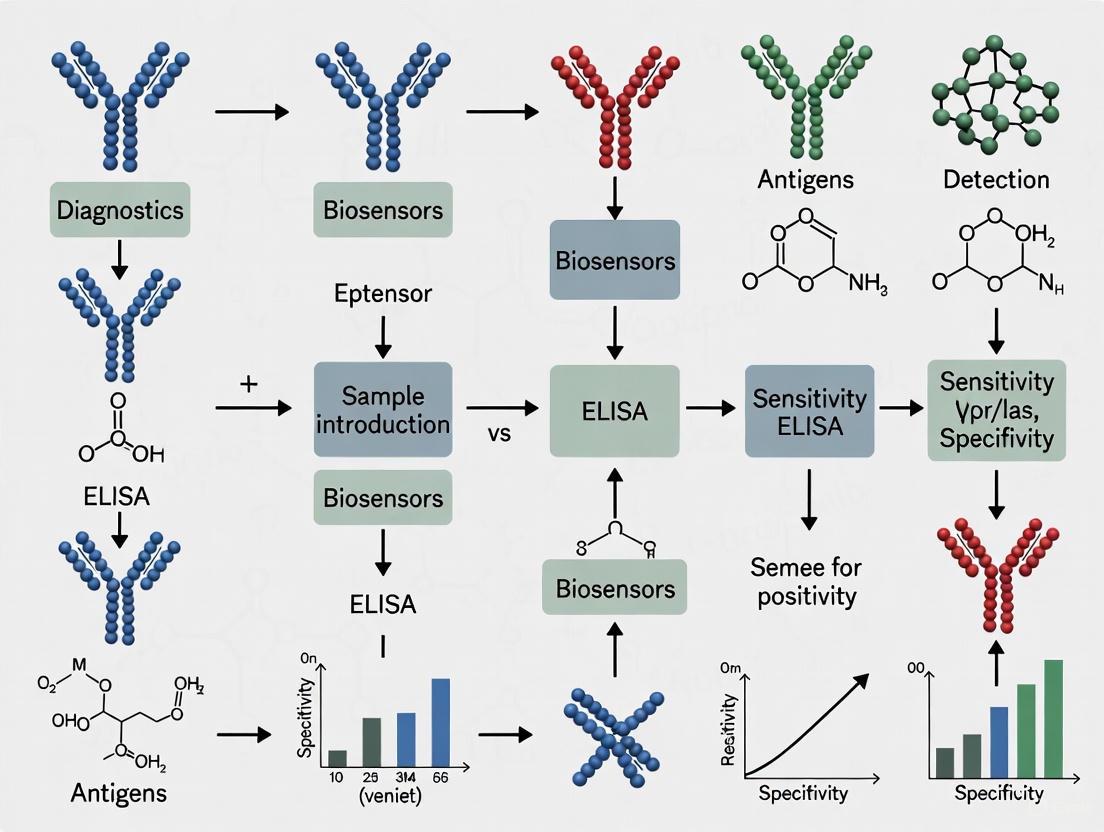
This article explores the evolving diagnostic landscape where advanced biosensors are increasingly challenging the long-standing dominance of Enzyme-Linked Immunosorbent Assay (ELISA).
Beyond ELISA: The Rise of Biosensors in Modern Diagnostic and Drug Development
Abstract
This article explores the evolving diagnostic landscape where advanced biosensors are increasingly challenging the long-standing dominance of Enzyme-Linked Immunosorbent Assay (ELISA). Targeted at researchers, scientists, and drug development professionals, it provides a comparative analysis of these technologies. We examine the foundational principles of both platforms, highlight cutting-edge biosensor methodologies and their applications in therapeutic drug monitoring and infectious disease diagnosis, and address key challenges in biosensor optimization and validation. By synthesizing current market trends and recent scientific advances, this review offers a forward-looking perspective on the integration and replacement of established immunoassays by next-generation biosensing platforms in biomedical research and clinical practice.
The Diagnostic Landscape: From Established ELISA to Emerging Biosensors
Despite the emergence of numerous novel diagnostic platforms, the Enzyme-Linked Immunosorbent Assay (ELISA) maintains its status as a cornerstone technology in clinical diagnostics and life sciences research. This enduring relevance is reflected in robust market projections, with the global ELISA market valued at USD 2.29 billion in 2025 and expected to reach USD 3.63 billion by 2033, expanding at a compound annual growth rate (CAGR) of 5.98% [1]. More than 50 million ELISA tests are performed annually worldwide across clinical diagnostics, pharmaceuticals, and food safety, demonstrating massive utilization scale [1].
The technique's resilience stems from its proven reliability, reproducibility, and cost-effectiveness, making it indispensable for protein quantification, serological analysis, and biomarker detection. Even as biosensors and other emerging technologies present compelling advantages for point-of-care applications, ELISA continues to evolve through automation, multiplexing, and sensitivity enhancements—solidifying its role as the benchmark against which new technologies are measured [2] [3].
Market Analysis: Quantitative Assessment of ELISA's Dominance
Global Market Position and Regional Adoption Patterns
ELISA's market presence remains formidable, with distinct geographical and segment-based growth patterns. North America continues to lead, accounting for 42.23% of the 2024 market share, supported by advanced healthcare infrastructure and high R&D investment [3]. The Asia-Pacific region, however, demonstrates the most dynamic growth, projected to advance at a CAGR of 7.06% during 2026–2033, driven by expanding healthcare access and increasing infectious disease surveillance [1].
Table 1: Global ELISA Market Forecast and Regional Analysis
| Region | Market Share (2024) | Projected CAGR (2026-2033) | Key Growth Drivers |
|---|---|---|---|
| North America | 42.23% | 5.69% (U.S. specific) | Advanced healthcare infrastructure, high R&D expenditure, premium pricing for specialized assays [1] [3] |
| Europe | Significant share | Balanced growth | Stringent quality standards under IVDR, automation upgrades, EU-supported modernization grants [3] |
| Asia-Pacific | Growing share | 7.06% | Healthcare modernization initiatives (e.g., China's "Healthy China 2030"), expanding insurance coverage, rising infectious disease testing [1] [3] |
| Latin America, Middle East & Africa | Emerging share | Incremental gains | NGO-driven disease surveillance programs, economic stabilization, expanding installed base [3] |
Segment-Based Performance and Growth Metrics
The ELISA ecosystem demonstrates varied growth patterns across different product types, techniques, and end-user segments. Consumables generated 47.40% of market revenue in 2024, leveraging their recurring-revenue profile, while instruments are forecast to grow at a faster CAGR of 7.12% as laboratories increasingly pursue automation [3].
Table 2: ELISA Market Segmentation and Performance Metrics
| Segment | Category | Market Share/Performance | Remarks |
|---|---|---|---|
| Product Type | Kits & Reagents | 47.40% of 2024 market [3] | Recurring revenue model, broad menu coverage |
| Instruments | CAGR of 7.12% [3] | Driven by automation demand; high-capacity analyzers to reach USD 1.62 billion by 2030 [3] | |
| Assay Technique | Sandwich ELISA | 36.15% of 2024 revenue [1] [3] | Preferred for large protein detection due to dual-antibody specificity |
| Competitive ELISA | CAGR of 7.39% [1] [3] | Growing for small molecule quantification in pharmaceutical PK studies | |
| Application | Clinical Diagnostics | 56.80% of 2024 sales [1] [3] | Volume leader in infectious disease panels; steady demand in hormone testing |
| Pharmaceutical & Biotech Testing | Fastest CAGR of 7.68% [1] [3] | Driven by biologics pipeline and biosimilar comparability requirements | |
| End User | Diagnostic Laboratories | 30.30% of 2024 revenues [1] [3] | High throughput capacity, widespread automation |
| Pharmaceutical & Biotechnology Companies | Fastest CAGR of 7.97% [1] [3] | Escalating biomarker validation and lot-release testing |
Technological Evolution: The ELISA 2.0 Revolution
Next-Generation ELISA Platforms
The emergence of "ELISA 2.0" technologies represents a significant evolution in immunoassay capabilities, addressing many limitations of conventional formats. The next-generation ELISA market is predicted to grow at a CAGR of 9.6% from 2025-2034, substantially outpacing the traditional ELISA market [2]. These advanced platforms incorporate digital detection, single-molecule sensing, and nanomaterials to achieve ultra-sensitive biomolecule analysis [2].
Key technological advancements include the replacement of traditional chromogenic substrates with fluorogenic, electrochemiluminescent, and qPCR-based signal detection systems, which provide superior quantification and detection of low-abundance biomarkers essential for early disease diagnosis [2]. Furthermore, miniaturized and microfluidic-based ELISA systems are gaining traction, offering reduced reagent consumption, shorter assay times, and lower operational costs—making them particularly beneficial for point-of-care diagnostics and resource-limited settings [4].
Automation and High-Throughput Systems
Automation represents perhaps the most transformative development in ELISA technology, with the automated ELISA system market expected to grow from USD 14.27 billion in 2025 to USD 23.08 billion by 2033, at a CAGR of 8.34% [5]. Leading automated platforms can now process up to 960 wells per hour with integrated barcode tracking and AI-led result validation, cutting turnaround time by more than 30% for large reference laboratories [3].
The business case for automation is compelling: cost-benefit analyses in U.S. hospital chains show a two-year payback period when daily test load exceeds 1,500 samples [3]. This efficiency is achieved through integrated workstations that combine pipetting systems, washers, shakers, and incubators—significantly reducing manual intervention and variability [4].
Diagram 1: ELISA workflow evolution from traditional to next-generation methods shows the integration of advanced detection technologies and automation, enhancing throughput and sensitivity.
Experimental Protocols: Core Methodologies and Advanced Applications
Standardized Sandwich ELISA Protocol
The sandwich ELISA remains the most widely used format, representing 36.15% of the global ELISA market in 2024 [1] [3]. The following detailed protocol references established methodologies that have been optimized through decades of application:
Day 1: Coating and Blocking
- Coating: Dilute capture antibody in carbonate-bicarbonate buffer (pH 9.6) to optimal concentration (typically 1-10 μg/mL). Add 100 μL per well to a 96-well microplate. Incubate overnight at 4°C or for 2 hours at 37°C.
- Washing: Wash plate three times with PBS or Tris-buffered saline containing 0.05% Tween-20 (TBST) using an automated microplate washer. Proper washing is critical to reduce background signal.
- Blocking: Add 200-300 μL of blocking buffer (e.g., 1% BSA, 5% non-fat dry milk, or proprietary commercial blockers) per well. Incubate for 1-2 hours at room temperature. Wash plate three times with wash buffer.
Day 2: Antigen Capture and Detection
- Sample Incubation: Prepare standard curve using serial dilutions of known antigen concentration. Add 100 μL of standards, samples, and appropriate controls to designated wells. Incubate for 2 hours at room temperature or 37°C. Wash plate three times.
- Detection Antibody: Add 100 μL of biotinylated or enzyme-conjugated detection antibody diluted in blocking buffer. Incubate for 1-2 hours at room temperature. Wash plate three times.
- Enzyme Conjugation (if required): For biotinylated detection antibodies, add 100 μL of streptavidin-HRP conjugate diluted according to manufacturer specifications. Incubate for 30-60 minutes at room temperature. Wash plate three times.
- Signal Development: Add 100 μL of substrate solution (TMB for HRP, pNPP for AP). Incubate for 15-30 minutes, protecting from light.
- Stop and Read: Add 50-100 μL of stop solution (e.g., 1M H₂SO₄ for TMB). Read absorbance immediately at appropriate wavelength (450nm for TMB, 405nm for pNPP).
Advanced Multiplex ELISA Protocol
Multiplex ELISA panels are experiencing rapid adoption, particularly in immunotherapy monitoring, where they can reduce sample volume requirements by 80% compared with sequential single-analyte tests [3]. These advanced applications require specialized reagents and instrumentation:
Methodology:
- Bead-Based Multiplexing: Utilize magnetic or polystyrene beads conjugated with capture antibodies for multiple analytes. Each bead set contains distinct fluorescent signatures for identification during analysis.
- Sample Incubation: Incubate sample with mixed bead sets for simultaneous capture of multiple antigens. This step typically requires 1.5-2 hours with continuous shaking.
- Detection: Add biotinylated detection antibody mixture, followed by streptavidin-phycoerythrin conjugate for signal amplification.
- Analysis: Use a multiplex array reader capable of distinguishing bead populations and measuring fluorescence intensity. Data analysis requires specialized software to generate standard curves and calculate concentrations for each analyte.
Table 3: Essential Research Reagent Solutions for Advanced ELISA Applications
| Reagent Category | Specific Examples | Function and Application Notes |
|---|---|---|
| Capture & Detection Antibodies | High-affinity recombinant antibody pairs, anti-idiotypic antibodies [1] | Critical for assay specificity; recombinant antibodies reduce cross-reactivity concerns and improve lot-to-lot consistency |
| Signal Detection Systems | Chemiluminescent substrates, electrochemiluminescent reporters, fluorogenic systems [2] | Provide enhanced sensitivity and broader dynamic range compared to traditional colorimetric substrates |
| Solid Phase Innovations | Multiplex bead arrays, paper-based substrates, microfluidic chips [2] [4] | Enable simultaneous multi-analyte detection or point-of-care applications through novel platform designs |
| Standardization & QC Materials | Recombinant antigen standards, QC sera, validation panels [3] | Essential for assay validation, standardization, and maintaining regulatory compliance |
Comparative Analysis: ELISA Versus Emerging Biosensor Technologies
Performance Benchmarking and Complementary Applications
While biosensors offer compelling advantages for point-of-care testing, ELISA maintains distinct benefits that ensure its continued relevance in core laboratory settings. The following comparative analysis contextualizes their relative strengths:
Sensitivity and Dynamic Range: Traditional colorimetric ELISA typically detects biomarkers in the picogram-per-milliliter range, while next-generation platforms incorporating digital ELISA and advanced signal amplification can achieve subfemtomolar detection limits [2]. Biosensors, particularly electrochemical variants, can offer comparable or superior sensitivity but often with more limited dynamic range in practical applications [6] [7].
Multiplexing Capability: Conventional ELISA is fundamentally a single-analyte technique, though multiplex bead-based systems now enable quantification of up to 50 analytes from a single 25 μL sample [3]. Biosensors increasingly incorporate multi-analyte detection through array formats or multi-modal approaches, though these often remain in development phases [8].
Throughput and Automation: Automated ELISA workstations represent mature, high-throughput solutions processing hundreds to thousands of samples daily with minimal manual intervention [4] [3]. Biosensor systems typically prioritize rapid single tests rather than high-volume processing, making them complementary rather than directly competitive for high-throughput laboratory environments [6].
Regulatory Status and standardization: ELISA maintains an extensive foundation of FDA-cleared protocols and standardized validation frameworks, particularly advantageous for pharmaceutical applications and clinical diagnostics [3]. Many biosensor platforms remain in research and development phases, facing significant translational challenges in achieving regulatory approval and standardization [7] [8].
Diagram 2: Comparative analysis of ELISA versus biosensor platforms highlights complementary strengths, suggesting coexistence rather than replacement in the diagnostic landscape.
Market Position and Adoption Trajectory Analysis
The commercial landscape further illuminates the relationship between established ELISA technologies and emerging biosensor platforms. While biosensors represent a rapidly advancing field, several market indicators suggest ELISA's displacement is not imminent:
Financial Investment Patterns: Major IVD players allocated more than USD 2 billion to chemiluminescent immunoassay (CLIA) expansion during 2024-25, representing evolution within traditional immunoassay platforms rather than outright replacement [3]. Meanwhile, ELISA vendors are investing in hybrid systems that integrate chemiluminescent detection into existing ELISA footprints, enhancing performance while maintaining infrastructure compatibility [3].
Application-Specific Positioning: ELISA maintains dominance in high-volume routine testing (infectious serology, hormone monitoring) and pharmaceutical quality control, where standardized protocols and regulatory precedent favor established technologies [1] [3]. Biosensors find stronger footholds in emergency medicine, resource-limited settings, and specialized monitoring applications where speed, portability, and minimal sample requirements outweigh standardization benefits [6] [9].
Technology Integration Trends: Rather than straightforward replacement, convergence is evident through technologies like digital ELISA, which incorporates single-molecule counting approaches traditionally associated with biosensors into the fundamental ELISA workflow [2] [10]. This hybridization demonstrates how competitive pressures are driving evolution rather than obsolescence in the ELISA market.
ELISA maintains a formidable position in the diagnostic and research landscape, characterized by steady market growth, continuous technological evolution, and entrenched institutional adoption. The technology's resilience stems not from stagnation but from meaningful innovation—automation, sensitivity enhancements, and multiplexing capabilities that address its historical limitations while preserving core advantages of standardization and reproducibility.
The narrative of biosensors "replacing" ELISA oversimplifies a more nuanced reality of technological coevolution and market segmentation. ELISA continues to dominate high-throughput, centralized laboratory settings where its standardized protocols, extensive menu, and cost-efficiency remain compelling. Meanwhile, biosensors are establishing value in specialized applications requiring rapid results, point-of-care deployment, or continuous monitoring.
The future diagnostic landscape will likely feature complementary rather than competing technologies, with ELISA serving as the workhorse for standardized, high-volume testing, while biosensors address specialized needs at the care point and in resource-limited settings. This coexistence is already evident in the development of hybrid platforms that incorporate biosensor principles into ELISA-based frameworks, ensuring that this gold-standard methodology will continue to evolve and adapt to changing scientific and clinical needs.
The landscape of diagnostic testing is undergoing a fundamental transformation, moving from centralized laboratories toward decentralized, real-time analysis. This shift is driving a critical examination of conventional technologies like the Enzyme-Linked Immunosorbent Assay (ELISA) against emerging biosensor platforms that integrate biorecognition directly with transducers. ELISA has served as the immunoassay workhorse for decades, providing robust protein detection through enzymatic amplification in a multi-step, plate-based format. In contrast, modern biosensors combine a biological recognition element and a physicochemical transducer into a single integrated system, enabling direct, often label-free, and continuous measurement of analytes.
Framed within a broader thesis on whether biosensors are replacing ELISA in diagnostic research, this technical guide delves into the core principles of both technologies. It provides a detailed comparison of their operational mechanisms, performance parameters, and practical applications, offering researchers and drug development professionals a foundational understanding of their respective advantages and limitations. The transition from conventional methods to integrated systems is fueled by the demand for faster, simpler, and more point-of-care-appropriate diagnostics, a need that biosensors are uniquely positioned to address [11] [12].
Core Principles and Mechanisms
Traditional Immunoassay: The Case of ELISA
The Enzyme-Linked Immunosorbent Assay (ELISA) is a well-established, plate-based technique that detects and quantifies substances such as proteins, antibodies, and hormones. Its operation relies on specific antigen-antibody binding and an enzymatic reaction to produce a measurable, typically colorimetric, signal. The process is indirect, meaning the signal generation is separate from the binding event itself, and requires multiple liquid handling and washing steps.
Key Operational Steps in a Sandwich ELISA:
- Coating: A capture antibody is immobilized onto a solid surface, usually a polystyrene microplate well.
- Blocking: The well is coated with a non-reactive protein (e.g., Bovine Serum Albumin or casein) to prevent non-specific binding of other proteins to the surface.
- Sample Incubation: The sample containing the target antigen is added. If present, the antigen binds to the capture antibody.
- Washing: Unbound components are washed away.
- Detection Antibody Incubation: A second, enzyme-conjugated antibody is added, which binds to a different epitope on the captured antigen, forming a "sandwich."
- Washing: A second wash removes any unbound detection antibody.
- Substrate Addition: An enzyme-specific substrate is added. The enzyme converts the substrate into a colored product.
- Signal Measurement: The intensity of the color, proportional to the amount of antigen in the sample, is measured using a plate reader.
This multi-step workflow is technically straightforward but time-consuming and reagent-intensive. Advances have led to "next-generation ELISA" platforms that incorporate nanomaterials, digital detection, and microfluidics to improve sensitivity, speed, and multiplexing capabilities [2].
Integrated Biorecognition-Transducer Systems: Biosensors
Biosensors are defined as analytical devices that integrate a biological recognition element (bioreceptor) with a transducer within a single platform. The core principle is the direct conversion of a biological binding event into a quantifiable electronic signal [12].
Essential Components of a Biosensor:
- Bioreceptor: This element confers specificity by binding the target analyte. Common types include:
- Antibodies: Used in immunosensors, offering high specificity and affinity [11].
- Enzymes: Used in catalytic biosensors, where the enzyme-target interaction generates a product [13].
- Nucleic Acids: Used in genosensors for detecting complementary DNA/RNA sequences [13].
- Aptamers: Short, single-stranded DNA or RNA oligonucleotides selected for high affinity to specific targets [13].
- Molecularly Imprinted Polymers (MIPs): Synthetic polymers that mimic antibody binding sites [13].
- Transducer: This component converts the biorecognition event into a measurable signal. The primary types are:
- Electrochemical: Measures changes in electrical properties (current, potential, impedance) due to the binding event. This is the most common transducer type, widely used in glucose monitors [11] [14].
- Optical: Detects changes in light properties (wavelength, intensity, polarisation), such as in fluorescence- or surface plasmon resonance-based sensors [11] [15].
- Piezoelectric: Measures changes in mass via frequency shifts on a crystal surface (e.g., Quartz Crystal Microbalance) [11].
- Thermometric: Measures changes in enthalpy (heat) from a biochemical reaction [12].
A key distinction from ELISA is the integration of the bioreceptor and transducer, which allows for simplified workflows, real-time monitoring, and miniaturization for point-of-care use. Immunosensors, a major category of biosensors, function similarly to immunoassays but perform the antigen-antibody interaction and signal detection within the same unified platform [11].
Comparative Analysis: Performance and Metrics
The choice between ELISA and integrated biosensor systems depends on the specific application requirements. The following table summarizes a direct comparison of key performance and operational metrics.
Table 1: Comparative Technical Analysis: ELISA vs. Integrated Biosensor Platforms
| Parameter | Traditional ELISA | Integrated Biosensor (General) | Context & Implications |
|---|---|---|---|
| Assay Time | 1 to 8 hours [11] | Several seconds to 30 minutes [11] [16] | Biosensors enable rapid decision-making, crucial for point-of-care testing. |
| Throughput | High (96/384-well plates) | Typically low to medium; advancing via multiplexing [17] | ELISA remains dominant for batch analysis in centralized labs. |
| Sensitivity | High (picomolar range) | Very High (femtomolar to attomolar possible) [2] [17] | Advanced biosensors (e.g., digital ELISA) push detection limits for low-abundance biomarkers. |
| Specificity | High (dependent on antibody pair) | High (depends on bioreceptor: antibody, aptamer, etc.) [13] | Both can achieve high specificity, but biosensors are more vulnerable to signal noise from non-specific adsorption [11]. |
| Multiplexing Capability | Low (separate wells needed) | High (multiple bioreceptors on a single chip) [2] [17] | Biosensors are superior for profiling complex biomarker panels from a single sample. |
| Sample Volume | Microliters to milliliters | Microliters to nanoliters (pL-nL range) [12] | Biosensors are ideal for precious or volume-limited samples (e.g., neonatal care). |
| Workflow & Automation | Multi-step, manual; can be automated with large systems | Single-step, "sample-in-answer-out" potential [17] | Biosensor workflow is significantly simpler, requiring less training. |
| Real-time Monitoring | No (end-point measurement) | Yes (for many transducer types) [11] | Biosensors allow for continuous monitoring (e.g., wearable sensors). |
| Cost & Accessibility | Low cost per test, but requires expensive plate readers | Higher cost per device, but lower cost per test at scale; reader can be handheld [15] [16] | Biosensors can be more economical for decentralized, frequent testing. |
Market and Adoption Trends
Quantitative market data reflects this technological transition. The global biosensors market, valued at USD 27-32 billion in 2024, is projected to grow at a compound annual growth rate (CAGR) of 7.9% to 9.3%, reaching USD 55-69 billion by 2032-2034 [15] [14]. This growth is largely driven by the high adoption of electrochemical biosensors for glucose monitoring and the rapid expansion of optical biosensors in oncology and infectious disease testing [15] [14].
In contrast, the traditional ELISA market, while still substantial, is experiencing more modest growth. It was valued at an estimated USD 2.29 billion in 2025 and is projected to grow at a CAGR of 5.98% to USD 3.63 billion by 2033 [1]. This indicates that while ELISA remains a critical and expanding tool, particularly in clinical diagnostics and pharmaceutical quality control, the growth engine of the diagnostics market is shifting toward novel, integrated sensor platforms.
Experimental Protocols and Methodologies
Detailed Protocol: Sandwich ELISA
This protocol is a standard method for detecting a protein target (antigen).
Research Reagent Solutions & Essential Materials: Table 2: Key Research Reagents for Sandwich ELISA
| Item | Function | Example & Notes |
|---|---|---|
| Polystyrene Microplate | Solid phase for antibody immobilization. | 96-well plates are standard. |
| Capture Antibody | Binds and immobilizes the target antigen. | High-affinity, specific monoclonal antibody. |
| Blocking Buffer | Prevents non-specific binding to unused plate surface. | 1-5% BSA or casein in PBS. |
| Target Antigen | The analyte of interest. | Prepared in a suitable matrix for standard curve. |
| Detection Antibody | Binds a second epitope on the captured antigen. | Biotin-conjugated or enzyme-conjugated. |
| Streptavidin-HRP | Amplification system if using biotinylated detection antibody. | Binds to biotin with high affinity. |
| Wash Buffer | Removes unbound reagents. | PBS or Tris buffer with a surfactant (e.g., 0.05% Tween 20). |
| Chromogenic Substrate | Enzyme substrate that produces a measurable color change. | TMB (3,3',5,5'-Tetramethylbenzidine) for HRP. |
| Stop Solution | Halts the enzyme-subactor reaction. | 1M or 2M Sulfuric acid. |
| Plate Reader | Measures the absorbance of the colored product. | Spectrophotometer. |
Methodology:
- Coating: Dilute the capture antibody in a carbonate/bicarbonate coating buffer (e.g., 50 mM, pH 9.6). Add 100 µL per well and incubate overnight at 4°C.
- Washing & Blocking: Aspirate the coating solution and wash the plate 3 times with Wash Buffer. Add 200-300 µL of Blocking Buffer per well and incubate for 1-2 hours at room temperature. Wash 3 times.
- Antigen Incubation: Add 100 µL of sample or antigen standard (in duplicate/singlet) to designated wells. Include blank wells with sample diluent only. Incubate for 2 hours at room temperature or 37°C. Wash 3 times.
- Detection Antibody Incubation: Add 100 µL of the diluted, conjugated detection antibody to each well. Incubate for 1-2 hours at room temperature. Wash 3 times. (Note: If using a biotinylated antibody, a subsequent incubation with Streptavidin-HRP is required).
- Signal Development: Add 100 µL of the chromogenic Substrate (e.g., TMB) to each well. Incubate in the dark for 15-30 minutes, monitoring color development.
- Stop & Read: Add 50-100 µL of Stop Solution to each well. The color will change from blue to yellow. Read the absorbance at 450 nm (for TMB) within 30 minutes using a plate reader.
- Data Analysis: Generate a standard curve from the known antigen concentrations and interpolate the concentration of unknown samples.
Detailed Protocol: Electrochemical Immunosensor
This protocol outlines a generic sandwich-type assay on an electrochemical platform, such as a screen-printed electrode functionalized with antibodies.
Research Reagent Solutions & Essential Materials: Table 3: Key Research Reagents for an Electrochemical Immunosensor
| Item | Function | Example & Notes |
|---|---|---|
| Transducer Chip/Electrode | Platform for bioreceptor immobilization and signal transduction. | Screen-printed gold or carbon electrode. |
| Capture Antibody | Binds and immobilizes the target antigen on the sensor surface. | Must be stable after immobilization. |
| Blocking Agent | Prevents non-specific adsorption to the sensor surface. | BSA, casein, or specialized polymers (e.g., POEGMA) [17]. |
| Target Antigen | The analyte of interest. | |
| Detection Antibody with Label | Binds the antigen; the label enables electrochemical detection. | Antibody conjugated to an enzyme (e.g., Horseradish Peroxidase) or a redox tag. |
| Electrochemical Reader (Potentiostat) | Applies potential and measures current. | Handheld or benchtop potentiostat. |
| Measurement Buffer | Electrolyte solution for electrochemical measurement. | Contains a redox mediator (e.g., [Fe(CN)₆]³⁻/⁴⁻). |
Methodology:
- Sensor Functionalization: Immobilize the capture antibody onto the electrode surface. This can be achieved through various methods: physical adsorption, covalent coupling (e.g., using EDC/NHS chemistry on a carboxylated surface), or affinity-based binding (e.g., to Protein A on a gold surface).
- Blocking: Incubate the sensor with a Blocking Agent (e.g., 1% BSA) for 30-60 minutes to passivate the surface. Rinse thoroughly with buffer to remove excess blocking agent.
- Antigen Incubation: Apply the sample (10-100 µL) containing the target antigen to the sensor surface. Incubate for 10-20 minutes to allow the antigen to bind to the capture antibody. Rinse with buffer to remove unbound material.
- Labeled Antibody Incubation: Apply the solution of the enzyme-labeled detection antibody. Incubate for 10-20 minutes to form the sandwich complex. Perform a final rinse to remove any unbound detection antibody.
- Electrochemical Measurement: Place the sensor in the Measurement Buffer containing the electrochemical substrate/mediator. For an amperometric sensor using HRP, apply a fixed potential (e.g., -0.05 V vs. Ag/AgCl) and measure the reduction current generated by the enzymatic turnover of the mediator (e.g., H₂O₂). The measured current is directly proportional to the amount of captured antigen.
- Data Analysis: The signal is measured directly by the potentiostat. A calibration curve is constructed from standards to quantify analyte concentration in unknown samples.
Diagram 1: ELISA Multi-step Workflow.
Diagram 2: Biosensor Simplified Workflow.
The Scientist's Toolkit: Key Reagent Solutions
Successful implementation of either technology relies on high-quality, specific reagents. The table below details essential materials, highlighting how the choice of bioreceptor influences platform design.
Table 4: Essential Research Reagents and Materials
| Category | Item | Core Function | Technology Context |
|---|---|---|---|
| Biorecognition Elements | Antibodies (Polyclonal/Monoclonal) | High-affinity, specific capture and detection of protein antigens. | The cornerstone of ELISA and many immunosensors. Critical for specificity. |
| Aptamers | Single-stranded DNA/RNA oligonucleotides that bind targets with antibody-like specificity. | A synthetic, stable alternative to antibodies in biosensors; produced via SELEX [13]. | |
| Molecularly Imprinted Polymers (MIPs) | Synthetic polymer matrices with tailor-made cavities for specific analyte binding. | An artificial, robust bioreceptor for biosensors, especially for small molecules or harsh conditions [13]. | |
| Signal Generation & Amplification | Enzyme Labels (HRP, ALP) | Catalyze the conversion of a substrate to a detectable product (color, light, current). | Central to ELISA signal amplification. Also used in many electrochemical and optical biosensors. |
| Redox Labels/Markers | Molecules that undergo oxidation/reduction at a specific potential, generating an electrical current. | Key for electrochemical biosensors (e.g., ferrocene derivatives, methylene blue). | |
| Fluorescent Dyes & Quantum Dots | Emit light at a specific wavelength upon excitation. | Used in advanced optical biosensors and next-gen ELISA for high sensitivity and multiplexing [2]. | |
| Surface Chemistry & Blocking | BSA/Casein | Proteins used to block unused binding sites on surfaces, minimizing non-specific binding. | Universal blocking agents in both ELISA and biosensors. |
| PEG-based Polymers (e.g., POEGMA) | Polymer brushes that create a hydrophilic, antifouling surface, physically preventing non-specific adsorption. | Advanced blocking for biosensors, reducing workflow by eliminating separate blocking and wash steps [17]. | |
| EDC/NHS Chemistry | Crosslinkers for covalent immobilization of bioreceptors (e.g., antibodies) onto carboxylated sensor surfaces. | Standard for functionalizing biosensor transducers (e.g., carbon electrodes) [17]. |
The question of whether biosensors are replacing ELISA in diagnostic research does not have a binary answer. Instead, the relationship is evolving into one of coexistence and specialization. ELISA remains the undisputed gold standard for high-throughput, batch-analysis in centralized laboratories due to its robustness, well-understood protocols, and low cost per test for large sample numbers. Its next-generation iterations are ensuring its relevance by incorporating biosensor-like enhancements.
However, integrated biorecognition-transducer systems are unequivocally displacing ELISA in applications where their core advantages are paramount: speed, simplicity, portability, continuous monitoring, and multiplexing. The rapid growth of the biosensors market, driven by electrochemical sensing and optical platforms, reflects this shift. For drug development professionals and researchers, the choice is no longer about which technology is superior in absolute terms, but about selecting the right tool for the specific biological question and operational context. The future of diagnostics lies not in the supremacy of one platform over the other, but in the strategic application of both to advance personalized medicine, point-of-care testing, and global health outcomes.
The diagnostic landscape is undergoing a significant transformation, characterized by the rapid expansion of biosensor technologies alongside the steady, sustained demand for traditional Enzyme-Linked Immunosorbent Assay (ELISA) methods. Biosensors are projected to grow at a remarkable CAGR of 8.7% to 9.3%, potentially reaching a market value of USD 55.78 to 69.67 billion by 2032-2034 [15] [18]. In contrast, the ELISA market demonstrates resilient, moderate growth with a CAGR of 6.32% to 7.37%, aiming for a projected size of USD 2.27 to 4.19 billion by 2030-2034 [19] [20]. This divergence stems from their complementary technological strengths and application niches. Biosensors are increasingly dominating point-of-care and continuous monitoring scenarios, while ELISA maintains its stronghold in high-throughput, centralized laboratory diagnostics and bioanalysis. This whitepaper provides an in-depth technical and market analysis for research scientists and drug development professionals navigating this evolving ecosystem.
Market Analysis: Quantitative Growth Projections
The following tables summarize the current market sizes and projected growth for both technologies, providing a clear, data-driven comparison.
Table 1: Global Market Size and Growth Projections
| Technology | Market Size (Base Year) | Projected Market Size (Forecast Year) | Compound Annual Growth Rate (CAGR) | Base Year | Forecast Period |
|---|---|---|---|---|---|
| Biosensors | USD 27.40 billion [15] | USD 55.78 billion by 2032 [15] | 9.3% [15] | 2024 | 2025-2032 |
| USD 30.25 billion [18] | USD 69.67 billion by 2034 [18] | 8.7% [18] | 2024 | 2025-2034 | |
| ELISA | USD 1.285 billion [19] | USD 2.271 billion by 2030 [19] | 7.37% [19] | 2022 | 2022-2030 |
| USD 2.42 billion [20] | USD 4.19 billion by 2034 [20] | 6.32% [19] | 2025 | 2025-2034 |
Table 2: Market Share and Growth by Application Segment
| Application | Biosensors | ELISA |
|---|---|---|
| Dominant Segment | Medical Applications (66.8% share) [18] | Clinical Diagnostics (56.8% share) [3] |
| Fastest-Growing Segment | Agriculture (CAGR 9.8%) [18] | Drug Development & Quality Control (CAGR 7.68%) [3] |
| Key Sub-Segments | - Continuous Glucose Monitoring [15]- Infectious Disease Testing [18]- Point-of-Care Testing [18] | - Infectious Disease Panels [3]- Oncology & Autoimmune Markers [3]- Therapeutic Drug Monitoring [3] |
Technological Comparison: Capabilities and Limitations
Biosensor Technologies
Biosensors are analytical devices that combine a biological recognition element with a physicochemical transducer to detect target analytes.
Key Strengths:
- Speed and Real-Time Analysis: Enable rapid, sometimes continuous, monitoring. For example, graphene field-effect transistor (GFET) biosensors can provide reliable results in minutes [21].
- Ultra-High Sensitivity: Advanced platforms can achieve femtomolar (fM) detection limits. GFET biosensors have demonstrated sensitivity down to 2.3 x 10² fg/mL for GFAP, a neurological biomarker [21].
- Point-of-Care Suitability: Their design supports miniaturization and use in non-laboratory settings [22].
- Dual-Modality for Enhanced Reliability: Emerging biosensors integrate two detection methods (e.g., electrochemical and optical) to cross-validate results, reducing false positives/negatives and improving accuracy in complex biological matrices [8].
Inherent Limitations:
- Signal Stability: Biorecognition elements can suffer from short lifetimes and low stability, affecting device longevity [15].
- Calibration and Miniaturization Challenges: Maintaining accuracy in miniaturized devices is difficult, and they can be susceptible to environmental interference [8].
- Commercialization Hurdles: High production costs for advanced sensors and device degradation over time can limit widespread adoption [15].
ELISA Technologies
ELISA is a well-established plate-based assay technique for detecting and quantifying soluble substances such as proteins, peptides, antibodies, and hormones.
Key Strengths:
- Proven Reliability and Standardization: Offers remarkable specificity and sensitivity, with extensively validated protocols that are favored for regulatory submissions [8] [3].
- High-Throughput Capability: Automated workstations can process up to 960 wells per hour, making it ideal for large sample volumes in centralized labs [3].
- Cost-Effectiveness: Low per-test cost, especially for high-volume runs [3].
- Technological Evolution: Innovations like nanoparticle-based ELISA (nano-ELISA), smartphone-based readouts, and multiplexed panels are enhancing its sensitivity, portability, and multiplexing capabilities [20].
Inherent Limitations:
- Time-Consuming Workflow: The multi-step process is manual labor-intensive and can take several hours to complete [8].
- Limited Multiplexing: Traditional ELISA is designed for single-analyte detection, though multiplex panels are emerging [3].
- Equipment Dependency: Requires well-equipped laboratory settings and is not suited for real-time or point-of-care testing [22].
Experimental Protocols: From Single to Dual-Modality Detection
Protocol: Standard Sandwich ELISA for Protein Detection
This protocol is a cornerstone for protein quantification in research and clinical labs [19] [3].
- Coating: Dilute the capture antibody in a carbonate/bicarbonate buffer (pH 9.6). Add 100 µL per well to a 96-well microplate and incubate overnight at 4°C.
- Washing and Blocking: Aspirate the coating solution and wash the plate three times with PBS containing 0.05% Tween 20 (PBST). Add 200-300 µL of a blocking buffer (e.g., 1-5% BSA or non-fat dry milk in PBS) per well and incubate for 1-2 hours at room temperature to cover non-specific binding sites.
- Sample and Standard Incubation: Wash the plate three times with PBST. Add 100 µL of the sample or standard (serially diluted in a suitable matrix) to respective wells. Incubate for 2 hours at room temperature or 37°C.
- Detection Antibody Incubation: Wash the plate three times. Add 100 µL of the biotinylated or enzyme-conjugated detection antibody per well. Incubate for 1-2 hours at room temperature.
- Enzyme Conjugate Incubation (if using biotin-streptavidin system): Wash the plate three times. Add 100 µL of Streptavidin-Horseradish Peroxidase (HRP) conjugate diluted in blocking buffer. Incubate for 30-60 minutes at room temperature, protected from light.
- Signal Development: Wash the plate 3-5 times. Add 100 µL of a colorimetric substrate (e.g., TMB for HRP) to each well. Incubate in the dark for 5-30 minutes until color development is observed.
- Reaction Stop and Reading: Add 50-100 µL of a stop solution (e.g., 1M sulfuric acid for TMB) to each well. Measure the absorbance immediately using a microplate reader at the appropriate wavelength (e.g., 450 nm for TMB).
Protocol: Fabrication of a Graphene Field-Effect Transistor (GFET) Biosensor
This protocol details the creation of an ultrasensitive biosensor for direct, label-free detection [21].
- Chip Preparation: Use a commercially available GFET chip (e.g., Graphenea's S20).
- Surface Functionalization: Modify the graphene surface by incubating with a linker molecule, 1-pyrenebutyric acid N-hydroxysuccinimide ester (PBASE), which non-covalently attaches to graphene via π-π stacking.
- Bioreceptor Immobilization: Incubate the PBASE-modified GFET with a solution containing the specific antibodies (e.g., GFAP antibodies) for the target analyte. The NHS ester group on PBASE reacts with primary amines on the antibodies, covalently immobilizing them.
- Blocking: Treat the sensor with a blocking agent (e.g., BSA or ethanolamine) to passivate any remaining non-specific binding sites on the graphene surface.
- Measurement and Detection: Place the functionalized GFET in a flow cell or measurement chamber. Monitor the source-drain current of the graphene device while applying a liquid-gate voltage. Introduce the patient sample (e.g., blood plasma). The binding of the target analyte to the immobilized antibodies causes a shift in the Dirac point of the graphene, which is reflected as a measurable change in the source-drain current. Reliable detection can be achieved in minutes.
Protocol: Dual-Modality Electrochemical and Optical Biosensor
This advanced protocol integrates two detection methods for cross-validation [8].
- Substrate Fabrication: Fabricate a sensor electrode (e.g., gold or ITO) with integrated optical capabilities.
- Nanomaterial Decoration: Decorate the electrode surface with a nanocomposite designed to provide both electrochemical and optical signals. This could include:
- Bioreceptor Immobilization: Immobilize the recognition element (antibodies, aptamers) onto the nanocomposite-modified surface.
- Dual-Modality Measurement:
- Electrochemical Measurement: Perform electrochemical techniques (e.g., electrochemical impedance spectroscopy or amperometry) to measure the electrical signal change upon analyte binding.
- Optical Measurement: Simultaneously or sequentially, excite the sensor with the appropriate light source and measure the resulting optical signal (e.g., fluorescence intensity, SERS spectrum, or photoluminescence) [8] [23].
- Data Correlation: Cross-correlate the data from both transduction methods. The electrochemical signal provides quantitative information, while the optical signal offers a means of validation and can enhance sensitivity through mechanisms like quenching and recovery.
Diagram 1: Dual-modality biosensor workflow for cross-validation.
The Scientist's Toolkit: Essential Research Reagents and Materials
Table 3: Key Reagent Solutions for Biosensor and ELISA Development
| Item | Function | Application Examples |
|---|---|---|
| PBASE Linker | A pyrene-based linker for non-covalent functionalization of graphene surfaces via π-π stacking. The NHS ester end group reacts with amine groups on biomolecules. | Immobilization of antibodies on GFET biosensors [21]. |
| Gold Nanoparticles (AuNPs) | Nanomaterials used to enhance electron transfer in electrochemical sensors and act as plasmonic cores for optical (e.g., SERS) detection. | Signal amplification in electrochemical immunosensors [23]. |
| Biotin-Streptavidin System | A high-affinity binding pair used for signal amplification. Biotin binds to the detection antibody, and enzyme-conjugated streptavidin is added subsequently. | Standard and advanced ELISA protocols [20]. |
| TMB (3,3',5,5'-Tetramethylbenzidine) | A chromogenic substrate for Horseradish Peroxidase (HRP). Yields a soluble blue product that turns yellow when stopped with acid. | Colorimetric detection in ELISA and some biosensors [3]. |
| Quantum Dots (QDs) | Semiconductor nanocrystals with size-tunable fluorescence emission. Used as highly bright and photostable labels. | Optical signal generation in dual-modality biosensors [8] [23]. |
| Recombinant Antibodies | Engineered antibodies produced in vitro, offering high affinity, specificity, and lot-to-lot consistency. | Critical biorecognition elements in both ELISA and biosensors to improve specificity and reduce cross-reactivity [3]. |
The prevailing narrative is not a simple replacement of ELISA by biosensors but a strategic market segmentation and technological coexistence. Biosensors, with their exceptional growth rate, are undeniably the future of decentralized, real-time, and continuous monitoring diagnostics, addressing critical needs in personalized medicine and rapid infectious disease screening [15] [18]. However, ELISA remains an indispensable pillar of centralized, high-throughput laboratory testing, bolstered by its proven reliability, low cost-per-test, and continuous evolution through automation and multiplexing [20] [3].
For researchers and drug development professionals, the strategic implication is clear: the choice between these technologies is context-dependent. Biosensors should be leveraged for applications demanding speed, portability, and continuous data. ELISA remains the optimal choice for high-volume, multi-analyte profiling in controlled laboratory environments. The future diagnostic ecosystem will be hybrid, integrating the strengths of both these powerful technologies to advance biomedical research and patient care.
Diagram 2: Diagnostic technology application landscape.
The enzyme-linked immunosorbent assay (ELISA) has long been regarded as the gold standard for protein biomarker detection in research and clinical diagnostics due to its robustness, specificity, and adaptability [24]. However, the evolving demands of modern medicine and research—including the need for higher sensitivity, faster results, and point-of-care applications—have accelerated the development of advanced biosensing technologies [7] [6]. This whitepaper examines the current relationship between traditional ELISA methodologies and emerging biosensor platforms within pharmaceutical and diagnostic research. The central question remains: are biosensors positioned to completely replace ELISA, or is the relationship more nuanced, characterized by coexistence and supplementation? The evidence suggests a gradual but definitive succession, where biosensors are supplanting ELISA in applications demanding ultra-sensitive, rapid, and high-throughput analysis, while ELISA retains its foothold in standardized, bulk testing environments. This transition is particularly evident in fields such as neurodegenerative disease research and vaccine development, where the limitations of conventional ELISA have become increasingly apparent [7] [25].
Technical Comparison: ELISA vs. Biosensors
Fundamental Limitations of Conventional ELISA
The sandwich ELISA procedure, while robust, faces inherent limitations that constrain its application in next-generation diagnostics. A significant sensitivity gap exists between ELISA and nucleic acid tests; while the latter can achieve detection limits in the atto- to femtomolar range, conventional ELISA is typically limited to the pico- to nanomolar range [24]. This gap is primarily due to ELISA's reliance on passive diffusion for antigen-antibody binding, which requires long incubation times and offers limited potential for signal amplification [24]. Additionally, the methodology is often hampered by manual intervention during washing and incubation steps, introducing variability and extending assay times [24]. The random orientation of capture antibodies through passive adsorption onto polystyrene surfaces further reduces the number of functionally active antibodies, compromising immobilization efficiency and assay sensitivity [24].
Performance Benchmarking: Quantitative Data
Table 1: Comparative Performance Metrics of ELISA and Emerging Biosensor Technologies
| Technology | Typical Detection Limit | Assay Time | Multiplexing Capability | Key Advantages |
|---|---|---|---|---|
| Conventional ELISA | Picomolar to nanomolar [24] | Several hours [25] | Low | Gold standard, robust, high adaptability [24] |
| Electrochemical Biosensors | Femtomolar to picomolar [6] | Minutes [6] | Medium | Portability, cost-effectiveness, POC compatibility [6] |
| Optical Biosensors (SPR, BLI) | Femtomolar [26] | Minutes [25] | Medium to High | Label-free, real-time kinetics [26] |
| SIMOA | Femtomolar [26] | ~1-2 hours | High | Single-molecule detection, digital quantification [26] |
| CRISPR-Based Immunoassays | Attomolar [26] | <60 minutes [26] | Low | Extreme sensitivity, programmability [24] [26] |
Table 2: Market Adoption Trends for Diagnostic Technologies (2024-2025)
| Segment | Market Size (2024) | Projected CAGR | Primary Drivers |
|---|---|---|---|
| Global Biosensors Market | USD 27.40-30.25 Billion [15] [18] | 8.7%-9.3% (2025-2032) [15] [18] | Demand for POC testing, chronic disease monitoring [15] |
| Electrochemical Biosensors | 71.7% market share [18] | 8.7% [18] | Ubiquitous use in glucose monitoring [15] [18] |
| Optical Biosensors | - | Fastest growing segment [15] | Demand for non-invasive, real-time tools [15] |
Technological Evolution in Signaling Pathways
The following diagram illustrates the fundamental difference between the single-enzyme signal generation in ELISA and the diversified, often amplified, signaling mechanisms in modern biosensors.
Experimental Paradigms: Methodologies Driving the Transition
Case Study: BLI-ISA as a Direct ELISA Alternative in Vaccine Development
The Biolayer Interferometry Immunosorbent Assay (BLI-ISA) exemplifies the direct supplementation and succession of ELISA in vaccine research. This platform addresses critical ELISA limitations by reducing manual labor and cutting incubation time while maintaining strong correlation with ELISA endpoint titers [25]. The methodology enables rapid, high-throughput relative measurements of antigen-specific antibody levels, expressed in nm binding shift rather than traditional ELISA Units [25].
Table 3: Research Reagent Solutions for BLI-ISA Implementation
| Reagent/Material | Function in Assay | Technical Specifications |
|---|---|---|
| Biosensor Tips | Solid support for antigen immobilization | Protein A, Streptavidin, or Anti-Fc specific |
| Purified Antigen | Target for antibody capture | >90% purity, concentration 5-20 µg/mL |
| Test Serum Samples | Source of antigen-specific antibodies | Typically diluted 1:10 to 1:100 |
| Enzyme-Linked Secondary Antibody | Species-specific detection | HRP or AP-conjugated, optimized dilution |
| BLI Instrumentation | Real-time signal detection | Octet or similar platform |
Experimental Protocol:
- Antigen Immobilization: Hydrate biosensor tips and immobilize purified antigen via amine coupling or capture ligand (e.g., Streptavidin-biotin).
- Baseline Establishment: Establish a 60-second baseline in assay buffer.
- Antibody Loading: Load sample serum for 120-300 seconds to monitor association.
- Dissociation Phase: Transfer to assay buffer for 120 seconds.
- Data Analysis: Quantify maximum response during loading as the output.
This protocol reduces total assay time from several hours (ELISA) to under 10 minutes while providing real-time kinetic data unavailable from traditional ELISA [25].
Advanced Biosensing for Neurodegenerative Disease Biomarkers
Neurodegenerative disease (NDD) research demands exceptional sensitivity for detecting low-abundance biomarkers like amyloid-beta (Aβ) and alpha-synuclein in complex matrices. Optical biosensors have demonstrated particular success here, with platforms like SIMOA and CRISPR-based systems achieving detection limits up to 1,000 times lower than conventional ELISA [26].
Experimental Protocol: CRISPR-Based Immunoassay for Tau Protein Detection:
- Sample Preparation: Mix cerebrospinal fluid or plasma with antibody-conjugated magnetic beads specific for tau protein.
- CRISPR Complex Assembly: Pre-complex Cas12a enzyme with tau-specific guide RNA.
- Signal Generation: Add fluorescently-quenched nucleic acid reporters to the reaction.
- Detection: Measure fluorescence intensity (excitation 485 nm, emission 535 nm).
- Quantification: Calculate tau concentration from standard curve (0.1 fM to 1 nM).
This protocol leverages the specificity of immunoassays with the amplification power of CRISPR to achieve attomolar sensitivity, enabling detection of previously unmeasurable biomarker concentrations in easily accessible samples like blood serum [24] [26].
Decision Framework for Technology Selection
The following workflow aids researchers in selecting the appropriate technology based on their specific application requirements.
Market Reality and Adoption Trends
The global biosensors market, valued at USD 27.40-30.25 billion in 2024, demonstrates robust growth (CAGR of 8.7%-9.3% through 2032), significantly outpacing the broader in vitro diagnostics market [15] [18]. This expansion is particularly driven by electrochemical biosensors, which dominate commercial applications (71.7% market share), largely due to the widespread adoption of continuous glucose monitoring systems for diabetes care [18]. The optical biosensors segment is projected to grow at the fastest rate, supported by increasing demand for non-invasive, real-time diagnostic tools in oncology and infectious disease testing [15]. North America currently leads the market (44.77% share), with significant contributions from product innovations such as Abbott's Libre Sense and Dexcom's G7 continuous glucose monitoring systems [15]. The post-COVID era has further accelerated the shift toward at-home testing and decentralized diagnostics, creating fertile ground for biosensor adoption [15].
The relationship between ELISA and biosensors in research and diagnostics is best characterized as a gradual succession driven by compelling technological and economic factors. ELISA maintains relevance in applications where its robustness, standardization, and cost-effectiveness for high-volume testing remain advantageous. However, biosensors are unequivocally succeeding in applications demanding higher sensitivity, faster results, real-time monitoring, and point-of-care deployment. The transition is particularly evident in neurodegenerative disease research, where detection of low-abundance biomarkers is critical, and in vaccine development, where high-throughput kinetic analyses provide superior information content [7] [25] [26]. As biosensor technology continues to advance—with enhancements in multiplexing, miniaturization, and AI integration—this succession trajectory will likely accelerate, ultimately establishing biosensors as the primary technology for next-generation diagnostic applications while ELISA assumes a more specialized role in standardized reference testing.
Next-Generation Biosensing: Platforms Revolutionizing Detection
Electrochemical biosensors are revolutionizing the diagnostic landscape, emerging as powerful alternatives to traditional methods like the Enzyme-Linked Immunosorbent Assay (ELISA). While ELISA has been the gold standard for decades in laboratory-based protein detection, the growing demand for rapid, decentralized testing is accelerating the transition to point-of-care (POC) platforms. Electrochemical biosensors, which convert biological recognition events into measurable electrical signals, offer a compelling combination of high sensitivity, speed, portability, and cost-effectiveness [6] [27]. This whitepaper provides an in-depth technical analysis of these biosensors, detailing their core principles, advanced methodologies, and the specific application scenarios where they are poised to supersede conventional ELISA in diagnostics research and development.
The limitations of traditional diagnostic techniques, including ELISA, have become increasingly apparent in a world that demands rapid and accessible health monitoring. Methods such as viral culture, PCR, and ELISA often require advanced infrastructure, expensive instruments, highly trained personnel, and involve multi-step protocols that lead to long turnaround times [6] [28]. The COVID-19 pandemic underscored the urgent need for accurate, timely, and affordable diagnostic tools that can be deployed outside central laboratories [6].
The REASSURED criteria (Real-time connectivity, Ease of sample collection, Affordable, Sensitive, Specific, User-friendly, Rapid and robust, Equipment-free, and Deliverable to end-users) define the ideal characteristics for modern diagnostics [6]. Electrochemical biosensors are uniquely positioned to meet these criteria. The global biosensors market, valued at USD 32.64 billion in 2025 and projected to reach USD 68.72 billion by 2034, reflects this shift, driven significantly by the demand for POC testing [29]. This review explores the technological foundations underpinning this transition.
Technical Foundations and Comparative Analysis
Core Components and Operating Principle
An electrochemical biosensor is an integrated analytical device comprising three fundamental components:
- Biological Recognition Element: A bioreceptor (e.g., antibody, enzyme, aptamer, nucleic acid) that selectively binds to the target analyte [6] [27].
- Transducer: An electrochemical system (typically a set of electrodes) that converts the biorecognition event into a quantifiable electrical signal [6] [30].
- Signal Processor: A reader device that processes the raw electrical signal into a user-interpretable output, often incorporating data analysis capabilities [6].
The fundamental working principle involves the specific binding of the target analyte to the bioreceptor immobilized on the transducer surface. This binding event alters the electrochemical properties at the electrode-electrolyte interface, resulting in a measurable change in electrical parameters such as current, potential, or impedance [6] [27]. Techniques like Cyclic Voltammetry (CV), Differential Pulse Voltammetry (DPV), and Electrochemical Impedance Spectroscopy (EIS) are commonly used to interrogate these changes [6] [27].
Diagram 1: Core signal transduction pathway in electrochemical biosensors.
Electrochemical Biosensors vs. ELISA: A Quantitative Comparison
The following table summarizes the key performance and operational characteristics of electrochemical biosensors in direct comparison to the traditional ELISA platform.
Table 1: Comparative Analysis: Electrochemical Biosensors vs. ELISA
| Feature | Electrochemical Biosensors | Traditional ELISA |
|---|---|---|
| Assay Time | Minutes to a few hours [6] [30] | Several hours (2-8 hours) [28] [25] |
| Sensitivity | Very high (e.g., fM to pM range) [27] [31] | High (typically pM range) [28] |
| Throughput | Lower, suited for single or few tests | High, ideal for batch processing [32] |
| Portability | High; miniaturized, portable systems [6] [27] | Low; requires benchtop readers [32] |
| Sample Volume | Low (µL range) [27] | Higher (typically 50-100 µL per well) |
| Cost per Test | Low potential [6] [29] | Low to moderate, but requires expensive equipment |
| Ease of Use | Designed for simplicity; minimal training [6] | Requires trained laboratory personnel [32] |
| Multiplexing | Growing capability for multi-analyte detection [6] | Possible but complex and costly |
| Primary Application | Point-of-Care diagnostics, continuous monitoring [6] [29] | Centralized laboratory testing [32] |
The data shows that electrochemical biosensors outperform ELISA in speed, portability, and potential for decentralized use, while ELISA maintains an advantage in high-throughput batch analysis. A key innovation enhancing biosensor performance is the use of three-dimensional (3D) immobilization of capture probes. Materials like metal-organic frameworks (MOFs), covalent organic frameworks (COFs), 3D graphene foam, and hydrogels provide a larger surface area for probe attachment, significantly increasing the sensor's capacity to capture target analytes and thereby boosting its sensitivity [30] [31]. For instance, a COOH-functionalized 3D graphene foam immunosensor for the Alzheimer's biomarker Tau-441 achieved an exceptional limit of detection (LOD) of 0.14 fM [31].
Advanced Methodologies and Experimental Protocols
Protocol: Developing a 3D Nanomaterial-Based Immunosensor
This protocol outlines the key steps for fabricating a high-sensitivity electrochemical immunosensor, representative of current state-of-the-art research.
1. Electrode Functionalization with 3D Nanomaterial:
- Procedure: The working electrode (e.g., glassy carbon, gold) is modified with a 3D nanomaterial to create a high-surface-area scaffold. For example, a 3D graphene foam (3D-GF) can be drop-cast or electrodeposited onto the surface [30] [31]. Alternatively, a covalent organic framework (COF) suspension can be spin-coated to form a uniform thin layer [31].
- Rationale: The 3D structure drastically increases the number of available sites for subsequent antibody immobilization, which is a key factor in enhancing signal response [30].
2. Surface Activation and Bioreceptor Immobilization:
- Procedure: The nanomaterial surface is activated to facilitate covalent bonding with the bioreceptor. For a carboxylated surface (e.g., COOH-GF), this involves incubating with a solution of 1-Ethyl-3-(3-dimethylaminopropyl) carbodiimide (EDC) and N-Hydroxysuccinimide (NHS) for 30-60 minutes. This reaction forms amine-reactive NHS esters. The electrode is then incubated with a solution containing the specific capture antibody (e.g., anti-Tau antibody) [31].
- Rationale: EDC/NHS chemistry enables stable, covalent amide bond formation between the sensor surface and the antibody, reducing nonspecific binding and improving reproducibility [6] [31].
3. Blocking and Sample Incubation:
- Procedure: The remaining active sites on the electrode are "blocked" by incubating with an inert protein solution, such as 1% Bovine Serum Albumin (BSA) or casein, for ~1 hour. This step is critical to minimize background noise. The functionalized electrode is then incubated with the sample (e.g., serum, buffer spiked with antigen) for a specific time to allow the target antigen to bind to the captured antibody [30] [31].
- Rationale: Blocking ensures that the measured signal originates solely from the specific antigen-antibody interaction.
4. Electrochemical Measurement and Signal Readout:
- Procedure: The electrode is washed and transferred to an electrochemical cell containing a redox mediator (e.g., ([Fe(CN)_6]^{3-/4-})). The binding event is quantified using techniques like Electrochemical Impedance Spectroscopy (EIS) or Differential Pulse Voltammetry (DPV). EIS measures increased electron transfer resistance upon target binding, while DPV measures a decrease in Faradaic current [6] [31].
- Rationale: These techniques are highly sensitive to surface modifications, allowing for the quantification of the target analyte at ultra-low concentrations.
Diagram 2: Experimental workflow for biosensor fabrication.
The Scientist's Toolkit: Essential Research Reagents and Materials
Table 2: Key Reagent Solutions for Biosensor Development
| Item | Function in the Protocol | Example & Rationale |
|---|---|---|
| 3D Nanostructured Material | Provides a high-surface-area scaffold for probe immobilization. | 3D Graphene Foam or Covalent Organic Frameworks (COFs): Enhance electron transfer kinetics and probe loading capacity [30] [31]. |
| Crosslinker Chemistry | Enables covalent attachment of bioreceptors to the sensor surface. | EDC/NHS: A zero-length crosslinker that catalyzes amide bond formation between carboxyl and amine groups without becoming part of the bond [31]. |
| Biorecognition Element | Provides specificity by binding the target analyte. | Monoclonal Antibodies (for immunosensors) or Aptamers (single-stranded DNA/RNA oligonucleotides): Offer high specificity and stability; aptamers can be engineered for various targets [6] [28]. |
| Redox Mediator | Facilitates electron transfer in the electrochemical measurement. | Potassium Ferricyanide/K Ferrocyanide ([Fe(CN)₆]³⁻/⁴⁻): A common outer-sphere redox couple used to probe interfacial changes via EIS or DPV [6]. |
| Blocking Agent | Passivates the sensor surface to reduce non-specific adsorption. | Bovine Serum Albumin (BSA) or casein: Prevents false positive signals by occupying unused binding sites on the sensor surface [31]. |
The Road to Replacement: Drivers, Challenges, and Future Outlook
Key Drivers for Adoption
The transition towards biosensors is accelerated by several powerful trends:
- Demand for Decentralized Diagnostics: The POC testing segment is a dominant force in the biosensors market, driven by the need for faster clinical decision-making and personalized health management [29].
- Technological Convergence: The integration of synthetic biology tools (e.g., CRISPR-Cas, engineered aptamers) and artificial intelligence (AI) is creating a new generation of programmable, intelligent biosensors with enhanced specificity and the ability for multiplexed detection [28].
- Material Science Advances: Innovations in nanomaterials, such as graphene-AuNP composites and liquid metals for stretchable electronics, are continuously improving sensor sensitivity, stability, and enabling new form factors like wearables [27] [31].
Persistent Challenges and Limitations
Despite the promising outlook, electrochemical biosensors face hurdles on the path to widespread replacement of ELISA:
- Clinical Translation and Reproducibility: Achieving consistent, reproducible manufacturing of biosensors, particularly ensuring stable and uniform bioreceptor immobilization, remains a significant challenge for large-scale clinical deployment [6] [27].
- Matrix Interference: Complex biological samples (e.g., blood, serum) contain numerous components that can foul the sensor surface or cause non-specific binding, leading to inaccurate results. This often necessitates sample pre-processing, which can negate the advantage of speed [28].
- Regulatory and Scalability Hurdles: Gaining regulatory approval for clinical use is a lengthy and costly process. Furthermore, scaling up production while maintaining high quality and low cost is non-trivial [6] [29].
Future Directions
The field is evolving towards fully integrated systems that combine sample preparation, detection, and data analysis into a single, automated device [27]. The rise of wearable and implantable biosensors for continuous health monitoring represents a fundamental shift from one-off testing to dynamic health tracking [29] [27]. Finally, the push for REASSURED-compliant devices will continue to drive innovation in affordability, connectivity, and ease of use for global health applications [6].
Electrochemical biosensors are undeniably leading the charge in the transformation of diagnostic technologies. Their superior speed, potential for miniaturization, and compatibility with point-of-care testing address critical limitations of established platforms like ELISA. While ELISA will likely retain its role in high-throughput, centralized laboratory settings for the foreseeable future, electrochemical biosensors are carving out a dominant and expanding niche in decentralized diagnostics, continuous monitoring, and rapid screening. For researchers and drug development professionals, mastery of biosensor technology is no longer a niche specialty but an essential competency for driving the future of precision medicine and global health.
Optical biosensors have emerged as a transformative class of diagnostic devices, offering sensitive, specific, and rapid detection of diseases that is increasingly challenging the dominance of traditional enzyme-linked immunosorbent assays (ELISA) in research and clinical diagnostics [33]. These biosensors combine a biological recognition element with a physicochemical transducer that converts biological interactions into measurable optical signals. The global biosensors market, valued at USD 34.5 billion in 2025, is projected to grow at a CAGR of 9.5% to reach USD 54.4 billion by 2030, with optical biosensors exhibiting the highest growth rate among all biosensor technologies [34]. This growth is largely fueled by technological advancements in surface-enhanced Raman scattering (SERS), surface plasmon resonance (SPR), and other plasmonic enhancement techniques that enable researchers to achieve detection limits previously unimaginable with conventional ELISA methodology.
The transition from conventional immunoassays to advanced biosensing platforms represents a paradigm shift in diagnostic philosophy. While ELISA has served as the gold standard for protein detection for decades, providing high selectivity and limits of detection to the picomolar level, it faces inherent limitations including multiple incubation and washing steps, lengthy procedures, and poor suitability for real-time monitoring [35]. Optical biosensors, particularly those leveraging SERS and SPR, address these limitations by enabling label-free detection, real-time monitoring of biomolecular interactions, and significantly reduced analysis times while maintaining exceptional sensitivity and specificity [36] [37].
Technical Foundations of SERS and SPR Biosensing
Surface-Enhanced Raman Scattering (SERS)
SERS is a powerful analytical technique that amplifies Raman scattering signals by factors as high as 10¹⁴ when molecules are adsorbed on plasmonic nanostructured surfaces [38]. This dramatic enhancement enables single-molecule detection, positioning SERS as one of the most sensitive analytical methods available. The enhancement mechanisms in SERS originate from two primary phenomena: electromagnetic enhancement and chemical enhancement [39].
Electromagnetic enhancement, the dominant mechanism, occurs when incident light interacts with noble metal nanoparticles (typically gold or silver), inducing collective oscillations of surface electrons known as surface plasmon resonance. This interaction creates highly localized electromagnetic fields at the junctions between nanoparticles, referred to as "hotspots," where Raman signals can be enhanced by many orders of magnitude [40]. Chemical enhancement, while contributing less significantly to overall signal amplification, arises from charge-transfer interactions between the adsorbed molecules and the substrate surface, which increase the Raman scattering cross-sections of the molecules [39].
SERS-based biosensing can be implemented through two primary approaches: label-free detection, which captures intrinsic molecular signals of analytes, and labeled detection using SERS nanotags, where Raman reporter molecules are attached to nanoparticles functionalized with targeting moieties like antibodies or aptamers [38]. The labeled approach is particularly valuable for multiplexed detection and in vivo imaging applications, as the narrow bandwidth of Raman peaks (typically 1-2 nm) enables simultaneous tracking of multiple biomarkers without spectral overlap [39].
Surface Plasmon Resonance (SPR)
SPR biosensors detect biomolecular interactions by measuring changes in the refractive index at the surface of a thin metal film (typically gold) when target analytes bind to immobilized recognition elements [36]. In the most common Kretschmann configuration, polarized light is directed through a prism onto a gold film, exciting surface plasmons at a specific resonance angle that is highly sensitive to changes in the local refractive index [37]. When biomolecular binding occurs on the sensor surface, the resonance angle shifts proportionally to the mass concentration of the bound analyte, enabling real-time, label-free monitoring of binding kinetics, affinity, and specificity without requiring secondary labels [36].
Recent advances in SPR biosensing have focused on enhancing sensitivity through the integration of two-dimensional (2D) nanomaterials including graphene, MXenes (Ti₃C₂Tₓ), and transition metal dichalcogenides (TMDCs) such as MoS₂, MoSe₂, WS₂, and WSe₂ [36] [37]. These materials enhance sensor performance through their exceptional optical properties, high surface-to-volume ratios that increase biomolecule loading capacity, and improved charge transfer efficiency. For instance, an SPR sensor incorporating MXene and graphene demonstrated exceptional sensitivity of 163.63 deg/RIU for detecting carcinoembryonic antigen (CEA), a critical cancer biomarker, significantly outperforming conventional SPR designs [37].
Performance Comparison: Optical Biosensors Versus Traditional ELISA
The displacement of ELISA by advanced optical biosensors is evidenced by dramatic improvements in key analytical performance metrics across multiple applications. The following table summarizes quantitative performance comparisons between conventional ELISA and emerging optical biosensing technologies:
Table 1: Performance Comparison of ELISA vs. Advanced Optical Biosensors
| Technology | Detection Limit | Analysis Time | Multiplexing Capacity | Key Applications |
|---|---|---|---|---|
| Traditional ELISA | ~pg/mL [35] | 2-5 hours [35] | Low (typically single-plex) | Clinical diagnostics, food safety, environmental monitoring [35] |
| SERS Biosensors | Single-molecule [38] [39] | Minutes [40] | High (10+ targets) [39] | Cancer diagnostics [39], pathogen detection [40] |
| SPR Biosensors | <0.01 IU/mL (Hepatitis B) [40] | Real-time (minutes) [36] | Moderate (4-8 targets) | Biomolecular interaction analysis, cancer cell detection [36] |
The performance advantages of optical biosensors extend beyond simple detection limits to encompass workflow efficiency and information content. For cancer diagnostics, SPR biosensors have demonstrated remarkable sensitivity in detecting cancerous cells, with one proposed sensor configuration achieving sensitivity of 342.14 deg/RIU for distinguishing blood cancer (Jurkat) cells from healthy cells [36]. Similarly, SERS-based immunoassays have detected Hepatitis B surface antigen with a calculated limit of detection of 0.01 IU/mL in human blood plasma, surpassing the capabilities of conventional ECL or ELISA methods [40].
For respiratory tract infection diagnostics, SERS-based lateral flow assays have simultaneously detected multiple pathogens including influenza A, influenza B, parainfluenza 1, 2, 3, and adenovirus with detection limits ranging from 0.030 to 0.040 pM, addressing a critical need for rapid, multiplexed pathogen identification [40].
Experimental Protocols and Methodologies
SERS-Based Immunoassay for Hepatitis B Detection
The following workflow illustrates a highly sensitive SERS immunoassay protocol implemented on a microfluidic chip for detecting Hepatitis B surface antigen (HBsAg) in human blood plasma [40]:
SERS Immunoassay Workflow
Step 1: SERS-Active Substrate Preparation A gallium nitride (GaN) substrate coated with Au-Ag is functionalized with a 6-amino-1-hexanethiol (AHT) monolayer to provide amine groups for antibody immobilization. The surface is then activated using EDC/NHS coupling chemistry to facilitate covalent attachment of capture antibodies specific to HBsAg [40].
Step 2: SERS Probe Synthesis Gold nanoflowers are synthesized and labeled with the Raman reporter molecule basic fuchsin, which exhibits strong affinity for gold nanostructures and generates intense SERS signals. The labeled nanoflowers are then conjugated with detection antibodies specific to HBsAg, creating SERS nanotags [40].
Step 3: Microfluidic Chip Integration The functionalized SERS substrate is incorporated into a microfluidic chip containing channels designed for efficient sample delivery and washing. The chip architecture minimizes sample volume requirements while maximizing interaction between target antigens and immobilized capture antibodies [40].
Step 4: Immunoassay Execution Blood plasma samples are introduced into the microfluidic chip. When HBsAg is present, it is captured by the immobilized antibodies on the substrate surface. The SERS nanotags then bind to the captured antigen, forming a sandwich immunoassay structure. Unbound materials are removed through washing steps [40].
Step 5: SERS Measurement The chip is interrogated using a portable Raman spectrometer with a 633 nm excitation laser. The characteristic SERS signal of basic fuchsin at 1178 cm⁻¹ is measured, with intensity proportional to HBsAg concentration [40].
Step 6: Data Analysis A calibration curve is generated by correlating SERS signal intensity at 1178 cm⁻¹ to HBsAg concentration, enabling quantitative determination of antigen levels in clinical samples with high specificity and a detection limit of 0.01 IU/mL [40].
SPR Biosensor Configuration for Cancer Cell Detection
The following protocol details the design and implementation of an SPR biosensor incorporating 2D materials for highly sensitive cancer cell detection [36]:
SPR Sensor Configuration
Sensor Fabrication: The SPR biosensor employs a Kretschmann configuration with the following layered structure optimized for detecting cancer cells (Jurkat, HeLa, and Basal) [36]:
- BK7 Prism: High-refractive-index prism for coupling incident light to surface plasmons
- ZnO Layer (50 nm): Zinc oxide layer that enhances biocompatibility and provides a suitable platform for subsequent layers
- Ag Layer (50 nm): Silver film that serves as the primary plasmonic material
- Si₃N₄ Layer (6 nm): Silicon nitride layer that improves adhesion and protects the silver layer
- WS₂ Monolayer: Tungsten disulfide transition metal dichalcogenide that significantly enhances sensitivity through its high surface area and exceptional optical properties
- Sensing Medium: Chamber containing the sample solution with target cancer cells
Measurement Procedure:
- The sensor is illuminated with p-polarized light at 633 nm wavelength through the BK7 prism while varying the angle of incidence
- The reflectance is measured as a function of incident angle to generate SPR dip curves
- Cancer cells in the sensing medium cause changes in the local refractive index, shifting the resonance angle
- The angular shift is quantified and correlated to cell concentration using the relationship: Sensitivity = Δθ/Δn (deg/RIU)
- The optimal configuration (BK7/ZnO/Ag/Si₃N₄/WS₂) demonstrated sensitivity of 342.14 deg/RIU for blood cancer (Jurkat) cells with a figure of merit (FOM) of 124.86 RIU⁻¹ [36]
Performance Optimization: The integration of 2D materials, particularly WS₂, significantly enhances sensor performance by increasing the electromagnetic field strength at the sensing interface and providing more binding sites for cell capture. Finite element method (FEM) simulations confirmed strong electric field distribution at the WS₂-sensing medium interface, explaining the substantially improved sensitivity compared to conventional SPR designs [36].
The Scientist's Toolkit: Essential Research Reagents and Materials
Successful implementation of SERS and SPR biosensing platforms requires carefully selected materials and reagents optimized for specific applications. The following table details essential components for developing high-performance optical biosensors:
Table 2: Essential Research Reagents and Materials for Optical Biosensors
| Category | Specific Examples | Function/Purpose | Key Characteristics |
|---|---|---|---|
| Plasmonic Nanomaterials | Gold nanoparticles, silver nanoparticles, gold nanoflowers, gold nanostars [40] [38] | Enhance electromagnetic field for SERS; transducer for SPR | Tunable plasmon resonance, biocompatibility (Au), high enhancement factors (Ag) [39] |
| 2D Materials | Graphene, MXene (Ti₃C₂Tₓ), WS₂, MoS₂ [36] [37] | Enhance sensitivity in SPR biosensors | High surface area, exceptional charge transfer, tunable bandgap [36] |
| Raman Reporters | Basic fuchsin, 4,4'-thiobisbenzenethiol (TBBT) [40] | Generate characteristic SERS signatures for detection | Strong affinity for metal surfaces, distinct Raman fingerprints, photostability [40] |
| Surface Functionalization | 6-amino-1-hexanethiol (AHT), EDC/NHS chemistry [40] | Immobilize biorecognition elements | Stable conjugation, oriented antibody attachment, minimal non-specific binding [40] |
| Biorecognition Elements | Antibodies, aptamers, oligonucleotides [40] [36] | Specific target capture | High affinity and specificity, stability under assay conditions [35] |
The Integration of Artificial Intelligence in Optical Biosensing
The convergence of artificial intelligence (AI) with optical biosensing represents a paradigm shift that is accelerating the displacement of traditional ELISA in research diagnostics. Machine learning and deep learning algorithms are now being deployed to address longstanding challenges in SERS and SPR data analysis, particularly for complex biological samples [33] [38].
AI algorithms, including convolutional neural networks (CNNs), random forests, and support vector machines, are dramatically improving the accuracy of spectral analysis by enabling automated feature extraction from complex SERS spectra that would be difficult to interpret using traditional statistical methods [38]. For instance, AI-powered SERS platforms can now distinguish subtle spectral patterns associated with different disease states, enabling phenotypic classification of samples without prior knowledge of specific biomarkers [38]. This capability is particularly valuable for early disease detection when specific biomarkers may not yet be established.
In SPR biosensing, AI algorithms are being employed to optimize sensor design parameters, analyze binding kinetics in multi-analyte environments, and compensate for non-specific binding effects that have traditionally complicated data interpretation [33]. The integration of AI with optical biosensors is creating a new generation of intelligent diagnostic systems capable of real-time decision making, significantly expanding their utility in point-of-care diagnostics and personalized medicine applications [33].
Optical biosensors leveraging SERS, SPR, and plasmonic enhancement technologies are unequivocally displacing traditional ELISA across numerous research and diagnostic applications. The demonstrated advantages in sensitivity, speed, multiplexing capability, and capacity for real-time monitoring position these technologies as the new frontier in bioanalysis. The integration of novel 2D materials has dramatically enhanced sensitivity, while AI-powered data analysis has addressed previous limitations in interpreting complex biological signals.
Despite these advancements, challenges remain in standardization, reproducibility, and clinical validation that must be addressed before optical biosensors fully replace ELISA in regulated diagnostic environments [33]. The transition from laboratory research to widespread clinical adoption will require continued refinement of fabrication protocols, establishment of standardized evaluation frameworks, and comprehensive validation against existing gold standards.
The future trajectory of optical biosensing points toward increased miniaturization, integration with wearable devices, and expanded multiplexing capabilities. As these technologies continue to evolve, they will undoubtedly unlock new possibilities in personalized medicine, point-of-care diagnostics, and fundamental biological research, ultimately fulfilling their potential to redefine the landscape of diagnostic testing.
The diagnostic landscape is undergoing a profound transformation, driven by innovations in biosensor technology and its novel recognition elements. Aptamers, molecularly imprinted polymers (MIPs), and anti-idiotype molecules are at the forefront of this shift, enabling the development of biosensors that challenge the long-standing dominance of enzyme-linked immunosorbent assay (ELISA). These elements offer distinct advantages in specificity, stability, and design flexibility, facilitating the creation of platforms with superior sensitivity, rapid response, and point-of-care (POC) potential. While next-generation ELISA formats are evolving in parallel, the unique properties of these novel bioreceptors are accelerating the development of electrochemical and optical biosensors. This progression signals a move away from traditional, centralized lab techniques toward decentralized, efficient, and highly precise diagnostic tools for critical disease management.
For decades, ELISA has been a cornerstone technique in biochemical detection, prized for its reliability in detecting antigens or antibodies in biological samples. The method relies on the specific binding of antibodies to their target antigens, with an enzyme-mediated colorimetric change providing quantification [41]. Despite its widespread use, conventional ELISA faces limitations, including prolonged assay times, the need for skilled personnel, and challenges in multiplexing and detecting low-abundance biomarkers [41] [2].
The growing demand for rapid, sensitive, and point-of-care diagnostics, particularly for conditions like sepsis, cancer, and viral infections, has catalyzed the search for alternative technologies. Biosensors, defined as analytical devices that combine a biological recognition element with a physicochemical detector, are the primary candidates poised to address these needs [42] [43]. The core of any biosensor is its biorecognition element, and recent advances have moved beyond traditional antibodies to engineer novel molecules with enhanced properties. Aptamers (single-stranded DNA or RNA oligonucleotides), MIPs (synthetic polymers with tailor-made recognition sites), and anti-idiotype molecules (which specifically target the unique antigen-binding region of an antibody) are paving the way for a new generation of diagnostic tools that offer a compelling alternative to ELISA-based methods [44] [45] [46].
Aptamers
Aptamers are single-stranded DNA or RNA oligonucleotides selected in vitro to bind specific targets, from small molecules to proteins and whole cells, with high affinity and specificity [44]. They are developed through a systematic evolution of ligands by exponential enrichment (SELEX) process.
- Key Advantages: Their primary benefits over antibodies include superior thermal stability, ease of chemical modification and synthesis, reusability, and lower production costs [44] [45]. A critical application is the development of anti-idiotype aptamers, engineered to bind the complementarity determining region (CDR) of a specific antibody, allowing them to distinguish a target therapeutic monoclonal antibody from naturally abundant immunoglobulins in the blood [44].
- Biosensor Integration: In electrochemical aptamer-based (E-AB) sensors, the conformational change of a surface-immobilized aptamer upon target binding alters the electron transfer efficiency of an attached redox probe, generating a measurable electrochemical signal without the need for washing steps or free redox probes in solution [44].
Molecularly Imprinted Polymers (MIPs)
MIPs are artificial receptors created by polymerizing functional monomers in the presence of a target molecule (the template). After template removal, cavities complementary to the target in size, shape, and functional groups remain within the polymer matrix [45] [46].
- Key Advantages: MIPs are highly durable, stable under harsh physical and chemical conditions, and cost-effective to produce. They are particularly useful for targets where biological receptors are unavailable or unstable [45].
- Biosensor Integration: MIPs are often used as synthetic bioreceptors in electrochemical sensors. Target binding to the MIP cavity can directly alter the electrical properties (e.g., impedance or capacitance) at the electrode-solution interface, enabling label-free detection [46].
Anti-Idiotype Molecules
Anti-idiotype molecules are antibodies or aptamers designed to specifically bind the unique idiotype (the antigen-binding site) of another antibody. This makes them powerful tools for monitoring therapeutic monoclonal antibodies (mAbs) [44].
- Key Advantages: Their exceptional specificity for the CDR allows for the precise quantification of a administered therapeutic mAb (e.g., bevacizumab) against a high background of endogenous human IgG [44].
- Biosensor Integration: Immobilized on a sensor surface, anti-idiotype aptamers serve as capture probes. Binding of the target mAb induces a measurable signal change, facilitating therapeutic drug monitoring [44].
Comparative Analysis of Novel vs. Traditional Elements
Table 1: Comparison of Recognition Elements Used in Diagnostic Assays
| Feature | Traditional Antibodies (ELISA) | Aptamers | Molecularly Imprinted Polymers (MIPs) | Anti-Idiotype Aptamers |
|---|---|---|---|---|
| Production | In vivo (animals) | In vitro (SELEX) | Chemical synthesis | In vitro (SELEX) |
| Stability | Moderate; sensitive to heat and pH | High; can be regenerated | Very high; robust to harsh conditions | High |
| Cost & Time | High cost, long production time | Lower cost, shorter production | Low cost, one-time synthesis | Moderate cost |
| Modification | Difficult | Easy chemical modification | Designed during polymerization | Easy chemical modification |
| Target Range | Proteins, antigens | Ions, small molecules, proteins, cells | Wide range, from small molecules to cells | Specific antibody idiotypes |
| Key Application | Conventional immunoassays | Electrochemical/optical biosensors, POC | Environmental monitoring, chemical sensing | Therapeutic drug monitoring |
Experimental Protocols: From Theory to Practice
Protocol 1: Developing an Anti-Idiotype Aptamer Sensor for Therapeutic Antibody Monitoring
This protocol details the fabrication of an electrochemical sensor for bevacizumab, a humanized therapeutic antibody, based on an anti-idiotype bivalent aptamer [44].
1. Principle: A bivalent anti-idiotype aptamer, labeled with a redox probe (e.g., methylene blue), is immobilized on a gold electrode. The aptamer is designed with two binding domains linked by a flexible spacer. Upon binding to the two CDRs of a bevacizumab molecule, the aptamer undergoes a significant conformational change. This alters the electron transfer efficiency of the redox probe, resulting in a measurable change in peak current during square wave voltammetry (SWV) without requiring a washing step [44].
2. Materials and Reagents:
- Bioreceptor: Anti-idiotype bivalent DNA aptamer (e.g., A14#1) with a thiol modification for gold-surface attachment and a redox probe label.
- Electrode: Gold disk electrode or screen-printed gold electrode.
- Buffer: 10 mM phosphate-buffered saline (PBS), pH 7.4.
- Target Analyte: Purified bevacizumab.
- Control Protein: Human IgG kappa chain.
- Apparatus: Potentiostat for SWV and electrochemical impedance spectroscopy (EIS).
3. Step-by-Step Methodology:
- Electrode Pretreatment: Clean the gold electrode with a standard piranha solution (Caution: highly corrosive) or via electrochemical cycling in sulfuric acid to ensure a clean surface.
- Aptamer Immobilization: Incubate the clean electrode with a solution of the thiol-modified bivalent aptamer for several hours to form a self-assembled monolayer (SAM) via gold-thiol chemistry.
- Blocking: Treat the aptamer-modified electrode with 6-mercapto-1-hexanol to backfill any uncovered gold sites, minimizing non-specific adsorption.
- Baseline Measurement: Perform SWV in a pure PBS buffer to record the baseline peak current of the redox probe.
- Sample Measurement: Incubate the electrode with the sample (e.g., buffer or diluted artificial serum spiked with bevacizumab) for a set time (e.g., 30 minutes). Perform SWV again in the same PBS buffer to measure the signal change.
- Detection and Analysis: Quantify the target concentration based on the relative change in SWV peak current. The sensor can detect bevacizumab in a physiologically relevant range of 1–100 nM [44].
Protocol 2: Fabricating an Aptamer-MIP Hybrid Sensor for Bacterial Detection
This protocol describes creating a highly sensitive electrochemical sensor for multiplexed detection of bacteria (Staphylococcus aureus and Escherichia coli) using a hybrid Aptamer-MIP bioreceptor [46].
1. Principle: The sensor leverages the synergistic "double recognition" of an aptamer and a MIP film on an electrode surface. Bacterial cells are first captured by the highly specific aptamer. Simultaneously, they fit into the complementary cavities of the MIP. This dual binding event significantly increases the sensor's capacitance and charge transfer resistance, which is measured using non-Faradaic electrochemical impedance spectroscopy (EIS) [46].
2. Materials and Reagents:
- Bioreceptors: Target-specific aptamers for S. aureus and E. coli; functional monomers (e.g., 3-aminophenylboronic acid), cross-linker, and initiator for MIP synthesis.
- Templates: Purified S. aureus and E. coli cells.
- Electrode: Screen-printed gold or carbon electrodes.
- Apparatus: Potentiostat for EIS measurements.
3. Step-by-Step Methodology:
- Aptamer Immobilization: Attach the thiol-modified aptamers to the gold electrode surface.
- MIP Formation: In the presence of the bacterial template, polymerize the functional monomers directly on the aptamer-functionalized electrode. This can be done electrochemically.
- Template Removal: Wash the electrode with a suitable solvent (e.g., acetic acid/SDS solution) to elute the bacterial cells, leaving behind cavities imprinted with the shape of the target bacteria.
- Rebinding and Detection: Incubate the Apta-MIP sensor with the sample (buffer or spiked water). After binding of the target bacteria, perform non-Faradaic EIS to measure the change in capacitance.
- Performance: This Apta-MIP sensor demonstrates a broad dynamic range (1 to 10^8 CFU/mL) and a remarkably low limit of detection (2-4 CFU/mL), outperforming sensors using only aptamers or only MIPs [46].
The Scientist's Toolkit: Essential Research Reagents and Materials
Table 2: Key Research Reagent Solutions for Biosensor Development
| Item | Function & Application | Example from Featured Research |
|---|---|---|
| Anti-Idiotype Aptamer | Specifically binds the CDR of a therapeutic mAb for its selective monitoring in biological fluids. | Bivalent aptamer A14#1 for bevacizumab detection [44]. |
| Thiol-Modified Oligonucleotides | Allows for easy and stable immobilization of DNA aptamers onto gold electrode surfaces via Au-S bonds. | Used in both aptamer-based electrochemical sensors [44] [46]. |
| Molecularly Imprinted Polymer (MIP) Kits | Provides pre-formulated monomers and cross-linkers for synthesizing target-specific artificial receptors. | Used with 3-aminophenylboronic acid for bacterial imprinting [46]. |
| Screen-Printed Electrodes (SPEs) | Disposable, miniaturized electrodes that form the portable, low-cost platform for electrochemical sensing. | Carbon or gold SPEs used in POC biosensors for sepsis and mAb monitoring [44] [43]. |
| Electrochemiluminescence (ECL) Reagents | Provides highly sensitive, low-background signal detection for next-generation immunoassays. | Used in MSD's ECL platforms, a key technology in the ELISA 2.0 market [2]. |
Performance Comparison: Biosensors vs. Next-Generation ELISA
The quantitative performance of biosensors employing novel recognition elements is competitive with, and in some cases surpasses, both traditional and next-generation ELISA.
Table 3: Quantitative Performance Comparison of Diagnostic Platforms
| Platform / Technology | Target | Limit of Detection (LOD) | Assay Time | Key Advantage |
|---|---|---|---|---|
| Traditional ELISA [41] [47] | Various Antigens/Antibodies | nM range | Several hours | Well-established, high-throughput |
| ELISA 2.0 (Chemiluminescence) [2] | Low-abundance biomarkers | Sub-femtomolar | Reduced | Ultra-sensitive, automated |
| Electrochemical Aptasensor [44] | Bevacizumab | 1 nM | 30 minutes | No wash step, point-of-care |
| Apta-MIP Sensor [46] | E. coli / S. aureus | 2-4 CFU/mL | ~1 hour | Extreme sensitivity, multiplexed |
| Electrochemical Sepsis Sensor [43] | CRP, PCT, IL-6 | pM range | Minutes | Rapid, continuous monitoring |
The integration of novel recognition elements like aptamers, MIPs, and anti-idiotype molecules into biosensor platforms is undeniably reshaping diagnostic research and practice. These elements address critical limitations of traditional ELISA by enabling faster, more sensitive, and decentralized testing without compromising specificity. The experimental protocols and performance data summarized in this guide demonstrate the tangible potential of these technologies to move from research labs to clinical and point-of-care settings.
While next-generation ELISA (ELISA 2.0) is evolving with enhanced detection methods and digital readouts, the flexibility and form factor of biosensors make them uniquely suited for the future of personalized medicine and rapid diagnostics [42] [2]. The trajectory is clear: biosensors powered by engineered recognition elements are not merely complementing ELISA but are actively establishing a new, more efficient, and accessible diagnostic paradigm. Future efforts will focus on overcoming translational barriers, such as comprehensive clinical validation, regulatory approval, and ensuring reproducibility, to fully realize their potential in improving patient outcomes worldwide [43].
The field of diagnostic science is undergoing a fundamental transformation, moving from centralized laboratory testing toward decentralized, real-time monitoring. At the heart of this shift is the growing competition between traditional enzyme-linked immunosorbent assay (ELISA) and emerging biosensor technologies. For decades, ELISA has been the gold standard for detecting and quantifying biomolecules such as antibodies, antigens, and hormones in biological samples [41]. This robust technique relies on antigen-antibody interactions measured through enzyme-mediated color changes, providing reliable results in controlled laboratory environments [41]. However, the increasing demand for rapid, continuous, and point-of-care diagnostics has exposed limitations in the ELISA methodology, particularly its time-consuming multi-step process, requirement for skilled operators, and inability to provide real-time monitoring [48].
Biosensors represent a new generation of analytical devices that integrate a biological recognition element with a physicochemical transducer to produce measurable signals proportional to target analyte concentration [48]. These systems offer distinct advantages including minimal sample preparation, rapid analysis, potential for continuous monitoring, and compatibility with point-of-care settings [48]. This technical guide examines how biosensor technologies are advancing three critical applications—continuous monoclonal antibody (mAb) monitoring, pathogen detection, and wearable sensing—while evaluating the extent to which these innovations are displacing conventional ELISA methodologies in modern diagnostic research and practice.
Technological Comparison: Biosensors vs. ELISA
Fundamental Principles and Methodologies
ELISA Technology Overview The foundational ELISA technique operates on the principle of detecting antigen-antibody interactions through enzyme-labelled conjugates and substrates that generate measurable color changes [41]. Several configurations exist, each with specific advantages:
- Direct ELISA: Uses enzyme-labeled antibodies directly targeting the antigen of interest [41]
- Indirect ELISA: Employs a secondary enzyme-labeled antibody for enhanced sensitivity [41]
- Competitive ELISA: Utilizes antigen-antibody competition for quantification of small molecules [41]
The process requires multiple incubation and washing steps, typically taking 3-4 hours to complete, with color development measured spectrophotometrically at 450nm [41]. While ELISA provides excellent specificity and moderate sensitivity (typically in the ng-pg/mL range), its limitations include prolonged assay time, requirement for laboratory infrastructure, and inability to monitor analyte concentrations continuously [41].
Biosensor Technology Framework Biosensors integrate biological recognition elements (antibodies, enzymes, nucleic acids, or cells) with transducers that convert molecular interactions into quantifiable signals [48]. The major biosensor platforms include:
- Electrochemical biosensors: Measure changes in current, potential, or impedance [48]
- Optical biosensors: Detect alterations in light properties (absorption, fluorescence, Raman scattering) [49]
- Piezoelectric biosensors: Respond to mass changes through mechanical resonance [48]
These platforms enable real-time detection, often with superior sensitivity (frequently reaching fM concentrations), minimal sample preparation, and capacity for multiplexing [31].
Performance Metrics: Quantitative Comparison
Table 1: Technical comparison between conventional ELISA and emerging biosensor technologies
| Parameter | Traditional ELISA | Advanced Biosensors |
|---|---|---|
| Detection Time | 3-4 hours [41] | Seconds to minutes [49] [48] |
| Sensitivity | ng-pg/mL range [41] | fg-fM range (sub-zeptomole) [31] |
| Multiplexing Capacity | Limited (typically single-analyte) | High (simultaneous multi-analyte detection) [49] |
| Sample Volume | Microliters to milliliters [41] | Nanoliter to microliter volumes [49] |
| Automation Potential | Low to moderate | High (integrated microfluidics) [49] |
| Point-of-Care Compatibility | Limited | Excellent (portable, miniaturized formats) [48] |
| Continuous Monitoring | Not possible | Possible with implantable/wearable formats [50] |
| Approximate Cost per Test | $5-50 | $1-20 (volume-dependent) [51] |
Table 2: Biosensor transduction mechanisms and their applications in mAb monitoring, pathogen detection, and wearable sensing
| Transduction Mechanism | Measurable Signal | Key Advantages | Representative Applications |
|---|---|---|---|
| Electrochemical | Current, potential, or impedance changes [48] | High sensitivity, low cost, miniaturization [48] | Continuous glucose monitoring, cardiac biomarkers [51] |
| Fluorescence | Emission intensity, wavelength shift [49] | High spatial resolution, multiplexing [49] | Pathogen identification, cellular imaging [49] |
| Colorimetric | Visible color change [49] | Simplicity, naked-eye detection [49] | Point-of-care pathogen tests, food safety [49] |
| Surface Plasmon Resonance (SPR) | Refractive index change [49] | Label-free, real-time kinetics [49] | Antibody-antigen binding studies [33] |
| Surface-Enhanced Raman Scattering (SERS) | Raman spectral fingerprints [31] | Excellent specificity, multiplexing [31] | Bacterial identification, viral detection [31] |
Application Spotlights
Continuous Monoclonal Antibody (mAb) Monitoring
The therapeutic drug monitoring of monoclonal antibodies represents a significant challenge in biopharmaceutical development and clinical medicine. Traditional ELISA methods, while reliable for single-timepoint measurements, cannot capture the dynamic pharmacokinetic profiles of mAbs in real-time. Advanced biosensors are overcoming this limitation through several innovative approaches.
Electrochemical Immunosensors for mAb Quantification Recent developments in electrochemical immunosensors have enabled continuous monitoring of therapeutic antibodies with unprecedented sensitivity. For instance, researchers have developed carboxyl-functionalized 3D graphene electrodes for ultrasensitive tau-441 protein detection, achieving a limit of detection (LOD) of 0.14 fM in human serum [31]. This approach utilizes EDC-NHS carbodiimide chemistry for antibody immobilization and differential pulse voltammetry (DPV) for signal transduction [31]. The method preserves graphene conductivity through π–π non-covalent interactions while enabling specific antibody immobilization [31].
Optical Biosensors for Real-time mAb Binding Kinetics Surface plasmon resonance (SPR) platforms have revolutionized antibody characterization by enabling label-free, real-time monitoring of binding kinetics and affinity. When integrated with artificial intelligence (AI), these systems can automatically analyze complex binding data, significantly improving analytical performance and decision-making [33]. The integration of covalent organic frameworks (COFs) with optical biosensors has further enhanced mAb detection sensitivity due to their highly ordered structures, large specific surface areas, and tunable pore microenvironments [52].
Diagram 1: Continuous mAb monitoring workflow
Advanced Pathogen Detection
The limitations of traditional pathogen detection methods—including extended turnaround times, complex workflows, and requirement for specialized equipment—have accelerated the development of biosensor-based alternatives.
Multiplexed Pathogen Identification Systems Optical biosensors with multiplexing capabilities represent a significant advancement over traditional ELISA for pathogen detection. Colorimetric sensors using enzyme-induced colorimetry or functionalized nanoparticles can simultaneously identify multiple foodborne pathogens like Listeria monocytogenes, Salmonella, E. coli, S. aureus, and Vibrio parahaemolyticus within minutes [49]. These systems utilize distinct color reporter particles (gold nanoparticles for SARS-CoV-2, silver nanoparticles for S. aureus, and silver triangle nanoparticles for Salmonella) combined with magnetic separation to generate pathogen-specific color signatures in the supernatant [49].
Nucleic Acid-Based Biosensors Biosensors integrating nucleic acid amplification technologies (NAAT) with detection platforms offer superior sensitivity and specificity compared to antibody-based ELISA. For example, slidable paper-embedded plastic optical biosensors utilize loop-mediated isothermal amplification (LAMP) with colorimetric detection to identify Salmonella, Staphylococcus aureus, and Escherichia coli O157:H7 simultaneously [49]. This approach pre-stores specific primer mixtures for different pathogens on paper substrates, with magenta color development indicating target presence [49].
Graphene-Bacteriophage Hybrid Sensors A particularly innovative approach combines graphene nanomaterials with bacteriophages ("graphages") for highly specific electrochemical pathogen detection [31]. These platforms leverage the natural specificity of bacteriophages toward bacterial targets with the exceptional electrical properties of graphene, achieving rapid detection without the need for complex sample preparation or skilled operators [31].
Diagram 2: Multiplexed pathogen detection system
Wearable Biosensors
The emergence of wearable biosensors represents perhaps the most significant departure from ELISA-based diagnostics, enabling continuous physiological monitoring outside clinical settings.
Market Landscape and Technological Integration The wearable biosensor market, valued at approximately $30.50 billion in 2024, is projected to grow at a compound annual growth rate (CAGR) of 8.1% through 2032 [53]. This expansion is driven by the integration of artificial intelligence and automation, which enables real-time analysis of physiological data, early anomaly detection, and adaptive user feedback [53]. Modern wearable platforms combine miniaturized sensors with machine learning algorithms and cloud-based analytics, creating comprehensive health monitoring ecosystems [53].
Form Factors and Sensing Modalities Wearable biosensors have evolved beyond basic fitness tracking to sophisticated medical-grade devices:
- Wrist-worn devices: Smartwatches and fitness bands with optical sensors (photoplethysmography) for heart rate, blood oxygen, and emerging capabilities like blood pressure monitoring [50]
- Skin patches: Adhesive sensors for continuous glucose monitoring, cardiac telemetry, and hydration sensing [51]
- Smart clothing: Textiles with integrated electrodes for electromyography (EMG), electrocardiography (ECG), and respiration monitoring [31]
- Hearables: Advanced headphones with dry electrodes for brain signal monitoring and stress assessment [50]
Liquid Metal-Based Stretchable Composites Recent innovations in material science have produced liquid metal (LM)-based stretchable conductive composites that overcome traditional limitations of wearable sensors [31]. These systems utilize liquid metal particles (LMPs) encapsulated by native oxide shells as versatile fillers, creating composites with enhanced electrical conductivity, mechanical deformability, and additional functionalities like self-healing and recyclability [31]. Such materials enable comfortable, continuous wear while maintaining signal integrity during movement.
The Scientist's Toolkit: Research Reagent Solutions
Table 3: Essential research reagents and materials for biosensor development and implementation
| Reagent/Material | Function | Examples & Specifications |
|---|---|---|
| Covalent Organic Frameworks (COFs) | Signal amplification, bioreceptor immobilization [52] | Crystalline conjugated polymers with high surface area (500-3000 m²/g), tunable pore size (1-5 nm) [52] |
| Quantum Dots (QDs) | Fluorescent labeling, FRET-based detection [54] | CdTe, CdSe–ZnS core–shell nanocrystals (1-10 nm); emission tunable by size/composition [54] |
| Functionalized Graphene | Electrode modification, signal transduction [31] | 3D graphene foam, COOH-functionalized graphene; high conductivity with biocompatible modification [31] |
| Gold Nanoparticles (AuNPs) | Colorimetric reporting, electrochemical labeling [49] | Spherical (10-100 nm), nanorods, nanostars; surface plasmon resonance tunability [49] |
| Magnetic Nanoparticles | Sample preparation, target separation [49] | Fe₃O₄/SiO₂ core-shell particles (20-200 nm); functionalized with antibodies/aptamers [49] |
| Enzyme Conjugates | Signal generation, catalytic amplification [41] | Horseradish peroxidase (HRP, 44 kDa), alkaline phosphatase (AP); TMB, BCIP/NBT substrates [41] |
| Bacteriophages | Biorecognition elements for bacterial detection [31] | Natural or engineered phages; specific to bacterial targets (e.g., Salmonella, E. coli strains) [31] |
| Liquid Metal Composites | Stretchable conductors for wearable sensors [31] | Eutectic gallium-indium (EGaIn) particles in polymer matrices; self-healing capability [31] |
Experimental Protocols
Electrochemical Immunosensor for Protein Detection (Representative Protocol)
Materials Preparation
- Carboxyl-functionalized 3D graphene foam (COOH-GF) electrodes [31]
- Target-specific antibodies (monoclonal recommended)
- EDC/NHS coupling reagents (freshly prepared)
- Blocking solution (1% BSA in PBS)
- Electrochemical cell with reference, counter, and working electrodes
- Potentiostat with differential pulse voltammetry (DPV) capability
Step-by-Step Procedure
- Electrode Pretreatment: Clean COOH-GF electrodes in ethanol (10 min) followed by PBS rinse
- Antibody Immobilization:
- Activate carboxyl groups with 20mM EDC/5mM NHS in MES buffer (pH 6.0) for 30 minutes
- Incubate with antibody solution (10-100 μg/mL in PBS, pH 7.4) for 2 hours at 25°C
- Block nonspecific sites with 1% BSA for 1 hour
- Sample Incubation:
- Apply clinical samples (serum, plasma) or standards (10μL volume)
- Incubate for 15-30 minutes at 37°C with gentle shaking
- Rinse with PBS-Tween 20 (0.05%) to remove unbound material
- Electrochemical Measurement:
- Perform DPV in 5mM Fe(CN)₆³⁻/⁴⁻ solution
- Parameters: Potential range -0.2 to +0.6V vs. Ag/AgCl, pulse amplitude 50mV, step potential 4mV
- Data Analysis:
- Plot peak current vs. analyte concentration
- Calculate limit of detection (LOD) using 3σ/S formula (σ = blank standard deviation, S = sensitivity) [48]
Validation and Quality Control
- Include standard curves with each assay run (R² > 0.99)
- Assess specificity against structurally similar interferents
- Determine intra- and inter-assay precision (<10% CV)
- Verify recovery in spiked biological matrices (85-115%)
Multiplexed Colorimetric Pathogen Detection Protocol
Reagent Preparation
- Pathogen-specific primer sets for LAMP amplification [49]
- Colorimetric LAMP master mix with magnesium ions and pH indicator
- Magnetic nanoparticle-antibody conjugates for each target pathogen [49]
- Plasmonic nanoparticles (gold, silver) with surface functionalization [49]
Assay Procedure
- Sample Processing:
- Enrich bacterial targets in food/clinical samples (4-6 hour enrichment)
- Extract DNA using magnetic bead-based methods (15 minutes)
- Multiplexed Amplification:
- Dispense sample into separate reaction chambers with pathogen-specific primers
- Perform LAMP at 65°C for 30-45 minutes
- Monitor color change from pink to yellow (pH shift) or magenta (calcein-based)
- Nanoparticle-Based Detection:
- Incubate amplified products with specific magnetic probes (15 minutes)
- Add corresponding plasmonic nanoparticle reporters (10 minutes)
- Perform magnetic separation (5 minutes)
- Visualize supernatant color changes or measure absorbance spectra
- Data Interpretation:
- Compare color patterns to reference standards
- Use smartphone-based color analysis for quantification
- Apply linear discriminant analysis (LDA) for pathogen identification [49]
The evidence from current research indicates that biosensors are not merely complementing but actively displacing ELISA across multiple diagnostic applications. While ELISA maintains advantages in established laboratory settings due to its standardization and familiarity, biosensors offer superior capabilities in detection speed, sensitivity, multiplexing, and point-of-care compatibility. The transition is most evident in applications requiring continuous monitoring (therapeutic antibodies), rapid field testing (pathogen detection), and decentralized health monitoring (wearable sensors).
The integration of advanced materials (COFs, graphene, liquid metals), nanotechnologies (quantum dots, plasmonic nanoparticles), and data science (AI, machine learning) is accelerating this paradigm shift. However, ELISA will likely maintain relevance for validation studies, low-volume testing, and applications where cost-effectiveness outweighs the need for rapid results. The future diagnostic landscape will undoubtedly feature a diversified approach, with biosensors increasingly dominating applications demanding speed, sensitivity, and continuous monitoring while ELISA continues to serve specific niches where its established workflow remains advantageous.
For researchers navigating this transition, the strategic integration of biosensor technologies with existing ELISA-based workflows may offer the most pragmatic path forward, leveraging the strengths of both approaches while the diagnostic ecosystem evolves toward more automated, connected, and intelligent monitoring systems.
Bridging the Gap: Overcoming Biosensor Limitations for Clinical Translation
Addressing Stability and Lifespan of Biorecognition Elements
The evolution from conventional diagnostic methods, such as the enzyme-linked immunosorbent assay (ELISA), to advanced biosensor technologies represents a paradigm shift in analytical science. Biosensors are self-contained analytical devices that integrate a biological recognition element (bioreceptor) with a physicochemical transducer to generate a measurable signal proportional to the concentration of a target analyte [55]. The global biosensors market was valued at $27.4 billion in 2024, with glucose monitoring accounting for 56% of this market, demonstrating the significant commercial impact of these technologies [56].
Despite their transformative potential, the widespread adoption of biosensors, particularly for applications requiring high reliability and longevity, faces a fundamental constraint: the inherent instability and limited lifespan of their biological components. The commercial success of any biosensor is critically dependent on its stability characteristics, which encompass shelf life, reusability, and continuous use stability [57]. While ELISA remains a gold standard in laboratories due to its well-established protocols and reliability, biosensors offer distinct advantages for point-of-care testing, including rapid response, miniaturization potential, and cost-effectiveness [42] [22]. The transition from laboratory-based ELISA to field-deployable biosensors hinges on resolving the fundamental challenge of biorecognition element stability, which this review comprehensively addresses through quantitative analysis, experimental validation, and strategic stabilization approaches.
Understanding Biorecognition Elements: Components and Stability Challenges
Biorecognition elements form the molecular foundation of biosensor specificity, serving as the biological interface that selectively interacts with target analytes. These elements undergo complex biochemical processes collectively termed "biorecognition," generating signals through light, heat, pH changes, electrical charge, or mass variations [55]. The transducer then converts this biochemical response into a quantifiable electrical or optical signal.
Major Biorecognition Element Classes and Their Stability Profiles
- Enzymes: Biological catalysts, such as glucose oxidase used in glucose biosensors, that facilitate specific biochemical reactions. Their stability is influenced by temperature, pH, and immobilization methodology [56] [57].
- Antibodies: Immunoglobulin proteins that specifically bind to target antigens, forming the basis of immunosensors. Stability challenges include denaturation, aggregation, and loss of binding affinity over time [41] [58].
- Nucleic Acids: DNA or RNA aptamers that recognize targets through structural complementarity. They generally offer superior thermal stability compared to protein-based receptors but are susceptible to nuclease degradation [22] [58].
- Whole Cells: Microorganisms or tissue sections that provide complex biological recognition pathways. While robust in some contexts, they require stringent maintenance of viability and metabolic activity [55].
Table 1: Characteristics of Major Biorecognition Element Classes
| Bioreceptor Type | Key Stability Advantages | Primary Stability Challenges | Typical Lifespan Range |
|---|---|---|---|
| Enzymes | High catalytic turnover; Well-characterized stabilization methods | Denaturation at elevated temperatures; Cofactor leaching; Proteolytic degradation | Days to months (highly dependent on immobilization) |
| Antibodies | Exceptional specificity; Strong antigen binding | Fragile 3D structure susceptible to denaturation; Aggregation over time | Weeks to months (shelf-life dependent) |
| Nucleic Acids (Aptamers) | Thermal stability; Chemical robustness; Renaturation capability | Nuclease degradation in biological samples; Non-specific binding | Months to years |
| Whole Cells | Self-regeneration potential; Complex pathway recognition | Requirement for viability; Nutrient dependence; Contamination risk | Highly variable (hours to continuous culture) |
The stability limitations of these biological components create significant barriers to commercial biosensor development. Industry reports indicate that despite numerous academic publications on biosensors, only a limited number have achieved commercial success, with stability being a predominant factor [56]. This challenge is particularly acute for single-use, disposable biosensors where shelf stability is paramount, and for multi-use biosensors where both shelf life and operational stability must be considered [56].
Quantitative Stability Assessment: Data and Methodologies
Rigorous stability assessment is essential for developing reliable biosensors. Accelerated aging studies provide valuable predictive data on long-term performance under normal storage and usage conditions.
Thermal Acceleration Models for Stability Prediction
Biosensor aging manifests as a decrease in signal response over time and is strongly temperature-dependent [57]. Research has demonstrated that a linear correlation model provides superior predictive capability compared to traditional exponential (Arrhenius) models for estimating biosensor shelf life. One comprehensive investigation of screen-printed glucose oxidase biosensors found that degradation rates increase linearly with temperature, enabling determination of long-term shelf life in just four days and continuous use stability in less than 24 hours through elevated temperature studies [57].
Table 2: Experimentally Determined Stability Parameters for Electrochemical Biosensors
| Stability Parameter | Testing Conditions | Key Findings | Prediction Model Accuracy |
|---|---|---|---|
| Shelf Life | Accelerated aging at elevated temperatures (e.g., 4-37°C) | Linear degradation rate enables prediction of room temperature stability | R² = 0.98 for linear model vs. R² = 0.90 for exponential model |
| Continuous Use Stability | Continuous operation in analyte solution | Significant signal decay within hours at elevated temperatures | Linear correlation suitable for prediction (R² > 0.95) |
| Reusability | Repeated measurement cycles with intermittent storage | Poor correlation with accelerated models due to handling variability | Unpredictable via accelerated models |
These findings demonstrate that while shelf life and continuous use stability can be reliably predicted using linear acceleration models, reusability studies correlate poorly with accelerated testing due to the unpredictable nature of biosensor handling across use cycles [57]. This distinction highlights the importance of developing application-specific stability testing protocols.
Experimental Protocols for Stability Assessment
Standardized experimental methodologies are essential for obtaining reproducible, comparable stability data across different biosensor platforms and biorecognition elements.
Protocol for Shelf-Life Determination via Thermally Accelerated Ageing
Objective: To predict long-term shelf-life stability of biosensors through controlled thermal acceleration studies.
Materials:
- Biosensor units (minimum n=18 per condition for statistical significance)
- Temperature-controlled environmental chambers (4°C, 25°C, 37°C, 45°C)
- Reference analyte solution of known concentration
- Appropriate measurement instrumentation (potentiostat, spectrophotometer, etc.)
- Data analysis software
Procedure:
- Characterize initial biosensor response by measuring signal output for reference analyte solution.
- Divide biosensors into groups and store at different elevated temperatures (4°C, 25°C, 37°C, 45°C recommended).
- At predetermined time intervals (e.g., 0, 12, 24, 36, 48, 60, 72, 84, 96 hours), remove triplicate sensors from each storage condition.
- Measure sensor response to reference analyte solution using standardized measurement parameters.
- Calculate normalized signal response as percentage of initial response.
- Plot normalized response versus time for each temperature condition.
- Determine degradation rate (slope) for each temperature from linear regression.
- Establish correlation between degradation rate and temperature.
- Extrapolate to determine expected degradation rate at desired storage temperature (e.g., 4°C).
- Calculate predicted shelf-life as time until signal decreases to predetermined threshold (typically 80% of initial response).
This protocol enables determination of long-term shelf life in a significantly condensed timeframe, providing critical data for commercial development and quality control [57].
Protocol for Continuous Use Stability Assessment
Objective: To evaluate biosensor performance degradation during continuous operation.
Materials:
- Biosensor units
- Flow cell or static measurement chamber
- Reference analyte solution
- Continuous monitoring instrumentation
Procedure:
- Immerse biosensor in reference analyte solution maintained at constant temperature.
- Monitor signal output continuously or at frequent regular intervals.
- Plot normalized signal response versus time.
- Determine operational half-life from the resulting degradation curve.
This assessment is particularly relevant for biosensors intended for environmental monitoring, bioprocessing, or implanted medical applications where continuous operation is required [57].
Stability Assessment Workflow
Advanced Stabilization Strategies for Enhanced Biorecognition Element Longevity
Innovative approaches to stabilizing biorecognition elements focus on preserving biological activity while maintaining accessibility to target analytes.
Material-Based Stabilization Approaches
Nanomaterial Integration: The incorporation of nanomaterials has demonstrated significant stabilization effects. Graphene-based composites provide superior immobilization platforms that preserve enzymatic activity [31] [42]. Covalent Organic Frameworks (COFs) offer structured porous materials with high surface area and excellent stability, serving as advanced matrices for bioreceptor immobilization in electrochemical and optical immunosensors [31].
Liquid Metal Composites: Emerging research indicates that liquid metal-based stretchable conductive composites can enhance stability in wearable biosensors. These systems, particularly liquid metal particles (LMPs) encapsulated by native oxide shells, offer enhanced electrical and mechanical properties while protecting integrated biological elements [31].
Biomimetic and Engineering Approaches
Molecularly Imprinted Polymers (MIPs): These synthetic receptors mimic natural biological recognition while offering superior stability against thermal denaturation and environmental stressors. MIPs demonstrate particular utility in food safety and environmental monitoring applications where conventional biological receptors would degrade rapidly [58].
Protein Engineering: Rational design and directed evolution of biorecognition elements enable the development of stabilized variants with enhanced thermal tolerance and resistance to proteolytic degradation. The exceptional stability of glucose oxidase, which is inexpensive, has rapid turnover, and exhibits high stability at physiological pH and temperature conditions, exemplifies the potential of this approach [56].
The Researcher's Toolkit: Essential Reagents and Materials
Table 3: Essential Research Reagents for Biorecognition Element Stabilization Studies
| Reagent/Material | Function in Stability Enhancement | Application Examples |
|---|---|---|
| Nanoporous Gold Structures | High surface area immobilization matrix | Enhanced electrode stability in glucose sensors [10] |
| Covalent Organic Frameworks (COFs) | Crystalline porous immobilization platforms | Improved stability in immunosensors [31] |
| Polydopamine/Melanin-like Coatings | Biocompatible surface modification | Versatile immobilization with adhesion properties [10] |
| Nafion Membranes | Protective polymeric coatings | Selective barrier in electrochemical biosensors [57] |
| BSA-Glutaraldehyde Crosslinker | Protein immobilization and stabilization | Enzyme fixation on sensor surfaces [57] |
| Prussian Blue Nanoparticles | Electron transfer mediator | Stable signal transduction in biosensors [57] |
The stability and lifespan of biorecognition elements remain critical determinants in the ongoing transition from established laboratory techniques like ELISA to next-generation biosensor technologies. While significant progress has been made in understanding degradation mechanisms and developing predictive models, the commercialization gap between academic research and market-ready biosensors persists, largely due to unresolved stability challenges [56].
The strategic integration of material science advances with biological engineering presents the most promising pathway toward overcoming these limitations. Nanocomposite immobilization matrices, biomimetic recognition elements, and sophisticated stabilization protocols collectively address the fundamental instability of biological components. Furthermore, the development of standardized accelerated aging methodologies enables realistic prediction of biosensor performance under actual usage conditions.
As these stabilization technologies mature, biosensors are positioned to expand beyond their current dominance in glucose monitoring toward broader diagnostic applications, potentially supplanting ELISA in contexts where rapid results, point-of-care deployment, and continuous monitoring provide decisive advantages. The research community's ability to systematically address biorecognition element stability will ultimately determine the pace and scope of this diagnostic paradigm shift.
Integrated Approach to Stability Challenges
The diagnostic landscape is undergoing a significant transformation, driven by the parallel advancement of traditional techniques like the enzyme-linked immunosorbent assay (ELISA) and emerging biosensor technologies. While ELISA remains a cornerstone of clinical diagnostics, pharmaceutical testing, and food safety with a robust market projected to reach USD 3.63 billion by 2033 [1], its limitations in sensitivity, speed, and suitability for point-of-care use have created opportunities for biosensor innovation [59]. The global biosensor market, valued at USD 29.88 billion in 2025, is projected to grow at a CAGR of 9.3%, significantly outpacing the ELISA market growth [15]. This growth is fueled by the demand for rapid, decentralized diagnostics, yet a critical challenge remains: translating innovative laboratory biosensor prototypes into commercially viable, mass-produced products that can genuinely challenge ELISA's entrenched position [60] [61].
This guide examines the technical and manufacturing hurdles of biosensor scalability, framed within the broader thesis of whether biosensors are replacing ELISA. It provides researchers and drug development professionals with a detailed analysis of scalability challenges, supported by experimental data and a clear roadmap for navigating the transition from proof-of-concept to production.
Performance and Scalability Analysis: Biosensors vs. ELISA
The competition between biosensors and ELISA is not a simple replacement but a diversification of diagnostic capabilities. The following table summarizes key performance metrics, highlighting areas where biosensors demonstrate clear advantages and where challenges remain.
Table 1: Performance and Scalability Comparison: Biosensors vs. ELISA
| Feature | Traditional ELISA | Advanced Biosensors (Lab Prototype) | Scalability & Commercial Challenge for Biosensors |
|---|---|---|---|
| Sensitivity | ~10⁻⁹ to 10⁻¹⁰ g/mL for HER2 [59] | ~10⁻¹⁵ g/mL for HER2 and CA15-3 [59] | Reproducing femtomolar sensitivity consistently across mass-produced units. |
| Assay Time | Several hours, including long incubations [24] [6] | Seconds to minutes (e.g., 1 second for HER2, 5 min for S. typhimurium) [62] [59] | Integrating rapid fluidics and signal transduction into a low-cost, disposable format. |
| Throughput | High (96/384-well plates), suited for batch processing [1] | Typically low to moderate; focused on single or few analytes per device [62] | Developing high-density, multiplexed arrays with reliable, cross-talk-free operation. |
| Key Scalability Limitation | Well-established, automated liquid handling exists. | Stability of biorecognition elements (enzymes, antibodies) and complex nanomaterial interfaces over shelf-life [15] | Achieving long-term stability without cold-chain logistics, which increases cost. |
| Manufacturing Cost | Low-cost plates and reagents per test. | High cost of specialized nanomaterials (e.g., graphene, Au-Ag nanostars) and transducers [10] [15] | Sourcing affordable, high-purity materials and developing high-yield fabrication (e.g., for electrodes). |
The data reveals a common pattern: biosensor prototypes often achieve revolutionary performance in sensitivity and speed but rely on sophisticated materials and designs that are difficult to scale. For instance, a single-use, label-free electrochemical biosensor for Salmonella typhimurium achieves a low detection limit of 9 CFU/mL in 5 minutes [62], far surpassing traditional culture methods and many ELISAs. However, the mass production of its ZnO/Au-modified electrode and the assurance of its consistent functionalization pose a significant manufacturing challenge [62] [15].
Technical Hurdles in Scaling Biosensor Production
Material Stability and Biorecognition Element Integrity
A primary roadblock is the inherent instability of biological recognition elements. While ELISA also uses antibodies, its workflow involves liquid-phase reagents. In contrast, biosensors have these elements immobilized on a solid surface, which can lead to denaturation and loss of activity over time, impacting shelf-life [15]. Strategies to enhance ELISA sensitivity, such as surface engineering with PEG-grafted copolymers or oriented antibody immobilization using Protein G [24], are directly relevant to improving biosensor stability. Nanomaterials like graphene and gold nanostars, while boosting sensitivity [10], introduce additional complexity. Their synthesis must be rigorously controlled batch-to-batch to ensure consistent sensor-to-sensor performance, a non-trivial task in a high-volume production environment [60].
Fabrication and Signal Transduction Consistency
The transition from a hand-crafted, lab-scale electrode to a mass-produced, reproducible component is formidable. Biosensors based on field-effect transistors (FETs) or electrochemical impedance spectroscopy (EIS) require precise control over electrode geometry and surface chemistry [62] [59]. A minor variation in the nanostructure of a working electrode can drastically alter charge transfer efficiency and lead to signal drift [15]. Furthermore, complex workflows that are manageable in a lab, such as the multi-step functionalization of a glucose test strip for HER2 detection [59], must be translated into reliable, high-speed, automated manufacturing processes.
Table 2: The Scientist's Toolkit: Key Reagents and Materials for Biosensor R&D
| Research Reagent / Material | Function in Biosensor Development | Consideration for Scalability |
|---|---|---|
| Biorecognition Elements (e.g., monoclonal antibodies, aptamers) | Provides high specificity for the target analyte (e.g., HER2, CA15-3, S. typhimurium) [62] [59]. | Cost of large-scale production/generation; stability during immobilization and shelf-life. |
| Nanomaterials (e.g., Gold Nanoparticles (AuNPs), Graphene, ZnO nanostructures) | Enhances signal transduction by providing a high surface area and excellent electrochemical properties [62] [6]. | Reproducible and affordable synthesis at high volumes; potential toxicity and regulatory scrutiny. |
| Crosslinkers (e.g., DTSSP, NHS ester) | Covalently immobilizes biorecognition elements onto the transducer surface [62] [59]. | Requires controlled reaction conditions; adds steps to the fabrication process. |
| Blocking Agents (e.g., BSA, casein, synthetic polymers) | Reduces non-specific binding on the sensor surface, improving signal-to-noise ratio [24]. | Must form a stable, uniform layer; can impact assay kinetics and shelf-life. |
| Microfluidic Components | Manages minute sample volumes, enables automation, and integrates washing steps [24]. | Precision molding for consistency; bonding and sealing without inhibiting sensor function. |
A Scalability-Focused Experimental Protocol
To effectively bridge the lab-to-fab gap, research protocols must be designed with scalability in mind from the outset. The following methodology, adapted from a real-time pathogen detection sensor [62], highlights critical steps for assessing production viability.
Objective: To develop and validate a non-Faradaic EIS biosensor for live Salmonella typhimurium, with a focus on parameters critical for mass production. Principle: The sensor uses a ZnO/Au-working electrode functionalized with specific antibodies. Binding of live bacteria alters the interfacial capacitance, which is measured as a change in impedance without redox probes.
Materials and Functionalization Protocol
- Electrode Fabrication: Use a reproducible method like screen-printing or thin-film deposition (e.g., sputtering) for the Au electrode. ZnO nanostructures are grown or deposited using a method scalable like electrochemical deposition.
- Surface Activation: Clean the electrode surface with ozone and ammonium hydroxide to ensure a consistent starting point.
- Crosslinking: Immerse the electrode in a solution of 3,3'-dithiobis(sulfosuccinimidyl propionate) (DTSSP), a homobifunctional crosslinker. Scalability Note: Optimize concentration and immersion time for a robust yet cost-effective process.
- Antibody Immobilization: Incubate with a monoclonal S. typhimurium antibody. Scalability Note: Precise control of antibody concentration and volume is crucial for batch-to-batch consistency.
- Blocking: Apply a blocking buffer (e.g., SuperBlock) to deactivate unreacted sites and minimize non-specific binding. Scalability Note: The choice of blocking agent can affect long-term stability [24].
Performance and Scalability Validation Experiments
- Dose-Response and LOD: Spike bacteria into a relevant matrix (e.g., salad extract) across a concentration range (e.g., 10¹–10⁵ CFU/mL). Calculate the Limit of Detection (LOD) using the standard formula:
LOD = 3σ/S, where σ is the standard deviation of the blank signal, and S is the sensitivity of the calibration curve [62] [6]. The target is a low LOD (e.g., <10 CFU/mL). - Inter-assay Reproducibility: Fabricate and functionalize at least 20-30 sensor units from different production batches. Measure the response to a standard analyte concentration. The goal is a coefficient of variation (%CV) below 20% [62], a key metric for manufacturing quality control.
- Stability (Shelf-Life) Testing: Store functionalized sensors under accelerated aging conditions (e.g., elevated temperature and humidity). Periodically test their performance against fresh sensors to predict operational shelf-life, a critical parameter for a commercial product [15].
The trajectory of biosensor technology points toward increased integration with artificial intelligence (AI) for data analysis, miniaturization via microfluidics, and the development of novel, stable recognition elements like molecularly imprinted polymers (MIPs) to overcome the limitations of biological components [60] [6]. The convergence of these technologies will be crucial for creating the next generation of "REASSURED" diagnostics—devices that are Real-time, Ease of sample collection, Affordable, Sensitive, Specific, User-friendly, Rapid and robust, Equipment-free, and Deliverable to end-users [6].
The question of whether biosensors are replacing ELISA is best answered as follows: Biosensors are not outright replacing ELISA but are instead expanding the diagnostic toolkit. In applications demanding ultra-sensitivity, rapid results, portability, and continuous monitoring (e.g., point-of-care health monitoring, wearable glucose sensors, on-site food safety checks), biosensors are becoming the dominant technology [59] [15] [6]. However, for established, high-throughput, centralized laboratory testing where cost-effectiveness and well-standardized protocols are paramount, ELISA will remain the gold standard for the foreseeable future [1] [24].
The scalability hurdle is the final and most critical barrier for any promising biosensor prototype. Success requires an interdisciplinary strategy that merges biology, materials science, and electrical engineering with manufacturing principles. By designing for scalability from the earliest research stages—focusing on reproducibility, stability, and cost—researchers and developers can successfully navigate this hurdle and fully realize the potential of biosensors to revolutionize diagnostics.
Strategies for Enhancing Sensitivity and Specificity in Complex Matrices
The accurate detection of biomarkers in complex biological matrices such as blood, serum, and saliva remains a significant challenge in diagnostic research and development. These matrices contain numerous interferents—including proteins, lipids, and metabolites—that can impede molecular recognition and signal detection, thereby compromising assay performance [63]. As the diagnostic field evolves, a central question emerges: are advanced biosensors positioned to replace the long-standing enzyme-linked immunosorbent assay (ELISA) in diagnostics research? While conventional ELISA remains a workhorse technology valued for its reliability and standardization, next-generation biosensors and improved ELISA methodologies are increasingly addressing the limitations of traditional platforms, particularly regarding sensitivity and specificity in challenging sample environments [33] [64].
This technical guide examines contemporary strategies for enhancing analytical performance in complex matrices, comparing innovative biosensing approaches with modernized ELISA platforms. We explore how both fields are leveraging nanomaterials, advanced amplification techniques, and innovative detection chemistries to achieve the precision required for modern diagnostics, drug development, and clinical monitoring.
Key Challenges in Complex Matrices
Biological samples present multiple obstacles to accurate analyte detection. Matrix effects occur when components in a sample alter the analytical response, leading to reduced sensitivity (lower signal for a given analyte concentration) or specificity (false positives/negatives) [63]. These effects are particularly pronounced in techniques like liquid chromatography-tandem mass spectrometry (LC-MS/MS) and binding assays, where interferents can suppress or enhance signals [63].
Complex matrices like whole blood, plasma, and serum contain numerous confounding elements:
- Proteins (e.g., albumin, immunoglobulins) that can bind non-specifically to surfaces or detection reagents
- Lipids that can interfere with molecular interactions and surface binding
- Metabolites that may chemically interfere with detection systems
- Cellular components in unprocessed samples that can foul sensor surfaces
These elements collectively contribute to background noise, reduce assay reproducibility, and elevate the limit of detection (LOD), particularly for low-abundance biomarkers [65] [63]. Effective management of these matrix effects is therefore fundamental to achieving reliable analytical performance.
Advanced Biosensing Platforms and Enhancement Strategies
Optical Biosensors and AI Integration
Optical biosensing platforms—including surface plasmon resonance (SPR), fluorescence, colorimetric, and Raman-based methods—have emerged as transformative technologies for point-of-care diagnostics. The integration of artificial intelligence (AI), particularly machine learning and deep learning algorithms, has further revolutionized this field by enabling enhanced analytical performance through intelligent signal processing, pattern recognition, and automated decision-making [33].
AI-enhanced optical biosensors demonstrate improved sensitivity and specificity through several mechanisms:
- Intelligent signal discrimination: Machine learning algorithms can distinguish true positive signals from non-specific background noise, even in complex sample matrices [33]
- Multiplexing capability: Simultaneous detection of multiple analytes with high specificity through pattern recognition of complex signal profiles [33]
- Adaptive calibration: Self-correction for matrix effects through learning algorithms trained on diverse sample types [33]
These systems show particular promise when integrated with Internet of Things (IoT) and cloud computing platforms, enabling real-time data analysis and remote monitoring capabilities [33].
Electrochemiluminescence (ECL) Biosensors
Electrochemiluminescence has gained considerable attention as a powerful analytical technique that combines electrochemical and luminescent detection methods. ECL biosensors offer exceptional sensitivity and selectivity with wide dynamic ranges, making them particularly suitable for detecting trace-level analytes in complex biological samples [66].
Table 1: Signal Amplification Strategies in ECL Biosensing
| Amplification Strategy | Mechanism | Typical Detection Range | Limit of Detection (LOD) | Target Analytes |
|---|---|---|---|---|
| Hybridization Chain Reaction (HCR) | Enzyme-free amplification through spontaneous DNA self-assembly | 2.0–50 × 10³ pM | 1.5 pM | Bisphenol A, cTnI, miRNA [66] |
| Rolling Circle Amplification (RCA) | Isothermal enzymatic amplification generating long single-stranded DNA | 100–1 × 10⁸ aM | 27.0 aM | HIV DNA, HPV DNA [66] |
| DNA Walker Systems | Enzyme-free amplification through programmable DNA nanomachines | 10–1 × 10⁸ fM | 4.92 fM | miRNA, carcinoembryonic antigen [66] |
| CRISPR/Cas Systems | CRISPR-guided recognition with nuclease activity | 0–1 × 10⁶ fM | 0.45 fM | Hg²⁺, miRNA-141 [66] |
| Ratiometric Strategies | Internal calibration using ratio of two signals | Varies by implementation | 3-fold improvement vs. single-signal | Various protein biomarkers [66] |
DNA-Assisted Amplification Strategies
DNA-based nanotechnology has enabled remarkable advances in biosensing through programmable, highly specific amplification mechanisms. These strategies leverage the predictable base-pairing properties of nucleic acids to create complex nanostructures and catalytic networks that significantly enhance detection signals [66].
Enzyme-assisted DNA amplification methods include:
- Rolling Circle Amplification (RCA): An isothermal amplification technique that generates long, repetitive DNA strands from a circular template, creating extensive binding sites for signal probes [66]
- Polymerase Chain Reaction (PCR): The traditional gold standard for nucleic acid amplification, though limited in biosensor applications by complexity and potential false positives [66]
- Exonuclease/Endonuclease-assisted Amplification: Enzymes that selectively cleave DNA structures to release signaling molecules or enable recycling of target analytes [66]
Enzyme-free DNA amplification strategies include:
- Hybridization Chain Reaction (HCR): An initiated self-assembly process that forms extended DNA duplexes without enzyme involvement [66]
- DNA Walkers: Programmable nucleic acid nanomachines that move along tracks, cleaving or assembling signaling elements with each step [66]
- DNAzyme Systems: Catalytic DNA molecules that perform chemical reactions, often combined with walking mechanisms for enhanced signaling [66]
Single-Molecule Detection Technologies
The emergence of single-molecule detection platforms represents a paradigm shift in biosensing sensitivity. These technologies eliminate the averaging effects inherent in ensemble measurements, enabling precise quantification of low-abundance biomarkers even in challenging matrices [65].
The Single-Molecule Colocalization Assay (SiMCA) exemplifies this approach by employing total internal reflection fluorescence (TIRF) microscopy to visualize individual binding events. In SiMCA, capture antibodies (cAbs) and detection antibodies (dAbs) are labeled with distinct fluorophores. True binding events are identified through spatial colocalization of both fluorescent signals, effectively discriminating specific binding from non-specific background [65].
Experimental Protocol: SiMCA Implementation
- Surface Preparation: Passivate coverslips with a mixture of PEG and PEG-biotin to minimize non-specific binding
- Antibody Immobilization: Immobilize biotinylated cAbs onto neutravidin-coated surfaces, ensuring proper orientation
- Sample Incubation: Incubate coverslips with a mixture of target analyte and fluorophore-labeled dAb
- Imaging: Acquire images using a custom two-color TIRF microscope with sequential excitation of green (532-nm) and red (635-nm) channels
- Image Analysis: Employ automated segmentation and registration to count single-color dAb signals and colocalized binding events across multiple fields of view
- Data Normalization: Normalize colocalized dAb counts to cAb counts in each field of view to account for surface heterogeneity [65]
This methodology achieves a approximately three-fold lower LOD compared to conventional single-color assays (7.6 ± 1.9 pM versus 26 ± 5.8 pM for TNF-α) and maintains consistent performance in complex matrices including 70% serum and 70% whole blood [65].
Enhanced ELISA Platforms and Methodologies
Next-Generation ELISA (ELISA 2.0) Systems
While traditional ELISA faces limitations in sensitivity, specificity, and multiplexing capability, next-generation platforms have emerged that address these challenges through innovative formats and detection methodologies. These advanced systems, collectively termed "ELISA 2.0," integrate automation, creative assay forms, and modern detection techniques to overcome the constraints of conventional approaches [67].
Key advancements in next-generation ELISA include:
- Digital ELISA: Utilizes single-molecule counting techniques, achieving up to 1000-fold greater sensitivity than conventional ELISA [67]
- Multiplex ELISA: Enables simultaneous detection of multiple analytes within a single well, significantly reducing sample volume, assay time, and reagent costs [67]
- Automation-Integrated ELISA: Incorporates robotic systems for high-throughput processing with improved reproducibility [67]
- Point-of-Care (POC) ELISA Kits: Provides rapid, portable testing solutions for decentralized healthcare settings [67]
Comparative Performance of ELISA Platforms
Table 2: Performance Comparison of SARS-CoV-2 Serological Assays in Animal Sera
| Assay Platform | Target Antigen | Principle | Diagnostic Sensitivity | Diagnostic Specificity | Cross-Reactivity Concerns |
|---|---|---|---|---|---|
| ELISA-1 (cPass) | RBD (ancestral SARS-CoV-2) | Competitive ELISA detecting neutralizing antibodies | Highest performance vs. reference | High correlation with pVNT | Low (RBD is highly variable among CoVs) [47] |
| ELISA-2 (NeutraLISA) | RBD (ancestral SARS-CoV-2) | Competitive ELISA detecting neutralizing antibodies | Lower than ELISA-1 | Lower than ELISA-1 | Low (RBD is highly variable among CoVs) [47] |
| ELISA-3 (ID Screen) | Nucleoprotein (N) | Double antigen multi-species assay | Lowest of the three platforms | Lower specificity than RBD-targeting tests | High (N protein is conserved among CoVs) [47] |
| pVNT (Reference) | Spike glycoprotein | Pseudovirus neutralization test | 100% (by definition) | 100% (by definition) | Minimal (functional assay) [47] |
Practical Protocol: Enhancing Conventional ELISA Performance
For laboratories utilizing conventional ELISA platforms, several practical strategies can enhance performance in complex matrices:
Sample Pre-treatment Methods:
- Protein Precipitation (PPT): Simple and rapid, but may not sufficiently remove all interferents
- Solid-Phase Extraction (SPE): Provides more comprehensive cleanup, available in 96-well plate formats for high-throughput processing
- Liquid-Liquid Extraction (LLE): Effective for certain analyte classes, though more labor-intensive
- Online SPE-LC/MS/MS: Automated approach for plasma, serum, and urine matrices [63]
Assay Optimization Techniques:
- Stringent Wash Conditions: Reduce non-specific binding while preserving specific signals
- Advanced Blocking Solutions: Minimize non-specific binding of detection antibodies
- Detection Antibody Titration: Optimize concentration to balance signal intensity and background [65]
- Signal Amplification Systems: Implement enzymatic or nanomaterial-based enhancement to improve sensitivity [64]
The Scientist's Toolkit: Essential Research Reagents and Materials
Table 3: Key Research Reagent Solutions for Enhanced Detection
| Reagent/Material | Function | Application Examples |
|---|---|---|
| PEG-Biotin Passivation Mix | Surface passivation to minimize non-specific binding | SiMCA, microfluidic biosensors [65] |
| DNA Nanostructures (Tetrahedra, Dumbbells) | Programmable scaffolds for precise probe orientation | ECL biosensors, DNA walker systems [66] |
| High-Efficiency ECL Luminophores | Light-emitting compounds for sensitive detection | Ruthenium complexes, quantum dots for ECL biosensors [66] |
| Orthogonally Labeled Antibody Pairs | Capture and detection antibodies with distinct fluorophores | SiMCA, multiplexed detection platforms [65] |
| NeutrAvidin-Coated Surfaces | Controlled immobilization of biotinylated capture probes | ELISA, biosensor surface functionalization [65] |
| Rolling Circle Amplification Kits | Isothermal enzymatic amplification for signal enhancement | Ultrasensitive nucleic acid detection [66] |
| CRISPR/Cas12a Reagent Systems | Specific target recognition with collateral cleavage activity | Molecular diagnostics, ECL biosensors [66] |
Technological Workflows and Signaling Pathways
Single-Molecule Colocalization Assay (SiMCA) Workflow
DNA Walker Amplification Mechanism
The evolving landscape of diagnostic technologies reveals a nuanced relationship between advanced biosensors and ELISA methodologies. Rather than a straightforward displacement, we observe convergence and complementary advancement, with next-generation biosensors offering unprecedented sensitivity through single-molecule detection [65] and DNA-based amplification strategies [66], while modernized ELISA platforms incorporate digital detection [67] and multiplexing capabilities to maintain relevance.
The integration of AI-assisted signal processing [33] and innovative matrix management approaches [63] further blurs the boundaries between these technologies. For researchers and drug development professionals, the strategic selection between enhanced biosensors and modern ELISA platforms depends on specific application requirements including sensitivity thresholds, multiplexing needs, sample volume constraints, and operational settings. The continuing evolution of both fields promises increasingly sophisticated solutions for overcoming matrix effects, ultimately enabling more precise and reliable detection of biomarkers in complex biological samples.
The enzyme-linked immunosorbent assay (ELISA) has been the gold standard for biomolecule quantification for over 50 years, providing high sensitivity and specificity for detecting antibodies, peptides, and proteins in biological fluids [41]. However, the field of diagnostics is undergoing a significant transformation, driven by the demand for faster, more efficient, and digitally integrated technologies. Biosensors, which integrate a biorecognition element with a physicochemical detector, are at the forefront of this shift [68]. Their inherent compatibility with digital data processing, artificial intelligence (AI), and real-time connectivity positions them as powerful tools poised to replace or complement traditional methods like ELISA in many diagnostic and research applications [69] [70]. This transition is not merely about a change in detection technique; it represents a broader move toward proactive, personalized, and connected healthcare, enabling real-time monitoring, predictive analytics, and decentralized point-of-care testing [69] [70].
The limitations of ELISA are becoming increasingly apparent in the modern diagnostic landscape. As a well-established technique, it relies on lengthy washing and incubation steps, requires labels or enzymes for signal generation, and only provides endpoint detection, which omits valuable kinetic information [71]. Furthermore, its multi-step, manual protocol is difficult to integrate into automated, digital workflows. In contrast, many biosensor platforms, particularly label-free optical and electrochemical systems, generate continuous, real-time data streams that are ideal for digital processing and analysis [26] [71]. This foundational difference is catalyzing the integration of biosensors with the broader ecosystem of digital health.
Digital and AI Integration in Modern Biosensing
The core value of modern biosensors is unlocked through their integration with digital health technologies. This synergy enables the transformation of raw analytical signals into actionable clinical insights.
Data Processing and Artificial Intelligence
Biosensors generate vast amounts of data, particularly in applications involving continuous monitoring. AI and machine learning (ML) algorithms are critical for processing this complex data to enhance sensor performance and diagnostic output [69]. Key roles of AI/ML include:
- Noise Filtering and Signal Enhancement: AI algorithms improve the signal-to-noise ratio in complex biological matrices, such as undiluted serum or whole blood, leading to lower detection limits and higher fidelity data [72] [69].
- Pattern Recognition and Predictive Diagnostics: Machine learning models analyze longitudinal data from wearable sensors to identify trends and patterns indicative of health deterioration. This allows for predictive diagnostics, such as forecasting inflammatory flare-ups in conditions like inflammatory bowel disease (IBD) or hypoglycemic events in diabetes [68] [69].
- Multibiomarker Identification and Integration: AI facilitates the analysis of multiple biomarkers simultaneously, providing a more comprehensive health assessment than single-analyte tests. This is crucial for complex diseases like neurodegenerative disorders, where multiple proteins may be involved [69] [26].
Real-Time Connectivity and the Internet of Things (IoT)
The integration of biosensors with IoT connectivity is revolutionizing patient monitoring and hospital management. IoT in healthcare refers to the network of internet-connected devices that automatically collect, transmit, and analyze health data [70]. The workflow typically involves:
- Data Collection: Wearable or implantable biosensors continuously monitor physiological parameters.
- Secure Data Transmission: Data is transmitted wirelessly over secure networks to cloud platforms or hospital information systems.
- AI Analysis and Alerts: AI processes the data in real-time, generating automated alerts for healthcare providers when abnormalities are detected [70].
This fusion of technologies enables applications such as remote patient monitoring, smart medication dispensing, and hospital workflow optimization, significantly enhancing operational efficiency and patient outcomes [70].
Comparative Analysis: Biosensors vs. ELISA
The following table summarizes the key differences between traditional ELISA and advanced biosensor platforms, highlighting the technological advantages that facilitate digital integration.
Table 1: Comparative Analysis of ELISA and Biosensor Technologies
| Feature | ELISA (Gold Standard) | Advanced Biosensors |
|---|---|---|
| Detection Mode | Endpoint, label-dependent [71] | Real-time, often label-free [26] [71] |
| Assay Time | Hours to days [71] | Minutes to hours [72] [71] |
| Data Output | Affinity (endpoint) only [71] | Affinity and binding kinetics (association/dissociation rates) [71] |
| Automation Potential | Low, multiple manual steps [41] | High, integrated fluidics and electronics [72] [22] |
| Digital Integration | Difficult, requires external data entry | Native, direct data output [69] |
| Multiplexing Capacity | Low, typically single-analyte | High, multi-analyte detection on a single chip [26] |
| Sensitivity | High (e.g., pM - nM range) [41] | Ultra-high (e.g., fM - aM range) [72] [26] |
Advantages of Biosensors in Digital Workflows
- Label-Free, Real-Time Detection: Technologies like Surface Plasmon Resonance (SPR) detect binding events through changes in refractive index, eliminating the need for secondary labels and providing real-time kinetic data [26] [71]. This allows researchers to monitor biomolecular interactions as they happen, providing a richer dataset for analysis.
- Faster Time-to-Result: By bypassing lengthy incubation and signal generation steps, biosensors can deliver results in minutes, a critical advantage for clinical decision-making and high-throughput screening [71] [22].
- Superior Detection of Low-Affinity Interactions: SPR has demonstrated higher sensitivity than ELISA in detecting low-affinity antibodies, which can be early indicators of an immune response to biologic therapies. The real-time monitoring of SPR avoids washing away these transient interactions, which is a limitation of ELISA's rigorous washing protocol [71].
Experimental Protocols for Biosensor Implementation
To translate technological potential into robust experimental data, researchers require standardized protocols. Below are detailed methodologies for two key biosensor types.
Protocol: Aptamer-Based Electrochemical Biosensor for Disease Biomarkers
This protocol is adapted for detecting protein biomarkers (e.g., Tau protein for Alzheimer's, cardiac troponin for cardiovascular diseases) in serum [72].
1. Sensor Fabrication and Electrode Modification:
- Materials: Screen-printed carbon or gold working electrode; DNA or RNA aptamer specific to the target; functional nanomaterials (e.g., graphene oxide, gold nanoparticles); EDC/NHS crosslinker chemistry; blocking agents (e.g., BSA, casein) [72].
- Procedure:
- Clean the electrode surface according to manufacturer specifications.
- Drop-cast a suspension of functional nanomaterial (e.g., graphene oxide) onto the electrode surface and dry.
- Activate the nanomaterial's surface carboxyl groups using a mixture of EDC and NHS to form amine-reactive esters.
- Immobilize the amine-terminated aptamer by incubating on the electrode surface for 1-2 hours.
- Block non-specific binding sites by incubating with 1% BSA solution for 1 hour.
- Rinse thoroughly with buffer to remove unbound molecules.
2. Electrochemical Measurement and Detection:
- Materials: Potentiostat; electrochemical cell with modified working electrode, reference electrode, and counter electrode; redox probe (e.g., [Fe(CN)₆]³⁻/⁴⁻ if using carbon electrodes); buffer solution [72].
- Procedure:
- Place the functionalized electrode in the electrochemical cell containing a buffer and redox probe solution.
- Perform a baseline measurement using Electrochemical Impedance Spectroscopy (EIS) or Differential Pulse Voltammetry (DPV).
- Incubate the electrode with the sample (e.g., serum spiked with biomarker) for a defined period (e.g., 15-30 min).
- Wash the electrode gently to remove unbound analyte.
- Perform a second EIS or DPV measurement in the fresh redox probe solution.
- The change in charge transfer resistance (Rct) or peak current is proportional to the target concentration, quantified via a calibration curve.
Protocol: Optical SPR Biosensor for Kinetic Analysis
This protocol is used for determining the affinity and kinetics of an antibody-antigen interaction, a direct replacement for ELISA [71].
1. Sensor Surface Preparation:
- Materials: SPR instrument (e.g., Affinité Instruments P4SPR); sensor chip with a gold surface; carboxymethylated dextran or similar matrix; running buffer (e.g., HBS-EP); amine-coupling kit (EDC, NHS); ligand (e.g., purified antigen or antibody) [71].
- Procedure:
- Dock the sensor chip and prime the system with running buffer until a stable baseline is achieved.
- Activate the dextran matrix with a 1:1 mixture of EDC and NHS for 5-10 minutes.
- Inject the ligand (e.g., antigen) in a low-pH acetate buffer over the activated surface for 5-7 minutes to achieve covalent immobilization.
- Block any remaining active esters by injecting a 1M ethanolamine solution.
- A reference flow cell should be activated and blocked without ligand to serve as a control.
2. Kinetic Binding Experiment:
- Materials: Analyte (e.g., antibody) in a series of concentrations (e.g., 0.1 nM to 100 nM); regeneration solution (e.g., 10 mM glycine, pH 2.0) [71].
- Procedure:
- Establish a stable baseline with running buffer flowing over both sample and reference cells.
- Inject the lowest concentration of analyte over both flow cells for 3-5 minutes (association phase).
- Switch back to running buffer and monitor the signal for 5-10 minutes (dissociation phase).
- Regenerate the sensor surface with a short pulse (15-30 seconds) of regeneration solution to remove all bound analyte without damaging the immobilized ligand.
- Repeat steps 2-4 for each analyte concentration in ascending order.
- The resulting sensorgrams are fit to a binding model (e.g., 1:1 Langmuir) by the instrument's software to calculate the association rate (kₐ), dissociation rate (kd), and equilibrium dissociation constant (Kᴅ).
Technical Specifications and Visualization
The Scientist's Toolkit: Key Research Reagent Solutions
Table 2: Essential Materials for Biosensor Development and Implementation
| Item | Function | Example Use Cases |
|---|---|---|
| Aptamers | Synthetic single-stranded DNA/RNA recognition elements; offer high stability and ease of modification [72]. | Target capture in electrochemical and optical aptasensors [72]. |
| Functional Nanomaterials | Enhance signal transduction, improve electron transfer, and provide high surface area for probe immobilization [72]. | Graphene oxide in electrochemical sensors; Gold nanoparticles in optical and electrochemical sensors [72] [10]. |
| CRISPR-Cas System | Provides highly specific nucleic acid recognition and signal amplification via trans-cleavage activity [26]. | Fluorescent detection of viral RNA or specific DNA sequences [26]. |
| Microfluidic Chips | Miniaturize and automate fluid handling, reducing reagent consumption and enabling complex assay protocols [22]. | Lab-on-a-chip devices for point-of-care diagnostics [22]. |
| SPR Sensor Chips | Provide a substrate for ligand immobilization and transduce binding events into an optical signal [71]. | Kinetic characterization of biomolecular interactions [71]. |
Workflow Visualization: Integrated Biosensor-Digital Health System
The following diagram illustrates the logical flow of data and processes in a fully integrated biosensor system for continuous health monitoring.
Integrated Biosensor-Digital Health Data Flow
Workflow Visualization: Electrochemical Aptasensor Assay
This diagram details the experimental workflow for a typical aptamer-based electrochemical biosensor.
Electrochemical Aptasensor Workflow
The integration of advanced biosensors with digital health infrastructures—encompassing sophisticated data processing, AI-driven analytics, and real-time IoT connectivity—represents a fundamental shift in diagnostic capabilities. While ELISA remains a reliable and highly sensitive method for endpoint analysis, its limitations in speed, automation, and digital compatibility are clear. Biosensors address these shortcomings by providing label-free, real-time data on binding kinetics, enabling high levels of automation, and natively integrating with digital platforms for continuous monitoring and personalized healthcare [69] [71] [70]. For researchers and drug development professionals, adopting these integrated biosensor platforms is no longer a speculative future step but a present-day necessity. It accelerates biomarker validation, therapeutic candidate screening, and the development of companion diagnostics, ultimately bridging the critical gap between laboratory research and clinical application.
Head-to-Head: A Critical Comparison of Biosensor and ELISA Performance
The enzyme-linked immunosorbent assay (ELISA) has stood as the gold standard for biomolecule quantification for decades, providing the foundational methodology for detecting proteins, antibodies, and hormones in complex biological samples [73]. Its well-established protocols and widespread adoption make it the benchmark against which new diagnostic technologies are measured. However, the evolving demands of modern medicine—including the need for earlier disease detection, point-of-care testing, and continuous monitoring—have exposed limitations in conventional ELISA, particularly regarding its sensitivity, throughput, and portability [59] [6].
In recent years, advanced biosensor technologies have emerged as promising alternatives, claiming to overcome these limitations through innovative transduction mechanisms and nanomaterial integration. This technical guide provides an in-depth comparison of these emerging biosensors against established ELISA methodologies, focusing on three critical analytical metrics: sensitivity, limit of detection (LOD), and dynamic range. By examining these key parameters through recent experimental data and methodological approaches, this review assesses the current state of biosensor technology and its potential to supplement or replace ELISA in diagnostic research and clinical practice.
Defining the Core Analytical Metrics
Sensitivity
Sensitivity in biosensing refers to the magnitude of signal change per unit change in analyte concentration. In electrochemical biosensors, this is typically expressed as current change per concentration unit (e.g., µA mM⁻¹ cm⁻²), while in optical systems, it may refer to wavelength shift per refractive index unit or fluorescence intensity change per concentration unit [10] [59]. Higher sensitivity enables detection of smaller concentration changes, which is crucial for identifying low-abundance biomarkers in early disease stages.
Limit of Detection (LOD)
LOD represents the lowest analyte concentration that can be reliably distinguished from zero. It is mathematically defined as three times the standard deviation of the blank signal divided by the sensitivity (LOD = 3σ/S) [6]. This parameter is particularly critical for applications requiring early disease detection where biomarker concentrations may be extremely low, such as in neurodegenerative diseases or early-stage cancers [26].
Dynamic Range
Dynamic range describes the span of analyte concentrations over which the biosensor provides a quantifiable response, typically bounded by the LOD at the lower end and signal saturation at the upper end. A wide dynamic range is essential for monitoring disease progression and therapeutic efficacy without requiring sample dilution, which introduces additional processing steps and potential errors [73].
Performance Comparison: Biosensors vs. Traditional ELISA
Quantitative Performance Metrics
Table 1: Comparative Analytical Performance of Biosensor Technologies vs. ELISA
| Technology | Typical LOD | Representative Sensitivity | Dynamic Range | Key Applications |
|---|---|---|---|---|
| Traditional ELISA | 10⁻⁸ - 10⁻¹⁰ g/mL [59] | N/A (Endpoint detection) | ~2-3 orders of magnitude | Broad protein detection [73] |
| Plasmonic ELISA | 10⁻¹² - 10⁻¹⁵ g/mL [73] | Up to 1000-fold enhancement vs. traditional ELISA [73] | 3-5 orders of magnitude | Cancer biomarkers, infectious diseases [73] |
| PCB Biosensor | 10⁻¹⁵ g/mL for HER2/CA15-3 [59] | 95/dec (HER2), 190/dec (CA15-3) [59] | Not specified | Breast cancer biomarkers in saliva [59] |
| SERS Immunosensor | 16.73 ng/mL for α-fetoprotein [10] | Based on Raman intensity | 0-500 ng/mL [10] | Cancer biomarker detection [10] |
| THz SPR Biosensor | Not specified | 3.1043×10⁵ deg RIU⁻¹ (liquid) [74] | Not specified | Chemical detection, medical diagnostics [74] |
| CRISPR-based Biosensors | Attomolar range [26] | High (signal amplification via Cas enzymes) | Not specified | Nucleic acid detection, point-of-care applications [26] |
Enhancement Mechanisms in Advanced Biosensors
The significantly improved performance metrics of advanced biosensors compared to traditional ELISA are achieved through various enhancement strategies:
3.2.1 Nanomaterial-Enhanced Signal Transduction Plasmonic ELISA platforms integrate noble metal nanostructures to dramatically enhance detection capabilities. By leveraging localized surface plasmon resonance (LSPR), these systems achieve signal amplification through multiple mechanisms, including nanoparticle growth, etching, and aggregation. The geometric configuration of nanostructures directly influences surface plasmon resonance responses, creating unique scattering patterns that enable more precise detection [73]. For instance, precisely engineered nanoparticles can enhance detection limits by factors ranging from 10 to over 1000 compared to conventional ELISA [73].
Table 2: Nanoparticle Design Influence on Plasmonic ELISA Performance
| Nanostructure Type | Variation | Achieved LOD | Application |
|---|---|---|---|
| Gold nanoparticles | 12.27 nm | 21.87 fg/mL (fluorescence), 17.06 fg/mL (SERS) | Ochratoxin A detection [73] |
| Gold nanorods | Specific aspect ratio | 86 pg/mL | Anti-Müllerian hormone detection [73] |
| Silver nanoparticles | Not specified | 8 pg/mL | Parkinson's disease biomarkers [73] |
| Gold nanostars | Sharp-tipped morphology | Enhanced SERS signal | α-fetoprotein detection [10] |
3.2.2 Alternative Form Factors and Transduction Mechanisms Emerging biosensor platforms utilize diverse physical principles to achieve enhanced performance. For example, a Bluetooth-enabled printed circuit board (PCB) biosensor demonstrated a LOD of 10⁻¹⁵ g/mL for HER2 and CA15-3 breast cancer biomarkers in saliva, representing a 4-5 order of magnitude improvement over conventional ELISA [59]. This approach leverages field-effect transistor (FET) principles with a reusable PCB component and disposable functionalized test strips, combining high sensitivity with practical reusability.
Terahertz surface plasmon resonance (SPR) biosensors represent another innovative approach, achieving exceptionally high phase sensitivity (up to 3.1043×10⁵ deg RIU⁻¹ in liquid sensing) through graphene integration and external magnetic field modulation of graphene's conductivity [74].
Experimental Protocols and Methodologies
Functionalization Protocols for Biosensor Surfaces
Proper surface functionalization is critical for achieving high sensitivity and specificity in biosensing applications. The following protocols represent current methodologies employed in advanced biosensor research:
4.1.1 Antibody Functionalization for PCB Biosensors
- Surface Preparation: Commercially available glucose test strips (without glucose enzymes) undergo ozone treatment for 15 minutes to remove carbon residues [59].
- Surface Cleaning: Diluted ammonium hydroxide (NH₄OH) solution is applied to eliminate gold oxide, followed by rinsing with deionized water and drying with nitrogen [59].
- NHS Ester Application: A 3-Mercaptopropanyl-N-hydroxysuccinimide ester (NHS ester) solution in ethanol is applied as a bioconjugation agent, providing reactive sites for selective coupling with amine-containing molecules. Strips are immersed for 2 hours, then rinsed with DI water and nitrogen-dried [59].
- Antibody Immobilization: HER2/ERBB2 or CA15-3 monoclonal antibodies at 20 μg/mL concentration are introduced into the channels. Strips are sealed and stored at 4°C for 18 hours [59].
- Group Deactivation: Ethanolamine is applied to deactivate any unfunctionalized groups and minimize potential interference [59].
- Validation: Successful functionalization is confirmed through current-voltage and capacitance measurements, with X-ray photoelectron spectroscopy (XPS) verifying the presence of key chemical groups after each step [59].
4.1.2 Au-Ag Nanostars Platform for SERS-Based Immunoassay
- Nanostar Synthesis: Spiky Au-Ag nanostars are synthesized with sharp-tipped morphology to provide intense plasmonic enhancement [10].
- Concentration Tuning: Nanostar concentration is optimized through simple centrifugation (10, 30, and 60 minutes) [10].
- SERS Performance Evaluation: Methylene blue (MB) and mercaptopropionic acid (MPA) are used as probe molecules to evaluate SERS performance, with signal intensity scaling with nanostar content [10].
- Functionalization: Optimized nanostars are functionalized with MPA, 1-Ethyl-3-(3-dimethylaminopropyl) carbodiimide (EDC), and N-Hydroxysuccinimide (NHS) for covalent attachment of monoclonal anti-α-fetoprotein antibodies (AFP-Ab) [10].
- Detection Range Establishment: The platform facilitates detection across 167-38 ng/mL (antibody) and 500-0 ng/mL (antigen) ranges, with LOD determined at 16.73 ng/mL [10].
The Researcher's Toolkit: Essential Reagents and Materials
Table 3: Key Research Reagent Solutions for Biosensor Development
| Reagent/Material | Function | Application Examples |
|---|---|---|
| NHS Ester | Bioconjugation agent providing reactive sites for amine coupling | PCB biosensor functionalization [59] |
| 3-Mercaptopropionic Acid (MPA) | Forms self-assembled monolayers on metal surfaces for biomolecule attachment | SERS immunoassay platform [10] |
| EDC/NHS Chemistry | Covalent coupling of carboxyl groups to amine groups | Antibody immobilization on nanostars [10] |
| Gold Nanostructures (nanoparticles, nanostars, nanorods) | Plasmonic signal enhancement, large surface area for biorecognition element immobilization | Plasmonic ELISA, SERS platforms [10] [73] |
| Graphene and 2D Materials | Enhanced electron transfer, biocompatibility, surface functionalization | THz SPR biosensors, electrochemical biosensors [74] [73] |
| CRISPR-Cas Systems | Nucleic acid recognition with high specificity, collateral cleavage activity for signal amplification | Fluorescence-based detection of nucleic acids [26] |
| Polydopamine and Melanin-Related Materials | Surface modification with biocompatibility and adhesion properties | Electrochemical sensors for environmental monitoring [10] |
Technological Workflows: From Sample to Result
The fundamental differences between traditional ELISA and modern biosensor technologies extend beyond performance metrics to encompass their entire operational workflow. The following diagrams illustrate these distinct approaches.
Traditional ELISA Workflow
Diagram 1: Traditional ELISA Sequential Workflow - This multi-step process requires lengthy incubations and multiple washing steps, typically taking several hours to complete with endpoint rather than real-time detection [73].
Modern Biosensor Operation
Diagram 2: Integrated Biosensor Operation - Modern biosensors integrate recognition and transduction elements, enabling rapid (seconds to minutes) detection with real-time monitoring capabilities and significantly simplified workflows [59] [6].
Implementation Challenges and Translation to Clinical Practice
Despite their promising performance metrics, advanced biosensors face significant challenges in clinical translation and widespread adoption:
Analytical Validation Requirements
For clinical acceptance, biosensors must undergo rigorous validation following established evidence ladders:
- Analytical validation - assessing LOD, linearity, drift, repeatability, and calibration stability [75]
- Technical/engineering verification - hardware/software stress tests, EMI/EMC safety, battery and thermal testing [75]
- Controlled clinical accuracy - evaluation against gold standard methods under ideal conditions [75]
- Prospective clinical validation - testing in intended-use population with real-world conditions [75]
- Real-world performance assessment - impact on clinical decisions, health economics [75]
Interference and Matrix Effects
A critical factor in ensuring clinical relevance is minimizing interference from non-specific adsorption (NSA) when analyzing real clinical samples such as serum, saliva, and urine [76]. This requires tandem development of probe and anti-fouling surface chemistry, which has not been prominently addressed in many biosensor research studies [76].
Cost and Throughput Considerations
From a practical implementation perspective, introduced biosensor technology must demonstrate advantages over entrenched methodology from a cost-per-assay standpoint, not merely act as an additional analytical approach [76]. This includes capability for handling sample throughput requirements, whether processing high volumes daily or only a few samples per year.
The comprehensive performance metrics and experimental protocols detailed in this review demonstrate that advanced biosensor technologies have made significant strides in surpassing traditional ELISA in key analytical parameters, particularly sensitivity and limit of detection. Plasmonic enhancements, novel transducer designs, and sophisticated nanomaterial integration have enabled detection capabilities that were previously unattainable with conventional immunoassays.
However, the question of whether biosensors are replacing ELISA in diagnostic research requires a nuanced perspective. While biosensors show clear advantages in specific applications requiring ultra-sensitive detection, rapid results, or point-of-care testing, traditional ELISA maintains important benefits in standardization, throughput, and established regulatory pathways. The most likely trajectory appears to be one of complementary coexistence, with biosensors addressing specialized applications where their enhanced capabilities provide decisive advantages, while ELISA remains the workhorse for high-volume, standardized testing.
Future developments in biosensor technology will need to focus not only on further improving analytical metrics but also on addressing the practical challenges of clinical validation, standardization, manufacturing scalability, and regulatory approval. As these barriers are systematically overcome, biosensors are positioned to play an increasingly transformative role in diagnostic research and clinical practice, particularly in applications requiring early disease detection, continuous monitoring, and personalized medicine approaches.
The landscape of diagnostic testing is undergoing a significant transformation, moving from traditional laboratory-based techniques toward advanced biosensing platforms. This shift is particularly evident in the ongoing comparison between conventional enzyme-linked immunosorbent assays (ELISA) and emerging biosensor technologies. ELISA has long been considered the gold standard for protein detection in research and clinical diagnostics due to its well-established protocols, robustness, and specificity. However, the demands of modern diagnostics—including point-of-care testing, rapid outbreak management, and high-throughput screening—have highlighted limitations in traditional ELISA methodologies, particularly regarding speed, throughput, and equipment requirements [77] [78]. These challenges have accelerated the development and adoption of biosensor-based platforms that offer either highly automated, high-throughput capabilities or rapid, equipment-free testing options tailored to specific diagnostic environments.
Biosensors are defined as analytical devices that combine a biological recognition element with a transducer to produce a measurable signal proportional to the concentration of a target analyte [79]. The core advantage of biosensors lies in their versatility; they can be engineered for diverse applications ranging from automated laboratory systems to simple, equipment-free point-of-care tests. This technical guide examines the two dominant trends in biosensor development—high-platform automation and rapid, equipment-free testing—within the context of whether biosensors are positioned to replace ELISA in diagnostic research. We will analyze quantitative performance data, detail experimental methodologies, and provide practical implementation frameworks to guide researchers and drug development professionals in selecting appropriate platforms for their specific diagnostic applications.
Technical Comparison: Performance Metrics and Capabilities
The choice between high-throughput automated systems and rapid, equipment-free tests depends largely on performance requirements and operational constraints. The table below summarizes key quantitative metrics for both approaches compared to traditional ELISA:
Table 1: Performance Comparison of Diagnostic Platforms
| Parameter | Traditional ELISA | High-Throughput Biosensors | Rapid Equipment-Free Biosensors |
|---|---|---|---|
| Throughput | 38-96 samples per plate (several hours) | Thousands to millions of variants screened weekly [80] | Single to few samples in minutes [81] [79] |
| Speed | 2-5 hours including incubation steps | Minutes for detection [78] | 2 minutes to 30 minutes [81] [79] |
| Detection Limit | Variable (nanogram to picogram range) | Up to 60.5x improvement over optical ELISA [82] | Varies (e.g., 16.73 ng/mL for SERS-based AFP detection) [10] |
| Signal Sensitivity | Limited by enzyme-substrate kinetics | 35.7-fold increase vs. traditional ELISA [82] | Sufficient for clinical decision-making [79] |
| Multiplexing Capability | Limited | High (parallel multiparameter screening) [77] [80] | Developing (limited by form factor) |
| Equipment Requirements | Laboratory infrastructure (plate readers, washers) | Specialized automated systems | Minimal to none (portable readers possible) [79] |
| Personnel Skill Level | Trained technicians | Variable (system-dependent) | Minimal training required [79] |
The data reveals a clear divergence in strengths between platforms. High-throughput biosensor systems excel in environments requiring massive sample processing or library screening, such as pharmaceutical development and research laboratories. For instance, screening systems combining droplet microfluidics with automated imaging can evaluate ~10,000 biosensor variants per week against multiple parameters simultaneously—an impossible task with conventional ELISA [80]. These systems achieve this through parallelization and miniaturization, testing numerous conditions in microfluidic droplets or gel-shell beads (GSBs) that function as microscale dialysis chambers [80].
Conversely, rapid equipment-free biosensors prioritize accessibility and speed over massive throughput. Conductometric biosensors for Johne's disease detection in cattle provide results within 2 minutes using a portable electronic reader, compared to laboratory-bound ELISA [81]. Similarly, point-of-care biosensors for infectious diseases like COVID-19 emphasize the REASSURED criteria (Real-time connectivity, Ease of specimen collection, Affordable, Sensitive, Specific, User-friendly, Rapid and robust, Equipment-free, and Deliverable to end-users) to ensure utility in resource-limited settings [79]. While these tests may process fewer samples individually, their deployment flexibility enables widespread testing accessibility that centralized ELISA laboratories cannot match.
High-Throughput Automated Biosensor Platforms
Core Technologies and Methodologies
High-throughput biosensor platforms leverage automation, microfluidics, and advanced detection systems to achieve unprecedented screening capabilities. The fundamental architecture of these systems integrates three key components: (1) microfluidic handling for precise manipulation of minute volumes, (2) biosensor libraries encapsulated in compartmentalized environments, and (3) automated detection systems for multiparameter analysis [80]. These elements work in concert to overcome the throughput limitations of conventional techniques like ELISA.
A prominent methodology in this category is the BeadScan screening system, which combines droplet microfluidics with automated fluorescence imaging to accelerate biosensor development and optimization [80]. This system enables researchers to simultaneously evaluate multiple biosensor features—including brightness, contrast, affinity, and specificity—that traditionally required sequential testing. The capability to assess covarying features in parallel is crucial for rapid optimization, as improvements in one parameter often come at the expense of others. The workflow involves encapsulating single DNA molecules from a biosensor library in microfluidic droplets for amplification via emulsion PCR (emPCR), followed by immobilization on streptavidin-coated beads, expression in a cell-free system, and final analysis in gel-shell beads (GSBs) that permit controlled analyte exposure [80].
Diagram: High-Throughput Biosensor Screening Workflow
Implementation Protocol: BeadScan Screening System
For researchers seeking to implement high-throughput biosensor screening, the following detailed protocol outlines the key steps based on established methodologies [80]:
DNA Library Preparation (Day 1)
- Clone biosensor variants into an appropriate expression vector containing biotinylation-compatible elements.
- Dilute the DNA library to approximately 0.5-1 copy per microliter in preparation for emulsion PCR.
Emulsion PCR and DNA Bead Preparation (Day 1)
- Prepare the aqueous phase containing PCR reagents, DNA template, and a limited concentration of biotinylated 3' primer (critical for efficient later capture).
- Generate water-in-oil droplets using a microfluidic droplet generator (35μm diameter ideal for ~2kb amplicons).
- Perform thermal cycling directly on the emulsion: 95°C for 3min, then 35 cycles of (95°C for 30s, 55°C for 30s, 72°C for 2min), followed by 72°C for 5min.
- Fuse emPCR droplets with streptavidin bead-containing droplets via controlled active merging at a flow rate of ~4-5 million droplets per hour.
- Break the emulsion and wash beads to remove excess DNA and reagents.
In Vitro Transcription/Translation (IVTT) (Day 2)
- Encapsulate single DNA beads in droplets containing the PUREfrex2.0 IVTT system (optimized for high-yield soluble protein expression).
- Incubate droplets at 37°C for 2-4 hours to express biosensor protein.
Gel-Shell Bead (GSB) Formation (Day 2)
- Merge IVTT droplets with droplets containing agarose (0.5%) and alginate (0.5%) mixture.
- Disperse into a polycation emulsion (poly(allylamine) hydrochloride, PAH) to form semipermeable shells.
- Transfer GSBs to aqueous buffer for screening.
Multiparameter Screening (Day 2-3)
- Adhere GSBs to clean glass coverslips via charge interactions.
- Image using automated fluorescence microscopy or fluorescence lifetime imaging (FLIM).
- Exchange solutions to test multiple analyte concentrations and conditions.
- Analyze data for brightness, contrast, affinity, and specificity simultaneously.
This protocol enables the screening of approximately 10,000 variants in a single week with comprehensive characterization—a task that would require months using ELISA-based screening approaches. The system's throughput advantage stems from its ability to process massive numbers of individual biosensor variants in parallel while subjecting them to multiple test conditions sequentially through simple solution exchanges around the adherent GSBs [80].
Rapid, Equipment-Free Biosensor Platforms
Technology Foundations and Detection Mechanisms
Rapid, equipment-free biosensors prioritize accessibility, speed, and simplicity without sacrificing diagnostic accuracy. These platforms typically employ one of three primary detection mechanisms: optical, electrochemical, or conductometric transduction [79]. While they may lack the massive throughput of automated systems, their design philosophy centers on delivering reliable results in settings where laboratory infrastructure is unavailable or impractical.
Optical biosensors include lateral flow assays (LFAs), surface plasmon resonance (SPR) platforms, and colorimetric tests that generate visually interpretable signals. For example, a SERS-based immunoassay for α-fetoprotein (AFP) detection utilizes Au-Ag nanostars to create intense plasmonic enhancement, enabling sensitive detection without sophisticated equipment [10]. Similarly, SPR biosensors for paralytic shellfish poisoning toxin detection demonstrate reduced manual labor and operational simplicity compared to ELISA, with the added advantage of real-time semi-quantitative analysis [83].
Electrochemical biosensors measure changes in current, potential, or impedance resulting from biological recognition events. NASA's electrochemical ELISA microelectrode array biosensor exemplifies advancements in this category, incorporating a magnetic concentration of signaling molecules that achieves a 35.7-fold improvement in signal sensitivity and a 60.5-fold better detection limit compared to traditional optical ELISA [82]. This technology originally developed for SARS-CoV-2 nucleoprotein detection can be adapted for various biomarkers and represents a significant performance leap over conventional assays.
Conductometric biosensors represent another equipment-free approach, particularly valuable for point-of-care applications. These devices translate specific biological recognition events into measurable changes in electrical conductance. For instance, a conductometric biosensor for Johne's disease diagnosis in cattle utilizes polyaniline as a conductive polymer to relay antigen-antibody binding as reduced electrical resistance, providing results within 2 minutes compared to hours for conventional ELISA [81].
Diagram: Equipment-Free Biosensor Mechanism
Implementation Protocol: Conductometric Biosensor for Diagnostic Applications
For researchers developing rapid, equipment-free biosensors, conductometric platforms offer a balance of sensitivity and simplicity. The following protocol details the development and optimization process based on established methodologies for pathogen detection [81]:
Immunosensor Assembly Preparation
- Obtain Hi-Flow Plus Assembly Kit or equivalent containing sample application, conjugate, capture, and absorption membranes.
- Screen-print silver electrodes (1mm wide) directly onto the capture membrane to ensure uniform channel width and improve reproducibility.
- Prepare capture membrane by immobilizing specific antigen (e.g., MAPPD for Johne's disease) at 1.5mg/mL concentration in 0.1M carbonate buffer (pH 9.0).
Polyaniline-Antibody Conjugate Formation
- Dilute AquaPass polyaniline to 0.001% with 0.1M phosphate buffer saline (PBS).
- Add purified monoclonal anti-bovine IgG to the polyaniline solution to achieve three test concentrations: 0.046mg/mL, 0.0115mg/mL, and 0.0046mg/mL.
- Incubate at 27°C for 1 hour to form Pani-AB/IgG* conjugate.
- Add blocking solution (0.1M Tris buffer with 0.1% casein, pH 9.0) and incubate for an additional 30 minutes at 27°C.
- Saturate the conjugate membrane with the Pani-AB/IgG* conjugate solution and air-dry for 45 minutes under a biosafety cabinet.
Biosensor Strip Assembly
- Assemble the four membrane components in sequential layers: application, conjugate, capture, and absorption membranes.
- Cut assembled immunosensor into 5mm-wide disposable strips.
- Use a silver-microtip conductive pen to connect silver electrodes to a copper wafer.
- Connect the copper wafer to an ohmmeter (e.g., BK Precision multimeter) for signal detection.
Sample Testing and Signal Measurement
- Apply 100μL of sample (serum, blood, or other biological fluid) to the application membrane.
- Allow capillary action to draw the sample through the immunomigration channel (approximately 2 minutes).
- Record resistance value (in kiloohms) at the 2-minute mark using the ohmmeter.
- Perform triplicate measurements for each sample to ensure reproducibility.
- Compare results against positive and negative controls validated by reference methods (e.g., commercial ELISA).
This methodology demonstrates how conductometric biosensors can be optimized for specific diagnostic applications. The system achieves a moderate strength of agreement (kappa = 0.41) with commercial ELISA while providing significantly faster results (2 minutes versus hours) and requiring minimal equipment [81]. The portability and simplicity of such systems make them particularly valuable for field deployment, veterinary medicine, point-of-care clinical testing, and resource-limited settings where traditional ELISA is impractical.
The Scientist's Toolkit: Essential Research Reagents and Materials
Successful implementation of biosensor platforms requires specific reagents and materials tailored to each approach. The following table details essential components for both high-throughput automated systems and rapid, equipment-free biosensors:
Table 2: Essential Research Reagents and Materials for Biosensor Development
| Category | Specific Items | Function/Purpose | Application Context |
|---|---|---|---|
| Biological Recognition Elements | Monoclonal antibodies (e.g., anti-bovine IgG) | Target capture and specificity | Both platforms [81] |
| Transcription factors (e.g., mutated AsnC) | Synthetic biology-based detection | Whole-cell biosensors [84] | |
| Aptamers, peptides | Enhanced stability and versatility | Point-of-care biosensors [79] | |
| Signal Transduction Materials | Polyaniline (AquaPass) | Conductometric signal generation | Equipment-free biosensors [81] |
| Fluorescent proteins (e.g., RFP, GFP) | Optical signal generation | High-throughput screening [84] [80] | |
| Gold nanoparticles, graphene | Enhanced electrochemical signal | Both platforms [79] | |
| Platform-Specific Components | Gel-shell beads (GSBs) | Microscale dialysis chambers | High-throughput screening [80] |
| PUREfrex2.0 IVTT system | Cell-free protein expression | High-throughput screening [80] | |
| Screen-printed electrodes | Simple, reproducible electrode fabrication | Equipment-free biosensors [81] | |
| Lateral flow membranes (nitrocellulose) | Capillary-driven sample flow | Equipment-free biosensors [79] | |
| Specialized Reagents | Biotin-streptavidin system | Immobilization and capture | Both platforms [80] |
| EDC/NHS crosslinkers | Covalent attachment of biomolecules | Surface functionalization [10] | |
| Magnetic beads | Signal concentration and amplification | Electrochemical biosensors [82] |
The selection of appropriate materials depends heavily on the intended application. High-throughput systems require specialized components for microfluidics, compartmentalization, and automated detection, while equipment-free platforms prioritize stability, simplicity, and visual detectability. Notably, NASA's electrochemical ELISA biosensor demonstrates how strategic material selection—specifically incorporating magnetic concentration of signaling molecules—can dramatically improve performance compared to traditional ELISA [82]. Similarly, the use of Au-Ag nanostars in SERS-based platforms creates intense plasmonic enhancement for sensitive detection without sophisticated equipment [10]. Researchers should carefully consider their specific throughput requirements, detection sensitivity needs, and operational environment when selecting from this toolkit.
The evidence clearly demonstrates that biosensors are not merely complementing but actively replacing ELISA across diverse diagnostic applications. This transition is driven by the dual pathways of high-throughput automation and equipment-free testing that address distinct but critical needs in modern diagnostics. High-throughput platforms enable rapid screening of thousands of biosensor variants and samples weekly—capabilities impossible with conventional ELISA [80]. Simultaneously, equipment-free biosensors provide rapid, accessible testing that meets REASSURED criteria for point-of-care use [79].
The replacement of ELISA is not uniform across all applications but follows a pattern dictated by specific user needs. In research and pharmaceutical development, where throughput and multiparameter optimization are paramount, high-throughput biosensor systems offer undeniable advantages. In clinical point-of-care, veterinary, and resource-limited settings, rapid equipment-free biosensors provide accessibility and speed without sacrificing accuracy. Even in traditional laboratory environments, advanced biosensor formats like NASA's electrochemical ELISA demonstrate significant performance improvements over conventional ELISA, with up to 60.5-fold better detection limits and 35.7-fold increased signal sensitivity [82].
Future developments will likely accelerate this transition, with emerging trends including AI-integrated optical biosensors for enhanced analytical performance [33], increasingly sophisticated multiplexing capabilities [77], and continued miniaturization of automated systems. The ongoing innovation in both high-throughput and equipment-free biosensor technologies suggests that the displacement of ELISA will continue across the diagnostic landscape, ultimately leading to more accessible, efficient, and sophisticated diagnostic capabilities for researchers, clinicians, and patients worldwide.
This technical guide provides a comprehensive cost-benefit analysis of biosensors versus Enzyme-Linked Immunosorbent Assay (ELISA) in diagnostic research and drug development. While ELISA remains a well-established, high-throughput workhorse in central laboratories, biosensor technologies are demonstrating significant economic advantages in point-of-care testing, rapid diagnostics, and applications requiring real-time monitoring. The transition represents a paradigm shift from centralized, equipment-intensive testing toward decentralized, operational-expenditure-focused diagnostics. Data indicates that biosensors can reduce testing costs by up to 15-fold and decrease analysis time from hours to minutes, creating compelling economic value despite typically higher initial equipment investment [16]. This analysis details the equipment, reagent, and operational expenditures for both platforms to guide researchers and development professionals in strategic decision-making.
Market Context and Technological Positioning
The global biosensors market, valued at USD $27.40-$30.25 billion in 2024, is projected to grow at a CAGR of 8.7%-9.3% to reach $55.78-$69.67 billion by 2032-2034, significantly outpacing many traditional diagnostic segments [15] [18]. This growth is largely driven by the demand for point-of-care testing, continuous monitoring for chronic diseases, and the need for cost containment in healthcare systems. North America dominated the market in 2024 with a 44.77% share, though Asia-Pacific is expected to witness the fastest growth [15] [18].
ELISA maintains a strong position in high-throughput, centralized laboratory settings, particularly for applications requiring quantitative results across large sample batches. However, its market share is being challenged in segments where speed, decentralization, and continuous monitoring provide critical advantages. The electrochemical biosensors segment captured approximately 71.7% of the biosensors market share in 2024, largely due to the widespread adoption of glucose monitoring systems, while optical biosensors are projected to grow at the fastest rate [18].
Detailed Cost Structure Analysis
Equipment and Capital Expenditure (CapEx)
Table 1: Equipment and Initial Setup Cost Comparison
| Component | Traditional ELISA | Modern Biosensors | Notes & Implications |
|---|---|---|---|
| Core Analyzer | $10,000 - $100,000+ (varies by automation level) [32] | $1,000 - $50,000 (varies by complexity and portability) [16] | ELISA cost driven by automation; biosensors by electronics and packaging. |
| Throughput Class | High-throughput (Hundreds to >1,000 samples/hour) [32] | Low to Mid-throughput (Single to multiplexed assays) [6] | ELISA excels in batch processing; biosensors in single/few tests. |
| Additional Equipment | Plate washers, incubators, liquid handlers often needed [32] | Often integrated into self-contained systems | ELISA has higher total cost of ownership for full automation. |
| Footprint | Benchtop (62.45% of market) to floor-standing systems [32] | Predominantly benchtop and handheld formats [6] | Biosensors enable decentralization due to smaller size. |
Reagent and Consumable Costs
Table 2: Reagent and Consumable Cost Analysis
| Factor | Traditional ELISA | Modern Biosensors | Notes & Implications |
|---|---|---|---|
| Cost Per Test | $2 - $20 (volume and supplier dependent) | Potentially lower due to miniaturization and reduced reagent volumes [16] | Biosensors leverage microfluidics and nanomaterials. |
| Key Components | Plastic microplates, detection antibodies, enzyme conjugates, substrates | Nanomaterials (e.g., graphene, gold nanostructures), biorecognition elements (aptamers, antibodies) [15] [6] | Biosensor costs linked to novel nanomaterials and fabrication. |
| Storage & Stability | Often requires cold chain for reagents and antibodies | Stability can be a limitation (e.g., bioreceptor degradation) [15] | Biosensor shelf life is a key R&D challenge. |
| Supply Chain | Mature, multi-vendor market for most reagents | Emerging ecosystem for specialized nanomaterials and receptors | ELISA benefits from established, competitive supplier networks. |
Operational and Labor Expenditure (OpEx)
Table 3: Operational Workflow and Labor Cost Analysis
| Operational Factor | Traditional ELISA | Modern Biosensors | Notes & Implications |
|---|---|---|---|
| Assay Time | 3 - 8 hours (including incubation and multiple washing steps) [47] | 15 minutes or less for many platforms [16] | Biosensors offer orders-of-magnitude faster time-to-result. |
| Hands-On Time | High (requires multiple pipetting, washing, and incubation steps) | Minimal (often "sample-in, answer-out" operation) [16] | Biosensors reduce labor cost and training requirements. |
| Skill Requirement | Requires trained laboratory technicians [6] | Designed for use by non-specialists in point-of-care settings [6] | Biosensors directly address the shortage of skilled lab personnel [32]. |
| Multiplexing Capability | Limited in standard formats; requires multiple plates or kits | Inherently suitable for multi-analyte detection on a single platform [16] | Biosensors provide superior efficiency for multi-parameter panels. |
Performance and Economic Value Metrics
Analytical Performance Comparison
While both technologies offer high sensitivity and specificity, their performance profiles differ. Advanced biosensors can achieve detection limits comparable to digital ELISA, reaching the femtogram-per-milliliter range for proteins, as demonstrated by proximity extension assays using magnetic beads with antifouling polymer brushes [85]. A direct experimental challenge between amperometric and chemiluminescence (CL)-based biosensors revealed that both offered similar detectability, with CL providing slightly lower detection limits for some applications (e.g., 12 fM vs. 120 fM for IgG), while electrochemical biosensors were faster, making them more suitable for real-time monitoring and wearable applications [86].
Total Cost of Ownership and Return on Investment
The economic argument for biosensors becomes compelling when considering total cost of ownership. A startup, Advanced Silicon Group, reported its biosensor technology makes protein testing "15 times faster and 15 times lower cost" compared to traditional methods like ELISA, dramatically impacting drug development and manufacturing economics [16]. This significant cost reduction stems from multiple factors: reduced reagent volumes, minimal labor requirements, and dramatically faster process times that accelerate decision cycles in research and development.
Diagram 1: Cost structure and economic advantage of biosensors over ELISA. Biosensors shift costs from ongoing operational expenses (labor, reagents) to initial device fabrication but yield significant overall savings through automation and speed [16].
Experimental Protocol: Direct Comparison Methodology
To objectively evaluate both technologies, researchers can implement the following experimental protocol, adapted from a direct comparison study between electrochemical and optical biosensors [86]:
Sample Preparation
- Prepare serial dilutions of the target analyte (e.g., IgG, glucose, specific antigen) in appropriate buffer matrix.
- Include negative controls and blank samples for baseline measurement.
- For immunoassays, use identical capture and detection antibodies across both platforms to eliminate reagent variability.
ELISA Protocol
- Coating: Coat microplate wells with capture antibody (1-10 µg/mL in coating buffer), incubate overnight at 4°C.
- Blocking: Block plates with protein-based blocking buffer (e.g., BSA, casein) for 1-2 hours at room temperature.
- Sample Incubation: Add samples and standards, incubate for 1-2 hours at 37°C.
- Detection Antibody: Add enzyme-conjugated detection antibody, incubate for 1-2 hours at 37°C.
- Substrate Addition: Add enzyme substrate (e.g., TMB for HRP), incubate for 15-30 minutes.
- Stop Solution: Add stop solution and measure absorbance with plate reader.
- Data Analysis: Generate standard curve and calculate unknown concentrations.
Biosensor Protocol (Electrochemical Example)
- Surface Functionalization: Immobilize biorecognition element (antibody, aptamer) on electrode surface via covalent coupling (e.g., gold-thiol chemistry) or physical adsorption [6].
- Blocking: Apply blocking agent to minimize non-specific binding (optional, depending on biosensor design).
- Sample Application: Apply sample (typically 10-100 µL) to biosensor chamber or surface.
- Incubation: Allow binding reaction to occur (typically 5-15 minutes).
- Signal Measurement: Apply appropriate potential (for electrochemical) or excitation (for optical) and measure response.
- Regeneration: Apply regeneration solution to remove bound analyte for reusable sensors (optional).
- Data Analysis: Convert signal (current, voltage, impedance) to concentration via calibration curve.
Diagram 2: Workflow comparison showing dramatic time savings with biosensors. ELISA requires multiple manual steps and prolonged incubations, while biosensors typically use "sample-in, answer-out" automation [86] [16].
The Scientist's Toolkit: Key Research Reagent Solutions
Table 4: Essential Materials and Reagents for Biosensor Research and Development
| Material/Reagent | Function | Examples & Applications |
|---|---|---|
| Biorecognition Elements | Molecular recognition of target analyte | Antibodies (high specificity), aptamers (enhanced stability), enzymes (catalytic activity), molecularly imprinted polymers (artificial receptors) [6] |
| Nanomaterials | Signal amplification and transducer enhancement | Gold nanoparticles/nanostars (SERS enhancement) [10], graphene and graphene oxide (electrochemical sensing) [15], carbon nanotubes (label-free detection) [6] |
| Transducer Materials | Conversion of biological event to measurable signal | Screen-printed electrodes (electrochemical), prism couplers (SPR optical), piezoelectric crystals (mass-sensitive detection) [6] |
| Immobilization Chemistry | Attachment of biorecognition elements to transducer | Gold-thiol interactions, EDC-NHS covalent coupling, electropolymerized films, physical adsorption [6] |
| Signal Generation Systems | Production of measurable output | Horseradish peroxidase (HRP) with substrates (colorimetric/chemiluminescent), glucose oxidase (amperometric), luciferase (bioluminescence) [86] |
The cost-benefit analysis clearly demonstrates that biosensors are not universally replacing ELISA but are instead carving out specific application areas where their economic and performance advantages are most pronounced. ELISA maintains superiority in high-throughput, centralized laboratory settings where its batch-processing capabilities and well-established infrastructure provide economic advantages. However, biosensors are rapidly displacing ELISA in applications requiring rapid results, point-of-care testing, continuous monitoring, and multi-analyte detection.
Future developments will further accelerate this transition. The integration of artificial intelligence with biosensors promises to enhance sensitivity, specificity, and predictive capabilities [18] [85]. Advances in CMOS integration are driving miniaturization and cost reduction while improving performance [85]. Additionally, the development of multiplexed platforms capable of detecting dozens of analytes simultaneously will create compelling economic value for comprehensive diagnostic panels.
For researchers and drug development professionals, the decision matrix should consider: (1) required throughput, (2) necessary time-to-result, (3) available technical expertise, (4) decentralization needs, and (5) total budget constraints. As biosensor technology continues to mature and production scales, the cost-benefit balance will likely shift further in favor of biosensors across an expanding range of applications in diagnostic research and biomedical development.
The Enzyme-Linked Immunosorbent Assay (ELISA) has long been the gold standard for protein detection and quantification in clinical diagnostics and biomedical research. However, emerging biosensor technologies are challenging this dominance by offering superior performance characteristics. This technical guide examines two significant alternatives: the Biolayer Interferometry Immunosorbent Assay (BLI-ISA) as a direct hybrid alternative, and Surface-Enhanced Raman Spectroscopy (SERS)-based immunoassays as a next-generation detection platform. Within the broader thesis of whether biosensors are replacing ELISA in diagnostic research, these case studies demonstrate a clear technological evolution toward faster, more sensitive, and higher-throughput platforms that maintain the robustness of traditional immunoassays while overcoming their limitations. The global biosensors market, valued at USD $27.40 billion in 2024 and projected to grow at a CAGR of 9.3% through 2032, underscores the significant momentum behind these technologies [15].
BLI-ISA: A Hybrid Alternative for Vaccine Development and Serological Testing
Biolayer Interferometry Immunosorbent Assay (BLI-ISA) represents a hybrid approach that combines the principles of traditional immunosorbent assays with the real-time, label-free detection capabilities of biolayer interferometry. This technology utilizes fiber-optic biosensors to measure interference patterns of white light reflected from two surfaces: a reference layer and a biological layer where binding events occur. As molecules bind to the biosensor tip, the optical path length shifts, producing a measurable signal in real-time without requiring fluidic systems or washing steps [87]. The method has been specifically developed to address key limitations of conventional ELISA, including extensive sample preparation, manual labor requirements, and prolonged incubation and processing times [25].
Experimental Protocol and Methodology
The standard BLI-ISA protocol follows a sequential "dip-and-read" format that can be completed in less than 20 minutes, dramatically faster than the 1-5 hours typically required for ELISA [87]. The detailed methodology consists of four key phases:
Step 1: Antigen Loading: Biosensors functionalized with capture molecules (e.g., anti-penta-His for His-tagged antigens or streptavidin for biotinylated antigens) are immersed in a solution containing the target antigen. This loading phase typically requires 2-5 minutes and provides quality control data through real-time measurement of antigen attachment consistency. Research indicates that biotinylated RBD loaded onto streptavidin biosensors demonstrates superior stability compared to His-tagged alternatives [87].
Step 2: Baseline Establishment: The antigen-coated biosensors are transferred to a baseline buffer solution to establish a stable signal reference point before sample exposure, requiring approximately 1 minute.
Step 3: Sample Binding: Biosensors are immersed in diluted plasma or serum samples (typically diluted 1:50-1:100) for 5-10 minutes, during which antigen-specific antibodies bind to the immobilized antigen. This step provides the "Total Antibody Binding" signal used for initial quantification.
Step 4: Secondary Detection: For isotype-specific detection, biosensors are transferred to a solution containing isotype-specific secondary antibodies (e.g., anti-human IgG) for 2-5 minutes, generating a "Detection Antibody Binding" signal that confirms specificity [87].
Throughout this process, the BLI platform provides real-time optical measurements, enabling researchers to monitor each binding event as it occurs and make rapid experimental adjustments if needed.
Performance Comparison with ELISA
Table 1: Quantitative Performance Comparison: BLI-ISA vs. Traditional ELISA
| Parameter | BLI-ISA | Traditional ELISA |
|---|---|---|
| Assay Time | <20 minutes | 1-5 hours |
| Hands-on Time | Minimal (automated) | Significant (multiple washing and incubation steps) |
| Output Format | Semi-quantitative (nm binding shift) | Semi-quantitative (ELISA Units) |
| Throughput | High (96- or 384-well format) | Moderate (96-well format) |
| Detection Capability | Real-time monitoring of binding events | Endpoint measurement only |
| Correlation with ELISA | Strong correlation demonstrated (R² >0.9) | Reference standard |
| Sample Volume | Low (microliter range) | Moderate (50-100 µL/well) |
BLI-ISA demonstrates strong correlation with ELISA endpoint titers while providing significant advantages in processing time and labor requirements. The method has been successfully validated for detection of SARS-CoV-2 antibodies, showing robust performance in identifying seropositive samples, including those with weak antibody responses that might be missed by other methods [25] [87]. The technology's adaptability across species and its compatibility with existing BLI platforms facilitate immediate implementation for urgent studies, including serosurveillance and vaccine candidate evaluation.
SERS-Based Immunoassays: Ultrasensitive Detection Through Nanophotonics
Fundamental Principles and Advantages
Surface-Enhanced Raman Spectroscopy (SERS) immunoassays represent a fundamentally different approach that leverages the extraordinary enhancement of Raman signals achieved when target molecules are in close proximity to plasmonic nanostructures. The SERS effect occurs through two primary mechanisms: electromagnetic enhancement (primarily from localized surface plasmon resonance in noble metal nanostructures) and chemical enhancement (from charge transfer between the molecule and substrate). This combination can yield enhancement factors of 10³ to 10¹⁰, enabling single-molecule detection sensitivity under optimal conditions [40] [88]. SERS immunoassays offer three distinctive advantages: (1) exceptional sensitivity with limits of detection approximately 1.5-2 orders of magnitude lower than fluorescence-based immunoassays, (2) multiplexing capability due to the narrow bandwidth of Raman peaks, and (3) resistance to photobleaching, enabling stable, repetitive measurements [89].
Key Methodological Approaches
SERS-based immunoassays typically employ one of two primary formats, each with distinct experimental considerations:
Sandwich Immunoassay Format: This approach, analogous to sandwich ELISA, begins with capture antibodies immobilized on a SERS-active substrate (e.g., gold or silver nanostructures). Following sample incubation and target antigen binding, SERS nanotags—typically gold or silver nanoparticles functionalized with Raman reporter molecules and detection antibodies—are introduced to form the complete sandwich complex. The characteristic Raman signature of the reporter molecules is dramatically enhanced, enabling ultrasensitive detection [40].
Lateral Flow SERS Format: Combining the convenience of lateral flow assays with SERS detection, this platform utilizes SERS nanotags on the test line of a lateral flow strip. After sample application and capillary flow, the accumulated nanotags on the test line are quantified using a portable Raman spectrometer, providing sensitivity far exceeding conventional visual interpretation of lateral flow results [40].
The development of reliable SERS substrates with uniform, controlled nanogaps (typically <10 nm) represents a critical factor for achieving reproducible signal enhancement. Recent advances in nanotechnology have enabled the fabrication of substrates with consistent nanostructures, significantly improving measurement reproducibility for clinical applications [40].
Experimental Protocol: SERS-Based Detection of Alpha-Fetoprotein
A representative protocol for SERS-based biomarker detection, as demonstrated for alpha-fetoprotein (AFP), involves the following steps:
Step 1: Substrate Preparation: Au-Ag nanostars are synthesized and functionalized with capture antibodies specific to the target biomarker. The sharp-tipped morphology of nanostars provides intense plasmonic enhancement at their tips, creating ideal "hot spots" for SERS detection [10].
Step 2: Assay Assembly: The functionalized SERS substrate is incubated with the sample solution containing the target biomarker (e.g., AFP) for 15-20 minutes, allowing antigen-antibody binding to occur.
Step 3: Signal Generation: SERS nanotags, consisting of gold nanoparticles coated with both a Raman reporter (e.g., 4-aminothiophenol) and detection antibodies, are introduced and bind to the captured antigen, forming a sandwich structure. After washing to remove unbound nanotags, the substrate is ready for reading.
Step 4: Signal Detection: Raman measurements are performed using a portable or benchtop Raman spectrometer with excitation wavelengths typically in the visible or near-infrared range (e.g., 785 nm). The characteristic peak intensity of the Raman reporter at specific wavenumbers (e.g., 1078 cm⁻¹ for 4-aminothiophenol) is quantified and correlated with antigen concentration [10].
This approach has demonstrated exceptional sensitivity for cancer biomarkers, with detection limits reaching the femtogram-per-milliliter range, significantly surpassing conventional ELISA capabilities.
Performance Comparison with Fluorescence Immunoassays
Table 2: Analytical Performance: SERS vs. Fluorescence Immunoassays
| Performance Metric | SERS Immunoassays | Fluorescence Immunoassays |
|---|---|---|
| Median LOD | 4.3 × 10⁻¹³ M | 1.5 × 10⁻¹¹ M |
| Geometric Average LOD | ~2 orders of magnitude lower | Reference |
| Relative Standard Deviation | 5-6% | 5-6% |
| Multiplexing Capacity | High (narrow Raman bands) | Moderate (spectral overlap) |
| Photostability | High (resistant to photobleaching) | Moderate (subject to photobleaching) |
| Clinical Sensitivity | Higher median | Lower median |
| Clinical Specificity | Higher median | Lower median |
| Clinical Accuracy | Higher median | Lower median |
Independent comparative analyses have confirmed that SERS immunoassays demonstrate approximately 1.5-2 orders of magnitude lower limits of detection compared to fluorescence-based counterparts, while maintaining comparable precision [89]. This enhanced sensitivity, combined with superior multiplexing capabilities, positions SERS as a powerful alternative for detecting low-abundance biomarkers in complex clinical samples.
The Scientist's Toolkit: Essential Research Reagent Solutions
Table 3: Key Research Reagents and Materials for Advanced Immunoassays
| Reagent/Material | Function/Application | Examples/Specifications |
|---|---|---|
| BLI Biosensors | Foundation for BLI-ISA measurements | HIS1K (anti-penta-His), Streptavidin (SA) biosensors |
| SERS Nanotags | Signal amplification in SERS immunoassays | Gold nanoparticles functionalized with Raman reporters (e.g., 4-aminothiophenol) |
| Plasmonic Nanostructures | SERS substrate creation | Au-Ag nanostars, gold nanoflowers, controlled nanogap structures (<10 nm) |
| Raman Reporters | Generate characteristic SERS signatures | Basic fuchsin, 4,4′-thiobisbenzenethiol (TBBT), 4-aminothiophenol |
| Recombinant Antigens | Target for antibody detection in serological assays | SARS-CoV-2 spike RBD (His-tagged or biotinylated), prefusion-stabilized spike trimer |
| Secondary Antibodies | Isotype-specific detection | Anti-human IgG conjugated with Raman reporters or for BLI detection |
| Microfluidic Platforms | Integration with SERS for automated processing | Paper-based devices, lab-on-a-fiber approaches, chip-based systems |
Technological Workflows and Signaling Pathways
The fundamental workflows for both BLI-ISA and SERS-based immunoassays involve sequential binding events that can be visualized through standardized protocols. The following diagrams illustrate the key experimental processes and detection mechanisms for each technology.
BLI-ISA Experimental Workflow
SERS Immunoassay Detection Mechanism
The case studies of BLI-ISA and SERS-based immunoassays demonstrate a clear trajectory in diagnostic research toward biosensor technologies that offer significant advantages over traditional ELISA. BLI-ISA serves as a direct hybrid alternative that maintains the fundamental principles of immunosorbent assays while dramatically improving speed and throughput. SERS-based immunoassays represent a more transformative approach that leverages nanophotonics to achieve unprecedented sensitivity and multiplexing capabilities. Current market analyses indicate that while electrochemical biosensors dominate commercial applications presently, optical biosensors including SERS are projected to grow at the fastest rate, supported by increasing demand for non-invasive, real-time diagnostic tools [15] [18]. The successful clinical translation of these technologies will depend on overcoming remaining challenges related to reproducibility, standardization, and integration into point-of-care formats. However, the demonstrated performance advantages and ongoing technological innovations strongly suggest that biosensors are not merely complementing but actively displacing ELISA in an expanding range of diagnostic and research applications.
Conclusion
The relationship between biosensors and ELISA is not a simple binary replacement but a strategic evolution. While ELISA remains a robust, high-throughput mainstay for centralized laboratories, advanced biosensors are decisively capturing new frontiers in point-of-care testing, continuous monitoring, and applications requiring extreme sensitivity and speed. The future diagnostic ecosystem will likely be hybrid, with the choice of technology dictated by the specific clinical or research question. For biosensors to achieve widespread clinical adoption, future efforts must focus on solving critical challenges in bioreceptor stability, manufacturing scalability, and seamless integration with digital health infrastructure. The ongoing innovation in nanomaterials, artificial intelligence, and miniaturization will further accelerate this transition, ultimately enabling more personalized, decentralized, and proactive healthcare.
References
- 1. Enzyme-Linked Immunosorbent Assay (ELISA) Market to ... [https://www.globenewswire.com/news-release/2025/10/24/3172862/0/en/Enzyme-Linked-Immunosorbent-Assay-ELISA-Market-to-Reach-USD-3-63-Billion-by-2033-Driven-by-Expanding-Diagnostic-Applications-and-Advancements-in-High-Throughput-Testing-SNS-Insider.html]
- 2. Next-Generation ELISA (ELISA 2.0) Market Research ... [https://www.insightaceanalytic.com/report/next-generation-elisa-market/3241]
- 3. Enzyme-Linked Immunosorbent Assay Market Size & ... [https://www.mordorintelligence.com/industry-reports/enzyme-linked-immunosorbent-assay-market]
- 4. ELISA Workstation Report 2025: Growth Driven by ... [https://www.datainsightsmarket.com/reports/elisa-workstation-226190]
- 5. Automated ELISA System Market Trends by Region 2025: ... [https://www.linkedin.com/pulse/automated-elisa-system-market-trends-region-mhqbe/]
- 6. Point-of-care biosensors for infectious disease diagnosis [https://pubs.rsc.org/en/content/articlehtml/2025/ra/d5ra03897a?page=search]
- 7. Biosensing systems for the detection of biomarkers ... [https://www.sciencedirect.com/science/article/abs/pii/S0039914024016266]
- 8. Recent advancements in dual modality biosensors for ... [https://www.sciencedirect.com/science/article/abs/pii/S016599362500322X]
- 9. Emerging Biosensor Technologies for Stroke Biomarker ... [https://pmc.ncbi.nlm.nih.gov/articles/PMC12343203/]
- 10. Biosensors, Volume 15, Issue 9 (September 2025) [https://www.mdpi.com/2079-6374/15/9]
- 11. Immunosensors—The Future of Pathogen Real-Time ... [https://pmc.ncbi.nlm.nih.gov/articles/PMC9785510/]
- 12. Innovations in Biosensor Technologies for Healthcare ... [https://www.mdpi.com/1424-8220/24/16/5143]
- 13. Guide to Selecting a Biorecognition Element for Biosensors [https://pmc.ncbi.nlm.nih.gov/articles/PMC6416154/]
- 14. Biosensors Market Size & Share Report, 2025 – 2034 [https://www.gminsights.com/industry-analysis/biosensors-market]
- 15. Biosensors Market Size, Share & Analysis | Growth Report ... [https://www.fortunebusinessinsights.com/industry-reports/bio-sensors-market-100146]
- 16. Startup's biosensor makes drug development and ... [https://news.mit.edu/2025/startup-biosensor-makes-drug-development-and-manufacturing-cheaper-0615]
- 17. Insights in biosensors and biomolecular electronics 2024 ... [https://pmc.ncbi.nlm.nih.gov/articles/PMC12423070/]
- 18. Biosensors Market Size to Reach USD 69.67 Billion By 2034 [https://www.biospace.com/press-releases/biosensors-market-size-to-reach-usd-69-67-billion-by-2034]
- 19. ELISA Diagnostics Tests Market Witnesses Surge in ... [https://tenysy.com/blogs/11594/ELISA-Diagnostics-Tests-Market-Witnesses-Surge-in-Adoption-Across-Healthcare]
- 20. Enzyme-Linked Immunosorbent Assay (ELISA) Testing ... [https://www.biospace.com/press-releases/enzyme-linked-immunosorbent-assay-elisa-testing-market-to-hit-usd-4-19-bn-by-2034]
- 21. Graphene biosensors outcompete ELISA and Simoa for ... [https://www.graphenea.com/blogs/graphene-news/graphene-biosensors-outcompete-elisa-and-simoa-for-point-of-care-diagnostics?srsltid=AfmBOor9daIwF5lzy2kgS4A1TCKvstp--qxzXtzib3GPA2pmTCXdfiuP]
- 22. Advances in biosensor technologies for infectious diseases ... [https://www.sciencedirect.com/science/article/pii/S016599362400462X]
- 23. Biosensors, Volume 15, Issue 5 (May 2025) – 69 articles [https://www.mdpi.com/2079-6374/15/5]
- 24. Enhancing ELISA Sensitivity: From Surface Engineering to ... [https://pmc.ncbi.nlm.nih.gov/articles/PMC12293621/]
- 25. A high-throughput multi-species platform using Biolayer ... [https://www.sciencedirect.com/science/article/pii/S0022175925001802]
- 26. Optical biosensors for diagnosing neurodegenerative ... [https://www.nature.com/articles/s44328-025-00040-3]
- 27. Electrochemical Biosensors: A Prospective Insight to ... [https://www.sciencedirect.com/science/article/abs/pii/S2451910325001358]
- 28. Engineering biosensing platforms for rapid and accurate ... [https://www.sciencedirect.com/science/article/abs/pii/S095656632500822X]
- 29. Biosensors Market Size Expected to Reach USD 68.72 ... [https://www.globenewswire.com/news-release/2025/08/22/3137896/0/en/Biosensors-Market-Size-Expected-to-Reach-USD-68-72-Billion-by-2034.html]
- 30. Electrochemical biosensors based on the 3D immobilization of ... [https://pubs.rsc.org/en/content/articlehtml/2025/ra/d5ra03744a]
- 31. Biosensors, Volume 15, Issue 7 (July 2025) – 74 articles [https://www.mdpi.com/2079-6374/15/7]
- 32. ELISA Analyzer Market Size & Share Analysis [https://www.mordorintelligence.com/industry-reports/elisa-analyzer-market]
- 33. Emerging trends in AI-integrated optical biosensors for point ... [https://pubs.rsc.org/en/content/articlehtml/2025/cc/d5cc04899k]
- 34. Biosensors Market Size, Share & Trends Report 2030 [https://www.marketsandmarkets.com/Market-Reports/biosensors-market-798.html]
- 35. New Trends in Antibody-Based Electrochemical Biosensors [https://www.sciencedirect.com/science/article/abs/pii/S0166526X17300284]
- 36. On the sensing performance improvement in SPR ... [https://pmc.ncbi.nlm.nih.gov/articles/PMC12322250/]
- 37. Ultra-sensitive surface plasmon resonance sensor ... [https://www.nature.com/articles/s41598-025-97853-z]
- 38. AI Boosts SERS for Next Generation Biomedical ... [https://www.spectroscopyonline.com/view/ai-boosts-sers-for-next-generation-biomedical-breakthroughs]
- 39. Surface-enhanced Raman scattering (SERS) technology [https://www.sciencedirect.com/science/article/abs/pii/S1046202325001306]
- 40. Current Trends in In Vitro Diagnostics Using Surface ... [https://pmc.ncbi.nlm.nih.gov/articles/PMC12109636/]
- 41. An overview of ELISA: a review and update on best laboratory ... [https://pmc.ncbi.nlm.nih.gov/articles/PMC11808753/]
- 42. Next-generation clinically relevant antibody detection [https://www.sciencedirect.com/science/article/pii/S2211383525005672]
- 43. Electrochemical Aptamer-Based Biosensors for Sepsis ... [https://pmc.ncbi.nlm.nih.gov/articles/PMC12292998/]
- 44. Development of an Anti-Idiotype Aptamer-Based ... [https://www.mdpi.com/1422-0067/24/6/5277]
- 45. and Aptamer-Based Biosensors for Diagnostic Technologies [https://www.springerprofessional.de/en/comparison-of-mip-antibody-and-aptamer-based-biosensors-for-diag/50187278]
- 46. Aptamer-molecularly imprinted polymer sensors for the ... [https://pubmed.ncbi.nlm.nih.gov/39793372/]
- 47. Comparison of Three Commercial ELISA Kits for Detection ... [https://www.mdpi.com/1999-4915/17/5/716]
- 48. Point-of-care biosensors for infectious disease diagnosis: recent... [https://pubs.rsc.org/en/content/articlehtml/2025/ra/d5ra03897a]
- 49. Research Progress on Multiplexed Pathogen Detection ... [https://pmc.ncbi.nlm.nih.gov/articles/PMC12191064/]
- 50. Wearable Sensors Market 2025-2035: Technologies, ... [https://www.idtechex.com/en/research-report/wearable-sensors-market-2025/1051]
- 51. Future of Biosensors Market 2025 to 2030: Innovation ... [https://www.marketsandmarketsblog.com/future-of-biosensors-market-2025-to-2030-innovation-integration-and-intelligence.html]
- 52. A review of research progress on COF-based biosensors in... [https://pubmed.ncbi.nlm.nih.gov/39919853/]
- 53. 2025 Wearable Biosensor Market: The Rise of AI, IoT, and ... [https://www.linkedin.com/pulse/2025-wearable-biosensor-market-rise-ai-iot-intelligent-pn8pf/]
- 54. Frontiers | Nanomaterial-based biosensors : a new frontier in plant... [https://www.frontiersin.org/journals/bioengineering-and-biotechnology/articles/10.3389/fbioe.2025.1570318/full]
- 55. Biosensors, Artificial Intelligence Biosensors, False Results ... [https://pmc.ncbi.nlm.nih.gov/articles/PMC12025796/]
- 56. The Example of Blood Glucose Meters [https://www.mdpi.com/2227-9040/13/8/300]
- 57. Determination of stability characteristics for electrochemical ... [https://www.sciencedirect.com/science/article/abs/pii/S0039914017304253]
- 58. Emerging applications of biorecognition elements-based ... [https://link.springer.com/article/10.1007/s44397-025-00003-3]
- 59. A Rapid, Non-Invasive Approach to Breast Cancer Screening [https://www.mdpi.com/2079-6374/15/6/386]
- 60. Recent advances in biosensors: structure, principles ... [https://www.sciencedirect.com/science/article/abs/pii/S1046202325001665]
- 61. Recent advances in biosensors: structure, principles ... [https://pubmed.ncbi.nlm.nih.gov/40752755/]
- 62. Label-Free Electrochemical Biosensor for Real-Time ... [https://www.sciencedirect.com/science/article/abs/pii/S0956566325008371]
- 63. Matrix Effects—A Challenge toward Automation of ... [https://www.sciencedirect.com/science/article/pii/S1535553510000158]
- 64. Strategies for sensitivity enhancement of point-of-care ... [https://www.sciencedirect.com/science/article/pii/S2590137021000340]
- 65. Improved immunoassay sensitivity and specificity using ... [https://pmc.ncbi.nlm.nih.gov/articles/PMC9468026/]
- 66. Strategies for Enhancing the Sensitivity of ... [https://pmc.ncbi.nlm.nih.gov/articles/PMC9496703/]
- 67. Next-Generation ELISA (ELISA 2.0) Market Revolutionizing [https://www.openpr.com/news/4253171/next-generation-elisa-elisa-2-0-market-revolutionizing]
- 68. Advances in biosensors for diagnosis and monitoring of ... [https://pmc.ncbi.nlm.nih.gov/articles/PMC12617555/]
- 69. Wearable Smart Sensors Integration with AI and Machine ... [https://www.sciencedirect.com/science/article/pii/S2590137025001384]
- 70. AI and IoT in Healthcare: A Powerful Combination in 2025 [https://www.keragon.com/blog/iot-in-healthcare]
- 71. Advantages of SPR over ELISA [https://www.affiniteinstruments.com/post/advantages-of-spr-over-elisa]
- 72. Advances in aptamer-based electrochemical biosensors for ... [https://pubs.rsc.org/en/content/articlehtml/2025/nh/d5nh00368g?page=search]
- 73. Plasmonic ELISA for Biomarker Detection: A Review of ... - PMC [https://pmc.ncbi.nlm.nih.gov/articles/PMC12284857/]
- 74. Biosensors, Volume 15, Issue 8 (August 2025) – 85 articles [https://www.mdpi.com/2079-6374/15/8]
- 75. Clinical Validation of Biosensors: Protocols That Investors ... [https://medstartups.org/clinical-validation-biosensors-protocols-investors-expect]
- 76. Challenges in the application of biosensor technology ... [https://www.frontiersin.org/journals/sensors/articles/10.3389/fsens.2025.1641221/full]
- 77. Advanced high-throughput biosensor-based diagnostic ... [https://pmc.ncbi.nlm.nih.gov/articles/PMC9300484/]
- 78. A comparison of conventional and advanced electroanalytical ... [https://pmc.ncbi.nlm.nih.gov/articles/PMC9270057/]
- 79. Point-of-care biosensors for infectious disease diagnosis [https://pmc.ncbi.nlm.nih.gov/articles/PMC12377050/]
- 80. A high-throughput multiparameter screen for accelerated ... [https://www.nature.com/articles/s41467-022-30685-x]
- 81. Comparison between a Conductometric Biosensor and ... [https://www.mdpi.com/1424-8220/14/10/19128]
- 82. Electrochemical Sensors Based on Enzyme-Linked ... [https://technology.nasa.gov/patent/TOP2-307]
- 83. Comparison of ELISA and SPR biosensor technology for ... [https://pubmed.ncbi.nlm.nih.gov/19926541/]
- 84. Utilizing a high-throughput visualization screening ... [https://www.sciencedirect.com/science/article/abs/pii/S0956566324008121]
- 85. Insights in biosensors and biomolecular electronics 2024 ... [https://www.frontiersin.org/journals/bioengineering-and-biotechnology/articles/10.3389/fbioe.2025.1668411/full]
- 86. A challenge in biosensors: Is it better to measure a photon ... [https://www.sciencedirect.com/science/article/abs/pii/S0956566320300907]
- 87. Rapid and sensitive detection of SARS-CoV-2 antibodies ... [https://www.nature.com/articles/s41598-020-78895-x]
- 88. Recent advances of surface enhanced Raman ... [https://www.sciencedirect.com/science/article/pii/S0165993624004734]
- 89. Immunoassays: Analytical and Clinical Performance ... [https://pubmed.ncbi.nlm.nih.gov/38396756/]