Biosensor Signal Transduction: Principles, Methods, and Clinical Applications
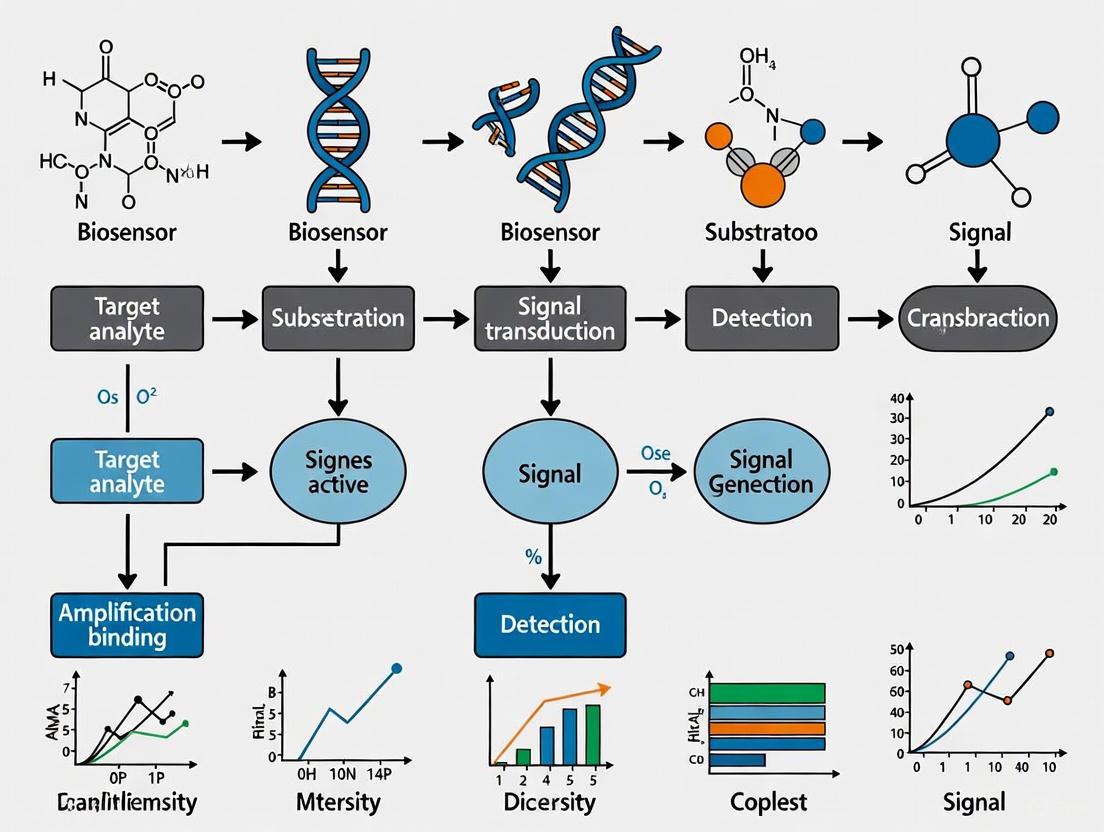
This article provides a comprehensive analysis of biosensor working principles and signal transduction mechanisms, tailored for researchers, scientists, and drug development professionals.
Biosensor Signal Transduction: Principles, Methods, and Clinical Applications
Abstract
This article provides a comprehensive analysis of biosensor working principles and signal transduction mechanisms, tailored for researchers, scientists, and drug development professionals. It systematically explores the foundational concepts of biosensor architecture, detailing the synergy between biological recognition elements and physical transducers. The scope extends to methodological advances across electrochemical, optical, and piezoelectric systems, with critical evaluation of their applications in biomanufacturing, point-of-care diagnostics, and precision medicine. The content further addresses key challenges in sensor optimization, stability, and integration, while establishing frameworks for performance validation and comparative analysis to guide the development of next-generation diagnostic tools.
Core Principles: Deconstructing Biosensor Architecture and Transduction Mechanisms
Biosensors are analytical devices that combine a biological sensing element with a transducer to detect a specific analyte, converting a biological response into a quantifiable electrical signal [1]. The fundamental architecture of every biosensor comprises three core components, often termed the "biosensor triad": the biological recognition element, the transducer, and the signal processor [1]. This modular framework allows biosensors to deliver rapid, sensitive, and specific detection for applications ranging from medical diagnostics and environmental monitoring to food safety [2] [1]. The working principle involves the selective interaction between the biological element and the target analyte, which produces a physicochemical change that the transducer detects and converts into a measurable signal, typically electrical, optical, or piezoelectric [1]. This in-depth technical guide examines the core principles, recent advancements, and detailed methodologies for each component of the biosensor triad, providing a comprehensive resource for researchers and drug development professionals.
Biological Recognition Elements
Biological recognition elements form the front line of a biosensor's operation, providing the critical function of specific molecular identification. This component consists of an immobilized biological material that interacts selectively with a target compound of interest [1]. The specificity of this interaction is the foundational basis for the biosensor's analytical power, as the recognition element must be capable of distinguishing the target analyte from a complex mixture of other substances in the test solution [1].
Table 1: Common Biological Recognition Elements and Their Properties
| Recognition Element | Target Analyte Example | Principle of Interaction | Stability | Typical Immobilization Methods |
|---|---|---|---|---|
| Enzyme | Glucose, Urea, Pesticides | Enzyme-substrate catalytic reaction | Moderate | Covalent binding, cross-linking, entrapment |
| Antibody | Pathogens (e.g., HIV, SARS-CoV-2), Hormones | Antigen-antibody binding (Affinity) | High | Adsorption, covalent binding to matrices |
| Nucleic Acid (DNA/RNA) | Complementary DNA/RNA sequences, Genomic markers | DNA hybridization (Affinity) | High | Adsorption, avidin-biotin interaction |
| Whole Cell (Microbial) | Toxins, Heavy metals, BOD | Metabolic uptake or respiration | Low to Moderate | Entrapment in membranes, gels |
| Aptamer | Proteins, Small molecules | Folding into specific 3D structures (Affinity) | High | Covalent attachment, self-assembly |
| Tissue / Organelle | Neurotransmitters, Drugs | Enzyme-catalytic or receptor binding | Low | Physical entrapment |
The functionality of the biological element depends critically on its specificity, stability under storage conditions, and effective immobilization on the transducer surface [1]. Recent research has focused on enhancing these properties through synthetic biology and genetic engineering. For instance, in bacterial biosensors, synthetic genetic circuits incorporating logic gates (AND, OR, NOR) enable coordinated multi-signal processing, allowing for highly precise detection in complex matrices like blood or serum [2]. Furthermore, the use of aptamers—single-stranded DNA or RNA molecules that bind to specific targets—has gained prominence due to their high stability and selectivity, as demonstrated in aptamer-functionalized carbon nanotube field-effect transistor (CNT-FET) biosensors for detecting pathogens like Salmonella enterica [3].
Experimental Protocol: Functionalization of a CNT-FET with an Aptamer Recognition Element
This protocol details the immobilization of a DNA aptamer onto a CNT-FET for the specific detection of a target pathogen, adapted from recent studies on CNT-FET biosensors [3].
- Principle: The protocol uses a pyrene-based linker, 1-pyrenebutyric acid N-hydroxysuccinimide ester (PBASE), which non-covalently adsorbs onto the CNT surface via π-π stacking. The N-hydroxysuccinimide (NHS) ester group then reacts with an amine-modified aptamer, forming a stable amide bond.
- Materials:
- CNT-FET device.
- An amine-modified DNA aptamer specific to the target (e.g., Salmonella enterica).
- PBASE linker solution (1 mM in dimethylformamide, DMF).
- Anhydrous DMF solvent.
- Phosphate Buffered Saline (PBS), pH 7.4.
- Ethanolamine solution (1 M, pH 8.5) for blocking.
- Procedure:
- CNT-FET Preparation: Clean the CNT-FET channel by rinsing with anhydrous DMF and drying under a nitrogen stream.
- Linker Attachment: Apply a 10 µL droplet of the PBASE solution (1 mM in DMF) to cover the CNT channel. Incubate in a humidified chamber at room temperature for 1 hour. Rinse thoroughly with DMF to remove unbound PBASE, followed by a rinse with PBS.
- Aptamer Immobilization: Apply a 10 µL droplet of the amine-modified aptamer solution (1 µM in PBS) to the PBASE-functionalized channel. Incubate at 4°C for 12-16 hours. The NHS ester on PBASE will covalently bind to the primary amine group on the aptamer.
- Surface Blocking: Rinse the device with PBS to remove physically adsorbed aptamers. Apply a 10 µL droplet of 1 M ethanolamine solution (pH 8.5) for 1 hour to deactivate and block any remaining reactive NHS ester groups.
- Storage: The functionalized biosensor should be stored in PBS at 4°C until use. The electrical characteristics (e.g., transfer curves) must be measured before and after functionalization to confirm successful aptamer immobilization.
Transducers: Converting Biological Events into Measurable Signals
The transducer acts as the central interface of the biosensor triad, measuring the physical or chemical change that occurs during the biorecognition event and transforming that energy into a quantifiable electrical signal [1]. The selection of an appropriate transduction mechanism is paramount for determining the sensitivity, detection limit, and overall performance of the biosensing system.
Table 2: Major Transducer Types, Principles, and Performance Metrics
| Transducer Type | Detection Principle | Measurable Signal | Common Recognition Elements | Example Application & Recent Advancement |
|---|---|---|---|---|
| Electrochemical | Measures change in electrical properties due to bio-recognition event [1]. | Current, Voltage, or Impedance [1]. | Enzymes, Antibodies, Nucleic Acids [3]. | Amperometric: Glucose monitors [1]. CNT-FET: Liquid-gated CNT-FETs for direct detection of SARS-CoV-2 spike protein in clinical samples [3]. |
| Optical | Measures change in light properties [1]. | Light intensity, absorbance, or photon output [1]. | Enzymes, Antibodies, Whole Cells (engineered) [2]. | Bacterial biosensors engineered with GFP or luciferase reporters for detection of pathogens or metabolites; fluorescence intensity correlates with target concentration [2]. |
| Piezoelectric | Measures change in mass on the sensor surface [1]. | Change in resonance frequency [1]. | Antibodies, Nucleic Acids. | Detection of anthrax spores or viral particles using antibody-coated piezoelectric crystals [1]. |
| Calorimetric | Measures heat change from exothermic/endothermic reactions [1]. | Temperature change (ΔT) or heat output. | Enzymes, Whole Cells. | Using two thermistors to measure the difference in resistance between reactant and product to determine analyte concentration [1]. |
Recent advancements in transducer technology have focused on improving sensitivity and integration. A key innovation is the development of carbon nanotube-based field-effect transistor (CNT-FET) biosensors, which leverage the exceptional electrical properties of CNTs, such as high carrier mobility and large surface-to-volume ratio, for ultra-sensitive, label-free detection [3]. Advanced architectures like floating-gate CNT-FETs and dual-microfluidic field-effect biosensors (dual-MFB) have been engineered to enhance signal stability and specificity for detecting cancer biomarkers and infectious disease antigens at ultralow concentrations [3]. Furthermore, the integration of nanomaterials like carboxylated graphene quantum dots (cGQDs) and gold nanoparticles (Au-NPs) onto transducer surfaces has been shown to amplify signal responses through enhanced electron transport and localized surface plasmon resonance (LSPR) effects [3].
Experimental Protocol: Real-time Detection of a Cancer Biomarker using a CNT-FET Biosensor
This protocol describes the use of a liquid-gated CNT-FET functionalized with antibodies for the real-time, label-free detection of a cancer biomarker, such as Carcinoembryonic Antigen (CEA) [3].
- Principle: The antibody is immobilized on the CNT channel. Binding of the target biomarker to the antibody alters the local electrostatic environment at the CNT surface, thereby modulating the channel's conductance, which is monitored in real time.
- Materials:
- Antibody-functionalized CNT-FET (prepared following a protocol similar to Section 2.1).
- Phosphate Buffered Saline (PBS), pH 7.4, as the running buffer and analyte diluent.
- Solutions of the target biomarker (e.g., CEA) at known concentrations for calibration.
- A portable or benchtop potentiostat/electrometer for liquid-gated FET measurements.
- A flow cell or microfluidic chamber to house the CNT-FET during measurement.
- Procedure:
- Device Setup: Mount the functionalized CNT-FET into the flow cell. Connect the source, drain, and gate (typically a Ag/AgCl reference electrode immersed in the buffer) electrodes to the potentiostat.
- Baseline Establishment: Continuously flow PBS buffer over the sensor at a constant rate (e.g., 50 µL/min). Apply a constant drain-source voltage (VDS) and gate voltage (VG). Monitor the drain-source current (IDS) until a stable baseline is achieved (approximately 10-15 minutes).
- Sample Injection and Measurement: Inject the sample containing the target biomarker into the flow stream. The binding event will cause a shift in the IDS. Record the real-time change in IDS over time.
- Regeneration (Optional): After measurement, the sensor surface can be regenerated for reuse by injecting a low-pH glycine buffer (e.g., 10 mM, pH 2.0) or a high-salt solution to dissociate the antigen-antibody complex, followed by re-equilibration with PBS.
- Data Analysis: The magnitude of the IDS shift is proportional to the concentration of the bound biomarker. A calibration curve is constructed by repeating steps 2-4 with standard solutions of known concentration.
Signal Processors and Output Systems
The final component of the biosensor triad is the signal processor, which encompasses the electronic systems responsible for amplifying, processing, and displaying the raw signal from the transducer [1]. This stage is critical for converting often weak and noisy transducer outputs into clear, user-interpretable data. The signal from the transducer is typically amplified, filtered to remove background noise, and then converted from analog to digital form [4]. Processed data can be displayed on a built-in screen, transmitted to a computer for further analysis, or sent wirelessly to a mobile device or cloud platform via standards like Bluetooth Low Energy (BLE) or Wi-Fi [4]. In modern biosensor systems, embedded software algorithms play a key role in analyzing the processed signals to provide real-time readings, generate alerts, or even perform complex diagnostics [4]. For example, in a glucose biosensor, the electrical current generated at the transducer is processed by the instrument's electronics and converted into a numerical glucose concentration value displayed on the screen [1].
The Scientist's Toolkit: Essential Research Reagents and Materials
The development and operation of advanced biosensors rely on a suite of specialized reagents and materials. The following table details key items essential for research in this field.
Table 3: Key Research Reagent Solutions for Biosensor Development
| Item | Function in Biosensor Research |
|---|---|
| PBASE (1-pyrenebutyric acid N-hydroxysuccinimide ester) | A heterobifunctional linker for non-covalent functionalization of carbon nanotube (CNT) and graphene surfaces. The pyrene group adsorbs onto the carbon material, while the NHS ester reacts with primary amines on biomolecules (e.g., antibodies, aptamers) for stable immobilization [3]. |
| Carboxylated Graphene Quantum Dots (cGQDs) | A nanomaterial used to enhance the sensitivity of transducers like CNT-FETs. cGQDs provide abundant carboxyl groups for biomolecule conjugation and can improve charge transfer efficiency and signal-to-noise ratio [3]. |
| Gold Nanoparticles (Au-NPs) | Used for signal amplification in optical and electrochemical biosensors. Au-NPs facilitate superior electron transport and exhibit localized surface plasmon resonance (LSPR), which enhances the detectable signal upon biomolecular binding [3]. |
| Polyethyleneimine (PEI) | A polymer used for doping and surface modification of CNTs. PEI can modulate the conductivity of CNTs (e.g., converting them from p-type to n-type) and provides a positively charged surface for the adsorption of biomolecules [3]. |
| CRISPR-Cas9 Systems | A gene-editing tool used in the development of whole-cell bacterial biosensors. It is employed to knock out genes responsible for non-specific responses, thereby enhancing the specificity of the biological recognition element by reducing background noise [2]. |
Visualization of Biosensor Principles and Workflows
The following diagrams, generated using Graphviz DOT language, illustrate the core architecture and a specific experimental workflow detailed in this guide. The diagrams adhere to the specified color palette and contrast rules.
Biosensor Triad Architecture
CNT-FET Functionalization and Detection Workflow
The biosensor triad—comprising the biological recognition element, transducer, and signal processor—represents a powerfully integrated system for precise analytical detection. Continued research is focused on pushing the boundaries of each component: enhancing specificity and stability of recognition elements through synthetic biology and novel molecules like aptamers; improving transducer sensitivity and form factor with nanomaterials like CNTs and GQDs; and refining signal processing for portability and connectivity through integrated electronics and wireless technologies [2] [4] [3]. Despite significant progress, challenges in scalability, reproducibility, long-term stability, and seamless integration into cost-effective diagnostic platforms remain active areas of investigation [3]. As these hurdles are overcome, the continued evolution of the biosensor triad promises to yield even more powerful tools for transformative applications in personalized medicine, point-of-care diagnostics, and advanced biomedical research.
A biosensor is an integrated analytical device that converts a biological response into a quantifiable electrical signal [5]. This sophisticated integration of biological recognition elements with physical transducers has revolutionized diagnostic medicine, environmental monitoring, and food safety analysis. The core principle of all biosensors involves the specific interaction between a biological recognition element (bioreceptor) and a target analyte, followed by the transduction of this biological event into a measurable signal [5] [6].
The fundamental components of a biosensor system include: (a) the analyte, a substance of interest whose constituents are being detected; (b) the bioreceptor, a biomolecule that recognizes the target analyte specifically; (c) the transducer, which converts the recognition event into a measurable signal; (d) electronics that process the transduced signal; and (e) a display that presents the readable output to the user [5]. This review traces the technological evolution of these components from simple enzyme electrodes to sophisticated third-generation nanomaterial-based sensors, framed within the context of biosensor working principles and signal transduction research.
The First Generation: Enzyme Electrodes and the Dawn of Biosensing
Clark's Oxygen Electrode: The Foundational Innovation
The conceptual foundation for modern biosensors was established in 1962 by Leland C. Clark Jr., who is widely regarded as the "Father of Biosensors" [6] [7]. Clark's pioneering innovation involved immobilizing glucose oxidase (GOx) on an oxygen electrode, creating the first functional enzyme electrode [5] [7]. This device operated on the principle of amperometric detection, measuring oxygen consumption resulting from the enzymatic reaction between glucose oxidase and its substrate.
The fundamental reactions are as follows:
- Glucose + GOx-FAD → Gluconolactone + GOx-FADH₂
- GOx-FADH₂ + O₂ → GOx-FAD + H₂O₂
The Clark electrode measured the decrease in oxygen concentration electrochemically, providing an indirect quantification of glucose concentration [5]. This first-generation biosensor established the paradigm of coupling biological recognition with electrochemical transduction.
Commercialization and Methodological Expansion
The first commercial biosensor was introduced by Yellow Springs Instrument (YSI) in 1975, bringing biosensing technology from research laboratories to practical applications [7]. Throughout the 1970s, researchers expanded the enzyme electrode concept to detect numerous other analytes. In 1969, Guilbault and Montalvo demonstrated the first potentiometric enzyme electrode for urea detection [5], while Guilbault and Lubrano described glucose and lactate enzyme sensors based on hydrogen peroxide detection at a platinum electrode in 1973 [5].
The development of enzyme-based thermal sensors (thermistors) by the Klaus Mosbach group in 1974 further diversified biosensing platforms [5], and in 1975, Lubbers and Opitz extended the concept to optical biosensing with a device for alcohol detection [5].
Table 1: Key Developments in First-Generation Biosensors
| Year | Developer | Innovation | Transduction Principle |
|---|---|---|---|
| 1956 | Clark | Oxygen electrode (Clark electrode) | Amperometric [5] |
| 1962 | Clark & Lyons | Glucose enzyme electrode | Amperometric (oxygen consumption) [5] [7] |
| 1969 | Guilbault & Montalvo | Potentiometric urea sensor | Potentiometric [5] |
| 1974 | Mosbach group | Enzyme thermistor | Thermal [5] |
| 1975 | Lubbers & Opitz | Optical biosensor for alcohol | Optical [5] |
| 1975 | Yellow Springs Instrument | First commercial biosensor | Amperometric [7] |
The Second Generation: Mediated Systems and Enhanced Signal Transduction
The Principle of Electron Shuttling
Second-generation biosensors emerged to address limitations of first-generation devices, particularly their dependence on dissolved oxygen as a natural electron acceptor [8]. Fluctuations in oxygen tension caused significant measurement errors, especially in biological samples with variable oxygen content [8]. Second-generation systems incorporated artificial, non-physiological electron acceptors (mediators) that could shuttle electrons from the redox center of the enzyme to the electrode surface [5] [8].
These mediators included ferrocene derivatives, ferricyanide, conducting organic salts, phenothiazine, phenoxazine compounds, and quinones [8]. The key advantage of mediators was their ability to operate at lower potentials, reducing interference from other electroactive species in complex samples.
Reaction Mechanisms and Experimental Considerations
The mediated electron transfer process follows distinct reaction pathways:
- Glucose + GOx-FAD → Gluconolactone + GOx-FADH₂
- GOx-FADH₂ + 2Mₒₓ → GOx-FAD + 2Mᵣₑd + 2H⁺
- 2Mᵣₑd → 2Mₒₓ + 2e⁻ (at the electrode surface)
Where Mₒₓ and Mᵣₑd represent the oxidized and reduced forms of the mediator, respectively [8].
Experimental Protocol for Ferrocene-Mediated Glucose Biosensor:
- Electrode Preparation: Polish glassy carbon electrode with alumina slurry to mirror finish
- Enzyme Immobilization: Mix glucose oxidase with ferrocene derivative in buffer solution
- Matrix Formation: Incorporate enzyme-mediator solution into carbon paste or immobilize with Nafion membrane
- Calibration: Measure amperometric response at +0.2V (vs. Ag/AgCl) with standard glucose additions
- Sample Analysis: Apply optimized potential to working electrode and record steady-state current
The introduction of screen-printed carbon electrodes (SPCEs) in the 1990s enabled mass production of disposable mediator-based biosensors, facilitating the expansion of point-of-care testing and home diagnostics [7].
The Third Generation: Nanomaterial-Enabled Biosensing Platforms
The Nanomaterial Advantage in Signal Transduction
Third-generation biosensors leverage the unique properties of nanomaterials to facilitate direct electron transfer between enzymes and electrodes while enhancing sensitivity, stability, and detection limits [9] [10]. Nanomaterials provide exceptional properties including high surface-to-volume ratios, superior electrical and thermal conductivity, color tunability, and shock-bearing capabilities [5]. These characteristics make them ideal for biosensing applications where they can function both as immobilization matrices and transducing elements [10].
The unique properties of nanomaterials arise from quantum effects and surface phenomena that dominate at the nanoscale, including surface effect, micro size effect, quantum effect, and macro quantum tunneling effect [9]. These properties enable nanomaterial-based biosensors to achieve detection limits down to single molecules in some configurations [5].
Classes of Nanomaterials in Biosensing
Carbon-Based Nanomaterials
Carbon-based nanomaterials include carbon nanotubes (CNTs), graphene oxide (GO), graphene quantum dots (GQDs), and fullerenes [9]. These materials offer remarkable structural, mechanical, electrical, and optical properties ideal for biosensing [5]. CNTs provide high chemical stability, high conductivity, large aspect ratios, and fast electron transfer rates [9]. Graphene-based materials offer excellent physicochemical properties and strong ionic interactions with biological molecules, making them ideal for creating highly sensitive biosensing platforms [9].
Inorganic Nanomaterials
This category includes noble metal nanoparticles (gold, silver, platinum), metal oxides (tin oxide, zinc oxide), and quantum dots [5] [9]. Gold nanoparticles (AuNPs) are particularly valuable for their localized surface plasmon resonance (LSPR) properties, which enable highly sensitive detection of biological interactions [9]. Metal oxide nanoparticles offer good electrical conductivity and electrocatalytic properties for glucose oxidation and other reactions [11].
Composite Nanomaterials
Composite nanomaterials combine multiple material types to achieve synergistic effects that enhance biosensing performance [9]. For example, functionalized graphene oxide with gold nanoparticles has been used to create LSPR-based fiber optic biosensors for creatinine detection with sensitivity of 0.0025 nm/M and limit of detection of 128.4 μM [9].
Table 2: Nanomaterial Classes and Their Biosensing Applications
| Nanomaterial Class | Specific Examples | Key Properties | Representative Applications |
|---|---|---|---|
| Carbon-Based | CNTs, GO, GQDs | High conductivity, large surface area, fast electron transfer [5] [9] | Glucose sensing, creatinine detection [9] |
| Metallic Nanoparticles | Au, Ag, Pt NPs | LSPR, high catalytic activity, color tunability [5] [11] | LSPR biosensors, non-enzymatic glucose sensors [9] [11] |
| Metal Oxides | SnO₂, ZnO, CuO | Good conductivity, electrocatalytic properties [11] | Non-enzymatic glucose biosensors [11] |
| Quantum Dots | CdSe, CdTe, GQDs | Color tunability, size-dependent emission [5] | Fluorescent biosensors, imaging applications [5] |
| Composite Materials | GO-AuNPs, MWCNT-ZnO | Synergistic effects, enhanced stability [9] | Enhanced LSPR sensors, electrochemical platforms [9] |
Advanced Sensing Architectures and Experimental Methodologies
Nanomaterial-Enabled Signal Transduction Pathways
The integration of nanomaterials has revolutionized all major transduction mechanisms in biosensing:
Electrochemical Transduction: Nanostructured electrodes enhance electron transfer kinetics and provide larger electroactive surface areas. For example, Li et al. developed a special serial four-tapered structure using multi-walled carbon nanotubes (MWCNTs) and GO for reliable detection of human glucose levels [9].
Optical Transduction: Nanomaterials enhance optical biosensing through mechanisms such as surface-enhanced Raman scattering (SERS), fluorescence resonance energy transfer (FRET), and LSPR. Carbon-based SERS biosensors using zero-dimensional carbon quantum dots, one-dimensional carbon nanotubes, and core-shell nanostructures have shown remarkable sensitivity for detecting bioactive molecules [9].
Thermal and Gravimetric Transduction: Nanomaterials with high thermal conductivity improve the sensitivity of calorimetric biosensors, while their large surface areas enhance the response of piezoelectric gravimetric sensors.
Protocol for Non-Enzymatic Glucose Sensing Using Gold Nanoparticles
Objective: To fabricate and characterize a non-enzymatic glucose biosensor based on gold nanoparticle-modified electrode.
Materials:
- Chloroauric acid (HAuCl₄) for nanoparticle synthesis
- Trisodium citrate as reducing agent
- Glassy carbon electrode (GCE) or screen-printed carbon electrode (SPCE)
- Glucose oxidase (GOx) for comparison
- Phosphate buffer saline (PBS, pH 7.4) as electrolyte
Experimental Procedure:
Synthesis of AuNPs:
- Prepare 1 mM HAuCl₄ solution in deionized water
- Heat to boiling with vigorous stirring
- Rapidly add trisodium citrate solution (38.8 mM)
- Continue heating until wine-red color appears
- Cool to room temperature and characterize by UV-Vis spectroscopy (peak at ~520 nm)
Electrode Modification:
- Polish GCE with alumina slurry and wash thoroughly
- Deposit 10 μL of AuNP colloid on GCE surface
- Dry under infrared lamp to form AuNP-modified electrode
Electrochemical Measurements:
- Use three-electrode system with AuNP/GCE as working electrode
- Apply potential range from 0 to +0.8V (vs. Ag/AgCl) in PBS
- Record cyclic voltammograms with successive glucose additions
- Measure chronoamperometric response at +0.5V with stirred glucose solutions
Data Analysis:
- Plot calibration curve of current response vs. glucose concentration
- Calculate sensitivity from slope of calibration curve
- Determine limit of detection (LOD) based on signal-to-noise ratio of 3
This non-enzymatic approach leverages the direct electrocatalytic oxidation of glucose at AuNP surfaces, eliminating instability issues associated with enzymatic biosensors while offering excellent sensitivity and reproducibility [11].
The Scientist's Toolkit: Essential Research Reagents and Materials
Table 3: Essential Research Reagents for Advanced Biosensing Development
| Reagent/Material | Function | Application Examples |
|---|---|---|
| Glucose Oxidase (GOx) | Biological recognition element for glucose | Enzyme-based glucose biosensors [5] [8] |
| Ferrocene Derivatives | Electron transfer mediator | Second-generation mediated biosensors [8] [7] |
| Gold Nanoparticles | Signal amplification, electrocatalysis | Non-enzymatic glucose sensors, LSPR biosensors [9] [11] |
| Carbon Nanotubes | Electrode modification, enhanced electron transfer | Electrochemical biosensors, SERS substrates [5] [9] |
| Graphene Oxide | 2D substrate with functional groups | Composite biosensors, LSPR platforms [9] |
| Screen-Printed Electrodes | Disposable, mass-producible platforms | Point-of-care biosensors, home testing devices [7] |
| Nafion Membranes | Permselective polymer coating | Interference rejection, enzyme immobilization [8] |
| Quantum Dots | Fluorescent labels | Optical biosensors, multiplexed detection [5] [10] |
Visualization of Biosensor Evolution and Signaling Pathways
Diagram 1: Historical evolution of biosensor technology showing the progression through three distinct generations with their core transduction principles.
Diagram 2: Fundamental architecture of biosensors showing core components and their relationships in the signal transduction pathway.
The evolution from enzyme electrodes to third-generation nanomaterial sensors represents a remarkable journey of interdisciplinary innovation spanning biochemistry, electrochemistry, materials science, and engineering. Clark's initial concept of combining biological recognition with electrochemical detection has matured into sophisticated nanomaterial-enabled platforms capable of sensitive, specific, and rapid detection of diverse analytes.
Current research focuses on overcoming the challenges associated with nanomaterial-based biosensors, including batch-to-batch variability, manufacturing scalability, biofouling in complex matrices, and functionalization trade-offs [7]. Emerging materials like the proprietary carbon nanomaterial Gii attempt to address these limitations by combining graphene-like conductivity with commercial-scale reproducibility and antifouling properties [7].
The integration of machine learning approaches for analyzing complex sensing data represents another frontier, enabling categorization, anomaly detection, noise reduction, and pattern recognition in biosensor signals [10]. As these technologies mature, we can anticipate the development of increasingly intelligent biosensing systems that will further transform medical diagnostics, environmental monitoring, and industrial process control.
The historical progression of biosensor technology demonstrates how fundamental advances in understanding signal transduction principles, coupled with innovations in materials science, have continually expanded the capabilities and applications of these powerful analytical devices. This evolution continues to accelerate, promising even more sophisticated biosensing platforms in the foreseeable future.
Biosensors are analytical devices that combine a biological recognition element with a physicochemical detector to provide quantitative or semi-quantitative analytical information [12]. These devices serve as crucial tools for detecting specific analytes—substances of interest such as glucose, proteins, pathogens, or toxic chemicals—by converting a biological response into an electrical signal that can be measured and interpreted [5] [13]. The fundamental operation of any biosensor relies on two core processes: bio-recognition and signal transduction [5] [14]. The bio-recognition process involves the specific interaction between a biological element (the bioreceptor) and the target analyte. This interaction produces a physicochemical change that the transducer then converts into a measurable signal, typically optical or electrical, which is processed and displayed for the user [12].
The significance of biosensors in modern research and clinical applications cannot be overstated. They offer rapid response times, high sensitivity, portability, and the capacity for real-time, point-of-care applications, thereby facilitating prompt clinical decision-making by healthcare professionals [15]. Their development represents a multidisciplinary area of research that bridges the principles of basic sciences (physics, chemistry, and biology) with the fundamentals of micro/nano-technology, electronics, and applicatory medicine [12]. This guide provides a structured framework for classifying these powerful analytical tools, which is essential for selecting the appropriate biosensor for a given application and for driving future innovation in the field.
Fundamental Components and Working Principle
A typical biosensor comprises three primary components, working in sequence to detect and report on the presence of an analyte.
Core Components
- Bioreceptor: This is the biological recognition element that interacts specifically with the target analyte. The bioreceptor can be an enzyme, antibody, nucleic acid, cell, aptamer, or tissue [5] [12] [16]. Its function is to selectively bind or catalyze a reaction with the analyte, a process termed biorecognition [5].
- Transducer: The transducer is a physical component that converts the biochemical signal resulting from the biorecognition event into a measurable electrical or optical signal. This process of energy conversion is known as signalization [5] [12]. Transducers can be electrochemical, optical, thermal, piezoelectric, or gravimetric [5] [14].
- Electronics and Display: This segment includes the electronic circuitry that processes the transduced signal (e.g., through amplification and analog-to-digital conversion) and a display unit that presents the results in a user-friendly format, such as a numerical value or a graph [5] [12] [13].
The Signal Transduction Workflow
The operational workflow of a biosensor follows a sequential pathway, as illustrated in the diagram below and described in the subsequent steps.
Diagram 1: The sequential workflow of a biosensor, from analyte introduction to result display.
- Analyte Introduction and Biorecognition: The sample containing the analyte is introduced to the biosensor system. The analyte specifically binds to or interacts with the bioreceptor immobilized on the sensor surface [14]. This interaction is highly selective, functioning on a principle often compared to a lock-and-key mechanism [15].
- Signal Generation and Transduction: The biorecognition event produces a physicochemical change, such as the production of electrons, a change in pH, heat generation, a shift in mass, or a change in optical properties [15] [14]. The transducer detects this change and converts it into a quantifiable signal, most commonly an electrical current (amperometric) or voltage (potentiometric), or an optical signal [5] [13].
- Signal Processing and Output: The initial signal from the transducer is typically weak and may contain noise. It is therefore amplified, filtered, and converted from analog to digital form by the electronic system [13] [14]. The processed signal is then quantified and displayed on a readout device, providing the final analytical result to the user [5] [12].
Classification by Bioreceptor Type
The bioreceptor is the primary source of a biosensor's selectivity. Its classification is based on the biological element used for recognition.
Table 1: Classification of Biosensors by Bioreceptor Type
| Bioreceptor Type | Recognition Principle | Key Characteristics | Common Transduction Methods | Example Applications |
|---|---|---|---|---|
| Enzymes [5] [16] | Catalytic conversion of substrate (analyte) | High catalytic activity; reaction-specific; can be reused but have limited stability [16] | Electrochemical (Amperometric), Optical, Calorimetric [16] [14] | Glucose monitoring (Glucose Oxidase) [5], Urea detection [5] |
| Antibodies [5] [16] | Specific binding to antigen (analyte) via "lock-and-key" | Very high specificity and binding affinity; binding is robust but can be disrupted [16] | Optical (SPR), Electrochemical, Piezoelectric [16] [14] | Immunosensors for pathogen detection (e.g., COVID-19 serology) [16], Cancer biomarker detection [15] |
| Nucleic Acids [5] [16] | Complementary base pairing (Genosensor) or specific folding (Aptasensor) | High specificity for DNA/RNA sequences; aptamers can be generated for various targets [16] | Optical, Electrochemical [16] | Genosensors for genetic disease markers, Aptasensors for viruses or proteins [16] |
| Cells & Microorganisms [16] [17] | Response to stimulants (toxicity, metabolites) | Can report on overall toxicity or metabolic effects; longer functional lifetime [16] | Optical (luminescence), Electrochemical [16] [17] | Detection of herbicides, water pollutants, microbial corrosion [16] |
| Tissues & Organelles [16] | Utilize inherent enzymatic pathways | Easier to immobilize; maintain enzymes in natural environment; can lack specificity [16] | Electrochemical, Optical [16] | Mitochondria for calcium detection, Lysosomes for specific enzymatic activity [16] |
The following diagram illustrates the logical relationships between different bioreceptor types and their primary detection strategies.
Diagram 2: A hierarchical classification of common bioreceptor types based on their recognition strategy.
Classification by Transduction Method
The transduction method defines how the biorecognition event is converted into a measurable signal and is a primary factor determining the sensitivity and operational range of a biosensor.
Table 2: Classification of Biosensors by Transduction Method
| Transducer Type | Principle of Operation | Measurable Signal | Key Advantages | Limitations |
|---|---|---|---|---|
| Electrochemical [5] [14] | Measures electrical changes due to biochemical reactions | Current, Potential, or Impedance | High sensitivity; portability; low cost; suitable for miniaturization [5] [14] | Can be susceptible to interference from electroactive species [14] |
| Amperometric [5] [14] | Measurement of current from redox reactions at constant potential | Current | High sensitivity; wide linear range [14] | Requires redox-active species |
| Potentiometric [5] [14] | Measurement of potential change at constant current | Potential (Voltage) | Simple instrumentation; wide applicability [14] | Lower sensitivity; slower response |
| Conductimetric [14] | Measurement of solution conductivity/resistance change | Conductance/Resistance | Label-free detection | Low sensitivity; susceptible to ionic interference |
| Optical [5] [14] | Measures changes in light properties | Fluorescence, Absorbance, Refractive Index | High sensitivity; multiplexing capability; non-electrical nature [15] [13] | Can be affected by turbid or coloured samples [14] |
| Surface Plasmon Resonance (SPR) [12] [14] | Measures change in refractive index near a metal surface | Resonant Angle | Label-free; real-time monitoring [14] | Requires specialized equipment |
| Fluorescence [15] [14] | Measures light emission from excited states | Light Intensity | Very high sensitivity and specificity [15] | May require fluorescent labeling |
| Piezoelectric [13] [14] | Measures change in mass on sensor surface | Vibrational Frequency | Label-free; high sensitivity to mass change [14] | Sensitive to environmental vibrations and viscosity [14] |
| Calorimetric/Thermal [14] | Measures heat change from enzymatic reactions | Temperature | Applicable to turbid and coloured samples [14] | Requires precise temperature control; lower sensitivity [14] |
Classification by Application Domain
Biosensors are deployed across a wide spectrum of fields, driven by the need for rapid, sensitive, and on-site analysis.
Table 3: Classification of Biosensors by Primary Application Domain
| Application Domain | Target Analytes | Common Biosensor Types | Specific Use Cases |
|---|---|---|---|
| Medical Diagnostics & Healthcare [15] [12] [17] | Glucose, Lactate, Cholesterol, Hormones, Cancer Biomarkers, Pathogens | Electrochemical, Optical, SPR | Self-monitoring of blood glucose (Glucometer) [15] [13], Detection of cardiac markers, Cancer diagnosis [15], Infectious disease testing (e.g., HIV, COVID-19) [16] |
| Environmental Monitoring [12] [17] [13] | Pesticides, Heavy Metals, Nitrates, Phosphates, Toxins, Pathogens | Microbial, Optical, Electrochemical | Detection of herbicides in water [16], Measurement of BOD (Biological Oxygen Demand), Monitoring of industrial pollutants [12] |
| Food Industry & Safety [12] [17] [13] | Pathogens (E. coli, Salmonella), Toxins, Allergens, Additives, Sugars, Alcohols | Immunosensors, Microbial, Optical | Quality control in wine, beer, and dairy [13], Detection of spoilage organisms, Analysis of nutritional content [12] |
| Industrial Process Control [13] | Amino Acids, Antibiotics, Biomass | Electrochemical, Thermal | Monitoring fermentation processes in biotechnology [13], Control of microbial cell cultures [13] |
| Security & Defense [12] | Chemical warfare agents, Bio-weapons, Explosives | Optical, Electrochemical, Immunosensors | Detection of hazardous biological and chemical specimens in the field [12] |
Experimental Protocols and Methodologies
To ensure reproducibility and reliability in biosensor research, standardized experimental protocols are essential. Below are detailed methodologies for two key types of biosensors.
Protocol for Fabricating a Mediated Amperometric Glucose Biosensor
This protocol outlines the development of a second-generation electrochemical biosensor for glucose, incorporating a mediator to enhance electron transfer [5] [14].
- Electrode Preparation: Use a three-electrode system comprising a Working Electrode (e.g., Carbon, Gold), a Reference Electrode (e.g., Ag/AgCl), and a Counter Electrode (e.g., Platinum) [14]. Clean the working electrode surface via polishing with alumina slurry and subsequent sonication in distilled water and ethanol.
- Nanomaterial Modification (Optional for Enhancement): To increase the electroactive surface area and improve sensitivity, modify the working electrode with nanomaterials. A common approach is to deposit a solution of multi-walled carbon nanotubes (MWCNTs) onto the electrode surface and allow it to dry [15]. The high conductivity and electrocatalytic properties of MWCNTs enhance the sensor's performance [15].
- Enzyme Immobilization: Prepare a mixture containing the enzyme Glucose Oxidase (GOx), a mediator (e.g., ferrocene or an organic salt), and a binder (e.g., Nafion). Deposit a small, precise volume of this mixture onto the center of the working electrode and allow it to dry at room temperature, forming a stable enzymatic layer [5] [14].
- Calibration and Measurement: Connect the modified electrode to a potentiostat. Immerse the electrode system in a buffer solution under stirred conditions. Apply a constant potential suitable for the mediator used. Successively add known concentrations of standard glucose solution and record the steady-state current generated from the reduction of the mediator. Plot the current response against glucose concentration to obtain a calibration curve [14].
- Sample Analysis: Measure the current response for the unknown blood or serum sample. Use the calibration curve to interpolate the corresponding glucose concentration.
Protocol for a Surface Plasmon Resonance (SPR) Immunosensor
This protocol describes a label-free method for detecting antigen-antibody interactions in real-time [12] [14].
- Sensor Chip Functionalization: Use a gold-coated glass SPR sensor chip. Clean the gold surface with a piranha solution (a mixture of sulfuric acid and hydrogen peroxide; handle with extreme caution) and rinse thoroughly. Immerse the chip in a solution of a self-assembled monolayer (SAM) molecule (e.g., 11-mercaptoundecanoic acid) to form a carboxyl-terminated surface.
- Antibody Immobilization: Activate the carboxyl groups on the SAM surface using a mixture of EDC (1-Ethyl-3-(3-dimethylaminopropyl)carbodiimide) and NHS (N-hydroxysuccinimide). Flow a solution of the purified antibody over the activated surface, allowing covalent amide bond formation and immobilizing the antibody. Deactivate any remaining active esters with ethanolamine.
- Baseline Stabilization: Flow a suitable running buffer (e.g., HEPES-buffered saline) over the sensor chip at a constant flow rate until a stable baseline is achieved. This baseline reflects the refractive index of the buffer.
- Association and Dissociation Analysis: Inject the sample containing the target antigen over the sensor surface for a fixed period (association phase). The binding event causes an increase in mass on the surface, leading to a shift in the SPR angle, recorded as resonance units (RU). After stopping sample injection, continue flowing the buffer to monitor the dissociation of the antigen-antibody complex.
- Regeneration and Data Fitting: Regenerate the sensor surface by injecting a mild acidic or basic solution to break the antigen-antibody bonds without denaturing the immobilized antibody. Analyze the resulting sensorgram (a plot of RU vs. time) using software to determine the kinetic parameters (association rate, ka; dissociation rate, kd) and the equilibrium dissociation constant (K_D) for the interaction.
The Scientist's Toolkit: Key Research Reagent Solutions
Table 4: Essential Materials and Reagents for Biosensor Development
| Item | Function in Biosensor Research |
|---|---|
| Glucose Oxidase (GOx) | Model enzyme for catalytic biosensors; catalyzes the oxidation of β-D-glucose [5] [13]. |
| Nafion Perfluorinated Resin | A cation-exchange polymer used as a binder and protective membrane to immobilize enzymes and prevent interference [14]. |
| Carbon Nanotubes (CNTs) | Nanomaterials used to modify electrode surfaces; provide a large surface area, high electrical conductivity, and electrocatalytic properties to enhance signal response [5] [15]. |
| Ferrocene and Derivatives | Artificial redox mediators used in second-generation amperometric biosensors to shuttle electrons from the enzyme's redox center to the electrode surface [5] [12]. |
| EDC and NHS | Cross-linking agents used to activate carboxyl groups for the covalent immobilization of biomolecules (e.g., antibodies) onto sensor surfaces [14]. |
| SPR Sensor Chip (Gold) | The core platform for SPR-based biosensors; a glass slide coated with a thin gold film that supports the propagation of surface plasmons [12] [14]. |
| Luciferase Enzyme | A bioluminescent enzyme used in optical biosensors; produces light in the presence of a specific analyte (e.g., ATP from lysed bacteria), enabling highly sensitive detection [14]. |
The structured classification of biosensors by bioreceptor, transduction method, and application provides a essential framework for researchers and developers to navigate this complex and rapidly advancing field. Each classification offers a different lens through which to understand biosensor function, from the molecular specificity conferred by the bioreceptor to the physical sensitivity of the transducer and the practical constraints of the application domain.
The future of biosensing is being shaped by several key technological trends. The integration of nanomaterials such as nanoparticles, graphene, and quantum dots continues to push the boundaries of sensitivity and miniaturization [5] [15]. The rise of point-of-care (POC) and wearable devices is driving the demand for decentralized diagnostics, facilitated by advances in microfluidics and flexible electronics [15]. Furthermore, the convergence of biosensors with digital technologies is creating "smart" systems; the incorporation of Artificial Intelligence (AI) and the Internet of Medical Things (IoMT) enables advanced data analytics, remote patient monitoring, and personalized feedback, ultimately transforming reactive healthcare into a proactive and personalized model [15]. As these trends converge, the established classification frameworks will continue to serve as a foundational guide for the rational design and application of the next generation of biosensing technologies.
Key Physicochemical Principles Governing Signal Transduction
Signal transduction represents the fundamental physicochemical process by which biological cells detect, amplify, and respond to extracellular stimuli. This intricate molecular dialogue, governed by precise principles of molecular recognition, conformational dynamics, and energy transfer, forms the operational basis for modern biosensor technology. Within biosensor frameworks, engineered systems mimic these biological pathways to transduce target analyte recognition into quantifiable electrical, optical, or mass-based signals. This review delineates the core physicochemical mechanisms—ligand-receptor binding kinetics, allosteric regulation, secondary messenger cascades, and signal amplification—that underpin both natural cellular communication and synthetic biosensing platforms. We further provide detailed experimental methodologies for quantifying these parameters and visualize key pathway architectures, offering researchers a foundational guide for advancing signal transduction research and biosensor development.
Signal transduction is the biophysical process wherein a cell converts one kind of signal or stimulus into another, initiating a cascade of molecular events that culminate in a specific cellular response [18] [19]. From a physicochemical perspective, this process is not random but is governed by defined principles of molecular interactions, energy conversion, and spatial-temporal organization. These same principles are directly harnessed in the engineering of biosensors, analytical devices that integrate a biological recognition element (e.g., receptor, enzyme, antibody) with a physicochemical transducer to detect a target analyte [20]. The efficacy of both biological signaling and biosensor function hinges on critical parameters such as binding affinity, specificity, reaction kinetics, and signal-to-noise ratio.
Core Physicochemical Principles and Their Biosensor Correlates
The following principles are central to understanding and engineering signal transduction systems.
Molecular Recognition and Binding Thermodynamics
The initial step in any signal transduction pathway or biosensor operation is the specific molecular recognition between a ligand (e.g., hormone, drug, analyte) and its cognate receptor (e.g., GPCR, antibody, aptamer).
- Principle: The interaction is governed by the laws of thermodynamics, quantified by the dissociation constant (KD), which reflects the binding affinity. A lower KD indicates a higher affinity.
- Biosensor Application: The choice of biorecognition element (antibody, aptamer, enzyme, molecularly imprinted polymer) is primarily determined by its KD for the target analyte, which sets the fundamental limit of detection (LOD) and dynamic range of the sensor [20]. For instance, antibodies provide high affinity and specificity, while molecularly imprinted polymers (MIPs) offer superior stability across varied pH and temperature conditions [20].
Conformational Dynamics and Allostery
Following ligand binding, many receptors undergo a precise change in their three-dimensional structure, a process known as a conformational change.
- Principle: This change can activate the receptor's catalytic domain or alter its interaction with downstream effector proteins. Allostery is a specific form of regulation where the binding of a molecule at one site affects the protein's activity at a distant site.
- Biosensor Application: This principle is exploited in many optical biosensors. For example, Surface Plasmon Resonance (SPR) biosensors detect changes in the refractive index on a sensor surface, often caused by the conformational change of immobilized receptors upon analyte binding or the mass accumulation of bound analyte [20].
Signal Amplification and Cascade Kinetics
Biological systems efficiently amplify a small initial signal into a large cellular response. This is frequently achieved through enzymatic cascades, such as protein phosphorylation networks involving kinases.
- Principle: A single activated receptor can catalyze the activation of multiple downstream enzymes, each of which can act on many substrates, leading to a geometric amplification of the original signal [18]. The overall kinetics of the cascade determines the speed and duration of the response.
- Biosensor Application: Electrochemical biosensors heavily rely on amplification principles. An amperometric biosensor, for instance, measures the current generated by the reduction or oxidation of an electroactive species. A single enzyme molecule (e.g., glucose oxidase) can generate thousands of electroactive product molecules per second, leading to a highly amplified and measurable current signal proportional to the analyte concentration [20].
Spatial Compartmentalization and 2D Confinement
Cellular signaling is not a homogeneous process; it occurs within specific subcellular compartments and is often organized on membrane surfaces.
- Principle: The plasma membrane and organelle boundaries confine signaling components, increasing effective local concentrations and facilitating specific interactions. The formation of signaling complexes on scaffolds is a key organizational strategy.
- Biosensor Application: The design of the transducer interface mimics this principle. Nanomaterial-based electrodes, particularly those using graphene, provide a large, two-dimensional surface for the high-density immobilization of biorecognition elements. This enhances the sensitivity and speed of the biosensor by maximizing the interaction area between the bioreceptor and the analyte [21].
Table 1: Key Physicochemical Parameters in Signal Transduction and Biosensor Performance
| Physicochemical Parameter | Biological Significance | Biosensor Performance Metric | Typical Experimental Method |
|---|---|---|---|
| Dissociation Constant (KD) | Determines binding affinity and signal initiation sensitivity. | Limit of Detection (LOD), Dynamic Range. | Surface Plasmon Resonance (SPR), Isothermal Titration Calorimetry (ITC). |
| Kinetic Constants (kon, koff) | Governs the speed of signal onset and termination. | Response Time, Regeneration Capability. | Surface Plasmon Resonance (SPR), Stopped-Flow Spectroscopy. |
| Catalytic Rate (kcat) | Defines the maximum rate of reaction in an enzymatic cascade. | Signal Amplification Factor, Sensitivity. | Enzyme Activity Assays (e.g., spectrophotometric). |
| Signal-to-Noise Ratio | Ensures fidelity of communication against stochastic background. | Assay Precision, Reliability, and Specificity. | Repetitive measurement and statistical analysis. |
Experimental Protocols for Key Analyses
Detailed, reproducible methodologies are crucial for advancing research. The following protocols are adapted from established sources [22] [23].
Protocol: Ligand-Receptor Binding Affinity via Surface Plasmon Resonance (SPR)
Objective: To determine the kinetic rate constants (kon, koff) and equilibrium dissociation constant (KD) for a ligand-receptor interaction.
Materials:
- SPR instrument (e.g., Biacore series)
- CM5 sensor chip
- Running buffer (e.g., HBS-EP: 10 mM HEPES, 150 mM NaCl, 3 mM EDTA, 0.005% v/v Surfactant P20, pH 7.4)
- Amine-coupling kit (containing N-ethyl-N'-(3-dimethylaminopropyl)carbodiimide (EDC), N-hydroxysuccinimide (NHS), and ethanolamine-HCl)
- Purified receptor protein (e.g., soluble domain of a GPCR)
- Ligand solutions at a minimum of five different concentrations
Method:
- Surface Preparation: Dock the CM5 sensor chip and prime the system with running buffer.
- Receptor Immobilization:
- Activate the carboxymethylated dextran surface with a 1:1 mixture of EDC and NHS for 7 minutes.
- Dilute the receptor to 10-50 μg/mL in sodium acetate buffer (pH 4.0-5.0) and inject over the activated surface for a defined period to achieve a desired immobilization level (e.g., 5-10 kRU).
- Block any remaining activated groups with a 7-minute injection of ethanolamine-HCl.
- Ligand Binding Analysis:
- Use one flow cell as a reference surface (activated and blocked, but no receptor immobilized).
- Inject a series of ligand concentrations (e.g., from low nM to high μM) over the receptor and reference surfaces at a constant flow rate (e.g., 30 μL/min) for 2-3 minutes (association phase).
- Switch back to running buffer and monitor the dissociation for 5-10 minutes.
- Data Processing:
- Subtract the reference sensorgram from the active sensorgram.
- Fit the resulting binding sensorgrams to a 1:1 Langmuir binding model using the instrument's software to extract kon (association rate constant), koff (dissociation rate constant), and calculate KD = koff/kon.
Troubleshooting: High non-specific binding may require optimization of running buffer ionic strength or the inclusion of a surfactant. Regeneration of the surface between cycles may require a brief pulse of glycine-HCl (pH 2.0-3.0).
Protocol: Measuring Second Messenger Kinetics (e.g., cAMP) using a FRET-based Biosensor
Objective: To monitor the spatiotemporal dynamics of a second messenger (cyclic AMP) in live cells in response to receptor activation.
Materials:
- HEK293 or other relevant cell line
- cDNA for a cAMP FRET biosensor (e.g., Epac-based sensors)
- Lipofectamine 3000 transfection reagent
- Phenol-red free imaging medium
- Confocal microscope or fluorescence plate reader capable of FRET measurements (excitation ~430 nm, emission ~475 nm and ~535 nm)
- Receptor agonist (e.g., Isoproterenol for β-adrenergic receptors)
- Forskolin (adenylyl cyclase activator) as a positive control
Method:
- Cell Preparation and Transfection:
- Plate cells on poly-D-lysine-coated glass-bottom dishes or a 96-well plate 24 hours before transfection.
- Transfect cells with the cAMP FRET biosensor cDNA using Lipofectamine 3000 according to the manufacturer's protocol. Incubate for 24-48 hours.
- FRET Imaging:
- Replace the culture medium with phenol-red free imaging medium.
- Place the dish on the microscope stage maintained at 37°C and 5% CO2.
- Select cells expressing the biosensor and define regions of interest (ROIs).
- Stimulation and Data Acquisition:
- Acquire a 1-2 minute baseline recording of the CFP and YFP (FRET channel) emissions.
- Without interrupting acquisition, add the receptor agonist to the medium.
- Continue recording for at least 10-15 minutes to capture the cAMP dynamics.
- Include a positive control (Forskolin) and a vehicle control.
- Data Analysis:
- Calculate the FRET ratio (R) for each time point as the emission intensity at ~535 nm (YFP) divided by the intensity at ~475 nm (CFP).
- Normalize the data as ΔR/R0, where R0 is the baseline ratio.
- Plot the normalized FRET ratio over time. A decrease in the ratio indicates an increase in intracellular cAMP.
Troubleshooting: Photobleaching can be minimized by using low illumination intensity and neutral density filters. Cell health should be monitored throughout the experiment.
Visualization of Key Signaling Pathways
The following diagrams, generated using Graphviz DOT language, illustrate the core architecture of major signal transduction pathways relevant to biosensor research. The color palette is constrained to the specified colors for consistency and accessibility.
GPCR Transduction Cascade
Enzymatic Amplification Pathway
The Scientist's Toolkit: Essential Research Reagents
This table catalogs key reagents and materials essential for experimental research in signal transduction and biosensor development.
Table 2: Essential Research Reagents for Signal Transduction Studies
| Reagent / Material | Function and Utility in Research |
|---|---|
| G Protein-Coupled Receptors (GPCRs) | A major class of cell surface receptors. Purified GPCRs are used in binding assays (e.g., SPR) and to reconstitute signaling pathways in synthetic systems [23]. |
| Monoclonal Antibodies | High-specificity biorecognition elements used for immunoassays, receptor blocking studies, and as immobilization ligands in biosensors [20]. |
| Aptamers | Single-stranded DNA or RNA oligonucleotides that bind specific targets with high affinity. Used as stable, synthetic alternatives to antibodies in biosensors [20]. |
| Kinase Inhibitors/Activators | Small molecule or peptide tools used to probe the function of specific kinases within a signaling cascade, enabling the dissection of complex pathways. |
| Fluorescent Biosensors (e.g., FRET-based) | Genetically encoded or synthetic probes that allow real-time visualization of second messenger dynamics (e.g., Ca2+, cAMP) or protein kinase activity in live cells [19]. |
| Graphene-based Nanomaterials | Used as a high-surface-area, highly conductive transducer material in electrochemical and field-effect transistor (FET) biosensors, enhancing sensitivity and stability [21]. |
| Molecularly Imprinted Polymers (MIPs) | Synthetic polymers with tailor-made recognition sites for a specific analyte. Serve as robust, stable artificial receptors in biosensors for harsh environments [20]. |
Transduction Modalities and Their Deployment in Biomedical Research
Electrochemical biosensors are analytical devices that integrate a biological recognition element with an electrochemical transducer, converting a biological response into a quantifiable electrical signal [24]. These devices are pivotal in modern diagnostics, environmental monitoring, and food safety due to their high sensitivity, specificity, and potential for miniaturization [25] [26]. The core principle involves the detection of electrical changes—such as current, potential, or impedance—resulting from the interaction between a target analyte and a biological sensing element immobilized on the electrode surface [27] [24]. This technical guide delves into the operational principles, methodologies, and applications of three primary electrochemical biosensor techniques: amperometric, potentiometric, and impedimetric, framing them within the broader context of biosensor signal transduction research.
Fundamental Principles and Signal Transduction
Core Components of an Electrochemical Biosensor
All electrochemical biosensors share three fundamental components, working in sequence to detect an analyte:
- Bioreceptor: This is the biological recognition element (e.g., enzyme, antibody, nucleic acid, or whole cell) that selectively interacts with the target analyte [24] [28] [29].
- Transducer: Typically an electrode, it converts the biochemical interaction into an electrical signal. The nature of this signal defines the technique—amperometry, potentiometry, or impedimetry [27] [24].
- Signal Processor: An electronic system that amplifies, processes, and displays the transducer's output in a user-friendly format [24].
The general workflow of a biosensor can be summarized as: Analyte + Biological Recognition Element → Complex → Measurable Signal [28]. The generated signal is directly proportional to the concentration of the analyte, enabling accurate quantification [28].
Generalized Signal Transduction Pathway
The following diagram illustrates the logical sequence of events in a typical electrochemical biosensor, from analyte introduction to signal output.
Amperometric Biosensors
Working Principle
Amperometric biosensors measure the current generated by a redox reaction at a constant applied voltage between the working and reference electrodes [27] [25]. The magnitude of the current produced is directly proportional to the concentration of the electroactive species involved in the reaction [27]. A classic and the most investigated example is the glucose biosensor, which uses the enzyme glucose oxidase (GOx) [27]. GOx catalyzes the oxidation of glucose, producing hydrogen peroxide (H₂O₂). The subsequent redox reaction of H₂O₂ (or sometimes an artificial mediator) at the working electrode surface generates a current that is measured and correlated to glucose concentration [27]. In advanced "third-generation" biosensors, the enzyme and mediator are directly immobilized on the transducer, enabling detection without relying on the diffusion of reaction products [27].
Experimental Protocol for a Glucose Biosensor
Aim: To construct and characterize an amperometric biosensor for the quantification of glucose.
Materials: The key research reagents and their functions are listed in the table below.
| Research Reagent | Function / Explanation |
|---|---|
| Glucose Oxidase (GOx) | Biological recognition element; enzyme that specifically catalyzes the oxidation of β-D-glucose [27]. |
| Platinum (Pt) Electrode | Working electrode; provides a surface for enzyme immobilization and facilitates the redox reaction of H₂O₂ or mediator [27]. |
| m-Phenylenediamine | Electropolymerizable monomer; forms a selective membrane to entrap enzymes and reduce interference from ascorbic acid [27]. |
| Ferrocene / Potassium Ferricyanide | Mediator; shuttles electrons between the enzyme's redox center and the electrode surface, improving efficiency [27] [25]. |
| Phosphate Buffered Saline (PBS) | Electrolyte solution; provides a conductive medium and stable pH for the electrochemical reaction. |
Methodology:
- Electrode Pretreatment: Clean the Pt working electrode sequentially with alumina slurry and solvents (e.g., ethanol, deionized water) to ensure a pristine surface.
- Enzyme Immobilization: Immobilize GOx onto the electrode surface. A common method is electrochemical polymerization. For instance, the electrode can be immersed in a solution containing GOx and m-phenylenediamine monomer, and a cyclic voltage can be applied to form a polymer film that entraps the enzyme [27].
- Biosensor Assembly: Integrate the modified working electrode with a reference electrode (e.g., Ag/AgCl) and a counter electrode into a standard three-electrode electrochemical cell.
- Amperometric Measurement:
- Place the assembled biosensor in a stirred electrochemical cell containing buffer (e.g., PBS, pH 7.4).
- Apply a constant optimal potential (e.g., +0.7 V vs. Ag/AgCl for H₂O₂ oxidation).
- Allow the background current to stabilize.
- Inject aliquots of standard glucose solution into the cell.
- Record the steady-state current change after each addition.
- Data Analysis: Plot the steady-state current versus glucose concentration to obtain a calibration curve. Determine the sensor's linear range, sensitivity, and limit of detection (LOD).
Potentiometric Biosensors
Working Principle
Potentiometric biosensors measure the change in electrical potential (voltage) between a working electrode and a reference electrode under conditions of near-zero current flow [24] [25]. The mechanism is often based on the accumulation of a charge potential, which changes when the biorecognition element interacts with the target analyte [27]. This change in potential is related to the analyte concentration logarithmically, according to the Nernst equation. Common transducers for this technique include ion-selective electrodes (ISEs, e.g., pH electrodes) and field-effect transistors (FETs) [24] [25]. For example, a urea biosensor may use urease enzyme immobilized on an ammonium ion-selective electrode. The enzyme hydrolyzes urea, producing ammonium ions, and the resulting change in potential is measured [29].
Experimental Protocol for a Urea Biosensor
Aim: To develop a potentiometric biosensor for urea detection using an ion-selective electrode.
Materials:
- Urease enzyme
- Ammonium ion-selective electrode (or pH electrode)
- Reference electrode (e.g., Ag/AgCl)
- Glutaraldehyde (cross-linking agent)
- Bovine serum albumin (BSA, carrier protein)
Methodology:
- Enzyme Immobilization: Prepare an enzyme cocktail by mixing urease with BSA in a buffer. Add a small amount of glutaraldehyde to this mixture to cross-link the proteins. Deposit a small volume of this solution onto the sensing membrane of the ion-selective electrode and allow it to cure, forming a thin, stable enzyme layer.
- Biosensor Assembly: Integrate the enzyme-modified ion-selective electrode with a reference electrode into a measurement setup.
- Potentiometric Measurement:
- Immerse the biosensor in a series of standard urea solutions with known concentrations.
- For each solution, under zero-current conditions, measure the equilibrium potential (in mV) relative to the reference electrode.
- Ensure sufficient time is given for the potential to stabilize at each concentration.
- Data Analysis: Plot the measured potential (E) against the logarithm of urea concentration. The plot should yield a linear relationship, from which the sensor's sensitivity (slope) and dynamic range can be determined.
Impedimetric Biosensors
Working Principle
Impedimetric biosensors (Electrochemical Impedimetric Biosensors, EIBs) monitor changes in the impedance of the electrochemical system, which comprises both resistive and capacitive components [25] [29]. This technique is particularly effective for label-free detection of binding events, such as antigen-antibody interactions or DNA hybridization. When a target analyte binds to the bioreceptor immobilized on the electrode surface, it alters the interfacial properties, leading to a change in the charge transfer resistance (Rₑₜ) and/or double-layer capacitance. This change can be measured using Electrochemical Impedance Spectroscopy (EIS), where a small amplitude AC voltage is applied over a range of frequencies, and the resulting current is analyzed to determine impedance [29].
Experimental Protocol for an E. coli Impedimetric Immunosensor
Aim: To detect pathogenic E. coli O157:H7 using an impedimetric immunosensor.
Materials:
- Anti-E. coli O157:H7 antibodies
- Gold working electrode
- Gold nanoparticles (AuNPs)
- Protein G (for oriented antibody immobilization)
- Ferri/ferrocyanide ([Fe(CN)₆]³⁻/⁴⁻) redox probe in buffer
Methodology:
- Electrode Modification:
- Clean the gold electrode.
- Self-assemble a layer of gold nanoparticles (AuNPs) on the electrode surface to increase the surface area and enhance signal transduction [29].
- Immobilize Protein G onto the AuNP-modified surface to facilitate oriented binding of antibodies, exposing their antigen-binding sites.
- Incubate with a solution of specific anti-E. coli antibodies to form a sensing layer.
- Finally, expose the electrode to a inert protein (e.g., BSA) to block non-specific binding sites.
- Impedimetric Measurement (EIS):
- Assemble the three-electrode system (modified working, reference, counter) in a cell containing the redox probe solution.
- Perform EIS measurements by applying a DC potential (e.g., the formal potential of the redox probe) with a superimposed small AC voltage (e.g., 5-10 mV) over a wide frequency range (e.g., 0.1 Hz to 100 kHz).
- Record the impedance spectrum (often displayed as a Nyquist plot).
- Repeat the EIS measurement after incubating the biosensor in samples containing varying concentrations of E. coli.
- Data Analysis: Fit the EIS data to an equivalent electrical circuit model. The increase in the charge transfer resistance (Rₑₜ) value, observed as a larger diameter of the semicircle in the Nyquist plot, is proportional to the concentration of the bound bacteria, allowing for quantification.
Comparative Analysis of Techniques
The table below provides a structured, quantitative comparison of the three electrochemical biosensor techniques, highlighting their distinct characteristics.
Table 1: Comparative analysis of amperometric, potentiometric, and impedimetric biosensors.
| Feature | Amperometric | Potentiometric | Impedimetric |
|---|---|---|---|
| Measured Quantity | Current [27] | Potential (Voltage) [27] | Impedance [29] |
| Applied Signal | Constant Voltage [27] | Zero Current [27] | AC Voltage (frequency sweep) [29] |
| Sensitivity | High (nA to mA range) [27] | Moderate (Nernstian response: ~59 mV/decade for monovalent ions) [27] | Very High (can detect single binding events) [29] |
| Response Time | Fast (seconds to minutes) [24] | Slower (time to reach equilibrium) [24] | Moderate (frequency sweep time) |
| Key Applications | Glucose monitoring, metabolite detection [27] [25] | pH sensing, ion detection, urea biosensors [25] [29] | Pathogen detection (E. coli, Salmonella), food safety, protein interactions [29] |
Advanced Materials and Future Perspectives
The performance of electrochemical biosensors is being dramatically enhanced by the integration of nanomaterials [26] [30]. Materials such as graphene, carbon nanotubes, gold nanoparticles, and conductive polymers like polyaniline offer large surface areas, excellent electron transfer capabilities, and ease of functionalization [26]. For instance, MXene-based sensors are emerging for combined biomarker analysis in cancer diagnostics, while graphene-copper nanoparticle composite electrodes have been applied for sucrose determination in food [27] [26].
Future trends are focused on developing smart biosensors that integrate with smartphones for point-of-care testing, as demonstrated during the COVID-19 pandemic [26] [31]. The convergence of nanotechnology, artificial intelligence for data analytics, and sustainable manufacturing methods will further advance the field, paving the way for highly personalized and decentralized diagnostic solutions [26] [31] [30].
Optical biosensors are analytical devices that integrate a biological recognition element with a physicochemical optical transducer to measure the concentration of a target analyte [32]. These devices function by converting a biological response into a quantifiable optical signal, enabling applications across medical diagnostics, environmental monitoring, and food safety [33]. Since the introduction of the first fiber-optic biosensor in 1975, the field has expanded dramatically, incorporating diverse optical techniques including surface plasmon resonance (SPR), surface-enhanced Raman scattering (SERS), fluorescence, and fiber-optic platforms [34] [35].
The fundamental architecture of an optical biosensor consists of three key components: a biological recognition element (such as enzymes, antibodies, nucleic acids, or whole cells) that selectively interacts with the target analyte; a transduction element that converts the bio-recognition event into a measurable optical signal; and a signal processing system that interprets the output [34] [32]. Optical biosensors are broadly categorized into two classes: label-free biosensors, where the detected signal is generated directly by the interaction between the analyte and biorecognition element, and label-based biosensors, which utilize fluorescent, colorimetric, or luminescent tags to facilitate detection [32]. This technical guide explores the working principles, signal transduction mechanisms, and experimental protocols for major optical biosensing platforms, providing a foundation for their application in research and drug development.
Working Principles and Signal Transduction Mechanisms
Surface Plasmon Resonance (SPR) Biosensors
Surface Plasmon Resonance (SPR) biosensors operate on the principle of detecting changes in the refractive index (RI) at the sensor surface resulting from biomolecular interactions [36] [32]. The SPR phenomenon occurs when polarized light strikes a thin metal film (typically gold) at the interface between two media, generating electron charge density waves called surface plasmons. At a specific angle of incidence known as the resonance angle, energy from the photons is transferred to the surface plasmons, causing a sharp dip in the intensity of reflected light [32]. When biomolecules bind to the functionalized sensor surface, the local refractive index changes, leading to a measurable shift in the resonance angle that is directly proportional to the mass concentration of bound analyte [36] [32].
A typical SPR experimental setup includes an optical detector, a sensor chip with a gold surface functionalized for ligand immobilization, and a microfluidic system for sample delivery. The resulting sensorgram provides real-time, label-free data on binding kinetics, allowing researchers to calculate association ((k{on})) and dissociation ((k{off})) rate constants, and the equilibrium dissociation constant ((K_D)) [32]. Localized Surface Plasmon Resonance (LSPR) represents an advanced configuration utilizing metallic nanostructures rather than continuous metal films. LSPR sensors rely on the localized oscillation of electrons in nanostructures when excited by light, resulting in wavelength-shift sensing upon binding events and offering enhanced adaptability for biosensor fabrication [36] [32].
Figure 1: SPR Signal Transduction Pathway. Biomolecular binding alters the refractive index at the gold film surface, causing a measurable shift in the resonance angle of reflected light.
Surface-Enhanced Raman Scattering (SERS) Biosensors
Surface-Enhanced Raman Scattering (SERS) biosensors utilize plasmonic nanostructures to significantly amplify the inherently weak Raman scattering signals from molecules adsorbed on or near roughened metal surfaces [36]. The enhancement mechanism arises from two primary effects: electromagnetic enhancement, resulting from the localized surface plasmon resonances of metallic nanostructures that amplify the electromagnetic field, and chemical enhancement, involving charge transfer between the analyte and metal surface [36]. This dual enhancement enables SERS biosensors to achieve single-molecule detection sensitivity and provide unique molecular fingerprint information for target analytes, making them exceptionally valuable for cancer diagnosis and pathogen detection [36] [37].
SERS biosensors typically employ colloidal metal nanoparticles (often gold or silver) or nanostructured substrates to create "hot spots" - regions of intense electromagnetic field enhancement where Raman signal amplification is greatest. When target analytes, such as cancer biomarkers or pathogens, are captured in these hot spots through specific biorecognition elements (e.g., antibodies or aptamers), their characteristic Raman spectra can be detected with high sensitivity and specificity [36] [37]. Recent advances in SERS biosensing include the development of multiplexed detection platforms that can simultaneously identify multiple biomarkers by leveraging unique spectral signatures, and the integration of SERS with microfluidic systems for automated sample processing and analysis [37].
Fluorescence-Based Biosensors
Fluorescence-based biosensors represent one of the most widely employed optical sensing platforms, leveraging the environmental sensitivity of fluorophores to detect and quantify biomolecular interactions [36] [34]. These biosensors operate by monitoring changes in fluorescence parameters such as intensity, lifetime, anisotropy, or resonance energy transfer in response to the binding event between a biorecognition element and its target analyte [34]. The exceptional sensitivity and versatility of fluorescence detection have enabled diverse configurations, including Förster Resonance Energy Transfer (FRET)-based biosensors, CRISPR-Cas systems, and digital immunoassays such as Single Molecule Array (SIMOA) [35].
FRET-based biosensors utilize two fluorophores - a donor and an acceptor - positioned in close proximity (typically 1-10 nm). When the donor fluorophore is excited, non-radiative energy transfer occurs to the acceptor if they are within the Förster distance, resulting in fluorescent emission from the acceptor [35]. Conformational changes or binding events that alter the distance or orientation between the fluorophores modulate the FRET efficiency, providing a sensitive mechanism for monitoring biomolecular interactions. CRISPR-based biosensing platforms employ Cas proteins (e.g., Cas12, Cas13) complexed with guide RNA that, upon recognition of target nucleic acids, exhibit collateral cleavage activity toward reporter nucleic acids labeled with fluorescent and quencher molecules, generating a detectable fluorescent signal [35] [38]. SIMOA technology dramatically enhances sensitivity by isolating individual immunocomplexes on paramagnetic beads in femtoliter-sized wells, enabling digital counting of single protein molecules [35].
Figure 2: FRET-Based Biosensing Principle. Biomolecular events alter the distance between donor and acceptor fluorophores, modulating energy transfer efficiency and fluorescence output.
Fiber-Optic Biosensors
Fiber-optic biosensors (FOBS) constitute a versatile class of optical biosensors that employ optical fibers as both the transduction element and platform for immobilizing biorecognition molecules [36] [39]. These sensors typically operate based on the detection of changes in the properties of light transmitted through the fiber, such as intensity, phase, wavelength, or polarization, resulting from interactions between the target analyte and biorecognition element immobilized on the fiber surface [39]. A significant advantage of FOBS is their capability for label-free detection by monitoring refractive index changes induced by biorecognition events, eliminating the need for fluorescent or other labeling procedures [39].
The operational principle of evanescent wave fiber-optic biosensors relies on the phenomenon that when light propagates through the fiber core, an evanescent field extends beyond the core-cladding interface into the surrounding medium. Biorecognition elements immobilized on the fiber surface interact with target analytes, altering the characteristics of this evanescent field and modulating the transmitted light signal [34] [39]. Recent innovations in FOBS include the development of photonic crystal fibers that enhance light-analyte interaction through periodic nanostructures, and the functionalization of fiber surfaces with plasmonic nanoparticles to combine the flexibility of optical fibers with the sensitivity enhancement of LSPR [33] [39]. These advances have enabled the creation of highly sensitive, miniaturized biosensors suitable for in vivo monitoring and point-of-care diagnostics.
Comparative Analysis of Optical Biosensing Platforms
Table 1: Performance Characteristics of Major Optical Biosensing Techniques
| Technique | Detection Mechanism | Sensitivity | Key Applications | Advantages | Limitations |
|---|---|---|---|---|---|
| SPR | Refractive index change | ~1 pg/mm² [32] | Biomolecular kinetics, concentration analysis [32] | Label-free, real-time monitoring | Bulk refractive index sensitivity |
| LSPR | Localized refractive index change | High (nanomolar) [32] | Cancer biomarker detection [36] | Adaptable fabrication, compact design | Lower sensitivity than SPR |
| SERS | Enhanced Raman scattering | Single-molecule [36] | Cancer diagnosis, pathogen detection [36] [37] | Molecular fingerprinting, multiplexing | Substrate reproducibility |
| Fluorescence | Intensity/lifetime changes | Femtomolar (SIMOA) [35] | Immunoassays, cellular imaging [34] [35] | High sensitivity, versatile | Photobleaching, background noise |
| Fiber-Optic | Evanescent field modulation | Varies with configuration [39] | In vivo sensing, remote monitoring [36] [39] | Miniaturization, remote sensing | Complex fabrication |
Table 2: Experimental Parameters for Optical Biosensor Implementation
| Parameter | SPR | SERS | Fluorescence | Fiber-Optic |
|---|---|---|---|---|
| Immobilization Chemistry | NHS-amine coupling [32] | Thiol-gold bonding [36] | Streptavidin-biotin [35] | Silanization [39] |
| Assay Time | Minutes (real-time) [32] | < 30 minutes [36] | 1-4 hours [35] | Minutes to hours [39] |
| Multiplexing Capability | SPR imaging [32] | High (spectral encoding) [36] | Moderate (wavelength encoding) [35] | Spatial encoding [39] |
| Regeneration Potential | High (with mild buffers) [32] | Limited | Moderate | Moderate to high |
| Sample Volume | Microliters [32] | Microliters | Microliters to milliliters | Microliters [39] |
Advanced Applications in Biomedical Research
Cancer Diagnostics and Monitoring
Optical biosensors have demonstrated remarkable capabilities in cancer diagnostics through the sensitive detection of protein biomarkers, circulating tumor cells, and exosomes [36] [37]. SPR biosensors enable label-free quantification of cancer biomarkers such as vascular endothelial growth factor (VEGF) with detection limits reaching 25 μg/L, facilitating cancer progression monitoring and treatment response assessment [32]. SERS platforms leverage the molecular fingerprinting capability to identify characteristic spectral patterns associated with cancer cells, while fluorescence-based biosensors employing advanced immunoassay formats like SIMOA achieve detection sensitivities in the femtomolar range for early cancer biomarker detection [35] [37].
The tumor microenvironment (TME) presents unique characteristics that optical biosensors are particularly well-suited to monitor, including acidic pH, hypoxia, and elevated protease activity [37]. Ratiometric fluorescence biosensors can quantify pH variations within the TME through the integration of environment-sensitive fluorophores, while activatable optical probes detect enzyme upregulation such as matrix metalloproteinases (MMPs) that facilitate tumor metastasis [37]. Furthermore, the integration of optical biosensors with nanotechnology has enabled the development of sophisticated platforms for multiplexed cancer biomarker detection, allowing simultaneous monitoring of multiple analytes from minimal sample volumes and providing comprehensive diagnostic information [37] [39].
Neurodegenerative Disease Diagnostics
Optical biosensors offer promising approaches for early diagnosis of neurodegenerative diseases (NDDs) such as Alzheimer's disease (AD) and Parkinson's disease (PD) by detecting associated protein biomarkers including amyloid-beta (Aβ), tau, and alpha-synuclein [35]. SPR biosensors enable real-time, label-free monitoring of the aggregation kinetics of these pathological proteins, providing insights into disease mechanisms and potential therapeutic interventions [35]. Fluorescence-based biosensors, particularly those incorporating digital detection methods like SIMOA, achieve the exceptional sensitivity required to measure neurodegenerative biomarkers in blood and cerebrospinal fluid, offering less invasive diagnostic alternatives to traditional methods [35].
Colorimetric biosensors utilizing gold nanoparticles (AuNPs) represent particularly accessible platforms for NDD diagnosis, where the aggregation of AuNPs induced by biomarker binding produces visible color changes detectable without sophisticated instrumentation [35]. These systems have been adapted to paper-based formats, creating low-cost, point-of-care compatible devices suitable for resource-limited settings. Additionally, CRISPR-based biosensing strategies have been developed to convert the presence of protein biomarkers into nucleic acid signals that can be amplified and detected with attomolar sensitivity, demonstrating the potential for early and accurate NDD diagnosis [35] [38].
Infectious Disease and Therapeutic Monitoring
The COVID-19 pandemic has accelerated the development of optical biosensors for rapid infectious disease diagnosis, with SPR, fluorescence, and fiber-optic platforms being adapted for detection of viral pathogens and associated antibodies [39]. CRISPR-based fluorescence biosensors exemplify the convergence of molecular biology and optical sensing, offering specific detection of viral RNA with minimal equipment and short assay times, making them ideal for point-of-care testing [35] [38]. Similarly, fiber-optic biosensors enable remote, real-time monitoring of pathogen presence in clinical or environmental samples through the integration of pathogen-specific antibodies or nucleic acid probes on the fiber surface [39].
In therapeutic drug monitoring, optical biosensors provide valuable tools for quantifying drug concentrations in patient samples to ensure optimal dosing, particularly for pharmaceuticals with narrow therapeutic windows [33]. SPR biosensors facilitate detailed characterization of drug-target interactions, determining binding kinetics and affinity constants critical for drug development [32]. Fluorescence polarization assays measure changes in molecular rotation upon drug binding, while competitive immunoassays on optical platforms enable rapid quantification of drug levels in biological fluids, supporting personalized treatment regimens [33].
Experimental Protocols and Methodologies
Surface Functionalization and Bioreceptor Immobilization
Protocol 1: SPR Sensor Chip Functionalization Using Carboxymethylated Dextran
- Materials: SPR sensor chip with gold film, NHS (N-hydroxysuccinimide), EDC (N-ethyl-N'-(3-dimethylaminopropyl)carbodiimide), ethanolamine hydrochloride, 10 mM sodium acetate buffer (pH 5.0), ligand solution (protein, antibody, or nucleic acid)
- Procedure:
- Clean the gold surface with oxygen plasma treatment for 2 minutes to remove organic contaminants
- Inject freshly prepared mixture of NHS (0.2 M) and EDC (0.05 M) at flow rate of 10 μL/min for 7 minutes to activate the carboxyl groups on the dextran matrix
- Dilute ligand in sodium acetate buffer (pH 5.0) to concentration of 10-100 μg/mL
- Inject ligand solution at flow rate of 5-10 μL/min for 10-20 minutes to achieve immobilization levels of 5-20 kRU
- Block remaining activated groups by injecting 1 M ethanolamine-HCl (pH 8.5) for 7 minutes
- Establish baseline with running buffer until stable signal is achieved [32]
Protocol 2: DNA Aptamer Immobilization for SERS Biosensing
- Materials: Gold nanoparticles (60 nm diameter), thiol-modified DNA aptamer, tris(2-carboxyethyl)phosphine (TCEP), phosphate buffer (pH 7.4), NaCl, magnesium chloride
- Procedure:
- Reduce disulfide bonds in thiol-modified aptamers by incubating with 10 mM TCEP for 1 hour at room temperature
- Purify reduced aptamers using desalting column or ethanol precipitation
- Mix gold nanoparticles with aptamers at molar ratio of 1:200 in phosphate buffer
- Gradually increase salt concentration to 0.1 M NaCl over 12 hours to facilitate aptamer adsorption while preventing nanoparticle aggregation
- Age functionalized nanoparticles overnight at 4°C with gentle shaking
- Remove unbound aptamers by centrifugation at 14,000 rpm for 20 minutes and resuspend in appropriate buffer [38]
Detection Assay Procedures
Protocol 3: FRET-Based Protein Detection Assay
- Materials: Donor and acceptor fluorophores (e.g., Cy3/Cy5), labeled antibodies or proteins, microplate reader capable of fluorescence measurements, assay buffer
- Procedure:
- Prepare donor-labeled biorecognition element at concentration of 10 nM in assay buffer
- Add acceptor-labeled binding partner at optimized concentration (typically equimolar)
- Incubate with target analyte for 30-60 minutes at room temperature
- Measure donor fluorescence emission with excitation at donor-specific wavelength
- Simultaneously measure acceptor emission to calculate FRET efficiency
- Generate calibration curve using known analyte concentrations [35]
Protocol 4: CRISPR-Based Fluorescence Detection of Non-Nucleic Acid Targets
- Materials: Cas12a or Cas13 protein, crRNA specific to reporter sequence, fluorescently quenched nucleic acid reporter, sample containing target analyte, recognition complex (e.g., antibody-DNA conjugate)
- Procedure:
- Prepare recognition complex by conjugating target-specific antibody with DNA activator strand using NHS chemistry
- Incubate recognition complex with sample for 20 minutes to facilitate target binding
- Add CRISPR/Cas complex (Cas protein + crRNA) and incubate for 10 minutes
- Add fluorescent reporter molecule (e.g., FAM-TTATT-BHQ1 for Cas12a)
- Measure fluorescence intensity at regular intervals for 30-60 minutes
- Calculate target concentration from fluorescence amplification curve [38]
Figure 3: CRISPR-Based Biosensing Workflow. Target binding activates CRISPR collateral cleavage activity, amplifying fluorescence signal from reporter molecules.
The Scientist's Toolkit: Essential Research Reagents and Materials
Table 3: Key Research Reagent Solutions for Optical Biosensing Applications
| Reagent/Material | Function | Example Applications | Technical Considerations |
|---|---|---|---|
| Carboxymethylated Dextran Matrix | Provides hydrogel surface for ligand immobilization with minimal steric hindrance | SPR sensor chips [32] | Optimize dextran density to balance binding capacity and mass transport |
| Gold Nanoparticles (20-100 nm) | Plasmonic nanostructures for LSPR and SERS enhancement [36] [32] | LSPR biosensors, SERS substrates | Size and shape uniformity critical for reproducible resonance properties |
| Quantum Dots | Photostable fluorophores with size-tunable emission | Multiplexed fluorescence detection [37] | Surface chemistry must be compatible with biological environment |
| Thiol-Modified DNA Aptamers | Target-specific recognition elements for metal surfaces | SERS and SPR aptasensors [38] | Include poly-T spacer between thiol group and recognition sequence |
| CRISPR-Cas Proteins (Cas12, Cas13) | Nucleic acid recognition with collateral cleavage activity | CRISPR-based biosensors [35] [38] | Expression and purification require optimization for each Cas variant |
| Photonic Crystal Fibers | Enhanced light-analyte interaction through periodic nanostructures | Fiber-optic biosensors [33] [39] | Custom fabrication often required for specific sensing applications |
Optical biosensors represent a rapidly advancing field that continues to transform biomedical research and clinical diagnostics. The integration of nanomaterials such as graphene, carbon nanotubes, and quantum dots has significantly enhanced biosensor performance through increased surface area, improved biocompatibility, and enhanced signal transduction [39]. Future developments are likely to focus on several key areas: the creation of multiplexed platforms capable of simultaneously monitoring multiple biomarkers for comprehensive disease profiling; the advancement of point-of-care devices incorporating microfluidics and miniaturized optics for decentralized testing; and the implementation of wearable optical sensors for continuous health monitoring [37] [39].
The emerging field of bioconvergence - the integration of biological systems with nanoscale technologies - promises to further revolutionize optical biosensing through the development of increasingly sophisticated diagnostic tools [39]. Synthetic biology approaches enable the engineering of bacterial biosensors with customized genetic circuits for specific detection capabilities, while CRISPR-based technologies provide unprecedented specificity and signal amplification [2] [38]. Additionally, the incorporation of machine learning algorithms for data analysis enhances the interpretation of complex optical signals, improving detection accuracy and enabling pattern recognition for early disease diagnosis [39]. As these technologies continue to mature, optical biosensors are poised to play an increasingly central role in personalized medicine, therapeutic monitoring, and fundamental biological research.
Piezoelectric, Thermal, and Field-Effect Transistor (FET) Based Systems
Core Principles and Signal Transduction Mechanisms
Biosensors are analytical devices that combine a biological recognition element with a physical transducer to detect chemical or biological substances. The core function of any biosensor is to convert a biological interaction into a measurable electrical signal [24] [40]. This process, known as signal transduction, is fundamental to biosensor operation. The following sections detail the operating principles of three major biosensor types: piezoelectric, thermal, and Field-Effect Transistor (FET)-based systems.
Piezoelectric biosensors operate on the principle of the piezoelectric effect, a physical phenomenon where certain materials, known as piezoelectric materials, produce an electrical voltage when subjected to mechanical stress, and conversely, undergo mechanical deformation when an electrical voltage is applied [41] [42]. Anisotropic crystals without a center of symmetry, such as quartz (SiO₂), aluminum phosphate (berlinite), zinc oxide, barium titanate, and polyvinylidene fluoride, are typical materials exhibiting this effect [41]. In a typical biosensor configuration, a piezoelectric crystal, such as a Quartz Crystal Microbalance (QCM), is excited by an alternating voltage applied via surface electrodes, causing it to oscillate at a specific resonant frequency [41]. When an analyte binds to the recognition layer on the crystal surface, the resulting mass change alters the oscillation frequency. This frequency shift (Δf) is quantitatively related to the mass change (Δm) by the Sauerbrey equation [42]: Δf = -2.26 · 10⁻⁶ · f₀² · (Δm/A) where f₀ is the fundamental resonant frequency of the crystal and A is the active area. This makes the piezoelectric platform a sensitive microbalance ideal for label-free, real-time monitoring of affinity interactions like antibody-antigen binding [41] [42].
Thermal biosensors (or thermometric biosensors) function based on the detection of heat changes generated by biochemical reactions [40] [43]. Many biological interactions, particularly enzyme-catalyzed reactions, are exothermic or endothermic. The underlying principle is that the enthalpy change (ΔH) of a reaction is proportional to the analyte concentration [40]. A typical thermal biosensor consists of a temperature sensor, such as a thermistor, integrated with an immobilized enzyme or other biorecognition element. When the analyte comes into contact with the biorecognition layer, the reaction proceeds, and the associated heat output is measured by the temperature sensor. For instance, the assay of serum cholesterol using the enzyme cholesterol oxidase involves the oxidation of cholesterol, which produces heat that can be quantified [40]. Similarly, concentrations of glucose, urea, and uric acid can be determined using this transduction method [40].
Field-Effect Transistor (FET) based biosensors are a class of electrochemical sensors that translate biochemical interactions into electrical signals by modulating the current flowing through a semiconductor channel [44] [40]. A FET biosensor typically comprises a semiconductor channel (e.g., from silicon, one-dimensional or two-dimensional materials) connecting a source and a drain electrode, with a gate terminal that controls the channel conductivity [44]. The key innovation in FET biosensors is that the traditional metal gate is replaced or functionally augmented by a solution containing the analyte or a biorecognition layer (such as an enzyme or antibody) immobilized directly on the gate dielectric [40]. When target ions or charged biomolecules bind to the recognition layer, they alter the local electric field and the surface potential at the semiconductor-liquid interface. This change in potential effectively modulates the gate voltage, leading to a measurable change in the drain-to-source current (IDS) [44] [40]. This direct, label-free transduction mechanism allows for high sensitivity and the potential for miniaturization and integration into wearable devices [44] [43].
Experimental Protocols and Methodologies
Development of a Quartz Crystal Microbalance (QCM) Immunosensor
The construction and application of a QCM-based immunosensor for the detection of a specific protein, such as human serum albumin, involves a sequence of critical steps [41] [42].
Sensor Preparation and Functionalization: A QCM crystal (e.g., AT-cut quartz with gold electrodes) is first thoroughly cleaned. The gold electrode surface is then modified to create a functional layer for antibody immobilization. This can be achieved by forming a self-assembled monolayer (SAM) of thiol-based molecules or by depositing a polymer membrane like nafion [41]. The specific antibody (e.g., anti-human serum albumin) is immobilized onto this activated surface. Spatially oriented immobilization techniques are often employed to maximize the binding capacity and sensitivity [41].
Baseline Measurement and Sample Introduction: The functionalized QCM crystal is installed in a flow cell or measurement chamber connected to an oscillator circuit and a high-resolution frequency counter (≥1 Hz resolution) [42]. A stable baseline resonant frequency (f₀) is established by flowing a buffer solution through the system. The sample solution containing the analyte is then introduced into the measurement chamber.
Real-Time Binding Monitoring: The binding of the target analyte (antigen) to the immobilized antibodies on the sensor surface causes a mass increase. This leads to a decrease in the resonant frequency of the crystal, which is monitored in real-time [41] [42]. The frequency shift (Δf) is recorded over time until a steady state is reached, indicating the completion of the binding event.
Signal Amplification (Optional): To enhance sensitivity for detecting low-abundance analytes or large entities like bacteria, a secondary antibody conjugated to nanoparticles (e.g., gold or magnetic nanoparticles) can be introduced [41]. This forms a "sandwich" complex (surface-analyte-nanoparticle), significantly increasing the mass load and the resultant frequency shift, thereby lowering the limit of detection.
Regeneration and Reuse: After measurement, the sensor surface can often be regenerated by using a mild acidic or basic solution, or a chaotropic agent, to dissociate the antigen-antibody complex without damaging the immobilized antibodies. This allows the same biosensor to be used for multiple assay cycles [42].
Measurement of Enzyme Activity using a Thermal Biosensor
The following protocol outlines the use of a thermal biosensor for measuring the concentration of a substrate, such as cholesterol, via an enzyme-catalyzed reaction [40].
Immobilization of Biorecognition Element: An enzyme specific to the target analyte (e.g., cholesterol oxidase for cholesterol detection) is immobilized on a solid support, which is in close thermal contact with a highly sensitive temperature detector, such as a thermistor [40]. This assembly is housed in an insulated chamber to minimize heat loss to the environment.
Baseline Thermal Equilibrium: A buffer stream is passed through the thermal measurement chamber, and the system is allowed to reach thermal equilibrium. The output of the thermistor is recorded to establish a stable temperature baseline.
Sample Injection and Reaction: A known volume of the sample containing the analyte (cholesterol) is injected into the buffer stream and flows over the immobilized enzyme. The enzyme catalyzes the oxidation of cholesterol, and this biochemical reaction produces heat (ΔH) [40].
Heat Measurement and Quantification: The heat released (or absorbed) by the reaction changes the temperature (ΔT) within the insulated chamber. The thermistor detects this temperature change, which is recorded as a voltage or resistance shift. The peak height or the area under the temperature-time curve is proportional to the analyte concentration in the sample [40].
Calibration: The biosensor is calibrated by running standard solutions with known concentrations of the analyte and constructing a calibration curve of temperature change versus concentration.
Fabrication and Operation of an FET-Based Biosensor
The development of an FET biosensor for ion or biomolecule detection focuses on creating a robust signal transduction interface [44].
Channel and Transducer Fabrication: A semiconductor channel is fabricated using materials like silicon, metal oxides, or two-dimensional materials such as graphene. Source and drain electrodes are defined, and a gate dielectric layer (e.g., SiO₂, HfO₂, or Al₂O₃) is deposited [44].
Interface Functionalization: The gate dielectric surface is chemically modified to create a signal transduction interface. This involves synthesizing or depositing a layer that allows for the specific immobilization of biorecognition elements (enzymes, antibodies, aptamers, or whole cells). This interface is critical for controlling biosensing parameters like specificity and signal-to-noise ratio [44].
Bioreceptor Immobilization: The specific biorecognition molecules are covalently attached or physically adsorbed onto the functionalized gate surface. For example, in an enzyme-based FET, urease can be immobilized for urea detection [40]. The orientation and density of the receptors are optimized for maximum analyte binding.
Electrical Characterization: The fabricated FET biosensor is connected to a source measure unit (e.g., a parameter analyzer) to obtain its electrical transfer characteristics (IDS vs. VGS curve) in a buffer solution. This step determines the device's baseline performance and its threshold voltage (VTH).
Sensing Operation and Data Acquisition: A fixed drain-source voltage (VDS) is applied, and the gate voltage is typically held constant near the subthreshold region for high sensitivity. The analyte solution is introduced to the gate region. The binding of charged species modulates the channel current (IDS). This change in current is monitored in real-time and serves as the sensor's output signal [44] [40].
Performance Metrics and Quantitative Data Comparison
The performance of different biosensor systems can be evaluated and compared using standardized metrics. The table below summarizes key quantitative data and characteristics for piezoelectric, thermal, and FET-based biosensors, synthesized from the provided literature.
Table 1: Comparative Performance Metrics of Biosensor Systems
| Performance Parameter | Piezoelectric Biosensors | Thermal Biosensors | FET-Based Biosensors |
|---|---|---|---|
| Primary Measurand | Mass change (Δm) [41] | Enthalpy change (ΔH) / Temperature (ΔT) [40] | Current change (ΔIDS) / Threshold voltage shift (ΔVTH) [44] |
| Key Equation/Principle | Sauerbrey Equation: Δf = -2.26·10⁻⁶·f₀²·(Δm/A) [42] | Heat of reaction proportional to analyte concentration [40] | Field-effect modulation by surface potential [44] |
| Typical Analyte Types | Proteins, antibodies, microbes, nucleic acids, volatile organic compounds [41] [42] | Substrates of enzymatic reactions (e.g., glucose, cholesterol, urea) [40] | Ions, DNA, proteins, hormones, viruses [44] |
| Reported Sensitivity (Examples) | LOD: 4 ppm for gluten [41]; 10–20 CFU/mL for Salmonella with nanoparticle amplification [41] | Sufficient for clinical analysis of cholesterol, glucose, urea, etc. [40] | Detection of IL-6 cytokine at 1.6 × 10⁻¹⁵ M (33.6 fg/mL) with advanced graphene FET [43] |
| Response Time | Real-time monitoring; ~5 min for bacterial detection [41] | Rapid, dependent on reaction kinetics [40] | Real-time, can be very fast (seconds to minutes) [44] |
| Label-Free Operation | Yes [41] [42] | Yes [40] | Yes [44] |
| Advantages | Label-free, real-time, suitable for viscous samples, can be regenerated [41] [42] | Insensitive to optical properties, applicable to turbid samples, simple principle [40] | High sensitivity, potential for miniaturization and integration, low power, multiplexing capability [44] [43] |
| Limitations/Challenges | Sensitivity to viscosity, non-specific binding, lower sensitivity for small molecules [41] [42] | Limited to reactions with sufficient enthalpy change, requires good insulation [40] | Sensitivity to ionic strength (Debye screening), drift, complex fabrication [44] |
Table 2: Market and Application Landscape for Piezoelectric Biosensors (2025-2033 Projection) [45]
| Aspect | Details and Projections |
|---|---|
| Market Size (2025) | ~USD 500 Million [45] |
| Projected CAGR (2025-2033) | ~15% [45] |
| Projected Market Size (2033) | ~USD 1.8 Billion [45] |
| Key Application Segments | Point-of-care diagnostics, Biomedical research, Environmental monitoring [45] |
| Key Innovation Areas | Miniaturization, Enhanced sensitivity, Multiplexing, Integration with microfluidics [45] |
| Dominant Region | North America (high healthcare expenditure, strong regulatory support, presence of key players) [45] |
The Scientist's Toolkit: Essential Research Reagents and Materials
Successful development and implementation of biosensors require a suite of specialized materials and reagents. The following table lists key components used in the featured experiments and broader research in this field.
Table 3: Essential Research Reagents and Materials for Biosensor Development
| Item | Function and Application |
|---|---|
| Quartz Crystal Microbalance (QCM) with Gold Electrodes | The core piezoelectric transducer platform. Gold provides an inert, easily functionalized surface for biomolecule immobilization [41] [42]. |
| Specific Antibodies | Serve as the biorecognition element in immunosensors. They provide high specificity for binding to target antigens (proteins, microbes) [41]. |
| Molecularly Imprinted Polymers (MIPs) | Synthetic polymer matrices with tailor-made cavities that mimic natural receptors. Used as artificial biorecognition elements on piezoelectric and other platforms [41]. |
| Gold Nanoparticles (AuNPs) | Used for signal amplification in QCM and optical sensors. Their high mass density significantly increases the frequency shift upon binding in a sandwich assay [41]. |
| Enzymes (e.g., Cholesterol Oxidase, Glucose Oxidase) | The biorecognition element in thermal and many electrochemical biosensors. They catalyze specific reactions with the analyte, producing a measurable product or heat [40]. |
| Thermistor / Temperature Sensor | The transducer in thermal biosensors. Precisely measures minute temperature changes resulting from biochemical reactions [40]. |
| Functionalized Semiconductor Wafers (e.g., SiO₂/Si, Graphene) | Form the channel and gate dielectric of FET biosensors. Their surface chemistry is critical for immobilizing bioreceptors and transducing binding events [44] [43]. |
| Self-Assembled Monolayer (SAM) Reagents (e.g., Thiols, Silanes) | Used to chemically modify transducer surfaces (gold, silicon oxide) to create a functional layer for controlled and stable immobilization of biorecognition elements [41] [44]. |
| Microfluidic Flow Cells | Miniaturized chambers and channels that handle liquid samples. They enable controlled delivery of analyte to the sensor surface, which is crucial for consistent real-time measurements in QCM and FET systems [42] [45]. |
Applications in Real-Time Bioprocess Monitoring and Point-of-Care Diagnostics
A biosensor is an analytical device that combines a biological component with a physicochemical detector to detect a chemical substance [6]. The first true biosensor was developed by Leland C. Clark Jr. in 1956 for oxygen detection, a device now known as the Clark electrode [6]. Biosensors function based on the principle of signal transduction, where a biological recognition event is converted into a measurable electrical signal through a three-step process: (1) biological recognition of the analyte, (2) signal transduction by the detector, and (3) signal amplification and processing for display [6] [46].
The core of any biosensor consists of a biological element (such as an enzyme, antibody, microorganism, or nucleic acid) that interacts specifically with the target analyte, and a transducer that converts this interaction into a quantifiable output [46]. This fundamental working principle enables applications across diverse fields including healthcare, environmental monitoring, and industrial bioprocessing, with real-time bioprocess monitoring and point-of-care diagnostics representing two of the most technologically advanced applications.
Biosensor Working Principles and Transduction Mechanisms
Classification of Biosensing Elements
Biosensors are categorized based on their biological recognition elements and their mechanism of action [46]:
- Catalytic Biosensors: Utilize biological elements that catalyze a reaction with the analyte, typically enzymes or microorganisms. The glucose biosensor employing glucose oxidase is a prime example [46].
- Affinity Biosensors: Rely on binding events between the biological element and analyte without catalytic conversion. Immunosensors based on antibody-antigen interactions and DNA biosensors fall into this category [46].
- Metabolic Sensors: Employ living cells or tissues to monitor metabolic changes in response to analytes [46].
The biological element is immobilized onto the transducer surface through various methods including adsorption, covalent attachment, or entrapment in a gel or polymer matrix to maintain its stability and functionality [46].
Transduction Methods in Biosensing
The transducer is a critical component that determines the sensitivity, detection limit, and applicability of the biosensor. Major transduction mechanisms include:
- Electrochemical Transducers: Measure electrical changes from biological interactions [46].
- Optical Transducers: Utilize light-based detection methods including fluorescence, plasmon resonance, and changes in refractive index or optical density [46].
- Thermal Transducers: Measure heat changes from biochemical reactions [46].
- Acoustic Transducers: Employ mechanical acoustic waves, with bulk acoustic wave (BAW) and surface acoustic wave (SAW) devices being most common [46].
Table 1: Biosensor Transduction Mechanisms and Their Characteristics
| Transducer Type | Measured Parameter | Detection Principle | Common Applications |
|---|---|---|---|
| Electrochemical | Current / Potential | Electron transfer in redox reactions | Glucose monitoring, metabolite detection |
| Optical | Light intensity / wavelength | Fluorescence, absorption, refractive index | Pathogen detection, protein biomarkers |
| Thermal | Temperature / heat | Enthalpy change from biochemical reactions | Enzyme activity, metabolic studies |
| Acoustic | Mass / viscosity | Frequency change from mass loading | Gas detection, molecular interactions |
Real-Time Bioprocess Monitoring Applications
Principles of Bioprocess Monitoring Biosensors
Bioprocess monitoring biosensors are sophisticated analytical devices designed to provide real-time, continuous insights into cell culture dynamics and biomanufacturing processes [47]. These systems typically employ advanced bioanalytical sensors to capture critical data points including pH levels, dissolved oxygen concentrations, glucose consumption, lactate production, and other key indicators of cellular metabolic activity [47]. The ability to offer continuous, non-invasive monitoring distinguishes these biosensors from traditional methods, enabling researchers to observe dynamic changes without disrupting the biological system [47].
The expanding biopharmaceutical industry, driven by the development of biologics and biosimilars, serves as a major growth driver for cell culture monitoring biosensors, which are essential for optimizing bioprocesses and ensuring product quality [47]. Continuous advancements in microfabrication technologies contribute to the development of more sophisticated and precise monitoring systems with improved capabilities and performance [48].
Key Monitoring Parameters and Methodologies
Bioprocess monitoring requires the simultaneous tracking of multiple parameters to maintain optimal culture conditions and maximize productivity:
- Biomass Monitoring: Sensors for tracking cell density and viability including turbidity sensors, impedance sensors, and in situ microscope systems [48].
- Metabolic Activity Analysis: Measurement of nutrient consumption (glucose) and metabolic byproduct accumulation (lactate) to assess cellular health and metabolic status [47].
- Physical-Chemical Parameters: Monitoring of pH, dissolved oxygen, temperature, and pressure to maintain optimal culture conditions [47].
Table 2: Key Parameters in Real-Time Bioprocess Monitoring
| Monitoring Parameter | Biosensor Technology | Measurement Principle | Significance in Bioprocessing |
|---|---|---|---|
| Cell Density/Viability | In situ microscopy, impedance sensors | Optical density, electrical impedance | Determines culture growth phase and productivity |
| pH | Potentiometric sensors | Ion-selective electrode measurement | Critical for enzyme activity and cellular function |
| Dissolved Oxygen | Amperometric sensors | Clark-type oxygen electrode | Essential for aerobic metabolism and cell survival |
| Glucose | Enzymatic biosensors | Glucose oxidase/peroxidase systems | Primary nutrient monitoring for feeding strategies |
| Metabolites | Electrochemical/optical sensors | Enzyme-based detection, fluorescence | Process optimization and by-product control |
Experimental Protocol: Monitoring Metabolic Parameters in Bioreactors
Objective: Real-time monitoring of glucose consumption and lactate production in a mammalian cell culture bioreactor using biosensor-based systems.
Materials and Equipment:
- Sterilizable electrochemical biosensors for glucose and lactate
- Bioreactor system with temperature, pH, and dissolved oxygen control
- Data acquisition system for continuous signal recording
- Calibration solutions for each analyte
Procedure:
- Sensor Calibration: Prior to inoculation, calibrate glucose and lactate biosensors using standard solutions at known concentrations (e.g., 0, 2, 5, 10 mM).
- Sensor Installation: Aseptically install pre-calibrated biosensors into designated ports of the bioreactor.
- Baseline Measurement: Record baseline signals from all sensors before cell inoculation.
- Continuous Monitoring: Initiate continuous monitoring following inoculation, recording sensor outputs at predetermined intervals (e.g., every 5-60 minutes).
- Data Validation: Periodically collect discrete samples for offline analysis to validate biosensor readings.
- Process Control: Utilize real-time data to implement feeding strategies (e.g., glucose feeding when concentrations fall below critical threshold) and monitor metabolic shift (lactate accumulation).
Data Analysis:
- Calculate specific consumption/production rates from concentration profiles and cell density data.
- Correlate metabolic patterns with cell growth phases and productivity.
- Implement feedback control loops based on real-time metabolite measurements.
Figure 1: Biosensor Network for Bioprocess Monitoring. The diagram illustrates how multiple biosensors with different transduction mechanisms monitor various bioprocess parameters, with integrated signal processing enabling real-time process control.
Point-of-Care Diagnostics Applications
Principles of POC Diagnostic Biosensors
Point-of-care (POC) biosensors are powerful tools for detection, diagnosis, and monitoring of diseases at the initial stage, providing rapid results at the time and place of patient care [49] [50]. The most significant feature of translational POC technology is that testing can be performed quickly by clinical staff not trained in clinical laboratory sciences, enabling faster treatment decisions [49]. The global biosensors for point-of-care diagnostics market is projected to grow at 8.5% CAGR between 2023 and 2030, reaching approximately US$22.12 billion by 2030, driven by the growing prevalence of chronic diseases and increased focus on healthcare accessibility [51].
POC biosensors are particularly valuable for early disease detection when biomarker concentrations are typically very low, requiring ultra-sensitive detection capabilities [49]. The integration of nanomaterials in POC testing enables portable, easy-to-use, cost-effective, and miniaturized analytical devices that facilitate early disease monitoring before symptom onset [50].
POC Biosensor Platforms and Technologies
Two major technological platforms dominate POC biosensor development:
Screen-Printed Electrochemical Biosensors: Screen-printing technology is extensively employed for large-scale production of cost-effective and reliable electrochemical POC biosensors [50]. This method presents easy approaches to fabricate disposable POC instruments at scale for real-time analysis of clinical biomarkers [50]. Recent advances incorporate nanomaterials such as gold nanoparticles, single-walled carbon nanotubes, and graphene oxide to enhance sensitivity and detection limits [50].
Lateral Flow Assay (LFA) Biosensors: LFAs are paper-based microfluidic platforms for biomarker and pathogen detection at point-of-care or home use [50]. These systems provide relatively fast and cost-effective assays that can be conducted by minimally trained personnel without sophisticated laboratory facilities, typically requiring 5-20 minutes for qualitative results [50]. Recent improvements include surface modification of nitrocellulose membranes with materials like mesoporous silica to enhance assay sensitivity [50].
Table 3: Point-of-Care Biosensor Applications and Performance Characteristics
| Application Area | Target Analyte | Biosensor Platform | Detection Limit | Analysis Time |
|---|---|---|---|---|
| Diabetes Management | Glucose | Electrochemical (Wearable CGM) | <5% error vs reference | Continuous |
| Infectious Disease | COVID-19 Antigen | Lateral Flow Immunoassay | ~95% sensitivity | 15-30 minutes |
| Cardiac Monitoring | Cardiac Troponins | Screen-printed Electrochemical | 0.05 pg/mL | <10 minutes |
| Renal Function | Urine Albumin | Electrochemical Immunosensor | 0.2 pg/mL | <15 minutes |
| Cancer Diagnostics | miRNA (miR-106a) | Sandwich Genosensor | 3×10⁻⁴ pM | <30 minutes |
Experimental Protocol: Screen-Printed Electrochemical Immunosensor for Protein Biomarkers
Objective: Ultrasensitive detection of urine albumin for early diagnosis of renal impairment using a screen-printed carbon electrode (SPCE) based immunosensor.
Materials:
- Screen-printed carbon electrodes (SPCEs)
- Albumin-specific antibody
- Gold/N-trimethyl chitosan/iron oxide (Au/TMC/Fe₃O₄) nanocomposite
- Polyvinyl alcohol (PVA)
- Phosphate buffer saline (PBS), pH 7.4
- Electrochemical workstation
Procedure:
- Electrode Modification: Modify SPCE surface with polyvinyl alcohol to create a stable immobilization matrix.
- Antibody Immobilization: Covalently attach albumin-specific antibodies to the modified electrode surface using EDC/NHS chemistry.
- Nanocomposite Preparation: Synthesize Au/TMC/Fe₃O₄ nanocomposite as a tracing tag according to established protocols [50].
- Detection Antibody Conjugation: Conjugate detection antibodies to the nanocomposite particles.
- Immunoassay Protocol:
- Incubate modified SPCE with sample containing target antigen for 15 minutes.
- Add nanocomposite-labeled detection antibody and incubate for additional 10 minutes.
- Wash thoroughly with PBS to remove unbound components.
- Electrochemical Measurement: Perform amperometric measurement at optimized potential.
- Data Analysis: Quantify albumin concentration based on current response relative to calibration curve.
Performance Characteristics: This biosensor demonstrates a linear response range from 0 to 1000 pg/mL with detection limit as low as 0.2 pg/mL, significantly superior to conventional methods [50].
Figure 2: Point-of-Care Diagnostic Biosensor Operation. The diagram illustrates the stepwise process of biomarker detection using a screen-printed electrochemical immunosensor, from sample application to result quantification.
The Scientist's Toolkit: Essential Research Reagents and Materials
Successful implementation of biosensor technologies requires carefully selected materials and reagents optimized for specific applications. The following table compiles key components used in advanced biosensor research and development.
Table 4: Essential Research Reagent Solutions for Biosensor Development
| Reagent/Material | Function | Application Examples | Key Characteristics |
|---|---|---|---|
| Screen-Printed Electrodes (SPE) | Transducer platform | POC electrochemical biosensors | Disposable, cost-effective, mass-producible |
| Gold Nanoparticles (AuNPs) | Signal amplification, immobilization matrix | Immunosensors, genosensors | High surface area, biocompatible, enhance electron transfer |
| Single-Walled Carbon Nanotubes (SWCNTs) | Electrode modification, signal enhancement | Metabolite sensors, enzyme biosensors | High conductivity, large surface area, promote direct electron transfer |
| N-trimethyl Chitosan (TMC) | Biocompatible polymer for nanocomposites | Tracing tags in immunosensors | Cationic, water-soluble, enhances stability |
| Quantum Dots (CdSe@CdS) | Fluorescent labels | Multiplexed detection, genosensors | Tunable emission, high quantum yield, photostable |
| Nitrocellulose Membrane | Substrate for lateral flow | LFA biosensors | High protein binding, controlled flow properties |
| Enzymes (Glucose Oxidase, Dehydrogenases) | Biological recognition element | Metabolic sensors, glucose monitoring | High specificity, catalytic amplification |
Biosensor technology continues to evolve with significant implications for both bioprocess monitoring and point-of-care diagnostics. The integration of artificial intelligence and machine learning enhances the analytical capabilities of biosensors, providing more sophisticated data analysis and predictive modeling [47] [52]. The trend toward miniaturization and wearable formats expands applications in continuous health monitoring and decentralized testing [53] [52]. For bioprocess applications, the development of more robust, sterilizable sensors will enable better process control and product quality assurance [47] [48].
In point-of-care diagnostics, future advancements will focus on multiplexed detection capabilities, allowing simultaneous measurement of multiple biomarkers from a single sample [50]. The integration of POC biosensors with mobile health platforms and telemedicine will transform healthcare delivery, particularly in remote and underserved areas [51] [49]. However, challenges remain in ensuring data security, managing regulatory requirements, and reducing costs for widespread adoption [53] [51].
The convergence of nanotechnology, microfluidics, and smart materials will continue to drive innovation in biosensor design, leading to more sensitive, specific, and user-friendly devices for both industrial and clinical applications. As these technologies mature, they will play an increasingly critical role in personalized medicine, biopharmaceutical manufacturing, and global health initiatives.
Overcoming Practical Hurdles: Stability, Selectivity, and Signal Enhancement
Addressing the Debye Length Limitation and Biofouling in Complex Media
Biosensor technology holds immense promise for revolutionizing medical diagnostics, environmental monitoring, and biomedical research. However, two fundamental challenges persistently hinder the reliability and accuracy of biosensors deployed in complex biological environments: the Debye length limitation and biofouling. The Debye length restriction refers to the rapid decay of electrostatic fields in high-ionic-strength solutions, which severely limits the sensitivity of electronic biosensors under physiological conditions [54]. Concurrently, biofouling—the nonspecific adsorption of proteins, cells, and other biological materials onto sensor surfaces—triggers signal degradation and sensor failure through passivation and the foreign body response [55]. This technical guide examines the core principles of these challenges and presents advanced strategies to overcome them, framed within the context of biosensor working principles and signal transduction research essential for drug development professionals and scientists.
Fundamental Challenges in Complex Media
The Debye Length Limitation in Physiological Environments
Field-effect transistor (FET) biosensors detect targets through field-effect changes induced by charged biomolecules. Their sensitivity is critically dependent on the distance between the charge and the sensor surface relative to the Debye length [56]. In high-ionic-strength environments like blood or interstitial fluid, the high concentration of mobile ions screens electrostatic fields, reducing the Debye length to approximately 0.7-1 nm [54]. This creates a fundamental mismatch, as traditional recognition elements like antibodies (10-15 nm) and aptamers (up to ~10 nm) far exceed this distance [54]. Consequently, when target binding occurs beyond the Debye length, the resulting charge signals are effectively screened, leading to significant sensitivity loss in physiological applications.
Biofouling and the Foreign Body Response
Biofouling presents a multifaceted challenge for implantable biosensors through two primary mechanisms: surface passivation and the foreign body response (FBR). The process begins with the rapid, spontaneous adsorption of proteins and other biomolecules onto the sensor surface, forming a conditioning film [55]. This is followed by cellular adhesion and the formation of a dense biofilm through extracellular polymeric substances (EPS) [57]. In vivo, this process triggers the FBR, leading to inflammation and eventual fibrous encapsulation of the implant, which physically blocks analyte access to the sensing interface [55]. This biofilm formation can reduce power density in bioelectrochemical systems by up to 32% and diminish power generation by 50% [57], with comparable effects on sensor sensitivity and longevity in diagnostic applications.
Table 1: Key Performance Metrics Affected by Debye Length and Biofouling
| Performance Metric | Impact of Debye Limitation | Impact of Biofouling |
|---|---|---|
| Sensitivity | Severe reduction in physiological buffers | Gradual degradation over time |
| Limit of Detection | Increases significantly | Progressively worsens |
| Selectivity | Generally maintained | Compromised by nonspecific binding |
| Functional Lifetime | Unaffected | Severely limited (days to weeks) |
| Signal Accuracy | Consistently attenuated | Increasing drift and noise |
Strategies to Overcome the Debye Length Limitation
Small-Molecule Recognition Probes
Inspired by fluorescent probes, researchers have developed small-molecule recognition elements approximately 1 nm in size to physically match the Debye length in physiological conditions. As a proof of concept, an ATP-responsive FET biosensor functionalized with these small molecules demonstrated exceptional performance, achieving a detection limit of 82 fM for ATP in physiological solution [56]. This "SMILE" (Small Molecules functionalIzed needLE) biosensor enabled real-time monitoring of ATP dynamics in both normal and depressed mice, illustrating the potential for in vivo neurotransmitter and metabolite sensing [56].
Debye Volume Concept and Surface Engineering
The Debye volume concept represents a paradigm shift in overcoming charge screening. Rather than considering only the normal distance from the surface (Debye length), this approach focuses on the three-dimensional space available for double-layer formation. By engineering concave electrode surfaces or using nanogap and nanopore structures, the available volume for ions to form double layers is constrained, effectively reducing charge screening [54]. This crowding effect extends the sensing field beyond traditional predictions, enabling detection at distances greater than the Debye length would suggest.
Surface modifications with dense polymer layers provide another implementation of this concept. Coating electrodes with poly(ethylene glycol) molecules or polyelectrolyte multilayers creates a confined environment that restricts ion approach, with higher polymer volume fractions leading to longer effective Debye lengths [54]. Studies demonstrate that PEG coatings can improve detection sensitivity for proteins like prostate-specific antigen by up to 5-fold in physiological buffers [54].
Non-Equilibrium Measurement Techniques
An alternative approach involves exploiting the dynamic nature of electrical double layers by operating under non-equilibrium conditions. Since ions require finite time (Debye time) to rearrange in response to potential changes, measurement techniques that operate at timescales faster than this relaxation can effectively reduce charge screening [54]. Impedance spectroscopy represents one implementation of this strategy, using alternating currents to probe interfacial properties before double layers reach equilibrium [54]. These active perturbation methods complement passive surface engineering approaches for extending detection ranges.
Advanced Anti-Biofouling Methodologies
Passive Anti-Biofouling Surface Modifications
Passive anti-biofouling strategies focus on creating surfaces that inherently resist protein adsorption and cell attachment through material selection and surface chemistry:
Hydrophilic Polymers and Zwitterionic Materials: Surfaces modified with poly(ethylene glycol), zwitterionic polymers, or other hydrophilic compounds create a hydration layer that provides a physical and energetic barrier to foulant adhesion through steric and osmotic repulsion mechanisms [55]. These materials bind water molecules tightly, forming a protective layer that reduces nonspecific binding.
Biomimetic and Natural Materials: Materials inspired by biological systems, such as phosphorylcholine-based polymers that mimic cell membranes, offer exceptional biocompatibility and fouling resistance [55]. These surfaces present chemical motifs that biological systems recognize as "self," reducing triggering of the foreign body response.
Drug-Eluting Materials: Incorporating anti-fouling agents such as anti-inflammatory drugs (e.g., dexamethasone) or antimicrobial compounds into sensor coatings provides localized release that suppresses the immune response and microbial adhesion at the implantation site [55].
Table 2: Passive Anti-Biofouling Surface Modifications
| Material Class | Mechanism of Action | Key Examples | Performance Characteristics |
|---|---|---|---|
| Hydrophilic Polymers | Hydration layer formation, steric repulsion | PEG, PVP, hydrogels | High resistance to protein adsorption |
| Zwitterionic Materials | Electrostatically-induced hydration | Phosphorylcholine, sulfobetaine | Ultra-low fouling properties |
| Biomimetic Materials | Biological recognition reduction | Peptide-modified surfaces | Reduced foreign body response |
| Drug-Eluting Materials | Localized anti-inflammatory release | Dexamethasone coatings | Suppressed immune response |
Active Anti-Biofouling Approaches
Active strategies employ external stimuli or dynamic surface properties to prevent biofouling:
Stimuli-Responsive Materials: "Smart" polymers that change their properties in response to external triggers (e.g., temperature, pH, light, or magnetic fields) can disrupt developing biofilms through reversible conformational changes [55]. These materials can be designed to create dynamic surfaces that prevent stable adhesion of fouling organisms.
Mechanical Actuation: Incorporating elements that generate surface movement, acoustic waves, or other mechanical disturbances physically dislodges adhering cells and biofilms before they establish strong attachments [55]. This approach mimics natural cleaning mechanisms found in biological systems.
Electric Field Applications: The application of direct current electric fields has demonstrated potential as a chemical-free preventative measure against biofouling in bioelectrochemical systems [57]. This method disrupts microbial adhesion through electrophoretic and electroosmotic effects.
Experimental Protocols and Methodologies
Fabrication of Small-Molecule Probe Functionalized FET Biosensors
Protocol for SMILE Biosensor Development (Adapted from [56]):
Sensor Substrate Preparation:
- Utilize standard FET fabrication processes to create semiconductor channels (e.g., silicon nanowires, graphene, or organic semiconductors).
- Clean substrate with oxygen plasma treatment for 5 minutes to create reactive surface groups.
Small-Molecule Probe Synthesis:
- Design ATP-recognition moiety with molecular size ≤1 nm through computational modeling.
- Synthesize probe molecules with terminal functional groups (e.g., amine, thiol) for surface attachment.
- Purify probes using HPLC and verify structure with mass spectrometry.
Surface Functionalization:
- Incubate FET channels with 1 mM solution of small-molecule probes in anhydrous DMSO for 12 hours at 25°C.
- Rinse thoroughly with DMSO and deionized water to remove non-specifically bound probes.
- Characterize surface coverage using X-ray photoelectron spectroscopy and atomic force microscopy.
Performance Validation:
- Test sensor response in physiological buffer (150 mM PBS, pH 7.4) with ATP concentrations from 10 fM to 1 mM.
- Measure real-time current changes upon analyte introduction.
- Determine detection limit using 3σ method, where σ is standard deviation of baseline noise.
Evaluation of Anti-Biofouling Coatings
Standard Protocol for Anti-Biofouling Efficacy Assessment [55]:
In Vitro Protein Adsorption Test:
- Incubate coated sensors in 1 mg/mL fluorescently-labeled fibrinogen solution for 1 hour at 37°C.
- Rinse with PBS and quantify adsorbed protein using fluorescence microscopy or spectrophotometry.
- Compare with uncoated controls to determine percentage reduction.
Cell Adhesion Assay:
- Expose sensor surfaces to macrophage cell line (e.g., RAW 264.7) at density of 10,000 cells/cm² for 24 hours.
- Fix cells with 4% paraformaldehyde and stain actin cytoskeleton with phalloidin.
- Quantify cell adhesion density using fluorescence imaging and image analysis software.
In Vivo Functional Lifetime Assessment:
- Implant biosensors subcutaneously in rodent models (n ≥ 5 per group).
- Monitor signal stability for target analyte over 30-day period.
- Explant sensors and histologically analyze tissue integration and capsule thickness.
Visualization of Core Concepts and Methodologies
Strategies to Overcome Debye Length Limitation
Strategies to overcome the Debye length limitation in complex media focus on three main approaches: size-matched small-molecule probes, confinement strategies that restrict double-layer formation, and dynamic measurements that operate faster than ion relaxation times.
Biofouling Mitigation Approaches
Biofouling mitigation employs both passive surface modifications that resist adhesion and active systems that disrupt biofilm formation through external stimuli or dynamic surface properties.
The Scientist's Toolkit: Essential Research Reagents and Materials
Table 3: Key Research Reagent Solutions for Advanced Biosensing
| Reagent/Material | Function | Application Example |
|---|---|---|
| Small-Molecule Probes | Recognition elements sized to match Debye length | ATP detection in physiological buffers [56] |
| Poly(ethylene glycol) (PEG) | Polymer coating for Debye volume confinement and fouling resistance | Sensitivity enhancement for protein detection [54] |
| Zwitterionic Polymers | Surface modification for ultra-low fouling | Implantable sensor biocompatibility improvement [55] |
| Nafion Membranes | Cation-exchange membrane with selective permeability | Biosensor protection from interfering species [57] |
| Stimuli-Responsive Polymers | Smart materials that change properties with external triggers | Active biofouling control through surface rearrangement [55] |
| Fluorescent pH Indicators (HPTS-IP) | Optical transduction for enzymatic activity monitoring | Enzyme-based biodevices for hazardous compound detection [58] |
Addressing the dual challenges of Debye length limitation and biofouling requires integrated approaches that span materials science, surface chemistry, and transducer design. The development of small-molecule recognition probes represents a breakthrough for overcoming charge screening in physiological environments, while the Debye volume concept provides a theoretical framework for designing nanoconfined sensing interfaces. Concurrently, advanced anti-biofouling strategies combining passive surface modifications with active disruption mechanisms offer pathways to extend functional sensor lifetimes in complex media. For researchers in drug development and biomedical science, these advanced biosensing platforms enable new capabilities for real-time monitoring of biomarkers, neurotransmitters, and therapeutics in biologically relevant environments, ultimately accelerating the translation of biosensor technologies from laboratory research to clinical application.
Nanomaterial Integration for Enhanced Sensitivity and Specificity
The integration of nanomaterials into biosensing platforms has revolutionized the field of diagnostic analytics by significantly enhancing the sensitivity and specificity of detection systems. Biosensors are pivotal tools that transduce biological recognition events, such as enzyme-substrate reactions and antigen-antibody interactions, into quantifiable electrical signals like current, voltage, or impedance [59]. The core component of any electrochemical biosensor is the electrode, which serves as a solid support for immobilizing biomolecules and facilitating electron transfer [59]. The emergence of nanotechnology has enabled the development of nanobiosensors—miniaturized devices that employ magnetic, optical, or electronic methodologies to analyze biological or biochemical occurrences within a tiny sensor format [60].
Nanomaterials offer extraordinary properties that make them ideal for biosensing applications, including high surface area-to-volume ratios, tunable electronic characteristics, and exceptional biocompatibility [61]. These properties provide innovative solid substrates for high-performance analyses by increasing loading capacity for biomolecule immobilization and improving mass transport of reactants [59]. The unique structural and electronic properties of nanomaterials have led to powerful biosensing devices capable of interfacing biological recognition events with electronic signal transduction, representing a modern phase in diagnostic technology [60]. This technical guide explores the fundamental principles, material systems, and experimental protocols that constitute the current state-of-the-art in nanomaterial-enhanced biosensing, with particular emphasis on their application within pharmaceutical development and clinical diagnostics.
Nanomaterial Classes and Their Functional Properties
Carbon-Based Nanomaterials
Carbon-based nanomaterials represent a cornerstone of modern biosensing architectures due to their exceptional electrical conductivity, mechanical stability, and versatile surface chemistry. The primary carbon nanomaterials employed in biosensors include carbon nanotubes (CNTs) and graphene derivatives, each offering distinct advantages for specific applications.
Carbon nanotubes exist in two primary forms: single-walled carbon nanotubes (SWCNTs) and multi-walled carbon nanotubes (MWCNTs). SWCNTs consist of a single graphene cylinder and exhibit extraordinary electronic and mechanical characteristics that make them particularly valuable for biosensing applications [59]. Their immense surface area significantly increases the quantity of immobilized enzymes, expands reaction areas between enzymes and substrates, facilitates electrical conductivity, and enhances the signal response of biosensors [59]. These properties enable SWCNTs to stimulate electron-transfer reactions for various biological molecules, making them capable of acting as both supporting scaffolds and electrochemical mediators [59]. However, a significant challenge with SWCNTs is their inherent insolubility in aqueous biological solutions, which researchers address through nanocomposite formulations with unique biocompatibility properties or polymer nanocomposites that become electrically conductive when filler content exceeds critical levels [59].
MWCNTs comprise multiple layers of concentric single-walled graphene cylinders supported via Van der Waals forces with an interlayer spacing of 3.4 Å [59]. While the exceptional properties present in single-walled structures are less prominent in MWCNTs, they still provide excellent conduction and electro-catalytic characteristics when employed as modified scaffolds on electrodes [59]. Functionalization is particularly critical for MWCNTs, as structural degradation often occurs during chemical treatment processes including decapping at tube ends and length reduction [59]. Oxygen-functionalized MWCNTs (f-MWCNTs) enable stable immobilization through covalent bonding between oxygen functional groups on f-MWCNTs and amine groups on antibodies [59].
Graphene represents a two-dimensional hexagonal pattern of carbon atoms that offers higher specific surface area than CNTs [59]. This material can be adopted directly as an electrode, but its practical application in biosensors has been limited by low throughput and hydrophobicity [59]. These limitations have been addressed through the development of graphene oxide (GO) and reduced graphene oxide (rGO), which increase the hydrophilicity of the graphene layer while eliminating oxygen groups to achieve extraordinary electrical conductivity and ease of surface modification for biomolecule immobilization [62].
Table 1: Carbon-Based Nanomaterials for Biosensing Applications
| Nanomaterial | Key Properties | Advantages | Limitations | Representative Applications |
|---|---|---|---|---|
| SWCNTs | Extraordinary mechanical stability, large surface area, remarkable electrical conductivity | High electron-transfer capability, increased biomolecule loading | Insolubility in aqueous solutions, non-specific protein adsorption | DNA detection [59], glucose monitoring [59] |
| MWCNTs | Multiple graphene layers, Van der Waals interlayer forces | Excellent conduction, electro-catalytic characteristics | Structural degradation during functionalization | Antibody immobilization [59], disposable electrochemical sensors [59] |
| Graphene | 2D hexagonal carbon pattern, higher specific surface area than CNTs | Superior surface area, excellent electrical properties | Low throughput, hydrophobicity | Electrode material [59] |
| Graphene Oxide (GO) | Oxygen-functionalized graphene | Increased hydrophilicity, ease of modification | Reduced electrical conductivity | Biocompatible sensing interfaces [62] |
| Reduced GO (rGO) | Partially reduced graphene oxide | Extraordinary electrical conductivity, surface functionality | Complex synthesis process | High-performance electrochemical sensing [62] |
Non-Carbon Nanomaterials
Beyond carbon-based structures, numerous non-carbon nanomaterials provide alternative strategies for enhancing biosensor performance through unique optical, electronic, and catalytic properties.
Metallic nanoparticles, particularly gold and silver nanoparticles, offer exceptional plasmonic properties that enable highly sensitive optical detection mechanisms. These materials facilitate electron transfer between redox centers in proteins and electrode surfaces, thereby enhancing electrochemical signal transduction. Their tunable surface chemistry allows for straightforward functionalization with various biomolecular recognition elements, including antibodies, aptamers, and DNA probes. The high surface energy of metallic nanoparticles also promotes effective adsorption of biological molecules while maintaining their bioactivity.
Quantum dots (QDs) are semiconductor nanocrystals distinguished by their distinctive photophysical characteristics, which grant them remarkable potential as optical nanoprobes [60]. With dimensions typically ranging from 1-10 nm, quantum dots enable swift uptake and transportation in biological systems, facilitating easy detection and tracking of their fluorescent signals [60]. These nanomaterials demonstrate particular value in imaging bacteria and fungi due to their low cytotoxicity and excellent biocompatibility [60]. In biosensing design, fluorescence resonance energy transfer (FRET) is utilized in conjunction with intrinsic fluorescence amplification or quenching, where QDs typically act as donors while gold nanoparticles, organic dyes, and carbon nanodots function as acceptors [60].
Other non-carbon nanomaterials including silica nanoparticles, nanowires, and indium tin oxide platforms provide additional options for specific biosensing applications. Silica nanoparticles offer excellent porosity and surface functionalization capabilities, making them ideal for encapsulation and protection of biomolecules. Nanowires demonstrate exceptional sensitivity to surface binding events due to their high surface-to-volume ratio, enabling detection of minimal analyte concentrations. Indium tin oxide provides a transparent conducting surface that is particularly valuable for optically transparent electrode applications in combined electrochemical-optical sensing platforms.
Table 2: Non-Carbon Nanomaterials for Biosensing Applications
| Nanomaterial | Composition | Key Properties | Signal Transduction | Representative Applications |
|---|---|---|---|---|
| Quantum Dots | CdTe, CdSe, CdS | Distinctive photophysical characteristics, miniature dimensions (1-10 nm) | Fluorescence, FRET-based detection | Plant virus detection [60], bacterial imaging [60] |
| Metallic Nanoparticles | Gold, silver, platinum | Plasmonic properties, high surface energy, catalytic activity | Electrochemical, colorimetric | Pathogen detection, protein sensing |
| Silica Nanoparticles | SiO₂ | High porosity, tunable surface chemistry | Optical, electrochemical | Biomolecule encapsulation, controlled release systems |
| Nanowires | Silicon, metal oxides | High surface-to-volume ratio, size confinement effects | Electrical, field-effect | Ultrasensitive biomarker detection |
| Indium Tin Oxide | In₂O₃:Sn | Optical transparency, electrical conductivity | Electrochemical, photoelectrochemical | Optically transparent electrodes |
Experimental Protocols and Methodologies
Functionalization and Bioconjugation Protocols
Effective integration of nanomaterials into biosensing platforms requires meticulous functionalization and bioconjugation protocols to ensure optimal biomolecule orientation, activity, and stability. The following section details standardized methodologies for preparing nanomaterial-based biosensing interfaces.
SWCNT Functionalization for DNA Sensing: This protocol describes the functionalization of single-walled carbon nanotubes for DNA detection applications based on the work of Mao et al. [59]. Begin with purification of SWCNTs through acid treatment (3:1 v/v H₂SO₄:HNO₃) at 60°C for 4 hours to introduce carboxylic acid groups. After thorough washing with deionized water until neutral pH, prepare a 1 mg/mL dispersion of carboxylated SWCNTs in N,N-dimethylformamide using 30-minute ultrasonication. For electrode modification, deposit 10 μL of the SWCNT dispersion onto a gold electrode and allow it to dry under ambient conditions. Activate the carboxylic groups on SWCNTs using 10 mM EDC (1-ethyl-3-(3-dimethylaminopropyl)carbodiimide) and 5 mM NHS (N-hydroxysuccinimide) in MES buffer (pH 6.0) for 30 minutes. Subsequently, incubate the activated surface with 5'-aminated ssDNA probe (1 μM in PBS, pH 7.4) for 2 hours at room temperature. Finally, block non-specific binding sites with 1 mM ethanolamine for 15 minutes and store the functionalized electrodes in Tris-EDTA buffer at 4°C until use.
Quantum Dot-Based FRET Sensing for Plant Viruses: This protocol outlines the development of a FRET-based quantum dot biosensor for detection of plant viruses, adapted from Li et al. [60]. Prepare CdTe quantum dots through aqueous synthesis by adding 0.5 mL of 0.1 M CdCl₂ to 100 mL of deionized water, followed by 0.2 mL of 2-mercaptoacetic acid under stirring. Adjust pH to 11.0 with 1 M NaOH, then inject 0.5 mL of 0.1 M Na₂TeO₃ and 0.2 g of NaBH₄. Reflux the mixture at 100°C for 2 hours to obtain CdTe QDs with green emission. For virus coat protein (CP) conjugation, add 100 μL of 1-ethyl-3-(3-dimethylaminopropyl)carbodiimide (EDC, 10 mg/mL) and 100 μL of N-hydroxysulfosuccinimide (sulfo-NHS, 5 mg/mL) to 1 mL of QD solution and activate for 15 minutes. Purify activated QDs using size exclusion chromatography and incubate with 50 μg of purified virus coat protein for 2 hours at room temperature. Remove unconjugated protein through dialysis against PBS overnight. For the FRET acceptor, label rhodamine isothiocyanate (RITC) to the virus coat protein using standard amine coupling. Perform detection by mixing QD-CP conjugates with RITC-CP at 1:5 molar ratio in assay buffer, then add sample containing target virus. Measure fluorescence emission at 540 nm with excitation at 400 nm; decreased FRET efficiency indicates virus presence.
MWCNT-Polypyrrole Glucose Biosensor Fabrication: This protocol describes the construction of a multilayer MWCNT-polypyrrole biosensor for glucose monitoring, following the approach of Shirsat et al. [59]. Begin with functionalization of MWCNTs by refluxing in 3 M HNO₃ for 6 hours at 120°C, followed by washing with deionized water until neutral pH and drying at 80°C for 12 hours. Prepare polypyrrole solution by dissolving 0.1 M pyrrole monomer in 0.1 M KCl solution. For electrode preparation, use a three-electrode system with platinum as working electrode, Ag/AgCl as reference, and platinum wire as counter electrode. Electrodeposit the first polypyrrole layer by cycling potential between -0.2 and 0.8 V at 50 mV/s for 10 cycles in the pyrrole solution. Then, dip-coat the electrode in a dispersion of functionalized MWCNTs (1 mg/mL in DMF) for 10 minutes, followed by electrodeposition of a second polypyrrole layer using the same parameters. For enzyme immobilization, incubate the MWCNT-polypyrrole modified electrode in a solution containing 10 mg/mL glucose oxidase in PBS (pH 7.0) for 12 hours at 4°C. Rinse gently with PBS to remove unbound enzyme and store at 4°C when not in use.
Characterization Techniques
Comprehensive characterization of nanomaterial-based biosensors is essential to validate their structural, electrical, and analytical properties. The following techniques provide critical insights into biosensor performance:
Electrochemical Impedance Spectroscopy (EIS): Employ EIS to monitor interface properties and electron transfer resistance. Standard parameters include frequency range of 0.1 Hz to 100 kHz, amplitude of 10 mV, and DC potential at formal potential of redox probe. Use 5 mM K₃[Fe(CN)₆]/K₄[Fe(CN)₆] (1:1) in PBS as redox probe. Record Nyquist plots and fit data to equivalent circuit models to determine charge transfer resistance (Rₛₜ), which correlates with biomolecular binding events.
Fluorescence Spectroscopy and Microscopy: For quantum dot-based sensors, characterize optical properties using fluorescence spectroscopy. Measure emission spectra with appropriate excitation wavelengths, quantum yield using integrated sphere method, and fluorescence lifetime using time-correlated single photon counting. Confirm FRET efficiency through donor quenching and acceptor sensitization measurements. For cellular and tissue imaging, use confocal microscopy with appropriate filter sets for QD emission.
Surface Morphology Analysis: Utilize scanning electron microscopy (SEM) and transmission electron microscopy (TEM) to characterize nanomaterial morphology, distribution, and layer formation. For SEM, operate at accelerating voltages of 5-20 kV with appropriate magnification to visualize nanomaterial structures on electrode surfaces. For TEM, use higher resolutions (0.1-0.5 nm) to examine internal structures of nanocomposites and confirm functionalization.
Analytical Performance Assessment: Evaluate biosensor performance through calibration curves with standard analyte solutions. Determine linear range, limit of detection (LOD = 3.3 × σ/slope), and sensitivity (slope of calibration curve). Assess specificity through control experiments with interfering substances. Evaluate reproducibility through repeated measurements (n ≥ 3) and calculate relative standard deviation. Determine stability through repeated measurements over time (typically 2-4 weeks).
The Scientist's Toolkit: Research Reagent Solutions
Successful implementation of nanomaterial-enhanced biosensing requires specific reagents and materials that facilitate nanomaterial processing, functionalization, and biosensor operation. The following table details essential research reagents and their functions in biosensor development.
Table 3: Essential Research Reagents for Nanomaterial-Based Biosensing
| Reagent/Material | Function | Application Examples | Considerations |
|---|---|---|---|
| EDC (1-ethyl-3-(3-dimethylaminopropyl) carbodiimide) | Carboxyl group activation for amide bond formation | Antibody immobilization on COOH-modified nanomaterials [59], DNA probe attachment | Unstable in aqueous solution; must be prepared fresh |
| NHS (N-hydroxysuccinimide) | Stabilization of EDC-activated intermediates | Enhanced coupling efficiency in biomolecule conjugation | Improves immobilization yield and stability |
| Polyethyleneimine (PEI) | Cationic polymer for nanomaterial dispersion | MWCNT wrapping for improved solubility [59] | Molecular weight affects dispersion efficiency and cytotoxicity |
| 1-Pyrenebutanoic Acid Succinimidyl Ester | π-π stacking anchor for carbon nanomaterials | Non-covalent functionalization of SWCNTs and graphene | Preserves intrinsic electronic properties of nanomaterials |
| 3-Mercaptopropionic Acid | Surface ligand for quantum dots | CdSe–ZnS QD coating for fungal hyphae imaging [60] | Provides carboxyl groups for subsequent bioconjugation |
| Glutaraldehyde | Homobifunctional crosslinker | Enzyme immobilization on aminated surfaces | Can cause precipitation; concentration optimization required |
| Tris(2-carboxyethyl)phosphine (TCEP) | Disulfide reduction | Antibody fragmentation, thiol group generation | More stable than DTT; compatible with most nanomaterials |
| Polyvinylidene Fluoride (PVDF) | Membrane substrate | Mechanical support for SWCNT-polypyrrole composites [63] | Excellent chemical resistance and mechanical stability |
Signaling Pathways and Transduction Mechanisms
The enhanced sensitivity and specificity of nanomaterial-based biosensors stem from sophisticated signaling pathways and transduction mechanisms that amplify biological recognition events into measurable signals. The following diagrams illustrate key operational principles and workflows.
Nanomaterial-Enhanced Electron Transfer Pathway
FRET-Based Quantum Dot Biosensing Workflow
Electrochemical Biosensor Fabrication Process
Performance Comparison and Analytical Applications
The integration of nanomaterials into biosensing platforms has demonstrated remarkable improvements in analytical performance across diverse applications. The following table summarizes key performance metrics for various nanomaterial-based biosensors documented in the literature.
Table 4: Performance Comparison of Nanomaterial-Based Biosensors
| Biosensor Platform | Target Analyte | Detection Principle | Linear Range | Limit of Detection | Reference |
|---|---|---|---|---|---|
| SWCNT-Polypyrrole Multilayer | Glucose | Electrochemical | 1-50 mM | Not specified | [59] |
| SWCNT with DNA Probe | DNA Sequence | Electrochemical Impedance | Not specified | Significantly lowered | [59] |
| CdTe QD FRET Sensor | Citrus tristeza virus | Optical/Fluorescence | Not specified | Not specified | [60] |
| CdTe QD with Antibodies | Polymyxa betae protein | Optical/Fluorescence | Not specified | High sensitivity | [60] |
| Fe₃O₄/SiO₂ Magnetic NPs | Plant viruses | Optical/Immunoassay | Not specified | 100 ng mL⁻¹ | [60] |
| Carbon Nanotube Electrode | Cd(II) ions | Electrochemical | Not specified | Not specified | [59] |
The performance enhancements achieved through nanomaterial integration directly address critical challenges in biosensor development, particularly for pharmaceutical and clinical applications. The increased surface area provided by nanomaterials enables higher loading capacities for biorecognition elements, while their unique electronic and optical properties facilitate more efficient signal transduction. These improvements have led to the development of biosensors capable of detecting inflammatory mediators, plant pathogens, and disease biomarkers with unprecedented sensitivity and specificity [61] [60]. The continuing evolution of nanomaterial-based biosensing platforms promises to further advance diagnostic capabilities, particularly through the development of point-of-care devices that combine laboratory-level analytical performance with practical field deployment.
Immobilization Strategies for Bioreceptor Stability and Activity
The performance of a biosensor is fundamentally governed by the interface where biological recognition occurs. The immobilization of the bioreceptor—the biological element that selectively binds the target analyte—onto a transducer surface is a critical step that directly influences key sensor metrics, including sensitivity, selectivity, and stability [64] [65]. Effective immobilization strategies are designed to maximize the activity and stability of the bioreceptor while ensuring its optimal orientation and accessibility to the analyte [66]. Within the broader context of biosensor working principles and signal transduction, the immobilization layer is not merely a passive tether but an active component that can modulate the efficiency with which a biological binding event is converted into a measurable physicochemical signal [67] [65]. This technical guide provides an in-depth analysis of immobilization techniques, focusing on their principles, applications, and impact on the analytical performance of biosensors for a research-focused audience.
Biosensor Principles and the Role of Immobilization
A biosensor is an analytical device that integrates a biological recognition element with a physicochemical transducer to produce an electronic signal proportional to the concentration of a target analyte [65]. The core operation of a biosensor can be broken down into three key steps, as illustrated in the diagram below.
Biosensor Signal Transduction Pathway
The immobilization of the bioreceptor is paramount to this process. A poorly executed immobilization can lead to denaturation, random orientation, or steric hindrance of the bioreceptor, diminishing its activity and resulting in a biosensor with low sensitivity and poor reproducibility [64] [66]. Conversely, a tailored immobilization strategy preserves biological function, enhances operational stability, and can significantly improve the limit of detection (LOD) [68].
Irreversible Immobilization Methods
Irreversible methods form permanent, stable bonds between the bioreceptor and the support matrix, preventing leaching and enabling biosensor reuse. These methods are ideal for applications requiring high operational stability [64].
Covalent Binding
This widely used method involves the formation of stable covalent bonds between functional groups on the bioreceptor and reactive groups on the activated transducer surface [64].
- Target Functional Groups: The success of covalent binding hinges on targeting specific amino acid residues on proteins [64].
- Primary amines (–NH₂): Located at the N-terminus and in lysine side chains. They are commonly targeted using N-hydroxysuccinimidyl ester (NHS ester) chemistry [64].
- Thiols (–SH): Found in cysteine residues. These are often targeted by maleimide or iodoacetyl groups [64].
- Carboxyl groups (–COOH): Present at the C-terminus and in aspartic/glutamic acid side chains [64].
- Carbonyls (–CHO): Generated in glycoproteins by oxidizing polysaccharide chains with sodium meta-periodate [64].
Cross-Linking
This technique uses bifunctional or multifunctional cross-linkers (e.g., glutaraldehyde) to create covalent bonds between bioreceptor molecules and between the bioreceptor and the support surface, forming a stable network [64]. While it provides high binding strength, it can cause diffusion limitations and potential toxicity from unreacted cross-linkers [64].
Entrapment or Micro-Encapsulation
This method is based on the physical occlusion of a biomolecule within a porous polymeric network (e.g., a gel or membrane) that allows the substrate and products to diffuse through but retains the enzyme [64]. Its main drawback is potential mass transfer limitations [64].
Reversible Immobilization Methods
Reversible methods allow the detachment of the bioreceptor from the support under gentle conditions, which is attractive for regenerating and reusing expensive transducer surfaces [64].
Adsorption
The simplest immobilization method, adsorption, relies on non-covalent interactions such as hydrogen bonding, van der Waals forces, or hydrophobic interactions [64]. It is a mild, easy-to-perform process but suffers from random orientation, weak attachment, and potential desorption following changes in ionic strength or pH, leading to poor reproducibility [64].
Bioaffinity
This method leverages highly specific biological interactions for immobilization. Common pairs include biotin-streptavidin, antibody-antigen, and lectin-sugar [64]. Bioaffinity immobilization often results in a well-controlled, oriented binding, which preserves high biological functionality. Its main disadvantage is the cost of the affinity ligands [64].
Other Reversible Methods
- Chelation or Metal Binding: Utilizes metal ion chelation (e.g., with Ni²⁺ for polyhistidine-tagged proteins) for simple, reversible binding, though it can be less reproducible [64].
- Formation of Disulfide Bonds: Involves the reversible formation of disulfide bonds between the bioreceptor and the support, providing good orientation and a stable bond, but requires specific linkers and can be costly [64].
Comparative Analysis of Immobilization Techniques
The following table summarizes the core characteristics of the primary immobilization methods, providing a structured comparison for easy reference.
Table 1: Key Characteristics of Different Immobilization Methods [64]
| Immobilization Method | Type of Interaction | Key Advantages | Key Disadvantages |
|---|---|---|---|
| Covalent Binding | Irreversible | High stability; Strong binding strength | Can be costly; May require complex chemistry |
| Cross-Linking | Irreversible | High stability; Strong binding strength | Diffusion limitations; Potential cross-linker toxicity |
| Entrapment | Irreversible | Stable to changes in pH or ionic strength | Limited by mass transfer of analyte |
| Adsorption | Reversible | Simple; Fast; Low cost | Less reproducible; Random orientation; Desorption risk |
| Bioaffinity | Reversible | Good orientation; High specificity & selectivity | Can be costly due to affinity ligands |
| Chelation/Metal Binding | Reversible | Simplicity | Less reproducibility |
| Disulfide Bonds | Reversible | Good orientation; Stable bond | Cost; Need for specific linkers |
Experimental Protocols for Immobilization
A robust experimental protocol is crucial for reproducible and effective bioreceptor immobilization. The following workflow outlines a generalized procedure, with specific examples.
General Immobilization Workflow
General Immobilization Experimental Workflow
Detailed Protocol: APTES Functionalization for an Optical Biosensor
The functionalization of a surface with a linker molecule like 3-aminopropyltriethoxysilane (APTES) is a common first step for subsequent covalent or affinity immobilization. A recent study systematically compared protocols to achieve a uniform APTES layer for improved LOD [68].
- Objective: To functionalize a glass/silica surface with amino groups for streptavidin-biotin based sensing.
- Materials:
- Soda lime glass substrates.
- (3-Aminopropyl)triethoxysilane (APTES).
- Solvents: Methanol (optimal), Ethanol, or vapor-phase setup.
- Bovine Serum Albumin (BSA), Sulfo-NHS-biotin, Streptavidin.
- DI water, nitrogen gas for drying.
- Methods Comparison [68]:
- Methanol-Based Protocol (Optimal): The cleaned substrate was immersed in a 0.095% (v/v) APTES solution in anhydrous methanol for 1 hour. It was then rinsed with methanol and cured at 100°C for 10 minutes.
- Ethanol-Based Protocol: The substrate was treated with a 2% (v/v) APTES solution in ethanol for a specific duration.
- Vapor-Phase Deposition: The substrate was exposed to APTES vapor in a vacuum desiccator at an elevated temperature (e.g., 70°C) for a set time.
- Post-Functionalization: The APTES-functionalized surface was further modified. In the cited study, it was incubated with sulfo-NHS-biotin, followed by BSA to block non-specific sites, creating a surface ready to capture streptavidin [68].
- Key Outcome: The methanol-based protocol with a low APTES concentration (0.095%) produced a uniform monolayer and led to a threefold improvement in the LOD (27 ng/mL) for streptavidin compared to other methods, highlighting the critical impact of the functionalization step on final biosensor performance [68].
The Scientist's Toolkit: Essential Research Reagents
The following table details key reagents and materials used in the development and optimization of immobilization strategies, as featured in the cited research.
Table 2: Key Research Reagent Solutions for Bioreceptor Immobilization
| Reagent / Material | Function in Immobilization | Example Context |
|---|---|---|
| NHS Ester | Reacts with primary amines (–NH₂) on proteins to form stable amide bonds. | Covalent immobilization of antibodies or enzymes on carboxylated surfaces [64]. |
| Maleimide | Reacts specifically with thiol groups (–SH) on cysteine residues. | Site-directed, oriented covalent immobilization of engineered proteins [64]. |
| APTES | A silane coupling agent that introduces primary amine groups onto glass/silica surfaces. | First step in creating an amino-functionalized surface for further conjugation [68]. |
| Glutaraldehyde | A homobifunctional cross-linker that reacts with amine groups. | Cross-linking aminated biomolecules to aminated surfaces or other biomolecules [64]. |
| Bovine Serum Albumin (BSA) | A blocking agent used to passivate unreacted sites on the sensor surface. | Reduces non-specific binding after bioreceptor immobilization, improving signal-to-noise ratio [68]. |
| Sulfo-NHS-Biotin | A water-soluble biotinylation reagent that targets primary amines. | Used to label proteins with biotine, enabling subsequent capture on a streptavidin-coated surface [68]. |
| Streptavidin | A protein with extremely high affinity for biotin. | Immobilized on surfaces to create a universal platform for capturing any biotinylated bioreceptor [68]. |
Impact on Biosensor Performance and Concluding Remarks
The choice of immobilization strategy has a direct and measurable impact on critical biosensor performance indicators [67] [65].
- Sensitivity and Limit of Detection (LOD): As demonstrated in the APTES optimization study, a well-controlled, oriented immobilization strategy can dramatically improve the LOD by presenting more active sites to the analyte and creating a more uniform sensing layer [68]. Random immobilization can bury the active site, reducing sensitivity.
- Selectivity: Proper immobilization combined with effective blocking (e.g., with BSA) minimizes non-specific binding, which is crucial for accurate detection in complex matrices like blood or wastewater [65] [68].
- Stability: Irreversible methods like covalent binding and cross-linking confer high operational stability, allowing the biosensor to be used multiple times or over extended periods. This is essential for continuous monitoring applications [64].
- Reproducibility: Controlled and well-characterized immobilization protocols are fundamental to achieving high reproducibility between sensor batches, a key requirement for commercial viability [65].
In conclusion, the immobilization of the bioreceptor is a critical determinant of biosensor efficacy. There is no universally optimal strategy; the selection must be tailored to the specific bioreceptor, transducer, and application. The current trend is moving toward oriented immobilization techniques, such as those using affinity tags or site-specific bioconjugation, which maximize the activity and stability of the bioreceptor layer [66]. By integrating these advanced strategies with systematic optimization and characterization, researchers can significantly enhance the signal transduction efficiency and overall performance of their biosensing platforms.
Signal amplification is a cornerstone of modern biosensing, enabling the detection of minute quantities of biomarkers that would otherwise remain undetectable. Within the context of biosensor working principles and signal transduction research, amplification strategies directly enhance the primary signal generated by the target-analyte interaction, thereby dictating the sensitivity, specificity, and overall performance of the diagnostic platform. This technical guide provides an in-depth examination of three transformative amplification paradigms: Rolling Circle Amplification (RCA), CRISPR/Cas-based systems, and enzyme-free catalytic approaches. These technologies have revolutionized biomarker detection across diverse fields, including disease diagnostics, drug development, and environmental monitoring, by offering unparalleled amplification efficiency, programmability, and practical utility in both laboratory and point-of-care settings [69] [70] [71].
The evolution of these methods represents a significant advancement from traditional amplification techniques like PCR, moving toward isothermal reactions, minimal hardware requirements, and sophisticated molecular programming. This whitepaper details the fundamental principles, experimental protocols, and key applications of each technology, providing researchers and drug development professionals with a comprehensive resource for selecting and implementing appropriate signal amplification strategies for their specific biosensing challenges.
Rolling Circle Amplification (RCA)
Principles and Mechanisms
Rolling Circle Amplification is an isothermal enzymatic reaction that utilizes a circular DNA template to generate long, single-stranded DNA products containing tandem repeats complementary to the template. The fundamental RCA system consists of a circular probe and a short DNA or RNA primer. Upon hybridization of the primer to the circular template, a DNA polymerase (e.g., phi29) extends the primer continuously around the circular template, producing a long concatemeric single-stranded DNA product that can be thousands of nucleotides in length [69]. This mechanism offers several key advantages for biosensing, including high specificity—afforded by the requirement for precise ligation of a padlock probe—and the capacity for exponential amplification through the use of multiple primers [69].
A significant strength of RCA is its customizability; the circular templates can be engineered to generate functional nucleic acids such as aptamers, DNAzymes, and restriction enzyme sites within the amplification products [69]. Furthermore, RCA is particularly well-suited for in situ detection due to its good biocompatibility and minimal reaction requirements [69]. The amplification factor is substantial, with research indicating that RCA can amplify a fluorescence signal by 1,000 to 10,000 times, dramatically improving detection sensitivity for low-abundance targets [71].
Experimental Protocol: RCA-based Fluorescent Detection of miRNA
The following detailed protocol, adapted from a study on miR-129-2-3p detection, illustrates a typical application of RCA for sensitive miRNA profiling [72].
- Objective: Sensitive and specific detection of target microRNA (miR-129-2-3p) using a target-induced RCA reaction for signal amplification.
Key Reagents:
- Padlock Probe: A linear DNA oligonucleotide with 5'-phosphate modification, designed with ends complementary to the target miRNA to facilitate circularization.
- Target miRNA: miR-129-2-3p (Sequence: 5'-AAGCCCUUACCCCAAAAAGCAU-3').
- Enzymes: T4 DNA ligase, phi29 DNA polymerase.
- Buffer Solutions: 10x T4 DNA ligase buffer, 10x phi29 DNA polymerase reaction buffer.
- Nucleotides: Deoxyribonucleotide triphosphate mixture (dNTPs).
- Detection Dye: SYBR Green I.
- Purified Water: DEPC-treated water.
Procedure:
- Ligation Reaction:
- Assemble a 10 µL reaction mixture containing:
- 1 µL of 10x T4 DNA ligase buffer
- 2 µL of 10 µM padlock probe
- 2 µL of target miRNA (at varying concentrations for quantification)
- 4 µL of DEPC-treated water
- Incubate the mixture at 90°C for 3 minutes for denaturation, then slowly cool to room temperature to allow for annealing.
- Add 1 µL of T4 DNA ligase (350 U/µL) to the annealed solution and incubate at room temperature for 3 hours. During this step, the target miRNA acts as a splint to guide the ligation of the padlock probe into a circular template.
- Assemble a 10 µL reaction mixture containing:
- RCA Reaction:
- Directly to the ligation reaction, add:
- 2 µL of 10 mM dNTPs (final concentration ~1 mM)
- 2 µL of 10x phi29 DNA polymerase buffer
- 5.7 µL of DEPC-treated water
- 0.3 µL of phi29 DNA polymerase (3 U)
- Mix gently and incubate at 30°C for 3 hours to allow for isothermal amplification.
- Terminate the reaction by heating at 65°C for 10 minutes.
- Directly to the ligation reaction, add:
- Fluorescence Detection:
- Mix 6 µL of the RCA product with 2 µL of 100x SYBR Green I.
- Incubate the mixture at room temperature for 30 minutes in the dark.
- Dilute the solution to a final volume of 200 µL with DEPC-treated water.
- Measure the fluorescence intensity using a fluorescence spectrophotometer. The fluorescence signal is proportional to the amount of dsDNA RCA product formed, which in turn correlates with the initial concentration of the target miRNA.
- Ligation Reaction:
Performance: This protocol demonstrated the ability to detect miR-129-2-3p at concentrations as low as 50 nM and successfully quantified differential expression levels in clinical samples, showing approximately twice the expression in breast cancer patients compared to healthy individuals [72].
Diagram 1: RCA-based Fluorescent Detection of miRNA. The target miRNA facilitates padlock probe circularization, which is then amplified via RCA to generate a long DNA product for fluorescent detection.
CRISPR/Cas-Based Amplification
Principles and Mechanisms
CRISPR (Clustered Regularly Interspaced Short Palindromic Repeats) and CRISPR-associated (Cas) proteins have emerged as a powerful platform for next-generation biosensing, leveraging their programmable DNA and RNA recognition capabilities. Cas12a (also known as Cpf1) is particularly notable for its "collateral cleavage" activity; upon recognition and cleavage of its specific target DNA sequence, the activated Cas12a complex non-specifically degrades surrounding single-stranded DNA (ssDNA) molecules [70] [73]. This trans-cleavage activity functions as a highly efficient signal amplifier, capable of converting a single recognition event into the turnover of thousands of reporter molecules.
CRISPR/Cas systems can be integrated into two primary biosensor architectures: nucleic acid amplification-based and amplification-free biosensors [70]. When coupled with pre-amplification steps like RCA or EXPAR, CRISPR/Cas systems achieve attomolar-level sensitivity and high specificity, even capable of distinguishing single-base mismatches [70]. The key advantages of CRISPR/Cas-based detection include its high specificity, programmability, rapid turnover, and exceptional sensitivity, making it a transformative tool for public health safety applications, including disease prevention and food safety [70].
Experimental Protocol: CRISPR/Cas12a for Ultrasensitive RNase H Detection
This protocol details a one-pot method for detecting RNase H activity using a specialized hybrid probe and Cas12a for signal amplification, demonstrating ultra-high sensitivity [73].
- Objective: Ultrasensitive detection of RNase H activity using a DNA/RNA hybrid probe (HybProbe) and Cas12a's trans-cleavage activity for signal amplification.
Key Reagents:
- HybProbe Template: A DNA oligonucleotide template for in vitro transcription.
- T7 Promoter Sequence (T7F): Primer for initiating transcription.
- Enzymes: T7 RNA polymerase, Cas12a (Cpf1), RNase H.
- Nucleotides: NTPs.
- Buffer Solutions: 10x Transcription buffer, NEBuffer 2.
- ssDNA Reporter: A single-stranded DNA oligonucleotide labeled with a fluorophore-quencher pair.
- crRNA: CRISPR RNA designed to recognize the DNA activator released from the HybProbe.
Procedure:
- Generation of Hybrid Probe (HybProbe):
- Mix 0.2 µM HybProbe template with 0.2 µM T7F promoter sequence in 1x EasyTaq buffer.
- Denature at 95°C for 5 minutes and then anneal by cooling slowly to 37°C.
- Perform in vitro transcription in a 50 µL reaction containing 1x Transcription buffer, 100 U of T7 RNA polymerase, 0.5 mM NTPs, and 15 µL of the annealed product.
- Incubate at 37°C for 15 minutes, then heat to 75°C for 10 minutes to denature the RNA polymerase.
- Purify the resulting HybProbe (a DNA/RNA hybrid) and co-transcribed crRNA via ethanol precipitation.
- One-Step RNase H Detection:
- Assemble a 10 µL reaction mixture containing:
- 1x NEBuffer 2
- 40 nM Cas12a
- 0.625 µM ssDNA Reporter
- 30 nM pre-complexed HybProbe and crRNA
- Sample containing RNase H (e.g., serially diluted for a standard curve)
- Incubate the reaction in a real-time fluorescence PCR instrument at 37°C for 20 minutes, measuring fluorescence at 1-minute intervals.
- Assemble a 10 µL reaction mixture containing:
- Signal Amplification Mechanism:
- RNase H specifically cleaves the RNA strand of the HybProbe, releasing a single-stranded DNA activator.
- This DNA activator is recognized by the Cas12a/crRNA complex, activating Cas12a's trans-cleavage activity.
- The activated Cas12a non-specifically cleaves the ssDNA Reporter, leading to the separation of the fluorophore from the quencher and a measurable increase in fluorescence.
- Generation of Hybrid Probe (HybProbe):
Performance: This method demonstrated ultra-high sensitivity, detecting RNase H at levels as low as 9.02 × 10⁻¹⁰ U/µL, which is approximately 1,000 times more sensitive than several previously reported methods. It also showed excellent performance in complex biological matrices like cell extracts and was effective for inhibitor screening [73].
Diagram 2: CRISPR/Cas12a-based RNase H Detection. RNase H cleavage releases a DNA activator that triggers Cas12a's collateral cleavage of a reporter molecule, generating a fluorescent signal.
Enzyme-Free Catalysis
Principles and Mechanisms
Enzyme-free catalytic strategies for signal amplification offer distinct advantages in biosensor design, including reduced cost, enhanced stability, and simplified preparation and storage, as they eliminate the dependency on biologically derived enzymes. These methods rely on the inherent properties of functional nucleic acids or nanomaterials to catalyze reactions or facilitate signal transduction. A prominent enzyme-free strategy is the Strand Displacement Reaction (SDR), which operates through the principles of hybridization dynamics and toehold-mediated branch migration [71]. SDRs are cost-effective, involve less interference from external conditions like temperature and metal ions, and can be designed to operate at constant temperature without the need for thermal cycling [71].
Another innovative approach involves the use of catalytic nanomaterials. For instance, gold nanoparticles (AuNPs) and carbon-based nanomaterials like carboxylated graphene (COOH-GR) and carboxylated multi-walled carbon nanotubes (COOH-MWNT) exhibit excellent electrocatalytic properties toward various analytes, such as reducing sugars [74]. These nanomaterials provide a high surface-to-volume ratio, good conductivity, and catalytic activity, enabling the development of robust, non-enzymatic electrochemical sensors. The synergy between different nanomaterials in a composite structure can further enhance electron transfer and catalytic efficiency, leading to improved sensor performance [74].
Experimental Protocol: Enzyme-Free Electrochemical Sensor for Reducing Sugars
This protocol describes the development of a non-enzymatic electrochemical sensor for the in situ detection of reducing sugars in plants and agricultural products, showcasing a high upper detection limit suitable for real-world applications [74].
- Objective: In situ quantification of reducing sugars (e.g., glucose, fructose) using an enzyme-free electrochemical sensor modified with a composite nanomaterial.
Key Reagents:
- Nanomaterials: Carboxylated graphene (COOH-GR), carboxylated multi-walled carbon nanotubes (COOH-MWNT), chloroauric acid (HAuCl₄).
- Electrode: Screen-printed electrode (SPE).
- Chemicals: Trisodium citrate, Nafion solution, target reducing sugars (glucose, fructose, etc.).
- Buffer Solutions: Phosphate buffer saline (PBS) or other appropriate electrolytes.
Procedure:
- Synthesis of COOH-GR–COOH-MWNT–AuNPs Composite:
- Mix 0.5 mg/mL of COOH-GR with 1.5 mg/mL of COOH-MWNT.
- Add 15 mL of 23.6 mM HAuCl₄ solution to 20 mL of the COOH-GR–COOH-MWNT mixture and stir magnetically for 60 minutes.
- Add 20 mL of 68 mM trisodium citrate solution to the mixture and stir for an additional 30 minutes.
- Heat the mixture at 80°C for 30 minutes to reduce the gold and form AuNPs.
- Centrifuge the resulting solution at 17,000 rpm for 10 minutes, collect the precipitate, and dry at 60°C for 12 hours.
- Re-disperse 55 mg of the dried material in a mixture of 2.5 mL ethanol and 55 µL Nafion solution to form a homogeneous ink.
- Electrode Modification:
- Drop-cast a precise volume of the COOH-GR–COOH-MWNT–AuNPs ink onto the working surface of a screen-printed electrode (SPE).
- Allow the solvent to evaporate, forming a stable, nanocomposite-modified working electrode.
- Electrochemical Detection:
- Immerse the modified SPE in an electrochemical cell containing a buffer solution and varying concentrations of the target reducing sugar.
- Apply a suitable potential waveform (e.g., amperometry or cyclic voltammetry) using a potentiostat.
- Measure the resulting electrocatalytic current. The current intensity is proportional to the concentration of the reducing sugar due to its catalytic oxidation on the nanocomposite surface.
- Synthesis of COOH-GR–COOH-MWNT–AuNPs Composite:
Performance: The sensor exhibited a wide detection range, with an upper limit of 80 mM for glucose, which is significantly higher than many enzymatic sensors and makes it suitable for direct measurement in sugar-rich agricultural products. The sensor also demonstrated good reproducibility and accuracy for fructose, arabinose, mannose, xylose, and galactose [74].
Comparative Analysis and Applications
The following tables provide a consolidated overview of the quantitative performance and practical utility of the three signal amplification technologies discussed.
Table 1: Performance Comparison of Signal Amplification Technologies
| Amplification Technology | Detection Limit | Key Biomarkers Detected | Key Advantages |
|---|---|---|---|
| Rolling Circle Amplification (RCA) | 4 aM (miRNA) [71] | miRNA [72], proteins, enzymes [71] | Isothermal, high specificity, customizable products, suitable for in situ detection [69] |
| CRISPR/Cas Systems | ~9 x 10⁻¹⁰ U/µL (RNase H) [73] | Nucleic acids, proteins, enzymes [70] [73] | Ultra-high sensitivity, single-base mismatch specificity, programmability, rapid signal turnover [70] |
| Enzyme-Free Catalysis | 2-5 mM (Reducing Sugars) [74] | Reducing sugars, metal ions, DNA [71] [74] | Low cost, high stability, simple preparation, wide detection range, independent of enzymes [71] [74] |
Table 2: Essential Research Reagent Solutions
| Reagent Category | Specific Example | Function in Experiment |
|---|---|---|
| Polymerases & Enzymes | Phi29 DNA Polymerase | Drives isothermal RCA by extending primers on a circular template [72]. |
| CRISPR/Cas12a (Cpf1) | Provides programmable target recognition and non-specific trans-cleavage for signal amplification [73]. | |
| T4 DNA Ligase | Catalyzes the joining of DNA ends to form a circular RCA template [72]. | |
| Functional Nucleic Acids | Padlock Probe | Linear DNA probe that circularizes in the presence of the target, serving as the RCA template [72]. |
| crRNA | Guides the Cas protein to a specific DNA target sequence [73]. | |
| ssDNA Reporter (F-Q labeled) | Substrate for Cas12a's trans-cleavage; cleavage generates a fluorescent signal [73]. | |
| Nanomaterials | Carboxylated Graphene (COOH-GR) | Enhances electron transfer and provides a high-surface-area scaffold in electrochemical sensors [74]. |
| Gold Nanoparticles (AuNPs) | Acts as an electrocatalyst for the oxidation of analytes like reducing sugars [74]. | |
| Detection Probes | SYBR Green I | Intercalating dye that fluoresces upon binding to double-stranded DNA products (e.g., RCA products) [72]. |
The advancements in RCA, CRISPR/Cas, and enzyme-free catalysis represent a paradigm shift in signal amplification for biosensing. RCA continues to be a robust, isothermal method prized for its high specificity and versatility, particularly in nucleic acid detection. CRISPR/Cas systems have broken longstanding sensitivity barriers, offering programmable detection with single-molecule precision. Meanwhile, enzyme-free strategies provide a path toward robust, low-cost, and stable sensors for applications where the use of biological enzymes is impractical. The choice of amplification strategy is ultimately dictated by the specific application requirements, including the nature of the target analyte, desired sensitivity, available infrastructure, and operational context.
For researchers and drug development professionals, the integration of these technologies is a promising future direction. Combining the pre-amplification power of RCA with the precise detection of CRISPR/Cas, or incorporating functional nucleic acids from enzyme-free methods into nanomaterial-based transducers, can create next-generation biosensors with unparalleled performance. As these technologies mature, they will undoubtedly play an increasingly critical role in enabling precise diagnostics, accelerating drug discovery, and advancing fundamental research in signal transduction.
Benchmarking Performance: Analytical Validation and Technology Assessment
Biosensor performance is quantified by a set of core analytical figures of merit that determine the reliability, accuracy, and practical utility of the device in real-world applications. For researchers and drug development professionals, understanding these metrics is crucial for developing biosensors that can deliver trustworthy data for clinical diagnostics, environmental monitoring, and therapeutic development. This technical guide provides an in-depth examination of four fundamental performance metrics—Limit of Detection (LOD), Sensitivity, Selectivity, and Dynamic Range—within the broader context of biosensor working principles and signal transduction research. These parameters collectively define a biosensor's ability to detect minute concentrations of target analytes, distinguish between similar molecules, and provide quantitative measurements across relevant concentration ranges [12] [75].
Biosensor Fundamentals and Signal Transduction
Core Biosensor Architecture
A biosensor is an integrated analytical device that combines a biological recognition element with a transducer to detect and measure specific analytes. According to the standard model, all biosensors consist of five essential components [12] [5]:
- Analyte: The substance of interest that requires detection (e.g., glucose, antigens, DNA sequences).
- Bioreceptor: A biological molecule (enzyme, antibody, aptamer, nucleic acid) that specifically recognizes the target analyte.
- Transducer: Converts the biological recognition event into a quantifiable signal (electrochemical, optical, piezoelectric).
- Electronics: Processes the transduced signal through amplification and conversion.
- Display: Presents the processed data in a user-interpretable format.
The critical link between the biorecognition event and measurable signal output occurs at the transducer interface, where biological interactions are transformed into analytical information through various transduction mechanisms [76].
Signal Transduction Pathways
The transformation of a biological recognition event into a measurable signal follows distinct pathways depending on the transducer type. The diagram below illustrates the primary signal transduction mechanisms employed in biosensing platforms.
Biosensor transduction mechanisms convert the biorecognition event into measurable signals through several pathways [76] [75] [5]:
- Electrochemical Transduction: Measures changes in electrical properties due to biomolecular interactions, including amperometric (current), potentiometric (potential), and impedimetric (impedance) methods.
- Optical Transduction: Detects changes in optical properties such as surface plasmon resonance (SPR), fluorescence, or absorbance.
- Piezoelectric Transduction: Measures mass changes through frequency shifts in quartz crystal microbalances (QCM).
- Thermal Transduction: Monitors temperature changes resulting from biochemical reactions using thermistors.
Key Performance Metrics: Definitions and Significance
Table 1: Core performance metrics for biosensor evaluation
| Metric | Technical Definition | Significance in Biosensing | Ideal Characteristics |
|---|---|---|---|
| Limit of Detection (LOD) | The lowest concentration of an analyte that can be reliably distinguished from zero [12] [75] | Determines capability to detect trace biomarkers; crucial for early disease diagnosis [77] | Sub-femtomolar for ultrasensitive applications [77] |
| Sensitivity | Slope of the analytical calibration curve; the change in sensor response per unit change in analyte concentration [75] | Ability to detect small concentration changes; critical for monitoring subtle biological fluctuations [78] | High response to minimal concentration changes [78] [75] |
| Selectivity | Ability to distinguish target analyte from interferents in complex samples [12] | Ensures accurate detection in biological matrices (blood, saliva); minimizes false positives/negatives [12] | Specific biorecognition even in presence of structural analogs [12] |
| Dynamic Range | Concentration interval over which sensor response changes linearly with analyte concentration [12] | Determines applicability across physiological/pathological concentration ranges | Wide linear range covering relevant biological concentrations [12] |
Interrelationship of Performance Metrics
The core performance metrics of a biosensor are interconnected parameters that collectively define its analytical capability. The relationship between these metrics and their dependence on the biosensor's core components follows a systematic framework.
The performance metrics of a biosensor form an interdependent network [78] [12] [75]:
- Bioreceptor specificity directly determines selectivity by enabling discrimination between target and non-target molecules.
- Transducer performance and nanomaterial enhancements primarily influence sensitivity and LOD through signal amplification.
- The lower bound of the dynamic range is constrained by the LOD, while its linearity and upper limit depend on assay conditions and transducer saturation points.
- Optimization requires balancing these parameters, as emphasizing one metric may compromise others.
Methodologies for Metric Evaluation and Optimization
Experimental Protocols for Metric Quantification
Protocol for LOD and Sensitivity Determination
Accurate determination of LOD and sensitivity requires a standardized experimental approach [12] [75]:
Calibration Curve Generation:
- Prepare minimum of 5-7 standard solutions with analyte concentrations spanning expected working range
- For each concentration, measure sensor response in triplicate
- Plot mean response versus concentration and perform linear regression
Sensitivity Calculation:
- Calculate as slope (m) of the linear regression line (y = mx + c)
- Express in appropriate units (e.g., nA/μM, ΔHz/ngmL⁻¹, RIU/nM)
LOD Determination:
- Measure response of blank solution (no analyte) 10-20 times
- Calculate standard deviation (σ) of blank measurements
- Apply formula: LOD = 3.3 × σ / m (where m is sensitivity from calibration curve)
Dynamic Range Establishment:
- Identify linear range from calibration curve (typically R² ≥ 0.99)
- Document lower limit of quantification (LLOQ = 10 × σ / m) and upper limit of quantification (ULOQ)
Protocol for Selectivity Assessment
Evaluating biosensor selectivity requires systematic testing against potential interferents [12]:
Identify Likely Interferents:
- Select structurally similar compounds, metabolites, or compounds found in sample matrix
- Include positive controls (similar molecules) and negative controls (dissimilar molecules)
Cross-Reactivity Testing:
- Test sensor response to interferents at physiologically relevant concentrations
- Perform both individual and mixed interferent experiments
Signal Comparison:
- Calculate percentage cross-reactivity: (Responseinterferent / Responseanalyte) × 100%
- Acceptable selectivity typically requires <5% cross-reactivity with major interferents
Advanced Optimization Through Experimental Design
Systematic optimization of biosensor performance requires sophisticated experimental design approaches that account for variable interactions [77]:
Table 2: Experimental design approaches for biosensor optimization
| Design Type | Application in Biosensor Development | Key Advantages | Variable Considerations |
|---|---|---|---|
| Full Factorial Design | Screening multiple factors simultaneously (e.g., pH, temperature, immobilization density) [77] | Identifies interaction effects between variables; requires 2ᵏ experiments for k factors [77] | Quantitative and qualitative factors with 2 levels each (-1, +1 coding) [77] |
| Central Composite Design | Response surface modeling for sensitivity and LOD optimization [77] | Estimates quadratic effects; identifies optimal conditions within experimental domain [77] | 5 levels for each factor; augments factorial design with axial points [77] |
| Mixture Design | Optimizing bioreceptor mixtures (e.g., enzyme co-immobilization ratios) [77] | Accounts for constraint that component proportions sum to 100% [77] | Component proportions with dependency relationships [77] |
The implementation of Design of Experiments (DoE) follows a systematic workflow that maximizes information gain while minimizing experimental effort [77]:
- Factor Selection: Identify critical variables affecting biosensor performance
- Experimental Domain Definition: Establish realistic ranges for each variable
- Design Implementation: Execute experiments in randomized order
- Model Building: Develop mathematical relationships between factors and responses
- Optimization: Identify factor settings that produce desired performance characteristics
- Validation: Confirm model predictions with verification experiments
The Scientist's Toolkit: Research Reagent Solutions
Essential Materials for Biosensor Development
Table 3: Key research reagents and materials for biosensor fabrication and optimization
| Reagent Category | Specific Examples | Function in Biosensor Development |
|---|---|---|
| Biorecognition Elements | Enzymes (glucose oxidase, horseradish peroxidase), antibodies, DNA/RNA aptamers, whole cells [12] [76] | Provide molecular recognition specificity; determine selectivity toward target analytes [12] |
| Nanomaterials | Gold nanoparticles, carbon nanotubes (CNTs), quantum dots (CdSe, CdTe), graphene, metal oxide nanowires (ZnO, SnO₂) [75] [5] | Enhance sensitivity and lower LOD through high surface area, improved electron transfer, and signal amplification [78] [75] |
| Transducer Platforms | Screen-printed electrodes, SPR chips, QCM crystals, field-effect transistors (FETs) [75] [5] | Convert biological recognition events into measurable signals (electrical, optical, mass-based) [75] |
| Immobilization Matrices | Polymers (Nafion, chitosan), self-assembled monolayers (alkanethiols), sol-gels, hydrogels [75] | Stabilize biorecognition elements on transducer surface while maintaining bioactivity [75] |
| Signal Generation Reagents | Enzymatic substrates (H₂O₂ for peroxidase), redox mediators (ferrocene derivatives), fluorescent dyes, electrochemical labels [12] [75] | Enable or enhance signal transduction; facilitate measurement of biorecognition events [12] |
Technological Enhancements and Future Perspectives
Nanomaterial-Enabled Performance Improvements
The integration of nanomaterials has dramatically advanced biosensor performance capabilities through multiple enhancement mechanisms [78] [75] [5]:
- Surface Area Amplification: Three-dimensional carbon frameworks and porous nanostructures increase available immobilization sites, enhancing sensitivity by concentrating biorecognition events [78].
- Signal Enhancement Strategies: Gold nanoparticles and other metallic nanostructures improve electrochemical signals and optical responses, enabling attomolar detection limits in optimized systems [75].
- Transport Efficiency: Porous architectures facilitate rapid analyte diffusion to recognition elements, improving response times and signal magnitude [78].
- Stability Improvements: Nanocomposite materials protect biological elements from degradation, extending biosensor operational lifetime [78].
Standardization Challenges and Metric Interpretation
While metrics like Figure of Merit (FOM) are widely used to describe optical biosensor performance, researchers should interpret them with understanding of their limitations [79]:
- FOM Limitations: The traditional FOM (ratio of sensitivity to spectral width) has limited relationship to actual analytical performance in label-free optical biosensors, as it ignores critical parameters like signal depth and optoelectronic system noise [79].
- Standardization Needs: The biosensor community continues to face challenges in standardizing performance assessment methodologies, particularly for emerging nanobiosensor platforms [79] [5].
- Holistic Validation: Comprehensive biosensor evaluation requires testing in realistic matrices (serum, whole blood, environmental samples) rather than buffer-only conditions to assess practical utility [75] [77].
The ongoing development of ultrasensitive biosensors with sub-femtomolar detection limits will increasingly rely on systematic optimization approaches, sophisticated nanomaterial engineering, and standardized validation protocols to translate laboratory prototypes into clinically and commercially viable diagnostic platforms [77].
Biosensors are integrated analytical devices that convert a biological recognition event into a measurable signal using a physicochemical transducer. The transduction modality is a core component that defines a biosensor's performance, applicability, and limitations. Within the broader context of biosensor working principles and signal transduction research, selecting the appropriate transduction mechanism is paramount for developing effective diagnostic and monitoring tools for healthcare, environmental monitoring, and drug development. This review provides a comprehensive technical analysis of the major transduction modalities—optical, electrochemical, magnetic, and acoustic—evaluating their operational principles, performance characteristics under experimental conditions, and suitability for various applications, with a particular focus on point-of-care (POC) diagnostics where rapid, sensitive, and user-friendly operation is critical [80] [81]. The World Health Organization's ASSURED criteria (Affordable, Sensitive, Specific, User-friendly, Rapid and robust, Equipment-free, and Deliverable) provide a framework for evaluating these technologies for real-world implementation, particularly in resource-limited settings [81].
Fundamental Biosensor Architecture and Transduction Principles
A biosensor consists of two fundamental components: a biorecognition element that specifically interacts with the target analyte and a transducer that converts this biological interaction into a quantifiable signal. The biorecognition element can include enzymes, antibodies, aptamers, nucleic acids, or whole cells, while the transduction mechanism defines the physical basis of signal detection [32] [82]. The integration of these components onto a single platform must be carefully engineered to optimize sensor performance, including sensitivity, specificity, response time, and stability in complex analytical matrices [82].
The following diagram illustrates the core workflow of a biosensing platform, from sample introduction to signal output, highlighting the critical role of the transduction mechanism:
Figure 1. Core Biosensing Workflow. This diagram outlines the fundamental process of signal generation in a biosensor, from the initial biorecognition event to the final data output.
Comparative Analysis of Transduction Modalities
Optical Transduction
3.1.1 Principles and Techniques Optical biosensors represent the most common class of biosensors and operate by detecting changes in light properties resulting from biorecognition events. These can be broadly divided into label-free and label-based methods [32]. Label-free optical biosensors detect direct changes in the interaction between light and the sensing surface. The most prominent example is surface plasmon resonance (SPR), which occurs at a metal-dielectric interface (typically gold) when incident light at a specific angle excites surface plasmons, resulting in a reduction in reflected light intensity. The resonance angle is highly sensitive to changes in the refractive index at the sensor surface, allowing direct, real-time monitoring of biomolecular interactions such as antibody-antigen binding without the need for labels [32]. Localized SPR (LSPR) utilizes metallic nanoparticles rather than continuous metal films. The collective oscillation of electrons in these nanostructures leads to a strong UV-visible light absorption that is dependent on the size, shape, and local environment of the nanoparticles, enabling detection through spectral shifts [32].
Label-based optical methods rely on signal generation from a reporter molecule. Fluorescence detection exploits light emission from a fluorophore after excitation at a specific wavelength. Near-infrared (NIR) fluorescence is particularly advantageous for complex biological samples like blood, as it reduces background autofluorescence from biomolecules [83] [80]. Chemiluminescence (CL) generates light through a chemical reaction, often catalyzed by an enzyme label such as horseradish peroxidase, eliminating the need for an excitation light source and reducing background signal [80]. Colorimetric detection produces a visible color change that can be read by the naked eye or with a simple spectrometer, forming the basis of widely used lateral flow immunoassays (LFIAs) like pregnancy tests [80].
3.1.2 Experimental Protocols SPR Kinetic Analysis Protocol: This protocol is used to determine the binding kinetics (association/dissociation rates) and affinity of a molecular interaction (e.g., an antibody-antigen pair) [32].
- Sensor Chip Functionalization: A carboxymethylated dextran matrix on a gold sensor chip is activated using a mixture of N-hydroxysuccinimide (NHS) and N-ethyl-N'-(3-dimethylaminopropyl)carbodiimide hydrochloride (EDC).
- Ligand Immobilization: The ligand (e.g., an antibody) is covalently immobilized onto the activated surface via primary amines. Residual reactive groups are deactivated with ethanolamine.
- Baseline Stabilization: A running buffer is flowed over the sensor surface to establish a stable baseline resonance signal.
- Association Phase: The analyte (e.g., antigen) in solution is injected over the ligand surface for a fixed time, allowing binding to occur. The increase in signal is monitored in real-time.
- Dissociation Phase: The flow is switched back to running buffer, and the decrease in signal as the complex dissociates is monitored.
- Data Analysis: The resulting sensorgram (response vs. time) is fitted to a binding model (e.g., 1:1 Langmuir model) to extract the kinetic rate constants (kon, koff) and the equilibrium dissociation constant (Kd) [32].
NIR Fluorescence Detection of Neurotransmitters with DNA-wrapped SWCNTs:
- Sensor Preparation: Single-walled carbon nanotubes (SWCNTs) are dispersed and wrapped with specific single-stranded DNA (ssDNA) sequences in an aqueous solution.
- Sample Incubation: The DNA-SWCNT complex is incubated with the sample (e.g., dopamine, epinephrine) in a high-ionic-strength buffer (e.g., 0.5x PBS).
- Signal Acquisition: The mixture is excited with a suitable light source, and the resulting NIR fluorescence emission is measured using a spectrometer equipped with an NIR-sensitive detector. An increase in fluorescence intensity correlates with analyte binding [83].
3.1.3 Performance and Applications Optical biosensors, particularly SPR, are the gold standard for characterizing biomolecular interactions in drug discovery due to their ability to provide real-time, label-free kinetic data [32]. Fluorescence-based methods offer extremely high sensitivity, capable of detecting single bacterial cells or viral particles [81]. LSPR and colorimetric assays are highly adaptable to miniaturized, portable formats suitable for POC testing [32] [80]. A significant limitation is the potential interference from light-absorbing or scattering components in complex samples like blood. Furthermore, many high-sensitivity optical systems require sophisticated and expensive instrumentation, which can limit their deployment in resource-limited settings, though smartphone-based readers are emerging as a viable solution [80].
Electrochemical Transduction
3.2.1 Principles and Techniques Electrochemical biosensors transduce a biological event into an electronic signal by measuring electrical parameters at an electrode-solution interface. They are classified based on the measured electrical property [80] [82]:
- Amperometric/Potentiometric: The most common techniques, amperometry measures the current generated by the oxidation or reduction of an electroactive species at a constant applied potential, while potentiometry measures the potential difference between a working and reference electrode under zero-current conditions [80] [82].
- Impedimetric: Electrochemical impedance spectroscopy (EIS) measures the impedance (resistance to current flow) of the electrode interface. Biomolecular binding events, which insulate the electrode or block charge transfer, lead to measurable changes in impedance [82].
- Field-Effect Transistor (FET)-based: These devices measure the change in conductance of a semiconductor channel (e.g., graphene, silicon nanowire) when a binding event induces an electric field at its surface [82].
3.2.2 Experimental Protocol: Amperometric Glucose Biosensing This is the working principle behind commercial handheld glucose meters.
- Electrode Modification: A working electrode (typically carbon or gold) is modified with the enzyme glucose oxidase (GOx).
- Application of Potential: A constant potential (e.g., +0.7 V vs. Ag/AgCl reference) is applied to the working electrode.
- Sample Introduction: A blood sample is applied to the sensor strip.
- Enzymatic Reaction: GOx catalyzes the oxidation of glucose to gluconolactone, simultaneously producing hydrogen peroxide (H₂O₂).
- Electrochemical Oxidation: H₂O₂ is oxidized at the electrode surface (H₂O₂ → O₂ + 2H⁺ + 2e⁻).
- Signal Measurement: The resulting current is measured, which is directly proportional to the glucose concentration in the sample [80] [82].
3.2.3 Performance and Applications Electrochemical biosensors are highly suited for POC applications due to their inherent portability, low cost, low power requirements, and compatibility with miniaturization and mass production [80] [81]. They exhibit excellent sensitivity and a wide linear dynamic range. A key challenge is the biofouling of electrode surfaces by non-specific adsorption of proteins or other components in complex samples, which can degrade sensor performance over time. This necessitates careful engineering of anti-fouling surface coatings and passivation layers [82] [84].
Magnetic Transduction
3.3.1 Principles and Techniques Magnetic biosensors typically utilize functionalized magnetic nanoparticles (MNPs) as tags. Detection is achieved by measuring the magnetic fields generated by these particles. Giant magnetoresistive (GMR) sensors are a prominent technology where the binding of magnetic nanoparticle-labeled analytes to a sensor surface changes its electrical resistance due to the magnetic field from the particles [85]. MNPs are also extensively used for sample preparation, as their superparamagnetic properties allow for rapid concentration and separation of target analytes from complex matrices using an external magnet, significantly improving assay sensitivity and reducing background interference [86].
3.3.2 Experimental Protocol: GMR-based Protein Duplex Assay
- Sensor Fabrication: GMR sensors consisting of multiple thin-film magnetic stripes are fabricated on a silicon wafer using photolithography or e-beam lithography.
- Surface Functionalization: The sensor surface is modified with capture antibodies specific to the target proteins.
- Sample Incubation: The sample is applied, and target antigens bind to the capture antibodies.
- Tagging: Magnetic nanoparticles (e.g., 50 nm diameter) conjugated with detection antibodies are introduced, forming a "sandwich" complex on the sensor surface.
- Magnetization and Measurement: An external magnetic field is applied, magnetizing the nanoparticles. The resulting fringe field from particles bound specifically between the sensor stripes causes a measurable change in the resistance of the GMR sensor, which is proportional to the target concentration [85].
3.3.3 Performance and Applications Magnetic biosensors are highly sensitive and capable of detecting targets at ultralow concentrations, making them promising for early disease diagnosis [85]. A major advantage is the minimal magnetic background in biological samples, which virtually eliminates interference and enables highly specific detection in complex fluids like blood [85] [86]. The primary limitations are the requirement for external magnetic fields and the relatively complex and expensive instrumentation needed to read out the magnetic signals, which can hinder widespread POC adoption.
Acoustic Transduction
3.4.1 Principles and Techniques Acoustic biosensors detect mass changes or viscoelastic properties on a sensor surface using sound waves. The most common type is the quartz crystal microbalance (QCM), which consists of a piezoelectric quartz crystal disk sandwiched between two electrodes. When an alternating voltage is applied, the crystal oscillates at a characteristic resonant frequency. The binding of mass to the crystal surface linearly decreases this resonant frequency, allowing for highly sensitive mass detection [87] [86].
3.4.2 Performance and Applications Acoustic biosensors provide real-time, label-free monitoring of binding events and are valuable for studying cellular adhesion and biofilm formation [87]. They are robust and can be integrated into portable systems. However, they are susceptible to non-specific binding and can be influenced by the viscosity and density of the sample solution, which requires careful calibration for quantitative measurements in complex media.
Comparative Performance Tables
The following tables provide a consolidated quantitative comparison of the discussed transduction modalities based on data from the cited literature.
Table 1: Analytical Performance of Selected Biosensor Modalities
| Transduction Modality | Target Analyte | Limit of Detection (LOD) | Assay Time | Reference |
|---|---|---|---|---|
| Optical (LSPR) | Influenza Virus (H1N1) | 0.03 pg/mL (in water) | 5 minutes | [81] |
| Optical (Fluorescence Polarization) | Salmonella spp. | 1 CFU | 20 minutes | [81] |
| Electrochemical (Amperometric) | E. coli & S. aureus | 2-3 bacterial cells | 10 minutes | [81] |
| Magnetic (GMR) | Protein Biomarkers | ~fM range (demonstrated) | ~1 hour (est.) | [85] |
| Colorimetric (LFIA) | Various Antigens | Varies (e.g., ~ng/mL) | 10-15 minutes | [80] |
Table 2: Overall Comparative Analysis of Transduction Modalities
| Characteristic | Optical | Electrochemical | Magnetic | Acoustic |
|---|---|---|---|---|
| Sensitivity | Very High | High | Very High | High |
| Specificity | High | High | Very High | Moderate |
| Multiplexing Capability | High (e.g., SPRi) | Moderate | High | Low |
| Sample Matrix Interference | Moderate-High | Moderate (Biofouling) | Very Low | Moderate-High |
| Portability / Cost | Low / High (for advanced systems) | High / Low | Moderate / Moderate-High | Moderate / Moderate |
| Key Strength | Label-free kinetics, multiplexing | Cost, portability, sensitivity | Minimal background, sensitive | Real-time, label-free mass detection |
| Key Limitation | Instrument cost & complexity | Surface fouling, requires labels | Complex instrumentation | Viscosity sensitivity |
Emerging Trends and Advanced Sensor Designs
CRISPR/Cas-Integrated Biosensors
CRISPR/Cas systems have emerged as a powerful tool for biosensing beyond their gene-editing functions. Proteins like Cas12a and Cas13a exhibit collateral "trans-cleavage" activity upon recognizing their specific nucleic acid target, nonspecifically degrading nearby reporter molecules. This activity can be harnessed by converting the presence of a non-nucleic acid target (e.g., a protein, small molecule, or metal ion) into a crRNA-guided nucleic acid sequence, triggering trans-cleavage and generating a detectable signal [38]. This strategy effectively marries the high specificity of CRISPR with multiple readout methods.
Figure 2 illustrates the two primary strategies for adapting CRISPR/Cas systems to detect non-nucleic acid targets:
Figure 2. CRISPR/Cas Detection of Non-Nucleic Acid Targets. This diagram shows how antibodies or aptamers can be used to convert the presence of a target protein into a nucleic acid signal that activates a CRISPR/Cas system's trans-cleavage activity, leading to signal amplification.
Multimodal and Hybrid Sensing
To overcome the limitations of individual transduction methods, research is increasingly focused on hybrid sensors that combine multiple modalities. For example, magnetic nanoparticles can be used for efficient sample preparation and concentration, followed by optical or electrochemical detection, leveraging the strengths of both magnetic handling and sensitive readout [86]. Furthermore, the integration of biosensors with complementary metal-oxide-semiconductor (CMOS) technology is a key driver for developing compact, high-performance, and multiplexed diagnostic systems [84].
The Scientist's Toolkit: Essential Research Reagents and Materials
Table 3: Key Research Reagent Solutions for Biosensor Development
| Reagent / Material | Function in Biosensing | Example Application |
|---|---|---|
| Single-Stranded DNA (ssDNA) | Biorecognition element (aptamer); also used to solubilize and functionalize nanomaterials. | SWCNT wrapping for NIR fluorescence sensors [83]. |
| Magnetic Nanoparticles (MNPs) | Solid-phase support for target capture and separation; can act as signal reporters. | Pre-concentration of foodborne pathogens [86]; GMR sensor tags [85]. |
| Gold Nanoparticles (AuNPs) | Colorimetric labels; LSPR-active nanostructures; electrochemical tags. | Lateral flow immunoassays; LSPR biosensors [32] [80]. |
| CRISPR/Cas Proteins (Cas12a, Cas13a) | Nucleic acid recognition and signal amplification via trans-cleavage activity. | DETECTR, SHERLOCK systems; detection of proteins and small molecules [38]. |
| Carboxymethylated Dextran Matrix | Hydrogel matrix for covalent immobilization of ligands on sensor surfaces. | SPR sensor chips for kinetic studies [32]. |
| Anti-fouling Polymer Brushes (e.g., POEGMA) | Surface coating to minimize non-specific adsorption of proteins and other biomolecules. | Enhancing specificity in complex samples like blood serum [84]. |
The selection of a transduction modality is a fundamental decision in biosensor design, dictated by the specific application requirements, including the required sensitivity, specificity, sample matrix, need for portability, and cost constraints. Optical biosensors, particularly SPR, remain the benchmark for in-depth binding characterization. Electrochemical sensors lead in developing affordable, portable POC devices. Magnetic sensors offer exceptional sensitivity and minimal background for low-abundance targets, while acoustic sensors provide robust mass-sensitive detection. The future of biosensing lies in the continued refinement of these core modalities and, more importantly, in the strategic combination of their strengths through hybrid designs and the integration of novel biological tools like CRISPR. The convergence of nanomaterials science, microfluidics, and advanced electronics is paving the way for a new generation of highly sensitive, multiplexed, and deployable biosensors that will significantly impact biomedical research, clinical diagnostics, and drug development.
This technical guide provides an in-depth comparison of enzymatic biosensing systems for metabolite detection, focusing on the operational principles, selectivity challenges, and advanced methodologies employed to enhance analytical performance. Enzymatic biosensors, which combine a biological recognition element with a physicochemical transducer, represent a significant segment of commercial biosensors due to their ability to provide rapid, specific measurements in complex matrices [1] [88]. The core challenge in their development lies in achieving high selectivity and accuracy, particularly when deployed in demanding environments such as wearable medical devices, implantable sensors for neurotransmitter detection, and food quality monitoring systems [88]. This case study systematically examines the principles of signal transduction across different generations of enzymatic biosensors and evaluates contemporary strategies—including the use of permselective membranes, sentinel sensors, coupled multi-enzyme systems, and nanomaterials—to address selectivity limitations. By framing this analysis within the broader context of biosensor working principles, this work aims to equip researchers and drug development professionals with the foundational knowledge and practical tools necessary to design and validate robust enzymatic metabolite detection systems.
A biosensor is an analytical device that converts a biological response into an quantifiable electrical signal [1] [6]. Its fundamental operation relies on three key components: (1) a biological recognition element (e.g., enzyme, antibody, nucleic acid, whole cell) that specifically interacts with the target analyte; (2) a transducer that converts the biological interaction into a measurable signal (e.g., electrochemical, optical, piezoelectric); and (3) a detector that processes and displays the output [1].
The principle of signal transduction begins when the analyte binds to the immobilized biological element, forming a complex. This interaction produces a physicochemical change—such as the release of heat, electrons, gases (e.g., oxygen), or hydrogen ions—which the transducer detects and converts into an electrical signal [1] [6]. For example, in electrochemical enzymatic biosensors, the enzyme catalyzes a reaction that consumes or produces electroactive species. The resulting current (amperometric), potential (potentiometric), or impedance change (conductimetric) is then measured and correlated to the analyte concentration [1] [88]. The selectivity and sensitivity of the biosensor are predominantly determined by the specificity of the biological recognition element and the efficiency of the signal transduction pathway [1].
Comparative Analysis of Enzymatic Biosensor Generations
Enzymatic biosensors are categorized into three generations based on their electron transfer mechanism from the enzyme's active site to the electrode surface. The table below provides a direct comparison of their core characteristics.
Table 1: Comparison of Enzymatic Biosensor Generations
| Generation | Electron Transfer Mechanism | Key Features | Advantages | Disadvantages | Example Metabolites Detected |
|---|---|---|---|---|---|
| First | Relies on diffusion of natural reactants/products (e.g., O₂, H₂O₂) | Detection of co-reactants or products at high applied potentials [88]. | Simple design and construction [88]. | Prone to electrochemical interferences from other sample constituents [88]. | Glucose, Lactate [88] |
| Second | Uses synthetic redox mediators (e.g., ferrocene, ferricyanide) | Mediators shuttle electrons, lowering the operating potential [88]. | Reduced interference from electroactive compounds; wider application range [88]. | Potential mediator toxicity and leakage; requires stable mediator immobilization [88]. | Alcohols, Cholesterol [88] |
| Third | Direct Electron Transfer (DET) between enzyme and electrode | Enzyme is "wired" or directly connected to the transducer surface [88]. | Inherently high selectivity; no mediators needed; operates close to the redox potential of the enzyme [88]. | Technologically challenging; limited to certain redox enzymes that support DET [88]. | Superoxide anion, Neurotransmitters [88] |
Experimental Protocols for Key Enzymatic Systems
Protocol for Biocatalytic Glucose Detection Using a First-Generation Biosensor
This protocol is based on the widely used glucose oxidase (GOD) enzyme.
Biosensor Fabrication:
- Electrode Preparation: Use a platinum (Pt) working electrode. Clean the electrode surface via standard polishing and electrochemical cleaning procedures.
- Enzyme Immobilization: Immobilize Glucose Oxidase (GOD) onto the Pt electrode surface. This can be achieved via physical entrapment (e.g., within a polymer matrix like Nafion), cross-linking with glutaraldehyde, or covalent bonding to a functionalized surface.
- Membrane Application (Optional): To mitigate interferences, coat the biosensor with a permselective membrane (e.g., cellulose acetate or polyurethane) that restricts the passage of large, electroactive interferents like ascorbic acid and uric acid [88].
Measurement and Detection:
- Reaction: Expose the biosensor to a sample containing glucose. GOD catalyzes the oxidation of glucose to gluconic acid and hydrogen peroxide (H₂O₂).
- Signal Transduction: Apply a positive potential (~+0.6 to +0.7 V vs. Ag/AgCl) to the Pt working electrode. At this potential, the produced H₂O₂ is oxidized, generating a measurable current.
- Signal Correlation: The magnitude of the anodic current is directly proportional to the concentration of H₂O₂, which in turn is proportional to the glucose concentration in the sample [1] [88].
Protocol for Inhibition-Based Detection of Organophosphorous Pesticides
This protocol utilizes the enzyme acetylcholinesterase (AChE) and its inhibition by pesticides.
Biosensor Fabrication:
- Immobilize AChE on the surface of an electrochemical transducer (e.g., a screen-printed carbon electrode).
Measurement and Detection:
- Baseline Activity Measurement: First, record the biosensor's response in a standard solution of acetylcholine (the substrate). The enzymatic hydrolysis of acetylcholine produces choline and acetic acid, leading to a local pH change or the production of an electroactive product that can be measured amperometrically.
- Inhibition Phase: Incubate the biosensor in a sample suspected to contain AChE-inhibiting pesticides (e.g., organophosphates) for a fixed period (e.g., 10-15 minutes).
- Post-Inhibition Activity Measurement: Re-measure the biosensor's response in the same standard acetylcholine solution.
- Quantification: The percentage decrease in the biosensor signal post-incubation is proportional to the degree of enzyme inhibition and, consequently, the concentration of the inhibiting pesticide in the sample [88].
Protocol for Multi-Enzyme System for Alcohol Discrimination
This protocol uses parallel sensors with different enzymes to discriminate between methanol and ethanol [88].
Sensor Array Fabrication:
- Fabricate two separate biosensors:
- Sensor A: Immobilize Alcohol Oxidase (AOX).
- Sensor B: Immobilize Alcohol Dehydrogenase (ADH).
- Fabricate two separate biosensors:
Measurement and Data Collection:
- Expose both sensors to the same sample containing a mixture of alcohols.
- Measure the response from each sensor. AOX has a higher affinity for methanol than for ethanol, while ADH does not recognize methanol [88].
- The differential response profile from the two sensors provides a fingerprint that can be deconvoluted using chemometrics to estimate the relative concentrations of methanol and ethanol in the mixture [88].
Visualization of Biosensor Workflows and Signaling Pathways
General Biosensor Signal Transduction Pathway
General Biosensor Signal Transduction Pathway
First vs. Third Generation Electrochemical Biosensing
First vs Third Generation Biosensing
The Scientist's Toolkit: Key Research Reagent Solutions
The following table details essential materials and their functions for developing and optimizing enzymatic biosensors, based on cited strategies for improving selectivity and performance [88].
Table 2: Essential Research Reagents for Enzymatic Biosensor Development
| Reagent / Material | Function in Biosensor Development | Key Consideration |
|---|---|---|
| Permselective Membranes (e.g., Nafion, Cellulose Acetate) | Coating that blocks access of interfering, electroactive compounds (e.g., ascorbic acid, uric acid) to the electrode surface based on charge or size [88]. | Selectivity is dictated by membrane charge (e.g., Nafion is cationic) and porosity; optimal thickness balances interference rejection with sensor response time. |
| Redox Mediators (e.g., Ferrocene derivatives, Hexacyanoferrate) | Synthetic molecules that shuttle electrons from the enzyme's active site to the electrode, enabling operation at lower potentials and reducing interference [88]. | Must be non-toxic, stable, and easily immobilized; prone to leaching, which can limit biosensor shelf-life. |
| Nanomaterials (e.g., Carbon nanotubes, Metal nanoparticles) | Enhance electron transfer kinetics (facilitating DET), increase immobilization surface area, and can improve enzyme stability and loading [88]. | Functionalization is often required for effective enzyme binding; properties (e.g., conductivity, catalytic activity) are size- and shape-dependent. |
| Sentinel Sensor | A control sensor identical to the biosensor but lacking the bioactive enzyme (e.g., containing BSA). Its signal, caused by electrochemical interferences, is subtracted from the biosensor's signal [88]. | Critical for accurate measurement in complex, real-world samples like blood or wastewater; requires perfect matching of the biosensor's physical properties. |
| Scavenger Enzymes (e.g., Ascorbate Oxidase) | Co-immobilized enzyme that chemically converts a specific interferent (e.g., ascorbate) into an electro-inactive product before it can reach the transducer [88]. | Provides highly specific interference elimination; requires careful design to ensure the scavenger enzyme itself does not consume the target analyte. |
| Multi-Enzyme Systems | Coupled enzyme reactions where the product of one enzyme is the substrate for the next, used to amplify signal, detect non-electroactive analytes, or eliminate interferents [88]. | Kinetics of all coupled enzymes must be optimized to prevent the first reaction from being rate-limited; increases system complexity. |
The validation of biosensors in complex biological matrices represents a critical frontier in the advancement of diagnostic and research tools. Complex matrices—such as serum, whole blood, and cell culture media—present significant challenges for biosensor functionality due to their intricate compositions that can include proteins, lipids, cells, and various metabolites that may interfere with sensor performance. The process of validation ensures that these biosensors can perform with requisite sensitivity, specificity, and reliability in real-world conditions, moving beyond controlled laboratory settings into practical applications. Within the broader context of biosensor working principles and signal transduction research, validation serves as the essential bridge between theoretical sensor design and practical implementation, confirming that the signal transduction mechanisms function effectively despite the presence of potential interferents.
The importance of this validation process is underscored by the growing demand for point-of-care diagnostics, personalized medicine, and advanced in vitro models that require accurate monitoring in biologically relevant environments. As biosensors transition from academic curiosities to clinical and pharmaceutical tools, rigorous validation in complex matrices becomes paramount for regulatory approval and clinical adoption. This technical guide examines the core principles, methodologies, and challenges associated with validating biosensor performance across three key complex matrices, providing researchers and drug development professionals with a comprehensive framework for assessing biosensor efficacy in conditions that mirror their intended applications.
Core Principles of Biosensor Validation
Key Validation Parameters
Biosensor validation in complex matrices requires systematic assessment of multiple analytical performance parameters that collectively determine real-world applicability. These parameters establish whether a biosensor can deliver reliable data despite the challenging composition of biological samples. The fundamental parameters, their definitions, and their significance in complex matrix analysis are outlined in the table below.
Table 1: Key Validation Parameters for Biosensors in Complex Matrices
| Parameter | Definition | Significance in Complex Matrices |
|---|---|---|
| Sensitivity | Ability to detect low analyte concentrations | Determines clinical relevance for low-abundance biomarkers |
| Specificity | Ability to exclusively detect target analyte | Critical for avoiding false positives from matrix interferents |
| Accuracy | Proximity of measured values to true values | Assesses impact of matrix effects on measurement correctness |
| Precision | Reproducibility of repeated measurements | Evaluates consistency despite matrix heterogeneity |
| Detection Limit | Lowest detectable analyte concentration | Defines clinical detection capability in complex backgrounds |
| Quantification Limit | Lowest quantitatively measurable concentration | Establishes working range for diagnostic applications |
| Dynamic Range | Span between lowest and highest measurable concentrations | Must cover clinically relevant concentrations in biological samples |
Matrix Effects and Interference
Complex matrices introduce numerous substances that can compromise biosensor performance through various interference mechanisms. Serum contains abundant proteins like albumin and immunoglobulins that can cause nonspecific binding, while whole blood adds cellular components (erythrocytes, leukocytes, platelets) that may foul sensor surfaces or consume analytes. Cell culture media present a complex mixture of nutrients, indicators, and supplements that can generate background signals or compete with target analytes.
The interference mechanisms predominantly include:
- Biofouling: Nonspecific adsorption of proteins or cells onto sensor surfaces, potentially blocking recognition elements or altering transport kinetics [89] [90].
- Signal Overlap: Endogenous substances with similar electrochemical or optical properties to the target analyte, creating background noise [91].
- Competitive Binding: Similar molecules competing for binding sites on biological recognition elements, reducing specific signal generation [92].
- Metabolic Consumption: In cell culture monitoring, cells may rapidly consume nutrients (e.g., glucose) or produce metabolites (e.g., lactate), creating dynamic concentration gradients that challenge sensor calibration [93] [94].
Effective validation must characterize and mitigate these effects through appropriate sample processing, sensor design modifications, or mathematical corrections to ensure accurate measurements.
Validation in Specific Complex Matrices
Serum
Serum presents particular challenges due to its high protein content and complexity, requiring specialized validation approaches. Research by Nikitin et al. demonstrates the development of label-free biosensors utilizing spectral-correlation interferometry for autoantibody detection in human serum, achieving high specificity through optimized protocols and surface chemistry [89]. Similarly, an optical biosensor for therapeutic drug monitoring of adalimumab in Crohn's disease patients employed fiber-optic surface plasmon resonance (FO-SPR) with capture and detection antibodies immobilized on FO-probes and conjugated to gold nanoparticles for signal amplification [92].
Table 2: Biosensor Validation Case Studies in Complex Matrices
| Matrix | Biosensor Type | Target Analyte | Key Performance Metrics | Reference |
|---|---|---|---|---|
| Human Serum | Label-free optical (SPI/SCI) | Autoantibodies | Specific detection of native kinetics in undiluted serum | [89] |
| Human Serum | Fiber-optic SPR (FO-SPR) | Adalimumab | Dose-response: 2.5-40 ng/mL in 1/400 diluted serum; Excellent agreement with ELISA (r=0.99) | [92] |
| Whole Blood | Electrochemical enzyme-based | Lactate | Statistically significant correlation with plasma samples (y=0.98x-0.05, r=1.00); Hematocrit correction required | [91] |
| Whole Blood | Electrochemical | Neuropathy Target Esterase (NTE) | Successful detection of NTE activity as biomarker for organophosphorus exposure | [95] |
| Cell Culture Media | Electrochemical microarray | Glucose, Lactate | Glucose: 4.7 ± 1.3 nA mM⁻¹mm⁻² sensitivity, 1.4mM LOD; Lactate: 12.2 ± 3.8 nA mM⁻¹mm⁻² sensitivity, 0.3mM LOD | [94] |
Validation protocols for serum biosensors typically include:
- Dilution series in artificial and natural serum to establish calibration curves and assess matrix effects
- Recovery studies with spiked analytes to determine accuracy
- Cross-reactivity assessments with structurally similar molecules
- Comparison with gold standard methods (e.g., ELISA) using correlation statistics [92]
Whole Blood
Whole blood introduces additional complexity with cellular components that can foul sensor surfaces and alter analyte distribution. A notable example is the evaluation of a lactate biosensor for STAT-analyses in whole blood, which demonstrated satisfactory within-run and day-to-day precision with minimal carry-over (<0.2%) [91]. The study revealed a 13% higher lactate measurement compared to plasma methods, necessitating hematocrit-based correction to account for erythrocyte distribution effects [91].
Electrochemical biosensors have shown particular promise for whole blood applications due to their capacity for miniaturization, minimal sample processing requirements, and robustness against optical interferents [90]. Recent advances include the development of nanostructured electrode surfaces that resist fouling and enhance signal-to-noise ratios. For instance, a biosensor for Neuropathy Target Esterase (NTE) activity successfully detected organophosphorus compound exposure directly in whole blood, providing a biomarker for neurotoxic potential [95].
Cell Culture Media
Monitoring metabolites in cell culture media presents unique challenges due to the dynamic nature of these systems and the need for prolonged stability. A self-contained biosensor array for monitoring glucose and lactate in U937 cell line cultures demonstrated metabolic trends fully congruent with cell density and viability over 88 hours, providing unprecedented detail in cell biology studies [94]. The glucose biosensor showed a sensitivity of 4.7 ± 1.3 nA mM⁻¹mm⁻² with a detection limit of 1.4mM, while the lactate biosensor achieved 12.2 ± 3.8 nA mM⁻¹mm⁻² sensitivity with a 0.3mM detection limit [94].
The integration of biosensors with 3D hydrogel-based tissue models represents a particularly advanced application, where traditional monitoring methods face significant limitations in visualization and quantification [93]. Biosensors in these contexts must function within constrained geometries while maintaining performance despite evolving extracellular matrix composition and cell-mediated changes to the local environment.
Experimental Protocols and Methodologies
Biosensor Design and Fabrication
The design and fabrication of biosensors for complex matrices follows a systematic approach that accounts for the specific challenges of each matrix. A six-stage procedure for designing bioluminescent biosensors has been proposed for assessing contamination in complex matrices, which can be adapted for various biosensor types [96]:
Biorecognition Element Selection: Choosing appropriate biological recognition elements (enzymes, antibodies, aptamers) with sufficient specificity for the target analyte in the presence of potential interferents.
Transducer Interface Engineering: Designing the transducer interface to minimize nonspecific binding while maximizing signal generation from specific binding events.
Immobilization Chemistry Optimization: Developing stable immobilization protocols that maintain biorecognition element activity while preventing leakage.
Signal Amplification Strategy: Incorporating amplification mechanisms to enhance sensitivity without compromising specificity.
Anti-Fouling Measures: Implementing surface modifications or blocking agents to reduce nonspecific adsorption.
Calibration Protocol Development: Establishing calibration methods that account for matrix effects.
For electrochemical biosensors targeting whole blood analysis, microfabrication using thin film technologies combined with electrodeposition of carbon nanotubes and enzymes on miniaturized working electrodes has proven effective [94]. This approach enables precise control over sensor geometry and surface properties, enhancing performance in complex media.
Validation Experimental Workflow
The validation of biosensors in complex matrices follows a systematic workflow that progresses from basic characterization to comprehensive matrix testing. The following diagram illustrates this multi-stage validation process:
A critical component of biosensor validation involves detailed interference testing to assess specificity in complex matrices. The following protocol outlines key experimental steps:
Interference Testing Protocol:
- Sample Preparation: Prepare test samples containing the target analyte at clinically relevant concentrations in the native matrix (serum, whole blood, or cell culture media).
- Potential Interferent Selection: Identify potential interfering substances specific to the matrix:
- For serum: bilirubin, hemoglobin, lipids, common medications
- For whole blood: erythrocyte lysate, platelets, leukocytes
- For cell culture media: phenol red, serum supplements, antibiotics
- Interference Testing: Spike samples with interferents at maximum expected physiological concentrations alongside control samples without interferents.
- Measurement and Analysis: Measure target analyte concentration in all samples and calculate percentage interference as: % Interference = [(Measured Concentration with Interferent - True Concentration) / True Concentration] × 100
- Acceptance Criteria: Establish predefined acceptance criteria (typically <10% interference for most applications) for each potential interferent.
Data Analysis and Correlation Methods
Statistical validation requires rigorous comparison with reference methods. For the FO-SPR adalimumab biosensor, excellent agreement with ELISA was demonstrated using Pearson r coefficient (0.99) and intraclass coefficient (0.99) [92]. Similarly, the whole blood lactate biosensor showed a statistically significant relationship with plasma samples: y = 0.98x - 0.05 with r = 1.00 [91].
Bland-Altman analysis should complement correlation statistics to assess agreement between methods, identifying potential biases and establishing limits of agreement. For biosensors intended for longitudinal monitoring (e.g., in cell culture systems), stability assessments must include drift characterization and recalibration requirements.
The Scientist's Toolkit: Essential Research Reagents and Materials
Successful development and validation of biosensors for complex matrices requires specialized reagents and materials designed to address matrix-specific challenges. The following toolkit outlines essential components:
Table 3: Essential Research Reagent Solutions for Biosensor Validation
| Category | Specific Examples | Function & Importance |
|---|---|---|
| Biorecognition Elements | Anti-adalimumab antibodies (MA-ADM28B8, MA-ADM40D8) [92], Recombinant antigens, Aptamers | Provide molecular specificity for target analytes; Critical for distinguishing target from interferents |
| Surface Chemistry Reagents | Thiol-based self-assembled monolayers, PEG-based antifouling polymers, Functionalized carbon nanotubes [94] | Minimize nonspecific binding; Enhance biocompatibility; Improve signal-to-noise ratio |
| Signal Generation Components | Gold nanoparticles [92], Luciferase/FMN-oxidoreductase systems [96], Redox mediators | Transduce molecular recognition into measurable signals; Enable detection in turbid matrices |
| Matrix-Mimicking Controls | Artificial serum, Synthetic whole blood, Defined cell culture media | Enable standardized testing and comparison across laboratories; Reduce variability |
| Reference Materials | Universal anti-adalimumab antibody standard [92], NTE activity standards [95] | Facilitate interlaboratory harmonization; Enable method comparison |
| Stabilization Formulations | Enzyme stabilizers, Protein preservatives, Antioxidants | Prolong shelf-life; Maintain activity during storage and use |
Signal Transduction Mechanisms in Complex Environments
The effectiveness of biosensor signal transduction mechanisms is profoundly influenced by complex matrices, necessitating specialized adaptations for optimal performance. Different transduction principles exhibit varying susceptibility to matrix effects, requiring tailored approaches for each biological environment.
Optical Transduction Systems, including fiber-optic SPR (FO-SPR) and spectral-correlation interferometry (SCI), leverage precise surface interactions and refractive index changes for detection. In the FO-SPR adalimumab biosensor, capture antibodies immobilized on fiber-optic probes specifically bind the target, while detection antibodies conjugated to gold nanoparticles provide signal amplification, achieving detection in 1/400 diluted serum within 45 minutes [92]. Similarly, label-free biosensors based on SCI enable highly sensitive simultaneous measurement of autoantibody concentration and native kinetics in human serum by detecting interference patterns generated by biomolecular binding events [89].
Electrochemical Transduction Systems measure electrical signals (current, potential, impedance) resulting from biochemical reactions, offering advantages for miniaturization and operation in turbid samples like whole blood. Enzyme-based electrochemical biosensors exploit the specificity of enzyme-substrate interactions coupled with the detection of electroactive products. For lactate monitoring in whole blood, lactate oxidase catalyzes the conversion of lactate to pyruvate and hydrogen peroxide, with the subsequent oxidation of H₂O₂ generating a measurable current proportional to lactate concentration [91]. The relationship between enzyme activity and signal generation in complex matrices can be visualized as follows:
Advanced signal transduction strategies incorporate synthetic biology principles, particularly in bacterial biosensors, where engineered genetic circuits enable sophisticated processing of environmental signals. These systems typically comprise three modular components: input modules (sensing units employing transcription factors, membrane receptors, or aptamers), signal transduction modules (processing units utilizing two-component systems, quorum sensing, or chemotaxis mechanisms), and output modules (response units generating optical, chromogenic, or electrochemical signals) [2]. Synthetic biology enhances these systems through CRISPR-Cas9 gene editing for noise reduction, logic gates for multi-signal processing, and memory modules for recording prior analyte exposure [2].
The validation of biosensors in complex matrices remains a challenging yet essential process for translating biosensor technology from research laboratories to clinical and pharmaceutical applications. The fundamental principles outlined in this technical guide—comprehensive characterization of matrix effects, rigorous interference testing, statistical correlation with reference methods, and application-specific performance validation—provide a framework for researchers to assess biosensor performance in conditions that mirror real-world complexity.
As biosensor technology continues to evolve, emerging trends including multi-analyte detection platforms, continuous monitoring systems, and increasingly sophisticated synthetic biology designs will demand even more robust validation approaches. By adhering to systematic validation protocols and maintaining focus on the specific challenges presented by serum, whole blood, and cell culture media, researchers can develop biosensors with the reliability and accuracy required for advanced diagnostic and research applications. The ongoing refinement of validation methodologies will play a crucial role in realizing the full potential of biosensors across healthcare, pharmaceutical development, and basic biological research.
Conclusion
The field of biosensor technology is defined by a dynamic interplay between foundational principles and continuous innovation in signal transduction. The convergence of novel nanomaterials, advanced biorecognition elements like aptamers, and sophisticated transduction methods is pushing the boundaries of sensitivity and specificity. Future progress hinges on overcoming persistent challenges in sensor stability, integration with automated systems, and scalability for commercial production. The integration of artificial intelligence for data analytics and the development of sustainable manufacturing processes will be pivotal. These advancements are set to solidify the role of biosensors as indispensable tools in intelligent biomanufacturing, personalized medicine, and decentralized global diagnostics, ultimately transforming how we monitor health and manage disease.
References
- 1. | PPTX Biosensors [https://www.slideshare.net/slideshow/biosensors-33317356/33317356]
- 2. Frontiers | Innovative applications and research advances of bacterial biosensors in medicine [https://www.frontiersin.org/journals/microbiology/articles/10.3389/fmicb.2025.1507491/full]
- 3. Carbon Nanotube-Based Field-Effect Transistor Biosensors for Biomedical Applications: Decadal Developments and Advancements (2016–2025) - PMC [https://pmc.ncbi.nlm.nih.gov/articles/PMC12109531/]
- 4. How Biosensor System Works — In One Simple Flow ( 2025 ) [https://www.linkedin.com/pulse/how-biosensor-system-works-one-simple-flow-2025-3m1ve]
- 5. A Review on Biosensors and Recent Development of Nanostructured Materials-Enabled Biosensors - PMC [https://pmc.ncbi.nlm.nih.gov/articles/PMC7915135/]
- 6. .pptx BIOSENSOR [https://www.slideshare.net/slideshow/biosensor-pptx-252153305/252153305]
- 7. A brief history of biosensing [https://blog.igii.uk/a-brief-history-of-biosensing]
- 8. Enzyme Electrode - an overview | ScienceDirect Topics [https://www.sciencedirect.com/topics/nursing-and-health-professions/enzyme-electrode]
- 9. Optically Active Nanomaterials and Its Biosensing Applications—A Review - PMC [https://pmc.ncbi.nlm.nih.gov/articles/PMC9855722/]
- 10. Nanotechnology-Enabled Biosensors: A Review of Fundamentals, Design Principles, Materials, and Applications - PMC [https://pmc.ncbi.nlm.nih.gov/articles/PMC9856107/]
- 11. Revolutionizing Diabates Management and Advances in... [https://juniperpublishers.com/jojms/JOJMS.MS.ID.555767.php]
- 12. Introduction to biosensors - PMC [https://pmc.ncbi.nlm.nih.gov/articles/PMC4986445/]
- 13. What are Biosensors? Principle, Working, Types and Applications [https://www.electronicshub.org/types-of-biosensors/]
- 14. Biosensors: Components, Working principle and Types - Online Biology Notes [https://www.onlinebiologynotes.com/biosensors-components-working-principle-and-types/]
- 15. Sensing the Future—Frontiers in Biosensors : Exploring... [https://pmc.ncbi.nlm.nih.gov/articles/PMC11656264/]
- 16. - Wikipedia Biosensor [https://en.wikipedia.org/wiki/Biosensor]
- 17. : Biosensors , medical Classifications , and future... applications [https://pubmed.ncbi.nlm.nih.gov/29023994/]
- 18. Basics: AP® Biology... | Albert Blog & Resources Signal Transduction [https://www.albert.io/blog/signal-transduction-basics-ap-biology-review/]
- 19. sciencedirect.com/topics/immunology-and-microbiology/ signal ... [https://www.sciencedirect.com/topics/immunology-and-microbiology/signal-transduction]
- 20. Recent progress and growth in biosensors technology: A critical review - ScienceDirect [https://www.sciencedirect.com/science/article/abs/pii/S1226086X22000600]
- 21. Wearable biosensors for health monitoring: advances in... [https://pubs.rsc.org/en/content/articlehtml/2025/nh/d5nh00141b]
- 22. Signal Transduction Protocols | SpringerLink [https://link.springer.com/book/10.1007/978-1-61779-160-4]
- 23. Receptor Signal Transduction Protocols: Third Edition | SpringerLink [https://link.springer.com/book/10.1007/978-1-61779-126-0]
- 24. Types of Biosensors : Optical, Electrochemical... | RF Wireless World [https://www.rfwireless-world.com/articles/biosensor-types-and-working-principles]
- 25. of Principles and Transducers | Biomedical... | Fiveable Biosensors [https://fiveable.me/biomedical-engineering-ii/unit-3/principles-biosensors-transducers/study-guide/ThCxbebh4isOrJpu]
- 26. Advancing protein biosensors: redefining detection through innovations in materials, mechanisms, and applications for precision medicine and global di ... - RSC Advances (RSC Publishing) DOI:10.1039/D4RA06791F [https://pubs.rsc.org/en/content/articlehtml/2025/ra/d4ra06791f]
- 27. sciencedirect.com/topics/nursing-and-health-professions... [https://www.sciencedirect.com/topics/nursing-and-health-professions/amperometric-biosensor]
- 28. in Biophysics: A Comprehensive Guide Biosensors [https://www.numberanalytics.com/blog/ultimate-guide-biosensors-biophysics]
- 29. | PPTX Biosensors [https://www.slideshare.net/slideshow/biosensors-247725262/247725262]
- 30. Revolutionizing Signal Transduction with Nano-Bio Interfaces [https://bioengineer.org/revolutionizing-signal-transduction-with-nano-bio-interfaces/]
- 31. Recent advances in electrochemical biosensors – A brief review - ScienceDirect [https://www.sciencedirect.com/science/article/pii/S2773207X23000064]
- 32. Optical biosensors - PMC [https://pmc.ncbi.nlm.nih.gov/articles/PMC4986466/]
- 33. Papers - Academia.edu OPTICAL BIOSENSORS Research [https://www.academia.edu/Documents/in/OPTICAL_BIOSENSORS]
- 34. New Insights on Optical Biosensors: Techniques, Construction and Application | IntechOpen [https://www.intechopen.com/chapters/43447]
- 35. for diagnosing neurodegenerative diseases - PMC Optical biosensors [https://pmc.ncbi.nlm.nih.gov/articles/PMC12048351/]
- 36. Comprehensive Analysis of Advancement in Optical Biosensing... [https://pubmed.ncbi.nlm.nih.gov/40422031/]
- 37. Recent advances in optical imaging of biomarkers in vivo - ScienceDirect [https://www.sciencedirect.com/science/article/abs/pii/S1748013221000815]
- 38. Comprehensive approaches to expanding CRISPR biosensor applications beyond nucleic acid targets - ScienceDirect [https://www.sciencedirect.com/science/article/abs/pii/S0165993625000470]
- 39. Bioconvergence: advancing biosensors with nanotechnology for... [https://bnrc.springeropen.com/articles/10.1186/s42269-025-01308-4]
- 40. - Biosensor , Components, Types & Their Applications Principle [https://www.elprocus.com/what-is-a-biosensor-types-of-biosensors-and-applications/]
- 41. Overview of Piezoelectric , Immunosensors and DNA... Biosensors [https://pmc.ncbi.nlm.nih.gov/articles/PMC5873027/]
- 42. Piezoelectric biosensors: shedding light on principles and applications - PMC [https://pmc.ncbi.nlm.nih.gov/articles/PMC10920441/]
- 43. Technology: Advantages and Applications Biosensor [https://www.azosensors.com/article.aspx?ArticleID=402]
- 44. interfaces for Signal - transduction -based... field effect transistor [https://pubmed.ncbi.nlm.nih.gov/38374200/]
- 45. Unlocking the Future of Piezoelectric Biosensors: Growth and Trends 2025-2033 [https://www.datainsightsmarket.com/reports/piezoelectric-biosensors-1646427]
- 46. Biosensor Principles [https://www.news-medical.net/health/Biosensor-Principles.aspx]
- 47. - Real and Process Optimization Fuel the... - LinkeWire Time Monitoring [https://linkewire.com/2025/06/16/real-time-monitoring-and-process-optimization-fuel-the-cell-culture-monitoring-biosensor-market/]
- 48. Bioprocess monitoring by biosensor-based technologies - ScienceDirect [https://www.sciencedirect.com/science/article/abs/pii/B9780128185926000104]
- 49. Personalized biosensors for point-of-care diagnostics: from bench to bedside applications - PMC [https://pmc.ncbi.nlm.nih.gov/articles/PMC9925350/]
- 50. Point-of-care biosensors in medicine: a brief overview of our achievements in this field based on the conducted research in EMRI (endocrinology and metabolism research Institute of Tehran University of medical sciences) over the past fourteen years - PMC [https://pmc.ncbi.nlm.nih.gov/articles/PMC7592446/]
- 51. Biosensors for Point-of-Care Diagnostics Market Size | 2030 [https://www.fairfieldmarketresearch.com/report/biosensors-for-point-of-care-diagnostics-market]
- 52. Biosensors Market Size to Grow at 8% CAGR by 2030, Driven by Wearables, AI, and Point-of-Care Diagnostics - PharmiWeb.com [https://www.pharmiweb.com/press-release/2025-04-23/biosensors-market-size-to-grow-at-8-cagr-by-2030-driven-by-wearables-ai-and-point-of-care-diagnostics]
- 53. What is Real - Time ? Uses, How It Works & Top... Biosensors [https://www.linkedin.com/pulse/what-real-time-biosensors-uses-how-works-amp-top-companies-8pcue]
- 54. Going beyond the Debye Length: Overcoming Charge Screening Limitations in Next-Generation Bioelectronic Sensors - PMC [https://pmc.ncbi.nlm.nih.gov/articles/PMC7761593/]
- 55. Anti-Biofouling Strategies for Long-Term Continuous Use of Implantable Biosensors [https://www.mdpi.com/2227-9040/8/3/66]
- 56. Small-Molecule Probes Enhance in Vivo Field-Effect Transistor-Based... [https://pubmed.ncbi.nlm.nih.gov/41169040/]
- 57. Mitigation Techniques of Membranes’ Biofouling in Bioelectrochemical Cells (BEC Cells): Recent Advances [https://www.mdpi.com/2077-0375/15/11/332]
- 58. Sensitive operation of enzyme-based biodevices by advanced signal processing | PLOS One [https://journals.plos.org/plosone/article?id=10.1371/journal.pone.0198913]
- 59. Electrochemical biosensors : perspective on functional nanomaterials ... [https://biomaterialsres.biomedcentral.com/articles/10.1186/s40824-019-0181-y]
- 60. Frontiers | Nanomaterial -based biosensors : a new frontier in plant... [https://www.frontiersin.org/journals/bioengineering-and-biotechnology/articles/10.3389/fbioe.2025.1570318/full]
- 61. Nanobiosensors for Key Inflammatory Mediators: Cytokines, Histamine... [https://pubmed.ncbi.nlm.nih.gov/41253214/]
- 62. -based amplified Nanomaterial of biomolecular interactions transduction [https://pubmed.ncbi.nlm.nih.gov/17193390/]
- 63. Google New Color Palette [https://www.color-hex.com/color-palette/51381]
- 64. Bioconjugation and stabilisation of biomolecules in biosensors - PMC [https://pmc.ncbi.nlm.nih.gov/articles/PMC4986470/]
- 65. Biosensors: Design, Development and Applications | IntechOpen [https://www.intechopen.com/chapters/76543]
- 66. Biomolecule immobilization in biosensor development: Tailored... [https://research.monash.edu/en/publications/biomolecule-immobilization-in-biosensor-development-tailored-stra]
- 67. An Experimental Framework for Developing Point-of-Need Biosensors: Connecting Bio-Layer Interferometry and Electrochemical Impedance Spectroscopy - PMC [https://pmc.ncbi.nlm.nih.gov/articles/PMC9688365/]
- 68. Improvement of the optical cavity-based biosensor’s limit of detection... [https://www.nature.com/articles/s41598-025-92151-0?error=cookies_not_supported]
- 69. Recent advances in rolling circle amplification -based biosensing... [https://pubmed.ncbi.nlm.nih.gov/33516384/]
- 70. /Cas-powered nucleic acid CRISPR and... amplification [https://pubmed.ncbi.nlm.nih.gov/40409480/]
- 71. Recent advances of fluorescent biosensors based on cyclic signal ... [https://jnanobiotechnology.biomedcentral.com/articles/10.1186/s12951-021-01149-z]
- 72. Rolling circle amplification ( RCA ) -based biosensor system for the... [https://peerj.com/articles/14257/]
- 73. Frontiers | Ultrasensitive RNase H activity detection using the... [https://www.frontiersin.org/journals/pharmacology/articles/10.3389/fphar.2025.1589150/full]
- 74. Enzyme-Free Electrochemical Sensors for in situ Quantification of Reducing Sugars Based on Carboxylated Graphene–Carboxylated Multiwalled Carbon Nanotubes–Gold Nanoparticle–Modified Electrode - PMC [https://www.ncbi.nlm.nih.gov/pmc/articles/PMC9098227/]
- 75. Critical overview on the application of sensors and biosensors for clinical analysis - PMC [https://pmc.ncbi.nlm.nih.gov/articles/PMC7112812/]
- 76. Unlocking Biosensors in Biochemistry [https://www.numberanalytics.com/blog/ultimate-guide-biosensors-biochemistry]
- 77. Perspectives on systematic optimization of ultrasensitive biosensors through experimental design - PMC [https://pmc.ncbi.nlm.nih.gov/articles/PMC11403992/]
- 78. The measures of biosensor performance and how to improve accuracy [https://blog.igii.uk/the-measures-of-biosensor-performance-and-how-to-improve-accuracy]
- 79. Performance of label-free optical biosensors: What is figure of merit (not) telling us? - ScienceDirect [https://www.sciencedirect.com/science/article/abs/pii/S0956566322004663]
- 80. Electrochemical vs. Optical Biosensors for Point-of-Care Applications: A Critical Review [https://www.mdpi.com/2227-9040/11/10/546]
- 81. A comparison of optical, electrochemical, magnetic, and colorimetric point-of-care biosensors for infectious disease diagnosis - PMC [https://www.ncbi.nlm.nih.gov/pmc/articles/PMC6736529/]
- 82. - Sensor Principles and Architectures Electrochemical Biosensors [https://pubmed.ncbi.nlm.nih.gov/27879772/]
- 83. of electrical and optical Comparison of... transduction modes [https://pubmed.ncbi.nlm.nih.gov/36055131/]
- 84. Editorial: Insights in biosensors and biomolecular electronics 2024: novel developments, current challenges, and future perspectives - PMC [https://pmc.ncbi.nlm.nih.gov/articles/PMC12423070/]
- 85. Experimental and theoretical investigation of the precise transduction mechanism in giant magnetoresistive biosensors - PubMed [https://pubmed.ncbi.nlm.nih.gov/26728870/]
- 86. Advancements in magnetic nanomaterial-assisted sensitive detection of foodborne bacteria: Dual-recognition strategies, functionalities, and multiplexing applications - ScienceDirect [https://www.sciencedirect.com/science/article/abs/pii/S0308814625008775]
- 87. in the Real World: 5 Uses You'll Actually See... Acoustic Biosensors [https://www.linkedin.com/pulse/acoustic-biosensors-real-world-5-uses-youll-actually-unhce]
- 88. Addressing the Selectivity of Enzyme : Solutions and... Biosensors [https://pmc.ncbi.nlm.nih.gov/articles/PMC8123588/]
- 89. on characterization of glass biochips and Data of the... validation [https://pubmed.ncbi.nlm.nih.gov/32426427/]
- 90. Electrochemical Biosensors for Whole Analysis: Recent... Blood [https://scispace.com/papers/electrochemical-biosensors-for-whole-blood-analysis-recent-156amczj]
- 91. Evaluation of a biosensor for the measurement of lactate in whole ... [https://pubmed.ncbi.nlm.nih.gov/10211626/]
- 92. (PDF) Development and validation of an optical biosensor for rapid... [https://www.academia.edu/127355148/Development_and_validation_of_an_optical_biosensor_for_rapid_monitoring_of_adalimumab_in_serum_of_patients_with_Crohns_disease]
- 93. Biosensors to Monitor Cell Activity in 3D Hydrogel-Based Tissue Models - PMC [https://pmc.ncbi.nlm.nih.gov/articles/PMC8879987/]
- 94. Design, development, and validation of an in-situ biosensor array for metabolite monitoring of cell cultures - PubMed [https://pubmed.ncbi.nlm.nih.gov/24906082/]
- 95. (PDF) Biosensor Detection of Neuropathy Target Esterase in Whole ... [https://www.academia.edu/59636898/Biosensor_Detection_of_Neuropathy_Target_Esterase_in_Whole_Blood_as_a_Biomarker_of_Exposure_to_Neuropathic_Organophosphorus_Compounds]
- 96. Design of bioluminescent biosensors for assessing contamination of... [https://pubmed.ncbi.nlm.nih.gov/34215124/]