Biosensor vs. HPLC for Glucose Monitoring in Fermentation: A Guide to Validation and Process Control
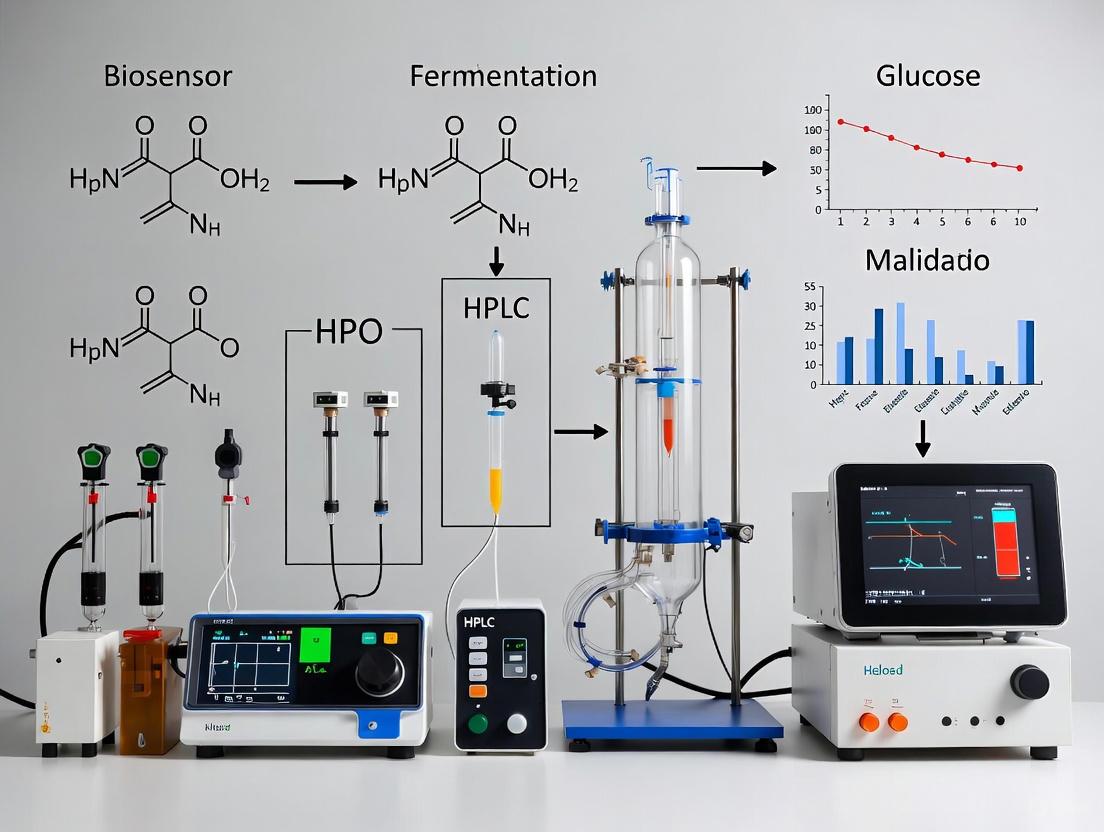
For researchers and scientists in drug development and bioprocessing, selecting an appropriate method for glucose monitoring is critical for fermentation validation and optimization.
Biosensor vs. HPLC for Glucose Monitoring in Fermentation: A Guide to Validation and Process Control
Abstract
For researchers and scientists in drug development and bioprocessing, selecting an appropriate method for glucose monitoring is critical for fermentation validation and optimization. This article provides a comprehensive comparison between biosensors and High-Performance Liquid Chromatography (HPLC), addressing the core challenges of modern bioprocess monitoring. We explore the foundational principles of both technologies, detail their methodological applications in real fermentation environments, and provide troubleshooting strategies for common pitfalls. A direct, data-driven validation compares analytical performance, cost, and suitability for at-line/on-line control, offering a clear framework for method selection to enhance process efficiency and product quality in biomedical fermentation.
Understanding the Core Technologies: From Biosensor Principles to HPLC Fundamentals
In bioprocess manufacturing, reliable identification and quantification of key parameters like glucose concentration is fundamental to operating fermentation at optimal reactor efficiency, maximizing productivity while minimizing waste. [1] For decades, high-performance liquid chromatography (HPLC) has been the laboratory gold standard for glucose quantification in fermentation processes due to its high accuracy and sensitivity. However, HPLC analysis is resource and time-intensive, requiring complex sample preparation and skilled personnel, making it unsuitable for rapid, on-line monitoring. [1] [2] [3]
The evolution of glucose biosensors presents a compelling alternative, promising rapid, specific, and continuous glucose measurements. This guide objectively compares the performance of modern biosensor platforms against traditional HPLC for glucose monitoring in fermentation validation research, providing researchers and drug development professionals with the experimental data needed to inform their analytical strategies.
The Generational Evolution of Glucose Biosensors
The development of electrochemical glucose biosensors is categorized into four distinct generations based on their electron transfer mechanism. [4] [5] [6]
Table 1: Generations of Electrochemical Glucose Biosensors
| Generation | Core Principle & Electron Transfer Mechanism | Key Advantages | Inherent Limitations |
|---|---|---|---|
| First | Uses glucose oxidase (GOx); relies on native oxygen as an electron acceptor; detects consumed O₂ or produced H₂O₂. [4] [5] [6] | Simple design; directly linked to enzyme activity. [5] | Signal dependent on ambient oxygen concentration; high operating potential prone to interference from electroactive species (e.g., ascorbic acid, uric acid). [4] [5] [6] |
| Second | Uses artificial redox mediators (e.g., ferrocene, quinones) to shuttle electrons between GOx and the electrode. [4] [7] [5] | Reduced operating potential minimizes interference; less affected by oxygen; faster response. [7] [5] | Potential toxicity of mediators; mediator leaching over time can impact long-term stability. [5] [6] |
| Third | Achieves direct electron transfer (DET) between the enzyme's redox center (FAD) and the electrode, without mediators. [4] [5] [6] | High specificity; minimal interference; ideal for real-time, continuous monitoring. [4] [5] | Difficult to establish DET as the FAD center is deeply embedded in the enzyme; requires sophisticated electrode materials (e.g., nanomaterials) for efficient wiring. [4] [7] [6] |
| Fourth | Enzyme-free sensors utilizing electrocatalytic nanomaterials (e.g., metal oxides) for direct glucose oxidation. [4] [5] | High stability; avoids issues of enzyme denaturation or leakage; cost-effective for mass production. [4] | Selectivity can be a challenge in complex matrices; an ongoing area of research. [4] |
The following diagram illustrates the logical evolution and core electron transfer mechanisms of these biosensor generations.
Biosensor vs. HPLC: Quantitative Performance Comparison
A critical comparative analysis of methods for quantitating sugars during the corn-to-ethanol fermentation process revealed distinct performance profiles for HPLC and biosensor techniques. [2] Furthermore, recent studies have successfully applied commercial biosensor platforms to fermentation monitoring.
Table 2: Analytical Performance: Biosensor vs. HPLC for Glucose Quantitation
| Analytical Parameter | HPLC with Refractive Index Detection (RID) | Liquid Chromatography-Mass Spectrometry (LC-MS) | Amperometric Glucose Biosensor |
|---|---|---|---|
| Limit of Quantitation (LOQ) | 1500 ppm (1.5 g/L) [2] | 2 ppm (0.002 g/L) [2] | Not explicitly stated in study, but demonstrated capability in the μM range [6] |
| Linear Dynamic Range | 1.5 orders of magnitude [2] | 2.7 orders of magnitude [2] | Up to 150 mM (demonstrated in fermentation broth) [1] |
| Analysis Time | Several minutes to hours (including sample prep and run time) [1] [3] | Similar to HPLC, resource-intensive [2] | < 5 minutes for a single measurement [1] |
| Best Suited Application | Ideal for glucose quantitation at high concentrations and when reference-level accuracy is required. [2] | Superior for trace-level analysis and simultaneous quantitation of multiple sugars (e.g., glucose, maltose, maltotriose) throughout fermentation. [2] | Optimal for at-line/on-line monitoring, rapid process feedback, and continuous glucose concentration tracking. [1] |
Key Experimental Finding: An automated electrochemical biosensor platform was able to detect glucose concentrations up to 150 mM in complex fermentation broth, on both cell-free and cell-containing samples, with a measurement time of less than 5 minutes. This performance was comparable to HPLC analysis but delivered results in a significantly less resource-consuming manner. [1]
Experimental Protocols for Fermentation Validation
Protocol: Validating a Biosensor for On-Line Fermentation Monitoring
This methodology outlines the integration and validation of a commercial flow-through-cell biosensor for on-line glucose monitoring during a yeast fed-batch fermentation process. [1]
- Biosensor Platform: A commercial miniaturized sensing platform (e.g., B.LV5 chip, Jobst Technologies GmbH) with integrated 1st generation electrochemical glucose biosensors is used. The chip is designed as a 1 μL flow-through-cell. [1]
- Fermentation Setup: A standard bioreactor equipped with standard sensors (pH, temperature, dissolved oxygen) is used for yeast cultivation. [1]
- Integration: The biosensor's flow cell is integrated into the fermentation setup via tubing connected to a pump. The outlet stream can be directed to a waste container or back to the bioreactor. [1]
- Measurement Principle: Chronoamperometric measurements are performed at a fixed potential (e.g., +450 mV vs. an internal Ag/AgCl pseudo-reference). The multi-array design of the sensor allows for automatic measurement in duplicate. [1]
- Calibration & Validation: The biosensor is calibrated with standard glucose solutions. During fermentation, its performance is validated against off-line reference measurements (e.g., HPLC) taken from the broth at regular intervals. [1]
- Data Processing: The current signal from the biosensor is converted to glucose concentration using the established calibration curve. Data is processed using dedicated software (e.g., bioMON). [1]
The workflow for this integrated on-line monitoring system is depicted below.
Protocol: HPLC Reference Method for Glucose Quantification
For validation purposes, HPLC remains the benchmark method. A typical protocol for sugar quantitation during fermentation is as follows: [2]
- Instrumentation: High-performance liquid chromatography system coupled with a Refractive Index Detector (RID) or Mass Spectrometer (LC-MS) for enhanced sensitivity. [2]
- Column: A suitable carbohydrate column (e.g., amine-based or cation-exchange) is used for separation.
- Mobile Phase: Acetonitrile-water mixtures or pure deionized water are commonly used as the mobile phase for sugar separation in RID methods. [2]
- Sample Preparation: Fermentation broth samples are centrifuged to separate cells. The supernatant is then filtered (e.g., 0.2 μm membrane filter) to remove particulates that could damage the HPLC column. [2] [3]
- Analysis: Prepared samples are injected into the HPLC system. Glucose is identified based on its retention time and quantified by comparing the peak area to a calibration curve of standard solutions. [2]
The Scientist's Toolkit: Essential Research Reagents & Materials
The development and application of advanced glucose biosensors rely on key materials and reagents. The following table details critical components for research in this field.
Table 3: Essential Research Reagents and Materials for Glucose Biosensor Development
| Reagent/Material | Function/Application | Research Context |
|---|---|---|
| Glucose Oxidase (GOx) | Biological recognition element; catalyzes the oxidation of glucose to gluconolactone and H₂O₂. [3] [6] | The standard enzyme for 1st-3rd generation biosensors; immobilized onto electrode surfaces. [8] [3] |
| Flavin-Adenine-Dinucleotide-dependent Glucose Dehydrogenase (FAD-GDH) | Alternative biological recognition element; oxygen-insensitive, improving sensor selectivity. [9] | Used in commercial sensor strips to avoid oxygen interference issues common with GOx. [9] |
| Redox Mediators (e.g., Ferrocene, Quinone derivatives) | Artificial electron shuttles; transfer electrons from the enzyme's redox center to the electrode surface. [7] [9] | Core component of 2nd generation biosensors; water-soluble quinone mediators with high enzyme reactivity can enhance sensitivity and linear range. [9] |
| Nanostructured Electrode Materials (e.g., Carbon Nanotubes, Graphene, Metal Nanoparticles) | Electrode modification; provide high surface area, excellent conductivity, and facilitate direct electron transfer. [4] [7] [5] | Used to construct 3rd and 4th generation biosensors; enhance sensitivity, stability, and electrocatalytic activity. [4] [5] |
| Hydrogels (e.g., Chitosan) | Enzyme immobilization matrix; provides a biocompatible environment that stabilizes the enzyme. [3] | Used to entrap and immobilize enzymes like GOx on electrode surfaces, maintaining their activity and structural conformation. [3] |
For fermentation validation research, the choice between HPLC and biosensors is not a matter of outright replacement but of strategic application. HPLC remains the undisputed reference method for its high accuracy and ability to perform multi-analyte profiles, essential for rigorous protocol validation and regulatory submission. [2] However, advanced biosensor platforms offer unparalleled advantages for dynamic, real-time process monitoring, enabling rapid feedback control that can optimize feed strategies and maximize productivity. [1]
Future developments in glucose monitoring for bioprocesses will likely focus on the integration of these technologies. Biosensors equipped with advanced nanomaterials [4] [5] and artificial intelligence [8] for predictive analytics and calibration will further close the accuracy gap with HPLC. The evolution of multi-analyte biosensors that can simultaneously monitor glucose, lactate, and other critical metabolites will provide a more holistic view of the fermentation process, solidifying the role of biosensors as indispensable tools in the modern bioprocessing laboratory.
In the field of bioprocessing, particularly in fermentation validation research, the precise monitoring of sugar substrates like glucose is a critical quality attribute essential for optimizing biomass production and metabolite yield [10]. High-Performance Liquid Chromatography (HPLC) has long been the cornerstone analytical technique for this purpose, providing the robust, multi-analyte data required for process validation and quality control. This guide objectively compares the performance of established HPLC methodologies with emerging biosensor-based platforms for glucose monitoring, providing researchers and drug development professionals with the experimental data necessary to inform their analytical strategies.
The fundamental principle of HPLC separation involves the distribution of analytes between a mobile phase (eluent) and a stationary phase (column packing material) [11]. The specific intermolecular interactions between the sample molecules and the stationary phase dictate their retention time, achieving physical separation of the mixture's components [11] [12]. For sugar analysis, the dominant separation modes include reversed-phase chromatography after derivatization, hydrophilic interaction liquid chromatography (HILIC), and ion-exchange chromatography, selected based on the chemical properties of the target saccharides [13] [12].
Principles of Chromatographic Separation and Detection for Sugars
Core Separation Mechanisms
The separation of sugars using HPLC relies on exploiting their inherent chemical properties, such as polarity, molecular size, and charge. The following diagram illustrates the general decision-making workflow for selecting an appropriate HPLC method for sugar analysis.
Detection Techniques
Following separation, detection is a critical step for quantification. The table below summarizes the common detection methods used in HPLC-based sugar analysis.
Table 1: Common HPLC Detection Methods for Sugar Analysis
| Detection Method | Principle of Operation | Key Advantages | Common Applications |
|---|---|---|---|
| Refractive Index (RI) | Measures change in the mobile phase's refractive index [14] | Universal detector; no analyte derivatization needed [14] | Sucrose, glucose, fructose in food & plant materials [14] [15] |
| Pulsed Electrochemical (PED) | Measures electrochemical current from oxidation of sugars on a gold electrode [16] | High sensitivity and selectivity for carbohydrates | High-Performance Anion-Exchange Chromatography (HPAEC) [16] |
| UV/Vis Spectrophotometry | Measures absorbance of light by a chromophore | High sensitivity | Requires pre- or post-column derivatization to create a light-absorbing compound [17] |
| Post-column Reaction | Analyte reacts with a reagent post-column to form a detectable product [17] | Can enhance sensitivity and selectivity for specific compound classes | Reducing sugars with Cu(II)-neocuproine reagent, detected at 450 nm [17] |
Experimental Protocols for HPLC-Based Sugar Analysis
Protocol: Quantification of Reducing Sugars with Post-Column Detection
This method, developed by Akyüz et al. (2021), is designed for the sensitive determination of reducing sugars in various food matrices, which is directly applicable to fermentation broth analysis [17].
- Sample Preparation: Solid samples undergo a solid-liquid extraction, typically with aqueous methanol or water. Liquid samples like fermentation broth may require centrifugation and filtration (e.g., 0.45 μm membrane) to remove particulate matter and cells [17] [10] [14].
- HPLC Conditions:
- Column: A suitable HPLC column for carbohydrate separation.
- Mobile Phase: Delivered at an isocratic flow rate of 0.8 mL/min.
- Column Oven Temperature: Maintained at 30 °C.
- Injection Volume: Typically 10-20 μL.
- Post-Column Reaction:
- Reagent: Cu(II)-neocuproine (Nc) solution.
- Reaction Flow Rate: 0.3 mL/min.
- Reaction Temperature: 80 °C.
- Detection: The resulting Cu(I)-Nc complex is measured spectrophotometrically at 450 nm [17].
- Validation Data: The method demonstrated a linear range of 9.0 – 342.3 mg/L for glucose, fructose, maltose, and lactose, with limits of detection (LOD) ≤ 7.4 mg/L. Recovery rates in spiked food samples ranged from 96% to 107% [17].
Protocol: Rapid Analysis of Mono- and Disaccharides in Plant Tubers
This validated method, described by Duarte-Delgado et al. (2015), is an example of a robust isocratic separation for common sugars, applicable to biological matrices [14].
- Sample Preparation: Tubers are homogenized, and sugars are extracted using a double 50% (v/v) aqueous methanol extraction. The recovery of this extraction method was validated between 94.14% and 99.77% [14].
- HPLC Conditions:
- Column: AMINEX HPX 87H (or similar ion-exchange column).
- Mobile Phase: 10 mM sulfuric acid, isocratic elution.
- Flow Rate: 1.0 mL/min.
- Column Temperature: 18 °C.
- Detector: Refractive Index (RI) detector maintained at 35 °C.
- Performance: The method achieved baseline resolution of sucrose, glucose, and fructose in under 16 minutes. It was validated for repeatability and reproducibility (RSD < 5%), with a linear range from 3 to 100 mg/L [14].
HPLC vs. Biosensor Performance Comparison
The following table provides a direct, data-driven comparison of the technical performance of HPLC and biosensor technologies for glucose monitoring, a critical parameter in fermentation processes.
Table 2: Performance Comparison: HPLC vs. Biosensors for Glucose Monitoring
| Performance Parameter | HPLC Methods | Biosensor Platforms |
|---|---|---|
| Analysis Time | ~16 to >60 minutes [18] [14] | < 5 minutes for a single measurement [10] |
| Linear Range | Wide range (e.g., 3-100 mg/L to 9-342 mg/L) [17] [14] | Up to 150 mM (~2700 mg/dL) with specialized platforms [10] |
| Sensitivity (LOD) | ≤ 7.4 mg/L (Post-column HPLC) [17] | Micromolar (μM) sensitivity demonstrated [16] |
| Multi-analyte Capability | Yes (e.g., glucose, fructose, lactose, sucrose simultaneously) [17] [14] [15] | Typically No (primarily single analyte, e.g., glucose) [10] |
| Accuracy (Recovery) | 94–107% (in various matrices) [17] [14] | 95–105% recovery in soft drinks; <10% deviation vs. HPLC in food [3] |
| Precision (Repeatability) | RSD < 5% [14] | RSD = 1.9% [3] |
| Sample Preparation | Can be complex (extraction, centrifugation, filtration) [14] | Minimal; can handle cell-containing broth directly [10] |
| Suitability for On-line/At-line Monitoring | Low (complex, slow, off-line technique) [18] [10] | High (compact, fast, can be integrated into bioreactor systems) [10] |
The Scientist's Toolkit: Essential Research Reagents and Materials
Successful implementation of HPLC methods for sugar analysis requires specific, high-quality materials. The following table details key reagents and their functions.
Table 3: Essential Research Reagents and Materials for HPLC Sugar Analysis
| Item Name | Function / Principle | Application Example |
|---|---|---|
| AMINEX HPX-87H Column | Ion-exchange column; separates sugars and organic acids in aqueous mobile phases. | Separation of sucrose, glucose, and fructose in tuber extracts [14]. |
| Cu(II)-Neocuproine Reagent | Post-column derivatization agent; reacts specifically with reducing sugars to form a colored, UV-Vis detectable complex [17]. | Sensitive quantification of reducing sugars (glucose, fructose, maltose, lactose) in foods [17]. |
| Eurospher 100-5 NH₂ Column | Aminopropyl-bonded phase for normal-phase/HILIC separation; interacts with polar sugar molecules. | Sugar profiling in almonds and chestnuts with isocratic acetonitrile/water elution [15]. |
| Degassed 10 mM H₂SO₄ | Common aqueous mobile phase for ion-exchange chromatography; provides protons for the separation mechanism. | Isocratic elution for sugar analysis on the AMINEX HPX-87H column [14]. |
| Chitosan Hydrogel | A biocompatible polymer used to entrap and stabilize enzymes (e.g., Glucose Oxidase) on electrode surfaces [3]. | Immobilization layer in amperometric glucose biosensors [3]. |
| Titanium Dioxide Nanotube Arrays (TiO₂NTAs) | Nanostructured electrochemical interface; provides high surface area for enzyme immobilization and promotes charge transfer [3]. | Platform for constructing highly sensitive amperometric glucose biosensors [3]. |
The choice between HPLC and biosensor technology for monitoring sugars in bioprocessing is not a matter of simple superiority but of strategic application. HPLC remains the undisputed reference method for comprehensive, multi-analyte profiling and rigorous validation studies, offering unparalleled accuracy, precision, and the ability to quantify a full spectrum of saccharides simultaneously [17] [14] [15].
However, for applications where speed, process control, and cost-efficiency are paramount, particularly for monitoring a single key substrate like glucose, biosensors present a powerful alternative [10] [3]. Their capability for fast, at-line or on-line analysis with minimal sample preparation addresses a critical gap in modern bioprocessing toward real-time quality assurance. The integration of robust biosensors for continuous monitoring, complemented by periodic HPLC validation for full profile analysis, represents an optimal hybrid strategy for advanced fermentation research and development.
In the field of bioprocess manufacturing, monitoring and controlling fermentation processes remains a crucial challenge for both laboratory and industrial-scale experiments. Reliable identification and quantification of key parameters like glucose in on-line mode allows operation at optimal reactor efficiency, maximizing productivity while minimizing waste [1]. For decades, High-Performance Liquid Chromatography (HPLC) has served as the gold standard for analytical quantification in fermentation processes. However, the emergence of advanced biosensor technologies presents a promising alternative for specific monitoring applications, particularly for glucose. This guide provides an objective comparison between biosensor-based platforms and traditional HPLC methods for glucose monitoring in fermentation validation research, offering scientists a framework for evaluating these technologies against critical analytical parameters.
Biosensor Platforms
Biosensors are defined as analytical devices that transduce a signal derived from molecular recognition by a biological recognition element (BRE) to quantify analytes in samples [19]. Electrochemical glucose biosensors, the most established type, typically employ enzymes like glucose oxidase (GOx) as their BRE [1] [20]. The working principle involves the enzyme catalyzing the oxidation of glucose, generating an electrochemical signal proportional to glucose concentration.
Recent innovations have significantly enhanced biosensor capabilities. For fermentation applications, commercial flow-through-cell designs with integrated electrochemical biosensors can now detect glucose concentrations up to 150 mM in complex fermentation broth, addressing the previous limitation of narrow detection ranges (typically up to 25 mM) inherited from healthcare applications [1]. Advanced designs incorporate protective matrices like metal-organic frameworks (MOFs) to shield enzymes from harsh fermentation conditions, while hydrogel-based systems improve stability against temperature variations [21].
High-Performance Liquid Chromatography (HPLC)
HPLC operates on the principle of separating mixture components through a column packed with a stationary phase, using a liquid mobile phase under high pressure. For glucose analysis in fermentation broth, separation is typically followed by detection via refractive index (RI) detection [1]. The method requires extensive sample preparation, including removal of cells and particulates that could damage the chromatography system. HPLC provides a comprehensive metabolic profile, allowing simultaneous quantification of glucose and other compounds like metabolites and byproducts, which remains a significant advantage over most biosensor approaches [22].
Comparative Performance Analysis
Analytical Performance Metrics
Table 1: Direct comparison of key analytical performance metrics between biosensor and HPLC methods for glucose monitoring in fermentation processes.
| Performance Parameter | Biosensor Platform | HPLC with RI Detection |
|---|---|---|
| Detection Range | Up to 150 mM (demonstrated) [1] | Typically wider range, limited by sample preparation and detector linearity |
| Analysis Time | <5 minutes [1] | 15-30 minutes per sample |
| Sample Preparation | Minimal; can handle cell-containing samples [1] | Extensive; requires cell separation and filtration [1] [22] |
| Measurement Frequency | Continuous or near-continuous (on-line/at-line) [1] | Discrete (off-line) |
| Specificity | High for glucose (enzyme-mediated) [1] | High; can distinguish glucose from other sugars and compounds |
| Multi-analyte Capability | Typically limited to glucose (or a few analytes with multi-array sensors) [1] | Comprehensive metabolic profiling [22] |
| Automation Potential | High for integrated on-line monitoring [1] | Moderate; requires auto-samplers but limited by sample preparation |
Validation Parameter Assessment
For any analytical method to be considered "fit-for-purpose," it must undergo rigorous validation against standardized parameters, often remembered by the mnemonic "Silly - Analysts - Produce - Simply - Lame - Results" corresponding to Specificity, Accuracy, Precision, Sensitivity, Linearity, and Robustness [23].
- Specificity: Biosensors demonstrate high specificity for glucose through enzyme-substrate recognition, successfully quantifying glucose in the presence of various electroactive species in fermentation broth [1]. HPLC offers superior specificity by physically separating glucose from interfering compounds before detection [22].
- Accuracy & Precision: Biosensor platforms show strong agreement with HPLC reference measurements, with accuracy demonstrated through testing of samples with known concentrations [1]. HPLC remains the reference method against which other technologies are validated [1] [22].
- Sensitivity: Modern biosensors demonstrate excellent sensitivity with low detection limits, suitable for tracking dynamic glucose changes throughout fermentation [1]. HPLC also provides high sensitivity, with absolute quantitation reported in the mM range for fermentation metabolites [22].
- Linearity/Range: The demonstrated linear detection range for biosensors up to 150 mM covers most fermentation applications [1]. HPLC offers a wider linear dynamic range, configurable through sample dilution and injection volume.
- Robustness: Biosensor robustness has been demonstrated through mechanical stability in direct contact with fermentation medium and accurate quantification despite environmental variations [1] [21]. HPLC is highly robust once established but can be affected by column degradation or mobile phase variations.
Experimental Protocols and Methodologies
Biosensor Experimental Workflow
(Biosensor Glucose Detection Workflow)
The experimental setup for the biosensor platform involves a flow-through-cell (e.g., B.LV5 biosensor chip) with integrated electrochemical glucose biosensors, a potentiostat (e.g., SIX transmitter), and operating software (e.g., bioMON) [1]. The methodology includes:
- System Calibration: Initial calibration with standard glucose solutions across the expected concentration range.
- Sample Handling: Fermentation broth, either cell-containing or cell-free, is pumped through the flow cell using a peristaltic pump connected via tubing (0.5-1.52 mm inner diameter) [1].
- Electrochemical Measurement: Chronoamperometric measurements are performed at a voltage of +450 mV vs. Ag/AgCl pseudo-reference electrode [1].
- Signal Processing: The current from blank (non-enzyme coated) electrodes is subtracted from working electrode signals to account for non-specific signals [1].
- Data Output: Glucose concentration is calculated based on the calibrated response, with total analysis time under 5 minutes [1].
HPLC Experimental Workflow
(HPLC Glucose Detection Workflow)
The reference HPLC method for fermentation glucose monitoring typically involves:
- Sample Preparation: Fermentation samples are first quenched to stop metabolic activity, then centrifuged or filtered to remove cells (e.g., 0.2 μm membrane filters) [1] [22]. This critical step adds significant time and complexity.
- Chromatographic Separation: Processed samples are injected (typically 10-20 μL) onto a suitable column. For glucose analysis in fermentation broths, Bio-Rad Aminex HPX-87H columns (or equivalent) are commonly used with 5mM H₂SO₄ as the mobile phase at ~0.6 mL/min [22].
- Detection and Quantification: Separated glucose is detected using a Refractive Index (RI) detector. Quantification is achieved by comparing peak areas to a calibration curve generated from known standards [1].
- Data Analysis: Total analysis time typically ranges from 15-30 minutes per sample to ensure complete elution of glucose and separation from interfering compounds [1].
The Scientist's Toolkit: Essential Research Reagents and Materials
Table 2: Key research reagents and materials essential for implementing biosensor and HPLC methods for fermentation monitoring.
| Item | Function/Purpose | Technology |
|---|---|---|
| Glucose Oxidase (GOx) Enzyme | Biological recognition element for glucose detection; catalyzes glucose oxidation | Biosensor |
| Biosensor Chip (e.g., B.LV5) | Miniaturized flow-through cell with integrated electrodes for electrochemical detection | Biosensor |
| Potentiostat (e.g., SIX transmitter) | Applies potential and measures resulting current for electrochemical detection | Biosensor |
| Metal-Organic Frameworks (e.g., ZIF-8) | Protective matrix to enhance enzyme stability under harsh conditions [21] | Biosensor |
| HPLC Column (e.g., Aminex HPX-87H) | Stationary phase for separation of glucose from other compounds in fermentation broth | HPLC |
| Refractive Index Detector | Detects glucose based on changes in refractive index after separation | HPLC |
| Mobile Phase (e.g., 5mM H₂SO₄) | Liquid solvent system for eluting compounds through the HPLC column | HPLC |
| Membrane Filters (0.2 μm) | Removes cells and particulates from fermentation broth to protect HPLC system | HPLC |
| Standard Reference Materials | High-purity glucose for calibration curves and method validation | Both |
Application in Fermentation Monitoring
The choice between biosensor and HPLC technologies depends heavily on the specific monitoring application:
- Process Development and Optimization: HPLC's comprehensive metabolite profiling (e.g., glucose, acetate, alanine, phenylalanine, betaine) is invaluable for understanding metabolic fluxes and optimizing strain performance [22].
- Fed-batch Process Control: Biosensors enable real-time, on-line glucose monitoring, allowing for dynamic control of feeding strategies. Studies have successfully maintained glucose at desired set-points using biosensor-based control systems during long-term fermentations lasting nearly 600 hours [1].
- Scale-up and Tech Transfer: The compact nature and robustness of modern biosensor platforms make them suitable for implementation across different scales, from laboratory bioreactors to manufacturing facilities [1].
Both biosensor and HPLC technologies offer distinct advantages for glucose monitoring in fermentation processes. HPLC remains the gold standard for validated, multi-analyte quantification, particularly when comprehensive metabolic information is required. However, biosensor platforms present a compelling alternative for dedicated glucose monitoring, offering significant advantages in speed, simplicity, and on-line capability without compromising accuracy within their operational range. The choice between these technologies should be guided by specific analytical needs, validation requirements, and the intended application within the fermentation workflow. For many modern bioprocess applications, a hybrid approach leveraging both technologies may provide the optimal solution for process understanding and control.
In bioprocessing, particularly for fermentation validation research, the accurate and timely monitoring of key nutrients like glucose is critical for optimizing biomass production and controlling the synthesis of metabolites. The selection of an appropriate analytical technique directly impacts the reliability of process data and the effectiveness of control strategies. This guide provides an objective comparison between two predominant technological approaches: automated biosensor-based analyzer systems and High-Performance Liquid Chromatography (HPLC) systems. Framed within the broader thesis of biosensor versus HPLC methodologies for glucose monitoring, this article synthesizes current commercial offerings and research findings to aid researchers, scientists, and drug development professionals in making informed instrument selections.
Understanding the fundamental operating principles of biosensors and HPLC is essential for appreciating their respective advantages and limitations in a bioprocess monitoring context.
Biosensor-Based Analyzers
Biosensors are analytical devices that integrate a biorecognition element (e.g., an enzyme like glucose oxidase) with a signal transducer (e.g., electrochemical, optical) [24]. For glucose monitoring in fermentation, the enzyme selectively catalyzes the oxidation of glucose. The ensuing biochemical reaction produces a measurable signal (e.g., an electrical current) that is proportional to the glucose concentration in the sample [1]. Commercial biosensor platforms, such as those exemplified by the B.LV5 biosensor chip, often employ a multi-array design with multiple working electrodes, including blanks to correct for background signals from the complex fermentation matrix [1]. These systems can be configured for flow-through-cell operation, enabling seamless at-line or on-line integration with bioreactors for rapid quantification, often in less than five minutes [1].
High-Performance Liquid Chromatography (HPLC)
HPLC is a broad analytical technique used to separate, identify, and quantify compounds in a chemical mixture [25]. The separation occurs as the liquid sample (mobile phase) is pumped under high pressure through a column packed with a stationary phase. Analytes, such as different sugars, interact differently with the stationary phase and thus elute from the column at distinct retention times [25]. Common detection methods for carbohydrates lacking chromophores include Refractive Index (RI) and Evaporative Light Scattering Detection (ELSD). The translated data output is a chromatogram where the area under each peak corresponds to the concentration of the analyte [26] [25]. While highly accurate, conventional HPLC analysis is typically performed off-line, is resource-intensive, and requires significant time per sample, making it less suitable for real-time process control [1].
Table 1: Core Working Principles and Common Configurations
| Feature | Biosensor Analyzers | HPLC Systems |
|---|---|---|
| Core Principle | Biochemical recognition coupled with signal transduction [24] | Physico-chemical separation based on differential affinity [25] |
| Common Detection | Electrochemical (Amperometric) | Refractive Index (RI), Evaporative Light Scattering (ELSD) [26] |
| Typical Operation Modes | On-line, At-line | Off-line |
| Key Output | Concentration (e.g., mM glucose) | Chromatogram with retention times and peak areas [25] |
Performance Comparison and Experimental Data
Direct performance comparison reveals a trade-off between the speed and ease of biosensors and the high accuracy and multi-analyte capability of HPLC.
Quantitative Performance Metrics
The table below summarizes key performance characteristics for glucose monitoring in bioprocessing, as derived from recent research and application studies.
Table 2: Performance Comparison for Glucose Monitoring in Fermentation
| Performance Parameter | Biosensor Analyzers | HPLC Systems |
|---|---|---|
| Analysis Time | < 5 minutes [1] | Several minutes to tens of minutes per sample |
| Detection Range | Up to 150 mM (demonstrated) [1] | Wide dynamic range (method dependent) |
| Linearity | High (R² not specified, but accurate quantification) [1] | Excellent (e.g., R² = 0.9998 for HPLC-ELSD) [26] |
| Precision | Reliable quantification; specific RSD not reported [1] | High (e.g., RSD < 2% for repeatability in HPLC-ELSD) [26] |
| Sample Throughput | Very High (suitable for continuous monitoring) | Moderate (batch-based, manual injection) |
| Multi-analyte Capability | Typically single analyte per sensor; multi-array platforms exist [1] | Inherently multi-analyte (e.g., glucose, maltose, sucrose simultaneously) [26] |
Experimental Validation Data
A 2020 study directly compared a commercial electrochemical glucose biosensor platform with HPLC-RI as a reference method during a yeast fed-batch fermentation. The biosensor platform demonstrated the ability to detect glucose concentrations up to 150 mM in complex fermentation broth, a four to six-fold higher range than many previous biosensor applications. The study reported reliable glucose quantification in a significantly less resource and time-consuming manner (<5 min) compared to HPLC analysis, with outstanding mechanical stability in direct contact with the fermentation medium [1].
In a separate 2025 study, an HPLC-ELSD method was developed and fully validated for analyzing fermentable sugars in brewing matrices. The method showed excellent linearity (R² = 0.9998) with high precision (RSD < 2% for repeatability) and recovery rates between 86 and 119%, confirming its robustness and minimal matrix interference for off-line analysis [26].
Detailed Experimental Protocols
To ensure reproducibility and provide clarity on how the comparative data is generated, this section outlines standard protocols for both methods.
Protocol for On-line Glucose Monitoring with a Biosensor Platform
This protocol is adapted from the application of a commercial flow-through-cell biosensor for yeast fermentation [1].
Key Equipment & Reagents:
- Biosensor Chip: e.g., B.LV5 with integrated 1st generation glucose biosensors (Jobst Technologies GmbH/IST AG) [1].
- Potentiostat: For applying potential and measuring current (e.g., SIX transmitter).
- Peristaltic Pump: To facilitate a continuous flow of sample through the biosensor flow cell.
- Data Acquisition Software: e.g., bioMON software for system operation.
- Calibration Standards: Glucose solutions of known concentration in a relevant matrix.
Procedure:
- System Setup: Integrate the biosensor chip into the flow-through system, connecting the inlet and outlet tubing. Connect the chip to the potentiostat and the pump. Integrate the system with the bioreactor via a sterile sample loop or an at-line sampling module.
- System Calibration: Calibrate the biosensor by pumping standard glucose solutions through the cell. The chronoamperometric measurement is typically performed at a set voltage (e.g., +450 mV vs. Ag/AgCl). The blank electrode signal is automatically subtracted to correct for interference.
- Sample Analysis: In on-line mode, the system automatically draws samples from the bioreactor. The sample flows through the biosensor cell, and the glucose concentration is measured in near real-time.
- Data Output: The software records the amperometric signal and converts it to a glucose concentration, typically in under 5 minutes per measurement [1].
Protocol for Off-line Glucose Quantification using HPLC-ELSD
This protocol is based on a validated method for sugar analysis in brewing matrices [26].
Key Equipment & Reagents:
- HPLC System: Equipped with quaternary pump, autosampler, and thermostatted column compartment.
- Detector: Evaporative Light Scattering Detector (ELSD).
- Analytical Column: e.g., Spherisorb NH2 column (250 x 4.6 mm, 5 µm).
- Mobile Phase: Acetonitrile and ultrapure water.
- Calibration Standards: Mixed stock solutions of target sugars (e.g., glucose, maltose, maltotriose, sucrose, fructose).
Procedure:
- Sample Preparation: Collect samples from the bioreactor. Filter through a 0.22 µm PVDF membrane filter. Dilute the sample appropriately with ultrapure water to fit the calibration curve's mid-range [26].
- HPLC-ELSD Analysis:
- Column Temperature: 30°C
- Mobile Phase Flow Rate: 1 mL/min (Gradient or Isocratic mode as optimized).
- Injection Volume: 10 µL
- ELSD Parameters: Nebulizer temperature: 60°C, Evaporator temperature: 85°C, Nitrogen gas flow: 1.1 SLM [26].
- Data Analysis: Identify glucose based on its retention time by comparing with standards. Quantify the concentration by integrating the peak area and interpolating from the quadratic calibration curve.
The Scientist's Toolkit: Essential Research Reagents and Materials
Successful implementation of either analytical strategy requires specific consumables and reagents. The following table details key items used in the featured experiments.
Table 3: Essential Research Reagents and Materials
| Item Name | Function / Application | Example from Literature |
|---|---|---|
| Glucose Oxidase (GOx) | Biorecognition element in 1st generation electrochemical glucose biosensors; catalyzes glucose oxidation [1]. | Integrated into the commercial B.LV5 biosensor chip [1]. |
| Biosensor Flow Cell | Miniaturized chamber housing the electrodes; allows continuous sample flow for on-line measurement. | 1 µl flow-through-cell with tubing and luer fittings [1]. |
| Amino (NH2) HPLC Column | Stationary phase for normal-phase separation of carbohydrates based on their polarity [26]. | Spherisorb NH2 column (250 x 4.6 mm, 5 µm) [26]. |
| ELSD Detector | Universal detector for non-chromophoric compounds like sugars; works by nebulization and light scattering of non-volatile particles [26]. | Agilent 380-ELSD detector [26]. |
| PVDF Syringe Filter | Sterile filtration of samples to remove particulates and cells, preventing column clogging and system damage. | 0.22 µm Millex PVDF syringe filters used for HPLC sample prep [26]. |
Industry Adoption and Implementation Context
The adoption of these technologies in biopharmaceutical manufacturing is influenced by factors beyond pure performance metrics, including regulatory compliance and process integration.
The use of Process Analytical Technology (PAT) tools, which include on-line biosensors, is encouraged by regulatory agencies to facilitate Quality by Design (QbD) by providing real-time process knowledge and control [27]. However, implementation in Good Manufacturing Practice (GMP) environments has been slower than in classical pharmaceutical processes. This is partly due to the complexity of biological systems and the historical difficulty in directly measuring macromolecular characteristics in-process. While PAT tools are increasingly used in process development, traditional off-line quality control testing, often involving HPLC, is still heavily relied upon for GMP manufacturing [27].
Fully automated biosensor-based systems like ProcessTRACE have demonstrated successful long-term on-line glucose monitoring and feed control during fermentations lasting nearly 600 hours, highlighting their potential for robust, continuous operation [1]. The primary advantage of integrated biosensor systems is the move from periodic, reactive sampling to continuous, proactive process management, leading to more consistent product quality and reduced contamination risk [27].
The choice between commercial biosensor analyzers and HPLC systems for glucose monitoring in fermentation is not a matter of selecting a universally superior technology, but rather of aligning the analytical solution with the specific research or production objective.
Biosensor-based platforms are the definitive choice for applications demanding real-time data for process control. Their key strengths are speed (<5 min), ease of automation, and on-line capability, enabling researchers to maintain fermentation processes at optimal efficiency. While traditionally limited in detection range, modern commercial platforms have demonstrated robust operation in complex broths with an extended range of up to 150 mM [1].
HPLC systems remain the gold standard for off-line, high-precision validation and multi-analyte profiling. They deliver exceptional accuracy, precision, and the ability to simultaneously quantify a full spectrum of sugars (e.g., glucose, maltose, maltotriose, sucrose) and other metabolites [26]. This makes HPLC indispensable for detailed process characterization, final product quality control, and as a reference method for validating faster analytical techniques.
For a comprehensive fermentation validation strategy, the two technologies are not mutually exclusive but are highly complementary. An ideal approach may leverage the real-time control capabilities of on-line biosensors while using off-line HPLC for periodic validation and in-depth metabolic profiling.
Practical Deployment: Implementing Biosensors and HPLC in Fermentation Workflows
In the realm of industrial bioprocessing, achieving optimal efficiency and product yield hinges on precise monitoring and control of critical parameters, with glucose concentration being paramount. Traditional methods, particularly High-Performance Liquid Chromatography (HPLC), have long been the standard for off-line analysis. However, the emergence of automated biosensor platforms presents a compelling alternative for real-time, on-line monitoring. This guide provides an objective comparison of biosensor and HPLC performance for glucose monitoring in fermentation, drawing on recent experimental data to inform researchers and development professionals in the pharmaceutical and biotechnology sectors.
The core challenge in fermentation monitoring is obtaining accurate, timely data on substrate consumption to enable proactive process control. Table 1 provides a direct comparison of the fundamental characteristics of biosensor and HPLC technologies.
Table 1: Core Technology Comparison: Biosensor vs. HPLC for Glucose Monitoring
| Feature | Automated Electrochemical Biosensor | HPLC (RID or ELSD) |
|---|---|---|
| Analysis Mode | On-line/At-line (continuous or frequent) [1] [10] | Off-line (manual sampling) [1] [28] |
| Measurement Principle | Enzymatic (GOx) & electrochemical detection [1] [10] | Chromatographic separation & bulk property detection (refractive index, light scattering) [26] [29] [2] |
| Key Advantage | Real-time data for immediate control (<5 minutes) [1] | High specificity for multiple analytes simultaneously [26] |
| Throughput | Very High (continuous data stream) | Low (requires manual sample preparation and run time) [28] |
| Sample Preparation | Minimal; can handle cell-containing broth [1] [10] | Extensive (filtration, dilution, often deproteinization) [28] |
The workflow for each method, from sampling to data analysis, differs significantly. The following diagram illustrates the key steps involved in both processes, highlighting the points of integration with a bioreactor.
Performance Data and Experimental Comparison
Quantitative data from validation studies are essential for an objective evaluation. Table 2 summarizes key performance metrics for both biosensor and HPLC platforms, based on experimental results from recent literature.
Table 2: Quantitative Performance Comparison for Glucose Monitoring
| Parameter | Automated Electrochemical Biosensor | HPLC-RID | HPLC-ELSD |
|---|---|---|---|
| Detection Range | Up to 150 mM (∼27 g/L) [1] [10] | Ideal for high concentrations; LOQ: 1500 ppm (1.5 g/L) [2] | LOD: 2.5–12.5 mg/L [26] |
| Linearity | Not specified in detail | Linear dynamic range: 1.5 orders of magnitude [2] | Quadratic model (R² = 0.9998) [26] |
| Analysis Time | < 5 minutes per measurement [1] | 30+ minutes per sample (including preparation) [28] | Similar to HPLC-RID (method-dependent) |
| Precision (RSD) | Outstanding mechanical stability reported [1] | – | RSD < 2% (repeatability) [26] |
| Multi-Analyte Capability | Primarily glucose (platforms for others exist) [1] | Can quantify glucose, maltose, maltotriose, etc., simultaneously [26] [2] | Can quantify multiple sugars simultaneously [26] |
A study directly comparing methods for corn-to-ethanol fermentation found LC-MS was best for low-concentration analytes, while HPLC-RID was ideal for high-concentration glucose quantitation [2]. This underscores the importance of context when selecting a method.
Experimental Protocols for Validation
For scientists seeking to implement or validate these technologies, the following protocols detail the key methodologies cited in this comparison.
Protocol for On-Line Glucose Monitoring with a Flow-Cell Biosensor
This protocol is adapted from the application of a commercial electrochemical biosensor platform (e.g., Jobst Technologies B.LV5 chip) during a yeast fed-batch fermentation [1] [10].
- Biosensor Platform Setup: The system consists of a biosensor chip designed as a 1 μL flow-through-cell, a potentiostat (SIX transmitter), and operating software (bioMON). The chip contains a multi-array electrochemical cell with two Pt-working electrodes (coated with glucose oxidase), one Pt-counter electrode, an internal Ag/AgCl reference, and two blank electrodes [1] [10].
- System Integration: Connect the biosensor's inlet to a peristaltic pump via tubing and luer fittings. The pump is connected to the bioreactor's sampling port or an automated sampling module. The outlet stream can be directed to waste or back to the bioreactor [1].
- Measurement Parameters: Perform chronoamperometric measurements at an applied potential of +450 mV vs. Ag/AgCl. The current generated is proportional to the glucose concentration oxidized by the enzyme [1].
- Calibration: Calibrate the sensor using standard glucose solutions within the expected concentration range (e.g., up to 150 mM). The blank electrode signals are subtracted from the active electrode signals to correct for interference [1].
- On-Line Operation: Initiate continuous or frequent sampling. The system can be integrated with the bioreactor's control software to enable real-time feedback control of glucose feed pumps based on the measured concentration [1] [10].
Protocol for Off-Line Sugar Profiling using HPLC-ELSD
This protocol is adapted from a validated method for quantifying fermentable sugars in brewing matrices [26].
- Sample Preparation: Collect a sample from the fermenter. Filter it through a pleated filter, and if necessary, decarbonate it by agitation. Pipette a specific volume into a volumetric flask and dilute with ultrapure water to bring analyte concentrations to the mid-range of the calibration curve (e.g., 100x for wort, 5x for finished beer). Filter the diluted sample through a 0.22 μm PVDF syringe filter before injection [26].
- Chromatographic Conditions:
- Column: Spherisorb NH2 (250 x 4.6 mm, 5 μm).
- Mobile Phase: Isocratic elution with a suitable solvent (e.g., acetonitrile-water mixtures are common for NH2 columns, though the specific ratio was not detailed in [26]).
- Flow Rate: 1 mL/min.
- Column Temperature: 30°C.
- Injection Volume: 10 μL.
- ELSD Detection:
- Nebulizer Temperature: 60°C.
- Evaporator Temperature: 85°C.
- Nitrogen Gas Flow: 1.1 SLM (Standard Liters per Minute).
- Data Analysis: Use a quadratic calibration model for quantitation due to the non-linear response of the ELSD. A high correlation coefficient (R² = 0.9998) demonstrates excellent fit [26].
The Scientist's Toolkit: Essential Research Reagents and Materials
Successful implementation of these monitoring strategies requires specific materials. The table below lists key solutions and their functions based on the featured experiments.
Table 3: Key Research Reagent Solutions for Fermentation Monitoring
| Item | Function / Description | Experimental Context |
|---|---|---|
| Biosensor Chip (B.LV5) | Flow-through-cell with integrated, enzyme-based electrochemical sensors for selective analyte detection. | On-line glucose monitoring in yeast fermentation [1] [10]. |
| GOx Enzyme (Glucose Oxidase) | The biorecognition element in 1st generation biosensors; catalyzes glucose oxidation. | Fundamental to the function of amperometric glucose biosensors [1]. |
| Aminex HPX-87 Series Columns | HPLC columns with cation-exchange resin, optimized for separation of sugars, sugar alcohols, and organic acids. | Used for sugar separation in complex matrices like fermentation broth [29]. |
| Spherisorb NH2 Column | Normal-phase amino-bonded silica column for carbohydrate analysis. | Used in the validated HPLC-ELSD method for brewing sugars [26]. |
| onCyt Automated Sampler | Interfaces with flow cytometer for at-line, automated sampling from a bioreactor. | Enabled automated sampling for intracellular biosensor (TRX2p-yEGFP) monitoring in yeast [30]. |
The choice between biosensor and HPLC technologies for fermentation monitoring is not a simple matter of superiority but of strategic alignment with process goals. Automated biosensor platforms with flow-through cells offer a powerful tool for environments where speed, continuous data, and direct process control are critical, enabling rapid interventions that can optimize yield and productivity in dynamic fermentations. In contrast, HPLC remains the indispensable standard for method validation, multi-analyte profiling, and high-precision quantification, especially when developing new processes or requiring comprehensive metabolite data. A hybrid approach, using HPLC for off-line validation and biosensors for on-line control, often represents the most robust strategy for advanced fermentation research and development.
In the competitive realms of pharmaceutical development and industrial biotechnology, precise monitoring of fermentation processes is paramount for optimizing yield, ensuring product quality, and maintaining economic viability. For decades, High-Performance Liquid Chromatography (HPLC) has been the gold standard for quantifying critical substrates like glucose and various metabolites in complex fermentation matrices. Its strengths are well-documented: high sensitivity, exceptional accuracy, and the ability to perform multi-analyte detection. However, the technique is also characterized by being resource-intensive, time-consuming, and requiring specialized laboratory equipment and personnel, making it less suitable for rapid, on-line process control.
A paradigm shift is underway, driven by the emergence of robust biosensor-based platforms that promise real-time monitoring capabilities. This guide provides a comprehensive comparison of these two analytical approaches, focusing on the critical task of glucose monitoring in fermentation validation research. We will delve into the latest advancements in HPLC column technology, detail the operational principles of novel biosensors, and provide structured experimental data to help researchers, scientists, and drug development professionals select the optimal tool for their specific application.
Recent Technological Advances: HPLC Columns and Biosensor Platforms
The technological landscape for both HPLC and biosensor technologies is continuously evolving, with recent innovations specifically targeting the challenges posed by complex biological samples.
Innovations in HPLC Column Technology
The year 2025 has seen significant focus on enhancing columns for biomolecule separation, with key trends focusing on inert hardware and improved stationary phases. Inert or biocompatible columns are a major trend, designed to prevent the adsorption of metal-sensitive analytes—a common issue with phosphorylated compounds or biomolecules in fermentation broth—onto traditional stainless-steel hardware. This is achieved through passivated hardware or polymer-based materials, which enhance analyte recovery and peak shape [13]. Another advancement is in stationary phase chemistry. New phases like the Fortis Evosphere C18/AR, which uses Monodisperse Fully Porous Particles (MFPP), are being designed for challenging applications such as the separation of oligonucleotides without ion-pairing reagents. Similarly, phases with alternative selectivity, such as phenyl-hexyl and biphenyl, provide improved separation for specific compound classes [13].
Table 1: Selected 2025 HPLC Column Innovations for Complex Matrices
| Product Name | Manufacturer | Key Feature | Target Application |
|---|---|---|---|
| Halo Inert [13] | Advanced Materials Technology | Passivated, metal-free hardware | Phosphorylated and metal-sensitive compounds |
| Restek Inert HPLC Columns [13] | Restek Corporation | Inert hardware with polar-embedded alkyl phases | Chelating PFAS and pesticide compounds |
| Evosphere C18/AR [13] | Fortis Technologies Ltd. | Monodisperse Fully Porous Particles (MFPP) | Oligonucleotide separation without ion-pairing reagents |
| Halo 90 Å PCS Phenyl-Hexyl [13] | Advanced Materials Technology | Phenyl-hexyl functionalized fused-core particles | Enhanced peak shape for basic compounds, alternative selectivity |
| Aurashell Biphenyl [13] | Horizon Chromatography Limited | Biphenyl functional groups on SPP | Metabolomics, isomer separations, polar aromatics |
Emerging Biosensor Platforms for Multi-Analyte Detection
While single-analyte glucose biosensors have been commercially available, a significant innovation is the development of multichannel biosensors capable of simultaneous monitoring. A landmark 2024 study detailed a four-channel biosensor for glucose, lactate, ethanol, and starch, overcoming previous stability issues by covalently binding phenazine mediators to a bovine serum albumin (BSA) hydrogel, thus preventing mediator leaching [31]. This biosensor integrates oxidoreductase enzymes (e.g., glucose oxidase, GOx) with a composite of carbon nanotubes and a redox-active gel, facilitating efficient electron transfer. The platform demonstrated quantification ranges suitable for food and fermentation analysis, with results showing no significant difference from reference methods [31]. Furthermore, commercial electrochemical biosensor platforms, such as the flow-through-cell system (B.LV5) from Jobst Technologies GmbH, have been successfully adapted for fermentation. This system integrates miniaturized biosensor arrays into a flow-cell, enabling continuous on-line monitoring of glucose directly in fermentation broth at concentrations up to 150 mM, far exceeding the typical limits of clinical sensors [10].
Comparative Performance Analysis: Biosensor vs. HPLC
To objectively compare performance, we evaluate both technologies against key metrics critical for fermentation monitoring: analysis speed, sensitivity, resource requirements, and suitability for process control.
Table 2: Performance Comparison: HPLC vs. Biosensor for Glucose Monitoring
| Performance Metric | HPLC with RI/UV Detector | Electrochemical Biosensor Platform |
|---|---|---|
| Analysis Time | 15 - 30 minutes per sample [10] | < 5 minutes per sample [10] |
| Detection Range | Wide dynamic range, easily adjustable | Up to 150 mM demonstrated [10] |
| Limit of Detection | High sensitivity (µg/L to ng/L possible) | Glucose: 0.035 mM; Starch: 2 mg/L [31] |
| Multi-analyte Capability | Excellent for known targets | Emerging (e.g., 4-analyte biosensor) [31] |
| Resource Consumption | High (solvents, specialized columns, skilled labor) | Low (miniaturized, minimal reagents) [10] |
| On-line/At-line Suitability | Poor; requires sample preparation | Excellent; direct integration possible [10] |
| Operational Cost | High per analysis | Low per analysis |
| Long-term Stability | High (column longevity) | Requires validation; enzyme stability can be a concern |
Experimental Data and Validation
A direct application of a commercial biosensor platform during a yeast fed-batch fermentation demonstrated its capability for both at-line and on-line measurements. The biosensor provided reliable glucose quantification in complex fermentation broth, with a measurement time of less than 5 minutes, significantly faster than the reference HPLC analysis with a refractive index (RI) detector. The platform showed outstanding mechanical stability and accurate quantification even in the presence of various electroactive species that could potentially interfere with the signal [10].
In a separate study validating a multi-analyte biosensor, statistical analysis confirmed that the values of glucose, ethanol, lactic acid, and starch determined using the biosensors were not significantly different from those obtained by reference methods (commonly HPLC), demonstrating strong agreement between the techniques [31].
Essential Research Reagent Solutions
The following table details key materials and their functions for implementing the biosensor and HPLC methods discussed in this guide.
Table 3: Key Research Reagent Solutions for Fermentation Analysis
| Item | Function/Description | Example Application |
|---|---|---|
| Protein A Resin | Affinity chromatography resin for purifying monoclonal antibodies. | Downstream purification of mAbs from fermentation broth [32]. |
| GOx, LOx, AOx Enzymes | Oxidoreductase enzymes used as biological recognition elements in biosensors. | Selective detection of glucose, lactate, and ethanol in a multi-channel biosensor [31]. |
| Redox-Active Gel (BSA-NR) | A hydrogel of Bovine Serum Albumin modified with Neutral Red; acts as an immobilization matrix and electron mediator. | Enhances biosensor stability by covalently binding mediators, preventing leaching [31]. |
| Screen-Printed Electrode (SPE) | A disposable, low-cost electrochemical cell fabricated by printing. | Serves as the transducer in amperometric biosensors for food and fermentation analysis [31]. |
| Inert HPLC Column | Chromatography column with passivated hardware to minimize metal-analyte interactions. | Improves peak shape and recovery for metal-sensitive analytes in complex matrices [13]. |
| Monodisperse Particle Columns | Columns packed with uniform, fully porous or superficially porous silica particles. | Provides high-efficiency separations for biomolecules like oligonucleotides and peptides [13]. |
Experimental Workflow for Method Validation
Implementing a new analytical method, particularly a biosensor, requires a rigorous validation protocol against the established standard (HPLC). The following diagram and protocol outline this critical process.
Diagram 1: Biosensor vs. HPLC Validation Workflow. This flowchart illustrates the parallel processing of fermentation samples for method comparison.
Detailed Experimental Protocol
A. Sample Preparation:
- For HPLC: Fermentation broth samples often require preparation to protect the column. This typically involves centrifugation (e.g., 10,000 × g for 10 minutes) followed by filtration through a 0.22 µm or 0.45 µm membrane to remove cells and particulate matter [10].
- For Biosensor: Many modern biosensor platforms, especially those with flow-through cells, can handle cell-containing samples directly, which is a significant advantage for on-line monitoring [10]. However, for validation against HPLC, analyzing the same cell-free supernatant is recommended.
B. HPLC Analysis:
- Column: Select an appropriate column for carbohydrate or organic acid analysis (e.g., a Reversed-Phase C18 column or a dedicated Hi-Plex H column). The use of an inert column is advised for complex fermentation matrices [13].
- Mobile Phase: A common mobile phase for glucose analysis using an RI detector is 5 mM sulfuric acid or pure water. Isocratic elution is typically sufficient.
- Detection: Use a Refractive Index (RI) detector for glucose and other non-chromophoric compounds. For metabolites like ethanol or organic acids, a UV detector may be used.
- Run Time: Typically 15-30 minutes per sample to ensure full elution of glucose and resolution from other compounds [10].
C. Biosensor Analysis:
- Calibration: Calibrate the biosensor platform using standard solutions of the target analyte (e.g., glucose in the range of 0-150 mM) prepared in a buffer that mimics the fermentation matrix.
- Measurement: For a flow-through system, pump the sample (cell-free or cell-containing) through the biosensor cell at a constant flow rate (e.g., 1 mL/min). The electrochemical measurement (e.g., amperometry at a set potential) is recorded, and the signal is correlated to concentration [10].
- Measurement Time: The analytical result is typically obtained in less than 5 minutes from sample introduction [10].
D. Data Analysis and Validation:
- Perform a simple linear regression or a Bland-Altman analysis to compare the glucose concentrations obtained from the biosensor (Y-axis) with those from the reference HPLC method (X-axis).
- The goal is to demonstrate no statistically significant difference between the two methods across the relevant concentration range, as shown in the 2024 biosensor study [31].
The choice between HPLC and biosensors for fermentation monitoring is no longer a simple question of accuracy. HPLC remains the undisputed champion for high-sensitivity, multi-analyte quantification in research and quality control laboratories, especially with recent innovations in inert and high-efficiency columns. However, for applications where speed, cost-effectiveness, and real-time process control are paramount, biosensor platforms present a compelling and now mature alternative.
The future of fermentation analytics lies in the strategic integration of both technologies. Biosensors can be deployed for real-time, on-line monitoring and control of critical process parameters like glucose, while HPLC is used for offline validation and comprehensive metabolite profiling. Furthermore, the emergence of multi-analyte biosensors and the integration of machine learning for automated process control [33] are set to further revolutionize the field, enabling unprecedented levels of optimization and efficiency in bioprocess manufacturing. For researchers and drug developers, the decision should be guided by a clear understanding of their specific needs for speed, precision, and the level of process integration required.
In fermentation validation research, the choice between cell-free and cell-containing analysis significantly impacts the efficiency, accuracy, and applicability of monitoring strategies. As the bioprocessing industry seeks advanced methods for real-time monitoring and control, the comparison between biosensor technology and traditional High-Performance Liquid Chromatography (HPLC) for critical parameters like glucose concentration has become increasingly relevant. This guide provides an objective comparison of these approaches, focusing on their performance characteristics, sample handling requirements, and suitability for automated fermentation platforms. We examine the fundamental operational differences and provide experimental data to help researchers and drug development professionals select optimal analytical methods for their specific bioprocessing needs.
Fundamental Differences Between Cell-Free and Cell-Containing Systems
Understanding the core distinctions between cell-free and cell-containing (cell-based) systems is essential for selecting the appropriate analytical approach in fermentation monitoring.
Cell-containing systems utilize living cells (e.g., bacteria, yeast) as production factories or sensing elements. These systems leverage natural cellular machinery for metabolism, transcription, and translation within intact cellular structures [34] [35]. The sample handling for cell-containing analysis must maintain cell viability through sterile conditions, appropriate nutrient supply, and waste removal. A significant consideration is the cell membrane, which acts as a selective barrier that can limit substrate uptake and product excretion, potentially creating analytical bottlenecks [36].
Cell-free systems bypass the need for living cells by employing purified cellular components (enzymes, transcription/translation machinery, cofactors) in a controlled environment [36] [37]. These systems can be based on crude cell extracts or fully reconstituted purified components, such as the PUREfrex system [37]. Sample handling is simplified as there are no viability concerns, but the stability of the isolated biological components becomes a critical factor. The open nature of cell-free systems allows direct manipulation of the reaction environment and straightforward sampling without cell lysis steps [37].
The diagram below illustrates the fundamental workflow differences in sample handling between these two systems for glucose analysis in fermentation.
Figure 1: Sample Handling Workflows for Cell-Containing vs. Cell-Free Analysis
Performance Comparison: Biosensors vs. HPLC for Glucose Monitoring
Monitoring glucose concentration is crucial for optimizing fermentation processes. The following table compares the performance characteristics of biosensor-based platforms (which can utilize both cell-free and cell-containing approaches) against traditional HPLC methods for glucose quantification.
Table 1: Performance Comparison of Glucose Monitoring Methods in Fermentation
| Parameter | Biosensor Platform | HPLC-RID | LC-MS |
|---|---|---|---|
| Limit of Quantitation (LOQ) | ~120 ppm (GOPOD assay) [2] | 1500 ppm [2] | 2 ppm [2] |
| Linear Dynamic Range | 0.9 orders of magnitude (GOPOD assay) [2] | 1.5 orders of magnitude [2] | 2.7 orders of magnitude [2] |
| Analysis Time | <5 minutes [1] | 15-30 minutes | Varies (typically >15 minutes) |
| Sample Preparation | Minimal; can handle cell-containing samples directly [1] | Requires deproteinization and clarification | Requires deproteinization and clarification |
| Suitability for Automation | High (flow-through systems available) [1] | Moderate (requires autosampler) | Moderate (requires autosampler) |
| Measurement Capability | On-line, at-line, and in-line possible [1] | Typically off-line | Typically off-line |
| Simultaneous Multi-Analyte Detection | Possible with multi-array designs [1] | Yes | Yes |
Experimental Data from Fermentation Monitoring Studies
Recent research demonstrates the practical application of biosensor platforms for fermentation monitoring. One study implemented a commercial flow-through-cell with integrated electrochemical glucose biosensors during yeast fed-batch fermentation [1]. The platform successfully detected glucose concentrations up to 150 mM in complex fermentation broth, operating effectively on both cell-free and cell-containing samples when not compromised by oxygen limitations.
This biosensor platform demonstrated several advantages over reference HPLC-RID measurements [1]:
- Time Efficiency: Completed glucose quantification in <5 minutes compared to significantly longer HPLC analysis
- Robustness: Showed outstanding mechanical stability in direct contact with fermentation medium
- Selectivity: Accurately quantified glucose in the presence of various electroactive species
- Resource Conservation: Required fewer resources and reduced operational errors compared to conventional chromatography
The study highlighted that the biosensor platform could be readily integrated into fermentation setups as a simple, robust, accurate, and inexpensive tool for real-time glucose monitoring [1].
Experimental Protocols for Method Validation
Biosensor-Based Glucose Monitoring Protocol
Objective: To quantify glucose concentrations in fermentation broth using an electrochemical biosensor platform.
Materials:
- Flow-through-cell biosensor with integrated glucose oxidase (B.LV5 chip) [1]
- Potentiostat (SIX transmitter) [1]
- Peristaltic pump for sample handling
- Fermentation samples (cell-containing or cell-free)
Methodology:
- System Setup: Connect the biosensor chip to the potentiostat and pump using appropriate tubing (0.5 mm inner diameter) with luer fittings.
- Calibration: Perform chronoamperometric measurements at +450 mV vs. Ag/AgCl using glucose standards in fermentation medium.
- Sample Analysis: Pump samples through the biosensor at a controlled flow rate.
- Signal Processing: Subtract blank current (obtained from blank electrodes) from working electrode signals.
- Quantification: Calculate glucose concentrations from calibration curves.
Key Considerations:
- The multi-array design enables duplicate measurements for each sample [1]
- Operational pH range: 5-9 [1]
- Oxygen limitations can affect performance in aerobic conditions [1]
HPLC-Based Sugar Quantitation Protocol
Objective: To separate and quantify glucose, maltose (DP2), and maltotriose (DP3) during corn-to-ethanol fermentation.
Materials:
- HPLC system with refractive index detector (RID) [2]
- Appropriate HPLC column (e.g., aminex HPX-87H for organic acids)
- Mobile phase (typically 5-10 mM H2SO4)
- Sample vials and filtration equipment
Methodology:
- Sample Preparation: Centrifuge fermentation samples and filter through 0.2 μm membrane to remove cells and particulate matter.
- System Equilibration: Equilibrate HPLC column with mobile phase until stable baseline achieved.
- Chromatographic Separation: Inject samples and separate using isocratic or gradient elution.
- Detection: Monitor eluent with RID maintained at constant temperature.
- Data Analysis: Quantify analytes by comparing retention times and peak areas to standards.
Key Considerations:
- Limited to off-line analysis due to sample preparation requirements [2]
- Simultaneous quantification of multiple sugars possible but challenging at low concentrations [2]
- Higher limit of quantitation (1500 ppm for glucose) compared to LC-MS and some biosensor methods [2]
Automation and Sample Handling Considerations
Automation technologies significantly impact the implementation of both cell-free and cell-containing analysis in fermentation monitoring.
Liquid Handling Automation Systems
Modern liquid handling automation provides benefits particularly valuable for cell-based systems requiring maintained viability [38]:
- Increased Accuracy and Precision: Automated pipetting reduces manual errors in sample preparation
- Higher Throughput: Enables processing of more samples compared to manual methods
- Improved Reproducibility: Standardized workflows minimize variability across users and experiments
- Reduced Contamination Risk: Limited human contact and closed systems lower contamination
Automation-Friendly Platforms
Cell-Free Systems inherently support automation through their open architecture, allowing direct sampling and reagent addition without compromising viability [37]. Recent innovations further enhance automation compatibility:
- Contactless Liquid Handling: Uses acoustic waves or air pressure to dispense liquids without pipette tips, reducing cross-contamination and consumable costs [38]
- Miniaturization: Enables reduced assay volumes while maintaining accuracy, offering cost-saving benefits [38]
- Benchtop Automation: Compact systems like the I.DOT liquid handler facilitate dispensing across various plate formats, supporting efficient workflow scaling [38]
Cell-Containing Systems require more complex automation solutions to maintain viability, including:
- Sterile Handling: Environmental controls to prevent contamination
- Viability Monitoring: Integrated systems to assess cell health
- Nutrient Management: Automated feeding strategies
Table 2: Research Reagent Solutions for Fermentation Glucose Monitoring
| Reagent/System | Function | Application Context |
|---|---|---|
| PUREfrex System | Reconstituted cell-free protein synthesis system | Cell-free biosensor development; produces proteins without cellular constraints [37] |
| GOPOD Assay Kit | Enzymatic glucose quantitation (glucose oxidase/peroxidase) | UV-Vis detection of glucose in fermentation samples [2] |
| B.LV5 Biosensor Chip | Electrochemical glucose detection | Flow-through glucose monitoring in fermentation broth [1] |
| I.DOT Liquid Handler | Non-contact dispensing for assay miniaturization | Automated sample preparation for cell-based and cell-free assays [38] |
| DNBSEQ Platform | High-throughput sequencing | Quality assessment of gDNA and cfDNA in method validation [39] |
The selection between cell-free and cell-containing analysis for fermentation monitoring depends on specific research requirements, with biosensor technology offering compelling advantages for real-time glucose monitoring. Cell-free systems provide simplified sample handling, direct environmental access, and compatibility with automated platforms, while cell-containing approaches benefit from natural biological context but face membrane transport limitations. Biosensor platforms demonstrate superior speed and automation potential compared to traditional HPLC methods, though HPLC and LC-MS offer complementary capabilities for multi-analyte profiling. As automation technologies advance, integrated systems combining the strengths of both approaches will likely emerge, further enhancing fermentation monitoring capabilities for research and industrial applications.
In the realm of bioprocess manufacturing, achieving and maintaining optimal fermentation conditions is paramount for maximizing productivity and yield. Fed-batch fermentation, a strategy where substrates are added incrementally while products remain in the bioreactor, is widely used for producing metabolites, proteins, and other biobased products from microbial cultures. For yeast-based processes, precise control of the glucose concentration is critical, as it is the primary carbon and energy source. Either excessive or insufficient glucose can lead to metabolic shifts, reduced product yields, or the formation of undesirable by-products like ethanol, thereby compromising process efficiency.
Traditionally, the quantification of key metabolites like glucose in fermentation broth has relied on off-line analytical methods, primarily High-Performance Liquid Chromatography (HPLC). While accurate, HPLC analysis is resource-intensive, requiring manual sampling, sample preparation, and significant time—often 20-30 minutes per sample—which prevents real-time process control. This time lag means that process adjustments are always based on historical data, limiting the reactor's operational efficiency.
This case study objectively compares a novel automated electrochemical glucose biosensor platform against the conventional HPLC method for monitoring and controlling glucose in a yeast fed-batch fermentation process. We present experimental data demonstrating how this biosensor platform serves as an efficient tool for on-line fermentation monitoring, enabling real-time control and improved process outcomes.
Materials and Methods: Biosensor Platform vs. HPLC
The Biosensor Platform: Principle and Setup
The featured biosensor platform is a commercial, miniaturized system designed for continuous monitoring. The core of the platform is a B.LV5 biosensor chip configured as a 1 μL flow-through-cell [10] [1]. Its operational principle is as follows:
- Working Principle: The biosensor is a 1st generation electrochemical glucose biosensor. It uses the enzyme Glucose Oxidase (GOx) immobilized on the sensor surface. GOx catalyzes the oxidation of glucose, producing hydrogen peroxide (H₂O₂). The subsequent electrochemical detection of H₂O₂ at a specific applied potential (+450 mV vs. an Ag/AgCl pseudo-reference electrode) generates a current signal that is proportional to the glucose concentration [10] [40].
- Sensor Design: The chip features a multi-array design with two Pt-working electrodes (for glucose measurement in duplicate), one Pt-counter electrode, and an internal Ag/AgCl pseudo-reference electrode. Crucially, it also includes two blank (non-enzyme coated) Pt-working electrodes to correct for signals from interfering electroactive species present in the complex fermentation broth [10] [1].
- System Integration: The biosensor chip was connected to a potentiostat (SIX transmitter) and integrated into the fermentation setup via a peristaltic pump, which continuously drew broth from the bioreactor through the flow cell. The system was operated using dedicated bioMON software [10].
The diagram below illustrates the biosensor platform's working principle and integration.
Reference Method: High-Performance Liquid Chromatography (HPLC)
The reference method against which the biosensor was validated was HPLC with a Refractive Index (RI) detector, a standard technique for carbohydrate analysis [10] [26] [29].
- Chromatographic System: A typical HPLC system equipped with a quaternary pump, autosampler, and column compartment was used.
- Separation Column: An amine-based column (e.g., Aminex HPX-87C or similar) is standard for sugar separation.
- Detection: A Refractive Index Detector (RID) was used, as carbohydrates lack chromophores for UV detection.
- Mobile Phase: Ultrapure water or a mild acid solution like 5 mM sulfuric acid was used isocratically at a low flow rate (e.g., 0.6 mL/min) [26] [41].
- Sample Preparation: Fermentation samples required manual withdrawal, followed by centrifugation and filtration to remove cells and debris. Samples often needed dilution to fit the instrument's calibration range before injection [26] [42].
Experimental Protocol for Fermentation and Validation
A fed-batch fermentation of Saccharomyces cerevisiae (baker's yeast) was conducted.
- Strain and Medium: The yeast was cultivated in a defined medium.
- Process Control: The glucose concentration was monitored in parallel using the on-line biosensor platform and at-line HPLC-RID.
- Biosensor Operation: The biosensor platform was connected to the bioreactor via a flow-through system, taking measurements automatically at intervals of less than 5 minutes.
- HPLC Operation: Samples were taken manually from the bioreactor at regular intervals, processed (centrifuged, filtered, diluted), and then injected into the HPLC for analysis [10].
- Data Correlation: The glucose concentrations obtained from the biosensor (after blank subtraction) were directly compared to those from the HPLC analysis to validate the biosensor's accuracy and reliability.
Performance Comparison: Biosensor vs. HPLC
The following table summarizes the key performance metrics of the biosensor platform compared to the traditional HPLC method based on experimental data.
Table 1: Quantitative Performance Comparison of Glucose Monitoring Methods
| Performance Metric | Biosensor Platform | HPLC-RID (Reference) |
|---|---|---|
| Measurement Principle | Electrochemical (Enzymatic) | Chromatographic Separation |
| Analysis Time | < 5 minutes [10] | 20-30 minutes [28] |
| Detection Range | Up to 150 mM (∼27 g/L) [10] | Typically up to 100 g/L or more (requires dilution) |
| Sample Preparation | Minimal; can handle cell-containing broth [10] | Extensive; requires centrifugation, filtration, and dilution [26] [42] |
| Measurement Mode | Continuous, on-line, and real-time [10] | Off-line / At-line; manual, discrete sampling |
| Automation Potential | High; suitable for direct integration and closed-loop control [10] [41] | Low; relies on manual intervention |
| Long-Term Stability | Robust; >6,200 measurements over 553 hours in a long-term fermentation [41] | System stable, but not for continuous on-line use |
| Resource Consumption | Low (miniaturized, low reagent use) | High (solvents, columns, manual labor) |
Key Experimental Findings and Data
Accuracy and Range in Complex Fermentation Broth
A remarkable finding was the biosensor's ability to accurately quantify glucose in the complex fermentation matrix. The platform, combined with a developed methodology, detected glucose concentrations up to 150 mM (∼27 g/L) in both cell-free and cell-containing samples when not limited by oxygen [10]. This range is four to six-fold higher than the linear detection limits of many biosensors described in previous literature, which are often capped at 25-33 mM due to their development for clinical blood glucose monitoring [10] [40]. The accuracy was confirmed by excellent correlation with HPLC-RID reference measurements.
Enabling Real-Time Control and Long-Term Stability
The primary advantage of the biosensor is its capability for real-time process control. In a separate long-term study for citric acid production, a similar biosensor system performed 6,227 glucose measurements over 553 hours of repeated fed-batch fermentation without any notable loss of activity [41]. This demonstrates exceptional robustness and stability, enabling automated feeding strategies that are impossible with off-line HPLC. The system allowed for the maintenance of glucose levels at a desired set-point via a proportional (P) controller, optimizing the process for target metabolite production [10] [41].
Selectivity and Resistance to Interference
The biosensor's multi-array design, which includes dedicated blank electrodes, was crucial for its performance. The current from the blank electrode, which responds to interfering species in the broth but not to glucose, is subtracted from the signal of the enzyme-coated working electrode. This methodology ensured accurate glucose quantification even in the presence of various electroactive species found in the fermentation medium, confirming high selectivity [10] [1].
The Scientist's Toolkit: Essential Research Reagents and Materials
The following table details the key components required to implement the biosensor-based monitoring platform as described in the featured study.
Table 2: Key Research Reagent Solutions and Materials for Biosensor Fermentation Monitoring
| Item | Function / Description | Experimental Role |
|---|---|---|
| Biosensor Chip (B.LV5) | Disposable flow-through cell with integrated glucose oxidase enzyme and multiple electrodes. | Core sensing element for glucose detection. |
| Potentiostat (SIX Transmitter) | Electronic instrument that applies a fixed potential and measures the resulting current. | Powers the biosensor and converts the biochemical signal into an electrical readout. |
| bioMON Software | Dedicated control and data acquisition software. | Operates the platform, records data in real-time, and visualizes glucose concentrations. |
| Peristaltic Pump | Provides controlled fluid flow. | Continuously draws fermentation broth from the bioreactor through the biosensor flow cell. |
| Fermentation Medium (YP/Defined) | Contains yeast extract, peptone, and salts. | Supports yeast growth and metabolite production during fed-batch cultivation. |
| Glucose Stock Solution | High-purity glucose in water. | Used for bioreactor feeding and for calibrating the biosensor and HPLC. |
Comparative Workflow: On-line Biosensor vs. Off-line HPLC
The fundamental difference between the two methods is encapsulated in their operational workflows, which directly impacts the potential for process control. The diagram below contrasts these pathways.
The experimental data clearly demonstrates that the automated electrochemical glucose biosensor platform is a superior alternative to HPLC for the specific application of real-time glucose monitoring in yeast fermentations. While HPLC remains the gold standard for off-line, multi-analyte validation due to its high accuracy, its inherent time delay and manual nature make it unsuitable for dynamic process control.
The biosensor platform offers transformative advantages:
- Speed and Efficiency: It reduces the effective measurement time from over 30 minutes to under 5 minutes, providing immediate feedback on process status [10].
- On-line Capability: Its flow-through design and robustness allow for direct, continuous integration with the bioreactor, enabling true real-time monitoring.
- Control Potential: This real-time data capability is the foundation for implementing advanced, automated control strategies, as proven in long-term cultivations [41].
In conclusion, within the broader thesis of biosensor versus HPLC for fermentation monitoring, this case study establishes that biosensors are not merely an alternative but are an enabling technology for next-generation bioprocessing. They provide a simple, robust, accurate, and inexpensive tool for real-time glucose monitoring, moving bioprocess control from a reactive to a proactive paradigm, thereby maximizing productivity and ensuring consistent, high-quality yields in pharmaceutical and industrial biotechnology.
The accurate quantification of fermentable sugars is a critical aspect of quality control and process optimization in industrial beer production. Sugar profiles directly influence fermentation dynamics, final alcohol content, and sensory characteristics such as sweetness and body [26]. This case study objectively compares the performance of High-Performance Liquid Chromatography with Evaporative Light Scattering Detection (HPLC-ELSD) against emerging biosensor technology for sugar monitoring in brewing matrices. Within the broader thesis of analytical method selection for fermentation validation, this analysis provides experimental data and methodological details to support researchers in selecting appropriate platforms for their specific application needs.
Analytical Platform Comparison: HPLC-ELSD vs. Biosensors
Fundamental Operating Principles
HPLC-ELSD separates compounds via liquid chromatography followed by universal detection through light scattering. The process involves: (1) analyte separation on a chromatographic column, (2) nebulization of the column effluent into droplets, (3) evaporation of the mobile phase to leave analyte particles, and (4) detection of light scattered by these particles [26] [43]. This detection mechanism is particularly suitable for non-chromophoric compounds like sugars which lack UV-absorbing groups [43].
Glucose Biosensors typically employ electrochemical detection based on enzyme specificity. First-generation biosensors commonly utilize glucose oxidase (GOx) immobilized on an electrode surface. This enzyme catalyzes the oxidation of glucose, producing hydrogen peroxide, which is then electrochemically detected [10]. This approach offers high specificity for individual analytes but requires separate assays for different sugars.
Performance Characteristics in Fermentation Matrices
Table 1: Direct Performance Comparison of HPLC-ELSD and Glucose Biosensors for Fermentation Monitoring
| Performance Parameter | HPLC-ELSD | Glucose Biosensor |
|---|---|---|
| Analytes Detected | Multiple sugars simultaneously (fructose, glucose, sucrose, maltose, maltotriose) | Primarily glucose (single analyte) |
| Detection Limits | 2.5–12.5 mg/L for brewing sugars [26] | Not fully quantified for brewing matrices [10] |
| Quantification Limits | 12.0–30.0 mg/L for brewing sugars [26] | Demonstrated for up to 150 mM (27 g/L) glucose in fermentation broth [10] |
| Linear Range | Quadratic model (R² = 0.9998) [26] | Up to 150 mM glucose in yeast fermentation [10] |
| Precision (RSD) | <2% (repeatability), <6% (intermediate precision) [26] | High mechanical stability in complex broth reported [10] |
| Analysis Time | ~12 minutes for full sugar profile [43] | <5 minutes for glucose [10] |
| Specificity | Chromatographic separation minimizes interference [26] | Enzyme-dependent specificity; potential oxygen limitation [10] |
| Sample Preparation | Filtration, dilution, decarbonation [26] | Can analyze cell-containing samples directly [10] |
Experimental Protocol: HPLC-ELSD Method for Brewing Sugars
Equipment and Reagents
- HPLC System: Agilent 1260 Infinity system with quaternary pump, autosampler, and thermostatted column compartment [26]
- Detection: Agilent 380-ELSD detector with optimized parameters: nebulizer temperature 60°C, evaporator temperature 85°C, nitrogen gas flow 1.1 SLM [26]
- Chromatographic Column: Spherisorb NH2 (250 × 4.6 mm, 5 μm) for normal-phase separation [26]
- Mobile Phase: Isocratic or gradient elution with acetonitrile and water mixtures [26] [43]
- Standards: Maltose monohydrate, glucose, maltotriose, sucrose, fructose of analytical grade (>99% purity) [26]
Sample Preparation Protocol
- Sample Collection: Collect representative samples from each production stage (wort, end-of-fermentation, finished beer) [26]
- Degassing: Decarbonate beer samples by transfer and agitation [26] [44]
- Filtration: Filter through pleated filters, with additional filtration if needed [26]
- Dilution: Dilute samples to match calibration curve midpoint: 100× for wort, 10× for end-of-fermentation samples, 5× for finished beer [26]
- Final Filtration: Filter through 0.22 μm PVDF syringe filters prior to injection [26]
Analytical Procedure
- System Stabilization: Stabilize ELSD detector under active eluent flow for at least 1 hour prior to analysis [26]
- Chromatographic Conditions: Set flow rate to 1 mL/min, column temperature to 30°C, and injection volume to 10 μL [26]
- Calibration: Prepare fresh calibration standards from stock solutions, using quadratic calibration model for optimal fit [26]
- Quality Control: Analyze control standard solution at least once per analytical session; recalibrate if deviations exceed ±5% of theoretical concentration [26]
- Data Analysis: Quantify sugars based on retention times and peak areas compared to standards [26]
Experimental Workflow and Signaling Pathways
Diagram 1: HPLC-ELSD Analytical Workflow for Beer Sugar Analysis
Key Research Reagent Solutions
Table 2: Essential Research Reagents and Materials for HPLC-ELSD Sugar Analysis
| Reagent/Material | Specification | Function in Analysis |
|---|---|---|
| HPLC Solvents | Acetonitrile (≥99.9%), HPLC grade water [26] | Mobile phase components for chromatographic separation |
| Sugar Standards | Fructose, glucose, sucrose, maltose, maltotriose (≥96-99% purity) [26] [43] | Calibration and quantification reference |
| Chromatographic Column | Spherisorb NH2 (250 × 4.6 mm, 5 μm) or equivalent amino-based column [26] | Stationary phase for carbohydrate separation |
| Filtration Materials | 0.22 μm PVDF syringe filters, pleated filters [26] | Sample clarification and particulate removal |
| Gas Supply | Nitrogen (≥99.9999% purity) [26] | ELSD nebulizer and evaporator gas |
| Volumetric Equipment | Class A volumetric flasks (25, 50, 100 mL) [26] | Precise solution preparation |
Application Data: Sugar Profiling in Industrial Brewing
Quantitative Sugar Profiles Across Beer Types
Table 3: Sugar Concentration Ranges in Different Brewing Matrices by HPLC-ELSD
| Brewing Matrix | Sucrose (g/L) | Maltose (g/L) | Maltotriose (g/L) | Notes |
|---|---|---|---|---|
| Wort | 3.5–22.0 [26] | Not specified | Not specified | Significant variability based on recipe |
| Finished Beer A | Not specified | 0.80–1.50 [26] | 1.10–2.50 [26] | Standard lager with corn grits |
| Finished Beer B | Not specified | 0.80–1.50 [26] | 1.10–2.50 [26] | 100% malted barley |
| Finished Beer C | Not specified | 0.80–1.50 [26] | 1.10–2.50 [26] | Increased kilning intensity |
| Finished Beer D | Not specified | 0.80–1.50 [26] | 1.10–2.50 [26] | Brown sugar addition during mashing |
Impact of Brewing Conditions on Sugar Variability
The developed HPLC-ELSD method revealed that brewing conditions had a greater impact on sugar concentrations than malt batch origin, with maltose variation reaching 34.6% across different production batches [26]. This highlights the importance of robust analytical methods for process control in industrial brewing environments.
This case study demonstrates that HPLC-ELSD provides a robust, multi-analyte solution for comprehensive sugar profiling throughout beer production, with validated performance characteristics including wide linear range, excellent precision, and sensitivity appropriate for brewing matrices [26]. While biosensor technology offers advantages in rapid, specific glucose monitoring with minimal sample preparation [10], its single-analyte focus limits utility for complete fermentation validation where multiple sugar monitoring is essential. For research and quality control applications requiring complete carbohydrate profiles, HPLC-ELSD remains the superior analytical platform, though biosensors show promise for specific process monitoring applications where glucose alone is the critical parameter.
Overcoming Technical Hurdles: Stability, Interference, and Matrix Effects
Ensuring Biosensor Longevity and Signal Stability in Agitated Bioreactors
In bioprocess manufacturing, reliable monitoring of critical parameters like glucose is essential for optimizing reactor efficiency, maximizing productivity, and minimizing waste [10]. Despite its importance, state-of-the-art on-line fermentation monitoring has largely been limited to basic parameters such as pH, temperature, and dissolved oxygen [10] [42]. Traditionally, quantitation of glucose and other metabolites relies on laboratory-based methods like high-performance liquid chromatography (HPLC), which, while accurate, are resource-intensive, time-consuming, and unsuitable for real-time process control [10] [2] [42].
Biosensors, particularly electrochemical glucose biosensors, represent a promising alternative, offering the potential for continuous, real-time monitoring [10] [45]. However, their application in industrial bioreactors faces significant hurdles, including concerns about long-term enzyme stability, a limited detection range compared to fermentation media, and—most critically—maintaining long-term signal stability and sensor longevity within the complex, agitated environment of a bioreactor [10] [46]. This guide objectively compares the performance of biosensors and HPLC for glucose monitoring, focusing on the pivotal challenge of ensuring biosensor reliability under industrially relevant conditions.
Technical Comparison: Biosensors vs. HPLC for Fermentation Monitoring
The choice between biosensors and HPLC involves a fundamental trade-off between speed and informational breadth. The table below summarizes a direct performance comparison.
Table 1: Performance Comparison of Glucose Monitoring Methods in Fermentation
| Feature | Biosensor Platform (Electrochemical) | HPLC with Refractive Index (RI) Detection | HPLC with Evaporative Light Scattering (ELSD) | Liquid Chromatography-Mass Spectrometry (LC-MS) |
|---|---|---|---|---|
| Measurement Time | < 5 minutes [10] | 20-30 minutes (including sample prep) [10] [42] | Variable (method-dependent) [26] | Variable (method-dependent) [2] |
| Key Analytical Figures | Linear range up to 150 mM (27 g/L) [10] | LOQ: 1500 ppm (1.5 g/L) [2] | LOD: 2.5–12.5 mg/L; LOQ: 12.0–30.0 mg/L [26] | LOQ: 2 ppm; widest dynamic range [2] |
| Multi-Analyte Capability | Limited (typically glucose-specific) [10] | Yes (sugars, organic acids) [26] | Yes (fermentable and reducing sugars) [26] | Yes (glucose, maltose, maltotriose) [2] |
| Best Suited For | Real-time process control & fast at-line checks | High-concentration glucose analysis | Quantifying a profile of sugars in complex matrices | Simultaneous quantitation of sugars at very low concentrations |
| Integration & Automation | Suitable for continuous on-line and at-line use [10] | Requires complex auto-sampling equipment [42] | Primarily an off-line laboratory technique | Primarily an off-line laboratory technique |
Evaluating Biosensor Longevity and Stability: Experimental Data
A critical assessment of biosensor viability for bioreactor use requires examining its stability under realistic process conditions. Recent studies provide encouraging data.
Table 2: Experimental Data on Biosensor Stability in Fermentation Environments
| Study Focus | Biosensor Type & Configuration | Reported Stability & Longevity | Key Challenges Identified |
|---|---|---|---|
| Application in Yeast Fed-Batch Fermentation [10] | Commercial flow-through-cell with integrated 1st generation electrochemical glucose biosensors | • Stable operation during fed-batch process.• Accurate quantification in cell-free and cell-containing samples.• Outstanding mechanical stability in direct contact with fermentation broth. | Signal compromise under oxygen limitations. |
| Long-Term Stem Cell Cultivation [47] | Wireless, flexible thin-film sensor array (monitoring pH, DO, glucose, temp.) integrated into a cell bag. | • Accurate monitoring for up to 30 days.• Reliable, repeatable measurements in a rocking bioreactor system. | Scaling up sensor integration for very large volume bags. |
| Historical Perspective & Limitations [42] | In-line biosensors (general) | • Sensor fouling is a major limitation.• Difficulty of in situ sterilization. | Lack of robust, ready-to-use commercial solutions for bioreactors. |
Core Experimental Protocols for Validating Biosensor Performance
For researchers validating biosensor performance against HPLC, the following core methodologies provide a robust experimental framework.
Protocol for Biosensor Validation in a Fed-Batch Fermentation
This protocol, adapted from a study on yeast fermentation, outlines the direct application of a biosensor platform for at-line and on-line monitoring [10].
- Biosensor System Setup: Integrate a commercial flow-through-cell biosensor (e.g., B.LV5 chip) with a potentiostat and a peristaltic pump for sample handling. The biosensor chip is a 1 μl flow-through cell with tubing for inlet and outlet [10].
- Fermentation Operation: Conduct a fed-batch fermentation with a suitable microorganism (e.g., yeast) under controlled conditions (pH, temperature, dissolved oxygen) [10].
- Sample Analysis:
- At-line: Manually draw samples from the bioreactor and inject them into the biosensor flow system. Results are obtained in less than 5 minutes [10].
- On-line: Connect the bioreactor to the biosensor flow system via an auto-sampling unit that can perform pipetting, filtration, and dilution. This enables quasi-continuous monitoring [10] [42].
- Reference Method Analysis: Analyze the same samples using HPLC with a Refractive Index (RI) detector. This involves sample filtration (e.g., 0.22 μm PVDF syringe filter) and injection onto an HPLC system equipped with a suitable column (e.g., Spherisorb NH2 for sugars) [10] [26].
- Data Correlation and Validation: Compare the glucose concentration values obtained from the biosensor and HPLC to validate the biosensor's accuracy across the fermentation's glucose concentration range [10].
Protocol for HPLC-based Sugar Quantification
This protocol details a validated HPLC method for quantifying fermentable sugars, serving as a reference for biosensor validation [26].
- Sample Preparation: Filter beer, wort, or fermentation samples through pleated filters. Decarbonate beer samples by transfer and agitation. Pipette specific volumes into volumetric flasks and dilute with ultrapure water to fit the calibration curve's mid-range (e.g., 100x for wort, 5x for finished beer). Filter the diluted samples through a 0.22 μm syringe filter before injection [26].
- HPLC-ELSD Analysis:
- Column: Thermostatted NH2 column (e.g., Spherisorb NH2, 250 x 4.6 mm, 5 μm).
- Mobile Phase: Isocratic or gradient elution with acetonitrile and ultrapure water.
- Detector: Evaporative Light Scattering Detector (ELSD) with optimized parameters (e.g., nebulizer temperature: 60°C, evaporator temperature: 85°C, nitrogen gas flow: 1.1 SLM).
- Injection: Automated injection of a fixed volume (e.g., 10 μL).
- Data Processing: Quantify sugars by comparing peak areas against a quadratic calibration curve derived from standard solutions. The method exhibits high precision (RSD < 2% for repeatability) and good recovery rates (86-119%) [26].
Figure 1: Experimental workflow for biosensor validation against HPLC.
The Scientist's Toolkit: Essential Research Reagent Solutions
Successful implementation and validation of these monitoring technologies require specific reagents and materials.
Table 3: Key Reagents and Materials for Glucose Monitoring Research
| Item Name | Function / Application | Key Characteristics |
|---|---|---|
| Electrochemical Biosensor Chip [10] | Core sensing element for glucose detection in a flow system. | Flow-through-cell design (e.g., 1 μl volume), integrated Pt-working and counter electrodes, Ag/AgCl pseudo-reference electrode. |
| Graphite–Epoxy–Au–Pd–GOD Biocomposite [48] | Bulk-modified electrode material for amperometric glucose biosensors. | Incorporates glucose oxidase (GOD) and electrocatalytic metals (Au, Pd) for hydrogen peroxide oxidation. |
| HPLC Analytical Column (NH2) [26] | Stationary phase for chromatographic separation of sugars. | e.g., Spherisorb NH2 (250 x 4.6 mm, 5 μm); used with acetonitrile/water mobile phase. |
| ELSD Detector [26] | Universal detection for compounds without chromophores (e.g., sugars). | Nebulizes the column eluent, evaporates the mobile phase, and detects the scattered light from the analyte particles. |
| Enzyme-based Biosensor [45] | Bioreceptor for specific catalytic transformation or inhibition by the analyte. | High specificity and sensitivity; often used with electrochemical transducers for rapid, portable detection. |
The drive toward advanced bioprocess control is intensifying the need for robust real-time monitoring solutions. While HPLC remains the gold standard for multi-analyte, high-precision off-line analysis, technological advancements in biosensor design are steadily overcoming historical challenges of longevity and stability in agitated bioreactors. Experimental data demonstrates that modern biosensor platforms can achieve mechanical stability and reliable operation over extended periods, even in complex fermentation broths. The choice between these technologies is not a simple substitution but a strategic decision based on the specific needs for speed, multiplexing, and integration. For applications demanding real-time feedback for process control, biosensors present a compelling and increasingly reliable alternative.
In bioprocess manufacturing, monitoring critical parameters such as glucose concentration is essential for optimizing reactor efficiency, maximizing productivity, and minimizing waste. Traditional methods like High-Performance Liquid Chromatography (HPLC) provide multicomponent analysis but are resource and time-intensive, requiring complex sample preparation and resulting in delays that hinder real-time process control [10] [42]. In contrast, amperometric biosensors offer a promising alternative for rapid, specific quantification of glucose, delivering results in less than five minutes with significantly reduced operational complexity [10] [3].
Despite their advantages, biosensors face two significant technical challenges that can compromise their accuracy in complex fermentation matrices: oxygen dependence and susceptibility to electroactive interferences. This guide objectively compares the performance of biosensor technological solutions against traditional HPLC methods, providing experimental data and protocols to inform their application in fermentation validation research.
Technical Challenges and Comparative Solutions
The core limitations of biosensors stem from their fundamental operational principles. The table below summarizes the primary challenges and the technological solutions developed to address them.
Table 1: Core Biosensor Limitations and Technological Solutions
| Limitation | Impact on Measurement | Primary Technological Solutions |
|---|---|---|
| Oxygen Dependence (1st Gen) | Signal underestimation at high glucose; limited linear range due to competing oxygen reduction [10] [49]. | • Use of artificial redox mediators (2nd Gen) [49] [19].• Enzymatic oxygen scavenging systems [50].• Direct Electron Transfer (3rd Gen) enzymes [49] [19]. |
| Electroactive Interferences | False positive signals; overestimation of analyte concentration [49] [51]. | • Low-potential operation [49].• Use of selective membranes and hydrogels [21] [51].• Third-generation DET biosensors [49]. |
Overcoming Oxygen Dependence
1. Mediator-Based Second-Generation Biosensors Second-generation biosensors replace oxygen with artificial redox mediators (e.g., ferrocene derivatives, osmium complexes) to shuttle electrons from the enzyme to the electrode [49] [19]. This strategy decouples the signal from fluctuating oxygen concentrations in the fermentation broth.
2. Enzymatic Oxygen Scavenging A recent innovation is an enzymatic O₂ scavenger composed of alcohol oxidase (AOx) and catalase (CAT) using paraformaldehyde as a substrate [50]. This system is universal for oxidase-based biosensors because AOx exclusively uses O₂ as an electron acceptor, preventing interference with the sensing oxidase's electron transfer chain.
Experimental Protocol for O₂ Scavenger Evaluation [50]:
- Setup: A carbon microelectrode in an electrochemical cell to monitor O₂ concentration.
- Intervention: Add AOx and CAT to a solution containing paraformaldehyde.
- Measurement: Track the O₂ reduction current amperometrically.
- Results: Dissolved O₂ (~0.25 mM) was depleted within 35-389 seconds, depending on the paraformaldehyde concentration (0.5-5 mg/mL). Sensor accuracy for glucose improved from <50% to 99% of the reference value under inert gas.
3. Third-Generation Biosensors with Direct Electron Transfer DET biosensors utilize enzymes like cellobiose dehydrogenase that directly transfer electrons to the electrode without mediators or dealing with oxygen [49]. They operate at a low polarization potential (-100 mV vs. Ag/AgCl), which intrinsically minimizes interference from other electroactive species [49].
Figure 1: Mechanism of the AOx/CAT enzymatic oxygen scavenging system.
Mitigating Electroactive Interferences
1. Low-Potential Operation A primary strategy is operating the biosensor at the lowest possible potential. The CDH-based DET biosensor, operating at -100 mV vs. Ag/AgCl, demonstrated minimal interference because common interferents like ascorbic acid and acetaminophen require higher potentials for oxidation [49].
2. Advanced Materials and Membranes Functional materials can create a physical barrier or provide a selective microenvironment.
- Hydrogel Matrices: A biosensor using a chitosan hydrogel to immobilize glucose oxidase showed no significant interference from fructose, ascorbic acid, and citric acid in food samples [3].
- Metal-Organic Frameworks (MOFs): ZIF-8 nanoparticles can encapsulate and protect the enzyme, while the 3D hydrogel network further stabilizes the sensing interface, enhancing specificity [21].
Experimental Protocol for Interference Testing [49]:
- Method: Flow injection analysis with chronoamperometry.
- Biosensor: Cellobiose dehydrogenase-modified graphite electrode.
- Procedure: Alternate injections of a glucose solution (90 mg/dL) and the same glucose solution spiked with a potential interfering substance.
- Measurement: Compare the current signals. A deviation of less than 5% is considered non-interfering.
- Results: The CDH-based biosensor showed little (<5% signal deviation) or no response to ascorbic acid, acetaminophen, uric acid, and dopamine.
Comparative Performance Data: Biosensors vs. HPLC
The following tables summarize experimental data demonstrating the performance of advanced biosensors relative to HPLC as a reference method.
Table 2: Analytical Performance Comparison for Glucose Monitoring
| Parameter | HPLC (Reference) | Commercial Biosensor Platform [10] | CDH-based DET Biosensor [49] | GOx-Chitosan/TiO₂ Biosensor [3] |
|---|---|---|---|---|
| Linear Range | Wide, method-dependent | Up to 150 mM (fermentation) | 0.1 - 30 mM | 0.3 - 1.5 mM |
| Analysis Time | Tens of minutes to hours | < 5 minutes | Minutes (Flow Injection) | Fast (not specified) |
| Repeatability (RSD) | N/A | N/A | N/A | 1.9% |
| Key Advantage | Multi-analyte, reference | Wide range, at-/on-line capable | High selectivity, low interference | Robustness, simple architecture |
Table 3: Interference Rejection Performance of a CDH-based DET Biosensor [49]
| Potential Interferent | Concentration Tested | Signal Deviation |
|---|---|---|
| Ascorbic Acid | 0.10 mM | < 5% |
| Acetaminophen | 0.10 mM | < 5% |
| Uric Acid | 0.50 mM | No response |
| Dopamine | 0.10 mM | No response |
The Scientist's Toolkit: Key Research Reagents
This table details essential materials and their functions for developing and working with interference-resistant biosensors, as cited in the research.
Table 4: Essential Reagents for Biosensor Research
| Reagent / Material | Function in Biosensor Development | Research Context |
|---|---|---|
| Cellobiose Dehydrogenase (CDH) | DET-enabled biorecognition element for 3rd-gen biosensors [49]. | Core enzyme for low-potential, interference-rejecting biosensors. |
| Alcohol Oxidase (AOx) & Catalase | Enzymatic system for scavenging dissolved oxygen in the sample matrix [50]. | Universal oxygen scavenger for improving accuracy in oxidase-based sensors. |
| Chitosan Hydrogel | Biocompatible polymer for enzyme immobilization; stabilizes the enzyme and can enhance selectivity [3]. | Used for entrapping GOx on nanotube arrays, contributing to robustness. |
| ZIF-8 MOF Nanoparticles | Porous material for enzyme encapsulation; protects the enzyme from harsh environments (e.g., elevated temperature) [21]. | Used to create a protective layer around GOx, maintaining activity at 60°C. |
| Artificial Mediators (e.g., Ferrocene) | Synthetic redox molecules that shuttle electrons in 2nd-gen biosensors, reducing oxygen dependence [49] [19]. | Key component for constructing mediator-based biosensor test strips. |
Advanced biosensor platforms have demonstrated significant progress in overcoming the historic limitations of oxygen dependence and interference. Technological solutions like DET enzymes, enzymatic O₂ scavengers, and smart materials like selective hydrogels and MOFs enable biosensors to achieve performance metrics that are highly competitive with HPLC for specific analytes like glucose.
For fermentation validation, the choice between methods hinges on the specific research requirement. HPLC remains the superior tool for validated, multi-component analysis where time is not critical. However, for real-time process monitoring and control, where speed and operational simplicity are paramount, modern biosensors incorporating the solutions discussed herein provide a reliable, efficient, and increasingly accurate alternative. Future research will likely focus on integrating these solutions into robust, sterilizable, and fully automated systems tailored for long-term industrial bioprocessing.
In fermentation validation research, the accurate and timely quantification of key metabolites like glucose is paramount for optimizing biomass production and controlling the production of valuable metabolites [1] [10]. High-Performance Liquid Chromatography (HPLC) has long been a cornerstone technique for such analyses. However, it presents significant challenges, including managing baseline drift, interfering with accurate integration; navigating complex sample matrices, which can cause signal suppression or enhancement; and dealing with prolonged analysis times, which hinder real-time process decision-making [52] [53]. These challenges are particularly acute when monitoring dynamic bioprocesses like fermentation, where conditions change rapidly. This guide objectively compares the performance of HPLC against an emerging alternative—automated electrochemical biosensors—for glucose monitoring in fermentation, providing supporting experimental data and detailed methodologies to inform researchers and drug development professionals.
Comparative Analysis: HPLC vs. Biosensors for Glucose Monitoring
The following table summarizes a direct performance comparison between a conventional HPLC method and an automated electrochemical biosensor platform, based on experimental data from a yeast fed-batch fermentation study [1] [10].
Table 1: Performance Comparison of HPLC and Glucose Biosensor in Fermentation Analysis
| Performance Parameter | HPLC with RI Detector | Automated Electrochemical Biosensor |
|---|---|---|
| Total Analysis Time | Several tens of minutes (resource and time-intensive) [1] | < 5 minutes [1] |
| Detection Range | Effectively handles high concentrations with sample dilution [54] | Up to 150 mM (approximately 27 g/L) [1] [10] |
| Sample Preparation | Often requires extensive cleanup (e.g., filtration, protein precipitation) for complex broth [52] [54] | Can be applied directly to cell-free and cell-containing broth [1] [10] |
| Selectivity | High (Separation of analytes prior to detection) [53] | High (Enzyme-based specificity, validated in complex broth) [1] [10] |
| Measurement Mode | Off-line / At-line | Continuous On-line / At-line |
| Mechanical Stability | System susceptible to clogging from particulates [52] [54] | Outstanding mechanical stability in direct contact with fermentation medium [1] [10] |
The experimental data highlights the biosensor's primary advantage: a dramatic reduction in analysis time, enabling near real-time monitoring. Furthermore, its robustness in the face of a complex fermentation matrix and a wide detection range makes it a compelling alternative for process control [1] [10].
Detailed Experimental Protocols
To ensure reproducibility and provide a clear basis for comparison, detailed protocols for both the cited biosensor application and a standard HPLC method for fermentation samples are outlined below.
Protocol: Automated Electrochemical Biosensor for On-line Glucose Monitoring
This protocol is adapted from research applying a commercial biosensor platform (Jobst Technologies GmbH) for yeast fermentation monitoring [1] [10].
- 1. Principle: The biosensor is a 1st generation electrochemical glucose biosensor. Glucose oxidase (GOx) immobilized on the sensor catalyzes the oxidation of glucose, producing hydrogen peroxide (H₂O₂). The H₂O₂ is then electrochemically oxidized at a platinum working electrode (at +450 mV vs. an Ag/AgCl pseudo-reference electrode), generating a current proportional to the glucose concentration [1].
- 2. Key Equipment & Software:
- Biosensor chip B.LV5 (extended range, pH 5–9) designed as a 1 μL flow-through-cell.
- Potentiostat (SIX transmitter) with customized connection for the biosensor.
- bioMON software for operation and data acquisition.
- Peristaltic pump (e.g., Ismatec Reglo ICC) for sample flow.
- 3. Procedure:
- System Setup: Integrate the biosensor into the fermentation setup via its luer fittings. Connect the inlet to a sample stream (e.g., from an at-line sampling loop or an on-line microdialysis probe) using the pump and appropriate tubing.
- Calibration: Calibrate the sensor using standard glucose solutions in a matrix matching the fermentation medium (e.g., phosphate-buffered saline). The multi-array design provides duplicate measurements for each sample.
- Measurement: Initiate a chronoamperometric measurement. The sample is pumped through the flow cell, and the current is recorded.
- Data Processing: The signal from blank (non-enzyme coated) electrodes is automatically subtracted to correct for interference from electroactive species in the broth. The corrected current is converted to a glucose concentration based on the calibration curve [1].
- 4. Critical Notes:
- Oxygen Limitation: The sensor's performance can be compromised at very high glucose concentrations due to oxygen limitation, a known constraint of 1st generation oxidase-based biosensors [1].
- Sterility: For prolonged on-line use, maintaining sterility is crucial and may require specific integration strategies [10].
Protocol: HPLC Analysis of Glucose in Fermentation Broth
This protocol summarizes a standard reversed-phase or ion-exchange HPLC method with refractive index (RI) detection, commonly used for carbohydrate analysis like glucose in fermentation [54] [55].
- 1. Principle: Sample components are separated based on their interaction with a stationary phase (e.g., a cation-exchange resin in a lead or hydrogen form) and a mobile phase (aqueous sulfuric acid or water). The separated glucose is then detected by an RI detector, which measures the change in refractive index [55].
- 2. Key Equipment & Columns:
- HPLC system (e.g., Dionex Ultimate 3000) with isocratic pump, autosampler, and column oven.
- Refractive Index Detector.
- Separation column: e.g., Bio-Rad Aminex HPX-87H (300 x 7.8 mm) for organic acid and sugar analysis [55].
- 3. Sample Preparation Procedure:
- Sampling: Aseptically withdraw a sample from the bioreactor.
- Cell Removal: Centrifuge the sample (e.g., 5 min at 11,000 rpm) to separate cells and insoluble substances [55].
- Protein Precipitation: For protein-rich broths, add a precipitant like acetonitrile (typically in a 1:1 or 2:1 ratio), vortex mix, and centrifuge to pellet proteins [54] [56].
- Filtration: Pass the supernatant through a 0.22 μm or 0.45 μm syringe filter (hydrophilic for aqueous samples) to remove any remaining particulates and prevent column clogging [54].
- Dilution: Dilute the filtered sample with mobile phase to bring the glucose concentration within the linear range of the detector and to ensure solvent compatibility [54].
- 4. Chromatographic Conditions:
- Mobile Phase: 5 mM sulfuric acid in ultrapure water [55].
- Flow Rate: 0.4 - 0.6 mL/min.
- Column Temperature: 50 - 60 °C.
- Injection Volume: 10 - 20 μL.
- Run Time: Typically 20-40 minutes, depending on the column and the full analyte profile needed.
The Scientist's Toolkit: Key Research Reagent Solutions
Successful analysis, whether by HPLC or biosensors, relies on specific materials and reagents. The following table details essential items for the experiments described above.
Table 2: Essential Research Reagents and Materials for Fermentation Analysis
| Item | Function / Application |
|---|---|
| Aminex HPX-87H HPLC Column | Industry-standard column for separation of organic acids, alcohols, and sugars in fermentation broth using an aqueous mobile phase [55]. |
| 0.22 μm Syringe Filters (Hydrophilic) | Critical for removing sub-micron particulates from samples prior to HPLC injection to protect the column and instrument flow path from clogging [54]. |
| Glucose Oxidase (GOx) Enzyme | The key biorecognition element in the electrochemical biosensor, providing high specificity for glucose [1] [10]. |
| Solid-Phase Extraction (SPE) Cartridges (e.g., C18) | Used for more advanced sample cleanup and preconcentration of analytes from complex fermentation matrices before HPLC analysis [52] [54]. |
| Stable Isotope-Labeled Internal Standards | Added to samples to correct for matrix effects and variability during sample preparation and ionization in LC-MS methods, improving accuracy and precision [52]. |
Visualizing Workflows and Challenges
The following diagrams illustrate the core operational and decision-making processes involved in both techniques.
Biosensor Operational Workflow
HPLC Method Development Decision Pathway
This comparison guide demonstrates that while HPLC remains a powerful and versatile workhorse for detailed, multi-analyte fermentation profile analysis, its value is sometimes compromised by challenges related to analysis time and sample preparation complexity [52] [1]. The data presented shows that automated electrochemical biosensor platforms offer a compelling alternative for specific analytes like glucose, providing rapid, accurate, and on-line capabilities that are highly suited for dynamic bioprocess monitoring and control [1] [10]. The choice between these technologies is not necessarily exclusive; they can be complementary. Biosensors are ideal for real-time process control of key metabolites, whereas HPLC is indispensable for method validation, comprehensive metabolite profiling, and dealing with extremely complex matrices that require high-resolution separation. Understanding the specific requirements of the fermentation research or validation project is key to selecting the optimal analytical tool.
In the field of bioprocess monitoring, particularly in fermentation validation research, the accurate and timely quantification of glucose is critical for optimizing yield and controlling process parameters. The central thesis of this guide is that while High-Performance Liquid Chromatography (HPLC) remains the benchmark for accuracy in off-line validation, modern biosensor technology offers unparalleled advantages for real-time, on-line monitoring in active fermentation environments. This comparison guide objectively evaluates the performance of biosensors against HPLC for glucose monitoring, focusing on the core optimization techniques that underpin both methodologies: enzyme immobilization for biosensors and advanced stationary phases for HPLC. We provide supporting experimental data and detailed protocols to help researchers, scientists, and drug development professionals make informed technological choices based on their specific application requirements for monitoring and validation.
Performance Comparison: Biosensor vs. HPLC for Glucose Monitoring
The selection between biosensor and HPLC methods hinges on a balance between analytical rigor and operational pragmatism. The table below summarizes the core performance characteristics of both techniques, with data drawn from direct comparative studies.
Table 1: Performance comparison of glucose biosensor and HPLC methods for fermentation monitoring.
| Feature | Electrochemical Glucose Biosensor | RP-HPLC with UV Detection |
|---|---|---|
| Analysis Time | < 5 minutes [1] | Several minutes to tens of minutes [57] [1] |
| Detection Range | Up to 150 mM (demonstrated in fermentation broth) [1] | 1.5 - 360 μg/mL for peptides; wider with calibration [57] |
| Measurement Principle | Enzymatic (GOx) catalysis & electrochemical detection [58] [59] | Hydrophobic interaction with C18 stationary phase [57] |
| Best Application Context | Real-time, on-line/at-line process control [1] | Off-line validation, multi-analyte quantification [57] |
| Key Advantage | Speed, suitability for automation and integration [1] | High specificity, robustness, and accuracy for complex samples [57] |
| Primary Limitation | Potential oxygen dependence (1st gen) or mediator leaching (2nd gen) [59] | Time-consuming, requires sample preparation, not real-time [1] |
Core Optimization Techniques and Experimental Protocols
Enzyme Immobilization for Biosensor Stability
A critical factor in biosensor performance is the method of enzyme immobilization, which directly impacts stability, sensitivity, and lifetime. Recent advances focus on nanomaterial-based immobilization to enhance electron transfer and preserve enzyme activity.
Table 2: Advanced materials for enzyme immobilization in biosensors and stationary phases in HPLC.
| Material/Technique | Function | Key Features & Impact on Performance |
|---|---|---|
| Electrospun Nanofibers | Biosensor enzyme support [58] | High surface area for stable enzyme tethering; maintained 100% biosensor sensitivity for 8 weeks [58]. |
| Prussian Blue | Biosensor electron mediator [58] [59] | "Artificial peroxidase"; lowers operating potential, reducing interference from electroactive species [59]. |
| Chitosan Hybrids | Biosensor enzyme entrapment [58] [60] | Biocompatible natural polymer; often hybridized with SiO₂ to improve mechanical strength [60]. |
| C18 µ-Bondapak Column | HPLC stationary phase [57] | Standard reversed-phase material; provides resolution for biomolecules like insulin and pramlintide [57]. |
| Trifluoroacetic Acid | HPLC ion-pairing reagent [57] | Modifies analyte interaction with the stationary phase, improving peak shape and resolution for proteins [57]. |
Protocol: Tethering Glucose Oxidase to Electrospun Nanofibers
- Objective: To create a stable and sensitive biosensor interface [58].
- Materials: Electrospun nanofiber mat (e.g., polycaprolactone), Glucose Oxidase (GOx), bifunctional PEG-hydrazide, screen-printed electrode with Prussian Blue layer.
- Step-by-Step Procedure:
- Surface Activation: Functionalize the nanofiber mat using PEG-hydrazide, which acts as a crosslinker.
- Enzyme Immobilization: Immerse the activated mat in a solution containing GOx under mild conditions to tether the enzyme to the nanofibers via the crosslinker.
- Sensor Assembly: Coat the Prussian Blue-based electrode with the GOx-bound nanofiber mat.
- Interface Integration: Apply a hydrogel or a thin nanofibrous polycaprolactone mat (e.g., 30 μm) as an interface layer between the biosensor and the sample stream [58].
- Performance Validation: The biosensor demonstrated an apparent sensitivity of -0.8 nA/(M·cm²) for glucose extracted through porcine skin, correlating well with reference methods [58].
HPLC Method Development with Advanced Stationary Phases
For validation and multi-analyte quantification, HPLC remains indispensable. Method optimization focuses on the stationary phase and mobile phase composition.
Protocol: RP-HPLC for Simultaneous Quantification of Insulin and Pramlintide
- Objective: To separate and quantify two therapeutic proteins in a single, robust run [57].
- Materials: C18 µ-Bondapak column (250 mm × 4.6 mm, 10 μm), HPLC system with UV detector, water, acetonitrile, trifluoroacetic acid (TFA), insulin, and pramlintide standards.
- Step-by-Step Procedure:
- Mobile Phase Preparation: Prepare a mobile phase of water, acetonitrile, and 0.1% TFA (65:35:0.1% v/v). Filter and degas the solution.
- Chromatographic Conditions: Set the flow rate to 1 mL/min and the column temperature to ambient. Set the UV detector to 214 nm.
- Sample Preparation & Injection: Dissolve samples in a suitable solvent (e.g., 0.01 M HCl neutralized to pH 7) and inject 30 μL into the HPLC system.
- System Suitability Testing: Calculate critical parameters like resolution factor (Rs) and tailing factor (Tf) to ensure the method meets validation criteria [57].
- Performance Validation: The method was validated for linearity (30-360 μg/mL for insulin), precision, accuracy, and robustness, confirming its suitability for pharmaceutical analysis [57].
Integrated Workflow for Fermentation Validation
A robust fermentation validation strategy leverages the strengths of both biosensors and HPLC. The following diagram illustrates a recommended workflow integrating both technologies for comprehensive process control and validation.
Diagram Title: Integrated glucose monitoring workflow for fermentation.
The Scientist's Toolkit: Essential Research Reagent Solutions
Table 3: Key reagents and materials for implementing glucose monitoring methods.
| Item | Function in Biosensors | Function in HPLC |
|---|---|---|
| Glucose Oxidase | Biocatalytic recognition element; oxidizes glucose [58] [59]. | Not applicable. |
| Prussian Blue | Mediator for 2nd-gen biosensors; lowers working potential [58] [59]. | Not applicable. |
| C18 Stationary Phase | Not applicable. | Separation medium; interacts with analytes based on hydrophobicity [57]. |
| Trifluoroacetic Acid | Not applicable. | Ion-pairing reagent; improves peak shape for biomolecules [57]. |
| Chitosan | Biocompatible polymer for enzyme entrapment and immobilization [58] [60]. | Can be used as a support for immobilized enzyme reactors (IMERs) in specialty columns [60]. |
The choice between biosensor and HPLC technology for glucose monitoring in fermentation validation is not a matter of selecting a superior technology, but of applying the right tool for the specific research objective. Biosensors, optimized through advanced enzyme immobilization and electron mediators, are the definitive solution for real-time process control and dynamic feedback. Conversely, HPLC, with its robust stationary phases and proven separation power, remains the gold standard for off-line validation, method development, and multi-analyte quantification. A synergistic approach, leveraging the speed of biosensors for control and the accuracy of HPLC for validation, represents the most powerful strategy for researchers and drug development professionals aiming to achieve rigorous and efficient bioprocess optimization.
The accurate and timely monitoring of glucose is a critical requirement in bioconversion processes, from pharmaceutical fermentations to biofuel production. Traditionally, high-performance liquid chromatography (HPLC) has served as the gold standard for precise glucose quantification in these complex matrices [42] [61]. However, the need for frequent manual sampling, extensive sample preparation, and significant time delays limits its utility for real-time process control. In contrast, biosensors offer the potential for continuous, real-time monitoring, enabling immediate corrective actions that can optimize yield and productivity [62] [42].
A significant hurdle in biosensor development, particularly for prolonged fermentation processes, is maintaining performance under industrial conditions. Long-term agitation and the complex chemical environment can lead to sensor fouling, enzyme leaching, and signal drift, often resulting in a short operational lifespan [62] [63]. To overcome these limitations, researchers are turning to advanced material solutions. The integration of marine polysaccharides and nanoparticles has emerged as a powerful strategy to enhance the stability, sensitivity, and longevity of biosensing platforms [64] [63]. This review compares the analytical performance of these next-generation biosensors against established HPLC methods, focusing on their validation in fermentation research.
Performance Comparison: Enhanced Biosensors vs. HPLC
The following tables summarize key performance metrics and operational characteristics of HPLC systems compared with biosensors that have been enhanced with marine polysaccharides and nanomaterials.
Table 1: Analytical Performance Metrics for Glucose Monitoring
| Performance Parameter | Traditional HPLC | Standard Electrochemical Biosensor | Nanomaterial/Marine Polysaccharide-Enhanced Biosensor |
|---|---|---|---|
| Analysis Time | 20-40 minutes per sample [42] | Near real-time (seconds to minutes) [62] | Near real-time (seconds to minutes) [63] |
| Sensitivity | High (dependent on detector) | Moderate | 0.85 μA/mg/mL (Glucose) [63] |
| Operational Lifetime in Fermentation | System is stable, but requires manual input | Days, often reduced by fouling [62] | Up to 72 hours with stable signal under agitation (150 rpm) [63] |
| Linear Range | Wide, easily adjustable | Limited by enzyme kinetics and mass transport | Wide, e.g., 1–500 μg/mL for some polysaccharide-based systems [65] |
| Temporal Resolution | Low (discrete sampling) | High (continuous) | High (continuous) [62] |
| Capacity for Automation | Complex and expensive system required [42] | Possible, but stability is a concern | High, suitable for fully automated control [63] |
Table 2: Operational and Practical Considerations
| Consideration | HPLC | Enhanced Biosensor |
|---|---|---|
| Sample Preparation | Requires filtration, dilution, and sometimes derivatization [42] | Minimal; can often analyze unfiltered broth directly [63] |
| Skill Requirement | Requires trained technicians | Can be operated with standard laboratory training |
| Cost Profile | High capital investment, recurring cost of solvents/columns | Lower capital investment, minimal recurring costs |
| Key Advantage | High precision, multi-analyte capability, established validation | Real-time data, enabling immediate process control and optimization |
| Primary Limitation | Low temporal resolution and delayed feedback | Single-analyte focus, potential biofouling over very long periods |
Material Solutions and Experimental Protocols
The enhanced performance of modern biosensors is directly attributable to innovations in materials science. Specific experimental protocols demonstrate how these materials are integrated and validated.
The Role of Marine Polysaccharides
Marine-derived polysaccharides are valued in biosensor fabrication for their biocompatibility, biodegradability, and unique physicochemical properties [66] [64] [67]. They provide a hydrated, native-like environment that helps to stabilize immobilized enzymes and bio-receptors.
Carrageenan: This sulfated polysaccharide from red algae is particularly effective. In a recent glucose biosensor development, carrageenan was used to create a composite film with gold nanoparticles and polyaniline (PANI) nanostructures [63]. The sulfate groups in carrageenan likely contribute to strong electrostatic interactions with both the enzyme and the nanomaterial, stabilizing the biocomposite layer on the electrode surface and preventing enzyme leaching.
Chitosan: A linear polysaccharide derived from crustacean shells, chitosan is known for its excellent film-forming ability, biocompatibility, and susceptibility to chemical modification due to its reactive amino groups [66] [64]. While not featured in the primary biosensor protocol discussed here, its widespread use in other sensor configurations underscores the importance of marine polysaccharides as a material class.
The Impact of Nanomaterials
Nanomaterials are incorporated to increase the electroactive surface area, improve electron transfer kinetics, and boost the catalytic activity of the sensor.
Gold Nanoparticles (AuNPs): AuNPs are renowned for their high electrical conductivity and large surface-to-volume ratio. In the developed biosensor, a layer of carrageenan and AuNPs was applied over PANI nanostructures. This nanocomposite layer significantly improves the electron transfer between the enzyme's active site and the electrode surface, leading to higher sensitivity [63].
Polyaniline (PANI) Nanostructures: Conducting polymers like PANI provide a highly porous, conductive scaffold for the attachment of enzymes and other nanomaterials. The electro-polymerization of aniline on a gold wire electrode creates a nanostructured base layer that enhances the overall surface area and provides a robust platform for subsequent modifications [63].
Detailed Experimental Protocol for a Robust Glucose Biosensor
The following workflow and diagram detail the fabrication and testing of a specific marine polysaccharide/nanomaterial-enhanced biosensor, as validated against HPLC [63].
1. Sensor Fabrication:
- Step 1: Base Electrode Preparation. A gold wire electrode is cleaned and used as the substrate.
- Step 2: PANI Nanostructuring. The gold wire is subjected to electro-polymerization in an aniline solution to create a nanostructured PANI layer.
- Step 3: Nanocomposite Coating. The PANI-coated probe is immersed in a solution containing gold nanoparticles (AuNPs) and carrageenan to form a PANI-Carr-AuNPs composite layer.
- Step 4: Enzyme Immobilization. The probe is soaked in a solution of PQQ-glucose dehydrogenase (PQQ-GDH), which adsorbs onto the nanocomposite matrix.
- Step 5: Protective Membrane Coating. A final coating of polyurethane (PU) is applied to prevent enzyme leaching and protect the sensor from fouling in the complex fermentation broth.
2. Performance Validation:
- The biosensor's response is calibrated against standard glucose solutions.
- The sensor is then placed in a bioreactor containing sugarcane bagasse, agitated at 150 rpm to simulate industrial conditions.
- Over a 72-hour hydrolysis process, glucose concentrations measured by the biosensor are compared at multiple time points with measurements from an HPLC system (e.g., using an Aminex HPX-87H column with refractive index detection) [63] [61].
- Statistical analysis (e.g., t-test) confirms no significant difference between the two methods, validating the biosensor's accuracy.
Signaling Pathways and Mechanism of Action
At a molecular level, the enhanced biosensor operates through a sophisticated interplay of biochemical recognition and nanomaterial-facilitated electron transfer. The core mechanism can be visualized as the following pathway.
Mechanism Description:
- Recognition and Oxidation: A glucose molecule from the fermentation broth diffuses through the protective polyurethane membrane and enters the bioactive layer. It binds to the active site of the PQQ-glucose dehydrogenase (PQQ-GDH) enzyme, which is stabilized within the carrageenan-AuNP matrix.
- Enzyme Reduction: The enzyme catalyzes the oxidation of glucose to gluconolactone. During this reaction, the PQQ cofactor within the enzyme is reduced to PQQH2.
- Electron Transfer: The reduced PQQH2 cofactor is re-oxidized to PQQ. Critically, the presence of gold nanoparticles in close proximity to the enzyme facilitates the direct transfer of electrons from PQQH2 to the conductive polymer (PANI) backbone, a process known as direct electron transfer. This avoids the need for dissolved mediators and simplifies the sensor design.
- Signal Generation: The electrons flow through the PANI nanostructures to the underlying gold electrode, generating an electrical current. This current is proportional to the glucose concentration in the broth and is measured in real-time [62] [63].
The Scientist's Toolkit: Research Reagent Solutions
For researchers aiming to develop or utilize such enhanced biosensors, the following key reagents and materials are essential.
Table 3: Essential Research Reagents and Materials
| Reagent/Material | Function in Biosensor Development | Key Characteristics |
|---|---|---|
| Carrageenan | Biopolymer matrix for enzyme immobilization and stabilization [63]. | Sulfated polysaccharide; provides hydrophilic, biocompatible environment; enhances enzyme stability. |
| Gold Nanoparticles (AuNPs) | Enhances electron transfer and increases electroactive surface area [63]. | High conductivity, large surface-to-volume ratio, biocompatible. |
| Polyaniline (PANI) | Conductive polymer forming a nanostructured scaffold on the electrode [63]. | High conductivity, porous structure, stabilizes the composite film. |
| PQQ-Glucose Dehydrogenase (PQQ-GDH) | Primary biological recognition element for glucose [63]. | Oxygen-independent enzyme, avoids oxidative side reactions, suitable for fermentation. |
| Polyurethane (PU) | Protective outer membrane to prevent enzyme leaching and biofouling [63]. | Permeable to glucose but blocks larger proteins and cells; crucial for long-term stability. |
| HPLC System with Refractive Index Detector | Reference method for validation of biosensor accuracy [42] [61]. | Provides high-precision, quantitative data for comparison and calibration. |
The integration of marine polysaccharides like carrageenan with nanomaterials such as gold nanoparticles and PANI represents a significant material solution to the long-standing challenges in biosensor development. The experimental data demonstrates that these enhanced biosensors are no longer just an alternative but a superior tool for specific applications like fermentation validation, where real-time, continuous data is paramount for process control. While HPLC remains the undisputed method for off-line, multi-analyte validation with high precision, the ability of advanced biosensors to provide accurate, stable readings for over 72 hours under aggressive agitation marks a critical advancement. This performance, validated directly against HPLC, positions nanomaterial-enhanced biosensors as a robust and reliable technology for researchers and professionals in drug development and industrial biotechnology.
Data-Driven Decision Making: A Side-by-Side Analytical Comparison
In fermentation validation research, selecting the appropriate analytical technique is critical for accurate process monitoring and control. The choice between modern biosensors and traditional high-performance liquid chromatography (HPLC) involves significant trade-offs in sensitivity, analysis time, and operational complexity. This guide provides a structured comparison of these technologies, focusing on their application in glucose monitoring during fermentation processes. We present objective performance data and detailed experimental protocols to help researchers and drug development professionals make informed decisions based on their specific project requirements, whether for rapid process feedback or reference-quality quantification.
Performance Comparison at a Glance
The table below summarizes the key performance characteristics of representative biosensor and HPLC methods for analyte monitoring in fermentation processes.
Table 1: Performance comparison of biosensors and HPLC for fermentation monitoring
| Performance Characteristic | Biosensor Technology | HPLC Technology |
|---|---|---|
| Detection Limit | 0.85 μM (Ethanol, microbial biosensor) [68]0.1 fM (Protein, graphene-QD hybrid) [69] | Varies with detector; generally in μM range for UV/RI |
| Linear Range | 2–270 μM (Ethanol, microbial biosensor) [68]10 μM – 7.0 mM (Glucose, enzyme sensor) [69] | Wide dynamic range, typically several orders of magnitude |
| Sensitivity | 3.5 μA mM⁻¹ (Ethanol, ferricyanide-mediated) [68]95.12 ± 2.54 μA mM⁻¹ cm⁻² (Glucose, abiotic sensor) [70] | High, dependent on analyte properties and detector |
| Assay Time | ~13 seconds (response time) [68] | ~25–45 minutes (including separation) [71] |
| Sample Throughput | High (e.g., 96- or 384-well plates in BLI) [71] | Low to moderate (serial analysis) |
| Sample Preparation | Minimal (often direct measurement from broth) [71] | Extensive (filtration, dilution, derivatization possible) |
Experimental Protocols for Performance Validation
Biosensor Assay Protocol for Fermentation Monitoring
Objective: To quantify target analytes (e.g., glucose, ethanol) directly from fermentation broth using a biosensor with minimal sample preparation.
Materials:
- Fermentation broth samples
- Biosensor system (e.g., electrochemical, BLI, or microbial)
- Appropriate biosensor tips or electrodes (e.g., protein L for Fab fragments in BLI) [71]
- Calibration standards of the target analyte
- Buffer solution (e.g., McIlvaine buffer pH 6.0 with 2 mM CaCl₂ for microbial sensors) [68]
Procedure:
- System Calibration: Dip the biosensor into a series of standard solutions with known analyte concentrations. For an electrochemical sensor, record the current response; for BLI, record the wavelength shift (Δλ) [68] [71].
- Sample Measurement: Immerse the biosensor directly into the clarified or crude fermentation broth.
- Signal Acquisition: Measure the response (current for electrochemical, interference pattern for BLI). The BLI signal is generated from the interference between light reflected from an internal reference layer and light reflected from the biolayer where binding occurs [71].
- Quantification: Calculate the unknown concentration in the sample by interpolating the signal response from the calibration curve.
Key Parameters: The working potential for electrochemical sensors should be optimized (e.g., 300 mV vs. Ag/AgCl) [68]. For BLI, the binding time must be standardized.
HPLC Reference Method Protocol
Objective: To separate and accurately quantify glucose and other metabolites in fermentation broth with high specificity, serving as a reference method.
Materials:
- HPLC system with appropriate detector (UV, RI, or MS)
- Analytical column (e.g., Zodiacsil C18, 150 mm × 4.6 mm, or Aminex HPX-87H for carbohydrates) [71] [61]
- Mobile phase solvents (HPLC grade)
- Standard solutions for calibration
- Syringe filters (0.2 μm)
Procedure:
- Sample Preparation: Centrifuge fermentation broth to remove cells. Dilute the supernatant with mobile phase and filter through a 0.2 μm membrane [61].
- Chromatographic Separation:
- For Fab fragments: Use a reversed-phase gradient. Mobile phase A: 0.1% trifluoroacetic acid (TFA) in water; B: 0.1% TFA in acetonitrile. Run a linear gradient from 45% B to 100% B over 25 minutes [71].
- For glucose: Use isocratic elution on a cation-exchange column (e.g., Aminex HPX-87H) with a mobile phase of 5 mM sulfuric acid at a flow rate of 0.4 mL/min [61].
- Detection and Analysis: Monitor eluent with a UV (e.g., 214 nm for proteins) or RI (for carbohydrates) detector. Identify analytes by retention time and quantify by peak area against the calibration curve.
Key Parameters: Column temperature (e.g., 70°C for Fab analysis), flow rate, and injection volume must be controlled for reproducibility [71].
Technology Workflows and Functional Principles
Understanding the fundamental operating principles of each technique is crucial for interpreting their performance data.
Biosensor Signaling Pathway
The following diagram illustrates the general signaling pathway of a mediated enzyme biosensor, a common architecture for glucose monitoring.
Diagram 1: Biosensor signaling pathway.
This pathway shows the cascade of events from analyte recognition to signal generation. The analyte (e.g., glucose) binds to the enzyme (1), reducing it. The reduced enzyme then transfers electrons to the oxidized mediator (2), reducing it (3). The reduced mediator diffuses to the electrode surface (4), where it is re-oxidized (5), generating a measurable electrical current (6) proportional to the analyte concentration [9].
HPLC versus Biosensor Workflow
The operational workflow, from sample to result, differs significantly between the two techniques, impacting total analysis time and complexity.
Diagram 2: HPLC versus biosensor workflow.
The HPLC workflow is characterized by extensive sample preparation and relatively long analysis times due to the required chromatographic separation [71]. In contrast, biosensor workflows are significantly faster due to minimal sample preparation and direct measurement of the analyte, often in complex matrices like crude fermentation broth [68] [71].
Research Reagent Solutions
The table below lists key reagents and materials essential for implementing the discussed biosensor and HPLC methods.
Table 2: Essential research reagents and materials
| Item | Function/Application | Example Use Case |
|---|---|---|
| Protein L Biosensors | Capture antibody fragments (Fabs) via kappa light chain binding for BLI quantification [71]. | High-throughput titer measurement of Fabs from E. coli fermentation [71]. |
| Cellulose Acetate Membrane | Size-exclusion membrane to enhance selectivity of microbial biosensors by blocking interferents like glucose [68]. | Selective ethanol detection in Gluconobacter oxydans biosensor [68]. |
| Ferricyanide Mediator | Electron acceptor in microbial biosensors, replacing oxygen to enhance sensitivity and reduce interference [68]. | Mediated amperometric ethanol biosensor [68]. |
| Aminex HPX-87H Column | Cation-exchange chromatography column for separation of carbohydrates and organic acids in complex broths [61]. | HPLC analysis of glucose and other sugars in fermentation broth [61]. |
| FAD-GDH Enzyme | Flavin-adenine dinucleotide-dependent glucose dehydrogenase; oxygen-insensitive enzyme for specific glucose detection [9]. | Enzyme-based electrochemical glucose biosensor strips [9]. |
| Water-Soluble Quinone Mediators | High-reactivity mediators for oxidoreductase enzymes, enabling substrate diffusion-limited sensing [9]. | High-sensitivity glucose sensor strips with extended linear range [9]. |
In fermentation validation research, reliable monitoring of key metabolites like glucose is fundamental to optimizing process efficiency and product yield. For decades, high-performance liquid chromatography (HPLC) has served as the gold standard for quantitative analysis, providing highly accurate and precise measurements. However, the emergence of biosensor-based platforms offers a promising alternative for rapid, on-line monitoring. This guide provides an objective, data-driven comparison of these two analytical approaches, evaluating their performance characteristics within the context of modern bioprocess development.
Analytical Performance: Quantitative Data Comparison
The following tables summarize key performance metrics for biosensors and HPLC methods, based on experimental data from peer-reviewed studies.
Table 1: Comparison of Analytical Performance Metrics
| Parameter | Glucose Biosensor (Amperometric) | HPLC-ELSD (Brewing Sugars) | HPLC-DAD (PMP Derivatization) |
|---|---|---|---|
| Linear Range | Up to 150 mM (fermentation samples) [10] | 12.0–30.0 mg/L (LOQ) [26] | Not explicitly stated [72] |
| Repeatability (RSD) | Not explicitly stated | < 2% [26] | Excellent (validated) [72] |
| Intermediate Precision (RSD) | Not explicitly stated | < 6% [26] | Excellent (validated) [72] |
| Analysis Time | < 5 minutes [10] | ~30-60 minutes (est. from run times) | >30 minutes (incl. derivatization) [72] |
| Accuracy (vs. Reference) | Comparable to HPLC [10] | Recovery: 86–119% [26] | Error: 5–10% RSD [72] |
Table 2: Comparison of Method Characteristics and Application Context
| Characteristic | Biosensor | HPLC |
|---|---|---|
| Detection Principle | Enzymatic (GOx) → Electrochemical [10] | Evaporative Light Scattering (ELSD) [26], UV (DAD after derivatization) [72] |
| Primary Use Case | At-line/On-line fermentation monitoring [10] | Off-line, laboratory analysis [26] |
| Sample Throughput | High (continuous or rapid sequential) | Low (batch processing) |
| Multi-Analyte Capability | Limited (typically single analyte) | High (separation of multiple sugars) [26] [72] |
| Sample Preparation | Minimal (filtration may be needed) [10] | Often extensive (dilution, filtration, derivatization) [26] [72] |
Experimental Protocols for Method Validation
Biosensor-Based Glucose Monitoring
The core of this method is an electrochemical biosensor, often configured as a flow-through cell integrated with a fermentation system [10].
- Working Principle: The biosensor typically uses glucose oxidase (GOx). GOx catalyzes the oxidation of glucose, producing hydrogen peroxide (H₂O₂), which is then electrochemically reduced at a working electrode (e.g., Pt) at a set potential (-0.4 V vs. Ag/AgCl). The resulting current is proportional to the glucose concentration [73] [10].
- Procedure:
- System Calibration: The biosensor is calibrated with standard glucose solutions in a relevant buffer (e.g., 0.1 M PBS, pH 7.0) to establish a calibration curve [73] [10].
- Sample Measurement: Fermentation broth is automatically pumped through the biosensor's flow cell. For cell-containing samples, an in-line filter can be used to prevent fouling [10].
- Signal Processing: The potentiostat measures the amperometric signal, which is converted to a glucose concentration by the associated software in near real-time (<5 minutes) [10].
- Validation: Accuracy is confirmed by comparing biosensor results with those from a reference HPLC method for a set of fermentation samples [10].
HPLC-Based Sugar Analysis
HPLC methods are highly versatile and can be configured in several ways for carbohydrate analysis.
- HPLC with Evaporative Light Scattering Detection (ELSD):
- Sample Prep: Beer, wort, and fermentation samples are filtered (e.g., 0.22 µm PVDF filter) and diluted to fit the calibration curve [26].
- Chromatography: Separation uses a NH₂ column (e.g., Spherisorb NH₂, 250 x 4.6 mm) with an acetonitrile/water mobile phase. The ELSD is operated with defined nebulizer and evaporator temperatures (e.g., 60°C and 85°C) [26].
- Quantification: A quadratic calibration model is used for quantitation due to the non-linear response of ELSD [26].
- HPLC-DAD with Pre-column Derivatization:
- Derivatization: Sugars without chromophores are derivatized with 1-Phenyl-3-methyl-5-pyrazolone (PMP) to enable UV detection. The reaction involves incubating the sample with PMP in an alkaline medium (e.g., 0.3 M NaOH) at 70°C for 30-100 minutes [72].
- Chromatography: PMP-sugar derivatives are separated on a C18 column (e.g., Zorbax Extend C18) using a mobile phase of phosphate buffer (pH 8.0) and acetonitrile [72].
- Detection & Quantification: Derivatives are detected at 245 nm. Quantification is achieved using a linear calibration curve from PMP-derivatized standards [72].
Workflow and Data Relationship Diagrams
The diagrams below illustrate the procedural and data pathways for both analytical methods.
The Scientist's Toolkit: Essential Research Reagents and Materials
Table 3: Key Reagents and Materials for Glucose Analysis Methods
| Item | Function / Description | Typical Example |
|---|---|---|
| Glucose Oxidase (GOx) | Bioreceptor in enzymatic biosensors; catalyzes glucose oxidation [73] [10]. | GOx from Aspergillus niger [73]. |
| Electrochemical Biosensor Platform | Integrated flow-cell with working, counter, and reference electrodes for amperometric detection [10]. | B.LV5 biosensor chip (Jobst Technologies) [10]. |
| HPLC Column for Sugars | Stationary phase for chromatographic separation of carbohydrates. | Spherisorb NH₂ column [26]; Zorbax Extend C18 (for PMP derivatives) [72]. |
| PMP Derivatization Reagent | 1-Phenyl-3-methyl-5-pyrazolone; reacts with reducing sugars to enable UV detection [72]. | PMP reagent [72]. |
| ELSD Detector | Evaporative Light Scattering Detector; universal detector for non-chromophoric compounds like sugars [26]. | Agilent 380-ELSD [26]. |
The choice between biosensors and HPLC for fermentation monitoring is not a matter of declaring one superior to the other, but of selecting the right tool for the specific research objective. Biosensors excel in providing rapid, on-line data that is indispensable for dynamic process control and understanding real-time fermentation kinetics [10]. Their accuracy, once validated, is sufficient for most process monitoring needs. Conversely, HPLC remains the unequivocal reference for obtaining the highest possible accuracy and precision, for regulatory purposes, and for detailed, multi-analyte profiling where information beyond a single substrate is required [26] [72].
A robust fermentation validation strategy often leverages the strengths of both: using HPLC to rigorously validate the biosensor's performance at critical points, thereby establishing a foundation of trust for the continuous data stream that enables advanced bioprocess optimization and control.
In the field of fermentation validation research, monitoring key nutrients and metabolites like glucose is crucial for optimizing biomass production and yields of therapeutic proteins, antibodies, and other biologics [10]. Traditional analytical methods, particularly High-Performance Liquid Chromatography (HPLC), have long been the standard for precise quantification. However, the resource-intensive and time-consuming nature of HPLC creates significant bottlenecks in process development and control. Emerging biosensor technologies offer a paradigm shift, enabling rapid, on-line monitoring critical for advanced control strategies. This guide objectively compares the performance of a commercial electrochemical glucose biosensor platform, capable of delivering results in under 5 minutes, against conventional HPLC analysis, providing researchers and drug development professionals with data to inform their analytical choices.
The following tables summarize key performance metrics for biosensor and HPLC methods in glucose analysis, highlighting differences in speed, resource use, and operational characteristics.
Table 1: Direct Performance and Speed Comparison
| Parameter | Biosensor Platform | HPLC Method |
|---|---|---|
| Time to Result | < 5 minutes [10] | ~25-30 minutes per sample [10] |
| Analysis Mode | At-line or continuous On-line [10] | Off-line |
| Sample Throughput | High (continuous or rapid sequential) | Low (batch processing) |
| Detection Range | Up to 150 mM (in fermentation broth) [10] | Varies with method, typically wide |
| Automation Potential | High (integrated with reactor control) [10] | Moderate (requires autosampler) |
Table 2: Resource and Operational Requirement Comparison
| Parameter | Biosensor Platform | HPLC Method |
|---|---|---|
| Sample Preparation | Minimal; can handle cell-containing broth [10] | Often requires deproteinization and filtration [71] |
| Operator Skill Level | Moderate | High (for operation and troubleshooting) |
| Resource Consumption | Low (miniaturized sensors, small sample volume) [10] | High (solvents, columns, high power use) |
| Capital Investment | Lower | Significantly higher [71] |
Experimental Protocols: Methodologies for Comparison
To ensure the validity of the data presented in the comparison, rigorous experimental methodologies must be followed for both technologies.
Protocol for Automated Electrochemical Biosensor Operation
The experimental data for the sub-5-minute biosensor is based on a platform using a commercial flow-through-cell with integrated 1st generation electrochemical glucose biosensors (e.g., B.LV5 chip from Jobst Technologies GmbH) [10].
- Working Principle: The biosensor is based on the enzyme glucose oxidase (GOx). GOx catalyzes the oxidation of glucose, producing hydrogen peroxide (H₂O₂), which is then electrochemically detected at a platinum working electrode. The resulting current is proportional to the glucose concentration [10].
- Sensor Operation: The biosensor chip is a 1 μL flow-through-cell. A pump is used to draw the sample through the cell. A potentiostat applies a set potential and measures the current from the working electrode [10].
- Calibration: The sensor platform requires calibration with standard glucose solutions to establish the relationship between current output and glucose concentration.
- Measurement Process:
- The biosensor flow-cell is integrated into the fermentation setup via tubing connected to a sampling loop or an at-line sampling port.
- The sample (cell-free or cell-containing fermentation broth) is introduced into the flow system.
- The sample flows through the biosensor, and the measurement is completed in less than 5 minutes [10].
- The system can be automated for continuous monitoring and directly integrated with bioreactor control software for real-time feeding strategies [10].
Protocol for HPLC Reference Analysis
HPLC serves as the reference method against which biosensor accuracy is often validated.
- Chromatography System: An Ultimate 3000 HPLC system (Dionex) or equivalent [74].
- Column: A suitable column for carbohydrate separation, such as an Aminex HPX-87 H column [61] [74].
- Mobile Phase: Aqueous 5 mM sulfuric acid, isocratic elution [61].
- Detection: Refractive Index (RI) detector [10].
- Sample Preparation: Fermentation samples typically require centrifugation to remove cells, followed by filtration (e.g., 0.2 μm filter) to remove particulates that could damage the HPLC column [74] [71].
- Analysis Runtime: The chromatographic separation itself requires approximately 25 minutes per sample, not including the time for sample preparation and column equilibration [10].
The Scientist's Toolkit: Essential Research Reagents & Materials
Table 3: Key Reagents and Materials for Biosensor-based Fermentation Monitoring
| Item | Function / Description |
|---|---|
| Biosensor Platform (e.g., SIX transmitter & B.LV5 chip) | Core measurement unit; comprises a potentiostat and a disposable/reusable sensor chip with integrated electrodes and enzyme [10]. |
| Glucose Oxidase (GOx) | The biological recognition element immobilized on the sensor; catalyzes the specific oxidation of glucose [10]. |
| Glucose Standards | Required for calibrating the biosensor to ensure accurate quantification. |
| Peristaltic Pump & Tubing | Enables automated transport of the sample or calibration solutions through the biosensor flow-cell [10]. |
| Fermentation Broth Samples | The test matrix; the platform is validated for both cell-free and cell-containing samples [10]. |
| Buffer Solutions (pH 5–9) | Maintain the operational pH range of the biosensor during analysis [10]. |
Workflow Visualization: A Tale of Two Methodologies
The fundamental difference in speed between the two techniques stems from their underlying workflows. The biosensor's process is streamlined and automated, while the HPLC method involves multiple, largely manual steps.
Diagram 1: Analytical workflow comparison.
The core operational principles of the technologies are also fundamentally different. HPLC relies on physical separation followed by detection, whereas the biosensor uses biochemical recognition coupled with an electrochemical transducer.
Diagram 2: Core operational principles.
The experimental data confirms that the biosensor platform achieves a dramatic reduction in time-to-result—from over 25 minutes with HPLC to under 5 minutes—while maintaining accuracy in the complex fermentation broth matrix [10]. This speed, combined with minimal sample preparation and low resource consumption, positions biosensors as a superior tool for real-time process control and dynamic feeding strategies.
HPLC remains a powerful, versatile technology for offline, multi-analyte validation where its high specificity and wide dynamic range are required. However, for the specific application of glucose monitoring in fermentation, where speed and operational efficiency are paramount for productivity, biosensor technology offers a compelling and transformative alternative. Its ability to provide rapid, reliable data enables researchers to move from retrospective analysis to proactive bioprocess management.
For researchers and scientists engaged in fermentation validation, selecting an appropriate analytical platform for critical parameters like glucose monitoring is a fundamental decision with significant economic implications. This choice, often between traditional High-Performance Liquid Chromatography (HPLC) and emerging biosensor-based platforms, directly impacts instrument investment, operational overhead, and long-term cost-efficiency. Within the context of a broader thesis comparing biosensors to HPLC for glucose monitoring, this guide provides an objective, data-driven comparison of the economic considerations. It summarizes quantitative cost data, details experimental protocols from key studies, and provides visual workflows to inform strategic decision-making for drug development professionals and research scientists. The goal is to move beyond pure performance metrics and provide a comprehensive framework for evaluating the total cost of ownership.
Technology Comparison: Biosensors vs. HPLC
The economic profile of biosensors and HPLC systems differs substantially, from initial capital outlay to ongoing per-test costs. The tables below provide a detailed breakdown of these economic considerations and core performance metrics.
Table 1: Economic Considerations for Glucose Monitoring Platforms
| Feature | Biosensor Platform | HPLC System |
|---|---|---|
| Initial Instrument Investment | Lower initial cost; commercial electrochemical biosensor platforms are available at a fraction of the price of an HPLC system. [1] | High initial cost; requires significant capital investment. [75] [45] |
| Cost-per-Test | Significantly lower; simplified analysis reduces reagent consumption and requires less labor. [1] [45] | Higher; costs are associated with expensive chromatographic solvents, columns, and high-purity mobile phases. [2] [45] |
| Operational Overhead | Low; minimal sample preparation, low reagent consumption (e.g., 1 μL flow-through cell), and rapid analysis (<5 minutes) reduce labor and resource overhead. [1] | High; requires skilled technicians for operation and maintenance, complex sample preparation, and lengthy run times (often >20 minutes per sample). [2] [45] |
| Maintenance Costs | Generally lower; solid-state sensors and simpler mechanics. Potentially requires periodic enzyme bioreceptor replacement. | High yearly maintenance costs; pumps, seals, and detectors require regular servicing and replacement. [76] [75] |
| Sample Throughput | Very high for at-line/on-line monitoring; enables rapid, continuous quantification (<5 minutes per sample). [1] | Lower for batch processing; typical HPLC analysis times are 20 minutes or more per sample. [2] |
Table 2: Performance Metrics for Fermentation Glucose Monitoring
| Metric | Biosensor Platform (Electrochemical) | HPLC-RID |
|---|---|---|
| Linear Dynamic Range | Up to 150 mM (demonstrated in fermentation broth) [1] | 1.5 orders of magnitude [2] |
| Limit of Quantitation (LOQ) | Information missing in search results | 1500 ppm (≈ 8.3 mM) [2] |
| Analysis Time | < 5 minutes [1] | > 20 minutes (including method equilibration time) [2] |
| Sample Preparation | Minimal; can be applied to cell-free and cell-containing samples directly from the bioreactor. [1] | Often requires extensive preparation, including filtration and dilution to prevent column or system damage. [45] |
| Selectivity in Complex Broth | High; specific bioreceptor (e.g., Glucose Oxidase) minimizes interference from other broth components. [1] | High; relies on chromatographic separation, but can be affected by co-eluting compounds. [2] |
Experimental Protocols and Data
To ground this economic comparison in practical science, the following sections detail the experimental methodologies and data from studies that have directly applied these technologies to fermentation monitoring.
Biosensor Platform for On-line Fermentation Monitoring
A 2020 study demonstrated the successful at-line and on-line application of a commercial electrochemical biosensor platform for yeast fed-batch fermentation. [1]
Experimental Protocol:
- Biosensor Platform: The system used a B.LV5 biosensor chip, a flow-through cell with two Pt-working electrodes and an integrated Ag/AgCl pseudo-reference electrode. [1]
- Measurement Principle: Chronoamperometric measurements were performed at +450 mV vs. Ag/AgCl. The current from a blank (non-enzyme coated) electrode was subtracted from the signal of the glucose oxidase-coated working electrode to correct for interference. [1]
- Sample Handling: A pump was used to drive fermentation broth (both cell-free and cell-containing samples) through the biosensor's flow cell. The system was integrated into the fermentation setup for on-line monitoring. [1]
- Validation: Biosensor glucose quantification was validated against conventional HPLC analysis with a refractive index (RI) detector as a reference method. [1]
Key Findings:
- The platform detected glucose concentrations up to 150 mM in complex fermentation broth, a range highly relevant for industrial processes. [1]
- The analysis time was consistently under 5 minutes, significantly faster than HPLC. [1]
- The system demonstrated outstanding mechanical stability in direct contact with the fermentation medium and accurate quantification in the presence of electroactive species. [1]
HPLC Analysis for Sugar Quantitation in Fermentation
A comparative 2020 study analyzed methods for sugar quantitation during the corn-to-ethanol fermentation process, providing clear data on HPLC performance. [2]
Experimental Protocol:
- HPLC System: Analysis was performed using High-Performance Liquid Chromatography with Refractive Index Detection (HPLC-RID). [2]
- Chromatographic Separation: This method relies on separating glucose, maltose (DP2), and maltotriose (DP3) using a chromatographic column with a suitable mobile phase. [2]
- Detection: The separated analytes are detected based on the change in refractive index. [2]
- Sample Analysis: Fermentation broth samples were taken every 12 hours from 14 hours (T14) until near completion (T62) and analyzed. [2]
Key Findings:
- The HPLC-RID method had a Limit of Quantitation (LOQ) of 1500 ppm (approximately 8.3 mM) for glucose. [2]
- Its Linear Dynamic Range (LDR) was 1.5 orders of magnitude, which was narrower than LC-MS methods also discussed in the study. [2]
- While ideal for quantifying high-concentration glucose, the method was less ideal for the simultaneous quantitation of lower-concentration sugars like maltose and maltotriose throughout the entire fermentation process. [2]
Visualizing Workflows and Decision Pathways
The fundamental difference between the two technologies lies in their operational workflows. The diagrams below illustrate these processes and a logical framework for selection.
Diagram 1: Analytical Workflow Comparison. The biosensor pathway shows a significantly simplified and faster process with minimal sample preparation steps compared to HPLC.
Diagram 2: Technology Selection Decision Pathway. This logic chart helps guide the initial selection based on key project requirements like throughput, budget, and analytical scope.
The Scientist's Toolkit: Key Research Reagent Solutions
The successful implementation of either technology requires specific reagents and materials. The following table details essential components for a biosensor-based fermentation monitoring experiment, as featured in the cited research. [1]
Table 3: Essential Research Reagents and Materials for a Biosensor Platform
| Item | Function in the Experiment |
|---|---|
| Electrochemical Biosensor Chip | The core sensing element. Contains working, counter, and reference electrodes, often coated with glucose oxidase (GOx) for specific recognition. [1] |
| Potentiostat | The electronic instrument that applies a constant potential (+450 mV vs. Ag/AgCl in the featured study) and measures the resulting current from the electrochemical reaction. [1] |
| Flow-Through Cell & Tubing | Enables continuous sampling by creating a closed flow path for the fermentation broth to pass over the biosensor chip (e.g., 1 μL cell volume, 0.5 mm inner diameter tubing). [1] |
| Peristaltic Pump | Provides precise and consistent flow of the sample or calibration solutions through the flow cell and biosensor. [1] |
| Buffer Solutions | Used for calibration of the biosensor and for diluting fermentation samples if necessary to fit within the linear detection range. [1] |
| Glucose Standards | Solutions of known glucose concentration essential for calibrating the biosensor and ensuring quantitative accuracy. [1] |
| Data Acquisition Software | Customized software (e.g., bioMON) for operating the biosensor platform, controlling measurements, and data analysis. [1] |
The economic analysis clearly differentiates biosensors and HPLC for fermentation glucose monitoring. Biosensor platforms offer a compelling economic advantage where the priority is high-frequency, on-line monitoring with low operational overhead and faster time-to-result. Their lower cost-per-test and minimal sample preparation make them ideal for process optimization and control in fermentation validation. [1]
Conversely, HPLC remains a powerful and versatile technology, particularly when simultaneous, precise quantification of multiple analytes (e.g., glucose, maltose, maltotriose) is required, or when its broader dynamic range is necessary. [2] However, this capability comes with a significantly higher total cost of ownership, driven by substantial instrument investment, costly consumables, and greater operational labor.
The choice is not universally exclusive but strategically complementary. For the modern drug development professional, integrating robust biosensor platforms for real-time process monitoring and control, while reserving HPLC for comprehensive offline validation and multi-analyte profiling, represents a powerful and economically rational approach to fermentation research.
In the biomanufacturing industry, effective monitoring of key nutrients like glucose is fundamental to optimizing fermentation processes. This guide provides an objective comparison between two primary analytical methods—biosensors and High-Performance Liquid Chromatography (HPLC)—for glucose monitoring, helping researchers and drug development professionals select the right tool for process development, scale-up, and quality control.
Performance Comparison: Biosensors vs. HPLC for Glucose Monitoring
The table below summarizes the core performance characteristics of biosensors and HPLC for quantifying glucose in fermentation processes.
Table 1: Performance comparison between biosensors and HPLC for glucose monitoring in fermentation.
| Performance Characteristic | Biosensors (Electrochemical/FRET-based) | HPLC with Refractive Index (RI) Detector |
|---|---|---|
| Measurement Time | < 5 minutes [1] [10] | > 15-30+ minutes (conventional methods); "hours to minutes" with recent rapid advances [1] [18] |
| Detection Range | Up to 150 mM (electrochemical); <1.5 mM apparent Kd (FRET-based) [1] [77] | Wide dynamic range, typically well-suited for fermentation |
| Sample Preparation | Minimal or none; can handle cell-containing broth [1] [10] | Often requires extensive preparation (e.g., filtration, dilution) [78] |
| Analysis Mode | Real-time, on-line/at-line [1] [77] | Off-line; recent rapid HPLC enables at-line PAT [18] |
| Key Advantage | Speed, simplicity, potential for process control | Multi-analyte quantification, high precision, established standard |
| Primary Limitation | Typically single-analyte; sensor stability over time | Time-consuming, resource-intensive, requires expert staff [78] |
Experimental Protocols and Analytical Performance
Different types of biosensors employ distinct mechanisms and protocols. The following table details the experimental parameters for two common biosensor types and contrasts them with HPLC.
Table 2: Detailed experimental parameters and analytical data for different glucose monitoring methods.
| Parameter | Electrochemical Glucose Biosensor | FRET-Based Glucose Biosensor | Rapid HPLC |
|---|---|---|---|
| Working Principle | Electrochemical detection of H₂O₂ generated by Glucose Oxidase (GOx) enzyme reaction [1] | Conformational change of a binding protein alters FRET efficiency between two fluorescent proteins [77] | Separation of components in a mixture based on interaction with stationary and mobile phases [18] |
| Experimental Protocol | Chronoamperometry at +450 mV vs. Ag/AgCl in a flow-through cell; uses blank electrode subtraction for accuracy [1] [10] | Fluorescence measurement in microtiter plate; FRET ratio (Acceptor/Donor intensity) calculated and correlated to glucose concentration [77] | Automated sample injection, chromatographic separation on advanced columns, and detection (e.g., RI); PAT integration for at-line use [18] |
| Repeatability (RSD) | Information not available in search results | Information not available in search results | Information not available in search results |
| Reproducibility (RSD) | Information not available in search results | Information not available in search results | Information not available in search results |
| Accuracy (vs. HPLC) | Reliable quantification; deviation <10% in food samples for a novel sensor [78] | Performed equally well as HPLC and enzymatic assays [77] | Standard reference method [1] [78] |
| Long-Term Stability | Stable activity over nearly 600 h in a fed-batch process [10] | Retained 89% initial sensitivity after 20 days (novel electrochemical sensor) [78] | High instrumental robustness with regular maintenance |
Technology Workflows
The diagrams below illustrate the fundamental working principles and experimental workflows for the two primary biosensor types and HPLC.
Electrochemical Biosensor Workflow
FRET-Based Biosensor Workflow
HPLC Analysis Workflow
The Scientist's Toolkit: Essential Research Reagent Solutions
Selecting the right materials is critical for developing and deploying these analytical methods.
Table 3: Key reagents and materials for glucose monitoring methods.
| Item | Function/Description | Relevance |
|---|---|---|
| Glucose Oxidase (GOx) | Enzyme that catalyzes glucose oxidation; the primary biorecognition element in enzymatic biosensors [1] [78]. | Essential for electrochemical biosensor function and selectivity. |
| Marine Polysaccharides (Chitosan, Alginate) | Biocompatible polymers used for enzyme immobilization on electrode surfaces; enhance stability and sensor response [78] [79]. | Key material for constructing robust electrochemical biosensors. |
| FRET Pair (mTurquoise2/Venus) | Two fluorescent proteins acting as donor and acceptor in a FRET-based biosensor [77]. | Core components of optical biosensors, enabling quantification via ratio-metric measurement. |
| Pentafluorophenyl Methacrylate (PFM) | Used as a covalent immobilization anchor for enzymes on sensor platforms, minimizing leakage [78]. | Critical for creating stable, reliable biosensors with long-term activity. |
| Titanium Dioxide Nanotubes Array (TiO₂NTAs) | Provides a high-surface-area platform for biosensor construction, increasing sensitivity [78]. | Used in advanced electrochemical biosensor designs. |
| HaloTag Protein | Enables covalent, single-step purification and immobilization of biosensors, significantly improving stability [77]. | Used to stabilize FRET-based sensors for online application under cultivation conditions. |
Application Context and Strategic Selection
The choice between biosensors and HPLC depends heavily on the specific stage of process development and the critical information required.
Table 4: Strategic tool selection based on project phase and need.
| Project Phase | Recommended Tool | Rationale |
|---|---|---|
| Early-Strain Screening & Process Development | FRET-based or Microtiter Plate Biosensors | Enables high-throughput, rapid feedback on glucose consumption rates in microbioreactors, accelerating strain selection [77]. |
| Fermentation Process Optimization & Scale-Up | On-line/At-line Electrochemical Biosensors | Provides real-time, continuous glucose data for precise feeding strategy control, maximizing productivity and minimizing waste in fed-batch processes [1] [10]. |
| Product QC & Lot Release | HPLC (especially rapid methods) | Provides definitive, multi-analyte quantification (e.g., glucose, byproducts) for verifying critical quality attributes (CQAs), meeting stringent regulatory requirements [18]. |
| Troubleshooting & In-Depth Profiling | HPLC | The gold standard for identifying and quantifying unknown or unexpected compounds in the fermentation broth when a comprehensive view is necessary. |
The precision fermentation biosensors market is projected to grow significantly, driven by demand for high-throughput screening and process optimization [80]. Technological advancements are focused on miniaturization, increased sensitivity, and multiplexing (measuring multiple parameters simultaneously) [80]. The integration of Artificial Intelligence (AI) with biosensor data is also emerging as a key trend for enhanced process analytics and predictive control [80].
Conclusion
The choice between biosensors and HPLC for glucose monitoring in fermentation is not a matter of one being universally superior, but of strategic alignment with process goals. Biosensors offer unparalleled advantages for rapid, on-line monitoring and real-time control, enabling fermentation processes to operate at peak efficiency. HPLC remains the gold standard for high-precision, multi-analyte validation and off-line profiling. The future of bioprocessing lies in the integrated use of both technologies, leveraging biosensors for dynamic control and HPLC for rigorous validation. For biomedical research, this synergy paves the way for more robust and predictable scale-up of critical processes for drug substance production, ultimately enhancing control over critical quality attributes. Emerging trends, such as non-enzymatic sensors, enhanced biocompatible materials, and multi-analyte biosensor arrays, promise to further blur the lines, offering a new generation of tools for advanced process analytical technology (PAT).
References
- 1. Automated Electrochemical Glucose Biosensor Platform as ... [https://pmc.ncbi.nlm.nih.gov/articles/PMC7253623/]
- 2. A Comparative Analysis of Methods for Quantitation ... [https://www.sciencedirect.com/science/article/pii/S2472630322010603]
- 3. Analytical Parameters of an Amperometric Glucose ... [https://www.mdpi.com/1424-8220/17/11/2620]
- 4. Advancements in electrochemical glucose sensors [https://www.sciencedirect.com/science/article/abs/pii/S0039914024012761]
- 5. Nanostructured Materials in Glucose Biosensing [https://pmc.ncbi.nlm.nih.gov/articles/PMC12563017/]
- 6. Recent advances in glucose monitoring utilizing oxidase ... [https://pmc.ncbi.nlm.nih.gov/articles/PMC12066265/]
- 7. A Critical Review of Electrochemical Glucose Sensing [https://www.mdpi.com/1424-8220/20/21/6013]
- 8. Advancements in Glucose Biosensors: Innovations for ... [https://www.sciencedirect.com/science/article/abs/pii/S003991402501536X]
- 9. Insights into the performance-determining aspects of ... [https://pubs.rsc.org/en/content/articlehtml/2025/sd/d5sd00095e]
- 10. Automated Electrochemical Glucose Biosensor Platform as ... [https://www.frontiersin.org/journals/bioengineering-and-biotechnology/articles/10.3389/fbioe.2020.00436/full]
- 11. HPLC Basics – Essential Guide to Chromatography ... [https://www.knauer.net/blog/blog-9/hplc-basics-97]
- 12. Principle of Separation in HPLC [https://www.shimadzu.com/an/service-support/technical-support/analysis-basics/basic/principle_of_separation_in_hplc.html]
- 13. 2025 HPLC Column and Accessories Review [https://www.chromatographyonline.com/view/innovations-in-liquid-chromatography-2025-hplc-column-and-accessories-review]
- 14. Development and validation of a liquid chromatographic method to quantify sucrose, glucose, and fructose in tubers of Solanum tuberosum Group Phureja - PubMed [https://pubmed.ncbi.nlm.nih.gov/25462107/]
- 15. hplc sugar profiles: Topics by Science.gov [https://www.science.gov/topicpages/h/hplc+sugar+profiles]
- 16. Efforts to Design a Low-Cost Point-of-Care Glucose Sensor [https://pmc.ncbi.nlm.nih.gov/articles/PMC2769676/]
- 17. High performance liquid chromatographic method with post-column detection for quantification of reducing sugars in foods - PubMed [https://pubmed.ncbi.nlm.nih.gov/34794004/]
- 18. Rapid High Performance Liquid Chromatography ... [https://www.sciencedirect.com/science/article/pii/S2772391725000702]
- 19. In-vivo continuous monitoring with biosensors based on ... [https://www.frontiersin.org/journals/sensors/articles/10.3389/fsens.2025.1579359/full]
- 20. Recent Advances in Biosensor Technology for Potential ... [https://pmc.ncbi.nlm.nih.gov/articles/PMC4754454/]
- 21. A hydrogel-based biosensor for stable detection of glucose [https://www.sciencedirect.com/science/article/abs/pii/S0956566322009484]
- 22. Monitoring industrial E. coli fermentations using absolute ... [https://www.sciencedirect.com/science/article/pii/S0003267024005233]
- 23. The 6 Key Aspects of Analytical Method Validation [https://www.elementlabsolutions.com/uk/chromatography-blog/post/6-key-aspects-of-analytical-method-validation]
- 24. Everything's under Control: Maximizing Biosensor ... [https://pmc.ncbi.nlm.nih.gov/articles/PMC11840803/]
- 25. HPLC Basics | Thermo Fisher Scientific - BR [https://www.thermofisher.com/br/en/home/industrial/chromatography/chromatography-learning-center/liquid-chromatography-information/hplc-basics.html]
- 26. Development and Validation of a Reliable HPLC-ELSD ... [https://www.mdpi.com/2076-3417/15/12/6412]
- 27. Advances in Analytics for Bioprocessing [https://www.biopharminternational.com/view/advances-analytics-bioprocessing]
- 28. Rapid monitoring of fermentations: a feasibility study on ... [https://pmc.ncbi.nlm.nih.gov/articles/PMC12145592/]
- 29. Analytical method development and validation study [https://www.sciencedirect.com/science/article/abs/pii/S1570023225002715]
- 30. Automated yeast cultivation control using a biosensor and ... [https://pmc.ncbi.nlm.nih.gov/articles/PMC11561399/]
- 31. Bionanocomposite Four-Channel Biosensor for Rapid and ... [https://pmc.ncbi.nlm.nih.gov/articles/PMC12111602/]
- 32. Unlocking efficiency in column chromatography with ... [https://www.frontiersin.org/journals/bioengineering-and-biotechnology/articles/10.3389/fbioe.2025.1613174/full]
- 33. Fermentation design and process optimization strategy ... [https://www.sciencedirect.com/science/article/pii/S2693125725000032]
- 34. What Is the Difference Between Cell-Free and Cell-Based ... [https://synapse.patsnap.com/article/what-is-the-difference-between-cell-free-and-cell-based-expression-systems]
- 35. Whole-cell and cell-free biosensor-driven metabolic ... [https://www.sciencedirect.com/science/article/pii/S0958166925001296]
- 36. A critical comparison of cellular and cell-free bioproduction ... [https://pmc.ncbi.nlm.nih.gov/articles/PMC7610769/]
- 37. Why PUREfrex Cell‑Free Protein Expression Outperforms ... [https://www.cosmobiousa.com/blog/why-cell-free-protein-expression-can-be-better-than-cell-based-systems?srsltid=AfmBOorKWP9612y2VBD8jbfi-1vbvsPxMK868k_6Dpp6Ks6wk0waS_IZ]
- 38. The Ultimate Guide to Choosing the Right Liquid Handling ... [https://dispendix.com/blog/the-ultimate-guide-to-choosing-the-right-liquid-handling-automation-system-for-your-lab]
- 39. Cell-free DNA as a potential alternative to genomic ... [https://pmc.ncbi.nlm.nih.gov/articles/PMC12408905/]
- 40. Glucose biosensors in clinical practice: principles, limits ... [https://pmc.ncbi.nlm.nih.gov/articles/PMC8692922/]
- 41. Repeated fed-batch fermentation using biosensor online ... [https://www.sciencedirect.com/science/article/abs/pii/S0168165611001507]
- 42. On-line monitoring and controlling system for fermentation ... [https://www.sciencedirect.com/science/article/abs/pii/S1369703X00001005]
- 43. A novel, rapid and robust HPLC-ELSD method for ... [https://www.sciencedirect.com/science/article/abs/pii/S0889157522000187]
- 44. Beer Methods [https://www.asbcnet.org/Methods/BeerMethods/pages/default.aspx]
- 45. A Review on the Application of Biosensors for Monitoring ... [https://pmc.ncbi.nlm.nih.gov/articles/PMC12390133/]
- 46. Advances in Inline Monitoring for Improved Bioreactor ... [https://www.biopharminternational.com/view/advances-in-inline-monitoring-for-improved-bioreactor-performance]
- 47. Large-scale smart bioreactor with fully integrated wireless ... [https://pmc.ncbi.nlm.nih.gov/articles/PMC10866562/]
- 48. Fermentation monitoring using a glucose biosensor based ... [https://pubs.rsc.org/en/content/articlelanding/1995/an/an9952002255]
- 49. Substrate Specificity and Interferences of a Direct-Electron- ... [https://pmc.ncbi.nlm.nih.gov/articles/PMC3869135/]
- 50. A universal oxygen scavenger for oxidase-based biosensors [https://pmc.ncbi.nlm.nih.gov/articles/PMC12429024/]
- 51. Innovations in Biosensor Technologies for Healthcare ... [https://www.mdpi.com/1424-8220/24/16/5143]
- 52. Overview of Methods and Considerations for Handling ... [https://www.chromatographyonline.com/view/overview-methods-and-considerations-handling-complex-samples]
- 53. Real Solutions to Improve Your HPLC Peak Resolution [https://www.thermofisher.com/blog/analyteguru/real-solutions-to-improve-your-hplc-peak-resolution/]
- 54. HPLC Sample Preparation [https://www.organomation.com/hplc-sample-preparation]
- 55. and D-lactic acid fermentation by Lactobacillus spp. from the ... [https://microbialcellfactories.biomedcentral.com/articles/10.1186/s12934-023-02233-9]
- 56. Sample preparation techniques in chromatography [https://www.thermofisher.com/us/en/home/industrial/chromatography/chromatography-learning-center/chromatography-consumables/sample-prep.html]
- 57. Development and validation of a new robust RP-HPLC ... [https://pmc.ncbi.nlm.nih.gov/articles/PMC9872181/]
- 58. Influence of enzyme immobilization and skin-sensor ... [https://www.sciencedirect.com/science/article/pii/S0956566322001634]
- 59. Immobilization of Enzyme Electrochemical Biosensors and ... [https://www.mdpi.com/2079-6374/13/9/886]
- 60. Immobilized enzyme reactors in HPLC and its application ... [https://pmc.ncbi.nlm.nih.gov/articles/PMC5760896/]
- 61. and D-lactic acid fermentation by Lactobacillus spp. from ... [https://pmc.ncbi.nlm.nih.gov/articles/PMC10614324/]
- 62. Nanosensors and nanomaterials for monitoring glucose in ... [https://pmc.ncbi.nlm.nih.gov/articles/PMC2996880/]
- 63. Continuous long-term glucose biosensor in agitation ... [https://www.sciencedirect.com/science/article/pii/S2590137022001662]
- 64. Marine polysaccharide-based nanomaterials as a novel ... [https://www.sciencedirect.com/science/article/abs/pii/S0141813015300830]
- 65. An HPLC Method for Microanalysis and Pharmacokinetics of ... [https://pmc.ncbi.nlm.nih.gov/articles/PMC3705392/]
- 66. Marine Polysaccharides in Pharmaceutical Applications [https://pmc.ncbi.nlm.nih.gov/articles/PMC6950187/]
- 67. Recent Advances in Marine-Derived Polysaccharide ... [https://www.mdpi.com/2073-4360/17/18/2553]
- 68. Monitoring of ethanol during fermentation using a microbial ... [https://www.sciencedirect.com/science/article/abs/pii/S1567539402000543]
- 69. Biosensors, Volume 15, Issue 5 (May 2025) – 69 articles [https://www.mdpi.com/2079-6374/15/5]
- 70. Biosensors, Volume 15, Issue 9 (September 2025) [https://www.mdpi.com/2079-6374/15/9]
- 71. Biolayer Interferometry as an Alternative to HPLC for ... [https://www.chromatographyonline.com/view/biolayer-interferometry-alternative-hplc-measuring-product-concentration-fermentation-broth]
- 72. Development and Validation of HPLC-DAD Method with ... [https://www.mdpi.com/2073-4360/14/3/544]
- 73. Analytical Parameters of a Novel Glucose Biosensor Based ... [https://pmc.ncbi.nlm.nih.gov/articles/PMC8235154/]
- 74. (PDF) Automated HPLC of monitoring , glutamine, lactate... glucose [https://www.academia.edu/62874390/Automated_HPLC_monitoring_of_glucose_glutamine_lactate_and_alanine_on_suspended_mammalian_cell_reactors]
- 75. HPLC System Cost Comparison Calculator [https://www.thermofisher.com/us/en/home/industrial/chromatography/liquid-chromatography-lc/hplc-uhplc-systems/hplc-system-total-cost-ownership-calculator.html]
- 76. Biosensor Market Size, Growth, Share & Industry Trends ... [https://www.mordorintelligence.com/industry-reports/biosensor-market]
- 77. A FRET-based biosensor for the quantification of glucose in culture supernatants of mL scale microbial cultivations | Microbial Cell Factories [https://link.springer.com/article/10.1186/s12934-019-1193-y]
- 78. Analytical Parameters of a Novel Glucose Biosensor Based ... [https://www.mdpi.com/1424-8220/21/12/4185]
- 79. Design and development of advanced glucose biosensors ... [https://www.sciencedirect.com/science/article/pii/S2666351122000158]
- 80. Precision Fermentation Biosensors Insightful Analysis [https://www.archivemarketresearch.com/reports/precision-fermentation-biosensors-813680]