Biosensors: A Comprehensive Guide for Researchers from Fundamentals to Cutting-Edge Applications
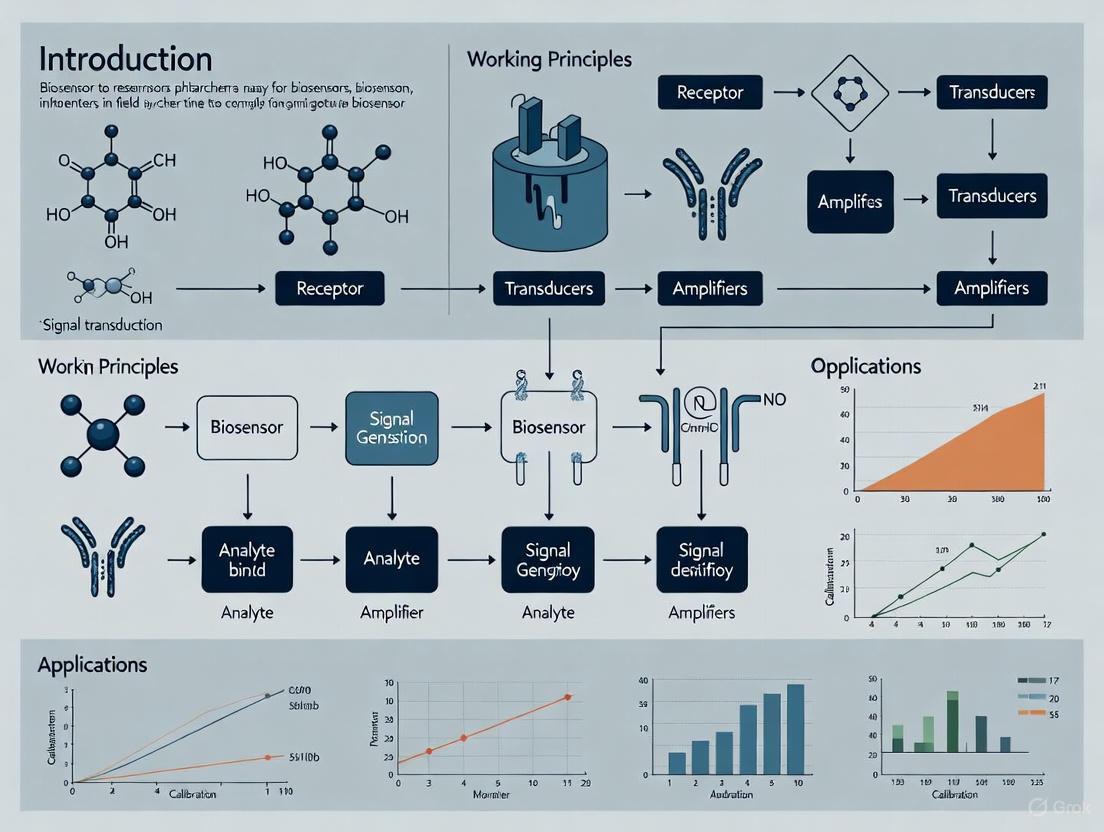
This article provides a comprehensive overview of biosensor technology tailored for researchers, scientists, and drug development professionals.
Biosensors: A Comprehensive Guide for Researchers from Fundamentals to Cutting-Edge Applications
Abstract
This article provides a comprehensive overview of biosensor technology tailored for researchers, scientists, and drug development professionals. It covers the foundational principles and components of biosensors, explores diverse methodological approaches and their applications in healthcare, diagnostics, and environmental monitoring, discusses critical troubleshooting and optimization strategies for enhanced performance, and examines validation paradigms and comparative analyses of different biosensor technologies. By synthesizing the latest research and developments, this guide aims to serve as a valuable resource for leveraging biosensor technology in scientific innovation and clinical translation.
The Building Blocks of Biosensors: Principles, Components, and Evolution
A biosensor is an analytical device that converts a biological response into a quantifiable electrical or optical signal. These devices integrate biological recognition elements with physicochemical transducers to detect specific analytes, ranging from simple ions to complex proteins and whole cells [1]. The fundamental principle governing all biosensors is molecular recognition, where a specific biological element selectively binds to or interacts with the target analyte, followed by transduction of this event into a measurable signal [1] [2]. The history of biosensors dates to 1906 with Cremer's demonstration of electric potential across glass membranes, but the field truly began with Leland C. Clark Jr.'s development of the oxygen electrode (Clark electrode) in 1956 and his pioneering enzyme-based glucose sensor in 1962, earning him the title "father of biosensors" [1]. The first commercial biosensor emerged in 1975 from Yellow Spring Instruments (YSI), launching decades of rapid innovation that have positioned biosensors as indispensable tools in medical diagnostics, environmental monitoring, food safety, and drug discovery [1].
Core Components of a Biosensor
Every biosensor consists of five essential integrated components that work sequentially to detect and quantify analytes.
Analyte
The analyte is the specific substance of interest that requires detection or measurement. This can be any biological or chemical compound, including glucose, hormones, toxins, pathogens, or specific proteins. The biosensor is designed and calibrated specifically for its target analyte [1].
Bioreceptor
The bioreceptor, or biological recognition element, is the molecular component that specifically interacts with the analyte. This interaction is highly selective, forming the basis of the biosensor's specificity. Common bioreceptors include [1] [2]:
- Enzymes: Catalyze specific biochemical reactions (e.g., glucose oxidase for glucose detection)
- Antibodies: Bind to specific antigens with high affinity
- Nucleic acids (DNA/RNA): Recognize complementary sequences through hybridization
- Whole cells or cellular components: Utilize metabolic pathways or organelles
- Aptamers: Engineered oligonucleotides or peptides with high binding specificity
Bioreceptors are categorized as either biocatalytic (e.g., enzymes that convert substrates) or bioaffinity-based (e.g., antibodies that bind antigens without modification) [2].
Transducer
The transducer converts the biological recognition event into a measurable signal. This component transforms one form of energy into another, typically from biochemical to electrical or optical. The process of energy conversion is known as signalisation [1]. Transducers are classified based on their operating principle:
- Electrochemical: Measure changes in current (amperometric), potential (potentiometric), or conductivity (conductometric)
- Optical: Detect changes in light properties (absorption, fluorescence, luminescence, surface plasmon resonance)
- Acoustic: Utilize sound wave variations (piezoelectric, quartz crystal microbalance)
- Calorimetric: Monitor heat changes from biochemical reactions
Electronics
The electronics process the transduced signal through complex circuitry that performs signal conditioning, including amplification, filtering, and analog-to-digital conversion. This component prepares the raw signal for interpretation and display [1].
Display
The display presents the processed results in a user-interpretable format, such as numerical values, graphs, or images. This interface often combines hardware and software to deliver clinically or analytically actionable information [1].
Table 1: Core Components of a Biosensor and Their Functions
| Component | Function | Examples |
|---|---|---|
| Analyte | Substance to be detected | Glucose, antigens, toxins, nucleic acids |
| Bioreceptor | Molecular recognition element | Enzymes, antibodies, aptamers, nucleic acids, cells |
| Transducer | Converts recognition to measurable signal | Electrochemical, optical, acoustic, calorimetric |
| Electronics | Processes the transduced signal | Amplifiers, filters, analog-to-digital converters |
| Display | Presents results to user | LCD screens, printers, digital interfaces |
The Signal Transduction Pathway
The signal transduction pathway represents the sequential molecular and electronic events that convert analyte detection into a quantifiable output. This pathway follows a precise cascade that ensures specific, sensitive, and reproducible measurements.
Molecular Recognition and Bio-Recognition
The transduction pathway initiates when the analyte specifically interacts with the bioreceptor's recognition site. This bio-recognition event causes a physicochemical change in the bioreceptor or its immediate environment. For enzyme-based biosensors, this typically involves substrate conversion and co-factor changes. For affinity-based biosensors like those using antibodies or aptamers, this involves binding-induced conformational changes [1] [2].
Signal Generation (Signalisation)
Following molecular recognition, the signalisation process occurs, where the bio-recognition event is transformed into an initial physicochemical signal. This may involve [1]:
- Electron transfer in electrochemical biosensors
- Light emission/absorption changes in optical biosensors
- Mass changes in acoustic biosensors
- Heat production/absorption in calorimetric biosensors
Signal Transduction and Amplification
The initial signal is captured by the transducer and converted into an electrical or optical form. Many biosensors incorporate signal amplification mechanisms at this stage to enhance detection sensitivity, particularly for low-abundance analytes. Advanced biosensing technologies like Förster resonance energy transfer (FRET) and bioluminescence resonance energy transfer (BRET) enable real-time, high-resolution tracking of molecular activities, such as monitoring small Rho GTPase activation in cellular processes [3].
Signal Processing and Output
The transduced signal undergoes processing through electronic components where it is amplified, filtered, and converted from analog to digital format. The final processed signal is then displayed in a user-interpretable format, completing the transduction pathway [1].
Critical Performance Characteristics
Biosensor performance is evaluated against standardized metrics that determine reliability and applicability for specific use cases.
Selectivity
Selectivity is the ability of a bioreceptor to detect a specific analyte in samples containing adulterants or contaminants. This characteristic is primarily determined by the bioreceptor's specificity for its target analyte. Antibody-antigen interactions represent the classic example of high selectivity in biosensing systems [1].
Sensitivity and Limit of Detection (LOD)
The sensitivity indicates the minimum detectable amount of analyte, defined as the limit of detection (LOD). Different applications require varying sensitivity levels; for instance, prostate-specific antigen (PSA) detection for cancer screening requires sensitivity to 4 ng/mL in blood, while some applications demand detection as low as fg/mL [1]. Modern biosensors achieve exceptional sensitivity, such as SERS-based immunoassays detecting α-fetoprotein at 16.73 ng/mL [4] and THz SPR biosensors demonstrating phase sensitivity up to 3.1043×10⁵ deg RIU⁻¹ in liquid sensing [4].
Reproducibility, Accuracy, and Precision
Reproducibility refers to the biosensor's ability to generate identical responses for duplicated experimental setups. Precision indicates consistent results upon repeated sample measurements, while accuracy reflects how close the mean measured value is to the true value. These characteristics are primarily determined by the transducer and electronic components [1].
Stability
Stability represents the degree of susceptibility to ambient disturbances that can cause signal drift. This is crucial for applications requiring long incubation or continuous monitoring. Stability is influenced by temperature sensitivity of electronic components and the degradation profile of bioreceptors over time [1].
Linearity and Resolution
Linearity indicates the accuracy of measured responses to a straight line (y = mc), where c is analyte concentration, y is output signal, and m is sensitivity. The linear range defines analyte concentrations over which response changes linearly. Resolution is the smallest detectable change in analyte concentration [1].
Table 2: Key Performance Characteristics of Biosensors
| Characteristic | Definition | Importance | Ideal Value/Range |
|---|---|---|---|
| Selectivity | Ability to detect specific analyte in mixed samples | Prevents false positives/negatives | High specificity for target |
| Sensitivity (LOD) | Minimum detectable analyte concentration | Determines application suitability | ng/mL to fg/mL depending on application |
| Reproducibility | Generation of identical responses for duplicate setups | Ensures reliability and robustness | Low coefficient of variation (<5-10%) |
| Stability | Resistance to signal drift from ambient disturbances | Critical for continuous monitoring | Long-term signal consistency |
| Linearity | Linear relationship between concentration and signal | Enables accurate quantification | R² > 0.98-0.99 |
| Response Time | Time required to generate stable signal | Important for real-time monitoring | Seconds to minutes |
Advanced Biosensing Technologies: Experimental Approaches
FRET-Based Biosensors for Cellular Monitoring
Förster Resonance Energy Transfer (FRET) biosensors enable real-time monitoring of molecular interactions and enzymatic activities in live cells. These biosensors typically consist of two fluorescent proteins (donor and acceptor) connected by a sensory domain that changes conformation upon analyte binding or enzymatic modification [5].
Experimental Protocol for FRET Biosensor Development:
- Molecular Design: Select appropriate donor-acceptor FP pairs (e.g., CFP-YFP, GFP-RFP) with spectral overlap
- Linker Optimization: Engineer flexible peptide linkers between sensory domain and FPs
- Sensor Validation: Test specificity and dynamic range in vitro with purified components
- Cellular Expression: Transfert or transduce biosensor construct into target cells
- Live-Cell Imaging: Acquire time-lapse FRET measurements using ratiometric imaging
- Data Analysis: Calculate FRET efficiency as acceptor/donor emission ratio
These biosensors have been particularly valuable for monitoring small GTPase activity, such as Rho family proteins that regulate cytoskeletal organization, cell movement, and polarity [3].
Electrochemical Biosensors with Advanced Transduction
Electrochemical biosensors represent the most commercially successful category, particularly for glucose monitoring. These systems have evolved through three generations based on their electron transfer mechanisms [2]:
First Generation: Utilizes oxygen as natural electron acceptor (e.g., glucose oxidase with oxygen co-substrate) Second Generation: Employs synthetic redox mediators (e.g., ferrocene derivatives) Third Generation: Achieves direct electron transfer (DET) between enzyme and electrode
Recent innovations include nanostructured composite electrodes combining highly porous gold with polyaniline and platinum nanoparticles, achieving high sensitivity (95.12 ± 2.54 µA mM⁻¹ cm⁻²) and excellent stability in interstitial fluid for wearable glucose monitoring [4].
SERS-Based Immunoassays
Surface-Enhanced Raman Scattering (SERS) platforms provide exceptional sensitivity for biomarker detection. A recent advanced protocol demonstrates [4]:
Methodology for SERS Immunoassay:
- Nanostar Synthesis: Create Au-Ag nanostars with sharp-tipped morphology for plasmonic enhancement
- Concentration Tuning: Optimize nanostar concentration via centrifugation (10, 30, 60 min intervals)
- Functionalization: Modify nanostars with mercaptopropionic acid (MPA)
- Antibody Conjugation: Covalently attach anti-α-fetoprotein antibodies using EDC/NHS chemistry
- Detection: Measure intrinsic vibrational modes of target antigens across 500-0 ng/mL range
This approach addresses limitations in conventional cancer biomarker detection, offering sensitive, Raman reporter-free detection with potential for early cancer diagnostics [4].
Table 3: Research Reagent Solutions for Biosensor Development
| Reagent/Category | Function | Specific Examples | Application Notes |
|---|---|---|---|
| Fluorescent Proteins | FRET donor/acceptor pairs | edCerulean, edCitrine, YFP, CFP | Spectral compatibility essential for FRET efficiency [5] |
| Nanostructures | Signal enhancement | Au-Ag nanostars, porous gold structures | Sharp tips provide intense plasmonic enhancement for SERS [4] |
| Enzymes | Biocatalytic recognition | Glucose oxidase, horseradish peroxidase | Oxidoreductases preferred for electrochemical sensors [2] |
| Crosslinkers | Immobilization chemistry | EDC, NHS chemistry | Covalent attachment of antibodies to transducers [4] |
| Aptamers | Synthetic recognition elements | Engineered oligonucleotides | High stability, regenerability for continuous monitoring [2] |
| 2D Materials | Transducer substrate | Graphene, MoS₂, transition metal dichalcogenides | High surface-to-volume ratio, unique electronic properties [6] |
Emerging Trends and Future Directions
The field of biosensing is rapidly evolving with several transformative trends shaping future development. Wearable and implantable biosensors represent a major frontier, enabling continuous health parameter monitoring for personalized healthcare [6]. These systems increasingly incorporate artificial intelligence and machine learning algorithms to improve diagnostic accuracy and enable predictive analytics [6].
The integration of nanomaterials and two-dimensional (2D) structures like graphene, transition metal dichalcogenides (MoS₂, WSe₂), and black phosphorus provides enhanced signal transduction, improved sensitivity, and better biocompatibility [6]. These materials enable the development of flexible and stretchable electronics that conform to biological tissues for more comfortable, long-term monitoring [6].
Advanced engineering of biological recognition elements focuses on creating regenerable binding sites that maintain high affinity and specificity under in vivo conditions, particularly for continuous monitoring of therapeutic antibodies and protein biomarkers [2]. The emerging concept of using omics data as biosensors through computational approaches like OmicSense represents a paradigm shift, where entire molecular profiles serve as diagnostic indicators rather than single biomarkers [7].
Novel sensing modalities including magneto-elastic biosensors, switchable bioelectronics, and quantum dot-based detection systems are expanding the analytical capabilities for diverse applications from point-of-care diagnostics to environmental monitoring [6]. These innovations collectively address the ongoing challenges of sensitivity, specificity, stability, and miniaturization that define the next generation of biosensing technologies.
The field of biosensing represents a cornerstone of modern analytical science, integrating biochemistry, electrochemistry, materials science, and engineering to create devices that convert biological responses into quantifiable signals [8] [9]. These devices have revolutionized diagnostic medicine, environmental monitoring, and biotechnology by enabling precise, real-time analysis of complex biological systems. A biosensor fundamentally consists of a biological recognition element (bioreceptor) and a transducer that converts the biorecognition event into a measurable electrical, optical, or thermal signal [9]. The evolution of biosensors from rudimentary electrochemical setups to sophisticated multiplexed nanomaterial-based devices reflects decades of interdisciplinary innovation, beginning with Leland C. Clark's pioneering work in the 1960s [8]. This whitepaper traces the historical trajectory of biosensor technology, with particular emphasis on enzyme electrodes, to provide researchers and drug development professionals with a comprehensive technical framework for understanding both fundamental principles and cutting-edge advancements.
The Pioneering Era: Birth of the Enzyme Electrode
Clark's Revolutionary Innovation
The conceptual foundation of modern biosensors was established in 1962 when Leland C. Clark Jr., in collaboration with Ann Lyons, invented the enzyme electrode [8] [9]. Clark's innovation integrated immobilized glucose oxidase (GOx) onto an oxygen electrode, creating a sensing platform that could quantitatively detect glucose through enzymatic consumption of oxygen [8]. This configuration established the paradigm of amperometric electrochemical biosensing, where biochemical specificity is transduced into an electrical signal [8] [10].
Clark's earlier work on the oxygen electrode (1956) provided the essential transducer technology, but the incorporation of an enzyme as a specific biological recognition element represented the critical breakthrough [10]. The enzyme electrode functioned by monitoring the decrease in oxygen concentration proportional to glucose levels, providing both the sensitivity and selectivity indispensable for clinical diagnostics, particularly diabetes management [8].
Experimental Principle of the First Glucose Enzyme Electrode
The operational principle of Clark's original enzyme electrode can be summarized in a series of biochemical and electrochemical reactions:
Enzymatic Reaction: Glucose diffuses from the sample to the immobilized glucose oxidase layer.
Glucose + O₂ + H₂O → Gluconic acid + H₂O₂[10]Electrochemical Detection: The oxygen consumption is measured amperometrically at the electrode.
O₂ + 4H⁺ + 4e⁻ → 2H₂O(at the cathode) [10]
The resulting current change is proportional to the oxygen concentration, which inversely correlates with glucose concentration. This first-generation biosensor established the fundamental architecture for subsequent developments: a biorecognition layer (immobilized enzyme) in intimate contact with a physical transducer (electrode) [9] [10].
Table 1: Key Characteristics of Clark's First-Generation Enzyme Electrode
| Parameter | Specification | Significance |
|---|---|---|
| Bioreceptor | Glucose Oxidase (GOx) | Provided high specificity for glucose |
| Transducer | Oxygen Electrode | Measured O₂ consumption amperometrically |
| Analyte | Glucose | Addressed critical need in diabetes management |
| Signal Measured | Oxygen depletion | Inverse relationship with glucose concentration |
| Design Concept | "Enzyme Transducer" | Established the core paradigm for all biosensors |
Generational Evolution of Amperometric Biosensors
The development of amperometric biosensors is categorized into three distinct generations, each defined by the mechanism of electron transfer between the enzyme's active site and the electrode surface [10].
First-Generation: Mediatorless Biosensors
First-generation biosensors, like Clark's original design, rely on the detection of natural substrates or products of the enzymatic reaction [10]. They are characterized by:
- Principle: Measurement of electroactive species native to the enzymatic reaction (e.g., O₂ consumption or H₂O₂ production) [10].
- Advantages: Simple design, no additional mediators required.
- Disadvantages: High operating potentials prone to interfering reactions from other electroactive species (e.g., ascorbate, urate); performance dependent on ambient oxygen concentration [10].
These sensors were commercialized in 1975 by Yellow Springs Instrument Co., Inc., marking the first commercial biosensor [8].
Second-Generation: Mediated Biosensors
To overcome the limitations of first-generation sensors, second-generation biosensors incorporated artificial electron mediators [8] [10]. These systems are characterized by:
- Principle: Use of synthetic redox mediators (e.g., ferrocene derivatives) to shuttle electrons from the reduced enzyme center to the electrode surface [8].
- Advantages: Lower operating potentials reduce interference; operation independent of oxygen [10].
- Disadvantages: Potential mediator toxicity; leaching or instability of the mediator over time [10].
The introduction of mediators significantly improved response times and operational stability, enabling the development of biosensors for lactate, urea, and cholesterol [8].
Third-Generation: Direct Electron Transfer Biosensors
The most advanced category utilizes direct electron transfer (DET) between the enzyme and the electrode [10]. These systems are characterized by:
- Principle: Direct electro-catalysis where electrons flow directly from the enzyme's redox center to the electrode without mediators [10].
- Advantages: Simplified design, no potential mediator leaks, highly efficient electron transfer.
- Disadvantages: Difficult to achieve for many enzymes due to the deep embedding of the redox center within the protein structure [10].
Table 2: Comparison of Amperometric Biosensor Generations
| Feature | First Generation | Second Generation | Third Generation |
|---|---|---|---|
| Electron Transfer | Via natural cosubstrate (O₂/H₂O₂) | Via artificial mediator (e.g., Ferrocene) | Direct from enzyme to electrode |
| Operating Potential | High (~0.7 V vs. Ag/AgCl) | Low (~0.2 V vs. Ag/AgCl) | Low, close to enzyme redox potential |
| Interferences | Significant from other electroactive species | Reduced | Minimal |
| Oxygen Dependency | Yes | No | No |
| Complexity | Low | Medium | High (requires engineered interfaces) |
Expansion and Diversification: Technological Transitions
The Rise of Optical Biosensors and Immunosensing
The 1990s witnessed a significant diversification beyond electrochemical platforms with the emergence of optical biosensors [8]. Leveraging advances in photonic component miniaturization and molecular biology, these sensors exploited changes in optical properties like fluorescence, surface plasmon resonance (SPR), and refractive index to monitor biomolecular interactions in real-time [8]. A prominent class that emerged was the immunosensor, which utilized antibodies as biorecognition elements, offering high sensitivity and specificity without the need for enzymatic reactions [8]. Techniques like Biolayer Interferometry (BLI) became established for studying binding kinetics (determining parameters like KD, kon, koff), which are critical for applications in drug development and diagnostics [11].
The Point-of-Care Revolution
The 2000s-2010s marked a paradigm shift from laboratory-based analysis to point-of-care (PoC) and home testing [8]. This transition was enabled by several key technological advancements:
- Screen-Printed Carbon Electrodes (SPCEs): Enabled mass production of affordable, disposable sensor strips [8].
- Microfluidics: Facilitated handling of minute fluid volumes in compact devices.
- Low-Power Electronics: Allowed for the development of portable readers.
This period also saw growing interest in non-invasive sensing using alternative biological fluids like saliva, sweat, and tears [8]. The glucose meter became the most successful commercial embodiment of these developments.
Modern Innovations: Nanomaterials and Advanced Transduction
The Nanomaterial Frontier
Contemporary biosensor development is heavily focused on integrating nanomaterials to enhance performance [8] [9] [12]. These materials offer high surface-to-volume ratios, superior conductivity, and tunable surface chemistries.
- Carbon Nanomaterials: Graphene and carbon nanotubes provide large electroactive surface areas, enhancing sensitivity and enabling label-free detection with femtomolar capabilities [8] [9].
- Metal Nanoparticles: Gold and other noble metal nanoparticles are used for their excellent conductive and plasmonic properties [9].
- Quantum Dots: Semiconductor quantum dots offer size-tunable fluorescence, beneficial for optical biosensing [9].
Despite their promise, nanomaterials introduce challenges including batch-to-batch variability, manufacturing scalability issues, biofouling in complex matrices, and functionalization trade-offs that can reduce electronic performance [8]. Novel materials like the proprietary carbon nanomaterial Gii are being developed to combine graphene-like sensitivity with commercial-scale reproducibility and inherent antifouling properties [8].
Advanced Fluorescent Biosensors with Large Dynamic Ranges
Recent breakthroughs in optical biosensors include the development of chemogenetic Förster Resonance Energy Transfer (FRET) pairs with near-quantitative efficiency [13]. These systems, such as the ChemoG series, create a reversible interaction between a fluorescent protein (e.g., eGFP) and a synthetic fluorophore-labeled HaloTag [13]. Key innovations include:
- Interface Engineering: Protein engineering created a stable interface between the fluorescent protein and the labeled HaloTag, achieving FRET efficiencies ≥95% [13].
- Spectral Tunability: The HaloTag can be labeled with different rhodamine fluorophores (e.g., JF525, JF669), allowing emission wavelengths to be tuned from 556 nm to 686 nm without redesigning the protein [13].
- Platform Versatility: The "ChemoX" platform allows the fluorescent protein to be swapped (e.g., eBFP2, mCerulean3, Venus, mScarlet), creating FRET pairs across the visible spectrum [13].
This approach has enabled the straightforward design of biosensors for calcium, ATP, and NAD⁺ with unprecedented dynamic ranges, which can also be converted into intensiometric, fluorescence lifetime, or bioluminescent sensors [13].
The Scientist's Toolkit: Essential Research Reagents and Materials
Table 3: Key Research Reagents for Modern Biosensor Development
| Reagent/Material | Function in Biosensor Development | Specific Examples |
|---|---|---|
| Fluorescent Proteins (FPs) | Serve as genetic-encoded FRET donors or reporters for intracellular sensing. | eGFP, eBFP2, mCerulean3, Venus, mScarlet [13] [14] |
| Self-Labeling Proteins (SLPs) | Enable specific, covalent labeling with synthetic fluorophores for tunable optical properties. | HaloTag7 (HT7) [13] |
| Synthetic Fluorophores | Act as bright, photostable FRET acceptors or direct reporters; allow spectral tuning. | Rhodamines (SiR, TMR, JF525, JF669) [13] |
| Carbon Nanomaterials | Enhance electrode conductivity and surface area; facilitate electron transfer and enzyme immobilization. | Graphene, Carbon Nanotubes (CNTs), Multi-Walled CNTs (MWCNTs) [8] [9] [12] |
| Metallic Nanoparticles | Improve electrochemical signaling; used for signal amplification in optical sensors. | Gold Nanoparticles (AuNPs) [9] |
| Redox Mediators | Shuttle electrons in second-generation electrochemical biosensors, lowering operating potential. | Ferrocene and its derivatives [8] [10] |
| Immobilization Matrices | Entrap or covalently bind biorecognition elements while maintaining their activity and stability. | Redox hydrogels, Chitosan, Perfluorosulfonic acid membranes [15] [12] |
Experimental Protocols and Methodologies
Protocol: Development of a Mediated Amperometric Enzyme Electrode
This protocol outlines the key steps for constructing a second-generation amperometric biosensor, such as for glucose detection.
- Electrode Preparation: Clean and polish the working electrode (e.g., glassy carbon, gold, or screen-printed carbon) to a mirror finish using alumina slurry [10] [12].
- Enzyme Immobilization: Co-immobilize the enzyme (e.g., Glucose Oxidase) and mediator (e.g., Ferrocene) onto the electrode surface. Common methods include:
- Cross-linking: Mix the enzyme with a cross-linker like glutaraldehyde and bovine serum albumin (BSA) to form a robust network on the electrode [12].
- Entrapment in a Polymer Matrix: Incorporate the enzyme within a redox hydrogel or a conducting polymer (e.g., polypyrrole) during electropolymerization [10].
- Layer-by-Layer Assembly: Alternately adsorb layers of oppositely charged polyelectrolytes and enzymes to build a thin, controlled film [12].
- Biosensor Assembly: Integrate the modified working electrode with a reference electrode (e.g., Ag/AgCl) and a counter electrode into a flow cell or a static measurement chamber [10].
- Calibration and Measurement: Connect the electrode to a potentiostat. Apply a constant potential suitable for the mediator's oxidation and measure the steady-state current while adding known concentrations of the analyte (e.g., glucose). Plot the current response versus concentration to obtain a calibration curve [10].
Protocol: Kinetic Characterization of a Biorecognition Element using BLI
This protocol uses Bio-Layer Interferometry to characterize the binding kinetics of a receptor-target pair (e.g., antibody-antigen) for immunosensor development [11].
- Immobilization: Dilute the biotinylated ligand (e.g., receptor protein) and load it onto streptavidin-coated BLI biosensor tips.
- Baseline Establishment: Immerse the biosensor tip in a buffer solution to establish a stable baseline.
- Association Phase: Dip the biosensor into a well containing the analyte (e.g., target antigen) at a known concentration. Monitor the binding in real-time as the association phase.
- Dissociation Phase: Transfer the biosensor back to the buffer solution. Monitor the decrease in signal as the complex dissociates.
- Data Analysis: Fit the resulting association and dissociation curves globally across several analyte concentrations using a 1:1 binding model within the BLI analysis software to determine the association rate (kₒₙ), dissociation rate (kₒff), and equilibrium dissociation constant (K_D = kₒff/kₒₙ) [11].
Visualizing Biosensor Evolution and Principles
The following diagrams illustrate the core working principle of a generalized biosensor and the design of a modern, tunable FRET biosensor.
Biosensor Working Principle
Modern Tunable FRET Biosensor
Biosensors are analytical devices that combine a biological recognition element (bioelement) with a transducer to detect and quantify specific biological or chemical substances [16]. The core principle of a biosensor involves the selective interaction between the bioelement and the target analyte, which generates a physical or chemical change that the transducer converts into a measurable electrical signal [16]. These devices are characterized by their precision, specificity, and ability to function in complex matrices, making them indispensable tools in modern research, clinical diagnostics, and environmental monitoring. The biological recognition elements can include enzymes, antibodies, nucleic acids, or entire cells, which provide the specificity for the target analyte [16]. Meanwhile, the transducer, which defines the primary classification of biosensors, can operate on electrochemical, optical, piezoelectric, or thermal principles.
The global biosensors market reflects the growing adoption and technological advancement of these devices, valued at USD 32.64 billion in 2025 and projected to reach approximately USD 68.72 billion by 2034, expanding at a compound annual growth rate (CAGR) of 8.64% [17]. This growth is driven by increasing demand for point-of-care diagnostics, personalized healthcare, and remote patient monitoring solutions [17]. For researchers and drug development professionals, understanding the fundamental classification, operational principles, and performance characteristics of different biosensor types is crucial for selecting the appropriate technology for specific applications, from biomarker discovery and drug-target interaction studies to diagnostic assay development.
This guide provides a comprehensive technical overview of the four main biosensor classes—electrochemical, optical, piezoelectric, and thermal systems—framed within the context of foundational biosensor research. It offers detailed comparisons, experimental methodologies, and technical specifications to serve as a reference for scientists working at the intersection of biotechnology, materials science, and analytical chemistry.
Biosensor Classification Framework
Biosensors can be classified through two primary frameworks: one based on the biological recognition element and another based on the signal transduction method [16]. The classification by bioelement includes three main categories: enzymatic biosensors (utilizing enzymes as recognition elements), immunological biosensors (based on antibody-antigen interactions), and nucleic acid biosensors (using DNA or RNA probes for hybridization) [16]. Each bioelement class offers distinct advantages for specific target analytes, with enzymatic biosensors providing catalytic amplification, immunological biosensors offering high specificity, and nucleic acid biosensors enabling genetic detection.
The transducer-based classification, which forms the organizational structure of this guide, comprises four principal types. Electrochemical biosensors measure electrical changes (current, potential, or impedance) resulting from biochemical reactions [18] [19]. Optical biosensors detect changes in light properties (wavelength, intensity, or polarization) caused by analyte interaction [20] [21]. Piezoelectric biosensors measure changes in mass or viscoelastic properties through frequency variations in quartz crystal resonators [22] [23]. Thermal biosensors monitor enthalpy changes from biochemical reactions by measuring temperature variations [24] [25].
The following diagram illustrates the comprehensive classification framework for biosensor technologies, showing the relationship between different recognition elements and transduction mechanisms:
Figure 1: Biosensor classification framework showing recognition elements and transduction methods.
Each biosensor class offers unique advantages and limitations, making them suitable for different research and application scenarios. The selection of an appropriate biosensor technology depends on multiple factors, including the nature of the target analyte, required sensitivity and detection limits, sample matrix, measurement environment, and available instrumentation. The subsequent sections provide detailed technical specifications, operational principles, and performance characteristics for each transducer class to guide researchers in making informed technology selections for their specific applications.
Electrochemical Biosensors
Fundamental Principles and Types
Electrochemical biosensors represent one of the most established and widely deployed biosensor classes, with the global market dominated by this technology segment [17]. These devices operate on the principle of detecting electrical signals generated from specific biochemical reactions or binding events occurring at the electrode surface [18] [19]. The fundamental mechanism involves the translation of a biological recognition event into an measurable electrical signal that is proportional to the analyte concentration. Electrochemical biosensors typically incorporate a biological recognition element (enzyme, antibody, nucleic acid, or aptamer) immobilized on the electrode surface, which interacts specifically with the target analyte and initiates redox reactions or changes in electrical properties that are transduced into analytical signals.
Electrochemical biosensors are classified into three main subtypes based on the measured electrical parameter. Amperometric sensors measure current generated by the oxidation or reduction of electroactive species at a constant applied potential, with the current magnitude being proportional to analyte concentration [19]. Potentiometric sensors detect changes in potential (voltage) at the electrode surface resulting from ion accumulation or depletion, typically measured against a reference electrode under conditions of zero current flow [19]. Impedimetric sensors monitor changes in the impedance (resistance to alternating current) at the electrode-electrolyte interface, often used for label-free detection of binding events without requiring redox probes [19].
The operational workflow of electrochemical biosensors involves several key stages, from biological recognition to signal transduction and measurement:
Figure 2: Electrochemical biosensor operational workflow from recognition to measurement.
Performance Characteristics and Applications
Electrochemical biosensors offer numerous advantages that account for their widespread adoption, particularly cost-efficiency, short response time, ease of use, good limits of detection (LOD), high sensitivity, and ease of miniaturization [18]. These attributes make them particularly suitable for point-of-care testing, field-deployable monitors, and continuous sensing applications. Recent advancements have focused on enhancing sensor performance through integration with microfluidic systems, where controlled vibration and hydrodynamic flow can significantly improve mass transport of analytes to the electrode surface, thereby lowering detection limits and improving sensitivity [18].
The applications of electrochemical biosensors span multiple fields, including healthcare and diagnostics, environmental monitoring, food safety, and industrial process control [18] [19]. In biomedical applications, they enable the selective and real-time detection of various biological analytes—from metabolites (e.g., glucose or lactate) to pathogens (such as bacteria or viruses) and specific ions—providing quantitative readouts for diagnostics and health monitoring [19]. Notable examples include continuous glucose monitoring systems for diabetes management, infectious disease detection platforms for pathogens like SARS-CoV-2, and cancer biomarker sensors for early diagnosis [19].
Table 1: Performance Characteristics of Electrochemical Biosensor Subtypes
| Sensor Type | Measured Parameter | Detection Limit | Response Time | Key Applications |
|---|---|---|---|---|
| Amperometric | Current | nM-pM range | Seconds | Glucose monitoring, neurotransmitter detection |
| Potentiometric | Potential | μM-nM range | Minutes | Ion-selective electrodes, pH sensing |
| Impedimetric | Impedance/Conductance | pM-fM range | Minutes to hours | Label-free pathogen detection, cell proliferation |
Experimental Protocol: SARS-CoV-2 Detection Using Electrochemical Biosensor
The following detailed protocol outlines the methodology for detecting SARS-CoV-2 spike protein using a laser-scribed graphene electrochemical biosensor, as reported by Wang et al. [19]. This protocol exemplifies the application of electrochemical biosensors for infectious disease diagnostics and can be adapted for detecting other viral pathogens with appropriate modification of the biological recognition elements.
Materials and Reagents:
- Laser-scribed graphene electrodes
- SARS-CoV-2 specific nanobodies (antibody mimetics)
- EsterLigase for oriented immobilization
- Spike protein receptor-binding domain (RBD) standards
- Redox mediators (e.g., ferricyanide/ferrocyanide)
- Phosphate buffer saline (PBS), pH 7.4
- Blocking solution (e.g., BSA or casein)
- Electrochemical workstation with impedance capabilities
Procedure:
- Electrode Preparation: Fabricate graphene electrodes via laser scribing on polyimide substrates. Clean electrodes through electrochemical cycling in 0.5 M H₂SO₄.
- Probe Immobilization: Functionalize electrode surface with oriented nanobodies using EsterLigase-mediated immobilization to ensure proper orientation of recognition elements.
- Blocking: Incubate functionalized electrodes with 1% BSA in PBS for 1 hour to block non-specific binding sites.
- Sample Incubation: Apply diluted sample or standard solutions containing SARS-CoV-2 RBD to electrode surface. Incubate for 20 minutes at room temperature.
- Washing: Rinse electrode gently with PBS to remove unbound analytes.
- Measurement: Perform electrochemical impedance spectroscopy (EIS) in 5 mM Fe(CN)₆³⁻/⁴⁻ solution with frequency range of 0.1 Hz to 100 kHz at formal potential.
- Data Analysis: Calculate charge-transfer resistance (Rₜ) from Nyquist plots and correlate with analyte concentration using calibration curve.
Validation: This method achieved a linear detection range from 150 pM to 15 nM of viral antigen with an impressive limit of detection of 7.7 pM, bridging the sensitivity gap between lab-based PCR and rapid antigen tests [19].
Optical Biosensors
Fundamental Principles and Types
Optical biosensors represent a rapidly advancing class of analytical devices that detect biological interactions through changes in light properties, including wavelength, intensity, phase, or polarization [20] [21]. These sensors operate on the principle that the presence or binding of a target analyte alters the optical characteristics of the sensing interface, which can be measured and quantified. Optical biosensing platforms offer exceptional sensitivity, the potential for multiplexed detection, and the ability to monitor binding events in real-time without physical contact with the sample. The integration of optical biosensors with artificial intelligence is revolutionizing point-of-care diagnostics by enabling enhanced analytical performance and real-time decision-making [21].
The primary types of optical biosensors include surface plasmon resonance (SPR) sensors, which detect changes in refractive index near a metal surface; fluorescence-based sensors, which measure changes in fluorescence intensity, lifetime, or polarization; colorimetric sensors, which detect visible color changes from aggregation or structural transitions of nanomaterials; and Raman spectroscopy-based sensors, particularly surface-enhanced Raman spectroscopy (SERS), which amplifies Raman signals for highly sensitive molecular fingerprinting [20] [21]. Each optical transduction mechanism offers distinct advantages for specific applications, with SPR providing label-free real-time monitoring, fluorescence offering exceptional sensitivity, colorimetric enabling visual detection, and SERS delivering molecular specificity.
The fundamental signal transduction process in optical biosensors follows a consistent pathway from biorecognition to optical signal modulation:
Figure 3: Optical biosensor signal transduction pathway from biorecognition to readout.
Performance Characteristics and Applications
Optical biosensors are characterized by their high sensitivity, with many platforms capable of detecting analytes at femtomolar concentrations or lower, real-time monitoring capabilities, and potential for multiplexed detection through wavelength or spatial encoding [21]. These attributes make them particularly valuable in applications requiring high analytical sensitivity, such as early disease diagnosis, detection of low-abundance biomarkers, and monitoring of rapid kinetic interactions. The optical biosensors segment is expected to grow significantly in the coming years, driven by transformations in miniaturized and highly sensitive devices and their integration into emerging technologies, including wearable medical devices and lab-on-a-chip systems [17].
A critical application of optical biosensors is in addressing the global challenge of antimicrobial resistance (AMR), particularly for detecting ESKAPE pathogens (Enterococcus faecium, Staphylococcus aureus, Klebsiella pneumoniae, Acinetobacter baumannii, Pseudomonas aeruginosa, and Enterobacter species) through the detection of bacterial metabolites and virulence factors as innovative biomarkers [20]. Optical biosensing platforms tailored for resource-limited settings offer promising alternatives to conventional pathogen identification and antibiotic susceptibility testing, which often have long turnaround times, require expensive instrumentation, and need specialized facilities [20].
Table 2: Performance Characteristics of Optical Biosensor Subtypes
| Sensor Type | Measured Parameter | Detection Limit | Key Advantages | Representative Applications |
|---|---|---|---|---|
| SPR | Refractive index change | ~1 pg/mm² | Label-free, real-time kinetics | Biomolecular interactions, affinity studies |
| Fluorescence | Intensity/lifetime | Single molecule | Extreme sensitivity, multiplexing | Pathogen detection, gene expression |
| Colorimetric | Absorption/color change | nM range | Simple visualization, low cost | Point-of-care testing, strip assays |
| SERS | Raman scattering | fM-aM range | Molecular fingerprinting | toxin detection, cellular imaging |
Research Reagent Solutions for Optical Biosensing
The performance of optical biosensors depends critically on the quality and specificity of research reagents and materials. The following table details essential reagents and their functions in optical biosensor development and implementation:
Table 3: Key Research Reagent Solutions for Optical Biosensor Applications
| Reagent/Material | Function | Example Applications |
|---|---|---|
| Gold nanoparticles | Plasmonic enhancement, colorimetric signaling | SERS substrates, lateral flow assays |
| Fluorescent dyes/quantum dots | Signal generation, multiplexing | Pathogen detection, high-throughput screening |
| Functionalized glass slides | Solid support for bioreceptor immobilization | Microarray platforms, SPR chips |
| Specific bioreceptors (antibodies, aptamers) | Molecular recognition | Target analyte capture and specificity |
| Blocking agents (BSA, casein) | Minimize non-specific binding | Signal-to-noise ratio improvement |
| Optical adhesives/sealants | Component assembly, environmental protection | Microfluidic device fabrication |
Piezoelectric Biosensors
Fundamental Principles and Types
Piezoelectric biosensors constitute an important class of mass-sensitive devices that operate on the principle of piezoelectric effect, where certain materials generate an electrical charge in response to applied mechanical stress [22] [23]. These asymmetric crystal structures enable the conversion of various forms of mechanical energy from the environment, including ultrasound, into electrical or chemical energy [23]. In biosensing applications, the binding of target analytes to the piezoelectric material surface increases the mass load, which in turn alters the resonant frequency of the crystal oscillator in a quantifiable manner that is proportional to the bound mass.
The two primary configurations of piezoelectric biosensors are Quartz Crystal Microbalance (QCM) systems, which measure frequency changes in quartz crystal resonators due to mass adsorption, and Surface Acoustic Wave (SAW) devices, which propagate acoustic waves along the crystal surface and detect perturbations caused by surface binding events [22]. Both systems offer label-free detection capabilities and can monitor binding interactions in real-time, making them valuable tools for studying biomolecular interactions, cellular adhesion, and gas phase sensing. Piezoelectric materials exhibit voltage-dependent actuation, which allows them to serve dual functions as both sensors and actuators, expanding their utility in automated systems and structural health monitoring [22].
The operational mechanism of piezoelectric biosensors involves an interconnected cycle of mass binding, frequency shift, and signal processing:
Figure 4: Piezoelectric biosensor operational mechanism based on mass-frequency relationship.
Performance Characteristics and Applications
Piezoelectric biosensors are characterized by their high sensitivity to mass changes, with QCM systems typically capable of detecting mass variations on the order of nanograms to picograms per square centimeter [22]. These sensors offer real-time monitoring capabilities, label-free operation, and the ability to study binding kinetics and viscoelastic properties of adsorbed layers. Recent advancements in piezoelectric materials have enhanced their versatility and effectiveness in various industrial applications, providing valuable insights for researchers, engineers, and industry professionals [22].
The applications of piezoelectric biosensors span multiple domains, including biomedical engineering, environmental monitoring, food safety, and industrial process control [22] [23]. In the biomedical field, piezoelectric implants are increasingly used for biosensing, energy harvesting, tissue engineering, and disease treatment [23]. Specific applications include detection of pathogens through antibody-antigen interactions, monitoring of blood coagulation parameters, analysis of cellular adhesion and proliferation, and detection of volatile organic compounds in environmental monitoring [22]. The ability of piezoelectric materials to convert ambient mechanical energy into electrical energy also enables their use as self-powered sensors in remote or implantable applications.
Table 4: Performance Comparison of Piezoelectric Biosensor Platforms
| Platform | Frequency Range | Mass Sensitivity | Key Applications | Notable Features |
|---|---|---|---|---|
| QCM | 5-30 MHz | ~0.1-1 ng/cm² | Protein adsorption, pathogen detection | Liquid phase operation, commercial availability |
| SAW | 30-500 MHz | ~1-10 pg/cm² | Gas sensing, viscosity monitoring | Higher sensitivity, microfluidic integration |
Thermal Biosensors
Fundamental Principles and Types
Thermal biosensors represent a distinctive class of analytical devices that detect biological interactions through measurement of temperature changes resulting from biochemical reactions [24] [25]. These sensors operate on the fundamental principle that most biological recognition events and reactions involve enthalpy changes (exothermic or endothermic processes) that manifest as measurable temperature variations in the local microenvironment. Thermal biosensing platforms typically incorporate highly sensitive temperature detection elements, such as thermistors or thermocouples, integrated with biological recognition elements that specifically interact with the target analytes.
The primary configuration of thermal biosensors is based on the heat-transfer method (HTM), which employs temperature gradients and thermal currents to probe biomolecular interactions [24]. In its simplest implementation, this concept requires a heat source and two temperature sensors (thermometers) to detect biological targets such as bacteria, virus particles, or DNA mutations when appropriate bioreceptors are incorporated [24]. The HTM approach has demonstrated sensitivity to an incredibly broad range of biotargets, with receptor-free applications including monitoring cell proliferation and evaluating the efficacy of antimicrobials at the cell-culture level [24].
The operational principle of thermal biosensors follows a sequential process from biorecognition to thermal signal measurement:
Figure 5: Thermal biosensor transduction pathway from biorecognition to thermal measurement.
Performance Characteristics and Applications
Thermal biosensors offer several advantageous characteristics, including relatively simple construction, minimal sample preparation requirements, and applicability to colored or turbid samples that might interfere with optical detection methods [25]. These sensors are generally unaffected by optical properties such as color, turbidity, or opacity of the sample matrix, making them suitable for complex biological samples. Advancements in nanomaterials, particularly those with high thermal conductivity like graphene, have significantly enhanced the sensitivity and response time of thermal biosensors, allowing for faster detection [25].
The applications of thermal biosensors span healthcare, environmental monitoring, and industrial processing [24] [25]. In medical diagnostics, they are employed for detecting bacteria, virus particles, and DNA mutations, while in industrial settings they facilitate process monitoring and quality control [24]. The adoption of thermal biosensors is expected to accelerate through 2025, driven by advances in nanomaterials, IoT integration, and miniaturization [25]. Emerging trends include the integration of artificial intelligence for enhanced data interpretation and the development of multi-analyte sensors capable of simultaneous detection of multiple targets [25].
Table 5: Performance Characteristics and Applications of Thermal Biosensors
| Parameter | Specifications | Applications | Advantages |
|---|---|---|---|
| Sensitivity | Varies with bioreceptor and transducer | Medical diagnostics (bacteria, viruses) | Works with colored/turbid samples |
| Response Time | Seconds to minutes | Environmental monitoring | Minimal sample preparation |
| Temperature Resolution | <0.001°C (advanced systems) | Industrial processing | Label-free detection |
| Multiplexing Capability | Emerging with array formats | Food safety | Portable configurations possible |
Comparative Analysis and Research Directions
Technology Performance Matrix
The selection of an appropriate biosensor technology for specific research applications requires careful consideration of multiple performance parameters, including sensitivity, detection limit, analysis time, cost, and suitability for the target analyte and sample matrix. The following comparative analysis summarizes the key characteristics of the four biosensor classes discussed in this guide:
Table 6: Comparative Performance Matrix of Major Biosensor Technologies
| Biosensor Type | Detection Limit | Analysis Time | Multiplexing Capability | Cost | Major Advantages | Key Limitations |
|---|---|---|---|---|---|---|
| Electrochemical | pM-fM | Seconds-minutes | Moderate | Low | Cost-effective, portable, sensitive | Electroactive interferents |
| Optical | fM-aM | Minutes | High | Moderate-high | High sensitivity, multiplexing | Sample opacity interference |
| Piezoelectric | ng-pg/cm² | Minutes | Low | Moderate | Label-free, real-time kinetics | Viscosity interference |
| Thermal | nM-pM | Minutes | Low | Low-moderate | Works with turbid samples | Less sensitive, thermal buffering |
Emerging Research Directions and Future Perspectives
The field of biosensor technology continues to evolve rapidly, with several emerging trends shaping future research directions across all biosensor classes. Miniaturization and wearable biosensors represent a significant frontier, driven by advances in microfabrication and nanomaterials [16]. Internet of Things (IoT) integration enables real-time data transmission and remote monitoring capabilities, particularly valuable for point-of-care diagnostics and environmental sensing [16]. Advanced materials and nanotechnology, including carbon-based nanomaterials, metal-organic frameworks, and biopolymers, are being employed to optimize biosensor performance, especially sensitivity, stability, and durability [17].
The integration of artificial intelligence and machine learning in signal processing and feature extraction enhances biosensor performance and accelerates diagnostic accuracy [20] [21]. AI algorithms, particularly machine learning and deep learning, improve the sensitivity, specificity, and multiplexing capabilities of biosensors during intelligent signal processing, pattern recognition, and automated decision-making [21]. CRISPR-based biosensors represent another emerging frontier, offering unprecedented specificity in nucleic acid detection [16]. Additionally, energy harvesting approaches, particularly using piezoelectric materials, enable the development of self-powered sensors for implantable and remote monitoring applications [22] [23].
The future of biosensor technology will likely see increased convergence of different sensing modalities, creating hybrid systems that leverage the advantages of multiple transduction mechanisms while mitigating their individual limitations. As the field continues its interdisciplinary trajectory, enhanced collaboration among scientists, engineers, and healthcare professionals will drive further advancements, opening new possibilities for various applications in research, clinical diagnostics, environmental monitoring, and beyond.
Biosensors represent a transformative technology in analytical science, combining a biological recognition element with a physicochemical transducer to detect specific analytes. The biological component is paramount, dictating the sensor's specificity, sensitivity, and overall performance. This guide provides an in-depth technical examination of the five primary classes of biological recognition elements—enzymes, antibodies, DNA, aptamers, and whole cells—framed within contemporary biosensor research for drug development and diagnostic applications. Understanding the principles, advantages, and limitations of each element is crucial for designing next-generation biosensing platforms.
Core Biological Recognition Elements
Enzymes
Working Principle and Key Components: Enzyme-based biosensors leverage the exceptional catalytic efficiency and specificity of enzymes to detect target analytes, which often act as enzyme substrates or inhibitors. The fundamental operation involves three key components: the enzyme as the biocatalyst, an immobilization matrix to stabilize the enzyme, and a transducer to convert the biochemical reaction into a quantifiable signal [26]. Commonly used enzymes include glucose oxidase (GOx) for glucose monitoring, cholesterol oxidase (ChOx) for cholesterol detection, urease for urea analysis, and acetylcholinesterase (AChE) for pesticide detection [26].
Signal Transduction: The enzymatic reaction with its substrate typically produces or consumes molecules (e.g., hydrogen peroxide, oxygen, protons) that alter a local physicochemical parameter. This change is detected by transducers, which can be electrochemical (amperometric or potentiometric), optical (measuring changes in absorbance, fluorescence, or luminescence), thermal, or mass-sensitive (piezoelectric) [26]. For instance, in an amperometric glucose biosensor, glucose oxidase catalyzes the oxidation of glucose, producing hydrogen peroxide, which is then oxidized at an electrode, generating a current proportional to glucose concentration [27].
Table 1: Common Enzymes Used in Biosensors and Their Applications
| Enzyme | Target Analyte | Detection Method | Primary Application Field |
|---|---|---|---|
| Glucose Oxidase (GOx) | Glucose | Amperometric | Medical Diagnostics (Diabetes) |
| Urease | Urea | Potentiometric/Optical | Medical Diagnostics (Kidney Function) |
| Lactate Oxidase (LOx) | Lactate | Amperometric | Sports Medicine, Critical Care |
| Cholesterol Oxidase (ChOx) | Cholesterol | Electrochemical/Optical | Cardiovascular Health, Food Science |
| Acetylcholinesterase (AChE) | Organophosphates/Carbamates | Electrochemical | Environmental Monitoring (Pesticides) |
Figure 1: Basic signaling pathway of an enzyme-based biosensor. The analyte binds to the enzyme, leading to a catalytic reaction that produces a measurable product. This product is detected by a transducer, which generates a quantifiable signal.
Antibodies
Structure and Function: Antibodies, or immunoglobulins, are Y-shaped proteins produced by the adaptive immune system. Their high specificity and affinity for unique molecular structures (antigens) make them powerful biorecognition elements in immunosensors [28]. The antigen-binding site, known as the fragment antigen-binding (Fab) region, is composed of variable domains from the heavy (VH) and light (VL) chains, which confer antigen specificity. The constant fragment (Fc) region mediates effector functions [28].
Monoclonal vs. Recombinant Antibodies: Traditional polyclonal antibodies are heterogeneous mixtures. Monoclonal antibody (mAb) technology, via hybridoma generation, produces unlimited, homogeneous antibodies with consistent specificity [28]. Advances in recombinant antibody technology now enable the production of smaller, more stable antibody fragments like single-chain variable fragments (scFvs) and nanobodies. These fragments offer better tissue penetration, more rapid clearance, and reduced immunogenicity, and they can be engineered for specific immobilization on sensor surfaces [28].
Critical Immobilization Strategies: The performance of an immunosensor critically depends on antibody immobilization. Oriented immobilization, where the antibody is attached via the Fc region, ensures the antigen-binding sites remain fully accessible, maximizing sensitivity and the limit of detection. In contrast, random immobilization can block binding sites and reduce sensor performance [28].
DNA and Nucleic Acid Probes
Functional DNA Strands: DNA's role in biosensors extends beyond its genetic function, serving as a versatile recognition and structural material. Two primary functional DNA strands are used:
- DNA Aptamers: Short, single-stranded DNA (or RNA) oligonucleotides selected for their high affinity and specificity to target molecules, from small ions to whole cells [29] [30].
- DNAzymes: DNA sequences with catalytic activity, often used for the detection of metal ions or as amplifying labels in sensing strategies [29].
DNA Hybridization-Based Biosensors: These sensors rely on the fundamental principle of Watson-Crick base pairing to detect complementary nucleic acid sequences. Techniques like the hybridization chain reaction (HCR) and catalytic hairpin assembly (CHA) enable enzyme-free, isothermal amplification of detection signals, significantly enhancing sensitivity [29].
DNA Nanotechnology as a Template: DNA's programmability allows for the construction of precise 2D and 3D nanostructures, such as DNA origami and DNA tetrahedra. These structures can act as scaffolds to organize other functional molecules (e.g., enzymes, dyes, nanoparticles) with nanometric precision on the sensor surface, improving reactivity and signal-to-noise ratios [29].
Table 2: Comparison of Antibodies and DNA Aptamers as Biorecognition Elements
| Feature | Antibodies | DNA Aptamers |
|---|---|---|
| Molecular Weight | 150-170 kDa | 5-15 kDa |
| Production Process | In vivo (Immune System/Hybridoma) | In vitro (SELEX) |
| Generation Time | Several months | Weeks to months |
| Stability | Sensitive to pH/temperature; irreversible denaturation | High thermal stability; reversible denaturation |
| Modifications | Limited, complex | Easy, site-specific chemical synthesis |
| Batch-to-Batch Variation | Higher | Lower |
| Cost | Higher | Lower |
| Ethical Concerns | Involves animal use | Chemical synthesis, no animals |
Aptamers
The SELEX Process: Aptamers are developed through Systematic Evolution of Ligands by Exponential Enrichment (SELEX) [30]. This iterative process involves incubating a vast library of random nucleic acid sequences (up to ~10^14 different molecules) with the target, partitioning the bound sequences, and amplifying them by PCR. After multiple selection rounds (typically 6-15), the pool is sequenced to identify high-affinity aptamers [30].
Advantages Over Antibodies: As summarized in Table 2, aptamers offer several advantages, including in vitro selection against non-immunogenic targets, superior stability, easier modification, lower production costs, and reduced batch-to-batch variation [30]. A key differentiator is their reversible denaturation, allowing them to refold after exposure to harsh conditions, which extends their shelf life.
Diagnostic Applications: Aptamers have been developed for a wide range of diagnostic targets. Examples include:
- Infectious Diseases: Aptamers against pathogens like Escherichia coli O157:H7, Salmonella, Mycobacterium tuberculosis, and SARS-CoV-2 [30].
- Cancer: Aptamers targeting biomarkers such as nucleolin, prostate-specific antigen (PSA), and mucin 1 (MUC1) [30].
- Other Conditions: Aptamers for cardiovascular, metabolomic, and neurological disorder biomarkers [30].
Figure 2: The SELEX workflow for aptamer development. The process involves iterative cycles of selection, partitioning, and amplification to isolate high-affinity nucleic acid ligands from a vast random library.
Whole Cells
Sensing Elements in Synthetic Biology: Whole-cell biosensors utilize living microorganisms (e.g., bacteria, yeast) as chassis to house the sensing machinery. The primary sensing elements are transcription factors and riboswitches [31]. Transcription factors are proteins that undergo conformational changes upon binding a target, regulating the transcription of a downstream reporter gene. Riboswitches are untranslated mRNA regions that change conformation upon ligand binding, controlling the translation of the reporter protein [31].
Engineering and Customization: A significant advantage of whole-cell biosensors is their customizability via synthetic biology. If a natural transcription factor for a desired target is unavailable, it can be engineered or created de novo using strategies like truncation, chimerism (combining domains from different proteins), functional domain mutation, and whole-protein random mutagenesis [31]. For example, researchers have modified the transcription factor CadR to enhance its specificity for cadmium and mercury ions over zinc [31].
Reporting and Commercial Forms: The sensing element is genetically linked to a reporting element. Common reporters include fluorescent proteins, enzymes that produce colorimetric changes, and bioluminescent proteins. Whole-cell biosensors are being commercialized in user-friendly formats like test strips and kits, with emerging applications in wearable devices such as masks and clothing [31].
The Scientist's Toolkit: Essential Research Reagents and Materials
The development and implementation of biosensors rely on a suite of specialized reagents and materials. The following table details key components for constructing effective biosensing platforms.
Table 3: Key Research Reagent Solutions for Biosensor Development
| Item | Function/Description | Key Considerations |
|---|---|---|
| Transcription Factors (e.g., MerR, CadR) | Natural or engineered proteins that bind specific targets (e.g., Hg²⁺, Cd²⁺) and regulate reporter gene expression in whole-cell biosensors. | Specificity and sensitivity can be tuned via protein engineering (truncation, chimerism) [31]. |
| Glucose Oxidase (GOx) | Model enzyme for biocatalysis; oxidizes β-D-glucose to gluconic acid and H₂O₂, enabling amperometric detection. | Widely used in medical (glucose monitors) and food industry biosensors; high stability and specificity [26] [27]. |
| scFv & Nanobodies | Recombinant antibody fragments (single-chain variable fragment; single-domain) for antigen recognition in immunosensors. | Offer superior stability, penetration, and ease of immobilization compared to full-size antibodies [28]. |
| DNA Aptamer (e.g., anti-IFN-γ) | Nucleic acid recognition element selected via SELEX to bind specific proteins (e.g., Interferon-gamma) or other targets. | Allows for conformational-change-based detection; can be modified with reporter molecules (ferrocene) [29] [30]. |
| Nanozymes | Engineered nanomaterials (e.g., graphene, carbon nanotubes) mimicking natural enzyme activity. | Enhance sensor performance by increasing catalytic efficiency, stability, and durability under harsh conditions [26]. |
| Graphene Oxide (GO) | 2D nanomaterial used as a substrate for physical adsorption of DNA probes via π-π stacking and hydrogen bonding. | Simplifies biosensor fabrication by enabling label-free probe immobilization with excellent carrier transport capability [29]. |
| Functionalization Reagents | Chemicals (e.g., alkane thiols, biotin-streptavidin) for immobilizing biorecognition elements on transducer surfaces. | Critical for controlled, oriented immobilization to maximize binding site availability and sensor performance [28] [29]. |
Detailed Experimental Protocols
Protocol: Fabrication of an Electrochemical DNA Aptasensor
This protocol outlines the steps for creating an electrochemical biosensor using a DNA aptamer for the detection of a specific protein target, such as interferon-gamma (IFN-γ) [29].
- Electrode Pretreatment: Clean and polish a gold disk electrode (e.g., 2 mm diameter) with alumina slurry (0.05 µm) on a microcloth. Rinse thoroughly with deionized water and ethanol, then dry under a nitrogen stream. Electrochemically clean the electrode by performing cyclic voltammetry in 0.5 M H₂SO₄ solution.
- Aptamer Functionalization:
- Prepare a 1 µM solution of the thiolated DNA aptamer (e.g., a 34-mer specific for IFN-γ) in an appropriate immobilization buffer (e.g., Tris-EDTA buffer with Mg²⁺).
- Dropcast 10 µL of the aptamer solution onto the cleaned gold electrode surface.
- Incubate overnight (for ~12-16 hours) in a humidified chamber at room temperature to allow the formation of a self-assembled monolayer via the gold-thiol bond.
- Reporter Molecule Attachment: If the aptamer is not pre-modified, a redox reporter molecule (e.g., Methylene Blue, MB) can be introduced. This may involve incubating with a solution of the reporter, which intercalates or associates with the DNA strand.
- Surface Blocking: Rinse the electrode gently with buffer to remove unbound aptamer strands. Incubate the functionalized electrode in a 1 mM solution of 6-mercapto-1-hexanol (MCH) for 1 hour. This step passivates the gold surface, displaces non-specifically adsorbed aptamers, and creates a well-ordered, upright orientation of the aptamer probes, minimizing non-specific binding.
- Electrochemical Measurement and Target Detection:
- Place the functionalized electrode into an electrochemical cell containing a suitable buffer (e.g., phosphate-buffered saline, PBS).
- Connect the electrode to a potentiostat and measure the baseline electrochemical signal (e.g., via square wave voltammetry or electrochemical impedance spectroscopy).
- Introduce the target protein (IFN-γ) at known concentrations into the cell.
- Incubate for a fixed time (e.g., 30 minutes) to allow binding.
- Re-measure the electrochemical signal. The binding of the target induces a conformational change in the aptamer, altering the electron transfer efficiency of the reporter molecule, leading to a measurable change in current (in amperometry/voltammetry) or charge transfer resistance (in impedance). The signal change is proportional to the target concentration.
Protocol: Engineering a Transcription Factor for a Whole-Cell Biosensor
This protocol describes a protein engineering approach, specifically truncation, to modify the specificity of a native transcription factor for use in a heavy metal biosensor [31].
- Identification and Cloning: Identify a native transcription factor with a known structure and binding profile. For example, the cadmium-responsive transcription factor CadR. Clone the gene encoding CadR into a suitable plasmid vector for both expression and mutagenesis.
- Truncation Mutagenesis: Design primers to systematically shorten the transcription factor. For instance, to create CadR-TC10 and CadR-TC21, design reverse primers that omit the sequences for the last 10 and 21 amino acids at the C-terminal end, respectively. Perform PCR using these primers to generate the truncated gene variants.
- Vector Ligation and Transformation: Ligate the amplified, truncated genes into an expression vector. Transform the ligated plasmids into a competent E. coli strain suitable for protein expression.
- Circuit Assembly and Biosensor Construction: Clone the mutated transcription factor genes (e.g., CadR-TC10) upstream of a reporter gene, such as the Green Fluorescent Protein (GFP), all under the control of the transcription factor's native promoter. Assemble this genetic circuit into a low-copy-number plasmid suitable for the chosen bacterial chassis cell.
- Screening and Specificity Testing:
- Transform the constructed biosensor plasmid into the final chassis cells (e.g., a non-pathogenic E. coli strain).
- Grow cultures of cells harboring the different biosensor constructs (wild-type CadR, CadR-TC10, CadR-TC21) in the presence of various metal ions (e.g., Cd²⁺, Hg²⁺, Zn²⁺).
- Measure the output signal (e.g., fluorescence intensity using a plate reader) after a defined incubation period.
- Compare the induction levels and specificity profiles of the truncated variants against the wild-type transcription factor. The goal is to identify a variant (e.g., CadR-TC10) that shows a strong response to cadmium and mercury but a minimized response to interferents like zinc.
The selection of an appropriate biological recognition element is a fundamental decision in biosensor design, directly impacting analytical performance and application suitability. Enzymes offer powerful catalysis, antibodies provide high-affinity recognition, DNA and aptamers deliver programmability and stability, and whole cells enable complex, integrated sensing within a living system. The ongoing convergence of materials science, nanotechnology, and synthetic biology with biosensor development is pushing the boundaries of what is possible. Emerging trends, such as the use of nanozymes, wearable integrated devices, and self-powered systems, promise to further enhance the stability, sensitivity, and real-world applicability of biosensors, solidifying their role as indispensable tools in research, drug development, and clinical diagnostics.
A biosensor is an analytical device that integrates a biological recognition element with a physicochemical transducer to measure one or more analytes [1] [32]. The core function of any biosensor is to convert a biological event into a quantifiable signal, enabling the detection and measurement of specific substances in fields ranging from medical diagnostics to environmental monitoring [1] [33]. This conversion process occurs through signal transduction, where the transducer transforms the biological response into a measurable output, typically electrical or optical [34]. The fundamental components of a biosensor include the biorecognition element that specifically interacts with the target analyte, the transducer that converts this interaction into a measurable signal, and the electronics and display that process and present the data [1]. The performance of these transduction technologies is characterized by key parameters such as sensitivity, selectivity, reproducibility, and stability, which collectively determine their effectiveness in real-world applications [1].
Fundamental Principles of Biosensor Operation
The Biosensing Cascade
The operation of a biosensor follows a sequential cascade beginning with biorecognition and culminating in a user-interpretable result. The analyte (substance of interest) first interacts specifically with the bioreceptor (e.g., enzyme, antibody, nucleic acid) in a process termed bio-recognition [1]. This interaction generates a physicochemical change (such as light, heat, pH, charge, or mass change) that the transducer detects and converts into a different form of energy [1]. This conversion process, known as signalisation, typically produces either optical or electrical signals proportional to the amount of analyte–bioreceptor interactions [1]. Finally, the electronics component processes this transduced signal through amplification and conversion from analog to digital form, preparing it for display in a user-friendly format such as numeric, graphic, tabular, or image outputs [1].
Key Performance Characteristics of Transduction Technologies
The effectiveness of transduction technologies is evaluated against several critical performance characteristics [1]:
- Selectivity: The ability of a bioreceptor to detect a specific analyte in a sample containing other admixtures and contaminants, crucial for accurate measurements in complex samples like blood or food.
- Sensitivity: The minimum amount of analyte that can be detected, often expressed as the limit of detection (LOD), with requirements sometimes reaching as low as ng/ml or fg/ml for medical applications.
- Reproducibility: The ability to generate identical responses for duplicated experimental setups, characterized by the precision and accuracy of the transducer and electronics.
- Stability: The degree of susceptibility to ambient disturbances that can cause signal drift, particularly important in applications requiring long incubation or continuous monitoring.
- Linearity: The accuracy of the measured response to a straight line for a set of measurements with different analyte concentrations, associated with the resolution and working range of the biosensor.
Transducer Technology Classifications and Mechanisms
Biosensor transducers can be classified according to their fundamental signal transduction principles. The table below summarizes the primary transducer types, their detection signals, and key applications.
Table 1: Classification of Biosensor Transducer Technologies
| Transducer Type | Detection Signal | Measurement Principle | Example Applications |
|---|---|---|---|
| Electrochemical | Electrical current, potential, or impedance | Measures electrical changes from biochemical reactions [34] | Glucose monitoring, pathogen detection [34] [32] |
| Optical | Light-based signals | Detects changes in light properties from bio-recognition events [34] | DNA sequencing, protein interaction studies [34] |
| Piezoelectric/Acoustic | Mass changes | Measures mass changes on oscillating crystal surface [34] | Pathogen detection, toxin sensing [34] |
| Thermal | Heat | Measures heat generated/absorbed during biochemical reactions [34] | Enzyme activity assays, metabolic studies [34] |
| Mechanical/MEMS | Forces, deflections, resonance frequency shifts | Transduces mechanical changes from binding events [32] | High-sensitivity molecular detection [32] |
Electrochemical Transduction Systems
Electrochemical transducers dominate clinical diagnostics due to their simplicity, sensitivity, and low power requirements [32]. They function by detecting electrical changes resulting from biochemical reactions at modified electrode surfaces [34]. Several distinct electrochemical transduction mechanisms have been developed:
Amperometric Biosensors: These devices detect current changes at a constant voltage, typically measuring the electronic current generated by oxidation or reduction of electroactive species involved in the biological recognition process [34]. The flagship example is the glucose oxidase-based sensor used for diabetes management, where the enzymatic reaction generates a measurable current proportional to glucose concentration [32].
Potentiometric Biosensors: These measure the potential difference (voltage) between working and reference electrodes under conditions of zero current, often utilizing ion-selective electrodes for pH sensing or other ion detection [34]. The potential developed at the electrode interface correlates with the analyte concentration according to the Nernst equation.
Conductometric/Impedimetric Biosensors: Conductometric sensors detect changes in solution conductivity resulting from biochemical reactions, while impedimetric sensors measure frequency-dependent resistance changes due to biomolecular binding at modified electrodes [34] [32]. These are particularly valuable for monitoring microbial metabolism in environmental samples and for label-free detection of binding events [34] [35].
Optical Transduction Systems
Optical biosensors transduce biological recognition events into measurable light-based signals, offering superior multiplexing capabilities compared to other transduction methods [32]. These platforms utilize various optical phenomena to detect and quantify analytes:
Fluorescence-based Biosensors: These sensors detect changes in fluorescence properties, including intensity, lifetime, anisotropy, or quenching, resulting from bio-recognition events [32]. Recent advances include engineered Förster resonance energy transfer (FRET) pairs with near-quantitative FRET efficiencies based on the reversible interaction of fluorescent proteins with a fluorescently labeled HaloTag [36]. For instance, the ChemoG5 construct exhibits a FRET efficiency of 95.8 ± 0.1%, enabling biosensors for calcium, ATP and NAD+ with unprecedented dynamic ranges [36].
Surface Plasmon Resonance (SPR): SPR biosensors measure refractive index changes near a metal surface, typically gold, where biomolecular binding events alter the resonance conditions [1] [32]. This label-free technique enables real-time monitoring of binding kinetics and is widely used for studying protein-protein interactions, antibody characterization, and drug discovery [32] [37].
Absorbance and Luminescence Sensors: These measure changes in light absorption or generation from biochemical reactions. Bioluminescence resonance energy transfer (BRET) sensors have been developed by converting FRET biosensors into bioluminescent versions, expanding their application potential [36].
Piezoelectric, Thermal, and Mechanical Transducers
Beyond electrochemical and optical methods, several other transduction principles enable biological recognition to be converted into measurable signals:
Piezoelectric/Acoustic Transducers: These devices, such as quartz crystal microbalance (QCM) systems, measure mass changes on an oscillating crystal surface [34]. The resonance frequency shift of the crystal is proportional to the mass of analyte bound to its surface, enabling real-time detection of binding events for applications in pathogen detection and biomolecular interaction studies [34].
Thermal Transducers: Thermal biosensors measure the heat generated or absorbed during biochemical reactions using temperature-sensitive materials [34]. Calorimetric biosensors detect temperature changes in the reaction medium, while thermometric biosensors measure changes in electrical properties due to heat generation, with applications including enzyme activity assays and fermentation process monitoring [34].
Mechanical/MEMS Transducers: Microelectromechanical systems (MEMS) and nanoelectromechanical systems (NEMS) sensors transduce mechanical changes such as forces, deflections, or resonance frequency shifts resulting from molecular binding events [32]. These often take the form of microcantilevers that deflect upon analyte binding, generating a measurable signal.
Advanced Transduction Technologies and Emerging Approaches
Nanomaterial-Enhanced Transducers
The integration of nanomaterials has significantly advanced transducer capabilities by improving sensitivity, specificity, and portability [32]. Nanostructured electrodes or optical elements increase the effective surface area, enhancing the detection signal and enabling lower limits of detection [32]. For instance, silicon nanowires functionalized with antibodies can create highly sensitive electrical measurements of protein concentration, as demonstrated by Advanced Silicon Group's sensor that reduces testing time and costs by 15-fold compared to conventional ELISA tests [38]. These nanowire-based transducers operate by detecting changes in photocurrent when target proteins bind to surface antibodies, altering carrier recombination in the silicon [38].
Biomolecular Motor-Based Transducers
Emerging transducer technologies utilize biomolecular motors as efficient molecular machines for detection systems [39]. These systems exploit the unique signal conversion mechanisms and high energy conversion efficiencies of biological motors including kinesin, dynein, myosin, DNA polymerase, FoF1-ATPase, and flagellar motors [39]. Through rational design and optimization, these molecular motors enable precise and efficient detection of antigens, antibodies, bacteria, and small molecules, showing particular promise for pathogenic microorganism detection in clinical diagnostics, food safety, and medicine [39].
Microfluidic-Integrated Transduction Systems
The integration of transduction technologies with microfluidics has created powerful lab-on-a-chip platforms that improve sensitivity and screening efficiency [37]. These systems enable precise manipulation of small fluid volumes, automated sample processing, and multi-analyte detection, addressing challenges in biosensor specificity, stability, and throughput [37]. Microfluidic integration is particularly valuable for natural product discovery and high-throughput drug screening, where it facilitates real-time, label-free detection of bioactive compounds from complex mixtures [37].
Experimental Protocols for Transducer Implementation
Protocol: Development of FRET-Based Optical Biosensors
The following protocol details the methodology for creating chemogenetic FRET biosensors with high dynamic range, as exemplified by recent research [36]:
FRET Pair Engineering: Fuse enhanced GFP (eGFP) directly to the N-terminus of HaloTag7 (HT7) to create the initial ChemoG1 construct. Label HT7 with silicon rhodamine (SiR) fluorophore to establish the donor-acceptor FRET pair.
Interface Stabilization: Introduce specific mutations to stabilize the FP-HaloTag interface:
- Implement eGFP mutations: A206K and T225R
- Implement HT7 mutations: E143R, E147R and L271E
- These mutations create additional hydrogen bonds (T225ReGFP–P174/V177HT7) and electrostatic surface modifications that enhance FRET efficiency.
Spectral Tuning: Utilize the HaloTag system to tune spectral properties by labeling with different rhodamine fluorophores (e.g., JF525, JF669) with emission wavelengths from 556 nm to 686 nm while maintaining FRET efficiencies ≥94%.
Sensor Characterization: Express optimized constructs (e.g., ChemoG5) in target cells (e.g., U-2 OS cells) and measure FRET efficiency by fluorescence microscopy, typically achieving FRET/eGFP ratios of 16.4 ± 2.7.
Readout Adaptation: Convert FRET biosensors to alternative readout formats as needed:
- For intensiometric sensors: Modify to report signal changes via single-channel fluorescence intensity
- For fluorescence lifetime sensors: Adapt for fluorescence lifetime imaging microscopy (FLIM)
- For bioluminescent sensors: Replace the fluorescent protein donor with a luciferase
Protocol: Implementation of Nanowire-Based Electrochemical Transducers
This protocol outlines the development of silicon nanowire transducers for protein detection, based on technology commercialized by Advanced Silicon Group [38]:
Nanowire Fabrication: Create silicon nanowires using established nanofabrication techniques, typically on 8-inch silicon chips with approximately 2,000 sensors per production line.
Surface Functionalization: Immobilize specific antibodies onto the nanowire surface using appropriate surface chemistry to ensure optimal orientation and binding capacity:
- Employ silane-based chemistry for covalent attachment
- Utilize cross-linkers for stable biomolecule immobilization
- Verify binding activity post-immobilization
Photocurrent Measurement Setup: Configure the optoelectrical measurement system:
- Illuminate the functionalized nanowire sensor with appropriate wavelength light
- Measure baseline photocurrent in buffer solution
- Expose to analyte solutions with known concentrations
- Monitor changes in photocurrent resulting from protein binding
Signal Processing: Implement algorithms to convert photocurrent changes to protein concentration:
- Account for nonspecific binding effects
- Apply temperature correction if necessary
- Utilize calibration curves from standard solutions
Sensor Regeneration: Develop regeneration protocols for reusable sensors:
- Apply mild denaturing conditions to remove bound analyte
- Verify sensor functionality after multiple regeneration cycles
- Establish acceptable reuse limits based on signal stability
Protocol: Analysis of Binding Kinetics Using Biosensor Data
For researchers analyzing complex binding data from transducer systems, this protocol ensures reliable processing of kinetic data [35]:
Data Acquisition: Percolate analyte solutions at several different concentrations over a biosensor chip with immobilized ligand molecules. Collect sensorgrams (complex concentration vs. time) for each concentration.
Dissociation Graph Analysis: Calculate and plot ln[R(t)/R0] against time for the dissociation phase, where R(t) is response at time t and R0 is response at dissociation start. A convex curve indicates heterogeneous interactions (multiple binding events).
Interaction Distribution Mapping: Apply the Adaptive Interaction Distribution Algorithm (AIDA) to determine the number of different complex formation reactions for each analyte concentration level.
Rate Constant Estimation: Use information from AIDA to estimate complex formation rate constants by fitting measured sensorgrams individually rather than using global fitting.
Cluster Analysis: Plot all estimated rate constants and perform clustering analysis where each cluster represents a distinct complex formation reaction, enabling identification of multiple binding events that might be missed by conventional analysis.
The Scientist's Toolkit: Essential Research Reagents and Materials
Table 2: Key Research Reagent Solutions for Biosensor Transducer Development
| Reagent/Material | Function in Transducer Systems | Application Examples |
|---|---|---|
| HaloTag7 (HT7) | Self-labeling protein that covalently binds synthetic ligands; enables specific labeling with fluorophores [36] | Chemogenetic FRET biosensors for calcium, ATP, NAD+ [36] |
| Silicon Nanowires | Nanostructured transducers with high surface-area-to-volume ratio; sensitive to surface charge changes [38] | Protein detection sensors for drug development and manufacturing [38] |
| Rhodamine Fluorophores | Synthetic dyes with superior photophysical properties; used as FRET acceptors [36] | Spectral tuning of FRET biosensors (e.g., JF525, JF669) [36] |
| Ion-Sensitive Field-Effect Transistors (ISFETs) | Semiconductor devices that detect ion concentration changes; convert chemical to electrical signals [1] | pH sensing, ion detection in environmental and clinical samples |
| Quartz Crystal Microbalances (QCM) | Piezoelectric crystals that oscillate at specific frequency; mass-sensitive transducers [34] | Biomolecular interaction studies, pathogen detection [34] [35] |
| Antibodies | Biorecognition elements with high specificity for target analytes | Immunosensors for clinical diagnostics, food safety, biotherapeutics [1] [38] |
| Aptamers | Nucleic acid-based recognition elements with tunable binding properties | Detection of small molecules, proteins, and cells; often integrated with electrochemical transducers |
Visualization of Biosensor Transduction Pathways
The following diagrams illustrate key signaling pathways and workflow relationships in biosensor transduction technologies.
Transducer technologies form the critical interface between biological recognition and measurable signals in biosensing systems. The ongoing advancement of these technologies—through improvements in electrochemical systems, optical methods, piezoelectric devices, and emerging approaches like biomolecular motors and nanomaterial-enhanced transducers—continues to expand the capabilities and applications of biosensors. Current research focuses on enhancing sensitivity, specificity, and stability while reducing costs and complexity, particularly through innovations in nanofabrication, interface engineering, and signal processing algorithms [36] [38] [32]. The integration of artificial intelligence for data analysis, development of multiplexed detection platforms, and creation of point-of-care diagnostic devices represent promising future directions that will further establish biosensors as indispensable tools in research, clinical diagnostics, environmental monitoring, and drug development [37] [40]. As these transducer technologies continue to evolve, they will undoubtedly unlock new possibilities for understanding biological systems and addressing complex analytical challenges across diverse scientific disciplines.
Biosensor technology is undergoing a revolutionary transformation driven by convergence of nanotechnology, synthetic biology, and materials science. These advanced analytical devices integrate biological recognition elements with physicochemical transducers to yield quantitative or semi-quantitative analytical information [41]. Contemporary biosensing platforms have evolved into essential tools for precise and rapid detection across diverse fields including healthcare diagnostics, environmental monitoring, and food safety assurance [42]. The emerging generation of biosensors demonstrates significant enhancements in sensitivity, specificity, and functionality, enabling applications ranging from real-time molecular tracking in living systems to point-of-care detection of pathogens and pollutants [43] [44].
The fundamental architecture of a biosensor comprises two primary components: a biological recognition element that interacts specifically with the target analyte and a transducer that converts this biological interaction into a measurable signal. Current innovations focus on enhancing both components through novel materials and engineering approaches. The integration of nanotechnology has been particularly transformative, providing unprecedented capabilities for signal amplification and miniaturization [42]. Simultaneously, advances in genetic engineering have enabled development of sophisticated whole-cell biosensors that can detect molecular targets within their native physiological context [45]. These technological advances are creating new paradigms in biosensing that overcome limitations of conventional detection methods.
This whitepaper examines three pivotal trends shaping the future of biosensing technology: the application of nanoscale materials for enhanced signal transduction, the development of genetically encoded sensors for in vivo monitoring, and the implementation of smart material designs that respond to biological and environmental stimuli. For researchers and drug development professionals, understanding these emerging platforms is crucial for leveraging their capabilities in basic research, diagnostic development, and therapeutic monitoring.
Nanomaterial-Enhanced Biosensors
Properties and Advantages of Nanomaterials in Biosensing
Nanomaterials have emerged as powerful components in biosensor design due to their unique physical, chemical, and optical properties that emerge at the nanoscale. The integration of nanotechnology has transformed conventional biosensors into highly sensitive and specific analytical tools capable of detecting targets at ultralow concentrations [42]. The significant surface-to-volume ratio of nanomaterials provides substantially increased areas for immobilization of biological recognition elements such as enzymes, antibodies, and nucleic acids, thereby enhancing the density of sensing sites and improving overall sensor response [46]. Additionally, the unique electronic, plasmonic, and catalytic properties of nanomaterials enable diverse signal transduction mechanisms and significant signal amplification.
Two-dimensional nanomaterials represent a particularly promising class of materials for biosensing applications. These materials, including graphene and its derivatives, transition metal dichalcogenides, and MXenes, exhibit exceptional electrical conductivity, mechanical strength, and surface functionality that can be tailored for specific sensing applications [46]. Their large surface area and planar geometry facilitates efficient biomolecule loading and enhanced interaction with target analytes. For pathogen detection, 2D nanomaterial-based biosensors have demonstrated remarkable sensitivity in detecting Helicobacter pylori infections, achieving detection limits significantly lower than conventional diagnostic methods [46]. The versatility of these materials enables their incorporation into various transducer platforms including electrochemical, optical, and piezoelectric systems.
Applications in Healthcare Diagnostics
The healthcare sector has benefited substantially from nano-enhanced biosensors, particularly in early disease diagnosis through biomarker detection and therapeutic drug monitoring. Nanomaterial-based biosensors enable precise measurement of clinically relevant biomarkers at concentrations previously undetectable with conventional assays, facilitating earlier disease intervention [42]. For example, glucose sensors incorporating highly porous gold nanostructures with polyaniline and platinum nanoparticles have achieved exceptional sensitivity of 95.12 ± 2.54 µA mM−1 cm−2, surpassing the performance of conventional electrodes [4]. This level of sensitivity is crucial for continuous glucose monitoring in interstitial fluid, offering a promising solution for diabetes management.
In infectious disease diagnostics, 2D nanomaterial-based biosensors have shown remarkable capability in detecting Helicobacter pylori with superior performance compared to conventional methods. The table below compares the analytical performance of nanomaterial-enhanced biosensors with traditional detection techniques for H. pylori:
Table 1: Performance comparison of conventional methods versus nanomaterial-based biosensors for H. pylori detection
| Detection Method | Sensitivity (%) | Specificity (%) | Time Required | Key Limitations |
|---|---|---|---|---|
| Endoscopy | 95 | 99 | 7 days | Invasive, expensive, risk of complications |
| Histology | 95 | 99 | 7-10 days | Sampling errors可能导致假阴性 |
| Urea Breath Test | 90 | 95 | 1 hour | Affected by recent PPI/antibiotic use |
| Culture | 58 | 99 | 7-10 days | Time-consuming, technical challenges |
| 2D Nanomaterial Biosensors | >95 | >95 | Minutes to hours | Standardization challenges |
Beyond clinical diagnostics, nano-enhanced biosensors are making significant impacts in environmental monitoring and food safety. These sensors offer unparalleled accuracy in detecting pollutants including heavy metals, organic contaminants, and pathogens in complex matrices [42] [44]. The integration of nanomaterials with different transducer platforms has enabled development of robust sensing systems capable of operating in challenging environmental conditions while maintaining high sensitivity and specificity.
Genetically Encoded Fluorescent Biosensors
Fundamental Principles and Design Strategies
Genetically encoded fluorescent biosensors represent a revolutionary class of imaging agents that enable visualization of biological processes and events directly in living systems, preserving native biological context and providing detailed insight into molecular localization and dynamics [45]. These biosensors are genetically modified cells with chimeric reporter proteins integrated into biochemical circuits, designed to perceive intracellular or extracellular fluctuations and convert them into measurable optical readouts [45]. The molecular architecture typically consists of two fundamental components: a sensing element that specifically perceives an analyte or biological state change, and a reporter element based on fluorescent proteins that transforms the biochemical signal into a detectable optical output.
The most common design strategies for genetically encoded biosensors leverage various fluorescence mechanisms including Förster resonance energy transfer, bioluminescence resonance energy transfer, and changes in fluorescence intensity or spectral properties. FRET-based sensors typically employ two fluorescent proteins with overlapping excitation and emission spectra positioned such that analyte binding induces conformational changes altering the efficiency of energy transfer between the donor and acceptor fluorophores [45]. This design enables quantitative measurement of dynamic changes in analyte concentration with high spatial and temporal resolution. Alternative designs include single-fluorophore sensors that exhibit changes in intensity or spectral properties upon analyte binding, and translocation sensors that monitor movement between cellular compartments.
Table 2: Classification of genetically encoded biosensors based on readout mechanisms
| Biosensor Type | Readout Mechanism | Key Advantages | Typical Applications |
|---|---|---|---|
| FRET-Based | Change in energy transfer between two fluorophores | High spatial-temporal resolution, rationetric measurement | Ca²⁺ dynamics, kinase activity, metabolite levels |
| BRET-Based | Energy transfer from luciferase to fluorescent protein | No excitation light required, reduced autofluorescence | Protein-protein interactions, GPCR signaling |
| Intensity-Based | Change in fluorescence intensity | Simple design and implementation | pH, ion concentration, voltage sensing |
| Ratiometric | Ratio of fluorescence at two wavelengths | Reduced artifacts from concentration variations | Metabolic monitoring, ion flux |
| Translocation | Movement between cellular compartments | Simple visual interpretation | Signaling pathway activation, drug effects |
Implementation and Experimental Workflow
The implementation of genetically encoded biosensors begins with selection of an appropriate sensing domain specific to the target analyte or biological process. For metabolite sensing, natural ligand-binding domains from bacterial transcription factors or eukaryotic signaling proteins are frequently employed. For monitoring enzyme activity, specific peptide substrates that undergo phosphorylation or cleavage are inserted between fluorescent protein pairs. The DNA sequence encoding the biosensor is then introduced into target cells via transfection, viral transduction, or creation of stable cell lines, allowing expression of the chimeric protein within the physiological environment of interest.
A critical experimental consideration is matching the biosensor design to the appropriate detection methodology. For example, FRET-based biosensors require specialized filter sets to separately monitor donor and acceptor fluorescence, while intensity-based sensors may be simpler to implement but more susceptible to artifacts from variations in expression level or focus plane. The following workflow diagram illustrates a generalized protocol for developing and implementing genetically encoded biosensors:
Diagram 1: Biosensor Development Workflow
Advanced Applications: Wireless In-Body Sensing
A groundbreaking advancement in genetically encoded biosensing is the development of wireless implantable sensors that integrate engineered cells with passive electronic components for continuous in vivo monitoring. A recent pioneering demonstration involved Escherichia coli engineered to express cytochrome c maturation proteins from Shewanella oneidensis, creating a synthetic electron transfer pathway that accelerates magnesium degradation in response to specific molecular triggers [43]. This system forms the basis for a self-sustaining, electrically passive, implantable biosensor capable of molecular-level detection within the body.
The operational principle of this innovative platform involves coupling bacterial response to controlled degradation of a passive microwave antenna monitored via backscatter communication. When the engineered bacteria detect the target molecule, they express proteins that enhance electron transfer to the magnesium antenna, accelerating its degradation in a measurable way [43]. This degradation alters the antenna's resonant frequency, which can be tracked wirelessly by an external reader antenna, effectively converting cellular activity into detectable electromagnetic signals without requiring internal power sources or complex circuitry. This approach has demonstrated molecular-level sensing at 25 mm implant depth in human body phantoms, opening possibilities for continuous monitoring of disease biomarkers [43].
The research reagent toolkit for implementing such sophisticated genetically encoded biosensor systems includes several specialized components:
Table 3: Essential research reagents for genetically encoded biosensor development
| Reagent Category | Specific Examples | Function in Biosensor Development |
|---|---|---|
| Fluorescent Proteins | GFP, YFP, RFP, CFP | Serve as reporter elements for visual readout |
| Molecular Cloning Tools | Restriction enzymes, Gibson assembly, CRISPR-Cas9 | Enable genetic construction of biosensor sequences |
| Gene Delivery Systems | Lentivirus, AAV, electroporation reagents | Facilitate biosensor introduction into target cells |
| Sensing Domains | Calmodulin, PSD-95, bacterial transcription factors | Provide target specificity and molecular recognition |
| Signal Detection Reagents | Fluorogenic substrates, luciferin | Enable visualization and quantification of signals |
Smart Material-Based Biosensing Systems
Responsive Mechanisms and Material Designs
Smart materials represent a class of substances engineered to respond dynamically to external stimuli such as pH, temperature, chemical compounds, or biological signals, translating these stimuli from biological domains into quantifiable signals [47]. These materials form the foundation of intelligent biosensing systems that can adapt their properties in response to environmental changes or specific molecular interactions. Common smart material platforms include stimuli-responsive hydrogels, photonic crystals, molecularly imprinted polymers, and shape-memory alloys, each offering unique transduction mechanisms for biosensing applications.
Hydrogels are particularly versatile smart materials for biosensing due to their tunable chemical and physical properties. These cross-linked polymer networks can undergo significant volume changes in response to specific stimuli, providing a mechanical transduction mechanism that can be coupled with optical or electrical readout systems. For glucose sensing, hydrogels incorporating phenylboronic acid derivatives leverage the reversible binding with cis-diol groups of glucose molecules, inducing swelling or deswelling that modulates optical properties or mass transport [47]. Similarly, enzyme-loaded hydrogels that generate acidic products during glucose oxidation can produce pH-dependent swelling changes for continuous monitoring applications.
Photonic crystals integrated with responsive hydrogels create particularly powerful biosensing platforms that transform molecular recognition events into vivid color changes visible to the naked eye. These periodically structured materials control light propagation through photonic bandgaps, and when combined with smart hydrogels, the binding of target analytes induces swelling or shrinking that alters the lattice spacing and consequently the reflected wavelengths [47]. This approach has been successfully implemented for glucose monitoring using inverse opal hydrogels functionalized with 3-APBA, where concentration changes produce visible color shifts from green to red, enabling instrument-free quantitative assessment [47].
Implementation in Continuous Monitoring and Detoxification
Smart material-based biosensors have demonstrated exceptional utility in continuous monitoring applications where conventional sensors face limitations related to fouling, calibration drift, or limited functional lifetime. A notable example is an intelligent zwitterionic hydrogel encapsulating glucose oxidase and horseradish peroxidase that enables simultaneous monitoring of pH and glucose levels in diabetic wounds [47]. In this system, the enzymatic cascade produces a fluorescent product whose intensity correlates linearly with glucose concentrations from 0 to 10 mM, permitting non-invasive assessment of wound status and timely therapeutic interventions.
Beyond monitoring capabilities, smart biosensors are increasingly being designed with integrated detoxification functionalities that not only detect but also neutralize harmful substances. These systems employ enzymatic degradation, microbial bioremediation, or photocatalytic oxidation to eliminate pollutants or toxic metabolites concurrently with their detection [44]. For instance, laccase-based biosensors can both detect phenolic compounds through electrochemical signaling and catalyze their oxidation into less harmful derivatives, providing a combined sensing-remediation function particularly valuable for environmental monitoring [44].
The following diagram illustrates the operational mechanism of a smart hydrogel biosensor for continuous glucose monitoring:
Diagram 2: Smart Hydrogel Sensing Mechanism
Comparative Analysis and Research Applications
Performance Metrics Across Biosensor Platforms
The three biosensor platforms discussed offer complementary strengths and limitations that make them suitable for different research and application scenarios. Nano-enhanced biosensors typically provide the highest sensitivity and fastest response times, achieving detection limits down to the single molecule level in optimized configurations [42]. Their miniaturization potential facilitates high-density array configurations for multiplexed detection, while their compatibility with various transducer principles enables diverse readout modalities. However, these systems may face challenges related to nanomaterial reproducibility, potential toxicity in certain applications, and complex fabrication requirements.
Genetically encoded biosensors offer unparalleled capabilities for monitoring biological processes within living systems at the spatial and temporal scales most relevant to physiological function [45]. Their self-assembling nature and genetic encoding facilitate homogeneous distribution throughout cellular compartments and tissues, while their continuous production by cellular machinery enables long-term monitoring studies. Limitations include potential interference with normal cellular processes, the challenge of calibration in inaccessible biological environments, and generally lower temporal resolution compared to physical sensors due to the kinetics of protein folding and maturation.
Smart material-based biosensors excel in applications requiring continuous monitoring in complex environments, where their self-regenerating properties and resistance to fouling provide significant advantages [47] [44]. Their frequently reversible response enables continuous operation without reagent consumption, while their macroscopic nature often simplifies implementation and reduces cost. However, these systems may exhibit slower response times due to mass transport limitations through the material matrix, and their size may restrict applications where miniaturization is critical.
Emerging Research Directions and Integration Opportunities
The future trajectory of biosensor development points toward increased integration of multiple technological approaches to create hybrid systems with enhanced capabilities. The convergence of genetically encoded elements with nano-enhanced transduction represents a particularly promising direction, combining the molecular recognition sophistication of biological systems with the sensitive signal detection of nanomaterials [42] [43]. Similarly, the incorporation of smart materials as responsive interfaces that can regulate molecular access to sensing elements offers new strategies for maintaining sensor function in challenging environments.
Artificial intelligence and machine learning algorithms are increasingly being employed to extract subtle patterns from complex biosensor data, enabling more accurate quantification in the presence of confounding factors and prediction of system behavior [42] [44]. These computational approaches facilitate the development of multiplexed sensing arrays that simultaneously track multiple analytes while compensating for cross-reactivity and drift. Integration with Internet of Things platforms further expands the potential for distributed sensing networks that provide real-time spatial and temporal mapping of biological and environmental parameters [44].
For researchers and drug development professionals, these advancing biosensor technologies offer powerful new tools for understanding fundamental biological processes, screening therapeutic compounds, and monitoring treatment efficacy. The ability to track specific molecular targets in real-time within living systems provides unprecedented insight into drug pharmacokinetics and pharmacodynamics, while the development of point-of-care diagnostic platforms promises to democratize access to sophisticated analytical capabilities. As these technologies continue to mature, they are poised to transform both basic research and clinical practice across diverse fields of biomedical science.
The biosensing field is experiencing unprecedented innovation driven by synergistic advances in nanomaterials engineering, synthetic biology, and smart materials design. These emerging platforms are overcoming fundamental limitations of conventional detection methods, enabling new capabilities in sensitivity, specificity, and operational flexibility. For the research community, these technologies offer powerful new approaches for probing biological systems with minimal perturbation, tracking dynamic processes across multiple scales, and translating laboratory findings into practical diagnostic and monitoring applications. As these technologies continue to converge and evolve, they promise to fundamentally transform our ability to measure and understand the complex molecular landscape of biological systems, environments, and engineered processes.
Biosensors in Action: Methodologies and Transformative Applications Across Industries
Biosensors are analytical devices that combine a biological recognition element with a physicochemical transducer to detect target analytes. The integration of advanced materials and data science has propelled the evolution of sensing technologies, enabling unprecedented capabilities in healthcare diagnostics, environmental monitoring, and food safety [48] [49]. This technical guide provides an in-depth examination of three principal biosensing modalities—electrochemical, optical, and acoustic—detailing their operational principles, current applications, and experimental methodologies.
The convergence of these sensing platforms with artificial intelligence (AI) and nanotechnology has initiated a paradigm shift toward intelligent, point-of-care diagnostic systems capable of rapid, sensitive, and specific detection of biomarkers in complex biological matrices [21] [50]. This review serves as a foundational resource for researchers and drug development professionals engaged in the design and implementation of next-generation biosensing platforms.
Electrochemical Sensing Modalities
Fundamental Principles and Signal Transduction
Electrochemical biosensors function by converting biological recognition events into quantifiable electrical signals through redox reactions at the electrode-solution interface. These systems typically employ a three-electrode configuration (working, reference, and counter electrode) and are classified based on their measured electrical parameter: current (amperometric/voltammetric), potential (potentiometric), or impedance (impedimetric) [51] [48].
Amperometric sensors measure current generated by electrochemical oxidation or reduction of an electroactive species at a constant applied potential. Voltammetric techniques, including differential pulse voltammetry (DPV) and square-wave voltammetry (SWV), modulate the applied potential and measure resultant current. Potentiometric sensors detect potential differences at zero current flow. Impedimetric biosensors monitor changes in the electrical impedance of the electrode interface, often using electrochemical impedance spectroscopy (EIS) to probe biorecognition events [51] [49].
Table 1: Electrochemical Sensing Techniques and Performance Characteristics
| Technique | Measured Parameter | Detection Limit | Applications |
|---|---|---|---|
| Amperometry | Current | µM–nM range | Glucose monitoring, catalytic reactions |
| DPV | Current | nM–pM range | Heavy metals, hydroxyl-sanshools |
| EIS | Impedance (Z)/Phase (θ) | fg/mL–pM level | Pathogen detection, protein biomarkers |
| Conductometry | Conductance | µM range | Arginine in dietary supplements |
Signal Amplification and Nanomaterial Integration
Sensitivity enhancement in electrochemical biosensors is achieved through nanomaterial-based signal amplification strategies. Metallic nanoparticles (e.g., Au, Ag, Pt), carbon-based materials (graphene, carbon nanotubes), and porous frameworks (metal-organic frameworks/MOFs) enhance signal transduction through high surface-to-volume ratios, improved electron transfer kinetics, and targeted recognition capabilities [51].
Nanozymes—nanomaterials with enzyme-like properties—catalyze redox reactions for signal generation without the instability of biological enzymes. Redox mediators (e.g., ferrocene derivatives, methylene blue) and catalytic cascades (e.g., DNA hybridization chain reactions, CRISPR-Cas systems) further amplify detection signals, enabling attomolar sensitivity for trace-level analytes [51] [50].
Experimental Protocol: Impedimetric Detection of Protein Biomarkers
This protocol details the fabrication of a gold interdigitated electrode (Au-IDE) based impedimetric biosensor for inflammatory biomarker detection [49].
Materials and Reagents:
- Gold interdigitated electrodes (Au-IDEs)
- β-mercaptoethanol (βME) or similar hydroxyl-containing thiol
- Phosphate buffered saline (PBS), pH 7.4
- N-hydroxysuccinimide (NHS) and 1-ethyl-3-(3-dimethylaminopropyl)carbodiimide (EDC)
- Target-specific antibodies or aptamers
- Ferrocyanide/ferricyanide ([Fe(CN)₆]³⁻/⁴⁻) redox probe
Procedure:
- Electrode Pretreatment: Clean Au-IDEs via oxygen plasma treatment for 5 minutes or electrochemical cycling in 0.5 M H₂SO₄.
- Surface Functionalization: Incubate electrodes in 1 mM βME ethanol solution for 2 hours to form a hydroxyl-terminated self-assembled monolayer (SAM). Rinse thoroughly with ethanol and deionized water.
- Biorecognition Element Immobilization:
- Activate carboxyl groups on capture antibodies/aptamers using 2 mM EDC and 5 mM NHS in PBS for 30 minutes.
- Apply activated solution to βME-functionalized electrodes and incubate for 2 hours at 25°C.
- Block nonspecific binding sites with 1% bovine serum albumin (BSA) for 1 hour.
- EIS Measurement:
- Perform EIS in 5 mM [Fe(CN)₆]³⁻/⁴⁻ solution with frequency range 0.1–100,000 Hz.
- Monitor charge-transfer resistance (Rct) changes before and after target analyte introduction.
- Quantify biomarker concentration using Rct shift relative to calibration standard.
Data Analysis: Fit EIS spectra to equivalent Randles circuit model. The increase in Rct values correlates directly with target analyte concentration due to increased steric hindrance to electron transfer at the electrode interface [49].
Diagram: Experimental workflow for impedimetric biosensor fabrication and measurement.
Optical Sensing Modalities
Technical Fundamentals and Detection Mechanisms
Optical biosensors transduce biorecognition events into measurable optical signals through various mechanisms including absorption, fluorescence, luminescence, and refractive index changes. Key optical biosensing platforms include surface plasmon resonance (SPR), fluorescence-based assays, colorimetric detection, and surface-enhanced Raman spectroscopy (SERS) [21] [52].
SPR sensors detect refractive index changes near a metal surface (typically gold), enabling label-free, real-time monitoring of biomolecular interactions. Fluorescence sensors utilize light emission from fluorophores following excitation, offering high sensitivity but potentially limited by photobleaching. Colorimetric sensors produce visible color changes detectable by eye or simple spectrometers. SERS enhances inherently weak Raman signals by several orders of magnitude using nanostructured metallic surfaces, providing molecular fingerprinting capabilities with single-molecule sensitivity [21] [4] [52].
Table 2: Optical Biosensing Techniques and Performance Metrics
| Technique | Transduction Mechanism | Limit of Detection | Advantages |
|---|---|---|---|
| Surface Plasmon Resonance (SPR) | Refractive index change | ~1 pg/mm² | Label-free, real-time kinetics |
| Fluorescence | Photon emission/absorption | pM–fM range | High sensitivity, multiplexing |
| Colorimetric | Visible absorbance change | nM–µM range | Simple readout, low cost |
| SERS | Raman scattering enhancement | Single-molecule | Molecular fingerprinting |
Advanced Architectures and Nanomaterial Integration
Nanomaterials significantly enhance optical biosensor performance through plasmonic effects, fluorescence enhancement, and catalytic properties. Gold and silver nanoparticles, quantum dots, graphene, and MOFs are extensively utilized. For instance, spiky Au-Ag nanostars create intense electromagnetic fields at their tips, enabling powerful SERS enhancement for cancer biomarker detection like α-fetoprotein with LOD of 16.73 ng/mL [4].
Graphene-integrated Otto configurations enable tunable terahertz SPR biosensors with exceptional phase sensitivity up to 3.1×10⁵ deg RIU⁻¹ in liquid sensing [4]. The integration of AI algorithms with optical sensing further enhances analytical performance through intelligent signal processing, pattern recognition, and automated decision-making [21].
Experimental Protocol: SERS-Based Immunoassay for Protein Biomarkers
This protocol details a liquid-phase SERS platform using Au-Ag nanostars for α-fetoprotein detection, adaptable for various protein biomarkers [4].
Materials and Reagents:
- Au-Ag nanostars synthesis components: chloroauric acid, silver nitrate, ascorbic acid, citrate
- Raman reporter molecules (methylene blue, mercaptopropionic acid)
- Biomarker-specific monoclonal antibodies
- EDC and NHS coupling reagents
- Washing buffer (e.g., PBS with Tween-20)
Procedure:
- Nanostar Synthesis:
- Prepare gold seeds by citrate reduction of 1 mM HAuCl₄.
- Grow nanostars by adding seeds to growth solution containing HAuCl₄, AgNO₃, and ascorbic acid.
- Concentrate nanostars via centrifugation (10–60 min optimization).
- SERS Substrate Functionalization:
- Incubate nanostars with mercaptopropionic acid (MPA) for 2 hours to form SAM.
- Activate carboxyl groups with EDC/NHS mixture (1:2 ratio) for 30 minutes.
- Conjugate monoclonal antibodies (2 µg/mL) to activated nanostars for 2 hours.
- Block remaining active sites with 1% BSA for 1 hour.
- Sample Incubation and Detection:
- Incubate functionalized nanostars with sample containing target antigen (167–38 ng/mL range) for 1 hour.
- Wash three times with buffer to remove unbound analytes.
- Deposit SERS substrate on glass slide for measurement.
- Acquire SERS spectra using Raman spectrometer with 785 nm excitation laser.
Data Analysis: Process spectra using baseline correction and vector normalization. For quantitative detection, plot SERS intensity at characteristic Raman peaks versus analyte concentration. Employ machine learning algorithms (e.g., principal component analysis) for complex sample discrimination [4] [50].
Acoustic Sensing Modalities
Operational Principles and Device Configurations
Acoustic wave sensors utilize mechanical waves propagating through or on piezoelectric materials to detect mass changes, viscoelastic properties, and interfacial phenomena. Quartz crystal microbalance and surface acoustic wave devices are the predominant configurations, functioning based on frequency changes proportional to mass loading on the sensor surface [53] [54].
QCM systems employ a thin quartz disk with metal electrodes that excite a thickness-shear mode resonance. Mass changes on the electrode surface cause proportional frequency shifts (Sauerbrey equation: Δf = -C_f·Δm). SAW devices consist of interdigital transducers patterned on piezoelectric substrates that generate and detect surface acoustic waves. Two-port delay line and one-port resonator configurations enable highly sensitive detection of various analytes [53].
Nanomaterial Integration and Antifouling Strategies
Nanomaterial-functionalized acoustic sensors exhibit enhanced sensitivity and selectivity through increased surface area and specific interactions. Carbon nanomaterials, metallic nanoparticles, and MXenes improve sensor performance. A critical challenge for real-sample applications is surface fouling from nonspecific adsorption [53] [55].
Effective antifouling strategies include self-assembled monolayers and polymer coatings. β-mercaptoethanol forms hydroxyl-terminated SAMs on gold, enabling subsequent silanization with monoethylene glycol silane derivatives, reducing fouling by 75-88% in complex media like undiluted goat serum [55].
Table 3: Acoustic Wave Sensor Configurations and Applications
| Sensor Type | Wave Propagation | Frequency Range | Primary Applications |
|---|---|---|---|
| Quartz Crystal Microbalance (QCM) | Bulk acoustic wave | 5–30 MHz | Biomolecular interactions, gas sensing |
| Surface Acoustic Wave (SAW) | Surface wave | 30–500 MHz | Volatile compounds, humidity sensing |
| Film Bulk Acoustic Resonator (FBAR) | Bulk acoustic wave | 0.5–2 GHz | Biosensing, mass detection |
Experimental Protocol: QCM Biosensor with Antifouling Coating
This protocol describes the development of a QCM biosensor with antifouling coating for detection in complex biological samples [55].
Materials and Reagents:
- AT-cut quartz crystals with gold electrodes (9–20 MHz)
- β-mercaptoethanol (βME)
- Si-MEG-TFA (2-(3-trichlorosilylpropyloxy)-ethyltrifluoroacetate)
- Anhydrous toluene
- Target-specific biorecognition elements
- Goat serum or similar complex medium for testing
Procedure:
- Substrate Cleaning:
- Sonicate QCM crystals sequentially in 1% SDS, acetone, and methanol (15 min each).
- Dry under nitrogen stream.
- Plasma clean under vacuum in ambient air for 5 minutes.
- Antifouling Coating Application:
- Hydroxylate gold surface by incubating in 0.5% v/v βME in ethanol for 2 hours.
- Rinse with methanol and dry under nitrogen.
- For direct silylation: immerse βME-functionalized or bare gold crystals in 1% v/v Si-MEG-TFA in anhydrous toluene in humidity chamber (70% RH) for 2 hours.
- Thoroughly rinse with toluene to remove unreacted silane.
- Biorecognition Element Immobilization:
- Activate surface according to specific chemistry (e.g., EDC/NHS for carboxyl groups).
- Immobilize antibodies, aptamers, or other receptors (2–4 hours).
- Block with 1% BSA or similar blocking agent for 1 hour.
- QCM Measurement:
- Mount coated crystal in flow cell or dip probe station.
- Establish stable baseline frequency in appropriate buffer.
- Introduce sample solution and monitor frequency shift in real-time.
- Regenerate surface if needed with mild acidic/basic solution or surfactant.
Data Analysis: Monitor frequency (Δf) and dissipation (ΔD) changes simultaneously. Apply Sauerbrey model for rigid films: Δm = -C·Δf/n, where C is mass sensitivity constant (17.7 ng·cm⁻²·Hz⁻¹ for 5 MHz crystal) and n is overtone number. For viscoelastic films, use Voigt model for detailed analysis [55].
Diagram: Fabrication workflow for QCM biosensor with antifouling coating.
Research Reagent Solutions
Table 4: Essential Research Reagents for Advanced Biosensing Applications
| Reagent/Category | Function | Example Applications |
|---|---|---|
| β-mercaptoethanol (βME) | Gold surface hydroxylation for subsequent functionalization | Acoustic sensor antifouling coatings [55] |
| EDC/NHS coupling system | Carboxyl group activation for amide bond formation | Antibody immobilization on SPR, electrochemical, acoustic sensors [4] [49] |
| Au/Ag nanoparticles/nanostars | Plasmonic enhancement, signal amplification | SERS substrates, electrochemical nanomaterial enhancement [51] [4] |
| Monoethylene glycol silane (Si-MEG-OH) | Antifouling surface coating | Non-specific adsorption reduction in complex media [55] |
| Graphene & derivatives | High surface area, excellent conductivity | Electrode modification, THz-SPR substrates [51] [4] |
| [Fe(CN)₆]³⁻/⁴⁻ redox probe | Electron transfer mediator in faradaic EIS | Impedimetric biosensing [49] |
| Molecularly imprinted polymers (MIPs) | Synthetic biorecognition elements | Contaminant detection, biomarker sensing [51] [49] |
Electrochemical, optical, and acoustic sensing modalities each offer distinct advantages for specific biosensing applications. Electrochemical platforms provide cost-effective, sensitive detection with portable form factors. Optical techniques deliver exceptional sensitivity and multiplexing capabilities. Acoustic sensors enable label-free, real-time monitoring of binding events. The convergence of these technologies with AI-driven analytics and advanced nanomaterials is accelerating the development of next-generation biosensors with transformative potential across biomedical diagnostics, environmental monitoring, and food safety sectors [51] [21] [50].
Future directions include increased integration of multimodal sensing approaches, development of biodegradable sensors for sustainable monitoring, implementation of blockchain-enabled traceability systems, and creation of AI-empowered closed-loop diagnostic-therapeutic systems. These advancements will ultimately foster precision-driven biosensing platforms capable of addressing complex analytical challenges in resource-limited and clinical settings [51] [50].
Biosensors are analytical devices that integrate a biological recognition element with a physicochemical transducer to convert a biological event into a measurable electrical signal [56]. The fundamental components of any biosensor include: (1) a biorecognition element (e.g., antibodies, enzymes, nucleic acids) that specifically interacts with the target analyte, (2) a transducer that converts the biological interaction into a quantifiable signal, and (3) a signal processor that interprets and displays the results [57] [56]. The ongoing demand for rapid, accurate, and accessible diagnostics has significantly advanced biosensor technology, particularly for infectious disease management and cancer detection where early diagnosis dramatically improves patient outcomes [57] [58].
The evolution of biosensor technology has progressed from laboratory-based systems to next-generation platforms including wearable, ingestible, and implantable devices that enable continuous health monitoring [57]. Recent innovations in nanotechnology, electrochemical sensing, and machine learning have further enhanced the precision, scalability, and affordability of these diagnostic tools [57]. The COVID-19 pandemic particularly emphasized the urgency for point-of-care (POC) biosensors that meet the REASSURED criteria: Real-time connectivity, Ease of sample collection, Affordable, Sensitive, Specific, User-friendly, Rapid and robust, Equipment-free, and Deliverable to end users [56].
Biosensor Platforms for Infectious Disease Detection
Next-Generation Form Factors
The landscape of infectious disease surveillance is being transformed by novel biosensor form factors that enable continuous, real-time monitoring:
Wearable Biosensors: Devices such as skin patches and smartwatches track physiological parameters like heart rate, body temperature, and sweating patterns to monitor health status and enable early infection diagnosis [57]. These platforms are particularly valuable for the early detection of febrile illnesses and sepsis through continuous biomarker monitoring.
Ingestible Biosensors: These capsule or pill-shaped devices monitor gastrointestinal tract biomarkers to identify pathogens and diseases. They typically derive power from miniature batteries, biochemical reactions, or external electromagnetic fields, and utilize wireless systems like Bluetooth for data transmission [57].
Implantable Biosensors: Designed for subcutaneous or interstitial placement, these sensors facilitate ongoing monitoring of biochemical signals, enabling prompt assessment during critical infections like sepsis. They provide long-term, real-time data transmission for chronic infection management [57].
Transduction Mechanisms
Biosensors for infectious disease detection employ diverse transduction mechanisms, each with distinct advantages for POC applications:
Table 1: Comparison of Biosensor Transduction Mechanisms for Infectious Disease Detection
| Transduction Mechanism | Detection Principle | Key Advantages | Representative Applications |
|---|---|---|---|
| Electrochemical | Measures changes in current, potential, or impedance from biological interactions | High sensitivity, low cost, simplicity, miniaturization capability, POC compatibility | Detection of COVID-19, HIV, Tuberculosis, Malaria [56] |
| Optical | Detects refractive index shifts, diffraction patterns, or light absorption | High accuracy, resistance to electromagnetic interference, non-invasive detection potential | Label-free viral DNA detection (e.g., cytomegalovirus), SARS-CoV-2 antibody detection [59] |
| Piezoelectric | Measures mechanical resonance frequency changes from mass binding | Label-free operation, real-time monitoring capability | Mass-based pathogen detection, particularly in resource-limited settings [56] |
Electrochemical biosensors dominate the POC landscape due to their exceptional sensitivity and compatibility with miniaturized systems. Their operation relies on electrodes (working, reference, and counter) that measure electrochemical changes resulting from biological recognition events [56]. Techniques such as cyclic voltammetry (CV), differential pulse voltammetry (DPV), and electrochemical impedance spectroscopy (EIS) are employed to quantify these interactions with high precision [56].
Optical biosensors have gained significant attention for their sensitive, label-free detection capabilities. Recent innovations include imaging diffractometric biosensors that utilize pre-patterned grating structures to capture binding events through diffraction efficiency changes [59]. These systems achieve detection limits as low as 4.2 pg/mm² and enable simultaneous detection of multiple analyte types (nucleic acids and proteins) in a single assay [59]. Another advanced optical platform employs pedestal high-contrast gratings (PHCG) that provide enhanced sensitivity through improved interaction between analytes and electromagnetic fields, demonstrating a bulk refractive index sensitivity of 536 nm/RIU and significantly lower detection limits for model analytes like avidin (2.1 ng/mL) compared to conventional designs [60].
Biosensors in Cancer Biomarker Detection
Cancer Biomarkers and Detection Challenges
The earlier cancer can be detected, the better the chance of a cure. Currently, many cancers are diagnosed only after they have metastasized throughout the body, highlighting the critical need for effective, accurate detection methods [58]. Cancer biomarkers include various molecular entities such as DNA mutations, RNA expressions, and proteins that indicate the presence or progression of malignancy [58]. Key cancer biomarkers currently used in clinical practice include:
- Prostate-Specific Antigen (PSA): Elevated levels correlate with prostate cancer, though controversy exists due to false positives and detection of non-aggressive tumors [58].
- Cancer Antigen 125 (CA-125): Primarily associated with ovarian cancer but elevated in 90% of advanced cases and only 50% of Stage I cases, limiting early detection efficacy [58].
- HER2/neu: Amplified in approximately 33% of breast cancers, with knowledge of HER2 status being critical for determining proper treatment courses [58].
- BRCA1/2: DNA repair enzymes whose mutations account for about 50% of hereditary breast cancers and 80-90% of hereditary breast and ovarian cancers [58].
The development of biosensors that can detect cancer-specific mutations in genes like p53, Rb, and BRCA1 is of great importance for better determining cancer susceptibility, accurate prognosis, and personalized treatment regimens [58]. Most conventional biomarker detection methods, however, have yet to demonstrate sufficient sensitivity and specificity for routine clinical use, creating an opportunity for biosensor technology to fill this critical diagnostic gap [58].
Advanced Biosensing Approaches for Cancer
Novel biosensor platforms are addressing the limitations of conventional cancer diagnostics through enhanced sensitivity and multiplexing capabilities:
Genetically Encoded Fluorescent Biosensors (GEFBs): These molecular tools utilize fluorescent proteins whose properties change upon direct interaction with target molecules or molecular events. Designed to be reversible, ratiometric, and specific, they enable real-time quantification of cellular events in living cells with high spatiotemporal resolution [5].
Protein-Folding Biosensors: These bioluminescence-based systems employ rationally split Firefly luciferase fragments flanking a test protein in a protein-fragment complementation assay to quantitatively measure protein folding and misfolding—processes fundamentally involved in many cancers [61]. This platform has been validated for detecting folding of proteins including enhanced green fluorescent protein, Renilla luciferase, and SIRT1 [61].
Nanomaterial-Enhanced Biosensors: The integration of nanomaterials such as gold nanoparticles, graphene, carbon nanotubes, and metal oxide nanostructures significantly improves biosensor performance through increased surface area and enhanced electrical properties [57] [56]. For example, 3D gold nano/microislands (NMIs) provide increased active surface area that leads to substantial performance improvements in detection systems [56].
Experimental Protocols and Methodologies
Fabrication of Diffractive Biosensor Chips
The development of imaging diffractometric biosensors involves a precise fabrication process for creating functionalized sensor chips [59]:
- Wafer Preparation: A 6-inch quartz wafer (600 μm thick) is prepared for electron beam lithography.
- Pattern Generation: Numeration matrices, reference gratings, and multiple chips are fabricated using a Vistec SB350 OS Electron Beam Lithography system with Variable Shaped Beam technology.
- Lift-Off Process: A 100 nm thin gold layer is deposited and lifted off to create the fundamental structures.
- Wafer Dicing: The processed wafer is cut into individual chips (15 mm × 15 mm) for further processing.
- Resist Grating Patterning: AZ1505 photoresist (600 nm thick) is applied and patterned photolithographically to create strip gratings with 2 μm period on each chip.
- Surface Functionalization:
- O₂ plasma activation of the substrate surface
- Functionalization with (3-Glycidyloxypropyl)trimethoxysilane (GOPS) in dry toluene at 70°C for 2 hours
- Washing with dry toluene and drying
- Resist Stripping: Removal of photoresist using acetone
- Capture Molecule Immobilization: Selected capture molecules are immobilized on functionalized substrates using a piezoelectric spotter to create specific biosensing regions.
This protocol produces universal pre-patterned, surface-functionalized quartz chips that can be tailored for specific sensor applications, particularly for label-free detection of nucleic acids and proteins [59].
Pedestal High-Contrast Grating (PHCG) Fabrication
The creation of enhanced sensitivity PHCG structures follows a detailed nanofabrication process [60]:
- Substrate Preparation: 500 μm thick Si ⟨100⟩ wafers undergo standard RCA cleaning procedure.
- Oxidation: Wet oxidation using H₂O at 1100°C creates a 1.1 μm SiO₂ layer on silicon.
- Amorphous Silicon Deposition: A 500 nm thick amorphous Si layer is deposited via low pressure chemical vapor deposition (LPCVD) using silane (SiH₄) at 560°C.
- Patterning: A one-dimensional periodic lattice of bars (period Λ = 820 nm, width w = 340 nm) is patterned using deep-UV lithography with:
- Bottom anti-reflective coating (65 nm)
- Positive photoresist KRF M230Y (360 nm)
- Exposure dose of 240 J/m²
- Etching: Deep reactive ion etching (DRIE) is performed at 0°C and 10 mTorr pressure using:
- BARC etch with O₂ plasma
- Directional silicon etching with SF₆
- Resist removal with O₂ plasma
- Pedestal Formation: Controlled etching of silicon dioxide using HF vapor phase (Primaxx uEtch) with:
- N₂ (1425 sccm) and EtOH (210 sccm) gases
- HF flow of 190 sccm
- Etch time of 600 seconds
The resulting PHCG structures demonstrate significantly improved bulk refractive index sensitivity (536 nm/RIU vs. 482 nm/RIU for conventional HCG) and enhanced surface sensitivity for biomolecule detection [60].
Electrochemical Biosensor Functionalization
For specific pathogen detection, electrochemical biosensors require careful functionalization [56]:
- Surface Cleaning: Electrodes are thoroughly cleaned to remove organic contaminants.
- Immobilization Technique Selection: Based on the biorecognition element, appropriate immobilization methods are employed:
- Physical adsorption for antibodies
- Covalent bonding via gold-thiol interactions for thiol-modified aptamers
- Photochemical immobilization for antibodies on gold surfaces
- Polymer-modified graphene surfaces
- Entrapment methods
- Electropolymerization of polypyrrole films
- Biorecognition Element Attachment: Specific receptors (antibodies, aptamers, enzymes) are immobilized on the transducer surface.
- Blocking: Non-specific binding sites are blocked with inert proteins (e.g., BSA) or other blocking agents.
- Validation: Sensor performance is characterized through measurement of limit of detection (LOD), sensitivity, selectivity, repeatability, and stability using the formula: LOD = 3σ/S, where σ is the standard deviation of the blank signal and S is the sensitivity.
The Scientist's Toolkit: Essential Research Reagents and Materials
Successful development and implementation of biosensing platforms require specific research reagents and materials optimized for various detection methodologies:
Table 2: Essential Research Reagents and Materials for Biosensor Development
| Reagent/Material | Function/Application | Specific Examples |
|---|---|---|
| Biorecognition Elements | Specific target capture | Antibodies, enzymes (glucose oxidase, lactate oxidase), aptamers, peptides, molecularly imprinted polymers (MIPs) [56] |
| Nanomaterials | Signal enhancement and surface modification | Gold nanoparticles (AuNPs), graphene, carbon nanotubes, ZnO nanostructures [56] |
| Surface Functionalization Agents | Substrate preparation for biomolecule attachment | (3-Glycidyloxypropyl)trimethoxysilane (GOPS), amino-propyltrimethoxysilane (APTMS) [59] [60] |
| Signal Transduction Elements | Conversion of biological events to measurable signals | Fluorophores (edCerulean, edCitrine), luciferase fragments, redox markers [5] [61] |
| Fabrication Materials | Sensor structure creation | Quartz wafers, photoresists (AZ1505), silicon wafers, anti-reflective coatings [59] [60] |
Signaling Pathways and Experimental Workflows
Biosensor Signal Transduction Pathways
The following diagram illustrates the fundamental signaling pathways through which biosensors convert biological recognition events into measurable outputs:
Biosensor Signal Transduction Pathway
This pathway illustrates the core principle of biosensor operation where a biological recognition event is converted into a quantifiable signal through various transduction mechanisms. The biorecognition element (antibodies, enzymes, nucleic acids) specifically interacts with the target analyte, inducing physicochemical changes that the transducer converts into an electrical, optical, or mechanical signal. The signal processor then amplifies and interprets this signal into a user-readable output [56]. The three primary transduction mechanisms—electrochemical, optical, and piezoelectric—each provide distinct advantages for different diagnostic applications [56].
Diffractometric Biosensor Workflow
The following diagram outlines the experimental workflow for imaging diffractometric biosensor operation from chip preparation to final detection:
Diffractometric Biosensor Workflow
This workflow demonstrates the comprehensive process for label-free biomolecule detection using diffractometric principles. The method begins with fabrication of pre-patterned quartz chips with grating structures, followed by surface functionalization and specific capture molecule immobilization [59]. Upon sample introduction, target molecules bind to the capture molecules, altering the diffraction properties of the grating. The optical readout system utilizes dark-field imaging to selectively capture first-order diffraction patterns, enabling quantitative measurement of areal mass density with high specificity and sensitivity [59]. This approach allows simultaneous detection of multiple analyte types (nucleic acids and proteins) in a single assay without requiring labeling steps.
Biosensor technology represents a transformative approach to medical diagnostics, offering the potential for rapid, sensitive, and specific detection of infectious diseases and cancer biomarkers. The integration of advanced nanomaterials, innovative transducer designs, and artificial intelligence has significantly enhanced biosensor performance, enabling detection limits previously unattainable with conventional diagnostic methods [57] [56]. The future trajectory of biosensor development focuses on creating fully integrated, miniaturized platforms capable of real-time, multianalyte detection in diverse clinical settings.
To fully realize the potential of biosensors in global healthcare, several challenges must be addressed. Current limitations in clinical translation, scalability, and integration with digital health technologies present barriers to widespread adoption [57] [56]. Future innovations should prioritize the development of cost-effective materials, simplified manufacturing processes, and enhanced connectivity for seamless data integration into healthcare systems. As these technological hurdles are overcome, biosensors will increasingly transition from research laboratories to clinical practice, ultimately revolutionizing how we detect, monitor, and manage diseases across the healthcare continuum.
Wearable and Implantable Biosensors for Real-Time Health Monitoring and Personalized Medicine
The advent of biosensor technology has catalyzed a paradigm shift in healthcare, moving from reactive, generalized treatment models toward proactive, personalized medicine. Wearable and implantable biosensors represent a groundbreaking class of diagnostic devices that enable continuous, real-time monitoring of physiological parameters, thereby facilitating early disease detection and personalized therapeutic interventions [62]. These devices seamlessly integrate with the human body to provide unprecedented insights into individual physiological landscapes, forming a critical technological foundation for precision medicine approaches that tailor healthcare strategies to unique genetic, environmental, and lifestyle characteristics [62].
The global biosensor market reflects this transformative potential, with projections indicating growth from approximately USD 30.25 billion in 2024 to USD 69.67 billion by 2034, representing a compound annual growth rate (CAGR) of 8.7% [63]. This expansion is largely driven by technological advancements in miniaturization, materials science, and wireless communication, alongside increasing prevalence of chronic diseases such as diabetes and cardiovascular conditions that require continuous monitoring [64] [65]. The following table summarizes key market segments and their projected growth:
Table 1: Biosensors Market Segmentation and Growth Projections
| Segment | 2024 Market Share | Projected CAGR | Key Drivers |
|---|---|---|---|
| Technology - Electrochemical | 71.7% [63] | 8.7% (2025-2034) [63] | Ubiquitous use in biological processes analysis [63] |
| Technology - Optical | Not specified | Highest growth rate [65] | Low power needs, disposability, cost-effectiveness [63] |
| Product - Wearable Biosensors | Smaller share than non-wearable | Higher growth rate (2025-2030) [65] | Demand for continuous health monitoring [65] |
| Application - Medical | 66.8% [63] | Steady growth | Chronic disease management, glucose monitoring [63] |
| Application - Agriculture | Not specified | 9.8% (2025-2034) [63] | Soil disease prevention, pathogen detection [63] |
| Region - North America | 41.0% [63] | Steady growth | Technological advancements, healthcare expansion [63] |
| Region - Asia Pacific | Not specified | 9.9% (2025-2034) [63] | Large population, rising healthcare expenditure [63] |
This technical guide examines the fundamental principles, current technologies, applications, and experimental methodologies underpinning wearable and implantable biosensors, with particular emphasis on their role in advancing personalized medicine through continuous physiological monitoring.
Operational Principles
Wearable and implantable biosensors function through the integration of two fundamental components: a biological recognition element (bioreceptor) and a physicochemical transducer [65]. The bioreceptor selectively interacts with a specific biological analyte, while the transducer converts this biological response into a quantifiable electrical signal proportional to the analyte concentration [65]. These devices operate through various sensing mechanisms tailored to their specific monitoring applications:
- Electrical sensors monitor electrical activity in tissues, such as cardiac rhythm or neural signals, and are fundamental to implantable cardioverter-defibrillators (ICDs) and pacemakers [66].
- Optical sensors employ light to measure changes in tissue properties or detect specific biomolecules, as exemplified by photoplethysmography (PPG) sensors for oxygen saturation monitoring [66].
- Chemical sensors detect and quantify specific substances including ions, gases, or biomolecules, making them invaluable for metabolic monitoring such as continuous glucose monitoring in diabetic patients [66].
- Mechanical sensors measure physical changes like pressure or strain within the body, crucial for monitoring intracranial pressure in neurocritical care or intraocular pressure in glaucoma management [66].
Biosensor System Architecture
The following diagram illustrates the core architecture and operational workflow of a typical biosensor system for health monitoring:
Biosensor System Architecture
Wearable Biosensor Technologies
Technology Types and Mechanisms
Wearable biosensors employ diverse technological approaches for monitoring physiological parameters, each with distinct mechanisms and applications:
Table 2: Wearable Biosensor Technologies and Applications
| Technology Type | Working Principle | Measured Parameters | Common Applications |
|---|---|---|---|
| Electrochemical Biosensors [67] | Detect biochemical substances via electrochemical reactions, converting target molecule concentration into electrical signals | Glucose, lactate, electrolytes [67] | Continuous glucose monitoring, metabolic tracking [67] |
| Optical Biosensors [67] | Utilize light to detect biomolecules through changes in absorption, fluorescence, or scattering | Blood oxygen, pH levels, biomarkers [67] | Pulse oximetry, sweat analysis [67] |
| Piezoelectric Biosensors [67] | Based on piezoelectric effect, converting mass, pressure, or mechanical stress changes into electrical signals | Physical activity, respiration, heart sounds [67] | Activity tracking, respiratory monitoring [67] |
| Accelerometer-Based Sensors [62] | Detect acceleration through sensor displacement or mechanical stress | Physical motion, heart sounds, cardiac motion [62] | Activity tracking, ballistocardiography (BCG) [62] |
Key Enabling Technologies
The functionality and performance of modern wearable biosensors depend on several key enabling technologies:
- Microfluidics: Enables precise control and manipulation of minute fluid volumes, facilitating non-invasive sampling of biofluids like sweat, saliva, or interstitial fluid for real-time analyte monitoring [67].
- Flexible Electronics: Utilizes thin, lightweight, and stretchable materials that conform to skin contours without compromising functionality during movement, significantly enhancing wearer comfort and compliance [67].
- Nanomaterials: Incorporation of graphene, carbon nanotubes, and metal nanoparticles increases sensor surface area and enhances interactions with biomolecules, dramatically improving sensitivity and selectivity even at low analyte concentrations [67].
- Wireless Communication: Bluetooth, Near Field Communication (NFC), and Wi-Fi enable real-time data transmission to mobile devices or cloud platforms, facilitating continuous health monitoring and remote patient management [67].
- Energy Harvesting: Technologies that capture power from body movements, heat, or ambient light address critical power supply challenges, extending battery life and reducing charging frequency [67].
Material Considerations
The performance and biocompatibility of wearable biosensors are fundamentally dependent on their constituent materials:
- Polymers: Biocompatible materials like polyethylene and polydimethylsiloxane (PDMS) are preferred for their flexibility, durability, and manufacturability into thin films or microstructures suitable for skin contact [67].
- Smart Textiles: Conductive fibers integrated directly into fabrics create unobtrusive monitoring platforms capable of measuring parameters like heart rate or muscle activity while maintaining comfort and normal clothing functionality [64] [67].
- Conductive Inks: Silver or carbon-based inks printed onto flexible substrates enable mass production of lightweight, adaptable sensors at low cost [67].
- Hydrogels: Water-based polymers that mimic biological tissues serve as effective interfaces between sensors and target analytes, particularly in sweat analysis applications [67].
Implantable Biosensor Technologies
Classification and Applications
Implantable biosensors can be categorized based on their sensing mechanisms and target applications:
Table 3: Implantable Biosensor Classification and Clinical Applications
| Sensor Type | Measured Parameters | Clinical Applications | Representative Devices |
|---|---|---|---|
| Biophysical Sensors [68] | Pressure, temperature, electrical signals | Orthopedic healing monitoring, neurological disorder treatment [68] | Pacemakers, deep brain stimulators [68] |
| Chemical Sensors [68] | Glucose, oxygen, pH levels | Diabetes management, infection detection [68] | Continuous glucose monitoring (CGM) systems [68] |
| Photochemical Sensors [68] | Tissue oxygen, pH changes | Wound diagnosis, diabetes management [68] | Tissue oxygen sensors for wound care [68] |
| Electrochemical Sensors [68] | Neurochemicals, biomarkers | Alzheimer's diagnosis, neuronal activity monitoring [68] | Amyloid beta detection sensors [68] |
Design Considerations and Challenges
The development of effective implantable biosensors requires addressing several critical design challenges:
- Biocompatibility: Materials must minimize adverse immune responses and inflammation during long-term implantation. Strategies include biocompatible coatings and biodegradable materials that eliminate removal surgery [68] [66].
- Power Supply: Implants require reliable, long-lasting power sources. Research focuses on energy-efficient designs, energy harvesting, bio-batteries, and wireless power transfer technologies [68] [66].
- Data Transmission: Secure, reliable wireless communication protocols are essential for transmitting data to external monitoring systems while preventing unauthorized access to sensitive patient information [68].
- Long-Term Stability: Sensors must maintain accuracy despite biofouling, mechanical stress, and chemical reactions within the body. Advanced materials, innovative designs, and improved calibration techniques address these challenges [68].
- Biodegradability: Emerging biodegradable implants naturally dissolve after their functional lifespan, eliminating surgical removal. Materials like poly(glycerol sebacate) (PGS) offer excellent biocompatibility and controlled degradation profiles [66].
The following diagram illustrates the electrochemical sensing mechanism fundamental to many implantable biosensors:
Electrochemical Sensing Mechanism
Experimental Protocols and Methodologies
Wearable Sweat Biosensing Protocol
Epidermal biosensors for sweat analysis represent a significant advancement in non-invasive health monitoring. The following protocol outlines a comprehensive methodology for developing and validating wearable sweat biosensors:
Sensor Fabrication:
- Substrate Preparation: Select a flexible polymer substrate (e.g., PDMS, polyethylene) with appropriate mechanical properties matching the skin's Young's modulus (0.5-2 MPa) [67].
- Electrode Patterning: Deposit conductive materials (gold, carbon nanotubes, or graphene) using physical vapor deposition, screen printing, or inkjet printing to create working, reference, and counter electrodes [64] [67].
- Enzyme Immobilization: Functionalize working electrodes with specific oxidoreductase enzymes (e.g., glucose oxidase for glucose sensing) using cross-linking agents (glutaraldehyde) or encapsulation in polymer matrices (Nafion) [64].
- Membrane Integration: Apply semi-permeable membranes (polyurethane) to control analyte flux and reduce interference from competing species [64].
System Calibration:
- Prepare standard solutions with known analyte concentrations covering the physiological range (e.g., 0-10 mM for glucose, 0-30 mM for lactate) [64].
- Measure electrochemical response (amperometric, potentiometric) using a potentiostat at relevant potentials (typically +0.3 to +0.7 V vs. Ag/AgCl for oxidase-based sensors) [64].
- Generate calibration curves (current vs. concentration) and determine sensitivity, linear range, and limit of detection [64].
In Vitro Validation:
- Utilize microfluidic channels or artificial sweat solutions with controlled composition to simulate sweat secretion rates (1-10 μL/min/cm²) [64].
- Evaluate sensor response time, selectivity against interfering compounds (ascorbic acid, uric acid), and stability under mechanical stress (bending, stretching) [64].
Human Subject Testing:
- Recruit participants following institutional review board (IRB) approval and informed consent procedures [64].
- Deploy sensors on appropriate skin sites (forearm, forehead, back) with medical-grade adhesives [64].
- Induce sweating through exercise (stationary cycling) or pilocarpine iontophoresis [64].
- Collect simultaneous reference measurements (blood samples, laboratory sweat analysis) for correlation [64].
Data Analysis:
Implantable Continuous Glucose Monitoring Protocol
Implantable continuous glucose monitoring (CGM) systems have revolutionized diabetes management. The following protocol details the development and testing of electrochemical CGM sensors:
Sensor Design and Fabrication:
- Electrode System: Fabricate miniature working (platinum or gold), reference (Ag/AgCl), and counter electrodes on flexible substrates using photolithography or laser ablation [68] [66].
- Enzyme Layer: Immobilize glucose oxidase via cross-linking with bovine serum albumin (BSA) and glutaraldehyde, optimizing enzyme loading (100-500 U/cm²) for sensitivity and linear range [68].
- Membrane Architecture: Apply composite membranes with inner interference-rejection layers (Nafion) and outer diffusion-limiting layers (polyurethane) to control glucose flux and extend linear range [68].
In Vitro Characterization:
- Calibration: Test sensors in PBS buffer (pH 7.4) with varying glucose concentrations (0-500 mg/dL) at physiological temperature (37°C) [68].
- Interference Testing: Evaluate response to common interferents (acetaminophen, ascorbic acid, uric acid) at physiological concentrations [68].
- Stability Assessment: Conduct accelerated aging studies at elevated temperatures (40-45°C) to predict operational lifetime [68].
In Vivo Animal Studies:
- Utilize diabetic animal models (streptozotocin-induced diabetic rats, pigs) with appropriate animal care committee approvals [68].
- Implant sensors subcutaneously using minimally invasive insertion techniques [68].
- Collect frequent blood samples for reference glucose measurements using laboratory analyzers (YSI) [68].
- Evaluate sensor performance using Clarke Error Grid analysis and mean absolute relative difference (MARD) calculations [68].
Human Clinical Trials:
- Conduct clinical studies under FDA investigational device exemption (IDE) with IRB approval [69].
- Compare CGM readings with reference blood glucose measurements across various conditions (fasting, postprandial, exercise) [69].
- Assess safety parameters (local tissue reaction, infection risk) through regular examination and biomarker monitoring [69].
Research Reagents and Materials
The following table provides essential research reagents and materials used in biosensor development and experimentation:
Table 4: Essential Research Reagents and Materials for Biosensor Development
| Category | Specific Materials | Function/Application | Key Characteristics |
|---|---|---|---|
| Substrate Materials [66] [67] | PDMS, polyethylene, poly(lactic-co-glycolic acid) | Sensor foundation, structural support | Flexibility, biocompatibility, controlled biodegradability |
| Conductive Materials [67] | Gold, platinum, carbon nanotubes, graphene, conductive inks | Electrode fabrication, signal transduction | High conductivity, electrochemical stability, flexibility |
| Biorecognition Elements [64] [68] | Glucose oxidase, lactate oxidase, antibodies, nucleic acids | Target analyte recognition | High specificity, stability under operational conditions |
| Immobilization Matrices [64] [67] | Nafion, chitosan, hydrogels, glutaraldehyde | Enzyme/protein immobilization | Retention of biological activity, controlled permeability |
| Membrane Materials [64] [68] | Polyurethane, cellulose acetate, parylene | Diffusion control, interference rejection | Selective permeability, biocompatibility |
| Reference Electrode Components [68] | Ag/AgCl, KCl electrolyte | Stable reference potential | Potential stability, minimal drift |
| Calibration Solutions [64] [68] | PBS, artificial sweat, synthetic interstitial fluid | Sensor calibration, performance validation | Physiologically relevant composition, defined analyte concentrations |
Future Perspectives and Challenges
Despite significant advancements, several challenges remain in the widespread clinical implementation of wearable and implantable biosensors:
- Biofouling: Protein adsorption and cellular accumulation on sensor surfaces degrade performance over time. Research focuses on antifouling coatings, surface topography modifications, and self-cleaning mechanisms [66].
- Power Management: Limited battery life constrains long-term implantation. Innovations in energy harvesting (biomechanical, biochemical, thermal), wireless power transfer, and ultra-low-power electronics are critical priorities [68] [66].
- Data Security: Wireless transmission of sensitive health data necessitates robust encryption, authentication protocols, and privacy preservation frameworks to prevent unauthorized access [68].
- Regulatory Hurdles: The FDA approval process for biosensors, particularly those incorporating artificial intelligence algorithms, requires extensive clinical validation and poses significant time and cost challenges [65] [69].
- Clinical Integration: Effective integration of continuous biosensor data into clinical workflows and electronic health records requires standardization, interoperability frameworks, and clinician education [62].
Future development will likely focus on multi-analyte detection platforms, closed-loop systems that automatically adjust therapy based on sensor readings, enhanced biocompatibility through tissue-integrated designs, and increased integration with artificial intelligence for predictive analytics and personalized health insights [64] [62]. As these technologies mature, wearable and implantable biosensors will play an increasingly central role in the realization of truly personalized, proactive healthcare models.
Food safety represents a critical global public health imperative, with unsafe food causing an estimated 600 million illnesses and 420,000 deaths annually worldwide [70] [71]. The economic burden is equally staggering, costing an estimated $110 billion annually in low- and middle-income countries alone, with the United States facing costs of approximately $17.6 billion each year from foodborne illnesses [71]. Common pathogens including Salmonella, Escherichia coli, Listeria monocytogenes, norovirus, and Campylobacter account for the majority of this disease burden, necessitating robust detection and screening methodologies [70] [71].
The globalization of food supply chains has significantly amplified contamination risks, enabling rapid distribution of contaminated products across international borders with potentially devastating public health consequences [70]. Simultaneously, the emergence of antimicrobial resistance has complicated efforts to control these microbial threats. This evolving landscape demands diagnostic tools that combine speed, accuracy, affordability, and portability—qualities that emerging biosensing technologies increasingly promise to deliver [70].
This technical guide examines current and emerging methodologies for pathogen detection and contaminant screening, with particular emphasis on biosensor platforms that offer transformative potential for food safety monitoring. We provide detailed experimental protocols, performance comparisons, and implementation frameworks designed to equip researchers with practical tools for advancing food safety science.
Conventional Detection Methods and Their Limitations
Traditional pathogen detection methods have established the foundational standards for food safety monitoring but present significant limitations for modern food supply chains.
Culture-Based Methods
Culture-based techniques represent the historical gold standard for pathogen detection in food safety testing [70]. These methods involve isolating and culturing microorganisms from food samples on selective media, followed by biochemical, morphological, or molecular identification [70]. Examples include detecting Salmonella on Xylose Lysine Deoxycholate (XLD) agar or Escherichia coli using MacConkey agar [70]. These methods provide high specificity and reliability but require several days to yield results, amplifying risks in modern food production where contaminated batches can spread rapidly through distribution networks [72].
Molecular and Immunological Methods
Advanced molecular methods including polymerase chain reaction (PCR), enzyme-linked immunosorbent assay (ELISA), and chromatographic techniques have improved detection speed and sensitivity compared to culture-based approaches [70] [73]. Chromatography methods such as high-performance liquid chromatography (HPLC) and gas chromatography-mass spectrometry (GC-MS) provide excellent sensitivity for chemical contaminant detection [74]. However, these techniques remain limited by their requirement for sophisticated equipment, laborious sample preparation, lengthy analysis times, and need for highly trained personnel [73] [74]. Additionally, these methods are generally performed post-production, meaning contaminated products may complete expensive production processes before detection occurs [73].
Table 1: Comparison of Conventional Pathogen Detection Methods
| Method Type | Time to Result | Detection Limit | Key Advantages | Major Limitations |
|---|---|---|---|---|
| Culture-Based | 2-7 days | 1 CFU (after enrichment) | High specificity and reliability; considered gold standard | Time-consuming; labor-intensive; unsuitable for real-time decision-making |
| PCR-Based | 24-48 hours | 10³-10⁴ CFU/mL | High sensitivity and specificity | Expensive equipment; requires technical expertise; complex sample preparation |
| ELISA | 4-24 hours | 10⁴-10⁵ CFU/mL | High throughput; relatively easy to use | Moderate sensitivity; antibody cross-reactivity possible |
| Chromatography (HPLC, GC-MS) | Several hours | Varies by analyte | Excellent sensitivity for chemicals; can detect multiple contaminants | Expensive equipment; requires extensive sample preparation; technical expertise needed |
Emerging Biosensor Technologies for Pathogen Detection
Biosensors represent a transformative approach to food safety monitoring, integrating biological recognition elements with transducers to detect pathogens and contaminants with unprecedented speed and specificity.
Electrochemical Biosensors
Electrochemical biosensors have gained significant research attention due to their miniaturization potential, low cost, high sensitivity, and rapid detection capabilities [74]. These sensors convert biological signals generated by specific interactions between target analytes and sensitive elements into measurable electrical signals [74]. Detection methodologies include potentiometry, cyclic voltammetry (CV), electrochemical impedance spectroscopy (EIS), square wave voltammetry (SWV), and differential pulse voltammetry (DPV) [74].
Recent innovations in electrochemical biosensing include a novel cloth-based super-sandwich electrochemical aptasensor (CSEA) for direct detection of Salmonella typhimurium with a detection limit of 16 CFU/mL in milk samples within a linear range of 10² to 10⁸ CFU/mL [74]. Another proportional electrochemical biosensor utilizing saltatory rolling circle amplification (SRCA) and dual-signal electrochemical readings achieved an exceptionally low detection limit of 15.8 fg/μL for Salmonella typhi with a linear detection range from 30 fg/μL to 30 ng/μL [74].
For E. coli detection, researchers have developed label-free immunosensors using Au@MoS₂-polyaniline (PANI) nanocomposites to enhance conductivity and surface area, significantly improving detection sensitivity [74]. These electrochemical platforms demonstrate the potential for rapid, on-site pathogen screening without requiring complex laboratory infrastructure.
CRISPR-Based Diagnostic Systems
CRISPR (Clustered Regularly Interspaced Short Palindromic Repeats) technology has emerged as a revolutionary tool for molecular diagnostics, offering unparalleled precision in pathogen detection [70]. Originally discovered as a bacterial immune defense mechanism, CRISPR systems utilize CRISPR-associated (Cas) proteins for programmable detection of nucleic acids with high sensitivity [70].
The CRISPR-Cas system operates through two key processes: adaptation and interference. During adaptation, fragments of foreign DNA (protospacers) integrate into the host genome at the CRISPR locus, creating a genetic memory repository. In the interference phase, Cas proteins, guided by CRISPR RNA (crRNA), identify and cleave complementary nucleic acid sequences from invading pathogens [70]. Specific CRISPR variants including Cas12 and Cas13 exhibit collateral cleavage activity that enables highly sensitive detection of foodborne pathogens [70].
CRISPR diagnostics integrate with isothermal amplification techniques like recombinase polymerase amplification (RPA) to enhance sensitivity and field applicability. Platforms such as SHERLOCK (Specific High-sensitivity Enzymatic Reporter unLOCKing) and DETECTR (DNA Endonuclease Targeted CRISPR Trans Reporter) have demonstrated capability for real-time identification of pathogens across diverse food matrices with high specificity [70]. These systems can detect bacterial and viral pathogens, toxins, and chemical hazards directly in complex food samples, making them ideal for decentralized testing environments [70].
Table 2: Emerging Biosensor Platforms for Food Pathogen Detection
| Biosensor Platform | Detection Mechanism | Key Pathogens Detected | Detection Limit | Assay Time |
|---|---|---|---|---|
| Electrochemical Aptasensor | Current changes from aptamer-pathogen binding | Salmonella typhimurium | 16 CFU/mL | <1 hour |
| CRISPR-Cas12/Cas13 | Nucleic acid cleavage with collateral activity | Bacteria, viruses, toxins | aM-fM concentrations | 30-90 minutes |
| Immunosensor (Au@MoS₂-PANI) | Antibody-antigen interaction with impedance signal | Escherichia coli | 10-100 CFU/mL | 1-2 hours |
| Portable SPR Biosensor | Surface plasmon resonance shift from binding | Salmonella spp., Listeria | 10³-10⁴ CFU/mL | 20-60 minutes |
Multiplex Detection Platforms
Conventional pathogen detection typically targets single organisms, but recent advances enable simultaneous screening for multiple contaminants. A novel quantitative multi-pathogen surveillance approach using TaqMan Array Cards (TAC) has been developed for simultaneous detection of 35 pathogen targets including bacteria, viruses, protozoa, and helminths [75]. This methodology, applied in wastewater surveillance, demonstrates potential for comprehensive food safety monitoring by detecting expected pathogens like enterotoxigenic E. coli and Giardia alongside unexpected targets including Strongyloides stercoralis and various protozoa [75].
Multiplexed detection platforms offer significant advantages for comprehensive food safety screening, enabling identification of co-infections or multiple contaminant types in a single assay. This approach aligns with the growing need for scalable surveillance systems in complex global food supply chains [75].
Experimental Protocols for Biosensor Implementation
CRISPR-Based Pathogen Detection Protocol
Principle: This protocol utilizes the collateral cleavage activity of Cas12a or Cas13a proteins activated upon recognition of specific pathogen DNA or RNA sequences. The activated Cas protein cleaves fluorescent reporter molecules, generating a detectable signal [70].
Materials and Reagents:
- Cas12a (for DNA targets) or Cas13a (for RNA targets) protein
- crRNA designed against target pathogen sequence
- Fluorescent-quenched DNA or RNA reporter (e.g., FAM-TTATT-BHQ1)
- Isothermal amplification reagents (RPA or LAMP)
- Food sample or nucleic acid extract
- Nuclease-free water
- Appropriate buffer (typically provided with Cas protein)
Procedure:
- Sample Preparation: Homogenize food sample in appropriate buffer (e.g., PBS). Extract nucleic acids using commercial kits optimized for the food matrix.
- Isothermal Amplification: Perform RPA or LAMP amplification of target pathogen sequence according to manufacturer protocols.
- Typical RPA reaction: 50°C for 15-20 minutes
- CRISPR Reaction Setup: Prepare master mix containing:
- 10 μL Cas protein (1 μM)
- 10 μL crRNA (1 μM)
- 5 μL fluorescent reporter (1 μM)
- 5 μL buffer
- 5 μL nuclease-free water
- Detection: Add 5 μL of amplified product to CRISPR reaction mix. Incubate at 37°C for 10-60 minutes. Measure fluorescence using a plate reader or portable fluorescence detector.
Validation: Include positive controls (target nucleic acid) and negative controls (nuclease-free water). Validate results with standard culture methods or PCR when possible.
Electrochemical Aptasensor Protocol forSalmonellaDetection
Principle: This protocol employs a cloth-based electrochemical platform where specific aptamers capture target pathogens, forming a DNA super-sandwich structure that entraps methylene blue as an electrochemical indicator [74].
Materials and Reagents:
- Carbon ink and wax-based screen printing materials
- Cloth substrate (polyester-cotton blend)
- Thiol-modified capture DNA probe
- Biotin-labeled detection aptamer
- Streptavidin-conjugated gold nanoparticles
- Methylene blue solution
- Differential pulse voltammetry (DPV) instrument
- Phosphate buffer saline (PBS), pH 7.4
Procedure:
- Electrode Fabrication: Create cloth electrodes using carbon ink and wax-based screen printing to define hydrophilic/hydrophobic areas.
- Aptamer Immobilization: Incubate electrode with thiol-modified capture DNA (1 μM) overnight at 4°C to form self-assembled monolayer.
- Sample Incubation: Apply food sample (diluted 1:10 in PBS) to electrode and incubate for 30 minutes at room temperature.
- Signal Amplification: Add biotin-labeled detection aptamer (0.5 μM) followed by streptavidin-conjugated gold nanoparticles. Incubate for 15 minutes each.
- Electrochemical Measurement: Immerse electrode in methylene blue solution (10 μM) for 5 minutes. Perform DPV measurement with parameters: potential range -0.4 to -0.1 V, pulse amplitude 25 mV, pulse width 50 ms.
Data Analysis: Plot DPV peak current against pathogen concentration. The sensor typically shows linear response from 10² to 10⁸ CFU/mL with detection limit of 16 CFU/mL.
Research Reagent Solutions for Food Safety Applications
Table 3: Essential Research Reagents for Food Safety Biosensing
| Reagent Category | Specific Examples | Function in Detection | Application Notes |
|---|---|---|---|
| Recognition Elements | CRISPR RNA (crRNA), DNA aptamers, antibodies | Target pathogen recognition with high specificity | CRISPR systems offer programmability; aptamers provide thermal stability |
| Signal Amplification | Recombinase Polymerase Amplification (RPA) reagents, saltatory rolling circle amplification components | Amplifies target nucleic acids for enhanced sensitivity | Enables isothermal amplification suitable for field applications |
| Nanomaterials | Gold nanoparticles, MoS₂ nanosheets, carbon nanotubes | Enhances electron transfer, increases surface area | Improves biosensor sensitivity and detection limits |
| Electrochemical Reporters | Methylene blue, ferrocene derivatives, hexaammineruthenium(III) chloride | Generates measurable electrochemical signal | Selection depends on electrode material and detection method |
| Immobilization Matrices | Self-assembled monolayers (SAMs), Nafion, chitosan, polyaniline | Stabilizes biological recognition elements on transducer surface | Critical for biosensor reproducibility and shelf life |
Technological Integration and Future Directions
The convergence of biosensing platforms with advanced data analytics and portable technology represents the future of food safety monitoring. Integration of CRISPR tools with portable biosensors and smartphone-based detection systems enables real-time, on-site pathogen identification without laboratory infrastructure [70]. Similarly, electrochemical biosensors increasingly incorporate microfluidics and automated sample processing to create lab-on-a-chip platforms suitable for field deployment [74].
Artificial intelligence is playing an expanding role in food safety biosensing, with machine learning algorithms enhancing assay optimization, improving detection accuracy in complex food matrices, and enabling predictive analytics for contamination risks [70] [72]. The growing Internet of Things (IoT) ecosystem further supports integration of biosensors into connected food safety monitoring networks that provide real-time data throughout supply chains [72].
Future developments will likely focus on multiplexed platforms capable of simultaneous detection of numerous pathogens and contaminants, universal CRISPR systems with expanded detection capabilities, and sustainable diagnostic solutions with reduced environmental impact [70]. Standardization of protocols and regulatory acceptance will be crucial for widespread adoption of these emerging technologies in food safety programs [70].
Visualizing Detection Workflows
Advanced biosensing technologies are revolutionizing food safety monitoring by addressing critical limitations of conventional methods. CRISPR-based systems offer unprecedented specificity and field-deployability, while electrochemical biosensors provide sensitive, low-cost detection platforms. The integration of these technologies with portable devices, microfluidics, and artificial intelligence creates powerful tools for preventing foodborne illness outbreaks throughout global supply chains.
As these technologies mature, standardization of protocols and regulatory alignment will be essential for widespread adoption. Future research should focus on multiplexed detection capabilities, reduced complexity for end-users, and enhanced performance in complex food matrices. Through continued innovation and collaboration, advanced biosensing platforms hold potential to transform global food safety standards and create more resilient food systems worldwide.
The escalating concern over emerging contaminants (ECs) in water and soil environments, coupled with their high toxicity, has threatened global water safety, human health, and ecological stability [76]. These contaminants—including pesticides, antibiotics, endocrine disruptors, and persistent organic pollutants—can exert adverse effects such as endocrine disruption, mutagenesis, and carcinogenesis even at concentrations as low as nanograms per liter [76]. Traditional analytical techniques like high-performance liquid chromatography (HPLC) and mass spectrometry (MS) provide sensitive and accurate quantification but are constrained by high costs, complex sample preparation, time-consuming protocols, and labor-intensive processes [76] [77]. These limitations hinder real-time, in-situ monitoring of environmental contaminants, potentially delaying critical interventions.
Biosensors represent a promising biotechnological alternative that has garnered significant attention for environmental monitoring applications. These devices integrate a biological recognition element with a physicochemical transducer to produce a measurable signal proportional to the concentration of the target analyte [76]. The advantages of biosensors include low cost, simplicity, fast processing, high sensitivity, and portability, making them suitable for routine monitoring and on-site detection of environmental pollutants [76] [77]. This technical guide explores the core principles, applications, and methodologies of biosensors for tracking pollutants, pesticides, and pathogens in water and soil environments, providing researchers with a comprehensive framework for implementing these technologies in environmental monitoring programs.
Types of Biosensors and Their Working Mechanisms
Biosensors can be categorized based on their biorecognition elements or transduction mechanisms. The primary biosensor types include enzyme-based, antibody-based, nucleic acid-based, and whole cell-based systems, each with distinct operational mechanisms and applications in environmental monitoring.
Classification by Biorecognition Elements
Table 1: Core Types of Biosensors and Their Characteristics
| Biosensor Type | Biorecognition Element | Working Mechanism | Key Advantages | Common Transducers |
|---|---|---|---|---|
| Enzyme-Based | Enzymes | Catalyzes reactions with target analyte; detection via metabolite production, enzyme inhibition, or enzyme property changes | High specificity and sensitivity; rapid response | Electrochemical, Optical, Thermal |
| Antibody-Based (Immunosensors) | Antibodies (Immunoglobulins) | Utilizes specific antigen-antibody binding events | High specificity and affinity; label-free or labeled systems available | Impedimetric, Fluorescent, QD-based |
| Nucleic Acid-Based (Aptasensors) | DNA or RNA aptamers | Folding into 2D/3D structures upon target binding via SELEX-derived aptamers | Chemical synthesis simplicity; high stability; diverse targets | Optical, Electrochemical, Piezoelectric |
| Whole Cell-Based | Microorganisms (bacteria, fungi, algae) | Utilizes integrated cellular machinery with receptors and transducers | Self-replication; robustness; genetic engineering capability | Optical, Electrochemical |
Enzyme-based biosensors employ enzymes as bioreceptors to catalyze reactions with target analytes [76]. The analyte concentration can be determined through three primary mechanisms: (1) the enzyme metabolizes the analyte, allowing concentration estimation through catalytic transformation; (2) the enzyme is inhibited by the analyte, correlating concentration with reduced product synthesis; or (3) the analyte affects specific enzyme characteristics used for quantification [76]. These biosensors typically produce electrical, optical, or thermal signals for analyte quantification, with electrochemical transducers being most common due to their rapid, simple, and portable nature [76].
Antibody-based biosensors (immunosensors) leverage the high specificity and affinity of antibodies for target recognition [76]. These can be categorized into label-free systems, which detect physical changes from antigen-antibody binding (e.g., impedance, refractive index, or mass changes), and labeled systems that utilize secondary molecules (e.g., fluorescence dyes, enzymes, or nanoparticles) to generate detectable signals upon binding [76]. For instance, an impedimetric immunosensor developed for detecting ciprofloxacin antibiotics achieved a detection limit of 10 pg/mL by measuring impedance changes from antigen-antibody complex formation on an electrode surface [76].
Nucleic acid-based biosensors (aptasensors) utilize synthetic single-stranded DNA or RNA aptamers selected through Systematic Evolution of Ligands by Exponential Enrichment (SELEX) as recognition elements [76]. These aptamers bind targets through various electrostatic and intramolecular mechanisms, including π-π stacking, van der Waals forces, and hydrogen bonding, enabling recognition of diverse analytes from metal ions to living cells [76]. Upon target binding, aptamers fold into specific two-dimensional or three-dimensional structures, enhancing biosensor stability and performance through higher surface density and reduced spatial blocking [76].
Whole cell-based biosensors utilize complete microbial cells (e.g., bacteria, fungi, algae, protozoa) as integrated biorecognition elements possessing both receptors and transducers [76]. A unique advantage of these biosensors is their ability to self-replicate, producing more biorecognition elements that can enhance signal detection over time [76]. These systems are typically more robust across various application conditions and easier to handle than other biosensor types. Microbial cells can be genetically engineered through genomic editing or plasmid introduction to tailor sensing systems to specific analytes [76].
Biosensor Workflow and Signaling Pathways
The following diagram illustrates the generalized workflow and signal transduction pathways common to most biosensor platforms for environmental monitoring:
Diagram 1: Generalized biosensor workflow for environmental monitoring, showing the pathway from sample collection to signal output, including different biorecognition and transduction options.
Application of Biosensors for Monitoring Environmental Contaminants
Pesticide Monitoring in Aquatic Environments
Pesticides, including herbicides, insecticides, fungicides, and rodenticides, are chemical substances extensively used in agriculture to control pests, diseases, and weeds threatening crop production [76]. These compounds frequently contaminate aquatic ecosystems through leaching, runoff, and spray drift, with only approximately 0.1% of applied pesticides reaching their target sites [77]. The vulnerability of aquatic ecosystems to pesticide pollution necessitates robust monitoring programs to preserve ecosystem health, safeguard biodiversity, ensure water quality, and mitigate human health risks associated with contaminated water sources [77].
Biosensors offer cost-effective solutions for detecting pesticides in water samples, serving as complementary tools to conventional analytical methods [77]. A study compiling worldwide pesticide occurrence data reported individual pesticide concentrations between 7 ng/L and 121 µg/L in rivers and lakes, with wastewaters containing concentrations from 23 ng/L to 3.2 µg/L [77]. In European surface waters, a comprehensive meta-analysis showed higher median concentrations for fungicides (0.96 μg/L) compared to herbicides (0.063 μg/L) and insecticides (0.034 μg/L) [77]. The most frequently detected pesticides in surface waters include herbicides like atrazine and metolachlor, insecticides such as dimethoate and chlorpyrifos, and fungicides including tebuconazole and carbendazim [77].
Table 2: Performance Characteristics of Biosensors for Pesticide Detection in Water
| Target Pesticide | Biosensor Type | Transduction Method | Detection Limit | Linear Range | Real Sample Application |
|---|---|---|---|---|---|
| Pyrethroid Insecticides | Whole Cell-Based (E. coli) | Optical | 3 ng/mL | Not specified | Water samples [76] |
| Chlorpyrifos | Immunosensor | Electrochemical | 0.1 ng/L | 0.5-100 ng/L | Lake water [77] |
| Atrazine | Aptasensor | Fluorescent | 0.05 μg/L | 0.1-50 μg/L | Groundwater [77] |
| Carbofuran | Enzyme-Based (AChE) | Amperometric | 0.8 nM | 5-100 nM | River water [77] |
| Multiple Pesticides | Immunoassay | Quantum Dot Fluorescence | Varies by compound | Not specified | Milk samples [76] |
The European Union's Drinking Water Directive (98/83/EC) sets a maximum concentration of 0.1 mg/L for individual pesticides and 0.5 mg/L for the sum of all pesticides in a sample [77]. Biosensors represent a promising sustainable technology for pesticide monitoring in aquatic environments, offering sensitivity, specificity, portability, and real-time results that make them ideal for initial screening steps in tiered assessment approaches [77].
Monitoring of Emerging Contaminants and Other Pollutants
Beyond pesticides, biosensors have been successfully applied to detect various emerging contaminants and pollutants in environmental samples, including heavy metals, antibiotics, endocrine disrupting compounds (EDCs), and pathogens [76]. These applications demonstrate the versatility of biosensing platforms for addressing diverse environmental monitoring challenges.
For antibiotic detection, biosensors have achieved remarkable sensitivity, such as the impedimetric immunosensor for ciprofloxacin (CIP) antibiotics with a detection limit as low as 10 pg/mL [76]. Similarly, a multicolor quantum dot (QD) fluorescence immunoassay technique has been developed for determining multiple antibiotic residues in complex matrices [76]. These developments address growing concerns about antibiotic contamination in water environments and the potential development of antimicrobial resistance.
The detection range of biosensors for various emerging contaminants typically spans from nanograms per liter to grams per liter, with sufficient sensitivity to detect compounds at concentrations that pose health risks even at trace levels [76]. This capability is particularly valuable for monitoring contaminants like endocrine disruptors, where low concentrations can still cause significant adverse effects on human health and aquatic organisms.
Experimental Protocols and Methodologies
Development of an Enzyme-Based Biosensor for Pesticide Detection
Principle: Enzyme-based biosensors for pesticide detection often utilize the inhibition of enzyme activity by target compounds. Acetylcholinesterase (AChE) is commonly employed for detecting organophosphate and carbamate pesticides, which inhibit the enzyme's catalytic activity toward its substrate.
Materials and Reagents:
- Acetylcholinesterase enzyme (AChE) from Electrophorus electricus or recombinant source
- Acetylthiocholine iodide or acetylcholine chloride as substrate
- Phosphate buffer (0.1 M, pH 7.4)
- 5,5'-Dithio-bis-(2-nitrobenzoic acid) (DTNB) for thiol group detection
- Working electrode (e.g., glassy carbon, gold, or screen-printed carbon electrode)
- Reference electrode (Ag/AgCl) and counter electrode (platinum wire)
- Electrochemical workstation or potentiostat
Procedure:
- Electrode Modification: Clean the working electrode surface according to standard protocols (e.g., polishing with alumina slurry for glassy carbon electrodes). Immobilize the AChE enzyme on the electrode surface using appropriate methods such as physical adsorption, cross-linking with glutaraldehyde, or entrapment in polymer matrices.
- Baseline Measurement: Place the modified electrode in an electrochemical cell containing phosphate buffer (0.1 M, pH 7.4) with substrate (acetylthiocholine iodide). Record the amperometric response at a fixed potential (+0.7 V vs. Ag/AgCl) or conduct cyclic voltammetry scans to establish baseline enzyme activity.
- Inhibition Phase: Incubate the enzyme-modified electrode in a sample solution containing the target pesticide for a fixed time period (typically 10-15 minutes). The pesticide will inhibit the enzyme activity proportionally to its concentration.
- Measurement Phase: Transfer the electrode back to the substrate solution and record the electrochemical response under identical conditions to step 2.
- Quantification: Calculate the percentage inhibition using the formula: % Inhibition = [(I₀ - Iᵢ)/I₀] × 100, where I₀ is the initial current response and Iᵢ is the current response after inhibition. Determine pesticide concentration by comparing against a calibration curve prepared with standard solutions.
Validation: Validate the biosensor performance by testing with real water samples (river water, groundwater) and comparing results with standard chromatographic methods (e.g., GC-MS or LC-MS/MS). Assess reproducibility, stability, and selectivity against potential interfering compounds.
Development of an Aptasensor for Heavy Metal Detection
Principle: Aptasensors utilize the specific binding between DNA or RNA aptamers and target metal ions, often resulting in conformational changes that can be transduced into measurable signals.
Materials and Reagents:
- Synthetic DNA or RNA aptamer specific to target metal ion (e.g., lead, mercury, arsenic)
- Buffer solutions appropriate for aptamer folding (typically containing Mg²⁺)
- Gold electrodes or gold nanoparticles for immobilization
- Electrochemical labels (e.g., methylene blue) or fluorescent tags (e.g., FAM)
- Redox mediators for electrochemical detection
- Washing buffers to remove unbound aptamers and nonspecific adsorbates
Procedure:
- Aptamer Immobilization: Thiol-modified aptamers are self-assembled on gold electrode surfaces through gold-thiol chemistry. Alternatively, biotinylated aptamers can be immobilized on streptavidin-modified surfaces.
- Aptamer Folding: Incubate the aptamer-modified surface in appropriate folding buffer with heating (90°C for 5 minutes) followed by gradual cooling to room temperature to ensure proper tertiary structure formation.
- Sample Exposure: Incubate the prepared aptasensor with sample solutions containing target metal ions for a predetermined time (typically 30-60 minutes) to allow specific binding.
- Signal Transduction:
- For electrochemical detection: Measure changes in voltammetric, impedimetric, or potentiometric signals before and after target binding.
- For optical detection: Monitor fluorescence intensity, absorbance, or surface plasmon resonance changes resulting from aptamer conformational shifts.
- Regeneration: For reusable aptasensors, regenerate the sensing surface using mild denaturing conditions (e.g., EDTA solution for metal ion removal) without damaging the immobilized aptamers.
Validation: Test sensor specificity against other metal ions, determine detection limit and linear range using standard solutions, and evaluate performance in spiked environmental samples.
The Scientist's Toolkit: Research Reagent Solutions
Table 3: Essential Research Reagents and Materials for Biosensor Development
| Reagent/Material | Function | Application Examples | Considerations |
|---|---|---|---|
| Enzymes (AChE, HRP, Laccase) | Biological recognition element; catalyzes specific reactions | Pesticide detection via enzyme inhibition; pollutant degradation monitoring | Stability, immobilization method, activity retention |
| Antibodies (IgG, IgM) | High-affinity molecular recognition | Immunosensors for antibiotics, pesticides, toxins | Specificity, cross-reactivity, labeling requirements |
| DNA/RNA Aptamers | Synthetic recognition elements from SELEX | Metal ion detection, small molecule sensing | Stability, folding conditions, modification sites |
| Whole Microbial Cells | Living bioreporters with natural sensing pathways | Toxicity screening, broad-range contaminant detection | Viability maintenance, growth conditions, genetic modification |
| Nanomaterials (AuNPs, Graphene, QDs) | Signal amplification, enhanced immobilization | Electrode modification, optical labels, conductivity enhancement | Biocompatibility, functionalization, dispersion stability |
| Electrochemical Transducers | Convert biological event to electrical signal | Screen-printed electrodes, interdigitated electrodes, FETs | Sensitivity, miniaturization potential, cost |
| Optical Transducers | Convert biological event to optical signal | SPR platforms, fiber optics, fluorescence detectors | Background interference, light source stability |
| Immobilization Matrices | Secure biological element to transducer | Polymers, sol-gels, self-assembled monolayers | Biocompatibility, stability, diffusion characteristics |
Biosensor Implementation Workflow
The following diagram illustrates the complete experimental workflow for developing and implementing biosensors for environmental monitoring, from bioreceptor selection to data interpretation:
Diagram 2: Comprehensive biosensor development and implementation workflow showing key phases from bioreceptor selection to validation.
The future of biosensors in environmental monitoring will likely focus on enhancing portability, multiplexing capability, and integration with digital technologies for real-time data sharing and analysis [76] [78]. Potential research directions include the development of multifunctional biosensors capable of simultaneously detecting multiple classes of contaminants, integration with wireless communication technologies for continuous monitoring networks, and implementation of advanced data analytics for predictive environmental assessment [76].
The integration of biosensors with sustainable materials and green chemistry principles represents another promising direction, aligning with global sustainability goals [78]. Furthermore, the increasing emphasis on circular economy models in technology development suggests future biosensor platforms may incorporate biodegradable components or self-powering capabilities through energy harvesting mechanisms [78].
Addressing current challenges related to long-term stability, reproducibility, and interference from environmental factors will be crucial for the widespread adoption of biosensors in routine environmental monitoring programs [77]. Collaborative efforts between research institutions, regulatory agencies, and technology developers will accelerate the translation of biosensor technologies from laboratory prototypes to field-deployable solutions [78].
In conclusion, biosensors represent a powerful and evolving technology for environmental monitoring of pollutants, pesticides, and pathogens in water and soil. Their advantages of sensitivity, specificity, portability, and cost-effectiveness position them as complementary tools to conventional analytical methods, potentially revolutionizing how we assess and manage environmental quality. As research continues to address current limitations and expand capabilities, biosensors are poised to play an increasingly important role in safeguarding ecosystem and human health through advanced environmental monitoring.
Broad-spectrum biosensors represent a transformative technological paradigm, offering a unified platform for applications ranging from medical diagnostics to national security. These analytical devices integrate a biological recognition element with a transducer to detect target molecules, providing rapid, sensitive, and cost-effective identification of pathogens and threats [79]. The convergence of advancements in nanotechnology, microfluidics, artificial intelligence (AI), and data analytics is driving the development of integrated systems capable of continuous, real-time surveillance in both clinical and field settings [57]. This whitepaper examines the core technologies, experimental methodologies, and emerging opportunities for these dual-use platforms, framing the discussion within the critical needs of global public health and biodefense.
Technological Foundations of Broad-Spectrum Detection
Core Biosensor Components and Mechanisms
All biosensors function through the coordinated operation of two fundamental components: a biorecognition element and a transducer. The biorecognition element provides specificity by binding to the target analyte, while the transducer converts this binding event into a quantifiable signal [79].
- Biorecognition Elements: Aptamers (single-stranded DNA or RNA molecules) are increasingly favored as recognition elements in broad-spectrum applications due to their high chemical stability, reusability, and ease of modification compared to traditional antibodies [79]. Their adaptability facilitates the design of multiplexed assays for simultaneous detection of multiple distinct pathogens on a single platform.
- Transduction Mechanisms: Electrochemical transduction methods, particularly Electrochemical Impedance Spectroscopy (EIS), are prominent in field-deployable sensors. EIS is label-free, highly sensitive, miniaturizable, and provides real-time readouts, making it well-suited for portable biothreat detection [79]. Optical transduction methods, often utilizing fluorescent proteins, are powerful tools for in vivo monitoring and high-throughput screening [80].
Integrated System Architecture
A complete broad-spectrum biosensing platform integrates several subsystems beyond the core sensor:
- Aerosol and Sample Capture: For airborne biothreats, efficient capture is a prerequisite. Microfluidic systems are employed for capturing and enriching micron and submicron particles from the air. These systems operate with small fluid volumes, enabling precise handling of scarce samples and seamless integration with on-chip biosensors [79]. Designs include staggered herringbone microchannels and spiral paths to enhance particle collection [79].
- Sample Processing and Data Transmission: Microfluidic channels handle liquid sample preparation. For wearable and ingestible sensors, miniaturized wireless communication modules (e.g., Bluetooth) transmit data to external receivers [57].
- Data Analytics and AI: The integration of AI and machine learning is critical for broad-spectrum platforms. These technologies analyze complex, high-volume data from biosensor networks to improve detection accuracy, filter noise, identify subtle patterns, and enable predictive biosurveillance [57] [81].
Detection Modalities and Performance Analysis
Broad-spectrum biosensors can be categorized based on their deployment modality, each offering distinct advantages for continuous surveillance.
Table 1: Modalities of Broad-Spectrum Biosensors
| Modality | Key Technologies | Primary Applications | Advantages |
|---|---|---|---|
| Wearable | Skin patches, smartwatches | Tracking physiological changes (e.g., heart rate, temperature) for early infection diagnosis [57] | Non-invasive, continuous monitoring, real-time data |
| Ingestible | Capsule-based sensors with RF/BLE transmission | Monitoring gastrointestinal tract biomarkers to spot diseases [57] | Access to internal biochemical environment, minimally invasive |
| Implantable | Subcutaneous or interstitial sensors | Long-term monitoring of biomarkers for chronic infections or conditions like sepsis [57] | Continuous, long-term data from inside the body |
| Field-Deployable | Aptamer-based electrochemical sensors, microfluidic aerosol capture | Detection of airborne biothreats (e.g., anthrax, viruses) in defense and public health [79] | Portability, rapid response, suitability for resource-limited settings |
Performance across these modalities is enhanced by nanomaterials. The integration of nanoparticles, nanowires, and nanotubes improves sensitivity and specificity through their unique electrical, optical, and chemical properties, enabling precise detection at the molecular level [57].
Table 2: Performance Metrics of Biosensor Technologies
| Technology | Target(s) | Limit of Detection (LOD) | Key Features |
|---|---|---|---|
| Aptamer-based Electrochemical | Viral and bacterial biothreats [79] | Not Specified | Label-free, miniaturizable, real-time readout [79] |
| Paper-based Biosensor | Interleukin-6 (IL-6) for sepsis stratification [57] | 1.3 pg/mL in blood samples [57] | Rapid stratification of sepsis risk |
| SweetTrac1 Biosensor | Glucose (model analyte) [80] | Comparable to wild-type AtSWEET1 [80] | Genetically encoded for in vivo use |
Experimental Protocols and Workflows
Development of a Genetically-Encoded Transporter Biosensor
The development of SweetTrac1, a biosensor derived from the Arabidopsis SWEET1 sugar transporter, provides a generalizable experimental framework for creating biologically-integrated sensors [80].
- Design and Insertion: A circularly permutated superfolded green fluorescent protein (cpsfGFP) is inserted into the intracellular loop connecting the third and fourth transmembrane helices of the target transporter protein. This positions the fluorophore to report conformational changes during the transport cycle [80].
- Linker Optimization: A gene library of biosensor variants is created with degenerate codons encoding linkers of 2-3 amino acids connecting the cpsfGFP to the transporter.
- High-Throughput Screening: The library is expressed in a host organism (e.g., yeast strain EBY4000). Fluorescence-Activated Cell Sorting (FACS) is used to screen hundreds of thousands of cells, isolating variants with high fluorescence and large responses to the target substrate (e.g., glucose) [80].
- Functional Validation: Selected biosensor candidates are validated for correct plasma membrane localization via fluorescence microscopy. Transport functionality is confirmed through radiolabeled substrate influx assays (e.g., using [14C]-glucose) to ensure kinetics are comparable to the wild-type transporter [80].
- Specificity Testing: Site-directed mutagenesis of key substrate-binding residues is performed. Mutations that abolish substrate transport should also abolish the fluorescence response, confirming that the signal is directly linked to target binding [80].
Biosensor Development Workflow
Workflow for Airborne Biothreat Detection
The process for detecting airborne pathogens involves a tightly integrated sequence from environmental sampling to signal readout.
- Aerosol Collection: Air is drawn into the system, and airborne particles are captured using a microfluidic device. Architectures like staggered herringbone or spiral channels enhance the capture of micron-sized particles (e.g., bacteria, fungal spores) [79].
- Sample Concentration and Preparation: Captured particles are concentrated into a small liquid volume within the microfluidic chip. On-chip lysing may be performed to release target analytes (e.g., DNA, proteins) from the pathogens.
- Target Recognition and Binding: The processed sample is brought into contact with the biosensor's recognition elements (e.g., aptamers immobilized on an electrode surface). Specific binding of the target analyte occurs.
- Signal Transduction: The binding event is transduced into a measurable signal. In an electrochemical aptasensor, this is typically a change in impedance (EIS) or current.
- Signal Processing and Readout: The raw signal is processed by onboard electronics. Integrated AI algorithms can interpret the data, identify the threat, and trigger an alert. Results are displayed on a portable screen or transmitted wirelessly to a central monitoring station [57] [81].
Airborne Biothreat Detection Pipeline
The Researcher's Toolkit: Essential Reagents and Materials
The development and operation of advanced biosensors rely on a suite of specialized reagents and materials.
Table 3: Essential Research Reagent Solutions for Biosensor Development
| Reagent/Material | Function | Application Example |
|---|---|---|
| Aptamer Libraries | Synthetic recognition elements that bind specific targets with high affinity. | Engineered for viral, bacterial, or toxin targets in electrochemical sensors [79]. |
| Circularly Permutated GFP (cpsfGFP) | A fluorescent protein variant used as a reporter module in genetically encoded biosensors. | Inserted into transporter proteins (e.g., SweetTrac1) to report conformational changes [80]. |
| Functionalized Nanomaterials | Nanoparticles, nanowires, or nanotubes used to enhance signal amplification and sensitivity. | Improving the electrode surface area and electron transfer in electrochemical transducers [57]. |
| Microfluidic Chip Substrates | Glass, PDMS, or polymer chips containing micromachined channels for fluid handling. | Capturing and concentrating aerosol samples for integrated analysis [79]. |
| Cell-Free Expression Systems | In vitro systems for rapid protein synthesis without living cells. | High-throughput production and testing of prototype biosensor proteins [80]. |
Challenges, Future Directions, and Global Impact
Current Challenges
Despite rapid advancement, the path to widespread deployment faces several hurdles:
- System Integration: Seamlessly combining efficient aerosol capture, sample preparation, and sensitive detection into a robust, miniaturized, and automated device remains a significant engineering challenge [79].
- Environmental Stability: Biosensor performance must be maintained under diverse and variable real-world conditions, including temperature fluctuations and exposure to complex environmental samples [79].
- Regulatory and Commercialization Hurdles: The high cost of R&D, lengthy regulatory approval processes (e.g., through FDA and CE marking), and integration into existing healthcare infrastructure hinder widespread adoption [57].
Emerging Opportunities and Future Outlook
The future of broad-spectrum biosensors is being shaped by key technological trends:
- AI-Powered Biosurveillance: AI and predictive analytics are poised to transform raw biosensor data into early-warning systems for outbreaks [81].
- Nanotechnology-Enabled Biosensors: Advances in nanomaterials will continue to push the boundaries of sensitivity and enable new form factors [81].
- Market Growth: The biodefense market, heavily reliant on biosensors, is projected to grow from USD 0.89 billion in 2025 to USD 1.81 billion by 2030, reflecting a CAGR of 15.1% and significant commercial interest [81].
The ultimate goal is the creation of fully integrated, networked platforms that combine effective environmental capture with robust, selective biosensing and intelligent data analytics. Such systems promise a unified front for global health security, enabling rapid responses to both naturally occurring pandemics and deliberate biological threats.
Novel Applications in Drug Discovery and Metabolic Engineering
Biosensors are analytical devices that combine a biological recognition element with a transducer to produce a measurable signal proportional to the concentration of a specific analyte. These instruments have revolutionized biomedical research by enabling real-time, specific, and sensitive detection of biological molecules. The fundamental components of all biosensors include a bio-recognition element (such as enzymes, antibodies, nucleic acids, or whole cells) that specifically interacts with the target analyte, and a transducer that converts this biological interaction into a quantifiable electrical, optical, or thermal signal [82] [83]. This technological foundation has positioned biosensors as indispensable tools in drug discovery and metabolic engineering, where they facilitate high-throughput screening, metabolic flux analysis, and therapeutic monitoring.
The integration of biosensors into pharmaceutical development pipelines has addressed critical bottlenecks in drug discovery. Optical biosensors and microphysiometers have emerged as powerful tools for studying biospecific interactions central to drug discovery efforts [84]. These platforms provide researchers with versatile devices for direct measurement of intermolecular interactions, enabling qualitative characterization of binding interactions in real time while simultaneously generating quantitative information about binding kinetics, including on- and off-rates and affinity constants [84]. This capability is particularly valuable for lead optimization in drug development, where understanding the dynamics of ligand-receptor interactions is paramount.
In metabolic engineering, biosensors serve as foundational tools for monitoring metabolic pathways and optimizing production strains. The field has evolved from simple chemical synthesis and extraction to sophisticated whole-cell metabolic engineering approaches that leverage synthetic biology and systems biology [85]. Engineered microbial systems now routinely employ biosensors to regulate metabolic fluxes, dynamically control pathway expression, and screen for high-producing strains, significantly accelerating the development of microbial cell factories for pharmaceutical compounds [85].
Biosensor Applications in Drug Discovery
Target Identification and Validation
Biosensor technology has transformed early-stage drug discovery by enabling precise characterization of molecular interactions between potential drug targets and therapeutic candidates. Optical biosensors, particularly surface plasmon resonance (SPR) platforms, provide unprecedented insights into binding kinetics and affinity. These instruments measure physical changes at molecular interfaces, allowing researchers to obtain critical parameters such as association rates (ka), dissociation rates (kd), and equilibrium constants (KD) without requiring labeling [84]. This label-free approach maintains the native conformation and activity of biological molecules, resulting in more physiologically relevant data.
The microphysiometer (or cytosensor) represents another significant biosensor platform that detects perturbations in metabolic activity by monitoring extracellular acidification rates in response to receptor activation [84]. This technology provides valuable information on physiological responses of various cell types to receptor-specific agonists and antagonists, facilitating target validation and mechanistic studies. By measuring minute changes in pH induced by cellular metabolism, researchers can monitor G-protein-coupled receptor (GPCR) activation, ion channel function, and cellular responses to potential therapeutic compounds in real time [84].
Table 1: Biosensor Technologies in Drug Discovery Applications
| Technology | Detection Principle | Key Measured Parameters | Primary Applications in Drug Discovery |
|---|---|---|---|
| Optical Biosensors | Behavior of light at interfaces of different refractive indices | Binding kinetics (on/off rates), affinity constants, concentration | Target validation, hit identification, lead optimization, antibody characterization |
| Microphysiometer | Potentiometric pH sensing of metabolic acidification | Metabolic rate changes, receptor activation, cellular response | Functional cellular assays, GPCR screening, toxicity assessment |
| Electrochemical Biosensors | Electrochemical oxidation/reduction currents | Analytic concentration, enzyme activity, biomarker levels | Diagnostic testing, therapeutic monitoring, metabolic disease management |
| SERS Platforms | Surface-enhanced Raman scattering | Biomarker concentration, molecular interactions | Cancer diagnostics, biomarker validation, early disease detection |
High-Throughput Screening and Lead Optimization
Biosensor-integrated screening platforms have dramatically increased the efficiency of identifying and optimizing lead compounds. Modern biosensor systems enable the rapid determination of structure-activity relationships (SAR) by simultaneously quantifying binding affinity and kinetics for multiple compound variants. This approach allows medicinal chemists to make informed decisions about which chemical scaffolds to pursue based on comprehensive interaction profiles rather than simple binding affinity alone.
Recent advances in terahertz surface plasmon resonance (SPR) biosensors with graphene-coupled prism Otto structures demonstrate the increasing sophistication of these platforms [4]. These systems achieve remarkable phase sensitivity (up to 3.1043×10^5 deg RIU−1 in liquid sensing) while offering tunable SPR behavior through external magnetic field modulation of graphene's conductivity [4]. This level of sensitivity enables detection of weak interactions and subtle conformational changes that were previously undetectable, providing deeper insights into molecular mechanisms of drug action.
Biosensors also play a crucial role in functional characterization of therapeutic antibodies and biologics. For instance, SERS-based immunoassays utilizing Au-Ag nanostars platforms have been developed for sensitive detection of cancer biomarkers like α-fetoprotein, achieving detection limits of 16.73 ng/mL without dependence on Raman reporters [4]. This approach leverages the intrinsic vibrational modes of biomarkers, enabling direct detection and eliminating potential interference from reporter molecules.
Case Study: Targeting FFA2 Receptor for Metabolic Disorders
A recent multidisciplinary investigation exemplifies the power of biosensor technology in advancing drug discovery for metabolic diseases. Researchers from the University of Glasgow, Queens University Belfast, and the University of Pittsburgh employed structural biology, computational chemistry, and cell signaling analyses to characterize the Free Fatty Acid Receptor 2 (FFA2), a promising target for diabetes and obesity therapeutics [86].
This comprehensive study elucidated atomic-level structures of FFA2 complexed with three distinct classes of synthetic activators, each interacting with the receptor at different binding sites and producing unique functional outcomes [86]. Biosensor technologies were instrumental in characterizing the signaling biases and allosteric mechanisms of these ligands, demonstrating how subtle differences in binding modes can be exploited to fine-tune therapeutic responses. The research revealed that each ligand enhanced short-chain fatty acid function through distinct mechanisms, allowing for selective modulation of pancreatic function, immune cell activity, and fat storage in adipose tissue [86].
Professor Graeme Milligan noted that the principles established in this work could extend to similar receptor proteins that represent molecular targets for 35% of clinically used medicines, highlighting the broad potential of this biosensor-facilitated approach [86].
Biosensor Applications in Metabolic Engineering
Metabolic Pathway Monitoring and Optimization
Biosensors have become indispensable tools for monitoring and optimizing metabolic pathways in engineered microbial systems. In metabolic engineering, the primary challenge involves redirecting cellular resources toward the production of target compounds while maintaining cell viability and growth. Biosensors address this challenge by providing real-time feedback on metabolic fluxes, pathway intermediates, and product formation, enabling dynamic control of engineered pathways.
Metabolic engineering for pharmaceutical production typically involves creating new metabolic pathways that result in the formation of the desired product while restricting or eliminating competing native metabolic routes [85]. This approach has been successfully implemented for production of valuable pharmaceuticals including the antimalarial drug artemisinin, benzylisoquinoline alkaloids (with antibacterial and anticancer properties), and L-valine as a crucial pharmacological precursor [85]. In these systems, biosensors enable researchers to monitor key pathway intermediates and adjust expression levels of pathway enzymes to maximize product yield.
Electrochemical biosensors have proven particularly valuable for monitoring metabolic intermediates and products in fermentation processes. For example, biosensors based on oxidoreductase enzymes have been intensively researched for their ability to provide faster and more accurate monitoring protocols [87]. These enzymes, including glucose oxidase, glutamate oxidase, lactate oxidase, uricase, pyruvate oxidase, alcohol oxidase, and cholesterol oxidase, catalyze the oxidation of specific substrates while generating H2O2 as a by-product [87]. The subsequent electrochemical detection of H2O2 provides a convenient and sensitive method for quantifying metabolic compounds in complex fermentation broths.
Strain Development and High-Throughput Screening
A transformative application of biosensors in metabolic engineering involves their use in high-throughput screening of engineered microbial variants. Traditional analytical methods for screening microbial libraries, such as HPLC or GC-MS, are time-consuming and low-throughput, creating significant bottlenecks in strain development programs. Biosensor-based screening approaches overcome these limitations by enabling rapid, real-time detection of intracellular metabolite levels without requiring sample destruction.
Biosensors designed for strain development typically employ transcription factor-based or allosteric protein-based systems that couple the presence of a target metabolite with a detectable output signal, most commonly fluorescence or cell survival. This approach allows researchers to screen millions of microbial variants in a single experiment, dramatically accelerating the identification of high-producing strains. The development of Escherichia coli systems for L-valine production exemplifies the successful implementation of systems metabolic engineering, which represents a key strategy for subsequent metabolic engineering efforts [85].
Recent advances in plant metabolic engineering further demonstrate the expanding applications of biosensor technology. The 2025 Plant Metabolic Engineering Gordon Research Conference highlights emerging themes including the integration of artificial intelligence, engineering plants for enhanced nutrition, plant engineering for climate resilience, and drug discovery inspired by plant natural products [88]. These applications increasingly rely on biosensors for monitoring metabolic changes in response to genetic modifications and environmental conditions.
In Silico Studies and Biosensor Design
The development of novel biosensors increasingly incorporates computational approaches to characterize and validate molecular interactions before experimental implementation. A recent study on the development of an electrochemical biosensor for H2O2 quantification based on the cholesterol oxidase (ChOx) enzyme exemplifies this integrated approach [87].
In this work, researchers complemented experimental characterization with comprehensive in silico studies including molecular dynamics simulations, molecular docking assays, and binding free energy calculations (ΔGb) to validate the molecular interaction between ChOx and H2O2 [87]. The computational data confirmed that the binding was spontaneous and that the type of labile interaction promoted rapid electrochemical reduction of H2O2 [87]. This combined experimental-computational approach provides deeper mechanistic insights and accelerates biosensor optimization.
The resulting biosensing platform utilized a multi-walled carbon nanotube paste (PMWCNT) electrode with immobilized ChOx enzyme, demonstrating a 21-fold enhancement in sensitivity for H2O2 detection compared to the non-enzymatic system [87]. The biosensor exhibited a sensitivity of 26.15 µA/mM across a linear range of 0.4-4.0 mM, with a limit of detection (LOD) of 0.43 µM and limit of quantification (LOQ) of 1.31 µM [87]. These performance characteristics highlight the effectiveness of this integrated design approach.
Table 2: Performance Metrics of Representative Biosensors in Metabolic Monitoring
| Biosensor Platform | Target Analyte | Linear Range | Sensitivity | Limit of Detection | Application Context |
|---|---|---|---|---|---|
| PMWCNT/ChOx Electrode | H2O2 | 0.4-4.0 mM | 26.15 µA/mM | 0.43 µM | Metabolic pathway monitoring [87] |
| Au-Ag Nanostars SERS | α-Fetoprotein | 0-500 ng/mL | N/A | 16.73 ng/mL | Cancer biomarker detection [4] |
| Graphene THz SPR | Liquid samples | N/A | 3.1043×10^5 deg RIU−1 | N/A | Chemical detection [4] |
| Enzyme-free Glucose Sensor | Glucose | N/A | 95.12 ± 2.54 µA mM−1 cm−2 | N/A | Diabetes management [4] |
Experimental Protocols for Biosensor Implementation
Protocol 1: Development of an Electrochemical H2O2 Biosensor
This protocol outlines the development procedure for the multi-walled carbon nanotube paste (PMWCNT) biosensor with cholesterol oxidase (ChOx) for H2O2 detection, based on recently published research [87].
Materials and Reagents:
- Multi-walled carbon nanotubes (MWCNTs) with outer diameter 6-13 nm, length 2.5-20 μm, purity >98%
- Microbial Cholesterol oxidase (ChOx) lyophilized powder
- Mineral oil
- Hydrogen peroxide (30% v/v aqueous solution)
- Sodium phosphate buffer (0.050 M, pH 7.4)
- Nitric acid (1 M) and sulfuric acid (1 M) for MWCNT activation
- Ethanol and acetone for washing
MWCNT Activation Procedure:
- Place MWCNTs in 1 M nitric acid solution and sonicate for 30 minutes
- Filter the MWCNTs and transfer to 1 M sulfuric acid solution
- Sonicate for an additional 30 minutes
- Repeat this acid treatment cycle twice
- Thoroughly wash activated MWCNTs with ethanol and acetone until washing residues reach neutral pH
- Dry the activated MWCNTs before use
Electrode Preparation:
- Mix activated MWCNTs with mineral oil in a 70/30 w/w ratio to form a homogeneous paste
- Polish a glassy carbon electrode surface sequentially with 1 μm and 0.5 μm alumina slurry
- Rinse the polished electrode with deionized water and sonicate for 1 minute to remove residues
- Rinse again with deionized water and dry under nitrogen gas stream
- Pack the prepared MWCNT paste onto the glassy carbon surface
- Immobilize ChOx enzyme by depositing 20 U/mL enzymatic solution onto the PMWCNT electrode
Electrochemical Characterization:
- Perform cyclic voltammetry in 0.050 M phosphate buffer (pH 7.4) with varying H2O2 concentrations
- Conduct electrochemical impedance spectroscopy (EIS) to characterize electrode interface properties
- Perform amperometric measurements with successive H2O2 additions
- Use ZView software (version 3.5i) for EIS data analysis
- Validate molecular interactions through molecular dynamics simulations using Gromacs 2019.2
- Perform molecular docking assays and binding free energy calculations using Charmm-gui server and Adaptive Poisson-Boltzmann Solver (APBS)
Protocol 2: SERS-Based Immunoassay for Protein Biomarkers
This protocol describes the development of a surface-enhanced Raman scattering (SERS) platform for detection of protein biomarkers such as α-fetoprotein (AFP) using Au-Ag nanostars [4].
Materials and Reagents:
- Gold and silver salts for nanostar synthesis
- Methylene blue (MB) and mercaptopropionic acid (MPA) as probe molecules
- Monoclonal anti-α-fetoprotein antibodies (AFP-Ab)
- 1-Ethyl-3-(3-dimethylaminopropyl) carbodiimide (EDC) and N-Hydroxysuccinimide (NHS)
- Phosphate buffered saline (PBS) for immunoassay procedures
Nanostar Synthesis and Optimization:
- Synthesize spiky Au-Ag nanostars using seed-mediated growth approach
- Tune nanostar concentration by centrifugation at different intervals (10, 30, and 60 minutes)
- Characterize nanostar morphology and plasmonic properties using SEM and UV-Vis spectroscopy
- Evaluate SERS performance using MB and MPA as probe molecules
Platform Functionalization:
- Functionalize optimized nanostars with MPA to form self-assembled monolayers
- Activate carboxyl groups using EDC and NHS chemistry
- Covalently conjugate monoclonal anti-AFP antibodies to activated nanostars
- Block non-specific binding sites with appropriate blocking agents
SERS Detection Protocol:
- Incubate functionalized nanostars with AFP antigen standards or samples across concentration range of 0-500 ng/mL
- Allow antigen-antibody binding to proceed for specified duration
- Perform SERS measurements using appropriate excitation wavelength
- Record intrinsic vibrational signals of AFP without external Raman reporters
- Construct calibration curve based on SERS intensity versus AFP concentration
- Determine limit of detection based on signal-to-noise ratio calculations
Visualization of Biosensor Principles and Workflows
Biosensor-Integrated Discovery Pipeline: This workflow illustrates the interconnected roles of biosensors across drug discovery and metabolic engineering, from initial target characterization to therapeutic application.
H2O2 Biosensor Operation: This diagram illustrates the mechanism of an electrochemical biosensor based on cholesterol oxidase immobilized on multi-walled carbon nanotube paste electrodes for hydrogen peroxide detection [87].
The Scientist's Toolkit: Essential Research Reagents and Materials
Table 3: Key Research Reagent Solutions for Biosensor Development and Applications
| Reagent/Material | Function | Example Application | Technical Notes |
|---|---|---|---|
| Multi-Walled Carbon Nanotubes (MWCNTs) | Electrode nanomaterial providing high surface area and electron transfer capability | Electrochemical biosensor platforms [87] | Require acid activation (HNO3/H2SO4) for optimal performance; used at 70/30 w/w ratio with mineral oil |
| Cholesterol Oxidase (ChOx) | Flavoenzyme with redox properties for H2O2 detection | Electrochemical reduction of H2O2 [87] | Microbial source; exhibits remarkable thermal stability and specificity; contains FAD cofactor |
| Gold-Silver Nanostars | Plasmonic substrate for SERS enhancement | Cancer biomarker detection [4] | Sharp-tipped morphology provides intense plasmonic enhancement; concentration tuned by centrifugation |
| EDC/NHS Chemistry | Crosslinking agents for covalent antibody immobilization | Biosensor functionalization [4] | Standard carbodiimide chemistry for activating carboxyl groups for amine coupling |
| Polydopamine | Versatile, biocompatible coating material | Surface modification of sensors [4] | Mimics mussel adhesion proteins; prepared via oxidative polymerization in aqueous solution |
| Flavin Adenine Dinucleotide (FAD) | Redox cofactor in oxidoreductase enzymes | Electron transfer in enzymatic biosensors [82] | Natural cofactor for glucose oxidase and other oxidoreductases; enables direct electron transfer |
| Smart Polymers | Stimuli-responsive materials for controlled drug release | Closed-loop drug delivery systems [82] | Respond to physical, chemical, or biological stimuli; enable triggered drug release |
The integration of biosensors into drug discovery and metabolic engineering represents a paradigm shift in biomedical research. Current trends indicate several promising directions for future development. The convergence of biosensor technology with artificial intelligence and machine learning algorithms is enabling more sophisticated data analysis and predictive modeling of complex biological systems [83] [88]. These computational approaches enhance the interpretation of biosensor data and facilitate the design of optimized biological systems.
Miniaturization and multiplexing represent another significant trend, with emerging platforms capable of simultaneously monitoring multiple analytes in minimal sample volumes. Microsystem technologies are increasingly being applied to accelerate the development and clinical translation of immunotherapies by addressing key challenges related to efficacy, toxicity, predictability, and affordability [89]. These systems enable high-content screening with reduced reagent consumption and increased experimental throughput.
The expanding applications of biosensor-integrated closed-loop systems, particularly for chronic disease management, highlight the translational potential of these technologies. For diabetes management, ongoing research focuses on developing more stable and sensitive glucose monitoring systems coupled with responsive insulin delivery mechanisms [82]. Similar approaches are being explored for cancer therapy, cardiovascular diseases, and regenerative medicine, where biosensor-integrated systems can provide personalized therapeutic interventions based on real-time physiological monitoring.
In metabolic engineering, the continued development of novel biosensors for a wider range of metabolites will enhance our ability to engineer sophisticated microbial factories for pharmaceutical production. As our understanding of cellular metabolism and regulatory networks deepens, biosensors will play an increasingly important role in dynamic pathway control and optimization. The integration of these technologies with synthetic biology tools promises to accelerate the development of next-generation biopharmaceuticals and sustainable production platforms.
In conclusion, biosensors have established themselves as transformative tools in both drug discovery and metabolic engineering. Their ability to provide real-time, specific, and sensitive detection of biological molecules has addressed critical bottlenecks in pharmaceutical development and biological engineering. As these technologies continue to evolve, they will undoubtedly unlock new possibilities for understanding biological systems, developing novel therapeutics, and creating sustainable biomanufacturing processes.
Optimizing Biosensor Performance: Tackling Stability, Sensitivity, and Scalability
The evolution of biosensors is fundamentally constrained by three persistent challenges: sensor stability, signal interference, and biocompatibility. These interconnected limitations determine the transition from laboratory proof-of-concept to reliable real-world applications in clinical diagnostics, environmental monitoring, and personalized medicine. Sensor stability dictates operational lifespan and measurement consistency, particularly for implantable and continuous monitoring devices. Signal interference from complex sample matrices or background noise compromises detection accuracy and sensitivity. Biocompatibility ensures the sensor can interface with biological systems without provoking immune responses or toxic effects, a critical requirement for implantable and wearable technologies [90] [91]. Recent advancements in nanomaterials science, innovative signal transduction mechanisms, and surface functionalization strategies have yielded promising solutions to these challenges, paving the way for next-generation biosensing platforms with enhanced reliability and application scope.
Sensor Stability: Material Innovations and Engineering Approaches
Sensor stability encompasses both operational stability—maintaining consistent performance over the sensor's lifespan—and structural stability—preserving physical integrity during fabrication and use. This is particularly challenging in implantable biosensors, where biofouling, enzyme inactivation, and material degradation lead to signal drift and failure [90] [91].
Nanomaterial-Enhanced Stability
Nanomaterials with robust structural properties and high surface areas significantly improve sensor stability. MXenes, two-dimensional transition metal carbides/nitrides/carbonitrides, exhibit exceptional electrochemical stability and conductivity, making them ideal for biosensing applications. Their layered structure facilitates efficient electron transfer, while their surface chemistry allows for functionalization that enhances long-term stability in physiological environments [92]. Liquid metal composites (e.g., gallium-based alloys) incorporate liquid metal particles (LMPs) encapsulated by native oxide shells. These materials combine high electrical conductivity with mechanical deformability, creating stretchable and self-healing conductive networks that maintain functionality under mechanical stress, significantly enhancing durability in wearable sensors [93].
Stabilization Through Functional Integration
Innovative integration methods substantially improve sensor stability. Covalent Organic Frameworks (COFs) provide highly ordered porous structures with exceptional stability. Their tunable pore sizes and multiple functionalities enable stable immobilization of biomolecules (enzymes, antibodies), preventing leaching and denaturation while maintaining bioactivity over extended periods [93]. The integration of biosensors with Complementary Metal-Oxide-Semiconductor (CMOS) technology creates highly stable, miniaturized systems. Advanced passivation layers and hydrogels for modular probe coupling protect sensing elements from harsh biological environments, addressing chronic stability challenges in implantable applications [91].
Table 1: Nanomaterial Solutions for Sensor Stability
| Material | Key Properties | Stability Enhancement | Applications |
|---|---|---|---|
| MXenes | 2D layered structure, high conductivity, tunable surface chemistry | Excellent electrochemical stability, resistance to oxidation | Electrochemical sensors, wearable devices [92] |
| Liquid Metal Composites | Mechanical deformability, self-healing properties, high conductivity | Stable conductive networks under strain, recyclability | Wearable sensors, stretchable electronics [93] |
| Covalent Organic Frameworks (COFs) | High surface area, tunable porosity, multiple functionalities | Stable biomolecule immobilization, prevents leaching | Immunoassays, electrochemical sensors [93] |
| CMOS-Integrated Sensors | Miniaturization, advanced passivation layers | Protection from biological environment, reduced drift | Implantable sensors, point-of-care devices [91] |
Signal Interference: Advanced Transduction and Amplification Strategies
Signal interference arises from non-specific binding, background noise, and matrix effects in complex samples, limiting detection sensitivity and specificity. Recent advances in transduction mechanisms and amplification techniques have substantially mitigated these challenges.
Signal Amplification Technologies
Organic Electrochemical Transistors (OECTs) represent a breakthrough in signal amplification, particularly when electronically coupled with enzymatic and microbial fuel cells. This configuration amplifies weak bioelectronic signals by three orders of magnitude (1,000-7,000×) while improving signal-to-noise ratios. By keeping the OECT and fuel cell separate, this approach maintains optimal conditions for both components while achieving powerful signal amplification, enabling detection of arsenite at concentrations as low as 0.1 μmol/L [94]. Rolling Circle Amplification (RCA), an isothermal DNA amplification method, enables localized signal amplification for single-molecule counting assays. This technique eliminates the need for physical compartmentalization while providing spatial resolution for quantifying biomolecules in subcellular compartments or single extracellular vesicles, effectively reducing background interference in complex samples [4].
Interference Reduction Methodologies
Magnetic beads-based proximity extension assays utilize poly(oligo(ethylene glycol) methacrylate) (POEGMA) brushes grafted onto magnetic beads. The POEGMA coating provides exceptional antifouling properties, physically preventing non-specific binding and eliminating the need for blocking and lengthy wash steps. This approach achieves limits of detection in the femtogram-per-mL range (comparable to digital ELISA) while offering greater assay robustness and reduced procedural complexity [91]. Fast-scan cyclic voltammetry with second derivative-based background drift reduction enables continuous, long-range measurements of neurochemicals like dopamine in living systems. This technique effectively separates Faradaic currents from background charging currents, allowing accurate quantification of tonic neurotransmitter dynamics in Parkinson's disease models despite the challenging in vivo environment [91].
Nanomaterial-Based Interference Mitigation
Nanodiamond-based sensing platforms leverage nitrogen-vacancy (NV) centers to detect elusive bio-signals like cellular forces, free radicals, and molecular interactions. Their unique quantum properties enable highly specific detection with minimal interference, even in complex intracellular environments [95]. SERS-based immunoassays using Au-Ag nanostars offer intense plasmonic enhancement due to their sharp-tipped morphology, enabling powerful surface-enhanced Raman scattering. This platform detects biomarkers like α-fetoprotein through intrinsic vibrational modes without Raman reporters, reducing interference from label molecules while achieving a detection limit of 16.73 ng/mL [4].
Table 2: Signal Interference Mitigation Strategies
| Technique | Mechanism | Interference Reduction | Performance Metrics |
|---|---|---|---|
| OECT-Fuel Cell Coupling | Electronic signal amplification | 3-4 order magnitude signal enhancement, improved signal-to-noise | 1,000-7,000× amplification, 0.1 μmol/L arsenite detection [94] |
| Magnetic Beads PEA | POEGMA antifouling brushes | Physical prevention of non-specific binding, no blocking needed | Femtogram-per-mL detection, 1-hour workflow [91] |
| Background Drift Reduction | Second derivative computational analysis | Separates Faradaic from charging currents | Enables continuous in vivo neurochemical monitoring [91] |
| Au-Ag Nanostars SERS | Sharp-tipped plasmonic enhancement | Label-free detection using intrinsic vibrations | LOD: 16.73 ng/mL for α-fetoprotein [4] |
Biocompatibility: Material Selection and Functional Integration
Biocompatibility requires that biosensors perform their intended function without causing undesired local or systemic effects, while producing appropriate cellular or tissue responses. This encompasses cytotoxicity, immune response, and tissue integration [90].
Green Nanotechnology for Biocompatibility
Green-synthesized nanomaterials utilize plant extracts, microbes, and biopolymers to create biocompatible nanoparticles (graphene, CNTs, AuNPs, AgNPs, QDs) with greater cell viability and colloidal stability compared to those synthesized using conventional citrate reduction methods. These environmentally friendly fabrication approaches yield materials with enhanced biocompatibility for implantable applications [96]. Biocompatible polymers and composites, including polydopamine (a melanin-related material), efficiently emulate the adhesion properties of natural mussel filaments. These materials provide versatile, biocompatible coatings that can be prepared via simple oxidative polymerization of dopamine in aqueous solutions, offering excellent biocompatibility for surface modification and biosensor fabrication [4] [90].
Mechanical Compatibility
Flexible and stretchable materials are essential for wearable and implantable biosensors to conform to biological tissues without causing discomfort or tissue damage. Liquid metal-based composites offer exceptional stretchability and conformability, enabling seamless integration with skin and organs while maintaining electrical conductivity during movement [93]. Mechanical property matching between biosensors and biological tissues prevents inflammation and foreign body responses. Materials with appropriate flexibility, stretchability, and conformability ensure comfortable wearability for continuous health monitoring while providing enhanced signal validity through consistent tissue contact [90].
Experimental Protocols for Key Methodologies
OECT-Fuel Cell Integration for Signal Amplification
This protocol enables dramatic signal amplification for bioelectronic sensing applications [94].
- OECT Fabrication: Pattern thin-film OECTs on glass substrates using photolithography. Use specific polymers (e.g., PEDOT:PSS) as channel materials for optimal performance.
- Fuel Cell Preparation:
- For enzymatic fuel cells: Immobilize glucose dehydrogenase on carbon electrodes to catalyze glucose oxidation.
- For microbial fuel cells: Culture electroactive bacteria (e.g., engineered E. coli) on anode electrodes for metabolizing organic substrates.
- System Configuration: Couple OECTs with fuel cells in either cathode-gate or anode-gate configuration. Cathode-gate configuration typically provides superior amplification.
- Performance Optimization: Fine-tune power dynamics between OECTs and fuel cells. Operate in power-mismatched mode for higher sensitivity or power-matched mode for more stable readings.
- Validation Testing: Demonstrate system performance with target analytes (e.g., 0.1 μmol/L arsenite detection using engineered E. coli with arsenite-responsive electron transfer pathways).
Magnetic Beads-Based Proximity Extension Assay
This protocol enables ultrasensitive protein detection with minimal interference [91].
- Magnetic Bead Functionalization: Graft poly(oligo(ethylene glycol) methacrylate) (POEGMA) brushes onto magnetic beads to create antifouling surfaces.
- Antibody Immobilization: Load capture antibodies onto POEGMA-coated beads using vacuum-assisted entanglement (avoiding covalent chemistry).
- Assay Assembly: Incubate functionalized beads with sample containing target protein (e.g., IL-8). Use dual-antibody recognition with oligo-linked antibodies.
- Proximity Extension: When two oligo-linked antibodies bind the same antigen in proximity, generate PCR-amplifiable DNA barcode.
- Detection and Quantification: Amplify DNA barcodes via PCR and quantify using standard molecular biology techniques. Achieve detection limits in femtogram-per-mL range.
Green Synthesis of Biocompatible Nanoparticles
This protocol describes environmentally friendly synthesis of biocompatible nanomaterials for biosensing applications [96].
- Plant Extract Preparation: Prepare aqueous extracts from plant materials (e.g., leaves, roots) by boiling in deionized water and filtering.
- Nanoparticle Synthesis: Mix plant extract with metal salt precursors (e.g., HAuCl₄ for AuNPs, AgNO₃ for AgNPs) under specific temperature and pH conditions.
- Characterization: Monitor nanoparticle formation using UV-Vis spectroscopy (surface plasmon resonance). Characterize size and morphology using TEM and DLS.
- Biocompatibility Assessment: Evaluate cytotoxicity using cell culture assays (e.g., MTT assay). Test immune response using lymphocyte proliferation assays.
- Functionalization: Modify nanoparticle surfaces with specific biorecognition elements (antibodies, aptamers) for target detection.
The Scientist's Toolkit: Essential Research Reagents and Materials
Table 3: Research Reagent Solutions for Advanced Biosensing
| Reagent/Material | Function | Key Applications | Supplier Examples |
|---|---|---|---|
| MXenes (Ti₃C₂Tₓ) | 2D conductive material with tunable surface chemistry | Electrochemical sensing, wearable biosensors | Commercial precursors available from Sigma-Aldrich, MilliporeSigma [92] |
| Liquid Metal Alloys (eGaIn) | Stretchable conductive fillers with self-healing properties | Wearable sensors, stretchable electronics | Sigma-Aldrich, American Elements [93] |
| Covalent Organic Frameworks (COFs) | Porous crystalline materials for biomolecule immobilization | Immunoassays, electrochemical sensors | Sigma-Aldrich, TCI Chemicals [93] |
| Polydopamine | Biocompatible adhesive coating mimicking mussel proteins | Surface modification, biosensor functionalization | Sigma-Aldrich, MilliporeSigma [4] |
| POEGMA-coated Magnetic Beads | Antifouling carriers for biomolecule immobilization | Interference-free immunoassays, protein detection | Thermo Fisher Scientific, Sigma-Aldrich [91] |
| Green-Synthesized Nanoparticles | Biocompatible nanomaterials from plant/microbial extracts | Implantable biosensors, environmental monitoring | Custom synthesis required [96] |
| Nanodiamonds with NV Centers | Quantum sensing material with exceptional specificity | Intracellular sensing, free radical detection | Adámas Nanotechnologies, Sigma-Aldrich [95] |
The convergence of advanced nanomaterials, innovative signal processing strategies, and green synthesis approaches has yielded substantial progress in overcoming the fundamental challenges of sensor stability, signal interference, and biocompatibility. Material innovations like MXenes, liquid metal composites, and COFs enhance both stability and performance, while OECT-based amplification and antifouling strategies effectively mitigate signal interference. Biocompatibility challenges are being addressed through green nanotechnology and mechanical property matching. Future research directions should focus on AI-assisted analytics for real-time drift correction, biodegradable electronics for temporary implants, self-healing materials for extended durability, and standardized validation protocols for clinical translation. The integration of these approaches will enable the development of robust, reliable biosensors that bridge laboratory research and real-world applications across healthcare, environmental monitoring, and personalized medicine.
Surface Functionalization and Immobilization Strategies for Enhanced Receptor Activity
Surface functionalization and immobilization are foundational to the development of high-performance biosensors. These processes dictate the orientation, density, and stability of bioreceptors—such as antibodies, enzymes, and nucleic acids—on a transducer's surface, directly influencing the sensor's analytical sensitivity, specificity, and operational longevity [97]. Within the broader context of biosensor research, mastering these strategies is paramount for transforming a conceptual sensing mechanism into a reliable and robust diagnostic tool. This guide provides an in-depth examination of both established and emerging immobilization techniques, with a focused emphasis on methodologies that preserve and enhance the biological activity of the immobilized recognition elements.
The performance of a biosensor is critically dependent on the interface where biological recognition occurs. A well-designed interface ensures optimal orientation of receptors, maximizes binding site availability, and minimizes non-specific interactions [97]. Recent advancements integrate artificial intelligence and nanotechnology with traditional chemistry, enabling a paradigm shift from trial-and-error approaches to rational, data-driven design of functionalized surfaces [97].
Core Immobilization Strategies
Immobilization strategies can be broadly categorized into physical, covalent, and affinity-based methods. The choice of strategy is determined by the nature of the bioreceptor, the transducer material, and the intended application environment.
Physical Adsorption
Physical adsorption relies on non-covalent interactions—such as electrostatic, hydrophobic, and van der Waals forces—to attach bioreceptors to a surface.
- Mechanism: This method involves direct adsorption of biomolecules onto the sensor surface through weak physicochemical interactions.
- Advantages: It is procedurally simple, requires no chemical modifiers, and can be performed under mild conditions.
- Disadvantages: The binding is weak and reversible, often leading to receptor leaching in dynamic or harsh conditions. It typically results in random orientation of the receptor, which can block active sites and reduce binding capacity [98].
- Performance: Studies quantitatively comparing enzyme immobilization strategies have shown that physical adsorption generates biosensors with poor sensitivity and unstable performance compared to other methods [98].
Covalent Immobilization
Covalent attachment forms stable, irreversible bonds between functional groups on the sensor surface and complementary groups on the bioreceptor.
- Common Chemistries:
- Amine Coupling: Surfaces activated with carboxyl groups (using EDC/NHS chemistry) react with primary amines (e.g., lysine residues) on proteins.
- Thiol-Gold Bonding: Gold surfaces form stable self-assembled monolayers (SAMs) with thiolated molecules, which can be further functionalized [99].
- Silanization: Surfaces with hydroxyl groups (e.g., glass, metal oxides) are functionalized with silane reagents like (3-Aminopropyl)triethoxysilane (APTES) to introduce amine, epoxy, or other reactive groups [97].
- Advantages: This method creates a stable, durable layer that is resistant to leaching and harsh conditions.
- Challenges: It requires careful control to avoid denaturation of the bioreceptor during coupling and can lead to random orientation, potentially masking the active site.
Affinity-Based and Oriented Immobilization
This class of strategies uses high-affinity biological interactions to achieve controlled and oriented immobilization, which maximizes the availability of active binding sites.
- Protein A/G for Antibodies: Recombinant Protein A or G can be pre-immobilized on the surface. These proteins bind specifically to the Fc region of antibodies, presenting the antigen-binding fragments (Fabs) outward in an optimal orientation. Research shows that this method leads to significantly higher antibody loading and enhanced antigen-binding capacity compared to random covalent immobilization or boronic acid-based methods [100].
- Biotin-Streptavidin: Biotinylated bioreceptors can be immobilized onto surfaces coated with streptavidin or its analogs (avidin, neutravidin). The extremely strong and specific biotin-streptavidin interaction (K_d ≈ 10⁻¹⁵ M) provides a versatile and stable platform [99].
- Polymer and Dendrimer Scaffolds: 3D scaffolds like polyamidoamine (PAMAM) dendrimers and polysaccharides (e.g., chitosan, hyaluronic acid) can be used to create a hydrogel-like matrix that increases the surface area and loading capacity for receptors [100]. Comparative studies indicate that polysaccharide networks like chitosan can achieve an even denser surface coverage of aptamers than dendrimeric structures [100].
The following workflow outlines the decision-making process for selecting an appropriate immobilization strategy based on the sensor's requirements.
Quantitative Comparison of Strategies and Materials
Selecting an optimal immobilization strategy requires a balanced consideration of multiple performance metrics. The following tables summarize quantitative data and key characteristics of different approaches.
Table 1: Quantitative Comparison of Enzyme Immobilization Strategies for Glucose Biosensing
| Immobilization Strategy | Linear Range | Sensitivity | Stability | Key Findings |
|---|---|---|---|---|
| Physical Adsorption | Not specified | Poor | Unstable | Simplest method but resulted in the least sensitive and stable biosensors [98]. |
| Hydrogel Entrapment | Physiological | High | High | Most effective method for sensitivity and stability; enabled simultaneous monitoring of glucose and dopamine [98]. |
| Nanofiber Entrapment | > 3 mM (e.g., in blood) | Effective for high concentrations | Good | Effective for measuring glucose concentrations in excess of 3 mM; useful for blood glucose monitoring [98]. |
Table 2: Performance of Antibody Immobilization Strategies on Silicon Nitride Surfaces
| Immobilization Strategy | Chemical Basis | Antibody Loading | Antigen Binding Efficiency |
|---|---|---|---|
| Epoxy Silane (GOPTS) | Covalent (random) | Baseline | Baseline |
| Aminophenyl Boronic Acid (APBA) | Affinity (oriented via Fc sugars) | Comparable to baseline | Improved |
| Recombinant Protein A/G | Affinity (oriented via Fc region) | Significantly higher | Highest |
Table 3: Comparison of Coating Materials for Extracellular Vesicle (EV) Immobilization
| Coating Material | Immobilization Mechanism | Binding Strength | Angiogenic Effectiveness |
|---|---|---|---|
| Fibronectin (FN) | Ligand-receptor interaction (RGD) | Weak | Less effective |
| Polydopamine (PDA) | Covalent/multivalent binding | Strong | Less effective |
| Polyethylenimine (PEI) | Ionic bond | Intermediate | Most effective |
Advanced Materials and Surface Engineering
The integration of nanomaterials and advanced polymers has significantly expanded the toolbox for surface functionalization.
- Nanomaterial-Enhanced Surfaces: Nanomaterials such as gold nanoparticles (AuNPs), graphene, and carbon nanotubes (CNTs) provide high surface-to-volume ratios, tunable surface chemistry, and unique optoelectronic properties that enhance signal transduction [97] [101]. They facilitate dense immobilization of bioreceptors and can act as signal amplifiers in electrochemical and optical biosensors.
- Antifouling Coatings: A critical aspect of surface engineering is minimizing non-specific adsorption from complex samples like blood or serum. Strategies include:
- Polymer Brushes: Grafting polymers like polyethylene glycol (PEG) creates a hydrated, steric barrier that repels proteins [97].
- Zwitterionic Materials: Surfaces coated with molecules like carboxybetaine or sulfobetaine exhibit superior antifouling properties due to their electrostatically neutral, highly hydrophilic nature [97].
- Hydrogels: 3D networks like dextran or polyacrylamide can be used to immobilize receptors while simultaneously resisting fouling.
Experimental Protocols
Protocol: Silanization of Glass/Silicon Nitride Surfaces with GOPTS
This protocol provides a foundation for covalently functionalizing oxide surfaces [100].
- Surface Cleaning: Sonicate substrates in acetone and isopropanol for 10 minutes each. Immerse in 1 M NaOH solution for 1 hour. Rinse thoroughly with deionized (DI) water and dry under a stream of nitrogen gas.
- Silanization: Immerse the clean, dry substrates in a solution of 2% (v/v) (3-glycidyloxypropyl)triethoxysilane (GOPTS) in anhydrous toluene for a minimum of 4 hours at room temperature under an inert atmosphere.
- Washing: Remove the substrates from the silane solution and rinse copiously with toluene, followed by ethanol, to remove any physisorbed silane.
- Curing: Dry the functionalized substrates with nitrogen and cure them in an oven at 110 °C for 15-30 minutes to complete the covalent bonding to the surface.
- Storage: The epoxy-functionalized surfaces can be stored under desiccation for several weeks.
Protocol: Oriented Antibody Immobilization using Recombinant Protein A/G
This protocol details a method for achieving oriented antibody immobilization, which leads to superior antigen-binding capacity [100].
- Surface Preparation: Start with a silanized surface (e.g., GOPTS-functionalized silicon nitride as in Protocol 5.1).
- Protein A/G Immobilization: Incubate the functionalized surface overnight at 4°C with a solution of recombinant Protein A/G (100 µg/mL in 10 mM carbonate buffer, pH 9.2).
- Washing: Rinse the surface thoroughly with the same carbonate buffer to remove unbound Protein A/G.
- Antibody Purification (Optional but Recommended): To prevent competition from stabilizer proteins like BSA, purify the target antibody using a commercial clean-up kit (e.g., Pierce Antibody Clean-up Kit) according to the manufacturer's instructions.
- Antibody Immobilization: Apply the purified antibody solution (in PBS 1x, pH 7.4) to the Protein A/G-modified surface and incubate overnight at 4°C.
- Surface Blocking: Incubate the surface with 10 mM ethanolamine in carbonate buffer (pH 9.2) for 30 minutes to quench any remaining reactive epoxy groups. Then, incubate with a blocking buffer (e.g., PBS with 0.5% Tween-20 and 1% BSA) for 30 minutes to passivate any remaining nonspecific binding sites.
- Final Rinse: Rinse the prepared biosensor surface with an appropriate buffer before use.
The Role of AI and Machine Learning in Optimization
The traditional development of biosensor interfaces has relied heavily on iterative experimentation. The integration of Artificial Intelligence (AI) and Machine Learning (ML) represents a paradigm shift towards data-driven, predictive design [97] [102].
- Predictive Modeling: ML models, including random forest regression and artificial neural networks (ANNs), are being trained on existing datasets to predict key biosensor performance metrics—such as sensitivity, effective refractive index, and confinement loss—based on input design parameters like material thickness, pitch, and analyte refractive index [102]. These models can achieve high predictive accuracy, significantly accelerating the design cycle by reducing the need for costly and time-consuming simulations and fabrications.
- Explainable AI (XAI) for Design Insight: Beyond prediction, XAI techniques like SHapley Additive exPlanations (SHAP) are used to interpret ML model outputs. SHAP analysis quantifies the contribution of each input parameter (e.g., wavelength, gold thickness, analyte RI) to the sensor's performance, providing researchers with actionable insights into which factors are most critical to optimize [102]. This transforms the design process from a "black box" into a rational, interpretable endeavor.
The following diagram illustrates how AI and ML are integrated into the modern biosensor development workflow.
The Scientist's Toolkit: Essential Research Reagents
Table 4: Key Reagents for Surface Functionalization and Immobilization
| Reagent / Material | Function / Application |
|---|---|
| (3-Glycidyloxypropyl)triethoxysilane (GOPTS) | A common silane used to introduce reactive epoxy groups onto oxide surfaces (glass, silicon nitride) for subsequent covalent bonding [100]. |
| Polyamidoamine (PAMAM) Dendrimers | Highly branched, 3D polymers that provide a high density of functional groups for immobilizing receptors like aptamers, increasing surface loading capacity [100]. |
| Recombinant Protein A/G | A fusion protein that binds the Fc region of a wide range of antibodies from many species. Used for oriented antibody immobilization [100]. |
| Aminophenyl Boronic Acid (APBA) | Binds to cis-diol groups in the carbohydrate moiety of antibodies (Fc region), facilitating oriented immobilization [100]. |
| Chitosan | A natural polysaccharide that forms hydrogel networks on surfaces, used as a 3D scaffold to increase receptor loading density [100]. |
| EDC / NHS Crosslinkers | 1-Ethyl-3-(3-dimethylaminopropyl)carbodiimide (EDC) and N-Hydroxysuccinimide (NHS) are used to activate carboxyl groups, enabling efficient covalent coupling to primary amines. |
| Polydopamine (PDA) | A versatile polymer that forms adherent coatings on virtually any surface, providing a universal platform for secondary functionalization and immobilization [103]. |
| Polyethylenimine (PEI) | A cationic polymer that facilitates strong ionic interactions with anionic biomolecules, used for immobilizing entities like extracellular vesicles [103]. |
The integration of material science and nanotechnology has fundamentally transformed the capabilities of biosensing platforms, enabling unprecedented improvements in sensitivity, selectivity, and operational stability. Biosensors are analytical devices that combine a biological recognition element with a physicochemical detector to measure one or more analytes [104]. The emergence of engineered nanomaterials has addressed longstanding limitations of conventional biosensors by providing enhanced surface-to-volume ratios, tunable electronic properties, and versatile functionalization capabilities [105]. These advancements are particularly critical for applications requiring rapid detection of low-abundance biomarkers in complex biological matrices, such as clinical diagnostics, environmental monitoring, and food safety assurance [12] [42].
This technical guide examines the fundamental principles, material innovations, and engineering strategies that underpin modern high-performance biosensors. By exploring the synergistic relationship between nanomaterial properties and sensing mechanisms, we provide researchers with a comprehensive framework for developing next-generation detection platforms with enhanced analytical capabilities.
Fundamentals of Biosensing Systems
Core Components and Operating Principles
A biosensor consists of three essential components: (1) a bioreceptor that specifically recognizes the target analyte (e.g., enzymes, antibodies, nucleic acids, or cells); (2) a transducer that converts the biological recognition event into a measurable signal; and (3) an electronic system that processes and displays the output [104]. The analytical performance of a biosensor is evaluated based on several key parameters:
- Sensitivity: The magnitude of signal change per unit concentration of analyte
- Selectivity: The ability to distinguish the target analyte from interfering substances
- Detection limit: The lowest concentration of analyte that can be reliably detected
- Dynamic range: The concentration interval over which the sensor responds quantitatively
- Response time: The time required to generate a measurable signal after analyte introduction
- Stability: The ability to maintain performance characteristics over time and usage cycles
Nanomaterials enhance these parameters through multiple mechanisms, including increased surface area for bioreceptor immobilization, enhanced mass transport, and improved signal transduction efficiency [105].
Transduction Mechanisms in Nanobiosensors
Electrochemical transducers monitor changes in electrical properties (current, potential, impedance) resulting from biological recognition events. Amperometric sensors measure current at a constant potential, potentiometric sensors monitor potential changes at zero current, and impedimetric sensors track changes in electrical impedance [12]. Nanomaterials enhance electrochemical biosensors by facilitating electron transfer, increasing electrode surface area, and enabling efficient electrocatalysis [105].
Optical transducers detect changes in light properties (absorbance, fluorescence, luminescence, surface plasmon resonance) during biorecognition. Nanostructures can enhance optical signals through plasmonic effects, quantum confinement, or enhanced light-matter interactions [106].
Other transduction mechanisms include piezoelectric systems that detect mass changes through frequency variations, thermal sensors that monitor enthalpy changes from biochemical reactions, and magnetic sensors that utilize magnetic nanoparticles as detection labels [106].
Table 1: Biosensor Transduction Mechanisms and Nanomaterial Enhancement Strategies
| Transduction Principle | Measurable Signal | Key Nanomaterial Enhancements | Representative Applications |
|---|---|---|---|
| Amperometric | Current flow from redox reactions | CNTs for enhanced electron transfer, metal NPs for catalytic activity | Glucose monitoring, pathogen detection [12] |
| Potentiometric | Potential difference at zero current | Metal oxide NPs for improved ion-to-electron transduction, graphene for high capacitance | Ion detection, urea sensing [12] |
| Impedimetric | Electrical impedance changes | AuNPs for signal amplification, nanostructured electrodes for increased surface area | Pathogen detection, cell proliferation monitoring [105] |
| Optical | Light absorption, emission, or scattering | QDs for enhanced fluorescence, AuNPs for plasmonic effects, photonic crystals | Oxygen saturation, biomarker detection [106] |
| Magnetic | Magnetic field changes | Superparamagnetic NPs for label separation and detection | Pathogen detection, immunoassays [106] |
Nanomaterials for Enhanced Biosensing
Carbon-Based Nanomaterials
Carbon nanomaterials provide exceptional electrical conductivity, chemical stability, and large surface areas ideal for biosensing applications. Graphene and its derivatives offer high carrier mobility and tunable surface chemistry for efficient biomolecule immobilization [105]. Carbon nanotubes (CNTs), both single-walled (SWCNTs) and multi-walled (MWCNTs), exhibit unique electronic properties and high aspect ratios that facilitate electron transfer in electrochemical biosensors [12]. Functionalized MWCNTs have been successfully employed as carriers for enzyme immobilization, significantly enhancing stability and sensitivity for pesticide detection in food samples [12].
Metal and Metal Oxide Nanoparticles
Gold nanoparticles (AuNPs) provide excellent biocompatibility, facile functionalization, and unique optical properties through surface plasmon resonance. They serve as effective platforms for antibody immobilization and signal amplification in colorimetric and electrochemical assays [105]. Magnetic nanoparticles, typically iron oxide-based, enable efficient separation and concentration of analytes from complex matrices, simplifying sample preparation [106]. Metal oxide nanostructures (e.g., ZnO, TiO₂) offer high isoelectric points favorable for immobilizing low-isoelectric-point biomolecules and can enhance electron transfer in electrochemical sensors [105].
Hybrid and Advanced Nanostructures
Quantum dots (QDs) are semiconductor nanocrystals with size-tunable fluorescence properties, high quantum yields, and excellent photostability, making them superior to traditional fluorophores for optical biosensing [106]. Metal-organic frameworks (MOFs) combine high surface area with tunable porosity and functionality, enabling selective analyte enrichment and detection [107]. Core-shell nanostructures integrate multiple material properties, such as magnetic cores with functional shells, for multimodal detection capabilities [105].
Table 2: Key Nanomaterials for Biosensing Applications
| Nanomaterial Category | Representative Materials | Key Properties | Biosensing Applications |
|---|---|---|---|
| Carbon-Based | Graphene, CNTs, carbon dots | High conductivity, large surface area, functionalization capability | Enzyme electrodes, DNA sensors, neurotransmitter detection [12] [105] |
| Metal Nanoparticles | Au, Ag, Pt nanoparticles | Plasmonic properties, catalytic activity, biocompatibility | Colorimetric assays, electrochemical catalysis, SERS substrates [105] |
| Metal Oxides | ZnO, TiO₂, Fe₃O₄ nanoparticles | High IEP, semiconductor properties, magnetic separation | Enzyme immobilization, photoelectrochemical sensing, sample preparation [105] [106] |
| Quantum Dots | CdSe, CdTe, graphene QDs | Size-tunable fluorescence, high quantum yield, photostability | FRET-based detection, multiplexed analysis, intracellular sensing [106] |
| Hybrid Structures | Core-shell NPs, NP-decorated CNTs | Multifunctionality, synergistic effects, tailored properties | Multimodal detection, enhanced catalysis, integrated sample-to-answer systems [105] [107] |
Engineering Strategies for Enhanced Performance
Nanomaterial-Enhanced Bioreceptor Immobilization
The stability and orientation of bioreceptors on transducer surfaces critically impact biosensor performance. Nanostructured substrates provide increased surface area for immobilization while preserving biological activity. Common immobilization strategies include:
- Adsorption: Physical attachment through van der Waals forces, hydrophobic interactions, or electrostatic binding
- Covalent bonding: Stable attachment through functional groups (e.g., amine, carboxyl, thiol) using crosslinkers like glutaraldehyde or EDC/NHS chemistry
- Entrapment: Encapsulation within porous matrices (e.g., polymer hydrogels, sol-gels)
- Cross-linking: Formation of interconnected networks using bifunctional reagents [12]
Functionalized MWCNTs have demonstrated exceptional performance as enzyme carriers, with ionic liquid-modified MWCNTs optimizing acetylcholinesterase (AChE) immobilization for organophosphorus pesticide detection, achieving detection limits as low as 3.3 × 10⁻¹¹ M [12].
Signal Amplification Strategies
Nanomaterials enable sophisticated signal amplification approaches that push detection limits to unprecedented levels. Catalytic amplification utilizes enzyme-functionalized nanoparticles that generate multiple reporter molecules per binding event. Electrochemical amplification employs nanostructured electrodes with enhanced catalytic activity or high surface areas that increase faradaic currents. Optical amplification leverages plasmonic nanoparticles that concentrate electromagnetic fields or quantum dots with superior brightness for sensitive detection [105].
Layer-by-layer assembly of nanomaterials creates hierarchical architectures with precisely controlled interfacial properties and charge transfer characteristics. For instance, the integration of horseradish peroxidase (HRP) with AChE on functionalized MWCNTs created a dual-enzyme sensor with enhanced sensitivity for organophosphorus pesticides, achieving a detection limit of 4.5 × 10⁻¹² mol/L [12].
Experimental Protocols for Nanobiosensor Development
Fabrication of Nanomaterial-Modified Electrodes
Materials:
- Carbon nanotubes (single-walled or multi-walled)
- Graphene oxide or reduced graphene oxide
- Gold nanoparticles (various sizes)
- Crosslinking agents (EDC, NHS, glutaraldehyde)
- Bioreceptors (enzymes, antibodies, aptamers)
- Electrode substrates (glassy carbon, gold, screen-printed electrodes)
- Buffers (phosphate buffer saline, acetate buffer)
Procedure for MWCNT-Based Enzyme Electrode:
- Functionalization of MWCNTs: Purify MWCNTs via acid treatment (H₂SO₄:HNO₃, 3:1 v/v) at 60°C for 4 hours to introduce carboxyl groups. Wash thoroughly with deionized water until neutral pH [12].
- Further modification: For enhanced properties, functionalize with specific groups (-SH, -NH₂, -Cl, -OH) or ionic liquids using appropriate silane or thiol chemistry [12].
- Bioreceptor immobilization: Prepare enzyme solution (e.g., 0.25 U AChE in pH 7.0 buffer). Mix with functionalized MWCNTs and crosslink with 2.5% glutaraldehyde for 2 hours at 4°C [12].
- Electrode modification: Deposit 5-10 μL of the MWCNT-bioreceptor suspension onto polished glassy carbon electrode. Allow to dry at room temperature.
- Sensor characterization: Employ cyclic voltammetry and electrochemical impedance spectroscopy to verify successful modification and assess electron transfer properties [12].
Performance Evaluation and Validation
Analytical Characterization:
- Sensitivity: Measure response to increasing analyte concentrations and calculate slope of calibration curve
- Detection limit: Determine based on 3× standard deviation of blank signal divided by sensitivity
- Selectivity: Test against potential interferents with similar chemical structures or commonly coexisting substances
- Stability: Monitor signal response over time (days to weeks) under storage and operational conditions
- Reproducibility: Assess relative standard deviation (RSD) across multiple sensors (n ≥ 3)
Real Sample Application:
- For pesticide detection in vegetables: Prepare samples via homogenization and extraction in appropriate buffer
- Perform standard addition methods to account for matrix effects and calculate recovery rates (target: 90-104%)
- Validate against standard chromatographic methods for correlation [12]
Implementation Workflows and Logical Frameworks
The development and optimization of nanotechnology-enhanced biosensors follows a systematic approach that integrates material design, bioreceptor engineering, and transduction principles. The following diagram illustrates the key decision points and processes in nanobiosensor development:
The signal transduction mechanisms in nanotechnology-enhanced biosensors leverage unique nanomaterial properties to convert biological recognition events into measurable signals. The following diagram illustrates the primary signal enhancement pathways:
The Scientist's Toolkit: Essential Research Reagents and Materials
Table 3: Key Research Reagent Solutions for Nanobiosensor Development
| Reagent/Material | Function | Application Examples | Technical Considerations |
|---|---|---|---|
| Functionalized CNTs | Enzyme immobilization, electron transfer enhancement | Acetylcholinesterase sensors for pesticide detection [12] | Ionic liquid modification optimizes enzyme orientation and stability |
| Gold Nanoparticles | Signal amplification, plasmonic enhancement, conductive bridges | Colorimetric assays, electrochemical immunosensors [105] | Size and shape control critical for optical properties; functionalization essential for bioreceptor attachment |
| Quantum Dots | Fluorescent labels, FRET donors | Multiplexed detection, intracellular sensing [106] | Superior to organic dyes in photostability and brightness; biocompatibility coating required |
| Graphene Oxide | High surface area substrate, fluorescence quenching | DNA hybridization sensors, aptasensors [105] | Reduction level controls conductivity; functional groups enable biomolecule conjugation |
| Magnetic Nanoparticles | Sample concentration, separation, signal modulation | Pathogen isolation, automated sample preparation [106] | Surface chemistry determines binding specificity; size affects magnetic responsiveness |
| Metal-Organic Frameworks | Analyte enrichment, molecular sieving, catalytic activity | Small molecule detection, gas sensing [107] | Pore size and functionality dictate selectivity; stability in aqueous conditions varies |
| Crosslinking Reagents | Bioreceptor immobilization, stability enhancement | Enzyme electrodes, antibody arrays [12] | EDC/NHS for carboxyl-amine coupling; glutaraldehyde for amine-amine crosslinking |
Emerging Trends and Future Perspectives
The convergence of nanotechnology with artificial intelligence and advanced manufacturing is paving the way for next-generation biosensing systems. Machine learning algorithms are being integrated to process complex sensing data, recognize patterns, reduce noise, and improve detection accuracy in multicomponent samples [105]. Multiplexed detection platforms enable simultaneous measurement of multiple analytes, providing comprehensive diagnostic information from minimal sample volumes [108].
Advanced nanofabrication techniques including 3D printing and lithography allow precise control over sensor architecture at the nanoscale, enabling optimized fluidics, reaction chambers, and detection zones [42]. Biodegradable and sustainable materials such as cellulose-based nanopapers are gaining attention for environmentally friendly disposable sensors that maintain high performance while reducing ecological impact [104].
The future of biosensing lies in the development of closed-loop systems that integrate continuous monitoring with automated therapeutic intervention, particularly for chronic disease management. These systems will leverage the full potential of nanotechnology to create highly sensitive, selective, and stable biosensors that operate reliably in complex biological environments [106] [107].
Strategies for Minimizing Non-Specific Binding and Background Noise
Non-specific binding (NSB) and background noise represent fundamental challenges in biosensor development, directly compromising key analytical figures of merit including sensitivity, selectivity, and reliability. These phenomena become particularly problematic when biosensors are deployed in complex biological matrices such as blood, serum, or milk, where numerous interfering substances compete for binding sites on the sensor surface. For researchers developing the next generation of diagnostic and monitoring tools, understanding and mitigating these effects is crucial for translating laboratory prototypes into clinically viable devices. This technical guide synthesizes current strategies for addressing NSB and background noise, providing both theoretical foundations and practical methodologies for biosensor optimization.
The impact of fouling on biosensors is multifaceted. Non-specifically adsorbed molecules can directly interfere with the specific biorecognition event, either by producing a false signal that masks the target analyte signal or by sterically hindering the analyte's access to the bioreceptor, potentially causing false negatives at low analyte concentrations [109]. In electrochemical biosensors, fouling dramatically affects the sensing interface characteristics and electron transfer rates, while in optical biosensors like those based on surface plasmon resonance (SPR), NSB can produce reflectivity changes indistinguishable from specific binding events [109]. Minimizing these effects requires a comprehensive approach addressing the sample matrix, the interaction between the sample and the interface, and the fundamental properties of the biosensor surface itself.
Understanding the Mechanisms of NSB and Background Noise
Fundamental Mechanisms of Non-Specific Binding
Non-specific adsorption occurs through a combination of physicochemical interactions between the biosensor surface and components of the sample matrix. The primary mechanisms include:
- Electrostatic interactions between charged groups on the sensor surface and ions or charged molecules in the sample.
- Hydrophobic interactions that drive the adsorption of non-polar molecules to hydrophobic surfaces.
- Hydrogen bonding and other dipole-dipole interactions between surface functional groups and sample components.
- van der Waals forces that facilitate adsorption of polarizable molecules.
These interactions are influenced by the physicochemical properties of both the biosensor surface and the sample matrix, including surface energy, charge distribution, hydrophobicity, and the presence of specific functional groups [109]. The accumulation of foulants follows complex dynamics that depend on operational conditions such as flow dynamics (static vs. hydrodynamic), temperature, pH, and ionic strength.
Background noise in biosensors originates from multiple sources, each requiring distinct mitigation strategies:
- Optical background from autofluorescence of materials or light scattering in the detection system.
- Electrical background including electromagnetic interference and thermal noise in electronic components.
- Chemical background from unintended reactions or interactions at the sensor interface.
- Sample-derived background from endogenous compounds in complex biological matrices.
This noise directly impacts the signal-to-noise ratio (S/N), a critical parameter determining the detection limit and sensitivity of biosensors. As highlighted in a review on lateral flow immunoassays, enhancing the S/N ratio is pivotal for advancing point-of-care diagnostics, requiring strategies that both amplify signals and suppress background noise [110].
Material-Based Strategies for Minimizing NSB
Surface Passivation and Functionalization
Surface engineering represents the first line of defense against NSB, creating a physical and energetic barrier to non-specific adsorption:
Table 1: Comparison of Antifouling Materials for Biosensors
| Material Type | Examples | Mechanism of Action | Performance Highlights | Limitations |
|---|---|---|---|---|
| Zwitterionic Peptides | EKEKEKEKEKGGC [111] | Forms charge-neutral hydration layer via strong water binding | Superior to PEG; prevents protein adsorption and cellular adhesion [111] | Requires covalent immobilization; sequence-dependent efficacy |
| Zwitterionic Polymers | Poly(carboxybetaine), poly(sulfobetaine) [111] | Net-neutral surface with strong hydration layer | Broad-spectrum resistance to proteins and cells [111] | Polymerization control challenges |
| PEG and Derivatives | PEG (750 Da) [111] | Hydrogen bonding with water forms hydration barrier | "Gold standard"; well-characterized [111] | Prone to oxidative degradation |
| Hyperbranched Polyglycerol (HPG) | HPG coatings [111] | 3D structure with multiple terminal hydroxyl groups | Enhanced hydrophilicity and stability vs. PEG [111] | Viscosity challenges during polymerization |
| Proteins | BSA, gelatin [111] | Physical blocking of binding sites | Simple implementation | Potential displacement by other proteins |
| Small Molecules | Ethanolamine, Tris [111] | Hydrophilic passivation | Easy application | Limited durability |
The efficacy of zwitterionic peptides was systematically demonstrated through screening of multiple sequences, with EKEKEKEKEKGGC showing superior antibiofouling properties compared to conventional polyethylene glycol (PEG) coatings. When applied to a porous silicon (PSi)-based aptasensor for lactoferrin detection, this peptide modification yielded more than one order of magnitude improvement in both the limit of detection (LOD) and signal-to-noise ratio over PEG-passivated sensors [111].
Nanomaterial-Enhanced Surfaces
Nanomaterials offer unique advantages for reducing NSB while enhancing signal detection:
Reduced graphene oxide (rGO) provides high surface-area-to-volume ratio and excellent dispersibility in buffers, facilitating efficient biomolecule interaction while minimizing fouling. rGO-based biosensors have demonstrated detection of E. coli DNA with a limit of detection of 80.28 fM and high selectivity against non-target bacteria [112].
Porous silicon (PSi) structures can be engineered with specific pore sizes to act as molecular filters, preventing the infiltration of large biomolecules and reducing non-specific binding. The fouling extent in PSi biosensors is governed by the interplay between pore size, surface chemistry, and the physicochemical properties of both target and interfering molecules [111].
Gold nanozymes functionalized with DNA create responsive interfaces that minimize non-specific interactions while providing catalytic signal amplification [113].
Signal Amplification and Noise Reduction Strategies
Enzymatic Signal Amplification
Enzymatic amplification strategies significantly enhance signal intensity while maintaining low background:
T7 RNA polymerase-based systems enable continuous, isothermal production of multiple RNA chains from a single DNA template, providing substantial signal amplification for nucleic acid detection. These systems have been employed for SARS-CoV-2 RNA detection with sensitivity down to 102 copies/μL (167 aM) and high clinical specificity (100%) [114].
DNAzyme and aptamer-based systems combine molecular recognition with enzymatic amplification, creating regenerative cycles that improve S/N ratios through multiple turnover events [113].
The following diagram illustrates a T7 RNA polymerase-based amplification system for nucleic acid detection:
Optical and Electrochemical Noise Reduction
Advanced detection modalities specifically target background reduction:
Time-resolved detection techniques exploit the long luminescence lifetimes of lanthanide complexes (e.g., europium) to delay measurement until short-lived autofluorescence has decayed. This approach can reduce background by two orders of magnitude and increase signal intensity nearly tenfold in positive samples [115].
Magnetically modulated luminescence and wavelength-selective noise reduction isolate specific signal characteristics from background interference [110].
Electrochemical signal processing utilizes differential measurements and filtering algorithms to distinguish faradaic currents from charging currents and electromagnetic interference.
Table 2: Signal Amplification and Noise Reduction Techniques
| Technique | Mechanism | Applications | S/N Improvement |
|---|---|---|---|
| T7 RNA Polymerase Transcription | Isothermal RNA amplification [114] | Nucleic acid detection | 102 copies/μL detection limit [114] |
| Time-Resolved Luminescence | Temporal separation of signal from background [115] | Immunoassays, cell imaging | 100x background reduction [115] |
| Metal-Enhanced Fluorescence | Plasmonic enhancement of fluorescence [110] | Lateral flow assays, microarrays | 10-100x signal enhancement |
| Electrochemical Cycling | Redox cycling of electroactive species | Enzyme biosensors | 5-20x signal amplification |
| Background Subtraction Algorithms | Computational signal processing | All sensor types | Variable, dependent on noise characteristics |
Experimental Protocols for NSB Evaluation
Standardized NSA Assessment Workflow
Systematic evaluation of non-specific adsorption requires a standardized experimental approach:
Surface Preparation: Functionalize biosensor surface with desired antifouling coating and appropriate bioreceptor (aptamer, antibody, etc.).
Baseline Measurement: Record signal in appropriate buffer to establish baseline.
Negative Control Exposure: Expose surface to sample matrix without target analyte (e.g., analyte-depleted serum, non-target DNA sequence).
Signal Monitoring: Measure response over defined period (typically 30-60 minutes) to assess NSB accumulation.
Regeneration (if applicable): Apply regeneration conditions to remove non-specifically bound material.
Specific Binding Assessment: Expose to target analyte in complex matrix to evaluate specific signal versus NSB background.
The following workflow diagram outlines the key steps in evaluating non-specific adsorption:
Protocol: Zwitterionic Peptide Coating for PSi Biosensors
This protocol details the application of zwitterionic peptides to porous silicon biosensors, based on the work by Awawdeh et al. [111]:
Materials:
- Porous silicon thin films
- Zwitterionic peptide (sequence: EKEKEKEKEKGGC)
- Polyethylene glycol (PEG, 750 Da) for comparison
- Anhydrous toluene
- (3-aminopropyl)triethoxysilane (APTES)
- N,N'-disuccinimidyl carbonate (DSC)
- N,N-diisopropylethylamine (DIPEA)
- Lactoferrin (target biomarker)
- Specific lactoferrin-binding aptamer
- Complex biological fluids (GI fluid, bacterial lysate, serum)
Procedure:
PSi Functionalization:
- Thermally oxidize PSi films to create surface hydroxyl groups.
- Silanize with APTES in anhydrous toluene under nitrogen atmosphere (24 h, room temperature) to create amine-terminated surface.
- React with DSC (10 mM) and DIPEA (20 mM) in anhydrous acetonitrile (2 h) to form amine-reactive NHS esters.
Peptide Immobilization:
- Incubate functionalized PSi with zwitterionic peptide solution (0.5 mg/mL in PBS, pH 7.4) for 4 hours at room temperature.
- Rinse thoroughly with PBS and deionized water to remove physically adsorbed peptides.
Aptamer Conjugation:
- Immobilize lactoferrin-specific aptamer onto peptide-coated surface using standard conjugation chemistry.
- For comparison, prepare control surfaces with PEG coating and unmodified surfaces.
Antifouling Evaluation:
- Expose functionalized PSi surfaces to complex biofluids (GI fluid, bacterial lysate) for predetermined time periods.
- Measure nonspecific adsorption using interferometric reflectance spectroscopy or similar label-free method.
- Quantify signal-to-noise ratio improvement compared to control surfaces.
Biosensing Performance:
- Test lactoferrin detection in progressively complex media (buffer → diluted GI fluid → undiluted GI fluid).
- Compare limit of detection (LOD) and dynamic range between peptide-coated and PEG-coated sensors.
The Scientist's Toolkit: Research Reagent Solutions
Table 3: Essential Research Reagents for NSB Minimization
| Reagent/Category | Specific Examples | Function/Application | Key Considerations |
|---|---|---|---|
| Zwitterionic Peptides | EKEKEKEKEKGGC, EEKKEEKKEKGGC [111] | Surface passivation for broad-spectrum antifouling | Sequence and length optimization required; cysteine anchor for surface conjugation |
| Reduced Graphene Oxide (rGO) | Hydrothermally reduced GO [112] | Nanomaterial substrate with high surface area and low fouling | Functionalization method affects NSB properties; conductivity beneficial for EC sensors |
| T7 RNA Polymerase | Bacteriophage-derived RNA polymerase [114] | Enzymatic signal amplification for nucleic acid detection | High promoter specificity; isothermal amplification capability |
| Time-Resolved Probes | Europium complexes loaded in albumin nanoparticles [115] | Luminescent labels with temporal discrimination against background | Requires specialized instrumentation for time-gated detection |
| Antifouling Polymers | PEG, HPG, zwitterionic polymers [111] | Formation of hydration barrier against NSB | Stability and thickness optimization needed for different transducers |
| Surface Characterization Tools | FTIR, SEM, XRD [112] | Material characterization and surface analysis verification | Critical for validating successful functionalization |
Effective management of non-specific binding and background noise requires a multifaceted approach combining surface engineering, signal amplification strategies, and careful experimental design. Zwitterionic materials, particularly peptides with optimized sequences, represent a significant advance over traditional passivation methods, offering broad-spectrum resistance to fouling from proteins to whole cells. Coupled with enzymatic amplification systems like T7 RNA polymerase and noise-reduction detection modalities such as time-resolved luminescence, these approaches enable biosensors to maintain performance in clinically relevant complex matrices. As biosensor technology continues to evolve toward more challenging applications including implantable monitoring and point-of-care diagnostics, the strategies outlined in this guide provide a foundation for developing robust, reliable biosensing platforms capable of operating in real-world biological environments.
The field of biosensors, while rich with academic proof-of-concepts demonstrating high analytical performance, faces a significant translational gap between laboratory innovation and widespread commercial deployment [116] [117]. Electrochemical biosensors, for instance, are well-known for their potential advantages of low cost, high sensitivity, and compatibility with mass manufacturing, yet they have not realized their full commercial potential, often due to challenges beyond mere analytical performance [116]. Successful translation requires a holistic development strategy that addresses persistent barriers including sensor calibration inconsistencies, lack of interoperability, limited scalability in production, and integration into real-world clinical environments [118] [116]. This guide examines these manufacturing and translation hurdles, providing a strategic framework and practical methodologies to bridge the gap from laboratory prototype to commercially viable, scalable biosensor products, thereby expanding global access to diagnostic technology.
The Manufacturing Landscape: Scalability and Economic Barriers
Market Context and Growth Drivers
The global biosensors market is experiencing significant growth, underscoring the urgency of solving manufacturing challenges. The market was valued at USD 27.40 billion in 2024 and is projected to reach USD 55.78 billion by 2032, exhibiting a compound annual growth rate (CAGR) of 9.3% [119]. Another projection estimates the market will grow from USD 31.8 billion in 2025 to USD 76.2 billion by 2035, at a CAGR of 9.1% [120]. This growth is propelled by the rising prevalence of chronic diseases, increasing demand for point-of-care diagnostics, and the adoption of wearable health technologies [119] [120]. Medical biosensors, particularly glucose monitoring devices, dominate the market, holding over 55% of the medical segment value [120]. North America led the market with a 44.77% share in 2024, driven by strong healthcare infrastructure and rapid adoption of point-of-care and wearable monitoring devices [119].
Table 1: Global Biosensors Market Overview
| Metric | 2024 Value | 2025 Value | 2032 Projection | 2035 Projection | CAGR |
|---|---|---|---|---|---|
| Market Size | USD 27.40 billion [119] | USD 29.88 billion [119], USD 31.8 billion [120] | USD 55.78 billion [119] | USD 76.2 billion [120] | 9.1%-9.3% [119] [120] |
Key Scalability Challenges in Biosensor Manufacturing
Despite market potential, scaling biosensor manufacturing presents multiple interconnected technical challenges:
- Sensor Performance Variability: A primary technical barrier is maintaining consistent sensor performance, including calibration stability and reproducibility, across different production batches and under varying real-world environmental conditions (temperature, humidity, biological sample variability) [118] [116]. This variability erodes clinical trust and poses significant regulatory hurdles.
- Microfluidic Integration Complexity: The integration of microfluidic chips with smartphone or other readout platforms faces substantial challenges in physical alignment of microfluidic channels with sensors, often requiring custom-designed attachments that compromise portability [118]. Fluid flow control at the microscale typically relies on external pumps or pressure systems difficult to miniaturize without sacrificing precision, while fabrication techniques like soft lithography present scalability limitations [118].
- Biorecognition Element Stability: The biological components of biosensors, such as enzymes, antibodies, and nucleic acids, can suffer from short lifetime and low stability, leading to device degradation and sensor drift that limit product adoption across healthcare settings [119] [116].
- Cost and Scalability of Advanced Components: The high cost and limited scalability of advanced sensor components, including specialized nanomaterials and electrodes, restrict affordability and accessibility, particularly in low-resource settings [118]. Without cost-effective manufacturing solutions, widespread deployment remains economically unfeasible.
Strategic Pathways to Cost-Effective Manufacturing
Low-Cost Fabrication and Prototyping Technologies
Recent advances in fabrication technologies have empowered academic teams and startups to rapidly prototype and develop cost-effective manufacturing approaches:
- Additive Manufacturing (3D Printing): 3D printing enables rapid prototyping of biosensor platforms and microfluidic components, dramatically reducing development time and costs while allowing for design iterations based on user feedback [116]. This technology facilitates creation of custom housings, fluidic channels, and sensor interfaces without expensive tooling.
- Laser Ablation and Electrode Fabrication: Advanced electrode fabrication techniques like laser ablation provide precise, reproducible patterning of electrode structures while maintaining scalability for mass production [116]. These methods enable academic teams to create high-quality sensor platforms comparable to industrial products.
- Silicon Nanowire Fabrication: Companies like Advanced Silicon Group are leveraging silicon nanowire technology combined with semiconductor fabrication processes to produce highly sensitive biosensors at scale, with production capacity of approximately 2,000 sensors per 8-inch chip in a semiconductor foundry [38]. This approach integrates known methods for sensitizing silicon to biological molecules with scalable semiconductor manufacturing.
Nanomaterial Integration for Performance Enhancement
The strategic integration of nanomaterials addresses both performance and manufacturing challenges:
- Gold Nanoparticles (AuNPs): Integration of AuNPs into electrochemical biosensors can boost signal amplification efficiency by up to 50%, with inter-batch coefficient of variation (CV) below 5%, ensuring manufacturing reproducibility essential for scaling [118].
- Graphene and Graphene-Based Materials: Graphene-based field-effect transistor (gFET) biosensors offer label-free detection with high electrical conductivity and chemical stability, with reported CV values typically under 6%, confirming suitability for scalable, real-time diagnostics [118]. Graphene sensors provide tools to develop innovative products over classical techniques like PCR, DNA microarrays, and ELISA [119].
- Metal-Organic Frameworks (MOFs): MOF-enhanced fluorescence biosensors have achieved limits of detection (LOD) in the picomolar range, representing up to a 10-fold increase in sensitivity compared to conventional fluorescent assays [118]. This enhanced sensitivity enables more robust detection in complex samples.
Platform Standardization and Modular Design
Adopting standardized platforms and modular designs significantly reduces development costs and manufacturing complexity:
- Leveraging Established Platforms: Repurposing existing, mass-produced platforms like commercial glucose meters for detection of non-glucose targets leverages established, low-cost manufacturing infrastructure [116]. For example, researchers have integrated CRISPR/Cas12 systems with glucose meters by linking nucleic acid recognition to enzymatic glucose production, enabling sensitive viral RNA detection using familiar technology [116].
- Modular System Architecture: Designing biosensors with separable modules for sample preparation, detection, and readout allows for independent optimization and manufacturing of each component [118]. This approach facilitates technology upgrades and adaptation to different applications without complete system redesign.
Frameworks for Successful Commercial Translation
The REASSURED Criteria for Point-of-Care Biosensors
A strategic framework for translation involves aligning biosensor development with the REASSURED criteria, an acronym representing the essential qualities for point-of-care diagnostic devices [116]:
- Real-time connectivity: Ability to share results for care coordination
- Ease of specimen collection: Minimally invasive sample requirements
- Affordable: Cost-appropriate for target settings
- Sensitive and specific: Meets clinical diagnostic requirements
- User-friendly: Simple operation with minimal training
- Rapid and robust: Quick results that withstand environmental challenges
- Equipment-free: Minimal reliance on external instruments
- Deliverable to end-users: Stable supply chain and distribution network
Academic teams should consider these factors throughout the research pathway rather than after establishing analytical performance, as usability and robustness become difficult to retrofit, fundamentally limiting translation of sensitive biosensors [116].
Diagram 1: REASSURED Criteria Framework
Integrated Development Workflow for Translational Biosensors
A holistic development workflow that incorporates user needs, manufacturing considerations, and regulatory requirements from the outset significantly enhances translation potential. This iterative process cycles through stages of innovation, user requirement consideration, analytical performance determination, and point-of-care accessibility [116].
Diagram 2: Biosensor Development Workflow
Academic-Industrial Translation Pathway
Academic research teams possess unique advantages in translational biosensor development, including agility to envisage new product formats rather than working within existing corporate constraints [116]. Unlike large diagnostic companies with high 'sunk costs' in established production facilities and product formats, academic teams can leverage rapid prototyping facilities, wide availability of high-quality affinity reagents, and increasing ability to build liquid handling platforms mimicking industrial capacity [116].
Table 2: Academic vs. Industrial Development Approaches
| Development Factor | Academic Approach | Industrial Approach |
|---|---|---|
| Development Speed | Agile, flexible development pathways | Structured, often slower due to established protocols |
| Production Costs | Lower initial investment through prototyping | High 'sunk costs' in existing facilities and tools |
| Innovation Freedom | Freedom to envisage new product formats | Often constrained by existing product lines and formats |
| Regulatory Navigation | Can partner with regulatory bodies early | Established regulatory strategies and experience |
| Manufacturing Scale | Prototype and small-batch focus | Mass production expertise and infrastructure |
Experimental Protocols for Manufacturing and Validation
Protocol for Scalable Electrode Fabrication Using Laser Ablation
This protocol details a scalable method for producing consistent, high-performance biosensor electrodes, addressing key manufacturing challenges of reproducibility and cost [116].
Materials Required:
- Laser ablation system (e.g., CO₂ or fiber laser)
- Polyimide or polymer substrate sheets
- Metal target materials (gold, silver, or carbon)
- Insulating layer material (e.g., SU-8 photoresist)
- Electrochemical characterization equipment (potentiostat)
Procedure:
- Substrate Preparation: Clean polymer substrate sheets (e.g., polyimide) with isopropanol and dry under nitrogen gas.
- Laser Patterning: Program laser ablation system to create electrode designs directly on metal-coated substrates or through masks on bare substrates. Typical parameters: 10-20W power, 100-500mm/s speed, multiple passes for complete material removal.
- Metal Deposition (if using bare substrates): Sputter deposit 50-100nm gold layer over ablated patterns using magnetron sputtering system.
- Insulation Layer Application: Apply photosensitive insulating layer (e.g., SU-8) via spin coating at 2000-3000rpm for 30-60 seconds, then pattern using UV lithography to expose only active electrode areas.
- Quality Control Testing: Validate electrode consistency using electrochemical impedance spectroscopy (EIS) in standard potassium ferricyanide solution. Accept electrodes with <6% variation in charge transfer resistance.
Validation Metrics:
- Electrochemical consistency: <6% coefficient of variation across production batch [118]
- Surface morphology: Consistent electrode topography via SEM imaging
- Functional testing: Standard glucose oxidase immobilization and amperometric response measurement
Protocol for Manufacturing Reproducibility Assessment
This methodology evaluates batch-to-batch consistency during biosensor manufacturing scale-up, critical for regulatory approval and commercial translation [118] [116].
Materials Required:
- Multiple production batches of biosensors (minimum 3 batches)
- Standard analyte solutions at low, medium, and high concentrations
- Statistical analysis software (e.g., R, Minitab)
- Appropriate readout instrumentation (potentiostat, spectrophotometer, etc.)
Procedure:
- Sample Selection: Randomly select 20 units from each of three separate manufacturing batches (total n=60).
- Testing Protocol: Test all units with standardized solutions containing target analyte at three concentrations: near lower limit of detection (LLOD), clinical decision point, and high physiological range.
- Data Collection: Record sensor response for each unit at each concentration, noting response time, signal magnitude, and signal-to-noise ratio.
- Statistical Analysis:
- Calculate within-batch and between-batch coefficients of variation (CV)
- Perform analysis of variance (ANOVA) to identify significant batch effects
- Determine interclass correlation coefficient (ICC) for consistency assessment
Acceptance Criteria:
- Within-batch CV: <8% for all analyte concentrations
- Between-batch CV: <10% for all analyte concentrations
- ICC: >0.8 indicating excellent batch-to-batch reproducibility
- No significant batch effect in ANOVA (p>0.05)
The Scientist's Toolkit: Research Reagent Solutions
Table 3: Essential Research Reagents for Biosensor Development and Manufacturing
| Reagent/Material | Function | Application Example |
|---|---|---|
| Gold Nanoparticles (AuNPs) | Signal amplification, electrode modification | Boost electrochemical signal efficiency by up to 50% [118] |
| Graphene & Derivatives | High conductivity sensing platform | Graphene-based FET biosensors with CV <6% [118] |
| CRISPR/Cas Systems | Nucleic acid recognition | CRISPR/Cas12a for ultra-sensitive DNA detection (LOD: 40fg) [118] |
| Metal-Organic Frameworks (MOFs) | Signal enhancement matrix | MOF-enhanced fluorescence biosensors with picomolar LOD [118] |
| Glucose Oxidase (GOx) | Enzyme for electrochemical detection | Blood glucose monitoring systems; also repurposed for non-glucose targets [116] [82] |
| Silicon Nanowires | High-sensitivity transducer | Advanced Silicon Group's protein sensors for drug development [38] |
| Smart Polymers | Stimuli-responsive drug delivery | Hydrogels for glucose-responsive insulin release systems [82] |
Successfully addressing the manufacturing hurdles of scalability, cost-effectiveness, and commercial translation in biosensors requires an integrated strategy that spans technical innovation, user-centered design, and business acumen. The most promising approaches combine advanced manufacturing techniques like 3D printing and laser ablation with strategic nanomaterial integration to enhance performance while maintaining reproducibility. Furthermore, aligning development with the REASSURED criteria throughout the research pathway, not as an afterthought, ensures resulting technologies demonstrate market readiness, regulatory awareness, and user-centered design [116]. Academic research teams are uniquely positioned to drive this innovation through their agility and freedom from established product formats, potentially revolutionizing how biosensors are created and deployed to ultimately expand global access to diagnostic technology.
The Role of Automated High-Throughput Testing in Design Validation and Iteration
The development of high-performance biosensors is a complex, iterative process that relies on the rapid translation of design concepts into empirically validated prototypes. Traditional, low-throughput experimental methods often create significant bottlenecks, severely limiting the pace of innovation and optimization. The integration of automated high-throughput testing within the design cycle is now a critical enabler, allowing researchers to efficiently validate and refine biosensor designs with unprecedented speed and statistical power. This paradigm is particularly transformative for biosensor development, where performance metrics such as sensitivity, specificity, and reliability must be optimized simultaneously [121] [122].
Framed within a broader thesis on biosensors, this guide details how automated workflows are foundational to modern biosensor research. By leveraging robotics, advanced instrumentation, and data analytics, these systems facilitate a closed-loop process of design-build-test-learn, drastically accelerating the journey from initial concept to a functional, reliable diagnostic tool. This approach is applicable across a wide spectrum of biosensor types, from optical and electrochemical sensors to complex multi-mode detection platforms [123].
The High-Throughput Workflow in Biosensor Development
The general principle of a high-throughput biosensor development cycle involves a continuous, automated process of generating designs, fabricating prototypes, testing them under controlled conditions, and analyzing the resulting data to inform the next design iteration. This workflow is crucial for navigating the vast sequence-structure-function landscape of biological recognition elements, such as engineered proteins or nucleic acids.
The following diagram illustrates the core iterative cycle and the specific high-throughput activities that underpin each phase.
This automated, iterative cycle replaces slow, sequential experimentation. For instance, in the development of conditional protein binders for a maltose biosensor, the design phase involved using an algorithm (BindCraft) to generate numerous protein sequences targeting specific conformational epitopes on the maltose-binding protein (MBP). These designs were then rapidly expressed and screened using automated Bio-layer Interferometry (BLI) to quantify binding affinity in the presence and absence of maltose, identifying top performers for further analysis and iteration [121]. Similarly, high-throughput screening has been employed to optimize dye attachment sites on fibronectin monobody scaffolds to create fluorescent biosensors for Src family kinases, a process that would be prohibitively time-consuming without automation [124].
Key Methodologies and Experimental Protocols
Automated high-throughput testing encompasses a suite of techniques for rapidly characterizing the functional performance, binding kinetics, and specificity of biosensor candidates.
Real-Time Kinetic Profiling with Bio-Layer Interferometry (BLI)
BLI is a label-free optical technique that measures the interference pattern of white light reflected from a biosensor tip to monitor biomolecular interactions in real-time. It is a cornerstone of high-throughput kinetic screening.
- Protocol for Binding Affinity and Specificity Screening [121]:
- Immobilization: The designed biosensor protein (e.g., a de novo maltose-conditioned binder) is immobilized onto a compatible BLI biosensor tip surface.
- Baseline: The tips are immersed in a buffer solution to establish a baseline signal.
- Loading: The tips are transferred to a microplate containing the target analyte (e.g., MBP) in two conditions: with and without the inducer molecule (maltose).
- Association: The binding of the target to the immobilized biosensor is monitored, resulting in an increase in interference signal.
- Dissociation: The tips are moved back to the buffer solution, and the dissociation of the target is monitored as the signal decreases.
- Regeneration (Optional): A mild regeneration solution can be used to remove bound analyte, allowing for repeated use of the biosensor tip.
- Data Analysis: Automated software calculates association (kon) and dissociation (koff) rate constants, from which the equilibrium dissociation constant (KD) is derived (KD = koff/kon). Specificity is quantified by comparing binding responses between different conditions (e.g., ± maltose).
Functional Validation via Protein Complementation Assays (PCA)
PCA tests the functional output of a binding event by linking it to the reconstitution of a reporter protein's activity, providing a direct readout of biosensor performance in a more application-relevant context.
- Protocol for Split-Enzyme Biosensor Validation [121]:
- Fusion Construct Design: The designed binder protein and its target protein are genetically fused to complementary fragments of a split reporter enzyme (e.g., β-lactamase).
- Co-Expression/Assembly: The fusion constructs are co-expressed in cells or the purified proteins are mixed in a microplate.
- Induction: The system is exposed to the target molecule (e.g., maltose). Binding-induced dimerization brings the split enzyme fragments into proximity.
- High-Throughput Readout: Upon addition of a colorimetric or fluorogenic substrate (e.g., for β-lactamase), enzymatic activity is measured. The signal intensity, detectable via plate readers, correlates directly with the concentration of the target molecule.
- Data Analysis: Dose-response curves are generated to determine the dynamic range, limit of detection, and operational stability of the biosensor system.
Multi-Modal Biosensor Performance Characterization
Advanced biosensors increasingly incorporate multiple detection mechanisms to enable self-validation and enhance reliability. High-throughput systems are adapted to characterize all modes in parallel.
- Protocol for Triple-Mode Biosensor Assessment [123]:
- Sensor Fabrication: A single sensing platform is functionalized to enable colorimetric, fluorescent, and a third mode (e.g., electrochemical, photothermal) of detection.
- Parallelized Assay: The sensor is exposed to a dilution series of the target analyte in a multi-well plate format.
- Automated Multi-Signal Acquisition:
- Colorimetric: Absorbance is measured with a plate reader.
- Fluorescent: Fluorescence intensity is measured at specific excitation/emission wavelengths.
- Photothermal: The temperature change of the sensor solution under laser irradiation is monitored using an infrared camera or thermopile.
- Data Correlation and Analysis: Calibration curves are built for each detection mode. The data is cross-correlated to validate consistency, and key metrics like sensitivity, linear range, and limit of detection for each mode are computed and compared.
Performance Metrics and Data Analysis
The output of high-throughput testing is a rich, quantitative dataset that allows for the objective ranking of biosensor designs. The following tables summarize the key performance parameters researchers must evaluate.
Table 1: Key Performance Metrics for Biosensor Validation
| Metric | Description | Ideal Outcome | Common High-Throughput Method |
|---|---|---|---|
| Affinity (KD) | Equilibrium dissociation constant; lower values indicate tighter binding. | Low nM to pM range for high-affinity binders [121]. | Bio-Layer Interferometry (BLI), Surface Plasmon Resonance (SPR). |
| Kinetics (kon, koff) | Association (kon) and dissociation (koff) rate constants. | Fast kon, slow koff for rapid and stable binding. | BLI, SPR. |
| Specificity / Conditional Activity | Binding response to target vs. non-targets or response in ON vs. OFF state. | High signal-to-background ratio; orders of magnitude change in activity [121]. | BLI, PCA in target vs. control conditions. |
| Limit of Detection (LOD) | Lowest analyte concentration that can be reliably detected. | As low as possible, e.g., fM-nM for ultrasensitive sensors [123]. | Dose-response curves in PCA or multi-mode assays. |
| Dynamic Range | Range of analyte concentration over which the sensor responds. | Several orders of magnitude (e.g., 3-6 log) [123]. | Dose-response curves. |
| Signal-to-Noise Ratio | Ratio of the specific signal to the background noise. | >10:1 for robust, unambiguous detection. | Fluorescence/Colorimetric plate readers. |
Table 2: Example High-Throughput Data for Maltose Biosensor Designs [121]
| Design ID | KD (-Maltose) | KD (+Maltose) | Fold Improvement in Affinity | Conclusion |
|---|---|---|---|---|
| Design 19 | ~1 µM | ~50 nM | 20-fold | Successful conditional binder. |
| Design 33 | ~1 µM | ~20 nM | 50-fold | Successful conditional binder. |
| Design 07 | ~800 nM | ~750 nM | ~1-fold | Non-specific binder; failed. |
The Scientist's Toolkit: Essential Research Reagents and Materials
The successful implementation of a high-throughput biosensor validation pipeline relies on a suite of specialized reagents, materials, and instrumentation.
Table 3: Key Research Reagent Solutions for High-Throughput Biosensor Testing
| Item | Function / Application | Specific Example |
|---|---|---|
| Functionalized BLI Biosensors | Surfaces for immobilizing bait molecules (biosensor protein) for label-free kinetic analysis. | Anti-HisTag biosensors for capturing His-tagged designed proteins [121]. |
| Split Reporter Systems | Functional validation of binding-induced proximity via enzymatic signal generation. | Split β-lactamase [121], split luciferase, split GFP systems. |
| Engineered Protein Scaffolds | Versatile, stable frameworks for designing binders with high-throughput phage display. | Fibronectin type III (FN3) domain (Monobody) [124]. |
| Environmental-Sensitive Dyes | Fluorophores whose properties change upon target binding, enabling direct detection. | Merocyanine dyes (e.g., mero87, mero53) for labeling biosensor scaffolds [124]. |
| Plasmid Vectors for Expression | For high-yield recombinant protein production of biosensor candidates in bacterial systems. | Vectors with strong promoters (e.g., T7) and selection markers (e.g., ampicillin resistance). |
| Multi-Mode Microplate Reader | Instrument for high-throughput measurement of absorbance, fluorescence, and luminescence. | Readers capable of scanning 96-, 384-, or 1536-well plates for PCA and colorimetric/fluorescent assays. |
Automated high-throughput testing has fundamentally transformed the design and validation of biosensors, shifting the paradigm from slow, linear development to a rapid, data-rich, and iterative process. By integrating computational design with automated experimental platforms like BLI and PCA, researchers can efficiently screen thousands of design variants, extracting precise kinetic and functional data to guide optimization. This approach is critical for meeting the increasing demands for ultrasensitive, specific, and reliable biosensors in diagnostics, environmental monitoring, and therapeutic drug development [121] [122]. As the field advances towards multi-modal sensing and increasingly complex biological targets, the role of high-throughput testing as the core engine for validation and iteration will only become more pronounced, solidifying its status as an indispensable component of modern biosensor research.
Benchmarking Biosensors: Validation Frameworks and Comparative Technology Analysis
The development and evaluation of biosensors rely fundamentally on a set of core analytical performance metrics that determine their reliability and suitability for specific applications. For researchers working in diagnostics, environmental monitoring, and drug development, understanding these parameters is crucial for both designing new biosensors and critically evaluating existing technologies. While significant research emphasis has often been placed on achieving ultra-low limits of detection (LOD), a balanced approach that considers the interplay of sensitivity, specificity, LOD, and dynamic range in the context of real-world application is increasingly recognized as essential for creating impactful biosensors [125]. These metrics collectively define a biosensor's ability to detect a target analyte accurately, distinguish it from interferents, and provide quantifiable results across a clinically or analytically relevant concentration span. The following sections provide a detailed technical examination of these core metrics, supported by experimental methodologies and quantitative data critical for researcher implementation.
Core Performance Metrics
Sensitivity
Sensitivity quantifies the magnitude of a biosensor's output signal change in response to a unit change in analyte concentration. It is a fundamental measure of the biosensor's responsiveness. In electrochemical biosensors, for instance, sensitivity is often derived from the slope of the calibration curve (signal vs. analyte concentration) and may be reported in units such as µA mM⁻¹ cm⁻² for amperometric sensors or nm/RIU for optical sensors based on refractive index changes [4]. High sensitivity is particularly critical for detecting low-abundance biomarkers, such as microRNAs in cancer diagnostics, where expression levels can be in the attomolar (aM) range [126].
Factors Influencing Sensitivity:
- Biorecognition Element Density: Higher density of immobilized enzymes or antibodies on the transducer surface typically enhances the signal.
- Transducer Efficiency: The material and design of the transducer (e.g., electrode, optical fiber) directly impact signal conversion.
- Nanomaterial Enhancement: The use of nanostructured materials, such as porous gold or graphene, can dramatically increase the active surface area, leading to greater signal amplification. For example, a nanostructured composite glucose sensor demonstrated a high sensitivity of 95.12 ± 2.54 µA mM⁻¹ cm⁻² [4].
Specificity
Specificity, also referred to as selectivity, defines a biosensor's ability to accurately detect and measure the target analyte in the presence of other components in a sample matrix, such as proteins, salts, or structurally similar molecules. This characteristic is primarily determined by the biological recognition element (e.g., antibody, aptamer, enzyme). A highly specific biosensor shows minimal cross-reactivity with non-target analytes, which is vital to avoid false positives or inaccurate quantification, especially in complex samples like blood, saliva, or environmental water [32].
Strategies to Enhance Specificity:
- High-Affinity Bioreceptors: Using monoclonal antibodies or carefully selected aptamers with high binding affinity and low cross-reactivity.
- Surface Engineering: Employing antifouling coatings (e.g., polydopamine, polyethylene glycol) to minimize non-specific adsorption of interferents onto the sensor surface [4].
- Sample Pre-treatment: Incorporating filtration or dilution steps to reduce matrix complexity, though this can add time and complexity to the assay.
Limit of Detection (LOD)
The Limit of Detection is the lowest concentration of an analyte that can be reliably distinguished from a blank sample (e.g., a sample without the analyte). It is a critical parameter for applications requiring early disease diagnosis or trace-level contaminant monitoring. The LOD is typically calculated from the calibration curve, often defined as three times the standard deviation of the blank (or the background signal) divided by the slope of the calibration curve [125].
The LOD Paradox: While a lower LOD is often pursued as a mark of technical prowess, it is not always the most critical parameter. The clinical or practical relevance of the detection limit must be considered. A biosensor with an LOD far below the physiologically or pathologically relevant concentration range may offer no practical benefit while adding unnecessary complexity and cost [125]. For example, detecting a cancer biomarker at picomolar levels is redundant if its clinical significance occurs in the nanomolar range.
Dynamic Range
The dynamic range is the concentration interval over which a biosensor's response undergoes a measurable and reproducible change. This range is bounded at the lower end by the LOD and at the upper end by the point where the sensor signal saturates. A wide dynamic range is desirable for applications where analyte concentrations can vary over several orders of magnitude, such as viral load monitoring or glucose tracking in diabetes [32].
Balancing Dynamic Range and LOD: There is often a trade-off between a wide dynamic range and a very low LOD. Engineering efforts to push the LOD to extreme levels can sometimes come at the expense of narrowing the usable dynamic range. The optimal design must align with the application's requirements; for instance, a therapeutic drug monitor requires a range that covers both sub-therapeutic and toxic concentrations [125].
Table 1: Key Performance Metrics and Their Significance
| Metric | Definition | Typical Units | Significance in Application |
|---|---|---|---|
| Sensitivity | Change in output signal per unit change in analyte concentration | µA/mM, nm/RIU, Hz/decade | Determines the resolvability of small concentration differences. |
| Specificity | Ability to detect target analyte exclusively in a complex matrix | (Dimensionless, often reported as % Cross-reactivity) | Prevents false positives, ensures measurement accuracy. |
| Limit of Detection (LOD) | Lowest detectable analyte concentration with statistical confidence | M, g/mL, copies/µL | Defines the threshold for early disease or trace contaminant detection. |
| Dynamic Range | Concentration span from LOD to signal saturation | Orders of magnitude (e.g., 10 nM - 100 µM) | Determines the utility for monitoring samples with varying concentrations. |
Quantitative Data and Comparative Analysis
Recent advances in biosensor technology, particularly through nanotechnology and novel transduction mechanisms, have led to remarkable improvements in performance metrics. The following table summarizes representative data from contemporary research, illustrating the state-of-the-art in various application domains.
Table 2: Representative Performance Metrics from Recent Biosensor Research
| Target Analyte | Biosensor Type | Sensitivity | LOD | Dynamic Range | Application Field |
|---|---|---|---|---|---|
| Glucose [4] | Enzyme-free Electrochemical | 95.12 ± 2.54 µA mM⁻¹ cm⁻² | Not Specified | Demonstrated in interstitial fluid | Wearable Health Monitoring |
| α-Fetoprotein (AFP) [4] | SERS Immunosensor | Not Specified | 16.73 ng/mL | 0 - 500 ng/mL | Cancer Diagnostics (Liver) |
| miR-21 [126] | SERS-based | Not Specified | 3.46 aM | Not Specified | Colorectal Cancer Diagnostics |
| miR-31 [126] | SERS-based | Not Specified | 6.49 aM | Not Specified | Colorectal Cancer Diagnostics |
| piRNA-823 [126] | Photoelectrochemical (PEC) | Not Specified | 0.016 fM | Not Specified | Colorectal Cancer Diagnostics |
| Exosomal miR-92a-3p [126] | Ratio Fluorescence | Not Specified | 0.047 pM | 0.1 - 10 pM | Gastrointestinal Tumor Diagnosis |
| THz SPR Sensor [4] | Optical (Phase-sensitive) | 3.1043×10⁵ deg/RIU (Liquid) | Not Specified | Not Specified | Chemical Sensing & Medical Diagnostics |
Essential Experimental Protocols
Establishing the Calibration Curve
The calibration curve is the foundational element for determining sensitivity, LOD, and dynamic range.
Procedure:
- Preparation of Standard Solutions: Create a series of standard solutions with known analyte concentrations, spanning the expected dynamic range from below the anticipated LOD to above the saturation point. Use an appropriate buffer matrix that mimics the real sample to account for potential matrix effects.
- Measurement: For each standard concentration, measure the biosensor's output signal (e.g., current, voltage, wavelength shift, fluorescence intensity). It is critical to replicate each measurement multiple times (n ≥ 3) to assess precision and variability.
- Data Plotting and Analysis: Plot the mean signal (y-axis) against the analyte concentration (x-axis). Fit an appropriate function to the data (e.g., linear, sigmoidal). The slope of the linear region is the analytical sensitivity.
Determining Limit of Detection (LOD)
The LOD is statistically derived from the calibration data.
Procedure:
- Measure Blank Signal: Perform multiple measurements (e.g., n=20) of a blank solution (containing all components except the target analyte).
- Calculate LOD: Compute the standard deviation (σ) of the blank measurements.
- LOD is typically calculated as: LOD = 3.3 × σ / S
- Where 'S' is the slope of the calibration curve in the low-concentration linear region [125].
Protocol for Specificity Assessment
Evaluating specificity is crucial for validating biosensor performance in complex matrices.
Procedure:
- Select Interferents: Identify potential interfering substances that are likely to be present in the real sample. These may include structurally similar molecules, high-abundance proteins, or salts.
- Challenge the Sensor: Measure the biosensor response for solutions containing:
- The target analyte at a known concentration.
- Each potential interferent at a physiologically or environmentally relevant concentration (often higher than the target).
- A mixture of the target and the interferents.
- Quantify Cross-reactivity: Calculate the cross-reactivity percentage as (Signal from Interferent / Signal from Target Analyte) × 100%. A value below 1-5% is generally considered acceptable, depending on the application.
Critical Distinction in Measurement Protocols
Research has highlighted a critical methodological consideration when obtaining a sensor's characteristic curve. Two primary protocols exist:
- Consecutive Single-sensor (CS) Protocol: The characteristic curve is built by accumulating measurements at successively changed concentrations on a single sensor. This widely used method is inherently inaccurate because the measured output at a given concentration is influenced by the cumulative binding history of the sensor [127].
- Separate Individual-sensor (SI) Protocol: A different sensor (or a fully regenerated sensor) is used for each concentration measurement. This protocol, while requiring more sensors or regeneration steps, provides a more accurate and reliable characteristic curve, as each measurement is independent [127].
Blind tests have confirmed that the SI protocol yields more accurate concentration estimations, and it is therefore recommended for rigorous characterization of biosensor performance [127].
Visualizing Biosensor Performance and Protocols
Relationship Between Core Performance Metrics
The following diagram illustrates the logical relationships between the four core performance metrics and the overall goal of practical biosensor utility, highlighting the necessary balance between them.
Experimental Protocols for Characteristic Curves
This workflow contrasts the CS and SI protocols for establishing a biosensor's characteristic curve, a key step in defining its performance.
Research Reagent and Material Solutions
The performance of a biosensor is heavily dependent on the materials and reagents used in its construction and operation. The following table details key components and their functions.
Table 3: Essential Research Reagents and Materials for Biosensor Development
| Material/Reagent | Function / Role | Example Applications |
|---|---|---|
| Aptamers [32] | Synthetic nucleic acid-based recognition elements; offer high specificity and stability. | Detection of small molecules, proteins, and cells. |
| Monoclonal Antibodies [32] | High-affinity protein recognition elements for specific antigen binding. | Immunosensors for pathogens (e.g., HPV) and biomarkers (e.g., cardiac troponin). |
| Gold-Silver Nanostars [4] | Plasmonic nanoparticles that provide intense signal enhancement for SERS. | SERS-based immunoassays for cancer biomarkers (e.g., α-Fetoprotein). |
| Three-Dimensional Porous Carbon (e.g., Gii) [128] | Nanomaterial transducer that increases surface area for bioreceptor immobilization and enhances electron transfer. | Electrochemical sensors for sensitive detection in complex biofluids. |
| Polydopamine (PDA) [4] | Melanin-like, biocompatible polymer used for surface coating and functionalization; exhibits strong adhesion. | Antifouling coatings on electrochemical sensors for environmental monitoring. |
| Flavin Adenine Dinucleotide (FAD) with Black Phosphorus Nanosheets (BPNS) [126] | Self-signaling electrochemical platform; FAD acts as a redox probe on a high-surface-area BPNS substrate. | Detection of circulating tumor DNA (ctDNA). |
| Clustered Regularly Interspaced Short Palindromic Repeats (CRISPR)-Cas Systems [126] | Provides highly specific nucleic acid recognition and can be coupled with signal amplification. | Detection of miRNA and DNA for infectious disease and cancer diagnostics. |
| Metal-Organic Frameworks (MOFs) [126] | Highly porous crystalline materials that can encapsulate signal probes or enzymes, enhancing loading capacity and stability. | Fluorescent and electrochemical biosensors for exosomal miRNA. |
A deep and practical understanding of sensitivity, specificity, LOD, and dynamic range is non-negotiable for the effective development, validation, and deployment of biosensors. As the field progresses, the research community is moving beyond a singular focus on ultra-low LODs toward a more holistic view that prioritizes a balanced combination of performance metrics tailored to the final application [125]. This entails rigorous validation using accurate protocols like the SI method [127] and a keen awareness of the clinical or analytical context in which the biosensor will operate. By integrating advanced materials and careful design, researchers can continue to create biosensors that are not only technically impressive but also robust, reliable, and truly useful in addressing real-world challenges in healthcare, environmental science, and drug development.
Validation Paradigms for Traditional vs. Broad-Spectrum Biosensors
The evaluation of biosensors is a critical process that ensures these analytical devices are reliable and fit for their intended purpose. For researchers and drug development professionals, understanding the distinction between traditional biosensors and emerging broad-spectrum biosensors is fundamental, as each category demands fundamentally different validation approaches. Traditional biosensors are typically designed to detect a single specific analyte, whereas broad-spectrum biosensors can identify diverse organisms using a unified detection system and bioinformatic analysis [129]. This technical guide explores the core principles, methodologies, and regulatory considerations for validating these distinct biosensor classes, providing a framework for their application in research and clinical settings.
The validation process for any biosensor must confirm that the device accurately measures what it claims to measure. A robust framework for this evaluation is the V3 process (Verification, Analytical Validation, and Clinical Validation), which has been adapted for Biometric Monitoring Technologies (BioMeTs) and provides a structured approach [130]. Verification confirms that the biosensor's hardware and firmware are manufactured and operating according to specifications. Analytical validation demonstrates that the device correctly measures the defined analyte or marker. Clinical validation establishes that the measured output correlates with the relevant clinical, biological, or functional state within the intended context of use [130].
Fundamental Biosensor Principles and Components
Core Biosensor Architecture
All biosensors, regardless of type, share a common fundamental architecture consisting of three key components:
- Bioreceptor: A biological recognition element (e.g., enzyme, antibody, nucleic acid, cell receptor) that specifically interacts with the target analyte [1] [131] [132].
- Transducer: Converts the biological recognition event into a quantifiable signal (optical, electrochemical, piezoelectric, etc.) [1] [132].
- Signal Processing System: Electronics that process the transduced signal and prepare it for display in a user-interpretable format [1] [131].
Critical Performance Characteristics
Biosensor validation assesses several key performance characteristics, which hold different levels of importance for traditional versus broad-spectrum systems:
- Selectivity/Specificity: The ability of a bioreceptor to detect only the intended analyte in a sample containing other admixtures and contaminants [1] [132].
- Sensitivity: The minimum amount of analyte that can be reliably detected, often expressed as the limit of detection (LOD) [1] [129].
- Reproducibility: The ability to generate identical responses for duplicated experimental setups, encompassing both precision and accuracy [1].
- Stability: The degree of susceptibility to ambient disturbances and the ability to resist performance degradation over time [1] [132].
- Linearity: The accuracy of the measured response across different analyte concentrations relative to a straight line [1].
Traditional Biosensors: Validation of Analyte-Specific Systems
Definition and Operational Principles
Traditional biosensors utilize unique reagents and biochemical processes tailored to detect each specific analyte of interest [129]. These systems employ a one-to-one relationship between the detection biochemistry and the target, where the amplification reaction and downstream signal acquisition provide both sensitivity and specificity [129]. Examples include enzyme-based biosensors (e.g., glucose oxidase electrodes), antibody-based immunosensors, and nucleic acid-based sensors targeting specific genetic sequences [131].
Established Validation Paradigm
The validation of traditional biosensors follows a well-established, analyte-centric approach where exhaustive testing is performed for each reportable species [129]. Current regulatory paradigms require comprehensive analytical and clinical testing for each intended analyte, with validation parameters individually demonstrated for every target [129] [130]. This approach is feasible because the number of analytes is typically limited, and each has dedicated biochemical detection systems.
Key Experimental Protocols
Analytical Sensitivity and Limit of Detection (LOD) Determination:
- Prepare serial dilutions of the purified target analyte in the appropriate sample matrix.
- Analyze each concentration with multiple replicates (n ≥ 10) across different days and operators.
- Determine the lowest concentration that yields a signal distinguishable from the blank with 95% confidence.
- Establish the calibration curve and calculate the LOD using statistical methods (e.g., 3 standard deviations above the mean blank signal) [1].
Selectivity Testing:
- Test the biosensor against structurally similar compounds that may cause cross-reactivity.
- Evaluate potential interferents present in the sample matrix (e.g., lipids in blood, humic acids in environmental samples).
- Quantify cross-reactivity percentages using the formula: (Signal from Interferent / Signal from Target Analyte) × 100% at equivalent concentrations.
- Verify minimal signal generation in the presence of high concentrations of non-target molecules [1] [132].
Broad-Spectrum Biosensors: A Paradigm Shift in Validation
Definition and Operational Principles
Broad-spectrum biosensors represent a fundamental shift in detection philosophy. These systems can identify diverse organisms using non-specific reagents and a standardized information acquisition and processing algorithm [129]. Unlike traditional methods, they simultaneously capture signals from a wide variety of biological entities through universal processes (e.g., conserved site PCR), with specific organisms identified through bioinformatic signature-matching against established databases [129].
Examples of broad-spectrum biosensing technologies include:
- 16S ribosomal gene sequencing for bacterial identification
- Internal transcribed spacer (ITS) sequencing for fungi
- PCR followed by electrospray ionization mass spectrometry (PCR/ESI-MS)
- Random or specific PCR with resequencing microarray analysis
- Metagenomic sequencing [129]
In these systems, the biochemical components (e.g., PCR primers) define the breadth of coverage and limit of detection, while digital information processes provide identification specificity [129]. This represents a fundamental reversal from traditional biosensors, where biochemistry provides both detection and identification.
The Validation Challenge
The existing regulatory frameworks designed for traditional analyte-specific biosensors cannot effectively enable broad-spectrum biosensor technology [129]. The requirement for exhaustive validation of each potentially identifiable target is impractical for systems that may detect hundreds or thousands of organisms using the same biochemical process [129]. As noted in the scientific literature, "Current validation paradigms cannot effectively enable broad spectrum biosensor technology" [129].
Proposed Validation Framework
A more appropriate approach involves representative validation using carefully selected analytes across the phylogenetic breadth of the biosensor's claimed coverage [129]. This strategy characterizes system performance in a general fashion rather than requiring exhaustive testing of every possible target.
Key considerations for this framework include:
- Breadth of Coverage and LOD: These parameters are intrinsically linked in broad-spectrum biosensors, as the detection sensitivity may vary across different organism groups due to primer affinity, extraction efficiency, and other factors [129].
- Bioinformatic Validation: The database integrity and matching algorithms require rigorous evaluation, as they replace analyte-specific biochemistry as the source of identification specificity [129].
- Reportability Validation: Establishing appropriate reporting filters and cutoffs for clinically or environmentally relevant targets, particularly for organisms that may appear as contaminants [129].
Figure 1: Fundamental operational differences between traditional and broad-spectrum biosensors, highlighting the shift from biochemical to bioinformatic specificity.
Comparative Analysis: Validation Requirements
Table 1: Comparison of validation requirements for traditional versus broad-spectrum biosensors
| Validation Parameter | Traditional Biosensors | Broad-Spectrum Biosensors |
|---|---|---|
| Specificity Testing | Demonstrated for each individual analyte against potential interferents [129] | Established through representative testing across phylogenetic groups; database integrity validation [129] |
| Sensitivity/LOD | Determined for each target analyte [1] | Characterized across detectable range using representative organisms; may vary by phylogenetic group [129] |
| Biochemical Components | Unique reagents for each analyte requiring individual validation [129] | Universal reagents (e.g., primer pairs) validated for breadth of coverage [129] |
| Identification Mechanism | Specificity inherent in biochemical reaction [129] | Specificity from bioinformatic signature matching [129] |
| Regulatory Evidence | Exhaustive analytical and clinical testing for each reportable species [129] | General validation using representative analytes; empirical data extended through bioinformatic inference [129] |
| Database Validation | Not typically required | Critical component requiring rigorous curation and performance testing [129] |
Experimental Protocols for Broad-Spectrum Biosensor Validation
Representative Organism Selection Protocol
Objective: To select a representative set of organisms that adequately captures the phylogenetic diversity of the biosensor's claimed coverage.
Methodology:
- Map the complete phylogenetic space claimed for detection (e.g., all bacteria, specific viral families).
- Employ stratified sampling across phylogenetic trees to ensure representation of major clades and genetically diverse species.
- Include organisms with varying GC content, cell wall properties, and genome sizes that might affect detection efficiency.
- Incorporate clinically or environmentally relevant targets alongside non-pathogenic representatives.
- Validate selection with statistical approaches to ensure confidence in extrapolation to untested organisms.
Validation Metrics:
- Phylogenetic coverage percentage
- Detection consistency across clades
- Confidence intervals for extrapolation to untested organisms
Bioinformatic Database Validation Protocol
Objective: To verify the accuracy and comprehensiveness of the signature database used for organism identification.
Methodology:
- Reference Standard Preparation:
- Curate high-quality, annotated genome sequences from reputable databases (NCBI, EMBL-EBI).
- Include sequences with varying degrees of similarity to assess discrimination capability.
Database Integrity Testing:
- Verify signature uniqueness for each target organism.
- Test cross-reactivity potential between similar signatures.
- Assess database performance with deliberately introduced errors or incomplete data.
Identification Accuracy Assessment:
- Test database with known positive and negative control sequences.
- Evaluate discrimination capability at different taxonomic levels (species, genus, family).
- Quantify false positive and false negative identification rates.
Analysis:
- Calculate specificity and sensitivity at different taxonomic levels
- Determine minimum discriminatory signatures required for confident identification
- Establish confidence thresholds for reporting identifications
Figure 2: Comprehensive validation workflow for broad-spectrum biosensors, highlighting the integrated wet-lab and bioinformatic validation phases.
The Scientist's Toolkit: Essential Research Reagents and Materials
Table 2: Key research reagents and materials for biosensor validation studies
| Reagent/Material | Function in Validation | Specific Applications |
|---|---|---|
| Universal PCR Primers | Amplify conserved genetic regions across multiple organisms [129] | Broad-spectrum biosensors targeting 16S rRNA, ITS regions, or other conserved genetic elements |
| Reference Genomic Materials | Provide standardized samples for sensitivity and specificity testing [129] | Quantification of LOD, evaluation of cross-reactivity, quality control across experiments |
| Bioinformatic Databases | Curated signature libraries for organism identification [129] | Signature matching algorithms, determination of identification confidence thresholds |
| Characterized Clinical Isolates | Assess performance with real-world samples of known identity | Validation of identification accuracy, comparison to reference methods |
| Sample Matrix Controls | Evaluate interference from complex sample backgrounds [129] | Blood, urine, environmental samples, food homogenates to assess matrix effects |
| Surface Functionalization Reagents | Immobilize biorecognition elements on transducer surfaces [131] | Biosensor construction, stability testing, regeneration capability assessment |
Regulatory and Implementation Considerations
The implementation of appropriate regulatory frameworks for broad-spectrum biosensors remains challenging. As noted in the literature, "Efficient realization of these potential gains will require novel regulatory paradigms reflective of the generalized, information-based nature of these assays" [129]. This necessitates regulatory approaches that allow extension of empirical data obtained from readily available organisms to support broader reporting of rare, difficult-to-culture, or hazardous organisms [129].
For traditional biosensors, the existing pathway of exhaustive individual analyte validation remains appropriate, though potentially burdensome for multiplexed systems detecting numerous targets. The V3 framework (Verification, Analytical Validation, Clinical Validation) provides a structured approach applicable to both biosensor types, with particular importance on clinical validation to demonstrate utility in the intended context of use [130].
The validation paradigms for traditional and broad-spectrum biosensors represent fundamentally different approaches reflective of their underlying technological principles. Traditional biosensors require analyte-specific validation with exhaustive testing of each target, while broad-spectrum biosensors necessitate representative validation strategies that characterize system performance across phylogenetic groups. This distinction stems from the core operational difference: traditional biosensors derive specificity from biochemical reactions, while broad-spectrum systems derive specificity from bioinformatic analysis [129].
For researchers and drug development professionals, understanding these distinctions is crucial for appropriate technology selection, experimental design, and regulatory planning. The framework presented here provides guidance for validating both biosensor classes, with special attention to the unique challenges posed by broad-spectrum detection systems. As biosensor technologies continue to evolve, particularly with integration of artificial intelligence and advanced nanomaterials [133], validation approaches must similarly advance to ensure reliable performance while enabling the considerable benefits of these innovative detection platforms.
Biosensors represent a transformative technology that blends biology, chemistry, and engineering to create analytical devices capable of detecting biological analytes with high sensitivity and specificity [134]. The core concept of biosensors was first introduced by Professor Clark in 1956, leading to the development of the enzyme electrode, recognized as the first biosensor [134]. Subsequent decades witnessed significant theoretical and methodological advancements through synergistic integration of biotechnology, bio-electronics, and microelectronics, ultimately establishing biosensors as a distinct scientific discipline [134]. Since the 21st century, biosensor technology has entered a period of rapid development, with research on nano-biosensors, wearable biosensors, and living cell biosensors gaining significant momentum [134].
The global biosensor market is undergoing substantial growth, driven by rising demand across multiple sectors. The market is estimated to be valued at USD 31.8 billion in 2025 and is projected to reach USD 76.2 billion by 2035, registering a compound annual growth rate (CAGR) of 9.1% over the forecast period [120]. This growth is fueled by the escalating global prevalence of chronic diseases like diabetes, increased emphasis on preventive care, and integration of biosensors into point-of-care diagnostics and wearable health technologies [120]. Modern biosensor technology now extends beyond traditional electrochemical processes to incorporate diverse detection principles such as optical, thermal, and field-effect mechanisms, giving rise to multiple sensor configurations including optical fiber devices, piezoelectric systems, and surface plasmon resonance platforms [134].
Biosensors are characterized by their simplicity, sensitivity, rapidity, and accuracy, enabling a wide range of potential applications in biotechnology [134]. They are indispensable tools in life science research, disease diagnosis, in-home monitoring, biological process control, agriculture, food safety, environmental monitoring, pollution control, biodefense, and even aerospace, deep-sea, and polar sciences [134]. The developmental trajectory of biosensors has progressed through three key generations, with technological evolution and material innovation changing the landscape of multiple industries [134]. The ongoing integration of artificial intelligence (AI) and Internet of Things (IoT) technologies is expected to further enhance biosensor capabilities, enabling smarter, more autonomous solutions for healthcare and environmental monitoring [135].
Fundamental Principles and Classification of Biosensors
Core Structure and Working Principles
All biosensors share a common fundamental structure consisting of three essential components: a biological recognition element, a signal transducer, and a signal processing unit [134]. The biological recognition element, often called the bioreceptor, is responsible for specifically interacting with the target analyte. This element can comprise enzymes, antibodies, nucleic acids, cells, or synthetic receptors [134]. The interaction between the bioreceptor and analyte creates a biological signal that the transducer converts into a measurable electrical, optical, or thermal signal. Finally, the signal processing unit amplifies, processes, and displays the results in a user-interpretable format [134].
The core principle underlying biosensor operation lies in the specific binding of biosensing elements to target substances, followed by detection of these interactions through physical or chemical means to produce measurable signals [134]. This approach enables biosensors to conduct highly sensitive and specific analyses of target substances. The fundamental mechanism can be summarized as: (1) molecular recognition between the bioreceptor and target analyte, (2) signal transduction converting the biological event into a quantifiable physical signal, and (3) signal processing and output presentation [134]. Different biosensor types utilize various transduction mechanisms, including electrochemical, optical, mechanical, and thermal principles, each with distinct advantages for specific applications.
Classification Frameworks
Biosensors can be categorized based on various characteristics, including their transduction mechanism, biological recognition element, and application domain [134]. The classification based on transduction principle represents the most fundamental categorization system, as the transduction mechanism largely determines the sensor's performance characteristics, including sensitivity, detection limits, and applicability to different sample matrices.
Historical Generations of Biosensor Development
The evolution of biosensor technology has progressed through three distinct generations, each marked by significant technological advancements and material innovations [134]. The first generation (1960s-1970s) was centered around natural biological molecules such as enzymes and antibodies, utilizing oxygen electrodes or pH electrodes to indirectly detect substrates [134]. These early biosensors employed materials like platinum black electrodes and polytetrafluoroethylene membranes, offering sensitivity at the μM level with limited anti-interference capability, primarily serving blood glucose monitoring and fermentation industries [134].
The second generation (1980s-1990s) introduced non-oxygen mediators including potassium ferricyanide and ferrocene to construct an "enzyme-mediator-electrode" system [134]. This advancement lowered the detection potential to 0.2–0.4 V, increased sensitivity to the nM level, and promoted the emergence of prototype wearable devices [134]. The third generation, developing from the beginning of the 21st century to the present, leverages nanomaterials like graphene and carbon nanotubes alongside molecular engineering to achieve direct electron transfer [134]. These contemporary biosensors demonstrate sensitivity exceeding the fM level while integrating microfluidic chips and AI algorithms [134]. Advanced materials including MOFs and DNA tetrahedra enhance selectivity and integration, supporting real-time live monitoring applications such as brain-computer interface neural probes and implantable blood glucose sensors, moving toward intelligence, miniaturization, and integration across environmental and medical multi-scenario applications [134].
Comprehensive Technology Comparison
Electrochemical Biosensors
Electrochemical biosensors represent the most established and commercially successful category, holding a dominant 71.1% revenue share in the biosensors market [120]. These devices measure electrical signals (current, potential, or impedance) resulting from electrochemical reactions between the biological recognition element and target analyte [134]. Their widespread adoption stems from excellent sensitivity, short response times, and compatibility with miniaturized, portable devices [120]. Recent advances in nanostructured electrodes, enzyme immobilization techniques, and microfabrication have further improved detection limits and stability [120].
The versatility of electrochemical biosensors is evident in their diverse applications across medical diagnostics, environmental monitoring, and food safety [106]. In healthcare, they dominate glucose monitoring for diabetes management, cardiac biomarker detection, and infectious disease testing [120]. Their cost advantages relative to optical and piezoelectric alternatives have strengthened their market position, particularly in high-volume point-of-care settings [120]. Investment in scalable production methods has enabled consistent quality and reduced manufacturing costs, making them accessible for widespread deployment [120].
Optical Biosensors
Optical biosensors utilize various light properties including absorption, fluorescence, luminescence, and refractive index to detect and quantify biological interactions [134]. Surface Plasmon Resonance (SPR) represents one of the most prominent optical sensing technologies, enabling label-free, real-time monitoring of molecular interactions [4]. Recent innovations in terahertz (THz) SPR biosensors incorporating graphene have demonstrated exceptional phase sensitivity up to 3.1043×10⁵ deg RIU⁻¹ in liquid sensing environments [4]. Other optical platforms include colorimetric biosensors that produce visible color changes, and fluorescent biosensors that leverage fluorescence intensity or lifetime modifications upon target binding [120].
The primary advantages of optical biosensors include their safety, non-invasiveness, and capability for multiplexed detection [106]. They find particular utility in oxygen saturation measurement, biomarker detection, and high-sensitivity applications requiring minimal sample volume [106]. Recent developments in SERS (Surface-Enhanced Raman Scattering) platforms using Au-Ag nanostars have addressed previous limitations in cancer biomarker detection, enabling sensitive identification of α-fetoprotein with detection limits of 16.73 ng/mL without dependence on Raman reporters [4]. Despite these advancements, optical biosensors face challenges with limited long-term durability and potential interference from ambient light in certain applications [106].
Mechanical and Thermal Biosensors
Mechanical biosensors, including cantilever-based systems and microfluidic devices, detect physical changes such as mass, viscosity, or pressure resulting from biological interactions [120]. These platforms operate by measuring deflection, frequency change, or stress in micro-fabricated structures when target molecules bind to functionalized surfaces [134]. Their label-free operation, real-time monitoring capability, and high sensitivity make them valuable for applications including virus identification, small molecule sensing, and toxin detection [106]. However, mechanical biosensors demonstrate sensitivity to environmental conditions and mechanical vibrations, requiring careful calibration and isolation from external disturbances [106].
Thermal biosensors measure the enthalpy change of biochemical reactions using thermistors to detect temperature variations [106]. These systems benefit from simple readout mechanisms and label-free operation but suffer from relatively low sensitivity and susceptibility to ambient temperature fluctuations [106]. Their applications primarily focus on enzyme activity monitoring and small molecule sensing where temperature changes provide sufficient signal for quantification [106].
Table 1: Comparative Analysis of Biosensor Technologies by Transduction Principle
| Technology Type | Detection Principle | Sensitivity Range | Key Advantages | Major Limitations | Representative Applications |
|---|---|---|---|---|---|
| Electrochemical | Measures electrical signals from biochemical reactions | nM to fM [134] | High sensitivity, cost-effective, miniaturization capability, proven scalability [120] | Sensitivity to chemical interferences [106] | Glucose monitoring, cardiac biomarkers, infectious diseases [120] |
| Optical | Detects light property changes (absorption, fluorescence, SPR) | Up to fM level [4] | Label-free detection, safety, non-invasiveness, multiplexing capability [106] | Limited long-term durability, potential photobleaching [106] | Oxygen saturation, cancer biomarkers, pathogen detection [4] [106] |
| Mechanical | Measures physical changes (mass, pressure, viscosity) | Varies by platform | Label-free, real-time monitoring, high specificity [106] | Sensitive to environmental conditions and vibrations [106] | Virus identification, small molecule sensing, toxin detection [106] |
| Thermal | Detects enthalpy changes from reactions | Limited sensitivity | Simple readout, label-free operation [106] | Low sensitivity, affected by ambient temperature [106] | Enzyme activity monitoring, small molecule sensing [106] |
Emerging and Hybrid Technologies
Recent innovations have produced advanced biosensor platforms that combine multiple detection principles or leverage novel materials to overcome traditional limitations. Lab-on-a-Chip (LOC) systems integrate microfluidic technology with biosensing elements to create miniatured laboratories on coin-sized chips [136]. These devices enable complete analytical processes including reagent mixing, separation, and detection on a single platform, offering benefits of minimal fluid volumes, reduced reagent consumption, controlled flow rates, and inexpensive fabrication costs [136]. LOC platforms demonstrate particular utility for point-of-care diagnostics, drug discovery, and environmental monitoring where portability and rapid analysis are paramount [136].
Nanotechnology has revolutionized biosensor performance through the incorporation of nanomaterials like graphene, carbon nanotubes, metal nanoparticles, and quantum dots [137]. These materials enhance sensitivity, specificity, and stability while enabling novel detection mechanisms [137]. For instance, silicon nanowire biosensors developed by Advanced Silicon Group combine silicon nanowires with antibodies to create highly sensitive protein detection platforms that reduce testing time by 15-fold and costs by 15-fold compared to conventional ELISA tests [38]. Similarly, intravascular biosensors incorporating micro- and nanotechnology show transformative potential for continuous health monitoring directly within the circulatory system, enabling real-time tracking of physiological parameters for personalized medicine [106].
Table 2: Emerging Biosensor Platforms and Their Characteristics
| Platform Technology | Key Features | Performance Metrics | Ideal Use Cases | Development Status |
|---|---|---|---|---|
| Lab-on-a-Chip (LOC) | Integrates microfluidics with biosensing, miniaturized laboratory functions [136] | Reduced analysis time (90 min for DNA profiling), minimal reagent consumption [136] | Point-of-care diagnostics, drug screening, environmental monitoring [136] | Commercial systems available (e.g., RapidHIT ID System) [136] |
| Silicon Nanowire Sensors | Combines silicon nanowires with antibodies, photoelectric detection [38] | 15x faster and lower cost than ELISA, results in <15 minutes [38] | Protein quantification in drug development, manufacturing quality control [38] | Commercialization by Advanced Silicon Group [38] |
| Intravascular Biosensors | Implantable within circulatory system, continuous real-time monitoring [106] | Continuous glucose monitoring in critically ill patients [106] | Critical care monitoring, chronic disease management, personalized medicine [106] | Research and development with some clinical testing [106] |
| Wearable Biosensors | Integration with rings, watches, chest bands, wireless connectivity [138] | Continuous monitoring of HR, HRV, EDA in naturalistic settings [138] | Personal health management, clinical research, preventive healthcare [138] | Widely commercialized with ongoing advancements [120] |
Experimental Protocols and Methodologies
Generalized Biosensor Development Workflow
The development of biosensor platforms follows a systematic methodology encompassing design, fabrication, functionalization, validation, and implementation stages. While specific protocols vary based on the transduction mechanism and intended application, the fundamental workflow shares common elements across different biosensor types. The process typically begins with substrate selection and electrode patterning, followed by immobilization of biological recognition elements, integration with transduction systems, and comprehensive performance validation [134] [4].
Detailed Protocol: Silicon Nanowire Protein Sensor
The silicon nanowire biosensor technology commercialized by Advanced Silicon Group provides an illustrative example of a contemporary biosensor development protocol [38]. This platform combines silicon nanowires with antibodies to create highly sensitive protein detection capabilities that dramatically reduce testing time and costs compared to conventional ELISA methods [38].
Materials and Reagents: The protocol requires silicon nanowire arrays fabricated on chips, specific antibodies corresponding to target proteins, functionalization reagents including (3-aminopropyl)triethoxysilane (APTES) and glutaraldehyde, phosphate buffered saline (PBS) for washing and dilution, target protein standards for calibration, and a handheld testing system for signal readout [38].
Sensor Functionalization Protocol:
- Surface Activation: Clean silicon nanowire surfaces using oxygen plasma treatment to generate hydroxyl groups for subsequent functionalization [38].
- Silane Modification: Immerse chips in APTES solution (2% in ethanol) for 60 minutes to introduce amine groups on the nanowire surfaces, followed by thorough rinsing with ethanol and drying under nitrogen stream [38].
- Cross-linker Attachment: Treat functionalized chips with 2.5% glutaraldehyde in PBS for 30 minutes to create aldehyde groups for antibody immobilization [38].
- Antibody Immobilization: Incubate chips with specific antibodies diluted in PBS (typically 50-100 μg/mL) for 2 hours at room temperature, allowing covalent binding between antibody amine groups and surface aldehyde groups [38].
- Blocking: Treat chips with 1% bovine serum albumin (BSA) for 30 minutes to cover non-specific binding sites and minimize background signal [38].
- Storage: Store functionalized sensors in PBS at 4°C until use [38].
Measurement Protocol:
- Sample Application: Apply 10-50 μL of test solution containing target protein to the sensor surface and incubate for 10-15 minutes to allow specific binding between target protein and immobilized antibodies [38].
- Rinsing: Gently rinse sensor with PBS to remove unbound proteins and reduce non-specific binding [38].
- Signal Measurement: Insert sensor into handheld testing system and measure photocurrent changes resulting from protein binding [38].
- Quantification: Compare signal to calibration curve generated with known protein standards to determine target protein concentration in unknown samples [38].
Validation Methods:
- Accuracy Assessment: Compare results with reference methods such as ELISA using correlation analysis [38].
- Sensitivity Evaluation: Determine limit of detection (LOD) and limit of quantification (LOQ) using serial dilutions of target protein [38].
- Specificity Testing: Evaluate cross-reactivity with structurally similar proteins to confirm assay specificity [38].
- Precision Measurement: Assess intra-assay and inter-assay variability through replicate measurements [38].
Protocol: SERS-Based Immunoassay for Cancer Biomarkers
Surface-Enhanced Raman Scattering (SERS) platforms represent advanced optical biosensors with exceptional sensitivity for biomarker detection. The following protocol details the development of a SERS-based immunoassay for α-fetoprotein (AFP) detection using Au-Ag nanostars [4].
Materials: Au-Ag nanostars synthesis requires gold (III) chloride trihydrate, silver nitrate, ascorbic acid, and citrate buffer [4]. Immunoassay development needs monoclonal anti-α-fetoprotein antibodies, mercaptopropionic acid (MPA), 1-Ethyl-3-(3-dimethylaminopropyl) carbodiimide (EDC), N-Hydroxy succinimide (NHS), α-fetoprotein antigens, and methylene blue for signal optimization [4].
Nanostar Synthesis and Optimization:
- Seed Preparation: Prepare gold seeds by reducing gold (III) chloride with citrate in aqueous solution at 70°C with constant stirring [4].
- Nanostar Growth: Add growth solution containing additional gold (III) chloride, silver nitrate, and ascorbic acid to seeds under gentle stirring [4].
- Size Fractionation: Centrifuge nanostar solutions for 10, 30, and 60 minutes to separate different size fractions and optimize SERS performance [4].
- Characterization: Analyze nanostar morphology using SEM and TEM, and evaluate plasmonic properties through UV-Vis spectroscopy [4].
SERS Platform Functionalization:
- MPA Assembly: Incubate optimized nanostars with 1mM MPA solution for 12 hours to form self-assembled monolayers [4].
- Antibody Conjugation: Activate carboxyl groups with EDC/NHS mixture for 30 minutes, then add anti-AFP antibodies (10 μg/mL) and incubate for 2 hours to form covalent amide bonds [4].
- Blocking: Treat with 1% BSA for 1 hour to minimize non-specific binding [4].
Detection Protocol:
- Sample Incubation: Incubate functionalized nanostars with sample containing AFP antigen for 45 minutes [4].
- Washing: Centrifuge and resuspend nanostars in PBS to remove unbound antigens [4].
- SERS Measurement: Analyze using Raman spectrometer with 785nm excitation laser, 50mW power, and 10-second integration time [4].
- Quantification: Measure intrinsic AFP Raman signals without external reporters, using characteristic peaks at 1003 cm⁻¹ (phenylalanine) and 1450 cm⁻¹ (CH₂ deformation) for quantification across the 500-0 ng/mL dynamic range [4].
Research Reagent Solutions and Essential Materials
The development and implementation of biosensor technologies require specialized reagents and materials optimized for specific sensing platforms and applications. The following table details essential research reagent solutions and their functions in biosensor development and operation.
Table 3: Essential Research Reagent Solutions for Biosensor Development
| Reagent/Material | Function/Purpose | Application Examples | Technical Considerations |
|---|---|---|---|
| Silicon Nanowires | Transduction element converting biological binding to electrical signals [38] | Protein sensing, drug development applications [38] | High surface-to-volume ratio enhances sensitivity; requires cleanroom fabrication [38] |
| Au-Ag Nanostars | SERS substrate providing plasmonic enhancement for Raman signals [4] | Cancer biomarker detection (e.g., α-fetoprotein) [4] | Sharp-tipped morphology creates "hot spots" for signal amplification; concentration tunable by centrifugation [4] |
| Graphene & CNTs | Nanomaterial enhancing electron transfer and surface area [134] | Electrochemical sensors, SPR enhancement [134] [4] | Excellent conductivity and biocompatibility; functionalization required for specific applications [134] |
| Specific Antibodies | Biological recognition elements providing molecular specificity [38] [4] | Immunosensors for protein detection [38] [4] | Specificity, affinity, and stability determine sensor performance; immobilization method critical [38] |
| Aptamers | Synthetic nucleic acid recognition elements | Food safety, environmental monitoring [4] | Thermal stability, easier modification than antibodies; selection process can be challenging [4] |
| Enzymes (Glucose Oxidase) | Biological recognition and catalytic amplification | Glucose monitoring, metabolic sensing [134] [106] | Activity stability crucial for sensor lifetime; co-factor requirements must be considered [134] |
| EDC/NHS Chemistry | Cross-linking for covalent immobilization of biomolecules [4] | Antibody attachment to sensor surfaces [4] | Efficient carbodiimide chemistry for amide bond formation; fresh preparation recommended [4] |
| Polydopamine Coatings | Biocompatible surface modification mimicking mussel adhesion [4] | Electrochemical sensor development, environmental monitoring [4] | Simple oxidative polymerization in aqueous solutions; versatile coating material [4] |
Application-Specific Technology Selection
Medical Diagnostics and Healthcare
Medical applications represent the largest segment of the biosensor market, accounting for approximately 62.0% of revenue, with glucose sensors alone contributing over 55% of this segment's value [120]. The selection of appropriate biosensor technology for medical applications depends on numerous factors including the target analyte, required sensitivity and specificity, sample matrix, and intended use environment (clinical laboratory, point-of-care, or home testing) [120].
For continuous glucose monitoring in diabetes management, electrochemical biosensors dominate due to their proven accuracy, miniaturization capability, and cost-effectiveness for disposable applications [120]. Recent innovations include enzyme-free glucose sensors based on nanostructured composite electrodes integrated on printed circuit boards, combining highly porous gold with polyaniline and platinum nanoparticles to achieve high sensitivity (95.12 ± 2.54 µA mM⁻¹ cm⁻²) and excellent stability in interstitial fluid [4]. For critical care applications, intravascular continuous glucose monitoring systems like the GluCath System utilize chemical fluorescence quenching mechanisms for optical blood glucose measurement via insertion into the radial artery, demonstrating acceptable accuracy during 48-hour placement in post-cardiac surgery patients [106].
In point-of-care infectious disease testing, lateral flow immunoassays incorporating optical detection provide rapid, user-friendly solutions, while emerging LOC platforms enable multiplexed detection of multiple pathogens from minimal sample volumes [136]. For cancer diagnostics, SERS-based immunoassays offer exceptional sensitivity for biomarker detection, with platforms utilizing Au-Ag nanostars demonstrating detection capabilities for α-fetoprotein at concentrations as low as 16.73 ng/mL without dependence on external Raman reporters [4].
Biomanufacturing and Pharmaceutical Applications
Biosensors serve as critical tools in bio-manufacturing for monitoring cellular metabolic dynamics, fermentation efficiency, and synthesis pathways during microbial or cell cultivation [134]. By detecting real-time changes in key parameters, they enable precise optimization of bioreactor conditions to enhance yield and batch-to-batch reproducibility [134]. Advanced biosensors also track target biomolecules like substrates, products, and intermediate metabolites to ensure process consistency and product quality [134].
The integration of biosensors in pharmaceutical development addresses critical bottlenecks in drug discovery and quality control. Conventional protein quantification methods like ELISA require hours of work by trained technicians and specialized equipment, making them prohibitively expensive [38]. Silicon nanowire biosensors significantly reduce these barriers, providing results in less than 15 minutes at substantially lower cost [38]. These sensors combine silicon nanowires with antibodies specific to target proteins, enabling highly sensitive measurement of protein concentration through changes in photocurrent when proteins bind to the sensor surface [38].
Organ-on-chip (OOC) technologies represent advanced biosensor platforms that combine microfluidic systems with living tissues to create biomimetic micro-physiological systems for drug screening [136]. These platforms overcome limitations of conventional approaches including animal models and 2D cell cultures, providing more predictive models for human drug responses [136]. By integrating biosensors within OOC platforms, researchers can continuously monitor drug effects on tissue function, enabling more accurate assessment of drug efficacy and toxicity during preclinical development [136].
Environmental and Food Safety Monitoring
Biosensors have emerged as powerful tools for environmental monitoring and food safety applications, enabling rapid, on-site detection of contaminants, pathogens, and toxins [137]. Electrochemical aptasensors show particular promise for detecting hazards in food, including foodborne pathogens, mycotoxins, and pesticides, with advantages of rapid response, convenience, and low cost compared to conventional laboratory methods [4]. Recent developments in melanin-based electrochemical sensors, particularly polydopamine coatings, provide biocompatible and versatile platforms for detecting environmentally relevant targets including toxic metal ions, drugs, and pesticides [4].
Lab-on-a-chip technology offers transformative potential for environmental monitoring through miniaturization of complex analytical procedures [136]. These portable devices enable on-site testing of water quality parameters, detection of pollutants, and analysis of environmental samples without requiring specialized laboratory facilities or trained personnel [136]. Microfluidic approaches incorporated into LOC devices provide notable benefits over conventional methods including reduced sample requirements, low reagent consumption, minimal waste effluent, faster reaction times due to higher surface area to volume ratio, and cost-effectiveness [136].
Future Perspectives and Concluding Remarks
The biosensor field continues to evolve rapidly, driven by converging advances in nanotechnology, materials science, artificial intelligence, and biotechnology. Several key trends are shaping the future development of biosensor technologies and expanding their application domains. Integration with artificial intelligence and machine learning algorithms represents a major frontier, enabling smarter data analysis, improved signal processing, and enhanced predictive capabilities [135] [134]. AI-assisted data integration can address challenges related to signal interpretation, multivariate analysis, and personalized baseline establishment, particularly for continuous monitoring applications [37].
Miniaturization and multifunctional integration will continue to advance, with developments in lab-on-a-chip technologies, wearable biosensors, and implantable devices [136]. The convergence of biosensing with wireless communication technologies and the Internet of Things (IoT) will enable seamless health monitoring systems and real-time environmental sensing networks [135]. These connected biosensor platforms can transform healthcare through remote patient monitoring, early disease detection, and personalized treatment regimens based on continuous physiological data [138] [106].
Nanotechnology will further revolutionize biosensor performance through novel nanomaterials with enhanced properties including greater sensitivity, improved stability, and additional functionalities [137]. Quantum dots, metallic nanoparticles, graphene, and other two-dimensional materials will enable new detection mechanisms and significantly improve the performance of existing biosensor platforms [4] [106]. Particularly promising are developments in biodegradable and bioresorbable sensors that naturally dissolve after their useful lifetime, eliminating the need for surgical extraction and reducing environmental impact [106].
Despite these promising advancements, significant challenges remain in biosensor development and implementation. Stability and reliability enhancements are needed, particularly for long-term implantable applications where sensor drift, biofouling, and signal attenuation present persistent obstacles [134] [106]. Standardization and regulatory approval processes must evolve to accommodate innovative biosensor technologies while ensuring safety and efficacy [120] [106]. Addressing these challenges will require interdisciplinary collaboration across fields including materials science, electrical engineering, molecular biology, and clinical medicine.
In conclusion, biosensor technologies have progressed from basic laboratory tools to sophisticated analytical platforms with transformative impacts across healthcare, environmental monitoring, and industrial biotechnology. The comparative analysis presented in this review provides researchers and professionals with a framework for selecting appropriate biosensor technologies based on their specific application requirements, performance criteria, and practical constraints. As biosensor capabilities continue to advance through ongoing research and development, these powerful analytical tools will play an increasingly central role in addressing global challenges in health, environment, and sustainable development.
The performance of a biosensor—its sensitivity, specificity, and reliability—is fundamentally determined by the physical and chemical properties of its surface interface. Optimizing this interface requires precise, nanoscale characterization of its topography, mechanical properties, and molecular composition. This technical guide examines three powerful surface analysis techniques—Atomic Force Microscopy (AFM), Ellipsometry, and Time-of-Flight Secondary Ion Mass Spectrometry (ToF-SIMS)—and their critical roles in biosensor development. Framed within a broader thesis on biosensors for research, this document provides researchers and drug development professionals with an in-depth analysis of how these techniques provide complementary data to engineer superior biosensing platforms. The integration of these tools enables a comprehensive understanding of biosensor surfaces, from the macro-scale down to the molecular level, facilitating rational design and optimization.
Core Characterization Techniques
Atomic Force Microscopy (AFM)
2.1.1 Principles and Technical Specifications AFM is a scanning probe microscopy technique that achieves topographical imaging at single-nanometer resolution and simultaneously quantifies various mechanical properties, such as elasticity and viscosity [139]. Its operation revolves around measuring the interaction force between a sharp probe and the sample surface. The core components of a typical AFM system include:
- Cantilever and Tip: A flexible cantilever with a sharp tip (typically made of silicon nitride) is the primary sensing element. Cantilevers are characterized by their spring constant (k), which can range from 0.01 N/m to over 40 N/m. For soft biological samples, a softer cantilever (<1 N/m) is essential to minimize sample damage [139]. The tip geometry—pyramidal, conical, or spherical—is selected based on the application; sharp tips are ideal for high-resolution imaging, while spherical tips simplify contact mechanics models for mechanical property quantification [139].
- Optical Detection System: An infrared laser beam is reflected off the back of the cantilever onto a four-quadrant photodetector. Nanoscale deflections of the cantilever due to tip-sample interactions cause changes in the laser's position on the detector, which are recorded and converted into force and topographical data [139] [140].
- Piezoelectric Scanners: These components provide precise nanometer-scale control over the tip or sample position in the x, y, and z axes, enabling high-resolution raster scanning [139].
- Feedback Loop: A controller maintains a constant interaction force (in contact mode) or oscillation amplitude (in dynamic modes) between the tip and sample by adjusting the z-position, which is used to generate the topographic image [139].
A key advantage of AFM in biosensor analysis is its ability to operate under physiologically relevant conditions (in liquid, at controlled temperature) without requiring sample fixation, staining, or other chemical modifications that could alter the native state of the biosensor surface [139] [141].
2.1.2 Application in Biosensor Optimization AFM provides critical quantitative data for biosensor development:
- Topographical Mapping: AFM can image the biosensor surface to verify the homogeneity of immobilized probe layers (e.g., proteins, antibodies), assess the density of nanostructures designed to enhance surface area, and identify defects or contaminants that could impair sensor function [140].
- Nanomechanical Characterization: By performing force spectroscopy, AFM can measure the Young's Modulus (YM) of elasticity of soft materials used in biosensor construction, such as hydrogels or polymer matrices. Changes in stiffness can indicate successful functionalization or degradation. Furthermore, the mechanical properties of adsorbed biomolecular layers can be correlated with their biological activity [139] [140].
- Glycocalyx and Molecular Layer Analysis: The pericellular glycocalyx, a brush-like layer of glycoproteins and polysaccharides on cell membranes, influences how cells interact with biosensor surfaces. AFM can characterize the effective thickness and stiffness of this layer, which is relevant for cell-based biosensors. A thicker glycocalyx has been correlated with cancerous states, making it a potential biomarker [140].
Table 1: AFM Operational Modes for Biosensor Characterization
| Mode | Principle | Key Measurable Parameters | Biosensor Application |
|---|---|---|---|
| Contact Mode | The tip scans in constant physical contact with the surface. | Topography, Surface Adhesion, Friction | Mapping surface roughness of electrode or substrate materials. |
| Tapping Mode | The cantilever oscillates at resonance, intermittently contacting the surface. | Topography, Phase (material properties) | Imaging soft, weakly adsorbed biomolecular layers without displacement. |
| Force Spectroscopy | The tip approaches, contacts, and retracts from a single point on the surface. | Young's Modulus, Adhesion Force, Deformation | Probing mechanical properties of hydrogel sensing layers; measuring ligand-receptor binding forces. |
2.1.3 Experimental Protocol: AFM Nanomechanical Mapping of a Biosensor Coating Objective: To spatially map the Young's Modulus of a polymer hydrogel coating on a biosensor substrate to assess coating uniformity and mechanical properties.
- Sample Preparation: Immobilize the hydrogel coating on a clean, flat substrate (e.g., glass, silicon wafer). If measurements are to be performed in liquid, mount the sample in a fluid cell.
- Cantilever Selection: Choose a cantilever with a spherical tip (to minimize indentation damage) and a nominal spring constant (k ≈ 0.1 - 0.5 N/m) appropriate for soft materials.
- Calibration: Calibrate the cantilever's precise spring constant using the thermal tune method [139] [140]. Determine the optical lever sensitivity by acquiring a force-distance curve on a hard, non-deformable reference sample (e.g., clean silicon).
- Force Volume Imaging: Program the AFM to acquire an array of force-distance curves (e.g., 64x64 or 128x128 curves) over the selected scan area (e.g., 10x10 µm).
- Data Acquisition: For each pixel in the array, the tip approaches the surface until a set trigger force is reached, then retracts. The force (from cantilever deflection) and piezo displacement are recorded for every curve.
- Data Analysis:
- Use a contact mechanics model (e.g., Hertzian, Sneddon, or Johnson-Kendall-Roberts (JKR)) to fit the approach segment of each force curve.
- The model fits the force (F) vs. indentation (δ) data, typically following a power law (e.g., F ∝ δ(^2/3) for a spherical tip), to extract the Young's Modulus (YM) for that pixel.
- Compile the YM values from all pixels to generate a spatial elasticity map (nanomechanical map) of the surface.
Imaging Ellipsometry
2.2.1 Principles and Technical Specifications Imaging Ellipsometry (IE) is a label-free, optical technique that measures changes in the polarization state of light upon reflection from a surface to characterize thin films [142] [143]. When light reflects from a surface, its polarization changes based on the optical properties and thickness of the surface layer. IE quantifies these changes (expressed as Psi (Ψ) and Delta (Δ)) and uses them to calculate film thickness and refractive index with sub-nanometer accuracy. The development of Total Internal Reflection Imaging Ellipsometry (TIRIE) has further enhanced sensitivity by using an evanescent wave to probe the surface, making it exceptionally responsive to minute biomolecular adsorption events [142].
The primary components of an IE biosensor include a light source (e.g., laser), polarizing optics (polarizer and compensator), a sample stage, analyzing optics (analyzer), and a high-resolution CCD camera for imaging [142] [143]. Its key strength lies in its ability to create a two-dimensional, label-free map of molecular interactions on a functionalized surface in real-time, effectively creating a protein microarray biosensor [142].
2.2.2 Application in Biosensor Optimization IE is exceptionally valuable for the functional validation and quality control of biosensor surfaces:
- Probe Immobilization Quality Control: IE can rapidly image a large surface functionalized with probe molecules (e.g., antibodies, DNA strands) to verify the uniformity and density of the immobilized layer. Non-uniform deposition can be instantly identified, allowing for process adjustment [142].
- Real-Time Binding Kinetics: The technique can monitor the binding of target analytes to the immobilized probes in real-time without any fluorescent or radioactive labeling. This allows for the quantitative determination of association and dissociation rate constants (kon, koff) and equilibrium binding affinities (KD) [142].
- Multiplexed Detection: By patterning different probe molecules in an array format, IE can simultaneously detect multiple analytes in a single sample, a crucial feature for high-throughput diagnostic applications. It has been successfully applied to detect pathogens, cancer biomarkers (e.g., carbohydrate antigen 19-9), and narcotics [142].
Table 2: Key Performance Metrics of an Imaging Ellipsometry Biosensor
| Metric | Typical Performance | Significance in Biosensor Optimization |
|---|---|---|
| Thickness Resolution | < 0.1 nm [142] | Detects sub-monolayer coverage of probe molecules; monitors minute binding events. |
| Lateral Resolution | ~1-10 µm [142] [143] | Resolves individual spots in a protein microarray; identifies contamination or defects. |
| Label-Free Detection | Yes | Preserves native biomolecule conformation; simplifies assay preparation. |
| Real-Time Monitoring | Yes | Enables kinetic analysis of binding events for affinity and specificity assessment. |
2.2.3 Experimental Protocol: Protein Microarray Analysis via IE Objective: To validate the immobilization of an antibody probe and detect the binding of its target antigen using an IE biosensor.
- Surface Functionalization: A glass substrate is chemically modified (e.g., silanized) to create a surface suitable for protein adsorption or covalent attachment.
- Microarray Spotting: Using a micro-arrayer, the antibody probe solution is printed onto the functionalized surface in a defined grid pattern. The surface is then blocked with an inert protein (e.g., BSA) to prevent non-specific binding.
- Baseline Acquisition: The prepared biosensor chip is loaded into the IE instrument, and a baseline image is recorded in a suitable buffer. The instrument measures the initial thickness/refractive index map of the probe spots.
- Antigen Binding Reaction: The sample solution containing the target antigen is introduced to the flow cell while the IE continues to acquire images.
- Data Analysis:
- The change in optical thickness (or Δ/Ψ) for each spot over time is extracted from the image sequence.
- This kinetic data is plotted, and a binding curve is generated for each spot.
- The data is fitted to a kinetic model (e.g., 1:1 Langmuir binding) to determine the association (kon) and dissociation (koff) rate constants. The equilibrium dissociation constant is calculated as KD = koff/kon.
Time-of-Flight Secondary Ion Mass Spectrometry (ToF-SIMS)
2.3.1 Principles and Technical Specifications ToF-SIMS is a highly surface-sensitive (< 2 nm analysis depth) mass spectrometry technique that provides elemental and molecular information from the outermost layer of a solid sample [144] [145]. A pulsed primary ion beam (e.g., Bi3+) bombards the surface, causing the emission (sputtering) of secondary ions (atomic and molecular fragments). These secondary ions are accelerated into a time-of-flight mass analyzer, where their mass-to-charge ratio (m/z) is determined by measuring their flight time. The result is a mass spectrum with high mass resolution. Furthermore, by rastering the primary ion beam, ToF-SIMS can generate chemical images showing the lateral distribution of specific molecules on the surface.
A significant challenge in analyzing proteins with ToF-SIMS is that all proteins are composed of the same 20 amino acids, generating similar fragment ions. To discriminate between different proteins, advanced multivariate analysis (MVA) techniques, such as Principal Component Analysis (PCA) and Linear Discriminant Analysis (LDA), are employed to interpret the complex spectral data [144]. Mutual information, a concept from information theory, has also been used to identify fragment ions that are specific to a particular protein, thereby enabling their discrimination on a surface [144] [145].
2.3.2 Application in Biosensor Optimization ToF-SIMS offers unparalleled chemical insight for biosensor surface engineering:
- Verification of Probe Immobilization: It can chemically confirm the presence and identity of an immobilized probe protein (e.g., protein A) on a biosensor surface by detecting characteristic amino acid fragments (e.g., from phenylalanine or tyrosine) or other molecular markers [144] [145].
- Detection of Non-Specific Adsorption: A major challenge in biosensor development is non-specific binding of interfering proteins from a sample matrix. ToF-SIMS can identify the chemical signatures of these unwanted adsorbates, guiding the selection of more effective blocking agents or anti-fouling surface chemistries.
- Surface Contamination Analysis: The extreme surface sensitivity of ToF-SIMS makes it ideal for detecting trace-level contaminants (e.g., silicones, lipids, additives from plastics) introduced during the fabrication process that could severely compromise biosensor performance and reproducibility [144].
Table 3: ToF-SIMS Data for Protein Discrimination on a Biosensor Surface
| Sample | Specific Fragment Ions Identified via Mutual Information | Chemical Information Obtained |
|---|---|---|
| Protein A | Fragments at m/z 107, 120, 133, 147 [145] | Confirms successful and homogeneous immobilization of the probe protein on the aminosilanized glass. |
| Immunoglobulin G (IgG) | Distinctive fragment ions different from Protein A [144] | Verifies the specific binding of the target antibody to the immobilized Protein A layer. |
| Aminosilanized Glass | CSi, SiOH, SiOH2-related ions (m/z 40, 45, 46, 47, 48) [144] | Characterizes the underlying substrate chemistry and confirms the success of the silanization process. |
2.3.3 Experimental Protocol: Analyzing Protein Immobilization with ToF-SIMS Objective: To confirm the immobilization of a probe protein and assess the homogeneity of its distribution on a biosensor surface.
- Sample Preparation: Immobilize the protein of interest (e.g., FITC-labeled protein A) on an aminosilanized glass substrate following standard protocols [144]. Include control samples (e.g., bare silanized glass) for comparison.
- ToF-SIMS Analysis:
- Load the sample into the ToF-SIMS instrument's vacuum chamber.
- Under high vacuum, raster a pulsed primary ion beam (e.g., Bi3+ at 25 keV) over the area of interest.
- Collect the emitted secondary ions with a time-of-flight mass spectrometer. Acquire spectral data and ion images for a predefined mass range (e.g., m/z 0-1000).
- Data Processing:
- Generate a total ion image (showing overall signal) and specific ion images for peaks of interest (e.g., amino acid fragments, substrate-related ions).
- Multivariate Analysis:
- Export the spectral data from all samples and pixels.
- Process the data using PCA or mutual information analysis to identify the mass spectral features that most effectively differentiate the protein-coated surface from the control surface.
- Use these specific peaks to generate chemical images that clearly visualize the distribution of the immobilized protein.
The Scientist's Toolkit: Essential Research Reagents and Materials
The following table details key materials and reagents essential for preparing and characterizing biosensor surfaces using the techniques discussed.
Table 4: Essential Research Reagent Solutions for Biosensor Surface Characterization
| Item Name | Function/Application | Technical Notes |
|---|---|---|
| Aminosilanized Glass Substrates | Provides a reactive surface for covalent immobilization of probe biomolecules via amine groups. | Foundation for many biosensor surfaces; uniformity is critical for reproducible results [144] [145]. |
| Silicon Nitride AFM Cantilevers | The core sensing element for AFM topography and force measurements. | Soft cantilevers (k < 1 N/m) with spherical tips are preferred for nanomechanics on soft biosensor coatings [139] [140]. |
| Probe Proteins (e.g., Protein A, Antibodies) | The biological recognition element that confers specificity to the biosensor. | Requires high purity and activity. Homogeneous immobilization is verified by IE and ToF-SIMS [144] [142]. |
| Blocking Agents (e.g., BSA, Casein) | Used to passivate unused surface areas to minimize non-specific binding of sample components. | Critical for achieving high signal-to-noise ratio; effectiveness can be checked with ToF-SIMS [144]. |
| Phosphate Buffered Saline (PBS) | A standard physiological buffer for diluting proteins and maintaining biomolecule stability during immobilization and analysis. | Provides a consistent ionic strength and pH environment for biological reactions [144]. |
| Crosslinkers (e.g., EDC, NHS) | Facilitates covalent bonding between carboxylate and amine groups, used for immobilizing probes on activated surfaces. | Enables stable, oriented attachment of probe molecules, enhancing biosensor longevity and performance [4]. |
Integrated Workflow for Biosensor Surface Optimization
The true power of these characterization techniques is realized when they are used in an integrated, complementary workflow. The following diagram illustrates a logical, iterative process for developing and optimizing a biosensor surface from substrate preparation to final functional validation.
Biosensor Surface Optimization Workflow
This workflow underscores the iterative nature of biosensor optimization. For instance, if functional validation fails, ToF-SIMS can check for probe denaturation or contaminants, AFM can assess probe layer morphology, and Ellipsometry can quantify binding capacity, guiding the researcher back to the appropriate step for re-optimization.
Table 5: Comparative Summary of Surface Characterization Techniques
| Technique | Primary Information | Spatial Resolution | Detection Limit / Sensitivity | Key Advantage for Biosensors |
|---|---|---|---|---|
| Atomic Force Microscopy (AFM) | Topography, Nanomechanics | 1 nm (lateral) [139] | Sub-nN force sensitivity [140] | Measures mechanical properties under physiological conditions. |
| Imaging Ellipsometry (IE) | Film Thickness, Refractive Index | 1-10 µm (lateral) [142] | <0.1 nm thickness resolution [142] | Label-free, real-time kinetic analysis of binding events on microarrays. |
| ToF-SIMS | Elemental/Molecular Composition | ~100-200 nm (lateral) [144] | Parts-per-million (surface) [144] | Unparalleled molecular specificity and surface chemical identification. |
In conclusion, the optimization of modern biosensors is a multi-faceted challenge that requires a toolkit of sophisticated surface characterization techniques. AFM provides unmatched topographical and nanomechanical data under native conditions, which is vital for understanding the physical landscape of the sensor interface. Imaging Ellipsometry offers a powerful platform for the label-free, real-time functional validation of biomolecular interactions across a microarray, directly informing on the kinetic performance of the biosensor. ToF-SIMS delivers the ultimate chemical specificity, allowing researchers to unambiguously verify the composition and purity of the sensor surface at the molecular level. Used in concert, these techniques provide a comprehensive picture that guides the rational design and refinement of biosensors, enabling researchers to achieve the high levels of sensitivity, specificity, and reliability required for advanced diagnostic and drug development applications. The integrated workflow presented herein serves as a robust framework for the systematic development of next-generation biosensing platforms.
Navigating the Regulatory Landscape for Medical Devices and Diagnostic Tools
The rapid advancement of biosensors and diagnostic tools presents a critical challenge for researchers and developers: successfully navigating an evolving and complex global regulatory environment. For scientific innovators, understanding these frameworks is not merely a final compliance hurdle but a fundamental consideration that must be integrated throughout the research and development lifecycle. Regulatory pathways directly influence design choices, clinical validation strategies, and ultimately, the translation of laboratory breakthroughs into clinically adopted technologies. This guide provides a technical examination of key regulatory systems, with a focus on the United States (U.S.) and European Union (EU), and outlines practical experimental protocols for generating the robust evidence required for market authorization.
Global Regulatory Frameworks
United States Food and Drug Administration (FDA) Oversight
The U.S. FDA regulates medical devices based on a risk-based classification system. The Center for Devices and Radiological Health (CDRH) and the Center for Biologics Evaluation and Research (CBER) are primarily responsible for overseeing these products [146]. A critical resource is the FDA's list of authorized sensor-based Digital Health Technology (sDHT) devices, which provides insight into approved technologies and regulatory expectations [147].
- Class I: Low-risk devices (e.g., manual stethoscopes). Most are exempt from premarket notification.
- Class II: Moderate-risk devices (e.g., continuous glucose monitors, sleep tracking wearables). These typically require a 510(k) premarket notification to demonstrate substantial equivalence to a legally marketed predicate device.
- Class III: High-risk devices (e.g., implantable pacemakers, life-sustaining systems). These require a Premarket Approval (PMA), the most stringent regulatory pathway, demanding valid scientific evidence of safety and effectiveness.
Recent FDA guidance reflects the convergence of hardware, software, and data science in modern diagnostics. Key documents include:
- Cybersecurity in Medical Devices: Quality System Considerations and Content of Premarket Submissions (2025) [146]
- Artificial Intelligence-Enabled Device Software Functions: Lifecycle Management and Marketing Submission Recommendations (2025) [146]
- Marketing Submission Recommendations for a Predetermined Change Control Plan for AI-Enabled Device Software Functions (2024) [146]
These guidances underscore the need for secure, adaptable, and transparent AI algorithms in diagnostic tools.
European Union Medical Device Regulation (MDR)
The EU's Medical Device Regulation (MDR), which fully applied from May 2021, significantly tightened the regulatory framework compared to the previous directives. It places greater emphasis on clinical evidence, post-market surveillance, and lifecycle monitoring [148] [149]. A core requirement is the implementation of a Unique Device Identification (UDI) system for enhanced traceability [149].
Key challenges under MDR include:
- Heightened Clinical Evidence: Requirements for comprehensive Clinical Evaluation Reports (CER) and Post-Market Clinical Follow-up (PMCF) plans are more rigorous [148].
- Notified Body Scrutiny: Notified Bodies, the independent organizations designated by EU countries to assess conformity, apply more stringent review processes.
- Stringent Classification Rules: Software and biosensor devices often face higher risk classifications than under previous rules [148].
Table 1: Key Regulatory Bodies and Recent Focus Areas
| Region/Body | Regulatory Framework | Key Recent Focus Areas |
|---|---|---|
| United States | FDA (CDRH/CBER) [146] | AI/ML lifecycle management, Cybersecurity, Predetermined Change Control Plans, Real-World Evidence [146] |
| European Union | Medical Device Regulation (MDR) [148] [149] | Strengthened clinical evaluation, Post-market surveillance, UDI system, Scrutiny of notified bodies [149] |
| International | International Medical Device Regulators Forum (IMDRF) [149] | Global harmonization, Mutual recognition agreements, Cybersecurity standards [149] |
Ethical and Data Security Considerations
Beyond technical performance, regulatory strategy must address ethical and data security challenges inherent in modern biosensors [149].
- Data Privacy: Biosensors continuously collect sensitive physiological data. Compliance with regulations like the General Data Protection Regulation (GDPR) in Europe and the Health Insurance Portability and Accountability Act (HIPAA) in the U.S. is mandatory. A 2023 study found that 60% of diabetes apps sold anonymized user data to advertisers without clear consent, highlighting a significant privacy gap [149].
- Algorithmic Bias: AI-powered biosensors risk perpetuating health disparities if their algorithms are trained on non-representative data. Ensuring diverse demographic representation in training datasets is a critical regulatory and ethical imperative [149].
- Cybersecurity: With devices increasingly connected, robust encryption and secure data transmission are paramount. The FDA's 2025 draft guidance on cybersecurity requires penetration testing and over-the-air update capabilities for new devices [149].
Experimental Protocols for Regulatory Compliance
Generating robust validation data is the cornerstone of any successful regulatory submission. The following protocols provide a framework for establishing the analytical and clinical performance of diagnostic biosensors.
Protocol for Electrochemical Biosensor Validation
Electrochemical biosensors are widely used in point-of-care testing due to their high sensitivity, miniaturization potential, and cost-effectiveness [150]. This protocol outlines the key validation steps.
1. Objective: To characterize the analytical performance of an electrochemical biosensor for a specific target analyte (e.g., a protein biomarker or pathogen).
2. Materials and Reagents:
- Biorecognition Element: Specific antibody, enzyme, or aptamer.
- Electrode System: Screen-printed or fabricated working, counter, and reference electrodes.
- Electrochemical Cell: A container for the sample and electrode system.
- Potentiostat: Instrument for applying potential and measuring current.
- Analyte Standards: Solutions of the target molecule at known, certified concentrations.
- Buffer Solutions: For dilution and as a supporting electrolyte (e.g., phosphate-buffered saline).
- Nanomaterial Modifiers: (Optional) Gold nanoparticles (AuNPs), graphene, or carbon nanotubes to enhance electrode surface area and sensitivity [56].
3. Methodology:
- Step 1: Electrode Functionalization. Immobilize the biorecognition element onto the working electrode surface. Common techniques include:
- Covalent Bonding: Using cross-linkers like EDC/NHS (1-Ethyl-3-(3-dimethylaminopropyl)carbodiimide / N-Hydroxysuccinimide) to form stable bonds between the biomolecule and the electrode [56].
- Physical Adsorption: Relying on weak interactions (e.g., van der Waals forces, electrostatic) for a simple but potentially less stable attachment [150].
- Step 2: Signal Measurement. Choose an appropriate electrochemical technique:
- Amperometry: Measures current over time at a fixed potential. Simple and direct.
- Cyclic Voltammetry (CV): Scans potential cyclically to study redox properties.
- Electrochemical Impedance Spectroscopy (EIS): Measures impedance across a frequency range, ideal for label-free detection of binding events [150].
- Step 3: Calibration Curve Generation. Measure the sensor's response (e.g., current, impedance shift) using a dilution series of analyte standards. Plot the response against the logarithm of the analyte concentration.
- Step 4: Data and Statistical Analysis.
- Limit of Detection (LOD) Calculation: Use the formula LOD = 3σ/S, where σ is the standard deviation of the blank signal (negative control) and S is the slope of the calibration curve [56].
- Sensitivity: Derived from the slope (S) of the calibration curve.
- Selectivity Assessment: Test the sensor against common interferents (e.g., similar proteins, salts) likely to be present in the sample matrix to confirm specificity.
The workflow for this validation process is systematic and iterative, as shown in the diagram below.
Protocol for Optical Biosensor Validation (SERS-based)
Optical biosensors, such as those using Surface-Enhanced Raman Scattering (SERS), offer high sensitivity and multiplexing capabilities [4].
1. Objective: To validate a SERS-based immunoassay for the detection of a cancer biomarker (e.g., α-fetoprotein).
2. Materials and Reagents:
- SERS Substrate: Gold-silver nanostars or other plasmonic nanoparticles.
- Capture Molecule: Monoclonal antibody specific to the target antigen.
- Raman Reporter: A molecule like methylene blue or a functionalized tag with a distinct Raman fingerprint.
- Spectrometer: A Raman spectrometer with a defined laser excitation wavelength.
- Biomarker Antigens: Purified target antigen for calibration.
- Blocking Buffer: (e.g., Bovine Serum Albumin - BSA) to minimize non-specific binding.
3. Methodology:
- Step 1: Substrate Functionalization. Immobilize the capture antibody onto the SERS-active nanostructure. This often involves creating a self-assembled monolayer on a gold surface, followed by covalent attachment of the antibody using EDC/NHS chemistry [4].
- Step 2: Assay Execution. Incubate the functionalized substrate with the sample containing the target antigen. After washing, the formation of the antibody-antigen complex on the nanostar surface is detected.
- Step 3: Signal Acquisition. Shine a laser onto the substrate and collect the resulting Raman spectrum. The intensity of the characteristic Raman peak of the reporter molecule is quantified.
- Step 4: Data and Statistical Analysis.
- Construct a calibration curve by plotting the SERS intensity of the characteristic peak against antigen concentration.
- Calculate the LOD as described in the electrochemical protocol.
- Determine the dynamic range of the assay and assess intra- and inter-assay precision (percent coefficient of variation, %CV).
The Scientist's Toolkit: Research Reagent Solutions
Selecting the appropriate reagents and materials is critical for developing a robust and regulatory-compliant biosensor.
Table 2: Essential Research Reagents for Biosensor Development
| Reagent/Material | Function | Application Example |
|---|---|---|
| Biorecognition Elements (Antibodies, Aptamers, Enzymes) | Provides specificity by binding the target analyte. | Glucose oxidase for glucose sensors; anti-α-fetoprotein antibodies for cancer biomarker detection [4] [150]. |
| Electrode Systems (Screen-printed, Gold, Carbon) | Serves as the transducer platform for (bio)chemical reactions. | Customizable screen-printed electrodes for disposable POC electrochemical sensors [150]. |
| Nanomaterials (Gold Nanoparticles, Graphene, CNTs) | Enhances signal transduction by increasing surface area and improving electron transfer. | Gold-silver nanostars in SERS platforms for intense plasmonic enhancement [4]. |
| Immobilization Reagents (EDC, NHS, Thiol Linkers) | Creates stable bonds between biorecognition elements and the transducer surface. | EDC/NHS chemistry for covalent antibody immobilization on sensor surfaces [4] [56]. |
| Signal Amplification Systems (Enzyme-Labeled Reporters, Rolling Circle Amplification) | Amplifies the detection signal for improved sensitivity. | Rolling Circle Amplification (RCA) for spatially resolved signal amplification in single-molecule counting assays [151]. |
Regulatory Strategy and Lifecycle Management
A successful regulatory strategy begins early in the R&D phase. Engaging with regulators through formal mechanisms is highly recommended.
- FDA Q-Submission Program: This program allows sponsors to obtain FDA feedback on proposed test methodologies, clinical study designs, and data requirements before formal submission [146]. Early interaction can de-risk development and prevent costly course corrections.
- Clinical Evidence Generation: The MDR and FDA both emphasize the importance of high-quality clinical data. The EU's DARWIN project leverages real-world evidence from clinical practice to support regulatory decisions, a approach gaining global traction [149].
- Lifecycle Management: Modern regulations view approval not as an end point, but as part of a continuous lifecycle. The FDA's guidance on Predetermined Change Control Plans (PCCP) allows for planned, iterative updates to AI/ML-enabled device software functions based on real-world performance, facilitating continuous improvement post-market [146].
The journey from concept to compliant device involves multiple, parallel tracks of development and validation, as illustrated below.
For researchers and drug development professionals, navigating the regulatory landscape for medical devices and diagnostic tools is a multifaceted challenge that demands a proactive and integrated approach. Success hinges on a deep understanding of the distinct yet converging requirements of major regulatory bodies like the FDA and the EU's MDR, a commitment to generating robust analytical and clinical evidence through rigorous experimental protocols, and a strategic vision for managing the entire device lifecycle. By embedding regulatory considerations into the fabric of the R&D process—from initial concept to post-market surveillance—innovators can not only accelerate the translation of their scientific discoveries into clinical tools but also ensure that these tools are safe, effective, equitable, and trustworthy, thereby maximizing their positive impact on global health.
In the field of biosensors, data integrity and standardization form the foundational pillars ensuring that scientific findings are both reliable and reproducible. Biosensors are defined as devices that measure biological or chemical reactions by generating signals proportional to the concentration of an analyte in the reaction [1]. These devices play critical roles in biomedical diagnosis, environmental monitoring, food safety, and drug discovery [1]. The fundamental components of a biosensor include the analyte (substance to be detected), bioreceptor (molecule that specifically recognizes the analyte), transducer (converts bio-recognition event into a measurable signal), electronics (processes the transduced signal), and display (presents data in user-interpretable format) [1].
Despite their widespread adoption, the biosensor field faces significant challenges in data reporting and standardization. As of 2024, a search of PubMed using terminology for optical biosensing techniques such as bio-layer interferometry (BLI), surface plasmon resonance (SPR), and grating-coupled interferometry (GCI) revealed more than 2,500 scientific papers published in 2022 alone [152]. This number has nearly doubled since 2009, creating an escalating need for standardized reporting frameworks. Research indicates that biosensor data is often poorly described in publications, frequently omitting critical information such as sample preparation details, method settings, data evaluation procedures, sensor type, and even the specific biosensor instrumentation used [152]. These omissions make experimental replication difficult, if not impossible, undermining the fundamental principles of scientific rigor.
Critical Data Integrity Parameters in Biosensor Research
Essential Analytical Figures of Merit
The performance and reliability of any biosensor are quantified through several critical analytical parameters. These figures of merit must be rigorously reported to allow for proper assessment of data quality and facilitate cross-comparison between different sensing platforms.
Table 1: Essential Analytical Parameters for Biosensor Validation
| Parameter | Definition | Impact on Data Integrity | Optimal Values |
|---|---|---|---|
| Selectivity | Ability of a bioreceptor to detect a specific analyte in samples containing admixtures and contaminants [1] | Determines specificity for target analyte; prevents false positives/negatives | High specificity for target analyte (e.g., antigen-antibody interactions) |
| Sensitivity/LOD | Minimum amount of analyte that can be reliably detected [1] | Determines utility for trace detection; impacts early disease diagnosis | Disease-dependent (e.g., PSA ≥4 ng/mL for prostate cancer detection) [1] |
| Reproducibility | Ability to generate identical responses for duplicated experimental setups [1] | Ensures reliability and robustness of measurements; encompasses precision and accuracy | High precision (alike results upon repetition) and accuracy (mean value close to true value) |
| Linearity | Accuracy of measured response to a straight line (y = mc) across analyte concentrations [1] | Defines working range and resolution; ensures predictable concentration-response relationship | Wide linear range with good resolution (smallest detectable concentration change) |
| Stability | Degree of susceptibility to ambient disturbances causing signal drift [1] | Critical for long incubation/continuous monitoring; affected by temperature and bioreceptor degradation | Minimal drift over operational timeframe; maintained affinity |
Consequences of Inadequate Reporting Standards
The absence of standardized reporting for these essential parameters has tangible consequences for biosensor development and application. Research indicates that without proper documentation of experimental conditions, sample preparation protocols, and data processing methods, the scientific community faces significant barriers in reproducing published results [152]. This reproducibility crisis not only delays technological advancement but also undermines the translation of biosensing research into clinical and commercial applications. Furthermore, incomplete reporting of selectivity validation can lead to false conclusions about a biosensor's performance in complex matrices like blood or environmental samples, while insufficient stability data may mask limitations in long-term monitoring scenarios.
The STROBE Framework: Standardizing Biosensor Reporting
Development and Implementation
In response to the growing standardization crisis in biosensor literature, researchers have proposed the STROBE (Standards for Reporting Optical Biosensor Experiments) guidelines [152]. This initiative aims to create a standardized framework for reporting biosensor data in scientific publications, ensuring that critical experimental information is comprehensively documented. The STROBE guidelines address the fundamental missing elements in current literature, including detailed sample preparation protocols, method configuration parameters, data evaluation techniques, and complete sensor specifications.
The implementation of STROBE represents a paradigm shift in how the biosensor research community approaches methodological transparency. By adopting these standards, researchers can systematically address the reproducibility challenges that have plagued the field. The guidelines facilitate proper experimental replication by ensuring all necessary technical details are available to other scientists attempting to validate or build upon published work. This is particularly crucial for emerging biosensing technologies where subtle methodological variations can significantly impact performance metrics.
Application to Different Biosensing Modalities
While initially developed for optical biosensors such as BLI, SPR, and GCI, the principles underlying the STROBE framework can be extended across various biosensing modalities. The core requirement remains consistent: comprehensive documentation of all experimental parameters that could influence biosensor performance. For electrochemical biosensors, this would include detailed electrode preparation protocols, electrolyte composition, and potential cycling parameters. For whole-cell biosensors, documentation would encompass cell culture conditions, bioreceptor expression levels, and viability controls throughout the experiment. This unified approach to methodological reporting creates a common language across different biosensing platforms, enabling more meaningful cross-comparisons and accelerating technology convergence.
Experimental Protocols for Ensuring Data Integrity
Case Study: SweetTrac1 Glucose Biosensor Development
The development and validation of SweetTrac1, a genetically encoded biosensor based on Arabidopsis SWEET1 sugar transporter, provides an exemplary model of rigorous biosensor characterization [80]. This case study illustrates the comprehensive experimental approaches necessary for establishing data integrity throughout the biosensor development pipeline.
Table 2: Research Reagent Solutions for Transporter-Based Biosensors
| Reagent/Category | Function in Biosensor Development | Specific Example from SweetTrac1 |
|---|---|---|
| Engineered Biological Components | Serve as recognition/transduction elements | Arabidopsis SWEET1 transporter with inserted cpsfGFP [80] |
| Molecular Biology Tools | Enable biosensor construction and optimization | Fluorescence-activated cell sorting (FACS) for linker optimization [80] |
| Analytical Validation Systems | Provide performance quantification | Yeast complementation assay (EBY4000 strain) [80] |
| Reference Materials | Establish baseline measurements | [14C]-glucose for transport validation [80] |
| Mutagenesis Tools | Probe mechanism and specificity | Site-directed mutagenesis of binding site residues (P23A, N73A, N192A) [80] |
The experimental workflow for SweetTrac1 development followed a systematic approach to ensure robust performance. Researchers first created the biosensor by inserting a circularly permutated, superfolded green fluorescent protein (cpsfGFP) between the two pseudosymmetric halves of Arabidopsis SWEET1 [80]. Six potential insertion sites in the intracellular loop connecting the third and fourth transmembrane helices were selected based on homology modeling. The optimal insertion site was identified using a yeast complementation assay in which chimeras were expressed in Saccharomyces cerevisiae EBY4000 strain, which lacks all endogenous hexose carriers [80]. This strategic approach ensured that only functional transporter variants would enable growth in glucose-based media.
Figure 1: Biosensor Development and Optimization Workflow
Quantitative Validation Methodologies
Following initial development, SweetTrac1 underwent rigorous quantitative validation to establish its performance characteristics and ensure data integrity. Photophysical characterization revealed excitation maxima at approximately 490 nm (deprotonated chromophore) and 410 nm (protonated chromophore), with a single emission maximum at 515 nm [80]. The peak fluorescence intensity increased with glucose addition without shifts in excitation or emission maxima, indicating stable spectral properties during sensing operations.
Functional validation through [14C]-glucose influx assays confirmed that SweetTrac1 maintained transport functionality with kinetics similar to wild-type AtSWEET1 [80]. Crucially, mechanistic studies through site-directed mutagenesis established the connection between substrate binding and fluorescence response. Mutations abolishing glucose transport (P23A, N73A, N192A) also eliminated fluorescence response to glucose, while transport-competent mutants (Y179A, P45A, Y57F, D65A, S54C) maintained fluorescence response despite variations in protein levels [80]. This comprehensive validation approach links molecular function with biosensor output, creating a robust foundation for data interpretation.
Computational Approaches for Data Standardization
OmicSense: A Quantitative Prediction Framework for Multidimensional Data
The emergence of high-throughput technologies has generated complex multidimensional datasets that present significant challenges for traditional analytical methods. To address these challenges, researchers have developed OmicSense, a quantitative prediction method specifically designed for processing multidimensional omics data to produce accurate and robust predictions [7]. This computational framework is particularly relevant for biosensing applications where multiple biomarkers are monitored simultaneously.
OmicSense operates through an ensemble learning-like framework that constructs a library of simple regression models between the target and each predictor variable [7]. The algorithm generates a conditional probability distribution of the target from the corresponding predictor variable using new input data from each model element. By combining these distributions, OmicSense produces a mixture of Gaussian distributions that yields the most likely target value [7]. This approach naturally weights predictor variables by their degree of association with the target value, enabling robust prediction model construction without extensive parameter tuning.
The mathematical foundation of OmicSense is represented through the following equations:
- Predictor variables: (x=(x1,x2,\ldots x_n)) [7]
- Regression model: (f(x1)=\beta{0i}+\sumk\beta{ki}xi^k+ei \qquad (k=1,2,3; 1\leq i \leq n)) [7]
- Error term: (\sigmai^2=\text{var}(ei \mid x_i)) [7]
- Probability distribution: (P(y \mid x)=1/m \cdot \sumi N(f(xi), \sigma_i^2)) [7]
- Target prediction: (y*=\text{argmax}\: P(y \mid x)) [7]
Benchmarking and Performance Validation
Extensive benchmarking studies have demonstrated OmicSense's advantages over traditional prediction methods. In comparative analyses against six commonly used prediction methods (lasso regression, ridge regression, principal component regression, partial least squares regression, support vector regression, and random forest regression), OmicSense showed superior performance across multiple metrics [7]. The method achieved accurate and robust prediction against background noise without overfitting, as measured by mean absolute error (MAE) values in validation datasets.
The robustness of OmicSense was quantitatively evaluated through simulation tests assessing overfitting and noise susceptibility. The increase in MAE when models were applied to validation data ((\Delta \text{MAE}{\text{overfit}})) and when artificial noise was introduced ((\Delta \text{MAE}{\text{noise}})) was significantly lower for OmicSense compared to other methods [7]. Furthermore, weighted gene co-expression network analysis revealed that OmicSense preferentially utilized hub nodes of the network, enhancing the biological interpretability of the resulting models [7]. This performance advantage extends across diverse data types, with applications to single-cell transcriptome, metabolome, and microbiome datasets confirming high prediction performance (r > 0.8) [7].
Figure 2: OmicSense Computational Framework for Predictive Biosensing
Implementation Roadmap for Enhanced Data Integrity
Integrated Framework for Biosensor Development
The convergence of experimental rigor and computational advancement creates an opportunity for implementing a comprehensive framework that enhances data integrity throughout the biosensor development lifecycle. This integrated approach combines standardized experimental protocols with robust computational validation to create a seamless pipeline from initial concept to final application.
For researchers developing novel biosensing platforms, this roadmap begins with adherence to STROBE guidelines for experimental design and reporting [152]. Implementation should include detailed documentation of all biosensor components, including bioreceptor origin and characterization, transducer mechanism, and signal processing algorithms. For genetically encoded biosensors like SweetTrac1, this includes comprehensive sequence information, insertion sites, linker compositions, and validation methodologies [80]. Similarly, for nanomaterial-based biosensors, complete synthetic protocols, characterization data, and functionalization methods must be documented.
The second critical implementation phase involves rigorous analytical validation using standardized figures of merit. Researchers should systematically evaluate selectivity, sensitivity, reproducibility, linearity, and stability under conditions that mirror intended applications [1]. This includes testing in complex matrices rather than idealized buffer systems, assessing potential interferents, and conducting long-term stability studies. The incorporation of positive and negative controls, such as the transport-deficient mutants in SweetTrac1 characterization [80], provides crucial validation of the underlying mechanism.
Computational Integration and Data Sharing
The final implementation phase leverages computational tools like OmicSense to handle multidimensional data and ensure predictive robustness [7]. This includes transparent reporting of data preprocessing steps, algorithm selection criteria, parameter optimization procedures, and validation metrics. For machine learning approaches, this should encompass training/testing data splits, cross-validation strategies, and performance benchmarks against established methods.
To fully realize the potential of standardized biosensor data, the research community must embrace open data practices and standardized reporting formats. This includes depositing raw data in accessible repositories, providing detailed metadata following established schemas, and sharing computational code for data analysis. Such practices will enable independent verification of results, facilitate meta-analyses across multiple studies, and accelerate the development of increasingly sophisticated biosensing platforms. Through these concerted efforts, the biosensor community can overcome current challenges in data integrity and standardization, paving the way for more reliable, reproducible, and translatable research outcomes.
Conclusion
Biosensor technology represents a dynamically evolving field at the confluence of biology, materials science, and engineering, holding immense promise for revolutionizing biomedical research and clinical practice. The integration of novel materials like nanomaterials and covalent organic frameworks, coupled with advanced designs such as CRISPR-integrated systems and broad-spectrum biosensors, is pushing the boundaries of sensitivity, multiplexing, and point-of-care applicability. Future progress hinges on tackling persistent challenges in long-term stability, biocompatibility for implants, and scalable manufacturing. The convergence of biosensors with AI and IoT platforms will further unlock their potential, enabling real-time health monitoring, sophisticated environmental biosurveillance, and data-driven therapeutic interventions. For researchers, mastering the foundational principles, application methodologies, and validation frameworks outlined in this article is crucial for driving the next wave of innovation that will translate laboratory breakthroughs into tangible clinical and commercial solutions.
References
- 1. Introduction to biosensors - PMC [https://pmc.ncbi.nlm.nih.gov/articles/PMC4986445/]
- 2. In-vivo continuous monitoring with biosensors based on ... [https://www.frontiersin.org/journals/sensors/articles/10.3389/fsens.2025.1579359/full]
- 3. Biosensors for Detecting Small Rho GTPases [https://pubmed.ncbi.nlm.nih.gov/40928091/]
- 4. Biosensors, Volume 15, Issue 9 (September 2025) [https://www.mdpi.com/2079-6374/15/9]
- 5. Looking through the lens of quantitative biology [https://pmc.ncbi.nlm.nih.gov/articles/PMC10095858/]
- 6. Future Biosensors Conferences 2025 | Bioelectronics Meetings Europe | USA | Japan | China | Canada | Asia | Middle East Nanobiosensors Switchable Wearable Biosensors Bioelectronics Annual Meetings [https://advanced-biosensors-bioelectronics.peersalleyconferences.com/]
- 7. A quantitative prediction method utilizing whole omics data ... [https://www.nature.com/articles/s41598-024-84323-1]
- 8. A brief history of biosensing [https://blog.igii.uk/a-brief-history-of-biosensing]
- 9. A Review on Biosensors and Recent Development of ... [https://pmc.ncbi.nlm.nih.gov/articles/PMC7915135/]
- 10. Amperometric enzyme biosensors: Past, present and future [https://www.sciencedirect.com/science/article/abs/pii/S1297956207001258]
- 11. An Experimental Framework for Developing Point-of-Need ... [https://pmc.ncbi.nlm.nih.gov/articles/PMC9688365/]
- 12. Research Progress on Nanotechnology-Driven Enzyme ... [https://pmc.ncbi.nlm.nih.gov/articles/PMC11989163/]
- 13. A general method for the development of ... - Nature [https://www.nature.com/articles/s41589-023-01350-1]
- 14. The Fluorescent Protein Color Palette [https://evidentscientific.com/en/microscope-resource/knowledge-hub/techniques/confocal/applications/fpcolorpalette]
- 15. Modelling enzyme electrodes – What do we learn and how ... [https://www.sciencedirect.com/science/article/pii/S1567539425000441]
- 16. Biosensor Classification and Principle Operation [https://link.springer.com/chapter/10.1007/978-981-97-3048-3_1]
- 17. Biosensors Market Size Expected to Reach USD 68.72 ... [https://www.globenewswire.com/news-release/2025/08/22/3137896/0/en/Biosensors-Market-Size-Expected-to-Reach-USD-68-72-Billion-by-2034.html]
- 18. Electrochemical sensors: Types, applications, and the ... [https://www.sciencedirect.com/science/article/pii/S0956566324011060]
- 19. Electrochemical (Bio-) Sensors in Biological Applications— ... [https://www.mdpi.com/2079-6374/15/11/746]
- 20. Advances in optical biosensors as alternative diagnostics ... [https://www.sciencedirect.com/science/article/pii/S2666053925000839]
- 21. Emerging trends in AI-integrated optical biosensors for point ... [https://pubs.rsc.org/en/content/articlehtml/2025/cc/d5cc04899k]
- 22. Applications of piezoelectric-based sensors, actuators, and ... [https://www.sciencedirect.com/science/article/pii/S2666053925000219]
- 23. Applications of Piezoelectric Materials in Biomedical ... [https://pubmed.ncbi.nlm.nih.gov/40293193/]
- 24. 10 October 2025 Sensors Webinar | Thermal Biosensing ... [https://www.mdpi.com/about/announcements/13478]
- 25. How Thermal Biosensors Works — In One Simple Flow ... [https://www.linkedin.com/pulse/how-thermal-biosensors-works-one-simple-flow-2025-axush-network-7le5e/]
- 26. Advances in Enzyme-Based Biosensors: Emerging Trends ... [https://www.mdpi.com/2673-4591/106/1/5]
- 27. Synergistic convergence of materials and enzymes for ... [https://www.nature.com/articles/s43246-024-00557-6]
- 28. Antibodies and antibody-derived analytical biosensors - PMC [https://pmc.ncbi.nlm.nih.gov/articles/PMC4986469/]
- 29. DNA-Based Biosensors for the Biochemical Analysis [https://pmc.ncbi.nlm.nih.gov/articles/PMC8945906/]
- 30. Nucleic Acid Aptamer-Based Biosensors: A Review - PMC [https://pmc.ncbi.nlm.nih.gov/articles/PMC10741014/]
- 31. Advances in Synthetic-Biology-Based Whole-Cell Biosensors [https://pmc.ncbi.nlm.nih.gov/articles/PMC10178329/]
- 32. A Closer Look at Biosensors: A Practical Tutorial for ... [https://www.spectroscopyonline.com/view/a-closer-look-at-biosensors-a-practical-tutorial-for-spectroscopists]
- 33. Transducer aspects of biosensors [https://www.sciencedirect.com/science/article/abs/pii/0956566394801274]
- 34. 3.1 Principles of Biosensors and Transducers [https://fiveable.me/biomedical-engineering-ii/unit-3/principles-biosensors-transducers/study-guide/ThCxbebh4isOrJpu]
- 35. Reliable Strategy for Analysis of Complex Biosensor Data [https://pmc.ncbi.nlm.nih.gov/articles/PMC6150654/]
- 36. A general method for the development of multicolor ... [https://pmc.ncbi.nlm.nih.gov/articles/PMC10449634/]
- 37. Biosensor technologies for natural medicine discovery [https://www.sciencedirect.com/science/article/abs/pii/S0165993625003668]
- 38. Startup's biosensor makes drug development and ... [https://news.mit.edu/2025/startup-biosensor-makes-drug-development-and-manufacturing-cheaper-0615]
- 39. The advancement of biosensor design and construction ... [https://www.sciencedirect.com/science/article/pii/S2405805X25000158]
- 40. Biosensors—Publication Trends and Knowledge Domain ... [https://pmc.ncbi.nlm.nih.gov/articles/PMC6603684/]
- 41. [PDF] Biosensors: a tutorial review [https://www.semanticscholar.org/paper/Biosensors%3A-a-tutorial-review-Mohanty-Kougianos/c42d0a6e84c1927bca714280ded5074e4728071a]
- 42. Recent advances in nano-enhanced biosensors [https://www.sciencedirect.com/science/article/pii/S2214180425000492]
- 43. Wireless in-body sensing through genetically engineered ... [https://www.nature.com/articles/s41467-025-65416-5]
- 44. Advances in Smart Biosensors for Real-Time Pollutant ... [https://www.sciencedirect.com/science/article/abs/pii/S0165993625003516]
- 45. Genetically Encoded Fluorescent Biosensors for Biomedical ... [https://pmc.ncbi.nlm.nih.gov/articles/PMC8615007/]
- 46. Unlocking the potential of 2D nanomaterial-based biosensors ... [https://pubs.rsc.org/en/content/articlehtml/2025/ma/d4ma00546e]
- 47. Responsive principles and applications of smart materials in ... [https://pmc.ncbi.nlm.nih.gov/articles/PMC7371594/]
- 48. Recent Advances in Electrochemical Biosensors: Applications, Challenges, and Future Scope - PMC [https://pmc.ncbi.nlm.nih.gov/articles/PMC8472208/]
- 49. Advances in Impedimetric Biosensors: Current Applications and Future Directions [https://www.mdpi.com/2072-666X/16/11/1244]
- 50. AI-Empowered Electrochemical Sensors for Biomedical Applications: Technological Advances and Future Challenges - PMC [https://pmc.ncbi.nlm.nih.gov/articles/PMC12384469/]
- 51. Electrochemical Biosensors Driving Model Transformation for Food Testing [https://www.mdpi.com/2304-8158/14/15/2669]
- 52. Optical biosensors for detection of exosomes [https://www.sciencedirect.com/science/article/abs/pii/S0009898125005832]
- 53. Recent progress in nanomaterial based acoustic wave ... [https://www.sciencedirect.com/science/article/abs/pii/S0263224125024534]
- 54. Editorial: Recent trends in acoustic sensor applications [https://ojs.acad-pub.com/index.php/SV/article/view/3188]
- 55. Antifouling Modification of Gold Surfaces for Acoustic Wave ... [https://www.mdpi.com/2079-6374/15/6/343]
- 56. Point-of-care biosensors for infectious disease diagnosis [https://pubs.rsc.org/en/content/articlehtml/2025/ra/d5ra03897a?page=search]
- 57. Next-generation biosensors for infectious disease ... [https://www.sciencedirect.com/science/article/abs/pii/S1877117325000766]
- 58. Biosensors: the new wave in cancer diagnosis - PMC [https://pmc.ncbi.nlm.nih.gov/articles/PMC3781701/]
- 59. Imaging Diffractometric Biosensors for Label-Free, Multi- ... [https://www.mdpi.com/2079-6374/14/8/398]
- 60. Pedestal High-Contrast Gratings for Biosensing [https://www.mdpi.com/2079-4991/12/10/1748]
- 61. A Molecular Imaging Biosensor Detects in Vivo Protein ... [https://pubmed.ncbi.nlm.nih.gov/27277823/]
- 62. Approaches of wearable and implantable biosensor ... [https://pmc.ncbi.nlm.nih.gov/articles/PMC11293309/]
- 63. Biosensors Market Size to Reach USD 69.67 Billion By 2034 [https://www.biospace.com/press-releases/biosensors-market-size-to-reach-usd-69-67-billion-by-2034]
- 64. Reshaping healthcare with wearable biosensors | Scientific Reports [https://www.nature.com/articles/s41598-022-26951-z]
- 65. Biosensors Market Size, Share & Trends Report 2030 [https://www.marketsandmarkets.com/Market-Reports/biosensors-market-798.html]
- 66. Recent Progress and Challenges of Implantable ... [https://pmc.ncbi.nlm.nih.gov/articles/PMC11051912/]
- 67. Advances in Wearable Biosensors for Healthcare: Current Trends, Applications, and Future Perspectives [https://www.mdpi.com/2079-6374/14/11/560]
- 68. Implantable biosensors: Advancements and applications [https://www.sciencedirect.com/science/article/pii/S1877117325000870]
- 69. FDA Approved: New Biosensor for Sleep, Activity + Glucose [https://beyondtype1.org/biolinq-fda-approval/]
- 70. CRISPR revolution: Unleashing precision pathogen ... [https://www.sciencedirect.com/science/article/pii/S104620232500115X]
- 71. How Science in Action Is Strengthening Global Food Safety [https://www.thermofisher.com/na/en/home/industrial/food-beverage/food-beverage-learning-center/food-safety-authenticity-bulletin/world-food-safety-day-25.html]
- 72. Biosensors in Microbial Ecology: Revolutionizing Food ... [https://pmc.ncbi.nlm.nih.gov/articles/PMC12300841/]
- 73. Food Safety Analysis Using Electrochemical Biosensors [https://pmc.ncbi.nlm.nih.gov/articles/PMC6164425/]
- 74. Review of Electrochemical Biosensors for Food Safety Detection [https://pmc.ncbi.nlm.nih.gov/articles/PMC9688552/]
- 75. Simultaneous detection and quantification of multiple ... [https://pmc.ncbi.nlm.nih.gov/articles/PMC10327253/]
- 76. A Review on the Application of Biosensors for Monitoring ... [https://pmc.ncbi.nlm.nih.gov/articles/PMC12390133/]
- 77. Harnessing the power of biosensors for environmental ... [https://link.springer.com/article/10.1007/s00253-025-13461-x]
- 78. Exploring Biosensors' Scientific Production and Research ... [https://pmc.ncbi.nlm.nih.gov/articles/PMC11125336/]
- 79. From Aerosol to Signal: Advances in Biosensor ... [https://www.mdpi.com/2079-6374/15/12/764]
- 80. Development and quantitative analysis of a biosensor ... [https://pmc.ncbi.nlm.nih.gov/articles/PMC8794804/]
- 81. Biodefense Industry Research 2025-2030 [https://www.businesswire.com/news/home/20250623929145/en/Biodefense-Industry-Research-2025-2030-Emerging-Opportunities-in-the-Development-of-AI-Powered-Biosurveillance-Nanotech-Based-Biosensors-and-Predictive-Health-Analytics---ResearchAndMarkets.com]
- 82. Biosensor-Integrated Drug Delivery Systems as New ... [https://pmc.ncbi.nlm.nih.gov/articles/PMC9496590/]
- 83. Biosensors - Fundamentals, Applications, and Artificial ... [https://www.intechopen.com/welcome/4897b55fed49e2ec141a778e07be8cb8]
- 84. Chapter 29. Applications of Biosensor Technology in Drug ... [https://www.sciencedirect.com/science/article/abs/pii/S0065774308609422]
- 85. Metabolic engineering for drug production and ... [https://www.sciencedirect.com/science/article/pii/B9780443330322000113]
- 86. New discovery could advance drugs for diabetes and obesity [https://www.ddw-online.com/new-discovery-could-advance-drugs-for-diabetes-and-obesity-35389-202506/]
- 87. Experimental and In Silico Studies on the Development of ... [https://www.mdpi.com/2079-6374/15/5/279]
- 88. 2025 Plant Metabolic Engineering Conference GRC [https://www.grc.org/plant-metabolic-engineering-conference/2025/]
- 89. Review Articles in 2025 | Nature Reviews Drug Discovery [https://www.nature.com/nrd/articles?type=review-article&year=2025]
- 90. Biocompatible materials for next-generation biosensors [https://link.springer.com/article/10.1007/s44371-024-00042-6]
- 91. Insights in biosensors and biomolecular electronics 2024 ... [https://pmc.ncbi.nlm.nih.gov/articles/PMC12423070/]
- 92. Recent advances in biosensors based on ... [https://pubs.rsc.org/en/content/articlelanding/2025/an/d5an00235d]
- 93. Biosensors, Volume 15, Issue 7 (July 2025) – 74 articles [https://www.mdpi.com/2079-6374/15/7]
- 94. New method developed to dramatically enhance bioelectronic ... [https://news.rice.edu/news/2025/new-method-developed-dramatically-enhance-bioelectronic-sensors]
- 95. A revolution for biosensors in capturing elusive bio-signals ... [https://www.sciencedirect.com/science/article/pii/S0169409X25000754]
- 96. Green nanotechnology for implantable biosensors [https://www.sciencedirect.com/science/article/pii/S2590137025001050]
- 97. AI-Enhanced Surface Functionalization in Biosensors [https://www.sciencedirect.com/science/article/abs/pii/S0165993625003887]
- 98. Quantitative Comparison of Enzyme Immobilization ... [https://pubmed.ncbi.nlm.nih.gov/29316144/]
- 99. Surface immobilization strategies for the development of ... [https://www.sciencedirect.com/science/article/abs/pii/S0956566323003822]
- 100. Apta- and Immuno-Sensors Performance Optimization [https://www.mdpi.com/2504-3900/2/13/847]
- 101. Development and application of novel biosensors for ... [https://www.sciencedirect.com/science/article/abs/pii/S0026265X24020502]
- 102. Design optimization of high-sensitivity PCF-SPR biosensor ... [https://journals.plos.org/plosone/article?id=10.1371/journal.pone.0330944]
- 103. Comparison of Surface Functionalization of PLGA ... [https://pmc.ncbi.nlm.nih.gov/articles/PMC8587822/]
- 104. Paper-based sustainable biosensors - RSC Publishing [https://pubs.rsc.org/en/content/articlehtml/2024/ma/d3ma01019h]
- 105. Nanotechnology-Enabled Biosensors: A Review of Fundamentals, Design Principles, Materials, and Applications - PMC [https://pmc.ncbi.nlm.nih.gov/articles/PMC9856107/]
- 106. Recent Advances in Micro- and Nano-Enhanced Intravascular ... [https://pmc.ncbi.nlm.nih.gov/articles/PMC12349352/]
- 107. Nanostructured Materials in Glucose Biosensing: From Fundamentals to Smart Healthcare Applications [https://www.mdpi.com/2079-6374/15/10/658]
- 108. Engineering coupled consortia-based biosensors for ... [https://www.nature.com/articles/s41467-025-58996-9]
- 109. Promising Solutions to Address the Non-Specific ... [https://www.mdpi.com/2227-9040/13/3/92]
- 110. Strategies for Enhancing the Signal-to-Noise Ratio in ... [https://www.sciencedirect.com/science/article/abs/pii/S0165993625003620]
- 111. Porous silicon biosensors meet zwitterionic peptides [https://pubs.rsc.org/en/content/articlehtml/2025/nh/d5nh00478k]
- 112. Reduced graphene oxide-based absorbance biosensors ... [https://www.nature.com/articles/s41598-025-14189-4]
- 113. Biosensors and Bioelectronics | Vol 271, 1 March 2025 [https://www.sciencedirect.com/journal/biosensors-and-bioelectronics/vol/271/suppl/C]
- 114. Current biosensing strategies based on in vitro T7 RNA ... [https://pmc.ncbi.nlm.nih.gov/articles/PMC11788683/]
- 115. Biosensors, Volume 15, Issue 11 (November 2025) [https://www.mdpi.com/2079-6374/15/11]
- 116. Maximising the translation potential of electrochemical ... [https://pmc.ncbi.nlm.nih.gov/articles/PMC12355650/]
- 117. Maximising the translation potential of electrochemical ... [https://pubs.rsc.org/en/content/articlelanding/2025/cc/d5cc02322j]
- 118. Smartphone-Based Biosensors: Current Trends ... [https://www.mdpi.com/2673-4591/106/1/10]
- 119. Biosensors Market Size, Share & Analysis | Growth Report ... [https://www.fortunebusinessinsights.com/industry-reports/bio-sensors-market-100146]
- 120. Biosensors Market Size & Demand Forecast 2025-2035 [https://www.futuremarketinsights.com/reports/biosensors-market]
- 121. Designing modular protein sensors using BindCraft [https://www.adaptyvbio.com/blog/mbp/]
- 122. Our Thesis on Molecular Biosensors [https://www.2048.vc/blog/our-thesis-on-molecular-biosensors]
- 123. Triple-mode biosensing strategies: A critical review of ... [https://www.sciencedirect.com/science/article/abs/pii/S0026265X25023550]
- 124. A biosensor generated via high throughput screening ... [https://pmc.ncbi.nlm.nih.gov/articles/PMC3135387/]
- 125. When lower isn't always better in biosensor research and ... [https://www.sciencedirect.com/science/article/abs/pii/S0956566324006766]
- 126. Applications and development trend of biosensors in the ... [https://pmc.ncbi.nlm.nih.gov/articles/PMC12131493/]
- 127. Comparison of measurement protocol for biosensors using ... [https://www.sciencedirect.com/science/article/abs/pii/S106852002030314X]
- 128. The measures of biosensor performance and how to ... [https://blog.igii.uk/the-measures-of-biosensor-performance-and-how-to-improve-accuracy]
- 129. The value and validation of broad spectrum biosensors for ... [https://pmc.ncbi.nlm.nih.gov/articles/PMC3925709/]
- 130. Verification, analytical validation, and clinical validation (V3) [https://www.nature.com/articles/s41746-020-0260-4]
- 131. Advances in biosensors: Principle, architecture and ... [https://www.sciencedirect.com/science/article/abs/pii/S1214021X13000082]
- 132. Biosensors: Design, Development and Applications [https://www.intechopen.com/chapters/76543]
- 133. The Role of Artificial Intelligence in Advancing Biosensor ... [https://pmc.ncbi.nlm.nih.gov/articles/PMC12392873/]
- 134. Recent advances in biosensors: structure, principles ... [https://www.sciencedirect.com/science/article/abs/pii/S1046202325001665]
- 135. Top Biosensor System Companies & How to Compare ... [https://www.linkedin.com/pulse/top-biosensor-system-companies-how-compare-them-2025-xmn3f/]
- 136. Lab-on-a-Chip Biosensors for Drug Safety and Health [https://esmed.org/lab-on-a-chip-biosensors-for-drug-safety-and-health/]
- 137. ADVANCEMENTS IN BIOSENSOR TECHNOLOGIES [https://wjpsonline.com/index.php/wjps/article/view/1890]
- 138. Leveraging biosensors in clinical and research settings [https://www.nature.com/articles/s44277-025-00037-w]
- 139. Atomic force microscopy-mediated mechanobiological ... [https://pmc.ncbi.nlm.nih.gov/articles/PMC10842832/]
- 140. Force Sensing on Cells and Tissues by Atomic ... [https://www.mdpi.com/1424-8220/22/6/2197]
- 141. Tissue section AFM: In situ ultrastructural imaging of native ... [https://www.sciencedirect.com/science/article/pii/S0945053X10000284]
- 142. Protein microarray biosensors based on imaging ... [https://pmc.ncbi.nlm.nih.gov/articles/PMC4875174/]
- 143. Development of biosensor based on imaging ellipsometry and its ... [https://www.spiedigitallibrary.org/conference-proceedings-of-spie/7875/78750E/Development-of-biosensor-based-on-imaging-ellipsometry-and-its-applications/10.1117/12.871981.full]
- 144. Detection of protein immobilization on biosensor surfaces ... [https://www.sciencedirect.com/science/article/abs/pii/S0169433204004015]
- 145. Effective monitoring of protein reaction on glass plate ... [https://pubmed.ncbi.nlm.nih.gov/15626618/]
- 146. Devices Guidances [https://www.fda.gov/vaccines-blood-biologics/general-biologics-guidances/devices-guidances]
- 147. Medical Devices that Incorporate Sensor-based Digital ... [https://www.fda.gov/medical-devices/digital-health-center-excellence/medical-devices-incorporate-sensor-based-digital-health-technology]
- 148. 医疗器械欧盟CE认证:2025年合规路径与实操难点解析 [https://www.xiang-ying.cn/article/842.html]
- 149. Navigating the Regulatory Landscape for Biosensors in ... [https://www.azosensors.com/article.aspx?ArticleID=3173]
- 150. Electrochemical biosensors for point-of-care testing [https://link.springer.com/article/10.1007/s42242-024-00301-6]
- 151. Biosensors, Volume 15, Issue 6 (June 2025) – 62 articles [https://www.mdpi.com/2079-6374/15/6]
- 152. Improving standards in the reporting of optical biosensor ... [https://www.sciencedirect.com/science/article/pii/S2472555224000546]