Biosensors for Food Quality and Pathogen Detection: A Comprehensive Review for Researchers and Scientists
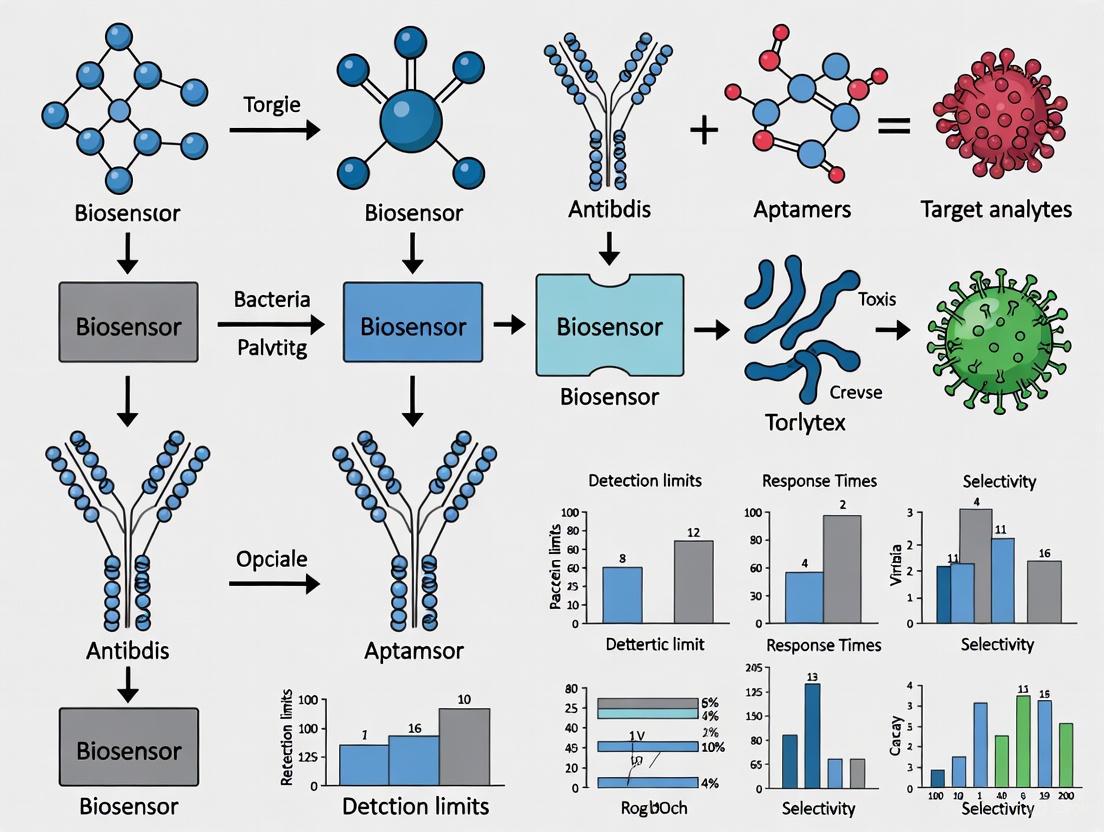
This article provides a comprehensive analysis of the latest advancements in biosensor technology for ensuring food safety and quality.
Biosensors for Food Quality and Pathogen Detection: A Comprehensive Review for Researchers and Scientists
Abstract
This article provides a comprehensive analysis of the latest advancements in biosensor technology for ensuring food safety and quality. Aimed at researchers, scientists, and drug development professionals, it explores the foundational principles of biosensors, delves into the mechanisms and real-world applications of electrochemical, optical, and microfluidic platforms, and critically examines the challenges of real-world validation and matrix interference. The review also offers a comparative evaluation of biosensor performance against traditional methods and discusses future trajectories, including the integration of AI, IoT, and nanotechnology for next-generation, point-of-care diagnostic solutions in the food industry and beyond.
The Principles and Imperative for Biosensing in Food Safety
Unsafe food represents a critical global public health challenge, causing substantial morbidity, mortality, and economic losses worldwide. Foodborne diseases arise from consumption of food contaminated by pathogenic microorganisms, toxic chemicals, or other harmful substances [1]. The World Health Organization (WHO) estimates that contaminated food causes 600 million illnesses and 420,000 deaths annually globally, with a disproportionately heavy burden falling on children under five years of age and populations in low- and middle-income countries [1] [2]. This application note synthesizes current data on the incidence, economic impact, and key contaminants of foodborne diseases, contextualized within biosensor research for food quality and pathogen detection. We provide structured quantitative summaries and detailed experimental protocols to support research and development efforts aimed at mitigating this pervasive health burden.
Global Incidence and Health Burden
The health burden of foodborne diseases is most accurately measured using Disability-Adjusted Life Years (DALYs), which quantify the number of years lost due to ill-health, disability, or early death [2] [3]. The WHO's first comprehensive global estimates published in 2015 revealed that 31 foodborne hazards caused 33 million DALYs and 420,000 deaths in 2010 alone [2]. The distribution of this burden demonstrates significant disparities, with the highest rates occurring in the WHO African and South-East Asian regions [2] [3].
Table 1: Global Burden of Major Foodborne Pathogens (WHO 2010 Data Synthesis)
| Pathogen Category | Pathogen | Annual Foodborne Illnesses | Annual Foodborne Deaths | DALYs (Millions) |
|---|---|---|---|---|
| Bacterial | Campylobacter spp. | 96 million | 21,000 | 2.3 |
| Non-typhoidal Salmonella enterica | 78.7 million | 59,000 | 4.07 | |
| Enteropathogenic E. coli | 17.2 million | 2,000 | 0.4 | |
| Listeria monocytogenes | 14,000 | 3,000 | 0.1 | |
| Viral | Norovirus | 125 million | 35,000 | 0.6 |
| Hepatitis A virus | 14 million | 28,000 | 0.7 | |
| Parasitic | Toxoplasma gondii | 6.3 million | 6,250 | 1.0 |
| Taenia solium | 0.8 million | 1,250 | 0.3 |
Children under five years bear an exceptionally heavy burden, experiencing 40% of all foodborne disease cases despite representing only 9% of the global population [2] [3]. This population suffers approximately 125,000 deaths annually from foodborne illnesses, with diarrheal pathogens representing the predominant threat [1] [2].
The forthcoming 2025 WHO estimates will provide updated burden assessments with significant methodological advancements, including expanded coverage of 42 foodborne hazards (up from 31 in 2010) with new additions focusing on heavy metals such as arsenic, cadmium, lead, and methylmercury [4] [5]. For the first time, these estimates will be available at the national level through a formal Country Consultation process, enabling more targeted interventions [4].
Economic Impact
The economic consequences of foodborne diseases extend far beyond direct healthcare costs, encompassing productivity losses, trade disruptions, and tourism decline. WHO data indicates that unsafe food costs low- and middle-income countries approximately $110 billion annually in lost productivity and medical expenses [1]. A 2019 World Bank report further specified that the total productivity loss associated with foodborne disease was estimated at US$95.2 billion per year, with annual treatment costs reaching US$15 billion [1].
The WHO, in partnership with the World Bank, is developing updated economic burden estimates based on DALY calculations, with figures planned for finalization beyond 2026 [4]. These economic assessments translate health impacts into financial terms that policymakers can readily utilize for cost-benefit analyses of food safety interventions.
Major Foodborne Contaminants
Foodborne hazards encompass biological, chemical, and physical contaminants. Biological pathogens, including bacteria, viruses, and parasites, represent the most significant burden globally [1] [3].
Bacterial Pathogens
Bacterial pathogens cause a substantial proportion of severe foodborne illnesses worldwide:
- Non-typhoidal Salmonella enterica: Causes salmonellosis with symptoms including nausea, vomiting, abdominal pain, and diarrhea. It is frequently associated with eggs, poultry, and other animal products [1] [6]. It represents the leading cause of foodborne disease deaths [2] [3].
- Campylobacter spp.: One of the most common foodborne pathogens, primarily caused by raw milk, raw or undercooked poultry, and contaminated water [1] [3].
- Listeria monocytogenes: Causes listeriosis, with particularly severe consequences for pregnant women (potentially leading to miscarriage) and newborns. Grows at refrigeration temperatures and found in unpasteurized dairy products and ready-to-eat foods [1] [6].
- Enterohaemorrhagic Escherichia coli: Associated with unpasteurized milk, undercooked meat, and contaminated fresh produce. Some strains can cause severe complications such as kidney failure [1].
Viral Pathogens
- Norovirus: The leading cause of foodborne illness globally, characterized by nausea, vomiting, watery diarrhea, and abdominal pain. Often transmitted by infected food handlers and contaminated surfaces [1] [3].
- Hepatitis A virus: Causes long-lasting liver disease and spreads typically through raw or undercooked seafood and contaminated raw produce [1].
Chemical Contaminants
Chemical hazards in food include naturally occurring toxins and environmental pollutants:
- Heavy metals: Lead, cadmium, and mercury cause neurological and kidney damage, mainly entering the food chain through pollution of water and soil [1].
- Mycotoxins: Produced by mould on staple foods like corn or cereals, with aflatoxin and ochratoxin being of particular concern due to their immune system effects and carcinogenicity [1].
- Persistent organic pollutants (POPs): Such as dioxins and PCBs, which accumulate in the environment and animal food chains, causing reproductive, developmental, and immune system damage [1].
Detection Methodologies: Comparative Analysis
Accurate and timely detection of foodborne pathogens is essential for outbreak investigation, regulatory compliance, and food safety management. Available methods present significant trade-offs between sensitivity, specificity, cost, and time requirements.
Table 2: Comparison of Foodborne Pathogen Detection Methods
| Method | Detection Time | Sensitivity | Cost & Resources | Portability | Best Use Cases |
|---|---|---|---|---|---|
| Culture-Based Methods | 2-7 days | High (can detect viable cells) | Low to moderate; requires media, incubator, BSL-2, trained personnel | Low | Regulatory compliance, isolate generation |
| Immunoassays (ELISA, LFD) | Hours | Moderate | Moderate; specific antibodies required | Moderate to high | Rapid screening, field testing |
| Molecular Methods (PCR, qPCR) | 1-3 hours | Very high (1-100 CFU) | High; specialized equipment, trained staff | Low to moderate | High-sensitivity detection, identification |
| Biosensors | Minutes to hours | High (1-100 CFU) | Varies; developing towards cost-effectiveness | High | On-site monitoring, point-of-care testing |
| Next-Generation Sequencing | 1-3 days | Extreme (single molecule) | Very high; advanced bioinformatics expertise | Low | Outbreak investigation, discovery |
Experimental Protocols
Protocol: Electrochemical Biosensor for Pathogen Detection
Principle: Electrochemical biosensors detect foodborne pathogens through biorecognition elements (antibodies, DNA probes, aptamers) immobilized on transducer surfaces, which convert biological interactions into measurable electrical signals (current, potential, impedance) [6] [7].
Materials:
- Working electrode: Gold, carbon, or screen-printed electrodes
- Biorecognition elements: Specific antibodies, DNA probes, or aptamers against target pathogens
- Electrochemical cell: Three-electrode system (working, reference, counter)
- Signal transducer: Potentiostat for measuring current, potential, or impedance changes
- Blocking agents: Bovine serum albumin (BSA) or casein to minimize non-specific binding
Procedure:
- Electrode Modification: Clean working electrode thoroughly. Immobilize biorecognition elements through covalent bonding, adsorption, or avidin-biotin interaction.
- Blocking: Incubate electrode with blocking solution (e.g., 1% BSA) for 1 hour at room temperature to prevent non-specific binding.
- Sample Incubation: Apply prepared food sample (1-10 μL) to modified electrode and incubate for 15-30 minutes at 37°C to allow pathogen binding.
- Washing: Gently rinse electrode with phosphate buffer (pH 7.4) to remove unbound materials.
- Signal Measurement: Transfer electrode to electrochemical cell containing appropriate redox mediator (e.g., ferricyanide). Apply potential and measure current response using cyclic voltammetry, differential pulse voltammetry, or electrochemical impedance spectroscopy.
- Data Analysis: Quantify pathogen concentration from calibration curve of signal intensity versus known standard concentrations.
Validation: Compare results with standard culture methods or PCR for validation. Include positive and negative controls in each assay run.
Protocol: Immunomagnetic Separation with PCR Detection
Principle: Immunomagnetic separation (IMS) uses antibody-coated magnetic beads to selectively capture and concentrate target bacteria from complex food matrices, followed by PCR detection for enhanced sensitivity and specificity [8].
Materials:
- Magnetic beads: Superparamagnetic particles (2-5 μm diameter) coated with protein A or streptavidin
- Specific antibodies: Monoclonal or polyclonal antibodies against target pathogen surface antigens
- Magnetic separation rack: For concentrating bead-pathogen complexes
- PCR reagents: Primers specific to target pathogen, DNA polymerase, dNTPs, buffer
- DNA extraction kit: For purifying bacterial DNA
Procedure:
- Bead Preparation: Coat magnetic beads with specific antibodies according to manufacturer's instructions. Block with 1% BSA to minimize non-specific binding.
- Sample Preparation: Enrich food sample in appropriate broth for 6-8 hours to increase target pathogen concentration. Centrifuge if necessary to remove large particulate matter.
- Immunocapture: Add immunomagnetic beads (50 μL) to food sample (1 mL). Mix gently and incubate for 30-60 minutes at room temperature with continuous agitation.
- Magnetic Separation: Place tube in magnetic rack for 2-5 minutes to capture bead-pathogen complexes. Carefully aspirate and discard supernatant.
- Washing: Resuspend bead-pathogen complexes in washing buffer (1 mL) and repeat magnetic separation. Repeat washing step twice.
- DNA Extraction: Resuspend final bead-pathogen complex in DNA extraction buffer and extract DNA according to kit protocol.
- PCR Amplification: Prepare PCR master mix with pathogen-specific primers. Amplify target genes using appropriate thermal cycling conditions.
- Detection: Analyze PCR products by gel electrophoresis or real-time fluorescence detection.
The Scientist's Toolkit: Research Reagent Solutions
Table 3: Essential Research Reagents for Foodborne Pathogen Detection
| Reagent/Material | Function | Application Examples |
|---|---|---|
| Specific Antibodies | Recognition and binding to target pathogen surface antigens | Immunoassays, immunomagnetic separation, biosensors |
| Functionalized Magnetic Beads | Selective capture and concentration of pathogens from complex samples | Sample preparation, pathogen isolation |
| Nucleic Acid Probes/Primers | Specific recognition and amplification of pathogen genetic material | PCR, qPCR, DNA microarrays, molecular assays |
| Electrochemical Transducers | Conversion of biological recognition events into measurable electrical signals | Electrochemical biosensors |
| Culture Media & Enrichment Broths | Support microbial growth and increase pathogen concentration | Traditional culture methods, sample preparation |
| Enzyme Substrates & Chromogens | Generate detectable signals (color, fluorescence, luminescence) in presence of target | ELISA, enzymatic biosensors |
| Blocking Agents (BSA, Casein) | Minimize non-specific binding in recognition assays | Immunoassays, biosensor surface preparation |
| Nanomaterials (AuNPs, CNTs, Graphene) | Enhance signal amplification and improve detection sensitivity | Nanobiosensors, signal enhancement |
Emerging Trends and Future Perspectives
The integration of artificial intelligence (AI) and machine learning with biosensing platforms represents a transformative advancement in foodborne pathogen detection [7]. AI algorithms enhance biosensor accuracy, reduce detection time, and automate data interpretation by improving signal processing, suppressing noise, and enabling real-time decision-making [7]. Reported accuracies for AI-assisted classification of pathogens in diverse food matrices exceed 95% in some applications [7].
Point-of-care testing (POCT) technologies continue to evolve toward simpler operation, greater portability, and higher levels of automation [8]. These developments support the implementation of detection capabilities at critical control points throughout the food production chain, enabling timely interventions before products reach consumers [8] [7].
The forthcoming 2025 WHO global burden estimates will provide updated epidemiological data essential for directing research priorities toward the highest-impact pathogens and regions [4] [5]. Concurrent advances in whole genome sequencing and enhanced surveillance networks are strengthening pathogen tracking capabilities, enabling more precise linkage of illnesses to contamination sources throughout the global food supply chain [5].
Within the fields of food quality control and clinical diagnostics, the accurate and timely detection of pathogens is paramount for ensuring public health. Conventional methods, primarily culture-based techniques, polymerase chain reaction (PCR), and enzyme-linked immunosorbent assay (ELISA), have long served as the foundational pillars for pathogen identification [9] [10]. While these methods have proven reliable over the years, they possess significant limitations that can hinder effective monitoring and rapid response, particularly in the context of modern food supply chains and disease outbreaks [9] [11]. This document details the specific constraints of these established techniques, thereby framing the critical need for innovative detection platforms such as biosensors. The objective is to provide researchers and development professionals with a clear understanding of these limitations to guide the development and adoption of next-generation diagnostic solutions.
Limitations of Culture-Based Methods
Culture-based methods represent the historical gold standard for microbiological detection, relying on the growth and proliferation of microorganisms on specific culture media [9]. Despite their proven utility, these methods are hampered by several intrinsic drawbacks that limit their application in scenarios requiring rapid results.
The table below summarizes the core limitations of culture-based methods for detecting common foodborne pathogens:
Table 1: Limitations of Culture-Based Methods for Selected Foodborne Pathogens
| Pathogen | Example Media | Time to Result | Key Limitations | References |
|---|---|---|---|---|
| E. coli O157:H7 | Sorbitol MacConkey (SMAC) Agar | 18-24 hours | False positives from emerging sorbitol-fermenting serotypes [9] | [9] |
| Various STECs | CHROMagar | 18-24 hours | Not sensitive to all strains; may miss certain diarrhoeagenic strains [9] | [9] |
| Yersinia enterocolitica | CIN Agar | 18-24 hours | Requires differentiation from non-pathogenic Yersinia species [9] | [9] |
| VBNC Pathogens (e.g., V. cholerae, E. coli) | Conventional Culture Media | N/A (No growth) | Cannot be cultured on standard media, requiring fluorescent dyes (e.g., acridine orange) for detection [9] | [9] |
| Listeria spp. | Standard Enrichment Media | >2 days | Lengthy enrichment and incubation steps required [9] | [9] |
Detailed Experimental Protocol for Culture-Based Detection
Protocol: Detection of E. coli O157:H7 via Sorbitol MacConkey (SMAC) Agar
1. Principle: The protocol leverages the fact that most E. coli O157:H7 strains do not ferment sorbitol rapidly, unlike other E. coli strains. This results in the formation of colorless colonies on SMAC agar, which contains sorbitol as the primary carbohydrate and a pH indicator [9].
2. Materials:
- Sample: Food homogenate (e.g., 25g ground beef in 225mL buffered peptone water).
- Culture Media: Sorbitol MacConkey (SMAC) agar plates.
- Equipment: Incubator (35±2°C), microbiological loop, biosafety cabinet.
3. Procedure: 1. Pre-enrichment: Inoculate the food homogenate into a pre-enrichment broth and incubate at 35°C for 18-24 hours. 2. Selective Plating: After incubation, streak a loopful of the enriched culture onto the surface of a SMAC agar plate to obtain isolated colonies. 3. Incubation: Invert and incubate the streaked plate at 35°C for 18-24 hours. 4. Interpretation: Observe plates for typical, colorless colonies, which are presumptively identified as E. coli O157:H7. Sorbitol-fermenting bacteria will appear as pink colonies. 5. Confirmation: Presumptive positive colonies must be confirmed using additional biochemical or molecular tests (e.g., latex agglutination for the O157 antigen), extending the total detection time further.
4. Advantages: The method is cost-effective and provides a confirmed result regarding the viability of the pathogen [9].
5. Limitations: The slow turnaround time (often exceeding 48 hours for confirmation) is a critical disadvantage in outbreak situations. Furthermore, the method can yield false negatives due to the presence of viable but non-culturable (VBNC) cells or false positives due to emerging sorbitol-fermenting STEC strains [9].
Limitations of Polymerase Chain Reaction (PCR)
PCR and its variants (e.g., multiplex, real-time) detect specific DNA sequences of target pathogens with high specificity [10]. Despite their advancement over culture methods, PCR-based techniques are not without significant constraints.
The table below outlines the primary limitations associated with PCR-based detection methods:
Table 2: Limitations of PCR-Based Detection Methods
| Method | Principle | Detection Limit | Key Limitations | References |
|---|---|---|---|---|
| Conventional PCR | Amplification of a specific DNA sequence with a single primer pair. | Varies with sample prep | Cannot distinguish between viable and dead cells; requires post-PCR gel electrophoresis [10] | [10] |
| Multiplex PCR (mPCR) | Simultaneous amplification of multiple gene targets with different primer sets. | Varies with sample prep | Technically challenging; risk of primer-dimers and unequal amplification efficiency [10] | [10] |
| Real-Time PCR (qPCR) | Amplification and real-time quantification of target DNA. | Can be very low (e.g., <10 CFU/mL with enrichment) | Susceptible to inhibition from food components (e.g., fats, salts); requires sophisticated equipment [10] | [10] |
Detailed Experimental Protocol for PCR-Based Detection
Protocol: Detection of Salmonella spp. via Conventional PCR
1. Principle: This protocol targets a conserved gene, such as invA, which is essential for Salmonella invasion, to confirm the presence of the pathogen's DNA in a sample [10].
2. Materials:
- Sample: Genomic DNA extracted from a pre-enriched food or bacterial culture.
- Primers: Forward and reverse primers specific for the invA gene.
- Reagents: PCR master mix (containing Taq DNA polymerase, dNTPs, MgCl₂), nuclease-free water.
- Equipment: Thermal cycler, gel electrophoresis apparatus, UV transilluminator.
3. Procedure: 1. DNA Extraction: Extract genomic DNA from the enriched sample using a commercial kit. The quality and purity of the DNA are critical for PCR efficiency. 2. PCR Setup: Prepare a reaction mixture containing: * Nuclease-free water: To volume * PCR master mix (2X): 12.5 µL * Forward primer (10 µM): 1 µL * Reverse primer (10 µM): 1 µL * DNA template: 2 µL 3. Thermal Cycling: Run the PCR in a thermal cycler with a program such as: * Initial Denaturation: 94°C for 5 minutes * 35 Cycles of: * Denaturation: 94°C for 30 seconds * Annealing: 55-60°C (primer-specific) for 30 seconds * Extension: 72°C for 1 minute * Final Extension: 72°C for 7 minutes 4. Amplicon Detection: Analyze the PCR products by agarose gel electrophoresis. Visualize the DNA bands under UV light after staining with ethidium bromide. A band of the expected size confirms the presence of Salmonella DNA.
5. Limitations: A major drawback is the inability to distinguish between DNA from live cells and dead cells, which can lead to false positives if detecting past contamination. The process is also susceptible to inhibition from compounds in complex food matrices, and it requires specialized equipment and technical expertise [10].
Limitations of Enzyme-Linked Immunosorbent Assay (ELISA)
ELISA is a widely used immunoassay that detects antigens or antibodies through an enzyme-mediated color change [9] [12]. While faster than culture methods, it has distinct disadvantages.
The table below summarizes the main limitations of ELISA:
Table 3: Limitations of Enzyme-Linked Immunosorbent Assay (ELISA)
| Aspect | Description | Impact | References |
|---|---|---|---|
| Specificity | Dependent on the antibody-antigen interaction. | Cross-reactivity with non-target antigens can cause false positives (e.g., between E. coli O157:H7 and Y. enterocolitica O:9) [9] | [9] |
| Sensitivity | Limited by the efficiency of the enzyme-substrate reaction. | May not detect low pathogen levels, requiring sample enrichment which increases time [11] | [11] |
| Time and Throughput | Involves multiple incubation and washing steps. | Typically takes 3-4 hours; difficult to perform true real-time monitoring [11] | [11] |
| Reagent Requirement | Relies on high-purity, specific antibodies. | Production and purification of antibodies are critical and costly; assay performance can vary between antibody batches [9] | [9] |
Detailed Experimental Protocol for ELISA-Based Detection
Protocol: Sandwich ELISA for Detection of E. coli O157:H7
1. Principle: A capture antibody specific to E. coli O157:H7 is immobilized on a microtiter plate. The target antigen from the sample is bound and detected by a second, enzyme-conjugated antibody, forming a "sandwich." A substrate is added, producing a color change proportional to the antigen concentration.
2. Materials:
- Coating Antibody: Anti-E. coli O157:H7 antibody.
- Detection Antibody: Anti-E. coli O157:H7 antibody conjugated to Horseradish Peroxidase (HRP).
- Substrate: TMB (3,3',5,5'-Tetramethylbenzidine) solution.
- Stop Solution: 1M Sulfuric acid (H₂SO₄).
- Equipment: Microtiter plate washer, microplate reader.
3. Procedure: 1. Coating: Coat the wells of a microtiter plate with the capture antibody diluted in coating buffer. Incubate overnight at 4°C, then wash to remove unbound antibody. 2. Blocking: Add a blocking buffer (e.g., 1% BSA in PBS) to all wells to cover non-specific binding sites. Incubate for 1-2 hours at 37°C, then wash. 3. Sample Incubation: Add the prepared sample or standard to the wells. Incubate for 1 hour at 37°C to allow antigen binding, then wash thoroughly. 4. Detection Antibody Incubation: Add the enzyme-conjugated detection antibody to the wells. Incubate for 1 hour at 37°C, then wash to remove unbound conjugate. 5. Substrate Addition: Add the TMB substrate solution to each well. Incubate in the dark for 15-30 minutes at room temperature for color development. 6. Reaction Stopping: Add the stop solution to each well, which changes the color from blue to yellow. 7. Measurement: Measure the absorbance of each well at 450 nm using a microplate reader. The concentration of the antigen in the sample is determined by comparing to a standard curve.
5. Limitations: The multi-step procedure is time-consuming and labor-intensive. The potential for cross-reactivity can compromise specificity, and the dynamic range is limited, often requiring sample dilution for accurate quantification within the linear range of the standard curve [9] [12].
The Scientist's Toolkit: Research Reagent Solutions
The following table lists key reagents and their critical functions in the described conventional methods, underscoring the materials essential for research and development in this field.
Table 4: Essential Research Reagents for Conventional Pathogen Detection
| Reagent/Material | Function | Application Example |
|---|---|---|
| Selective Culture Media | Supports the growth of target pathogens while inhibiting background flora. | SMAC Agar for E. coli O157:H7; CIN Agar for Yersinia spp [9]. |
| Specific Primers | Short, single-stranded DNA molecules that bind to complementary target sequences for PCR amplification. | invA gene primers for Salmonella detection; hlyA gene primers for Listeria monocytogenes [10]. |
| Taq DNA Polymerase | A thermostable enzyme that synthesizes new DNA strands during PCR. | Essential for all forms of PCR (conventional, multiplex, real-time) [10]. |
| High-Affinity Antibodies | Bind specifically to target antigens with high avidity, forming the basis of immunoassays. | Monoclonal or polyclonal antibodies against E. coli O157:H7 for ELISA [9] [12]. |
| Enzyme Conjugates | Enzymes linked to detection antibodies to produce a measurable signal (e.g., color, light). | HRP-conjugated antibodies used in ELISA with TMB substrate [12]. |
| Fluorescent Dyes | Bind to nucleic acids or cellular components to enable visualization. | Acridine orange for detecting VBNC cells; Ethidium bromide for visualizing DNA in gels [9] [10]. |
Workflow and Relationship Diagrams
The following diagram illustrates the generalized, multi-step workflow for conventional detection methods, highlighting the procedural complexity and time investment that biosensors aim to reduce.
Figure 1: A generalized workflow for conventional pathogen detection, highlighting the time-consuming and multi-step nature of these methods. The need for pre-enrichment and subsequent confirmation steps significantly extends the time to result.
Biosensors are analytical devices that combine a biological recognition element with a physicochemical transducer to detect the presence or concentration of analytes in a sample. In the context of food quality and pathogen detection, these tools provide rapid, sensitive, and specific analysis crucial for ensuring food safety [13] [14]. The fundamental architecture of a biosensor comprises two core components: the biorecognition element, which provides specificity for the target analyte, and the transducer, which converts the biological interaction into a quantifiable signal [15] [14]. This application note details the classes, selection criteria, and experimental protocols for these components, with a specific focus on applications in food research.
Core Components and Their Functions
The operation of a biosensor hinges on the seamless integration of its core components. The typical structure begins with the biorecognition element, followed by the transducer, and finally the measuring device [14]. The general architecture and workflow of a biosensor are illustrated below.
Biorecognition Elements
The biorecognition element is the primary source of a biosensor's specificity. It is a biological or biomimetic material immobilized on the sensor platform that selectively interacts with the target analyte [15] [14]. The binding event between the biorecognition element and the analyte generates a physiological change, which is subsequently detected by the transducer.
Table 1: Common Biorecognition Elements in Food Safety Biosensors
| Biorecognition Element | Target Analytes (Food Safety Context) | Mechanism of Action | Key Characteristics |
|---|---|---|---|
| Antibodies [14] [16] | Pathogens (e.g., E. coli O157:H7, Salmonella), proteins, toxins [17] | High-affinity, specific antigen-antibody binding (lock-and-key) [13] | High specificity and affinity; can be monoclonal (high specificity) or polyclonal (robustness) [15]. |
| Enzymes [14] | Substrates like glucose, lactate, alcohols, pesticides (organophosphates) [13] [18] | Catalytic transformation of the analyte, producing a detectable product (e.g., electrons, H₂O₂) [14]. | High catalytic activity; signal amplification; stability can be a limiting factor [15]. |
| Nucleic Acids (Aptamers) [15] [14] | Pathogens, toxins, small molecules (antibiotics) | Folding into specific 3D structures that bind targets with high affinity [14]. | Synthetic; thermal stability; reusability; can be selected via SELEX [15]. |
| Whole Cells/Microbes [16] | Toxins, antibiotics, environmental pollutants | Metabolic response of the cell to the presence of the analyte. | Provide holistic metabolic information; can be less specific and robust [16]. |
Transducers
The transducer is the component that converts the biological response generated by the biorecognition event into a measurable electronic signal. The choice of transducer depends on the nature of the physicochemical change occurring during biorecognition [13] [14].
Table 2: Primary Transducer Types in Biosensing
| Transducer Type | Detection Principle | Measurable Signal | Example Application in Food Safety |
|---|---|---|---|
| Electrochemical [13] [18] [17] | Measures electrical changes due to bio-recognition events (e.g., electron transfer in redox reactions). | Current (Amperometric), Potential (Potentiometric), Impedance (Impedimetric) [18] [17]. | Detection of E. coli O157:H7 using phage-functionalized electrodes [17]; glucose monitoring [13]. |
| Optical [13] [18] [16] | Detects changes in light properties as a result of analyte binding. | Fluorescence, Absorption, Refractive Index (Surface Plasmon Resonance) [16]. | Pathogen detection (proteins, DNA) in cancer diagnostics; protein detection using optical fibres [16]. |
| Piezoelectric [13] [18] | Measures changes in mass on the sensor surface through oscillation frequency shifts. | Frequency Shift | Detection of volatile organic compounds indicative of food spoilage. |
| Thermal [18] | Measures the heat absorbed or released during a biochemical reaction. | Temperature Change / Heat (Calorimetric) | Detection of enzymatic reactions where heat is a product. |
The relationship between a biorecognition element and its transducer in a typical biosensor setup can be visualized as follows.
Experimental Protocols
Protocol: Development of an Electrochemical Immunosensor forE. coliO157:H7 Detection
This protocol outlines the steps for fabricating a biosensor for pathogen detection, using a carbon black-based electrochemical platform as an example from recent literature [17].
1. Objective: To immobilize a specific bacteriophage (e.g., EP01) on a carbon black/graphene oxide-modified electrode for the selective electrochemical detection of E. coli O157:H7.
2. Materials
- Working Electrode: Glassy Carbon Electrode (GCE) or Screen-Printed Carbon Electrode (SPCE) [17].
- Nanomaterials: Carbon Black (CB), Carboxyl-functionalized Graphene Oxide (CGO) [17].
- Biorecognition Element: Bacteriophage EP01 (specific to E. coli O157:H7) [17].
- Crosslinker: EDC (1-Ethyl-3-(3-dimethylaminopropyl)carbodiimide) and NHS (N-hydroxysuccinimide) solution.
- Blocking Agent: Bovine Serum Albumin (BSA) or ethanolamine.
- Buffer: 0.1 M Phosphate Buffered Saline (PBS), pH 7.4.
- Electrochemical Probe: 5 mM Potassium ferricyanide in 0.1 M KCl.
3. Procedure
- Step 1: Electrode Modification.
- Prepare a dispersion of CB and CGO in a suitable solvent (e.g., distilled water).
- Drop-cast a precise volume (e.g., 5-10 µL) of the CB/CGO dispersion onto the clean surface of the GCE/SPCE.
- Allow the solvent to evaporate at room temperature to form a stable, modified electrode (CB/CGO/GCE).
Step 2: Biorecognition Element Immobilization.
- Activate the carboxyl groups on the modified electrode surface by applying a mixture of EDC and NHS for 30-60 minutes.
- Rinse the electrode gently with PBS to remove excess EDC/NHS.
- Drop-cast the phage EP01 solution onto the activated surface and incubate for 2 hours at room temperature to allow covalent bonding.
- Rinse with PBS to remove physisorbed phages.
- To minimize non-specific binding, treat the electrode with a BSA solution (e.g., 1% w/v) for 30 minutes, then rinse.
Step 3: Electrochemical Measurement and Detection.
- Incubate the fabricated biosensor with the sample (e.g., pure culture or spiked food homogenate) containing E. coli O157:H7 for a set time.
- Wash the electrode to remove unbound cells.
- Perform Electrochemical Impedance Spectroscopy (EIS) in a solution containing the electrochemical probe.
- Monitor the change in charge transfer resistance (Rₐₜ), which increases as bacterial cells bind to the surface, hindering electron transfer.
4. Data Analysis
- The LOD was reported as 10² to 10⁷ CFU mL⁻¹ [17].
- Plot the change in Rₐₜ (or current for amperometric sensors) against the logarithm of bacterial concentration. A standard curve can be generated for quantitative analysis.
Protocol: Immobilization of Biorecognition Elements via Self-Assembly
A critical step in biosensor fabrication is the stable and effective immobilization of the biorecognition element, preserving its activity and orientation [17].
1. Objective: To attach biorecognition elements (e.g., antibodies, aptamers) to a transducer surface while maintaining their bioactivity.
2. Key Immobilization Methods:
- Physical Adsorption: The simplest method, involving non-covalent attachment to the surface via hydrophobic or ionic interactions. It is easy to perform but can lead to random orientation and leaching of the biomolecule [17].
- Covalent Binding: Uses crosslinkers (e.g., EDC/NHS for carboxyl-amine coupling) to form stable bonds between functional groups on the biomolecule and the activated surface. This method offers high stability and controlled orientation [17].
- Affinity Binding: Utilizes high-affinity pairs like biotin-streptavidin. The surface is modified with streptavidin, and biotinylated biorecognition elements are then bound. This allows for precise orientation and high binding efficiency [17].
- Entrapment: The biomolecule is enclosed within a porous matrix (e.g., polymer gel like Nafion). It protects the biomolecule but can introduce diffusion barriers [17].
The workflow for selecting and characterizing a biorecognition element, a critical pre-fabrication step, is summarized below.
The Scientist's Toolkit: Research Reagent Solutions
Table 3: Essential Materials for Biosensor R&D
| Reagent / Material | Function / Application | Examples / Notes |
|---|---|---|
| Screen-Printed Electrodes (SPEs) [17] | Disposable, miniaturized working electrodes for electrochemical biosensors. | Carbon, gold, or platinum inks; ideal for point-of-care testing. |
| Carbon Black & Graphene Oxide [17] | Nanomaterial electrode modifiers to increase surface area and enhance electron transfer. | Improve sensitivity and lower the limit of detection. |
| EDC & NHS Crosslinkers [17] | Activate carboxyl groups on surfaces for covalent immobilization of proteins/aptamers. | Standard for creating stable amide bonds with biomolecules. |
| Bovine Serum Albumin (BSA) [17] | Blocking agent to passivate unused surface sites and reduce non-specific binding. | Critical for improving signal-to-noise ratio in affinity sensors. |
| Biolayer Interferometry (BLI) Chips [19] | Used for label-free, real-time screening of binding kinetics (KD, kon, koff) between bioreceptors and targets. | Informs the selection of optimal biorecognition elements before sensor fabrication. |
| Specific Antibodies & Aptamers [14] | Commercially available or custom-synthesized biorecognition elements. | Key for ensuring biosensor specificity; selection depends on the target analyte. |
In the field of food quality and pathogen detection research, the performance of a biosensor determines its practical utility. Sensitivity, specificity, and speed represent three fundamental characteristics that directly impact a biosensor's effectiveness in real-world applications [20] [21]. These parameters are particularly crucial for detecting foodborne pathogens, where low abundance targets must be accurately identified in complex sample matrices within timeframes that enable timely intervention [22]. This Application Note examines these core characteristics, provides protocols for their evaluation, and demonstrates their application in developing effective biosensing platforms for food safety monitoring.
The ideal biosensor must achieve sufficient sensitivity to detect pathogens at low concentrations relevant to safety thresholds, maintain high specificity to distinguish target analytes from interferents in complex food matrices, and deliver results with sufficient speed to inform critical decision-making in production and supply chain environments [21]. Recent advances in biorecognition elements, signal transduction mechanisms, and microfluidic integration have significantly enhanced these key performance metrics, enabling new possibilities for rapid, on-site food safety testing [23] [24].
Key Characteristics of Ideal Biosensors
The table below summarizes the target performance characteristics for ideal biosensors in food safety applications, along with their definitions and measurement approaches.
Table 1: Key Performance Characteristics for Biosensors in Food Safety Applications
| Characteristic | Definition | Importance in Food Safety | Target Performance | Measurement Approach |
|---|---|---|---|---|
| Sensitivity | Ability to detect low analyte concentrations [20] | Detect pathogens at infectious dose levels; early contamination warning | Limit of Detection (LOD) < 10² CFU/mL for pathogens [21] | Signal-to-noise ratio; calibration curves |
| Specificity | Ability to distinguish target analyte from interferents [25] | Accurate identification in complex food matrices; avoid false positives | Minimal cross-reactivity with non-target microbes | Spike-recovery studies; interference testing |
| Speed | Time from sample introduction to result output [21] | Timely intervention in supply chain; rapid screening | < 8 hours for culture-free methods [21] | Total assay time measurement |
| Linearity | Proportionality of signal to analyte concentration | Accurate quantification across relevant concentration ranges | R² > 0.99 across detection range | Linear regression of calibration data |
| Reproducibility | Consistency of results across repeated measurements | Reliability for regulatory decisions; quality control | CV < 15% between operators/runs [26] | Inter-assay precision studies |
Advanced Performance Considerations
Beyond the fundamental characteristics outlined above, several additional factors critically influence biosensor performance in food safety applications. Anti-interference capability is essential for analyzing complex food samples containing proteins, fats, and other potential interferents that may foul sensing surfaces or generate false signals [20]. Surface engineering strategies using tetrahedral DNA nanostructures (TDNs) and self-assembled monolayers (SAMs) have demonstrated significant improvements in reducing non-specific adsorption while maintaining biorecognition efficiency [25].
The dynamic range of a biosensor must span from the limit of detection to the maximum expected analyte concentration without requiring sample dilution. For pathogen detection, this typically requires a range of 10¹ to 10⁷ CFU/mL to cover both safety thresholds and natural contamination levels [21]. Stability under storage and operational conditions determines shelf-life and field-deployability, with ideal biosensors maintaining performance for at least 6 months under refrigerated storage [23].
Experimental Protocols for Biosensor Characterization
Protocol for Sensitivity and Limit of Detection (LOD) Determination
This protocol describes the procedure for determining the sensitivity and LOD of a biosensor designed for pathogen detection in food samples.
Table 2: Reagents and Equipment for Sensitivity Characterization
| Item | Specification | Function |
|---|---|---|
| Target Analyte | Purified pathogen cells (e.g., Listeria monocytogenes, E. coli O157:H7) | Biosensor recognition target |
| Sample Matrix | Food homogenate (varies by application) | Realistic testing environment |
| Buffer System | Phosphate Buffered Saline (PBS), pH 7.4 | Sample dilution and transport |
| Biosensor Platform | Functionalized transducer with immobilized bioreceptors [25] | Signal generation |
| Signal Readout | Electrochemical workstation or optical detector [23] [16] | Response measurement |
Procedure:
- Prepare analyte serial dilutions: Create a minimum of 8 concentration levels spanning 3-4 orders of magnitude in both buffer and food matrix. Include blank (zero analyte) samples.
- Initialize biosensor system: Following manufacturer instructions, calibrate the readout system and establish baseline signal.
- Sample application: Apply 100 µL of each dilution to the biosensor recognition surface. Perform triplicate measurements for each concentration.
- Signal measurement: Record output signals after predetermined incubation time (typically 5-30 minutes).
- Data analysis: Plot mean signal values against analyte concentrations. Perform linear regression to establish calibration curve.
- LOD calculation: Calculate LOD as (3.3 × σ)/S, where σ is the standard deviation of the blank response and S is the slope of the calibration curve.
Protocol for Specificity and Cross-Reactivity Assessment
This protocol evaluates biosensor specificity by testing against target and non-target organisms.
Procedure:
- Select test organisms: Include target pathogen, closely related species, and common food microbiota.
- Prepare samples: Normalize all microbial suspensions to identical concentration (e.g., 10⁵ CFU/mL).
- Biosensor testing: Apply each microbial suspension to separate biosensors and measure response.
- Calculate cross-reactivity: Express response to non-target organisms as percentage of target response.
- Statistical analysis: Use one-way ANOVA to determine if non-target responses differ significantly from blank.
Workflow for Comprehensive Biosensor Characterization
The following diagram illustrates the integrated workflow for evaluating biosensor performance characteristics:
Advanced Biosensor Platforms for Food Pathogen Detection
Microfluidic Biosensor Platform
Microfluidic biosensors represent a significant advancement for food pathogen detection by integrating sample preparation, separation, and detection into a single miniaturized platform [21] [24]. The following diagram illustrates the operational workflow of a typical microfluidic biosensor for pathogen detection:
Table 3: Research Reagent Solutions for Microfluidic Biosensors
| Component | Function | Examples |
|---|---|---|
| Biorecognition Elements | Target capture and specificity | Antibodies, aptamers, enzymes, phages [21] [22] |
| Signal Transducers | Convert biological interaction to measurable signal | Electrodes, optical fibers, piezoelectric crystals [23] [16] |
| Chip Materials | Microfluidic device substrate | PDMS, PMMA, glass, paper [24] |
| Surface Modifiers | Enhance probe immobilization and reduce fouling | TDNs, SAMs, hydrogels [25] |
| Signal Amplifiers | Enhance detection sensitivity | Nanomaterials, enzymes, CRISPR/Cas systems [20] |
Performance Optimization Using Design of Experiments (DoE)
Systematic optimization of biosensor performance can be efficiently achieved through Design of Experiments (DoE) methodologies [26]. This approach enables researchers to simultaneously evaluate multiple factors and their interactions, leading to more robust and optimized biosensor systems.
DoE Optimization Protocol:
- Identify critical factors: Select 3-5 key variables that influence biosensor performance (e.g., probe density, incubation time, sample volume).
- Define experimental domain: Establish minimum and maximum values for each factor based on preliminary experiments.
- Select experimental design: Choose appropriate design (e.g., full factorial, central composite) based on the number of factors and resources.
- Execute experiments: Perform trials in randomized order to minimize systematic error.
- Model development: Use regression analysis to build mathematical models linking factors to responses.
- Optimization and validation: Identify optimal factor settings and confirm through validation experiments.
Applications in Food Quality and Pathogen Detection
The implementation of biosensors with optimized sensitivity, specificity, and speed has demonstrated significant utility across various food safety applications. For pathogen detection, fluorescent biosensors incorporating signal amplification strategies have achieved detection limits below 10² CFU/mL for major foodborne pathogens including Salmonella, Listeria, and E. coli O157:H7 [20]. These platforms typically complete analysis within 2-8 hours, significantly faster than conventional culture methods requiring 24-48 hours [21].
Microfluidic biosensors further enhance application potential through integration of multiple processing steps and minimal reagent consumption [24]. Recent innovations incorporate CRISPR/Cas systems and Argonaute proteins for enhanced specificity in nucleic acid-based detection, enabling single-nucleotide discrimination in pathogen identification [20]. Phage display-derived biological probes offer additional advantages for pathogen recognition, providing highly specific binding elements that can be rapidly selected against diverse targets [22].
The convergence of nanotechnology with biosensing has yielded significant improvements in all key characteristics, with nanomaterials such as graphene, gold nanoparticles, and quantum dots enhancing signal transduction and providing larger surface areas for bioreceptor immobilization [16]. These advancements collectively contribute to the development of biosensor platforms that more closely approach the ideal characteristics of sensitivity, specificity, and speed required for effective food quality monitoring and pathogen detection.
Biosensor Platforms in Action: From Electrochemical to Optical and Microfluidic Systems
Electrochemical biosensors have emerged as powerful tools for the rapid, sensitive, and specific detection of foodborne pathogens such as Escherichia coli and Salmonella. These analytical devices integrate biological recognition elements with electrochemical transducers to convert biological interactions into quantifiable electrical signals [27]. Within the context of food quality and pathogen detection research, electrochemical biosensors offer significant advantages over conventional methods like culture-based techniques, ELISA, and PCR, including faster analysis times, potential for miniaturization, and suitability for on-site monitoring [28] [29]. This application note provides a detailed overview of three principal electrochemical transduction mechanisms—amperometric, impedimetric, and potentiometric—and presents standardized protocols for their application in detecting E. coli and Salmonella, two pathogens of critical concern in food safety.
Biosensing Principles and Transduction Mechanisms
Electrochemical biosensors are classified based on their transduction mechanism, each with distinct operational principles and output signals. The core components include a biological recognition element (e.g., antibody, aptamer, bacteriophage) immobilized on a transducer surface (electrode). The specific interaction between the recognition element and the target pathogen generates a physicochemical change that the transducer converts into an electrical signal [27].
Amperometric biosensors measure the current resulting from the redox reaction of an electroactive species at a constant working electrode potential. The magnitude of the generated current is directly proportional to the concentration of the target analyte [27]. Impedimetric biosensors monitor changes in the impedance (resistance to current flow) at the electrode-electrolyte interface, often characterized by the charge transfer resistance (Rct), when a target analyte binds to the recognition element on the electrode surface [30] [27]. Potentiometric biosensors measure the potential difference between a working electrode and a reference electrode under conditions of zero or negligible current flow. This potential change correlates with the activity or concentration of the target ion or molecule [27].
Table 1: Comparison of Electrochemical Transduction Techniques for Pathogen Detection.
| Technique | Measured Signal | Key Advantages | Typical Detection Limit for E. coli / Salmonella | Reference |
|---|---|---|---|---|
| Amperometric | Current | High sensitivity, suitability for miniaturization | 10 – 10² CFU mL⁻¹ (STEC); 10 CFU mL⁻¹ (S. Typhimurium) | [31] [32] |
| Impedimetric | Impedance / Charge Transfer Resistance | Label-free detection, real-time monitoring | 100 CFU mL⁻¹ (E. coli O157:H7); 3 – 8 CFU mL⁻¹ (S. Typhimurium) | [30] [33] [34] |
| Potentiometric | Potential | Simple instrumentation, low cost | ~100 CFU mL⁻¹ (E. coli) | [34] |
Research Reagent Solutions
The following table catalogues essential reagents and materials commonly employed in the fabrication of electrochemical biosensors for E. coli and Salmonella detection.
Table 2: Essential Research Reagents and Materials for Biosensor Fabrication.
| Reagent/Material | Function/Application | Example Use-Case |
|---|---|---|
| Screen-Printed Electrodes (SPE) | Disposable, miniaturized electrochemical cell (working, counter, reference electrode). | Platform for amperometric detection of STEC and Salmonella [31] [32]. |
| Gold Nanoparticles (AuNPs) | Signal amplification; enhance electron transfer. | Used in signal-off impedimetric sensor for E. coli O157:H7 [30]. |
| Biotinylated Bacteriophages | Highly specific biorecognition element for target bacterial capture. | Capture and detection element in sandwich-type amperometric biosensor for STEC [31]. |
| Specific Antibodies (IgG) | Immunological recognition element for target pathogen. | Immobilized on SAM-modified electrodes for capture of E. coli O157:H7 and S. Typhimurium [30] [32]. |
| Aptamers (ssDNA/RNA) | Nucleic acid-based recognition element with high affinity. | Used in label-free impedimetric biosensor for S. Typhimurium detection [33]. |
| 11-Mercaptoundecanoic Acid (MUA) | Forms self-assembled monolayer (SAM) on gold surfaces for antibody immobilization. | Creates a COOH-terminated surface for covalent antibody conjugation in impedimetric sensors [30]. |
| EDC/NHS Crosslinker | Activates carboxyl groups for covalent coupling of biomolecules (e.g., antibodies). | Standard chemistry for immobilizing antibodies on SAM-coated electrodes [30]. |
| 1,1′-Ferrocenedicarboxylic acid (FeDC) | Redox mediator in amperometric measurements. | Used as an electron shuttle in bacteriophage-based amperometric biosensor [31]. |
| [Fe(CN)₆]³⁻/⁴⁻ | Redox probe for electrochemical impedance spectroscopy (EIS). | Measuring charge transfer resistance (Rct) in impedimetric biosensors [30]. |
Experimental Protocols
Protocol 1: Sandwich-Type Amperometric Biosensor for STEC
This protocol describes the detection of Shiga toxin-producing E. coli (STEC) using a bacteriophage-based sandwich assay on a screen-printed carbon electrode (SPCE) [31].
Workflow Overview:
Materials:
- Streptavidin-coated Screen-Printed Carbon Electrodes (SPCEs)
- Biotinylated bacteriophages (specific to STEC serogroups)
- Bacteriophage-gold nanoparticle (AuNP) conjugate solution
- Phosphate-Buffered Saline (PBS), 10×
- H₂O₂ (30%)
- 1,1′-Ferrocenedicarboxylic acid (FeDC) in DMSO
- Portable potentiostat (e.g., PalmSens3)
Step-by-Step Procedure:
- Biotinylated Phage Immobilization: Pipette 10 µL of biotinylated bacteriophage solution (optimally biotinylated at 10 mM concentration) onto the streptavidin-coated SPCE. Incubate for 1 hour at room temperature to allow immobilization via streptavidin-biotin interaction. Rinse gently with PBS-T20 to remove unbound phages.
- Sample Application and Cell Capture: Apply 50 µL of the sample (pure culture or complex matrix) onto the phage-functionalized SPCE. Incubate for 12 minutes at room temperature to allow the target STEC cells to be captured by the immobilized phages. Wash with PBS to remove non-specifically bound cells.
- Sandwich Complex Formation: Add 20 µL of the bacteriophage–gold nanoparticle solution to the electrode. Incubate for 10-15 minutes. This forms a sandwich complex where the secondary phage-AuNP conjugate binds to the captured bacterial cells.
- Redox Reaction Initiation: Add 40 µL of 40 mM H₂O₂ and 10 µL of FeDC solution to the electrochemical cell. FeDC acts as a redox mediator, and H₂O₂ is the enzyme substrate.
- Amperometric Measurement: Perform amperometric measurement at a scan rate of 100 mV s⁻¹. The current generated from the redox reaction is proportional to the number of captured bacterial cells.
- Data Analysis: Quantify the bacterial concentration based on the measured current. The biosensor has a demonstrated detection limit of 10–10² CFU mL⁻¹ for STEC O157, O26, and O179 strains in complex matrices, with a total analysis time of less than 1 hour [31].
Protocol 2: Signal-Off Impedimetric Immunosensor forE. coliO157:H7
This protocol details a "signal-off" impedimetric biosensor that uses antibody-functionalized electrodes and gold nanoparticles (AuNPs) for enhanced detection of E. coli O157:H7 [30].
Workflow Overview:
Materials:
- Gold disk electrodes or custom-fabricated gold electrodes (e.g., on COC substrates [35])
- 11-mercaptoundecanoic acid (MUA) and 1-undecanethiol (UDT)
- EDC and Sulfo-NHS
- Anti-E. coli O157:H7 antibody (IgG)
- Citrate-capped gold nanoparticles (AuNPs, ~13 nm diameter)
- Potassium ferricyanide K₃[Fe(CN)₆] for [Fe(CN)₆]³⁻/⁴⁻ redox probe
- Potentiostat with EIS capability (e.g., Biologic VMP3)
Step-by-Step Procedure:
- Self-Assembled Monolayer (SAM) Formation: Clean the gold electrode electrochemically in 0.5 M H₂SO₄. Immerse the electrode in an ethanol solution containing a binary mixture of MUA (10 mol%) and UDT (90 mol%) for at least 12 hours to form an insulating SAM. Rinse with ethanol and dry.
- Antibody Conjugation: Activate the carboxyl groups of MUA by treating the SAM-modified electrode with a mixture of EDC and Sulfo-NHS for 1 hour. Incubate the electrode with anti-E. coli O157:H7 antibody solution for 2 hours at 4°C, allowing covalent amide bond formation. Rinse with PBS to remove unbound antibodies.
- Pathogen Capture: Apply the sample containing E. coli O157:H7 to the antibody-conjugated electrode. Incubate for 30-60 minutes to allow bacterial capture. Wash with PBS to remove non-target cells.
- Signal Amplification with AuNPs: Incubate the electrode with the captured bacteria in a solution of citrate-capped AuNPs for 20 minutes. The AuNPs strongly adsorb to the surface of the captured bacterial cells. Wash gently to remove unbound AuNPs.
- Electrochemical Impedance Spectroscopy (EIS) Measurement: Perform EIS measurement in a solution containing 5 mM [Fe(CN)₆]³⁻/⁴⁻. Use a frequency range from 1 MHz to 0.1 Hz with a sinus amplitude of 20 mV.
- Data Analysis: Fit the EIS data to an equivalent circuit model and extract the charge transfer resistance (Rct). The attachment of conductive AuNPs to the captured bacteria creates electron transfer pathways, resulting in a significant decrease in Rct ("signal-off") that is proportional to the bacterial concentration. This method achieves a detection limit as low as 100 CFU mL⁻¹ with a linear range of 300 to 1 × 10⁵ CFU mL⁻¹ [30].
Protocol 3: PCR-Assisted Impedimetric Biosensor forpksGenomic Island inE. coli
This protocol combines the specificity of PCR with the sensitivity of EIS for detecting specific genetic markers, such as the clbN gene from the colibactin-encoding pks island in E. coli [35].
Materials:
- Custom-made gold electrodes (e.g., on cyclic olefin copolymer/COC substrates)
- Thioglycolic acid (TGA)
- EDC and Sulfo-NHS
- Amino-modified forward primer (5'AmMC6/: TCGATATAGTCACGCCACCA)
- Reverse primer (GTGAAGTGGTCAGCCAAGTG)
- Taq DNA polymerase kit and dNTPs
- Extracted genomic DNA from samples
- Potentiostat with EIS capability
Step-by-Step Procedure:
- Probe Immobilization:
- Electrochemically clean the gold working electrode in 0.5 M H₂SO₄.
- Form a compact layer of thioglycolic acid by adding a 15 µL drop of 12 mM TGA solution onto the working area for 2 hours.
- Activate the carboxyl groups by adding 10 µL of a mixture of 20 mM EDC and 50 mM Sulfo-NHS for 1 hour.
- React with the amino-modified forward DNA primer for 18 hours at 4°C to form a stable amide bond. The immobilized primer acts as the sensing probe.
On-Surface PCR Amplification:
- Prepare a standard PCR mix containing Taq polymerase, dNTPs, the reverse primer, and the target DNA (extracted from E. coli samples).
- Place the primer-immobilized electrode into the PCR solution.
- Run the PCR thermal cycling with the following conditions in a thermal cycler:
- Initial denaturation: 95°C for 3 minutes.
- Optimal cycles: 6 cycles of:
- Denaturation: 94°C for 1 minute.
- Annealing: 50.4°C for 40 seconds.
- Extension: 68°C for 1 minute.
EIS Measurement and Detection:
- After PCR cycling, remove the electrode and perform EIS measurement in a solution containing the [Fe(CN)₆]³⁻/⁴⁻ redox probe.
- The amplification of the target DNA on the electrode surface creates a bulky, negatively charged layer that increases the charge transfer resistance (Rct).
- A significant increase in Rct (e.g., 176% for positive control vs. ~20% for negative controls) confirms the presence of the target gene. This method has a calculated detection limit of 17 ng/µL for target DNA [35].
Performance Data and Comparison
The following table summarizes the analytical performance of the biosensor protocols described herein, along with other notable examples from the literature.
Table 3: Analytical Performance of Featured Electrochemical Biosensors.
| Target Pathogen | Biosensor Type / Bioreceptor | Detection Limit | Linear Range | Total Analysis Time | Reference |
|---|---|---|---|---|---|
| STEC (O157, O26, O179) | Amperometric / Bacteriophage | 10 – 10² CFU mL⁻¹ | Not specified | < 1 hour | [31] |
| S. Typhimurium | Amperometric / Antibody | 10 CFU mL⁻¹ | Qualitative | 125 min | [32] |
| E. coli O157:H7 | Impedimetric / Antibody & AuNPs | 100 CFU mL⁻¹ | 300 – 1 × 10⁵ CFU mL⁻¹ | ~90 min | [30] |
| S. Typhimurium | Impedimetric / Aptamer | 3 CFU mL⁻¹ | 10² – 10⁸ CFU mL⁻¹ | Not specified | [33] |
| Salmonella serotypes B, D | Impedimetric / Antibody | 8 Cells mL⁻¹ | Not specified | 45 min | [34] |
| E. coli (pks island) | PCR-Assisted Impedimetric / DNA Probe | 17 ng/µL (DNA) | Not specified | < 3 hours (incl. PCR) | [35] |
This application note delineates standardized protocols for amperometric, impedimetric, and potentiometric biosensors for detecting E. coli and Salmonella, contributing to the broader thesis research on biosensors for food quality and pathogen detection. The presented methods highlight the critical advantages of electrochemical biosensors, including high sensitivity, rapid analysis, and applicability in complex matrices. The integration of novel bioreceptors like bacteriophages and aptamers, coupled with signal amplification strategies using nanomaterials, continues to push the boundaries of detection sensitivity and specificity. Future work will focus on multiplexing capabilities, further miniaturization into lab-on-a-chip devices, and validation in real-world food samples to fully realize their potential as robust tools for ensuring food safety.
The rapid and accurate identification of pathogenic contaminants is a critical challenge in ensuring food safety and public health. This application note provides a detailed overview of four principal optical biosensing techniques—Colorimetric, Fluorescence, Surface Plasmon Resonance (SPR), and Surface-Enhanced Raman Scattering (SERS)—for the multiplexed detection of foodborne pathogens. Within the context of biosensor research for food quality, we present standardized protocols, performance comparisons, and practical guidance to enable researchers to select and implement the most appropriate method for specific analytical needs. The integration of these technologies into compact, user-friendly platforms paves the way for advanced on-site monitoring and diagnostic solutions.
Optical biosensors are compact analytical devices that integrate a biological recognition element with a physiochemical transducer to produce an optical signal proportional to the concentration of a target analyte [36] [37]. They offer significant advantages over conventional analytical techniques, including high specificity, sensitivity, and the capacity for real-time, label-free detection of a wide range of biological and chemical substances [37] [38]. The application of these sensors in food quality control and pathogen detection is of paramount importance, as they can drastically reduce analysis time and facilitate early detection of contaminants, thereby preventing foodborne illness outbreaks [39].
The fundamental principle of an optical biosensor involves three key steps: (1) the analyte diffuses from the sample solution to the surface of the biosensor; (2) the analyte reacts specifically and efficiently with the biological component (e.g., antibody, enzyme, nucleic acid); and (3) this reaction is converted by the transducer into a measurable optical signal [36]. The evolution of these technologies, particularly through integration with nanotechnology and microfluidics, is driving the development of next-generation portable devices for point-of-care diagnostics and on-site food inspection [39].
Table 1: Core Characteristics of Optical Biosensing Techniques
| Technique | Detection Principle | Label-Free | Key Advantage | Typical Limit of Detection |
|---|---|---|---|---|
| Colorimetric | Change in light absorption/color | No | Simplicity, visual readout | Varies with assay (e.g., nM-μM) |
| Fluorescence | Emission of light at specific wavelength | Often requires labels | Very high sensitivity | Picomolar to nanomolar |
| Surface Plasmon Resonance (SPR) | Change in refractive index at sensor surface | Yes | Real-time kinetic data | ~0.5 - 25 ng/mL [37] |
| Surface-Enhanced Raman Scattering (SERS) | Enhancement of Raman signal on nanostructures | Yes | Unique molecular fingerprint | Single-molecule level possible |
Optical Biosensing Techniques: Principles and Protocols
Colorimetric Biosensors
Principle: Colorimetric biosensors detect the presence of an analyte through observable color changes resulting from the interaction between the target and a biorecognition element. This interaction can alter the light absorption properties of the system, which is often measured photometrically for quantification [36]. These assays are highly valued for their simplicity and the ability to interpret results visually without sophisticated instrumentation.
Protocol: Magnetic Nanoparticle-based Colorimetric Assay for E. coli Detection
Biosensor Functionalization:
- Prepare a solution of antibody-conjugated magnetic nanoparticles (MNPs) specific to E. coli surface antigens.
- Incubate the MNP solution with the food sample homogenate (e.g., 1 mL) for 30 minutes at room temperature with constant mixing. The target bacteria will bind to the antibodies on the MNPs.
- Separate the MNP-bacteria complexes using a magnetic rack and wash twice with phosphate-buffered saline (PBS) to remove unbound materials.
Signal Generation and Detection:
- Add a secondary antibody conjugated with horseradish peroxidase (HRP) to the complex and incubate for 20 minutes. Wash again to remove excess conjugate.
- Add the enzyme substrate (e.g., TMB substrate solution) to the complex. The HRP enzyme will catalyze a reaction that produces a blue color.
- After 10-15 minutes, stop the reaction with a stop solution (e.g., 1M H₂SO₄), which changes the color to yellow.
- Measure the absorbance of the solution at 450 nm using a microplate reader. The intensity of the color is proportional to the concentration of E. coli in the original sample.
Fluorescence Biosensors
Principle: Fluorescence-based detection relies on the emission of light from a fluorophore when it is excited by a specific wavelength of light. In biosensing, a biorecognition event is transduced into a measurable change in fluorescence intensity, lifetime, or energy transfer [38]. Evanescent wave fluorescence biosensors, a common type, utilize an optical fiber or waveguide to excite fluorophores bound very close to the sensor surface, resulting in high sensitivity with minimal background from the bulk solution [37] [38].
Protocol: Evanescent Wave Fiber Optic Biosensor for Staphylococcal Enterotoxin B (SEB)
Biosensor Preparation:
- Immobilize anti-SEB antibodies on the surface of a silica optical fiber that has been chemically activated.
- Block any remaining non-specific binding sites on the fiber surface with a solution of bovine serum albumin (BSA).
Sample Assay:
- Incubate the functionalized fiber with the test sample (e.g., food extract) for 15 minutes. SEB present in the sample will bind to the immobilized antibodies.
- Wash the fiber with PBS to remove unbound material.
- Introduce a fluorescently-labeled (e.g., Cy5) detection antibody specific to a different epitope of SEB. Incubate for 15 minutes and wash again.
Fluorescence Measurement:
- Launch laser light at the excitation wavelength of the fluorophore (e.g., 650 nm for Cy5) into the optical fiber.
- The evanescent field at the fiber surface will excite only the fluorophores bound to the surface via the detection antibody.
- Collect the emitted fluorescence (e.g., at 670 nm) using a photodetector. The fluorescence signal is directly proportional to the concentration of captured SEB.
Surface Plasmon Resonance (SPR) Biosensors
Principle: SPR is a label-free technique that detects changes in the refractive index at the surface of a thin metal film (typically gold) [37] [38]. When polarized light hits the metal film under total internal reflection conditions at a specific resonance angle, it generates an evanescent field that excites surface plasmons. The binding of an analyte to a ligand immobilized on the metal surface alters the refractive index, leading to a shift in the resonance angle, which can be monitored in real-time [37]. This allows for the determination of binding kinetics (association and dissociation rate constants) and analyte concentration [37].
Protocol: Label-Free SPR for Real-Time Detection of Salmonella
Sensor Chip Functionalization:
- Using an SPR instrument (e.g., Biacore), activate a carboxymethylated dextran (CM5) sensor chip with a mixture of N-hydroxysuccinimide (NHS) and N-ethyl-N'-(3-dimethylaminopropyl)carbodiimide hydrochloride (EDC).
- Inject anti-Salmonella antibodies in sodium acetate buffer (pH 5.0) over the activated surface for 7 minutes, resulting in covalent immobilization.
- Deactivate any remaining active esters with ethanolamine.
Kinetic Analysis:
- Dilute purified Salmonella cells or lysates in HBS-EP running buffer to create a series of concentrations.
- Inject the samples over the antibody-functionalized surface for 3 minutes (association phase), followed by a switch to running buffer for 5-10 minutes (dissociation phase).
- Regenerate the sensor surface with a short pulse (30 seconds) of glycine-HCl (pH 2.0) to remove bound analyte without damaging the immobilized antibody.
- The instrument software will record a sensorgram (response vs. time) for each cycle. Fit the combined data globally to a 1:1 Langmuir binding model to extract the kinetic constants kon and koff, and calculate the equilibrium dissociation constant (Kd).
Surface-Enhanced Raman Scattering (SERS) Biosensors
Principle: SERS is a powerful label-free technique that dramatically enhances the weak Raman scattering signal from molecules adsorbed on or near nanostructured metallic surfaces (e.g., gold or silver) [39]. This enhancement provides a unique vibrational "fingerprint" of the target molecule, allowing for highly specific and sensitive multiplexed detection. SERS-based biosensors can be designed either by detecting the intrinsic Raman signal of the analyte or by using a Raman reporter molecule for indirect detection [39].
Protocol: SERS-based Multiplexed Detection of Viral Pathogens
SERS Substrate and Probe Preparation:
- Prepare a SERS-active substrate, such as a glass slide coated with dense gold nanoparticles (AuNPs).
- Create SERS nanotags by conjugating unique Raman reporter molecules (e.g., 4-aminothiophenol, 5,5'-dithiobis-(2-nitrobenzoic acid)) to AuNPs, then coat with specific antibodies against different target viruses (e.g., Norovirus, Hepatitis A).
Assay Procedure:
- Incubate the food sample (e.g., shellfish extract) with the mixture of different SERS nanotags for 45 minutes.
- Capture the formed immunocomplexes onto a magnetic bead surface coated with a broad-spectrum capture antibody.
- Wash the beads to remove unbound nanotags.
- Spot the magnetic beads onto the SERS substrate and dry.
SERS Measurement and Multiplexing:
- Acquire SERS spectra from multiple spots on the substrate using a Raman spectrometer with a 785 nm laser.
- The resulting spectrum will be a composite of the signals from all bound nanotags.
- Use multivariate analysis or peak deconvolution software to identify the characteristic peaks of each Raman reporter, enabling the simultaneous identification and quantification of multiple pathogens in a single sample.
The Scientist's Toolkit: Essential Reagents and Materials
Successful implementation of optical biosensors relies on a suite of specialized reagents and materials. The following table details key components for the featured experiments.
Table 2: Essential Research Reagent Solutions for Optical Biosensing
| Item | Function/Description | Example Application |
|---|---|---|
| Carboxymethylated Dextran Sensor Chip | A hydrogel matrix on a gold surface for covalent ligand immobilization. Provides a hydrophilic environment for biomolecular interactions. | SPR-based kinetic analysis [37]. |
| NHS/EDC Coupling Kit | N-hydroxysuccinimide (NHS) and N-ethyl-N'-(3-dimethylaminopropyl)carbodiimide hydrochloride (EDC). Activates carboxyl groups for amine coupling. | Covalent immobilization of antibodies on SPR chips and other surfaces [37]. |
| Gold Nanoparticles (AuNPs) | Spherical nanoparticles (e.g., 20-60 nm) that serve as plasmonic nanomaterials. | SERS substrate fabrication; colorimetric assay probes [39]. |
| Raman Reporter Molecules | Small molecules with distinct Raman vibrational fingerprints (e.g., DTNB, 4-ABT). | Creating SERS nanotags for multiplexed detection [39]. |
| Magnetic Nanoparticles (MNPs) | Nanoparticles with a magnetic core (e.g., iron oxide) and a polymer shell for bioconjugation. Enable rapid separation and concentration of analytes. | Sample preparation and concentration in colorimetric and fluorescence assays. |
| Evanescent Wave Fiber Optic Probe | A silica fiber where the cladding is removed and the core is functionalized with biorecognition elements. Enables excitation of surface-bound fluorophores. | Fluorescence-based detection of toxins and pathogens [38]. |
| HRP-Conjugated Antibodies & TMB Substrate | Antibodies conjugated to Horseradish Peroxidase (HRP) and its chromogenic substrate, 3,3',5,5'-Tetramethylbenzidine (TMB). Generates a measurable color signal. | Signal amplification and readout in colorimetric ELISA-style biosensors. |
Performance Comparison and Data Analysis
The selection of an appropriate biosensing platform depends on the specific requirements of the application, including the required sensitivity, need for multiplexing, and available infrastructure. The following table provides a comparative summary of the techniques discussed.
Table 3: Comparative Analysis of Optical Biosensing Platforms for Pathogen Detection
| Parameter | Colorimetric | Fluorescence | SPR | SERS |
|---|---|---|---|---|
| Multiplexing Capability | Low | Moderate | High (with imaging) | Very High |
| Quantitative Analysis | Semi-Quantitative | Excellent | Excellent (with kinetics) | Excellent |
| Assay Time | 1 - 2 hours | 30 - 90 minutes | 10 - 30 minutes (real-time) | 45 - 90 minutes |
| Equipment Cost | Low | Moderate | High | High |
| Ease of Miniaturization | High | High | Moderate | High |
| Key Application in Food Safety | Preliminary screening | Sensitive toxin detection | Label-free characterization of binding events | Multiplexed pathogen identification |
The advanced optical biosensing techniques detailed in this application note—Colorimetric, Fluorescence, SPR, and SERS—provide a powerful toolkit for addressing the complex challenges of multiplexed pathogen identification in food quality research. Each method offers a unique combination of sensitivity, specificity, and operational complexity. The ongoing integration of these technologies with microfluidics, nanotechnology, and portable instrumentation is steadily advancing the field toward the goal of robust, high-throughput, and on-site diagnostic solutions [39]. By providing standardized protocols and performance data, this document aims to facilitate the adoption and further development of these critical analytical tools within the scientific community.
Photoelectrochemical (PEC) biosensing represents a rapidly advancing analytical technique that synergistically combines photonics and electrochemistry, offering exceptional sensitivity and low background signals for detection in food quality and pathogen research. [40] This technology operates on the principle where photoactive materials generate electron-hole pairs upon light excitation, leading to a measurable photocurrent that is modulated by specific biological recognition events. [40] The complete separation of excitation source (light) and detection signal (electrical current) provides inherent advantages for reducing background noise and achieving improved sensitivity compared to conventional electrochemical methods. [41] For researchers in food safety and drug development, PEC biosensors present transformative potential for detecting pathogens, toxins, and other analytes at ultra-low concentrations with minimal sample preparation.
The fundamental operation of PEC biosensors relies on several key processes: (i) photon absorption by photoactive materials, (ii) separation of photogenerated electron-hole pairs, (iii) charge carrier migration and recombination, and (iv) utilization of these charge carriers at the electrode-electrolyte interface. [40] When the energy of incident light exceeds the band gap of the photoactive material, electrons are excited from the valence band to the conduction band, creating electron-hole pairs. The subsequent charge separation and transfer processes generate a photocurrent that serves as the analytical signal. [40] The interaction between target analytes and biological recognition elements immobilized on the photoactive surface alters this photocurrent, enabling quantitative detection of specific biological molecules, whole cells, or pathogens. [40]
Advanced Photoactive Materials and Sensing Mechanisms
Engineering Photoactive Nanomaterials
The performance of PEC biosensors critically depends on the properties of photoactive materials, which have evolved from simple semiconductor structures to sophisticated nanocomposites. Heterojunction engineering has emerged as a particularly powerful strategy for enhancing photoelectric conversion efficiency by facilitating charge separation. For instance, Cu₂O/ZnO nanorods array p-n heterostructures have demonstrated significantly improved PEC performance, with one study reporting a saturated photocurrent density approximately 13.5 times higher than pristine ZnO nanorods. [41] The enhanced performance stems from the favorable energy band alignment that promotes electron transport from the conduction band of Cu₂O to that of ZnO, while holes transfer from the valence band of ZnO to that of Cu₂O. [41]
Recent research has explored increasingly complex material architectures. A multifunctional PEC platform based on layer-by-layer assembly of Au/Bi₂MoO₆/V₂CTx exhibited dual functionality for simultaneous detection and inactivation of Salmonella enteritidis. [42] In this system, the Bi₂MoO₆/V₂CTx heterojunction boosted PEC activity through improved electrical conductivity and efficient electron transfer, while gold nanoparticles (Au NPs) enhanced electron transduction and provided anchoring sites for biomolecular recognition elements via Au-S covalent bonds. [42] Similarly, three-dimensional nanostructures such as TiO₂ nanorods provide high surface areas for biofunctionalization and efficient photoelectric conversion, enabling sensitive detection of nucleic acids. [43]
Table 1: Advanced Photoactive Materials for PEC Biosensing
| Material System | Structure/Composition | Key Properties | Reported Performance | Application Examples |
|---|---|---|---|---|
| Cu₂O/ZnO NRs | p-n heterojunction | Enhanced visible light absorption, efficient charge separation | 13.5× higher photocurrent vs. pristine ZnO [41] | Glutathione detection [41] |
| Au/Bi₂MoO₆/V₂CTx | Layered heterostructure | Good electrical conductivity, plasmon resonance effect | LOD: 26 CFU/mL for Salmonella enteritidis [42] | Pathogen detection and inactivation [42] |
| 3D-array TiO₂ nanorods | Three-dimensional nanostructure | High surface area, efficient photoelectric conversion | LOD: 15 copies/μL for nucleic acids [43] | Nucleic acid detection [43] |
| Ag₂S/Au NPs | Nanocomposite | Near-infrared response, enhanced electron transfer | Wide linear range for microcystin-LR [42] | Toxin detection [42] |
| rGO-TiO₂-based | 2D composite | High conductivity, large surface area | LOD: 10 CFU/mL for Salmonella enterica [44] | Pathogen detection [44] |
Signaling Mechanisms and Recognition Elements
PEC biosensors employ diverse signaling mechanisms that translate biorecognition events into measurable photocurrent changes. These mechanisms typically operate on principles of spatial hindrance, energy transfer, or enzymatic amplification. In spatial hindrance approaches, the binding of large targets (such as whole bacterial cells) creates a physical barrier that inhibits electron transfer or mass transport to the electrode surface, thereby decreasing photocurrent. [42] Conversely, strategies that remove blocking elements from the sensor surface can increase photocurrent upon target binding. [42]
Aptamers have emerged as particularly valuable recognition elements due to their high specificity, stability, and ease of modification. In the Au/Bi₂MoO₆/V₂CTx system, aptamers specific to Salmonella enteritidis were immobilized via Au-S bonds and complementary DNA hybridization. [42] The specific binding between aptamers and target bacteria caused the release of the complementary strand, reducing spatial hindrance and increasing photocurrent in a concentration-dependent manner. [42] Similarly, antibodies enable specific target recognition through immunoaffinity, with systems such as the IrO₂-Hemin-TiO₂ nanowire arrays demonstrating excellent selectivity and stability for glutathione detection. [41]
Enzymatic amplification significantly enhances detection sensitivity. A novel PEC biosensor integrating recombinase polymerase amplification (RPA) with 3D-array TiO₂ nanorods achieved ultrasensitive nucleic acid detection through a triple-binding mode involving FITC antibodies, target nucleic acids, and an HRP-streptavidin sandwich structure. [43] The enzymatic oxidation of 4-chloro-1-naphthol generated an insoluble precipitate that modulated the photocurrent, enabling detection limits as low as 15 copies/μL. [43]
Application Notes: PEC Biosensors for Food Safety and Quality Monitoring
Pathogen Detection in Food Matrices
The detection of foodborne pathogens represents a critical application where PEC biosensors offer significant advantages over traditional methods. Conventional culture-based techniques, while reliable, are time-consuming (often requiring 24-48 hours), whereas immunoassays and molecular methods such as PCR may suffer from limitations in affordability, portability, or susceptibility to matrix interference. [42] PEC biosensors address these challenges by providing rapid, sensitive, and specific detection capabilities.
The multifunctional Au/Bi₂MoO₆/V₂CTx platform demonstrated excellent performance for Salmonella enteritidis detection with a wide linear range from 1.82 × 10² CFU/mL to 1.82 × 10⁸ CFU/mL and a detection limit of 26 CFU/mL. [42] Remarkably, this platform additionally enabled photoelectrocatalytic inactivation of the detected bacteria, addressing the important need for sterilization to prevent further contamination. [42] Other pathogen detection systems have achieved even lower detection limits; for instance, a biosensor utilizing endogenous adenosine triphosphate-responsive Au@Cu₂O core-shell nanocubes detected Escherichia coli O157:H7 with a limit of 5 CFU/mL. [42] Similarly, ratiometric PEC biosensors based on three-dimensional graphene hydrogel loaded with carbon quantum dots and graphene-like carbon nitride (g-C₃N₄) demonstrated exceptional sensitivity for E. coli with a detection limit of 0.66 CFU/mL. [42]
Table 2: Performance Comparison of PEC Biosensors for Different Analytes
| Target Analyte | Photoactive Material | Recognition Element | Linear Range | Detection Limit | Reference |
|---|---|---|---|---|---|
| Salmonella enteritidis | Au/Bi₂MoO₆/V₂CTx | Aptamer | 1.82×10² - 1.82×10⁸ CFU/mL | 26 CFU/mL | [42] |
| Escherichia coli | C-dots/3DGH & g-C₃N₄ | Not specified | Not specified | 0.66 CFU/mL | [42] |
| E. coli O157:H7 | Au@Cu₂O core-shell | Not specified | Not specified | 5 CFU/mL | [42] |
| Salmonella enterica | rGO-TiO₂ | Not specified | Not specified | 10 CFU/mL | [44] |
| Nucleic Acids | 3D-array TiO₂ nanorods | RPA amplicons | Not specified | 15 copies/μL | [43] |
| Glutathione | Cu₂O/ZnO NRs | Not specified | Wide range | Not specified | [41] |
Mycotoxin and Small Molecule Detection
Beyond pathogen detection, PEC biosensors have been successfully applied to monitor mycotoxins and other small molecule contaminants in food products. Mycotoxins, as highly toxic secondary metabolites of fungi, pose significant threats to human health and require monitoring methods that are rapid, sensitive, and suitable for field deployment. [45] The exceptional sensitivity of PEC biosensors enables detection of these low molecular weight compounds at regulatory relevant concentrations.
The development of effective PEC biosensors for small molecules relies heavily on both advanced photoactive materials and innovative signal strategies. [45] For instance, near-infrared PEC immunosensors constructed by coupling Ag₂S cubes with gold nanoparticles have demonstrated excellent detection performance for microcystin-LR with a wide linear range and very low detection limit. [42] Similarly, the Cu₂O/ZnO NRs array p-n heterostructure showed promising performance for glutathione detection with favorable selectivity, high reproducibility, and an extremely wide detection range. [41]
Experimental Protocols
Protocol 1: Fabrication of Au/Bi₂MoO₆/V₂CTx-based PEC Biosensor for Pathogen Detection
This protocol describes the construction of a multifunctional PEC biosensor for simultaneous detection and inactivation of Salmonella enteritidis, adapted from Jiang et al. [42]
Materials and Reagents
- Bismuth nitrate pentahydrate (Bi(NO₃)₃·5H₂O)
- Ammonium molybdate ((NH₄)₆Mo₇O₂₄·4H₂O)
- V₂CTx MXene solution
- Chloroauric acid (HAuCl₄)
- Tris(2-carboxyethyl)phosphine (TCEP)
- 6-mercapto-1-hexanol (MCH)
- SE-specific aptamer and complementary DNA strand
- Phosphate buffered saline (PBS, 0.1 M, pH 7.4)
- Indium tin oxide (ITO) or fluorine-doped tin oxide (FTO) electrodes
Step-by-Step Procedure
Synthesis of Bi₂MoO₆/V₂CTx nanocomposite:
- Dissolve 0.97 g Bi(NO₃)₃·5H₂O in 10 mL of 2 M HNO₃ under stirring.
- Prepare a separate solution of 0.14 g (NH₄)₆Mo₇O₂₄·4H₂O in 10 mL deionized water.
- Slowly add the molybdate solution to the bismuth solution under continuous stirring.
- Adjust the pH to 6-7 using NaOH solution.
- Add 10 mg of V₂CTx MXene to the mixture and stir for 1 hour.
- Transfer the mixture to a Teflon-lined autoclave and hydrothermally treat at 160°C for 12 hours.
- Collect the precipitate by centrifugation, wash with ethanol and water, and dry at 60°C.
Electrode modification:
- Prepare a homogeneous ink by dispersing 2 mg of Bi₂MoO₆/V₂CTx nanocomposite in 1 mL of water-isopropanol mixture (1:1 v/v) with 0.1% Nafion.
- Drop-cast 10 μL of the ink onto a clean FTO electrode and dry under infrared light.
- Synthesize Au NPs onto the modified electrode by electrochemical deposition using HAuCl₄ solution (0.5 mM) at -0.2 V for 60 seconds.
Aptamer immobilization:
- Prepare the thiol-modified aptamer solution (1 μM) in Tris-EDTA buffer containing 10 μM TCEP to reduce disulfide bonds.
- Incubate the Au/Bi₂MoO₆/V₂CTx electrode with 20 μL of aptamer solution at 4°C for 12 hours.
- Treat with 1 mM MCH for 1 hour to block nonspecific binding sites.
- Hybridize with the complementary DNA strand (1 μM) for 1 hour at 37°C.
PEC measurements and bacterial inactivation:
- Incubate the modified electrode with Salmonella enteritidis samples of varying concentrations for 40 minutes at 37°C.
- Measure photocurrent responses in PBS (0.1 M, pH 7.4) under visible light illumination with an applied potential of 0 V vs. Ag/AgCl.
- For bacterial inactivation, apply a specific voltage (e.g., 0.6 V) to the system under illumination for 30 minutes to initiate photoelectrocatalytic sterilization.
Calibration and Data Analysis
- Plot photocurrent intensity versus Salmonella enteritidis concentration.
- Fit the data to a logistic function for quantitative analysis.
- The biosensor typically shows a linear range from 1.82 × 10² to 1.82 × 10⁸ CFU/mL with a detection limit of 26 CFU/mL. [42]
Protocol 2: PEC Nucleic Acid Detection Based on RPA Amplification and TiO₂ Nanorods
This protocol details a sensitive approach for nucleic acid detection combining recombinase polymerase amplification with 3D-array TiO₂ nanorods, adapted from the method described for Orientia tsutsugamushi detection. [43]
Materials and Reagents
- Titanium foil or FTO substrates
- Titanium butoxide (Ti(OBu)₄)
- Hydrochloric acid (HCl)
- RPA amplification kit
- Biotin- and FITC-labeled primers
- HRP-conjugated streptavidin
- Anti-FITC antibodies
- 4-chloro-1-naphthol (4-CN)
- Hydrogen peroxide (H₂O₂)
Step-by-Step Procedure
Fabrication of 3D-array TiO₂ nanorods electrode:
- Mix 10 mL of hydrochloric acid with 10 mL of deionized water.
- Add 0.3 mL of titanium butoxide dropwise under stirring.
- Transfer the solution to a Teflon-lined autoclave and place vertically aligned titanium foil or FTO substrate.
- Hydrothermally treat at 150°C for 12 hours.
- Anneal the obtained TiO₂ nanorods at 450°C for 1 hour.
RPA amplification:
- Extract target nucleic acids from samples using appropriate methods.
- Set up RPA reactions using biotin- and FITC-labeled primers according to manufacturer's instructions.
- Incubate the reaction at 37°C for 20 minutes.
Biofunctionalization of TiO₂ electrode:
- Immobilize anti-FITC antibodies on the TiO₂ nanorods electrode through physical adsorption or covalent bonding.
- Incubate the modified electrode with RPA amplification products for 30 minutes at 37°C.
- Add HRP-conjugated streptavidin and incubate for another 30 minutes, forming a sandwich structure.
PEC detection:
- Prepare the substrate solution containing 0.5 mM 4-CN and 2 mM H₂O₂ in PBS.
- Measure the photocurrent response under illumination.
- The enzymatic oxidation of 4-CN generates insoluble benzo-4-chlorohexadienone, which deposits on the electrode surface and decreases photocurrent proportionally to target concentration.
Data Interpretation
- The decrease in photocurrent is inversely proportional to the target nucleic acid concentration.
- The system typically achieves detection limits of approximately 15 copies/μL within 60 minutes total analysis time. [43]
The Scientist's Toolkit: Essential Research Reagents and Materials
Table 3: Key Research Reagent Solutions for PEC Biosensor Development
| Reagent/Material | Function/Application | Examples/Specifications | Research Considerations |
|---|---|---|---|
| Semiconductor Nanomaterials | Photoactive component for photocurrent generation | ZnO, TiO₂, Cu₂O, Bi₂MoO₆, g-C₃N₄ | Band gap engineering, heterojunction design, morphology control |
| Two-Dimensional Materials | Enhance charge separation and provide large surface area | Graphene, MXenes (V₂CTx), MoS₂ | Functionalization compatibility, electrical conductivity, stability |
| Metallic Nanoparticles | Plasmonic enhancement, electron mediation, bioreceptor immobilization | Au, Ag, Pt nanoparticles (5-50 nm) | Size-dependent plasmonics, surface chemistry, biocompatibility |
| Biological Recognition Elements | Target-specific binding | Aptamers, antibodies, nucleic acid probes | Specificity, stability, immobilization chemistry, orientation |
| Signal Amplification Components | Enhance detection sensitivity | Enzymes (HRP, GOx), nanozymes, catalytic tags | Activity retention, conjugation efficiency, background signal |
| Immobilization Matrices | Stabilize biorecognition elements on electrode surface | Nafion, chitosan, sol-gels, self-assembled monolayers | Biocompatibility, conductivity, permeability, stability |
Visualizing PEC Biosensing Mechanisms and Workflows
Diagram 1: Fundamental mechanism of PEC biosensing showing the sequence from photon absorption to target quantification.
Diagram 2: Experimental workflow for PEC biosensor construction and application, highlighting key steps from electrode preparation to data analysis.
PEC biosensors represent a rapidly advancing field with significant potential for transforming food safety monitoring and pathogen detection. The integration of novel photoactive materials, innovative sensing strategies, and amplification technologies has enabled remarkable improvements in sensitivity, specificity, and analytical throughput. The unique advantage of PEC biosensors lies in their exceptionally low background signals and high sensitivity, making them particularly suitable for detecting trace-level contaminants and pathogens in complex food matrices.
Future development in PEC biosensing is likely to focus on several key areas: (i) creation of multiplex detection platforms for simultaneous analysis of multiple targets, (ii) integration with wearable devices and IoT systems for real-time food monitoring, [46] [44] (iii) advancement of autonomous packaging systems that dynamically respond to environmental changes, [44] and (iv) implementation of AI-driven data analytics for improved interpretation of complex sample matrices. [47] Additionally, the combination of detection and inactivation capabilities in multifunctional platforms presents exciting opportunities for active food packaging applications. [42] As these technologies mature and address current challenges in standardization and commercialization, PEC biosensors are poised to become indispensable tools in ensuring food safety and quality in the 21st century.
The rapid and accurate detection of foodborne pathogens is a critical global challenge, with contaminated food causing approximately 10% of the global population to fall ill annually [21]. Traditional detection methods, including culture-based techniques, immunological assays like ELISA, and molecular methods such as PCR, are often time-consuming, labor-intensive, and require centralized laboratory facilities, making them unsuitable for rapid screening in the food supply chain [21]. Microfluidic biosensors integrated within Lab-on-a-Chip (LOC) systems have emerged as a powerful solution, offering high sensitivity, specificity, and rapid analysis with minimal sample volume for Point-of-Care Testing (POCT) [21]. These systems consolidate complex laboratory functions—sample preparation, target recognition, biochemical reactions, and signal detection—onto a single, automated chip platform, enabling "sample-in-answer-out" capabilities [21] [48]. This Application Note details the implementation of such systems, framed within a research thesis on biosensors for food quality and pathogen detection, providing structured quantitative data, detailed protocols, and visualization tools for researchers and scientists developing automated POCT solutions.
Quantitative Performance of Microfluidic Biosensors
The performance of different microfluidic biosensors in detecting foodborne pathogens is quantified by their sensitivity, speed, and detection limits. The following tables summarize key performance metrics and operational characteristics based on recent advancements.
Table 1: Performance Comparison of Microfluidic Biosensor Types for Pathogen Detection
| Biosensor Type | Detection Principle | Limit of Detection (LOD) | Analysis Time | Key Advantages |
|---|---|---|---|---|
| Electrochemical | Measurement of electrical changes (current, potential, impedance) due to bio-recognition event [21] | Variable, depending on transducer and biorecognition element [21] | Minutes to hours [21] | High sensitivity, portability, low cost, compatible with miniaturization [21] |
| Fluorescent Optical | Detection of fluorescence emission from labeled probes or complexes [21] | Variable, depending on assay design [21] | Minutes to hours [21] | High sensitivity and specificity, multiplexing capability [21] |
| Colorimetric Optical | Visual or spectrophotometric detection of color change [21] | Variable, depending on assay design [21] | Minutes to hours [21] | Simplicity, low cost, suitable for naked-eye detection [21] |
| MDM-based Immunoassay | Magnetic bead-based ELISA with optical detection [48] | Matches conventional ELISA [48] | ~1-2 hours (full automation) [48] | Full automation, quantitative, minimal user intervention, high accuracy [48] |
Table 2: Operational Characteristics of Automated Microfluidic Platforms
| Characteristic | DropLab (MDM Platform) | Traditional Microfluidics |
|---|---|---|
| Throughput | 4 parallel assays (e.g., triplicate sample + control) [48] | Typically single-plex or lower throughput |
| Level of Automation | Fully automated, "sample-in-answer-out" [48] | Often requires manual intervention or complex peripheral controls [48] |
| Liquid Handling | Magnetic digital microfluidics (droplet manipulation) [48] | Continuous-flow in closed channels [21] |
| Core Functionality | Sample transfer, mixing, bead extraction, dispensing, detection [48] | Varies by design, often requires external systems for full functionality |
| User Operation | Simple, user-friendly interface with pre-stored programs [48] | Often requires trained technicians |
Experimental Protocols
Protocol for Automated Immunodiagnostics on an MDM Platform
This protocol describes the procedure for performing a quantitative enzyme-linked immunosorbent assay (ELISA) for protein biomarkers using the DropLab magnetic digital microfluidic (MDM) platform [48].
Principle: The assay utilizes antibody-coated magnetic microbeads. Target antigens in the sample are captured by the beads and detected via an enzyme-labeled detection antibody. The enzyme catalyzes a reaction with a substrate, producing a colorimetric change quantified by optical density.
Materials:
- DropLab platform with integrated manipulation and optical detection modules [48].
- Disposable, thermoformed DropLab chip (pre-coated with superhydrophobic layer) [48].
- Pre-loaded reagents: wash buffer, enzyme substrate, detection antibody.
- Processed sample.
- Magnetic microbeads conjugated with capture antibody.
Procedure:
- Chip Preparation: Apply the liquid sample and ensure all required reagents are pre-loaded into their designated microwells on the DropLab chip [48].
- Platform Loading: Insert the chip into the one-size-fits-all adapter and load it into the DropLab platform [48].
- Program Selection: On the touchscreen interface, select the pre-stored program corresponding to the ELISA protocol for your target analyte [48].
- Assay Initiation: Press "GO" to start the automated process. The platform executes a predefined sequence of magnetic motions to perform the following steps [48]: a. Droplet Merging & Mixing: The magnet moves to transfer the sample droplet and the droplet containing magnetic microbeads, merging and mixing them thoroughly to facilitate target capture [48]. b. Bead Washing: The magnetic field is used to extract the microbeads from the mixture droplet and transfer them through a series of wash buffer droplets to remove unbound substances [48]. c. Detection Incubation: The beads are moved and mixed with a droplet containing the enzyme-linked detection antibody. d. Second Wash: Another washing cycle is performed to remove excess, unbound detection antibody. e. Enzymatic Reaction: The beads are mixed with the enzyme substrate droplet, initiating the colorimetric reaction.
- Signal Acquisition & Analysis: The optical detection module identifies the final reaction droplet, captures its image, and analyzes the intensity (inverse blue-channel intensity). The software correlates this intensity with a pre-loaded calibration curve to calculate and display the target concentration [48].
Protocol for Fabrication of a Thermoformed Microfluidic Chip
This protocol outlines the development of a disposable microfluidic chip suitable for MDM, as used in the DropLab system [48].
Materials:
- Polypropylene (PP) sheet (0.16 mm thickness) [48].
- Positive master mold (e.g., machined metal or 3D-printed resin) with the inverse of the desired microwell and microchannel patterns.
- Thermoforming equipment.
- Superhydrophobic spray coating.
- Transparent cover layer material.
Procedure:
- Master Mold Design: Design the mold to include recessed microwells for constraining sample and reagent droplets and microchannels of varying widths (e.g., 1.3 mm for droplet passage, 0.6 mm for bead extraction) to connect the wells [48].
- Thermoforming: Heat the PP sheet until pliable and use the master mold to thermoform the sheet, creating the body layer with the negative pattern of microwells and microchannels [48].
- Surface Coating: Spray-coat the body layer and the cover layer with a whitish superhydrophobic layer to facilitate droplet and microbead movement. Leave specific regions on the cover layer uncoated for optical detection [48].
- Assembly: Seal the cover layer onto the body layer to create an enclosed space, preventing droplet evaporation [48].
Workflow and System Diagrams
The Scientist's Toolkit: Research Reagent Solutions
Table 3: Essential Materials for Microfluidic Biosensor Development and Operation
| Item | Function/Description | Application Example |
|---|---|---|
| Biorecognition Elements | Biological molecules that specifically bind to the target pathogen or analyte [21]. | Antibodies for Salmonella, aptamers for E. coli, enzymes for metabolic markers [21]. |
| Magnetic Microbeads | Paramagnetic particles coated with capture biomolecules (e.g., antibodies); enable separation and manipulation in MDM [48]. | Used in automated ELISA protocols for target capture and washing steps [48]. |
| Enzyme Substrates | Chemicals that react with an enzyme (e.g., HRP) to produce a detectable signal (colorimetric, fluorescent) [48]. | TMB (3,3',5,5'-Tetramethylbenzidine) for colorimetric detection in ELISA [48]. |
| Chip Substrate Materials | Materials used to fabricate the microfluidic chip structure [21]. | PDMS (flexibility, optical clarity), PP (thermoformable, disposable), PMMA, glass [21] [48]. |
| Superhydrophobic Coating | A surface treatment that creates extreme water repellency, reducing friction for moving droplets [48]. | Applied to channels and chambers in digital microfluidic chips to facilitate droplet motion [48]. |
The safety of the global food supply is a paramount concern for public health, economic stability, and international trade. Pathogenic microorganisms in food products—including meat, dairy, and fresh produce—are a leading cause of foodborne illnesses, resulting in significant morbidity, mortality, and economic losses worldwide [11]. The World Health Organization estimates that foodborne diseases affect 600 million people annually, causing 420,000 deaths [7]. Traditional methods for pathogen detection, such as culture-based techniques and molecular assays like polymerase chain reaction (PCR), while sensitive and specific, are often time-consuming, labor-intensive, and require sophisticated laboratory infrastructure [49] [11]. These limitations have prompted the development of advanced biosensing technologies that offer rapid, sensitive, and field-deployable solutions for pathogen detection across various food matrices.
Biosensors are analytical devices that integrate a biological recognition element with a physicochemical transducer to produce a measurable signal proportional to the concentration of the target analyte [49] [7]. The core components of a biosensor include a bioreceptor (such as antibodies, nucleic acids, aptamers, or enzymes) that specifically interacts with the target pathogen or its markers, and a transducer (electrochemical, optical, piezoelectric, or thermal) that converts the biological interaction into a quantifiable signal [49]. The adaptation of these systems for application-specific detection in complex food matrices represents a significant advancement in food safety monitoring, enabling timely interventions throughout the food supply chain.
This application note details the implementation of biosensor technologies for detecting pathogens in three critical food categories: meat, dairy, and fresh produce. Within the broader context of thesis research on biosensors for food quality and pathogen detection, this document provides structured experimental protocols, performance data comparisons, and visualization of detection workflows to support researchers and scientists in developing and optimizing these analytical platforms.
Pathogen Prevalence and Detection Challenges by Food Matrix
Different food matrices present unique challenges for pathogen detection due to variations in their physical composition, chemical properties, and inherent microbiota. The table below summarizes the primary pathogens of concern and the specific detection challenges associated with each food matrix.
Table 1: Key Pathogens and Detection Challenges by Food Matrix
| Food Matrix | Primary Pathogens of Concern | Key Detection Challenges | Notable Outbreak Statistics |
|---|---|---|---|
| Meat & Poultry | Salmonella spp., E. coli O157:H7, Campylobacter jejuni, Listeria monocytogenes [50] [51] | High fat content causing interference; uneven distribution of pathogens; background microbiota competition [7] | 9,843 metric tons of ground beef recalled in 2007 due to E. coli O157:H7 [50] |
| Dairy Products | Listeria monocytogenes, Salmonella enterica, Staphylococcus aureus, E. coli, Mycoplasma spp. [52] [53] | Complex protein-lipid matrix; potential for biofilm formation; presence of starter cultures; toxins from fungal contamination (mycotoxins) [52] | 97 cheese-related outbreaks in the USA (1998-2012) causing >2,000 illnesses, 221 hospitalizations, and 10 deaths [52] |
| Fresh Produce | E. coli, Salmonella spp., Listeria monocytogenes, Norovirus [7] | Low pathogen levels against high background; sample heterogeneity; potential interference from plant pigments and polyphenols [7] | Contaminated fresh produce causes a significant proportion of foodborne illnesses; exact statistics vary by region and pathogen [7] |
The complexity of these food matrices often necessitates sophisticated sample preparation techniques to concentrate pathogens and remove interfering compounds before analysis. For instance, in dairy products, the high protein and fat content can shield pathogens and non-specifically bind to detection reagents, reducing assay sensitivity and specificity [52]. In meat products, the heterogeneous distribution of pathogens requires representative sampling and effective homogenization to ensure accurate detection [50] [51]. Understanding these matrix-specific challenges is crucial for developing effective biosensing strategies.
Biosensor Technologies for Pathogen Detection
Biosensors for foodborne pathogen detection are categorized based on their transduction mechanism. The following table compares the primary biosensor types, their operating principles, advantages, and limitations for food safety applications.
Table 2: Comparison of Biosensor Technologies for Pathogen Detection in Food
| Biosensor Type | Transduction Principle | Detection Time | Sensitivity | Advantages | Limitations |
|---|---|---|---|---|---|
| Electrochemical | Measures changes in electrical properties (current, potential, impedance) due to pathogen binding [49] [7] | Minutes to hours [7] | As low as 1-10³ CFU/mL [49] [51] | High sensitivity, portability, cost-effectiveness, suitable for miniaturization [49] [51] | Signal interference from complex matrices, fouling of electrode surfaces [7] |
| Optical | Detects changes in light properties (absorbance, fluorescence, SPR) upon biorecognition [49] [7] | Minutes to hours [7] | Varies by method; e.g., 100 cells/mL for a paper-based system [49] | High specificity and sensitivity, potential for multiplexing [49] [7] | Often requires sophisticated instrumentation, may be affected by sample turbidity [7] |
| Piezoelectric | Measures mass changes on a sensor surface through frequency shifts (e.g., quartz crystal microbalance) [49] [7] | Real-time to hours [7] | Demonstrated for E. coli and other bacteria [49] | Label-free detection, real-time monitoring [49] [7] | Susceptible to non-specific binding, interference from viscous samples [7] |
| Thermal | Detects heat changes from biochemical reactions [7] | Minutes to hours [7] | Information missing in search results | Label-free detection | Information missing in search results |
Recent advancements integrate artificial intelligence (AI) and machine learning to augment biosensor capabilities. AI algorithms enhance signal processing, suppress noise, and improve the classification and quantification of pathogens in complex food matrices, with some systems achieving accuracies exceeding 95% [7]. For example, deep learning models applied to surface-enhanced Raman spectroscopy (SERS) data enable rapid identification of bacterial species without lengthy culture steps [7].
Application Notes & Experimental Protocols
Pathogen Detection in Meat Products
Background: Meat products are particularly vulnerable to contamination by pathogens such as E. coli O157:H7, Salmonella, and Campylobacter. The Bugcheck project developed a hand-held electrochemical biosensor for rapid detection of these pathogens directly on the processing floor [51].
Experimental Protocol: Electrochemical Immunosensor for E. coli O157:H7 in Ground Beef
Sample Preparation:
- Aseptically weigh 25 g of ground beef sample into a sterile stomacher bag.
- Add 225 mL of sterile buffered peptone water and homogenize for 2 minutes using a stomacher.
- Allow coarse particles to settle or filter the homogenate through a coarse filter.
- Concentrate pathogens if necessary using immunomagnetic separation with antibody-coated magnetic beads specific to E. coli O157:H7 [50].
Biosensor Setup and Measurement:
- The Bugcheck system uses interdigitated microelectrodes functionalized with pathogen-specific antibodies [51].
- Apply the prepared sample extract to the sensor surface.
- Incubate for 10-15 minutes to allow pathogen binding to the immobilized antibodies.
- Wash the sensor surface with a buffer solution to remove unbound materials and matrix interferents.
- Apply an electrochemical signal (e.g., for impedance spectroscopy). The binding of pathogens induces electrochemical and physical changes at the electrode surface, leading to a measurable change in impedance [51].
- Measure the signal, which is proportional to the pathogen concentration in the sample.
Data Interpretation:
- The signal intensity is compared against a pre-established calibration curve.
- The detection limit of the system varies with the sample matrix but is designed to meet regulatory requirements for pathogen detection in meat [51].
The following workflow diagram illustrates the key steps in this process:
Pathogen Detection in Dairy Products
Background: Fermented dairy products can be contaminated with pathogens like Staphylococcus aureus, Salmonella, Listeria monocytogenes, and Mycoplasma species, often originating from raw milk or during processing [52]. A universal array method has been developed for detecting multiple bovine mastitis pathogens directly from milk samples [53].
Experimental Protocol: Ligation Detection Reaction-Mediated Universal Array for Milk Pathogens
Sample Preparation and DNA Extraction:
- Centrifuge 10 mL of raw milk to pellet microbial cells.
- Extract genomic DNA from the pellet using a commercial DNA extraction kit suitable for Gram-positive and Gram-negative bacteria.
- Quantify the extracted DNA using a spectrophotometer or fluorometer [53].
Ligation Detection Reaction (LDR):
- Design specific oligonucleotide probes for the 16S rRNA gene regions of target pathogens (e.g., S. aureus, Streptococcus spp., Mycoplasma spp., E. coli) [53].
- Set up the LDR mixture containing the extracted DNA, probes, and a thermostable DNA ligase.
- Run the LDR in a thermal cycler with the following program: 20 cycles of 30 seconds at 94°C (denaturation) and 4 minutes at 65°C (ligation) [53].
Universal Array Hybridization and Detection:
- Prepare a DNA microarray (chip) with immobilized "zip-code" oligonucleotides complementary to the LDR probe tags.
- Hybridize the LDR products to the universal array at an appropriate temperature (e.g., 60°C for 1-2 hours).
- Wash the array to remove non-specifically bound products.
- Detect hybridization signals using fluorescence scanning. A positive signal indicates the presence of the specific pathogen [53].
Performance Metrics:
- Specificity: High specificity for distinguishing 15 different bacterial groups.
- Sensitivity: As low as 6 fmol of target. This method is particularly advantageous for detecting Mycoplasma spp., bypassing the need for long culture times [53].
The logical flow of this multiplex molecular detection method is shown below:
Pathogen Detection in Fresh Produce
Background: Fresh produce, often consumed raw, is susceptible to contamination by pathogens like E. coli and Salmonella from water, soil, or handling. Paper-based biosensors offer a rapid, low-cost solution for on-site screening [49] [7].
Experimental Protocol: Paper-based Immunosensor for E. coli on Leafy Greens
Sample Preparation:
- Place a 50 g sample of leafy greens (e.g., lettuce, spinach) into a sterile bag with a dilution buffer (e.g., phosphate-buffered saline).
- Agitate vigorously for 2-5 minutes to dislodge bacteria from the surface.
- Filter the washate through a coarse filter to remove large plant debris [49].
Biosensor Assembly and Assay:
- The biosensor consists of stacked paper membranes. The bottom layer is the sample application pad.
- The middle layer contains HRP (horseradish peroxidase)-labeled anti-E. coli antibodies.
- The top capture layer contains immobilized target bacteria (or specific antibodies) [49].
- Apply the filtered sample washate to the bottom membrane layer.
- The liquid migrates upward, carrying the bacteria. If target E. coli is present, it binds to the HRP-labeled antibodies.
- The complex continues to migrate until it is captured in the top layer.
- Add an enzymatic substrate (e.g., TMB) to the top layer. The HRP enzyme catalyzes a colorimetric reaction, producing a measurable signal (color change) [49].
Analysis:
- The color intensity can be quantified visually or using a portable scanner/spectrometer.
- The assay is rapid, providing results in less than 5 minutes, with a sensitivity of around 100 cells/mL [49].
The Scientist's Toolkit: Research Reagent Solutions
The following table lists essential reagents and materials required for developing and implementing biosensors for pathogen detection in food, as derived from the cited protocols.
Table 3: Essential Research Reagents and Materials for Pathogen Detection Biosensors
| Item Name | Function/Application | Specific Examples / Targets |
|---|---|---|
| Specific Antibodies | Biorecognition element for immunosensors; binds to surface antigens on target pathogens [49] [51] | Anti-E. coli O157:H7, anti-Salmonella, anti-Listeria antibodies [50] [51] |
| Oligonucleotide Probes | Biorecognition element for nucleic acid-based sensors; hybridizes to specific DNA/RNA sequences of pathogens [53] [7] | 16S rRNA gene probes for Staphylococcus aureus, Streptococcus uberis, Mycoplasma spp. [53] |
| Magnetic Nanoparticles | Used for immunomagnetic separation (IMS) to concentrate and purify target pathogens from complex food matrices [49] | Anti-LPS antibody-coupled magnetic beads for generic capture of Gram-negative bacteria [49] |
| Electrochemical Transducers | Platform for converting biological binding events into measurable electrical signals [51] [7] | Interdigitated microelectrodes in the Bugcheck system [51] |
| Enzyme Labels | Signal amplification in enzymatic biosensors (e.g., ELISA-on-a-chip, paper sensors) [49] | Horseradish Peroxidase (HRP) conjugated to detection antibodies [49] |
| Universal Array Chips | Solid support for multiplexed detection of multiple pathogen-specific DNA sequences [53] | DNA microarray with "zip-code" oligonucleotides for LDR product capture [53] |
Biosensor technology offers a powerful and versatile approach for the rapid, sensitive, and application-specific detection of pathogens in meat, dairy, and fresh produce. As detailed in these application notes, the selection of an appropriate biosensor platform—whether electrochemical, optical, or nucleic acid-based—must be guided by the specific food matrix, the target pathogen, and the required speed of analysis. The integration of AI and machine learning is poised to further enhance the performance of these systems by improving signal interpretation and enabling predictive analytics [7]. The ongoing development of standardized protocols and robust, portable biosensors will significantly contribute to strengthening food safety systems, protecting public health, and minimizing economic losses from foodborne disease outbreaks. For researchers in this field, focusing on overcoming matrix interference, achieving multiplexing capabilities, and validating systems for real-world use remains a critical frontier.
Navigating Real-World Challenges: From Complex Matrices to Commercial Viability
The accurate detection of pathogens and quality indicators in food using biosensors is persistently challenged by food matrix effects. Complex food constituents, including lipids, proteins, and particulates, can interfere with biosensor function by fouling the sensor surface, non-specifically binding to recognition elements, or inhibiting biochemical reactions, ultimately compromising assay sensitivity, specificity, and reproducibility [54] [55]. These interferences are particularly pronounced in rich matrices such as meat, dairy, and fish products [56]. Overcoming these hurdles is critical for transitioning biosensing technologies from laboratory settings to robust, real-world food monitoring applications. This document outlines detailed application notes and experimental protocols, framed within biosensor research for food quality and pathogen detection, to mitigate these debilitating matrix effects.
Key Interferents and Their Mechanisms of Interference
The table below summarizes the primary interferents in food matrices and their specific mechanisms of action.
Table 1: Key Food Matrix Interferents and Their Mechanisms of Action
| Interferent Class | Specific Examples | Primary Mechanisms of Interference | Commonly Affected Food Matrices |
|---|---|---|---|
| Lipids | Fats, oils, phospholipids | • Surface Fouling: Non-specific adsorption on hydrophobic sensor surfaces, creating a diffusion barrier and reducing accessibility [56].• Signal Suppression: Quenching of fluorescent or electrochemical signals.• Emulsion Formation: Stabilization of colloids that entrap analytes or probes. | Meat, poultry, dairy products, fish oils |
| Proteins | Casein, albumin, globulins | • Non-Specific Binding: Competitive binding to bioreceptors (antibodies, aptamers) or sensor surfaces, leading to false positives [55] [57].• Molecular Crowding: Increasing viscosity and hindering analyte diffusion to the sensor surface.• Blocking Active Sites: Inactivating immobilized enzymes or capture probes. | Milk, eggs, meat, soy products |
| Particulates | Starch granules, cell debris, fibers | • Physical Blockage: Clogging of microfluidic channels or pore structures on sensor surfaces.• Light Scattering: Interfering with optical readouts (absorbance, fluorescence) [54].• Sedimentation: Creating heterogeneous analyte distribution. | Ground spices, cereals, processed foods, plant extracts |
Experimental Protocols for Mitigating Interference
Protocol: Sample Pre-treatment for Lipid-Rich Matrices
This protocol describes a streamlined method for preparing fat-containing samples (e.g., ground beef, whole milk) for electrochemical or optical biosensing.
1. Reagents and Materials:
- Sample: 10 g of homogenized food sample.
- Extraction Solvent: n-Hexane or a cyclohexane-ethyl acetate mixture (70:30 v/v).
- Buffer: Phosphate Buffered Saline (PBS), 10 mM, pH 7.4.
- Equipment: Microcentrifuge, vortex mixer, phase separator filter (0.45 μm), and glass test tubes.
2. Procedure: 1. Homogenization: Weigh 10 g of sample into a glass tube and add 20 mL of extraction solvent. 2. Vortexing: Vortex vigorously for 2 minutes to ensure complete lipid dissolution. 3. Centrifugation: Centrifuge at 10,000 × g for 15 minutes at 4°C to separate phases. 4. Liquid-Liquid Extraction: Carefully aspirate and discard the upper organic layer containing the dissolved lipids. 5. Filtration: Pass the remaining aqueous phase through a 0.45 μm phase separator filter to remove any residual particulates or emulsified lipids. 6. Buffer Exchange: Reconstitute the filtered pellet or dilute the aqueous phase in 5 mL of PBS, pH 7.4, for analysis. 7. Analysis: Introduce the treated sample to the biosensor. Compare signals against a control sample spiked with the analyte post-treatment to quantify and correct for any analyte loss during pre-treatment.
Protocol: Surface Passivation to Minimize Non-Specific Protein Binding
This protocol details the functionalization of a sensor surface (e.g., gold, glassy carbon) to resist fouling from proteins and other macromolecules.
1. Reagents and Materials:
- Sensor Chip: Gold disk electrode or SPR gold chip.
- Passivation Agents: 1 mM solution of 6-mercapto-1-hexanol (MCH) in ethanol or 1 mg/mL Bovine Serum Albumin (BSA) in PBS.
- Blocking Buffer: PBS containing 0.1% (w/v) Tween-20 and 1% (w/v) BSA.
- Equipment: Electrochemical cell or SPR instrument, peristaltic pump for flow systems.
2. Procedure: 1. Surface Cleaning: Clean the sensor surface according to standard protocols (e.g., piranha treatment for gold, polishing for carbon electrodes). 2. Bioreceptor Immobilization: Immobilize the primary capture element (e.g., antibody, aptamer) onto the clean surface using established methods (e.g., thiol-gold self-assembled monolayers for aptamers, EDC-NHS chemistry for antibodies). 3. Passivation: * For MCH (with aptasensors): After aptamer immobilization, incubate the sensor with the 1 mM MCH solution for 1 hour to backfill uncovered gold sites, creating a hydrophilic, protein-resistant monolayer [58]. * For BSA Blocking: Incubate the sensor surface with the BSA solution for 30 minutes. BSA occupies non-specific binding sites on the surface and in the sensor flow cell. 4. Rinsing: Rinse the surface thoroughly with PBS followed by blocking buffer to remove loosely bound passivation agents. 5. Validation: Test the passivated surface by exposing it to a complex matrix blank (e.g., food sample without the target analyte). A successful passivation will yield a negligible non-specific signal.
Workflow Diagram: Integrated Strategy for Managing Matrix Interference
The following diagram illustrates a logical decision workflow for selecting the appropriate combination of strategies to overcome interference based on the primary interferent in a sample.
The Scientist's Toolkit: Essential Research Reagent Solutions
Table 2: Key Reagents for Overcoming Food Matrix Interference in Biosensor Research
| Reagent / Material | Function / Application | Key Considerations |
|---|---|---|
| Aptamers [58] [59] | Synthetic oligonucleotide recognition elements; can be engineered for enhanced stability and specificity compared to antibodies. | Selected via SELEX; often more resistant to denaturation in harsh matrices; can be chemically modified to reduce non-specific binding. |
| Surface Passivation Agents (e.g., MCH, PEG-thiols, BSA) [58] [57] | Form a protective layer on sensor surfaces to minimize non-specific adsorption of interferents. | Choice depends on sensor substrate (e.g., MCH for gold); PEG-based coatings offer excellent anti-fouling properties. |
| Molecularly Imprinted Polymers (MIPs) [56] | Synthetic polymers with tailor-made cavities for specific analyte recognition; highly robust. | Withstand extreme pH and solvents; useful for sample clean-up and direct sensing in complex matrices. |
| Nanomaterials (e.g., Mesoporous silica, graphene, Au@Ag nanoparticles) [58] | Enhance signal amplification and improve bioreceptor immobilization density and stability. | High surface-to-volume ratio can increase loading of recognition elements; some can also act as nanozymes. |
| Microfluidic Chips [55] [57] | Integrate sample preparation (filtration, separation) with detection on a single chip (Lab-on-a-Chip). | Automates fluid handling, reduces sample volume, and minimizes user-induced error, ideal for on-site testing. |
A significant disconnect often exists between the performance of biosensors in controlled laboratory settings and their efficacy in real-world applications, a challenge known as the "real-world validation gap." This gap emerges when biosensors are validated primarily with artificially spiked samples rather than naturally contaminated samples, which contain complex, variable, and unpredictable matrix components. In the field of food quality and pathogen detection, this discrepancy poses a critical barrier to the adoption of otherwise promising biosensing technologies, as laboratory results may not accurately predict performance in authentic food samples [44]. While researchers often use artificial spiking to create reproducible contamination for initial development, this process fails to capture the true biological, chemical, and physical complexity of natural contamination, where target analytes may be bound to food matrices, present in stressed or injured states, or interacting with competing microbial communities [60].
The consequences of this validation gap are far-reaching, potentially leading to false security from undetected contaminants or false alarms that undermine trust in detection systems. For instance, a biosensor might demonstrate excellent sensitivity for pure cultures of Salmonella in buffer solutions but fail to detect the same pathogen in a naturally contaminated meat sample where background flora and food components interfere with biorecognition elements [44] [60]. This article establishes why bridging this gap through systematic testing with naturally contaminated samples is imperative for developing reliable biosensors, provides protocols for acquiring and working with such samples, and presents a framework for validation that addresses these complex challenges.
The Critical Limitations of Artificially Spiked Samples
Artificially spiked samples, while convenient and reproducible, present a simplified version of contamination that fails to mirror real-world conditions in several critical aspects, potentially compromising biosensor reliability when deployed in field settings.
Matrix Complexity and Interference Effects
Table 1: Comparative Analysis of Artificial vs. Natural Contamination Characteristics
| Characteristic | Artificially Spiked Samples | Naturally Contaminated Samples |
|---|---|---|
| Target Distribution | Homogeneous, predictable | Heterogeneous, unpredictable micro-niches |
| Target Physiology | Healthy, log-phase cultures | Possibly stressed, injured, or sublethally damaged cells |
| Background Microbiota | Minimal or controlled | Complex, competitive microbial communities |
| Analyte-Matrix Binding | Limited interaction | Potentially bound to proteins, fats, or carbohydrates |
| Inhibitory Substances | Typically absent | Naturally present (e.g., enzymes, antibodies, acids) |
| Sample History Effects | None | Variable temperature, humidity, and storage conditions |
Food matrices present complex biochemical environments that can significantly interfere with biosensor detection mechanisms. Natural contaminants often become structurally bound or embedded within the food matrix, reducing their accessibility to biorecognition elements like antibodies or aptamers [44]. For example, in a study on pathogen biosensors for Listeria monocytogenes, researchers observed a 2-3 log difference in detection sensitivity between artificially contaminated ready-to-eat meats and naturally contaminated samples, attributed to protein-fat interactions that masked antigenic sites recognized by detection antibodies [60]. These matrix effects are particularly pronounced in electrochemical biosensors, where fouling of electrode surfaces by food components like lipids, pigments, or proteins can diminish signal transduction, leading to either false-negative or false-positive results [61].
Physiological State of Target Microorganisms
The physiological state of microorganisms in naturally contaminated foods differs substantially from laboratory-cultured strains used in spiking experiments. Pathogens in real food systems often exist in stressed or injured states due to processing treatments, refrigeration, or competitive pressure from background microbiota [60]. These stressed cells may exhibit modified surface antigens, reduced metabolic activity, or different gene expression patterns that affect their detectability by biosensors designed against healthy, log-phase cultures. Research on immunosensors for E. coli O157:H7 demonstrated that cells subjected to mild acid stress, similar to what might occur in fermented foods, showed significantly reduced detection signals due to changes in cell surface epitopes recognized by detection antibodies [44]. This physiological disparity represents a critical validation gap that can only be addressed by testing with naturally contaminated samples that contain microorganisms in their authentic physiological states.
Biosensor Performance Data: Artificial vs. Natural Contamination
Table 2: Performance Comparison of Selected Biosensors with Artificial and Natural Contamination
| Biosensor Type | Target Analyte | Food Matrix | LOD (Artificial) | LOD (Natural) | False Negative Rate (Artificial) | False Negative Rate (Natural) |
|---|---|---|---|---|---|---|
| Immunosensor [60] | Salmonella Typhimurium | Pork | 350 CFU/mL | 1.2×10³ CFU/mL | <1% | 12% |
| Aptasensor [61] | Ochratoxin A | Cereals | 0.05 ng/g | 0.3 ng/g | 2% | 18% |
| Whole-Cell [62] | Chlorinated Solvents | Groundwater | 5 nM | 22 nM | 5% | 28% |
| Enzyme-based [44] | Organophosphate Pesticides | Fruits | 0.1 ppm | 0.8 ppm | 3% | 23% |
| LAMP-based [60] | E. coli O157:H7 | Milk | 1 CFU/mL | 15 CFU/mL | <1% | 9% |
The comparative data reveal a consistent pattern of performance degradation when biosensors transition from artificially contaminated samples to naturally contaminated ones. This performance discrepancy underscores the critical importance of validating biosensors under conditions that closely mimic their intended application environments.
Protocol 1: Sourcing and Characterizing Naturally Contaminated Samples
Sample Acquisition and Authentication
Objective: To establish reliable sources for naturally contaminated food samples and authenticate their contamination status through orthogonal validation methods.
Materials:
- Research Reagent Solutions:
- Culture-independent detection kits (PCR, LAMP) for target confirmation
- Reference standard methods (ISO, FDA BAM) for comparative analysis
- Sample preservation media (Cary-Blair, Stuart's, GN)
- Nucleic acid extraction kits with mechanical lysis capabilities
- Immunomagnetic separation kits for specific pathogen concentration
Procedure:
- Source Identification: Establish collaborations with food processing facilities, regulatory agencies, and clinical laboratories that encounter naturally contaminated products through routine monitoring or outbreak investigations.
- Sample Collection: Aseptically collect suspect samples in sterile containers, maintaining cold chain (4°C) during transport to prevent microbial population shifts. Document sample history including origin, processing treatments, and storage conditions.
- Contamination Authentication: a. Perform parallel analysis using culture-based reference methods (e.g., ISO 6571 for Salmonella, ISO 11290 for Listeria) to confirm presence and concentration of target contaminant. b. Utilize culture-independent confirmation via molecular methods (PCR, qPCR) targeting unique genetic markers. c. For toxins and chemical contaminants, employ LC-MS/MS or GC-MS to verify identity and concentration.
- Sample Archiving: Create homogeneous aliquots of authenticated naturally contaminated samples and store at -80°C with proper documentation for future biosensor validation studies.
Troubleshooting: Heterogeneous distribution of contaminants may require substantial sample size and extensive mixing. When natural contamination levels are low, gentle concentration methods like ultrafiltration or immunomagnetic separation may be applied without altering the native state of contaminants.
Sample Characterization and Matrix Documentation
Objective: To comprehensively characterize the physicochemical properties and microbial ecology of naturally contaminated samples.
Procedure:
- Physicochemical Profiling: a. Measure pH, water activity (a_w), and background microbiota using non-selective media. b. Document fat, protein, and carbohydrate content through standard food chemistry methods. c. Identify potential interferents specific to the food matrix (e.g., enzymes in dairy, polyphenols in produce, emulsifiers in processed foods).
- Target Characterization: a. Determine the physiological state of microbial targets through live/dead staining and sublethal injury assessment via resuscitation protocols. b. For chemical contaminants, assess binding characteristics to matrix components using extraction efficiency studies.
- Stability Monitoring: Conduct time-course studies to evaluate how contamination characteristics change under validated storage conditions to establish sample usability windows.
Sample Acquisition and Characterization Workflow
Protocol 2: Validation Framework for Naturally Contaminated Samples
Comparative Performance Assessment
Objective: To systematically evaluate biosensor performance with naturally contaminated samples against both artificially spiked samples and reference standard methods.
Materials:
- Research Reagent Solutions:
- Artificial spiking materials (reference strains, pure analytical standards)
- Reference method reagents (culture media, diagnostic kits)
- Matrix-matched calibration standards
- Internal control materials for process monitoring
Procedure:
- Sample Set Design: a. Prepare three sample sets: (i) naturally contaminated samples, (ii) artificially spiked samples at matched contamination levels, and (iii) confirmed negative samples. b. Include a range of contamination levels spanning the biosensor's claimed detection limit to establish dose-response relationships. c. Incorporate samples from multiple lots and sources to assess robustness against natural variation.
- Blinded Analysis: a. Code all samples and analyze in random order using the biosensor platform. b. Perform parallel testing with reference standard methods for all samples. c. Include appropriate controls (positive, negative, process) in each analysis batch.
- Data Analysis: a. Calculate sensitivity, specificity, accuracy, and precision for both artificially and naturally contaminated sample sets. b. Perform statistical comparison (e.g., McNemar's test, regression analysis) to identify significant performance differences between sample types. c. Establish the positive and negative predictive values for the biosensor under real-world conditions.
Troubleshooting: When discrepant results occur between biosensor and reference methods, employ additional orthogonal methods for resolution. If matrix effects are identified, consider modifications to sample preparation or biosensor interface to mitigate interference.
Interference Testing and Matrix Toughness Evaluation
Objective: To identify specific matrix components that interfere with biosensor performance and establish the operational boundaries for reliable detection.
Procedure:
- Interference Screening: a. Spike negative food matrices with known concentrations of target analytes and measure recovery efficiency. b. Systematically introduce potential interferents (surfactants, enzymes, particulates) to identify susceptibility. c. Evaluate cross-reactivity with non-target compounds commonly found in the application matrix.
- Matrix Toughness Ranking: a. Test biosensor performance across a panel of food matrices with varying properties (high-fat, high-protein, high-acid, complex spices). b. Develop a matrix toughness index based on interference magnitude and develop matrix-specific protocols for challenging applications.
- Robustness Optimization: a. Implement sample preparation modifications (dilution, filtration, extraction, cleanup) to mitigate matrix effects. b. Evaluate surface modifications or blocking agents to reduce nonspecific binding in complex matrices. c. Incorporate internal standards or standard additions to correct for matrix-specific signal suppression or enhancement.
Biosensor Validation Framework
Essential Research Reagent Solutions for Natural Contamination Studies
Table 3: Key Research Reagents for Natural Contamination Studies
| Reagent Category | Specific Examples | Function in Natural Contamination Studies | Considerations for Use |
|---|---|---|---|
| Reference Materials | Certified reference materials (CRMs), In-house reference panels | Provide benchmark for method validation and quality control | Ensure commutability with natural samples; matrix-match when possible |
| Molecular Detection Kits | PCR/qPCR reagents, LAMP kits, Nucleic acid extraction kits | Confirm target presence and concentration orthogonally | Validate extraction efficiency from natural matrices; include inhibition controls |
| Culture Media | Selective agars, Enrichment broths, Resuscitation media | Support reference culture methods and target viability assessment | Optimize for recovery of stressed cells from natural samples |
| Sample Preparation Tools | Immunomagnetic beads, Filtration units, Extraction solvents | Concentrate targets and reduce matrix interference | Avoid altering native state of contaminants; validate recovery efficiency |
| Binding Blockers | BSA, Casein, Non-fat dry milk, Surfactants (Tween-20) | Reduce nonspecific binding in complex matrices | Optimize concentration to minimize interference without affecting specific binding |
| Stabilizers | Cryoprotectants, Antimicrobial agents, Antioxidants | Preserve sample integrity during storage and processing | Verify no impact on target detectability or biosensor function |
The validation gap between artificially spiked samples and naturally contaminated samples represents a critical challenge in biosensor development for food safety applications. The protocols and frameworks presented here provide a systematic approach to address this gap, emphasizing the importance of authentic samples that capture the full complexity of real-world food matrices. By implementing these comprehensive validation strategies, researchers can develop biosensors with proven efficacy in real-world settings, ultimately accelerating the translation of promising technologies from the laboratory to practical application in food safety monitoring. The future of reliable biosensor technology depends on embracing this rigorous validation paradigm, ensuring that detection platforms perform reliably when confronted with the complex challenges of naturally contaminated food samples.
{#topic}
Nanomaterial Integration for Enhanced Sensitivity: CNTs, Graphene, and Metal Nanoparticles
The detection of foodborne pathogens and assessment of food quality are critical for public health. Electrochemical biosensors have emerged as indispensable tools in this field due to their portability, ease of use, and rapid response times [63]. The core function of a biosensor relies on the transducing of a biochemical event, such as an antibody-antigen interaction, into a measurable electrical signal [63]. The performance of these biosensors is heavily dependent on the properties of the electrode surface, where both the immobilization of biological recognition elements and electron transfer occur [63].
The integration of functional nanomaterials has revolutionized electrochemical biosensing by providing a synergic effect that enhances signal amplification [63]. Nanomaterials offer a large surface area that increases the loading capacity of biorecognition elements and improves the mass transport of reactants, leading to superior analytical sensitivity [63]. Among the most prominent nanomaterials are carbon nanotubes (CNTs), graphene, and metal nanoparticles (such as gold and silver), each contributing unique electrical, chemical, and physical properties to the biosensing interface [64] [65] [63]. This application note details the properties of these nanomaterials and provides standardized protocols for their integration into biosensors for food quality and pathogen detection, framed within a broader thesis research context.
Nanomaterial Properties and Selection Guide
The selection of an appropriate nanomaterial is paramount to the success of the biosensor. The table below summarizes the key properties, advantages, and common immobilization techniques for the primary nanomaterials discussed.
Table 1: Properties and Applications of Key Nanomaterials in Biosensing
| Nanomaterial | Key Properties | Biosensing Advantages | Common Immobilization Methods | Exemplary Application in Food Safety |
|---|---|---|---|---|
| Carbon Nanotubes (CNTs) | High electrical conductivity, large surface area, excellent electrocatalytic properties, high mechanical stability [63]. | Enhance electron transfer rate, increase surface area for probe immobilization, improve sensor stability [65] [63]. | Covalent bonding (e.g., EDC-NHS chemistry), non-covalent π-π stacking, polymer wrapping [65] [63]. | Detection of organophosphorus pesticides in vegetables using acetylcholinesterase immobilized on MWCNTs [66]. |
| Graphene & Graphene Oxide (GO) | Two-dimensional structure, extremely high surface area, high electron mobility, tunable oxygen-containing groups [63]. | Superior surface area compared to CNTs, ease of functionalization via oxygen moieties, enhanced hydrophilicity (GO) [65] [63]. | Similar to CNTs; covalent amide bonding, adsorption, layer-by-layer assembly [65]. | Electrochemical DNA biosensors for pathogen detection [25] [65]. |
| Gold Nanoparticles (AuNPs) | Surface Plasmon Resonance (SPR), redox activity, high surface-energy, excellent biocompatibility, fluorescence quenching [64]. | Facilitate direct electron transfer for enzymes, provide a stable substrate for antibody binding, enable signal amplification [64] [67]. | Thiol-based self-assembled monolayers (SAMs), electrostatic adsorption, entrapment in polymer matrices [64]. | Development of sensitive stick tests for microbial detection [64]. |
| Magnetic Nanoparticles | Magnetic effect, high surface-to-volume ratio, zero coercivity [64]. | Enable efficient separation and concentration of target analytes from complex food matrices, reducing background interference [64] [67]. | Functionalized with specific antibodies or ligands for target capture [64]. | Separation and concentration of foodborne pathogens from large sample volumes prior to detection [64]. |
Experimental Protocols
Protocol 1: Fabrication of a CNT-Based Enzymatic Biosensor for Pesticide Detection
This protocol describes the development of a high-sensitivity biosensor for organophosphorus (OP) pesticides using functionalized Multi-Walled Carbon Nanotubes (MWCNTs) as the enzyme carrier [66].
Research Reagent Solutions
- MWCNTs: Pristine multi-walled carbon nanotubes.
- Ionic Liquid (IL1): 1-Butyl-3-methylimidazolium tetrafluoroborate, used for functionalization.
- Acetylcholinesterase (AChE): Enzyme from Electrophorus electricus.
- Chitosan (CHI): A biopolymer for forming a stable composite film.
- Glutaraldehyde (GA): Crosslinking agent.
- Phosphate Buffered Saline (PBS): 0.1 M, pH 7.0, as the working buffer.
- Organophosphorus Pesticide Standard: Chlorpyrifos or parathion for testing.
Procedure
- Functionalization of MWCNTs: Disperse 5 mg of pristine MWCNTs in 10 mL of the ionic liquid (IL1). Sonicate for 60 minutes to achieve a homogeneous black suspension. This step non-covalently functionalizes the MWCNTs, optimizing the subsequent enzyme immobilization [66].
- Electrode Modification: Prepare a 1% (w/v) chitosan solution in dilute acetic acid. Mix the IL1-functionalized MWCNT suspension with the chitosan solution at a 1:1 volume ratio. Deposit 8 µL of this CHI/IL1-MWCNT mixture onto a clean glassy carbon electrode (GCE) surface and allow it to dry at room temperature.
- Enzyme Immobilization: Prepare an AChE solution (0.25 U/µL) in PBS. Apply 6 µL of the enzyme solution onto the modified electrode. To crosslink and stabilize the enzyme, expose the electrode to glutaraldehyde vapor for 30 minutes in a sealed container.
- Sensor Assembly: Rinse the fabricated AChE/CHI/IL1-MWCNT/GCE biosensor gently with PBS to remove any unbound enzyme. The sensor is now ready for use and can be stored at 4°C when not in use.
- Detection of Pesticides: Immerse the biosensor in a stirred PBS solution containing the substrate (acetylthiocholine). Record the amperometric current. Subsequently, incubate the sensor in a sample solution containing the target OP pesticide for 14 minutes. The pesticide inhibits AChE. Re-measure the amperometric current in the substrate solution. The degree of signal inhibition is proportional to the pesticide concentration, allowing for quantification with a detection limit as low as 3.3 × 10⁻¹¹ M [66].
Protocol 2: Constructing a Tetrahedral DNA Nanostructure (TDN) Biosensor for Pathogen DNA
This protocol leverages DNA nanotechnology to create a structured and reproducible sensing interface for the detection of specific nucleic acid sequences from foodborne pathogens [25].
Research Reagent Solutions
- Oligonucleotides: Four purified single-stranded DNA sequences (typically 40-60 bases) designed to self-assemble into a TDN.
- Thiol-modified Capture Probe: A single-stranded DNA probe with a thiol group at the 5' or 3' end.
- Tris-EDTA Buffer: TE buffer for DNA dilution and assembly.
- Magnesium Chloride (MgCl₂): 10 mM solution, required for TDN stability.
- Gold Electrode or Gold-coated Substrate: For thiol-based anchoring.
- 6-Mercapto-1-hexanol (MCH): A passivating agent to form a self-assembled monolayer and reduce non-specific adsorption.
Procedure
- TDN Self-Assembly: Mix the four constituent oligonucleotides at equimolar concentrations (1 µM each) in TE buffer containing 10 mM MgCl₂. Heat the mixture to 95°C for 5 minutes and then gradually cool to 4°C over several hours to facilitate controlled hybridization and formation of the rigid pyramidal TDN structure [25].
- Probe Functionalization: One vertex of the TDN is designed with an extended, single-stranded sequence that serves as the capture probe. Alternatively, a separate thiol-modified capture probe can be conjugated to a functional group on the TDN.
- Electrode Modification: Incubate the gold electrode with the assembled TDNs (50 nM solution) for 12-16 hours at room temperature. The thiol groups anchor the TDNs covalently to the gold surface. Subsequently, treat the electrode with 1 mM MCH for 1 hour to backfill any uncovered gold surface, creating a well-ordered SAM that minimizes background noise [25].
- Target Hybridization and Detection: Incubate the TDN-modified electrode with the sample solution containing the target DNA (e.g., from Salmonella or E. coli). Hybridization occurs between the capture probe on the TDN and the complementary target. The hybridization event is then transduced into a measurable electrochemical signal (e.g., via impedance or a redox label). The rigid, upright orientation of the probe provided by the TDN scaffold significantly enhances hybridization efficiency and sensor reproducibility [25].
Workflow and Mechanism Visualization
The following diagram illustrates the signaling enhancement mechanism achieved by integrating nanomaterials into an electrochemical biosensor platform.
(Diagram 1: Nanomaterial enhancement mechanisms in biosensors.)
Quality Control and Reproducibility
A significant challenge in biosensor development, particularly for commercial application, is ensuring reproducibility and reliability. Implementing robust Quality Control (QC) strategies during fabrication is essential. A promising approach involves the electrodeposition of an internal redox probe, such as Prussian Blue nanoparticles (PB NPs), during sensor manufacturing [68]. The current intensity of the stable PB NPs can be monitored in real-time using cyclic voltammetry at key fabrication stages:
- QC1: After electrodeposition of PB NPs.
- QC2: After electropolymerization of the sensing layer.
- QC3: After template extraction.
This non-destructive QC protocol allows for the screening and rejection of electrodes that deviate from predefined current intensity thresholds, drastically reducing the relative standard deviation (RSD) of the sensor response—in some cases by over 80%—and ensuring batch-to-batch consistency [68]. Adherence to such protocols, along with principles of Good Manufacturing Practice (GMP), is critical for the translation of academic biosensor research into reliable point-of-care diagnostics [68].
The strategic integration of CNTs, graphene, and metal nanoparticles into biosensor designs provides a powerful pathway to achieving the high sensitivity and specificity required for modern food safety analysis. The protocols and guidelines outlined in this application note offer a framework for researchers to fabricate and optimize nanomaterial-enhanced biosensors. By leveraging the unique properties of these nanomaterials and adhering to rigorous quality control measures, the next generation of biosensors will be well-positioned to make a significant impact on the rapid and accurate detection of pathogens and contaminants in the food supply chain.
The rapid and accurate detection of multiple pathogenic contaminants is a critical challenge in ensuring food safety and public health. Conventional methods for pathogen detection are often limited by long turnaround times, complex operations, and inability to detect multiple analytes simultaneously, making them unsuitable for rapid on-site testing [20]. Multiplexed biosensors represent a technological breakthrough that addresses these limitations by enabling the simultaneous measurement of multiple analytes from a single sample, dramatically improving diagnostic accuracy and efficiency [69]. These advanced sensing platforms combine the specificity of biological recognition elements with innovative signal transduction mechanisms, allowing for the detection of numerous pathogens in a single assay. This application note provides a comprehensive overview of current multiplexing strategies, detailed experimental protocols, and performance comparisons to guide researchers in the development and application of these technologies for food quality monitoring and pathogen detection.
Multiplexing Technologies and Performance Comparison
Multiplexed pathogen detection leverages various technological platforms, each with distinct mechanisms and applications. The table below summarizes the primary multiplexing approaches, their detection mechanisms, and key performance characteristics.
Table 1: Comparison of Multiplexed Pathogen Detection Technologies
| Technology Platform | Detection Mechanism | Pathogens Detected | Detection Limit | Assay Time | Multiplexing Capacity |
|---|---|---|---|---|---|
| Microfluidic Impedance Biosensor [70] | Dielectrophoretic concentration & impedance change | Salmonella, Legionella, E. coli O157:H7 | 3 cells/mL | 30-40 min | 3 targets |
| FRET-based Quantum Dot Biosensor [71] | Fluorescence resonance energy transfer from QDs to carbon nanoparticles | V. parahaemolyticus, S. typhimurium | 25-35 cfu·mL⁻¹ | ~1-2 hours | 2+ targets |
| Optical Biosensors (SERS, SPR) [72] | Colorimetric, fluorescence, SERS, SPR signal changes | Multiple foodborne pathogens | Varies by target | Minutes to hours | High (4-8 targets) |
| Electrochemical Microfluidic Biosensor [69] | Amperometric detection in sequential immobilization areas | Drugs, biomarkers, pathogens | nM-pM range | <30 min | 4-8 targets |
| QLISA (Quantum Dot-Linked Immunosorbent Assay) [73] | Photoluminescence from QD-antibody conjugates | Toxins, bacterial antigens | ~50 pg/mL (for IL-6) | 2-4 hours | 4+ targets |
The selection of an appropriate multiplexing platform depends on the specific application requirements, including the number of targets, required sensitivity, sample matrix, and available instrumentation. Optical biosensors, particularly those utilizing quantum dots, offer advantages for high-level multiplexing due to their narrow emission bands that enable simultaneous detection of multiple signals using a single excitation source [73]. Microfluidic platforms provide excellent integration capabilities for sample preparation, separation, and detection in a miniaturized format suitable for point-of-care testing [70] [69].
Table 2: Key Advantages and Challenges of Multiplexing Technologies
| Technology | Key Advantages | Major Challenges |
|---|---|---|
| Fluorescent Biosensors [20] | High sensitivity, real-time quantification, on-site applicability | Signal interference in complex samples, photobleaching |
| Microfluidic Impedance Sensors [70] | Label-free detection, rapid results, compact design | Electrode fouling, limited sensitivity in some matrices |
| Electrochemical Biosensors [69] | High specificity, low cost, portable readers | Cross-contamination between adjacent detection zones |
| Quantum Dot-Based Assays [71] [73] | Superior photostability, multiplexing capability, high quantum yield | Potential toxicity, complex conjugation chemistry |
Detailed Experimental Protocols
Microfluidic Impedance Biosensor for Simultaneous Pathogen Detection
This protocol describes the simultaneous detection of Salmonella, Legionella, and E. coli O157:H7 in water samples using a microfluidic impedance biosensor with dielectrophoretic concentration [70].
Materials and Reagents
- Microfluidic biosensor chip with two focusing electrodes and three interdigitated electrode (IDE) arrays
- Antibodies against Salmonella, Legionella, and E. coli O157:H7
- Cross-linker for antibody immobilization (e.g., glutaraldehyde or EDC-NHS)
- Phosphate buffered saline (PBS), pH 7.4
- Bacterial samples or spiked real samples (tap water, wastewater)
- Impedance analyzer or potentiostat
- Syringe pump for sample introduction
Procedure
- Antibody immobilization: Coat each of the three IDE arrays with specific antibodies against the target pathogens using a cross-linker to enhance binding to the detection electrode. Incubate for 1 hour at room temperature, then wash with PBS to remove unbound antibodies.
- Blocking: Treat the electrode surfaces with 1% BSA in PBS for 30 minutes to block non-specific binding sites. Rinse with PBS.
- Sample introduction and concentration: Introduce the sample containing target pathogens into the microfluidic channel using a syringe pump at a controlled flow rate (typically 5-10 μL/min). Apply an AC voltage to the focusing electrodes to generate positive dielectrophoresis (p-DEP), forcing bacterial cells toward the microchannel centerline for concentration.
- Pathogen capture and detection: As concentrated bacteria reach the antibody-functionalized detection regions, specific binding occurs between pathogens and their corresponding antibodies. Monitor impedance changes at each detection zone in real-time.
- Signal measurement and analysis: Measure the impedance value at each IDE array. The binding of bacterial pathogens to specific antibodies causes a measurable change in impedance. Use calibration curves to correlate impedance change with pathogen concentration.
Key Parameters
- Detection limit: 3 bacterial cells/mL in 30-40 minutes [70]
- Linear range: 10¹-10⁶ CFU/mL
- Sample volume: 50-100 μL
FRET-based Aptasensor Using Quantum Dots
This protocol details the simultaneous detection of V. parahaemolyticus and S. typhimurium using a fluorescence resonance energy transfer (FRET)-based biosensor with quantum dots and carbon nanoparticles [71].
Materials and Reagents
- Green-emitting quantum dots (gQDs, ~540 nm emission)
- Red-emitting quantum dots (rQDs, ~620 nm emission)
- Amorphous carbon nanoparticles (CNPs, 10-20 nm)
- Aptamer 1 (specific to V. parahaemolyticus)
- Aptamer 2 (specific to S. typhimurium)
- Buffer solution (10 mM Tris-HCl, pH 7.4, with 120 mM NaCl, 5 mM KCl, 20 mM CaCl₂)
- Bacterial cultures or spiked food samples
- Fluorescence spectrophotometer
Procedure
QD-aptamer conjugation:
- Functionalize gQDs with Aptamer 1 specific to V. parahaemolyticus using EDC-NHS chemistry.
- Functionalize rQDs with Aptamer 2 specific to S. typhimurium using the same method.
- Purify conjugates using gel filtration or dialysis to remove unreacted aptamers.
FRET pair preparation:
- Mix gQDs-Aptamer 1 and rQDs-Aptamer 2 with carbon nanoparticles in buffer solution.
- Incubate for 15-20 minutes to allow interaction between QDs and CNPs, resulting in fluorescence quenching via FRET.
Sample analysis:
- Add test sample (50-100 μL) to the FRET pair solution.
- Incubate at 37°C for 30 minutes with gentle shaking.
- Measure fluorescence intensity at 540 nm (gQDs) and 620 nm (rQDs).
Data interpretation:
- In the presence of target pathogens, QDs-aptamer-target complexes form, suppressing FRET quenching by CNPs.
- Fluorescence recovery is proportional to pathogen concentration.
Key Parameters
- Detection limits: 25 cfu·mL⁻¹ for V. parahaemolyticus, 35 cfu·mL⁻¹ for S. typhimurium [71]
- Linear range: 50 to 10⁶ cfu·mL⁻¹
- Total assay time: ~60 minutes
Figure 1: FRET-based Quantum Dot Biosensor Workflow
Electrochemical Microfluidic Multiplexed Biosensor
This protocol describes the use of a dry-film photoresist (DFR)-based microfluidic electrochemical biosensor for multiplexed detection of biomarkers or pathogens [69].
Materials and Reagents
- DFR-based multiplexed biosensor chip (BiosensorX) with 4-8 detection units
- Biomolecule recognition elements (antibodies, enzymes, or proteins)
- Target analytes (pathogens or biomarkers)
- Measurement buffer (specified for the recognition system)
- Electrochemical reader with multiplexing capability
- Washing solution (typically PBS with 0.05% Tween 20)
Procedure
Chip preparation:
- Design the multiplexed biosensor with sequential incubation areas and electrochemical cells within a single microfluidic channel.
- Use vertical format design for easier handling and superior fluidic behavior.
Biomolecule immobilization:
- Introduce different recognition elements (e.g., specific antibodies) through individual incubation holes.
- Adsorb assay components in designated immobilization areas.
- Incubate for 30-60 minutes at room temperature.
Washing and blocking:
- Wash each incubation area individually through washing holes to remove unbound recognition elements.
- Block with 1% BSA or casein solution for 30 minutes.
Sample introduction:
- Introduce sample through common inlet, allowing simultaneous flow through all detection zones.
- Alternatively, introduce different samples or standards through individual inlets for multi-sample analysis.
Electrochemical detection:
- Pump measurement solution through the common inlet.
- Perform amperometric measurements at each working electrode simultaneously.
- Measure current response correlated to target concentration.
Key Parameters
- Multiplexing capacity: 4, 6, or 8 analytes/samples simultaneously
- Incubation time: 30-60 minutes
- Total assay time: <30 minutes for detection
Figure 2: Electrochemical Microfluidic Biosensor Workflow
The Scientist's Toolkit: Essential Research Reagents
Table 3: Key Research Reagent Solutions for Multiplexed Pathogen Detection
| Reagent/Material | Function | Application Examples | Key Characteristics |
|---|---|---|---|
| Quantum Dots [71] [73] | Fluorescent labels for detection | FRET-based biosensors, QLISA | Size-tunable emission, narrow emission bands, high photostability |
| Specific Aptamers [71] | Biological recognition elements | Pathogen capture and detection | High specificity, thermal stability, modifiable with functional groups |
| Carbon Nanoparticles [71] | FRET acceptors for signal modulation | Fluorescence quenching in FRET assays | Efficient energy acceptance, biocompatible, stable |
| Functionalized Antibodies [70] | Pathogen capture agents | Microfluidic impedance sensors, immunoassays | High specificity, available for various pathogens, immobilizable |
| Dry-Film Photoresists [69] | Microfluidic chip fabrication | Electrochemical biosensor platforms | Flexible, easy to handle, suitable for batch production |
| SYBR Green I/HNB Dyes [74] | Colorimetric detection | LAMP-based pathogen detection | Visual color change, DNA-intercalating, cost-effective |
| Gold Nanoparticles [74] | Colorimetric probes | Lateral flow assays, LAMP detection | Surface plasmon resonance, easily functionalized, visual detection |
Multiplexed biosensing technologies represent a significant advancement in pathogen detection capabilities, offering simultaneous analysis of multiple targets with high sensitivity and specificity. The protocols detailed in this application note provide researchers with practical methodologies for implementing these technologies in food quality and safety research. As the field continues to evolve, integration of novel signal amplification strategies, including functional nanomaterials, CRISPR/Cas systems, and Argonaute proteins, will further enhance the performance of these platforms [20]. The future of multiplexed pathogen detection lies in the development of increasingly portable, cost-effective, and user-friendly systems that can be deployed at various points along the food production chain, from farm to table, ensuring comprehensive food safety monitoring and rapid response to contamination events.
The integration of biosensors into food quality and pathogen detection systems represents a paradigm shift in food safety management, offering the potential for rapid, real-time monitoring surpassing traditional methods [44]. Despite significant advancements in electrochemical, optical, and microfluidic biosensors documented in recent research, the transition from laboratory innovation to widespread industrial application remains constrained by significant economic, standardization, and regulatory barriers [75] [76]. These challenges are particularly acute in complex food matrices where factors like fats, proteins, and varying pH levels can interfere with biosensor performance, leading to reliability concerns in real-world settings [77]. This application note systematically analyzes these adoption barriers within the context of a broader thesis on biosensors for food research, providing structured quantitative data, detailed experimental protocols for barrier assessment, and visual workflows to guide research and development efforts toward commercially viable solutions.
Quantitative Analysis of Adoption Barriers
Table 1: Economic and Validation Barriers in Biosensor Development
| Barrier Category | Quantitative Metric | Impact on Development & Adoption | Data Source |
|---|---|---|---|
| Market Cost & Scale | Global biosensor market valued at ~USD 30.8 billion in 2024; projected to reach ~USD 88.2 billion by 2034 [78]. | Indicates strong market incentive but high initial investment for new technologies. | Market Research Reports |
| Research Validation Gap | Only 1 out of 77 reviewed studies on electrochemical biosensors used naturally contaminated food samples for validation [75]. | Creates significant uncertainty about real-world performance and reliability. | Systematic Literature Review |
| Detection Performance | Limits of Detection (LOD) as low as 5 CFU/mL for E. coli O157:H7 achieved in lab settings with gold nanoparticle-based biosensors [77]. | Highlights the technological potential that is often not translated to field applications. | Primary Research Articles |
Table 2: Standardization and Regulatory Hurdles
| Challenge Area | Specific Issue | Consequence | Proposed Solution Direction |
|---|---|---|---|
| Protocol Variability | Inconsistent biosensor fabrication, detection protocols, and signal amplification techniques across studies [75]. | Limits comparability, reproducibility, and regulatory acceptance. | Development of common protocols and standardized interfaces [44]. |
| Data & Interoperability | Use of proprietary data formats; lack of seamless interfaces with Electronic Health Records (EHRs) and other management systems [78]. | Hinders integration into existing workflows and data-driven decision-making. | Establishment of interoperability standards and open data formats. |
| Regulatory Pathway | Stringent, time-consuming approval processes requiring rigorous clinical validation and compliance with safety regulations [76]. | Slows down commercialization and increases time-to-market. | Engagement with regulatory bodies early in development; creating standardized validation frameworks [75]. |
The economic challenge is twofold, involving high development costs and questions regarding cost-effectiveness in real-world scenarios. The significant market growth projection underscores commercial interest, yet the high upfront investment for research and development, specialized manufacturing, and regulatory testing remains a major hurdle for widespread deployment, particularly in low-resource settings [78]. Furthermore, the heavy reliance on spiked samples rather than naturally contaminated foods in validation studies creates a critical gap between demonstrated laboratory performance and actual field reliability [75]. This gap increases the perceived risk for potential adopters in the food industry, who require robust and predictable performance under diverse and challenging conditions.
Standardization and regulatory hurdles present equally complex challenges. The lack of unified protocols and performance criteria makes it difficult to compare biosensor technologies or establish universal quality controls [75]. This problem is compounded by interoperability issues, where proprietary systems hinder integration with existing food safety monitoring and data management platforms [78]. Regulatory pathways, while necessary for ensuring public safety, are often fragmented and lack specific frameworks for novel biosensor technologies, leading to prolonged and uncertain approval processes [76]. Addressing these issues requires collaborative efforts to establish standardized validation frameworks and engage regulatory bodies early in the development process.
Experimental Protocols for Assessing Adoption Barriers
Protocol for Real-World Sample Validation
Objective: To evaluate biosensor performance using naturally contaminated food samples, bridging the gap between laboratory research and industrial application.
Materials:
- Biosensor Platform: The biosensor device to be validated (e.g., electrochemical, optical).
- Food Samples: Naturally contaminated samples from processing facilities or retail environments (e.g., chicken contaminated with Salmonella, lettuce with E. coli).
- Reference Method: Culture-based methods (e.g., ISO 6571 for Salmonella) or PCR as the gold standard for comparison.
- Sample Preparation Kit: Sterile blenders, dilution buffers, filtration units.
- Data Analysis Software: Statistical software (e.g., R, Python) for data correlation.
Procedure:
- Sample Collection and Homogenization: Aseptically collect at least 20-30 independent naturally contaminated food samples. Homogenize 25g of each sample with 225 mL of appropriate buffered peptone water.
- Parallel Testing: For each homogenized sample: a. Biosensor Analysis: Following the manufacturer's (or developed) protocol, introduce a predetermined volume of the sample homogenate directly or after minimal processing (e.g., filtration) to the biosensor. Record the output signal and the resulting analyte concentration or presence/absence result. b. Reference Method Analysis: Subject the same sample homogenate to the standard culture-based or molecular reference method according to its established protocol.
- Data Correlation and Statistical Analysis:
- Plot the biosensor results against the reference method results using a correlation plot (e.g., linear regression).
- Calculate key performance metrics: sensitivity, specificity, accuracy, and Limit of Detection (LOD) compared to the reference method.
- Perform statistical tests (e.g., t-test) to determine if any significant differences exist between the two methods.
Reporting: The validation report should detail sample types, source, pre-processing steps, all raw data, statistical analysis, and an evaluation of the biosensor's performance in a real-world context, including any matrix interference observed [75].
Protocol for Cost-Analysis and Scalability Assessment
Objective: To quantify the production costs and identify scalability challenges for a biosensor prototype.
Materials:
- Biosensor prototype and its Bill of Materials (BOM).
- Cost data for raw materials, reagents, and manufacturing processes.
- Manufacturing equipment specifications and throughput data.
Procedure:
- Component Costing: Itemize all components in the BOM, including biorecognition elements (enzymes, antibodies, aptamers), transducers, electrodes, nanomaterials, and housing. Obtain bulk pricing estimates for each.
- Fabrication Cost Analysis: Estimate costs associated with the fabrication process, including: a. Labor: Time and skill level required for assembly and quality control. b. Equipment: Depreciation and maintenance costs of specialized equipment (e.g., screen printers, sputter coaters). c. Overhead: Energy, facility, and waste management costs.
- Scalability Modeling: a. Model production costs at different scales (e.g., 1,000, 10,000, and 100,000 units) to identify economies of scale. b. Identify single points of failure in the supply chain (e.g., a specialized nanomaterial from a single supplier). c. Evaluate alternative, lower-cost materials or manufacturing techniques (e.g., screen-printed electrodes, paper-based substrates) without critically compromising performance [78] [76].
Reporting: The report should provide a detailed cost-breakdown, a scalability model graph, and a list of key recommendations for cost-reduction and scalable manufacturing.
Research Reagent Solutions for Barrier Mitigation
Table 3: Essential Research Reagents and Materials for Biosensor Development
| Reagent/Material | Function | Example Application in Food Pathogen Detection |
|---|---|---|
| Bioreceptors (Antibodies, Aptamers) | Molecular recognition element that specifically binds to the target analyte (e.g., pathogen surface antigen). | Anti-Salmonella antibody immobilized on an electrode surface for capture and detection [44] [75]. |
| Nanomaterials (Gold NPs, Graphene, CNTs) | Enhance signal transduction, increase surface area for bioreceptor immobilization, and improve sensitivity. | Gold nanoparticles (AuNPs) used for colorimetric detection of E. coli O157:H7, providing a visual signal [77]. |
| Electrochemical Transducers (Screen-Printed Electrodes) | Convert the biological interaction into a measurable electrical signal (current, impedance). | Carbon screen-printed electrodes functionalized with aptamers for electrochemical impedance spectroscopy detection of Listeria [75]. |
| Microfluidic Chip Components (PDMS, PMMA) | Create lab-on-a-chip platforms for automated sample handling, mixing, and analysis with minimal volume. | PDMS chip integrated with an electrochemical biosensor for automated detection of Campylobacter jejuni in chicken rinse [21]. |
| Stabilizing Matrices (Sol-Gels, Polymers) | Protect and extend the shelf-life of biological recognition elements immobilized on the sensor surface. | Entrapment of diamine oxidase enzyme in a sol-gel matrix to create a stable biosensor for histamine detection in fish [56]. |
Visualizing the Adoption Pathway and Research Focus
The following diagram illustrates the interconnected nature of the adoption barriers and the critical research and development activities required to overcome them.
Diagram 1: Pathway from Biosensor Innovation to Commercial Adoption. This workflow outlines the major barriers (red) that impede the transition from laboratory innovation and the essential research & development actions (green) required to achieve commercial adoption.
Overcoming the barriers of cost, standardization, and regulatory compliance is a complex but essential endeavor for the future of biosensors in food quality and pathogen detection. The quantitative data and protocols provided herein offer a framework for researchers to rigorously address these practical challenges. By prioritizing real-world validation, proactive cost-scaling strategies, and collaborative efforts toward standardization and regulatory alignment, the scientific community can significantly accelerate the translation of sophisticated biosensor technologies from the laboratory into robust, accessible tools that enhance global food safety.
Benchmarking Performance: Validation, Comparison with Gold Standards, and Future Outlook
Biosensors are analytical devices that integrate a biological recognition element with a physicochemical transducer to quantify a specific analyte or a group of related analytes [79]. Within the critical field of food quality and pathogen detection, the performance, reliability, and practical applicability of a biosensor are governed by three key analytical metrics: the Limit of Detection (LOD), the Linear Range, and the Assay Time [79] [80]. The LOD defines the lowest concentration of an analyte that can be reliably distinguished from a blank sample, dictating the sensor's ability to detect trace-level contaminants [81]. The Linear Range describes the concentration interval over which the sensor's response changes linearly with analyte concentration, determining the accuracy of quantification without sample dilution [79] [82]. Finally, Assay Time—encompassing sample preparation, incubation, and signal readout—is paramount for high-throughput screening and real-time monitoring in food supply chains [80] [83]. This application note provides a detailed framework for the systematic analysis and optimization of these interdependent metrics, with specific protocols tailored for researchers developing biosensors for food safety applications.
Key Performance Metrics: Theoretical Foundations and Practical Significance
Limit of Detection (LOD)
The LOD is a critical figure of merit for assessing the sensitivity of a biosensor, especially when detecting low-abundance pathogens or toxins in food. It represents the smallest amount of analyte that can be detected with a stated confidence level [81]. The LOD is mathematically defined as the concentration corresponding to a signal that is three standard deviations (k=3) above the mean signal of a blank sample (yB), divided by the analytical sensitivity (a) of the calibration curve [81]. CLoD = (yLoD - yB) / a = k sB / a (where sB is the standard deviation of the blank measurement) [81].
A biosensor's LOD is influenced by multiple factors, which can be categorized into three primary noise regimes [84]:
- Regime a (Noise unrelated to the sensor): This includes electronic noise from the detector (e.g., camera noise). In this regime, the LOD can be improved by increasing the sensing arm length or enhancing the signal-to-noise ratio of the readout system [84].
- Regime b (Noise related to a single sensor arm): Examples include inhomogeneity of the sample liquid or non-specific binding exclusively on the sensing arm. In this case, lengthening the sensor does not improve the LOD, as the noise scales proportionally with sensitivity [84].
- Regime c (Noise affecting both sensor arms): This includes temperature fluctuations or laser phase jitter in interferometric systems. The impact on the LOD depends on the correlation of the noise between the two arms [84].
Table 1: Factors Influencing the Limit of Detection (LOD)
| Factor | Description | Impact on LOD |
|---|---|---|
| Bioreceptor Affinity | The strength of binding between the bioreceptor (e.g., antibody, aptamer) and the target analyte. | High affinity leads to stronger binding and a lower LOD [79]. |
| Transducer Noise | Electrical, optical, or thermal noise inherent to the signal transduction system. | Lower transducer noise enables the detection of smaller signals, improving LOD [84] [85]. |
| Sample Matrix Effects | Interference from complex food samples (e.g., fats, proteins, carbohydrates). | Can increase background noise (sB) and degrade LOD if not mitigated [80]. |
| Fluidics & Mass Transport | Efficiency of delivering analyte molecules to the sensitive surface of the biosensor. | Slow diffusion can lengthen assay time and reduce signal flux, negatively affecting LOD [83]. |
Linear Range
The Linear Range, also known as the dynamic range, is the concentration span over which the biosensor's output signal is directly proportional to the analyte concentration [79]. Within this range, the system obeys the relationship y = mc + b, where y is the output signal, c is the analyte concentration, m is the sensitivity, and b is the intercept [79] [82]. Quantification is most accurate and precise within the linear range. Operating outside this range, at either very low or very high concentrations, leads to saturation and inaccurate results [82]. The upper boundary of the linear range is often defined as the Limit of Quantification (LoQ), which is the lowest concentration that can be quantitatively determined with acceptable precision and accuracy [81].
Table 2: Characteristics of the Linear Range
| Characteristic | Definition | Importance |
|---|---|---|
| Lower Bound | Typically the Limit of Quantification (LoQ). | Defines the lowest concentration that can be accurately measured [81]. |
| Upper Bound | The concentration at which the signal response plateaus or deviates from linearity by a predetermined amount. | Determines the maximum analyte concentration that can be measured without sample dilution [82]. |
| Sensitivity (Slope) | The change in sensor response per unit change in analyte concentration (Δy/Δc). | A steeper slope indicates a more responsive sensor [79] [81]. |
| Linearity | The accuracy of the measured response to a straight line, often represented by the correlation coefficient (R²). | High linearity ensures reliable quantification across the range [79]. |
Assay Time
Assay Time is the total time required to obtain a result, from sample introduction to final readout. In food safety, a short assay time is crucial for rapid screening and preventing the distribution of contaminated products [80]. Assay time is largely governed by mass transport—the process of moving target analytes from the bulk solution to the sensor surface—and the kinetics of the binding reaction between the bioreceptor and the analyte [83]. Strategies to reduce assay time include optimizing microfluidic design to enhance convective transport and using high-affinity bioreceptors to accelerate binding [83].
Experimental Protocols for Metric Determination
Protocol 1: Determining Limit of Detection (LOD) and Linear Range
This protocol outlines the procedure for establishing a calibration curve and calculating the LOD and linear range for a typical optical or electrochemical biosensor.
I. Research Reagent Solutions
| Reagent/Material | Function |
|---|---|
| Analyte Standard | Pure preparation of the target molecule (e.g., pathogen surface protein, mycotoxin). Used to generate known concentrations for calibration. |
| Blank Solution | The buffer or matrix-matched solution without the analyte. Used to establish the baseline signal and its noise. |
| Immobilization Reagents | Chemicals for attaching bioreceptors (e.g., EDC/NHS for amine coupling, streptavidin-coated surfaces for biotinylated receptors). |
| Running Buffer | A consistent buffer (e.g., PBS) for diluting standards and maintaining a stable chemical environment during analysis. |
II. Step-by-Step Procedure
- Sensor Functionalization: Immobilize the chosen bioreceptor (e.g., antibody, aptamer) onto the transducer surface using an optimized and consistent protocol [79] [54].
- Preparation of Calibration Standards: Serially dilute the analyte standard in running buffer to create a series of concentrations spanning several orders of magnitude (e.g., from below the expected LOD to above the expected saturation point). A minimum of five concentrations is recommended to establish linearity [81].
- Signal Measurement: a. Equilibrate the sensor with running buffer and record the baseline signal. b. For each calibration standard, from lowest to highest concentration, expose the sensor to the solution and record the steady-state signal (or the signal after a fixed incubation time). c. Between measurements, regenerate the sensor surface with a gentle wash (e.g., low pH buffer) to remove bound analyte, or use a new disposable sensor chip, ensuring the baseline is stable before the next measurement. d. Repeat each concentration at least three times (n ≥ 3) to assess precision.
- Data Analysis and Calculation: a. Calibration Curve: Plot the average measured signal (y) against the analyte concentration (c). Perform a linear regression analysis on the data points within the visually linear region to obtain the slope (sensitivity, a) and intercept (b) [81]. b. Blank Measurement: Perform at least 10 independent measurements of the blank solution. Calculate the mean signal (yB) and standard deviation (sB) of these blank measurements. c. LOD Calculation: Apply the formula: LOD = 3.3 * sB / a. The multiplier 3.3 corresponds to a confidence level of 99% for detecting the analyte [81]. d. Linear Range: The linear range is the concentration interval between the LOD (or LoQ) and the concentration where the signal deviates from linearity (e.g., where the R² value falls below 0.98 or the residuals show a systematic pattern) [82].
Protocol 2: Evaluating and Optimizing Assay Time
This protocol focuses on characterizing the time-dependent binding kinetics and identifying bottlenecks to reduce the total assay time.
I. Research Reagent Solutions
| Reagent/Material | Function |
|---|---|
| Time-Trace Analysis Software | Software capable of recording the sensor signal in real-time (e.g., SPR control software, potentiostat for electrochemical sensors). |
| Standard at LOD Concentration | A sample with an analyte concentration near the determined LOD. Used to test performance under realistic conditions. |
| Microfluidic Flow System | A system that provides controlled, reproducible liquid flow across the sensor surface. |
II. Step-by-Step Procedure
- Real-Time Binding Measurement: a. Set up the biosensor and fluidics system with a constant flow rate. b. Establish a stable baseline with running buffer. c. Switch the flow to a standard solution containing the analyte at a concentration near the LOD. d. Continuously monitor and record the sensor signal throughout the association (binding) phase. e. After a defined period, switch back to running buffer to monitor the dissociation (unbinding) phase.
- Data Analysis: a. Plot the sensor response as a function of time (sensogram). b. The time to reach 95% of the steady-state signal (for a given concentration) can be reported as the Assay Time for a single measurement [83]. c. For more detailed analysis, kinetic rate constants (association rate, ka, and dissociation rate, kd) can be extracted by fitting the sensogram to a suitable binding model (e.g., 1:1 Langmuir).
- Optimization Strategies: a. Mass Transport Enhancement: To increase the flux of analyte to the sensor surface and reduce incubation time, implement strategies such as: i. Incorporating a protein-repellent coating on areas upstream of the sensor to funnel more analytes toward the active site [83]. ii. Increasing the flow rate or using mixing mechanisms to reduce the unstirred layer at the sensor surface. b. Bioreceptor Selection: Employ high-affinity bioreceptors (e.g., monoclonal antibodies, aptamers) with fast association rates to minimize the time required for signal development.
The Scientist's Toolkit: Essential Research Reagents and Materials
Table 3: Key Research Reagent Solutions for Biosensor Development
| Item Category | Specific Examples | Function in Biosensor Research |
|---|---|---|
| Bioreceptors | Monoclonal/Polyclonal Antibodies, Aptamers, Enzymes, Molecularly Imprinted Polymers (MIPs) [80] [86]. | Provides the specific molecular recognition for the target analyte (pathogen, toxin). The choice impacts specificity, LOD, and assay time [79] [86]. |
| Immobilization Chemistry | EDC/NHS, Streptavidin-Biotin, Thiol-Gold chemistry, Silane coupling agents [54]. | Anchors the bioreceptor to the transducer surface while maintaining its bioactivity and orientation. Critical for sensor stability and reproducibility [79] [54]. |
| Signal Transducers | Carbon Nanotube FETs, SPR chips, MZI waveguides, Electrodes (Gold, Glassy Carbon) [83] [84] [85]. | Converts the biological binding event into a quantifiable electronic or optical signal. The core of the sensing mechanism [79]. |
| Blocking Agents | Bovine Serum Albumin (BSA), Casein, Ethanolamine, Surfactants (e.g., Tween 20) [83]. | Reduces non-specific binding of irrelevant molecules to the sensor surface, thereby lowering background noise and improving LOD [80] [83]. |
| Regeneration Buffers | Glycine-HCl (low pH), NaOH, SDS | Gently removes bound analyte from the bioreceptor without denaturing it, allowing for re-use of the sensor chip for multiple measurements [80]. |
The rigorous and simultaneous optimization of the Limit of Detection, Linear Range, and Assay Time is fundamental to developing biosensors that are not only analytically powerful but also practically viable for food quality and pathogen detection. These metrics are deeply intertwined; for instance, efforts to improve LOD by increasing incubation time may compromise assay time, and extending the linear range might require trade-offs with sensitivity. The protocols and frameworks provided here offer a standardized approach for researchers to characterize these critical parameters systematically. By applying this knowledge, scientists can make informed design choices, benchmark their technologies effectively, and accelerate the development of robust biosensing solutions that meet the demanding requirements of the food industry and regulatory bodies.
Within food quality and pathogen detection research, the demand for rapid, sensitive, and on-site analytical techniques is greater than ever. Traditional microbiological and molecular methods, while considered the gold standard, often involve time-consuming procedures and require centralized laboratory facilities [11]. This application note provides a systematic comparison between these conventional techniques and emerging biosensor technology, framed within a broader thesis on advancing biosensor applications for food safety. We summarize key performance data in structured tables, detail experimental protocols, and visualize workflows to aid researchers, scientists, and drug development professionals in selecting and implementing the optimal detection strategy for their needs.
The following tables summarize the core performance characteristics of traditional methods versus biosensors, focusing on detection time, sensitivity, and operational parameters.
Table 1: Comparison of Detection Methods for Foodborne Pathogens and Microalgae
| Method Category | Specific Technique | Typical Detection Time | Detection Limit (Log CFU/mL) | Key Advantages | Key Limitations |
|---|---|---|---|---|---|
| Traditional Microbiological | Viable Cell Counting [11] | Days [11] | Unlimited [11] | Gold standard, quantitative | Time-consuming, requires skilled personnel |
| Microscopic Examination [87] | ~2 hours per sample [87] | N/A | Direct visual identification | Poor resolution for some species, labor-intensive [87] | |
| Molecular Methods | ELISA [11] [29] | ~3 hours to 24 hours [11] [29] | 2.83–3.0 [11] | High specificity, quantitative | Troublesome antibody preparation [87] |
| PCR / qPCR [87] [29] | 3 - 24 hours [29] | Highly sensitive | High sensitivity and specificity | Requires sophisticated instruments, professional operation [87] | |
| Culture (e.g., Salmonella, L. monocytogenes) [29] | 5 - 7 days [29] | Highly sensitive & specific (Gold Standard) | High sensitivity and specificity | Time-consuming, labor-intensive, requires lab space [29] | |
| Biosensors | General Biosensor Platforms [29] | Up to 30 minutes [29] | Variable (can be very low) | Rapid, portable, suitable for on-site testing [87] [29] | Challenges with matrix complexity, regulatory approval [29] |
| ATP Bioluminescence [11] | Minutes | N/A | Rapid, measures viable cells | Can lack specificity |
Table 2: Analysis of Biosensor Performance Characteristics
| Biosensor Feature | Description | Impact on Performance |
|---|---|---|
| Bioreceptors | Enzymes, antibodies, aptamers, nucleic acids, Molecularly Imprinted Polymers (MIPs), whole cells [29] [23] [88] | Determines specificity and target range. Aptamers and MIPs offer stability and animal-free production [23]. |
| Transduction Mechanism | Amperometry, Voltammetry, Impedance/EIS, Potentiometry, Conductometry [23] [88] | Determines sensitivity and detection limit. Amperometry is common for enzymatic sensors; EIS is label-free [23] [88]. |
| Nanomaterial Integration | Use of nanomaterials in sensor design [87] | Enhances the detection limit and linear range due to high surface-to-volume ratio and signal amplification [87]. |
| Key Performance Indicators (KPIs) | Sensitivity, Selectivity, Response Time, Hysteresis, Operating Range [19] | Framework for connecting molecular interaction data (e.g., KD, kon, koff) to sensor design and expected performance [19]. |
Experimental Protocols
Protocol for Traditional Detection via Culture and ELISA
This protocol outlines the standard method for detecting foodborne pathogens like Salmonella or L. monocytogenes, integrating culture-based enrichment with immunological confirmation.
- Principle: Microorganisms are enriched through culture, then specifically detected using an antibody-based assay.
Research Reagent Solutions:
- Buffered Peptone Water: Pre-enrichment medium to revive stressed cells.
- Selective Broth (e.g., Rappaport-Vassiliadis, Fraser): Enriches target pathogen while inhibiting competitors.
- Selective Agar Plates (e.g., XLD, Oxford): Allows isolation of target colonies based on biochemical characteristics.
- Coating Antibody: Captures target antigen onto the microtiter plate.
- Blocking Buffer (e.g., BSA or Casein): Prevents non-specific binding of other proteins to the plate.
- Detection Antibody: Binds to the captured antigen; often conjugated to an enzyme like Horseradish Peroxidase (HRP).
- Enzyme Substrate (e.g., TMB): Produces a colorimetric change catalyzed by the enzyme conjugate.
- Stop Solution (e.g., Sulfuric Acid): Halts the enzyme reaction and stabilizes the color for measurement.
Procedure:
- Sample Preparation: Homogenize 25 g of food sample with 225 mL of sterile buffered peptone water. This serves as the pre-enrichment step.
- Incubation: Incubate the pre-enrichment broth at 37°C for 18-24 hours.
- Selective Enrichment: Transfer a small aliquot (e.g., 0.1 mL) from the pre-enriched culture into 10 mL of selective broth. Incubate at the specific temperature for the target pathogen (e.g., 41.5°C for Salmonella) for 18-24 hours.
- Plating: Streak a loopful from the selectively enriched culture onto a selective agar plate. Incubate for 18-24 hours at the appropriate temperature.
- Colony Analysis: Examine plates for presumptive positive colonies based on morphology and color.
- ELISA Plate Coating: Coat a 96-well microplate with a capture antibody specific to the target pathogen. Incubate overnight at 4°C, then wash.
- Blocking: Add blocking buffer to all wells and incubate for 1-2 hours at room temperature. Wash to remove excess blocking agent.
- Sample & Control Addition: Add lysed suspect colonies or enrichment broth to the wells. Include positive and negative controls. Incubate for 1 hour, then wash thoroughly.
- Detection Antibody Addition: Add the enzyme-conjugated detection antibody to all wells. Incubate for 1 hour, then wash.
- Substrate Addition: Add the enzyme substrate solution to each well and incubate in the dark for 15-30 minutes.
- Signal Measurement: Add stop solution and measure the absorbance of each well with a plate reader at the appropriate wavelength (e.g., 450 nm for TMB).
The workflow for this protocol is visualized in the following diagram:
Protocol for Electrochemical Impedance Biosensor Detection
This protocol describes the development and use of an affinity-based electrochemical biosensor (e.g., using aptamers or antibodies) for the rapid detection of a specific pathogen, such as Salmonella or E. coli O157:H7.
- Principle: A bioreceptor immobilized on an electrode surface binds the target analyte, causing a change in the electrochemical properties (impedance) at the electrode-solution interface, which is measured quantitatively [23] [19].
Research Reagent Solutions:
- Working Electrode (e.g., Gold, Screen-printed Carbon): The transducer surface for bioreceptor immobilization and signal generation.
- Bioreceptor (e.g., DNA aptamer, monoclonal antibody): Provides high specificity for the target analyte.
- Self-Assembled Monolayer (SAM) Linkers (e.g., Thiol compounds): Forms an organized layer on gold electrodes for controlled bioreceptor attachment.
- Blocking Agents (e.g., MCH, BSA): Passivates the electrode surface to minimize non-specific binding.
- Redox Probe (e.g., [Fe(CN)₆]³⁻/⁴⁻): A molecule used in solution to amplify the impedance signal change upon binding.
- Electrochemical Cell & Potentiostat: Instrumentation to apply a potential and measure the resulting current or impedance.
Procedure:
- Electrode Pretreatment: Clean the working electrode according to manufacturer's protocols (e.g., polish carbon electrodes; electrochemically clean gold electrodes).
- Surface Functionalization: Incubate the electrode with a solution containing the thiolated aptamer or other functionalized bioreceptor to form a self-assembled monolayer. For carbon electrodes, deposition via drop-casting or EDC/NHS chemistry may be used. Incubate for a set time (e.g., 1 hour).
- Surface Blocking: Incubate the functionalized electrode with a blocking agent like 6-mercapto-1-hexanol (MCH) for aptasensors or BSA for immunosensors for 30-60 minutes to passivate unreacted sites.
- Baseline Measurement: Place the modified electrode in a buffer solution containing a redox probe. Measure the electrochemical impedance spectrum (EIS) to establish a baseline signal.
- Target Incubation: Incubate the electrode with the sample solution (e.g., food homogenate supernatant) containing the target analyte for a defined period (e.g., 10-30 minutes).
- Post-Incubation Measurement: Wash the electrode gently with buffer to remove unbound material. Re-measure the EIS in the fresh redox probe solution.
- Data Analysis: Quantify the change in charge transfer resistance (Rₑₜ) between the baseline and post-incubation measurements. The increase in Rₑₜ is correlated with the concentration of the target analyte.
The following diagram illustrates the biosensor's working principle and signaling pathway:
The Scientist's Toolkit: Essential Research Reagents
Table 3: Key Reagent Solutions for Biosensor Development
| Item | Function in Research | Example Use-Case |
|---|---|---|
| Aptamers | Single-stranded DNA/RNA oligonucleotides selected for high-affinity binding to a specific target [23]. | Used as stable, synthetic alternatives to antibodies in aptasensors for detecting small molecules or pathogens [23]. |
| Molecularly Imprinted Polymers (MIPs) | "Artificial antibodies"; synthetic polymers with cavities complementary to the target molecule in shape, size, and functional groups [23]. | Employed as robust, stable biorecognition elements for detecting contaminants like antibiotics or toxins in complex food matrices [23]. |
| Redox Probes | Electroactive molecules that shuttle electrons between the electrode surface and the solution, facilitating current or impedance measurement [88]. | Essential for EIS and amperometric measurements; commonly used probes include Ferricyanide to monitor binding-induced interfacial changes [88]. |
| Bio-Layer Interferometry (BLI) Kit | Label-free technology for real-time analysis of biomolecular interactions (kinetics, affinity, concentration) [19]. | Used as a screening tool to characterize binding affinity (KD, kon, koff) between a candidate bioreceptor and its target before sensor development [19]. |
| Nanomaterials (e.g., Graphene, Metal Nanoparticles) | Enhance electrode conductivity and surface area, improving biosensor sensitivity and lowering the detection limit [87]. | Incorporated into working electrode modifications to amplify the electrochemical signal in pathogen or toxin detection assays [87]. |
The ASSURED criteria, established by the World Health Organization, provide a critical framework for developing effective diagnostic tools for global health. The acronym stands for Affordable, Sensitive, Specific, User-friendly, Rapid and robust, Equipment-free, and Deliverable to end-users [89]. These standards were created to ensure that diagnostics are accessible and practical not only in well-resourced laboratories but also in remote and low-income settings where sophisticated infrastructure may be limited. The ASSURED criteria have become a gold standard for evaluating biosensors, particularly for applications in food safety and clinical diagnostics where rapid, on-site detection is paramount.
With technological advancements and the increasing integration of digital health solutions, the ASSURED criteria have evolved into the REASSURED framework, incorporating Real-time connectivity and Ease of specimen collection while retaining the original principles [90] [91]. This updated framework addresses the growing need for diagnostics that can provide immediate data transmission and utilize less invasive sampling methods. For researchers focused on food quality and pathogen detection, these criteria provide an essential checklist for developing biosensors that can be effectively deployed throughout the food supply chain, from production facilities to point-of-consumption.
The significance of these criteria has been highlighted by global health challenges, including the COVID-19 pandemic, which emphasized the urgent need for diagnostic tools that combine laboratory-level accuracy with field-deployable practicality [90] [89]. In food safety research, where timely detection of pathogens like Salmonella spp., Escherichia coli, and Listeria monocytogenes is crucial for preventing foodborne illnesses, biosensors meeting ASSURED standards offer the potential to revolutionize monitoring practices and enhance public health protection [11] [6].
Comprehensive Analysis of ASSURED Criteria for Biosensor Evaluation
Detailed Breakdown of Each Criterion
Affordable: Affordable biosensors are characterized by low production costs, making them accessible for widespread use in various economic settings. This is particularly important for food safety monitoring in resource-limited environments. Research indicates that electrochemical biosensors often fulfill this criterion effectively due to their simple instrumentation and potential for mass production [90] [6]. The integration of paper-based substrates and screen-printed electrodes has further reduced costs while maintaining analytical performance.
Sensitive: Sensitivity refers to the lowest concentration of an analyte that a biosensor can reliably detect. High sensitivity is crucial for identifying low levels of foodborne pathogens or contaminants before they reach hazardous concentrations. Nanomaterial-enhanced biosensors have demonstrated remarkable improvements in sensitivity, with some electrochemical platforms achieving detection limits as low as a single colony-forming unit (CFU) per milliliter for specific pathogens [90] [6].
Specific: Specificity denotes a biosensor's ability to distinguish the target analyte from similar interfering substances. In complex food matrices, this is particularly challenging yet essential to avoid false positives. Biosensors achieve high specificity through carefully selected biorecognition elements such as antibodies, aptamers, or molecularly imprinted polymers designed for particular pathogens or biomarkers [89] [92].
User-friendly: User-friendly biosensors require minimal technical expertise or training to operate effectively. This characteristic is vital for deployment in settings without specialized laboratory personnel. Ideal user-friendly biosensors feature intuitive interfaces, simple sample application procedures, and clear result interpretation, often facilitated by smartphone integration or colorimetric changes visible to the naked eye [89] [91].
Rapid and robust: Rapid biosensors provide results in minutes rather than hours or days, enabling timely decision-making in food safety management. Robustness ensures consistent performance across varying environmental conditions, which is essential for field applications. Most modern biosensor designs aim for analysis times under 30 minutes while maintaining functionality despite fluctuations in temperature or humidity [89] [6].
Equipment-free: Equipment-free operation eliminates the need for supporting instrumentation, enhancing portability and field deployment potential. Lateral flow assays represent the most successful example of this principle, though recent advances in paper-based microfluidics and self-powered biosensors are expanding equipment-free options for more complex analyses [91].
Deliverable to end-users: This criterion addresses the entire supply chain, ensuring that biosensors can be manufactured, distributed, and stored effectively until they reach the point of use. Considerations include shelf stability, transportation requirements, and packaging design that maintains functionality in challenging environments [91].
Table 1: ASSURED Criteria Specifications for Food Safety Biosensors
| Criterion | Technical Specifications | Food Safety Application Examples | Performance Metrics |
|---|---|---|---|
| Affordable | Production cost < $1-5 per test; minimal reagent requirements | Paper-based sensors for pesticide detection in produce | Cost reduction of 60-80% compared to ELISA [6] |
| Sensitive | Detection limit < 10³ CFU/mL for pathogens; high signal-to-noise ratio | Electrochemical detection of Salmonella in meat products | LOD of 10-100 CFU/mL achieved with nanomaterial amplification [6] |
| Specific | Minimal cross-reactivity with non-target analytes in complex matrices | Aptamer-based detection of E. coli O157:H7 in juice | >95% specificity in spiked food samples [89] |
| User-friendly | Minimal operational steps; intuitive result interpretation; <30 minutes training | Lateral flow assays for mycotoxin detection in grains | Results interpretable without instrumentation by untrained users [91] |
| Rapid and robust | Analysis time < 30 minutes; functional across temperature ranges (4-40°C) | Microfluidic chip for simultaneous pathogen detection | 15-20 minute detection time; 95% performance retention after temperature cycling [90] |
| Equipment-free | Self-contained operation; no external power or instrumentation | pH-indicating biosensors for spoilage detection in packaged foods | Colorimetric changes visible without readers or power sources [91] |
| Deliverable to end-users | Shelf life > 6 months at ambient temperatures; stable during transport | Lyophilized reagent biosensors for water quality testing in field conditions | 12-month stability demonstrated at 25°C with proper packaging [91] |
Comparative Performance of Biosensor Types Against ASSURED Criteria
Different biosensor platforms exhibit varying strengths and limitations when evaluated against the ASSURED criteria. The selection of an appropriate biosensor technology depends heavily on the specific application requirements and operational context.
Electrochemical biosensors have gained significant traction in food safety applications due to their excellent sensitivity, affordability, and miniaturization potential. These devices convert biological recognition events into measurable electrical signals (current, potential, impedance), allowing for precise quantification of pathogens or contaminants [90] [6]. The integration of nanomaterials such as gold nanoparticles, graphene, and carbon nanotubes has further enhanced their sensitivity, enabling detection of foodborne pathogens at clinically relevant concentrations [90]. Their compatibility with mass production techniques like screen printing makes them particularly suitable for large-scale monitoring throughout the food supply chain.
Optical biosensors, including those based on surface plasmon resonance (SPR), fluorescence, and colorimetric detection, offer advantages in user-friendliness and rapidity, as they often produce visually interpretable results [90] [92]. Recent developments in smartphone-based optical detection have created opportunities for result quantification and data transmission, supporting the "real-time connectivity" aspect of the REASSURED framework [90]. However, optical platforms may face challenges related to matrix interference in complex food samples and often require more sophisticated manufacturing processes.
Piezoelectric biosensors, which detect mass changes during biological binding events, provide high sensitivity without the need for labeling but typically require more specialized equipment, making them less ideal for equipment-free applications [90]. While valuable for laboratory-based food analysis, they less frequently meet all ASSURED criteria for field deployment.
Table 2: Biosensor Platform Performance Against ASSURED Criteria
| Biosensor Type | Affordability | Sensitivity | Specificity | User-Friendliness | Rapidity | Equipment-Free Operation | Best Food Safety Applications |
|---|---|---|---|---|---|---|---|
| Electrochemical | High (low-cost electrodes, minimal reagents) | Very High (pM-fM detection with amplification) | High (specific bioreceptors) | Moderate (may require simple reader) | Very High (minutes to results) | Moderate to High (portable readers available) | Pathogen detection, toxin screening, allergen detection [90] [6] |
| Optical | Moderate to High (varies with detection method) | High (single molecule detection possible) | High (specific bioreceptors) | High (visual readout possible) | High (rapid response times) | Low to Moderate (often requires reader) | Mycotoxin detection, spoilage indicators, pesticide residues [90] [92] |
| Piezoelectric | Moderate (specialized crystals required) | High (mass-sensitive detection) | High (specific bioreceptors) | Low (typically requires instrumentation) | Moderate (equilibration time needed) | Low (requires specialized equipment) | Laboratory confirmation of pathogens, biofilm formation studies [90] |
| Lateral Flow Immunoassay | Very High (mass-produced, low cost) | Moderate (nanomaterial labels enhance sensitivity) | Moderate (potential for cross-reactivity) | Very High (minimal training required) | Very High (<15 minutes typically) | Very High (self-contained operation) | Rapid screening of pathogens in field settings, point-of-purchase testing [91] |
Diagram 1: ASSURED Criteria Framework for Biosensor Evaluation. This diagram illustrates the relationship between ASSURED criteria (yellow), the updated REASSURED additions (blue), biosensor technologies (gray), and their food safety applications (red). Solid lines represent original ASSURED connections, while dashed lines indicate REASSURED additions.
Experimental Protocols for ASSURED-Compliant Biosensor Development
Protocol 1: Development of Electrochemical Biosensors for Pathogen Detection
Objective: To develop and validate an affordable, sensitive, and specific electrochemical biosensor for detection of Salmonella spp. in ready-to-eat food samples.
Principle: This protocol utilizes an impedimetric biosensor platform where pathogen capture by immobilized antibodies increases electron transfer resistance, measurable through electrochemical impedance spectroscopy (EIS). The change in impedance correlates with pathogen concentration, enabling quantification [6].
Materials and Reagents:
- Screen-printed carbon electrodes (SPCEs)
- Specific anti-Salmonella antibodies
- 11-mercaptoundecanoic acid (11-MUA) for electrode functionalization
- N-(3-Dimethylaminopropyl)-N′-ethylcarbodiimide (EDC) and N-Hydroxysuccinimide (NHS) for antibody immobilization
- Phosphate buffered saline (PBS), pH 7.4
- Potassium ferrocyanide/ferricyanide redox probe
- Food samples (ready-to-eat meats, dairy products, fresh produce)
Procedure:
Electrode Functionalization:
- Clean SPCEs by cycling in 0.5 M H₂SO₄ from -0.5 V to +1.0 V (10 cycles) at 100 mV/s.
- Immerse electrodes in 10 mM 11-MUA ethanol solution for 12 hours at 4°C to form a self-assembled monolayer.
- Rinse thoroughly with ethanol and deionized water to remove unbound thiols.
Antibody Immobilization:
- Activate carboxyl groups on the functionalized electrode surface using 20 mM EDC and 10 mM NHS in PBS for 1 hour.
- Apply 50 μL of anti-Salmonella antibody solution (100 μg/mL in PBS) to the electrode surface and incubate for 2 hours at 25°C.
- Block nonspecific binding sites with 1% bovine serum albumin (BSA) for 1 hour.
- Rinse with PBS to remove unbound antibodies.
Sample Preparation and Analysis:
- Homogenize 25 g food sample with 225 mL buffered peptone water for 2 minutes.
- Centrifuge at 5000 × g for 10 minutes and collect supernatant.
- Apply 50 μL of prepared sample to the biosensor surface and incubate for 15 minutes.
- Measure electrochemical impedance in 5 mM K₃[Fe(CN)₆]/K₄[Fe(CN)₆] redox probe solution.
- Record impedance spectra from 0.1 Hz to 100 kHz at formal potential.
Data Analysis:
- Calculate charge transfer resistance (Rₜ) from Nyquist plots.
- Generate calibration curve using standards with known Salmonella concentrations.
- Determine detection limit using 3σ/slope method, where σ is standard deviation of blank measurements [90].
Validation:
- Assess specificity against non-target pathogens (E. coli, Listeria).
- Determine recovery efficiency (85-115%) in spiked food samples.
- Evaluate shelf life (typically >30 days at 4°C).
Table 3: Research Reagent Solutions for Electrochemical Pathogen Detection
| Reagent/Material | Function | Optimal Concentration | Critical Quality Parameters |
|---|---|---|---|
| Screen-printed carbon electrodes | Biosensor platform providing working, reference, and counter electrodes | N/A | Low background current, high reproducibility (<5% CV between electrodes) |
| Anti-Salmonella antibodies | Biorecognition element for specific pathogen capture | 100 μg/mL for immobilization | High affinity (Kᴅ < 10 nM), minimal cross-reactivity with other enterobacteria |
| 11-mercaptoundecanoic acid | Forms self-assembled monolayer for surface functionalization | 10 mM in ethanol | ≥95% purity, fresh preparation recommended for consistent monolayer formation |
| EDC/NHS crosslinkers | Activates carboxyl groups for covalent antibody immobilization | 20 mM EDC, 10 mM NHS | Fresh preparation required due to hydrolysis in aqueous solutions |
| BSA blocking solution | Reduces nonspecific binding on sensor surface | 1% in PBS | Protease-free, low IgG content to prevent interference |
| Ferri/ferrocyanide redox probe | Enables impedance measurements through electron transfer | 5 mM each in PBS | Fresh preparation, protect from light to prevent degradation |
Protocol 2: Development of Optical Biosensors for Toxin Detection
Objective: To create a rapid, equipment-free optical biosensor for visual detection of mycotoxins in grain samples.
Principle: This lateral flow immunoassay utilizes competitive inhibition format where sample mycotoxins compete with immobilized toxin-protein conjugates for limited antibody-gold nanoparticle conjugates, producing intensity-based signals inversely proportional to toxin concentration [92].
Materials and Reagents:
- Nitrocellulose membrane strips
- Mycotoxin-protein conjugates (aflatoxin-BSA, ochratoxin-OVA)
- Gold nanoparticles (20-40 nm diameter)
- Anti-mycotoxin antibodies
- Sample pads, conjugate pads, and absorbent pads
- Phosphate buffered saline with Tween-20 (PBST)
- Mycotoxin standards for calibration
Procedure:
Gold Nanoparticle-Antibody Conjugate Preparation:
- Adjust pH of gold nanoparticle solution to 8.5 using 0.1 M K₂CO₃.
- Add anti-mycotoxin antibody solution (optimal concentration determined by prior titration) to gold nanoparticles.
- Incubate for 1 hour at room temperature with gentle mixing.
- Block remaining surfaces with 1% BSA for 30 minutes.
- Centrifuge at 10,000 × g for 15 minutes and resuspend in storage buffer.
Lateral Flow Strip Assembly:
- Dispense mycotoxin-protein conjugates and secondary antibodies onto nitrocellulose membrane as test and control lines, respectively.
- Dry membranes at 37°C for 2 hours.
- Assemble components (sample pad, conjugate pad, membrane, absorbent pad) on backing card with 2-mm overlaps.
- Cut into 4-mm wide strips using precision cutter.
Sample Preparation and Testing:
- Grind grain samples to fine powder.
- Extract with 70% methanol (1:5 ratio) for 10 minutes with shaking.
- Dilute extract with PBST (1:5) to reduce matrix effects.
- Apply 100 μL processed sample to sample pad.
- Allow migration for 15 minutes at room temperature.
Result Interpretation:
- Visual assessment: Compare test line intensity to reference card.
- Quantitative analysis: Use smartphone-based colorimetric reader with dedicated application for intensity measurement.
- Calculate mycotoxin concentration using established calibration curve.
Validation:
- Determine visual detection limit through serially diluted standards.
- Assess cross-reactivity with structurally similar compounds.
- Evaluate stability under various storage conditions (4-40°C).
Diagram 2: ASSURED-Compliant Biosensor Development Workflow. This diagram outlines the key steps in developing and validating biosensors according to ASSURED criteria, from laboratory fabrication to field deployment with performance verification.
The ASSURED criteria provide an essential framework for developing biosensors that effectively balance analytical performance with practical field deployment requirements. For food quality and pathogen detection research, these guidelines ensure that developed technologies can transition from laboratory validation to real-world implementation where they can meaningfully contribute to food safety systems. The evolution toward REASSURED criteria, emphasizing real-time connectivity and ease of specimen collection, acknowledges the growing importance of digital health technologies and minimally invasive sampling in modern diagnostics [90] [91].
Future developments in ASSURED-compliant biosensors will likely focus on multiplexed detection capabilities, allowing simultaneous screening for multiple pathogens or contaminants in a single test [91]. The integration of artificial intelligence and machine learning for data analysis and interpretation represents another promising direction, potentially enhancing detection accuracy while reducing operator dependency [93]. Advances in nanomaterials and bioreceptor engineering continue to push the boundaries of sensitivity and specificity, while microfluidic technologies enable more sophisticated analyses in compact, equipment-free formats [6] [92].
For researchers in food quality and pathogen detection, the ASSURED criteria serve not merely as a validation checklist but as a fundamental design philosophy that prioritizes end-user needs and practical implementation challenges. By embracing these principles during the development process, scientists can create biosensor technologies that genuinely address the critical needs of food safety monitoring throughout the global food supply chain, from production to consumption, ultimately contributing to improved public health outcomes worldwide.
The convergence of Clustered Regularly Interspaced Short Palindromic Repeats (CRISPR) technology, artificial intelligence (AI), and smartphone-connected diagnostics is forging a new paradigm in biosensing, particularly for food quality and pathogen detection. This triad addresses critical limitations of traditional methods—such as lengthy analysis times, the need for centralized laboratories, and operator dependency—by delivering unprecedented capabilities in portability, sensitivity, and analytical precision [94] [95].
CRISPR-based biosensors exploit the programmable nature of Cas proteins to achieve exceptional specificity in identifying target nucleic acids from pathogens. When this is integrated with AI and machine learning (ML) models, the entire ecosystem is enhanced: from optimizing guide RNA (gRNA) design to predicting off-target effects and interpreting complex results [96] [97]. Finally, smartphone connectivity serves as the bridge to the field, transforming these sophisticated lab-level assays into point-of-care testing (POCT) tools that enable real-time data processing, cloud-based analytics, and immediate decision-making [94] [98]. This article details the application notes and experimental protocols that underpin these integrated technologies for research and development.
Technological Foundations and Current Landscape
CRISPR-Based Biosensors: Mechanisms and Performance
CRISPR diagnostics primarily utilize the collateral cleavage activity of Cas proteins such as Cas12a and Cas13. Upon recognition and binding to its specific target DNA or RNA sequence, the Cas enzyme becomes activated and non-specifically cleaves surrounding reporter molecules, generating a detectable signal [95].
Table 1: Key CRISPR-Cas Proteins Used in Biosensing
| Cas Protein | Nucleic Acid Target | Key Feature | Reported Sensitivity |
|---|---|---|---|
| Cas12a (Cpf1) | DNA | Collateral cleavage of single-stranded DNA; produces "off-target" cuts after target recognition [95]. | Attomolar (10⁻¹⁸ M) [99] |
| Cas13a | RNA | Collateral cleavage of single-stranded RNA; ideal for RNA virus detection [95]. | Femtomolar (10⁻¹⁵ M) [99] |
| Cas9 | DNA | Requires a separate reporter system; often used in combination with other transduction methods [96]. | Picomolar (10⁻¹² M) [99] |
The sensitivity of CRISPR-based biosensors often surpasses conventional methods, which typically operate in the nanomolar (10⁻⁹ M) to micromolar (10⁻⁶ M) range [99]. This makes them exceptionally suited for detecting low-abundance pathogens in complex food matrices.
The Integrative Role of AI and Machine Learning
AI, particularly ML and deep learning (DL), is revolutionizing the development and operation of CRISPR biosensors. Its contributions are primarily in silico, addressing key challenges in reproducibility and efficiency [96] [100].
- gRNA Design Optimization: AI models such as DeepCRISPR and CRISPRon analyze large-scale genomic datasets to predict gRNA sequences with high on-target activity and minimized off-target effects [96] [97]. These models use features like sequence composition, epigenetic context, and predicted binding energy to score and rank potential gRNAs.
- Predicting Editing Outcomes: ML models help forecast the results of gene editing, such as the types of insertions or deletions (indels) that may occur, which is crucial for developing biosensors that rely on precise genetic modifications [96] [100].
- Signal Interpretation and Analysis: When integrated with smartphone-based sensors, AI algorithms can process complex colorimetric or fluorescent signals, distinguish them from background noise, and provide a quantitative, user-friendly output [94] [98].
Smartphone Connectivity as a Point-of-Care Platform
Smartphones act as all-in-one platforms for portable biosensors, providing a powerful light source, a high-resolution camera for signal detection, a processor for data analysis, and connectivity for data transmission [94] [98]. This integration enables point-of-care testing (POCT) by converting biochemical signals into digital data. The data can be processed on-device using dedicated apps or transmitted to cloud computing resources for more complex AI-driven analysis, facilitating real-time monitoring and decision-making [44] [99].
Application Notes & Experimental Protocols
Protocol: A Workflow for AI-Optimized, Smartphone-Connected CRISPR Detection ofSalmonellain Food Samples
This protocol outlines a streamlined process for detecting foodborne pathogens, from initial in silico design to final point-of-care detection.
Part I: In Silico gRNA Design and Optimization
- Target Identification: Select a unique genomic sequence from the target pathogen (e.g., an Salmonella-specific gene).
- gRNA Design:
Part II: Wet-Lab Assay Preparation and Execution
Sample Preparation and Nucleic Acid Extraction:
- Homogenize 25g of food sample with 225mL of enrichment broth.
- Incubate to allow pathogen growth.
- Extract total genomic DNA/RNA using a commercial kit. The quality and purity of nucleic acids are critical for assay sensitivity.
Isothermal Amplification:
- Prepare a Recombinase Polymerase Amplification (RPA) or LAMP reaction mix as per manufacturer's instructions.
- Add the extracted nucleic acid template.
- Incubate at 39-42°C for 15-20 minutes to amplify the target sequence.
CRISPR-Cas Detection Reaction:
- Prepare the CRISPR reaction mix:
- 5 µL of Cas12a (or Cas13) nuclease buffer.
- 2 µL of synthesized gRNA (from Part I).
- 1 µL of Cas12a enzyme.
- 1 µL of fluorescent-quenched ssDNA reporter probe.
- 6 µL of nuclease-free water.
- Add 10 µL of the amplified product from Step 4 to the CRISPR reaction mix.
- Incubate at 37°C for 10-15 minutes to allow for target binding and collateral cleavage, which generates a fluorescent signal.
- Prepare the CRISPR reaction mix:
Part III: Smartphone-Based Detection and Analysis
Signal Acquisition:
- Place the reaction tube in a portable, dark box equipped to hold a smartphone.
- Using a dedicated smartphone app, capture an image of the tube under excitation by the phone's LED flash (with an appropriate external filter).
- Alternatively, use a smartphone-based fluorimeter accessory for more quantitative results.
Data Processing and Reporting:
- The smartphone app converts the captured image into RGB values.
- An on-device or cloud-based AI algorithm analyzes the colorimetric or fluorescent intensity.
- The result (Positive/Negative or quantitative concentration) is displayed on the screen and can be geo-tagged and transmitted to a cloud database for further monitoring.
The Scientist's Toolkit: Research Reagent Solutions
Table 2: Essential Reagents and Materials for CRISPR-Based Biosensing
| Item/Category | Function/Description | Example Notes |
|---|---|---|
| Cas Proteins | Engineered nucleases that are the core components of the detection system. | Cas12a for DNA targets; Cas13 for RNA targets. Smaller variants (e.g., from Mammoth Biosciences) are preferred for easier delivery [97]. |
| Guide RNA (gRNA) | A synthetic RNA that directs the Cas protein to the specific target nucleic acid sequence. | Designed using AI predictors (e.g., DeepCRISPR) for high efficiency and specificity [96] [100]. |
| Isothermal Amplification Kits | For amplifying target nucleic acids at a constant temperature, enabling field use. | Recombinase Polymerase Amplification (RPA) or LAMP kits are commercially available and do not require thermal cyclers [95]. |
| Fluorescent Reporter Probes | Single-stranded DNA/RNA molecules with a fluorophore and quencher; cleavage generates a fluorescent signal. | The ssDNA reporter for Cas12a is typically labeled with FAM (fluorophore) and BHQ1 (quencher). |
| Smartphone-based Detector | A portable device or accessory that uses a smartphone for signal detection and processing. | Can be a 3D-printed accessory that aligns the sample with the camera and LED, often incorporating optical filters [94]. |
Data Analysis and Technical Considerations
Performance Metrics and Validation
A critical step in deploying these integrated systems is the rigorous validation of the AI-optimized gRNAs and the overall assay performance.
Table 3: Key Performance Metrics for Biosensor Validation
| Metric | Target Value | Validation Method |
|---|---|---|
| Analytical Sensitivity | < 1000 CFU/mL (or equivalent genomic copies) for major pathogens [95]. | Limit of Detection (LOD) determined by testing serial dilutions of the target pathogen. |
| Assay Specificity | >99% agreement with gold-standard methods (e.g., PCR/culture). | Test against a panel of related non-target organisms to check for cross-reactivity. |
| Turnaround Time | < 60 minutes from sample to result. | Timed from the start of nucleic acid extraction to result output. |
| gRNA On-target Efficiency | Top 20% as predicted by AI models (e.g., Rule Set 2 [96]). | Validate by measuring fluorescence intensity or other signal output in a controlled assay. |
Addressing Technical Challenges
Researchers must navigate several technical hurdles:
- Matrix Effects: Complex food samples (e.g., meat, dairy) can inhibit amplification and CRISPR reactions. Dilution, filtration, or the use of robust sample preparation kits are essential to mitigate this [95].
- Quantification: While excellent for yes/no detection, achieving precise quantification with CRISPR biosensors is challenging. Using a standard curve and a digital CRISPR approach can improve quantitative accuracy.
- Data Security: Transmitting data via smartphones and cloud systems introduces risks. Implementing end-to-end encryption and secure data protocols is paramount for protecting sensitive information [44] [99].
The synergy of CRISPR's precision, AI's predictive power, and smartphone connectivity's ubiquity creates a powerful toolkit for advancing food safety research and diagnostics. The protocols and application notes detailed herein provide a framework for developing next-generation biosensors that are not only highly sensitive and specific but also accessible, scalable, and intelligent. As these technologies continue to co-evolve—with AI designing more efficient CRISPR systems and smartphones becoming even more sophisticated—their collective impact on ensuring food quality and safeguarding public health is poised to be transformative. Future work will focus on creating universal CRISPR platforms, developing sustainable and reusable sensors, and navigating the evolving regulatory landscape to bring these innovations from the lab to the global supply chain.
Application Notes
The convergence of wearable sensors, intelligent packaging, and advanced biosensing technologies is creating a transformative paradigm for monitoring antimicrobial resistance (AMR) and ensuring food safety. These technologies enable real-time, continuous surveillance of pathogens and spoilage indicators, facilitating early intervention and data-driven decision-making across supply chains and healthcare settings.
1. Advanced Biosensors for Foodborne Pathogen Detection: Modern biosensors leverage various biorecognition elements and transduction mechanisms to detect foodborne pathogens with high specificity and sensitivity. Electrochemical and optical biosensors, particularly when enhanced with artificial intelligence (AI), have demonstrated detection accuracies exceeding 95% and limits of detection (LOD) as low as 3 CFU/mL for pathogens like S. aureus and L. monocytogenes in complex food matrices such as milk and chicken meat [7] [101]. The integration of these biosensors into microfluidic platforms allows for "sample-in-answer-out" capabilities, making them ideal for rapid, on-site point-of-care testing (POCT) [21].
2. Intelligent Packaging for Real-Time Food Quality Monitoring: Intelligent packaging systems are pivotal in extending the shelf life of perishable products like meat and providing real-time quality information. These systems incorporate indicators and sensors that monitor key spoilage parameters:
- Time-Temperature Indicators (TTIs) and gas sensors track historical temperature exposure and metabolic by-products like CO2 [102].
- Colorimetric indicators, often based on natural compounds, provide visual spoilage alerts through distinct color changes in response to pH shifts or microbial activity [102].
- Radio Frequency Identification (RFID) tags with integrated sensors enable comprehensive supply chain traceability, wirelessly transmitting data on parameters like temperature and ammonia levels to predict microbial growth with high accuracy [102].
3. Wearable Sensors for Physiological and Pathogen Monitoring: The wearable sensors market is projected to reach US$7.2 billion by 2035, driven by applications in digital health and beyond [103]. These devices are fundamental for continuous monitoring. While commonly associated with human health metrics like heart rate, the underlying technologies—inertial measurement units (IMUs), optical sensors, and electrodes—are being adapted for animal health monitoring and could be extended to environmental pathogen sensing. These sensors quantitatively track activity, behavior, and vital signs, enabling early detection of health issues [104].
4. The Role of AI and Data Integration: Artificial intelligence is a cornerstone for advancing these technologies. Machine learning and deep learning models significantly enhance biosensor performance by improving signal processing, suppressing noise, and automating data interpretation [7]. This integration enables accurate pathogen classification and predictive analytics, aligning with Industry 4.0 trends to create interconnected, smart monitoring systems for proactive food safety risk management and personalized health interventions [7].
Table 1: Quantitative Performance of Selected Advanced Biosensors for Pathogen Detection
| Target Pathogen | Biosensor Type | Biorecognition Element | Food Matrix | Detection Limit (CFU/mL) | Detection Time | Reference |
|---|---|---|---|---|---|---|
| Staphylococcus aureus | Microfluidic Immunosensor | Antibody (IgY) | Not Specified | 3 CFU/mL | Not Specified | [101] |
| Listeria monocytogenes | Impedance Immunosensor | Antibody (Dual) | Milk | Not Specified | Not Specified | [101] |
| Salmonella typhimurium | Electrochemical Biosensor | Antibody | Chicken Meat | 73 CFU/mL | 1 Hour | [101] |
| Foodborne Pathogens (General) | AI-Assisted Biosensors | Various (Aptamers, Antibodies) | Various Meat, Dairy, Produce | Varies (High Accuracy >95%) | Rapid / Real-time | [7] |
Table 2: Core Technologies in Intelligent and Active Packaging
| Technology Category | Specific Type | Mechanism of Action | Measured/Controlled Parameter | Application Example |
|---|---|---|---|---|
| Intelligent Packaging | Colorimetric Indicator | pH-sensitive dyes change color | Freshness / Spoilage (via pH change) | Meat freshness patches [102] |
| Intelligent Packaging | RFID with Sensors | Wireless data transmission from integrated sensors | Temperature, Humidity, Ammonia [102] | Pork and beef spoilage tracking [102] |
| Intelligent Packaging | Time-Temperature Indicator (TTI) | Irreversible visual change based on time-temperature history | Cumulative temperature exposure | Perishable food quality assurance [102] |
| Antimicrobial Packaging | Natural Extract Integration | Controlled release of antimicrobials (e.g., essential oils) | Microbial growth on food surface [105] | Extended shelf-life of meat products [105] |
Experimental Protocols
Protocol 1: Development and Validation of an AI-Enhanced Electrochemical Biosensor for Foodborne Pathogens
This protocol outlines the procedure for constructing a biosensor for pathogens like Salmonella or E. coli, incorporating AI for data analysis [7] [101].
1. Sensor Fabrication and Functionalization:
- Materials:
- Transducer: Screen-printed gold or carbon electrodes.
- Biorecognition Element: Specific antibodies or aptamers against the target pathogen.
- Cross-linker: EDC/NHS (1-Ethyl-3-(3-dimethylaminopropyl)carbodiimide / N-Hydroxysuccinimide) chemistry for immobilization.
- Blocking Agent: Bovine Serum Albumin (BSA) to minimize non-specific binding.
- Procedure:
- Clean the electrode surface thoroughly according to manufacturer's instructions.
- Activate the electrode surface by applying a solution of EDC and NHS for 30 minutes.
- Immobilize the biorecognition element (antibody at 10 µg/mL or aptamer at 1 µM) by dispensing a droplet onto the activated surface and incubating for 2 hours at room temperature in a humidified chamber.
- Wash the electrode with PBS (Phosphate Buffered Saline) to remove unbound molecules.
- Block non-specific sites by incubating with 1% BSA solution for 1 hour, followed by a final PBS wash.
2. Sample Processing and Measurement:
- Sample Preparation: Homogenize 25 g of food sample (e.g., chicken, lettuce) in 225 mL of enrichment broth. Incubate for 4-6 hours to allow for low-concentration pathogen proliferation [101].
- Detection:
- Inject the processed sample onto the functionalized sensor.
- Allow a 15-minute incubation period for target pathogen binding.
- Apply a predetermined electrochemical signal (e.g., in impedance or amperometry mode).
- Measure the resulting electrical signal (e.g., change in charge transfer resistance for EIS).
3. AI-Enhanced Data Analysis and Interpretation:
- Data Collection: Record the electrochemical output from multiple samples, including known positives and negatives, to build a training dataset.
- Model Training: Employ a machine learning algorithm (e.g., a Support Vector Machine or Convolutional Neural Network). Train the model using the collected data to recognize the signal patterns associated with the presence and concentration of the target pathogen [7].
- Validation: Test the trained model against a separate validation set of samples to determine its accuracy, sensitivity, and specificity.
Protocol 2: Assessing Meat Freshness Using an Intelligent Colorimetric Packaging Patch
This protocol describes the use of a simple, cost-effective colorimetric patch to monitor meat spoilage in real-time [102].
1. Patch Application and Incubation:
- Materials:
- Colorimetric Patch: A polymer-based film incorporated with a pH-sensitive dye (e.g., bromocresol purple or anthocyanins from natural extracts).
- Meat Sample: Fresh cut of pork, beef, or poultry.
- Procedure:
- Aseptically place the colorimetric patch directly on the surface of the meat sample.
- Package the meat with the patch attached according to standard commercial practices (e.g., modified atmosphere packaging).
- Store the package under controlled temperature conditions (e.g., 4°C or 25°C for accelerated testing).
2. Data Acquisition and Analysis:
- Visual Inspection: At regular intervals (e.g., 0, 24, 48, 72 hours), visually observe and record the color of the patch.
- Digital Analysis (Quantitative):
- Capture a high-resolution image of the patch alongside a standard color chart under consistent lighting.
- Use image analysis software (e.g., ImageJ or a custom smartphone app) to quantify the RGB (Red, Green, Blue) values of the patch.
- Correlate the color values to the meat's pH and microbial quality. For example, a color change from yellow (fresh, lower pH) to purple (spoiled, higher pH) indicates spoilage.
3. Validation Against Standard Methods:
- Microbiological Analysis: Perform standard plate counts on the meat at each time point to determine Total Viable Count (TVC).
- Chemical Analysis: Measure the pH of the meat directly using a pH meter and quantify Total Volatile Basic Nitrogen (TVB-N) as a standard spoilage metric.
- Statistical Correlation: Establish a correlation model between the colorimetric data from the patch and the quantitative data from TVC and TVB-N to validate the patch's accuracy.
The Scientist's Toolkit: Research Reagent Solutions
Table 3: Essential Reagents and Materials for Biosensor and Intelligent Packaging Research
| Item | Function/Application | Key Characteristics | Example Use Case |
|---|---|---|---|
| Specific Antibodies | Biorecognition element for pathogen detection. | High affinity and specificity for target pathogen surface antigens. | Immunosensors for S. aureus or L. monocytogenes [101]. |
| Aptamers | Synthetic biorecognition element (DNA/RNA oligonucleotides). | Chemically stable, easily modified, cost-effective alternative to antibodies. | Target capture in electrochemical or optical biosensors [101]. |
| pH-Sensitive Dyes (e.g., Bromocresol Purple, Anthocyanins) | Visual indicator of spoilage in intelligent packaging. | Reversible or irreversible color change over a specific pH range. | Colorimetric freshness patches for meat products [102]. |
| Natural Antimicrobials (e.g., Oregano Essential Oil, Nisin) | Active agent in antimicrobial packaging films. | Broad-spectrum activity against common foodborne pathogens; "generally recognized as safe" (GRAS) status. | Extending shelf-life of fresh meat and poultry [105]. |
| EDC/NHS Crosslinker Kit | Immobilization of biorecognition elements onto sensor surfaces. | Activates carboxyl groups, forming stable amide bonds with amines. | Covalent attachment of antibodies to gold electrode surfaces [101]. |
| Polydimethylsiloxane (PDMS) | Fabrication of microfluidic channels for "lab-on-a-chip" devices. | Biocompatible, transparent, gas-permeable, and easy to mold. | Creating microfluidic chips for integrated pathogen detection [21]. |
Conclusion
Biosensors represent a paradigm shift in food safety monitoring, offering rapid, sensitive, and on-site detection capabilities that far surpass traditional methods. The convergence of nanotechnology, microfluidics, and synthetic biology has led to sophisticated platforms like electrochemical and optical biosensors capable of detecting pathogens at remarkably low levels. However, the transition from laboratory proof-of-concept to robust, field-deployable tools requires overcoming significant challenges, particularly concerning validation with complex, real-world food samples and the establishment of universal standards. The future of biosensing lies in the intelligent integration of these technologies with AI, IoT, and CRISPR, paving the way for connected, automated systems for real-time food supply chain monitoring. These advancements will not only revolutionize food safety but also hold profound implications for biomedical diagnostics, environmental monitoring, and public health surveillance, creating a safer and more transparent global food system.
References
- 1. Food safety [https://www.who.int/news-room/fact-sheets/detail/food-safety]
- 2. World Health Organization Global Estimates and Regional Comparisons of the Burden of Foodborne Disease in 2010 - PMC [https://pmc.ncbi.nlm.nih.gov/articles/PMC4668832/]
- 3. World Health Organization Estimates of the Global and Regional Disease Burden of 22 Foodborne Bacterial, Protozoal, and Viral Diseases, 2010: A Data Synthesis | PLOS Medicine [https://journals.plos.org/plosmedicine/article?id=10.1371/journal.pmed.1001921]
- 4. Nutrition and Food Safety [https://www.who.int/teams/nutrition-and-food-safety/monitoring-nutritional-status-and-food-safety-and-events/foodborne-disease-estimates/2nd-edition-(2025)]
- 5. Disease Global : WHO Prepares Foodborne Estimates Burden 2025 [https://www.foodpoisoningnews.com/global-foodborne-disease-burden-who-prepares-2025-estimates/]
- 6. Recent Advances in Electrochemical Biosensors for the Detection of Foodborne Pathogens: Current Perspective and Challenges - PMC [https://pmc.ncbi.nlm.nih.gov/articles/PMC10379338/]
- 7. Integration of Artificial Intelligence in Biosensors for Enhanced Detection of Foodborne Pathogens - PMC [https://pmc.ncbi.nlm.nih.gov/articles/PMC12564411/]
- 8. Frontiers | Research progress on detection techniques for point-of-care testing of foodborne pathogens [https://www.frontiersin.org/journals/bioengineering-and-biotechnology/articles/10.3389/fbioe.2022.958134/full]
- 9. A review on detection methods used for foodborne pathogens - PMC [https://pmc.ncbi.nlm.nih.gov/articles/PMC5320838/]
- 10. Frontiers | Rapid methods for the detection of foodborne bacterial... [https://www.frontiersin.org/journals/microbiology/articles/10.3389/fmicb.2014.00770/full]
- 11. Application of Biosensors for Detection of Pathogenic Food Bacteria: A Review - PMC [https://pmc.ncbi.nlm.nih.gov/articles/PMC7344754/]
- 12. -Based ELISA | SpringerLink Biosensors [https://link.springer.com/protocol/10.1007/978-1-0716-2903-1_16]
- 13. Sensing the Future—Frontiers in Biosensors : Exploring Classifications... [https://pmc.ncbi.nlm.nih.gov/articles/PMC11656264/]
- 14. Structural design of biosensor: A review [https://jmpcr.samipubco.com/article_177586.html]
- 15. Guide to Selecting a Biorecognition for Element Biosensors [https://pubmed.ncbi.nlm.nih.gov/30216055/]
- 16. Bioconvergence: advancing biosensors with nanotechnology for... [https://bnrc.springeropen.com/articles/10.1186/s42269-025-01308-4]
- 17. Recent Developments in the Design and Fabrication of Electrochemical Biosensors Using Functional Materials and Molecules [https://www.mdpi.com/2079-6374/13/4/424]
- 18. Market Analysis Report | 2024 - 2030 Biosensors [https://www.nextmsc.com/report/biosensors-market]
- 19. An Experimental Framework for Developing Point-of-Need Biosensors: Connecting Bio-Layer Interferometry and Electrochemical Impedance Spectroscopy - PMC [https://pmc.ncbi.nlm.nih.gov/articles/PMC9688365/]
- 20. Fluorescent biosensors for the detection of foodborne pathogenic ... — RSC Publishing [https://pubs.rsc.org/en/content/articlelanding/2025/ay/d5ay01025j]
- 21. Frontiers | Microfluidic biosensors for rapid detection of foodborne... — Frontiers [https://www.frontiersin.org/journals/chemistry/articles/10.3389/fchem.2025.1536928/full]
- 22. for Pathogen safety and public healthcare based on... — PubMed biosensors food [https://pubmed.ncbi.nlm.nih.gov/40680660/]
- 23. Wearable Electrochemical Biosensors for Advanced Healthcare Monitoring - PMC [https://pmc.ncbi.nlm.nih.gov/articles/PMC11727287/]
- 24. Microfluidic Biosensors: Enabling Advanced Disease Detection - PMC [https://pmc.ncbi.nlm.nih.gov/articles/PMC11945667/]
- 25. Exploring DNA Nanostructures as Surface Engineering Techniques for Optimizing Nucleic Acid Biosensor Performance [https://www.mdpi.com/2673-3293/6/4/40]
- 26. Perspectives on systematic optimization of ultrasensitive biosensors through experimental design - PMC [https://pmc.ncbi.nlm.nih.gov/articles/PMC11403992/]
- 27. Electrochemical and optical biosensors for the detection of E. Coli - ScienceDirect [https://www.sciencedirect.com/science/article/abs/pii/S000989812402237X]
- 28. Recent Advances in Electrochemical Biosensors for the Detection of Salmonellosis: Current Prospective and Challenges - PMC [https://pmc.ncbi.nlm.nih.gov/articles/PMC9221498/]
- 29. Recent Advances in Biosensor Technologies for Meat Production Chain [https://www.mdpi.com/2304-8158/14/5/744]
- 30. Signal-off impedimetric immunosensor for the detection of... [https://www.nature.com/articles/srep19806?error=cookies_not_supported&code=7bc554e5-2221-4adf-a5c3-7c16cf60d5b5]
- 31. A sandwich-type bacteriophage-based amperometric for... biosensor [https://pmc.ncbi.nlm.nih.gov/articles/PMC9056931/]
- 32. A Rapid and Specific Biosensor for Salmonella Typhimurium... [https://link.springer.com/article/10.1007/s11947-017-2051-8]
- 33. Label-free impedimetric for biosensor Typhimurium... Salmonella [https://pubmed.ncbi.nlm.nih.gov/26836649/]
- 34. An integrated impedance biosensor platform for detection of pathogens in poultry products | Scientific Reports [https://www.nature.com/articles/s41598-018-33972-0]
- 35. PCR-assisted impedimetric for colibactin-encoding pks... biosensor [https://pmc.ncbi.nlm.nih.gov/articles/PMC8159250/]
- 36. ppt | PDF Biosensor [https://www.slideshare.net/slideshow/biosensor-ppt/40060599]
- 37. - PMC Optical biosensors [https://pmc.ncbi.nlm.nih.gov/articles/PMC4986466/]
- 38. sciencedirect.com/topics/nursing-and-health-professions/ optical ... [https://www.sciencedirect.com/topics/nursing-and-health-professions/optical-biosensor]
- 39. Next-Generation Optical : Cutting-Edge Advances in... Biosensors [https://link.springer.com/article/10.1007/s11468-025-02870-3]
- 40. Frontiers | Recent advances in foodborne pathogen using... detection [https://www.frontiersin.org/journals/sustainable-food-systems/articles/10.3389/fsufs.2024.1432555/full]
- 41. Electronic Structure Engineering of Cu2O Film/ZnO Nanorods Array... [https://www.nature.com/articles/srep07882?error=cookies_not_supported&code=773de518-0707-4024-84c0-81cf2eb24693]
- 42. Multifunctional photoelectrochemical platform based on layer-by-layer assembly of Au/Bi2MoO6/V2CTx for simultaneous detection and inactivation of Salmonella enteritidis - ScienceDirect [https://www.sciencedirect.com/science/article/abs/pii/S1010603024000790]
- 43. A novel photoelectrochemical for sensitive biosensor of... detection [https://pubmed.ncbi.nlm.nih.gov/39778823/]
- 44. IoT-Enabled Biosensors in Food Packaging: A Breakthrough in Food Safety for Monitoring Risks in Real Time - PMC [https://pmc.ncbi.nlm.nih.gov/articles/PMC12027264/]
- 45. Recent advances in photoelectrochemical biosensors for analysis of... [https://scispace.com/papers/recent-advances-in-photoelectrochemical-biosensors-for-476eaiqcfl]
- 46. for cardiovascular disease... | CoLab Photoelectrochemical biosensors [https://colab.ws/articles/10.1016%2Fj.talanta.2025.128929]
- 47. Electrochemical Biosensors Driving Model Transformation for Food Testing - PMC [https://pmc.ncbi.nlm.nih.gov/articles/PMC12346509/]
- 48. DropLab: an automated magnetic digital microfluidic platform for... [https://www.nature.com/articles/s41378-022-00475-y?error=cookies_not_supported&code=ba16f339-7ee6-4726-ab70-75019b67cbc5]
- 49. Advanced biosensors for detection of pathogens related to livestock and poultry | Veterinary Research | Full Text [https://veterinaryresearch.biomedcentral.com/articles/10.1186/s13567-017-0418-5]
- 50. for Biosensors Bacteria in the Detecting Industry Pathogenic Meat [https://link.springer.com/chapter/10.1007/978-0-387-79382-5_15]
- 51. A biosensor for pathogen in detection | BUGCHECK Project meat [https://cordis.europa.eu/article/id/87260-a-biosensor-for-pathogen-detection-in-meat]
- 52. Detection of Potential Microbial Contaminants and Their Toxins in Fermented Dairy Products: a Comprehensive Review | Food Analytical Methods [https://link.springer.com/article/10.1007/s12161-022-02253-y]
- 53. Pathogen detection in milk samples by ligation detection reaction-mediated universal array method - PubMed [https://pubmed.ncbi.nlm.nih.gov/19528580/]
- 54. Optical biosensors for food quality and safety assurance—a review - PMC [https://pmc.ncbi.nlm.nih.gov/articles/PMC3550887/]
- 55. Safety Analysis Using Electrochemical Food - PMC Biosensors [https://pmc.ncbi.nlm.nih.gov/articles/PMC6164425/]
- 56. Biosensing Strategies to Monitor Contaminants and... | Preprints.org [https://www.preprints.org/manuscript/202505.1445/v1]
- 57. Electrochemical Biosensors in Food Safety: Challenges and Perspectives - PMC [https://pmc.ncbi.nlm.nih.gov/articles/PMC8156954/]
- 58. Frontiers | Advanced biosensor technology for mycotoxin detection [https://www.frontiersin.org/journals/nutrition/articles/10.3389/fnut.2025.1596690/full]
- 59. Aptamer-Based Fluorescent Biosensor for the Rapid and Sensitive... [https://pmc.ncbi.nlm.nih.gov/articles/PMC8623274/]
- 60. Based on Isothermal DNA Amplification for Bacterial... Biosensors [https://pmc.ncbi.nlm.nih.gov/articles/PMC7831002/]
- 61. A Review on the Application of Biosensors for Monitoring Emerging Contaminants in the Water Environment - PMC [https://pmc.ncbi.nlm.nih.gov/articles/PMC12390133/]
- 62. (PDF) Biosensor -based diagnostics of contaminated groundwater... [https://www.academia.edu/12490266/Biosensor_based_diagnostics_of_contaminated_groundwater_assessment_and_remediation_strategy]
- 63. Electrochemical biosensors : perspective on functional nanomaterials... [https://biomaterialsres.biomedcentral.com/articles/10.1186/s40824-019-0181-y]
- 64. Applications of Nanotechnology in Sensor-Based Detection of Foodborne Pathogens - PMC [https://pmc.ncbi.nlm.nih.gov/articles/PMC7181077/]
- 65. An Overview of Carbon and Nanotubes for Biosensing... Graphene [https://pmc.ncbi.nlm.nih.gov/articles/PMC6199032/]
- 66. Research Progress on Nanotechnology-Driven Enzyme Biosensors for Electrochemical Detection of Biological Pollution and Food Contaminants - PMC [https://pmc.ncbi.nlm.nih.gov/articles/PMC11989163/]
- 67. Frontiers | Nano-enabled biosensors in early detection of plant... [https://www.frontiersin.org/journals/nanotechnology/articles/10.3389/fnano.2025.1545792/full]
- 68. A novel strategy for controllable electrofabrication of molecularly imprinted polymer biosensors utilizing embedded Prussian blue nanoparticles | Scientific Reports [https://www.nature.com/articles/s41598-025-93025-1]
- 69. Designing electrochemical microfluidic multiplexed biosensors for on-site applications | Analytical and Bioanalytical Chemistry [https://link.springer.com/article/10.1007/s00216-022-04210-4]
- 70. A microfluidic biosensor for rapid simultaneous of... detection [https://pubmed.ncbi.nlm.nih.gov/35114471/]
- 71. of Simultaneous bacteria using an aptamer... detection pathogenic [https://link.springer.com/article/10.1007/s00604-014-1406-3]
- 72. Research Progress on Multiplexed Using Optical... Pathogen Detection [https://pubmed.ncbi.nlm.nih.gov/40558460/]
- 73. Multiplexed Nanobiosensors: Current Trends in Early Diagnostics - PMC [https://www.ncbi.nlm.nih.gov/pmc/articles/PMC7729484/]
- 74. Colorimetric biosensors for point-of-care virus detections - PMC [https://pmc.ncbi.nlm.nih.gov/articles/PMC7148662/]
- 75. Enhancing food safety: A systematic review of electrochemical biosensors for pathogen detection – advancements, limitations, and practical challenges - ScienceDirect [https://www.sciencedirect.com/science/article/abs/pii/S0956713525004724]
- 76. Challenges in Biosensor Development: Overcoming Technological Barriers [https://www.hilarispublisher.com/open-access/challenges-in-biosensor-development-overcoming-technological-barriers-113910.html]
- 77. Nanoparticle-based detection of foodborne pathogens: Addressing matrix challenges, advances, and future perspectives in food safety - PMC [https://pmc.ncbi.nlm.nih.gov/articles/PMC12266482/]
- 78. Market Size, Trend, Demand Analysis Till 2034 Biosensor [https://www.emergenresearch.com/industry-report/biosensors-market]
- 79. Introduction to biosensors - PMC [https://pmc.ncbi.nlm.nih.gov/articles/PMC4986445/]
- 80. Frontiers | Advances, applications, and limitations portable and... of [https://www.frontiersin.org/journals/microbiology/articles/10.3389/fmicb.2022.1054782/full]
- 81. On the Determination of Uncertainty and Limit of Detection in Label-Free Biosensors - PMC [https://pmc.ncbi.nlm.nih.gov/articles/PMC6068557/]
- 82. of detection and what it means for your Linear range quantifications [https://azurebiosystems.com/blog/linear-range-detection-means-quantifications/]
- 83. Increasing the detection of an all-electronic real- speed time biosensor [https://www.academia.edu/29059465/Increasing_the_detection_speed_of_an_all_electronic_real_time_biosensor]
- 84. Study on the limit of detection in MZI-based biosensor systems | Scientific Reports [https://www.nature.com/articles/s41598-019-42305-8]
- 85. Optimizing the Limit of Detection of Waveguide-Based Interferometric Biosensor Devices - PMC [https://www.ncbi.nlm.nih.gov/pmc/articles/PMC6749351/]
- 86. Emerging applications of biorecognition elements-based optical biosensors for food safety monitoring | Discover Sensors [https://link.springer.com/article/10.1007/s44397-025-00003-3]
- 87. Harmful Microalgae Detection: Biosensors Some Conventional... versus [https://pmc.ncbi.nlm.nih.gov/articles/PMC9103738/]
- 88. Electrochemical Biosensors - Sensor Principles and Architectures - PMC [https://pmc.ncbi.nlm.nih.gov/articles/PMC3663003/]
- 89. Emerging Biosensors to Detect Severe Acute Respiratory Syndrome Coronavirus 2 (SARS-CoV-2): A Review - PMC [https://pmc.ncbi.nlm.nih.gov/articles/PMC8615996/]
- 90. Point-of-care biosensors for infectious disease diagnosis: recent... [https://pubs.rsc.org/en/content/articlehtml/2025/ra/d5ra03897a]
- 91. REASSURED Multiplex Diagnostics: A Critical Review and Forecast - PubMed [https://pubmed.ncbi.nlm.nih.gov/35200384/]
- 92. Advancements in food monitoring: integrating quality for... biosensors [https://pubs.rsc.org/en/content/articlehtml/2024/fb/d4fb00094c]
- 93. AI-Assisted Detection of Biomarkers by Sensors and Biosensors for... [https://pmc.ncbi.nlm.nih.gov/articles/PMC11274923/]
- 94. Advances in smartphone-based biosensors for food testing - ScienceDirect [https://www.sciencedirect.com/science/article/abs/pii/S2214799324001140]
- 95. revolution: Unleashing precision CRISPR to... pathogen detection [https://pubmed.ncbi.nlm.nih.gov/40311721/]
- 96. Revolutionizing CRISPR technology with artificial intelligence | Experimental & Molecular Medicine [https://www.nature.com/articles/s12276-025-01462-9]
- 97. AI + CRISPR: The explosive fusion that will redefine biotechnology [https://www.labiotech.eu/in-depth/crispr-ai/]
- 98. Recent Advances in Smart Phone-Based Biosensors for Various Applications [https://www.mdpi.com/2227-9040/13/7/221]
- 99. Futuristic CRISPR-based biosensing in the cloud and internet of things era: an overview | Multimedia Tools and Applications [https://link.springer.com/article/10.1007/s11042-020-09010-5]
- 100. Transitioning from wet lab to artificial intelligence: a systematic review of AI predictors in CRISPR - PMC [https://pmc.ncbi.nlm.nih.gov/articles/PMC11796103/]
- 101. Advancing Food Safety Surveillance: Rapid and Sensitive Biosensing Technologies for Foodborne Pathogenic Bacteria - PMC [https://pmc.ncbi.nlm.nih.gov/articles/PMC12346877/]
- 102. Review of Recent Advances in Intelligent and Antibacterial Packaging ... [https://pmc.ncbi.nlm.nih.gov/articles/PMC11989113/]
- 103. Market Wearable -2035: Technologies, Sensors , Players... 2025 Trends [https://www.idtechex.com/en/research-report/wearable-sensors-market-2025/1051]
- 104. Top 5 Animal Healthcare Trends in 2025 - GreyB [https://www.greyb.com/blog/animal-healthcare-trends/]
- 105. mechanisms, materials, incorporation... Antimicrobial packaging [https://maxapress.com/article/doi/10.48130/fmr-0025-0008?viewType=HTML]