Biosensors for Salivary Biomarker Detection: A Non-Invasive Revolution in Clinical Diagnostics and Drug Development
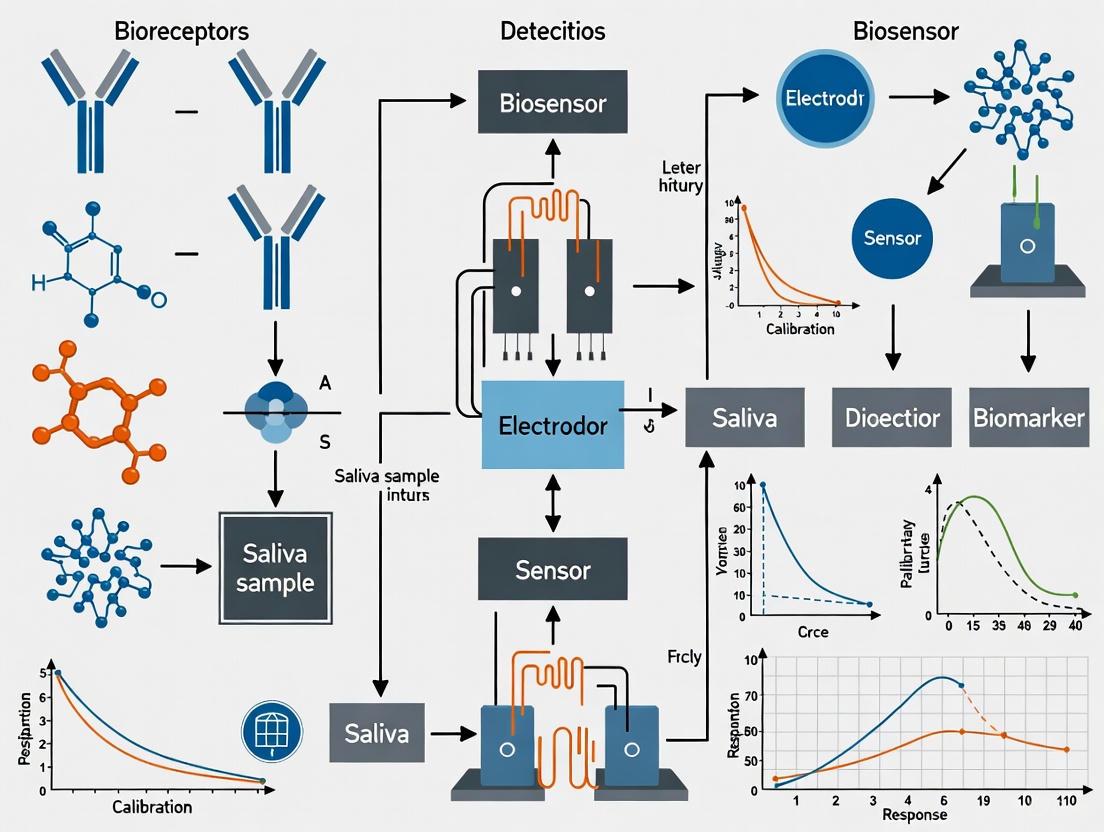
This article provides a comprehensive analysis of the rapidly advancing field of biosensors for salivary biomarker detection, tailored for researchers, scientists, and drug development professionals.
Biosensors for Salivary Biomarker Detection: A Non-Invasive Revolution in Clinical Diagnostics and Drug Development
Abstract
This article provides a comprehensive analysis of the rapidly advancing field of biosensors for salivary biomarker detection, tailored for researchers, scientists, and drug development professionals. It explores the foundational science establishing saliva as a rich information source for systemic health, detailing the key biomarkers for diseases ranging from oral cancer to depression. The review critically examines the latest methodological breakthroughs in electrochemical and optical biosensing platforms, including wearable and point-of-care devices, and their diverse applications in clinical monitoring and therapeutic development. A thorough troubleshooting guide addresses persistent challenges in standardization and sensor stability, while a dedicated validation framework presents strategies for multi-marker analysis and clinical performance assessment. By synthesizing foundational knowledge with cutting-edge applications and validation protocols, this resource aims to equip professionals with the insights needed to advance this transformative technology toward widespread clinical implementation.
Saliva as a Diagnostic Biofluid: Unveiling the Foundation of Non-Invasive Biomarker Discovery
The development of biosensors for salivary biomarker detection represents a paradigm shift in diagnostic medicine, offering a non-invasive alternative to blood-based testing. Saliva, as a diagnostic fluid, has garnered significant attention due to its ease of collection, cost-effectiveness, and minimal invasiveness, which promotes higher patient compliance [1] [2]. This application note details the physiological mechanisms through which biomarkers are transported from the circulatory system into saliva, providing a scientific foundation for biosensor research and development. Understanding these transport pathways is crucial for designing sensitive and accurate biosensing platforms that can reliably detect systemic health conditions through salivary analysis.
Saliva is an exocrine secretion composed primarily of water (99%), but also contains electrolytes, proteins, lipids, enzymes, and numerous biomarkers also found in blood [3]. The diagnostic utility of saliva stems from the fact that salivary glands are highly vascularized, allowing for a continuous exchange of compounds between blood and saliva [3]. This relationship enables saliva to reflect both local oral health and systemic physiological conditions, making it a valuable medium for detecting a wide range of disorders, including chronic inflammation, metabolic diseases, and cancer [4] [3].
Physiological Transport Mechanisms
Biomarkers originating in the bloodstream traverse into salivary fluid through several distinct physiological mechanisms. Understanding these pathways is essential for interpreting biomarker concentrations and developing effective biosensing strategies.
Passive Diffusion
The primary mechanism for small molecules and lipid-soluble compounds is passive diffusion down concentration gradients. This process occurs through the tight junctions and cellular membranes of the salivary gland acinar and ductal cells [3]. The rate of diffusion depends on multiple factors, including molecular size, lipid solubility, charge, and the concentration gradient between plasma and salivary fluid. This pathway is particularly relevant for steroid hormones like cortisol, which can freely diffuse through cell membranes due to their lipid-soluble nature [2].
Active Transport
Specialized transport proteins facilitate the movement of specific molecules against concentration gradients through active transport mechanisms. This energy-dependent process enables the selective concentration of certain analytes in saliva [3]. Active transport systems are particularly important for electrolytes and certain metabolites that require regulation independent of plasma concentrations. These transport mechanisms contribute to the unique composition of saliva compared to plasma.
Ultrafiltration
Ultrafiltration occurs at the capillary level of the salivary glands, where hydrostatic pressure forces water and small molecules through semi-permeable membranes [3]. This process resembles glomerular filtration in the kidneys and allows for the passage of small molecules while excluding larger proteins and cellular components. The extent of ultrafiltration depends on molecular weight, with smaller molecules passing more readily into salivary fluid.
Crevicular Fluid Pathway
The gingival crevicular fluid (GCF) represents a significant pathway for serum-derived biomarkers to enter the oral cavity. GCF is a serum-like fluid that flows from the gingival sulcus and contains components derived from the circulatory system through microvascular leakage in the gingival tissues [2]. This pathway allows larger molecules, including proteins and inflammatory mediators, to enter the oral cavity without passing through salivary gland tissue, providing direct access to circulating biomarkers.
Table 1: Summary of Key Transport Mechanisms from Blood to Saliva
| Transport Mechanism | Process Description | Biomarker Examples | Key Influencing Factors |
|---|---|---|---|
| Passive Diffusion | Movement down concentration gradients through cellular membranes | Cortisol, steroid hormones, lipid-soluble molecules | Molecular size, lipid solubility, charge, concentration gradient |
| Active Transport | Energy-dependent movement via specialized transporter proteins | Electrolytes, specific metabolites, certain drugs | Transporter expression, energy availability, molecular specificity |
| Ultrafiltration | Pressure-driven passage through semi-permeable membranes | Small molecules, ions, water | Molecular weight, hydrostatic pressure, membrane permeability |
| Crevicular Fluid Pathway | Direct passage from circulation via gingival sulcus | Proteins, inflammatory mediators, blood-derived cells | Gingival health, vascular permeability, inflammatory status |
Biomarker Classes and Their Transport
Different classes of biomarkers utilize distinct transport mechanisms to enter salivary fluid, influencing their concentration relationships with blood levels.
Protein Biomarkers
Proteins represent a significant class of salivary biomarkers with diagnostic potential. Saliva contains approximately 3000 different proteins and peptides, nearly half of which are similarly found in blood [4] [2]. The presence of specific blood-derived proteins in saliva occurs primarily through passive diffusion for smaller proteins and the crevicular fluid pathway for larger proteins [3]. Inflammatory biomarkers such as C-reactive protein (CRP), cytokines (IL-6, TNF-α), and acute phase proteins have been detected in saliva and show correlations with systemic inflammatory conditions [3]. These proteins can serve as indicators for chronic diseases including type 2 diabetes, cardiovascular diseases, and cancer [3].
Hormonal Biomarkers
Hormones represent some of the most well-studied salivary biomarkers due to their diagnostic significance and favorable transport mechanisms. Steroid hormones like cortisol readily diffuse through glandular cell membranes due to their lipid-soluble nature, allowing free (unbound) fractions in blood to enter saliva [2]. This creates a strong correlation between salivary and serum cortisol levels, making saliva an ideal medium for stress assessment [2]. Other hormonal biomarkers detected in saliva include testosterone, estrogen, and progesterone, which also utilize passive diffusion pathways.
Nucleic Acid Biomarkers
Saliva contains various nucleic acids, including DNA, mRNA, and microRNAs (miRNAs), which have emerged as promising biomarkers for disease detection [4] [5]. These molecules can enter saliva through several pathways, including cell-free nucleic acids from circulation via ultrafiltration and crevicular fluid, and cellular nucleic acids from exfoliated oral epithelial cells and leukocytes [4]. miRNA biomarkers are particularly valuable for cancer detection, including nasopharyngeal carcinoma (NPC), as changes in miRNA expression are closely related to carcinogenesis [5]. Salivary miRNAs can regulate protein production from messenger RNA and play roles in the transformation of normal epithelial cells into neoplastic cells [5].
Metabolic Biomarkers
Small molecule metabolites, including glucose, lactate, and electrolytes, traverse into saliva primarily through passive diffusion and active transport mechanisms [1]. The concentration relationships between blood and saliva vary significantly among different metabolites, necessitating individual validation for each biomarker. Lactate, for example, has been successfully measured in saliva as a biomarker for metabolic disorders, diabetes monitoring, and sports physiology [1]. These small molecules can be detected using enzymatic biosensors with appropriate transduction mechanisms.
Table 2: Quantitative Analysis of Salivary Biomarkers and Diagnostic Applications
| Biomarker Category | Specific Biomarker | Reported Salivary Concentration Ranges | Primary Transport Mechanism | Diagnostic Application |
|---|---|---|---|---|
| Stress Hormones | Cortisol | 1.5-10 ng/mL (detection range) [1] | Passive diffusion | Stress assessment, HPA axis monitoring [2] |
| Metabolic Markers | Lactate | 0.025-0.25 mM (working range) [1] | Passive diffusion/Active transport | Metabolic disorders, sports physiology [1] |
| Inflammatory Proteins | Cytokines | Detectable at 12 pM sensitivity [1] | Crevicular fluid/Ultrafiltration | Chronic inflammation, disease monitoring [3] |
| Nucleic Acids | MicroRNAs | >3,000 types of RNA in saliva [5] | Cellular release/Crevicular fluid | Cancer detection (e.g., NPC) [5] |
| Growth Factors | PDGF | 1.0×10⁻¹⁴ M to 3.16×10⁻¹² M [1] | Ultrafiltration/Crevicular fluid | Cell growth and division monitoring [1] |
Experimental Protocols for Salivary Biomarker Transport Studies
Protocol: Validation of Blood-to-Saliva Biomarker Transfer
Objective: To establish correlation between serum and salivary biomarker levels and identify transport mechanisms.
Materials:
- Saliva collection devices (Salivette, passive drool apparatus)
- Blood collection equipment
- Centrifuge capable of 1,500-3,000 × g
- Ultra-low temperature freezer (-70°C to -80°C)
- Appropriate biomarker detection platform (ELISA, MS-based proteomics, biosensors)
Procedure:
- Participant Preparation: Instruct participants to abstain from eating, drinking, and smoking for at least 1 hour prior to sample collection [6].
- Paired Sample Collection: Collect blood and unstimulated saliva samples simultaneously to account for diurnal variations [6].
- Saliva Processing:
- Biomarker Analysis:
- Data Analysis:
- Calculate correlation coefficients between serum and salivary concentrations.
- Determine serum-to-saliva ratio for each biomarker.
- Assess potential influences of salivary flow rate and pH on biomarker concentrations.
Protocol: Assessment of Transport Pathways Using Pharmacological Inhibitors
Objective: To identify specific transport mechanisms for biomarkers of interest.
Materials:
- Primary salivary gland cell culture or artificial membrane systems
- Transport inhibitors (e.g., ouabain for active transport, gap junction blockers)
- Transwell culture systems
- Biomarker detection equipment
Procedure:
- System Setup: Establish salivary gland epithelial cell cultures on Transwell membranes to create apical and basolateral compartments.
- Inhibitor Application: Apply specific transport inhibitors to the system while maintaining appropriate controls.
- Biomarker Introduction: Introduce the biomarker of interest to the basolateral compartment (mimicking blood side).
- Sampling: Collect samples from the apical compartment (mimicking saliva) at timed intervals.
- Analysis: Quantify biomarker appearance kinetics in the presence and absence of inhibitors to identify dominant transport mechanisms.
Visualization of Transport Pathways
The following diagram illustrates the primary physiological pathways through which biomarkers are transported from blood circulation into salivary fluid:
Blood to Saliva Biomarker Transport Pathways
The Scientist's Toolkit: Research Reagent Solutions
Table 3: Essential Research Materials for Salivary Biomarker Transport Studies
| Reagent/Material | Function/Application | Specific Examples | Key Considerations |
|---|---|---|---|
| Saliva Collection Devices | Standardized saliva collection | Salivette, passive drool apparatus, DNA Genotek kits | Choose based on biomarker stability; unstimulated collection preferred for hormones [6] |
| Protein Transport Inhibitors | Elucidate active transport mechanisms | Ouabain (Na+/K+ ATPase inhibitor), specific transporter blockers | Validate specificity in salivary gland models; assess cytotoxicity |
| Protease Inhibitor Cocktails | Preserve protein biomarkers during processing | Broad-spectrum protease inhibitors, PMSF | Add immediately after collection; consider compatibility with detection methods |
| Nucleic Acid Stabilizers | Preserve RNA/DNA integrity | RNAlater, specific miRNA preservation buffers | Crucial for miRNA studies; implement rapid stabilization after collection [5] |
| Ultrafiltration Membranes | Size-based separation studies | Amicon filters, dialysis membranes | Use to study molecular size limitations; typical cutoffs: 3-100 kDa |
| Immunoassay Kits | Biomarker quantification | ELISA, Luminex, electrochemiluminescence assays | Validate for salivary matrix; address potential cross-reactivity |
| Mass Spectrometry Standards | Absolute quantification of biomarkers | Isotope-labeled peptide standards, SILIS | Essential for QTAP approaches; require method development [7] |
Implications for Biosensor Design
Understanding biomarker transport mechanisms directly informs the development of effective biosensing platforms for salivary diagnostics. Key considerations include:
Biomarker Selection: Prioritize biomarkers with efficient transport mechanisms and strong serum-saliva correlations [2] [3]. Small molecules and steroid hormones that readily diffuse into saliva often show more consistent relationships with blood levels compared to larger proteins that enter primarily through the crevicular pathway, which can be influenced by gingival health [2].
Sampling Protocol Standardization: Account for diurnal variations in biomarker levels and transport efficiency [6]. For instance, cortisol sampling is recommended between 7:30 AM to 9:00 AM to capture the peak circadian rhythm [6]. Similar timing considerations apply to other biomarkers with circadian fluctuations.
Sensor Surface Functionalization: Optimize biorecognition elements (enzymes, antibodies, aptamers) for the salivary environment, which contains over 3,000 proteins that could potentially cause biofouling or interference [1] [2]. Incorporating antifouling coatings and using synthetic bioreceptors like molecularly imprinted polymers can enhance specificity [2].
Detection Strategy Selection: Align transducer technology with biomarker concentration ranges and matrix effects. Electrochemical transducers are well-suited for continuous monitoring of metabolites like lactate and glucose, while optical platforms like surface plasmon resonance may be preferable for larger biomolecules with higher molecular weights [1] [8] [2].
The physiological basis of biomarker transport from blood to saliva provides a critical foundation for advancing salivary biosensing technologies. By leveraging these mechanisms and implementing robust experimental protocols, researchers can develop increasingly accurate and reliable point-of-care diagnostic platforms that harness the full potential of saliva as a diagnostic medium.
Biomarkers are objectively measured indicators of normal biological processes, pathogenic processes, or pharmacological responses to a therapeutic intervention [9]. The landscape of biomarkers encompasses a diverse array of molecules including proteins, nucleic acids, hormones, and metabolites, each providing unique insights into health and disease states. The emergence of biosensing technologies has revolutionized biomarker detection, particularly in non-invasive biological fluids like saliva, enabling point-of-care testing and continuous monitoring of physiological status [10] [11]. This application note explores the current biomarker landscape within the context of salivary biosensor development, providing detailed protocols and analytical frameworks for researchers and drug development professionals.
Biomarker Classification and Diagnostic Utility
Biomarkers are categorized by their molecular characteristics and clinical applications, serving diagnostic, prognostic, and therapeutic monitoring functions across numerous disease states. The table below summarizes major biomarker classes with their key characteristics and clinical correlations.
Table 1: Classification of Major Biomarker Types with Clinical Significance
| Biomarker Class | Representative Examples | Primary Biological Functions | Associated Diseases/Conditions |
|---|---|---|---|
| Proteins | C-reactive protein (CRP), Heat Shock Proteins (HSPs), Acute Phase Proteins (APPs), Cytokines, Glutamic acid decarboxylase (GAD) autoantibodies [12] [9] | Immune response, cellular stress response, enzymatic activity, structural support | Autoimmune diseases (e.g., Type 1 Diabetes [12]), chronic inflammation, cardiovascular diseases, stress-related disorders [9] |
| Nucleic Acids | Cell-free DNA, microRNA (miRNA), mRNA | Genetic regulation, cellular signaling, carrier of genetic information | Cancer, genetic disorders, infectious diseases |
| Hormones | Cortisol, Insulin, C-peptide, Epinephrine [12] [9] | Metabolic regulation, stress response (HPA axis), communication between organs | Diabetes [12], metabolic syndrome, stress disorders [9] |
| Metabolites | Glucose, Creatinine, Urea, Trimethylamine N-oxide (TMAO), Lactate [10] [11] [9] | Energy production, waste products, intermediates of metabolism | Diabetes [10], Chronic Kidney Disease (CKD) [11], metabolic disorders |
Saliva as a Diagnostic Medium
Saliva has gained significant recognition as an attractive diagnostic fluid that accurately reflects normal and disease states in humans [10]. As a filtrate of blood, saliva contains various disease-signalling biomarkers that arrive via transcellular and paracellular transport pathways [11]. The sampling benefits compared to blood sampling include non-invasiveness, painless collection, minimal risk of cross-contamination, and no requirement for specialized personnel or equipment [10] [11]. These characteristics make saliva particularly valuable for point-of-care testing, frequent monitoring, and pediatric or geriatric populations where blood collection presents challenges [10].
Quantitative Analysis of Key Salivary Biomarkers
The diagnostic performance of salivary biomarkers is quantified through rigorous clinical studies comparing salivary levels with established serum biomarkers. The table below presents quantitative data for key salivary biomarkers associated with major disease categories.
Table 2: Diagnostic Performance of Key Salivary Biomarkers for Major Disease Conditions
| Biomarker | Target Disease | Correlation with Serum Levels | Diagnostic Performance (AUC, Sensitivity, Specificity) | Recommended Detection Methods |
|---|---|---|---|---|
| Creatinine | Chronic Kidney Disease (CKD) [11] | Strong correlation reported [11] | AUC up to 1.00; Sensitivity & Specificity >85% [11] | Spectrophotometry (Jaffe method), Electrochemical biosensors [11] |
| Urea | Chronic Kidney Disease (CKD) [11] | Strong correlation reported [11] | AUC up to 1.00; Sensitivity & Specificity >85% [11] | Spectrophotometry, Electrochemical biosensors [11] |
| Glucose | Diabetes Mellitus [10] | Controversial/Contradictory findings; significantly higher in diabetics vs healthy [10] | Inconclusive as an index for diabetes [10] | Electrochemical biosensors (Glucose Oxidase enzyme) [10] |
| Cortisol | Stress [9] | Established correlation | N/A | Immunoassays (ELISA), LC-MS/MS |
| TMAO | Chronic Kidney Disease (CKD) [11] | Emerging biomarker | High diagnostic potential reported [11] | LC-MS, Biosensors under development |
Experimental Protocols for Salivary Biomarker Analysis
Protocol: Saliva Collection and Pre-processing
Principle: Standardized collection and processing of saliva is critical for reliable biomarker quantification, minimizing pre-analytical variability.
Materials:
- Salivette collection device or sterile polypropylene tubes
- Low-speed centrifuge
- Ultralow temperature freezer (-80°C)
- Protease and nuclease inhibitors (for specific biomarkers)
Procedure:
- Participant Preparation: Instruct participants to abstain from eating, drinking, or oral hygiene procedures for at least 60 minutes prior to collection.
- Sample Collection: Collect unstimulated whole saliva by passive drooling into pre-chilled tubes or using specialized collection devices like Salivette. For stimulated saliva, participants can chew on paraffin film.
- Volume and Time Recording: Record total collection time and volume to calculate flow rate (mL/min).
- Centrifugation: Centrifuge samples at 2,500-4,000 × g for 15 minutes at 4°C to precipitate cells and debris.
- Aliquoting: Transfer clear supernatant to fresh cryovials in small aliquots to avoid repeated freeze-thaw cycles.
- Storage: Store aliquots at -80°C until analysis. For short-term storage (<24 hours), -20°C is acceptable.
Quality Control:
- Visually inspect samples for blood contamination (pink or red tinge) and document accordingly.
- Record exact collection time for time-sensitive biomarkers like cortisol.
Protocol: Electrochemical Biosensor for Salivary Glucose Detection
Principle: This protocol details the construction and use of an amperometric biosensor for salivary glucose detection based on glucose oxidase (GOx) enzyme, which catalyzes the oxidation of glucose to gluconic acid and hydrogen peroxide (H₂O₂) [10]. The resulting change in current is proportional to glucose concentration.
Materials:
- Glucose oxidase (GOx) enzyme
- Gold (Au) or screen-printed carbon working electrode
- Glutaraldehyde (GA) for cross-linking
- Ferrocene derivatives as electron shuttles (optional)
- Phosphate buffer saline (PBS, 0.1 M, pH 7.4)
- Potentiostat
- Hydrogen peroxide (H₂O₂) electrode or Oxygen (O₂) electrode [10]
Procedure:
- Electrode Modification:
- Clean the working electrode surface according to manufacturer's instructions (e.g., polishing for Au electrodes).
- Prepare a solution containing GOx (e.g., 10 mg/mL) and a cross-linker (e.g., 2.5% glutaraldehyde). For ferrocene-modified electrodes, first deposit a ferrocene layer on the Au electrode [10].
- Deposit 5-10 μL of the enzyme mixture onto the active area of the working electrode and allow to dry at 4°C for 2 hours.
Calibration Curve:
- Prepare standard glucose solutions in PBS in the concentration range of 0.1-10 mg/dL [10].
- For H₂O₂-based detection, apply a constant potential (e.g., +0.6 V vs. Ag/AgCl) and record the steady-state current increase as H₂O₂ is generated [10].
- Plot current response against glucose concentration to generate a calibration curve.
Sample Measurement:
- Thaw and centrifuge saliva samples as per Protocol 4.1.
- Dilute the saliva supernatant 1:1 with PBS if necessary.
- Apply 50-200 μL of sample to the sensor and record the amperometric response [10].
- Calculate the glucose concentration from the calibration curve.
Performance Parameters:
- Working Range: 0 to 2.2 mM [10]
- Sensitivity: 21.45 nA μmol⁻¹ cm⁻² [10]
- Detection Limit: 1 μM [10]
- Response Time: 5 seconds [10]
Protocol: Validation of Salivary Biomarkers Against Serum Standards
Principle: This protocol validates the clinical utility of a salivary biomarker by establishing its correlation and diagnostic agreement with the gold-standard serum biomarker.
Materials:
- Paired saliva and blood serum samples from patients and healthy controls
- Validated assay kits for both salivary and serum biomarker (e.g., ELISA, LC-MS)
- Statistical analysis software (e.g., R, SPSS)
Procedure:
- Sample Collection: Collect paired saliva (following Protocol 4.1) and blood samples from each participant simultaneously.
- Biomarker Quantification: Measure the biomarker concentration in both saliva and serum using validated, precise methods. Perform all assays in duplicate.
- Data Analysis:
- Correlation Analysis: Calculate Pearson or Spearman correlation coefficient (r) between salivary and serum levels.
- Diagnostic Performance: For disease classification, perform Receiver Operating Characteristic (ROC) curve analysis. Calculate the Area Under the Curve (AUC), optimal cut-off value, sensitivity, and specificity.
- Agreement Assessment: Use Bland-Altman plots to assess the agreement between salivary and serum measurement methods.
Interpretation:
- A strong positive correlation (e.g., r > 0.8) and high AUC value (e.g., >0.9) support the use of the salivary biomarker as a surrogate for the serum standard [11].
Visualizing Biosensor Workflow and Biomarker Pathways
Biosensor Detection Workflow
Biomarker Transport to Saliva
The Scientist's Toolkit: Research Reagent Solutions
Table 3: Essential Research Reagents and Materials for Salivary Biomarker Biosensor Development
| Reagent/Material | Function/Application | Examples/Specifications |
|---|---|---|
| Glucose Oxidase (GOx) | Biological recognition element for glucose biosensors; catalyzes glucose oxidation [10] | From Aspergillus niger; activity ≥100 U/mg; immobilized on electrode surface [10] |
| Salivette Collection Device | Standardized saliva collection; minimizes contamination | Polyester swab and polypropylene tube; suitable for a wide range of analytics |
| Screen-Printed Electrodes | Disposable, low-cost transducer platform for electrochemical biosensors | Carbon, gold, or platinum working electrodes; often include Ag/AgCl reference and carbon counter electrode |
| Glutaraldehyde (GA) | Crosslinking agent for enzyme immobilization on biosensor surfaces | 2.5% solution in buffer; creates stable covalent bonds with enzyme proteins [10] |
| Ferrocene Derivatives | Electron shuttle mediators in amperometric biosensors; reduce operating potential and interferences | e.g., Ferrocenecarboxylic acid; used in glucose biosensors to eliminate O₂ dependence [10] |
| Protease Inhibitor Cocktails | Preserve protein and peptide biomarkers in saliva during storage and processing | Broad-spectrum inhibitors; added immediately after sample collection |
| Magnetic Beads (Functionalized) | Solid support for immunoassay-based biosensors; enable separation and concentration of targets | Beads coated with streptavidin or specific antibodies; used in microfluidic systems |
The landscape of biomarkers—spanning proteins, nucleic acids, hormones, and metabolites—provides critical insights into human health and disease. Saliva has emerged as a highly viable diagnostic medium, with validated biomarkers like creatinine and urea showing exceptional diagnostic performance for conditions such as chronic kidney disease [11]. The integration of advanced biosensing platforms with standardized protocols for saliva collection and analysis paves the way for non-invasive, point-of-care diagnostic tools. These developments hold particular promise for transforming the management of chronic diseases through frequent monitoring, improved patient compliance, and decentralized healthcare delivery. Future research should focus on standardizing sampling protocols, validating novel biomarkers in diverse populations, and advancing the miniaturization and connectivity of biosensor devices for integration into digital health ecosystems.
Saliva is increasingly recognized as a powerful diagnostic fluid that accurately reflects normal and disease states in humans [10]. The sampling benefits compared to blood sampling, particularly its non-invasive nature, have driven burgeoning research in biosensing technologies for salivary biomarker detection [10] [13]. This application note details the core advantages of salivary biosensing—non-invasiveness, cost-effectiveness, and suitability for serial monitoring—within the broader context of biosensor research. It provides researchers and drug development professionals with standardized protocols and performance data to facilitate the implementation of these technologies in both clinical and research settings.
Core Advantages of Salivary Biosensing
Non-Invasiveness
Saliva collection is a simple, painless, and stress-free procedure that eliminates the risks associated with blood drawing [10] [14]. This is particularly beneficial for vulnerable populations such as haemophiliacs, neonates, elderly people, and disabled individuals who may have difficulties with blood collection [10]. The non-invasive nature of saliva sampling also significantly reduces the risk of cross-contamination among patients and minimizes healthcare workers' exposure to blood-borne pathogens like HIV and hepatitis [10].
Cost-Effectiveness
Saliva sampling does not require specialized phlebotomy equipment or trained personnel, substantially reducing operational costs [10] [15]. Advanced biosensing platforms further lower expenses by enabling rapid, on-site analysis that bypasses centralized laboratory infrastructure. For instance, a novel silicon nanowire biosensor has been developed that makes protein testing 15 times faster and 15 times lower cost compared to conventional methods like ELISA, dramatically reducing financial barriers in drug development and manufacturing [15].
Suitability for Serial Monitoring
The ease of collection enables frequent, repeated sampling, making salivary biosensors ideal for monitoring disease progression and treatment outcomes over time [10] [13]. This capability for real-time, dynamic monitoring is crucial for personalized medicine approaches, allowing for timely therapeutic adjustments [13] [16]. This is a significant advantage over blood-based monitoring, where frequent sampling is impractical and stressful for patients.
Quantitative Performance Data of Salivary Biosensors
Table 1: Performance Metrics of Representative Salivary Biosensors
| Target Analyte | Detection Platform | Linear Range | Detection Limit | Clinical Correlation |
|---|---|---|---|---|
| Glucose | CuO nanowire/PET electrode [14] | Not Specified | Not Specified | Monitoring Diabetes Mellitus |
| Lactate | Screen-printed electrode with Prussian Blue [14] | 0.025 - 0.25 mM | Not Specified | Sepsis, hypoxia, metabolic disorders |
| Phosphate | Paper-based colorimetric strip with ALP enzyme [17] | 0.15 - 10 mM | 0.12 mM | Chronic Kidney Disease (CKD) screening |
| Host Cell Proteins | Silicon Nanowire Biosensor [15] | Not Specified | Not Specified | Drug manufacturing quality control |
| Cancer Biomarkers | Electrochemical aptasensor [16] | Not Specified | Femtomolar levels | Early cancer detection (e.g., CEA, HER2/neu) |
Table 2: Comparative Analysis of Diagnostic Fluids
| Parameter | Saliva | Blood |
|---|---|---|
| Collection Method | Non-invasive, can be self-administered [10] | Invasive, requires trained personnel [14] |
| Collection Cost | Low | High (requires needles, tubes, sterile procedures) |
| Patient Risk | Minimal (no pain or injury risk) [10] | Bruising, infection, nerve damage [10] |
| Serial Sampling | Excellent for frequent, repeated sampling [10] [13] | Limited by patient discomfort and practicality |
| Biomarker Concentration | Lower, often requiring highly sensitive sensors [14] | Higher, more established reference ranges |
| Standardization | Evolving protocols [13] [14] | Well-established and standardized |
Experimental Protocol: Colorimetric Detection of Salivary Phosphate for CKD Screening
This protocol is adapted from a recent study detailing a non-invasive, enzymatic biosensor test strip for salivary phosphate detection, relevant for chronic kidney disease (CKD) screening [17].
Principle
The assay is based on the inhibition of the enzyme alkaline phosphatase (ALP) by phosphate ions. The extent of ALP inhibition in the presence of phosphate serves as the basis for quantification. The assay utilizes a sodium alginate (SA) hydrogel that encapsulates the ALP enzyme, generating a colorimetric response [17].
Materials and Reagents
- Saliva Collection Strip: Cellulosic filter paper-based strip for saliva sampling.
- Hydrogel-based Sensing Module: Sodium alginate (SA) hydrogel matrix.
- Alkaline Phosphatase (ALP) Enzyme: Encapsulated within the hydrogel.
- Colorimetric Substrate: A substrate that produces a color change upon ALP activity.
- Artificial Saliva: For calibration and control experiments.
- RGB Analysis Software: For quantitative analysis of color intensity (e.g., ImageJ or custom smartphone application).
Procedure
Step 1: Saliva Sample Collection
- Collect unstimulated whole saliva from participants. The participants should refrain from eating, drinking, or smoking for at least 60 minutes prior to collection.
- Use the provided saliva collection strip to absorb a fixed volume of saliva (~50 µL) via capillary action [17].
Step 2: Sample Application and Reaction
- Place the saliva-saturated collection strip in contact with the hydrogel-based sensing module.
- The phosphate present in the saliva diffuses into the hydrogel and inhibits the encapsulated ALP enzyme.
- Incubate the test strip at room temperature for a specified period (e.g., 5-10 minutes) to allow for complete color development. The color intensity is inversely proportional to the phosphate concentration [17].
Step 3: Signal Detection and Quantification
- Visual Inspection: Perform a preliminary qualitative assessment by comparing the test strip's color against a provided reference card.
- RGB Analysis: Capture an image of the developed test strip using a standard smartphone camera or a flatbed scanner. Analyze the image using RGB analysis software to measure color intensity, which correlates with phosphate concentration [17].
- Validation: The RGB analysis shows a good correlation with spectrophotometric results, confirming reliability [17].
Step 4: Data Interpretation
- Quantify phosphate concentration using a pre-established calibration curve (linear range: 0.15–10 mM).
- The method has a reported detection limit of 0.12 mM and recovery values ranging from 92 to 99% in spiked artificial saliva samples, indicating high accuracy and precision [17].
The workflow for this protocol is as follows:
The Scientist's Toolkit: Essential Research Reagent Solutions
Table 3: Key Reagents and Materials for Salivary Biosensor Development
| Reagent/Material | Function/Application | Example Use Case |
|---|---|---|
| Silicon Nanowires | Transducer element; provides high sensitivity for protein detection [15] | ASG's biosensor for host cell protein detection in biomanufacturing [15] |
| Alkaline Phosphatase (ALP) Enzyme | Inhibition-based biosensing for phosphate detection [17] | Colorimetric salivary phosphate test strip for CKD screening [17] |
| Sodium Alginate (SA) Hydrogel | Matrix for enzyme immobilization; maintains bioactivity [17] | Encapsulation of ALP in paper-based phosphate sensor [17] |
| Glucose Oxidase (GOx) Enzyme | Biorecognition element for glucose detection [10] | Early salivary glucose sensors using amperometric detection [10] |
| Prussian Blue Electrocatalyst | Mediates electron transfer; catalyzes H₂O₂ reduction [14] | Lactate biosensor using screen-printed electrodes [14] |
| Aptamer-functionalized Nanomaterials | High-affinity recognition of specific protein biomarkers [16] | Electrochemical biosensors for cancer biomarkers (CEA, HER2) [16] |
| Redox Mediators (e.g., Ferrocene) | Shuttles electrons, reduces O₂ dependence [10] | Improved salivary glucose sensor with Au film electrode [10] |
Technological Workflow in Salivary Biosensor Research
The development and application of a salivary biosensor involve a multi-stage process, from biomarker discovery to clinical data interpretation, as summarized in the following workflow:
Salivary biosensors represent a transformative approach in diagnostic medicine, leveraging the key advantages of non-invasiveness, cost-effectiveness, and exceptional suitability for serial monitoring. The protocols and data presented herein provide a framework for researchers to advance this field. Future developments will likely focus on integrating artificial intelligence for data interpretation [13], enhancing multiplexing capabilities for simultaneous biomarker detection [16], and creating increasingly robust point-of-care and wearable devices [18], ultimately solidifying the role of salivary biosensors in precision healthcare and personalized medicine.
Therapeutic Drug Monitoring (TDM) and disease diagnostics traditionally rely on invasive blood sampling. However, saliva is increasingly recognized as a viable, non-invasive alternative that reflects systemic concentrations of drugs and biomarkers [19] [11]. For saliva to be adopted in clinical and research settings, a clear understanding of the correlation between salivary and plasma concentrations is essential. This document outlines the foundational principles, key quantitative data, and standardized protocols for establishing these critical links, with a specific focus on supporting the development and validation of biosensor technologies for salivary biomarker detection.
Data Presentation: Saliva-to-Plasma Concentration Ratios
The excretion of molecules into saliva is influenced by their physicochemical properties. The table below summarizes key data on saliva-to-plasma (S/P) concentration ratios for various drugs and biomarkers, crucial for interpreting salivary measurements.
Table 1: Saliva-to-Plasma (S/P) Ratios and Diagnostic Performance of Various Drugs and Biomarkers
| Drug/Biomarker Category | Specific Drug/Biomarker | Median S/P Ratio | Key Correlating Factors | Diagnostic Performance (vs. Serum) |
|---|---|---|---|---|
| Antiepileptic Drugs | Carbamazepine | - | - | Significant correlation (p=0.005, r=0.7) for maximum concentration [20] |
| Immunosuppressants | Tacrolimus | - | - | Considered suitable for saliva TDM [19] |
| Antimycotics | Voriconazole | - | - | Considered suitable for saliva TDM [19] |
| Chronic Kidney Disease (CKD) Biomarkers | Creatinine | - | - | AUC up to 1.00; Sensitivity & Specificity >85% [11] [21] |
| Chronic Kidney Disease (CKD) Biomarkers | Urea | - | - | AUC up to 1.00; Sensitivity & Specificity >85% [11] [21] |
| Drug Categories (by ionization) | Acidic Drugs (n=5) | 0.41 | Lower ionization, lower protein binding (R²=0.85) [19] | - |
| Drug Categories (by ionization) | Basic Drugs (n=21) | 0.43 | pKa (R=0.53) [19] | - |
| Drug Categories (by ionization) | Amphoteric Drugs (n=10) | 0.59 | Hydrogen bond donor count (R=-0.76), Polar Surface Area (R=-0.69) [19] | - |
| Drug Categories (by ionization) | Neutral Drugs (n=10) | 0.21 | Protein binding (R=0.84), Lipophilicity (R=-0.65), Hydrogen bond donor count (R=-0.68) [19] | - |
Experimental Protocols
Protocol for Saliva Collection for Therapeutic Drug Monitoring (TDM)
This protocol is adapted from methodologies used in studies investigating drugs like carbamazepine and tacrolimus [19] [20].
1. Pre-collection Procedures:
- Informed Consent: Obtain ethical approval and written informed consent from all participants.
- Patient Preparation: Instruct participants to abstain from food, drink (except water), and smoking for at least 60 minutes prior to sampling to minimize contamination and pH fluctuations.
- Rinsing: Ask the participant to rinse their mouth thoroughly with water 10 minutes before sample collection.
2. Sample Collection:
- Method: Unstimulated saliva is often preferred for TDM. Ask the participant to tilt their head forward and allow saliva to pool in the floor of the mouth before passively drooling into a pre-weighed polypropylene tube over a 5-10 minute period.
- Timing: Collect saliva samples at steady-state drug concentrations, ideally with paired plasma samples taken at the same time (e.g., at trough (C~min~) and peak (C~max~) levels) [20].
- Volume: Collect a minimum of 1-3 mL of saliva.
3. Sample Processing & Storage:
- Centrifugation: Centrifuge the saliva sample at 10,000 x g for 10-15 minutes at 4°C to precipitate mucins, cellular debris, and other insoluble materials.
- Aliquoting: Carefully transfer the clear supernatant into fresh, pre-labeled polypropylene tubes.
- Storage: Freeze aliquots at -80°C until analysis. Avoid repeated freeze-thaw cycles.
Protocol for Saliva Analysis for Chronic Kidney Disease (CKD) Biomarkers
This protocol synthesizes methods from clinical studies on salivary creatinine and urea [11].
1. Analytical Techniques:
- Traditional Methods: Use standardized, quantitative assays such as Liquid Chromatography-Mass Spectrometry (LC-MS/MS) for high sensitivity and specificity, especially for drugs and novel biomarkers [20]. Spectrophotometric methods (e.g., enzymatic assays for creatinine and urea) are also widely used.
- Emerging Biosensor Methods: For point-of-care applications, validate salivary measurements against reference methods using electrochemical biosensors or ATR-FTIR spectroscopy, which have shown promise for CKD screening [11] [21].
2. Data Correlation & Statistical Analysis:
- Paired Sampling: Ensure each salivary measurement is paired with a serum/plasma measurement from the same individual and time point.
- Statistical Analysis:
- Calculate the correlation coefficient (e.g., Pearson's r) between salivary and systemic concentrations [20].
- Perform linear regression analysis to establish a prediction model for systemic levels from salivary levels.
- For diagnostic accuracy, calculate the Area Under the Receiver Operating Characteristic Curve (AUC), sensitivity, and specificity against the clinical gold standard (e.g., eGFR for CKD) [11] [21].
Signaling Pathways and Workflow Visualizations
Salivary Excretion Pathways of Biomarkers
The following diagram illustrates the primary mechanisms by which molecules move from blood circulation into saliva.
Experimental Workflow for Correlation Studies
This flowchart details the end-to-end process for establishing correlations between salivary and systemic concentrations.
The Scientist's Toolkit: Research Reagent Solutions
Table 2: Essential Materials and Reagents for Salivary Correlation Studies
| Item | Function/Application |
|---|---|
| Polypropylene Collection Tubes | Inert containers for saliva collection and storage; prevent adsorption of analytes to tube walls. |
| LC-MS/MS Calibration Kits | Certified reference materials for quantifying specific drugs (e.g., carbamazepine, tacrolimus) and endogenous biomarkers (e.g., creatinine) with high accuracy [20]. |
| Enzymatic Assay Kits (Spectrophotometric) | Ready-to-use reagents for measuring biomarkers like urea and creatinine using standard lab plate readers. |
| Electrochemical Biosensor Strips | Disposable strips, often functionalized with specific enzymes (e.g., creatininase) or antibodies, for rapid, point-of-care detection of target analytes [11]. |
| PBS (Phosphate Buffered Saline) | Used for diluting saliva samples or as a washing buffer in various assay protocols. |
| Protein Precipitation Reagents | (e.g., Acetonitrile, Methanol). Used in sample preparation prior to LC-MS/MS to remove proteins and other interferents. |
| OpenSpecimen or similar LIMS | A secure, configurable laboratory information management system for de-identified storage and management of biospecimen data and linked clinical information [22]. |
Biosensing Technologies in Action: From Platform Design to Real-World Clinical Applications
Saliva has emerged as a highly advantageous biofluid for diagnostic applications, offering non-invasive collection and a rich composition of biomarkers reflective of both oral and systemic health conditions [23]. The field of "salivaomics" comprehensively studies the diverse biomolecules—including proteins, nucleic acids, metabolites, and microbes—present in saliva [23]. The core biosensing platforms of electrochemical, optical, and wearable systems have been developed to detect these salivary biomarkers with high sensitivity and specificity, enabling point-of-care (POC) diagnostics, real-time health monitoring, and personalized medicine approaches [24] [25] [26].
Table 1: Advantages of Saliva as a Diagnostic Biofluid
| Advantage | Description |
|---|---|
| Non-Invasive Collection | Painless and easy to collect, increasing patient compliance for frequent monitoring [23]. |
| Low Infection Risk | Reduced risk of pathogen transmission compared to blood sampling [24]. |
| Cost-Effectiveness | Eliminates need for specialized phlebotomy personnel and equipment [23]. |
| Amenable to POC Testing | Ideal for use in point-of-care settings outside clinical laboratories [24]. |
Core Biosensing Platforms
Electrochemical Biosensors
Electrochemical biosensors operate on the principle of measuring an electrical signal (current, potential, or impedance) generated from an electrochemical reaction between a target analyte and a biorecognition element immobilized on the electrode surface [27]. These sensors are acknowledged for their high sensitivity, fast response, low cost, and amenability to miniaturization [24] [27]. A critical advancement in this field is the integration of conductive nanomaterials, which significantly boost analytical performance by providing a large surface area, fast electron transfer rate, and high electrical conductivity [24] [27].
Table 2: Key Electrochemical Sensing Techniques
| Technique | Measurement Principle | Advantages | Disadvantages |
|---|---|---|---|
| Amperometry | Measures current resulting from redox reactions at a constant potential. | High sensitivity, low detection limits. | Signal can be affected by fouling of the electrode surface. |
| Potentiometry | Measures potential difference between working and reference electrodes at zero current. | Simple instrumentation, good for ions. | Generally less sensitive than amperometry. |
| Voltammetry | Measures current while varying the applied potential. | Provides rich quantitative and qualitative information. | Can be more complex than other methods. |
| Impedimetry | Measures electrical impedance/resistance of the sensor interface. | Label-free detection, good for binding studies. | Data interpretation can be complex. |
Optical Biosensors
Optical biosensors transduce a biorecognition event into an optical signal, such as a change in fluorescence, absorbance, or light scattering. A prominent example is the surface immobilized optical protein sensor, which utilizes fluorescently labeled probes for direct detection without enzymatic amplification [28]. These platforms can achieve ultra-high sensitivity, with detection limits for proteins like Interleukin-8 (IL-8) reaching the fM (femtolar) range when enhanced with confocal optics to reduce background noise [28]. Other advanced optical techniques include Surface-Enhanced Raman Spectroscopy (SERS), which uses metallic nanostructures to amplify the Raman scattering signal, creating unique molecular "fingerprints" for proteins [24] [29].
Wearable Biosensors
Wearable biosensors are defined as wearable devices that incorporate a biological recognition element for continuous, non-invasive monitoring of biomarkers in biofluids like saliva, sweat, and tears [25] [30]. These systems are engineered for body compliance, utilizing flexible materials and smart designs to provide comfort for the user during long-term monitoring [25] [26]. The primary goal of wearable biosensors is to provide real-time physiological information, facilitating early disease detection, personalized healthcare management, and remote patient monitoring [25] [26]. They often represent an integration of electrochemical or optical sensing mechanisms into wearable form factors such as mouthguards, patches, or smart textiles [30] [27].
Application Notes & Experimental Protocols
Application Note: Electrochemical MIP-Based Biosensor for Salivary α-Amylase
1. Background and Principle Stress monitoring is a critical application for point-of-care biosensing. Salivary α-amylase has been validated as a reliable biomarker for sympathetic nervous system activity [31]. This protocol details the development of a disposable, low-cost molecularly imprinted polymer (MIP)-based electrochemical biosensor for α-amylase. MIPs serve as artificial receptors, offering superior stability compared to biological antibodies [31]. The sensor is constructed on a gold screen-printed electrode (AuSPE), and the MIP film is synthesized via electropolymerization of pyrrole in the presence of the target α-amylase protein.
2. Key Reagents and Materials
- Gold Screen-Printed Electrodes (AuSPEs): Serve as the disposable, miniaturized electrochemical platform.
- Cysteamine (CA): Forms a self-assembled monolayer (SAM) on the gold surface, providing a functionalized layer for subsequent template immobilization.
- Pyrrole (Py) Monomer: The building block for the electropolymerized polymeric network (Polypyrrole, PPy).
- α-Amylase Enzyme: The target protein, acting as the "template" during the imprinting process.
- Phosphate Buffered Saline (PBS) or Tris Buffer: Standard electrolyte solution for electrochemical measurements.
3. Experimental Workflow
4. Step-by-Step Protocol
- Step 1: Electrode Pretreatment. Clean the AuSPE working electrode by cycling in a suitable electrolyte (e.g., sulfuric acid) to ensure a clean, active surface.
- Step 2: SAM Formation. Incubate the activated AuSPE in a cysteamine solution (e.g., 10 mM) for a defined period (e.g., 60 minutes) to form a uniform self-assembled monolayer. Rinse thoroughly with deionized water to remove physically adsorbed molecules.
- Step 3: Template Immobilization. Immobilize the α-amylase template onto the cysteamine-modified electrode by incubating it with a solution containing the enzyme (concentration range: 0.1 - 1 mg/mL) for several hours.
- Step 4: Electropolymerization. Perform cyclic voltammetry (CV) in a solution containing pyrrole monomer (e.g., 0.1 M) in a suitable buffer. Cycle the potential (e.g., between -0.2 V and +0.8 V vs. Ag/AgCl) for multiple scans (e.g., 10-20 cycles) to form a polypyrrole film around the enzyme template.
- Step 5: Template Extraction. Remove the α-amylase template from the polymer matrix by washing with a gentle eluent (e.g., SDS solution or low-pH buffer), leaving behind specific recognition cavities complementary to the protein in shape, size, and functional groups.
- Step 6: Biosensor Analysis. The prepared MIP-AuSPE biosensor is now ready for use. Incubate the sensor with a sample (saliva or standard), then perform an electrochemical measurement (e.g., amperometry or EIS) to quantify the bound α-amylase. The measured signal is inversely proportional to the concentration of α-amylase bound to the cavities.
5. Performance Data This MIP-based biosensor demonstrates a wide linear detection range for α-amylase, reported from 3.0 × 10⁻⁴ to 0.60 U/mL, suitable for measuring physiological concentrations found in human saliva [31].
Application Note: Optical Biosensor for Salivary IL-8 Detection
1. Background and Principle The detection of low-abundance cancer biomarkers in saliva requires extremely sensitive platforms. Interleukin-8 (IL-8) is a validated protein biomarker for oral squamous cell carcinoma (OSCC) [28] [23]. This protocol describes an ultra-sensitive, surface-immobilized optical protein sensor that employs a sandwich immunoassay and fluorescent detection, achieving detection limits as low as 4.0 fM without enzymatic signal amplification [28].
2. Key Reagents and Materials
- Streptavidin-Coated Glass Substrate: Provides a surface for immobilizing the capture probe.
- Biotin-labeled Anti-IL-8 Monoclonal Antibody (M802B): Serves as the capture probe.
- Recombinant Human IL-8 (RIL810): The target antigen.
- Anti-IL-8 Polyclonal Antibody (P801): Serves as the detection probe.
- Alexa Fluor 488-labeled Anti-Rabbit IgG F(ab')₂ (A11078): The fluorescent reporter probe.
- Blocking Buffer: Bovine Serum Albumin (BSA) solution to minimize non-specific binding.
- Wash Buffer: Tris buffer with Tween20 detergent.
3. Experimental Workflow
4. Step-by-Step Protocol
- Step 1: Sensor Priming. Adhere a plastic well to a streptavidin-coated glass cover slip. Incubate each well with a solution of the biotin-labeled capture antibody (e.g., 6 µg/mL) for 60 minutes. Wash with buffer to remove unbound antibody.
- Step 2: Surface Blocking. Incubate the well with a blocking solution (e.g., 3% BSA) for 30 minutes to cover any remaining streptavidin binding sites and prevent non-specific adsorption in subsequent steps.
- Step 3: Antigen Capture. Incubate the prepared sensor with the sample—either purified IL-8 standards or raw human saliva—for 30-60 minutes (longer for viscous saliva). Wash thoroughly.
- Step 4: Detection Probe Binding. Incubate the sensor with the polyclonal anti-IL-8 detection antibody (e.g., 20 µg/mL) for 30 minutes. Wash.
- Step 5: Fluorescent Labeling. Incubate the sensor with the Alexa Fluor 488-labeled secondary antibody (e.g., 20 µg/mL) for 15 minutes. Wash thoroughly to remove any unbound reporter probe.
- Step 6: Signal Detection. Place the sensor under a confocal fluorescence microscope. The use of confocal optics is critical, as it confines the detection volume and rejects out-of-focus light, drastically reducing optical noise and enabling fM-level detection [28]. Measure the fluorescence intensity, which is directly proportional to the concentration of captured IL-8.
5. Performance Data This optical sensor achieves a limit of detection (LOD) of 1.1 pM in buffer without confocal optics, and 4.0 fM with confocal optics [28]. It has been clinically validated using 40 saliva samples, successfully distinguishing between oral cancer patients and a control group [28].
Application Note: Wearable Electrochemical Biosensors
1. Background and Principle Wearable biosensors aim to provide continuous, real-time physiological information through dynamic, non-invasive measurements [25] [30]. A typical wearable electrochemical biosensor consists of a flexible substrate, integrated electrodes modified with conductive nanomaterials and biorecognition elements, and often a microfluidic system for biofluid sampling [27] [26]. These devices target a range of biomarkers in saliva and other biofluids for applications from fitness monitoring to chronic disease management [25].
2. Key Materials and Components
- Flexible Substrates: Polyethylene terephthalate (PET), polyimide (PI), polydimethylsiloxane (PDMS), textile, or temporary tattoo paper [27].
- Conductive Nanomaterials: Carbon nanotubes (CNTs), graphene, gold nanoparticles (AuNPs), and conductive polymers (e.g., Polypyrrole, PEDOT:PSS) for electrode modification [27].
- Biorecognition Elements: Enzymes (e.g., Glucose Oxidase), antibodies, aptamers, or molecularly imprinted polymers (MIPs) for target specificity.
- Microfluidic Components: Often integrated for controlled transport of saliva or sweat to the sensing electrodes [25] [26].
3. Generalized Fabrication and Sensing Workflow
4. Step-by-Step Protocol for a Generic Wearable Sensor
- Step 1: Substrate and Electrode Fabrication. Pattern a flexible substrate (e.g., PET) and fabricate electrodes (e.g., carbon or gold) using techniques such as screen-printing or inkjet printing.
- Step 2: Electrode Modification. Modify the working electrode with conductive nanomaterials. For example, drop-cast a CNT or graphene ink, or electrodeposit metal nanoparticles. This step drastically increases the active surface area and enhances electron transfer.
- Step 3: Bioreceptor Immobilization. Immobilize the selected biorecognition element (e.g., an enzyme, antibody, or MIP) onto the nanomaterial-modified electrode. Cross-linking reagents like glutaraldehyde or EDC/NHS chemistry are commonly used for this step.
- Step 4: System Integration. Integrate the functionalized sensor with other necessary components, which may include a reference electrode, a microfluidic channel or patch for directing saliva, a potentiostat for applying potential/measuring current, and a miniaturized wireless transmitter for data communication.
- Step 5: On-Body Deployment and Sensing. Deploy the integrated wearable device on the user (e.g., as a mouthguard for salivary sensing). The device performs continuous or semi-continuous electrochemical measurements (e.g., chronoamperometry). The resulting electrochemical signal is correlated with the concentration of the target analyte.
- Step 6: Data Transmission and Analysis. Transmit the collected data wirelessly to a smartphone or other receiver for real-time visualization, analysis, and long-term health tracking.
5. Performance and Commercial Considerations Wearable biosensors have been demonstrated for metabolites (e.g., glucose, lactate), hormones, and electrolytes [25] [30]. Key challenges for widespread adoption include ensuring sensor accuracy and stability in uncontrolled environments, managing biofouling, achieving reproducible sample transport, and navigating the regulatory approval process [25] [26].
The Scientist's Toolkit: Essential Research Reagents & Materials
Table 3: Key Research Reagent Solutions for Salivary Biosensor Development
| Reagent/Material | Function/Application | Examples & Notes |
|---|---|---|
| Screen-Printed Electrodes (SPEs) | Disposable, miniaturized electrochemical platforms. | Gold (AuSPE), carbon (SPCE); ideal for point-of-care devices [31]. |
| Conductive Nanomaterials | Enhance electrode sensitivity and electron transfer. | Carbon nanotubes (CNTs), graphene, gold nanoparticles (AuNPs) [24] [27]. |
| Molecularly Imprinted Polymers (MIPs) | Synthetic, stable artificial receptors. | Used as antibody alternatives for targets like α-amylase [31]. |
| Specific Antibody Pairs | Core recognition elements for immunoassays. | Monoclonal (capture) and polyclonal (detection) pairs for proteins like IL-8 [28]. |
| Fluorescent Reporter Probes | Generate signal in optical biosensors. | Alexa Fluor 488; used with confocal optics for ultra-sensitive detection [28]. |
| Flexible Substrates | Enable conformal and wearable sensor designs. | PET, PI, PDMS, tattoo paper; provide comfort and skin adhesion [27]. |
| Blocking Agents (e.g., BSA) | Minimize non-specific binding on sensor surfaces. | Critical for maintaining low background noise and high signal integrity [28]. |
Table 4: Performance Comparison of Featured Biosensing Platforms
| Platform | Target Analyte | Detection Limit | Linear Range | Key Advantage |
|---|---|---|---|---|
| Electrochemical (MIP) | α-Amylase | Not Specified | 3.0 × 10⁻⁴ to 0.60 U/mL [31] | Cost-effective, disposable, stable MIP receptor [31]. |
| Optical (Fluorescence) | IL-8 (in buffer) | 4.0 fM [28] | Not Specified | Ultra-high sensitivity, suitable for low-abundance biomarkers [28]. |
| Wearable (General) | Various | Varies by design | Varies by design | Real-time, continuous monitoring potential [25] [26]. |
The detection of salivary biomarkers represents a significant advancement in non-invasive point-of-care (POC) diagnostics, enabling early disease detection and real-time health monitoring [32] [1]. The efficacy of these biosensing platforms is fundamentally governed by the advanced materials integrated into their design. Graphene, nanocomposites, and conductive polymers have emerged as cornerstone materials, imparting enhanced sensitivity, specificity, and stability to biosensors [32] [33]. These materials improve electron transfer, allow efficient biorecognition element immobilization, and facilitate sensor miniaturization and flexibility for wearable applications [34] [35]. This document provides detailed application notes and experimental protocols for leveraging these advanced materials in the development of next-generation biosensors for salivary biomarker detection, framed within a broader thesis on biosensor research.
Material Properties and Performance Data
The selection of appropriate materials is critical for optimizing biosensor performance. The unique properties of graphene, nanocomposites, and conductive polymers directly enhance key sensor parameters such as sensitivity, detection limit, and dynamic range.
Table 1: Key Properties of Graphene and its Derivatives for Biosensing Applications [32]
| Property | Graphene (GR) | Graphene Oxide (GO) | Reduced Graphene Oxide (rGO) |
|---|---|---|---|
| Electrical (Carrier Mobility) | 200,000 cm² V⁻¹ s⁻¹ | 0.1 - 10 cm² V⁻¹ s⁻¹ | 372 cm² V⁻¹ s⁻¹ |
| Thermal (Thermal Conductivity) | 5 × 10³ W m⁻¹ K⁻¹ | 18 W m⁻¹ K⁻¹ | 1,390 W m⁻¹ K⁻¹ |
| Structural (Specific Surface Area) | 2,630 m² g⁻¹ | 736.6 m² g⁻¹ | 758 m² g⁻¹ |
| Structural (Young Modulus) | 1 × 10¹² Pa | 207.6 × 10³ Pa | 6.3 × 10⁹ Pa |
| Biological (Dispersibility in Water) | Not dispersible | High | Low |
Table 2: Performance Summary of Selected Advanced Material-Based Biosensors for Salivary Biomarkers
| Target Analyte | Material Platform | Sensor Type | Detection Limit | Dynamic Range | Analysis Time | Reference |
|---|---|---|---|---|---|---|
| Lactate | Prussian Blue-modified electrode | Electrochemical | 0.01 mM | 0.025 – 0.25 mM | < 60 s | [1] |
| Cortisol | Surface Plasmon Resonance | Optical | 1.0 ng/mL | 1.5 - 10 ng/mL | < 10 min | [1] |
| Platelet-Derived Growth Factor (PDGF) | Aptamer-based | Electrochemical | 2.9 fM | 1.0 × 10⁻¹⁴ – 3.16 × 10⁻¹² M | 20 min | [1] |
| SARS-CoV-2 | Antibody-functionalized Au NPs | Optical / Colorimetric | N/A | N/A | N/A | [36] |
| S. mutans | Carboxyl-modified MWCNTs | Electrochemical | 2.7 × 10⁴ CFU mL⁻¹ | 10⁴ – 10⁷ CFU mL⁻¹ | ~ 5 min | [36] |
| pH | rGO-Polyaniline (PANI) | Potentiometric | High sensitivity | pH range in saliva | Real-time | [37] |
Experimental Protocols
Protocol: Fabrication of an rGO-Polyaniline Composite for Salivary pH Sensing
This protocol details the synthesis of an rGO-PANI composite and its electrodeposition onto an electrode for highly sensitive salivary pH monitoring, a crucial biomarker for oral and metabolic health [37].
Research Reagent Solutions:
| Item | Function/Brief Explanation |
|---|---|
| Graphite powder | Starting material for graphene oxide (GO) synthesis via modified Hummers' method. |
| Aniline monomer | Precursor for the conductive polymer polyaniline (PANI). |
| Reducing agent (e.g., hydrazine hydrate) | Chemically reduces GO to rGO, improving electrical conductivity. |
| Electrolyte solution (e.g., H₂SO₄) | Provides ions for the electrophysmerization of aniline on the rGO surface. |
| Phosphate Buffered Saline (PBS) | Used for dilution and preparation of artificial saliva for sensor calibration. |
| Artificial saliva | Mimics the ionic composition and matrix of real saliva for controlled testing. |
Procedure:
Synthesis of Graphene Oxide (GO):
- Synthesize GO from graphite powder using a modified Hummers' method [35]. This involves oxidation with potassium permanganate (KMnO₄) in concentrated sulfuric acid (H₂SO₄).
- Purify the resulting GO suspension by repeated washing and centrifugation until a neutral pH is achieved.
- Disperse the purified GO in deionized water to create a stable GO suspension (e.g., 1 mg/mL) via prolonged sonication.
Chemical Reduction to rGO:
- Add a reducing agent, such as hydrazine hydrate, to the GO suspension under vigorous stirring.
- Heat the mixture in a water bath (e.g., 95 °C) for several hours to facilitate the reduction process, resulting in a black rGO dispersion.
- Wash and centrifuge the rGO to remove excess reducing agents.
Preparation of rGO-PANI Composite:
- Mix the purified rGO dispersion with a specified volume of aniline monomer.
- Sonicate the mixture to ensure uniform adsorption of aniline onto the rGO surface.
Electrodeposition of rGO-PANI on Electrode:
- Use a standard three-electrode system: a working electrode (e.g., Gold, ITO), a platinum counter electrode, and an Ag/AgCl reference electrode.
- Immerse the electrodes in the rGO-aniline mixture containing the supporting electrolyte.
- Perform cyclic voltammetry (CV) for a set number of cycles (e.g., 20 cycles) within a defined potential window (e.g., -0.2 to 1.0 V vs. Ag/AgCl) to electrophysmerize aniline and co-deposit the rGO-PANI composite onto the working electrode surface.
- The resulting film should be uniform and adherent.
Sensor Characterization and Calibration:
- Characterize the modified electrode using techniques like scanning electron microscopy (SEM) and Raman spectroscopy to confirm composite formation.
- Test the pH sensing performance using zero-current potentiometry in standard buffer solutions and artificial saliva across a physiologically relevant pH range (e.g., 5.5 to 8.0) [37].
- Record the open-circuit potential (OCP) versus the pH and plot the calibration curve. The rGO-PANI-based sensor is expected to show a superior response compared to PANI-alone sensors [37].
Protocol: Development of a c-MWCNT-based Biosensor for S. mutans Detection
This protocol outlines the construction of a portable electrochemical biosensor for detecting Streptococcus mutans, a key cariogenic bacterium, in saliva using carboxyl-modified multi-walled carbon nanotubes (c-MWCNTs) [36].
Research Reagent Solutions:
| Item | Function/Brief Explanation |
|---|---|
| Carboxyl-modified MWCNTs | Nanomaterial transducer; enhances surface area and electron transfer, functionalized for antibody immobilization. |
| Anti-S. mutans antibody | Biorecognition element; specifically binds to S. mutans antigens. |
| N-(3-Dimethylaminopropyl)-N′-ethylcarbodiimide (EDC) | Crosslinker; activates carboxyl groups for covalent bonding with antibodies. |
| N-Hydroxysuccinimide (NHS) | Crosslinker stabilizer; forms an amine-reactive NHS ester for efficient antibody conjugation. |
| Bovine Serum Albumin (BSA) | Used to block non-specific binding sites on the sensor surface after antibody immobilization. |
| Potassium ferricyanide/ferrocyanide ([Fe(CN)₆]³⁻/⁴⁻) | Redox probe in solution; its electrochemical signal change indicates target binding. |
Procedure:
Working Electrode Modification:
- Prepare a dispersion of c-MWCNTs in a suitable solvent (e.g., DMF or water) and sonicate to achieve a homogeneous suspension.
- Clean the working electrode (e.g., screen-printed carbon or gold electrode) thoroughly.
- Drop-cast a precise volume (e.g., 5-10 µL) of the c-MWCNT dispersion onto the electrode surface and allow it to dry at room temperature.
Antibody Immobilization:
- Prepare a fresh solution of EDC and NHS (typical molar ratio 1:2) to activate the carboxyl groups on the c-MWCNTs.
- Apply the EDC/NHS mixture to the c-MWCNT-modified electrode and incubate for a set time (e.g., 30-60 minutes).
- Rinse the electrode gently to remove excess EDC/NHS.
- Incubate the activated electrode with a solution of anti-S. mutans antibody for 1-2 hours, allowing covalent amide bond formation between the antibody and the c-MWCNTs.
Blocking Non-Specific Sites:
- Treat the antibody-functionalized electrode with a solution of BSA (e.g., 1% w/v) for 30 minutes to block any remaining active sites and prevent non-specific adsorption.
- Rinse the electrode with a mild buffer to remove unbound BSA. The biosensor is now ready for use.
Electrochemical Detection of S. mutans:
- Incubate the functionalized electrode with a saliva sample (or a standard solution containing S. mutans) for a specific time (e.g., 5-10 minutes).
- Perform electrochemical impedance spectroscopy (EIS) measurements in a solution containing the [Fe(CN)₆]³⁻/⁴⁻ redox probe.
- Record the charge transfer resistance (Rₑₜ), which increases as bacterial cells bind to the electrode surface, hindering electron transfer.
- Generate a calibration curve by plotting Rₑₜ against the logarithm of bacterial concentration. This sensor can achieve a detection limit of 10⁴ CFU mL⁻¹ in approximately 5 minutes [36].
Signaling Pathways and Workflow Visualizations
The field of biosensing is undergoing a paradigm shift from single-analyte detection toward multiplexed analysis, enabling the simultaneous measurement of multiple biomarker proteins or nucleotide sequences in a single assay [38] [39]. This evolution is particularly transformative for salivary diagnostics, where the complex composition of saliva provides a rich source of biomarkers for various systemic and oral diseases [40]. Multiplexed biosensors expedite the detection of multiple clinical conditions, resulting in more agile disease diagnosis, monitoring, and management [39]. Simultaneous and synchronous detection provides information beyond what a single sensor or device could render, offering a more comprehensive pathophysiological profile [39]. This application note details the core strategies, experimental protocols, and technical considerations for implementing multiplexed detection systems within the context of salivary biomarker research, providing researchers with practical frameworks for advancing diagnostic capabilities.
The drive toward multiplexing is fueled by several critical advantages. First, it provides higher information density, allowing for the creation of disease-specific biomarker signatures that offer superior diagnostic specificity compared to single biomarkers [41]. Second, multiplexed assays reduce sample volume requirements, assay time, and overall cost—particularly beneficial when working with limited salivary samples [42] [40]. Finally, these systems enable researchers to capture the complexity of signaling networks and pathological processes, providing deeper scientific insights than previously possible [43] [44].
Core Multiplexing Strategies and Their Applications
Electrochemiluminescent (ECL) Multiplexing
Electrochemiluminescent assays represent one of the most promising strategies for simultaneous detection of multiple biomarker proteins on a single interface [38]. This technology combines electrochemical and spectroscopic techniques, where electrical stimulation triggers light emission from specific labels. The multiparameter analysis of ECL-potential signals demonstrated by multivariate linear algebraic equations has been successfully employed to overcome limitations caused by cross-reactions among different ECL indicators [38]. This mathematical approach allows for the deconvolution of overlapping signals from multiple targets, enabling accurate quantification of each analyte.
A notable application of this technology demonstrated sensitive detection of cardiac biomarkers including N-terminal of the prohormone brain natriuretic peptide (BNPT) and cardiac troponin I (cTnI) [38]. The assay incorporated exponential signal amplification through self-synthesized nucleotide dendrimers generated by hybridization chain reaction (HCR) and rolling circle amplification (RCA), significantly enhancing detection sensitivity. Furthermore, the integration of a self-designed magnetic beads-based flow system improved feasibility and analysis speed, addressing throughput challenges in diagnostic applications [38].
CRISPR-Cas Based Multiplexed Nucleic Acid Detection
The CRISPR-Cas system has revolutionized nucleic acid detection due to its strong specificity, high sensitivity, and excellent programmability [42]. However, realizing multiplexed detection with CRISPR-Cas systems presents distinct challenges including nonspecific collateral cleavage activity, limited signal reporting strategies, and potential cross-reactions [42]. Recent advances have addressed these limitations through innovative approaches that enable simultaneous detection of multiple nucleic acid targets.
Strategies for CRISPR-based multiplexing include spatial separation of reactions, sequential amplification/detection cascades, and barcoded reporting systems [42]. These approaches have enabled the development of CRISPR-powered electrochemical microfluidic multiplexed biosensors for target amplification-free miRNA diagnostics, which is particularly relevant for salivary biomarkers where microRNAs show significant diagnostic potential for conditions like oral squamous cell carcinoma [39] [41]. The ability to detect multiple miRNA signatures simultaneously greatly enhances the reliability of early cancer detection, with PCR-based methods for salivary miRNA detection achieving 91% sensitivity and 91% specificity according to recent meta-analyses [41].
Spatial and Material-Based Multiplexing Approaches
Spatial separation techniques represent a fundamental approach to multiplexing, where different detection elements are immobilized in distinct physical locations on a sensor substrate. This includes paper-based analytical devices [39], microfluidic arrays [39], and bead-based systems [43]. These platforms enable parallel analysis of multiple biomarkers from a single sample aliquot, preserving the individual characteristics of separate assays while benefiting from consolidated processing.
Advanced material science has further enhanced these platforms through the development of nanostructured conductive hydrogel electrodes for amperometric multiplexed biosensors [39], omnidispersible hedgehog particles with multilayer coatings for multiplexed biosensing [39], and graphene nano-ink biosensor arrays on microfluidic paper [39]. These materials improve sensor performance by increasing surface area, enhancing signal transduction, and enabling more efficient immobilization of capture elements.
Table 1: Performance Comparison of Multiplexed Detection Platforms
| Platform | Multiplexing Capacity | Detection Limits | Assay Time | Key Applications |
|---|---|---|---|---|
| Electrochemiluminescent (ECL) with Multivariate Analysis | High (Limited by ECL indicators) | Sub-nanomolar range with nucleotide dendrimer amplification [38] | Moderate (Improved with magnetic flow system) [38] | Cardiac biomarkers (BNPT, cTnI) [38] |
| CRISPR-Cas Systems | Moderate to High (Limited by reporting strategies) [42] | High sensitivity (amplification-free miRNA detection possible) [39] | Rapid (minutes to hours) [42] | Nucleic acid targets, pathogen detection [42] [39] |
| Electrochemical Paper-Based Devices | Moderate (Limited by electrode patterning) [39] | Varies by biomarker (e.g., glucose detection well-established) [39] | Rapid (minutes) [39] | Point-of-care testing, cardiovascular biomarkers [39] |
| Fluorescent Protein-Based Biosensors | Very High (Up to 6 simultaneous activities) [44] | High (detection of minute activity changes) [44] | Real-time (seconds to minutes) [44] | Live-cell signaling dynamics, kinase activities [44] |
Salivary Biomarkers: A Diagnostic Reservoir with Specific Considerations
Saliva represents an increasingly valuable diagnostic medium, containing approximately 99% water along with inorganic and organic substances, proteins, enzymes, mucins, and hormones [40]. Its composition dynamically reflects both local and systemic health conditions, making it particularly suitable for multiplexed biomarker analysis [40] [45]. Salivary diagnostics offer distinct advantages over blood analysis including non-invasive collection, ease of storage and shipment, and the possibility of collecting multiple samples without specialized medical personnel [40].
The diagnostic potential of saliva is exemplified by the strong correlation between certain salivary and blood biomarkers. For instance, meta-analyses have demonstrated that salivary mRNA and miRNA can achieve 91% sensitivity and 90-91% specificity in detecting early oral squamous cell carcinoma [41]. Similarly, salivary cortisol shows comparable levels to serum measurements (3.5–27.0 mg/dL in saliva vs. 2–25 mg/dL in serum), enabling non-invasive stress monitoring [40].
Recent research has highlighted the particular importance of salivary extracellular vesicles (EVs) in biomarker discovery [45]. These nanometric particles mediate cell-to-cell communication and contain molecular cargo that reflects the physiological and pathological state of their parent cells [45]. However, the isolation method significantly impacts downstream biomarker detection, with ultracentrifugation, co-precipitation, and immuno-affinity techniques each offering distinct advantages and limitations in terms of yield, purity, and specificity [45].
Table 2: Salivary Extracellular Vesicle Isolation Methods Comparison
| Method | Mechanism | Average Particle Size | Relative Purity | Advantages | Limitations |
|---|---|---|---|---|---|
| Ultracentrifugation (UC) | Size/density separation via centrifugation steps [45] | 264 nm (± 13 nm) [45] | Moderate (4.51 × 10⁸ particles/ml/µg) [45] | Considered gold standard, processes large volumes [45] | Time-consuming, requires specialized equipment, potential for co-isolation of contaminants [45] |
| Co-precipitation (Q) | Polymer-based (e.g., PEG) precipitation [45] | 227 nm (± 7 nm) [45] | Lower (1.77 × 10⁸ particles/ml/µg) [45] | Rapid, cost-effective, high-throughput capability [45] | Lower purity, co-precipitation of non-EV particles [45] |
| Immuno-affinity (M) | Antibody binding to surface markers (CD9, CD63, CD81) [45] | 84 nm (± 4 nm) [45] | Higher (1.36 × 10⁹ particles/ml/µg) [45] | High purity, specificity for tetraspanin-expressing EVs [45] | Lower yield, higher cost, selective isolation may not represent all EVs [45] |
Detailed Experimental Protocols
Protocol: Multiparameter ECL Assay for Protein Biomarkers
This protocol outlines the procedure for simultaneous detection of multiple protein biomarkers using an electrochemiluminescent assay with multivariate analysis [38].
Materials:
- Self-synthesized nucleotide dendrimers for signal amplification
- Magnetic beads-based flow system
- ECL labels (multiple with distinct potential signatures)
- Capture antibodies specific to target biomarkers (e.g., anti-BNPT, anti-cTnI)
- Artificial saliva for standard curve preparation [40]
Procedure:
- Interface Functionalization: Immobilize capture antibodies on designated regions of the electrode surface using appropriate cross-linkers. Maintain consistent surface density across all capture elements.
- Sample Preparation and Incubation: Mix saliva samples with magnetic beads conjugated to detection antibodies. For saliva samples, centrifuge at 3000×g for 10 minutes to remove debris before analysis [40]. Incubate the mixture with the functionalized electrode surface for 60 minutes at 37°C with gentle agitation.
- Signal Amplification: Introduce nucleotide dendrimers for hybridization chain reaction (HCR) and rolling circle amplification (RCA). Incubate for 45 minutes at 37°C to allow exponential amplification of the detection signal.
- ECL Measurement and Multivariate Analysis: Apply a sweeping potential from 0 to 1.2V while measuring ECL intensity. Record the ECL-potential curves for each sensing region. Analyze the resulting data using multivariate linear algebraic equations to deconvolute signals from multiple ECL indicators [38].
- Quantification: Generate standard curves for each target biomarker using known concentrations in artificial saliva. Fit sample signals to the standard curves for quantification.
Troubleshooting Tips:
- If cross-reactivity is observed, optimize antibody pairing and concentrations.
- If signal-to-noise ratio is poor, extend amplification time or optimize dendrimer concentration.
- For saliva samples with high viscosity, consider additional dilution in artificial saliva.
Protocol: CRISPR-Cas Multiplexed Nucleic Acid Detection
This protocol describes a method for simultaneous detection of multiple nucleic acid targets using CRISPR-Cas systems with specialized reporting strategies [42].
Materials:
- CRISPR-Cas reagents (Cas protein, guide RNAs)
- Barcoded reporter molecules
- Isothermal amplification reagents (if pre-amplification required)
- Salivary extracellular vesicles isolated via preferred method [45]
- Nucleic acid extraction kits
Procedure:
- Sample Preparation: Isolate total nucleic acids from saliva or salivary EVs. For EVs, use the preferred isolation method (UC, Q, or M) based on the required balance of yield and purity [45].
- Target Amplification (if required): Perform isothermal amplification using target-specific primers. This step may be omitted for amplification-free detection in high-sensitivity systems [39].
- CRISPR-Cas Detection Setup: Program Cas proteins with target-specific guide RNAs. Combine with barcoded reporter molecules that produce distinct signals upon cleavage.
- Signal Generation and Detection: Incubate the sample with the CRISPR-Cas reporter system. For electrochemical detection, use a multiplexed electrode array. For optical detection, use spectrally distinct fluorophores.
- Data Analysis: Measure signals from each reporter channel. Quantify target concentrations based on standard curves.
Troubleshooting Tips:
- If nonspecific signals occur, optimize guide RNA design and concentration.
- For low sensitivity, incorporate pre-amplification steps or enhance reporter systems.
- For salivary samples, include controls for potential inhibitors.
The Scientist's Toolkit: Essential Research Reagents and Materials
Table 3: Essential Research Reagents for Multiplexed Salivary Biomarker Detection
| Reagent/Material | Function | Example Applications | Key Considerations |
|---|---|---|---|
| Nucleotide Dendrimers | Signal amplification through HCR and RCA [38] | Enhancing sensitivity in ECL assays [38] | Self-synthesized; exponential amplification capability [38] |
| CRISPR-Cas Systems | Programmable nucleic acid detection [42] | miRNA, pathogen detection in saliva [42] [39] | Specificity, sensitivity, potential for amplification-free detection [42] |
| Magnetic Beads with Surface Functionalization | Target capture and concentration [38] [43] | Flow-based assay systems, sample preparation [38] | Surface chemistry, binding capacity, minimal nonspecific binding [38] |
| Electrochemical Paper-Based Devices | Low-cost multiplexed platforms [39] | Point-of-care testing, cardiovascular biomarkers [39] | Ease of fabrication, sample wicking properties, electrode stability [39] |
| Salivary Extracellular Vesicle Isolation Kits | Enrichment of EV-associated biomarkers [45] | miRNA, protein biomarker discovery [45] | Choice between ultracentrifugation, co-precipitation, immuno-affinity [45] |
| Artificial Saliva Formulations | Standard curve preparation, method development [40] | Assay validation, control samples [40] | Match ionic composition and macromolecules to authentic saliva [40] |
| Multiplexed Fluorescent Biosensors | Live-cell signaling activity monitoring [44] | Kinase activity, second messenger dynamics [44] | High dynamic range, minimal spectral bleed-through [44] |
Workflow Visualization and Technical Diagrams
Diagram 1: Comprehensive Workflow for Multiplexed Salivary Biomarker Analysis. This diagram illustrates the integrated process from sample collection through final analysis, highlighting parallel detection pathways for protein and nucleic acid biomarkers.
Multiplexed detection strategies represent the forefront of biosensor technology, particularly for salivary diagnostics where multiple biomarker signatures provide enhanced diagnostic specificity compared to single-analyte approaches. The integration of advanced signal amplification techniques like nucleotide dendrimers with multivariate analysis algorithms enables robust multi-parameter detection on single interfaces [38]. Similarly, CRISPR-Cas systems offer unprecedented programmability for nucleic acid-based multiplexing, though challenges remain in reporter design and minimizing cross-reactions [42].
The future of multiplexed salivary biomarker detection will likely focus on several key areas. First, standardization of salivary extracellular vesicle isolation methods will be crucial for reproducible biomarker detection across studies [45]. Second, the integration of multiplexed biosensors into connected health systems for continuous monitoring represents a promising direction for personalized medicine [39] [46]. Finally, the development of increasingly sophisticated signal processing algorithms will enable extraction of more information from complex biomarker patterns, potentially revealing new pathophysiological insights and diagnostic possibilities.
As these technologies mature, multiplexed detection systems are poised to transform salivary diagnostics from a research tool into a clinical reality, enabling non-invasive, comprehensive health assessment through the simultaneous analysis of multiple biomarker classes.
Salivary diagnostics represents a paradigm shift in biomedical testing, moving from invasive blood-based assays to non-invasive, accessible biosensing methodologies. This transition is particularly valuable for screening, early detection, and monitoring of systemic diseases, including cancer, infectious diseases, and chronic conditions. Saliva, as a filtrate of blood, contains a diverse array of biomarkers—including proteins, nucleic acids, metabolites, and electrolytes—that reflect systemic physiological and pathological states [47] [11]. The integration of advanced biosensing platforms with salivary biomarkers enables the development of point-of-care (POC) devices that can revolutionize clinical practice, particularly in resource-limited settings [21] [11]. This Application Note details specific implementations, experimental protocols, and technical considerations for applying salivary biosensing to cancer detection, infectious disease monitoring, and stress assessment, providing researchers with practical frameworks for advancing this rapidly evolving field.
Breast Cancer Detection via Salivary Metabolomics
Background and Rationale
Breast cancer remains the most prevalent malignant tumor among women worldwide, with early detection critically important for improving prognosis [48]. Current diagnostic methods primarily rely on imaging techniques (mammography, ultrasound, MRI) and invasive tissue biopsies, which may lack sensitivity for early-stage detection and present barriers to widespread screening due to their invasive nature, cost, and limited accessibility [48]. Salivary metabolomics offers a promising non-invasive alternative, as metabolic alterations associated with breast cancer pathogenesis are reflected in salivary composition through blood-based circulation and local secretion [48].
Identified Biomarkers and Diagnostic Performance
Recent research employing liquid chromatography-tandem mass spectrometry (LC-MS/MS) has identified distinct salivary metabolomic profiles in breast cancer patients compared to healthy controls. A study analyzing saliva from 30 breast cancer patients and 20 normal controls identified 101 differential metabolites, with two specific biomarkers demonstrating significant diagnostic potential [48].
Table 1: Diagnostic Performance of Salivary Biomarkers for Breast Cancer Detection
| Biomarker | AUC | Cut-off Value | Sensitivity | Specificity | Sample Size (Validation Set) |
|---|---|---|---|---|---|
| 2-aminonicotinic acid | 0.81 | 5.88 ng/mL | Data Not Specified | Data Not Specified | 52 BC patients, 52 controls |
| Theobromine | 0.75 | 5.27 ng/mL | Data Not Specified | Data Not Specified | 52 BC patients, 52 controls |
The area under the curve (AUC) values derived from receiver operating characteristic (ROC) analysis indicate good to excellent diagnostic accuracy, with 2-aminonicotinic acid showing particularly promising discrimination capability (AUC: 0.81) [48]. These findings highlight the potential of salivary metabolomic biomarkers as complementary tools for breast cancer screening.
Experimental Protocol: Salivary Metabolomics for Breast Cancer
Sample Collection and Preparation
- Participant Preparation: Instruct participants to abstain from consuming coffee, chocolate, cakes, and other refined sweets for one week prior to sample collection. Additionally, participants should avoid eating, drinking, smoking, or using oral hygiene products for at least one hour before sample collection [48].
- Collection Procedure: Have participants rinse their mouths thoroughly with deionized water and expel any residual saliva. Seat participants comfortably with eyes open, head slightly tilted forward, and allow them to rest for 5 minutes to minimize facial movements. Collect saliva for 5 minutes using expectoration technique, with participants accumulating saliva at the bottom of their mouths and expelling it into a 50 mL centrifuge tube every 60 seconds (avoiding mucus expectoration) [48].
- Processing: Centrifuge saliva samples at 4°C, 2600 g for 15 minutes. Quench the supernatant in liquid nitrogen and store at -80°C until analysis [48].
Metabolite Extraction and Analysis
- Extraction: Thaw samples on ice. Using an automated workstation (e.g., Starlid), transfer 100 µL of each sample and 400 µL of extraction solvent (methanol:acetonitrile = 1:1, v/v, containing isotopically labeled internal standards) to a 96-well protein precipitation plate. Vortex at 750 rpm for 5 minutes, let stand for 5 minutes, filter, and collect filtrate [48].
- LC-MS/MS Analysis: Employ an ultra-high-performance liquid chromatography (UHPLC) system (e.g., Vanquish, Thermo Fisher Scientific) with a Waters ACQUITY UPLC BEH Amide column (2.1 mm × 50 mm, 1.7 μm) for chromatographic separation. Use mobile phase A (water with 25 mmol/L ammonium acetate and 25 mmol/L ammonia) and B (acetonitrile). Maintain sample tray at 4°C with injection volume of 2 µL [48].
- Mass Spectrometry: Use an Orbitrap Exploris 120 mass spectrometer controlled by Xcalibur software (version 4.4) for data acquisition in both full MS and MS/MS modes. Set parameters as follows: sheath gas flow rate: 50 Arb; aux gas flow rate: 15 Arb; capillary temperature: 320°C; full MS resolution: 60,000; MS/MS resolution: 15,000; collision energy: SNCE 20/30/40; spray voltage: 3.8 kV (positive) or -3.4 kV (negative) [48].
Data Analysis
- Perform multivariate statistical analysis including principal component analysis (PCA) and orthogonal partial least squares-discriminant analysis (OPLS-DA) to characterize metabolic differences between groups.
- Conduct KEGG pathway enrichment analysis to identify disrupted metabolic pathways.
- Perform receiver operating characteristic (ROC) curve analysis to evaluate diagnostic performance of identified biomarkers.
Figure 1: Experimental workflow for salivary metabolomics in breast cancer detection
Oral Cancer and Systemic Disease Detection
Intelligent Salivary Biosensors for Systemic Diseases
Beyond breast cancer, salivary biosensors show significant promise for detecting oral cancers and other systemic diseases. Research led by Haritha George at the University of Illinois Chicago has developed an intelligent salivary biosensor platform that integrates electrochemical sensing with machine learning algorithms to detect early signs of systemic diseases, including stroke, diabetes, and oral cancer [47]. This approach demonstrates that biomarkers present in saliva can provide crucial information about deeper physiological processes occurring throughout the body.
The intelligent biosensor system was initially developed using artificial saliva with varying biomarker levels to train the machine learning models, followed by validation with real clinical samples [47]. The results confirmed strong correlations between salivary biomarker profiles and systemic disease states, supporting the concept that "what is happening in the mouth can show what is going on deeper in the body" [47]. The ultimate goal of this research is to develop a portable, point-of-care device that can be deployed in dental clinics, workplaces, or even homes for early disease detection and treatment monitoring.
Technical Approach and Implementation
The salivary biosensing platform employs electrochemical sensing techniques to detect specific molecules in saliva linked to stress, inflammation, and diseases like oral cancer [47]. The integration of machine learning enhances the analytical capabilities of the system, enabling it to recognize complex patterns in multidimensional biomarker data that might not be apparent through conventional analytical approaches.
Table 2: Research Reagent Solutions for Salivary Biosensing
| Reagent/Instrument | Function/Application | Specifications/Notes |
|---|---|---|
| Artificial Saliva | Simulation of disease conditions for biosensor development | Formulated with varying biomarker levels for method validation [47] |
| Electrochemical Sensors | Detection of disease-specific molecules | Target biomarkers linked to stress, inflammation, oral cancer [47] |
| LC-MS/MS System | Untargeted metabolomic profiling | Liquid chromatography coupled to tandem mass spectrometry [48] |
| Waters ACQUITY UPLC BEH Amide Column | Chromatographic separation of polar metabolites | 2.1 mm × 50 mm, 1.7 μm particle size [48] |
| Orbitrap Exploris 120 Mass Spectrometer | High-resolution mass spectrometry detection | Resolution: 60,000 (full MS), 15,000 (MS/MS) [48] |
| Methanol:Acetonitrile (1:1, v/v) | Metabolite extraction solvent | Contains isotopically labeled internal standards [48] |
Chronic Kidney Disease Detection
Salivary Biomarkers for Renal Function Assessment
While not specifically cancer-related, research on salivary biomarkers for chronic kidney disease (CKD) provides valuable insights into biosensor applications for systemic disease detection. CKD represents a significant global health burden that is often diagnosed at late stages due to reliance on invasive blood and urine tests [21] [11]. Salivary diagnostics offer a non-invasive alternative for assessing renal function, with several biomarkers demonstrating strong diagnostic performance.
Diagnostic Performance of Salivary CKD Biomarkers
A comprehensive scoping review of 29 studies evaluating salivary biomarkers for CKD found that salivary creatinine and urea were the most frequently assessed biomarkers and demonstrated strong correlations with serum levels (AUCs up to 1.00; sensitivity and specificity frequently >85%) [21] [11]. Several studies also reported high diagnostic potential for novel salivary markers such as trimethylamine N-oxide (TMAO), cystatin C, and various amino acids [21].
Technological innovations, including electrochemical biosensors and ATR-FTIR spectroscopy, have shown particular promise for enhancing sensitivity and enabling point-of-care testing for CKD [21] [11]. These platforms could potentially be adapted for cancer biomarker detection, creating cross-disciplinary applications for salivary biosensing technologies.
Experimental Considerations and Standardization
Pre-analytical Variables
The reliability of salivary diagnostics depends heavily on careful control of pre-analytical variables that can influence biomarker levels:
- Dietary Restrictions: Participants should abstain from specific foods and beverages (coffee, chocolate, refined sweets) for at least one week prior to sample collection [48].
- Timing of Collection: Samples should be collected at consistent times of day to control for diurnal variations in salivary composition.
- Collection Method: Standardized collection protocols (e.g., expectoration without stimulation) must be consistently implemented across all samples [48].
- Sample Processing: Immediate centrifugation and freezing at -80°C is critical for preserving labile biomarkers [48].
Technology Integration
The integration of biosensing technologies with machine learning algorithms represents a significant advancement in salivary diagnostics [47]. This combination enables the development of intelligent systems that can:
- Recognize complex, multi-biomarker patterns associated with specific disease states
- Continuously improve diagnostic accuracy through iterative learning
- Adapt to individual variations in salivary composition
- Provide real-time risk stratification and decision support
Salivary biosensing represents a transformative approach to disease detection that offers significant advantages over traditional diagnostic methods, particularly for cancer screening and early detection. The methodologies outlined in this Application Note provide researchers with robust frameworks for developing and validating salivary biomarker assays for breast cancer, oral cancer, and other systemic diseases. As biosensor technologies continue to advance and standardization protocols are established, salivary diagnostics are poised to become increasingly integrated into clinical practice, enabling non-invasive, accessible, and cost-effective disease screening and monitoring.
Figure 2: Biomarker validation pathway for salivary cancer detection
Application Notes: Salivary Biomarker Detection
The integration of microfluidics, wearable sensors, and smartphones is poised to revolutionize point-of-care (POC) diagnostics, offering powerful new tools for the non-invasive detection of salivary biomarkers. This paradigm shift supports the move from clinical, laboratory-based testing to decentralized, family-based health management and long-term monitoring [49]. For researchers focused on salivary biomarkers, this convergence offers a framework for developing rapid, sensitive, and user-friendly diagnostic platforms suitable for use in resource-limited settings or for at-home monitoring of chronic conditions [50] [11].
Table 1: Key Performance Metrics for Salivary Biomarkers Relevant to POC Devices
| Biomarker | Associated Condition | Reported Diagnostic Accuracy (AUC) | Correlation with Serum Levels | Recommended Detection Method |
|---|---|---|---|---|
| Creatinine | Chronic Kidney Disease (CKD) | Up to 1.00 [11] | Strong [11] | Electrochemical Biosensor [11] |
| Urea | Chronic Kidney Disease (CKD) | >0.85 (Sensitivity/Specificity) [11] | Strong [11] | Electrochemical Biosensor [11] |
| Cystatin C | Chronic Kidney Disease (CKD) | High Diagnostic Potential [11] | Data Emerging [11] | Immunoassay / SPR-based Biosensor [49] |
| TMAO | Chronic Kidney Disease (CKD) | High Diagnostic Potential [11] | Data Emerging [11] | Optical Biosensor [49] |
| Pathogen-specific Antibodies | Infectious Diseases | High (e.g., IgG vs. Ebola) [50] | Confirmatory Required [50] | Lateral Flow / Colorimetric Assay [50] |
The primary advantages of these integrated systems include their ability to perform rapid or real-time analysis, low consumption of sample volume (microfluidics can process from 10⁻⁹ to 10⁻¹⁸ liters), and ease of operation, which is critical for at-home applications [49] [51]. Furthermore, the use of saliva as a diagnostic fluid offers a non-invasive and painless alternative to blood draws, which can significantly improve patient compliance for regular monitoring, such as in the management of chronic kidney disease (CKD) [11] [21]. Technological innovations, including electrochemical biosensors and ATR-FTIR spectroscopy, have shown particular promise for enhancing the sensitivity of salivary biomarker detection at the point-of-care [11].
Table 2: Advantages and Challenges of Integrated POC Platforms
| Aspect | Advantages | Current Challenges |
|---|---|---|
| Analytical Performance | High sensitivity and specificity for targeted biomarkers (e.g., salivary creatinine) [11]; Capable of multi-analyte detection [52]. | Heterogeneity in salivary sampling protocols affects reproducibility [11]; Signal noise from biofouling and non-specific binding [49]. |
| Usability & Design | Non-invasive sample collection (saliva) [11]; Miniaturized and portable [49] [52]; Low cost potential using materials like paper/PDMS [49]. | Requires ease of operation for non-professionals [49]; Need for miniaturization of entire system, including sample pre-processing [49]. |
| Data & Connectivity | Real-time data processing and visualization via smartphone [50]; Enables continuous health monitoring and big data statistics [49]. | Data security and privacy concerns with sensitive health data [50]; Need for high contrast, easy-to-read displays in various lighting conditions [49]. |
| Clinical Utility | Enables early disease detection and personalized medicine [50]; High patient compliance due to painless testing [11]. | Requires broader clinical validation across diverse populations [11] [21]; Regulatory approval and standardization hurdles [50]. |
Experimental Protocols
This section provides detailed methodologies for developing and validating biosensing platforms for salivary biomarker detection.
Protocol for Fabrication of a PDMS Microfluidic Chip Integrated with an Electrochemical Biosensor
This protocol outlines the steps for creating a microfluidic biosensor chip suitable for the electrochemical detection of salivary analytes like creatinine or urea [49] [52].
- Objective: To fabricate a transparent, reusable microfluidic chip that can be functionalized for specific biomarker detection and interfaced with a smartphone-based potentiostat.
- Materials:
- PDMS (Sylgard 184) and curing agent.
- SU-8 photoresist and silicon wafer for master mold.
- Plasma cleaner for bonding.
- Electrode materials: Gold, carbon, or ITO for the transducer.
- Bioreceptors: Specific enzymes (e.g., creatininase) or antibodies.
- Linking molecules: e.g., carbodiimide chemistry or thiol-based self-assembled monolayers (SAMs) for gold surfaces.
- Procedure:
- Master Mold Fabrication: Design the microfluidic channel network (typically 50-200 µm wide) using CAD software. Create a master mold by performing photolithography with SU-8 photoresist on a silicon wafer.
- PDMS Replica Molding: Mix PDMS elastomer and curing agent at a 10:1 ratio, degas in a vacuum desiccator, and pour over the master mold. Cure at 65°C for at least 2 hours.
- Bonding and Inlet/Outlet Creation: Peel off the cured PDMS from the mold. Use a plasma cleaner to activate the surfaces of the PDMS and a glass slide (which may have pre-patterned electrodes), then bond them together. Punch inlets and outlets for sample introduction using a biopsy punch.
- Surface Functionalization: Introduce the electrode surface with a specific chemical linker (e.g., a thiol-based SAM for gold electrodes). Immobilize the bioreceptor (enzyme or antibody) onto the activated surface. Protocols for surface activation, modification, and functionalization are highly dependent on the specific materials and bioreceptors used and must be tested and validated for repeatability [49].
- Validation: Characterize the chip's performance using solutions with known concentrations of the target analyte to establish a calibration curve, limit of detection (LOD), and dynamic range.
Protocol for Smartphone-based Colorimetric Detection of Salivary Biomarkers
This protocol describes a method for using a smartphone's camera and processing power to quantify colorimetric assays, such as those on paper-based microfluidic devices (µPADs) [49] [50].
- Objective: To develop a smartphone-assisted platform for the quantitative analysis of salivary biomarkers using colorimetric changes.
- Materials:
- Smartphone with a high-resolution camera and a dedicated app for color analysis.
- Paper-based microfluidic device (µPAD) pre-loaded with reagents.
- 3D-printed accessory to hold the phone and µPAD at a fixed distance and angle, with controlled lighting (e.g., LED).
- Image processing software (e.g., a custom app using OpenCV or standard image analysis tools).
- Procedure:
- Sample Application: Apply a defined volume (e.g., 20-50 µL) of centrifuged saliva to the sample inlet of the µPAD.
- Assay Development: Allow the sample to migrate through the microfluidic channels and react with pre-deposited reagents (e.g., enzymes and chromogenic agents), leading to a color change proportional to the analyte concentration.
- Image Acquisition: Place the developed µPAD into the 3D-printed holder. Use the smartphone app to capture an image under standardized lighting conditions. The accessory ensures consistent imaging parameters, which is critical for reliable quantification [50].
- Data Processing: The app processes the image, typically by converting it from RGB to a more colorimetric space like HSV and measuring the intensity or hue within a defined region of interest (ROI) [50].
- Quantification: The measured intensity value is compared against a pre-loaded calibration curve to determine the concentration of the target analyte in the saliva sample.
Protocol for Validation of Salivary Biomarker Assay against Serum Standards
This protocol is crucial for establishing the clinical validity of a salivary diagnostic test [11] [21].
- Objective: To evaluate the diagnostic performance (sensitivity, specificity, correlation) of a salivary biomarker measured by a novel POC device against the gold standard serum test.
- Materials:
- Patient cohort: A minimum of 20 adult patients with the condition (e.g., CKD) and a healthy control group [11].
- Sample collection kits for paired saliva and blood samples.
- Novel POC biosensor for salivary analysis.
- Standard laboratory equipment for serum analysis (e.g., clinical chemistry analyzer).
- Procedure:
- Ethical Approval and Sample Collection: Obtain informed consent from all participants. Collect unstimulated saliva and a paired blood sample from each participant following standardized, ethically approved protocols. Saliva should be centrifuged and aliquoted to remove debris.
- Analysis: Analyze the saliva sample using the novel POC biosensor. Analyze the serum sample for the same biomarker (e.g., creatinine) using the validated laboratory method.
- Data Analysis:
- Calculate the correlation coefficient (e.g., Pearson's r) between salivary and serum levels.
- Perform Receiver Operating Characteristic (ROC) curve analysis to determine the Area Under the Curve (AUC), sensitivity, and specificity of the salivary test for diagnosing the condition against the clinical standard (e.g., eGFR for CKD) [11].
- Use statistical methods (e.g., Bland-Altman analysis) to assess the agreement between the two methods.
Visualization Diagrams
Integrated POC Biosensing Workflow
The following diagram illustrates the complete workflow for a smartphone-integrated, microfluidic biosensor used for salivary diagnostics.
Microfluidic Biosensor Chip Architecture
This diagram details the internal architecture and working principle of a typical microfluidic biosensor chip.
The Scientist's Toolkit: Research Reagent Solutions
Table 3: Essential Materials for Salivary Biosensor Research
| Item | Function/Description | Example Application in Salivary Biosensing |
|---|---|---|
| PDMS (Poly-dimethylsiloxane) | An optically transparent, elastomeric polymer used to fabricate microfluidic channels via replica molding [49]. | Creating the main body of the "lab-on-a-chip" for controlled fluid transport of saliva. |
| Bioreceptors (Antibodies, Enzymes) | The biological recognition element (e.g., anti-cystatin C antibody, creatininase enzyme) that specifically binds to the target analyte [49] [51]. | Selective capture and detection of specific salivary biomarkers like creatinine, urea, or cystatin C [11]. |
| Chemical Linkers (e.g., SAMs) | Molecules like thiols or silanes that form self-assembled monolayers (SAMs) on transducer surfaces (e.g., gold) to immobilize bioreceptors [49]. | Stable anchoring of bioreceptors to the sensor surface, which is critical for assay sensitivity and repeatability. |
| Electrode Materials (Gold, ITO, Carbon) | Serve as the physicochemical transducer in electrochemical biosensors, converting the biological binding event into a measurable electronic signal (current, voltage) [49] [51]. | Working, counter, and reference electrodes for amperometric or potentiometric detection of salivary biomarkers. |
| Fluorophores & Chromogens | Dyes that produce a measurable fluorescent or colorimetric signal upon interaction with the target analyte or a secondary reporter system. | Enabling optical detection methods for smartphone-based colorimetric or fluorescence readouts [50]. |
| Paper Substrate (for µPADs) | A low-cost, porous, and disposable material that drives fluid flow via capillary action, eliminating the need for external pumps [49] [53]. | Fabrication of inexpensive, single-use test strips for salivary biomarker detection. |
Navigating Analytical Challenges: Strategies for Optimizing Salivary Biosensor Performance
The reliability of salivary biomarker detection using biosensor technology is fundamentally dependent on the rigor applied during the pre-analytical phase. Saliva is increasingly recognized as a valuable diagnostic fluid containing a wide spectrum of disease-signaling biomarkers that accurately reflect normal and disease states in humans [10]. The pre-analytical process—encompassing collection, storage, and processing—introduces significant variability that can compromise data integrity and experimental reproducibility if not properly controlled [54]. For biosensor applications, which are particularly sensitive to matrix effects and interfering substances, standardizing these variables is essential for achieving accurate, reliable measurements [55].
The transition of salivary biosensing from research laboratories to clinical and point-of-care settings necessitates the development of robust, standardized protocols that minimize pre-analytical variability [34]. This document provides detailed application notes and experimental protocols for standardizing pre-analytical variables specifically tailored to biosensor-based detection of salivary biomarkers, with the goal of supporting reproducible and clinically translatable research outcomes.
Saliva Collection Protocols
Collection Method Selection
The choice of collection method significantly influences saliva composition and must be aligned with the specific analytical goals and biosensor platform requirements.
Table 1: Saliva Collection Methods and Their Applications in Biosensor Research
| Collection Method | Sample Characteristics | Recommended Biosensor Applications | Key Considerations |
|---|---|---|---|
| Unstimulated Whole Saliva | High biomarker concentration, minimal dilution | Quantification of low-abundance biomarkers, hormone detection | Subject compliance critical; timing and posture must be standardized [10] |
| Stimulated Whole Saliva | Increased volume, reduced viscosity | Electrochemical biosensors, microfluidic platforms | Stimulants may interfere with certain assays; dilution effects must be accounted for [10] |
| Gland-Specific Secretions | Targeted glandular output | Localized disease monitoring, specific biomarker validation | Requires specialized collection devices; not suitable for systemic biomarker detection [10] |
| Passive Drool | Pure serous composition, minimal contaminants | Proteomic analyses, nucleic acid detection | Technically challenging; requires trained subjects but yields high-quality samples [54] |
Standardized Collection Protocol
Materials Required:
- Sterile Saliva Collection Kit (sanitized containers, gloves)
- Timer
- Low-protein binding transfer pipettes
- Sample tracking system (pre-printed labels)
- Cold storage equipment (if immediate processing is not possible)
Procedure:
- Pre-collection Restrictions: Implement a 1-hour fasting period prior to collection, with prohibition of food, beverages (except water), smoking, and oral hygiene products [54].
- Oral Rinse: Have subjects rinse their mouths thoroughly with 50mL of room temperature water to remove food debris and residual contaminants.
- Collection Timing: Standardize collection between 8:00-10:00 AM to minimize diurnal variation effects on biomarker levels [56].
- Sample Generation: Instruct subjects to pool saliva in the mouth floor for 30 seconds before expectorating into pre-chilled collection vessels.
- Volume Monitoring: Collect 2-5mL of saliva over 5-15 minutes, recording exact collection duration for flow rate calculation.
- Immediate Processing: Transfer samples to ice bath within 30 seconds of collection and begin processing within 30 minutes [54].
Sample Processing and Storage Guidelines
Processing Protocols
Centrifugation Parameters:
- Initial Clarification: 2,600 × g for 15 minutes at 4°C to remove cellular debris and food particles [54].
- Supernatant Collection: Carefully aspirate middle supernatant layer using low-protein binding pipettes, avoiding both the top lipid layer and bottom pellet.
- Aliquoting: Immediately aliquot processed saliva into sterile, low-protein binding cryovials to avoid freeze-thaw cycles during future use.
Stabilization Additives: The use of protease and phosphatase inhibitors should be validated for specific biomarker classes, as they may interfere with certain biosensor recognition elements [56].
Storage Conditions
Table 2: Storage Conditions for Various Salivary Biomarker Classes
| Biomarker Class | Short-term Storage (≤24h) | Long-term Storage (>24h) | Freeze-Thaw Cycles | Stability Considerations |
|---|---|---|---|---|
| Proteins/Cytokines | 4°C | -80°C | ≤2 | Avoid repeated temperature fluctuations; use protease inhibitors for extended stability [54] |
| Nucleic Acids | 4°C | -80°C | ≤1 | Add RNase inhibitors immediately after collection; avoid vortexing after thawing [55] |
| Electrolytes | 4°C | -20°C | ≤3 | Generally stable; avoid bacterial contamination that may alter ionic composition [34] |
| Small Molecules | 4°C | -80°C | ≤2 | Light-sensitive; use amber vials for compounds like steroids and oxidative stress markers [10] |
| Microbial Content | -20°C | -80°C | 0 | Cryopreservatives recommended; rapid freezing in liquid nitrogen preserves viability [55] |
Quality Assessment and Contamination Control
Sample Quality Metrics
Implement quality control checkpoints to ensure sample integrity:
- Visual Inspection: Assess for blood contamination (pink or red tinge) and mucoid appearance.
- Volume Recording: Document collected volume and collection time for flow rate calculation.
- pH Measurement: Record pH as an indicator of sample integrity (normal range: 6.2-7.6).
- Protein Content: Quantify total protein using standardized methods (e.g., BCA assay) as a normalization factor.
Contamination Prevention
Saliva samples are particularly vulnerable to pre-analytical variability from multiple sources [54]:
- Blood Contamination: Visually inspect samples and test with urinary dipsticks for hemoglobin if contamination is suspected.
- Cellular Debris: Ensure proper centrifugation parameters are maintained consistently across all samples.
- Bacterial Overgrowth: Process samples promptly and maintain cold chain during storage.
- External Contaminants: Use high-quality collection materials that are certified as analyte-free.
Experimental Protocol: Evaluating Pre-Analytical Variable Impact on Biosensor Performance
Experimental Design
Objective: To systematically evaluate the effects of key pre-analytical variables on biosensor signal stability and reproducibility.
Materials:
- Electrochemical biosensor platform
- Saliva samples from healthy volunteers (n≥5)
- Centrifuge with temperature control
- Low-protein binding microcentrifuge tubes
- Protease inhibitor cocktail
- Cryogenic storage system (-80°C)
- pH meter
- Spectrophotometer for protein quantification
Methodology
Sample Collection and Processing:
- Collect saliva from fasted subjects following the standardized protocol in Section 2.2.
- Pool samples to create a homogeneous mixture for the experiment.
- Divide the pooled sample into 1mL aliquots for testing different pre-analytical conditions.
Variable Testing:
- Processing Delay Study: Process aliquots immediately, and after 1, 2, 4, and 8 hours of storage at 4°C and room temperature.
- Centrifugation Parameter Study: Centrifuge aliquots at varying speeds (1,000 × g, 2,600 × g, 10,000 × g) for 15 minutes at 4°C.
- Freeze-Thaw Stability Study: Subject aliquots to 1, 2, 3, and 5 freeze-thaw cycles between -80°C and room temperature.
- Storage Condition Study: Store aliquots at -20°C, -80°C, and in liquid nitrogen for 1, 4, and 12 weeks.
Biosensor Analysis:
- Analyze all sample aliquots using the same biosensor platform in randomized order.
- Perform measurements in triplicate to assess technical variability.
- Include appropriate standards and controls in each analysis batch.
- Record key biosensor performance parameters: signal intensity, signal-to-noise ratio, reproducibility, and recovery of spiked standards.
Data Analysis
- Statistical Analysis: Apply ANOVA with post-hoc testing to identify significant differences between pre-analytical conditions.
- Stability Threshold: Define acceptable performance as <15% coefficient of variation in measured biomarker levels and >85% recovery of spiked standards.
- Correlation Analysis: Assess relationships between sample quality metrics (pH, protein content) and biosensor performance.
Workflow Visualization
Pre-Analytical Workflow for Salivary Biosensing
Impact of Pre-Analytical Variables on Biomarker Levels
Table 3: Effects of Pre-Analytical Variables on Specific Salivary Biomarker Classes
| Biomarker Class | Most Critical Variables | Observed Impact | Mitigation Strategies |
|---|---|---|---|
| Inflammatory Cytokines | Processing delays, freeze-thaw cycles | IL-6: >20% decrease after 2h at RT; TNF-α: >30% decrease after 3 freeze-thaw cycles [56] | Process within 30min; aliquot to avoid freeze-thaw; add protease inhibitors |
| Cortisol | Collection time, blood contamination | Diurnal variation up to 300%; hemoglobin >0.1mg/mL interferes with immunoassays | Standardize collection time; visually inspect for blood; use hemoglobin dipstick test |
| mRNA Biomarkers | Ribonuclease activity, collection method | 50-80% degradation within 2h without stabilization [55] | Immediate stabilization with RNase inhibitors; use denaturing collection devices |
| Oxidative Stress Markers | Antioxidants in diet, sample aeration | 40-60% reduction in 8-iso-PGF2α with vitamin C supplementation [56] | Extend fasting to 2h; minimize bubble formation during collection |
| Electrolytes | Bacterial contamination, storage temperature | K+ increases 20% after 4h at RT due to cellular leakage [34] | Process immediately; store at -20°C for short term, -80°C for long term |
The Researcher's Toolkit: Essential Materials for Standardized Saliva Processing
Table 4: Essential Research Reagents and Materials for Salivary Biomarker Studies
| Item | Specification | Function | Application Notes |
|---|---|---|---|
| Protease Inhibitor Cocktail | Broad-spectrum, EDTA-free | Preserves protein integrity by inhibiting proteolytic degradation | Essential for cytokine stability; verify compatibility with biosensor surface chemistry [56] |
| RNase Inhibitors | Protein-based or chemical | Prevents RNA degradation during processing | Critical for gene expression studies; add immediately after collection [55] |
| Cryogenic Vials | Low-protein binding, internal thread | Maintains sample integrity during storage | Prevents adsorption losses; use O-ring seals to prevent freeze-drying [54] |
| Saliva Collection Devices | Polymer-based, non-absorbent | Standardized sample acquisition | Select devices validated for specific biomarkers; avoid cellulose-based materials [10] |
| Hemoglobin Test Strips | Urinary dipstick format | Detects blood contamination | Reject samples with >0.1mg/mL hemoglobin for most applications [54] |
| pH Indicator Strips | Narrow range (6.0-8.0) | Monitors sample acidity | Significant pH shifts may indicate compromised sample integrity [34] |
Standardization of pre-analytical variables is not merely a procedural formality but a fundamental requirement for generating reliable, reproducible data in salivary biosensor research. The protocols outlined in this document provide a framework for minimizing variability at each step of the pre-analytical process, from collection through storage. Implementation of these standardized approaches will enhance data quality, facilitate cross-study comparisons, and accelerate the translation of salivary biosensing technologies from research laboratories to clinical applications.
As the field of salivary diagnostics continues to evolve, ongoing refinement of these protocols will be necessary to address the unique requirements of emerging biomarker classes and biosensor platforms. Researchers should document any deviations from standardized protocols and validate their specific pre-analytical procedures to ensure optimal biosensor performance for their particular applications.
Saliva is gaining prominence as a diagnostic biofluid for non-invasive biosensing applications. Its composition, over 99% water with electrolytes, immunoglobulins, enzymes, proteins, and nitrogenous products, mirrors the body's physiological state [57]. However, this complex matrix presents a significant challenge for biosensing: matrix effects that interfere with analytical accuracy [58] [59]. These effects, caused by components like proteins, lipids, and salts, can suppress signals and compromise the reliability of biomarker detection [58] [59]. Overcoming salivary matrix interference is critical for developing robust, clinical-grade biosensors. This Application Note details the sources of salivary matrix effects and provides validated protocols to mitigate them, enabling more accurate detection of salivary biomarkers.
Understanding Saliva's Composition and Matrix Effects
The salivary matrix is a complex and dynamic mixture. Inorganic ions such as sodium, potassium, and chloride constitute about 0.2% of saliva, while the organic fraction (0.3%) includes diverse proteins like α-amylase, mucins, immunoglobulins, and enzymes [2]. This rich proteome, comprising approximately 3000 different proteins and peptides, is a valuable source of biomarkers but also a primary source of analytical interference [2].
Matrix effects primarily manifest as ion suppression during mass spectrometric analysis, where co-eluting substances impede target analyte ionisation [59]. In cell-free biosensing systems, clinical saliva samples have been shown to inhibit reporter production (e.g., sfGFP, luciferase) by up to 40-70% [58]. These interferences stem from several factors:
- Endogenous enzymes (e.g., RNases, proteases) degrade biological sensing components [58].
- Phospholipids and mucins adsorb to surfaces and foul sensors [2].
- High-salt concentrations disrupt electrochemical and optical sensing interfaces [59].
- Food debris and blood contamination introduce unpredictable variability [2].
Table 1: Major Interfering Components in Saliva and Their Effects on Biosensing
| Interferent Category | Specific Examples | Primary Interference Mechanism |
|---|---|---|
| Proteins & Enzymes | α-Amylase, Mucins, RNases, Proteases | Protein fouling of surfaces; degradation of biological recognition elements (DNA, RNA, proteins) [58] [2] |
| Lipids | Phospholipids, Cell Membranes | Adsorption to surfaces and sensor fouling; ion suppression in MS [59] |
| Ions & Electrolytes | Na+, K+, Cl-, Ca2+ | Altered ionic strength affecting electrochemical and cell-free systems; desalting requirements for MS [59] [2] |
| Cellular Debris | Buccal Cells, Bacteria, Food Particles | Clogging of microfluidic systems; non-specific binding [2] |
Experimental Protocols for Mitigating Matrix Effects
Protocol: Paper-Arrow Mass Spectrometry (PA-MS) for Matrix Removal
PA-MS is a novel technique that integrates sample collection, extraction, enrichment, separation, and ionization onto a single paper substrate, effectively removing matrix interferents for mass spectrometric analysis of small molecules like paracetamol [59].
Workflow Overview:
Materials & Reagents:
- Filter Paper: Whatman Grade 1 or equivalent chromatography paper
- Mobile Phase: Optimized solvent (e.g., 1% formic acid in acetonitrile/water mixtures)
- Mass Spectrometer: Thermo Orbitrap Exploris 240 or equivalent LC-MS/MS system
- Sample: Raw human saliva (2 µL)
Procedure:
- Paper Substrate Preparation: Cut filter paper into a specific "arrow" design with a sharp tip to concentrate the analyte.
- Sample Application: Spot 2 µL of raw, unprocessed human saliva onto the paper origin point.
- Chromatographic Development: Place the paper arrow into a flask with the mobile phase, allowing it to migrate via capillary action for approximately 12 minutes. This separates the target analyte from salivary interferents.
- Drying and Preparation: Air-dry the developed paper arrow for 1 minute. Cut the analyte-enriched tip.
- Mass Spectrometric Analysis: Apply a spray solvent and high voltage to the paper tip for direct ionization and analysis by mass spectrometry.
Validation Data: This method achieved a limit of quantification (LOQ) of 185 ng mL⁻¹ for paracetamol in saliva, with mean recovery of 107 ± 7% and precision ≤5%, effectively overcoming matrix suppression [59].
Protocol: Engineering Matrix-Tolerant Cell-Free Biosensors
Cell-free expression systems are promising for detecting nucleic acids and other biomarkers but are highly susceptible to salivary RNases and other inhibitors [58].
Workflow Overview:
Materials & Reagents:
- Plasmid Vector: pET or equivalent with T7 promoter
- RNase Inhibitor Gene: Codon-optimized murine RNase inhibitor (mRI) sequence
- E. coli Strain: BL21(DE3) or other suitable expression strain
- Cell-Free Reaction Components: NTPs, amino acids, energy regeneration system, optimized buffer
Procedure:
- Genetic Engineering: Clone the gene for murine RNase inhibitor (mRI) into an expression plasmid under the control of a T7 promoter.
- Strain Development: Transform the plasmid into an appropriate E. coli strain for cell-free extract production.
- Protein Production: Culture the engineered strain with IPTG induction to simultaneously produce T7 RNA polymerase and the RNase inhibitor protein.
- Extract Preparation: Harvest cells and prepare the cell-free extract using a French press or sonication protocol, followed by dialysis and clarification [58].
- Biosensor Assembly: Use the engineered extract in cell-free biosensing reactions with clinical saliva samples (typically 10% of final reaction volume).
Key Finding: Commercial RNase inhibitors are supplied in 50% glycerol buffer, which itself inhibits cell-free reactions. Expressing the RNase inhibitor in situ during extract preparation avoids this pitfall and provides inherent protection against salivary RNases, significantly improving reporter signal (sfGFP, luciferase) in saliva samples [58].
Protocol: Simple Protein Precipitation for Saliva Cleanup
A straightforward protein precipitation effectively removes interfering proteins from saliva for drug monitoring applications [60].
Materials & Reagents:
- Precipitation Solvent: LC-MS grade acetonitrile or methanol
- Internal Standard Solution: e.g., Fluconazole (26.67 µg/mL for plasma, 13.33 µg/mL for saliva)
- Microcentrifuge Tubes: Polypropylene, 1.5 mL
- Centrifuge: Capable of 15,000 × g
Procedure:
- Sample Preparation: Thaw saliva samples to room temperature. Aliquot 20 µL of saliva into a 1.5 mL microcentrifuge tube.
- Dilution: Add 20 µL of purified water to the saliva and vortex mix for 30 seconds at 1500 rpm.
- Protein Precipitation: Add 200 µL of ice-cold acetonitrile containing the appropriate internal standard. Vortex vigorously for 30 seconds.
- Centrifugation: Centrifuge at 15,000 × g for 15 minutes at 4°C to pellet precipitated proteins.
- Sample Reconstitution: Transfer 50 µL of the clear supernatant to a new tube and reconstitute with 250 µL of mobile phase compatible with your downstream analysis (e.g., HPLC-MS/MS). Vortex mix and inject.
Validation: This method was successfully validated for levetiracetam quantification in human saliva with a calibration range of 0.5-30.0 µg/mL, demonstrating sufficient removal of matrix interferents for reliable analysis [60].
The Scientist's Toolkit: Key Research Reagent Solutions
Table 2: Essential Reagents and Materials for Overcoming Salivary Matrix Effects
| Research Reagent/Material | Function in Mitigating Matrix Effects | Example Application/Note |
|---|---|---|
| Murine RNase Inhibitor (mRI) | Protects RNA and DNA sensing elements in cell-free systems from degradation by salivary nucleases [58]. | For best results, express in situ in cell-free extract production strains to avoid glycerol inhibition from commercial buffers [58]. |
| Paper Chromatography Substrates | Physically separates target analytes from complex saliva matrix during sample preparation [59]. | Used in Paper-Arrow MS; Whatman Grade 1 is a common choice. The geometry is critical for performance [59]. |
| Acetonitrile (LC-MS Grade) | Efficient protein precipitant for removing interfering proteins from saliva samples prior to analysis [60]. | Use at a sample-to-precipitant ratio of 1:5 for efficient deproteination of saliva [60]. |
| Electrolyte-Gated Transistors (EGTs) | Electronic biosensing platform less susceptible to ionic strength variations in saliva compared to traditional electrochemical sensors [61]. | Enables label-free detection of protein biomarkers (e.g., TNF-α, IL-1β) in native saliva [61]. |
| Aptamer-Based Recognition Elements | Synthetic oligonucleotide receptors offering high stability and specificity for biomarkers in complex matrices like saliva [61]. | More stable than antibodies in saliva; can be integrated with electrochemical and optical biosensors [61]. |
Saliva's potential as a diagnostic fluid is undeniable, but its complex composition necessitates robust strategies to overcome matrix effects. The protocols detailed herein—from innovative sample preparation like Paper-Arrow MS to engineered biological systems like RNase-resistant cell-free extracts—provide researchers with validated methodologies to enhance analytical accuracy. By implementing these approaches, scientists can advance the development of reliable, clinical-grade biosensors for salivary biomarker detection, ultimately paving the way for non-invasive diagnostic applications.
Within the advancing field of biosensor research, the accurate detection of salivary biomarkers represents a significant frontier for non-invasive diagnostics. The performance of these biosensors is fundamentally governed by the strategies employed for interface functionalization and the immobilization of biorecognition elements. These techniques are critical for enhancing the sensitivity—the ability to detect low biomarker concentrations—and the specificity—the ability to uniquely identify target analytes in complex matrices like saliva. This document, framed within a broader thesis on biosensors for salivary biomarker detection, provides detailed application notes and protocols centered on optimizing these core aspects. It is designed for researchers, scientists, and drug development professionals seeking to develop robust, point-of-care diagnostic tools.
Functionalization Strategies for Enhanced Performance
The functionalization of the transducer surface is a primary determinant of biosensor performance. The following section outlines key strategies, supported by recent research, to achieve high sensitivity and specificity.
Sensitivity-Enhancing Strategies for Graphene Field-Effect Transistors
Graphene-based field-effect transistors (GFETs) are among the most promising platforms for next-generation biosensing due to their label-free operation, high charge sensitivity, and direct detection capability in liquid environments [62]. Enhancing their sensitivity involves a multi-faceted approach:
- Material Optimization: The starting point involves optimizing the synthesis and transfer methods of graphene to ensure high electronic quality and minimal defects, which directly impact charge carrier mobility and signal-to-noise ratio [62].
- Interface Engineering: Refining the surface functionalization of the graphene channel is crucial for efficient biomolecule attachment while preserving electronic properties. Similarly, functionalization of the gate electrode can further enhance signal transduction [62].
- Biorecognition Element Design: The choice and design of the biorecognition element (e.g., antibodies, aptamers) influence both the affinity for the target and the resulting charge distribution upon binding [62].
- Mitigation of Nonspecific Binding: A critical aspect of ensuring specificity is the implementation of surface chemistries and blocking agents (e.g., Bovine Serum Albumin - BSA) to reduce nonspecific adsorption of non-target molecules present in saliva [62] [63].
Immobilization Techniques for Electronic Biosensors
Effective immobilization of biorecognition elements onto the sensor substrate is paramount for maintaining their biological activity and orientation. The table below summarizes and compares several advanced techniques explored in recent studies for salivary biomarker detection.
Table 1: Comparison of Immobilization Techniques for Salivary Biomarker Detection
| Biomarker(s) | Sensor Platform | Immobilization Technique & Materials | Key Function of Materials | Reported Performance | Ref. |
|---|---|---|---|---|---|
| CEA & CYFRA 21-1 | rGO-based Electronic Sensor | Melamine (MEL) layer on rGO; EDC/NHS-like amine coupling | MEL: Rich in amine groups for H-bond anchoring of antibodies; rGO: High carrier mobility for electronic signal transduction | Detection range: 1 pg/mL–800 ng/mL; Accurately discriminated oral cancer patients from healthy controls. | [64] |
| TNF-α & IL-1β | MOSFET/Electrolyte-Gated Transistor | Two-peptide recognition element created via phage display | Peptides: Selective binding to targets; Phage display: High-affinity binder selection | Enabled rapid, simultaneous, label-free detection of both biomarkers in saliva. | [61] |
| HER2 | Gold Leaf Electrode (GLE) Immunosensor | MUA SAM + Protein L + Trastuzumab | MUA SAM: Covalent surface foundation; Protein L: Orients antibodies via light chain binding | LOD: 1 ng/mL in PBS, 2.7 ng/mL in cell culture medium; High specificity in complex matrices. | [63] |
Detailed Experimental Protocols
Protocol: Functionalization of rGO-Based Sensor for CEA/CYFRA 21-1 Detection
This protocol is adapted from a study demonstrating the detection of cancer biomarkers in saliva [64].
3.1.1 Research Reagent Solutions
Table 2: Key Reagents for rGO Sensor Functionalization
| Reagent/Material | Function in the Protocol |
|---|---|
| Reduced Graphene Oxide (rGO) | Base transducing layer with high electronic conductivity and large surface area. |
| Melamine (MEL) | Nitrogen-rich immobilizing layer that provides amine groups for stable hydrogen bonding with antibodies. |
| Specific Anti-CEA and Anti-CYFRA 21-1 Antibodies | Biorecognition elements that specifically bind to the target biomarkers. |
| Bovine Serum Albumin (BSA) | Blocking agent used to passivate unused surface areas and minimize nonspecific binding. |
| (1-ethyl-3-(3-dimethylaminopropyl)carbodiimide) (EDC) / N-hydroxysuccinimide (NHS) | Crosslinking agents used to activate carboxyl groups for covalent immobilization (alternative to MEL chemistry). |
3.1.2 Step-by-Step Procedure
- Substrate Preparation and rGO Deposition: Begin with a clean electrode substrate (e.g., gold or carbon). Deposit a few layers of rGO onto the substrate using a suitable method such as drop-casting or spin-coating. Confirm the morphology and thickness of the rGO layer using techniques like Atomic Force Microscopy (AFM) [64].
- Melamine Layer Formation: Prepare an aqueous solution of melamine. Deposit the melamine solution onto the rGO surface and allow it to dry, forming a thin film. Field Emission Scanning Electron Microscopy (FESEM) can be used to confirm the coexisting structures of crumpled rGO sheets and melamine plates [64].
- Antibody Immobilization: Prepare a solution containing the specific capture antibody (e.g., anti-CEA). Drop-cast the antibody solution onto the rGO/MEL surface and incubate at room temperature under ambient conditions. The amine groups on MEL facilitate the anchoring of the antibodies without significantly altering their conformation [64].
- Surface Blocking: To prevent false positive signals, incubate the functionalized sensor with a solution of BSA (e.g., 1% w/v) for 20-60 minutes. This step blocks any remaining active sites on the melamine or rGO surface that are not occupied by the specific antibody [64].
- Sensor Readiness: The biosensor is now ready for use. It can be stored in a dry, sterile environment at 4°C if not used immediately.
3.1.3 Workflow Visualization
The following diagram illustrates the sequential functionalization workflow for the rGO-based biosensor.
Protocol: Protein L-Mediated Antibody Orientation on Gold Surfaces
This protocol details a novel strategy for oriented antibody immobilization on gold electrodes, enhancing sensitivity for the detection of proteins like HER2 [63].
3.2.1 Research Reagent Solutions
Table 3: Key Reagents for Gold Leaf Immunosensor
| Reagent/Material | Function in the Protocol |
|---|---|
| Gold Leaf Electrode (GLE) | Low-cost, high-surface-area gold substrate providing excellent conductivity and facile thiol chemistry. |
| 11-mercaptoundecanoic acid (MUA) | Forms a self-assembled monolayer (SAM) on gold, presenting carboxyl groups for further covalent coupling. |
| Protein L | Recombinant binding protein that attaches to the Fc region of antibody light chains, ensuring proper antigen-binding site orientation. |
| Trastuzumab (anti-HER2) | The specific monoclonal antibody used as the biorecognition element for HER2. |
| EDC / NHS | Crosslinking agents for activating the carboxyl groups of MUA to bind with amine groups on Protein L. |
3.2.2 Step-by-Step Procedure
- Gold Surface Cleaning: Clean the commercial screen-printed gold electrode or custom-made Gold Leaf Electrode (GLE) electrochemically (e.g., via cyclic voltammetry in sulfuric acid) or via plasma cleaning to ensure a pristine surface for SAM formation [63].
- Self-Assembled Monolayer (SAM) Formation: Incubate the working electrode with a 1 mM ethanolic solution of 11-mercaptoundecanoic acid (MUA) for 16 hours at 4°C in the dark. Rinse thoroughly with absolute ethanol and deionized water (DIW) to remove unbound thiols [63].
- Carboxyl Group Activation: Activate the terminal carboxyl groups of the MUA SAM by applying a solution of 50 mM EDC and 50 mM NHS (in PBS or water) to the electrode surface. Incubate for 1 hour in the dark. Rinse with DIW to remove excess EDC/NHS.
- Protein L Immobilization: Incubate the activated surface with a solution of Protein L (e.g., 0.1 mg mL⁻¹) for 1 hour. Protein L covalently binds to the activated carboxyls via its amine groups. Rinse with buffer to remove unbound Protein L.
- Antibody Binding: Apply a solution of the specific antibody (e.g., Trastuzumab for HER2 detection) to the Protein L-modified surface. Incubate for 20 minutes. Protein L binds to the antibody's light chain in the Fc region, leaving the antigen-binding sites freely accessible. Rinse again.
- Surface Blocking: Incubate with a low concentration of BSA (e.g., 50 µg mL⁻¹) for 20 minutes to block any remaining non-specific binding sites on the SAM [63].
- Detection: The biosensor is now ready for target analyte detection. Exposure to the sample containing the biomarker (e.g., HER2) will result in binding, which can be measured via a change in electrochemical impedance.
3.2.3 Workflow Visualization
The diagram below illustrates the protein L-mediated antibody orientation strategy on a gold surface.
The pursuit of highly sensitive and specific biosensors for salivary biomarker detection is intrinsically linked to the sophistication of functionalization and immobilization strategies. The protocols detailed herein—utilizing advanced materials like rGO and melamine, and innovative orientation techniques like Protein L mediation—provide a robust toolkit for researchers. By carefully selecting the transducer platform and tailoring the surface chemistry to both the biorecognition element and the challenging salivary matrix, it is possible to develop next-generation point-of-care devices that are not only highly accurate but also rapid and non-invasive. These advancements are crucial for translating biosensor research from the laboratory into clinical and field-based applications, ultimately impacting drug development and personalized medicine.
Ensuring Sensor Stability and Reproducibility in a Variable Matrix
The detection of salivary biomarkers represents a frontier in non-invasive diagnostics for conditions ranging from infectious diseases to stress disorders. However, the salivary matrix presents significant challenges to biosensor reliability due to its variable composition, including mucins, enzymes, food residues, and microbial content that can interfere with analytical performance. This document provides detailed application notes and protocols to ensure biosensor stability—the ability to maintain analytical performance over time—and reproducibility—the precision of results across repeated manufacturing lots and measurements—within this complex environment [65] [66].
The core challenge in salivary biosensing lies in the matrix effect, where non-target components alter the biosensor's response, leading to signal suppression, enhancement, or increased background noise. Overcoming these effects is paramount for transforming biosensors from research tools into clinically validated devices [66]. The following sections outline systematic approaches to characterize, mitigate, and validate biosensor performance for salivary biomarker detection.
Technical Background and Key Challenges
Fundamental Biosensor Principles
A biosensor is an analytical device that integrates a biological recognition element (bioreceptor) with a physicochemical transducer to produce a measurable signal proportional to the concentration of a target analyte [66]. For salivary applications, the core components must function reliably in a challenging matrix:
- Bioreceptors: Elements like enzymes, antibodies, or aptamers that selectively bind to the target salivary biomarker (e.g., cortisol, alpha-amylase, cytokines).
- Transducer: The component that converts the biological binding event into a quantifiable electrical or optical signal.
- Electronics and Display: Systems that process and present the data in a user-interpretable format [66].
Salivary Matrix-Specific Challenges
The stability and reproducibility of biosensors are compromised in saliva due to several key factors, which are summarized in the table below alongside their potential impacts.
Table: Key Challenges for Biosensors in Salivary Matrix
| Challenge Factor | Impact on Sensor Stability & Reproducibility |
|---|---|
| Variable pH (6.2-7.6) | Alters bioreceptor activity and conformation; affects electrochemical transducer surface properties [66]. |
| Enzymatic Activity (e.g., amylase) | Can degrade protein-based bioreceptors (antibodies, enzymes), leading to signal drift and reduced operational lifetime. |
| Mucins and Proteins | Cause non-specific binding (NSB), increasing background noise and fouling the sensor surface, which blocks analyte access [66]. |
| Food/Drink Residues | Introduce unexpected chemical interferents that can compete for binding sites or directly interfere with the transduction mechanism. |
| Microbial Content | Can consume the analyte or the signal reporter, and contribute to biofilm formation on the sensor surface. |
Experimental Protocols for Stability and Reproducibility Assessment
This section provides detailed methodologies for key experiments to rigorously evaluate biosensor performance.
Protocol: Accelerated Stability Testing
Objective: To predict the long-term shelf-life and operational stability of biosensors under controlled stress conditions. Principle: Stability is assessed by monitoring key performance parameters (e.g., sensitivity, baseline signal) after exposure to elevated temperatures, based on the Arrhenius equation.
- Sensor Preparation: Prepare three independent batches of biosensors (n≥20 per batch).
- Baseline Measurement: Calibrate each sensor using standard solutions of the target analyte in a simple buffer (e.g., PBS). Record the initial sensitivity (signal output per unit concentration) and baseline signal.
- Stress Incubation:
- Divide sensors from each batch into groups.
- Store groups at different elevated temperatures (e.g., 4°C [control], 25°C, 37°C, 45°C) in a stable, dry environment or submerged in artificial saliva.
- Remove a subset of sensors (n=5) from each temperature group at predefined time points (e.g., 1, 2, 4, 8 weeks).
- Post-Stress Analysis:
- Re-calibrate the sensors as in Step 2.
- Calculate the percentage retention of sensitivity compared to the initial baseline.
- A sensor is considered to have failed when sensitivity retention falls below 80%.
- Data Analysis: Plot sensitivity retention versus time for each temperature. Use the data from higher temperatures to extrapolate the expected shelf-life at a standard storage temperature (e.g., 4°C).
Protocol: Reproducibility and Matrix Interference Testing
Objective: To quantify the precision of biosensor measurements across different manufacturing batches and in the presence of salivary interferents. Principle: Reproducibility is measured by calculating the coefficient of variation (%CV) for signals obtained from multiple sensors and batches in a complex matrix.
- Sample Preparation:
- Standard in Buffer: Prepare the target analyte in a clean, interference-free buffer.
- Standard in Artificial Saliva: Spike the same concentration of analyte into a commercially available or lab-made artificial saliva containing mucins, salts, and enzymes.
- Standard in Pooled Human Saliva: Spike the analyte into filtered, pooled saliva from healthy donors (ensure ethical approval).
- Sensor Measurement:
- Use three different manufacturing batches of biosensors.
- For each batch, use a minimum of 10 individual sensors.
- Measure the signal response for all three sample types at a minimum of three relevant analyte concentrations (low, mid, high physiological range).
- Data Analysis:
- Intra-batch Reproducibility: Calculate the %CV for the signals from the 10 sensors within a single batch for each sample type and concentration.
- Inter-batch Reproducibility: Calculate the %CV for the mean signals obtained from the three different batches.
- Matrix Effect: Calculate the % signal recovery:
(Signal in saliva matrix / Signal in buffer) * 100. A recovery of 85-115% is typically desirable.
The following workflow visualizes the integrated experimental strategy for assessing biosensor performance.
The Scientist's Toolkit: Research Reagent Solutions
The following table details essential materials and their specific functions for developing and testing stable biosensors for salivary applications.
Table: Essential Research Reagents for Salivary Biosensor Development
| Reagent / Material | Function & Rationale |
|---|---|
| Artificial Saliva | A standardized solution containing mucins, salts, and electrolytes. Used for initial, controlled testing of matrix effects and sensor stability without the variability of human samples. |
| Surface Passivation Agents | Molecules like bovine serum albumin (BSA), polyethylene glycol (PEG), or casein. They are applied to the sensor surface to block unused binding sites, thereby minimizing non-specific binding from salivary proteins and reducing background noise [66]. |
| Molecularly Imprinted Polymers (MIPs) | Synthetic polymer-based bioreceptors. They are increasingly used as robust alternatives to antibodies due to their superior stability against pH and temperature fluctuations, enhancing sensor lifetime [65]. |
| Nanomaterials | Materials such as gold nanoparticles and graphene. They are used to enhance the transducer surface area and signal strength (e.g., via plasmonic effects or improved electron transfer), which improves the signal-to-noise ratio and lowers the limit of detection in complex matrices [65]. |
| Chemical Crosslinkers | Reagents like glutaraldehyde or EDC-NHS chemistry. They are used to covalently immobilize bioreceptors (e.g., antibodies, enzymes) onto the transducer surface, preventing leaching and maintaining a consistent, active surface layer across sensor batches [65]. |
Data Presentation and Analysis
Quantitative data from stability and reproducibility tests should be systematically summarized for clear interpretation and comparison. The following tables provide templates for data organization.
Table: Template for Accelerated Stability Data (Sensitivity Retention %)
| Time Point (Weeks) | 4°C (Control) | 25°C | 37°C | 45°C |
|---|---|---|---|---|
| 0 | 100% | 100% | 100% | 100% |
| 2 | 99% ± 2 | 98% ± 3 | 95% ± 4 | 90% ± 5 |
| 4 | 98% ± 2 | 96% ± 3 | 88% ± 5 | 75% ± 8 |
| 8 | 97% ± 3 | 92% ± 4 | 80% ± 6 | 60% ± 10 |
Table: Template for Reproducibility and Matrix Effect Data (Example for a Mid-Range Analyte Concentration)
| Sample Matrix | Batch 1 (Mean Signal ± SD) | Batch 2 (Mean Signal ± SD) | Batch 3 (Mean Signal ± SD) | Inter-batch %CV | Signal Recovery vs. Buffer |
|---|---|---|---|---|---|
| Clean Buffer | 105 ± 4 | 102 ± 5 | 108 ± 4 | 2.8% | 100% (Reference) |
| Artificial Saliva | 100 ± 6 | 98 ± 7 | 103 ± 6 | 2.5% | 95% |
| Pooled Human Saliva | 92 ± 10 | 88 ± 12 | 95 ± 11 | 3.8% | 87% |
The relationship between stability testing, mitigation strategies, and the final validation outcome is summarized in the following diagram.
Achieving reliability in salivary biosensing demands a deliberate and systematic approach to overcome matrix-induced instability and variability. By implementing the protocols for accelerated stability and reproducibility testing outlined here, researchers can quantitatively identify failure points. Integrating robust reagents and materials—from synthetic bioreceptors to advanced passivation strategies—provides a clear path to mitigating these challenges. Adherence to these application notes will significantly enhance the development of salivary biosensors that are not only sensitive and specific but also stable and reproducible enough for rigorous scientific research and eventual clinical application.
Addressing Inter-Individual Variability in Salivary Flow and Composition
Saliva is increasingly recognized as a valuable biofluid for non-invasive diagnostic and monitoring purposes in clinical and research settings [10]. Its composition reflects a complex mixture of secretions from major and minor salivary glands, gingival crevicular fluid (GCF), and oropharyngeal mucosae, containing a wide spectrum of disease-signalling biomarkers [10]. However, the significant inter-individual variability in salivary flow and composition presents substantial challenges for the development of reliable biosensing technologies [67]. This application note outlines the primary factors contributing to this variability and provides standardized protocols to mitigate their impact, ensuring robust and reproducible results in salivary biosensor research and development.
Factors Contributing to Inter-Individual Variability
Understanding the sources of variability is crucial for designing effective biosensor studies. The table below summarizes the key factors influencing salivary composition and flow rates.
Table 1: Key Factors Contributing to Inter-Individual Variability in Saliva
| Factor Category | Specific Factor | Impact on Saliva | References |
|---|---|---|---|
| Demographic Factors | Age | Decreased flow rate in elderly; altered mineral composition | [67] |
| Biological Sex | Gender-specific differences in flow rate and microbiota | [67] | |
| Physiological State | Circadian Rhythms | Diurnal variation in pH, cortisol, alpha-amylase | [67] |
| Hormonal Fluctuations | Altered composition during menstrual cycle, pregnancy, menopause | [67] | |
| Health Status | Oral Health (e.g., Periodontitis) | Elevated inflammatory biomarkers (e.g., MMP-8) | [68] |
| Systemic Diseases (e.g., Diabetes) | Elevated salivary glucose and other biomarkers | [10] | |
| External Factors | Diet and Hydration | Alters viscosity, pH, and electrolyte balance | [67] [55] |
| Medications | Numerous drugs cause xerostomia (dry mouth) | [67] | |
| Stimulation Method | Affects protein concentration and biomarker levels | [10] |
Biosensor Technologies for Salivary Biomarker Detection
Biosensors are analytical devices that combine a biological sensing element with a transducer to produce a measurable signal proportional to the concentration of a target analyte [10]. Their application in saliva testing is growing due to their potential for point-of-care (POC) use.
Table 2: Biosensing Platforms for Salivary Biomarker Detection
| Biosensor Type | Detection Principle | Example Salivary Analyte | Key Advantages | References |
|---|---|---|---|---|
| Electrochemical (ECBS) | Measures electrical changes (current, potential) from biochemical reactions | Glucose, Uric Acid, Cortisol, SARS-CoV-2 | Portability, high sensitivity, compatibility with miniaturization | [10] [34] |
| Surface Acoustic Wave (SAW) | Detects mass changes on a sensor surface via acoustic waves | MMP-8 | Label-free detection, rapid results (~15-20 min) | [68] |
| Evanescent-Field Silicon Photonic | Measures refractive index changes near a sensor surface | Spike Protein (as a model) | High sensitivity, multiplexing capability | [69] |
| Lateral Flow Immunoassay (LFIA) | Uses capillary flow for antigen-antibody binding | Active MMP-8 (aMMP-8) | Simplicity, low cost, rapid results | [68] |
A critical challenge in microfluidics-integrated biosensors, commonly used for saliva analysis, is the formation of bubbles, which are a major contributor to operational instability and variability. Effective mitigation has been demonstrated by combining microfluidic device degassing, plasma treatment, and microchannel pre-wetting with a surfactant solution [69].
The Scientist's Toolkit: Essential Research Reagent Solutions
The following table details key reagents and materials essential for conducting reliable salivary biosensor research, particularly in addressing variability.
Table 3: Key Research Reagent Solutions for Salivary Biosensor Development
| Item | Function/Application | Example Use Case |
|---|---|---|
| Enzyme-Linked Immunosorbent Assay (ELISA) Kits | Gold-standard validation for biomarker levels (e.g., MMP-8). | Quantifying target analyte concentration in saliva samples to validate new biosensor performance [68]. |
| Specific Capture Antibodies | Biorecognition element for immunosensors. | Immobilized on sensor surface (e.g., SAW biochip) to specifically bind target biomarkers like MMP-8 [68]. |
| Nanomaterials (Carbon, Metal, Polymer) | Enhance electrode sensitivity and facilitate biomolecule immobilization. | Carbon nanotubes or gold nanoparticles used in electrochemical biosensors to lower the limit of detection [70] [34]. |
| Surface-Active Agents (Surfactants) | Reduce surface tension and mitigate bubble formation in microfluidics. | Adding surfactants to pre-wetting solutions for microfluidic channels to improve assay yield and replicability [69]. |
| Protein Immobilization Chemistries | Anchor bioreceptors (antibodies, enzymes) to transducer surfaces. | Polydopamine-mediated or Protein A-mediated coating to immobilize antibodies on silicon photonic biosensors [69]. |
| Saliva Collection Devices (e.g., Oral Swabs) | Standardized and hygienic sample collection. | Collecting unstimulated or stimulated whole saliva with minimal external contamination [10]. |
| Protease/Enzyme Inhibitors | Stabilize salivary biomarkers post-collection. | Added to saliva samples to prevent proteolytic degradation of protein biomarkers like cytokines or enzymes [67]. |
Standardized Experimental Protocols
Protocol: Pre-Analytical Saliva Collection and Handling
Objective: To standardize saliva collection, processing, and storage to minimize pre-analytical variability.
Participant Preparation:
- Instruct donors to abstain from eating, drinking (except water), and oral hygiene procedures (brushing, flossing) for at least 60 minutes prior to collection [67].
- Document participant demographics (age, sex), time of collection, and relevant health status (medications, oral health conditions) as per Table 1.
Collection Method:
- Unstimulated Whole Saliva: Ask the participant to sit upright, head slightly tilted forward, and passively drool into a pre-weighed sterile polypropylene tube over a period of 5-10 minutes. Do not swallow.
- Stimulated Whole Saliva: Collect as above while the participant gently chews on an inert material (e.g., paraffin film). Note the stimulation method in the records [10].
Sample Processing:
- Centrifuge the collected saliva at 2,500-4,000 x g for 15 minutes at 4°C to precipitate cells, debris, and mucins.
- Carefully aliquot the clear supernatant into fresh cryovials for immediate analysis or storage.
Sample Storage:
- For short-term storage (hours), keep aliquots on ice.
- For long-term storage, freeze aliquots at -80°C. Avoid repeated freeze-thaw cycles.
Protocol: Functionalization of a Biosensor Surface
Objective: To immobilize biorecognition elements (e.g., antibodies) onto a transducer surface for specific biomarker capture.
- Materials: Biosensor chip/celectrode, specific capture antibodies, polydopamine solution or Protein A, phosphate-buffered saline (PBS), blocking buffer (e.g., 1% BSA in PBS).
- Surface Cleaning: Activate the sensor surface (e.g., gold, silicon) with oxygen plasma treatment for 2-5 minutes to ensure a clean, hydrophilic surface [69].
- Immobilization Chemistry (Polydopamine Method):
- Incubate the sensor chip in a freshly prepared polydopamine solution (e.g., 2 mg/mL in Tris-HCl buffer, pH 8.5) for 30-60 minutes with gentle agitation. This forms a universal adhesive layer.
- Rinse the chip thoroughly with deionized water to remove unbound polydopamine.
- Bioreceptor Attachment:
- Spot or flow a solution of the specific capture antibody (e.g., anti-MMP-8, typically 10-100 µg/mL in PBS) over the polydopamine-coated surface. Incubate for 1-2 hours at room temperature or overnight at 4°C.
- Note: Research indicates that simple polydopamine-mediated, spotting-based functionalization can improve detection signals by over 8x compared to flow-based approaches and yields better inter-assay reproducibility [69].
- Blocking: Incubate the functionalized sensor with a blocking buffer (1% BSA) for 1 hour to cover any remaining non-specific binding sites on the surface.
- Storage: Rinse the chip with PBS and store at 4°C in a sterile environment if not used immediately.
Protocol: Calibration and Analysis Using a Salivary Biosensor
Objective: To perform a quantitative analysis of a target biomarker in saliva using a calibrated biosensor.
- Materials: Functionalized biosensor, salivary samples (processed), biomarker standards of known concentration, assay buffer (e.g., TBS-T).
System Calibration:
- Prepare a dilution series of the purified target biomarker (e.g., recombinant MMP-8, concentration range 0-1000 ng/mL).
- Introduce each standard to the biosensor and record the output signal (e.g., frequency shift for SAW, current for electrochemical).
- Plot a standard curve of signal response versus analyte concentration.
Sample Analysis:
- Dilute the processed saliva sample if necessary, using an appropriate assay buffer to fit the dynamic range of the sensor.
- Load the sample onto the biosensor and measure the signal. The total assay time for optimized systems can be as low as 15-20 minutes [68].
- Calculate the analyte concentration in the sample by interpolating the signal from the standard curve.
Regeneration (Optional): For reusable biosensors, a mild regeneration solution (e.g., low pH glycine buffer) can be used to dissociate the antibody-analyte complex without denaturing the capture antibody, followed by re-equilibration with buffer.
Workflow and Signaling Pathways
The following diagram illustrates the integrated workflow for developing and applying salivary biosensors, incorporating strategies to manage inter-individual variability.
Diagram Title: Integrated Workflow for Salivary Biosensor Analysis with Variability Mitigation
From Bench to Bedside: Validation Frameworks and Comparative Analysis for Clinical Translation
The integration of biosensors into salivary biomarker detection represents a paradigm shift in non-invasive diagnostics, offering a promising alternative to traditional blood-based tests for disease screening and monitoring. Saliva, as a non-invasive diagnostic fluid, has emerged as a viable medium for assessing physiological and pathological states, particularly for conditions like chronic kidney disease (CKD) where early detection is crucial [21]. However, the translation of these technological innovations from research laboratories to clinical applications necessitates rigorously validated protocols to establish their analytical and clinical performance. Validation protocols ensure that biosensing platforms meet stringent requirements for sensitivity, specificity, and predictive accuracy, thereby providing reliable data for clinical decision-making. This document outlines comprehensive validation frameworks specifically tailored for biosensors targeting salivary biomarkers, providing researchers with standardized methodologies for establishing diagnostic accuracy and reliability.
Data Analysis and Performance Metrics
The validation of biosensors for salivary biomarkers requires a systematic approach to data analysis, focusing on key performance metrics that define diagnostic capability. Statistical analysis should progress from data cleaning and descriptive statistics to more complex inferential methods that establish relationships between biomarker levels and clinical conditions [71].
Core Performance Metrics for Diagnostic Biosensors
The following metrics form the foundation for establishing the clinical validity of salivary biosensors and should be calculated using standardized formulas with appropriate confidence intervals.
Table 1: Key Performance Metrics for Biosensor Validation
| Metric | Definition | Calculation Formula | Interpretation |
|---|---|---|---|
| Sensitivity | Ability to correctly identify diseased individuals | TP / (TP + FN) | Proportion of true positives detected; high sensitivity reduces false negatives |
| Specificity | Ability to correctly identify healthy individuals | TN / (TN + FP) | Proportion of true negatives detected; high specificity reduces false positives |
| Positive Predictive Value (PPV) | Probability that a positive test indicates true disease | TP / (TP + FP) | Clinical utility for confirming disease presence |
| Negative Predictive Value (NPV) | Probability that a negative test indicates true health | TN / (TN + FN) | Clinical utility for ruling out disease |
| Area Under Curve (AUC) | Overall diagnostic accuracy across all thresholds | Area under ROC curve | AUC > 0.9 = excellent; 0.8-0.9 = good; 0.7-0.8 = fair |
| Accuracy | Overall correctness of the test | (TP + TN) / (TP + TN + FP + FN) | Overall proportion of correct classifications |
Exemplary Performance Data from Salivary Biomarker Studies
Recent advances in biosensor technology have demonstrated exceptional performance for salivary biomarker detection. The table below summarizes validation data from recent studies, highlighting the diagnostic potential of these platforms.
Table 2: Exemplary Performance of Salivary Biomarkers for Chronic Kidney Disease Detection [21]
| Biomarker | Sensitivity (%) | Specificity (%) | AUC | Technology Platform | Sample Size |
|---|---|---|---|---|---|
| Creatinine | >85 | >85 | Up to 1.00 | Electrochemical biosensor | Multiple studies (29 total) |
| Urea | >85 | >85 | >0.90 | ATR-FTIR spectroscopy | Multiple studies (29 total) |
| Cystatin C | >80 | >85 | >0.85 | Microfluidic immunoassay | Limited studies |
| TMAO | >80 | >80 | >0.85 | Nanomaterial-enhanced biosensor | Limited studies |
The strong correlations observed between salivary and serum biomarkers (e.g., creatinine and urea with AUCs up to 1.00) underscore the clinical viability of saliva as a diagnostic medium [21]. These performance metrics establish a benchmark for emerging biosensor platforms targeting salivary biomarkers.
Experimental Protocols
Protocol 1: Validation of Electrochemical Biosensors for Salivary Creatinine Detection
Principle: This protocol validates the performance of electrochemical biosensors for quantifying salivary creatinine, a key biomarker for renal function, based on established validation frameworks for salivary diagnostics [21].
Materials:
- Electrochemical biosensor platform with integrated microfluidics
- Creatinine-specific biorecognition elements (enzymes or molecularly imprinted polymers)
- Saliva collection devices (Salivettes or similar)
- Standard creatinine solutions for calibration (0.1-10 mg/dL)
- Phosphate buffer saline (PBS, pH 7.4) for dilution
- Electrolyte solution for electrochemical measurements
- Centrifuge for saliva processing
Procedure:
- Saliva Collection and Processing:
- Collect unstimulated saliva from participants after overnight fasting
- Centrifuge at 10,000 × g for 15 minutes at 4°C
- Collect supernatant and aliquot for immediate analysis or storage at -80°C
Biosensor Calibration:
- Prepare creatinine standards in PBS (0.1, 0.5, 1, 2, 5, and 10 mg/dL)
- Apply 50 μL of each standard to biosensor chamber
- Record electrochemical response (amperometric or impedimetric)
- Generate standard curve plotting response versus concentration
Sample Analysis:
- Apply 50 μL of processed saliva to biosensor
- Measure electrochemical signal
- Calculate creatinine concentration from standard curve
Validation Parameters:
- Linearity: Analyze standard curve with coefficient of determination (R² > 0.99)
- Limit of Detection (LOD): Calculate as 3.3 × SDblank/slope
- Precision: Intra-assay (n=10 same day) and inter-assay (n=5 different days) CV < 15%
- Recovery: Spike saliva samples with known creatinine concentrations (80-120% recovery acceptable)
- Cross-reactivity: Test against structurally similar compounds (urea, glucose, uric acid)
Clinical Validation:
- Compare biosensor results with reference method (LC-MS/MS or clinical chemistry analyzer)
- Perform correlation analysis (Pearson's r) and Bland-Altman analysis
- Calculate sensitivity, specificity, and predictive values against clinical diagnosis
Protocol 2: CRISPR-dCas9 Mediated Dual-Mode Detection of Specific Biomarkers
Principle: This protocol adapts the SCOUT-dCas9 system for ultrasensitive detection of specific nucleic acid biomarkers in saliva, utilizing both fluorescent and colorimetric readouts for self-validating results [72].
Materials:
- CRISPR-dCas9 complex with sequence-specific sgRNA
- Loop-mediated isothermal amplification (LAMP) reagents
- Biotinylated primers targeting biomarker sequence
- SYBR Green I fluorescent dye
- Streptavidin-modified alkaline phosphatase (SA-ALP)
- Colorimetric substrate for alkaline phosphatase
- Microfluidic chip with dual detection zones
- Portable fluorescence reader and/or spectrophotometer
Procedure:
- Nucleic Acid Extraction:
- Extract DNA/RNA from saliva using commercial kits with carrier RNA
- Quantify extraction yield and purity (A260/A280 ratio)
Target Amplification:
- Perform LAMP amplification with biotinylated primer
- Use isothermal conditions (60-65°C for 30-60 minutes)
CRISPR-dCas9 Detection:
- Incubate amplified product with dCas9-sgRNA complex (15 minutes, room temperature)
- Form ternary complex through specific "pull-down" by dCas9-sgRNA
Dual-Mode Signal Generation:
- Fluorescent Mode: Add SYBR Green I, measure fluorescence at excitation/emission appropriate wavelengths
- Colorimetric Mode: Add SA-ALP followed by colorimetric substrate, measure absorbance at appropriate wavelength
Validation Parameters:
- Sensitivity: Determine limit of detection (as low as 1 CFU/mL equivalent demonstrated) [72]
- Dynamic Range: Evaluate from 1 to 10⁹ copies/mL
- Specificity: Test against non-target sequences and related biomarkers
- Cross-validation: Compare results from fluorescent and colorimetric modes (should show >95% concordance)
The Scientist's Toolkit: Essential Research Reagents
Successful implementation of biosensor validation requires carefully selected reagents and materials. The following table outlines essential components for developing and validating salivary biomarker biosensors.
Table 3: Essential Research Reagents for Salivary Biosensor Development
| Reagent/Material | Function | Examples/Specifications |
|---|---|---|
| Biorecognition Elements | Molecular recognition of target biomarkers | Antibodies, aptamers, molecularly imprinted polymers, enzymes (creatinine deiminase for creatinine detection) |
| Signal Transduction Materials | Convert molecular recognition to measurable signal | Electrode materials (gold, carbon), fluorophores (SYBR Green I), nanoparticles (gold, graphene, QDs) [73] |
| Microfluidic Chip Components | Manipulate minute fluid volumes at microscale | PDMS chips, microvalves, micropumps, microchannels (enabling minimal sample consumption) [73] |
| Nanomaterials | Enhance sensitivity and signal amplification | Gold nanoparticles (AuNPs), carbon nanotubes (CNTs), quantum dots (QDs), graphene [73] |
| CRISPR Components | Specific nucleic acid detection | dCas9 protein, guide RNA (sgRNA) complexes for sequence-specific binding [72] |
| Saliva Processing Reagents | Prepare saliva for analysis | Protease inhibitors, RNase inhibitors, mucolytic agents, centrifugation tubes |
Workflow and Signaling Pathway Diagrams
Biosensor Validation Workflow
CRISPR-dCas9 Dual-Mode Detection
The field of salivary diagnostics is rapidly advancing, propelled by the non-invasive nature and easy accessibility of saliva as a diagnostic biofluid [23]. The emergence of "salivaomics"—the comprehensive study of salivary genomics, transcriptomics, proteomics, metabolomics, and microbiomics—has enabled the discovery of numerous disease-specific biomarkers [23]. Traditionally, diagnostic and prognostic models have relied on single biomarkers. However, the complex, multifactorial pathogenesis of many oral-systemic diseases often limits the diagnostic accuracy of single-analyte approaches. Multi-marker panels, which integrate multiple analytes across different biological layers, offer a transformative strategy for achieving superior diagnostic and prognostic performance. This application note details the quantitative evidence supporting multi-marker panels and provides standardized protocols for their development and analysis in salivary biosensor research.
Saliva as a Diagnostic Biofluid
Saliva is a complex fluid containing a wide array of biomolecules, including nucleic acids, proteins, metabolites, and microorganisms, which reflect both oral and systemic health status [3] [23]. Its collection is non-invasive, stress-free, cost-effective, and does not require specialized training or equipment, making it ideally suited for point-of-care (POC) testing and repeated monitoring [1] [57]. Advances in high-throughput technologies have identified thousands of salivary proteins and various other biomolecules, solidifying saliva's role as a mirror of the body's physiological and pathological state [23]. The integration of salivaomics into clinical practice, supported by biosensors and lab-on-a-chip technologies, promises a new era of precision medicine in dentistry and beyond [74] [23].
The Limitation of Single Biomarkers and the Rationale for Panels
Many diseases, including oral squamous cell carcinoma (OSCC) and periodontal disease, are complex and heterogeneous. Relying on a single biomarker often results in inadequate sensitivity and specificity for reliable detection, especially in early stages.
- Complex Disease Pathways: OSCC involves alterations in multiple pathways, including cell proliferation, inflammation, apoptosis, and invasion. A single biomarker cannot capture this complexity [57] [23].
- Disease Heterogeneity: The presentation and progression of periodontitis vary significantly between individuals due to differences in microbiome, host immune response, genetics, and environmental factors [74]. A single biomarker is unlikely to be universally applicable.
- Biomarker Variability: The concentration of individual biomarkers in saliva can be influenced by factors such as salivary flow rate, collection method, and the presence of other oral diseases, leading to potential false positives or negatives [23].
Multi-marker panels overcome these limitations by providing a more comprehensive snapshot of the disease state, enhancing the robustness and accuracy of diagnostic and prognostic models.
Performance Comparison: Single vs. Multi-Marker Panels
The following tables summarize data from key studies, demonstrating the enhanced performance of multi-marker panels compared to single biomarkers in saliva-based detection.
Table 1: Biomarker Panels for Oral Squamous Cell Carcinoma (OSCC) Detection
| Biomarker Panel Category | Specific Biomarkers | Performance Metrics | Key Findings |
|---|---|---|---|
| Cytokine Panel [23] | IL-1α, IL-1β, IL-6, IL-8, TNF-α, VEGF | Significantly higher sensitivity and specificity than any single cytokine | Panels differentiate OSCC patients from healthy controls more effectively. |
| Molecular Panel [23] | MMP-1, MMP-9, specific microRNAs (e.g., miR-200a, miR-125a) | Improved early detection and prognostic stratification | Combined expression profiles correlate with tumor stage and metastasis. |
| Epigenetic & Genomic Panel [23] | Methylation markers (MGMT, DAPK1, RASSF1A), microbial shifts (Fusobacterium, Prevotella) | Superior area under the curve (AUC) in Receiver Operating Characteristic (ROC) analysis | Multi-omics approach increases diagnostic confidence for OSCC and OPMDs. |
Table 2: Biomarker Panels for Periodontal Disease (PD) and Systemic Inflammation
| Biomarker Panel Category | Specific Biomarkers | Performance Metrics | Key Findings |
|---|---|---|---|
| Inflammatory Panel for PD [74] | IL-1β, MMP-8, MMP-9, TNF-α | Enhanced prediction of disease activity and treatment response | Panels outperform single biomarkers in distinguishing health from disease and predicting progression. |
| Systemic Inflammation Panel [3] | IL-6, TNF-α, CRP | Strong correlation with serum levels; reflects systemic inflammatory burden | Salivary panels enable non-invasive monitoring of chronic conditions like diabetes and cardiovascular disease. |
Detailed Experimental Protocol for Multi-Marker Panel Analysis
This protocol outlines the key steps for developing and validating a salivary multi-marker panel for disease detection, from sample collection to data analysis.
Materials and Equipment
- Saliva collection kits (non-stimulated, e.g., passive drool or absorbent swabs)
- Cold chain supplies (-80°C freezer, dry ice)
- Protease and nuclease inhibitors
- Centrifuge and microcentrifuge tubes
- Biosensor or lab-on-a-chip platform (e.g., electrochemical, optical)
- reagents for ELISA, PCR, or mass spectrometry (as required by target biomarkers)
- Data analysis software (e.g., R, Python with machine learning libraries)
Procedure
Step 1: Saliva Sample Collection and Processing
- Collection: Collect unstimulated whole saliva from participants after an overnight fast. Instruct participants to avoid eating, drinking, and oral hygiene for at least 1 hour prior. Use a standardized collection method (e.g., passive drool into a sterile tube for 5-10 minutes) [3] [23].
- Processing: Centrifuge the saliva sample at 4°C (e.g., 2600 x g for 15 minutes) to pellet cellular debris and food particles.
- Aliquoting and Storage: Immediately transfer the clarified supernatant (whole saliva) into fresh microcentrifuge tubes. Add appropriate protease/RNase inhibitors. Aliquot to avoid freeze-thaw cycles and store at -80°C until analysis.
Step 2: Biomarker Analysis Using Biosensor Platforms
- Platform Selection: Choose a biosensor platform compatible with your target biomarkers (e.g., electrochemical for IL-6, optical for microRNA).
- Functionalization: Immobilize specific biorecognition elements (e.g., antibodies, aptamers, DNA probes) onto the transducer surface of the biosensor. This creates a specific capture surface for each biomarker in the panel [1].
- Sample Introduction and Measurement: Apply the processed salivary sample to the biosensor chip. As target biomarkers bind to their respective receptors, a measurable physical change (e.g., electrical current, light absorption) occurs.
- Signal Transduction and Readout: The transducer converts the biological binding event into a quantifiable electronic signal. The signal processor amplifies and filters the data, providing a quantitative readout for each biomarker [1].
Step 3: Data Integration and Statistical Analysis
- Data Normalization: Normalize raw biomarker concentrations to account for technical variations (e.g., salivary flow rate, sample processing).
- Panel Validation: Use statistical software and machine learning algorithms (e.g., logistic regression, support vector machines, random forest) to combine the normalized values of the multiple biomarkers into a single diagnostic score.
- Performance Assessment: Evaluate the performance of the multi-marker panel by calculating the Area Under the Curve (AUC) of the Receiver Operating Characteristic (ROC) curve. Compare its sensitivity, specificity, and accuracy against those of the individual biomarkers.
Visualization of Workflow and Pathway
Multi-Marker Analysis Workflow
- Diagram 1: Integrated workflow for salivary multi-marker analysis, from sample collection to diagnostic output.
Biosensor Mechanism
- Diagram 2: Core components and mechanism of a biosensor for detecting salivary biomarkers.
The Scientist's Toolkit: Research Reagent Solutions
Table 3: Essential Reagents and Materials for Salivary Multi-Marker Research
| Item | Function/Application |
|---|---|
| Biorecognition Elements (Antibodies, DNA probes, Aptamers) | Key component of biosensor specificity; binds selectively to target biomarkers in the panel [1]. |
| Signal Transduction Reagents (Enzyme substrates, Electroactive labels, Fluorescent dyes) | Generates a measurable signal (optical, electrochemical) proportional to biomarker concentration [1]. |
| Saliva Collection & Stabilization Kits | Ensures standardized, pre-analytical sample integrity by inhibiting biomarker degradation [23]. |
| Protein & Nucleic Acid Extraction Kits | Isolates and purifies specific biomarker classes (e.g., cytokines, DNA, RNA) from complex saliva matrix. |
| Multiplex Assay Kits (Luminex, ELISA) | Allows simultaneous quantification of multiple biomarkers from a single, small-volume saliva sample. |
| Biosensor Chip Substrates (Gold, Graphene, Glass) | Provides the physical platform for bioreceptor immobilization and signal transduction [1]. |
The evolution of liquid biopsy has catalyzed a significant shift in diagnostic approaches, moving from traditional invasive methods toward more accessible biofluids. Saliva, once overlooked, is now recognized as a complex biofluid containing a diverse array of biomarkers, including proteins, antibodies, genetic material, and hormones [75]. This application note provides a detailed comparative analysis of saliva and blood-based diagnostics for specific disease indications, offering experimental protocols and analytical frameworks to guide researchers in the development of salivary biosensing applications. As a "mirror of the body," saliva can reflect the physiological and pathological state of the entire system, positioning it as a powerful diagnostic and monitoring tool in medicine, dentistry, and pharmacotherapy [75]. The emerging field of "Salivaomics" has accelerated our understanding of various constituents, including the proteome, transcriptome, micro-RNA, metabolome, and microbiome, opening new avenues for non-invasive diagnostic development [75].
Performance Comparison Across Disease Indications
Table 1: Diagnostic Performance of Saliva vs. Blood-Based Biomarkers
| Disease Indication | Biomarker Type | Sample Source | Sensitivity | Specificity | AUC | References |
|---|---|---|---|---|---|---|
| Pancreatic Cancer | miRNAs | Blood | 0.83 (0.78-0.88) | 0.87 (0.82-0.91) | 0.92 | [76] |
| Pancreatic Cancer | miRNAs | Saliva | 0.87 (0.84-0.90) | 0.86 (0.82-0.89) | 0.93 | [76] |
| Pancreatic Cancer | Combined miRNAs | Blood & Saliva | 0.86 (0.84-0.89) | 0.85 (0.83-0.88) | 0.92 | [76] |
| Alzheimer's Disease | Aβ42/40 & p-tau217 | Blood | 0.91 | 0.91 | - | [77] |
Table 2: Operational and Economic Comparison of Sample Collection Methods
| Parameter | Blood Collection | Saliva Collection |
|---|---|---|
| Donor Compliance | ~30% (even with financial incentives) | 70-95% (without added incentives) |
| Collection Personnel | Requires trained phlebotomist | Self-collection possible; no trained staff required |
| Sample Stability | Requires refrigeration and rapid processing (less than a week) | Stable at room temperature for years with appropriate stabilizers |
| Transportation | Dry ice, express shipping (~$80/sample) | Regular mail, ambient temperature (~$5/sample) |
| Storage | Ultra-low temperature freezers (up to -80°C) | Room temperature |
| DNA Yield | Lower yield per volume | Approximately twice the average yield of blood per same volume |
Disease-Specific Application Notes
Oncology: Pancreatic Cancer Detection
Pancreatic cancer remains one of the most lethal malignancies due to late-stage diagnosis and limited treatment options [76]. Conventional diagnostic methods, including imaging and tissue biopsy, often lack sensitivity in early-stage detection and are invasive [76]. Circulating microRNAs (miRNAs) have emerged as promising liquid biopsy biomarkers, with both blood- and saliva-derived miRNAs demonstrating strong diagnostic performance for pancreatic cancer [76].
The meta-analysis of 27 studies with 1,496 patients revealed that saliva-derived miRNAs exhibited slightly higher sensitivity (0.87) compared to blood-derived miRNAs (0.83), with comparable specificity (0.86 vs. 0.87) [76]. The diagnostic odds ratio was higher for saliva-derived miRNAs (39.94) compared to blood-derived miRNAs (33.40), suggesting potentially better diagnostic discrimination [76]. Saliva-based liquid biopsy offers distinct advantages for cancer screening, including non-invasive collection, higher patient compliance, and feasibility for repeated sampling to monitor disease progression or treatment response [76].
Exosomal miRNAs originating from pancreatic tumors can reach the saliva through circulation, offering a non-invasive and convenient diagnostic method [76]. The stability of exosomal miRNAs, encapsulated within extracellular vesicles, protects them from enzymatic degradation and facilitates intercellular communication, making them particularly valuable as biomarkers [76].
Neurodegenerative Disorders: Alzheimer's Disease
The recent development of blood-based biomarkers for Alzheimer's disease represents a significant advancement over traditional cerebrospinal fluid analysis or PET imaging [77]. Quest Diagnostics' AD-Detect Abeta 42/40 and p-tau217 Evaluation test combines blood levels of amyloid beta (Aβ) 42/40 determined by tandem mass spectrometry with blood levels of p-tau217 determined by an in vitro immunoassay [77]. The test produces an AD-Detect Likelihood Score through a proprietary algorithm, achieving 91% sensitivity and 91% specificity in a heterogeneous population with low prevalence of beta amyloid PET positivity (39.1%) [77].
While this represents a significant advancement in blood-based diagnostics, research suggests potential for salivary biomarkers in neurodegenerative disease detection. Salivary biosensing opportunities exist for monitoring hormonal biomarkers such as cortisol, which could provide insights into stress response systems potentially relevant to neurodegenerative processes [78]. The development of saliva-based tests for neurological conditions remains an emerging field with significant potential for non-invasive monitoring.
Metabolic Disorders: Obesity and Diabetes
Salivary α-amylase (SAA) has emerged as a potential metabolic biomarker relevant to obesity and glucose regulation [79]. SAA, primarily encoded by the AMY1 gene, initiates the enzymatic digestion of dietary starch in the oral cavity and modulates postprandial glycemic responses [79]. Interindividual variability in SAA, largely driven by AMY1 gene copy number variation, has been associated with differences in glycemic response, visceral adiposity, and susceptibility to obesity and related metabolic disorders [79].
Individuals with higher salivary amylase activity exhibit more efficient hydrolysis of dietary starch, which has been associated with altered glycemic excursions and insulin secretion patterns [79]. Paradoxically, elevated SAA has been linked both to improved glucose tolerance in some populations and to exaggerated early-phase insulin responses in others, suggesting a dual, context-dependent metabolic impact [79]. Low SAA levels have been associated with higher visceral fat accumulation, independent of total body mass index, indicating a specific association with metabolally adverse fat depots [79].
Experimental Protocols
Salivary miRNA Isolation and Analysis for Cancer Detection
Table 3: Research Reagent Solutions for Salivary miRNA Analysis
| Reagent/Material | Function | Specifications |
|---|---|---|
| Oragene•RNA Collection Kit | Stabilizes RNA at room temperature | Contains preservatives that protect RNA from degradation |
| Passive Drool Collection Device | Non-stimulated saliva collection | Enables collection of pure salivary sample without stimulants |
| RNA Extraction Kit | Isolation of high-quality RNA | Should include DNase treatment step |
| cDNA Synthesis Kit | Reverse transcription of miRNAs | Includes stem-loop primers for specific miRNA detection |
| qPCR Master Mix | Quantitative amplification | SYBR Green or TaqMan chemistry suitable for miRNA quantification |
| miRNA-Specific Primers | Target amplification | Designed for specific miRNAs of interest (e.g., miR-21, miR-155) |
Protocol: Salivary Exosomal miRNA Isolation and Analysis
Sample Collection: Collect approximately 2 mL of unstimulated whole saliva using the passive drool method into Oragene•RNA collection kits. Ensure participants refrain from eating, drinking, or smoking for at least 1 hour prior to collection.
Sample Processing: Centrifuge samples at 10,000 × g for 10 minutes at 4°C to remove cells and debris. Transfer the supernatant to a fresh tube.
Exosome Isolation: Add ExoQuick-TC exosome precipitation solution to the cleared saliva supernatant (1:5 ratio). Incubate overnight at 4°C. Centrifuge at 1,500 × g for 30 minutes to pellet exosomes.
RNA Extraction: Resuspend exosome pellet in TRIzol LS reagent. Extract total RNA according to manufacturer's protocol, including a DNase treatment step.
cDNA Synthesis: Use a stem-loop reverse transcription primer system specific to target miRNAs. Set up 10 μL reactions with 5 ng of total RNA.
qPCR Analysis: Perform quantitative PCR using miRNA-specific forward primers and universal reverse primer. Use the following cycling conditions: 95°C for 10 minutes, followed by 40 cycles of 95°C for 15 seconds and 60°C for 1 minute.
Data Analysis: Normalize miRNA expression using endogenous controls (e.g., miR-16, miR-26a). Calculate relative expression using the 2-ΔΔCt method.
Salivary miRNA Analysis Workflow
Salivary α-Amylase Activity Assay for Metabolic Research
Protocol: Salivary α-Amylase Activity Measurement
Sample Collection: Collect unstimulated whole saliva using passive drool method between 8:00-10:00 AM to control for diurnal variation. Centrifuge at 10,000 × g for 10 minutes and aliquot supernatant for immediate analysis or storage at -80°C.
Reagent Preparation: Prepare working solution of α-amylase assay reagent according to manufacturer's instructions. Typically includes starch substrate, enzyme, and colorimetric detection reagents.
Standard Curve Preparation: Prepare serial dilutions of α-amylase standard (0-200 U/mL).
Reaction Setup: Add 10 μL of standards or samples to 96-well plate in duplicate. Add 100 μL of working reagent to each well. Mix gently and incubate at 37°C for 5 minutes.
Absorbance Measurement: Measure absorbance at 405 nm at time=0 and after 5 minutes incubation.
Calculation: Calculate Δ absorbance (A405 at 5 minutes - A405 at 0 minutes). Determine amylase activity from standard curve. Express as U/mL.
SAA in Metabolic Regulation Pathway
Multiplex Cytokine Analysis in Saliva vs. Blood
Protocol: Comparative Cytokine Profiling in Saliva and Blood
Sample Collection: Collect matched saliva and blood samples from participants.
- Saliva: Collect passive drool saliva over 30 seconds into sterile tube. Centrifuge at 10,000 × g for 10 minutes to remove debris.
- Blood: Collect 3 mL venous blood into EDTA vacutainer. Centrifuge at 1,000 × g for 15 minutes to obtain plasma.
Sample Storage: Store saliva and plasma samples at -70°C until batch analysis.
Multiplex Immunoassay: Use Bio-Plex Suspension Array System or similar multiplex platform with 27-plex cytokine detection kit according to manufacturer's protocol.
Data Analysis: Calculate cytokine concentrations from standard curves. Perform correlation analysis between matched saliva and plasma samples for each cytokine.
Analytical Considerations and Diagnostic Accuracy
Understanding diagnostic test performance metrics is essential for evaluating saliva versus blood-based biomarkers [80]. Sensitivity represents the proportion of true positives correctly identified by the test, while specificity represents the proportion of true negatives correctly identified [80]. Positive predictive value (PPV) indicates the probability that a positive test result truly indicates disease, while negative predictive value (NPV) indicates the probability that a negative test result truly indicates no disease [80]. These metrics are influenced by disease prevalence in the population being tested [80].
Likelihood ratios provide another valuable statistical tool, indicating how much a test result will alter the probability of disease [80]. The positive likelihood ratio (LR+) represents how much the odds of disease increase with a positive test, while the negative likelihood ratio (LR-) indicates how much the odds of disease decrease with a negative test [80]. Unlike predictive values, likelihood ratios are not impacted by disease prevalence [80].
For salivary diagnostics, these metrics must be interpreted in the context of sample collection methods, processing protocols, and analytical techniques, which can significantly impact test performance [81]. The correlation between biomarker levels in saliva and blood varies by specific biomarker, and caution should be used in directly substituting saliva for blood without proper validation [81].
Regulatory Landscape and Commercialization
The regulatory pathway for saliva-based diagnostics involves multiple considerations. Laboratory-developed tests are regulated under the Clinical Laboratory Improvement Amendments (CLIA), which establish quality standards for laboratory testing but do not address clinical validity [82]. The Food and Drug Administration (FDA) oversees device classification, with Class I devices having the lowest risk and Class III devices requiring the most stringent review [82].
Most point-of-care tests are waived under CLIA, meaning dental offices that perform waived tests need to obtain a CLIA Certificate of Waiver [82]. However, few saliva-based diagnostic tests have received full FDA approval to date, with most currently available as laboratory-developed tests [82]. The recent FDA final rule to increase oversight of lab-developed tests by 2028 will likely impact the development and validation requirements for salivary diagnostics [82].
Changes to the CDT Code in 2026 include a new code addressing point-of-care saliva testing, reflecting the growing clinical adoption of these technologies [82]. This regulatory evolution will provide clearer frameworks for validating and implementing salivary diagnostic tests in clinical practice.
Saliva-based diagnostics present a promising alternative to traditional blood-based approaches across multiple disease indications, offering advantages in patient compliance, accessibility, and non-invasiveness. The comparable diagnostic performance of salivary biomarkers for conditions such as pancreatic cancer, combined with significant operational efficiencies in sample collection, transportation, and storage, positions saliva as a valuable biofluid for diagnostic applications. Continued research is needed to further validate salivary biomarkers across diverse populations and disease states, optimize collection and analytical protocols, and establish standardized frameworks for clinical implementation. As biosensing technologies advance, salivary diagnostics are poised to play an increasingly important role in personalized medicine, enabling earlier disease detection and more convenient monitoring of treatment responses.
The integration of biosensors into clinical practice for salivary biomarker detection represents a paradigm shift in diagnostic medicine, moving towards non-invasive, point-of-care testing (POCT). This transition demands robust statistical frameworks to validate the diagnostic accuracy and clinical utility of these emerging technologies. Statistical evaluation using Receiver Operating Characteristic (ROC) curves, Area Under the Curve (AUC), and Classification and Regression Tree (CART) analysis provides the rigorous methodology required to translate biosensor data into clinically actionable information. These tools are particularly vital for salivary diagnostics, where biomarker concentrations can be low and influenced by various factors, necessitating models that can differentiate between health and disease states with high precision. The verification and validation of predictive salivary biomarkers are fundamental to establishing their clinical value before implementation in diagnostic and personalized monitoring applications [83].
Core Statistical Concepts and Definitions
ROC Curves and AUC
The Receiver Operating Characteristic (ROC) curve is a fundamental graphical tool for assessing the performance of diagnostic tests, often referred to as index tests. It illustrates the diagnostic ability of a binary classifier system by plotting the True Positive Rate (TPR or sensitivity) against the False Positive Rate (FPR or 1-specificity) across various threshold settings [84].
- True Positive Rate (Sensitivity): The proportion of actual positives correctly identified: TPR = True Positives / (True Positives + False Negatives) [84] [85].
- False Positive Rate: The proportion of negatives incorrectly identified as positive: FPR = False Positives / (False Positives + True Negatives) [84] [85].
- Area Under the Curve (AUC): A summary metric of the ROC curve that reflects the test's ability to distinguish between diseased and non-diseased individuals [84]. AUC values range from 0.5 to 1.0, where 0.5 indicates discrimination equivalent to random chance, and 1.0 represents perfect discrimination [84] [85].
AUC Interpretation Benchmarks
The clinical interpretation of AUC values follows established benchmarks that determine the utility of a diagnostic test [84]:
AUC Value Interpretation Guide [84]:
| AUC Value | Interpretation |
|---|---|
| 0.9 ≤ AUC | Excellent |
| 0.8 ≤ AUC < 0.9 | Considerable |
| 0.7 ≤ AUC < 0.8 | Fair |
| 0.6 ≤ AUC < 0.7 | Poor |
| 0.5 ≤ AUC < 0.6 | Fail |
For clinical applications, AUC values above 0.80 are generally considered clinically useful, while values below this threshold indicate limited clinical utility, even if they show statistical significance [84]. When reporting AUC values, it is essential to consider the 95% confidence interval, as a narrow interval indicates a more reliable estimate, while a wide interval suggests greater uncertainty about the true discriminative ability of the test [84].
CART Analysis
Classification and Regression Tree (CART) analysis is a powerful statistical decision tree approach that creates classification models by recursively partitioning data into subsets based on predictor variables. In biosensor research, CART analysis helps develop models that classify subjects into diagnostic categories (e.g., healthy vs. diseased) using combinations of biomarker measurements [83]. The algorithm processes all parameters to derive a decision tree without user influence on parameter selection or order, creating splits that maximize the sensitivity and specificity of classification [83]. This method is particularly valuable for identifying complex interactions between multiple biomarkers that might be missed by univariate analyses.
Application to Salivary Biomarker Research
Multi-Biomarker Panels for Periodontal Disease
Research on salivary biomarkers for oral health demonstrates the powerful application of these statistical methods. A study investigating 10 candidate protein biomarkers for gingivitis and periodontitis in 127 individuals revealed that combinations of biomarkers significantly outperformed single biomarkers in diagnostic accuracy [83].
Table 1: Diagnostic Performance of Biomarker Combinations for Oral Health [83]:
| Comparison | Top Performing Biomarker/Ratio | AUC Value | Predictive Accuracy |
|---|---|---|---|
| Gingivitis vs Health | MMP-9/TIMP-1 ratio | ≥ 0.80 | > 90% |
| Periodontitis vs Health | MMP-9/TIMP-1 ratio | ≥ 0.95 | 100% |
| Periodontitis vs Gingivitis | MMP-9/TIMP-1 ratio | ≥ 0.85 | 100% |
The study found that ratios of biomarkers MMP-8, MMP-9, and TIMP-1 demonstrated particularly powerful differentiating value compared to single biomarkers, with the MMP-8/TIMP-1 ratio showing a 33.69-fold change when comparing periodontitis versus health groups [83]. These findings highlight the importance of biomarker combinations rather than reliance on single biomarkers for accurate disease differentiation.
Protocol for ROC Analysis of Salivary Biosensor Data
Objective: To evaluate the diagnostic accuracy of salivary biomarkers detected via biosensors for differentiating disease states.
Materials:
- Biosensor platform (electrochemical, optical, or piezoelectric)
- Saliva samples from confirmed healthy and diseased participants
- Reference standard test results (gold standard diagnosis)
- Statistical software with ROC analysis capabilities (R-packages:
pROC,ROCR; Python:scikit-learn)
Procedure:
- Data Collection: Obtain biosensor measurements from all study participants.
- Reference Standard Comparison: Compare biosensor results with gold standard diagnoses.
- Threshold Variation: Calculate sensitivity and specificity at multiple cutoff values.
- ROC Plotting: Graph TPR against FPR for all thresholds.
- AUC Calculation: Determine AUC using numerical integration methods (trapezoidal rule).
- Threshold Optimization: Identify optimal cutoff using Youden's Index (J = Sensitivity + Specificity - 1).
- Confidence Interval Calculation: Determine 95% CI for AUC values.
- Comparison with Benchmarks: Evaluate AUC against clinical utility thresholds (≥0.80).
Validation: Perform k-fold cross-validation to ensure results generalize to unseen data and avoid overfitting [85].
Protocol for CART Analysis Implementation
Objective: To develop a classification model using multiple salivary biomarkers for disease stratification.
Procedure:
- Data Preparation: Compile biosensor measurements for all candidate biomarkers.
- Parameter Input: Insert all protein markers and their combinations into the model.
- Algorithm Execution: Allow CART algorithm to automatically select and order parameters without user influence.
- Tree Construction: Develop decision trees that split data to maximize classification sensitivity and specificity.
- Model Validation: Validate the decision tree model using separate test data or cross-validation.
- Performance Assessment: Evaluate classification accuracy, sensitivity, and specificity of the final model.
The CART analysis generates interpretable decision rules that can be translated into clinical decision support tools for point-of-care testing [83].
Advanced Applications and Machine Learning Integration
Machine Learning in Biosensor Development
Machine learning (ML) algorithms significantly enhance the analytical capabilities of biosensors for salivary biomarker detection. Supervised ML models, including classification and regression algorithms, improve diagnostic accuracy by processing complex biological data and identifying patterns that may not be apparent through conventional analysis [86].
Table 2: Machine Learning Applications in Biosensor Data Analysis [86] [87]:
| ML Model | Application in Biosensors | Reported Performance |
|---|---|---|
| Random Forest (RF) | DNA classification on SPR biosensors | Accuracy: 0.94, AUC: 0.97 |
| Support Vector Machine (SVM) | DNA detection on SPR biosensors | Accuracy: >0.90 |
| k-Nearest Neighbors (KNN) | DNA detection and classification | Accuracy: 0.94-0.96 |
| Decision Tree (DT) | DNA classification | Accuracy: 0.94 |
In a study applying ML to Surface Plasmon Resonance (SPR) biosensor data, Random Forest classification achieved an accuracy of 0.94 for DNA classification and 0.96 for DNA detection, with an AUC of 0.97, demonstrating the potential of ML models to enhance biosensor accuracy [87]. The integration of explainable AI techniques like SHapley Additive exPlanations (SHAP) values further enhances model interpretability by quantifying each feature's contribution to predictions, which is crucial for clinical applications [88].
Comprehensive Workflow for Statistical Validation
The following workflow integrates ROC, AUC, and CART analysis with biosensor data validation:
Statistical Validation Workflow for Biosensor Data
Performance Metrics and Analytical Figures of Merit
Essential Performance Metrics for Diagnostic Biosensors
When validating biosensors for salivary biomarker detection, multiple performance metrics must be considered alongside AUC values to comprehensively evaluate diagnostic accuracy:
- Sensitivity: The proportion of actual positives correctly identified.
- Specificity: The proportion of actual negatives correctly identified.
- Precision: The proportion of positive identifications that are actually correct.
- Recall: Equivalent to sensitivity; the proportion of actual positives correctly identified.
- F1-Score: The harmonic mean of precision and recall, providing a balanced metric.
- Accuracy: The overall proportion of correct predictions among all predictions.
These metrics should be reported alongside AUC values to provide a complete picture of diagnostic performance [87].
Analytical Figures of Merit for Biosensor Validation
Beyond diagnostic accuracy, biosensor analytical performance must be validated using standard figures of merit:
Table 3: Essential Figures of Merit for Biosensor Analytical Validation [89]:
| Figure of Merit | Definition | Importance in Biosensor Development |
|---|---|---|
| Sensitivity | Slope of the analytical calibration curve | Determines the smallest change in concentration that produces a significant signal change |
| Selectivity | Ratio of the slopes of the calibration lines of the analyte and potential interferents | Ensures the biosensor specifically detects the target biomarker |
| Limit of Detection (LOD) | The smallest signal that can be detected with acceptable certainty | Determines the lowest concentration of biomarker that can be reliably detected |
| Repeatability | Closeness of agreement between successive measurements under same conditions | Assesses measurement precision under unchanged conditions |
| Reproducibility | Closeness of agreement between measurements under different conditions | Evaluates reliability across different operators, apparatus, or time |
Nanomaterials have been successfully incorporated into biosensors to enhance these figures of merit, particularly sensitivity and LOD, by providing greater surface area for biomarker binding and enhanced signal transduction [89].
The Scientist's Toolkit
Research Reagent Solutions for Salivary Biosensor Development
Table 4: Essential Research Reagents and Materials for Salivary Biomarker Biosensors [83] [89] [90]:
| Reagent/Material | Function/Application | Examples/Notes |
|---|---|---|
| High-Sensitivity ELISA Kits | Gold standard for biomarker quantification and biosensor validation | Used for measuring MMP-8, MMP-9, TIMP-1 in validation studies [83] |
| Nanomaterial-Enhanced Transducers | Signal amplification and improved sensitivity | Gold nanoparticles, carbon nanotubes, graphene [89] |
| Specific Bioreceptors | Molecular recognition elements for target biomarkers | Antibodies, aptamers, molecularly imprinted polymers [90] |
| Microfluidic Components | Automated fluid handling for point-of-care devices | Enables sample preparation, reagent mixing, and washing steps [90] |
| Reference Electrodes | Stable potential reference in electrochemical biosensors | Ag/AgCl electrodes for consistent measurements [89] |
| Signal Amplification Labels | Enhanced detection sensitivity | Enzymes (HRP), metal nanoparticles, electrocatalysts [90] |
Diagram: Biosensor Integration with Statistical Analysis Pipeline
Biosensor Data Analysis Pipeline
The statistical evaluation of biosensor data using ROC curves, AUC analysis, and CART algorithms provides a robust framework for establishing the clinical utility of salivary biomarkers. The integration of these statistical methods with advanced biosensor technologies enables the development of highly accurate, non-invasive diagnostic tools suitable for point-of-care testing. As research in this field advances, the combination of multi-biomarker panels with machine learning approaches promises to further enhance diagnostic precision, ultimately facilitating the transition of salivary diagnostics from research laboratories to clinical practice. For successful implementation, researchers should prioritize the validation of both analytical figures of merit and clinical diagnostic performance, ensuring that biosensor technologies meet the rigorous standards required for clinical decision-making.
Saliva is emerging as a non-invasive, information-rich biological fluid for diagnosing and monitoring a wide spectrum of diseases. Its composition reflects local oral health and systemic physiological conditions, making it a promising medium for biomarker discovery and validation. This application note details successful validation case studies across periodontal disease, breast cancer, and mental health, providing structured experimental protocols and data analysis frameworks to advance biosensor development for salivary biomarker detection.
Periodontal Disease: Protein Biomarker Panels
Validated Biomarker Profile
Periodontitis, a major cause of tooth loss linked to systemic diseases, has been the focus of extensive salivary proteomic studies. Table 1 summarizes consistently validated protein biomarkers that differentiate periodontal health from disease states.
Table 1: Validated Salivary Protein Biomarkers for Periodontal Disease
| Biomarker | Regulation in Periodontitis | Function / Significance | Supporting Evidence |
|---|---|---|---|
| MMP-8 & MMP-9 | Upregulated | Collagen degradation, tissue destruction | [91] [92] |
| S100A8 | Upregulated | Neutrophil-mediated inflammation | [93] [92] |
| Alpha-1-acid glycoprotein | Upregulated | Acute-phase inflammatory response | [92] |
| IL-1β & IL-6 | Upregulated | Pro-inflammatory cytokines | [91] [24] |
| TIMP-1 | Downregulated | Endogenous inhibitor of MMPs | [91] |
| Lactoferrin | Downregulated | Antimicrobial activity | [93] |
Multiple studies conclude that panels of biomarkers significantly outperform single biomarkers in diagnostic accuracy. A study of 127 individuals demonstrated that multi-marker panels could achieve a predictive accuracy of >90% for gingivitis versus health, and 100% for periodontitis versus health and periodontitis versus gingivitis [91]. Key differentiating ratios include MMP-8/TIMP-1, MMP-9/TIMP-1, and (MMP-8 + MMP-9)/TIMP-1, which show fold-changes significantly higher than single biomarkers (e.g., a 33.69-fold increase for MMP-8/TIMP-1 in periodontitis vs. health) [91]. Another multi-centre study confirmed that panels of 3-4 biomarkers, such as a combination including alpha-1-acid glycoprotein and S100A8, effectively distinguish disease states [92].
Experimental Protocol: Salivary Protein Quantification via ELISA
Objective: To quantify specific protein biomarkers in human saliva for differentiating periodontal health status.
Materials:
- Human saliva samples
- Commercial high-sensitivity ELISA kits for target biomarkers (e.g., MMP-8, MMP-9, TIMP-1)
- Microplate reader
- Pipettes and disposable tips
- Wash buffer, stop solution
Procedure:
- Sample Collection: Collect unstimulated whole saliva from participants (fasting for ≥1.5 hours) between 9 a.m. and 12 p.m. to minimize diurnal variation. Centrifuge at 10,000 × g for 10 minutes at 4°C. Collect the supernatant and store at -80°C.
- ELISA Procedure:
- Coat the microplate with capture antibody specific to the target protein.
- Block plates with a suitable protein blocker (e.g., 1% BSA).
- Add standards and samples to the wells in duplicate. Incubate (e.g., 2 hours, room temperature).
- Wash the plate 3-5 times with wash buffer.
- Add detection antibody conjugated to an enzyme (e.g., horseradish peroxidase). Incubate (e.g., 1-2 hours).
- Wash again to remove unbound antibody.
- Add enzyme substrate to develop color. Incubate in the dark for a specified time.
- Add stop solution and read the absorbance immediately with a microplate reader.
- Data Analysis:
- Generate a standard curve from the known concentrations of standards.
- Interpolate sample concentrations from the standard curve.
- Perform statistical analysis (e.g., ROC curves, CART analysis) to evaluate the diagnostic power of single biomarkers and panels.
Breast Cancer: Multi-Omics Biomarker Discovery
Validated Biomarker Profile
Breast cancer salivary biomarker research utilizes a multi-omics approach (salivaomics), including genomics, transcriptomics, and proteomics. The anatomical and immunohistological similarities between salivary and mammary gland tissues underpin the biological plausibility of detecting breast cancer markers in saliva [94]. Table 2 summarizes key validated biomarkers.
Table 2: Validated Salivary Biomarkers for Breast Cancer
| Biomarker Class | Specific Biomarkers | Regulation in Breast Cancer | Diagnostic Performance |
|---|---|---|---|
| Genomic (DNA) | BRCA1/BRCA2 germline mutations | Mutated | High agreement (98%) with blood-based tests [94] |
| Transcriptomic (mRNA) | CSTA, TPT1, IGF2BP1, GRM1, KCNJ3 | Upregulated | Sensitivity: 76.7-83%; Specificity: 94.6-97% [94] |
| Transcriptomic (microRNA) | miRNA-21 | Upregulated | Sensitivity: 100%; Specificity: 100% [94] |
| Proteomic (Protein) | HER2, CA15-3 | Upregulated | Detectable at femtogram/mL level with biosensors [95] |
Experimental Protocol: Hand-held Biosensor for Protein Detection
Objective: To detect breast cancer protein biomarkers (HER2, CA15-3) in saliva using a portable electrochemical biosensor.
Materials:
- Hand-held biosensor device with Arduino-based open-source platform
- Disposable paper test strips functionalized with anti-HER2 and anti-CA15-3 antibodies
- Saliva samples
- Buffer solutions
Procedure:
- Sample Preparation: Centrifuge saliva samples at 3,000 rpm for 15 minutes to remove debris and cells. Use the supernatant for analysis.
- Biosensor Operation:
- Place a drop of prepared saliva sample onto the paper test strip.
- Insert the strip into the biosensor device.
- The device sends electric pulses to the strip's contact points.
- Target biomarkers bind to the antibodies, altering the electrode's charge and capacitance.
- The device measures this change in the output signal.
- Data Analysis:
- The signal is converted into a digital readout of biomarker concentration.
- Results are obtained in under five seconds per sample [95].
Mental Health: Digital Behavioral Biomarkers
Validated Biomarker Profile
Mental health diagnostics are exploring digital biomarkers derived from data collected via smartphones, wearables, and social media. These biomarkers unobtrusively capture behaviors associated with mental health symptoms, such as changes in mobility, social interaction, and communication patterns [96]. For instance, GPS-derived biomarkers indicating reduced mobility and social behavior have been associated with increased severity of depression and bipolar disorder symptoms. Studies have also used smartphone sensing data (e.g., usage patterns, keystroke dynamics) and social media data (e.g., changes in posting frequency, language patterns, co-tagging in photos) to create machine learning models predicting symptom changes in schizophrenia and depression [96].
A significant challenge in this field is ensuring model equity—consistent performance across diverse demographics, over time, and with different device and platform types [96].
Experimental Protocol: Developing Digital Biomarkers
Objective: To identify digital biomarkers for mental health symptoms from smartphone sensor data.
Materials:
- Smartphones with a dedicated data collection app (e.g., Beiwe)
- Secure server for data storage
- Participants' self-reported symptom scales (e.g., collected every 2-3 days)
Procedure:
- Data Collection:
- Collect raw sensor data (e.g., GPS, accelerometer, call/logs, screen usage) continuously from participants' smartphones.
- Collect frequent self-reported symptom outcomes via in-app surveys.
- Feature Engineering:
- Process raw data into behavioral features (e.g., location variance, total distance traveled, number of conversations, sleep duration).
- Model Building & Biomarker Identification:
- Use machine learning (e.g., regression models) to predict self-reported symptoms from the behavioral features.
- Apply statistical techniques to identify the features with the greatest influence on model predictions; these become the candidate digital biomarkers [96].
The Scientist's Toolkit: Essential Research Reagents & Materials
Table 3: Key Reagents and Materials for Salivary Biomarker Research
| Item | Function/Application | Example Use-Case |
|---|---|---|
| High-Sensitivity ELISA Kits | Quantification of low-abundance protein biomarkers in complex saliva matrix. | Validating concentrations of IL-1β, MMP-9 in periodontitis [91]. |
| Oragene DNA Collection Kit | Non-invasive collection, stabilization, and purification of salivary genomic DNA. | Germline mutation detection in BRCA1/2 genes for breast cancer risk [94]. |
| RT-qPCR Assays | Profiling of mRNA and miRNA transcripts; validation of transcriptomic discoveries. | Detecting breast cancer-associated mRNAs like CSTA and TPT1 [94]. |
| LC-MS/MS System | High-throughput, untargeted discovery and identification of protein biomarkers. | Discovering novel peptide biomarkers in saliva for periodontal disease [93] [24]. |
| Paper-Based Test Strips | Low-cost, disposable substrate for antibody immobilization in biosensors. | Detecting HER2 in saliva with a hand-held electrochemical biosensor [95]. |
| Graphene-based Nanomaterials | Enhances sensitivity and conductivity of electrochemical biosensor electrodes. | Ultra-sensitive detection of protein biomarkers for oral cancer [97] [24]. |
| Arduino-based Platform | Open-source electronics platform for building custom, low-cost biosensor readers. | Powering and reading results from a hand-held breast cancer biosensor [95]. |
Workflow and Pathway Diagrams
Salivary Biomarker Validation Workflow
The following diagram outlines the critical path from biomarker discovery to clinical application, highlighting key validation stages.
Periodontal Disease Biomarker Signaling Pathway
This diagram illustrates the core inflammatory and tissue-destructive pathways involving key validated salivary biomarkers in periodontitis.
Conclusion
Biosensors for salivary biomarker detection represent a paradigm shift in clinical diagnostics and therapeutic monitoring, offering a powerful, non-invasive alternative to traditional blood-based tests. The foundational research firmly establishes saliva as a rich source of clinically relevant biomarkers, while methodological advancements in electrochemical and optical sensing, particularly with novel nanomaterials like graphene, have enabled highly sensitive and specific detection. Overcoming challenges in standardization and matrix interference is crucial for reliability, and validation studies consistently demonstrate that multi-marker panels provide superior diagnostic accuracy for conditions ranging from oral health to systemic cancers. The future of this field lies in the continued development of integrated, multiplexed, and wearable platforms that leverage artificial intelligence and microfluidics. For researchers and drug development professionals, the convergence of these technologies promises to unlock new frontiers in personalized medicine, real-time health monitoring, and accelerated therapeutic development, ultimately transforming how we diagnose, monitor, and treat disease.
References
- 1. Recent Advances in Portable Biosensors for Biomarker Detection in... [https://pmc.ncbi.nlm.nih.gov/articles/PMC7559030/]
- 2. Sensing methods for stress biomarker detection in human saliva ... [https://pubs.rsc.org/en/content/articlehtml/2024/ma/d3ma00937h]
- 3. : novel noninvasive tools to diagnose chronic... Salivary biomarkers [https://www.nature.com/articles/s41368-023-00231-6?error=cookies_not_supported&code=6efff48a-1629-48bf-8449-685be54c5bd1]
- 4. Frontiers Publishing Partnerships | Salivary in cancer... biomarkers [https://www.frontierspartnerships.org/journals/acta-biochimica-polonica/articles/10.3389/abp.2025.14410/full]
- 5. JMIR Research Protocols - Salivary MicroRNAs as Potential... [https://www.researchprotocols.org/2025/1/e69484]
- 6. Extensive comparison of salivary collection, transportation ... [https://bmcoralhealth.biomedcentral.com/articles/10.1186/s12903-024-03902-w]
- 7. Identification of blood biomarkers in glioblastoma by... | PLOS One [https://journals.plos.org/plosone/article?id=10.1371/journal.pone.0193799]
- 8. Transducer Technologies for Biosensors and Their Wearable... [https://pmc.ncbi.nlm.nih.gov/articles/PMC9221076/]
- 9. Frontiers | Biomarkers in Stress Related Diseases/Disorders... [https://www.frontiersin.org/journals/molecular-biosciences/articles/10.3389/fmolb.2019.00091/full]
- 10. -Based Saliva : Noninvasive Monitoring Tool for Clinical... Biosensors [https://pmc.ncbi.nlm.nih.gov/articles/PMC4172994/]
- 11. From Saliva to Diagnosis: A Scoping Review of Conventional and... [https://www.mdpi.com/2075-4418/15/17/2226]
- 12. Serum biomarkers for diagnosis and prediction of type 1 diabetes... [https://pmc.ncbi.nlm.nih.gov/articles/PMC6177288/]
- 13. Frontiers | Salivary Biomarkers: Diagnosis , Monitoring, and Prognosis... [https://www.frontiersin.org/research-topics/74684/salivary-biomarkers-diagnosis-monitoring-and-prognosis-of-systemic-diseases-through-saliva]
- 14. Electrochemical Sensors for Targeting Salivary Biomarkers [https://www.news-medical.net/life-sciences/Electrochemical-Sensors-for-Targeting-Salivary-Biomarkers.aspx]
- 15. Startup’s biosensor makes drug and manufacturing... development [https://news.mit.edu/2025/startup-biosensor-makes-drug-development-and-manufacturing-cheaper-0615]
- 16. From detection to drug delivery: innovations in cancer biosensors ... [https://biotechsustainablematerials.biomedcentral.com/articles/10.1186/s44316-025-00040-3]
- 17. - Non and user-friendly visual invasive of detection phosphate... salivary [https://link.springer.com/article/10.1007/s00216-025-06219-x]
- 18. Recent Advances in Biosensors Detecting Biomarkers from... | CoLab [https://colab.ws/articles/10.1016%2Fj.bios.2024.116820]
- 19. Can we Predict Drug Excretion into Saliva ? A Systematic Review and... [https://pmc.ncbi.nlm.nih.gov/articles/PMC11343830/]
- 20. Journal of Research in Pharmacy » Submission » Saliva ... versus [https://dergipark.org.tr/en/pub/jrespharm/issue/91475/1684567]
- 21. From Saliva to Diagnosis: A Scoping Review of Conventional and... [https://pubmed.ncbi.nlm.nih.gov/40941713/]
- 22. Services Biospecimen [https://www.unsw.edu.au/research/facilities-and-infrastructure/find-a-facility/biospecimen-services]
- 23. in the Diagnosis and Prognosis of... | IntechOpen Salivary Biomarkers [https://www.intechopen.com/online-first/1218623]
- 24. Advances in Electrochemical Based on Nanomaterials... Biosensors [https://pmc.ncbi.nlm.nih.gov/articles/PMC9951322/]
- 25. for healthcare monitoring - PMC Wearable biosensors [https://pmc.ncbi.nlm.nih.gov/articles/PMC8183422/]
- 26. Frontiers | Editorial: Current development on wearable ... biosensors [https://www.frontiersin.org/journals/bioengineering-and-biotechnology/articles/10.3389/fbioe.2023.1264337/full]
- 27. Frontiers | Progress of Wearable and Flexible Electrochemical ... [https://www.frontiersin.org/journals/bioengineering-and-biotechnology/articles/10.3389/fbioe.2021.761020/full]
- 28. Protein Sensor for Optical Cancer Markers in Detecting - PMC Saliva [https://pmc.ncbi.nlm.nih.gov/articles/PMC2584973/]
- 29. Analysis of salivary for point-of-care sensors biomarkers ... detecting [https://opg.optica.org/abstract.cfm?uri=OTS-2024-OW1D.1]
- 30. for healthcare monitoring | Nature Biotechnology Wearable biosensors [https://www.nature.com/articles/s41587-019-0045-y?error=cookies_not_supported&code=2ec7920e-44c8-49d8-b776-c07e18bd0447]
- 31. (PDF) A Disposable Saliva MIP-Based Electrochemical ... Biosensor [https://www.academia.edu/83345942/A_Disposable_Saliva_Electrochemical_MIP_Based_Biosensor_for_Detection_of_the_Stress_Biomarker_%CE%B1_Amylase_in_Point_of_Care_Applications]
- 32. Recent advances in graphene -based nanobiosensors for salivary ... [https://pmc.ncbi.nlm.nih.gov/articles/PMC7666013/]
- 33. Wearable biosensors for health monitoring: advances in... [https://pubs.rsc.org/en/content/articlehtml/2025/nh/d5nh00141b]
- 34. Electrochemical biosensors based on saliva electrolytes for rapid... [https://pubs.rsc.org/en/content/articlehtml/2023/tb/d2tb02031a]
- 35. -based Graphene for disease theranostics: Development... biosensors [https://www.degruyterbrill.com/document/doi/10.1515/ntrev-2022-0009/html]
- 36. Nanoparticle-Based Biosensors for Salivary Analysis in... | IntechOpen [https://www.intechopen.com/online-first/1215124]
- 37. Article: Evaluating pH sensing performance of polyaniline and reduced... [https://www.inderscience.com/info/inarticle.php?artid=146470]
- 38. Multiparameter Analysis -Based Electrochemiluminescent Assay for... [https://pubmed.ncbi.nlm.nih.gov/27064937/]
- 39. for Efficient Diagnosis of the... | SpringerLink Multiplexed Biosensors [https://link.springer.com/chapter/10.1007/978-981-16-9897-2_9]
- 40. Chemical analysis in saliva and the search for salivary ... biomarkers [https://pubs.rsc.org/en/content/articlehtml/2018/an/c7an01571b]
- 41. Diagnostic Accuracy of Salivary in Biomarkers Early Oral... Detecting [https://pubmed.ncbi.nlm.nih.gov/35633529/]
- 42. Strategies for Multiplexed Based on the... Detection Biosensors [https://pubmed.ncbi.nlm.nih.gov/38860462/]
- 43. A Novel Multiplex Flow Proxy Assay for the Simultaneous ... [https://www.bdbiosciences.com/en-in/learn/science-thought-leadership/scientific-publications/multiplex-flow-proxy-assay-of-multiple-biomarkers]
- 44. Single-fluorophore biosensors for sensitive and multiplexed ... [https://www.nature.com/articles/s41556-018-0200-6?error=cookies_not_supported&code=6655eec9-3748-475b-ac29-f9d56ec8f094]
- 45. extracellular vesicles isolation Salivary impact the... methods [https://www.nature.com/articles/s41598-024-82488-3?error=cookies_not_supported&code=a45a6b1a-80b3-44d4-94ad-0118c214572d]
- 46. Novel Ultra-Sensitive Optical and Electrochemical Biosensors for the... [https://eprints.qut.edu.au/257803/]
- 47. -based Saliva tool predicts diagnostic risk without blood tests disease [https://www.newindianexpress.com/states/kerala/2025/May/29/saliva-based-diagnostic-tool-predicts-disease-risk-without-blood-tests]
- 48. Frontiers | Identification of potential biomarkers for breast ... cancer [https://www.frontiersin.org/journals/oncology/articles/10.3389/fonc.2025.1655213/full]
- 49. of Application | IntechOpen Microfluidics in Biosensors [https://www.intechopen.com/chapters/71835]
- 50. -assisted biosensors in Smartphone - point - of diagnostics... care [https://link.springer.com/article/10.1007/s11696-025-04319-7]
- 51. And Biodetection Methods And Biosensors Volume... Protocols [https://www.slideshare.net/slideshow/biosensors-and-biodetection-methods-and-protocols-volume-2-electrochemical-bioelectronic-piezoelectric-cellular-and-molecular-biosensors-2nd-edition-ben-prickril/279203199]
- 52. Integrated Microfluidics : A Leading Technology towards... Biosensors [https://pubmed.ncbi.nlm.nih.gov/26633409/]
- 53. PPT - A Secure Communication Protocol For Wireless Biosensor ... [https://www.slideserve.com/boone/a-secure-communication-protocol-for-wireless-biosensor-networks]
- 54. "Guidelines for the standardization of pre - analytical for sal..." variables [https://ecommons.aku.edu/bmi/448/]
- 55. Innovations in Saliva -Based Testing: Current Trends and... - Salignostics [https://www.salignostics.com/blog/innovations-saliva-based-testing-trends-future/]
- 56. : novel noninvasive tools to diagnose chronic... Salivary biomarkers [https://www.nature.com/articles/s41368-023-00231-6?error=cookies_not_supported&code=667781cf-addd-4978-bc0a-2ce0cc83ba30]
- 57. Malignancies and Biosensors : A Focus on Oral Cancer Detection ... [https://pmc.ncbi.nlm.nih.gov/articles/PMC8533918/]
- 58. Evaluating and mitigating clinical samples matrix on TX-TL... effects [https://www.nature.com/articles/s41598-022-17583-4?error=cookies_not_supported&code=640504c2-4289-498f-8618-c9338e7047b5]
- 59. Emergency diagnosis made easy: matrix removal and analyte... [https://pubs.rsc.org/en/content/articlehtml/2023/an/d3an00850a]
- 60. A Simple Bioanalytical Method for the Quantification of Levetirac [https://www.longdom.org/open-access/a-simple-bioanalytical-method-for-the-quantification-of-levetiracetam-in-human-plasma-and-saliva-50580.html]
- 61. JSSS - A portable biosensor for simultaneous diagnosis of TNF-α and... [https://jsss.copernicus.org/articles/13/245/2024/]
- 62. Sensitivity-Enhancing Strategies of Graphene Field-Effect Transistor... [https://pubmed.ncbi.nlm.nih.gov/38843307/]
- 63. A versatile gold leaf immunosensor with a novel surface... [https://www.nature.com/articles/s41598-024-83961-9?error=cookies_not_supported&code=f8eb7850-e8b9-441d-bd36-a4800e0d029b]
- 64. Simple diagnosis of cancer by detecting CEA and CYFRA 21-1 in... [https://www.nature.com/articles/s41598-022-19593-8?error=cookies_not_supported]
- 65. Basic Principles and Applications of Biological Sensors ... | SpringerLink [https://link.springer.com/rwe/10.1007/978-3-031-16338-8_28-1]
- 66. , Artificial Intelligence Biosensors , False Results and... Biosensors [https://pmc.ncbi.nlm.nih.gov/articles/PMC12025796/]
- 67. Factors of variability in the composition of mixed saliva (a review) [http://pbmc.ibmc.msk.ru/en/article-en/PBMC-2025-71-5-319/]
- 68. A Prototype Antibody-based Biosensor for Measurement of Salivary... [https://www.nature.com/articles/s41598-019-47513-w?error=cookies_not_supported]
- 69. Resonating with replicability: factors shaping assay yield and... [https://pubs.rsc.org/en/content/articlelanding/2025/lc/d5lc00575b]
- 70. sciencedirect.com/science/article/pii/S2405844023071372 [https://www.sciencedirect.com/science/article/pii/S2405844023071372]
- 71. Methodology tutorial - quantitative - EduTech Wiki data analysis [https://edutechwiki.unige.ch/en/Methodology_tutorial_-_quantitative_data_analysis]
- 72. A Portable, Visual, and Dual-Mode Biosensor for... | SpringerLink [https://link.springer.com/protocol/10.1007/978-1-0716-4358-7_16]
- 73. Microfluidic biosensors for biomarker in body fluids: a key... detection [https://biomarkerres.biomedcentral.com/articles/10.1186/s40364-024-00697-4]
- 74. Frontiers | Biosensor and Lab-on-a-chip Biomarker-identifying... [https://www.frontiersin.org/journals/pharmacology/articles/10.3389/fphar.2020.588480/full]
- 75. - Current views and directions Saliva diagnostics [https://pubmed.ncbi.nlm.nih.gov/27903834/]
- 76. Frontiers | Diagnostic value of integrating salivary and blood miRNAs... [https://www.frontiersin.org/journals/oncology/articles/10.3389/fonc.2025.1642727/full]
- 77. Quest Diagnostics Launches New AD-Detect™ Blood Test to Aid in Confirming Alzheimer's Disease - Apr 9, 2025 [https://newsroom.questdiagnostics.com/2025-04-09-Quest-Diagnostics-Launches-New-AD-Detect-TM-Blood-Test-to-Aid-in-Confirming-Alzheimers-Disease]
- 78. Salivary Biosensing Opportunities for Predicting Cognitive and Physical Human Performance - PMC [https://pmc.ncbi.nlm.nih.gov/articles/PMC12292893/]
- 79. Salivary α-Amylase as a Metabolic Biomarker: Analytical Tools, Challenges, and Clinical Perspectives - PMC [https://pmc.ncbi.nlm.nih.gov/articles/PMC12347534/]
- 80. Diagnostic Testing Accuracy: Sensitivity, Specificity, Predictive Values and Likelihood Ratios - StatPearls - NCBI Bookshelf [https://www.ncbi.nlm.nih.gov/books/NBK557491/]
- 81. of Biomarkers in Comparison and Blood in Healthy Adults - PMC Saliva [https://pmc.ncbi.nlm.nih.gov/articles/PMC3350846/]
- 82. What could saliva testing mean for dentistry? | American Dental... [https://adanews.ada.org/ada-news/2025/may/what-could-saliva-testing-mean-for-dentistry/]
- 83. Validation and verification of predictive salivary for oral... biomarkers [https://www.nature.com/articles/s41598-021-85120-w?error=cookies_not_supported&code=ed8dddd0-1523-45ce-b17d-a333558cb3e0]
- 84. Receiver operating characteristic curve analysis in diagnostic accuracy... [https://pmc.ncbi.nlm.nih.gov/articles/PMC10664195/]
- 85. Applications in Biostatistics ROC Curve [https://www.numberanalytics.com/blog/roc-curve-applications-biostatistics]
- 86. Role of Machine Assisted Learning in... Biosensors [https://pmc.ncbi.nlm.nih.gov/articles/PMC11443532/]
- 87. Machine learning for detecting DNA attachment on SPR biosensor | Scientific Reports [https://www.nature.com/articles/s41598-023-29395-1]
- 88. Machine learning and complex network analysis of drug effects on neuronal microelectrode biosensor data | Scientific Reports [https://www.nature.com/articles/s41598-025-99479-7]
- 89. Critical overview on the application of sensors and biosensors for clinical analysis - PMC [https://pmc.ncbi.nlm.nih.gov/articles/PMC7112812/]
- 90. Biosensors Designed for Clinical Applications - PMC [https://www.ncbi.nlm.nih.gov/pmc/articles/PMC8301448/]
- 91. Validation and verification of predictive salivary biomarkers for oral health | Scientific Reports [https://www.nature.com/articles/s41598-021-85120-w]
- 92. (PDF) Discovery, validation , and diagnostic ability of multiple... [https://www.academia.edu/117425485/Discovery_validation_and_diagnostic_ability_of_multiple_protein_based_biomarkers_in_saliva_and_gingival_crevicular_fluid_to_distinguish_between_health_and_periodontal_diseases]
- 93. Mass Spectrometry-Based Proteomics for Discovering Salivary ... [https://pubmed.ncbi.nlm.nih.gov/37834046/]
- 94. in Salivary : From Salivaomics to... Biomarkers Breast Cancer [https://www.imrpress.com/journal/FBL/29/7/10.31083/j.fbl2907253/htm]
- 95. Hand-held biosensor detects from breast cancer biomarkers saliva [https://www.news-medical.net/news/20240213/Hand-held-biosensor-detects-breast-cancer-biomarkers-from-saliva.aspx]
- 96. A call for open data to develop mental health digital biomarkers | BJPsych Open | Cambridge Core [https://www.cambridge.org/core/journals/bjpsych-open/article/call-for-open-data-to-develop-mental-health-digital-biomarkers/E672D16F88386583E50BE128A158F972]
- 97. Graphene nanomaterial-based electrochemical biosensors for salivary biomarker detection: A translational approach to oral cancer diagnostics - ScienceDirect [https://www.sciencedirect.com/science/article/pii/S2790676025000044]