Biosensors in Bioengineering: From Microbial Factories to Clinical Diagnostics
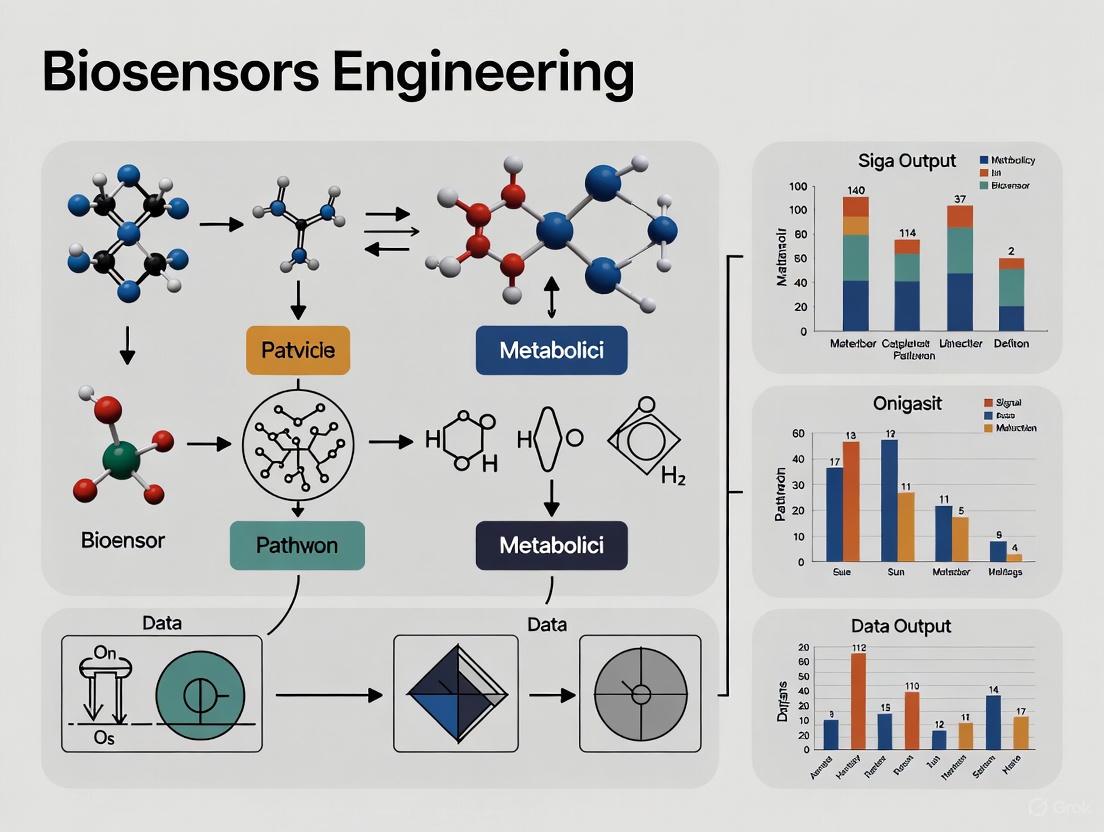
This article explores the transformative role of biosensors in metabolic engineering and health monitoring, catering to researchers and drug development professionals.
Biosensors in Bioengineering: From Microbial Factories to Clinical Diagnostics
Abstract
This article explores the transformative role of biosensors in metabolic engineering and health monitoring, catering to researchers and drug development professionals. It covers the foundational principles of genetically encoded biosensors, including transcription factors and riboswitches, and their application in high-throughput screening and dynamic regulation of microbial cell factories. The scope extends to methodological advances in wearable and clinical biosensors for metabolite and pathogen detection, addressing key challenges in sensor optimization, such as dynamic range and response time. Finally, it provides a comparative analysis of validation frameworks and sensor performance across electrochemical, optical, and broad-spectrum diagnostic platforms, offering a comprehensive resource for advancing biosensor technology in industrial and biomedical research.
The Building Blocks: Principles and Mechanisms of Biosensors
Biosensors are analytical devices that combine a biological sensing element with a transducer to produce a measurable signal proportional to the concentration of a specific analyte. While traditional definitions emphasized their role in detecting chemical and biological substances, the scope of biosensors has dramatically expanded to include digital biomarkers—objective, quantifiable physiological and behavioral data collected through digital devices. This evolution reflects their growing importance across scientific disciplines, from fundamental metabolic engineering to clinical research and therapeutic development [1] [2].
In metabolic engineering, biosensors have emerged as indispensable tools for overcoming critical bottlenecks in the development of microbial cell factories. They enable real-time monitoring of metabolic fluxes and high-throughput screening of enzyme libraries, accelerating the engineering of efficient biosynthetic pathways. Simultaneously, in clinical and research settings, biosensors now capture digital biomarkers derived from physiological signals like heart rate variability, electrodermal activity, and sleep patterns, providing unprecedented insights into health and disease states outside traditional laboratory environments [1] [3]. This whitepaper examines the technical foundations, applications, and emerging trends defining modern biosensor technology.
Technical Foundations and Classification of Biosensors
Core Components and Operating Principles
All biosensors consist of two fundamental components: a biological recognition element (bioreceptor) and a transducer. The bioreceptor (e.g., enzyme, antibody, nucleic acid, whole cell) provides specificity by interacting selectively with the target analyte. The transducer then converts this biological interaction into a quantifiable signal, typically optical, electrochemical, thermal, or piezoelectric [4]. Performance is characterized by several key parameters:
- Sensitivity: The magnitude of signal change per unit analyte concentration
- Selectivity: The ability to distinguish target analyte from interferents
- Dynamic Range: The span between minimal and maximal detectable signals
- Operating Range: The concentration window for optimal performance
- Response Time: Speed of signal generation after analyte exposure
- Signal-to-Noise Ratio: Clarity and reliability of the output signal [5]
Classification of Biosensor Types
Biosensors are categorized based on their bioreceptor and transduction mechanism. The table below summarizes the major biosensor classes and their characteristics:
Table 1: Classification of Biosensor Technologies
| Category | Biosensor Type | Sensing Principle | Response Characteristics | Common Applications |
|---|---|---|---|---|
| Protein-Based | Transcription Factors (TFs) | Ligand binding induces DNA interaction to regulate gene expression | Moderate sensitivity; direct gene regulation | Metabolite sensing, high-throughput screening [5] |
| Protein-Based | Two-Component Systems (TCSs) | Sensor kinase autophosphorylates and transfers signal to response regulator | High adaptability; environmental signal detection | Environmental monitoring, pathway regulation [5] |
| Protein-Based | GPCRs | Ligand binding activates intracellular G-proteins | High sensitivity; complex signal amplification | Eukaryotic cellular signaling, therapeutic discovery [5] |
| Protein-Based | Enzyme-Based | Substrate-specific catalytic activity | High specificity; rapid response | Metabolite detection, point-of-care diagnostics [5] |
| RNA-Based | Riboswitches | Ligand-induced RNA conformational change affects translation | Tunable response; reversible | Metabolic regulation, intracellular sensing [5] |
| RNA-Based | Toehold Switches | Base-pairing with trigger RNA activates translation | High specificity; programmable | RNA-level diagnostics, logic-gated control [5] |
| Electrochemical | Various | Biochemical reactions generate electrical signals | Direct transduction; mass production suitable | Medical diagnostics, wearable sensors [6] |
| Optical | SERS, SPR | Light interaction changes with analyte binding | Label-free multiplexing; high sensitivity | Cancer biomarker detection, molecular interactions [7] |
Biosensors in Metabolic Engineering and Monitoring
Biosensor-Guided Discovery and Engineering of Metabolic Enzymes
A significant challenge in metabolic engineering is the efficient screening of enzymes with desired properties from extensive libraries. Genetically encoded biosensors have revolutionized this process by converting inconspicuous catalytic products into measurable signals, enabling high-throughput screening (HTS) at the intracellular level [1].
Experimental Protocol: Biosensor-Guided High-Throughput Screening
- Library Construction: Create mutant enzyme libraries via directed evolution or mine natural diversity from metagenomic sources
- Biosensor Integration: Co-express biosensor system responsive to target metabolite in host cells
- Culturing and Expression: Grow library variants under conditions that induce enzyme and biosensor expression
- Signal Detection: Measure biosensor output (e.g., fluorescence via flow cytometry, survival under selection)
- Variant Isolation: Sort high-performing variants using fluorescence-activated cell sorting (FACS) or selective plating
- Validation: Confirm enzyme performance in secondary assays using chromatographic methods [1]
This approach has been successfully applied to discover and engineer various metabolic enzymes, including those for flavonoid production, where riboswitch-guided screening improved naringenin pathway efficiency, and lignin transformation, where biosensors identified enzymes with enhanced activity on aromatic compounds [1] [4].
Table 2: Biosensor Applications in Metabolic Engineering
| Application Area | Biosensor Type | Target Molecule | Screening Outcome |
|---|---|---|---|
| Enzyme Discovery | Transcription factor-based | Various metabolites | Identified novel enzymes from metagenomic libraries with desired activity [1] |
| Enzyme Engineering | Riboswitch-based | Naringenin | Isolated enzyme variants with enhanced catalytic efficiency for flavonoid production [1] |
| Lignocellulosic Conversion | Transcription factor-based | Lignin-derived aromatics | Discovered enzymes improving degradation of lignocellulosic biomass [4] |
| Dynamic Regulation | Hybrid protein/RNA systems | Metabolic intermediates | Engineered pathways with improved yield and robustness through feedback regulation [5] |
| Pathway Optimization | Toehold switches | Pathway intermediates | Balanced metabolic flux using logic-gated control systems [5] |
Dynamic Metabolic Regulation
Beyond screening, biosensors enable dynamic regulation of metabolic pathways, allowing engineered systems to respond to fluctuating intracellular metabolite levels. This approach mimics natural regulatory networks and improves pathway robustness. For instance, in lignocellulosic biomass conversion, biosensors have been designed to respond to key intermediates like sugars and aromatic compounds, enabling real-time control of metabolic fluxes to optimize product yield [4].
Diagram 1: Biosensor operational logic
The Emergence of Digital Biomarkers
Defining Digital Biomarkers in Clinical Research
Digital biomarkers are physiological and behavioral measures collected via wearable biosensors, smartphones, and connected devices that provide continuous, objective insights into patient health in real-world settings. Unlike traditional clinical assessments that offer intermittent snapshots, digital biomarkers enable a richer, more dynamic understanding of disease progression and treatment response [2].
In clinical trials, digital biomarkers are revolutionizing outcome measurement by:
- Enabling continuous monitoring of physiological parameters outside clinic settings
- Reducing measurement bias through objective data collection
- Capturing subtle disease-related changes in real-time
- Supporting decentralized trial models that enhance patient access and diversity [2]
Experimental Protocol: Validating Digital Biomarkers for Clinical Trials
- Device Selection: Choose biosensors with appropriate signal characteristics (e.g., sampling rate, battery life) for the target physiological measure
- Feature Extraction: Develop algorithms to derive clinically meaningful features from raw sensor data (e.g., heart rate variability from ECG)
- Analytical Validation: Establish that the digital biomarker reliably measures the intended physiological parameter
- Clinical Validation: Demonstrate correlation with clinically relevant endpoints and disease states
- Regulatory Alignment: Ensure compliance with emerging frameworks like ICH E6(R3) for digital endpoint acceptance [2] [3]
Applications in Neurology and Oncology
Digital biomarkers have shown particular promise in neurology and oncology. In stroke research, wearable biosensors track recovery patterns and detect subtle neurological changes, facilitating earlier interventions. Advanced digital platforms combined with artificial intelligence optimize patient selection and predict treatment responses, accelerating therapeutic development [2].
In oncology, multimodal approaches integrate data from wearable devices monitoring heart rate variability, sleep quality, and activity levels with electronic patient-reported outcomes. These comprehensive digital profiles provide a high-resolution view of treatment tolerance and functional status, enabling more personalized care strategies [2].
Diagram 2: Digital biomarker workflow
The Scientist's Toolkit: Essential Research Reagents and Materials
Successful implementation of biosensor technologies requires specific reagents and materials tailored to application needs. The following table details essential components for biosensor development and implementation:
Table 3: Essential Research Reagent Solutions for Biosensor Applications
| Reagent/Material | Function | Application Examples | Technical Considerations |
|---|---|---|---|
| Transcription Factors | Natural or engineered DNA-binding proteins that respond to specific metabolites | Metabolite sensing, pathway regulation | Specificity, dynamic range, and host compatibility must be verified [5] |
| Riboswitches | RNA elements that undergo conformational changes upon ligand binding | Real-time metabolic regulation, HTS | Compact size and reversibility ideal for metabolic control [5] |
| Toehold Switches | Programmable RNA sensors activated by trigger RNA sequences | RNA-level diagnostics, logic-gated pathway control | High specificity and programability enable complex circuit design [5] |
| Nanostructured Electrodes | Enhanced surface area for improved signal transduction | Electrochemical biosensors, wearable devices | Graphene and carbon nanotubes lower detection limits [6] [7] |
| Plasmonic Nanomaterials | Enhanced electromagnetic fields for signal amplification | SERS-based detection, cancer biomarker identification | Au-Ag nanostars provide intense signal enhancement [7] |
| Immobilization Matrices | Stabilize biological recognition elements | Enzyme-based sensors, bioreceptor preservation | Polyurethane-zwitterionic matrices extend enzyme viability [6] |
| Flexible Substrates | Enable conformable interfaces for physiological monitoring | Wearable biosensors, epidermal devices | Skin-conformable materials enable long-term wear [8] |
Future Perspectives and Market Outlook
The biosensor field is evolving rapidly, with significant growth projected across multiple sectors. The global biosensor market is expected to exceed USD 15 billion by 2030, with wearable products showing the fastest growth at a 14.1% CAGR [6]. Several key trends are shaping this expansion:
- Integration with AI and Machine Learning: Advanced algorithms are enhancing signal interpretation, compensating for sensor drift, and enabling predictive analytics in both industrial and clinical applications [2] [6]
- Multiplexing Capabilities: Development of sensors capable of simultaneously detecting multiple analytes addresses the complexity of biological systems and disease states [6]
- Miniaturization and Connectivity: Smaller form factors with Bluetooth Low Energy interfaces enable seamless pairing with mobile platforms, expanding accessibility [6]
- Regulatory Evolution: Updated guidelines like ICH E6(R3) encourage decentralized trials and digital endpoint acceptance, accelerating adoption of biosensor technologies [2]
Technical challenges remain, including the need for universal validation frameworks, mitigation of algorithmic bias, and improved data security protocols. However, ongoing research in nanomaterials, synthetic biology, and data science continues to address these limitations, paving the way for more robust, accessible, and informative biosensing platforms [2] [5].
Biosensors have transcended their traditional definition as simple analyte detection devices to become sophisticated tools that bridge molecular monitoring and digital health. In metabolic engineering, they accelerate the development of bio-based production platforms by enabling high-throughput enzyme screening and dynamic pathway regulation. Concurrently, the emergence of digital biomarkers collected through wearable and connected biosensors is transforming clinical research and therapeutic development through continuous, real-world physiological monitoring.
The convergence of these applications—from metabolic intermediates to digital biomarkers—underscores the expanding role of biosensors as fundamental enabling technologies across scientific disciplines. As advances in synthetic biology, materials science, and data analytics continue, biosensors will play an increasingly critical role in addressing complex challenges in sustainable manufacturing, personalized medicine, and global health.
Biosensors are synthetic biological tools that enable researchers to monitor and manipulate cellular processes in real-time. In metabolic engineering, they are pivotal for optimizing the production of valuable compounds, from biofuels to pharmaceuticals, by providing dynamic insights into microbial metabolism [4]. The core functionality of any biosensor relies on the coordinated operation of three integral components: the sensor module that detects a specific biochemical signal, the actuator that processes this signal, and the reporter system that generates a quantifiable output [4] [9] [10]. This guide details the technical specifications, recent advancements, and experimental protocols for these core components, providing a foundational resource for researchers and drug development professionals.
Sensor Modules: Molecular Recognition Elements
Sensor modules are the molecular recognition elements that confer specificity to a biosensor. They are engineered to bind a target analyte, triggering a conformational change that initiates the signal transduction cascade.
Protein-Based Sensors
Protein-based sensors, particularly transcription factors, are widely used. They naturally bind to small molecules, leading to a change in their DNA-binding affinity, which can be linked to a output signal [4]. For instance, the tetracycline repressor (TetR) and tryptophan repressor (TrpR) are well-characterized transcription factors used in biosensor design [4].
Nucleic Acid-Based Sensors
Nucleic acid-based sensors, such as aptamers and toehold switches, use engineered RNA or DNA sequences that undergo a structural change upon binding their target. Aptamers fold into defined structures that bind target molecules with high specificity, while toehold switches are synthetic RNA elements that regulate translation in response to a trigger RNA [4].
Whole-Cell and Hybrid Sensors
Whole-cell biosensors are genetically engineered microbial systems that integrate sensing, signal transduction, and reporting within a living cell [4]. Furthermore, hybrid designs incorporating synthetic biology and materials science have led to platforms like silicon nanowire sensors, where antibodies immobilized on the nanowire surface detect proteins, with binding events transduced as electrical signals [11] [12].
Table 1: Major Classes of Sensor Modules and Their Characteristics
| Sensor Type | Core Mechanism | Typical Analytes | Key Advantages | Common Applications |
|---|---|---|---|---|
| Transcription Factor [4] | Protein conformational change upon analyte binding | Small molecules, metabolites | High specificity, native biological components | Metabolic pathway monitoring, high-throughput screening |
| Aptamer [4] [13] | Nucleic acid structural shift upon target binding | Ions, proteins, small molecules | In vitro selection, high stability | Electrochemical detection, in vitro diagnostics |
| Antibody-Based [11] [14] | Specific antigen-antibody binding | Proteins, biomarkers | Exceptional specificity and affinity | Medical diagnostics, drug quality control (e.g., host cell protein detection) |
| Molecularly Imprinted Polymer (MIP) [14] | Synthetic polymer with analyte-shaped cavity | Metabolites, nutrients | High stability, cost-effective production | Wearable sensors for continuous metabolite monitoring |
Actuators: Signal Processing and Transduction Mechanisms
The actuator component transduces the molecular recognition event into an intracellular signal that can be interpreted. It serves as the central processing unit of the biosensor.
Allosteric Regulation
A common actuation mechanism is allosteric regulation, where the binding of an analyte at one site of a protein induces a conformational change that alters its activity at another site. This is the fundamental mechanism for many transcription factor-based biosensors [4] [10].
Protein-Protein Interactions and Induced Degradation
Less exploited mechanisms include engineered protein-protein interactions and controlled protein stability. For example, a sensor can be designed such that analyte binding induces the degradation of a key protein, rapidly altering the concentration of a downstream regulator. This mechanism is particularly useful in eukaryotic and slow-growing prokaryotic systems for rapid state measurement [10].
Signal Transduction in Electrochemical Systems
In non-biological biosensors, actuation involves physicochemical transduction. In the wearable electrochemical biosensor reported by Sempionatto et al., the binding of a metabolite to a molecularly imprinted polymer is transduced into an electrical signal via redox-active reporter nanoparticles [14]. Similarly, in Advanced Silicon Group's platform, antibody-protein binding changes the photocurrent in a silicon nanowire, providing a quantifiable electrical actuation signal [11] [12].
The diagram below illustrates the core signaling logic of a genetically encoded biosensor.
Reporter Systems: Generating a Quantifiable Output
The reporter system converts the processed signal from the actuator into a measurable output, enabling detection and quantification.
Fluorescent Reporters
Fluorescent proteins are the mainstay of genetically encoded biosensors. Intensiometric sensors use a single fluorescent protein whose brightness changes with the analyte. Ratiometric sensors, particularly those based on Förster Resonance Energy Transfer (FRET), use two fluorophores where analyte binding alters the energy transfer efficiency, providing an internal reference and greater accuracy [9] [15].
A recent breakthrough involves engineered FRET pairs with a fluorescent protein and a synthetic fluorophore bound to a HaloTag. This "chemogenetic" approach, as exemplified by the ChemoG series, achieves near-quantitative FRET efficiency (≥94%) and an unprecedented dynamic range, allowing for highly sensitive detection of metabolites like NAD+ and ATP [15].
Electrochemical Reporters
Electrochemical reporters are central to many wearable and point-of-care biosensors. They generate an electrical output (e.g., current, voltage, impedance) proportional to the analyte concentration. Graphene electrodes and molecularly imprinted polymers are often used in these systems for monitoring metabolites and nutrients in biofluids like sweat [16] [14].
Luminescent and Colorimetric Reporters
Bioluminescent reporters, which generate light through enzymatic reactions (e.g., luciferase), offer extremely high sensitivity due to the absence of background autofluorescence [15]. Colorimetric reporters produce a visible color change that can sometimes be detected by eye, useful for simple diagnostic tests [14].
Table 2: Comparison of Key Reporter System Modalities
| Reporter Type | Readout Method | Sensitivity | Spatial Resolution | Primary Use Cases |
|---|---|---|---|---|
| FRET-based FP [9] | Fluorescence microscopy | High | Very High (subcellular) | Real-time monitoring of kinase activity, metabolite dynamics in live cells |
| Chemogenetic FRET [15] | Fluorescence microscopy / FLIM | Very High | Very High (subcellular) | Multiplexed sensing, monitoring subtle metabolic fluctuations |
| Electrochemical [16] [14] | Amperometry / Potentiometry | High | Low | Wearable sensors, continuous monitoring in bioreactors |
| Bioluminescent [15] | Luminescence detection | Very High | Medium | High-throughput screening, in vivo imaging where low background is critical |
| Electrical Impedance [16] | Impedance spectroscopy | Medium | Low | Label-free monitoring of cell proliferation, cytotoxicity, tissue barrier integrity |
Advanced Engineering Methodologies
The development of high-performance biosensors relies on sophisticated engineering strategies that combine computational design with experimental screening.
Rational Design and Directed Evolution
Rational design involves making informed mutations based on structural knowledge of the sensor protein. For example, in engineering the ChemoG5 FRET pair, specific interface mutations (e.g., A206K in eGFP and E143R in HaloTag) were introduced to stabilize the interaction, drastically improving FRET efficiency [15]. Conversely, directed evolution uses random mutagenesis and high-throughput screening to select for desired biosensor properties, an approach powerful for optimizing dynamic range and specificity without requiring structural data [10].
Hybrid Approaches and Computational Tools
A synergistic approach is often most effective, where rational design provides a starting point that is subsequently refined by directed evolution [10]. The integration of machine learning with systems biology is further accelerating biosensor design by predicting the functional outcomes of protein sequences and optimizing metabolic pathways for improved bioconversion [4].
Experimental Protocols and Workflows
Protocol: Development of a FRET-Based Biosensor Using Chemogenetic Pairs
This protocol outlines the key steps for creating a highly sensitive biosensor using the chemogenetic FRET platform [15].
- Vector Construction: Clone the gene encoding the optimized chemogenetic construct (e.g., ChemoG5) into an appropriate expression vector. The construct consists of an FP (e.g., eGFP) directly fused to HaloTag7 (HT7), incorporating interface mutations (A206K, T225R in eGFP; E143R, E147R, L271E in HT7).
- Cell Culture and Transfection: Culture adherent cells (e.g., U-2 OS) in standard media (e.g., DMEM with 10% FBS). Transfect the constructed plasmid into the cells using a standard method (e.g., lipofection).
- Labeling with Synthetic Fluorophore: 24-48 hours post-transfection, incubate the cells with a cell-permeable HaloTag ligand (e.g., 100-500 nM SiR, JF549, or other rhodamine derivatives) in serum-free media for 15-30 minutes. Remove the ligand and wash the cells thoroughly with fresh media to remove unbound dye.
- Microscopy and Image Acquisition: Image live cells on a confocal or epifluorescence microscope equipped with appropriate laser lines and filters. For ChemoG5 labeled with SiR, excite eGFP at ~488 nm and collect emission in both the eGFP channel (~500-550 nm) and the FRET/SiR channel (~650-700 nm).
- Data Analysis and FRET Calculation: Calculate the FRET ratio as the intensity in the FRET acceptor channel (SiR) divided by the intensity in the FRET donor channel (eGFP). A high FRET ratio (e.g., >15 for ChemoG5-SiR) indicates successful assembly and near-quantitative FRET efficiency.
The workflow for this protocol is visualized below.
Protocol: High-Throughput Screening Using a Transcription Factor Biosensor
This protocol describes using a biosensor for screening mutant libraries in metabolic engineering [4] [10].
- Biosensor Integration: Stably integrate a transcription factor-based biosensor (e.g., responsive to a target metabolite like a fatty acid) into the host microorganism's genome. The biosensor should control the expression of a fluorescent reporter (e.g., GFP).
- Library Generation: Create a diverse library of mutant strains through random mutagenesis or targeted engineering of the metabolic pathway of interest.
- Cultivation and Induction: Grow the library in 96-well or 384-well deep-well plates with appropriate medium. Induce metabolite production, for example, by adding a lignocellulosic hydrolysate.
- High-Throughput Flow Cytometry: Use a flow cytometer equipped with a high-throughput sampler to analyze the fluorescence of thousands of individual cells from each well. Gate the population based on forward and side scatter to exclude debris and aggregates.
- Sorting and Validation: Sort the top 0.1-1% of the most fluorescent cells into a recovery medium. Plate the sorted cells to obtain single colonies, and validate the metabolite production of these hits using traditional analytical methods like LC-MS.
The Scientist's Toolkit: Essential Research Reagents and Materials
Table 3: Key Reagent Solutions for Biosensor Development and Application
| Reagent / Material | Function / Application | Specific Examples |
|---|---|---|
| Engineered FRET Pairs [15] | Core scaffold for building highly sensitive biosensors with large dynamic ranges. | ChemoG5 (eGFP-HaloTag fusion); Labeling with SiR, JF549, TMR fluorophores. |
| Silicon Nanowire Chips [11] [12] | Solid-state sensor substrate for electrical, label-free detection of proteins. | Advanced Silicon Group's biosensor for host cell protein detection. |
| Molecularly Imprinted Polymers (MIPs) [14] | Synthetic antibody-like recognition elements for wearable sensors. | MIPs specific to amino acids or vitamins integrated into graphene electrodes. |
| HaloTag Ligands [15] | Synthetic fluorophores for labeling and tuning the spectral properties of chemogenetic biosensors. | Janelia Fluor (JF) dyes (e.g., JF525, JF669), Silicon Rhodamine (SiR), Tetramethylrhodamine (TMR). |
| Covalent Organic Frameworks (COFs) [13] | Porous nanomaterials to enhance the sensitivity and stability of electrochemical immunoassays. | COFs used as electrode modifiers or as carriers for enzyme labels. |
| Graphene Electrodes [13] [14] | High-surface-area, conductive material for electrochemical sensing. | Used in wearable sweat sensors and immunosensors for neurodegenerative biomarkers. |
The continued refinement of biosensor core components is fundamentally advancing metabolic engineering and biomedical research. Emerging trends point toward a future of increasingly sophisticated and integrated systems. The convergence of biosensor technology with systems biology and machine learning is paving the way for next-generation, smart microbial platforms that can autonomously optimize metabolic pathways for biomass valorization [4]. Furthermore, the push for miniaturization and multiplexing, as seen in silicon nanowire [12] and multicolor FRET platforms [15], will enable the simultaneous monitoring of multiple metabolic nodes, providing a holistic view of cellular physiology. As these technologies mature, they will undoubtedly accelerate drug development, enable personalized medicine through continuous health monitoring, and drive the creation of more sustainable biomanufacturing processes.
Biosensors are indispensable tools in synthetic biology and metabolic engineering, serving as critical interfaces between biological systems and measurable outputs. These molecular devices enable researchers to monitor cellular metabolites in real-time, screen for high-producing microbial strains, and implement dynamic control over biosynthetic pathways. For metabolic engineers, the ability to precisely sense and respond to intracellular metabolite concentrations is paramount for optimizing the production of valuable chemicals, pharmaceuticals, and biofuels. This whitepaper provides an in-depth technical analysis of three principal biosensor categories—transcription factor-based systems, riboswitches, and FRET-based platforms—detailing their mechanisms, applications, and experimental implementation. By framing these technologies within the context of metabolic engineering and monitoring research, we aim to equip scientists with the knowledge to select, design, and implement appropriate biosensing strategies for their specific applications.
Comparative Analysis of Major Biosensor Categories
Table 1: Key characteristics of major biosensor categories
| Feature | Transcription Factor-Based Biosensors | Riboswitches | FRET-Based Biosensors |
|---|---|---|---|
| Sensing Principle | Ligand binding induces conformational change in TF, altering DNA binding affinity [17] [18] | Ligand-induced RNA conformational change affects translation or transcription [19] [20] | Distance-dependent energy transfer between fluorophores; binding alters FRET efficiency [21] [22] |
| Molecular Components | Allosteric transcription factor, promoter, reporter gene [23] | Aptamer domain, expression platform [19] [20] | Donor and acceptor fluorophores, ligand-binding domain [21] [22] |
| Primary Applications | Dynamic pathway regulation, high-throughput screening [17] [18] [5] | Metabolic pathway regulation, real-time metabolite sensing [19] [20] | Real-time monitoring of metabolite dynamics, intracellular imaging [21] [22] |
| Typical Response Time | Minutes to hours (involves transcription/translation) [5] | Seconds to minutes (RNA structural changes) [19] | Milliseconds to seconds (conformational changes) [21] |
| Key Advantages | Direct gene regulation, suitable for HTS, broad analyte range [17] [23] | Compact genetic size, no protein cofactors required, reversible [19] [20] | High spatiotemporal resolution, high orthogonality, subcellular targeting [21] [22] |
| Major Limitations | Limited number of known TFs, potential cross-talk [17] [24] | Stability of RNA structures, limited in vivo functionality for some aptamers [19] [23] | Low dynamic range, requires specialized equipment, no direct regulatory output [21] [22] |
Table 2: Performance metrics for biosensor applications in metabolic engineering
| Biosensor Type | Dynamic Range | Operating Range | Example Metabolites Detected | Screening Throughput |
|---|---|---|---|---|
| Transcription Factor-Based | High (up to 100-fold) [5] | µM to mM [18] | Flavonoids, alcohols, organic acids, antibiotics [18] [23] [24] | Very High (FACS compatible) [18] [22] |
| Riboswitches | Moderate to High [20] | nM to µM [19] [20] | TPP, purines, amino acids, queuosine [19] [20] | High (growth-based selection) [19] |
| FRET-Based | Low to Moderate [21] [22] | nM to µM [21] [22] | Lysine, NADPH, pyruvate, sugar phosphates [21] [22] | Low (microscopy-based) |
Transcription Factor-Based Biosensors
Mechanism and Architecture
Transcription factor-based biosensors (TFBs) are protein-based genetic circuits that convert metabolite concentrations into quantifiable gene expression outputs [17] [23]. These systems utilize allosteric transcription factors (aTFs) that undergo conformational changes upon binding specific small molecule ligands. This ligand-induced structural alteration enhances or reduces the aTF's affinity for its target operator DNA sequence, thereby activating or repressing transcription of downstream reporter or actuator genes [17] [18]. The modular architecture of TFBs typically consists of a promoter region containing the TF operator sequence, the gene encoding the aTF itself, and an output gene such as a fluorescent protein, enzyme, or selection marker [23].
Natural aTFs exhibit several operational modes depending on their specific mechanism: repression of activator aTF, activation of repressor aTF, repression of repressor aTF, or activation of activator aTF [17]. This diversity enables the construction of biological circuits with complex regulatory functions. For instance, in the most common configuration, ligand binding causes a repressor aTF to dissociate from its operator sequence, thereby de-repressing transcription of the output gene. Alternatively, ligand binding may enable an activator aTF to bind its operator and initiate transcription [18]. The relationship between effector concentration and transcriptional output follows a dose-response curve characterized by parameters such as dynamic range (fold-change between minimal and maximal output), response threshold, and sensitivity [5] [22].
Experimental Implementation and Protocol
Protocol 1: Engineering and Characterizing a Transcription Factor-Based Biosensor
Biosensor Selection and Design: Identify a suitable aTF responsive to your target metabolite or a structural analog through literature mining and databases such as RegulonDB, P2TF, or GroovDB [17] [24]. If a direct sensor is unavailable, consider engineering the ligand specificity of a promiscuous aTF like TtgR [24].
Genetic Circuit Construction: Clone the aTF gene and its native promoter/operator sequence into a plasmid. Place a reporter gene (e.g., GFP, LacZ) or a selectable marker (e.g., antibiotic resistance) under the control of this regulated promoter [23] [22]. Key reagents include:
- Plasmid Vectors: Low- and medium-copy number plasmids to tune sensor response.
- Reporter Genes: gfp, rfp, lacZ for quantification.
- Host Strains: E. coli or other microbial chassis appropriate for your application.
Library Creation (if engineering specificity): Use methods like site-saturation mutagenesis or phylogenetic-guided diversification to create variation in the ligand-binding domain [24]. High-throughput techniques such as Sensor-seq employ RNA barcoding to screen thousands of variants simultaneously by linking aTF sequence to transcriptional output via deep sequencing [24].
Characterization and Validation:
- Transform the constructed biosensor into an appropriate host strain.
- Grow cultures in defined media and expose to a range of ligand concentrations.
- Measure output signals (e.g., fluorescence, absorbance) and cell density (OD600) over time.
- Calculate the response function (output/OD600) and generate dose-response curves to determine dynamic range, EC50, and response threshold [5] [22].
- Validate specificity by testing against structurally similar compounds.
Application Implementation: For metabolic engineering, integrate the validated biosensor into production strains for high-throughput screening via FACS or growth selection, or for dynamic pathway regulation [18] [22].
Applications in Metabolic Engineering
TF-based biosensors have become indispensable tools for metabolic engineering, primarily serving three critical functions: (1) high-throughput screening of production strains, (2) growth-based selection, and (3) dynamic pathway regulation [18] [22]. For screening, TFBs coupled to fluorescent reporters enable rapid identification of high-producing variants from combinatorial libraries using fluorescence-activated cell sorting (FACS) [18] [22]. This approach provides much higher throughput than analytical methods like HPLC or GC-MS. For growth selection, TFBs control essential genes or antibiotic resistance markers, allowing direct enrichment of strains with desirable metabolic characteristics [18]. In dynamic regulation, TFBs automatically adjust pathway enzyme expression in response to metabolite levels, preventing toxic intermediate accumulation and optimizing carbon flux [17] [18] [5]. This closed-loop control enhances pathway robustness and productivity without researcher intervention.
Riboswitch-Based Biosensors
Mechanism and Architecture
Riboswitches are structured RNA elements located predominantly in the 5' untranslated regions (UTRs) of messenger RNAs that undergo conformational changes upon binding specific cellular metabolites [19] [20]. These non-protein-coding regulators directly link small molecule sensing to genetic regulation without intermediary protein factors. A canonical riboswitch comprises two functional domains: a highly conserved aptamer domain that specifically binds the target ligand, and an expression platform whose alternative secondary structures determine the genetic output [19] [20].
The mechanism of riboswitch operation involves ligand-induced structural reorganization that affects transcription elongation, translation initiation, or mRNA stability [19]. For instance, in translational control, ligand binding may sequester the ribosome binding site (RBS) within a stable hairpin, preventing translation initiation. Alternatively, transcriptional riboswitches may form terminator hairpins that cause premature transcription termination when ligand is bound [19] [20]. The E. coli thiC TPP-sensing riboswitch exemplifies this dual functionality, regulating both transcription elongation through Rho-dependent termination and translation initiation by masking the RBS and start codon upon TPP binding [20]. Natural riboswitches recognize diverse ligands including enzyme cofactors (SAM, TPP), nucleotide precursors, amino acids, and metal ions [19]. Their compact size, reversibility, and ability to function without protein cofactors make them attractive for metabolic engineering applications.
Experimental Implementation and Protocol
Protocol 2: Developing a Riboswitch-Based Reporting System
Riboswitch Selection or Design: Identify natural riboswitches for your target metabolite from databases like Rfam, or select artificial aptamers developed via SELEX (Systematic Evolution of Ligands by Exponential Enrichment) [19]. For theophylline sensing, the well-characterized TCT8-4 aptamer provides high specificity against related compounds like caffeine [19].
Genetic Construct Assembly: Clone the riboswitch sequence into the 5' UTR of a reporter gene (e.g., gfp) on an expression plasmid. Ensure inclusion of necessary regulatory elements (e.g., constitutive promoter, transcriptional terminators). Key reagents include:
- Aptamer Sequences: Natural (e.g., TPP, adenine) or synthetic (e.g., theophylline) aptamers.
- Reporter Plasmids: Vectors with promoterless reporter genes for 5' UTR insertion.
- Selection Markers: Antibiotic resistance genes for plasmid maintenance.
In Vivo Functional Screening:
- Transform constructs into appropriate host cells.
- Grow transformed cells in media with and without the target ligand.
- Measure reporter output (fluorescence/absorbance) and normalize to cell density.
- Calculate fold-change between ligand-present and ligand-absent conditions.
Characterization and Optimization:
- Determine dose-response relationships by testing a range of ligand concentrations.
- Assess response time by measuring output kinetics after ligand addition.
- Verify specificity by testing against structural analogs.
- Fine-tune dynamic range by mutating the aptamer or expression platform [19].
Application Implementation: For metabolic monitoring, employ the validated riboswitch reporter in high-throughput screens using the Keio collection or other mutant libraries to identify genetic perturbations affecting metabolite levels [20].
Applications in Metabolic Engineering
Riboswitches provide unique advantages for metabolic engineering applications due to their small genetic footprint, rapid response times, and protein-independent function. They serve as effective tools for real-time monitoring of intracellular metabolite levels, as demonstrated by the TPP-sensing thiC riboswitch from E. coli, which has been successfully employed to systematically analyze thiamin pyrophosphate metabolism across the entire Keio collection of knockout mutants [20]. This approach enabled genome-scale identification of genes influencing TPP levels, showcasing the power of riboswitch reporters in functional genomics. Artificial riboswitches based on SELEX-derived aptamers (e.g., for theophylline or tetracycline) enable orthogonal regulation that doesn't interfere with native cellular metabolism [19]. Riboswitches can also be re-engineered to recognize non-natural ligands while maintaining their regulatory function, as demonstrated by the reprogramming of natural adenine and preQ1 riboswitches to respond to synthetic purine derivatives [19]. Their compatibility with high-throughput screening methods, including growth selection and fluorescence-based assays, makes riboswitches valuable for strain optimization in bioproduction pipelines.
FRET-Based Biosensors
Mechanism and Architecture
Förster Resonance Energy Transfer (FRET)-based biosensors operate through distance-dependent energy transfer between two fluorophores—a donor and an acceptor—when they are in close proximity (1-10 nm) [21]. These genetically encoded sensors typically consist of a ligand-binding domain flanked by donor and acceptor fluorescent proteins. Upon binding the target metabolite, conformational changes in the sensing domain alter the distance and/or orientation between the fluorophores, modulating FRET efficiency [21] [22]. This change in energy transfer manifests as a measurable shift in the ratio of donor to acceptor fluorescence.
The molecular architecture of FRET biosensors exploits various ligand-binding proteins, including periplasmic-binding proteins (PBPs), regulatory proteins, and other ligand-sensing domains [22]. For example, biosensors for trehalose-6-phosphate (T6P) incorporate the trehalose repressor TreR from E. coli sandwiched between eCFP and Venus fluorescent proteins [22]. Similarly, FRET-based NADPH sensors (iNap) utilize engineered ligand-binding domains to achieve different affinities and dynamic ranges [22]. The critical parameters governing FRET biosensor performance include the Förster radius (distance at which 50% energy transfer occurs), binding affinity for the target metabolite, and the magnitude of conformational change upon ligand binding [21]. These sensors provide exceptional spatiotemporal resolution, enabling real-time monitoring of metabolic dynamics in living cells with subcellular precision.
Experimental Implementation and Protocol
Protocol 3: Implementing FRET-Based Metabolite Sensing
Biosensor Selection: Choose FRET biosensors with appropriate affinity and dynamic range for your target metabolite. Consider subcellular targeting sequences if compartment-specific measurements are required.
Expression System Setup:
- Clone the FRET biosensor construct into mammalian, bacterial, or yeast expression vectors under appropriate promoters.
- Key reagents include:
- FRET Pairs: CFP/YFP, GFP/RFP, or synthetic fluorophores with spectral overlap.
- Expression Vectors: Plasmids with suitable promoters for your host system.
- Ligand-Binding Domains: Specific to your target metabolite (e.g., TreR for T6P, LAO for lysine).
Calibration and Validation:
- Transfert or transform host cells and confirm biosensor expression.
- Perform in vitro calibration using purified biosensor protein and known ligand concentrations.
- Determine the dynamic range (ratio change between minimal and maximal FRET).
- Establish binding affinity (Kd) through titration experiments.
Live-Cell Imaging and Measurement:
- Culture biosensor-expressing cells under appropriate conditions.
- Use fluorescence microscopy with FRET filter sets or confocal microscopy to image cells.
- Acquire donor and acceptor emission signals simultaneously or sequentially.
- Calculate FRET ratios (acceptor emission/donor emission) for each time point or condition.
Data Analysis and Interpretation:
- Normalize FRET ratios to baseline values.
- Convert ratio changes to metabolite concentrations using calibration curves.
- Account for photobleaching, pH sensitivity, and expression variability through controls.
Application: Utilize the biosensor for real-time monitoring of metabolic changes in response to genetic perturbations, drug treatments, or environmental stimuli [21] [22].
Applications in Metabolic Engineering
FRET-based biosensors excel in applications requiring high temporal and spatial resolution, making them particularly valuable for monitoring rapid metabolic dynamics and subcellular metabolite gradients. These sensors have been successfully deployed to visualize compartment-specific metabolic processes, such as mitochondrial pyruvate consumption in neurons, where a FRET-based pyruvate sensor revealed a 300% increase in mitochondrial pyruvate uptake within seconds following calcium transients [22]. Similarly, FRET-based NADPH sensors (iNap) have elucidated NADPH metabolism in cancer cells, demonstrating regulation by glucose availability [22]. The high orthogonality of FRET biosensors enables simultaneous monitoring of multiple metabolites in single cells, providing systems-level insights into metabolic network operations. While primarily used for monitoring rather than control applications, FRET biosensors generate invaluable quantitative data for validating and refining metabolic models, guiding strain engineering strategies, and understanding fundamental metabolic regulation. Recent advances include the development of portable FRET analyzers for field applications and improved sensor variants with enhanced dynamic range and reduced pH sensitivity [21] [22].
The Scientist's Toolkit: Essential Research Reagents
Table 3: Key research reagents for biosensor development and implementation
| Reagent Category | Specific Examples | Function in Biosensor Workflows |
|---|---|---|
| Reporter Genes | GFP, RFP, LacZ, Luciferase, Antibiotic Resistance Genes | Provide measurable outputs (fluorescence, luminescence, survival) for biosensor activity [20] [22] |
| Expression Vectors | Low/medium-copy plasmids, Integrating vectors | Deliver biosensor genetic circuits to host cells with tunable expression levels [20] |
| Ligand-Binding Domains | Natural aTFs (TetR, AraC), Aptamers (theophylline, tetracycline), PBPs | Serve as sensing elements that respond to specific metabolites [19] [22] [24] |
| Fluorescent Proteins | CFP/YFP FRET pairs, GFP/RFP, fast-folding GFP variants | Enable visualization and quantification in FRET systems and as transcriptional reporters [21] [20] [22] |
| Selection Markers | Antibiotic resistance genes, Auxotrophic complementation genes | Maintain plasmid stability and enable selection for biosensor-containing cells [19] [20] |
| Host Strains | E. coli Keio collection, Production chassis (e.g., S. cerevisiae, B. subtilis) | Provide genetic background for biosensor implementation and application [20] |
| Database Resources | RegulonDB, P2TF, JASPAR, GroovDB, Rfam | Provide curated information on natural regulatory elements for biosensor design [17] [24] |
Transcription factor-based biosensors, riboswitches, and FRET-based systems each offer distinct capabilities that address different needs in metabolic engineering and monitoring research. TF-based systems provide direct genetic regulation and are ideal for high-throughput screening and dynamic pathway control. Riboswitches offer compact, protein-independent sensing well-suited for real-time metabolite monitoring and orthogonal regulation. FRET-based platforms deliver unparalleled spatiotemporal resolution for quantifying metabolic dynamics in live cells. The ongoing development of these technologies—through directed evolution of aTFs [24], engineering of artificial riboswitches [19], and optimization of FRET pairs [21]—continues to expand their capabilities and applications. Integration of computational design tools [23] and machine learning approaches [5] further accelerates the creation of biosensors with customized properties. As metabolic engineering advances toward more complex and sophisticated production systems, these biosensor technologies will play increasingly critical roles in enabling precise monitoring and control of microbial factories for sustainable chemical production.
Biosensors are powerful analytical devices that integrate a biorecognition element with a transducer to produce a quantifiable signal in response to a specific target analyte [25]. Within metabolic engineering and monitoring research, these tools have become indispensable for quantifying pathway metabolites, screening high-producing strains, and implementing dynamic control over biosynthetic pathways [26] [22]. The core of any biosensor is its biorecognition element, which can be broadly categorized as either natural (biologically derived) or synthetic (artificially engineered). Natural elements, such as antibodies and enzymes, leverage evolved physiological interactions, while synthetic elements, including aptamers and molecularly imprinted polymers (MIPs), are designed to mimic or surpass these natural systems [25]. The strategic selection between natural and synthetic sensing paradigms profoundly influences key biosensor performance characteristics, including sensitivity, selectivity, reproducibility, and reusability, thereby dictating their suitability for specific applications in drug development and metabolic research [25] [27]. This whitepaper provides an in-depth technical examination of these sensing modalities, offering a structured comparison and detailed experimental frameworks for their application in advanced research settings.
Natural Biological Sensing Elements
Naturally derived biorecognition elements utilize biomolecules that have evolved within biological systems to perform specific binding or catalytic functions.
Key Natural Elements and Their Characteristics
- Antibodies: These are ~150 kDa proteins with a characteristic "Y" shape, providing highly specific 3D binding sites (paratopes) for their target antigens. Biosensor operation is typically affinity-based, where the formation of an antibody-antigen immunocomplex generates a measurable signal, often detected via colorimetric or piezometric transduction [25]. A significant limitation is that production relies on animal systems, making discovery and purification costly and time-consuming [25].
- Enzymes: Enzymatic biosensors are biocatalytic. The enzyme sequesters the target bioanalyte and catalyzes its conversion into a measurable product, which is frequently monitored using amperometric or electrochemical methods [25]. The binding cavities within the enzyme's 3D structure utilize hydrogen-bonding and electrostatic interactions for specificity [25].
- Metabolite-Responsive Transcription Factors (MRTFs): These are naturally occurring proteins that regulate gene expression by binding to specific DNA sequences upon interaction with a small molecule metabolite [26] [22]. In synthetic biology, the natural promoter of an MRTF is replaced with a reporter gene (e.g., GFP), creating a sensor that converts metabolite concentration into a quantifiable fluorescent output [22].
Experimental Protocol: Employing a Transcription Factor-Based Biosensor for High-Throughput Screening
This protocol details the use of a natural MRTF biosensor to screen a microbial library for strains with high metabolite production [26] [22].
- Biosensor Construction: Clone the gene for a metabolite-responsive transcription factor (e.g., a lysine-responsive TF) and its native operator sequence upstream of a reporter gene, such as GFP, on an expression plasmid.
- Strain Library Transformation: Introduce the biosensor plasmid into a diverse library of engineered microbial production strains (e.g., via electroporation).
- Cultivation and Metabolite Induction: Grow the transformed library in a multi-well plate with appropriate culture medium. Allow the metabolic pathways to produce the target metabolite, which will intracellularly bind to the TF.
- Signal Generation: Upon metabolite binding, the TF undergoes a conformational change, dissociates from the operator, and allows transcription of the GFP gene. The resulting fluorescence intensity is directly correlated with the intracellular concentration of the target metabolite.
- High-Throughput Sorting: Use Fluorescence-Activated Cell Sorting (FACS) to isolate the top 1-5% of cells exhibiting the highest fluorescence intensity.
- Validation and Scale-Up: Culture the sorted populations and validate the production titers of the target metabolite using conventional analytical methods like HPLC or GC-MS [26].
Table 1: Performance Characteristics of Natural Biorecognition Elements
| Biorecognition Element | Mechanism of Action | Typical Transduction Method | Advantages | Limitations |
|---|---|---|---|---|
| Antibody | Affinity-based binding | Colorimetric, Piezometric [25] | High specificity and affinity | Costly production; Low stability; Limited reusability [25] |
| Enzyme | Biocatalytic conversion | Amperometric, Electrochemical [25] | High catalytic turnover; Signal amplification | Susceptible to denaturation; Limited analyte scope [25] |
| Transcription Factor | Genetic regulation | Fluorescence, Cell growth [26] [22] | Genetically encoded; Enables high-throughput screening | Dependent on host cellular machinery [22] |
Diagram 1: TF Biosensor Mechanism. Without metabolite, TF binds DNA and blocks transcription. With metabolite, the TF-metabolite complex dissociates from DNA, allowing reporter gene expression.
Synthetic Biological Sensing Elements
Synthetic biorecognition elements are engineered to overcome the limitations of natural systems, offering enhanced stability, tunability, and a broader range of target analytes.
Key Synthetic Elements and Their Characteristics
- Aptamers: These are single-stranded DNA or RNA oligonucleotides (typically ~100 base pairs) selected for high-affinity binding to specific targets, from metal ions to whole cells [25]. They are developed through an iterative combinatorial process called SELEX (Systemic Evolution of Ligands by Exponential Enrichment). A major advantage is their chemical synthesis, which ensures high batch-to-batch reproducibility and allows for chemical modification to enhance stability [25].
- Molecularly Imprinted Polymers (MIPs): MIPs are synthetic polymer matrices with cavities templated around a target molecule. These cavities are complementary to the target in size, shape, and functional group orientation, achieving specificity through non-covalent bonding or size exclusion [25]. Their primary benefit is the ability to create recognition elements for analytes for which no natural binder exists, without the need for complex biological systems [25].
- Genetically Encoded FRET Biosensors: These are engineered proteins that directly sense an analyte and transduce its concentration into an optical readout. They typically consist of a ligand-binding domain flanked by two fluorescent proteins (e.g., CFP and YFP) that undergo a change in Förster Resonance Energy Transfer (FRET) efficiency upon analyte binding [28] [22]. This design allows for rationetric measurement, which corrects for variations in sensor concentration and optical path length, providing highly accurate, real-time monitoring of metabolite dynamics in living cells [22].
Experimental Protocol: Direct Metabolite Monitoring with a FRET Biosensor
This protocol describes the application of a FRET-based biosensor for real-time, in vivo measurement of metabolite levels in a microbial or cell culture system [22].
- Biosensor Expression: Transform the host strain (e.g., E. coli or yeast) with a plasmid expressing the FRET biosensor for the target metabolite (e.g., a T6P or pyruvate sensor). The biosensor can be targeted to specific subcellular compartments (e.g., cytosol or mitochondria) by adding localization sequences.
- Culture Preparation and Imaging: Grow the expressing strain in a glass-bottom culture dish or microfluidic device under controlled conditions suitable for microscopy.
- Dual-Channel Fluorescence Imaging:
- Excite the donor fluorophore (e.g., CFP) at its specific excitation wavelength.
- Simultaneously capture emission intensities for both the donor (ID) and the acceptor (IA) channels.
- Rationetric Analysis: For each time point and/or pixel, calculate the emission ratio (IA / ID). This ratio is independent of the absolute biosensor concentration and reflects the conformational state of the sensor, which is governed by analyte binding.
- Quantification and Calibration: Relate the measured emission ratio to the actual metabolite concentration by performing an in vitro calibration with known concentrations of the pure analyte. This allows for semi-quantitative mapping of intracellular metabolite levels with high spatiotemporal resolution [22].
Table 2: Performance Characteristics of Synthetic Biorecognition Elements
| Biorecognition Element | Mechanism of Action | Typical Transduction Method | Advantages | Limitations |
|---|---|---|---|---|
| Aptamer | Affinity-based binding | Optical, Electrochemical [25] | In vitro selection; High stability; Tunable affinity [25] | SELEX process can be costly [25] |
| Molecularly Imprinted Polymer (MIP) | Synthetic molecular cavity | Electrochemical, Optical [25] | High stability; Wide analyte scope; Cost-effective production [25] | Can suffer from heterogeneity in binding sites [25] |
| FRET Biosensor | Conformational change | Rationetric fluorescence [22] | Real-time, in vivo monitoring; Subcellular targeting; Rationetric output [28] [22] | Requires genetic engineering; Limited dynamic range for some sensors [22] |
Diagram 2: The SELEX Process for Aptamer Development. Cycles of incubation, partitioning, and amplification enrich a random oligonucleotide library for high-affinity binders.
The Scientist's Toolkit: Research Reagent Solutions
Successful implementation of biosensing strategies requires a suite of specialized reagents and tools. The following table details essential items for a research laboratory working in this field.
Table 3: Essential Research Reagents and Materials for Biosensor Development
| Item | Function & Application | Example Use-Case |
|---|---|---|
| SELEX Library | A diverse pool of single-stranded DNA or RNA molecules (10^14 - 10^15 variants) serving as the starting point for in vitro selection of aptamers. | Selection of a novel aptamer against a small-molecule toxin [25]. |
| Fluorescent Protein Pairs (CFP/YFP) | Donor and acceptor fluorophores for constructing FRET-based biosensors. The spectral overlap of CFP emission and YFP excitation is critical for energy transfer. | Engineering a sensor for glucose or pyruvate dynamics in live cells [22]. |
| Bio-Layer Interferometry (BLI) Instrument | A label-free technology for real-time analysis of biomolecular interactions (kinetics, affinity). It measures binding-induced shifts in interference patterns [27]. | Characterizing the binding kinetics (KD, kon, koff) between a novel receptor and its target analyte to inform biosensor design [27]. |
| Polymers for MIPs (e.g., Methacrylic acid) | Functional monomers that polymerize in the presence of a crosslinker and a template molecule to form a synthetic polymer with specific molecular recognition cavities. | Creating a stable sensor recognition element for an antibiotic in an environmental sample [25]. |
| Reporter Plasmids | Engineered vectors containing inducible promoters (e.g., from native TFs) upstream of reporter genes like GFP or antibiotic resistance genes. | Building a genetic circuit for dynamic pathway control or high-throughput screening [26] [22]. |
Advanced Applications and Future Directions in Metabolic Research
The convergence of natural and synthetic sensing paradigms is driving innovation in metabolic engineering and biomedical research.
Dynamic Pathway Control
Metabolite biosensors are foundational for constructing dynamic regulation networks in metabolic engineering. Instead of statically overexpressing pathway enzymes, a biosensor can be used to detect the accumulation of an intermediate metabolite and dynamically downregulate upstream fluxes or upregulate downstream enzymes. This closed-loop feedback control minimizes the accumulation of toxic intermediates and optimizes carbon and energy efficiency, leading to significant improvements in product titers, yields, and productivities [26] [22]. For example, an MRTF responsive to a key intermediate can be wired to control the expression of a rate-limiting enzyme, creating a self-regulating production strain.
Emerging Sensing Platforms
- Cell-Free Biosensing: This approach utilizes the transcriptional and translational machinery of cells without the constraints of a living organism. Cell-free systems offer rapid prototyping of biosensors, can detect analytes that are cytotoxic, and are being deployed in low-resource settings on paper-based platforms [29].
- Biosensors in Neurodegeneration Research: Genetically encoded biosensors are revolutionizing the study of metabolic dysfunction in diseases like Alzheimer's and Parkinson's. For instance, families of ATP biosensors (e.g., ATeam, iATPSnFRs, MaLions) and ATP/ADP ratio sensors (e.g., PercevalHR) enable real-time, in vivo monitoring of energy deficits in neurons with subcellular resolution, providing unprecedented insights into the link between metabolic decline and neurodegeneration [30].
- Non-Invasive Medical Diagnostics: Synthetic biology is enabling novel diagnostic form factors. Recent research has demonstrated a paper-based biosensor using bacterial endospores from Bacillus subtilis that germinate in the presence of glucose and potassium in sweat. The metabolic activity of the germinated bacteria generates a measurable electrical signal, offering a pain-free, non-invasive, and self-powered method for continuous glucose monitoring [31].
Diagram 3: Dynamic Pathway Control. A biosensor detects a key intermediate and activates an actuator, which represses upstream and activates downstream enzymes to optimize flux.
In the sophisticated field of metabolic engineering, the development of microbial cell factories for producing high-value chemicals from low-cost feedstocks relies on efficient Design-Build-Test-Learn (DBTL) cycles [32]. Genetically encoded biosensors represent powerful tools that address critical bottlenecks in these cycles by converting intracellular metabolite concentrations into measurable outputs, thereby enabling high-throughput screening and dynamic regulation of biosynthetic pathways [33] [32]. The performance of these biosensors directly impacts their utility in identifying optimal enzyme variants, monitoring metabolic fluxes, and selecting high-producing chassis organisms [32] [5]. Among the most critical performance parameters are dynamic range, sensitivity, and specificity, which collectively determine a biosensor's reliability and effectiveness in both research and industrial applications [5]. This technical guide provides an in-depth examination of these core metrics, supported by experimental protocols, quantitative data, and visualization frameworks essential for researchers and drug development professionals.
Defining the Core Performance Metrics
Dynamic Range and Operating Range
The dynamic range defines the span between the minimal and maximal detectable signals, representing the concentration window over which the biosensor responds [5]. In practical terms, it quantifies the ratio between the "on" and "off" states of a biosensor's output signal, typically measured using reporter proteins such as GFP [34] [5]. A related but distinct parameter, the operating range, refers to the concentration window where the biosensor performs optimally, often defined as the linear response range between the threshold and saturation points of the dose-response curve [5].
Research demonstrates that dynamic range is a tunable parameter. For instance, engineering of the CaiF-based biosensor for l-carnitine through directed evolution yielded a variant (CaiFY47W/R89A) with a dramatically expanded concentration response range from 10⁻⁴ mM to 10 mM – a 1000-fold wider dynamic range with a 3.3-fold higher output signal intensity compared to the control biosensor [34].
Sensitivity
Sensitivity refers to the smallest change in analyte concentration that produces a statistically significant change in the biosensor's output signal [5]. In practical terms, high sensitivity enables detection of low-abundance metabolites and small fluctuations in metabolic fluxes. For example, a terahertz surface plasmon resonance (SPR) optical biosensor utilizing graphene demonstrated exceptionally high phase sensitivity – up to 3.1043×10⁵ deg RIU⁻¹ in liquid sensing and 2.5854×10⁴ deg RIU⁻¹ in gas sensing – achieved through active modulation of graphene's conductivity via an external magnetic field [35].
Specificity
Specificity defines a biosensor's ability to distinguish the target analyte from structurally similar molecules in complex cellular environments. This parameter is primarily determined by the molecular recognition element (transcription factor, riboswitch, enzyme, or antibody) and its binding affinity characteristics [35] [5]. Low specificity can lead to false positives in high-throughput screening and inappropriate pathway regulation in dynamic control systems. Engineering strategies to enhance specificity include directed evolution of binding domains and computational redesign of binding pockets to favor target ligands over competing molecules [34] [5].
Table 1: Key Performance Metrics for Biosensor Evaluation
| Metric | Definition | Quantitative Measure | Experimental Determination |
|---|---|---|---|
| Dynamic Range | Span between minimal and maximal detectable signals | Fold-change in output (e.g., 1000-fold [34]) | Dose-response curve analysis |
| Operating Range | Concentration window for optimal performance | Linear range (e.g., 10⁻⁴ mM – 10 mM [34]) | Linear regression of dose-response data |
| Sensitivity | Smallest detectable concentration change | Limit of detection (LOD), e.g., 16.73 ng/mL for AFP [7] | Signal-to-noise ratio calculation |
| Specificity | Ability to distinguish target from analogs | Cross-reactivity percentage | Dose-response with structural analogs |
Engineering and Optimization Strategies
Molecular Engineering of Biosensor Components
Strategic engineering of biosensor components provides powerful approaches for tuning performance metrics. For transcription factor-based biosensors, key engineering strategies include:
- Promoter and RBS Engineering: Modifying promoter strength and ribosome binding site sequences to tune expression levels of sensing and reporter components [5] [22].
- Operator Region Manipulation: Altering the number and position of operator regions to adjust transcription factor binding cooperativity and dose-response characteristics [5].
- Chimeric Fusion Proteins: Creating fusion proteins between DNA-binding domains and ligand-binding domains from different transcription factors to engineer novel specificities [5].
- Directed Evolution: Implementing iterative mutagenesis and screening cycles to enhance sensitivity, dynamic range, or specificity, as demonstrated with the CaiF biosensor [34].
Table 2: Biosensor Engineering Strategies and Their Impact on Performance Metrics
| Engineering Strategy | Dynamic Range Impact | Sensitivity Impact | Specificity Impact | Key Considerations |
|---|---|---|---|---|
| Promoter/RBS Tuning | Significant | Moderate | Minimal | May affect cellular burden |
| Operator Modification | Significant | Significant | Minimal | Position-dependent effects |
| Domain Swapping | Variable | Variable | Significant | Potential loss of function |
| Directed Evolution | High (e.g., 1000x [34]) | High | High | Requires HTS capability |
| Alanine Scanning | Moderate | Moderate | Significant | Identifies key residues |
Characterization Workflows and Experimental Protocols
Comprehensive characterization of biosensor performance requires standardized experimental protocols. The following workflow details a robust approach for quantifying dynamic range, sensitivity, and specificity:
Protocol: Dose-Response Characterization for Performance Metric Evaluation
Strain Construction: Clone the biosensor construct (TF, promoter, reporter) into an appropriate vector system with selectable markers suitable for the host chassis (E. coli, S. cerevisiae, etc.) [32] [22].
Culture Conditions: Inoculate primary cultures in appropriate medium with necessary antibiotics. Grow overnight at optimal temperature with shaking until saturation.
Induction and Analytics:
- Dilute secondary cultures to standard OD₆₀₀ in fresh medium.
- Distribute cultures into multi-well plates with varying analyte concentrations (typically serial dilutions covering expected range).
- Include negative controls (no analyte) and positive controls (saturating analyte concentration).
- Incubate with shaking for precise duration (typically 4-24 hours) until mid-log or early stationary phase.
Signal Measurement:
- Measure optical density (OD₆₀₀) for normalization.
- Quantify reporter output: fluorescence (GFP, RFP, YFP) via plate reader, luminescence, or enzymatic activity.
- For FRET-based sensors, measure donor and acceptor emission ratios after excitation at donor wavelength [22].
Data Analysis:
- Normalize reporter signal to cell density.
- Plot normalized response versus analyte concentration on logarithmic scale.
- Fit dose-response curve using Hill equation: Y = Bottom + (Top-Bottom)/(1 + (EC₅₀/X)ⁿ)
- Calculate dynamic range as Top/Bottom ratio.
- Determine limit of detection (LOD) from curve fit and noise measurements.
- Assess specificity through cross-reactivity testing with structural analogs.
Diagram Title: Biosensor Characterization Workflow
Advanced Applications in Metabolic Engineering and Monitoring
High-Throughput Strain Screening
Biosensors with optimized performance metrics dramatically accelerate metabolic engineering DBTL cycles. By coupling intracellular metabolite concentrations to fluorescent outputs, biosensors enable fluorescence-activated cell sorting (FACS) of high-producing variants from vast combinatorial libraries [32] [22]. For example, TF-based biosensors have successfully screened for producers of valuable compounds including naringenin, resveratrol, glucaric acid, and N-acetylneuraminate [32]. The effectiveness of these campaigns directly depends on biosensor dynamic range (separating high from low producers) and specificity (resistance to interference from pathway intermediates).
Dynamic Pathway Regulation
Beyond screening, performance-optimized biosensors serve as core components in dynamic control circuits that automatically regulate metabolic fluxes without researcher intervention [33] [5]. These closed-loop systems adjust pathway enzyme expression in response to intermediate metabolite levels, preventing toxic accumulation and balancing flux. For instance, a CouR transcriptional repressor-based biosensor enabled dynamic regulation of naringenin synthesis in S. cerevisiae by responding to p-coumaroyl-CoA levels [32]. Such applications demand biosensors with carefully tuned operating ranges aligned with physiological relevant metabolite concentrations and rapid response times to maintain pathway homeostasis.
Emerging Technologies and Future Directions
Machine Learning for Performance Prediction and Optimization
Machine learning (ML) approaches are emerging as powerful tools for predicting and optimizing biosensor performance metrics. Recent research demonstrates that ML-driven frameworks can effectively model the complex relationships between biosensor design parameters and performance outputs [36]. In one comprehensive study, 26 regression models were evaluated for predicting electrochemical biosensor responses, with stacked ensemble models combining Gaussian Process Regression, XGBoost, and Artificial Neural Networks achieving superior prediction accuracy (RMSE = 0.143, R² = 1.00) [36]. Feature importance analysis identified enzyme amount, pH, and analyte concentration as the most influential parameters, collectively accounting for >60% of predictive variance [36]. These data-driven approaches enable in silico biosensor optimization before experimental implementation, potentially reducing development timelines and costs.
Novel Formulations for Enhanced Performance
Innovative biosensor architectures continue to push the boundaries of performance metrics. For example, liquid-phase surface-enhanced Raman scattering (SERS) platforms utilizing spiky Au-Ag nanostars demonstrate exceptional sensitivity for cancer biomarker detection, achieving a limit of detection of 16.73 ng/mL for α-fetoprotein without requiring Raman reporters [7]. Similarly, terahertz SPR biosensors with graphene-configured interfaces enable magneto-optic tuning of sensitivity parameters [35]. These material science advances complement genetic engineering approaches to deliver biosensors with enhanced metrics for specialized applications.
Table 3: Research Reagent Solutions for Biosensor Development
| Reagent/Category | Function | Example Applications | Performance Impact |
|---|---|---|---|
| Transcription Factors | Metabolite sensing & signal transduction | TtgR (flavonoids [32]), CaiF (l-carnitine [34]) | Determines specificity & initial sensitivity |
| Reporter Proteins | Signal generation & measurement | GFP, RFP, YFP, LacZ [32] | Affects dynamic range & detection limit |
| Nanomaterial Enhancers | Signal amplification | Au-Ag nanostars [7], graphene layers [35] | Dramatically improves sensitivity |
| Polymer Matrices | Biorecognition element immobilization | Polydopamine, conducting polymers [7] [36] | Enhances stability & operational range |
| Enzyme Systems | Analyte recognition & conversion | Glucose oxidase, horseradish peroxidase [35] | Determines specificity & response time |
Diagram Title: Biosensor Core Mechanism with ML
The relentless advancement of metabolic engineering and monitoring research increasingly depends on biosensors with precisely tuned performance metrics. Dynamic range, sensitivity, and specificity represent interconnected parameters that collectively determine biosensor utility in high-throughput screening and dynamic pathway regulation. Through strategic engineering of molecular components, application of directed evolution, and emerging machine learning approaches, researchers can now systematically optimize these metrics to create bespoke biosensors for specialized applications. As the field progresses, the integration of novel nanomaterials with genetically encoded systems and data-driven design methodologies promises to deliver next-generation biosensors with unprecedented capabilities, further accelerating the development of microbial cell factories for sustainable chemical production and advanced therapeutic applications.
Biosensors in Action: Strain Engineering, Diagnostics, and Real-Time Monitoring
Metabolic engineering aims to transform microorganisms into efficient cell factories for producing valuable chemicals, but a significant bottleneck has traditionally been the laborious process of identifying high-producing strains from vast libraries. Conventional analytical methods like chromatography and mass spectrometry are precise but low-throughput, creating a critical limitation in the Design-Build-Test-Learn (DBTL) cycle [32]. Genetically encoded biosensors have emerged as transformative tools that convert intracellular metabolite concentrations into measurable outputs, enabling rapid assessment of microbial production without sample destruction [33]. When integrated with fluorescence-activated cell sorting (FACS), these biosensors create a powerful platform for high-throughput screening that dramatically accelerates strain development [37]. This technical guide examines the implementation of biosensor-driven FACS for strain selection, providing researchers with comprehensive methodologies currently advancing metabolic engineering and drug discovery.
Biosensor Engineering and Optimization Strategies
Biosensor Architectures and Their Applications
Biosensors for metabolic engineering primarily fall into three architectural categories, each with distinct mechanisms and applications [22]:
Transcription Factor (TF)-Based Biosensors: These utilize metabolite-responsive transcription factors that regulate reporter gene expression. In the absence of the target metabolite, the TF typically binds DNA and represses transcription. Upon metabolite binding, a conformational change occurs, releasing the TF and allowing transcription of a reporter gene (e.g., GFP) [37] [22]. These are the most widely used biosensors in metabolic engineering due to their direct connection to genetic regulation.
Riboswitches: These are structured RNA elements that sense metabolite concentrations and undergo conformational changes that modulate gene expression, typically by controlling transcription termination, translation initiation, or RNA stability [37]. They offer advantages in size and orthogonality but can have limited dynamic range.
FRET-Based Biosensors: These employ pairs of fluorescent proteins connected by a metabolite-binding domain. Metabolite binding induces conformational changes that alter the distance between fluorophores, modifying Förster Resonance Energy Transfer (FRET) efficiency [22]. While providing excellent temporal resolution, they are primarily used for monitoring rather than screening due to limited dynamic range and equipment requirements.
Table 1: Comparison of Major Biosensor Types Used in Metabolic Engineering
| Biosensor Type | Sensing Mechanism | Output Signal | Throughput Potential | Key Applications |
|---|---|---|---|---|
| Transcription Factor-Based | Protein-metabolite interaction alters DNA binding | Fluorescence, cell survival | Very High | Library screening, dynamic regulation |
| Riboswitches | RNA-metabolite interaction alters structure | Fluorescence, enzyme activity | High | Pathway regulation, selection |
| FRET-Based | Conformational change alters energy transfer | Fluorescence ratio | Medium | Real-time monitoring, metabolic dynamics |
| Protein Degradation-Based | Metabolite controls protein stability | Fluorescence, cell survival | High | Eukaryotic engineering, rapid regulation |
Optimization of Biosensor Performance
Effective biosensors require careful optimization of several components to achieve sufficient sensitivity, dynamic range, and specificity for high-throughput applications:
Dynamic Range Enhancement: The ratio between induced and uninduced states can be improved by modifying promoter strength, ribosome binding sites (RBS), and reporter stability [38]. For example, in developing a caprolactam biosensor (CL-GESS), researchers systematically tested promoter-RBS combinations, finding that the J23114 promoter with B0034 RBS provided the highest fold induction [38].
Sensitivity Tuning: Altering the ligand-binding affinity of the sensing element (TF or riboswitch) adjusts the biosensor's detection range to match intracellular metabolite concentrations. Directed evolution of the sensing domain has successfully created biosensors for non-native metabolites [37] [38].
Specificity Engineering: To minimize false positives from pathway intermediates, biosensor specificity can be enhanced through protein engineering. In the CL-GESS system, the NitR transcription factor was specifically engineered to respond to lactam compounds while ignoring biosynthetic precursors [38].
Orthogonality Implementation: Ensuring the biosensor operates independently of host regulatory networks is crucial for reliable performance. This may involve using heterologous components from distant species or engineering synthetic DNA-binding domains [32].
Figure 1: Transcription Factor-Based Biosensor Mechanism. In the absence of the target metabolite, the transcription factor (TF) binds DNA and represses reporter expression. Metabolite binding induces a conformational change, activating transcription of reporter genes (e.g., GFP).
Implementation of FACS-Based Screening Platforms
High-Throughput Flow Cytometry Systems
Modern high-throughput flow cytometry systems have overcome traditional limitations in sample processing speed, enabling the screening of libraries containing millions of variants [39]. The HyperCyt technology, for example, uses an autosampler that introduces discrete samples separated by air bubbles, allowing continuous analysis at rates up to 40 wells per minute [39]. This system can process a 384-well plate in approximately 12 minutes, making large-scale screening campaigns feasible [39]. Automated platforms dedicated to flow cytometry have achieved throughputs of 50,000 wells per day while maintaining multiparametric analysis capabilities [40].
Multiplexed Screening Strategies
Multiplexing significantly enhances screening efficiency by enabling simultaneous assessment of multiple parameters:
Cellular Barcoding: Different cell populations are pre-labeled with unique fluorescent markers, pooled, and processed together. After analysis, populations of interest are deconvoluted based on their barcoding signatures [40] [39]. This approach reduces plate-to-plate variability and increases throughput.
Multiparameter Analysis: Beyond the primary biosensor signal, additional parameters such as cell size (forward scatter), granularity (side scatter), and viability markers can be measured simultaneously [39] [41]. This allows for gating strategies that exclude non-viable or stressed cells, reducing false positives.
Bead-Based Multiplexing: In applications involving supernatant screening, multiplexed bead-based assays enable parallel assessment of multiple targets, with some systems supporting up to 500-plex analyses [39].
Table 2: FACS Applications in Metabolic Engineering and Synthetic Biology
| Target Molecule | Host Organism | Library Type | Screening Outcome | Reference |
|---|---|---|---|---|
| L-Lysine | Corynebacterium glutamicum | epPCR enzyme library | Up to 19% increased titer | [37] |
| cis,cis-Muconic Acid | Saccharomyces cerevisiae | UV-mutagenesis whole-cell library | 49.7% increased production | [37] |
| Fatty Alcohols | S. cerevisiae | Gene overexpression library | 80% increased production | [37] |
| Acrylic Acid | E. coli | epPCR enzyme library | 1.6-fold improved kcat/Km | [37] |
| ε-Caprolactam | E. coli | Metagenomic library | Identification of novel cyclases | [38] |
| Palladium Adsorption | S. cerevisiae | Peptide display library | 32-200% improved adsorption | [41] |
Integrated Experimental Protocols
Protocol: Biosensor-Driven FACS Screening for Metabolite Overproduction
This protocol outlines the complete workflow for identifying high-producing strains using biosensor-coupled FACS.
Phase 1: Library Preparation and Cultivation
- Library Generation: Create genetic diversity using methods appropriate to your application:
- Transformation: Introduce the library into your host strain containing the biosensor system.
- Cultivation: Grow library variants in deep-well plates with appropriate selective media. For metabolite-inducible systems, consider adding pathway inducers during late-log phase.
Phase 2: Sample Preparation for FACS
- Harvesting: Transfer cultures to round-bottom plates compatible with your FACS system.
- Washing: Pellet cells and resuspend in appropriate buffer (e.g., PBS) to remove extracellular fluorescence interference.
- Normalization: Adjust cell density to 10^6 - 10^7 cells/mL for optimal FACS processing [39].
- Viability Staining (Optional): Include viability markers (e.g., propidium iodide) to exclude dead cells from sorting [40].
Phase 3: FACS Instrument Setup and Sorting
- Configuration: Calibrate the flow cytometer using control strains (negative and positive controls).
- Gating Strategy:
- First gate: Exclude debris based on forward/side scatter properties
- Second gate: Select single cells using pulse processing
- Third gate: Exclude dead cells using viability markers
- Final gate: Select cells with highest biosensor signal (typically top 0.1-5%)
- Sorting Parameters: Set sort mode to "purity" and collect 10^3 - 10^5 cells depending on library diversity and downstream applications [37].
Phase 4: Post-Sort Processing and Validation
- Recovery: Culture sorted cells in rich media to allow recovery.
- Expansion: Transfer to deep-well plates for production characterization.
- Validation: Analyze production titers of sorted populations using conventional analytics (e.g., HPLC, GC-MS) [37] [38].
- Iteration: Subject enriched populations to additional rounds of sorting or utilize sorted clones for subsequent engineering cycles.
Protocol: Biosensor Optimization for Specific Applications
The CL-GESS development for lactam detection provides an excellent template for biosensor optimization [38]:
- TF Selection: Identify a transcription factor that responds to your target molecule. For non-native metabolites, explore TFs from organisms with relevant metabolic pathways.
- Reporter Enhancement: Replace basic GFP with superior variants (e.g., sfGFP) for improved brightness and folding [38].
- Promoter Truncation: Systematically truncate the native promoter to identify core regulatory elements and remove potential inhibitory regions.
- Expression Tuning: Optimize TF expression using synthetic promoters and RBS libraries of varying strengths to maximize signal-to-noise ratio [38].
- Characterization: Measure dose-response curves across physiological relevant concentrations of the target metabolite.
Figure 2: FACS-Based Screening Workflow. Genetic library variants are cultivated, prepared for analysis, and sorted based on biosensor signals. Optimal instrument parameters are critical for successful screening.
The Scientist's Toolkit: Essential Research Reagents and Equipment
Table 3: Key Research Reagents and Equipment for Biosensor-Driven FACS Screening
| Category | Specific Items | Function/Application | Examples/Notes |
|---|---|---|---|
| Biosensor Components | Transcription Factors | Metabolite sensing | Natural TFs (e.g., NitR for lactams [38]); engineered TFs |
| Reporter Proteins | Signal generation | GFP, sfGFP, RFP, YFP [37] [38] | |
| Promoter Libraries | Expression tuning | Anderson promoter collection (J23100, J23106, etc.) [38] | |
| RBS Libraries | Translation control | B0030, B0034, etc. for tuning expression [38] | |
| FACS Equipment | High-Throughput Samplers | Automated sample processing | HyperCyt system for plate-based sampling [39] |
| Multi-Laser Systems | Excitation of fluorophores | 2+ lasers for multiparametric analysis [39] | |
| Cell Sorters | Population isolation | Instruments with "purity" sort modes [37] | |
| Library Creation | Mutagenesis Kits | Diversity generation | error-prone PCR kits [37] |
| ARTP Instruments | Whole-cell mutagenesis | Atmospheric and Room-Temperature Plasma [37] | |
| Analysis Tools | Flow Cytometry Software | Data acquisition and analysis | FACS Diva, CytExpert, HyperView [39] [42] |
| HCS Data Platforms | Data management and mining | Phaedra software for HCS and flow cytometry data [42] |
Advanced Applications and Future Perspectives
The integration of biosensors with FACS has enabled remarkable advances in metabolic engineering and synthetic biology. Notable successes include the development of strains for producing amino acids, organic acids, and complex natural products [37]. For example, screening a mutagenized library of Corynebacterium glutamicum with a lysine biosensor identified enzyme variants that increased L-lysine production by up to 19% [37]. Similarly, FACS-based screening of an E. coli library expressing a 3-dehydroshikimate (DHS) biosensor yielded strains with 90% increased production compared to the base strain [37].
Emerging directions in the field include:
Dynamic Pathway Regulation: Beyond screening, biosensors are being implemented for real-time metabolic control, automatically balancing pathway fluxes without human intervention [33] [22].
Non-Fluorescent Outputs: While fluorescence is the primary readout, alternative outputs such as survival markers (e.g., antibiotic resistance) enable selective enrichment without expensive equipment [22].
Cell-Free Biosensors: In vitro transcription-translation systems bypass cellular constraints, enabling screening of toxic compounds or rapid prototyping of biosensor designs [33].
Machine Learning Integration: Combining high-throughput biosensor data with computational models creates predictive tools for guiding engineering strategies, accelerating the DBTL cycle [32].
As biosensor engineering continues to advance, with improved sensitivity, dynamic range, and orthogonality, their integration with high-throughput FACS will remain a cornerstone technology for strain development in both academic and industrial settings.
Metabolic engineering aims to rewire cellular metabolism to transform microorganisms into efficient cell factories for producing valuable chemicals, fuels, and pharmaceuticals [43]. While traditional metabolic engineering has relied on static control strategies—such as constitutive gene overexpression or deletion—these approaches often struggle to balance the inherent trade-offs between cell growth and product formation, leading to suboptimal production and accumulation of toxic intermediates [44]. Dynamic metabolic control has emerged as a transformative solution to these challenges, enabling autonomous, real-time adjustment of metabolic fluxes in response to changing cellular and environmental conditions [45].
This paradigm shift leverages synthetic biology and control engineering principles to create genetically-encoded circuits that function as feedback control systems within living cells [46]. By incorporating biosensors that detect key metabolites or physiological states, these circuits can dynamically regulate pathway enzyme expression, optimizing flux distribution throughout the fermentation process [18] [32]. This technical guide explores the theoretical foundations, molecular tools, and implementation strategies for engineering dynamic feedback regulation in microbial cell factories, with emphasis on their central role in advancing metabolic engineering and biomanufacturing.
Theoretical Foundations and Control Strategies
The implementation of dynamic control in metabolic engineering is grounded in control theory and is implemented through various strategic approaches, each with distinct mechanisms and applications.
Theoretical Basis for Dynamic Control
Theoretical models have demonstrated the significant potential of dynamic control strategies. Dynamic Flux Balance Analysis (dFBA) studies indicate that dynamically switching metabolic fluxes between growth and production phases can improve productivity by over 30% compared to static control [44]. For instance, in glycerol production models, allowing an initial biomass accumulation phase before diverting flux through glycerol kinase significantly enhanced final titers. Similarly, computational analyses of heterologous pathways suggest that temporal control of enzyme expression can minimize protein burden while maximizing substrate conversion rates [44].
Natural metabolic systems have evolved sophisticated temporal control strategies. Studies of amino acid biosynthesis pathways in E. coli reveal that enzymes at pathway beginnings exhibit faster response times and higher maximal expression during amino acid starvation, optimizing pathway efficiency while minimizing unnecessary protein synthesis [44]. These natural designs provide valuable blueprints for engineering synthetic control systems.
Control Strategy Implementation Frameworks
Table: Dynamic Metabolic Control Strategies and Applications
| Control Strategy | Mechanism | Key Components | Application Example | Performance Improvement |
|---|---|---|---|---|
| Two-Stage Control | Physically separates growth and production phases | Thermal switches, chemical inducers | Cadaverine production [47] | Avoids early cytotoxicity |
| Continuous Feedback Control | Real-time flux adjustment based on metabolite levels | TF-based biosensors, regulated promoters | Lycopene production [44] | 18-fold yield increase |
| Antithetic Integral Control | Provides robustness to disturbances and noise | Sensor-actuator systems, negative feedback | Flavonoid pathway regulation [46] | Enhanced robustness in bioreactors |
| Population Control | Coordinates behavior across cell populations | Quorum sensing systems, synchronized genetic circuits | Distributed metabolic engineering | Improves culture homogeneity |
The antithetic integral control motif deserves special attention as it represents a particularly advanced control strategy. This feedback controller achieves robustness against environmental fluctuations by incorporating an integral action that eliminates steady-state errors, ensuring consistent performance despite disturbances [46]. When applied to regulate the heterologous flavonoid pathway in E. coli, this approach demonstrated significantly improved dynamic response and stability under industrial biomanufacturing conditions [46].
Molecular Components for Implementing Dynamic Control
Engineering effective dynamic control systems requires the strategic integration of sensing, actuation, and signal processing components.
Biosensor Modules for Metabolic Sensing
Biosensors serve as the critical sensing component that detects metabolic changes and initiates regulatory responses. These genetically-encoded devices can be classified based on their biomolecular mechanisms:
Transcription Factor (TF)-Based Biosensors: These represent the most widely used biosensor class, leveraging allosteric transcription factors that change their DNA-binding affinity upon metabolite binding [46] [18]. TFs like TtgR, FdeR, and CadC have been engineered to detect compounds including resveratrol, naringenin, and lysine, respectively [47] [32]. Their advantages include high specificity, sensitivity, and direct coupling to transcriptional responses.
RNA-Based Biosensors: These utilize metabolite-binding riboswitches or aptamers that undergo structural changes affecting downstream gene expression [18]. The glmS ribozyme in B. subtilis regulates mRNA stability in response to N-acetylglucosamine, providing a compact sensing mechanism without protein components [32].
Protein-Based Biosensors: Emerging designs exploit metabolite-induced protein stabilization or degradation. These systems can provide faster response times than transcriptional circuits, making them particularly valuable in eukaryotic systems and slower-growing prokaryotes where protein turnover enables rapid state assessment [32].
Two-Component Systems (TCS): Derived from bacterial signaling pathways, TCS combine sensor kinase and response regulator proteins to detect environmental cues and trigger phosphorelay-mediated transcriptional responses [18].
Actuator Modules for Pathway Regulation
The actuator components execute metabolic adjustments in response to biosensor signals:
Promoter Engineering: Library-based approaches generate promoter variants with graded strengths, enabling precise tuning of expression levels for pathway enzymes [44].
Protein Degradation Systems: Controlled proteolysis using degradation tags (e.g., SsrA) and adaptor proteins (e.g., SspB) enables rapid post-translational regulation of metabolic enzymes [44]. This approach was successfully applied to regulate FabB and phosphofructokinase in E. coli to enhance octanoate and myo-inositol production [44].
Genetic Circuits: Boolean logic gates, toggle switches, and genetic oscillators process sensor inputs and generate complex temporal expression patterns [45]. A genetic inverter was used to control glucokinase levels, redirecting glucose flux toward gluconate production with 30% titer improvement [44].
Implementation Methodologies and Workflows
Implementing dynamic metabolic control follows an iterative Design-Build-Test-Learn (DBTL) cycle, significantly accelerated by biosensor integration [32].
Biosensor Engineering and Optimization
Biosensor performance parameters including dynamic range, sensitivity, specificity, and operating range must be optimized for specific applications. Key engineering strategies include:
Directed Evolution: Sequential rounds of mutagenesis and screening under selective pressure improve biosensor characteristics. Snoek et al. (2019) demonstrated this approach to modify TF-based biosensor dynamic range and detection thresholds [46].
Rational Design: Based on structural knowledge, point mutations can be introduced to alter ligand specificity or binding affinity. In the CadC-based lysine biosensor, strategic mutations expanded the pH operating range and improved response characteristics [47].
Modular Engineering: Regulatory elements such as promoters and ribosome binding sites (RBS) are systematically varied to tune expression levels of sensor and actuator components [46].
Table: Research Reagent Solutions for Dynamic Metabolic Engineering
| Reagent/Category | Specific Examples | Function/Application | Key Features |
|---|---|---|---|
| Transcription Factors | TtgR, FdeR, CadC, VanR | Metabolite sensing and transcriptional activation | Specificity for target metabolites (naringenin, vanillate, lysine) |
| Reporter Proteins | GFPuv, mCherry, RFP, YFP | Quantitative biosensor output measurement | Enable high-throughput screening |
| Genetic Editing Tools | CRISPR/Cas9, λ-Red recombination | Strain engineering and genome modifications | Enable precise gene knockouts/insertions |
| Inducible Systems | Arabinose (PBAD), IPTG (PTac) | Controlled gene expression for testing | Tunable induction levels |
| Specialized Vectors | pTargetF, expression plasmids | Host transformation and circuit implementation | Compatibility with host systems |
Experimental Protocol: Lysine Biosensor Implementation for Cadaverine Regulation
The development of a lysine biosensor for dynamic regulation of cadaverine biosynthesis in E. coli provides an illustrative case study of the implementation process [47]:
Biosensor Assembly: The native Cad system components were engineered to create the lysine-responsive circuit. The functional core includes:
- Lysine transporter LysP
- Transcription activator CadC
- Native Pcad promoter
- Reporter gene (GFPuv) and cadaverine biosynthesis genes
Biosensor Optimization: A multilevel optimization strategy was implemented:
- Introduced key point mutations in CadC to improve dynamic range
- Engineered promoter modifications to enhance lysine response
- Expanded pH operating range for industrial compatibility
Strain Engineering: The host E. coli MG1655 was metabolically engineered for cadaverine production:
- Increased lysine supply through precursor pathway amplification
- Overexpressed key cadaverine synthesis genes (cadBA)
- Knocked out competing pathway genes (ldcC, speF)
Fermentation Process: Implemented controlled fed-batch fermentation:
- 5L bioreactor with 2L working volume
- pH maintained at 6.8-7.0 with ammonia
- Dissolved oxygen maintained at 30%
- Glucose feeding strategy to maintain >5g/L residual sugar
Performance Validation: Compared dynamically regulated strains against constitutive expression controls, demonstrating 48.1% higher cadaverine production (33.19 g/L) and 21.2% improved cell growth [47].
Diagram Title: Lysine Biosensor Circuit for Cadaverine Regulation
Applications and Case Studies in Metabolic Engineering
Dynamic control strategies have been successfully applied to diverse metabolic pathways, addressing various engineering challenges and demonstrating significant performance improvements.
Extended Metabolic Biosensors for Pathway Regulation
Extended metabolic biosensors represent an advanced architecture that significantly expands biosensing capabilities. These systems combine a metabolic conversion pathway with a transcription factor responsive to a downstream effector metabolite, creating sensing capabilities beyond natural effectors [46]. This approach was implemented for flavonoid naringenin production in E. coli, where the extended biosensor was combined with an antithetic integral controller to regulate pathway flux [46]. This configuration enabled context-aware dynamic control that maintained pathway balance despite environmental fluctuations in industrial bioreactors.
The naringenin pathway demonstrates the value of this approach for complex pathway engineering. Naringenin serves as the central backbone for flavonoid compounds with applications as antioxidants, nutraceuticals, and pharmacological agents [46]. Static control strategies had limited naringenin titers to approximately 200 mg/L, but dynamic regulation enabled through extended biosensors facilitated significant improvements by balancing the four-enzyme pathway from L-tyrosine precursor [46].
Dynamic Regulation of Central Metabolism
Dynamic control of central metabolic pathways presents unique challenges due to their essential nature and complex regulation. Several successful implementations demonstrate the potential of this approach:
Lycopene Production: An early groundbreaking application used acetyl-phosphate (AcP) as an indicator of excess metabolic capacity to dynamically regulate phosphoenolpyruvate synthase (pps) and isopentenyl diphosphate isomerase (idi) [44]. This system improved lycopene yields by 18-fold compared to constitutive expression while maintaining near-wild-type growth profiles [44].
Isopropanol Production: Dynamic regulation of citrate synthase (gltA) redirected acetyl-CoA flux toward isopropanol production [44]. Using a genetic toggle switch to shut off gltA expression after 9 hours of growth increased isopropanol yields by 10% compared to continuous downregulation and more than twofold over native promoter expression [44].
Fatty Acid Derivatives: Controlled degradation of the FabB enzyme using an SsrA degradation tag and SspB adaptor protein successfully modulated fatty acid elongation, enhancing octanoate production [44].
Diagram Title: Acetyl-Phosphate Sensing Lycopene Regulation
The integration of dynamic metabolic control with advanced engineering approaches promises to significantly accelerate the development of efficient microbial cell factories.
Emerging Trends and Technologies
Several cutting-edge technologies are poised to advance dynamic metabolic engineering:
Machine Learning Integration: AI-assisted pathway optimization and biosensor design are reducing DBTL cycle times and improving prediction accuracy [43] [48]. These approaches can identify non-intuitive optimization strategies that escape traditional rational design.
High-Throughput Screening Platforms: Next-generation biosensor-enabled screening methods dramatically increase testing throughput. For example, biosensor-based fluorescence-activated cell sorting (FACS) can screen library sizes of >10^8 variants, enabling rapid identification of optimal pathway configurations [32].
Expanded Biosensor Toolkits: The growing repository of characterized transcription factors (approximately 750 with known effectors) and novel sensing mechanisms (protein stabilization, degradation-based) continues to expand the design space for dynamic control systems [46] [32].
Eukaryotic and Consortia Applications: While most current implementations use prokaryotic hosts, emerging research focuses on adapting dynamic control principles for eukaryotic systems (yeast, mammalian cells) and microbial consortia, where distributed metabolic tasks can be divided among specialized subpopulations [32].
Dynamic metabolic control represents a paradigm shift in metabolic engineering, moving from static optimization to adaptive, self-regulating systems. By leveraging biosensors as core components for implementing feedback regulation, these approaches successfully address fundamental challenges in metabolic engineering, including growth-production trade-offs, metabolic burden, and pathway imbalances. The continued development of biosensor technologies, coupled with advanced control strategies and high-throughput implementation platforms, promises to unlock further improvements in microbial production of valuable compounds, ultimately advancing the bioeconomy and sustainable manufacturing practices.
The integration of dynamic control within the broader metabolic engineering workflow—from pathway design and chassis selection to bioprocess optimization—establishes a powerful framework for addressing the complex challenges of industrial biomanufacturing. As these technologies mature, dynamic regulation is poised to become a standard component in the metabolic engineer's toolkit, enabling more robust, efficient, and economically viable bioprocesses across diverse applications from pharmaceuticals to biofuels.
Wearable biosensors represent a transformative technological advancement in metabolic engineering and monitoring research, enabling a paradigm shift from episodic measurements to continuous, non-invasive physiological tracking. These devices are reshaping healthcare by providing real-time, dynamic insights into an individual's metabolic status, which is crucial for personalized nutrition, chronic disease management, and fundamental research on metabolic pathways [49] [8]. The ability to monitor metabolites and nutrients continuously through biofluids like sweat provides unprecedented opportunities for understanding metabolic flux, nutrient utilization, and their relationship to health outcomes [14] [50]. For researchers and drug development professionals, these technologies offer powerful tools for quantifying metabolic responses to nutritional interventions, pharmaceutical treatments, and lifestyle modifications, thereby accelerating research in metabolic engineering and precision medicine.
The significance of wearable biosensors extends beyond convenience—they provide a critical bridge between laboratory research and real-world metabolic monitoring. By facilitating the continuous measurement of key biomarkers including amino acids, vitamins, electrolytes, and metabolites, these devices generate rich datasets that can illuminate complex metabolic relationships and individual variations in nutrient processing [14] [51]. This capability is particularly valuable for metabolic engineering applications where understanding the dynamics of metabolic pathways is essential for developing targeted interventions. Furthermore, the non-invasive nature of these biosensors enables more frequent data collection with reduced participant burden, potentially yielding higher-quality longitudinal data for research studies and clinical trials.
Technical Foundations and Operating Principles
Fundamental Biosensor Architecture
Wearable biosensors for metabolite and nutrient monitoring typically employ electrochemical sensing mechanisms due to their high sensitivity, selectivity, and compatibility with miniaturized systems [52]. A standard biosensor comprises two fundamental components: a biorecognition element that selectively interacts with the target analyte, and a physicochemical transducer that converts this biological interaction into a quantifiable electrical signal [52]. The biorecognition element may consist of enzymes, antibodies, molecularly imprinted polymers (MIPs), or other biological receptors with specific binding affinities for target molecules. The transducer, typically electrochemical in nature, then transforms the binding event into a measurable signal such as current (amperometric), potential (potentiometric), or impedance (impedimetric) changes [52].
Recent advances in material science have significantly enhanced biosensor performance. Graphene-based electrodes have emerged as particularly valuable due to their excellent electrical conductivity, large surface area, and functionalization capabilities [14] [50]. These electrodes can be regenerated in situ, enabling repeated measurements and extending operational lifespan—a critical feature for continuous monitoring applications [14]. Additionally, the integration of redox-active reporter nanoparticles amplifies detection signals, improving sensitivity for trace-level analytes present in biofluids like sweat [14].
Sensing Modalities and Mechanisms
Electrochemical biosensors dominate the landscape of wearable metabolite monitoring due to their compatibility with miniaturization, low power requirements, and quantitative capabilities. These systems typically employ a three-electrode configuration (working, reference, and counter electrodes) fabricated on flexible substrates to ensure conformal contact with skin [14] [52]. Molecularly imprinted polymers (MIPs) have emerged as robust artificial recognition elements that mimic antibody binding capabilities while offering superior stability and lower production costs [14]. These polymers create template-shaped cavities with specific binding affinity for target molecules, enabling selective detection even in complex biological matrices like sweat.
The detection mechanism typically relies on measuring changes in electrochemical properties when target analytes bind to these recognition elements. For instance, when metabolites bind to MIP-functionalized electrodes, they may alter charge transfer resistance, interfacial potential, or redox reactions—changes that can be quantified electrochemically [14]. Advanced systems incorporate microfluidic modules for controlled sweat sampling and transport, minimizing evaporation and contamination while ensuring fresh analyte supply to the sensing interface [14] [51]. This integrated approach enables continuous operation with temporal resolution ranging from minutes to hours, depending on the specific analyte and sensor design.
Experimental Methodologies and Protocols
Biosensor Fabrication and Functionalization
Electrode Preparation and Modification: Begin with laser-patterned graphene electrodes on flexible polyimide substrates. Clean electrodes via sequential sonication in acetone, isopropanol, and deionized water (5 minutes each), then dry under nitrogen stream. Activate electrode surfaces through oxygen plasma treatment (100 W, 2 minutes) to enhance hydrophilicity and functional group density [14].
Molecularly Imprinted Polymer (MIP) Synthesis: For amino acid sensing, prepare pre-polymerization mixture containing 25 mM template molecule (e.g., branched-chain amino acid), 100 mM functional monomer (acrylic acid for carboxyl groups; vinylpyridine for amine groups), 150 mM cross-linker (ethylene glycol dimethacrylate), and 2% (w/w) photoinitiator (2-hydroxy-2-methylpropiophenone) in acetonitrile. Deposit 5 μL mixture onto working electrode area and UV-polymerize (365 nm, 10 mW/cm², 3 minutes) under nitrogen atmosphere. Remove template molecules by immersion in 90:10 methanol:acetic acid solution with gentle agitation for 15 minutes, repeating three times until no template is detectable via HPLC [14].
Reporter Nanoparticle Integration: Synthesize redox-active Prussian blue nanoparticles (5-7 nm diameter) according to established protocols. Functionalize nanoparticles with secondary binding elements complementary to MIP cavities. Deposit 3 μL nanoparticle suspension (2 mg/mL in PBS) onto MIP-functionalized electrodes and allow to immobilize via physical adsorption for 2 hours at room temperature. Rinse gently with PBS to remove unbound nanoparticles [14].
System Integration and Calibration
Microfluidic Module Assembly: Fabricate polydimethylsiloxane (PDMS) microfluidic channels (200 μm height, 500 μm width) using soft lithography. Integrate hydrophilic capillary burst valves with opening pressures of 1.5-2.0 kPa to control fluid transport. Incorporate a 5 μL sampling reservoir directly above sensing electrodes, with passive suction sufficient to maintain continuous sweat contact during monitoring sessions [14].
Iontophoresis Module Integration: For sweat induction at rest, integrate iontophoresis electrodes (typically Ag/AgCl) adjacent to sensing region. Program for controlled current delivery (0.2-0.3 mA/cm²) in pulsed mode (15 seconds on, 45 seconds off) to stimulate sweat secretion without discomfort or skin irritation [14].
Calibration Protocol: Calibrate each sensor against standard solutions containing known concentrations of target analytes. For amino acid detection, prepare calibration standards ranging from 1 μM to 100 μM in artificial sweat buffer (pH 5.5-6.5). Perform electrochemical impedance spectroscopy (EIS) measurements from 100 kHz to 0.1 Hz at open circuit potential with 10 mV amplitude. Record charge transfer resistance (Rct) values and establish calibration curve relating Rct to analyte concentration. Validate with at least three independent measurements per concentration [14].
Table 1: Key Performance Metrics for Multi-Analyte Wearable Biosensors
| Analyte Category | Specific Targets | Detection Limit | Linear Range | Response Time |
|---|---|---|---|---|
| Essential Amino Acids | Leucine, Isoleucine, Valine | 5-10 nM | 0.01-100 μM | < 3 minutes |
| Vitamins | B1, B2, B6, C | 0.1-1 μM | 0.5-200 μM | 2-5 minutes |
| Electrolytes | Na⁺, K⁺, Ca²⁺ | 1-5 μM | 0.01-50 mM | < 30 seconds |
| Metabolites | Glucose, Lactate | 10-50 μM | 0.02-25 mM | 1-2 minutes |
Validation Studies and Data Analysis
In Vitro Validation: Perform recovery studies by spiking artificial sweat with known concentrations of target analytes across physiological ranges. Calculate recovery percentages (target: 90-110%) and relative standard deviation (<5% for repeatability). Test cross-reactivity against structurally similar compounds (e.g., other amino acids) to confirm specificity [14].
In Vivo Validation: For human studies, correlate sweat measurements with serum analyses using paired samples collected simultaneously. For amino acid monitoring, collect venous blood samples and corresponding sweat measurements at rest and during exercise. Process serum samples via LC-MS/MS following standard protocols. Establish correlation coefficients between sweat and serum concentrations using linear regression analysis [14].
Signal Processing: Implement temperature compensation algorithms using integrated temperature sensors. Apply moving average filters (5-point window) to reduce high-frequency noise. Use multivariate analysis to correct for cross-talk between simultaneously detected analytes. Transmit processed data wirelessly to external devices for visualization and further analysis [14].
Research Reagent Solutions and Materials
Table 2: Essential Research Reagents and Materials for Wearable Biosensor Development
| Reagent/Material | Function | Application Example |
|---|---|---|
| Laser-engraved Graphene | Electrode substrate | High-surface area conductive platform for sensor functionalization |
| Molecularly Imprinted Polymers (MIPs) | Biorecognition element | Selective capture of target metabolites (amino acids, vitamins) |
| Prussian Blue Nanoparticles | Redox reporter | Signal amplification in electrochemical detection |
| PDMS Microfluidic Channels | Sweat sampling and transport | Controlled delivery of biofluid to sensing interface |
| Ag/AgCl Electrodes | Iontophoretic sweat induction | Stimulation of sweat secretion at rest |
| Flexible Polyimide Substrate | Device foundation | Conformable, robust base for wearable electronics |
| Acrylic Acid Monomers | MIP synthesis | Functional monomers for carboxyl-group recognition |
| Ethylene Glycol Dimethacrylate | MIP cross-linker | Structural stabilization of molecular recognition cavities |
Data Analysis and Performance Metrics
Analytical Performance
Wearable biosensors for metabolite monitoring achieve impressive analytical performance despite the challenges of non-invasive sampling. As demonstrated in recent studies, these devices can detect essential amino acids at trace levels (nanomolar range) in sweat, with high sensitivity and specificity [14]. The continuous monitoring capability provides temporal resolution sufficient to track dynamic changes in nutrient levels following ingestion, with response times typically under 3 minutes for most metabolites [14]. This performance is maintained across physiological ranges observed in both exercise and resting conditions, making these sensors suitable for various research applications.
Validation studies show strong correlation between sweat measurements and gold-standard serum analyses for several metabolites. For branched-chain amino acids, correlation coefficients (R²) ranging from 0.85-0.92 have been reported between sweat and serum concentrations, supporting the clinical relevance of sweat-based measurements [14]. The devices maintain stability over multiple hours of continuous operation, with less than 5% signal drift for most analytes when proper calibration protocols are followed. This analytical robustness enables reliable data collection for research studies and clinical trials.
Clinical and Research Applications
In metabolic research, these biosensors have enabled new insights into nutrient dynamics and metabolic phenotypes. Studies have demonstrated the ability to track the absorption and utilization of amino acids following nutritional interventions, revealing individual variations in metabolic responses [14]. This capability is particularly valuable for precision nutrition research, where understanding individual metabolic phenotypes can inform personalized dietary recommendations. Additionally, the continuous data streams enable researchers to identify metabolic patterns associated with conditions like metabolic syndrome, providing potential early detection capabilities [14].
For drug development professionals, these biosensors offer valuable tools for monitoring metabolic side effects of pharmaceutical compounds and assessing interventions targeting metabolic pathways. The ability to continuously monitor multiple metabolites simultaneously provides comprehensive metabolic profiles that can reveal drug mechanisms and off-target effects. Furthermore, the non-invasive nature facilitates more frequent sampling in clinical trials without discomfort to participants, potentially yielding richer datasets for regulatory submissions.
Visualization of Biosensor Operation and Metabolic Pathways
Workflow of Wearable Biosensor Operation
Metabolic Pathway Monitoring via Wearable Biosensors
Future Directions and Research Challenges
Despite significant advances, several challenges remain in the widespread adoption of wearable biosensors for metabolite and nutrient monitoring. Standardization and validation represent critical hurdles, as establishing robust protocols for data collection, analysis, and interpretation is essential for clinical and research acceptance [51]. Sensor longevity and stability in continuous operation requires further development, particularly for maintaining calibration over extended monitoring periods. Multiplexing capabilities need enhancement to simultaneously monitor broader panels of metabolites with minimal cross-talk between sensing channels [14] [52].
Future research directions include the development of closed-loop systems that not only monitor metabolites but also deliver nutritional or therapeutic interventions based on the measured levels [51]. Integration with artificial intelligence for pattern recognition and predictive analytics represents another promising direction, potentially enabling early detection of metabolic disorders before clinical symptoms manifest. Materials science innovations will focus on more biocompatible interfaces and improved form factors for enhanced wearability and user compliance [49] [8].
For metabolic engineering research, the convergence of wearable biosensing with multi-omics approaches (metabolomics, proteomics, genomics) presents exciting opportunities for comprehensive metabolic phenotyping. These integrated approaches could unravel complex relationships between genetic predispositions, metabolic pathways, and environmental influences, ultimately advancing personalized medicine and precision nutrition.
Wearable biosensors for non-invasive monitoring of metabolites and nutrients represent a groundbreaking technological advancement with profound implications for metabolic engineering research, precision nutrition, and pharmaceutical development. These devices provide unprecedented access to dynamic metabolic data under real-world conditions, enabling researchers to study nutrient metabolism, identify metabolic phenotypes, and develop personalized interventions. The integration of advanced materials, innovative sensing modalities, and wireless connectivity has transformed these biosensors from conceptual prototypes to practical research tools.
As the field continues to evolve, wearable biosensors are poised to become indispensable tools for metabolic research, offering the potential to transform our understanding of human metabolism and its relationship to health and disease. For researchers and drug development professionals, these technologies provide powerful platforms for quantifying metabolic responses, validating interventions, and advancing the frontier of personalized medicine. Through continued innovation and validation, wearable biosensors will undoubtedly play an increasingly central role in metabolic monitoring and engineering applications.
This technical guide explores the principles and applications of biosensors in clinical diagnostics, with a specific focus on detecting pathogens and cancer biomarkers. The content is framed within the broader context of metabolic engineering and monitoring research, where understanding and controlling metabolic status is crucial.
Fundamental Principles of Biosensors in Clinical Diagnostics
Biosensors are analytical devices that combine a biological sensing element with a transducer to produce a measurable signal proportional to the concentration of a specific analyte. In clinical diagnostics, they provide the foundation for rapid, sensitive, and specific detection of pathogens and disease biomarkers, enabling early diagnosis and timely intervention.
The core architecture of a biosensor consists of several integrated components: a bioreceptor that binds specifically to the target analyte (e.g., antibody, aptamer, nucleic acid sequence); an interface architecture where the biological recognition event occurs; a transducer element that converts the biological event into a quantifiable signal; a detector circuit that amplifies the signal; and an output interface that presents the data to the user [53]. Biosensors are categorized based on their transduction principle, with major classes being electrochemical (potentiometric, amperometric, impedimetric, conductometric, voltammetric), optical, photoelectrochemical, and piezoelectric [53]. The integration of these components into miniaturized systems, particularly through Micro Electromechanical Systems (MEMS) and Lab-on-Chip (LoC) technologies, has revolutionized point-of-care (PoC) telemedicine in biomedicine, allowing for precise measurement of biological processes and transmission of critical information to healthcare providers [53].
Within metabolic engineering, biosensors play a pivotal role as metabolic status reporters. Genetically encoded biosensors, particularly those based on transcription factors (TFs), provide the means to couple intracellular metabolite concentrations to measurable outputs, such as fluorescence or enzyme activity [22]. This allows researchers to monitor the metabolic flux in engineered pathways and exert dynamic control over gene expression to optimize production, thereby addressing a key bottleneck in the development of efficient microbial cell factories [22].
Biosensors for Pathogen Detection
The accurate and timely identification of pathogenic microorganisms is critical for effective disease management and treatment. Biosensors offer a powerful alternative to traditional, often slower, culture-based methods.
Key Biosensing Technologies for Pathogens
- Electrochemical Biosensors: These devices measure electrical changes (current, potential, impedance) arising from the interaction between a bioreceptor and a pathogen-specific antigen or nucleic acid. They are prized for their high sensitivity, portability, and low cost. For instance, amperometric aptasensors can detect pathogen-derived proteins by measuring the current generated from an enzymatic reaction linked to the binding event [7].
- Optical Biosensors: This category includes surface plasmon resonance (SPR) and surface-enhanced Raman scattering (SERS) platforms. A recent SERS-based immunoassay using Au-Ag nanostars demonstrated the potential for sensitive, label-free detection of pathogens by leveraging the intrinsic vibrational modes of target biomolecules [7].
- CRISPR-Cas Integrated Biosensors: The high specificity of CRISPR-Cas systems has been harnessed for pathogen nucleic acid detection. For example, a CRISPR-assisted nanopore sensing platform has been developed for the ultrasensitive clinical identification of the Hepatitis B surface antigen (HBsAg), showcasing the potential for rapid viral diagnosis [54].
Experimental Protocol: Aptamer-Based Electrochemical Detection of Pathogens
Principle: A target-specific aptamer is immobilized on an electrode surface. Binding of the pathogen causes a conformational change in the aptamer or blocks access to a redox reporter, leading to a measurable change in electrochemical impedance or current.
Procedure:
- Electrode Modification: Clean the gold electrode surface via electrochemical cycling in sulfuric acid. Incubate with a thiolated aptamer sequence (e.g., 1 µM in PBS) for 12-16 hours to form a self-assembled monolayer.
- Blocking: Treat the electrode with 6-mercapto-1-hexanol (1 mM) for 1 hour to passivate non-specific binding sites.
- Sample Incubation: Expose the functionalized electrode to the sample solution (e.g., serum, buffer) containing the target pathogen for 30-60 minutes at room temperature.
- Electrochemical Measurement: Perform electrochemical impedance spectroscopy (EIS) in a solution containing 5 mM K₃[Fe(CN)₆]/K₄[Fe(CN)₆] and 0.1 M KCl. Apply a frequency range from 0.1 Hz to 100 kHz at a formal potential.
- Data Analysis: The increase in charge-transfer resistance (Rct) is proportional to the amount of pathogen bound to the electrode surface. Quantify the pathogen concentration using a pre-established calibration curve.
Table 1: Research Reagent Solutions for Pathogen Detection
| Reagent/Material | Function |
|---|---|
| Thiolated Aptamer | Bioreceptor that specifically binds to the target pathogen. |
| Gold Electrode | Transducer surface for aptamer immobilization and signal generation. |
| 6-Mercapto-1-hexanol | Backfilling agent to minimize non-specific adsorption. |
| Potassium Ferricyanide/Ferrocyanide | Redox probe for electrochemical impedance measurement. |
| Phosphate Buffered Saline (PBS) | Buffer for maintaining physiological pH and ionic strength during immobilization and binding. |
Biosensors for Cancer Biomarkers
Early detection of cancer dramatically improves patient survival rates and treatment outcomes [55] [56]. Biosensors are emerging as powerful tools to identify cancer-specific biomarkers in liquid biopsies, offering a non-invasive and rapid alternative to traditional methods like tissue biopsies and medical imaging [53] [56].
Emerging Biomarkers and Detection Technologies
Cancer biomarkers are biological molecules, such as nucleic acids, proteins, or metabolites, that indicate the presence or stage of cancer [56]. Key emerging biomarkers include circulating tumor DNA (ctDNA), exosomes, microRNAs (miRNAs), and circulating tumor cells (CTCs) [56]. Biosensors for these targets leverage various transduction mechanisms.
- Electrochemical Biosensors for Nucleosomes and Proteins: A recent advanced platform used magnetic supports and electrochemical biosensors to determine and characterize circulating nucleosomes in advanced cancer, demonstrating high sensitivity for these epigenetic biomarkers [54]. Similarly, SERS-based immunoassays have been developed for the detection of protein biomarkers like α-fetoprotein (AFP) using an Au-Ag nanostars platform, achieving a limit of detection (LOD) of 16.73 ng/mL [7].
- Optical Biosensors for Extracellular Vesicles: Exosomes and other extracellular vesicles carry molecular information from their parent cells. An antifouling fusion-mediated diagnostic platform was created for the in-situ detection of viral DNA-positive extracellular vesicles directly in blood, enabling a liquid biopsy approach [54].
- Terahertz (THz) SPR Biosensors: A theoretical graphene-coupled prism Otto structure was investigated as a THz biosensor, demonstrating tunable surface plasmon resonance behavior with high phase sensitivity (up to 3.1043×10^5 deg RIU⁻¹), highlighting its potential for highly sensitive chemical detection and medical diagnostics [7].
Experimental Protocol: SERS-Based Immunoassay for α-Fetoprotein (AFP)
Principle: Antibody-conjugated Au-Ag nanostars act as both a capture agent and a SERS substrate. The sharp tips of the nanostars provide intense electromagnetic field enhancement, allowing for the sensitive detection of the AFP antigen based on its intrinsic Raman fingerprint.
Procedure:
- Nanostar Synthesis and Optimization: Synthesize Au-Ag nanostars via a seed-mediated growth method. Concentrate and tune the nanostars by centrifugation (10, 30, and 60 min) to maximize SERS enhancement.
- Surface Functionalization: Incubate the optimized nanostars with mercaptopropionic acid (MPA) to form a self-assembled monolayer. Activate the carboxyl groups using 1-Ethyl-3-(3-dimethylaminopropyl) carbodiimide (EDC) and N-Hydroxysuccinimide (NHS).
- Antibody Conjugation: Add monoclonal anti-α-fetoprotein antibodies (AFP-Ab) to the activated nanostars. Allow covalent attachment via amine coupling for 2 hours.
- Antigen Detection and SERS Measurement: Incubate the functionalized nanostars with samples containing the AFP antigen. After binding, deposit the solution on a substrate and acquire SERS spectra. The signal intensity of the intrinsic vibrational modes of AFP is measured and correlated with concentration.
- Quantification: Construct a calibration curve by plotting SERS intensity against the logarithm of AFP concentration across the range of 0–500 ng/mL to determine the LOD.
Table 2: Performance Comparison of Selected Cancer Biosensing Platforms
| Detection Target | Biosensor Platform | Limit of Detection (LOD) | Dynamic Range | Reference |
|---|---|---|---|---|
| α-Fetoprotein (AFP) | SERS (Au-Ag Nanostars) | 16.73 ng/mL | 0 - 500 ng/mL | [7] |
| Circulating Nucleosomes | Electrochemical / Magnetic Beads | Not Specified | Applicable in advanced cancer patient samples | [54] |
| PD-L1+ Exosomes | Smartphone Colorimetric Sensor | High sensitivity reported | Suitable for point-of-care testing | [54] |
| ESR1 Gene Mutation | LoC with Isothermal Amplification | High analytical sensitivity | Enables mutational tracking in liquid biopsies | [53] |
Advanced Sensing Architectures and Workflows
Complex biosensing platforms integrate multiple steps from sample preparation to signal readout. The following diagram illustrates a generalized workflow for a microfluidic Lab-on-Chip (LoC) system used in cancer biomarker detection, such as the analysis of circulating tumor DNA (ctDNA).
Figure 1: Microfluidic Workflow for Cancer Biomarker Detection
Integration with Bioinformatics and AI
The vast amount of data generated by modern biosensors, particularly those utilizing multi-omics approaches, requires sophisticated computational tools for interpretation. Artificial intelligence (AI) and advanced bioinformatics are transforming biosensor data into clinically actionable information [55].
The integration of predictive AI models with biosensor technologies is emerging as a powerful tool for cancer diagnostics, helping to improve accuracy and predictive power [55]. Furthermore, quantitative prediction methods like OmicSense have been developed to process multidimensional omics data (e.g., transcriptome, metabolome) as an assemblage of potential biomarkers [57]. OmicSense uses a mixture of Gaussian distributions as the probability distribution to yield the most likely objective variable predicted for each biomarker, demonstrating high prediction performance (r > 0.8) and robustness against background noise without overfitting [57]. This tool and similar AI-driven approaches accelerate the use of complex omics data as a comprehensive "biosensor" for physiological status.
Biosensors represent a transformative technology in clinical diagnostics, enabling the sensitive, specific, and rapid detection of pathogens and cancer biomarkers. Their integration with microfluidic LoC platforms, advanced materials like graphene and nanostars, and powerful AI-driven bioinformatics tools is pushing the boundaries of point-of-care testing and personalized medicine. As these technologies continue to evolve, focusing on standardizing protocols, improving affordability, and ensuring accessibility will be crucial for their widespread clinical adoption and impact on global health outcomes.
Broad-spectrum biosensors represent a transformative approach in diagnostic technology, capable of identifying diverse biological threats using a standardized, information-driven process. Unlike traditional molecular diagnostic methods that require unique reagents and processes for each specific organism, broad-spectrum biosensors utilize universal processes to capture signals from wide varieties of biological entities, with specific organism identification achieved through bioinformatic signature-matching [58]. This paradigm shift significantly increases the breadth of molecular diagnostic capabilities without proportional increases in biochemical complexity, enabling simultaneous diagnostic, epidemiologic, and biothreat surveillance capabilities at the point of care [58]. The integration of these biosensing platforms within metabolic engineering contexts provides powerful tools for monitoring microbial cell factories and detecting contaminants across biomanufacturing processes, creating synergies between biosecurity and industrial biotechnology applications.
The fundamental operational principle of broad-spectrum biosensors involves conserved biochemical processes coupled with advanced bioinformatics. These systems typically employ standardized reagent sets, such as primers targeting conserved genetic regions, combined with sophisticated computational algorithms that analyze acquired signals against comprehensive signature databases [58]. This architecture allows a single test platform to theoretically identify countless organisms, limited only by the presence of appropriate signatures in its reference database [58]. This capability aligns perfectly with the needs of modern biosecurity frameworks, which require rapid identification of both known and emerging biological threats across diverse surveillance scenarios.
Technical Foundations and Operational Principles
Core Detection Mechanisms
Broad-spectrum biosensors employ several technological approaches for universal pathogen detection, each with distinct mechanisms and applications:
Nucleic Acid-Based Detection Systems primarily utilize conserved genetic elements as amplification targets. Examples include 16S ribosomal RNA gene sequencing for bacterial identification, internal transcribed spacer (ITS) sequencing for fungal detection, and PCR followed by electrospray ionization mass spectrometry (PCR/ESI-MS) analysis of base composition [58]. These systems leverage the evolutionary conservation of essential genetic elements while targeting variable regions that provide taxonomic specificity. The biochemical process involves sample preparation, nucleic acid extraction, amplification with conserved primers, and signal detection followed by bioinformatic analysis.
Bioinformatic Signature Analysis serves as the identification engine for broad-spectrum biosensors. After signal acquisition through standardized biochemical processes, digital information undergoes sophisticated pattern recognition against pre-computed signature databases [58]. This process transforms raw sensor data into specific pathogen identifications through algorithms such as BLAST analysis, base composition matching, or mass fragment analysis [58]. The specificity of broad-spectrum biosensors derives primarily from these computational processes rather than from analyte-specific biochemistry, representing a fundamental departure from traditional diagnostic approaches.
Integration with Artificial Intelligence
The performance of broad-spectrum biosensors is being dramatically enhanced through integration with artificial intelligence (AI) algorithms. Machine learning (ML) and deep learning (DL) techniques improve biosensor capabilities by processing complex multidimensional data in real-time, enhancing sensitivity, and automating data interpretation [59] [60]. AI algorithms enable biosensors to distinguish true signals from noise in fluctuating environmental conditions, extract meaningful insights from large datasets, and detect subtle patterns that might escape conventional analysis [60].
Specific AI applications include pathogen classification and quantification in diverse food matrices with reported accuracies exceeding 95% in some cases [59], enhancement of electrochemical, optical, and mass-based biosensors through improved signal processing [59], and processing of complex data from surface-enhanced Raman spectroscopy (SERS), fluorescence, colorimetric, and electrochemical biosensors [60]. The synergy between AI and biosensor technology addresses critical limitations in accuracy, sensitivity, and adaptability, particularly for detecting low-abundance pathogens in complex sample matrices [60].
Table 1: Artificial Intelligence Algorithms Enhancing Broad-Spectrum Biosensors
| Algorithm Type | Specific Examples | Applications in Biosensing | Advantages | Limitations |
|---|---|---|---|---|
| Machine Learning (ML) | Random Forest, Support Vector Machines | Pathogen classification in electrochemical sensors | Effective with smaller datasets, lower computational requirements | Limited performance with highly complex data patterns |
| Deep Learning (DL) | Convolutional Neural Networks (CNNs) | SERS-based pathogen determination, image analysis | Superior with complex data, automatic feature extraction | Requires large datasets, extensive computational resources |
| Hybrid Approaches | CNN-SVM combinations | Fluorescent biosensor signal processing | Balances feature extraction and classification efficiency | Increased implementation complexity |
Comparative Performance Analysis
Advantages Over Traditional Detection Methods
Broad-spectrum biosensors offer significant advantages across multiple performance parameters compared to conventional pathogen detection methods. Their capacity for simultaneous detection of diverse pathogens using a single standardized platform provides unprecedented efficiency for comprehensive biosecurity screening [58]. This multi-analyte capability enables deployment scenarios impossible with traditional methods, including continuous diagnostic surveillance that can capture initial cases of emerging pandemics or bioagent attacks within routine healthcare settings [58].
The standardized information-based nature of broad-spectrum biosensors creates unique validation challenges compared to traditional analyte-specific diagnostics. Conventional validation paradigms require exhaustive analytical and clinical testing for each reportable species, which becomes impractical for biosensors with hundreds or thousands of potentially identifiable targets [58]. This necessitates novel regulatory approaches that characterize performance using representative analytes across the detectable range, validating the platform technology rather than individual analyte detection [58].
Table 2: Performance Comparison of Pathogen Detection Technologies
| Method | Detection Time | Multiplexing Capacity | Point-of-Care Suitability | Novel Pathogen Detection | Required Expertise |
|---|---|---|---|---|---|
| Culture-Based Methods | Days to weeks | Limited | Low | No | Moderate |
| PCR-Based Methods | Hours to days | Moderate | Moderate | Limited | High |
| NGS Technologies | Days | High | Low | Yes | Very High |
| Broad-Spectrum Biosensors | Minutes to hours | Very High | High | Yes | Moderate |
Key Performance Metrics
Critical performance metrics for broad-spectrum biosensors include breadth of coverage, limit of detection (LOD), and detection time. For nucleic acid-based approaches, breadth of coverage and LOD are intrinsically linked, determined primarily by the ability of chosen PCR primers to amplify detectable fragments from genetically diverse targets [58]. Even with remarkable sensitivity and trapping capabilities, diffusion limitations can affect performance for low-concentration analytes, necessitating innovative concentration schemes such as electrokinetic pre-concentration or flow-through sensing [61].
Advanced nanoplasmonic biosensor architectures demonstrate exceptional capabilities for single-molecule detection and optical trapping, creating new performance paradigms [61]. These systems achieve extreme field confinement through engineered nanostructures, enabling detection of individual protein molecules and low-power optical trapping of single proteins [61]. Such capabilities provide potential pathways for massively parallel trapping and conformation dynamics sensing of single molecules without tethers or fluorophores, representing significant advances over conventional ensemble measurements [61].
Experimental Protocols and Methodologies
Conserved Genetic Element Amplification Protocol
This fundamental protocol for nucleic acid-based broad-spectrum detection exemplifies the standardized approach enabling universal pathogen identification:
Sample Preparation and Nucleic Acid Extraction
- Begin with sample collection in appropriate stabilization buffer to maintain nucleic acid integrity
- Extract total nucleic acids using commercial kits with modifications for broad-spectrum recovery
- Include mechanical disruption steps for robust lysis of diverse pathogen types
- Implement purification procedures to remove inhibitors that may affect downstream amplification
Conserved Region Amplification
- Design primer sets targeting evolutionarily conserved genetic elements (e.g., 16S rRNA, ITS, housekeeping genes)
- Establish multiplex PCR conditions with balanced amplification efficiency across taxonomic groups
- Incorporate controls for amplification efficiency and inhibition detection
- Optimize cycle parameters to maintain representation of minority components
Signal Acquisition and Processing
- Perform amplicon purification to remove primers and enzymes
- Conduct sequencing or mass spectrometry analysis according to platform specifications
- Generate raw data files in format appropriate for bioinformatic analysis
- Implement quality control metrics for signal reliability
Bioinformatic Analysis and Identification
- Process raw data through standardized preprocessing pipelines
- Execute signature extraction algorithms platform-specific to the detection technology
- Perform database searching against curated reference signature libraries
- Apply statistical confidence metrics for identification reliability
- Generate final report with pathogen identifications and confidence assessments
Surface-Enhanced Raman Spectroscopy (SERS) Protocol with AI Integration
This protocol highlights the integration of advanced sensing modalities with artificial intelligence for enhanced detection capabilities:
Nanostructured Substrate Preparation
- Fabricate plasmonically active nanostructures (e.g., Au-Ag nanostars, nanorods) with controlled morphology
- Characterize enhancement factors using standard analytes (e.g., methylene blue)
- Functionalize surfaces with capture agents for targeted analysis when required
Sample Processing and Spectral Acquisition
- Prepare liquid or solid samples through standardized extraction procedures
- Apply samples to SERS-active substrates under controlled conditions
- Acquire spectral data across defined wavenumber ranges using calibrated instrumentation
- Implement spatial mapping for heterogeneous samples
- Collect reference spectra for background subtraction
AI-Enhanced Data Processing and Pathogen Identification
- Preprocess spectra using smoothing, baseline correction, and normalization algorithms
- Extract features through principal component analysis (PCA) or wavelet transforms
- Apply trained machine learning classifiers (e.g., CNN, SVM) for pathogen identification
- Utilize deep learning models for complex spectral pattern recognition
- Generate confidence scores for classification results
- Output identification results with associated reliability metrics
Integration with Metabolic Engineering and Monitoring
Metabolic Engineering Applications
Genetically encoded biosensors represent crucial tools in metabolic engineering, enabling detection of small molecules and monitoring of metabolic fluxes within microbial cell factories [62]. These biosensors typically consist of natural or engineered transcription factors that regulate reporter gene expression in response to metabolite binding [62]. When integrated with broad-spectrum pathogen detection capabilities, these systems create comprehensive monitoring platforms that simultaneously optimize bioproduction and ensure biosecurity.
Biosensors in metabolic engineering contexts enable high-throughput screening of engineered strains by linking desired metabolic phenotypes to detectable signals [62]. This application addresses the critical bottleneck in metabolic engineering where genome diversification capabilities outpace screening capacity [62]. Broad-spectrum detection principles enhance these applications by enabling parallel monitoring of multiple metabolic parameters and potential contaminants.
Real-Time Monitoring and Control
The integration of biosensors with synthetic circuits creates dynamic regulatory systems that exert feedback control on metabolic pathways [62]. These systems can automatically adjust metabolic fluxes in response to detected metabolites, optimizing production while maintaining cellular fitness. Simultaneous pathogen detection provides contamination safeguards in bioprocessing environments, enabling immediate response to biological threats in industrial settings.
Fluorescent biosensors, including genetically encoded FRET-based systems, permit real-time monitoring of metabolic intermediates and signaling molecules in live cells [28]. These tools provide unprecedented spatial and temporal resolution for observing metabolic dynamics, complementing broad-spectrum pathogen detection by offering comprehensive biological monitoring across scales from molecular to ecosystem levels.
Essential Research Reagents and Materials
Table 3: Essential Research Reagents for Broad-Spectrum Biosensor Development
| Reagent Category | Specific Examples | Function in Biosensing | Technical Considerations |
|---|---|---|---|
| Conserved Primers | 16S rRNA primers, ITS primers, pan-viral primers | Amplification of universal genetic targets | Must balance breadth of coverage with amplification efficiency |
| Signal Generation Components | Fluorophores, electroactive probes, Raman reporters | Transduction of biological events to detectable signals | Compatibility with detection platform and sample matrix |
| Surface Modification Agents | Silanes, thiols, polydopamine | Interface between sensor hardware and biological samples | Critical for reducing nonspecific binding and maintaining receptor function |
| Bioinformatic Databases | Curated 16S databases, genomic signature libraries | Reference for organism identification | Require regular updating and validation for accuracy |
| Nanoplasmonic Materials | Gold nanostars, nanorods, graphene coatings | Enhancement of detection sensitivity through field confinement | Tunable resonances matching molecular vibrations enhance specificity |
Visualization of Core Concepts
Operational Workflow of a Broad-Spectrum Biosensor
AI-Enhanced Biosensor Data Processing Pipeline
Future Perspectives and Challenges
The future development of broad-spectrum biosensors faces several significant challenges requiring interdisciplinary solutions. Algorithm adaptation and device compatibility issues persist in AI-enhanced systems, particularly for deployment in resource-limited settings [60]. Comprehensive validation across the enormous potential detection space presents regulatory and scientific hurdles that necessitate novel validation frameworks [58]. Integration with existing diagnostic and surveillance infrastructures requires standardization and interoperability solutions.
Promising future directions include dynamic tunability through materials such as graphene, enabling reconfigurable biosensors via electrostatic biasing [61]. Compact on-chip integration benefiting from advances in light sources, detectors, and mid-IR waveguide technology will enhance field deployment capabilities [61]. Multi-analyte biosensing through metasurfaces and metamaterials supporting multiple resonances will enable comprehensive pathogen profiling [61]. These advancements will support applications ranging from point-of-care diagnostics and drug discovery to environmental monitoring and structural biology [61].
The convergence of broad-spectrum biosensing with metabolic engineering creates powerful synergies for simultaneous bioproduction optimization and biosecurity assurance. As these technologies mature, they will increasingly support sustainable bioeconomy initiatives by enabling safe, efficient microbial manufacturing of commodities and high-value chemicals from renewable feedstocks [62]. This integration represents a critical frontier in biotechnology with far-reaching implications for public health, industrial bioprocessing, and biological threat mitigation.
Overcoming Hurdles: Engineering and Optimizing Biosensor Performance
In the fields of metabolic engineering and monitoring research, the ability to make precise, real-time measurements of metabolic dynamics is paramount. Genetically encoded biosensors have emerged as indispensable tools that provide the means to couple intracellular metabolite concentrations to measurable outputs, thereby enabling high-throughput screening of microbial cell factories and the implementation of dynamic metabolic regulation [22]. The efficacy of these biosensors, and their subsequent utility in driving scientific discovery, is fundamentally governed by three critical performance parameters: dose-response, which defines the relationship between analyte concentration and signal output; signal-to-noise ratio (SNR), which determines the detection limit and reliability of the measurement; and rise time, which describes the kinetic speed of the biosensor's response. This whitepaper provides an in-depth technical guide to these parameters, offering a structured analysis of their theoretical basis, methods for quantification, and strategies for optimization, all framed within the practical context of metabolic engineering applications for researchers, scientists, and drug development professionals.
Dose-Response Relationship
The dose-response relationship, often referred to as the dynamic range, is a quantifiable measure of how a biosensor's output signal changes in response to varying concentrations of its target analyte. It is the cornerstone for determining the operational range and sensitivity of a biosensor.
Theoretical Basis and Quantification
A biosensor's dose-response curve typically follows a sigmoidal pattern, which can be characterized by several key parameters [22]:
- Detection Range: The span of analyte concentrations over which the biosensor produces a usable signal. A wider range is often desirable for monitoring metabolic pathways with fluctuating metabolite levels.
- Sensitivity: The slope of the linear portion of the curve, indicating how much the signal changes per unit change in analyte concentration.
- Affinity (Kd or EC50): The concentration of analyte required to produce half of the maximum signal output. This parameter is crucial for matching the biosensor's operational range to the expected intracellular concentrations of the target metabolite.
The dynamic range is frequently expressed as the fold-change, calculated as the ratio of the maximum output signal (at saturation) to the minimum output signal (in the absence of analyte) [63].
Quantitative Data from Recent Studies
The following table summarizes the dose-response characteristics of recently developed biosensors, highlighting the diversity of designs and their performance metrics.
Table 1: Dose-Response Characteristics of Representative Biosensors
| Biosensor Type | Target Analyte | Key Performance Parameters | Reported Dynamic Range (Fold-Change) | Application Context | Reference |
|---|---|---|---|---|---|
| Red-FRET ERK Biosensor (REKAR67) | ERK Kinase Activity | Higher dynamic range, greater signal variance | Specifically noted for improved range over previous versions | Multiplexed imaging of cell signaling pathways | [63] |
| Red-FRET ERK Biosensor (REKAR76) | ERK Kinase Activity | Reduced signal variance, comparable SNR to REKAR67 | Specifically noted for improved range over previous versions | Multiplexed imaging of cell signaling pathways | [63] |
| Transcription Factor-Based | Triacetic acid lactone | N/A | Customizable via engineering | Dynamic regulation in metabolic pathways | [22] |
| Transcription Factor-Based | Malonyl-CoA | N/A | Customizable via engineering | Dynamic regulation in metabolic pathways | [22] |
| FRET-Based Nanosensor (iNap) | NADPH | Sensors engineered with different affinities | Wide dynamic range | Monitoring NADPH metabolism in cancer cell cytosol/mitochondria | [22] |
| Enzyme-free Glucose Sensor | Glucose | High sensitivity (95.12 ± 2.54 µA mM−1 cm−2) | Excellent stability in interstitial fluid | Wearable and minimally invasive glucose monitoring | [7] |
Experimental Protocol for Characterizing Dose-Response
Objective: To generate a dose-response curve for a transcription factor (TF)-based biosensor in a microbial host. Materials:
- Genetically engineered microbial strain harboring the TF-based biosensor (e.g., with a GFP reporter).
- Target metabolite (analyte) in pure form.
- Defined growth medium (e.g., M9 minimal medium).
- Microplate reader with fluorescence and optical density (OD) capabilities.
- Sterile 96-well or 48-well microplates.
- Shaking incubator compatible with microplates.
Methodology:
- Culture Preparation: Inoculate the engineered strain into a defined medium and grow overnight to stationary phase.
- Analyte Dilution Series: Prepare a series of culture medium with the target metabolite spanning a wide concentration range (e.g., from 0 µM to a concentration expected to saturate the biosensor). Include a negative control (no analyte).
- Induction and Measurement: Dilute the overnight culture into each of the analyte-containing wells to a standardized low OD. Grow the cells in the microplate under controlled conditions (temperature, shaking) while monitoring OD and fluorescence over time.
- Data Collection: Once the cultures reach mid-log phase (OD ~0.6), record the final fluorescence and OD measurements.
- Data Analysis:
- Normalize the fluorescence signal of each well to the corresponding OD to calculate the specific fluorescence (a.u./OD).
- Plot the normalized fluorescence against the logarithm of the analyte concentration.
- Fit the data to a sigmoidal curve (e.g., using a four-parameter logistic model) to determine the EC50, Hill coefficient, and maximum fold-change.
Signal-to-Noise Ratio (SNR)
The Signal-to-Noise Ratio is a critical parameter that defines a biosensor's ability to distinguish a true signal stemming from analyte binding against the backdrop of inherent biological and instrumental variability. A high SNR is a prerequisite for detecting low-abundance metabolites and for achieving accurate, reproducible measurements.
Definition and Impact
SNR is quantitatively defined as the ratio of the mean signal intensity in the presence of the target to the standard deviation of the background or noise signal. In metabolic engineering, a low SNR can lead to an inability to distinguish between high-producing and low-producing strains during fluorescence-activated cell sorting (FACS) screens, rendering the screening process inefficient [22]. In clinical diagnostics, a low SNR can contribute to false-positive or false-negative results, as noted in serological rapid tests [64].
Optimization Strategies and Recent Data
Optimizing SNR involves strategies at both the molecular and system levels. The development of red-FRET ERK biosensors (REKAR67 and REKAR76) explicitly involved the evaluation of SNR in different biosensor architectures, demonstrating that design choices directly impact this parameter [63]. Furthermore, the integration of nanomaterials, such as the use of highly porous gold with polyaniline and platinum nanoparticles in a glucose sensor, enhances sensitivity and stability, thereby effectively improving the SNR [7].
Table 2: Experimental Reagent Solutions for Biosensor Characterization
| Reagent / Material | Function / Description | Application in Protocol |
|---|---|---|
| TF-based Biosensor Strain | Engineered microbial host (e.g., E. coli, yeast) with a genetic circuit linking metabolite sensing to a reporter (e.g., GFP). | The biological system under test for dose-response and SNR characterization. |
| Pure Target Metabolite | The native ligand or analyte of the biosensor in a purified, known concentration. | Used to create the dilution series for generating the dose-response curve. |
| Defined Growth Medium | A chemically defined medium (e.g., M9, Minimal Essential Medium) that avoids unknown interference. | Ensures reproducible cell growth and avoids background fluorescence from complex media components. |
| Microplate Reader | Instrument capable of measuring fluorescence (various wavelengths) and optical density (OD). | High-throughput measurement of biosensor output and cell density. |
| Fluorescent Proteins (miRFP670nano3, miRFP720) | A pair of red-shifted fluorescent proteins used as donor and acceptor in FRET biosensors. | Key components of the REKAR biosensors, enabling multiplexed imaging [63]. |
| Immobilized Glucose Oxidase & Catalase | Enzymatic recognition elements used in electrochemical biosensors. | Form the biorecognition layer for continuous glucose monitoring in subcutaneous sensors [65]. |
Rise Time
Rise time refers to the kinetic parameter that describes how quickly a biosensor reaches its output signal after a change in analyte concentration. For monitoring dynamic metabolic processes, such as transient metabolic fluxes or oscillatory signaling events, a fast rise time is essential to accurately capture the true biological kinetics.
Significance in Metabolic Monitoring
In metabolic engineering, the rise time of a biosensor determines its suitability for implementing dynamic pathway control. A biosensor with a slow rise time would lag behind rapid changes in metabolite pools, leading to suboptimal or even counterproductive regulatory actions [22]. The ability to track neurochemical dynamics, such as tonic dopamine changes in a Parkinson's disease model, is a direct application where rapid response kinetics are critical [66].
Techniques for Measurement and Enhancement
Rise time is typically measured by rapidly introducing a saturating concentration of the analyte to the biosensor and recording the time taken for the output signal to transition from a defined low point (e.g., 10%) to a high point (e.g., 90%) of its maximum value. Advancements in transducer technology contribute to improved response times. For instance, the use of fast-scan cyclic voltammetry combined with background drift reduction techniques has been employed to achieve continuous, long-range measurements of neurochemicals, which implicitly requires a fast response time [66].
Integrated Workflow and Pathway Visualization
The development and application of a high-performance biosensor involve a multi-stage process, from molecular design to data acquisition. The diagram below illustrates the integrated workflow for biosensor implementation in metabolic engineering.
Biosensor Implementation Workflow
The relationship between core performance parameters and the control of a metabolic pathway for targeted chemical production can be visualized as a logical pathway. This demonstrates the role of biosensors in creating a feedback loop for dynamic regulation.
Dynamic Pathway Control Logic
The critical performance parameters of dose-response, signal-to-noise ratio, and rise time are not isolated metrics but are deeply interconnected, collectively defining the capability and reliability of a biosensor. The ongoing integration of advanced materials like nanomaterials and graphene [7] [54], sophisticated electronic platforms such as CMOS [66], and data processing techniques like artificial intelligence [66] [67] is pushing the boundaries of these parameters. As these technologies mature, biosensors with unprecedented sensitivity, speed, and reliability will become central to unlocking deeper insights into metabolic networks, accelerating the development of robust microbial cell factories, and paving the way for advanced diagnostic and therapeutic applications in drug development. Future research will continue to focus on closing the gap between laboratory proof-of-concept and widespread clinical and industrial adoption by systematically addressing these foundational performance criteria [64] [66].
In the field of metabolic engineering, biosensors have emerged as indispensable tools for enabling high-throughput screening and dynamic regulation of microbial cell factories. The performance of these biosensors, particularly those based on transcription factors (TFs), critically depends on their dynamic range—the fold change in gene expression between the presence and absence of inducers [68] [5]. This technical guide focuses on two fundamental genetic strategies for optimizing this key parameter: promoter engineering and ribosomal binding site (RBS) modification. Through precise tuning of these genetic elements, researchers can significantly enhance biosensor sensitivity, specificity, and operational effectiveness, thereby accelerating the development of robust biosensing systems for applications ranging from bioproduction to therapeutic development [69] [70].
Core Concepts and Performance Metrics
The Critical Role of Dynamic Range in Biosensors
The dynamic range of a biosensor directly influences its ability to distinguish between varying metabolite concentrations, ultimately determining its utility in metabolic engineering and monitoring applications [68]. A wide dynamic range allows for better discrimination of high-producing microbial variants during screening processes and enables more precise metabolic control in dynamic regulation systems [5]. While native transcription factor-based biosensors provide a starting point, their dynamic ranges are often suboptimal for applied metabolic engineering, necessitating targeted genetic optimization [68] [69].
Key Performance Parameters for Biosensor Engineering
When engineering biosensors, researchers must balance multiple performance parameters that collectively determine real-world functionality [5]. The table below summarizes these critical metrics and their significance in biosensor applications.
Table 1: Key Performance Metrics for Biosensor Optimization
| Parameter | Definition | Impact on Biosensor Performance |
|---|---|---|
| Dynamic Range | Fold change in output signal between induced and uninduced states [68] | Determines ability to distinguish between different metabolite concentrations |
| Operating Range | Concentration window where biosensor functions optimally [5] | Defines the applicable metabolite concentration spectrum for reliable detection |
| Sensitivity | Minimal detectable concentration change [69] | Affects detection limits and early-stage pathway screening capability |
| Specificity | Ability to distinguish target from similar molecules [69] | Reduces false positives in complex cellular environments |
| Response Time | Speed of output signal change after inducer exposure [5] | Critical for real-time monitoring and dynamic control applications |
| Signal-to-Noise Ratio | Clarity and reliability of output signal [5] | Impacts screening accuracy and circuit predictability |
Genetic Engineering Strategies for Dynamic Range Tuning
Promoter Engineering Approaches
Promoters serve as the primary regulatory gatekeepers in genetic circuits, making them prime targets for biosensor optimization. Engineering strategies focus on modifying both cis-acting elements and trans-acting factors to achieve desired expression characteristics [68] [70].
Operator Region Manipulation: The number, position, and affinity of transcription factor binding sites within promoter regions directly influence the dose-response relationship [5]. Strategic modification of these operator sequences can significantly alter the cooperative binding behavior of transcription factors, thereby tuning the steepness and range of the biosensor response [68].
Promoter Strength Modulation: Selection of promoters with varying basal strengths enables coarse adjustment of biosensor dynamics. Research in Zymomonas mobilis has demonstrated the effectiveness of clustering promoter strength based on systems biology data, identifying 19 strong, nine medium, and ten weak promoters for metabolic engineering applications [71].
Hybrid Promoter Design: Creating synthetic promoters through the fusion of regulatory elements from different native promoters provides a powerful approach for achieving custom response profiles. These chimeric designs can combine advantageous characteristics from multiple systems, such as low basal expression with high inducibility [70].
RBS Modification Strategies
RBS elements control translation initiation efficiency, serving as crucial determinants of protein expression levels. Modification of RBS sequences provides a complementary approach to promoter engineering for fine-tuning biosensor performance [71].
RBS Strength Optimization: Bioinformatics tools such as the RBS calculator enable computational prediction of translation initiation rates, allowing for rational design of RBS variants with predetermined strengths [71]. Implementation of synthetic RBSs with varying efficiencies has demonstrated high correlation (R² > 0.9) between predicted and experimental results in microbial systems [71].
RBS Library Construction: Generating diverse RBS libraries facilitates empirical screening for optimal translation rates that maximize dynamic range without creating metabolic burden. This approach is particularly valuable when engineering biosensors for non-model organisms with less characterized genetic systems [5].
Coupled RBS-Promoter Tuning: Simultaneous optimization of both promoter and RBS elements often yields synergistic improvements in biosensor performance. The interdependent nature of transcriptional and translational control mechanisms necessitates this integrated approach for achieving maximal dynamic range [68] [71].
Experimental Protocols and Methodologies
Dual Reporter-Gene System for Characterization
Accurate quantification of engineered biosensor performance requires robust characterization systems. The dual reporter-gene approach has emerged as a gold standard for normalizing internal and external experimental variables [71].
Table 2: Essential Research Reagents for Biosensor Characterization
| Reagent/Component | Function/Application |
|---|---|
| Fluorescent Protein Pairs (e.g., EGFP and opmCherry) | Simultaneous measurement of candidate element activity (EGFP) and internal control (opmCherry) [71] |
| Constitutive Promoter (e.g., PlacUV5) | Driving expression of calibration reporter for signal normalization [71] |
| Flow Cytometer | High-throughput quantification of fluorescence at single-cell resolution [71] |
| Inducible Promoter System (e.g., Ptet) | Validation and calibration of reporter system responsiveness [71] |
| Bioinformatics Tools (e.g., RBS calculator) | Computational prediction of genetic element strength before construction [71] |
Protocol: Dual Reporter-Gene System Implementation
Vector Construction: Clone the opmCherry reporter gene under control of a constitutive promoter (e.g., PlacUV5) into an appropriate shuttle vector. Simultaneously, clone the EGFP reporter gene downstream of the candidate promoter or RBS element being characterized [71].
System Validation: Validate the dual reporter system using an inducible promoter (e.g., Ptet) with varying inducer concentrations (e.g., 0-1 μg/mL tetracycline). Confirm that the calibration reporter (opmCherry) maintains constant expression while the test reporter (EGFP) shows dose-dependent response [71].
Flow Cytometry Analysis: Analyze transformed cells using flow cytometry with appropriate laser settings (excitation 488 nm for EGFP, 587 nm for opmCherry). Collect fluorescence data for at least 10,000 cells per sample to ensure statistical significance [71].
Data Normalization: Calculate the normalized promoter strength as the ratio of EGFP fluorescence to opmCherry fluorescence (EGFP/opmCherry) for each construct. This normalization corrects for variations in plasmid copy number, cellular growth, and instrument settings [71].
Dose-Response Characterization: Measure the normalized response across a range of inducer concentrations. Fit the data to the Hill equation to quantify dynamic range, sensitivity, and other key parameters [69].
Dual Reporter System Workflow: This diagram illustrates the experimental workflow for characterizing promoter/RBS elements using a dual reporter-gene system with EGFP as the test reporter and opmCherry as the internal control.
High-Throughput Screening Implementation
For comprehensive optimization of promoter-RBS combinations, high-throughput screening approaches are essential:
Library Construction: Create combinatorial libraries of promoter and RBS variants using synthetic DNA assembly techniques.
Cell Sorting: Employ fluorescence-activated cell sorting (FACS) to isolate populations with desired dynamic range characteristics based on EGFP fluorescence intensity.
Sequence Validation: Sequence sorted populations to identify genetic combinations conferring optimal performance.
Validation in Production Context: Test selected biosensors in actual metabolic engineering applications to confirm functionality under realistic conditions [5].
Integration with Metabolic Engineering Applications
Biosensor-Driven Metabolic Control
Optimized biosensors with tuned dynamic ranges serve as critical components in advanced metabolic engineering strategies. Their applications span multiple domains:
Dynamic Pathway Regulation: Engineered biosensors enable real-time control of metabolic fluxes in response to intermediate metabolite levels. This capability allows microbial cell factories to automatically balance precursor availability and product formation, minimizing metabolic burden while maximizing yield [5] [70].
High-Throughput Strain Development: Biosensors with enhanced dynamic ranges dramatically accelerate the screening process for high-producing strains. By directly linking metabolite concentration to fluorescent output, researchers can rapidly identify optimal enzyme variants or genetic modifications from large libraries [69].
Adaptive Laboratory Evolution: Implementing biosensor-based selection pressure drives microbial populations toward desired phenotypic traits. Coupling survival or growth advantages with biosensor output enables automated evolution of strains with improved production characteristics [68].
Biosensor Mechanism and Applications: This diagram shows the core mechanism of transcription factor-based biosensors and their applications in metabolic engineering, highlighting how metabolite detection translates to functional outputs.
The strategic tuning of dynamic range through promoter engineering and RBS modification represents a cornerstone of modern biosensor development. As metabolic engineering applications grow increasingly sophisticated, the demand for precisely calibrated genetic components will continue to accelerate. Future advancements in this field will likely incorporate machine learning approaches for predictive biosensor design, along with novel high-throughput characterization methods that further streamline the optimization process [5] [70]. By mastering these fundamental genetic tuning strategies, researchers can develop increasingly sensitive and robust biosensing systems that push the boundaries of what's possible in metabolic monitoring and control.
Addressing Cross-Talk and Orthogonality in Complex Circuits
The construction of sophisticated genetic circuits for metabolic engineering and monitoring research is fundamentally limited by the issue of crosstalk, where unintended interactions between circuit components compromise system predictability and performance. As engineered biological systems grow in complexity, achieving orthogonality—the design of components that function independently without interfering with host processes or other circuits—becomes paramount. This technical guide examines the sources of crosstalk in complex genetic circuits and provides detailed methodologies for establishing orthogonality, with particular focus on applications within biosensor-enabled metabolic engineering and monitoring systems. Crosstalk presents a critical barrier to scaling biological computation, with even carefully designed circuits experiencing signal bleeding between pathways when multiple systems operate within the same cellular environment [72]. In metabolic engineering contexts, where biosensors must reliably report on specific metabolic states without interference, preventing crosstalk is essential for obtaining accurate, actionable data for strain optimization and bioproduction control.
Core Concepts: Crosstalk Mechanisms and Orthogonality Principles
Crosstalk in genetic circuits manifests through several mechanistic pathways that create unintended regulatory connections between nominally independent circuits. Molecular promiscuity occurs when transcriptional regulators, signaling molecules, or enzymes interact with non-cognate partners, creating false activation or repression signals. For example, acyl-homoserine lactone (AHL) molecules used in quorum sensing systems frequently exhibit varying degrees of receptor cross-activation, where an AHL intended for one receptor inadvertently activates another [73]. Resource competition represents another significant crosstalk mechanism, where multiple synthetic circuits compete for finite cellular resources including RNA polymerases, ribosomes, nucleotides, and metabolic precursors. This competition creates hidden regulatory links that can lead to load-induced failures when circuit complexity increases [72]. Signal leakage through imperfectly insulated genetic elements allows transcriptional or translational signals to spread beyond their intended pathways, while metabolic burden effects can indirectly couple circuit performance through global changes in cellular physiology [74].
Orthogonality as a Design Framework
Orthogonality in genetic circuit design refers to the engineering of components and systems that operate independently without interfering with host processes or other synthetic circuits. This concept encompasses multiple biological layers, including DNA-level orthogonality through specific DNA-binding proteins or CRISPR systems, RNA-level orthogonality using engineered riboregulators and toehold switches, and protein-level orthogonality through split-protein systems and specialized interaction domains [75]. The fundamental principle underlying orthogonality is the creation of specific, high-affinity interactions between intended molecular partners while minimizing interaction potential with off-target components. This requires careful characterization of component specificity and the implementation of insulation strategies that prevent unintended molecular recognition events. In metabolic engineering applications, orthogonal biosensors are particularly valuable as they enable simultaneous monitoring of multiple metabolic fluxes without signal interference, providing comprehensive datasets for pathway optimization [5].
Table 1: Common Crosstalk Mechanisms in Genetic Circuits
| Crosstalk Mechanism | Impact on Circuit Function | Common Occurrence Context |
|---|---|---|
| Molecular Promiscuity | False activation/repression signals; reduced dynamic range | Quorum sensing systems; transcription factor networks |
| Resource Competition | Load-induced failures; growth-coupled performance variation | High-copy number circuits; strong promoter systems |
| Signal Leakage | Background noise; reduced signal-to-noise ratio | Imperfectly insulated promoters; regulatory element overlap |
| Metabolic Burden | Indirect coupling of circuit performance; host fitness effects | High-expression pathways; toxic metabolite production |
| Shared Degradation Pathways | Unexpected signal persistence; altered timing dynamics | Protease-limited systems; protein degradation tags |
Technical Solutions: Strategies for Achieving Orthogonality
Orthogonal Genetic Parts and Circuit Design
Establishing orthogonality begins with the selection and engineering of genetic parts that minimize inherent cross-reactivity. Orthogonal quorum sensing systems represent a well-characterized approach for establishing independent communication channels between cellular populations. Research has demonstrated that carefully selected QS systems such as Rhl (C₄-HSL), Tra (3-oxo-C₈ HSL), and Cin (3-OH-C₁₄:₁ HSL) can exhibit minimal crosstalk when paired with their cognate regulators [74]. For intracellular regulation, orthogonal transcription factors can be engineered through directed evolution of DNA-binding domains to recognize unique operator sequences not present in the host genome. Similarly, CRISPR-based transcriptional systems can be designed with specifically engineered guide RNA sequences to minimize off-target binding, while RNA-based regulators including toehold switches and riboswitches can be computationally designed for target specificity [75]. When implementing these orthogonal systems, characterization of dose-response curves, dynamic range, and response kinetics under actual operating conditions is essential for verifying orthogonality before integration into larger circuits [5].
Physical and Spatial Isolation Techniques
Physical separation strategies provide powerful methods for preventing crosstalk between genetic circuits that might otherwise interfere. Subcellular localization uses targeting sequences to partition circuit components to different cellular compartments, effectively isolating their functions. For metabolic engineering applications, two-strain cocultivation approaches leverage quorum sensing to coordinate metabolic division of labor while naturally isolating pathway components between different microbial populations [73]. Microfluidic platforms enable precise spatial organization of cellular components at the microscale, creating defined microenvironments that limit molecular diffusion between circuit elements. For particularly sensitive applications, synthetic organelles created through phase-separated protein droplets or membrane-bound compartments can provide complete physical isolation of circuit components [72]. These spatial strategies are particularly valuable in biosensor applications where metabolic cross-talk might create false positive signals or obscure authentic metabolic flux measurements.
Figure 1: Spatial isolation techniques for preventing crosstalk in genetic circuits, showing hierarchical organization of strategies from system-level approaches to specific implementation methods.
Computational Modeling and Signal Processing
Advanced computational tools provide critical support for predicting and preventing crosstalk during the genetic circuit design phase. Genome-scale metabolic models (GEMs) integrated with circuit dynamics enable in silico prediction of how synthetic circuits will interact with host metabolism and with each other. For instance, GEMs have been successfully applied to model QS-regulated cocultivation systems, predicting population dynamics and metabolic productivity while identifying potential interference points [73]. Circuit simulation platforms use ordinary differential equations to model the kinetic behavior of genetic components, identifying potential crosstalk through sensitivity analysis and parameter scanning. To enhance signal fidelity in operating circuits, genetic noise reduction mechanisms including negative feedback loops, low-pass filters, and incoherent feedforward loops can be implemented to buffer systems against stochastic fluctuations and crosstalk-induced noise [72]. For biosensor applications, signal processing circuits can be deployed to distinguish authentic signals from crosstalk through thresholding, temporal filtering, or logic-based signal validation, significantly improving the reliability of metabolic monitoring data [5].
Table 2: Performance Metrics for Orthogonal Biosensor Systems in Metabolic Engineering
| Performance Metric | Definition | Impact on Orthogonality | Target Range |
|---|---|---|---|
| Dynamic Range | Ratio between maximal and minimal output signal | Higher values enable better distinction from background crosstalk | >100-fold |
| Operating Range | Concentration window of optimal biosensor performance | Should not overlap with other sensors in the system | Target-dependent |
| Response Time | Speed of biosensor reaction to input changes | Faster responses reduce temporal overlap with other signals | Minutes to hours |
| Signal-to-Noise Ratio | Clarity and reliability of output signal | Higher ratios indicate better rejection of crosstalk interference | >10:1 |
| Orthogonality Score | Specificity for intended input versus off-target inputs | Quantitative measure of crosstalk resistance | >90% specificity |
| Crosstalk Threshold | Minimum input level causing off-target activation | Higher values indicate better circuit insulation | <10% of ON signal |
Experimental Protocols: Characterizing and Validating Orthogonality
Protocol for Orthogonal Quorum Sensing System Characterization
Objective: Quantify crosstalk potential between multiple quorum sensing systems intended for use in coordinated metabolic regulation.
Materials:
- Engineered biosensor strains for each QS system (e.g., Rhl, Las, Tra, Cin)
- Purified AHL molecules (C₄-HSL, 3-oxo-C₈-HSL, 3-oxo-C₁₂-HSL, 3-OH-C₁₄:₁-HSL)
- Agar plates for spatial diffusion assays
- Microplate reader for fluorescence quantification
- Appropriate growth media and incubation equipment
Methodology:
- Biosensor Preparation: For each QS system, engineer a biosensor strain containing a constitutive promoter driving expression of the cognate transcriptional regulator, with the corresponding promoter controlling a fluorescent reporter gene (e.g., sfGFP) [74].
Dose-Response Curves: For each AHL-biosensor pair, measure fluorescence output across a range of AHL concentrations (typically 0.1 nM to 100 μM) to establish reference dose-response curves and determine EC₅₀ values.
Cross-Activation Testing: Expose each biosensor strain to non-cognate AHL molecules using the same concentration ranges. Measure fluorescence output to quantify off-target activation.
Spatial Diffusion Assay: On solid agar plates, spot AHL solutions at defined locations and inoculate biosensor colonies at varying distances. After incubation, measure fluorescence intensity to establish concentration-distance relationships and identify separation distances that maintain orthogonality [74].
Data Analysis: Calculate orthogonality metrics including specificity (response to cognate vs. non-cognate signals), cross-talk ratio (maximum off-target response divided by maximum on-target response), and dynamic range preservation in mixed systems.
Validation Criteria: Orthogonal QS systems should demonstrate <10% activation when exposed to highest concentrations of non-cognate AHLs, with clearly distinguishable response thresholds in spatial assays.
Protocol for Biosensor Performance Characterization in Metabolic Environments
Objective: Evaluate biosensor orthogonality and performance under realistic metabolic engineering conditions with multiple pathway intermediates and products.
Materials:
- Biosensor strains targeting specific metabolic intermediates
- Library of potential interfering metabolites present in the host system
- High-throughput screening capability (flow cytometer or microplate reader)
- Relevant metabolic pathway mutants or inhibitors
Methodology:
- Specificity Profiling: Test biosensor response against a panel of structurally similar metabolites and pathway intermediates to identify potential off-target activation.
Background Characterization: Measure biosensor output in host strains with and without the metabolic pathway of interest to quantify background signal and host-dependent effects.
Dynamic Performance: In time-course experiments, track biosensor output in response to deliberately manipulated metabolic fluxes, measuring response time, signal stability, and recovery kinetics.
Multi-sensor Integration: Co-culture multiple biosensor strains or implement multiple sensors in a single strain, measuring cross-influence when operated simultaneously.
Noise Analysis: Quantify cell-to-cell variability in biosensor output using flow cytometry, calculating coefficient of variation as a function of metabolic activity.
Validation Criteria: Effective orthogonal biosensors should maintain >90% specificity for their target metabolite, with response dynamics appropriate to the metabolic timescale (typically <1 generation time), and minimal interference (<15% output change) when operated alongside other sensing systems [5].
Figure 2: Comprehensive workflow for validating biosensor orthogonality, showing key experimental stages and specific analytical methods required to confirm circuit isolation.
Implementation Guide: The Researcher's Toolkit
Research Reagent Solutions for Orthogonal Circuit Construction
Table 3: Essential Research Reagents for Orthogonal Genetic Circuit Construction
| Reagent Category | Specific Examples | Function in Orthogonality | Key Characteristics |
|---|---|---|---|
| Orthogonal QS Systems | Rhl (C₄-HSL/Prhl/RhlI/RhlR), Tra (3-oxo-C₈ HSL/Ptra/TraI/TraR), Cin (3-OH-C₁₄:₁ HSL/Pcin/CinI/CinR) [74] | Enable independent communication channels between cellular populations | Minimal crosstalk; distinct AHL signaling molecules |
| Programmable DNA-Binding Systems | CRISPR/dCas9 with engineered gRNAs; Synthetic transcription factors with designed ZF/TALE domains [75] | Provide specific transcriptional regulation without host genome interference | High specificity; programmable target recognition |
| RNA Regulatory Devices | Toehold switches; Engineered riboswitches [5] | Create orthogonal translational control systems | Sequence-specific RNA-RNA interactions; minimal metabolic burden |
| Signal Insulation Elements | Transcriptional terminators; Insulator sequences; Protein degradation tags [72] | Prevent signal leakage between adjacent genetic components | Strong termination; minimal read-through |
| Light-Inducible Systems | Optogenetic AHL degradation (AiiA-VVD); Light-inducible protein degradation (LOVdeg) [74] | Provide external control for system reset and timing | Rapid activation kinetics; minimal dark activity |
| Orthogonal Polymerase Systems | T7 RNA polymerase; phage-derived RNAPs [75] | Create independent transcription units | Specific promoter recognition; non-interference with host transcription |
Effective implementation of orthogonal genetic circuits requires specialized computational tools for design, simulation, and analysis. Circuit design platforms such as Cello 2.0 provide user-friendly interfaces for composing genetic circuits from standardized parts while predicting potential crosstalk through compatibility scoring algorithms. Protein engineering tools like the SPELL server predict optimal split sites for creating light-inducible protein systems, enabling the design of orthogonal degradation mechanisms such as the split AiiA lactonase fused to VVD domains for optogenetic quorum sensing interference [74]. Crosstalk prediction software employs biophysical models to identify potential molecular interactions between circuit components before experimental implementation, significantly reducing design-test cycles. For metabolic engineering applications, genome-scale modeling frameworks including COMETS and SteadyCom enable simulation of microbial consortia behavior with integrated genetic circuits, predicting how orthogonal systems will perform in complex metabolic environments [73]. These computational resources are essential for moving beyond trial-and-error approaches to systematic design of orthogonal genetic circuits for advanced metabolic monitoring and control.
As metabolic engineering advances toward increasingly complex multi-step pathways and dynamic control strategies, the implementation of orthogonal genetic circuits will become increasingly critical for reliable system performance. The integration of computational design tools with high-throughput characterization methods is accelerating the development of truly orthogonal biological components, with particular progress in CRISPR-based regulation, RNA devices, and engineered protein systems. For biosensor applications in metabolic monitoring, future advances will likely focus on expanding the repertoire of orthogonal sensors that can simultaneously track multiple metabolic intermediates without interference, enabling comprehensive real-time mapping of metabolic flux. The convergence of spatial organization strategies with orthogonal circuit design promises to overcome current scalability limitations, potentially enabling the implementation of complex computational and control functions within living systems. As these technologies mature, orthogonal genetic circuits will fundamentally transform capabilities in metabolic engineering, supporting the development of sophisticated monitoring systems, dynamic pathway optimization, and ultimately, more efficient bioproduction platforms for chemical and pharmaceutical manufacturing.
The transition of metabolic engineering strategies from laboratory-scale experiments to industrial-scale fermentation represents a critical juncture in the development of economically viable bioprocesses. While biosensors have emerged as powerful tools for monitoring and controlling metabolic pathways in research settings, their implementation in large-scale industrial fermentation introduces a unique set of scalability challenges that can compromise performance and reliability [5]. These challenges stem from the vastly different environmental conditions, operational timelines, and system complexities between small-scale benchtop reactors and industrial fermentation vessels. Natural metabolic pathways have evolved inherent tight regulatory mechanisms that enable robust performance in dynamic environments, a feature often overlooked in traditional metabolic engineering approaches that focus primarily on static pathway construction [5]. This technical guide examines the fundamental scalability challenges facing biosensor implementation in industrial fermentation contexts, provides detailed methodologies for addressing these limitations, and offers a strategic framework for successful technology transition within the broader thesis of biosensor integration in metabolic engineering and monitoring research.
Biosensor Performance Metrics: Laboratory vs. Industrial Environments
The performance characteristics of biosensors that function reliably under controlled laboratory conditions frequently deteriorate when deployed in industrial fermentation environments. Understanding these performance parameters is essential for developing scalable biosensor systems.
Critical Performance Parameters
Biosensor functionality depends on several interdependent performance metrics that must be maintained during scale-up. Dynamic range, defined as the span between minimal and maximal detectable signals, must remain consistent across scales to ensure accurate metabolite detection [5]. The operating range, or concentration window where the biosensor performs optimally, often shifts in industrial environments due to altered cellular metabolism and pathway fluxes [5]. Response time, the speed at which the biosensor reacts to changes in metabolite concentration, becomes critically important in large-scale fermenters where metabolic states can change rapidly despite longer mixing times [5]. Finally, the signal-to-noise ratio, representing the clarity and reliability of the output signal, is frequently compromised in industrial settings by increased environmental complexity and interference [5].
Performance Translation Challenges
The translation of these key parameters from laboratory to industrial scale presents significant technical hurdles. Table 1 quantifies the typical performance variations observed during this transition, highlighting the specific challenges that must be addressed for successful implementation.
Table 1: Biosensor Performance Metrics: Laboratory vs. Industrial Scale Comparison
| Performance Parameter | Laboratory Scale Performance | Industrial Scale Performance | Primary Scalability Challenge |
|---|---|---|---|
| Dynamic Range | 10-1000 μM (consistent) | Often compressed or shifted | Altered cellular physiology and pathway imbalances |
| Response Time | Seconds to minutes | Minutes to hours | Reduced mass transfer efficiency and population heterogeneity |
| Signal-to-Noise Ratio | Typically >10:1 | Often reduced to 3:1-5:1 | Increased environmental interference and background signals |
| Operational Stability | Hours to days | Required: weeks to months | Sensor component degradation and genetic instability |
| Dose-Response Linearity | R² > 0.98 | Often reduced to R² < 0.90 | Non-ideal response characteristics in complex media |
Laboratory biosensors frequently exhibit compressed dynamic ranges and altered response thresholds when implemented industrially, primarily due to altered cellular physiology in high-density fermentations [5]. Slow response times, which may be tolerable at benchtop scale, significantly hinder controllability in industrial contexts by introducing dangerous delays in critical process control loops [5]. Industrial fermentation environments also introduce higher signal noise from various sources, including process equipment, gas transfer dynamics, and population heterogeneity, which can obscure subtle differences in metabolite concentrations and reduce biosensor resolution [5].
Technical Hurdles in Biosensor Scale-Up
The successful implementation of biosensor technology in industrial fermentation must address multiple technical challenges that emerge specifically during scale-up. These hurdles span genetic, environmental, and process integration domains.
Genetic and Metabolic Stability
A primary concern in industrial implementation is maintaining biosensor genetic stability and performance consistency over extended operational periods. Where laboratory fermentations typically run for hours to days, industrial processes may continue for weeks, creating sustained selective pressure that can cause genetic drift or complete failure of sensing elements [5]. This challenge is exacerbated by the lack of orthogonal modular sensing elements, which constrains the diversity of detectable compounds and creates dependencies on native cellular machinery that may be compromised under industrial conditions [5]. Context-dependent performance variability presents another significant hurdle, as biosensors optimized in laboratory chassis organisms may exhibit markedly different characteristics in industrial production strains [5].
Environmental and Matrix Effects
Industrial fermentation environments differ substantially from laboratory conditions in ways that directly impact biosensor performance. Complex, undefined media components common in industrial settings can interfere with detection specificity through cross-reactivity or direct signal quenching [76]. The transition from minimal laboratory media to complex industrial feedstocks introduces numerous confounding compounds that were absent during biosensor development and characterization. Variations in dissolved oxygen, pH gradients, and mixing efficiency within large-scale vessels create microenvironments that produce heterogeneous population responses, complicating signal interpretation from bulk samples [5]. These physical and chemical gradients are largely absent in well-mixed laboratory reactors but are inherent to industrial-scale fermentation systems.
Process Integration and Analytical Limitations
The integration of biosensor systems with industrial process control infrastructure presents additional technical challenges. Most laboratory biosensors output optical signals (e.g., fluorescence) that are difficult to measure reliably through thick vessel walls or in turbid fermentation broths [76]. Retrofitting existing fermentation equipment with appropriate monitoring capabilities often requires significant capital investment and process revalidation. Furthermore, industrial processes demand exceptional reliability and minimal downtime, whereas laboratory systems tolerate frequent calibration and maintenance [77]. The translation of biosensor data into actionable process control parameters also remains nontrivial, as the relationship between sensor output and optimal process adjustments must be rigorously validated under industrial conditions before implementation.
Engineering Solutions for Scalable Biosensor Systems
Addressing the scalability challenges of biosensor implementation requires strategic engineering approaches at the genetic, circuit, and system integration levels. These solutions focus on enhancing robustness, reliability, and compatibility with industrial constraints.
Genetic Circuit Architecture for Industrial Robustness
Advanced genetic circuit design can significantly improve biosensor performance under industrial conditions. Engineering approaches for tuning dynamic and operational ranges typically involve promoter engineering, ribosome binding site modification, and strategic positioning of operator regions [5]. Implementing hybrid systems that combine slower, stable regulatory elements with faster-acting components, such as riboswitches, can improve overall response characteristics and adaptability [5]. For metabolite-responsive transcription factors, chimeric fusion of DNA and ligand binding domains has successfully engineered novel biosensor specificities [5]. Additionally, implementing redundant sensing mechanisms and feedback-stabilized circuits can compensate for individual component failures that might otherwise cause complete system collapse in extended fermentations.
Sensing Modalities for Industrial Environments
Selecting appropriate sensing modalities based on industrial constraints is crucial for successful implementation. Table 2 compares biosensor types with their specific advantages and limitations in industrial fermentation contexts.
Table 2: Biosensor Types and Their Industrial Applicability
| Biosensor Category | Specific Type | Industrial Advantages | Scalability Limitations | Fermentation Application Examples |
|---|---|---|---|---|
| Protein-Based | Transcription Factors (TFs) | Broad analyte range; direct gene regulation | Limited orthogonal components; sensitivity to cellular stress | High-throughput screening of strain libraries [5] |
| Protein-Based | Two-Component Systems (TCSs) | Environmental signal detection; modular signaling | Cross-talk with native systems; slow response times | Real-time environmental monitoring [5] |
| RNA-Based | Riboswitches | Compact size; reversible operation; metabolic regulation | Limited dynamic range; susceptibility to degradation | Real-time regulation of metabolic fluxes [5] |
| RNA-Based | Toehold Switches | Programmable; high specificity; logic-gated control | Requires trigger RNA expression; performance variability | Logic-gated control of metabolic pathways [5] |
| Electrochemical | Enzyme Electrodes | Cost-effective; robust instrumentation; various analyte ranges | Membrane fouling; enzyme stability limitations | Amino acid detection (glutamate, lysine) [77] |
Electrochemical biosensors offer particular advantages for industrial implementation due to their relatively simple instrumentation, cost-effectiveness, and compatibility with various analyte concentration ranges [77]. For example, enzyme-based electrochemical sensors have been successfully deployed for monitoring amino acids such as glutamate, a critical metabolite in many fermentation processes [77]. These sensors typically utilize oxidases (e.g., glutamate oxidase) immobilized on electrode surfaces, generating measurable electrical signals through the electrochemical catalysis of reaction products like hydrogen peroxide [77]. Optical biosensors, while powerful in laboratory settings, face significant challenges in industrial implementation due to turbidity, gas bubbles, and vessel design constraints that complicate optical measurements [76].
High-Throughput Characterization and Validation
Developing scalable biosensor systems requires extensive characterization under conditions that simulate industrial environments. High-throughput techniques like cell sorting combined with directed evolution strategies have proven effective for optimizing biosensor sensitivity and specificity [5]. Implementing advanced cultivation systems capable of performing hundreds of parallel micro-scale fermentations under high oxygenation rates enables rapid characterization of biosensor performance under controlled conditions that approach industrial intensity [78]. These systems facilitate the identification of robust biosensor variants with improved stability and performance before committing to pilot-scale testing. Additionally, employing computer-in-the-loop experimental approaches allows for more efficient exploration of the vast design space for biosensor optimization, significantly accelerating the development timeline [5].
Experimental Protocols for Scalability Assessment
Rigorous experimental validation is essential for assessing biosensor scalability potential. The following protocols provide detailed methodologies for evaluating key performance parameters under conditions relevant to industrial fermentation.
Dynamic Range and Response Curve Characterization Under Industrial Conditions
Objective: Quantify biosensor performance across relevant metabolite concentrations using conditions that simulate industrial fermentation environments.
Materials:
- Production strain with integrated biosensor system
- Laboratory fermentation equipment (e.g., microtiter plates, bench-scale bioreactors)
- Industrial-relevant culture media (complex nitrogen sources, mixed carbon substrates)
- Metabolite standards for calibration
- Flow cytometer or plate reader for output quantification
Methodology:
- Inoculate production strain in laboratory media and cultivate to mid-exponential phase
- Transfer aliquots to industrial-relevant media containing target metabolite across concentration range (0.1-10x expected physiological range)
- Incubate under simulated industrial conditions (e.g., temperature shifts, pH gradients, nutrient limitation)
- Measure biosensor output at appropriate intervals (minutes to hours depending on response characteristics)
- Normalize data to account for background signals and cell density variations
- Fit dose-response data to appropriate model (e.g., Hill equation) to extract key parameters (EC50, Hill coefficient, dynamic range)
Data Analysis: Compare fitted parameters between standard laboratory conditions and industrial simulation conditions. A compression of dynamic range >20% or shift in EC50 >30% indicates significant scalability challenges.
Long-Term Stability Assessment in Extended Fermentations
Objective: Evaluate biosensor performance consistency over extended cultivation periods representative of industrial batch or fed-batch processes.
Materials:
- Biosensor strain and appropriate control strains
- Bench-scale bioreactor with extended operation capability
- Sterile sampling equipment
- Materials for genomic DNA extraction and analysis
Methodology:
- Initiate fermentation under standard industrial process conditions
- Monitor biosensor output continuously or at frequent intervals (every 2-4 hours)
- Challenge biosensor periodically (every 12-24 hours) with known metabolite concentrations to assess response consistency
- Sample culture for genetic stability assessment (whole genome sequencing, plasmid retention)
- Continue fermentation for minimum 3x intended industrial process duration
- Quantify signal drift, response degradation, and genetic modifications
Data Analysis: Calculate coefficient of variation for repeated challenge tests. Values >15% indicate instability issues. Genetic analysis should confirm absence of mutations in sensing/actuation components.
Industrial Media Interference Testing
Objective: Determine the impact of complex industrial media components on biosensor specificity and signal output.
Materials:
- Purified target metabolite
- Industrial fermentation media (complete and individual components)
- Biosensor calibration standards
- Analytical equipment for metabolite quantification (HPLC, GC-MS as reference)
Methodology:
- Prepare biosensor calibration curves in simple laboratory media
- Prepare identical calibration curves in complete industrial media
- Prepare calibration curves in industrial media missing specific components (e.g., yeast extract, corn steep liquor)
- Measure biosensor output across full concentration range for each condition
- Compare response curves to identify interfering components
- Validate with reference analytical methods to quantify accuracy reduction
Data Analysis: Calculate interference factor as IF = (EC50industrial / EC50laboratory). IF values >1.5 indicate significant media interference requiring biosensor reengineering or media reformulation.
Visualization of Biosensor Integration in Industrial Fermentation
The following diagrams illustrate key concepts, workflows, and relationships in biosensor integration for industrial fermentation, created using DOT language with the specified color palette.
Biosensor Integration Workflow
Biosensor Scale-Up Workflow
High-Throughput Screening Strategy
Biosensor Screening Strategy
The Scientist's Toolkit: Research Reagent Solutions
Successful implementation of biosensors in industrial fermentation requires specific reagents and materials optimized for scalability challenges. The following table details essential research tools and their applications.
Table 3: Essential Research Reagents for Biosensor Scale-Up
| Reagent/Material | Function | Scalability Consideration | Example Application |
|---|---|---|---|
| Orthogonal Expression Systems | Minimizes cross-talk with host machinery | Essential for maintaining function in industrial strains | Ribosome binding site engineering for predictable expression [5] |
| Stabilized Enzyme Preparations | Biological recognition element for detection | Enhanced thermal and operational stability | Glutamate oxidase in enzyme electrodes for fermentation monitoring [77] |
| Directed Evolution Tools | Biosensor optimization under simulated industrial conditions | Identifies variants with improved robustness | High-throughput screening combined with cell sorting [5] |
| Advanced Immobilization Matrices | Stabilizes biological components on transducers | Maintains activity under industrial fermentation conditions | Nafion polymer modification for improved electrode selectivity [77] |
| Metabolite Analogs | Biosensor specificity testing | Identifies cross-reactivity with industrial media components | Validation of specificity in complex fermentation broths [5] |
| Reference Analytical Standards | Biosensor calibration and validation | Ensures accuracy against gold-standard methods | HPLC validation of amino acid biosensor measurements [77] |
Future Perspectives and Concluding Remarks
As biosensor technology continues to evolve, several emerging approaches show particular promise for addressing persistent scalability challenges. The integration of machine learning and data-driven approaches presents opportunities for predictive modeling of biosensor performance under industrial conditions, potentially reducing the extensive empirical testing currently required [5]. Advanced manufacturing techniques, including nanotechnology and microfabrication, may enable novel biosensor architectures specifically designed for industrial monitoring constraints [76]. The growing emphasis on standardization in biosensor reporting, as exemplified by initiatives like STROBE (Standards for Reporting Optical Biosensor Experiments), will improve reproducibility and comparability across studies, accelerating scalable biosensor development [79].
The successful translation of biosensor technology from laboratory research to industrial fermentation requires meticulous attention to the unique challenges that emerge at scale. By implementing robust engineering strategies, rigorous validation protocols, and appropriate sensing modalities, researchers can overcome the limitations that have traditionally hindered biosensor implementation in industrial bioprocessing. As these tools become more sophisticated and reliable, they promise to revolutionize metabolic engineering by providing unprecedented real-time control over fermentation processes, ultimately enabling more efficient, sustainable, and economically viable bioproduction across pharmaceutical, chemical, and food industries.
In the field of metabolic engineering and monitoring research, genetically encoded biosensors are indispensable tools for understanding and optimizing microbial cell factories. They bridge the gap between cellular metabolite concentrations and measurable outputs, enabling high-throughput screening and dynamic pathway regulation. The performance of these biosensors is governed by key parameters such as dynamic range, sensitivity, specificity, and response time [80] [5]. Tuning these parameters is essential for adapting biosensors to specific applications, a process greatly advanced by two powerful strategies: directed evolution and computational design. This guide details the methodologies and applications of these advanced tuning strategies for researchers and scientists in drug development and metabolic engineering.
Directed Evolution of Biosensors
Directed evolution mimics natural selection in the laboratory to engineer biosensors with improved or altered characteristics. This iterative process involves introducing random mutations into the biosensor gene, followed by high-throughput screening to identify variants with enhanced performance.
Key Experimental Protocols and Workflows
A representative protocol for the directed evolution of a transcription factor-based biosensor is outlined below.
Protocol: Directed Evolution of a Transcription Factor for Altered Ligand Specificity
- Objective: Engineer a transcription factor (TF) to respond to a new target metabolite or improve its sensitivity/dynamic range.
Materials:
- Plasmid library containing mutated TF genes.
- Reporter plasmid with the TF's operator promoter fused to a fluorescent protein (e.g., GFP).
- Microbial host strain (e.g., E. coli).
- Flow cytometer or microplate reader for fluorescence-activated cell sorting (FACS).
Methodology:
- Library Construction: Generate diversity in the TF's ligand-binding domain using error-prone PCR or DNA shuffling.
- Transformation: Co-transform the host strain with the mutant TF library and the reporter plasmid.
- Screening & Selection:
- Induce the culture with a range of target metabolite concentrations.
- Use FACS to isolate cell populations exhibiting the desired fluorescence output (e.g., high fluorescence for high producers in a screening application).
- Recovery & Iteration: Recover the sorted cells, isolate the plasmids harboring the beneficial TF mutations, and use them as the template for the next round of evolution.
- Characterization: Clonally characterize the final evolved TF variants to quantify improvements in dynamic range, sensitivity, and specificity [81] [22].
The following diagram illustrates this cyclical workflow.
Quantitative Outcomes from Directed Evolution
Directed evolution has successfully generated biosensors with tailored properties for metabolic engineering. The table below summarizes key performance data from selected studies.
Table 1: Quantitative Performance of Biosensors Engineered via Directed Evolution
| Transcription Factor | Target Metabolite | Evolved Property | Key Quantitative Outcome | Application |
|---|---|---|---|---|
| AlkS [81] | Branched-chain alcohols (e.g., isopentanol) | Induction profile | Enabled automated, robotic screening of strain libraries. | Identification of high-yield isopentanol production strains. |
| LuxR [80] | Acyl-homoserine lactones | Specificity | Evolved to no longer respond to 3-oxo-hexanoyl-homoserine lactones. | Creation of orthogonal quorum-sensing systems. |
| BmoR [80] | Alcohol constitutional isomers | Specificity | Engineered to differentiate between constitutional isomers. | Specific detection of target alcohol products. |
| CamR [80] | Terpenes (e.g., camphor, fenchol) | Responsivity | Increased responsivity to various terpenes. | Screening for terpene pathway optimization. |
Computational Design of Biosensors
Computational design uses structural biology and biophysical models to rationally engineer biosensors in silico before experimental validation. This approach is particularly powerful for creating sensors for novel ligands where natural sensors do not exist.
Key Experimental Protocols and Workflows
A protocol for the computational redesign of a biosensor's ligand-binding pocket is detailed below.
Protocol: Computational Redesign of a Ligand-Binding Pocket
- Objective: Redesign an existing biosensor to bind an emergent synthetic target, such as a nitazene opioid.
Materials:
- High-performance computing cluster.
- Molecular modeling software (e.g., Rosetta).
- Protein structure files (e.g., PDB file of the parent receptor like PYR1).
- Chemical structure files of the target ligand.
Methodology:
- Structure Preparation: Obtain and prepare the 3D structure of the scaffold protein (e.g., the plant abscisic acid receptor PYR1).
- Docking & Analysis: Molecularly dock the target ligand into the binding pocket to identify key interaction residues.
- Sequence Design: Computationally mutate residues in the binding pocket to optimize complementary interactions (e.g., van der Waals forces, hydrogen bonds) with the target ligand.
- In silico Screening: Use scoring functions to rank designed protein variants based on predicted binding affinity and stability.
- Experimental Validation: Synthesize the top-ranked designs and test them in vitro and in complex biological matrices for limit of detection and specificity [82].
The workflow for this rational design process is shown in the following diagram.
Case Study: Computational Design for Novel Opioid Sensing
A state-of-the-art application of computational design is the development of biosensors for emergent synthetic opioids like nitazenes. These compounds are highly potent and pose a significant public health risk. Researchers developed a computational protocol to redesign the plant receptor PYR1 to bind diverse nitazenes while maintaining its signal transduction mechanism [82]. The best-designed sensor achieved a low nanomolar limit of detection in vitro against nitazene and menitazene. Furthermore, deep mutational scanning of the initial design yielded sensors capable of recognizing a range of clinically relevant nitazenes and their metabolic byproducts in complex biological matrices, demonstrating high specificity and limited cross-reactivity with unrelated opioids [82].
Integrated Tuning and Practical Implementation
In practice, advanced biosensor engineering often involves a hybrid approach that integrates both computational design and directed evolution. Rational design can provide a strong starting point, which is then fine-tuned through evolution to achieve optimal performance in a living system.
Fine-Tuning Through Transcriptional and Translational Control
Beyond engineering the sensing element itself, biosensor performance can be finely tuned by adjusting its genetic context. These strategies are critical for deploying a biosensor in a heterologous host or for a specific metabolic engineering task.
- Promoter Engineering: Varying the strength of the promoter controlling the TF's expression level is a primary method for tuning biosensor response. This allows for the optimization of the TF-to-operator ratio, which directly impacts the dynamic range and signal-to-noise ratio [83] [80].
- Ribosome Binding Site (RBS) Engineering: Modifying the RBS controls the translation efficiency of the TF, providing another layer of control over its intracellular concentration and, consequently, the biosensor's operational range [80].
- Operator Sequence Modification: Mutating the TF-binding DNA sequence (operator) on the reporter plasmid can alter the binding affinity of the TF, which adjusts the detection threshold and dynamic range of the sensor [80].
The Scientist's Toolkit: Research Reagent Solutions
The experimental workflows described rely on a suite of essential reagents and tools. The following table details key items for biosensor engineering.
Table 2: Essential Research Reagents and Tools for Biosensor Engineering
| Item | Function/Description | Application Example |
|---|---|---|
| Error-Prone PCR Kit | Introduces random mutations into a DNA sequence during amplification. | Creating diverse mutant libraries for directed evolution of transcription factors [81]. |
| Fluorescent Reporter Proteins (e.g., GFP) | Generates a measurable signal (fluorescence) proportional to the target metabolite concentration. | Serving as the output for transcription factor-based biosensors in high-throughput FACS screens [84] [22]. |
| Flow Cytometer / FACS | Measures and sorts individual cells based on fluorescence intensity. | Isolating high-performing biosensor variants or high-producing metabolic strains from a large library [81] [22]. |
| Molecular Modeling Software (e.g., Rosetta) | Predicts protein-ligand interactions and stabilizes mutations for in silico protein design. | Redesigning the ligand-binding pocket of a receptor (e.g., PYR1) to bind a novel target molecule [82]. |
| Synthetic Constitutive Promoters | A library of well-characterized promoters with varying transcriptional strengths. | Fine-tuning the expression level of a transcription factor to optimize biosensor dynamic range in a new host [83] [80]. |
| Deep Mutational Scanning | A high-throughput method to assess the functional effects of thousands of protein variants. | Comprehensively mapping sequence-function relationships to engineer biosensors with improved specificity or altered ligand range [82]. |
Benchmarks and Frameworks: Validating and Comparing Biosensor Technologies
In the fields of metabolic engineering and therapeutic monitoring, biosensors have emerged as indispensable tools for detecting and quantifying specific biological or chemical analytes. A biosensor is formally defined as an analytical device that integrates a biological recognition element with a physicochemical transducer to convert a biological event into a measurable signal [85]. The performance and reliability of these biosensors hinge on rigorous analytical validation, a process that establishes their operational boundaries and measurement capabilities. This validation is particularly critical when biosensors are deployed for high-throughput screening of engineered enzymes or for monitoring metabolite concentrations in complex biological matrices [1] [86].
At the core of analytical validation lie two fundamental parameters: the Limit of Detection (LOD) and Limit of Quantification (LOQ). The LOD represents the lowest concentration of an analyte that can be reliably distinguished from background noise, while the LOQ defines the lowest concentration that can be quantitatively measured with acceptable precision and accuracy [87] [85]. Establishing these parameters with precision is paramount for researchers relying on biosensor data to make critical decisions in metabolic pathway optimization, strain engineering, and therapeutic drug monitoring [88].
Core Principles of LOD and LOQ
Definitions and Computational Methods
The Limit of Detection (LOD) and Limit of Quantification (LOQ) are statistical concepts that establish the lower boundaries of a biosensor's analytical capability. Proper determination of these parameters ensures that reported data is both reliable and meaningful for downstream applications.
- Limit of Detection (LOD): The lowest analyte concentration that can be reliably distinguished from the analytical background signal, but not necessarily quantified with precision. It is typically calculated as LOD = YBlank + 3σBlank, where YBlank is the mean signal of blank samples and σBlank is the standard deviation of the blank signal [87].
- Limit of Quantification (LOQ): The lowest concentration that can be quantitatively measured with stated acceptable precision (typically ≤20% CV) and accuracy (80-120% of true value). It is commonly calculated as LOQ = YBlank + 10σBlank [87].
For biosensors with a established linear response, LOD and LOQ can be determined from the calibration curve using the formulas: LOD = 3.3σ/S and LOQ = 10σ/S, where σ represents the standard deviation of the response and S represents the slope of the calibration curve.
Experimental Design for Validation
Robust determination of LOD and LOQ requires careful experimental design that accounts for the biological and operational context in which the biosensor will be deployed:
- Blank Measurements: Analyze at least 10-20 independent blank samples (containing all components except the target analyte) to establish the baseline signal and its variability [89].
- Calibration Standards: Prepare a dilution series of the target analyte in the appropriate biological matrix (e.g., cell lysate, growth media, serum) spanning the expected detection range.
- Matrix Matching: Ensure calibration standards closely mimic the sample matrix to account for potential interference effects, which is particularly important for biosensors used in complex media [85].
- Replication: Perform multiple independent measurements (typically n ≥ 3) at each concentration level to assess precision and repeatability.
- Cross-Validation: Where possible, validate biosensor readings against established reference methods such as LC-MS or GC-MS to verify accuracy [1].
Experimental Protocols for Biosensor Validation
Microplate-Based Validation Assay
The following protocol, adapted from high-content screening methodologies, provides a robust framework for validating biosensor performance in a 96-well microplate format [89]. This approach is particularly suitable for biosensors used in metabolic engineering applications where throughput and reproducibility are essential.
Materials Required:
- Biosensor-expressing cells (e.g., engineered microbial strains)
- 96-well optical bottom microplates
- Automated microscopy system with environmental control
- Analyte standards for calibration curve generation
- Appropriate positive and negative controls (e.g., donor-only, acceptor-only constructs)
- Cell culture media compatible with the host organism
Procedure:
- Plate Preparation: Seed biosensor-expressing cells in 96-well plates at optimized density (typically 10,000-50,000 cells/well depending on cell size). Include control wells containing cells expressing donor-only and acceptor-only constructs for bleedthrough correction [89].
- Calibration Curve Generation: Treat replicate wells with a serial dilution of the target analyte spanning concentrations from expected background to well above the anticipated LOQ. Include blank wells (no analyte) for baseline measurement.
- Signal Acquisition: Image plates using an automated microscope with appropriate filters for the biosensor's fluorescent proteins. Maintain consistent environmental conditions (temperature, CO2) throughout the experiment. Acquire multiple fields per well to ensure statistical robustness [89].
- Image Analysis: Process images to extract biosensor response metrics (e.g., FRET ratio, fluorescence intensity). Apply background subtraction and bleedthrough correction using data from control wells.
- Data Analysis: Calculate mean and standard deviation of the biosensor response at each analyte concentration. Generate a calibration curve by plotting response versus concentration. Perform regression analysis to determine the linear range and calculate LOD/LOQ using the statistical methods described in Section 2.1.
Specific Workflow for FRET-Based Biosensors
For FRET-based biosensors, which are commonly used to monitor metabolic fluxes and enzyme activities, additional validation steps are necessary [89]:
- Specificity Testing: Co-express the biosensor with upstream activators and inhibitors to determine the difference between maximally activated and inactivated states [89].
- Dynamic Range Assessment: Calculate the dynamic range as (Rmax - Rmin)/Rmin, where Rmax and Rmin represent the maximum and minimum biosensor responses, respectively.
- Response Time Determination: Perform kinetic measurements to establish the biosensor's temporal response to rapid changes in analyte concentration.
LOD/LOQ Parameters in Current Biosensor Research
The table below summarizes recent advances in biosensor technology with their reported LOD/LOQ values, demonstrating the impressive sensitivity achievable in metabolic engineering and biomedical applications:
Table 1: Reported LOD/LOQ Values for Advanced Biosensors
| Target Analyte | Biosensor Type | LOD | LOQ | Application Context | Reference |
|---|---|---|---|---|---|
| miRNA-21 (CRC) | SERS-based | 3.46 aM | ~10 aM | Colorectal cancer diagnostics | [87] |
| miRNA-31 (CRC) | SERS-based | 6.49 aM | ~19 aM | Colorectal cancer diagnostics | [87] |
| piRNA-823 (CRC) | Photoelectrochemical | 0.016 fM | ~0.05 fM | Colorectal cancer diagnostics | [87] |
| miRNA-92a-3p | Ratio fluorescence | 0.047 pM | ~0.14 pM | Exosomal biomarker detection | [87] |
| Glucose | Enzyme-free electrochemical | N/A | 95.12 ± 2.54 µA mM−1 cm−2 sensitivity | Wearable monitoring | [7] |
| miR-21 | Nanogene sensor (MWCNT) | 1.2 × 10⁻¹⁸ M | ~3.6 × 10⁻¹⁸ M | Serum biomarker detection | [87] |
Biosensor Applications in Metabolic Engineering
High-Throughput Enzyme Screening
Genetically encoded biosensors have revolutionized metabolic engineering by enabling high-throughput screening (HTS) of enzyme libraries. This approach allows researchers to rapidly identify enzyme variants with desired catalytic properties, dramatically accelerating the development of efficient microbial cell factories [1].
- Transcription Factor-Based Biosensors: These biosensors detect intracellular metabolite concentrations and transduce this information into measurable outputs such as fluorescence or antibiotic resistance. For example, biosensors responsive to metabolites such as mevalonate or fatty acyl-CoAs have been used to screen for improved enzyme variants in biosynthetic pathways [1].
- Riboswitch-Based Biosensors: RNA-based sensors that undergo conformational changes upon metabolite binding, regulating the expression of reporter genes. The glmS ribozyme switch, responsive to GlcN6P, has been engineered to dynamically regulate N-acetylglucosamine production in Bacillus subtilis, achieving titers up to 131.6 g/L [86].
- Fluorescence-Activated Cell Sorting (FACS): Coupling biosensors with FACS enables quantitative screening of millions of enzyme variants in a single experiment. This approach has been successfully applied to engineer enzymes for improved production of flavonoids, amino acids, and other valuable chemicals [1].
Dynamic Pathway Regulation
Biosensors facilitate real-time monitoring and control of metabolic pathways, allowing engineered microbes to autonomously adjust flux distribution in response to metabolite pool sizes [86].
- Bifunctional Circuits: Advanced metabolic engineering implementations often combine biosensors with CRISPRi systems to simultaneously activate productive pathways and repress competing reactions. For muconic acid production, the CatR biosensor was used to both induce biosynthetic genes and repress central metabolism, achieving titers of 1.8 g/L [86].
- Quorum Sensing Integration: Population-density responsive systems such as EsaI/EsaR and LuxI/LuxR enable temporal control of pathway expression, coordinating production with growth phases. This approach has been successfully applied to improve production of glucaric acid, bisabolene, and naringenin [86].
- Layered Control Systems: Sophisticated multi-layer circuits integrate multiple biosensors to achieve precise flux control. In one example, both quorum sensing systems and metabolite-responsive biosensors were combined to regulate glucaric acid production, resulting in titers approaching 2 g/L [86].
Table 2: Research Reagent Solutions for Biosensor Implementation
| Reagent/Category | Specific Examples | Function in Biosensor Applications |
|---|---|---|
| Transcriptional Biosensors | HucR variants, FdeR, PadR, PdhR | Detect metabolite concentrations and regulate reporter gene expression [86] |
| RNA-Based Biosensors | glmS ribozyme, riboswitches | Provide metabolite-responsive regulation without protein components [86] |
| Fluorescent Reporters | CFP-YPET FRET pairs, GFP variants | Generate measurable signals for biosensor output quantification [89] |
| Upstream Regulators | Constitutively active GEFs/GAPs | Validate biosensor response range and specificity [89] |
| Microplate Platforms | 96-well optical bottom plates | Enable high-throughput biosensor validation and screening [89] |
Advanced Validation Considerations
Addressing Technical Challenges
Robust biosensor validation must account for several technical challenges that can impact LOD/LOQ determinations:
- Matrix Effects: Complex biological samples can significantly alter biosensor performance. Validation should include testing in relevant matrices such as cell lysates, fermentation broth, or serum to establish realistic LOD/LOQ values [85].
- Cross-Talk: In cellular environments, biosensors may respond to unintended inputs or interact with endogenous systems. Implementing appropriate controls such as donor-only and acceptor-only constructs is essential for accurate interpretation [89].
- Dynamic Range Assessment: Beyond LOD/LOQ, comprehensive validation should characterize the biosensor's dynamic range—the concentration interval over which the biosensor response correlates linearly with analyte concentration [89].
- Long-Term Stability: For continuous monitoring applications, assess biosensor performance over extended periods to account for potential degradation of biological components [88].
Emerging Applications and Future Directions
As biosensor technology advances, new applications continue to emerge with unique validation requirements:
- Therapeutic Antibody Monitoring: Emerging biosensors for therapeutic monoclonal antibodies face particular challenges in specificity due to the need to distinguish between free, bound, and total antibody concentrations in complex biological fluids [88].
- Wearable and Implantable Sensors: Enzyme-free sensors such as the nanostructured glucose sensor achieving high sensitivity (95.12 ± 2.54 µA mM−1 cm−2) in interstitial fluid require validation under operational conditions rather than idealized laboratory settings [7].
- Single-Cell Analysis: As metabolic engineering moves toward single-cell optimization, biosensor validation must account for cell-to-cell heterogeneity in expression and response [89].
Biosensors are analytical devices that combine a biological recognition element with a physicochemical transducer to detect specific analytes. Their significance in metabolic engineering and monitoring research is profound, enabling real-time tracking of metabolites, process control in biomanufacturing, and high-throughput screening of microbial strains [90]. Among the diverse sensing modalities, electrochemical and optical platforms have emerged as the most prominent, each offering distinct advantages for biological analysis. This review provides a comparative analysis of these two platforms, focusing on their operational principles, performance characteristics, and applications within metabolic engineering and pharmaceutical development. The convergence of synthetic biology with advanced transducer designs is paving the way for increasingly sophisticated monitoring tools, with electrochemical and optical systems at the forefront of this innovation [91].
Fundamental Principles and Technical Characteristics
Electrochemical Sensing Platforms
Electrochemical biosensors convert a biological recognition event into an electrical signal (current, potential, or impedance change). They are typically classified based on their measurement principle:
- Amperometric Sensors: Measure current resulting from the electrochemical oxidation or reduction of an electroactive species at a constant applied potential. The current is directly proportional to the analyte concentration. Examples include glucose biosensors that detect hydrogen peroxide formation [90].
- Potentiometric Sensors: Measure the potential difference between a working electrode and a reference electrode at zero current, often using ion-selective membranes [90].
- Voltammetric Sensors: Apply a varying potential and measure the resulting current, providing information about the analyte's identity and concentration based on its redox characteristics.
- Impedimetric Sensors: Monitor changes in the impedance (resistance to alternating current) of the electrode interface, often used for label-free detection of binding events [90].
A key strength of electrochemical platforms is their compatibility with advanced functional nanomaterials that enhance sensitivity and specificity. Noble metal nanoparticles (e.g., Au, Ag, Pt), metal oxides, carbon nanomaterials (e.g., graphene, carbon nanotubes), and conductive polymers are extensively used to modify electrodes, providing high surface area, excellent electrocatalytic properties, and improved electron transfer kinetics [92].
Optical Sensing Platforms
Optical biosensors transduce biological recognition events into measurable optical signals, which can be broadly categorized into label-based and label-free systems:
Label-Free Optical Sensors:
- Surface Plasmon Resonance (SPR): Detects changes in the refractive index near a metal surface (often gold), enabling real-time monitoring of biomolecular interactions without labeling [93].
- Optical Fiber Sensors: Utilize waveguides where light propagates through a fiber core; changes in the external medium (e.g., from binding events) alter the light's properties (intensity, phase, wavelength) [93] [94].
- Whispering Gallery Mode (WGM) Sensors: Rely on the circulation of light at the circumference of a microresonator, exhibiting extremely high quality (Q) factors and sensitivity to minute perturbations [93].
- Photonic Crystal Sensors: Periodic optical nanostructures that control light propagation, with resonance conditions highly sensitive to ambient refractive index changes [94].
Label-Based Optical Sensors:
- Fluorescence-Based Sensors: Employ fluorescent dyes, quantum dots, or fluorescent proteins whose emission properties change upon analyte binding or recognition.
- Surface-Enhanced Raman Scattering (SERS): Utilizes nanostructured metal surfaces to dramatically enhance Raman scattering signals, allowing for ultrasensitive, multiplexed detection [7].
Recent innovations include the development of Fano resonance sensors with high Q-factors for superior sensitivity and WaveFlex biosensors that leverage flexible optical fiber structures and plasmonic wave properties for enhanced adaptability in real-time monitoring [93].
Table 1: Quantitative Comparison of Electrochemical and Optical Biosensor Performance
| Performance Parameter | Electrochemical Sensors | Optical Sensors |
|---|---|---|
| Typical Sensitivity | Very high (nano- to femto-molar LOD) [92] | High (picomolar to femtomolar LOD common) [93] |
| Example Limit of Detection (LOD) | Glucose: 36 µM [90]; Acetaminophen: nanomolar range [92] | Interleukin-8: 0.91 fM [93]; Influenza virus: 10 PFU/mL [95] |
| Assay Time | Seconds to minutes [90] | Minutes (real-time monitoring capable) [93] [94] |
| Multiplexing Capability | Moderate (e.g., multi-electrode arrays) [92] | High (e.g., multi-wavelength detection, imaging) [93] [7] |
| Miniaturization & Portability | Excellent (compatible with microfabrication, portable potentiostats) [92] [95] | Good (optical fibers, smartphone integration) [93] [96] |
| Compatibility with Complex Media | Good (surface modifications can reduce fouling) [90] | Can be affected by turbidity and autofluorescence [95] |
Comparative Analysis in Metabolic Engineering and Monitoring
The selection between electrochemical and optical sensing platforms is critical for specific applications in metabolic engineering and pharmaceutical research. Table 2 outlines their suitability for monitoring key analytes and processes.
Table 2: Application Suitability in Metabolic Engineering and Pharmaceutical Research
| Application Area | Electrochemical Platform Suitability | Optical Platform Suitability |
|---|---|---|
| Metabolite Monitoring (e.g., Glucose, Lactate) | Excellent (dominant technology; enzyme-based, real-time) [90] | Good (e.g., SPR, optical fibers); can be indirect |
| Enzyme Activity & Kinetics | Excellent (direct electron transfer monitoring) [92] | Very Good (label-free, real-time interaction analysis via SPR) [94] |
| Cell-Free Biosensing Systems | Very Good (lyophilized reagents, paper-based formats) [91] | Excellent (colorimetric/fluorescent outputs common) [91] |
| Pathogen/Contaminant Detection | Good (impedimetric immunosensors) [95] | Excellent (SERS, fluorescence; high sensitivity & multiplexing) [7] [95] |
| Protein-Protein/DNA Interactions | Moderate (requires redox labels or catalytic activity) | Excellent (gold standard via label-free SPR, FRET) [7] [94] |
| In Vivo / Intracellular Sensing | Challenging (electrical interference, biofouling) | Good (genetically encoded biosensors, nanoscale probes) [93] |
Advantages and Limitations
Electrochemical Sensors are prized for their high sensitivity, low cost, portability, and ease of miniaturization, making them ideal for decentralized monitoring and integration into automated bioreactor systems [92] [90]. Their main limitations include potential susceptibility to electromagnetic interference and the need for electroactive species or suitable labels.
Optical Sensors offer high sensitivity, superior multiplexing capabilities, and resistance to electromagnetic interference. They are particularly powerful for label-free, real-time kinetic studies of biomolecular interactions [93] [94]. Drawbacks can include larger instrument size, higher cost for some technologies, and sensitivity to environmental factors like ambient light and sample turbidity.
The emergence of cell-free biosensors, which utilize biological machinery without maintaining living cells, has leveraged both platforms effectively. These systems are highly tunable and can be deployed in field settings, often using lyophilized reagents on paper-based substrates. They have been successfully applied to detect heavy metals, organic pollutants, and clinical biomarkers, demonstrating versatility for both environmental monitoring and diagnostic applications [91].
Experimental Protocols for Sensor Development and Application
Protocol for Fabricating a Nanomaterial-Modified Electrochemical Biosensor
This protocol outlines the development of a glucose biosensor using a graphene and platinum nanoparticle (PtNP) composite [92] [90].
- Electrode Pretreatment: Clean the glassy carbon electrode (GCE) successively with 0.3 and 0.05 µm alumina slurry on a polishing cloth. Rinse thoroughly with deionized water and dry under nitrogen stream.
- Nanocomposite Dispersion: Disperse 1 mg of graphene oxide (GO) in 1 mL of water via 30 minutes of ultrasonication. Mix with 1 mL of a pre-synthesized PtNP colloidal solution.
- Electrode Modification: Deposit 10 µL of the GO-PtNP dispersion onto the clean GCE surface and allow it to dry at room temperature.
- Electrochemical Reduction: Perform cyclic voltammetry (CV) in 0.1 M phosphate-buffered saline (PBS), pH 7.4, by scanning between 0 and -1.5 V for several cycles to electrochemically reduce GO to electrochemically reduced graphene oxide (ERGO).
- Enzyme Immobilization: Drop-cast 10 µL of a glucose oxidase (GOx) solution (10 mg/mL in PBS) onto the ERGO-PtNP/GCE. Let it dry, then immerse the electrode in a 0.5% Nafion solution for 5 minutes to form a protective membrane.
- Calibration and Testing: Perform amperometric measurements at a constant applied potential of +0.7 V vs. Ag/AgCl in stirred PBS while adding successive aliquots of glucose stock solution. Plot the steady-state current versus glucose concentration to obtain the calibration curve.
Protocol for an Optical Fiber Biosensor for Cytokine Detection
This protocol details the setup for a label-free optical fiber sensor for detecting Interleukin-8 (IL-8), as exemplified in the search results [93].
- Fiber Probe Functionalization:
- Side-Polishing: Carefully side-polish a segment of a single-mode optical fiber to create a sensing window close to the core.
- Gold Film Deposition: Deposit a 50 nm gold film onto the polished surface using a sputter coater to create a surface plasmon-active layer.
- Self-Assembled Monolayer (SAM) Formation: Immerse the gold-coated fiber in a 1 mM solution of 11-mercaptoundecanoic acid in ethanol for 12 hours to form a carboxyl-terminated SAM.
- Antibody Immobilization: Activate the carboxyl groups by incubating the fiber probe in a mixture of 400 mM EDC and 100 mM NHS in water for 30 minutes. Rinse and incubate the probe with 50 µg/mL of capture anti-IL-8 antibody in 10 mM acetate buffer (pH 5.0) for 2 hours.
- Sensor Setup and Data Acquisition:
- Connect the functionalized fiber probe between a broadband light source (e.g., tungsten halogen lamp) and a high-resolution spectrometer.
- Immerse the probe in a flow cell through which buffer (e.g., PBS) is passed to establish a stable baseline reflectance spectrum.
- Sample Measurement and Analysis:
- Introduce samples (buffer, standards, or unknowns) into the flow cell.
- Monitor the spectrometer output in real-time. The binding of IL-8 to the immobilized antibody causes a shift in the resonance wavelength.
- Determine the analyte concentration by correlating the magnitude of the wavelength shift to a calibration curve generated from standard solutions.
Visualizations and Workflows
Biosensor Selection and Integration Workflow
This diagram illustrates the logical decision-making process for selecting and integrating a biosensor platform within a metabolic engineering workflow.
Cell-Free Biosensor Mechanism for Metabolic Monitoring
This diagram depicts the functional mechanism of a transcription factor-based cell-free biosensor, a key tool for metabolic engineering.
The Scientist's Toolkit: Essential Research Reagents and Materials
Table 3: Key Reagents and Materials for Biosensor Development
| Reagent/Material | Function/Description | Example Use Cases |
|---|---|---|
| Gold Nanoparticles (AuNPs) | Enhance electron transfer in electrochemical sensors; provide plasmonic enhancement in optical (SPR, SERS) sensors [92] [7]. | Electrode modification; SERS substrate fabrication [7]. |
| Graphene & Carbon Nanotubes | High surface area, excellent electrical conductivity for electrochemical transducers; can be functionalized [92]. | Working electrode modification for sensitive metabolite detection [92]. |
| Allosteric Transcription Factors (aTFs) | Biological recognition elements that change conformation upon binding a specific target metabolite [91]. | Core sensing element in cell-free biosensors for metals, small molecules [91]. |
| N-Hydroxysuccinimide (NHS) / EDC | Crosslinking chemistry for covalent immobilization of biomolecules (e.g., antibodies, enzymes) onto sensor surfaces [93]. | Antibody immobilization on SPR chips or electrochemical electrodes. |
| Quantum Dots | Semiconductor nanocrystals with size-tunable fluorescence; used as robust, bright labels in optical assays [95]. | Fluorescence-based multiplexed detection of pathogens or biomarkers [95]. |
| Polyaniline (PANI) | Conducting polymer; facilitates electron shuttling in electrochemical biosensors; can be used in nanocomposites [7]. | Matrix for enzyme entrapment in mediator-free biosensors. |
| Riboswitches/Aptamers | Synthetic nucleic acid-based recognition elements that bind specific targets; highly stable and tunable [91]. | Detection of small molecules, proteins, and antibiotics in cell-free systems [91]. |
Electrochemical and optical sensing platforms are both powerful yet distinct tools advancing research in metabolic engineering and drug development. Electrochemical sensors excel in applications demanding portability, low cost, and high sensitivity for routine monitoring of electroactive metabolites. In contrast, optical sensors are unparalleled for detailed, label-free biomolecular interaction analysis and multiplexed detection. The future of biosensing lies not only in the refinement of these individual platforms but also in their strategic integration—such as electro-optical systems—and in their coupling with advanced materials science, synthetic biology, and data analytics. The growing adoption of cell-free systems and modular biosensor design promises to further democratize these technologies, enabling their widespread application from fundamental metabolic research to point-of-care diagnostics and distributed environmental monitoring [91].
Clinical validation is a critical process that establishes a meaningful correlation between a biosensor's output and specific health outcomes or clinical endpoints. For researchers in metabolic engineering and monitoring, this process transforms raw biosensor data into clinically actionable information, ensuring that measured analytes reliably reflect physiological status or pathological conditions. Within metabolic research, biosensors track key biomarkers like tryptophan, tryptamine, glucose, and various lignin-derived aromatic compounds, providing insights into metabolic flux, pathway efficiency, and systemic homeostasis [7] [70]. The fundamental goal of clinical validation is to demonstrate that a biosensor's signal consistently and accurately predicts, classifies, or monitors a health state, thereby enabling its use in diagnostics, therapeutic monitoring, or precision health interventions.
The framework for clinical validation extends beyond simple analytical performance, requiring rigorous demonstration that the biosensor output correlates with biologically relevant states. As noted in biosensor literature, verification and clinical validation must be carefully distinguished: verification determines whether a sensor captures data accurately and outputs data within a physiologically plausible range, while clinical validation confirms that the measured parameter correlates with specific clinical conditions or outcomes [3]. For metabolic engineers deploying whole-cell biosensors or transcription factor-based systems, this often involves linking intracellular metabolite concentrations to broader physiological phenotypes, such as the production of valuable biofuels or the presence of disease biomarkers [70].
Key Parameters in Clinical Validation
Analytical Validation Foundations
Before establishing clinical correlation, biosensors must undergo comprehensive analytical validation to ensure their fundamental measurement reliability. This process verifies that the sensor's output accurately reflects the true concentration of the target analyte. Key analytical parameters include sensitivity (the ability to detect low analyte concentrations), specificity (the ability to distinguish the target from interferents), and reproducibility (consistency across measurements, devices, and time) [97]. For optical biosensors, the STROBE (Standards for Reporting Optical Biosensor Experiments) guidelines emphasize reporting critical information including sample preparation, method settings, data evaluation details, sensor type, and instrumentation to ensure reproducibility and proper validation [79].
Analytical validation also establishes the biosensor's operational range, limit of detection (LOD), and limit of quantification (LOQ). These parameters are particularly important for metabolic monitoring applications where dynamic ranges can be substantial. For instance, a glucose biosensor must accurately measure across hypoglycemic, normoglycemic, and hyperglycemic ranges to be clinically useful [97]. Similarly, biosensors detecting lignin-derived aromatic compounds in metabolic engineering applications require validation across expected concentration ranges in biological samples [70].
Table 1: Key Analytical Validation Parameters for Biosensors
| Parameter | Definition | Importance in Clinical Validation |
|---|---|---|
| Sensitivity | Ability to detect low analyte concentrations | Determines the earliest detectable stage of metabolic imbalance or disease |
| Specificity | Ability to distinguish target from interfering substances | Reduces false positives in complex biological matrices |
| Reproducibility | Consistency across measurements and devices | Ensures reliable performance in different clinical settings |
| Limit of Detection (LOD) | Lowest analyte concentration reliably detected | Determines clinical detection threshold for biomarkers |
| Dynamic Range | Span between lowest and highest measurable concentration | Must encompass physiologically and pathologically relevant concentrations |
Clinical Correlation and Outcome Mapping
The core of clinical validation lies in establishing meaningful correlations between biosensor readings and health outcomes. This process involves statistical analysis to link sensor data with clinical reference standards, patient outcomes, or established diagnostic categories. For psychophysiological biosensors measuring heart rate variability (HRV) or electrodermal activity (EDA), clinical validation has demonstrated correlations with stress responses, psychiatric conditions, and treatment outcomes [3]. In metabolic monitoring, biosensors must be validated against clinical gold standards, such as linking continuous glucose monitor readings to hemoglobin A1c levels or diabetes complications [7].
The validation process requires careful study design including appropriate patient populations, control groups, and longitudinal follow-up where necessary. For drug development professionals, clinically validated biosensors can provide objective physiological indicators of response to psychotherapeutic interventions or pharmaceutical treatments [3]. The emerging framework connecting bio-layer interferometry (BLI) to electrochemical biosensor design highlights the importance of mapping molecular interaction parameters (KD, kon, koff) to biosensor key performance indicators, creating a direct link between laboratory characterization and clinical utility [98].
Table 2: Statistical Measures for Clinical Validation
| Metric | Calculation/Definition | Clinical Interpretation |
|---|---|---|
| Sensitivity | True Positives / (True Positives + False Negatives) | Ability to correctly identify patients with the condition |
| Specificity | True Negatives / (True Negatives + False Positives) | Ability to correctly identify patients without the condition |
| Area Under Curve (AUC) | Area under ROC curve | Overall diagnostic accuracy across all thresholds |
| Positive Predictive Value | True Positives / (True Positives + False Positives) | Probability that a positive test indicates the condition |
| Negative Predictive Value | True Negatives / (True Negatives + False Negatives) | Probability that a negative test excludes the condition |
| Correlation Coefficient | Measure of linear relationship with reference standard | Strength of association with clinical parameter of interest |
Experimental Protocols for Clinical Validation
Protocol for Biomarker Correlation Studies
Objective: To validate that biosensor readings correlate with established clinical biomarkers or health outcomes. Materials: Biosensor devices, reference standard measurement equipment, appropriate biological samples (serum, urine, tissue), validated assays for reference biomarkers, statistical analysis software. Procedure:
- Participant Recruitment: Enroll representative patient population and controls (minimum n=80 for preliminary validation).
- Sample Collection: Obtain appropriate biological samples under standardized conditions.
- Parallel Measurement: Apply biosensor and reference method to same samples/patients.
- Data Collection: Record biosensor output and reference values in paired format.
- Statistical Analysis: Calculate correlation coefficients (Pearson/Spearman), perform Bland-Altman analysis for agreement assessment, and compute sensitivity/specificity if categorical outcomes are available.
- Interpretation: Establish clinically acceptable correlation thresholds (typically r>0.9 for quantitative assays) [3] [97].
This protocol is particularly relevant for metabolic engineers validating biosensors that detect intermediates in lignocellulosic conversion pathways, where correlation with production yields of biofuels or specialty chemicals represents the relevant "health outcome" for the bioprocess [70].
Protocol for Longitudinal Monitoring Validation
Objective: To validate biosensor performance in tracking health outcomes over time. Materials: Wearable or implantable biosensors, data logging infrastructure, clinical assessment tools, repeated measures statistical software. Procedure:
- Baseline Assessment: Conduct initial clinical evaluation and biosensor measurement.
- Monitoring Period: Collect continuous or repeated biosensor measurements over clinically relevant timeframe (days to months).
- Outcome Assessment: Record clinical events, symptom changes, or laboratory values at predetermined intervals.
- Time-Series Analysis: Align biosensor data with clinical outcomes using appropriate time-window analyses.
- Predictive Modeling: Develop and validate models using biosensor data to predict clinical outcomes.
- Performance Evaluation: Assess predictive accuracy, lead time for early warnings, and reliability of trend detection [3] [97].
This approach is essential for validating biosensors used in therapeutic drug monitoring, where continuous tracking of metabolic responses provides insights into drug efficacy and safety profiles [97].
Biosensor Technologies in Metabolic Engineering and Monitoring
Metabolic Pathway Monitoring Biosensors
In metabolic engineering, biosensors have become indispensable tools for monitoring and optimizing microbial production of valuable compounds from lignocellulosic biomass. These biosensors enable real-time tracking of metabolic fluxes and intermediate compounds, allowing for dynamic control of bioprocesses. Transcription factor-based biosensors represent the most widely used category, where transcription factors respond to specific molecules by activating or repressing gene expression [70]. For example, repressor-based systems like the tetracycline repressor (tetR) or tryptophan repressor (TrpR) can be deployed to "switch off" gene expression in the absence of target compounds, while activator-based systems induce expression of reporter genes like green fluorescent protein (GFP) when target metabolites are present.
These biosensing systems have been critically important in addressing the challenges of lignocellulosic biomass conversion, where the complex structure and recalcitrance of lignin, cellulose, and hemicellulose present substantial barriers to efficient bioconversion [70]. Biosensors responsive to key intermediates in the degradation pathways of these compounds enable high-throughput screening of microbial strains and enzyme variants, significantly accelerating the engineering of optimized biocatalysts. The integration of biosensors with metabolic engineering allows fine-tuning of metabolic activities based on real-time data, enhancing microbial adaptability to fluctuations in fermentation conditions and improving both efficiency and stability of product formation.
Advanced Biosensing Platforms
Recent advances in biosensor technology have significantly expanded capabilities for metabolic monitoring and clinical validation. Electrochemical biosensors, including those based on amperometric, potentiometric, and conductometric principles, provide sensitive detection of metabolic biomarkers through changes in electric currents, potential, or conductivity [97]. Optical biosensors utilizing fluorescence, surface plasmon resonance (SPR), or bio-layer interferometry (BLI) enable label-free, real-time monitoring of molecular interactions critical for understanding metabolic pathways [98].
Nanomaterial-enhanced biosensors represent another frontier, with graphene-based sensors, nanostructured electrodes, and hybrid composites pushing detection limits to unprecedented levels. For instance, recent developments in enzyme-free glucose sensors based on nanostructured composite electrodes achieve high sensitivity (95.12 ± 2.54 µA mM−1 cm−2) and excellent stability in biological fluids [7]. These technological advances directly support more robust clinical validation by providing more reliable, sensitive, and specific measurements of metabolic biomarkers across diverse biological contexts.
The Scientist's Toolkit: Research Reagent Solutions
Table 3: Essential Research Reagents for Biosensor Development and Validation
| Reagent/Category | Function | Examples & Applications |
|---|---|---|
| Transcription Factors | Molecular recognition elements for metabolite detection | tetR, TrpR; used in microbial biosensors for metabolic engineering [70] |
| Aptamers | Synthetic DNA/RNA recognition elements | High-affinity target binding; used in electrochemical and optical biosensors [97] |
| Molecularly Imprinted Polymers (MIPs) | Synthetic recognition elements | Biomimetic sensing; applications in herbicide, beta-estradiol, and chloramphenicol detection [97] |
| Enzymes | Biocatalytic recognition elements | Glucose oxidase for glucose monitoring; used in metabolic pathway monitoring [97] |
| Reporter Proteins | Generate measurable signal upon target detection | GFP, edCerulean, edCitrine; used in FRET-based biosensors [28] |
| Nanomaterials | Enhance signal transduction and sensitivity | Graphene, gold nanoparticles, polyaniline; used in electrode modification for enhanced performance [7] |
Validation Workflow and Data Analysis
The clinical validation process follows a structured workflow that progresses from analytical characterization to clinical correlation. This systematic approach ensures that biosensor outputs reliably predict health outcomes before deployment in clinical or metabolic monitoring applications.
Data analysis for clinical validation employs statistical methods ranging from correlation analysis and receiver operating characteristic (ROC) curves for classification accuracy to machine learning approaches for pattern recognition in complex datasets. For metabolic engineers, validation may focus on correlating biosensor readings with product titers or conversion efficiencies, employing similar statistical frameworks to establish predictive relationships [70]. The critical requirement is demonstrating that the biosensor output provides meaningful, actionable information about the biological system or health status being monitored.
Clinical validation represents the essential bridge between biosensor technology development and meaningful application in healthcare and metabolic engineering. By establishing robust correlations between sensor outputs and health outcomes, researchers enable the transformation of raw physiological data into clinically actionable information. The frameworks, protocols, and methodologies outlined in this technical guide provide a roadmap for researchers and drug development professionals to rigorously validate biosensor performance, ensuring that these powerful tools deliver reliable, meaningful insights into metabolic status, disease progression, and therapeutic efficacy.
As biosensor technologies continue to advance, incorporating innovations in nanomaterials, synthetic biology, and data analytics, the importance of rigorous clinical validation only grows. Standardized reporting through initiatives like STROBE for optical biosensors, along with validation frameworks connecting laboratory measurements to clinical endpoints, will be crucial for translating technological innovations into improved health outcomes and more efficient metabolic engineering processes [79] [98]. Through systematic application of these validation principles, biosensors will continue to expand their role as transformative tools in personalized medicine, drug development, and industrial biotechnology.
Novel Regulatory Paradigms for Broad-Spectrum Biosensor Approval
The expanding role of genetically encoded biosensors in metabolic engineering and monitoring research necessitates a parallel evolution in regulatory science. These biosensors, crucial for detecting specific biological analytes and converting this information into measurable outputs, have become indispensable tools for accelerating the Design-Build-Test-Learn (DBTL) cycles in metabolic engineering [32]. They enable high-throughput screening of microbial chassis and dynamic regulation of metabolic pathways, directly contributing to enhanced production of valuable biochemicals [86] [32]. However, the current regulatory landscape, designed primarily for specific, fixed-use medical devices, presents significant challenges for the approval of broad-spectrum biosensor platforms. This whitepaper analyzes the limitations of existing frameworks and proposes a novel, evidence-based regulatory paradigm to support innovation while ensuring safety, efficacy, and reliability for research and drug development applications.
The Critical Role of Biosensors in Metabolic Engineering
Biosensors function as essential components in metabolic engineering by providing real-time, high-resolution data on the metabolic state of engineered microbial chassis. Their applications span two primary domains: dynamic pathway regulation and high-throughput strain screening.
Biosensor-Enabled Dynamic Regulation
Genetically encoded biosensors allow engineered microbial systems to self-regulate metabolic fluxes, dynamically balancing cell growth with product synthesis. This is achieved through sophisticated circuits that respond to metabolite accumulation or environmental cues:
- Metabolite-Responsive Circuits: Biosensors for molecules like muconic acid (MA) or N-acetylglucosamine (GlcNAc) can activate product synthesis pathways while simultaneously repressing competing metabolic pathways via CRISPRi or RNAi systems. This bifunctional control has increased GlcNAc titers in Bacillus subtilis to 131.6 g/L [86].
- Quorum Sensing Systems: Population-density-dependent systems, such as EsaI/EsaR from Pantoea stewartia, enable autonomous induction of pathway genes. Applied to glucaric acid production, these systems have switched off glycolytic enzymes at optimal cell densities, increasing titers from unmeasurable levels to over 0.8 g/L [86].
- Layered Control Architectures: Combining multiple regulation layers, such as metabolite-sensing with quorum sensing, creates multi-input control systems for complex pathway optimization, as demonstrated in naringenin production where such circuits increased yield by 140% [86].
High-Throughput Screening Applications
Biosensors dramatically increase screening throughput by linking product concentration to easily measurable reporters like GFP, enabling rapid identification of high-producing chassis from vast genetic libraries [32]. This approach has been successfully applied for diverse molecules including:
- Resveratrol and naringenin using TtgR transcription repressors in E. coli [32]
- D-glucaric acid using cdaR transcription factors in S. cerevisiae [32]
- Malonyl-CoA using type III polyketide synthase RppA in multiple chassis [32]
- Lignin-derived compounds using EmrR transcriptional regulators [32]
Current Regulatory Challenges and Limitations
Existing regulatory frameworks struggle to accommodate the unique characteristics of broad-spectrum biosensor platforms due to several fundamental challenges:
Table 1: Key Regulatory Challenges for Broad-Spectrum Biosensors
| Challenge Category | Specific Limitations | Impact on Development |
|---|---|---|
| Resource & Technical Capacity | Lack of specialists in emerging therapeutic areas; high costs of establishing competent authorities (exceeding USD $50-100 million) [99] | Prohibitive for rapid iteration and validation of novel biosensor designs |
| Market Dynamics | Misconceptions about pharmaceutical pricing and quality differentiation between markets [99] | Disincentivizes development of versatile, reusable biosensor platforms |
| Regulatory Duplication | Separate, lengthy registration processes in each country; review times 2-3 times longer than in SRA countries [99] | Significantly delays research applications and commercial deployment |
| Validation Standards | Lack of standardized performance metrics for research-use biosensors across different cellular contexts [32] | Creates uncertainty in regulatory requirements and evaluation criteria |
The conventional model of pre-market approval for specific, fixed-use applications is particularly ill-suited for broad-spectrum biosensors, which are characterized by their modularity, adaptability across multiple host organisms, and application flexibility. This regulatory misalignment creates significant bottlenecks in the DBTL cycle, impeding innovation in metabolic engineering and biomanufacturing [32].
A Novel Dual-Pathway Regulatory Framework
We propose a evidence-based, dual-pathway regulatory framework adapted from successful pharmaceutical regulatory models to address the specific needs of broad-spectrum biosensor platforms [99]. This framework is designed to ensure safety and efficacy while accommodating the rapid evolution of biosensor technology.
The dual-pathway approach provides two complementary routes to regulatory approval:
- Pathway 1: SRA-Reliance for Qualified Platforms - Accepts approvals from Stringent Regulatory Authorities (SRAs) like the FDA or EMA for well-characterized biosensor platforms with established safety and performance profiles, coupled with pricing parity mechanisms.
- Pathway 2: AI-Augmented Evaluation - Employs artificial intelligence (AI) and computational models to evaluate novel biosensor platforms, particularly focusing on their modular components and potential cross-application performance.
This framework is built on four foundational principles:
- SRA Harmonization: Leveraging existing regulatory expertise and decisions from established agencies
- Quality Parity: Ensuring consistent performance standards across all approved applications
- Pricing Equity: Maintaining economic viability while preventing quality compromise
- Technology Integration: Utilizing advanced computational tools for efficient evaluation [99]
Pathway Specifications and Requirements
Table 2: Dual-Pathway Framework Specifications
| Parameter | Pathway 1: SRA-Reliance | Pathway 2: AI-Augmented Evaluation |
|---|---|---|
| Target Products | Biosensor platforms with existing SRA approval for research or diagnostic use | Novel biosensor platforms without SRA approval; modified existing platforms |
| Evidence Requirements | Full SRA submission package; additional data on transferability between host organisms | Computational validation; in silico performance modeling; limited wet-lab data for verification |
| Review Timeline | 30-60 days (streamlined verification) | 90-120 days (expedited technical review) |
| Key Advantages | Rapid access; reduced redundancy; lower development costs | Adaptable to innovation; suitable for emerging technologies |
| Performance Verification | Analytical validation across proposed host systems | Algorithmic validation of biosensor component interactions |
The framework implementation incorporates indigenous AI development systematically over 4-6 years across three stages: foundational infrastructure (data systems), algorithm development, and integrated deployment [99]. This approach has demonstrated potential for 90-95% quality standardization with a 200-300% increase in regulatory evaluation capability in analogous applications [99].
Technical Validation and Performance Standards
Establishing robust technical validation protocols is essential for the regulatory acceptance of broad-spectrum biosensors. The following section outlines critical validation methodologies and performance metrics.
Experimental Protocols for Biosensor Validation
Protocol 1: Dynamic Range and Sensitivity Assessment
- Culture Conditions: Grow biosensor-equipped chassis organisms (e.g., E. coli, S. cerevisiae) in appropriate media with varying concentrations of target analyte.
- Calibration Curves: Measure reporter signal (e.g., fluorescence, luminescence) across a minimum of 8 analyte concentrations, performed in triplicate.
- Data Analysis: Calculate limit of detection (LOD) using formula LOD = 3σ/S, where σ is standard deviation of blank signal and S is sensitivity [100]. Determine dynamic range as the concentration interval where response is linear (R² > 0.98).
- Cross-Reactivity Testing: Expose biosensor to structurally similar molecules at equivalent concentrations to assess specificity.
Protocol 2: Host System Transferability Validation
- Modular Component Testing: Express biosensor genetic components (transcription factors, promoters, reporters) across multiple chassis organisms (minimum 3 phylogenetically distinct hosts).
- Performance Metrics: Quantify response time, signal-to-noise ratio, and background expression in each host system.
- Stability Assessment: Measure performance consistency over 50+ generations through serial passage.
- Data Standardization: Normalize results against reference standards to enable cross-platform comparisons.
Protocol 3: Pathway Integration and Functional Testing
- Circuit Functionality: Integrate biosensor into full metabolic pathway with output controlling rate-limiting enzymes.
- Product Correlation: Measure correlation between sensor output and final product titer using analytical methods (HPLC, GC-MS).
- Robustness Testing: Evaluate performance across varied cultivation conditions (pH, temperature, media composition).
- Long-Term Stability: Monitor sensor drift and performance degradation over extended cultivation periods (≥100 hours).
Performance Benchmarking and Standards
Table 3: Minimum Performance Standards for Broad-Spectrum Biosensors
| Performance Parameter | Tier 1 (Basic Research) | Tier 2 (Process Development) | Tier 3 (GMP Applications) |
|---|---|---|---|
| Dynamic Range | >100-fold | >500-fold | >1000-fold |
| Limit of Detection | <100 μM | <1 μM | <10 nM |
| Response Time | <60 minutes | <30 minutes | <10 minutes |
| Host-to-Host Variability | <50% | <25% | <10% |
| Signal-to-Noise Ratio | >5:1 | >10:1 | >20:1 |
| Long-Term Stability | >24 hours | >72 hours | >168 hours |
Essential Research Reagents and Materials
The development and validation of broad-spectrum biosensors requires specialized research reagents and tools. The following table catalogues essential materials and their applications in biosensor engineering and validation.
Research Reagent Solutions
Table 4: Essential Research Reagents for Biosensor Development
| Reagent/Category | Specific Examples | Research Function |
|---|---|---|
| Transcription Factors | TtgR, FdeR, CdaR, CatR, GamR [86] [32] | Biological recognition elements for small molecule detection |
| Nucleic Acid-Based Sensors | glmS ribozyme, self-cleavage aptazymes [86] [32] | RNA-based sensing mechanisms for metabolic intermediates |
| Reporter Systems | GFP, RFP, YFP, mCherry, lacZ [32] | Visual output for biosensor activation and quantification |
| Chassis Organisms | E. coli, S. cerevisiae, B. subtilis, P. putida, C. glutamicum [32] | Host systems for biosensor implementation and testing |
| Nanomaterials | Gold nanoparticles, graphene surfaces, carbon nanotubes [100] | Electrode modification for electrochemical signal enhancement |
| Immobilization Tools | Gold-thiol interactions, polypyrrole films, covalent bonding [100] | Surface attachment for biorecognition elements |
| Signal Amplification Systems | READ system, enzyme cascades, hybridization chain reaction [100] | Enhanced detection sensitivity for low-abundance analytes |
Implementation Roadmap and Future Perspectives
Successful implementation of the proposed regulatory framework requires systematic execution across multiple dimensions. The following visualization outlines the key decision pathways within the dual-pathway framework:
Implementation Timeline and Milestones
The successful adoption of this framework requires coordinated effort across three sequential phases:
- Phase 1 (Years 1-2): Foundational Infrastructure - Establish digital submission platforms, develop standardized performance databases, and create training programs for regulatory staff on biosensor technology and computational evaluation methods.
- Phase 2 (Years 3-4): Pilot Implementation - Launch limited-scale pilot programs for both pathways, refine AI evaluation algorithms based on real-world performance data, and establish international recognition agreements for SRA-reliance pathway.
- Phase 3 (Years 5-6): Full Deployment - Complete implementation of both pathways, establish continuous monitoring systems for post-approval performance tracking, and publish comprehensive technical guidance documents.
Future Perspectives: Emerging Technologies and Challenges
The evolving landscape of biosensor technology presents both opportunities and challenges for regulatory science:
- Advanced Analytics Integration: Incorporating machine learning algorithms for biosensor data analysis requires validation of both the sensor platform and analytical algorithms [101]. Regulatory standards must address this dual validation requirement while accommodating algorithm improvements through iterative learning.
- Multi-Modal Sensing Platforms: Emerging biosensors combining multiple detection modalities (electrochemical, optical, thermal) necessitate performance standards for each modality and their integrated operation [100].
- Closed-Loop Control Systems: Biosensors operating as components in fully autonomous metabolic engineering systems require regulatory consideration of system-level performance and fail-safe mechanisms beyond individual component validation [86].
- Clinical Translation: As metabolic engineering advances toward therapeutic molecule production, biosensors used in GMP manufacturing environments will require additional rigor in validation and documentation [102].
The proposed dual-pathway regulatory framework represents a necessary evolution in regulatory science to keep pace with technological innovation in biosensor development. By incorporating SRA-reliance mechanisms and AI-augmented evaluation, this approach addresses the critical need for efficient, predictable, and science-driven regulation of broad-spectrum biosensor platforms. Implementation of this framework will directly support accelerated innovation in metabolic engineering by reducing regulatory uncertainty and streamlining the approval process for versatile biosensor tools. As biosensor technology continues to evolve toward greater complexity and integration with digital health technologies, regulatory science must maintain its commitment to evidence-based evaluation while adapting to the unique challenges posed by these transformative technologies.
Biosensors represent a critical technological interface at the confluence of biological recognition and physicochemical signal transduction, enabling real-time monitoring of biochemical analytes. Within the broader thesis on the role of biosensors in metabolic engineering and monitoring research, this whitepaper examines two distinct validation paradigms: cellular metabolic pathway monitoring and clinical chronic wound management. The precision and real-time data acquisition capabilities of modern biosensors are revolutionizing both fields by providing unprecedented insights into dynamic biological processes. This technical guide explores validated case studies, detailing experimental protocols, analytical methodologies, and implementation frameworks that demonstrate how biosensor technology is advancing research and application across laboratory and clinical settings. By establishing rigorous validation standards and implementation protocols, biosensors are transitioning from novel research tools to essential components in both metabolic engineering workflows and clinical diagnostic systems [103].
Case Study: Real-Time Monitoring of STAT Signaling Pathways in Live Cells
Experimental Protocol for STAT Biosensor Validation
The STATeLight biosensors represent a breakthrough in genetically encoded biosensors for monitoring Signal Transducer and Activator of Transcription (STAT) activation, which serves as a critical node in cellular metabolic and signaling pathways. The following protocol details the methodology for biosensor implementation and validation [104].
Cell Culture and Transfection:
- Culture HEK-Blue IL-2 cells in Dulbecco's Modified Eagle Medium (DMEM) supplemented with 10% fetal bovine serum (FBS), 100 U/mL penicillin, and 100 μg/mL streptomycin at 37°C in a 5% CO₂ humidified atmosphere.
- Transfect cells at 70-80% confluence with STATeLight biosensor constructs using polyethylenimine (PEI) transfection reagent at a 3:1 PEI:DNA ratio. Incubate for 24-48 hours to allow sufficient biosensor expression.
Biosensor Engineering and Design:
- Construct STATeLight variants by fusing full-length or truncated STAT5A to mNeonGreen (mNG) donor fluorophore and mScarlet-I (mSC-I) acceptor fluorophore using appropriate linkers.
- Employ AlphaFold-multimer simulation to model full-length STAT5A dimer structures and identify optimal fusion sites that maximize FRET efficiency changes upon conformational transition from antiparallel to parallel dimers.
- Validate biosensor design through comprehensive screening of eight different combinations of mNG and mSC-I-tagged STAT5A variants to identify configuration with optimal dynamic range.
FLIM-FRET Imaging and Data Acquisition:
- Mount transfected cells on glass-bottom dishes 24 hours post-transfection for live-cell imaging.
- Acquire fluorescence lifetime images using a time-correlated single-photon counting (TCSPC) system coupled with an inverted microscope equipped with a 60× oil immersion objective.
- Excite mNG using a 485 nm pulsed laser and collect emissions through a 535/30 nm bandpass filter.
- Stimulate STAT5 activation during imaging by adding 100 ng/mL interleukin-2 (IL-2) to the culture medium.
- Record fluorescence lifetime images every 30 seconds for 20 minutes to capture STAT5 activation kinetics.
Data Analysis and FRET Efficiency Calculation:
- Analyze fluorescence lifetime data using specialized FLIM software to generate lifetime maps.
- Calculate FRET efficiency using the formula: E = 1 - (τDA/τD), where τDA is the donor fluorescence lifetime in the presence of acceptor, and τD is the donor fluorescence lifetime in the absence of acceptor.
- Normalize FRET efficiency values to baseline measurements and plot as time-course curves to visualize STAT5 activation dynamics.
- Perform statistical analysis using one-way ANOVA with post-hoc Tukey test for multiple comparisons (significance defined as p < 0.05).
Research Reagent Solutions for STAT Pathway Monitoring
Table 1: Essential research reagents for STAT biosensor implementation and validation
| Reagent/Cell Line | Function | Specifications/Application Notes |
|---|---|---|
| HEK-Blue IL-2 Cells | Host cell line with functional IL-2 receptor-JAK1/3-STAT5 signaling pathway | Validates biosensor functionality in physiologically relevant signaling context |
| STATeLight Biosensor (Variant 4) | Optimal configuration with C-terminal fusion to STAT5A core fragment | Exhibits up to 12% FRET efficiency change upon IL-2 stimulation |
| mNeonGreen (mNG) | Donor fluorophore for FRET pair | Bright green fluorescent protein with high photostability |
| mScarlet-I (mSC-I) | Acceptor fluorophore for FRET pair | Red fluorescent protein with excellent brightness and maturation |
| Recombinant IL-2 | STAT pathway activation stimulus | Used at 100 ng/mL concentration to induce STAT5 phosphorylation and dimerization |
| Polyethylenimine (PEI) | Transfection reagent | Facilitates DNA delivery into mammalian cells at 3:1 PEI:DNA ratio |
STAT Biosensor Signaling Mechanism and Experimental Workflow
Case Study: Chronic Wound Management Using Smart Biosensing Platforms
Validation of Soft Bioelectronics with Self-Confined Tetrahedral DNA Circuits
Chronic wounds represent a significant clinical challenge, particularly for diabetic patients where impaired healing can lead to severe complications including amputation. This case study validates a novel soft bioelectronics platform embedded with Self-Confined Tetrahedral DNA circuits (SCTD) for high-fidelity chronic wound monitoring [105].
Fabrication of Nanofiber-Based Biosensing Platform:
- Prepare electrospun nanofiber substrate by combining polyacrylonitrile (PAN) and thermoplastic polyurethane (TPU) at 1:1 mass ratio in hexafluoro-2-propanol solvent.
- Electrospin nanofibers using 18 kV voltage, 15 cm working distance, and 1.0 mL/h flow rate to create porous substrate with uniform 110 nm diameter fibers without bead formation.
- Deposit gold electrode arrays onto nanofiber substrate through thermal evaporation using shadow masks to create conductive biosensing regions.
- Pattern hydrophilic biosensing areas on hydrophobic nanofiber background using photolithography to create self-confined reaction pools for wound exudate accumulation.
Tetrahedral DNA (TDNA) Circuit Fabrication and Immobilization:
- Synthesize four single-stranded DNA sequences designed to self-assemble into tetrahedral structure with thiol modifications at three vertices for gold surface attachment.
- Prepare TDNA structures by mixing equimolar concentrations of each strand in TM buffer (20 mM Tris, 50 mM MgCl₂, pH 8.0) and heating to 95°C for 10 minutes followed by gradual cooling to 4°C over 4 hours.
- Immobilize TDNA probes onto gold electrodes by incubating with 100 nM TDNA solution for 12 hours at room temperature.
- Functionalize TDNA with hairpin DNA (H2) containing methylene blue (MB) redox reporter at predetermined vertices for electrochemical signaling.
- Pre-coat hydrophilic areas with auxiliary hairpin DNA (H1) dry powder containing target-specific aptamer sequences for autonomous operation.
Biochemical and Biophysical Sensor Integration:
- Fabricate polyaniline (PANI)-based pH sensors through electrochemical polymerization of aniline on designated gold electrodes using cyclic voltammetry (0-1.0 V, 50 mV/s, 20 cycles) in 0.1 M aniline + 0.5 M H₂SO₄ solution.
- Integrate temperature sensors using embedded metal microwires (copper-nickel alloy) with resistance temperature detector (RTD) configuration.
- Functionalize multiple working electrodes with distinct TDNA configurations specific to target proteins: TNF-α, IL-6, TGF-β1, and VEGF.
In Vitro Characterization and Performance Validation:
- Characterize electrochemical performance using cyclic voltammetry (CV) and electrochemical impedance spectroscopy (EIS) in phosphate buffered saline (PBS, pH 7.4) containing 5 mM Fe(CN)₆³⁻/⁴⁻ as redox probe.
- Validate mechanical stability through 1000 bending cycles at 3 cm radius, measuring signal variation and electrode integrity.
- Assess detection sensitivity by testing with recombinant protein standards across physiological ranges (TNF-α: 0.1-100 pg/mL, IL-6: 0.5-200 pg/mL, TGF-β1: 1-500 pg/mL, VEGF: 0.5-250 pg/mL).
- Evaluate antifouling properties by incubating sensors in 10% fetal bovine serum for 24 hours and measuring non-specific adsorption.
- Test long-term stability by storing functionalized sensors in PBS at 4°C and measuring signal retention over 4 weeks.
In Vivo Validation Using Diabetic Mouse Model:
- Induce diabetes in 8-week-old male C57BL/6J mice using streptozotocin (50 mg/kg for 5 consecutive days) and confirm hyperglycemia (blood glucose >300 mg/dL).
- Create full-thickness dorsal wounds (6 mm diameter) using biopsy punch after anesthesia with ketamine/xylazine (100/10 mg/kg).
- Apply SCTD-integrated biosensing patches directly to wounds with non-adherent secondary dressing.
- Monitor wound healing progression over 14 days with continuous wireless data acquisition for biochemical and biophysical parameters.
- Compare with control groups (standard dressing, non-diabetic mice) with n=8 per group.
- Terminate study at day 14 for histological analysis (hematoxylin and eosin, Masson's trichrome staining) of wound tissues.
Performance Metrics of SCTD Chronic Wound Biosensors
Table 2: Quantitative performance characteristics of SCTD-based chronic wound monitoring platform
| Parameter | Performance Metric | Experimental Conditions | Significance |
|---|---|---|---|
| Detection Limit | 0.1 pg/mL for TNF-α (order of magnitude improvement) | Compared to conventional ssDNA biosensors | Enables detection of low-abundance protein biomarkers in wound exudate |
| Mechanical Stability | <3% signal variation after 1000 bending cycles (3 cm radius) | CV and EIS measurements pre- and post-bending | Ensures reliable operation during patient movement and dressing changes |
| Long-term Stability | <8% signal attenuation over 4 weeks | Storage in PBS at 4°C | Supports extended monitoring without frequent sensor replacement |
| Anti-biofouling | >50% reduction in BSA adhesion | Comparison with flat gold electrodes after 24h in 10% FBS | Maintains sensor performance in protein-rich wound environment |
| Multiplexing Capability | Simultaneous detection of 4 protein biomarkers + pH/temperature | In vivo validation in diabetic mouse model | Provides comprehensive wound status assessment |
| Response Time | Real-time monitoring with wireless data transmission | Continuous in vivo monitoring | Enables immediate clinical intervention when parameters deviate |
SCTD Biosensing Mechanism and Experimental Implementation
Research Reagent Solutions for Chronic Wound Biosensing
Table 3: Essential materials and reagents for SCTD-based wound monitoring platform
| Material/Reagent | Function | Specifications/Application Notes |
|---|---|---|
| PAN/TPU Nanofibers | Breathable, flexible substrate | Electrospun 110 nm fibers, 1:1 mass ratio, provides excellent gas permeability and mechanical compliance |
| Tetrahedral DNA (TDNA) | Rigid mechanical scaffold for probe immobilization | Self-assembled from 4 thiol-modified ssDNA strands, reduces biofouling and enhances stability |
| Hairpin DNA (H1/H2) | Recognition and signal transduction elements | H1 contains target-specific aptamer; H2 contains methylene blue redox reporter |
| Gold Electrode Array | Electrochemical signal transduction | Thermal evaporated through shadow masks, enables multiplexed detection |
| Polyaniline (PANI) | pH-sensitive conducting polymer | Electropolymerized on designated electrodes for continuous pH monitoring |
| Metal Microwires | Temperature sensing | Copper-nickel alloy in RTD configuration for wound temperature mapping |
Comparative Analysis and Implementation Considerations
The validation approaches for STAT pathway monitoring and chronic wound management demonstrate how biosensor technology can be adapted for fundamentally different biological environments—from controlled cellular systems to complex clinical applications. Both case studies share common themes in biosensor implementation: the critical importance of mechanical stability for reliable long-term monitoring, the necessity of antifouling strategies to maintain signal fidelity in biological environments, and the value of real-time data acquisition for dynamic process monitoring [105] [104] [106].
For metabolic engineering applications, the STATeLight biosensors provide a template for monitoring intracellular signaling pathways with high temporal resolution, enabling researchers to optimize metabolic flux through engineered pathways. The integration of these biosensors with fluorescence lifetime imaging microscopy (FLIM-FRET) offers particular advantages for quantification, including minimal dependency on fluorophore concentration and reduced susceptibility to photobleaching artifacts [104].
In clinical wound management, the SCTD platform addresses multiple challenges simultaneously: detection of low-abundance protein biomarkers through signal amplification, maintenance of sensor performance in demanding mechanical and biochemical environments, and integration of multiple sensing modalities into a single platform. The validation in diabetic mouse models demonstrates the translational potential of this technology for addressing significant clinical challenges in chronic wound care [105] [107].
Future developments in both fields will likely focus on enhancing multiplexing capabilities, improving wireless connectivity and power management for extended monitoring periods, and integrating artificial intelligence for predictive analytics and closed-loop control systems. The continued refinement of these biosensing platforms will further bridge the gap between laboratory research and clinical application, ultimately advancing both metabolic engineering and personalized medicine.
Conclusion
Biosensors have emerged as indispensable tools that bridge synthetic biology, metabolic engineering, and clinical diagnostics. They enable the creation of smarter microbial cell factories through dynamic control and high-throughput screening, while simultaneously powering a new generation of wearable and point-of-care devices for personalized health monitoring. The convergence of these fields is evident, where principles of genetic circuit design inform diagnostic sensor development and vice versa. Future progress hinges on overcoming key challenges in biosensor reliability, scalability, and integration with data analytics and machine learning. The ongoing development of robust, validated biosensing platforms promises to accelerate the bio-based economy and usher in a new era of predictive and personalized medicine, fundamentally transforming how we manage health and manufacture chemicals.
References
- 1. Biosensor-guided discovery and engineering of metabolic ... [https://www.sciencedirect.com/science/article/abs/pii/S0734975023001581]
- 2. Unlocking the Power of Digital Biomarkers in Clinical Trials [https://acrpnet.org/2025/08/19/unlocking-the-power-of-digital-biomarkers-in-clinical-trials]
- 3. Leveraging biosensors in clinical and research settings [https://pmc.ncbi.nlm.nih.gov/articles/PMC12624877/]
- 4. Advancing lignocellulosic conversion though biosensor ... [https://pmc.ncbi.nlm.nih.gov/articles/PMC12315519/]
- 5. Challenges and Opportunities in Smart Biosensing for ... [https://pmc.ncbi.nlm.nih.gov/articles/PMC12455640/]
- 6. Biosensors Market Size, Trends & Growth Drivers 2030 [https://www.mordorintelligence.com/industry-reports/biosensors-market]
- 7. Biosensors, Volume 15, Issue 9 (September 2025) [https://www.mdpi.com/2079-6374/15/9]
- 8. Wearable biosensors in modern healthcare: Emerging ... [https://www.sciencedirect.com/science/article/pii/S2666831925000888]
- 9. Fluorescent Reporters and Biosensors for Probing the ... [https://pmc.ncbi.nlm.nih.gov/articles/PMC5217393/]
- 10. State-of-the-art in engineering small molecule biosensors ... [https://www.sciencedirect.com/science/article/pii/S2472630323000638]
- 11. Startup's biosensor makes drug development and ... [https://news.mit.edu/2025/startup-biosensor-makes-drug-development-and-manufacturing-cheaper-0615]
- 12. Nanowire Biosensors Could Slash Drug Development Costs [https://www.asme.org/topics-resources/content/nanowire-biosensors-could-slash-drug-development-costs]
- 13. Biosensors, Volume 15, Issue 7 (July 2025) – 74 articles [https://www.mdpi.com/2079-6374/15/7]
- 14. A wearable electrochemical biosensor for the monitoring of ... [https://www.nature.com/articles/s41551-022-00916-z]
- 15. A general method for the development of multicolor ... [https://www.nature.com/articles/s41589-023-01350-1]
- 16. Smart Cell-Culture Systems: Integration of Sensors and ... [https://pmc.ncbi.nlm.nih.gov/articles/PMC5959007/]
- 17. Transcription factor-based biosensors for screening ... - PMC [https://pmc.ncbi.nlm.nih.gov/articles/PMC9939652/]
- 18. Applications and advances of metabolite biosensors for ... [https://www.sciencedirect.com/science/article/abs/pii/S1096717615000774]
- 19. Design of Artificial Riboswitches as Biosensors - PMC [https://pmc.ncbi.nlm.nih.gov/articles/PMC5621056/]
- 20. Fluorescent riboswitch-controlled biosensors for the ... [https://www.nature.com/articles/s41598-024-61980-w]
- 21. FRET Based Biosensor: Principle Applications Recent ... [https://pmc.ncbi.nlm.nih.gov/articles/PMC10136898/]
- 22. Design, Optimization and Application of Small Molecule ... [https://www.frontiersin.org/journals/microbiology/articles/10.3389/fmicb.2017.02012/full]
- 23. Innovations from Design to Applications in Synthetic Biology [https://www.mdpi.com/2079-6374/15/4/221]
- 24. Highly multiplexed design of an allosteric transcription ... [https://www.nature.com/articles/s41467-024-54260-8]
- 25. Guide to Selecting a Biorecognition Element for Biosensors [https://pmc.ncbi.nlm.nih.gov/articles/PMC6416154/]
- 26. Applications and advances of metabolite biosensors for ... [https://www.sciencedirect.com/science/article/pii/S1096717615000774]
- 27. An Experimental Framework for Developing Point-of-Need ... [https://pmc.ncbi.nlm.nih.gov/articles/PMC9688365/]
- 28. Looking through the lens of quantitative biology [https://pmc.ncbi.nlm.nih.gov/articles/PMC10095858/]
- 29. Future advances of artificial biosensor technology in ... [https://www.sciencedirect.com/science/article/pii/S2666831924000158]
- 30. Genetically encoded biosensors of metabolic function for the ... [https://pmc.ncbi.nlm.nih.gov/articles/PMC12408211/]
- 31. Researchers Investigate New Biosensors to Monitor ... [https://www.pharmacy.umn.edu/researchers-investigate-new-biosensors-monitor-glucose-levels-patients-diabetes]
- 32. State-of-the-art in engineering small molecule biosensors and ... [https://pmc.ncbi.nlm.nih.gov/articles/PMC11314541/]
- 33. Whole-cell and cell-free biosensor-driven metabolic ... [https://www.sciencedirect.com/science/article/pii/S0958166925001296]
- 34. Extending dynamic and operational range of the biosensor ... [https://www.sciencedirect.com/science/article/pii/S2405805X25000596]
- 35. Biosensor-Integrated Drug Delivery Systems as New ... [https://pmc.ncbi.nlm.nih.gov/articles/PMC9496590/]
- 36. Machine learning-based prediction and interpretation of ... [https://www.sciencedirect.com/science/article/abs/pii/S0026265X25030048]
- 37. Effective use of biosensors for high-throughput library ... [https://pmc.ncbi.nlm.nih.gov/articles/PMC8788864/]
- 38. A synthetic microbial biosensor for high-throughput ... [https://www.nature.com/articles/s41467-018-07488-0]
- 39. Cell-Based Screening Using High-Throughput Flow Cytometry [https://pmc.ncbi.nlm.nih.gov/articles/PMC3045571/]
- 40. A Fully Automated High-Throughput Flow Cytometry ... [https://pmc.ncbi.nlm.nih.gov/articles/PMC6055113/]
- 41. Flow cytometry-based high-throughput screening of ... [https://www.sciencedirect.com/science/article/abs/pii/S0304389423019398]
- 42. Phaedra, a Protocol-Driven System for Analysis and ... [https://www.sciencedirect.com/science/article/pii/S2472555222076341]
- 43. Hierarchical metabolic engineering for rewiring cellular ... [https://pmc.ncbi.nlm.nih.gov/articles/PMC12514951/]
- 44. Dynamic metabolic engineering: New strategies for ... [https://pmc.ncbi.nlm.nih.gov/articles/PMC4629492/]
- 45. Dynamic control in metabolic engineering: Theories, tools ... [https://www.sciencedirect.com/science/article/pii/S1096717620301440]
- 46. Extended Metabolic Biosensor Design for Dynamic Pathway ... [https://pmc.ncbi.nlm.nih.gov/articles/PMC7334618/]
- 47. Development of a lysine biosensor for the dynamic regulation ... [https://microbialcellfactories.biomedcentral.com/articles/10.1186/s12934-025-02772-3]
- 48. Metabolic Engineering Market Shows Incredible Growth Soon [https://htfmarketinsights.com/report/4386941-metabolic-engineering-market]
- 49. Biomedical applications of wearable biosensors [https://www.sciencedirect.com/science/article/pii/S2949822823000849]
- 50. A wearable electrochemical biosensor for the monitoring of... [https://pubmed.ncbi.nlm.nih.gov/35970928/]
- 51. Sweat BioSensors : Emerging HealthTech market to watch in 2025 [https://www.healthcare.digital/single-post/sweat-biosensors-emerging-healthtech-market-to-watch-in-2025]
- 52. Wearable Biosensors: An Alternative and Practical ... [https://pmc.ncbi.nlm.nih.gov/articles/PMC7867046/]
- 53. Breaking barriers in cancer diagnosis: unveiling the 4Ms of ... [https://pmc.ncbi.nlm.nih.gov/articles/PMC11912004/]
- 54. Biosensors and Bioelectronics | Vol 286, 15 October 2025 [https://www.sciencedirect.com/journal/biosensors-and-bioelectronics/vol/286/suppl/C]
- 55. Artificial intelligence and biosensors: Transforming cancer ... [https://www.sciencedirect.com/science/article/pii/S2590093525000293]
- 56. Emerging biomarkers for early cancer detection and diagnosis [https://eurjmedres.biomedcentral.com/articles/10.1186/s40001-025-03003-6]
- 57. A quantitative prediction method utilizing whole omics data ... [https://www.nature.com/articles/s41598-024-84323-1]
- 58. The value and validation of broad spectrum biosensors for ... [https://pmc.ncbi.nlm.nih.gov/articles/PMC3925709/]
- 59. Integration of Artificial Intelligence in Biosensors for Enhanced ... [https://pmc.ncbi.nlm.nih.gov/articles/PMC12564411/]
- 60. Artificial intelligence algorithms-assisted biosensors in the ... [https://www.sciencedirect.com/science/article/abs/pii/S0924224425002080]
- 61. Performance metrics and enabling technologies for ... [https://www.nature.com/articles/s41467-018-06419-3]
- 62. Development of biosensors and their application in ... [https://pubmed.ncbi.nlm.nih.gov/26056948/]
- 63. Two novel red-FRET ERK bosensors in the 670-720 nm range [https://pmc.ncbi.nlm.nih.gov/articles/PMC12616953/]
- 64. Specialty Grand Challenges in Biosensors [https://www.frontiersin.org/journals/sensors/articles/10.3389/fsens.2020.00003/full]
- 65. Recent Advances in Micro- and Nano-Enhanced Intravascular ... [https://pmc.ncbi.nlm.nih.gov/articles/PMC12349352/]
- 66. Insights in biosensors and biomolecular electronics 2024 ... [https://pmc.ncbi.nlm.nih.gov/articles/PMC12423070/]
- 67. Electrochemical Biosensors: A Prospective Insight to ... [https://www.sciencedirect.com/science/article/abs/pii/S2451910325001358]
- 68. Microbial Transcription Factor-Based Biosensors: Innovations ... [https://pmc.ncbi.nlm.nih.gov/articles/PMC12024804/]
- 69. A molecular-guided approach for advanced biofuel synthesis [https://www.sciencedirect.com/science/article/abs/pii/S0734975024000338]
- 70. Advancing lignocellulosic conversion though biosensor ... [https://pubs.rsc.org/en/content/articlehtml/2025/gc/d5gc03618f]
- 71. Prediction and characterization of promoters and ribosomal ... [https://biotechnologyforbiofuels.biomedcentral.com/articles/10.1186/s13068-019-1399-6]
- 72. Orthogonal Genetic Circuits To Prevent Crosstalk In Complex ... [https://eureka.patsnap.com/report-orthogonal-genetic-circuits-to-prevent-crosstalk-in-complex-elms]
- 73. Quorum sensing regulating the productivity and stability of ... [https://www.sciencedirect.com/science/article/abs/pii/S138589472409658X]
- 74. Design | WHU-China - iGEM 2025 [https://2025.igem.wiki/whu-china/design]
- 75. Genetic circuits in synthetic biology: broadening the ... [https://www.frontiersin.org/journals/synthetic-biology/articles/10.3389/fsybi.2025.1548572/full]
- 76. Biosensors in Microbial Ecology: Revolutionizing Food ... [https://pmc.ncbi.nlm.nih.gov/articles/PMC12300841/]
- 77. Biosensors in Fermentation Applications [https://www.intechopen.com/chapters/52219]
- 78. Fermentation Monitoring - an overview [https://www.sciencedirect.com/topics/medicine-and-dentistry/fermentation-monitoring]
- 79. Improving standards in the reporting of optical biosensor ... [https://www.sciencedirect.com/science/article/pii/S2472555224000546]
- 80. Applications and Tuning Strategies for Transcription Factor ... [https://www.mdpi.com/2079-6374/13/4/428]
- 81. Directed evolution of biofuel-responsive biosensors for ... [https://www.sciencedirect.com/science/article/pii/S1096717621001713]
- 82. Computational design of dynamic biosensors for emerging ... [https://pubmed.ncbi.nlm.nih.gov/40462994/]
- 83. A unified design allows fine-tuning of biosensor ... [https://www.sciencedirect.com/science/article/pii/S221403012030050X]
- 84. Genetically Encoded Biosensor Engineering for ... [https://pubmed.ncbi.nlm.nih.gov/37449325/]
- 85. A Closer Look at Biosensors: A Practical Tutorial for ... [https://www.spectroscopyonline.com/view/a-closer-look-at-biosensors-a-practical-tutorial-for-spectroscopists]
- 86. Biosensor-enabled Pathway Optimization in Metabolic ... [https://pmc.ncbi.nlm.nih.gov/articles/PMC9177593/]
- 87. Applications and development trend of biosensors in the ... [https://pmc.ncbi.nlm.nih.gov/articles/PMC12131493/]
- 88. Challenges in realizing therapeutic antibody biosensing [https://www.sciencedirect.com/science/article/pii/S0167779925002641]
- 89. A high content assay for biosensor validation and ... [https://pmc.ncbi.nlm.nih.gov/articles/PMC4324324/]
- 90. Recent Advances in Electrochemical Biosensors [https://pmc.ncbi.nlm.nih.gov/articles/PMC8472208/]
- 91. Recent Advances in Developing Cell-Free Protein ... [https://pmc.ncbi.nlm.nih.gov/articles/PMC12385134/]
- 92. Electrochemical sensor and biosensor platforms based on ... [https://www.sciencedirect.com/science/article/pii/S0956566317308345]
- 93. Advances in Optical Biosensors for Biomedical Applications [https://pmc.ncbi.nlm.nih.gov/articles/PMC11161368/]
- 94. Optical biosensors: a decade in review [https://www.sciencedirect.com/science/article/pii/S1110016822008249]
- 95. A comparison of optical, electrochemical, magnetic, and ... [https://pmc.ncbi.nlm.nih.gov/articles/PMC6736529/]
- 96. Sensor Market 2025-2035: Technologies, Trends, Players, ... [https://www.idtechex.com/en/research-report/sensor-market/1038]
- 97. Innovations in Biosensor Technologies for Healthcare ... [https://www.mdpi.com/1424-8220/24/16/5143]
- 98. An Experimental Framework for Developing Point-of-Need ... [https://www.mdpi.com/2079-6374/12/11/938]
- 99. A Dual-Pathway Framework Using SRA Approvals and AI ... [https://www.mdpi.com/1424-8247/18/7/1024]
- 100. Point-of-care biosensors for infectious disease diagnosis [https://pubs.rsc.org/en/content/articlehtml/2025/ra/d5ra03897a?page=search]
- 101. Latest Advancements in Biosensor Technology 2025: Real-Time ... [https://velog.io/@healthcareblogs/Latest-Advancements-in-Biosensor-Technology-2025-Real-Time-Diagnostics-at-the-Forefront]
- 102. Novel Digital Wearable Sensors for Drug Development in ... [https://www.intechopen.com/chapters/1203336]
- 103. Biosensors—Publication Trends and Knowledge Domain ... [https://pmc.ncbi.nlm.nih.gov/articles/PMC6603684/]
- 104. Real-time visualization of STAT activation in live cells using ... [https://www.nature.com/articles/s41589-025-02012-0]
- 105. Soft bioelectronics embedded with self-confined ... [https://www.nature.com/articles/s41467-025-63927-9]
- 106. Advances in Wearable Biosensors for Wound Healing and ... [https://pmc.ncbi.nlm.nih.gov/articles/PMC11940385/]
- 107. Recent advances in biosensors for real time monitoring ... [https://pmc.ncbi.nlm.nih.gov/articles/PMC10477692/]