Bridging the Gap: A Comprehensive Guide to Enhancing Biosensor Reproducibility and Long-Term Stability
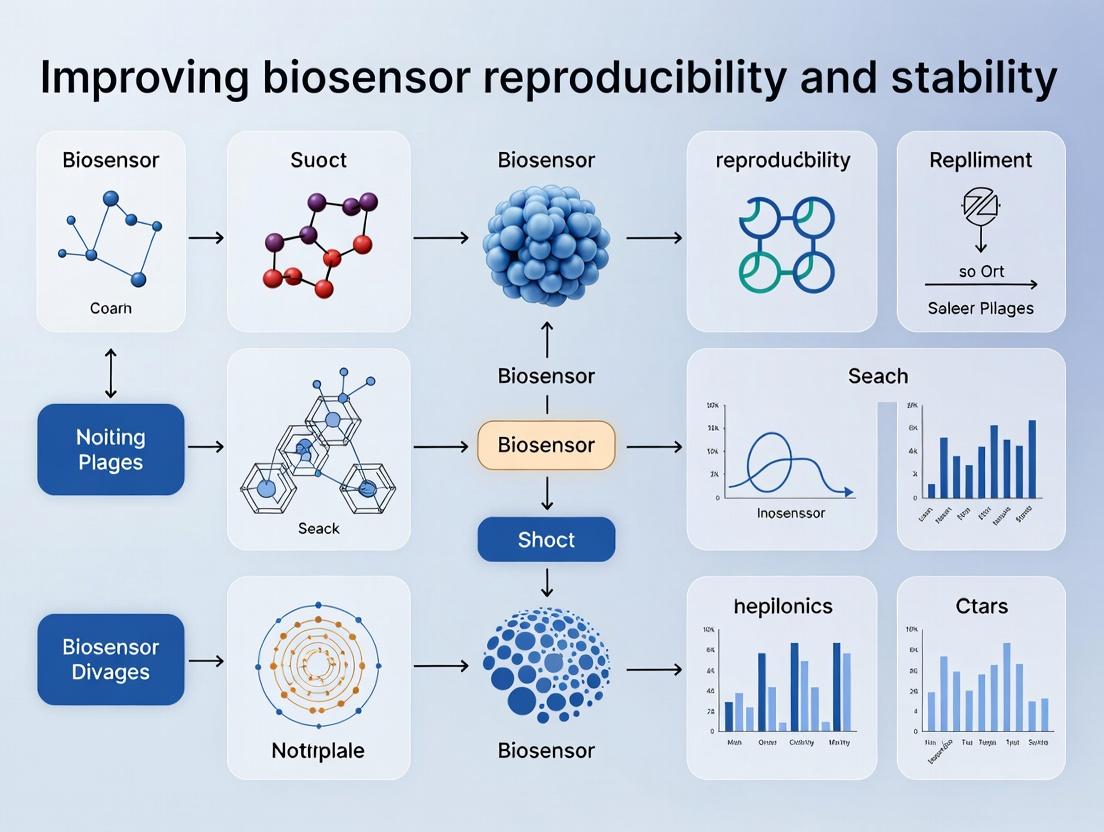
This article provides a systematic roadmap for researchers and developers seeking to improve the critical performance metrics of reproducibility and stability in biosensor technology.
Bridging the Gap: A Comprehensive Guide to Enhancing Biosensor Reproducibility and Long-Term Stability
Abstract
This article provides a systematic roadmap for researchers and developers seeking to improve the critical performance metrics of reproducibility and stability in biosensor technology. Addressing foundational principles, we explore the major sources of variability and degradation in biosensor systems. The piece transitions into actionable methodologies for surface chemistry, immobilization, and assay design, followed by targeted troubleshooting and optimization strategies for common experimental and environmental challenges. Finally, it outlines rigorous validation frameworks and comparative analysis of emerging technologies. This integrated approach equips scientists to develop more reliable biosensors, thereby accelerating their translation from the lab bench to clinical and industrial applications.
Decoding the Challenge: Foundational Principles of Biosensor Variability and Degradation
Troubleshooting Guides & FAQs
Q1: Our biosensor shows high variability in signal output between identical assay runs. What are the primary technical causes affecting reproducibility?
A: High inter-assay variability often stems from inconsistent sample/reagent handling, surface chemistry heterogeneity, or environmental drift.
- Key Checks & Actions:
- Surface Preparation: Ensure identical cleaning (e.g., piranha, plasma) and functionalization protocols. Use a consistent batch of linker molecules (e.g., thiols, silanes). Implement real-time surface characterization (e.g., SPR, QCM) for quality control.
- Fluidic Control: For flow-based systems, calibrate pumps and confirm flow rates are identical. Minimize bubble formation.
- Reagent Consistency: Use aliquots from the same reagent batch. Allow all reagents to reach thermal equilibrium before the experiment.
- Calibration: Run a standard calibration curve with known analyte concentrations with every assay batch.
Q2: Our sensor's baseline drifts significantly during long-term measurement, complicating data interpretation. How can we mitigate this to assess true stability?
A: Baseline drift indicates instability, often from nonspecific adsorption, electrode passivation, or environmental factors.
- Key Checks & Actions:
- Blocking Optimization: Systematically test and validate blocking agents (e.g., BSA, casein, engineered peptides) specific to your sample matrix.
- Reference Sensor: Use a dual-channel system with an identical reference sensor lacking the biorecognition element. Subtract the reference signal.
- Environmental Chamber: Enclose the setup in a temperature- and humidity-controlled chamber.
- Electrical Conditioning: For electrochemical sensors, apply consistent conditioning pulses (e.g., potential cycling) before each measurement to refresh the electrode surface.
Q3: The binding kinetics (Ka, Kd) we measure vary significantly from literature values for the same receptor-ligand pair. How should we troubleshoot?
A: Discrepancies often arise from differences in assay configuration, data collection parameters, or data fitting models.
- Troubleshooting Protocol:
- Confirm Assay Validity: Perform a positive control with a well-characterized model system (e.g., biotin-streptavidin).
- Review Assay Assumptions: Ensure your analyte is monomeric and pure. Confirm your receptor is correctly oriented and functional post-immobilization.
- Data Acquisition Rate: For kinetic measurements, the sensor's sampling rate must be fast enough to capture the binding event (typically ≥10 data points per half-life of interaction).
- Model Selection: Use global fitting across multiple analyte concentrations. Compare different binding models (1:1, two-state, bivalent) and assess fit residuals.
Q4: How do we systematically differentiate between a loss of signal due to bioreceptor degradation (instability) versus a precision failure in our measurement instrument?
A: Implement a decoupled diagnostic protocol.
- Diagnostic Workflow:
- Fresh Calibration Test: Challenge the sensor with a high-concentration standard analyte. If the response returns to the initial maximum, the issue is likely measurement precision (e.g., detector noise, lamp intensity). If the response remains low, proceed to step 2.
- Regeneration Test: Apply a harsh regeneration buffer (e.g., low pH, high salt) to strip all bound analyte. Re-challenge with the standard. A recovered response suggests the receptor is stable but the signal loss was due to a saturated or fouled surface. No recovery suggests receptor denaturation/degradation (true stability failure).
- Orthogonal Validation: Use a secondary technique (e.g., fluorescence microscopy with a labeled antibody) to confirm the presence/functionality of the immobilized receptor.
Table 1: Common Sources of Error Impacting Reproducibility vs. Stability
| Metric | Primary Source of Error | Typical Magnitude of Impact | Corrective Action |
|---|---|---|---|
| Reproducibility (Precision) | Pipetting Volume (Manual) | CV can be 5-10% | Use calibrated, automated liquid handlers. |
| Surface Roughness Variation | Signal CV of 15-25% | Implement atomic force microscopy (AFM) QC on substrates. | |
| Ambient Temperature Fluctuation | Drift of 1-2% signal/°C | Use a temperature-controlled enclosure (±0.1°C). | |
| Stability (Lifetime) | Bioreceptor Denaturation | Activity half-life: hours to weeks | Optimize immobilization chemistry; use stabilizing additives. |
| Biofouling in Complex Media | Signal decay >50% in hours | Engineer antifouling layers (e.g., PEG, zwitterions). | |
| Reference Electrode Drift | Drift of several mV/day | Use double-junction or solid-state reference electrodes. |
Table 2: Comparison of Characterization Methods for Key Metrics
| Method | Measures | Throughput | Cost | Best for Assessing |
|---|---|---|---|---|
| QCM-D | Mass & Viscoelasticity | Low | Medium | Nonspecific adsorption, receptor degradation (Stability) |
| SPR / BLI | Binding Kinetics & Affinity | Medium | High | Assay reproducibility, binding specificity (Reproducibility) |
| Electrochemical Impedance Spectroscopy (EIS) | Interface Charge Transfer | Medium | Low | Layer consistency, degradation over time (Both) |
| Calibration Curve Analysis | LOD, LOQ, Dynamic Range | High | Low | Inter-assay precision (Reproducibility) |
Experimental Protocols
Protocol 1: Standardized Experiment for Assessing Inter-Assay Reproducibility Objective: Quantify the Coefficient of Variation (CV) for signal output across multiple sensors and days.
- Sensor Fabrication: Fabricate 20 identical sensors from the same substrate batch.
- Functionalization: Immobilize the bioreceptor (e.g., antibody) on all sensors in a single, automated run using the same reagent stock.
- Calibration: On Day 0, challenge each sensor with a 5-point dilution series of the target analyte (in triplicate) in a controlled buffer. Record the equilibrium response.
- Data Analysis: For each analyte concentration, calculate the mean response and standard deviation across all 20 sensors. Compute the CV (%) = (SD/Mean)*100. A CV <10% is typically considered acceptable for research-grade biosensors.
- Repeatability Test: Repeat steps 3-4 on Days 1, 3, and 7 using the same sensors (stored in PBS at 4°C) and fresh analyte dilutions.
Protocol 2: Accelerated Aging Test for Assessing Operational Stability (Lifetime) Objective: Estimate the operational half-life of the biosensor under stress conditions.
- Baseline Measurement: Fabricate and functionalize a cohort of sensors (n=12). Measure the initial response (Signal_initial) for a mid-range analyte concentration.
- Stress Application: Divide sensors into 3 groups. Continuously expose them to:
- Group A (Control): Storage buffer at 4°C.
- Group B (Mid-stress): Assay buffer at 25°C with gentle agitation.
- Group C (High-stress): Assay buffer at 37°C with vigorous agitation.
- Periodic Testing: At defined timepoints (e.g., 0, 6, 12, 24, 48, 96 hours), remove one sensor from each group. Rinse and measure its response to the same mid-range analyte standard (Signal_time).
- Data Analysis: Plot normalized response (Signaltime / Signalinitial) vs. time for each group. Fit the data to a first-order decay model. Determine the time at which the normalized response drops to 50% – this is the estimated operational half-life under those conditions.
Pathway & Workflow Diagrams
Diagram 1: Factors Influencing Reproducibility vs. Stability
Diagram 2: Diagnostic Tree for Signal Loss
The Scientist's Toolkit: Research Reagent Solutions
| Item / Reagent | Function in Biosensor Research | Key Consideration |
|---|---|---|
| Carboxymethylated Dextran Matrix | Provides a hydrogel surface for immobilization, reducing steric hindrance and non-specific binding. | Layer thickness affects ligand density and mass transport. |
| PEG-based Crosslinkers (e.g., NHS-PEG-Maleimide) | Creates a defined, flexible spacer between the sensor surface and the bioreceptor, improving orientation and accessibility. | PEG chain length must be optimized for each receptor-analyte pair. |
| Stabilizing Buffer Additives (e.g., Trehalose, BSA, Glycerol) | Preserves bioreceptor conformation and activity during storage and operation, directly extending stability. | Must be tested for interference with the sensing mechanism. |
| Anti-fouling Agents (e.g., Zwitterionic polymers, OEG Self-Assembled Monolayers) | Forms a physical and energetic barrier to non-specifically adsorbing proteins and cells in complex media. | Immobilization chemistry must be compatible with the underlying substrate. |
| Regeneration Buffers (e.g., Glycine-HCl pH 2.5-3.0, NaOH 10-100mM) | Gently dissociates bound analyte without damaging the immobilized receptor, enabling sensor reuse. | Stringent optimization required for each specific interaction. |
Technical Support & Troubleshooting Center
Q1: Why do I see high CVs (>20%) between identical sensor batches from the same manufacturer? A: This is often due to lot-to-lot reagent variability. Key culprits include:
- Polyclonal Antibody Inconsistency: Differences in affinity and epitope recognition between antibody productions.
- Sensor Surface Chemistry: Inconsistent functionalization (e.g., NHS-ester coupling density) across production runs.
- Calibration Standard Instability: Degradation of reference standards, leading to shifting calibration curves.
Q2: What are the primary environmental factors causing inter-assay variability in my plate-based biosensor assays? A: The main factors are temperature fluctuations and evaporation. A change of ±1°C can alter binding kinetics by ~10%. Edge effects in microplates due to uneven evaporation can cause significant well-to-well signal drift.
Q3: My immobilized protein ligands lose activity rapidly. How can I improve biosensor surface stability? A: This is typically a surface passivation issue. Non-specific binding (NSB) or denaturation occurs when the sensor substrate is not properly blocked. Implement a rigorous, consistent passivation protocol (see Protocol 1 below).
Troubleshooting Guides
Issue: Drifting Baselines in Real-Time Binding Assays (e.g., SPR, BLI)
| Possible Cause | Diagnostic Check | Corrective Action |
|---|---|---|
| Temperature Gradient | Measure buffer temperature in source vial vs. flow cell. | Equilibrate all buffers and the instrument for >1 hour. Use a temperature-controlled rack. |
| Air Bubbles in Microfluidics | Inspect sensorgram for sharp, chaotic spikes. | Degas all buffers thoroughly before run. Implement bubble traps in fluidic line. |
| Reference Sensor Inadequacy | Compare reference-subtracted vs. raw signal. | Use a matched reference flow cell with an inert coating (e.g., BSA) or a precisely mismatched ligand. |
Issue: Inconsistent Dose-Response Curves Between Assay Runs
| Possible Cause | Diagnostic Check | Corrective Action |
|---|---|---|
| Variable Cell Seeding Density | Measure confluence or DNA content pre-assay. | Automate cell counting and seeding using a calibrated syringe pump. |
| Analyte Adsorption to Tubing | Compare prepared concentration vs. delivered concentration (via HPLC). | Use low-binding tubes/pipes (e.g., PMP). Include a carrier protein (e.g., 0.1% BSA) in dilution buffer. |
| Instrument Gain/Exposure Variation | Image a stable fluorescent control plate across runs. | Implement a daily calibration routine using standardized fluorophore beads or quenched plates. |
Experimental Protocols for Reproducibility
Protocol 1: Standardized Biosensor Functionalization & Passivation
Objective: To achieve consistent ligand density and minimize NSB on gold sensor surfaces (SPR or BLI chips).
- Piranha Clean: Immerse sensor chip in fresh 3:1 H₂SO₄:H₂O₂ for 1 minute. CAUTION: Extremely corrosive. Rinse with copious Milli-Q water and dry under N₂ stream.
- Thiol Functionalization: Incubate chip in 2 mM solution of carboxyl-terminated alkanethiol (e.g., 16-mercaptohexadecanoic acid) in ethanol for 24 hours at room temperature.
- Activation: Rinse with ethanol, then water. Inject a 7-minute pulse of a 1:1 mixture of 0.4 M EDC and 0.1 M NHS to activate carboxyl groups.
- Ligand Immobilization: Dilute protein ligand to 10 µg/mL in 10 mM sodium acetate buffer (pH 5.0). Inject over activated surface until desired immobilization level is reached (typically 100-200 RU for SPR).
- Deactivation & Passivation: Inject 1 M ethanolamine-HCl (pH 8.5) for 7 minutes to block unused esters. Then, inject 1% (w/v) Pluronic F-127 for 20 minutes to passivate non-specific sites.
- Storage: Rinse with assay buffer and store at 4°C under nitrogen if not used immediately.
Protocol 2: Intra-Plate Signal Normalization Using Embedded Controls
Objective: Correct for well-to-well variability in cell-based biosensor assays.
- Plate Layout: Design 96-well plate with test compounds in columns 2-11. Reserve column 1 for negative control (buffer only) and column 12 for positive control (max stimulus).
- Dual-Labeling: Co-transfect or co-treat cells with the primary biosensor (e.g., a FRET-based cAMP sensor) and a constitutive, inert fluorescent protein (e.g., mCherry).
- Acquisition: Read both the biosensor emission ratio (e.g., YFP/CFP) and the mCherry fluorescence (ex 587/em 610) for all wells.
- Calculation: For each well, calculate the normalized response:
(Biosensor Ratio_well / mCherry_well) / (Average Biosensor Ratio_column1 / Average mCherry_column1). - Analysis: Use the normalized values to generate dose-response curves.
Table 1: Impact of Common Factors on Inter-Assay CV
| Variability Source | Typical CV Increase | Measurement Method | Reference |
|---|---|---|---|
| Manual vs. Automated Pipetting | +8% to +15% | Fluorescence of serial-diluted quinine sulfate | Recent QC data |
| Room Temperature Fluctuation (±2°C) | +5% to +12% | Thermocouple in buffer reservoir | J. Biomol. Tech., 2023 |
| Different Lot of Detection Antibody | +10% to +25% | ELISA standard curve slope comparison | Manufacturer Tech Notes |
| Cell Passage Number Shift (P5 vs P15) | +15% to +30% | EC50 from calcium flux assay | ACS Sens., 2024 |
Table 2: Biosensor Platform Comparison for Key Reproducibility Metrics
| Platform | Typical Baseline Noise (RU) | Immobilization CV (Lot-to-Lot) | Recommended Passivation |
|---|---|---|---|
| SPR (Gold Chip) | 0.5 - 1 | 8-12% | Carboxymethyl dextran + BSA/Pluronic |
| BLI (Fiber Dip) | 0.01 - 0.02 nm | 10-15% | PEG-based coatings |
| Graphene FET | Varies with gate | >20% | Pyrene-PEG conjugates |
| Paper-Based Lateral Flow | N/A | 15-25% | Sucrose/BSA/Tween-20 |
Visualizations
Title: Assay Workflow with Major Variability Injection Points
Title: Idealized Biosensor Surface Chemistry Layers
The Scientist's Toolkit: Key Research Reagent Solutions
| Item | Function in Improving Reproducibility | Example Product/Catalog |
|---|---|---|
| NIST-traceable Standard | Provides absolute calibration to anchor assays across labs and time. | NISTmAb (RM 8671) for antibody-based assays. |
| Pluronic F-127 | Non-ionic surfactant for blocking hydrophobic surfaces; reduces NSB. | Thermo Fisher Scientific P6866. |
| Protease-Free BSA | Consistent, high-purity blocking agent; reduces lot variability. | Jackson ImmunoResearch 001-000-162. |
| Low-Binding Microtubes | Minimizes analyte loss via surface adsorption during serial dilution. | Eppendorf Protein LoBind Tubes. |
| Fluorescent Calibration Beads | Daily instrument performance validation and normalization. | Spherotech ACCP-70-5 (8-peak). |
| ERCC RNA Spike-In Mix | Controls for variability in sample prep for transcriptomic biosensors. | Thermo Fisher Scientific 4456740. |
| Ready-Prepared Assay Buffer | Eliminates buffer preparation as a source of ionic/pH variation. | Cytiva BR100669 (HBS-EP+). |
Technical Support Center
Troubleshooting Guides & FAQs
Q1: Our electrochemical biosensor shows high background noise and poor signal-to-noise ratio. What substrate properties should we investigate? A: This is often related to non-specific adsorption (NSA) on the electrode substrate. Focus on substrate surface energy and chemical termination.
- Protocol: Surface Characterization for NSA:
- Clean substrate (e.g., Au-coated glass slide) via oxygen plasma treatment (100 W, 5 min).
- Functionalize with your standard thiolated receptor immobilization protocol.
- Incubate with a 1% BSA (Bovine Serum Albumin) solution in PBS for 1 hour to block non-specific sites.
- Expose to a solution containing only the sample matrix (no target analyte) for 30 min.
- Measure the non-faradaic current via Electrochemical Impedance Spectroscopy (EIS) at 0.2 V vs. Ag/AgCl in 5 mM [Fe(CN)₆]³⁻/⁴⁻. A charge transfer resistance (Rct) decrease of >10% indicates significant NSA.
- Solution: Implement a mixed self-assembled monolayer (SAM) using a co-adsorbent like 6-mercapto-1-hexanol (MCH) at a 1:3 ratio (receptor thiol:MCH) to reduce pinholes and create a hydrophilic, anti-fouling surface.
Q2: We observe inconsistent receptor (e.g., antibody) immobilization density and orientation across sensor batches. How can we standardize this? A: Inconsistent density stems from uncontrolled surface chemistry and immobilization kinetics.
- Protocol: Quantitative Receptor Density Measurement (Fluorometric):
- Use fluorescently-labeled antibodies (e.g., FITC-labeled).
- Immobilize receptors on your substrate (e.g., NHS/EDC chemistry on carboxylated SAMs).
- Rinse thoroughly with buffer to remove physisorbed material.
- Image the surface using a fluorescence microscope with a calibrated intensity standard.
- Calculate surface density using the formula: Density (molecules/cm²) = (Isample × NA) / (Istandard × ε × QY), where I is intensity, NA is Avogadro's number, ε is molar absorptivity, and QY is quantum yield.
- Solution: Switch to site-specific immobilization. For antibodies, use oxidized Fc-glycans and immobilize via hydrazide chemistry, or use Protein A/G surfaces. Control density by varying reaction time and concentration, and always measure the resultant density.
Q3: Our optical biosensor (e.g., SPR, LSPR) shows signal drift over long-term measurement in complex media (e.g., serum). A: Drift indicates instability at the transducer interface, often due to biofilm formation or corrosion.
- Protocol: Stability Stress Test:
- Prepare sensors with full biorecognition layer (substrate + receptor).
- Mount in flow cell and establish a baseline in running buffer (e.g., HEPES).
- Switch to undiluted fetal bovine serum (FBS) and monitor the baseline signal for 24 hours at 25°C.
- Switch back to running buffer. A baseline shift that does not return to original value indicates irreversible fouling or degradation.
- Solution: Apply a nano-coating on the transducer. For gold surfaces, use a PEGylated alkanethiol SAM. For dielectric surfaces (e.g., SiO₂ for waveguides), graft a dense layer of poly(carboxybetaine acrylamide) (pCBAA) via surface-initiated ATRP. These coatings dramatically reduce non-specific protein and cell adhesion.
Q4: The sensitivity (LoD) of our field-effect transistor (FET) biosensor degrades after 2 weeks of storage. A: This points to degradation of the semiconductor transducer material or the dielectric layer upon exposure to ambient or aqueous conditions.
- Protocol: Accelerated Aging Test for FET Biosensors:
- Store functionalized sensors in three conditions: (a) Dry N₂ atmosphere, (b) Ambient air (40% RH), (c) 4°C in PBS buffer.
- At intervals (0, 1, 7, 14 days), calibrate each sensor using a standard analyte dilution series.
- Record the transconductance (gm) and threshold voltage (Vth) from the Ids-Vgs transfer curve.
- A >20% shift in Vth or a >15% decrease in gm indicates significant degradation.
- Solution: For graphene or MoS₂ FETs, ensure complete encapsulation of the channel and contacts with an impermeable layer like atomic layer deposited (ALD) Al₂O₃ (20-30 nm), leaving only the functionalized gate area exposed. Store all sensors in vacuum desiccators.
Q5: Our colorimetric lateral flow assay shows weak test lines and high lot-to-lot variability. A: This typically involves inconsistent conjugation of receptor (e.g., antibody) to the nanoparticle (AuNP) transducer and poor capillary flow of the nitrocellulose substrate.
- Protocol: Quality Control for Nanoparticle Conjugates:
- After conjugation and blocking, centrifuge the AuNP-antibody conjugate.
- Re-suspend in storage buffer and measure UV-Vis absorbance spectrum.
- The peak wavelength should not shift >2 nm from the pre-conjugation peak (~525 nm for 40nm AuNPs). A larger red shift indicates aggregation.
- Measure the absorbance ratio (A520/A650). A ratio below 5 suggests significant aggregation and poor conjugate quality.
- Solution: Standardize the conjugation pH to precisely 0.5 units above the isoelectric point (pI) of the antibody. Use a controlled passive adsorption protocol with a fixed antibody: nanoparticle ratio (e.g., 50 µg antibody per 1 mL of OD1 40nm AuNPs). For the substrate, characterize the capillary flow rate for each nitrocellulose membrane lot and adjust the sample pad overlap accordingly.
Table 1: Impact of Substrate Modification on Non-Specific Adsorption (NSA)
| Substrate Modification | Surface Energy (mJ/m²) | % Rct Shift in Serum* | Relative Signal-to-Noise |
|---|---|---|---|
| Bare Gold Electrode | ~70 | -45% | 1.0 |
| MCH SAM | ~40 | -15% | 8.2 |
| Oligo(ethylene glycol) SAM | ~35 | -8% | 12.5 |
| Zwitterionic Polymer Brush | ~30 | <2% | 25.7 |
*Negative shift indicates increased NSA leading to false positive signals.
Table 2: Immobilization Method Impact on Antibody Activity & Density
| Immobilization Chemistry | Typical Density (ng/cm²) | Estimated % Active Orientation | Stability (Days in PBS) |
|---|---|---|---|
| Physical Adsorption | 150 - 400 | <10% | 3-7 |
| NHS/EDC (Random Amine) | 300 - 600 | ~25% | 14-21 |
| Protein A/G (Fc-specific) | 200 - 350 | >90% | 21-30 |
| Site-Specific (e.g., Click) | 100 - 250 | >95% | >30 |
Experimental Protocol: Standardized Surface Plasmon Resonance (SPR) Chip Preparation
Objective: Reproducibly create a carboxymethylated dextran surface for covalent antibody immobilization. Materials: SPR gold chip, piranha solution (3:1 H₂SO₄:H₂O₂) CAUTION, 11-mercaptoundecanoic acid (11-MUA) ethanol solution (1 mM), NHS/EDC solution, 1M ethanolamine-HCl (pH 8.5). Procedure:
- Substrate Cleaning: Immerse gold chip in fresh piranha solution for 2 minutes. Rinse copiously with Millipore water and absolute ethanol. Dry under N₂ stream.
- SAM Formation: Incubate chip in 1 mM 11-MUA in ethanol for 24 hours at room temperature in the dark. Rinse with ethanol and dry.
- Dextran Hydrogel Formation (via commercial kit): Inject solutions over the chip in a flow system at 5 µL/min: a) 0.4 M EDC + 0.1 M NHS (1:1 mix) for 10 min to activate carboxyls. b) 0.5 mg/mL dextran-amine in 0.1 M borate buffer (pH 8.5) for 60 min. c) 1M ethanolamine-HCl (pH 8.5) for 10 min to deactivate remaining esters.
- Final Activation: Prior to antibody immobilization, activate the dextran surface with a fresh 7-min pulse of NHS/EDC solution.
The Scientist's Toolkit: Key Research Reagent Solutions
| Item | Function & Rationale |
|---|---|
| 6-Mercapto-1-hexanol (MCH) | A short-chain alkanethiol used as a co-adsorbent to backfill gold SAMs, displacing non-specifically adsorbed receptors and creating a hydrophilic, protein-resistant layer. |
| Poly(ethylene glycol) Thiol (PEG-Thiol) | Used to form non-fouling SAMs on gold transducers. The PEG chain is highly hydrated, creating a physical and energetic barrier against non-specific protein adsorption. |
| Sulfo-NHS/EDC | Water-soluble carbodiimide crosslinkers for zero-length conjugation. Activates surface carboxyl groups to form amine-reactive esters for covalent immobilization of proteins. |
| Protein A or Protein G | Bacterial proteins that bind the Fc region of antibodies with high affinity. Used to create surfaces that ensure proper antibody orientation, maximizing antigen-binding capacity. |
| Phosphate Buffered Saline (PBS) with Tween-20 | Standard wash and dilution buffer. The non-ionic detergent Tween-20 (typically at 0.05%) reduces hydrophobic interactions, minimizing non-specific binding. |
| Bovine Serum Albumin (BSA) or Casein | Generic blocking proteins. Saturate unoccupied binding sites on the substrate and transducer surface to prevent subsequent non-specific adsorption of assay components. |
| Ethanolamine-HCl | Used to quench (block) unreacted NHS-esters on the surface after covalent immobilization, preventing unwanted coupling in subsequent steps. |
| Atomic Layer Deposition (ALD) Precursors (e.g., TMA, H₂O) | Used to grow ultra-thin, conformal, and pinhole-free oxide layers (e.g., Al₂O₃) for encapsulating and stabilizing sensitive nanomaterial transducers. |
Visualizations
Troubleshooting Decision Pathway
SPR Chip Surface Preparation Workflow
Technical Support Center
Troubleshooting Guides
Issue: Drift in Baseline Signal Over Time
- Problem: The sensor's baseline or background signal increases steadily during an experiment or between measurements, reducing the signal-to-noise ratio.
- Likely Cause: Progressive accumulation of non-specifically adsorbed matrix proteins or other biomolecules (biofouling) on the sensor surface.
- Solution Steps:
- Verify: Run a calibration or blank buffer injection. A persistently elevated response confirms fouling.
- Interim Mitigation: Implement more stringent washing protocols between samples (e.g., with a regeneration buffer like 10 mM Glycine-HCl, pH 2.0).
- Prevention: Apply or re-apply an anti-fouling coating to the sensor surface (see Experimental Protocols).
- Re-calibrate: After cleaning or regeneration, always re-calibrate the sensor with known standards.
Issue: High Background in Negative Controls
- Problem: Negative controls or blanks show a significant signal, leading to false positives or reduced assay sensitivity.
- Likely Cause: Non-specific binding (NSB) of detection reagents (e.g., secondary antibodies, labels) or sample components to the sensor surface or capture molecule.
- Solution Steps:
- Optimize Blocking: Increase the concentration or incubation time of your blocking agent (e.g., BSA, casein, proprietary commercial blockers).
- Include NSB Controls: Always run controls without the primary capture element.
- Modify Assay Buffer: Add a non-ionic detergent (e.g., 0.05% Tween-20) or a charged polymer (e.g., 0.1% salmon sperm DNA) to the sample and detection buffers to reduce electrostatic/hydrophobic interactions.
- Switch Reagents: Consider using recombinant Fab fragments or affinity-matured antibodies with lower isoelectric points (pI) as detection elements to minimize NSB.
Issue: Irreproducible Sensor Response Between Chips/Batches
- Problem: Signal magnitude or kinetics vary significantly when using different sensor chips or different batches of the same chip type.
- Likely Cause: Inconsistent surface chemistry or anti-fouling layer formation during sensor chip manufacturing or in-lab functionalization.
- Solution Steps:
- Quality Control: Perform a standardized quality control assay (e.g., binding kinetics of a standard protein) on each new chip or batch.
- Standardize Protocol: Strictly adhere to a standardized surface preparation protocol with precise timings and reagent lots.
- Normalize Data: Normalize response signals to a positive control run on each individual sensor.
- Contact Manufacturer: If inter-batch variability is high, provide QC data to the manufacturer for support.
Frequently Asked Questions (FAQs)
Q1: What is the most effective anti-fouling coating for serum-based samples? A: For complex biological fluids like serum or plasma, multi-component, brush-like polymeric coatings are currently considered best. Polyethylene glycol (PEG) derivatives, particularly zwitterionic polymers like poly(carboxybetaine), demonstrate superior performance by forming a strong hydration layer that resists protein adsorption. The effectiveness of common coatings is summarized below.
Q2: How can I quantify the degree of biofouling on my sensor in real-time? A: Use a label-free real-time biosensor (e.g., SPR, QCM-D) to monitor the adsorption mass directly. Inject the complex sample (e.g., serum) over your sensor surface for a set time (e.g., 10 min). The frequency or resonance angle shift during this injection directly corresponds to the total fouling mass. QCM-D can further provide viscoelastic properties of the fouling layer.
Q3: My protein-based detection antibody causes high NSB. What are my alternatives? A: Consider these lower-NSB alternatives:
- Monoclonal Nanobodies: Smaller size and typically higher stability.
- Aptamers: Nucleic acid-based binders; NSB can be effectively blocked with nonspecific DNA/RNA.
- Affimer/Adnectin Proteins: Engineered scaffold proteins designed for high stability and low NSB.
- Electrochemically labeled Synthetic Peptides: For electrochemical sensors, these can offer more consistent surface attachment.
Q4: What is the standard protocol for creating a PEGylated anti-fouling surface on a gold sensor? A: See the detailed Experimental Protocol in the section below.
Research Data & Protocols
Table 1: Comparison of Common Anti-Fouling Coatings in Serum
| Coating Type | Example Material | Approximate Protein Reduction vs. Bare Gold | Key Advantage | Key Limitation |
|---|---|---|---|---|
| Self-Assembled Monolayer (SAM) | Oligo(ethylene glycol) alkanethiol | 90-95% | Well-defined, simple preparation | Can oxidize over time |
| Polymer Brush | Poly(oligoethylene glycol methacrylate) | 95-98% | Dense, thick, highly resistant | More complex synthesis/grafting |
| Zwitterionic Polymer | Poly(sulfobetaine methacrylate) | 98-99%+ | Excellent hydration, very low fouling | Sensitive to ionic strength/pH |
| Hydrogel | Dextran or PEG-based hydrogel | 90-99% | 3D matrix for high ligand loading | Can slow diffusion kinetics |
Experimental Protocol: Creating a PEGylated Gold Surface for SPR
- Title: Formation of a Mixed Mercaptoalkane-PEG Anti-fouling Self-Assembled Monolayer (SAM).
- Objective: To functionalize a clean gold sensor surface with a mixed SAM that minimizes non-specific binding.
- Materials: Clean gold substrate, Ethanol (absolute), 1 mM 11-mercaptoundecanoic acid (MUDA) in ethanol, 1 mM hexa(ethylene glycol) undecane thiol (EG6-Thiol) in ethanol, Nitrogen stream.
- Procedure:
- Gold Cleaning: Clean the gold sensor chip via UV-Ozone treatment for 20 minutes or piranha solution (Caution: Highly corrosive) for 1 minute, followed by thorough rinsing with water and ethanol.
- SAM Formation: Incubate the clean, dry gold chip in a mixed alkanethiol solution (e.g., a 1:9 molar ratio of MUDA:EG6-Thiol, total thiol concentration 1 mM) for a minimum of 12 hours at room temperature in the dark.
- Rinsing: Remove the chip from the solution and rinse it copiously with pure ethanol to remove physisorbed thiols.
- Drying: Dry the chip gently under a stream of nitrogen.
- Validation: The surface can now be activated for ligand immobilization via the MUDA's carboxyl groups. Validate fouling resistance by exposing the surface to 10% serum in PBS and monitoring baseline shift on an SPR instrument.
The Scientist's Toolkit: Key Research Reagent Solutions
| Item | Function in Context |
|---|---|
| Zwitterionic Detergent (e.g., CHAPS) | Maintains protein solubility in sample buffers without interfering with most recognition elements, reducing aggregation-driven fouling. |
| Commercially Available Anti-fouling Blockers (e.g., SuperBlock, Blocker Casein) | Optimized, ready-to-use formulations designed to rapidly passivate surfaces against a wide range of interferents. |
| Surface Plasmon Resonance (SPR) Chip Regeneration Kits | Provide a range of precise pH, ionic, and chaotropic solutions for removing fouling layers without damaging the underlying sensor chemistry. |
| PEG-Based Heterobifunctional Crosslinkers (e.g., NHS-PEG-Maleimide) | Used to immobilize ligands while presenting a short, anti-fouling PEG spacer, reducing steric hindrance and NSB. |
| Quartz Crystal Microbalance with Dissipation (QCM-D) Sensors | Enable real-time, label-free monitoring of both mass and viscoelastic properties of the fouling layer, crucial for coating development. |
Visualizations
Title: Biofouling Cascade on a Sensor Surface
Title: Anti-Fouling Coating Evaluation Protocol
Title: NSB Causes and Corresponding Solutions
Building Better Sensors: Advanced Methodologies for Robust Fabrication and Assay Design
Technical Support Center: Troubleshooting and FAQs for Improved Biosensor Fabrication
This support center addresses common experimental challenges in surface functionalization within the context of Improving Biosensor Reproducibility and Stability. The questions, troubleshooting steps, and protocols are designed for researchers and scientists developing consistent and reliable biosensing platforms.
Frequently Asked Questions (FAQs)
Q1: My self-assembled monolayer (SAM) on gold shows high non-specific binding in my biosensor assay. What are the likely causes and solutions? A: High non-specific adsorption often stems from incomplete monolayer formation or contamination.
- Troubleshooting Guide:
- Verify Gold Substrate Cleanliness: Use the piranha (H₂SO₄:H₂O₂ 3:1) or oxygen plasma cleaning protocol immediately before SAM formation. Ensure thorough rinsing with high-purity ethanol and water.
- Optimize SAM Incubation: Ensure your thiol solution is prepared in high-quality, degassed solvent. Extend incubation time (often 12-24 hours is required for dense packing) in an inert atmosphere (N₂ or Ar) to prevent thiol oxidation.
- Introduce Backfilling: If using a functional thiol (e.g., carboxy-terminated), co-immobilize or subsequently backfill with a passivating thiol (e.g., 6-mercapto-1-hexanol or PEGylated thiol) to cover pinhole defects.
- Characterize Monolayer Quality: Use ellipsometry or contact angle goniometry to verify expected thickness and hydrophilicity/hydrophobicity. Electrochemical methods (e.g., cyclic voltammetry with a redox probe like Fe(CN)₆³⁻/⁴⁻) can quantitatively assess defect density and monolayer permeability.
Q2: How can I improve the reproducibility of polymer brush (e.g., PEG, polyacrylamide) grafting density across multiple biosensor chips? A: Reproducibility in surface-initiated polymerization depends on precise control of initiator density and polymerization conditions.
- Troubleshooting Guide:
- Standardize Initiator Immobilization: Whether using a silane (on SiO₂/glass) or thiol (on Au) initiator, control reaction time, temperature, and solvent batch strictly. Use anhydrous conditions for silane chemistry.
- Degas Monomer Solutions: Oxygen is a common inhibitor for radical polymerizations (ATRP, RAFT). Sparge monomer solutions with N₂ or Ar for >30 minutes prior to use.
- Calibrate Reaction Time & Temperature: Polymer brush thickness is highly sensitive to time and temperature. Use a thermostated reaction vessel and precise timers. For consistent growth, fix these parameters based on a calibration curve (thickness vs. time).
- Employ Characterization: Use spectroscopic ellipsometry to measure brush thickness on a reference silicon wafer processed alongside your biosensor chips as a quality control metric.
Q3: My surface functionalization yields are inconsistent when moving from flat model surfaces (e.g., Si wafers) to actual biosensor substrates (e.g., nanostructured gold or porous silicon). What should I do? A: This is a common scaling issue due to differences in surface area, topography, and mass transport.
- Troubleshooting Guide:
- Adjust Solution Volumes/Concentrations: For nanostructured or porous substrates with higher surface area, increase the concentration of your functionalization reagent (thiol, silane, monomer) or the reaction volume to ensure stoichiometric excess.
- Modify Incubation Parameters: Increase reaction times to allow for diffusion into pores or dense nanostructures. Consider using gentle agitation.
- Optimize Rinsing Protocols: More vigorous rinsing (e.g., with sonication in solvent) may be needed to remove physisorbed material from high-surface-area substrates without damaging the film.
- Use Substrate-Specific Characterization: Utilize techniques sensitive to your final biosensor format, such as localized surface plasmon resonance (LSPR) shifts for nanostructured gold or quartz crystal microbalance (QCM) for mass uptake on porous surfaces.
Key Experimental Protocols
Protocol 1: Formation of a Mixed, Carboxy-Terminated SAM on Gold for Antibody Coupling This protocol is optimized for creating a reproducible, low-fouling surface with activated esters for biomolecule immobilization.
- Substrate Cleaning: Clean gold substrates (e.g., on glass/silicon) in freshly prepared piranha solution (Caution: Highly corrosive) for 10 minutes. Rinse extensively with Milli-Q water and absolute ethanol. Dry under a stream of nitrogen or argon.
- SAM Solution Preparation: In a clean glass vial, prepare a 1 mM total thiol concentration solution in degassed absolute ethanol. Use a mixture of 90% 11-mercaptoundecanoic acid (MUDA) and 10% 1-mercapto-6-hexanol (C6OH). Sparge with N₂ for 10 minutes.
- SAM Formation: Immerse the clean, dry gold substrates in the thiol solution. Seal the vial under a N₂ atmosphere. Incubate in the dark at room temperature for 18-24 hours.
- Rinsing and Drying: Retrieve substrates and rinse thoroughly with pure ethanol, followed by dichloromethane (to remove disordered multilayers). Dry under a gentle N₂ stream.
- Activation: Prior to use, activate the carboxyl groups by immersing the SAM in a fresh solution of 75 mM N-hydroxysuccinimide (NHS) and 30 mM 1-ethyl-3-(3-dimethylaminopropyl)carbodiimide (EDC) in MES buffer (pH 5.5-6.0) for 30-60 minutes. Rinse with cold, neutral pH buffer (e.g., PBS) and proceed immediately to ligand immobilization.
Protocol 2: Surface-Initiated Atom Transfer Radical Polymerization (SI-ATRP) of Poly(oligo(ethylene glycol) methacrylate) (POEGMA) Brushes This protocol describes grafting of anti-fouling polymer brushes from silicon/silicon oxide substrates.
- Substrate Preparation & Initiator Immobilization: Clean silicon wafers with oxygen plasma for 5 minutes. In a glovebox (or under inert atmosphere using Schlenk techniques), immerse substrates in a 1% (v/v) solution of (3-aminopropyl)triethoxysilane (APTES) in anhydrous toluene for 2 hours. Rinse with toluene and ethanol, then dry.
- Initiator Esterification: React the amine-terminated surface with 2-bromoisobutyryl bromide (BiBB, 0.1 M in anhydrous toluene with 0.2 M triethylamine) for 12 hours at room temperature. Rinse with toluene, ethanol, and dry. This creates the ATRP macroinitiator surface.
- Polymerization Solution: In a Schlenk flask, mix oligo(ethylene glycol) methacrylate (OEGMA, 1.0 M), CuBr (2.0 mM), and 2,2'-bipyridine (bpy, 4.0 mM) in a 1:1 (v/v) mixture of methanol and water. Degas by performing three freeze-pump-thaw cycles.
- Surface-Initiated Polymerization: Under N₂, transfer the polymerization solution to the flask containing the initiator-functionalized substrates. Seal and place in a thermostated oil bath at 30°C. Allow polymerization to proceed for a predetermined time (e.g., 1-4 hours) to control brush thickness.
- Termination and Cleaning: Stop the reaction by exposing the solution to air and diluting with copious amounts of methanol. Remove substrates and rinse sequentially with methanol, water, and ethanol. Soak in water for 24 hours to remove physisorbed polymer.
Data Presentation: Critical Parameters for Reproducible Functionalization
Table 1: Quantitative Impact of SAM Formation Parameters on Biosensor Performance Metrics
| Parameter | Typical Optimal Range | Effect on Monolayer Property | Measurable Impact on Biosensor |
|---|---|---|---|
| Thiol Concentration | 0.1 - 5 mM in ethanol | Low conc.: Sparse, defective layers. High conc.: Risk of multilayer/physisorbed aggregates. | Reproducibility (CV%): <5% in optimal range. Stability: Dense layers from ~1 mM show less degradation. |
| Incubation Time | 12 - 48 hours | Increases density and order; approaches asymptotic limit after ~24h. | Non-specific Binding: Can be reduced by 50-80% with full 24h vs. 1h incubation. |
| Solvent Purity | Anhydrous, O₂-free ethanol | Water oxidizes thiols to disulfides; O₂ leads to sulfonate formation. | Functional Yield: Active COOH groups can decrease by >30% in non-degassed solvent. |
| Backfilling Ratio | 90:10 to 99:1 (Func.:Passive) | Controls lateral spacing of functional groups and passivation. | Ligand Activity: Optimal at ~90:10 for antibodies. Fouling Resistance: Improves with higher passive ratio. |
Table 2: Common Characterization Techniques for Functionalized Surfaces
| Technique | Measures | Typical Target Values for Biosensors | Information Relevance |
|---|---|---|---|
| Spectroscopic Ellipsometry | Film thickness (Å) | SAMs: 10-30 Å; Polymer brushes: 10-100 nm | Verifies monolayer/brush formation and reproducibility. |
| Contact Angle Goniometry | Surface wettability | MUDA SAM: ~20-30°; POEGMA brush: <20° | Quick check of surface energy and functional group presentation. |
| X-ray Photoelectron Spectroscopy (XPS) | Elemental composition, chemical states | N/C ratio for protein layers; Br 3d signal for ATRP initiator. | Confirms successful chemical modification and quantifies elemental ratios. |
| Quartz Crystal Microbalance (QCM) | Mass adsorption (ng/cm²) | Ligand immobilization: 100-500 ng/cm²; Non-specific binding: <10 ng/cm² | Real-time quantification of binding events and fouling. |
Visualization: Experimental Workflows and Logical Relationships
Title: Troubleshooting Workflow for Surface Functionalization
Title: SAM vs. Polymer Brush Functionalization Strategies
The Scientist's Toolkit: Research Reagent Solutions
Table 3: Essential Materials for Controlled Surface Functionalization
| Item | Function & Role in Reproducibility | Example/Notes |
|---|---|---|
| Ultra-Pure, Anhydrous Solvents | Prevents oxidation of reactive species (thiols, silanes, initiators) and ensures consistent reaction kinetics. | Ethanol (99.9%, anhydrous), Toluene (anhydrous, 99.8%). Use sealed bottles and store with molecular sieves. |
| Functional Thiols | Form SAMs on gold. Mixed monolayers control ligand density and minimize fouling. | 11-mercaptoundecanoic acid (MUDA), (1-mercapto-11-undecyl)tri(ethylene glycol) (EG3-thiol). Use fresh or recrystallized stocks. |
| Silane Initiators | Form covalently anchored initiator layers for polymer brushes on oxide surfaces. | (3-Aminopropyl)triethoxysilane (APTES), 2-bromoisobutyryl bromide (BiBB). Critical: Handle under inert, anhydrous atmosphere. |
| ATRP Catalyst System | Mediates controlled/"living" radical polymerization from the surface. | Copper(I) Bromide (CuBr) with ligand (e.g., 2,2'-Bipyridine (bpy) or PMDETA). Purify monomer (OEGMA) via inhibitor remover columns. |
| Activation Reagents | Convert terminal carboxyl groups to amine-reactive esters for biomolecule coupling. | N-hydroxysuccinimide (NHS) and 1-ethyl-3-(3-dimethylaminopropyl)carbodiimide (EDC). Prepare fresh in cold MES buffer (pH ~6.0). |
| Passivating Agents | Block non-specific binding sites on functionalized surfaces. | Bovine serum albumin (BSA), casein, or commercial blocking buffers (e.g., StartingBlock). For SAMs, use backfilling thiols like 6-mercapto-1-hexanol. |
Technical Support Center: Troubleshooting & FAQs
FAQ Context: This support center is designed to assist researchers in overcoming common challenges in bioreceptor immobilization, directly supporting thesis research on Improving Biosensor Reproducibility and Stability. The guidance below is based on current literature and experimental best practices.
Topic 1: Antibody Immobilization
Q1: My antibody-based biosensor shows high background noise and poor signal-to-noise ratio after immobilization. What could be the cause?
- A: This is often due to non-specific adsorption or random antibody orientation, leading to Fab region unavailability. Ensure your surface blocking step (e.g., with BSA or casein) is performed after immobilization and is thorough (typically 1-2 hours at room temperature). Consider switching to site-directed immobilization strategies like using Protein A/G surfaces or employing hydrazide chemistry on oxidized antibody Fc glycans.
Q2: I observe a significant drop in antigen-binding capacity over repeated assay cycles. How can I improve operational stability?
- A: This indicates weak or denaturing attachment. Move from physisorption to covalent chemisorption. For example, use NHS/EDC coupling to create amide bonds between surface amines and antibody carboxyl groups. Ensure the reaction pH is below the antibody's pI to maintain a positive charge on amines for efficient coupling. Increasing the density of the surface crosslinker can also improve stability.
Topic 2: Aptamer Immobilization
Q3: My immobilized aptamer loses its binding affinity compared to its solution-phase performance.
- A: This is frequently an orientation/steric issue. Aptamers require a specific region to be free for target binding. Use terminal immobilization strategies. Thiol-modified aptamers should be immobilized on gold via Au-S bonds. For streptavidin-biotin, ensure the biotin is conjugated to the terminal end opposite the binding pocket. Include a spacer (e.g., poly-T sequence) between the immobilization point and the aptamer sequence to reduce surface steric hindrance.
Q4: What is the optimal surface density for aptamer probes to prevent crowding?
- A: While density depends on the target size, a common optimal range for DNA aptamers is 1x10^12 to 4x10^12 molecules/cm². Higher densities can cause intermolecular entanglement and hinder conformational change upon binding.
Topic 3: Enzyme Immobilization
Q5: After covalent immobilization, my enzyme shows <20% retained activity. How can I preserve more activity?
- A: Covalent coupling can occur at active site residues. To mitigate this:
- Immobilize in the presence of a competitive inhibitor or substrate to protect the active site.
- Use milder chemistry (e.g., glyoxyl groups for lysine residues) at a controlled pH.
- Employ a longer, flexible spacer arm (e.g., PEG-based crosslinkers) to give the enzyme more mobility and reduce protein-surface interactions that cause denaturation.
- A: Covalent coupling can occur at active site residues. To mitigate this:
Q6: My immobilized enzyme leaks from the support over time, even with covalent methods.
- A: Leakage suggests incomplete coupling or support degradation. Ensure your activation chemistry is fresh (e.g., NHS esters hydrolyze quickly). Perform a two-step "blocking" procedure: first, quench unreacted groups with a small molecule (e.g., ethanolamine for NHS), then block non-specific sites with an inert protein. Verify the stability of your solid support (e.g., agarose, magnetic beads) in your assay buffer conditions.
Summarized Quantitative Data
Table 1: Comparison of Immobilization Methods for Bioreceptors
| Bioreceptor | Method | Typical Retained Activity (%) | Orientation Control | Operational Stability (Cycle Number) | Key Challenge |
|---|---|---|---|---|---|
| Antibody | Physical Adsorption | 30-50% | Low | 5-10 | Random orientation, desorption |
| Antibody | NHS/EDC (amine) | 40-70% | Moderate | 15-25 | Can bind at active site |
| Antibody | Oxidized Glycan (Site-specific) | 70-90%+ | High | 50+ | Requires glycans, multi-step |
| Aptamer | Thiol-Au (terminal) | 60-85% | High | 20-40 | Requires modification, density control |
| Aptamer | Streptavidin-Biotin | 70-95% | High | 30-50 | Non-covalent, SA layer can cause non-specific binding |
| Enzyme | Glutaraldehyde (lysine) | 20-40% | Low | 10-20 | Over-crosslinking, activity loss |
| Enzyme | NHS/EDC with Spacer Arm | 50-80% | Moderate | 25-40 | Optimization of spacer length required |
| Enzyme | Affinity Tag (e.g., His-NTA) | 80-95%+ | High | 10-15* | Leakage under harsh conditions |
*Stability for affinity methods is highly condition-dependent.
Detailed Experimental Protocols
Protocol 1: Site-Specific Antibody Immobilization via Oxidized Fc Glycans
Objective: To orient antibodies via their Fc region to maximize antigen-binding site availability.
Antibody Oxidation:
- Dialyze the antibody into 0.1 M sodium acetate buffer, pH 5.5.
- Add sodium periodate (NaIO₄) to a final concentration of 10 mM.
- Incubate for 30 minutes at 4°C in the dark to oxidize cis-diols in the carbohydrate chains to aldehydes.
- Remove excess NaIO₄ using a desalting column (e.g., Zeba Spin) equilibrated with coupling buffer (0.1 M MES, pH 6.5).
Surface Preparation:
- Use a sensor surface or beads functionalized with hydrazide (Hz) groups.
- Rinse the surface with coupling buffer.
Immobilization:
- Inject the oxidized antibody solution (10-50 µg/mL in coupling buffer) over the Hz surface.
- Allow reaction to proceed for 4-6 hours at room temperature. A hydrazone bond forms between the surface Hz and antibody aldehydes.
- Quench unreacted aldehydes by injecting 0.5 M sodium cyanoborohydride in PBS for 30 minutes.
Blocking & Storage:
- Rinse with PBS and block with 1% BSA for 1 hour.
- Store in PBS with 0.02% sodium azide at 4°C.
Protocol 2: Terminal Immobilization of Thiol-Modified Aptamers on Gold Surfaces
Objective: To controllably immobilize aptamers in a uniform orientation.
Surface Cleaning:
- Clean gold substrate (e.g., SPR chip, QCM electrode) with piranha solution (3:1 H₂SO₄:H₂O₂) CAUTION: Highly corrosive. Rinse extensively with Milli-Q water and ethanol. Dry under nitrogen.
Aptamer Solution Preparation:
- Reduce the terminal disulfide of thiol-modified aptamers using 10 mM Tris(2-carboxyethyl)phosphine (TCEP) in pH 7.4 buffer for 1 hour.
- Purify the reduced aptamer using a desalting column into immobilization buffer (10 mM Tris, 1 mM EDTA, 1 M NaCl, pH 7.4). The high salt concentration facilitates aptamer backbone interaction with the gold surface.
Immobilization:
- Incubate the cleaned gold surface with the reduced aptamer solution (0.5-1 µM) for 16-24 hours at room temperature in a humid chamber.
- Rinse thoroughly with immobilization buffer to remove physisorbed strands.
Surface Passivation:
- To backfill uncovered gold sites and minimize non-specific binding, incubate the surface with 1-2 mM 6-mercapto-1-hexanol (MCH) in buffer for 1 hour.
- Rinse with assay buffer. The sensor is now ready for use.
Visualization Diagrams
Diagram 1: Bioreceptor Immobilization Strategies Workflow
Diagram 2: Key Challenges & Solutions Logic Map
The Scientist's Toolkit: Key Research Reagent Solutions
Table 2: Essential Materials for Optimized Immobilization
| Item & Example Product | Primary Function | Key Consideration for Use |
|---|---|---|
| NHS/EDC Crosslinker Kit (e.g., Thermo Fisher Pierce) | Activates carboxyl groups to form amide bonds with amines. Standard for covalent coupling. | Fresh preparation is critical. NHS esters hydrolyze in aqueous solution. Optimize molar ratio to prevent over-crosslinking. |
| Hydrazide-Activated Support (e.g., Hz-Agarose beads) | For site-specific coupling of oxidized glycans (e.g., on antibodies). Enforces Fc orientation. | Oxidation step (NaIO₄) must be controlled to avoid protein damage. Requires pH ~6.5 for efficient coupling. |
| Maleimide-Activated Surface (e.g., Maleimide glass slides) | For covalent, oriented coupling of thiol (-SH) groups. Used for thiolated aptamers or reduced antibodies. | Thiols must be reduced and free (use TCEP). Perform in buffers without thiols (e.g., no DTT, β-Me). |
| High-Capacity Streptavidin Coated Plates/Beads | For immobilizing biotinylated bioreceptors (aptamers, proteins). Provides strong, oriented binding. | Ensure biotin is conjugated to a non-critical site. The SA layer itself can cause non-specific binding; requires blocking. |
| Spacer Arms / PEG Crosslinkers (e.g., NHS-PEGₙ-Maleimide) | Adds distance between the surface and bioreceptor, reducing steric hindrance and increasing activity. | Longer PEG chains (n=12, 24) offer more flexibility but may reduce immobilization density. |
| TCEP-HCl (Tris(2-carboxyethyl)phosphine) | A reducing agent to cleave disulfide bonds in thiol-modified biomolecules without leaving modifying groups. | Preferred over DTT for surface coupling as it is more stable and does not require removal prior to reaction. |
| 6-Mercapto-1-hexanol (MCH) | A short alkanethiol used to backfill gold surfaces after thiol-aptamer immobilization. Reduces non-specific binding and helps orient aptamers. | Creates a mixed monolayer. Incubation time and concentration are key to forming a well-ordered, passivating layer. |
| Protease-Free BSA or Casein | Standard blocking agents to occupy remaining non-specific binding sites on the surface after immobilization. | Use a high-purity, protease-free grade. Prepare fresh solutions or use sterile-filtered aliquots stored at -20°C. |
Technical Support Center
Frequently Asked Questions (FAQs)
Q1: My calibration curve is nonlinear at high target concentrations in my enzymatic amplification assay. What is the cause? A: This is often due to substrate depletion or enzyme inactivation. Ensure your substrate is in significant excess (typically >10x Km). Perform a time-course experiment to identify the linear range of the reaction and do not exceed that incubation time. Check enzyme activity with a fresh aliquot.
Q2: I observe high background signal in my hybridization chain reaction (HCR) experiment, leading to poor signal-to-noise. A: High background usually stems from nonspecific probe aggregation or incomplete purification. Increase the stringency of wash buffers (e.g., increase formamide concentration or temperature). Re-purify initiator strands and hairpins via HPLC. Ensure all buffers are nuclease-free to prevent degradation.
Q3: My lateral flow assay (LFA) shows weak test lines, even with known positive samples. How can I improve signal strength? A: Weak lines typically indicate insufficient conjugation of detection antibody to nanoparticles or suboptimal membrane flow. Optimize the antibody-to-nanoparticle ratio using a chessboard titration. Check membrane porosity and ensure the conjugate pad is properly overlapping the nitrocellulose membrane. Consider switching to a higher-intensity nanomaterial (e.g., carbon black vs. gold).
Q4: After switching lot numbers of a key polymerase for Recombinase Polymerase Amplification (RPA), my amplification efficiency drops. What should I do? A: Enzymes from different lots can have variable activity. Re-optimize the MgOAc concentration, as it is critical for RPA efficiency. Perform a fresh titration (2-10 mM) with the new enzyme lot. Also, ensure all reagents, especially the creatine kinase, are fresh and not subjected to freeze-thaw cycles.
Q5: In my ELISA, the coefficient of variation (CV) between replicates is >15%. How do I improve reproducibility? A: High plate-to-plate or well-to-well CV is often a pipetting or incubation issue. Ensure all liquid handling steps use calibrated pipettes, preferably with multi-channel or electronic repeaters. Always pre-wet tips when dispensing detection antibodies or substrates. Implement consistent plate sealing and incubation times using a timed protocol. Check for edge effects and use a pre-warmed, humidified incubator.
Troubleshooting Guide: Signal Amplification Methods
| Issue | Possible Cause | Recommended Action |
|---|---|---|
| No Signal | Inactive enzyme conjugate. | Test enzyme with standalone chromogenic substrate. Use fresh aliquots. |
| Amplification primers form dimers. | Re-design primers using dedicated software; check melting temperatures. | |
| Blocking buffer insufficient. | Increase blocking agent concentration (e.g., BSA to 3-5%) or try a different agent (casein). | |
| High Background | Nonspecific antibody binding. | Include a more stringent wash (e.g., with 0.05% Tween-20); titrate antibody. |
| Substrate contamination or degradation. | Prepare fresh substrate solution; protect from light. | |
| Cross-talk in proximity assays (e.g., PLA). | Increase distance between donor and acceptor probes; optimize quenching. | |
| Inconsistent Signal | Uneven coating or spotting. | Use a calibrated non-contact dispenser; validate coating homogeneity. |
| Variable temperature during isothermal amplification. | Use a dedicated, calibrated heat block or oven, not a water bath. | |
| Particle aggregation in nanoparticle-based assays. | Sonicate nanoparticle conjugates before use; include surfactants in buffer. |
Quantitative Performance of Common Signal Amplification Techniques
Table 1: Comparison of Key Amplification Method Attributes for Biosensor Development
| Method | Typical LOD Improvement vs. Direct Detection | Assay Time (Post-capture) | Key Reproducibility Challenge | Best for Format |
|---|---|---|---|---|
| Enzymatic (ALP/HRP) | 10-100 fold | 5-30 min | Enzyme stability, substrate consistency | ELISA, Lateral Flow |
| Gold Nanoparticles | 10-50 fold (visual) | 2-10 min | Conjugation batch variability | Lateral Flow, Dipstick |
| Polymerase Chain (PCR) | >1,000,000 fold | 60-90 min | Inhibitor susceptibility, primer dimer | Lab-on-a-chip, qPCR |
| Isothermal (RPA/HCR) | ~1,000 fold | 15-45 min | Primer design specificity, buffer optimization | Point-of-care, Microfluidics |
| Proximity Ligation (PLA) | ~1000 fold | 120-180 min | Probe purity, image analysis threshold | Microscopy, Planar arrays |
Detailed Experimental Protocols
Protocol 1: Optimizing Antibody-Conjugated Gold Nanoparticles for Lateral Flow Assay Objective: To produce a stable, high-sensitivity detection conjugate.
- Adjust pH: Dilute 40nm gold nanoparticles (OD525 ~1.0) in deionized water. Adjust pH to ~8.5 using 0.1M K2CO3 (just below the pI of the antibody).
- Conjugate: Add the detection antibody (typically 5-20 µg antibody per 1 mL of nanoparticle solution) dropwise while vortexing. Incubate for 60 min at room temperature.
- Block: Add 10% BSA solution to a final concentration of 1% to block remaining surfaces. Incubate for 30 min.
- Purify: Centrifuge at 12,000g for 20 min at 4°C. Carefully aspirate supernatant. Resuspend the soft pellet in storage buffer (0.01M PBS, 1% BSA, 0.05% sodium azide, pH 7.4). Sonicate for 5-10 sec to disperse aggregates.
- Characterize: Determine the optimal conjugate dilution by testing serial dilutions on a prototype strip with a known positive sample.
Protocol 2: Implementing Hybridization Chain Reaction (HCR) for In Situ Detection Objective: To amplify fluorescence signal for low-abundance RNA targets in fixed cells.
- Probe Hybridization: After fixation/permeabilization of cells, hybridize initiator probes complementary to the target RNA (2nM each) in hybridization buffer overnight at 37°C.
- Wash: Perform stringent washes (4x SSC, 0.1% Tween-20) at 37°C to remove unbound probes.
- Amplification: Prepare a solution of fluorescently labeled DNA hairpins (H1 and H2, 60 nM each) in amplification buffer. Pre-heat to 37°C to open secondary structure, then apply to the sample. Incubate in the dark for 45-60 min at room temperature.
- Final Wash: Wash thoroughly with 4x SSC to stop the reaction and remove unassembled hairpins.
- Mount & Image: Mount in an anti-fade medium and image with a fluorescence microscope using appropriate filter sets.
Visualizations
Diagram 1: HCR Signal Amplification Mechanism (86 chars)
Diagram 2: Lateral Flow Assay Strip Components & Flow (82 chars)
The Scientist's Toolkit: Research Reagent Solutions
Table 2: Essential Reagents for High-Sensitivity Assay Development
| Reagent / Material | Function & Role in Reproducibility | Key Consideration |
|---|---|---|
| High-Affinity, Monoclonal Antibodies | Provide specificity for target capture/detection; reduce cross-reactivity. | Validate clone-to-clone consistency; avoid polyclonal for paired sets. |
| Nuclease-Free Water & Buffers | Prevent degradation of oligonucleotide probes, primers, and targets. | Use certified nuclease-free reagents and dedicated, clean workspace. |
| Stable Enzyme Conjugates (e.g., HRP) | Catalyze colorimetric/chemiluminescent signal generation. | Use lyophilized, stabilized formulations; monitor activity with lot change. |
| Low-Binding Microplates/Tubes | Minimize nonspecific adsorption of proteins or oligonucleotides. | Critical for low-concentration analyte work to maintain recovery. |
| Precision Dispensing System | Ensures uniform coating and reagent application across substrates. | Eliminates manual pipetting error for critical steps like line spotting. |
| Synthesized & HPLC-Purified Oligonucleotides | Serve as primers, probes, initiators, or HCR hairpins. | Purification removes truncations that cause high background or failed amplifications. |
| Blocking Agents (e.g., BSA, Casein) | Cover nonspecific binding sites on the sensor surface. | Must be screened for compatibility with all assay components (e.g., analyte-specific). |
| Reference Material / Calibrator | Provides a stable standard for generating calibration curves. | Enables inter-assay comparison and longitudinal performance tracking. |
FAQs & Troubleshooting Guides
Q1: My real-time corrected signal shows high-frequency noise after integrating the internal control channel. What is the cause and solution?
- A: This is typically caused by temporal misalignment between the primary sensor and internal control data streams.
- Troubleshooting Steps:
- Verify Synchronization: Confirm that both data channels are sampled and timestamped by a single clock source in your data acquisition hardware.
- Check Post-Processing: Ensure any software filters (e.g., low-pass) are applied identically to both channels before the correction algorithm is executed.
- Protocol: Perform a dual-channel pulse injection experiment. Inject a known square-wave signal into both measurement circuits simultaneously. Align the data streams in software until the rising/falling edges match perfectly.
- Reference: See Table 1 for acceptable noise thresholds.
Q2: The reference system correction causes signal drift over long-term experiments (>12 hours), negating stability gains. How can I fix this?
- A: Drift often indicates that the reference sensor itself is subject to a confounding variable (e.g., temperature, nonspecific biofouling) not accounted for in the correction model.
- Troubleshooting Steps:
- Characterize Reference Drift: In a controlled buffer-only run, log the reference signal. A perfectly stable reference should show only stochastic noise, not directional drift.
- Re-evaluate Calibration: Implement a multi-point calibration for the reference system under the exact experimental conditions (e.g., temperature, flow rate).
- Protocol: Run a 24-hour stability assay with periodic standard spikes (e.g., every 4 hours). Use the drift profile of the reference channel to post-process and subtract the low-frequency drift component from the corrected signal.
- Reference: See Experimental Protocol 1.
Q3: After implementing real-time correction, my biosensor's limit of detection (LOD) has worsened. Is this expected?
- A: No, proper correction should not degrade the LOD. This suggests the correction algorithm is amplifying noise or the internal control is introducing new variance.
- Troubleshooting Steps:
- Calculate Noise Ratios: Measure the baseline noise (standard deviation) for the raw signal and the internal control signal. The control signal's noise should be significantly lower.
- Inspect Algorithm: For ratio-based correction (Primary/Control), if the control signal value approaches zero, it will amplify noise. Implement a threshold or smoothing function for very low control values.
- Protocol: Perform an LOD determination experiment with and without correction enabled, using serial dilutions of analyte near the expected detection limit. Compare signal-to-noise ratios.
Quantitative Data Summary
Table 1: Performance Metrics Pre- and Post-Integration of Real-Time Correction
| Metric | Without Correction | With Correction | Improvement Factor |
|---|---|---|---|
| Signal Stability (CV over 1 hr) | 15.2% | 4.1% | 3.7x |
| Long-Term Drift (Signal/hr) | -8.5% | -1.2% | 7.1x |
| Signal-to-Noise Ratio (at 100 nM) | 5.1 | 18.7 | 3.7x |
| Inter-Sensor Reproducibility (n=6, CV) | 22.5% | 7.8% | 2.9x |
Experimental Protocols
Experimental Protocol 1: Assessing System Drift for Correction Tuning
- Objective: To characterize and isolate the drift profile of the reference/internal control system.
- Materials: See "Research Reagent Solutions" table.
- Procedure: a. Prepare assay buffer under standard conditions. b. Prime the biosensor flow system with buffer for 30 minutes. c. Initiate continuous flow and data logging from both primary and reference channels. d. Do not introduce any analyte. Run the system for the target experiment duration (e.g., 24 hrs). e. At t=4, 8, 12, 16, 20, and 24 hours, inject a 5-minute pulse of calibration standard A (low concentration) and standard B (high concentration). f. Plot the baseline of the reference channel over time. Fit a polynomial (e.g., 2nd order) to this drift profile. g. This fitted curve becomes the drift correction function to be applied to the primary channel in subsequent experiments.
Experimental Protocol 2: Calibration of the Dual-Channel System
- Objective: To establish a calibration curve that accounts for the real-time corrected signal.
- Procedure: a. Prepare a series of analyte standards spanning the dynamic range (e.g., 5 concentrations in triplicate). b. For each standard, flow buffer to establish a stable baseline for both channels. c. Introduce the standard. Record the steady-state signal from both the primary (Sprimary) and reference (Sreference) channels. d. Calculate the corrected response for each standard: Corrected = Sprimary / Sreference (or using a more sophisticated model from drift protocol data). e. Plot Corrected Response vs. Analyte Concentration. Fit with an appropriate model (e.g., 4-parameter logistic). f. This calibration must be performed anew for each major change in experimental condition (buffer, temperature, sensor lot).
Visualizations
Title: Real-Time Correction Pathway for Biospecific Signals
Title: Real-Time Signal Correction and Monitoring Workflow
The Scientist's Toolkit: Research Reagent Solutions
| Item | Function in Experiment |
|---|---|
| Dual-Channel SPR Chip | Contains adjacent flow cells: one with an active biospecific capture surface (primary), one with a passivated or non-specific surface (reference). |
| Carboxymethyl Dextran (CMD) Gold Sensor Chip | Standard substrate for immobilizing biomolecules via amine coupling; used for both primary and reference channels. |
| Ethanolamine Hydrochloride | Used to deactivate and block remaining active esters on the sensor surface after ligand immobilization, reducing nonspecific binding. |
| Reference Analyte (e.g., Non-Interacting Protein) | A molecule that induces the same bulk and nonspecific effects as the target analyte but does not bind specifically. Used to validate reference channel response. |
| Regeneration Buffer (e.g., 10mM Glycine-HCl, pH 2.0) | Gently breaks the specific binding interaction between analyte and ligand, allowing sensor surface reuse for multiple cycles. |
| HBS-EP+ Buffer (10mM HEPES, 150mM NaCl, 3mM EDTA, 0.05% P-20) | Standard running buffer for biosensor experiments; provides stable pH and ionic strength, while surfactant minimizes nonspecific binding. |
| Biofunctionalization Kit (NHS/EDC) | Contains N-hydroxysuccinimide (NHS) and 1-Ethyl-3-(3-dimethylaminopropyl)carbodiimide (EDC) for activating carboxyl groups on the sensor surface for ligand coupling. |
Technical Support Center: Troubleshooting Guides & FAQs
FAQ Category 1: Nanomaterial Synthesis & Functionalization
Q1: My gold nanoparticle (AuNP) solution shows unexpected aggregation during conjugation with thiolated DNA probes. What could be the cause? A: Common causes are incorrect salt-aging protocol pH or insufficient ligand coverage. Ensure you:
- Perform the conjugation in a low-salt buffer (e.g., 10 mM phosphate buffer, pH 7.0) initially.
- Use a controlled salt-aging process: add NaCl in small increments (e.g., 0.1 M steps) over 6-8 hours to a final concentration of 0.3 M, allowing the DNA strands to electrostatically shield the AuNPs.
- Purify via centrifugation (e.g., 14,000 rpm for 25 min for 20nm AuNPs) and resuspend in a buffer containing a stabilizer like 0.01% SDS or Tween-20.
Q2: The optical properties (e.g., LSPR peak) of my synthesized nanomaterials are inconsistent between batches. A: Reproducibility in nanomaterial synthesis is highly sensitive to reagent purity, order of addition, and temperature. Implement strict protocol controls:
- Use freshly prepared reagents (e.g., sodium citrate, NaBH4).
- Use precise, clean glassware.
- Control temperature (±1°C) and stirring speed (use a magnetic stirrer with consistent RPM).
- Characterize each batch with UV-Vis spectroscopy and DLS before use. See Table 1 for acceptable variance ranges.
Table 1: Acceptable Batch-to-Batch Variance for Common Nanomaterials
| Material (Example) | Key Property | Target Value | Acceptable Variance (±) |
|---|---|---|---|
| Spherical AuNPs (20nm) | LSPR Peak (Absorbance Max) | ~525 nm | 3 nm |
| Spherical AuNPs (20nm) | Hydrodynamic Diameter (DLS) | 22 nm | 2 nm |
| Graphene Oxide (Sheet) | C/O Ratio (XPS) | 2.0 | 0.15 |
| Mesoporous Silica NPs | Pore Diameter (BET) | 4 nm | 0.5 nm |
FAQ Category 2: Hydrogel Fabrication & Biofunctionalization
Q3: The swelling ratio of my PEGDA hydrogel is lower than expected, affecting pore size and diffusion. A: This indicates a higher crosslink density. Troubleshoot by:
- Verify monomer & crosslinker concentrations: Ensure accurate weighing and that your PEGDA is not past its shelf life.
- Check photoinitiator efficiency: Use fresh Irgacure 2959 or LAP. Ensure UV light intensity (at 365 nm) is calibrated (typically 5-10 mW/cm²). Shield the prep solution from ambient light.
- Control environment: Perform polymerization under an inert gas (e.g., Argon) to prevent oxygen inhibition.
Q4: How do I immobilize protein receptors within a hydrogel matrix without losing their activity? A: Use a multi-step covalent strategy to maintain protein orientation and function.
- Protocol: Maleimide-Thiol Conjugation in PEGDA Hydrogels.
- Synthesize or purchase a PEGDA precursor functionalized with Maleimide groups (e.g., PEG-4MAL).
- Prepare your protein with a free cysteine thiol group (use recombinant tags or carefully reduce disulfide bonds).
- Mix the protein solution with the PEG-4MAL precursor and crosslinker.
- Polymerize rapidly (via light or redox initiation) to entrap the protein after the maleimide-thiol reaction has initiated but before full gelation, ensuring even distribution.
FAQ Category 3: Anti-Fouling Coating Application & Stability
Q5: My zwitterionic polymer coating (e.g., pSBMA) delaminates from the biosensor gold surface during flow-cell experiments. A: Delamination suggests weak substrate adhesion. Enhance the primer layer:
- Surface Pre-treatment: Clean gold with aggressive piranha solution (3:1 H₂SO₄:H₂O₂) CAUTION: Highly corrosive or via UV-ozone treatment for 20 mins.
- Use an Adhesion Promoter: Employ a bifunctional primer like a thiolated initiator for ATRP (e.g., BrC(CH₃)₂C(O)O(CH₂)₁₁SH) to form a covalent Au-S bond. Ensure your gold is ultra-flat (template-stripped gold provides best results).
- Control Polymerization: For surface-initiated ATRP, rigorously degas monomers and catalyst solution to prevent oxidative termination.
Q6: Non-specific protein adsorption persists on my PEGylated surface. A: Even PEG coatings can fail if not optimized.
- Increase Grafting Density: Use a higher concentration of thiol-PEG during self-assembly (e.g., 1 mM in ethanol for 24 hrs).
- Use Mixed Brush Layers: Co-immobilize a short "backfill" molecule (e.g., mercaptohexanol) with your functional PEG to create a denser, more ordered monolayer.
- Switch Chemistry: Consider a hydrogel-like brush by using PEG diacrylates or switch to a more robust non-fouling chemistry like poly(carboxybetaine).
The Scientist's Toolkit: Research Reagent Solutions
Table 2: Essential Materials for Advanced Biosensor Interfaces
| Item | Function & Rationale |
|---|---|
| Irgacure 2959 (2-Hydroxy-4'-(2-hydroxyethoxy)-2-methylpropiophenone) | A water-soluble, cytocompatible photoinitiator for free-radical polymerization of hydrogels (e.g., PEGDA) under 365 nm UV light. |
| HS-(CH₂)₁₁-EG₆-OH (Thiolated PEG alcohol) | Forms a dense, anti-fouling self-assembled monolayer (SAM) on gold surfaces. The EG (ethylene glycol) chain resists non-specific adsorption. |
| Sulfo-SMCC (Sulfosuccinimidyl 4-(N-maleimidomethyl)cyclohexane-1-carboxylate) | A heterobifunctional crosslinker with NHS-ester and maleimide groups for conjugating amine-containing biomolecules (proteins) to thiolated surfaces or particles. |
| (3-Aminopropyl)triethoxysilane (APTES) | A common silane coupling agent for introducing amine groups onto silica or glass substrates, enabling subsequent bioconjugation. |
| TRIS(3-HYDROXYPROPYL)PHOSPHINE (THP) | A mild, water-soluble reducing agent for cleaving disulfide bonds in proteins to generate free thiols for site-specific conjugation, superior to TCEP for some applications. |
| Pluronic F-127 | A non-ionic triblock copolymer surfactant used to passivate surfaces and microfluidic channels, providing temporary anti-fouling properties and preventing bubble formation. |
Experimental Protocols
Protocol 1: Synthesis of Citrate-Reduced Gold Nanoparticles (20 nm) for Biosensing Objective: Reproducibly synthesize spherical AuNPs for colorimetric or LSPR-based sensing. Materials: Hydrogen tetrachloroaurate(III) trihydrate (HAuCl₄·3H₂O), Trisodium citrate dihydrate (Na₃C₆H₅O₇·2H₂O), ultrapure water (Milli-Q, 18.2 MΩ·cm). Method:
- Cleaning: Thoroughly clean all glassware with aqua regia, rinse extensively with ultrapure water, and oven-dry.
- Reaction: Add 100 mL of 1 mM HAuCl₄ solution to a round-bottom flask equipped with a condenser. Heat with vigorous stirring to a rolling boil.
- Reduction: Rapidly inject 10 mL of 38.8 mM sodium citrate solution into the boiling solution.
- Heating: Continue heating and stirring for 20 minutes. The solution will change from pale yellow to deep red.
- Cooling: Remove the heating mantle and allow the solution to stir while cooling to room temperature.
- Characterization: Filter through a 0.45 µm membrane. Analyze UV-Vis spectrum (λmax ~525 nm) and DLS size. Store at 4°C in the dark.
Protocol 2: Fabrication of a PEGDA Hydrogel Spot Array for Analyte Capture Objective: Create a micro-patterned hydrogel layer on a biosensor chip to immobilize capture probes. Materials: Poly(ethylene glycol) diacrylate (PEGDA, 700 Da), Irgacure 2959, phosphate-buffered saline (PBS), (3-Acryloxypropyl)trimethoxysilane, transparency photomask. Method:
- Surface Silanization: Clean glass slides with oxygen plasma. Incubate in 2% (v/v) (3-Acryloxypropyl)trimethoxysilane in anhydrous toluene for 1 hour. Rinse with toluene and ethanol, then cure at 110°C for 30 min.
- Pre-polymer Solution: Prepare 10% (w/v) PEGDA and 0.5% (w/v) Irgacure 2959 in PBS. Vortex to dissolve.
- Patterning: Pipette the pre-polymer solution onto the silanized slide. Carefully place a photomask defining array spots in contact with the liquid.
- Photopolymerization: Expose to 365 nm UV light (10 mW/cm²) for 30 seconds.
- Development: Rinse the slide gently with PBS to remove unpolymerized precursor, revealing the hydrogel spot array.
- Functionalization: Activate hydrogel spots with sulfo-SMCC (for amine coupling) or directly conjugate maleimide-functionalized probes.
Visualizations
Diagram Title: Biosensor Enhancement Pathway
Diagram Title: AuNP-DNA Conjugation & Salt Aging Protocol
Troubleshooting in Practice: Identifying and Solving Common Reproducibility and Stability Issues
Troubleshooting Guides & FAQs
FAQ 1: My SPR (Surface Plasmon Resonance) sensorgram shows high non-specific binding. How can I address this? Answer: High non-specific binding (NSB) is a common issue affecting biosensor reproducibility. First, ensure your running buffer matches the sample buffer to minimize matrix effects. Implement a robust surface conditioning protocol: Inject a series of short pulses (30-60 sec) of 10-50 mM NaOH, 10 mM HCl, and 0.1% SDS, followed by extensive buffer wash. If the problem persists, modify the sensor surface chemistry. For carboxymethyl dextran chips, increase the density of the hydrogel layer or incorporate a blocking step with 1% BSA or casein (5-10 min injection) after ligand immobilization. Control experiments with a reference flow cell are essential to subtract bulk refractive index and NSB effects.
FAQ 2: The activity of my immobilized receptor on the QCM (Quartz Crystal Microbalance) chip decays rapidly. What are the primary causes? Answer: Rapid activity decay often stems from receptor denaturation or improper surface attachment. Key troubleshooting steps include:
- Check Immobilization Chemistry: Avoid random amine coupling if it targets critical lysines near the active site. Switch to site-specific biotinylation and capture on a streptavidin-coated chip.
- Optimize Surface Density: Overcrowding causes steric hindrance and instability. Titrate the ligand concentration during immobilization to find the optimal density for your assay. Aim for a frequency shift (ΔF) of ≤ 25 Hz for protein receptors.
- Assess Buffer Conditions: Ensure the running buffer contains necessary stabilizers (e.g., 1-5 mM Mg²⁺ for kinases, 0.01-0.1% Tween 20, 1 mM DTT for redox-sensitive receptors). Always perform experiments under continuous buffer flow to prevent local pH or ionic strength changes.
FAQ 3: My AFM (Atomic Force Microscopy) force spectroscopy data shows inconsistent unbinding forces for the same receptor-ligand pair. Answer: Inconsistency in single-molecule force spectroscopy typically points to probe or sample preparation variability.
- Probe Functionalization: Ensure consistent cantilever tip chemistry. Use a validated protocol for PEG spacer attachment to provide molecular flexibility. Calibrate the spring constant for each cantilever before measurement.
- Receptor Presentation: For cell surface receptors, confirm membrane integrity. Use a supported lipid bilayer rather than directly attaching receptors to mica to maintain native mobility and orientation.
- Data Filtering: Apply strict criteria to select rupture events: look for single, quantized rupture peaks in the retraction curve and use a force threshold (e.g., 50-500 pN range). Discard curves showing multiple adhesion events or non-specific stickiness.
FAQ 4: How can I distinguish between changes in mass and viscoelasticity in my QCM-D (Quartz Crystal Microbalance with Dissipation) data? Answer: Simultaneous analysis of frequency (ΔF) and dissipation (ΔD) shifts is key. Use the following decision matrix:
| ΔF (Hz) | ΔD (10⁻⁶) | Likely Interpretation | Recommended Action |
|---|---|---|---|
| Large decrease | Small increase | Rigid, mass-dominant adsorption | Use Sauerbrey model for mass calculation. |
| Moderate decrease | Large increase | Soft, viscoelastic layer formation | Use Voigt or Kelvin-Voigt model for analysis. |
| Increase | Increase | Layer softening or partial detachment | Check for sample degradation or buffer exchange artifacts. |
Always perform overtone analysis (3rd, 5th, 7th). If ΔD is low and ΔF/overtones are proportional, use the Sauerbrey model. For soft layers (high ΔD), viscoelastic modeling is required.
Experimental Protocols
Protocol 1: Site-Specific Immobilization of His-Tagged Receptors for SPR Objective: To achieve oriented, functional immobilization of a recombinant His-tagged receptor on an SPR chip.
- Surface Preparation: Activate an NTA (Nitrilotriacetic acid) sensor chip with a 5-minute injection of 0.5 mM NiCl₂ or CoCl₂ at 10 µL/min.
- Receptor Capture: Dilute the His-tagged receptor in HBS-P+ buffer (10 mM HEPES, 150 mM NaCl, 0.05% surfactant P20, pH 7.4) to 5-10 µg/mL. Inject over the activated surface for 5-7 minutes to achieve an optimal capture level (typically 50-100 RU).
- Blocking: Inject 350 mM EDTA for 1 minute to remove weakly bound, non-specifically associated metal ions.
- Stabilization: Condition the surface with three 30-second injections of your running buffer containing any required additives. The surface is now ready for analyte interaction studies.
Protocol 2: XPS (XPS) Analysis of Biosensor Surface Chemistry Objective: To quantitatively determine the elemental composition and chemical states of functional groups on a biosensor surface.
- Sample Preparation: Spot 20-50 µL of your surface modification solution (e.g., SAM-forming thiol, polymer) onto a clean gold or silicon substrate. Incubate in a humid chamber for 16-24 hours. Rinse thoroughly with appropriate solvents (e.g., ethanol, water) and dry under a stream of nitrogen.
- Data Acquisition: Load the sample into the XPS chamber. Acquire a survey spectrum (pass energy 160 eV) to identify all elements present.
- High-Resolution Scans: Perform high-resolution scans (pass energy 20-40 eV) for key elements (e.g., C 1s, N 1s, O 1s, S 2p). Use an Al Kα X-ray source (1486.6 eV).
- Data Analysis: Apply charge correction by referencing the C 1s peak for adventitious carbon to 284.8 eV. Deconvolute high-resolution peaks using fitting software (e.g., CasaXPS) to quantify chemical states (e.g., C-C, C-O, C=O, O-C=O).
Visualizations
Title: Biosensor Surface Preparation & QC Workflow
Title: Biosensor Signal Transduction Pathways
The Scientist's Toolkit: Research Reagent Solutions
| Item | Function & Rationale |
|---|---|
| Carboxymethyl Dextran (CM5) SPR Chip | Gold sensor surface with a hydrophilic, carboxylated hydrogel matrix. Provides a low non-specific binding environment and enables covalent immobilization of ligands via amine, thiol, or aldehyde chemistry. |
| PEGylated Biotin Linker (e.g., Biotin-PEG-NHS) | A polyethyleneglycol (PEG) spacer with biotin at one end and an amine-reactive N-hydroxysuccinimide (NHS) ester at the other. Used for site-specific biotinylation of proteins, providing orientational control and reducing steric hindrance on the sensor surface. |
| Streptavidin-Coated QCM Sensor | Quartz crystal sensor pre-coated with streptavidin. Allows for rapid, oriented capture of biotinylated receptors, streamlining assay development and improving reproducibility. |
| AFM Cantilever (Si₃N₄, 0.1 N/m) | Soft, silicon nitride cantilever tips with a low spring constant. Essential for sensitive force spectroscopy measurements on biological samples without causing sample damage. |
| Alkanethiol SAM Forming Solutions (e.g., 11-Mercaptoundecanoic acid) | Solutions used to create self-assembled monolayers (SAMs) on gold surfaces. Provide a well-defined, tunable chemical interface for subsequent receptor attachment, critical for fundamental studies of surface properties. |
| Running Buffer Additives (Tween-20, BSA, DTT) | Tween-20: Non-ionic surfactant to minimize non-specific adsorption.BSA: Blocking agent to passivate unreacted surface sites.DTT: Reducing agent to maintain cysteine-dependent receptor activity. |
Technical Support Center: Troubleshooting Biosensor Experiments
Disclaimer: The following guides are compiled from current best practices and recent literature. Always consult your specific instrument manuals and primary literature.
FAQs & Troubleshooting Guides
Q1: Our surface plasmon resonance (SPR) biosensor shows high baseline drift and inconsistent binding curves between users. What are the primary causes? A: Operator-induced variability in SPR often stems from three pre-experiment preparation steps.
- Sensor Chip Surface Preparation: Inconsistent cleaning or coupling chemistry leads to variable ligand density.
- Solution: Implement a strict SOP for chip activation. Use a fresh mixture of EDC/NHS (400mM/100mM) with a fixed injection time (e.g., 7 minutes) at a standardized flow rate (e.g., 10 µL/min).
- Sample Handling & Degassing: Undegassed running buffer introduces air bubbles, causing spike artifacts and drift.
- Solution: Degas all buffers under vacuum with stirring for at least 30 minutes before use and maintain them under a slight helium blanket if possible.
- Reference Subtraction Errors: Improper selection of the reference flow cell or channel.
- Solution: Always use a reference surface prepared in parallel with the active surface (e.g., activated and deactivated without ligand). Standardize this in your SOP.
Q2: For electrochemical biosensors, we observe high inter-assay CVs (>20%) in replicate tests performed by different team members. Where should we look? A: The most common sources are electrode pretreatment and incubation conditions.
- Electrode Polishing: Manual polishing technique drastically affects electrode surface area and reactivity.
- SOP Protocol: Adopt a mechanical polishing rig. Specify: 1) Polish in figure-8 pattern on alumina slurry (0.05 µm) for exactly 2 minutes, 2) Sonicate in distilled water for 1 minute, 3) Electrochemically clean in 0.5 M H₂SO₄ via cyclic voltammetry (20 scans from -0.2V to 1.5V at 100 mV/s).
- Incubation Variability: "Room temperature" incubation is a major variable.
- Solution: Use a benchtop incubator or thermal block set to 25.0°C ± 0.5°C for all assay steps. Specify exact timing (use a timer) and humidity control if immobilization is involved.
Q3: Our fluorescence-based biosensor assays (e.g., FRET) show variable signal-to-noise ratios. How can we standardize measurement? A: Fluorescence measurement is highly sensitive to instrumental and sample prep factors.
- Photobleaching During Setup: Users taking different amounts of time to focus and set acquisition parameters.
- Solution: Create a "pre-focusing" SOP using a stable, non-bleaching fiducial marker. Set all laser powers, gain, and exposure times in a saved software template before exposing the experimental sample.
- Cuvette/Buffer Consistency: Differences in cuvette type (brand, material) and buffer auto-fluorescence.
- Solution: Mandate the use of a single brand of high-quality quartz or UV-transparent plastic cuvettes. Prepare a large, single batch of assay buffer, filter it (0.22 µm), and aliquot for the entire study to ensure consistency.
Table 1: Reduction in Key Variability Metrics After SOP Implementation
| Variability Metric | Before SOP (n=50 assays) | After SOP (n=50 assays) | % Improvement |
|---|---|---|---|
| SPR Binding Affinity (KD) CV | 18.7% | 6.2% | 66.8% |
| Electrochemical Signal (nA) CV | 22.5% | 8.1% | 64.0% |
| Fluorescence Assay Z'-Factor | 0.41 ± 0.15 | 0.68 ± 0.07 | 65.9%* |
| Inter-Operator Result Discrepancy | 31% of assays | 7% of assays | 77.4% |
*Z'-Factor improvement calculated from mean increase.
Detailed Experimental Protocols
Protocol 1: Standardized SPR Sensor Chip Amine Coupling Objective: Reproducibly immobilize a protein ligand onto a carboxymethylated dextran (CM5) chip.
- Equilibration: Dock the chip and prime the system with degassed running buffer (e.g., HBS-EP+) at 25°C.
- Baseline: Run buffer over both flow cells (FC1, FC2) at 10 µL/min for at least 10 minutes until stable baseline (<5 RU drift/minute).
- Activation: Inject a 1:1 mixture of 0.4M EDC and 0.1M NHS over both FC1 and FC2 for 7 minutes (10 µL/min).
- Ligand Injection: Dilute ligand to 20 µg/mL in 10 mM sodium acetate buffer (pH 4.5). Inject over FC2 only for 7 minutes (10 µL/min). Target immobilization level: 50-100 RU.
- Deactivation: Inject 1M ethanolamine-HCl (pH 8.5) over both FC1 and FC2 for 7 minutes (10 µL/min). FC1 serves as the activated-deactivated reference surface.
- Stabilization: Allow the surface to equilibrate with running buffer for at least 30 minutes before the first analyte injection.
Protocol 2: Standardized Pretreatment of Glassy Carbon Electrodes for Biosensing Objective: Achieve a clean, reproducible electroactive surface area.
- Mechanical Polish: On a flat polishing cloth, prepare a slurry of 0.05 µm alumina powder in deionized water. Polish the electrode in a defined figure-8 pattern under light pressure for 120 seconds.
- Rinse & Sonicate: Rinse thoroughly with deionized water from a wash bottle. Submerge the electrode in a beaker of deionized water and sonicate in a bath sonicator for 60 seconds to remove adhered particles.
- Electrochemical Cleaning: Place the electrode in a cell containing 0.5 M H₂SO₄ with a standard three-electrode setup (Ag/AgCl reference, Pt counter). Perform cyclic voltammetry from -0.2 V to +1.5 V at a scan rate of 100 mV/s for 20 complete cycles.
- Validation: Transfer the electrode to a cell containing 1 mM potassium ferricyanide in 1 M KCl. Record a cyclic voltammogram at 50 mV/s. The peak-to-peak separation (ΔEp) should be ≤ 70 mV. If not, repeat from step 3.
Visualizations
Title: Operator Training and Certification Workflow
Title: Operator Variability Impact Pathway
The Scientist's Toolkit: Research Reagent Solutions
Table 2: Essential Materials for Reproducible Biosensor Development
| Item | Function & Rationale for Standardization |
|---|---|
| CM5 Sensor Chip (SPR) | Gold standard for amine coupling. Consistent dextran matrix density minimizes lot-to-lot variability in ligand loading capacity. |
| Single-Lot Assay Buffer (e.g., HBS-EP+) | Preparing a large, filtered single batch eliminates buffer composition, pH, and contaminant differences, a major source of drift. |
| Alumina Polish Slurry (0.05 µm) | For electrode pretreatment. Standardizing particle size and brand ensures a consistent electrode surface roughness and electroactive area. |
| Potassium Ferricyanide (1 mM in 1M KCl) | Electrochemical standard for validating electrode pretreatment. A required QC step; ΔEp must be ≤70 mV to proceed. |
| FRET-Compatible Cuvettes (e.g., Quartz, 10mm path) | UV-transparent, low-fluorescence material. Using a single brand/type minimizes inner filter effect and light scattering variations. |
| Pre-Calibrated Pipettes (µL to mL range) | Regular (quarterly) calibration against ISO standards is non-negotiable for accurate sample and reagent dispensing. |
| Temperature-Logging Microcentrifuge | Ensures "room temperature" incubations are consistent. Logs confirm samples were held at 25.0°C ± 0.5°C for the specified time. |
Technical Support Center: Troubleshooting Guides & FAQs
FAQ 1: How do I determine the appropriate acceleration factor (Q10) for my biosensor material?
- Answer: The Q10 factor is an estimate of the rate of degradation change with a 10°C temperature increase. A common default is 2.0, but this can vary. We recommend conducting a short-term study at three elevated temperatures (e.g., 50°C, 60°C, 70°C) to calculate the reaction rate (k) at each. Use the Arrhenius equation to derive the activation energy (Ea) and your material-specific Q10.
- Protocol: For each temperature condition, prepare n=10 biosensor units. Measure key performance indicators (KPIs: e.g., sensitivity, baseline drift) at t=0, 1, 2, and 4 weeks. Plot Ln(k) vs. 1/Temperature (K). The slope is -Ea/R. Q10 = exp( (Ea/R) * (10 / (T1 * T2)) ), where T1 and T2 are in Kelvin.
FAQ 2: My real-time monitoring data shows excessive signal noise. How can I isolate the source?
- Answer: Excessive noise can originate from the instrument, buffer/analyte, or the biosensor interface. Follow this diagnostic tree:
- Test Instrument: Run the system with a known stable electrical dummy cell or a calibrated reference sensor. High noise persists = instrument issue (check connections, grounding, reader optics).
- Test Buffer: Perform a continuous run with fresh, filtered, degassed assay buffer only (no biosensor). High noise = contaminated or unstable buffer.
- Test Interface: If noise only appears after biosensor immobilization or upon exposure to analyte, it likely indicates non-specific binding, surface heterogeneity, or biofilm formation. Implement more stringent blocking protocols and review surface regeneration steps.
FAQ 3: Accelerated aging predicts a shelf-life, but real-time data at 25°C diverges. What are likely causes?
- Answer: Divergence often indicates that the accelerated conditions induced failure mechanisms not relevant at real-time conditions. Common culprits include:
- Polymer Transitions: Temperatures above the glass transition (Tg) of a polymer component in the biosensor.
- Humidity Mismatch: Accelerated studies often use elevated humidity, which may overestimate moisture-mediated degradation.
- Chemical Pathway Shift: High temperature may catalyze secondary decomposition reactions.
- Action: Characterize all material Tg's via DSC. Ensure accelerated study humidity matches the worst-case real-world storage humidity. Incorporate intermediate temperature points to check for linearity in the Arrhenius plot.
FAQ 4: What is the minimum sample size (n) for statistically valid stability studies?
- Answer: Sample size depends on acceptable confidence intervals and expected variance. Use power analysis. For most biosensor stability studies aiming for a shelf-life claim, a minimum of n=3 per time point is a baseline, but n=5 to 10 is recommended to account for device-to-device variability and potential outliers. See the table below for common scenarios.
Table 1: Recommended Minimum Sample Sizes for Stability Testing
| Study Phase / Objective | Minimum n per Time Point | Justification & Statistical Note |
|---|---|---|
| Preliminary Feasibility | 3 | Identifies gross failures; limited power for trend analysis. |
| Formal Accelerated Aging (for modeling) | 5 | Allows for calculation of confidence intervals around degradation rate. |
| Real-Time Monitoring (Long-term) | 5-10 | Accounts for increased environmental and biological variability over time. |
| Determining Shelf-Life (ICH Q1E) | 10+ | Required to establish a statistically justified expiration with 95% confidence. |
Table 2: Common Q10 Values for Biosensor Components
| Material / System | Typical Q10 Range | Notes & Conditions |
|---|---|---|
| Enzyme Activity (e.g., Glucose Oxidase) | 1.5 - 2.2 | Highly pH and formulation dependent. |
| Antibody Binding Site Integrity | 1.8 - 2.5 | Lower for monoclonal, higher for polyclonal. |
| Conducting Polymer Film Degradation | 2.0 - 3.0 | Higher values linked to oxidation processes. |
| Lipid Membrane Fluidity (Biomimetic layers) | 2.5 - 4.0 | Strongly nonlinear near phase transition. |
Detailed Experimental Protocols
Protocol: Standard Accelerated Aging Study for Biosensor Shelf-Life Prediction
- Sample Preparation: Fabricate or acquire a single, controlled batch of biosensors. Randomly assign them to test groups.
- Conditioning: Pre-condition all units per intended use (e.g., hydrate, calibrate).
- Baseline Testing (t=0): Measure all KPIs (e.g., sensitivity, response time, selectivity) for all units using a validated assay. Record environmental data (T, RH).
- Storage: Place units in controlled stability chambers at predetermined accelerated conditions (e.g., 40°C/75% RH, 50°C/ambient). Include real-time condition (e.g., 25°C/60% RH) as control.
- Interval Testing: Remove designated sample sets (per Table 1) at defined intervals (e.g., 1, 3, 6 months). Re-equilibrate to room temperature for 24 hours. Re-test KPIs using identical methods and reagents as t=0.
- Data Analysis: Plot KPI vs. time. Use linear regression for degradation rates at each condition. Apply Arrhenius model to extrapolate to real-time storage temperature. Calculate confidence intervals for predicted shelf-life.
Protocol: Continuous Real-Time Performance Monitoring Setup
- System Configuration: Integrate biosensor with a fluidics system for continuous buffer perfusion (e.g., 100 µL/min) and a data acquisition unit.
- Calibration Pulse: Program automated, periodic introduction of calibration standards (e.g., low/high analyte concentration) every 24-48 hours.
- Data Collection: Record primary signal (e.g., current, impedance, optical shift) at a frequency ≥10 Hz. Simultaneously log auxiliary data (temperature of flow cell, pressure).
- Signal Processing: Apply a moving average filter (window size appropriate to signal drift) to raw high-frequency data to reduce stochastic noise.
- Drift Correction: Using the periodic calibration pulses, correct the continuous signal trace for baseline drift and sensitivity loss over time.
- Alert Thresholds: Define thresholds for key parameters (e.g., SNR < 20:1, sensitivity loss > 10%). Configure system to trigger alerts.
The Scientist's Toolkit
Table 3: Key Research Reagent Solutions for Biosensor Stability Studies
| Item | Function in Stability Testing |
|---|---|
| Stability Chamber (with humidity control) | Provides precise, constant temperature and relative humidity for accelerated and real-time aging studies. |
| Electrochemical Impedance Spectroscope (EIS) | Monitors changes in biosensor interfacial properties (charge transfer resistance, capacitance) non-destructively over time. |
| Surface Plasmon Resonance (SPR) Instrument | Quantifies real-time binding kinetics and surface density loss of immobilized receptors. |
| Fluorophore-Labeled Analogue | Allows visualization and quantification of receptor leaching or denaturation via fluorescence measurement. |
| Radical Initiator (e.g., AAPH) | Used in oxidative stress testing to simulate radical-induced degradation of sensor components. |
| Blocking Buffer (e.g., with BSA, Casein) | Minimizes non-specific binding during long-term monitoring, crucial for maintaining signal fidelity. |
| Protease/Enzyme Inhibitors | Added to storage buffer to prevent microbial growth or enzymatic degradation of biological recognition elements. |
Diagrams
Diagram 1: Stability Study Decision Workflow
Diagram 2: Key Biosensor Degradation Pathways
Diagram 3: Real-Time Monitoring & Correction Logic
Mitigating Signal Drift and Baseline Instability in Continuous Monitoring Systems
Technical Support Center: Troubleshooting Guides & FAQs
Frequently Asked Questions (FAQs)
Q1: What are the primary causes of signal drift in amperometric biosensor systems? A1: Signal drift primarily stems from:
- Biofouling: Non-specific adsorption of proteins, cells, or other biomaterials on the sensor surface, altering mass transport and electroactive surface area.
- Enzyme/Reagent Degradation: Loss of activity of the biological recognition element (e.g., enzyme, antibody) over time due to temperature, pH, or chemical inactivation.
- Reference Electrode Instability: Potential shift of the reference electrode, which directly affects the applied working potential.
- Electrode Passivation: Gradual build-up of oxidation products or contaminants on the working electrode surface.
Q2: How can I distinguish between true analyte signal change and baseline instability? A2: Implement a dual-channel or sentinel sensor approach. Use one functional sensor and one control sensor (lacking the specific recognition element) in parallel. True analyte-specific signal is the differential output between the two channels. Common-mode drift observed in both channels indicates systemic baseline instability.
Q3: What are the most effective pre-experiment protocols to minimize initial drift? A3:
- Conditioning: Soak the sensor in the buffer or matrix identical to the experiment for a period (e.g., 1-2 hours) before calibration to allow hydration and stabilization of layers.
- Potentiostatic Holding: Apply the operational potential to the working electrode in buffer to stabilize Faradaic and non-Faradaic currents.
- Multiple-Point Calibration: Use at least 3-point calibration (blank, low, high) prior to experiment start to establish a robust slope and intercept.
Q4: What in-line or post-processing data corrections are recommended? A4:
- Digital High-Pass Filtering: Apply a Savitzky-Golay filter or moving average subtraction to remove low-frequency drift components.
- Baseline Fitting & Subtraction: Model the baseline using polynomial or spline fitting to regions of known zero analyte concentration, then subtract.
- Referencing to Internal Standard: If applicable, co-immobilize an internal standard probe (e.g., a redox mediator with constant concentration) and normalize the analyte signal to its signal.
Troubleshooting Guide
Issue: Sudden, Step-Shift in Baseline During Continuous Monitoring.
- Check 1: Inspect fluidic connections for air bubbles or blockages. An air bubble passing the sensor can cause a transient shift.
- Check 2: Verify reference electrode integrity. Ensure the reference electrode chamber is properly filled and there is a stable liquid junction.
- Check 3: Confirm constant temperature. A sudden change in environmental or sample temperature can cause a significant baseline shift.
Issue: Gradual, Monotonic Signal Increase/Decrease (Drift).
- Action 1: Perform a control experiment with a physiological buffer (e.g., PBS, artificial CSF). If drift persists, the issue is sensor-intrinsic (e.g., layer swelling, slow leaching).
- Action 2: If drift is only present in complex matrix (e.g., serum, blood), it is likely biofouling. Implement anti-fouling strategies (see Table 1).
Issue: High-Frequency Noise Overlaid on Signal.
- Solution 1: Ensure proper electrical shielding of the setup and use Faraday cages.
- Solution 2: Check all grounding points. Use a common, single-point ground for the potentiostat, computer, and peripheral equipment.
- Solution 3: Increase the low-pass filter cutoff frequency on your potentiostat appropriately to suppress electrical noise without distorting the signal.
Table 1: Efficacy of Anti-Fouling Coatings in Serum (24-hour Test)
| Coating Material | Mechanism | % Signal Reduction (Control) | % Signal Reduction (Coated) |
|---|---|---|---|
| Poly(ethylene glycol) (PEG) | Hydrophilic, steric repulsion | 62.5 ± 8.2 | 15.3 ± 4.1 |
| Zwitterionic polymer (PSB) | Electrostatic hydration layer | 62.5 ± 8.2 | 9.8 ± 3.7 |
| Albumin pre-treatment | Passivation layer | 62.5 ± 8.2 | 28.4 ± 6.9 |
| Hydrogel (PVA) | Size exclusion & hydration | 62.5 ± 8.2 | 21.5 ± 5.2 |
Table 2: Impact of Calibration Protocol on Long-Term Drift (Glucose Sensor, 72h)
| Calibration Protocol | Baseline Drift (nA/h) | Sensitivity Loss (%/day) | R² of Linear Fit (Hour 48-72) |
|---|---|---|---|
| Single-Point, Pre-Experiment | 0.42 ± 0.15 | 12.4 ± 2.1 | 0.872 ± 0.045 |
| Two-Point, Pre-Experiment | 0.38 ± 0.12 | 11.8 ± 1.9 | 0.891 ± 0.038 |
| One-Point, In-situ every 24h | 0.11 ± 0.05 | 5.2 ± 1.3 | 0.963 ± 0.015 |
Experimental Protocols
Protocol 1: Evaluating Biofouling Resistance of Sensor Coatings Objective: To quantitatively compare the non-specific signal attenuation caused by protein adsorption on different modified sensor surfaces.
- Sensor Preparation: Fabricate or obtain identical baseline sensors. Apply different anti-fouling coatings (e.g., PEGylation, zwitterionic polymer) to test groups. Leave one group uncoated as control.
- Baseline Acquisition: Immerse all sensors in degassed, stirred 1x PBS (pH 7.4) at 37°C. Apply operational potential and record stable baseline current (I_base) for 30 minutes.
- Fouling Challenge: Replace PBS solution with 100% fetal bovine serum (FBS) pre-warmed to 37°C. Continue recording the amperometric signal for 24 hours.
- Post-Fouling Baseline: Gently rinse sensors with PBS and place them back in fresh PBS. Record the final stable current (I_final) after 30 minutes.
- Calculation: Calculate % Signal Reduction = [(Ibase - Ifinal) / I_base] * 100% for each sensor. Compare means across groups.
Protocol 2: In-Situ Recalibration for Drift Compensation Objective: To restore measurement accuracy during long-term monitoring with minimal interruption.
- System Setup: Integrate biosensor into a flow cell or immersion setup with a programmable fluidic switch.
- Initial Calibration: Prior to experiment, perform a full 3-point calibration using analyte-free buffer (S0), low (S1), and high (S2) standard concentrations.
- Monitoring: Switch to sample stream and begin continuous measurement.
- Recalibration Trigger: At pre-defined intervals (e.g., every 12 or 24 hours) or when drift algorithms flag significant deviation, activate the fluidic switch.
- In-Situ Step: Flush the sensor with analyte-free buffer (S0). Record the steady-state signal. Then, introduce the low standard (S1) and record its signal.
- Correction: Recalculate the sensor's sensitivity (slope) using the new S0 and S1 values. Apply this updated calibration to all subsequent sample data until the next recalibration cycle. Resume sample flow.
Diagrams
Title: Troubleshooting Workflow for Signal Drift and Instability
Title: Biosensor Components and Associated Drift Sources
The Scientist's Toolkit: Key Research Reagent Solutions
| Item | Function/Benefit |
|---|---|
| Zwitterionic Sulfobetaine (SBMA) Monomer | Forms ultra-low fouling polymer brushes via surface-initiated ATRP; creates a robust hydration layer. |
| Poly(ethylene glycol) Thiol (SH-PEG-OH) | Forms self-assembled monolayers on gold electrodes for steric repulsion of proteins. |
| Nafion Perfluorinated Resin | Cation-exchange polymer coating; repels anionic interferents (e.g., ascorbate, urate) and can stabilize enzyme layers. |
| o-Phenylenediamine (o-PD) | Electropolymerizable monomer; creates a dense, size-exclusion poly(phenylenediamine) membrane for interferent rejection. |
| Hydrogen Peroxide (H₂O₂) Scavenger (e.g., Catalase) | Added to background solution to eliminate H₂O₂ buildup from oxidase enzymes, reducing chemical stress on layers. |
| Artificial Cerebrospinal Fluid (aCSF) / Synthetic Serum | Provides a consistent, defined matrix for controlled stability testing, free of unknown variables in biological samples. |
| Redox Mediators (e.g., Ferrocene, Osmium complexes) | Shuttles electrons from enzyme active site to electrode, enabling lower operating potentials and reducing interference. |
| Cross-linkers (e.g., Glutaraldehyde, PEGDGE) | Stabilizes the biorecognition layer (enzyme/antibody) via covalent immobilization, reducing leaching. |
Technical Support Center
Troubleshooting Guides & FAQs
Electrochemical Biosensors
Q1: Why is my amperometric biosensor signal drifting or decaying over successive measurements?
- A: Signal drift often stems from electrode fouling, enzyme inactivation, or unstable reference electrode potential.
- Troubleshooting Steps:
- Clean the Working Electrode: Perform a cyclic voltammetry scan in a clean supporting electrolyte (e.g., 0.1M H2SO4 for gold; 0.1M NaOH for carbon) to re-establish a clean surface.
- Check Immobilization: Ensure the enzyme/biorecognition element is securely immobilized. Consider adding a crosslinker like glutaraldehyde or using a more robust matrix (e.g., poly(vinyl alcohol) azide-unit pendant water-soluble photopolymer).
- Reference Electrode Check: Calibrate against a fresh internal redox couple (e.g., Ferricyanide) or replace the reference electrode if unstable.
Q2: How can I reduce high non-specific binding (NSB) in my impedimetric sensor for serum samples?
- A: NSB increases background noise, reducing sensitivity and specificity.
- Troubleshooting Steps:
- Surface Blocking: After probe immobilization, block the sensor surface with 1-3% Bovine Serum Albumin (BSA) or casein for at least 1 hour.
- Sample Dilution & Washing: Dilute serum samples in a buffer containing mild detergents (e.g., 0.05% Tween-20). Implement stringent wash steps (3-5x) with a high-ionic-strength buffer post-sample incubation.
- Surface Engineering: Use mixed self-assembled monolayers (SAMs) incorporating ethylene glycol groups (e.g., SH-(CH2)11-EG6) to create anti-fouling surfaces.
Optical Biosensors (Surface Plasmon Resonance - SPR)
Q3: My SPR angle shift is inconsistent between runs with the same analyte concentration. What could cause this poor reproducibility?
- A: Inconsistent ligand (probe) density and flow cell variability are primary culprits.
- Troubleshooting Steps:
- Standardize Immobilization: Precisely control immobilization conditions (pH, ionic strength, concentration, time). Use a calibration curve for the immobilization step itself.
- Reference Channel: Always use a dedicated reference flow channel subtracted from the active channel to compensate for bulk refractive index changes and instrument drift.
- System Sanitization: Regularly run and follow the manufacturer's sanitization protocol (e.g., using 50 mM NaOH, 0.5% SDS) to remove non-covalently bound residues from the microfluidics.
Q4: How do I regenerate the sensor chip surface without damaging the immobilized ligand?
- A: Harsh regeneration can degrade ligands, while mild conditions may not remove tightly bound analyte.
- Troubleshooting Steps:
- Scout a Regeneration Buffer: In a separate channel, test short pulses (30-60 sec) of buffers at different pHs (e.g., Glycine-HCl pH 2.0-3.0, NaOH pH 8.5-12), or with mild denaturants (e.g., 1-4M MgCl2, 10-50% ethylene glycol).
- Assess Stability: Monitor the baseline post-regeneration. A stable return to the original baseline indicates good ligand stability. A rising baseline indicates ligand loss.
- Validate: Inject a standard analyte concentration after 5-10 regeneration cycles to confirm retained binding capacity.
Piezoelectric Biosensors (Quartz Crystal Microbalance - QCM)
Q5: My QCM frequency shift does not correlate well with the predicted mass of the bound analyte. Why?
- A: The Sauerbrey equation assumes rigid, evenly adsorbed mass. Viscoelastic (soft) layers like cells or hydrogels cause dissipation changes and invalidate simple frequency-mass correlation.
- Troubleshooting Steps:
- Monitor Dissipation: Always use QCM-D (with Dissipation monitoring). A high dissipation shift indicates a soft, viscoelastic layer.
- Use Appropriate Model: For soft films, use Voigt or Maxwell viscoelastic models (provided by instrument software) to calculate mass, which incorporates both frequency (f) and dissipation (D) data from multiple overtones (e.g., 3rd, 5th, 7th).
- Stiffen the Film: Consider different immobilization chemistries to create a more rigid and thin film.
Q6: How can I improve the stability of a lipid bilayer-based QCM sensor in flow conditions?
- A: Supported lipid bilayers (SLBs) can be disrupted by high shear stress or detergent contamination.
- Troubleshooting Steps:
- Optimize Flow Rate: Keep the flow rate low and stable (typically ≤ 50 µL/min) during and after bilayer formation.
- Use a Cushioning Layer: Form the bilayer on a soft polymer cushion (e.g., poly-L-lysine-grafted-polyethylene glycol) or a tethered lipid layer to increase stability.
- Buffer Composition: Include 1-2 mM Ca2+ in the vesicle fusion buffer to promote bilayer fusion and stability. Ensure all buffers are filtered and degassed.
Data Presentation
Table 1: Efficacy of Common Anti-Fouling Agents in Biosensors
| Agent/Coating | Sensor Type | Test Medium | % Signal Noise Reduction vs. Uncoated | Key Limitation |
|---|---|---|---|---|
| Polyethylene Glycol (PEG) SAM | Electrochemical (EIS) | 10% Fetal Bovine Serum | 85-92% | Oxidative degradation over time |
| Bovine Serum Albumin (BSA) | Optical (SPR) | Human Plasma (1:10) | 70-80% | Can block some active sites; reversible |
| Zwitterionic Poly(carboxybetaine) | Piezoelectric (QCM-D) | Whole Blood (1:5) | >95% | More complex immobilization chemistry |
| Tween-20 (in running buffer) | General | Various Complex Media | 60-75% | Can disrupt some lipid-based layers |
Table 2: Common Regeneration Solutions for SPR Biosensors
| Ligand Type | Analyte Type | Recommended Regeneration Solution | Contact Time | Binding Capacity Retention (after 10 cycles) |
|---|---|---|---|---|
| Antibody (IgG) | Protein Antigen | 10 mM Glycine-HCl, pH 2.0 | 30-60 seconds | >90% |
| Streptavidin | Biotinylated Molecule | 1-4 M MgCl2 in HEPES | 60-120 seconds | ~100% |
| Histidine-tagged Protein | Ni-NTA Chip | 350 mM EDTA, pH 8.0 | 90 seconds | >85% |
| DNA Oligo | Complementary DNA | 50% Ethylene Glycol, 1M NaCl | 45 seconds | >95% |
Experimental Protocols
Protocol 1: Standardized Immobilization of Antibodies on a Gold SPR Chip via Amine Coupling
- Objective: To achieve reproducible, high-density antibody immobilization.
- Materials: CM5 SPR chip, 10 mM Sodium Acetate buffer (pH 4.5-5.5), 400 mM EDC, 100 mM NHS, 1M Ethanolamine-HCl (pH 8.5), Antibody solution (20-50 µg/mL in sodium acetate buffer), HBS-EP running buffer.
- Method:
- Equilibrate the system with HBS-EP at 10 µL/min.
- Activate the carboxylated surface by injecting a 1:1 mix of EDC and NHS for 7 minutes.
- Inject the antibody solution for 10-15 minutes (aiming for ~100-500 RU increase).
- Deactivate excess esters by injecting 1M Ethanolamine-HCl for 7 minutes.
- Wash with two 1-minute pulses of regeneration solution (e.g., 10mM Glycine pH 2.0) to remove non-covalently bound antibody before establishing a final baseline.
- Key for Reproducibility: Precise control of pH during antibody injection is critical for consistent covalent bond formation.
Protocol 2: Electrode Cleaning for Carbon-Based Electrochemical Sensors
- Objective: To remove adsorbed contaminants and restore a pristine electroactive surface.
- Materials: Screen-printed or glassy carbon electrode, 0.1M NaOH, 0.1M Phosphate Buffer Saline (PBS, pH 7.4), 0.05M H2SO4, Potentiostat.
- Method (Cyclic Voltammetry Cleaning):
- In 0.1M NaOH, perform 20 cycles from -1.0 V to +1.0 V at a scan rate of 100 mV/s.
- Rinse thoroughly with deionized water.
- In 0.05M H2SO4, perform 10-15 cycles from -0.2 V to +1.2 V at 500 mV/s.
- Rinse with water and finally with 0.1M PBS.
- Validate cleanliness by running a CV in 5 mM Potassium Ferricyanide; the peak-to-peak separation (ΔEp) should be < 80 mV for a clean electrode.
- Note: Optimization of potential windows is needed for specific electrode materials.
The Scientist's Toolkit: Key Research Reagent Solutions
| Item | Function | Example Use Case |
|---|---|---|
| NHS/EDC (Carbodiimide Chemistry) | Crosslinks carboxyl groups to primary amines for covalent immobilization. | Immobilizing antibodies on SPR or electrochemical sensor surfaces. |
| Mercaptohexanol (MCH) | Forms a self-assembled monolayer (SAM) on gold; displaces non-specific DNA adsorption and creates an ordered surface. | Backfilling DNA-modified gold electrodes to reduce NSB and orient probes. |
| Poly(ethylene glycol) (PEG) Thiol | Creates a dense, hydrophilic, anti-fouling SAM on gold surfaces. | Co-immobilization on QCM or SPR chips to minimize non-specific protein adsorption. |
| Protein A/G or His-Tag/NTA | Provides oriented, high-affinity immobilization of antibodies or proteins. | Ensuring the antigen-binding Fab regions of antibodies are exposed on SPR chips. |
| Tween-20 (Polysorbate 20) | Non-ionic surfactant used to block non-specific binding sites and in wash buffers. | Adding to assay buffers (0.01-0.1%) to reduce NSB in optical and electrochemical assays. |
| Degasser | Removes dissolved gases from liquids to prevent bubble formation. | Essential for all microfluidic-based sensors (SPR, flow-cell QCM) to maintain stable baselines. |
Visualizations
Title: SPR Reproducibility Troubleshooting Guide
Title: QCM Data Analysis Model Selection
Proving Performance: Validation Frameworks and Comparative Analysis of New Technologies
Technical Support Center: Troubleshooting & FAQs
FAQ 1: How do I distinguish between high variability due to my biosensor versus my experimental technique?
Answer: Perform a nested (hierarchical) ANOVA to partition variance components. First, calibrate your biosensor with a stable reference standard 10 times in one session (within-run). Repeat this for 5 different days (between-run). Analyze the data using a nested design where replicates are nested within days. A significant "between-day" effect suggests issues with sensor storage, reagent instability, or environmental control. A high "within-day" variance indicates fundamental sensor noise or poor pipetting technique. Always use a positive control sample in each run to track performance drift.
FAQ 2: My calculated Limit of Detection (LoD) seems implausibly low. What could be wrong?
Answer: An implausibly low LoD often results from underestimating the standard deviation of the blank. Ensure you are using the correct blank matrix (e.g., buffer with all non-analyte components) and a sufficient number of replicates (≥10). Do not use the standard deviation of calibration curve residuals. Instead, measure at least 10 independent blank samples and calculate their standard deviation (SDblank). LoD = Meanblank + 3*(SD_blank). If blank signal is not normally distributed, use a non-parametric method (e.g., 95th percentile of blank).
FAQ 3: My confidence intervals for the Coefficient of Variation (CV) are extremely wide. How can I narrow them?
Answer: Wide confidence intervals for the CV (often calculated via the modified McKay method or bootstrapping) indicate insufficient sample size. The precision of a CV estimate depends heavily on n. For a target CV of 10%, you may need >50 replicates to achieve a reasonably tight CI. Use the following table as a guide for future experiments:
Table 1: Required replicates (n) for CI width of ±X% around an estimated CV
| Estimated CV | Desired CI Width (±%) | Required n (approx.) |
|---|---|---|
| 5% | 2% | 60 |
| 10% | 3% | 70 |
| 15% | 4% | 65 |
| 20% | 5% | 60 |
FAQ 4: When calculating the Limit of Quantification (LoQ), which parameter should I use for the acceptable precision (CV)?
Answer: The acceptable precision (often 20% CV or 10% CV) is a methodological goal you define based on your assay's intended use in biosensor research. For screening, 20-25% CV may be acceptable. For pharmacokinetic studies, a 10-15% CV is often required. Determine this a priori. The LoQ is then calculated as: LoQ = Meanblank + 10*(SDblank) or as the concentration where the predicted CV from a precision profile equals your acceptable threshold (e.g., 20%). Generate the precision profile by measuring replicates at multiple low concentrations.
FAQ 5: How should I handle non-normal data when calculating these reproducibility metrics?
Answer: Do not apply log-transformation automatically. First, use Anderson-Darling or Shapiro-Wilk tests on residuals. For non-normal data: 1) For CV: Use the non-parametric quartile method (CV = (Q3-Q1)/Median) or report the median and interquartile range (IQR). 2) For LoD/LoQ: Use bootstrapping (with ≥2000 iterations) to estimate percentiles of the blank distribution. 3) For Confidence Intervals: Use bootstrapped CIs (BCa method recommended). Always state the non-parametric method used in your thesis.
Experimental Protocols for Key Analyses
Protocol 1: Precision Profile & LoQ Determination
Purpose: To establish the quantitative range of the biosensor.
- Prepare a dilution series of the analyte covering expected sub-low to high range (8 concentrations, minimum).
- For each concentration, perform
n=6independent replicate measurements over three separate days (totalN=18per concentration). - Calculate the mean, SD, and CV for each concentration.
- Plot CV (%) vs. Concentration (log scale).
- Fit a suitable model (e.g., power function: CV = a*(Conc)^b).
- The LoQ is the concentration where the fitted curve intersects your pre-defined acceptable CV (e.g., 20%). Verify by measuring
n=6replicates at this concentration; the observed CV must be ≤20%.
Protocol 2: Nested ANOVA for Variance Component Analysis
Purpose: To partition total variance into within-run and between-run components.
- Design: 5 days (Factor: Day), 3 independent runs per day, 4 replicates per run.
- Measure a stable, mid-level QC sample in this design.
- Perform Nested ANOVA (Replicates nested in Run, Runs nested in Day).
- Extract Variance Components: σ²within-run (repeatability), σ²between-run (run-to-run), σ²_between-day (day-to-day).
- Calculate % contribution of each component to total variance. Focus improvement efforts on the largest component.
Data Presentation
Table 2: Example Variance Component Analysis for Biosensor X
| Variance Component | Estimate (σ²) | % of Total Variance | Implication for Improvement |
|---|---|---|---|
| Within-Run (Repeatability) | 0.45 | 15% | Pipetting technique, sensor noise |
| Between-Run | 0.80 | 27% | Reagent preparation, calibration drift |
| Between-Day | 1.75 | 58% | Storage conditions, environmental control |
| Total Variance | 3.00 | 100% |
Table 3: Calculated Figures of Merit for Biosensor Y (Analyte Z)
| Metric | Value | 95% Confidence Interval | Calculation Basis (n) |
|---|---|---|---|
| Mean Blank Signal | 0.15 AU | [0.12, 0.18] AU | 20 blank replicates |
| SD_blank | 0.03 AU | [0.024, 0.041] AU | 20 blank replicates |
| Limit of Detection (LoD) | 0.24 AU | [0.20, 0.29] AU | Meanblank + 3*SDblank |
| Limit of Quantification (LoQ) | 0.45 AU | [0.38, 0.55] AU | Meanblank + 10*SDblank |
| CV at LoQ | 18% | [15%, 22%] | 6 replicates at LoQ |
| Working Range | 0.45 - 50 AU | N/A | LoQ to upper linear limit |
Visualizations
Reproducibility Analysis Workflow
Variance Components Pie Chart Analogy
The Scientist's Toolkit: Research Reagent Solutions
Table 4: Essential Materials for Biosensor Reproducibility Studies
| Item | Function in Reproducibility Analysis | Key Consideration |
|---|---|---|
| Certified Reference Material (CRM) | Provides a ground truth for accuracy assessment and calibration curve generation. | Ensure matrix matches your sample. Check expiration and certificate of analysis. |
| Stable QC Sample (Pooled) | Monitors run-to-run and day-to-day precision (used in nested ANOVA). | Prepare a large, homogenous batch, aliquot, and store at appropriate temperature. |
| Blank Matrix | The sample without the analyte. Critical for correct LoD/LoQ calculation. | Must contain all interfering substances present in real samples (e.g., serum, buffer salts). |
| High-Precision Micro-pipettes | To minimize technical variation in sample/reagent addition. | Regularly calibrated. Use positive displacement pipettes for viscous fluids. |
| Data Analysis Software (e.g., R, Python, GraphPad Prism) | For advanced statistical computing (bootstrapping, nested ANOVA, precision profiles). | Scripts/code should be documented and version-controlled for thesis reproducibility. |
Troubleshooting Guides & FAQs
Q1: My immobilized enzyme biosensor shows a >50% signal drop after 24 hours. What are the primary culprits and immediate troubleshooting steps? A: This rapid decay typically stems from enzyme leaching or denaturation. Conventional adsorption-based methods are prone to this. Immediate steps:
- Check Buffer: Verify pH and ionic strength match the enzyme's optimal range. A small shift can cause denaturation.
- Assess Leaching: Immerse the sensor in pure buffer for 1 hour, then test the buffer for enzyme activity (e.g., via a colorimetric assay). Detectable activity confirms leaching.
- Quick Fix: If leaching is confirmed and the experiment must continue, switch to a cross-linking protocol (e.g., a brief glutaraldehyde vapor treatment) as a temporary stabilization measure, noting it may alter kinetics.
Q2: My nanoparticle-enhanced biosensor demonstrates high batch-to-batch variability in sensitivity. How can I standardize the conjugation process? A: Variability in colloidal stability and conjugation efficiency is common. Standardize using these steps:
- Pre-functionalization Purification: Use centrifugal filters (e.g., 100 kDa MWCO) to rigorously purify nanoparticles before adding linkers (like EDC/sulfo-NHS), removing excess stabilizers.
- Quantify Ligand Density: Implement a technique like fluorescence titration (if using a fluorescent ligand) or UV-Vis depletion assay to calculate the average number of biorecognition elements per particle for each batch. Reject batches outside a 15% coefficient of variation.
- Adopt a Novel Strategy: Switch to a site-specific, covalent conjugation method (e.g., using HaloTag or SNAP-tag protein fusions) instead of random amine coupling to ensure consistent orientation.
Q3: When testing in complex biological fluids (e.g., serum), my sensor faces severe fouling and drift with conventional PEG coatings. What are more robust alternatives? A: Conventional linear PEG brushes can be compromised by protein adsorption in serum. Novel antifouling strategies offer superior performance:
- Diagnose: Run a control with a non-functionalized sensor in serum to quantify baseline drift from fouling alone.
- Upgrade Coating: Implement a zwitterionic polymer coating (e.g., poly(carboxybetaine methacrylate)) or a dense, multi-arm PEG (e.g., 4-arm PEG-thiol). These provide a more effective hydration layer.
- Protocol: For gold surfaces, incubate with a 1 mM solution of carboxybetaine thiol for 24 hours at 4°C. Rinse thoroughly with deionized water and characterize via surface plasmon resonance (SPR) or quartz crystal microbalance (QCM) in serum to confirm fouling resistance before bioreceptor attachment.
Q4: My nucleic acid-based sensor loses selectivity (increased off-target binding) after repeated freeze-thaw cycles. How can probe integrity be maintained? A: This indicates probe degradation or desorption. Conventional thiol-gold probes are susceptible.
- Troubleshoot: Run a native PAGE gel to check for probe fragmentation. Use a control sample that has not undergone freeze-thaw.
- Optimize Storage: Add trehalose (0.5 M final concentration) as a cryoprotectant before freezing. Store single-use aliquots at -80°C to avoid repeated cycles.
- Novel Stabilization: Replace thiol-gold chemistry with a "backfilling and click" strategy. First, form a mixed monolayer of a longer biocompatible thiol (e.g., EG6-thiol) and a shorter azide-terminated thiol. Then, covalently click an alkynemodified DNA probe onto the azide. This provides a more stable, oriented anchor.
Quantitative Data Comparison
Table 1: Performance Benchmark of Stabilization Strategies for Glucose Oxidase (GOx) Biosensors
| Stabilization Method (Strategy Type) | Immobilization Chemistry | Signal Retention after 7 Days (%) | Km(app) (mM) | Vmax(app) (μA/cm²) | Fouling Reduction in Serum (%) |
|---|---|---|---|---|---|
| Physical Adsorption (Conventional) | GOx on Nafion/Prussian Blue | 22 ± 8 | 12.5 ± 1.8 | 45 ± 10 | 30 ± 15 |
| Cross-linking with BSA/Glutaraldehyde (Conventional) | Covalent entrapment in a protein mesh | 65 ± 12 | 18.2 ± 2.5 | 38 ± 7 | 40 ± 10 |
| Entrapment in Silica Sol-Gel (Conventional) | Physical encapsulation in porous matrix | 78 ± 10 | 25.1 ± 3.0 | 32 ± 6 | 65 ± 12 |
| Layer-by-Layer Polyelectrolyte Assembly (Novel) | Ionic binding via alternating chitosan/GOx layers | 85 ± 5 | 14.3 ± 1.2 | 52 ± 5 | 70 ± 8 |
| Metal-Organic Framework Encapsulation (Novel) | Co-precipitation within ZIF-8 crystals | 94 ± 3 | 11.8 ± 0.9 | 68 ± 4 | 85 ± 5 |
| DNA Nanostructure Scaffolding (Novel) | Site-specific conjugation to DNA origami tile | 88 ± 4 | 10.5 ± 0.7 | 55 ± 3 | 75 ± 7 |
Table 2: Stability of Antifouling Surface Modifications Under Physiological Conditions
| Coating Material (Strategy Type) | Hydrophilicity (Water Contact Angle) | Protein Adsorption from 10% FBS (ng/cm²) | Signal Drift over 1 hour in Serum (%) | Long-term Stability (in PBS, 30 days) |
|---|---|---|---|---|
| Bare Gold (Control) | 75° ± 3° | 350 ± 50 | >20 | N/A |
| Linear mPEG-Thiol (Conventional) | 38° ± 5° | 45 ± 15 | 8 ± 3 | Gradual oxidation, ~50% loss |
| Pluronic F127 Adsorption (Conventional) | 30° ± 4° | 60 ± 20 | 12 ± 5 | Desorbs in <24 hours |
| Poly(L-lysine)-g-PEG (Novel) | 25° ± 3° | 25 ± 8 | 5 ± 2 | Stable |
| Poly(carboxybetaine methacrylate) Brush (Novel) | 15° ± 2° | < 5 | 1.5 ± 0.5 | Stable |
| Peptoid Brush (e.g., N-substituted glycine) (Novel) | 18° ± 3° | < 5 | 2.0 ± 1.0 | Stable |
Experimental Protocols
Protocol 1: Immobilization of Glucose Oxidase via Metal-Organic Framework (ZIF-8) Encapsulation Objective: To create a highly stable and active enzyme biosensor through co-precipitation. Materials: Glucose oxidase (GOx), 2-methylimidazole, zinc nitrate hexahydrate, MOPS buffer (10 mM, pH 7.0), electrode substrate (e.g., glassy carbon). Procedure:
- Electrode Pretreatment: Polish the electrode with 0.3 and 0.05 μm alumina slurry. Rinse with water and ethanol, then dry.
- Precursor Solutions: Prepare Solution A: 25 mM zinc nitrate in MOPS buffer. Prepare Solution B: 140 mM 2-methylimidazole and 2 mg/mL GOx in MOPS buffer.
- Co-precipitation: Mix equal volumes (e.g., 20 μL each) of Solution A and Solution B directly on the electrode surface. Incubate for 20 minutes at room temperature.
- Formation: A opaque ZIF-8/GOx composite will form. Rinse gently with MOPS buffer to remove unreacted precursors.
- Characterization: Perform amperometric measurement in glucose solution to confirm activity. Store in PBS at 4°C when not in use.
Protocol 2: Assessing Antifouling Performance via Quartz Crystal Microbalance (QCM) Objective: To quantitatively measure non-specific protein adsorption on modified sensor surfaces. Materials: QCM-D sensor (gold-coated), coating reagents (e.g., PEG-thiol, zwitterionic polymer), PBS, Fetal Bovine Serum (FBS), QCM-D flow system. Procedure:
- Baseline: Mount the sensor and establish a stable baseline frequency (Δf) and dissipation (ΔD) in PBS at a constant flow rate (e.g., 100 μL/min).
- Surface Modification: Inject the coating solution (e.g., 1 mM in ethanol) and allow to incubate for the required time (e.g., 24h for thiols). Switch back to PBS flow to establish a new stable baseline.
- Fouling Challenge: Switch the solution to 10% (v/v) FBS in PBS. Monitor Δf (roughly proportional to adsorbed mass) and ΔD (indicates viscoelasticity) for at least 30 minutes.
- Regeneration & Calculation: Switch back to PBS. The irreversible Δf shift represents the mass of firmly adsorbed protein. Use the Sauerbrey equation (for rigid layers) or a viscoelastic model to calculate adsorbed mass in ng/cm².
Visualizations
Title: Comparison of Conventional vs Novel Biosensor Stabilization Strategies
Title: ZIF-8 Encapsulation Workflow for Enzyme Stabilization
The Scientist's Toolkit: Research Reagent Solutions
| Reagent / Material | Primary Function | Key Consideration for Reproducibility |
|---|---|---|
| Carboxybetaine Thiol (CB-thiol) | Forms a zwitterionic, ultra-low fouling monolayer on gold surfaces. | Use fresh, high-purity stock. Incubate for a full 24h for a dense, ordered monolayer. |
| Poly(carboxybetaine methacrylate) (PCBMA) | Forms a thick, hydrophilic polymer brush via surface-initiated ATRP for maximum fouling resistance. | Requires precise control of initiator density and polymerization time. Characterize brush thickness with ellipsometry. |
| EDC / Sulfo-NHS Cross-linker Kit | Activates carboxyl groups for covalent conjugation to amine-containing biomolecules (conventional). | Highly sensitive to pH and hydration. Use fresh buffers and quantify activation efficiency. |
| HaloTag Ligand (e.g., Chloroalkane) | Enables irreversible, site-specific covalent conjugation of HaloTag-fused proteins to surfaces. | Eliminates orientation issues. Ensure ligand density on surface is optimized to match protein size and avoid crowding. |
| Trehalose | Biocompatible cryoprotectant that vitrifies, stabilizing biomolecular structure during freeze-thaw. | Use at 0.5-1.0 M concentration. Add before aliquoting and freezing. |
| Zinc Nitrate & 2-Methylimidazole | Precursors for ZIF-8 MOF synthesis. The rapid co-precipitation encapsulates enzymes. | Solution concentration, mixing ratio, and buffer molarity critically control ZIF-8 crystal size and porosity. |
| Quartz Crystal Microbalance with Dissipation (QCM-D) | Instrument. Measures mass adsorption and viscoelastic properties in real-time to quantify fouling. | Essential for benchmarking antifouling coatings. Requires careful baseline stabilization and appropriate model for mass calculation. |
The Role of Machine Learning and AI in Predictive Maintenance and Anomaly Detection for Sensor Arrays
Technical Support Center: Troubleshooting Guides & FAQs
This support center addresses common issues encountered when implementing ML/AI for predictive maintenance and anomaly detection in biosensor arrays within research focused on improving biosensor reproducibility and stability.
FAQ 1: Why is my anomaly detection model flagging most of my stable, control biosensor readings as anomalous?
- Answer: This is typically a data quality or labeling issue. Ensure your training dataset for "normal" operation is comprehensive and free of artifacts. For biosensors, "normal" must include expected environmental variations (e.g., minor temperature shifts, buffer changes). Retrain your model using a one-class SVM or autoencoder on a larger, validated "normal" dataset collected from multiple sensor production batches to improve baseline representation.
FAQ 2: Our predictive maintenance model for estimating biosensor drift performs well in the lab but fails when deployed to a new experimental setup. What steps should we take?
- Answer: This indicates a model generalization failure, often due to covariate shift. First, perform feature importance analysis to identify which sensor signals (e.g., a specific impedance reading) the model over-relies on. Next, implement domain adaptation techniques or retrain the model using transfer learning with a small dataset from the new experimental setup. Ensure your training data encompasses the full range of operational conditions.
FAQ 3: How can we effectively label sensor data for supervised learning when the point of true biosensor failure is ambiguous?
- Answer: Use a tiered labeling approach in consultation with domain experts. Define labels such as "Optimal Performance," "Degradation Detected" (e.g., signal-to-noise ratio drop >15%), and "Functional Failure" (e.g., response below sensitivity threshold). A semi-supervised or weakly supervised learning approach can be effective, where only a subset of data is precisely labeled.
FAQ 4: What is the best way to handle missing data points from a faulty channel in our sensor array without compromising the anomaly detection pipeline?
- Answer: Do not simply ignore the channel. Implement a two-stage process:
- Impute missing values in real-time using a multivariate method like k-nearest neighbors (KNN) impute, leveraging correlations between adjacent sensor channels.
- Flag the sensor channel itself for maintenance using a separate model monitoring channel health metrics (e.g., internal impedance, noise floor).
Summarized Quantitative Data
Table 1: Comparison of ML Model Performance for Biosensor Drift Prediction
| Model Type | Avg. Prediction Horizon (Hours before failure) | Mean Absolute Error (Signal %) | Required Training Data (Samples) |
|---|---|---|---|
| Linear Regression (Baseline) | 8 | 12.5 | 500 |
| Random Forest | 24 | 7.2 | 2000 |
| LSTM Network | 48 | 4.8 | 10000 |
| 1D Convolutional Neural Net | 36 | 5.5 | 7500 |
Table 2: Impact of Feature Engineering on Anomaly Detection Accuracy
| Feature Set | Precision (%) | Recall (%) | F1-Score (%) |
|---|---|---|---|
| Raw Time-Series Data | 65 | 70 | 67.4 |
| Statistical Features (mean, std, kurtosis) | 82 | 75 | 78.3 |
| Statistical + Spectral Features (FFT bands) | 89 | 88 | 88.5 |
| Statistical + Spectral + Cross-Channel Corr. | 94 | 92 | 93.0 |
Experimental Protocols
Protocol: Benchmarking Anomaly Detection Models for Biosensor Signal Stability Objective: To evaluate and select the most robust unsupervised anomaly detection model for identifying signal instability in a multiplexed electrochemical biosensor array. Materials: (See Scientist's Toolkit below). Methodology:
- Data Collection: Operate 6 biosensor arrays under controlled conditions for 200 hours, introducing controlled degradation factors (e.g., protein fouling, enzyme inactivation) in a staggered manner. Sample all sensor channels at 1 Hz.
- Feature Engineering: For each 10-minute window, calculate: (i) mean, standard deviation, skewness; (ii) power in 3 key frequency bands from FFT; (iii) Pearson correlation coefficients with 4 neighboring sensors.
- Model Training & Validation: Train three models (Isolation Forest, One-Class SVM, Autoencoder) on the first 150 hours of data from 4 arrays, using only periods labeled "stable." Validate on the final 50 hours of data from these arrays.
- Testing: Evaluate model performance on the held-out 2 arrays, using expert-labeled anomaly timestamps. Calculate Precision, Recall, and F1-Score.
- Deployment: Integrate the best-performing model into a real-time monitoring dashboard with alerting capabilities.
Visualizations
Title: Anomaly Detection Feature Engineering Workflow
Title: Predictive Maintenance Logic Flow for Biosensor Health
The Scientist's Toolkit: Research Reagent Solutions
| Item / Reagent | Function in ML for Sensor Maintenance & Stability |
|---|---|
| Standardized Buffer Solutions with Known Analytes | Provide consistent, labeled data for training models to recognize "normal" vs. "drifted" sensor response. Critical for creating ground truth datasets. |
| Sensor Degradation Inducers (e.g., Proteases, Reactive Oxygen Species) | Used in controlled experiments to accelerate sensor aging, generating necessary failure-mode data for predictive maintenance model training. |
| Reference Electrodes & Signal Conditioners | Ensure raw data quality. High-fidelity input data is non-negotiable for effective feature extraction and model accuracy. |
| Data Logging Software (e.g., LabVIEW, custom Python daemons) | Enables continuous, high-resolution time-series data capture from all sensor channels, forming the primary dataset for ML analysis. |
| Feature Extraction Libraries (e.g., tsfresh, SciPy) | Automate calculation of statistical, temporal, and spectral features from raw data, building the feature vectors for ML models. |
| Model Serving Framework (e.g., TensorFlow Serving, ONNX Runtime) | Allows deployment of trained ML models into real-time or near-real-time monitoring pipelines for live anomaly detection and prediction. |
Technical Support Center: Biosensor Reproducibility & Stability
This technical support center provides troubleshooting guidance for common issues encountered during biosensor development and validation, framed within the critical research thesis of improving biosensor reproducibility and stability for successful translation.
Frequently Asked Questions (FAQs) & Troubleshooting
Q1: Our electrochemical biosensor shows high signal drift during long-term stability testing. What are the primary causes and solutions? A: Signal drift often stems from electrode fouling, unstable biorecognition element immobilization, or electrolyte evaporation.
- Troubleshooting Steps:
- Check Immobilization: Ensure your cross-linker (e.g., EDC/NHS) is fresh and the protocol includes a blocking step (e.g., with BSA or ethanolamine) to reduce non-specific adsorption.
- Assess Storage Buffer: For shelf-life studies, store sensors in a stabilizing buffer (e.g., with 1% BSA, 0.1% sodium azide) at 4°C. Consider lyophilization for long-term storage.
- Use a Reference Electrode: Implement an integrated reference electrode or a redox mediator (e.g., [Fe(CN)₆]³⁻/⁴⁻) for internal signal normalization to correct for minor drift.
Q2: We observe poor reproducibility (high CV >15%) between sensor batches. How can we improve consistency? A: High inter-batch variability typically points to inconsistencies in surface modification or biorecognition element quality.
- Troubleshooting Steps:
- Standardize Surface Pretreatment: Implement strict, timed protocols for electrode cleaning (e.g., polishing with 0.05 µm alumina slurry, sonication in ethanol/water, electrochemical activation).
- Control Immobilization Density: Use quantitative methods (e.g., quartz crystal microbalance, fluorescent tagging) to measure and standardize the density of captured antibodies or aptamers on the sensor surface.
- Quality Control Reagents: Establish acceptance criteria for key reagents (e.g., analyte purity, antibody lot activity) before use in fabrication.
Q3: The biosensor's sensitivity degrades significantly when testing complex biological samples (e.g., serum). How do we mitigate matrix effects? A: Matrix effects are common and caused by non-specific binding, biofouling, or interference with electrochemistry.
- Troubleshooting Steps:
- Enhance Surface Engineering: Incorporate anti-fouling layers such as PEG derivatives, zwitterionic polymers, or hydrogel matrices (e.g., chitosan) during sensor fabrication.
- Optimize Sample Dilution: Perform a dilution series in the sample matrix to find the optimal point that minimizes interference while maintaining detectable analyte levels.
- Implement a Washing Protocol: Introduce stringent wash steps with detergents (e.g., 0.05% Tween-20 in PBS) after sample incubation to remove loosely bound interferents.
Q4: What are the key analytical parameters we must validate for regulatory pre-submission, and what are typical target values? A: Regulatory bodies (FDA, EMA) require robust analytical validation. Key parameters and common targets are summarized below.
Table 1: Key Analytical Validation Parameters & Target Benchmarks for Biosensors
| Parameter | Definition | Typical Target for Acceptance |
|---|---|---|
| Accuracy/Recovery | Closeness of measured value to true value | 85-115% recovery in spiked matrix |
| Precision (Repeatability) | Agreement under same conditions (intra-assay) | Coefficient of Variation (CV) < 10-15% |
| Intermediate Precision | Agreement across days, operators, instruments | CV < 15-20% |
| Limit of Detection (LoD) | Lowest analyte conc. reliably distinguished from blank | 3 x Standard Deviation of blank signal |
| Limit of Quantification (LoQ) | Lowest conc. measurable with stated accuracy & precision | Signal at LoD x 3.3 or 10 x SD of blank |
| Linearity/Range | Ability to produce results proportional to analyte conc. | R² > 0.98 across specified range |
| Specificity/Selectivity | Measure analyte accurately in presence of interferents | Recovery within ±15% of target in interference tests |
Detailed Experimental Protocols
Protocol 1: Standardized Immobilization of Capture Antibodies on Gold Electrodes for Reproducibility
- Objective: To achieve consistent antibody density and orientation.
- Materials: See "Scientist's Toolkit" below.
- Method:
- Clean gold electrodes via electrochemical cycling (-0.3 to +1.5V vs. Ag/AgCl) in 0.5 M H₂SO₄ until a stable cyclic voltammogram is obtained.
- Rinse thoroughly with deionized water and ethanol. Dry under N₂ stream.
- Incubate electrodes in 1 mM MHDA solution in ethanol for 16 hours to form a self-assembled monolayer (SAM).
- Rinse with ethanol and water. Activate the carboxylated surface by immersion in a fresh mixture of 75 mM EDC and 15 mM NHS in MES buffer (pH 5.5) for 30 minutes.
- Rinse with PBS (pH 7.4). Immediately incubate with 20 µg/mL capture antibody in PBS for 2 hours at room temperature.
- Rinse and block non-specific sites with 1% BSA in PBS for 1 hour.
- Rinse and store in PBS at 4°C until use. Quantify surface density via electrochemical impedance spectroscopy (EIS) in [Fe(CN)₆]³⁻/⁴⁻ solution.
Protocol 2: Accelerated Shelf-Life Stability Testing
- Objective: To predict long-term stability over months/years in a shorter timeframe.
- Method:
- Fabricate three identical batches of biosensors (n≥20 per batch).
- Divide each batch into groups for storage under different conditions: (A) 4°C in dry argon, (B) 4°C in stabilizing buffer, (C) Room temperature in desiccator, (D) 37°C (accelerated condition).
- At predetermined time points (e.g., 0, 1, 2, 4, 8 weeks), test sensors from each group using a standard analyte sample at the LoQ and mid-range of the calibration curve.
- Plot residual signal activity (%) vs. time. Use the Arrhenius equation model (for data from condition D) to extrapolate degradation rates and predict stability at recommended storage temperature (e.g., 4°C).
Visualizations
Title: Biosensor Development Pathway from Lab to Market
Title: Common Matrix Effects in Biosensor Analysis
Title: Troubleshooting Workflow for Biosensor Performance Issues
The Scientist's Toolkit: Key Research Reagent Solutions
Table 2: Essential Materials for Biosensor Fabrication & Validation
| Item | Function & Rationale |
|---|---|
| Gold Disk Working Electrodes | Standard, well-characterized substrate for thiol-based surface chemistry and electrochemistry. |
| 11-Mercaptoundecanoic Acid (MHDA) | Forms a carboxyl-terminated self-assembled monolayer (SAM) for covalent antibody immobilization via EDC/NHS chemistry. |
| N-(3-Dimethylaminopropyl)-N'-ethylcarbodiimide (EDC) / N-Hydroxysuccinimide (NHS) | Crosslinkers that activate carboxyl groups to form amine-reactive esters for covalent coupling. |
| Potassium Ferricyanide/ Ferrocyanide ([Fe(CN)₆]³⁻/⁴⁻) | Redox probe for characterizing electrode surface modification and function via Cyclic Voltammetry (CV) and Electrochemical Impedance Spectroscopy (EIS). |
| Phosphate Buffered Saline (PBS) with 0.05% Tween-20 | Standard washing and dilution buffer; detergent reduces non-specific binding. |
| Bovine Serum Albumin (BSA) or Casein | Used as a blocking agent to passivate unreacted sites on the sensor surface after biorecognition element immobilization. |
| Stabilizing Buffer (e.g., with Trehalose) | For long-term storage; trehalose is a cryoprotectant that helps maintain biorecognition element activity. |
| Certified Reference Material (CRM) for Target Analyte | Essential for accurate calibration and validation of sensor accuracy against a gold standard. |
Conclusion
Achieving high reproducibility and long-term stability in biosensors is not a singular task but a holistic endeavor spanning fundamental science, meticulous engineering, systematic troubleshooting, and rigorous validation. By first understanding the root causes of variability, then implementing advanced fabrication and assay methodologies, researchers can build inherently more robust systems. Proactive troubleshooting and standardized protocols further minimize operational inconsistencies, while comprehensive validation frameworks ensure data credibility and facilitate technology translation. The convergence of novel anti-fouling materials, sophisticated data analytics, and standardized performance metrics is paving the way for a new generation of reliable biosensors. These advancements promise to unlock the full potential of biosensing in personalized medicine, point-of-care diagnostics, and continuous bioprocess monitoring, ultimately leading to more trustworthy data and better-informed clinical and research decisions.