BSA vs. Casein: A Guide to Blocking Agent Selection for High-Performance Microfluidic Biosensors
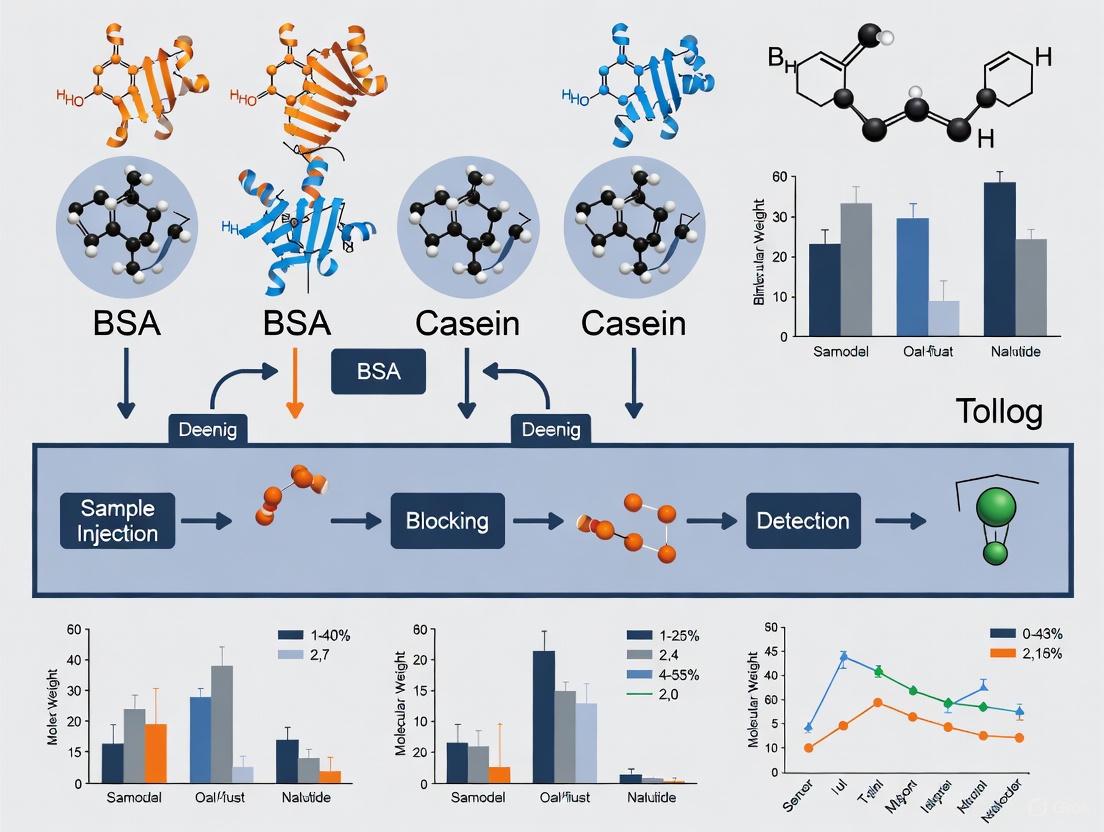
Blocking agents are critical for minimizing non-specific binding and ensuring the sensitivity and accuracy of microfluidic biosensors.
BSA vs. Casein: A Guide to Blocking Agent Selection for High-Performance Microfluidic Biosensors
Abstract
Blocking agents are critical for minimizing non-specific binding and ensuring the sensitivity and accuracy of microfluidic biosensors. This article provides a comprehensive analysis of two dominant blocking agents, Bovine Serum Albumin (BSA) and casein, tailored for researchers and professionals in drug development. We explore the fundamental principles of blocking in microfluidics, detail practical application methodologies, and present advanced troubleshooting and optimization strategies. A direct, evidence-based comparison validates the performance of each agent across various biosensor types, including optical and electrochemical systems. This guide serves as a vital resource for optimizing assay reproducibility and advancing diagnostic tool development.
The Essential Role of Blocking Agents in Microfluidic Biosensor Performance
Principles of Non-Specific Binding and Its Impact on Biosensor Signal-to-Noise Ratio
Non-specific adsorption (NSA) is a fundamental challenge that critically impacts the performance of biosensors by reducing their sensitivity, specificity, and reproducibility [1] [2]. NSA occurs when molecules other than the target analyte adsorb to the biosensing interface, generating background signals that are often indistinguishable from specific binding events [2]. This phenomenon is particularly problematic in microfluidic biosensors, where the miniaturized dimensions amplify the relative impact of fouling on signal-to-noise ratios [2]. In complex samples such as blood, serum, or milk, the presence of numerous proteins, lipids, and other biomolecules creates a competitive environment for surface binding sites, potentially leading to false positives or false negatives [1].
The underlying mechanisms of NSA primarily involve physisorption through various intermolecular forces, including hydrophobic interactions, electrostatic attractions, van der Waals forces, and hydrogen bonding [1] [2]. Unlike specific binding, which relies on complementary molecular recognition (e.g., antibody-antigen interactions), non-specific binding results from these relatively weaker and less selective interactions between the sensor surface and non-target molecules in the sample matrix [2].
Within this context, blocking agents such as Bovine Serum Albumin (BSA) and casein have emerged as critical tools for mitigating NSA in biosensing applications. These proteins work by occupying vacant binding sites on the sensor surface, thereby creating a protective layer that reduces the adsorption of interfering substances from the sample [1] [2]. This application note explores the principles of non-specific binding and details experimental protocols for implementing BSA and casein as effective blocking agents in microfluidic biosensors, framed within broader research on enhancing biosensor performance.
Quantitative Analysis of NSA Impact and Blocking Efficacy
Signal Response Patterns for Specific vs. Non-Specific Binding
Recent research has demonstrated that specific and non-specific binding events can produce distinct signal responses, enabling their discrimination. A 2021 study utilizing PEDOT-based chemiresistive biosensors revealed characteristic response patterns when employing Biotin/Avidin and Gliadin/G12 binding pairs [3]:
Table 1: Characteristic signal responses for specific vs. non-specific binding
| Binding Type | Signal Response (ΔR%) | Concentration Dependence | Example Binding Pairs |
|---|---|---|---|
| Specific Binding | Negative ΔR | Increases with analyte concentration | Biotin/Avidin |
| Non-Specific Binding | Positive ΔR | Opposite response pattern | Gliadin/Casein |
This differential response enables the development of biosensors capable of distinguishing true positive signals from NSA background, potentially reducing false results [3].
Performance Comparison of Blocking Agents
Extensive research has evaluated the efficacy of various blocking agents for reducing NSA in biosensors. The following table summarizes key findings from recent studies:
Table 2: Efficacy comparison of blocking agents in biosensing applications
| Blocking Agent | Mechanism of Action | Optimal Concentration | Applications | Advantages | Limitations |
|---|---|---|---|---|---|
| BSA | Physical adsorption to vacant sites; creates hydrophilic barrier [2] | 1-5% (w/v) | ELISA, Western blotting, electrochemical biosensors [2] | Well-established, effective for various surfaces | Potential immunological interference in some assays [2] |
| Casein | Forms protective layer through hydrophobic interactions [2] | 0.5-2% (w/v) | Lateral flow assays, microfluidic biosensors | Effective for reducing background in protein-rich samples | May require optimization for different surfaces |
| Dual-Blocking Approach | Combined mechanisms of multiple blockers | Case-specific | Microfluidic CRP detection [4] | Superior noise reduction and assay reproducibility | Increased complexity and cost |
Research on microfluidic-based CRP biosensors has demonstrated that a dual-blocking approach significantly reduces background noise while improving assay reproducibility compared to single-agent blocking methods [4].
Experimental Protocols for NSA Evaluation and Mitigation
General Workflow for NSA Assessment
The following workflow provides a systematic approach for evaluating non-specific binding in biosensor development:
Protocol 1: BSA Blocking for Microfluidic Biosensors
Principle: BSA adsorbs to unoccupied binding sites on the sensor surface, creating a hydrophilic, non-fouling barrier that reduces subsequent NSA of sample components [2].
Materials:
- Bovine Serum Albumin (Fraction V, ≥96%)
- Phosphate Buffered Saline (PBS, 10 mM, pH 7.4)
- Microfluidic biosensor chips
- Precision pipettes and tips
- Incubation chamber (controlled humidity)
Procedure:
- Surface Preparation: Clean the microfluidic channels according to manufacturer specifications.
- BSA Solution Preparation: Prepare a 1-5% (w/v) BSA solution in PBS. Filter sterilize using a 0.22 μm syringe filter.
- Blocking: Introduce the BSA solution into the microfluidic channels, ensuring complete filling.
- Incubation: Incubate at room temperature for 1-2 hours or at 4°C overnight for enhanced coverage.
- Washing: Remove excess BSA by flushing with 3-5 channel volumes of PBS.
- Validation: Test blocking efficacy by introducing a negative control sample and measuring non-specific signal.
Technical Notes: Optimal BSA concentration depends on the specific surface chemistry and should be determined empirically. For extended storage, BSA-blocked devices should be maintained in PBS at 4°C [2].
Protocol 2: Casein-Based Blocking for Protein-Rich Samples
Principle: Casein forms a protective layer through hydrophobic interactions, particularly effective in samples with high protein content [2].
Materials:
- Casein (from bovine milk)
- Tris-buffered Saline (TBS, 25 mM Tris, 150 mM NaCl, pH 7.4)
- Microfluidic biosensor chips
- Heating stir plate
- Centrifugal filters (optional)
Procedure:
- Casein Solution Preparation: Prepare a 0.5-2% (w/v) casein solution in TBS. Gently heat (37-45°C) with stirring to facilitate dissolution.
- Clarification: Centrifuge the casein solution at 10,000 × g for 10 minutes to remove any insoluble particulates.
- Blocking Application: Introduce the clarified casein solution into the microfluidic channels.
- Incubation: Incubate at room temperature for 1 hour.
- Washing: Rinse thoroughly with 3-5 channel volumes of TBS or assay buffer.
- Performance Validation: Assess blocking efficacy using relevant negative controls.
Technical Notes: Casein solutions should be prepared fresh before use. The slightly alkaline pH of Tris buffer enhances casein solubility and blocking performance [2].
Protocol 3: Dual-Blocking Strategy for Enhanced Performance
Principle: Sequential application of multiple blocking agents can provide superior NSA reduction by addressing different types of non-specific interactions [4].
Procedure:
- Primary Blocking: Apply BSA solution (1-2% in PBS) following Protocol 1, steps 1-5.
- Secondary Blocking: Introduce casein solution (0.5-1% in appropriate buffer) following Protocol 2, steps 3-5.
- Final Wash: Rinse with 3-5 channel volumes of assay-specific buffer.
- Performance Assessment: Evaluate using both negative controls and low-positive samples.
Validation: Research on microfluidic CRP biosensors demonstrated that dual-blocking approaches significantly improve signal-to-noise ratios compared to single-agent methods [4].
The Scientist's Toolkit: Essential Reagents and Materials
Table 3: Key research reagents for NSA mitigation studies
| Reagent/Material | Function | Application Notes |
|---|---|---|
| BSA (Fraction V) | Primary blocking agent | Effective for most surfaces; use at 1-5% in PBS [2] |
| Casein | Alternative blocking protein | Particularly effective for food samples and protein-rich matrices [2] |
| PEG-Based Polymers | Surface modification | Creates hydrophilic, non-fouling surface coatings [1] |
| Detergent Blockers (e.g., Tween-20) | Surfactant-based blocking | Disrupts hydrophobic interactions; typically used at 0.05-0.1% [2] |
| Mixed Charge Polymers | Electrostatic shielding | Neutralizes surface charge to reduce electrostatic NSA [1] |
| PDMS-PEG Copolymer | Hydrophilic microfluidic material | Enhances wettability and reduces protein adsorption in capillary-driven devices [5] |
Impact of NSA on Biosensor Performance Characteristics
Non-specific adsorption affects multiple critical performance parameters of biosensors, with implications for diagnostic accuracy and reliability:
In electrochemical biosensors, fouling dramatically alters the characteristics of the sensing interface and impedes electron transfer at the electrode surface [1]. For electrochemical aptamer-based (E-AB) biosensors, NSA manifests as signal degradation over time, complicating signal interpretation and requiring sophisticated background correction algorithms [1]. In optical biosensors such as those based on surface plasmon resonance (SPR), the adsorption of foulant molecules and specific binding of target analytes produce similar changes in reflectivity, compromising the correlation between signal amplitude and analyte concentration [1].
Advanced Methodologies for NSA Investigation
Coupled Electrochemical-Surface Plasmon Resonance (EC-SPR)
The integration of electrochemical and optical sensing modalities provides enhanced capabilities for investigating NSA phenomena. Coupled EC-SPR biosensors enable researchers to achieve larger detection ranges, improve spatial resolution, and acquire more detailed information on interfacial, catalytic, and affinity binding events [1]. This approach is particularly valuable for evaluating the efficacy of antifouling coatings, as it provides complementary data on both electrochemical and optical changes resulting from non-specific adsorption.
Machine Learning-Assisted NSA Discrimination
Advanced data analysis techniques, including machine learning, show promise for discriminating between specific and non-specific binding signals. The random forest classifier has demonstrated 75% accuracy in predicting the presence of target analytes despite non-specific interference in dual-analyte solutions [3]. These computational approaches complement physical blocking strategies by providing post-hoc signal discrimination.
Non-specific binding remains a significant challenge in biosensor development, particularly in microfluidic formats where miniaturization amplifies its impact on signal-to-noise ratios. Blocking agents such as BSA and casein provide effective, practical solutions for mitigating NSA by occupying vacant binding sites and creating protective interfacial layers. The protocols outlined in this application note provide researchers with standardized methodologies for implementing these blocking strategies, while the quantitative frameworks enable systematic evaluation of their efficacy. As biosensing technologies continue to evolve toward greater sensitivity and miniaturization, the strategic implementation of optimized blocking protocols will remain essential for achieving reliable analytical performance in complex sample matrices.
In the development of microfluidic biosensors, the minimization of nonspecific binding is a paramount challenge that directly dictates the analytical reliability and clinical viability of the device. The complexity of biological samples, particularly blood-derived media such as serum and plasma, introduces a multitude of interfering components—including various cells, proteins, saccharides, and lipids—that can adsorb onto sensor surfaces, leading to false-positive signals and reduced sensitivity [6]. Blocking buffers provide a fundamental solution to this problem by pre-treating sensor surfaces to passivate unoccupied sites, thereby ensuring that the subsequent analytical signal originates predominantly from the specific interaction between the target analyte and its immobilized biorecognition element. This application note details the function, composition, and key characteristics of blocking buffers, with a specific focus on Bovine Serum Albumin (BSA) and casein, framed within ongoing research for microfluidic biosensor applications. The provided protocols and data are designed to assist researchers in selecting and optimizing blocking strategies to enhance the performance of their diagnostic platforms.
The Critical Function of Blocking in Microfluidic Biosensors
The primary function of a blocking buffer is to occupy any remaining reactive sites on a functionalized sensor surface after the immobilization of capture molecules (e.g., antibodies, antigens, or DNA probes). Without this crucial step, non-target molecules from the sample matrix can adhere to these sites, leading to elevated background noise and compromising the signal-to-noise ratio. In essence, effective blocking ensures the specificity of the biosensor.
This is especially critical in microfluidic systems, where the high surface-to-volume ratio amplifies the effects of any surface fouling [6]. Furthermore, for biosensors designed to analyze complex media like blood, serum, or plasma—which contain a high concentration of interfering proteins like human serum albumin and immunoglobulins—a robust blocking protocol is indispensable for achieving the requisite selectivity [6]. The strategic application of blocking agents is a well-established practice to mitigate this nonspecific interaction and is a standard step in immunoassay protocols integrated within microfluidic devices [7] [8].
Composition and Key Characteristics of BSA and Casein
Two of the most prevalent protein-based blocking agents in biosensor research are Bovine Serum Albumin (BSA) and casein. Their widespread use is attributed to their effectiveness, availability, and cost-efficiency. The table below summarizes their key characteristics for direct comparison.
Table 1: Comparative Analysis of BSA and Casein as Blocking Agents
| Characteristic | Bovine Serum Albumin (BSA) | Casein (often from milk) |
|---|---|---|
| Source | Bovine blood plasma | Mammalian milk |
| Primary Composition | Single, well-defined protein (66.5 kDa) | A family of phosphoproteins (α, β, κ) |
| Mechanism of Action | Adsorbs to surfaces, creating a hydrophilic protein layer that sterically hinders nonspecific adsorption [7]. | Forms a heterogeneous layer; negative charge and phosphogroups may contribute to blocking efficacy. |
| Key Advantage | Well-characterized, highly pure, and consistent between batches. Effective for a wide range of applications [7]. | Often yields lower background in systems involving mammalian antibodies, due to absence of bovine immunoglobulins. |
| Potential Limitation | May contain trace impurities (e.g., bovine IgGs) that can interfere in certain immunoassays [7]. | Can be less soluble and form suspensions, requiring careful preparation. |
| Typical Working Concentration | 1-5% (w/v) | 1-5% (w/v) |
| Example in Microfluidics | Used to block a PMMA reaction chip for rheumatoid arthritis detection via anti-CCP antibody [7]. | Frequently used in commercial Western blotting and ELISA kits; applicable to microfluidic adaptations. |
Experimental Protocols for Blocking Buffer Evaluation
The following protocols outline a standardized method for evaluating the efficacy of BSA and casein as blocking agents on a microfluidic biosensor platform. The model assay is an indirect ELISA for detecting an antibody, adapted for a microfluidic chip.
Reagent Preparation
- BSA Blocking Buffer (1% w/v): Dissolve 1.0 g of BSA (Fraction V, ≥96%) in 100 mL of phosphate-buffered saline (PBS, pH 7.4). Gently mix until fully dissolved. Filter sterilize through a 0.22 µm membrane and store at 4°C for short-term use.
- Casein Blocking Buffer (1% w/v): Slowly add 1.0 g of casein (from skim milk) to 100 mL of pre-warmed (approximately 40°C) PBS under constant stirring. The solution may appear cloudy. Adjust pH to 7.4 to aid dissolution. Once dissolved, cool to room temperature. Filter and store at 4°C.
- Wash Buffer (PBST): Prepare PBS containing 0.05% (v/v) Tween 20.
- Assay Solutions: Prepare the target analyte (e.g., anti-CCP Ab), a specific secondary antibody conjugated with horseradish peroxidase (2nd Ab-HRP), and the appropriate chemiluminescent or colorimetric substrate (e.g., TMB/H₂O₂) [7].
Microfluidic Chip Blocking and Assay Procedure
The workflow for blocking and assay execution involves sequential fluidic steps to prepare the sensor surface and perform the detection.
Diagram 1: Microfluidic Assay Workflow with Blocking Step.
- Surface Functionalization: Prior to blocking, the microfluidic chip's reaction chamber must be functionalized with the capture molecule. For instance, a poly(methyl methacrylate) (PMMA) chip surface can be coated with streptavidin to enable the subsequent immobilization of a biotinylated cyclic citrullinated peptide (biotin–CCP) [7].
- Blocking: Introduce the prepared blocking buffer (1% BSA or 1% casein) into the microfluidic channel. Ensure the solution completely fills the reaction chamber.
- Incubation: Allow the chip to incubate for a defined period, typically 30 to 60 minutes, at room temperature. This enables the blocking proteins to adsorb to all remaining reactive sites on the polymer surface [7].
- Washing: Flush the channel with wash buffer (PBST) to remove any unbound blocking reagent. This step is critical to prevent the leaching of blocking proteins during subsequent steps.
- Assay Execution: Following the established workflow (Diagram 1), sequentially introduce the sample (target analyte) and detection reagents. The signal is then read out using an appropriate transducer, such as a micro-spectrometer for colorimetric reactions [7].
Efficacy Evaluation and Data Analysis
To quantitatively evaluate blocking efficacy, researchers should compare the signal output from negative control samples against a positive control.
- Positive Control: A sample containing a known concentration of the target analyte.
- Negative Control: A sample confirmed to lack the target analyte (e.g., blank buffer or a negative serum).
- Key Metric: The signal from the negative control should be significantly lower than that of the positive control. A high signal in the negative control indicates inadequate blocking and high nonspecific binding.
The following table provides a hypothetical data set illustrating the expected outcomes of a successful blocking experiment.
Table 2: Hypothetical Data from Blocking Efficacy Study Using a Microfluidic Immunoassay
| Blocking Condition | Mean Signal (Positive Control) | Mean Signal (Negative Control) | Signal-to-Background Ratio | Interpretation |
|---|---|---|---|---|
| No Blocking | 0.950 | 0.710 | 1.34 | High nonspecific binding; assay unusable. |
| 1% BSA | 0.890 | 0.095 | 9.37 | Effective blocking; low background. |
| 1% Casein | 0.870 | 0.110 | 7.91 | Effective blocking; low background. |
| 1% BSA + 0.5% Casein | 0.910 | 0.085 | 10.71 | Potentially superior blocking. |
The Scientist's Toolkit: Essential Research Reagent Solutions
The development and execution of blocking protocols require a set of fundamental reagents and materials. The following table lists key solutions and their functions within the context of preparing and evaluating microfluidic biosensors.
Table 3: Key Research Reagent Solutions for Microfluidic Biosensor Development
| Reagent / Material | Function / Description | Example Application |
|---|---|---|
| Bovine Serum Albumin (BSA) | A purified, single-protein blocking agent used to passivate surfaces and reduce nonspecific protein binding [7]. | Blocking a streptavidin-coated PMMA microfluidic chip before an immunoassay [7]. |
| Casein | A mixture of phosphoproteins derived from milk, used as an alternative blocking agent to BSA. | Preventing nonspecific adsorption of antibodies in lateral flow or microfluidic immunoassays. |
| Phosphate-Buffered Saline (PBS) | A universal buffer solution used to maintain a stable physiological pH and osmolarity for biochemical reactions. | Diluent for blocking agents and antibodies; base solution for wash buffers. |
| Tween 20 | A non-ionic surfactant that reduces surface tension and helps disrupt hydrophobic interactions. | Added to PBS to create PBST, a wash buffer that improves the removal of unbound reagents [7]. |
| Streptavidin | A protein with an extremely high affinity for biotin, used for surface functionalization. | Coating a microfluidic channel to immobilize biotinylated capture probes (e.g., biotin–CCP) [7]. |
| Poly(methyl methacrylate) PMMA | A transparent polymer commonly used in the fabrication of microfluidic chips via laser ablation or milling [7]. | substrate for the reaction chip and channels in a point-of-care diagnostic system [7]. |
The strategic selection and optimization of a blocking buffer are not mere procedural steps but are foundational to the success of any microfluidic biosensor intended for complex sample analysis. Both BSA and casein are highly effective blocking agents, yet their performance can vary depending on the specific biorecognition chemistry, sensor substrate material, and sample matrix. BSA offers consistency and high purity, while casein can provide superior performance in certain antibody-based systems. Researchers are encouraged to use the protocols and comparative frameworks provided herein to empirically determine the optimal blocking strategy for their specific biosensing platform. A rigorous approach to surface blocking is a critical investment in ensuring the high sensitivity, specificity, and overall reliability required for the next generation of point-of-care diagnostic tools.
In the field of microfluidic biosensors, the prevention of nonspecific binding is a fundamental challenge for achieving high-sensitivity detection. The complex matrices of biological samples, such as blood, serum, and plasma, contain numerous proteins, lipids, and other molecules that can adsorb to sensor surfaces, leading to background noise and false positives [6]. Blocking agents are therefore essential for occupying these nonspecific binding sites. Bovine Serum Albumin (BSA), a small, stable, and moderately non-reactive protein derived from bovine blood plasma, is one of the most widely employed blocking agents in diagnostic assays and biosensing [9] [10]. Within the context of microfluidic biosensor research, a direct comparison is often drawn between BSA and casein, another common blocking protein. A key differentiator is that BSA is a purified, single-type protein, whereas casein in non-fat dry milk is a mixture of various proteins [9]. This makes BSA the preferred choice when working with phospho-specific antibodies, as casein can potentially react with phospho-antibodies and distort the signal [9]. This application note details the properties, mechanisms, and practical use of BSA at standard concentrations (1-5%) to guide researchers and scientists in optimizing their assay conditions.
Properties of Bovine Serum Albumin
BSA, also known as "Fraction V" from the Cohn plasma protein fractionation process, is a single-chain protein of 583 amino acids with a molecular weight of approximately 66.5 kDa [9] [10]. Its structure comprises three homologous domains, each containing two sub-domains, forming a prolate ellipsoid shape with dimensions of about 140 × 40 × 40 Å [10].
Key Biophysical and Biochemical Properties:
- Isoelectric Point: BSA has an isoelectric point (pI) of 4.7, making it negatively charged at physiological pH [10]. This negative charge contributes to its solubility and interaction with other molecules.
- Stability and Solubility: BSA is highly soluble in water and can be used to solubilize other lipids and proteins. However, it undergoes irreversible coagulation and forms hydrophobic aggregates when heated [9].
- Ligand Binding: A critical functional property of BSA is its ability to bind a wide range of ligands, including fatty acids, salts, hormones, bilirubin, and toxic substances [9] [10]. This is facilitated by multiple binding sites across its structure.
Table 1: Key Properties of Bovine Serum Albumin (BSA)
| Property | Description |
|---|---|
| Amino Acids (Mature) | 583 [9] |
| Molecular Weight | 66.5 kDa [9] [10] |
| Isoelectric Point (pI) | 4.7 [10] |
| Extinction Coefficient | 43,824 M-1cm-1 at 279 nm [10] |
| Structure | Three homologous domains, prolate ellipsoid [10] |
| Dimensions | 140 × 40 × 40 Å [9] [10] |
| Primary Function | Transport protein, chaperone [11] [10] |
| Key Binding Ligands | Fatty acids, metals, bilirubin, hormones, drugs [10] |
Beyond its transport function, BSA exhibits significant chaperone-like activity [11]. It can preferentially bind to stressed (unfolded) client proteins, forming stable, soluble complexes and thereby inhibiting both amorphous aggregation and amyloid formation [11]. This anti-aggregatory property is maintained under physiologically relevant conditions and is a key mechanism by which BSA stabilizes assays and reduces nonspecific interactions.
Blocking Mechanisms of BSA
The efficacy of BSA as a blocking agent in biosensors and immunoassays stems from a combination of physicochemical mechanisms:
- Surface Passivation: BSA molecules adsorb onto hydrophobic and charged sites on the sensor surface or membrane (e.g., nitrocellulose in lateral flow assays) that would otherwise nonspecifically bind detection antibodies or other assay components [9] [10]. By occupying these sites, BSA physically blocks interfering interactions.
- Electrostatic and Hydrophobic Interactions: The negative charge of BSA allows it to interact with positively charged regions on surfaces or proteins. Furthermore, its hydrophobic patches enable binding to hydrophobic surfaces, providing broad-spectrum passivation [9].
- Molecular Chaperone Activity: As demonstrated in biochemical studies, BSA can bind to unfolded or stressed proteins that may be present in a sample [11]. By sequestering these potentially "sticky" species, BSA prevents their aggregation and random deposition on the sensor surface, which would contribute to background noise.
In the context of microfluidic biosensors, surface treatment of the microfluidic flow channels is a critical step to prevent the nonspecific adsorption of biomolecules, which can cause signal interference and compromise detection accuracy and reliability [12]. BSA is a key reagent for this purpose.
It is important to note that recent research suggests the blocking step may not always be necessary and, in some specific applications like immunofluorescence of thick, optically cleared tissues, the use of BSA might even impair the signal-to-background ratio [13]. This highlights the importance of empirically validating blocking protocols for each specific biosensor application.
Standard Usage Concentrations and Preparation Protocols
The optimal concentration of BSA depends on the specific application and the surface area that requires blocking. The standard working concentrations range from 1% to 5% (weight/volume).
Table 2: Standard BSA Usage Concentrations for Different Applications
| Application | Typical Concentration | Purpose and Rationale |
|---|---|---|
| General Blocking Buffer (e.g., for Western Blot, ELISA) | 1% - 5% [9] | To block unused binding sites on membranes or microplates. Higher concentrations may be used for high-binding surfaces. |
| Blocking for Phospho-specific Antibodies | 5% [9] | Preferred over non-fat dry milk to avoid casein interference with phospho-antibodies. |
| Stabilizer in Cell Culture Media | Varies (supplement) | To protect cells and act as a carrier for lipids and other molecules [9]. |
| Protein Standard for Bradford Assay | 0.1 - 1.0 mg/mL [14] | Used to generate a standard curve for quantifying unknown protein concentrations due to its stability and consistent response. |
Detailed Experimental Protocols
Protocol 1: Preparation of a 5% BSA Solution (50 mL) [9]
- Weigh: Measure 2.5 g of BSA powder.
- Dissolve: Add the BSA to 40 mL of your chosen buffer (e.g., PBS or TBS-Tween).
- Incubate: Place the solution at 4 °C for approximately 10 minutes to allow dissolution without vigorous mixing. Gentle swirling can be used.
- Finalize: Bring the final volume to 50 mL with buffer. The solution should be clear and without precipitates. Store at 4 °C and use within a few days, or aliquot and store at ≤ -15 °C for longer-term stability.
Protocol 2: Preparation of a 1% BSA Blocking Buffer (100 mL) [9]
- Weigh: Measure 1 g of BSA.
- Dissolve: Add the BSA to 80 mL of 1X TBST (Tris-Buffered Saline with Tween-20).
- Mix: Mix well using a magnetic stirrer or by inversion until a clear solution is obtained.
- Finalize: Adjust the volume to 100 mL with 1X TBST.
- Store: Store at 4 °C for immediate use (up to 5 days). For extended storage, aliquot and freeze at -80 °C to avoid repeated freeze-thaw cycles.
Diagram 1: Workflow for preparing a standard BSA solution.
The Scientist's Toolkit: Key Research Reagent Solutions
Table 3: Essential Reagents for BSA-Based Blocking and Assays
| Reagent / Material | Function in Protocol | Key Considerations |
|---|---|---|
| BSA Powder (Fraction V) | Primary blocking agent; protein standard. | Choose grade (standard, fatty acid-free) based on application. High purity (≥99%) is critical for low background [9]. |
| PBS (Phosphate Buffered Saline) | Standard diluent and washing buffer. | Provides a physiological pH and osmolarity. |
| TBST (Tris-Buffered Saline with Tween-20) | Diluent for blocking buffers and for washing in immunoassays. | Tween-20 (a detergent) helps reduce hydrophobic interactions and background. |
| Coomassie Brilliant Blue G-250 | Dye for Bradford protein assay. | Binds to basic amino acids in proteins, causing a color shift from brown to blue for quantification [14]. |
| Spectrophotometer | Measure absorbance in protein quantification assays (e.g., at 595 nm for Bradford) [14]. | Requires calibration and suitable cuvettes. |
| Microfluidic Chip (e.g., PDMS, Glass) | Platform for the biosensor. | Surface treatment with BSA is often required to minimize nonspecific binding in microchannels [12]. |
Application in Microfluidic Biosensor Research
In microfluidic biosensors, which are designed for the miniaturized, integrated, and automated analysis of small fluid volumes (10−9–10−18 L), controlling nonspecific adsorption is paramount due to the high surface-to-volume ratio of the microchannels [12]. BSA is frequently used as a component of the surface treatment process to enhance the performance of these devices.
For instance, in lateral flow immunoassays (LFIAs) integrated into microfluidic chips for C-Reactive Protein (CRP) detection, blocking strategies are essential for minimizing nonspecific binding to improve sensitivity and accuracy [4]. BSA is among the agents evaluated for this purpose. Its role is to block the nitrocellulose membrane and other components, ensuring that the conjugated antibodies bind only to the target antigen at the test line, thereby enhancing the signal-to-noise ratio [9] [4].
Diagram 2: The role of BSA blocking in a microfluidic biosensor assay workflow.
When developing a microfluidic biosensor, researchers should systematically optimize the BSA blocking concentration and incubation time to maximize the signal-to-noise ratio for their specific device and target analyte.
In the field of microfluidic biosensors, the prevention of non-specific binding (NSB) is a critical challenge that directly impacts the sensitivity, specificity, and reproducibility of diagnostic devices. While Bovine Serum Albumin (BSA) is a well-established blocking agent, casein, a milk-derived phosphoprotein, presents a powerful alternative with unique properties that make it exceptionally effective in certain applications. This application note details the fundamental characteristics of casein, its mechanism of action as a blocking protein, and provides standardized protocols for its implementation. Framed within a broader thesis comparing blocking agents for biosensor research, this document provides researchers and drug development professionals with the experimental data and methodologies needed to effectively employ casein in microfluidic systems, particularly for diagnostic applications such as the detection of biomarkers like C-Reactive Protein (CRP) [4].
Casein Fundamentals and Key Properties
Casein is the primary protein component in milk, constituting approximately 80% of the protein content in bovine milk. It is not a single protein but a heterogeneous family of related phosphoproteins, primarily composed of four subunits: αS1-, αS2-, β-, and κ-casein [15] [16]. These subunits have molecular masses ranging from 19 to 25 kDa and are characterized by an open, flexible, and amphipathic structure due to their high proline content, which prevents the formation of tight secondary structures [15]. In their native state in milk, these proteins self-assemble into complex, spherical colloids known as casein micelles, which range from 50 to 500 nm in diameter and are stabilized by a surface layer of κ-casein [15] [16] [17]. The micelles possess a sponge-like, porous internal structure interspersed with water-filled channels and cavities, a characteristic that is crucial to their function [17].
Table 1: Fundamental Properties of Casein
| Property | Description |
|---|---|
| Primary Source | Bovine Milk (also Sheep, Goat) [18] |
| Major Subunits | αS1-, αS2-, β-, and κ-casein [15] [16] |
| Molecular Weight Range | 19 - 25 kDa (subunits) [15] |
| Native Structure | Micellar aggregates (50-500 nm) [15] [17] |
| Key Structural Feature | Porous, flexible, and dynamic micelle [17] |
| Isoelectric Point (pI) | ~4.6 [19] |
Mechanism of Action as a Blocking Agent
The efficacy of casein as a blocking agent stems from its unique physicochemical and structural properties, which facilitate a multi-mechanism approach to preventing non-specific binding on biosensor surfaces.
Formation of a Dynamic Bilayer on Surfaces
Research on SiO₂ surfaces, a common material in microfluidics, has revealed that casein does not form a simple, static monolayer. Instead, it adsorbs as a dynamic bilayer [15]:
- Tightly Bound Monolayer: The first layer binds irreversibly to the substrate, creating a foundational blocking layer.
- Reversibly Bound Second Layer: A second, loosely associated layer forms on top of the first, with a dissociation constant of approximately 500 nM. This layer can be desorbed by washing with a casein-free buffer but plays a critical role during the assay [15].
Prevention of Non-Specific Protein Adsorption
This casein bilayer modulates subsequent protein adsorption through several mechanisms:
- Steric Hindrance: The open, flexible structure of casein creates a physical barrier that occupies potential binding sites on the surface, preventing access for other proteins [15].
- Electrostatic Repulsion: The charged groups on casein proteins can create an electrostatic field that repels other molecules, reducing hydrophobic and ionic interactions with the surface [15] [20].
- Surface Passivation: By coating the surface, casein renders it inert, thereby preventing the denaturation and irreversible adsorption of assay proteins (e.g., detection antibodies or enzymes) which would lead to loss of function [15].
The following diagram illustrates the dynamic bilayer model and its role in a biosensor context.
Diagram 1: Mechanism of casein as a blocking agent on a biosensor surface. Casein forms a dynamic bilayer, comprising a tightly-bound monolayer and a reversibly-bound upper layer. This bilayer prevents non-specific binding (NSB) of interfering proteins while allowing for the specific attachment and function of biorecognition probes.
Standard Usage Concentrations and Optimization
The effective use of casein as a blocking agent requires optimization of concentration and buffer conditions. Empirical testing is always recommended for a specific assay, but established protocols provide a robust starting point.
Table 2: Standard Casein Usage Concentrations and Conditions
| Application Context | Recommended Concentration | Buffer & Incubation | Key Function |
|---|---|---|---|
| Standard Blocking Protocol [15] | 0.5 mg/mL (0.05%) for surface pretreatment | BRB80 or similar physiological buffer (e.g., PBS). Incubate 3-5 min. | Forms the foundational blocking bilayer on the surface. |
| Motor Protein Assays (Kinesin) [15] | 0.2 mg/mL (0.02%) in motor solution | Buffer compatible with protein function. | Maintains motor activity and prevents surface inactivation. |
| Lateral Flow Immunoassays (LFIA) [4] | 1-5% (approx. 10-50 mg/mL) | Typically in PBS or assay-specific buffer. | Pre-blocking of nitrocellulose membrane to reduce NSB and background. |
| General Purpose Blocking | 1-3% (10-30 mg/mL) | PBS or Tris buffer, pH ~7.4. Incubate 30-60 min. | Robust surface passivation for a wide range of surfaces. |
Comparative Performance with Other Blocking Agents
The choice of blocking agent is highly application-dependent. A comparative analysis is essential for assay optimization. Casein has been shown to outperform or complement other common blockers in certain scenarios. For instance, in the development of an electrochemical biosensor for ovarian cancer, a systematic optimization of blocking agents revealed that 1% gelatin in Tween-20 provided the best performance for that specific DNA-based sensor, underscoring the need for empirical testing [20]. Furthermore, in lateral flow immunoassays (LFIAs) for CRP detection, a comparative analysis of blocking agents like BSA, casein, and polyethylene glycol (PEG) was conducted to optimize signal-to-noise ratios, with findings indicating that a dual-blocking approach could significantly reduce background noise and improve assay reproducibility [4].
Detailed Experimental Protocols
Protocol 1: Standard Casein Blocking for Microfluidic Biosensor Chips
This protocol is adapted from methods used in kinesin motility assays and biosensor research, providing a general procedure for surface passivation [15] [4].
The Scientist's Toolkit: Research Reagent Solutions
| Item | Function & Specification |
|---|---|
| Casein, Technical Grade | The blocking agent. Prepare a stock solution at 5-10 mg/mL in buffer. |
| BRB80 Buffer (80 mM PIPES, 1 mM MgCl₂, 1 mM EGTA, pH 6.9) or PBS (Phosphate Buffered Saline, pH 7.4) | Standard physiological buffers for protein work. |
| Microfluidic Biosensor Chip | The substrate (e.g., glass, SiO₂, PDMS, nitrocellulose). |
| Syringe Pump or Pipettes | For precise fluid handling in microchannels. |
| Centrifuge with 50.2 Ti rotor (or equivalent) and 0.22 μm syringe filters | For clarifying and sterilizing the casein stock solution. |
Procedure:
- Casein Stock Solution Preparation (20 mg/mL):
- Dissolve casein powder in BRB80 or PBS buffer to a final concentration of 20 mg/mL.
- Allow the solution to dissolve overnight under gentle agitation at 4°C.
- Centrifuge the solution at 245,000 × g for 30 minutes at 4°C to remove insoluble aggregates and impurities [15].
- Filter the supernatant through a 0.22 μm syringe filter.
- Aliquot and store at -20°C. Thaw on the day of the experiment.
Surface Pretreatment (Blocking):
- Introduce a 0.5 mg/mL (0.05%) casein solution in buffer into the microfluidic chip. This can be prepared by diluting the 20 mg/mL stock 40-fold in the appropriate assay buffer.
- Incubate for 3-5 minutes at room temperature to allow the tightly-bound monolayer to form [15].
- Rinse the chip with 3-5 volumes of casein-free buffer to remove the loosely-bound second layer and any excess casein.
Assay Implementation:
- Introduce the biorecognition elements (e.g., antibodies, DNA probes) diluted in a lower concentration of casein (e.g., 0.2 mg/mL or 0.02%). The presence of casein during this step helps maintain protein stability and further prevents non-specific adsorption [15].
- Proceed with the specific assay steps (sample introduction, washing, detection).
The workflow for this protocol is summarized below.
Diagram 2: Workflow for a standard casein blocking protocol in microfluidic biosensors.
Protocol 2: Pre-blocking for Lateral Flow Immunoassay (LFIA) Strips
This protocol is derived from methods used to enhance CRP detection in microfluidic-integrated LFIAs [4].
Procedure:
- Blocking Solution Preparation:
- Prepare a 1-5% (w/v) casein solution in PBS (pH 7.4). The optimal concentration within this range should be determined empirically for the specific assay.
- Optionally, include a non-ionic surfactant like Tween-20 (0.1-0.5%) to further reduce NSB.
Membrane Treatment:
- Immerse the nitrocellulose (NC) membrane in the prepared casein blocking solution for at least 30-60 minutes at room temperature with gentle agitation.
- Alternatively, the blocking solution can be uniformly dispensed onto the membrane.
Drying and Storage:
- Remove the membrane from the blocking solution and dry it thoroughly overnight at room temperature or in an incubator at 37°C.
- Once dry, the pre-blocked membrane is ready for the patterning of test and control lines and can be assembled into the LFIA device.
- This pre-blocking step simplifies the assay to a single-step process, as it eliminates the need for users to add a separate buffer during the test, enhancing usability and reducing complexity [4].
Casein is a highly effective blocking agent whose mechanism is rooted in its unique ability to form a dynamic, multi-layer structure on biosensor surfaces. This bilayer efficiently passivates the surface against non-specific binding while maintaining the functionality of immobilized biorecognition elements. The standardized protocols and concentration guidelines provided here—ranging from 0.02% for in-assay stability to 1-5% for robust membrane pre-blocking—offer a solid foundation for researchers developing microfluidic biosensors. When framed within the broader context of blocking agent selection, casein emerges as a versatile and often superior alternative to BSA, particularly in applications requiring minimal background and high signal-to-noise ratios, such as in sensitive CRP detection or motor protein assays. Its natural origin, biocompatibility, and proven efficacy make it an indispensable tool in the pursuit of robust and reliable point-of-care diagnostic devices.
Microfluidic biosensors represent a transformative technology in biomedical research and diagnostic development, integrating fluid handling and sensing onto a single miniaturized platform. The performance of these systems is critically dependent on two interrelated factors: the choice of structural materials and the behavior of fluids at the microscale. Surface materials including polydimethylsiloxane (PDMS), glass, and polymethylmethacrylate (PMMA) each present distinct advantages and challenges that directly impact device functionality, particularly concerning nonspecific binding and analytical accuracy. Similarly, the flow dynamics within microchannels dictate reagent delivery, shear forces, and ultimately, the reliability of biosensing assays. This application note examines these core challenges within the specific context of optimizing bovine serum albumin (BSA) and casein as blocking agents, providing structured protocols and data to guide researchers and drug development professionals in developing robust microfluidic biosensors.
Material Properties and Surface Interactions
The selection of microfluidic chip materials significantly influences surface chemistry, optical properties, fabrication complexity, and biocompatibility. Each material interacts differently with biological samples and requires specific blocking strategies to mitigate nonspecific protein adsorption.
Table 1: Comparison of Common Microfluidic Chip Materials [21] [22]
| Material | Advantages | Disadvantages | Suitability for Biosensing |
|---|---|---|---|
| PDMS | Biocompatible, gas permeable, optically transparent, flexible for valve integration [21] [22]. | Inherent hydrophobicity, high nonspecific protein adsorption, absorbs small molecules [21] [22]. | Excellent for cell culture; requires extensive surface blocking. |
| Glass | High optical transparency, excellent insulation properties, low cost, good chemical resistance [21] [22]. | Brittle, complex and hazardous fabrication process (e.g., HF etching), requires high-temperature bonding [21] [22]. | Ideal for optical detection (e.g., fluorescence); moderate nonspecific binding. |
| PMMA | Excellent optical clarity, good insulating properties, ease of processing and prototyping [21] [22]. | Lower thermal stability, potential for leaching additives, susceptible to organic solvents [21] [22]. | Good for optical sensing; requires surface modification to reduce protein adsorption [23]. |
| Paper-based | Very low cost, simple manufacturing, capillary action eliminates need for external pumps [21] [22]. | Low sensitivity and resolution, susceptible to evaporation and environmental factors [21] [22]. | Best for simple, disposable point-of-care tests in low-resource settings. |
Surface properties such as hydrophobicity and charge dominate interactions at the solid-liquid interface. The huge specific surface area of microchannels amplifies the effect of these properties, making careful material selection and subsequent surface treatment critical for assay performance [22]. PDMS, despite its popularity, is particularly prone to nonspecific adsorption due to its hydrophobic nature [21]. Research indicates that surface modification and the use of effective blocking agents like BSA and casein are essential to create a biocompatible interface and ensure the specificity of biosensing platforms [23].
Microfluidic Flow Dynamics and Assay Performance
Fluid behavior in microchannels is fundamentally different from macroscopic systems. At the microscale, viscous forces dominate over inertial forces, resulting in laminar flow characterized by a low Reynolds number [22]. This laminar regime allows for predictable fluid motion and precise control but poses challenges for efficient mixing, which often relies on diffusion rather than turbulence.
Flow rate is a critical parameter that requires optimization for specific applications. It controls molecular transport to the sensor surface, determines shear stress on immobilized biomolecules or cells, and impacts incubation times and assay sensitivity.
Table 2: Impact of Flow Rate on Microfluidic Assay Parameters [24]
| Flow Rate (µL/min) | Shear Stress | Mixing Efficiency (Diffusion-based) | Analyte Incubation Time | Comment / Application Example |
|---|---|---|---|---|
| Low (1-4) | Low | Low (High Recovery) | Long | Suitable for microdialysis; maximizes solute recovery [24]. |
| Medium (40) | Moderate | Moderate | Moderate | Optimal for diffusion studies; balanced condition for skin-on-a-chip caffeine diffusion [24]. |
| High (100+) | High | High (Rapid exchange) | Short | Can reduce assay time but may decrease signal in diffusion-based assays [24]. |
Optimizing flow dynamics is essential for achieving reproducible and reliable results. For instance, in a skin-on-a-chip model for transdermal drug delivery, a flow rate of 40 µL/min was experimentally determined to result in the highest diffusion of a hydrophilic model formulation (2% caffeine cream) compared to both lower and higher flow rates [24]. Computational fluid dynamics (CFD) simulations can effectively visualize shear stress and fluid velocity within microchannels, aiding in the design and optimization of these systems [24].
Experimental Protocol: Evaluating Blocking Agents on PMMA Surfaces
The following protocol is adapted from a study evaluating nonspecific binding blocking agents inside PMMA microfluidic flow-cells [23]. It provides a methodology to quantitatively compare the effectiveness of BSA and other agents.
Research Reagent Solutions
Table 3: Essential Materials for Blocking Agent Evaluation [23]
| Item | Function / Description |
|---|---|
| PMMA Substrates | Base material for microfluidic flow-cell fabrication. |
| Oxygen Plasma System | Modifies PMMA surface hydrophilicity to enhance subsequent coating adherence [23]. |
| Blocking Agents | BSA, cationic lipid (DOTAP:DOPE), diethylene glycol dimethyl ether (DEGDME) as test agents [23]. |
| Cy5-labeled anti-IgG | Fluorescent probe protein for quantifying nonspecific adsorption. |
| Phosphate Buffered Saline (PBS) | Standard buffer for rinsing and dilution. |
| Water Contact Angle Goniometer | Measures surface wettability to confirm successful coating deposition [23]. |
| Atomic Force Microscope (AFM) | Characterizes surface topography and confirms nanoscale deposition of blocking agents [23]. |
| Fluorescence Microscope/Reader | Quantifies fluorescent intensity from adsorbed Cy5-labeled proteins. |
| Total Internal Reflection Ellipsometry (TIRE) | Label-free optical method to evaluate the stability of deposited blocking layers over time [23]. |
Step-by-Step Procedure
- Surface Preparation: Fabricate PMMA flow-cells with desired channel architecture. Treat the internal PMMA surfaces with oxygen plasma to increase surface energy and enable uniform deposition of aqueous blocking solutions [23].
- Coating with Blocking Agents:
- Prepare solutions of different blocking agents: 1% BSA in PBS, cationic lipid DOTAP:DOPE, and a precursor for DEGDME.
- Introduce each agent into separate, identical PMMA flow-cells and incubate to allow deposition onto the surface.
- For DEGDME, use a plasma-enhanced chemical vapor deposition (PECVD) process to create a stable, dry coating [23].
- Surface Characterization:
- Use Water Contact Angle (WCA) measurements to confirm the successful deposition of each blocking agent. A significant change in WCA compared to plain PMMA indicates surface modification [23].
- Use Atomic Force Microscopy (AFM) to visualize the topography and confirm the presence of the coating at the micro- and nanoscale [23].
- Nonspecific Binding Assay:
- Flush the coated flow-cells with a solution of Cy5-labeled anti-IgG.
- After incubation and a rigorous PBS wash, measure the fluorescent intensity remaining on the channel surfaces.
- Compare the intensity values against a negative control (plain PMMA) to determine the level of nonspecific adsorption for each blocking agent [23].
- Stability Assessment:
- Integrate the PMMA flow-cell with a TIRE sensor or similar label-free system.
- Continuously flow PBS through the channel while monitoring the signal. A stable signal indicates a stable coating, while signal drift suggests desorption of the blocking agent and its re-deposition onto the sensor element [23].
Expected Results and Interpretation
In the referenced study, DOTAP:DOPE demonstrated the best initial suppression of Cy5-labeled anti-IgG adsorption, attributed to electrostatic repulsion [23]. However, this lipid-based agent was found to desorb upon PBS rinsing and contaminate downstream sensing surfaces. BSA also showed susceptibility to rinsing. In contrast, the PECVD-deposited DEGDME coating provided very good blocking performance combined with excellent stability under rinsing conditions, making it a promising candidate for permanent surface passivation in PMMA devices [23]. This protocol allows for the direct comparison of BSA and casein (which can be substituted in step 2) against other chemistries for both efficiency and operational stability.
Surface Functionalization and Blocking Workflow
The process of preparing a microfluidic biosensor's surface for specific analyte capture involves multiple critical steps, from material selection to final assay. The following diagram visualizes this workflow, highlighting key decision points and potential failure modes related to surface materials and blocking.
This workflow underscores that surface preparation is an iterative process. For example, spotting-based bioreceptor immobilization combined with polydopamine chemistry has been shown to improve detection signal by over 8x compared to flow-based methods, while also achieving an inter-assay coefficient of variability below 20% [25]. Furthermore, effective bubble mitigation—a major operational hurdle—is achieved by combining microfluidic device degassing, plasma treatment, and channel pre-wetting with surfactant solutions [25].
The integration of microfluidics with biosensing technology holds immense potential for advancing diagnostic and drug development workflows. Success in this field, however, hinges on a deep understanding of the interplay between surface materials and flow dynamics. PDMS, glass, and PMMA each offer a distinct set of trade-offs that must be carefully balanced against application requirements. Furthermore, the optimization of flow parameters and the implementation of robust surface blocking protocols using agents like BSA and casein are not ancillary considerations but are fundamental to achieving the sensitivity, specificity, and reproducibility demanded by researchers and clinicians. By systematically addressing these unique challenges, the path toward reliable, commercial-grade microfluidic biosensors becomes clear.
Practical Protocols: Applying BSA and Casein in Microfluidic Assay Workflows
In microfluidic biosensor research, the performance of a device is profoundly influenced by the non-specific adsorption of biomolecules to its internal surfaces. This fouling can severely compromise sensor sensitivity, specificity, and reliability. Blocking, the process of passivating these surfaces with inert agents, is therefore a critical step in device preparation. Bovine Serum Albumin (BSA) and casein are two of the most prevalent blocking agents used to mitigate this issue. This application note provides a standardized, step-by-step protocol for the development of effective blocking procedures for the most common microfluidic chip substrates: silicon, glass, and polymers. The guidance is framed within a broader research context exploring the comparative efficacy of BSA and casein, equipping researchers with the methodologies needed to optimize biosensor performance for applications in diagnostics and drug development.
Microfluidic Chip Materials and Their Surface Properties
The first step in developing a robust blocking protocol is understanding the intrinsic surface properties of the chip material, as these dictate the strategy for surface functionalization and blocking.
Silicon, while less common for full devices due to cost and opacity, is valued for its semiconducting properties and is sometimes used as a substrate [26]. Its native oxide layer presents a surface chemistry similar to glass, rich in silanol (Si-OH) groups.
Glass, including borosilicate glass, is widely used due to its excellent optical transparency, biocompatibility, and well-understood surface chemistry [21] [26]. Like silicon, its surface is covered with silanol groups, which are hydrophilic and can be readily functionalized.
Polymers represent a broad category of materials. PDMS is extremely popular for prototyping because of its flexibility, gas permeability, and ease of fabrication [21] [27] [26]. However, a significant challenge is its hydrophobic nature and tendency for non-specific adsorption of proteins and other molecules [21] [27]. PMMA is a rigid thermoplastic known for its optical clarity and is often used in conjunction with other materials [21] [27]. Its surface is inherently hydrophobic but can be modified. Paper is a porous, low-cost material used in microfluidic applications where capillary action drives fluid flow [21] [27]. Its high surface area and cellulose composition require specific blocking considerations.
Table 1: Key Properties of Common Microfluidic Chip Materials
| Material | Surface Chemistry | Hydrophobicity | Key Challenges for Biosensing | Primary Functionalization Target |
|---|---|---|---|---|
| Silicon/Glass | Silanol (Si-OH) groups | Hydrophilic | Non-specific adsorption on charged sites; glass brittleness [21] [26] | Silanol groups |
| PDMS | Methyl (CH₃) groups | Highly hydrophobic [27] | High non-specific protein adsorption [21] [27] | Inert polymer backbone |
| PMMA | Aliphatic ester groups | Hydrophobic [27] | Protein adsorption on hydrophobic surfaces [27] | Carbonyl groups / polymer backbone |
| Paper | Cellulose fibers | Hydrophilic | High protein binding capacity due to large surface area [21] [27] | Cellulose hydroxyl groups |
Fundamental Blocking Protocol Workflow
The following workflow outlines the universal steps involved in developing and executing a blocking protocol, from surface preparation to validation. This process applies to silicon, glass, and polymer-based chips, with material-specific details provided in the subsequent section.
Material-Specific Protocols and Experimental Setup
This section details the specific protocols for each chip material, including surface preparation, blocking agent application, and validation. The following reagents and equipment are essential for executing these procedures.
Table 2: Research Reagent Solutions for Blocking Protocols
| Item Name | Function/Description | Example Application in Protocol |
|---|---|---|
| Bovine Serum Albumin (BSA) | Inert protein used to passivate surfaces and reduce non-specific binding. | Primary blocking agent in solution (1-5% w/v). |
| Casein | Milk-derived protein mixture; effective blocker for immunoassays. | Alternative blocking agent, often compared to BSA for efficacy. |
| Piranha Solution | A mixture of concentrated sulfuric acid and hydrogen peroxide. EXTREMELY HAZARDOUS. | Cleaning and activating silicon and glass surfaces. |
| Oxygen Plasma | Generates reactive oxygen species to modify surface chemistry. | Rendering PDMS and PMMA surfaces hydrophilic. |
| Phosphate Buffered Saline (PBS) | Isotonic buffer with a stable pH; used for washing and reagent preparation. | Washing steps and dilution buffer for blocking agents. |
| Tween 20 | Non-ionic surfactant that reduces surface tension and non-specific adsorption. | Additive (0.05-0.1% v/v) in blocking and washing buffers. |
| Silane-PEG | Silane with poly(ethylene glycol) chain; creates a bio-inert, hydrophilic monolayer. | Covalent functionalization of silicon/glass surfaces. |
| Plasma System | Equipment for generating oxygen plasma for surface treatment. | Essential for polymer surface activation prior to blocking. |
Silicon and Glass-based Chips
Surface Preparation and Functionalization:
- Cleaning: Rinse chips with ethanol and deionized water. For a rigorous clean, use Piranha solution (Handle with extreme care!) for 10-30 minutes, followed by extensive rinsing with deionized water and drying under a stream of nitrogen. This removes organic contaminants and hydroxylates the surface, maximizing silanol (Si-OH) density [21].
- Functionalization (Optional but Recommended): For enhanced blocking stability, consider covalent functionalization. Immerse the cleaned chips in a solution of silane-PEG (e.g., (mPEG-silane) in a suitable anhydrous solvent (e.g., toluene) for several hours. This forms a stable, covalently bound polyethylene glycol layer that is highly resistant to protein adsorption [27].
Blocking Agent Application:
- Prepare a blocking solution of 1-5% (w/v) BSA or casein in PBS.
- Introduce the blocking solution into the microfluidic channels, ensuring complete filling.
- Incubate the chip for a minimum of 1 hour at room temperature. For more challenging applications, incubate overnight at 4°C to maximize surface coverage.
Washing and Validation:
- Flush the channels thoroughly with PBS, optionally containing 0.05% Tween 20 (PBST), to remove any unbound blocking agent.
- Proceed to Section 5 for validation methods.
Polymer-based Chips (PDMS and PMMA)
Surface Preparation and Functionalization:
- Plasma Activation: Place the polymer chip in a plasma cleaner and treat with oxygen plasma for 30 seconds to 2 minutes. This crucial step creates reactive groups (e.g., hydroxyl and carboxyl groups) on the polymer surface, making it temporarily hydrophilic and more amenable to blocking [27] [26].
- Immediate Use: After plasma treatment, promptly proceed to blocking. The activated surface is unstable and will rapidly revert to a hydrophobic state.
Blocking Agent Application:
- Prepare a blocking solution of 1-3% (w/v) BSA or casein in PBS. For polymers with severe hydrophobicity issues like PDMS, adding 0.1% Tween 20 to the blocking solution can improve wetting and uniformity.
- Immediately after plasma treatment, introduce the blocking solution into the channels.
- Incubate for 2 hours at room temperature or overnight at 4°C.
Washing and Validation:
- Rinse the channels with PBST to remove loosely adsorbed blockers.
- Proceed to Section 5 for validation. The effectiveness of blocking on polymers is often less permanent than on covalently functionalized glass; validation should be performed soon after blocking.
Validation and Optimization of Blocking Efficacy
Quantitative Validation Techniques
Validating the success of your blocking protocol is essential. The table below summarizes key methods.
Table 3: Methods for Validating Blocking Efficacy
| Method | Principle | Measurement Outcome | Advantages |
|---|---|---|---|
| Fluorescence Microscopy | Using a fluorescently labeled non-target protein (e.g., BSA-FITC) to challenge the blocked surface. | Intensity of fluorescence on the channel walls indicates residual non-specific binding. Lower intensity indicates better blocking. | Direct visualization; high sensitivity. |
| Electrochemical Impedance Spectroscopy (EIS) | Monitoring changes in electrical impedance at the sensor surface. | An increase in charge transfer resistance after exposure to a complex solution (e.g., serum) indicates non-fouling. | Label-free; can be integrated into electronic biosensors. |
| Target Analyte Signal-to-Noise Ratio (SNR) | Comparing the specific signal from a target analyte to the background signal in the presence of interferents. | A higher SNR after blocking confirms reduced non-specific interference. | Functionally relevant; directly measures assay performance improvement. |
Optimization and Troubleshooting
Blocking is an empirical process. If validation fails, consider these optimization strategies:
- Agent Concentration and Time: Systemically vary the concentration of BSA/casein (e.g., 0.5%, 1%, 3%, 5%) and the incubation time.
- Combination Strategies: Use a sequential blocking approach. For example, block with casein first, then with BSA, to exploit the different sizes and properties of the proteins for more complete coverage.
- Buffer Additives: Incorporate surfactants like Tween 20 or Triton X-100 (typically 0.05-0.1%) into your blocking and washing buffers to disrupt hydrophobic interactions.
- Alternative Agents: If BSA and casein are insufficient, explore synthetic blockers like polyethylene glycol (PEG)-based polymers or commercial blocking formulations designed for specific challenges.
The development of a reliable blocking protocol is a foundational element in the fabrication of high-performance microfluidic biosensors. The process is highly dependent on the substrate material, requiring tailored strategies for silicon/glass versus polymers like PDMS and PMMA. A rigorous approach involving systematic surface preparation, application of agents like BSA or casein, and quantitative validation is critical for success. By following these detailed, material-specific protocols, researchers can effectively suppress non-specific binding, thereby enhancing the sensitivity and reliability of their biosensors for advanced applications in clinical diagnostics and drug development.
Optimizing Blocking Buffer Concentration, Incubation Time, and Flow Conditions
The performance of microfluidic biosensors is critically dependent on the effective suppression of non-specific binding (NSB) to ensure analytical sensitivity and specificity. Bovine Serum Albumin (BSA) and casein are two of the most widely employed blocking agents in the field, yet a systematic comparison of their efficacy within the unique environment of microfluidic systems is lacking. This application note provides detailed, experimentally-validated protocols for optimizing blocking buffer concentration, incubation time, and flow conditions, framed within a broader thesis on maximizing biosensor performance. The guidance is tailored for the development of point-of-care (POC) diagnostic devices, where rapid and reliable analysis is paramount [4] [28].
The Scientist's Toolkit: Research Reagent Solutions
The following table details key reagents and materials essential for conducting blocking optimization experiments in microfluidic biosensors.
Table 1: Essential Research Reagents and Materials
| Item | Function/Description | Example Application in Protocols |
|---|---|---|
| Bovine Serum Albumin (BSA) | A protein-based blocking agent that adsorbs to vacant sites on the sensor surface, reducing non-specific protein adsorption. | Used at 1% concentration in PBS for surface blocking [29]. |
| Casein | A milk-derived protein mixture known for effectively reducing background signal in immunoassays; often used in its sodium salt form for solubility. | Evaluated in comparative studies with BSA for optimizing signal-to-noise ratios [4] [28]. |
| Phosphate-Buffered Saline (PBS) | A common buffer solution used to maintain a stable pH and osmotic balance during reagent dilution and washing steps. | Used as a solvent for preparing 1% BSA blocking solution [29]. |
| Nitrocellulose (NC) Membrane | A porous substrate used in many lateral flow and microfluidic biosensors for the immobilization of capture molecules. | The substrate where pre-blocking is performed to minimize non-specific binding [4] [28]. |
| Microfluidic Reaction Chip | The core platform, often fabricated from materials like PMMA or PDMS, featuring microchannels and a reaction chamber. | The functionalized surface where the detection reaction occurs [29]. |
| Streptavidin | A protein used to functionalize chip surfaces, enabling the subsequent immobilization of biotinylated capture molecules (e.g., biotin-CCP). | Coated on the chip surface at 5 mg/mL to enable stable biotinylated molecule immobilization [29]. |
| Biotinylated CCP | A biotin-labeled cyclic citrullinated peptide used as a capture antigen for detecting anti-CCP antibodies, a biomarker for rheumatoid arthritis. | Immobilized on a streptavidin-coated surface for specific antibody capture [29]. |
Core Principles: Blocking Agents and Fluid Dynamics
Role of Blocking Agents in Microfluidic Biosensors
In microfluidic biosensors, the minimization of NSB is paramount. NSB occurs when non-target molecules, such as other proteins present in complex samples like blood or serum, adhere to the sensor surface or the microchannel walls. This phenomenon leads to increased background noise, reduced signal-to-noise ratio, and false-positive results, ultimately compromising the diagnostic accuracy of the device [6]. Blocking agents like BSA and casein work by passively adsorbing to all potential binding sites on the solid surface after the immobilization of the capture probe (e.g., an antibody or antigen). This process "blocks" these sites, preventing the non-specific adsorption of components from the sample and detection reagents during subsequent steps [4] [28].
The Impact of Flow Conditions on Assay Efficiency
Fluid dynamics within a microchannel directly influence the efficiency of the blocking process and the subsequent binding reactions. Precise control over flow rate and regime enhances mass transport, ensuring uniform distribution of the blocking agent and target analytes across the functionalized surface. Research has demonstrated that integrating lateral flow immunoassays (LFIAs) into microfluidic chips allows for precise control of fluid speed, which in turn enhances sensitivity and accuracy in measurements [4] [28]. Furthermore, engineering fluid streams, for instance by introducing obstacles or flow confinement, can disrupt the formation of the diffusion boundary layer—a stagnant layer of fluid that limits the transport of molecules to the surface. This disruption significantly improves the binding kinetics of both the association and dissociation phases, thereby reducing the overall response time of the biosensor [30] [31].
Experimental Protocols & Data Analysis
Protocol: Comparative Analysis of Blocking Agents
This protocol outlines a method for directly comparing the efficacy of BSA and casein in reducing NSB within a microfluidic immunoassay.
Materials:
- Microfluidic biosensor chips with immobilized capture probes (e.g., antibodies).
- Blocking buffer candidates: BSA (1-5% w/v in PBS) and Casein (1-5% w/v in PBS).
- Sample diluent (e.g., PBS with 0.05% Tween 20).
- Target analyte at a known, low concentration.
- Detection reagent (e.g., fluorescently or enzymatically labeled antibody).
- Microfluidic pump system or equipment for passive flow control.
- Appropriate detection instrumentation (e.g., fluorescence reader, microscope).
Procedure:
- Chip Preparation: Divide functionalized microfluidic chips into experimental groups (e.g., BSA group, casein group, and an unblocked control group).
- Blocking: Introduce the respective blocking buffers into the microchannels of the test groups. Ensure complete filling of the reaction chamber.
- Incubation: Seal the inlets/outlets and incubate the chips for a defined period (e.g., 30, 60, or 90 minutes) at room temperature.
- Washing: Flush the microchannels with 3-5 volumes of wash buffer to remove unbound blocking agent.
- Sample Introduction: Introduce a solution containing the target analyte into all chips, including the unblocked control.
- Incubation & Washing: Allow the antigen-antibody binding to proceed for a set time, followed by a thorough wash.
- Detection: Introduce the detection reagent, incubate, wash again, and measure the signal.
- Background Measurement: On separate chips that have been blocked, introduce a sample matrix without the target analyte (e.g., blank serum) and proceed through the detection step to measure background signal.
Data Analysis:
- Calculate the signal-to-noise ratio (SNR) for each condition: ( \text{SNR} = \frac{\text{Mean Signal with Analyte}}{\text{Mean Background Signal}} ).
- The blocking condition that yields the highest SNR is considered the most effective.
- A comparative analysis, as referenced in the literature, can reveal that a dual-blocking approach may significantly reduce background noise and improve assay reproducibility [4] [28].
Protocol: Optimizing Flow Confinement for Enhanced Binding
This protocol describes how to use flow confinement to improve the transport of analytes to the sensing surface, thereby accelerating the binding kinetics and improving detection efficiency.
Materials:
- Microfluidic chip designed for flow confinement (e.g., with a makeup flow inlet perpendicular to the main channel).
- Precision syringe pumps (at least two).
- Sample containing the target analyte.
- Buffer solution.
Procedure:
- Chip Setup: Place the microfluidic chip into the detection system. Connect one pump containing the sample to the main inlet and a second pump containing buffer to the confinement flow inlet.
- Flow Rate Calibration: Set the flow rate of the main sample stream ((Q{sample})) and the confinement flow ((Q{confinement})). The confinement coefficient (( \alpha )), defined as the ratio of confinement flow velocity to the main flow velocity (( \alpha = U{confinement}/u0 )), is a key parameter. Studies have optimized this parameter, finding values around ( \alpha = 2 ) to be effective [31].
- Flow Initiation: Simultaneously initiate both flows. The perpendicular confinement flow hydrodynamically focuses the sample stream into a thinner layer, effectively reducing the diffusion distance of analytes to the functionalized surface on the channel bottom.
- Binding Monitoring: Monitor the binding reaction in real-time if the detection system allows (e.g., via surface plasmon resonance or fluorescence). Alternatively, run the assay for a fixed duration before washing and detection.
Data Analysis:
- The effectiveness of flow confinement can be quantified by the reduction in response time (time to reach 90% of maximum signal, ( T_{90} )) or an increase in the initial binding rate compared to a system without flow confinement.
- Numerical simulations suggest that optimal positioning of the flow confinement (e.g., at a dimensionless position ( X = 2 )) is critical for minimizing response time [31].
The following tables consolidate key quantitative findings from the literature and protocols for easy reference.
Table 2: Optimization Parameters for Blocking and Flow Control
| Parameter | Investigated Range | Optimal Value / Finding | Key Impact / Contribution |
|---|---|---|---|
| BSA Concentration | 1% solution [29] | Found effective at 1% | Reduction of nonspecific binding on functionalized PMMA chips. |
| Incubation Time | Not explicitly quantified | A "dual-blocking approach" was noted as significantly beneficial [4] [28]. | Improved assay reproducibility and reduced background noise. |
| Confinement Coeff. (α) | ( \alpha = 2 ) [31] | ( \alpha = 2 ) | Optimizes flow confinement for enhanced analyte transport to the surface. |
| Relative Adsorption Capacity (σ) | Two levels analyzed [31] | ( \sigma = 0.5 ) | Identified as the most influential parameter (37% contribution) on response time. |
| Reynolds Number (Re) | ( Re = 10^{-2} ) [31] | ( Re = 10^{-2} ) | Lower Re, indicative of laminar flow, is optimal in the studied configuration. |
Table 3: Impact of Optimized Parameters on Biosensor Performance
| Performance Metric | Outcome of Optimization | Reference / Context |
|---|---|---|
| Detection Range | Extended CRP range from 1–10 µg/mL (AuNP) to 1–70 µg/mL (fluorescent labels) via microfluidic control and labeling [4] [28]. | Microfluidic LFIA for C-Reactive Protein (CRP) |
| Response Time | Achieving a low dimensionless response time (0.11) through optimal combination of Re, Da, and σ [31]. | Numerical simulation of a SARS-CoV-2 biosensor. |
| Operational Simplicity | Enabled a one-step detection system, eliminating separate buffer addition steps [4] [28]. | Integration of LFIAs into microfluidic chips. |
| Sensitivity (LOD) | SERS-based detection lowered the limit of detection for IL-6 to 0.95 pg/mL, a nearly 100-fold improvement over visual readout [32]. | Self-driven microfluidic chip with integrated LFA/VFA. |
The strategic optimization of blocking buffer concentration, incubation time, and flow conditions is a fundamental prerequisite for developing robust and high-performance microfluidic biosensors. Evidence strongly indicates that a comparative, systematic approach to evaluating blocking agents like BSA and casein can lead to significant reductions in non-specific binding [4] [28]. Furthermore, engineering fluid flow through techniques such as flow confinement is a powerful method to enhance mass transport, drastically reducing assay time and improving the limit of detection [30] [31]. The protocols and data summarized in this application note provide a clear roadmap for researchers and developers to methodically refine these critical parameters, thereby advancing the efficacy and reliability of point-of-care diagnostic devices.
Surface functionalization—the process of modifying sensor surfaces with specific recognition elements—is a critical step in the development of highly specific and sensitive microfluidic biosensors. The selection of an appropriate recognition element dictates key performance parameters including specificity, sensitivity, stability, and operational lifespan. Within microfluidic systems, these elements are integrated onto channel surfaces, beads, or electrodes to capture target analytes from complex biological samples. To ensure specificity, the minimization of non-specific adsorption through effective blocking is equally crucial. This document details the application and integration of three principal classes of recognition elements—antibodies, aptamers, and molecularly imprinted polymers (MIPs)—within microfluidic biosensors, with a specific focus on the contextual role of bovine serum albumin (BSA) and casein as blocking agents.
Recognition Elements: Properties and Integration
The core of any biosensor is its biorecognition element. The following sections compare the three major types and their integration into microfluidic platforms.
Table 1: Comparative Analysis of Recognition Elements in Microfluidic Biosensors
| Feature | Antibodies | Aptamers | Molecularly Imprinted Polymers (MIPs) |
|---|---|---|---|
| Nature | Natural glycoproteins (Immunoglobulins) [33] | Single-stranded DNA or RNA oligonucleotides [34] | Synthetic polymeric networks [33] [35] |
| Production | Hybridoma technology (mAbs); animal immunization (pAbs); phage display [33] | Systematic Evolution of Ligands by EXponential enrichment (SELEX) [34] | Polymerization in the presence of a template molecule [33] [35] |
| Affinity & Specificity | High (pM-nM K_D); dependent on immune response [33] | High (nM-pM K_D); engineered in vitro [34] | Good; can be tailored, but may be lower than biological counterparts [33] |
| Stability | Moderate; sensitive to temperature, pH, and proteolysis [33] | High; thermally renaturable, resistant to denaturation [34] | Excellent; robust against temperature, pH, and organic solvents [33] [35] |
| Cost & Production Time | High cost; weeks to months (mAbs) [33] | Moderate cost; synthetic, in vitro production [34] | Low cost; rapid synthesis (hours-days) [33] |
| Key Advantages | Well-established, high specificity, wide commercial availability [33] | Small size, modifiable, suitable for small molecules [34] | High physical/chemical robustness, reusability, no animal needed [33] [35] |
| Key Challenges | Batch-to-batch variation (pAbs), sensitivity to environment, animal use [33] | Susceptibility to nuclease degradation (RNA aptamers) [34] | Heterogeneous binding sites, risk of template leakage, complexity in validation [33] [35] |
The Role of Blocking Agents: BSA and Casein
In microfluidic biosensors, non-specific adsorption of proteins or other biomolecules onto sensor surfaces can generate significant background noise, leading to false positives and reduced sensitivity. Blocking agents are used to passivate these surfaces by occupying non-specific binding sites [4].
- Bovine Serum Albumin (BSA): A widely used blocking protein that effectively coats hydrophobic and charged surfaces on nitrocellulose membranes and within polymer (e.g., PDMS) microfluidic channels, reducing non-specific interactions [4].
- Casein: A milk-derived phosphoprotein, casein is an effective alternative blocking agent. Comparative analyses have shown that a dual-blocking approach using both BSA and casein can significantly reduce background noise and improve assay reproducibility by providing more comprehensive surface coverage [4].
The choice and application of these blocking agents are integral to the performance of any functionalized microfluidic biosensor, regardless of the primary recognition element used.
Experimental Protocols
This section provides detailed methodologies for functionalizing microfluidic biosensors with different recognition elements and for evaluating blocking agent performance.
Protocol 1: Antibody Immobilization for Microfluidic Immunosensing
This protocol describes the functionalization of a polydimethylsiloxane (PDMS) microfluidic channel with capture antibodies for the detection of C-Reactive Protein (CRP), adapted from high-sensitivity lateral flow works [4].
1. Materials
- Microfluidic Chip: PDMS layer bonded to a glass substrate.
- Antibodies: Capture antibody (specific to target, e.g., anti-CRP) and detection antibody (conjugated to a label).
- Blocking Buffer: 1-5% (w/v) BSA or casein in phosphate-buffered saline (PBS).
- Washing Buffer: PBS containing 0.05% Tween 20 (PBST).
- Sample: Purified antigen or clinical sample (e.g., serum).
2. Procedure 1. Surface Activation: Introduce a solution of 1% (v/v) (3-aminopropyl)triethoxysilane (APTES) in ethanol into the microfluidic channel. Incubate for 30 minutes at room temperature to create amine groups on the PDMS surface. 2. Washing: Flush the channel thoroughly with ethanol followed by PBS to remove unbound silane. 3. Antibody Immobilization: Flush the channel with a solution of the capture antibody (e.g., 10-50 µg/mL in PBS) and incubate for 2 hours at room temperature or overnight at 4°C. Amine groups on the antibody will covalently link to the activated surface. 4. Blocking: Introduce the blocking buffer (e.g., 3% BSA in PBS) into the channel and incubate for 1 hour to passivate any remaining reactive sites. 5. Final Wash: Rinse the channel with PBST followed by PBS to remove excess blocking agent. The functionalized chip can now be used immediately or stored dry at 4°C.
3. Detection For a sandwich assay, the sample is introduced, followed by the labeled detection antibody. In the referenced work, detection was achieved using gold nanoparticles for colorimetry or fluorescent labels for enhanced sensitivity, with analysis performed via CMOS or CCD imaging systems, respectively [4].
Protocol 2: Aptamer Functionalization for Electrochemical Sensing
This protocol outlines the development of an electrochemical aptasensor for allergen detection, leveraging the stability and modifiability of aptamers [34].
1. Materials
- Electrode: Gold or carbon working electrode integrated into a microfluidic cell.
- Aptamer: Thiol- or amino-modified DNA/RNA aptamer specific to the target.
- Blocking Agent: 6-mercapto-1-hexanol (MCH) for thiolated aptamers on gold, or BSA/casein for other surfaces.
- Electrochemical Redox Probe: e.g., [Fe(CN)₆]³⁻/⁴⁻.
2. Procedure 1. Electrode Pretreatment: Clean the electrode surface according to standard protocols (e.g., electrochemical cycling for gold; polishing for carbon). 2. Aptamer Immobilization: - For thiolated aptamers on gold: Incubate the electrode with the aptamer solution (e.g., 1 µM) for several hours. The thiol group forms a self-assembled monolayer on the gold surface. - For amino-modified aptamers: First, activate a carbon electrode with EDC/NHS chemistry, then incubate with the aptamer. 3. Blocking: Incubate the functionalized electrode with a solution of MCH (for gold) or BSA/casein (for carbon) for 1 hour to passivate non-specific sites. 4. Integration: Assemble the electrode into the microfluidic device.
3. Detection The sample is introduced via the microfluidic channel. Binding of the target to the aptamer causes a conformational change or steric hindrance, altering the electron transfer of the redox probe measured by techniques like electrochemical impedance spectroscopy (EIS) or differential pulse voltammetry (DPV) [34].
Protocol 3: Synthesis and Integration of MIPs
This protocol describes the creation of a MIP for the recognition of specific biomarkers, highlighting solid-phase synthesis and integration methods [35].
1. Materials
- Template: The target molecule or a structural analog.
- Functional Monomer: e.g., acrylic acid, methacrylic acid.
- Cross-linker: e.g., ethylene glycol dimethacrylate (EGDMA).
- Initiator: e.g., azobisisobutyronitrile (AIBN).
- Porogenic Solvent.
- Solid Support (for solid-phase synthesis): Beads coated with an immobilized template.
2. Procedure (Solid-Phase Synthesis) 1. Template Immobilization: Covalently immobilize the template molecule onto solid beads (e.g., glass or silica). 2. Pre-polymerization Mixture: Prepare a solution containing the functional monomer, cross-linker, and initiator in the porogen. 3. Polymerization: Add the pre-polymerization mixture to the template-coated beads. Initiate polymerization thermally or photochemically. 4. Template Removal: Wash the polymer-coated beads extensively with a suitable solvent (e.g., acetic acid/methanol) to extract the template, creating specific binding cavities. 5. Integration: Pack the MIP-coated beads into a dedicated chamber within a microfluidic chip. Alternatively, create a MIP membrane that can be seated in the chip.
3. Detection The sample flows through the MIP chamber. After target capture and a washing step, bound analyte can be detected directly (e.g., via electrochemical readout) or eluted for further analysis. MIPs can also be combined with other transducers like fluorescence or SERS [35].
Protocol 4: Evaluating Blocking Agent Efficacy
This protocol describes a method to compare the performance of different blocking agents, such as BSA and casein, in reducing non-specific binding [4].
1. Materials
- Functionalized but unblocked microfluidic biosensors (e.g., with antibody or aptamer).
- Blocking solutions: 1-5% BSA in PBS, 1-5% casein in PBS, and a dual-blocking solution.
- A non-target protein (e.g., lysozyme) labeled with a fluorophore or enzyme.
2. Procedure 1. Blocking: Divide the sensors into groups. Block each group with a different blocking solution (BSA, casein, dual-agent, or a negative control with no blocker) for 1 hour. 2. Challenge: Introduce the labeled non-target protein into the channels of all sensors and incubate for 30 minutes. 3. Washing: Flush all channels with PBST to remove unbound protein. 4. Signal Measurement: Quantify the residual signal from the bound, labeled non-target protein. For fluorescence, use a microscope or plate reader.
3. Data Analysis Calculate the percentage signal reduction for each blocking agent compared to the unblocked control. The most effective agent will show the highest signal reduction, indicating minimal non-specific binding.
Table 2: Example Results for Blocking Agent Efficacy (Theoretical Data)
| Blocking Agent | Mean Fluorescent Signal (A.U.) | Signal Reduction vs. Control |
|---|---|---|
| No Blocking (Control) | 1000 ± 150 | -- |
| 1% BSA | 200 ± 30 | 80% |
| 3% BSA | 90 ± 15 | 91% |
| 1% Casein | 150 ± 25 | 85% |
| 3% Casein | 70 ± 10 | 93% |
| Dual (1.5% BSA + 1.5% Casein) | 45 ± 8 | 95.5% |
The Scientist's Toolkit: Research Reagent Solutions
Table 3: Essential Materials for Microfluidic Biosensor Functionalization
| Reagent/Material | Function | Example Use Case |
|---|---|---|
| Anti-CRP Antibody | Capture specific target (CRP) from sample [4] | Immunosensor for inflammation monitoring |
| Thiol-modified DNA Aptamer | Recognize target (e.g., allergen) on gold electrode surface [34] | Electrochemical aptasensor for food safety |
| MIP Nanoparticles (NanoMIPs) | Synthetic receptor for robust biomarker capture [35] | Durable sensor for harsh chemical environments |
| Bovine Serum Albumin (BSA) | Blocking agent to reduce non-specific binding [4] | Passivating PDMS channels in an immunosensor |
| Casein | Alternative blocking agent, often used from milk [4] | Reducing background in paper-based microfluidics |
| (3-Aminopropyl)triethoxysilane (APTES) | Coupling agent for surface silanization, introducing amine groups [21] | Functionalizing glass/PDMS for antibody immobilization |
| 6-Mercapto-1-hexanol (MCH) | Backfilling agent for gold surfaces to minimize non-specific adsorption [34] | Completing self-assembled monolayer in aptasensors |
The reliability of microfluidic biosensors is fundamentally dependent on the suppression of non-specific binding (NSB), where molecules other than the target analyte interact with the sensor surface. These interactions can cause false positives, reduce the signal-to-noise ratio, and compromise the diagnostic accuracy of the device [20] [36]. Blocking agents such as Bovine Serum Albumin (BSA) and casein are indispensable for occupying these non-specific reactive sites on the sensor surface. Their optimization is not a mere procedural step but a critical factor in transforming a proof-of-concept biosensor into a robust, clinically viable tool [20] [28]. This application note details protocols and data for employing these blocking agents in assays for cancer biomarkers, pathogen sensing, and point-of-care testing (POCT), providing a practical framework for researchers and development professionals.
Experimental Protocols: Optimizing Blocking Agents for Specific Assays
Protocol: Optimization of Blocking Agents for an Electrochemical miRNA Biosensor
This protocol details the development of a DNA-based electrochemical biosensor for the detection of miRNA-204, a biomarker for ovarian cancer, with a specific focus on evaluating and optimizing blocking agents to ensure assay robustness in complex media [20].
Materials:
- Bioreceptor: 5'-amine modified ssDNA probe against miRNA-204.
- Sensor Platform: Carbon screen-printed electrodes (SPEs).
- Surface Functionalization: Cysteamine hydrochloride, citrate-reduced gold nanoparticles (AuNPs).
- Blocking Agents: Bovine Serum Albumin (BSA, MW: 66.4 kDa), Gelatin (MW: 40 kDa), Polyethylene Glycol (PEG, MW: 4 kDa and 6 kDa).
- Surfactants/Buffers: Tween 20, Triton X-100, HEPES buffer.
- Sample Matrix: 0.01 M Phosphate Buffered Saline (PBS), Fetal Bovine Serum (FBS).
Procedure:
- Electrode Functionalization:
- Clean the carbon SPE.
- Functionalize the electrode surface with cysteamine hydrochloride to create an amine-rich surface.
- Immobilize citrate-reduced AuNPs onto the modified surface.
- Attach the 5'-amine modified ssDNA probe to the AuNPs via chemisorption.
Blocking Agent Preparation:
- Prepare a 1X PBS solution from a 10X stock.
- Dissolve the primary blocking agents (BSA, Gelatin, or PEG) in PBS to make 1-2% (w/v) solutions.
- Prepare composite blocking buffers by adding surfactants (e.g., 1% Tween 20) to the primary agent solutions, resulting in 12 different blocking reagent formulations for testing.
Surface Blocking:
- Apply the different blocking buffers to the ssDNA-immobilized electrodes.
- Incubate for 1 hour at room temperature.
- Rinse the electrodes thoroughly with PBS to remove any unbound blocking agent.
Assay and Detection:
- Test the blocked biosensors using solutions of the target miRNA-204 spiked into both simple buffer (PBS) and complex biological fluid (FBS).
- Perform chronoamperometric measurements.
- Record the difference in saturation current between the measurements in PBS and FBS. A smaller difference indicates superior blocking efficiency and lower non-specific binding in the complex matrix.
Protocol: Integrated Microfluidic-LFIA for C-Reactive Protein (CRP) Detection
This protocol describes the integration of a Lateral Flow Immunoassay (LFIA) into a microfluidic chip for sensitive, one-step CRP detection, leveraging optimized blocking to enhance performance for POCT [4] [28].
Materials:
- Microfluidic Chip: Designed with integrated structures to replace separate pads.
- Capture Molecule: CRP-specific antibodies.
- Labels: Gold nanoparticles (AuNPs) and fluorescent labels (e.g., quantum dots).
- Blocking Agents: BSA, casein, and PEG for pre-blocking the nitrocellulose (NC) membrane.
- Sample: Serum or plasma.
Procedure:
- Chip Fabrication and Pre-treatment:
- Fabricate the microfluidic chip using appropriate materials (e.g., PDMS, PMMA).
- Pre-block the entire NC membrane pad within the microfluidic chip with an optimized blocking solution (e.g., BSA/casein). This step is crucial for minimizing background and enabling a one-step assay.
Conjugate Preparation:
- Conjugate CRP-specific detection antibodies with AuNPs or fluorescent labels.
- Directly apply and dry the conjugated antibody solution onto a designated structure within the microfluidic chip, eliminating the need for a separate conjugate pad.
Assay Execution:
- Apply the patient sample (serum/plasma) to the sample inlet. Capillary action, precisely controlled by the microfluidic architecture, moves the sample.
- The sample rehydrates and mixes with the dried antibody conjugates, forming CRP-antibody-label complexes.
- The fluid continues to flow over the test line, which is pre-immobilized with a second anti-CRP antibody.
- The accumulated complexes at the test line generate a signal.
Detection and Readout:
- For AuNP labels, the result is a visible colorimetric change that can be quantified with a simple CMOS imaging system.
- For fluorescent labels, use a fluorescence reader or CCD imaging system for quantitative analysis, which offers higher sensitivity and a broader detection range.
Data Presentation and Analysis
The following tables summarize quantitative data from key experiments, providing a clear comparison of the performance of different blocking strategies and biosensor configurations.
Table 1: Performance of Different Blocking Agents in an Electrochemical miRNA Biosensor [20]
| Blocking Agent | Molecular Weight | Additive | Non-Specific Binding in FBS | Key Findings / Recommended Use |
|---|---|---|---|---|
| Bovine Serum Albumin (BSA) | 66.4 kDa | Tween 20 | Moderate | Good performance at 1% concentration; potential for cross-reactivity with some hapten-conjugates. |
| Gelatin | 40 kDa | Tween 20 | Lowest (Negligible) | Optimal blocking capacity when used in combination with surfactant (1% Gelatin in Tween 20). |
| Polyethylene Glycol (PEG) | 4-6 kDa | Tween 20 | Low | Shorter chains form densely packed monolayers, providing effective blocking for hydrophobic surfaces. |
Table 2: Comparison of Labeling Techniques in a Microfluidic-LFIA for CRP Detection [4] [28]
| Parameter | Gold Nanoparticle (AuNP) Label | Fluorescent Label |
|---|---|---|
| Detection Method | Colorimetric | Fluorescence |
| Sensitivity | Lower | Higher |
| Detection Range | 1 - 10 μg/mL (hs-CRP range) | 1 - 70 μg/mL (Full clinical range) |
| Quantitative Precision | Moderate | High |
| Instrumentation | Simple reader/visual inspection | Requires fluorescence reader/CCD |
| Best for POC | Yes, for simplicity and cost | Yes, for high sensitivity and broad range |
Table 3: Research Reagent Solutions for Microfluidic Biosensor Development
| Reagent / Material | Function in the Assay | Example Application |
|---|---|---|
| Bovine Serum Albumin (BSA) | Blocks non-specific protein-binding sites on the sensor surface. | Used in electrochemical immunosensors and LFIA to reduce background [20] [28]. |
| Casein | Blocks non-specific binding; often used as an alternative to BSA. | Employed in LFIA and other immunoassays to improve signal-to-noise ratio [28]. |
| Polyethylene Glycol (PEG) | Polymer used to create a hydrophilic, non-fouling surface that resists protein adsorption. | Coats hydrophobic surfaces in electrochemical biosensors to minimize NSB [20]. |
| Tween 20 | Non-ionic surfactant that reduces hydrophobic interactions and prevents protein aggregation. | Added to blocking buffers (e.g., with BSA or Gelatin) to enhance blocking efficiency [20]. |
| Gold Nanoparticles (AuNPs) | Label for colorimetric detection; also used for electrode surface functionalization to enhance signal. | Conjugated to detection antibodies in LFIA and electrochemical sensors [20] [28]. |
| Fluorescent Labels (e.g., QDs) | High-sensitivity label for optical detection. | Used in microfluidic LFIA for quantitative, sensitive detection of biomarkers like CRP [28]. |
| Polydimethylsiloxane (PDMS) | Elastomeric polymer for rapid prototyping of microfluidic chips. | Common material for creating microfluidic channels due to its gas permeability and optical clarity [22]. |
| Nitrocellulose (NC) Membrane | Porous matrix for capillary-driven flow and immobilization of capture reagents in LFIA. | The substrate for the test and control lines in lateral flow assays, both conventional and microfluidic [28]. |
Workflow and Signaling Pathway Diagrams
The following diagram illustrates the general workflow for fabricating a microfluidic biosensor, highlighting the critical step of surface blocking.
This diagram outlines the signaling pathway for a sandwich immunosensor, a common configuration for detecting proteins and pathogens.
Immunoassays are indispensable tools in clinical diagnostics and biomedical research, yet their performance in microfluidic biosensors is often compromised by yield-limiting factors such as non-specific binding (NSB), inconsistent fluid dynamics, and gas bubble formation. A strategic approach to surface blocking is critical to mitigate these issues. This case study examines the use of Bovine Serum Albumin (BSA) and casein as blocking agents within microfluidic immunoassays, framing the investigation in the context of a broader thesis on their roles in enhancing assay yield and replicability. We present quantitative data from integrated biosensor platforms and provide detailed protocols for implementing these blocking strategies to achieve robust, high-yield detection.
The drive toward point-of-care testing (POCT) demands diagnostic platforms that are not only sensitive and rapid but also highly reliable. Conventional nitrocellulose membrane-based lateral flow assays (LFAs) often suffer from suboptimal sensitivity and poor uniformity due to their disordered porous structure, which can cause erratic flow dynamics and heightened NSB [32]. Furthermore, microfluidics-integrated biosensors face significant replicability challenges from factors such as gas bubbles and uneven surface functionalization, which can severely impact intra- and inter-assay variability [37] [25]. This study leverages recent advances in microfluidic engineering and surface chemistry to outline a pathway toward consistent, high-performance immunoassays.
Theoretical Background: Blocking Agents in Immunoassays
The primary function of a blocking agent is to passivate any remaining protein-binding sites on a solid surface after immobilization of the capture biomolecule, thereby minimizing NSB and reducing background signal. The choice of blocking agent and the protocol for its application are critical for achieving a high signal-to-noise ratio and optimal assay reproducibility.
- BSA: A globular protein widely used for blocking due to its low cost, high purity, and stability. Its mechanism of action involves physically adsorbing to hydrophobic surfaces, creating a protein layer that sterically hinders non-specific interactions.
- Casein: A phosphoprotein derived from milk, casein is effective at blocking interstitial spaces in immunoassays. Its effectiveness is attributed to its open, flexible structure that allows it to form a more comprehensive layer over the surface.
Recent perspectives suggest that the necessity of BSA blocking may be protocol-dependent. One study indicates that with thorough washing using PBS containing Tween 20 (PBST), BSA blocking may be superfluous, as BSA binds weakly to microplate surfaces and can be washed away. However, if PBS without detergent is used, BSA blocking can actually introduce case-dependent non-specificity [38]. This highlights the importance of empirical determination and optimization of blocking conditions for each specific assay format.
Case Study: Evaluating Blocking Strategies in a Self-Driven Microfluidic Chip
The "SeDM-LV" chip is a self-driven microfluidic platform that innovatively integrates lateral and vertical flow assays. It replaces the traditional nitrocellulose (NC) membrane test line with a porous anodized aluminum oxide (AAO) membrane, which features ordered vertical nanochannels. This design minimizes non-specific adsorption and enhances detection sensitivity and uniformity. The chip is fabricated via a "CAD-to-3D" strategy using laser-cut hydrophilic polyester (PET) films and double-sided adhesive (DSA) tape, making it portable, low-cost, and simple to manufacture [32].
Key Experimental Findings
The SeDM-LV chip was evaluated for the detection of Interleukin-6 (IL-6). The platform demonstrated a significant improvement in performance, attributable to its optimized flow control and surface properties [32]. The table below summarizes the key performance metrics achieved.
Table 1: Performance Metrics of the SeDM-LV Chip for IL-6 Detection
| Parameter | Naked-Eye Readout | SERS-Based Readout |
|---|---|---|
| Limit of Detection (LOD) | 100 pg/mL | 0.95 pg/mL |
| Linear Dynamic Range | 1 pg/mL to 1 μg/mL (R² = 0.972) | 1 pg/mL to 1 μg/mL (R² = 0.972) |
| Total Assay Time | \~5 minutes | \~5 minutes |
| Recovery in Spiked Serum | 92.1% to 109% | 92.1% to 109% |
| Clinical Sample Differentiation | Effective differentiation between IL-6 abnormal (n=8) and normal (n=4) groups | Effective differentiation between IL-6 abnormal (n=8) and normal (n=4) groups |
The chip's performance underscores the impact of its design. The AAO membrane provides a uniform microenvironment that reduces non-uniform immune complex distribution, while the integrated surface-enhanced Raman scattering (SERS) offers substantial signal amplification [32]. This synergy between hardware and detection chemistry is essential for overcoming traditional trade-offs in POCT.
Comparative Analysis of Blocking Agents and Detection Labels
The effectiveness of a microfluidic immunoassay is also influenced by the choice of detection label. Different labels offer varying balances between sensitivity, ease of use, and equipment requirements. The following table compares two common labels and two primary blocking agents in the context of microfluidic biosensors.
Table 2: Comparison of Detection Labels and Blocking Agents in Microfluidic Immunoassays
| Component | Type | Key Characteristics | Best Use Cases |
|---|---|---|---|
| Gold Nanoparticles (AuNPs) | Detection Label | Visual readout, simple instrumentation, lower sensitivity. | Qualitative or semi-quantitative POC tests where speed and cost are critical [4]. |
| Fluorescent Labels | Detection Label | Higher sensitivity, requires optical readers, quantitative. | Detecting low-abundance biomarkers, requiring precise quantification [4]. |
| Bovine Serum Albumin (BSA) | Blocking Agent | Standard, high-purity, can be optimized with detergent washing. | General purpose blocking; requires empirical validation with PBST washing [38]. |
| Casein | Blocking Agent | Effective at blocking interstitial spaces, can be part of a dual-blocking strategy. | Assays requiring very low background; formulations for specific matrices (e.g., infant formula) [39]. |
Experimental Protocols
Protocol 1: Fabrication and Operation of the SeDM-LV Chip
This protocol outlines the procedure for constructing and utilizing the self-driven microfluidic chip for the detection of a target biomarker (e.g., IL-6) [32].
Research Reagent Solutions:
- Chip Materials: Hydrophilic PET films, double-sided adhesive (DSA) tape.
- Key Components: Conjugate pad, AAO membrane, absorbent pad.
- Surface Modification Reagents: (3-Aminopropyl)triethoxysilane (APTES), glutaraldehyde (GA).
- Detection Reagents: SERS nanotags, specific capture and detection antibodies against the target analyte.
Methodology:
- Chip Fabrication:
- Design the microfluidic channel (e.g., a serpentine pattern to enhance mixing) using CAD software.
- Laser-cut the microfluidic layers from hydrophilic PET film and DSA tape.
- Vertically laminate the layers in the following order: top PET layer with inlets, DSA layer defining the channel, conjugate pad, AAO membrane, absorbent pad, and bottom PET layer.
- AAO Membrane Functionalization:
- Modify the AAO membrane surface with amine groups using APTES.
- Activate the amine groups with glutaraldehyde to create aldehyde groups.
- Immobilize the capture antibodies onto the activated AAO surface via aldehyde-amine condensation. Incubate for 1 hour at room temperature (RT), then wash.
- Assay Execution:
- Apply the liquid sample (e.g., serum) to the chip inlet.
- Capillary forces drive the sample through the conjugate pad, releasing SERS nanotags labeled with detection antibodies.
- The sample and nanotags flow through the serpentine channel, promoting the formation of immune complexes.
- The mixture then enters the AAO membrane, where target-nanotag complexes are captured by the immobilized antibodies in a vertical flow format.
- The assay is complete in approximately 5 minutes.
- Read the result visually for a qualitative assessment or use a Raman spectrometer for quantitative SERS readout.
Protocol 2: Mitigating Variability in Microfluidics-Integrated Biosensors
This protocol details strategies to minimize bubbles and improve surface functionalization replicability, based on a comprehensive analysis of silicon photonic (SiP) biosensors [37] [25].
Research Reagent Solutions:
- Bubble Mitigation: Phosphate-Buffered Saline (PBS), surfactant (e.g., Tween 20).
- Surface Functionalization: Polydopamine, Protein A, target-specific bioreceptors (e.g., antibodies).
- General Supplies: Plasma cleaner, degassing equipment.
Methodology:
- Bubble Mitigation (Pre-Assay):
- Degas: Prior to the experiment, degas all buffers and reagents.
- Plasma Treat: Subject the PDMS-based microfluidic device to oxygen plasma treatment to enhance channel hydrophilicity.
- Pre-wet: Pre-wet the microchannels with a surfactant solution (e.g., 0.1% Tween 20 in PBS) to reduce surface tension and prevent bubble nucleation.
- Surface Functionalization for Improved Replicability:
- Polydopamine Spotting: Employ a spotting technique (as opposed to in-flow functionalization) to apply a polydopamine coating to the sensor surface. This simple chemistry improves the consistency of bioreceptor immobilization.
- Bioreceptor Immobilization: Spot the specific bioreceptors (e.g., antibodies) onto the polydopamine-coated surface. This method was shown to improve the detection signal by 8.2x compared to polydopamine/flow approaches and yield an inter-assay coefficient of variability below the 20% threshold for immunoassay validation [25].
Protocol 3: Optimization of Blocking Conditions
This protocol provides a framework for empirically determining the optimal blocking conditions for a specific assay, challenging the assumption that BSA blocking is always mandatory [38].
Research Reagent Solutions:
- Blocking Agents: 1-3% BSA or casein in PBS or other suitable buffer.
- Wash Buffers: PBS, PBST (PBS with 0.05-0.1% Tween 20).
- Assay Components: Coated microplate or biosensor, target analyte, detection antibodies, and relevant substrates or reagents.
Methodology:
- Surface Coating: Immobilize the capture biomolecule on the solid surface as per standard protocol.
- Blocking Variation:
- Divide the assay into two sets. For one set, perform blocking with a candidate agent (e.g., 1% BSA) for 1 hour at RT.
- For the other set, skip the blocking step entirely.
- Controlled Washing:
- Wash all samples thoroughly with PBST. The presence of detergent is critical to remove weakly bound proteins and prevent non-specific interactions introduced by the blocking agent itself.
- Assay Completion: Proceed with the remainder of the immunoassay protocol (sample addition, detection antibody, etc.).
- Data Analysis: Compare the signal-to-noise ratio, background signal, and overall assay performance between the blocked and unblocked sets. If the performance is similar with PBST washing, the blocking step may be omitted, simplifying the protocol.
Visual Experimental Workflows
Workflow for High-Yield Microfluidic Immunoassay
Decision Framework for Blocking Agent Selection
Discussion
The integration of advanced microfluidic design, exemplified by the SeDM-LV chip, with optimized surface blocking and functionalization protocols presents a powerful strategy for overcoming longstanding limitations in immunoassay performance. The replacement of disordered NC membranes with ordered AAO structures directly addresses the issue of microenvironmental heterogeneity, leading to superior uniformity and hook effect resistance [32]. Furthermore, the systematic mitigation of operational hurdles like bubble formation through degassing, plasma treatment, and surfactant use is proven to significantly improve assay yield and replicability [25].
The role of blocking agents must be considered within this integrated context. While BSA and casein remain foundational, the finding that BSA blocking may be non-mandatory with proper PBST washing [38] invites a more nuanced, evidence-based approach to protocol design. This underscores the thesis that maximizing yield and minimizing variability is not achieved by a single "magic bullet" but through the synergistic optimization of material science (AAO membrane), microfluidic engineering (flow control, bubble mitigation), surface chemistry (polydopamine spotting), and biochemical protocols (blocking and washing). The move toward such holistic optimization frameworks is essential for the successful translation of research-grade biosensors into validated clinical and commercial diagnostics.
This case study demonstrates that enhancing yield and reducing variability in microfluidic immunoassays is a multi-faceted challenge requiring a systematic approach. By leveraging novel chip architectures that integrate lateral and vertical flow, implementing robust protocols for bubble mitigation and surface functionalization, and empirically validating the necessity of traditional steps like BSA blocking, researchers can achieve significant gains in assay performance. The presented data and detailed protocols provide a actionable roadmap for developing next-generation immunoassays that meet the stringent requirements of sensitivity, speed, and reliability for point-of-care diagnostics and advanced biomedical research.
Solving Common Challenges: A Guide to Blocking Buffer Optimization and Troubleshooting
Assay variability and background noise are significant challenges in the development of robust microfluidic biosensors, directly impacting the accuracy, sensitivity, and reproducibility of diagnostic results. Background noise often arises from non-specific binding (NSB) of biomolecules to sensor surfaces, while assay variability can originate from multiple sources including fluidic inconsistencies, surface functionalization irregularities, and detection system instability. Within this context, the strategic selection and application of blocking agents—particularly Bovine Serum Albumin (BSA) and casein—plays a fundamental role in assay optimization.
This application note provides a systematic framework for identifying, quantifying, and mitigating key sources of variability and noise in microfluidic biosensors, with specific protocols for evaluating and implementing BSA and casein-based blocking strategies.
Fundamental Mechanisms of Noise and Variability
Microfluidic biosensor performance is influenced by multiple interdependent factors that contribute to overall variability. The table below categorizes these primary sources.
Table 1: Key Sources of Variability in Microfluidic Biosensors
| Category | Specific Source | Impact on Assay Performance |
|---|---|---|
| Fluidic System | Bubble formation in microchannels [25] | Signal instability, damaged surface functionalization, assay failure |
| Flow rate instability [25] | Inconsistent reagent delivery, variable binding kinetics | |
| Reagent depletion via adsorption [25] | Reduced effective analyte concentration, inaccurate quantification | |
| Surface Chemistry | Non-specific binding (NSB) [4] [28] | Increased background noise, reduced signal-to-noise ratio |
| Inconsistent bioreceptor density/orientation [25] | Variable analyte capture efficiency, inter-assay variability | |
| Immobilization chemistry instability [25] | Signal drift, reduced assay robustness | |
| Detection System | Transducer fabrication variations [25] | Baseline signal shifts, inter-sensor variability |
| Optical or electrochemical noise [40] | Measurement uncertainty, reduced detection sensitivity |
The Role of Blocking Agents in Noise Reduction
Blocking agents minimize background noise by occupying potential NSB sites on sensor surfaces and microfluidic channel walls. BSA and casein function through distinct mechanisms:
- BSA: A globular protein (66.5 kDa) that forms a monolayer on surfaces, creating a hydrophilic barrier that reduces non-protein adsorption [4] [28].
- Casein: A phosphoprotein family that forms a more heterogeneous, micellar structure providing superior blocking against diverse biomolecule types, particularly in complex matrices [4].
Comparative studies referenced in search results indicate that a dual-blocking approach utilizing both BSA and casein can significantly reduce background noise and improve assay reproducibility beyond what either agent achieves independently [4] [28].
Experimental Protocols for Variability Assessment
Protocol 1: Systematic Evaluation of Blocking Agents
Objective: Quantitatively compare the effectiveness of BSA, casein, and combination blocking protocols for minimizing NSB in microfluidic biosensors.
Materials:
- Microfluidic chips with integrated biosensors (e.g., SiP MRRs, electrochemical sensors)
- Blocking agents: BSA (1-5% w/v), casein (1-3% w/v), PEG (0.1-1% w/v)
- Negative control sample: Buffer or analyte-free matrix
- Detection reagents: Fluorescently-labeled non-specific antibodies or redox markers
- Imaging/Detection system: Fluorescence microscope or integrated biosensor reader
Procedure:
- Surface Preparation: Clean and functionalize sensor surfaces according to standard protocols (e.g., polydopamine coating, protein A functionalization [25]).
- Blocking Application:
- Prepare blocking solutions in PBS or appropriate buffer:
- Solution A: 3% BSA
- Solution B: 2% casein
- Solution C: 2% BSA + 1% casein
- Solution D: 1% BSA + 0.5% casein + 0.1% PEG
- Introduce blocking solutions to separate microfluidic channels under identical flow conditions (e.g., 10 µL/min for 30 minutes).
- Incubate under static conditions for 1 hour at room temperature.
- Prepare blocking solutions in PBS or appropriate buffer:
- Washing: Rinse channels with 5 channel volumes of wash buffer.
- NSB Challenge: Introduce negative control sample spiked with fluorescently-labeled non-specific IgG (10 µg/mL) at 5 µL/min for 15 minutes.
- Signal Measurement:
- Quantify fluorescence intensity at multiple points along each channel.
- For SiP biosensors, monitor resonance wavelength shift (∆λres) during NSB challenge [25].
- Data Analysis:
- Calculate mean background signal and coefficient of variation (CV) for each blocking condition.
- Determine signal-to-noise ratio (SNR) for each protocol.
Table 2: Expected Performance of Different Blocking Formulations
| Blocking Formulation | Expected Background Signal (Δλres, pm) | Expected CV (%) | Optimal Application Context |
|---|---|---|---|
| 3% BSA | Medium (15-25) | Low (8-12) | General protein immunoassays |
| 2% Casein | Low (10-20) | Medium (10-15) | Complex matrices (serum, plasma) |
| BSA + Casein Dual Block | Lowest (5-15) | Lowest (5-10) | High-sensitivity diagnostic assays |
| BSA + Casein + PEG | Lowest (5-12) | Low (6-10) | Low-abundance biomarker detection |
Protocol 2: Quantification of Intra- and Inter-Assay Variability
Objective: Systematically characterize variability across sensors within a single chip (intra-assay) and between different experimental runs (inter-assay).
Materials:
- Microfluidic chips with multiple parallel sensing regions
- Target analyte (e.g., CRP, spike protein [25] [28])
- Optimized blocking solution (from Protocol 1)
- Automated fluid handling system or precision syringe pumps
Procedure:
- Surface Functionalization: Immobilize specific bioreceptors using either:
- Flow-based patterning: Continuous flow of bioreceptor solution (e.g., 50 µg/mL, 10 µL/min, 1 hour)
- Spotting-based patterning: Non-contact dispensing of nanoliter volumes onto discrete sensor areas [25]
- Blocking: Apply optimized blocking protocol from Protocol 1.
- Analyte Detection:
- Introduce analyte samples at multiple concentrations across the dynamic range.
- For each concentration, perform 6-8 replicate measurements across different sensors/channels (intra-assay).
- Repeat the complete assay on 3 separate days with freshly prepared reagents (inter-assay).
- Data Collection:
- Record binding kinetics and equilibrium signals for all replicates.
- For SiP biosensors, monitor resonance wavelength shifts (∆λres) in real-time [25].
- Statistical Analysis:
- Calculate CV for intra- and inter-assay measurements.
- Determine limit of detection (LOD) and limit of quantification (LOQ) for each condition.
Mitigation Strategies and Optimization Techniques
Advanced Blocking Strategies
Based on the reviewed literature, the following advanced blocking approaches demonstrate superior performance:
- Dual-Blocking Sequences: Sequential application of casein (to block hydrophobic sites) followed by BSA (to block protein-binding sites) reduces NSB by up to 60% compared to single-agent blocking [4] [28].
- Additive-Enhanced Formulations: Incorporation of small molecule additives like PEG (0.1-0.5%) or Tween-20 (0.05-0.1%) with primary blocking agents further reduces NSB to challenging surfaces [4].
- Matrix-Matched Blocking: For complex biological samples (serum, plasma), supplement standard blocking solutions with 1-5% normal serum from the same species as the sample to minimize cross-reactivity [41].
Fluidic System Optimization
Bubble mitigation is critical for reducing variability in microfluidic biosensors:
- Chip Degassing: Prior to assembly, immerse PDMS chips in ethanol/water followed by vacuum degassing for 30-60 minutes [25].
- Surface Treatment: Plasma treatment followed by immediate priming with surfactant-containing buffer (0.1% Tween-20) [25].
- Flow Control: Implement controlled flow ramping (gradual increase from 1-10 µL/min) to prevent bubble nucleation [25].
Surface Functionalization Optimization
The choice of immobilization strategy significantly impacts assay variability:
- Polydopamine-mediated spotting provides 5.8-8.2× improved detection signal compared to protein A flow-based approaches [25].
- Covalent immobilization chemistries demonstrate superior stability and reduced inter-assay variability compared to adsorption-based methods [25].
Diagram 1: Systematic approach to identifying and mitigating sources of assay variability and background noise in microfluidic biosensors.
The Scientist's Toolkit: Research Reagent Solutions
Table 3: Essential Reagents for Microfluidic Biosensor Optimization
| Reagent/Category | Specific Examples | Function & Application Notes |
|---|---|---|
| Primary Blocking Agents | BSA (1-5%), Casein (1-3%) | Reduce NSB; BSA for general use, casein for complex matrices [4] [28] |
| Additive Enhancers | PEG (0.1-0.5%), Tween-20 (0.05-0.1%) | Further reduce NSB; improve surface passivation [4] |
| Surface Functionalization | Polydopamine, Protein A, NHS/EDC chemistry | Bioreceptor immobilization; polydopamine spotting improves signal 5.8-8.2× [25] |
| Bubble Mitigation | FluoroSurfactant (1 wt% in HFE7500) | Prevent bubble formation in microchannels; critical for assay yield [42] [25] |
| Detection Labels | Gold nanoparticles, Fluorescent labels (Quantum dots) | Signal generation; AuNP for visual readout, fluorescent for sensitivity [4] [28] |
Effective management of assay variability and background noise requires a systematic approach addressing fluidic, surface chemistry, and detection system factors. The integration of optimized blocking strategies utilizing BSA and casein—particularly in dual-blocking formulations—provides a powerful means to achieve the low background noise and high reproducibility required for robust microfluidic biosensors. The protocols outlined herein enable researchers to quantitatively evaluate and implement these strategies, advancing the development of reliable point-of-care diagnostic systems.
Strategies for Bubble Mitigation in Microfluidic Channels to Protect Surface Chemistry
The reliability of microfluidic biosensors is critically dependent on the stability and integrity of their surface chemistry. Air bubble formation presents a major operational hurdle, capable of displacing sensitive surface-bound bioreceptors such as BSA and casein, disrupting fluid flow, and introducing significant variability in analytical results [25]. Effective bubble mitigation is therefore not merely a technical convenience but a fundamental prerequisite for obtaining reproducible and quantitative data, particularly in systems relying on precise blocking agent functionality for immunoassays. This document outlines integrated strategies to prevent bubble formation and remove bubbles when they occur, providing a framework for protecting surface chemistry in microfluidic biosensors.
Understanding the Impact of Bubbles on Surface Chemistry
In microfluidic biosensors, the functionalized sensor surface is the active site for biomolecular recognition. Bubbles interfere with this interface through several mechanisms:
- Physical Displacement and Desorption: Bubbles traversing a microchannel can physically strip away immobilized layers, including blocking agents like BSA and casein, and bioreceptors, leading to permanent surface deactivation [25] [43].
- Flow Field Interruption: Bubbles alter the local flow field and shear stress, which can accelerate the non-specific desorption of proteins and blocking agents [43].
- Analytical Signal Interference: In optical biosensors, such as silicon photonic devices, bubbles cause signal instability and scattering, corrupting the real-time binding data [25].
- Induced Shear Stress: The presence of bubbles can significantly increase localized fluid shear stress, which has been shown to negatively impact cell viability and protein layers within the channels [43].
Integrated Bubble Mitigation Strategies
A multi-faceted approach combining prevention, removal, and robust design is most effective for comprehensive bubble management. The strategies below are summarized in Table 1 for easy comparison.
Table 1: Comparison of Bubble Mitigation Strategies
| Strategy Category | Specific Method | Key Principle | Efficacy & Quantitative Outcome | Compatibility with Surface Chemistry |
|---|---|---|---|---|
| Prevention | Device Degassing | Removes dissolved gases from PDMS prior to operation | Demonstrated to significantly improve assay yield and signal stability [25] | High; no contact with functionalized surface |
| Prevention | Plasma Treatment & Surfactants | Increases hydrophilicity and reduces surface tension | Combined use of plasma and surfactant pre-wetting effectively mitigates bubbles [25] | Good; surfactant choice (e.g., Tween 20) is compatible with many proteins |
| Prevention | SDIO Chamber Design | Minimizes pressure differentials during filling via same-depth inlets/outlets | Reduces bubble formation by 92.2% compared to traditional designs [44] | Excellent; a passive, design-based solution |
| Removal | Passive Bubble Traps | Uses fluid dynamics to guide and sequester bubbles away from main channel | Successfully prevents bubbles from entering and damaging functionalized microchannels [43] | High; protects sensitive detection areas |
| Removal | Strategic Vent Holes | Allows trapped air to escape from enclosed channels | Prevents air bubbles from blocking capillary-driven flow [45] | High; requires careful placement to avoid contamination |
| System Design | Vacuum-Driven Flow | Uses a single pump to generate negative pressure at the outlet | Reduces bubble formation compared to positive pressure systems [46] | High; creates a simpler, more stable flow system |
Proactive Prevention Strategies
Preventing bubble formation is the most reliable method for protecting surface chemistry.
- Device Degassing: For polydimethylsiloxane (PDMS)-based devices, degassing the polymer before and after bonding significantly reduces the outgassing that introduces bubbles during operation [25].
- Surface Wetting Modifications: Rendering microchannel surfaces hydrophilic minimizes the contact angle of liquid-gas interfaces, discouraging bubble adhesion. This can be achieved through:
- Oxygen Plasma Treatment: This standard technique creates hydrophilic silanol groups on PDMS surfaces.
- Surfactant Addition: Adding biocompatible surfactants (e.g., Tween 20, Pluronic F-127) to aqueous solutions reduces surface tension. Pre-wetting channels with a surfactant solution is a highly effective pre-treatment [25].
- Microfluidic Design Optimization: Chip architecture can be designed to minimize bubble formation during loading.
- Same-Depth Inlet Outlet (SDIO) Design: This design eliminates sudden depth changes at the inlet/outlet, which are a common source of bubble entrapment during chip filling [44].
- Vent Holes: Small vent holes in the top layer of capillary-driven devices allow trapped air to escape, preventing flow blockage [45].
- Flow System Selection: Vacuum-driven flow systems, which pull fluid from the outlet, generate fewer bubbles than positive-pressure systems that push fluid from the inlet [46].
Passive Bubble Removal Strategies
When prevention is insufficient, passive bubble traps offer a simple and effective means of removal without external energy input.
- Operational Principle: These traps use fluid dynamics to guide bubbles into a dedicated side chamber or channel section where they are sequestered, while the liquid phase continues to the functionalized sensor area [43].
- Efficiency: One study demonstrated that a 3D-printed passive trap successfully prevented bubbles from entering the main sensing microchannels, thereby protecting the functionalized surface from damage [43]. Quantitative assessment of trap performance can be achieved using computational fluid dynamics (CFD) and color space analysis of video recordings [43].
Experimental Protocols for Bubble Mitigation
The following protocols integrate the above strategies into a practical workflow for biosensor experiments involving surface-sensitive blocking agents like BSA and casein.
Protocol: Surface Pretreatment for Bubble Prevention
This protocol describes the preparation of a PDMS microfluidic device to minimize bubble formation during subsequent functionalization and assay steps.
Research Reagent Solutions & Materials
| Item | Function/Brief Explanation |
|---|---|
| PDMS Microfluidic Device | The substrate for surface functionalization and sensing. |
| Oxygen Plasma Cleaner | Creates a hydrophilic surface on native hydrophobic PDMS. |
| Biocompatible Surfactant (e.g., 0.1% Tween 20 in PBS) | Reduces liquid surface tension, facilitating wetting and displacing trapped air. |
| Vacuum Desiccator | Removes dissolved gases from the PDMS polymer and liquid reagents. |
| Syringe Pump with Vacuum Mode | Provides controlled vacuum-driven flow to minimize bubble introduction. |
Procedure:
- Fabrication and Degassing: After fabricating the PDMS device, place it in a vacuum desiccator for at least 30 minutes to outgas the polymer.
- Plasma Activation: Bond the PDMS to your substrate (e.g., glass, sensor chip) using oxygen plasma treatment. This process simultaneously activates the surface for bonding and renders the channels hydrophilic.
- Pre-wetting: Immediately after plasma treatment, connect the device to a syringe pump. Pre-wet all channels by flowing a solution of 0.1% Tween 20 in PBS (or your running buffer) for 10-20 minutes. This step is critical for stabilizing the hydrophilic surface and displacing any residual air.
- Equilibration: Switch to running buffer without surfactant and flow for an additional 10 minutes to equilibrate the system before proceeding to surface functionalization.
Protocol: Integrating a Passive Bubble Trap
This protocol outlines the testing and implementation of a passive bubble trap within a microfluidic system.
Procedure:
- Chip Integration: Fabricate or procure a microfluidic chip with an integrated passive bubble trap located upstream of the sensitive functionalized sensor area [43].
- System Priming: With the trap mechanism active (e.g., a dedicated side chamber), prime the entire system with buffer using a vacuum-driven flow to minimize initial bubble introduction.
- Performance Monitoring: As the experiment runs, monitor the trap region. Bubbles will be guided into and accumulate within the trap. The efficiency of bubble capture can be quantitatively assessed by video recording the flow and analyzing the trapped air volume, for instance, by using the LAB* color space analysis method on recorded footage [43].
- Trap Clearing (if designed for it): For long-term experiments, some passive traps may require periodic clearing, which can be done by temporarily stopping the flow and applying a gentle flush.
Protocol: Surface Functionalization with Integrated Bubble Mitigation
This protocol for immobilizing bioreceptors and blocking agents assumes the above mitigation strategies are in place.
Procedure:
- Prepare Functionalization Solutions: Dilute your capture bioreceptor (e.g., antibody) and subsequent blocking agents (e.g., BSA, casein) in the recommended buffers. Degas these solutions using a vacuum desiccator for 10-15 minutes prior to loading into syringes.
- Immobilize Bioreceptor: Using vacuum-driven flow at a controlled rate, introduce the bioreceptor solution to the pre-wetted and bubble-free microchannel. Allow the solution to incubate for the required time.
- Wash: Flush the channel with degassed running buffer to remove unbound receptors.
- Apply Blocking Agent: Introduce the degassed blocking solution (e.g., 1-5% BSA or casein). The effectiveness of these agents in preventing non-specific binding is heavily dependent on a uniform application, which is only possible in a bubble-free environment [28] [45].
- Final Wash & Storage: Perform a final wash with running buffer. The device, now functionalized and blocked, is ready for assay or can be stored appropriately.
Visualization of Integrated Workflow
The following diagram illustrates the logical sequence of key bubble mitigation steps integrated into a typical biosensor experimental workflow.
The Scientist's Toolkit: Essential Reagents and Materials
Table 2: Key Research Reagent Solutions for Bubble Mitigation
| Item | Function in Bubble Mitigation | Example Application & Notes |
|---|---|---|
| Tween 20 | A non-ionic surfactant that reduces buffer surface tension, preventing bubble adhesion and stabilizing wetting. | Used at 0.1% v/v in PBS or running buffer for channel pre-wetting and as a buffer additive [25] [45]. |
| Pluronic F-127 | A triblock copolymer surfactant; effective at reducing non-specific adsorption and stabilizing surfaces. | An alternative to Tween 20, particularly useful in cell culture applications or when higher surfactant stability is needed. |
| BSA (Bovine Serum Albumin) | Standard blocking agent to passivate surfaces and minimize non-specific binding after channel functionalization. | Used at 1-5% w/v. Its efficacy is compromised if bubbles strip it from the surface [28] [45]. |
| Casein | A protein-based blocking agent effective for creating a low-noise background in immunoassays. | An effective alternative to BSA. Like BSA, requires a stable, bubble-free environment for uniform surface coverage [28]. |
| PBS Buffer | Standard physiological buffer used for dilution, washing, and as a base for surfactant/blocking solutions. | Should be degassed before use in microfluidic systems to remove dissolved oxygen [25]. |
| Oxygen Plasma System | Creates a hydrophilic, negatively charged surface on PDMS, promoting water spreading and reducing bubble adhesion. | Critical pre-treatment step before bonding and pre-wetting; hydrophilicity is time-limited [25]. |
Addressing Lot-to-Lot Variability in Commercial Blocking Buffer Formulations
In the development of microfluidic biosensors, blocking buffers containing agents like Bovine Serum Albumin (BSA) and casein are critical for minimizing nonspecific binding and ensuring assay accuracy. However, a significant challenge in manufacturing and research is lot-to-lot variability in these commercial formulations. Such variability can profoundly impact the precision, sensitivity, and reproducibility of ligand binding assays (LBAs) and biosensor performance [47] [48]. This variability often stems from fluctuations in the quality of raw biological materials and inconsistencies in manufacturing processes [47]. This application note details the primary causes of this variability and provides standardized experimental protocols for evaluating and mitigating its effects, specifically within the context of microfluidic biosensor research utilizing BSA and casein.
Fluctuations in the quality of raw biological materials account for an estimated 70% of an immunoassay's performance, forming the upper limit of kit quality [47]. Key biological components of blocking buffers, such as BSA and casein, are inherently variable. For BSA, critical quality attributes include:
- Purity: Impurities can compete for binding sites or introduce unintended background signals.
- Aggregation: The presence of high molecular weight (HMW) aggregates is a major issue, as they can lead to high background noise and overestimated analyte concentrations in sandwich immunoassays [47].
- Stability: Unstable antigens or proteins require specific storage buffers with stabilizers like BSA itself, urea, or glycerol to maintain functionality [47].
Similarly, casein formulations can suffer from batch-to-batch inconsistencies related to their source and processing. These material fluctuations can lead to significant deviations in critical assay parameters, including maximum signal strength, background noise, and overall sensitivity [47].
Furthermore, the formulation buffer used for long-term storage is a major factor in maintaining reagent consistency. Studies have shown that conjugated critical reagents stored in simple buffers like PBS (Calcium and Magnesium Free) can develop significant aggregation over time. For instance, one study observed aggregation in 11.2% of a ruthenium-labeled monoclonal antibody (mAb A-Ru) after 4 months of storage in PBS at -80 °C, which escalated to precipitation and reduced biological binding after 15 months [48]. In contrast, formulating these reagents in a dedicated protein storage buffer with stabilizing excipients successfully mitigated the formation of HMW species and preserved functional performance [48].
Table 1: Impact of Formulation Buffer on Critical Reagent Stability Over Time [48]
| Reagent | Storage Buffer | Storage Duration | Observed Aggregation (HMW Species) | Impact on Assay Performance |
|---|---|---|---|---|
| mAb A-Ru | PBS | 4 months | 11.2% | Not specified |
| mAb A-Ru | PBS | 15 months | Increased (with precipitation) | Reduced biological binding |
| mAb A-Alexa Fluor 647 | PBS | 4 months | 10% | Not specified |
| Drug-Ru | Protein Storage Buffer | 6 months | 11.7% | No impact observed |
| Drug-Alexa Fluor 647 | Protein Storage Buffer | 15 months | 6.9% | No impact observed |
Experimental Protocol for Evaluating Blocking Buffer Performance
This protocol provides a standardized method to assess the consistency and performance of different lots of commercial blocking buffers based on BSA or casein in a microfluidic immunoassay setting.
Research Reagent Solutions
The following reagents and equipment are essential for executing the evaluation protocol:
Table 2: Key Research Reagents and Equipment
| Item | Function/Description |
|---|---|
| Microfluidic Reaction Chip (e.g., PMMA substrate) | Platform for the immunoassay; surface is functionalized for the specific test [29]. |
| Streptavidin | Used to coat the chip surface for stable immobilization of biotinylated capture probes [29]. |
| Biotinylated Antigen/Antibody | The capture molecule (e.g., biotin-CCP for RA diagnostics) immobilized onto the streptavidin-coated surface [29]. |
| Target Analyte | The molecule of interest (e.g., anti-CCP antibody, a biomarker) to be detected [29]. |
| Detection Antibody Conjugate (e.g., 2nd Ab-HRP) | A secondary antibody conjugated to a reporter enzyme (e.g., Horseradish Peroxidase) for signal generation [29]. |
| Colorimetric Substrate (e.g., TMB/H₂O₂) | Enzyme substrate that produces a measurable color change (optical density at 450nm) upon reaction with the conjugate [29]. |
| Plate Reader or Micro-spectrometer | Instrument for quantifying the optical density (OD) of the colorimetric reaction product [29]. |
| Size Exclusion Chromatography (SEC-HPLC) | Analytical method for assessing the purity and molecular weight of proteins, crucial for detecting aggregates and fragments [47]. |
Method
Chip Functionalization:
- Coat the surface of the microfluidic reaction chip with streptavidin (5 µg/mL) and incubate overnight at 4°C [29].
- Wash the chip with phosphate-buffered saline (PBS) to remove unbound streptavidin.
Capture Probe Immobilization:
- Introduce a biotinylated capture molecule (e.g., biotin-CCP at 1 µg/mL) into the chip and incubate for 1 hour at room temperature [29].
- Wash with PBS to remove excess biotinylated reagent.
Blocking Step (Test Variable):
- Divide the assay into multiple runs, each using a different lot of the commercial blocking buffer (e.g., 1% BSA or casein-based buffer in PBS).
- Apply the blocking buffer to the chip and incubate for 2 hours at room temperature to cover all unoccupied binding sites [29].
- Wash with PBS containing 0.05% Tween 20 (PBST).
Analyte Binding and Detection:
- Introduce the target analyte (e.g., anti-CCP antibody at a known concentration within the assay's dynamic range) and incubate for 1 hour.
- Wash with PBST.
- Introduce the enzyme-conjugated detection antibody (2nd Ab-HRP) and incubate for 1 hour.
- Perform a final wash with PBST.
- Add the colorimetric substrate (TMB/H₂O₂) and allow the reaction to proceed for a fixed time (e.g., 10-15 minutes).
- Stop the reaction with 1 N sulfuric acid and measure the optical density (OD) at 450 nm using a micro-spectrometer [29].
Data Analysis
- Sensitivity: Calculate the limit of detection (LOD) for each buffer lot.
- Background Signal: Compare the OD values from negative control samples (zero analyte) for each lot. Higher signals indicate inadequate blocking and higher nonspecific binding.
- Signal Intensity: Compare the maximum OD signals (at saturating analyte concentrations) across lots. Significant deviations suggest interference with specific binding.
- Precision: Calculate the inter-assay and intra-assay coefficient of variation (%CV) for replicates using each buffer lot.
Figure 1: Experimental workflow for evaluating blocking buffer lots.
Mitigation Strategies and Quality Control
A proactive approach is essential to manage and reduce the impact of lot-to-lot variability.
Strategic Buffer Formulation
Simply using PBS as a storage buffer is often insufficient for long-term stability. Incorporating a dedicated protein storage buffer with stabilizing excipients is critical. These buffers should include:
- Cryoprotectants: To protect against damage during freeze-thaw cycles.
- Surfactants: To reduce surface-induced aggregation.
- Antioxidants: To prevent chemical degradation [48]. Studies have confirmed that such buffers can effectively maintain monomeric species in conjugated reagents like ruthenium and Alexa Fluor 647, whereas PBS leads to significant aggregation over time [48].
Rigorous Reagent Qualification
Implementing a comprehensive quality control (QC) protocol for incoming buffer lots is non-negotiable. This should include:
- Biophysical Characterization: Using Size Exclusion Chromatography with High-Performance Liquid Chromatography (SEC-HPLC) to detect and quantify aggregates and fragments. Purity should be a key acceptance criterion [47] [48].
- Functional Testing: Prior to full-scale use, each new lot of blocking buffer must be tested in the specific assay protocol (as described in Section 3) against the current qualified lot. The performance must fall within pre-defined acceptance criteria for parameters like background signal and sensitivity.
Figure 2: Quality control workflow for new blocking buffer lots.
Effectively addressing lot-to-lot variability in commercial blocking buffers is fundamental to the reliability of microfluidic biosensors employing BSA and casein. This requires a shift from treating these buffers as simple commodities to viewing them as critical reagents that demand systematic management. By understanding the sources of variability—primarily raw material fluctuations and suboptimal formulation—and implementing a rigorous strategy of pre-qualification, functional testing, and stabilized formulation, researchers and developers can significantly enhance the consistency, accuracy, and reproducibility of their diagnostic assays.
In microfluidic electrochemical biosensors, nonspecific adsorption (NSA) is a primary barrier to reliability and accuracy. NSA occurs when proteins, DNA, RNA, or other molecules present in complex samples bind to the biosensor surface instead of the target analyte, leading to false positives, signal drift, and reduced sensitivity [20] [1]. Blocking agents like Bovine Serum Albumin (BSA) and casein are crucial for passivating these unused surface sites. This document details advanced optimization strategies, including dual-blocking approaches and surfactant additives, framed within microfluidic biosensor research. The goal is to provide actionable protocols and data to enhance biosensor performance in clinical and pharmaceutical applications, enabling researchers to achieve superior signal-to-noise ratios in complex matrices like serum and blood.
Quantitative Comparison of Blocking Agents and Surfactants
Selecting the optimal blocking strategy requires a comparative understanding of the performance of various agents. The following tables summarize key findings from recent investigations, providing a basis for evidence-based selection.
Table 1: Performance Comparison of Common Blocking Agents [20]
| Blocking Agent | Molecular Weight | Recommended Concentration | Key Advantages | Key Disadvantages | Reported Performance |
|---|---|---|---|---|---|
| Bovine Serum Albumin (BSA) | 66.4 kDa | 1-2% | Conventional; effective for blocking proteins and covalent surfaces. | Potential cross-reactivity with hapten-conjugates. | Good blocking at 1% in Tween 20. |
| Gelatin | ~40 kDa | 1% | Low cross-reactivity; performance increases with surfactants. | Can interfere with and block specific surface binding regions. | Optimal; 1% in Tween 20 gave negligible nonspecific binding. |
| Polyethylene Glycol (PEG) | 4-6 kDa | Varies | Forms dense, hydrophilic monolayers; resists protein adsorption. | Shorter chains form denser layers; longer chains can bend. | Effective as an alternative to proteins. |
Table 2: Efficacy of Surfactant Additives in Blocking Buffers [20]
| Surfactant/Buffer Additive | Primary Function | Compatibility & Notes | Impact on Performance |
|---|---|---|---|
| Tween 20 | Non-ionic detergent that reduces hydrophobic interactions and disrupts protein adsorption. | Compatible with BSA, gelatin, and PEG. Common in immunoassays. | Critical for enhancing the blocking capacity of both BSA and gelatin. |
| Triton X-100 | Non-ionic detergent for disrupting lipid-lipid and lipid-protein interactions. | Can be harsher; compatibility should be verified with bioreceptor stability. | Used in the preparation of effective blocking agents. |
| HEPES Buffer | Provides a stable pH environment, which is crucial for maintaining bioreceptor activity. | Ensures optimal binding conditions and stability during the blocking and assay steps. | Maintains assay conditions to support specific binding. |
Experimental Protocols for Blocking Optimization
Protocol: Optimization of a Gelatin-Based Blocking Buffer
This protocol outlines the steps to prepare and evaluate a highly effective blocking buffer based on 1% gelatin and Tween 20, as identified in recent research [20].
3.1.1 Materials and Reagents
- Gelatin (from porcine skin, ~40 kDa)
- Tween 20
- Phosphate Buffered Saline (PBS), 0.01 M, pH 7.4
- RNase-free water
- Microcentrifuge tubes
- Bath sonicator
3.1.2 Preparation Steps
- Prepare 1X PBS: Dilute a 10X PBS stock solution (100 mM NaCl, 100 mM Na₂HPO₄, 100 mM NaH₂PO₄) to a 1X concentration using Milli-Q water (18 MΩ·cm resistivity).
- Dissolve Gelatin: Weigh out gelatin to achieve a 1% (w/v) concentration in the 1X PBS. For example, add 0.1 g of gelatin to 10 mL of PBS.
- Heat and Mix: Gently heat the solution to approximately 40-50°C while stirring continuously until the gelatin is completely dissolved. Avoid boiling.
- Add Surfactant: Add Tween 20 to a final concentration of 0.05-0.1% (v/v). Mix thoroughly.
- Clarify Solution (Optional): If the solution appears cloudy, briefly centrifuge or use a bath sonicator to obtain a clear solution.
- Storage: The blocking buffer can be aliquoted and stored at 4°C for short-term use. Re-warm and mix before application.
3.1.3 Application on a Functionalized Biosensor Surface
- After immobilizing the bioreceptor (e.g., ssDNA probe) on the microfluidic electrode surface, rinse the channel with 1X PBS.
- Introduce the prepared 1% gelatin blocking buffer into the microfluidic channel. Ensure the channel is completely filled.
- Incubate for a minimum of 30 minutes at room temperature. For more complex surfaces, incubation can be extended to 1 hour.
- After incubation, flush the channel thoroughly with 1X PBS or an appropriate running buffer to remove any unbound blocking agent before introducing the sample.
Protocol: Systematic Evaluation of Blocking Efficacy
This protocol describes a method to quantitatively assess and compare the performance of different blocking agents under controlled conditions, using spiked samples [20].
3.2.1 Materials and Reagents
- Fabricated biosensors (e.g., Carbon SPE/cyshcl/AuNps/probessDNA)
- Candidate blocking buffers (e.g., 1% BSA, 1% Gelatin, various PEG solutions, all with and without surfactants)
- Target analyte (e.g., miRNA-204)
- Diluent: 0.01 M PBS and Fetal Bovine Serum (FBS)
- Interferents: miR30e, miR143, DNA, proteins, etc.
- Detection instrument (e.g., potentiostat for chronoamperometry)
3.2.2 Experimental Workflow
- Surface Preparation: Functionalize a set of identical biosensors following the same fabrication protocol.
- Blocking Application: Apply different candidate blocking buffers to separate biosensors, following a standardized procedure (e.g., the protocol in 3.1.3).
- Sample Testing:
- Prepare a calibration curve by spiking a known concentration of the target analyte (miRNA-204) into a simple buffer (0.01 M PBS).
- Prepare the same concentration of the target analyte spiked into a complex matrix (FBS) to simulate a real sample.
- Signal Measurement:
- Use chronoamperometry to measure the current response for both the PBS and FBS samples.
- Record the difference in saturation current between the two curves. A smaller difference indicates lower nonspecific binding and better blocking efficacy.
- Interference Analysis:
- Challenge the best-performing blocked biosensor with a fixed concentration of the target in FBS, spiked individually with various interferents and a cocktail mixture.
- Measure the signal change to determine the selectivity retained after blocking.
3.2.3 Data Analysis
- The blocking agent that yields the smallest signal difference between the PBS and FBS samples, and the least response to interferents, is considered optimal.
Workflow Visualization: Optimizing Blocking Agents
The following diagram illustrates the logical workflow for the systematic evaluation and selection of an optimal blocking agent, as described in the experimental protocol.
The Scientist's Toolkit: Key Research Reagent Solutions
Successful implementation of blocking strategies relies on a core set of reagents and an understanding of their function within the system.
Table 3: Essential Reagents for Blocking Agent Research
| Reagent / Material | Function / Role in Biosensor Development | Key Considerations |
|---|---|---|
| Bovine Serum Albumin (BSA) | A protein-based blocking agent that adsorbs to hydrophobic and covalent surfaces, preventing NSA of proteins and other biomolecules. | Beware of potential cross-reactivity in certain assays. Batch-to-batch variability should be monitored. |
| Casein | A phosphoprotein extracted from milk, effective as a blocking agent in immunoassays. It provides a hydrophilic, non-cross-reactive coating. | Less commonly reported in microfluidic biosensors; performance may need empirical validation for specific applications. |
| Gelatin | A protein derived from collagen, used as a blocking agent, particularly effective when combined with surfactants like Tween 20. | Offers low cross-reactivity but may block some specific binding sites. |
| Polyethylene Glycol (PEG) | A non-ionic polymer that forms a hydrophilic, protein-resistant monolayer on hydrophobic surfaces, creating a physical barrier to NSA. | Molecular weight matters; lower MW PEG (e.g., 4 kDa) forms denser, more rigid layers. |
| Tween 20 | A non-ionic surfactant that disrupts hydrophobic interactions, a primary driver of NSA. It is added to blocking buffers to enhance their efficacy. | A critical additive for optimizing protein-based blockers like BSA and gelatin. |
| Polydimethylsiloxane (PDMS) | The most common elastomer for microfluidic device fabrication. Its inherent hydrophobicity contributes significantly to NSA. | Surface modification (e.g., with Pluronic F127, PEG) is often required to achieve hydrophilicity and reduce fouling [49]. |
| Fetal Bovose Serum (FBS) | A complex matrix containing proteins, lipids, and other biomolecules, used as a biologically relevant medium to challenge and validate blocking efficacy. | Serves as a key benchmark for simulating performance in real-world clinical samples. |
In the development of microfluidic biosensors for clinical diagnostics and drug development, the performance of the device is paramount. A core challenge that researchers and scientists face is the interference from non-specific binding, which directly manifests as high background signals, inconsistent results, and signal instability. These issues compromise the sensitivity, specificity, and reproducibility of the biosensor, potentially leading to false positives or inaccurate quantitation of protein biomarkers. Within this context, the selection and optimization of blocking agents, primarily Bovine Serum Albumin (BSA) and casein, form a fundamental line of defense. Blocking agents are used to passivate the sensor surface and any unoccupied sites after probe immobilization, thereby minimizing non-specific interactions from complex biological matrices like blood, serum, or plasma [6] [20]. The strategic use of these agents is crucial for developing reliable, robust, and clinically viable microfluidic diagnostic tools.
Troubleshooting Common Biosensor Performance Issues
The following tables provide a structured guide to diagnosing and resolving the most common performance issues in microfluidic biosensors, with a specific focus on the role of blocking strategies.
Table 1: Troubleshooting High Background Signal
| Possible Cause | Recommended Solution | Underlying Principle |
|---|---|---|
| Insufficient Blocking | Increase blocking time and/or concentration of blocker (e.g., BSA, casein, gelatin). Consider a dual-blocking approach. [50] [4] | Protein blockers bind to unoccupied sites on the sensor surface, preventing non-specific binding of assay components. [50] |
| Suboptimal Blocking Agent | Switch the blocking agent. Use BSA instead of milk-based casein for phosphoprotein detection, or test gelatin/PEG. [20] [51] | Cross-reactivity can occur; for example, antibodies may react with phosphoproteins in milk casein. Gelatin offers low cross-reactivity. [20] [51] |
| High Antibody Concentration | Titrate down the concentration of the primary or secondary antibody to find the optimal dilution. [50] [51] | Excess antibody leads to non-specific binding and increased background noise. |
| Insufficient Washing | Increase the number and/or duration of washes. Add detergents like Tween-20 (0.01-0.1%) to wash buffers. [50] [51] | Detergents help to reduce hydrophobic interactions and remove unbound reagents, lowering background. |
| Sensor Surface Contamination | Use fresh plastics for each step and prepare fresh buffers to avoid contamination with detection enzymes (e.g., HRP). [50] | Trace contaminants can catalyze signal generation, leading to high uniform background. |
Table 2: Troubleshooting Inconsistent Results & Signal Instability
| Possible Cause | Recommended Solution | Underlying Principle |
|---|---|---|
| Inadequate Surface Passivation | Systematically optimize the blocking buffer. A study found 1% Gelatin in Tween-20 provided minimal non-specific binding for a DNA biosensor, outperforming BSA. [20] | A single standardized blocking procedure is not suitable for all applications; optimization is empirically determined for each sensor surface and assay. [20] |
| Non-uniform Fluid Flow | Ensure proper microfluidic chip design and operation to achieve uniform reagent distribution and washing across all channels. [4] | Precisely controlling fluid dynamics is a key advantage of microfluidics, ensuring consistent assay conditions for every measurement. [4] |
| Variations in Incubation | Use consistent incubation temperature and periods. Avoid areas where environmental conditions vary. [50] | Fluctuations in temperature affect binding kinetics and can cause drift effects or well-to-well variability. |
| Improper Reagent Handling | Ensure all solutions are at room temperature before use (unless specified otherwise) and reduce the time interval for adding solutions, especially the substrate. [50] | Temperature differences and delayed additions can create edge effects and impact signal development kinetics. |
| Evaporation in Wells/Channels | Use plate sealers or low-evaporation lids during long incubation steps. [50] | Evaporation alters reagent concentration and meniscus, leading to volume differences and signal variability. |
Quantitative Comparison of Blocking Agents
The choice of blocking agent is highly application-dependent. The following table summarizes key characteristics of common agents used in biosensor research, based on comparative studies.
Table 3: Characteristics of Common Blocking Agents
Data derived from a systematic optimization study for an electrochemical biosensor. [20]
| Blocking Agent | Molecular Weight | Key Advantages | Key Disadvantages / Considerations |
|---|---|---|---|
| Bovine Serum Albumin (BSA) | ~66 kDa | Conventional standard; effective for blocking proteins on medium/high binding surfaces. [20] | Potential cross-reactivity with certain targets (e.g., hapten-conjugates). [20] |
| Casein | ~20-25 kDa | Effective blocker; often used in commercial kits. | Contains phosphoproteins; may cross-react with phospho-specific antibodies. [51] |
| Gelatin | ~40 kDa | Low cross-reactivity; performance enhances when combined with surfactants. [20] | Can sometimes interfere with and block specific surface binding regions. [20] |
| Polyethylene Glycol (PEG) | 4-6 kDa | Forms densely packed monolayers on hydrophobic surfaces; non-ionic and water-soluble. [20] | Shorter chains form denser monolayers than longer, more flexible chains. [20] |
Detailed Experimental Protocol: Optimization of Blocking Conditions
This protocol is adapted from recent microfluidic biosensor research and provides a methodology for empirically determining the optimal blocking agent and conditions for a specific biosensor platform.
Objective: To identify the blocking buffer that minimizes non-specific binding and background signal for a microfluidic electrochemical biosensor.
Materials:
- Biosensor Platform: Functionalized microfluidic chip or electrodes.
- Blocking Agents: Bovine Serum Albumin (BSA), Gelatin, Polyethylene Glycol (PEG) of varying molecular weights (e.g., 4 kDa and 6 kDa).
- Surfactants/Buffers: Tween-20, Triton X-100, HEPES buffer.
- Base Buffer: 0.01 M Phosphate Buffered Saline (PBS), pH 7.4.
- Test Sample: Target analyte (e.g., miRNA, protein) spiked in a complex matrix such as Fetal Bovine Serum (FBS) to simulate real-sample conditions. [20]
- Detection Instrument: Apparatus for signal readout (e.g., potentiostat for amperometry, micro-spectrometer for colorimetric detection). [7]
Methodology:
- Preparation of Blocking Buffers: Prepare a series of candidate blocking buffers in 0.01 M PBS. Examples include:
- 1% BSA in 0.1% Tween-20
- 1% Gelatin in 0.1% Tween-20
- 1% PEG (4 kDa) in 0.1% Tween-20
- 1% PEG (6 kDa) in HEPES buffer [20]
Sensor Functionalization: Prepare the biosensor surface according to its standard protocol (e.g., immobilize capture probes like ssDNA or antibodies on the microfluidic channel or electrode surface). [7]
Blocking Step: Introduce the prepared blocking buffer into the microfluidic chip. Ensure the solution fully coats the entire functionalized surface. Incubate for a predetermined time (e.g., 30-60 minutes) at room temperature.
Washing: Flush the microfluidic channels thoroughly with wash buffer (e.g., PBS containing 0.05% Tween-20) to remove any unbound blocking agent. [7]
Assay Performance Test: Run the full detection assay with the target analyte spiked in FBS. Include a negative control (only FBS, no analyte) for each tested blocking buffer.
Signal Measurement: Record the signal from the test sample and the negative control. For electrochemical sensors, this may be the change in current or impedance; for optical sensors, it may be the optical density. [20] [7]
Data Analysis: Calculate the signal-to-noise ratio for each blocking buffer. The optimal blocking agent is the one that yields the highest specific signal (from the test sample) with the lowest background signal (from the negative control). A study on an ovarian cancer biosensor found 1% Gelatin in Tween-20 provided negligible non-specific binding compared to other options. [20]
Experimental Workflow for Biosensor Optimization
The following diagram outlines the logical workflow for troubleshooting and optimizing a microfluidic biosensor, from problem identification to validation.
The Scientist's Toolkit: Key Research Reagent Solutions
Table 4: Essential Materials for Microfluidic Biosensor Development
| Reagent / Material | Function in Biosensor Development | Example Application / Note |
|---|---|---|
| Bovine Serum Albumin (BSA) | A standard blocking agent to passivate surfaces and reduce non-specific protein binding. [20] [7] | Used at 1-2% concentration in buffers; avoid with cross-reactive targets. [20] |
| Casein / Gelatin | Protein-based blocking agents that coat the sensor surface to minimize background. [50] [20] | Gelatin, particularly with surfactants like Tween-20, can outperform BSA in some DNA biosensors. [20] |
| Polyethylene Glycol (PEG) | A polymer blocking agent that forms a dense, hydrophilic layer resistant to protein adsorption. [20] | Effective for coating hydrophobic surfaces; lower MW PEG (e.g., 4 kDa) forms denser monolayers. [20] |
| Tween-20 | A non-ionic detergent added to wash and incubation buffers to reduce hydrophobic interactions. [50] | Typically used at 0.01-0.1% concentration; critical for effective washing. [50] |
| Streptavidin | Used to functionalize surfaces for highly efficient and stable immobilization of biotinylated molecules (e.g., peptides, oligonucleotides). [7] | Forms the basis of the strong streptavidin-biotin interaction in many capture assays. [7] |
| Gold Nanoparticles | Used for electrode functionalization and as labels for signal amplification in optical and electrochemical detection. [52] [20] | Provide a high surface-area-to-volume ratio and favorable electron transfer kinetics. [52] |
| Nitrocellulose (NC) Membrane | A common porous substrate in lateral flow and some microfluidic assays for immobilizing capture reagents. [4] | Pre-blocking the NC pad can simplify assays and reduce the need for separate buffer steps. [4] |
BSA vs. Casein: A Direct Comparative Analysis for Biosensor Validation
In the development of microfluidic biosensors, non-specific binding (NSB) presents a significant challenge, often leading to elevated background noise, reduced signal-to-noise ratios, and ultimately compromised detection accuracy. The careful selection and application of blocking agents are therefore critical for optimizing biosensor performance metrics, particularly sensitivity and specificity [4]. This application note examines the use of Bovine Serum Albumin (BSA) and casein as blocking agents within the context of microfluidic biosensor research. We present a structured comparison of their efficacy in background reduction and their influence on key performance parameters, supported by experimental data and detailed protocols.
The integration of biosensors with microfluidics has enabled the creation of compact, automated, and information-rich diagnostic devices suitable for point-of-care testing (POCT) [25]. However, a major hurdle in their development and commercialization is achieving high replicability and reliability, which are highly dependent on effective surface treatment to minimize variability caused by NSB [25]. As evidenced in recent studies, a comparative analysis of blocking agents is a fundamental step in assay optimization to improve the signal-to-noise ratio [4].
Comparative Performance Data of Blocking Agents
A summary of quantitative findings on the performance of BSA, casein, and other blocking strategies in microfluidic biosensor applications is provided in the table below.
Table 1: Head-to-Head Comparison of Blocking Agent Performance in Microfluidic Biosensors
| Blocking Agent / Strategy | Reported Performance Impact | Experimental Context | Key Findings |
|---|---|---|---|
| Dual-Blocking Approach (e.g., BSA + Casein) | Significantly reduced background noise and improved assay reproducibility [4]. | Lateral Flow Immunoassay (LFIA) integrated into a microfluidic chip for C-Reactive Protein (CRP) detection [4]. | A comparative analysis revealed that a dual-blocking approach was optimal for enhancing sensitivity and accuracy. |
| BSA (Bovine Serum Albumin) | A standard agent for minimizing non-specific binding; often used as a baseline for comparison [4] [53]. | Used in graphene Field-Effect Transistor (FET) immunosensors for pesticide detection [53]. | Effectively passivates unbound sites on the graphene surface, demonstrating its utility in electrochemical biosensors. |
| Casein | Evaluated for its efficacy in optimizing signal-to-noise ratios [4]. | LFIA integrated into a microfluidic chip for CRP detection [4]. | Recognized as a viable blocking agent, with performance potentially surpassing BSA in certain microfluidic applications when used in combination. |
| PEG (Polyethylene Glycol) | Enhances hydrophilicity and reduces non-specific adsorption; used as a block copolymer (PDMS-PEG) for microfluidic fabrication [5]. | Capillary-driven microfluidic platform for abscisic acid detection [5]. | A material-level strategy that modifies the substrate itself to impart antifouling properties, reducing the reliance on solution-phase blockers. |
Experimental Protocols
Protocol: Evaluation of Blocking Agents in a Microfluidic LFIA for CRP Detection
This protocol is adapted from research on an optimized microfluidic biosensor for sensitive CRP detection [4].
1. Objective: To assess and compare the effectiveness of BSA, casein, and dual-blocking strategies in minimizing non-specific binding and enhancing assay sensitivity in a microfluidic LFIA.
2. Materials:
- Microfluidic Chip: Integrated LFIA with a nitrocellulose (NC) membrane.
- Blocking Agents: BSA, casein, and PEG solutions at various concentrations (e.g., 1-5% w/v).
- Assay Reagents: CRP-specific antibodies conjugated to gold nanoparticles or fluorescent labels, CRP antigen samples, phosphate buffer (PB, pH 7.4).
- Detection System: 8-bit CMOS imaging system (for gold nanoparticles) or 16-bit CCD imaging system (for fluorescence) [4].
3. Methodology:
- Step 1: Pre-blocking the NC Pad. Prepare solutions of the blocking agents (BSA, casein) in phosphate buffer. Apply the blocking solution to the NC pad and incubate for a predetermined time (e.g., 30-60 minutes) at room temperature. Rinse the pad with buffer to remove excess blocking agent and allow it to dry.
- Step 2: Assay Procedure. Apply the sample (containing CRP antigen) to the sample inlet. The pre-blocking step eliminates the need for a separate buffer addition, creating a one-step detection process [4]. The sample migrates via capillary action, binds to the conjugated antibodies, and forms a complex that is captured at the test line.
- Step 3: Signal Detection and Analysis. Quantify the signal intensity at the test line using the appropriate imaging system. For fluorescence, use a fluorescence reader for quantitative analysis.
- Step 4: Data Analysis. Compare the signal-to-noise ratio, background signal, and the limit of detection (LOD) achieved with each blocking strategy.
4. Key Considerations: The pre-blocking approach simplifies the assay workflow, reduces reagent use, and minimizes fabrication complexity [4]. The choice between colorimetric (gold nanoparticle) and fluorescent labels will influence the required detection apparatus and the absolute sensitivity achieved.
Protocol: Surface Passivation in a Graphene FET Immunosensor
This protocol outlines the use of BSA for passivation in an electrochemical biosensor, as demonstrated for chlorpyrifos detection [53].
1. Objective: To functionalize a graphene-FET sensor and passivate unbound sites with BSA to create a specific and sensitive immunosensor.
2. Materials:
- Fabricated graFET Device: Graphene field-effect transistor on a Si/SiO₂ substrate with source-drain electrodes [53].
- Biochemical Reagents: Chlorpyrifos antibody (chl-Ab), chlorpyrifos antigen (chl-Ag), EDC, NHS, BSA, phosphate buffer (PB, pH 7.4).
- Instrumentation: Lock-in amplifier, source meter for gate voltage.
3. Methodology:
- Step 1: Functionalization of Graphene. Activate the graphene surface by applying a solution of 75 μM EDC and 75 μM NHS in PB for 2 hours at room temperature. This activates carboxylic groups on graphene.
- Step 2: Antibody Immobilization. Incubate the activated graphene with the chl-Ab solution (e.g., 100 μg) for 30 minutes at room temperature, followed by overnight incubation at 4°C. Wash with PB to remove unbound antibodies.
- Step 3: Passivation with BSA. Apply a BSA solution to the sensor surface to block any remaining non-specific binding sites. Incubate and wash thoroughly with PB.
- Step 4: Antigen Detection & Electrical Measurement. Introduce the chlorpyrifos antigen at varying concentrations (e.g., 1 fM to 1 μM). Perform real-time sensing in a liquid state by applying a constant current (e.g., 100 nA) and monitoring the change in resistance (%R) across the FET.
4. Key Considerations: This graFET immunosensor demonstrated a remarkably low LOD of 1.8 fM for chlorpyrifos, underscoring the effectiveness of the BSA passivation step in achieving high sensitivity [53]. The change in resistance and shift in the Dirac point are key metrics for successful detection.
The Scientist's Toolkit: Research Reagent Solutions
Table 2: Essential Materials for Blocking Agent Studies in Microfluidic Biosensors
| Item | Function/Application | Example Context |
|---|---|---|
| BSA (Bovine Serum Albumin) | A widely used protein for blocking non-specific binding sites on various surfaces (polymers, metals, carbon). | Passivation of graphene surfaces in FET sensors [53]; component of blocking buffers. |
| Casein | A milk-derived protein used as a blocking agent to reduce background in immunoassays. | Evaluated for microfluidic LFIA optimization, often in comparative studies with BSA [4]. |
| PEG-based Polymers | Used to create hydrophilic, antifouling surfaces by modifying bulk materials (e.g., PDMS-PEG copolymer). | Fabrication of capillary-driven microfluidic devices to inherently minimize non-specific adsorption [5]. |
| PDMS (Polydimethylsiloxane) | An elastomeric polymer commonly used for rapid prototyping of microfluidic devices. | Noted for its inherent hydrophobicity and tendency for non-specific protein adsorption, necessitating effective blocking [25] [5]. |
| Nitrocellulose (NC) Membrane | A porous substrate used in LFIA for the immobilization of capture reagents (e.g., antibodies). | The primary site for test and control lines where effective blocking is crucial to prevent non-specific conjugate binding [4]. |
| EDC/NHS Chemistry | A crosslinking system for carbodiimide-mediated covalent immobilization of biomolecules (e.g., antibodies) onto sensor surfaces bearing carboxyl groups. | Functionalization of graphene surfaces in FET biosensors prior to blocking [53]. |
Workflow and Signaling Diagrams
The following diagram illustrates the key decision points and experimental workflow for selecting and evaluating blocking agents in microfluidic biosensor development.
Blocking Agent Selection Workflow. This flowchart outlines the systematic process for selecting and evaluating blocking agents to optimize microfluidic biosensor performance. NC: Nitrocellulose; PDMS: Polydimethylsiloxane; PEG: Polyethylene Glycol; NSB: Non-Specific Binding; LOD: Limit of Detection.
The conceptual diagram below illustrates how blocking agents function at the molecular level to improve biosensor performance by reducing non-specific binding.
Mechanism of Background Reduction. This diagram contrasts an unblocked sensor surface, prone to non-specific binding (NSB) and high background noise, with a surface effectively blocked with BSA or casein, which prevents NSB and enhances specific signal detection.
The strategic selection and application of blocking agents are fundamental to advancing microfluidic biosensor technology. Empirical evidence indicates that while traditional agents like BSA remain highly effective, particularly in passivating electrochemical sensor surfaces [53], advanced strategies including dual-agent cocktails (e.g., BSA with casein) can offer superior performance by significantly reducing background noise and enhancing assay reproducibility in microfluidic LFIAs [4]. Furthermore, material-level solutions like PEG-modified polymers present a promising avenue for creating inherently antifouling microfluidic systems [5]. The choice of blocking strategy must be informed by the specific biosensor platform, substrate materials, and the intended application. A systematic, iterative evaluation process—as outlined in the provided protocols and workflow—is essential for any development pipeline aimed at producing robust, sensitive, and reliable microfluidic biosensors for research and clinical diagnostics.
Biosensors represent a critical technology at the intersection of analytical chemistry, biomedicine, and materials science, providing powerful tools for detecting biological and chemical analytes across healthcare, food safety, and environmental monitoring. The performance of these biosensors is fundamentally governed by their transduction mechanism—the process that converts molecular recognition events into measurable signals. Among the diverse transduction platforms available, electrochemical, fluorescent, and surface-enhanced Raman scattering (SERS) biosensors have emerged as particularly promising technologies, each offering distinct advantages and limitations for specific application scenarios.
A critical challenge across all biosensor modalities involves minimizing non-specific binding (NSB) events that compromise analytical accuracy. Non-specific binding occurs when molecules other than the target analyte adhere to the sensor surface through van der Waals, electrostatic, covalent, hydrophobic, or metallic interactions, resulting in false-positive responses and reduced signal-to-noise ratios [20]. The strategic implementation of blocking agents such as Bovine Serum Albumin (BSA) and casein has become an essential component in biosensor fabrication to address these limitations. These proteins occupy non-specific binding sites on sensor surfaces, thereby improving assay specificity, sensitivity, and reproducibility [20].
This article provides a comprehensive comparative analysis of electrochemical, fluorescent, and SERS biosensing platforms, with particular emphasis on their integration with microfluidic systems and the critical role of blocking strategy optimization. We present standardized experimental protocols, quantitative performance comparisons, and practical implementation guidelines to assist researchers in selecting and optimizing appropriate detection modalities for specific diagnostic applications.
Comparative Performance Analysis of Biosensing Modalities
The selection of an appropriate detection modality depends heavily on the specific application requirements, including needed sensitivity, detection range, equipment availability, and operational complexity. The following table summarizes the key performance characteristics of electrochemical, fluorescent, and SERS biosensors, with particular attention to their implementation in microfluidic platforms.
Table 1: Comparative performance analysis of biosensor modalities
| Parameter | Electrochemical Biosensors | Fluorescent Biosensors | SERS Biosensors |
|---|---|---|---|
| Detection Principle | Measurement of electrical signals (current, potential, impedance) from biochemical reactions [34] | Detection of light emission from fluorescent labels upon excitation [4] [28] | Enhancement of Raman scattering signals by noble metal nanostructures [54] [55] |
| Sensitivity | High (detection limits of 0.2 ng/mL for PSA demonstrated) [56] | Very high (CRP detection from 1-70 μg/mL) [4] [28] | Extremely high (single-molecule detection possible; enhancement factors of 1010-1015) [54] [55] |
| Detection Range | 1-100 ng/mL (for PSA) [56] | 1-70 μg/mL (for CRP) [28] | Broad dynamic range, depends on substrate [55] |
| Multiplexing Capability | Moderate | High (with different fluorescent labels) [57] | High (using distinctive spectral fingerprints) [55] |
| Equipment Requirements | Relatively simple; potentiostats [34] | Complex optical systems; careful calibration needed [4] | Raman spectrometer; specialized substrates [55] |
| Suitability for POCT | Excellent (portable, low-cost) [58] [56] | Moderate (hardware miniaturization challenging) [4] | Improving with portable Raman systems [55] |
| Susceptibility to NSB | High (requires optimized blocking) [20] | Moderate (fluorescence inherently less prone to interference) [4] | Low (specific fingerprint spectra reduce false positives) [54] |
| Quantitative Capability | Excellent | Excellent | Good to Excellent |
The Critical Role of Blocking Agents in Microfluidic Biosensors
Blocking agents serve as indispensable components in biosensor fabrication, forming a protective layer on sensor surfaces that minimizes non-specific interactions. The optimization of blocking protocols is particularly crucial in microfluidic biosensors, where miniaturized dimensions and increased surface-to-volume ratios amplify the potential impact of non-specific binding events [20].
BSA, a 66.5 kDa protein, remains the conventional blocking agent for many solid-phase immunoassays, effectively blocking non-specific interactions on medium and high-binding surfaces. However, a significant limitation of BSA involves its potential cross-reactivity against hapten-conjugates, which can generate undesirable background signals in certain applications [20].
Casein, a milk-derived phosphoprotein with a molecular weight of approximately 40 kDa, offers an alternative blocking strategy with minimal cross-reactivity concerns. While historically less utilized due to perceived ineffective biomolecule-surface blocking capabilities, casein demonstrates markedly improved performance when combined with surfactant additives such as Tween 20 [20].
Recent investigative work has systematically evaluated blocking agent efficacy for microfluidic biosensing applications. One optimization study for an ovarian cancer biosensor demonstrated that 1% gelatin in Tween 20 provided superior blocking characteristics compared to BSA-based formulations. Notably, this optimized blocking reagent reduced the current difference between PBS and fetal bovine serum samples to just 2.1%, indicating minimal matrix effects and nonspecific binding [20].
The molecular weight of blocking agents significantly influences their performance characteristics. Lower molecular weight agents like PEG (4-6 kDa) form densely packed monolayers on hydrophobic surfaces, while higher molecular weight proteins like BSA provide more substantial steric hindrance. The selection process must therefore consider both the surface chemistry and the molecular composition of the sample matrix [20].
Table 2: Performance comparison of blocking agents in biosensors
| Blocking Agent | Molecular Weight | Advantages | Disadvantages | Optimal Concentration | Best For |
|---|---|---|---|---|---|
| BSA | 66.5 kDa [20] | Conventional choice; effective for protein blocking [20] | Cross-reactivity against hapten-conjugates [20] | 1% in Tween 20 [20] | General purpose; immunoassays |
| Casein | ~40 kDa [20] | Minimal cross-reactivity [20] | May block specific binding regions [20] | 1% in Tween 20 (combined with BSA) [20] | Multiplex assays; food allergen detection [34] |
| Gelatin | ~40 kDa [20] | Low cross-reactivity; enhanced performance with surfactants [20] | Less effective alone [20] | 1% in Tween 20 [20] | Electrochemical DNA biosensors [20] |
| PEG | 4-6 kDa [20] | Densely packed monolayers; water-soluble [20] | Shorter chains may provide less steric hindrance [20] | Varies by molecular weight | Hydrophobic surfaces; short-term assays |
Signaling Pathways and Experimental Workflows
The effective implementation of biosensing platforms requires sophisticated experimental workflows that integrate surface functionalization, blocking optimization, and detection strategies. The following diagrams illustrate key signaling pathways and procedural frameworks for biosensor fabrication and application.
Diagram 1: Biosensor Fabrication and Detection Workflow
Diagram 2: Blocking Agent Mechanisms for NSB Reduction
Experimental Protocols and Methodologies
Protocol 1: Optimization of Blocking Agents for Electrochemical Biosensors
Application: Minimizing non-specific binding in electrochemical biosensors for cancer biomarker detection [20]
Materials and Reagents:
- Bovine Serum Albumin (BSA), molecular weight 66.5 kDa
- Casein, molecular weight approximately 40 kDa
- Gelatin, molecular weight approximately 40 kDa
- Polyethylene Glycol (PEG), molecular weights 4 kDa and 6 kDa
- Tween 20, Triton X-100 surfactants
- HEPES buffer
- Phosphate Buffered Saline (PBS), 0.01 M, pH 7.4
- Fetal Bovine Serum (FBS) for matrix simulation
Procedure:
- Prepare blocking buffer solutions containing 1% concentration of each primary blocking agent (BSA, casein, gelatin) in 0.01 M PBS.
- Add surfactants (0.05-0.1% Tween 20 or Triton X-100) to each blocking solution.
- Functionalize screen-printed carbon electrodes (SPCEs) with cysteamine hydrochloride and gold nanoparticles.
- Immobilize 5'-amine modified ssDNA probes targeting the biomarker of interest (e.g., miRNA-204 for ovarian cancer).
- Apply 50 μL of each blocking buffer to functionalized electrodes and incubate at 37°C for 2 hours.
- Rinse electrodes thoroughly with PBS to remove unbound blocking agents.
- Perform chronoamperometric measurements in both PBS and FBS samples spiked with target biomarker.
- Calculate current differences between PBS and FBS measurements to quantify non-specific binding.
- Select optimal blocking agent demonstrating minimal current difference (<5%) between matrices.
Validation: The optimized blocking agent (1% gelatin in Tween 20) demonstrated only 2.1% current difference between PBS and FBS matrices, indicating highly effective reduction of non-specific binding [20].
Protocol 2: Microfluidic Fluorescent Biosensor for CRP Detection
Application: Sensitive detection of C-reactive protein (CRP) using fluorescent labels in microfluidic platforms [4] [28]
Materials and Reagents:
- Nitrocellulose (NC) membrane pads
- CRP-specific antibodies (capture and detection)
- Fluorescent nanoparticles (quantum dots or fluorescent dyes)
- Gold nanoparticles (for comparative colorimetric detection)
- Sample pads (Cytiva)
- Absorbent pads (Cytiva)
- Blocking agents: BSA, casein, or PEG
- PBS buffer (0.01 M, pH 7.4)
Procedure:
- Microfluidic Chip Fabrication: Design microfluidic channels using AutoCAD or similar software. Fabricate using PMMA or PDMS molding techniques.
- Conjugate Pad Preparation: Apply CRP-specific antibodies conjugated with fluorescent labels to the conjugate pad. Allow to dry completely.
- Membrane Preparation: Coat the test line with capture antibodies against CRP. Pre-block the NC membrane with optimized blocking agent (e.g., 1% BSA in PBS).
- Assembly: Integrate sample pad, conjugate pad, NC membrane, and absorbent pad into the microfluidic chip.
- Sample Application: Apply 50-100 μL of sample (serum, plasma, or whole blood) to the sample inlet.
- Detection: As the sample migrates through the chip, CRP forms a complex with fluorescent antibodies, which are captured at the test line.
- Quantification: Measure fluorescence intensity using a CCD-based imaging system. Correlate intensity with CRP concentration using a calibration curve.
Performance Characteristics: This approach achieves CRP detection across 1-70 μg/mL, covering both cardiovascular risk assessment (1-5 μg/mL) and infection monitoring (>10 μg/mL) ranges [28].
Protocol 3: SERS-Based Multiplex Mycotoxin Detection
Application: Simultaneous detection of multiple mycotoxins (AFB1, ZEN, DON) in feed samples using SERS [57] [55]
Materials and Reagents:
- Noble metal nanoparticles (gold nanospheres, nanostars, or nanorods)
- Mycotoxin-specific antibodies (anti-AFB1, anti-ZEN, anti-DON)
- Raman reporter molecules
- Silicon or glass substrates for SERS platform
- Time-resolved fluorescent microspheres (alternative approach)
- Mycotoxin standards (AFB1, ZEN, DON)
- Organic solvents (methanol, acetonitrile) for extraction
Procedure:
- SERS Substrate Preparation: Fabricate noble metal nanostructures with "hot spots" using nanosphere lithography, electrochemical deposition, or self-assembly techniques.
- Functionalization: Immobilize mycotoxin-specific antibodies on SERS substrates through Au-S bonds or using linker molecules.
- Sample Preparation: Extract mycotoxins from feed samples using 70% methanol or acetonitrile:water mixture. Filter and dilute extracts appropriately.
- Assay Procedure: Incubate sample extracts with functionalized SERS substrates for 15-20 minutes. Wash thoroughly to remove unbound materials.
- SERS Measurement: Acquire Raman spectra using a portable Raman spectrometer with appropriate laser excitation (typically 785 nm).
- Multiplex Detection: Identify specific mycotoxins based on their characteristic Raman fingerprint spectra.
- Quantification: Generate calibration curves by measuring SERS intensity at characteristic peaks for each mycotoxin.
Performance Characteristics: This method demonstrates detection limits of 0.05 μg/kg for AFB1, 1.45 μg/kg for ZEN, and 11.1 μg/kg for DON, with recovery rates of 92-108% in spiked maize samples [57].
The Scientist's Toolkit: Essential Research Reagent Solutions
Table 3: Key reagents and materials for biosensor development
| Reagent/Material | Function | Application Examples | Considerations |
|---|---|---|---|
| Bovine Serum Albumin (BSA) | Blocking agent; reduces non-specific binding [20] | General purpose blocking in immunoassays and DNA biosensors [20] | Potential cross-reactivity with hapten-conjugates [20] |
| Casein | Blocking agent; minimal cross-reactivity [20] | Food allergen detection; multiplex assays [34] [20] | Often used in combination with BSA [20] |
| Gold Nanoparticles | Signal amplification; electrode modification [56] | Electrochemical biosensors; SERS substrates [54] [56] | Various morphologies available (nanospheres, nanoflowers) [56] |
| Fluorescent Labels | Signal generation in fluorescence-based detection [4] | Microfluidic CRP biosensors [28] | Higher sensitivity than gold nanoparticles but requires complex optics [4] |
| DNA Tetrahedral Probes | Structured scaffolds for probe immobilization [56] | Prostate cancer biosensors (PSA detection) [56] | Controls orientation and spacing of recognition elements [56] |
| Nitrocellulose Membranes | Porous substrate for lateral flow [28] | Microfluidic immunoassays [28] | Pre-blocking eliminates need for separate buffer steps [28] |
| Screen-Printed Electrodes | Disposable electrochemical platforms [56] | Point-of-care cancer biomarker detection [56] | Enable mass production and miniaturization [56] |
Electrochemical, fluorescent, and SERS biosensing platforms each offer distinctive advantages that can be strategically leveraged for specific diagnostic applications. Electrochemical systems provide exceptional sensitivity and suitability for point-of-care testing, fluorescent methods deliver extensive dynamic range and multiplexing capabilities, while SERS platforms offer unparalleled specificity through molecular fingerprinting. Across all these modalities, the optimization of blocking agents—particularly BSA and casein—represents a critical factor in maximizing analytical performance by minimizing non-specific binding interactions.
The integration of these detection modalities with microfluidic technology further enhances their utility by enabling automated fluid handling, reduced reagent consumption, and improved reproducibility. As biosensing technologies continue to evolve, future developments will likely focus on the creation of multi-modal detection systems, advanced substrate nanomaterials, and increasingly sophisticated surface chemistry protocols to further enhance sensitivity, specificity, and operational convenience for both clinical and field-based applications.
Within the developing field of microfluidic biosensors, the selection and optimization of blocking agents are critical for balancing analytical performance with economic and operational efficiency. Non-specific binding (NSB) poses a significant threat to biosensor reliability, potentially leading to false-positive signals and reduced sensitivity [20]. Blocking agents, such as Bovine Serum Albumin (BSA) and casein, are employed to coat unused surface areas on the sensor, thereby minimizing these non-specific interactions [4] [20].
This application note provides a structured cost-benefit analysis of BSA and casein, framing the discussion within the context of microfluidic biosensor research. By integrating quantitative performance data, detailed protocols, and material guidance, this document aims to assist researchers and drug development professionals in making informed decisions that enhance assay robustness and suitability for point-of-care (POC) applications.
Quantitative Data Comparison of Blocking Agents
A comparative analysis of common blocking agents reveals significant differences in their performance and cost structures. The following table synthesizes key characteristics to aid in the selection process.
Table 1: Cost-Benefit Profile of Common Blocking Agents in Biosensor Fabrication
| Blocking Agent | Molecular Weight | Estimated Relative Cost | Key Performance Advantages | Key Limitations |
|---|---|---|---|---|
| Bovine Serum Albumin (BSA) | 66.4 kDa [20] | Moderate | Well-established; effective for blocking proteins; widely used in immunoassays [20]. | Potential for cross-reactivity with certain hapten-conjugates [20]. |
| Casein | ~20-25 kDa | Low | Low background signal; effective in immunoassays [4]. | Can be less effective if used alone without surfactants [20]. |
| Gelatin | ~40 kDa [20] | Low | Low cross-reactivity [20]. | May block specific surface binding regions, requires optimization with surfactants [20]. |
| Polyethylene Glycol (PEG) | 4-6 kDa [20] | Low to Moderate | Forms dense, non-ionic monolayers that resist protein adsorption; water-soluble [20]. | Shorter chains form densely packed monolayers, while longer chains can undergo bending [20]. |
Performance optimization often involves using blocking agents in combination with surfactants. Research indicates that a dual-blocking approach can significantly reduce background noise and improve assay reproducibility [4]. For instance, 1% Gelatin in Tween20 has been identified as an optimum blocking buffer for a DNA-based ovarian cancer biosensor, demonstrating negligible non-specific binding [20]. Similarly, 1% BSA in Tween20 also exhibits strong blocking characteristics [20].
Experimental Protocols for Blocking Agent Evaluation
Protocol: Fabrication of a Microfluidic Biosensor with Integrated Blocking
This protocol outlines the procedure for fabricating an electrochemical microfluidic biosensor, incorporating a critical blocking step to minimize non-specific binding [59].
1. Microfluidic Chip Fabrication:
- Design the microfluidic channel network using CAD software (e.g., AutoCAD 2024) [4].
- Fabricate a polydimethylsiloxane (PDMS) chip using soft lithography techniques. The PDMS structure will be integrated with a screen-printed carbon or gold working electrode [59].
- Bond the PDMS chip to the substrate containing the electrode system using oxygen plasma treatment.
2. Electrode Functionalization:
- Introduce a solution of 3-mercaptopropionic acid (in ethanol) into the microfluidic channel and incubate to form a self-assembled monolayer (SAM) on the gold working electrode [59].
- Flush the channel with ethanol and deionized water to remove unbound molecules.
- Activate the carboxyl groups of the SAM by flowing a mixture of N-(3-Dimethylaminopropyl)-N′-ethylcarbodiimide (EDC) and N-Hydroxysuccinimide (NHS) through the channel.
- Immobilize the capture probe (e.g., anti-CD4 antibody for T-cell detection [59] or ssDNA probe for miRNA detection [20]) by injecting a solution of the probe in an appropriate buffer (e.g., phosphate buffer saline, PBS) and incubating.
3. Blocking and Non-Specific Binding Minimization:
- Prepare a blocking solution. Based on optimization studies, a 1% (w/v) solution of Gelatin or BSA in PBS containing 0.05% Tween20 is recommended [20].
- Introduce the blocking solution into the microfluidic channel and incubate for 30-60 minutes at room temperature.
- Rinse the channel thoroughly with a washing buffer (e.g., PBS with 0.05% Tween20) to remove excess blocking agent.
4. Sample Analysis and Detection:
- Introduce the prepared sample (e.g., blood serum, spiked buffer) into the microfluidic biosensor.
- Allow the target analyte to bind to the capture probe during an incubation period.
- Perform electrochemical detection (e.g., Electrochemical Impedance Spectroscopy or Chronoamperometry) to quantify the binding event [20] [59].
- For lateral flow immunoassays (LFIAs) integrated into microfluidics, the signal at the test line (colorimetric for gold nanoparticles or fluorescent for fluorescent labels) is quantified using an appropriate imaging system [4] [28].
Protocol: Optimization of Blocking Buffer Formulation
This protocol provides a systematic method for evaluating and optimizing blocking agents for a specific biosensor application [20].
1. Preparation of Blocking Buffers:
- Prepare a base buffer, typically 0.01 M PBS (pH 7.4) [20].
- Dissolve the selected blocking agent (e.g., BSA, casein, gelatin, PEG) at a concentration of 1-2% (w/v) in the PBS.
- Add a surfactant like Tween20 at a concentration of 0.05-0.1% (v/v) to enhance blocking efficiency.
- Filter-sterilize the solution if necessary.
2. Efficacy Testing:
- Fabricate and functionalize biosensors as described in Protocol 3.1.
- Divide the sensors into groups and apply different blocking buffers to each group.
- After blocking and washing, expose the sensors to a complex matrix (e.g., Fetal Bovine Serum - FBS) that does not contain the target analyte.
- Perform the detection step (e.g., chronoamperometry) and measure the background signal generated from non-specific binding [20].
3. Data Analysis:
- The blocking buffer that yields the lowest background current or impedance change in the absence of the target analyte is the most effective.
- Validate the selected buffer by testing the sensor with samples spiked with a known concentration of the target analyte in the complex matrix (e.g., FBS) and comparing the signal to that obtained in a clean buffer (e.g., PBS) [20]. A negligible difference indicates successful blocking.
The Scientist's Toolkit: Research Reagent Solutions
The following table outlines essential materials and their functions for developing microfluidic biosensors with optimized blocking protocols.
Table 2: Essential Research Reagents and Materials for Microfluidic Biosensor Development
| Item | Function/Application | Exemplar Use-Case |
|---|---|---|
| Bovine Serum Albumin (BSA) | A protein-based blocking agent used to passivate surfaces and minimize non-specific protein adsorption. | Blocking nitrocellulose pads in LFIAs [4] or electrode surfaces in electrochemical sensors [20]. |
| Casein | A milk-derived protein used as a low-cost blocking agent, particularly effective in immunoassays. | Reducing background noise in lateral flow immunoassays [4]. |
| Polyethylene Glycol (PEG) | A polymer used to create hydrophilic, protein-resistant monolayers on hydrophobic surfaces. | Coating sensor surfaces to minimize non-specific binding of biomolecules [20]. |
| Tween 20 | A non-ionic surfactant added to blocking and washing buffers to reduce hydrophobic interactions and improve washing efficiency. | Component of optimized blocking buffers (e.g., 1% Gelatin in Tween20) [20]. |
| Nitrocellulose (NC) Membrane | A porous membrane used as the solid support in lateral flow immunoassays for immobilizing capture antibodies. | The substrate for the test and control lines in microfluidic-integrated LFIAs for CRP detection [4] [28]. |
| Gold Nanoparticles (AuNPs) | Label for colorimetric detection; provides a visual signal at the test line. | Detecting CRP in the high-sensitivity range of 1–10 μg/mL in LFIAs [4] [28]. |
| Fluorescent Labels (e.g., Quantum Dots) | Label for highly sensitive, quantitative detection; requires a reader for signal quantification. | Extending the CRP detection range from 1 to 70 μg/mL in microfluidic LFIAs [4] [28]. |
| Screen-Printed Electrodes (SPEs) | Low-cost, disposable electrochemical transduction platform. | The foundational element for electrochemical biosensors for targets like CD4+ cells [59] or miRNA [20]. |
Workflow and Signaling Pathway Visualizations
This application note systematically evaluates the impact of bovine serum albumin (BSA) and casein, two prevalent blocking agents, on the validation parameters of microfluidic biosensors. Within miniaturized analytical systems, these blocking agents are critical for mitigating nonspecific adsorption (NSA)—a primary source of signal interference and variability in complex matrices like serum. We detail standardized protocols for surface passivation and present quantitative data demonstrating how optimized blocking with BSA and casein directly enhances key analytical figures of merit, including the limit of detection (LoD), dynamic range, and inter-assay coefficient of variation (CV). The findings provide a validated framework for researchers to improve the robustness and reproducibility of biosensors in clinical and pharmaceutical development.
The transition of microfluidic biosensors from research prototypes to reliable tools in drug development and clinical diagnostics hinges on the rigorous optimization of key validation parameters. Nonspecific adsorption (NSA) of interfering compounds from biological samples onto sensor surfaces remains a significant impediment to this transition, directly compromising sensitivity, quantitative range, and repeatability [6] [1]. Effective surface passivation through blocking agents is therefore not merely a preparatory step but a fundamental determinant of analytical performance.
Bovine serum albumin (BSA) and casein are two of the most widely employed blocking agents in bioassay development. Their function extends beyond simple surface coverage; they form a dynamic, inert layer that sterically and electrostatically prevents the adsorption of non-target proteins and other biomolecules [4]. In the confined environment of microfluidic channels, where surface-to-volume ratios are high and mass transport is unique, the choice and application of these agents have a magnified impact on performance. This note delineates how strategic deployment of BSA and casein directly influences the Limit of Detection (LoD), Dynamic Range, and Inter-Assay Coefficient of Variation (CV)—three pillars of biosensor validation.
The Impact of Blocking Agents on Key Validation Parameters
Quantitative Impact of Blocking on Biosensor Performance
The following table summarizes empirical data from recent studies, illustrating the direct quantitative benefits of effective blocking strategies on biosensor validation parameters.
Table 1: Impact of Blocking and Surface Functionalization on Biosensor Performance Parameters
| Detection Target / Context | Blocking/Functionalization Strategy | Key Performance Outcome | Impact on Validation Parameters |
|---|---|---|---|
| Spike Protein [25] | Polydopamine-mediated spotting vs. Protein A/flow | Improved signal by 8.2x and 5.8x, respectively. | Inter-assay CV fell below the 20% immunoassay validation threshold. |
| CRP Detection [4] | Comparative analysis of BSA, casein, and PEG; dual-blocking approach. | Significantly reduced background noise. | Improved assay reproducibility and sensitivity for CRP in the 1–70 µg/mL range. |
| General Microfluidic Immunoassays [60] | Use of blocking agents to minimize NSA in complex matrices. | Fundamental for achieving clinically relevant LoDs (fM–pM). | Enables quantitation of low-abundance protein biomarkers. |
| E-AB Biosensors [1] | Accumulation of foulants on the electrode surface. | Causes signal drift and passivation. | Degrades LoD and increases inter-assay CV over time. |
Mechanistic Interplay: Blocking Agents and Biosensor Parameters
The relationship between surface blocking and analytical performance can be visualized as a causal pathway where effective passivation directly improves core validation metrics.
Figure 1: Logical pathway illustrating how blocking agents mitigate nonspecific adsorption to improve key biosensor validation parameters.
Experimental Protocols
Protocol 1: Standardized Surface Passivation for Microfluidic Biosensors
This protocol describes a generalized procedure for passivating a microfluidic channel post-functionalization with capture probes (e.g., antibodies, aptamers) using BSA and casein.
Principle: BSA and casein proteins occupy reactive sites on the sensor surface and microchannel walls that are not covered by the specific bioreceptor, thereby preventing non-specific binding of sample components.
Materials:
- Blocking Buffer A: 1-5% (w/v) BSA in PBS (pH 7.4).
- Blocking Buffer B: 1-5% (w/v) Casein in PBS (pH 7.4). Note: Casein solution may require mild heating and stirring to dissolve completely.
- Wash Buffer: PBS containing 0.05% (v/v) Tween 20 (PBST).
- Syringe Pump or alternative pressure-driven flow system.
- Microfluidic Biosensor Chip with integrated bioreceptors.
Procedure:
- Preparation: After immobilizing the bioreceptor, flush the microchannel with 5 volumes of wash buffer (PBST) to remove any unbound molecules.
- Blocking:
- Using a syringe pump, prime the system with the selected blocking buffer (A or B), ensuring no air bubbles are introduced.
- Perfuse the blocking buffer through the microchannel at a low flow rate (e.g., 5-10 µL/min) for 30-60 minutes at room temperature. This extended incubation ensures thorough surface coverage.
- For a dual-blocking approach [4], one agent may be followed by the other, or a mixture may be used.
- Washing: After incubation, flush the channel with 10 volumes of wash buffer (PBST) to remove excess, unbound blocking agent.
- Storage (Optional): If not used immediately, the chip can be stored filled with a storage buffer (e.g., PBS with 0.1% BSA) at 4°C.
Validation: The success of blocking should be verified by running a negative control (sample without the target analyte) and measuring the background signal. A significant signal reduction compared to an unblocked channel indicates effective passivation [1].
Protocol 2: Evaluating Blocking Efficacy via Inter-Assay CV
This protocol outlines a method to quantitatively assess the improvement in assay replicability afforded by optimized blocking, using the inter-assay CV as a key metric.
Principle: The inter-assay CV measures the precision of an assay across multiple runs performed on different days or with different chip batches. Effective blocking reduces variability by minimizing random NSA, leading to a lower CV.
Materials:
- Multiple microfluidic biosensor chips from the same production batch.
- Standardized analyte sample at a medium concentration within the dynamic range.
- Fully optimized reagents and buffers (including blocking buffers A/B).
Procedure:
- Functionalization & Blocking: Functionalize and block at least n=5 separate chips identically using Protocol 1.
- Assay Execution: Over several days, perform the complete detection assay on each chip using the identical standardized analyte sample and the same instrument.
- Data Collection: Record the final output signal (e.g., resonance wavelength shift, electrochemical current, fluorescence intensity) for each replicate assay.
- Calculation:
- Calculate the mean (x̄) and standard deviation (s) of the signals from the n replicates.
- Compute the inter-assay CV as: CV (%) = (s / x̄) × 100.
Interpretation: An inter-assay CV below 20% is often considered a threshold for immunoassay validation [25]. A comparison of CVs from chips blocked with different agents directly quantifies their contribution to assay robustness.
The Scientist's Toolkit: Research Reagent Solutions
The following table catalogues essential reagents and their specific functions in developing and validating microfluidic biosensors, with an emphasis on surface passivation.
Table 2: Key Reagents for Microfluidic Biosensor Development and Validation
| Reagent / Material | Primary Function in Biosensor Development |
|---|---|
| BSA (Bovine Serum Albumin) | A ubiquitous blocking agent used to passivate surfaces and minimize nonspecific binding of proteins and other biomolecules [4]. |
| Casein | A milk-derived phosphoprotein used as a blocking agent, often effective at reducing background in immunoassays [4]. |
| Polydopamine | A versatile polymer used for surface functionalization; can improve bioreceptor immobilization density and orientation, thereby enhancing signal and reducing variability [25]. |
| PEG (Polyethylene Glycol) | A synthetic polymer used in antifouling coatings to create a hydrophilic, steric barrier that repels proteins [1]. |
| Tween 20 | A non-ionic surfactant added to wash buffers to disrupt weak hydrophobic interactions and reduce nonspecific adsorption during washing steps [1]. |
| Gold Nanoparticles (AuNPs) | Nanomaterials used to enhance signal transduction in electrochemical and optical biosensors by improving conductivity and/or serving as labels [61]. |
| Carbon Nanotubes (CNTs) | Nanomaterials used to modify electrodes, providing high surface area and excellent conductivity, which can lower the LoD in electrochemical sensors [61]. |
The strategic implementation of blocking agents like BSA and casein is a critical, non-negotiable step in the development of robust microfluidic biosensors. As demonstrated, their role transcends background reduction, directly and measurably enhancing the core validation parameters of LoD, dynamic range, and inter-assay CV. The protocols and data provided herein offer a clear roadmap for researchers in drug development and diagnostics to systematically optimize surface passivation, thereby accelerating the translation of biosensor technologies from the laboratory to the clinic. Future work will involve exploring novel hybrid blocking chemistries and integrating machine learning to predict optimal passivation conditions for specific sample matrices.
In the development of microfluidic biosensors, achieving high sensitivity and specificity is paramount for the accurate detection of protein biomarkers. A significant challenge in this field is mitigating non-specific adsorption (NSA), a phenomenon where molecules other than the target analyte bind to the sensor surface, leading to elevated background noise, false positives, and reduced assay reliability [2]. A common and effective strategy to minimize NSA is the use of blocking agents, which coat the uncovered surfaces of the biosensor to prevent unwanted interactions [20] [2].
Among the various options, Bovine Serum Albumin (BSA) and casein are two of the most widely employed protein-based blocking agents. Selecting the optimal blocker is not trivial, as their performance can vary significantly depending on the specific sensor surface chemistry, sample matrix, and detection method. The effectiveness of a blocking agent is ultimately quantified by its impact on the assay's Signal-to-Noise Ratio (SNR) and Contrast-to-Noise Ratio (CNR). A higher SNR/CNR indicates a more robust and reliable biosensor by maximizing the specific signal while minimizing background interference [62] [63] [64]. This application note, framed within a broader thesis on BSA and casein, provides a quantitative comparison of these two agents and outlines detailed protocols for their use in microfluidic biosensor research.
Quantitative Data Comparison
The following tables summarize key performance metrics and comparative advantages of BSA and casein as blocking agents, based on current literature.
Table 1: Key Performance Metrics of Blocking Agents in Biosensor Applications
| Blocking Agent | Common Formulation | Reported Performance | Limit of Detection (LOD) / Sensitivity Impact | Reference / Context |
|---|---|---|---|---|
| Bovine Serum Albumin (BSA) | 1-2% in Tween 20 (common) | Exhibits good blocking characteristics; potential for cross-reactivity against hapten-conjugates. | Can improve LOD by providing up to a 10-fold signal enhancement by improving SNR. | [20] [2] |
| Casein | Information not specific in search | Effective blocker for ELISA, Western blotting, and other enzyme-based assays. | Used to decrease background signal, thereby improving the sensitivity of the assay. | [2] |
| Gelatin | 1% in Tween 20 | Found to give negligible nonspecific binding for a DNA-based ovarian cancer biosensor. | Negligible nonspecific binding, suggesting a favorable SNR. | [20] |
| Polyethylene Glycol (PEG) | Varying MW (e.g., 4 kDa, 6 kDa) | Used as an alternative to coat hydrophobic surfaces; can increase sensitivity 5-fold. | A 5-fold increase in sensitivity compared to a biosensor without the blocking agent. | [20] |
Table 2: Comparative Analysis of BSA and Casein
| Characteristic | Bovine Serum Albumin (BSA) | Casein |
|---|---|---|
| Primary Mechanism | Physical adsorption to surfaces, creating a hydrophilic, non-charged boundary layer. [2] | Physical adsorption to surfaces, creating a hydrophilic, non-charged boundary layer. [2] |
| Key Advantages | Well-established, widely used, and readily available. Effective in many standard immunoassays. [2] | Less cross-reactivity reported compared to BSA; effective in reducing background in enzymatic assays. [2] |
| Key Disadvantages | Potential for cross-reactivity which can lead to increased background in some applications. [20] | Less commonly featured in recent microfluidic biosensor optimization studies compared to BSA or gelatin. [20] |
| Typical Use Cases | Conventional blocking agent for solid-phase immunoassays, microfluidic biosensors, and ELISA. [20] [2] | Commonly used blocking agent for ELISA, Western blotting, and other enzyme-based assays. [2] |
Experimental Protocols
General Protocol for Optimizing Blocking Agents on a Microfluidic Biosensor
This protocol outlines a systematic approach for evaluating blocking agents, such as BSA and casein, on a functionalized biosensor surface, based on methodologies used in the development of an electrochemical biosensor for ovarian cancer [20].
I. Materials
- Fabricated biosensor with immobilized biorecognition element (e.g., antibody, ssDNA probe)
- Blocking agent solutions: e.g., 1-2% BSA, 1-2% casein, prepared in a suitable buffer like PBS.
- Surfactants: Tween 20, Triton X-100.
- Washing buffer: e.g., 0.01 M Phosphate Buffered Saline (PBS), pH 7.4.
- Sample matrix: Fetal Bovine Serum (FBS) or other relevant biological fluid.
- Target analyte of interest.
- Detection instrument (e.g., potentiostat for electrochemical detection, fluorescence reader).
II. Procedure
- Biosensor Preparation: Begin with a fabricated sensor. For example, a carbon screen-printed electrode functionalized with gold nanoparticles and a probe DNA. [20]
- Blocking: Apply the chosen blocking solution (e.g., 1% BSA in 0.01M PBS with 0.1% Tween 20) to the sensor surface. Ensure complete coverage.
- Incubation: Allow the blocking agent to incubate for a predetermined time (e.g., 30-60 minutes) at room temperature or 4°C.
- Washing: Rinse the sensor surface thoroughly with washing buffer to remove any unbound blocking agent.
- Assay Execution: Perform the detection assay by introducing the sample (analyte spiked in PBS or FBS) to the blocked sensor.
- Signal Measurement: Record the output signal (e.g., current for electrochemical sensors, fluorescence intensity for optical sensors).
- Data Analysis: Calculate the Signal-to-Noise Ratio (SNR) for each blocking condition. The "signal" is the response from the target analyte, while the "noise" can be the standard deviation of the signal from a negative control (e.g., sample without analyte). [62] [64]
- Comparison: Repeat steps 2-7 for all blocking agents and formulations under investigation. The optimal blocker is the one that yields the highest SNR and lowest non-specific binding in the relevant sample matrix.
Workflow Diagram: Blocking Agent Optimization
The following diagram illustrates the logical workflow for the experimental protocol described above.
Mechanism Diagram: Blocking Agent Function
This diagram provides a conceptual visualization of how blocking agents like BSA and casein function to prevent non-specific adsorption on a biosensor surface.
The Scientist's Toolkit: Research Reagent Solutions
Table 3: Essential Materials for Blocking Agent Experiments
| Reagent/Material | Function/Description | Example Use Case |
|---|---|---|
| Bovine Serum Albumin (BSA) | A protein blocker that physically adsorbs to surfaces to prevent non-specific binding of other proteins and biomolecules. [2] | Standard blocking agent for immunoassays and biosensors; used at 1-2% concentration. [20] [2] |
| Casein (Sodium Salt) | A milk-derived protein mixture used as a blocking agent for its effectiveness in reducing background in enzymatic assays. [2] | Blocking agent in ELISA and Western blotting; concentration varies by protocol. [2] |
| Tween 20 | A non-ionic surfactant that reduces surface tension and helps to disrupt hydrophobic interactions, further minimizing NSA. [20] [65] | Added to blocking and washing buffers (e.g., 0.1%) to improve blocking efficiency. [20] |
| Phosphate Buffered Saline (PBS) | A balanced salt solution used to maintain a stable pH and osmotic pressure, serving as a base for preparing blocking and washing solutions. [20] | Standard buffer for diluting blocking agents and washing sensor surfaces. [20] |
| Nitrocellulose (NC) Membrane | A common porous substrate in lateral and vertical flow assays that has a high affinity for proteins and is prone to NSA without proper blocking. [4] [65] | The surface that requires blocking in many paper-based microfluidic diagnostic devices. [4] |
| Fetal Bovose Serum (FBS) | A complex biological matrix containing numerous proteins; used to simulate real-sample conditions when testing blocking efficiency. [20] | Sample matrix for spiking target analytes to evaluate biosensor performance in a clinically relevant medium. [20] |
Conclusion
The strategic selection and optimization of blocking agents like BSA and casein are not merely procedural steps but are fundamental to unlocking the full potential of microfluidic biosensors. BSA remains a widely trusted option for its strong blocking capabilities, while casein is gaining traction for applications demanding exceptionally low background noise. Future directions point toward the development of novel, engineered blocking agents with superior specificity, the creation of ready-to-use formulations for automated and point-of-care platforms, and a deeper investigation into material-specific blocking chemistries for next-generation devices. By mastering these elements, researchers can significantly enhance the reproducibility, sensitivity, and clinical translatability of their biosensing platforms, directly contributing to advancements in biomedical research and diagnostic accuracy.
References
- 1. Promising Solutions to Address the Non-Specific ... [https://www.mdpi.com/2227-9040/13/3/92]
- 2. Non-Specific Adsorption Reduction Methods in Biosensing [https://pmc.ncbi.nlm.nih.gov/articles/PMC6603772/]
- 3. Isolating Specific vs. Non-Specific Binding Responses in ... [https://pmc.ncbi.nlm.nih.gov/articles/PMC8512428/]
- 4. Optimized Microfluidic Biosensor for Sensitive C-Reactive ... [https://pmc.ncbi.nlm.nih.gov/articles/PMC12024833/]
- 5. A Reusable Capillary Flow-Driven Microfluidic System for ... [https://www.mdpi.com/1424-8220/25/2/411]
- 6. Biosensing solutions for protein measurement in blood ... [https://www.sciencedirect.com/science/article/pii/S0263224125011157]
- 7. Rapid Microfluidic Biosensor for Point-of-Care ... [https://www.mdpi.com/2079-6374/14/11/545]
- 8. Microfluidics combined with electron microscopy for rapid ... [https://www.nature.com/articles/s41551-025-01411-x]
- 9. Bovine Serum Albumin (BSA), BSA Protein [https://www.capricorn-scientific.com/knowledge-center/bovine-serum-albumin-bsa]
- 10. Bovine serum albumin [https://en.wikipedia.org/wiki/Bovine_serum_albumin]
- 11. Serum Albumin Prevents Protein Aggregation and Amyloid ... [https://pmc.ncbi.nlm.nih.gov/articles/PMC3375574/]
- 12. Microfluidic Biosensors: Enabling Advanced Disease ... [https://www.mdpi.com/1424-8220/25/6/1936]
- 13. Use of bovine serum albumin might impair ... [https://www.nature.com/articles/s41598-025-06876-z]
- 14. Bradford protein assay [https://www.abcam.com/en-us/knowledge-center/western-blot/bradford-assay]
- 15. Surface-Bound Casein Modulates the Adsorption and Activity ... [https://pmc.ncbi.nlm.nih.gov/articles/PMC2718308/]
- 16. Contribution of casein micelle size and proteolysis on ... [https://www.sciencedirect.com/science/article/abs/pii/S095869462100008X]
- 17. Nearly Reversible Expansion and Shrinkage of Casein ... [https://pmc.ncbi.nlm.nih.gov/articles/PMC10058559/]
- 18. Casein Derivatives Market Size, Share | Growth Report ... [https://www.fortunebusinessinsights.com/casein-derivatives-market-114501]
- 19. The determination of intact β-casein in milk products by ... [https://www.sciencedirect.com/science/article/abs/pii/S0889157521001460]
- 20. An optimization of blocking agents for designing reliable ... [https://www.sciencedirect.com/science/article/abs/pii/S2214785323023866]
- 21. a promising analytical tool for on-site detection of mycotoxins [https://www.nature.com/articles/s41538-025-00444-5]
- 22. : Enabling Advanced Disease Detection - PMC Microfluidic Biosensors [https://pmc.ncbi.nlm.nih.gov/articles/PMC11945667/]
- 23. (PDF) Blocking in Agents -Cells PMMA Microfluidic Flow [https://www.academia.edu/11449966/Evaluation_of_Different_Nonspecific_Binding_Blocking_Agents_Deposited_Inside_Poly_methyl_methacrylate_Microfluidic_Flow_Cells]
- 24. Fluid Dynamics Optimization of Microfluidic Diffusion ... [https://www.mdpi.com/2218-0532/92/2/35]
- 25. factors shaping assay yield and variability in microfluidics ... [https://pubs.rsc.org/en/content/articlehtml/2025/lc/d5lc00575b]
- 26. Recent advances in bio-microsystem integration and Lab- ... [https://www.nature.com/articles/s41378-025-00940-4]
- 27. Present and future of smart functional materials as actuators in ... [https://pubs.rsc.org/en/content/articlehtml/2025/lc/d5lc00259a]
- 28. Optimized Microfluidic Biosensor for Sensitive C-Reactive ... [https://www.mdpi.com/2079-6374/15/4/214]
- 29. Rapid Microfluidic Biosensor for Point-of-Care ... [https://pmc.ncbi.nlm.nih.gov/articles/PMC11591562/]
- 30. Optimization of microfluidic biosensor efficiency by means ... [https://www.nature.com/articles/s41598-017-06204-0]
- 31. Taguchi optimization of integrated flow microfluidic ... [https://pmc.ncbi.nlm.nih.gov/articles/PMC9660129/]
- 32. Self-driven microfluidic chip with integrated lateral and ... [https://www.sciencedirect.com/science/article/pii/S0956566325011248]
- 33. From Antibodies to Molecularly Imprinted Polymers (MIPs) ... [https://pmc.ncbi.nlm.nih.gov/articles/PMC8883926/]
- 34. Recent Advances in Electrochemical Sensing Strategies ... [https://pmc.ncbi.nlm.nih.gov/articles/PMC9313194/]
- 35. Molecularly Imprinted Polymers for Biomarker Detection [https://www.sciencedirect.com/science/article/pii/S0165993625003553]
- 36. Immunosensors—The Future of Pathogen Real-Time ... [https://www.mdpi.com/1424-8220/22/24/9757]
- 37. factors shaping assay yield and variability in microfluidics ... [https://pubmed.ncbi.nlm.nih.gov/41078097/]
- 38. blocking in enzyme-linked immunosorbent assays is... BSA [https://pubs.rsc.org/en/content/articlelanding/2015/ra/c5ra20750a]
- 39. Platform for Immunoassay Antigens in Hydrolyzed Casein -Bas Casein [https://www.longdom.org/open-access/immunoassay-platform-for-casein-antigens-in-hydrolyzed-caseinbased-infant-formula-37510.html]
- 40. Smartphone-based platforms implementing microfluidic ... [https://www.nature.com/articles/s41467-023-36017-x]
- 41. Microfluidic immunoassay for detection of serological antibodies [https://pmc.ncbi.nlm.nih.gov/articles/PMC7738199/]
- 42. Color-Coded Droplets and Microscopic Image Analysis for ... [https://pmc.ncbi.nlm.nih.gov/articles/PMC8393621/]
- 43. Quantitative investigation of a 3D bubble trapper in a high ... [https://pmc.ncbi.nlm.nih.gov/articles/PMC11725547/]
- 44. Design, fabrication, and decontamination of low-cost ... [https://www.sciencedirect.com/science/article/pii/S2666053925000724]
- 45. PMC - PubMed Central - NIH [https://pmc.ncbi.nlm.nih.gov/articles/PMC10962017/]
- 46. Quantitative study for control of air–liquid segmented flow ... [https://www.nature.com/articles/s41598-022-13165-6]
- 47. Lot-to-Lot Variance in Immunoassays—Causes, ... [https://pmc.ncbi.nlm.nih.gov/articles/PMC10252387/]
- 48. Long term investigation of formulation buffers to mitigate ... [https://www.sciencedirect.com/science/article/abs/pii/S0022175924001273]
- 49. Polydimethylsiloxane Surface Modification of Microfluidic ... [https://www.mdpi.com/2073-4360/16/10/1416]
- 50. ELISA Troubleshooting Guide [https://www.bio-techne.com/resources/protocols-troubleshooting/elisa-troubleshooting]
- 51. High Background Troubleshooting in Western Blots [https://www.sinobiological.com/category/wb-troubleshooting-high-background]
- 52. Aptamer-Based Microfluidic Electrochemical Biosensor for ... [https://pmc.ncbi.nlm.nih.gov/articles/PMC5844853/]
- 53. Microfluidic-based graphene field effect transistor for ... [https://www.nature.com/articles/s41598-018-36746-w]
- 54. Surface enhanced Raman scattering (SERS) based ... [https://pmc.ncbi.nlm.nih.gov/articles/PMC5780278/]
- 55. Research advances in SERS-based sensing platforms for ... [https://pubs.rsc.org/en/content/articlehtml/2025/na/d5na00394f]
- 56. DNA tetrahedron-mediated immune-sandwich assay for ... [https://www.nature.com/articles/s41378-021-00258-x]
- 57. Microfluidics-Based Time-Resolved Fluorescence ... [https://www.mdpi.com/2304-8158/11/9/1319]
- 58. Electrochemical biosensors: The beacon for food safety ... [https://www.sciencedirect.com/science/article/pii/S0308814625005357]
- 59. Electrochemical microfluidic biosensor for the detection of ... [https://www.nature.com/articles/s41378-025-00893-8]
- 60. A critical insight into the development pipeline of microfluidic ... [https://pubs.rsc.org/en/content/articlehtml/2017/an/c6an02445a]
- 61. Microfluidic biosensors for biomarker detection in body fluids [https://biomarkerres.biomedcentral.com/articles/10.1186/s40364-024-00697-4]
- 62. Impact of signal-to-noise ratio and contrast definition on the ... [https://pmc.ncbi.nlm.nih.gov/articles/PMC11256003/]
- 63. CNR(Contrast-to-Noise Ratio), eye versus machine. [https://camera.hamamatsu.com/jp/en/learn/technical_information/thechnical_guide/contrast.html]
- 64. On the Definition of Signal-To-Noise Ratio and Contrast-To ... [https://journals.plos.org/plosone/article?id=10.1371/journal.pone.0077089]
- 65. Development of Flow Controllable Surface-enhanced ... [https://www.bslonline.org/journal/view.html?uid=1306&&vmd=Full]