Comprehensive Strategies to Minimize Non-Specific Binding in Biosensors for Robust Drug Development
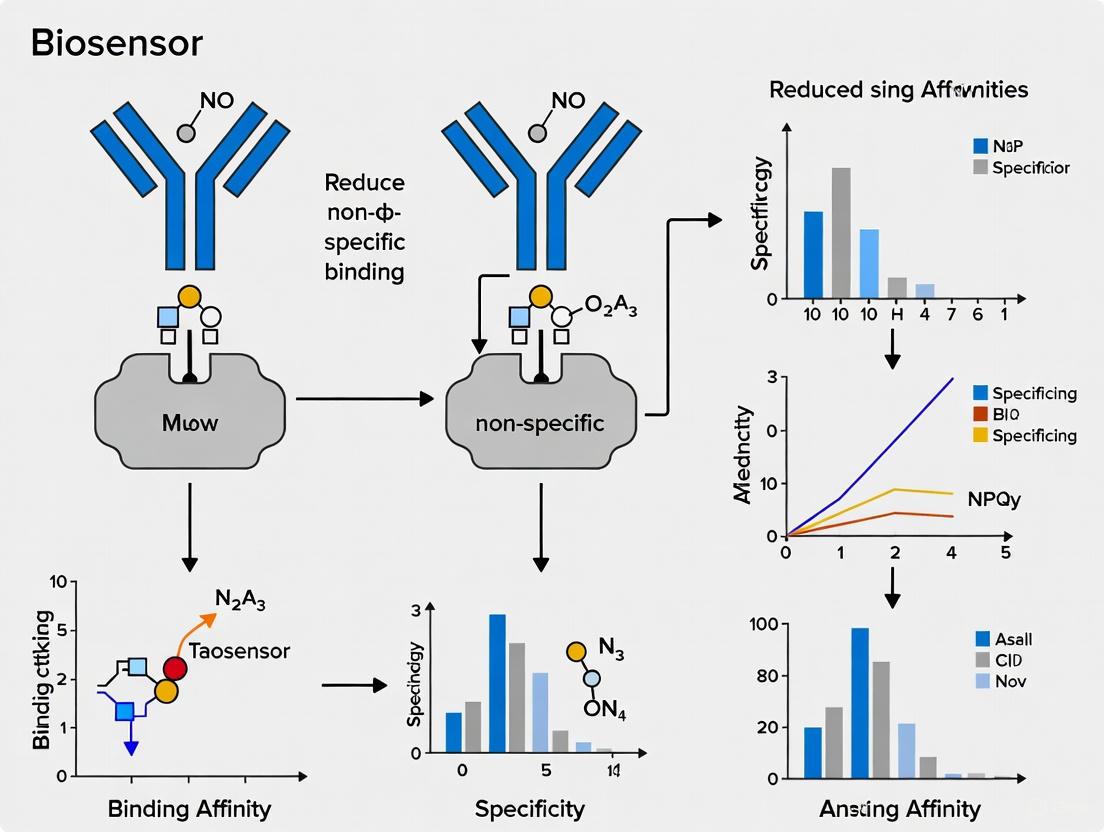
Non-specific binding (NSB) is a pervasive challenge that compromises the sensitivity, specificity, and reproducibility of biosensors, leading to false positives/negatives in biomedical research and diagnostic assays.
Comprehensive Strategies to Minimize Non-Specific Binding in Biosensors for Robust Drug Development
Abstract
Non-specific binding (NSB) is a pervasive challenge that compromises the sensitivity, specificity, and reproducibility of biosensors, leading to false positives/negatives in biomedical research and diagnostic assays. This article provides a systematic guide for researchers and drug development professionals on effectively countering NSB. It covers the fundamental mechanisms of NSB, explores a wide range of mitigation methods—from traditional surface coatings to advanced active removal techniques—and details systematic optimization and validation protocols. By synthesizing the latest research, this resource aims to equip scientists with practical strategies to enhance data reliability and accelerate the translation of biosensing technologies into clinical and pharmaceutical applications.
Understanding Non-Specific Binding: Mechanisms, Impacts, and Detection in Biosensing
FAQ: Understanding Non-Specific Binding
What is non-specific binding (NSB)? Non-specific binding (NSB) is the undesired adhesion of atoms, ions, or molecules to a surface through non-covalent, physical interactions, or via random chemical interactions at non-target sites [1]. In biosensing, this phenomenon leads to high background signals, false positives, reduced sensitivity, and can adversely affect the reproducibility and accuracy of an experiment [2] [1].
What is the core difference between physisorption and chemisorption? The core difference lies in the type of interaction and the resulting bond strength and stability. Physisorption involves weak physical forces, while chemisorption involves the formation of a chemical bond.
The table below summarizes the key distinctions:
| Feature | Physisorption | Chemisorption |
|---|---|---|
| Interaction Type | Weak, non-covalent forces (van der Waals, hydrophobic, electrostatic) [1] [3] | Strong, covalent or ionic chemical bonds [1] [4] |
| Binding Energy | Low (~10–100 meV) [3] | High [4] |
| Reversibility | Often reversible [4] | Often irreversible or slowly reversible [4] |
| Effect on Adsorbate | Electronic structure is barely perturbed [3] | Electronic structure is altered [4] |
| Typical Distance | Relatively large ((d > 0.3 \, nm)) [4] | Short (bonding distance) [4] |
What are the common culprits that cause NSB? NSB is primarily driven by the physicochemical properties of surfaces and molecules. The main culprits include:
- Hydrophobic Interactions: These are a major cause of NSB, especially for proteins and large molecules [5] [6].
- Electrostatic Interactions: Oppositely charged molecules or surfaces can attract each other, leading to charge-based NSB [5] [6].
- Van der Waals Forces: These universal, weak attractive forces are the fundamental interacting force in physisorption and contribute to NSB [3].
- Surface Functional Groups: In systems like molecularly imprinted polymers (MIPs), functional groups located outside the specific binding cavities can cause non-specific adsorption of molecules [7].
Experimental Troubleshooting Guide
How can I identify NSB in my experiment? The symptoms of NSB depend on the experimental platform:
- In Biosensors (e.g., BLI, SPR): You will observe a significant binding signal in control experiments. This includes a signal when the analyte is flowed over a bare sensor surface without the immobilized ligand, or a signal from a reference channel that cannot be distinguished from the specific signal [8] [6].
- In Western Blotting: NSB manifests as multiple non-specific bands or a high background on the membrane, obscuring the target band [9].
- In General Assays: NSB can lead to inconsistent results, high background noise, poor reproducibility, and an inaccurate calculation of binding affinity and kinetics [1] [5].
What are the primary strategies to suppress NSB? Strategies can be categorized as passive (preventing adsorption by coating the surface) or active (dynamically removing adsorption post-functionalization) [1]. The following workflow outlines a logical approach to troubleshooting NSB:
Research Reagent Solutions
The table below details common reagents used to combat NSB, along with their mechanisms and example applications.
| Reagent | Function | Example Use & Concentration |
|---|---|---|
| Bovine Serum Albumin (BSA) | Protein blocker; shields the analyte from non-specific interactions with charged or sticky surfaces [1] [6]. | 1% in buffer for SPR or BLI [8] [6]. |
| Tween-20 | Non-ionic surfactant; disrupts hydrophobic interactions [1] [6]. | 0.005% - 0.05% in assay buffers or wash buffers [8] [6]. |
| Casein | Protein blocker from milk; effective for physically blocking vacant binding sites [1]. | Used as a blocking agent in immunoassays like ELISA and Western blotting [1]. |
| Sucrose | Osmolyte and NSB blocker; enhances protein solvation, reducing aggregation and physisorption [8]. | 0.6 M, in combination with 1% BSA and 20 mM imidazole for BLI [8]. |
| Sodium Chloride (NaCl) | Salt; produces a shielding effect to reduce charge-based electrostatic interactions [6]. | 150-200 mM in running buffer [8] [6]. |
| Sodium Dodecyl Sulfate (SDS) | Anionic surfactant; used for electrostatic modification of surfaces to eliminate NSB [7]. | Used to modify molecularly imprinted polymers (MIPs) for sensing [7]. |
Detailed Experimental Protocols
Protocol 1: Identifying and Quantifying NSB in Biolayer Interferometry (BLI) This protocol is adapted from studies investigating weak protein-protein interactions [8].
- Prepare Sensor Tips: Hydrate the required Ni-NTA biosensor tips in the running buffer for at least 10 minutes.
- Establish Baseline: Immerse the tips in running buffer to establish a stable baseline.
- Monitor NSB: Transfer the tips to a well containing your protein analyte at the highest concentration required for your experiment (e.g., 40 µM) without any ligand loaded.
- Data Analysis: Observe the binding response during the "association" and "dissociation" phases. A significant signal change indicates substantial NSB between the analyte and the bare biosensor tip. The magnitude of this signal should be compared to your expected specific signal [8].
Protocol 2: Using a Novel Saccharide Blocker for BLI This protocol is effective for studying weak interactions (KD > 1 µM) where high analyte concentrations exacerbate NSB [8].
- Prepare NSB-Blocking Buffer: Create an admixture with the following components:
- 1% (w/v) BSA
- 20 mM Imidazole
- 0.6 M Sucrose
- Dissolve in your standard running buffer (e.g., PBS with 150 mM NaCl).
- Test Efficacy: Repeat the NSB quantification protocol (Protocol 1) using this new blocking buffer.
- Proceed with Experiment: If NSB is sufficiently suppressed, perform your ligand-analyte binding experiment using the new admixture as the running and sample dilution buffer. The double-referencing method should still be applied [8].
Protocol 3: Reducing NSB in Surface Plasmon Resonance (SPR) with Buffer Additives This is a systematic approach to optimizing SPR conditions [6].
- Preliminary Test: Flow your analyte over a bare sensor chip (without immobilized ligand) to establish the baseline level of NSB.
- Optimize Buffer Conditions: Test the following additive conditions individually or in combination:
- Charge Shielding: Add NaCl to the running buffer (start with 150-200 mM).
- Hydrophobic Blocking: Add Tween-20 to the running buffer (start with 0.005%).
- Protein Blocking: Add BSA to the running buffer (start with 0.5-1%).
- Evaluate and Iterate: After each modification, re-run the analyte over the bare sensor surface. The condition that most reduces the NSB signal without affecting the specific binding should be selected for the main experiment.
Non-specific binding (NSB) is a pervasive challenge that compromises the sensitivity, specificity, and reproducibility of biosensors. It occurs when molecules adsorb to sensing surfaces through physisorption rather than specific biorecognition, leading to elevated background signals and false positives. The fundamental mechanisms driving NSB are rooted in molecular interactions, primarily hydrophobic forces, electrostatic interactions, and van der Waals forces. Understanding these forces is crucial for developing effective strategies to mitigate NSB and improve biosensor performance for applications in clinical diagnostics and drug development.
FAQ: Understanding the Fundamental Forces of NSB
What are the primary molecular forces responsible for non-specific binding?
NSB is primarily driven by three types of weak, non-covalent interactions:
- Hydrophobic Interactions: These occur between non-polar surfaces or regions of molecules in an aqueous environment. The system seeks to minimize the energetically unfavorable contact between non-polar groups and water, driving these regions to associate with each other.
- Electrostatic Interactions: These involve attractive forces between oppositely charged groups on the protein and the biosensor surface, such as between cationic and anionic residues.
- van der Waals Forces: These are weak, short-range electromagnetic forces between atoms or molecules that arise from transient dipoles.
These forces often act in combination, making NSB a complex phenomenon to address [1] [10] [11].
How do these forces contribute to NSB in different biological contexts?
The relative contribution of each force depends on the specific biological context. In crowded cellular environments like the E. coli or HEK293T cytoplasm, studies using genetically encoded probes have shown that cytoplasmic components interact strongly with both cationic and hydrophobic probes, while neutral hydrophilic probes remain largely inert. This stickiness profile is condition- and species-dependent, and can be modulated by factors like ATP depletion [12]. For specific proteins like interleukin-6 (IL-6) interacting with functionalized surfaces, hydrophobic and electrostatic interactions have been identified as key factors driving high affinity on mixed self-assembled monolayers (SAMs) [11].
Can we quantify the contribution of different forces to NSB?
Yes, computational and experimental approaches can dissect these contributions. Molecular dynamics (MD) simulations of IL-6 adsorption on mixed SAM surfaces revealed that the strength of interaction is dramatically enhanced on surfaces comprising both charged and hydrophobic ligands compared to single-component SAMs. The enhanced exposure of charged terminal groups in mixed SAMs, quantified by solvent accessible surface area (SASA) analysis, makes the surface more prone to interact with the target protein [11]. The table below summarizes a quantitative analysis from a molecular dynamics study on IL-6 interaction with functionalized surfaces.
Table 1: Quantified Molecular Interactions from MD Simulations of IL-6 with Functionalized Surfaces
| Surface Type | Key Interaction Forces | Computational Findings | Experimental Validation (SPR) |
|---|---|---|---|
| Mixed SAM (M-SAM)(Charged & hydrophobic ligands) | Hydrophobic & Electrostatic | High affinity; 14.52% higher SASA than S-SAM; greater NH3+ group exposure [11] | Strong IL-6 interactions, high binding affinity even under high ionic strength [11] |
| Single-component SAM (S-SAM)(Neutral hydrophobic ligands) | Primarily Hydrophobic | Ligands bent inwards due to electrostatic repulsion; lower SASA [11] | Weaker IL-6 interactions compared to M-SAM [11] |
Troubleshooting Guide: Mitigating NSB Driven by Molecular Forces
Problem: NSB driven by hydrophobic interactions
Observed Issue: High background signals with analytes or surfaces that have non-polar characteristics. Solution Strategy:
- Use non-ionic surfactants (e.g., Tween-20) at low concentrations to disrupt hydrophobic interactions [13] [10].
- Employ osmolytes like sucrose (0.6 M), which enhance protein solvation and reduce hydrophobic-driven aggregation or adsorption [8].
- Utilize blocker proteins like BSA (1%) that can shield hydrophobic patches on surfaces [8] [13].
Problem: NSB driven by electrostatic interactions
Observed Issue: Increased binding with oppositely charged surfaces or molecules, often pH-dependent. Solution Strategy:
- Adjust buffer pH to match the isoelectric point (pI) of your protein or neutralize the net charge of the sensor surface [13].
- Increase ionic strength (e.g., with NaCl) to shield charged groups and weaken electrostatic attractions. A common starting point is 150 mM NaCl [8] [13].
- Consider the net charge of your protein, as highly positively charged proteins often show greater stickiness to negatively charged cellular components and surfaces [12].
Problem: NSB driven by combined or multiple forces
Observed Issue: Persistent NSB despite addressing individual forces, indicating a complex interaction mechanism. Solution Strategy:
- Implement combinatorial blocking buffers. A tri-component admixture (e.g., 1% BSA, 20 mM imidazole, and 0.6 M sucrose) has proven effective against a broad range of analytes by simultaneously addressing multiple interaction types [8].
- Engineer surface chemistry. Use mixed self-assembled monolayers (SAMs) where chemical heterogeneity can be controlled to minimize unwanted interactions while promoting specific binding [11].
- Employ a Design of Experiments (DOE) approach to systematically screen multiple buffer conditions, concentrations, and additives for their ability to reduce NSB in your specific system [14].
The following diagram illustrates the decision-making workflow for diagnosing and mitigating NSB based on the underlying molecular forces:
The Scientist's Toolkit: Essential Reagents for NSB Mitigation
Table 2: Key Research Reagent Solutions for Combating NSB
| Reagent / Material | Function / Mechanism | Example Application & Context |
|---|---|---|
| Bovine Serum Albumin (BSA) | Protein blocker; shields charged surfaces and hydrophobic patches on biosensors or assay platforms. | Typically used at 1% concentration in buffer to block free binding sites [8] [13]. |
| Sucrose | Osmolyte and NSB blocker; enhances protein solvation, reducing hydrophobic-driven aggregation/adsorption. | Highly effective at 0.6 M in combination with BSA and imidazole in BLI studies [8]. |
| Non-ionic Surfactants (Tween-20) | Disrupts hydrophobic interactions between analyte and sensor surface/equipment. | Used at low concentrations (e.g., 0.005%-0.05%) in buffer or sample solutions [13] [14]. |
| Imidazole | Competes with His-tagged ligands for coordination sites on Ni-NTA biosensors, reducing non-specific analyte attachment to the sensor matrix itself. | Used at low concentrations (e.g., 20 mM) to avoid significant disruption of His-tag binding [8]. |
| Mixed Self-Assembled Monolayers (Mixed SAMs) | Engineered surface chemistry with controlled heterogeneity (e.g., charged & hydrophobic ligands) to modulate protein-surface interactions. | Used on gold SPR chips to fine-tune surface properties for enhanced specific recognition of proteins like IL-6 [11]. |
| Sodium Chloride (NaCl) | Shields charged proteins from interacting with surfaces by reducing the Debye length, thereby mitigating electrostatic-driven NSB. | A common starting point is 150 mM NaCl in the assay buffer [8] [13]. |
Advanced Experimental Protocols
Protocol 1: Evaluating NSA in Biosensors Using Combined Electrochemical-Surface Plasmon Resonance (EC-SPR)
This protocol is adapted from recent research on addressing fouling in combined EC-SPR biosensors, which allows for acquiring more detailed information on interfacial events [10].
- Surface Functionalization: Prepare the gold sensor surface. If using Mixed SAMs, incubate with a solution of thiol-containing ligands (e.g., a mixture of S(CH₂)₈NH₃⁺ and S(CH₂)₇CH₃) to form a stable, ordered monolayer.
- Immobilize Bioreceptor: Covalently attach or adsorb the specific bioreceptor (e.g., antibody, aptamer) onto the functionalized surface.
- Baseline Measurement: Establish a stable baseline in running buffer using both EC and SPR detection modes simultaneously.
- Sample Exposure: Introduce the complex sample (e.g., serum, milk) to the biosensing interface under static or hydrodynamic conditions.
- Signal Monitoring:
- SPR: Monitor the reflectivity change in real-time. An increasing signal indicates mass accumulation, which could be specific binding or NSA.
- EC: Monitor the electron transfer rate or interfacial impedance. Fouling typically increases impedance or passivates the electrode.
- Data Correlation: Correlate the SPR signal (mass change) with the EC signal (interface integrity/activity). A large SPR signal with a concurrent drastic change in EC properties (e.g., increased impedance) strongly indicates significant fouling.
- Regeneration & Reuse: If the biosensor is designed for reuse, apply a regeneration solution (e.g., low pH or surfactant) to remove adsorbed species and check for signal recovery to the baseline.
Protocol 2: Molecular Dynamics (MD) Simulation to Probe Protein-Surface Interactions
This computational protocol, based on the study of IL-6 interaction with SAMs, provides atomic-level insights into the forces driving NSB [11].
- System Setup:
- Structure Preparation: Obtain or generate the atomic coordinates of the protein (e.g., from PDB) and the functionalized surface (e.g., a pre-equilibrated SAM on a gold slab).
- Solvation and Ionization: Place the protein and surface in a simulation box. Fill the box with explicit water molecules (e.g., TIP3P model). Add ions (e.g., Na⁺, Cl⁻) to neutralize the system and achieve a physiologically relevant ionic strength (e.g., 150 mM NaCl).
- Energy Minimization: Use a steepest descent algorithm to remove any steric clashes in the initial setup.
- Equilibration:
- Perform equilibration in the NVT ensemble (constant Number of particles, Volume, and Temperature) for 100-500 ps, gradually heating the system to the target temperature (e.g., 310 K).
- Follow with equilibration in the NPT ensemble (constant Number of particles, Pressure, and Temperature) for 100-500 ps to achieve the correct solvent density and system pressure.
- Production Run: Run a fully atomistic MD simulation for a sufficient timescale (e.g., 100 ns to 1 μs) to observe adsorption events and achieve stability in interaction energy measurements.
- Trajectory Analysis:
- Interaction Energy: Calculate the van der Waals and electrostatic components of the interaction energy between the protein and the surface over time.
- Solvent Accessible Surface Area (SASA): Determine the SASA of the protein and key surface functional groups to understand solvent exposure and hydrophobic driving forces.
- Root Mean Square Deviation (RMSD): Monitor the RMSD of the protein and the surface ligands to assess structural stability during the simulation.
- Density Profiles: Calculate the number density of ions and water molecules along the axis perpendicular to the surface to understand the electrostatic environment.
Non-specific binding (NSB) presents a fundamental challenge in biosensor technology, leading to false positives and false negatives that compromise diagnostic accuracy and derail research outcomes. NSB occurs when molecules attach to the biosensor surface through non-targeted interactions, obscuring the true signal from specific binding events [14] [10]. In clinical diagnostics, these inaccuracies can lead to misdiagnosis and inappropriate treatment, while in drug development, they can skew results and impede progress [15]. This technical support center provides practical methodologies and solutions to identify, troubleshoot, and minimize NSB, enhancing the reliability of biosensor-based applications.
FAQs: Understanding NSB and Its Impacts
What is non-specific binding and how does it differ from specific binding?
Answer: Non-specific binding (NSB) refers to the adherence of molecules to a biosensor surface through non-targeted interactions, such as electrostatic, hydrophobic, or van der Waals forces, rather than through specific biorecognition [10] [16]. In contrast, specific binding involves the precise interaction between a bioreceptor (like an antibody or aptamer) and its intended target analyte. The key distinction lies in the functional outcome: specific binding generates the intended analytical signal, while NSB creates background noise that can obscure accurate detection [17].
What are the primary consequences of NSB in biosensor applications?
Answer: NSB has several critical consequences:
- False Positives: NSB can generate signals that mimic specific binding, leading to incorrect detection of analytes that are not present in the sample [15] [17].
- False Negatives: Accumulated foulants can sterically block bioreceptors, preventing target analytes from binding and resulting in underestimated concentrations or missed detections [10].
- Inaccurate Kinetic Parameters: In affinity characterization (e.g., drug binding studies), NSB distorts the calculation of crucial kinetic parameters such as association rate (ka), dissociation rate (kd), and equilibrium constant (KD) [14] [16].
- Reduced Sensitivity and Specificity: NSB increases background noise, which lowers the signal-to-noise ratio and degrades the biosensor's ability to detect low analyte concentrations and distinguish between similar molecules [17] [10].
Which biophysical properties of my analyte might contribute to NSB?
Answer: Several analyte properties can increase the risk of NSB [16]:
- Isoelectric Point (pI): Proteins with a high pI are positively charged at neutral pH and may bind non-specifically to negatively charged biosensor surfaces. The reverse is true for proteins with a low pI.
- Hydrophobicity: Analytes with large hydrophobic regions tend to have non-specific interactions with sensor surfaces or other proteins.
- Specific Amino Acid Sequences: The presence of certain motifs, such as the RGD sequence (Arg-Gly-Asp) which recognizes streptavidin, can cause significant NSB to specific sensor chemistries [16].
Troubleshooting Guides
Guide 1: Systematic Evaluation and Mitigation of NSB
Follow this workflow to diagnose the source of NSB and select appropriate countermeasures.
Guide 2: Optimizing Buffer Conditions Using a Design of Experiments (DOE) Approach
When standard buffer conditions fail, a systematic DOE can efficiently identify optimal NSB mitigators.
Protocol: Using a DOE to Screen Buffer Conditions [14] [16]
- Define Factors and Ranges: Select potential NSB mitigators as factors (e.g., BSA concentration, detergent type and concentration, ionic strength). Define a relevant testing range for each (e.g., BSA: 0.1% - 1%; TWEEN 20: 0.01% - 0.1%).
- Generate Experimental Design: Use DOE software (e.g., Sartorius MODDE) to create a set of experiments that efficiently tests factor combinations without requiring every possible permutation.
- Execute BLI Experiments: On an Octet system or similar biosensor, run the experiments from the design. For each condition, measure and record:
- The nm shift for specific binding (target analyte to immobilized ligand).
- The nm shift for NSB (analyte binding to a blank or blocked reference sensor).
- The ligand loading level.
- Analyze Data in DOE Software: Input the results into the software to build a model. The software will identify which factors most significantly reduce NSB while preserving specific binding.
- Validate Optimal Condition: Run a confirmation experiment using the optimal buffer condition predicted by the model to verify performance.
The table below summarizes the effects of common buffer additives used in such screenings.
Table 1: Common Buffer Additives for Mitigating NSB
| Mitigator Type | Example Reagents | Primary Mechanism of Action | Considerations |
|---|---|---|---|
| Protein Blockers | BSA, Casein, Fish Gelatin, Dry Milk | Coats surfaces to block hydrophobic and ionic interactions | May interact with some biological systems; requires purity [16]. |
| Detergents | TWEEN 20 (non-ionic), Triton X-100, CHAPS (zwitterionic) | Disrupts hydrophobic protein-protein interactions | Optimal concentration is critical; high concentrations can denature proteins [16]. |
| Salts | NaCl, KCl | Shields electrostatic interactions by increasing ionic strength | Can affect specific binding affinity in some cases [16]. |
| Specialized Blockers | Biotin, Biocytin (for Streptavidin sensors) | Competitively blocks unused biotin-binding sites on streptavidin surfaces | Highly specific to sensor chemistry [16]. |
Guide 3: Distinguishing Specific from Non-Specific Binding Signals
In some advanced sensor platforms, specific and non-specific binding can generate distinct signal patterns.
Protocol: Isolating Binding Responses in Conducting Polymer Biosensors [17]
This protocol uses a chemiresistive biosensor made from a PEDOT-based conducting polymer to differentiate binding events based on their electrical response.
- Sensor Fabrication: Create the biosensor by vapor-phase polymerization of PEDOT and poly(3-thiopheneethanol) onto a fabric substrate to form an interpenetrating network.
- Functionalization: Covalently immobilize the capture molecule (e.g., Avidin) onto the sensor surface using a linker like (3-Glycidyloxypropyl)trimethoxysilane (GOPS). Block remaining reactive sites with BSA.
- Resistance Measurement: Submerge the functionalized sensor in PBS and apply a constant DC current. Monitor the resistance until a steady state is achieved.
- Analyte Introduction: At the 15-minute mark, introduce the analyte solution.
- Signal Analysis: Monitor the percent change in resistance (ΔR%). A negative ΔR% (resistance decreases) is characteristic of specific binding. A positive ΔR% (resistance increases) is indicative of non-specific binding [17].
- Data Validation: For complex samples, machine learning classifiers (e.g., Random Forest) can be trained on the resistance response data to automatically predict the presence of the target analyte with high accuracy [17].
The Scientist's Toolkit: Key Reagents and Materials
Table 2: Essential Research Reagents for NSB Mitigation
| Reagent/Material | Function in NSB Mitigation | Example Applications |
|---|---|---|
| Bovine Serum Albumin (BSA) | Protein blocker; adsorbs to surfaces to shield hydrophobic and charged sites. | A universal component of blocking buffers and kinetics buffers in BLI and ELISA [14] [16]. |
| TWEEN 20 | Non-ionic detergent; disrupts hydrophobic interactions. | Standard additive (e.g., 0.002%-0.05%) in assay buffers to prevent protein aggregation and surface adhesion [14] [16]. |
| Casein | Protein blocker derived from milk; effective at blocking hydrophobic surfaces. | Used as a blocking agent in immunoassays and blotting [16]. |
| Biotin/Biocytin | High-affinity blocker for streptavidin binding sites. | Quenches unused sites on streptavidin-coated biosensors to prevent non-specific analyte binding to the sensor matrix [16]. |
| Octet Kinetics Buffer | Optimized commercial buffer containing BSA and TWEEN 20. | A ready-to-use solution for reducing NSB in biolayer interferometry assays [16]. |
| Antifouling Polymers (e.g., POEGMA) | Forms a dense, hydrophilic brush layer that physically prevents protein adsorption. | Coating for magnetic beads and sensor surfaces to minimize NSA in complex samples like serum [18]. |
| Design of Experiments (DOE) Software | Statistically guides the screening of multiple buffer conditions to find optimal NSB mitigators. | Efficiently identifies the best combination of blockers, detergents, and salts for challenging assays [14] [16]. |
Advanced Techniques: Leveraging Machine Learning and Computational Counterselection
Emerging computational methods are providing powerful new tools to combat NSB early in the development pipeline.
Computational Counterselection: This framework uses machine learning models trained on sequencing data from affinity selection experiments (e.g., for antibody discovery) to identify and remove nonspecific biologic candidates from pools in silico. This approach bypasses the need for costly and often insensitive experimental counterselection against multiple off-targets, helping to prevent downstream failures in drug development [19].
Machine Learning for Signal Decoding: As demonstrated in the conducting polymer biosensor protocol, classifiers like Random Forest can be trained to decouple specific and non-specific binding signals directly from the sensor's output, improving accuracy in complex samples [17].
Mitigating non-specific binding is not a single-step fix but a critical, iterative process in biosensor development and application. By systematically understanding the sources of NSB—from analyte properties and sensor chemistry to sample matrix—researchers can deploy targeted strategies to suppress it. Leveraging a combination of optimized buffer conditions, advanced sensor materials, antifouling coatings, and computational tools provides a robust defense against the false positives and negatives that jeopardize research integrity and diagnostic validity.
FAQs: Understanding Colloidal Aggregation
What is colloidal aggregation-based inhibition (ABI) and why is it a problem in biosensing? Colloidal aggregation occurs when organic ligands in aqueous environments self-assemble into large colloidal assemblies, typically ranging from 90–600 nm in size [20]. These aggregates can non-specifically inhibit target proteins through adsorption, leading to false positives in drug screening and biosensor applications. This phenomenon negatively impacts biosensor performance by decreasing sensitivity, specificity, and reproducibility, ultimately resulting in inaccurate readings and false responses [1] [20].
How can I determine if my experimental results are affected by colloidal aggregation? Several hallmark indicators suggest aggregation-based interference: increased potency with prolonged incubation time, promiscuous inhibition across multiple unrelated targets, and bell-shaped dose-response curves where activity decreases at higher concentrations [20]. A definitive diagnosis requires direct detection methods such as dynamic light scattering (DLS) to measure particle sizes or transmission electron microscopy (TEM) for visual confirmation of aggregate structures [20].
What are the most effective strategies to prevent or mitigate colloidal aggregation in experiments? The primary mitigation approaches include using nonionic detergents like Triton X-100 (TX) which converts protein-binding aggregates into non-binding coaggregates, and adding carrier proteins such as human serum albumin (HSA) that act as reservoirs for free inhibitor and prevent self-association [20]. Surface engineering with antifouling coatings that create thin, hydrophilic, non-charged boundary layers can also effectively reduce nonspecific adsorption in biosensor applications [1] [10].
Are there specific ligand properties that make compounds more prone to aggregation? Yes, highly hydrophobic compounds are particularly aggregation-prone in aqueous experimental buffers [20]. The critical aggregation concentration (CAC), typically around 150 μM for some ESI inhibitors, defines the threshold above which self-association becomes significant. Ligands with heterogeneous surface distributions or those that create cone-like wrapping around individual pods in branched nanocrystals also exhibit enriched aggregation behavior [20] [21].
Troubleshooting Guides
Problem: Inconsistent Biosensor Readings in Complex Samples
Potential Cause: Non-specific adsorption (NSA) or biofouling from matrix components in complex samples like serum, blood, or milk interfering with signal accuracy [10].
Solutions:
- Implement antifouling coatings: Apply passive surface modifications using polyethylene glycol (PEG), zwitterionic materials, or cross-linked protein films that create a hydration barrier [1] [10].
- Utilize active removal methods: Employ transducer-based (electromechanical or acoustic) or fluid-based systems that generate surface shear forces to remove weakly adhered biomolecules [1].
- Optimize sample preparation: Incorporate centrifugation to reduce fat content, dilution to decrease protein concentration, and filtration to remove particulate matter [10].
- Add blocking agents: Use serum albumins (e.g., BSA), casein, or other milk proteins to occupy vacant surface sites and prevent non-specific binding [1].
Verification Method: Compare sensor response in buffer versus complex samples; significant signal divergence indicates NSA issues. Surface plasmon resonance (SPR) can directly monitor adsorption events [10].
Problem: Unexplained Bell-Shaped Dose-Response Curves
Potential Cause: Competitive sequestration where ligand aggregates act as competitive sinks for free inhibitor, reducing apparent potency at higher concentrations [20].
Solutions:
- Determine Critical Aggregation Concentration (CAC): Use NMR to monitor deviations from linear peak intensity increases with concentration, or employ saturation transfer difference (STD) experiments that only show signals for high molecular weight aggregates [20].
- Optimize detergent concentrations: Implement Triton X-100 at concentrations (typically 0.01%) that dissociate protein-binding aggregates without disrupting specific interactions [20].
- Utilize carrier proteins: Add human serum albumin (HSA) to compete with aggregate formation while maintaining specific binding capacity [20].
- Redesign ligand structure: Modify compounds to increase hydrophilicity or introduce charged groups that discourage self-association while preserving target affinity.
Verification Method: Dynamic light scattering (DLS) to confirm reduction in aggregate size after treatment implementation [20].
Problem: Signal Drift and Degradation Over Time in Biosensors
Potential Cause: Progressive fouling where non-specifically adsorbed molecules passivate the biosensor interface, leading to signal instability and reduced lifespan [10].
Solutions:
- Apply conductive antifouling polymers: Utilize PEG-based hydrogels, peptide films, or zwitterionic polymers that maintain electron transfer capability while resisting adsorption [10].
- Implement electrochemical cleaning protocols: Apply potential pulses or cycling to desorb fouling agents from electrode surfaces between measurements [10].
- Design surface topography: Engineer nanostructured surfaces with controlled porosity that selectively admit target analytes while excluding larger foulants [22].
- Utilize self-assembled monolayer (SAM) technology: Create ordered molecular films with terminal functional groups that minimize non-specific interactions while providing bioreceptor attachment sites [1] [23].
Verification Method: Monitor signal stability during extended exposure to complex samples; successful mitigation shows <5% signal variation over operational timeframe [10].
Experimental Protocols for Aggregation Detection
Protocol 1: Dynamic Light Scattering (DLS) for Aggregate Size Characterization
Purpose: Determine size distribution of colloidal aggregates in solution [20].
Materials:
- Dynamic light scattering instrument
- Ligand solutions in appropriate aqueous buffer
- Filtration units (0.22 μm) for buffer clarification
- Temperature-controlled sample chamber
Procedure:
- Prepare ligand solutions across concentration range (1-500 μM) in experimental buffer.
- Filter all buffers through 0.22 μm membrane before use to remove particulate contamination.
- Equilibrate DLS instrument at desired temperature (typically 25°C).
- Measure intensity-based size distribution for each concentration.
- Analyze correlation functions to determine hydrodynamic diameters.
- Identify critical aggregation concentration (CAC) as the point where significant populations >10 nm appear.
Interpretation: Aggregates typically appear in 90-600 nm range. CAC is identified as the concentration where aggregate signal first becomes detectable above background [20].
Protocol 2: NMR-Based Aggregation Assessment
Purpose: Detect self-association through concentration-dependent NMR parameter changes [20].
Materials:
- High-field NMR spectrometer (≥400 MHz)
- Deuterated buffer (e.g., D₂O or d-buffer)
- NMR tubes
- Ligand stock solutions
Procedure:
- Prepare ligand samples in deuterated buffer across concentration series.
- Acquire ¹H NMR spectra for each concentration using standard pulse sequences.
- Analyze chemical shifts, line widths, and peak intensities as function of concentration.
- Perform saturation transfer difference (STD) experiments at concentrations above suspected CAC.
- Plot peak intensity versus concentration; deviation from linearity indicates aggregation.
Interpretation: Constant chemical shifts with decreasing peak intensity relative to concentration suggests aggregation. STD signals appearing off-resonance confirm high molecular weight complexes [20].
Protocol 3: Surface Plasmon Resonance (SPR) for Nonspecific Binding Evaluation
Purpose: Quantify non-specific adsorption to sensor surfaces [10] [20].
Materials:
- SPR instrument with appropriate sensor chips
- Running buffer (e.g., PBS with 0.005% surfactant)
- Sample solutions in relevant matrix
- Regeneration solutions (e.g., glycine-HCl, NaOH)
Procedure:
- Establish baseline with running buffer at recommended flow rate (typically 10-30 μL/min).
- Inject sample solution for 2-5 minutes to monitor association phase.
- Switch to running buffer for 5-10 minutes to monitor dissociation.
- Regenerate surface if necessary between measurements.
- Compare response units (RU) for specific versus non-specific surfaces.
Interpretation: Significant RU increase on non-functionalized surfaces indicates substantial NSA. Effective antifouling coatings show >90% reduction in RU compared to bare gold [10].
Table 1: Characteristic Parameters of Aggregation-Prone Inhibitors
| Parameter | Typical Range | Measurement Technique | Interpretation |
|---|---|---|---|
| Critical Aggregation Concentration (CAC) | 150-200 μM | NMR intensity analysis, STD NMR | Concentration where self-assembly initiates [20] |
| Aggregate Size | 90-600 nm | Dynamic Light Scattering (DLS) | Hydrodynamic diameter of colloidal particles [20] |
| Aggregate Morphology | Spherical micelles to amorphous structures | Transmission Electron Microscopy (TEM) | Physical structure of aggregates [20] |
| Triton X-100 Effective Concentration | 0.01% (v/v) | Activity assays with/without detergent | Concentration that attenuates nonspecific inhibition [20] |
| Signal Reduction with Antifouling Coatings | >90% reduction in NSA | Surface Plasmon Resonance (SPR) | Efficacy of surface modifications [10] |
Table 2: Comparison of Aggregation Mitigation Strategies
| Strategy | Mechanism of Action | Advantages | Limitations |
|---|---|---|---|
| Triton X-100 | Converts inhibitory aggregates to non-binding coaggregates | Well-established protocol, widely available | Potential disruption of specific interactions [20] |
| Human Serum Albumin (HSA) | Functions as reservoir for free inhibitor | Biologically relevant, maintains specific binding | May introduce false negatives by sequestering active compounds [20] |
| Antifouling Surface Coatings | Creates hydration barrier preventing adsorption | Long-term protection, compatible with various sensors | May reduce bioreceptor accessibility if improperly designed [1] [10] |
| Ligand Structure Modification | Increases hydrophilicity to discourage self-assembly | Permanent solution, no additives needed | May compromise target affinity and specificity [20] |
| Electrochemical Cleaning | Desorbs foulants through applied potentials | In situ regeneration, no chemical additives | Limited to electrochemical biosensors, may damage delicate surfaces [10] |
Signaling Pathways and Experimental Workflows
Ligand Aggregation and Mitigation Pathway
Research Reagent Solutions
Table 3: Essential Reagents for Aggregation Research
| Reagent/Category | Specific Examples | Function/Purpose | Key Considerations |
|---|---|---|---|
| Aggregation Detergents | Triton X-100, Tween-20 | Attenuate nonspecific interactions by converting binding aggregates to non-binding forms [20] | Use at 0.01% concentration; may potentially disrupt some specific interactions [20] |
| Carrier Proteins | Human Serum Albumin (HSA), Bovine Serum Albumin (BSA) | Compete with aggregate formation; serve as ligand reservoirs [20] | Biologically relevant but may sequester active compounds leading to false negatives [20] |
| Surface Coatings | Polyethylene glycol (PEG), Zwitterionic polymers, Peptide films | Create antifouling surfaces that resist non-specific adsorption [1] [10] | Must maintain conductivity for electrochemical sensors; thickness affects SPR sensitivity [10] |
| Characterization Tools | Dynamic Light Scattering (DLS), NMR spectrometers, Surface Plasmon Resonance (SPR) | Detect and quantify aggregation phenomena [20] | DLS for size distribution; NMR for CAC determination; SPR for surface binding studies [20] |
| Blocking Agents | Casein, Milk proteins, Serum albumins | Passivate vacant surface sites to reduce NSA in biosensors [1] | Well-established for ELISA; may require optimization for specific sensor platforms [1] |
FAQs and Troubleshooting Guides
This technical support center addresses common challenges in biosensor research, with a focus on mitigating non-specific binding (NSB) to ensure data accuracy and reliability.
▍Dynamic Light Scattering (DLS)
Q: My DLS results show high variability between replicate measurements. What could be the cause?
A: This is often due to DLS's inherent "intensity skew" and sub-sampling variation. The intensity of scattered light is proportional to the sixth power of the particle diameter (d⁶). A single dimer scatters the same signal as 64 monomers, meaning small populations of large particles or agglomerates can disproportionately skew results [24].
- Troubleshooting Guide:
- Perform Replicate Measurements: ASTM E2490-09 recommends analyzing at least three separate aliquots to account for sampling probability and prevent false positives from sporadic agglomerates [24].
- Verify Algorithm Selection: Ensure you are using the correct algorithm for your sample's polydispersity. Use a single monomodal algorithm for narrow distributions (PDI <0.2) and a multimodal algorithm for broader distributions (PDI 0.1–0.7) [24].
- Review Intensity vs. Number Distributions: Always compare intensity-weighted and number-weighted size distributions. A number-weighted view can reveal the true population of smaller monomers that are masked in the intensity view [24].
Q: How can I confirm if my inhibitor compound is forming colloidal aggregates that might cause nonspecific inhibition?
A: DLS is a primary tool for directly detecting colloidal aggregates. You should observe the formation of sub-micrometer particles (often in the 90–600 nm range) [20]. This should be combined with other techniques like TEM for visual confirmation and functional assays that show reduced activity in the presence of attenuators like Triton X-100 or serum albumin [20].
▍Surface Plasmon Resonance (SPR)
Q: How can I reduce high levels of non-specific binding in my SPR experiment?
A: NSB occurs when analytes interact with the sensor surface through hydrophobic or charge-based interactions instead of the specific target. Several buffer optimization strategies can mitigate this [25] [6].
Table 1: Strategies to Reduce Non-Specific Binding in SPR
| Strategy | Mechanism | Example Implementation |
|---|---|---|
| Adjust Buffer pH | Modifies the charge of your analyte or ligand to minimize electrostatic attraction to the surface. | Adjust pH to the isoelectric point (pI) of your protein to neutralize its overall charge [6]. |
| Add Blocking Proteins | Proteins like BSA coat the surface and tubing, shielding hydrophobic and charged sites. | Supplement buffer with 1% Bovine Serum Albumin (BSA) [6]. |
| Add Non-ionic Surfactants | Disrupts hydrophobic interactions between the analyte and sensor surface. | Add low concentrations (e.g., 0.05%) of Tween 20 [25] [6]. |
| Increase Salt Concentration | Shields electrostatic charges on the analyte and surface, reducing charge-based attraction. | Add NaCl (e.g., 150-200 mM) to the running buffer [6]. |
Q: My analyte binds to the reference surface more strongly than to my target. What should I do?
A: This negative binding signal can be caused by buffer mismatch or other non-specific interactions. First, apply the NSB reduction strategies listed above. You should also test the suitability of your reference surface by injecting a high analyte concentration over a native surface, a deactivated surface, and a surface coated with a non-specific protein like BSA or IgG [25].
Q: What are advanced surface chemistries to prevent biofouling in biosensors?
A: Beyond small molecule additives, covalent surface modifications can provide robust resistance. Zwitterionic peptides, such as those with glutamic acid and lysine repeating motifs (e.g., EKEKEKEKEKGGC), form a stable, charge-neutral hydration layer that effectively resists non-specific adsorption from complex biofluids like GI fluid and bacterial lysate. This strategy has been shown to outperform conventional PEG coatings [26].
▍Nuclear Magnetic Resonance (NMR)
Q: How can I distinguish specific from nonspecific binding of a small molecule to a protein target using NMR?
A: Ligand-observed and protein-observed NMR can differentiate the mechanisms.
- Specific Binding: Causes residue-dependent, multidirectional chemical shift changes in a protein's ¹H-¹⁵N HSQC spectrum. This indicates the ligand is binding to a specific pocket and altering the local chemical environment of those residues [20].
- Nonspecific Binding or Aggregation-Based Inhibition (ABI): Often leads to broad, unidirectional chemical shift changes or severe line broadening and signal intensity loss across many residues. This suggests transient, non-specific interactions with large colloidal aggregates [20].
Q: What does a "bell-shaped" dose-response curve in an NMR titration indicate?
A: A bell-shaped curve, where binding increases and then decreases with higher ligand concentration, can indicate the formation of ligand aggregates. Beyond the critical aggregation concentration (CAC), aggregates can act as competitive sinks for the free ligand, sequestering it away from the specific protein target and reducing the observed binding signal [20].
Q: My NMR sample shows poor resolution and line shape. How can I improve it?
A: Poor shimming is a common cause.
- Check Sample Quality: Ensure you are using a high-quality NMR tube, the sample is homogeneous, and there are no air bubbles or insoluble substances [27].
- Verify Sample Volume: Use the required volume of sample with a sufficient amount of deuterated solvent [27].
- Optimize Shimming: Start from a good shim file (
rshcommand), use the "Z-X-Y-XZ-YZ-Z" tune before option, and manually optimize X, Y, XZ, and YZ shims if needed, optimizing Z after each adjustment [27].
▍Transmission Electron Microscopy (TEM)
Q: What are the critical steps in preparing a biological sample for TEM to avoid artifacts?
A: Proper fixation and drying are crucial to preserve native structure in a vacuum environment.
- Sample Fixation: Fix samples in an appropriate aldehyde fixative (e.g., glutaraldehyde) for at least one hour, followed by post-fixation in osmium tetroxide to stabilize and contrast lipids and proteins [28].
- Sample Dehydration: After rinsing, dehydrate the sample through a graded series of ethanol or acetone (e.g., 50%, 70%, 90%, 100%) to remove all water [28].
- Sample Drying: Use critical point drying (CPD) or freeze-drying. Air drying can cause collapse and distortion of delicate structures [28].
Q: My TEM image lacks contrast or shows charging artifacts. How can I fix this?
A: This is often related to sample conductivity and preparation.
- For Poor Contrast: Staining with heavy metals (e.g., uranyl acetate, lead citrate) is essential to scatter electrons and provide contrast for biological samples.
- For Charging (white streaks/bright areas): Coat the sample with a thin layer of a conductive material (e.g., 5-10 nm of Au/Pd or carbon) using a sputter coater. This prevents the buildup of electrons on non-conductive biological specimens [28].
Experimental Protocols
Protocol 1: Evaluating Inhibitor Specificity via NMR and DLS
This protocol helps determine if a small molecule inhibitor acts specifically or via colloidal aggregation [20].
Determine Critical Aggregation Concentration (CAC) by NMR:
- Prepare a series of inhibitor solutions in aqueous buffer (e.g., PBS) across a concentration range (e.g., 10 µM to 500 µM).
- Collect ¹H NMR spectra for each concentration.
- Plot the peak intensity versus concentration. The CAC is identified as the point where the linear increase in intensity deviates and plateaus, indicating self-association.
Confirm Aggregate Formation by DLS:
- Prepare an inhibitor solution at a concentration well above the CAC determined by NMR.
- Perform DLS measurement. The presence of particles in the 90-600 nm range confirms colloidal aggregate formation [20].
Test for Attenuation by Additives:
- Repeat the functional assay (e.g., enzyme inhibition) or binding assay (e.g., SPR, NMR) in the presence of:
- 0.01% Triton X-100 (a non-ionic detergent).
- Human Serum Albumin (HSA, 0.1-1 mg/mL).
- Interpretation: A significant reduction in inhibitory potency or binding in the presence of these attenuators is a hallmark of nonspecific, aggregation-based inhibition [20].
- Repeat the functional assay (e.g., enzyme inhibition) or binding assay (e.g., SPR, NMR) in the presence of:
Protocol 2: Functionalizing a Biosensor Surface with Zwitterionic Peptide
This protocol outlines the general steps for creating a non-fouling surface on a porous silicon (PSi) biosensor, based on research demonstrating superior performance over PEG [26].
- Surface Activation: Clean and activate the PSi surface (e.g., thermal hydrosilylation) to generate reactive sites for peptide coupling.
- Peptide Conjugation: Incubate the activated surface with a solution of the zwitterionic peptide (e.g., EKEKEKEKEKGGC) bearing a terminal cysteine anchor. The thiol group of cysteine will covalently couple to the activated surface.
- Blocking and Washing: Rinse the surface thoroughly with buffer to remove non-covalently attached peptides.
- Validation: Validate the coating's efficacy by exposing it to a complex biofluid (e.g., 10% serum, GI fluid) and measuring the non-specific adsorption compared to an uncoated or PEG-coated surface using the sensor's intrinsic signal (e.g., interference spectrum) [26].
Research Reagent Solutions
Table 2: Essential Reagents for Mitigating Non-Specific Interactions
| Reagent | Function/Benefit | Key Application Notes |
|---|---|---|
| Zwitterionic Peptide (e.g., EK peptide) [26] | Covalent surface coating for broad-spectrum anti-biofouling. Superior to PEG in preventing nonspecific adsorption from proteins to cells. | Sequence: EKEKEKEKEKGGC. The cysteine (C) provides a thiol group for surface anchoring. |
| Bovine Serum Albumin (BSA) [25] [6] | Protein-based blocking agent. Shields hydrophobic and charged sites on surfaces and tubing. | Typically used at 1% (w/v) concentration in buffers. Can be used as a reference surface in SPR. |
| Tween 20 [25] [6] | Non-ionic surfactant that disrupts hydrophobic interactions. | Use at low concentrations (e.g., 0.01-0.05%) to avoid denaturing proteins of interest. |
| Triton X-100 [20] | Non-ionic detergent used to identify and disrupt colloidal aggregates. | A key tool for diagnosing aggregation-based inhibition (ABI). Used at ~0.01% in assays. |
| Human Serum Albumin (HSA) [20] | Serum carrier protein that acts as a reservoir for hydrophobic compounds, preventing self-aggregation. | Helps distinguish specific binding from nonspecific sink effects. Used at physiologically relevant concentrations (e.g., 0.1-1 mg/mL). |
Workflow and Relationship Diagrams
Diagram 1: Decision Pathway for Specific vs. Non-Specific Binding
Diagram 2: Zwitterionic Peptide Surface Functionalization
Aggregation-Based Inhibition (ABI) is a phenomenon where small, hydrophobic drug candidates self-associate in aqueous solutions to form large colloidal assemblies that non-specifically inhibit target proteins. This is a major source of false positives in drug discovery screens, particularly for compounds targeting proteins like the exchange protein directly activated by cAMP (EPAC) [20] [29].
For researchers developing EPAC-targeted therapies, understanding ABI is crucial. Hydrophobic EPAC-selective inhibitors (ESIs) such as CE3F4R and ESI-09 are prone to forming sub-micrometer aggregates at concentrations exceeding their Critical Aggregation Concentration (CAC), typically around 150 μM [20]. These aggregates can inhibit EPAC via non-specific enzyme-aggregate adsorption, modulating enzyme activity through mechanisms like protein unfolding, altered dynamics, or physical separation of enzymes from their substrates [20] [29].
Experimental Detection and Analysis of ABI
Key Detection Methodologies
Detecting and characterizing ABI is a critical step in validating any EPAC inhibitor. The table below summarizes the primary techniques used.
Table 1: Key Experimental Methods for Detecting Aggregation-Based Inhibition
| Method | What It Measures | Key Indicators of ABI | Protocol Notes |
|---|---|---|---|
| Dynamic Light Scattering (DLS) | Size of particles in solution [20]. | Formation of particles 90-600 nm in diameter [20]. | Measure in aqueous buffer; average aggregate size for ESIs is ~250 nm [20]. |
| Ligand-Based NMR | Critical Aggregation Concentration (CAC) and aggregate formation [20]. | Deviation from linear peak intensity vs. concentration; appearance of STD-NMR signals [20]. | Monitor 1H NMR peak intensities; CAC is where intensity plateaus. Use STD-NMR above CAC. |
| Protein-Observed NMR | Specific vs. non-specific binding to the target protein [20]. | Multidirectional chemical shift changes (specific) vs. unidirectional shifts or bell-shaped dose-response [20]. | Titrate inhibitor into 15N-labeled EPAC1CBD; monitor 1H-15N HSQC spectra. |
| Enzymatic Activity Assays | Inhibition potency under different conditions [20] [30]. | Reduced potency in the presence of detergents (TX-100) or carrier proteins (HSA) [20] [29]. | Perform activity assays (e.g., fluorescence-based GEF assay [30]) with/without 0.01% TX-100. |
Experimental Workflow for ABI Analysis
The following diagram illustrates a logical workflow for systematically analyzing potential ABI in novel compounds.
The Scientist's Toolkit: Essential Reagents for ABI Studies
Table 2: Key Research Reagent Solutions for ABI Experiments
| Reagent | Function in ABI Studies | Typical Working Concentration |
|---|---|---|
| Triton X-100 | Non-ionic detergent that attenuates ABI by converting protein-binding aggregates into non-binding coaggregates [20]. | 0.01% [20] |
| Human Serum Albumin (HSA) | Carrier protein that acts as a reservoir for free inhibitor, preventing self-association and thus minimizing nonspecific interactions [20]. | 1% [20] [6] |
| Bovine Serum Albumin (BSA) | Commonly used protein blocker; shields analyte from non-specific interactions with charged surfaces and tubing [6] [1]. | 1% [6] |
| Tween 20 | Mild non-ionic surfactant that disrupts hydrophobic interactions responsible for NSB [6]. | 0.005 - 0.05% [6] |
| Sodium Chloride (NaCl) | High salt concentrations shield charged proteins from electrostatic interactions with surfaces, reducing charge-based NSB [6]. | 150 - 200 mM [6] |
Troubleshooting Guides & FAQs
FAQ: Fundamental Concepts
Q1: What is the fundamental difference between specific and non-specific binding for an EPAC inhibitor? Specific binding involves a well-defined, complementary interaction between the inhibitor and a specific binding pocket on the EPAC protein, often resulting in saturable binding and predictable structure-activity relationships. In contrast, non-specific binding (NSB) arises from weaker, non-complementary forces like hydrophobic interactions, where the inhibitor (often in an aggregated state) adsorbs promiscuously to multiple surface sites on the protein or the experimental apparatus [6] [1].
Q2: Can a specific EPAC inhibitor also form aggregates? Yes. A compound can be a specific inhibitor at concentrations below its Critical Aggregation Concentration (CAC) and exhibit non-specific, aggregation-based inhibition at concentrations above the CAC. This can lead to a bell-shaped dose-response curve where potency decreases at higher concentrations as the aggregates sequester free inhibitor [20].
Q3: Why is ABI such a common problem in drug discovery? Many drug-like molecules are inherently hydrophobic to facilitate penetration through cell membranes. In the aqueous environments of most biochemical assays, these hydrophobic molecules have a tendency to self-associate to minimize their exposed surface area, leading to colloidal aggregation [20] [29].
FAQ: Technical and Experimental Issues
Q4: My SPR data shows a high response, but the binding kinetics seem non-physical. Could NSB be the cause? Yes. Non-specific binding to the sensor surface can inflate the measured response units (RU), leading to erroneous calculations of association and dissociation rates. This often manifests as sensograms that do not fit standard binding models well [6] [14].
Q5: I suspect my lead EPAC inhibitor is aggregation-prone. What is the first experiment I should do? A coupled enzymatic and detergent test is a robust first step. Perform your EPAC activity assay with and without a non-ionic detergent like 0.01% Triton X-100. A significant reduction in inhibitory potency in the presence of detergent is a strong initial indicator of ABI [20] [29].
Q6: Are all EPAC inhibitor aggregates the same? No. Research has revealed different classes of aggregates. For example, CE3F4R forms amorphous aggregates that do not appear to bind EPAC directly but act as competitive sinks for the free inhibitor. In contrast, ESI-09 forms more spherical, micellar aggregates that can denature proteins upon interaction [20] [30].
Troubleshooting Guide: Mitigating Non-Specific Binding
The diagram below outlines a systematic approach to diagnose and resolve NSB issues in biosensor experiments like SPR.
Q7: I've used Triton X-100 and my inhibitor completely lost activity. Does this confirm it is a false positive? Not necessarily. While a dramatic loss of potency strongly suggests ABI, it is important to consider that detergents and carrier proteins like HSA can also compete for the free, specific inhibitor. This highlights the risk of introducing false negatives when using ABI attenuators. The results should be interpreted in the context of other biophysical data (e.g., DLS, NMR) [20].
Q8: My inhibitor passes the detergent test but I'm still seeing high background in my binding assay. What else could be wrong? NSB can be caused by factors other than ligand aggregation. Consider:
- Electrostatic Interactions: If your protein or inhibitor is highly charged, adjust the buffer pH or increase the ionic strength with salt to shield the charges [6].
- Surface Stickiness: Use a protein blocker like BSA (1%) to passivate surfaces and tubing [6] [1].
- Ligand Denaturation: The process of immobilizing your target protein on a biosensor chip can sometimes denature it, exposing hydrophobic patches. Optimize immobilization conditions to maintain native conformation [6] [14].
Successfully navigating the challenges of ABI requires a multi-faceted approach. Relying on a single method is insufficient; robust analysis involves orthogonal techniques.
- Always Test for ABI: Make detergent-based and albumin-based assays a standard part of your workflow for any new hydrophobic inhibitor.
- Characterize Early: Use DLS and NMR to physically characterize aggregation and determine the CAC early in the lead optimization process.
- Mind the Balance: Understand that ABI attenuators are powerful tools but can mask true positive signals. Use them judiciously and interpret results carefully.
- Control Your Conditions: Optimize buffer composition, pH, and salt concentration to minimize non-specific interactions from the outset.
By integrating these protocols and troubleshooting strategies, researchers can more effectively discriminate between true EPAC-specific inhibitors and false positives arising from aggregation, thereby accelerating the development of reliable therapeutic leads.
A Practical Toolkit for NSB Reduction: Passive, Active, and Chemical Methods
Frequently Asked Questions (FAQs)
1. What is non-specific binding and why is it a problem in biosensors? Non-specific binding (NSB) occurs when molecules in a sample (like proteins or analytes) adhere to the sensor surface through unintended interactions, rather than binding specifically to the immobilized recognition element (e.g., an antibody or ligand) [6] [31]. In biosensors, this leads to false-positive signals, reduced assay sensitivity, inaccurate data, and can ultimately cause errors in diagnostic results or scientific conclusions [31] [32].
2. What are the common causes of non-specific binding? NSB is primarily caused by molecular forces such as hydrophobic interactions, electrostatic (charge-based) interactions, hydrogen bonding, and van der Waals forces [6] [33]. Factors that contribute include:
- Surface Properties: A sensor surface with high charge or hydrophobicity can attract molecules non-specifically [33].
- Sample Composition: Complex samples like serum or cell lysates contain many proteins and other molecules that can stick to the surface [31] [34].
- Buffer Conditions: An suboptimal buffer pH or ionic strength can promote charge-based interactions [13] [6].
3. How do surface coating and blocking strategies reduce NSB? These are passive methods that create a physical or chemical barrier on the sensor surface. Surface coating involves modifying the surface with a material that resists protein adsorption. Blocking involves incubating the surface with a solution of irrelevant proteins or polymers (e.g., BSA, casein) that adsorb to any remaining reactive sites, "blocking" them from interacting with non-target molecules in your sample [31] [35].
4. What is the difference between a blocking agent and a surfactant? Both are used to minimize NSB, but they function differently. A blocking agent (like BSA or casein) is a protein or polymer that physically occupies binding sites on the surface [31] [35]. A surfactant (like Tween 20) is a detergent that disrupts hydrophobic interactions between your analyte and the surface, preventing adhesion [13] [6]. They can often be used in combination for greater effect.
5. How do I choose the right blocking strategy for my experiment? The choice depends on the characteristics of your analyte, ligand, and sensor surface. Key factors to consider include the isoelectric point (pI), charge, and hydrophobicity of the molecules involved [13] [6]. For instance, if your analyte is positively charged, NSB may be caused by electrostatic attraction to a negative surface, so adjusting pH or increasing salt concentration would be a logical first step [13] [6]. Empirical testing is often necessary to find the optimal condition.
Troubleshooting Guide
Problem: High Background Signal
- Symptoms: Consistently high signal in negative controls; poor signal-to-noise ratio.
- Potential Causes & Solutions:
- Insufficient Blocking: Ensure the blocking step is performed for an adequate duration (30 minutes to overnight) and that a sufficient concentration of blocking agent (typically 1-5%) is used [35]. Try a different blocking agent (e.g., switch from BSA to casein).
- Surface Contamination: Meticulously clean and precondition the sensor surface before immobilization [36].
- Buffer Issues: Incorporate additives like BSA (1%) or a non-ionic surfactant like Tween 20 (e.g., 0.05%) into your running buffer and sample dilution buffer [13] [6].
Problem: Inconsistent Results Between Runs
- Symptoms: Large variation in signal intensity for the same analyte concentration; poor reproducibility.
- Potential Causes & Solutions:
- Inconsistent Blocking: Standardize the blocking protocol, including the time, temperature, and source of the blocking reagent [36].
- Variable Surface Regeneration: If reusing sensor chips, ensure a rigorous and consistent regeneration protocol to remove all bound material without damaging the surface [25] [36].
- Poor Sample Quality: Remove aggregates and impurities from your samples using centrifugation, dialysis, or filtration before analysis [31] [36].
Problem: Low Specific Signal
- Symptoms: The expected binding signal is weak, even when NSB appears controlled.
- Potential Causes & Solutions:
- Over-Blocking: The blocking agent might be interfering with the specific binding interaction. Test different types and concentrations of blockers to find one that minimizes background without masking the active sites of your immobilized ligand [35].
- Incorrect Surface Chemistry: The immobilization strategy may be causing improper orientation of the ligand. Consider alternative coupling methods (e.g., capture-based immobilization) to improve accessibility [25] [36].
The following table outlines common additives used in running buffers to mitigate non-specific binding.
| Additive | Typical Concentration | Primary Mechanism of Action | Common Use Cases |
|---|---|---|---|
| Bovine Serum Albumin (BSA) [13] [6] | 0.1% - 1% | Shields the analyte from charged/hydrophobic surfaces; blocks non-specific protein-protein interactions. | General purpose blocking for protein analytes. |
| Non-Ionic Surfactant (e.g., Tween 20) [13] [6] | 0.005% - 0.05% | Disrupts hydrophobic interactions between the analyte and the sensor surface or tubing. | Reducing NSB caused by hydrophobicity; preventing analyte loss. |
| Salt (e.g., NaCl) [13] [6] | 150 - 200 mM (or higher) | Shields charged proteins from interacting with charged surfaces via electrostatic screening. | Reducing NSB caused by charge-charge interactions. |
| Dextran or Polyethylene Glycol (PEG) [25] | Varies | Creates a steric hindrance layer, physically preventing molecules from approaching the surface. | Adding a physical barrier to non-specific adsorption. |
Experimental Protocol: Systematic Optimization of Blocking Conditions
This protocol provides a step-by-step method for empirically determining the best blocking strategy for a specific biosensor assay.
1. Prepare the Sensor Surface:
- Immobilize your ligand (e.g., antibody) onto the sensor chip using your standard covalent coupling or capture method [36].
- Critical: Include a reference flow cell or channel that has been activated and deactivated, but carries no ligand, to measure non-specific binding directly.
2. Test Blocking Agents:
- Prepare separate solutions of candidate blocking agents. Common choices include BSA (1%), casein (1-3%), and commercial protein-free blockers.
- Inject each blocking solution over both the ligand and reference surfaces for a sufficient contact time (e.g., 10-15 minutes).
- Wash the system thoroughly with running buffer.
3. Evaluate Non-Specific Binding:
- Inject a high concentration of your analyte over the reference surface. A significant signal indicates that NSB is still occurring.
- Inject a negative control (a molecule that should not bind) over the ligand surface. A signal here indicates non-specificity.
4. Titrate Buffer Additives:
- Prepare running buffers containing different additives or combinations, such as:
- Buffer A: Standard running buffer (baseline).
- Buffer B: Buffer A + 0.05% Tween 20.
- Buffer C: Buffer A + 1% BSA.
- Buffer D: Buffer A + 0.05% Tween 20 + 1% BSA.
- Buffer E: Buffer A + 200 mM NaCl.
- Using the same analyte concentration, perform binding experiments in each buffer condition. Monitor the response on both the ligand and reference surfaces.
5. Analyze and Select Optimal Conditions:
- The optimal condition is the one that yields the highest signal-to-noise ratio—that is, the one that minimizes the signal on the reference surface (noise) while maximizing the specific signal on the ligand surface [6] [35].
Research Reagent Solutions
The following table lists key reagents essential for implementing effective surface coating and blocking strategies.
| Reagent / Material | Function / Application | Key Considerations |
|---|---|---|
| Bovine Serum Albumin (BSA) [13] [35] | A globular protein used as a universal blocking agent to cover non-specific binding sites on surfaces. | Inexpensive and widely available. May not be suitable for all systems; purity can vary. |
| Casein [31] [35] | A milk-derived phosphoprotein used in blocking buffers; effective at preventing NSB. | Avoid if using biotin-streptavidin detection systems, as it can contain endogenous biotin. |
| Non-Ionic Surfactants (Tween 20) [13] [6] | Mild detergent added to buffers to disrupt hydrophobic interactions that cause NSB. | Use at low concentrations to avoid denaturing sensitive proteins. |
| Polyethylene Glycol (PEG) / Dextran [25] | Uncharged polymers used to create a steric hydration layer that resists protein adsorption. | Molecular weight can affect the thickness and effectiveness of the coating. |
| Ethanolamine [36] | A small molecule used to block unreacted ester groups on sensor surfaces after amine-coupling immobilization. | A standard step in covalent coupling protocols to deactivate the surface. |
| Commercial Protein-Free Blockers [32] [35] | Proprietary formulations designed to offer high-performance blocking with minimal lot-to-lot variation. | Can be optimized for specific applications and may offer superior signal-to-noise ratios. |
Visual Guide: Strategy and Mechanism
This diagram illustrates the logical workflow for troubleshooting non-specific binding and selecting the appropriate passive method.
Diagram 1: Logical workflow for troubleshooting non-specific binding (NSB).
This diagram shows the fundamental mechanism of how blocking agents function to prevent non-specific binding on a biosensor surface.
Diagram 2: Mechanism of blocking agents preventing non-specific binding.
Core Concepts: Understanding Protein Blockers and Non-Specific Binding
What are protein blockers and why are they crucial in biosensor development?
Protein blockers, such as Bovine Serum Albumin (BSA), casein, and Human Serum Albumin (HSA), are solutions used to coat unused surfaces on biosensors and assay substrates. They are vital for reducing non-specific binding (NSB), a phenomenon where molecules other than the target analyte unintentionally adhere to sensing surfaces. NSB causes elevated background noise, false positive signals, and reduced accuracy, which severely compromises the reliability and sensitivity of biosensors, particularly in complex matrices like blood, serum, or urine [10] [37] [6]. The effective implementation of reservoir proteins is a foundational strategy to ensure the analytical robustness required for clinical and research applications.
How does non-specific binding occur?
NSB is primarily driven by non-covalent molecular interactions between surfaces and non-target molecules in a sample. These include:
- Hydrophobic interactions
- Electrostatic (charge-based) interactions
- Hydrogen bonding
- Van der Waals forces [10] [6]
The formation of a "protein corona" on sensor surfaces, driven by these forces, is a well-documented manifestation of NSB that can alter the intended function and response of a biosensor [38].
FAQs: Researcher Questions Answered
What is the primary mechanism by which protein blockers work?
Protein blockers operate by passively adsorbing to all available reactive sites on a biosensor's surface that are not occupied by the specific biorecognition element (e.g., an antibody, aptamer, or DNA probe). They form a protective layer that sterically hinders and electrostatically repels other molecules from non-specifically adsorbing, thereby "blocking" the surface. For instance, BSA's globular structure, composed of domains with varying charge densities, is effective at shielding surfaces from non-specific protein-protein interactions and interactions with charged surfaces [6].
BSA is a protein; why doesn't it cause non-specific binding itself?
While BSA can bind to surfaces, its purpose is to bind first to all non-specific sites before the sample is introduced. Once a monolayer of BSA is formed and the surface is thoroughly washed, it creates a uniform, inert surface. The key is that BSA itself is not the target of the assay. Its well-characterized and relatively inert nature, once immobilized, makes it less likely to interact with the diverse range of other proteins and biomolecules in a complex sample compared to an unblocked, reactive surface [37] [6].
Can the use of protein blockers interfere with my specific signal?
Yes, this is a critical consideration. If used sub-optimally, blockers can potentially mask the specific signal by:
- Physically blocking access to the immobilized bioreceptor.
- Inducing conformational changes in the bioreceptor upon immobilization. This is why optimization of the blocking step—including the choice of blocker, its concentration, and incubation time—is essential. The goal is to achieve maximal noise reduction with minimal impact on the specific binding affinity and signal strength [10] [37].
How do I choose between BSA, casein, and other blockers?
The choice is often matrix- and application-dependent. The table below summarizes a comparative study for an ovarian cancer DNA biosensor, highlighting that the optimal blocker can vary.
Table: Performance Comparison of Blocking Agents for an Electrochemical DNA Biosensor [37]
| Blocking Agent | Composition | Key Findings | Reported Advantages & Disadvantages |
|---|---|---|---|
| Bovine Serum Albumin (BSA) | 1-2% BSA in Tween 20 | Exhibited good blocking characteristics at 1% concentration. | Advantage: Conventional, widely used. Disadvantage: Potential for cross-reactivity. |
| Gelatin | 1% Gelatin in Tween 20 | Found to be the optimum blocker, giving negligible nonspecific binding. | Advantage: Lack of cross-reactivity. Disadvantage: May block specific surface regions. |
| Polyethylene Glycol (PEG) | 4 kDa and 6 kDa PEG in surfactants/buffers | Showed moderate performance. | Advantage: Non-ionic, water-soluble; forms densely packed monolayers. |
Troubleshooting Guides
Problem: High Background Signal
A high background signal indicates that non-specific binding is still occurring despite blocking.
Solutions:
- Optimize Blocking Conditions: Increase the concentration of your blocking agent (e.g., from 1% to 2% BSA) or extend the incubation time [37].
- Add Surfactants: Incorporate mild non-ionic surfactants like Tween 20 (e.g., 0.05% v/v) to your blocking and washing buffers. This disrupts hydrophobic interactions, a major driver of NSB [37] [6] [39].
- Adjust Buffer pH: If NSB is charge-based, adjust your buffer's pH to be near the isoelectric point (pI) of the interfering molecules, making them neutrally charged and less likely to stick to charged surfaces [6].
- Increase Ionic Strength: Adding salts like NaCl (e.g., 150-200 mM) can shield electrostatic charges on proteins and surfaces, reducing charge-based NSB [6].
- Try a Different Blocker: If BSA is not effective, switch to an alternative like casein or gelatin, which may be more suitable for your specific surface-analyte combination [37] [39].
Problem: Low Specific Signal
If your specific signal is weak after blocking, the blocker might be interfering with the assay.
Solutions:
- Titrate Blocker Concentration: A blocker concentration that is too high can partially block your specific bioreceptors. Test a range of concentrations to find the ideal balance between low background and high specific signal [37].
- Change the Blocker Type: Some blockers, like gelatin, are noted to potentially interfere with specific binding regions. If you suspect this, try BSA or a polymer like PEG [37].
- Verify Bioreceptor Activity: Ensure that your immobilization chemistry is robust and that the blocking step is not denaturing or displacing your bioreceptors.
Problem: Inconsistent Results Between Sensor Replicates
This often stems from uneven or incomplete surface coverage during the blocking step.
Solutions:
- Ensure Uniform Coating: Make sure the blocking solution covers the entire sensor surface without air bubbles.
- Standardize Washing: Implement rigorous and consistent washing protocols after the blocking step to remove unbound blocker.
- Use Fresh Solutions: Prepare blocking solutions fresh or use aliquots that have been properly stored to avoid degradation or contamination.
Experimental Protocols & Workflows
Detailed Protocol: Optimizing a Blocking Agent for an Electrochemical Biosensor
This protocol is adapted from a study developing a DNA biosensor for a cancer biomarker, which systematically compared BSA, gelatin, and PEG [37].
1. Reagent Preparation:
- Blocking Buffers: Prepare a series of blocking solutions in 0.01 M Phosphate Buffered Saline (PBS), pH 7.4.
- 1% and 2% Bovine Serum Albumin (BSA)
- 1% Gelatin
- Polyethylene Glycol (PEG) of molecular weights 4 kDa and 6 kDa
- Additive Solutions: Supplement each blocker with additives like 0.05% Tween 20, Triton X-100, or HEPES buffer to test for synergistic effects.
- Sample Matrix: Spike your target analyte (e.g., a specific miRNA) into both a simple buffer (e.g., 0.01 M PBS) and a complex matrix (e.g., Fetal Bovine Serum (FBS)) to evaluate blocker performance in realistic conditions.
2. Biosensor Fabrication & Blocking:
- Functionalize your electrode (e.g., carbon screen-printed electrode) with your biorecognition element (e.g., a DNA probe).
- Incubate the fabricated biosensors with the different blocking buffers for a set time (e.g., 30-60 minutes).
- Thoroughly wash the sensors with a washing buffer (e.g., PBS with 0.05% Tween 20) to remove any unbound blocker.
3. Performance Evaluation:
- Analyze the sample solutions using your preferred detection method (e.g., chronoamperometry).
- Key Metric: Measure the difference in signal (e.g., saturation current) between the sample in buffer and the sample in the complex matrix (FBS). A smaller difference indicates a more effective blocking agent, as it better suppresses matrix-induced NSB [37].
- Interference Analysis: Test the optimized biosensor against a cocktail of potential interferents (e.g., other miRNAs, proteins, DNA) to confirm specificity.
Workflow: Systematic Approach to Surface Blocking
The following diagram illustrates the logical workflow for developing and optimizing a blocking strategy for a biosensor.
The Scientist's Toolkit: Essential Research Reagent Solutions
Table: Key Reagents for Implementing Protein Blocking Strategies
| Reagent / Material | Function / Purpose | Example Usage & Notes |
|---|---|---|
| Bovine Serum Albumin (BSA) | A globular protein used as a universal blocking agent to passivate surfaces against protein adsorption. | Often used at 1-2% (w/v) in buffer. Effective for shielding charged and hydrophobic surfaces [37] [6]. |
| Casein | A phosphoprotein derived from milk. Effective blocker, particularly in immunoassays. | Known for its ability to reduce background in alkaline phosphatase-based detection systems. Used in the virus-PEDOT HSA biosensor protocol [39]. |
| Human Serum Albumin (HSA) | The human analog of BSA. Can be used as a blocker, but is also a clinically important biomarker itself. | As a blocker, it is ideal for applications where using a non-human protein (like BSA) could cause interference [39]. |
| Gelatin | A protein derived from collagen. Can be a highly effective blocker when optimized. | A study found 1% gelatin in Tween 20 to be the optimal blocker for a specific DNA biosensor, outperforming BSA [37]. |
| Polyethylene Glycol (PEG) | A synthetic polymer that forms a hydrated, steric barrier to protein adsorption. | Non-ionic and water-soluble. Shorter chains form dense monolayers. An alternative to protein-based blockers [37]. |
| Tween 20 | A non-ionic surfactant that disrupts hydrophobic interactions. | Typically used at 0.05-0.1% (v/v) in blocking and wash buffers to minimize NSB and prevent analyte loss to tubing [37] [6]. |
| Phosphate Buffered Saline (PBS) | A standard isotonic buffer for maintaining pH and ionic strength. | The most common base for preparing blocking solutions (e.g., 0.01 M, pH 7.4) [37]. |
| NaCl | Salt used to adjust ionic strength and shield charge-based interactions. | Adding 150-200 mM NaCl to running buffer can effectively reduce electrostatic NSB [6]. |
FAQs and Troubleshooting Guides
Frequently Asked Questions
1. What are SAMs and polymer brushes, and why are they important for reducing non-specific binding (NSB)?
- Self-Assembled Monolayers (SAMs) are highly ordered organic films that form spontaneously on specific surfaces (like gold) when immersed in a solution of the active molecules, such as thiols [40]. They provide a simple way to functionalize a surface with a dense, well-defined layer that can be tailored with different terminal groups (e.g., carboxyl, amino) to immobilize biomolecules [41] [40].
- Polymer Brushes are layers of polymer chains that are tethered by one end to a surface at a high density. Recent research highlights their excellent antifouling properties, as they can physically prevent the adsorption of non-target molecules [18].
- Both are crucial for reducing NSB by creating a controlled, bio-inert surface. A high-quality, densely packed SAM or polymer brush layer leaves fewer empty spaces for non-target molecules to adsorb, thereby minimizing false positives/negatives and improving signal-to-noise ratio [42] [41] [18].
2. I'm designing a reusable biosensor with SAMs in a microfluidic device. What is the best strategy for surface regeneration?
For reusable biosensors in enclosed microfluidics, a powerful strategy is in situ electrochemical surface regeneration using short-chain SAMs [42].
- Why short-chain SAMs? While long-chain SAMs are very ordered, their detached fragments during desorption are prone to re-adsorption onto the sensing surface, preventing complete regeneration. Short-chain SAMs significantly reduce this re-adsorption issue [42].
- Protocol: Form a densely packed SAM using short-chain molecules (e.g., 3-Mercaptopropionic acid) on a gold surface with controlled roughness. Apply a small voltage to trigger electrochemical reductive desorption of the SAM and bound biomolecules. This "clean" recycling has been demonstrated for up to 50 cycles with high precision (Relative Standard Deviation < 0.82%) [42].
3. How does surface roughness affect my SAM-based biosensor?
Surface roughness is a critical factor in forming a high-quality SAM. A smoother surface facilitates the formation of a highly packed, ordered monolayer with fewer defects [42]. An imperfect SAM with defects and empty spaces is a primary cause of NSB, as non-target biomolecules can bind to these areas [42]. Controlling gold deposition rates during sensor fabrication is a key method to control surface roughness [42].
4. What are the most effective polymer brushes for preventing fouling?
A highly effective polymer for creating antifouling brushes is poly(oligo(ethylene glycol) methacrylate) (POEGMA). Brushes made from this polymer exhibit superior antifouling properties, to the point that they can eliminate the need for traditional blocking and lengthy washing steps in assays like immunoassays [18]. The POEGMA brushes physically prevent non-specific binding, leading to exceptionally low background noise [18].
Troubleshooting Common Experimental Issues
Problem: High Non-Specific Binding on SAM-Coated Sensor
- Potential Cause 1: Low packing density or defects in the SAM layer.
- Potential Cause 2: Interactions between sample components and the sensor surface or coating.
- Solution: Incorporate NSB mitigators into your assay buffer. Common additives include:
- Protein-based blockers: BSA (e.g., 0.01-1%), casein, or fish gelatin to inhibit hydrophobic and ionic interactions [14] [16].
- Detergents: Non-ionic detergents like TWEEN 20 (e.g., 0.002-0.02%) to disrupt hydrophobic contacts [14] [16].
- Salts: Increasing ionic strength (e.g., NaCl) can shield charge-based interactions [16].
- Solution: Incorporate NSB mitigators into your assay buffer. Common additives include:
Problem: Low Ligand Immobilization Efficiency or Unstable Signal
- Potential Cause: Ineffective surface chemistry or ligand orientation.
- Solution:
- Ensure your SAM's terminal group is appropriate for your immobilization chemistry (e.g., COOH for EDC/NHS coupling with amines, NH₂ for carboxylated ligands) [43] [44].
- For affinity-based capture (e.g., using streptavidin-biotin), consider physically blocking unused binding sites after ligand immobilization. For example, inject free biotin or a larger biotinylated molecule like biotin-PEG to block exposed streptavidin sites on the sensor [16].
- Verify that the ligand is active and that the immobilization buffer does not contain interfering substances (e.g., free amines in the buffer during covalent amine coupling) [45].
- Solution:
Problem: Inaccurate Binding Kinetics (ka, kd) and Affinity (KD)
- Potential Cause: NSB is distorting the binding signal.
- Solution:
- Use a Design of Experiments (DOE) approach to efficiently screen multiple buffer conditions and mitigators (BSA, TWEEN 20, salt, pH) to find the optimal combination for your specific system [14] [16].
- If possible, switch the assay orientation. Immobilize the "stickier" molecule and keep the other in solution [16].
- For SPR users, select sensor chips with advanced hydrogel surfaces (e.g., linear polycarboxylate or HLC hydrogels) that are specifically designed to minimize NSB through low electrostatic charge [45].
- Solution:
Research Reagent Solutions
Table 1: Key Reagents for Fabricating SAMs and Polymer Brushes to Mitigate NSB.
| Reagent | Function & Application | Key Consideration |
|---|---|---|
| 3-Mercaptopropionic Acid (3-MPA) | A short-chain alkanethiol for forming COOH-terminated SAMs on gold; useful for reusable biosensors [42]. | Reduces re-adsorption during electrochemical regeneration compared to long-chain thiols [42]. |
| POEGMA Brushes | Polymer brushes with exceptional antifouling properties; can eliminate need for blocking steps [18]. | Ideal for applications requiring ultra-low background in complex samples (e.g., serum). |
| TWEEN 20 | Non-ionic detergent used in assay buffers to disrupt hydrophobic protein-protein interactions [14] [16]. | A common component of standard kinetics buffers (e.g., 0.002%). |
| BSA | Protein blocker used in assay buffers to passivate surfaces against NSB [14] [16]. | Effective for mitigating hydrophobic, ionic, and electrostatic interactions. |
| Biotin/Biocytin | Used to block unused binding sites on streptavidin-coated biosensors after ligand immobilization [16]. | Reduces NSB of analytes that interact with the streptavidin protein itself. |
Experimental Protocols
Protocol 1: Forming a Short-Chain SAM for Reusable Microfluidic Biosensors
This protocol is adapted from research demonstrating successful surface regeneration for up to 50 cycles [42].
Gold Surface Preparation:
- Use cleaned glass substrates (e.g., BK7).
- Deposit a thin layer of Chromium/Gold (e.g., 2 nm/47 nm) via thermal evaporation.
- Control surface roughness by adjusting the deposition rate. A slower rate (e.g., 0.01 nm/s) results in a smoother surface (∼0.8 nm roughness), which promotes denser SAM packing [42].
- Anneal the substrates with a hydrogen flame for several seconds.
SAM Formation:
- Prepare a 2 mM solution of a short-chain alkanethiol (e.g., 3-Mercaptopropionic acid) in pure ethanol.
- Immerse the prepared gold substrate in the solution for 1 hour at room temperature.
- Thoroughly rinse the substrate with ethanol and dry with a stream of inert gas (e.g., argon).
In Situ Electrochemical Regeneration (in microfluidic device):
- Integrate the SAM-coated gold electrode into a microfluidic device.
- To regenerate the surface, apply a defined negative voltage to trigger reductive desorption of the SAM in a suitable electrolyte.
- After desorption, reintroduce the SAM solution to reform a fresh, clean monolayer for the next measurement cycle.
Protocol 2: Coating with POEGMA Polymer Brushes for Antifouling
This protocol is based on methods used to create robust, non-fouling surfaces for sensitive protein detection [18].
Surface Activation:
- Prepare the sensor surface (which could be magnetic beads or a planar substrate) with initiating groups for atom transfer radical polymerization (ATRP).
Grafting POEGMA Brushes:
- Incubate the activated surface in a solution containing the OEGMA monomer and ATRP catalysts.
- Allow the polymerization to proceed under controlled conditions (time, temperature) to grow polymer brushes of the desired density and thickness.
Ligand Immobilization via Physical Entanglement:
- A key advantage of this method is that capture antibodies (or other bioreceptors) can be loaded without complex covalent chemistry.
- Apply a vacuum-assisted entanglement process to physically trap the ligand within the dense network of the POEGMA brush layer [18].
- The brush layer itself provides such strong antifouling that subsequent blocking steps are often unnecessary.
Logical Workflow and Signaling Pathways
Diagram: Strategies to Reduce Non-Specific Binding
The diagram below illustrates the logical decision process for selecting and troubleshooting surface chemistries to minimize non-specific binding in biosensors.
Troubleshooting Guides
Troubleshooting Non-Specific Binding in Biosensor Experiments
| Problem Phenomenon | Potential Root Cause | Recommended Solution | Underlying Principle |
|---|---|---|---|
| High background signal in phage-display ELISA [46] | Non-ionic detergents (Tween 20) facilitating non-specific binding of PEG-precipitated M13 bacteriophage to polystyrene surfaces. | Concentrate phage using ultracentrifugation instead of PEG precipitation. Alternatively, omit or significantly reduce detergent concentration in washing and blocking buffers. | PEG, used in phage precipitation, and non-ionic detergents have ethylene oxide units in common, which may lead to interactions that cause phage to stick to surfaces irrespective of the displayed peptide [46]. |
| Unexpected nanoparticle aggregation in salt solutions [47] | Insufficient electrostatic shielding at low ionic strength, leading to strong repulsion between negatively charged DNA-modified nanoparticles (DNA-NPs). | Increase salt concentration to provide adequate cation shielding. For monovalent salts like NaCl, a higher concentration (e.g., 500 mM) may be needed [48]. | Cations form an "ion cloud" around the negatively charged DNA backbone, shielding the electrostatic repulsion between particles and enabling proper hybridization and assembly [47]. |
| Poor hybridization efficiency of DNA probes on SPR sensor [48] | High negative charge density from closely spaced DNA probes causes electrostatic repulsion of target DNA, destabilizing the duplex. | Use buffers containing divalent cations (e.g., Mg2+). A buffer with 15 mM Mg2+ can yield significantly higher hybridization than even 1 M Na+ [48]. | Divalent cations (Mg2+) are much more efficient at shielding the high negative charge on solid-phase DNA layers than monovalent cations (Na+), stabilizing the DNA duplex [48]. |
| Loss of biosensor signal/function in complex samples (e.g., serum, milk) [1] [10] | Non-specific adsorption (NSA) or biofouling—proteins and other biomolecules physisorbing to the sensing interface, masking the signal. | Employ antifouling coatings (e.g., PEG-based layers, cross-linked protein films, neutral hydrogels) on the biosensor surface. Incorporate surfactants like Tween 20 in running buffers [1] [10]. | Coatings create a hydrophilic, neutral barrier that minimizes physisorption via hydrophobic, ionic, or van der Waals interactions. Surfactants in solution compete for non-specific binding sites [1]. |
| Reduced or abolished aptamer function in biosensing [49] | Use of cationic surfactants (e.g., CTAB) or zwitterionic surfactants (e.g., CHAPS) in the assay buffer. | Replace cationic surfactants with anionic (SDS) or non-ionic (Tween 20, Triton X-100) detergents, which are better tolerated by DNA aptamers [49]. | Cationic surfactants strongly interact with and can precipitate the negatively charged DNA backbone. Non-ionic and anionic surfactants have a much lesser disruptive effect on aptamer structure and function [49]. |
Optimizing Salt Shielding for DNA-Based Assays
The type and concentration of cations in your buffer system critically impact the stability of DNA duplexes, especially in solid-phase systems like biosensors where DNA probes are densely immobilized [48].
| Cation Type | Comparative Efficiency (vs. Monovalent) | Recommended Use Case | Example Buffer Concentration |
|---|---|---|---|
| Divalent (e.g., Mg2+) | Much more efficient [48] | Solid-phase hybridization (e.g., microarrays, SPR biosensors); Stabilization of DNA-nanoparticle assemblies [48] [47] | 15 mM Mg2+ [48] |
| Monovalent (e.g., Na+) | Baseline | Hybridization in solution; General purpose buffering | 150 mM - 1 M Na+ [48] |
Troubleshooting Logic for Non-Specific Binding
Frequently Asked Questions (FAQs)
Why does Tween 20, a common washing buffer additive toreducenon-specific binding, sometimesincreasebackground noise in my phage-display assays?
This occurs due to an interaction between the non-ionic detergent and polyethylene glycol (PEG) used to precipitate the bacteriophage. The ethylene oxide units common to both chemicals can cause the phage to bind non-specifically to assay surfaces (like polystyrene in ELISA plates) in a peptide-independent manner [46]. To resolve this, purify your phage clones using ultracentrifugation instead of PEG precipitation, or screen clones in buffers from which detergents have been omitted [46].
For DNA hybridization on a biosensor surface, why is a buffer with 15 mM Mg²⁺ more effective than one with 1 M Na⁺?
Solid-phase hybridization involves a high surface density of negatively charged DNA probes, creating a strong electrostatic repulsion against incoming target DNA. Divalent cations like Mg²⁺ are far more efficient at shielding this negative charge compared to monovalent cations like Na⁺. This is due to a stronger electrostatic effect, which stabilizes the DNA duplex more effectively on a surface, a trend opposite to what is observed for oligonucleotides free in solution [48].
Are DNA aptamers compatible with detergent-containing buffers?
Yes, but the type of detergent is critical. DNA aptamers generally maintain their structure and function well in the presence of non-ionic (Tween 20, Triton X-100) and anionic (SDS) surfactants. However, cationic surfactants (CTAB) and some zwitterionic ones (CHAPS) can disrupt function, likely due to unfavorable electrostatic interactions with the DNA backbone [49]. This compatibility is a key advantage over protein-based antibodies, which are readily denatured by surfactants.
What are the primary mechanisms by which non-specific adsorption (NSA) occurs on biosensors?
NSA is primarily driven by physisorption (physical adsorption), which is facilitated by a combination of several intermolecular forces [1] [10]:
- Hydrophobic interactions
- Electrostatic interactions (with charged surfaces)
- van der Waals forces
- Hydrogen bonding
These forces cause proteins and other biomolecules from complex samples like blood or milk to adhere to sensing interfaces, leading to high background signals and reduced sensitivity [1].
Experimental Protocols
Protocol: Mitigating Detergent-Induced Non-Specific Phage Binding
This protocol is adapted from studies on M13 bacteriophage and is useful for researchers screening phage-displayed peptide libraries using ELISA [46].
- Phage Amplification: Amplify selected phage clones using an appropriate bacterial host (e.g., E. coli ER2738).
- Phage Purification (Critical Step):
- Standard Method (Problematic): Precipitate phage from culture supernatant using PEG/NaCl. This introduces the PEG that interacts with detergents.
- Recommended Method: Concentrate phage by ultracentrifugation (e.g., at 112,000× g for 1 hour). Re-suspend the phage pellet in your desired buffer (e.g., PBS). This avoids PEG entirely.
- ELISA Setup:
- Immobilize your target ligand on the ELISA plate.
- Block with a protein that does not interfere with your specific binding (e.g., BSA).
- Washing and Incubation:
- Option A (Detergent-Free): Use phosphate-buffered saline (PBS) or another suitable buffer without any non-ionic detergents for all washing steps and for diluting the phage.
- Option B (Reduced Detergent): If some detergent is absolutely necessary, use a very low concentration of Tween 20 (e.g., 0.01%) and validate that it does not cause high background.
- Detection: Proceed with standard detection steps using an anti-M13 antibody conjugate.
Protocol: Optimizing Salt Conditions for Solid-Phase DNA Hybridization
This protocol is based on SPR biosensor studies and is applicable to DNA microarrays and other solid-phase nucleic acid detection platforms [48].
- Buffer Preparation: Prepare a set of hybridization buffers. A good starting point is 10 mM Tris-HCl (pH 7.4) with the following additives:
- Buffer A: 150 mM NaCl
- Buffer B: 1 M NaCl
- Buffer C: 15 mM MgCl₂
- Buffer D: 15 mM MgCl₂ + 150 mM NaCl (for combined effects)
- Immobilization: Immobilize your DNA probe onto the sensor surface (e.g., via streptavidin-biotin chemistry) at a defined density.
- Hybridization:
- Dilute the complementary DNA target in each of the prepared buffers.
- Introduce the target solutions to the sensor surface and monitor the binding response (e.g., resonance units in SPR).
- Use a non-complementary DNA sequence as a negative control in each buffer to assess non-specific binding.
- Analysis: Compare the hybridization efficiency (signal amplitude) and the level of non-specific binding (background) across the different buffers. Expect the Mg²⁺-containing buffers (C and D) to yield superior results for solid-phase hybridization [48].
The Scientist's Toolkit
Research Reagent Solutions
| Reagent Name | Function & Mechanism | Key Considerations |
|---|---|---|
| Tween 20 (Polysorbate 20) | Non-ionic detergent. Reduces NSA by blocking hydrophobic sites on surfaces and in proteins. Also used in cell lysis [50]. | Can cause non-specific binding of PEG-precipitated phage [46]. Use with caution in phage-display. Interferes with UV protein quantification [50]. |
| Triton X-100 | Non-ionic detergent. Used for membrane disruption, solubilizing membrane proteins in their native state, and permeabilizing cells [50]. | Similar to Tween 20, it can facilitate non-specific phage binding in the presence of PEG [46]. |
| Magnesium Chloride (MgCl₂) | Provides divalent cations (Mg²⁺) for electrostatic shielding. Essential for efficient solid-phase DNA hybridization and stabilizing DNA-nanoparticle assemblies [48] [47]. | Much more efficient than monovalent salts for shielding negative charge on solid-phase DNA. 15 mM can be more effective than 1 M Na+ [48]. |
| Sodium Chloride (NaCl) | Provides monovalent cations (Na⁺) for electrostatic shielding. Used to control ionic strength and moderate electrostatic interactions in various biochemical assays [48]. | Less effective than divalent cations for shielding in high-density DNA systems. High concentrations (>500 mM) may be needed [48]. |
| Polyethylene Glycol (PEG) | Polymer used for precipitating viruses/phage and proteins via excluded volume effects. Also a common component in antifouling coatings [46] [1]. | Can interact with non-ionic detergents, leading to experimental artefacts like non-specific phage binding [46]. |
| Bovine Serum Albumin (BSA) | Blocking agent. Physically adsorbs to vacant sites on a surface, preventing non-specific adsorption of other proteins from the sample [1]. | A classic "passive" physical method for reducing NSA. A cornerstone of techniques like ELISA and Western blotting [1]. |
Cation Shielding for DNA Biosensors
Frequently Asked Questions
Q1: What are active removal methods and how do they differ from passive methods for reducing non-specific binding (NSA)?
Active removal methods dynamically displace non-specifically adsorbed molecules after they have attached to a sensor surface. They typically achieve this by generating surface forces, such as electromechanical or hydrodynamic shear forces, to overpower the weak adhesive forces (e.g., van der Waals, hydrophobic) holding the molecules to the surface [1]. This contrasts with passive methods, which aim to prevent NSA by coating the surface with a physical or chemical barrier, such as blocker proteins (e.g., BSA) or polymer films, to create an anti-fouling layer [1].
Q2: My biosensor's sensitivity has dropped after testing with complex samples like serum. Could non-specific adsorption be the cause, and can active methods help?
Yes, this is a classic symptom of non-specific adsorption. Complex biological samples like serum, blood, or milk contain an abundance of non-target proteins and other molecules that can adhere to your sensing interface [1] [10]. This fouling leads to elevated background signals, reduced signal-to-noise ratio, and can block analyte access to bioreceptors, ultimately decreasing sensitivity and specificity [1] [51]. Active removal methods are particularly suited to address this by physically clearing these foulants from the surface, thereby regenerating the sensor and restoring performance [52] [53].
Q3: I am using an acoustic wave device. What level of power should I apply to remove NSA without damaging my surface or specifically bound analytes?
Optimizing input power is critical. Excessive power can denature proteins or disrupt specific, desired interactions, while insufficient power will not remove NSA effectively [53]. One study using Rayleigh Surface Acoustic Waves (SAWs) on ST-Quartz substrates successfully removed NSB proteins without disrupting specific antigen-antibody bonds at standard power levels. However, they note that an amplified RF signal was able to break these specific interactions [53]. Always begin with lower power and incrementally increase until you achieve NSA removal while confirming that your specific signal remains intact.
Q4: How do I choose between electromechanical and hydrodynamic shear methods for my specific biosensor platform?
The choice depends on your sensor design, the nature of your sample, and your operational requirements. The following table compares the core characteristics of these methods and a related electrohydrodynamic technique:
| Method | Core Mechanism | Typical Biosensor Platform | Key Advantage |
|---|---|---|---|
| Hydrodynamic Shear | Pressure-driven fluid flow generates shear forces to wash away weakly adhered molecules [1]. | Microfluidic channels [1]. | Simplicity; relies on controlled flow rates from syringe or peristaltic pumps. |
| Electromechanical (Acoustic) | SAWs generate direct forces and acoustic streaming (lift/drag forces) to detach and remove NSB proteins [53]. | Acoustic wave biosensors (e.g., QCM, SAW devices) [53]. | Can be integrated into a multifunctional "lab-on-a-chip" for simultaneous sensing and cleaning [53]. |
| AC Electrohydrodynamic (Nanoshearing) | An AC electric field applied to asymmetric microelectrodes induces fluid microflows and tuneable surface shear forces [52]. | Electrochemical or optical biosensors with integrated microelectrodes [52]. | Force magnitude can be tuned externally (frequency/voltage) for selective removal of weakly bound proteins [52]. |
Troubleshooting Guides
Issue 1: Inconsistent NSA Removal with Acoustic (SAW) Methods
Problem: The application of Surface Acoustic Waves (SAWs) is not consistently removing non-specifically bound proteins, or the results vary between experiments.
Solution:
- Verify Frequency and Power Settings: Use a coupled-field finite element fluid-structure interaction (FE FSI) model to predict the forces (SAW direct force, lift force ( FL ), and drag force ( F{ST} )) generated at your specific SAW frequency and input power. Ensure these computed forces exceed the estimated van der Waals adhesion force (( F_{vdW} )) for your target proteins [53].
- Check Substrate Orientation: For quartz substrates, ensure you are using the correct cut (e.g., ST-Quartz) that supports the propagation of the required Rayleigh waves for effective NSA removal [53].
- Inspect for Protein Activity Loss: If using high power, confirm that the activity of your capture bioreceptors (e.g., antibodies) remains after SAW treatment. High power can generate heat and denature proteins [53].
Issue 2: Poor Detection Sensitivity Due to Persistent Fouling in Microfluidic Channels
Problem: Despite using flow to introduce samples and reagents, your microfluidic biosensor still shows high background signals from non-specific adsorption.
Solution:
- Integrate Active Nanoshearing: Implement a long array of asymmetric planar electrode pairs within your serpentine microchannel. Apply an optimized alternating current (AC) electrohydrodynamic (ac-EHD) field to generate fluid nanoshearing.
- Tune the AC Field: Experimentally optimize the frequency and amplitude of the AC field. One study achieved a 3.5-fold reduction in NSA and a 1000-fold enhancement in detection sensitivity for a HER2 protein biomarker in serum by using this method [52].
- Compare to Pressure-Flow Only: Use your ac-EHD device as the experimental condition and a traditional syringe pump for pressure-driven flow as the control to quantitatively demonstrate the enhancement [52].
Issue 3: High Non-Specific Background in Surface Plasmon Resonance (SPR) Sensorgrams
Problem: SPR sensorgrams from experiments with complex samples like serum are unstable and cannot be reliably fitted to determine analyte concentration or kinetics.
Solution:
- Employ a Referenced Capture Assay: This method involves capturing two different targets on the same sensor chip flow cell in separate binding cycles.
- In the first cycle, capture a "non-cognate target" (a protein structurally similar to your target but that does not specifically bind your analyte).
- Inject the complex sample and record the NSB signal on this reference surface.
- In a new binding cycle, regenerate the surface and capture your specific "cognate target."
- Inject the identical complex sample. The specific signal is the total response on the cognate target surface minus the NSB response measured on the non-cognate target surface [51].
- Fine-Tune Surface Chemistry: Ensure the capture level of both the non-cognate and cognate targets is very similar to guarantee a comparable NSB contribution on both surfaces [51].
Experimental Protocols
Protocol 1: Removing NSA with AC Electrohydrodynamic Nanoshearing
This protocol details the procedure for using tuneable AC-induced surface shear forces to reduce NSA and enhance sensitivity in a microfluidic immunosensor [52].
1. Device Fabrication:
- Fabricate a microfluidic device containing a long serpentine channel.
- Pattern a long array of asymmetric gold microelectrode pairs (e.g., 144 pairs) with increasing lengths within the channel.
- Functionalize the gold electrode surfaces with your specific capture antibody (e.g., anti-HER2).
2. Experimental Setup:
- Connect the electrode pairs to an AC signal generator.
- Connect the fluidic inlet to a sample reservoir via tubing. A syringe pump can be used for control experiments.
3. Running the Assay:
- Introduce your sample (e.g., antigen spiked in buffer or serum) into the device.
- Apply the optimized AC-EHD field to initiate fluid nanoshearing. Critical parameters from the cited study include:
- Allow the assay to run for the required incubation time under the AC field.
- Wash the channel with buffer to remove unbound material.
- Detect captured analyte using an appropriate method (e.g., fluorescently tagged secondary antibody).
Protocol 2: Removing NSA using Rayleigh Surface Acoustic Waves (SAWs)
This protocol describes the use of Rayleigh SAWs on piezoelectric substrates to physically dislodge non-specifically bound proteins [53].
1. Device Preparation:
- Use an ST-Quartz SAW device with patterned interdigital transducers (IDTs).
- Functionalize the delay path of the SAW device with your biorecognition element (e.g., antibodies).
2. Fouling the Surface:
- Expose the sensor surface to a complex protein solution (e.g., 10% serum) to allow non-specific adsorption to occur.
- Rinse with buffer. Note that traditional rinsing and blocking agents may be ineffective at removing the adhered foulants [53].
3. Acoustic Removal of NSA:
- Apply a low-power RF signal to the input IDT to generate Rayleigh SAWs.
- The SAWs travel across the delay path, generating:
- Direct SAW forces that detach NSB proteins.
- Acoustic streaming in the liquid, creating lift (( FL )) and drag (( F{ST} )) forces that prevent reattachment [53].
- Continue the application for a short duration (e.g., a few minutes) while the device is submerged in buffer.
- The surface is now cleared of NSB proteins and potentially ready for re-use.
The Scientist's Toolkit: Key Research Reagent Solutions
The following table lists essential materials and their functions for implementing the active removal methods discussed.
| Item | Function / Application |
|---|---|
| Asymmetric Microelectrode Pairs | Integrated into microchannels to generate AC-EHD fluid nanoshearing when an electric field is applied [52]. |
| ST-Quartz SAW Device | A piezoelectric substrate that supports Rayleigh waves for NSA removal and Shear-Horizontal (SH) waves for sensing, enabling a multifunctional lab-on-a-chip [53]. |
| Non-cognate Target Protein | A protein structurally similar to the sensor's target but without specific affinity for the analyte. Used in SPR to create a reference surface for quantifying and subtracting NSB [51]. |
| Phosphate Buffered Saline (PBS) | A standard buffer for preparing reagent stock solutions, diluting samples, and washing steps in various protocols [52]. |
| Fluorescently Tagged Detection Antibody | Used for the quantitative detection of captured antigens in fluorescence-based readout systems following active removal steps [52]. |
Method Selection and Application Workflow
The following diagram illustrates the decision-making process for selecting and applying an appropriate active removal method.
How does buffer pH influence my SPR experiment and how can I optimize it?
Buffer pH is a critical parameter in SPR as it affects the charge, activity, and stability of your immobilized ligand and the analyte, directly influencing binding specificity and signal strength.
Mechanism of Influence:
- Biomolecule Activity: The pH must maintain the biological activity of your ligand and analyte. A pH far from the optimal range can denature proteins or alter their binding sites.
- Surface Charge and Non-Specific Binding (NSB): The sensor surface (e.g., carboxymethyl dextran) is often charged. A buffer pH that causes your analyte to have an opposite charge to the surface will lead to increased NSB. For example, a positively charged analyte will non-specifically interact with a negatively charged sensor surface [54] [25].
- Immobilization Efficiency: During covalent amine coupling, the ligand should have a net positive charge to be attracted to the activated, negatively charged surface for efficient immobilization. This typically requires using an immobilization buffer with a pH below the ligand's isoelectric point (pI) [55].
Optimization Protocol:
- Theoretical Starting Point: Calculate the pI of your ligand. For initial immobilization, use a buffer with a pH 0.5-1.0 units below the pI [55].
- Experimental Scouting: If binding is weak or NSB is high, perform a pH scouting experiment. Inject your analyte over the immobilized ligand at different pH values (e.g., pH 5.6 and 7.4) while keeping all other parameters constant [55].
- Select Optimal pH: Choose the pH that yields the highest specific response with the lowest non-specific binding. A shift in optimal pH may occur after immobilization due to changes in the enzyme's microenvironment [55].
The table below summarizes the effects of sub-optimal pH and their solutions.
| Problem | Underlying Cause | Solution |
|---|---|---|
| High Non-Specific Binding | Charge-based attraction between analyte and sensor surface. | Adjust pH to the isoelectric point of the protein or neutralize the surface charge [54]. |
| Low Ligand Immobilization | Incorrect pH during amine coupling, leading to poor electrostatic pre-concentration. | Use an immobilization buffer with a pH below the ligand's pI [55]. |
| Low Binding Response | Protein denaturation or loss of activity at extreme pH. | Scout a pH range that maintains biological activity, even if it differs from the free protein's optimum [55]. |
Why is surface regeneration necessary, and how do I establish a robust protocol?
Regeneration is the process of removing bound analyte from the immobilized ligand without destroying the ligand's activity. This is essential for reusing the sensor chip across multiple analyte cycles, making the experiment cost-effective and allowing for accurate kinetic determination by providing a fresh surface for each injection [54].
A systematic approach is required to find a regeneration solution that is harsh enough to remove all analyte but mild enough to preserve ligand functionality.
Systematic Regeneration Scouting Protocol:
- Start Mild: Begin with the mildest potential regeneration buffer.
- Apply Short Pulses: Use a short contact time (e.g., 15-60 seconds) at a moderate flow rate (e.g., 100-150 µL/min) to minimize potential ligand damage [54].
- Assess Effectiveness: Inject your analyte at a single, medium concentration after each regeneration. An ideal regeneration will return the baseline to its original level and yield a reproducible analyte binding response in the subsequent cycle [54].
- Increase Stringency Gradually: If the baseline does not return to the original level (indicating incomplete regeneration), systematically increase the stringency of the regeneration condition.
The following diagram illustrates this logical scouting workflow:
Common Regeneration Buffers and Their Applications: The choice of regeneration buffer depends on the nature of the analyte-ligand interaction. The table below lists common types.
| Regeneration Buffer Type | Example Formulations | Typical Application |
|---|---|---|
| Acidic | 10 mM Glycine-HCl, pH 2.0 - 3.0; 10 mM Phosphoric acid | Disrupts electrostatic and hydrophobic interactions. Common for antibody-antigen complexes [54] [25]. |
| Basic | 10 mM NaOH; 10 mM Glycine-NaOH, pH 9.0-10.0 | Disrupts hydrophobic and ionic interactions [54]. |
| High Salt | 2 - 4 M NaCl; 2 M MgCl₂ | Shields and disrupts electrostatic interactions [54] [25]. |
| Chaotropic | 6 M Urea; 6 M Guanidine-HCl | Disrupts hydrogen bonding and hydrophobic interactions. Can denature proteins [56]. |
| Competitive / Chelating | 100 mM EDTA, 500 mM Imidazole, 0.5% SDS (for NTA surfaces) | Removes His-tagged proteins by chelating metal ions or competitive displacement [56] [54]. |
What are the best practices for minimizing non-specific binding (NSB) in my SPR assays?
Non-specific binding (NSB) occurs when the analyte adheres to the sensor surface or the immobilized ligand through non-targeted interactions, inflating the response signal and compromising data accuracy [54] [25].
Best Practices for Mitigation:
- Optimize Buffer Additives:
- Add a non-ionic surfactant like Tween-20 (0.005%-0.05%) to disrupt hydrophobic interactions [54].
- Increase salt concentration (e.g., NaCl) to shield charge-based interactions between the analyte and the surface [54].
- Include a blocking protein like BSA (1%) in the running buffer during analyte runs to occupy non-specific sites. Do not use during ligand immobilization to avoid coating the surface [54].
- Strategic Ligand and Sensor Selection:
- Include a Reference Surface: Always use a reference flow cell or channel that undergoes the same immobilization procedure (including blocking steps) but without the specific ligand. The signal from this reference channel is subtracted from the ligand channel to correct for NSB and bulk refractive index shifts [55] [54].
How do I troubleshoot a regeneration problem?
Regeneration problems typically manifest as baseline drift or inconsistent binding responses across analyte cycles.
Troubleshooting Guide:
| Observation | Likely Cause | Corrective Action |
|---|---|---|
| Incomplete Regeneration (Baseline does not return to start) | Regeneration buffer is too mild. | Increase stringency (e.g., lower pH, add a detergent like SDS, or increase contact time slightly) [54]. |
| Drifting Baseline (Baseline slowly decreases over cycles) | Regeneration buffer is too harsh, gradually damaging the ligand. | Use a milder regeneration buffer or include a stabilizing agent like 10% glycerol in the running buffer [25]. |
| Loss of Binding Response over cycles | Ligand is being denatured or stripped off the chip. | For covalent coupling: use a milder regeneration buffer. For capture coupling: the regeneration may be removing both ligand and analyte, requiring ligand re-immobilization each cycle [54]. |
| Poor Data Fit after regeneration | Inconsistent ligand activity surface. | Condition the surface with 1-3 regeneration injections before starting analyte cycles to stabilize the ligand [54]. |
The Scientist's Toolkit: Key Research Reagent Solutions
This table details essential reagents used in SPR optimization, based on protocols from the search results.
| Reagent / Material | Function in SPR | Example Usage in Protocol |
|---|---|---|
| EDTA / Imidazole / SDS | Chelating and denaturing regeneration solution. | Used to efficiently remove His6-tagged bioreceptors from Co(II)-NTA surfaces by chelating cobalt and disrupting protein structure [56]. |
| Glycine-HCl (pH 2.0-3.0) | Acidic regeneration buffer. | A common, mild solution for disrupting antibody-antigen and other protein-protein interactions [54] [25]. |
| Sodium Hydroxide (NaOH) | Basic regeneration buffer. | Effective for removing tightly bound proteins and sanitizing surfaces [54]. |
| Tween-20 | Non-ionic surfactant. | Added to running buffer at low concentrations (e.g., 0.05%) to reduce hydrophobic non-specific binding [54]. |
| Bovine Serum Albumin (BSA) | Blocking agent. | Added to analyte buffer (typically at 1%) to occupy non-specific binding sites on the sensor surface and reduce background noise [54]. |
| High Salt Solutions (e.g., NaCl) | Ionic strength modifier. | High concentration (e.g., 2 M) used in regeneration to disrupt electrostatic bonds. Moderate increase in running buffer can shield charge-based NSB [54]. |
| Co(II)-NTA Sensor Chip | Surface for oriented immobilization. | Enables reversible capture of His-tagged ligands, which is advantageous for developing regenerable surfaces [56]. |
| Carboxymethyl Dextran (CMD) Chip | Standard sensor surface. | The most common chip type, functionalized with carboxyl groups for covalent ligand immobilization via amine coupling [55] [44]. |
Technical Support Center: Troubleshooting Non-Specific Binding
Frequently Asked Questions (FAQs)
Q1: What are the primary sources of non-specific binding (NSB) in biosensors, and how can they be minimized? Non-specific binding arises from unintended interactions between non-target molecules in the sample matrix and the sensor surface or the biorecognition element. Key strategies to minimize it include using advanced antifouling coatings, optimizing surface chemistry, and incorporating blocking agents. For optical biosensors like Surface Plasmon Resonance (SPR), employing nanostructured platforms such as Au-Ag nanostars can enhance specificity by focusing the sensing field [57]. For electrochemical sensors, polymer brushes like poly(oligo (ethylene glycol) methacrylate) (POEGMA) grafted onto magnetic beads physically prevent non-specific binding, eliminating the need for blocking and lengthy wash steps [18].
Q2: How does the choice of transducer (electrochemical vs. optical) influence the strategies to combat NSB? The transduction mechanism dictates the primary NSB concerns and solutions. Electrochemical biosensors are highly susceptible to fouling on the electrode surface, which directly impacts electron transfer and charge-based measurements. Strategies here focus on creating robust antifouling layers and using nanomaterials that improve signal-to-noise ratio [58] [59]. Optical biosensors, particularly label-free ones like SPR, are sensitive to bulk refractive index changes and adsorption of interferents anywhere on the sensing surface. Solutions involve high-quality antifouling self-assembled monolayers (SAMs) and leveraging localized surface plasmons to confine the sensing volume [57] [60].
Q3: Are there material-based solutions that work across both electrochemical and optical platforms? Yes, several material strategies are platform-agnostic. Polydopamine and other melanin-related materials are excellent for surface modification due to their strong adhesion and biocompatibility, forming versatile antifouling coatings [57]. Covalent Organic Frameworks (COFs) are another class of tunable porous materials that enhance performance for both electrochemical and optical transducers by providing ordered structures that can be designed to repel non-target molecules [61]. Gold and carbon-based nanomaterials are also widely used in both domains to create high-surface-area, functionalizable substrates that can be modified with antifouling agents [60] [58].
Q4: What role do assay design and sample preparation play in reducing NSB? Assay design is critical. For immunoassays, using a dual-antibody proximity extension assay (PEA) format ensures that a signal is generated only when two antibodies bind the same target antigen in close proximity, dramatically reducing background from non-specifically adsorbed antibodies [18]. For sample preparation, pre-filtration or dilution of complex matrices like serum or wastewater can mitigate fouling. The use of integrated microfluidics can also automate wash steps and minimize user-intensive workflows, thereby reducing opportunities for introduction of contaminants [18] [60].
Troubleshooting Guide: Common Issues and Solutions
Problem: High Background Signal in Electrochemical Impedance Spectroscopy
- Possible Cause 1: Protein fouling on the electrode surface.
- Solution: Functionalize the electrode with an antifouling layer such as a zwitterionic SAM or PEG-based hydrogel. POEGMA-grafted surfaces have shown exceptional antifouling properties [18].
- Possible Cause 2: Non-specific adsorption of charged molecules from the sample matrix.
- Solution: Optimize the buffer ionic strength and pH to minimize electrostatic interactions. Include a non-ionic detergent (e.g., Tween 20) in wash buffers.
Problem: Drifting Baseline in Label-Free Optical Biosensors (e.g., SPR)
- Possible Cause 1: Slow, non-specific accumulation of matrix components on the sensor chip.
- Possible Cause 2: Incomplete regeneration of the surface between analysis cycles.
- Solution: Develop a stronger or more specific regeneration protocol to remove all bound material without damaging the immobilized bioreceptor.
Problem: Inconsistent Signal Between Sensor Replicates
- Possible Cause 1: Irreproducible immobilization of the biorecognition element.
- Solution: Standardize the immobilization protocol (e.g., consistent concentration, time, and temperature). Use covalent attachment methods over physical adsorption for greater stability. Vacuum-assisted entanglement is a novel method for robust antibody loading [18].
- Possible Cause 2: Inhomogeneity of the nanostructured sensor surface.
Research Reagent Solutions for Reducing Non-Specific Binding
The table below details key reagents and materials used to mitigate non-specific binding in biosensor research.
| Reagent/Material | Function | Application Platform |
|---|---|---|
| POEGMA Brushes [18] | Forms a dense, hydrophilic polymer brush that physically prevents non-specific protein adsorption through steric repulsion. | Electrochemical & Optical (Bead-based assays) |
| Au-Ag Nanostars [57] | Plasmonic nanoparticles that concentrate the electromagnetic field at their sharp tips, enhancing sensitivity and confining the sensing volume to reduce bulk interference. | Optical (SERS, SPR) |
| Covalent Organic Frameworks (COFs) [61] | Tunable porous crystalline structures that can be functionalized to enhance ECL signal and provide a structured environment that selectively filters analytes. | Electrochemical (ECL) |
| Polydopamine [57] | A versatile, adhesive coating that mimics mussel adhesive proteins, providing a universal platform for subsequent functionalization with antifouling molecules. | Electrochemical & Optical |
| Melanin-Related Materials [57] | Biocompatible coatings used for surface modification, offering excellent adhesion and antifouling properties for environmental and food monitoring sensors. | Electrochemical |
| Streptavidin-Functionalized Albumin Nanoparticles [61] | Provides a high-density, uniform scaffold for biotinylated bioreceptors, improving consistency and reducing heterogeneous binding. | Optical (TRF) |
Experimental Protocol: Implementing an Antifouling POEGMA Coating
This protocol details the synthesis and application of poly(oligo (ethylene glycol) methacrylate) (POEGMA) brushes on magnetic beads for a proximity extension immunoassay, as a robust method to eliminate NSB [18].
1. Reagents and Equipment
- Magnetic beads (e.g., streptavidin-coated)
- Oligo(ethylene glycol) methacrylate (OEGMA) monomer
- ATRP (Atom Transfer Radical Polymerization) initiator
- Copper(II) bromide (CuBr₂) and ligand (e.g., PMDETA)
- Deoxygenated solvent (e.g., water/methanol mixture)
- Bioreactor or schlenk flask for anaerobic synthesis
- Rotating mixer
2. Step-by-Step Procedure 1. Bead Functionalization with Initiator: Wash the magnetic beads according to the manufacturer's instructions. Resuspend the beads in a solution of ATRP initiator and allow the initiator to covalently couple to the bead surface for 2 hours under rotation. 2. Polymerization Mixture Preparation: In a separate vial, dissolve the OEGMA monomer in a deoxygenated solvent mixture. Add the CuBr₂ catalyst and PMDETA ligand to the solution. 3. Surface-Initiated ATRP: Transfer the initiator-functionalized beads to the polymerization mixture in a bioreactor. Seal the system and purge with an inert gas (e.g., N₂) to remove oxygen. Allow the polymerization to proceed for a predetermined time (e.g., 1-4 hours) with constant rotation to control the brush thickness. 4. Purification: After polymerization, magnetically separate the POEGMA-grafted beads and wash them thoroughly with solvent and buffer to remove any unreacted monomer and catalyst. 5. Antibody Loading: The POEGMA brushes are loaded with capture antibodies using a vacuum-assisted entanglement technique, which traps the antibodies within the polymer network without covalent chemistry, preserving their activity [18].
3. Validation and Quality Control
- Confirm polymer grafting success and thickness using techniques like Fourier-Transform Infrared Spectroscopy (FTIR) or Ellipsometry.
- Validate antifouling performance by exposing the coated beads to a complex matrix (e.g., 10% serum) and measuring non-specific adsorption against a negative control using a method like quartz crystal microbalance (QCM) or fluorescence microscopy.
Workflow for Antifouling Biosensor Development
Systematic Optimization and Advanced Troubleshooting for Complex Samples
FAQs: DoE Fundamentals for Biosensor Development
What is the primary advantage of using DoE over the One-Factor-at-a-Time (OFAT) approach for optimizing biosensors? DoE is a powerful chemometric tool that provides a systematic and statistically reliable method for optimizing multiple parameters simultaneously [62]. Unlike OFAT, which varies only one parameter at a time, DoE accounts for interactions between variables (e.g., the effect of pH may depend on the temperature) that consistently elude detection in univariate strategies [62]. This leads to a more robust optimization with a significantly reduced experimental effort and yields a predictive, data-driven model of your biosensing system [62].
How can DoE specifically help in reducing Non-Specific Adsorption (NSA) in biosensors? Non-Specific Adsorption is a major barrier to biosensor selectivity and accuracy [10]. A DoE approach allows you to systematically screen and optimize multiple factors that influence NSA concurrently. For instance, you can design an experiment to evaluate the combined effects of buffer composition, pH, ionic strength, surfactant type/concentration, and immobilization chemistry on the level of NSA [14]. This helps in identifying the critical factors and their optimal ranges to minimize fouling in a efficient way, rather than guessing which parameter to adjust next [63] [14].
Which experimental designs are most suitable for initial biosensor optimization? Common and effective designs for initial optimization include [62]:
- Full Factorial Designs (2^k): These are first-order designs used to screen a relatively small number of factors (k) to identify which ones have significant effects on your response (e.g., signal-to-noise ratio, binding response). They require 2^k experiments.
- Central Composite Designs (CCD): These are second-order designs used to model curvature in the response surface. They are ideal for response optimization after you have identified the critical factors and are often built upon a factorial design.
- Mixture Designs: These are used when the factors are components of a mixture (e.g., a blocking solution containing BSA, casein, and surfactants) and their total must sum to 100% [62].
What is a typical workflow for applying DoE in a biosensor project? A robust DoE workflow is iterative and can be summarized in the following steps:
Troubleshooting Guide: DoE for NSA Reduction
Problem: High Background Signal Due to Non-Specific Adsorption
Symptoms:
- Signal drift over time, even in the absence of the target analyte [10].
- Poor correlation between analyte concentration and signal output.
- High signal in negative controls or blank samples.
Investigation & Solution using DoE: NSA is often the result of a combination of factors, including surface chemistry, sample matrix, and buffer conditions [10]. A systematic approach is required to pinpoint the optimal conditions for mitigation.
Recommended Experimental Protocol:
This protocol outlines a DoE-based method to screen antifouling agents and buffer additives for minimizing NSA in biosensor assays.
Objective: To identify the combination and concentration of additives that minimize NSA while preserving specific signal.
Step 1: Define Factors and Levels Select 3-4 potential NSA mitigators and a pH level as your factors. A 2-level design is a good starting point for screening. The table below lists common reagents and their functions [63] [10].
Table: Key Research Reagent Solutions for NSA Mitigation
| Reagent | Function / Mechanism | Example Use in Biosensors |
|---|---|---|
| Sodium Dodecyl Sulfate (SDS) | Charged surfactant; electrostatically repels foulants or blocks hydrophobic patches on conductive polymers [63]. | Immobilized on conductive polymer-based MIPs to eliminate NSA for small molecule detection [63]. |
| Poly(ethylene glycol) (PEG) | Antifouling polymer; forms a hydrated brush layer that sterically hinders protein adsorption [10]. | Used as a surface coating or integrated into hydrogels to resist fouling from serum and other complex media [10]. |
| Blocking Proteins (BSA, Casein) | Inert proteins that adsorb to remaining surface sites, preventing non-specific binding of sample components [10]. | Standard component in many assay buffers to block unused sites on sensor surfaces after bioreceptor immobilization. |
| Tween 20 | Non-ionic surfactant; reduces hydrophobic and electrostatic interactions by coating the surface and proteins [10]. | Commonly added (e.g., 0.05-0.1%) to washing and sample buffers to reduce NSA in immunoassays and aptasensors. |
| Octet Kinetics Buffer | A commercially available, optimized buffer formulation designed to minimize NSB in biosensor interactions [14]. | Used as a running buffer in BLI and other biosensor assays to provide a low-noise baseline. |
Step 2: Select a DoE Design A 2^4 full factorial design would be appropriate, requiring 16 experiments. This design will allow you to estimate the main effects of all four factors and all their two-way interactions.
Step 3: Execute Experiments & Analyze Data Prepare your biosensors and test solutions according to the 16 conditions specified by the design matrix. Measure the response (e.g., signal from a negative control sample). Use statistical software to analyze the data, create a Pareto chart to identify significant effects, and build a linear model.
The analysis often reveals how factors interact, as shown in the following conceptual diagram:
Step 4: Validation Run confirmation experiments at the optimal conditions predicted by the model to verify a low NSA signal.
Detailed Experimental Protocol: Optimizing a Molecularly Imprinted Polymer (MIP) Sensor
This protocol applies a DoE approach to minimize NSA in a conductive MIP-based electrochemical sensor, a common challenge in this field [63].
Background: Functional groups outside the imprinted sites in a MIP can promote non-specific binding, reducing sensor performance [63]. This protocol uses a factorial design to optimize the incorporation of a surfactant (SDS) into a polyaniline (PANI) MIP for tryptophan detection [63].
Step-by-Step Method:
Sensor Fabrication (Factor Variation):
- Factor A: Aniline monomer concentration (e.g., 0.1 M vs. 0.2 M).
- Factor B: SDS concentration during polymerization (e.g., 0 mM vs. 1 mM).
- Electropolymerize the PANI-MIP film directly onto the electrode surface in the presence of the tryptophan template and according to the factor levels defined by your experimental design matrix [63].
- Remove the template to create specific recognition cavities.
Performance Evaluation (Response Measurement):
- For each sensor from the design matrix, measure the following responses:
- Specific Signal: Current response to the target analyte (tryptophan).
- Non-Specific Signal: Current response to an interferent with a similar structure (e.g., tyrosine).
- Selectivity Ratio: (Specific Signal) / (Non-Specific Signal). Maximizing this ratio is the optimization goal.
- For each sensor from the design matrix, measure the following responses:
Data Analysis and Optimization:
- Input the response data for all sensors into a statistical software package.
- Fit a model to your data and generate a response surface plot to visualize the relationship between aniline concentration, SDS concentration, and the selectivity ratio.
- The model will identify the optimal combination of factor levels that maximizes the selectivity ratio. The study by Blel et al. demonstrated that this approach successfully eliminated NSA and achieved a high-selectivity sensor [63].
Table: Summary of Quantitative Data from a Model MIP Optimization (Illustrative)
| Experiment # | [Aniline] (M) | [SDS] (mM) | Specific Signal (µA) | NSA Signal (µA) | Selectivity Ratio |
|---|---|---|---|---|---|
| 1 | 0.1 | 0.0 | 1.5 | 1.1 | 1.36 |
| 2 | 0.2 | 0.0 | 2.3 | 2.5 | 0.92 |
| 3 | 0.1 | 1.0 | 1.8 | 0.4 | 4.50 |
| 4 | 0.2 | 1.0 | 2.6 | 0.9 | 2.89 |
Note: The data above is illustrative. The study by Blel et al. reported that SDS immobilization on conductive polymers effectively reduced NSA, resulting in a tryptophan sensor with a limit of detection of 6.7 µM and high selectivity against diverse interferents [63].
Troubleshooting Guide: Resolving Non-Specific Binding
Non-specific binding (NSB) is a fundamental barrier to robust biosensor performance, leading to false positives, elevated background noise, and reduced sensitivity. The table below outlines common issues and evidence-based solutions.
| Problem | Root Cause | Solution | Key Experimental Evidence |
|---|---|---|---|
| High Background Signal | Inadequate surface passivation; non-optimized blocking agent. [10] [37] | Optimize blocking buffers (e.g., 1% Gelatin in Tween-20); use zwitterionic peptide coatings (e.g., EKEKEKEKEKGGC). [26] [37] | Gelatin-Tween20 blocking showed negligible NSB in a DNA-based biosensor, outperforming BSA. [37] |
| Signal Drift & Fouling | Progressive accumulation of foulants from complex samples (e.g., serum, GI fluid) on the sensor surface. [10] [26] | Functionalize surface with antifouling polymers or peptides. Zwitterionic peptides prevent adsorption from GI fluid and bacterial lysate more effectively than PEG. [26] | A zwitterionic peptide-coated aptasensor showed an order of magnitude improvement in limit of detection and signal-to-noise ratio. [26] |
| Low Sensitivity & Poor Analyte Access | Overcrowded probe immobilization causing steric hindrance. [64] | Control probe density and orientation during immobilization. Use spacer molecules (e.g., PEG, glycine) and optimize probe concentration. [64] | Controlled probe density improves hybridization efficiency and reduces steric hindrance. [64] |
| False Positives in Complex Samples | Non-target molecules (proteins, DNA, RNA) interacting with the sensor surface. [65] [10] | Employ a multi-pronged approach: optimize buffer ionic strength/pH, add non-specific competitors (e.g., salmon sperm DNA), and use advanced antifouling coatings. [66] [26] | Machine learning distinguished specific (negative ΔR) from non-specific (positive ΔR) binding events in a polymer-based biosensor. [65] |
Frequently Asked Questions (FAQs)
Q1: What are the most effective surface chemistries for preventing biofouling?
Recent research highlights several powerful strategies:
- Zwitterionic Peptides: Short peptides with alternating charged amino acids (e.g., glutamic acid and lysine, "EK" repeats) form a strong hydration layer that resists protein, bacterial, and cell adhesion. They have been shown to outperform the traditional "gold standard," polyethylene glycol (PEG), in some applications, particularly in complex fluids like gastrointestinal fluid. [26]
- Polymer Brushes: Surface-tethered polymer chains like poly(oligo(ethylene glycol) methacrylate) (POEGMA) create a dense, physically resistant barrier to non-specific adsorption. [18]
- Hybrid and Modular Systems: Platforms combining solid-binding peptides, multimerization domains, and antifouling polypeptides allow for post-assembly functionalization using bioorthogonal chemistry (e.g., SpyCatcher/SpyTag), providing precise control and universal substrate compatibility. [67]
Q2: How does buffer composition affect specific vs. non-specific binding?
Buffer conditions are critical, especially for interactions like protein-nucleic acid binding, which are often ionic in nature. [66]
- Ionic Strength: If the ionic strength is too high, it can shield crucial electrostatic forces and prevent specific binding. If it is too low, it can lead to completely non-specific binding. [66]
- pH: The pH of the buffer determines the charge of the protein of interest. An incorrect pH can alter the protein's charge and drastically reduce the affinity of the interaction, similar to the effect of incorrect ionic strength. [66]
- Additives: The addition of non-specific competitor substances like fragmented salmon sperm DNA or polymers like polydIdC can be highly effective in reducing background affinity from non-specific binding. [66]
Q3: My electrochemical biosensor suffers from fouling in serum samples. What blocking agents should I test?
Optimization is empirical, but a systematic approach is recommended. A recent study on an ovarian cancer biosensor compared common blocking agents and found that 1% Gelatin in Tween-20 provided negligible non-specific binding, outperforming Bovine Serum Albumin (BSA) and Polyethylene Glycol (PEG) in their specific context. [37] You should create a panel of blockers for testing, including:
- Proteins: BSA, casein, gelatin.
- Polymers: PEG of varying molecular weights (e.g., 4kDa, 6kDa).
- Surfactants: Tween-20, Triton X-100. The performance of these agents can be evaluated by comparing the biosensor's signal in a clean buffer versus a complex matrix like fetal bovine serum (FBS). [37]
Experimental Protocol: Optimizing a Blocking Strategy for an Electrochemical DNA Biosensor
This protocol is adapted from a study focused on minimizing NSB for a miRNA biosensor. [37]
Objective: To identify the optimal blocking agent for a DNA-functionalized carbon screen-printed electrode to be used in serum samples.
Workflow Overview:
Materials:
- Carbon screen-printed electrodes (SPEs)
- Biorecognition element: e.g., 5'-amine modified ssDNA probe
- Blocking agents: Bovine Serum Albumin (BSA), Gelatin, Polyethylene Glycol (PEG 4kDa, 6kDa)
- Surfactants/Buffers: Tween-20, Triton X-100, HEPES, Phosphate Buffered Saline (PBS)
- Complex sample matrix: Fetal Bovine Serum (FBS)
- Target analyte: e.g., miRNA-204, spiked into FBS
Step-by-Step Procedure:
- Biosensor Fabrication: Functionalize the carbon SPEs. A typical process involves:
- Electrodeposition or drop-casting of gold nanoparticles (AuNPs) onto the electrode.
- Immobilization of a thiol- or amine-modified DNA probe onto the AuNP surface.
- Prepare Blocking Buffer Panel: Create a series of blocking solutions. The tested formulations included: [37]
- 1-2% BSA in Tween-20
- 1% Gelatin in Tween-20
- 1-2% PEG (4kDa and 6kDa) in Tween-20
- Other combinations with Triton X-100 and HEPES buffer.
- Application of Blocking Agents: Incubate the fabricated biosensors with the different blocking buffers for a specified time (e.g., 1 hour at room temperature). Follow with a gentle rinse with PBS or your assay buffer to remove unbound blocker.
- Challenge with Complex Sample: Test the blocked biosensors by adding a solution of your target analyte (e.g., miRNA-204) prepared in FBS. Use a control with analyte in plain PBS for comparison.
- Measurement: Perform chronoamperometry (or your preferred electrochemical technique) to record the current response. The applied potential should be determined from the redox potential of your system.
- Data Analysis: Calculate the percentage change in signal (e.g., saturation current) between the measurements in FBS and PBS. The blocking agent that yields the smallest difference indicates the most effective formulation for minimizing NSB in the complex matrix. [37]
The Scientist's Toolkit: Essential Reagents for Tackling Non-Specific Binding
| Reagent Category | Specific Examples | Function & Rationale |
|---|---|---|
| Blocking Proteins | Bovine Serum Albumin (BSA), Gelatin, Casein | Adsorb to unoccupied sites on the sensor surface, creating a physical and chemical barrier to prevent non-specific adsorption of interfering molecules. [37] |
| Polymeric Blockers | Polyethylene Glycol (PEG), Zwitterionic Peptides (e.g., EKEKEKEKEKGGC) | Form a dense, hydrophilic, and neutrally charged layer that strongly binds water, creating an energetic barrier to fouling. Zwitterionic peptides can offer superior stability compared to PEG. [26] [37] |
| Surfactants | Tween-20, Triton X-100 | Reduce hydrophobic and electrostatic interactions between the sensor surface and non-target molecules in the sample. Often used in combination with proteins or polymers in blocking buffers. [37] |
| Non-Specific Competitors | Fragmented Salmon Sperm DNA, polydIdC | Used in nucleic acid-based sensors to saturate non-specific DNA-binding sites on the sensor surface or the target protein, thereby reducing background binding. [66] |
Frequently Asked Questions (FAQs) and Troubleshooting
Understanding Non-Specific Binding (NSA)
What is non-specific adsorption (NSA) and why is it a problem in biosensing? Non-specific adsorption (NSA), also called biofouling, occurs when molecules other than your target analyte adhere to the biosensor's surface. This physisorption is driven by hydrophobic forces, ionic interactions, van der Waals forces, and hydrogen bonding [1]. NSA elevates background signals, obscures specific binding events, and can lead to false positives or false negatives. It negatively impacts key analytical characteristics including sensitivity, specificity, signal stability, reproducibility, and accuracy [10].
How can I distinguish a specific binding signal from a non-specific one? In some sensor types, the electrical response can differ. One study using a conducting polymer-based chemiresistive biosensor observed that specific binding (e.g., Biotin/Avidin) resulted in a negative change in resistance (ΔR), while non-specific binding (e.g., Gliadin on an Avidin surface) showed a positive ΔR [65]. Advanced data analysis, such as machine learning classifiers, can be trained to recognize and predict these distinct patterns [65]. For other platforms, establishing a rigorous baseline and using reference sensors is crucial.
My sensor shows significant signal drift in complex samples. Is this caused by NSA? Yes, progressive fouling of the sensor interface is a common cause of signal drift. Over short time spans, this can sometimes be corrected with algorithms, but over longer periods, the degradation of the surface becomes irreversible and compromises the measurement [10].
Practical Troubleshooting Guide
I am getting high background signals in milk samples. What are my first steps?
- Sample Dilution: Dilute the sample with an appropriate buffer (e.g., PBS, HBS-EP) to reduce the concentration of interfering substances like fats and proteins [10].
- Sample Pre-treatment: For milk, consider centrifugation to reduce fat content before analysis [10]. For blood, obtain serum via centrifugation [10].
- Check Your Surface: Ensure your blocking step was sufficient and that your regeneration protocol (if used) has not damaged the bioactive layer.
I have tried standard blocking agents like BSA, but NSA persists. What are more advanced solutions? Passive methods like BSA and casein are a good start, but a shift to active removal methods or advanced antifouling coatings is often needed [1]. Consider the following, which can be used in combination:
- Alternative Coating Materials: Use synthetic polymers, peptides, or hybrid materials designed to create a hydrophilic, neutral barrier [10].
- Active Removal Methods: Employ transducer-based (electromechanical, acoustic) or fluid-based methods that generate surface shear forces to overpower the adhesive forces of non-specifically adsorbed molecules [1].
- Optimize Buffer Composition: Add salts, detergents (e.g., Tween 20), or specialized commercial additives (e.g., Octet Kinetics Buffer) to your running buffer to reduce unwanted interactions [14]. A Design of Experiments (DOE) approach can efficiently screen multiple buffer conditions [14].
My sensor's performance degrades rapidly with repeated use in serum. How can I improve its longevity? This indicates fouling or surface passivation. Implement a more robust antifouling coating during sensor fabrication. New cross-linked protein films, peptides, and conductive hybrid materials have shown improved stability in complex matrices like serum [10]. Furthermore, ensure your surface regeneration protocol (for reusable sensors) is strong enough to remove all bound material without destroying the immobilized ligand.
Experimental Protocols & Data
Detailed Protocol: Reducing NSA in an SPR Immunosensor for Milk Analysis
This protocol is adapted from a study on the determination of Bovine Serum Albumin (BSA) in milk products using Surface Plasmon Resonance (SPR) [68].
1. Sensor Surface Preparation (Ligand Immobilization)
- Chip: Use a CM5 sensor chip.
- Immobilization Chemistry: Employ a standard amine-coupling kit.
- Running Buffer: HBS-EP (10 mM HEPES, 150 mM NaCl, 3.4 mM EDTA, 0.005% surfactant P20, pH 7.4).
- Steps:
- Activate the carboxymethylated dextran surface with a 7-min injection of a mixture of 0.4 M EDC and 0.1 M NHS.
- Inject the sheep polyclonal anti-bovine BSA antibody (previously dialyzed into 10 mM sodium acetate, pH 4.5) over the activated surface for 10-12 min to achieve approximately 9000-12000 response units (RU).
- Block any remaining activated esters by injecting 1 M ethanolamine-HCl (pH 8.5) for 7 min.
2. Sample Preparation and Analysis
- Sample: Raw milk, colostrum, whey protein concentrate, or infant formula.
- Preparation: Dilute samples in HBS-EP running buffer. The high sensitivity of SPR allows for significant dilution (e.g., 1:100), minimizing matrix effects and non-specific binding [68].
- Assay: Perform the analysis in an inhibition format.
- Mix standard or sample with a fixed concentration of BSA for a set time.
- Inject this mixture over the anti-BSA sensor surface.
- The response is inversely proportional to the BSA concentration in the sample.
- Regeneration: Regenerate the surface with a 2-4 min pulse of glycine-HCl (pH 2.0). This surface was shown to be stable for at least 400 cycles [68].
3. Key Factors for Success
- Antibody Selection: Affinity-purified, high-affinity polyclonal antibodies (e.g., sheep anti-BSA) provided a stable surface with low non-specific binding [68].
- Buffer Additives: The surfactant P20 in the HBS-EP buffer is critical for minimizing NSA [68].
- High Sample Dilution: This reduces the complexity of the matrix that contacts the sensor surface.
Quantitative Performance Data
The table below summarizes the analytical performance of the SPR immunoassay for BSA in milk, demonstrating its robustness in a complex matrix [68].
Table 1: Performance Metrics of an SPR Immunoassay for BSA in Milk
| Parameter | Value | Conditions / Notes |
|---|---|---|
| Working Range | 10 – 1000 ng mL⁻¹ | |
| Method Detection Limit | 0.02 mg g⁻¹ | In milk |
| Intermediate Precision (RSD) | 3.7% | Instrument variation |
| Intermediate Precision (RSD) | 8.9% | For whey protein concentrate |
| Surface Stability | >400 cycles | Single flow cell |
Another study developed a highly sensitive 3D-printed sensor for calcium detection in milk, showcasing performance in a complex matrix [69].
Table 2: Performance of a 3D-Printed Sensor for Milk Fever Diagnostics
| Parameter | Value | Conditions / Notes |
|---|---|---|
| Analyte | Ionized Calcium (Ca²⁺) | In milk samples |
| Limit of Detection | 138 amol (attomole) | |
| Response Time | ~10 seconds | |
| Key Feature | Measures Ca²⁺ to Phosphate ratio | Enables on-site testing for subclinical hypocalcemia |
The Scientist's Toolkit: Key Research Reagent Solutions
Table 3: Essential Reagents for Mitigating Non-Specific Binding
| Reagent / Material | Function / Application | Example / Note |
|---|---|---|
| Blocking Proteins | Passive method to coat unoccupied binding sites on the sensor surface. | Bovine Serum Albumin (BSA), Casein, other milk proteins [1] [10]. |
| Surfactants | Added to running buffers to reduce hydrophobic interactions. | Surfactant P20 (in HBS-EP buffer) [68], Tween 20. |
| Specialized Buffers | Commercial buffers optimized to minimize NSA in kinetic assays. | Octet Kinetics Buffer [14]. |
| Antifouling Polymers & Peptides | Advanced coatings to create a hydrophilic, non-charged boundary layer. | Synthetic polymers, cross-linked protein films, new peptides [10]. |
| Chemical Linkers | For covalent immobilization of bioreceptors (e.g., antibodies, aptamers). | (3-Glycidyloxypropyl)trimethoxysilane (GOPS) [65], EDC/NHS amine coupling chemistry [68]. |
Workflow and Strategy Diagrams
Decision Framework for NSA Troubleshooting
The following diagram outlines a logical, step-by-step workflow for diagnosing and addressing non-specific binding in complex matrices.
Experimental Workflow for SPR Analysis in Milk
This diagram visualizes the key steps in the detailed protocol for analyzing milk samples using an SPR biosensor, highlighting steps critical to minimizing NSA [68].
Addressing Signal Drift and Passivation in Electrochemical Aptamer-Based (E-AB) Biosensors
Troubleshooting Guide: Common E-AB Sensor Failure Modes and Solutions
E-AB sensors are prone to specific failure modes that compromise their accuracy and longevity. The table below summarizes the core issues, their underlying mechanisms, and targeted solutions.
| Problem Phenomenon | Primary Cause | Recommended Solutions & Mitigation Strategies |
|---|---|---|
| Signal Drift (Biphasic Loss) | Phase 1 (Exponential, hours): Fouling by blood proteins and cells [70] [71].Phase 2 (Linear, hours+): Electrochemically driven desorption of the self-assembled monolayer (SAM) [70]. | • For Fouling: Use surface passivation with phosphatidylcholine (PC)-terminated monolayers or PEG-based coatings [70] [71] [33].• For SAM Desorption: Optimize electrochemical parameters; use a narrow potential window (e.g., -0.4 V to -0.2 V) to avoid reductive/oxidative desorption [70]. |
| High Background Noise / False Positives | Non-specific adsorption (NSA) of proteins or other biomolecules to the sensor surface [71] [14]. | • Use effective surface blockers (e.g., protein mixtures, surfactants) [71].• Employ chemical surface modifications like hydrophilic hydrogels or oligo(ethylene glycol) (oEG) to create a non-fouling layer [71] [33].• Optimize buffer composition with additives to reduce NSB [14]. |
| Low Signal-to-Noise Ratio | Incorrect probe density, orientation, or poor electron transfer rate due to fouling [70] [64]. | • Optimize DNA probe surface density and uniformity during SAM formation [64].• Strategically place the redox reporter (e.g., Methylene Blue) internally to shield from surface effects [70].• Ensure thorough electrochemical cleaning of the gold electrode before fabrication [72]. |
| Poor Sensor Stability & Lifespan | Enzymatic degradation of DNA aptamers and desorption of monolayer elements [70]. | • Utilize nuclease-resistant oligonucleotide backbones (e.g., 2'O-methyl RNA) [70].• Implement stable SAM chemistries and ensure complete surface passivation. |
Frequently Asked Questions (FAQs)
Q1: What are the two primary mechanisms causing signal drift in my E-AB sensor in biological fluids?
The signal drift observed in complex fluids like whole blood is typically biphasic, resulting from two distinct mechanisms [70]:
- Initial Exponential Drift (Fouling): This rapid signal loss over the first ~1.5 hours is predominantly caused by fouling from blood components (primarily proteins >100 kDa). This fouling layer physically hinders electron transfer by reducing the rate at which the redox reporter (e.g., Methylene Blue) can approach the electrode surface [70].
- Long-term Linear Drift (SAM Desorption): The subsequent slow, linear signal decay is due to electrochemically driven desorption of the self-assembled monolayer (SAM). Applying potentials that are too negative (below -0.5 V) or too positive (above ~1.0 V) can cause reductive or oxidative desorption of the thiol-gold bond, respectively [70].
Q2: How can I minimize non-specific adsorption (NSA) to my sensor surface?
Reducing NSA is critical for improving sensitivity and specificity. Strategies can be categorized as passive or active:
- Passive Methods (Surface Coatings): These involve creating a physical or chemical barrier.
- Physical Blocking: Incubating the sensor with solutions like bovine serum albumin (BSA) or casein to occupy non-specific binding sites [71].
- Chemical Modification: Crafting non-fouling surfaces using materials like polyethylene glycol (PEG), oligo(ethylene glycol), or biomimetic phosphatidylcholine (PC)-terminated monolayers. These create a hydrophilic, charge-neutral barrier that resists protein adsorption [71] [33].
- Active Methods (Physical Removal): These techniques use external forces to remove adsorbed molecules post-functionality, such as applying fluidic shear forces in microfluidic systems or using electromechanical transducers [71].
Q3: My sensor signal is weak. How does the placement of the redox reporter matter?
The position of the redox reporter (e.g., Methylene Blue) on the DNA aptamer sequence significantly impacts signal strength and stability. An internally placed reporter is often less susceptible to the negative effects of surface fouling because it is partially shielded by the DNA backbone itself. In contrast, a terminally placed reporter is more exposed, leading to a faster and more significant signal loss when fouling occurs, as the fouling layer directly impedes its movement and electron transfer efficiency [70].
Q4: What is the optimal electrochemical potential window to enhance my sensor's stability?
To maximize sensor stability by preventing SAM desorption, you should use the most narrow electrochemical potential window that still allows you to clearly measure the peak current of your redox reporter. For example, research has shown that limiting the square-wave voltammetry window to between -0.4 V and -0.2 V (vs. a common reference) can reduce signal loss to only about 5% after 1500 scans, compared to much wider windows that accelerate degradation [70].
Experimental Protocols for Drift Mitigation
Protocol 1: Fabricating a Stable, Low-Fouling E-AB Sensor
This protocol details the creation of an E-AB sensor with minimized NSA, incorporating best practices from recent literature [70] [72].
Workflow Diagram: Sensor Fabrication and Testing
Materials & Reagents:
- Gold working electrode
- Thiol-modified DNA aptamer (e.g., against your target)
- Methylene Blue (MB)-modified complementary sequence or MB-modified aptamer
- 6-Mercapto-1-hexanol (MCH)
- Tris(2-carboxyethyl)phosphine (TCEP)
- Phosphate Buffered Saline (PBS) or HEPES buffer
- Polishing supplies (e.g., alumina slurry, microcloth)
Step-by-Step Procedure:
Electrode Pretreatment:
- Polish the gold electrode surface with alumina slurry (e.g., 1.0, 0.3, and 0.05 µm) on a microcloth using a figure-8 motion for 2 minutes each. Rinse thoroughly with deionized water between and after steps [72].
- Perform electrochemical cleaning in 0.5 M H₂SO₄ by cycling the potential (e.g., between -0.3 V and +1.5 V) until a stable cyclic voltammogram characteristic of a clean gold surface is obtained. Rinse with deionized water [72].
Aptamer Solution Preparation:
- Reduce the disulfide bonds of the thiol-modified aptamer by incubating it with a fresh solution of TCEP (e.g., 100 µM) for 1 hour at room temperature to ensure efficient binding to gold.
Self-Assembled Monolayer (SAM) Formation:
- Incubate the clean gold electrode in the reduced, thiolated aptamer solution (e.g., 200 nM in Tris or HEPES buffer) for 6-12 hours at 4°C. This allows the thiol groups to covalently bind to the gold, forming a dense, oriented monolayer [72].
Surface Passivation:
- Rinse the electrode with buffer to remove physisorbed aptamers.
- Incubate the sensor in a 1-10 mM solution of MCH for 15-60 minutes at 4°C. This critical step backfills any uncovered gold sites, creating a well-ordered, mixed SAM that minimizes non-specific adsorption and helps upright the DNA probes for better target accessibility [72].
Sensor Equilibration:
- Rinse the fabricated sensor and place it in the desired measurement buffer (e.g., PBS).
- Equilibrate by performing repeated square-wave voltammetry (SWV) scans until a stable baseline signal is achieved.
This protocol provides a method to diagnose the primary contributors to drift in a specific experimental setup [70].
Workflow Diagram: Drift Investigation Protocol
Materials & Reagents:
- Fabricated E-AB sensors (from Protocol 1)
- Undiluted whole blood (or relevant biofluid)
- Phosphate Buffered Saline (PBS)
- Concentrated urea solution (e.g., 6-8 M)
Step-by-Step Procedure:
Establish Baseline in Complex Fluid:
- Deploy the sensor in undiluted whole blood at 37°C under continuous electrochemical interrogation (e.g., SWV every 30-60 seconds). Observe the characteristic biphasic signal decay (exponential followed by linear phases) [70].
Isolate Electrochemical Drift:
- Transfer an identical sensor to PBS at 37°C under the same interrogation parameters. The disappearance of the rapid exponential phase suggests it was blood-specific (fouling). The persistence of a linear drift phase indicates a contribution from electrochemical SAM desorption [70].
Confirm SAM Desorption Mechanism:
- In PBS, systematically vary the positive and negative limits of the SWV potential window. A significant reduction in the linear drift rate when using a narrow window (e.g., -0.4 V to -0.2 V) confirms that the drift is due to potential-driven desorption of the SAM [70].
Confirm Fouling Mechanism:
- After challenging a sensor in whole blood for a short period (e.g., 2.5 hours), wash the sensor with a concentrated urea solution (a denaturant that solubilizes proteins). Recovery of a significant portion (e.g., >80%) of the original signal strongly indicates that reversible fouling, not irreversible degradation, was a major cause of the initial signal loss [70].
The Scientist's Toolkit: Essential Reagents & Materials
The following table lists key reagents used in the development and stabilization of E-AB biosensors.
| Item | Function / Application | Key Consideration |
|---|---|---|
| Gold Electrodes | Most common transducer; forms strong Au-S bonds with thiolated molecules. | Ensure consistent surface roughness and cleanliness for reproducible SAM formation [64]. |
| Thiol-Modified Aptamers | The biorecognition element; thiol group enables covalent immobilization on gold. | Use HPLC purification and fresh TCEP reduction for optimal surface coverage and activity [72]. |
| Methylene Blue (MB) | A common redox reporter; its electron transfer is modulated by aptamer folding. | Preferred for its stability within the safe potential window for thiol-on-gold SAMs [70]. |
| 6-Mercapto-1-hexanol (MCH) | A passivating alkanethiol; used for backfilling SAMs. | Reduces non-specific adsorption and can help orient aptamers upright on the surface [72]. |
| TCEP | A reducing agent; cleaves disulfide bonds in thiol-modified oligonucleotides. | Essential for activating aptamers before immobilization; more stable than DTT [72]. |
| Polyethylene Glycol (PEG) | A polymer for surface passivation; resists protein fouling. | Creating a dense PEG layer is a highly effective strategy to minimize NSA [71] [33]. |
| Phosphatidylcholine (PC) Lipids | For biomimetic surface coatings; mimics the outer layer of cell membranes. | PC-terminated monolayers have been shown to significantly reduce drift in complex fluids [70]. |
Troubleshooting Guides
Guide 1: Resolving Persistent Non-Specific Binding in Affinity-Based Biosensors
Problem: My biosensor shows high background signal, suggesting unsuccessful suppression of non-specific binding despite using standard blocking agents.
Explanation: Non-specific binding (NSB) occurs when bioreceptors (e.g., antibodies, aptamers) interact with non-target molecules or surfaces, masking the specific signal. This is distinct from general noise and often requires specialized computational and experimental approaches to resolve [73] [74].
Solution:
Step 1: Implement Computational Counterselection
- Use machine learning (ML) models trained on high-throughput sequencing data from your affinity-selection experiments to identify and filter out antibody or aptamer sequences prone to polyspecificity [73].
- This method outperforms traditional molecular counterselection by leveraging historical data to predict off-target binding without combinatorial experiments [73].
Step 2: Optimize Bioreceptor Properties
- For antibody-based sensors, employ interpretable machine-learning classifiers that use structural features of the antibody variable regions to suggest mutations that reduce off-target interactions while maintaining high affinity for the target [74].
Step 3: Validate with Cross-Panning Experiments
- Conduct a cross-panning experiment: perform the first two rounds of selection against your target, and the final round against your primary off-target.
- Sequences that remain enriched in the final round are non-specific binders. Use this data to validate and retrain your computational counterselection models [73].
Guide 2: Correcting for Temperature-Induced Artifacts in Magnetoresistive Sensors
Problem: Sensor output drifts significantly with minor temperature fluctuations, making it difficult to distinguish true binding events from artifacts.
Explanation: The electrical resistance in magnetoresistive sensors is inherently sensitive to temperature. Adding reagents at different temperatures or local Joule heating can introduce signals that mimic or obscure true binding kinetics [75].
Solution:
Step 1: Determine Individual Sensor Correction Coefficients
- Procedure: Before measurement, perform an automated temperature sweep (e.g., from 25°C to 3.5°C) using an integrated thermoelectric cooler (TEC) and resistance temperature detector (RTD).
- Data Acquisition: Simultaneously record the sensor's Carrier-Tone (CT) and Side-Tone (ST) signals throughout the sweep.
- Calculation: Use this data to calculate a unique temperature correction coefficient (κ) for every sensor on the chip. Using individual coefficients is superior to using a chip-wide average [75].
Step 2: Apply Real-Time Correction
- Integrate the correction coefficients into your signal acquisition software. The real-time resistance signal ( R{measured} ) should be corrected using the formula: ( R{corrected} = R{measured} / [1 + κ(T - T{ref})] ) where ( T ) is the instantaneous temperature and ( T_{ref} ) is a reference temperature [75].
Step 3: Verify with a Binding Experiment
- Test the correction by injecting a cold buffer (e.g., 4°C) and then your target analyte. The corrected signal should show a stable baseline after buffer injection and a clear step-change upon binding, free from temperature-transient artifacts [75].
Guide 3: Managing Signal Decoupling in Complex Biological Samples
Problem: The sensor performs well in buffer but fails to accurately quantify targets in complex matrices like serum or blood due to interference and fouling.
Explanation: Complex samples contain numerous interfering molecules, proteins, and salts that can cause non-specific adsorption, matrix effects, and electrode fouling, leading to a low signal-to-noise ratio and non-linear signal response [76].
Solution:
Step 1: Employ Advanced ML for Signal "Unscrambling"
- Train a deep learning model, such as a hybrid Convolutional Neural Network-Bidirectional LSTM (CNN-BLSTM), on a large dataset of signals obtained from the complex matrix.
- These models are effective at isolating the signal of your target analyte from a mixture of interfering signals and at compensating for signal non-linearities introduced by fouling [76] [77].
Step 2: Augment Your Training Data
- If experimental data from complex matrices is limited, use a Conditional Variational Autoencoder (CVAE) to generate synthetic training data. This improves model robustness and performance when dealing with data scarcity and class imbalance [77].
Step 3: Pre-process Signals with Short-Term Fourier Transform (STFT)
- Convert your raw temporal sensor signals into the time-frequency domain using STFT before feeding them into the ML model. This preprocessing step has been shown to significantly improve classification accuracy for analyte identification and quantification [77].
Frequently Asked Questions (FAQs)
Q1: What is the fundamental difference between signal decoupling and general noise reduction? Signal decoupling aims to isolate multiple, overlapping specific signals (e.g., pressure and temperature; specific and non-specific binding), often by leveraging known physical or biochemical principles. Noise reduction, in contrast, typically deals with random, non-informatic fluctuations. Machine learning excels at decoupling when it is trained to recognize the unique "fingerprint" of each signal type [78] [75] [76].
Q2: Can I use machine learning for signal decoupling if I have a small dataset? Yes, but it requires specific strategies. As discussed in the troubleshooting guide, you can use data augmentation techniques. Conditional Variational Autoencoders (CVAEs) can generate realistic, synthetic sensor data to expand your training set and improve model generalization [77].
Q3: Which machine learning model is best for analyzing sensor time-series data? No single model is universally best, but certain architectures are particularly effective:
- GRU/LSTM Networks: Excellent for capturing temporal dependencies in sensor data [77].
- Hybrid CNN-RNN Models (e.g., ConvLSTM): Combine feature extraction (CNN) with temporal modeling (LSTM), achieving high accuracy in classifying sensor signals [77].
- Multi-task Neural Network Ensembles: Ideal for simultaneously predicting binding affinity for multiple targets (on-target and off-target), which is the core of computational counterselection [73]. Model choice should be guided by your specific data structure and decoupling goal.
Q4: How can I validate that my decoupled signals are accurate? Validation should combine computational and experimental methods:
- Cross-panning: Experimentally confirms cross-reactivity predicted by computational counterselection models [73].
- Binding Kinetics Analysis: After temperature correction, fitting binding curves (e.g., for streptavidin-biotin) should yield more precise kinetic parameters [75].
- Melting Curve Analysis: For DNA hybrids, temperature-corrected signals provide sharper and more accurate melting temperatures [75]. A successful decoupling method should yield data that aligns closely with established biophysical models.
Table 1: Performance of ML Models in Classifying and Quantifying Analytes from Sensor Signals [77]
| Machine Learning Model | Reported Accuracy | Key Application Note |
|---|---|---|
| Convolutional Neural Network (CNN) | 82% to 99% | Effective for feature extraction from sensor data. |
| Gated Recurrent Unit (GRU) | Up to 99% | Outperformed LSTM in some time-series forecasting tasks. |
| Bidirectional LSTM (BLSTM) | 82% to 99% | Captures temporal dependencies in both signal directions. |
| Hybrid ConvLSTM/ConvGRU | 82% to 99% | Combines strengths of CNN and RNN; high performance. |
| Preprocessing Method | Impact on Performance | |
| Short-Term Fourier Transform (STFT) | Improved accuracy to 84%-99% across all models | Time-frequency analysis provides more discriminative features. |
Table 2: Experimental Performance of Signal Decoupling Methodologies
| Methodology | Key Metric | Reported Outcome | Reference |
|---|---|---|---|
| Tellurium Anisotropy | Response/Relaxation Time | <5 ms / <10 ms for pressure sensing | [78] |
| Computational Counterselection | Nonspecific Binder Removal | More effective than molecular counterselection | [73] |
| Real-Time Temperature Correction | Artifact Removal | Successfully decoupled temperature effects from binding kinetics | [75] |
Experimental Protocols
Protocol 1: Fabrication of a Bimodal Tellurium Nanowire Sensor for Dual Stimuli Detection
This protocol allows for the simultaneous measurement of pressure and temperature difference signals by leveraging the intrinsic anisotropy of tellurium [78].
Key Materials:
- Tellurium (Te) powder precursor
- Polyimide (PI) substrate
- SU-8 photoresist
Methodology:
- Synthesis of Te Nanowires: Grow vertical Te Nanowire (NW) arrays on a gold-plated PI substrate using a vapor transfer deposition (VTD) method. Confirm single-crystallinity with XRD and TEM [78].
- Device Fabrication:
- Span a layer of SU-8 over the NW arrays to prevent short circuits and protect the structure.
- Use a final Cu layer on a thin PI film as the top electrode.
- Signal Decoupling Principle:
- The anisotropic electronic structure of Te allows for the control of electron directional polarization.
- Pressure: Causes crystal deformation, modifying the band structure and reducing resistance. The designed NW array cancels out internal piezoelectric polarization, so pressure primarily affects resistance [78].
- Temperature Difference: Generates a voltage signal due to Te's thermoelectric properties along its z-axis [78].
- Measurement: Simultaneously detect stress (via a temperature-insensitive resistance variable) and temperature difference (via a stress-insensitive voltage variable) by measuring current at two different bias voltages.
Protocol 2: Implementing Computational Counterselection for Antibody Screening
This protocol uses ML to filter out nonspecific antibodies from candidate pools identified via phage display, using only single-target selection data [73].
Key Materials:
- Phage display library
- Target and off-target antigens (e.g., trastuzumab, omalizumab)
- High-throughput sequencing capability
Methodology:
- Data Generation: Perform single-target affinity selection (panning) against your target of interest. Conduct high-throughput sequencing of the enriched pools (e.g., from rounds 2 and 3) to get antibody CDR-H3 sequences and their enrichment factors [73].
- Model Training:
- Train a multi-task neural network ensemble on the sequencing data. The model should predict the enrichment (a proxy for affinity) for both the on-target and known off-targets.
- Use a masked loss function to handle sequences that appear in only one dataset.
- Computational Counterselection:
- Input candidate antibody sequences into the trained model.
- Flag and remove sequences where the predicted enrichment for any off-target is above a defined threshold.
- Experimental Validation: Validate the filtered candidates using cross-panning experiments or individual binding assays (e.g., ELISA) to confirm the reduction in off-target binding [73].
Research Reagent Solutions
Table 3: Essential Materials for Featured Experiments
| Item | Function/Application | Example from Context |
|---|---|---|
| Tellurium Nanowires | Anisotropic semiconductor material for dual-mode sensing. Enables decoupling of pressure and temperature signals. [78] | Single-crystal, vertical arrays grown via Vapor Transfer Deposition. [78] |
| Phage Display Library | Source of diverse antibody sequences for affinity selection. | Library with diversified CDR-H3 regions for panning against targets like trastuzumab. [73] |
| GMR Biosensor Chip | Magnetoresistance-based transducer for highly sensitive biomarker detection. | Multilayer stack (e.g., IrMn/CoFe/Ru/CoFe/Cu/CoFe) fabricated in a 10x8 array. [75] |
| Streptavidin-coated MNPs | Magnetic tags for GMR biosensors in binding kinetics studies. | Used with biotinylated BSA-functionalized sensors to study binding kinetics. [75] |
| Thermoelectric Cooler (TEC) & RTD | Integrated temperature modulator for real-time temperature correction of sensor signals. | Used to perform temperature sweeps for calibration and to regulate temperature during experiments. [75] |
Signaling Pathway and Workflow Diagrams
FAQ: Understanding and Resolving Non-Specific Binding
What is non-specific binding and why is it a problem in biosensing?
Non-specific binding (NSB), also known as non-specific adsorption or biofouling, occurs when molecules adhere to your biosensor's surface through non-targeted interactions rather than specific biorecognition [1]. This differs from specific binding, which involves the desired interaction between your bioreceptor (e.g., antibody) and target analyte [6].
NSB creates elevated background signals that are often indistinguishable from specific binding events, leading to:
- False-positive results and reduced assay specificity [1] [79]
- Decreased sensitivity and compromised limit of detection [1]
- Poor reproducibility and unreliable kinetic data [1] [14]
In clinical diagnostics, these inaccuracies can directly impact patient care by generating misleading diagnostic information [79].
What are the primary causes of non-specific binding in my experiments?
NSB stems primarily from physisorption (physical adsorption) driven by several molecular forces [1]:
- Hydrophobic interactions between non-polar surfaces and protein regions [6]
- Electrostatic (charge-based) interactions between charged molecules and surfaces [1] [6]
- Van der Waals forces and hydrogen bonding [6]
Experimental factors that exacerbate NSB include:
- Substrate stickiness of your sensor surface [1]
- Improper surface functionalization or incomplete passivation [1]
- Suboptimal buffer conditions (pH, ionic strength) that promote non-target interactions [6] [13]
- Analyte characteristics such as high hydrophobicity or extreme isoelectric point [14]
What immediate buffer adjustments can I make to reduce NSB?
Buffer optimization is the fastest and most straightforward approach to mitigate NSB. The table below summarizes key buffer adjustment strategies:
| Adjustment Type | Mechanism of Action | Typical Conditions | Applicable Scenarios |
|---|---|---|---|
| pH Modification [6] [13] | Adjusts pH to match protein isoelectric point (pI), creating neutral charge | pH near analyte pI | Charge-based NSB; known analyte pI |
| Increased Salt Concentration [6] [13] | Shields charged groups to reduce electrostatic interactions | 150-200 mM NaCl | Charge-based NSB; acidic/basic proteins |
| Non-ionic Surfactants [6] [13] | Disrupts hydrophobic interactions | 0.01-0.1% Tween 20 | Hydrophobic-driven NSB |
| Protein Blockers [6] [13] | Coats surfaces to prevent non-specific adsorption | 1% BSA | Various NSB types; protein analytes |
Buffer Optimization Decision Tree
What surface coating strategies effectively prevent NSB?
Surface passivation through coatings creates a physical or chemical barrier against NSB. These methods fall into two categories:
Physical Blocking Methods:
- Protein-based blockers: Bovine serum albumin (BSA), casein, or milk proteins adsorb to surfaces, occupying potential NSB sites [1]. These are particularly effective for immunoassays and are widely used in techniques like ELISA [1].
- Formation of hydrated layers: Materials that create well-hydrated, neutral or weakly negative boundaries minimize intermolecular forces that drive protein adsorption [1].
Chemical Surface Modifications:
- Self-assembled monolayers (SAMs): Engineered molecular layers that present anti-fouling terminal groups [1].
- Polymer brushes: Dense polymer coatings that create steric hindrance and repulsive forces [1].
- Non-fouling materials: Neutral or weakly negative, highly hydrated coatings that minimize interactions with adsorbing molecules [1].
What advanced experimental designs can overcome persistent NSB?
For complex samples where buffer adjustments and surface coatings alone are insufficient, these advanced methodologies can help:
Reference Surface Subtraction Method This sophisticated SPR-based approach uses a non-cognate target (structurally similar but not recognized by your analyte) to quantify and subtract NSB [51].
Experimental Workflow:
- Capture your target ligand on the sensor surface
- In a separate binding cycle, capture a structurally similar non-cognate target at comparable density
- Inject your sample over both surfaces
- Subtract the response on the non-cognate surface from the target surface response
- The difference represents specific binding only [51]
This method has successfully enabled accurate measurement of anti-HLA antibodies in human serum, even at concentrations as low as 0.5-1 nM [51].
Active Removal Techniques Emerging approaches actively remove adsorbed molecules during sensing:
- Electromechanical transducers generate surface forces to shear away weakly adhered biomolecules [1]
- Acoustic devices use surface waves to disrupt NSB [1]
- Hydrodynamic methods optimize fluid flow to create shear forces that remove non-specifically bound molecules [1]
Reference Surface Method Workflow
How can I systematically troubleshoot persistent NSB problems?
Adopt a systematic Design of Experiments (DOE) approach to efficiently screen multiple conditions [14]:
- Define your factors (pH, salt concentration, surfactants, blockers)
- Establish response metrics (background signal, specific binding signal)
- Run structured experiments varying multiple factors simultaneously
- Analyze results to identify optimal conditions and interactions between factors
This methodology saves time and resources compared to one-factor-at-a-time optimization [14].
The Scientist's Toolkit: Key Research Reagent Solutions
| Reagent/Category | Function | Example Applications |
|---|---|---|
| Bovine Serum Albumin (BSA) [6] [13] | Protein blocker that coats surfaces to prevent NSB | General immunoassays, SPR, BLI; typically used at 1% concentration |
| Non-ionic Surfactants [6] [13] | Disrupts hydrophobic interactions | Tween 20 for hydrophobic-driven NSB; prevents analyte adhesion to tubing |
| Salt Solutions [6] [13] | Shields charge-based interactions | NaCl (150-200 mM) for electrostatic NSB |
| Blocking Protein Mixtures [1] | Provides diverse blocking proteins | Casein, milk proteins for ELISA, Western blotting |
| Octet Kinetics Buffer [14] | Optimized commercial buffer for binding assays | BLI experiments; reduces development time |
| Self-Assembled Monolayer (SAM) Kits [1] | Creates controlled chemical interfaces | Biosensor surface functionalization |
| Design of Experiments Software [14] | Optimizes multiple factors simultaneously | Sartorius MODDE for systematic NSB troubleshooting |
Validation, Comparative Analysis, and Ensuring Analytical Rigor
Experimental Protocols
Detailed Methodology: SPR with Non-Cognate Reference Subtraction
This protocol is adapted from established procedures for studying RNA–small molecule interactions using surface plasmon resonance (SPR) with non-cognate reference subtraction [80].
1. Sensor Chip Preparation and RNA Immobilization
- Surface Selection: Use streptavidin-functionalized sensor chips (e.g., Series S Sensor Chip SA).
- RNA Preparation: Dilute 5′-biotinylated RNA to 1 μM in nuclease-free water. Denature at 95°C for 2 minutes, then snap-cool on ice for 2 minutes. Dilute to 500 nM with 2x running buffer and fold for 30 minutes at 37°C before cooling to room temperature.
- Surface Conditioning: Perform three injections of 1.0 M NaCl, 50 mM NaOH at 10 μL/min for 1 minute.
- RNA Immobilization: Inject folded RNA at 500 nM in running buffer at 5 μL/min for 3–12 minutes to achieve immobilization levels of 2000–3000 RU.
2. Experimental Setup and Buffer Conditions
- Running Buffer: 10 mM HEPES (pH 7.4), 150 mM NaCl, 13.3 mM MgCl₂, 96 mM glutalic acid, 0.05% TWEEN-20, and 1% DMSO. Sterile-filter through 0.2-μm filters under RNase-free conditions.
- Reference Surface: Immobilize a non-cognate RNA (a mutant or structurally different RNA that does not bind the specific ligand) on a separate flow cell using identical procedures.
- Analyte Preparation: Serially dilute small-molecule analytes in running buffer, typically in half-log increments across a 10,000-fold concentration range.
3. Data Collection and Analysis
- Multi-cycle Affinity Workflow: Condition the chip surface with three running buffer injections (2 min at 30 μL/min).
- Analyte Injection: Inject compounds in increasing concentrations (3 min association, 4 min dissociation at 30 μL/min).
- Double-Reference Subtraction:
- Subtract the signal from the non-cognate RNA reference flow cell
- Subtract the no-analyte injection signal from all analyte injections
- Steady-State Analysis: Record the SPR response as a 5-second average beginning 10 seconds before the end of the association phase.
- Data Fitting: Fit steady-state responses to a total binding model using Equation 1:
Troubleshooting Guides
Frequently Asked Questions
Q1: Why is a non-cognate target preferred over an empty channel for reference subtraction? A non-cognate target that is structurally similar to your target of interest (e.g., a mutant RNA or related protein) better matches the experimental conditions of the active flow cell. This approach more effectively subtracts nonspecific electrostatic and surface-mediated interactions that an empty channel cannot account for, significantly improving accuracy for weak binders [80] [51].
Q2: How do I select an appropriate non-cognate target for my experiment? Choose a non-cognate target that is structurally related to your target but lacks the specific binding functionality. For RNA studies, this could be an RNA with mutations in the ligand-binding pocket. For antibody studies, use a non-cognate HLA molecule. The key is structural similarity without specific binding capability [80] [51].
Q3: My data still shows significant background after reference subtraction. What additional steps can I take?
- Buffer Optimization: Adjust pH to match the isoelectric point of your biomolecules to minimize charge-based interactions [6] [13].
- Additives: Incorporate bovine serum albumin (BSA, typically 1%) to shield against non-specific protein interactions, or use non-ionic surfactants like TWEEN-20 (0.05%) to disrupt hydrophobic interactions [80] [6] [13].
- Salt Concentration: Increase NaCl concentration (e.g., 150 mM to 200 mM) to shield charged proteins from surface interactions [6].
Q4: How does this method help with complex biological samples like serum? Serum components cause heterogeneous non-specific binding that varies between samples. Using a captured non-cognate target on the same flow cell as your target, with careful matching of capture levels, enables subtraction of serum-specific NSB contributions, allowing accurate measurement of active antibody concentrations even in complex matrices [51].
Q5: What are the critical factors for obtaining accurate kinetic parameters with this method?
- Ensure full dissociation between analyte injections or include regeneration steps for tight-binding ligands.
- Verify that binding reaches steady-state at each concentration for equilibrium analysis.
- Use a wide concentration range (e.g., 10,000-fold) to adequately define the binding isotherm.
- For ligands with slow dissociation, consider alternative dissociation accelerants such as no-Mg²⁺ buffer for RNA systems [80].
Key Research Reagent Solutions
Table: Essential Reagents for Non-Cognate Reference SPR Experiments
| Reagent/ Material | Function & Importance | Example Specifications |
|---|---|---|
| Streptavidin Sensor Chips | Immobilization platform for biotinylated targets | Series S Sensor Chip SA; enables capture of biotinylated biomolecules [80] |
| Biotinylated Targets | Both specific target and non-cognate reference | 5′-biotinylated RNAs or biotinylated proteins; purity >95% [80] |
| Non-Cognate Reference | Critical for specific signal subtraction | Mutant RNA/protein structurally similar to target but lacking binding function [80] [51] |
| Non-Ionic Surfactant | Reduces hydrophobic-based NSA | TWEEN-20, 0.05% in running buffer [80] [6] |
| Protein Blockers | Reduces non-specific protein adsorption | BSA at 1% concentration [6] [13] |
Experimental Workflow Visualization
Quantitative Data Presentation
Table: Summary of Binding Affinities Measured Using Non-Cognate Reference Subtraction
| Target RNA | Ligand | Affinity Range | Reference Method Validation | Key Benefit Demonstrated |
|---|---|---|---|---|
| TPP Riboswitch | TPP (native ligand) | Nanomolar (nM) | Comparison to ITC | Accurate measurement of tight-binding ligands [80] |
| Riboswitch RNA | Fragment ligands | Millimolar (mM) | Steady-state analysis | Reliable detection of weak binders [80] |
| Class I HLA | Anti-HLA antibodies | Low nM (0.5-1 nM) | Comparison to standard assays | Quantification in complex serum matrix [51] |
FAQs and Troubleshooting Guide
This technical support center addresses common challenges researchers face when implementing Calibration-Free Concentration Analysis (CFCA) in their biosensor experiments, with a focus on mitigating non-specific binding (NSB).
Fundamentals and Principles
Q: What is the key difference between CFCA and traditional protein quantification methods? A: Traditional methods like A280, BCA, or Bradford assays measure total protein concentration but cannot distinguish the functionally active fraction from misfolded or inactive protein. CFCA uses Surface Plasmon Resonance (SPR) to specifically measure the active concentration—the portion of protein capable of binding its target—by analyzing binding kinetics under partially mass-transport limited conditions [81] [82].
Q: Why is reducing non-specific adsorption (NSA) critical for successful CFCA? A: NSA, or non-specific binding (NSB), leads to elevated background signals that are often indistinguishable from specific binding signals [1] [10]. This compromises data quality by:
- Causing false-positive signals and reducing the signal-to-noise ratio [1] [10].
- Obscuring the true binding kinetics, making accurate determination of the active concentration difficult or impossible [51].
- Reducing the sensitivity, specificity, and reproducibility of the biosensor [1].
Experimental Design and Setup
Q: What are the essential requirements for a valid CFCA experiment? A: A robust CFCA experiment requires several key conditions [81] [82]:
- Partially Mass-Transport Limited System: Achieved by using a high density of immobilized ligand on the sensor chip.
- Known Parameters: The molecular weight and diffusion coefficient of the analyte must be known.
- Dual Flow Rates: The analyte must be injected at at least two different flow rates to analyze the initial binding rates.
- Accurate Modeling: The interaction is best described by a 1:1 binding model for accurate concentration analysis.
Q: How can I create a mass-transport limited system for CFCA? A: To create partial mass-transport limitation, use a high immobilization level of your ligand on the sensor chip and inject a low concentration of analyte. This setup causes a "depletion zone" where the analyte is rapidly bound upon reaching the surface, making the binding rate dependent on its diffusion from the bulk solution [81] [82].
Managing Non-Specific Binding
Q: What are some practical strategies to minimize NSB in CFCA experiments with complex samples like serum? A: Several methods can be employed, often in combination:
- Surface Blocking: Use passive blocking agents like Bovine Serum Albumin (BSA) or casein to coat unused surface areas [1].
- Sample Treatment: Dilution, dialysis, or IgG purification of complex samples like serum can reduce, but not always eliminate, NSB [51].
- Reference Surface Subtraction: A powerful method involves capturing a structurally similar non-cognate target on the same flow cell as your target of interest. The NSB signal from the sample on the non-cognate surface is then subtracted from the signal on the specific target surface, providing a corrected measurement [51].
- Reversible Blockers: Adding amphiphilic sugars (e.g., n-Dodecyl β-D-maltoside) to analyte solutions can reversibly block hydrophobic surfaces, reducing NSB without permanent surface modification [83].
Q: My sensorgrams show a high, drifting baseline when analyzing serum samples. What could be the cause? A: This is a classic sign of significant non-specific adsorption. Serum is a complex matrix containing many proteins and lipids that can physisorb to the sensor chip surface and immobilized ligand through hydrophobic forces, ionic interactions, or van der Waals forces [10] [51]. Consider implementing the NSB reduction strategies listed above, with the non-cognate target method being particularly effective for serum [51].
Troubleshooting Common CFCA Issues
| Problem Description | Potential Causes | Recommended Solutions |
|---|---|---|
| High, irreproducible background signal | Non-specific adsorption from complex sample matrix [10] [51]. | Implement a reference surface with a non-cognate target [51]. Use blocking agents (e.g., BSA) or add amphiphilic sugars to the running buffer [1] [83]. |
| Inconsistent active concentration values | System not adequately mass-transport limited; inaccurate knowledge of analyte MW or Dt [81]. | Increase ligand immobilization level; verify analyte parameters. Ensure a stable, high-affinity capture system. |
| Poor fitting of binding data | NSB obscuring the specific binding signal; incorrect binding model [51]. | Use the non-cognate target method to isolate specific signal [51]. Avoid using complex models to fit poor-quality data; instead, reduce NSB. |
| Low signal-to-noise ratio | High NSB and/or low specific binding activity of the analyte [1] [82]. | Optimize surface chemistry to reduce NSB. Use CFCA to quality-check analyte activity before kinetic experiments [82]. |
Detailed Experimental Protocols
Protocol 1: Reducing NSB Using a Non-Cognate Target Capture Assay
This protocol is highly effective for measuring active antibody concentrations in complex media like serum [51].
- Surface Preparation: Immobilize a capture molecule (e.g., an anti-B2m antibody for HLA studies) on a CMS sensor chip using standard amine coupling.
- First Binding Cycle: Capture the non-cognate target (a structurally similar protein that the analyte does not specifically bind to) onto the surface.
- Sample Injection: Inject the complex sample (e.g., diluted serum) and record the sensorgram. This signal contains only NSB.
- Surface Regeneration: Strip the surface clean of the non-cognate target and bound molecules.
- Second Binding Cycle: On the same flow cell, capture the specific target (cognate antigen) to a similar density as the non-cognate target.
- Sample Injection: Re-inject the same sample. This signal contains both specific binding and NSB.
- Data Analysis: Subtract the sensorgram from Step 3 from the sensorgram from Step 6 to obtain the specific binding signal for accurate active concentration and kinetics analysis [51].
Protocol 2: Implementing CFCA for Active Concentration Measurement
Follow this workflow to determine the active concentration of an analyte using a Biacore system [81] [82].
- Immobilization: Immobilize a high density of the ligand (capture molecule) on a sensor chip to create a partially mass-transport limited system.
- Parameter Input: Enter the known molecular weight and diffusion coefficient for your analyte into the CFCA software module.
- Sample Preparation: Prepare a dilution series of the analyte in a suitable running buffer.
- Dual Flow Rate Injection: For each analyte concentration, perform injections at two different flow rates (e.g., 10 and 100 μL/min).
- Data Collection: The instrument will record sensorgrams, focusing on the initial binding rates.
- CFCA Analysis: The software uses the binding data, flow rates, and analyte parameters to directly calculate and report the active concentration without a standard curve [81] [82].
Experimental Workflow Visualization
CFCA Experimental Workflow
Key Research Reagent Solutions
| Reagent / Material | Function in CFCA / NSB Reduction |
|---|---|
| Bovine Serum Albumin (BSA) | A common blocking protein used to passivate unused hydrophobic surfaces on the sensor chip, reducing NSB [1]. |
| n-Dodecyl β-D-maltoside | An amphiphilic sugar that acts as a reversible blocking agent. Added to sample solutions to reduce NSA on hydrophobic surfaces without permanent coating [83]. |
| Non-cognate Target | A protein structurally similar to the target of interest but that the analyte does not specifically bind to. Critical for a reference surface to subtract NSB signals in complex samples [51]. |
| Carboxymethylated Dextran (CM5) Chip | A common sensor chip matrix for SPR. Provides a hydrogel surface for high-density ligand immobilization, which is necessary to create mass-transport limited conditions for CFCA [81] [51]. |
| Anti-B2m Antibody | Example of a capture antibody used in a capture assay format. Used to specifically anchor tagged proteins (like HLA molecules) onto the sensor surface [51]. |
NSB Reduction Method Diagram
Strategies to Reduce NSA
Troubleshooting Guides and FAQs
Frequently Asked Questions (FAQs)
Q1: My biosensor signal is drifting upwards over time in complex samples like serum. Is this a fouling issue and how can I confirm it?
A: A consistent upward signal drift is a classic symptom of non-specific adsorption (NSA), where matrix components like proteins accumulate on your sensing interface [10]. To confirm fouling:
- Utilize a Reference Channel: If your biosensor platform has one, use a reference channel coated with an inert, non-binding version of your capture molecule. The signal from this channel represents the fouling background, which can be subtracted from your active sensor channel [10] [84].
- Test in Buffer vs. Complex Matrix: Compare the sensorgram of your analyte spiked into a clean buffer versus the same concentration spiked into your complex sample (e.g., serum, plasma). A significant signal increase or baseline shift in the complex matrix indicates NSA [10].
Q2: I am using a PEG-based coating, but I'm still seeing fouling in my experiments. What could be the reason?
A: While PEG is a gold standard, its performance can be compromised by several factors [85]:
- Temperature Sensitivity: PEG can lose its protein-repellent ability at temperatures above 35°C [85].
- Oxidative Damage: PEG is vulnerable to oxidation when exposed to oxygen or transition metal ions in biological solutions, degrading its structure and function [85].
- Inadequate Coating Density: The antifouling performance is highly dependent on achieving a high-density, "brush-like" conformation. A sparse coating will not effectively prevent protein penetration [1].
Q3: What are the key advantages of using zwitterionic materials over traditional PEG coatings?
A: Zwitterionic polymers are emerging as promising alternatives to PEG due to several advantageous features [85]:
- Super-Hydrophilicity: They create a tightly bound water layer via strong electrostatic interactions, forming a superior physical and energy barrier against fouling.
- Enhanced Stability: They do not suffer from the same oxidative degradation issues as PEG, offering better stability in various environments.
- Biomimetic Properties: Materials like poly(2-methacryloyloxyethyl phosphorylcholine) mimic biological membranes, enhancing biocompatibility.
Q4: How can I quickly screen for the best antifouling agent for my specific biosensor and sample type?
A: Adopt a Design of Experiments (DOE) approach. Instead of testing one variable at a time, systematically screen multiple conditions simultaneously [14]. A DOE can efficiently evaluate factors such as:
- Type and concentration of antifouling agents (e.g., different peptides, PEGs, zwitterions).
- Buffer composition (ionic strength, pH, additives).
- Sample dilution factors. This method saves time and resources while identifying optimal and robust conditions to minimize NSA [14].
Troubleshooting Common Experimental Issues
| Problem | Potential Cause | Recommended Solution |
|---|---|---|
| High Background in Clean Buffer | Contaminated reagents or improperly blocked surface. | Include control experiments with a reference surface; ensure thorough washing and use fresh, filtered buffers [10] [86]. |
| Signal Drift in Undiluted Serum | Progressive non-specific adsorption of serum proteins. | Incorporate a zwitterionic polymer or a hybrid film; increase the density of your antifouling layer; consider a short sample dilution [10] [84]. |
| Low Signal-to-Noise Ratio | Fouling layer is masking the specific analyte signal. | Switch to a more robust antifouling material like a peptide-based monolayer; optimize the thickness of the antifouling layer to stay within the evanescent field decay length [84]. |
| Poor Reproducibility | Inconsistent surface functionalization or coating. | Standardize your surface preparation protocol with strict control over reaction times, concentrations, and temperature. Use quality control samples [86]. |
Performance Comparison of Antifouling Materials
The following table summarizes key performance metrics for various classes of antifouling materials, as reported in recent literature. This data serves as a benchmark for researchers selecting coatings for their specific applications.
Table 1: Benchmarking Performance of Antifouling Material Classes
| Material Class | Example(s) | Key Mechanism(s) | Reported Performance / Efficacy | Key Considerations |
|---|---|---|---|---|
| Proteins | Bovine Serum Albumin (BSA), Casein [1] | Physical blocking of vacant surface sites to prevent subsequent NSA [1]. | Standard method for ELISA and Western blotting; robust for many applications [1]. | Can be susceptible to displacement or degradation; may not be sufficient for highly complex or undiluted samples [1]. |
| PEG-based Polymers | Polyethylene Glycol (PEG), PEG-co-polymers [84] [85] | Hydrophilic, highly hydrated layer that creates a steric and energetic barrier; "stealth" effect [85]. | Industry standard; can reduce fibroblast adhesion by >70% [85]; widely used to extend nanoparticle circulation time [85]. | Performance can degrade at elevated temperatures (>35°C) and via oxidation; some immunogenicity concerns with repeated use [85]. |
| Zwitterionic Polymers | Poly(carboxybetaine), Poly(sulfobetaine), Poly(phosphorylcholine) [85] | Strong electrostatic hydration creates a dense water layer; neutral net charge [85]. | Often superior to PEG; can achieve >90% reduction in protein adsorption; highly stable [85]. | Synthesis and surface attachment can be more complex than for PEG. |
| Peptides & AMPs | LWFYTMWH, PEGylated peptides [87] | Antimicrobial action (membrane disruption) combined with creating a non-fouling surface [87]. | PEGylated LWFYTMWH killed 90.0% E. coli and 76.1% Bacillus sp.; PEGylation enhanced antifouling performance [87]. | Sequence-dependent activity; stability can be a concern; PEGylation can be used to improve properties [87]. |
| Hybrid/Cross-linked Films | Cross-linked protein films, peptide-based SAMs, polymer hydrogels [10] | Combines multiple mechanisms (e.g., physical blocking, hydration, steric repulsion) in a dense, stable matrix [10]. | Can achieve high stability and low LOD (e.g., 2 pg/mL for a cancer biomarker in whole blood) [10]. | Fabrication complexity is higher; must optimize thickness to not hinder sensor sensitivity [10] [84]. |
Detailed Experimental Protocols
Protocol 1: Functionalizing a Surface with PEGylated Antifouling Peptides
This protocol is adapted from research on grafting PEGylated marine antimicrobial peptides (AMPs) onto aluminium surfaces, a method that can be adapted for biosensor substrates [87].
Key Reagents:
- PEGylated peptide (e.g., H₂N-PEG₂-LWFYTMWH-COOH)
- Coupling agents: EDC (1-(3-dimethylaminopropyl)-3-ethylcarbodiimide hydrochloride) and NHS (N-hydroxysuccinimide)
- Substrate (e.g., gold sensor chip, aluminium disc)
- 4-carboxybenzenediazonium tetrafluoroborate (for introducing carboxyl groups on metal surfaces)
- Appropriate buffers (e.g., HBF₄, MES, PBS)
Workflow:
Step-by-Step Procedure:
- Surface Preparation: Polish the sensor substrate (e.g., aluminium, gold) sequentially with fine-grit sandpaper and alumina slurry. Clean by ultrasonication in acetone, ethanol, and deionized water. Etch the surface with a mild basic solution (e.g., 0.1 M NaOH for 5 minutes) to generate hydroxyl groups [87].
- Introduce Carboxyl Groups: Immerse the cleaned substrate in a 10 mM solution of 4-carboxybenzenediazonium tetrafluoroborate in 0.01 M HBF₄ for 8 hours. This step grafts a layer of carboxyl groups onto the surface for subsequent bioconjugation [87].
- Activate Carboxyl Groups: Rinse the carboxyl-functionalized surface (Al-COOH). Incubate with a fresh-prepared mixture of EDC and NHS (e.g., 98.5% and 98% purity, respectively) to activate the carboxyl groups, forming reactive NHS esters [87].
- Couple PEGylated Peptide: Incubate the activated surface with a solution of the synthesized PEGylated peptide. The primary amine group (H₂N-) at the N-terminus of the peptide will react with the NHS ester on the surface, forming a stable amide bond and covalently immobilizing the peptide [87].
- Rinse and Characterize: Thoroughly rinse the modified surface with buffer and deionized water to remove physisorbed peptides. Confirm successful modification using techniques such as Fourier-Transform Infrared (FT-IR) Spectroscopy and X-ray Photoelectron Spectroscopy (XPS). Finally, validate antifouling performance with bacterial adhesion assays or exposure to complex biofluids [87].
Protocol 2: Evaluating Antifouling Performance via SPR in Serum
This protocol outlines a general method for testing and comparing the efficacy of antifouling coatings using Surface Plasmon Resonance (SPR) [10] [84].
Key Reagents:
- SPR sensor chip with applied antifouling coating
- Running buffer (e.g., PBS, HBS-EP)
- Complex test matrix (e.g., 100% human serum, plasma)
- Reference protein solution (e.g., 1 mg/mL BSA in running buffer)
Workflow:
Step-by-Step Procedure:
- Baseline Establishment: Dock the modified SPR sensor chip and prime the system with running buffer until a stable baseline is achieved.
- Serum Exposure: Inject a plug of 100% human serum (or other complex biofluid) over both the test surface and an inert reference surface for a fixed period (e.g., 10-15 minutes). Use a flow rate that mimics your intended application.
- Buffer Wash: Switch back to running buffer and monitor the signal. A significant drop indicates the removal of loosely bound material. The residual signal after the wash and stabilization is the non-specific adsorption signal.
- Regeneration (Optional): If performing multiple cycles or testing different samples on the same spot, a regeneration step (e.g., with a mild acid or surfactant) may be required to completely strip all adsorbed material.
- Data Analysis: The primary metric for antifouling performance is the Response Unit (RU) Residual after the buffer wash following serum exposure. A lower residual RU indicates a superior coating. This value can be used to calculate a % Fouling Reduction compared to an uncoated or differently coated surface.
The Scientist's Toolkit: Key Research Reagent Solutions
Table 2: Essential Reagents for Antifouling Biosensor Research
| Reagent / Material | Function in Antifouling Research | Example Use Case |
|---|---|---|
| EDC / NHS | Crosslinking agents for covalent immobilization of bioreceptors and antifouling layers to carboxylated or aminated surfaces [87]. | Activating carboxyl groups on a sensor chip to attach an aminated PEG or peptide [87]. |
| PEG Derivatives (e.g., NHS-PEG-Amine) | The gold-standard polymer for creating hydrophilic, anti-fouling surfaces via "stealth" effect [84] [85]. | Synthesizing PEGylated nanoparticles or directly grafting PEG to a sensor surface to reduce protein adsorption [85]. |
| Zwitterionic Monomers (e.g., CBMA, SBMA) | Building blocks for creating ultra-low fouling polymer brushes or hydrogels with superior hydration [85]. | Growing a poly(carboxybetaine) brush from a sensor surface for use in undiluted blood plasma [85]. |
| Kinetics Buffer | A commercially available, optimized buffer containing additives designed to minimize non-specific interactions in biosensor assays [14]. | Used as a running or sample dilution buffer in BLI or SPR to reduce NSB without modifying the surface [14]. |
| Blocking Proteins (BSA, Casein) | Passive blocking agents that adsorb to remaining bare surface sites to prevent NSA [1]. | A post-functionalization blocking step in an immunosensor to reduce background noise [1] [86]. |
Frequently Asked Questions
Q1: What are SNR and LOD, and why are they critical for assessing NSB reduction? A1: The Signal-to-Noise Ratio (SNR) and Limit of Detection (LOD) are two fundamental metrics used to evaluate biosensor performance.
- SNR quantifies how well the specific binding signal (the "signal") can be distinguished from background interference (the "noise"), which is often caused by NSB. A higher SNR indicates a clearer, more reliable measurement [65] [88].
- LOD is the lowest concentration of an analyte that can be reliably distinguished from zero. NSB contributes to background noise, which can obscure weak signals from low-concentration analytes, thereby raising (worsening) the LOD. Effective NSB reduction lowers the LOD, enhancing the sensor's sensitivity [89] [90].
Reducing NSB directly decreases background noise, which improves the SNR. This enhancement often translates to a lower LOD, making the biosensor more sensitive and reliable [1].
Q2: Can a biosensor distinguish between specific binding and NSB? A2: Yes, some advanced biosensing platforms can differentiate between the two. For instance, one study using a conducting polymer-based chemiresistive biosensor found that specific binding resulted in a negative change in resistance (ΔR), while NSB produced a positive ΔR [65]. This clear, opposite electrical response allows the sensor to identify and discount false positives. Furthermore, machine learning classifiers can be trained on the sensor's response data to predict the presence of a specific target accurately, even in complex solutions containing multiple proteins [65].
Q3: What are the most common methods to reduce NSB? A3: Methods for NSB reduction are broadly categorized as passive or active [1].
- Passive Methods: These aim to prevent NSA by coating the surface with a blocking layer. Common strategies include:
- Active Methods: These dynamically remove adsorbed molecules after they have bound to the surface, often by generating surface shear forces. This category includes:
Experimental Protocols for Key NSB Reduction Studies
Protocol 1: Using a Conducting Polymer Biosensor to Distinguish Specific from Non-Specific Binding
This protocol is based on a study that successfully differentiated binding events using a chemiresistive sensor [65].
- 1. Sensor Fabrication:
- A polypropylene-cellulose fabric substrate is soaked in an iron(III) p-toluenesulfonate (Fe(PTS)₃) oxidant solution.
- Vapor-phase polymerization (VPP) is performed by placing the oxidant-coated fabric in a sealed jar with the monomer EDOT at 70°C for 1 hour.
- The resulting PEDOT film is rinsed in ethanol.
- A second polymerization integrates poly(3-thiopheneethanol) (3TE) into the network, forming an interpenetrating polymer network (IPN) for increased surface area [65].
- 2. Surface Functionalization:
- The bioreceptor (e.g., avidin) is covalently attached to the polymer-coated fabric using (3-glycidyloxypropyl)trimethoxysilane (GOPS) as a linker.
- The surface is subsequently washed with a solution of BSA to block any remaining non-specific binding sites [65].
- 3. Measurement and Data Analysis:
- The sensor is submerged in a phosphate buffer solution (PBS).
- A constant DC current is applied, and the resistance is monitored.
- The analyte is added after 15 minutes, and the resistance is recorded for another 15 minutes.
- The percent change in resistance (ΔR%) is calculated. A negative ΔR% indicates specific binding, while a positive ΔR% indicates NSB [65].
- For complex solutions, machine learning models (e.g., Random Forest) can be trained on the response data to classify binding events [65].
Protocol 2: Optimizing Surface Functionalization to Improve LOD
This protocol outlines how refining the initial surface silanization step can significantly enhance biosensor performance, as demonstrated in an optical cavity-based biosensor (OCB) study [91].
- 1. Surface Cleaning: Thoroughly clean the sensor substrate (e.g., soda lime glass) to ensure a uniform surface.
- 2. APTES Functionalization (Methanol-Based Method):
- Use a 0.095% (v/v) solution of 3-aminopropyltriethoxysilane (APTES) in anhydrous methanol.
- Incubate the sensor substrate in the APTES solution for a controlled duration.
- Rinse extensively with methanol and dry under a stream of nitrogen gas [91].
- 3. Bioreceptor Immobilization:
- Activate the amine-functionalized surface for the immobilization of the specific bioreceptor (e.g., biotin for streptavidin detection).
- 4. Performance Validation:
- Test the sensor with a series of analyte concentrations. The optimized APTES protocol achieved a threefold improvement in LOD for streptavidin detection, lowering it to 27 ng/mL compared to other methods [91].
Troubleshooting Guide
| Problem | Potential Cause | Suggested Solution |
|---|---|---|
| High background signal/noise | Incomplete blocking of non-specific sites on the sensor surface. | Optimize concentration and incubation time of blocking agents (e.g., BSA, casein). Consider using a different blocker or a combination [1]. |
| Poor reproducibility | Inconsistent surface functionalization or reagent deposition. | Standardize washing steps and ensure uniform coating procedures. For nanoscale sensors, use topographically selective functionalization to ensure probes are only on the active region [92]. |
| LOD is higher than theoretical value | Target depletion due to non-specific adsorption to inactive regions of the sensor. | Implement selective functionalization techniques (e.g., using PNIPAM hydrogel nanoparticles as a mask) to ensure capture molecules are only on the sensing area [92]. |
| Sensor response drifts over time | Instability of the surface coating or degradation of the bioreceptor. | Ensure stable covalent bonding of the receptor and blocking layer. Store sensors in appropriate buffers and characterize shelf-life [89]. |
Quantitative Impact of NSB Reduction Strategies
The following table summarizes data from various studies that implemented NSB reduction strategies and reported improvements in key metrics.
| NSB Reduction Strategy / Biosensor Type | Key Performance Improvement | Experimental Details |
|---|---|---|
| Topographically Selective Functionalization [92] | >10x improvement in LOD | Used PNIPAM hydrogel nanoparticles to mask and selectively functionalize only the active sensing region of a photonic crystal biosensor, preventing target depletion on non-sensing areas. |
| Optimized APTES Functionalization [91] | ~3x improvement in LOD (from ~81 ng/mL to 27 ng/mL for streptavidin) | Compared silanization methods; a 0.095% APTES in methanol protocol produced a uniform monolayer, enhancing sensitivity. |
| Ratiometric DNA Biosensors [93] | Improved accuracy, precision, and SNR | Utilizing an internal reference signal and dual-signal output (e.g., from fluorescence or electrochemistry) to self-calibrate and correct for background interference and matrix effects. |
| Pre-equilibrium Sensing [94] | Enables continuous monitoring of low-abundance analytes | Measures the rate of receptor binding instead of waiting for equilibrium, allowing the use of high-affinity receptors without slow kinetics limiting temporal resolution. |
The Scientist's Toolkit: Key Research Reagent Solutions
| Reagent / Material | Function in NSB Reduction |
|---|---|
| Bovine Serum Albumin (BSA) | A widely used protein blocker that adsorbs to unoccupied hydrophobic or charged surfaces on the sensor, preventing non-specific adsorption of other proteins [1]. |
| Casein | A milk-derived protein used as an effective blocking agent in assays like ELISA and Western blots to passivate surfaces [1]. |
| 3-Aminopropyltriethoxysilane (APTES) | A silanization reagent that forms a self-assembled monolayer on glass/silicon surfaces, providing terminal amine groups for subsequent covalent immobilization of bioreceptors. The quality of this layer is critical for LOD [91]. |
| Polyethylene Glycol (PEG) | A polymer commonly used to create non-fouling surfaces. Its high hydration and molecular flexibility form a steric and energetic barrier against protein adsorption [1]. |
| PNIPAM Hydrogel Nanoparticles | Used in a "bottom-up" masking technique to selectively functionalize only the topographically distinct, active sensing areas of nanoscale biosensors, minimizing target depletion [92]. |
Experimental Workflows for NSB Reduction
The diagrams below illustrate the logical workflows for the two main categories of NSB reduction methods.
Distinguishing Specific vs. Non-Specific Binding
This workflow visualizes the experimental process for a biosensor that can electrically differentiate between specific and non-specific binding events.
Troubleshooting Guides and FAQs
Surface Plasmon Resonance (SPR) Biosensors
FAQ: How can I reduce non-specific binding (NSA) in my SPR experiments? Non-specific binding is a common challenge that can lead to false-positive signals and inaccurate data. The following table summarizes the primary strategies for minimizing NSA in SPR biosensors [36] [1] [25]:
| Strategy | Method | Examples / Notes |
|---|---|---|
| Surface Blocking | Use blocking agents to occupy active sites on the sensor chip. | Ethanolamine, Bovine Serum Albumin (BSA), casein [36] [1]. |
| Surface Chemistry | Select a sensor chip with chemistry that reduces unwanted adsorption. | CM5 (carboxymethylated dextran) or C1 chips [36]. |
| Buffer Optimization | Add reagents to the running buffer to reduce non-specific interactions. | Surfactants (e.g., Tween-20), dextran, or polyethylene glycol (PEG) [36] [25]. |
| Flow Conditions | Optimize the buffer flow rate over the sensor surface. | A moderate flow rate prevents turbulence and inefficient delivery [36]. |
FAQ: My SPR baseline is unstable or drifting. What should I do? Baseline drift can be caused by several factors. To resolve this [95]:
- Buffer Preparation: Ensure your buffer is properly degassed to eliminate air bubbles and use a fresh, filtered solution to avoid contamination.
- Instrument Check: Inspect the fluidic system for leaks and ensure the instrument is located in a stable environment with minimal temperature fluctuations and vibrations.
- Surface Regeneration: Inefficient regeneration between runs can cause a buildup of material. Optimize your regeneration protocol (e.g., using glycine pH 2, NaOH, or high salt solutions) to thoroughly clean the surface without damaging the immobilized ligand [95] [25].
FAQ: I am getting a weak signal change upon analyte injection. How can I improve it? A weak signal can stem from issues with the ligand, analyte, or surface. Troubleshoot by [36] [95]:
- Increasing Ligand Density: Optimize the immobilization procedure to achieve a higher, but not sterically hindered, density of the ligand on the sensor surface.
- Checking Analyte Concentration and Activity: Verify that your analyte is at an appropriate concentration and is functionally active.
- Evaluating Immobilization Orientation: If the binding site is obstructed, try a different coupling strategy, such as site-directed immobilization via capture methods or thiol coupling [95] [25].
Electrochemical Biosensors
FAQ: What are the key considerations for immobilizing bioreceptors on electrochemical biosensors? The coupling strategy used to immobilize the recognition element (e.g., an antibody) is critical, as it affects orientation, density, and stability, directly impacting sensor performance. A comparative study for an α-fetoprotein (AFP) biosensor illustrates how the choice of chemistry influences the outcome [96]:
| Coupling Strategy | Description | Best For |
|---|---|---|
| EDC/NHS | Covalent attachment via carboxylic acid groups on the sensor surface. | Applications requiring a wide linear range [96]. |
| EDA/Glutaraldehyde | Amine-functionalization of the surface followed by cross-linking. | Applications demanding high sensitivity [96]. |
| PANI/Glutaraldehyde | Uses an electrodeposited polymer (polyaniline) as a scaffold. | Integrating conductive materials into the sensing platform [96]. |
FAQ: How can I improve the reproducibility of my carbon nanomaterial-based electrochemical biosensor? Reproducibility issues, such as inconsistent film formation, are common when using materials like carbon nanotubes (CNTs) which tend to agglomerate [97].
- Optimize Dispersion and Deposition: Achieve a stable and homogeneous dispersion of CNMs through careful optimization of functionalization and dispersion techniques. Avoid simple drop-casting, which can lead to irregular "coffee-ring" effects. Use controlled deposition methods to create uniform films [97].
- Standardize Protocols: Ensure all steps in electrode preparation, including surface cleaning, nanomaterial deposition, and bioreceptor immobilization, are highly standardized across experiments [97].
Chemiresistive Biosensors
Note: Specific troubleshooting information for chemiresistive biosensors was not identified in the provided search results. The following guidance is based on general principles for this platform.
FAQ: My chemiresistive sensor shows a high baseline drift and slow recovery. What could be the cause?
- Material Instability: The sensing material (e.g., metal oxides, conductive polymers) may be reacting with ambient oxygen or moisture. Ensure proper conditioning of the sensor and consider operating in a controlled atmosphere.
- Incomplete Desorption: The target analyte may not be fully desorbing from the sensing surface between measurements. Optimize the reset protocol, which may include applying a thermal pulse or UV light to clean the surface.
- Poor Contact: Inconsistent electrical contacts between the sensing material and electrodes can cause drift. Verify the fabrication process to ensure robust and stable contacts.
Experimental Protocols for Key Studies
Detailed Protocol: SPR Biosensor for Cancer Biomarker (AFP) Detection
This protocol details the construction of an Electrochemical SPR (EC-SPR) biosensor for α-fetoprotein (AFP) using three different coupling strategies, as cited from the literature [96].
1. Sensor Surface Preparation:
- Begin with a gold-coated sensor disk.
- Create a self-assembled monolayer (SAM) by incubating the sensor disk in a 1 mM solution of 11-mercaptoundecanoic acid (MUA) in isopropyl alcohol at room temperature.
- Wash the modified disk sequentially with isopropyl alcohol, distilled water, and dry under a stream of nitrogen gas. This results in a carboxylic acid-terminated surface.
2. Antibody Immobilization via Three Strategies:
- EDC/NHS Coupling:
- Inject a mixture of 400 mM EDC and 100 mM NHS over the SAM surface to activate the carboxylic acid groups.
- Immobilize the AFP antibody (AFPAb) by injecting it over the activated surface.
- Block any remaining active esters by injecting 1 M ethanolamine hydrochloride (pH 8.5).
- EDA/Glutaraldehyde (EDA/GA) Coupling:
- Treat the carboxylic acid-terminated sensor disk with 1 M ethylene diamine (EDA) to form an amine-functionalized surface.
- Inject 1% glutaraldehyde (GA) over the aminated surface to create an aldehyde-functionalized sensor disk.
- Covalently couple the AFPAb to the aldehyde groups.
- Deactivate unreacted aldehyde groups with 1 M ethanolamine hydrochloride.
- PANI/Glutaraldehyde (PANI/GA) Coupling:
- Electrodeposit a layer of polyaniline (PANI) onto the bare gold sensor disk using cyclic voltammetry.
- Treat the PANI-modified disk with 1% glutaraldehyde.
- Immobilize the AFPAb onto the aldehyde-functionalized PANI surface.
3. Interaction and Detection:
- Stabilize the antibody-immobilized surface with a continuous flow of phosphate-buffered saline (PBS, pH 7.4) to establish a stable baseline.
- Inject varying concentrations of AFP antigen (in PBS) over the sensor surface and monitor the binding response in real-time using SPR.
- After each analyte injection, initiate dissociation by flowing PBS.
- Regenerate the sensor surface for the next run by injecting 0.1 M HCl.
- Specificity can be tested by using a non-target protein like BSA as a negative control.
Detailed Protocol: Development of a High-Dynamic-Range FRET Biosensor
This protocol summarizes the chemogenetic method for developing FRET biosensors with large dynamic ranges, as reported in the literature [98].
1. Constructing the Chemogenetic FRET Pair (e.g., ChemoG5):
- Genetically fuse enhanced GFP (eGFP) to the N-terminus of HaloTag7 (HT7) to create the initial construct (ChemoG1).
- Introduce specific point mutations to stabilize the interaction between the FP and the labeled HaloTag. For ChemoG5, the mutations are:
- In eGFP: A206K, T225R
- In HT7: E143R, E147R, L271E
- Express the constructed plasmid (e.g., ChemoG5-NLS for nuclear expression) in your cell line (e.g., U-2 OS cells).
2. Labeling and Imaging:
- Label the HaloTag by treating cells with a cell-permeable substrate of a rhodamine-based fluorophore (e.g., Silicon Rhodamine (SiR), Janelia Fluor dyes such as JF525, JF669).
- Perform live-cell fluorescence microscopy. The biosensor can be read out using:
- Ratiometric FRET: Measure emission in both the donor (eGFP) and FRET (acceptor) channels.
- Fluorescence Lifetime (FLIM): Detect changes in the donor's fluorescence lifetime.
- The high FRET efficiency of the optimized pair results in a large change in the emission ratio upon a conformational shift induced by the target analyte (e.g., calcium, ATP, NAD+).
Signaling Pathways and Experimental Workflows
Diagram: SPR Biosensor Setup and NSA Reduction Mechanisms
Diagram Title: SPR Workflow and NSA Reduction
Diagram: Electrochemical Biosensor Fabrication with CNMs
Diagram Title: CNM-based Sensor Fabrication
The Scientist's Toolkit: Research Reagent Solutions
| Item | Function | Example Use Case |
|---|---|---|
| CM5 Sensor Chip | A carboxymethylated dextran matrix used for covalent immobilization of ligands via amine coupling [36]. | General protein-protein interaction studies in SPR [36]. |
| NTA Sensor Chip | A nitrilotriacetic acid-coated surface that captures His-tagged proteins via nickel chelation [36]. | Studying interactions with histidine-tagged recombinant proteins [36]. |
| EDC/NHS Chemistry | A cross-linking chemistry that activates carboxyl groups on a surface for covalent coupling to primary amines [96]. | Immobilizing antibodies on carboxylic acid-terminated SAMs for SPR or electrochemical sensors [96]. |
| Bovine Serum Albumin (BSA) | A blocking agent used to occupy non-specific binding sites on sensor surfaces [36] [1]. | Reducing non-specific adsorption of proteins in immunoassays and SPR experiments [36] [1]. |
| Tween-20 | A non-ionic surfactant added to running buffers to minimize hydrophobic interactions and reduce non-specific binding [36]. | Improving signal-to-noise ratio in SPR and other surface-based biosensors [36]. |
| HaloTag | A self-labeling protein tag that covalently binds to synthetic ligands, allowing specific labeling with diverse fluorophores [98]. | Creating chemogenetic FRET biosensors with tunable spectral properties for live-cell imaging [98]. |
| Carbon Nanotubes (CNTs) | Nanomaterials that enhance electron transfer and provide a large surface area for immobilization in electrochemical biosensors [97]. | Signal amplification in aptamer-based electrochemical sensors for detecting Alzheimer's disease biomarkers [97]. |
High-Throughput Screening and Molecular Simulations for Next-Generation Material Evaluation
Troubleshooting Guide: Addressing Non-Specific Binding (NSB) in Biosensors
What is Non-Specific Binding and how does it affect my biosensor assays?
Non-Specific Binding (NSB) occurs when an analyte of interest binds to materials other than the intended target molecule, or when other molecules in the sample bind non-specifically to the target protein or sensor surface. In biosensor platforms like Biolayer Interferometry (BLI), NSB can severely compromise data accuracy by masking true specific binding events, leading to incorrect calculations of kinetic parameters such as affinity and binding kinetics [14].
NSB is often recognizable as a persistent signal increase in reference sensors or control channels, indicating binding that is not target-specific. This unwanted binding can saturate the sensor surface, reduce the available binding sites for your specific target, and generate background noise that obscures the genuine binding signal you intend to measure [14].
What are the primary causes of NSB in my experiments?
Multiple factors can contribute to NSB, often related to the biophysical properties of your sample and the experimental conditions [14]:
- Hydrophobic Interactions: Sensor surfaces or sample components with hydrophobic character can promote nonspecific adsorption of proteins.
- Electrostatic Interactions: Charge-charge interactions between your analyte and the sensor surface or immobilized ligand can cause NSB, particularly with molecules that have a high isoelectric point (pI).
- Sample Composition: Complex samples like serum, cell lysates, or culture supernatants contain many components that can bind nonspecifically.
- Sensor Surface Chemistry: The choice of sensor surface (e.g., streptavidin, anti-tag, Ni-NTA) can influence NSB depending on your specific analyte.
How can I systematically troubleshoot and reduce NSB?
A systematic, multi-parameter approach is the most effective way to mitigate NSB. Start with simple fixes and progress to more comprehensive screening if the problem persists [14].
1. Optimize Your Buffer Conditions The buffer environment is one of the most powerful tools for reducing NSB. Consider the following additives and their functions [14]:
Table: Common Buffer Additives for NSB Reduction
| Additive | Typical Working Concentration | Primary Function |
|---|---|---|
| Salts (e.g., NaCl) | 150-500 mM | Shields electrostatic interactions |
| Detergents (e.g., Tween-20) | 0.01-0.1% | Disrupts hydrophobic interactions |
| Carrier Proteins (e.g., BSA, Casein) | 0.1-1% | Blocks nonspecific sites on the sensor |
| Carbohydrates (e.g., Dextran) | 0.1-1% | Acts as a steric blocker and stabilizer |
2. Utilize a Design of Experiments (DOE) Approach For complex NSB issues, a DOE is highly efficient. This approach allows you to screen multiple buffer components and concentrations simultaneously to find the optimal combination [14].
- Step 1: Identify potential NSB mitigators (e.g., salts, detergents, pH, carrier proteins).
- Step 2: Use software like MODDE to design an experiment that varies these factors.
- Step 3: Run the designed experiments and measure the response (e.g., NSB signal reduction, specific signal preservation).
- Step 4: Analyze the model to identify the most critical factors and their optimal settings.
3. Employ Proper Controls Always include a negative control (e.g., a reference sensor without the immobilized ligand) to quantify the level of NSB in every experiment. This allows you to distinguish specific binding from nonspecific background [14].
Experimental Protocols for NSB Mitigation
Protocol 1: Initial Buffer Screening for NSB Reduction
This protocol provides a starting point for diagnosing and addressing NSB using basic buffer modifications.
Materials:
- Kinetics Buffer (or your standard assay buffer)
- NaCl
- Tween-20
- BSA
- Biosensor system (e.g., Octet BLI system, SPR)
Method:
- Prepare Buffer Conditions: Create a set of test buffers:
- Condition A: Standard Kinetics Buffer
- Condition B: Kinetics Buffer + 0.1% Tween-20
- Condition C: Kinetics Buffer + 150 mM NaCl
- Condition D: Kinetics Buffer + 0.1% Tween-20 + 150 mM NaCl
- Condition E: Kinetics Buffer + 0.1% BSA
- Hydrate Sensors in your standard buffer.
- Establish Baseline: Dip sensors into Condition A to establish a stable baseline.
- Associate with Analyte: Transfer sensors to a solution of your analyte prepared in each of the five buffer conditions (A-E).
- Measure NSB: Monitor the binding response. The ideal condition will show minimal binding response on the reference sensor (indicating low NSB) while maintaining a strong signal on the ligand-loaded sensor (indicating preserved specific binding).
- Analyze Results: Select the buffer condition that provides the best combination of low NSB and high specific signal for further optimization.
Protocol 2: High-Throughput Screening of Material Properties Using Molecular Simulations
This workflow leverages computational power to screen for materials or formulations with desirable properties, indirectly helping to select candidates with a lower inherent potential for NSB by understanding intermolecular interactions.
Materials:
- Software: Molecular dynamics simulation software (e.g., GROMACS, Desmond).
- Computational Resources: High-performance computing (HPC) cluster.
- Data: Molecular structure files for all components in the formulation.
Method:
- Dataset Curation: Select a library of molecular structures and define the compositional space for your mixtures (e.g., binary, ternary). Use existing miscibility data to ensure simulated mixtures will form homogeneous solutions [99].
- Simulation Setup: Use high-throughput scripts to automatically set up MD simulations for each unique formulation in the dataset. Employ a validated forcefield (e.g., OPLS4) to accurately capture intermolecular interactions [99].
- Property Calculation: Run production simulations and extract ensemble-averaged properties relevant to your application. Key properties can include:
- Packing Density: Indicates how tightly packed the molecules are.
- Heat of Vaporization (ΔHvap): Correlates with cohesion energy and viscosity.
- Enthalpy of Mixing (ΔHmix): A fundamental thermodynamic property indicating the energy change upon mixing [99].
- Model Training: Use the generated dataset of ~30,000 formulations to train machine learning models (e.g., formulation-property relationships) to predict properties of new, untested formulations [99].
- Validation: Benchmark the simulation and ML predictions against a limited set of experimental data to ensure accuracy before proceeding with experimental validation of top candidates [99].
Table: Key Properties from High-Throughput MD Simulations
| Property | Description | Relevance to Material Performance |
|---|---|---|
| Packing Density | Measures how tightly packed molecules are in a mixture. | Dictates properties like charge mobility in electronics and battery weight [99]. |
| Heat of Vaporization (ΔHvap) | The heat required to convert liquid to vapor. | Effectively measures liquid cohesion energy and correlates with viscosity [99]. |
| Enthalpy of Mixing (ΔHmix) | Energy released/absorbed upon mixing components. | Important for process design, predicting solubility, and phase stability [99]. |
The Scientist's Toolkit: Key Research Reagent Solutions
Table: Essential Materials for NSB Reduction and Biosensor Assays
| Reagent / Material | Function | Example Use Case |
|---|---|---|
| Specialized Kinetics Buffers | Pre-optimized buffers containing salts and detergents to minimize NSB. | Provides a ready-to-use solution for initial assay development, saving time [14]. |
| Surface Blockers (BSA, Casein) | Inert proteins that adsorb to uncovered surfaces, preventing nonspecific adsorption. | Added to sample diluent or running buffer to block exposed sites on the sensor chip [14]. |
| Biosensor-Specific Chips | Sensor surfaces with various chemistries (e.g., Streptavidin, Ni-NTA, Anti-tag). | Choosing the right surface is the first step in designing a specific assay with minimal background [14]. |
| High-Throughput Screening Databases (CrystalDFT) | Databases of computationally predicted material properties. | Rapidly identify organic molecular crystals with promising electromechanical properties for sensor applications [100]. |
Frequently Asked Questions (FAQs)
What is the difference between biosensor specificity and selectivity?
This is a critical distinction often confused. Specificity is the ability of a biosensor to assess an exact, intended analyte in a mixture. Selectivity, however, is the ability to differentiate between multiple different analytes that may be present in a mixture. A sensor can be specific for one target but may lack selectivity if it also responds to structurally similar interferents [101].
How can I use machine learning to improve my formulation design?
Machine learning (ML) can analyze the vast datasets generated by high-throughput simulations to identify non-obvious patterns. ML models, such as the Set2Set-based method (FDS2S), can connect molecular structure and composition to final formulation properties. These models can predict promising formulations at least two to three times faster than random guessing, dramatically accelerating the design cycle for new materials and biosensor components [99].
My PCR assays are showing nonspecific amplification. Could this be related to NSB?
While "nonspecific binding" in biosensors and "nonspecific amplification" in PCR are different phenomena, they share a similar conceptual root: an unintended molecular interaction. In PCR, this often manifests as smears or multiple bands on a gel. Troubleshooting strategies share parallels with biosensor NSB, such as increasing stringency (e.g., by raising the annealing temperature in PCR) and ensuring reagent quality (e.g., aliquoting to prevent freeze-thaw degradation) [102] [103].
Conclusion
Effectively mitigating non-specific binding is not a single-step fix but requires a holistic strategy that integrates a deep understanding of intermolecular forces, a versatile toolkit of passive and active methods, systematic optimization, and rigorous validation. The convergence of advanced materials like antifouling polymers, sophisticated experimental design (DoE), and emerging AI-driven analytics heralds a new era for biosensor development. For researchers and drug development professionals, mastering these strategies is paramount for developing robust, reliable, and clinically translatable biosensing platforms that can deliver accurate data in complex biological matrices, thereby accelerating diagnostic innovation and therapeutic discovery.
References
- 1. Non-Specific Adsorption Reduction Methods in Biosensing [https://pmc.ncbi.nlm.nih.gov/articles/PMC6603772/]
- 2. Nonspecific Binding-Fundamental Concepts and ... [https://pubmed.ncbi.nlm.nih.gov/34105942/]
- 3. Physisorption [https://en.wikipedia.org/wiki/Physisorption]
- 4. 31.6: Atoms and Molecules can Physisorb or Chemisorb to ... [https://chem.libretexts.org/Bookshelves/Physical_and_Theoretical_Chemistry_Textbook_Maps/Physical_Chemistry_(LibreTexts)/31%3A_Solids_and_Surface_Chemistry/31.06%3A_Atoms_and_Molecules_can_Physisorb_or_Chemisorb_to_a_Surface]
- 5. Nonspecific Binding: Main Factors of Occurrence and ... [https://dmpkservice.wuxiapptec.com/articles/44-nonspecific-binding-main-factors-of-occurrence-and-strategies/]
- 6. 4 Ways to Reduce Non-Specific Binding in SPR Experiments [https://nicoyalife.com/blog/4-ways-reduce-non-specific-binding-spr/]
- 7. Innovative approaches to suppress non-specific adsorption ... [https://www.sciencedirect.com/science/article/abs/pii/S0956566324000563]
- 8. Suppressing Nonspecific Binding in Biolayer Interferometry ... [https://pmc.ncbi.nlm.nih.gov/articles/PMC8945191/]
- 9. Western Blot Troubleshooting: Non-specific bands [https://azurebiosystems.com/blog/western-blot-troubleshooting-what-to-do-about-non-specific-bands/]
- 10. Promising Solutions to Address the Non-Specific ... [https://www.mdpi.com/2227-9040/13/3/92]
- 11. Protein–surface interactions in nano-scale biosensors for IL-6 ... [https://pubs.rsc.org/en/content/articlehtml/2025/nr/d4nr04199b]
- 12. Probing Electrostatic and Hydrophobic Associative ... [https://pmc.ncbi.nlm.nih.gov/articles/PMC11551953/]
- 13. How to eliminate non-specific binding? [https://www.aatbio.com/resources/faq-frequently-asked-questions/how-to-eliminate-non-specific-binding]
- 14. Overcoming Non-Specific Binding in Biolayer ... [https://www.sartorius.com/en/products/biolayer-interferometry/bli-resources/overcoming-non-specific-binding-in-bli-article]
- 15. Biosensors, Artificial Intelligence Biosensors, False Results ... [https://pmc.ncbi.nlm.nih.gov/articles/PMC12025796/]
- 16. Binding Specificity Challenges in Biosensor- Based Platforms [https://www.linkedin.com/pulse/binding-specificity-challenges-biosensor--ndqse]
- 17. Isolating Specific vs. Non-Specific Binding Responses in ... [https://www.mdpi.com/1424-8220/21/19/6335]
- 18. Insights in biosensors and biomolecular electronics 2024 ... [https://pmc.ncbi.nlm.nih.gov/articles/PMC12423070/]
- 19. Computational counterselection identifies nonspecific ... [https://www.sciencedirect.com/science/article/pii/S2667237522001278]
- 20. Mechanisms of Specific versus Nonspecific Interactions of ... [https://pmc.ncbi.nlm.nih.gov/articles/PMC7255057/]
- 21. Understanding and tailoring ligand interactions in the self- ... [https://pmc.ncbi.nlm.nih.gov/articles/PMC5861251/]
- 22. From Self-Assembly of Colloidal Crystals toward Ordered ... [https://pmc.ncbi.nlm.nih.gov/articles/PMC10377590/]
- 23. Self-assembling biomolecules for biosensor applications [https://biomaterialsres.biomedcentral.com/articles/10.1186/s40824-023-00466-8]
- 24. Dynamic Light Scattering Problems and Solutions [https://particletechlabs.com/ptl-press/dynamic-light-scattering-unexpected-results-and-false-positives/]
- 25. Surface Plasmon Resonance Troubleshooting - SPR ... [https://bitesizebio.com/31665/spr-instrument-troubleshooting-surface-plasmon-resonance-assay-technology/]
- 26. Porous silicon biosensors meet zwitterionic peptides [https://pubs.rsc.org/en/content/articlehtml/2025/nh/d5nh00478k]
- 27. Troubleshooting | Department of Chemistry and Biochemistry [https://chem.umd.edu/research/core-facilities/biomolecular-nmr/user-guide/troubleshooting]
- 28. Electron Microscopy Protocol & Troubleshooting [https://www.creativebiolabs.net/electron-microscopy.htm]
- 29. Recent Advances in EPAC-Targeted Therapies: A Biophysical ... [https://pmc.ncbi.nlm.nih.gov/articles/PMC6912387/]
- 30. Epac-Inhibitors: Facts and Artefacts | Scientific Reports [https://www.nature.com/articles/srep03032]
- 31. Understanding and Controlling Non-Specific Binding in ... [https://www.amerigoscientific.com/resource-understanding-and-controlling-non-specific-binding-in-spr-experiments.html?srsltid=AfmBOoq-7VcfbjbFlK1RsQNiEuvD0rc0DOrNcdFx08eYSiF0ohMgeb3n]
- 32. Non-Specific Binding: What You Need to Know [https://shop.surmodics.com/non-specific-binding]
- 33. Suppressing Non-Specific Binding of Proteins onto ... [https://pmc.ncbi.nlm.nih.gov/articles/PMC6468902/]
- 34. A novel triple-signal biosensor based on ZrFe-MOF ... [https://www.sciencedirect.com/science/article/abs/pii/S0956566324008030]
- 35. Blocking Strategies for IHC [https://www.thermofisher.com/us/en/home/life-science/protein-biology/protein-biology-learning-center/protein-biology-resource-library/pierce-protein-methods/blocking-strategies-ihc.html]
- 36. Troubleshooting and Optimization Tips for SPR Experiments [https://www.creative-proteomics.com/resource/troubleshooting-optimization-tips-for-spr-experiments.htm]
- 37. An optimization of blocking agents for designing reliable ... [https://www.sciencedirect.com/science/article/abs/pii/S2214785323023866]
- 38. Protein Corona as a Result of Interaction of Protein Molecules ... [https://pmc.ncbi.nlm.nih.gov/articles/PMC12525089/]
- 39. A Virus-Enabled Biosensor For Human Serum Albumin [https://pmc.ncbi.nlm.nih.gov/articles/PMC5518940/]
- 40. Self-assembled monolayers as a tunable platform for ... [https://www.sciencedirect.com/science/article/abs/pii/S0956566301002779]
- 41. Self-assembled monolayers and polymer brushes in ... [https://pubmed.ncbi.nlm.nih.gov/16153077/]
- 42. Reusable biosensors via in situ electrochemical surface ... [https://www.sciencedirect.com/science/article/abs/pii/S0956566309004242]
- 43. Chemical Functionalization of Plasmonic Surface Biosensors [https://pmc.ncbi.nlm.nih.gov/articles/PMC5593307/]
- 44. BLI and SPR Protocol FAQs: Your Essential Guide [https://www.alpha-lifetech.com/bli-and-spr-protocol-and-faqs/]
- 45. Products | SPR Biosensors | FAQ [https://www.xantec.com/products/spr_biosensors/faq.php]
- 46. Non-ionic detergents facilitate non-specific binding of M13 ... [https://www.sciencedirect.com/science/article/abs/pii/S0166093415001676]
- 47. Ordered self-assembly of DNA-modified nanoparticles in ... [https://www.sciencedirect.com/science/article/abs/pii/S0927775723007537]
- 48. Shielding effect of monovalent and divalent cations on solid ... [https://pmc.ncbi.nlm.nih.gov/articles/PMC2978356/]
- 49. Modulating the Substrate Selectivity of DNA Aptamers ... [https://pmc.ncbi.nlm.nih.gov/articles/PMC5716637/]
- 50. Detergents: Triton X-100, Tween-20, and More [https://www.labome.com/method/Detergents-Triton-X-100-Tween-20-and-More.html]
- 51. Overcoming non-specific binding to measure the active ... [https://www.sciencedirect.com/science/article/abs/pii/S0956566318304433]
- 52. Tuneable surface shear forces to physically displace ... [https://www.sciencedirect.com/science/article/abs/pii/S0956566314002425]
- 53. Removal of Non-Specifically Bound Proteins Using ... [https://www.mdpi.com/1424-8220/22/11/4096]
- 54. Top 10 tips for high quality SPR data | SPR Guide [https://nicoyalife.com/blog/spr-tips/top-10-tips-for-high-quality-spr-data/]
- 55. The potential of a novel enzyme-based surface plasmon ... [https://www.nature.com/articles/s41598-024-64796-w]
- 56. Novel Regeneration Approach for Creating Reusable FO ... [https://pmc.ncbi.nlm.nih.gov/articles/PMC7828519/]
- 57. Biosensors, Volume 15, Issue 9 (September 2025) [https://www.mdpi.com/2079-6374/15/9]
- 58. Electrochemical Biosensors: A Prospective Insight to ... [https://www.sciencedirect.com/science/article/abs/pii/S2451910325001358]
- 59. Electrochemical Nanobiosensors for Low-Cost Clinical ... [https://www.sciencedirect.com/science/article/pii/S1452398125002810]
- 60. A Closer Look at Biosensors: A Practical Tutorial for ... [https://www.spectroscopyonline.com/view/a-closer-look-at-biosensors-a-practical-tutorial-for-spectroscopists]
- 61. Biosensors, Volume 15, Issue 11 (November 2025) [https://www.mdpi.com/2079-6374/15/11]
- 62. Perspectives on systematic optimization of ultrasensitive ... [https://pubs.rsc.org/en/content/articlehtml/2024/tc/d4tc02131b]
- 63. Improving MIP-based electrochemical sensors by ... [https://www.sciencedirect.com/science/article/abs/pii/S0026265X25024634]
- 64. Surface immobilization strategies for the development of ... [https://www.sciencedirect.com/science/article/abs/pii/S0956566323003822]
- 65. Isolating Specific vs. Non-Specific Binding Responses in ... [https://pmc.ncbi.nlm.nih.gov/articles/PMC8512428/]
- 66. What should I consider when working with DNA/RNA [https://www.dynamic-biosensors.com/ufaqs/what-should-i-consider-when-working-with-dna-rna-binding-proteins/]
- 67. A modular platform for surface-bound biosensing [https://pubmed.ncbi.nlm.nih.gov/41275802/]
- 68. An optical biosensor-based immunoassay for the ... [https://www.sciencedirect.com/science/article/abs/pii/S0958694615000527]
- 69. Attomolar-sensitive milk fever sensor using 3D-printed ... [https://www.nature.com/articles/s41467-024-55535-w]
- 70. Elucidating the Mechanisms Underlying the Signal Drift of ... [https://pmc.ncbi.nlm.nih.gov/articles/PMC12038169/]
- 71. Non-Specific Adsorption Reduction Methods in Biosensing [https://www.mdpi.com/1424-8220/19/11/2488]
- 72. Development of an Electrochemical, Aptamer-Based Sensor ... [https://pmc.ncbi.nlm.nih.gov/articles/PMC11214579/]
- 73. Computational counterselection identifies nonspecific ... [https://pmc.ncbi.nlm.nih.gov/articles/PMC9308162/]
- 74. Optimization of therapeutic antibodies for reduced self ... [https://www.nature.com/articles/s41551-023-01074-6]
- 75. Real-time temperature correction for magnetoresistive ... [https://pmc.ncbi.nlm.nih.gov/articles/PMC10552591/]
- 76. Machine‐Learning‐Aided Advanced Electrochemical ... [https://pmc.ncbi.nlm.nih.gov/articles/PMC12369699/]
- 77. Utilizing Deep Learning Algorithms for Signal Processing ... [https://pmc.ncbi.nlm.nih.gov/articles/PMC10740562/]
- 78. Dual sensing signal decoupling based on tellurium ... [https://www.nature.com/articles/s41467-022-33716-9]
- 79. Biosensors, Artificial Intelligence Biosensors, False Results ... [https://www.mdpi.com/2075-4418/15/8/1037]
- 80. RNA–ligand interactions quantified by surface plasmon ... [https://pmc.ncbi.nlm.nih.gov/articles/PMC9357220/]
- 81. Biosensor binding data and its applicability to the ... [https://pmc.ncbi.nlm.nih.gov/articles/PMC5418478/]
- 82. The case for calibration-free concentration analysis - PMC [https://pmc.ncbi.nlm.nih.gov/articles/PMC12203858/]
- 83. Reduction of non-specific adsorption in label-free assays ... [https://www.sciencedirect.com/science/article/pii/S0925400522002994]
- 84. Recent Advances in Antifouling Materials for Surface ... [https://pmc.ncbi.nlm.nih.gov/articles/PMC8229487/]
- 85. Current status, challenges and prospects of antifouling ... [https://pmc.ncbi.nlm.nih.gov/articles/PMC11109453/]
- 86. Troubleshooting & FAQs [https://www.cygnustechnologies.com/resources/faqs/?srsltid=AfmBOorwSLtBC7XuWJa3tzhrfNuGXgc1d17dWXFECABpYD8sL3jIPWi4]
- 87. Enhanced antifouling properties of marine antimicrobial ... [https://www.frontiersin.org/journals/bioengineering-and-biotechnology/articles/10.3389/fbioe.2023.1124389/full]
- 88. How to Determine Signal-to-Noise Ratio. Part 3 [https://www.sepscience.com/hplc-solutions-124-how-to-determine-signal-to-noise-ratio-part-3-6957]
- 89. Introduction to biosensors - PMC [https://pmc.ncbi.nlm.nih.gov/articles/PMC4986445/]
- 90. Exploring performance limits of binding inhibition assays [https://www.sciencedirect.com/science/article/pii/S0925400525010974]
- 91. Improvement of the optical cavity-based biosensor's limit ... [https://www.nature.com/articles/s41598-025-92151-0]
- 92. Enhancing the Detection Limit of Nanoscale Biosensors via ... [https://pmc.ncbi.nlm.nih.gov/articles/PMC3923412/]
- 93. Development of ratiometric DNA biosensors with improved ... [https://www.sciencedirect.com/science/article/pii/S2773045X24000177]
- 94. Pre-equilibrium biosensors as an approach towards rapid ... [https://www.nature.com/articles/s41467-022-34778-5]
- 95. Surface Plasmon Resonance (SPR) Troubleshooting Guide [https://knowledge.kactusbio.com/trouble-shooting-guide-for-surface-plasmon-resonance-spr]
- 96. Electrochemical surface plasmon resonance based ... [https://www.nature.com/articles/s41598-025-99351-8]
- 97. Carbon Nanomaterial-Based Electrochemical Biosensors ... [https://pmc.ncbi.nlm.nih.gov/articles/PMC12562738/]
- 98. A general method for the development of multicolor ... [https://www.nature.com/articles/s41589-023-01350-1]
- 99. Leveraging high-throughput molecular simulations and ... [https://www.nature.com/articles/s41524-025-01552-2]
- 100. High‐Throughput Computational Screening of Small ... [https://pmc.ncbi.nlm.nih.gov/articles/PMC12036818/]
- 101. Biosensors Metrics Glossary of Definitions - Zimmer & Peacock [https://www.zimmerpeacocktech.com/knowledge-base/faq/biosensors-glossary/]
- 102. 4 PCR Tips When Encountering Nonspecific Binding [https://www.goldbio.com/blogs/articles/troubleshooting-pcr-part-1-4-pcr-tips-when-encountering-nonspecific-binding?srsltid=AfmBOookgITXmPbngQ2S-AIKeQbxRS0jkQJsGHzK7fdkb1O0lX6oWOo2]
- 103. Troubleshooting Non-Specific Amplification [https://bento.bio/resources/bento-lab-advice/troubleshooting-non-specific-amplification-with-bento-lab/]