Conquering Electrode Fouling: Advanced Strategies for Robust Electrochemical Biosensors in Biomedical Applications
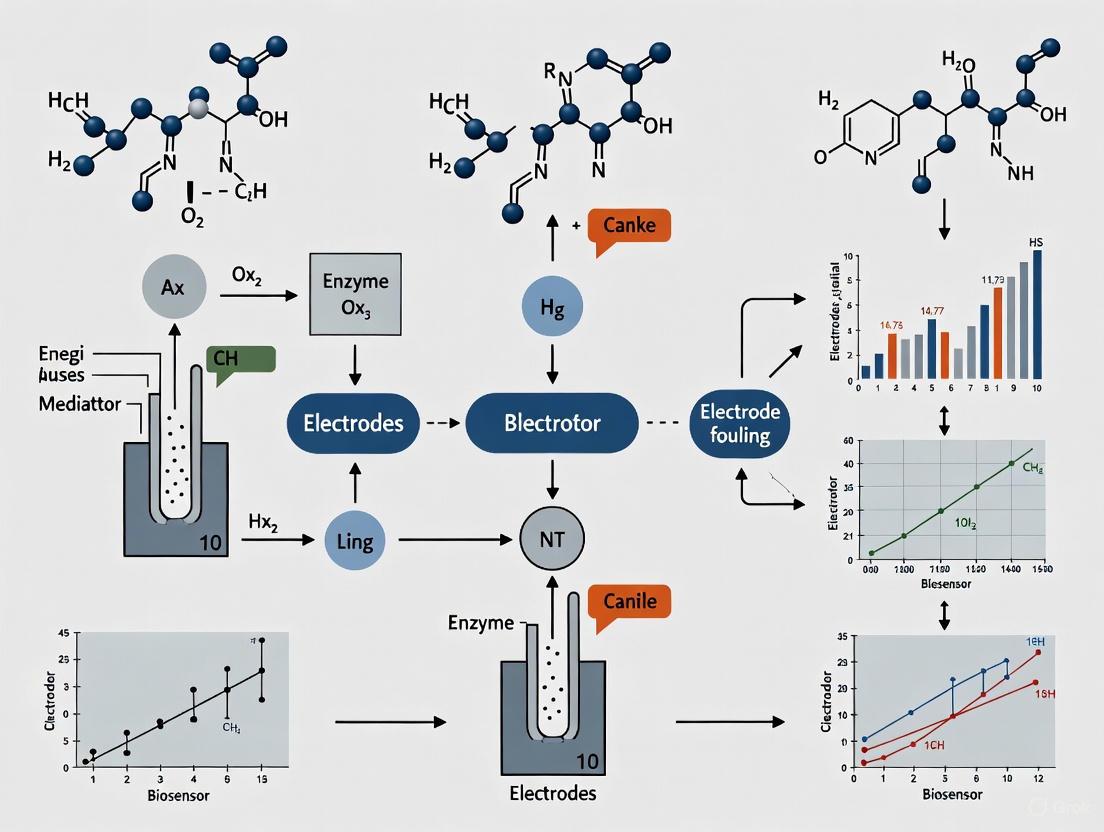
Electrode fouling remains a significant bottleneck for the reliability and longevity of electrochemical biosensors, especially in complex biological fluids.
Conquering Electrode Fouling: Advanced Strategies for Robust Electrochemical Biosensors in Biomedical Applications
Abstract
Electrode fouling remains a significant bottleneck for the reliability and longevity of electrochemical biosensors, especially in complex biological fluids. This article provides a comprehensive overview of innovative strategies to overcome this challenge, tailored for researchers and drug development professionals. We explore the fundamental mechanisms of fouling and review cutting-edge antifouling materials, including carbon nanomaterials, conductive polymers, and biomimetic coatings. The scope extends to novel sensing strategies that circumvent fouling, the integration of machine learning for data correction, and rigorous validation methods. By synthesizing foundational knowledge with applied methodologies and troubleshooting insights, this article serves as a strategic guide for developing next-generation biosensors capable of accurate, continuous, and direct operation in clinically relevant environments.
Understanding the Fouling Challenge: Mechanisms and Impact on Biosensor Performance
Troubleshooting Common Electrode Fouling Issues
Q1: My electrochemical sensor's signal drifts downward continuously during measurements in complex samples like serum or food. What is the likely cause and how can I address it?
Answer: Signal drift is a classic symptom of electrode fouling, where proteins, cells, or other matrix components non-specifically adsorb to the electrode surface, forming an insulating layer that hinders electron transfer [1] [2]. This biofouling layer acts as a physical barrier, reducing sensitivity and causing signal decay.
Troubleshooting Steps:
- Confirm Fouling: Compare the sensor's performance in a clean buffer versus the complex sample. A significant performance drop in the sample indicates fouling.
- Apply an Antifouling Coating: Modify your electrode surface with a hydrophilic, biologically inert material.
- Chondroitin Sulfate: A heteropolysaccharide that provides strong hydration and proton acceptance, effectively resisting non-specific adsorption. It can be covalently linked to a polydopamine-coated electrode [1].
- Polyethylene Glycol (PEG) and its derivatives: Widely used polymers that create a hydrated, steric barrier to protein adsorption [3] [2].
- Zwitterionic Polymers: Materials with mixed positive and negative charges that bind water molecules tightly, creating an effective antifouling layer [1].
- Phospholipid-Based Biomimetic Coatings: Mimic the outer surface of cell membranes, which are naturally resistant to protein adsorption [2].
- Implement a Conformational Change Sensing Strategy: Design a sensor that does not rely on the electrode surface remaining pristine. For instance, use an E-DNA sensor where a redox-tagged DNA probe is tethered to the electrode. The signal is generated by a binding-induced conformational change that moves the tag relative to the electrode surface, making the signal largely insensitive to nonspecific adsorption on the electrode itself [4].
Q2: After detecting my target analyte, the electrode reaction slows down, and the peak potential shifts. The electrode surface appears discolored. What is happening?
Answer: You are likely experiencing electrode passivation, a phenomenon distinct from membrane biofouling. Passivation occurs when the products or intermediates of the electrochemical reaction themselves form an insulating layer directly on the electrode surface [5] [2]. This layer increases the resistance to electron transfer, causing peak broadening, peak potential shifts, and a decrease in current.
Troubleshooting Steps:
- Use a Passivation-Resistant Electrode Material:
- Boron-Doped Diamond Electrode (BDDE): This material is known for its wide potential window and remarkable resistance to fouling, especially with a hydrogen-terminated surface [5].
- Tetrahedral Amorphous Carbon (ta-C:N): A carbon-based material with a high sp³-carbon content that demonstrates high passivation resistance [5].
- Employ Hydrodynamic Systems: Use a rotating disc electrode (RDE) or integrate your sensor into a flow system (e.g., Flow Injection Analysis). The constant movement of solution washes away reaction products before they can deposit on the surface [5].
- Implement Electrode Renewal: Use a carbon paste electrode, which allows for manual renewal of the surface by simply pushing out a fresh paste [5]. Alternatively, establish an electrochemical cleaning protocol (e.g., applying a specific potential cycle in clean buffer) to strip the passivation layer between measurements.
Q3: My implanted biosensor works well for a few days but then fails. What long-term fouling challenges should I consider?
Answer: Implanted sensors face the additional challenge of the Foreign Body Response (FBR), a complex biological process where the body recognizes the sensor as a foreign object [6]. This leads to protein adsorption, inflammation, and eventually the formation of an avascular, fibrous capsule around the sensor, severely limiting the diffusion of analyte to the sensing interface [6] [2].
Troubleshooting and Design Strategies:
- Smart Biodegradable Materials: Utilize coatings that degrade over time to release anti-inflammatory drugs or actively modulate the immune response to mitigate the FBR [6].
- Advanced Hydrogels: Coat the sensor with hydrogels like poly(2-hydroxyethyl methacrylate) (PHEMA) or poly(ethylene glycol) (PEG) to create a water-swollen, biocompatible interface that mimics natural tissue and reduces cellular adhesion [2].
- Combined Passivation Strategies: For transistor-based biosensors (BioFETs), a combination of photoresist (e.g., SU-8) and a dielectric layer (e.g., HfO₂ deposited via Atomic Layer Deposition) has been shown to provide excellent insulation, minimize leakage currents, and ensure stable performance in ionic solutions like phosphate-buffered saline [3].
Experimental Protocols for Fouling Mitigation
Protocol 1: Constructing a Chondroitin Sulfate-based Antifouling Aptasensor
This protocol details the construction of an electrochemical biosensor with inherent antifouling properties for direct detection in complex food samples, based on the work of Gong et al. [1].
Principle: The sensor uses the self-signal from electropolymerized poly-xanthurenic acid (PXA) and the antifouling capability of chondroitin sulfate (CS) to enable direct detection of pathogens like Salmonella typhimurium in milk and orange juice.
Workflow Diagram:
Materials:
- Glass Carbon Electrode (GCE)
- Xanthurenic acid (XA)
- Dopamine hydrochloride
- Chondroitin sulfate (CS)
- Coupling agents: N-(3-Dimethylaminopropyl)-N′-ethylcarbodiimide hydrochloride (EDC) and N-Hydroxysuccinimide (NHS)
- Thiolated or aminated aptamer specific to your target
Step-by-Step Procedure:
- PXA Electrodeposition: Immerse the clean GCE in a solution containing XA. Perform cyclic voltammetry (e.g., from -0.6 V to 1.2 V) for multiple cycles to electropolymerize XA and form a PXA film on the electrode surface. This film provides the intrinsic electrochemical signal [1].
- PDA Electrodeposition: Transfer the PXA/GCE to a dopamine solution (in weak alkaline buffer, e.g., pH 8.5). Apply a constant potential or use CV to electrodeposit a thin polydopamine layer. PDA provides a universal coating rich in amino groups for subsequent coupling [1].
- CS Immobilization: Activate the carboxylic acid groups of CS using a fresh mixture of EDC and NHS. Then, incubate the PDA/PXA/GCE with the activated CS solution. The amino groups on PDA will form stable amide bonds with the carboxyl groups of CS, creating a hydrophilic, antifouling interface [1].
- Aptamer Immobilization: Further activate the CS-modified electrode with EDC/NHS. Then, incubate with the aptamer solution (e.g., a thiolated or aminated aptamer) to covalently immobilize the recognition element onto the CS layer.
- Detection: The biosensor is now ready. Upon target hybridization, the electron transfer of the PXA film is hindered, leading to a measurable decrease in current signal, allowing for quantitative detection of the target [1].
Protocol 2: Implementing a Conformational Change-based E-DNA Sensor
This protocol outlines the creation of a reagentless, fouling-resistant sensor for detecting microRNAs directly in whole serum, as demonstrated by Haji-Hashemi et al. [4].
Principle: The sensor relies on a target-induced conformational change of a methylene blue (MB)-tagged DNA probe, which alters the electron transfer efficiency, providing a signal that is inherently resistant to non-specific fouling.
Materials:
- Gold disk electrode
- Methylene blue (MB)-tagged DNA probe, thiolated at one end and complementary to the target miRNA
- Mercaptohexanol (MCH)
- Square-wave voltammetry (SWV) capable potentiostat
Step-by-Step Procedure:
- Electrode Cleaning: Clean the gold electrode thoroughly using standard piranha solution treatment and electrochemical polishing.
- Probe Immobilization: Incubate the clean gold electrode with the thiolated, MB-tagged DNA probe solution for several hours. This allows a self-assembled monolayer (SAM) of the probe to form on the gold surface via Au-S bonds.
- Backfilling: Incubate the electrode with a solution of MCH. This step passivates any uncovered gold surfaces, minimizes non-specific adsorption, and helps the DNA probes stand upright.
- Baseline Measurement: Perform SWV in your measurement buffer (e.g., PBS). In the absence of the target, the flexible DNA probe allows the MB tag to collide with the electrode surface, producing a high faradaic current.
- Target Detection: Incubate the sensor with the sample (e.g., whole serum) containing the target miRNA. Upon hybridization, the DNA probe forms a rigid, double-stranded structure. This conformational change pushes the MB tag away from the electrode, significantly reducing the electron transfer rate and causing a measurable drop in SWV current [4].
The table below summarizes the core mechanisms of electrode fouling and the corresponding materials and strategies to combat them.
Table 1: Electrode Fouling Mechanisms and Corresponding Mitigation Strategies
| Mechanism | Description | Consequences | Recommended Mitigation Materials & Strategies |
|---|---|---|---|
| Non-Specific Adsorption (Biofouling) | Adsorption of proteins, lipids, or cells from the sample matrix (e.g., serum, food) onto the sensor surface [1] [2]. | Signal decay, reduced sensitivity, loss of accuracy. | Coatings: Chondroitin Sulfate [1], PEG [2], Zwitterionic polymers [1].Strategy: Conformational change-based sensing (E-DNA) [4]. |
| Electrode Passivation | Formation of an insulating layer by products or intermediates of the electrochemical reaction itself [5]. | Peak potential shift, broader peaks, decreased current. | Materials: Boron-Doped Diamond (BDD) [5], Tetrahedral amorphous carbon (ta-C:N) [5].Strategies: Hydrodynamic systems (RDE, FIA) [5], electrode renewal (carbon paste) [5]. |
| Foreign Body Response (FBR) | Biological encapsulation of implanted sensors by fibrous tissue, limiting analyte diffusion [6] [2]. | Long-term sensor failure in vivo, signal drift over days/weeks. | Coatings: Biodegradable polymers [6], advanced hydrogels (PHEMA) [2], phospholipid-based biomimetic coatings [2].Strategy: Combined photoresist (SU-8) + dielectric (HfO₂) passivation for BioFETs [3]. |
Research Reagent Solutions Toolkit
This table lists key reagents and materials used in the featured protocols and broader research for combating electrode fouling.
Table 2: Essential Research Reagents for Fouling Mitigation
| Reagent/Material | Function/Benefit | Example Application |
|---|---|---|
| Chondroitin Sulfate | Heteropolysaccharide providing hydrophilic, antifouling interface via strong hydration [1]. | Antifouling aptasensors for food safety (milk, juice) [1]. |
| Polyethylene Glycol (PEG) | Polymer that forms a hydrated steric barrier, reducing protein adsorption [3] [2]. | Coating for implanted sensors and BioFETs to reduce biofouling [3] [2]. |
| Boron-Doped Diamond (BDD) | Electrode material with exceptional passivation resistance due to inertness and -H termination [5]. | Detection of analytes prone to forming passivating films. |
| Methylene Blue (MB) | Redox tag used in conformational change-based sensors (E-AB, E-DNA) [4]. | Label for DNA probes in E-DNA sensors for miRNA detection in serum [4]. |
| SU-8 Photoresist & HfO₂ | Combined passivation stack to insulate electronic components and minimize leakage current in ionic solutions [3]. | High-yield, stable carbon nanotube-based BioFETs for point-of-care diagnostics [3]. |
| Polydopamine (PDA) | Versatile adhesive coating that facilitates secondary covalent modification on various surfaces [1]. | Adhesive layer for immobilizing chondroitin sulfate or other antifouling agents on electrodes [1]. |
In electrochemical biosensing, electrode fouling is the non-specific, undesirable accumulation of material on the electrode surface, leading to a significant degradation of sensor performance [7]. This process is a primary obstacle to the direct, reliable, and long-term sensing of biomarkers in complex biofluids such as blood, saliva, or sweat [7]. Fouling agents, primarily proteins, lipids, and reaction by-products, adsorb onto the electrode, which can cause increased background noise, reduced sensitivity, poorer detection limits, and unreliable signal reproducibility [7] [8]. Understanding these agents is the first step in developing effective antifouling strategies for robust electrochemical diagnostics.
Predominant Fouling Agents in Biofluids
Biofluids are complex mixtures, and their components interact with electrode surfaces in different ways. The table below summarizes the primary fouling agents, their characteristics, and impact on sensor function.
Table 1: Common Fouling Agents in Biofluids and Their Impact on Sensors
| Fouling Agent | Representative Examples & Concentrations | Primary Fouling Mechanism | Impact on Electrochemical Sensor |
|---|---|---|---|
| Proteins | Human Serum Albumin (HSA): 35-50 mg/mL [7]; Immunoglobulin G (IgG): 6-16 mg/mL [7]; Fibrinogen: 2 mg/mL [7] | Hydrophobic interactions and irreversible adsorption on typically hydrophobic electrode surfaces [7]. Forms a persistent, insulating layer. | Passivates the electrode surface, severely reducing electron transfer kinetics and increasing charge-transfer resistance. Major cause of signal drift and false positives [7]. |
| Lipids | Membrane lipids, fatty acids, and other hydrophobic compounds. | Formation of insulating films and ad-layers on the electrode. Can promote further protein adsorption. | Blocks active sites, reduces electrocatalytic activity, and can foul surfaces designed to be resistant to proteins alone. |
| Extracellular Polymeric Substances (EPS) | Secreted polysaccharides, proteins, and nucleic acids from microorganisms [9]. | Formation of a hydrated gel-like biofilm that acts as a persistent diffusion barrier [9]. | Creates a formidable physical barrier, increasing diffusional resistance for the analyte and leading to permanent signal deterioration [9]. |
| Cells and Platelets | Red/white blood cells, platelets from whole blood [7]. | Physical adhesion and coverage of the electrode surface. | Obstructs the electrode surface entirely, leading to a dramatic loss of signal and sensor failure in whole-blood applications [7]. |
Troubleshooting Guide: FAQs on Fouling Identification and Mitigation
Q1: My sensor shows a consistent drop in current response over successive measurements in serum. What is the most likely cause? This is a classic symptom of progressive protein fouling. Proteins like Human Serum Albumin and fibrinogen non-specifically adsorb to the electrode surface, creating an insulating layer that hinders electron transfer [7]. This fouling is often irreversible under mild conditions and accumulates with each exposure to the biofluid.
Q2: I have applied a standard PEG-based antifouling layer, but my sensor still fails in direct blood measurements. Why? While poly(ethylene glycol) (PEG) is a widely used and effective antifouling polymer, it can be insufficient against the extreme complexity of whole blood [7]. Blood contains not only proteins but also cells and platelets that can physically adhere to and overwhelm the PEG layer [7]. Furthermore, PEG can be susceptible to oxidative degradation over time. Consider moving to more robust alternatives like zwitterionic coatings or combining the chemical layer with a physical barrier like a nanostructured membrane [7] [8].
Q3: How can I distinguish between fouling from proteins and fouling from a developed biofilm? The timescale and reversibility are key differentiators:
- Protein Fouling: Typically occurs rapidly (seconds to minutes) upon exposure to the biofluid. It may be partially reversible through aggressive electrochemical cleaning pulses (e.g., high anodic/cathodic potentials), though this can damage sensitive bioreceptors [8].
- Biofilm Fouling: Develops over a longer period (hours to days) as microorganisms colonize the surface and secrete EPS [9]. This creates a tenacious, gel-like matrix that is largely irreversible and cannot be removed by simple electrochemical cleaning, often requiring mechanical intervention or biocides.
Q4: What is a simple initial experiment to test the antifouling performance of my new coating? A standard protocol involves using Electrochemical Impedance Spectroscopy (EIS) or Cyclic Voltammetry (CV) in a known redox probe like [Fe(CN)₆]³⁻/⁴⁻.
- Measure the initial electron transfer rate (CV peak current) or charge-transfer resistance (Rₑₜ from EIS) in a buffer solution.
- Incubate the coated electrode in a challenging solution like 10% blood serum or a 1 mg/mL HSA solution for 1-2 hours.
- Rinse the electrode and re-measure the signal in the same redox probe solution. A coating with good antifouling properties will show minimal change (<10%) in peak current or Rₑₜ after incubation, indicating it successfully prevented protein adsorption [8].
Experimental Protocols for Fouling Mitigation
Protocol 1: Constructing a Zwitterionic Antifouling Surface
Principle: Zwitterionic materials, such as poly(carboxybetaine) or poly(sulfobetaine), possess both positive and negative charged groups. They bind water molecules very tightly via electrostatic interactions, creating a highly hydrophilic surface that proteins resist adhering to due to the large energetic penalty of dehydrating this layer [10] [8].
Materials:
- Substrate: Gold disk electrode (2 mm diameter).
- Cleaning Reagents: Piranha solution (Caution: Highly corrosive), ethanol, deionized water.
- Zwitterionic Compound: Sulfobetaine methacrylate (SBMA) monomer.
- Chemical Reagents: 11-Mercapto-1-undecanol (MUO), and standard salts for phosphate buffer saline (PBS) solution.
Methodology:
- Electrode Cleaning: Clean the gold electrode with piranha solution for 10 minutes, followed by thorough rinsing with ethanol and water. (Caution: Piranha solution is extremely dangerous and must be handled with extreme care).
- Self-Assembled Monolayer (SAM) Formation: Immerse the clean electrode in a 1 mM ethanolic solution of a thiolated initiator (or MUO to create a base monolayer) for 12 hours to form a well-ordered SAM.
- Surface-Initiated Polymerization: Rinse the SAM-modified electrode and place it in an aqueous solution containing the SBMA monomer and a polymerization initiator (e.g., potassium persulfate).
- Polymerization Reaction: Heat the solution to 60°C for 1-2 hours to initiate the graft polymerization of the zwitterionic polymer brush from the electrode surface.
- Rinsing and Storage: Rinse the modified electrode copiously with water and PBS to remove any physisorbed monomers. Store in PBS at 4°C until use.
Protocol 2: Evaluating Fouling Resistance Using a Model Catalyst
Principle: This method, adapted from a 2024 study, uses an adsorbed redox mediator (syringaldazine) as an internal probe to evaluate both the protective ability of an antifouling layer and its impact on the catalyst's function, which is not possible with an external mediator in solution [8].
Materials:
- Working Electrode: Carbon-based electrode (e.g., glassy carbon, pencil lead electrode).
- Redox Mediator: Syringaldazine (0.5 mg/mL solution in ethanol).
- Antifouling Layer: Candidate coating (e.g., silicate sol-gel, poly-L-lactic acid (PLLA), poly(L-lysine)-g-poly(ethylene glycol) (PLL-g-PEG)) [8].
- Fouling Medium: Cell culture medium (e.g., DMEM with 10% serum) or pure serum.
- Instrumentation: Potentiostat and standard three-electrode cell.
Methodology:
- Electrode Modification with Mediator: Immerse the polished carbon electrode in the 0.5 mg/mL syringaldazine solution in ethanol for 60 seconds. Dry under ambient conditions [8].
- Baseline Electrochemical Measurement: Perform a Cyclic Voltammetry (CV) or Differential Pulse Voltammetry (DPV) measurement of the syringaldazine-modified electrode in a phosphate buffer (e.g., pH 7.4) to establish the initial peak current/potential.
- Application of Antifouling Layer: Apply the candidate antifouling layer (e.g., spin-coat PLLA, dip-coat in silicate sol-gel precursor) onto the syringaldazine-modified electrode.
- Incubation in Fouling Medium: Immerse the coated electrode in the aggressive cell culture medium or serum. Incubate for set time intervals (e.g., 3 h, 24 h, 72 h, 1 week) under controlled temperature (37°C).
- Post-Incubation Measurement: After each interval, remove the electrode, rinse gently, and perform CV/DPV in a fresh buffer. Monitor the retention of the syringaldazine signal.
- Data Analysis: A coating that effectively protects the catalyst will show minimal decay of the syringaldazine redox signal over extended incubation periods (e.g., weeks) [8].
Visualizing the Fouling Process and Defense Strategy
The following diagram illustrates the sequential process of electrode fouling in a complex biofluid and the primary mechanisms by which advanced antifouling coatings provide protection.
Diagram 1: Electrode Fouling Process and Antifouling Defense
The Scientist's Toolkit: Key Research Reagents and Materials
The table below lists essential materials used in the development and testing of antifouling strategies for electrochemical biosensors.
Table 2: Essential Research Reagents for Antifouling Sensor Development
| Reagent/Material | Function in Research | Key Characteristic / Rationale for Use |
|---|---|---|
| Poly(Ethylene Glycol) (PEG) | A gold-standard polymer for creating hydrophilic, protein-resistant monolayers or hydrogels on surfaces [7]. | High hydration capacity creates a steric and energetic barrier to protein adsorption. Easy to functionalize for surface grafting. |
| Zwitterionic Compounds (e.g., SBMA, CBMA) | Forms ultra-low fouling surfaces with exceptional resistance to non-specific protein adsorption from undiluted blood serum and plasma [7] [8]. | Strong electrostatic hydration creates a more robust and stable barrier than PEG, with higher oxidative stability. |
| Silicate Sol-Gel | Forms a stable, porous inorganic matrix on the electrode surface [8]. | Acts as a physical diffusion barrier, blocking large fouling agents while allowing small analyte molecules to pass. Provides long-term (weeks) stability in complex media [8]. |
| Porous Gold/Nanostructured Carbon | The electrode material itself is engineered with nanoscale porosity or roughness [7]. | High surface area increases signal-to-noise ratio. The porous structure can act as a size-exclusion filter and reduces fouling by decreasing the available contact area for adhesion. |
| Human Serum Albumin (HSA) & Fibrinogen | Model protein solutions for controlled, challenging fouling experiments to test coating efficacy [7]. | HSA and fibrinogen are the most abundant proteins in blood serum and are primary contributors to fouling, providing a realistic test medium. |
| Syringaldazine | A model redox catalyst that can be adsorbed onto carbon surfaces to act as an internal probe for antifouling performance [8]. | Its electrochemical signal is stable in buffer but rapidly deteriorates in complex media, making it an excellent tool for quantifying protective effects of coatings [8]. |
Troubleshooting Guides and FAQs
This technical support resource addresses common challenges in electrochemical biosensor research, providing targeted solutions to mitigate detrimental effects on key analytical performance metrics, with a special focus on overcoming electrode fouling.
Troubleshooting Guide: Core Performance Issues
The table below summarizes the primary challenges, their root causes, and recommended solutions.
| Performance Metric | Symptom of the Problem | Root Cause | Recommended Solution |
|---|---|---|---|
| Sensitivity | High limit of detection (LOD), low signal output, shallow calibration curve slope. | Inefficient electron transfer; low bioreceptor density on electrode surface; signal suppression from fouling. | Integrate nanomaterials (e.g., AuNPs, CNTs) to enhance surface area and electrocatalysis [11] [12] [13]. Use conformational-change probes (e.g., E-DNA sensors) to make signal independent of fouling [4]. |
| Reproducibility | High variance between sensors or between measurements with the same sensor (Relative Standard Deviation, RSD > 5%). | Inconsistent electrode modification protocols; non-uniform nanomaterial deposition; variable bioreceptor immobilization [14] [11]. | Standardize functionalization protocols (e.g., EDC-NHS chemistry) [13]. Employ controlled nanomaterial deposition methods over drop-casting [14]. Implement rigorous quality control of baseline electrode properties. |
| Stability | Signal drift over time; loss of signal after exposure to complex samples (e.g., serum); short operational lifespan. | Biofouling from nonspecific adsorption of proteins/lipids; degradation of biorecognition element; delamination of functional layers [6] [13] [4]. | Apply anti-fouling coatings (e.g., hydrogels, smart polymers) [6]. Use conformational change-based sensors (E-AB, E-DNA) that are inherently resistant to fouling [4]. Optimize cross-linking during bioreceptor immobilization [13]. |
Frequently Asked Questions (FAQs)
FAQ 1: My biosensor performs well in buffer solutions, but sensitivity plummets when I test in undiluted serum or blood. What is the primary cause, and how can I overcome this?
The primary cause is electrode fouling, where proteins and other biomolecules in complex samples nonspecifically adsorb to your electrode surface. This creates a physical and electronic barrier, blocking electron transfer and reducing sensitivity [13] [4].
Solutions:
- Strategy 1: Use a Fouling-Resistant Sensing Mechanism. Adopt a conformational-change-based sensor design, such as an Electrochemical DNA (E-DNA) or aptamer (E-AB) sensor. In these platforms, the signal is generated by a binding-induced change in the distance of a redox tag from the electrode, not by direct electron transfer through the medium. This mechanism is largely insensitive to nonspecific adsorption, allowing for direct detection in whole serum [4].
- Strategy 2: Apply a Physical Anti-Fouling Barrier. Modify your electrode with a biocompatible, porous coating that repels proteins. "Smart" hydrogels or polymers can allow small analyte molecules to diffuse through while blocking larger proteins, extending the sensor's functional lifetime in vivo and in complex media [6].
- Experimental Tip: When first testing in serum, always run a control with a non-complementary sequence or analyte to quantify the degree of nonspecific signal change.
FAQ 2: I am using nanomaterials to boost sensitivity, but my reproducibility between batches is poor. What steps can I take to improve this?
Reproducibility issues often stem from inconsistent nanomaterial functionalization and electrode modification processes [14].
Solutions:
- Standardize Your Immobilization Protocol: Move away from simple drop-casting. Use more controlled methods like electrochemical deposition or precise micro-spotting to apply nanomaterials and bioreceptors. Ensure consistent chemical activation (e.g., using EDC/NHS for carboxyl-amine coupling) across all electrodes [13].
- Enhance Nanomaterial Adhesion: The adhesion of the base nanomaterial layer to the electrode surface is crucial for a stable and reproducible signal. Explore methods that create stronger covalent bonds between your nanomaterial and the electrode substrate [14].
- Quality Control: Implement a routine check of the electrode's baseline electrochemical properties (e.g., impedance in a standard redox probe) before bioreceptor immobilization. This helps screen out faulty or inconsistently prepared electrodes early.
FAQ 3: For continuous monitoring applications, my sensor signal drifts significantly after a few hours. How can I improve operational stability?
Signal drift indicates a failure in long-term stability, often due to biofouling, bioreceptor degradation, or physical deterioration of the sensor interface [6].
Solutions:
- Address Biofouling Aggressively: As in FAQ 1, use anti-fouling strategies. Research shows smart coatings can reduce foreign body response and extend the functional life of implantable sensors beyond three weeks [6].
- Stabilize Bioreceptor Immobilization: Ensure your enzymes, antibodies, or aptamers are securely attached. Optimize cross-linking conditions to prevent leaching while maintaining biological activity. Using nanomaterials with high biocompatibility can also help preserve bioreceptor function [13].
- Consider Material Degradation: For implantable sensors, explore the use of biodegradable materials that negate the need for surgical removal, but ensure their functional lifetime matches the intended monitoring period [6].
The Scientist's Toolkit: Research Reagent Solutions
The table below details key materials and their functions for developing robust electrochemical biosensors.
| Item | Function / Rationale | Example Application |
|---|---|---|
| Gold Nanoparticles (AuNPs) | Enhance electron transfer efficiency; provide large surface area for bioreceptor immobilization; can be used for signal amplification [12] [13]. | Signal amplification in a prostate-specific antigen (PSA) immunosensor [12]. |
| Carbon Nanotubes (CNTs) | Offer high electrical conductivity and large surface area; improve loading capacity for biomolecules; act as a scaffold for sensor assembly [11] [13]. | Used in DNA sensors and as a supporting matrix to lower detection limits [13]. |
| Thiolated DNA/Aptamer Probes | Form self-assembled monolayers on gold electrodes; serve as the basis for E-DNA/E-AB sensors that are resistant to fouling [4]. | Core recognition element in a conformational-change sensor for miRNA detection in whole serum [4]. |
| EDC / NHS Chemistry | Standard crosslinkers for covalent immobilization of biomolecules (e.g., antibodies, DNA) onto carboxyl-functionalized surfaces [13]. | Coupling antibodies to carboxylated graphene or CNT-modified electrodes. |
| Methylene Blue | A redox reporter tag used in conjunction with DNA/aptamer probes. Electron transfer efficiency changes with its distance from the electrode surface [4]. | Signal generator in an E-DNA sensor for miRNA-29c [4]. |
| Metal-Organic Frameworks (MOFs) | Porous materials with ultra-high surface area; can be decorated with nanoparticles to enhance electrochemical activity and immobilization capacity [12]. | Used in a sandwich-type aptasensor for ultrasensitive endotoxin detection [12]. |
Experimental Workflow: Developing a Fouling-Resistant E-DNA Sensor
The following diagram illustrates the key steps in creating a conformational change-based biosensor for direct detection in complex samples like serum.
Objective: To detect miRNA-29c directly in whole human serum using a conformational change-based electrochemical DNA (E-DNA) sensor.
1. Reagents and Materials:
- Electrodes: Gold disk working electrode, Pt counter electrode, Ag/AgCl reference electrode, or commercial Screen-Printed Electrodes (SPEs).
- Probe: A 22-nucleotide thiolated DNA probe, complementary to miRNA-29c, with a Methylene Blue (MB) redox tag at the 3' end.
- Buffers: 10 mM Phosphate Buffered Saline (PBS), pH 7.4.
- Biological Sample: Whole human serum, spiked with synthetic miRNA-29c at known concentrations.
2. Step-by-Step Methodology:
- Step 1: Electrode Cleaning. Clean the gold electrode with piranha solution (Caution: Highly corrosive) and/or by electrochemical cycling in sulfuric acid to obtain a clean, reproducible surface.
- Step 2: Probe Immobilization. Incubate the clean electrode with a 1 µM solution of the thiolated, MB-tagged DNA probe in PBS for 1 hour. This forms a self-assembled monolayer via the gold-thiol bond.
- Step 3: Backfilling. Rinse the electrode and incubate with 1 mM 6-mercapto-1-hexanol (MCH) for 30-45 minutes. This critical step passifies unoccupied gold sites, displaces non-specifically adsorbed probes, and forces the remaining probes into a well-oriented, upright conformation, which is essential for the "signal-off" response.
- Step 4: Baseline Measurement. Place the modified electrode in a pure PBS buffer. Perform Square-Wave Voltammetry (SWV) to measure the initial, high current signal from the MB tag.
- Step 5: Sample Challenge. Incubate the electrode directly in undiluted human serum that has been spiked with a known concentration of miRNA-29c (e.g., 1 nM) for a predetermined time (e.g., 30-60 minutes).
- Step 6: Post-Incubation Measurement. Gently rinse the electrode and place it in fresh PBS buffer. Perform SWV again. A significant decrease in the MB peak current indicates successful hybridization with the target miRNA.
3. Data Analysis:
- Plot the normalized signal (I/I₀, where I₀ is the initial current) against the target miRNA concentration.
- The dose-response curve typically follows a sigmoidal shape, which can be fitted to the Langmuir-Hill model to extract quantitative parameters. The sensor demonstrated a working range of 0.1–100 nM in whole serum with excellent recovery rates (±10%) [4].
The Economic and Clinical Imperative for Fouling-Resistant Sensors
Frequently Asked Questions (FAQs) for Researchers
Q1: What is electrode fouling and why is it a major problem in electrochemical sensing?
Electrode fouling is the passivation of an electrode surface caused by the non-specific adsorption of molecules (such as proteins, cells, or polymers) or the precipitation of electrochemical reaction products. This creates an impermeable layer that hinders electron transfer, leading to several critical issues [15] [16]. The consequences include:
- Reduced Accuracy and Reliability: The fouling layer can cause signal drift and false readings.
- Loss of Sensitivity: The passivation layer blocks the target analyte from reaching the active electrode surface.
- Poor Long-Term Stability: Sensor performance degrades rapidly, making continuous monitoring impossible [8] [17].
- Increased Costs: Frequent sensor recalibration, replacement, and complex sample pre-treatments are required, impacting both research budgets and clinical operational costs.
Q2: What are the main strategies for creating fouling-resistant sensors?
Antifouling strategies focus on creating a barrier that prevents fouling agents from adsorbing to the electrode surface. The main approaches include [16]:
- Hydrophilic Polymer Brushes: Using materials like poly(ethylene glycol) (PEG) or zwitterionic polymers that form a strong hydration layer, which repels biomolecules through steric hindrance [16].
- Biomimetic Peptides: Designing custom peptide sequences with alternating hydrophilic and charged amino acids (e.g., lysine and glutamic acid) to create a stable hydration layer and charge barrier [18] [19].
- Nanoporous Membranes and Hydrogels: Applying physical barriers like silicate sol-gels or polyvinyl alcohol (PVA) hydrogels that limit the access of large fouling molecules while allowing small analytes to diffuse through [8] [17].
- Nanocomposite Materials: Utilizing carbon nanotubes (CNTs), graphene oxide, or covalent organic frameworks (COFs) that provide high conductivity and a tunable surface chemistry that resists adsorption [15] [20].
Q3: My sensor loses sensitivity after modifying it with an antifouling layer. How can I mitigate this?
This is a common challenge, as non-conductive antifouling layers can increase impedance. To address this:
- Incorporate Conductive Nanomaterials: Integrate materials like carbon nanotubes or graphene oxide into your antifouling layer. These materials provide a high surface area and excellent electrical conductivity, counteracting the insulating effect of the polymer or peptide [15] [20].
- Use Conducting Polymers: Employ polymers like polyaniline (PANI) or PEDOT:PSS, which combine antifouling properties with intrinsic conductivity [16].
- Ensure a Thin, Uniform Layer: Optimize your deposition method to create a thin, consistent antifouling layer that minimizes diffusion barriers for the analyte while still providing protection.
Q4: How can I validate the antifouling performance of my newly developed sensor?
Validation should be performed in conditions that mimic the real-world application:
- Test in Complex Media: Challenge your sensor by running assays in undiluted or minimally diluted biological fluids like human serum, plasma, or saliva [18] [16].
- Monitor Signal Stability: Perform continuous measurements or repeated cycles in the fouling medium and track the signal deviation over time. A stable signal indicates good antifouling performance [8].
- Use Electrochemical Techniques: Electrochemical impedance spectroscopy (EIS) is particularly effective for detecting the increase in charge-transfer resistance that results from surface fouling [18].
- Characterize Surface Properties: Techniques like contact angle measurement can confirm the increased hydrophilicity of your modified surface, which correlates with antifouling capability [15].
Troubleshooting Guides
Problem: Rapid Signal Decline in Complex Biological Samples
Description: The sensor shows a strong initial signal but suffers a significant and continuous decrease in current or increase in impedance when exposed to serum, blood, or cell culture media.
Diagnosis: This is a classic symptom of biofouling, likely caused by proteins and other macromolecules adsorbing to the electrode surface and blocking electron transfer.
Solutions:
- Implement a Zwitterionic Peptide Layer:
- Principle: Zwitterionic peptides with alternating positively and negatively charged residues (e.g., Lysine and Glutamic acid) form a tight hydration layer via electrostatic interactions, effectively repelling proteins [18] [19].
- Protocol:
- Synthesize a peptide with the sequence (Cys)-(Glu-Lys)₃⁻₅ or use a dendritic design like EK(E)CE(K)K for superior stability [19].
- If using a gold electrode, first electrodeposit gold nanoparticles (AuNPs) to increase the surface area. Cycle the electrode in a 6 mM HAuCl₄ solution (in 0.1 M KNO₃) between -0.2 V and -1.2 V (vs. Ag/AgCl) at 50 mV/s for 35 cycles [18].
- Incubate the AuNP-modified electrode in a 2.0 µM solution of the peptide for 12 hours to allow self-assembly via Au-S bonds.
- Block any remaining bare gold sites by incubating in 1.0 mM 6-mercapto-1-hexanol (MCH) for 20 minutes.
- Apply a Hydrogel Barrier:
- Principle: Hydrogels like polyvinyl alcohol (PVA) form a hydrated physical barrier that blocks large fouling agents while permitting small analyte diffusion [17].
- Protocol:
- Prepare a 5% (w/v) aqueous solution of 99% hydrolyzed PVA by heating to ~80°C until fully dissolved.
- Dip-coat the sensor in the PVA solution.
- Subject the coated sensor to three freeze-thaw cycles (e.g., -20°C for 12 hours, then room temperature for 12 hours) to induce physical cross-linking and form a stable hydrogel [17].
Problem: Sensor Fouling by Analyte Reaction Products
Description: The sensor becomes fouled during the detection of analytes like phenols or neurotransmitters, whose electrochemical oxidation/reduction generates insoluble polymeric products that coat the electrode.
Diagnosis: Chemical fouling from the analyte itself or its reaction products.
Solutions:
- Use a Nanocomposite COF-CNT Modification:
- Principle: Covalent Organic Frameworks (COFs) like TpPA-1 possess high hydrophilicity and ordered porosity, which can help resist adsorption. Combining them with CNTs improves conductivity and dispersibility [15].
- Protocol:
- Purchase or synthesize COF TpPA-1 and carboxylic multi-walled carbon nanotubes (COOH-MWCNTs).
- Disperse COOH-MWCNTs in water with the aid of COF TpPA-1, leveraging its hydrophilic groups to form a uniform composite via π-π interactions.
- Deposit the COF-CNT composite suspension onto the electrode surface (e.g., via drop-casting) and allow it to dry.
- Employ a Conducting Polymer Matrix:
- Principle: Polymers like PEDOT:PSS can repel hydrophobic reaction products due to their amphiphilic nature [16].
- Protocol:
- Prepare a solution of PEDOT:PSS.
- Deposit the solution onto the electrode via drop-casting or electropolymerization.
- The sulfonate groups in PSS help create a hydrophilic surface that resists the adsorption of polymeric products.
Problem: Inconsistent Performance and Short Sensor Lifespan in Implantable/Continuous Monitoring Applications
Description: Sensors designed for long-term or continuous use in vivo or in complex media show unpredictable performance and fail long before the required operational period.
Diagnosis: A combination of biofouling and the body's foreign body response (FBR), leading to fibrosis and encapsulation of the sensor.
Solutions:
- Implement a Multi-Layer Stratified Architecture:
- Principle: A multi-functional, layered approach addresses multiple failure modes simultaneously (e.g., interference, oxygen dependence, biofouling) [17].
- Protocol:
- Layer 1 (Inner Selectivity): Electropolymerize a thin film of polyphenol (PPh) on a Pt electrode from an aqueous phenol solution to block electrochemical interferents.
- Layer 2 (Enzyme): Immobilize your primary enzyme (e.g., Glucose Oxidase) by dip-coating from a solution containing the enzyme, Bovine Serum Albumin (BSA), and glutaraldehyde as a cross-linker. Soak in PBS for 2 hours to remove unbound proteins.
- Layer 3 (Linearity): Dip-coat with a polyurethane (PU) layer from a 3% (w/w) solution in THF/DMF to control glucose flux and improve linearity.
- Layer 4 (H₂O₂ Management): Add a catalase layer, immobilized similarly to Layer 2, to break down reaction-generated H₂O₂ and improve response time.
- Layer 5 (Outer Fouling Resistance): Encapsulate the sensor in a thick PVA hydrogel (see previous protocol) to act as the primary biocompatible, antifouling interface [17].
Key Research Reagent Solutions
The table below summarizes critical materials for developing fouling-resistant electrochemical sensors.
| Research Reagent | Primary Function | Key Mechanism & Notes |
|---|---|---|
| Zwitterionic Peptides (e.g., CEKEKEK, EK(E)CE(K)K) | Primary antifouling layer | Forms a strong surface hydration layer via charge-balanced ionic groups; dendritic designs offer superior stability [18] [19]. |
| Poly(ethylene glycol) (PEG) | Primary antifouling layer | "Gold standard" polymer; fouling resistance via hydration and steric hindrance. Prone to oxidative degradation [16]. |
| Covalent Organic Framework (COF TpPA-1) | Hydrophilic dispersant & composite material | Aids in dispersing CNTs and forms a uniform, hydrophilic composite that resists non-specific adsorption [15]. |
| Carboxylic Multi-Walled Carbon Nanotubes (COOH-MWCNTs) | Conductive nanomaterial | Enhances electron transfer rate and electrocatalytic activity when combined with polymers or COFs [15] [21]. |
| Polyvinyl Alcohol (PVA) Hydrogel | Outer antifouling membrane | Forms a physical, hydrated barrier that blocks large fouling agents; biocompatible for implantable sensors [17]. |
| Conducting Polymers (e.g., PEDOT:PSS) | Conductive antifouling layer | Combines electronic conductivity with antifouling properties (e.g., PSS repels hydrophobic foulants) [16]. |
Experimental Workflows and Signaling Pathways
Antifouling Sensor Design and Validation Workflow
The following diagram illustrates a generalized experimental workflow for developing and validating a fouling-resistant electrochemical sensor.
Mechanisms of Action for Antifouling Materials
This diagram categorizes and explains the primary mechanisms by which different classes of materials resist fouling.
Antifouling Arsenal: Materials, Designs, and Sensing Strategies
Troubleshooting Guides
Troubleshooting Guide 1: Addressing Electrode Fouling
Problem: Gradual loss of sensor signal and sensitivity during experiments in complex biological media.
Question: My electrode performance degrades when analyzing neurotransmitters in cell cultivation media. What can I do?
Solution: Electrode fouling is a common challenge caused by the adsorption of proteins, reaction by-products, or other matrix components onto the electrode surface, which passivates it and reduces electron transfer efficiency [22] [23] [24]. The following table summarizes the effectiveness of different mitigation strategies:
| Mitigation Strategy | Recommended Material | Key Action | Outcome & Efficacy |
|---|---|---|---|
| Surface Pre-Oxidation | Boron-Doped Diamond (BDD) | Anodic activation at high potentials (>+1.5 V vs. Ag/AgCl) in aqueous solution [23]. | Generates oxygen-terminated (O-BDD) surface, improving fouling resistance. Offers better signal repeatability [23]. |
| Mechanical Polishing | Boron-Doped Diamond (BDD) | Light physical polishing of the electrode surface [23]. | Creates a polished (p-BDD) surface with predominantly -OH groups. Can achieve lower detection limits (e.g., 2 µM for dopamine) [23]. |
| Multifunctional Peptide Coating | Gold & other substrates | Design a branched peptide with zwitterionic antifouling sequences (e.g., EKEKEKEK) and anchor it to the electrode [25]. | Zwitterionic peptides form a hydration layer via neutral charges, resisting non-specific protein adsorption. Proven in human saliva [25]. |
| Use of Single-Use Electrodes | Nanocarbon | Employ disposable, single-use nanocarbon electrodes for one-time measurements [22]. | Prevents fouling by avoiding repeated exposure. Nanocarbon exhibits high sensitivity and low detection limits (<100 nM) [22]. |
Additional Notes:
- Detection Mode Matters: In heavily fouling media (e.g., Neurobasal with supplements), switch from voltammetry to amperometry at a fixed potential (e.g., +0.75 V). Amperometry can detect portion-wise analyte additions (1–2 µM) despite lower sensitivity [23].
- Material Choice is Crucial: BDD is inherently more resistant to fouling than sp²-carbon materials like graphene. Consecutive CV cycles in hydroquinone (HQ) show minimal performance loss on nanodiamond versus dramatic signal drop on graphene [22].
Troubleshooting Guide 2: Managing Signal Interference from Co-Existing Compounds
Problem: Overlapping electrochemical signals from analytes with similar structures or from the complex sample matrix.
Question: How can I distinguish between co-existing phenol isomers like hydroquinone and catechol in a real sample?
Solution: Signal interference arises from compounds with similar redox potentials or from redox-active components in the background matrix [22]. Nanocarbon electrodes have demonstrated a unique capability to adsorb certain phenols, which can be leveraged for sensitive and distinct detection [22].
Recommended Experimental Protocol:
- Electrode Preparation: Modify a glassy carbon electrode (GCE) with nanocarbon particles (4-8 nm) via drop-coating [22].
- Pre-Concentration / Adsorption: Dip the nanocarbon-modified electrode (nanocarbon-GCE) directly into the sample solution containing the target isomers for a controlled time (e.g., up to 600 seconds) [22].
- Measurement: Transfer the electrode to a clean, blank phosphate buffer (0.1 M) and perform Cyclic Voltammetry (CV) or Square-Wave Voltammetry (SWV).
- Analysis: The measured current will correspond to the adsorbed species, effectively eliminating interference from the bulk solution and providing distinct peaks for co-existing isomers [22].
Key Advantage: This adsorption-based method, combined with the high surface area and properties of nanocarbon, allows for a low detection limit below 10⁻⁸ M and one order of magnitude higher sensitivity than other carbon nanomaterials [22].
Frequently Asked Questions (FAQs)
FAQ 1: What are the key advantages of boron-doped nanodiamond over other carbon electrodes for in vitro detection?
BDD electrodes offer a combination of properties ideal for biological sensing [23]:
- Wide Potential Window: Enables detection in aqueous solutions without interference from water electrolysis.
- High Fouling Resistance: Inherently more resistant to passivation by biological samples compared to sp²-carbon materials [22] [23].
- Biocompatibility: Supports the growth of cell cultures like neurons, which is crucial for neuron-electrode interfaces [23].
- Low Capacitive Currents: Contributes to achieving lower limits of detection [23].
FAQ 2: My nanocarbon electrode works well in buffer but fails in real saliva/serum samples. What is the issue?
This is a classic symptom of biofouling. Complex biological matrices like saliva and serum contain a high concentration of proteins and other biomolecules that non-specifically adsorb to the sensor surface, blocking the active sites and impairing electron transfer [25] [24]. Consider modifying your electrode with an antifouling coating, such as a zwitterionic peptide sequence [25].
FAQ 3: Can I use these carbon materials to detect monophenols like phenol and cresol?
Yes, but it requires an enzymatic step. Monophenols can be detected by modifying the electrode (e.g., nanocarbon-GCE) with an enzyme like tyrosinase. The enzyme converts the monophenol into an o-biphenol, which is then electrochemically oxidized and detected at the electrode [22]. The biocompatibility of nanocarbon makes it suitable for such enzyme modifications [22].
FAQ 4: For real-time monitoring in a live cell culture, which detection method is more suitable?
Amperometry is often preferred for real-time, continuous monitoring because it measures current at a fixed potential over time, allowing you to track rapid concentration changes [23] [24]. It has been used successfully with BDD electrodes to detect neurotransmitter spikes (1–2 µM) in neuron cultivation media, mimicking vesicle release [23].
The Scientist's Toolkit: Research Reagent Solutions
| Reagent / Material | Function / Explanation |
|---|---|
| Boron-Doped Nanodiamond (BDD) | Electrode material prized for its exceptional fouling resistance, wide potential window, and biocompatibility. Ideal for long-term or complex matrix measurements [22] [23]. |
| Nanocarbon (Amorphous Carbon) | Electrode material comprising a mix of sp² and sp³ carbon. Exhibits high sensitivity and low detection limits for phenols. Allows analyte adsorption, aiding in selective detection [22]. |
| Tyrosinase Enzyme | Used for the selective detection of monophenols (e.g., phenol, cresol). It catalyzes their conversion to o-biphenols, which are electrochemically active [22]. |
| Zwitterionic Peptide (e.g., EKEKEKEK) | Serves as an antifouling agent. Its alternating charged residues form a hydration layer that repels non-specific protein adsorption when coated on an electrode surface [25]. |
| Phosphate Buffer (0.1 M) | A common electrolyte solution for electrochemical experiments, providing a stable pH and ionic strength environment [22]. |
| Neurobasal Medium | A complex neuron cultivation medium used for in vitro studies. Its redox-active components (amino acids, vitamins) make it a challenging and realistic matrix for testing sensor performance [23]. |
Experimental Workflows & Performance Comparison
Conductive Polymer Hydrogels and Zwitterionic Coatings
Frequently Asked Questions (FAQs)
General Principles
What are the primary advantages of using conductive polymer hydrogels in electrochemical biosensors? Conductive polymer hydrogels (CPHs) synergistically combine the properties of conductive polymers and hydrogels. They offer high conductivity, biocompatibility, and often antifouling capabilities due to their high hydrophilicity and water content. Their mechanical properties can be tuned to closely match those of biological tissues, improving integration and stability in biological environments. Furthermore, their highly porous structure can be used to entrap biomolecules, enzymes, or signal probes, facilitating sensitive and specific detection of targets in complex media like serum or saliva [26] [27].
How do zwitterionic coatings prevent electrode fouling? Zwitterionic coatings create a hydrated interface through strong electrostatic interactions with water molecules. This forms a physical and energetic barrier that minimizes the nonspecific adsorption of proteins, polysaccharides, and other biomolecules present in complex samples. This antifouling property is crucial for maintaining the sensitivity and accuracy of biosensors when analyzing real-world samples like blood, plasma, or saliva without extensive pre-processing [28] [29].
Can conductive hydrogels and zwitterionic coatings be combined? Yes, recent strategies focus on integrating these concepts. One effective approach is the development of zwitterionic-conductive polymers. For instance, a zwitterionic polypyrrole (ZiPPy) combines the excellent antifouling property of zwitterions with the facile, controllable electrodeposition capability of the conductive polymer polypyrrole. This allows for the creation of a coating that is both highly conductive and resistant to biofouling in a single step [29].
Troubleshooting Experimental Issues
My hydrogel-coated electrode shows a very high background signal. What could be the cause?
A high background signal can stem from several factors. First, ensure the hydrogel has been thoroughly washed and equilibrated in the buffer solution to remove unreacted monomers or precursors. Second, non-specific adsorption might still be occurring; consider incorporating a more effective antifouling component, like a zwitterionic polymer or peptide. Third, the intrinsic capacitance of the conductive polymer itself might be high; using a ratiometric sensing strategy with an internal standard, such as encapsulating [Ru(NH₃)₆]³⁺ within the hydrogel network, can correct for background and environmental variations [30] [31].
The conductivity of my hydrogel film is lower than expected. How can I improve it? Low conductivity can be addressed by:
- Increasing conductive filler loading: Incorporate a higher percentage of conductive components like MXene, carbon black, PEDOT:PSS, or metal nanoparticles [30] [31].
- Enhancing ion transport: Ensure the hydrogel is fully hydrated, as ion mobility depends on water content. Using electrolytes with higher ionic strength can also help.
- Optimizing synthesis: For electrodeposited polymers, optimize parameters such as applied potential, number of cycles, and monomer/electrolyte concentration to create a more interconnected conductive network [29].
I observe delamination of the hydrogel coating from the electrode surface. How can I improve adhesion? Poor adhesion is a common challenge. To mitigate it:
- Surface Priming: Modify the electrode surface before hydrogel application. For gold electrodes, use thiol-based linkers. For carbon electrodes, introduce oxygen-containing functional groups via plasma treatment or acid oxidation to create covalent binding sites.
- In-situ Formation: Synthesize or polymerize the hydrogel directly on the electrode surface. Electropolymerization of polymers like pyrrole or EDOT ensures strong adhesion [29].
- Cross-linking Agents: Use cross-linkers like glutaraldehyde or carbodiimide (EDC/NHS) to strengthen the hydrogel network and its attachment to a functionalized surface [31].
Troubleshooting Guide
The following table outlines common problems, their potential causes, and verified solutions based on recent research.
| Problem | Primary Cause | Recommended Solution | Key Research Example |
|---|---|---|---|
| High Background Signal | Non-specific protein adsorption; High capacitive current | Incorporate zwitterionic materials; Use ratiometric sensing with internal standard [30] [28] | Used [Ru(NH₃)₆]³⁺ encapsulated in MXene hydrogel as an internal reference for accurate measurement [30]. |
| Signal Drift & Instability | Swelling/deswelling of hydrogel; Fouling layer formation | Optimize cross-linking density; Apply effective antifouling coating [31] | A BSA hydrogel doped with conductive carbon black provided a stable, antifouling interface for detection in human serum [31]. |
| Low Sensitivity/High LOD | Poor electron transfer; Limited bioreceptor accessibility | Dope with conductive nanomaterials (MXene, carbon black); Use nanostructured conductive frameworks [30] [31] | A double-conductive hydrogel with MXene and PEDOT:PSS achieved an ultra-low LOD of 0.41 pg/mL for CEA [30]. |
| Poor Adhesion to Electrode | Mechanical mismatch; Lack of chemical bonding | Use in-situ electropolymerization; Employ adhesion promoters (e.g., KH570) [30] [29] | ZiPPy was directly electropolymerized onto electrodes, ensuring a stable and uniform coating [29]. |
| Inconsistent Performance | Non-uniform film formation; Batch-to-batch variation | Standardize electropolymerization parameters; Use controlled radical polymerization [29] | ZiPPy coating was achieved in a rapid (<7 min), controlled electropolymerization process for reproducibility [29]. |
Experimental Protocols
Protocol 1: One-Step Electropolymerization of a Zwitterionic-Conductive Coating
This protocol details the formation of a zwitterionic polypyrrole (ZiPPy) coating on a gold or carbon electrode, based on the work of [29].
Principle: A synthesized zwitterionic pyrrole monomer (ZiPy) is electrochemically oxidized on the electrode surface, forming a stable, conductive, and antifouling polymer film in a single step. Affinity ligands (e.g., antibodies, aptamers) can be co-immobilized during this process.
Materials:
- Zwitterionic Pyrrole Monomer (ZiPy): Synthesized as described in [29].
- Electrolyte Solution: 0.1 M Phosphate Buffer Saline (PBS), pH 7.4.
- Working Electrode: Gold disk electrode or screen-printed carbon electrode.
- Reference Electrode: Ag/AgCl.
- Counter Electrode: Platinum wire.
- Potentiostat/Galvanostat
Procedure:
- Electrode Cleaning: Clean the working electrode according to standard protocols (e.g., polishing for gold, electrochemical cleaning for carbon).
- Solution Preparation: Prepare a monomer solution containing 10 mM ZiPy in the 0.1 M PBS electrolyte.
- Optional Functionalization: To create a biosensor, add the desired affinity ligand (e.g., 10 µg/mL antibody) to the monomer solution.
- Electropolymerization: Place the electrochemical cell in a Faraday cage. Use Cyclic Voltammetry (CV) to deposit the film by scanning the potential between -0.5 V and +0.9 V (vs. Ag/AgCl) for 10-15 cycles at a scan rate of 50 mV/s.
- Rinsing: After deposition, rinse the modified electrode thoroughly with deionized water and PBS to remove any unreacted monomers or loosely adsorbed ligands.
Protocol 2: Fabrication of a Double-Conductive Antifouling Hydrogel
This protocol describes the preparation of a composite hydrogel using MXene as a conductive framework and PEDOT:PSS as a secondary conductor, adapted from [30].
Principle: A two-dimensional MXene nanosheet provides a large surface area and high conductivity. It is functionalized and then combined with a conductive polymer (PEDOT:PSS) and a cross-linker (KH570) to form a robust, double-conductive hydrogel with inherent antifouling properties.
Materials:
- MXene Nanosheets: Synthesized from Ti₃AlC₂ MAX phase via LiF/HCl etching [30].
- Poly(3,4-ethylenedioxythiophene)-poly(styrenesulfonate) (PEDOT:PSS)
- Cross-linker: γ-methacryloxypropyltrimethoxysilane (KH570).
- Signal Probe: Hexaammineruthenium(III) chloride (
[Ru(NH₃)₆]Cl₃). - Buffer: 0.1 M PBS, pH 7.4.
Procedure:
- MXene Functionalization: Prepare carboxyl-functionalized MXene (MXene-COOH) by reacting MXene with chloroacetic acid under basic conditions.
- Loading of Internal Standard: Incubate MXene-COOH with
[Ru(NH₃)₆]³⁺to allow the cationic complex to adsorb onto the negatively charged nanosheets, creating MXene-COOH-Ru. - Hydrogel Precursor Mixing: Mix the MXene-COOH-Ru dispersion with PEDOT:PSS and KH570 cross-linker.
- Hydrogel Formation: Drop-cast the mixture onto the target electrode (e.g., glassy carbon electrode). Allow the hydrogel to form and cross-link, which can be facilitated by heating or UV light, depending on the cross-linker chemistry.
- Conditioning: Soak the modified electrode in PBS buffer to hydrate the hydrogel and stabilize its electrochemical properties.
Research Reagent Solutions
The table below lists key materials used in the featured experiments, along with their specific functions in developing antifouling biosensors.
| Reagent | Function/Benefit | Example Application |
|---|---|---|
| MXene (Ti₃C₂Tₓ) | 2D conductive framework; Large surface area; Hydrophilic for antifouling [30] | Served as the core conductive and antifouling component in a double-conductive hydrogel for CEA detection [30]. |
| PEDOT:PSS | Conductive polymer; Enhances stability and conductivity of composite hydrogels [30] [32] | Integrated with MXene to form a double-conductive network; Used in neural interfaces for its biocompatibility [30] [32]. |
| Zwitterionic Polymer (e.g., Sulfobetaine) | Creates a highly hydrated layer via electrostatic interactions; Excellent antifouling [28] [29] | Co-polymerized with pyrrole to form ZiPPy, an antifouling electrode coating for saliva analysis [29]. |
| Conductive Carbon Black (CCB) | Low-cost, high-surface-area conductive filler [31] | Doped into BSA hydrogel to create a conductive and antifouling sensor for cortisol detection [31]. |
| Bovine Serum Albumin (BSA) Hydrogel | Hydrophilic, biocompatible protein matrix; Provides antifouling properties [31] | Used as an antifouling base material, with conductivity imparted by doping with CCB [31]. |
[Ru(NH₃)₆]³⁺ |
Electroactive internal standard; Enables ratiometric sensing to improve accuracy [30] | Encapsulated within a MXene-based hydrogel to correct for environmental and instrumental errors [30]. |
Material Selection and Experimental Workflow
The following diagram illustrates the logical decision-making process for selecting and applying conductive polymer hydrogels and zwitterionic coatings, based on the specific research goal.
Experimental Setup and Biosensor Configuration
This diagram outlines the key components and configuration of a typical three-electrode electrochemical cell used for sensor development and testing, highlighting the modified working electrode.
Technical Support Center
Frequently Asked Questions (FAQs)
Q1: What are the primary causes of electrode fouling in complex biological media, and how can nanocomposite inks help mitigate it? Electrode fouling primarily occurs due to the non-specific adsorption of proteins, biomolecules, and microorganisms from biological samples like saliva, blood, or sweat onto the sensing interface. This adsorption can passivate the electrode, significantly weakening electrochemical performance and causing a loss of specificity and sensor drift [25]. Nanocomposite inks can be engineered to create antifouling surfaces. A key strategy involves designing multifunctional interfaces that incorporate zwitterionic peptides—sequences with alternating positive and negative charges, such as (EKEKEKEK)—which form a strong hydrated layer that physically impedes non-specific adsorption [25].
Q2: My CNT-based sensor exhibits unstable electrical signals. What could be the reason? Unstable signals can stem from several factors related to the CNT nanocomposite:
- Poor CNT Dispersion: Inhomogeneous distribution of CNTs within the polymer matrix (like PLA) creates an inconsistent conductive network, leading to signal noise and drift [33].
- High Percolation Threshold: If the CNT concentration is too low to form a stable, percolated network, the electrical conductivity will be weak and highly sensitive to minor structural changes [33].
- Polylayer Insulation: In 3D-printed sensors, a thin layer of insulating polymer can cover the CNTs on the surface, severely hindering electron transfer to the analyte [33]. Electrochemical surface activation is a method used to remove this layer and expose the CNTs.
Q3: How can I simultaneously achieve antifouling and antibacterial properties on my sensor surface? This requires co-integrating multiple functional elements into your surface design or nanocomposite ink. Research demonstrates the success of a branched peptide structure that combines three distinct sequences:
- An antifouling zwitterionic peptide (e.g., EKEKEKEK) to resist non-specific biomolecule adsorption [25].
- An antibacterial peptide (e.g., KWKWKWKW) with a positive charge that interacts with and disrupts negatively charged bacterial cell membranes [25].
- A recognition aptamer (e.g., KSYRLWVNLGMVL) that specifically binds the target biomarker [25].
Q4: What is a "green" method for fabricating PLA-CNT nanocomposite filaments, and why is it beneficial? Traditional solution casting methods use toxic solvents like dichloromethane (DCM) or chloroform. An eco-friendly alternative uses ethyl acetate as a green solvent to dissolve PLA and disperse CNTs [33]. The benefits are:
- Reduced Health and Environmental Hazards: Ethyl acetate is less toxic and carcinogenic than conventional solvents [33].
- Improved Dispersion: The solution casting method, in general, can achieve more uniform CNT dispersion within the polymer matrix at lower temperatures compared to melt mixing, potentially leading to a lower percolation threshold and better electrical properties [33].
Q5: How long do electrochemical sensors typically last, and what factors degrade their performance? The lifespan varies by target gas and environment. Common sensors for CO or H₂S may last 2-3 years, while some exotic gas sensors have a minimum 1-year life. Key factors affecting lifespan include [34]:
- Humidity: Very high humidity (>95% RH) can dilute the electrolyte, causing leakage. Very low humidity (<20% RH) can cause the electrolyte to dry out, increasing response time [34].
- Temperature: Exposure to extreme temperatures beyond the specified range (e.g., >50°C) can cause electrolyte drought and baseline drift [34].
- Target Gas Concentration: Persistent exposure to high target gas concentrations can shorten sensor life [34].
- Cross-Sensitive Gases: Interfering gases can poison the catalyst and damage the electrode [34].
Troubleshooting Guides
Problem: Low Electrical Conductivity in 3D-Printed Sensor Parts
Possible Causes and Solutions:
Cause 1: Insufficient CNT Loading (Below Percolation Threshold)
- Solution: Increase the weight percentage (wt.%) of CNTs in the polymer matrix. The percolation threshold—where a continuous conductive network forms—is critical. For PLA-CNT composites prepared via green solution casting, this threshold has been observed at 2 wt.% CNTs, achieving a conductivity of 8.3 × 10⁻³ S/m [33].
- Verification: Perform electrical conductivity measurements on your printed samples. A sharp increase in conductivity indicates the percolation threshold has been reached.
Cause 2: Poor Dispersion of CNTs in the Polymer Matrix
- Solution: Optimize the nanocomposite fabrication process. The green solution casting method with ethyl acetate is recommended for achieving a uniform CNT distribution. Rheological measurements can confirm the transition from liquid-like to solid-like behavior, indicating the formation of a percolated network [33].
- Verification: Use Field-Emission Scanning Electron Microscopy (FE-SEM) to examine the morphology of the composite and confirm CNT distribution.
Cause 3: Surface Insulation from the Polymer
- Solution: Apply a post-printing electrochemical surface activation treatment. This process removes a thin surface layer of the insulating polymer (PLA), exposing the embedded CNTs to the solution and dramatically enhancing electron transfer for sensing applications [33].
- Verification: Use FE-SEM to confirm that CNTs are exposed on the surface after activation.
Problem: Non-Specific Adsorption (Biofouling) in Complex Samples
Possible Causes and Solutions:
- Cause: Lack of a Dedicated Antifouling Layer
- Solution: Functionalize the electrode surface with a low-fouling material. A highly effective approach is to use designed peptides. The following protocol details the creation and application of a multifunctional branched peptide [25].
Experimental Protocol: Fabrication of a Low-Fouling Electrochemical Biosensor
1. Materials and Reagents:
- Substrate Electrode: Glassy Carbon Electrode (GCE).
- Conductive Polymer: Poly(3,4-ethylenedioxythiophene) doped with poly(styrenesulfonate) (PEDOT:PSS).
- Nanoparticles: Gold Nanoparticles (AuNPs).
- Multifunctional Branched Peptide (PEP): Synthesized to include:
- Antifouling sequence: EKEKEKEK (zwitterionic peptide).
- Antibacterial sequence: KWKWKWKW (positively charged antimicrobial peptide).
- Recognizing sequence: KSYRLWVNLGMVL (specific for the target, e.g., SARS-CoV-2 RBD protein).
- Linker: A cysteine residue to facilitate gold-sulfur (Au-S) bonding.
2. Step-by-Step Method: 1. Electrode Polishing: Polish the GCE sequentially with 0.3 µm and 0.05 µm alumina slurry, then rinse thoroughly with ultrapure water [25]. 2. PEDOT:PSS Electrodeposition: Electrodeposit PEDOT:PSS onto the clean GCE from an aqueous solution containing EDOT and PSS [25]. 3. AuNPs Deposition: Electrodeposit AuNPs onto the PEDOT:PSS-modified surface to create a substrate for peptide attachment [25]. 4. Peptide Immobilization: Immerse the AuNP/PEDOT:PSS/GCE electrode in a solution containing the multifunctional PEP. The cysteine residue will form a stable Au-S bond, anchoring the peptide to the surface [25]. 5. Characterization: Use Scanning Electron Microscopy (SEM) and Electrochemical Impedance Spectroscopy (EIS) to confirm each fabrication step. The successful binding of the target protein can be measured via changes in electron transfer resistance [25].
Performance Data and Specifications
Table 1: Electrical and Mechanical Properties of PLA-CNT Nanocomposites (FDM 3D-Printed)
| CNT Loading (wt.%) | Electrical Conductivity (S/m) | Tensile Strength Improvement | Key Observation |
|---|---|---|---|
| 0 (Virgin PLA) | Insulating | Baseline | N/A |
| 1 | Below Percolation | Moderate Increase | Liquid-like rheological behavior |
| 2 | 8.3 × 10⁻³ | 14.5% Increase | Percolation threshold; solid-like behavior |
Source: Adapted from [33]
Table 2: Analytical Performance of a Multifunctional Peptide-Based Biosensor
| Parameter | Performance | Conditions / Notes |
|---|---|---|
| Target Analyte | SARS-CoV-2 RBD Protein | In human saliva samples |
| Linear Range | 1.0 pg mL⁻¹ to 1.0 μg mL⁻¹ | Wide dynamic range |
| Detection Limit | 0.28 pg mL⁻¹ | Ultra-sensitive detection |
| Selectivity | Excellent | Due to specific peptide aptamer |
| Stability | Excellent | Maintained performance over time |
Source: Adapted from [25]
Experimental Workflow and Material Structure
The following diagram illustrates the integrated workflow for developing and applying an antifouling biosensor, from material fabrication to final detection.
Sensor Fabrication and Functionalization Workflow
The Scientist's Toolkit: Essential Research Reagents
Table 3: Key Reagents for Polymer-CNT Nanocomposite and Antifouling Sensor Research
| Reagent / Material | Function / Role | Key Details / Rationale |
|---|---|---|
| Carbon Nanotubes (CNTs) | Conductive filler | Creates the percolation network for electrical conductivity. High aspect ratio is critical [35] [33]. |
| Polylactic Acid (PLA) | Biopolymer matrix | Biodegradable, biocompatible substrate. Sourced from renewables, enabling "green" electronics [33]. |
| Ethyl Acetate | Green solvent | Dissolves PLA for solution casting. Less toxic alternative to dichloromethane or chloroform [33]. |
| Multifunctional Peptides | Surface functionalization | Provides antifouling, antibacterial, and target recognition capabilities in a single molecule [25]. |
| Gold Nanoparticles (AuNPs) | Electrode nanomaterial | Enhances surface area and facilitates stable biomolecule immobilization via Au-S chemistry [25]. |
| PEDOT:PSS | Conductive polymer | Serves as an efficient electrode modifying material for improved electron transfer and stability [25]. |
Troubleshooting Guide: FAQs on Electrode Fouling
FAQ 1: My sensor signal drifts significantly during prolonged operation in complex biofluids. What structural defenses can I implement?
Answer: Signal drift often indicates biofouling, where proteins or cells adhere to your electrode surface. Implement a micrometer-thick porous nanocomposite coating. This coating creates a physical and charge-based barrier.
- Root Cause: Non-specific adsorption of biomolecules (e.g., proteins, cells) onto the electrode surface, forming an insulating layer that hinders electron transfer.
- Solution: Apply a 1 μm thick porous nanocomposite coating created via nozzle printing of an oil-in-water emulsion. This coating consists of cross-linked albumin (e.g., BSA) with integrated conductive elements like gold nanowires (AuNWs) [36].
- Mechanism: The cross-linked protein matrix provides a robust physical barrier resistant to non-specific adsorption. The interconnected porous structure enhances mass transport of your target analyte while blocking larger fouling agents. The conductive nanowires maintain excellent electron transfer kinetics [36].
- Protocol – Nozzle-Printed Coating:
- Emulsion Preparation: Create an oil-in-water emulsion by sonicating an oil phase (e.g., hexadecane) with an aqueous phase containing BSA and AuNWs in PBS. Optimize sonication to ~25 minutes for an average droplet size of ~325 nm, ensuring emulsion stability [36].
- Cross-linking: Add glutaraldehyde (GA) to the emulsion immediately before printing to initiate protein cross-linking [36].
- Printing: Use a nozzle printer to deposit the emulsion exclusively onto the working electrode. This localized application prevents compromising the reference and counter electrodes [36].
- Curing: Heat the printed coating to evaporate the oil and complete the cross-linking process, forming a structurally stabilized, porous matrix [36].
- Performance Check: This coating has been shown to maintain electron transfer kinetics for over one month in complex fluids like serum and nasopharyngeal secretions, with sensitivity enhancements of 3.75 to 17-fold for various biomarkers [36].
FAQ 2: I am working with a cathodic electrochemical filter, but biofilms are still forming and increasing hydraulic resistance. How can I optimize the system?
Answer: Biofilm formation in cathodic systems can be managed by optimizing the applied voltage to exploit sublethal stress on bacteria without damaging the membrane.
- Root Cause: Mature biofilm formation, progressing from initial bacterial attachment to EPS production, increases hydraulic resistance and transmembrane pressure (TMP) [37].
- Solution: Apply a continuous, mild cathodic bias (1–5 V) with the membrane acting as the cathode. A voltage of 5 V is particularly effective [37].
- Mechanism: This approach combines two effects:
- Electrostatic Repulsion: The negatively charged membrane surface repels negatively charged bacterial cells [37].
- Sublethal Oxidative Stress: The generation of low levels of reactive oxygen species (ROS) triggers a detoxification response in bacteria, which coordinately downregulates genes for exopolysaccharide (EPS), lipopolysaccharide (LPS), and quorum-sensing pathways. This suppresses biofilm maturation without killing the cells, preventing the formation of a robust matrix [37].
- Protocol – Cathodic Biofouling Control:
- Membrane Preparation: Fabricate an electrically conductive membrane by coating a PVDF substrate with a carbon nanotube (CNT) layer. Use vacuum filtration of a CNT dispersion (e.g., 90 mg multiwalled CNTs with Nafion binder) [37].
- System Setup: Configure the filtration system for constant-flux operation.
- Voltage Application: Apply a continuous DC bias (1–5 V) to the CNT membrane, ensuring it serves as the cathode. Monitor Transmembrane Pressure (TMP) over 24 hours [37].
- Validation: Use confocal microscopy and EPS quantification to confirm biofilm thinning and reduced matrix production. Under 5 V applied bias, studies show a ~50% slowdown in TMP increase, a 96% reduction in reversible hydraulic resistance, and biofilms with 55% less EPS that are 30% thinner [37].
FAQ 3: The permselective membrane on my biosensor is unstable in aqueous solutions, leading to leakage. How can I improve its mechanical and chemical stability?
Answer: Leakage and instability often point to weak structural integrity or swelling of the membrane material. Using composite or cross-linked hydrogel materials can significantly enhance stability.
- Root Cause: Hydrophobic or weakly structured membranes can be prone to degradation, delamination, or excessive swelling in aqueous environments, compromising their permselectivity.
- Solution: Utilize a composite hydrogel membrane. A promising example is a chitosan biopolymer membrane reinforced with ZIF-8 (zeolitic imidazolate framework) nanofillers [38].
- Mechanism: The chitosan provides a hydrophilic, biocompatible base matrix. The ZIF-8 nanofillers, which are a class of metal-organic frameworks (MOFs), create selective channels within the hydrogel and reinforce the polymer network, improving its mechanical strength and stability [38].
- Protocol – ZIF-8/Chitosan Composite Fabrication:
- Dispersion Preparation: Disperse synthesized ZIF-8 nanoparticles uniformly into a chitosan solution.
- Casting: Pour the mixture into a casting mold.
- Cross-linking: Expose the cast film to a cross-linking agent (e.g., glutaraldehyde vapor or tripolyphosphate solution) to form a stable, insoluble hydrogel network.
- Drying: Dry the cross-linked membrane under controlled conditions to form the final composite separator [38].
- Performance Check: These composite membranes demonstrate enhanced structural stability and performance as separators in bioelectrochemical systems, outperforming pure polymer membranes [38].
FAQ 4: The conductivity of my antifouling layer is poor, impairing sensor sensitivity. How can I maintain both antifouling and charge transport properties?
Answer: This is a common trade-off. The solution is to integrate conductive nanomaterials directly into the antifouling matrix to create a composite.
- Root Cause: Many effective antifouling polymers (e.g., albumin, chitosan) are inherently electrical insulators, which can impede electron transfer from the redox reaction to the underlying electrode.
- Solution: Incorporate conductive nanofillers into your coating or membrane. Primary options include:
- Gold Nanowires (AuNWs): Integrated into a protein-based hydrogel for superior conductivity and biocompatibility [36].
- Carbon Nanotubes (CNTs): Used to create a porous, conductive network on a PVDF membrane for electrochemical filtration [37].
- MXenes: Emerging 2D materials known for high metallic conductivity and hydrophilic surfaces, suitable for nanocomposite membranes [39].
- Mechanism: These nanomaterials form percolation networks within the insulating polymer matrix, creating pathways for rapid electron transport while the polymer matrix retains its antifouling function [37] [36].
- Protocol – Conductive Nanocomposite Preparation:
The method varies by material. For a CNT-PVDF conductive membrane:
- Prepare a stable dispersion of CNTs using a surfactant or binder like Nafion.
- Use vacuum filtration to deposit a thin, interwoven layer of CNTs onto a porous PVDF support.
- Allow to dry, ensuring the CNT layer is firmly attached to the substrate [37].
Table 1: Performance Metrics of Antifouling Strategies
| Strategy | Material/System | Key Performance Metric | Result | Test Conditions |
|---|---|---|---|---|
| Porous Nanocomposite Coating [36] | Albumin/AuNWs Emulsion | Signal Sensitivity Enhancement | 3.75 to 17-fold increase | Detection of various target biomolecules |
| Operational Stability | >1 month | In serum & nasopharyngeal secretions | ||
| Cathodic Electrochemical Filtration [37] | CNT-coated PVDF Membrane (5 V bias) | TMP Increase Slowdown | ~50% reduction | 24-h constant-flux filtration with P. aeruginosa |
| Reversible Hydraulic Resistance | 96% reduction | |||
| Biofilm EPS Reduction | 55% less | Confocal microscopy & EPS quantification | ||
| Biofilm Thickness | 30% thinner | |||
| Composite Hydrogel Membrane [38] | ZIF-8/Chitosan | Structural Stability & Selectivity | Enhanced | Bioelectrochemical system separator |
Table 2: Key Mechanisms in Biofouling Mitigation
| Mechanism | Description | Technology Example |
|---|---|---|
| Electrostatic Repulsion | Using like charges (e.g., negative membrane surface) to repel approaching bacteria or foulants. | Cathodic CNT membranes repel negatively charged P. aeruginosa [37]. |
| Sublethal Oxidative Stress | Generating low-level ROS that triggers bacterial stress responses, downregulating biofilm-forming genes without causing cell death. | Cathodic bias (1-5 V) suppresses EPS, LPS, and quorum-sensing genes [37]. |
| Physical Barrier with Porosity | A thick, porous coating that blocks foulants based on size while allowing diffusion of small target analytes. | 1 μm thick porous albumin coating blocks proteins but allows analyte passage [36]. |
| Mechanical Reinforcement | Using nanofillers to strengthen a polymer matrix, preventing structural deformation and failure. | ZIF-8 nanoparticles reinforce chitosan hydrogel membranes [38]. |
Experimental Protocols
Protocol 1: Fabrication of a Fouling-Resistant Nanocomposite Coating
This protocol details the creation of a thick, porous, and conductive antifouling coating for electrochemical sensors [36].
- Emulsion Formulation:
- Prepare the aqueous phase: Dissolve Bovine Serum Albumin (BSA) in Phosphate Buffered Saline (PBS). Add gold nanowires (AuNWs) and mix thoroughly.
- Mix the aqueous phase with an oil phase (e.g., hexadecane).
- Sonication: Sonicate the mixture for an optimized duration (e.g., 25 minutes) to create a stable oil-in-water emulsion with a uniform droplet size of ~325 nm. Monitor stability via Dynamic Light Scattering (DLS) and zeta potential.
- Cross-linker Addition: Immediately prior to printing, add glutaraldehyde (GA) to the emulsion and mix gently to initiate protein cross-linking.
- Patterned Deposition:
- Use a nozzle-printing system to deposit the emulsion exclusively onto the working electrode(s) of your sensor chip. This prevents signal interference from coating the reference and counter electrodes.
- CFD simulations can be used to optimize printing parameters for a uniform coating.
- Curing and Pore Formation:
- Heat the printed sensor at a controlled temperature. This step simultaneously completes the cross-linking of the BSA matrix and evaporates the oil phase, leaving behind a 1 μm thick coating with interconnected nanopores.
- Characterize the final coating using electron microscopy to confirm porosity and uniformity.
Protocol 2: Evaluating Biofouling Mitigation in Cathodic Filtration
This protocol describes a method to assess the efficacy of an electrical bias in controlling biofilm growth on conductive membranes [37].
- Conductive Membrane Preparation:
- Fabricate an Electrically Conductive Membrane (ECM) by vacuum-filtering a dispersion of multi-walled carbon nanotubes (MWCNTs) onto a porous PVDF support.
- Characterize the membrane's surface charge, conductivity, and porosity.
- Biofouling Experiment Setup:
- Assemble the ECM in a filtration cell configured for constant-flux operation.
- Connect the ECM as the cathode in a two-electrode system with an inert anode (e.g., platinum).
- Use a synthetic wastewater solution or growth medium containing a model bacterium like Pseudomonas aeruginosa PA14.
- Application of Bias and Monitoring:
- Apply a continuous DC cathodic bias (e.g., 0 V, 1 V, 3 V, 5 V) across the membrane.
- Continuously monitor and record the Transmembrane Pressure (TMP) for at least 24 hours to track fouling behavior.
- Calculate the Hydraulic Resistance at the end of the experiment.
- Post-experiment Analysis:
- Microscopy: Use Confocal Laser Scanning Microscopy (CLSM) with viability stains to visualize the thickness, structure, and viability of the biofilm on the membrane surface.
- EPS Quantification: Chemically extract and quantify the extracellular polymeric substances (proteins and polysaccharides) from the biofilm.
- Transcriptomics: For a deep mechanistic insight, perform whole-transcriptome RNA sequencing on the membrane-attached bacteria to analyze gene expression changes related to biofilm formation and stress response.
Signaling Pathways and Workflows
Biofilm Suppression via Cathodic Bias
Conductive Antifouling Coating Fabrication
The Scientist's Toolkit: Research Reagent Solutions
Table 3: Essential Materials for Fouling-Resistant Electrodes and Membranes
| Material / Reagent | Function | Example Application |
|---|---|---|
| Gold Nanowires (AuNWs) | Conductive filler to enhance electron transfer within an insulating antifouling polymer matrix. | Conductive nanocomposite coating for sensors [36]. |
| Carbon Nanotubes (CNTs) | High-conductivity, high-porosity material to create an electrically active membrane surface. | Coating for PVDF membranes in cathodic electrochemical filtration [37]. |
| Bovine Serum Albumin (BSA) | A protein used to form a cross-linked, bio-inert hydrogel matrix that resists non-specific protein adsorption. | Base material for porous antifouling coating [36]. |
| ZIF-8 Nanoparticles | Metal-Organic Framework (MOF) nanofillers that provide mechanical reinforcement and create selective channels in a polymer matrix. | Reinforcing filler in chitosan hydrogel membranes [38]. |
| MXenes (e.g., Ti₃C₂Tₓ) | 2D conductive materials with hydrophilic surfaces and tunable interlayer spacing, offering high permeability and ion selectivity. | Emerging material for nanofiltration and composite membranes [39]. |
| Glutaraldehyde (GA) | A cross-linking agent that reacts with amine groups to form stable covalent bonds, hardening a polymer matrix. | Cross-linker for BSA-based coatings and chitosan hydrogels [38] [36]. |
| Nafion | A perfluorinated ionomer used as a binder to improve adhesion and dispersion of conductive materials like CNTs. | Binder in CNT dispersion for membrane coating [37]. |
FAQs: Core Principles and Applications
1. What is the main advantage of conformational change-based sensing over other methods? The primary advantage is its inherent resistance to electrode fouling in complex biofluids. Unlike sensors that rely on measuring current or charge changes from freely diffusing molecules, this mechanism generates a signal from a binding-induced structural rearrangement of a surface-confined probe. This makes the signal largely independent of nonspecific adsorption, allowing for direct detection in challenging samples like undiluted blood serum [40] [41].
2. How does indirect electrochemical detection work for non-electroactive targets? Indirect detection strategies measure the change in signal from an electroactive probe caused by the presence of the target. The target molecule interacts with a molecular recognition layer (like an enzyme, antibody, or aptamer) on the electrode. This interaction alters the electrochemical signal of the probe—for example, by inhibiting an enzymatic reaction or changing the charge transfer resistance—which is then used to quantify the non-electroactive target [42] [43].
3. My sensor shows poor selectivity for my target miRNA. What could be the issue? For nucleic acid sensors, selectivity is achieved through base-pairing specificity. Ensure your DNA capture probe is perfectly complementary to your target sequence. The conformational change mechanism itself enhances selectivity because only the correct, full-match target can induce the specific structural change that produces the signal. Test your sensor against non-complementary and mismatch sequences to validate specificity [41].
4. Why is preventing electrode fouling so critical for point-of-care diagnostics? Electrode fouling, caused by the nonspecific adsorption of proteins, cells, or other biomolecules onto the sensor surface, severely degrades analytical performance. It reduces sensitivity, raises the detection limit, and harms reproducibility and reliability. For a point-of-care device to be used directly with complex samples like blood, saliva, or sweat without extensive sample preparation, robust anti-fouling strategies are essential for accurate and trustworthy results [44] [7].
Troubleshooting Guides
Common Experimental Issues and Solutions
Problem: High Background Noise in Undiluted Serum
- Potential Cause: Nonspecific adsorption of serum proteins (e.g., albumin, IgG) or other biomolecules fouling the electrode surface.
- Solutions:
- Incorporate an anti-fouling layer on the electrode. This can be a hydrophilic polymer like poly(ethylene glycol) (PEG), a hydrogel (e.g., conducting polyaniline hydrogel), or a layer of anti-fouling peptides [44] [7].
- For conformational change-based sensors, verify that the signal is generated from the probe's structural change. A well-designed sensor of this type should be inherently more resistant to such noise [40] [41].
- Use a passivation self-assembled monolayer (e.g., featuring oligo(ethylene glycol) chains) to minimize non-specific interactions on unused parts of the electrode surface [42].
Problem: Low or No Signal Response Upon Target Addition
- Potential Causes:
- Probe Immobilization Failure: The biorecognition element (DNA, aptamer, enzyme) may not be properly attached to the electrode.
- Loss of Bioreceptor Activity: The immobilized receptor may have denatured or lost its functionality.
- Incorrect Electrochemical Technique or Parameters: The chosen method may not optimally detect the signal change.
- Solutions:
- Verify Immobilization: Use electrochemical impedance spectroscopy (EIS) to confirm the successful layer-by-layer modification of the electrode surface.
- Optimize Assay Conditions: Ensure the pH and ionic strength of the buffer are compatible with your bioreceptor's stability and activity. Avoid harsh chemical environments during fabrication.
- Check Electrochemical Setup: For conformational change sensors, square-wave voltammetry (SWV) is often optimal for measuring the current change of a redox tag (e.g., methylene blue). Confirm that the applied potential and frequency are correctly set [41].
Problem: Poor Reproducibility Between Sensor Batches
- Potential Causes: Inconsistent electrode surface preparation or variations in the bioreceptor immobilization process.
- Solutions:
- Standardize Electrode Pretreatment: Follow a strict protocol for polishing (e.g., with alumina slurry for gold electrodes) and cleaning (e.g., electrochemical cycling in sulfuric acid) to ensure a reproducible surface [41].
- Control Immobilization Conditions: Precisely manage the concentration, time, and temperature for probe immobilization. Use a consistent source and batch of bioreceptors.
- Implement a Quality Control Check: Perform a baseline electrochemical measurement (e.g., CV or EIS) on every new sensor to check for consistency before use.
Experimental Protocols
Protocol 1: Fabrication of a Conformational Change-Based E-DNA Sensor for miRNA Detection [41]
- Objective: To create a gold electrode-based sensor for the direct detection of miRNA-29c in human serum.
Materials:
- Working Electrode: 2 mm diameter gold electrode.
- Capture Probe: Thiolated, methylene blue (MB)-tagged DNA oligonucleotide complementary to miRNA-29c (Sequence: 5'-SH-(CH2)6-TAACCGATTTCAAATGGTGCTA-MB-3').
- Buffer: 10 mM phosphate buffer saline (PBS), pH 7.4.
- Potentiostat and three-electrode setup (Gold Working, Pt Counter, Ag/AgCl Reference).
Step-by-Step Method:
- Electrode Pretreatment: Polish the gold electrode sequentially with 1 μm, 0.3 μm, and 0.05 μm alumina slurries on a microcloth pad for 5 minutes each. Rinse thoroughly with Milli-Q water after each polish.
- Electrochemical Cleaning: Electrochemically clean the electrode by cycling in 0.5 M H2SO4 via cyclic voltammetry (CV) until a stable gold oxide reduction peak is obtained.
- Probe Immobilization: Incubate the cleaned gold electrode with a 1 μM solution of the thiolated DNA capture probe in PBS for a set time (e.g., 1-2 hours) to form a self-assembled monolayer.
- Passivation: To reduce non-specific adsorption, immerse the electrode in a solution of 1 mM 6-mercapto-1-hexanol (MCH) for 30-60 minutes. This step backfills any uncovered gold sites.
- Rinsing and Storage: Rinse the modified electrode thoroughly with PBS and store in PBS at 4°C if not used immediately.
- Measurement: Perform square-wave voltammetry (SWV) in PBS or the sample matrix (e.g., serum) to record the initial MB current. After adding the target miRNA, incubate and perform SWV again. The signal is the relative decrease in the MB redox current.
Protocol 2: Implementing an Anti-Fouling Hydrogel Coating [44]
- Objective: To apply a conducting polyaniline (PANI) hydrogel with hydrophilic polypeptides to a wearable sensor for cortisol detection in sweat.
Materials:
- Conducting PANI hydrogel.
- Hydrophilic anti-fouling peptides (Pep).
- Sensor substrate/electrode.
Method Overview:
- Combine the conducting PANI hydrogel with hydrophilic polypeptides to form the sensing platform.
- The distinctive water storage capability and 3D structure of the hydrogel, combined with the attached peptides, effectively prevent nonspecific adsorption from the complex sweat matrix.
- This configuration allows for accurate detection of cortisol in artificial sweat with a detection limit as low as 33 pg/mL.
Table 1: Performance Comparison of Anti-Fouling Strategies
| Anti-Fouling Strategy | Target Analyte | Sample Matrix | Detection Limit | Linear Range | Key Advantage |
|---|---|---|---|---|---|
| Conformational Change (E-DNA) [41] | miRNA-29c | Whole Human Serum | Not Specified | 0.1 - 100 nM | Inherent fouling resistance; high selectivity |
| Conducting PANI Hydrogel [44] | Cortisol | Artificial Sweat | 33 pg/mL | 10⁻¹⁰ - 10⁻⁶ g/mL | Superior water retention & antifouling properties |
| Poly(ethylene glycol) (PEG) [7] | General Proteins | Full Blood | N/A | N/A | Well-established, highly hydrated surface |
Table 2: Comparison of Electrochemical Detection Techniques
| Technique | Principle | Best Suited For | Advantages |
|---|---|---|---|
| Square-Wave Voltammetry (SWV) [41] | Measures faradaic current from a redox tag (e.g., Methylene Blue) using a square-wave potential. | Conformational change-based sensors (E-DNA, E-AB). | High sensitivity, fast, minimizes charging current. |
| Electrochemical Impedance Spectroscopy (EIS) [42] [43] | Measures the impedance (resistance to electron transfer) at the electrode interface. | Label-free detection; monitoring layer-by-layer fabrication. | Highly sensitive to surface changes; label-free. |
| Differential Pulse Voltammetry (DPV) [43] | Measures faradaic current by applying small potential pulses. | Detecting redox-active products in indirect sensing. | High sensitivity, good for resolving overlapping peaks. |
The Scientist's Toolkit: Key Research Reagent Solutions
Table 3: Essential Materials for Sensor Development
| Item | Function / Application | Example from Literature |
|---|---|---|
| Thiolated DNA/Aptamer with Redox Tag | The core bioreceptor for conformational change sensors; thiol group anchors to gold, redox tag (MB) provides signal. | Methylene Blue-tagged DNA probe for miRNA-29c detection [41]. |
| 6-Mercapto-1-hexanol (MCH) | A passivating agent used to backfill self-assembled monolayers on gold, reducing non-specific adsorption. | Used to improve specificity and stability in E-DNA sensors [41]. |
| Anti-fouling Peptides (Pep) | Hydrophilic polypeptides that form a hydrated barrier, repelling proteins and other fouling agents. | Combined with PANI hydrogel for cortisol sensing in sweat [44]. |
| Conducting Polyaniline (PANI) Hydrogel | A 3D, water-rich polymer matrix that provides both anti-fouling properties and electrical conductivity. | Used as the core platform for a wearable sweat sensor [44]. |
| Screen-Printed Electrodes (SPEs) | Disposable, low-cost, portable sensing platforms ideal for point-of-care device development. | Commonly used in food safety and environmental monitoring (bio)sensors [43]. |
Experimental Workflow and Signaling Diagrams
Diagram 1: E-DNA Sensor Fabrication and Measurement Workflow
Diagram 2: Conformational Change Sensing Mechanism
Optimizing Sensor Resilience: From Material Selection to AI Integration
This technical support center is designed for researchers and scientists developing electrochemical biosensors. Electrode fouling in complex biological media remains a significant bottleneck, causing signal drift, reduced sensitivity, and ultimately, sensor failure. This resource provides targeted troubleshooting guides, frequently asked questions (FAQs), and detailed experimental protocols to help you effectively evaluate and select antifouling coatings for your specific application, ensuring robust and reliable long-term sensor performance.
Frequently Asked Questions (FAQs) and Troubleshooting Guides
FAQ 1: What is a key quantitative metric for initial antifouling performance screening?
Answer: A key initial metric is the retention of Electroactive Surface Area (EASA) after exposure to a fouling solution. This measures the coating's ability to prevent physical blockage of the electrode surface.
- Measurement Technique: Use Cyclic Voltammetry (CV) with a redox probe like potassium ferricyanide before and after coating exposure to a protein solution (e.g., BSA) or complex medium (e.g., blood serum) [45] [8].
- Performance Benchmark: High-performance coatings can retain >90% of their initial EASA after one hour in concentrated BSA solution, whereas uncoated electrodes can drop to <20% [45].
FAQ 2: Why did my sensor's binding capacity deteriorate despite good antifouling performance?
Answer: This is a common challenge where the coating successfully resists non-specific adsorption but inadvertently affects the immobilization of your biorecognition elements (e.g., antibodies).
- Cause: Storage conditions and coating chemistry can impact the functional groups needed for bioconjugation. For instance, poly(carboxybetaine acrylamide) brushes can maintain excellent antifouling properties after prolonged storage but may show a slight deterioration in antibody-loading capacity [46].
- Solution: Systematically evaluate the functionalization protocol (e.g., EDC/NHS chemistry efficiency) and storage buffer for your coated sensors. Ensure the antifouling layer is designed to present accessible functional groups for your specific immobilization chemistry [46] [47].
FAQ 3: My coating works well in buffer but fails in vivo. What are the likely causes?
Answer: Failure upon transition to in vivo environments is often due to the more complex nature of the foreign body response (FBR), which is not fully replicated in simple protein solutions [48].
- Causes:
- Solutions:
- Consider coatings that combine passive antifouling with active strategies, such as drug-eluting materials (e.g., releasing antibiotics) or non-fouling biomaterials that suppress immune cell activation [48] [47].
- Use more relevant in vitro tests before moving in vivo, such as prolonged exposure to undiluted blood plasma or co-culture with immune cells [46] [47].
FAQ 4: How do I choose between different long-term storage conditions for my coated sensors?
Answer: Storage conditions significantly impact the long-term stability of antifouling coatings. A comparative study on zwitterionic pCBAA brushes revealed that storage in a dry state at room temperature not only maintained but in some cases improved the coating's resistance to fouling from undiluted human blood plasma after 43 days. Storage in aqueous solutions (water or PBS) at 6°C or -20°C, including freezing, showed a slightly lower swelling ratio and could affect functional properties [46]. Always validate the antifouling and binding performance of your specific coating after storage.
FAQ 5: How can I differentiate between signal drift caused by fouling versus sensor component degradation?
Answer: This is a critical troubleshooting step.
- Step 1: Perform a post-experiment EASA test. If the EASA remains high (>80-90%), fouling is less likely to be the primary issue [45] [8].
- Step 2: Check the stability of your biorecognition element. Enzymes can degrade metabolically, and affinity-based receptors (antibodies, aptamers) can be consumed or inactivated [48].
- Step 3: Inspect for abiotic failures. Use microscopic and surface analysis techniques (e.g., AFM, XPS) to check for electrode corrosion, insulation delamination, or physical detachment of the coating [46] [48].
Experimental Protocols for Evaluating Antifouling Layers
Protocol 1: Standard EASA Retention Test for Fouling Resistance
This protocol provides a quantitative method to assess a coating's ability to resist surface fouling using Electroactive Surface Area (EASA) measurement [45] [8].
Workflow Diagram: EASA Retention Test
Materials:
- Potentiostat
- Coated working electrode, reference electrode (e.g., Ag/AgCl), counter electrode (e.g., Pt wire)
- Redox probe solution: e.g., 10 mM Potassium hexacyanoferrate(III) in PBS [45]
- Fouling solution: e.g., 40 mg/mL Bovine Serum Albumin (BSA) in PBS (pH 7.4) [45] or undiluted blood plasma/serum [46] [47]
Step-by-Step Procedure:
- Initial EASA Measurement: Connect the coated electrode to the potentiostat and immerse it in the redox probe solution. Perform Cyclic Voltammetry (CV) scans at multiple scan rates (e.g., 30, 50, 70, 90 mV/s). Record the peak reduction current (i~p~) for each scan rate [45].
- Fouling Challenge: Immerse the same electrode in the fouling solution for a defined period (e.g., 1 hour at room temperature) [45].
- Rinsing: After exposure, gently rinse the electrode with deionized water to remove loosely adsorbed contaminants.
- Final EASA Measurement: Re-immerse the electrode in the fresh redox probe solution and repeat the CV measurements as in Step 1.
- Calculation:
- Plot the peak reduction current (i~p~) against the square root of the scan rate (v^1/2^) for both initial and final measurements. The slope of the linear fit is proportional to the EASA [45].
- Calculate the percentage EASA Retention:
% EASA Retention = (Slope_final / Slope_initial) × 100%
Protocol 2: Long-Term Stability and Functional Assessment
This protocol evaluates the coating's stability and functional performance over an extended period, simulating real-world storage and use.
Workflow Diagram: Long-Term Stability Assessment
Materials:
- Biosensors functionalized with a biorecognition element (e.g., anti-E. coli antibodies) [46].
- Storage environments: e.g., dry at room temperature, immersed in water or PBS at 6°C, frozen at -20°C [46].
- Complex test medium: e.g., undiluted human blood plasma [46] [47].
- Target analyte for functional testing.
- Surface characterization tools: Spectroscopic Ellipsometry (SE), Atomic Force Microscopy (AFM), X-ray Photoelectron Spectroscopy (XPS) [46].
Step-by-Step Procedure:
- Baseline Characterization: Characterize the freshly prepared and functionalized sensors using SE, AFM, and a baseline antifouling/binding capacity assay.
- Long-Term Storage: Divide the sensors into groups and store them under different conditions (dry, wet, frozen) for the desired duration (e.g., 43 days) [46].
- Post-Storage Antifouling Test: Use a technique like Surface Plasmon Resonance (SPR) or EASA retention to evaluate the sensor's resistance to fouling from undiluted human blood plasma [46].
- Post-Storage Functional Test: Assess the loading capacity or binding efficiency for the target analyte (e.g., antibodies) after storage to identify any deterioration in functional performance [46].
- Physical Characterization: Use SE, AFM, and XPS to check for changes in coating thickness, morphology, surface composition, and to confirm the absence of significant coating detachment [46].
Performance Data and Research Reagent Solutions
Table 1: Comparative Performance of Antifouling Coatings in Complex Media
This table summarizes quantitative data from recent studies on various antifouling strategies.
| Coating Material | Test Medium | Duration | Key Performance Metric | Result | Citation |
|---|---|---|---|---|---|
| Poly(carboxybetaine acrylamide) brush (pCBAA) | Undiluted human blood plasma | 43 days storage | Fouling resistance & Antibody binding | Maintained/improved antifouling; Slight deterioration in binding capacity | [46] |
| Polymer/CNT Composite | 40 mg/mL BSA | 1 hour | EASA Retention | >90% EASA retained (vs. <20% for uncoated) | [45] |
| BSA-Graphene Cross-linked Lattice | Human plasma & Cell culture | 3 weeks | Continuous biomarker detection & Cell/bacteria adhesion | Functional biomarker detection; Prevented fibroblast attachment & bacterial biofilm | [47] |
| Sol-Gel Silicate Layer | Cell culture medium | 6 weeks | Signal preservation of adsorbed catalyst | ~50% signal loss after 3h; Signal still detectable after 6 weeks | [8] |
| Poly-L-lactic Acid (PLLA) | Cell culture medium | 72 hours | Signal preservation of adsorbed catalyst | Low initial change; Complete signal deterioration after 72h | [8] |
The Scientist's Toolkit: Key Research Reagent Solutions
This table lists essential materials and their functions for developing and testing antifouling coatings.
| Reagent / Material | Function in Research | Key Characteristic / Consideration |
|---|---|---|
| Zwitterionic Polymers (e.g., pCBAA) | Form highly hydrophilic, neutrally charged antifouling brushes via SI-ATRP [46]. | Excellent fouling resistance in blood plasma; Carboxyl groups allow for functionalization [46]. |
| Carbon Nanotubes (CNTs) | Conductive nanomaterial in composite coatings to maintain electroactivity [45]. | Provides high conductivity in an insulating antifouling polymer matrix; cheaper than gold nanomaterials [45]. |
| Bovine Serum Albumin (BSA) | Model protein for fouling experiments; component in blocking buffers and novel coatings [45] [47]. | Forms a natural barrier against non-specific binding when used in cross-linked matrices [47]. |
| Poly(Ethylene Glycol) (PEG) & Derivatives | Classic antifouling polymer for forming hydrophilic, protein-repellent surfaces [49] [8]. | Can be functionalized with dopamine for strong surface anchoring; susceptible to oxidative degradation [49]. |
| Sol-Gel Silicate | Forms a porous, mechanically stable protective layer on electrodes [8]. | Provides long-term stability (weeks) in complex media; acts as a diffusion barrier [8]. |
Fundamental Concepts: Fouling and the Role of Machine Learning
What is Electrode Fouling and Why Does It Matter?
Electrode fouling is a phenomenon where the surface of an electrochemical sensor becomes progressively passivated by a fouling agent, forming an increasingly impermeable layer that inhibits direct contact between the analyte and the electrode surface, thereby preventing electron transfer [50]. This process severely degrades key analytical characteristics including sensitivity, detection limit, reproducibility, and overall reliability [50] [8].
In biological detection, fouling primarily occurs through several mechanisms:
- Hydrophobic Interactions: Fouling agents with hydrophobic components (aromatic compounds, aliphatic compounds, proteins) adhere to hydrophobic electrode surfaces like diamond or carbon nanotubes [50].
- Hydrophilic/Electrostatic Interactions: Polar, hydrophilic, or charged species (including proteins and other biological molecules) foul electrodes through dipole-dipole interactions, hydrogen bonding, or ion-dipole attractions [50].
- Polymer Formation: Reactive electrochemical reaction products can form insoluble polymeric structures that precipitate on the electrode surface, creating a physical barrier to electron transfer [50].
How Can Machine Learning Address These Challenges?
Machine learning (ML) and artificial intelligence (AI) technologies provide powerful tools for complex data analysis and information mining in biosensing science [51]. ML algorithms enhance fouling mitigation through several mechanisms:
- Feature Extraction and Noise Reduction: ML algorithms can extract meaningful features from sensing signals while suppressing noise, effectively addressing common issues such as poor signal-to-noise ratio, chemical interference, and matrix effects [51].
- Performance Prediction: AI can screen and predict the performance of sensor materials before fabrication, optimizing design parameters for better antifouling characteristics [51].
- Adaptive Signal Processing: Advanced deep learning models can autonomously learn to distinguish between fouling artifacts and true analyte signals, even in dynamically changing physiological environments [51] [52].
Table 1.1: Machine Learning Approaches for Fouling Mitigation
| ML Approach | Primary Function | Advantages | Example Applications |
|---|---|---|---|
| Recursive Temporal Masking [52] | Separates multiple noise sources through iterative decomposition | Handles superposition of multiple excitation sources; enables source-by-source decomposition | Vibration signal denoising in predictive maintenance |
| Denoising Autoencoders [53] | Removes noise while preserving signal features | Unsupervised operation; improves signal-to-noise ratio significantly | Near-infrared spectroscopy data processing |
| Convolutional Neural Networks (CNN) [51] | Feature extraction and classification from complex signals | High accuracy in pattern recognition; minimal manual feature engineering required | SERS spectrum recognition for biological detection |
| Random Forest [51] | Classification and optimization of sensor elements | Handles high-dimensional data; provides feature importance metrics | Bacterial identification in clinical samples |
Troubleshooting Guide: Frequently Asked Questions
FAQ 1: How can I distinguish between true sensor fouling and temporary signal drift?
Problem: Gradual signal deterioration makes it difficult to determine whether the sensor is experiencing irreversible fouling or temporary drift that might be correctable.
Solution:
- Implement Baseline Monitoring: Incorporate a reference sensor or dual-loop constrained antifouling peptide (DLC-AP) that provides a stable baseline for comparison [54].
- Apply Statistical Process Control: Use machine learning algorithms to establish normal signal variance boundaries. Signals exceeding these boundaries consistently indicate fouling rather than drift.
- Conduct Regular Standard Additions: Periodically introduce known concentrations of standard solution to calculate recovery rates. Recovery rates below 80-90% typically indicate significant fouling [8].
Preventative Measures:
- Utilize conformational change-based sensing mechanisms that are inherently resistant to fouling by relying on structural rearrangement rather than direct surface binding [4].
- Implement sol-gel silicate or poly-l-lactic acid antifouling layers that maintain signal stability for extended periods (up to 6 weeks in cell culture media) [8].
FAQ 2: My biosensor works perfectly in buffer but fails in complex biological samples. What optimization strategies should I try?
Problem: This common issue typically results from nonspecific adsorption of proteins, cells, or other biomolecules present in biological matrices but absent in buffer solutions.
Solution:
- Surface Modification with Multifunctional Peptides: Design branched peptides incorporating zwitterionic antifouling sequences (EKEKEKEK), antibacterial sequences (KWKWKWKW), and specific recognition aptamers [25]. This combination resists protein adsorption while preventing bacterial biofilm formation.
- Implement Machine Learning-Based Denoising: Apply recursive temporal masking with dilated convolution neural networks to separate target signals from fouling artifacts [52]. This method generates masks dedicated to individual noise sources through recursive operations.
- Hydrogel-Based Protection: Utilize conducting polyaniline (PANI) hydrogel with hydrophilic polypeptides to create a physical barrier against fouling agents while maintaining electrochemical sensitivity [44].
Experimental Protocol: Multifunctional Peptide Modification
- Polish glassy carbon electrode with 0.3 µm and 0.05 µm alumina slurry sequentially
- Electrodeposit PEDOT:PSS conductive polymer from aqueous solution containing 7.4 mM EDOT and 1.0 mg/mL PSS
- Deposit gold nanoparticles (AuNPs) onto the modified surface
- Immerse in 1.0 μM multifunctional peptide solution for 12 hours to form self-assembled monolayer via gold-sulfur bonds
- Validate modification success through SEM imaging and electrochemical impedance spectroscopy [25]
FAQ 3: What machine learning approach is most suitable for real-time fouling compensation in continuous monitoring applications?
Problem: Continuous monitoring applications (e.g., implantable glucose sensors) require real-time processing with minimal latency.
Solution:
- Temporal Masking with Dilated Convolutional Networks: This approach provides excellent balance between computational efficiency and denoising performance [52]. The dilated convolutions expand receptive field without increasing computational cost significantly.
- Kalman Filter Variants: Implement sequential and cubature Kalman filtering for dynamic calibration that compensates for fouling-induced drift while maintaining real-time operation [53].
- Adaptive Sampling Rate Control: Deploy systems that dynamically adjust sampling frequency based on signal variability, increasing rate during high-variability periods and decreasing during stable periods to optimize resource usage [53].
Implementation Workflow:
- Signal Preprocessing: Segment raw signal into multiple sub-segments and transform to higher-dimensional representation
- Temporal Masking: Apply dilated convolution neural network to generate noise masks
- Recursive Decomposition: Iteratively separate signal components using the temporal masking model
- Component Recognition: Calculate feature similarities between signal components using distance measurements
- Parameter Tuning: Adjust classification model parameters based on similarity metrics for optimal noise identification [52]
FAQ 4: How can I validate that my antifouling strategy is working effectively in complex biological media?
Problem: It's challenging to quantitatively assess antifouling efficacy without specialized equipment.
Solution:
- Quartz Crystal Microbalance with Dissipation (QCM-D): Measure frequency and dissipation changes to quantify mass of nonspecifically adsorbed proteins on modified versus unmodified surfaces [25].
- Fluorescence Imaging: Treat samples with fluorescently labeled proteins (e.g., FITC-albumin) and quantify adsorption through fluorescence intensity measurements [25].
- Electrochemical Bacterial Growth Sensor (EBGS): Monitor bacterial adhesion and growth on sensor surfaces in real-time to evaluate antibacterial properties of modifications [25].
- Confocal Laser Scanning Microscopy (CLSM): Visualize and quantify biofilm formation on sensor surfaces using viability staining (e.g., Live/Dead BacLight kit) [37].
Validation Metrics:
- Protein Adsorption Reduction: Successful modifications typically reduce nonspecific protein adsorption by >90% compared to unmodified surfaces [25].
- Signal Stability: <10% signal deterioration after 24-hour exposure to complex biological media [8].
- Recovery Rate: 85-115% recovery of spiked analytes in biological matrices [4].
Table 2.1: Quantitative Antifouling Performance Metrics
| Antifouling Strategy | Signal Retention After 24h | Protein Adsorption Reduction | Long-term Stability |
|---|---|---|---|
| Multifunctional Peptides [25] | >90% | >95% | 1-2 days |
| Sol-Gel Silicate Layer [8] | ~50% (initial) | Not specified | 6 weeks |
| PANI Hydrogel [44] | >85% | Not specified | 1-3 days |
| Conformational Change Sensing [4] | >90% | Not applicable (fouling-resistant mechanism) | Not specified |
Experimental Protocols for Fouling Mitigation
Protocol: Fabrication of Low-Fouling Electrochemical Biosensor Using Multifunctional Peptides
Purpose: Create a biosensor capable of resisting fouling in complex biological media like saliva, serum, or blood while maintaining sensitivity to target analytes.
Materials:
- Multifunctional Branched Peptide: Combine zwitterionic antifouling sequence (EKEKEKEK), antibacterial sequence (KWKWKWKW), and specific recognition aptamer [25]
- PEDOT:PSS Conductive Polymer: Provides high surface area and stable electrodeposition substrate [25]
- Gold Nanoparticles (AuNPs): Enhance surface area and facilitate thiol-based peptide attachment [25]
- Syringaldazine: Redox mediator for evaluating protective effects of antifouling layers [8]
Procedure:
- Electrode Preparation:
- Polish glassy carbon electrode sequentially with 0.3 µm and 0.05 µm alumina slurry
- Rinse thoroughly with ultrapure water between polishing steps
- Sonicate in ethanol and ultrapure water for 2 minutes each
Conductive Polymer Deposition:
- Prepare aqueous solution containing 7.4 mM EDOT and 1.0 mg/mL PSS
- Electrodeposit using cyclic voltammetry between -0.8 V and +1.0 V for 15 cycles at 50 mV/s
- Rinse with phosphate buffer (pH 7.4) to remove unreacted monomers
Gold Nanoparticle Modification:
- Immerse PEDOT-modified electrode in AuNP solution
- Apply potential cycling or constant potential to deposit nanoparticles
- Confirm uniform AuNP distribution by SEM imaging
Peptide Functionalization:
- Prepare 1.0 μM solution of multifunctional peptide in phosphate buffer
- Immerse AuNP/PEDOT-modified electrode for 12 hours at 4°C
- Rinse thoroughly to remove physically adsorbed peptides
Validation:
- Characterize using SEM to observe morphological changes
- Perform electrochemical impedance spectroscopy to confirm peptide attachment
- Test antifouling performance in protein-rich solutions (e.g., 10% serum) [25]
Protocol: Recursive Signal Denoising for Fouling Compensation
Purpose: Implement machine learning-based denoising to compensate for fouling effects in electrochemical signals without physical sensor modification.
Materials:
- Software: Python with TensorFlow or PyTorch libraries
- Data Acquisition System: High-frequency potentiostat (minimum 25.6 kHz sampling rate) [52]
- Reference Dataset: Labeled fouling and non-fouling signals for model training
Procedure:
- Signal Preprocessing:
- Acquire raw electrochemical signals at high sampling frequency (≥25.6 kHz)
- Segment signals into multiple sub-segments of equal length
- Transform to higher-dimensional representation using Fourier or wavelet transforms
Model Architecture Setup:
- Implement dilated convolutional neural network with progressively increasing dilation rates (1, 2, 4, 8, 16)
- Configure recursive output structure for iterative decomposition
- Set up loss function combining mean squared error and structural similarity index
Model Training:
- Train using datasets with known fouling patterns (e.g., PRONOSTIA bearing vibration dataset) [52]
- Apply time-invariant training method with compensation correction
- Validate using holdout dataset not seen during training
Signal Decomposition:
- Apply trained model to experimental electrochemical signals
- Generate noise masks through recursive temporal masking process
- Separate signal components corresponding to different noise sources
Component Recognition:
- Extract features from decomposed signal components
- Calculate similarity metrics using distance measurement methods
- Identify noise components based on feature similarities
- Reconstruct denoised signal by removing identified noise components [52]
Visualization of Key Concepts and Workflows
Recursive Signal Denoising Workflow
Diagram 4.1: Recursive Denoising Process
Multifunctional Peptide Sensor Design
Diagram 4.2: Multifunctional Peptide Sensor
The Scientist's Toolkit: Essential Research Reagents and Materials
Table 5.1: Key Research Reagent Solutions for Fouling Mitigation Studies
| Reagent/Material | Function | Application Protocol | Key References |
|---|---|---|---|
| Multifunctional Branched Peptides | Combine antifouling, antibacterial, and recognition capabilities in single molecule | Self-assemble on AuNP-modified surfaces via gold-sulfur bonds; 12h incubation at 4°C | [25] |
| Dual-Loop Constrained Antifouling Peptide (DLC-AP) | Enhanced structural stability against enzymatic degradation; exceptional antifouling properties | Covalent cyclization of linear antifouling peptides; applied to sensor surfaces | [54] |
| Conducting PANI Hydrogel | 3D hydrogel structure with water retention capabilities prevents nonspecific adsorption | Combine with hydrophilic polypeptides; form antifouling layer on electrode surfaces | [44] |
| Sol-Gel Silicate Layers | Porous protective coating with high mechanical and thermal stability | Apply as thin film on electrode surface; provides long-term (6-week) stability | [8] |
| Syringaldazine Redox Mediator | Model catalyst for evaluating antifouling layer performance | Adsorb on carbon surfaces (60s immersion in 0.5 mg/mL ethanolic solution) | [8] |
| Zwitterionic Peptide (EKEKEKEK) | Classical zwitterionic sequence with excellent resistance to biofouling | Incorporate into multifunctional peptide designs or use as standalone modification | [25] |
| PEDOT:PSS Conductive Polymer | High-surface-area substrate for subsequent modifications | Electrodeposit from aqueous solution containing EDOT and PSS dopant | [25] |
Electrode fouling is a pervasive challenge in electrochemical biosensors research, undermining analytical performance by causing a severe loss of sensitivity, reproducibility, and reliability. This process occurs through the non-specific adsorption of proteins, lipids, and other biological components present in complex fluids such as full blood, serum, or saliva onto the electrode surface [7]. The consequence is a passivation layer that blocks active sites, increases background noise, and can lead to complete sensor failure. For researchers and drug development professionals, this phenomenon presents a significant bottleneck in the development of robust, point-of-care diagnostic devices. Electrode regeneration protocols are therefore not merely maintenance routines but essential methodologies for enabling long-term monitoring, reducing costs, and ensuring data integrity in electrochemical research.
Troubleshooting Guide: Identifying and Resolving Fouling
The first step in any regeneration strategy is the accurate diagnosis of the problem. The table below outlines common symptoms of electrode fouling, their probable causes, and initial corrective actions.
Table 1: Troubleshooting Common Electrode Fouling Issues
| Observed Symptom | Potential Cause | Immediate Action |
|---|---|---|
| Drifting or unstable baseline during cyclic voltammetry (CV). | Buildup of a weakly adsorbed, non-conductive layer. | Check the reference electrode for clogged frits or air bubbles [55]. |
| Gradual decrease in Faradaic current over multiple measurements in the same solution. | Progressive passivation of the active surface area. | Perform a dummy cell test to isolate the problem to the cell versus the instrument [55]. |
| Loss of sensitivity and increased limit of detection. | Formation of an insulating fouling layer (e.g., proteins). | Implement an electrochemical cleaning protocol specific to your electrode material [56] [57]. |
| Poor reproducibility between successive measurements or electrode batches. | Inconsistent surface state due to residual contaminants. | Establish a standardized pre-measurement polishing and activation protocol. |
| Complete loss of electrochemical response. | Severe fouling or physical detachment of a modified layer. | Inspect the working electrode for visible damage or coating; consider mechanical renewal [55] [58]. |
| High signal noise. | Poor electrical contacts or unstable fouling layer. | Polish lead contacts, ensure proper grounding, and use a Faraday cage [55]. |
If the problem is isolated to the electrochemical cell itself, a systematic check of the working electrode surface is necessary. The issue often lies in a polymer layer or adsorbed material that partially blocks electron transfer [55].
Researcher's Toolkit: Essential Reagents for Electrode Regeneration
Successful implementation of the protocols below requires a set of standard reagents. This table details key solutions and their functions in cleaning and regeneration procedures.
Table 2: Key Research Reagent Solutions for Electrode Regeneration
| Reagent Solution | Primary Function | Application Notes |
|---|---|---|
| Dilute Sulfuric Acid (H₂SO₄) | Electrochemical cleaning medium for gold electrodes; facilitates oxidative desorption. | Used at low concentrations (e.g., 0.5 M) in cyclic voltammetry cleaning cycles [57]. |
| Potassium Ferricyanide (K₃Fe(CN)₆) | Redox probe for evaluating surface activity and a cleaning agent for gold. | Applied after acid cleaning to compensate for gold oxidation and restore surface [57]. |
| Deionized Water | Solvent and standalone activation medium for carbon electrodes. | Can be used for electrochemical pre-treatment of Carbon Fiber Microelectrodes (CFMEs) at high anodic potentials [56]. |
| Protein Cleaning Solution | Enzymatic removal of proteinaceous fouling. | Contains protease enzymes to break down proteins on pH electrodes; applicable to biosensors [59]. |
| Inorganic Cleaning Solution | Removal of inorganic residues and metal oxides. | Contains thiourea and HCl; effective for cleaning glass membranes and junctions [59]. |
| Potassium Chloride (KCl) Solution | Standard electrolyte and reference electrode filling solution. | A 3.33 M solution is standard for refilling liquid-filled reference electrodes [59]. |
Detailed Experimental Protocols for Electrode Regeneration
Protocol: Electrochemical Regeneration of Carbon Fiber Microelectrodes (CFMEs) in Deionized Water
This protocol is ideal for renewing carbon-based electrodes used in neurochemical or bioanalytical sensing, such as for dopamine detection, without introducing foreign electrolytes [56].
Principle: An applied anodic potential in deionized water modifies the carbon surface, introducing oxygen-containing functional groups that regenerate an electrochemically active surface.
Materials:
- Fouled or inactivated Carbon Fiber Microelectrode (CFME)
- High-purity deionized water
- Potentiostat
- Standard three-electrode cell (CFME as working electrode)
Procedure:
- Place the CFME in a beaker filled with deionized water.
- Set up a standard three-electrode configuration with the CFME as the working electrode.
- Using the potentiostat, apply a constant potential of +1.75 V to the CFME for a duration of 26.13 minutes [56].
- After the treatment, remove the electrode and rinse it thoroughly with deionized water.
- The regenerated CFME is now ready for use. Validate its performance using a standard solution of your analyte (e.g., dopamine).
Validation: The regenerated CFME should show a significantly increased electrochemical response. In one study, such treatment restored the differential pulse voltammetry (DPV) response to dopamine with a limit of detection of ( 3.1 \times 10^{-8} ) mol/L and excellent linearity (( R^2 = 0.9961 )) over a wide concentration range [56].
Protocol: Two-Step Electrochemical Cleaning and Regeneration of Gold Electrodes
This method provides a robust, non-toxic alternative to aggressive piranha solution for regenerating gold screen-printed or disk electrodes, making them suitable for reuse in immunosensing and cytosensing [57].
Principle: A two-step cyclic voltammetry (CV) process first cleans and removes organic layers in dilute acid, then restores the metallic surface activity using a ferricyanide solution.
Materials:
- Fouled gold electrode (e.g., gold screen-printed electrode)
- 0.5 M Sulfuric Acid (H₂SO₄)
- 10 mM Potassium Ferricyanide (K₃Fe(CN)₆) in an inert electrolyte
- Potentiostat with a three-electrode setup
Procedure: The following workflow outlines the sequential two-step cleaning process:
Step 1: Acid Cleaning
- Immerse the gold electrode in a 0.5 M H₂SO₄ solution.
- Perform multiple cycles of Cyclic Voltammetry (e.g., from -0.2 V to +1.5 V) until a stable, characteristic gold CV profile is observed. This step removes the organic foulants and the old self-assembled monolayer (SAM) [57].
Step 2: Redox Cleaning
- Transfer the electrode to a solution of 10 mM K₃Fe(CN)₆.
- Perform additional CV cycles in this solution. This step ensures complete oxidative desorption of any remaining contaminants and helps re-establish a clean gold surface [57].
- Rinse the electrode thoroughly with deionized water.
Validation: The cleaned electrode should be tested via Electrochemical Impedance Spectroscopy (EIS) and CV in a standard redox probe like [Fe(CN)₆]³⁻/⁴⁻. The current response should be restored to ~100% of a new, bare gold electrode. This protocol has been shown to allow for up to five regeneration cycles while maintaining reproducible performance as an immunosensor [57].
Advanced Strategies and Material Solutions
Physical Surface Renewal: The Exfoliated Graphite Electrode (EGE)
For applications involving severe fouling or high-current density, a class of electrodes that allows for easy physical renewal is advantageous. The Exfoliated Graphite Electrode (EGE) is a prime example of such a material [58].
Principle: The EGE is fabricated by intercalating natural graphite flakes with a mixture of acids (e.g., HNO₃/H₂SO₄), followed by a thermal shock at ~800°C. This process "puffs" the graphite into a fluffy, expanded structure with a high surface area. When the surface becomes fouled, the top layer can be simply scraped or peeled off, revealing a fresh, renewed electrode surface underneath [58]. This approach bypasses the need for chemical or electrochemical cleaning and is highly robust for environmental and sensing applications.
Proactive Anti-Fouling Strategies
Preventing fouling is often more effective than treating it. Recent research has focused on modifying electrode surfaces to minimize non-specific adsorption [7].
- Hydrophilic Polymer Layers: Modifying electrodes with poly(ethylene glycol) (PEG) or hydrogels creates a hydrated physical barrier. The water layer sterically hinders the approach and denaturation of proteins, which are the primary fouling agents in blood [7].
- Nanostructured Surfaces: The use of porous electrodes like nanoporous gold acts as a diffusion filter. While larger proteins are excluded from the pores, smaller analyte molecules can diffuse through to the electroactive surface, thus alleviating fouling [7].
Frequently Asked Questions (FAQs)
Q1: How many times can I realistically regenerate a single electrode? The longevity depends heavily on the electrode material, the fouling agent, and the regeneration protocol. For example, with the two-step gold cleaning protocol, electrodes have been successfully reused five times while maintaining reproducible immunosensor performance [57]. Carbon fiber microelectrodes can also undergo multiple regeneration cycles, though the exact number depends on the mechanical stability of the fragile fiber.
Q2: My regenerated electrode looks clean but shows no signal. What could be wrong? This suggests a passivating, non-conductive layer is still present or the regeneration process was too harsh and damaged the electrode material. First, check for conductivity and continuity in the leads and electrode body [55]. If these are intact, try a different, potentially milder cleaning strategy. For modified electrodes, the regeneration process might have stripped off not only the foulant but also the sensitive layer, requiring re-immobilization.
Q3: What is the simplest way to check if my regeneration protocol was successful? The most straightforward method is to use Cyclic Voltammetry (CV) with a standard redox probe like Potassium Ferricyanide (([Fe(CN)6]^{3-/4-})) [57]. A successfully regenerated electrode will show a well-defined, reversible voltammogram with a peak separation (( \Delta Ep )) close to the theoretical value of 59 mV (for a reversible one-electron process) and a high, reproducible peak current. A fouled electrode will show a drawn-out, irreversible response with a large peak separation and low current.
Q4: When should I choose a physical renewal method over an electrochemical one? Physical renewal (e.g., polishing, scraping as with EGEs) is preferred when dealing with thick, tenacious fouling layers or when working with disposable, low-cost electrodes. Electrochemical cleaning is more suitable for delicate electrode geometries, in-situ regeneration, or when the electrode has an expensive or complex surface modification that cannot be easily replaced.
Frequently Asked Questions (FAQs)
Q1: What is the fundamental difference between dealing with fouling in a wearable sensor versus a centralized lab analyzer?
A1: The core difference lies in the strategy: prevention for wearables versus removal for lab systems.
- Wearable Sensors must integrate continuous, in-situ antifouling strategies directly into their design. Because they operate unattended on the body, they cannot be manually cleaned or recalibrated. Strategies focus on creating a bio-inert surface from the start, using methods like biomimetic coatings, non-fouling hydrogels, or antimicrobial materials to prevent the initial adhesion of proteins and cells [60] [61].
- Centralized Lab Analyzers can employ periodic, ex-situ cleaning and regeneration protocols. These systems can be taken offline for maintenance. Fouling is often managed through rigorous sample pre-treatment, automated cleaning cycles between samples (e.g., using chemical reagents like NaOCl or acids), and periodic membrane replacement [62].
Q2: In wearable sensor research, what are the most promising experimental antifouling coatings mentioned in recent literature?
A2: Recent studies highlight several effective coatings, often inspired by biological systems (biomimetics) or leveraging advanced materials.
The table below summarizes key antifouling strategies for wearable sensors:
| Strategy Type | Mechanism of Action | Example Materials | Key Feature / Organism Inspired |
|---|---|---|---|
| Biomimetic Non-Fouling | Creates a surface that minimizes protein adhesion through structural or chemical means. | Lubricant-infused surfaces; Superhydrophobic structures [63] [64]. | Prevents attachment; Lotus leaf (superhydrophobicity), Nepenthes pitcher plant (slippery surface) [64]. |
| Hydrogel-Based | Forms a hydrated, bio-inert physical barrier that resists protein adsorption. | Bacterial cellulose (BC) composites; Hydrogels with tuned surface charge [61]. | Creates a water-rich layer that biomolecules have difficulty penetrating. |
| Antimicrobial | Actively kills microbes upon contact to prevent biofilm formation. | Quaternary ammonium chitosan (QCS); Quaternary ammonium compounds (QACs) [61]. | Disrupts bacterial cell membranes. |
| Dual-Function | Combines multiple strategies, such as non-fouling with antimicrobial activity. | A dual-layer patch with an antimicrobial microneedle layer and a separate antifouling sensing layer [61]. | Addresses both microbial infection and surface fouling simultaneously. |
Q3: What quantitative metrics should I track to validate the success of an antifouling strategy in a wearable sensor experiment?
A3: You should monitor a combination of electrochemical, analytical, and physical metrics to comprehensively assess performance.
The table below outlines key validation metrics for antifouling strategies:
| Metric Category | Specific Parameter | Target Outcome |
|---|---|---|
| Electrochemical Performance | Signal Sensitivity & Limit of Detection (LOD) | < 10% degradation over the testing period [65]. |
| Sensor Linear Range | Maintained across the intended concentration range. | |
| Calibration Stability | Minimal drift in slope and intercept over time. | |
| Analytical Accuracy | Selectivity (Interference Test) | High recovery rate (>90%) of target analyte in complex biofluids (e.g., artificial sweat, interstitial fluid) [61]. |
| In-vivo Correlation | Strong correlation with gold-standard lab methods (e.g., ELISA) [61]. | |
| Fouling Resistance | Signal Drift over Time | Low drift (e.g., <5% per hour) during continuous operation. |
| Surface Analysis (Post-Experiment) | Minimal protein/biofilm coverage on the electrode (verified via microscopy). |
Q4: Could you provide a detailed experimental protocol for testing a novel antifouling coating on a wearable electrochemical sensor?
A4: Below is a generalized step-by-step protocol for a standard laboratory evaluation.
Objective: To evaluate the antifouling efficacy and sensing performance of a modified electrode in a simulated biological environment.
Materials:
- Functionalized working electrode (with your novel coating) and control (uncoated or differently coated) electrode.
- Potentiostat and electrochemical cell.
- Artificial interstitial fluid (aISF) or artificial sweat.
- Stock solutions of target analyte (e.g., Uric Acid, Glucose).
- Interferents (e.g., Ascorbic Acid, Acetaminophen, Urea).
- Model foulants: Bovine Serum Albumin (BSA, 1-10 mg/mL) or lysozyme.
Procedure:
- Initial Electrochemical Characterization:
- Record the initial Cyclic Voltammetry (CV) and Electrochemical Impedance Spectroscopy (EIS) of both test and control electrodes in a blank buffer solution.
- Calibrate the sensor by measuring the amperometric or potentiometric response to successive additions of the target analyte. Calculate initial sensitivity and LOD.
Fouling Challenge:
- Immerse the electrodes in a solution containing model foulants (e.g., 10 mg/mL BSA in aISF) for a predetermined period (e.g., 1-24 hours) at 37°C to simulate fouling.
Post-Fouling Performance Assessment:
- Gently rinse the electrodes with buffer.
- Re-record CV and EIS in the blank buffer. An increase in charge transfer resistance (from EIS) indicates fouling.
- Re-calibrate the sensor with the target analyte. Compare the post-fouling sensitivity and LOD to the initial values. A smaller change indicates better antifouling performance.
Selectivity Test:
- In a fresh cell, measure the sensor's response to the target analyte.
- Sequentially add relevant interferents at physiologically relevant concentrations. The signal change from interferents should be minimal compared to the target analyte.
Long-term Stability Test:
- Continuously monitor the sensor's baseline and response to a fixed concentration of analyte over several hours in a flowing or periodically refreshed aISF solution. The signal drift should be minimal.
Troubleshooting Tip: If the coating insulates the electrode (shown by a greatly reduced initial signal), optimize the coating thickness or explore composite materials that incorporate conductive elements like carbon nanotubes or gold nanoparticles [61].
Experimental Workflows & Signaling Pathways
Antifouling Sensor Experimental Workflow
The diagram below outlines the key steps for developing and validating an antifouling wearable sensor.
Biofouling Prevention Signaling Pathways
This diagram conceptualizes the molecular and mechanical pathways used by different antifouling strategies to prevent biofilm formation on a sensor surface.
The Scientist's Toolkit: Research Reagent Solutions
The table below lists key materials used in developing fouling-resistant wearable biosensors, based on recent experimental studies.
| Research Reagent | Function in Experiment | Key Characteristic |
|---|---|---|
| Bacterial Cellulose (BC) | Forms a porous, hydrated matrix in the sensing layer that resists protein adsorption [61]. | High biocompatibility; creates a physical antifouling barrier. |
| Quaternary Ammonium Chitosan (QCS) | Provides antimicrobial properties in the microneedle layer, killing microbes on contact [61]. | Positively charged; disrupts negatively charged bacterial membranes. |
| Carbon Nanotubes (CNTs) | Provides electrical conductivity within the composite hydrogel matrix while reinforcing mechanical strength [61]. | High conductivity and strength; enables electron transfer in flexible substrates. |
| Gold Nanoparticles (AuNPs) | Enhances electrocatalytic activity for the oxidation/reduction of the target analyte (e.g., uric acid) [61]. | Excellent catalytic properties and biocompatibility. |
| Epoxy Propyl Dimethyl Dodecyl Ammonium Chloride (EPDMDAC) | A quaternary ammonium compound used to introduce a positive charge and create a hydrophilic antifouling surface in the sensing layer [61]. | Tunes surface charge to prevent nonspecific adsorption. |
| Polyvinyl Alcohol (PVA) | A structural polymer used to form the base matrix of the microneedle layer, providing mechanical integrity for skin penetration [61]. | Good film-forming and mechanical properties. |
| Bovine Serum Albumin (BSA) | A model protein foulant used in in-vitro experiments to challenge and test the antifouling properties of the sensor surface [61]. | Standardized protein for simulating biofouling conditions. |
Benchmarking Success: Validation in Complex Media and Comparative Analysis
For researchers developing electrochemical biosensors, particularly for complex biofluids like blood, saliva, or urine, three performance metrics are paramount: the Limit of Detection (LOD), Signal Retention, and Recovery Rates. Electrode fouling—the nonspecific adsorption of proteins, cells, or other biomolecules onto the sensor surface—is a primary enemy of robust bioanalysis, severely degrading these key metrics [7] [66]. Fouling can passivate the electrode surface, forming an impermeable layer that inhibits the analyte from reaching the electrode for electron transfer [66]. This directly increases background noise, reduces sensitivity, and can lead to a higher (worse) LOD, poor signal retention over time, and inaccurate recovery rates [7] [8]. This guide provides targeted troubleshooting advice to help you diagnose and resolve these critical issues in your experiments.
Frequently Asked Questions (FAQs)
Q1: Why does the Limit of Detection (LOD) of my sensor degrade when I move from buffer to real biological samples?
The degradation is primarily due to surface fouling from the complex matrix of biological fluids. Blood, for instance, contains proteins like human serum albumin (HSA), IgG, and fibrinogen, which nonspecifically adsorb to the electrode surface [7]. This fouling layer:
- Increases Background Noise: The adsorbed layer can create a barrier that causes increased and unstable background currents, which obscures the specific signal from your target analyte [8].
- Reduces Sensitivity: The fouling layer can physically block the analyte from reaching the electrode surface or the immobilized bioreceptor, diminishing the faradaic signal [7] [66]. A higher noise floor and a lower signal directly lead to a poorer (higher) Signal-to-Noise (S/N) ratio, which is a common basis for LOD calculation [67] [68].
Q2: What causes a steady decline in signal (poor Signal Retention) during long-term measurement or repeated use?
A steady signal decline indicates a failure in long-term antifouling stability. Many antifouling strategies may work initially but degrade over time. For example:
- Polymer Degradation: Poly(ethylene glycol) (PEG) layers can be susceptible to oxidative degradation in biological environments [7] [8].
- Coating Failure: The protective antifouling layer may be slowly eroded, displaced, or itself fouled, allowing biological components to gradually passivate the underlying electrode surface [8].
- Fouling by the Analyte or Product: In some cases, the analyte itself (e.g., dopamine) or its reaction products can polymerize on the electrode, leading to a self-fouling mechanism that progressively blocks the surface [66].
Q3: Why are my Recovery Rates for spiked analytes in biological matrices inconsistent or inaccurate?
Inconsistent recovery rates are a classic sign of nonspecific binding and matrix effects.
- Nonspecific Binding (NSB): Your target analyte may be binding nonspecifically to other proteins or surfaces in the complex matrix instead of reaching your bioreceptor. Conversely, matrix components may be competing with your analyte for binding sites on the bioreceptor [7].
- Altered Diffusion Kinetics: An antifouling barrier that is too thick or dense can hinder the diffusion of your target analyte to the sensing interface, leading to low and variable recovery [7] [8].
- Signal Interference: The fouling layer can alter the electrochemical environment, potentially facilitating indirect oxidation/reduction of interferents present in the matrix, which contributes inaccurately to the measured signal [66].
Troubleshooting Guides
Troubleshooting a Poor or Inconsistent Limit of Detection (LOD)
The LOD is the lowest concentration of an analyte that can be reliably distinguished from a blank sample [69].
Problem: High baseline noise in complex samples.
- Possible Cause: Rapid fouling from abundant proteins (e.g., albumin) increasing the background current.
- Solution: Implement a highly hydrated antifouling layer. Modify your electrode surface with hydrophilic polymers like PEG, zwitterionic materials, or hydrogels to create a physical and energetic barrier against protein adsorption [7] [70].
- Protocol (PEGylation of Gold Electrodes):
- Clean and characterize your gold electrode.
- Immerse the electrode in a 1 mM solution of thiol-terminated PEG (e.g., mPEG-SH) in ethanol for 12-24 hours to form a self-assembled monolayer (SAM).
- Rinse thoroughly with ethanol and deionized water to remove physically adsorbed molecules.
- Validate the monolayer using electrochemical impedance spectroscopy (EIS) or cyclic voltammetry (CV) in a redox probe like [Fe(CN)₆]³⁻/⁴⁻. A successful PEGylation will show a significant increase in electron-transfer resistance (Rₑₜ).
Problem: Signal loss from target analyte.
- Possible Cause: The antifouling layer is also blocking your target analyte.
- Solution: Use a nanostructured or porous antifouling layer. Nanostructured surfaces like porous gold or reduced graphene oxide can act as diffusion filters, blocking large fouling agents (proteins) while allowing smaller analyte molecules to reach the electrode [7] [8].
- Verification: Calculate the LOD using the standard deviation of the blank and the calibration curve slope. LOD = 3.3 × (Standard Deviation of Blank / Slope of Calibration Curve) [68] [69]. Compare the LOD in buffer versus the biological matrix to quantify the fouling impact.
The table below summarizes the calculation methods for LOD and LOQ.
| Metric | Definition | Common Calculation Methods |
|---|---|---|
| Limit of Detection (LOD) | The lowest concentration that can be detected, but not necessarily quantified. | 1. Signal-to-Noise (S/N): S/N = 3 [67] [69]. 2. Standard Deviation/Slope: LOD = 3.3 × (SD of Blank / Calibration Curve Slope) [68] [69]. |
| Limit of Quantification (LOQ) | The lowest concentration that can be quantified with stated accuracy and precision. | 1. Signal-to-Noise (S/N): S/N = 10 [67] [68]. 2. Standard Deviation/Slope: LOQ = 10 × (SD of Blank / Calibration Curve Slope) [68]. |
Troubleshooting Signal Loss Over Time (Poor Signal Retention)
Signal retention measures the sensor's ability to maintain its initial response over time and is critical for continuous monitoring and reusability.
- Problem: Signal drops by >50% within hours in a cell culture medium or blood.
- Possible Cause: The initial antifouling strategy is insufficient for long-term exposure.
- Solution: Employ a more robust and stable coating. Sol-gel silicate layers or cross-linked hydrogels have demonstrated excellent long-term stability, with some reports showing signal retention for weeks in complex media [8].
- Protocol (Testing Signal Retention):
- Record the initial peak current (or other signal metric) for your sensor in a standard solution (Signalinitial).
- Incubate the sensor in the relevant complex biofluid (e.g., cell culture medium, 50% serum) at 37°C.
- At set time points (e.g., 1h, 3h, 24h, 72h), remove the sensor, rinse, and measure the signal again in the standard solution (Signaltime).
- Calculate Signal Retention as: (Signaltime / Signalinitial) × 100%.
- Compare the signal decay curves for different antifouling modifications.
The workflow below outlines the process for diagnosing and addressing poor signal retention.
Troubleshooting Low or Variable Recovery Rates
Recovery Rate is the percentage of a known, spiked amount of analyte that is measured by the assay, indicating accuracy.
Problem: Low recovery (<80%) of a spiked analyte in whole blood.
- Possible Cause: The target analyte is trapped in the matrix or blocked by the sensor coating.
- Solution: Use magnetic bead-based pre-purification to isolate the analyte from the complex matrix, or optimize the density and porosity of your antifouling layer to not hinder analyte diffusion [7].
- Protocol (Calculating Recovery Rate):
- Spike a known concentration of your target analyte (Cspiked) into the biological matrix (e.g., blood, plasma).
- Measure the concentration using your biosensor (Cfound).
- Calculate the Recovery Rate: (Cfound / Cspiked) × 100%.
- Acceptance Criteria: For bioanalytical methods, recovery should be consistent, precise, and reproducible. While criteria vary, a recovery of 80-120% is often targeted, with tighter limits (e.g., 85-115%) for higher concentrations [68].
Problem: High variability in recovery rates between samples.
- Possible Cause: Inconsistent sensor surface modification or incomplete blocking of nonspecific sites.
- Solution: Standardize your surface chemistry protocol. Ensure thorough and reproducible cleaning and modification steps. Consider using mixed SAMs with both antifouling (e.g., PEG) and bioreceptor molecules to create a more uniform surface [7].
The Scientist's Toolkit: Research Reagent Solutions
The table below lists key materials used to combat fouling and improve sensor performance.
| Material / Reagent | Function in Antifouling & Performance |
|---|---|
| Poly(ethylene glycol) (PEG) | A hydrophilic polymer that forms a hydrated barrier, reducing nonspecific protein adsorption via steric repulsion [7] [8]. |
| Zwitterionic Molecules | Contain both positive and negative charges; create a strong hydration layer via electrostatic interactions, leading to excellent antifouling properties [8]. |
| Sol-Gel Silicate | A porous, inorganic layer that acts as a physical diffusion filter, blocking large proteins while allowing small molecules to pass. Known for long-term stability [8]. |
| Nanostructured Materials (Porous Au, Graphene) | High surface area provides enhanced sensitivity; nanoscale porosity can selectively filter interferents. Also exhibits some fouling resistance [7] [66]. |
| Nanobodies (Nbs) | Small, robust recombinant antibody fragments used as bioreceptors. Their small size can allow for higher density sensing interfaces and improved performance in complex fluids like saliva [70]. |
| Thiolated Self-Assembled Monolayers (SAMs) | Provide a well-defined, ordered platform on gold surfaces for the precise attachment of antifouling molecules and bioreceptors [7] [8]. |
Electrochemical biosensors offer tremendous potential for direct, rapid, and sensitive detection of analytes in complex biological samples like serum, blood, and sweat. These applications are critical for clinical diagnostics, therapeutic drug monitoring, and personalized healthcare. However, a significant barrier to their reliable use is electrode fouling, a process where non-specific adsorption of biomolecules (e.g., proteins, lipids, cells) onto the sensor surface leads to passivation, reducing sensitivity, selectivity, and overall sensor lifetime [70] [71] [72]. In undiluted biofluids, this problem is exacerbated by the high concentration and diversity of interfering components. This technical support guide addresses the specific challenges researchers face and provides proven troubleshooting strategies to develop robust and fouling-resistant electrochemical sensors.
Frequently Asked Questions (FAQs) & Troubleshooting
Q1: Why does my sensor's signal rapidly degrade when I switch from buffer to undiluted serum?
- Probable Cause: This is a classic symptom of biofouling. Proteins in serum, such as human serum albumin (HSA) and immunoglobulins, are non-specifically adsorbing to your electrode surface. This creates an insulating layer that hinders electron transfer and access of the target analyte to the recognition element [71] [72].
- Solution:
- Implement an Antifouling Coating: Modify your electrode with a fouling-resistant layer before immobilizing your biorecognition element (e.g., aptamer, antibody).
- Use Zwitterionic Materials: Coatings with peptides containing sequences like EK (glutamic acid-lysine) or DK (aspartic acid-lysine) are highly effective. These peptides are electrically neutral and strongly hydrophilic, forming a hydration barrier that prevents protein adhesion [71].
- Consider Cross-linked Polymer Matrices: A composite coating like cross-linked Bovine Serum Albumin (BSA) with conductive 2D materials (e.g., g-C₃N₄) can create a 3D porous matrix that blocks fouling agents while allowing the target analyte to pass through [73].
Q2: My sensor works perfectly in plasma but fails in whole blood. What is the issue?
- Probable Cause: Whole blood contains cellular components (red blood cells, platelets) that are absent in plasma. These cells can physically clog the sensor's surface or microfluidic channels, and their rupture can release internal components that foul the electrode [74].
- Solution:
- Integrate a Sample Pre-filtration Step: For lab-based setups, incorporate an on-chip microfilter to separate cells from plasma before the sample reaches the sensing electrode [74].
- Enhance Surface Hydrophilicity and Neutral Charge: Further optimize your antifouling coating. Surfaces that are highly hydrophilic and electroneutral have been shown to minimize not only protein adsorption but also cell adhesion [70] [71].
Q3: How can I improve the stability of my biosensor's biorecognition element (e.g., DNA aptamer) in biofluids?
- Probable Cause: Native DNA or RNA aptamers are susceptible to degradation by nucleases present in biofluids like serum, leading to a loss of binding affinity and sensor functionality over time [71].
- Solution:
- Use Chemically Modified Aptamers: Replace the standard phosphate backbone of your aptamer with a phosphorothioate (PS) backbone. This modification, where a sulfur atom replaces a non-bridging oxygen atom, confers significant resistance to nuclease cleavage while potentially enhancing target binding affinity [71].
Q4: What are the key characteristics of an effective antifouling material?
- Answer: Based on recent research, an ideal antifouling material should possess two key properties:
- High Hydrophilicity: It should form a strong hydration layer via ionic solvation, creating a physical and energetic barrier that proteins are reluctant to penetrate.
- Overall Electroneutrality: The material should have a balanced charge, as surfaces with net positive or negative charges can electrostatically attract oppositely charged proteins in the biofluid [71].
Experimental Protocols for Fouling-Resistant Sensors
Protocol 1: Constructing an Arched-Peptided/Phosphorothioate Aptamer Biosensor
This protocol is adapted from a study that successfully detected the SARS-CoV-2 RBD protein in human serum with a limit of detection of 2.40 fg/mL [71].
1. Reagents:
- Arched-peptide (APEP) with sequence:
CPPPPSESKSESKSESKPPPPC(purity > 95%) - Phosphorothioate-modified aptamer (PS-Apt) for your target
- Polyaniline (PANI)
- EDC, NHS, and other standard chemicals.
2. Step-by-Step Methodology:
- Step 1: Electrode Pretreatment. Clean and polish your glassy carbon electrode (GCE) following standard electrochemical procedures.
- Step 2: Polyaniline Modification. Electrodeposit a layer of PANI onto the GCE. This conductive polymer provides a robust substrate for biomolecule immobilization and generates a redox signal for detection. Characterize the homogeneous film using SEM.
- Step 3: Peptide Immobilization. Immobilize the arched-peptide (APEP) onto the PANI/GCE surface. The "arched" structure, fixed at both ends, enhances stability against proteolytic hydrolysis compared to linear peptides.
- Step 4: Aptamer Functionalization. Covalently attach the phosphorothioate aptamer (PS-Apt) to the peptide-modified surface using EDC/NHS chemistry. The PS-Apt provides nuclease resistance.
- Step 5: Sensor Validation. Test the fabricated PS-Apt/APEP/PANI/GCE sensor using Differential Pulse Voltammetry (DPV) or Electrochemical Impedance Spectroscopy (EIS) in a standard redox probe like
[Fe(CN)₆]³⁻/⁴⁻and then in spiked serum samples.
The workflow for this biosensor construction is outlined below.
Protocol 2: Preparing a 3D Antifouling Nanocomposite Coating
This protocol details the creation of a robust coating that maintained 90% of its signal after one month in untreated human plasma and serum [73].
1. Reagents:
- Bovine Serum Albumin (BSA)
- g-C₃N4 (2D conductive nanomaterial)
- Glutaraldehyde (GA) crosslinker
- Bismuth tungstate (Bi₂WO₆) - or other relevant conductive material for your application.
2. Step-by-Step Methodology:
- Step 1: Prepare Pre-polymerization Solution. Mix BSA, g-C₃N₄, and flower-like bismuth tungstate in a solvent. Add glutaraldehyde as the cross-linker.
- Step 2: Disperse and Deposit. Subject the mixture to ultrasonic treatment to ensure uniform dispersion. Immediately drop-cast the solution onto the electrode surface to form a coating.
- Step 3: Form Cross-linked Matrix. Allow the glutaraldehyde to fully cross-link the BSA and g-C₃N₄, forming a stable, porous, 3D polymer matrix embedded with the conductive nanomaterials.
- Step 4: Characterize and Test. Use SEM and XPS to confirm the formation of a thick, porous, sponge-like morphology. Evaluate antifouling performance by incubating the coated electrode in a solution of HSA (e.g., 10 mg/mL) for 24 hours and comparing CV signals before and after.
The following diagram illustrates the components and structure of this nanocomposite.
Table 1: Antifouling Materials and Their Reported Performance
| Material / Strategy | Mechanism of Action | Target Biofluid | Key Performance Metric | Reference |
|---|---|---|---|---|
| Arched Peptide (APEP) & Phosphorothioate Aptamer | Peptide forms a hydrophilic, electroneutral barrier; Aptamer resists nucleases. | Human Serum | LOD: 2.40 fg/mL for RBD protein; Excellent stability against enzymatic degradation. | [71] |
| Cross-linked BSA/g-C₃N₄/Bi₂WO₆ Composite | 3D porous matrix blocks nonspecific interactions while enabling ion transport. | Plasma, Serum, Wastewater | Retained >90% signal after 1 month in untreated human plasma and serum. | [73] |
| Zwitterionic Peptides (e.g., EK, DK sequences) | Strong hydrophilicity and electroneutrality create a hydration barrier via ionic solvation. | Complex Biofluids | High resistance to nonspecific protein adsorption. | [71] |
| Polyaniline (PANI) Hydrogel | Acts as a diffusion barrier, blocking interferents like ascorbic acid and uric acid. | Blood, Serum | Foundation for many biosensors; improves selectivity. | [74] |
Table 2: The Scientist's Toolkit: Essential Research Reagents
| Reagent / Material | Function in Fouling-Resistant Sensors | Key Characteristics |
|---|---|---|
| Zwitterionic Peptides (e.g., APEP) | Primary antifouling layer on the electrode surface. | Hydrophilic, electroneutral, can be engineered for enhanced stability (e.g., arched structure). |
| Phosphorothioate Aptamer (PS-Apt) | Biorecognition element resistant to degradation. | Nuclease-resistant backbone, maintains or enhances binding affinity for the target. |
| Bovine Serum Albumin (BSA) + Crosslinker | Base component for creating 3D antifouling polymer matrices. | Can be cross-linked (e.g., with glutaraldehyde) to form a stable, porous network. |
| Conductive 2D Nanomaterials (g-C₃N₄) | Enhances electron transfer within antifouling coatings. | Improves electrochemical performance of the sensor while contributing to the porous structure. |
| Polyaniline (PANI) | Conductive polymer substrate for biomolecule immobilization. | Provides a stable platform and can generate an intrinsic electrochemical signal for detection. |
Electrode fouling is a pervasive phenomenon that severely compromises the analytical performance of electrochemical biosensors, especially in applications requiring continuous monitoring of biomarkers and pharmaceutical drugs in complex biological environments. Fouling refers to the nonspecific adsorption of proteins, lipids, and other biological molecules onto the sensor surface, forming an increasingly impermeable layer that inhibits direct contact between the analyte and the electrode surface for electron transfer [75]. This passivation leads to irreversible degradation of sensor performance, including diminished sensitivity, increased detection limits, poor reproducibility, and eventual signal loss [8] [76].
In the context of therapeutic drug monitoring and biomarker detection, fouling presents a critical barrier to reliable long-term sensing. When sensors are implanted in biological tissues or exposed to complex matrices like blood, serum, or brain extracellular fluid, they immediately encounter a protein-rich environment that promotes surface contamination [76]. The resulting fouling layer not only physically blocks analyte access but can also increase background noise to levels that obscure the already weak signals from low-concentration biomarkers [8]. Understanding and mitigating fouling is therefore essential for developing robust biosensing platforms capable of providing accurate, real-time biochemical data in clinical and research settings.
Frequently Asked Questions (FAQs) on Electrode Fouling
Q1: What are the primary biological components that cause electrode fouling in continuous monitoring applications? The main fouling agents in biological environments include:
- Proteins: Abundant in biological fluids and prone to unfolding on electrode surfaces, exposing hydrophobic residues that strongly adhere through hydrophobic interactions [75].
- Lipids and Cell Membranes: Can adsorb to sensor surfaces and create diffusion barriers [76].
- Other Biological Macromolecules: Including DNA/RNA, carbohydrates, and amino acids that interact with electrode surfaces through hydrophilic or electrostatic interactions [75].
- Polymeric Reaction Products: Some analytes, like neurotransmitters (e.g., dopamine), undergo electrochemical reactions that form insoluble polymeric byproducts (e.g., melanin-like polymers) that foul the electrode [75].
Q2: How does electrode fouling specifically affect the analytical performance of biosensors? Fouling negatively impacts several critical sensor parameters:
- Reduced Sensitivity: The fouling layer acts as a physical barrier, impeding analyte diffusion to the electrode surface and reducing current response [75].
- Increased Limit of Detection: As fouling progresses, higher analyte concentrations are required to generate a measurable signal [8] [75].
- Poor Reproducibility: Non-uniform fouling across measurements leads to inconsistent results [75].
- Signal Drift: Gradual accumulation of fouling agents causes continuous signal degradation over time [8].
- Selectivity Loss: Fouling can alter surface properties that were engineered for specific molecular recognition [76].
Q3: What are the key differences between fouling challenges in single measurement vs. continuous monitoring applications? Single measurement applications primarily face fouling from sample matrix components during brief exposure, whereas continuous monitoring encounters additional challenges:
- Extended Exposure Time: Prolonged contact with complex biological matrices allows progressive accumulation of fouling agents [8].
- Foreign Body Response: Implanted sensors trigger immune responses, including glial cell activation and fibrotic encapsulation in neural environments [76].
- Dynamic Matrix Changes: Biological environments exhibit temporal variations in composition that can alter fouling mechanisms [76].
- Inaccessible for Cleaning: Continuous monitoring sensors often cannot be removed for cleaning between measurements [8].
Troubleshooting Guide: Common Fouling-Related Issues
Problem 1: Rapid Signal Degradation During Continuous Monitoring
Symptoms:
- Steady decrease in current response during repeated measurements
- Increasing baseline drift over time
- Progressive widening of peak separation in voltammetric measurements
Possible Causes and Solutions:
| Cause | Diagnostic Tests | Solution Approaches |
|---|---|---|
| Protein adsorption | Measure response in buffer vs. biological matrix; inspect surface with microscopy | Apply hydrophilic coatings (PEG, zwitterionic polymers); use nanoporous membranes [8] [76] |
| Cellular adhesion | Post-experiment surface inspection; monitor impedance changes | Incorporate anti-inflammatory coatings; minimize sensor footprint [76] |
| Polymer formation from analyte | Analyze reaction products; test in simplified systems | Use selective membranes; optimize potential waveform to minimize side reactions [75] |
| Biofilm formation | Microscopic examination; antimicrobial testing | Incorporate antimicrobial agents (silver, nitric oxide-releasing coatings) [8] |
Problem 2: Inconsistent Performance Between Sensor Replicates
Symptoms:
- Variable sensitivity across sensor array
- Different temporal degradation patterns
- Inconsistent calibration curves
Possible Causes and Solutions:
| Cause | Diagnostic Tests | Solution Approaches |
|---|---|---|
| Non-uniform coating application | Characterize surface morphology; measure coating thickness | Standardize deposition protocols; implement quality control checks [8] |
| Varied surface chemistry | Perform surface elemental analysis; measure contact angles | Implement rigorous cleaning protocols; standardize activation procedures [77] |
| Stochastic protein adsorption | Test with standard protein solutions; compare multiple sensors | Use highly reproducible fabrication methods (e.g., robotic microarrayers) [77] |
Problem 3: Selectivity Loss in Complex Matrices
Symptoms:
- Increased interference from competing electroactive species
- Changing voltammetric peaks over time
- Reduced correlation with reference methods
Possible Causes and Solutions:
| Cause | Diagnostic Tests | Solution Approaches |
|---|---|---|
| Fouling layer concentrating interferents | Test with individual interferents; measure permselectivity | Use size-exclusion layers; implement potential pulse sequences for cleaning [76] [75] |
| Degradation of recognition elements | Measure binding capacity over time; test storage stability | Improve bioreceptor stabilization; use protective underlayers [77] |
| Altered surface charge | Measure zeta potential; test with charged probes | Use stable charged polymers (Nafion); implement multi-layer designs [76] |
Quantitative Comparison of Antifouling Strategies
Research has evaluated numerous antifouling materials for protecting electrochemical sensors in biological environments. The table below summarizes the performance characteristics of selected antifouling strategies:
Table 1: Performance Comparison of Antifouling Materials for Electrochemical Sensors
| Antifouling Material | Mechanism of Action | Signal Preservation* | Longevity | Impact on Sensitivity | Key Applications |
|---|---|---|---|---|---|
| Sol-gel silicate | Porous physical barrier | ~50% after 3 hours | >6 weeks | Moderate reduction | Long-term implantable sensors [8] |
| Poly(l-lysine)-g-poly(ethylene glycol) | Highly hydrophilic surface | High initial preservation | Days to weeks | Minimal impact | Cell culture monitoring [8] |
| Nafion | Negatively charged barrier | Moderate | Weeks | Can reduce sensitivity | Cationic analyte detection [76] |
| Zwitterionic polymers | Strong hydration layer | High | Weeks | Minimal impact | Neural monitoring [76] |
| Poly-l-lactic acid | Biodegradable barrier | Good short-term | <72 hours | Variable | Short-term monitoring [8] |
| Silica nanoporous membrane (SNM) | Size-exclusion barrier | High | Weeks | Can reduce sensitivity | Neurochemical monitoring [76] |
*Signal preservation refers to the percentage of initial signal maintained after exposure to biological media
Experimental Protocols for Fouling Mitigation
Protocol 1: Sensor Functionalization with Antifouling Hydrogel Coating
This protocol describes the application of a poly(ethylene glycol)-based antifouling layer on sensor surfaces:
Materials:
- APTES (3-aminopropyltriethoxysilane) in acetone [77]
- Bissulfosuccinimidyl suberate (BS3) crosslinker [77]
- Poly(L-lysine)-g-poly(ethylene glycol) (PLL-g-PEG)
- Phosphate Buffered Saline (PBS)
- Acetone and isopropanol for cleaning
Procedure:
- Clean sensor surface thoroughly with organic solvents (acetone followed by isopropanol) [77].
- Silanize sensor in 1% APTES solution in acetone for 4 minutes with mild agitation [77].
- Rinse sequentially with acetone and isopropanol (2 minutes each) [77].
- React with BS3 crosslinker (5 mM in 2 mM acetic acid) to activate surface.
- Apply PLL-g-PEG solution (0.1-1.0 mg/mL in PBS) for 1 hour at room temperature.
- Rinse thoroughly with PBS and distilled water.
- Characterize coating quality by measuring contact angle (should be highly hydrophilic) and electrochemical impedance.
Troubleshooting Tips:
- Incomplete cleaning leads to uneven coating formation - ensure fresh solvents are used
- Aggressive agitation can damage delicate sensor structures - use gentle mixing
- Coating thickness can be controlled by varying polymer concentration and incubation time
Protocol 2: Evaluating Fouling Resistance in Complex Media
This protocol provides a standardized method for assessing the effectiveness of antifouling modifications:
Materials:
- Cell culture medium (e.g., DMEM with 10% fetal bovine serum) [8]
- Reference electrodes (Ag/AgCl) [8]
- Electrochemical workstation
- Syringaldazine as redox mediator (for carbon electrodes) [8]
Procedure:
- Modify electrodes with selected antifouling strategy and adsorb syringaldazine as a model redox mediator [8].
- Characterize initial electrochemical response using cyclic voltammetry in buffer solution [8].
- Incubate electrodes in cell culture medium at 37°C under controlled conditions.
- At predetermined time points (3h, 24h, 72h, 1 week), remove electrodes, rinse gently, and measure electrochemical response in clean buffer [8].
- Compare peak current, peak separation, and charge transfer resistance to initial values.
- Calculate signal preservation percentage for each time point.
Quality Control Measures:
- Include unmodified controls in each experiment
- Use multiple replicates (n≥3) for statistical significance
- Maintain consistent incubation conditions across tests
- Verify mediator stability in control experiments
The Scientist's Toolkit: Essential Research Reagents
Table 2: Key Reagents for Developing Fouling-Resistant Electrochemical Biosensors
| Reagent/Category | Specific Examples | Function/Purpose | Considerations for Use |
|---|---|---|---|
| Surface Modification Reagents | APTES, BS3 crosslinker [77] | Create reactive surface for subsequent functionalization | Must be fresh; sensitive to moisture [77] |
| Polymeric Antifouling Agents | PLL-g-PEG, Nafion, zwitterionic polymers [8] [76] | Form hydrophilic, protein-resistant layers | Molecular weight and grafting density affect performance |
| Hydrogel Formers | Poly-l-lactic acid, PEG-based hydrogels [8] | Create hydrated physical barriers | Degradation rate must match application duration |
| Porous Materials | Silicate sol-gels, silica nanoporous membranes [8] [76] | Provide size-exclusion barrier | Pore size distribution critical for selectivity |
| Bioreceptor Immobilization | Capture antibodies, amine-terminated DNA [77] | Provide molecular recognition | Affinity and specificity dictate sensor performance [77] |
| Characterization Tools | Syringaldazine redox mediator [8] | Evaluate protection of electrode surface | Stability in biological media must be verified [8] |
Advanced Strategies: Materials and Methodological Innovations
Emerging Antifouling Materials
Recent research has explored several innovative approaches to fouling mitigation:
Zwitterionic Materials: These compounds contain both positive and negative charges within the same molecule, creating a strong hydration layer via electrostatic interactions that effectively resists protein adsorption. Studies have demonstrated their utility in neural monitoring applications where traditional coatings may fail [76].
Nanoporous Architectures: Engineered materials with controlled pore sizes (e.g., silica nanoporous membranes, mesoporous gold) can physically exclude larger biomolecules while allowing smaller analytes to reach the electrode surface. These structures provide excellent long-term stability in biological environments [76].
Biomimetic Coatings: Natural cell membranes and membrane-inspired polymers represent a promising approach to creating "self" surfaces that evade immune recognition and subsequent fouling. These coatings leverage evolutionary solutions to the problem of biocompatibility [76].
Methodological Innovations for Fouling Management
Beyond material solutions, several methodological approaches can address fouling challenges:
Electrochemical Cleaning Protocols: Controlled application of potential waveforms can desorb fouling agents through forced oxygen and hydrogen evolution reactions that create gas bubbles, physically removing adhered species. However, this approach risks damaging sensitive biological recognition elements [8] [75].
Signal Processing Compensation: Advanced algorithms can distinguish fouling-related signal drift from authentic physiological changes, particularly when multiple sensors with different fouling characteristics are deployed simultaneously.
Alternative Transduction Mechanisms: Strategies like Galvanic Redox Potentiometry (GRP) and Organic Electrochemical Transistor (OECT) sensors replace conventional current measurements with potential or transconductance readings that are less susceptible to fouling artifacts [76].
Conceptual Framework: The Fouling Challenge and Mitigation Pathways
The diagram below illustrates the key challenges and strategic solutions for managing electrode fouling in continuous monitoring applications:
Conceptual Framework of Fouling Challenges and Mitigation Strategies
Electrode fouling remains a significant challenge in the development of robust continuous monitoring systems for biomarkers and pharmaceutical drugs. While current antifouling strategies—including hydrophilic polymer coatings, nanoporous barriers, and electrochemical cleaning methods—have improved sensor longevity, complete fouling prevention remains elusive, particularly for long-term implantation. The optimal antifouling approach depends heavily on the specific application, matrix complexity, and required monitoring duration.
Future advancements will likely emerge from several promising research directions. Multi-modal strategies that combine physical barriers, chemical resistance, and active cleaning protocols may provide synergistic protection. Biomimetic approaches that more closely replicate native biological surfaces could improve biocompatibility and reduce immune recognition. Additionally, the integration of machine learning algorithms for real-time fouling detection and compensation represents an exciting frontier that could extend functional sensor lifetimes without additional material modifications.
As these technologies mature, fouling-resistant electrochemical biosensors will play an increasingly vital role in personalized medicine, enabling continuous monitoring of therapeutic drugs and disease biomarkers that supports optimized treatment regimens and improved patient outcomes.
Electrochemical biosensors are powerful tools for clinical diagnosis, food safety, and environmental monitoring. However, their performance in complex biofluids like blood, serum, or milk is severely compromised by biofouling—the non-specific adsorption of proteins, lipids, and other biomolecules onto the electrode surface. This fouling leads to false positives, false negatives, reduced sensitivity, and inaccurate readings, hindering the transition of biosensors from research to commercial applications [70] [78]. This guide, framed within a broader thesis on overcoming electrode fouling, provides a practical technical resource for researchers selecting and implementing antifouling strategies. The following sections present a comparative analysis of current methods, detailed experimental protocols, and troubleshooting guides to address common challenges encountered in the laboratory.
Core Antifouling Strategies and Materials
The fundamental principle behind most antifouling strategies is to create a physical and chemical barrier on the electrode surface that repels non-target molecules. This is primarily achieved through materials that promote hydrophilicity and electrical neutrality, forming a protective hydration layer [79] [78].
The table below summarizes the primary categories of antifouling materials, their mechanisms, and key performance characteristics.
Table 1: Comparison of Key Antifouling Strategies for Electrochemical Biosensors
| Strategy/Material | Mechanism of Action | Key Advantages | Reported Performance & Limitations |
|---|---|---|---|
| Polyethylene Glycol (PEG) & Derivatives [78] | Forms a hydrated layer via hydrogen bonding; steric repulsion. | Long history of use; well-understood chemistry. | Can increase electrode impedance; utilization rate may be low when entrapped in polymers [78]. |
| Zwitterionic Materials [78] | Creates an electro-neutral surface via paired positive and negative charges; strongly binds water molecules. | Excellent resistance to electrostatic adsorption; highly effective hydration. | Requires careful control of polymerization and surface attachment. |
| Hydrogels (e.g., Chitosan, Peptide, BSA) [79] [78] | Forms a hydrating, physical 3D barrier with low interfacial energy. | High water content; tunable porosity; can be functionalized. | A single-network hydrogel may have limited antifouling performance; conductivity can be an issue [79]. |
| Dual-Network Hydrogels (e.g., Chitosan-DNA) [79] | Combines micro- and nano-scale networks to increase roughness and hydrophilicity (Wenzel state). | Superior antifouling capability; provides a 3D scaffold for probe immobilization. | Demonstrated ATP detection in human serum and cell lysate with LOD of 0.033 pM [79]. |
| Platform Separation (Using Magnetic Beads) [78] | Physically separates immunorecognition (on beads) from signal readout (on electrode). | Prevents fouling agents from contacting the electrode; leverages large surface area of beads. | Achieved ultralow LOD of 6.31 ag mL⁻¹ for h-IgG; requires additional steps for magnetic separation and washing [78]. |
The Scientist's Toolkit: Essential Research Reagents
This table lists critical reagents used in the development of modern antifouling biosensors, as cited in recent literature.
Table 2: Key Research Reagent Solutions for Antifouling Biosensors
| Research Reagent | Function in Experiment | Specific Example from Literature |
|---|---|---|
| α-Lipoic acid–NHS [80] | A linker molecule that forms a self-assembled monolayer on gold surfaces, providing an antifouling base for aptamer attachment. | Used to modify gold screen-printed electrodes for an OTC aptasensor, providing a stable, low-fouling interface [80]. |
| Chitosan (CS) [79] | A natural polymer used to form the primary microscale network of a composite hydrogel; provides a scaffold for further functionalization. | Formed the primary hydrogel skeleton in a CS-DNA dual-network hydrogel for ATP detection [79]. |
| Y-DNA Scaffold [79] | A nanostructure formed by the hybridization of several DNA strands; used to build a porous DNA hydrogel network. | Combined with a chitosan hydrogel to create a dual-network structure that enhanced hydrophilicity and antifouling performance [79]. |
| Aptamers [79] [80] | Single-stranded DNA or RNA molecules that bind specific targets; serve as recognition elements instead of antibodies. | Immobilized on hydrogels or linkers for specific target capture (e.g., ATP, oxytetracycline) [79] [80]. |
| Poly(3,4-ethylenedioxythiophene) (PEDOT) [78] | A conductive polymer used to cross-link with PEG, creating an antifouling layer that does not significantly compromise conductivity. | Used in composite films to mitigate the increased impedance caused by non-conductive antifouling layers [78]. |
| Functionalized Magnetic Beads [78] | Solid supports modified with antibodies/aptamers and antifouling materials; used in platform separation strategies. | Enable the immunorecognition process to occur away from the electrode surface, completely preventing its fouling [78]. |
Experimental Protocol: Fabricating a Chitosan-DNA Dual-Network Hydrogel Biosensor
This protocol is adapted from the work of Li et al. [79], which details the construction of a highly antifouling biosensor for ATP quantification.
1. Preparation of Y-DNA Scaffold:
- Materials: DNA strands Y1, Y2, and Y3.
- Procedure: a. Mix strands Y1, Y2, and Y3 in a 1:1:1 molar ratio to obtain a final concentration of 10 µM in a suitable buffer. b. Heat the mixed DNA solution to 95 °C for 5 minutes to denature the strands. c. Slowly cool the solution to room temperature over several hours to allow for hybridization and formation of the Y-DNA scaffold.
2. Preparation of Chitosan Hydrogel:
- Materials: Chitosan (CS), hydrochloric acid (HCl), sodium hydroxide (NaOH), epichlorohydrin (ECH).
- Procedure: a. Dissolve 1.2 g of chitosan in 100 mL of 0.46% (v/v) HCl solution with vigorous stirring to obtain a 1.2 wt% CS solution. b. Slowly add 6.0 mL of 1.0 M NaOH solution to the CS solution under magnetic stirring. c. Add 0.24 g of ECH (cross-linker) slowly to the mixture. d. Continue stirring until a homogeneous CS hydrogel is formed.
3. Electrode Modification and Biosensor Assembly:
- Materials: Glassy carbon electrode (GCE), ATP-specific aptamer sequence.
- Procedure: a. Electrodeposit the CS hydrogel onto a clean, polished GCE to form a CS hydrogel-modified electrode (CS/GCE). b. Drop-cast the prepared Y-DNA scaffold solution onto the CS/GCE surface and incubate to allow attachment. c. Incubate the electrode with a linker DNA solution that contains the ATP aptamer sequence. The linker DNA will hybridize with the Y-DNA scaffold, propagating a DNA network and immobilizing the aptamers in a 3D structure. d. The biosensor is now ready for use. ATP binding in solution causes a conformational change in the aptamer, which can be detected electrochemically.
Troubleshooting Guides and FAQs
FAQ 1: Why does my biosensor's signal degrade rapidly when testing in serum, and how can I prevent this?
- Problem: Rapid signal degradation is a classic symptom of biofouling. Proteins and other biomolecules in the serum are non-specifically adsorbing to the sensing interface, blocking electron transfer and reducing accessibility for the target analyte [70] [78].
- Solution:
- Verify Fouling: First, characterize your electrode surface after exposure to serum using techniques like EIS or SEM to confirm fouling.
- Implement Antifouling Layer: Incorporate a dedicated antifouling layer. For a quick start, modify your electrode with a well-established material like PEG or a zwitterionic polymer [78].
- Consider Hydrogels: For enhanced performance, develop a composite hydrogel like the Chitosan-DNA dual-network system, which provides a robust hydrating barrier [79].
- Switch Strategy: If fouling persists, consider moving to a platform separation strategy using magnetic beads, which prevents complex biofluids from ever contacting the electrode [78].
FAQ 2: My antifouling layer is effective, but my sensor's sensitivity is poor. What is the cause and how can I fix it?
- Problem: Many antifouling materials (e.g., PEG, hydrogels) are electrically insulating, which can increase the impedance of the electrode interface and dampen the electrochemical signal [78].
- Solution:
- Use Conductive Composites: Blend your antifouling material with conductive elements. For example, copolymerize PEG with conductive polymers like PEDOT or PANI, or use gold nanoparticles to improve charge transfer [78].
- Optimize Layer Thickness: A thicker antifouling layer may be more effective against fouling but can harm sensitivity. Systematically optimize the thickness of the layer to find a balance.
- Employ Signal Amplification: Use immunoprobes or enzyme labels that generate amplified signals (e.g., metal-organic frameworks like MOF-818) to counteract the loss in sensitivity [78].
FAQ 3: How do I choose between different antifouling strategies for my specific application?
- Solution: The choice depends on your target analyte, sample matrix, and required performance.
- For Simplicity and Speed: Start with a self-assembled monolayer of a small molecule like α-lipoic acid-NHS, which provides a good baseline level of fouling resistance [80].
- For Maximum Fouling Resistance in Complex Fluids: Invest in developing a dual-network hydrogel [79] or a platform separation approach using magnetic beads [78].
- When Electrode Conductivity is Critical: Prioritize zwitterionic materials or conductive polymer-PEG composites to maintain low impedance while resisting fouling [78].
- For Low-Volume or High-Sensitivity Detection: The platform separation strategy is highly effective as it allows for extensive washing and pre-concentration of the target on magnetic beads before detection on a clean electrode [78].
Workflow Visualization
The following diagram illustrates the decision-making process for selecting an appropriate antifouling strategy based on experimental requirements.
Figure 1: Antifouling Strategy Selection Workflow
The diagram below outlines the key steps involved in fabricating a biosensor using the dual-network hydrogel strategy, as described in the experimental protocol.
Figure 2: Dual-Network Hydrogel Biosensor Fabrication
Conclusion
Overcoming electrode fouling is not a one-size-fits-all endeavor but a multifaceted challenge requiring a strategic combination of advanced materials, innovative sensor designs, and intelligent data processing. The integration of nanomaterials like nanodiamond and conductive hydrogels provides a robust physical barrier, while novel sensing mechanisms and machine learning algorithms offer powerful software-based solutions. The successful demonstration of these sensors in undiluted serum, sweat, and other complex matrices marks a significant leap toward their practical clinical application for therapeutic drug monitoring, disease diagnosis, and wearable health tracking. Future progress hinges on the development of universally applicable, scalable, and cost-effective coatings, coupled with the deeper integration of AI to create self-correcting, adaptive biosensing systems that can reliably operate in the dynamic and challenging environment of the human body.
References
- 1. An antifouling electrochemical biosensor using self-signal ... [https://www.sciencedirect.com/science/article/abs/pii/S0308814624011865]
- 2. Methods for reducing biosensor membrane biofouling [https://www.sciencedirect.com/science/article/abs/pii/S0927776599001484]
- 3. Passivation Strategies for Enhancing Solution-Gated ... [https://pmc.ncbi.nlm.nih.gov/articles/PMC9943062/]
- 4. Conformational change-based electrochemical biosensor for ... [https://pubs.rsc.org/en/content/articlehtml/2025/ra/d5ra06247k?page=search]
- 5. How to Improve the Performance of Electrochemical ... [https://www.mdpi.com/2227-9040/9/1/12]
- 6. Implantable electrochemical biosensors: Challenges, ... [https://www.sciencedirect.com/science/article/pii/S2451910325001048]
- 7. Do not let electrode fouling be the enemy of bioanalysis [https://www.sciencedirect.com/science/article/abs/pii/S1567539423001160]
- 8. Methods of Protection of Electrochemical Sensors against ... [https://pmc.ncbi.nlm.nih.gov/articles/PMC10831843/]
- 9. Biofouling of Water Treatment Membranes - PubMed Central [https://pmc.ncbi.nlm.nih.gov/articles/PMC4021920/]
- 10. Biofouling [https://en.wikipedia.org/wiki/Biofouling]
- 11. Critical overview on the application of sensors and biosensors ... [https://pmc.ncbi.nlm.nih.gov/articles/PMC7112812/]
- 12. Research Progress of Electrochemical Biosensors for ... [https://pmc.ncbi.nlm.nih.gov/articles/PMC12024860/]
- 13. Electrochemical biosensors: perspective on functional ... [https://biomaterialsres.biomedcentral.com/articles/10.1186/s40824-019-0181-y]
- 14. Electrochemical Biosensors: A Prospective Insight to ... [https://www.sciencedirect.com/science/article/abs/pii/S2451910325001358]
- 15. Fouling-resistant electrode for electrochemical sensing ... [https://www.sciencedirect.com/science/article/abs/pii/S003991402300913X]
- 16. Antifouling (Bio)materials for Electrochemical (Bio)sensing [https://www.mdpi.com/1422-0067/20/2/423]
- 17. Design and Fabrication of a High-Performance ... [https://pmc.ncbi.nlm.nih.gov/articles/PMC3208859/]
- 18. A reagent-free, fouling-resistant electrochemical ... [https://pmc.ncbi.nlm.nih.gov/articles/PMC12281522/]
- 19. Design of Dendritic Zwitterionic Oligopeptides with ... [https://pubmed.ncbi.nlm.nih.gov/41059973/]
- 20. High-performance electrochemical sensors with SnBi 2 O 3 ... [https://www.sciencedirect.com/science/article/abs/pii/S1876107025000860]
- 21. Fouling-Resistant Voltammetric Xylazine Sensors for ... [https://www.mdpi.com/2305-6304/12/11/791]
- 22. Nanocarbon and nanodiamond for high performance ... [https://www.nature.com/articles/s42004-018-0045-8]
- 23. Biofouling and performance of boron-doped diamond ... [https://www.sciencedirect.com/science/article/abs/pii/S1567539424000756]
- 24. Beyond Sensitive and Selective Electrochemical Biosensors [https://pmc.ncbi.nlm.nih.gov/articles/PMC7348748/]
- 25. A low-fouling electrochemical biosensor based on ... [https://www.sciencedirect.com/science/article/abs/pii/S0925400524000510]
- 26. Recent Progress in Biomedical Sensors Based on ... [https://pmc.ncbi.nlm.nih.gov/articles/PMC10189742/]
- 27. Conducting polymer-hydrogels for medical electrode ... [https://pmc.ncbi.nlm.nih.gov/articles/PMC5090549/]
- 28. Zwitter-repel: An anti-fouling coating promoting ... [https://www.sciencedirect.com/science/article/pii/S1385894724050113]
- 29. Zwitterionic polymer electroplating facilitates the ... [https://pmc.ncbi.nlm.nih.gov/articles/PMC8881349/]
- 30. An efficient electrochemical biosensor based on double ... [https://www.sciencedirect.com/science/article/abs/pii/S0925400524013558]
- 31. A low-fouling electrochemical biosensor based on BSA ... [https://www.sciencedirect.com/science/article/abs/pii/S000326702400446X]
- 32. Characterization of a conductive hydrogel@Carbon fibers ... [https://bioelecmed.biomedcentral.com/articles/10.1186/s42234-024-00154-5]
- 33. Toward Sustainable 3D-Printed Sensor: Green Fabrication ... [https://pmc.ncbi.nlm.nih.gov/articles/PMC11642264/]
- 34. FAQs of Electrochemical Gas Sensors [https://www.semeatech.com/m/list.php?tid=74]
- 35. Scalable manufacturing of fibrous nanocomposites for ... [https://www.sciencedirect.com/science/article/pii/S174801322100195X]
- 36. Micrometer-thick and porous nanocomposite coating for ... [https://www.nature.com/articles/s41467-024-44822-1]
- 37. Biofouling mitigation in cathodic electrochemical filtration ... [https://www.sciencedirect.com/science/article/abs/pii/S0043135425017476]
- 38. Membranes, Volume 15, Issue 9 (September 2025) [https://www.mdpi.com/2077-0375/15/9]
- 39. MXenes-based nanofiltration membranes for improved ... [https://www.sciencedirect.com/science/article/pii/S2772416625002256]
- 40. Conformational change-based electrochemical biosensor ... [https://pubs.rsc.org/en/content/articlelanding/2025/ra/d5ra06247k]
- 41. Conformational change-based electrochemical biosensor ... [https://pmc.ncbi.nlm.nih.gov/articles/PMC12548363/]
- 42. Challenges in the electrochemical (bio)sensing of ... [https://www.sciencedirect.com/science/article/abs/pii/S2451910319300146]
- 43. Electrochemical (Bio)Sensors for Toxins, Foodborne ... [https://pmc.ncbi.nlm.nih.gov/articles/PMC12293878/]
- 44. A wearable electrochemical biosensor based on ... [https://www.sciencedirect.com/science/article/pii/S1001841725000713]
- 45. Printed Antifouling Electrodes for Biosensing Applications [https://pmc.ncbi.nlm.nih.gov/articles/PMC9802209/]
- 46. Long-term stability of antifouling poly(carboxybetaine ... [https://www.sciencedirect.com/science/article/abs/pii/S030094402300783X]
- 47. Implantable biosensors get a major longevity boost [https://wyss.harvard.edu/news/implantable-biosensors-get-a-major-longevity-boost/]
- 48. Anti-Biofouling Strategies for Long-Term Continuous Use ... [https://www.mdpi.com/2227-9040/8/3/66]
- 49. Long-lasting Antifouling Coating from Multi-Armed Polymer [https://pmc.ncbi.nlm.nih.gov/articles/PMC3775852/]
- 50. Recent strategies to minimise fouling in electrochemical .. ... [https://www.degruyterbrill.com/document/doi/10.1515/revac-2015-0008/html?lang=en&srsltid=AfmBOopedXPAybcBfR9NWaqHs9CuUsATg2RaM2vXJtMfRKk-AIHnerN1]
- 51. AI-Empowered Electrochemical Sensors for Biomedical ... [https://pmc.ncbi.nlm.nih.gov/articles/PMC12384469/]
- 52. Recursive signal denoising method for predictive ... [https://www.sciencedirect.com/science/article/abs/pii/S0360835224000421]
- 53. Noise Reduction in Glucose Sensors - XRAY [https://xray.greyb.com/glucose-monitoring/reducing-sensor-noise]
- 54. A Robust Biosensor Based on Dual Loop Constrained ... [https://pubmed.ncbi.nlm.nih.gov/40394454/]
- 55. Troubleshooting Electrochemical Cell [https://redox.me/blogs/good-measurement-practices/troubleshooting-electrochemical-cell]
- 56. Electrochemical surface modification and regeneration of ... [https://www.sciencedirect.com/science/article/pii/S1872204025000416]
- 57. Regenerative Strategy of Gold Electrodes for Long-Term ... [https://pmc.ncbi.nlm.nih.gov/articles/PMC9835648/]
- 58. Exfoliated Graphite: A Surface Renewed Electrode for ... [https://www.frontiersin.org/journals/sensors/articles/10.3389/fsens.2022.861965/full]
- 59. pH Electrode Care and Maintenance Procedures [https://www.horiba.com/usa/water-quality/support/technical-tips/electrodes/ph-electrode-care-and-maintenance-procedures/]
- 60. A comprehensive review of wearable devices for non- ... [https://www.sciencedirect.com/science/article/abs/pii/S0165993625002936]
- 61. A wearable antifouling electrochemical sensor integrated ... [https://www.sciencedirect.com/science/article/abs/pii/S0003267025000042]
- 62. Long-term Performance and Fouling Mitigation in Industrial ... [https://www.sciencedirect.com/science/article/pii/S1944398625005715]
- 63. Bioinspired Functional Design for Wearable Environmental ... [https://pmc.ncbi.nlm.nih.gov/articles/PMC12562074/]
- 64. Bioinspired Functional Design for Wearable Environmental ... [https://www.mdpi.com/2313-7673/10/10/698]
- 65. Wearable Sensors: Modalities, Challenges, and Prospects [https://pmc.ncbi.nlm.nih.gov/articles/PMC5771841/]
- 66. Recent strategies to minimise fouling in electrochemical .. ... [https://www.degruyterbrill.com/document/doi/10.1515/revac-2015-0008/html?lang=en&srsltid=AfmBOorFaoEu6Jykk9hgWWUMy7qXvcdixfwzZrNhcyBKLm0W7IgkZzta]
- 67. Determining LOD and LOQ Visually or by S/N [https://www.sepscience.com/hplc-solutions-125-chromatographic-measurements-part-4-determining-lod-and-loq-visually-or-by-s-n-6958]
- 68. Limit of Quantitation - an overview [https://www.sciencedirect.com/topics/nursing-and-health-professions/limit-of-quantitation]
- 69. The Limit of Detection | LCGC International [https://www.chromatographyonline.com/view/limit-detection]
- 70. Recent advances in surface modification and antifouling ... [https://www.sciencedirect.com/science/article/pii/S2451910323001126]
- 71. A Non-fouling and Highly Stable Electrochemical ... [https://www.sciencedirect.com/science/article/abs/pii/S0925400525011608]
- 72. Antifouling strategies in advanced electrochemical sensors ... [https://pubmed.ncbi.nlm.nih.gov/31916551/]
- 73. Antifouling bismuth composite for robust electrochemical ... [https://www.nature.com/articles/s43246-025-00990-1]
- 74. Combining Electrochemical Sensors with Miniaturized Sample ... [https://pmc.ncbi.nlm.nih.gov/articles/PMC4327035/]
- 75. Recent strategies to minimise fouling in electrochemical .. ... [https://www.degruyterbrill.com/document/doi/10.1515/revac-2015-0008/html?lang=en&srsltid=AfmBOor5Fnwj193pq2WFlb3BZvulZGphnA1qz9wAkVdPeT7841Ee66hc]
- 76. Challenges and strategies faced in the electrochemical ... [https://www.sciencedirect.com/science/article/abs/pii/S0039914023006847]
- 77. A Guide to Quantitative Biomarker Assay Development using ... [https://pmc.ncbi.nlm.nih.gov/articles/PMC5657521/]
- 78. Anti-Fouling Strategies of Electrochemical Sensors for ... [https://www.mdpi.com/1424-8220/23/11/5202]
- 79. An antifouling electrochemical biosensor based on ... [https://www.sciencedirect.com/science/article/abs/pii/S0925400524016678]
- 80. Electrochemical Aptasensor with Antifouling Properties for ... [https://www.mdpi.com/1424-8220/24/17/5488]