Electrochemical Biosensors for Biomarker Detection: A Comprehensive Guide for Research and Clinical Translation
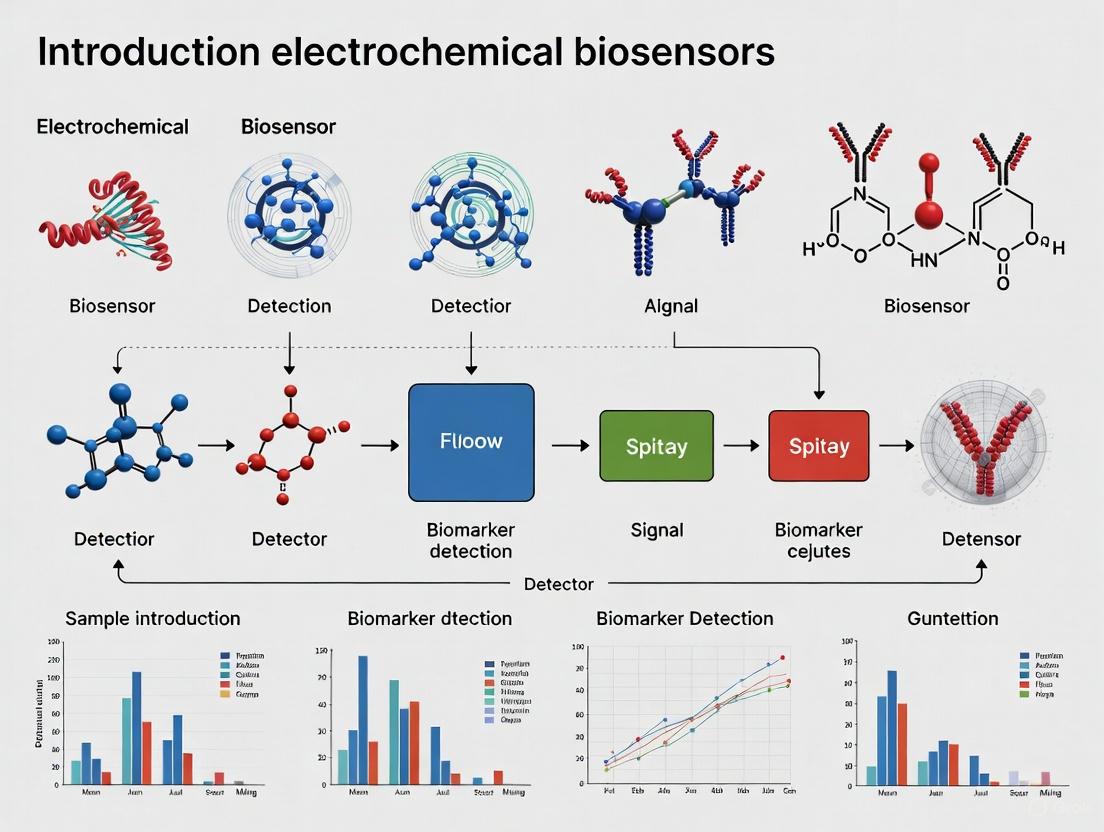
This article provides a comprehensive overview of electrochemical biosensors, powerful analytical tools that convert biochemical interactions into measurable electrical signals for detecting disease biomarkers.
Electrochemical Biosensors for Biomarker Detection: A Comprehensive Guide for Research and Clinical Translation
Abstract
This article provides a comprehensive overview of electrochemical biosensors, powerful analytical tools that convert biochemical interactions into measurable electrical signals for detecting disease biomarkers. It covers the foundational principles of these biosensors, including their core components and the distinct advantages—such as high sensitivity, portability, and cost-effectiveness—that make them suitable for point-of-care diagnostics. The content explores advanced methodologies, material innovations with nanomaterials, and their applications in detecting biomarkers for cancer, neurodegenerative disorders, infectious diseases, and more. It further addresses critical troubleshooting, optimization strategies, and a comparative analysis with other biosensor technologies. Finally, the article discusses validation frameworks and future perspectives for integrating these biosensors into mainstream clinical practice and personalized healthcare.
The Foundation of Electrochemical Biosensors: Principles, Advantages, and Key Biomarkers
Defining Electrochemical Biosensors and Core Components
An electrochemical biosensor is an integrated analytical device that combines a biological recognition element with an electrochemical transducer to convert a biological event into a quantifiable electrical signal [1]. These biosensors are fundamental tools in modern biomarker detection research, prized for their high sensitivity, suitability for miniaturization, portability, and cost-effectiveness [2] [3].
The core principle of operation involves the specific interaction between a target analyte (e.g., a protein, nucleic acid, or other biomarker) and a biorecognition layer immobilized on the sensor surface. This binding event alters the physicochemical properties at the electrode-electrolyte interface, resulting in a measurable electrochemical change [1]. The transducer then converts this change into an analytical signal—such as a current, potential, or impedance shift—that is proportional to the analyte concentration [4].
Core Components and Their Functions
Every electrochemical biosensor comprises four essential components that work in concert to perform detection.
Table 1: Core Components of an Electrochemical Biosensor
| Component | Description | Function | Common Examples |
|---|---|---|---|
| Bioreceptor | Biological element providing molecular recognition. | Binds specifically to the target analyte. | Enzymes, antibodies, aptamers, nucleic acids, whole cells [2] [1]. |
| Transducer | Electrode that acts as a physicochemical converter. | Converts the biorecognition event into an electrical signal. | Glassy carbon, gold, platinum, screen-printed electrodes; often part of a 3-electrode system [1] [5]. |
| Electronics | System for signal processing and readout. | Amplifies, processes, and displays the electrical signal from the transducer. | Potentiostat, readout circuit, data acquisition software [4]. |
| Analyte | The substance or biomarker being measured. | The target of the detection and analysis. | Proteins (e.g., cancer biomarkers), DNA, RNA, small molecules (e.g., glucose), ions [4]. |
The interplay between these components is visualized in the following workflow, which outlines the fundamental operational principle of an electrochemical biosensor.
Transduction Mechanisms and Experimental Protocols
The transduction mechanism defines how the biological signal is converted into an electrical one. Different mechanisms offer distinct advantages and are selected based on the specific application and target analyte.
Table 2: Common Electrochemical Transduction Techniques
| Technique | Measured Quantity | Principle | Key Advantages |
|---|---|---|---|
| Amperometry/ Voltammetry | Current | Measurement of current from redox reactions at a constant (amperometry) or varying (voltammetry) potential [3]. | High sensitivity, wide linear range [3]. |
| Potentiometry | Potential | Measurement of potential difference across an electrode interface at zero current [3]. | Simple instrumentation, wide concentration range [3]. |
| Impedimetry (EIS) | Impedance | Measurement of the opposition to current flow (resistance and capacitance) when an AC potential is applied [3]. | Label-free, suitable for monitoring binding events and cell growth [6] [3]. |
| Field-Effect (FET) | Conductivity | Measurement of conductance changes in a semiconductor channel due to charged analyte binding [3]. | Label-free, easy miniaturization, high sensitivity [6] [3]. |
Detailed Experimental Protocol: Impedimetric Immunosensor
A common protocol for constructing an impedimetric biosensor for protein biomarker detection is outlined below [7] [3].
- Electrode Pretreatment: Clean the working electrode (e.g., gold or glassy carbon) mechanically (polishing with alumina slurry) and electrochemically (via cyclic voltammetry in sulfuric acid) to ensure a reproducible surface.
- Surface Functionalization: Modify the electrode surface to create a layer for bioreceptor immobilization.
- For gold electrodes: Immerse the electrode in a solution of a thiolated cross-linker (e.g., 11-mercaptoundecanoic acid) for several hours to form a self-assembled monolayer (SAM) [3].
- For carbon electrodes: Deposit a nanomaterial (e.g., graphene oxide, carbon nanotubes) via drop-casting to increase surface area and conductivity, then activate with a cross-linker like EDC/NHS (1-Ethyl-3-(3-dimethylaminopropyl)carbodiimide / N-Hydroxysuccinimide) [7].
- Bioreceptor Immobilization: Incubate the functionalized electrode with a solution containing the biorecognition element (e.g., a capture antibody specific to the target biomarker). Unbound receptors are then washed away with a buffer solution (e.g., PBS).
- Blocking: Expose the electrode to a blocking agent (e.g., Bovine Serum Albumin - BSA, or ethanolamine) to cover any remaining non-specific binding sites on the electrode surface, thus minimizing background signal.
- Target Detection & EIS Measurement:
- Incubate the biosensor with the sample containing the target analyte.
- After washing, perform Electrochemical Impedance Spectroscopy (EIS) in a solution containing a redox probe (e.g., [Fe(CN)₆]³⁻/⁴⁻).
- The binding of the target biomarker increases the electron-transfer resistance (Rₑₜ), which is measured as the diameter of the semicircle in the Nyquist plot.
- Data Analysis: The change in Rₑₜ is calculated and correlated to the analyte concentration using a calibration curve.
The logical decision process for selecting an appropriate transduction technique is illustrated below.
The Scientist's Toolkit: Key Research Reagent Solutions
The performance of an electrochemical biosensor is heavily dependent on the reagents and materials used in its fabrication. The table below details essential components for assembling a high-performance biosensor.
Table 3: Key Research Reagent Solutions for Biosensor Development
| Item/Category | Function/Purpose | Specific Examples |
|---|---|---|
| Biorecognition Elements | Provides specificity for the target analyte. | Antibodies: Monoclonal/polyclonal for high-affinity protein binding [2].Aptamers: Single-stranded DNA/RNA oligonucleotides with high stability and selectivity [2] [8].Enzymes: Catalyze reactions producing electroactive species (e.g., Glucose Oxidase) [1]. |
| Electrode Materials | Serves as the physical platform for the transduction event. | Glassy Carbon Electrode (GCE): Versatile, wide potential window [4].Gold Electrode (AuE): Easy functionalization via thiol chemistry [3].Screen-Printed Electrodes (SPEs): Disposable, low-cost, mass-producible [4]. |
| Nanomaterials | Enhances sensitivity by increasing surface area and facilitating electron transfer. | Carbon Nanotubes (CNTs): High conductivity, wire-like morphology [6].Graphene & Derivatives: Extremely high surface area, excellent conductivity [9].Metal Nanoparticles (Au, Pt): Catalytic properties, signal amplification [2]. |
| Cross-linking Chemistry | Immobilizes bioreceptors onto the electrode surface. | EDC/NHS Chemistry: Forms covalent amide bonds between carboxyl and amine groups [7].Thiol-Gold Chemistry: Creates stable self-assembled monolayers (SAMs) on gold surfaces [3].Glutaraldehyde: A homobifunctional crosslinker for amines [7]. |
| Redox Probes & Buffers | Enables/supports the electrochemical measurement. | Redox Probes: [Fe(CN)₆]³⁻/⁴⁻, Ru(NH₃)₆³⁺; used in EIS and voltammetry [3].Phosphate Buffered Saline (PBS): Standard buffer for maintaining pH and ionic strength in biological assays. |
Performance Metrics and Data Presentation
The analytical performance of developed biosensors is rigorously evaluated against standardized metrics, which are typically summarized in tables within research publications.
Table 4: Exemplary Performance of Recent Electrochemical Biosensors for Biomarker Detection
| Target Biomarker / Disease | Bioreceptor | Transduction Method | Linear Range | Limit of Detection (LOD) | Sample Matrix | Ref. |
|---|---|---|---|---|---|---|
| HER2 (Breast Cancer) | Antibody | Amperometry | Not specified | Ultra-sensitive detection | Not specified | [2] |
| Let-7a (Lung Cancer) | DNA probe with DSN enzyme | Electrochemical | Not specified | Precise diagnosis | Not specified | [2] |
| miRNA-34a (Alzheimer's) | Nucleic acid | Voltammetry | Not specified | Diagnosis capable | Synthetic/Clinical | [2] |
| Lactate Dehydrogenase (Malaria) | Aptamer | Electrochemical | Not specified | Quantification capable | Not specified | [2] |
| SARS-CoV-2 Nucleoprotein | Molecularly Imprinted Polymer (MIP) | Voltammetry | Not specified | High sensitivity | Not specified | [2] |
Electrochemical biosensors have emerged as transformative analytical tools in biomedical research and clinical diagnostics. These devices, which integrate a biological recognition element with an electrochemical transducer, are fundamentally reshaping the landscape of biomarker detection [2] [10]. Their ascendance is propelled by three cornerstone advantages: exceptional sensitivity capable of detecting biomarkers at trace concentrations, superior portability enabling point-of-care testing, and capabilities for real-time analysis providing immediate analytical insights [2] [1]. For researchers and drug development professionals, these attributes address critical limitations of conventional diagnostic techniques, which are often laborious, time-consuming, and confined to laboratory settings [8]. This technical guide examines the fundamental principles, performance metrics, and methodological protocols that underpin these key advantages, providing a comprehensive framework for their application in advanced biomarker research.
Core Principles of Electrochemical Biosensors
Fundamental Architecture and Operating Mechanism
An electrochemical biosensor is an analytical device that converts a biological recognition event into a quantifiable electronic signal [11]. Its operation hinges on the intimate integration of two components: a biorecognition element that selectively interacts with the target analyte, and a physicochemical transducer that translates this interaction into a measurable electrical parameter [1] [10].
The biological element—such as an enzyme, antibody, nucleic acid, or whole cell—provides specificity toward the target biomarker [1] [11]. This interaction produces a physicochemical change (e.g., electron transfer, ion concentration change, or mass accumulation) at the transducer interface. The transducer, typically an electrode system, then converts this change into an analytical signal (current, potential, or impedance) that is proportional to the analyte concentration [1] [12]. The effective immobilization of the biorecognition element in close proximity to the transducer surface is critical for maintaining biological activity while ensuring efficient signal transduction [11].
Primary Electrochemical Transduction Techniques
Different electrochemical techniques are employed based on the nature of the detected signal and the specific application requirements:
- Amperometry measures the current resulting from the redox reaction of an analyte at a constant applied potential. The resulting current is directly proportional to the analyte concentration. This principle is widely used in glucose monitoring and neurotransmitter detection [12].
- Potentiometry detects the potential difference between a working electrode and a reference electrode under conditions of negligible current flow. It is commonly used in ion-selective electrodes for measuring pH and electrolytes like sodium, potassium, and calcium [12].
- Voltammetry applies a varying potential to the working electrode and monitors the resulting current. Techniques such as Cyclic Voltammetry (CV), Differential Pulse Voltammetry (DPV), and Square Wave Voltammetry (SWV) provide information about the redox behavior and concentration of analytes [12].
- Electrochemical Impedance Spectroscopy (EIS) measures the impedance of an electrochemical system across a range of frequencies. Binding events at the electrode surface alter the interface properties, leading to measurable changes in impedance, particularly the charge transfer resistance (Rct) [12] [13].
The following diagram illustrates the core working principle of an electrochemical biosensor, from biorecognition to signal output:
Diagram 1: Core working principle of an electrochemical biosensor.
Advantage 1: Unparalleled Sensitivity
Mechanisms Enabling High Sensitivity
The exceptional sensitivity of modern electrochemical biosensors stems from sophisticated design strategies that maximize the signal-to-noise ratio for minimal biomarker concentrations. Nanomaterial integration is a primary enabling factor, where engineered nanostructures such as graphene, carbon black, gold nanoparticles, and metal-organic frameworks dramatically increase the active surface area of electrodes, facilitating greater bioreceptor loading and enhancing electron transfer kinetics [2] [8]. For instance, nanocomposites like Pt/MoSe₂ nanomesh have demonstrated ultra-sensitive detection of hydrogen peroxide, a common enzymatic reaction product [2].
Signal amplification strategies further push detection limits. These include enzymatic amplification, where enzymes like horseradish peroxidase generate numerous electroactive product molecules per binding event [1], and nucleic acid-based amplification techniques such as entropy-driven cyclic circuits and duplex-specific nuclease (DSN)-based reactions that exponentially increase the detectable signal for low-abundance targets like microRNAs [2]. The synergistic combination of multiple sensitization strategies—nanomaterial enhancement with enzymatic signal amplification—has enabled the detection of cancer biomarkers like ORAOV1 and Let-7a at clinically relevant sub-nanogram per milliliter concentrations [2] [14].
Quantitative Sensitivity Metrics
The table below summarizes the detection capabilities of electrochemical biosensors for various disease biomarkers, illustrating their remarkable sensitivity:
Table 1: Sensitivity Ranges of Electrochemical Biosensors for Biomarker Detection
| Biomarker Category | Specific Biomarker | Detection Technique | Reported Sensitivity | Reference |
|---|---|---|---|---|
| Cancer | α-Fetoprotein (AFP) | ESPR (EDA/GA coupling) | 28°/(ng/mL) | [13] |
| Let-7a (Lung cancer) | DSN-based | Ultra-sensitive | [2] | |
| ORAOV1 (Urothelial carcinoma) | TE-RPA | Ultra-sensitive | [2] | |
| Neurodegenerative | Phosphorylated α-synuclein | AuNPs/Laser-induced graphene | High sensitivity in blood | [2] |
| Infectious Disease | SARS-CoV-2 Nucleoprotein | MIP-based | High sensitivity | [2] |
| Metabolic | Methylglyoxal (Diabetes) | Polyaniline/Nickel oxide | Detection in saliva | [2] |
Advantage 2: Miniaturization and Portability
Engineering Approaches for Compact Biosensing
The inherent compatibility of electrochemical biosensors with microfabrication technologies derived from the semiconductor industry is a fundamental driver of their portability [1]. Electrodes can be miniaturized to micrometer-scale dimensions using screen-printing, photolithography, and micro-machining techniques to create compact, disposable test strips or integrated microfluidic chips [2] [1]. This miniaturization extends to complete sensor systems, where the required three-electrode setup (working, reference, and counter electrodes) is fabricated on a single, small substrate [1].
Advances in material science are crucial for developing robust, portable platforms. Screen-printed electrodes (SPEs) on flexible substrates like PET plastic, modified with cost-effective conductive materials such as carbon black and nanoparticles, provide a reliable and mass-producible platform for point-of-care devices [2]. Furthermore, the emergence of self-powered electrochemical biosensors (EBFC-SPBs), which utilize biological enzymes as catalysts to convert biochemical energy directly into electricity, eliminates the need for external power sources, thereby enhancing portability and enabling operation in resource-limited settings [14].
Point-of-Care Applications
The synergy of miniaturization and low power requirements makes these biosensors ideal for point-of-care testing (POCT) [15]. Portable biosensors have been deployed for:
- Infectious disease diagnosis: Rapid detection of pathogens like SARS-CoV-2 in community settings [2] [16].
- Therapeutic drug monitoring: Measuring drug concentrations in patient blood or saliva to personalize dosage [15].
- Chronic disease management: Wearable and continuous monitoring devices for conditions like diabetes [12] [15].
Advantage 3: Real-Time and Continuous Monitoring
Technical Foundations of Real-Time Analysis
Real-time analysis is achieved through label-free detection principles and continuous signal transduction. Techniques such as EIS and field-effect transistor (FET)-based sensing monitor binding events as they occur, without the need for secondary labeling with fluorescent or radioactive tags [12]. This allows for the direct, continuous observation of biomolecular interactions, such as antigen-antibody binding or DNA hybridization, providing kinetic data on association and dissociation rates [1] [13].
The integration of electrochemical sensing with complementary techniques like Electrochemical Surface Plasmon Resonance (ESPR) further enriches real-time capabilities. ESPR systems simultaneously monitor changes in both electrochemical parameters (current, impedance) and optical parameters (refractive index) at the sensor surface, offering a multi-dimensional view of the binding event and enhancing measurement reliability [1] [13].
Applications in Dynamic Process Monitoring
The capacity for real-time analysis unlocks applications that are challenging for endpoint assays:
- Kinetic profiling: Quantifying the affinity and kinetics of biomarker-receptor interactions, which is vital for drug development and understanding disease mechanisms [13].
- Continuous health monitoring: Wearable electrochemical sensors integrated into patches or textiles can provide continuous, real-time data on physiological analytes (e.g., glucose, lactate) in interstitial fluid, sweat, or tears, enabling proactive healthcare management [12] [14].
- Process monitoring: Tracking the production of specific biomarkers in cell cultures or the degradation of environmental pollutants over time [1].
Experimental Protocol: Detection of a Cancer Biomarker
This section provides a detailed methodology for constructing an electrochemical biosensor for α-fetoprotein (AFP), a key liver cancer biomarker, illustrating the practical application of the principles discussed above [13].
Sensor Construction and Immobilization Chemistry
The performance of a biosensor is critically dependent on the method used to immobilize the biorecognition element (e.g., an antibody) on the transducer surface. The following workflow details the key steps, highlighting three different coupling strategies:
Diagram 2: Experimental workflow for AFP biosensor construction.
Step 1: Surface Functionalization
- Clean the gold sensor disk thoroughly.
- Immerse the sensor disk in a 1 mM solution of 11-mercaptoundecanoic acid (MUA) in isopropyl alcohol to form a self-assembled monolayer (SAM) with terminal carboxylic acid (-COOH) groups.
Step 2: Antibody Immobilization (via Three Strategies)
- EDC/NHS Coupling: Activate the -COOH terminated surface with a mixture of 400 mM EDC and 100 mM NHS to form reactive NHS esters. Then, incubate with AFP antibody (AFPAb). Finally, block unreacted sites with 1 M ethanolamine hydrochloride (EA) [13].
- EDA/GA Coupling: Treat the -COOH surface with 1 M ethylene diamine (EDA) to create an amine-functionalized surface. Then, react with 1% glutaraldehyde (GA) to form an aldehyde-functionalized surface. Immobilize the AFPAb, followed by blocking with EA [13].
- PANI/GA Coupling: Electrodeposit polyaniline (PANI) onto the gold surface via cyclic voltammetry. Subsequently, treat with GA and then immobilize the AFPAb [13].
Detection and Measurement
- Equipment Setup: Use an SPR analyzer integrated with an electrochemical workstation (e.g., Autolab Twingle). A three-electrode system is used: the modified gold disk (working electrode), a Pt wire (counter electrode), and an Ag/AgCl reference electrode [13].
- Measurement:
- Stabilize the antibody-immobilized sensor surface with PBS buffer to establish a stable baseline.
- Introduce AFP antigen solutions at varying concentrations (e.g., 0.5-70 ng/mL) into the flow cell.
- Monitor the binding event in real-time using EIS or SPR.
- Regenerate the sensor surface for reuse with a mild acidic solution (e.g., 0.1 M HCl) [13].
- Data Analysis:
- For EIS, plot the Nyquist plot ( -Z'' vs Z' ). The increase in the diameter of the semicircle corresponds to an increase in Charge Transfer Resistance (Rct), which is proportional to the AFP concentration [12] [13].
- The sensor's performance is validated by comparing results from human serum samples with standard ELISA methods [13].
Research Reagent Solutions
Table 2: Essential Reagents for Electrochemical Biosensor Construction
| Reagent / Material | Function / Role | Example from Protocol |
|---|---|---|
| Gold Sensor Disk | Transducer substrate; provides a surface for functionalization and efficient electron conduction. | Working electrode base [13]. |
| 11-Mercaptoundecanoic Acid (MUA) | Forms a self-assembled monolayer (SAM) to create a well-defined, functional interface. | Provides terminal -COOH groups for antibody immobilization [13]. |
| EDC / NHS | Crosslinking agents that activate carboxyl groups for covalent bonding with amine groups on antibodies. | Activated -COOH groups for direct antibody coupling [13]. |
| Ethylene Diamine (EDA) / Glutaraldehyde (GA) | A two-step crosslinking system to create a longer spacer arm for improved antibody orientation and access. | EDA aminates the surface; GA creates aldehyde groups for antibody binding [13]. |
| Polyaniline (PANI) | A conductive polymer that enhances surface area and can facilitate electron transfer. | Electrodeposited layer for alternative immobilization strategy [13]. |
| AFP Antibody (AFPAb) | Biorecognition element that provides high specificity for the target biomarker. | Immobilized receptor for capturing AFP antigen [13]. |
| Phosphate Buffered Saline (PBS) | Provides a stable physiological pH and ionic strength environment for biomolecular interactions. | Running buffer for stabilization and dilution [13]. |
The field of electrochemical biosensing is dynamically evolving, with several emerging trends poised to further enhance its key advantages. The integration of artificial intelligence (AI) and machine learning (ML) is set to revolutionize data interpretation, enabling the deconvolution of complex signals, improvement of signal-to-noise ratios, and identification of subtle patterns for multi-analyte detection, thereby boosting both sensitivity and reliability [12]. Furthermore, the push toward autonomous and self-powered systems continues, with next-generation biofuel cells and energy harvesting technologies aiming to create fully independent, implantable, or wearable sensors for continuous health monitoring [14]. Finally, the challenge of transitioning from research to clinical practice is being addressed through efforts in standardization, multiplexing, and rigorous validation, which are critical for gaining regulatory approval and achieving widespread clinical adoption [2] [16].
In conclusion, the trifecta of sensitivity, portability, and real-time analysis solidifies the position of electrochemical biosensors as indispensable tools in modern biomedical research and diagnostic drug development. Their unique capability to deliver rapid, accurate, and actionable analytical information directly at the point of need—whether in a central laboratory, a clinic, or a patient's home—makes them a cornerstone technology for advancing personalized medicine and improving global health outcomes.
In modern biomedical research and clinical diagnostics, biomarkers are indispensable tools. Defined as measurable indicators of biological processes, pathogenic processes, or pharmacological responses to therapeutic intervention, biomarkers provide an objective basis for understanding health and disease [17]. The National Institutes of Health (NIH) characterizes a biomarker as "a characteristic that is objectively measured and evaluated as an indicator of normal biological processes, pathogenic processes, or pharmacologic responses to a therapeutic intervention" [17]. These molecular or physiological signposts serve as critical decision points across the healthcare continuum, from risk assessment and early detection to diagnosis, prognosis, and therapeutic monitoring.
The clinical significance of biomarkers dates back to 1847 with the discovery of the Bence-Jones protein in urine for multiple myeloma detection, establishing the foundation for their diagnostic application [17]. Today, advancements in omics technologies—genomics, proteomics, metabolomics—have exponentially expanded our ability to discover and validate novel biomarkers across diverse disease areas [17]. Within the context of electrochemical biosensor development, understanding the fundamental nature and characteristics of different biomarker classes is paramount for designing sensitive and specific detection platforms that can translate laboratory findings into clinically useful devices.
Classification and Functions of Biomarkers
Biomarkers can be categorized through multiple frameworks depending on their clinical application, biological origin, or functional characteristics. Each classification system provides distinct insights into biomarker utility, particularly for designing appropriate detection strategies.
Classification by Clinical Application
From a clinical perspective, biomarkers are primarily classified based on their functional role in the disease management continuum. The table below outlines the major categories and their applications.
Table 1: Biomarker Classification by Clinical Application
| Biomarker Type | Primary Function | Representative Examples |
|---|---|---|
| Susceptibility/Risk | Indicates genetic predisposition or elevated risk for specific diseases [18]. | BRCA1/BRCA2 mutations (breast/ovarian cancer risk) [19] [18]. |
| Diagnostic | Detects or confirms the presence of a specific disease or condition [17] [18]. | Prostate-specific antigen (PSA) for prostate cancer [19] [18]; C-reactive protein (CRP) for inflammation [18]. |
| Prognostic | Predicts disease outcome or progression once disease is diagnosed [18]. | Ki-67 protein (cell proliferation marker in cancers) [18]. |
| Monitoring | Tracks disease status, therapy response, or relapse over time [18]. | Hemoglobin A1c (HbA1c) for diabetes management [18]; Brain natriuretic peptide (BNP) for heart failure [20] [18]. |
| Predictive | Predicts whether a patient will respond to a specific therapy [18]. | HER2/neu status in breast cancer (response to trastuzumab) [18]; EGFR mutation status in non-small cell lung cancer [18]. |
| Pharmacodynamic/Response | Shows biological response to a drug treatment [18]. | LDL cholesterol reduction in response to statins [18]. |
| Safety | Indicates toxicity or adverse side-effect risks [18]. | Liver function tests (LFTs) for drug-induced liver injury [18]; Creatinine clearance for kidney function [18]. |
Characteristics of Effective Biomarkers
For successful clinical translation and integration into diagnostic platforms like electrochemical biosensors, ideal biomarkers should exhibit several key characteristics [19]:
- High Sensitivity and Specificity: A biomarker must correctly identify true positives (sensitivity) while excluding healthy individuals (specificity) to minimize false results [19].
- Reproducibility: Results must be consistent across different tests, laboratories, and over time [19].
- Clinical Relevance: The biomarker should correlate with the severity of the condition and provide adequate lead time for early intervention [19].
- Measurability: It should be detectable using available, affordable technology, ideally in non-invasively collected samples like blood, saliva, or urine [19].
- Biological Mechanism: A clear mechanistic link to the disease process strengthens validity and informs therapeutic targets [19].
The following diagram illustrates the logical relationships between different biomarker types within the clinical workflow, from initial risk assessment through treatment monitoring.
Molecular Biomarker Types: Characteristics and Detection Methodologies
At the molecular level, biomarkers can be categorized into three primary classes based on their biochemical nature: nucleic acids, proteins, and metabolites. Each class presents distinct advantages and challenges for detection, particularly in the context of electrochemical biosensing.
Nucleic Acid Biomarkers
Nucleic acid biomarkers encompass DNA and RNA molecules that provide information about genetic predispositions, active disease states, and treatment responses.
Table 2: Nucleic Acid Biomarkers: Types and Applications
| Biomarker Type | Description | Detection Examples | Key Considerations |
|---|---|---|---|
| Genetic Biomarkers | DNA sequences indicating disease susceptibility or risk [19]. Include gene mutations, SNPs, and other variations [19]. | BRCA1/BRCA2 mutations (breast/ovarian cancer) [19]; APC mutations (familial adenomatous polyposis) [19]. | Stable and present in all nucleated cells. Germline mutations are constitutionally present, facilitating detection. |
| Epigenetic Biomarkers | Reversible modifications regulating gene expression without altering DNA sequence [19]. | DNA methylation (e.g., tumor suppressor gene silencing) [19]; MicroRNAs (e.g., let-7, miR-15/16 in cancer) [19]. | Dynamic nature reflects environmental influences and disease progression. |
| Extracellular RNA | Various RNA types detectable in biofluids [19]. | Messenger RNA (mRNA), Long non-coding RNAs (lncRNAs) [19]. | Enables non-invasive "liquid biopsy" approaches. |
Protein Biomarkers
Proteins are the functional effector molecules in most biological processes and represent the most extensively used class of biomarkers in current clinical practice.
Table 3: Protein Biomarkers: Types and Applications
| Biomarker Type | Description | Representative Examples | Clinical Utility |
|---|---|---|---|
| Enzymes & Hormones | Proteins with catalytic or signaling functions. | Cardiac troponins (I and T) for myocardial infarction [20]; Brain natriuretic peptide (BNP) for heart failure [21] [20]. | Gold standard for specific conditions like cardiac injury. |
| Glycoproteins & Antigens | Proteins with carbohydrate modifications or antigenic properties. | Prostate-specific antigen (PSA) for prostate cancer [19] [18]; CA-125 for ovarian cancer [19]. | Widely used for cancer screening and monitoring. |
| Inflammatory Mediators | Proteins involved in immune and inflammatory responses. | C-reactive protein (CRP) for inflammation and cardiovascular risk [19] [20] [18]. | Monitor disease activity and treatment response in inflammatory conditions. |
Metabolic Biomarkers (Small Molecules)
Metabolic biomarkers are low molecular weight compounds that provide a functional readout of the body's physiological state, reflecting interactions between genes, proteins, and environmental factors [22].
Table 4: Metabolic Biomarkers: Types and Applications
| Biomarker Category | Description | Representative Examples | Unique Advantages |
|---|---|---|---|
| Carbohydrate Metabolites | Sugars and their derivatives involved in energy metabolism. | Blood glucose for diabetes diagnosis/management [19]; Lactate for tissue hypoxia (sepsis, cancer) [19]. | Direct reflection of metabolic status and energy production. |
| Lipids & Lipoproteins | Fats, cholesterol, and their transport complexes. | LDL cholesterol, HDL cholesterol, triglycerides for cardiovascular risk assessment [19]. | Strong predictive power for chronic disease risk. |
| Other Small Molecules | Diverse compounds including amino acids, organic acids, etc. | Currently thousands being characterized through untargeted metabolomics [22]. | Provide real-time snapshot of physiological status; cross biological membranes easily. |
Electrochemical Biosensing of Molecular Biomarkers
Electrochemical biosensors have emerged as powerful tools for detecting molecular biomarkers due to their high sensitivity, potential for miniaturization, low cost, and suitability for point-of-care testing [15] [21] [2]. These devices integrate a biological recognition element with an electrochemical transducer that converts the biological binding event into a quantifiable electrical signal.
Fundamental Principles and Sensor Types
Electrochemical protein biosensors, a prominent category, typically employ antigens or antibodies as receptor units [21]. The working principle involves the specific binding of the target biomarker (e.g., a protein antigen) to its capture agent (e.g., an antibody) immobilized on the electrode surface. This binding event subsequently alters the electrical properties (current, potential, impedance) at the electrode-solution interface, enabling quantification of the target [21].
Electrochemical biosensors are generally categorized into two main types:
- Label-free Biosensors: Detection occurs through direct measurement of the immunoreaction's effect on charge transfer at the electrode interface, often observed as reduced current or increased impedance [21].
- Labeled Biosensors: These utilize a secondary reporter system for signal amplification and include:
- Sandwich-type: Employ a labeled detection antibody that binds to the captured antigen, forming an antibody-antigen-antibody "sandwich" structure that enhances selectivity and sensitivity [21].
- Competitive-type: Sample antigens compete with labeled antigens for limited antibody binding sites, with signal intensity inversely proportional to the target concentration [21].
Common electrochemical detection techniques include Cyclic Voltammetry (CV), Differential Pulse Voltammetry (DPV), and Electrochemical Impedance Spectroscopy (EIS) [21].
Experimental Protocol: Detection of a Protein Biomarker Using a Sandwich Electrochemical Immunosensor
The following workflow details a standard protocol for detecting a protein biomarker (e.g., cardiac troponin) using a sandwich-type electrochemical immunosensor, incorporating nanomaterial enhancement.
Step 1: Electrode Modification and Functionalization
- Working Electrode Preparation: Clean and polish the working electrode (e.g., glassy carbon or screen-printed gold electrode) to ensure a fresh, reproducible surface [21].
- Nanomaterial Modification: Deposit a nanocomposite material (e.g., porous graphene oxide functionalized with gold nanoparticles - p-GO@Au) onto the electrode surface to enhance surface area and electron transfer capability [21]. This is typically done via drop-casting or electrodeposition.
- Antibody Immobilization: Covalently attach the specific capture antibody (primary antibody, Ab1) against the target protein to the modified electrode surface. This can be achieved through various chemistries, such as leveraging the affinity between gold nanoparticles and thiol groups or using cross-linkers like EDC/NHS for carboxyl groups [21]. Block remaining nonspecific sites with bovine serum albumin (BSA) or similar agents.
Step 2: Immunoassay Procedure
- Antigen Incubation: Introduce the sample (e.g., serum or plasma) containing the target protein antigen to the functionalized electrode. Incubate to allow specific binding between the antigen and the immobilized capture antibody.
- Washing: Gently rinse the electrode to remove unbound proteins and matrix components.
- Detection Antibody Binding: Apply a secondary, signal-generating detection antibody (Ab2) conjugated with an electroactive label (e.g., horseradish peroxidase - HRP) or immobilized on a signal-amplifying nanomaterial (e.g., MoS2@MWCNTs modified with Au@Pd NPs) [21]. Incubate to form the complete "sandwich" immunocomplex.
- Final Washing: Perform a final wash to remove any unbound detection antibody.
Step 3: Electrochemical Measurement and Data Analysis
- Electrochemical Setup: Place the modified working electrode into an electrochemical cell containing a suitable buffer solution along with the counter and reference electrodes.
- Signal Measurement: If using an enzyme label, add the enzyme substrate (e.g., H₂O₂ for HRP) to the solution. Apply the appropriate electrochemical technique (e.g., DPV or Amperometry) to measure the generated electrical signal, which is proportional to the concentration of the target antigen [21].
- Quantification: Construct a calibration curve using standards with known concentrations of the target biomarker. Interpolate the signal from the unknown sample to determine the biomarker concentration.
The following diagram summarizes this experimental workflow and the key components involved.
Research Reagent Solutions for Biosensor Development
The development of high-performance electrochemical biosensors relies on a specialized toolkit of reagents and materials. The table below details essential components and their functions.
Table 5: Essential Research Reagents for Electrochemical Biosensor Development
| Reagent/Material | Function/Application | Key Characteristics |
|---|---|---|
| Screen-Printed Electrodes (SPEs) | Disposable working electrodes for portable, point-of-care devices [23]. | Carbon, gold, or platinum ink printed on ceramic/polymer substrates. Enable mass production and miniaturization. |
| Gold Nanoparticles (AuNPs) | Electrode nanomodifier and bioconjugation platform [21]. | High conductivity, large surface area, biocompatibility. Facilitate antibody immobilization and enhance electron transfer [21]. |
| Graphene Oxide/Reduced GO | Nanomaterial for electrode modification [21] [23]. | Exceptional electrical conductivity and high specific surface area for biomarker immobilization and signal amplification [21]. |
| Specific Antibodies (Ab1, Ab2) | Biological recognition elements for immunoassays [21]. | Monoclonal or polyclonal antibodies providing high specificity and affinity for the target protein biomarker. |
| Electroactive Labels | Signal generation in labeled biosensors [21]. | Enzymes (e.g., Horseradish Peroxidase), metal nanoparticles, or redox molecules (e.g., methylene blue) that produce measurable current. |
| Cross-linking Chemistries | Covalent immobilization of biomolecules on electrodes [21]. | EDC/NHS, glutaraldehyde, or thiol-gold chemistry for stable attachment of capture probes. |
| Blocking Agents | Minimize nonspecific binding on sensor surface [21]. | Proteins like Bovine Serum Albumin (BSA) or casein that cover unmodified electrode surfaces. |
Biomarkers, spanning proteins, nucleic acids, and metabolites, form the cornerstone of modern precision medicine. Their integration with advanced electrochemical biosensing platforms represents a powerful convergence of biology and technology, driving innovations in early disease detection, therapeutic monitoring, and personalized treatment strategies. The distinct characteristics of each biomarker class necessitate tailored detection approaches, with electrochemical biosensors offering a versatile and promising solution due to their sensitivity, miniaturization potential, and suitability for point-of-care applications.
As the field progresses, the discovery of novel biomarkers and the refinement of nanomaterial-based sensor designs will undoubtedly enhance diagnostic capabilities. Future developments will likely focus on multiplexed platforms for simultaneous detection of biomarker panels, providing a more comprehensive picture of disease states and ultimately improving patient outcomes through timely and targeted clinical interventions.
Electrochemical biosensors are analytical devices that combine a biological recognition element with an electrochemical transducer to detect specific biomarkers. Their operation is based on the specific binding of a target analyte (e.g., a protein, nucleic acid, or metabolite) to a bioreceptor (e.g., an antibody, aptamer, or enzyme) immobilized on the sensor surface. This binding event generates a measurable electrical signal—such as a change in current, potential, or impedance—that is proportional to the analyte's concentration [21] [24]. The fundamental components of an electrochemical biosensor include the analyte (target molecule), bioreceptor (molecular recognition element), transducer (electrode that converts biological interaction to electrical signal), and readout system (electronics for signal processing and display) [4].
The high specificity of these biosensors stems from the selective binding of recognition elements to target molecules, minimizing interference from other substances in complex biological matrices. This strong affinity increases the signal-to-noise ratio, resulting in ultra-low detection limits, typically in the nanomolar or picomolar range [25]. This exceptional sensitivity, combined with advantages such as rapid response times, low cost, minimal sample volume requirements, and potential for miniaturization, makes electrochemical biosensors particularly attractive for point-of-care diagnostics and continuous monitoring applications [26] [4] [27].
Electrochemical Biosensors for Major Disease Areas
Cancer Detection
Electrochemical biosensors represent a promising technology for efficient, minimally invasive, and low-cost cancer screening. They are designed to detect cancer biomarkers such as circulating tumor cells, cell-free nucleic acids, exosomes, proteins (e.g., prostate-specific antigen), and metabolites [27]. The fundamental principle involves specific binding of these target analytes to receptor molecules (e.g., antibodies, aptamers) immobilized on the sensor surface, generating detectable electrical signals [27]. Nanomaterials like graphene, carbon nanotubes, and metal nanoparticles are frequently integrated into sensor designs to enhance electron transfer kinetics, provide larger surface area for bioreceptor immobilization, and improve catalytic properties, thereby achieving detection limits that surpass conventional diagnostic modalities by several orders of magnitude [27] [8].
Table 1: Electrochemical Biosensors in Cancer Detection
| Cancer Type | Key Biomarkers | Sensor Platform/Technique | Reported Detection Limit | References |
|---|---|---|---|---|
| Prostate | Prostate-Specific Antigen (PSA) | Gold nanofiber-modified SPCE | 0.28 ng/mL (8.78 fM) | [25] |
| General (Exosomes) | Exosome Surface Proteins | Aptamer-functionalized Au Nanoparticles | Few hundred particles/μL | [27] |
| General | Various Protein Biomarkers | Nanomaterial-enhanced Amperometry | Femto- or picomolar levels | [27] |
Neurodegenerative Diseases
For neurodegenerative conditions such as Alzheimer's disease (AD) and Parkinson's disease (PD), electrochemical biosensors target key protein biomarkers like amyloid-β (Aβ), Tau proteins, and α-synucleins found in cerebrospinal fluid (CSF) or blood [28] [24]. These biomarkers are traditionally detected using methods like enzyme-linked immunosorbent assay (ELISA) and polymerase chain reaction (PCR), which are often invasive, costly, and time-intensive [28] [24]. Electrochemical platforms offer a powerful alternative due to their inherent high sensitivity, ease of miniaturization, and ability to operate in complex biological solutions [24]. For instance, an electrochemical neuro-biosensor for α-synuclein utilized a disposable indium tin oxide (ITO) electrode modified with gold nanoparticles (AuNPs) and polyglutamic acid (PGA). The AuNPs and PGA created conductive bridges that accelerated electron transfer, as evidenced by a decreased peak potential separation (ΔEp) to 0.31 V, enhancing the sensor's performance for detecting α-synuclein in CSF [24].
Table 2: Electrochemical Biosensors in Neurodegenerative Disease Detection
| Disease | Key Biomarkers | Sensor Platform/Technique | Notable Material/Feature | References |
|---|---|---|---|---|
| Parkinson's (PD) | α-synuclein | AuNP/PGA-modified ITO electrode | Conductive bridges enhance electron transfer | [24] |
| Alzheimer's (AD) | Amyloid-β (Aβ), Tau | Nanomaterial-integrated platforms | High sensitivity for low-abundance biomarkers | [28] [24] |
| General | α-synuclein, Aβ, Tau | Voltammetry, Impedimetry | Multi-biomarker profiling for early differentiation | [28] [24] |
Infectious Diseases
The COVID-19 pandemic has underscored the pressing need for rapid, accurate, and portable diagnostic technologies. Electrochemical biosensors have been extensively developed for detecting life-threatening viruses such as COVID-19 (SARS-CoV-2), Middle East respiratory syndrome (MERS), severe acute respiratory syndrome (SARS), influenza, hepatitis, HIV, and Zika virus [26]. These sensors function by identifying viral components, including RNA, DNA, glyco-proteins, peptides, and antibodies [26]. They can be based on antibody, aptamer, or direct/mediated electron transfer mechanisms in the recognition matrix [26]. A significant advantage over classical methods like viral culture or PCR is their dramatically reduced turnaround time, which is critical for containing rapidly spreading pathogens [26].
Metabolic Disorders
Wearable electrochemical biosensors have unlocked new possibilities for non-invasive, continuous monitoring of metabolites and nutrients, facilitating applications in precision nutrition and management of metabolic syndrome. For example, the "NutriTrek" wearable sensor was designed for the continuous analysis of trace levels of metabolites in sweat, including all essential amino acids and vitamins, during both physical exercise and rest [29] [30]. This sensor employs laser-engraved graphene (LEG) electrodes functionalized with molecularly imprinted polymers (MIPs) that act as 'artificial antibodies' for specific binding. It incorporates unique in situ regeneration and calibration technologies, allowing for prolonged use [29] [30]. The ability to correlate dynamic sweat levels of branched-chain amino acids (BCAAs)—which are associated with obesity, insulin resistance, and type 2 diabetes risk—with serum levels provides a non-invasive method for assessing metabolic syndrome risk [29].
Experimental Protocols and Methodologies
Sensor Fabrication and Functionalization
A critical step in biosensor development is the stable and reproducible immobilization of bioreceptors on the electrode surface. The protocol below outlines a common approach for creating an antibody-based immunosensor.
Protocol: Fabrication of a Nanomaterial-Enhanced Immunosensor
- Electrode Pretreatment: Clean the working electrode (e.g., glassy carbon, screen-printed carbon, or gold electrode) mechanically (polishing with alumina slurry), chemically (sonication in ethanol and water), and electrochemically (cyclic voltammetry in a suitable electrolyte, e.g., H₂SO₄) to ensure a clean, reproducible surface [4] [25].
- Nanomaterial Modification:
- Prepare a dispersion of the selected nanomaterial (e.g., graphene oxide, carbon nanotubes, or gold nanoparticle solution, often at a concentration of 1-2 mg/mL) [25].
- Deposit the nanomaterial onto the pretreated electrode surface via drop-casting, electrodeposition, or other methods. For example, drop-cast 5-10 µL of the dispersion and allow it to dry under ambient conditions or with infrared heating to form a uniform film [4] [25]. This layer increases surface area and facilitates electron transfer.
- Bioreceptor Immobilization:
- For antibody immobilization, activate the nanomaterial-coated electrode in a solution containing a coupling agent (e.g., a mixture of EDC (1-ethyl-3-(3-dimethylaminopropyl)carbodiimide) and NHS (N-hydroxysuccinimide)) for 30-60 minutes to generate active ester groups [21].
- Rinse the electrode and incubate it with a solution of the specific capture antibody (e.g., 10-20 µg/mL in a mild buffer like PBS) for several hours at 4°C or 1-2 hours at room temperature. The antibody covalently binds to the activated surface [21].
- Blocking: To prevent non-specific adsorption, treat the electrode with a blocking agent (e.g., 1% Bovine Serum Albumin (BSA) or ethanolamine) for 30-60 minutes. This step is crucial for achieving high selectivity in complex samples [21] [27].
- Storage: The functionalized sensor can be stored in PBS at 4°C until use.
Detection and Measurement Protocols
The choice of electrochemical technique depends on the sensor design and the nature of the target analyte.
Protocol: Label-free Impedimetric Detection of a Protein Biomarker
- Baseline Measurement:
- Immerse the functionalized sensor in a stable electrochemical cell containing a suitable redox probe solution (e.g., 5 mM [Fe(CN)₆]³⁻/⁴⁻ in PBS).
- Perform Electrochemical Impedance Spectroscopy (EIS) over a frequency range (e.g., 0.1 Hz to 100 kHz) at a fixed DC potential (the formal potential of the redox couple). Record the Nyquist plot. The diameter of the semicircle corresponds to the charge transfer resistance (Rₑₜ), which is the baseline signal [21] [24].
- Analyte Incubation:
- Incubate the sensor with the sample (e.g., serum, buffer-spiked analyte) for a defined period (typically 15-30 minutes) to allow the target antigen to bind to the immobilized antibody.
- Post-Incubation Measurement:
- Gently rinse the sensor to remove unbound molecules.
- Perform EIS again under the exact same conditions as the baseline measurement.
- Data Analysis: The specific binding of the target protein hinders electron transfer to the redox probe, resulting in an increase in Rₑₜ. The change in Rₑₜ (ΔRₑₜ) is proportional to the concentration of the target analyte in the sample [21].
Protocol: Sandwich-type Amperometric Detection
This method offers enhanced sensitivity and is useful for low-abundance targets.
- Capture: Incubate the functionalized sensor with the sample containing the target antigen, forming an antibody-antigen complex on the electrode.
- Labeling: Introduce a secondary antibody (detection antibody) conjugated with a signal-generating element, such as an enzyme (e.g., horseradish peroxidase - HRP) or catalytic nanoparticles (e.g., Au@Pd NPs). This forms a "sandwich" structure: capture antibody - antigen - enzyme-labeled detection antibody [21] [25].
- Measurement: Transfer the sensor to an electrochemical cell containing a substrate for the enzyme. For HRP, a common substrate is hydroquinone with H₂O₂. Apply a constant potential and measure the resulting current (amperometry). The enzymatic reaction produces an electroactive product, generating a catalytic current that is proportional to the concentration of the target antigen [21] [25].
The Scientist's Toolkit: Essential Research Reagents and Materials
Table 3: Key Research Reagent Solutions for Electrochemical Biosensor Development
| Item | Function/Description | Example Use Cases |
|---|---|---|
| Gold Nanoparticles (AuNPs) | Enhance electron transfer, provide large surface area for biomolecule immobilization, and can be used for signal amplification. | Used in α-synuclein biosensors [24] and exosome detection [27]. |
| Graphene & Carbon Nanotubes | Provide high electrical conductivity, large specific surface area, and excellent mechanical properties. Improve sensor sensitivity. | Laser-engraved graphene (LEG) in wearable NutriTrek sensor [29]; Fe/N-doped graphene for dopamine detection [25]. |
| Molecularly Imprinted Polymers (MIPs) | "Plastic antibodies"; synthetic polymers with tailor-made cavities for specific target recognition. Offer stability and reusability. | Used as 'artificial antibodies' in wearable sensors for amino acids and vitamins [29] [30]. |
| Screen-Printed Electrodes (SPEs) | Disposable, miniaturized, low-cost electrodes (working, counter, and reference) ideal for mass production and point-of-care devices. | Gold nanofiber-modified SPCE for PSA detection [25]; SPCE with PEDOT film for lactate sensing [25]. |
| Specific Bioreceptors (Antibodies, Aptamers) | Provide the molecular recognition specificity for the target analyte. Antibodies from immunological principles; aptamers are synthetic oligonucleotides. | Antibodies for immuno-sensing of proteins [21] [24]; aptamers for exosome and endotoxin detection [27] [25]. |
| Redox Probes (e.g., [Fe(CN)₆]³⁻/⁴⁻) | Mediate electron transfer in solution, enabling the measurement of resistance changes at the electrode surface via EIS. | Essential for label-free impedimetric detection of binding events [21] [24]. |
| Prussian Blue Nanoparticles (PBNPs) | Act as redox-active reporters (RARs) and electrocatalysts, particularly for H₂O₂ reduction, enabling indirect detection of non-electroactive analytes. | Used as RARs in wearable sensors for branched-chain amino acids [29]. |
Signaling Pathways and Experimental Workflows
The following diagrams illustrate a generalized signaling pathway in biomarker detection and a standard experimental workflow for biosensor development and application.
Biomarker Detection Signaling Pathway
Experimental Workflow for Biosensor Use
Methodologies and Real-World Applications in Disease Diagnosis
Electrochemical biosensors have emerged as powerful analytical tools for biomarker detection, offering the robustness, sensitivity, and miniaturization potential required for both laboratory and point-of-care applications. This technical guide provides an in-depth examination of three cornerstone measurement techniques—amperometry, voltammetry, and electrochemical impedance spectroscopy (EIS)—that underpin modern biosensing platforms. Within the context of biomarker detection research, we detail the fundamental principles, experimental protocols, and analytical capabilities of each technique, with particular emphasis on their implementation in biosensor architectures. The integration of these methods with advanced nanomaterials and chemometric tools has significantly enhanced their performance in complex biological matrices, enabling sensitive and specific detection of disease biomarkers, pathogens, and other analytes of clinical relevance. This whitepaper serves as a comprehensive resource for researchers and drug development professionals seeking to leverage electrochemical biosensors in their investigative work.
Electrochemical biosensors are analytical devices that convert a biological recognition event into a quantifiable electronic signal through an electrochemical transducer [1]. A typical biosensor consists of several key components: (1) bioreceptors (e.g., enzymes, antibodies, aptamers, nucleic acids) that specifically bind to the target analyte; (2) an interface architecture where the biological recognition occurs; (3) a transducer element that converts the biological event into a measurable electrical signal; (4) electronic components for signal amplification and processing; and (5) a user interface for data presentation [1]. The success of any biosensing platform for real-world applications depends on meeting critical conditions including high specificity, stability under normal storage conditions, accuracy, precision, reproducibility, minimal pre-treatment requirements, and cost-effectiveness [1].
The field of biosensors originated with the invention of the oxygen electrode by Clark in 1955/56, culminating in the first enzyme-based glucose sensor in 1962 [1]. This pioneering work demonstrated the potential of electrochemical sensing principles for biological analysis. Electrochemical techniques offer distinct advantages over other sensing methodologies, including inherent robustness, easy miniaturization, excellent detection limits even with small analyte volumes, and compatibility with turbid biofluids containing optically absorbing and fluorescing compounds [1]. For biomarker detection research, these characteristics translate to practical analytical systems capable of quantifying specific proteins, nucleic acids, or other disease indicators in complex biological samples like blood, saliva, or tissue cultures.
Fundamental Principles of Electrochemical Techniques
Core Concepts in Electrochemical Biosensing
Electrochemical biosensors operate by measuring electrical properties resulting from biochemical interactions at the electrode-solution interface. The most common electrochemical detection techniques measure current (amperometry), potential (potentiometry), or impedance (impedance spectroscopy), often employing a three-electrode system consisting of a working electrode (sensing electrode), a reference electrode (providing a stable potential reference), and a counter electrode (completing the electrical circuit) [1]. The working electrode serves as the transduction element where the biochemical reaction occurs, and its surface is typically modified with biological recognition elements to confer specificity for the target analyte [31].
Table 1: Core Electrochemical Techniques in Biosensing
| Technique | Measured Quantity | Key Principle | Common Biosensing Applications |
|---|---|---|---|
| Amperometry | Current at fixed potential | Redox current from electrochemical reaction | Glucose monitoring, metabolite detection |
| Voltammetry | Current while varying potential | Current response to potential sweep | DNA detection, protein biomarkers, drugs |
| Impedance Spectroscopy | Impedance (resistance & reactance) | Response to AC potential at varying frequencies | Label-free detection of binding events, cell analysis |
The selection of an appropriate electrochemical technique depends on the specific analytical requirements, including the nature of the target analyte, required detection limit, sample matrix, and desired measurement format (label-free vs. label-based). Amperometric and voltammetric techniques typically rely on the detection of electroactive species either directly or through enzymatic generation, while EIS can detect binding events even for non-electroactive species through changes in the electrical properties at the electrode interface [32].
Figure 1: Fundamental workflow of electrochemical biosensing platforms showing the relationship between biorecognition events, signal transduction mechanisms, and measurement techniques.
Amperometry
Amperometric biosensors measure the current flow between electrodes when a redox reaction occurs, typically at a fixed applied potential [33]. The magnitude of the generated current is directly proportional to the concentration of the electroactive species involved in the reaction. The most extensively investigated amperometric biosensor is the glucose biosensor, which utilizes the enzyme glucose oxidase (GOx) to catalyze the oxidation of glucose to gluconolactone, producing hydrogen peroxide as a byproduct [33]. The detection can be based on the consumption of oxygen, the production of hydrogen peroxide, or the use of artificial electron mediators that shuttle electrons between the enzyme and the electrode surface [34].
Amperometric biosensors are classified into three generations based on their electron transfer mechanisms:
- First-generation: Utilize natural co-substrates (e.g., oxygen) or products (e.g., hydrogen peroxide) of the enzymatic reaction as the redox mediator
- Second-generation: Employ artificial redox mediators to transfer electrons between the enzyme and electrode
- Third-generation: Facilitate direct electron transfer between the enzyme and electrode without mediators [33] [34]
The signal in amperometric biosensors is typically depicted as current (in amperes) against the concentration of the target analyte, with the current resulting from the redox reaction of a mediator or reaction product at the working electrode [33]. These sensors benefit from relatively simple instrumentation and offer good sensitivity and linear range for numerous clinical analytes.
Voltammetry
Voltammetry encompasses a group of techniques that measure the current response while varying the applied potential according to a specific waveform [35]. Different voltammetric techniques employ distinct potential excitation patterns, each offering unique advantages for specific analytical applications. The resulting plot of current versus potential (voltammogram) provides rich electrochemical information about the analyte, including its redox potential, reaction kinetics, and concentration [35].
The most common voltammetric techniques used in biosensing include:
- Cyclic Voltammetry (CV): Applies a triangular potential waveform and measures current response, providing information about redox potentials and reaction mechanisms [35]
- Differential Pulse Voltammetry (DPV): Uses small amplitude potential pulses superimposed on a linear potential ramp, offering enhanced sensitivity for trace detection by minimizing non-Faradaic currents [35]
- Square Wave Voltammetry (SWV): Utilizes a square waveform potential excitation, combining pulse and staircase techniques to provide fast scanning and excellent sensitivity [35]
Voltammetric techniques are particularly valuable in biosensing because they can investigate reaction mechanisms from an electrochemical perspective while simultaneously quantifying sample parameters [35]. The inherent richness of voltammetry in generating analytical signals has promoted the use of chemometrics to resolve valid information from complex voltammograms, especially when dealing with multiple analytes or complex sample matrices [35].
Electrochemical Impedance Spectroscopy (EIS)
Electrochemical impedance spectroscopy is a powerful label-free technique that analyzes interfacial properties related to bio-recognition events occurring at the electrode surface [31]. Unlike amperometry and voltammetry, which primarily measure Faradaic currents from redox reactions, EIS applies a small amplitude alternating current (AC) potential over a wide frequency range and measures the impedance (Z) of the system, which consists of both magnitude and phase components [31] [32].
In EIS, the excitation signal is presented as a function of time: E~t~ = E~0~·sin(ωt), where ω is the radial frequency (ω = 2·π·f) [31]. The system response is a current signal shifted in phase (Φ) and with different amplitude: I~t~ = I~0~ sin(ωt + Φ) [31]. The impedance is then calculated as Z = E/I = Z~0~ exp(jΦ) = Z~0~ (cosΦ + jsinΦ), which can be separated into real (Z~real~) and imaginary (Z~imag~) components [31].
EIS data is commonly represented in two forms:
- Nyquist Plot: Plots the real part (Z~real~) on the X-axis and the negative imaginary part (-Z~imag~) on the Y-axis, with each point representing impedance at a specific frequency
- Bode Plot: Consists of two separate logarithmic plots—magnitude vs. frequency and phase vs. frequency [31]
EIS can be performed in either Faradaic mode (with redox species present) or non-Faradaic mode (without redox species), with Faradaic EIS being more common for biosensing applications as it allows for quantitative analysis through electron transfer at the electrode surface [31] [32]. The primary advantage of EIS in biosensing is its ability to detect binding events without requiring electroactive labels, making it ideal for monitoring biomolecular interactions in real-time.
Experimental Protocols and Methodologies
Electrode Preparation and Modification
Proper electrode preparation is critical for the performance and reproducibility of electrochemical biosensors. The following protocol outlines a general procedure for electrode modification suitable for all three techniques:
Materials: Working electrode (gold, glassy carbon, or screen-printed electrodes), reference electrode (typically Ag/AgCl), counter electrode (platinum wire or carbon), polishing materials (alumina powder, polishing cloth), cleaning solutions (ethanol, nitric acid), modification reagents (specific to recognition element), electrochemical cell, potentiostat.
Procedure:
- Electrode Polishing: Polish the working electrode with alumina slurry (0.3 μm and 0.05 μm sequentially) on a microcloth to create a mirror-finish surface
- Electrochemical Cleaning: Perform cyclic voltammetry scans in 0.5 M H~2~SO~4~ (for gold) or 0.1 M NaOH (for glassy carbon) until stable voltammograms are obtained
- Surface Activation: For gold electrodes, use thiol-gold chemistry; for carbon electrodes, employ electrochemical activation through potential cycling
- Bioreceptor Immobilization: Incubate the electrode with the biorecognition element (enzyme, antibody, DNA probe) using appropriate chemistry (e.g., avidin-biotin, EDC-NHS coupling, physical adsorption)
- Blocking: Treat with a blocking agent (e.g., BSA, ethanolamine) to minimize non-specific binding
- Storage: Store modified electrodes in appropriate buffer at 4°C until use
This protocol can be adapted for specific biorecognition elements and electrode materials. For example, carbon nanotube-modified electrodes have shown improved current densities and enhanced reactivity of biomolecules, while aligned CNT forests can facilitate direct electron transfer with redox centers of enzymes [33].
Amperometric Biosensor Protocol for Glucose Detection
The glucose biosensor represents the most established application of amperometry in biosensing. The following protocol details the construction and measurement procedure for a mediated amperometric glucose biosensor:
Materials: Glucose oxidase enzyme, redox mediator (e.g., ferrocene derivatives, ferricyanide), electrode system (typically screen-printed for commercial devices), buffer solutions (phosphate buffer, pH 7.4), glucose standards for calibration.
Procedure:
- Electrode Modification: Immobilize glucose oxidase and mediator onto the working electrode using entrapment in polymer matrices (e.g., Nafion), cross-linking with glutaraldehyde, or covalent attachment
- Measurement Setup: Place the biosensor in an electrochemical cell containing buffer with magnetic stirring
- Potential Application: Apply a fixed potential typically between +0.3 to +0.7 V (vs. Ag/AgCl reference) depending on the mediator used
- Baseline Stabilization: Allow the background current to stabilize
- Sample Introduction: Add glucose sample or standard to the cell
- Current Measurement: Record the steady-state current resulting from the enzymatic reaction
- Calibration: Construct a calibration curve by measuring current responses to standard glucose solutions
The measurable signal is the current (in amperes) plotted against glucose concentration, caused by the redox reaction of the mediator at the working electrode [33]. Noteworthy is that most conducting polymer-based amperometric biosensors are third-generation biosensors where the enzyme and mediator are directly immobilized on the transducer, eliminating reliance on diffusion of reaction products or mediators [33].
Voltammetric Protocol for DNA Detection
Voltammetric techniques, particularly DPV and SWV, are widely used for the detection of nucleic acid biomarkers. The following protocol describes a typical procedure for sequence-specific DNA detection:
Materials: DNA probe (complementary to target sequence), target DNA, redox indicator (e.g., methylene blue, ferricyanide), buffer solutions (including hybridization and washing buffers), electrodes (often gold or carbon-based), potentiostat.
Procedure:
- Probe Immobilization: Immobilize thiol-modified DNA probes on gold electrodes via self-assembled monolayer formation, or amino-modified probes on carbon electrodes using EDC/NHS chemistry
- Hybridization: Incubate the DNA-modified electrode with sample containing target DNA under optimized hybridization conditions (temperature, time, ionic strength)
- Washing: Remove non-specifically bound DNA with appropriate washing buffers
- Redox Indicator Binding: Incubate with an electroactive DNA-binding indicator (intercalator or minor groove binder)
- Voltammetric Measurement: Perform DPV or SWV scans in pure buffer solution
- Signal Measurement: Quantify the reduction or oxidation peak current of the bound indicator
- Data Analysis: Correlate peak current with target concentration using a calibration curve
An example of this approach demonstrated detection of the LRP gene with a detection limit of 6.0 × 10^−14^ M using a three-dimensional nanoporous gold electrode with SWV and DPV [35]. The choice between DPV and SWV depends on the specific application, with DPV offering excellent sensitivity for trace analysis and SWV providing faster scanning capabilities [35].
EIS Protocol for Label-Free Protein Detection
EIS is particularly valuable for label-free detection of protein biomarkers, as it can directly monitor the binding event without requiring secondary labels. The following protocol outlines a typical procedure for impedimetric immunosensing:
Materials: Capture antibody specific to target protein, blocking solution (e.g., BSA, casein), redox probe ([Fe(CN)~6~]^3−/4−^), buffer solutions (PBS, etc.), electrodes (gold preferred for thiol chemistry), potentiostat with impedance capability.
Procedure:
- Electrode Modification: Form a self-assembled monolayer of thiolated capture antibodies on a gold working electrode
- Blocking: Treat with blocking solution to minimize non-specific binding sites
- Baseline EIS Measurement: Perform EIS measurement in redox probe solution before target exposure to establish baseline impedance
- Sample Incubation: Expose the modified electrode to sample containing the target protein
- Washing: Remove unbound proteins with gentle washing
- Post-Binding EIS Measurement: Perform EIS measurement in the same redox probe solution after target binding
- Data Analysis: Monitor changes in charge transfer resistance (R~ct~) resulting from antibody-antigen binding
The equivalent circuit of the electrode surface can be drawn by scanning from a certain frequency, with the Randles equivalent circuit being commonly used to model the electrochemical system [31]. This circuit typically includes solution resistance (R~s~), double layer capacitance (C~dl~), charge transfer resistance (R~ct~), and Warburg impedance (Z~w~) [31]. The increase in R~ct~ values after target binding serves as the quantitative signal for the biosensor, with the magnitude of increase correlating with target concentration.
Table 2: Typical Experimental Parameters for Electrochemical Techniques
| Parameter | Amperometry | Cyclic Voltammetry | Differential Pulse Voltammetry | EIS |
|---|---|---|---|---|
| Applied Potential | Constant potential | Linear sweep between set limits | Fixed amplitude pulses on linear ramp | Small AC amplitude (5-10 mV) |
| Measured Signal | Current vs. time | Current vs. potential | Difference current vs. potential | Impedance vs. frequency |
| Typical Range | -0.2 to +0.8 V | -0.5 to +0.8 V | -0.5 to +0.8 V | 0.1 Hz to 100 kHz |
| Common Electrodes | Screen-printed, Pt | Glassy carbon, Au | Glassy carbon, Au | Au, screen-printed |
| Detection Limits | μM to nM | μM range | nM to pM | pM to fM |
Comparative Analysis of Techniques
Analytical Performance Comparison
Each electrochemical technique offers distinct advantages and limitations for biomarker detection applications. The selection of an appropriate technique depends on the specific analytical requirements, including sensitivity needs, sample matrix, available instrumentation, and whether label-free or label-based detection is preferred.
Table 3: Comparison of Analytical Features for Biomarker Detection
| Feature | Amperometry | Voltammetry | Impedance Spectroscopy |
|---|---|---|---|
| Sensitivity | Good (μM-nM) | Excellent (nM-pM) | Moderate to Excellent (pM-fM) |
| Selectivity | Dependent on biorecognition element | Dependent on biorecognition element & potential window | Dependent on biorecognition element & interface design |
| Label Requirement | Often requires enzymatic or redox labels | Often uses redox labels | Label-free possible |
| Measurement Speed | Fast (seconds to minutes) | Moderate to Fast (minutes) | Slow to Moderate (minutes to hours) |
| Complexity of Data Interpretation | Simple | Moderate | Complex |
| Suitability for Multiplexing | Moderate | Good | Excellent |
| Miniaturization Potential | Excellent | Excellent | Good |
Amperometry provides relatively simple instrumentation and operation, making it ideal for portable and point-of-care devices, as exemplified by the commercial success of glucose meters [33] [1]. However, it may suffer from interference from other electroactive species in complex samples. Voltammetric techniques offer higher sensitivity and the ability to distinguish multiple analytes based on their redox potentials, but typically require more complex data interpretation [35]. EIS enables true label-free detection and can provide rich information about the electrode interface, but requires more sophisticated instrumentation and data analysis [31] [32].
Applications in Biomarker Detection
The three electrochemical techniques have been successfully applied to detect diverse biomarkers for clinical diagnostics and drug development. The table below highlights representative applications from recent literature:
Table 4: Representative Applications in Biomarker Detection
| Analyte | Technique | Biorecognition Element | Detection Limit | Linear Range | Reference |
|---|---|---|---|---|---|
| LRP gene | SWV, DPV | DNA probe | 6.0 × 10^−14^ M | 2.0 × 10^−13^–7.5 × 10^−9^ M | [35] |
| CYFRA-21-1 | DPV | Antibody | 7.2 pg/mL | 0.01–50 ng/mL | [35] |
| Cardiac troponin I | DPV | Aptamer | 0.08 ng/mL | 0.05–500 ng/mL | [35] |
| Vitamin D2 | DPV | Antibody | 1.35 ng/mL | 10–50 ng/mL | [35] |
| miRNA-21 | DPV | DNA probe | 1.0 pM | 1 × 10^−14^–1 × 10^−4^ M | [35] |
| Circulating tumor DNAs | EIS | CRISPR-dCas9 | Not specified | Label-free detection | [32] |
| Salivary cortisol | EIS | Molecularly imprinted polymer | Not specified | Label-free detection | [32] |
These applications demonstrate the versatility of electrochemical biosensors across different classes of biomarkers, including proteins, nucleic acids, and small molecules. The achieved detection limits often meet or exceed clinically relevant concentrations, enabling potential diagnostic applications.
Advanced Applications and Future Directions
Electronic Tongues and Sensor Arrays
Inspired by the multi-dimensional recognition systems of biological organisms, voltammetric electronic tongues (ETs) have emerged as powerful tools for analyzing complex samples [36]. These systems employ sensor arrays with cross-sensitive or partially selective sensors, combined with advanced pattern recognition and multivariate data analysis techniques, to extract meaningful information from complex electrochemical signals [36]. The synergistic combination of (bio)sensors and chemometrics in ETs enables the detection of primary analytes in the presence of interfering substances and the simultaneous determination of multiple components [35] [36].
The development of voltammetric ETs involves several key considerations:
- Sensor Array Design: Selection of working electrodes with different materials or modifications to provide complementary response patterns
- Measurement Technique: Implementation of appropriate voltammetric techniques (often pulse techniques) to generate rich, high-dimensional data
- Data Processing: Application of chemometric methods including principal component analysis (PCA), partial least squares (PLS), and artificial neural networks (ANNs) to decode the complex signal patterns [36]
These systems show particular promise for quality control in food and pharmaceutical industries, environmental monitoring, and medical diagnostics where complex sample matrices present challenges for single-analyte sensors.
Nanomaterial-Enhanced Biosensors
Nanomaterials have revolutionized electrochemical biosensing by providing enhanced surface areas, improved electron transfer kinetics, and novel signal amplification strategies. Several classes of nanomaterials have been particularly impactful:
Carbon Nanotubes (CNTs): CNT-modified electrodes improve current densities and enhance the reactivity of biomolecules, with aligned CNT forests facilitating direct electron transfer with redox centers of enzymes [33]
Graphene and Derivatives: Graphene's excellent electrical conductivity and electrocatalytic activity have been exploited in various biosensor designs, such as graphene-copper nanoparticle composite paste electrodes for sucrose determination [33]
Metal Nanoparticles: Gold nanoparticles in particular have been widely used to enhance signal transduction, increase immobilization capacity for biorecognition elements, and catalyze electrochemical reactions [31]
Magnetic Nanoparticles: These enable efficient separation and concentration of target analytes from complex samples, significantly improving detection sensitivity [1]
The integration of nanomaterials has pushed detection limits to unprecedented levels, enabling single-molecule detection in some cases and facilitating analysis in complex biological matrices without extensive sample preparation.
Point-of-Care Testing and Mobile Health Platforms
The drive toward decentralized healthcare has accelerated the development of electrochemical biosensors for point-of-care testing (POCT). Advances in size reduction, cost reduction, and biosensor sensitivity have enabled the creation of portable analytical platforms suitable for use in resource-limited settings [35]. The proliferation of smartphones has further provided a versatile platform for the development of electrochemical detection devices incorporating chemometric methods in POCT [35].
Key developments in this area include:
- Miniaturized Potentiostats: Compact, low-power instrumentation compatible with smartphone connectivity
- Disposable Sensor Strips: Mass-producible, inexpensive biosensor platforms, often based on screen-printing technology
- Mobile Applications: Software for experimental control, data processing, and result sharing
- Cloud Connectivity: Remote data storage and access for telehealth applications
These integrated systems show great potential for personalized medicine, remote patient monitoring, and disease surveillance in both developed and developing regions.
Figure 2: Future directions in electrochemical biosensing showing the relationship between emerging technologies and their potential impacts on analytical capabilities.
Essential Research Reagents and Materials
The development and implementation of electrochemical biosensors require specific reagents and materials tailored to each technique and application. The following table summarizes key research reagent solutions essential for working with amperometry, voltammetry, and impedance spectroscopy in biomarker detection research.
Table 5: Essential Research Reagents and Materials for Electrochemical Biosensing
| Category | Specific Items | Function/Application | Technical Notes |
|---|---|---|---|
| Electrode Materials | Gold, glassy carbon, screen-printed electrodes (SPEs), indium tin oxide (ITO) | Serve as transduction platforms | Gold preferred for thiol chemistry; carbon for wide potential window |
| Redox Probes | Potassium ferricyanide, hexaammineruthenium(III) chloride, methylene blue | Enable electron transfer in Faradaic measurements | [Fe(CN)~6~]^3−/4−^ most common for EIS; concentration typically 1-10 mM |
| Biorecognition Elements | Enzymes (glucose oxidase, horseradish peroxidase), antibodies, aptamers, DNA probes | Provide molecular recognition specificity | Selection depends on target analyte; stability varies |
| Immobilization Chemistry | EDC/NHS, glutaraldehyde, thiol compounds, avidin-biotin | Anchor biorecognition elements to electrode surface | Thiol-gold chemistry most stable for long-term applications |
| Blocking Agents | Bovine serum albumin (BSA), casein, ethanolamine, Tween-20 | Minimize non-specific binding | Critical for complex sample matrices; BSA most common |
| Nanomaterials | Carbon nanotubes, graphene, gold nanoparticles, magnetic beads | Enhance sensitivity and signal amplification | Require characterization (size, distribution, functionalization) |
| Buffer Systems | Phosphate buffered saline (PBS), HEPES, acetate buffers | Maintain optimal pH and ionic strength | Typically 10-100 mM concentration; pH 7.4 for most biological applications |
Amperometry, voltammetry, and electrochemical impedance spectroscopy represent three powerful techniques that form the foundation of modern electrochemical biosensing. Each technique offers unique advantages for biomarker detection research, from the simplicity and portability of amperometric systems to the rich information content and label-free capability of EIS. The continuous advancement of these techniques through integration with nanomaterials, sophisticated data processing tools, and miniaturized electronics is expanding their applications in clinical diagnostics, drug development, and environmental monitoring. As these technologies mature, we anticipate increased translation from research laboratories to practical analytical tools that will impact healthcare delivery and biomedical research. The future of electrochemical biosensing lies in the development of increasingly multiplexed, sensitive, and user-friendly platforms that leverage the complementary strengths of these measurement techniques while addressing challenges related to stability, reproducibility, and analysis in complex biological matrices.
Electrochemical biosensors are analytical devices that integrate a biological recognition element with an electrochemical transducer to produce a quantifiable signal upon interaction with a target analyte [2]. The core of these biosensors is the biorecognition element, which confers high specificity and sensitivity by selectively binding to the target biomarker. The choice of this element—be it an antibody, aptamer, enzyme, or molecularly imprinted polymer (MIP)—fundamentally shapes the sensor's performance, operational stability, and suitability for real-world applications [37] [21]. Within the context of advancing diagnostic tools for diseases such as cancer, Alzheimer's, and viral infections, the strategic selection and engineering of these elements is paramount for developing rapid, accurate, and point-of-care diagnostic tools [2] [38]. This guide provides an in-depth technical examination of the four primary classes of biorecognition elements, offering a structured comparison and detailed experimental methodologies to inform their use in next-generation electrochemical biosensors.
Core Principles and Comparative Analysis
The operational principle of an electrochemical biosensor begins with the specific binding event between the biorecognition element and the target analyte (e.g., a protein biomarker, nucleic acid, or small molecule) [21]. This binding event alters the physico-chemical properties at the electrode-solution interface, resulting in a measurable change in an electrical parameter such as current (amperometry), potential (potentiometry), or impedance (impedimetry) [2] [39]. The subsequent sections and tables provide a detailed comparison of the four core biorecognition elements.
Table 1: Fundamental Characteristics of Biorecognition Elements
| Biorecognition Element | Nature & Composition | Primary Mechanism of Action | Typical Immobilization Methods |
|---|---|---|---|
| Antibodies [38] [21] | Proteins (Immunoglobulin G, etc.) | High-affinity, lock-and-key binding to a specific antigen (epitope) | Adsorption, covalent bonding (e.g., via Au-S chemistry), entrapment in polymers [21] |
| Aptamers [39] [40] | Single-stranded DNA or RNA oligonucleotides | Folding into 3D structures (G-quadruplex, stem-loop) for specific target recognition | Au-S chemistry, covalent amide bonding to carboxylated surfaces, physical adsorption [40] |
| Enzymes [37] | Proteins (e.g., Acetylcholinesterase) | Catalytic conversion of a specific substrate, often inhibited by the target | Covalent binding, cross-linking, entrapment within gels or membranes [37] |
| Molecularly Imprinted Polymers (MIPs) [39] [37] | Synthetic cross-linked polymers | Selective rebinding into cavities complementary to the template molecule in shape, size, and functional groups | In-situ electropolymerization, drop-casting of MIP particles, embedding in electrode matrices |
Table 2: Performance and Application Comparison
| Biorecognition Element | Affinity & Specificity | Stability & Production Cost | Key Advantages | Inherent Challenges |
|---|---|---|---|---|
| Antibodies [38] [21] | Very high (picomolar to nanomolar); high specificity susceptible to cross-reactivity | Moderate; sensitive to temperature/pH; high production cost and batch-to-batch variability [21] | Well-established protocols; high clinical acceptance | Limited stability; expensive and time-consuming production [37] |
| Aptamers [39] [40] | High (nanomolar range); can be engineered for high specificity | High thermal/chemical stability; low-cost chemical synthesis with minimal batch variability [40] | Flexible modification; suitability for denaturing conditions | Susceptible to nuclease degradation in vivo; complex in vitro selection process (SELEX) [40] |
| Enzymes [37] | High for substrate; indirect detection can lack specificity for inhibitors | Low stability; denatures easily; complex purification leads to high cost | Provides inherent signal amplification via catalytic turnover | Activity susceptible to environmental factors (pH, temperature, inhibitors) [37] |
| Molecularly Imprinted Polymers (MIPs) [39] [37] | Good but often lower than biological receptors | Excellent chemical/thermal stability; very low cost and high reproducibility | Robustness in harsh conditions; reusable; applicable to wide range of targets | Complex fabrication; risk of incomplete template removal and non-specific binding [37] |
Experimental Protocols for Bioreceptor Integration
Fabrication of a Nanomaterial-Modified Immunosensor
Objective: To construct a sandwich-type electrochemical immunosensor for the ultrasensitive detection of a protein biomarker (e.g., Alpha-Fetoprotein for cancer) [21] [23].
Materials:
- Electrode System: Screen-printed carbon electrode (SPCE) or Glassy Carbon Electrode (GCE).
- Nanomaterials: Graphene Oxide (GO), Gold Nanoparticles (AuNPs), multi-walled carbon nanotubes (MWCNTs).
- Bioreagents: Capture antibody (Ab1), detection antibody (Ab2), target antigen.
- Chemicals: N-(3-Dimethylaminopropyl)-N′-ethylcarbodiimide hydrochloride (EDC), N-Hydroxysuccinimide (NHS), chitosan (CS), Phosphate Buffered Saline (PBS).
Procedure:
- Electrode Pretreatment: Clean the GCE/SPCE surface by polishing with alumina slurry and sonicating in ethanol and deionized water.
- Nanocomposite Modification:
- Prepare a dispersion of GO (1 mg/mL) and MWCNTs (1 mg/mL) in chitosan solution (0.5% w/v).
- Drop-cast 5-8 µL of the nanocomposite onto the electrode surface and dry under an infrared lamp.
- Electrochemically deposit AuNPs by cycling the potential in a HAuCl4 solution (0.5 mM in 0.1 M KCl) from -0.2 to +1.2 V for 15 cycles [21] [40].
- Antibody Immobilization:
- Activate the carboxyl groups on the nanomaterial surface using a mixture of EDC (400 mM) and NHS (100 mM) for 30 minutes.
- Incubate the electrode with 10 µL of Ab1 (10 µg/mL) for 1 hour at 37°C, allowing covalent amide bond formation between the antibody and the activated surface.
- Block non-specific sites by incubating with 5 µL of Bovine Serum Albumin (BSA, 1% w/v) for 30 minutes [21].
- Sandwich Immunoassay:
- Incubate the modified electrode with the sample containing the target antigen for 25 minutes at 37°C.
- Subsequently, incubate with the Ab2 conjugate. The Ab2 can be labeled with a signal-amplifying tag, such as enzymatic labels (Horseradish Peroxidase) or metallic nanoparticles (Au@Pd NPs), for 25 minutes [21].
- Electrochemical Detection:
Development of an Aptasensor with Signal Amplification
Objective: To create a highly sensitive aptamer-based sensor for a small molecule (e.g., antibiotic) or protein, utilizing a nucleic acid amplification strategy [40].
Materials:
- Electrode: Gold electrode or SPCE.
- Nanomaterials: Reduced Graphene Oxide (rGO) and AuNPs.
- Bioreagents: Thiol- or amine-modified aptamer, complementary DNA strand, duplex-specific nuclease (DSN).
- Chemicals: 6-Mercapto-1-hexanol (MCH), Tris-EDTA buffer, magnesium chloride.
Procedure:
- Electrode Modification:
- Drop-cast rGO suspension onto the SPCE to form a conductive base layer.
- Electrodeposit AuNPs onto the rGO/SPCE by chronoamperometry at -0.2 V for 60 s in a HAuCl4 solution.
- Aptamer Probe Immobilization:
- Incubate the electrode with the thiol-modified aptamer (1 µM) for 16 hours to form a self-assembled monolayer via Au-S bonds.
- Back-fill with MCH (1 mM) for 1 hour to create a well-ordered monolayer and prevent non-specific adsorption [40].
- Hybridization and Target Recognition:
- Hybridize the surface-bound aptamer with its complementary DNA to form a double-stranded structure.
- Introduce the target analyte. The aptamer will preferentially bind to its target, causing the release of the complementary DNA strand into the solution.
- Enzymatic Signal Amplification:
- Add DSN enzyme to the solution. DSN specifically cleaves the DNA strand in DNA-RNA heteroduplexes or, in some strategies, the released complementary DNA, liberating the target for a new cycle (target recycling).
- The cleaved DNA fragments are then measured electrochemically, leading to a significantly amplified signal [40].
- Detection:
- Use DPV or EIS to detect the change in the electrode interface properties. The signal is inversely proportional to the number of intact duplexes on the surface and directly proportional to the target concentration.
Figure 1: Experimental workflow for an aptasensor with enzymatic signal amplification, illustrating target binding, DSN enzyme recycling, and electrochemical signal generation.
The Scientist's Toolkit: Essential Research Reagents and Materials
Successful development of electrochemical biosensors relies on a suite of specialized materials and reagents. The following table details key components and their functions in sensor fabrication.
Table 3: Essential Research Reagent Solutions and Materials
| Category / Item | Specific Examples | Primary Function in Biosensor Development |
|---|---|---|
| Electrode Materials [39] [41] | Screen-printed carbon electrodes (SPCEs), Glassy Carbon (GCE), Gold electrodes, Indium Tin Oxide (ITO) | Serve as the solid support and transducer base; SPCEs are favored for low-cost, disposable POC devices. |
| Nanomaterials for Signal Amplification [21] [23] [40] | Gold Nanoparticles (AuNPs), Carbon Nanotubes (CNTs), Graphene Oxide (GO), Reduced Graphene Oxide (rGO) | Enhance electroactive surface area, facilitate electron transfer, and provide a platform for high-density bioreceptor immobilization. |
| Bioreceptor Immobilization Reagents [21] [40] | EDC/NHS crosslinkers, Chitosan (CS), (3-Aminopropyl)triethoxysilane (APTES), 6-Mercapto-1-hexanol (MCH) | Enable covalent attachment or physical adsorption of antibodies, aptamers, etc., onto the electrode surface. MCH is used to form ordered self-assembled monolayers on gold. |
| Polymer Matrices [37] | Polypyrrole (PPy), Polyanaline (PANI), Molecularly Imprinted Polymers (MIPs) | Used for entrapment of biorecognition elements (enzymes) or as synthetic recognition elements themselves (MIPs). |
| Signal Probes & Labels [21] [23] | Methylene Blue, Ferrocene derivatives, Prussian Blue, Enzymatic labels (Horseradish Peroxidase - HRP) | Act as redox mediators to generate or amplify the electrochemical signal in labeled assay formats. |
The strategic selection of a biorecognition element is a cornerstone in the design of effective electrochemical biosensors. Antibodies offer unparalleled affinity and a proven track record in immunosen sors, while aptamers present a versatile and stable alternative with great potential for synthetic biology integration. Enzymes provide catalytic signal amplification but are best suited for targets that are their substrates or inhibitors. MIPs stand out for their exceptional robustness and cost-effectiveness, especially for detecting small molecules in challenging environments. The future of biorecognition lies in hybrid approaches that combine the strengths of different elements, their integration with advanced nanomaterials and microfluidics, and the development of multiplexed platforms for comprehensive diagnostic panels. By understanding the detailed properties and experimental requirements outlined in this guide, researchers can make informed decisions to push the boundaries of sensitivity, specificity, and clinical applicability in biosensing.
The detection of low-abundance biomarkers is a fundamental challenge in clinical diagnostics and therapeutic development. Electrochemical biosensors have emerged as powerful tools for this purpose, offering advantages such as high sensitivity, portability, and cost-effectiveness [42] [21]. However, their performance, particularly in detecting ultralow concentrations of biomarkers in complex biological matrices, is often limited by insufficient signal strength. The integration of nanomaterials has revolutionized this field by providing engineered solutions for signal amplification, directly addressing the core challenge of achieving detectable electrical signals from minimal analyte quantities [43].
The strategic use of zero-dimensional (0D), one-dimensional (1D), and two-dimensional (2D) nanomaterials enhances biosensor performance through multiple mechanisms. These materials provide exceptionally high surface areas for biomolecule immobilization, facilitate rapid electron transfer, and introduce catalytic activity, collectively boosting the sensitivity and specificity of detection [44] [45]. Furthermore, combining nanomaterials of different dimensions into hybrid structures creates synergistic effects, leading to superior performance unattainable with single-component systems [46]. This technical guide examines the properties, amplification mechanisms, and experimental implementation of 0D, 1D, and 2D nanomaterials, providing a comprehensive resource for researchers developing next-generation electrochemical biosensors for biomarker detection.
Fundamental Principles of Signal Amplification with Nanomaterials
In electrochemical biosensors, signal transduction occurs when a biological recognition event (e.g., antibody-antigen binding) is converted into a measurable electrical signal [21]. Nanomaterials amplify this signal by enhancing every step of this process. Their high surface-to-volume ratio increases the loading capacity of capture probes (e.g., antibodies, aptamers) on the electrode surface, thereby increasing the number of recognition events per unit area [42]. This is crucial for detecting low-concentration biomarkers.
The electron transfer kinetics between the redox-active center of a biomolecule and the electrode surface is a key factor determining sensitivity. Many biomolecules, especially proteins, have their electroactive centers embedded within a peptide matrix, hindering efficient electron transfer and resulting in a weak signal [21]. Nanomaterials act as efficient electron conduits, mediating charge transfer between the biomolecule and the electrode. This is particularly true for highly conductive materials like graphene, carbon nanotubes (CNTs), and metal nanoparticles, which possess excellent electrical properties that minimize electron transfer resistance [47] [45].
Additionally, many nanomaterials exhibit enzyme-mimicking catalytic activity (nanozyme activity) [48] [21]. These nanozymes can catalyze electrochemical reactions, such as the reduction of hydrogen peroxide (H₂O₂), leading to a significant amplification of the Faradaic current and a dramatic enhancement of the detection signal. The combination of these properties—high surface area, superior conductivity, and intrinsic catalysis—makes nanomaterials indispensable for ultrasensitive biosensing.
Properties and Functions of 0D, 1D, and 2D Nanomaterials
Zero-Dimensional (0D) Nanomaterials
0D nanomaterials, such as nanoparticles and quantum dots, are defined by their confinement in all three spatial dimensions, resulting in quasi-spherical structures with sizes typically below 100 nm [44]. Their ultra-small size and high surface-to-volume ratio make them ideal for maximizing the functional surface area of an electrode.
- Metal Nanoparticles: Gold nanoparticles (Au NPs) and silver nanoparticles (Ag NPs) are widely used due to their excellent conductivity, biocompatibility, and facile surface functionalization [21]. They facilitate electron transfer and can be functionalized with biomolecules to serve as detection labels in sandwich-type assay formats. For instance, Ag NPs contribute high conductivity and catalytic activity in composite electrodes [46].
- Quantum Dots (QDs): These semiconductor nanoparticles, such as CdS or graphene QDs, are valued for their tunable optical and electrical properties [44] [21]. While they are often used in optical sensors, their electrochemical activity also makes them suitable as electroactive labels for signal amplification.
- Catalytic Nanoparticles: Platinum (Pt) and Palladium (Pd) nanoparticles possess exceptional electrocatalytic properties. They are frequently integrated into sensor designs to catalyze reactions, such as the reduction of H₂O₂, thereby generating a amplified current signal for sensitive detection [48].
One-Dimensional (1D) Nanomaterials
1D nanomaterials, including carbon nanotubes (CNTs) and nanowires, are elongated structures with a high aspect ratio. Their unique geometry allows them to form conductive networks and act as "molecular wires" [47].
- Carbon Nanotubes (CNTs): Single-walled or multi-walled CNTs exhibit extraordinary electrical conductivity and mechanical strength [46] [47]. Their fibrous, high-aspect-ratio structure enables them to create an efficient percolation network on the electrode surface, facilitating long-range electron transfer. This is particularly effective for connecting the active sites of biomolecules to the electrode. However, a key challenge is their tendency to agglomerate due to strong van der Waals forces, which requires dispersion optimization [47].
- Nanowires: Metallic or semiconductor nanowires function similarly to CNTs by providing a direct pathway for electron transport, enhancing the sensitivity of the biosensor.
Two-Dimensional (2D) Nanomaterials
2D nanomaterials are characterized by their sheet-like structure with a thickness of one or a few atoms, providing an immense, planar surface area [45].
- Graphene and Derivatives: Graphene's sp²-hybridized carbon lattice confers ultra-high electrical conductivity, large specific surface area (~2630 m²/g), and excellent mechanical flexibility [45]. Its derivatives, such as graphene oxide (GO) and reduced graphene oxide (rGO), offer tunable oxygen-containing functional groups that facilitate easy biomolecule immobilization and dispersion in aqueous solutions [48].
- Transition Metal Dichalcogenides (TMDCs): Materials like molybdenum disulfide (MoS₂) are semiconducting 2D materials. A key property is their transition from an indirect bandgap in the bulk form to a direct bandgap in monolayer form, which enhances their electronic and catalytic capabilities [45]. MoS₂ nanosheets are often combined with CNTs to form hybrid materials that boost both conductivity and catalytic activity [21].
- MXenes: This emerging class of 2D materials, typically composed of transition metal carbides/nitrides, combines high metallic conductivity with hydrophilic surfaces, making them exceptionally suitable for biosensing in physiological environments [46] [45].
Table 1: Comparative Analysis of Nanomaterials for Signal Amplification
| Dimension | Key Materials | Primary Amplification Mechanism | Unique Advantages | Exemplary Performance Metrics |
|---|---|---|---|---|
| 0D | Au NPs, Ag NPs, QDs, Pt/Pd NPs [21] | Electrocatalysis, high surface area, electron wiring | Excellent biocompatibility, facile bioconjugation, tunable catalytic activity | LOD for AFP: 4.27 pg/mL [21] |
| 1D | Carbon Nanotubes (CNTs) [46] [47] | Formation of conductive networks, "molecular wiring" | Ultra-high aspect ratio, fast electron transfer kinetics, mechanical resilience | High conductance and carrier capacity [42] |
| 2D | Graphene, MoS₂, MXenes [45] | Massive surface area, efficient charge transfer, catalytic edge sites | Largest surface-to-volume ratio, tunable surface chemistry, mechanical flexibility | Specific surface area of ~2630 m²/g for graphene [45] |
| Hybrid | Ag NPs/CNT/Graphene [46] | Synergistic combination of all mechanisms | Fills morphological gaps, creates robust conductive pathways | EMG SNR of 41.63 dB, 96% gesture recognition accuracy [46] |
Hybrid Nanomaterial Systems for Synergistic Amplification
The integration of nanomaterials of different dimensions into hybrid systems leverages the complementary properties of each component, creating a synergistic effect that surpasses the performance of any single material [46]. The hybrid structure addresses the individual limitations of each nanomaterial.
A prime example is a 0D/1D/2D hybrid composite consisting of silver nanoparticles (0D), carbon nanotubes (1D), and graphene nanosheets (2D) [46]. In this system:
- The 2D graphene nanosheets provide a extensive, mechanically stable basal plane that serves as a scaffold for building a conductive network.
- The 1D CNTs act as conductive bridges that interconnect graphene sheets, preventing their re-stacking and enhancing the long-range conductivity of the film.
- The 0D silver nanoparticles fill the voids and gaps between the CNTs and graphene sheets, establishing additional conductive pathways and providing electrocatalytic sites.
This multi-dimensional design results in a dense, highly interconnected conductive network that maximizes the electroactive surface area and minimizes the electron transfer resistance. Such a hybrid sensor has demonstrated superior performance in dynamic physiological monitoring, achieving an exceptional signal-to-noise ratio (SNR) of 41.63 dB in electromyography (EMG) acquisition and a gesture recognition accuracy of up to 96% [46]. Another effective hybrid combines MoS₂ (2D) with multi-walled CNTs (1D) and Au@Pd NPs (0D) to create a powerful signal-amplifying platform for the ultrasensitive detection of the hepatitis B e antigen [21].
The following diagram illustrates the synergistic interaction within a 0D/1D/2D hybrid composite and its integration into a biosensor workflow.
Experimental Protocols and Methodologies
Fabrication of a 0D/1D/2D Hybrid Nanocomposite-Based Sensor
Objective: To fabricate a flexible electrochemical biosensor using a hybrid ink of silver nanoparticles (0D), carbon nanotubes (1D), and graphene nanosheets (2D) for sensitive biomarker detection [46].
Materials:
- Graphene Nanosheets (GNS) Powder: Provides the 2D conductive base.
- Single-Walled Carbon Nanotubes (CNTs): Act as 1D conductive wires.
- Conductive Silver Nanoparticle Paste: Source of 0D catalytic particles.
- Dimethylformamide (DMF): Dispersion solvent.
- Polyurethane (PU) Film: Flexible adhesive substrate.
- Direct-Write Electronics System: For precise patterning (e.g., inkjet printer or dispensing system).
Protocol:
- Ink Preparation:
- Disperse 0.02 g of GNS powder in 2 mL of DMF. Stir at room temperature for 5 minutes to achieve a preliminary dispersion.
- Subject the GNS/DMF mixture to probe sonication for 30 minutes to exfoliate the nanosheets and create a homogeneous suspension.
- Add pre-dispersed CNTs and conductive silver paste to the GNS suspension. The optimal mass ratio reported is Ag/CNT/GNS = 3.5:1.5:1 [46].
- Mix the combined solution thoroughly using magnetic stirring and/or additional brief sonication to form a uniform Ag/CNT/GNS hybrid ink.
Substrate Patterning and Sensor Fabrication:
- Prepare the flexible PU film substrate by cleaning and plasma treating it to ensure good adhesion.
- Load the hybrid ink into a direct-writing system. Program the system to pattern a multi-channel sensor array with a serpentine structure on the PU film. This design is critical as it effectively dissipes stress during bending and stretching, ensuring mechanical robustness [46].
- Deposit the ink according to the designed pattern and cure the sensor at an appropriate temperature (e.g., 60-80°C) to evaporate the solvent and solidify the conductive film.
Bioreceptor Immobilization:
- Activate the surface of the patterned electrode by applying a suitable chemical linker (e.g., 1-ethyl-3-(3-dimethylaminopropyl)carbodiimide / N-hydroxysuccinimide (EDC/NHS) for carboxyl groups).
- Drop-coat a solution of the specific capture probe (e.g., antibody or aptamer) onto the active electrode area and incubate in a humid chamber to allow covalent binding.
- Rinse the sensor thoroughly with a mild buffer to remove physically adsorbed probes.
- Block non-specific binding sites by incubating with a blocking agent such as Bovine Serum Albumin (BSA) to minimize background noise.
Electrochemical Detection of a Protein Biomarker
Objective: To quantitatively detect a target protein biomarker (e.g., Amyloid-β for Alzheimer's or AFP for cancer) using a nanomaterial-modified electrochemical immunosensor [48] [21].
Materials:
- Fabricated Nanocomposite Sensor: As the working electrode.
- Electrochemical Analyzer: Potentiostat with a three-electrode setup.
- Buffer Solutions: Phosphate Buffered Saline (PBS) for washing and as the electrolyte.
- Biomolecules: Target antigen, specific detection antibody.
- Redox Probe: A solution of equimolar ([Fe(CN)_6]^{3-/4-}) for voltammetry or EIS measurements.
Protocol:
- Baseline Measurement:
- Place the fabricated sensor into the electrochemical cell containing PBS and the redox probe.
- Record the baseline electrochemical signal using techniques such as Cyclic Voltammetry (CV) or Electrochemical Impedance Spectroscopy (EIS). In CV, a well-defined redox peak pair indicates efficient electron transfer. In EIS, a small semicircle diameter in the Nyquist plot signifies low charge transfer resistance (Rct).
Target Capture and Detection:
- Incubate the sensor with a sample solution containing the target biomarker for a defined period (e.g., 20-30 minutes) to allow specific binding to the immobilized capture probe.
- Wash the sensor gently to remove unbound substances.
- For a sandwich-type assay, incubate the sensor with a secondary antibody (Ab2) that is conjugated with a signal-amplifying tag (e.g., an enzyme like Horseradish Peroxidase - HRP, or catalytic nanoparticles) [21].
Signal Measurement and Quantification:
- Transfer the sensor back to the electrochemical cell.
- If using an enzyme label, add an enzyme substrate (e.g., H₂O₂ for HRP) to the solution.
- Perform a sensitive electrochemical technique such as Differential Pulse Voltammetry (DPV) or Square Wave Voltammetry (SWV). These methods measure the change in current resulting from the biomarker binding event. The binding of biomolecules typically increases Rct (in EIS) or decreases the redox peak current (in DPV/SWV). The magnitude of this signal change is proportional to the target concentration.
- Generate a calibration curve by plotting the signal response against known concentrations of the target biomarker to enable quantitative analysis of unknown samples.
The Scientist's Toolkit: Essential Research Reagents and Materials
Table 2: Key Reagents and Materials for Nanomaterial-Enhanced Biosensor Development
| Item Category | Specific Examples | Function/Purpose in Biosensor Development |
|---|---|---|
| 0D Nanomaterials | Gold Nanoparticles (Au NPs), Silver Nanoparticles (Ag NPs), Pt/Pd NPs, Carbon Quantum Dots [44] [21] | Electrocatalysis, signal tagging, electron transfer mediation, electrode surface area enhancement. |
| 1D Nanomaterials | Single-/Multi-Walled Carbon Nanotubes (SWCNTs/MWCNTs) [46] [47] | Forming conductive percolation networks, acting as "molecular wires" for long-range electron transfer. |
| 2D Nanomaterials | Graphene Oxide (GO), Reduced GO (rGO), Molybdenum Disulfide (MoS₂), MXenes [48] [45] | Providing a high-surface-area scaffold, facilitating charge transfer, offering tunable surface chemistry for bioconjugation. |
| Biorecognition Elements | Antibodies, Aptamers, Molecularly Imprinted Polymers (MIPs) [47] [21] | Providing high specificity and selectivity for the target biomarker (antigen, protein, etc.). |
| Cross-linking Reagents | EDC, NHS, Glutaraldehyde [21] | Enabling covalent immobilization of biorecognition elements onto nanomaterial-modified electrode surfaces. |
| Electrochemical Probes | ([Fe(CN)6]^{3-/4-}), Methylene Blue, (H2O_2) [21] | Serving as redox mediators to transduce the biological binding event into a measurable electrical current. |
| Flexible Substrates | Polyurethane (PU), Polyimide, PET [46] | Serving as mechanically robust, conformable platforms for wearable and flexible biosensor devices. |
The strategic deployment of 0D, 1D, and 2D nanomaterials provides a powerful and versatile toolbox for amplifying signals in electrochemical biosensors. By leveraging their unique and complementary properties—such as the high catalytic activity of 0D particles, the superior electron wiring capability of 1D structures, and the immense surface area of 2D sheets—researchers can construct sensing interfaces that push the limits of detection sensitivity and specificity. The emerging paradigm of multi-dimensional hybrid nanomaterials, in particular, offers a synergistic path toward developing next-generation diagnostic platforms. These advanced sensors hold immense promise for the early detection of diseases like cancer and neurodegenerative disorders through the analysis of complex biological samples, ultimately contributing to the advancement of personalized medicine and improved healthcare outcomes.
Electrochemical biosensors have emerged as transformative analytical tools in clinical diagnostics, offering rapid, cost-effective, and highly sensitive detection of disease-specific biomarkers. These devices integrate a biological recognition element with an electrochemical transducer, converting a biological binding event into a quantifiable electrical signal. Within the context of biomarker detection research, their significance lies in their potential for point-of-care testing, real-time monitoring, and multiplexed analysis, which are critical for early disease diagnosis and personalized medicine [15]. This technical guide explores three key application areas—cancer, Alzheimer's disease, and diabetes—where electrochemical biosensing technologies are driving substantial advancements, with a focus on the experimental methodologies enabling these innovations.
Case Study 1: Cancer Diagnostics
The early and accurate detection of cancer is paramount for improving patient survival rates. Traditional diagnostic methods, including imaging studies and tissue biopsies, are often invasive, expensive, time-consuming, and lack the sensitivity for early-stage detection [49]. Electrochemical biosensors present a revolutionary alternative, capable of detecting ultra-low concentrations of specific cancer biomarkers (e.g., proteins, nucleic acids, and metabolites) in bodily fluids [8]. Their real-time analytical capabilities, portability, and ease of use make them particularly suitable for rapid clinical decision-making and accessible cancer screening [8].
Nanoengineered electrochemical platforms have been particularly impactful. The integration of advanced nanomaterials such as graphene, carbon nanotubes, and metallic nanoparticles enhances the electroactive surface area, improves electron transfer kinetics, and allows for efficient immobilization of biorecognition elements [8]. This synergy significantly boosts analytical sensitivity and specificity.
Key Biomarkers and Sensor Performance
Electrochemical biosensors have been developed for a wide array of cancer-specific biomarkers. For instance, in esophageal cancer, targets include IL-6, CYFRA 21–1, TP53, and miRNAs like miR-204 and miR-106b [50]. Similarly, a SERS-based immunoassay for α-Fetoprotein (AFP), a liver cancer biomarker, demonstrated a detection limit of 16.73 ng/mL [51]. The following table summarizes the performance metrics of selected electrochemical biosensing platforms in oncology.
Table 1: Performance Metrics of Electrochemical Biosensors in Cancer Diagnostics
| Cancer Type | Target Biomarker(s) | Detection Limit | Linear Range | Key Material/Technique | Reference |
|---|---|---|---|---|---|
| Esophageal Cancer | miRNAs (e.g., miR-204) | Not Specified | Not Specified | Graphene-enhanced electrodes | [50] |
| Liver Cancer | α-Fetoprotein (AFP) | 16.73 ng/mL | 0 - 500 ng/mL | Au-Ag Nanostars, SERS | [51] |
| General Platform | Multiple Protein Biomarkers | Not Specified | Not Specified | Nanoengineered electrodes, Multiplexing | [8] |
Detailed Experimental Protocol: Cancer Biomarker Detection
Objective: To quantitatively detect a specific protein cancer biomarker (e.g., AFP) in a serum sample using an electrochemical immunoassay.
Materials and Reagents:
- Working Electrode: Gold disc electrode or screen-printed carbon electrode.
- Nanomaterials: Gold-silver nanostars or dendritic gold nanostructures [51] [52].
- Biorecognition Elements: Monoclonal anti-AFP antibodies.
- Chemical Linkers: 3-Mercaptopropionic acid (MPA), 1-Ethyl-3-(3-dimethylaminopropyl) carbodiimide (EDC), and N-Hydroxysuccinimide (NHS) for covalent antibody immobilization [51].
- Buffer Solutions: Phosphate Buffered Saline (PBS, 0.01 M, pH 7.4) for washing and dilution.
- Electrochemical Probe: Ferricyanide/ferrocyanide ([Fe(CN)₆]³⁻/⁴⁻) for voltammetric measurements.
Procedure:
- Electrode Modification: The gold working electrode is polished and cleaned. Nanostructures (e.g., Au-Ag nanostars) are deposited onto the electrode surface via electrodeposition or drop-casting to create a high-surface-area platform [51].
- Self-Assembled Monolayer (SAM) Formation: The modified electrode is incubated in a solution of MPA, forming a SAM. The carboxylate terminals of MPA provide functional groups for subsequent biomolecule attachment.
- Antibody Immobilization: The SAM-functionalized electrode is activated using a mixture of EDC and NHS, which converts the carboxyl groups into amine-reactive esters. The electrode is then incubated with a solution of anti-AFP antibodies, facilitating covalent amide bond formation between the antibody and the SAM [51].
- Blocking: The electrode is treated with Bovine Serum Albumin (BSA) or ethanolamine to block any remaining non-specific binding sites, minimizing background signal.
- Antigen Incubation and Detection: The immunoelectrode is incubated with the sample (e.g., serum) containing the target AFP antigen. After binding, the electrode is washed and transferred to an electrochemical cell containing an electrolyte and the [Fe(CN)₆]³⁻/⁴⁻ redox probe. The electron transfer resistance (Rₑₜ) is measured using Electrochemical Impedance Spectroscopy (EIS). The increase in Rₑₜ is proportional to the concentration of the captured antigen, as it hinders the redox probe's access to the electrode surface.
Data Analysis: A calibration curve is constructed by plotting the ΔRₑₜ (or change in peak current in voltammetry) against the logarithm of standard AFP concentrations. The unknown concentration in the sample is determined by interpolating the signal from this curve.
Signaling Pathway and Experimental Workflow
Diagram 1: Biosensor fabrication and detection workflow for cancer biomarkers.
Case Study 2: Alzheimer's Disease Monitoring
Alzheimer's disease (AD) is a neurodegenerative disorder where pathological changes, such as the formation of amyloid-β (Aβ) plaques and tau tangles, begin years before clinical symptoms appear [7]. The early detection of AD biomarkers in biofluids like cerebrospinal fluid (CSF) and blood is therefore critical for enabling timely intervention. Electrochemical biosensors are excellent analytical tools for this purpose, as they are easy to use, portable, and capable of real-time analysis [53] [7].
Recent research has consolidated the latest advances in creating electrochemical biosensors for AD-related biomarkers, emphasizing innovative surface modification strategies that enhance the attachment of biorecognition molecules for specific and simultaneous identification of multiple biomarkers [53]. This multiplexing capability is fundamental for a correct AD diagnosis and prognosis, as a single biomarker is often insufficient [7].
Key Biomarkers and Sensor Performance
The core established CSF biomarkers for AD include amyloid-β peptides (Aβ42, Aβ40), total tau (t-tau), and phosphorylated tau (p-tau) [7]. Detecting these biomarkers in blood is more challenging due to the blood-brain barrier and the high abundance of other proteins, but it is a major focus of current research. Electrochemical biosensors have been developed using various biorecognition molecules, including antibodies, aptamers, and nucleic acids, to target these biomarkers with high specificity.
Table 2: Performance Metrics of Electrochemical Biosensors in Neurodegenerative Disease Monitoring
| Disease | Target Biomarker(s) | Biosensor Type | Key Advancement | Reference |
|---|---|---|---|---|
| Alzheimer's Disease | Aβ, tau proteins | Electrochemical Immunosensor | Palm-sized point-of-care device for rapid detection | [54] |
| Alzheimer's Disease | Multiple AD biomarkers | Multiplexed Electrochemical Platform | Simultaneous detection of several biomarkers on a single chip | [53] [7] |
| General NDDs | Digital Biomarkers (Gait, Eye-tracking) | Wearable Inertial Sensors | >90% accuracy in early Parkinson's screening | [54] |
Detailed Experimental Protocol: Aβ42 Peptide Detection
Objective: To detect amyloid-β42 (Aβ42) in a synthetic CSF sample using an aptamer-based electrochemical sensor.
Materials and Reagents:
- Working Electrode: Screen-printed gold or carbon electrode.
- Biorecognition Element: Thiol-modified DNA aptamer specific to Aβ42.
- Nanomaterials: Graphene oxide or magnetic nanoparticles to enhance sensitivity [7].
- Chemical Reagents: 6-Mercapto-1-hexanol (MCH) for backfilling, Tris-EDTA buffer.
- Electrochemical Probe: Methylene blue (intercalating redox tag).
Procedure:
- Aptamer Immobilization: The thiolated Aβ42 aptamer is incubated on the gold electrode surface overnight, forming a gold-thiol self-assembled monolayer.
- Surface Backfilling: The electrode is treated with MCH to displace non-specifically adsorbed aptamers and create a well-ordered, oriented monolayer, which reduces non-specific adsorption.
- Signal Probe Binding: Methylene blue, which electrostatically interacts with the DNA aptamer, is used as the electrochemical reporter.
- Target Incubation and Measurement: The aptasensor is incubated with the sample. Upon binding to Aβ42, the aptamer undergoes a conformational change, altering the distance or accessibility of the methylene blue reporter from the electrode surface. This change is measured using Square Wave Voltammetry (SWV), where a decrease in the reduction current of methylene blue is correlated with the concentration of Aβ42.
Data Analysis: The signal suppression (I₀ - I)/I₀ (where I₀ is the initial current and I is the current after sample incubation) is calculated and plotted against the concentration of Aβ42 standards to generate a calibration curve.
Biosensor Design and Bio-interface Engineering
Diagram 2: Aptamer-based electrochemical biosensor for Alzheimer's biomarker detection.
Case Study 3: Diabetes Management
Diabetes mellitus is a chronic metabolic disease requiring continuous monitoring of glucose levels. The limitations of invasive finger-prick methods—including discomfort and poor patient compliance—have driven the development of noninvasive wearable biosensors [55]. These devices, often interfaced with the skin, analyze easily collectible biofluids like sweat, which contains biomarkers correlated with blood concentrations.
Innovations in this field increasingly focus on multimodal sensor integration, combining the detection of biochemical biomarkers (e.g., glucose, cortisol, lactate) with physiological signals (e.g., heart rate, sweat rate) [55]. This holistic approach, powered by AI-driven predictive algorithms, enables accurate, personalized diabetes management and facilitates proactive healthcare interventions.
Key Biomarkers and Sensor Performance
Sweat glucose is the primary biomarker for noninvasive diabetes monitoring, with demonstrated correlation to blood glucose levels [55]. Beyond glucose, additional biomarkers provide valuable insights: branched-chain amino acids (BCAAs) are linked to insulin resistance, and cortisol is a marker of metabolic stress. Recent advancements include enzyme-free sensors using nanostructured composites. For example, a sensor combining porous gold, polyaniline, and platinum nanoparticles achieved a high sensitivity of 95.12 ± 2.54 µA mM⁻¹ cm⁻² in interstitial fluid [51]. Another wearable molecularly imprinted polymer (MIP) sensor for cortisol in sweat showed an ultrawide detection range from 0.1 pM to 5 μM [52].
Table 3: Performance Metrics of Biosensors in Diabetes Monitoring
| Target Analyte | Biofluid | Sensor Type | Sensitivity / LOD | Linear Range | Reference |
|---|---|---|---|---|---|
| Glucose | Sweat/Interstitial Fluid | Nanocomposite (Au/PANI/PtNP) | 95.12 µA mM⁻¹ cm⁻² | Not Specified | [51] |
| Glucose | Serum | Enzymatic (GOx) on DGNS | 0.027 mM | Up to 1.0 mM | [52] |
| Cortisol | Sweat | Molecularly Imprinted Polymer (MIP) | 0.1 pM | 0.1 pM - 5 μM | [52] |
Detailed Experimental Protocol: Noninvasive Glucose Monitoring
Objective: To continuously monitor glucose levels in sweat using a wearable enzymatic biosensor.
Materials and Reagents:
- Sensor Platform: Flexible electrode (e.g., gold or carbon) on a polymeric substrate.
- Nanomaterials: Dendritic gold nanostructures (DGNS) or highly porous gold to increase surface area [52].
- Biorecognition Element: Glucose oxidase (GOx) enzyme.
- Immobilization Matrix: A cross-linked composite, e.g., of cystamine (Cys) SAM and polyaniline-gold nanoparticles (PANI-AuNPs) [52].
- Microfluidic System: A sweat collection and transport system, potentially using a silk fibroin/polyvinylidene fluoride (SF/PVDF) composite membrane [52].
Procedure:
- Fabrication of Flexible Electrode: A flexible and conformable gold electrode is fabricated on a polyester or polydimethylsiloxane (PDMS) substrate.
- Nanostructuring the Electrode: DGNS are electrodeposited onto the gold electrode to create a porous, high-surface-area 3D structure.
- Enzyme Immobilization: The DGNS-modified electrode is functionalized with a Cys SAM. The PANI-AuNPs nanocomposite is then synthesized enzymatically and deposited onto the surface. Finally, GOx is cross-linked within this nanocomposite matrix, which stabilizes the enzyme and facilitates efficient electron transfer.
- Sensor Integration and On-Body Testing: The biosensor is integrated into a wearable patch that includes a microfluidic channel for sweat collection and transport. The patch is applied to the skin (e.g., forearm), and sweat is induced through exercise or iontophoresis. The electrochemical reaction (oxidation of glucose by GOx, producing H₂O₂) is measured amperometrically at a constant applied potential.
Data Analysis: The measured current is directly proportional to the glucose concentration in sweat. The device transmits data wirelessly to a smartphone, where algorithms correlate sweat glucose levels with blood glucose concentrations, providing real-time feedback to the user.
Integrated Wearable System for Diabetes
Diagram 3: Components and workflow of a multimodal wearable sensor for diabetes.
The Scientist's Toolkit: Essential Research Reagents and Materials
The development and fabrication of advanced electrochemical biosensors rely on a specific set of reagents and materials. This toolkit is critical for constructing sensitive, specific, and stable sensing interfaces.
Table 4: Essential Research Reagents and Materials for Biosensor Development
| Category | Item | Primary Function in Biosensor Development |
|---|---|---|
| Electrode Materials | Gold, Carbon (Screen-printed), Indium Tin Oxide (ITO) | Serves as the foundational transducer platform for signal measurement. |
| Nanomaterials | Gold Nanoparticles (AuNPs), Graphene Oxide, Carbon Nanotubes | Enhances electroactive surface area, catalyzes reactions, and improves electron transfer. |
| Surface Chemistry | 3-Mercaptopropionic Acid (MPA), Cystamine, (3-Aminopropyl)triethoxysilane (APTES) | Creates self-assembled monolayers for controlled bioreceptor immobilization. |
| Immobilization Chemistry | EDC, NHS, Glutaraldehyde | Activates carboxyl or amine groups for covalent bonding of biorecognition elements. |
| Biorecognition Elements | Antibodies, DNA Aptamers, Enzymes (e.g., Glucose Oxidase), Molecularly Imprinted Polymers (MIPs) | Provides high specificity and selectivity for the target analyte. |
| Blocking Agents | Bovine Serum Albumin (BSA), Casein, Ethanolamine | Reduces non-specific binding on the sensor surface, minimizing background noise. |
The case studies in cancer, Alzheimer's disease, and diabetes monitoring vividly illustrate the transformative potential of electrochemical biosensors in modern healthcare. Commonalities across these applications include the pivotal role of nanotechnology in enhancing sensitivity, the critical importance of sophisticated surface chemistry for biorecognition, and a clear trend toward multiplexing and point-of-care testing. The integration of artificial intelligence for data analysis and the development of robust wearable platforms further signal a future where continuous, personalized health monitoring becomes commonplace. While challenges in clinical validation, regulatory approval, and long-term stability remain, the trajectory of innovation promises that these analytical tools will become indispensable in the global effort to enable early disease detection and personalized therapeutic interventions.
Optimizing Performance: Sensor Design, Surface Chemistry, and Data Analysis
Electrode Design and Modification Strategies
Electrode design and modification are fundamental to the development of high-performance electrochemical biosensors for biomarker detection. The sensitivity, selectivity, and stability of these biosensors are profoundly influenced by the physical geometry of the electrode and the chemical properties of its modified surface [21] [56]. Effective modification strategies aim to increase the electrochemically active surface area, enhance charge transfer rates, improve catalytic activity, and ensure the stable immobilization of biological recognition elements such as antibodies, aptamers, or enzymes [57]. The convergence of materials science and nanotechnology has led to the creation of advanced functional interfaces, significantly pushing the boundaries of what biosensors can achieve in clinical diagnostics, particularly for the detection of low-abundance protein biomarkers associated with conditions like cancer, cardiovascular diseases, and viral infections [21] [20]. This guide provides a detailed examination of the core principles, methods, and materials that underpin modern electrode engineering for electrochemical biosensing.
Basic Principles and Biosensor Configuration
Electrochemical biosensors for biomarker detection typically consist of a biological recognition element (receptor) immobilized on a transducer, which converts a biological binding event into a quantifiable electrical signal [21]. The specific binding of a target protein biomarker (e.g., an antigen) to its receptor (e.g., an antibody) forms an immunocomplex that alters the electrochemical properties at the electrode-solution interface. This change can be measured as a current (amperometry), potential (potentiometry), or impedance (impedimetry) [21] [58].
The following diagram illustrates the fundamental components and working principle of a typical electrochemical biosensor system for protein detection.
Figure 1. Electrochemical Biosensor Working Principle. The diagram shows the core components and signal transduction pathway, from sample application to quantitative readout.
A standard configuration uses a three-electrode system: a working electrode where the biological recognition occurs, a counter electrode to complete the electrical circuit, and a reference electrode to maintain a stable potential [21]. The design and modification efforts are concentrated almost exclusively on the working electrode, as its interface directly dictates the sensor's analytical performance.
Electrode Modification Methods
Surface modification is crucial for tailoring the electrode's properties. These methods can be broadly classified into physical, chemical, and electrochemical techniques, each with distinct advantages and limitations [57].
Physical Methods
Physical methods involve the attachment of modifier materials to the electrode surface through physical interactions such as electrostatic forces, van der Waals forces, or π-π stacking [57]. The most common physical method is drop casting, where a small, controlled volume of a modifier suspension (e.g., graphene oxide dispersion) is applied directly to the electrode surface and allowed to dry [57]. While simple and rapid, this method can lead to inhomogeneous coatings and the "coffee-ring" effect, where material accumulates at the droplet's edge. Alternative physical methods include:
- Spin Coating: Produces thin, uniform films by spreading a modifier solution via high-speed rotation. It requires specialized equipment but offers excellent reproducibility [57].
- Spray Coating: Uses a carrier gas to spray a fine mist of modifier suspension onto the electrode, enabling uniform coverage over large areas, though it can be wasteful of materials [57].
- Dip Coating: Involves immersing the electrode into a modifier solution and withdrawing it at a controlled speed. It is cost-effective but can result in uneven film thickness [57].
Chemical Methods
Chemical methods form stronger, often covalent, bonds between the modifier and the electrode surface. This leads to more stable and durable modified layers.
- Covalent Bonding: Functional groups on the electrode surface (e.g., -COOH on graphene oxide) are activated to form covalent bonds with biomolecules or other modifiers [57].
- Cross-linking: Bifunctional reagents like glutaraldehyde are used to create strong covalent cross-links between the modifier and the surface, enhancing the adhesion and stability of the film [57].
- Self-Assembled Monolayers (SAMs): Spontaneous organization of molecules (e.g., thiols on gold) into highly ordered, dense monolayers provides a well-defined platform for further functionalization [57].
Electrochemical Methods
Electrochemical deposition offers precise control over the modification process by applying a potential to drive the deposition of materials onto the electrode surface.
- Potentiostatic Deposition: A constant potential is applied to reduce metal ions (e.g., Au³⁺, Pt²⁺) or oxidize monomeric precursors from the solution, leading to the formation of a metal nanostructure or polymer film on the working electrode [57].
- Potentiodynamic Deposition: A potential is cycled between two set values, which is particularly useful for depositing conductive polymers like polyaniline. The properties of the deposited film can be finely tuned by varying the scan rate, number of cycles, and potential window [57].
Table 1: Comparison of Electrode Modification Techniques
| Method | Key Principle | Advantages | Disadvantages | Best Suited For |
|---|---|---|---|---|
| Drop Casting [57] | Physical adsorption upon solvent evaporation | Simplicity, speed, low cost | Inhomogeneous films, "coffee-ring" effect | Rapid prototyping, research settings |
| Spin Coating [57] | Film formation via centrifugal force | Highly uniform, thin films | High material waste, requires spin coater | Microfabrication, lab-on-a-chip devices |
| Electrochemical Deposition [57] | Electrically-driven deposition from solution | Excellent control over thickness & morphology | Requires specific electrolyte & parameters | Conductive polymers, metal nanostructures |
| Covalent Bonding [57] | Formation of strong covalent bonds | High stability, durable modified layers | Requires surface pre-treatment/activation | Biosensors requiring long-term stability |
Materials for Electrode Modification
The choice of nanomaterial is critical for enhancing biosensor performance. These materials act as scaffolds for biomolecule immobilization, facilitate electron transfer, and can even provide catalytic activity for signal amplification [21].
Carbon-Based Nanomaterials
Carbon materials are prized for their excellent conductivity, large surface area, and chemical stability.
- Graphene and Derivatives: Single-layer graphene offers exceptional electrical conductivity and a vast theoretical surface area [59]. Its derivatives, Graphene Oxide (GO) and Reduced Graphene Oxide (rGO), are more commonly used due to their easier production and the presence of oxygen-containing functional groups that facilitate biomolecule immobilization [59].
- Carbon Nanotubes (CNTs): These cylindrical nanostructures (single-walled or multi-walled) act as "electrical wires," significantly enhancing electron transfer between the biomolecule's redox center and the electrode [21].
- Graphene Quantum Dots (GQDs): These zero-dimensional fragments of graphene combine the desirable properties of graphene with quantum confinement and edge effects, making them useful for both electrochemical and fluorescence sensing [59].
Metal and Metal Oxide Nanoparticles
- Gold Nanoparticles (AuNPs): AuNPs are extensively used due to their excellent biocompatibility, high conductivity, and facile surface chemistry, which allows for easy conjugation with antibodies or aptamers [21] [57]. They can be synthesized electrochemically or chemically and deposited via drop casting or electrodeposition.
- Platinum (Pt) and Silver (Ag) Nanoparticles: These nanoparticles are often employed for their superior electrocatalytic properties, which are useful for amplifying signals, for example, in the electrocatalytic reduction of hydrogen peroxide (H₂O₂) [21].
- Metal Oxide Nanoparticles: Nanoparticles of oxides like zinc oxide (ZnO) and titanium dioxide (TiO₂) provide high surface area and can be used to create a favorable microenvironment for biomolecule immobilization [57].
Conductive Polymers
Polymers such as polyaniline (PANI), polypyrrole (PPy), and poly(3,4-ethylenedioxythiophene) (PEDOT) are used to create a three-dimensional matrix on the electrode surface. This matrix can entrap biomolecules and enhance electron transfer through its conductive backbone [57]. They are typically deposited via electrochemical polymerization, which allows for precise control over the film thickness.
Table 2: Key Nanomaterials for Electrode Modification
| Material Class | Example Materials | Key Functions & Properties | Representative Application |
|---|---|---|---|
| Carbon Nanomaterials [21] [59] | Graphene, CNTs, GQDs | High conductivity, large surface area, facilitate electron transfer | Porous GO/AuNP composite for ultra-sensitive hepatitis B e-antigen detection [21] |
| Metal Nanoparticles [21] [57] | Au, Pt, Ag, Cu NPs | Electrocatalysis, signal amplification, biocompatible conjugation sites | Cu-Ag NPs on polydopamine for alpha-fetoprotein detection via H₂O₂ reduction [21] |
| Conductive Polymers [57] | Polyaniline, Polypyrrole | Create 3D matrix for biomolecule entrapment, enhance electron transfer | Used in anti-fouling electrodes and for creating molecularly selective membranes [57] |
| Composite Materials [21] | MoS2@MWCNTs, p-GO@Au | Synergistic combination of properties from individual components | MoS2@MWCNTs with Au@Pd NPs as signal-amplifying labels [21] |
Experimental Protocols for Electrode Modification and Characterization
This section provides detailed, actionable methodologies for modifying electrodes and characterizing their performance.
Protocol: Drop Casting of Graphene Oxide (GO) Dispersion
This is a foundational protocol for creating a nanomaterial-modified surface [57].
- Material Preparation: Prepare a homogeneous dispersion of GO (e.g., 1 mg/mL) in deionized water using prolonged sonication (e.g., 1-2 hours) to exfoliate aggregates.
- Electrode Pretreatment: Clean the bare glassy carbon electrode (GCE) successively with 0.3 and 0.05 µm alumina slurry on a polishing cloth. Rinse thoroughly with deionized water and dry under a gentle stream of nitrogen gas.
- Modification: Using a micropipette, dispense a precise volume (e.g., 5-10 µL) of the GO dispersion onto the mirror-like surface of the GCE.
- Drying: Allow the electrode to dry under ambient conditions or under an infrared lamp until all solvent has evaporated, leaving a thin GO film on the GCE surface.
Protocol: Electrodeposition of Gold Nanoparticles (AuNPs)
This protocol enables the controlled formation of conductive and catalytic AuNPs directly on the electrode [57].
- Electrolyte Preparation: Prepare an electroplating solution containing 1 mM HAuCl₄ (gold salt) in 0.1 M KCl or 0.1 M H₂SO₄ as a supporting electrolyte.
- Setup: Insert the cleaned GCE (working electrode), a platinum wire (counter electrode), and an Ag/AgCl reference electrode into the electrolyte solution.
- Deposition: Using a potentiostat, apply a constant potential of -0.4 V (vs. Ag/AgCl) for a duration of 60-120 seconds. During this process, Au³⁺ ions are reduced to metallic gold (Au⁰) at the GCE surface, forming nanoparticles.
- Rinsing: Carefully remove the modified electrode from the solution and rinse it gently with deionized water to remove any loosely adsorbed ions.
Experimental Workflow for Biosensor Fabrication and Testing
The following diagram outlines the comprehensive workflow from electrode modification to biomarker detection and data analysis.
Figure 2. Biosensor Fabrication and Testing Workflow. The step-by-step process from creating a functionalized electrode to obtaining an analytical signal.
Key Electrochemical Characterization Techniques
After modification, electrodes are characterized using several electrochemical methods to validate the success of each fabrication step and to assess analytical performance.
- Cyclic Voltammetry (CV): Records current while the potential is swept linearly between two set values and then back. The presence of well-defined, reversible redox peaks (e.g., from a benchmark probe like [Fe(CN)₆]³⁻/⁴⁻) indicates facile electron transfer. A successful modification often results in an increased peak current [21] [58].
- Electrochemical Impedance Spectroscopy (EIS): Measures the impedance (resistance to current flow) of the electrode interface across a spectrum of frequencies. The data is often presented as a Nyquist plot. Each fabrication step (nanomaterial deposition, antibody binding, antigen capture) alters the interfacial electron transfer resistance (Rₑₜ), allowing for label-free monitoring of the biosensing process [21] [58].
- Differential Pulse Voltammetry (DPV): A highly sensitive pulse technique that minimizes background capacitive current. It is the preferred method for quantitative analysis due to its low limit of detection, making it ideal for measuring the signal from an electroactive label in a sandwich-type immunoassay or for tracking changes in a redox signal upon biomarker binding [21].
The Scientist's Toolkit: Research Reagent Solutions
Table 3: Essential Materials for Electrode Modification and Biosensing
| Reagent/Material | Function/Explanation | Example Use Case |
|---|---|---|
| Glassy Carbon Electrode (GCE) [57] | A preferred substrate; provides a wide potential window, chemical inertness, and a renewable, smooth surface for modification. | A standard, versatile platform for fundamental research and sensor development. |
| Gold Nanoparticles (AuNPs) [21] [57] | Enhance electrical conductivity and provide a biocompatible surface for thiol-based conjugation of antibodies or aptamers. | Used to create a high-surface-area platform for immobilizing biorecognition elements. |
| Graphene Oxide (GO) [59] | A 2D nanomaterial with oxygen functional groups (-COOH, -OH) for covalent biomolecule immobilization; can be electrochemically reduced to conductive rGO. | Drop-cast on GCE to create a highly functional and tunable substrate for biosensor fabrication. |
| N-Hydroxysuccinimide (NHS) / Ethylcarbodiimide (EDC) [57] | A common coupling reagent pair for activating carboxyl groups to form stable amide bonds with primary amines on antibodies or other proteins. | Covalent immobilization of anti-troponin antibodies on a GO-modified electrode for cardiac biomarker detection. |
| Bovine Serum Albumin (BSA) | Used as a blocking agent to passivate any remaining uncovered sites on the modified electrode, thereby minimizing non-specific adsorption. | A critical step in immunoassays to ensure signal specificity and reduce background noise. |
| Potassium Ferricyanide (K₃[Fe(CN)₆]) | A redox probe used in CV and EIS experiments to characterize the electron transfer properties of the modified electrode interface. | Benchmarking electrode performance after each modification step (cleaning, nanomaterial deposition, bioreceptor immobilization). |
The strategic design and modification of electrodes lie at the heart of advancing electrochemical biosensors for biomarker detection. The selection of appropriate nanomaterials, coupled with a meticulous modification protocol, directly determines the analytical sensitivity, specificity, and robustness of the final biosensing device. The ongoing integration of novel nanomaterials like graphene nanoribbons, the refinement of surface chemistry for more stable bioreceptor immobilization, and the push towards flexible, wearable, and multiplexed platforms represent the future trajectory of this field. By mastering these electrode design and modification strategies, researchers and developers are well-equipped to create next-generation diagnostic tools that offer rapid, accurate, and accessible biomarker detection, ultimately impacting drug development and personalized medicine.
Immobilization Techniques for Biorecognition Molecules
The performance of an electrochemical biosensor is fundamentally governed by the effective immobilization of its biorecognition elements. Immobilization refers to the process of attaching biological recognition molecules—such as enzymes, antibodies, aptamers, or nucleic acids—onto the transducer surface while maintaining their biological activity and structural integrity. This critical step establishes the interface between the biological recognition event and the electrochemical transduction system, directly influencing key sensor parameters including sensitivity, specificity, stability, and reproducibility [60] [61]. The primary challenge lies in anchoring these biomolecules in a manner that preserves their functionality, prevents denaturation, and facilitates efficient electron transfer between their active sites and the electrode surface [60] [21].
The strategic importance of immobilization has grown with the advent of nanomaterial-modified electrodes. Nanomaterials provide exceptionally high surface-to-volume ratios, significantly increasing the available area for biomolecule attachment [60]. Furthermore, their unique electrical, catalytic, and mechanical properties can be harnessed to enhance electron transfer kinetics and improve the overall analytical performance of the biosensing device [60] [21]. Selecting an appropriate immobilization strategy is therefore a critical design consideration, contingent upon the nature of the biorecognition element, the physicochemical properties of the transducer surface, the intended sensing environment, and the required operational lifespan of the biosensor [62].
Fundamental Immobilization Techniques
Immobilization methods can be broadly categorized into physical and chemical techniques. Each offers distinct advantages and limitations concerning the strength of attachment, biomolecule orientation, and preservation of biological function.
Physical Immobilization Methods
Physical methods rely on non-covalent interactions to adsorb or entrap biorecognition molecules onto the sensor surface.
- Physical Adsorption: This simplest technique involves the deposition of biomolecules onto the electrode surface via weak forces such as van der Waals interactions, electrostatic forces, or hydrogen bonding [61]. It is straightforward and requires no chemical modifiers. However, the binding is generally weak, leading to potential leaching of the biorecognition element under changing physicochemical conditions (e.g., pH, ionic strength). Additionally, it offers little control over the orientation of the immobilized molecule, which can result in random attachment and the masking of active sites [61] [62].
- Entrapment: This method confines biorecognition molecules within a porous matrix or polymer network, such as conducting polymers, hydrogels, or sol-gels [21]. The matrix allows the substrate and reaction products to diffuse while retaining the larger biomolecule. Entrapment can maintain high bioactivity and is suitable for immobilizing multiple biomolecules. A key limitation is the increased diffusional barrier for the analyte, which can slow response times. The stability is also dependent on the structural integrity of the encapsulating matrix [21] [61].
Chemical Immobilization Methods
Chemical methods form stable, covalent or coordinative bonds between the biorecognition molecule and the functionalized transducer surface, providing robust and often irreversible attachment.
- Covalent Binding: This is one of the most widely used strategies, offering strong, stable attachment that minimizes leakage. It requires the electrode surface and the biomolecule to possess, or be modified to possess, complementary functional groups (e.g., amine, carboxyl, thiol) [7] [61]. Common coupling chemistry involves using linkers like glutaraldehyde to cross-link amine groups on proteins with aminated surfaces [7]. While providing excellent stability, the chemical reactions involved can sometimes be harsh, potentially leading to a loss of biological activity if not carefully optimized. Controlling the density and orientation of the immobilized molecule remains a challenge [60] [62].
- Affinity Interactions: This approach leverages high-affinity biological pairs, such as avidin-biotin, lectin-sugar, or protein A/G-antibody Fc region interactions [62]. For instance, a surface modified with streptavidin can robustly capture any biotinylated biorecognition molecule. The primary advantage of this method is the potential for directional and uniform immobilization, which can enhance the accessibility of active sites. The avidin-biotin bond, for example, is known for its extremely high affinity and stability. This method often requires a preliminary step to functionalize the biomolecule (e.g., biotinylation) [62].
- Self-Assembled Monolayers (SAMs): SAMs are highly ordered, dense molecular assemblies that form spontaneously on specific surfaces, most notably gold via thiol chemistry [62]. By using thiolated capture probes (e.g., DNA, antibodies), a stable and well-organized layer can be created on gold electrodes. The terminal functional group of the SAM can be further engineered to facilitate the covalent or affinity-based attachment of biorecognition elements. SAMs provide a robust platform for controlling the probe density and spatial orientation at the molecular level, which is crucial for optimizing hybridization efficiency and reducing non-specific binding [62].
Table 1: Comparison of Fundamental Immobilization Techniques.
| Technique | Mechanism | Advantages | Disadvantages | Common Electrode Materials |
|---|---|---|---|---|
| Physical Adsorption | Van der Waals, electrostatic, hydrophobic interactions | Simple procedure, no chemical modification needed, retains high bioactivity | Weak binding, prone to leakage, random orientation | Carbon, metals, polymers |
| Entrapment | Encapsulation within a porous matrix | Protects biomolecule, suitable for multi-enzyme systems, high loading capacity | Slow diffusion, slow response time, matrix can degrade | Carbon, metals (with polymer overlay) |
| Covalent Binding | Formation of strong covalent bonds | Stable, irreversible attachment, reduced leaching | Harsh reaction conditions, potential loss of activity | Gold, carbon, ITO, metal oxides |
| Affinity Binding | High-specificity non-covalent binding (e.g., avidin-biotin) | Controlled orientation, high stability, versatile | Requires biomolecule pre-tagging (e.g., biotinylation) | Gold, carbon, silica (via surface functionalization) |
| Self-Assembled Monolayers (SAMs) | Spontaneous organization of molecules on surfaces | Highly ordered surface, controlled density and orientation, reduces non-specific binding | Limited to specific surfaces (e.g., Au, Pt) | Gold, Platinum |
Material-Specific Immobilization Strategies
The choice of immobilization chemistry is heavily influenced by the composition of the electrode material, as different materials offer distinct surface properties and functional groups for biomolecule attachment.
Gold Electrodes
Gold is a premier electrode material due to its excellent conductivity and the well-established chemistry for forming self-assembled monolayers (SAMs).
- Thiol-Based SAMs: The most prevalent strategy involves the chemisorption of thiolated biomolecules (e.g., thiolated DNA, antibodies) directly onto the gold surface, forming a stable Au-S bond [62]. This creates a dense, ordered monolayer that can be further tailored by mixing with diluent thiols (e.g., mercaptohexanol) to control probe density and reduce non-specific adsorption [62].
- PolyA Tagging: An alternative to direct thiolation is the use of poly-adenine (polyA) sequences as anchoring blocks for oligonucleotides. The adenine base has a natural affinity for gold surfaces, allowing for directional immobilization that can enhance hybridization efficiency compared to some thiol-based methods [62].
Carbon-Based Electrodes
Carbon materials, including glassy carbon, carbon nanotubes, and graphene, are popular for their wide potential window, low cost, and biocompatibility. Their surface chemistry, however, is more complex than that of gold.
- Covalent Grafting via Diazonium Chemistry: A robust method for functionalizing carbon surfaces is the electrochemical or chemical reduction of aryldiazonium salts. This process grafts a layer of aryl groups onto the carbon, which can be pre-functionalized with groups such as amines or carboxyls for subsequent biomolecule conjugation [62].
- Carbodiimide Cross-linking: This is a standard method for forming amide bonds between carboxyl groups on the carbon surface (often introduced via acid treatment) and amine groups on proteins or aminated nucleic acids. The common coupling agents are EDC (1-Ethyl-3-(3-dimethylaminopropyl)carbodiimide) and NHS (N-hydroxysuccinimide) [62].
- Non-Covalent Functionalization with Nanomaterials: Carbon nanotubes and graphene oxide can be non-covalently modified with polymers or surfactants that provide functional groups for immobilization while preserving the material's electronic properties. π-π stacking can also be used to adsorb specific molecules onto graphene-based surfaces [60] [21].
Table 2: Essential Research Reagent Solutions for Immobilization.
| Research Reagent | Chemical Function | Specific Application in Immobilization |
|---|---|---|
| Glutaraldehyde | Homobifunctional cross-linker | Cross-links amine groups on biomolecules and aminated surfaces [7]. |
| EDC / NHS | Carbodiimide cross-linking chemistry | Activates carboxyl groups to form amide bonds with amines for covalent attachment [62]. |
| Sulfo-SMCC | Heterobifunctional cross-linker | Links thiol groups to amine groups via maleimide and NHS ester moieties [62]. |
| Aryldiazonium Salts | Surface grafting agent | Forms a covalent aryl layer on carbon surfaces for further functionalization [62]. |
| Mercaptohexanol | Alkanethiol | Used as a backfilling agent in SAMs on gold to reduce non-specific binding and optimize probe orientation [62]. |
| Streptavidin/Avidin | Affinity protein | Immobilized on surfaces to capture biotinylated biorecognition elements with high affinity and controlled orientation [62]. |
Advanced Considerations for Performance Optimization
Beyond selecting a basic technique, advanced strategies are required to push the performance boundaries of modern biosensors, particularly for complex clinical samples and miniaturized devices.
The Role of Nanomaterials in Immobilization
The integration of nanomaterials has revolutionized immobilization protocols by providing superior platforms for biomolecule attachment. Metal nanoparticles (e.g., gold, silver), carbon nanotubes (CNTs), and graphene oxide are extensively used [60] [21]. These materials offer a dramatically increased surface area for higher loading capacity of biorecognition elements. Moreover, their excellent electrical conductivity facilitates direct electron transfer, paving the way for third-generation biosensors that operate without mediators [60] [61]. For example, gold nanoparticles can be functionalized with thiolated antibodies and then deposited on an electrode, creating a 3D network that enhances both sensitivity and stability [21].
Controlling Probe Density and Orientation
The performance of a biosensor is profoundly affected by the surface packing and orientation of the immobilized biorecognition molecules. Overcrowding on the sensor surface can cause steric hindrance, preventing target molecules from accessing all available binding sites [62]. For nucleic acid sensors, high probe density can lead to electrostatic repulsion and inefficient hybridization. To mitigate this, strategies such as diluent backfilling (e.g., using mercaptohexanol in thiol-gold systems) are employed to create an optimal spacing between probes [62]. Similarly, using affinity-based immobilization (e.g., via biotin-avidin or protein A) ensures a uniform orientation of antibodies, presenting their antigen-binding sites towards the solution and maximizing capture efficiency [21] [62].
Surface Passivation
A critical step following immobilization is surface passivation, which involves blocking any remaining reactive sites on the electrode to prevent non-specific adsorption of interfering compounds from the sample matrix (e.g., serum proteins) [62]. Common passivating agents include bovine serum albumin (BSA), casein, or synthetic polymers like poly(ethylene glycol) (PEG). Effective passivation is essential for achieving a high signal-to-noise ratio and ensuring the specificity and reliability of the biosensor, particularly in complex biological fluids [61] [62].
Diagram 1: A generalized workflow for the functionalization of an electrode and assembly of a biosensor, highlighting key stages and common techniques.
Experimental Protocols for Key Techniques
This section provides detailed methodologies for two commonly used and effective immobilization strategies.
Protocol: Covalent Immobilization of an Antibody on a Gold Electrode via a Self-Assembled Monolayer
This protocol describes a method to create a stable, oriented layer of antibodies on a gold surface.
- Electrode Pretreatment: Clean the gold working electrode by polishing with alumina slurry (e.g., 0.05 µm) on a microcloth. Rinse thoroughly with deionized water, followed by sonication in ethanol and water for 5 minutes each. Electrochemically clean by performing cyclic voltammetry (CV) in 0.5 M sulfuric acid until a stable voltammogram is obtained.
- SAM Formation: Incubate the clean gold electrode in a 1 mM solution of a carboxylic acid-terminated alkanethiol (e.g., 11-mercaptoundecanoic acid, MUDA) in absolute ethanol for a minimum of 12 hours at room temperature to form a self-assembled monolayer.
- Surface Activation: Rinse the electrode with ethanol and water to remove physically adsorbed thiols. Immerse the electrode in a fresh aqueous solution containing 0.4 M EDC and 0.1 M NHS for 30-60 minutes to activate the terminal carboxyl groups to NHS esters.
- Antibody Immobilization: Rinse the electrode gently with a buffer (e.g., 10 mM PBS, pH 7.4). Apply a droplet (e.g., 20 µL) of the antibody solution (typically 10-100 µg/mL in a low-salt buffer without primary amines) onto the activated surface. Incubate in a humid chamber for 2 hours at room temperature or overnight at 4°C, allowing the amine groups on the antibody to form stable amide bonds with the activated surface.
- Quenching and Passivation: Rinse the electrode with PBS to remove unbound antibodies. To block any remaining activated esters and non-specific sites, incubate the electrode in 1 M ethanolamine hydrochloride (pH 8.5) for 30 minutes, followed by incubation in a 1% (w/v) BSA solution in PBS for 1 hour.
- Storage: The functionalized biosensor can be stored in PBS at 4°C until use.
Protocol: Immobilization of a DNA Probe on a Screen-Printed Carbon Electrode (SPCE) via Avidin-Biotin Affinity
This protocol leverages the high-affinity avidin-biotin interaction for directional immobilization of nucleic acid probes.
- Electrode Activation: Pre-treat the carbon working electrode of the SPCE by applying a fixed potential (e.g., +1.5 V vs. Ag/AgCl) in 0.1 M PBS (pH 7.0) for 60 seconds under stirring to introduce surface oxide groups.
- Avidin Adsorption: Apply a 20 µL droplet of an avidin or streptavidin solution (e.g., 0.1 mg/mL in PBS) onto the activated electrode surface and incubate for 1 hour at room temperature. The protein physically adsorbs to the carbon surface.
- Surface Passivation: Rinse the electrode with PBS. Apply a 20 µL droplet of a 1% BSA solution and incubate for 30 minutes to block any free carbon surface and prevent non-specific binding.
- Probe Immobilization: Rinse the electrode. Apply a 20 µL droplet of the biotinylated DNA probe solution (e.g., 1 µM in a suitable hybridization buffer) and incubate for 1 hour. The biotin tag on the probe binds specifically to the immobilized avidin.
- Final Rinse: Rinse the functionalized SPCE thoroughly with the hybridization buffer to remove any loosely bound DNA probes. The sensor is now ready for hybridization with the target sequence.
The meticulous selection and optimization of an immobilization technique is a cornerstone in the development of high-performance electrochemical biosensors for biomarker detection. While physical methods offer simplicity, chemical and affinity-based strategies provide the robustness, stability, and controlled orientation required for reliable operation in complex media. The ongoing integration of advanced nanomaterials continues to push the boundaries of what is possible, enabling higher sensitivity and direct electron transfer. Future progress in this field will hinge on the development of even more precise surface engineering methods that can universally control biorecognition molecule orientation, maximize activity, and ensure long-term stability, thereby accelerating the translation of laboratory biosensors into mainstream clinical and point-of-care diagnostics.
Multivariate Optimization and Design of Experiments (DoE)
The development of high-performance electrochemical biosensors for biomarker detection is a complex process involving numerous interacting variables. Traditional optimization using the "one factor at a time" (OFAT) approach requires significant experimental work, only provides local optima, and critically fails to account for interactions between factors, often leading to suboptimal results [63]. Design of Experiments (DoE) is a powerful chemometric tool that overcomes these limitations by providing a systematic, statistically-driven framework for optimizing biosensor fabrication and operational parameters [64].
For researchers in biomarker detection, DoE is particularly crucial for optimizing the signal-to-noise ratio, enhancing selectivity, and ensuring reproducibility, especially when developing ultrasensitive platforms aiming for sub-femtomolar detection limits [64]. By applying DoE, researchers can construct a data-driven model that maps the relationship between input variables (e.g., material properties, fabrication parameters) and the sensor's output performance (e.g., sensitivity, limit of detection), enabling global optimization with reduced experimental effort compared to univariate strategies [64].
Fundamental DoE Concepts and Designs
The core of DoE hinges on developing a mathematical model through linear regression that relates a set of independent variables (factors) to a specific response. This model allows for predicting responses at any point within the experimental domain, even those not directly tested [64]. A key advantage is its ability to detect and quantify interactions between variables, a phenomenon that occurs when the effect of one independent variable on the response depends on the value of another [64].
The typical DoE workflow is iterative, often requiring multiple cycles to refine the model by eliminating insignificant variables or redefining the experimental domain [64]. Several standard experimental designs are employed based on the nature of the factors and the expected model.
Factorial Designs
2^k factorial designs are first-order orthogonal designs used to fit models where the response is approximately linear with respect to the independent variables. In these designs, each of the k factors is investigated at two levels (coded as -1 and +1), requiring 2^k experiments [64]. For example, a 2^2 factorial design investigating factors X1 and X2 would require four experiments. The experimental matrix for this design is structured to efficiently probe the experimental domain [64].
Response Surface Methodology (RSM)
When a response is suspected to follow a quadratic function, second-order models are essential. Central Composite Design (CCD) is a common RSM approach that augments an initial factorial design with additional points (center and axial points) to estimate quadratic terms, thereby capturing curvature in the response surface [64]. This provides a more accurate model for identifying optimal conditions.
Mixture Designs
Unlike factorial designs where variables can be adjusted independently, mixture designs apply when the combined total of all components must equal 100%. Consequently, changing the proportion of one component necessitates proportional adjustments to the others [64]. This is particularly useful for optimizing the composition of cocktails or inks used in sensor modification.
Case Study: DoE-Optimized Tuberculosis DNA Biosensor
A compelling application of DoE in electrochemical biosensing is the development of a PCR-free DNA biosensor for detecting Mycobacterium tuberculosis (M. tb), a critical need for rapid tuberculosis diagnosis [65].
Biosensor Configuration and Objective
The biosensor consisted of a glassy carbon electrode (GCE) modified with a nanocomposite of multi-walled carbon nanotubes (MWCNTs), polypyrrole (PPy), and hydroxyapatite nanoparticles (HAPNPs). A single-stranded DNA (ssDNA) probe specific to M. tb was immobilized on this platform. The detection mechanism was based on the change in the oxidation signal of an electroactive label, Methylene Blue (MB), upon hybridization with the complementary target DNA, measured via differential pulse voltammetry (DPV) [65]. The objective was to find optimal conditions for maximum biosensor performance (e.g., highest sensitivity, lowest limit of detection).
Application of DoE: Plackett-Burman and RSM
The optimization was conducted in two stages [65]:
- Screening with Plackett-Burman (PB) Design: Eleven potentially influential factors were initially screened using a PB design to identify which had a significant effect on the analytical response. This efficient screening step narrowed the focus to the most critical variables.
- Optimization with RSM: The significant factors identified from the PB design were then optimized using RSM based on a Central Composite Design (CCD). This established a precise model for finding the optimal parameter combinations.
The table below summarizes the factors and their optimized values from this study [65].
Table 1: Optimized parameters for the M. tb DNA biosensor obtained through DoE
| Factor | Description | Optimized Value |
|---|---|---|
| A | Probe Concentration | 1.0 µM |
| B | Probe Immobilization Time | 3.5 hours |
| J | pH of the Buffer Solution | 7.4 |
| K | MB Concentration | 125.0 µM |
| L | Incubation Time with MB | 15 minutes |
| N/A | Hybridization Time | 30 minutes |
Performance Outcomes
This systematic optimization yielded a biosensor with a wide detection range from 0.25 to 200.0 nM and a very low limit of detection (LOD) of 0.141 nM. The effectiveness of the optimized biosensor was successfully demonstrated using extracted DNA from clinical sputum samples, confirming its potential for practical diagnostic applications [65].
Experimental Protocol for a DoE Workflow
The following diagram illustrates the logical, iterative workflow for applying DoE to electrochemical biosensor development.
Diagram 1: Iterative DoE workflow for biosensor optimization.
Step-by-Step Methodology
- Define the Problem and Objective: Clearly state the goal, such as "maximize the DPV peak current for a target biomarker" or "minimize the LOD."
- Identify Potential Factors: Brainstorm all variables that could influence the response. These include bioreceptor immobilization parameters (concentration, time, method), electrode modification conditions (nanomaterial concentration, deposition time), and assay conditions (pH, ionic strength, temperature, incubation time) [63] [65].
- Select Experimental Design and Define Domain: Choose an appropriate design (e.g., full factorial for screening, CCD for RSM). For each factor, define a realistic range (low and high levels) based on preliminary knowledge [64].
- Execute Runs and Analyze Data: Perform experiments in a randomized order to minimize confounding from external noise. Use statistical software to analyze the data, build the model, and identify significant factors and interactions.
- Validate and Confirm: The model's adequacy is checked (e.g., via analysis of residuals). The model then predicts the optimum conditions, which must be confirmed with a final validation experiment [64].
The Scientist's Toolkit: Essential Reagents and Materials
The development and optimization of electrochemical biosensors rely on a suite of specialized materials and reagents. The following table details key items used in the featured M. tb biosensor study and their general functions in the field [65].
Table 2: Key research reagents and materials for electrochemical biosensor development
| Item | Function/Description | Role in Biosensor Development |
|---|---|---|
| Glassy Carbon Electrode (GCE) | A common working electrode material with a wide potential window and good conductivity. | Serves as the solid support and transduction platform for the modified biosensor. |
| Multi-Walled Carbon Nanotubes (MWCNTs) | Nanomaterial with great electrical conductivity and high surface-to-volume ratio. | Enhances electron transfer and increases the effective surface area for bioreceptor immobilization. |
| Polypyrrole (PPy) | A conductive polymer. | Provides biocompatibility, reduces toxicity, and can be used as a matrix for entrapping biomolecules. |
| Hydroxyapatite Nanoparticles (HAPNPs) | A biomaterial with excellent bioactivity and biocompatibility. | Acts as an effective immobilizing substrate for biomolecules like DNA probes or antibodies. |
| Methylene Blue (MB) | An electroactive redox label. | Serves as a reporter molecule; its electrochemical signal changes upon biomolecular recognition (e.g., DNA hybridization). |
| Specific DNA Probe | Single-stranded DNA sequence complementary to the target M. tb gene. | The biorecognition element that provides specificity through hybridization with the target DNA. |
Integrating Multivariate Optimization and Design of Experiments is a paradigm shift from traditional, inefficient OFAT approaches in electrochemical biosensor research. As demonstrated in the case study, DoE provides a rigorous, data-driven methodology to efficiently navigate complex multivariable systems, account for critical factor interactions, and achieve globally optimized sensor performance. For researchers focused on detecting clinically relevant biomarkers, adopting DoE is indispensable for accelerating development, enhancing sensitivity and reliability, and ultimately translating lab-based biosensors into robust point-of-care diagnostic tools.
Electrochemical biosensors have emerged as powerful tools in biomarker detection research, offering advantages in sensitivity, portability, and cost-effectiveness for applications ranging from medical diagnostics to environmental monitoring [4] [25]. Despite their potential, the translation of these biosensors from laboratory research to reliable analytical tools is frequently hampered by three persistent challenges: electrical noise, inadequate sensitivity, and poor reproducibility [66] [4]. This guide provides a systematic, technical framework for researchers to diagnose, address, and mitigate these critical issues, thereby enhancing the robustness and reliability of their electrochemical biosensing platforms.
Understanding and Mitigating Electrical Noise
Electrical noise obscures the analytical signal, directly impacting the limit of detection and the overall reliability of measurements. Effective noise management requires identifying the noise source and implementing appropriate suppression strategies.
Table 1: Common Noise Types and Mitigation Strategies in Electrochemical Biosensors
| Noise Type | Characteristics | Common Sources | Mitigation Strategies |
|---|---|---|---|
| Environmental Interference | 50/60 Hz pickup; erratic baseline | Power lines; ungrounded equipment; fluctuating EM fields [67] | Use Faraday cages; proper grounding and shielding of cables & cells [4] |
| Intrinsic (Johnson-Nyquist) Noise | White noise; depends on temperature and resistance | Thermal agitation of charge carriers in the electrolyte and electrodes [4] | Cool the system if possible; use signal averaging; ensure stable electrolyte composition |
| Flicker (1/f) Noise | Inversely proportional to frequency | Electrode surface inhomogeneity, adsorption/desorption processes, unstable bioreceptors [4] | Use polished, clean electrodes; employ modulated measurement techniques (e.g., DPV, EIS) |
| Shot Noise | White noise; depends on current | Discrete nature of charge transfer across the electrode-electrolyte interface [4] | Cannot be eliminated; signal averaging improves the signal-to-noise ratio |
The following workflow provides a systematic approach for diagnosing and resolving noise-related issues in your experimental setup.
Enhancing Sensor Sensitivity
Sensitivity defines the smallest change in analyte concentration that a biosensor can reliably detect. Insufficient sensitivity often stems from inefficient electron transfer or suboptimal biorecognition element immobilization. Strategic material selection and surface engineering are key to enhancement.
Table 2: Nanomaterials for Signal Amplification and Their Applications
| Material Class | Example Materials | Key Function & Mechanism | Reported Performance Enhancement |
|---|---|---|---|
| Noble Metal Nanoparticles | Au NPs, Ag NPs, Pt NPs [21] [25] | High conductivity; electrocatalysis; large surface area for bioreceptor immobilization [21] | Au NPs in immunosensor: LOD of 0.28 ng/mL for PSA [25] |
| Carbon Nanomaterials | Graphene, CNTs, Fe/N-doped graphene [66] [25] | Enhanced electron transfer; high surface area; functional groups for biomolecule attachment [66] | Fe/N-doped graphene for dopamine: LOD of 27 pM [25] |
| Conductive Polymers | Polypyrrole, Polyaniline, PEDOT [68] [25] | Facilitate electron transfer from biomolecule to electrode; biocompatible matrix for immobilization [68] | PEDOT-based lactate sensor: LOD of 0.083 mmol/L [25] |
| Porous Materials | Metal-Organic Frameworks (MOFs) [25] | Ultra-high surface area for analyte preconcentration; tunable pores for selectivity [25] | MOF/Ag-based aptasensor: LOD of 0.55 fg/mL for endotoxin [25] |
Experimental Protocol: Electrode Modification with Gold Nanoparticles (AuNPs) for Enhanced Sensitivity
This protocol details a common method for modifying a glassy carbon electrode (GCE) with AuNPs to create a high-sensitivity sensing interface [21] [25].
- Electrode Pretreatment: Polish the bare GCE sequentially with 1.0, 0.3, and 0.05 µm alumina slurry on a microcloth pad. Rinse thoroughly with deionized water between each polishing step and after the final polish.
- Electrochemical Cleaning: Place the polished GCE in a 0.5 M H₂SO₄ solution. Perform cyclic voltammetry (CV) between -0.2 and +1.5 V (vs. Ag/AgCl) until a stable voltammogram characteristic of a clean GCE is achieved. Rinse with deionized water.
- AuNP Electrodeposition: Immerse the clean GCE in an aqueous solution containing 1 mM HAuCl₄ and 0.1 M KNO₃. Using amperometry (i-t), apply a constant potential of -0.2 V for 30-60 seconds. The charge passed controls the density and size of the AuNPs.
- Bioreceptor Immobilization: Rinse the AuNP/GCE and activate it in a 0.1 M phosphate buffer saline (PBS) solution at pH 7.4. For antibody immobilization, incubate the electrode with a solution containing the capture antibody (e.g., 10 µg/mL) for 1 hour at room temperature.
- Blocking: To prevent non-specific binding, treat the modified electrode with a blocking agent (e.g., 1% Bovine Serum Albumin (BSA) in PBS) for 30 minutes.
- Storage: Store the finalized biosensor in PBS at 4°C if not used immediately.
The decision to enhance sensitivity through surface engineering involves selecting the appropriate nanomaterial and immobilization strategy based on the specific biomarker and transducer principle.
Achieving Analytical Reproducibility
Reproducibility—obtaining consistent results across different sensors, operators, and laboratories—is arguably the greatest hurdle for the real-world adoption of electrochemical biosensors [66] [4]. A key limitation identified in a systematic review was that the majority of studies relied on spiked samples rather than real-world validation, with only 1 out of 77 studies testing on naturally contaminated food matrices [66].
- Bioreceptor Immobilization Inconsistency: Inconsistent orientation or density of antibodies or aptamers on the electrode surface leads to variable binding capacity.
- Electrode Surface Heterogeneity: Variations in the nanostructured film morphology, thickness, or composition between batches.
- Solution: Establish rigorous, documented protocols for electrode modification (e.g., precise electrodeposition times and potentials). Use characterization techniques like SEM or EIS to quality-control modified surfaces [4].
- Non-specific Binding (NSB): Unwanted adsorption of matrix components in complex samples (e.g., serum, food homogenates) causes false positives and signal drift.
Experimental Protocol: Standardized Validation for Reproducibility
To ensure your biosensor produces reliable and trustworthy data, adhere to the following validation protocol.
- Intra-assay Precision: Prepare a minimum of five (n ≥ 5) identical biosensors. Measure the response for the same concentration of analyte (e.g., near the EC50) in the same run. Calculate the relative standard deviation (RSD). An RSD of < 10% is typically considered acceptable.
- Inter-assay Precision: Prepare and analyze the same analyte concentration with n ≥ 5 sensors fabricated in different batches (e.g., on different days). Calculate the RSD. This tests the robustness of your entire fabrication protocol.
- Standard Addition in Real Matrix: For complex samples (e.g., serum, food extracts), use the method of standard addition. Split a real sample into several aliquots and spike them with known concentrations of the analyte. This accounts for matrix effects and provides a more accurate recovery rate [66].
- Cross-Validation: Compare your biosensor's results against a gold-standard method (e.g., ELISA, PCR) for a set of blinded real-world samples. Statistical analysis (e.g., Pearson correlation, Bland-Altman plot) should show strong agreement [66].
The Scientist's Toolkit: Essential Research Reagent Solutions
Table 3: Key Reagents and Materials for Electrochemical Biosensor Development
| Item | Function & Rationale | Example Application |
|---|---|---|
| EDC/NHS Crosslinkers | Activates carboxyl groups for covalent immobilization of biomolecules (antibodies, aptamers), enhancing stability and reproducibility [51] [21]. | Creating a stable self-assembled monolayer (SAM) on AuNP-modified electrodes for antibody attachment. |
| Bovine Serum Albumin (BSA) | A common blocking agent to passivate unused binding sites on the electrode surface, thereby reducing non-specific binding and background noise [25]. | Blocking after antibody immobilization in an immunosensor for detection in serum. |
| Specific Bioreceptors | Provides the molecular recognition element. Monoclonal antibodies offer high specificity; aptamers offer stability and reusability [66] [25]. | Anti-Tau antibody for neurodegenerative disease detection; DNA aptamer for adenosine triphosphate (ATP) sensing. |
| Redox Probes | Mediates electron transfer in label-based or label-free detection. [Fe(CN)₆]³⁻/⁴⁻ is common for EIS; Methylene Blue intercalates with DNA [51] [21]. | Using [Fe(CN)₆]³⁻/⁴⁻ in solution to monitor binding-induced impedance changes. |
| Functionalized Nanomaterials | Enhances signal transduction and provides a scaffold for bioreceptor immobilization (e.g., COOH-MWCNTs, NH₂-Graphene, AuNPs) [66] [21] [25]. | Drop-casting COOH-MWCNTs on a screen-printed electrode to create a high-surface-area platform. |
Validation, Comparative Analysis, and Path to Commercialization
The rapid and accurate detection of biomarkers is a cornerstone of modern medical diagnostics, drug development, and biomedical research. Biosensors, which integrate a biological recognition element with a physicochemical transducer, have emerged as powerful tools for this purpose. This review provides a comparative analysis of three principal biosensor platforms—electrochemical, optical, and quartz crystal microbalance (QCM) systems—framed within the context of advancing biomarker detection research. The selection of an appropriate sensing modality is paramount to the success of a research project or diagnostic assay, as it directly influences sensitivity, specificity, cost, and feasibility for point-of-care (POC) translation. This whitepaper examines the fundamental principles, performance characteristics, and experimental methodologies of these biosensors, providing researchers and drug development professionals with a structured technical guide to inform their experimental design.
Fundamental Principles and Transduction Mechanisms
Biosensors are analytically defined as devices that combine a biological recognition element with a transducer to convert a biological event into a measurable signal [69]. The core components universal to all biosensors include: (1) a bioreceptor (e.g., enzyme, antibody, aptamer, nucleic acid) that selectively binds to the target analyte; (2) a transducer that converts the biorecognition event into a quantifiable signal; and (3) a signal processor that outputs the data [70] [69]. The classification of biosensors is primarily based on their transduction mechanism.
Electrochemical biosensors measure electrical signals—current, potential, or impedance—arising from the interaction between the bioreceptor and the target analyte. This interaction modulates the electrical properties at the electrode-solution interface [70] [21]. Common electrochemical techniques include cyclic voltammetry (CV), differential pulse voltammetry (DPV), and electrochemical impedance spectroscopy (EIS) [70] [21].
Optical biosensors transduce biorecognition events into measurable changes in the properties of light. These changes can include shifts in refractive index, absorbance, fluorescence, luminescence, or light scattering [70] [71]. Prominent optical techniques include surface plasmon resonance (SPR), localized SPR (LSPR), and fluorescence-based detection [71].
QCM biosensors are mass-based piezoelectric sensors. They operate on the principle that the resonance frequency of a quartz crystal oscillating at a fundamental frequency ((f0)) decreases linearly with an increase in mass ((\Delta m)) adsorbed on its surface, as described by the Sauerbrey equation [72]: [ \Delta f = -\frac{2f0^2}{A \sqrt{\muq \rhoq}} \Delta m ] where (A) is the active electrode area, (\muq) is the shear modulus of quartz, and (\rhoq) is the density of quartz [72]. This makes QCM exceptionally sensitive to mass changes.
The following diagram illustrates the general workflow for developing and utilizing these biosensors in a research context.
Comparative Performance Analysis
The choice between electrochemical, optical, and QCM biosensors involves critical trade-offs across performance metrics. The following tables provide a consolidated comparison of their core characteristics and typical performance data.
Table 1: Core Characteristics and Typical Performance of Biosensor Platforms
| Feature | Electrochemical | Optical (e.g., SPR, Fluorescence) | QCM |
|---|---|---|---|
| Transduction Signal | Current, Potential, Impedance [70] [21] | Refractive Index, Fluorescence Intensity, Absorbance [70] [71] | Frequency, Mass Change [72] [69] |
| Key Measurement Techniques | CV, DPV, EIS, Amperometry [70] [21] | SPR, LSPR, Fluorescence, SERS [71] | Resonant Frequency Shift, Dissipation [72] |
| Typical Limit of Detection (LOD) | Picomolar (pM) to Femtomolar (fM) [21] | Picomolar (pM) to Femtomolar (fM) [71] | Nanomolar (nM) to Picomolar (pM) (e.g., 0.268 nM for PCA3) [72] |
| Assay Time | Seconds to Minutes [70] | Minutes (Real-time monitoring possible) [71] | Minutes (e.g., ~20 min response) [72] |
| Multiplexing Capability | Moderate (via electrode arrays) [2] | High (e.g., multi-wavelength detection) [69] [71] | Low to Moderate |
| Sample Volume | Low (Microliters) [1] | Low to Moderate | Moderate |
Table 2: Applications and Practical Considerations for Research Use
| Feature | Electrochemical | Optical (e.g., SPR, Fluorescence) | QCM |
|---|---|---|---|
| Primary Research Applications | Infectious disease detection (COVID-19, HIV), Cancer biomarkers, Neurodegenerative markers, Hormones [70] [2] [21] | Cancer cell detection, Biomarker profiling, Pathogen identification (e.g., ESKAPE), Drug discovery [73] [71] | Cancer markers (e.g., PCA3), Protein adsorption, Kinetic studies, Viscosity changes [72] |
| Key Advantage for Researchers | High sensitivity, portability, low cost, miniaturization potential, suitable for complex fluids [70] [2] [21] | High sensitivity, label-free options (SPR), real-time kinetic data, versatility [70] [71] | Direct mass measurement, label-free operation, provides viscoelastic information [72] |
| Primary Limitation for Researchers | Susceptibility to biofouling; signal can be influenced by pH/ionic strength [21] [1] | Can be bulky/expensive (SPR); sensitive to ambient light/interference in some formats [70] | Less sensitive than electrochemical/optical in some cases; sensitive to environmental vibrations and viscosity [72] |
| Ease of Miniaturization & POC Integration | Excellent (e.g., screen-printed electrodes, glucometers) [70] [74] | Good (e.g., smartphone-based fluorescence, fiber optics) [71] | Good for portable systems, but fluid handling can be a challenge [72] |
Detailed Experimental Protocols
Fabrication of an Electrochemical Biosensor for Protein Detection
This protocol outlines the development of a sandwich-type electrochemical immunosensor, a common format for detecting protein biomarkers with high specificity [21].
Working Electrode Preparation and Modification:
- Begin by cleaning the working electrode (e.g., glassy carbon, gold, or screen-printed carbon) according to standard protocols (e.g., polishing with alumina slurry, sonication in ethanol and water) [21].
- Modify the electrode surface with nanomaterials to enhance the active surface area and facilitate electron transfer. A common approach is to drop-cast a suspension of gold nanoparticles (AuNPs) or graphene oxide (GO) and allow it to dry [21]. This nanomaterial layer often serves as a scaffold for subsequent bioreceptor immobilization.
Immobilization of Capture Bioreceptor:
- Activate the nanomaterial-coated surface using a cross-linking mixture such as EDC (1-ethyl-3-(3-dimethylaminopropyl)carbodiimide) and NHS (N-hydroxysuccinimide) to create reactive ester groups for covalent bonding [72] [21].
- Incubate the electrode with a solution containing the primary antibody (Ab1), which serves as the capture probe. The Ab1 will covalently bind to the activated surface. This is typically followed by a blocking step (e.g., with Bovine Serum Albumin, BSA) to passivate any non-specific binding sites [21].
Sandwich Assay and Detection:
- Expose the functionalized electrode to the sample containing the target protein antigen. The antigen will be captured by Ab1.
- Introduce a secondary antibody (Ab2), which is conjugated with an enzyme label (e.g., horseradish peroxidase, HRP) or an electroactive nanomaterial (e.g., Au@Pd NPs, MoS2-functionalized CNTs) [21]. This Ab2 binds to a different epitope on the captured antigen, forming the "sandwich" structure.
- For electrochemical measurement, transfer the electrode to a measurement cell containing an electrolyte solution. If using an enzymatic label, add the enzyme's substrate (e.g., H₂O₂ for HRP). Apply the relevant electrochemical technique (e.g., DPV or amperometry) to measure the catalytic current generated by the label, which is proportional to the target antigen concentration [21].
Fabrication of a Graphene Oxide-Modified QCM Biosensor for Nucleic Acid Detection
This protocol details the development of a QCM biosensor for the detection of a specific RNA biomarker, PCA3, for prostate cancer, as described in the search results [72].
QCM Crystal Functionalization:
- Clean the gold electrode of the QCM crystal with a piranha solution (H₂SO₄:H₂O₂) or oxygen plasma to create a clean, hydrophilic surface.
- Immerse the crystal in a solution of L-cysteine (1 mM), which forms a self-assembled monolayer (SAM) on the gold surface via the thiol group, presenting amine groups outward [72].
- Deposit graphene oxide (GO) onto the L-cysteine layer. The GO sheets, rich in carboxyl groups, can be coupled to the amine groups of L-cysteine using EDC/NHS chemistry. This GO layer significantly increases the surface area for probe immobilization [72].
Capture Probe Immobilization:
- Activate the carboxyl groups on the GO surface using a fresh EDC/NHS solution.
- Incubate the activated surface with an amine-modified DNA capture probe (e.g., specific for PCA3). The amine-terminated probe will covalently attach to the GO, creating a biosensitive interface [72].
Target Hybridization and Measurement:
- Expose the functionalized QCM sensor to the sample containing the target nucleic acid (PCA3). The target will hybridize with the immobilized capture probe.
- Monitor the resonance frequency of the QCM crystal in real-time. The hybridization event causes a mass increase on the crystal surface, leading to a decrease in the resonant frequency ((\Delta f)), as per the Sauerbrey equation. The magnitude of (\Delta f) is concentration-dependent, allowing for quantification of the target [72].
Key Research Reagent Solutions
Table 3: Essential Materials and Reagents for Biosensor Research
| Reagent / Material | Function / Explanation | Example Use Cases |
|---|---|---|
| EDC & NHS | Cross-linkers for covalent immobilization of biomolecules (e.g., antibodies, DNA) onto sensor surfaces functionalized with carboxyl or amine groups [72] [21]. | Universal in surface chemistry for electrochemical, optical, and QCM biosensors. |
| Gold Nanoparticles (AuNPs) | Nanomaterial for electrode modification; enhances electron transfer, increases surface area, and can be used for signal amplification and labeling [21]. | Electrochemical immunosensors, SERS-based optical sensors. |
| Graphene Oxide (GO) | 2D nanomaterial with high surface area and rich functional groups (-COOH, -OH) for biomolecule immobilization and signal enhancement [72] [21]. | QCM nucleic acid sensors, electrochemical aptasensors. |
| Specific Bioreceptors | Biological elements that confer specificity (e.g., Antibodies for proteins, Aptamers for small molecules/ions, DNA/RNA probes for nucleic acids) [70] [21]. | Defined by the target analyte; used across all biosensor platforms. |
| Electrochemical Redox Probes | Molecules such as ([Fe(CN)_6]^{3-/4-}) used in solution to monitor changes in electron transfer efficiency at the electrode surface before and after a binding event, often measured via EIS or CV [21]. | Characterizing electrode modification and biofouling in electrochemical sensors. |
Electrochemical, optical, and QCM biosensors each offer a unique set of advantages and limitations, making them suited for different research and diagnostic applications. Electrochemical biosensors stand out for their high sensitivity, low cost, and exceptional suitability for miniaturized, point-of-care devices, particularly for detecting a wide range of disease biomarkers. Optical biosensors provide high sensitivity, versatility, and the powerful capability for real-time, label-free kinetic analysis of biomolecular interactions. QCM biosensors offer the direct measurement of mass deposition and are valuable tools for studying adsorption processes and label-free detection in a cost-effective and robust platform.
The integration of nanomaterials and advanced data analytics like artificial intelligence is pushing the boundaries of all these platforms, enhancing their sensitivity, specificity, and multiplexing capabilities [70] [75] [74]. The choice of the optimal biosensor technology is not a one-size-fits-all decision but must be guided by the specific requirements of the research question, including the nature of the target analyte, the required sensitivity, the available budget, and the intended application environment. This comparative analysis provides a foundation for researchers and drug development professionals to make an informed selection for their work in biomarker detection.
Electrochemical biosensors have emerged as powerful tools in biomarker detection research, offering advantages such as high sensitivity, rapid response, and potential for miniaturization [76] [2]. The selection of an appropriate biorecognition element is paramount to sensor performance, with immunosensors and molecularly imprinted polymer (MIP)-based sensors representing two dominant approaches [77]. Immunosensors utilize biological antibodies for natural molecular recognition, while MIP-based sensors employ synthetic polymers engineered with molecular cavities that mimic natural binding sites [78]. This technical assessment provides researchers and drug development professionals with a comprehensive comparison of these technologies, focusing on their operational principles, performance characteristics, methodological considerations, and applications within electrochemical biosensing platforms for biomarker detection.
Fundamental Principles and Comparative Analysis
Core Operating Principles
Immunosensors function based on the specific affinity between an immobilized antibody and its target antigen (biomarker). This biological recognition event is subsequently transduced into a measurable electrochemical signal, such as a change in current (amperometric), potential (potentiometric), or impedance (impedimetric) [77]. The fundamental principle is the lock-and-key mechanism inherent to immunological reactions.
MIP-based Sensors utilize synthetic recognition sites created by polymerizing functional monomers around a template molecule (the target biomarker). After template removal, complementary cavities remain in the polymer matrix that are specific to the target in size, shape, and functional group orientation [78] [79]. The binding of the target analyte to these cavities alters the physicochemical properties of the polymer-solution interface, generating a detectable electrochemical signal [76].
Comparative Advantages and Disadvantages
The table below summarizes the key characteristics of both sensor types, highlighting their distinct profiles for research and application.
Table 1: Comparative Analysis of Immunosensors and MIP-Based Sensors
| Aspect | Immunosensors | MIP-Based Sensors |
|---|---|---|
| Principle | Antibody-antigen biological affinity [77] | Synthetic cavity-based molecular recognition [77] [78] |
| Selectivity & Specificity | High, due to natural biological recognition [77] | Good selectivity, though can sometimes be lower than immunosensors [77] |
| Sensitivity | Can be limited [77] | Very high sensitivity with low limits of detection (LOD) [77] |
| Development Cost & Time | High cost (antibody production); can be time-consuming [77] | Low cost; relatively quick and easy preparation [77] |
| Stability & Lifetime | Short lifetime; low stability to harsh conditions (pH, temperature) [77] | Excellent mechanical, chemical, and thermal stability; long shelf life [76] [78] |
| Reproducibility | Generally high | Can suffer from poor reproducibility between batches [77] |
| Linear Range | Wide dynamic range | Can have a relatively narrow linear range [77] |
Performance and Applications in Biomarker Detection
The selection of a biosensing platform is often dictated by its performance in detecting specific biomarkers relevant to disease diagnosis. The following table compiles representative examples of both sensor types used for detecting clinically significant cancer biomarkers, illustrating their operational parameters.
Table 2: Application in Cancer Biomarker Detection - Representative Examples
| Biomarker | Cancer Type | Sensor Type | Biorecognition Element | Detection Technique | Linear Range | LOD | Real Sample |
|---|---|---|---|---|---|---|---|
| Alpha-Fetoprotein (AFP) | Liver | Immunosensor [13] | AFP Antibody | Electrochemical SPR | 5-70 ng/mL [13] | Not Specified | Human Blood Serum [13] |
| Prostate-Specific Antigen (PSA) | Prostate | MIP-based [77] | MIP | Electrochemical | Not Specified | Low LOD [77] | Not Specified |
| Carcinoembryonic Antigen (CEA) | Lung, Colon | Both [77] | Antibody / MIP | Electrochemical | Not Specified | Not Specified | Not Specified |
| CA 19-9 | Pancreatic, Ovarian | Both [77] | Antibody / MIP | Electrochemical | Not Specified | Not Specified | Not Specified |
The performance highlights the viability of both platforms for clinical analysis. MIP-based sensors are particularly noted for their robust nature in complex matrices like blood serum and their simple electrochemical control for template removal and cavity regeneration [76]. A statistical evaluation of publications from 2014 to 2023 indicates that immunosensors are currently more prevalent in cancer biomarker detection research; however, MIP-based sensors represent a rapidly advancing field [77].
Experimental Protocols and Methodologies
Fabrication of MIP-Based Electrochemical Sensors
A common and effective method for creating MIP sensors on electrode surfaces is electropolymerization. The following workflow details a generalized protocol for creating a protein-imprinted MIP sensor [78]:
- Surface Pre-treatment: The working electrode (e.g., glassy carbon, gold disk) is polished with alumina slurry and thoroughly rinsed with water and solvent to ensure a clean, reproducible surface.
- Pre-assembly Solution Preparation: A solution containing the target protein (template), functional monomers (e.g., methacrylic acid, aniline, pyrrole), and a cross-linker is prepared in a suitable buffer or solvent.
- Electropolymerization: The pre-assembly solution is placed in an electrochemical cell. Using cyclic voltammetry or chronoamperometry, a potential is applied to initiate the polymerization process, leading to the formation of a thin, dense polymer film on the electrode surface with entrapped template molecules.
- Template Removal: The template is extracted from the polymer matrix using a washing solvent (e.g., acetic acid, SDS solution) that disrupts the interactions between the template and the polymer, thereby creating the specific recognition cavities, without damaging the polymer structure.
- Sensor Validation: The successful removal of the template and the creation of cavities are confirmed using techniques like electrochemical impedance spectroscopy (EIS) and cyclic voltammetry (CV) by observing the change in electrochemical signals before and after removal.
Fabrication of Electrochemical Immunosensors
The construction of a reliable immunosensor critically depends on the efficient and oriented immobilization of antibodies on the transducer surface. Coupling strategies play a vital role in this process [13]. A representative protocol for an SPR-based electrochemical immunosensor is as follows:
- Sensor Surface Functionalization: A gold-coated sensor disk is modified with a self-assembled monolayer (SAM) of 11-mercaptoundecanoic acid, resulting in a carboxyl-terminated surface.
- Antibody Immobilization (via EDC/NHS Chemistry):
- The carboxyl groups on the sensor surface are activated using a mixture of 1-Ethyl-3-[3-dimethylaminopropyl] carbodiimide (EDC) and N-Hydroxysuccinimide (NHS), forming reactive NHS esters.
- The antibody solution is then introduced, allowing the primary amines on the antibody to covalently bind to the activated esters.
- The remaining active esters are "capped" by flushing with ethanolamine hydrochloride to minimize non-specific adsorption.
- Blocking: The surface may be treated with Bovine Serum Albumin (BSA) or other blocking agents to passivate any remaining non-specific binding sites.
- Detection and Measurement: The antigen (biomarker) solution is injected over the sensor surface. The binding event is monitored in real-time via a change in the SPR angle. Simultaneously, electrochemical techniques like EIS can be used to characterize the immobilization and binding events by measuring charge transfer resistance.
Schematic Workflows and Signaling Pathways
The following diagrams illustrate the logical sequence and key components involved in the development and operation of both sensor types.
MIP Sensor Development and Operation
MIP Sensor Development and Operation - This workflow outlines the creation of a molecularly imprinted polymer (MIP) sensor, from mixing the template with monomers to the final electrochemical signal generation after analyte binding.
Immunosensor Construction and Detection
Immunosensor Construction and Detection - This workflow illustrates the key steps in building an electrochemical immunosensor, starting from surface functionalization to the final detection of the antigen-antibody binding event.
The Scientist's Toolkit: Essential Research Reagents
The table below details key reagents and materials essential for the fabrication of MIP-based and immunosensors, along with their primary functions in the experimental protocols.
Table 3: Essential Research Reagents for Sensor Development
| Reagent/Material | Function | Application |
|---|---|---|
| Functional Monomers (e.g., Methacrylic acid, Aniline, Pyrrole) | Forms interactions with the template; building block of the polymer matrix [78]. | MIP-based Sensors |
| Cross-linker (e.g., EGDMA) | Creates a rigid, porous 3D polymer network to stabilize the imprinted cavities [78]. | MIP-based Sensors |
| Template Molecule (Target analyte or epitope) | Serves as the "mold" for creating specific recognition cavities during polymerization [78]. | MIP-based Sensors |
| Specific Antibody | The primary biorecognition element that binds selectively to the target antigen. | Immunosensors |
| EDC & NHS | Carbodiimide crosslinking chemistry; activates carboxyl groups for covalent coupling to amine-containing biomolecules [13]. | Immunosensors |
| Glutaraldehyde (GA) | A homobifunctional crosslinker that reacts with amine groups to tether biomolecules to surfaces [13]. | Immunosensors |
| Bovine Serum Albumin (BSA) | Used as a blocking agent to passivate unmodified surfaces and reduce non-specific binding [13]. | Immunosensors |
| Electrode Materials (e.g., Screen-printed electrodes, Gold disks, Glassy carbon) | Serve as the solid support and electrochemical transducer. | Both |
| Redox Probes (e.g., [Fe(CN)₆]³⁻/⁴⁻) | Used in electrochemical measurements (EIS, CV) to monitor changes at the electrode surface upon binding. | Both |
Both immunosensors and MIP-based sensors offer distinct and valuable pathways for electrochemical biomarker detection. Immunosensors leverage the exquisite specificity of biological antibodies and are well-suited for applications where this high specificity and a wide dynamic range are paramount. MIP-based sensors offer a robust, cost-effective, and stable synthetic alternative, with particular strengths in sensitivity and application in harsh environments, though they may face challenges in reproducibility.
The choice between these platforms depends heavily on the specific research or clinical application requirements, including the required sensitivity and specificity, budget, sample matrix, and need for sensor stability. Future developments in MIP technology aimed at improving reproducibility and the integration of both technologies into portable, autonomous systems [76] will further solidify their role in advancing personalized medicine and point-of-care diagnostics.
The accurate detection of protein biomarkers in complex biological matrices such as serum, saliva, and whole blood represents a significant challenge in the development of electrochemical biosensors. These matrices contain numerous interfering components that can substantially impact sensor performance, including blood cells, platelets, proteins, metabolites, lipids, and electroactive species like uric acid and ascorbic acid [80]. The high viscosity of whole blood and the presence of coagulation factors can further impede sample flow through microfluidic devices and hinder the transport of target biomarkers to the sensing electrode, resulting in reduced detection signals [80]. For biosensors intended for point-of-care (POC) diagnostics, overcoming these matrix effects is paramount to achieving the necessary analytical sensitivity, specificity, and reliability for clinical decision-making.
This technical guide examines the primary challenges and solutions for validating electrochemical biosensor performance in these complex environments, with a focus on practical strategies for researchers developing next-generation diagnostic platforms. The fundamental obstacle in complex matrix analysis stems from the sample's composition. Whole blood, for instance, contains cellular components (red blood cells, white blood cells, platelets) and plasma, which itself houses numerous proteins, metabolites, and electrolytes [80]. These elements can cause nonspecific binding, fouling of the electrode surface, and significant background noise during electrochemical measurements, ultimately compromising the sensor's limit of detection and specificity [80].
Key Challenges by Matrix Type
Whole Blood
Whole blood presents the most challenging matrix due to its cellular content and high molecular complexity. The adsorption of fatty acids and irrelevant proteins onto sensing electrodes can physically block target biomarkers from accessing immobilized biorecognition elements, while electroactive species can generate interfering signals that mask the specific detection signal [80]. Table 1 summarizes the primary challenges and mitigation strategies for each matrix type.
Table 1: Challenges and Mitigation Strategies for Complex Matrices
| Matrix | Key Challenges | Primary Mitigation Strategies |
|---|---|---|
| Whole Blood | Cellular components, high viscosity, electroactive interferents (uric acid, ascorbic acid), nonspecific protein binding [80] | On-chip plasma separation, electrode blocking agents, magnetic nanoparticle-based target enrichment [80] |
| Serum/Plasma | High protein content (albumin, immunoglobulins), matrix effects on biorecognition, fouling [80] | Sample dilution, surface passivation, nanomaterial-based signal amplification [21] [80] |
| Saliva | Lower biomarker concentration, mucins, bacterial content, variable pH [80] | Pre-concentration methods, enhanced sensitivity materials (e.g., 0D nanomaterials), filtration [21] [80] |
Serum and Plasma
While serum and plasma eliminate cellular components, they retain a high concentration of proteins and other macromolecules that can cause nonspecific binding. Albumin, the most abundant plasma protein, readily adsorbs to electrode surfaces and can mask detection sites. Conventional plasma separation via centrifugation adds processing time and requires specialized equipment, countering the goal of rapid POC testing [80].
Saliva
Saliva offers a non-invasive alternative but presents challenges due to typically lower biomarker concentrations compared to blood, requiring highly sensitive detection systems. The presence of mucins and bacteria can also contribute to fouling and interference [80].
Critical Validation Parameters and Performance Metrics
Rigorous validation of electrochemical biosensors in complex matrices requires assessment against standardized performance metrics. Table 2 outlines key validation parameters and representative performance data from recent research, demonstrating the current state of the art for different biomarker targets.
Table 2: Performance Metrics of Electrochemical Biosensors in Complex Matrices
| Target Biomarker | Matrix | Sensor Type | LOD | Linear Range | Key Strategy | Reference |
|---|---|---|---|---|---|---|
| Interlukin-6 (IL-6) | Whole Blood | Immunosensor | Not Specified | Not Specified | Filtration-based plasma separation (>99% efficiency) [80] | Kikkeri et al. |
| SARS-CoV-2 anti-N Antibodies | Whole Blood | Capillary-flow Immunoassay | 5 ng/mL | Not Specified | Vivid GX plasma separation membrane [80] | Samper et al. |
| Alpha-fetoprotein (AFP) | Buffer (Potential for Serum) | Immunosensor | 4.27 pg/mL | Not Specified | Cu-Ag nanoparticles on polydopamine-cellulose [21] | Luo et al. |
| Hepatitis B e Antigen | Real Samples | Immunosensor | Ultrahigh Sensitivity | Not Specified | p-GO@Au substrate; MoS2@MWCNTs with Au@Pd NPs [21] | Li et al. |
Key performance parameters include:
- Limit of Detection (LOD): The lowest analyte concentration that can be reliably distinguished from background noise, crucial for detecting low-abundance biomarkers in diluted matrices like saliva [21] [80].
- Specificity/Selectivity: The sensor's ability to respond exclusively to the target biomarker despite the presence of interferents; often demonstrated by challenging the sensor with solutions containing structurally similar molecules or high concentrations of irrelevant proteins [80].
- Matrix Effects: Quantified by comparing standard curves in pure buffer versus the biological matrix, with significant signal suppression or enhancement indicating substantial matrix interference.
- Recovery: The percentage of known added analyte accurately measured by the sensor, with acceptable ranges typically between 80-120% for biological samples.
- Reproducibility and Stability: The precision of repeated measurements and the sensor's performance over time, affected by fouling and degradation in complex matrices [80].
Experimental Protocols for Matrix Validation
On-Chip Plasma Separation for Whole Blood Analysis
Principle: Integrated filtration membranes or microfluidic structures separate plasma from cellular components directly within the sensor device, eliminating the need for pre-processing centrifugation [80].
Detailed Protocol:
- Device Fabrication: Incorporate a commercial plasma separation membrane (e.g., Vivid GX) at the sample inlet of a microfluidic chip [80].
- Surface Modification: Treat the membrane with surfactants or hydrophilic coatings to promote capillary-driven flow without external pumps.
- System Integration: Stack polyester and double-sided adhesive films to create capillary-flow microfluidic circuits that guide separated plasma to the detection zone [80].
- Detection Zone Preparation: Functionalize the working electrode (e.g., stencil-printed carbon on nitrocellulose) with capture antibodies specific to the target biomarker.
- Assay Procedure:
- Apply 10-50 μL of whole blood to the sample inlet.
- Allow capillary forces to drive blood through the separation membrane (30-60 seconds).
- Deliver separated plasma to the detection zone containing the functionalized electrode.
- Incubate for 5-15 minutes to permit antigen-antibody binding.
- Perform electrochemical measurement (e.g., chronoamperometry, EIS).
- Quantify target concentration from the calibration curve.
Validation: Assess separation efficiency by counting blood cells before and after filtration, with >99% removal efficiency considered acceptable [80].
Nanomaterial-Enhanced Detection in Serum
Principle: Functional nanomaterials increase surface area, facilitate electron transfer, and provide signal amplification to overcome suppression effects from serum components [21].
Detailed Protocol:
- Electrode Modification:
- Synthesize porous graphene oxide functionalized with Au nanoparticles (p-GO@Au) as the substrate material [21].
- Drop-cast 5-10 μL of p-GO@Au suspension onto the polished working electrode surface.
- Dry under nitrogen atmosphere and wash to remove loosely bound materials.
- Biorecognition Immobilization:
- Incubate the modified electrode with 10 μg/mL capture antibody solution for 1 hour at room temperature.
- Block nonspecific sites with 1% BSA or casein for 30 minutes.
- Signal Amplification:
- Prepare molybdenum disulfide-functionalized multiwalled carbon nanotubes (MoS2@MWCNTs) modified with Au@Pd NPs as signal-amplifying labels [21].
- Conjugate detection antibodies to these nanocomposites.
- Sandwich Immunoassay:
- Incubate the functionalized electrode with serum samples containing the target antigen for 15 minutes.
- Add the conjugated nanoprobes to form a sandwich complex (15 minutes incubation).
- Wash thoroughly to remove unbound materials.
- Electrochemical Measurement:
- Perform differential pulse voltammetry (DPV) or electrochemical impedance spectroscopy (EIS) in the presence of a redox mediator (e.g., [Fe(CN)₆]³⁻/⁴⁻).
- Measure the change in current or charge transfer resistance (Rct) correlated with antigen concentration.
Saliva Analysis with Pre-concentration
Principle: Address lower biomarker concentrations in saliva through integrated pre-concentration steps and high-sensitivity transducer designs.
Detailed Protocol:
- Sample Pre-treatment:
- Centrifuge saliva at 10,000g for 10 minutes to remove particulate matter.
- Optionally, filter through a 0.45μm membrane to reduce viscosity.
- Analyte Pre-concentration:
- Implement electrophoretic concentration applying a low voltage (50-100V) across a microchannel.
- Alternatively, use functionalized magnetic beads to capture and concentrate target biomarkers.
- Sensor Preparation:
- Modify electrodes with zero-dimensional (0D) nanomaterials such as quantum dots or metal nanoparticles to enhance charge transfer rates [21].
- Immobilize high-affinity aptamers or antibodies specific to the target biomarker.
- Detection:
- Apply the pre-concentrated saliva sample to the sensor.
- Incubate for 10-20 minutes to ensure sufficient binding.
- Measure using square wave voltammetry (SWV) for sensitive detection of low analyte levels.
The Scientist's Toolkit: Essential Research Reagents and Materials
Successful development and validation of electrochemical biosensors for complex matrices requires specialized materials and reagents. Table 3 catalogues essential components with their specific functions in mitigating matrix effects.
Table 3: Essential Research Reagents and Materials for Biosensor Validation
| Reagent/Material | Function | Application Examples |
|---|---|---|
| Plasma Separation Membranes | On-chip removal of blood cells and platelets [80] | Vivid GX membrane for whole blood analysis [80] |
| Metal Nanoparticles (Au, Ag, Pt) | Enhance electron transfer, provide immobilization surface, catalytic signal amplification [21] | Au NPs in p-GO@Au composites; Cu-Ag NPs for H₂O₂ reduction [21] |
| Carbon Nanomaterials | Increase surface area, improve electrical conductivity, enhance biomolecule loading [21] | Porous graphene oxide (p-GO); multiwalled carbon nanotubes (MWCNTs) [21] |
| Blocking Agents | Reduce nonspecific binding of matrix proteins to sensor surface [80] | BSA, casein, polyethylene glycol (PEG) coatings |
| Redox Mediators | Facilitate electron transfer in charge transfer-resistant matrices [81] | [Fe(CN)₆]³⁻/⁴⁻ for EIS and voltammetric measurements [81] |
| Molecularly Imprinted Polymers | Synthetic recognition elements offering improved stability in complex matrices [21] | "Plastic antibodies" as robust alternatives to biological receptors [21] |
| Magnetic Nanoparticles | Target enrichment and separation from complex backgrounds [80] | Antibody-conjugated beads for pre-concentrating analytes |
Visualization of Experimental Workflows
Whole Blood Sensor with Integrated Plasma Separation
Diagram 1: Integrated plasma separation and detection workflow for whole blood analysis.
Nanomaterial-Enhanced Signal Amplification Strategy
Diagram 2: Signal amplification strategy using nanomaterials for enhanced sensitivity in complex matrices.
Validation of electrochemical biosensors in complex matrices requires a systematic approach addressing the unique challenges posed by each biological fluid. Through integrated sample purification, strategic nanomaterial implementation, and surface blocking strategies, researchers can develop robust sensing platforms capable of reliable operation in serum, saliva, and whole blood. The continued advancement of these technologies holds significant promise for the development of high-performance point-of-care diagnostic systems that can deliver clinical-grade results directly from complex biological samples.
The commercialization of electrochemical biosensors represents a paradigm shift in biomedical diagnostics, moving from laboratory research to tangible point-of-care solutions. This transition is primarily driven by three interconnected technological pillars: multiplexing for comprehensive biomarker panels, miniaturization for portability and low-cost manufacturing, and AI integration for intelligent data processing and enhanced accuracy. Together, these advancements are creating a new generation of biosensing platforms capable of delivering rapid, sensitive, and multi-analyte detection from a single miniature device, paving the way for their widespread adoption in clinical, home-based, and resource-limited settings [82] [83] [84].
The Multiplexing Paradigm in Electrochemical Biosensing
Multiplexing refers to the simultaneous measurement of multiple analytes from a single sample, a capability that dramatically enhances diagnostic accuracy and efficiency compared to single-analyte tests.
Design Strategies and Architectural Implementation
Multiplexed biosensors are primarily realized through spatial separation of detection areas within a single microfluidic channel. The "BiosensorX" platform exemplifies this approach, featuring multiple sequential immobilization areas where assay components are adsorbed, each followed by its own individual electrochemical cell for amperometric signal readout. This design can be configured to detect 4, 6, or 8 different analytes or samples simultaneously [82].
Table 1: Comparative Analysis of Multiplexed Electrochemical Biosensor Performance for Cancer Biomarkers
| Biomarker | Cancer Type | Detection Technique | Limit of Detection (LOD) | Comparative Clinical Method (LOD) |
|---|---|---|---|---|
| HER-2 | Breast Cancer | Electrochemical Immunosensor | 0.5 ng/mL | ELISA (picogram/mL to nanogram/mL) |
| MUC-1 | Breast Cancer | Electrochemical Multiplex Platform | 0.53 ng/mL | Clinical Blood Test (11-12 ng/mL) |
| CA 15-3 | Breast Cancer | Electrochemical Multiplex Platform | 0.21 U/mL | Clinical Blood Test (≤30 U/mL) |
| miRNA-155 | Breast Cancer | Electrochemical Multiplex Assay | 9.79 × 10⁻¹⁶ M | qRT-PCR (ng/mL level) |
| miRNA-21 | Breast Cancer | Electrochemical Multiplex Assay | 3.58 × 10⁻¹⁵ M | qRT-PCR (ng/mL level) |
| miRNA-16 | Breast Cancer | Electrochemical Multiplex Assay | 2.54 × 10⁻¹⁶ M | qRT-PCR (ng/mL level) |
| RANKL | Breast Cancer | Electrochemical Dual Immunoassay | 2.6 pg/mL | ELISA (78-5,000 pg/mL) |
| TNF | Breast Cancer | Electrochemical Dual Immunoassay | 3.0 pg/mL | ELISA (16-1,000 pg/mL) |
| EGFR | Various Cancers | Electrochemical Immunosensor | 0.01 pg/mL | ELISA (0.31-20 ng/mL) |
| VEGF | Various Cancers | Electrochemical Immunosensor | 0.005 pg/mL | ELISA (31.3-2,000 pg/mL) |
Source: Adapted from Frontiers in Medical Technology [85]
The architectural implementation can follow horizontal or vertical channel orientations, with vertical formats generally preferred due to shorter total channel length, easier handling, and superior fluidic behavior with lower pressure drops. Each incubation area is equipped with individual incubation and washing holes, enabling proper introduction of biofluids and washing of individual areas while maintaining a common inlet and outlet for homogeneous pumping of measurement solutions [82].
Commercial Implementation: The Abbott i-STAT Case Study
A prominent example of successful commercial multiplexing is Abbott's i-STAT system, which features cartridges supporting multiple biomarker panels for blood gas, chemistry, coagulation, and traumatic brain injury (TBI) markers. The TBI Plasma cartridge, FDA-cleared in 2021, simultaneously measures two TBI biomarkers (GFAP and UCH-L1) amperometrically using gold working electrodes and an Ag/AgCl reference electrode fabricated on a silicon substrate. This system provides results within 15 minutes using a plasma sample, demonstrating the clinical utility of multiplexed electrochemical platforms for rapid decision-making [85].
Miniaturization Technologies and Materials Innovation
Miniaturized Electrochemical (MEC) sensors form the foundation of modern point-of-care diagnostic platforms, offering portability, reduced sample consumption, and compatibility with mass production techniques.
Substrate Materials and Fabrication Techniques
The choice of substrate material significantly influences sensor performance, manufacturing scalability, and cost. Common substrates include:
- Polymers: PDMS (polydimethylsiloxane), PET (polyethylene terephthalate), polyesters, and polyimides offer flexibility, biocompatibility, and cost-effectiveness [82].
- Paper-based substrates: Provide an extremely low-cost platform with natural wicking action for fluid transport [83].
- Dry-film photoresists (DFRs): Particularly advantageous for building 3D microfluidic structures due to flexibility, ease of handling, low cost, and suitability for batch production [82].
Screen printing has emerged as the dominant manufacturing technique for commercial MEC sensors, enabling high-volume production of disposable electrode chips. This process typically uses specialized inks containing carbon, silver/silver chloride, and other functional materials to create working, reference, and counter electrodes on various substrates [83].
Advanced Nanomaterials for Performance Enhancement
Nanomaterials play a crucial role in enhancing sensor sensitivity by improving charge transfer and providing higher surface areas for biomolecule immobilization.
Table 2: Key Nanomaterials for Electrode Modification in Miniaturized Biosensors
| Material Class | Specific Examples | Key Properties and Functions |
|---|---|---|
| Zero-dimensional (0D) Nanomaterials | Au NPs, Ag NPs, Pt NPs, Quantum Dots | Excellent electrical conductivity, catalytic properties, large surface-to-volume ratio, biocompatibility |
| Two-dimensional (2D) Nanomaterials | MXene nanocomposites | High electrical conductivity, tunable surface chemistry, mechanical flexibility |
| Carbon-based Nanomaterials | Graphene oxide, MWCNTs | High conductivity, large surface area, ease of functionalization |
| Hybrid Nanomaterials | p-GO@Au, MoS2@MWCNTs with Au@Pd NPs | Synergistic effects combining conductivity, catalytic activity, and immobilization capabilities |
Source: Adapted from Nature Communications [21] and Bioelectrochemistry [86]
A notable example demonstrates the use of porous graphene oxide functionalized with Au NPs (p-GO@Au) as a substrate material, with molybdenum disulfide-functionalized multiwalled carbon nanotubes (MoS2@MWCNTs) modified with Au@Pd NPs as signal-amplifying molecules. This sophisticated material architecture enabled ultrahigh sensitivity for quantitative measurement of the hepatitis B e antigen [21].
Artificial Intelligence-Enhanced Electrochemical Sensing
AI integration is revolutionizing electrochemical biosensing by addressing key challenges in data complexity, signal interpretation, and system optimization.
AI Applications Across Biosensor Development Workflows
Machine learning (ML) and deep learning (DL) algorithms are being deployed across multiple aspects of biosensor development and operation:
- Biorecognition Element Design: AI facilitates sequence optimization, structural prediction, and functional screening of enzymes, antibodies, and aptamers, significantly accelerating development cycles [84].
- Sensor Material Engineering: ML models enable global modulation of electrode configurations, conductivity optimization, and immobilization strategies by predicting structure-property relationships [84].
- Signal Processing and Analysis: AI algorithms excel at identifying subtle patterns in complex electrochemical signals, enabling anomaly detection, background correction, and multiplexed target recognition beyond conventional analytical methods [84] [12].
- Environmental Compensation: AI systems can mitigate the effects of environmental variables (temperature, humidity, pH, sample matrix effects) through compensation, correction, and adaptive adjustment strategies [84].
AI-Driven Experimental Protocols for Biosensor Optimization
Protocol: ML-Guided Sensor Optimization Workflow
Data Collection: Acquire electrochemical signal data (CV, DPV, EIS) across multiple sensor configurations, material compositions, and experimental conditions.
Feature Engineering: Extract relevant features from electrochemical data including peak currents, peak potentials, charge transfer resistance, double-layer capacitance, and waveform characteristics.
Model Selection and Training:
- For classification tasks (e.g., disease detection): Implement Random Forest, Support Vector Machines, or Convolutional Neural Networks.
- For regression tasks (e.g., concentration prediction): Utilize Gradient Boosting, Neural Networks, or Linear Regression with regularization.
- For sequence optimization: Employ Recurrent Neural Networks or Transformers.
Hyperparameter Tuning: Optimize model parameters using Bayesian optimization or genetic algorithms to maximize predictive accuracy.
Validation and Deployment: Validate model performance using k-fold cross-validation with independent test sets, then deploy for predictive biosensor design or real-time signal interpretation.
This AI-enhanced approach has demonstrated remarkable success in various applications, including cancer biomarker detection with attomolar sensitivity and foodborne pathogen identification with significantly reduced false-positive rates compared to conventional methods [84] [12].
Integrated Commercialization Framework
The successful commercialization of next-generation biosensors requires seamless integration of all three technological pillars into a unified framework.
The Scientist's Toolkit: Essential Research Reagent Solutions
Table 3: Key Research Reagent Solutions for Advanced Biosensor Development
| Reagent Category | Specific Examples | Function in Biosensor Development |
|---|---|---|
| Biorecognition Elements | Antibodies, aptamers, molecularly imprinted polymers, enzymes | Molecular recognition of target analytes with high specificity |
| Electrode Modification Materials | Au NPs, graphene oxide, MXene nanocomposites, CNTs | Enhance electron transfer, increase surface area, improve sensitivity |
| Signal Labels and Reporters | Enzymes (HRP, GOx), redox probes (MB, Fc) | Generate measurable electrochemical signals proportional to analyte concentration |
| Immobilization Matrices | Nafion, chitosan, sol-gels, self-assembled monolayers | Secure biorecognition elements to electrode surface while maintaining activity |
| Blocking Agents | BSA, casein, synthetic blockers | Minimize nonspecific binding to reduce background signal |
Integrated Experimental Protocol for Multiplexed Sensor Development
Protocol: Fabrication and Characterization of a Multiplexed MEC Biosensor
Step 1: Electrode Design and Fabrication
- Design photomasks with multiple working electrode arrays using CAD software.
- Fabricate screen-printed electrodes using automated printing systems with carbon-based and Ag/AgCl inks.
- Alternatively, use photolithography and lift-off processes for metallic electrodes on polyimide substrates.
Step 2: Surface Functionalization and Nanomaterial Modification
- Clean electrode surfaces with oxygen plasma treatment (5 min, 100 W).
- Modify working electrodes with selected nanomaterials (e.g., drop-cast 5 μL of MXene dispersion, 2 mg/mL).
- Activate surfaces using EDC/NHS chemistry for 30 minutes at room temperature.
Step 3: Biorecognition Element Immobilization
- Immobilize different capture probes (antibodies, aptamers) on separate working electrodes.
- Incubate for 2 hours at 37°C in a humidified chamber.
- Block nonspecific sites with 1% BSA for 1 hour at room temperature.
Step 4: Microfluidic Integration
- Laminate dry-film photoresist (DFR) layers to create microfluidic channels.
- Align channels with electrode arrays using precision alignment fixtures.
- Incorporate hydrophobic stopping barriers to prevent cross-contamination between detection zones.
Step 5: AI-Assisted Signal Processing and Data Analysis
- Acquire electrochemical measurements (EIS, DPV) from all working electrodes simultaneously.
- Preprocess signals (baseline correction, smoothing, normalization).
- Apply trained ML models for concentration prediction and classification.
- Generate diagnostic report with confidence metrics.
The convergence of multiplexing, miniaturization, and artificial intelligence represents the most promising pathway toward widespread commercialization of electrochemical biosensors. As these technologies continue to mature and integrate, we anticipate accelerated FDA approvals and clinical adoption of sophisticated multiplexed platforms capable of providing comprehensive diagnostic information from minimal sample volumes. The ongoing innovation in nanomaterials, microfluidic design, and AI algorithms will further enhance sensitivity, reliability, and accessibility, ultimately transforming how diseases are diagnosed and monitored across healthcare settings.
Conclusion
Electrochemical biosensors represent a transformative technology at the convergence of diagnostics, materials science, and digital health. Their foundational advantages of high sensitivity, specificity, and suitability for point-of-care testing are being powerfully augmented through nanoengineering and sophisticated data analysis. While challenges remain in standardization, reproducibility, and full clinical integration, the future is exceptionally promising. The ongoing development of multiplexed platforms for multi-marker panels, wearable form factors for continuous monitoring, and integration with artificial intelligence for data interpretation will undoubtedly solidify the role of electrochemical biosensors in enabling personalized medicine, improving patient outcomes, and revolutionizing biomedical research and clinical diagnostics.
References
- 1. Electrochemical Biosensors - Sensor Principles and ... [https://pmc.ncbi.nlm.nih.gov/articles/PMC3663003/]
- 2. Biomedical field applications of electrochemical biosensors ... [https://www.sciencedirect.com/science/article/abs/pii/S2451910325000973]
- 3. Electrochemical Biosensors - an overview [https://www.sciencedirect.com/topics/engineering/electrochemical-biosensors]
- 4. Electrochemical Biosensors: A Prospective Insight to ... [https://www.sciencedirect.com/science/article/abs/pii/S2451910325001358]
- 5. Introduction To Electrochemical Sensors [https://chem.libretexts.org/Ancillary_Materials/Worksheets/Worksheets%3A_Analytical_Chemistry_II/Electrochemical_Sensor_Project/01_Introduction_To_Electrochemical_Sensors]
- 6. Recent Advances in Electrochemical Biosensors for ... - PMC [https://pmc.ncbi.nlm.nih.gov/articles/PMC9775431/]
- 7. Recent Advancements in Electrochemical Biosensors for ... [https://pmc.ncbi.nlm.nih.gov/articles/PMC8287894/]
- 8. a next-gen technology in cancer biomarker detection [https://pubs.rsc.org/en/content/articlelanding/2025/nr/d5nr01675d]
- 9. 2D nanomaterials in biosensing: Synthesis ... [https://www.sciencedirect.com/science/article/pii/S2590137025000421]
- 10. Fundamentals of bio-electrochemical sensing [https://www.sciencedirect.com/science/article/pii/S266682112300073X]
- 11. Biosensors: Electrochemical Devices—General Concepts ... [https://www.mdpi.com/2079-6374/13/1/44]
- 12. Application of artificial intelligence in electrochemical ... [https://link.springer.com/article/10.1007/s44373-025-00042-w]
- 13. Electrochemical surface plasmon resonance based ... [https://www.nature.com/articles/s41598-025-99351-8]
- 14. Current advances in multi-strategy collaborative ... [https://pubmed.ncbi.nlm.nih.gov/40956468/]
- 15. Electrochemical biosensors represent promising detection ... [https://www.sciencedirect.com/science/article/pii/S2773045X23000365]
- 16. The role of electrochemical and optical biosensors in ... [https://pubmed.ncbi.nlm.nih.gov/41128785/]
- 17. Biomarkers as Biomedical Bioindicators: Approaches and ... [https://pmc.ncbi.nlm.nih.gov/articles/PMC10303887/]
- 18. 7 Types of Biomarkers [https://www.atlasantibodies.com/knowledge-hub/blog/7-types-of-biomarkers/]
- 19. Types of biomarkers and their applications [https://www.abcam.com/en-us/knowledge-center/immunology-and-infectious-disease/types-of-biomarkers-and-their-applications]
- 20. Emerging Biomarkers and Electrochemical Biosensors for ... [https://pmc.ncbi.nlm.nih.gov/articles/PMC11988804/]
- 21. Electrochemical protein biosensors for disease marker ... [https://www.nature.com/articles/s41378-024-00700-w]
- 22. Comparison of Omics Techniques and Biomarker Types [https://sapient.bio/resources/small-molecule-biomarker-discovery-comparison/]
- 23. Revolutionary advances in nanomaterials-based ... [https://www.sciencedirect.com/science/article/pii/S2666831925001110]
- 24. Recent Advances in Electrochemical Biosensors for ... [https://www.mdpi.com/2079-6374/15/3/151]
- 25. Research Progress of Electrochemical Biosensors for ... [https://pmc.ncbi.nlm.nih.gov/articles/PMC12024860/]
- 26. Electrochemical diagnostics of infectious viral diseases [https://pmc.ncbi.nlm.nih.gov/articles/PMC7921732/]
- 27. Leveraging electrochemical sensors to improve efficiency of ... [https://pmc.ncbi.nlm.nih.gov/articles/PMC10989266/]
- 28. Recent Advances in Electrochemical Biosensors for ... [https://pubmed.ncbi.nlm.nih.gov/40136948/?dopt=Abstract]
- 29. A Wearable Electrochemical Biosensor for the Monitoring of ... [https://pmc.ncbi.nlm.nih.gov/articles/PMC10432133/]
- 30. Wearable electrochemical biosensor for metabolic monitoring [https://elveflow.com/blog/a-wearable-electrochemical-biosensor-for-the-monitoring-of-metabolites-and-nutrients/]
- 31. Electrochemical Impedance Spectroscopy (EIS): Principles, ... [https://www.mdpi.com/1424-8220/21/19/6578]
- 32. Electrochemical Impedance Spectroscopy (EIS) Principles ... [https://link.springer.com/rwe/10.1007/978-981-19-9437-1_42]
- 33. Amperometric Biosensor - an overview [https://www.sciencedirect.com/topics/nursing-and-health-professions/amperometric-biosensor]
- 34. Amperometric biosensors. Key work principles and ... [https://biopolymers.org.ua/ojs/bc/article/view/1265]
- 35. Application and Progress of Chemometrics in Voltammetric ... [https://pmc.ncbi.nlm.nih.gov/articles/PMC9313226/]
- 36. Fundamentals and application of voltammetric electronic ... [https://www.sciencedirect.com/science/article/pii/S0165993622002485]
- 37. Research progress on molecularly imprinted polymers (MIPs) [https://www.sciencedirect.com/science/article/abs/pii/S030881462502388X]
- 38. Next-generation clinically relevant antibody detection [https://pmc.ncbi.nlm.nih.gov/articles/PMC12648048/]
- 39. Carbon Nanomaterial-Based Electrochemical Biosensors ... [https://www.mdpi.com/2079-6374/15/10/684]
- 40. Research Progress on Aptamer Electrochemical ... [https://pmc.ncbi.nlm.nih.gov/articles/PMC12300297/]
- 41. Emerging Trends in Paper-Based Electrochemical ... [https://www.mdpi.com/2673-4591/106/1/8]
- 42. Nanotechnology-Enabled Biosensors: A Review of ... [https://pmc.ncbi.nlm.nih.gov/articles/PMC9856107/]
- 43. Applications of nanomaterial technology in biosensing [https://www.sciencedirect.com/science/article/pii/S246821792400025X]
- 44. Application of Zero-Dimensional Nanomaterials in Biosensing [https://pmc.ncbi.nlm.nih.gov/articles/PMC7182656/]
- 45. Two-Dimensional Materials for Biosensing: Emerging Bio- ... [https://www.mdpi.com/2227-9040/13/6/209]
- 46. Hybrid 0D/1D/2D nanomaterial-based flexible bioelectrical ... [https://www.sciencedirect.com/science/article/abs/pii/S0927775725020424]
- 47. Carbon Nanomaterial-Based Electrochemical Biosensors ... [https://pmc.ncbi.nlm.nih.gov/articles/PMC12562738/]
- 48. Editorial: Nanomaterials-based electrochemical biosensors [https://pmc.ncbi.nlm.nih.gov/articles/PMC9795404/]
- 49. a review advancements and prospects for cancer diagnosis [https://pmc.ncbi.nlm.nih.gov/articles/PMC11913392/]
- 50. Advances in electrochemical biosensing of esophageal ... [https://www.sciencedirect.com/science/article/pii/S1452398125001919]
- 51. Biosensors, Volume 15, Issue 9 (September 2025) [https://www.mdpi.com/2079-6374/15/9]
- 52. Biosensors, Volume 15, Issue 3 (March 2025) – 72 articles [https://www.mdpi.com/2079-6374/15/3]
- 53. Electrochemical biosensors for early detection of ... [https://pubmed.ncbi.nlm.nih.gov/40185381/]
- 54. Innovative Sensor-Based Approaches for Assessing ... [https://www.mdpi.com/1424-8220/25/17/5476]
- 55. Noninvasive On-Skin Biosensors for Monitoring Diabetes ... [https://pmc.ncbi.nlm.nih.gov/articles/PMC12314300/]
- 56. a next-gen technology in cancer biomarker detection [https://pubs.rsc.org/en/content/articlehtml/2025/nr/d5nr01675d?page=search]
- 57. A brief review on methods and materials for electrode ... [https://link.springer.com/article/10.1007/s44373-024-00012-8]
- 58. Recent Advances in Electrochemical Biosensors [https://www.mdpi.com/2079-6374/11/9/336]
- 59. Innovations in graphene-based electrochemical biosensors in ... [https://pmc.ncbi.nlm.nih.gov/articles/PMC11982133/]
- 60. Immobilization of Enzyme Electrochemical Biosensors and ... [https://pmc.ncbi.nlm.nih.gov/articles/PMC10526424/]
- 61. Immobilization Techniques in the Fabrication of ... [https://www.mdpi.com/1424-8220/13/4/4811]
- 62. Surface immobilization strategies for the development of ... [https://www.sciencedirect.com/science/article/abs/pii/S0956566323003822]
- 63. Multivariate Optimization of Electrochemical Biosensors for the ... [https://pmc.ncbi.nlm.nih.gov/articles/PMC10377565/]
- 64. Perspectives on systematic optimization of ultrasensitive ... [https://pubs.rsc.org/en/content/articlehtml/2024/tc/d4tc02131b]
- 65. Response surface methodology optimized electrochemical ... [https://www.sciencedirect.com/science/article/abs/pii/S0039914021000205]
- 66. A systematic review of electrochemical biosensors for ... [https://www.sciencedirect.com/science/article/abs/pii/S0956713525004724]
- 67. Monitoring Noise of Physical Agents and Occupant ... [https://www.intechopen.com/chapters/1219598]
- 68. Polymer-Based Electrochemical Sensors for the Diagnosis of ... [https://pmc.ncbi.nlm.nih.gov/articles/PMC12106273/]
- 69. Types of Biosensors : Optical , Electrochemical ... | RF Wireless World [https://www.rfwireless-world.com/articles/biosensor-types-and-working-principles]
- 70. Point-of-care biosensors for infectious disease diagnosis: recent... [https://pubs.rsc.org/en/content/articlehtml/2025/ra/d5ra03897a]
- 71. Comprehensive Analysis of Advancement in Optical ... [https://www.mdpi.com/2079-6374/15/5/292]
- 72. A Portable QCM-Based Biosensor-Incorporated Graphene ... [https://www.mdpi.com/2227-7080/13/12/544]
- 73. Advances in optical biosensors as alternative diagnostics ... [https://www.sciencedirect.com/science/article/pii/S2666053925000839]
- 74. Nanoparticle-enabled portable biosensors for early ... [https://www.sciencedirect.com/science/article/pii/S2590137025001025]
- 75. Emerging trends in AI-integrated optical biosensors for point ... [https://pubs.rsc.org/en/content/articlehtml/2025/cc/d5cc04899k]
- 76. Molecularly imprinted polymer (MIP) based ... [https://www.sciencedirect.com/science/article/pii/S2666053923000164]
- 77. Comparative study of electrochemical-based sensors and ... [https://pmc.ncbi.nlm.nih.gov/articles/PMC10760818/]
- 78. Molecularly Imprinted Polymer-Based Sensors for Protein ... [https://pmc.ncbi.nlm.nih.gov/articles/PMC9919373/]
- 79. Biosensing Applications of Molecularly Imprinted-Polymer- ... [https://www.mdpi.com/2227-9717/12/1/177]
- 80. Affinity-based electrochemical sensors for biomolecular ... [https://pmc.ncbi.nlm.nih.gov/articles/PMC10011785/]
- 81. Electrochemical Impedance Spectroscopy-Based ... [https://www.mdpi.com/2079-6374/15/7/443]
- 82. Designing electrochemical microfluidic multiplexed ... [https://pmc.ncbi.nlm.nih.gov/articles/PMC9411084/]
- 83. Miniaturized electrochemical sensors and their point-of- ... [https://www.sciencedirect.com/science/article/abs/pii/S1001841719305509]
- 84. AI-Enhanced Electrochemical Sensing Systems [https://www.mdpi.com/2079-6374/15/9/565]
- 85. Multiplex electrochemical sensing platforms for the ... [https://www.frontiersin.org/journals/medical-technology/articles/10.3389/fmedt.2024.1360510/full]
- 86. Miniaturized MXene-based electrochemical biosensors for ... [https://pubmed.ncbi.nlm.nih.gov/38582009/]