Electrochemical Biosensors for SARS-CoV-2: A Comprehensive Review from Principle to Clinical Application
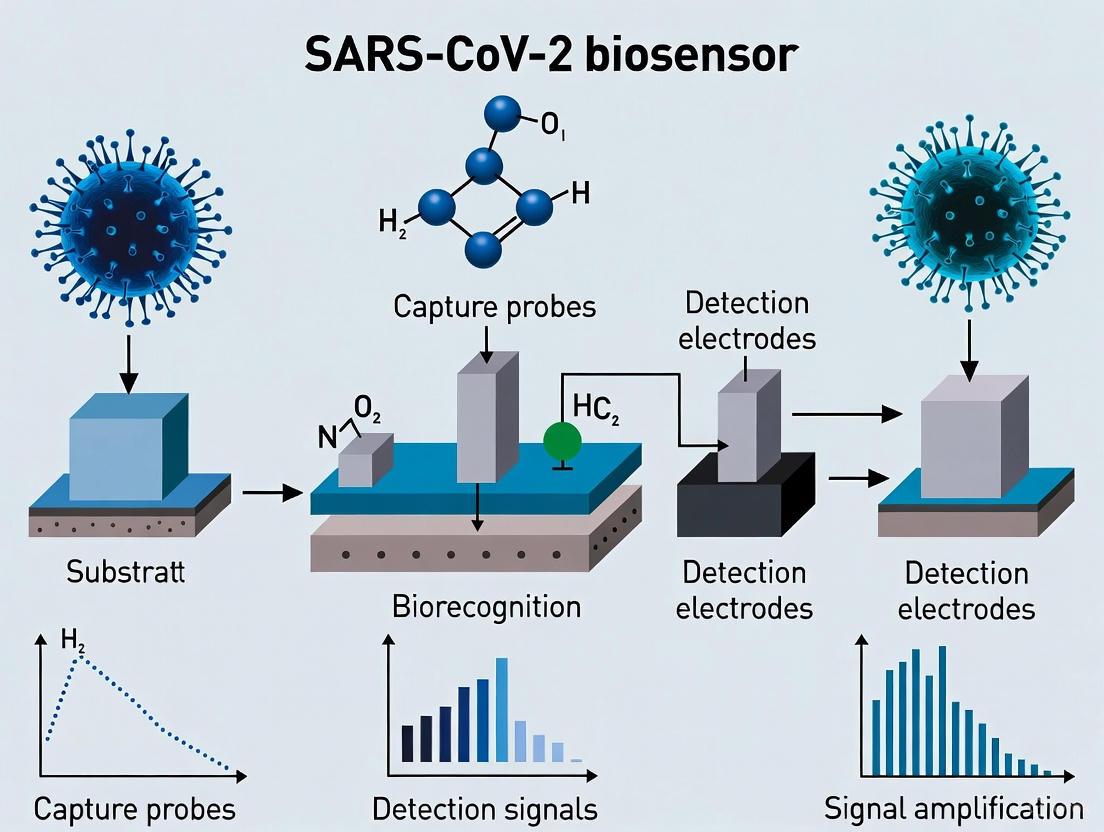
The COVID-19 pandemic has underscored the critical need for rapid, accurate, and accessible diagnostic tools.
Electrochemical Biosensors for SARS-CoV-2: A Comprehensive Review from Principle to Clinical Application
Abstract
The COVID-19 pandemic has underscored the critical need for rapid, accurate, and accessible diagnostic tools. Electrochemical biosensors have emerged as a powerful technology to meet this demand, offering advantages in speed, cost, and portability over conventional methods like RT-PCR. This article provides a comprehensive analysis of electrochemical biosensors for SARS-CoV-2 detection, tailored for researchers, scientists, and drug development professionals. We explore the foundational principles of electrochemical transduction and biorecognition elements, detail the methodology behind various sensor designs and their real-world applications, discuss critical optimization and troubleshooting strategies for enhanced performance, and finally, present a rigorous validation and comparative assessment against established diagnostic standards. The goal is to provide a holistic resource that bridges fundamental research with translational clinical application.
Principles and Components of SARS-CoV-2 Electrochemical Biosensors
The COVID-19 pandemic, caused by the severe acute respiratory syndrome coronavirus 2 (SARS-CoV-2), has presented unprecedented challenges to global healthcare systems and underscored the critical importance of rapid, accurate diagnostic testing. As of 2022, the virus had infected over 535 million individuals worldwide, resulting in more than 6.3 million deaths [1]. The gold standard for SARS-CoV-2 detection throughout the pandemic has been real-time reverse transcription-polymerase chain reaction (RT-qPCR), a method that provides high sensitivity and specificity for viral RNA detection [2]. However, the urgent need for mass testing during pandemic peaks has revealed significant limitations in conventional laboratory-based methods, creating an pressing demand for innovative diagnostic solutions that can deliver results more rapidly, cost-effectively, and at the point of need [3].
This application note examines the technical constraints of RT-qPCR in pandemic management and explores the emerging field of electrochemical biosensors as a promising alternative. These biosensors represent a paradigm shift in diagnostic approaches, potentially offering the sensitivity required for early detection while overcoming the operational barriers that have hampered traditional methods during public health emergencies [4]. The development of such technologies is not merely an academic exercise but a crucial component of pandemic preparedness, enabling faster case identification, more effective contact tracing, and ultimately better outbreak control [5].
Limitations of Conventional RT-PCR Methods
Technical and Operational Constraints
RT-qPCR, while analytically sensitive and specific, faces numerous practical limitations that impact its effectiveness during large-scale public health emergencies. The technique requires specialized equipment, including thermal cyclers, and trained personnel to perform complex RNA extraction and amplification procedures [6]. The typical processing time from sample collection to result ranges from 3-4 hours when performed by experienced technicians in well-equipped laboratory settings [7]. However, when accounting for sample transport, logistics, and reporting in real-world scenarios, this turnaround time often extends to 24-48 hours, significantly impairing the ability to implement timely public health interventions [2].
The financial burden of RT-qPCR testing is another considerable constraint, with individual test costs ranging from $100-200 in many settings [7]. This expense includes not only reagents and consumables but also the substantial infrastructure investment required to establish and maintain molecular biology laboratories. Additionally, the requirement for RNA preservation during transport adds both complexity and cost to the testing process, necessitating specific viral transport media and cold chain maintenance [5]. These factors collectively render RT-qPCR challenging to implement at the scale required for effective pandemic management, particularly in resource-limited settings where laboratory infrastructure may be insufficient [3].
Analytical Limitations and Pre-analytical Vulnerabilities
Despite its high sensitivity, RT-qPCR is susceptible to pre-analytical variables that can significantly impact test accuracy. Proper nasopharyngeal sampling technique is critical, with an estimated 30% false-negative rate attributed to inadequate specimen collection [5]. The quality of sampling is particularly important given the anatomical distribution of ACE2 receptors, which SARS-CoV-2 uses for cellular entry; these receptors are more abundant in the distal part of the nose, requiring precise swab placement for optimal sample collection [5].
The genetic evolution of SARS-CoV-2 presents another challenge for RT-qPCR assays. Primer and probe binding sites within the viral genome may acquire mutations, potentially leading to reduced detection efficiency or false-negative results [2]. This necessitates continuous monitoring of circulating variants and periodic reassessment of primer/probe sequences to maintain assay performance. Furthermore, the presence of PCR inhibitors in clinical samples can compromise reaction efficiency, while variations in RNA extraction methods and amplification reagents introduce additional variables that affect result reproducibility across different testing platforms [7].
Table 1: Key Limitations of RT-PCR in Pandemic SARS-CoV-2 Detection
| Limitation Category | Specific Challenge | Impact on Testing |
|---|---|---|
| Technical Requirements | Specialized equipment & facilities | Limited deployment scalability |
| Trained personnel | Bottleneck in mass testing scenarios | |
| RNA extraction & amplification steps | Lengthy sample processing (3-4 hours) | |
| Operational Constraints | High cost per test ($100-200) | Financial burden on healthcare systems |
| Cold chain requirements | Logistics complexity | |
| Laboratory infrastructure needs | Limited access in resource-poor settings | |
| Analytical Vulnerabilities | Primer-probe mismatch with variants | Reduced sensitivity & false negatives |
| Sample collection technique dependence | Up to 30% false-negative rate | |
| Presence of PCR inhibitors | Reaction interference | |
| Time Considerations | Extended turnaround time (24-48 hours) | Delayed isolation & contact tracing |
Electrochemical Biosensors as a Promising Alternative
Fundamental Principles and Advantages
Electrochemical biosensors represent a promising technological alternative to conventional molecular diagnostics, offering the potential to overcome many limitations of RT-qPCR. These devices integrate a biological recognition element (such as an antibody, aptamer, or molecularly imprinted polymer) with an electrochemical transducer that converts binding events into quantifiable electrical signals [8]. This design principle enables the development of assays that satisfy the REASSURED criteria (Real-time connectivity, Ease of specimen collection, Affordable, Sensitive, Specific, User-friendly, Rapid and robust, Equipment-free, and Deliverable to end-users) proposed by the World Health Organization for ideal diagnostic tests in resource-limited settings [4].
The most significant advantages of electrochemical biosensors include their rapid time-to-result (often 5-30 minutes compared to hours for RT-qPCR), minimal sample preparation requirements, and potential for miniaturization and portability [4]. Additionally, these platforms can be produced at low cost, with some designs manufactured for under $2 per unit, making large-scale deployment economically feasible [7]. Unlike RT-qPCR, which specifically targets viral RNA, electrochemical biosensors can detect either viral RNA or antigens, providing flexibility in assay design and enabling both active infection detection and immune response monitoring [4].
Detection Mechanisms and Transduction Methods
Electrochemical biosensors for SARS-CoV-2 detection employ various transduction mechanisms, with voltametric and impedimetric approaches being most common. Voltametric biosensors measure current as a function of applied potential, with techniques such as differential pulse voltammetry (DPV) and square wave voltammetry (SWV) providing high sensitivity for quantitative detection [4]. These systems typically utilize redox-active labels that produce measurable current changes upon target binding. In contrast, impedimetric biosensors monitor changes in electrical impedance at the electrode-solution interface, often label-free, making them suitable for real-time binding kinetics studies [4].
The selection of biological recognition elements significantly influences biosensor performance and specificity. Immunosensors employ antibodies against viral antigens such as spike (S) or nucleocapsid (N) proteins, enabling direct detection of viral particles [4]. Aptasensors utilize single-stranded DNA or RNA aptamers selected for high affinity to viral targets, offering advantages in stability and production compared to antibodies [8]. Molecularly imprinted polymers (MIPs) provide synthetic recognition sites that mimic natural antibodies, with demonstrated success in detecting SARS-CoV-2 nucleocapsid protein at concentrations as low as 0.2-0.4 nM [9].
Experimental Protocols for Biosensor Development
Protocol 1: Carbon-Based Immunosensor for Antigen Detection
This protocol details the development of a disposable carbon-based immunosensor for detecting SARS-CoV-2 antigens in clinical samples, adapted from clinical studies evaluating screen-printed carbon (SPC) and laser-induced graphene (LIG) electrodes [7].
Materials and Reagents:
- Screen-printed carbon electrodes or laser-induced graphene electrodes
- SARS-CoV-2 monoclonal antibodies (anti-spike or anti-nucleocapsid)
- Phosphate-buffered saline (PBS) with 0.25-0.5% Triton X-100
- Clinical samples: nasopharyngeal aspirates, oropharyngeal swabs, or saliva
- Blocking solution: 1% bovine serum albumin (BSA) in PBS
- Redox probe: potassium ferricyanide/ferrocyanide ([Fe(CN)₆]³⁻/⁴⁻)
- Electrochemical cell or connector for measurements
Procedure:
- Electrode Modification: Apply 5-10 μL of SARS-CoV-2 monoclonal antibody solution (1-10 μg/mL in PBS) to the working electrode surface. Incubate for 1 hour at room temperature in a humidified chamber to prevent evaporation.
- Blocking: Rinse the electrode with PBS and apply 1% BSA solution for 30 minutes to block non-specific binding sites.
- Sample Application: Apply 10-50 μL of clinical sample (diluted 1:1 in PBS with Triton X-100) to the modified electrode surface. Incubate for 10-15 minutes.
- Washing: Gently rinse the electrode with PBS containing 0.05% Tween-20 to remove unbound material.
- Electrochemical Measurement: Place the electrode in an electrochemical cell containing 5 mM [Fe(CN)₆]³⁻/⁴⁻ in PBS. Perform electrochemical impedance spectroscopy (EIS) measurements from 0.1 Hz to 100 kHz with a 10 mV amplitude or differential pulse voltammetry from -0.1 to 0.6 V.
- Data Analysis: Calculate the charge transfer resistance (Rct) from EIS Nyquist plots or peak current from DPV. Compare to calibration curves for quantitative analysis.
Performance Characteristics: Clinical validation of SPC-based sensors demonstrated 93.8% sensitivity and 61.5% specificity with oropharyngeal swabs when compared to RT-qPCR. The limit of detection for spike protein in buffer was approximately 1 fg/mL, with no cross-reactivity to Epstein-Barr and Influenza virus proteins [7].
Protocol 2: Molecularly Imprinted Polymer-Based Sensor for Nucleocapsid Protein
This protocol describes the development of an electrochemical biosensor with a polypyrrole-based molecularly imprinted polymer for serological detection of SARS-CoV-2 nucleocapsid protein, providing an alternative to antibody-based recognition [9].
Materials and Reagents:
- Screen-printed gold electrodes (SPGEs)
- 11-(1H-pyrrol-1-yl) undecane-1-thiol (PUT) for self-assembled monolayer formation
- Pyrrole monomer (98%)
- Recombinant SARS-CoV-2 nucleocapsid (rN) protein
- Potassium chloride (KCl), potassium ferricyanide (K₃[Fe(CN)₆]), potassium ferrocyanide (K₄[Fe(CN)₆])
- Sulfuric acid (96%) for electrode cleaning
- Ethanol (99.9%) for PUT dissolution
Procedure:
- Electrode Pretreatment: Clean SPGEs electrochemically in 0.5 M H₂SO₄ by cycling the potential between -0.2 and +1.5 V until a stable voltammogram is obtained.
- Self-Assembled Monolayer Formation: Incubate cleaned SPGEs with 5 mM PUT in ethanol for 24 hours at room temperature to form a stable monolayer on the gold surface.
- Molecular Imprinting: Electropolymerize pyrrole (0.1 M in PBS) in the presence of rN protein (50 μg/mL) using cyclic voltammetry between -0.5 and +1.0 V for 10 cycles at 50 mV/s.
- Template Removal: Extract the rN protein template by incubating the modified electrode in 0.1 M NaOH for 10 minutes, followed by rinsing with PBS.
- Control Preparation: Prepare non-imprinted polymer controls similarly but without adding rN protein during polymerization.
- Electrochemical Detection: Perform square wave voltammetry from -0.4 to +0.6 V or electrochemical impedance spectroscopy from 0.1 Hz to 100 kHz in 5 mM [Fe(CN)₆]³⁻/⁴⁻ containing 0.1 M KCl.
- Data Analysis: Monitor decreases in SWV peak current or increases in charge transfer resistance proportional to rN protein concentration.
Performance Characteristics: This MIP-based biosensor demonstrated a limit of detection of 0.2 nM (EIS) and 0.4 nM (SWV) for rN protein, with minimal nonspecific binding and high selectivity against potential interferents [9].
Table 2: Key Research Reagent Solutions for Electrochemical Biosensor Development
| Reagent Category | Specific Examples | Function in Biosensor Development |
|---|---|---|
| Electrode Materials | Screen-printed carbon electrodes | Low-cost, disposable transducer platform |
| Laser-induced graphene electrodes | Enhanced conductivity & surface area | |
| Gold electrodes with self-assembled monolayers | Stable interface for bioreceptor immobilization | |
| Recognition Elements | SARS-CoV-2 monoclonal antibodies | Specific binding to viral antigens (S, N proteins) |
| DNA/RNA aptamers | Stable, synthetic alternative to antibodies | |
| Molecularly imprinted polymers (MIPs) | Synthetic receptors with tailored binding sites | |
| Signal Transduction Components | Ferricyanide/ferrocyanide redox couple | Electron transfer mediator for measurement |
| Methylene blue & acridine orange | Redox labels for amplified signal detection | |
| Magnetic beads with streptavidin | Solid support for separation & concentration | |
| Sample Processing Reagents | PBS with Triton X-100 | Sample dilution & viral inactivation |
| Bovine serum albumin (BSA) | Blocking agent to reduce non-specific binding | |
| Viral transport media | Sample preservation & RNA stabilization |
Performance Comparison and Research Applications
Analytical Sensitivity and Clinical Performance
Electrochemical biosensors have demonstrated exceptional analytical sensitivity for SARS-CoV-2 detection, with some platforms achieving limits of detection comparable to or surpassing RT-qPCR. A rolling circle amplification-based electrochemical biosensor detected as low as 1 copy/μL of SARS-CoV-2 N and S genes in less than 2 hours, showing 100% concordance with RT-qPCR results when evaluated with 106 clinical samples [6]. This exceptional sensitivity was achieved through isothermal amplification combined with redox-active signal detection, providing a robust alternative to thermal cycling-dependent methods.
Clinical validation studies further support the utility of electrochemical biosensors for real-world applications. A magnetic beads-based immunosensor coupled with carbon black-modified screen-printed electrodes detected SARS-CoV-2 in untreated saliva with 91.6% agreement (22/24 samples) with reference RT-PCR using nasopharyngeal swabs [4]. The sensor exhibited limits of detection of 19 ng/mL for spike protein and 8 ng/mL for nucleocapsid protein, with no cross-reactivity against seasonal influenza viruses. These performance characteristics demonstrate the potential of electrochemical platforms to provide reliable, rapid testing outside traditional laboratory settings.
Multiplexing Capabilities and Viral Load Monitoring
Beyond qualitative detection, advanced electrochemical biosensors offer quantitative viral load monitoring and multiplexed detection of multiple biomarkers. The SARS-CoV-2 RapidPlex platform enabled simultaneous measurement of four COVID-19 biomarkers: viral nucleocapsid protein, anti-spike immunoglobulins (IgG and IgM), and C-reactive protein (CRP) for disease severity assessment [4]. This comprehensive profiling provides information on three critical aspects of COVID-19: active viral infection, specific immune response, and inflammatory status, offering a more complete clinical picture than RT-PCR alone.
The ability to track viral load dynamics represents another advantage of quantitative electrochemical biosensors. Research has shown that SARS-CoV-2 viral load in respiratory samples peaks during the second week of illness and can remain detectable for extended periods, with positive RT-PCR results possible for up to 50 days in some patients [5]. Electrochemical platforms with quantitative capabilities can monitor these temporal patterns, potentially correlating viral load with disease severity and transmissibility to inform clinical management and infection control decisions.
Detection Workflow: RT-PCR vs Biosensor
The limitations of gold-standard RT-PCR in addressing the urgent need for rapid diagnostics during the COVID-19 pandemic have accelerated the development of electrochemical biosensors as viable alternatives. While RT-PCR provides high analytical sensitivity and remains the reference method for SARS-CoV-2 detection, its operational constraints—including lengthy processing times, specialized equipment requirements, and high costs—have highlighted the critical need for complementary technologies that enable rapid, decentralized testing [10].
Electrochemical biosensors represent a promising solution to these challenges, offering rapid results, potential for miniaturization, and cost-effectiveness without compromising analytical performance. Ongoing research focuses on enhancing sensitivity through nanomaterial integration, improving multiplexing capabilities for comprehensive biomarker profiling, and developing stable synthetic recognition elements like molecularly imprinted polymers to replace biological receptors [9]. As these technologies mature and undergo clinical validation, they are poised to transform pandemic response capabilities, providing healthcare systems with powerful tools for early detection, transmission chain interruption, and ultimately better control of infectious disease outbreaks.
The integration of electrochemical biosensors into diagnostic pipelines will strengthen global preparedness for future public health emergencies, creating more resilient testing infrastructures capable of rapid scale-up during crisis situations. By complementing rather than replacing traditional laboratory methods, these innovative platforms will establish a diversified diagnostic ecosystem better equipped to handle the complex challenges of emerging infectious diseases.
Electrochemical biosensors have emerged as powerful tools in the fight against infectious diseases, playing a critical role in the rapid detection of the SARS-CoV-2 virus. These devices integrate a biological recognition element with an electrochemical transducer, converting a specific biological binding event into a quantifiable electrical signal [11]. The core of their functionality lies in sophisticated transduction techniques that probe interfacial properties and reaction kinetics at the electrode surface. Electrochemical Impedance Spectroscopy (EIS), Cyclic Voltammetry (CV), and Differential Pulse Voltammetry (DPV) represent three foundational methods that provide the sensitivity, specificity, and speed required for modern diagnostics [12] [11]. Within the context of SARS-CoV-2 biosensor research, these techniques enable the detection of various viral biomarkers, including RNA via hybridization assays, and structural proteins such as the Spike (S) and Nucleocapsid (N) proteins via immunoreactions [13]. This application note details the principles, protocols, and applications of EIS, CV, and DPV, providing a structured framework for researchers developing the next generation of electrochemical biosensors.
Theoretical Foundations of Electrochemical Techniques
Electrochemical biosensors function by immobilizing a biorecognition element (e.g., an antibody, aptamer, or DNA probe) on the surface of a working electrode. When a target analyte, such as the SARS-CoV-2 virus or its components, binds to this element, it alters the electrochemical properties of the electrode-solution interface. The three techniques discussed herein probe these changes in distinct ways.
Electrochemical Impedance Spectroscopy (EIS) is a label-free technique that applies a small amplitude sinusoidal AC potential across a range of frequencies and measures the resulting current response to determine the impedance of the electrochemical system [11]. The binding of a target biomolecule (e.g., a viral protein) to a bioreceptor on the electrode surface hinders electron transfer, typically increasing the charge transfer resistance (( R_{ct} )), which can be precisely measured and correlated to the analyte concentration [11] [14]. EIS is highly sensitive to subtle interfacial changes, making it ideal for label-free, real-time monitoring of binding events.
Cyclic Voltammetry (CV) is a potentiodynamic method where the potential of the working electrode is scanned linearly between two set limits and then back, while the current is recorded. The resulting voltammogram provides information on the thermodynamics of redox processes, reaction kinetics, and diffusional effects [7]. In biosensing, the presence of an insulating immunocomplex or RNA duplex on the electrode surface often leads to a decrease in the peak current of a redox probe (e.g., ([Fe(CN)_6]^{3-/4-})), signaling a binding event [14]. CV is also used to characterize the electroactive surface area and the success of electrode modification steps.
Differential Pulse Voltammetry (DPV) is a highly sensitive pulse technique that applies a series of small potential pulses on a linear potential ramp. It measures the current difference immediately before and after each pulse, which minimizes the contribution of capacitive current [15]. This results in a significantly higher signal-to-noise ratio and lower limits of detection compared to CV. DPV is often used in "signal-off" biosensors, where the binding of a target diminishes the reduction peak current of an intercalated or freely diffusing redox label like methylene blue [15].
Table 1: Comparison of Key Electrochemical Transduction Techniques
| Technique | Principle | Measured Signal | Key Parameters | Advantages | Typical LOD in SARS-CoV-2 Sensing |
|---|---|---|---|---|---|
| EIS | AC frequency response to probe interface | Impedance (Z), Charge Transfer Resistance (( R_{ct} )) | Frequency range, AC amplitude, DC bias | Label-free, real-time kinetics, non-destructive | ~1 fg/mL for spike protein [7] |
| CV | Linear potential sweep to induce redox reactions | Current (i) vs. Potential (E) | Scan rate, Potential window | Diagnoses redox activity, characterizes surface | Varies with surface design and amplification |
| DPV | Differential current measurement from potential pulses | Differential Current (Δi) vs. Potential (E) | Pulse amplitude, Pulse width, Step height | High sensitivity, low background current | 0.18 - 0.25 pM for protein markers [15] |
Experimental Protocols for SARS-CoV-2 Biosensor Development
The following protocols outline a generalized workflow for fabricating and characterizing an electrochemical immunosensor for the detection of the SARS-CoV-2 nucleocapsid (N) protein, a common target.
Biosensor Fabrication and Characterization
Materials:
- Screen-printed carbon electrodes (SPCEs) or disposable gold electrodes
- Phosphate Buffered Saline (PBS), pH 7.4
- SARS-CoV-2 N-protein specific monoclonal antibody (mAb)
- Ethanolamine or Bovine Serum Albumin (BSA) for blocking
- Redox probes: Potassium ferrocyanide/ferricyanide (([Fe(CN)_6]^{3-/4-})) or Methylene Blue
Procedure:
- Electrode Pretreatment: Clean and activate the working electrode surface. For SPCEs, perform multiple cycles of CV (e.g., from -0.5 V to +1.0 V vs. Ag/AgCl reference) in 0.1 M H₂SO₄ or PBS until a stable voltammogram is obtained.
- Bioreceptor Immobilization: Incubate the electrode with a solution of the specific mAb (e.g., 10 µg/mL in PBS) for 60 minutes at room temperature. The antibodies can be physically adsorbed or covalently linked via functional groups on a nanomaterial-modified electrode.
- Surface Blocking: Rinse the electrode with PBS and incubate with a 1-2% BSA solution or 1 M ethanolamine for 30-60 minutes to block non-specific binding sites. Wash thoroughly with PBS.
- Electrochemical Characterization (CV): Characterize the modified electrode after each step (bare, after mAb immobilization, after blocking) using CV in a solution containing 5 mM ([Fe(CN)_6]^{3-/4-}) in PBS. A successful modification is indicated by a progressive decrease in the redox peak currents due to the insulating nature of the protein layer.
Target Detection and Analytical Measurement
Protocol A: EIS-based Detection (Label-Free)
- Baseline Measurement: Record the EIS spectrum of the prepared biosensor in 5 mM ([Fe(CN)_6]^{3-/4-})/PBS solution. A typical setup uses a DC potential equal to the formal potential of the redox couple (often ~ +0.22 V vs. Ag/AgCl) with a 5-10 mV AC amplitude over a frequency range of 0.1 Hz to 100 kHz.
- Sample Incubation: Incubate the biosensor with a sample (e.g., saliva or nasopharyngeal swab extract) containing the SARS-CoV-2 N-protein for 15-20 minutes.
- Post-Incubation Measurement: Wash the electrode gently and record the EIS spectrum again under identical conditions.
- Data Analysis: Fit the obtained impedance data to an equivalent electrical circuit model. The increase in ( R_{ct} ) is proportional to the concentration of the captured N-protein [11] [7]. A standard curve can be constructed from known concentrations of recombinant antigen.
Protocol B: DPV-based Detection (Signal-Off)
- Label Incorporation: Incubate the biosensor with a sample solution. After the antigen-antibody binding occurs and the electrode is washed, incubate it with a solution containing Methylene Blue (MB), which can electrostatically associate with the formed immunocomplex.
- Measurement: Perform a DPV measurement in a clean PBS solution (without MB). Typical parameters are a pulse amplitude of 50 mV, pulse width of 50 ms, and a step potential of 10 mV.
- Data Analysis: The measured reduction peak current of MB will be inversely correlated to the amount of N-protein bound to the surface, as the protein layer hinders electron transfer [15]. Quantification is achieved by measuring the decrease in peak current relative to a blank.
Diagram 1: Biosensor Fabrication and Detection Workflow.
The Scientist's Toolkit: Essential Research Reagents and Materials
Successful development of an electrochemical biosensor relies on a carefully selected suite of materials and reagents. The following table details key components used in the featured research.
Table 2: Essential Research Reagents and Materials for SARS-CoV-2 Electrochemical Biosensors
| Item Name | Function / Role | Specific Example in Protocol |
|---|---|---|
| Screen-Printed Carbon Electrodes (SPCEs) | Disposable, low-cost transducer platform; provides a stable and reproducible electrochemical surface [7]. | Used as the foundational substrate for antibody immobilization and electrochemical measurement. |
| Laser-Induced Graphene (LIG) Electrodes | A high-surface-area carbon nanomaterial used to enhance sensitivity and electron transfer kinetics [7]. | An alternative to SPCEs to improve sensor performance and specificity. |
| Specific Monoclonal Antibodies (mAbs) | Biorecognition element that binds specifically to a target viral antigen (e.g., Spike or Nucleocapsid protein) [13] [7]. | Immobilized on the electrode surface to capture SARS-CoV-2 antigens from the sample. |
| Molecularly Imprinted Polymers (MIPs) | Synthetic "plastic antibodies" that provide stable and customizable recognition sites for target molecules [13] [14]. | Used as an alternative to natural antibodies for antigen capture, offering improved stability. |
| Redox Probes | Mediators that facilitate electron transfer in Faradaic EIS and voltammetry, generating the measurable signal. | Potassium ferrocyanide/ferricyanide for EIS/CV; Methylene Blue for DPV-based assays [15] [11]. |
| Nanoporous Gold / Au Nanoparticles | Nanomaterials that increase the electroactive surface area and enhance signal amplification. | Used to modify electrode surfaces, leading to higher sensitivity and lower limits of detection [15]. |
| Blocking Agents (BSA, Ethanolamine) | Proteins or chemicals used to passivate unoccupied sites on the electrode, minimizing non-specific adsorption. | Applied after antibody immobilization to ensure signal originates only from specific binding [7]. |
Electrochemical transduction techniques provide a versatile and powerful toolkit for advancing SARS-CoV-2 diagnostics. EIS offers a label-free path for real-time analysis, while DPV delivers exceptional sensitivity for quantitative measurements, and CV remains indispensable for electrode characterization and fundamental studies. The integration of these methods with novel nanomaterials and robust biorecognition elements, as outlined in these protocols and tables, paves the way for the development of rapid, cost-effective, and highly sensitive point-of-care biosensors. This capability is crucial not only for managing the current COVID-19 pandemic but also for building diagnostic resilience against future pathogenic threats.
Biorecognition elements form the cornerstone of modern electrochemical biosensors, dictating their specificity, sensitivity, and overall performance. Within the context of SARS-CoV-2 detection, the selection of an appropriate recognition element—be it an antibody, aptamer, or antigen—is paramount to the efficacy of the diagnostic tool. This application note provides a detailed comparative analysis of these three key biorecognition elements, supported by quantitative performance data and standardized experimental protocols. We further present essential workflows for sensor development and a curated list of research-grade reagents to facilitate the development of next-generation electrochemical biosensors for pandemic response.
Electrochemical biosensors have emerged as powerful tools in the fight against SARS-CoV-2, offering the potential for rapid, sensitive, and point-of-care detection. The core of any biosensor is its biorecognition element, which is responsible for the specific and selective binding of the target analyte. For SARS-CoV-2, key targets include viral RNA, structural proteins such as the nucleocapsid (N) and spike (S) proteins, and host-generated antibodies. The three primary classes of biorecognition elements—antibodies, aptamers, and antigens—each possess distinct characteristics that influence the sensor's design, performance, and application suitability. This document delineates the properties of these elements, provides protocols for their implementation in sensor architectures, and offers a comparative analysis to guide researchers in selecting the optimal component for their specific diagnostic goals.
Comparative Analysis of Biorecognition Elements
The following tables summarize the fundamental properties and performance characteristics of antibodies, aptamers, and antigens as applied to SARS-CoV-2 detection.
Table 1: Fundamental Properties of Biorecognition Elements
| Property | Antibodies | Aptamers | Antigens (as detection targets) |
|---|---|---|---|
| Biochemical Nature | Proteins (IgG ~150-170 kDa) [16] | Single-stranded DNA or RNA (~12-30 kDa) [16] | Proteins (e.g., Spike, Nucleocapsid) |
| Production Process | In vivo (animal hosts)/Cell culture [16] | In vitro (SELEX) [16] [17] | Recombinant expression/Synthetic |
| Development Time | ~4-6 months [16] | ~1-3 months [16] | Varies by expression system |
| Stability | Susceptible to heat and pH; irreversible denaturation [16] | Thermally stable; can be renatured after denaturation [16] | Varies; often requires cold chain |
| Modification | Complex conjugation, typically one type of molecule [16] | Easy chemical synthesis with site-specific modifications (5'/3') [16] | Site-specific modifications possible |
| Long-term Availability | Dependent on hybridoma/cell line stability [16] | Defined by sequence data; chemically synthesized on demand [16] | Dependent on consistent recombinant production |
Table 2: Performance in SARS-CoV-2 Detection Assays
| Aspect | Antibodies | Aptamers | Key Findings |
|---|---|---|---|
| Clinical Sensitivity | Varies by assay; rapid Ag tests: ~70.5% pooled sensitivity vs. RT-PCR [18] | High; e.g., MD ELAAA platform: 47x more sensitive than standard methods [19] | Sensitivity is highly dependent on viral load; >93.6% for Ct<25 in Ag tests [18] |
| Clinical Specificity | Varies by assay; rapid Ag tests: ~99.4% pooled specificity vs. RT-PCR [18] | High; e.g., MD ELAAA platform shows high specificity for N protein [19] | Specificity is generally high for well-validated reagents [18] [19] |
| Limit of Detection (LoD) | e.g., Carbon-based immunosensor: ~1 fg/mL for Spike protein in PBS [7] | e.g., SPR-based aptasensor: ~10 pM for S-protein, ~190 pM for N-protein [20] | LoD is highly dependent on transducer and signal amplification [7] [20] |
| Target Flexibility | Proteins, ideally immunogenic and >600 Da [16] | Proteins, small molecules, cells, toxins; from ~60 Da [16] | Used to detect host immunoglobulins (IgG, IgM, IgA) [21] |
| Mutation Resilience | Can be compromised by variant epitope changes [17] | Can be designed for conserved regions; show promise for variant recognition [17] [19] | Anti-N antibodies often show higher diagnostic accuracy than anti-S [21] |
Experimental Protocols
Protocol: SELEX for Aptamer Development against SARS-CoV-2 S Protein
Principle: Systematic Evolution of Ligands by EXponential enrichment (SELEX) is an in vitro iterative process to isolate high-affinity aptamers from a vast random oligonucleotide library against a target, such as the SARS-CoV-2 Spike (S) protein [17].
Materials:
- Synthetic ssDNA library (e.g., random 40-nt core flanked by fixed primer sequences)
- Recombinant SARS-CoV-2 S protein or receptor-binding domain (RBD)
- Immobilization support (e.g., Ni-NTA beads for His-tagged protein, or streptavidin-coated magnetic beads for biotinylated protein)
- Binding buffer (e.g., PBS with Mg²⁺)
- PCR reagents and primers
- Elution buffer (e.g., 7M Urea, 4M Guanidine HCl, or hot water)
Procedure:
- Target Immobilization: Immobilize the purified S protein target onto the chosen solid support.
- Incubation: Incubate the immobilized target with the ssDNA library (10¹³ - 10¹⁵ molecules) in binding buffer for 30-60 minutes to allow for binding.
- Partitioning: Wash the support-stringently with binding buffer to remove unbound and weakly bound sequences.
- Elution: Elute the tightly bound DNA sequences using a denaturing elution buffer or competitive elution with free target.
- Amplification: Amplify the eluted sequences using PCR. For DNA aptamers, this yields double-stranded DNA (dsDNA).
- Single-Stranded Separation: Generate single-stranded DNA from the PCR product for the next selection round. This can be achieved via asymmetric PCR, biotin-streptavidin separation, or other methods.
- Counter-Selection (Optional): To enhance specificity, pre-incubate the library with related non-target molecules (e.g., SARS-CoV S protein) or the bare immobilization support and discard the bound sequences.
- Repetition: Repeat steps 2-7 for 8-15 rounds, progressively increasing the washing stringency (e.g., adding wash steps, introducing non-ionic detergents) to enrich for the highest-affinity binders.
- Cloning and Sequencing: After the final round, clone the enriched PCR pool and sequence individual clones to identify candidate aptamer sequences.
- Characterization: Chemically synthesize the identified aptamers and characterize their affinity (e.g., measure dissociation constant, Kd) and specificity for the target.
Protocol: Fabrication of a Carbon-based Electrochemical Immunosensor
Principle: This protocol details the construction of a disposable electrochemical immunosensor for the detection of SARS-CoV-2 antigens, using screen-printed carbon (SPC) or laser-induced graphene (LIG) electrodes functionalized with capture antibodies [7].
Materials:
- Screen-printed carbon (SPC) or LIG electrodes
- Capture antibody (e.g., monoclonal anti-SARS-CoV-2 Spike antibody)
- Blocking buffer (e.g., PBS with 1% BSA or casein)
- Wash buffer (e.g., PBS with 0.05% Tween-20, PBST)
- Electrochemical redox probe (e.g., [Fe(CN)₆]³⁻/⁴⁻)
- Electrochemical analyzer
Procedure:
- Electrode Pre-treatment (Optional): Clean and activate the working electrode surface via electrochemical cycling in a suitable electrolyte.
- Antibody Immobilization: Apply a droplet (e.g., 2-5 µL) of the capture antibody solution (e.g., 10-100 µg/mL in PBS) onto the working electrode. Incubate in a humidified chamber for 1-2 hours at room temperature or overnight at 4°C. The antibody can be physically adsorbed or covalently linked to a pre-modified electrode.
- Washing: Gently rinse the electrode with wash buffer (PBST) to remove unbound antibodies.
- Blocking: Incubate the electrode with blocking buffer for 30-60 minutes to cover any non-specific binding sites on the electrode surface.
- Washing: Wash again with PBST to remove excess blocking agent.
- Sample Incubation: Apply the clinical sample (e.g., nasopharyngeal swab in transport medium, or saliva) or a control solution to the sensor. Incubate for a defined period (e.g., 10-15 minutes) to allow the target antigen to bind to the capture antibody.
- Washing: Perform a final wash step to remove unbound matrix components.
- Electrochemical Measurement: Place the sensor in a solution containing the electrochemical redox probe. Perform the measurement (e.g., Differential Pulse Voltammetry (DPV), Electrochemical Impedance Spectroscopy (EIS)) and record the signal. The binding of the target antigen typically alters the electron transfer kinetics, leading to a measurable change in current or impedance.
- Data Analysis: Quantify the target concentration by correlating the signal change to a standard calibration curve.
Experimental and Logical Workflows
The following diagrams illustrate the key processes for developing and utilizing different biorecognition elements.
Aptamer Selection via SELEX
Biosensor Fabrication & Measurement
The Scientist's Toolkit: Research Reagent Solutions
Table 3: Essential Materials for SARS-CoV-2 Biorecognition Research
| Reagent / Material | Function & Application | Example / Note |
|---|---|---|
| Recombinant Viral Proteins (S, N, RBD) | Targets for aptamer selection; capture antigens for antibody detection; standards for assay calibration. | Key for developing mutation-resilient reagents [17] [19]. |
| Monoclonal & Polyclonal Antibodies | Primary capture and detection elements in immunosensors. | Anti-N protein antibodies can show high diagnostic accuracy [21]. |
| DNA/RNA Aptamers | Synthetic recognition elements for detection and therapeutic inhibition. | Can be selected for specific domains (e.g., NTD of N-protein) [19]. |
| Screen-Printed Electrodes (SPE) | Low-cost, disposable transducer platform for electrochemical biosensors. | Carbon-based (SPC) or Laser-Induced Graphene (LIG) electrodes are common [7]. |
| Electrochemical Redox Probes | Generate measurable current changes upon target binding. | e.g., Ferricyanide/ferrocyanide ([Fe(CN)₆]³⁻/⁴⁻). |
| Signal Amplification Nanomaterials | Enhance sensor sensitivity by increasing signal output. | Au/Ag nanoparticles, used in dual-mode platforms like MD ELAAA [19]. |
| Surface Functionalization Layers | Enable stable and oriented immobilization of biorecognition elements. | e.g., Self-Assembled Monolayers (SAMs), Carbon Nanomembranes (CNMs) [20]. |
The global response to the COVID-19 pandemic has underscored the critical importance of understanding the structural and functional properties of SARS-CoV-2 viral proteins for diagnostic development. The spike (S) protein, nucleocapsid (N) protein, and specifically the receptor-binding domain (RBD) represent the most significant antigenic targets for detection technologies. These proteins play indispensable roles in the viral life cycle, from host cell entry to genome packaging, and exhibit characteristics that make them ideal targets for biosensing platforms [22] [23] [24]. The emergence of electrochemical biosensors for SARS-CoV-2 detection represents a convergence of virology, material science, and electroanalytical chemistry, offering potential solutions for rapid, sensitive, and point-of-care testing. This application note provides a structured overview of these key viral targets, their functional significance, and detailed protocols for their implementation in advanced biosensing platforms, with particular emphasis on electrochemical transduction mechanisms.
Structural and Functional Properties of Key Viral Proteins
Spike Protein Architecture and Dynamics
The SARS-CoV-2 spike protein is a trimeric class I fusion glycoprotein that decorates the viral surface and mediates host cell entry through receptor binding and membrane fusion. Structurally, it is organized into two functional subunits: S1, responsible for receptor recognition, and S2, which drives membrane fusion [22] [23]. The S1 subunit contains an N-terminal domain (NTD), a receptor-binding domain (RBD), and two subdomains (SD1 and SD2) [25]. The RBD exists in dynamic equilibrium between "Down" (closed) and "Up" (open) conformations, with the "Up" state enabling receptor engagement [25]. This intrinsic flexibility includes transitions through intermediate states with unique druggable cryptic pockets [25].
A critical feature of SARS-CoV-2 spike protein is the presence of a polybasic furin cleavage site (PRRAR) at the S1/S2 boundary, which is absent in closely related coronaviruses like bat RaTG13 and pangolin coronaviruses [23]. This site is cleaved by furin-like proteases during viral egress, priming the virus for subsequent entry events. A second cleavage site (S2') is processed by host proteases like TMPRSS2 during cell entry, exposing the fusion peptide and initiating membrane fusion [23]. The spike protein is heavily glycosylated with approximately 22 N-glycosylation sites per protomer, forming a protective glycan shield that masks immunogenic epitopes and influences conformational dynamics [25].
Table 1: Domains and Functions of SARS-CoV-2 Spike Protein
| Domain/Region | Amino Acid Residues | Primary Functions | Key Features |
|---|---|---|---|
| S1 Subunit | 14-685 | Receptor binding, antigenic recognition | Contains RBD and NTD |
| RBD | 331-524 | ACE2 receptor binding | Dynamic Up/Down conformations |
| NTD | 14-305 | Potential co-receptor binding | Distinct from RBD antigenicity |
| S2 Subunit | 686-1273 | Membrane fusion, viral entry | Contains fusion peptide, HR1, HR2 |
| Furin Cleavage Site | 682-685 (S1/S2) | Proteolytic priming | PRRAR sequence, unique to SARS-CoV-2 |
| Transmembrane Domain | 1213-1237 | Viral membrane anchoring | Terminal region of S2 |
Receptor-Binding Domain (RBD) and ACE2 Interaction
The RBD, located within the S1 subunit (residues 331-524), serves as the primary mediator of host cell attachment through its specific interaction with angiotensin-converting enzyme 2 (ACE2) [26]. Structural analyses reveal that SARS-CoV-2 RBD binds to ACE2 with significantly higher affinity compared to SARS-CoV RBD, with reported 50% effective dose (EC50) values of 1.07 μg/mL versus 1.66 μg/mL, respectively [26]. This enhanced binding affinity potentially contributes to the increased transmissibility observed in SARS-CoV-2.
The RBD-ACE2 interface involves key residue interactions that have been characterized through cryo-EM and X-ray crystallography [22] [27]. Recent variants of concern, such as KP.3.1.1, have accumulated mutations in the RBD (e.g., F456L and Q493E) that demonstrate epistatic effects on ACE2 binding while facilitating antibody escape [27]. These evolutionary adaptations highlight the importance of continuous monitoring of RBD mutations for diagnostic and therapeutic applications.
Nucleocapsid Protein Structure and Function
The nucleocapsid (N) protein is a multifunctional RNA-binding protein critical for viral genome packaging, replication, and virion assembly. With 419 amino acids, it represents the most abundant viral protein in infected cells, comprising approximately 1% of total cellular protein during active infection [28] [24]. Structurally, the N protein contains two structured domains: an N-terminal domain (NTD) that binds viral RNA, and a C-terminal domain (CTD) responsible for dimerization and additional RNA binding [24].
These structured domains are connected by an intrinsically disordered region known as the central linker region (LKR), which contains a serine- and arginine-rich (SR-rich) motif that serves as a phosphorylation site for host kinases [28] [24]. Phosphorylation of the SR-rich region, particularly at Ser197, regulates nucleocytoplasmic shuttling via interaction with human 14-3-3 proteins, with dissociation constants in the low micromolar range for various 14-3-3 isoforms [28]. The N protein also undergoes liquid-liquid phase separation (LLPS) with viral RNA, facilitating genome condensation and packaging into new virions [24].
Table 2: Comparative Characteristics of Primary SARS-CoV-2 Antigenic Targets
| Parameter | Spike Protein | RBD | Nucleocapsid Protein |
|---|---|---|---|
| Molecular Weight | ~180-200 kDa (trimer) | ~27 kDa (monomer) | ~46 kDa |
| Abundance in Virion | ~20-40 trimers | Part of spike | ~1000 molecules |
| Localization | Viral surface | S1 subunit of spike | Viral core |
| Primary Function | Host cell entry | ACE2 receptor binding | Genome packaging |
| Key Structural Features | Trimeric, glycosylated | Flexible loop regions | Dimeric, RNA-binding |
| Advantages for Detection | High specificity, neutralization target | Direct receptor binding site | High abundance, conserved |
Biosensing Applications and Experimental Approaches
Electrochemical Biosensor Platforms
Electrochemical biosensors have emerged as promising platforms for SARS-CoV-2 detection due to their sensitivity, rapid response times, and potential for miniaturization. Recent advances have incorporated nanomaterials to enhance detection capabilities. Graphene oxide (GO)-based electrochemical biosensors have demonstrated remarkable sensitivity for spike protein detection, with limits of detection reaching femtomolar concentrations when employing protein-G mediated antibody immobilization on polycarbonate track-etched membranes [29].
Nitrogen-doped graphene quantum dots (nGQDs) have been successfully implemented in surface plasmon resonance (SPR) biosensors, achieving detection limits of 0.01 pg/mL for the RBD in both phosphate-buffered saline and 10% plasma samples [30]. These nanomaterials enhance biomolecular binding through nitrogen functional groups while reducing non-specific adsorption, significantly improving assay performance in complex biological matrices [30].
Metasurface biosensors incorporating graphene–silver hybrid structures have also shown promising characteristics, with theoretical sensitivities of 400 GHz/RIU and quality factors of 12.7 within the refractive index range of 1.334–1.355 RIU, which encompasses biological analytes [31]. When combined with machine learning algorithms for signal processing, these platforms achieve a coefficient of determination (R²) of 0.90, enhancing predictive reliability across different refractive indices [31].
Experimental Protocols
Protocol 1: Electrochemical Nano-biosensor Fabrication for Spike Protein Detection
Principle: This protocol describes the fabrication of a graphene oxide-functionalized polycarbonate track-etch membrane for electrochemical detection of SARS-CoV-2 spike protein through antibody-antigen interaction-mediated current modulation.
Materials:
- Polycarbonate track-etched (PCTE) membrane
- Graphite powder (for GO synthesis)
- Silver electrodes
- SARS-CoV-2 RBD-specific antibodies
- EDC-NHS coupling reagents
- Protein G (for oriented immobilization)
- Bovine serum albumin (BSA, for blocking)
- Electrochemical workstation
- Phosphate-buffered saline (PBS, pH 7.4)
Procedure:
- Graphene Oxide Synthesis: Prepare GO using the modified Hummers' method to convert graphite powder to graphene oxide [29].
- Electrode Fabrication: Deposit two silver electrodes onto the PCTE membrane to create a nanosieve platform.
- Surface Functionalization: Activate the GO-coated platform with EDC-NHS chemistry to create reactive groups for antibody conjugation.
- Antibody Immobilization:
- Traditional Method: Covalently immobilize SARS-CoV-2 specific antibodies directly onto the activated surface.
- Protein-G Mediated Method: First immobilize Protein G, then introduce antibodies for oriented immobilization via Fc region binding.
- Blocking: Incubate with 1% BSA for 1 hour at room temperature to minimize non-specific binding.
- Sample Incubation: Introduce sample containing spike protein and incubate for 15 minutes at 37°C.
- Electrochemical Measurement: Apply voltage range of 1.0-2.0 V and measure ionic current changes due to nanosieve blockage from antigen-antibody binding.
Validation: Test specificity using negative controls including BSA and influenza virus proteins. The protein-G mediated method typically shows significantly improved sensitivity (femtomolar detection) compared to traditional immobilization (nanomolar detection) [29].
Protocol 2: SPR-Based Detection Using nGQD-Enhanced Chips
Principle: This protocol utilizes nitrogen-doped graphene quantum dots to enhance SPR signal for ultrasensitive detection of the spike protein RBD domain through refractive index changes upon binding.
Materials:
- Citric acid and urea (nGQD synthesis)
- SPR gold chips
- Anti-RBD antibodies
- Carboxylation and amine coupling reagents
- PBS buffer and 10% human plasma
- SPR instrument with 690 nm wavelength laser diode
Procedure:
- nGQD Synthesis: Hydrothermally synthesize nGQDs from citric acid and urea in a 2:1 ratio at 180°C for 6 hours, producing nanocomposites of 3-10 nm diameter [30].
- Chip Coating: Deposit nGQD nanocomposites as a coating on Au film to create the SPR sensing chip.
- Probe Immobilization: Immobilize anti-RBD antibodies on the nGQD surface using standard amine coupling chemistry.
- SPR Measurement:
- Set incident angle scanning range from 32° to 44° with 0.02° resolution.
- Establish baseline resonance angle in running buffer.
- Introduce samples containing RBD protein in PBS or diluted plasma.
- Monitor resonance angle shifts in real-time.
- Data Analysis: Calculate binding kinetics and affinity constants from sensorgram data.
Performance: This system achieves a detection limit of 0.01 pg/mL for RBD in both buffer and complex media like 10% plasma, significantly surpassing conventional SPR and other detection methods [30].
Diagram 1: Workflow for SARS-CoV-2 Protein Detection Using Biosensor Platforms
Research Reagent Solutions and Technical Components
Table 3: Essential Research Reagents for SARS-CoV-2 Protein Detection Studies
| Reagent/Material | Specifications | Research Application | Functional Role |
|---|---|---|---|
| SARS-CoV-2 RBD Protein | Recombinant, residues 331-524, C-terminal tags | Biosensor calibration, antibody evaluation | Primary target antigen for detection |
| Anti-Spike Antibodies | Monoclonal/polyclonal, neutralizing epitopes | Capture/detection probes in assays | Specific binding to spike protein |
| Anti-N Protein Antibodies | Target NTD/CTD epitopes, phospho-specific | N protein detection, phosphorylation studies | Recognition of nucleocapsid antigen |
| ACE2 Receptor Protein | Soluble extracellular domain | Binding affinity studies, inhibition assays | Natural receptor for spike protein |
| Graphene Oxide/nGQDs | 3-10 nm diameter, functionalized surface | Sensor nanomaterial enhancement | Signal amplification, surface area increase |
| Electrochemical Substrates | PCTE membranes, silver/gold electrodes | Biosensor platform fabrication | Transduction element, physical support |
| Coupling Reagents | EDC, NHS, glutaraldehyde | Surface chemistry, probe immobilization | Covalent attachment of recognition elements |
| Protein G | Recombinant, high purity | Oriented antibody immobilization | Fc region binding for proper orientation |
The strategic selection of SARS-CoV-2 protein targets—spike (particularly RBD), and nucleocapsid—provides distinct advantages for diagnostic development. The spike protein and its RBD subdomain offer high specificity and direct relevance to neutralization assays, while the nucleocapsid protein provides enhanced sensitivity due to its abundance and conservation. Electrochemical biosensing platforms incorporating advanced nanomaterials like graphene oxide and nitrogen-doped quantum dots have demonstrated exceptional performance characteristics, with detection limits extending to femtomolar concentrations in some configurations.
The continuous evolution of SARS-CoV-2 variants necessitates ongoing structural and functional characterization of these target proteins to ensure diagnostic efficacy. Future research directions should focus on multiplexed detection platforms capable of simultaneously identifying multiple viral targets, integration of machine learning for enhanced signal interpretation, and development of portable, cost-effective devices for widespread deployment. The protocols and methodologies outlined in this application note provide a foundation for advancing these efforts, contributing to improved pandemic preparedness and responsive diagnostic capabilities.
Diagram 2: SARS-CoV-2 Target Proteins and Detection Technology Relationships
Electrochemical biosensors have emerged as powerful tools in the global effort to detect SARS-CoV-2, combining high sensitivity and specificity with the potential for rapid, low-cost point-of-care testing [8] [32]. The performance of these biosensors is fundamentally governed by the choice of electrode material, which serves as the critical interface for biochemical recognition and electrochemical transduction. This application note details the experimental protocols and performance characteristics of biosensors constructed from three principal electrode platforms: screen-printed carbon (SPC), pencil graphite (PGE), and laser-induced graphene (LIG). Designed for researchers and scientists engaged in assay development, this document provides a comparative analysis of these materials, enabling informed selection and application-specific optimization for SARS-CoV-2 detection.
Performance Comparison of Electrode Platforms
The selection of an electrode material involves balancing factors such as manufacturing cost, ease of modification, electrochemical properties, and the resulting analytical performance. The following table summarizes key characteristics and performance metrics of SPC, PGE, and LIG electrodes as reported in recent studies for SARS-CoV-2 detection.
Table 1: Comparative analysis of electrode platforms for SARS-CoV-2 detection
| Electrode Platform | Typical Modifications/Enhancements | Target Analyte | Detection Technique | Reported Limit of Detection (LOD) | Key Advantages | Clinical Performance (where available) |
|---|---|---|---|---|---|---|
| Screen-Printed Carbon (SPC) | Gold nanoparticles (AuNPs); carbon black; carbon nanofibers [33] [7] [34] | Spike (S) protein; Nucleocapsid (N) protein; viral RNA; anti-S antibodies [33] [7] [34] | DPV; EIS; ChA [33] [34] | 1 fg/mL (Spike protein in PBS); 0.1664 μg/mL (RNA) [33] [7] | Mass producible; low cost (<$2/unit); versatile surface chemistry [7] | 93.8% sensitivity, 61.5% specificity (with oropharyngeal swabs) [7] |
| Pencil Graphite (PGE) | Electropolymerized poly(4-HBA); AgNPs; anti-SARS-CoV-2 antibodies [35] | SARS-CoV-2 virus particles [35] | EIS | 1.21 × 10⁶ particles/μL [35] | Extremely low cost; DIY accessibility; no complex fabrication needed [36] | No cross-reactivity with Influenza A/B, HIV, or Vaccinia virus [35] |
| Laser-Induced Graphene (LIG) | Electrochemical reduction; graphene oxide (GO) [37] [7] | Anti-SARS-CoV-2 antibodies; N protein [37] [7] | CV; EIS | 0.032 μg/L (anti-S antibodies) [37] | 3D macroporous structure; high conductivity; in-situ fabrication on flexible substrates [37] | 68.93% sensitivity, 86.17% specificity (with nasopharyngeal swabs) [7] |
Detailed Experimental Protocols
Protocol 1: SARS-CoV-2 RNA Detection using Gold Nanoparticle-Modified SPC Electrodes
This protocol details the label-free detection of viral RNA using thiolated ssDNA probes immobilized on a AuNP-modified SPC electrode [33].
Workflow Diagram: RNA Detection via AuNP-Modified SPC Electrode
Materials and Reagents:
- SPC Electrodes: Commercially available disposable SPC electrodes.
- Gold Nanoparticles (AuNPs): Colloidal suspension.
- Probe DNA: Thiolated single-stranded DNA (ssDNA) complementary to the target SARS-CoV-2 RNA sequence.
- Binding Buffer: For probe immobilization and hybridization (e.g., phosphate buffer with Mg²⁺).
- Electrochemical Redox Probe: Potassium ferricyanide/ferrocyanide ([Fe(CN)₆]³⁻/⁴⁻) for DPV measurements.
Procedure:
- Electrode Modification with AuNPs:
- Modify the working electrode of the SPC using either the drop casting (DC) or spray coating (SC) method.
- For DC, apply a fixed volume of AuNP colloidal suspension directly onto the electrode surface and allow it to dry under ambient conditions [33].
- Probe Immobilization:
- Incubate the AuNP-modified electrode with a 0.5 μg/mL solution of thiolated ssDNA probe for 22 minutes at room temperature. This allows the formation of stable Au-S covalent bonds [33].
- Rinse the electrode gently with binding buffer to remove unbound probes.
- Target Hybridization:
- Incubate the functionalized electrode with the processed sample (e.g., extracted RNA in buffer) for 12 minutes to allow hybridization between the probe and the target SARS-CoV-2 RNA [33].
- Wash the electrode to remove non-specifically bound materials.
- Electrochemical Detection:
- Perform Differential Pulse Voltammetry (DPV) in a solution containing the redox probe.
- The hybridization event alters the electrode surface, leading to a measurable change in the voltammetric signal. The oxidation signal of guanine bases from the target RNA can be used for label-free detection [33].
Data Analysis:
- The peak current from the DPV measurement is inversely proportional to the extent of hybridization. A standard curve of current response versus known RNA concentrations should be established for quantitative analysis.
Protocol 2: Antibody Detection using a Laser-Induced Graphene (LIG) Immunosensor
This protocol outlines the development of an LIG-based immunosensor for detecting anti-SARS-CoV-2 immunoglobulins in patient serum [37].
Workflow Diagram: LIG-based Immunosensor for Antibody Detection
Materials and Reagents:
- Polyimide Sheet: Substrate for LIG fabrication.
- CO₂ Laser Engraving System: For converting polyimide into graphene.
- Recombinant Antigen: SARS-CoV-2 Spike Protein S1-RBD.
- Blocking Solution: 1% Bovine Serum Albumin (BSA) in phosphate-buffered saline (PBS).
- Clinical Samples: Human serum from patients and controls.
- Electrochemical Probe: 5 mM potassium ferricyanide/ferrocyanide in 0.1 M KCl (pH 7.4).
Procedure:
- LIG Electrode Fabrication:
- Fabricate a three-electrode system by directly scribing a polyimide sheet using a CO₂ laser engraver with optimized power (e.g., 0.84 W) and speed (e.g., 20 mm/s) parameters [37].
- Electrode Activation/Reduction:
- Electrochemically reduce the LIG electrodes by performing cyclic voltammetry (CV) in 0.1 M KCl, scanning between +0.5 V and -1.5 V (vs. Ag/AgCl) at 50 mV/s. This step improves electrical conductivity [37].
- Immunosensor Assembly:
- Immobilize the S1-RBD antigen onto the electrochemically reduced LIG (rGraphene-LIG) working electrode.
- Block the modified electrode with 1% BSA solution for 10-15 minutes to prevent non-specific binding.
- Rinse with PBS to remove excess BSA.
- Sample Incubation and Detection:
- Incubate the assembled immunosensor with a 1:10 dilution of patient serum in PBS for 20 minutes at room temperature [35].
- Wash the electrode thoroughly with PBS.
- Perform CV measurements in the redox probe solution. The binding of antibodies to the immobilized antigen hinders electron transfer, resulting in an increase in charge transfer resistance (Rct), which is measurable via EIS or inferred from CV peak separation [37].
Protocol 3: Virus Detection using a Low-Cost Pencil Graphite Electrode (PGE)
This protocol describes the construction of a highly affordable biosensor for detecting SARS-CoV-2 virus particles using a modified pencil graphite electrode [35].
Materials and Reagents:
- Pencil Graphite Leads: HB grade, 0.9 mm diameter.
- Monomer Solution: 2.50 mM 4-hydroxybenzoic acid (4-HBA) in 0.50 M H₂SO₄.
- Silver Nanoparticles (AgNPs): Colloidal suspension.
- Biorecognition Element: Anti-SARS-CoV-2 antibodies.
- Blocking Solution: 0.01% BSA.
Procedure:
- Electrode Preparation and Modification:
- Insert a pencil graphite lead into a holder, coating the base with non-conductive varnish to define a fixed working area (e.g., 0.0064 cm²) [35].
- Polish the electrode tip on 600-grit sandpaper, then sonicate in water and dry under a nitrogen stream.
- Electropolymerize the 4-HBA monomer onto the PGE surface using 25 cycles of CV between 0.0 and +1.4 V (vs. Ag/AgCl) at a scan rate of 50 mV/s in the monomer solution. This creates a PGE/poly(4-HBA) platform [35].
- Nanoparticle and Antibody Functionalization:
- Deposit AgNPs onto the poly(4-HBA) surface to enhance conductivity and provide a matrix for antibody immobilization.
- Incubate the electrode with a 1:250 dilution of anti-SARS-CoV-2 antibodies for 30 minutes to allow immobilization [35].
- Block the electrode with 0.01% BSA for 10 minutes.
- Virus Particle Detection:
- Incubate the functionalized PGE with the clinical sample (e.g., inactivated virus suspension) for 20 minutes.
- Wash the electrode to remove unbound particles.
- Perform EIS measurements in a solution containing a redox probe. The binding of virus particles to the antibodies increases the Rct value, which is correlated with viral concentration [35].
The Scientist's Toolkit: Key Research Reagent Solutions
Table 2: Essential materials and reagents for biosensor development
| Reagent/Material | Function in the Assay | Example from Context |
|---|---|---|
| Gold Nanoparticles (AuNPs) | Enhance surface area and conductivity; facilitate thiol-based bioreceptor immobilization. | Used on SPC electrodes for immobilizing thiolated DNA probes [33] [34]. |
| Specific Antibodies | Serve as biorecognition elements for antigen/antibody detection. | Anti-S or anti-N protein monoclonal antibodies immobilized on electrodes [7] [35]. |
| Recombinant Viral Proteins | Act as immobilized antigens for antibody detection or as calibration standards. | S1-RBD protein immobilized on LIG electrodes to capture anti-S antibodies [37]. |
| Redox Probes | Provide electrochemical signal for transducing binding events. | Potassium ferricyanide/ferrocyanide ([Fe(CN)₆]³⁻/⁴⁻) used in CV and EIS [37]. |
| Blocking Agents (e.g., BSA) | Minimize non-specific binding on the electrode surface. | 0.01% BSA used to block unbound sites on PGEs after antibody immobilization [35]. |
The presented protocols highlight the versatility and distinct advantages of SPC, PGE, and LIG platforms in constructing electrochemical biosensors for SARS-CoV-2. The choice of electrode material directly impacts the sensor's cost, fabrication complexity, and ultimate analytical performance. SPC electrodes offer a robust and commercially viable platform, PGEs provide an ultra-low-cost alternative for resource-limited settings, and LIG represents a cutting-edge, customizable platform with high-performance potential. Researchers can leverage these detailed protocols as a foundation for developing next-generation diagnostic tools, not only for COVID-19 but also for a wide array of other pathogenic threats.
Fabrication Techniques and Point-of-Care Implementation
Within the development of electrochemical biosensors for SARS-CoV-2 detection, surface functionalization and bioreceptor immobilization are critical steps that directly determine analytical performance. The sensitivity, specificity, and stability of a biosensor are profoundly influenced by the method by which biological recognition elements, such as antibodies or DNA probes, are anchored to the transducer surface [38]. A well-designed interface ensures optimal orientation and stability of the bioreceptor, maximizes the signal-to-noise ratio by minimizing non-specific binding, and enhances the overall durability of the biosensing platform [38] [39]. This document provides detailed application notes and protocols for fabricating high-performance electrochemical biosensors, with a specific focus on strategies for detecting the SARS-CoV-2 virus.
Core Immobilization Strategies: A Comparative Analysis
The choice of immobilization strategy is a fundamental design consideration. The following table summarizes the key approaches, their underlying principles, advantages, and limitations.
Table 1: Comparison of Core Immobilization Strategies for Biosensors
| Strategy | Principle | Key Reagents | Advantages | Limitations |
|---|---|---|---|---|
| Covalent Binding | Formation of stable covalent bonds between functional groups on the bioreceptor and the activated sensor surface [38]. | EDC, NHS, APTES, Glutaraldehyde [29] [40]. | High stability; reduced bioreceptor leaching; robust sensor performance [38]. | Complex procedure; risk of random orientation, potentially blocking active sites [38]. |
| Non-Covalent Adsorption | Physical attachment via hydrophobic interactions, electrostatic forces, or van der Waals forces [38]. | Polydopamine (PDA), Chitosan, Silane compounds [38]. | Simple and rapid process; minimal surface modification required [38]. | Lower stability; random orientation; susceptibility to desorption and biofilm formation under changing conditions [38]. |
| Affinity-Based Immobilization | Use of high-affinity biological pairs for directed and oriented immobilization [29]. | Protein A, Protein G, Streptavidin-Biotin [29]. | Controlled, oriented binding; preserves bioreceptor activity; high sensitivity [29]. | Higher cost; requires genetic or chemical modification of the bioreceptor (e.g., biotinylation). |
| Nanomaterial-Assisted Immobilization | Use of nanomaterials as a scaffold to increase surface area and enhance electron transfer [38] [29] [41]. | Gold Nanoparticles (AuNPs), Graphene Oxide (GO), Carbon Nanotubes (CNTs) [29] [41] [40]. | Greatly enhanced surface area; improved signal amplification and sensitivity [38] [40]. | More complex fabrication; potential issues with nanomaterial reproducibility and functionalization homogeneity [38]. |
Detailed Fabrication Protocols for SARS-CoV-2 Biosensors
Protocol 1: Covalent Antibody Immobilization on a Graphene Oxide (GO)-Functionalized Platform for Spike Protein Detection
This protocol outlines the procedure for developing an electrochemical nano-biosensor for the quick sensing of SARS-CoV-2, based on covalent antibody immobilization onto a GO-coated substrate [29].
Workflow Overview:
Step-by-Step Procedure:
- Sensor Platform Preparation: Begin with a clean polycarbonate track-etched (PCTE) nano-sieve platform equipped with two silver electrodes [29].
- Graphene Oxide Functionalization:
- Synthesize Graphene Oxide (GO) from graphite powder using the modified Hummers' method [29].
- Deposit the GO laminates onto the PCTE platform to create a high-surface-area, functional substrate.
- Surface Activation for Covalent Binding:
- Prepare a fresh solution of 20 mM EDC and 10 mM NHS in a suitable buffer (e.g., MES, pH 5.5-6.0).
- Incubate the GO-coated sensor with the EDC/NHS solution for 30-60 minutes at room temperature to activate the carboxyl groups on the GO, forming amine-reactive NHS esters.
- Rinse the sensor thoroughly with a coupling buffer (e.g., PBS, pH 7.4) to remove excess EDC/NHS.
- Antibody Immobilization:
- Incubate the activated sensor surface with a solution containing SARS-CoV-2 specific antibodies (e.g., targeting the Spike Protein's RBD) at a concentration of 10-50 µg/mL in PBS for 2 hours at room temperature.
- The primary amines (lysine residues) on the antibodies will covalently couple to the activated esters on the GO surface.
- Blocking:
- To passivate any remaining activated sites and minimize non-specific adsorption, incubate the functionalized sensor with a blocking agent. A 1% Bovine Serum Albumin (BSA) solution in PBS for 1 hour is commonly used [29].
- Wash the sensor with PBS to remove unbound BSA.
- Detection and Measurement:
- Incubate the prepared biosensor with the sample containing the target SARS-CoV-2 Spike Protein.
- The specific binding of the antigen to the immobilized antibody leads to a partial blockage of the nanosieve pores.
- Measure the resulting change in ionic current across a voltage range of 1.0–2.0 V. The decrease in current is proportional to the target concentration, achieving detection limits in the femtomolar (fM) range [29].
Protocol 2: Affinity-Based (Protein G-Mediated) Antibody Immobilization
This protocol offers an alternative, oriented immobilization method to enhance the sensitivity of an immunosensor.
Workflow Overview:
Step-by-Step Procedure:
- Follow steps 1-3 from Protocol 1 to prepare and activate the sensor surface.
- Protein G Immobilization: Instead of directly immobilizing the antibody, incubate the activated surface with a solution of Protein G (e.g., 20-50 µg/mL) for 1 hour. Protein G will covalently attach to the surface via its amine groups. Rinse to remove excess Protein G.
- Antibody Capture: Incubate the Protein G-functionalized surface with the SARS-CoV-2 specific antibody. Protein G specifically binds to the Fc region of antibodies, ensuring a uniform, oriented display of the antigen-binding (Fab) regions away from the surface.
- Blocking and Detection: Proceed with blocking (Step 5 of Protocol 1) and detection (Step 6 of Protocol 1). This method has been shown to notably improve the detection limit compared to traditional covalent immobilization [29].
Protocol 3: Genosensor Fabrication with Nanomaterial Enhancement for RNA Detection
This protocol describes the construction of a stable electrochemical genosensor for the detection of SARS-CoV-2 genomic RNA, utilizing silver-doped zinc oxide nanoparticles (Ag:ZnONp) for signal enhancement [41].
Workflow Overview:
Step-by-Step Procedure:
- Electrode Preparation: Use a clean screen-printed carbon electrode (SPCE) as the transducer platform [41].
- Nanomaterial Modification:
- Prepare a suspension of silver-doped zinc oxide nanoparticles (Ag:ZnONp) in a solvent like 1-Methyl-2-pyrrolidone.
- Drop-cast a known volume of the Ag:ZnONp suspension onto the working electrode of the SPCE and allow it to dry. This modification enhances the electrode's surface area, conductivity, and capacitance [41].
- DNA Probe Immobilization: Immobilize a single-stranded DNA (ssDNA) probe, complementary to a specific sequence of the SARS-CoV-2 genome (e.g., the N gene), onto the SPCE/Ag:ZnONp surface. This can be achieved through physical adsorption or by employing a crosslinking chemistry.
- Hybridization: Incubate the genosensor with the processed sample containing the extracted SARS-CoV-2 genomic RNA (or a synthetic target sequence). Under optimized conditions (temperature, buffer), the target RNA will hybridize with the complementary DNA probe on the surface.
- Indicator Binding: Employ Ethidium Bromide (EB) as an electrochemical indicator. EB intercalates preferentially into double-stranded DNA (or DNA-RNA hybrids), leading to its concentration at the electrode surface [41].
- Electrochemical Measurement: Use a technique like Square Wave Voltammetry (SWV) or Differential Pulse Voltammetry (DPV) to measure the reduction current of the accumulated EB. The intensity of this signal is directly proportional to the amount of hybridized target RNA. This genosensor can achieve a detection limit as low as 5 copies/mL of gRNA with a stability of up to 60 days [41].
The Scientist's Toolkit: Essential Research Reagent Solutions
Table 2: Key Reagents and Materials for Biosensor Fabrication
| Reagent/Material | Function and Role in Fabrication | Example Application in Protocols |
|---|---|---|
| EDC & NHS | Crosslinkers for activating carboxyl groups to form stable amide bonds with amine-containing biomolecules [29]. | Covalent immobilization of antibodies on GO surface (Protocol 1). |
| Graphene Oxide (GO) | 2D nanomaterial providing a large surface area, excellent electron transfer properties, and abundant functional groups (-COOH, -OH) for biomolecule attachment [29] [40]. | Serves as the high-performance substrate in Protocol 1. |
| Protein G | Recombinant protein that binds the Fc region of antibodies, enabling site-specific, oriented immobilization to enhance antigen-binding efficiency [29]. | Used for directed antibody attachment in Protocol 2. |
| Silver-doped Zinc Oxide Nanoparticles (Ag:ZnONp) | Nanomaterial that enhances charge transfer, reactivity, and capacitance of the electrode surface, significantly boosting sensor signal [41]. | Used to modify SPCE in the genosensor (Protocol 3). |
| Screen-Printed Carbon Electrode (SPCE) | Disposable, low-cost, and portable three-electrode system ideal for decentralized point-of-care biosensing applications [41] [7]. | Platform for the genosensor (Protocol 3) and other immunosensors [7]. |
| Ethidium Bromide (EB) | Electroactive DNA intercalator that serves as a redox indicator for the detection of hybridization events in genosensors [41]. | Signal reporter in the SARS-CoV-2 RNA genosensor (Protocol 3). |
| Bovine Serum Albumin (BSA) | A common blocking agent used to passivate unoccupied binding sites on the sensor surface, thereby reducing non-specific adsorption and improving signal-to-noise ratio [29]. | Used in blocking step across all immunosensor protocols. |
The meticulous execution of surface functionalization and bioreceptor immobilization is paramount to the success of electrochemical biosensors for SARS-CoV-2. The choice between covalent, affinity-based, or nanomaterial-enhanced strategies involves trade-offs between stability, simplicity, sensitivity, and cost. The protocols detailed herein provide a robust foundation for the development of high-performance biosensing platforms. Future perspectives point toward the increasing integration of artificial intelligence for predictive optimization of surface architectures and the development of multi-analyte detection systems to address complex diagnostic challenges [38].
The COVID-19 pandemic has underscored the critical need for diagnostic tools that are not only accurate but also rapid, cost-effective, and deployable at the point of care. Electrochemical biosensors have emerged as a powerful platform to meet this demand, offering real-time results, high sensitivity, and minimal reagent requirements without the need for sophisticated instrumentation [35] [42]. This application note details the practical deployment of immunosensors for the specific detection of SARS-CoV-2 viral antigens and the host's immunoglobulin G (IgG) antibodies in clinical samples. Framed within broader thesis research on electrochemical biosensors for SARS-CoV-2, this document provides detailed protocols, performance data, and essential resource guides to enable researchers and scientists to implement these technologies effectively.
Experimental Protocols
This section provides step-by-step methodologies for two foundational immunosensor approaches: one for detecting the SARS-CoV-2 virus (antigen) and another for detecting the host's specific IgG antibodies.
Protocol 1: Detection of SARS-CoV-2 Viral Antigen using a Poly(4-HBA)-Modified Pencil Graphite Electrode
The following protocol describes the construction and use of an electrochemical immunosensor based on a pencil graphite electrode (PGE) modified with poly(4-hydroxybenzoic acid) and silver nanoparticles for the specific capture and detection of SARS-CoV-2 particles [35].
Workflow Overview:
Materials and Reagents:
- Pencil Graphite Electrodes (PGEs) (e.g., Pentel Hi-Polymer, HB, 0.9 mm diameter)
- 4-Hydroxybenzoic acid (4-HBA) (≥98%, Sigma-Aldrich)
- Anti-SARS-CoV-2 Antibodies (specific to target antigen, e.g., spike protein)
- Silver nitrate (≥99.0%, Sigma-Aldrich) for nanoparticle synthesis
- Bovine Serum Albumin (BSA) (Sigma-Aldrich)
- Potassium ferri/ferrocyanide (K₃[Fe(CN)₆]/K₄[Fe(CN)₆]) in 0.10 M KCl as a redox probe
- Sulfuric acid (H₂SO₄, 98.08%, Química Moderna)
- Phosphate Buffered Saline (PBS) (0.1 M, pH 7.4)
- Clinical samples (e.g., nasopharyngeal swabs in viral transport media)
Equipment:
- Potentiostat/Galvanostat with EIS capability (e.g., Autolab PGSTAT128N)
- Conventional three-electrode electrochemical cell
- Ultrasonic bath
- Nitrogen gas supply
Step-by-Step Procedure:
Electrode Preparation and Pretreatment:
- Insulate the PGE base with nail polish to define a consistent working area (e.g., 0.0064 cm²).
- Polish the electrode surface mechanically using 600-grit sandpaper.
- Sonicate the polished electrode in ultrapure water for 5 minutes to remove any adhered particles.
- Dry the electrode under a gentle stream of ultrapure nitrogen gas.
- Perform an electrochemical pretreatment by applying a potential of -1.10 V vs. Ag/AgCl in a 0.10 M H₂SO₄ solution for 100 seconds to clean and activate the graphite surface [35].
Electropolymerization of 4-HBA:
- Prepare a polymerization solution containing 2.50 mM 4-HBA in 0.50 M H₂SO₄.
- Using cyclic voltammetry (CV), cycle the potential between 0.0 V and +1.4 V vs. Ag/AgCl for 25 consecutive scans at a scan rate of 50 mV/s.
- After polymerization, rinse the modified electrode (now PGE/poly(4-HBA)) thoroughly with ultrapure water to remove any unreacted monomer [35].
Antibody Immobilization and Surface Blocking:
- Immobilize the anti-SARS-CoV-2 antibodies onto the PGE/poly(4-HBA) surface by incubating a 1:250 dilution of the antibody solution on the electrode for 30 minutes at room temperature.
- Rinse the electrode gently with PBS to remove any physically adsorbed antibodies.
- To minimize non-specific binding, incubate the electrode with 0.01% BSA solution for 10 minutes. Subsequently, rinse with PBS [35].
Virus Detection and EIS Measurement:
- Dilute the clinical sample 1:10 in an appropriate buffer (e.g., PBS).
- Incubate the diluted sample on the antibody-functionalized electrode for 20 minutes.
- Rinse the electrode to remove unbound particles.
- Perform electrochemical impedance spectroscopy (EIS) measurement in a solution of 5.0 mM potassium ferri/ferrocyanide containing 0.10 M KCl.
- Apply a frequency range from 100 kHz to 10 mHz with a sinusoidal excitation amplitude of 10 mV at the open circuit potential.
- Monitor the increase in charge transfer resistance (Rct), which is proportional to the concentration of the captured SARS-CoV-2 virus [35].
Protocol 2: Detection of SARS-CoV-2 IgG Antibodies using Magnetic Nanocomplexes
This protocol outlines a sandwich-type electrochemical immunosensor for the sensitive detection of SARS-CoV-2 specific IgG antibodies, utilizing magnetic nanocomplexes for signal amplification [43].
Workflow Overview:
Materials and Reagents:
- Magnetic beads (e.g., carboxyl-functionalized)
- Recombinant SARS-CoV-2 Spike Protein (S1)
- Aminoferrocene (A-Fc) (Redox probe)
- Anti-human IgG antibody (Capture antibody)
- Multi-walled carbon nanotube (MWCNT) modified screen-printed electrodes (SPEs)
- 1-Ethyl-3-(3-dimethylaminopropyl)carbodiimide (EDC) and N-Hydroxysuccinimide (NHS) for covalent coupling
- Blood-derived clinical samples (e.g., serum or plasma)
Equipment:
- Potentiostat with DPV capability
- Magnetic separation rack
- Tube rotator or mixer
Step-by-Step Procedure:
Preparation of Magnetic Nanocomplexes (Process 2 - Recommended):
- Begin by conjugating the aminoferrocene (A-Fc) redox markers to the magnetic beads. Activate the carboxyl groups on the magnetic beads using a fresh mixture of EDC and NHS. Incubate with A-Fc for 2 hours with continuous mixing.
- After washing with buffer to remove excess A-Fc, incubate the A-Fc-modified beads with the recombinant SARS-CoV-2 spike protein for 2 hours to form the final magnetic nanocomplexes (MB/A-Fc/SP) [43].
- Note: Process 2 (A-Fc attachment first, followed by spike protein) has been shown to yield superior electrochemical sensitivity and long-term stability (>90% activity after 13 weeks) compared to alternative sequences [43].
Sensor Surface Preparation:
- Modify the surface of a screen-printed carbon electrode (SPE) with multi-walled carbon nanotubes (MWCNTs) to enhance the surface area and electronic conductivity.
- Immobilize the anti-human IgG (capture antibody) onto the MWCNT/SPE surface. This can be achieved via drop-casting or using EDC/NHS chemistry, followed by a blocking step with 1% BSA to prevent non-specific binding [43].
Sample Incubation and Sandwich Assay:
- Incubate the clinical serum sample with the prepared magnetic nanocomplexes (MB/A-Fc/SP) for 30 minutes. During this step, any SARS-CoV-2 specific IgG present in the sample will bind to the spike protein on the nanocomplexes.
- Islect the formed immunocomplexes (MB/A-Fc/SP/IgG) using a magnetic rack and wash to remove unbound serum components.
- Re-suspend the complexes and incubate them on the surface of the anti-IgG/MWCNT/SPE for 20 minutes. This forms a sandwich complex: the capture antibody on the electrode binds the IgG, which is already bound to the nanocomplex [43].
Electrochemical Detection:
- After a final wash step to remove any unbound nanocomplexes, perform electrochemical measurement.
- Use Differential Pulse Voltammetry (DPV) in a suitable buffer solution. The measured Faradaic current from the aminoferrocene labels on the captured magnetic complexes is directly proportional to the concentration of SARS-CoV-2 IgG in the sample [43].
Performance Data and Analysis
The following tables summarize the analytical performance of the featured immunosensors and other relevant technologies as reported in the literature.
Table 1: Performance comparison of SARS-CoV-2 antigen detection platforms.
| Sensor Platform | Detection Method | Linear Range | Limit of Detection (LOD) | Specificity / Cross-Reactivity | Reference |
|---|---|---|---|---|---|
| PGE/poly(4-HBA)/AgNP/Ab | EIS | 0.2–2.5 × 10⁶ particles/μL | 1.21 × 10⁶ particles/μL | No cross-reactivity with Influenza A/B, HIV, Vaccinia | [35] |
| 3D-printed G-PLA/AuPs | DPV (for cDNA) | Not Specified | 0.30 μmol L⁻¹ (for cDNA) | Specific for SARS-CoV-2 cDNA | [44] |
| Ligand-Free Optical Spectroscopy | UV-Vis-NIR Transmittance | Correlated with PCR (R>0.6) | Not Specified | 100% specificity (vs. SARS-CoV, rBmSXP) | [45] |
| MoS₂-based SPR Biosensor | Refractometric (Angular Shift) | 0.01-150 mM | 1.91 × 10⁻⁵ (in model units) | Specific to viral RNA via ssDNA probe | [46] |
Table 2: Performance of the magnetic nanocomplex-based IgG immunosensor using different preparation processes.
| Preparation Process | Description | Electrochemical Performance | Stability (Activity after 13 Weeks) | Recovery in Serum |
|---|---|---|---|---|
| Process 2 (Optimal) | A-Fc attached to MB first, then Spike Protein | Superior sensitivity and peak current | >90% retained | 90.83% |
| Process 1 | Spike Protein attached to MB first, then A-Fc | Lower performance than Process 2 | Not Specified | Lower than Process 2 |
| Process 3 | A-Fc and Spike Protein combined before MB attachment | Lower performance than Process 2 | Not Specified | Lower than Process 2 |
The Scientist's Toolkit: Research Reagent Solutions
Table 3: Essential materials and reagents for developing SARS-CoV-2 electrochemical immunosensors.
| Item Name | Function / Role | Example / Specification |
|---|---|---|
| Pencil Graphite Electrodes (PGE) | Low-cost, disposable working electrode platform | Pentel Hi-Polymer HB, 0.9 mm diameter [35] |
| Conductive 3D-Printing Filaments | Customizable, in-lab fabrication of electrode substrates | Graphene/Polylactic Acid (G-PLA) filament [44] |
| Screen-Printed Electrodes (SPEs) | Portable, integrated electrode systems for POC testing | Carbon, Silver, or Gold working electrodes [43] |
| Magnetic Beads (Carboxylated) | Solid support for immunocomplex formation and separation; enable signal amplification | Micron-sized superparamagnetic particles [43] |
| Redox Markers | Generate measurable electrochemical current signals | Aminoferrocene (A-Fc), Potassium Ferricyanide [43] |
| Nanomaterial Enhancers | Increase active surface area and enhance electron transfer | Silver Nanoparticles (AgNPs), Gold Particles (AuPs), Multi-Walled Carbon Nanotubes (MWCNTs) [35] [44] [43] |
| Biological Recognition Elements | Provide specificity for the target analyte | Anti-SARS-CoV-2 Antibodies, SARS-CoV-2 Spike Protein, ssDNA probes [35] [46] [43] |
Aptamers, often termed "chemical antibodies," are short, single-stranded DNA or RNA oligonucleotides that bind to specific targets with high affinity and specificity. These molecules are discovered through an in vitro selection process known as the Systematic Evolution of Ligands by Exponential Enrichment (SELEX) [47]. Compared to traditional antibodies, aptamers offer significant advantages, including ease of chemical synthesis, superior stability, low batch-to-batch variability, and the ability to be easily modified, making them ideal recognition elements in biosensors, or aptasensors [48] [47]. The integration of aptamers with electrochemical transducers has given rise to a powerful class of diagnostic tools: aptamer-based electrochemical biosensors (AEBs). These devices are particularly suited for detecting disease biomarkers, such as those associated with the SARS-CoV-2 virus, due to their high sensitivity, rapid response times, and potential for point-of-care (POC) applications [48].
The performance of an aptasensor is critically dependent on the quality of its aptamer. Recent advancements have focused on moving beyond initial SELEX-derived sequences through post-SELEX optimization to create functionally superior "optimers." These optimized aptamers exhibit enhanced characteristics such as higher binding affinity, improved specificity, greater stability, and smaller size, which collectively translate into more reliable and sensitive biosensors [49] [47]. This application note details the methodologies for creating these optimers and provides explicit protocols for developing high-performance electrochemical aptasensors for SARS-CoV-2 detection, framed within the context of advanced biosensor research.
Optimization Strategies for Enhanced Aptamer Performance
The journey from a primary SELEX-isolated aptamer to a high-performance optimer involves sophisticated optimization strategies. These approaches aim to refine the aptamer's structure without compromising its binding capabilities.
In Silico Simulation and Design
Computational tools play a pivotal role in aptamer optimization. Molecular docking simulations are used to model the three-dimensional structure of the aptamer-target complex, identifying key nucleotide residues involved in binding interactions [49] [50]. This virtual analysis allows researchers to predict which segments of the aptamer are crucial for binding and which can be safely modified or removed. For instance, in the optimization of an anti-SARS-CoV-2 S1 protein aptamer, simulations helped pinpoint binding sites, leading to the design of truncated derivatives with maintained or improved function [49].
Enzymatic Digestion and Truncation
A common experimental method for optimization involves the use of exonucleases. Exonuclease III (Exo III) digestion can systematically shorten aptamers from their ends, helping to identify the minimal functional sequence [49]. This truncation process offers dual benefits: it reduces the aptamer's size, lowering synthesis costs, and can potentially enhance target affinity by removing non-essential nucleotides that may sterically hinder binding or reduce structural stability.
Table 1: Post-SELEX Aptamer Optimization Strategies
| Strategy | Methodology | Key Outcome | Example from Literature |
|---|---|---|---|
| In Silico Simulation | Molecular docking and dynamics simulations to model aptamer-target interactions. | Identification of key binding residues; guided design of truncated/mutated variants. | Prediction of binding sites on parent Apt2 against SARS-CoV-2 S1, leading to progeny Seq3 with higher affinity [49]. |
| Enzymatic Truncation | Controlled digestion with exonucleases (e.g., Exo III) to find minimal functional sequence. | Reduced aptamer size, lower cost, and potentially higher affinity and stability. | Post-SELEX optimization combining Exo III digestion and simulation for constructing high-affinity aptamers [49]. |
| Mutation and Sequencing | Introducing point mutations or analyzing consensus sequences from cloned SELEX rounds. | Improved binding affinity or selectivity; removal of non-essential regions. | Generation of eight derivatives (Seq1–Seq8) via mutation/truncation of parent Apt2 at predicted sites [49]. |
Experimental Protocol: Aptamer Optimization
This protocol outlines the key steps for optimizing a parent aptamer sequence using a combination of in silico simulation and enzymatic digestion.
In Silico Analysis of Aptamer-Target Interaction
Objective: To identify nucleotide residues critical for target binding to guide truncation and mutation.
- Structure Prediction: Use nucleic acid folding software (e.g., Mfold, RNAcomposer) to predict the secondary and tertiary structure of the parent aptamer.
- Molecular Docking: Perform molecular docking simulations of the aptamer with its target protein (e.g., SARS-CoV-2 Spike S1 subunit) using docking software (e.g., AutoDock, HADDOCK).
- Binding Site Analysis: Analyze the docking poses to identify aptamer nucleotides involved in hydrogen bonding, electrostatic interactions, and van der Waals forces with the target.
- Variant Design: Design a series of truncated aptamer variants by removing nucleotides not predicted to participate in binding. Additionally, design point mutants to test the importance of specific residues.
Exonuclease III-Based Truncation
Objective: To experimentally determine the minimal functional length of the aptamer. Materials:
- Purified parent aptamer
- Exonuclease III (Exo III) and corresponding reaction buffer
- Stop solution (e.g., EDTA)
- Diethylpyrocarbonate (DEPC)-treated water
- Thermal cycler
- Gel electrophoresis equipment
Procedure:
- Digestion Reaction:
- Prepare a reaction mixture containing 1 µg of the parent aptamer, 1X Exo III reaction buffer, and 50 units of Exo III in a total volume of 50 µL.
- Incubate the reaction at 37°C for a time-course experiment (e.g., 0, 5, 10, 20, 30 minutes).
- Reaction Termination:
- At each time point, remove a 10 µL aliquot and transfer it to a tube containing 1 µL of 0.5 M EDTA to stop the reaction.
- Product Analysis:
- Purify the digested products from each time point.
- Clone and sequence the digested products to identify the truncated sequences.
- Alternatively, analyze the digestion pattern via polyacrylamide gel electrophoresis (PAGE).
- Functional Validation:
- Chemically synthesize the identified truncated sequences.
- Evaluate the binding affinity (e.g., by Surface Plasmon Resonance or ELONA) of each truncated variant compared to the parent aptamer. Select the variant with the highest affinity and smallest size for downstream sensor development.
Application in SARS-CoV-2 Electrochemical Aptasensors
The integration of optimized aptamers with nanomaterial-enhanced electrodes has led to the development of ultrasensitive electrochemical biosensors for detecting SARS-CoV-2. The following section outlines a key experimental workflow and the resulting performance data.
Experimental Workflow for a Model Aptasensor
The diagram below illustrates the fabrication and operational steps for a typical electrochemical aptasensor, such as one using a nanostructured gold nanoparticle (AuNP)/WO3 screen-printed electrode.
Performance of Representative SARS-CoV-2 Aptasensors
Research has demonstrated that optimized aptamers integrated into various sensing platforms achieve exceptional performance metrics, as summarized in the table below.
Table 2: Performance Metrics of Selected SARS-CoV-2 Aptasensors
| Sensing Platform / Assay | Target | Detection Limit | Linear Range | Assay Time | Key Feature | Ref. |
|---|---|---|---|---|---|---|
| Electrochemical (NZIF-8-Rho-Apt) | Inactivated Virus | Not Specified | Not Specified | Not Specified | Uses progeny Seq3 aptamer; excellent performance in spiked samples. | [49] |
| Fluorescence (HRCA-based) | S1 Protein | 89.7 fg/mL | 100 fg/mL – 1 μg/mL | ~2.5 hours | Ultra-sensitive, plate-based assay; detects pseudovirus in saliva. | [50] |
| Electrochemical Genosensor (Ag:ZnONp/SPCE) | Genomic RNA | 5 copies/mL | 5.62 – 5.62×10⁴ copies/mL | < 30 minutes | High stability (60 days); no enzymatic processes or heating. | [51] |
| Electrochemical Nano-biosensor (AuNPs/WO3-SPE) | SARS-CoV-2 RNA | 298 fM | Not Specified | 5 min hybridization | Fast, room-temperature hybridization; disposable chips. | [52] |
| SERS Aptasensing Platform | SARS-CoV-2 | Sensitivity: 0.97 | Specificity: 0.98 | Not Specified | Meta-analysis shows this platform has the highest diagnostic accuracy. | [53] |
The Scientist's Toolkit: Essential Research Reagents and Materials
The development and deployment of high-performance aptasensors rely on a specific set of reagents and materials.
Table 3: Essential Research Reagent Solutions for Aptasensor Development
| Item | Function / Application | Example Specifications / Notes |
|---|---|---|
| Optimized Aptamer (Optimer) | The primary biorecognition element that binds the target with high specificity. | e.g., Seq3 for SARS-CoV-2 S1 protein [49]; should be HPLC-purified. |
| Screen-Printed Electrode (SPE) | Low-cost, disposable electrochemical transducer platform. | Can be pre-modified with nanomaterials (e.g., carbon, gold). |
| Functional Nanomaterials | Enhance electron transfer and increase surface area for aptamer immobilization. | Gold Nanoparticles (AuNPs), Graphene Oxide, Metal-Organic Frameworks (MOFs), Silver-doped ZnO nanoparticles (Ag:ZnONp) [51] [48] [52]. |
| Cross-linking Chemistry | Covalently immobilizes aptamers onto the electrode surface. | 4-Aminothiophenol (4-ATP), EDC/NHS coupling [52]. |
| Electrochemical Redox Probe | Provides a measurable electrochemical signal. | Ferricyanide/K Ferricyanide ([Fe(CN)₆]³⁻/⁴⁻) is commonly used [52]. |
| Signal Indicator (for genosensors) | Intercalates with double-stranded DNA to produce an electrochemical signal. | Ethidium Bromide (EB) [51]. |
| Buffer Salts and Supporting Electrolyte | Maintain optimal pH and ionic strength for binding and electrochemical measurements. | Phosphate Buffered Saline (PBS), Tris-EDTA buffer, etc. |
The integration of optimized aptamers (optimers) into electrochemical biosensor platforms represents a significant leap forward in diagnostic technology, particularly for the sensitive and specific detection of pathogens like the SARS-CoV-2 virus. Strategies such as in silico simulation and enzymatic truncation are powerful methods for refining aptamer properties, leading to direct improvements in sensor performance, including lower detection limits and faster assay times. The provided protocols for optimization and sensor fabrication offer a actionable roadmap for researchers aiming to develop next-generation aptasensors. As nanotechnology and biomolecular engineering continue to advance, the synergy between optimers and sophisticated transducer designs is poised to yield increasingly powerful tools for point-of-care diagnostics, pandemic preparedness, and personalized medicine.
Lab-on-a-Chip and Microfluidic Systems for Automated, Multiplexed Detection
The COVID-19 pandemic has underscored the critical need for diagnostic tools that deliver rapid, accurate, and comprehensive pathogen analysis. Lab-on-a-chip (LOC) and microfluidic systems have emerged as powerful solutions, automating complex laboratory procedures into compact, automated platforms capable of simultaneous detection of multiple analytes. For research focused on electrochemical biosensors for SARS-CoV-2, these systems provide a framework for integrating multiplexed detection of both viral RNA and host antibodies, enabling a more complete picture of infection and immunity stages from a single, minimal sample [54]. The convergence of microfluidic automation, multiplexed assay design, and electrochemical transduction offers a promising path toward sophisticated, yet cost-effective, diagnostic tools suitable for both clinical and research settings.
This document provides detailed application notes and experimental protocols for implementing such systems, with a specific focus on SARS-CoV-2 detection within a broader biosensor research context.
Recent advancements have produced several innovative LOC systems that automate the entire testing workflow, from sample introduction to result output. The technologies summarized in Table 1 demonstrate the range of achievable multiplexing, sensitivity, and speed.
Table 1: Performance Comparison of Representative Microfluidic Systems for Pathogen Detection
| System Name / Type | Detection Method | Multiplexing Capacity | Analytical Sensitivity (LOD) | Turnaround Time | Key Features |
|---|---|---|---|---|---|
| SMART System [55] | RT-qPCR | Up to 32 targets (8 chambers × 4 colors) | 250 copies/mL | 76 min | Rotary cylinder for reagent storage/control; full automation. |
| Fully Auto. Rotary Platform (FA-RMP) [56] | RT-LAMP | 4 distinct samples, 16 reactions | 50 copies/μL (for M. pneumoniae) | 30 min | High-throughput; uses lyophilized reagents; benchtop design. |
| EC Lab-on-a-Chip [54] | Electrochemical (Cas12a & ELISA) | RNA (1 target) & Antibodies (3 antigens) | Attomolar (10⁻¹⁸) for RNA | ~2 hours | Detects RNA and antibodies from saliva; 3D-printed. |
| VitaSIRO solo [57] | rRT-PCR | 4 targets (SARS-CoV-2, Flu A/B, RSV) | N/A (Ct ≤33 for SARS-CoV-2) | Rapid (specific time not stated) | User-friendly POC platform; high agreement with reference assays. |
Detailed Experimental Protocols
Protocol: Concurrent Detection of SARS-CoV-2 RNA and Antibodies Using an Electrochemical LOC
This protocol is adapted from a system that integrates CRISPR-based RNA detection and immunoassay for antibodies on a single, 3D-printed chip [54].
1. Primary Materials and Reagents
- LOC Device: 3D-printed microfluidic chip with integrated electrodes.
- Saliva Sample: Collected in accordance with institutional ethical guidelines.
- Lysis Buffer: Contains proteinase K for viral lysis and nuclease inactivation.
- Amplification Reagents: LAMP primer mix, Bst DNA polymerase, dNTPs.
- CRISPR Reagents: Cas12a enzyme, gRNA targeting SARS-CoV-2 RNA, ssDNA reporter probe.
- Immunoassay Reagents: Screen-printed gold electrodes functionalized with SARS-CoV-2 antigens (S1, RBD, N), anti-human IgG-HRP conjugate.
- Electrochemical Substrate: TMB/H₂O₂ or other suitable substrate for amperometric detection.
2. Procedure Workflow
The following diagram illustrates the automated, parallel processing of saliva samples for the detection of both viral RNA and anti-SARS-CoV-2 antibodies.
3. Step-by-Step Instructions
- Step 1: Sample Preparation and Lysis. Manually load 500 µL of unprocessed saliva into the dedicated "RNA sample preparation" reservoir on the chip, which pre-contains proteinase K. The integrated heaters will automatically incubate the sample at 55°C for 15 minutes (for viral lysis and nuclease inactivation) followed by 95°C for 5 minutes (to inactivate proteinase K).
- Step 2: Automated RNA Extraction and Amplification. The microfluidic pump will transfer the lysed saliva over a polyethersulfone (PES) membrane in the reaction chamber, where RNA is concentrated. The LAMP reagent mix is then pumped from its reservoir into the reaction chamber, and isothermal amplification is performed at 65°C for 30 minutes.
- Step 3: CRISPR-Based Detection. Post-amplification, the product is mixed with the Cas12a/gRNA complex and ssDNA reporter probe. If the target RNA is present, Cas12a is activated and cleaves the reporter probe, generating an electrochemical signal.
- Step 4: Parallel Antibody Detection. Concurrently, load a portion of the saliva sample (or saliva spiked with blood plasma [54]) into the separate "antibody detection" reservoir. The sample is incubated with a multiplexed electrochemical ELISA on electrodes functionalized with SARS-CoV-2 antigens. Binding of anti-SARS-CoV-2 immunoglobulins is quantified amperometrically.
- Step 5: Data Analysis. The device software analyzes the electrochemical signals from both paths, reporting the presence of viral RNA and a profile of antibodies against key SARS-CoV-2 antigens.
Protocol: High-Throughput Multiplex RT-PCR Using the SMART System
This protocol details the operation of the SMART system, a rotary cylinder-based platform for high-plex respiratory pathogen detection [55].
1. Primary Materials and Reagents
- SMART Cartridge and Instrument.
- Nasopharyngeal or Oropharyngeal Swab in transport medium.
- Lysis Buffer.
- Magnetic Beads for nucleic acid extraction.
- Washing Buffers.
- Elution Buffer.
- Primers/Probes for multiplex RT-PCR (e.g., for a 15-plex respiratory panel).
- RT-PCR Master Mix.
2. Procedure Workflow
The workflow below outlines the fully automated "sample-in, result-out" process of the SMART system.
3. Step-by-Step Instructions
- Step 1: Cartridge Loading. Load the clinical sample (e.g., 600 µL of swab transport medium) into the sample chamber of the disposable SMART cartridge. All other reagents, including pre-loaded lyophilized PCR beads, are stored within the rotary cylinder of the cartridge.
- Step 2: Instrument Initiation. Insert the cartridge into the SMART instrument. The system automatically initiates the pre-programmed protocol.
- Step 3: Automated Processing. The rotary cylinder turns to align chambers, managing all fluidic steps without external valves. The system performs automated nucleic acid extraction, purification, and elution.
- Step 4: Multiplexed Amplification and Detection. The eluted nucleic acids are partitioned and mixed with reagents in up to 8 independent reaction chambers. The instrument performs RT-PCR amplification. A four-color fluorescence detection module monitors each chamber simultaneously, enabling the detection of up to 32 distinct targets.
- Step 5: Result Interpretation. The system software analyzes the fluorescence data and provides a qualitative result for each pathogen targeted in the panel.
The Scientist's Toolkit: Essential Research Reagents and Materials
Successful development and implementation of microfluidic biosensors require specific reagents and materials. Table 2 lists key solutions for building electrochemical LOC systems for SARS-CoV-2.
Table 2: Key Research Reagent Solutions for Electrochemical LOC Development
| Reagent / Material | Function / Application | Specific Examples & Notes |
|---|---|---|
| Conductive Polymers | Electrode modification; enhances electron transfer and provides a matrix for biomolecule immobilization. | Polypyrrole (Ppy): Electropolymerized to form Molecularly Imprinted Polymers (MIPs) for protein detection [9]. Poly(4-hydroxybenzoic acid): Used to modify pencil graphite electrodes for immunosensors [58]. |
| Nanoparticles | Signal amplification; increases electrode surface area and conductivity. | Silver Nanoparticles (AgNPs): Used with poly(4-HBA) to sensitize immunosensors, improving signal transduction [58]. |
| Biological Recognition Elements | Target capture and specificity. | Antibodies: Anti-SARS-CoV-2 IgGs immobilized for antigen detection [7] [58]. Viral Antigens: Spike S1, RBD, and Nucleocapsid (N) proteins immobilized for serology [59] [54]. gRNA for Cas12a: Provides specificity for CRISPR-based RNA detection [54]. |
| Amplification Reagents | Signal generation for nucleic acid detection. | LAMP Reagents: For isothermal amplification of RNA/DNA [54] [56]. CRISPR-Cas12a Reagents: Includes the enzyme and ssDNA reporter probes for specific, amplified detection [54]. |
| Electrochemical Substrates | Generate measurable current in presence of target. | TMB/H₂O₂: Common substrate for horseradish peroxidase (HRP) used in enzyme-linked immunoassays [54]. |
| Screen-Printed Electrodes (SPEs) | Low-cost, disposable transducer platform. | Gold SPEs (SPGEs): Used for MIP-based serological sensors [9]. Carbon-based SPEs: Used for disposable immunosensors; can be made from screen-printed carbon (SPC) or laser-induced graphene (LIG) [7]. |
Lab-on-a-chip and microfluidic systems represent the forefront of automated, multiplexed diagnostic technology. For researchers developing electrochemical biosensors for SARS-CoV-2, these platforms offer a viable path to creating integrated devices that can concurrently profile viral presence and the host's immune response with high sensitivity and speed. The protocols and technical data provided here serve as a foundation for the implementation and further innovation of these systems in both research and clinical development environments.
Integration with Portable Potentiostats and Smartphones for True Point-of-Care Testing
Electrochemical biosensors represent a transformative technology for pathogen detection, combining high sensitivity with the potential for miniaturization and portability [60] [61]. These sensors function by integrating a biological recognition element (such as an antibody or aptamer) with an electrochemical transducer that converts a biological binding event into a quantifiable electrical signal [61]. Within the context of SARS-CoV-2 detection, this technology enables rapid, sensitive, and specific identification of viral antigens or genetic material at the point of care, bypassing the need for centralized laboratory facilities [62].
The integration of these biosensors with portable potentiostats and smartphone-based readout systems creates a powerful diagnostic platform capable of true point-of-care testing (POCT) [63]. Such systems leverage the ubiquitous nature of smartphones, which provide not only a user interface and display but also sophisticated computing power, connectivity, and imaging capabilities [62] [64]. This combination addresses critical limitations of traditional laboratory-based PCR testing, including lengthy turnaround times, requirement for specialized equipment and personnel, and inability to deploy in resource-limited settings [62] [65]. For researchers and drug development professionals, these integrated systems offer a platform for rapid therapeutic monitoring and field-deployable surveillance tools that can adapt to evolving viral variants.
Experimental Design and Analytical Principles
Electrochemical Biosensing Modalities
Electrochemical biosensors for viral detection employ several distinct transduction mechanisms, each with unique advantages for specific application scenarios:
Voltammetric/Amperometric Biosensors: These sensors measure current resulting from electrochemical oxidation or reduction at a working electrode under applied potential. Voltammetric techniques apply a ramped potential, while amperometric techniques maintain a constant potential [60]. The enzymatic amplification frequently employed in these systems enables high sensitivity, making them suitable for detecting low viral loads [60]. For SARS-CoV-2 detection, these methods have been successfully implemented in portable formats, achieving detection of viral antigens in saliva and nasopharyngeal swabs with minimal sample processing [62].
Impedimetric Biosensors: Electrochemical Impedance Spectroscopy (EIS) measures the impedance change at the electrode-electrolyte interface resulting from binding events [60]. This label-free approach detects either Faradaic processes (with redox mediators) or non-Faradaic processes (monitoring capacitive changes) [60]. Impedimetric sensors have demonstrated particular utility for detecting SARS-CoV-2 antibodies in serum, with one platform achieving detection limits of 5.14 ng/mL for the S1 spike protein domain [62].
Potentiometric Biosensors: These devices measure the accumulation of charge at an electrode while drawing negligible current, typically using ion-selective electrodes (ISEs) [60]. The advantages include small size, rapid response, and resistance to color and turbidity interferences, making them suitable for complex biological matrices like sputum or blood [60].
Field-Effect Transistor (FET)-Based Biosensors: FET biosensors detect changes in source-drain channel conductivity caused by charged target species accumulating at sensor surfaces [60]. These label-free devices offer advantages of miniaturization, ease of mass production, and high sensitivity, with graphene-based FET sensors demonstrating detection limits as low as 2 × 10⁻³ ng/mL for Lyme disease antigens, suggesting potential applicability for SARS-CoV-2 detection [60].
Smartphone Integration Architectures
Smartphones enhance portable potentiostat systems through multiple integration architectures:
Direct Instrument Control: Smartphones can operate portable potentiostats via custom applications that control measurement parameters and timing sequences. The Sensit Smart platform exemplifies this approach, connecting directly to a smartphone's USB-C port and being controllable through custom Android or iOS applications [66].
Data Processing and Visualization: Smartphone applications process raw electrochemical data, perform quantitative analysis, and display results in user-friendly formats. Advanced systems like the AutoAdapt POC platform use smartphone cameras for test interpretation with 99-100% accuracy across multiple test formats [64].
Wireless Connectivity: Bluetooth-enabled portable potentiostats transmit data wirelessly to smartphone applications, enabling untethered operation. The "Portronicx" approach for dengue virus detection demonstrates this wireless capability, combining a portable potentiostat with a smartphone app for results visualization within 20 seconds [63].
Table 1: Performance Comparison of Smartphone-Integrated Electrochemical Detection Platforms
| Target Analyte | Detection Method | Sample Matrix | Sensitivity | Time | Smartphone Role |
|---|---|---|---|---|---|
| SARS-CoV-2 Spike Antigen | Electrochemical | Saliva | 1 fg/mL | <3 min | Mobile app result readout [62] |
| SARS-CoV-2 Antibody | Electrochemical | Blood | ~0.3 pM | Not Reported | Image processing [62] |
| DENV Antigen | Aptasensor with portable potentiostat | Human serum | 0.1 μg/mL | 20 s | Wireless control and display [63] |
| SARS-CoV-2 Spike Protein | Impedimetric | Nasopharyngeal swab | Detection from 1 pF to 3 µF | <2 min | Remote readout via mobile app [62] |
Detailed Experimental Protocols
Protocol 1: Impedimetric Detection of SARS-CoV-2 Spike Protein Using Smartphone-Controlled Potentiostat
This protocol describes the detection of SARS-CoV-2 spike protein in nasopharyngeal swab samples using a portable potentiostat operated via smartphone.
Materials and Reagents
- Portable potentiostat with EIS capability (e.g., Sensit Smart with FRA/EIS up to 200 kHz) [66]
- Smartphone with custom control application (Android or iOS)
- Screen-printed carbon or gold electrodes (2.54 mm pitch)
- SARS-CoV-2 spike protein-specific aptamer or antibody
- 1-ethyl-3-(3-dimethylaminopropyl)carbodiimide (EDC) and N-hydroxysuccinimide (NHS) for surface functionalization
- Phosphate buffered saline (PBS), pH 7.4
- Nasopharyngeal swab samples in viral transport media
- [Fe(CN)6]3−/4− redox probe solution (5 mM in PBS)
Step-by-Step Procedure
Electrode Functionalization:
- Clean screen-printed electrodes by cycling in 0.5 M H2SO4 from -0.3 to +1.5 V for 10 cycles at 100 mV/s.
- Activate carboxylated surfaces with fresh EDC/NHS solution (400 mM/100 mM) for 1 hour.
- Immerse electrodes in solution containing SARS-CoV-2-specific capture aptamer or antibody (1 μM in PBS) for 12 hours at 4°C.
- Block non-specific binding sites with 1% BSA in PBS for 1 hour at room temperature.
- Rinse electrodes with PBS and store at 4°C until use.
Sample Preparation:
- Dilute nasopharyngeal swab samples 1:10 in PBS containing 5 mM [Fe(CN)6]3−/4− redox probe.
- Centrifuge at 5000 × g for 5 minutes to remove particulate matter.
- Use supernatant immediately for measurement.
Measurement with Smartphone-Integrated Potentiostat:
- Connect portable potentiostat to smartphone via USB-C or Bluetooth [66].
- Launch custom application and initialize the instrument.
- Apply 10 μL of prepared sample to functionalized electrode surface.
- Incubate for 5 minutes to allow antigen-antibody binding.
- Run EIS measurement with the following parameters:
- Frequency range: 0.1 Hz to 100 kHz
- DC potential: Open circuit potential or formal potential of redox probe
- AC amplitude: 10 mV
- The application automatically calculates charge-transfer resistance (Rct) and displays results.
Data Analysis:
- The smartphone application normalizes impedance data against baseline measurement.
- Calculate ΔRct = Rct(sample) - Rct(blank)
- Compare ΔRct to calibration curve for quantitative results.
- Results are displayed as positive/negative or quantitative concentration.
Protocol 2: RT-LAMP Coupled with Portable Potentiostatic Detection for SARS-CoV-2 RNA
This protocol combines isothermal amplification with electrochemical detection for SARS-CoV-2 RNA identification without thermal cycling.
Materials and Reagents
- Portable potentiostat with voltammetric capability (e.g., Sensit Smart with Square Wave Voltammetry) [66]
- SARS-CoV-2 specific LAMP primers targeting N gene or ORF1ab
- WarmStart LAMP kit (DNA polymerase, buffer, dNTPs)
- Redox-active DNA intercalators (e.g., methylene blue)
- RNA extraction kit or direct lysis buffer
- Screen-printed gold electrodes
- Heating block or water bath (65°C)
Step-by-Step Procedure
RNA Extraction and Amplification:
- Extract RNA from nasopharyngeal swabs using commercial kit or direct lysis protocol.
- Prepare LAMP reaction mixture:
- 12.5 μL WarmStart LAMP 2X Master Mix
- 2.5 μL SARS-CoV-2 primer mix (FIP/BIP: 1.6 μM each; F3/B3: 0.2 μM each; LF/LB: 0.8 μM each)
- 5 μL extracted RNA
- 5 μL nuclease-free water
- Incubate at 65°C for 30 minutes for amplification.
Electrochemical Detection:
- Transfer 5 μL of LAMP product to 1 mL of 50 μM methylene blue in PBS.
- Connect portable potentiostat to smartphone and launch application.
- Perform square wave voltammetry with parameters:
- Potential range: -0.1 to -0.5 V
- Frequency: 25 Hz
- Amplitude: 25 mV
- Measure reduction peak current at approximately -0.3 V.
- Compare current values to calibration curve from positive controls.
Table 2: Key Reagent Solutions for SARS-CoV-2 Electrochemical Detection
| Reagent/Material | Function | Example Specifications | Storage Conditions |
|---|---|---|---|
| Screen-Printed Electrodes | Electrochemical transduction platform | 2.54 mm pitch, gold or carbon working electrode | Room temperature, dry |
| SARS-CoV-2 Specific Aptamer | Biological recognition element | >95% purity, modified with thiol or amino group | -20°C in TE buffer |
| EDC/NHS Solution | Surface activation for biomolecule immobilization | 400 mM EDC, 100 mM NHS in water | Prepare fresh |
| [Fe(CN)6]3−/4− Redox Probe | Electron transfer mediator for impedimetric detection | 5 mM in PBS, pH 7.4 | 4°C, protected from light |
| RT-LAMP Master Mix | Isothermal amplification of viral RNA | Contains Bst polymerase, dNTPs, buffer | -20°C |
| Methylene Blue | Electroactive DNA intercalator | 10 mM stock solution in water | Room temperature |
Implementation Workflow and Data Interpretation
The complete workflow for smartphone-integrated potentiostat systems involves multiple coordinated processes from sample application to result interpretation. The following diagram illustrates the integrated experimental workflow:
Data Interpretation and Quality Control
Proper data interpretation and quality control measures are essential for reliable SARS-CoV-2 detection:
Calibration Curves: Establish daily calibration curves using known concentrations of SARS-CoV-2 antigen or positive control RNA. The linear range typically spans from detection limit to 100 ng/mL for antigen detection [62].
Control Measurements: Include positive controls (inactivated virus or recombinant protein) and negative controls (sample matrix only) in each run. For molecular detection, no-template controls are essential to monitor contamination.
Signal Thresholds: Determine positive/negative thresholds based on statistical analysis of negative population (typically mean + 3 standard deviations). In the Abbott RealTime SARS-CoV-2 assay, the limit of detection was established at 100 copies/mL, with 95% detection at 50 copies/mL [67].
Cross-reactivity Testing: Validate assay specificity against other respiratory pathogens (coronaviruses, rhinovirus, RSV, influenza) to ensure minimal false positives. Studies with the Abbott RealTime SARS-CoV-2 assay showed no cross-reactivity with 24 non-SARS-CoV-2 respiratory viruses [67].
The following diagram illustrates the smartphone processing architecture for test interpretation:
Performance Validation and Troubleshooting
Analytical Validation
Robust validation is essential before deploying point-of-care SARS-CoV-2 detection systems:
Limit of Detection (LOD): Determine the lowest concentration detectable with 95% confidence. For SARS-CoV-2 RNA detection, the Abbott RealTime assay demonstrated 19/20 replicates detected at 50 copies/mL and 16/20 at 25 copies/mL, exceeding the manufacturer's claimed 100 copies/mL LOD [67].
Clinical Sensitivity and Specificity: Evaluate with clinical samples compared to reference methods. In verification studies, the Abbott RealTime SARS-CoV-2 assay showed 93% sensitivity and 100% specificity with clinical samples [67].
Precision: Assess repeatability (within-run) and reproducibility (between-run, between-operator, between-instrument) with coefficients of variation <15% for quantitative assays.
Linearity and Range: Establish the quantitative range where response is linearly proportional to analyte concentration with R² > 0.98.
Table 3: Performance Characteristics of SARS-CoV-2 Detection Methods
| Method | Target | Sensitivity | Specificity | Time | Reference |
|---|---|---|---|---|---|
| Abbott RealTime SARS-CoV-2 Assay | RdRp and N genes | 93% | 100% | ~24h for 470 tests | [67] |
| RT-LAMP with Colorimetric Detection | Viral RNA | 91.2% | 91.0% | 30-60 min | [68] |
| Electrochemical Immunosensor | Spike antigen | 1 fg/mL | 92.8% | <3 min | [62] |
| Smartphone-based LFA Interpretation | Antigen | 99-100% | 99-100% | <5 min | [64] |
| ID NOW COVID-19 NAAT Test | Viral RNA | Not Reported | Not Reported | 6-12 min | [65] |
Troubleshooting Common Issues
High Background Signal: May indicate insufficient blocking or non-specific binding. Increase BSA concentration to 2% or add non-ionic detergents like Tween-20 to wash buffers.
Poor Reproducibility: Often results from inconsistent electrode surface preparation. Implement rigorous cleaning protocols and quality control of electrode batches.
Signal Drift: Can be caused by environmental temperature fluctuations or reference electrode instability. Perform measurements in temperature-controlled environments and use stable reference electrodes.
Connectivity Issues: For wireless systems, ensure Bluetooth pairing is maintained during measurements or use wired USB-C connections for critical measurements [66].
Smartphone Application Errors: Update to the latest application version and ensure operating system compatibility. The PalmSens SDK provides troubleshooting resources for custom applications [66].
Regulatory Considerations and Implementation Guidelines
Implementing portable potentiostat-smartphone systems for SARS-CoV-2 detection requires adherence to regulatory frameworks:
CLIA Certification: Point-of-care testing sites performing rapid testing require CLIA certification. A CLIA Certificate of Waiver is appropriate for most point-of-care SARS-CoV-2 testing if it is the only testing performed [69].
Quality Control: Perform regular quality control testing as specified by manufacturer instructions. For waived tests, follow manufacturer instructions exactly without modification [69].
Result Reporting: While HHS and CDC no longer require reporting of negative rapid antigen test results as of April 2022, positive results should be reported to appropriate public health authorities according to state and local requirements [69].
Waste Management: Properly dispose of used test devices, reagent tubes, solutions, and swabs in compliance with local, tribal, regional, state, and national regulations [69].
For research applications, these systems provide valuable tools for therapeutic development and viral variant monitoring. The rapid adaptation capability of platforms like AutoAdapt POC enables researchers to quickly adjust detection systems for emerging variants with as few as 20 labeled images for new test formats [64].
Strategies for Enhancing Sensitivity, Specificity, and Stability
The performance of electrochemical biosensors for SARS-CoV-2 detection is critically dependent on several key assay parameters. Proper optimization of immobilization time, biorecognition element concentration, and redox probe selection directly influences analytical sensitivity, specificity, and limit of detection. This application note provides a systematic framework for optimizing these critical parameters, drawing from recent advances in SARS-CoV-2 biosensor research. The protocols outlined herein are designed to enable researchers to establish robust and reproducible detection systems for viral antigens, antibodies, and nucleic acids.
Experimental Design and Optimization Parameters
Immobilization Time Optimization
The immobilization time of biorecognition elements (antibodies, aptamers, or DNA probes) significantly affects surface density and binding capacity. Both insufficient and excessive immobilization times can compromise sensor performance.
Table 1: Optimized Immobilization and Hybridization Times for SARS-CoV-2 Biosensors
| Biorecognition Element | Target Analyte | Immobilization Time | Hybridization/Incubation Time | Reference |
|---|---|---|---|---|
| cDNA capture sequence | SARS-CoV-2 cDNA | 300 seconds | Target-dependent optimization | [70] |
| SARS-CoV-2 antibody | Spike protein | 2 hours | 30 minutes | [71] |
| Thiolated antisense oligonucleotide | SARS-CoV-2 RNA | 16 hours at 4°C | 5 minutes at room temperature | [52] |
| Anti-nucleocapsid antibody | Nucleocapsid protein | Not specified | Simultaneous capture and labeling (magnet-controlled) | [72] |
Antibody and Aptamer Concentration Effects
The concentration of immobilized biorecognition elements must be optimized to maximize binding sites while minimizing steric hindrance and non-specific binding.
Table 2: Antibody and Aptamer Concentration Ranges for SARS-CoV-2 Biosensors
| Biorecognition Element | Sensor Platform | Target | Optimal Concentration | Performance Outcomes | Reference |
|---|---|---|---|---|---|
| Anti-spike antibody | Glassy carbon electrode | Spike protein | 0.5 mg/mL | LOD: 31 copies viral RNA/mL | [71] |
| Anti-S1 antibody | Carboxylated CNT/SPE | Anti-SARS-CoV-2 antibodies | EDC/NHS functionalization | LOD: ~0.7 pg/mL antibodies | [73] |
| P44 peptide | AuNPs/Glassy carbon | SARS-CoV-2 antibodies | Functionalized AuNPs | LOD: 0.43-8.04 ng/mL | [74] |
| S46 anti-N antibody | AuNP/SPCE | Nucleocapsid protein | Conjugated to 20nm AuNPs | LOD: 2.64 ng/mL in PBS | [72] |
Redox Probe Selection and Optimization
The choice of redox probe significantly influences electron transfer efficiency and detection sensitivity. Different probes offer varying electrochemical properties suitable for specific detection modalities.
Table 3: Redox Probes for SARS-CoV-2 Electrochemical Biosensors
| Redox Probe | Sensor Type | Detection Method | Key Advantages | Reference |
|---|---|---|---|---|
| Ferri/ferrocyanide [Fe(CN)₆]³⁻/⁴⁻ | Genosensor, general characterization | EIS, CV | Standard redox couple for surface characterization, stable signal | [52] |
| Iron-based redox probe | Serological biosensor | EIS | High sensitivity for antibody detection in serum | [73] |
| Quantum dot labels | Serological biosensor | SWV, DPV | Signal amplification, multiplexing capability | [73] |
| Gold nanoparticle labels | Immunosensor | DPV | Enhanced electron transfer, catalytic properties | [72] |
Detailed Experimental Protocols
Protocol 1: Electrode Modification and cDNA Immobilization for SARS-CoV-2 Detection
This protocol describes the immobilization of cDNA capture probes on gold-modified 3D-printed graphene electrodes for SARS-CoV-2 cDNA detection, adapted from [70].
Materials:
- G-PLA 3D-printed electrodes
- Gold particle solution for modification
- cDNA capture sequence specific to SARS-CoV-2
- PBS buffer (pH 7.4)
- Ferri/ferrocyanide redox probe solution
Procedure:
- Electrode pretreatment: Polish and clean G-PLA electrodes following standard electrochemical pretreatment protocols.
- Gold modification: Electrodeposit gold particles on the electrode surface using chronoamperometry at -0.2 V for 60 seconds in gold solution.
- Immobilization: Apply cDNA capture sequence (optimized concentration: 1.0 μM) to the Au-modified electrode and incubate for 300 seconds at room temperature.
- Blocking: Treat with 1% BSA solution for 30 minutes to minimize non-specific binding.
- Hybridization: Incubate with target cDNA sample for optimized hybridization time (target-dependent).
- Detection: Perform square wave voltammetry in ferri/ferrocyanide solution. Measure current decrease proportional to target concentration.
Optimization Notes:
- Vary immobilization time from 60-600 seconds to determine optimal probe density
- Test cDNA concentrations from 0.1-5.0 μM for maximum hybridization efficiency
- Optimize hybridization time for each specific target sequence
Protocol 2: Antibody Immobilization for Spike Protein Detection
This protocol describes the covalent immobilization of SARS-CoV-2 antibodies on glassy carbon electrodes for spike protein detection, adapted from [71].
Materials:
- Glassy carbon electrodes
- Glutaraldehyde solution (2.5% in PBS)
- SARS-CoV-2 spike antibody (0.5 mg/mL in PBS)
- Ethanolamine blocking solution (1.0 M, pH 8.0)
- BSA (1% in PBS)
Procedure:
- Surface activation: Clean glassy carbon electrodes through sequential polishing and electrochemical activation.
- Cross-linker application: Apply glutaraldehyde solution to activated surface and incubate for 2 hours at room temperature.
- Antibody immobilization: Incubate electrodes with anti-spike antibody solution (0.5 mg/mL) for 2 hours at 4°C.
- Quenching: Treat with ethanolamine solution for 30 minutes to block unreacted aldehyde groups.
- Blocking: Incubate with 1% BSA for 1 hour to minimize non-specific binding.
- Target detection: Incubate with sample containing spike protein for 30 minutes.
- Measurement: Perform electrochemical impedance spectroscopy in ferri/ferrocyanide solution.
Optimization Notes:
- Antibody concentration should be optimized between 0.1-1.0 mg/mL
- Immobilization time can be varied from 1-4 hours
- Verify immobilization success through FTIR and cyclic voltammetry
Protocol 3: Redox Probe Selection and Measurement Optimization
This protocol provides guidance for selecting and optimizing redox probes based on specific detection requirements, compiled from [52] [73] [72].
Materials:
- Potassium ferricyanide/ferrocyanide solution
- Iron-based redox probe solution
- Quantum dot-labeled detection antibodies
- Gold nanoparticle-labeled detection antibodies
Procedure for Ferri/Ferrocyanide Optimization:
- Prepare 5 mM solution in appropriate buffer (typically PBS or Tris-HCl)
- Perform cyclic voltammetry from -0.4 to 1.0 V at 50 mV/s scan rate
- Optimize concentration from 1-10 mM for maximum signal-to-noise ratio
- Use for electrode characterization and genosensor applications
Procedure for Gold Nanoparticle-based Detection:
- Conjugate detection antibodies to AuNPs (20 nm optimal size) using thiol chemistry
- Implement sandwich immunoassay format with magnetic bead capture
- Perform DPV detection in HCl solution for gold dissolution
- Optimize deposition time for maximum signal (typically 30-120 seconds)
Optimization Notes:
- Ferri/ferrocyanide ideal for surface characterization and nucleic acid detection
- Iron-based probes suitable for sensitive antibody detection in serum
- AuNP labels provide signal amplification for low-abundance targets
The Scientist's Toolkit: Research Reagent Solutions
Table 4: Essential Materials for SARS-CoV-2 Electrochemical Biosensor Development
| Reagent | Function | Example Application | Key Considerations |
|---|---|---|---|
| Gold nanoparticles (20-40 nm) | Signal amplification, electrode modification | Nucleocapsid protein detection [72] | Size affects antibody conjugation efficiency and signal intensity |
| Carboxylated carbon nanotubes | Electrode modification, increased surface area | Antibody detection biosensor [73] | Enhance conductivity and biomolecule loading capacity |
| EDC/NHS chemistry | Covalent immobilization of biomolecules | Antibody immobilization on SPEs [73] | Critical for stable surface functionalization |
| Glutaraldehyde | Cross-linking agent | Antibody immobilization on glassy carbon [71] | Forms stable Schiff base linkages with amines |
| Ferri/ferrocyanide | Standard redox probe | Electrode characterization, genosensors [70] [52] | Sensitive to surface modifications, stable electrochemical properties |
| Magnetic beads (streptavidin-coated) | Sample preconcentration, target isolation | Nucleocapsid protein capture from nasal samples [72] | Enable processing of large sample volumes, reduce matrix effects |
| 4-mercaptobenzoic acid (MBA) | Raman reporter, AuNP functionalization | SERS-based biosensing [74] | Thiol group for gold binding, carboxylic acid for biomolecule conjugation |
Systematic optimization of immobilization time, biorecognition element concentration, and redox probe selection is essential for developing high-performance electrochemical biosensors for SARS-CoV-2 detection. The parameters and protocols provided in this application note offer a standardized approach for researchers to enhance sensor sensitivity, specificity, and reproducibility. By adhering to these optimized conditions, detection limits in the fM range for nucleic acids and pg/mL range for proteins and antibodies can be achieved, enabling the development of robust diagnostic platforms for SARS-CoV-2 and other emerging pathogens.
The rapid and sensitive detection of the SARS-CoV-2 virus is a critical component of global public health response. Electrochemical biosensors have emerged as powerful tools for viral diagnostics, offering potential for point-of-care testing due to their sensitivity, portability, and cost-effectiveness. The integration of nanomaterials, particularly gold nanostructures and silver nanoparticles, has significantly enhanced the signal amplification capabilities of these biosensors, enabling detection limits that rival conventional molecular methods like RT-PCR.
Gold nanoparticles (AuNPs) and silver nanoparticles (AgNPs) provide unique advantages for biosensing applications, including high surface-to-volume ratios, excellent electrical conductivity, and tunable surface chemistry that facilitates robust biorecognition element immobilization. More importantly, their distinctive physicochemical properties enable various signal amplification strategies that dramatically improve detection sensitivity for SARS-CoV-2 viral components, sometimes achieving detection limits as low as a few copies per milliliter [75] [76]. This application note details practical protocols and experimental considerations for implementing these nanomaterial-enhanced amplification strategies within electrochemical biosensing platforms for SARS-CoV-2 detection.
Table 1: Performance Comparison of Nanomaterial-Enhanced Biosensors for SARS-CoV-2 Detection
| Nanomaterial | Biorecognition Element | Detection Method | Limit of Detection | Linear Range | Reference |
|---|---|---|---|---|---|
| Silver-doped Zinc Oxide Nanoparticles (Ag:ZnONp) | DNA probe | Electrochemical (DPV) | 5 copies/mL | 5.62×10⁴–5.62 copies/mL | [41] |
| Gold Nanoparticles (AuNPs) | Antisense oligonucleotides | Naked-eye colorimetric | Visual detection | N/A | [76] |
| Gold Nanoparticles (AuNPs) | ssDNA capture probe | Electrochemical (DPV) | 200 copies/mL | N/A | [8] |
| Silver Nanoparticles (AgNPs) | Antibodies | Electrochemical | 400 fg/mL (MERS-CoV) | N/A | [8] |
| Gold Nanostructures | Antibodies | Field-Effect Transistor (FET) | 2.42×10² copies/mL | N/A | [8] |
Gold Nanostructures for Signal Amplification
Gold Nanoparticle Synthesis and Functionalization
Protocol: Turkevich Method for Citrate-Capped AuNP Synthesis
- Reagents Preparation: Prepare 1 mM hydrogen tetrachloroaurate (HAuCl₄) solution in ultrapure water and 38.8 mM trisodium citrate solution.
- Heating and Reaction: Heat 50 mL of HAuCl₄ solution to vigorous boiling under reflux conditions with continuous stirring.
- Reduction Step: Rapidly add 5 mL of trisodium citrate solution to the boiling HAuCl₄ solution. The solution will change color from pale yellow to deep red, indicating nanoparticle formation.
- Annealing: Continue heating and stirring for 15 minutes until the solution develops a wine-red color, then cool to room temperature.
- Characterization: Characterize AuNPs using UV-Vis spectroscopy (peak absorption at ~520-530 nm) and dynamic light scattering for size distribution (typically 10-20 nm).
- Functionalization: For DNA-based detection, incubate AuNPs with thiol-modified oligonucleotides (0.5 µM) in phosphate buffer (0.1 M, pH 7.4) for 16 hours at room temperature. Add NaCl to final concentration of 0.1 M over 8 hours to stabilize functionalized AuNPs [77] [76].
Application Notes: Size control is achieved by varying the citrate-to-gold ratio. For larger particles (30-60 nm), reduce citrate concentration by 20-30%. The synthesized AuNPs can be stored at 4°C in dark conditions for up to 3 months. For biosensor applications, ensure the functionalized AuNPs are purified via centrifugation (14,000 rpm, 30 minutes) before use to remove unbound oligonucleotides.
Gold Deposition-Based Signal Amplification
Protocol: One-Step Gold Deposition Amplification in 3D Paper-Based Devices
- Device Preparation: Fabricate hydrophobic-hydrophilic patterns on chromatography paper using wax printing. Create a three-layer structure comprising sample loading, reaction, and absorption zones.
- Reagent Immobilization: Pre-dry AuNPs@IFN-γ probes in the detection zone. In adjacent zones, immobilize tetrachloroauric acid (HAuCl₄, 0.5 mM) and 2-(N-morpholino)ethanesulfonic acid (MES buffer, 0.1 M, pH 6.0) by drying.
- Assay Execution: Apply 50 µL of sample containing target anti-IFN-γ autoantibodies to the sample zone. Capillary action transports the sample through the device, sequentially dissolving reagents.
- Signal Amplification: Upon reaching the detection zone, the MES buffer reduces Au³⁺ to Au⁰, depositing additional gold onto existing AuNPs, thereby enhancing the colorimetric signal.
- Detection: Measure the color intensity using a smartphone camera or portable reflectance reader after 10 minutes of amplification [78].
Application Notes: This method enhances detection sensitivity by 10-fold compared to conventional AuNP-based assays, achieving a detection limit of 0.01 μg mL⁻¹ for anti-IFN-γ autoantibodies. The platform has demonstrated 100% sensitivity and specificity in clinical validation studies. For SARS-CoV-2 detection, replace AuNPs@IFN-γ with AuNPs functionalized with SARS-CoV-2 specific antibodies or DNA probes.
Diagram 1: Gold Deposition Amplification Workflow in 3D Paper-Based Device
Silver Nanoparticles for Signal Enhancement
Silver Nanoparticle Synthesis and Functionalization
Protocol: Green Synthesis of Biogenic Silver Nanoparticles
- Plant Extract Preparation: Prepare 10% (w/v) aqueous green tea extract by boiling green tea leaves in deionized water for 10 minutes, followed by filtration through 0.22 µm membrane.
- Reduction Process: Add 1 mL of plant extract to 9 mL of 1 mM silver nitrate (AgNO₃) solution under continuous stirring (500 rpm) at room temperature.
- Color Change Monitoring: Observe color change from colorless to yellowish-brown, indicating silver nanoparticle formation (typically 2-4 hours).
- Purification: Centrifuge the synthesized AgNPs at 15,000 rpm for 30 minutes, discard supernatant, and resuspend in deionized water. Repeat twice.
- Characterization: Confirm AgNP synthesis via UV-Vis spectroscopy (peak at ~400-450 nm) and TEM for morphology analysis [77] [79].
Application Notes: Green tea extract contains polyphenols that serve as both reducing and capping agents, producing stable, biocompatible AgNPs with sizes ranging from 10-50 nm. For electrochemical biosensing applications, AgNPs can be further functionalized with zwitterionic polymers to improve colloidal stability in physiological media while maintaining biorecognition capabilities [80].
Silver Nanomaterial-Based Electrochemical Biosensing
Protocol: Silver-Doped Zinc Oxide Nanoparticle Genosensor for SARS-CoV-2 RNA Detection
- Electrode Modification: Prepare screen-printed carbon electrodes (SPCEs) by cleaning with 0.1 M H₂SO₄ via cyclic voltammetry (3 cycles, -0.5 to +1.0 V). Drop-cast 5 µL of silver-doped zinc oxide nanoparticle (Ag:ZnONp) suspension onto SPCE surface and dry at room temperature.
- Probe Immobilization: Incubate Ag:ZnONp/SPCE with 10 µL of thiolated DNA probe (1 µM) specific to SARS-CoV-2 genomic RNA for 2 hours at 37°C.
- Blocking: Treat electrode with 10 µL of 1 mM 6-mercapto-1-hexanol for 30 minutes to block non-specific binding sites.
- Hybridization: Incubate modified electrode with 10 µL of sample containing SARS-CoV-2 genomic RNA for 15 minutes at 37°C.
- Indicator Binding: Add 10 µL of ethidium bromide (1×10⁻⁴ M) as electrochemical indicator, incubate for 5 minutes.
- Electrochemical Detection: Perform differential pulse voltammetry (DPV) measurements in 0.1 M phosphate buffer (pH 7.4) with parameters: potential range -0.2 to +0.6 V, pulse amplitude 50 mV, pulse width 50 ms [41].
Application Notes: This genosensor demonstrates a detection limit of 5 copies/mL for SARS-CoV-2 genomic RNA with a total analysis time of 30 minutes. The Ag:ZnONp modification enhances electrode conductivity and surface area, significantly improving detection sensitivity. The biosensor maintains stability for 60 days when stored at 4°C.
Table 2: Research Reagent Solutions for Nanomaterial-Enhanced SARS-CoV-2 Biosensing
| Reagent/Material | Function | Specifications | Storage Conditions |
|---|---|---|---|
| Hydrogen tetrachloroaurate (HAuCl₄) | Gold nanoparticle precursor | 99.9% trace metals basis | 4°C in dark |
| Trisodium citrate | Reducing and capping agent for AuNPs | ≥99% purity, dihydrate | Room temperature |
| Silver nitrate (AgNO₃) | Silver nanoparticle precursor | 99.999% trace metals basis | Desiccator, protected from light |
| Green tea extract | Green synthesis of nanoparticles | 10% (w/v) aqueous extract | Prepare fresh |
| Screen-printed carbon electrodes (SPCEs) | Biosensor transducer | 4 mm diameter working electrode | Room temperature, dry |
| Thiol-modified DNA probes | Biorecognition element | HPLC purified, 20-25 bases | -20°C in TE buffer |
| Ethidium bromide | Electrochemical indicator | Molecular biology grade | 4°C in dark |
| Phosphate buffered saline (PBS) | Assay buffer | 0.01 M, pH 7.4 | Room temperature |
Comparative Analysis and Implementation Guidelines
Selection Criteria for Nanomaterial Amplification Strategies
The choice between gold and silver nanoparticles for signal amplification in SARS-CoV-2 biosensors depends on several application-specific factors. Gold nanostructures offer superior stability, biocompatibility, and ease of functionalization, making them ideal for complex clinical samples. Silver nanoparticles provide higher electrochemical activity and signal enhancement potential but may present greater stability challenges in physiological environments.
Implementation Considerations:
- For point-of-care applications requiring visual readout, gold nanoparticle aggregation-based assays offer simplicity and rapid results.
- For ultrasensitive detection requiring quantitative results, silver nanoparticle-based electrochemical detection provides lower detection limits.
- In multiplexed detection platforms, gold nanoparticles with different shapes and sizes can create distinct signals for simultaneous detection of multiple viral targets.
- For long-term stability requirements, gold nanoparticle-based systems typically demonstrate superior performance over extended storage periods.
Diagram 2: Decision Framework for Nanomaterial Selection in SARS-CoV-2 Biosensing
Troubleshooting and Optimization
Common Challenges and Solutions:
Non-specific Binding: Implement appropriate blocking agents (BSA, casein, or specialized commercial blockers) and include stringent washing steps with buffers containing TWEEN-20.
Nanoparticle Aggregation: Ensure proper functionalization and storage conditions. Use zwitterionic polymer coatings to enhance colloidal stability in physiological media [80].
Signal Variability: Standardize nanoparticle synthesis protocols and implement internal controls. Use Design of Experiments (DOE) approaches to optimize synthesis parameters.
Reduced Shelf Life: Lyophilize functionalized nanoparticles with cryoprotectants (trehalose or sucrose) for long-term storage. Characterize batch-to-batch consistency before implementation.
Interference in Clinical Samples: Dilute samples appropriately and include sample-specific controls. For complex matrices like saliva or nasopharyngeal swabs, incorporate sample purification steps.
The integration of gold and silver nanomaterials represents a significant advancement in electrochemical biosensing for SARS-CoV-2 detection. The protocols and applications detailed in this document provide researchers with practical methodologies for implementing these nanomaterial-enhanced signal amplification strategies, enabling the development of highly sensitive, rapid, and reliable diagnostic platforms for pandemic management.
Mitigating Biofouling and Non-Specific Binding with Effective Blocking Agents and SAMs
The performance of electrochemical biosensors, particularly for detecting targets such as the SARS-CoV-2 virus in complex biological fluids, is critically dependent on the effective mitigation of biofouling and non-specific binding (NSB). Biofouling refers to the non-specific adsorption of proteins, lipids, and other biomolecules onto the sensor surface, which can obscure detection sites, increase background noise, and severely compromise analytical accuracy, sensitivity, and reliability. Surface engineering through self-assembled monolayers (SAMs) and the application of specialized blocking agents are foundational strategies to create robust, antifouling interfaces. This Application Note details practical protocols and materials, contextualized within SARS-CoV-2 biosensor research, to equip scientists with methods for enhancing sensor performance in clinical samples like serum and saliva.
Research Reagent Solutions: A Toolkit for Surface Passivation
The following table catalogues key materials used to create antifouling surfaces in electrochemical biosensors, as evidenced by recent research.
Table 1: Essential Reagents for Mitigating Biofouling and Non-Specific Binding
| Reagent Category | Specific Examples | Primary Function & Mechanism | Application Context |
|---|---|---|---|
| Self-Assembled Monolayers (SAMs) | 1H,1H,2H,2H-Perfluorodecanethiol (PFDT) [81] | Forms an amphiphobic (water- and oil-repelling) layer that reduces nonspecific adhesion and facilitates the insertion of biorecognition elements via hydrophobic domains. | SARS-CoV-2 detection with ACE2 receptor on gold electrodes [81]. |
| Polymer Membranes | Nafion [82] | A permselective, anionic polymer membrane that protects the electrode from biofouling by repelling interfering species and can preconcentrate cationic analytes. | RAPID biosensor for SARS-CoV-2 in saliva and NP/OP swabs [82]. |
| Zwitterionic Peptides | AEAK, QEQK, and arched-peptide (e.g., CPPPPSESKSESKSESKPPPPC) [83] | Provides a highly hydrophilic and electrically neutral surface that strongly binds water molecules via ionic solvation, creating a physical and energetic barrier to protein adsorption. | Detection of SARS-CoV-2 RBD protein in human serum [83]. |
| Protein-Based Blockers | Bovine Serum Albumin (BSA) [82], Casein [20] | Inert proteins used to "block" any remaining active sites on a functionalized surface after immobilization of the biorecognition element, preventing subsequent nonspecific adsorption. | Standard blocking agent in biosensor fabrication; casein used in SPR-based SARS-CoV-2 protein detection [20] [82]. |
| Stable Biorecognition Elements | Phosphorothioate Aptamer (PS-Apt) [83] | An aptamer with a sulfur-for-oxygen substitution in the phosphate backbone, conferring nuclease resistance and enhancing stability in complex biofluids like serum. | SARS-CoV-2 RBD protein detection in human serum [83]. |
Quantitative Performance of Antifouling Strategies
The implementation of advanced blocking agents and SAMs directly translates to enhanced biosensor performance. The table below summarizes key quantitative outcomes from recent studies.
Table 2: Impact of Antifouling Strategies on Biosensor Analytical Performance
| Biosensor Platform / Core Strategy | Target Analyte | Sample Matrix | Limit of Detection (LOD) | Key Performance Metric |
|---|---|---|---|---|
| Arched-Peptide + PS-Aptamer [83] | SARS-CoV-2 Spike RBD | Human Serum | 2.40 fg/mL | Wide linear range (0.01 pg/mL - 1.0 ng/mL); excellent stability and antifouling. |
| PFDT SAM + ACE2 [81] | Inactivated SARS-CoV-2 Virus | Viral Transport Medium | 38.6 copies/mL | Clinically relevant detection in 30 minutes; compatible with mass production. |
| Nafion-coated ACE2 Sensor [82] | SARS-CoV-2 | Saliva & Swab Samples | 1.16 PFU/mL | 100% sensitivity in saliva, 86.5% specificity; 4-minute detection time. |
| CNM-based SPR Chip [20] | SARS-CoV-2 RBD Protein | Physiological Buffer | 10 pM | High specificity; negligible cross-reactivity with SARS-CoV-1/MERS-CoV. |
| ACE2 Peptide-Mimic [84] | SARS-CoV-2 Spike RBD | Buffer | 45.08 pg/mL | Fast analysis (3 min); linear range of 0.167 - 0.994 ng mL⁻¹. |
Detailed Experimental Protocols
Protocol 1: Fabrication of an Amphiphobic PFDT SAM for ACE2 Immobilization
This protocol is adapted from a SARS-CoV-2 biosensor that leverages the fluorous effect to create a stable, low-fouling interface [81].
Materials:
- Gold working electrode (e.g., on PCB or screen-printed)
- Ethanol (absolute, ≥ 99.9%)
- 1H,1H,2H,2H-Perfluorodecanethiol (PFDT)
- Recombinant human ACE2 protein
- Phosphate Buffered Saline (PBS, pH 7.4)
Procedure:
- Electrode Pretreatment: Clean the gold working electrode via electrochemical cycling in sulfuric acid or via oxygen plasma treatment to ensure a pristine surface.
- SAM Formation: Incubate the electrode in a 1 mM solution of PFDT in ethanol for a minimum of 12 hours at room temperature in a sealed container.
- Rinsing: Thoroughly rinse the modified electrode with copious amounts of pure ethanol to remove any physically adsorbed thiol molecules. Gently dry under a stream of nitrogen or inert gas.
- Bioreceptor Immobilization: Incubate the PFDT-modified electrode with a solution of ACE2 (e.g., 10 µg/mL in PBS) for 1 hour at room temperature. The hydrophobic transmembrane domain of ACE2 will spontaneously insert into the fluorinated SAM via physisorption.
- Storage: The functionalized sensor can be stored in a dry, refrigerated environment (4°C) until use.
Protocol 2: Constructing a Peptide-Based Antifouling Biosensor with a Protective Polymer Membrane
This protocol combines the antifouling properties of zwitterionic peptides with the protective function of a Nafion membrane, as utilized in the RAPID biosensor [82].
Materials:
- Carbon-based screen-printed electrode (SPE)
- Glutaraldehyde (GA) solution (e.g., 2.5% v/v)
- Bovine Serum Albumin (BSA)
- Nafion solution (1.0% w/w)
- Recombinant human ACE2 protein
- PBS (pH 7.4)
Procedure:
- Electrode Activation: Activate the carbon working electrode surface according to manufacturer's instructions, if required.
- Cross-linker Deposition: Drop-cast a fixed volume (e.g., 5 µL) of glutaraldehyde solution onto the working electrode. Incubate for 1 hour at 37°C in a humidified chamber to prevent evaporation.
- Receptor Immobilization: Rinse the GA-modified electrode with PBS to remove excess cross-linker. Drop-cast a solution of ACE2 (e.g., 10 µg/mL in PBS) and incubate for 1.5 hours at 37°C.
- Surface Blocking: Rinse the electrode and incubate with a 1% BSA solution in PBS for 30 minutes at 37°C. This step blocks any remaining reactive aldehyde groups from the GA.
- Polymer Coating: Rinse the electrode and drop-cast a 1.0% Nafion solution. Allow the membrane to form by drying at room temperature for 1 hour.
- Validation: The biosensor is now ready for electrochemical characterization and use. Validate the functionalization steps using Cyclic Voltammetry (CV) and Electrochemical Impedance Spectroscopy (EIS) in a 5 mM Ferri/Ferrocyanide redox probe solution [82].
Workflow Visualization: Biosensor Assembly and Sensing Mechanism
The following diagram illustrates the sequential assembly of a biosensor integrating key antifouling components, leading to the specific detection of the target virus.
The strategic selection and application of blocking agents and self-assembled monolayers are paramount for developing electrochemical biosensors capable of reliable operation in real-world biological samples. As demonstrated in SARS-CoV-2 detection research, materials such as perfluorinated SAMs, zwitterionic peptides, and Nafion membranes provide robust defenses against biofouling and non-specific binding. The protocols outlined herein provide researchers with a practical framework to incorporate these antifouling strategies, thereby enhancing the sensitivity, specificity, and clinical utility of their biosensing platforms.
For electrochemical biosensors targeting SARS-CoV-2, stability and extended shelf-life are critical determinants of commercial viability and clinical utility. Sensor aging, characterized by signal degradation over time, arises from complex processes affecting biological recognition elements, signal mediators, and composite matrices [85]. This application note provides a detailed framework for conducting stability studies and optimizing storage conditions, specifically contextualized within SARS-CoV-2 electrochemical biosensor research. We present standardized protocols for stability assessment, quantitative data from recent biosensing platforms, and material strategies to enhance operational longevity.
Stability Assessment Methodologies
Quantitative Stability Metrics
Systematic stability evaluation requires tracking specific performance parameters over time under defined storage conditions. Key metrics include sensitivity, limit of detection (LOD), and signal output for standard concentrations. A measurable performance drop (e.g., >10% sensitivity loss or significant LOD increase) typically indicates unacceptable degradation and defines functional shelf-life [85].
Experimental Design for Stability Optimization
The "one factor at a time" (OFAT) approach often yields suboptimal results due to neglected variable interactions. Design of Experiments (DoE) provides a superior, systematic framework for optimizing multiple storage parameters simultaneously [86].
- Full Factorial Designs: For
knumber of variables (e.g., temperature, humidity, stabilizer concentration), a 2^k factorial design tests all possible combinations at two levels (coded as -1 and +1). This first-order orthogonal design efficiently identifies significant factors and their interactions with minimal experimental runs [86]. - Response Surface Methodology: Central Composite Designs build upon factorial designs to model curvature in the response, ideal for identifying optimal storage condition setpoints that maximize shelf-life [86].
Stability Performance of SARS-CoV-2 Biosensors
Recent studies on SARS-CoV-2 biosensors provide quantitative data on achievable stability, highlighting the impact of material selection and formulation.
Table 1: Stability and Shelf-Life of Recent SARS-CoV-2 Biosensors
| Biosensor Platform | Biological Element | Key Stabilization Strategy | Reported Shelf-Life | Key Stability Findings | Citation |
|---|---|---|---|---|---|
| Dry-QCM DNA Sensor | DNA probe (RdRP gene) | Dry-state measurement & optimized SAM | 25 days | Probe density of 0.51 × 10¹² probes/cm² below critical limit contributed to stability. | [87] |
| QCM Biosensor | Antibody (N protein) | PEG-based surface functionalization | Not explicitly stated | Comprehensive surface characterization (SEM, Raman) confirmed functionalized surface stability. | [88] |
| RAPID EIS Biosensor | ACE2 receptor | Nafion protective membrane | Not explicitly stated | Nafion layer reduced biofouling, enhanced robustness in complex sample matrices. | [82] |
| MF-LFA Biosensor | Antibodies (NP antigen) | Freeze-dried quantum dot nanobead probes | 8 months | Minimal water content in freeze-dried probes significantly enhanced long-term stability. | [89] [90] |
Experimental Protocols
Protocol: Accelerated Shelf-Life Testing
Principle: Elevated temperature stress accelerates degradation kinetics, allowing for rapid prediction of shelf-life under normal storage conditions.
Materials:
- Functionalized biosensors (e.g., electrode batches)
- Controlled temperature chambers (e.g., 4°C, 25°C, 37°C, 45°C)
- Standard analyte solutions (e.g., SARS-CoV-2 nucleocapsid protein, RdRP gene fragments)
- Electrochemical workstation or relevant reader
Procedure:
- Baseline Characterization: For each batch of sensors (
n ≥ 3), measure initial sensitivity and LOD using standard protocols. - Storage: Divide sensors into groups and store them at different controlled temperatures (e.g., 4°C, 25°C, 37°C). Maintain constant humidity if possible.
- Periodic Testing: At predetermined time points (e.g., days 1, 3, 7, 14, 30), remove sensor subsets from each storage condition.
- Performance Analysis: Test retrieved sensors against standard concentrations and calculate remaining sensitivity (%) and LOD versus baseline.
- Data Modeling: Plot sensitivity loss over time for each temperature. Use the Arrhenius equation or similar models to extrapolate degradation rates and predict shelf-life at a target storage temperature (e.g., 4°C).
Protocol: Functionalization with Stabilizing Nafion Membrane
Principle: A Nafion permeslective membrane protects the immobilized biorecognition layer from biofouling and stabilizes the electrochemical interface [82].
Materials:
- Screen-printed carbon electrodes (SPCEs)
- Glutaraldehyde (GA), Angiotensin-converting enzyme 2 (ACE2) or other bioreceptor
- Bovine Serum Albumin (BSA)
- Nafion solution (1.0% w/v)
- Phosphate Buffered Saline (PBS)
Procedure:
- Electrode Activation: Pre-treat SPCEs if required by the manufacturer's protocol.
- Cross-linker Deposition: Drop-cast glutaraldehyde (GA) onto the working electrode and incubate for 1 hour at 37°C. Wash gently with PBS.
- Bioreceptor Immobilization: Drop-cast ACE2 solution onto the GA-functionalized surface. Incubate for 1.5 hours at 37°C. Wash.
- Surface Blocking: Apply BSA solution for 30 minutes at 37°C to block non-specific sites. Wash thoroughly.
- Stabilizing Membrane: Apply 1.0% Nafion solution to cover the functionalized surface and allow to dry at room temperature.
- Validation: Characterize the biosensor's response to its natural substrate (e.g., angiotensin II) or target virus to confirm biological activity is preserved post-stabilization [82].
The following workflow diagram illustrates the key experimental and analysis stages for conducting biosensor stability studies.
The Scientist's Toolkit: Reagents for Stability Enhancement
Table 2: Essential Research Reagent Solutions for Biosensor Stabilization
| Reagent / Material | Function in Stability Enhancement | Exemplary Use Case |
|---|---|---|
| Nafion Membrane | Forms a protective, permselective layer that reduces biofouling from complex samples and stabilizes the electrochemical interface. | RAPID EIS biosensor used a 1.0% Nafion solution to enhance robustness and sensitivity [82]. |
| Polyethylene Glycol (PEG) | Acts as a biocompatible spacer and functionalization layer, improving surface homogeneity, reducing non-specific binding, and enhancing stability. | A QCM biosensor used PEG-based surface functionalization to achieve high sensitivity and specificity for SARS-CoV-2 nucleocapsid protein [88]. |
| Freeze-Dried Probes | Removes water to halt degradation kinetics, dramatically extending the shelf-life of sensitive biological components like antibodies and enzymes. | A multiplex fluorescence LFA used freeze-dried quantum dot nanobead probes to achieve an 8-month shelf life [89] [90]. |
| BSA (Blocking Agent) | Saturates non-specific active sites on the sensor surface and immobilization matrix, preventing unwanted adsorption that leads to signal drift. | Standard protocol in RAPID and other biosensors after bioreceptor immobilization to block remaining GA active sites [82]. |
| Self-Assembled Monolayers (SAMs) | Creates a highly ordered, stable foundation for bioreceptor immobilization, crucial for consistent performance and longevity. | Dry-QCM DNA sensor performance and stability relied on a well-formed SAM for probe DNA attachment [87]. |
Electrochemical biosensors have emerged as powerful tools for the rapid detection of the SARS-CoV-2 virus, offering advantages such as portability, low cost, and quick response times [40]. However, a significant challenge in their development is ensuring high specificity while minimizing cross-reactivity with other viruses, such as influenza, HIV, and other coronaviruses, which may share structural similarities or co-circulate in human populations [91] [92]. Cross-reactive epitopes (CREs) are similar antigenic regions on different viruses that can be recognized or neutralized by the same antibodies, potentially leading to false-positive results [92]. This application note provides detailed protocols and strategies to address cross-reactivity, ensuring the reliable performance of SARS-CoV-2 electrochemical biosensors.
Evidence of Serological and Immunological Cross-Reactivity
Cross-Reactivity Between SARS-CoV-2 and Influenza
Research has demonstrated that antibodies developed against SARS-CoV-2 can cross-react with influenza viruses. A 2024 study found that plasma samples from SARS-CoV-2 infected individuals, which lacked antibodies against Influenza A strains (H1N1 and H3N2), could nonetheless neutralize Influenza A viruses [91]. Among 16 such samples, five showed high neutralization capability (microneutralization titer ≥20) and six showed moderate neutralization (titer ≥10) [91].
Table 1: Cross-Neutralization of Influenza A by SARS-CoV-2 Antibodies
| SARS-CoV-2 Variant | Influenza Virus Glycoprotein | Binding Energy (kcal/mol) | Neutralization Findings |
|---|---|---|---|
| Delta | A/H1N1 HA (Hemagglutinin) | -12.4 | 5 of 16 samples showed high neutralization (MN titer≥20) |
| Delta | A/H3N2 HA (Hemagglutinin) | -9.3 | 6 of 16 samples showed moderate neutralization (MN titer≥10) |
| Delta | A/H1N1 NA (Neuraminidase) | -10.1 | |
| Delta | A/H3N2 NA (Neuraminidase) | -11.7 |
In-silico protein structural analysis revealed strong binding between SARS-CoV-2 delta variant antibodies and influenza glycoproteins, with binding energies exceeding -8 kcal/mol in all cases [91]. This cross-reactivity may explain the reduced circulation of seasonal influenza during the COVID-19 pandemic and highlights the importance of accounting for such interactions in diagnostic biosensor design.
Cross-Reactivity Between SARS-CoV-2 and HIV
Studies have also identified cross-reactivity between SARS-CoV-2 and HIV. HIV-1 specific broadly neutralizing antibodies (bnAbs) have demonstrated the ability to cross-react with SARS-CoV-2 spike protein [92]. These bnAbs exhibit atypical features such as extensive somatic hypermutations, long complementary determining region lengths, and the ability to tolerate significant alterations in their core epitope [92].
Table 2: HIV-1 Broadly Neutralizing Antibodies Cross-Reactive with SARS-CoV-2
| HIV-1 bnAb | Epitope Category | Binding to SARS-CoV-2 | EC50 to SARS-CoV-2 RBD (μg/ml) |
|---|---|---|---|
| N6 | CD4 binding site | Neutralized SARS-CoV-2 pseudoviruses | Not specified |
| 2F5 | Membrane proximal external region | Significant binding to both S2Pecto protein and RBD | 0.048 |
| 4E10 | Membrane proximal external region | Significant binding to both S2Pecto protein and RBD | 0.79 |
| VRC07.523LS | CD4 binding site | Engineered variant with higher SHM; showed binding | Not specified |
Of 30 HIV-1 bnAbs tested, six showed significant binding to SARS-CoV-2 spike protein or its receptor-binding domain (RBD), with one (N6) demonstrating neutralizing activity against SARS-CoV-2 pseudoviruses [92]. This cross-reactivity is attributed to the similarity between type I viral fusion machines, including HIV-1 Env, influenza hemagglutinin, and SARS-CoV-2 spike protein, all of which are trimeric in their pre-fusion state and heavily glycosylated [92].
Experimental Protocols for Assessing Cross-Reactivity
Protocol: Specificity Testing Against Influenza and HIV Antigens
Purpose: To validate SARS-CoV-2 biosensor specificity by testing against influenza hemagglutinin, HIV antigens, and other coronavirus proteins.
Materials:
- SARS-CoV-2 electrochemical biosensor
- Target SARS-CoV-2 antigen (S1 protein, RBD, or nucleocapsid)
- Interfering antigens: Influenza hemagglutinin (HA), HIV envelope glycoprotein, MERS-CoV S1 protein, common human coronavirus proteins
- Buffer solutions (phosphate buffer saline, etc.)
- Electrochemical reader or potentiostat
- Differential Pulse Voltammetry (DPV) or Electrochemical Impedance Spectroscopy (EIS) setup
Procedure:
- Prepare separate solutions of target SARS-CoV-2 antigen and interfering antigens in appropriate buffer at physiologically relevant concentrations.
- For each antigen solution, apply to the biosensor following standard detection protocol.
- Perform electrochemical measurements (DPV or EIS) after antigen exposure.
- Record signal changes for each antigen and compare to the target SARS-CoV-2 signal.
- Calculate cross-reactivity percentage using the formula: (Signal from interfering antigen / Signal from target antigen) × 100%.
- Establish a threshold for positive detection based on negative control signals.
Validation Criteria: A well-designed SARS-CoV-2 biosensor should show minimal signal change (<5%) when exposed to influenza hemagglutinin, HIV antigens, or other coronavirus proteins compared to the target SARS-CoV-2 signal [93].
Protocol: Aptamer Optimization for Enhanced Specificity
Purpose: To develop and optimize high-specificity aptamers that minimize cross-reactivity with similar viral antigens.
Materials:
- Candidate DNA or RNA aptamer libraries
- SARS-CoV-2 target protein (e.g., S1 subunit)
- Negative selection proteins (influenza HA, HIV gp120, etc.)
- Immobilization substrates (gold electrodes, graphene chips, etc.)
- Buffer solutions for binding assays
- SELEX (Systematic Evolution of Ligands by EXponential Enrichment) apparatus
Procedure:
- Negative Selection Step: Incubate aptamer library with negative selection proteins (influenza HA, HIV antigens) immobilized on solid support.
- Positive Selection: Collect unbound aptamers and incubate with immobilized SARS-CoV-2 target protein.
- Elution and Amplification: Elute bound aptamers, amplify via PCR (for DNA) or RT-PCR (for RNA).
- Counter-Selection: Repeat steps 1-3 for 8-15 rounds with increasing selection pressure.
- Clone and Sequence: Individual aptamers after final selection round.
- Characterize Binding Affinity: Use surface plasmon resonance or electrochemical methods to determine dissociation constants (Kd) for target and non-target proteins.
- Optimize Immobilization: On sensor surface, systematically optimizing parameters including aptamer concentration, interaction time, and redox probe concentration [93].
Validation: The optimized aptamer should show high affinity for SARS-CoV-2 target (Kd in nM-pM range) with at least 100-fold lower affinity for non-target antigens [93].
Strategic Approaches to Minimize Cross-Reactivity
The following diagram illustrates three core strategies for minimizing cross-reactivity in electrochemical biosensors:
Probe Design and Selection Strategy
Optimized Aptamers (Optimers): Utilize specifically selected and optimized aptamers for SARS-CoV-2 S1 protein recognition, which have demonstrated excellent selectivity against hemagglutinin antigen and MERS-CoV-S1 protein [93]. These optimized aptamers can achieve ultralow detection limits (18.80 ag/mL in buffer) while maintaining high specificity.
Target Selection: Design signature probes from highly conserved regions of the SARS-CoV-2 genome after comprehensive multiple sequence alignment and specificity checks against human, bacterial, and other viral genomes [52]. This ensures the selected target sequence is unique to SARS-CoV-2.
Antibody Engineering: Employ highly specific monoclonal antibodies that target unique epitopes on SARS-CoV-2, particularly those that have been engineered for reduced cross-reactivity with seasonal coronaviruses, influenza, or HIV proteins [92].
Sensor Architecture and Surface Engineering
Nanomaterial-Enhanced Specificity: Utilize specialized nanomaterials that enhance specificity through improved probe orientation and reduced non-specific binding:
- Topological Insulators: Bi2Se3 single crystals with Dirac surface states enhance signal-to-interference plus noise ratio, improving sensor sensitivity and specificity [94].
- Nanostructured Composites: AuNPs/WO3-screen printed electrodes provide high specificity in RNA detection, with limits of detection at 298 fM for SARS-CoV-2 RNA [52].
- Graphene Field-Effect Transistors: Enable concurrent and specific detection of SARS-CoV-2 and influenza with exceptional sensitivity (∼50 ag/mL) and fast response time (∼10 seconds) [95].
Surface Functionalization: Employ specific cross-linkers (4-ATP, EDC/NHS) for controlled immobilization of recognition elements, creating optimized surface architectures that favor specific binding over non-specific interactions [52].
Multiplexed Differentiation Platforms
Develop multi-target detection systems that can simultaneously differentiate between SARS-CoV-2 and other respiratory viruses:
Quadruple GFET Architecture: Implement graphene field-effect transistors with multiple onboard sensors, each functionalized with different virus-specific antibodies, enabling concurrent detection and differentiation of SARS-CoV-2 and influenza [95]. This approach allows for rapid (seconds) and specific diagnosis, addressing the clinical need for differential detection of viruses with similar symptoms.
Experimental Workflow for Cross-Reactivity Assessment
The complete experimental pathway for thorough cross-reactivity evaluation is detailed below:
Research Reagent Solutions for Cross-Reactivity Management
Table 3: Essential Reagents for Specific SARS-CoV-2 Biosensing
| Reagent Category | Specific Examples | Function in Addressing Cross-Reactivity |
|---|---|---|
| Biorecognition Elements | Optimized aptamers to SARS-CoV-2 S1 | High specificity; minimal cross-binding to influenza HA or HIV antigens [93] |
| SARS-CoV-2 monoclonal antibodies | Target unique spike protein epitopes; engineered for reduced cross-reactivity [92] | |
| Nanomaterials | Bi2Se3 topological insulator | Enhanced signal-to-noise ratio; reduced non-specific binding [94] |
| AuNPs/WO3 composites | Improved probe orientation; specific RNA hybridization [52] | |
| Graphene Field-Effect Transistors (GFET) | Concurrent multi-virus detection with high specificity [95] | |
| Sensor Platforms | Pencil graphite electrodes (PGEs) | Disposable, low-cost substrate for aptamer immobilization [93] |
| Screen-printed electrodes (SPEs) | Customizable designs for specific assay requirements [52] | |
| Cross-Linking Chemistry | 4-Aminothiophenol (4-ATP) | Forms self-assembled monolayers for controlled probe attachment [52] |
| EDC/NHS coupling | Carboxyl group activation for covalent immobilization [52] | |
| Validation Antigens | Influenza hemagglutinin (HA) | Essential negative control for specificity testing [93] |
| MERS-CoV S1 protein | Tests cross-reactivity with related coronaviruses [93] | |
| HIV envelope glycoprotein | Challenges biosensor with structurally similar viral antigens [92] |
Addressing cross-reactivity in SARS-CoV-2 electrochemical biosensors requires a multifaceted approach combining carefully designed biorecognition elements, advanced sensor architectures, and rigorous validation protocols. The documented cross-reactivity between SARS-CoV-2 antibodies and influenza viruses [91], as well as the cross-neutralization observed with HIV-1 specific antibodies [92], highlights the critical importance of thorough specificity testing during biosensor development. By implementing the protocols and strategies outlined in this application note, researchers can develop highly specific SARS-CoV-2 detection platforms that maintain performance even in the presence of similar viruses, thereby improving diagnostic accuracy and patient care.
Analytical Performance, Clinical Validation, and Benchmarking
In the field of electrochemical biosensors for SARS-CoV-2 detection, the analytical performance is fundamentally characterized by three core metrics: the Limit of Detection (LOD), the Limit of Quantification (LOQ), and the Dynamic Range. These parameters collectively define the operational boundaries of a biosensor, determining its ability to reliably detect and quantify the viral load, which is crucial for accurate diagnosis and management of COVID-19. The intense focus on refining LOD to ultra-low levels is evident across biosensor applications; however, this emphasis can sometimes overshadow other crucial aspects of biosensor functionality, such as the clinically relevant detection range, usability, and cost-effectiveness [96].
For SARS-CoV-2 diagnostics, the ability to detect viral proteins or RNA at concentrations relevant to infection is paramount. The LOD defines the lowest viral concentration that can be statistically distinguished from a blank, while the LOQ represents the lowest concentration that can be measured with acceptable precision and accuracy. The dynamic range spans from the LOQ to the highest concentration where the sensor response remains linear or predictable before saturation. A biosensor with a LOD of 0.2 ng/mL (1.5 pM) for spike proteins, for example, may be technologically impressive, but if the clinical relevance occurs in the nanomolar range, such extreme sensitivity may offer limited practical advantage for diagnostic purposes [96] [97]. Therefore, a balanced approach that aligns technological advancements with practical clinical utility is essential for developing impactful biosensors for SARS-CoV-2 detection [96].
Defining the Core Metrics
Limit of Detection (LOD)
The Limit of Detection (LOD) is the lowest concentration of an analyte in a sample that can be detected—but not necessarily quantified—by an analytical method. According to the International Union of Pure and Applied Chemistry (IUPAC), the LOD corresponds to a signal, ( xL ), that is statistically significantly different from the blank signal [98] [99]. It is calculated using the formula: [ xL = x{bi} + k \cdot s{bi} ] where ( x{bi} ) is the mean of the blank measurements, ( s{bi} ) is the standard deviation of the blank measurements, and ( k ) is a numerical factor chosen according to the desired confidence level [99]. A factor of ( k=3 ) is commonly used, which corresponds to a confidence level of approximately 99.7% if the blank signal follows a normal distribution [98]. This establishes a critical value whereby a measured signal exceeding ( x_L ) leads to the decision that the analyte is present, with a defined probability of false positives (α) [98].
Limit of Quantitation (LOQ)
The Limit of Quantitation (LOQ) is the lowest concentration of an analyte that can be quantitatively determined with acceptable precision and accuracy under stated experimental conditions [98]. While the LOD answers the question "Is it there?", the LOQ answers "How much is there?" with reliability. The LOQ is mathematically similar to the LOD but uses a larger ( k ) factor, often ( k=10 ), to ensure a higher signal-to-noise ratio and, consequently, greater measurement certainty [99]. The concentration at the LOD (( C{LOD} )) and LOQ (( C{LOQ} )) can be derived from the calibration function once the signal LOD/LOQ is known: [ C{LOD} = \frac{xL - x{bi}}{a} = \frac{k \cdot s{bi}}{a} ] [ C{LOQ} = \frac{10 \cdot s{bi}}{a} ] Here, ( a ) represents the slope of the calibration curve, also known as the analytical sensitivity [98].
Dynamic Range
The dynamic range of a biosensor is the concentration interval over which the sensor provides a measurable and reliable response. It spans from the lowest quantifiable concentration (the LOQ) to the highest concentration that can be detected without the sensor response saturating [99]. A wide dynamic range, often expressed in decades (e.g., from pg/mL to µg/mL), is crucial for applications like viral load monitoring, where analyte concentrations can vary significantly between samples. A biosensor must have a dynamic range that covers the entire span of clinically relevant concentrations for the target analyte. For instance, a sensor with an excellent LOD may still be diagnostically useless if its upper detection limit is below the clinical threshold required to distinguish between healthy and infected individuals [99].
Table 1: Summary of Core Performance Metrics
| Metric | Definition | Key Formula | Interpretation in SARS-CoV-2 Context |
|---|---|---|---|
| Limit of Detection (LOD) | The lowest concentration that can be distinguished from a blank. | ( C{LOD} = \frac{3 \cdot s{bi}}{a} ) | The minimal viral protein or RNA concentration that triggers a positive detection signal. |
| Limit of Quantitation (LOQ) | The lowest concentration that can be measured with acceptable precision and accuracy. | ( C{LOQ} = \frac{10 \cdot s{bi}}{a} ) | The lowest viral load that can be reliably reported as a numerical value. |
| Dynamic Range | The concentration range between the LOQ and the point of sensor saturation. | N/A | The span of viral concentrations the biosensor can effectively measure, which must cover clinically relevant levels. |
Experimental Protocols for Metric Determination
Protocol 1: Determining LOD and LOQ for a Voltammetric SARS-CoV-2 Biosensor
This protocol outlines the procedure for establishing the LOD and LOQ of an electrochemical biosensor designed to detect the SARS-CoV-2 nucleocapsid (N) protein, based on methodologies reported in the literature [4] [98].
Research Reagent Solutions:
- Biorecognition Elements: Mouse anti-SARS-CoV-2 N-protein antibody (Monoclonal, R&D Systems).
- Electrode Substrate: Screen-printed carbon electrode (SPCE).
- Electrochemical Probe: 5 mM Potassium Ferricyanide ( K3[Fe(CN)6] ) in 0.1 M Phosphate Buffered Saline (PBS), pH 7.4.
- Blocking Agent: 1% (w/v) Casein in PBS.
- Analyte: Recombinant SARS-CoV-2 N-protein (Sino Biological). Prepare a stock solution and serially dilute in PBS to create calibration standards (e.g., 0, 1 pg/mL, 10 pg/mL, 100 pg/mL, 1 ng/mL, 10 ng/mL).
- Washing Buffer: PBS containing 0.05% Tween-20 (PBST).
Procedure:
- Electrode Functionalization: Modify the SPCE surface as required by your specific sensor design (e.g., drop-cast 5 µL of graphene oxide dispersion and allow to dry). Immobilize the capture antibody by incubating 10 µL of a 10 µg/mL anti-N protein antibody solution on the working electrode for 1 hour at room temperature.
- Surface Blocking: Wash the electrode three times with PBST. Apply 10 µL of 1% casein solution for 30 minutes to block non-specific binding sites. Wash again with PBST.
- Calibration Curve Measurement: a. For each N-protein calibration standard, incubate 10 µL on the functionalized SPCE for 15 minutes. b. Wash thoroughly with PBST to remove unbound protein. c. Perform Square Wave Voltammetry (SWV) in the 5 mM ferricyanide solution. Typical parameters: potential range from -0.1 V to +0.5 V, frequency 25 Hz, amplitude 25 mV. d. Record the peak current for each measurement. e. Repeat the entire process for a minimum of ( n = 3 ) independent sensors per concentration.
- Blank Measurement: Perform steps 3a-d using a 0 pg/mL standard (pure PBS) as the "blank." Repeat this measurement at least 10-20 times to establish a robust statistical baseline [99].
- Data Analysis: a. Calculate the mean (( \bar{y}B )) and standard deviation (( sB )) of the peak current from the blank measurements. b. Plot the mean peak current (or the change in current, ΔI) against the logarithm of the N-protein concentration for the calibration standards. c. Perform a linear regression on the data within the linear response region to obtain the slope (( a )) of the calibration curve. d. Calculate the LOD and LOQ: ( LOD = \frac{3 \cdot sB}{a} ) ( LOQ = \frac{10 \cdot sB}{a} )
Protocol 2: Characterizing Dynamic Range via Surface Plasmon Resonance (SPR)
This protocol describes how to characterize the dynamic range of a biosensor using Surface Plasmon Resonance (SPR), a technique used for label-free kinetic studies, as applied to SARS-CoV-2 spike protein detection [20].
Research Reagent Solutions:
- Sensor Chip: Gold-coated SPR sensor chip functionalized with a 1 nm thick azide-terminated Carbon Nanomembrane (N3-CNM).
- Biorecognition Elements: Dibenzocyclooctyne (DBCO)-modified SARS-CoV-2 spike RBD antibody.
- Running Buffer: 10 mM HEPES buffered saline, pH 7.4, with 0.005% surfactant P20.
- Analyte: Recombinant SARS-CoV-2 spike RBD protein. Prepare a series of concentrations spanning at least 5 orders of magnitude (e.g., from 1 pM to 100 nM).
- Regeneration Solution: 10 mM Glycine-HCl, pH 2.0.
Procedure:
- Sensor Surface Preparation: Covalently immobilize the DBCO-modified antibody onto the N3-CNM surface via copper-free click chemistry, as described by [20].
- Baseline Establishment: Pass the running buffer over the sensor surface at a constant flow rate (e.g., 30 µL/min) until a stable baseline is achieved.
- Association and Dissociation Cycles: a. Inject each RBD protein concentration sample for a fixed association time (e.g., 5 minutes). b. Switch back to running buffer and monitor the signal for a fixed dissociation time (e.g., 10 minutes). c. Regenerate the sensor surface with a short pulse (30 seconds) of regeneration solution to remove bound analyte. d. Allow the signal to re-stabilize in running buffer before injecting the next concentration.
- Data Collection: Record the SPR response (in Resonance Units, RU) in real-time throughout the cycles.
- Data Analysis: a. Plot the maximum equilibrium response (RU) at the end of the association phase against the analyte concentration. b. Identify the lower end of the dynamic range as the LOQ, which can be determined from the calibration data as in Protocol 1. c. Identify the upper end of the dynamic range as the concentration where the calibration curve significantly deviates from linearity and begins to plateau, indicating saturation of the binding sites on the sensor. d. The dynamic range is the concentration interval between the LOQ and this saturation point.
Performance Data from SARS-CoV-2 Biosensors
The following table consolidates performance metrics reported for various SARS-CoV-2 biosensors, illustrating how these core parameters are evaluated and reported in cutting-edge research.
Table 2: Performance Metrics of Selected SARS-CoV-2 Biosensors
| Biosensor Technology | Target Analyte | LOD | LOQ (Estimated) | Dynamic Range | Clinical/Experimental Sample | Citation |
|---|---|---|---|---|---|---|
| Surface Plasmon Resonance (SPR) with Carbon Nanomembranes | Spike RBD Protein | 22 ± 2 pM | ~73 pM* | Not specified (Clinically relevant) | Nasopharyngeal swab samples | [20] |
| Nanowell-based Impedance Sensor | Spike Protein | 0.2 ng/mL (1.5 pM) | ~0.67 ng/mL (5 pM)* | Wide range tested (0.2 - 200 ng/mL) | Artificial Saliva | [97] |
| Voltametric Immunosensor (Magnetic Beads) | N-protein | 8 ng/mL | ~27 ng/mL* | Not specified | Untreated Saliva | [4] |
| Screen-Printed Carbon (SPC) Immunosensor | Spike Protein | ~1 fg/mL | ~3.3 fg/mL* | Linear range demonstrated | Oropharyngeal swabs | [7] |
| Quartz Crystal Microbalance (QCM) | Whole Virus | 53.3 TCID₅₀/mL | Not specified | Linear response: 10¹ – 10⁴ TCID₅₀/mL | Inactivated virus samples | [88] |
| LOQ values marked with an asterisk () are estimates based on the 10s_B/a formula, as they were not explicitly provided in the source.* |
Experimental Workflow and Conceptual Relationships
The following diagrams illustrate the key procedural and conceptual frameworks for determining biosensor performance metrics.
LOD and LOQ Determination Workflow
LOD and LOQ Calculation Steps. This workflow outlines the experimental and computational process for determining the Limit of Detection and Limit of Quantification, from sensor preparation to final calculation.
Interrelationship of Core Metrics
Relationship Between LOD, LOQ, and Dynamic Range. This conceptual diagram shows how LOD and LOQ are derived from the blank signal distribution and how they define the lower and upper bounds of the biosensor's usable Dynamic Range.
The accurate detection of SARS-CoV-2 remains a cornerstone of effective public health responses and clinical management. The selection of sample type—whether saliva, nasopharyngeal swab, or oropharyngeal swab—significantly influences diagnostic sensitivity and specificity, parameters crucial for reliable detection. With the emergence of electrochemical biosensors as promising point-of-care tools, understanding the clinical performance of different sample types within these novel platforms is essential for researchers and drug development professionals. This application note synthesizes recent clinical evidence to guide the optimization of electrochemical biosensor protocols for SARS-CoV-2 detection, framing the discussion within the broader context of diagnostic biosensor research. The performance metrics summarized herein provide a critical foundation for assay development and validation strategies aimed at overcoming limitations of conventional reverse transcription-quantitative PCR (RT-PCR) methods, such as prolonged turnaround times and resource-intensive processes [100] [4].
Comparative Clinical Performance of Sample Types
Table 1 summarizes the clinical performance of SARS-CoV-2 detection across different sample types as reported in recent studies. These quantitative metrics provide critical benchmarks for evaluating electrochemical biosensor performance.
Table 1: Clinical performance metrics for SARS-CoV-2 detection across sample types
| Sample Type | Reference Method | Sensitivity (%) | Specificity (%) | Study Population | Citation |
|---|---|---|---|---|---|
| Saliva | Nasopharyngeal RT-PCR | 94.0 (PPA*) | 99.0 (NPA) | Symptomatic adults (first 5 days of symptoms) | [100] |
| Saliva | Nasopharyngeal RT-PCR | 44.6 | 80.0 | Female adolescents (asymptomatic/mild) | [101] |
| Oropharyngeal Swab | RT-PCR | 93.8 | 61.5 | Adults (symptomatic, healthy, co-habitants) | [7] |
| Nasopharyngeal Swab | Saliva RT-PCR | 85.3 | 100 | Non-hospitalized symptomatic/asymptomatic | [102] |
| Saliva | Nasopharyngeal RT-PCR | 97.4 overall agreement (κ=0.874) | N/A | Patients with mild-moderate disease | [103] |
PPA: Positive Percent Agreement; *NPA: Negative Percent Agreement*
Temporal Dynamics of Viral Detection
The temporal relationship between symptom onset and detection sensitivity varies significantly between sample types. Saliva demonstrates optimal sensitivity (94.0%) within the first 5 days of symptom onset, with viral load decreasing beyond day 1 [100]. In contrast, nasal swabs show increasing viral load up to day 4 before declining [100]. This temporal variation has profound implications for biosensor testing protocols, particularly regarding optimal timing for sample collection.
During the convalescent phase, saliva samples may transition to PCR negative earlier than nasopharyngeal samples [103]. One study reported that all saliva samples collected within two weeks after COVID-19 onset tested positive, while some nasopharyngeal samples remained positive beyond this period [103]. This dynamic viral shedding profile suggests that saliva may be particularly advantageous for detecting active infection in the early symptomatic phase.
Population-Specific Variations
Diagnostic performance varies across demographic groups. A study focusing exclusively on female adolescents revealed notably lower saliva sensitivity (44.6%) compared to adult populations [101]. This reduction may stem from challenges in self-collection technique among younger individuals, highlighting the need for age-appropriate sampling protocols [101].
Similarly, asymptomatic individuals may present different viral distribution patterns compared to symptomatic patients. One investigation found that while oropharyngeal swabs provided the most informative sample overall, performance metrics were influenced by positive results from asymptomatic co-habitants and healthy donors [7].
Experimental Protocols for Biosensor Validation
Sample Collection and Processing Procedures
Saliva Collection Protocol:
- Instruct participants to refrain from eating, drinking, smoking, or using oral hygiene products for at least 30-60 minutes prior to collection [102] [101].
- For passive drool collection: Provide a preservative-free collection tube with funnel to collect 1-2 mL of saliva (drool) [100].
- For posterior pharyngeal spitting: Instruct participants to discharge nasal secretions and spit posterior pharyngeal secretions into collection device [102].
- After collection, remove funnel and cap the vial. If immediate processing is not possible, store samples at 4°C and process within 48 hours [100] [7].
- For biosensor applications: Heat saliva at 95°C for 30 minutes to inactivate virus and release viral components [100]. Add Tris/borate/EDTA/Tween20 buffer at 1:1 ratio to stabilize the sample for testing [100].
Nasopharyngeal/Oropharyngeal Swab Collection:
- Use sterile polyester or Dacron swabs for sample collection.
- For nasopharyngeal sampling: Insert swab through nostril until reaching posterior nasopharynx. Rotate swab and remove while maintaining rotation [103].
- For oropharyngeal sampling: Gently rub flexible sterile swabs on the oropharyngeal mucosa [7].
- Place swab immediately in transport medium or extraction buffer. For electrochemical biosensing, place in phosphate-buffered saline (PBS) with 0.25-0.5% Triton X-100 [7].
- Cut swab stem and cap tube for transport. Process within 4 hours when possible, storing at 4°C during transit [7].
Electrochemical Biosensor Functionalization and Testing
Biosensor Preparation Protocol:
- Electrode Modification: Grow polypyrrole conductive polymer in situ on nitrocellulose membrane backbone through chemical process [104]. Alternative approaches use screen-printed carbon electrodes or laser-induced graphene electrodes [7] [4].
- Bioreceptor Immobilization: Functionalize electrode surface with stapled hACE-2 N-terminal alpha helix peptide using glutaraldehyde linker [104]. Alternative bioreceptors include antibodies against nucleocapsid or spike proteins [4].
- Sample Application: Apply 10μL of processed sample to functionalized electrode surface [105] [104].
- Electrochemical Measurement: Perform electrochemical impedance spectroscopy (EIS) measurements across optimized frequency range [105] [104]. Alternative approaches use differential pulse voltammetry or square wave voltammetry [4].
- Signal Detection: Monitor changes in charge transfer resistance indicating virus-receptor binding [105] [104]. Total assay time should be optimized for rapid detection (typically <10 minutes) [105] [104].
Biosensor Workflow and Signaling Pathways
The following diagram illustrates the complete experimental workflow for electrochemical biosensor-based detection of SARS-CoV-2, integrating sample collection, processing, and biosensing elements:
Figure 1: Electrochemical Biosensor Workflow for SARS-CoV-2 Detection
The molecular interaction mechanism between SARS-CoV-2 viral particles and the electrochemical biosensor surface is illustrated in the following diagram:
Figure 2: SARS-CoV-2 Detection Mechanism on Biosensor Surface
Research Reagent Solutions and Materials
Table 2 provides a comprehensive list of essential reagents and materials required for developing and implementing electrochemical biosensors for SARS-CoV-2 detection.
Table 2: Essential research reagents for SARS-CoV-2 electrochemical biosensing
| Reagent/Material | Function/Application | Specifications/Alternatives |
|---|---|---|
| Polypyrrole conductive polymer | Electrode transduction layer | In situ grown on nitrocellulose membrane [104] |
| hACE-2 N-terminal alpha helix peptide | Virus capture bioreceptor | Lactam-stapled for stability [104] |
| SARS-CoV-2 spike/nucleocapsid antibodies | Alternative biorecognition element | For immunosensor configurations [4] |
| Glutaraldehyde linker | Bioreceptor immobilization | Covalent attachment to electrode surface [104] |
| Screen-printed carbon electrodes | Disposable electrode platform | Alternative to polymer-based electrodes [7] |
| Laser-induced graphene electrodes | High-sensitivity electrode platform | Enhanced surface area for detection [7] |
| Tris/borate/EDTA/Tween20 buffer | Saliva sample processing | Stabilizes sample for biosensing [100] |
| Phosphate-buffered saline with Triton X-100 | Swab sample processing | Extraction medium for viral antigens [7] |
| Ferri/ferrocyanide redox probe | Electrochemical signal generation | For voltametric detection methods [4] |
This application note provides a comprehensive framework for assessing the clinical performance of saliva, nasopharyngeal, and oropharyngeal samples in SARS-CoV-2 detection, with specific application to electrochemical biosensor development. The data presented demonstrate that saliva samples offer compelling advantages for biosensor applications, particularly during early symptomatic infection, with recent studies reporting up to 94% positive percent agreement compared to nasal swabs [100]. The non-invasive nature of saliva collection aligns well with the development of point-of-care biosensing platforms intended for self-testing and frequent monitoring applications.
Electrochemical biosensors represent a promising alternative to conventional RT-PCR, offering rapid detection (under 10 minutes), high sensitivity (detection limits as low as 40 TCID50/mL), and minimal sample processing requirements [105] [104]. The integration of novel materials such as conductive polymers and stabilized peptide receptors addresses previous limitations in biosensor reproducibility and stability [104]. As research advances, the optimization of sample type selection paired with biosensor technology development will be crucial for creating next-generation diagnostics that meet REASSURED criteria—affordable, sensitive, specific, user-friendly, rapid, equipment-free, and deliverable to those who need them [4].
The rapid and accurate detection of the SARS-CoV-2 virus has been a critical tool in managing the COVID-19 pandemic. Among the various diagnostic strategies, electrochemical biosensors have emerged as a promising technology, challenging conventional methods like Reverse Transcription-Polymerase Chain Reaction (RT-PCR), Lateral Flow Immunoassays (LFI), and Enzyme-Linked Immunosorbent Assay (ELISA). This analysis provides a structured comparison of these technologies, focusing on their operational principles, performance metrics, and applicability. Framed within broader research on electrochemical biosensors for SARS-CoV-2, this review is intended to assist researchers, scientists, and drug development professionals in selecting and developing appropriate diagnostic platforms.
Diagnostic methods for SARS-CoV-2 primarily target viral RNA via molecular techniques or viral proteins/host antibodies via immunoassays. RT-PCR is a molecular technique that amplifies and detects viral RNA, making it the foundational gold standard for sensitivity and specificity [3] [106]. Immunoassays, including laboratory-based ELISA and rapid Lateral Flow Assays (LFA), detect viral antigens or host antibodies against the virus, providing serological information [107] [108]. Electrochemical biosensors represent an advanced platform that transduces a biological binding event (e.g., antigen-antibody interaction) into a quantifiable electrical signal, such as a change in current or impedance [4] [109].
Table 1: High-Level Comparison of SARS-CoV-2 Detection Technologies
| Feature | RT-PCR | Lateral Flow Assays (LFA) | ELISA | Electrochemical Biosensors |
|---|---|---|---|---|
| Target Analyte | Viral RNA | Viral Antigens or Host Antibodies | Viral Antigens or Host Antibodies | Viral RNA, Antigens, or Antibodies |
| Detection Principle | Nucleic Acid Amplification | Immunochromatography, Colorimetric | Immunoassay, Colorimetric | Electrochemical (e.g., Voltammetry, Impedimetry) |
| Assay Time | 1 - 4 hours [106] [7] | 15 - 30 minutes [108] | 2 - 5 hours [106] | 5 - 30 minutes [4] [7] |
| Relative Cost | High | Very Low | Medium | Low [4] |
| Equipment Needs | Complex Lab Equipment | Minimal / Equipment-free | Plate Readers, Washers | Portable Potentiostats [109] |
| Throughput | High | Single Test | High | Single to Moderate |
| Primary Use Case | Gold-standard Diagnosis, Confirmation | Rapid Screening, Point-of-Care | Seroprevalence Studies, Laboratory Testing | Rapid, Quantitative Point-of-Care Testing [3] |
Performance Metrics and Quantitative Data
A critical differentiator among these technologies is their analytical and clinical performance. The following table summarizes key quantitative metrics as reported in recent research and clinical assessments.
Table 2: Comparative Analytical and Clinical Performance Metrics
| Technology | Reported Sensitivity | Reported Specificity | Limit of Detection (LoD) | Key Performance Notes |
|---|---|---|---|---|
| RT-PCR | 86% - 98% [106] | 95% - 100% [106] | Varies with gene target and kit | Sensitivity can be low with poor sampling or early infection [106] |
| Lateral Flow (Antigen) | Variable; can be lower than PCR [107] | Variable; can be >95% [107] | Varies by manufacturer | Performance improves in high viral load cases; useful for rapid screening [108] |
| Lateral Flow (Antibody) | Improves >8 days post-symptom [107] | ~95% for some tests [107] | N/A | IgM band often has lower sensitivity than IgG [107] |
| ELISA (Antibody) | IgG: 81.5% - 92.4% [107] [106] | IgG: up to 100% [107] | N/A | Sensitivity for IgA can be higher (~93.1%) but with lower specificity (~80.6%) [107] |
| Electrochemical Biosensors | 68.9% - 93.8% (clinical) [7] | 61.5% - 86.2% (clinical) [7] | Spike protein: ~1 fg/mL [7] | Performance highly dependent on electrode design and biorecognition element [4] [7] |
Experimental Protocols for Key Assays
Protocol: RT-PCR for SARS-CoV-2 RNA Detection
RT-PCR remains the gold standard for detecting viral RNA [106].
- Sample Collection: Collect nasopharyngeal or oropharyngeal swab from a patient and place in viral transport medium (VTM) [106].
- RNA Extraction: Purify viral RNA from the sample using commercial nucleic acid extraction kits.
- Reverse Transcription (RT): Prepare a master mix containing reverse transcriptase enzyme, primers, nucleotides, and buffer. Combine with the extracted RNA and incubate to synthesize complementary DNA (cDNA).
- PCR Amplification: Add PCR components, including fluorescently-labeled probes (e.g., TaqMan) specific to SARS-CoV-2 genes (e.g., N, E, RdRp). Run the reaction in a real-time thermocycler.
- Data Analysis: Monitor fluorescence in real-time. The cycle threshold (Ct) value, at which fluorescence exceeds the background, is used for qualitative and semi-quantitative analysis. A positive result is indicated by Ct values below a validated cut-off.
Protocol: Lateral Flow Immunoassay for Viral Antigen
This protocol describes a sandwich format for detecting SARS-CoV-2 nucleocapsid (N) protein [108].
- Sample Preparation: Apply the processed sample (e.g., nasal swab extract) to the sample pad of the LFD strip.
- Lateral Flow and Conjugation: The liquid migrates via capillary action to the conjugate pad, rehydrating and mobilizing detector agents (e.g., gold nanoparticles conjugated with anti-N antibodies).
- Antigen Capture: If the N antigen is present, it binds to the detector antibodies. The complex migrates further to the detection zone, where it is captured by a second immobilized anti-N antibody at the test line, forming a visible sandwich complex.
- Result Interpretation: Read the result within 15-30 minutes. The appearance of a colored test line indicates a positive result. A control line must always appear to validate the test functionality.
Protocol: Electrochemical Impedimetric Immunosensor for Spike Protein
This protocol details the fabrication and use of a disposable carbon-based immunosensor for detecting SARS-CoV-2 spike protein [4] [7].
- Electrode Fabrication: Use screen-printed carbon (SPC) or laser-induced graphene (LIG) electrodes as the transducer platform.
- Surface Functionalization: Modify the working electrode surface with a linker (e.g., 1-pyrenebutyric acid) to facilitate the immobilization of specific anti-spike monoclonal antibodies.
- Blocking: Incubate the electrode with a blocking agent (e.g., BSA) to cover non-specific binding sites on the electrode surface.
- Sample Incubation: Apply the clinical sample (e.g., oropharyngeal swab in PBS-Triton) to the modified electrode and incubate to allow antigen-antibody binding.
- Electrochemical Measurement: Perform Electrochemical Impedance Spectroscopy (EIS) in a solution containing a redox probe (e.g., ferro/ferricyanide). The binding of the target spike protein increases the charge transfer resistance (Rct), which is measured and quantified.
- Quantification: The change in Rct is correlated with the antigen concentration, allowing for quantitative detection with a very low limit of detection (e.g., 1 fg/mL) [7].
Workflow and Signaling Diagrams
The Scientist's Toolkit: Research Reagent Solutions
The development and operation of these diagnostic platforms rely on key reagents and materials. The following table details essential components for electrochemical biosensors, a rapidly evolving field.
Table 3: Key Research Reagents and Materials for Electrochemical Biosensors
| Reagent/Material | Function | Example Application in SARS-CoV-2 Detection |
|---|---|---|
| Screen-Printed Electrodes (SPE) | Disposable, low-cost transducer platform; often carbon-based. | Base electrode for immunosensors; allows mass production [4] [7]. |
| Laser-Induced Graphene (LIG) | Porous, high-surface-area electrode material. | Used as working electrode to enhance sensitivity and lower LoD [7]. |
| Gold Nanoparticles (AuNPs) | Signal amplifier; facilitates electron transfer. | Labels for secondary antibodies in voltammetric immunosensors [4]. |
| Specific Bioreceptors | Molecular recognition element for target binding. | Anti-spike or anti-nucleocapsid antibodies; DNA probes for viral RNA; aptamers [4] [110]. |
| Redox Probes | Mediate electron transfer in the electrochemical cell. | Ferri/ferrocyanide used in EIS and voltammetry to measure binding events [4]. |
| Magnetic Beads (MBs) | Solid support for immunoassays; enable separation and pre-concentration. | Used as a support for immunological procedures, separated magnetically before detection on SPE [4]. |
The deployment of electrochemical biosensors for SARS-CoV-2 virus detection represents a paradigm shift in pandemic response capabilities, merging diagnostic accuracy with operational practicality. These biosensing platforms have emerged as critical tools in outbreak containment by enabling rapid, frequent testing at the point of care, allowing for immediate identification and isolation of infected individuals [111]. The core value proposition of these technologies lies in their ability to fulfill key ASSURED (Affordable, Sensitive, Specific, User-friendly, Rapid and robust, Equipment-free, and Deliverable to end-users) criteria established by the World Health Organization for ideal diagnostic tests in resource-limited settings [111] [4]. Some platforms have further evolved to meet REASSURED criteria, incorporating Real-time connectivity and Ease of specimen collection to address digital health integration and user compliance challenges [4].
This application note provides a comprehensive cost-benefit analysis of SARS-CoV-2 electrochemical biosensors, with particular emphasis on production scalability and economic accessibility. We present structured quantitative comparisons, detailed experimental protocols for device fabrication and testing, and strategic implementation frameworks to guide researchers, scientists, and drug development professionals in the development and deployment of these diagnostic platforms.
Quantitative Analysis of Biosensor Platforms
Cost and Performance Metrics
Table 1: Comparative Analysis of Electrochemical Biosensor Platforms for SARS-CoV-2 Detection
| Platform Name/Type | Cost Per Test | Detection Time | Analytical Sensitivity | Target Biomarker | Sample Type |
|---|---|---|---|---|---|
| Bacterial Cellulose-Based Potentiometric Sensor [112] | US$3.50 | 10 minutes | Ultrasensitive | SARS-CoV-2 variants (via ACE2 receptor) | NP/OP samples |
| RAPID Biosensor [105] | Inexpensive (compared to existing methods) | 4 minutes | 1.16 PFU mL⁻¹ | SARS-CoV-2 and variant B.1.1.7 (via ACE2 receptor) | Saliva and NP/OP samples |
| Flexible Carbon Fiber-Based Biosensor [113] | Cost-effective | Not specified | 0.16 pg mmL⁻¹ for RBD protein | SARS-CoV-2 RBD protein (IgG antibody) | Human saliva |
| 5S-4WJ E-biosensor [114] | Cost-effective | Not specified | LOQ as low as 17 pM | SARS-CoV-2 (S and N genes) and Influenza A | Not specified |
| C-MEMS-derived Glassy Carbon Biosensor [71] | Cost-effective | Rapid | ~31 copies of viral RNA/mL | Spike protein | Not specified |
Scalability and Manufacturing Considerations
Table 2: Production Scalability and Material Considerations for Biosensor Deployment
| Platform | Manufacturing Scalability | Key Material Innovations | Equipment Requirements | Regulatory Considerations |
|---|---|---|---|---|
| Bacterial Cellulose-Based [112] | High (biodegradable substrate) | Bacterial cellulose substrate, graphene oxide electrode, ACE2 receptor | Minimal equipment | Not specified |
| RAPID 1.0 [105] | Highly scalable (millions of units/week) | Miniaturized biosensor modified with human ACE2 receptor | Handheld device | Not specified |
| Modular 5S-4WJ Biosensor [114] | High (reusable components) | Universal stem-loop strand, auxiliary DNA strands, universal methylene blue redox strand | Screen-printed gold electrodes | Potential FDA authorization path |
| C-MEMS-derived Glassy Carbon [71] | Cost-effective for mass screening | C-MEMS-derived glassy carbon electrode, glutaraldehyde cross-linker | Standard electrochemical instrumentation | Not specified |
Experimental Protocols
Fabrication of Bacterial Cellulose-Based Electrochemical Biosensor
Principle: This protocol details the fabrication of a low-cost potentiometric biosensor using bacterial cellulose (BC) as a biodegradable substrate, functionalized with graphene oxide and human angiotensin-converting enzyme-2 (ACE2) for ultrasensitive detection of SARS-CoV-2 variants [112].
Materials:
- Bacterial Cellulose Substrate: Produced by Gluconacetobacter hansenii fermentation
- Graphene Oxide Dispersion: For electrode modification
- ACE2 Receptor Protein: Human angiotensin-converting enzyme-2
- Carbon-Based Electrode Material: For conductive components
- Buffer Solutions: PBS (pH 7.4) for biomolecule immobilization
Procedure:
- Substrate Preparation:
- Harvest bacterial cellulose pellicles from Gluconacetobacter hansenii culture medium
- Purify via washing in deionized water and alkaline treatment (0.1M NaOH, 80°C, 2 hours)
- Neutralize with repeated DI water washes until pH 7.0 is achieved
- Dry under mild pressure at 50°C to form flexible, uniform substrate sheets
Electrode Fabrication:
- Screen-print carbon electrode patterns onto BC substrate
- Modify electrode surface with graphene oxide dispersion via drop-casting
- Cure at 60°C for 1 hour to ensure adhesion
Bioreceptor Immobilization:
- Activate electrode surface with EDC/NHS chemistry (15 mM/30 mM in PBS, 30 minutes)
- Immobilize ACE2 receptor (50 µg/mL in PBS) via incubation for 2 hours at 25°C
- Block nonspecific sites with 1% BSA solution for 1 hour
- Rinse with PBS to remove unbound reagents
Device Assembly:
- Integrate electrodes with miniature reference electrode
- Encapsulate with insulating layer, leaving detection window exposed
- Connect to portable potentiometric measurement system
Validation:
- Test with clinical nasopharyngeal/oropharyngeal samples
- Validate against RT-PCR results for sensitivity/specificity calculation
- Conduct stability studies under various storage conditions
Implementation of RAPID Biosensor for Point-of-Care Testing
Principle: The RAPID (Rapid, Affordable, Point-of-care, Integrated Diagnostic) biosensor utilizes electrochemical impedance spectroscopy (EIS) with a miniaturized ACE2-modified sensor to detect SARS-CoV-2 in minimal sample volume within 4 minutes [105].
Materials:
- RAPID Sensor Chip: Miniaturized biosensor with gold working electrode
- ACE2 Bioreceptor: Human angiotensin-converting enzyme-2
- Electrochemical Analyzer: Portable impedance spectrometer
- Redox Probe: Ferri/ferrocyanide solution
- Sample Collection Kits: For saliva and nasopharyngeal/oropharyngeal samples
Procedure:
- Sensor Preparation:
- Clean electrode surface with ethanol and DI water
- Functionalize with ACE2 receptor using optimized immobilization protocol
- Characterize surface modification using cyclic voltammetry in redox probe solution
Sample Processing:
- Collect nasopharyngeal/oropharyngeal swab or saliva sample (10 µL required)
- Mix with appropriate buffer solution without extensive preprocessing
- Apply to sensor chamber using micropipette
Measurement:
- Apply optimized EIS parameters (frequency range: 0.1 Hz to 100 kHz)
- Monitor charge transfer resistance changes in real-time
- Acquire impedance spectrum within 4 minutes of sample introduction
Data Analysis:
- Calculate normalized resistance change (ΔR/R₀)
- Compare to calibration curve for viral load quantification
- Implement algorithm for positive/negative determination
Performance Validation:
- Assess clinical sensitivity/specificity with patient samples
- Determine limit of detection using viral culture standards
- Evaluate cross-reactivity with other respiratory pathogens
Figure 1: RAPID Biosensor Workflow - This diagram illustrates the streamlined sample-to-answer process for SARS-CoV-2 detection using the RAPID biosensor platform, which completes analysis within 4 minutes [105].
Regenerable 5S-4WJ Biosensor for Multiplexed Detection
Principle: This protocol describes the implementation of a five-stranded four-way junction (5S-4WJ) electrochemical biosensor for detecting SARS-CoV-2 and Influenza A, featuring reusable components to reduce costs [114].
Materials:
- Universal Stem-Loop (USL) DNA Strand: Thiol-modified for electrode immobilization
- Auxiliary DNA Strands (m and f): Target-specific sequences
- Universal Methylene Blue (UMeB) Redox Strand: Signal generation
- Screen-Printed Gold Electrodes (SPGEs): Disposable or reusable substrates
- Hybridization Buffer: 100 mM NaCl, 50 mM Tris-HCl, 50 mM MgCl₂, pH 7.4
Procedure:
- Electrode Modification:
- Clean SPGEs with alumina slurry and electrochemical cycling
- Immobilize thiolated USL strand (1 µM in immobilization buffer) overnight
- Backfill with 6-mercapto-1-hexanol (1 mM, 1 hour) to minimize nonspecific binding
Target Hybridization:
- Prepare hybridization mixture containing:
- Target RNA (from clinical sample or NASBA amplification)
- Target-specific auxiliary DNA strands (f and m, 1 µM each)
- UMeB redox strand (1 µM)
- Incubate at 37°C for 30 minutes to form 5S-4WJ complex
- Prepare hybridization mixture containing:
Electrochemical Detection:
- Perform square wave voltammetry (SWV) from -0.1V to -0.5V
- Measure methylene blue reduction peak current
- Quantify target concentration based on current intensity
Sensor Regeneration:
- Rinse electrode with DI water to disrupt 5S-4WJ structure
- Re-hybridize with new set of strands for subsequent analysis
- Verify minimal signal loss after regeneration cycles
Applications:
- Multiplex detection of SARS-CoV-2 S and N genes
- Simultaneous Influenza A detection
- Adaptable to emerging variants by redesigning auxiliary strands
The Scientist's Toolkit: Research Reagent Solutions
Table 3: Essential Research Reagents for SARS-CoV-2 Electrochemical Biosensor Development
| Reagent/Material | Function | Example Application | Key Considerations |
|---|---|---|---|
| ACE2 Receptor Protein [112] [105] | Biorecognition element for spike protein binding | RAPID biosensor; Bacterial cellulose biosensor | Broad variant detection capability; Natural viral entry receptor |
| SARS-CoV-2 Specific Antibodies [113] [4] | Immunosensing capture and detection agents | Flexible carbon fiber biosensor; Voltammetric immunosensors | Target selection (spike vs. nucleocapsid); Cross-reactivity profiling |
| Aptamers [4] [71] | Alternative recognition elements | Electrochemical aptasensors | SELEX selection requirements; Thermal stability advantages |
| Graphene Oxide/Graphene [112] [4] | Electrode nanomaterial for signal enhancement | Bacterial cellulose biosensor; Laser-engraved graphene electrodes | Large surface area; Enhanced electron transfer; Functionalization chemistry |
| Screen-Printed Electrodes [114] [4] | Disposable, cost-effective sensor platforms | 5S-4WJ biosensor; Voltammetric biosensors | Mass production compatibility; Carbon, gold, or graphene materials |
| Magnetic Beads [4] | Sample preparation and target enrichment | Voltammetric immunosensors with magnetic separation | Surface functionalization; Concentration factor optimization |
| Redox Probes [114] [4] | Electrochemical signal generation | Methylene blue in 5S-4WJ; Ferri/ferrocyanide in EIS | Reversible kinetics; Potential window compatibility; Biological compatibility |
| Glutaraldehyde Crosslinker [71] | Bioreceptor immobilization | C-MEMS-derived glassy carbon biosensor | Crosslinking density optimization; Stability assessment |
Technical Considerations for Implementation
Signal Transduction Mechanisms
Figure 2: Biosensor Signal Transduction Pathways - This diagram outlines the primary electrochemical transduction mechanisms used in SARS-CoV-2 biosensors, converting biomarker binding events into quantifiable electrical signals [112] [105] [4].
Manufacturing Scalability Framework
The scalability of electrochemical biosensors depends on several interdependent factors that must be optimized for widespread deployment:
Material Selection and Sourcing:
- Bacterial cellulose substrates offer biodegradable alternatives to conventional polymers with comparable performance characteristics [112]
- Screen-printed electrodes provide mass production capabilities through roll-to-roll manufacturing processes [114] [4]
- Graphene and carbon-based nanomaterials balance performance with relatively lower material costs compared to noble metals [112] [4]
Production Methodologies:
- Modular design approaches enable component reuse, significantly reducing long-term operational costs [114]
- Microfabrication techniques compatible with semiconductor manufacturing processes allow for high-volume production [71]
- Inkjet and screen printing technologies facilitate rapid electrode patterning without cleanroom requirements [4]
Supply Chain Considerations:
- Localized production of critical components mitigates international supply chain disruptions
- Standardized manufacturing protocols ensure consistency across production facilities
- Quality control measures tailored to resource-limited settings maintain performance standards
Electrochemical biosensors for SARS-CoV-2 detection represent a transformative diagnostic technology that successfully balances analytical performance with economic practicality. The platforms detailed in this application note demonstrate that rapid, sensitive detection can be achieved at costs amenable to widespread deployment, with production scalability enabling global accessibility. The continuing evolution of these technologies—through material innovations, manufacturing optimizations, and design modularity—promises to establish a robust diagnostic infrastructure capable of responding not only to the current pandemic but also to future emerging infectious disease threats.
Head-to-Head Comparison of Different Electrochemical Platforms (e.g., QCM vs. Impedimetric Sensors)
The COVID-19 pandemic has underscored the critical need for rapid, sensitive, and reliable diagnostic tools. Electrochemical biosensors have emerged as powerful platforms for pathogen detection, with Quartz Crystal Microbalance (QCM) and impedimetric sensors representing two prominent technologies. This application note provides a structured, side-by-side comparison of these platforms within the context of SARS-CoV-2 detection, offering performance data and detailed experimental protocols to guide researchers and development professionals in selecting and optimizing these systems.
The table below summarizes key performance metrics for QCM, general impedimetric, and advanced nanoparticle-enhanced impedimetric sensors as reported in recent studies for detecting SARS-CoV-2 antigens.
Table 1: Performance Comparison of Electrochemical Biosensors for SARS-CoV-2 Detection
| Platform & Specific Type | Target Analyte | Limit of Detection (LoD) | Linear Range | Assay Time | Key Advantage |
|---|---|---|---|---|---|
| QCM Aptasensor [115] | Spike RBD Protein | 0.07 pg/mL | 1 pg/mL - 0.1 µg/mL | Real-time, label-free | Exceptional sensitivity |
| QCM (PEG-based) [88] | Nucleocapsid Protein | 53.3 TCID₅₀/mL | Not Specified | ~15 minutes | Cost-effective, rapid |
| Impedimetric Aptasensor (EIS) [115] | Spike RBD Protein | 132 ng/mL | Not Specified | ~2 hr preparation | Rapid, one-step preparation |
| Impedimetric (MIP-based) [9] | Nucleocapsid Protein (rN) | 0.2 - 0.4 nM | Not Specified | Not Specified | High stability, low cost |
| Impedimetric (Peptide-based) [84] | Spike RBD Protein | 45.08 pg/mL | 0.167 - 0.994 ng/mL | ~3 minutes | Single-frequency measurement |
| Impedimetric (AuNP/GAA) [116] | Spike RBD Protein | 3 × 10⁻²⁰ g/mL | Not Specified | Not Specified | Ultra-high sensitivity |
Detailed Experimental Protocols
This protocol outlines the development of a highly sensitive QCM aptasensor using thiol-modified DNA aptamers.
3.1.1 Sensor Preparation and Surface Functionalization
- Substrate: Use an AT-cut quartz crystal with a fundamental frequency of 10 MHz and polished gold electrodes.
- Sensor Cleaning: Clean the gold electrode surface by immersing the crystal in a basic Piranha solution (a mixture of ammonium hydroxide, water, and hydrogen peroxide in a 1:5:1 volume ratio at 70°C) for 25 minutes. Repeat this process three times. Rinse thoroughly with distilled water and then with 90% ethanol before drying under a stream of nitrogen gas.
- Aptamer Preparation:
- Reconstitute thiol-modified DNA aptamers (e.g., 1C, 4C) in TE buffer (1 mM EDTA, 10 mM Tris, pH 8).
- Dilute the aptamer to the desired concentration in a suitable binding buffer (e.g., PBS with 0.55 mM MgCl₂).
- To ensure proper folding, heat the aptamer solution to 95°C for 3 minutes, then cool on ice for 10 minutes, and finally allow it to warm slowly to room temperature.
- Surface Immobilization: Mount the cleaned crystal in a flow cell. Flow the prepared aptamer solution over the gold surface at a constant flow rate (e.g., 50 µL/min) to allow self-assembly of the thiolated aptamers onto the gold electrode.
3.1.2 Measurement and Detection
- Baseline Establishment: Flow binding buffer over the sensor until a stable frequency baseline is achieved.
- Sample Injection: Introduce the sample containing the target S-RBD protein over the aptamer-functionalized surface.
- Real-Time Monitoring: Monitor the change in the crystal's resonant frequency (Δf) in real-time. The binding of the target protein to the aptamer increases the mass on the sensor surface, leading to a quantifiable decrease in frequency.
- Regeneration (Optional): The sensor surface can be regenerated for reuse by flowing a regeneration solution (e.g., a mild acid or NaOH) to dissociate the bound target-aptamer complex, returning the frequency to near baseline.
This protocol describes a one-step modification process for an electrochemical impedance spectroscopy (EIS)-based aptasensor.
3.2.1 Electrode Modification
- Aptamer Immobilization: Co-immobilize the thiol-modified aptamer and a spacer molecule, 6-mercapto-1-hexanol (MCH), directly onto a gold disk electrode. This one-step process forms a mixed self-assembled monolayer (SAM), reducing total preparation time to approximately 2 hours.
- Surface Blocking: The MCH serves to block non-specific binding sites on the gold surface, thereby improving the sensor's specificity.
3.2.2 EIS Measurement and Analysis
- Measurement Setup: Perform EIS measurements in a solution containing a redox probe, typically 5 mM K₃[Fe(CN)₆]/K₄[Fe(CN)₆] (1:1 mixture) in PBS.
- Data Acquisition: Record impedance spectra, typically at the formal potential of the redox couple, over a wide frequency range (e.g., 0.1 Hz to 100 kHz).
- Quantification: The binding of the target S-RBD protein to the surface-immobilized aptamers hinders electron transfer of the redox probe, leading to an increase in the charge transfer resistance (Rₛₜ). This change in Rₛₜ is used to quantify the target concentration.
This protocol leverages nanomaterials to achieve exceptional sensitivity for SARS-CoV-2 detection.
3.3.1 Sensor Fabrication via Layer-by-Layer (LbL) Assembly
- Surface Preparation: Use a suitable electrode (e.g., interdigitated electrode) as the base transducer.
- LbL Assembly:
- Polycation Layer: Adsorb a layer of Poly(diallyldimethylammonium chloride) (PDDA) onto the electrode.
- Active Nanomaterial Layer: Adsorb a layer of either Graphene Acetic Acid (GAA) or a mixture of bare Gold Nanoparticles (AuNPs) and GAA. The AuNPs+GAA architecture significantly enhances performance.
- Repeat: Repeat the PDDA and nanomaterial layering process to build a (PDDA/AuNPs/PDDA/GAA) structure.
- Antibody Immobilization: Covalently immobilize anti-SARS-CoV-2 Spike RBD antibodies onto the carboxylic-rich GAA surface using standard EDC/NHS chemistry.
3.3.2 Impedimetric Detection
- Non-Faradaic EIS: Perform non-faradaic electrical impedance spectroscopy, which relies on changes in the electrical double-layer capacitance for detection, eliminating the need for a redox probe.
- Measurement: Measure the impedance signal after exposing the functionalized sensor to the sample containing the virus or viral protein.
- Analysis: The binding of the target to the antibodies alters the dielectric properties at the electrode-solution interface, resulting in a measurable change in impedance, which correlates with the target concentration.
Workflow Visualization
The following diagram illustrates the core operational and signaling principles common to QCM and impedimetric biosensors.
Biosensor Operational Workflow
The Scientist's Toolkit: Essential Research Reagents
The table below lists key reagents and materials used in the featured biosensor platforms, along with their critical functions.
Table 2: Key Research Reagents and Their Functions in Biosensor Development
| Reagent / Material | Function / Role | Example Use Case |
|---|---|---|
| Thiol-modified DNA Aptamer | Bioreceptor that binds specifically to the target viral protein (e.g., S-RBD). | QCM and impedimetric aptasensors [115]. |
| Anti-SARS-CoV-2 Antibody | Bioreceptor that binds specifically to the target viral antigen. | Impedimetric immunosensors [116]. |
| 6-Mercapto-1-hexanol (MCH) | Spacer molecule that creates a well-ordered self-assembled monolayer, reduces non-specific binding. | Mixed SAM on gold electrodes in aptasensors [115]. |
| Gold Nanoparticles (AuNPs) | Nanomaterial that enhances electrode conductivity and surface area, boosting signal. | Signal amplification in impedimetric immunosensors [116]. |
| Graphene Acetic Acid (GAA) | Nanomaterial with high density of carboxylic groups for biomolecule immobilization. | Active layer in LbL-based impedimetric sensors [116]. |
| Poly(diallyldimethylammonium chloride) (PDDA) | Polycation used to build multi-layered structures via electrostatic interactions (LbL). | Immobilization of nanomaterials in impedimetric sensors [116]. |
| AT-cut Quartz Crystal | Piezoelectric sensor substrate that oscillates at a defined frequency. | Mass-sensitive transducer in QCM [115]. |
| Redox Probe (e.g., [Fe(CN)₆]³⁻/⁴⁻) | Mediates electron transfer in faradaic electrochemical measurements. | EIS-based aptasensors [115] [9]. |
Both QCM and impedimetric platforms offer powerful, label-free strategies for detecting SARS-CoV-2. The choice between them depends on the specific application requirements: QCM sensors excel in ultimate sensitivity and providing real-time kinetic data, making them ideal for fundamental studies and low-concentration detection. Impedimetric sensors, particularly when enhanced with nanomaterials, offer remarkable sensitivity with rapid results and great potential for miniaturization and point-of-care device integration. Understanding the detailed protocols and performance characteristics outlined in this document will aid researchers in selecting, optimizing, and deploying these electrochemical biosensors effectively.
Conclusion
Electrochemical biosensors represent a paradigm shift in SARS-CoV-2 diagnostics, successfully addressing the critical need for rapid, cost-effective, and sensitive testing. This review has synthesized key advancements, from the foundational use of specific biorecognition elements to the sophisticated integration of nanomaterials and microfluidics, which have collectively pushed detection limits to the attomolar range. The successful clinical validation of these sensors in real patient samples underscores their immense potential not only for managing COVID-19 but also as a versatile platform for future pandemic preparedness. Future efforts must focus on overcoming the remaining challenges of large-scale manufacturing, securing regulatory approvals, and developing multiplexed sensors capable of simultaneously detecting SARS-CoV-2 variants and other respiratory pathogens. The continued convergence of electrochemistry with materials science and digital health technologies promises to unlock the next generation of intelligent, connected diagnostic tools for global health security.
References
- 1. COVID-19 Diagnosis: A Comprehensive Review of the RT ... [https://pmc.ncbi.nlm.nih.gov/articles/PMC9221722/]
- 2. Diagnostics for SARS-CoV-2 infections [https://www.nature.com/articles/s41563-020-00906-z]
- 3. A comparison of conventional and advanced electroanalytical ... [https://pmc.ncbi.nlm.nih.gov/articles/PMC9270057/]
- 4. Electrochemical biosensors for SARS-CoV-2 detection [https://pmc.ncbi.nlm.nih.gov/articles/PMC9188450/]
- 5. Advances and Challenges in SARS-CoV-2 Detection - PMC [https://pmc.ncbi.nlm.nih.gov/articles/PMC10931201/]
- 6. Rapid electrochemical detection of coronavirus SARS-CoV-2 [https://www.nature.com/articles/s41467-021-21121-7]
- 7. Performance assessment of disposable carbon-based ... [https://www.nature.com/articles/s41598-025-92104-7]
- 8. Electrochemical biosensors for detection of SARS-CoV-2 - PMC [https://pmc.ncbi.nlm.nih.gov/articles/PMC9334985/]
- 9. Detection of the SARS-CoV-2 nucleoprotein by ... [https://www.sciencedirect.com/science/article/abs/pii/S0956566324010996]
- 10. Diagnostic efficacy of electrochemical biosensor compared ... [https://ojs.europubpublications.com/ojs/index.php/ced/article/view/1299]
- 11. Electrochemical Impedance Spectroscopy-Based Biosensors ... [https://pmc.ncbi.nlm.nih.gov/articles/PMC12293632/]
- 12. Emerging trends in point-of-care biosensing strategies for ... [https://www.sciencedirect.com/science/article/pii/S2590137023000213]
- 13. Biosensors for the Determination of SARS-CoV-2 Virus and ... [https://pmc.ncbi.nlm.nih.gov/articles/PMC8776074/]
- 14. Electrochemical protein biosensors for disease marker ... [https://www.nature.com/articles/s41378-024-00700-w]
- 15. DPV and EIS-based ultrasensitive aptasensor for VEGF165 ... [https://www.sciencedirect.com/science/article/pii/S2214180425000327]
- 16. Aptamers vs. Antibodies – Base Pair Biotechnologies [https://basepairbio.com/aptamers-vs-antibodies/]
- 17. Aptamers targeting SARS-COV-2: a promising tool to fight ... [https://pmc.ncbi.nlm.nih.gov/articles/PMC9340053/]
- 18. Comparing SARS-CoV-2 antigen-detection rapid ... [https://www.nature.com/articles/s41598-023-48892-x]
- 19. Dual-mode aptamer-driven biosensing platform for ... [https://www.sciencedirect.com/science/article/pii/S2352304225004325]
- 20. Highly sensitive and label-free detection of SARS-CoV-2 ... [https://www.nature.com/articles/s41598-025-16342-5]
- 21. An Indirect Comparison of Diagnostic Accuracy for Seven ... [https://pmc.ncbi.nlm.nih.gov/articles/PMC12418076/]
- 22. Structural and functional properties of SARS-CoV-2 spike ... [https://www.nature.com/articles/s41401-020-0485-4]
- 23. Domains and Functions of Spike Protein in SARS-Cov-2 in the ... [https://pmc.ncbi.nlm.nih.gov/articles/PMC7829931/]
- 24. The SARS-CoV-2 nucleocapsid protein: its role in the viral life ... [https://virologyj.biomedcentral.com/articles/10.1186/s12985-023-01968-6]
- 25. The inherent flexibility of receptor in... binding domains [https://pmc.ncbi.nlm.nih.gov/articles/PMC8963885/]
- 26. Characterization of the receptor - binding (RBD) of 2019 novel... domain [https://www.nature.com/articles/s41423-020-0400-4?error=cookies_not_supported]
- 27. Structural and functional insights into the evolution of ... [https://www.sciencedirect.com/science/article/pii/S2211124725007120]
- 28. The Mechanism of SARS-CoV-2 Nucleocapsid Protein ... [https://pmc.ncbi.nlm.nih.gov/articles/PMC7863765/]
- 29. Design and fabrication of an electrochemical nano ... [https://www.sciencedirect.com/science/article/pii/S2590137025001220]
- 30. Enhanced detection of SARS-CoV-2 spike protein using ... [https://www.nature.com/articles/s44328-025-00046-x]
- 31. Next-generation COVID-19 detection using a metasurface ... [https://www.nature.com/articles/s41598-025-18753-w]
- 32. Electrochemical and Bioelectrochemical Sensing Platforms ... [https://www.mdpi.com/2079-6374/13/3/336]
- 33. Gold nanoparticle-modified screen-printed carbon ... [https://pubmed.ncbi.nlm.nih.gov/40161893/]
- 34. Detection of antibodies against SARS-CoV-2 Spike protein ... [https://www.sciencedirect.com/science/article/pii/S0039914023010305]
- 35. Development and Optimization of a Cost-Effective ... [https://pmc.ncbi.nlm.nih.gov/articles/PMC11853419/]
- 36. A pencil graphite biosensor that detects SARS-CoV-2 [https://www.news-medical.net/news/20210714/A-pencil-graphite-biosensor-that-detects-SARS-CoV-2.aspx]
- 37. Electrochemical Immunosensors on Laser-Induced ... [https://pmc.ncbi.nlm.nih.gov/articles/PMC11591629/]
- 38. AI-Enhanced Surface Functionalization in Biosensors [https://www.sciencedirect.com/science/article/abs/pii/S0165993625003887]
- 39. Point-of-care biosensors for infectious disease diagnosis [https://pubs.rsc.org/en/content/articlehtml/2025/ra/d5ra03897a?page=search]
- 40. Research Progress of Electrochemical Biosensors for ... [https://www.mdpi.com/2079-6374/15/4/231]
- 41. Advancement in SARS-CoV-2 diagnosis: A new and stable ... [https://www.sciencedirect.com/science/article/abs/pii/S1567539424001609]
- 42. Point-of-care biosensors for infectious disease diagnosis: recent... [https://pubs.rsc.org/en/content/articlehtml/2025/ra/d5ra03897a]
- 43. Enhanced electrochemical detection of SARS - CoV - 2 IgG using... [https://link.springer.com/article/10.1007/s11051-025-06240-2]
- 44. Electrochemical Biosensor for SARS-CoV-2 cDNA ... [https://www.mdpi.com/2079-6374/12/8/622]
- 45. Optimization of a Portable Ligand-Free Optical ... [https://www.sciencedirect.com/science/article/pii/S2590137025000901]
- 46. Frontiers | MoS2-based biosensor for SARS-CoV-2 detection [https://www.frontiersin.org/journals/nanotechnology/articles/10.3389/fnano.2024.1505751/full]
- 47. Recent Advances in the Optimization of Nucleic Acid ... [https://pmc.ncbi.nlm.nih.gov/articles/PMC12564743/]
- 48. Advances in aptamer-based electrochemical biosensors for ... [https://pubs.rsc.org/en/content/articlehtml/2025/nh/d5nh00368g]
- 49. Engineering functionally-optimized aptamers against ... [https://www.sciencedirect.com/science/article/pii/S2590006425005903]
- 50. An ultrasensitive fluorescence aptasensor for SARS-CoV-2 ... [https://pmc.ncbi.nlm.nih.gov/articles/PMC9792189/]
- 51. Advancement in SARS-CoV-2 diagnosis: A new and stable ... [https://www.sciencedirect.com/science/article/pii/S1567539424001609]
- 52. Designing and fabrication of electrochemical nano ... [https://www.nature.com/articles/s41598-023-32168-5]
- 53. Diagnostic accuracy of aptamer-based biosensors for the ... [https://www.sciencedirect.com/science/article/pii/S2405844025017463]
- 54. A lab-on-a-chip for the concurrent electrochemical ... [https://www.nature.com/articles/s41551-022-00919-w]
- 55. Rotary Cylinder Based Fully Integrated Microfluidic System ... [https://www.sciencedirect.com/science/article/abs/pii/S0925400525015965]
- 56. A fully automated rotary microfluidic platform for high ... [https://pmc.ncbi.nlm.nih.gov/articles/PMC12521484/]
- 57. Simultaneous Detection and Differentiation of SARS-CoV-2 ... [https://pmc.ncbi.nlm.nih.gov/articles/PMC12428728/]
- 58. Development and Optimization of a Cost-Effective ... [https://www.mdpi.com/2079-6374/15/2/67]
- 59. Comparison of six COVID-19 serology assays for detection ... [https://pmc.ncbi.nlm.nih.gov/articles/PMC12282051/]
- 60. Electrochemical Biosensors - an overview [https://www.sciencedirect.com/topics/engineering/electrochemical-biosensors]
- 61. Electrochemical biosensors: recommended definitions and ... [https://pubmed.ncbi.nlm.nih.gov/11261847/]
- 62. Smartphone-based point-of-care testing of the SARS-CoV-2 [https://pmc.ncbi.nlm.nih.gov/articles/PMC10256629/]
- 63. Smartphone-Integrated Wireless Portable Potentiostat to ... [https://pubmed.ncbi.nlm.nih.gov/38476032/]
- 64. Rapidly adaptable automated interpretation of point-of-care ... [https://www.nature.com/articles/s43856-023-00312-x]
- 65. Point-of-Care Testing for SARS-CoV-2 - PubMed Central - NIH [https://pmc.ncbi.nlm.nih.gov/articles/PMC10252882/]
- 66. Sensit Smart for OEM [https://www.palmsens.com/product/oem-sensit-smart/]
- 67. Validation and verification of the Abbott RealTime SARS-CoV ... [https://pmc.ncbi.nlm.nih.gov/articles/PMC7395853/]
- 68. Evaluation of RT-PCR assays for detection of SARS-CoV-2 ... [https://www.nature.com/articles/s41598-023-28275-y]
- 69. Guidance for SARS-CoV-2 Rapid Testing in Point-of-Care ... [https://www.cdc.gov/covid/php/lab/point-of-care-testing.html]
- 70. Electrochemical Biosensor for SARS-CoV-2 cDNA Detection ... [https://pmc.ncbi.nlm.nih.gov/articles/PMC9405530/]
- 71. C-MEMS-derived glassy carbon electrochemical ... [https://www.nature.com/articles/s41378-023-00601-4]
- 72. Electrochemical Detection of SARS-CoV-2 Using ... [https://www.mdpi.com/2076-3417/13/18/10007]
- 73. An ultra-sensitive electrochemical biosensor using the ... [https://www.sciencedirect.com/science/article/pii/S2590006422001521]
- 74. Peptide-based biosensors for variant-specific detection of... [https://pubs.rsc.org/en/content/articlehtml/2025/ma/d5ma00485c]
- 75. Emerging Trends of Gold for Point-of-Care... Nanostructures [https://pubmed.ncbi.nlm.nih.gov/38703305/]
- 76. Emerging Trends of Gold for Point-of-Care... Nanostructures [https://link.springer.com/article/10.1007/s12033-024-01157-y]
- 77. What's The State Of Gold Nanoparticles (AuNPs) Materials ... [https://briandcolwell.com/whats-the-state-of-gold-nanoparticles-aunps-materials-innovation-in-2025/]
- 78. One-Step Gold Nanoparticle Signal Amplification in a 3D ... [https://www.sciencedirect.com/science/article/abs/pii/S0956566325005986]
- 79. Silver nanoparticles as a potential treatment against SARS ... [https://pmc.ncbi.nlm.nih.gov/articles/PMC7995207/]
- 80. Signal enhancement of electrochemical biosensors via ... [https://pubs.rsc.org/en/content/articlelanding/2015/cc/c4cc07474b]
- 81. An electrochemical SARS-CoV-2 biosensor inspired by glucose test strip manufacturing processes - Chemical Communications (RSC Publishing) DOI:10.1039/D1CC00936B [https://pubs.rsc.org/en/content/articlehtml/2021/cc/d1cc00936b]
- 82. Low-cost biosensor for rapid detection of SARS-CoV-2 at the ... [https://pmc.ncbi.nlm.nih.gov/articles/PMC8106877/]
- 83. A Non-fouling and Highly Stable Electrochemical ... [https://www.sciencedirect.com/science/article/abs/pii/S0925400525011608]
- 84. Impedimetric Sensor for SARS-CoV-2 Spike Protein Detection: Performance Assessment with an ACE2 Peptide-Mimic/Graphite Interface [https://www.mdpi.com/2079-6374/14/12/592]
- 85. Stability in biosensors derived from domain map analysis of ... [https://pmc.ncbi.nlm.nih.gov/articles/PMC11077358/]
- 86. Perspectives on systematic optimization of ultrasensitive ... [https://pubs.rsc.org/en/content/articlehtml/2024/tc/d4tc02131b]
- 87. Portable DNA Probe Detector and a New Dry-QCM Approach for SARS-CoV-2 Detection [https://www.mdpi.com/2227-7080/13/3/114]
- 88. Quartz crystal microbalance-based biosensor for rapid and ... [https://www.sciencedirect.com/science/article/pii/S2949771X25000222]
- 89. Simultaneously ultrasensitive and differential detection of SARS-CoV-2, adenovirus and influenza a virus using multiplex fluorescence lateral flow immunoassay - PMC [https://pmc.ncbi.nlm.nih.gov/articles/PMC12098280/]
- 90. Frontiers | Simultaneously ultrasensitive and differential detection of SARS-CoV-2, adenovirus and influenza a virus using multiplex fluorescence lateral flow immunoassay [https://www.frontiersin.org/journals/immunology/articles/10.3389/fimmu.2025.1540676/full]
- 91. Cross-neutralization of Influenza A by SARS-CoV-2 ... [https://www.sciencedirect.com/science/article/pii/S2405844024166698]
- 92. Cross-neutralization of SARS-CoV-2 by HIV-1 specific ... [https://pmc.ncbi.nlm.nih.gov/articles/PMC8494312/]
- 93. Smartphone-Integrated User-Friendly Electrochemical ... [https://pubmed.ncbi.nlm.nih.gov/41228803/]
- 94. Electrochemical biosensor for sensitive detection of SARS ... [https://www.sciencedirect.com/science/article/abs/pii/S1567539424001105]
- 95. Graphene Field Effect Biosensor For Concurrent And ... [https://www.medrxiv.org/content/10.1101/2022.10.04.22280705v1]
- 96. When lower isn't always better in biosensor research and ... [https://www.sciencedirect.com/science/article/abs/pii/S0956566324006766]
- 97. A label-free nanowell-based impedance sensor for ten- ... [https://pmc.ncbi.nlm.nih.gov/articles/PMC12056702/]
- 98. On the Determination of Uncertainty and Limit of Detection in ... [https://pmc.ncbi.nlm.nih.gov/articles/PMC6068557/]
- 99. Optical Biosensors – Basic Concepts [https://www.pyroistech.com/optical-biosensors-basic-concepts-2/]
- 100. Saliva Has High Sensitivity and Specificity for Detecting SARS ... [https://pmc.ncbi.nlm.nih.gov/articles/PMC12346843/]
- 101. Sensitivity of nasopharyngeal swab and saliva specimens ... [https://pmc.ncbi.nlm.nih.gov/articles/PMC10157386/]
- 102. Clinical evaluation of the SD Biosensor SARS-CoV-2 saliva ... [https://journals.plos.org/plosone/article?id=10.1371/journal.pone.0260894]
- 103. Comparison of SARS-CoV-2 detection in nasopharyngeal ... [https://pmc.ncbi.nlm.nih.gov/articles/PMC7270800/]
- 104. Development and Analytical Evaluation of a Point-of-Care ... [https://www.mdpi.com/1424-8220/23/18/8000]
- 105. Low-cost biosensor for rapid detection of SARS-CoV-2 at ... [https://www.sciencedirect.com/science/article/pii/S2590238521002228]
- 106. Coronavirus: a comparative analysis of detection ... [https://link.springer.com/article/10.1007/s15010-022-01819-6]
- 107. Comparison of commercial lateral flow immunoassays and ... [https://pmc.ncbi.nlm.nih.gov/articles/PMC7323682/]
- 108. Lateral Flow Immunoassays for SARS-CoV-2 [https://www.mdpi.com/2075-4418/12/11/2854]
- 109. Electrochemical Biosensors: A Prospective Insight to ... [https://www.sciencedirect.com/science/article/abs/pii/S2451910325001358]
- 110. Electrochemical biosensors for SARS-CoV-2 detection [https://www.sciencedirect.com/science/article/abs/pii/S1567539422001414]
- 111. Low-Cost Biosensor Technologies for Rapid Detection of ... [https://pmc.ncbi.nlm.nih.gov/articles/PMC11537281/]
- 112. A bacterial cellulose-based and low-cost electrochemical ... [https://www.sciencedirect.com/science/article/pii/S2666386423002552]
- 113. Low-cost ultrasensitive flexible carbon fiber-based ... [https://www.sciencedirect.com/science/article/pii/S2590137024000360]
- 114. Cost-Effective Modular Biosensor for SARS-CoV-2 and ... [https://www.mdpi.com/2079-6374/13/9/874]
- 115. Comparative Analysis of QCM and Electrochemical ... [https://pmc.ncbi.nlm.nih.gov/articles/PMC11429642/]
- 116. Enhanced performance of impedimetric immunosensors to ... [https://www.sciencedirect.com/science/article/abs/pii/S0039914024012827]