Enhancing Biosensor Selectivity with Nanomaterials: Strategies, Applications, and Future Directions
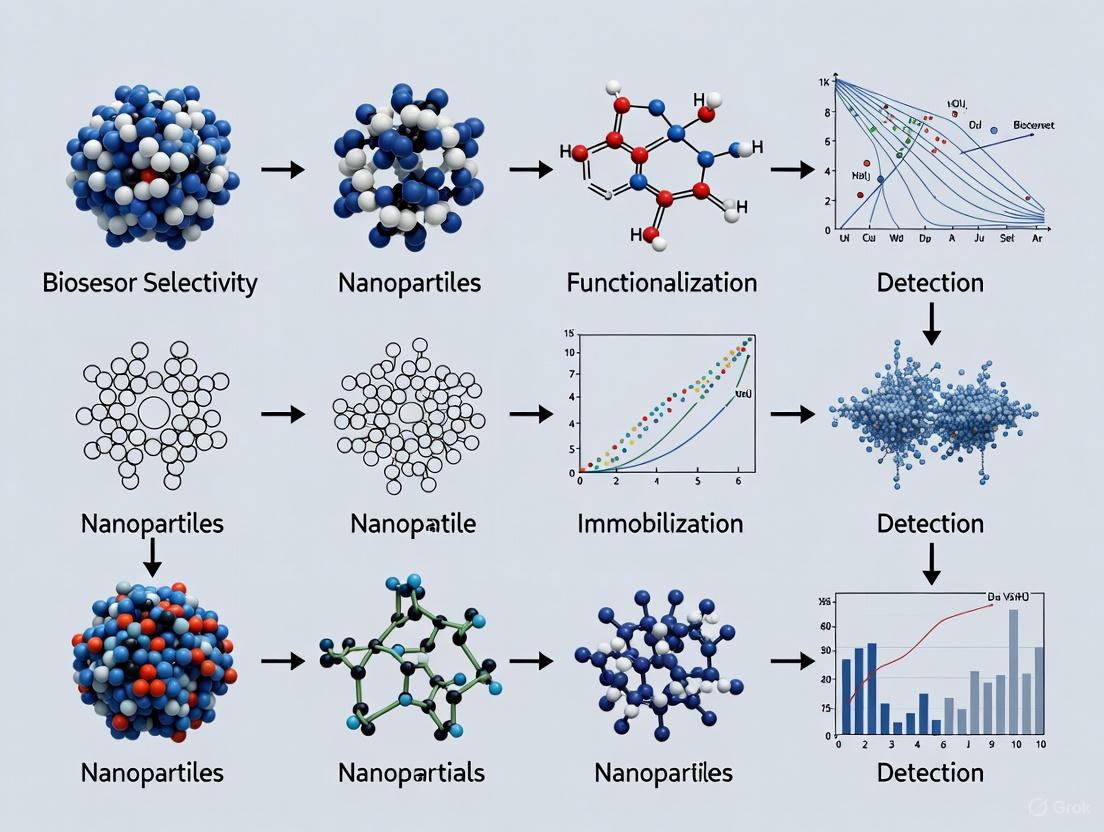
This article provides a comprehensive overview of advanced methods for improving biosensor selectivity through the strategic integration of nanomaterials.
Enhancing Biosensor Selectivity with Nanomaterials: Strategies, Applications, and Future Directions
Abstract
This article provides a comprehensive overview of advanced methods for improving biosensor selectivity through the strategic integration of nanomaterials. Tailored for researchers, scientists, and drug development professionals, it explores the fundamental principles of nanomaterial-bioreceptor interactions, details specific methodological approaches using noble metal, carbon-based, and 2D nanomaterials, and discusses systematic optimization techniques like Design of Experiments (DoE). The content further covers validation protocols and comparative analysis with conventional methods, addressing critical challenges and presenting future trends such as AI-driven design and point-of-care applications. The goal is to serve as a foundational resource for developing next-generation, highly selective biosensing platforms for biomedical research and clinical diagnostics.
Nanomaterials and Selectivity: Core Principles and Biosensor Performance Metrics
The integration of nanomaterials into biosensing platforms represents a paradigm shift in diagnostic technology, primarily driven by two fundamental nanoscale properties: the high surface-to-volume ratio and quantum confinement effects [1]. These intrinsic properties directly address the critical need for improved selectivity in biosensors, a core challenge in biomedical research and drug development. Nanomaterials provide an exceptionally large surface area for biomolecular interactions while exhibiting tunable electronic and optical characteristics, enabling the development of highly sensitive and specific detection systems for clinical diagnostics, environmental monitoring, and food safety [2] [3] [4]. This document details the quantitative relationship between these properties and biosensor performance, providing structured experimental protocols and analytical frameworks for researchers.
Core Properties and Their Impact on Biosensor Selectivity
High Surface-to-Volume Ratio
The high surface-to-volume ratio of nanomaterials dramatically increases the platform's capacity for immobilizing biorecognition elements (e.g., antibodies, enzymes, DNA strands), directly enhancing sensitivity and facilitating more interactions with target analytes [4] [1].
- Enhanced Biomolecule Loading: A larger functional surface allows for a higher density of probe molecules, increasing the probability of capturing target analytes and improving the signal-to-noise ratio.
- Improved Mass Transfer: Nanoscale dimensions reduce diffusion paths for analytes, leading to faster response times—a critical parameter for real-time monitoring [5].
- Selectivity via Surface Functionalization: The extensive surface enables precise chemical modification with specific receptor molecules, forming a selective layer that minimizes interference from non-target species in complex biological samples like blood, saliva, or sweat [4].
Quantum Confinement Effects
Quantum confinement effects dominate in nanoscale dimensions, where the physical size of a material dictates its electronic and optical properties [3] [1]. This allows researchers to precisely tune key characteristics for biosensing applications.
- Tunable Bandgap: In semiconducting nanomaterials like quantum dots (QDs) and transition metal dichalcogenides (TMDCs), the bandgap increases as particle size decreases. This enables the tailoring of optical absorption and emission profiles for specific assay requirements [3].
- Size-Dependent Photoluminescence: The photoluminescence wavelength of QDs can be precisely controlled by their size, allowing multiplexed detection of different analytes within a single sample [3] [1].
- Enhanced Electrochemical Properties: In low-dimensional materials, quantum effects can influence electron transfer kinetics, which is crucial for electrochemical biosensors' selectivity and sensitivity [5].
Table 1: Quantitative Impact of Nanomaterial Properties on Biosensing Performance
| Nanomaterial | Key Property Utilized | Experimental Enhancement in Performance | Impact on Selectivity |
|---|---|---|---|
| MoS2 (TMDC) | High surface-to-volume ratio [2] | Enables label-free detection of biomarkers at ultra-low concentrations (e.g., for prostate cancer) [2]. | High surface area allows efficient functionalization, enhancing specificity for target biomarkers [2]. |
| Carbon Quantum Dots (CQDs) | Quantum confinement (photoluminescence) [3] | Machine learning-augmented CQD sensors can achieve detection limits up to 106-fold lower than conventional strategies [3]. | Specific surface functionalization allows for selective detection of heavy metal ions and pharmaceutical residues [3]. |
| MXene (Ti3C2Tx) | High surface area & metallic conductivity [5] | MXene/High-k BioFETs show superior drain current and transduction sensitivity for pH sensing compared to Si/SiO2 and MWCNT sensors [5]. | Tunable surface chemistry and high surface area enhance selectivity for specific ions and biomolecules in complex fluids [5]. |
| Carbon Nanotubes (CNTs) | High aspect ratio & electrical conductivity [1] | Serve as a superstructure to immobilize biomolecules, enhancing signal transduction in electrochemical sensors [1]. | Functionalization with specific groups or bioreceptors improves discrimination between molecules in a heterogeneous matrix [1]. |
Experimental Protocols
Protocol: Fabrication of a MoS₂ Field-Effect Transistor (FET) Biosensor
This protocol details the creation of a highly sensitive, label-free biosensor using molybdenum disulfide (MoS₂), leveraging its high surface-to-volume ratio for biomarker detection [2].
1. Primary Material Synthesis: Mechanical Exfoliation of MoS₂
- Objective: To produce high-quality, atomically thin MoS₂ nanosheets from a bulk crystal.
- Materials: Bulk MoS₂ crystal, Scotch tape, substrate (e.g., SiO₂/Si wafer), acetone, deionized water.
- Procedure:
- Place a high-quality bulk MoS₂ crystal on a clean piece of Scotch tape.
- Fold the tape to cover the crystal and peel it apart carefully, splitting the crystal into thinner layers.
- Repeat this folding and peeling process 10-20 times using fresh tape to obtain progressively thinner flakes.
- Press the tape containing the exfoliated flakes onto the target substrate.
- Carefully peel off the tape, leaving the MoS₂ flakes adhered to the substrate surface.
- Clean the substrate with mild solvents (acetone) followed by rinsing with deionized water to remove tape residues.
- Dry the substrate using gentle heating or nitrogen flow [2].
2. Sensor Fabrication and Functionalization
- Objective: To construct a FET device and functionalize the MoS₂ surface for specific biomarker detection.
- Materials: Photoresist, metallization targets (e.g., Cr/Au), probe solution (e.g., specific antibodies or single-stranded DNA).
- Procedure:
- Characterization: Identify and characterize the exfoliated MoS₂ flakes using Raman spectroscopy, atomic force microscopy (AFM), or scanning electron microscopy (SEM) to determine thickness and quality [2].
- Electrode Patterning: Use standard photolithography or electron-beam lithography to define source and drain electrode patterns on the substrate.
- Metallization: Deposit metal contacts (e.g., 10/50 nm Ti/Au) via physical vapor deposition (PVD) or thermal evaporation, followed by a lift-off process.
- Surface Functionalization: a. Activate the MoS₂ surface. b. Incubate the device in a solution containing the specific biorecognition probes (e.g., antibodies) for 1-2 hours at room temperature. c. Rinse thoroughly with a suitable buffer to remove unbound probes.
- Blocking: Treat the sensor surface with a blocking agent (e.g., bovine serum albumin) to minimize non-specific binding [2].
3. Measurement and Data Acquisition
- Objective: To detect the target analyte by measuring electrical changes in the MoS₂ FET.
- Equipment: Semiconductor parameter analyzer, fluidic chamber for analyte delivery.
- Procedure:
- Mount the fabricated biosensor in a measurement setup with a fluidic cell.
- Connect the source and drain electrodes to the analyzer.
- Introduce a buffer solution to establish a baseline electrical signal (e.g., drain current).
- Introduce the sample containing the target analyte into the fluidic chamber.
- Monitor the drain current in real-time. The binding of charged target biomolecules to the functionalized MoS₂ surface will alter the local electric field, modulating the channel conductivity and producing a measurable signal shift [2].
Protocol: Developing Deep Learning-Optimized Carbon Quantum Dot (CQD) Biosensors
This protocol outlines the synthesis of nitrogen-doped CQDs and their integration with a deep learning model for the ultra-sensitive detection of emerging contaminants [3].
1. Hydrothermal Synthesis of Nitrogen-Doped CQDs (N-CQDs)
- Objective: To synthesize highly fluorescent N-CQDs from green precursors.
- Materials: Citric acid (CA), ethylenediamine (EDA), deionized water, autoclave.
- Procedure:
- Dissolve citric acid and ethylenediamine in a molar ratio of 1:1.5 in deionized water.
- Transfer the solution into a Teflon-lined stainless-steel autoclave.
- Heat the autoclave to 200°C and maintain this temperature for 5 hours.
- Allow the autoclave to cool to room temperature naturally.
- Purify the resulting N-CQD solution through filtration or dialysis to remove large particles and unreacted precursors.
- Characterization: Measure the quantum yield (target: ~42%) and size distribution via transmission electron microscopy (target: 3.2 ± 0.8 nm) [3].
2. Sensor Functionalization and Assay Setup
- Objective: To functionalize N-CQDs for a specific contaminant and acquire fluorescence data.
- Materials: Functionalized N-CQDs, microplate reader, sample contaminants.
- Procedure:
- Functionalize the purified N-CQDs with specific molecular receptors for the target contaminant (e.g., heavy metals, pharmaceuticals).
- Prepare a series of samples with varying concentrations of the target contaminant.
- Incubate the functionalized N-CQDs with each sample.
- Measure the fluorescence response (e.g., intensity quenching or enhancement) using a spectrofluorometer or microplate reader.
- Record the fluorescence data across different concentrations to form the training dataset for the deep learning model [3].
3. Deep Learning-Enhanced Signal Processing
- Objective: To use a deep learning model to analyze fluorescence data and achieve ultra-sensitive detection.
- Materials: Hybrid CNN-LSTM deep neural network, computational hardware (e.g., GPU).
- Procedure:
- Data Preprocessing: Normalize the fluorescence data and structure it into a format suitable for the neural network.
- Model Training: Train a hybrid Convolutional Neural Network-Long Short-Term Memory (CNN-LSTM) model on the acquired fluorescence data. The CNN extracts features from the spectral data, while the LSTM models temporal dependencies in the signal.
- Validation: Test the trained model against a validation set of known samples to evaluate its accuracy and detection limit.
- Deployment: Use the trained model to analyze unknown samples. The model can differentiate the true analyte signal from environmental noise, achieving detection limits as low as the picomolar level [3].
The Scientist's Toolkit: Essential Research Reagent Solutions
Table 2: Key Materials and Reagents for Nanomaterial Biosensor Development
| Item Name | Function/Application in Biosensing |
|---|---|
| Transition Metal Dichalcogenides (TMDCs) - MoS₂, WS₂ | Serve as the active channel material in FET biosensors. Their high surface-to-volume ratio and semiconducting nature enable sensitive, label-free detection of biomarkers [2] [4]. |
| Carbon Quantum Dots (CQDs) | Act as fluorescent nanoprobes due to their tunable photoluminescence via quantum confinement. Used for optical detection of contaminants and ions [3]. |
| MXenes (e.g., Ti3C2Tx) | Provide high metallic conductivity and rich surface chemistry in electrochemical and BioFET sensors, enhancing sensitivity for pH and other analytes [5]. |
| Carbon Nanotubes (CNTs) | Used as conductive channels or electrodes. Their high aspect ratio and ease of functionalization facilitate electron transfer and biomolecule immobilization [1] [5]. |
| High-k Dielectrics (e.g., Al2O3) | Used in BioFETs (e.g., with MXenes) to improve gate control, reduce leakage current, and protect sensitive 2D materials from the environment [5]. |
| Biorecognition Elements (Antibodies, DNA, Enzymes) | Immobilized on the nanomaterial surface to provide selective binding for the target analyte, forming the basis of the sensor's specificity [2] [1]. |
Conceptual Diagrams and Workflows
Diagram: Quantum Confinement Effect in Biosensing
Diagram 1: Logic flow of the quantum confinement effect and its application in biosensing.
Diagram: High Surface Area Enhancement Mechanism
Diagram 2: Logic flow demonstrating how a high surface-to-volume ratio enhances sensor performance.
Diagram: Workflow for a FET-based Nanobiosensor
Diagram 3: Experimental workflow for fabricating and operating a nanomaterial-based FET biosensor.
This application note provides a detailed framework for defining and quantifying biosensor selectivity, with a specific focus on its interrelationships with dynamic range, operating range, and signal-to-noise ratio (SNR). Intended for researchers and scientists in drug development, this document outlines standardized protocols for characterizing these critical parameters and explores how nanomaterial integration can significantly enhance biosensor performance. By establishing consistent measurement methodologies and data interpretation guidelines, we aim to support the development of more reliable and selective biosensing platforms for diagnostic and research applications.
Biosensor selectivity refers to the ability of a biosensor to detect a specific target analyte without significant interference from other substances present in the sample matrix. For researchers and drug development professionals, achieving high selectivity is paramount for accurate measurements in complex biological fluids. Selectivity is not an isolated parameter but is intrinsically linked to other key analytical figures of merit, including dynamic range, operating range, and signal-to-noise ratio (SNR). The dynamic range defines the concentration interval over which the sensor provides a usable response, while the operating range specifies the concentrations where the sensor performs within acceptable error limits. The SNR, defined as the ratio of signal power to noise power, fundamentally determines the lowest detectable analyte concentration and the reliability of quantitative measurements [6] [7]. Nanomaterials, with their unique physicochemical properties, offer powerful strategies to enhance these parameters simultaneously, leading to next-generation biosensors with improved clinical utility [6] [8].
Key Definitions and Quantitative Relationships
Core Parameter Definitions
The following parameters are essential for the complete characterization of biosensor performance.
Table 1: Core Biosensor Performance Parameters
| Parameter | Definition | Quantitative Expression |
|---|---|---|
| Selectivity | The ability to distinguish and measure the target analyte in the presence of interferents. | Expressed as the ratio of the sensor's response to the target analyte versus its response to an interfering substance. |
| Dynamic Range | The concentration range between the lowest and highest concentrations of analyte that the biosensor can measure. | Spans from the Limit of Detection (LOD) to the point where the response signal saturates. |
| Operating Range | The concentration range over which the biosensor provides measurements with a specified accuracy (e.g., ±5% error). | A subset of the dynamic range where the calibration curve is highly linear and reproducible. |
| Signal-to-Noise Ratio (SNR) | The ratio of the power of the analytical signal to the power of the background noise. | SNR = μ / σ (for DC signals), where μ is the mean signal and σ is the standard deviation of the noise [7]. |
The Interdependence of Parameters
The relationships between selectivity, dynamic range, and SNR form the foundation of biosensor performance. The following diagram illustrates the logical workflow for optimizing these interconnected parameters.
Diagram 1: Logical workflow for biosensor performance optimization.
A high SNR is a prerequisite for a wide dynamic range because it lowers the Limit of Detection (LOD), extending the range's lower end [7]. The operating range is then defined within the dynamic range, typically corresponding to the linear portion of the dose-response curve where quantification is most accurate. Selectivity must be validated across this operating range to ensure that measurements of the target analyte within this window are not skewed by the presence of interferents. Consequently, a poor SNR can artificially narrow the usable operating range and compromise the apparent selectivity by increasing the uncertainty in distinguishing the target signal from noise and interference [6] [9].
Experimental Protocols for Characterization
Protocol for SNR Determination
Principle: SNR is calculated as the ratio of the average analytical signal to the standard deviation of the background noise, providing a quantitative measure of detection confidence [7].
Procedure:
- Setup: Place the biosensor in a stable environment, shielded from ambient light and vibrations, to minimize environmental noise [7].
- Baseline Acquisition: Record the sensor's output signal (e.g., ADC counts, current, voltage) for a blank solution (without analyte) over a period of 5-10 minutes at the intended measurement frequency.
- Signal Acquisition: Introduce a standard solution of the target analyte at a concentration within the mid-range of the expected dynamic range. Record the stable output signal.
- Data Analysis:
- Calculate the mean (
μ_signal) of the recorded signal from the standard solution. - Calculate the standard deviation (
σ_noise) of the signal from the blank solution. - Compute the SNR as:
SNR = μ_signal / σ_noise. - For AC signals like PPG, use frequency-domain filtering to separate the signal and noise components [7].
- Calculate the mean (
Protocol for Dynamic and Operating Range Determination
Principle: The dynamic range is established by measuring the sensor's response from the LOD to saturation, while the operating range is defined as the linear portion of this curve where quantitative accuracy is highest.
Procedure:
- Calibration Curve: Prepare a series of standard solutions of the target analyte, covering a concentration range from below the expected LOD to above the expected saturation point. Each concentration should be measured in triplicate.
- Measurement: For each standard solution, record the steady-state sensor response.
- Data Analysis:
- Plot the mean response versus the logarithm of the analyte concentration.
- LOD Calculation: Determine the LOD as the concentration corresponding to the signal of the blank plus three times the standard deviation of the blank.
- Dynamic Range: Report the range from the LOD to the concentration where the response plateaus.
- Operating Range: Identify the concentration range where the calibration curve is linear (e.g., R² > 0.99) and the relative error of measurement is below a predefined threshold (e.g., 5%).
Protocol for Selectivity Assessment
Principle: Selectivity is evaluated by challenging the biosensor with potential interfering substances that are structurally similar or commonly found in the sample matrix.
Procedure:
- Interferent Selection: Identify a panel of potential interferents (e.g., metabolites, co-administered drugs, proteins).
- Control Measurement: Record the sensor response for a solution containing only the target analyte at a concentration in the middle of its operating range.
- Interference Test: Measure the sensor response for solutions containing: a. The interferent alone, at a physiologically relevant high concentration. b. The target analyte and the interferent combined, at the same concentrations as in (a) and (2).
- Data Analysis:
- Calculate the cross-reactivity (%) for each interferent as:
(Response to Interferent / Response to Target Analyte) * 100. - The signal change in the mixture compared to the analyte alone should be within the acceptable error margin (e.g., <5%).
- Calculate the cross-reactivity (%) for each interferent as:
Enhancing Performance with Nanomaterials
The integration of nanomaterials is a key strategy for simultaneously improving selectivity, SNR, and dynamic range. Their high surface-to-volume ratio and unique electronic properties directly enhance key figures of merit [6] [8].
Table 2: Nanomaterial-Enhanced Biosensing Mechanisms
| Nanomaterial | Mechanism for Performance Enhancement | Impact on Selectivity & SNR |
|---|---|---|
| Gold Nanoparticles (AuNPs) | Provide a large surface area for immobilizing recognition elements (e.g., antibodies, DNA); enhance electrical conductivity and facilitate electron transfer in electrochemical sensors. | Significantly amplifies the analytical signal, lowering the LOD and improving SNR. Improves selectivity by enabling dense packing of high-affinity receptors [6]. |
| Carbon Nanotubes (CNTs) | Act as superior transduction elements; high carrier mobility and electrical conductivity. | Enhances SNR by reducing electrical noise and increasing the sensitivity of the detection platform [6]. |
| Quantum Dots (QDs) | Offer high brightness and photostability as fluorescence labels. | Improves SNR in optical biosensors by providing a strong, stable signal against a low background [6]. |
| Nanowires (NWs) | High surface-to-volume ratio allows for ultra-sensitive, label-free detection of biomolecular binding events. | The extreme sensitivity can translate to a lower LOD, widening the dynamic range. Surface functionalization enables high selectivity [6]. |
Nanomaterials enhance selectivity by allowing for a higher density and more precise orientation of biological recognition elements (e.g., antibodies, aptamers) on the sensor surface. This improves the specific binding capacity for the target analyte while reducing non-specific adsorption. Furthermore, the signal amplification provided by nanomaterials directly boosts the SNR, which extends the dynamic range to lower concentrations and makes the sensor more robust against interference, thereby improving the effective selectivity in complex samples [6].
The Scientist's Toolkit
Table 3: Essential Research Reagent Solutions and Materials
| Item | Function in Biosensor Development |
|---|---|
| Functionalized Nanomaterials (e.g., AuNPs, CNTs) | Serve as the transduction platform to enhance signal and immobilize biorecognition elements. |
| High-Affinity Recognition Elements (e.g., monoclonal antibodies, aptamers) | Provide the molecular specificity for the target analyte, forming the core of selectivity. |
| Stable Analyte Standards | Used for the calibration curve to accurately define the dynamic and operating range. |
| Selected Interferent Compounds | Used to challenge the biosensor and quantitatively assess its selectivity. |
| Buffer and Matrix Solutions | Mimic the chemical environment of the real sample (e.g., serum, urine) to test performance under realistic conditions. |
A rigorous and integrated approach to defining biosensor selectivity, dynamic range, operating range, and SNR is critical for developing reliable analytical tools. The protocols outlined herein provide a standardized framework for the comprehensive characterization of these parameters. The strategic use of functionalized nanomaterials presents a powerful pathway to push the boundaries of biosensor performance, directly addressing the needs of researchers and scientists in drug development for highly sensitive, specific, and robust detection systems. Future advancements will continue to leverage nanomaterial engineering to create biosensors capable of precise measurements in increasingly complex biological matrices.
The Role of the Bioreceptor-Nanomaterial Interface in Molecular Recognition
The performance of a biosensor is fundamentally governed by the molecular events occurring at the interface between the bioreceptor and the nanomaterial transducer. This interface is not merely a passive support structure; it is a dynamic environment where the density, orientation, and stability of immobilized bioreceptors directly control the efficiency and specificity of analyte recognition [10] [11]. Effective engineering of this interface is therefore a critical prerequisite for developing biosensors with high sensitivity, selectivity, and reliability, particularly for applications in complex biological matrices like serum or whole blood [12].
The convergence of nanotechnology and surface science has provided researchers with an advanced toolkit for precise interfacial control. Techniques such as the use of self-assembled monolayers (SAMs) and tetrahedral DNA nanostructures (TDNs) allow for the creation of well-ordered, reproducible surfaces that minimize non-specific adsorption and maximize the accessibility of bioreceptor active sites [10] [12]. Furthermore, the integration of artificial intelligence (AI) is marking a paradigm shift, enabling the predictive design of optimal surface architectures and moving the field beyond traditional trial-and-error approaches [11]. This document details the core principles and practical protocols for fabricating and characterizing these advanced bio-interfaces, providing a framework for enhancing biosensor selectivity through targeted nanomaterial research.
Core Principles of Interface Engineering
The primary objective of interface engineering is to immobilize bioreceptors—such as antibodies, DNA strands, or enzymes—in a manner that preserves their biological activity and facilitates optimal interaction with the target analyte. The physico-chemical properties of the interface, including its charge, hydrophobicity, and molecular architecture, are key determinants of biosensor performance [11].
The Criticality of Controlled Immobilization
Traditional immobilization methods, such as physical adsorption or random covalent bonding, often lead to heterogeneous and dense layers of bioreceptors. This can result in several issues:
- Steric Hindrance: Random orientation can block the active binding sites of the bioreceptor.
- Reduced Accessibility: Densely packed layers can prevent the target analyte from reaching the bioreceptor.
- Non-Specific Adsorption (NSA): Poorly controlled surfaces can attract interfering molecules from complex samples, leading to false positive signals [12].
Overcoming these challenges requires strategies that promote oriented immobilization and create a bio-inert background. As summarized in Table 1, advanced methods offer significant advantages over traditional techniques.
Table 1: Comparison of Bioreceptor Immobilization Strategies
| Immobilization Strategy | Mechanism | Advantages | Limitations |
|---|---|---|---|
| Physical Adsorption | Weak forces (electrostatic, hydrophobic) | Simple procedure | Weak stability, random orientation, high NSA [12] |
| Covalent Bonding | Chemical reaction with surface functional groups | High stability | Random orientation can persist; requires surface activation [10] |
| Biotin-Avidin Affinity | High-affinity biological interaction | Strong, specific binding; oriented immobilization | Multi-step preparation; avidin can introduce NSA [12] |
| Self-Assembled Monolayers (SAMs) | Spontaneous formation of ordered molecular layers | Tunable surface chemistry, well-defined order | Stability can be affected by temperature and oxidizers [10] |
| Tetrahedral DNA Nanostructures (TDNs) | Rigid 3D scaffold with precise probe positioning | Controlled spacing, upright orientation, low NSA | Complex DNA strand design and annealing required [12] |
Key Surface Functionalization Strategies
- Covalent and Non-Covalent Modifications: Covalent immobilization, often mediated by linkers like SAMs of alkanethiols on gold or silanes on SiO₂, provides a stable interface. The functional tailgroups of the SAM molecules (e.g., amine, carboxyl, or ethylene glycol) define the surface's properties and its subsequent reactivity [10]. Non-covalent modifications, such as electrostatic layer-by-layer (LbL) assembly, offer a versatile bottom-up approach for constructing multilayer films [10] [11].
- Nanomaterial-Based Enhancements: Nanomaterials like gold nanoparticles (AuNPs), carbon nanotubes (CNTs), and graphene are integral to modern biosensors. Their high surface-to-volume ratio increases bioreceptor loading capacity, while their unique optoelectronic properties (e.g., surface plasmon resonance in AuNPs) enhance signal transduction [1] [11] [13].
- Antifouling Strategies: Preventing NSA is paramount. Surfaces modified with oligo- or poly(ethylene glycol) (PEG) and zwitterionic coatings are highly effective at creating a hydration layer that resists protein adsorption, thereby ensuring signal integrity in complex samples [10] [11].
Experimental Protocols
This section provides detailed methodologies for establishing a controlled bioreceptor-nanomaterial interface.
Protocol: Formation of a Mixed Self-Assembled Monayer (SAM) on a Gold Surface for Oriented Immobilization
Objective: To create a stable, low-fouling gold surface functionalized with biotin, ready for the oriented immobilization of streptavidin-conjugated bioreceptors.
Materials:
- Gold substrate (e.g., gold film on glass/silicon wafer)
- Biotinylated thiol/disulfide reagent (e.g., (2-[biotinamido]ethylamido)-3,3′-dithiodipropionic acid N-hydroxy-succinimide ester)
- Backfilling thiol (e.g., 11-mercaptoundecyl hexa(ethylene glycol) alcohol - EG6OH)
- Anhydrous ethanol (high purity)
- Nitrogen gas (high purity)
- Streptavidin and biotinylated bioreceptor (e.g., antibody, DNA)
Procedure:
- Substrate Cleaning: Clean the gold substrate in a freshly prepared piranha solution (3:1 v/v concentrated H₂SO₄:30% H₂O₂) for 10 minutes. Caution: Piranha solution is extremely corrosive and must be handled with extreme care. Rinse thoroughly with Milli-Q water and anhydrous ethanol, then dry under a stream of nitrogen.
- SAM Formation: a. Prepare a 1.0 mM solution of the biotinylated thiol in anhydrous ethanol. b. Incubate the clean gold substrate in this solution for 4 hours at room temperature in a sealed container to prevent solvent evaporation. c. Remove the substrate from the biotin solution and rinse copiously with ethanol to remove physisorbed molecules. d. Immediately transfer the substrate to a 1.0 mM solution of EG6OH in ethanol and incubate for at least 12 hours. This "backfilling" step passivates the remaining gold surface against NSA. e. Rinse thoroughly with ethanol and dry under nitrogen.
- Bioreceptor Immobilization: a. Incubate the functionalized substrate with a 0.1 mg/mL solution of streptavidin in a suitable buffer (e.g., 10 mM PBS, pH 7.4) for 1 hour. b. Rinse with buffer to remove unbound streptavidin. c. The surface is now ready for incubation with any biotinylated bioreceptor.
Validation: The successful formation of the SAM and subsequent receptor binding can be characterized using techniques such as Electrochemical Impedance Spectroscopy (EIS) to monitor changes in charge transfer resistance, or Surface Plasmon Resonance (SPR) to track mass changes on the surface in real-time [10] [14].
Protocol: Fabrication of a Tetrahedral DNA Nanostructure (TDN)-Based Sensor Interface
Objective: To assemble and anchor TDNs onto a gold electrode, providing a rigid, well-spaced scaffold for the upright presentation of DNA capture probes.
Materials:
- Four synthetic oligonucleotides (typically 40-60 bases), designed with complementary regions for TDN self-assembly. One strand is extended at the 5' or 3' end with a thiol modification for surface anchoring and the capture probe sequence.
- Tris-EDTA buffer (10 mM Tris, 1 mM EDTA, pH 8.0) with 50 mM MgCl₂.
- Gold electrode (e.g., screen-printed or disk electrode)
- Thermal cycler or precise water bath
- MCH (6-Mercapto-1-hexanol)
Procedure:
- TDN Assembly: a. Mix the four oligonucleotides in equimolar ratios (e.g., 1 µM each) in Mg²⁺-containing TE buffer. b. Subject the mixture to a thermal annealing ramp: denature at 95°C for 5 minutes, then rapidly cool to 4°C over 1 minute. The rapid cooling facilitates correct hybridization into the tetrahedral structure [12].
- Electrode Pretreatment: Clean the gold electrode by cycling in 0.5 M H₂SO₄ until a stable cyclic voltammogram is obtained. Rinse with Milli-Q water.
- Surface Immobilization: a. Incubate the clean gold electrode with the pre-assembled TDN solution overnight at 4°C. The thiolated vertex of the TDN will covalently bind to the gold. b. Rinse with buffer to remove weakly adsorbed nanostructures. c. To passivate any remaining bare gold spots, incubate the electrode with a 1 mM solution of MCH for 1 hour. d. Rinse thoroughly. The electrode surface is now functionalized with upright, well-oriented DNA capture probes and is ready for hybridization with the target nucleic acid.
Validation: The stepwise modification can be monitored using EIS and Differential Pulse Voltammetry (DPV) using [Fe(CN)₆]³⁻/⁴⁻ as a redox probe. Successful TDN immobilization is indicated by a significant increase in electron-transfer resistance (Rₑₜ) due to the negatively charged DNA backbone, followed by a further increase after target hybridization [12].
The Scientist's Toolkit: Essential Research Reagents
Table 2: Key Reagents for Engineering the Bioreceptor-Nanomaterial Interface
| Reagent / Material | Function / Application | Key Characteristic |
|---|---|---|
| Gold Nanoparticles (AuNPs) | Signal amplification; plasmonic transducer; platform for SAM formation [11] [14] | High surface-to-volume ratio; tunable optics (LSPR) |
| Carbon Nanotubes (CNTs) | Electrochemical transducer; enhances electron transfer [1] [15] | High electrical conductivity; large surface area |
| Quantum Dots (QDs) | Optical transducer (fluorescence) [1] [16] | Size-tunable emission; high photostability |
| (3-Aminopropyl)triethoxysilane (APTES) | Silane coupling agent for functionalizing SiO₂/Si surfaces [11] | Introduces primary amine groups for covalent bonding |
| Polyethylene Glycol (PEG) | Antifouling polymer coating to minimize NSA [10] [11] | Forms a hydration layer that resists protein adsorption |
| Biotinylated Thiols | For affinity-based, oriented immobilization on gold via streptavidin bridge [10] | High specificity and binding strength of biotin-streptavidin |
| Tetrahedral DNA Nanostructures (TDNs) | Scaffold for precise control over probe orientation and density [12] | Programmable, rigid 3D structure; low NSA |
Data Presentation and Analysis
Quantifying the performance of the engineered interface is essential for optimization. Key metrics include sensitivity, limit of detection (LOD), and selectivity, often evaluated against traditional methods.
Table 3: Performance Comparison of Different Interface Engineering Strategies
| Interface Design | Target Analyte | Transduction Method | Reported LOD | Advantage Demonstrated |
|---|---|---|---|---|
| Traditional ssDNA probe (flat surface) | DNA | Electrochemical | ~ 1 nM - 10 nM | Baseline for comparison [12] |
| Tetrahedral DNA Nanostructure (TDN) | microRNA-122 | Electrochemical | ~ 0.03 fM | Ultra-high sensitivity from controlled spacing [12] |
| Self-Assembled Monolayer (SAM) with Biotin | Methylated DNA (MGMT gene) | Electrochemical | ~ 0.2 pM | Oriented immobilization via biotin-streptavidin [12] |
| Molecularly Imprinted Polymer (MIP) on AuNPs | Caffeine | Electrochemical | 0.195 µM | High selectivity for small molecules [17] |
| Localized SPR (LSPR) with Aptamer | Penicillin G | Optical (LSPR) | 3.1 nM | Label-free, real-time detection in food [17] |
Schematic Workflows
The following diagrams illustrate the logical relationships and experimental workflows for key interface engineering strategies.
Diagram 1: Workflow for creating a mixed SAM on gold for oriented immobilization.
Diagram 2: Workflow for the assembly and immobilization of TDNs on a sensor surface.
The integration of nanomaterials into biosensing platforms has revolutionized analytical science by addressing one of the most challenging aspects: biological selectivity. Nanomaterials, with their high surface-to-volume ratio, tunable surface chemistry, and unique electronic properties, provide an ideal interface for immobilizing biorecognition elements and transducing biological binding events with exceptional fidelity [18]. Their dimensional compatibility with biological molecules enables interactions at the natural scale of molecular recognition, significantly enhancing the selectivity of biosensing platforms across medical diagnostics, environmental monitoring, and food safety applications [19] [1].
This application note provides a structured overview of three fundamental nanomaterial classes—metallic, carbon-based, and two-dimensional (2D) nanomaterials—focusing on their properties, biosensing applications, and experimental protocols for enhancing selectivity in biomedical research.
Metallic and Metal-Oxide Nanomaterials
Properties and Selectivity Enhancement Mechanisms
Metallic nanoparticles, particularly gold (Au) and silver (Ag), exhibit exceptional localized surface plasmon resonance (LSPR) properties that form the basis for highly selective optical biosensing [18] [19]. Their tunable optical characteristics, dependent on size, shape, and local dielectric environment, enable the development of label-free detection platforms with real-time monitoring capabilities [19]. Metal-oxide nanomaterials such as zinc oxide (ZnO), cerium oxide (CeO₂), and titanium dioxide (TiO₂) offer excellent electrochemical properties, biocompatibility, and facile functionalization, making them ideal for electrochemical biosensing applications [20].
Table 1: Key Metallic and Metal-Oxide Nanomaterials in Biosensing
| Nanomaterial | Key Properties | Primary Biosensing Role | Selectivity Mechanism |
|---|---|---|---|
| Gold Nanoparticles (AuNPs) | LSPR, strong scattering, high conductivity | Optical transduction, signal amplification | Environmental dielectric changes upon target binding [19] |
| Silver Nanoparticles (AgNPs) | Enhanced plasmonic effects, SERS activity | Pathogen detection, SERS substrates | Electromagnetic field enhancement at sharp features [18] |
| Zinc Oxide (ZnO) Nanostructures | Semiconducting, piezoelectric, high isoelectric point | Electrochemical sensing electrode | Selective analyte electrocatalysis (e.g., uric acid, dopamine) [20] |
| Cerium Oxide (CeO₂) Nanoparticles | Antioxidant, redox-active, oxygen buffering | Enzyme-mimetic biosensing | Selective redox interaction with biomarkers [20] |
Experimental Protocol: LSPR-Based Selective Antigen Detection Using AuNPs
Principle: This protocol utilizes the LSPR shift of functionalized AuNPs upon specific antibody-antigen binding for highly selective detection of target proteins [19].
Materials:
- Citrate-stabilized gold nanoparticles (10-40 nm diameter)
- Phosphate Buffered Saline (PBS), pH 7.4
- Specific monoclonal antibodies against target antigen
- Bovine Serum Albumin (BSA) for blocking
- UV-Vis spectrophotometer or LSPR spectrometer
Procedure:
- AuNP Functionalization: Mix 1 mL of AuNP solution with 10 µg of specific antibody. Incubate at room temperature for 1 hour with gentle agitation.
- Surface Blocking: Add 100 µL of 1% BSA solution to block nonspecific binding sites. Incubate for 30 minutes.
- Purification: Centrifuge at 12,000 rpm for 15 minutes. Discard supernatant and resuspend in PBS.
- Target Detection: Incubate functionalized AuNPs with sample containing target antigen for 30 minutes.
- Signal Measurement: Record UV-Vis absorption spectrum (400-700 nm). Measure LSPR peak shift relative to control.
- Data Analysis: Plot LSPR shift versus antigen concentration to generate calibration curve.
Critical Considerations:
- Antibody orientation on AuNP surface significantly affects selectivity; consider Fc-specific binding protocols.
- Optimal nanoparticle size and antibody density require empirical determination for each target.
- Include appropriate controls (non-specific antibodies, irrelevant proteins) to validate selectivity.
Carbon-Based Nanomaterials
Properties and Selectivity Enhancement Mechanisms
Carbon-based nanomaterials exhibit exceptional electrical conductivity, large specific surface area, and versatile surface chemistry that enable highly selective biosensing platforms [21] [22]. Graphene and its derivatives offer remarkable electron mobility and quantum Hall effect, while carbon nanotubes (CNTs) provide unique one-dimensional transport properties and high aspect ratio [21] [1]. Carbon dots combine tunable fluorescence with high biocompatibility, enabling selective imaging and sensing applications [21].
Table 2: Carbon Nanomaterial Performance in Biosensing Applications
| Nanomaterial | Specific Surface Area | Electrical Conductivity | Detection Limit Enhancement | Representative Applications |
|---|---|---|---|---|
| Graphene Oxide | ~2630 m²/g [18] | Tunable (semiconducting) | fM-pM biomarker detection [18] | DNA hybridization, pathogen detection |
| Carbon Nanotubes | 100-1000 m²/g | Metallic/semiconducting | 0.1-10 nM in wearable sensors [18] | Neurotransmitter monitoring, glucose sensing |
| Carbon Dots | Varies with synthesis | Electron mediator | pM-level protein detection [21] | Bioimaging, ion detection |
| Carbon Black | Moderate | High conductivity | pg/mL biomarker detection [22] | Electrochemical immunosensing |
Experimental Protocol: CNT-Based Electrochemical Aptasensor for Alzheimer's Biomarker Detection
Principle: This protocol details the development of an electrochemical aptasensor using carbon nanotube-modified electrodes for selective detection of Alzheimer's disease biomarkers such as amyloid-beta (Aβ) and tau proteins [22].
Materials:
- Multi-walled or single-walled carbon nanotubes (carboxylated)
- Screen-printed carbon electrodes or glassy carbon electrodes
- Amine-terminated DNA or RNA aptamers specific to target biomarker
- EDC/NHS coupling reagents
- Electrochemical cell with standard three-electrode setup
- Differential Pulse Voltammetry (DPV) or Electrochemical Impedance Spectroscopy (EIS) equipment
Procedure:
- CNT Dispersion: Prepare homogeneous CNT dispersion (0.5 mg/mL) in suitable solvent (e.g., DMF) using probe sonication.
- Electrode Modification: Drop-cast 5-10 µL of CNT dispersion onto electrode surface. Dry at room temperature.
- Surface Activation: Incubate CNT-modified electrode in EDC/NHS solution (10 mM each) for 1 hour to activate carboxyl groups.
- Aptamer Immobilization: Incubate activated electrode with 10 µM aptamer solution for 12-16 hours at 4°C.
- Surface Blocking: Treat with 1% BSA or ethanolamine for 1 hour to block non-specific sites.
- Electrochemical Measurement: Perform DPV or EIS in appropriate redox mediator (e.g., [Fe(CN)₆]³⁻/⁴⁻) before and after target incubation.
- Signal Analysis: Calculate signal change (current decrease or charge transfer resistance increase) proportional to target concentration.
Critical Considerations:
- CNT dispersion quality critically affects reproducibility; optimize sonication parameters.
- Aptamer density on CNT surface influences accessibility and selectivity.
- For complex samples (serum, CSF), include additional blocking steps to minimize non-specific binding.
Two-Dimensional (2D) Nanomaterials Beyond Graphene
Properties and Selectivity Enhancement Mechanisms
Emerging 2D nanomaterials including MXenes and transition metal dichalcogenides (TMDs) offer unique advantages for selective biosensing applications [23] [24]. MXenes, with their general formula Mₙ₊₁XₙTₓ, combine metallic conductivity with hydrophilic surfaces and rich surface chemistry, enabling highly sensitive electrochemical detection [24]. These materials provide abundant active sites for biomolecule immobilization and efficient electron transfer pathways.
Selectivity Mechanisms:
- Tunable surface termination groups (-O, -OH, -F) for controlled bioreceptor immobilization
- Interlayer spacing that can be engineered for size-selective permeability
- Exceptional electrochemical activity for mediator-free biosensing
- High surface area for enhanced density of recognition elements
Experimental Protocol: MXene-Based Electrochemical Biosensor for Pathogen Detection
Principle: This protocol utilizes the exceptional electrochemical properties of MXenes (Ti₃C₂Tₓ) to develop a label-free biosensor for selective detection of pathogens such as Helicobacter pylori [23] [24].
Materials:
- Ti₃C₂Tₓ MXene suspension (commercially available or synthesized)
- Specific antibodies or aptamers against target pathogen biomarkers
- EDC/NHS crosslinking reagents
- Electrochemical workstation with three-electrode system
- Buffer solutions (PBS, acetate buffer)
Procedure:
- MXene Electrode Preparation: Drop-cast 10 µL of MXene suspension (1 mg/mL) on electrode surface. Dry under nitrogen.
- Bioreceptor Immobilization: Activate MXene surface with EDC/NHS for 30 minutes. Incubate with specific antibody (10-100 µg/mL) for 2 hours at room temperature.
- Blocking: Treat with 1% BSA for 1 hour to minimize non-specific binding.
- Pathogen Capture: Incubate functionalized electrode with sample containing target pathogen for 30 minutes.
- Electrochemical Detection: Perform EIS measurements in 5 mM [Fe(CN)₆]³⁻/⁴⁻ solution from 0.1 Hz to 100 kHz.
- Quantification: Monitor increase in charge transfer resistance (Rₑₜ) proportional to pathogen concentration.
Critical Considerations:
- MXene oxidation stability requires optimized storage and handling in inert atmosphere.
- Antibody orientation controls binding site accessibility; consider protein A/G pre-treatment.
- For clinical samples, implement sample pre-treatment to reduce matrix effects.
The Scientist's Toolkit: Essential Research Reagents
Table 3: Essential Research Reagents for Nanomaterial-Enhanced Biosensing
| Reagent/Category | Function | Selection Criteria | Representative Examples |
|---|---|---|---|
| Biorecognition Elements | Molecular target recognition | Specificity, affinity, stability | Antibodies, aptamers, molecularly imprinted polymers [22] |
| Crosslinking Reagents | Bioreceptor immobilization | Reaction efficiency, spacer length | EDC/NHS, glutaraldehyde, sulfo-SMCC [19] |
| Blocking Agents | Minimize non-specific binding | Inertness, compatibility | BSA, casein, ethanolamine, pluronic surfactants [22] |
| Electrochemical Mediators | Facilitate electron transfer | Redox potential, stability | [Fe(CN)₆]³⁻/⁴⁻, methylene blue, ferrocene derivatives [22] [20] |
| Signal Amplification Reagents | Enhance detection sensitivity | Compatibility with transduction | Enzymes (HRP, AP), metallic nanoparticles, quantum dots [18] [19] |
The strategic integration of metallic, carbon-based, and 2D nanomaterials has dramatically advanced biosensor selectivity through multiple complementary mechanisms. These nanomaterials provide versatile platforms for immobilizing diverse biorecognition elements while enhancing signal transduction efficiency. The experimental protocols outlined herein provide foundational methodologies for developing nanomaterial-enhanced biosensors with improved selectivity for precise biomarker detection.
Future developments will likely focus on multifunctional nanomaterial composites that combine the advantages of different material classes, advanced surface engineering for optimal bioreceptor orientation, and integration with artificial intelligence for data analysis and pattern recognition [18] [25]. Additionally, scalable nanofabrication techniques such as inkjet printing of nanoparticle inks will facilitate the transition from laboratory prototypes to commercially viable point-of-care diagnostic devices [25]. As these technologies mature, nanomaterial-enhanced biosensors are poised to make significant contributions to personalized medicine, environmental monitoring, and global health security.
Nanomaterial-Enhanced Biosensing Platforms: From Design to Real-World Applications
Application Notes
Noble metal nanoparticles (NMNs), such as gold (Au), silver (Ag), and platinum (Pt), are pivotal in advancing electrochemical biosensing platforms. Their integration significantly enhances key analytical figures of merit, including sensitivity, selectivity, and limit of detection (LOD) [26] [27]. The enhanced performance stems from their unique physicochemical properties, which facilitate both improved electron transfer and the stable, specific immobilization of biorecognition elements [28].
Core Functions in Biosensing
The utility of noble metal nanoparticles in biosensors can be categorized into two primary, interconnected functions:
- Electrochemical Signal Enhancement: NMNs act as excellent "electron wires," efficiently shuttling electrons between the biorecognition element and the transducer surface [26]. This enhances the electron transfer kinetics, leading to a more robust and amplified electrochemical signal. Their high electrical conductivity and catalytic activity are key to this role [29] [27]. For instance, they can catalyze the redox reactions of electroactive byproducts, such as H₂O₂ in enzymatic biosensors, allowing for detection at lower overpotentials with increased sensitivity [26].
- Specific Immobilization of Biorecognition Elements: The large surface area of NMNs provides a high-density platform for attaching bioreceptors like enzymes, antibodies, aptamers, and DNA sequences [26]. Gold nanoparticles, in particular, allow for straightforward and stable covalent attachment of thiolated biomolecules [28]. This precise immobilization preserves the biological activity of the receptors and contributes significantly to the sensor's selectivity.
Quantitative Performance of NMN-Based Biosensors
The table below summarizes the enhanced analytical performance achieved by incorporating noble metal nanoparticles into various biosensor designs for different target analytes.
Table 1: Performance Metrics of Selected NMN-Based Electrochemical Biosensors
| Target Analyte | NMN Used | Sensor Platform / Immobilization Method | Detection Technique | Linear Range | Limit of Detection (LOD) | Key Application |
|---|---|---|---|---|---|---|
| Lactate [30] | Gold Nanoparticles (AuNPs) | Laser-induced Graphene (LIG) / Electrodeposition & MIP | Voltammetry | 0.1 µM – 2500 µM | 0.035 µM | Sports medicine, critical care |
| E. coli [31] | Palladium (Pd) in nanocomposite | Magnetic Graphene Oxide / Bacteria-Imprinted Polymer | Square Wave Voltammetry | 5.0 – 1.0×10⁷ CFU/mL | 1.5 CFU/mL | Food safety, clinical diagnostics |
| Glucose [26] | Gold Nanowire Arrays (AuNWA) | Enzyme (GOx) immobilization | Amperometry | Not Specified | Significantly low (attributed to AuNWA) | Medical diagnostics |
| Hydrogen Peroxide [26] | Pd-Co Alloy NPs | Carbon nanofibers | Amperometry | Not Specified | Enhanced sensitivity & lower overpotential | General biosensing |
| Viruses [28] | AuNPs, AgNPs | Antibody or nucleic acid immobilization | Electrochemical / Optical | Not Specified | High sensitivity & selectivity | Clinical diagnostics |
Advantages Over Conventional Materials
The use of NMNs offers distinct advantages compared to traditional macroelectrodes or non-nanostructured materials:
- High Surface Area-to-Volume Ratio: Increases the loading capacity for biorecognition elements, leading to a higher density of recognition sites and an amplified signal [26] [32].
- Excellent Biocompatibility: Noble metals like gold provide a favorable environment for biomolecules, helping to maintain their stability and functional integrity [28].
- Tunable Physicochemical Properties: The size, shape, and composition of NMNs can be engineered to optimize their catalytic activity, conductivity, and optical properties for specific sensing applications [26] [28].
Experimental Protocols
Protocol: Fabrication of an AuNP-Modified Laser-Induced Graphene (LIG) Electrode for Non-Enzymatic Sensing
This protocol details the creation of a highly sensitive and stable electrode platform, suitable for subsequent functionalization with molecularly imprinted polymers (MIPs) for selective analyte detection [30].
2.1.1 Research Reagent Solutions
Table 2: Essential Reagents for AuNP-LIG Electrode Fabrication
| Reagent / Material | Function / Role in the Protocol |
|---|---|
| Polyimide (PI) Tape | Flexible substrate for laser-induced graphene (LIG) formation. |
| CO₂ Pulsed Laser System | Converts polyimide surface into porous graphene. |
| HAuCl₄ (Gold Chloride) | Precursor solution for electrodeposition of gold nanoparticles. |
| Potassium Ferricyanide (K₃[Fe(CN)₆]) | Redox probe for electrochemical characterization via Cyclic Voltammetry (CV). |
| Phosphate Buffered Saline (PBS) | Electrolyte solution for electrochemical measurements. |
| 3,4-Ethylenedioxythiophene (EDOT) | Monomer for electropolymerization of the molecularly imprinted polymer (MIP) layer. |
2.1.2 Workflow Diagram
2.1.3 Step-by-Step Procedure
Fabrication of LIG Electrode
- Use a CO₂ laser engraving system to scribe a three-electrode design (working, counter, and reference electrodes) directly onto a polyimide (PI) tape substrate.
- Optimize laser parameters (e.g., power: 20%, speed: 250 mm/s) to ensure the formation of a porous and conductive graphene structure [30].
- Passivate the non-electroactive areas (leads and interconnects) with an insulating layer (e.g., nail polish) to define a precise electroactive area. Rinse thoroughly with deionized water.
Electrodeposition of AuNPs
- Place a 100 µL aliquot of 50 mM HAuCl₄ solution onto the LIG working electrode.
- Perform chronoamperometry by applying a constant potential of -0.7 V (vs. the LIG reference electrode) for 240 seconds.
- This process promotes the uniform nucleation and growth of AuNPs on the graphene surface.
- After deposition, rinse the modified electrode (now LIG/AuNPs) gently with deionized water and dry under a gentle stream of nitrogen [30].
Electrochemical Characterization
- Characterize the bare LIG and LIG/AuNPs electrodes after each modification step using Cyclic Voltammetry (CV) and Electrochemical Impedance Spectroscopy (EIS).
- Perform CV in a solution containing 5 mM K₃[Fe(CN)₆] and 0.1 M KCl. Scan within a potential range of -0.2 V to +0.6 V at a scan rate of 50 mV/s.
- A successful AuNP modification is confirmed by a significant increase in the peak current and a decrease in the peak-to-peak separation (ΔEp), indicating enhanced electron transfer kinetics [30].
Protocol: Signal Amplification for Enzymatic Glucose Detection
This protocol demonstrates how AuNPs can be integrated to enhance the signal in a model enzymatic biosensor for glucose [26].
2.2.1 Workflow Diagram
2.2.2 Step-by-Step Procedure
Electrode Modification with AuNPs
- Prepare a colloidal suspension of AuNPs (e.g., ~20 nm diameter).
- Clean a glassy carbon electrode (GCE) thoroughly. Modify the GCE surface by drop-casting a precise volume of the AuNP suspension and allowing it to dry [27]. Alternatively, AuNPs can be electrodeposited as described in Protocol 2.1.
Enzyme Immobilization
- Immobilize the Glucose Oxidase (GOx) enzyme onto the AuNP-modified electrode. This can be achieved by physical adsorption, cross-linking with a glutaraldehyde/bovine serum albumin (BSA) mixture, or by leveraging the thiol-gold chemistry if the enzyme is suitably functionalized.
Amperometric Detection of Glucose
- Use the modified electrode (GCE/AuNPs/GOx) as the working electrode in a standard three-electrode system.
- Apply a constant potential suitable for the oxidation of H₂O₂ (typically +0.6 to +0.7 V vs. Ag/AgCl).
- Upon successive additions of glucose standard solutions, the enzymatic reaction produces H₂O₂, which is immediately oxidized at the catalytic surface of the AuNPs. The resulting current is directly measured and is proportional to the glucose concentration [26].
Carbon-based nanomaterials (CBNs), including carbon nanotubes (CNTs) and graphene derivatives, have emerged as pivotal materials in the development of next-generation biosensors due to their exceptional electrical conductivity and versatile biomolecule conjugation capabilities [33] [34]. These materials address critical limitations of conventional biosensing platforms by enhancing electron transfer kinetics, providing large surface areas for bioreceptor immobilization, and enabling precise signal transduction [18]. The integration of CBNs into electrochemical biosensors has demonstrated remarkable improvements in detecting disease biomarkers at clinically relevant concentrations, achieving limits of detection from femtomolar to picogram per milliliter ranges [22]. This application note details the fundamental properties, experimental protocols, and practical implementation of CNT and graphene-based biosensing platforms, providing researchers with standardized methodologies for harnessing these nanomaterials to improve biosensor selectivity and sensitivity within complex biological matrices.
Properties and Performance Data
Fundamental Properties of Carbon-Based Nanomaterials
The exceptional performance of carbon-based nanomaterials in biosensing applications stems from their unique structural and electronic characteristics. Table 1 summarizes the key properties of prominent carbon nanomaterials that contribute to their enhanced biosensing capabilities.
Table 1: Properties of Carbon-Based Nanomaterials for Biosensing Applications
| Material | Electrical Conductivity | Specific Surface Area | Mechanical Strength | Functionalization Capability | Key Advantages |
|---|---|---|---|---|---|
| SWCNTs | 10²-10⁵ S/m [35] | >1000 m²/g [35] | ~1 TPa Young's modulus [35] | Excellent (covalent and non-covalent) [35] | High aspect ratio, semiconducting or metallic behavior [35] |
| MWCNTs | 10²-10⁵ S/m [35] | 200-900 m²/g [18] | ~1 TPa Young's modulus [35] | Excellent (covalent and non-covalent) [35] | Multi-walled structure, enhanced stability [35] |
| Graphene | ~10⁴ S/m [35] | ~2630 m²/g [18] [35] | ~1 TPa Young's modulus [35] | Excellent [35] | 2D structure, high charge carrier mobility [36] |
| Reduced Graphene Oxide | Variable (10-10³ S/m) | Variable (300-1500 m²/g) | High | Excellent [36] | Oxygen functional groups for biomolecule conjugation [36] |
| Carbon Dots | Semiconductor | Variable | Moderate | Excellent [22] | Tunable fluorescence, biocompatibility [22] |
Analytical Performance Metrics
Carbon nanomaterial-based biosensors demonstrate superior analytical performance compared to conventional sensing platforms. Table 2 quantifies the enhanced performance metrics achieved through nanomaterial integration.
Table 2: Performance Comparison of Conventional vs. Carbon Nanomaterial-Based Biosensors
| Performance Metric | Conventional Biosensors | Carbon Nanomaterial-Based Biosensors | Representative Application |
|---|---|---|---|
| Detection Limit | µM-nM range [18] | fM-aM range [22] [18] | Alzheimer's biomarker detection [22] |
| Sensitivity | 1-10 µA/mM [18] | 10-100 µA/mM [18] | Glucose monitoring [18] |
| Response Time | 30-60 seconds [18] | 1-10 seconds [18] | Pathogen detection [23] |
| Selectivity | Moderate (often requires sample pre-treatment) | High (with appropriate functionalization) [22] | Detection in human serum [22] |
| Linear Range | 1-2 orders of magnitude | 2-3 orders of magnitude [22] | Aβ and tau protein detection [22] |
Experimental Protocols
Functionalization of Carbon Nanotubes for Biosensing Applications
Covalent Functionalization Protocol
Objective: To introduce carboxyl groups onto CNT surfaces for subsequent biomolecule immobilization through amide bonding.
Materials:
- Single-walled or multi-walled carbon nanotubes (Sigma-Aldrich, Cat. #519308 or 698849)
- Sulfuric acid (H₂SO₄, 95-98%, Sigma-Aldrich, Cat. #258105)
- Nitric acid (HNO₃, 70%, Sigma-Aldrich, Cat. #438073)
- N-Hydroxysuccinimide (NHS, Sigma-Aldrich, Cat. #130672)
- 1-Ethyl-3-(3-dimethylaminopropyl)carbodiimide (EDC, Sigma-Aldrich, Cat. #03449)
- Phosphate buffered saline (PBS, 0.01 M, pH 7.4, Sigma-Aldrich, Cat. #P5368)
- Ultrapure water (18.2 MΩ·cm)
Procedure:
- Acid Treatment: Disperse 50 mg of CNTs in 50 mL of 3:1 v/v H₂SO₄:HNO₃ solution.
- Sonication: Sonicate the mixture for 4 hours at 35-45°C using a bath sonicator (Branson 5800).
- Neutralization: Dilute the mixture with 500 mL ultrapure water and vacuum-filter through a 0.22 µm PTFE membrane.
- Washing: Wash until neutral pH is achieved with ultrapure water.
- Drying: Dry functionalized CNTs overnight at 60°C under vacuum.
- Activation: Prior to use, disperse 10 mg of functionalized CNTs in 10 mL PBS and activate with 20 mM EDC and 10 mM NHS for 30 minutes with gentle shaking.
Quality Control:
- Confirm functionalization using Fourier-Transform Infrared Spectroscopy (FTIR) with characteristic peaks at 1710 cm⁻¹ (C=O stretch) and 3400 cm⁻¹ (O-H stretch).
- Quantify carboxyl group density via conductometric titration (expected range: 1-2 mmol/g CNT).
Non-Covalent Functionalization Protocol
Objective: To functionalize CNT surfaces with biomolecules while preserving their intrinsic electronic properties.
Materials:
- 1-pyrenebutyric acid N-hydroxysuccinimide ester (Sigma-Aldrich, Cat. #101052)
- Dimethylformamide (DMF, anhydrous, Sigma-Aldrich, Cat. #227056)
- Aptamers or antibodies specific to target analyte
- Borate buffer (0.1 M, pH 8.5, Sigma-Aldrich, Cat. #B9876)
Procedure:
- Preparation of Pyrene Solution: Dissolve 1-pyrenebutyric acid N-hydroxysuccinimide ester in DMF to a final concentration of 1 mM.
- CNT Dispersion: Disperse 5 mg of CNTs in 10 mL of borate buffer using probe sonication for 30 minutes (30% amplitude, 5s pulse on/5s pulse off).
- π-π Stacking: Add pyrene solution to CNT dispersion at 1:10 volume ratio and stir for 6 hours at room temperature.
- Biomolecule Conjugation: Add aptamer or antibody solution (100 µM in borate buffer) to functionalized CNTs at 1:1 molar ratio and incubate overnight at 4°C with gentle rotation.
- Purification: Remove unbound biomolecules using centrifugal filtration (Amicon Ultra-15, 100 kDa MWCO) at 4000 × g for 15 minutes.
Fabrication of Graphene-Based Electrochemical Biosensors
Electrode Modification with Reduced Graphene Oxide
Objective: To create a highly conductive graphene-based electrode platform for electrochemical biosensing.
Materials:
- Graphene oxide suspension (2 mg/mL, Sigma-Aldrich, Cat. #777676)
- L-Ascorbic acid (Sigma-Aldrich, Cat. #A92902)
- Ammonia solution (28%, Sigma-Aldrich, Cat. #221228)
- Glassy carbon electrodes (3 mm diameter, CH Instruments)
- Nafion perfluorinated resin solution (5%, Sigma-Aldrich, Cat. #274704)
Procedure:
- Graphene Oxide Reduction:
- Mix 10 mL graphene oxide suspension with 200 µL ammonia solution and 100 mg L-ascorbic acid.
- Heat at 95°C for 1 hour with continuous stirring until a black precipitate forms.
- Centrifuge at 12,000 × g for 15 minutes and wash twice with ultrapure water.
Electrode Preparation:
- Polish glassy carbon electrodes with 0.05 µm alumina slurry on a microcloth.
- Rinse thoroughly with ultrapure water and dry under nitrogen stream.
- Prepare 1 mg/mL dispersion of reduced graphene oxide in 0.1% Nafion solution.
- Drop-cast 5 µL of dispersion onto electrode surface and dry at room temperature.
Bioreceptor Immobilization:
- Activate electrode surface by cycling in 0.5 M H₂SO₄ from 0 to 1.2 V at 100 mV/s until stable voltammogram is obtained.
- Immerse electrode in solution containing 1 µM aptamer or antibody for 2 hours at room temperature.
- Rinse with PBS to remove unbound recognition elements.
- Block non-specific binding sites with 1% BSA for 30 minutes.
Signaling Pathways and Experimental Workflows
Biosensing Mechanism Workflow
Diagram 1: Biosensing mechanism workflow showing the integration of carbon nanomaterial properties at key transduction steps.
CNT-Based Sensor Fabrication Pathway
Diagram 2: CNT-based sensor fabrication pathway highlighting critical functionalization and characterization steps.
Research Reagent Solutions
Table 3: Essential Research Reagents for Carbon Nanomaterial-Based Biosensor Development
| Reagent/Material | Supplier (Example) | Catalog Number | Function in Experiment |
|---|---|---|---|
| Single-Walled Carbon Nanotubes | Sigma-Aldrich | 519308 | High conductivity backbone for electron transfer [35] |
| Multi-Walled Carbon Nanotubes | Sigma-Aldrich | 698849 | Enhanced stability for rugged sensor applications [35] |
| Graphene Oxide Suspension | Sigma-Aldrich | 777676 | Starting material for conductive graphene films [36] |
| 1-Ethyl-3-(3-dimethylaminopropyl)carbodiimide (EDC) | Sigma-Aldrich | 03449 | Carboxyl group activation for amide bond formation [22] |
| N-Hydroxysuccinimide (NHS) | Sigma-Aldrich | 130672 | Stabilization of activated esters for biomolecule conjugation [22] |
| 1-Pyrenebutyric Acid N-hydroxysuccinimide Ester | Sigma-Aldrich | 101052 | π-π stacking linker for non-covalent functionalization [35] |
| Amino-modified DNA Aptamers | Integrated DNA Technologies | Custom | Target-specific recognition elements [22] |
| Nafion Perfluorinated Resin | Sigma-Aldrich | 274704 | Polymer binder for stable film formation on electrodes [36] |
| Phosphate Buffered Saline | Sigma-Aldrich | P5368 | Physiological pH maintenance during biomolecule immobilization [22] |
Applications in Biomedical Sensing
Carbon nanomaterial-based biosensors have demonstrated exceptional performance in detecting clinically relevant biomarkers. For Alzheimer's disease detection, these platforms have achieved limits of detection in the femtomolar to picogram per milliliter range for key biomarkers including amyloid-beta (Aβ) and tau proteins in human serum [22]. The high selectivity of these sensors against common interferents such as BSA, glucose, uric acid, ascorbic acid, dopamine, and non-target peptides highlights their potential for accurate diagnosis in complex biological matrices [22].
The integration of carbon nanomaterials with various biorecognition elements has enabled the development of highly specific sensing platforms. Aptamers, antibodies, and molecularly imprinted polymers have been successfully conjugated to CNT and graphene surfaces, providing versatile recognition interfaces tailored to different diagnostic applications [22]. These interfaces maintain bioreceptor functionality while facilitating efficient electron transfer, enabling direct electrochemical detection of binding events without the need for secondary labels.
Carbon nanotubes and graphene derivatives provide unprecedented opportunities for enhancing biosensor performance through their superior electrical conductivity and versatile biomolecule conjugation capabilities. The experimental protocols outlined in this application note provide researchers with standardized methodologies for fabricating and characterizing carbon nanomaterial-based biosensing platforms. When properly functionalized and integrated into sensor architectures, these materials enable highly sensitive and selective detection of clinically relevant biomarkers at concentrations previously challenging to achieve. The continued refinement of nanomaterial-biomolecule interfaces promises to further advance biosensor technology, particularly in point-of-care diagnostics where sensitivity, selectivity, and miniaturization are critical requirements.
2D Nanomaterials (e.g., TMDs) for Ultrasensitive and Specific Detection of Biomarkers
Application Notes
Two-dimensional (2D) nanomaterials, particularly transition metal dichalcogenides (TMDs) like molybdenum disulfide (MoS₂), are revolutionizing the development of biosensors for clinical diagnostics. Their exceptional electrical, optical, and physical properties enable the creation of platforms with unparalleled sensitivity and specificity for detecting disease-specific biomarkers at ultralow concentrations [37].
The following table summarizes the performance of recent biosensing platforms utilizing 2D nanomaterials for the detection of key biomarkers.
Table 1: Performance of Advanced 2D Nanomaterial-Based Biosensors
| Target Biomarker | 2D Nanomaterial Platform | Detection Principle | Limit of Detection (LOD) | Sample Matrix | Key Advantage |
|---|---|---|---|---|---|
| Cardiac Troponin I (cTnI) [37] | MoS₂ Field-Effect Transistor (FET) with yolk-shell plasmonic nanoparticles | Electrochemical | 2.66 pg/mL | Not Specified | High sensitivity and specificity for Acute Myocardial Infarction (AMI) |
| Alpha-Synuclein (α-syn) [38] | Submonolayer Biolaser on Optical Fiber Microcavity | Optical (Laser Emission) | 0.32 pM | Serum | Ultrasensitive detection for Parkinson's Disease |
| Cobalt Ions [39] | Engineered Bacterial Whole-Cell with UspA Promoter | Optical (Fluorescence) | Low concentrations in complex food matrices | Food (Pasta Chain) | Effective monitoring of contamination in complex matrices |
Key Application Areas
- Cardiovascular Disease Diagnostics: The integration of 2D MoS₂ with yolk-shell nanostructures creates a highly promising platform for the rapid and precise diagnosis of acute myocardial infarction (AMI) through the detection of cardiac troponin I (cTnI). The platform's excellent specificity effectively distinguishes cTnI from other interfering biomarkers [37].
- Neurodegenerative Disease Monitoring: Submonolayer biolasers, which utilize optical fiber microcavities, demonstrate ultimate sensitivity. This technology has been employed for an ultrasensitive immunoassay of a Parkinson’s disease biomarker, alpha-synuclein (α-syn), achieving an LOD three orders of magnitude lower than the typical concentration found in patient serum [38].
- Food Safety and Environmental Monitoring: Engineered cellular biosystems that incorporate 2D nanomaterials offer sensitive tools for detecting contaminants, such as cobalt, within complex matrices like the pasta production chain. These systems highlight the potential for enhancing safety control in the food industry [39].
The following diagram illustrates the general signaling pathway and workflow for a 2D nanomaterial-based FET biosensor, a common architecture for highly sensitive detection.
Experimental Protocols
Protocol: Fabrication and Operation of a MoS₂ FET Biosensor for cTnI Detection
This protocol details the steps to create a highly sensitive and specific field-effect biosensor for the detection of cardiac troponin I (cTnI), adapted from recent research [37].
Research Reagent Solutions
Table 2: Essential Materials and Reagents
| Item | Function/Brief Explanation |
|---|---|
| MoS₂ Flakes | Core 2D semiconductor channel material; provides high surface-to-volume ratio and excellent electrical properties for signal transduction. |
| Silicon/SiO₂ Substrate | Serves as the solid support and back-gate for the field-effect transistor. |
| Yolk-Shell Plasmonic Nanoparticles (e.g., Au) | Enhance biorecognition efficiency and signal; the unique structure improves light-matter interaction. |
| Anti-cTnI Antibodies | Biorecognition elements that specifically bind to the target cTnI biomarker. |
| Phosphate Buffered Saline (PBS) | Standard buffer for washing steps and dilution of reagents to maintain physiological pH. |
| Bovine Serum Albumin (BSA) | Used as a blocking agent to passivate non-specific binding sites on the sensor surface. |
| cTnI Antigen | The target biomarker protein for creating calibration curves and testing sensor performance. |
| Control Biomarkers (e.g., BNP, CRP) | Used for selectivity tests to confirm the sensor's specificity for cTnI over other potential interferents. |
Step-by-Step Procedure
Part A: Biosensor Fabrication
- FET Channel Preparation: Mechanically exfoliate or deposit chemically synthesized MoS₂ flakes onto a heavily doped silicon wafer with a thermally grown SiO₂ layer (typically 285-300 nm).
- Electrode Patterning: Use standard photolithography or electron-beam lithography to define source and drain electrode patterns on the MoS₂ flake. Subsequently, deposit metal contacts (e.g., Ti/Au, 10/50 nm) via electron-beam evaporation followed by a lift-off process.
- Nanoprobe Synthesis: Synthesize yolk-shell-structured plasmonic nanoparticles (e.g., Au). Functionalize their surface with anti-cTnI antibodies using standard coupling chemistry (e.g., EDC-NHS).
- Bioconjugation: Immobilize the antibody-conjugated yolk-shell nanoparticles onto the surface of the MoS₂ channel. This can be achieved through drop-casting or a specific chemical linker, ensuring uniform distribution.
- Surface Blocking: Incubate the fabricated biosensor with a 1% BSA solution in PBS for 1 hour at room temperature to block any remaining non-specific binding sites. Rinse thoroughly with PBS to remove unbound BSA.
Part B: Measurement and Detection
- Electrical Characterization: Place the biosensor in a custom-built or commercial flow cell. Connect the source, drain, and gate terminals to a semiconductor parameter analyzer (e.g., Keithley 4200).
- Baseline Recording: Introduce a buffer solution (e.g., PBS, pH 7.4) into the flow cell. Measure the drain-source current (I~ds~) while applying a constant drain-source voltage (V~ds~) and sweeping the back-gate voltage (V~gs~) to establish the baseline transfer characteristic.
- Sample Incubation: Introduce the sample (e.g., serum spiked with cTnI) into the flow cell and allow it to incubate for a fixed period (e.g., 15-20 minutes) to facilitate specific antigen-antibody binding.
- Signal Measurement: After a thorough wash with PBS to remove unbound molecules, record the transfer characteristic (I~ds~ vs. V~gs~) again under the same conditions as the baseline.
- Data Analysis: The specific binding of cTnI to the biorecognition layer causes a measurable shift in the threshold voltage (V~th~) or a change in I~ds~ of the MoS₂ FET. Plot the magnitude of this shift against the logarithm of cTnI concentration to generate a calibration curve.
The workflow for this protocol, from fabrication to measurement, is outlined below.
Protocol: Ultrasensitive Detection via Submonolayer Biolasers
This protocol describes the use of optical fiber-based submonolayer biolasers for detecting biomarkers at ultralow concentrations, using the Parkinson's disease biomarker α-synuclein as an example [38].
Key Steps
- Fiber Functionalization: Commercial single-mode optical fiber is chemically treated (e.g., silanized) and biotinylated to create a surface for specific biomolecular attachment.
- Gain Molecule Conjugation: Streptavidin-conjugated laser gain molecules (e.g., Sav-Cy3) are specifically linked to the biotinylated fiber surface. A critical step is controlling the biotin concentration to achieve a submonolayer of gain molecules, which is essential for ultrahigh sensitivity.
- Antibody Immobilization: Capture antibodies specific to the target biomarker (e.g., α-synuclein) are immobilized on the functionalized fiber surface.
- Laser Setup: The prepared optical fiber is placed in an aqueous environment. A pulsed pump laser is focused onto the fiber in free space to excite the gain molecules.
- Detection and Analysis: The emission spectrum from the biolaser is collected. The presence of the target biomarker binding to the surface alters the laser output intensity. The average laser intensity is used as the sensing indicator, providing an LOD of 0.32 pM for α-synuclein in serum.
Biosensors have emerged as indispensable tools in biomedical diagnostics, environmental monitoring, and personalized healthcare, offering operation simplicity, cost-effectiveness, high sensitivity, and portability [8]. The integration of nanomaterials has overcome traditional sensing platform limitations, particularly in sensitivity and response dynamics, by leveraging unique physicochemical properties such as high surface-to-volume ratio, quantum confinement effects, and plasmonic interactions [8]. This application note presents three detailed case studies demonstrating how nanomaterial-enhanced biosensors achieve exceptional selectivity in detecting microcystins, Helicobacter pylori biomarkers, and cancer indicators. Each case study includes experimental protocols, performance data, and visualization of key mechanisms to support research in improving biosensor selectivity through nanomaterial engineering.
Case Study 1: Selective Detection of Microcystins in Water Samples
Background and Significance
Microcystins (MCs) are cyclic heptapeptide hepatotoxins produced by various cyanobacteria genera, including Microcystis, Planktothrix, and Anabaena [40]. With over 90 different variants identified, MC-LR exhibits particularly high toxicity, causing protein phosphatase inhibition in liver cells, protein kinase activation malfunction, and over-phosphorylation of proteins [40]. Conventional detection methods like liquid chromatography-mass spectrometry (LC-MS) and enzyme-linked immunosorbent assay (ELISA) provide precise results but require heavy instrumentation, complicated procedures, and trained personnel, limiting their field applicability [40].
Experimental Protocol: Electrochemical Aptasensor for MC-LR Detection
Principle: An electrochemical aptasensor utilizing a gold nanoparticle/ppyMS (polypyrrole microsphere) nanocomposite for signal amplification.
Materials:
- Gold nanoparticles (AuNPs, 20 nm diameter)
- Pyrrole monomer for PPyMS synthesis
- MC-LR aptamer: 5'-NH₂-(CH₂)₆-GGCGCCAAACAGGACCACCATGACAATTACCCATACCACCTCATTATGCCCCATCTCCGC-3'
- Phosphate buffer saline (PBS, 0.1 M, pH 7.4)
- Ferricyanide/ferrocyanide ([Fe(CN)₆]³⁻/⁴⁻) redox probe
- ITO (indium tin oxide) working electrode
Procedure:
- Synthesis of AuNP/PPyMS nanocomposite:
- Polymerize pyrrole monomer (0.1 M) in HCl solution (0.1 M) using FeCl₃ as an oxidant at 4°C for 6 hours
- Centrifuge the resulting PPyMS at 8000 rpm for 10 minutes and wash三次 with deionized water
- Mix PPyMS with HAuCl₄ solution (1 mM) and stir for 30 minutes
- Add NaBH₄ (0.1 M) to reduce Au³⁺ to form AuNPs on PPyMS surface
Aptamer immobilization:
- Drop-cast 8 μL of AuNP/PPyMS suspension onto ITO electrode surface, dry at room temperature
- Incubate with 10 μL of 1 μM amino-modified MC-LR aptamer for 12 hours at 4°C
- Wash with PBS to remove unbound aptamers
MC-LR detection:
- Incubate the modified electrode with MC-LR samples of different concentrations for 40 minutes at 37°C
- Measure electrochemical impedance spectroscopy (EIS) in 5 mM [Fe(CN)₆]³⁻/⁴⁻ containing 0.1 M PBS (frequency range: 0.1-10⁵ Hz, amplitude: 5 mV)
- Calculate charge transfer resistance (Rct) values from Nyquist plots
Validation:
- Compare results with standard LC-MS using spiked and real water samples
- Perform reproducibility tests with three independently prepared sensors
- Evaluate specificity against other cyanotoxins (anatoxin-a, saxitoxin)
Performance Data and Selectivity Assessment
Table 1: Performance comparison of nanomaterial-based MC biosensors
| Nanomaterial | Bioreceptor | Detection Method | Linear Range | Limit of Detection | Selectivity Against Interferents |
|---|---|---|---|---|---|
| AuNP/PPyMS | Aptamer | Electrochemical impedance | 0.01-100 μg/L | 0.005 μg/L | <5% signal change with other cyanotoxins |
| CdTe QDs | Antibody | Fluorescence resonance energy transfer | 0.05-50 μg/L | 0.02 μg/L | High specificity to MC-LR variant |
| Silver nanoparticles | DNA aptamer | Surface-enhanced Raman scattering | 0.001-10 μg/L | 0.0005 μg/L | Distinct fingerprint spectra for MC identification |
The selectivity mechanism primarily derives from the high-affinity aptamer, which folds into a specific three-dimensional structure upon target binding [40]. The AuNP/PPyMS nanocomposite enhances electron transfer efficiency and provides a large surface area for aptamer immobilization, while the conformational change of aptamer upon MC-LR binding alters the interface properties, resulting in measurable changes in charge transfer resistance.
Case Study 2: Selective Detection ofHelicobacter pyloriBiomarkers
Background and Significance
Helicobacter pylori infects approximately 50% of the global population and is recognized as a major risk factor for gastric cancer, classified as a Type I carcinogen by the WHO [41]. The bacterium utilizes various virulence factors, particularly cytotoxin-associated gene A (CagA) and vacuolating cytotoxin A (VacA), which play crucial roles in gastric carcinogenesis [41] [42]. Traditional detection methods for H. pylori include invasive endoscopic biopsies and non-invasive urea breath tests, but these often lack the sensitivity for early detection or require sophisticated instrumentation [43].
Experimental Protocol: 2D Nanomaterial-Based Immunosensor for CagA Detection
Principle: A field-effect transistor (FET) biosensor using molybdenum disulfide (MoS₂) nanosheets functionalized with CagA-specific antibodies.
Materials:
- MoS₂ nanosheets (synthesized by chemical vapor deposition)
- Anti-CagA monoclonal antibody (clone 6G4)
- 1-pyrenebutyric acid N-hydroxysuccinimide ester (PBASE) as linker
- Dimethylformamide (DMF)
- PBS buffer (0.01 M, pH 7.4)
- Bovine serum albumin (BSA) for blocking
- FET measurement system with source-meter unit
Procedure:
- MoS₂ FET fabrication:
- Transfer CVD-grown MoS₂ nanosheets onto SiO₂/Si substrate with pre-patterned gold electrodes
- Characterize layer number and quality using Raman spectroscopy
Surface functionalization:
- Prepare 1 mM PBASE solution in DMF and incubate with MoS₂ FET for 2 hours
- Wash with DMF and DI water to remove unbound linker
- Incubate with 10 μg/mL anti-CagA antibody in PBS for 12 hours at 4°C
- Block nonspecific sites with 1% BSA for 1 hour at room temperature
CagA detection:
- Add CagA antigen solutions of different concentrations (0.1 pg/mL to 100 ng/mL) to the measurement chamber
- Incubate for 30 minutes at 37°C with gentle shaking
- Measure drain current (Id) versus gate voltage (Vg) at constant drain voltage (V_d = 0.5 V)
- Calculate Dirac point shift as sensing signal
Data analysis:
- Plot calibration curve of Dirac point shift versus CagA concentration
- Determine limit of detection using 3σ method
- Evaluate specificity using other H. pylori antigens (VacA, Urease)
3H. pyloriInfection and Gastric Cancer Pathway
Diagram 1: Molecular pathway of H. pylori-induced gastric carcinogenesis. Key virulence factors CagA and VacA initiate signaling cascades leading to malignant transformation [41] [42].
Performance Data and Selectivity Assessment
Table 2: Performance of nanomaterial-based biosensors for H. pylori biomarker detection
| Biomarker | Nanomaterial Platform | Detection Method | Linear Range | Limit of Detection | Clinical Correlation |
|---|---|---|---|---|---|
| CagA protein | MoS₂ FET | Electrical | 0.1-1000 pg/mL | 0.05 pg/mL | 4.9-fold increased GC risk for CagA+ vs CagA- [42] |
| Anti-H. pylori IgG | Graphene-QD hybrid | Optical/Electrical dual-mode | 0.1 fM-1 nM | 0.1 fM | Marker of infection and immune response [44] |
| VacA toxin | Gold nanostar @ molecularly imprinted polymer | Surface-enhanced Raman spectroscopy | 10-1000 ng/mL | 3.5 ng/mL | Specific genotypes associated with cancer risk [41] |
The exceptional selectivity of these biosensors arises from both the biological recognition elements (antibodies, aptamers) and the unique properties of 2D nanomaterials. MoS₂ exhibits strong quantum confinement and surface sensitivity, enabling ultra-sensitive detection of binding events [43]. The combination of electrical and optical detection modes in graphene-QD hybrids provides orthogonal verification for enhanced specificity [44].
Case Study 3: Selective Detection of Cancer Biomarkers
Background and Significance
Early cancer detection is vital for improving treatment outcomes and survival rates. Biosensors have emerged as crucial tools in cancer diagnosis, with nanomaterial-based platforms gaining significant attention due to their enhanced biocompatibility, stability, and large surface area for biomolecule interaction [45]. These sensors utilize materials like metal nanoparticles, quantum dots, and other nanomaterials that amplify signals and improve detection limits, making them highly effective for identifying cancer at its earliest stages [45].
Experimental Protocol: Ultrasensitive BRCA-1 Detection Using AuNP/MoS₂ Nanocomposite
Principle: An electrochemical immunosensor utilizing gold nanoparticle-decorated molybdenum disulfide (AuNP/MoS₂) nanocomposites for enhanced signal amplification in BRCA-1 detection.
Materials:
- Molybdenum disulfide (MoS₂) nanosheets
- Chloroauric acid (HAuCl₄)
- Chitosan solution (1% in 1% acetic acid)
- Anti-BRCA-1 monoclonal antibody
- Bovine serum albumin (BSA)
- Pencil graphite electrodes
- Potassium ferricyanide/ferrocyanide redox couple
Procedure:
- Synthesis of AuNP/MoS₂ nanocomposite:
- Prepare MoS₂ nanosheets by liquid-phase exfoliation
- Mix with 1 mM HAuCl₄ solution and stir for 30 minutes
- Add sodium citrate (1%) and boil for 15 minutes to form AuNPs on MoS₂ surface
- Characterize using TEM and UV-Vis spectroscopy
Electrode modification:
- Polish pencil graphite electrodes with alumina slurry and wash thoroughly
- Drop-cast 5 μL of chitosan solution and dry at room temperature
- Deposit 8 μL of AuNP/MoS₂ nanocomposite suspension
- Incubate with 10 μL of 10 μg/mL anti-BRCA-1 antibody for 12 hours at 4°C
- Block nonspecific sites with 2% BSA for 1 hour
BRCA-1 detection:
- Incubate modified electrode with BRCA-1 samples for 30 minutes at 37°C
- Perform electrochemical measurements in 5 mM [Fe(CN)₆]³⁻/⁴⁻ solution
- Record cyclic voltammetry (scan rate: 50 mV/s, potential range: -0.2 to 0.6 V)
- Measure differential pulse voltammetry (amplitude: 50 mV, step potential: 4 mV)
Data analysis:
- Calculate peak current changes relative to blank
- Construct calibration curve from triplicate measurements
- Determine detection limit using 3σ/slope method
Performance Data and Selectivity Assessment
Table 3: Performance of nanomaterial-based biosensors for cancer biomarker detection
| Cancer Biomarker | Nanomaterial Platform | Detection Method | Linear Range | Limit of Detection | Clinical Utility |
|---|---|---|---|---|---|
| BRCA-1 | AuNP/MoS₂/chitosan | Electrochemical | 0.05-20 ng/mL | 0.04 ng/mL | Diagnostic relevance in multiple malignancies [44] |
| CA-125 | Silica nanochannel array | Electrochemiluminescence | 10 μM-7.0 mM | 1 μM | Ovarian cancer monitoring [44] |
| PSA | Metal nanoparticles | Electrochemical | 0.1-100 ng/mL | 0.05 ng/mL | Prostate cancer screening [45] |
| HER-2 | Quantum dots | Fluorescence resonance energy transfer | 0.01-10 nM | 0.005 nM | Breast cancer classification and targeted therapy |
The multiplexing capability of nanomaterial-based biosensors significantly enhances their clinical utility. For instance, a single platform can simultaneously detect multiple cancer biomarkers (e.g., CEA, CA-125, HER-2) through spatial encoding or different signaling modalities [45]. The selectivity is achieved through both the biological recognition elements (antibodies, aptamers) and the tunable properties of nanomaterials that can be engineered to minimize nonspecific binding.
The Scientist's Toolkit: Essential Research Reagents and Materials
Table 4: Key research reagents and materials for nanomaterial-enhanced biosensors
| Material Category | Specific Examples | Function in Biosensing | Key Properties |
|---|---|---|---|
| 2D Nanomaterials | MoS₂, graphene, WS₂ | Transducer element | High surface-to-volume ratio, tunable bandgap, excellent electrical conductivity |
| Metal Nanoparticles | Gold nanoparticles, silver nanoparticles, gold nanostars | Signal amplification, plasmonic enhancement | Localized surface plasmon resonance, high conductivity, biocompatibility |
| Quantum Dots | CdTe, CdSe, graphene QDs | Fluorescent labeling, electron transfer | Size-tunable emission, high quantum yield, photostability |
| Biorecognition Elements | Antibodies, aptamers, molecularly imprinted polymers | Target recognition | High specificity and affinity, molecular selectivity |
| Support Materials | Chitosan, silica nanochannel arrays, polymer membranes | Immobilization matrix, interface stability | Biocompatibility, controlled porosity, functional groups for conjugation |
These case studies demonstrate that nanotechnology provides powerful strategies to enhance biosensor selectivity through multiple mechanisms. The unique properties of nanomaterials – including their high surface-to-volume ratio, quantum confinement effects, and plasmonic interactions – combined with specific biorecognition elements enable precise detection of targets even in complex biological matrices [8]. The experimental protocols and performance data presented herein provide researchers with practical guidance for developing next-generation biosensors with enhanced selectivity for environmental monitoring, clinical diagnostics, and drug development applications. Future directions in this field include the development of multi-analyte detection platforms, improved antifouling surfaces for complex samples, and integration with artificial intelligence for data analysis to further enhance selectivity and real-world applicability.
Overcoming Selectivity Challenges: Systematic Optimization and Advanced Engineering
Biosensors, which integrate a biological recognition element with a physico-chemical transducer, are powerful tools in medical diagnostics, environmental monitoring, and food safety [1]. The integration of nanomaterials (NMs) has profoundly enhanced their sensitivity and specificity [46] [1]. However, the path to developing robust, commercially viable biosensing platforms is fraught with challenges, primarily non-specific binding (NSB), signal noise, and slow response times. These pitfalls can compromise analytical accuracy, reliability, and limit real-world application. This document, framed within a thesis on improving biosensor selectivity via nanomaterials research, outlines these common issues and provides detailed protocols and solutions for the research community.
Pitfall 1: Non-Specific Binding (NSB)
NSB occurs when non-target molecules interact with the sensor surface, generating a false-positive signal and reducing selectivity. This is a critical barrier to achieving reliable detection in complex matrices like blood, saliva, or food samples.
Research Reagent Solutions for Mitigating NSB
| Reagent/Material | Function in NSB Mitigation |
|---|---|
| Poly(ethylene glycol) (PEG) | Creates a hydrophilic, steric barrier that reduces protein adsorption [47]. |
| Bovine Serum Albumin (BSA) | A common blocking agent that occupies unused binding sites on the sensor surface [47]. |
| Poly(oligo(ethylene glycol) methacrylate) (POEGMA) brushes | Grafted onto surfaces, these brushes provide superior antifouling properties, physically preventing NSB without the need for blocking steps [47]. |
| Magnetic Beads with Functional Polymers | Beads grafted with polymers like POEGMA allow for efficient antibody loading and minimize NSB in homogeneous assays [47]. |
| Chitosan (CHI) | A biopolymer used to form biocompatible films that can improve the immobilization of bioreceptors while offering some antifouling properties [48]. |
| Self-Assembled Monolayers (SAMs) | Well-ordered monolayers (e.g., of alkanethiols on gold) provide a controlled chemical interface for bioreceptor attachment and can be engineered to resist NSB [48]. |
Experimental Protocol: POEGMA Brush-Coated Magnetic Beads for Low-NSB Immunoassay
This protocol details a method for constructing a highly robust immunosensing platform with minimal NSB, adapted from recent research [47].
Key Principle: Utilizing POEGMA brushes grafted onto magnetic beads to provide a physical, antifouling barrier and a simplified workflow for antibody loading.
Materials:
- Magnetic beads (e.g., carboxylated beads)
- Dopamine hydrochloride
- Oligo(ethylene glycol) methacrylate (OEGMA) monomer
- CuBr (Copper(I) bromide) and other reagents for Atom Transfer Radical Polymerization (ATRP)
- Tris-HCl buffer (10 mM, pH 8.5)
- Capture antibodies (e.g., anti-IL-8)
- Vacuum source
Procedure:
- Bead Activation: Wash the magnetic beads with Tris-HCl buffer (pH 8.5).
- Polymer Brush Grafting: Incubate the beads in a dopamine solution to form a polydopamine priming layer. Subsequently, initiate surface-initiated ATRP using the OEGMA monomer to grow the POEGMA brushes on the bead surface.
- Antibody Loading: The POEGMA brushes are not covalently functionalized. Instead, antibodies are loaded into the polymer matrix using a vacuum-assisted entanglement method. This physically traps the antibodies while the brushes maintain their antifouling properties.
- Assay Execution: The functionalized beads are ready for use. For a proximity extension assay (PEA), incubate the beads with the sample. Two oligo-linked antibodies must bind the same target protein in proximity to generate a PCR-amplifiable DNA barcode signal.
Advantages: This method eliminates traditional blocking and lengthy wash steps, reduces procedural complexity, and achieves limits of detection in the femtogram-per-mL range with high assay robustness [47].
Surface Functionalization Workflow for NSB Reduction
Pitfall 2: Signal Noise
Signal noise obscures the true analytical signal, leading to poor sensitivity and an unreliable limit of detection (LOD). Noise can arise from electrical interference, environmental fluctuations, or non-specific interactions.
Quantitative Comparison of Nanomaterials in Signal Enhancement
Table: Impact of Nanomaterials on Biosensor Performance Parameters
| Nanomaterial | Example Biosensor Type | Key Advantage (Noise/Signal) | Demonstrated Application | Ref. |
|---|---|---|---|---|
| Graphene | Terahertz (THz) SPR | High phase sensitivity (3.1x10⁵ deg/RIU); tunable via magnetic field | Liquid & gas sensing | [49] |
| Au-Ag Nanostars | SERS Immunoassay | Intense plasmonic enhancement from sharp tips; enables label-free detection | α-Fetoprotein (cancer biomarker) | [49] |
| Carbon Nanotubes (CNTs) | Electrochemical | High electrical conductivity; large surface area for biomolecule immobilization | DNA sensing | [1] |
| Porous Gold / Polyaniline / Pt NPs | Electrochemical (Enzyme-free) | High sensitivity (95.12 µA mM⁻¹ cm⁻²); stable in interstitial fluid | Glucose monitoring | [49] |
| Gold Nanoparticle/PEI/rGO | Electrochemical | Enhanced electron transfer; high sensitivity for cancer biomarkers | EGFR detection | [48] |
Experimental Protocol: SERS-Based Immunoassay Using Au-Ag Nanostars
This protocol leverages the intense signal enhancement of nanostars to overcome background noise for sensitive biomarker detection [49].
Key Principle: Utilizing the sharp-tipped morphology of Au-Ag nanostars to generate intense Surface-Enhanced Raman Scattering (SERS) "hot spots," allowing for sensitive, label-free detection of biomarkers.
Materials:
- Gold-seeded nanoparticles
- Silver nitrate (AgNO₃)
- Ascorbic acid (as a reducing agent)
- Mercaptopropionic acid (MPA)
- 1-Ethyl-3-(3-dimethylaminopropyl) carbodiimide (EDC) and N-Hydroxysuccinimide (NHS)
- Monoclonal antibodies (e.g., anti-AFP)
- Phosphate buffer saline (PBS)
- Raman spectrometer
Procedure:
- Synthesis of Au-Ag Nanostars: Tune the concentration and morphology of nanostars by controlled centrifugation (e.g., 10, 30, 60 min) of gold-seeded nanoparticles in a growth solution containing AgNO₃ and ascorbic acid.
- Platform Functionalization:
- Activate the nanostars with MPA to form a self-assembled monolayer.
- Use EDC/NHS chemistry to covalently attach monoclonal anti-α-fetoprotein antibodies (AFP-Ab) to the MPA-modified nanostars.
- Antigen Detection:
- Incubate the functionalized nanostars with the sample containing the target antigen (AFP).
- The platform detects the antigen across a range of 500–0 ng/mL by measuring the intrinsic SERS signal of the captured biomarker, eliminating the need for a separate Raman reporter molecule.
- Signal Measurement: Acquire SERS spectra. The LOD for this platform has been determined to be 16.73 ng/mL [49].
SERS Immunoassay Workflow for Low-Noise Detection
Pitfall 3: Slow Response Times
Slow response times hinder real-time monitoring and rapid diagnostics, which are critical for point-of-care (POC) applications and dynamic physiological studies.
Research Reagent Solutions for Enhancing Response Time
| Reagent/Material | Function in Improving Response Time |
|---|---|
| Microfluidic Chips | Confine analytes to a small volume near the sensor, enabling rapid analyte transport and reduced time-to-result [47]. |
| Nanowires (NWs) & Nanotubes (NTs) | Their high surface-to-volume ratio increases the probability of analyte-receptor interaction, speeding up response [1]. |
| Rolling Circle Amplification (RCA) | An isothermal DNA amplification method that provides localized, rapid signal amplification without the need for thermal cycling [49]. |
| CMOS-Integrated Electrodes | Miniaturized, highly integrated electrodes allow for fast electron transfer and rapid signal processing [47]. |
| Duplex-Specific Nuclease (DSN) | Enzyme used in signal amplification strategies to rapidly cleave DNA, accelerating the output of a readable signal [48]. |
Experimental Protocol: Fast-Scan Cyclic Voltammetry with Background Drift Reduction for In Vivo Monitoring
This protocol describes a method for achieving rapid, continuous neurochemical monitoring, directly addressing the challenge of slow response times and signal drift in dynamic environments [47].
Key Principle: Combining an enhanced fast-scan cyclic voltammetry (FSCV) device with a second derivative-based signal processing technique to enable continuous, long-term measurements with minimal background drift.
Materials:
- FSCV-capable potentiostat
- Carbon-fiber microelectrode
- Ag/AgCl reference electrode
- Software for second derivative-based background subtraction
- Animal model (e.g., Parkinson's disease mice model)
- Phosphate buffered saline (PBS) and analytes of interest (e.g., dopamine)
Procedure:
- Sensor Calibration: Calibrate the carbon-fiber microelectrode in vitro using standard solutions of the target analyte (e.g., dopamine) in PBS to establish its sensitivity and response profile.
- In Vivo Implantation: Surgically implant the microelectrode and reference electrode into the target brain region of the anesthetized animal model.
- Data Acquisition:
- Apply the enhanced FSCV waveform to the working electrode.
- Continuously record the resulting electrochemical current.
- Real-Time Signal Processing:
- Process the acquired data using the second derivative-based algorithm to digitally subtract the background charging current, which is a major source of drift and noise.
- This technique allows for the clear resolution of rapid, tonic changes in neurochemical concentrations.
- Pharmacological Challenge: Administer a drug (e.g., levodopa) and use the optimized system to correlate the rate of dopamine increase with behavioral outcomes like dyskinesia severity [47].
Advantages: This approach provides a framework for high-temporal-resolution in vivo monitoring, addressing critical factors like background signal drifting and device miniaturization that are essential for accurate, fast-responding biosensors.
Workflow for Rapid In Vivo Neurochemical Sensing
The Scientist's Toolkit: Essential Research Reagents
This table consolidates key materials referenced in the protocols and literature for developing selective nanomaterial-based biosensors.
Table: Essential Reagents for Advanced Biosensing Research
| Category | Item | Primary Function |
|---|---|---|
| Nanomaterials | Carbon Nanotubes (CNTs), Graphene, Nanowires | Enhance electrical conductivity, provide high surface area for immobilization, and improve signal-to-noise ratio. |
| Noble Metal NPs | Gold Nanoparticles (AuNPs), Au-Ag Nanostars | Serve as excellent transducers for optical (e.g., SERS, LSPR) and electrochemical biosensors due to plasmonic properties. |
| Polymers & Coatings | POEGMA Brushes, Chitosan (CHI), Polydopamine | Create antifouling surfaces, improve bioreceptor immobilization, and enhance biocompatibility. |
| Crosslinkers | EDC, NHS | Facilitate covalent conjugation between carboxylated surfaces (e.g., MPA SAMs) and amine-containing biomolecules (e.g., antibodies). |
| Signal Amplification | Rolling Circle Amplification (RCA) Reagents, Duplex-Specific Nuclease (DSN) | Enable isothermal, localized nucleic acid amplification for ultra-sensitive detection. |
| Electrode Materials | Screen-Printed Electrodes (SPE), Porous Gold Composites | Offer customizable, miniaturized, and highly sensitive platforms for electrochemical detection. |
| Blocking Agents | Bovine Serum Albumin (BSA), Casein | Reduce non-specific binding by occupying reactive sites on the sensor surface. |
Future Perspectives
The field is moving toward greater integration and intelligence. The combination of nanomaterials with microfluidic systems is essential for creating "sample-in-answer-out" portable devices [47]. Furthermore, the integration of Artificial Intelligence (AI) and machine learning is poised to revolutionize data analysis, enabling the deconvolution of complex signals, improving predictive modeling, and managing the large datasets generated by high-throughput biosensing platforms [47]. To achieve widespread clinical adoption, future research must also focus on standardization, rigorous clinical validation, and addressing scalability and reproducibility in nanomaterial fabrication [47].
Design of Experiments (DoE) for Systematic Optimization of Biosensor Fabrication
The integration of nanomaterials and biological recognition elements has significantly advanced biosensor technology, enabling exceptional sensitivity and specificity for applications ranging from medical diagnostics to environmental monitoring [50] [51]. However, the fabrication of high-performance biosensors is a complex process influenced by numerous interdependent physical and biochemical parameters. Traditional one-variable-at-a-time approaches to optimization are not only time-consuming and resource-intensive but also fail to identify critical interactions between factors. Within the context of a broader thesis on enhancing biosensor selectivity, this document details the application of Design of Experiments as a systematic, statistical framework for efficiently navigating this multi-parameter space. By implementing DoE, researchers can develop robust and optimized biosensor fabrication protocols with minimized experimental effort, accelerating the transition from laboratory research to reliable analytical devices [52].
The Role of DoE in Biosensor Development
DoE moves beyond guesswork and sequential experimentation by providing a structured method to:
- Simultaneously vary multiple input factors to determine their effect on critical performance metrics.
- Quantify interaction effects between different fabrication parameters, which are often overlooked in traditional methods.
- Build predictive mathematical models that map the relationship between input factors and output responses.
- Identify optimal factor settings that maximize desired biosensor characteristics such as sensitivity, selectivity, and stability.
A prime example of its effectiveness is in the optimization of biomimetic cell membrane-coated nanostructures for cancer therapy. In this advanced research, a fractional two-level, three-factor factorial design was successfully employed to optimize the coating procedure, directly leading to nanostructures with superior homotypic targeting ability for specific tumor cells [52].
Table 1: Key Biosensor Performance Metrics Optimized via DoE
| Metric | Description | Impact on Performance |
|---|---|---|
| Sensitivity | Change in sensor signal per unit analyte concentration [53] | Determines the lowest detectable concentration of a target. |
| Selectivity | Ability to distinguish target analyte from interferents. | Critical for accurate measurements in complex samples like blood. |
| Stability | Consistency of sensor response over time and storage. | Defines shelf-life and reliability for point-of-care use [52]. |
| Response Time | Time required to achieve a stable signal. | Important for real-time monitoring and rapid diagnostics. |
| Linearity | Proportionality of signal to analyte concentration across a range. | Affects the dynamic range and ease of calibration. |
Experimental Protocols for DoE Application
Protocol 1: Formulating a DoE Strategy for a Nanomaterial-Based Biosensor
This protocol outlines the foundational steps for planning a DoE study, applicable to various biosensor types, including electrochemical, optical, and piezoelectric systems [51].
I. Materials and Equipment
- List of potential input factors (e.g., nanomaterial concentration, pH, incubation time).
- List of critical output responses (e.g., peak current, fluorescence intensity, resonance shift).
- Statistical software (e.g., JMP, Minitab, R, Python with relevant libraries).
- Standard biosensor fabrication and characterization apparatus.
II. Procedure
- Define the Objective: Clearly state the goal of the optimization (e.g., "Maximize current response for a lactate biosensor").
- Identify Input Factors and Ranges: Select input variables (
X) based on prior knowledge and screen their plausible ranges.- Example Factors: Nanomaterial loading, enzyme concentration, cross-linker ratio, incubation temperature, antibody density.
- Select Output Responses: Choose measurable outcomes (
Y) that define sensor performance.- Example Responses: Sensitivity, limit of detection, signal-to-noise ratio, stability (e.g., % signal retention over 14 days) [52].
- Choose an Experimental Design:
- For screening many factors, use a Fractional Factorial or Plackett-Burman design.
- For optimizing a few critical factors, use a Response Surface Methodology design like Central Composite Design (CCD) or Box-Behnken.
- Run Experiments Randomly: Execute the experimental runs in a randomized order to minimize the effects of uncontrolled variables.
- Analyze Data and Build Model: Use statistical software to perform ANOVA and generate a regression model (e.g.,
Response Y = β₀ + β₁X₁ + β₂X₂ + β₁₂X₁X₂). - Validate the Model: Confirm the model's predictive power by running confirmation experiments at the predicted optimal settings.
Protocol 2: DoE for Coating Nanoparticles with a Cell Membrane (Biomimetic Sensor)
This protocol adapts the general DoE strategy to the specific challenge of developing biomimetic nanostructures, a cutting-edge approach to improve biosensor selectivity and biocompatibility [52].
I. Research Reagent Solutions
Table 2: Essential Materials for Biomimetic Nanosensor Fabrication
| Reagent/Material | Function in the Experiment |
|---|---|
| Poly(lactic-co-glycolic acid) (PLGA) | Biodegradable polymer core for nanoparticle formation and drug encapsulation. |
| Temozolomide (TMZ) | Model drug for encapsulation efficiency studies. |
| U251 Glioblastoma Cell Line | Source of cell membranes for homotypic targeting. |
| Polyvinyl Alcohol (PVA) | Surfactant used to stabilize nanoparticle emulsions. |
| Dichloromethane (DCM) | Organic solvent for dissolving PLGA polymer. |
| Dulbecco’s Modified Eagle Medium (DMEM) | Cell culture medium for growing the source cells. |
| 3,3′-Dioctadecyloxacarbocyanine (DiO) | Lipophilic fluorescent dye for tracking nanoparticles. |
II. Procedure
- Extract Cell Membrane (MB): Isolate and purify the plasma membrane from U251 glioblastoma cells using a series of centrifugation, homogenization, and sucrose density gradient steps [52].
- Fabricate Core Nanoparticles (NP): Produce PLGA-based nanoparticles encapsulating the drug (e.g., TMZ) using a double emulsion solvent evaporation technique.
- Define DoE Factors and Responses:
- Critical Factors (
X):X₁: Sonication power amplitude (%) for coating.X₂: Mass ratio of cell membrane vesicles to core nanoparticles (MB:NP).X₃: Sonication time (minutes) for the coating process.
- Key Responses (
Y):Y₁: Hydrodynamic diameter (nm) by Dynamic Light Scattering (DLS).Y₂: Polydispersity Index (PDI) by DLS.Y₃: Zeta Potential (mV) by Electrophoretic Light Scattering.Y₄: Coating efficiency assessed via Transmission Electron Microscopy (TEM).
- Critical Factors (
- Execute DoE and Characterize: Perform the experimental runs defined by the chosen design (e.g., a 2³ fractional factorial). For each run, characterize the resulting nanostructures (NP-MB).
- Optimize and Validate: Use statistical analysis to identify the optimal coating condition that yields a monodisperse (low PDI), stable (high zeta potential magnitude) population of coated nanoparticles, as confirmed by TEM. Validate that the optimized NP-MB structure achieves specific homotypic targeting of tumor cells in vitro [52].
Data Presentation and Analysis
The following workflow diagram illustrates the integrated, iterative process of applying DoE to biosensor optimization, incorporating both computational and experimental phases.
Diagram 1: DoE optimization workflow for biosensor fabrication.
Table 3: Example DoE Factor Levels for Optimizing a Hydrogel-Based Lactate Biosensor [54]
| Factor | Low Level (-1) | Central Level (0) | High Level (+1) |
|---|---|---|---|
| Enzyme (LOx) Loading (U/mL) | 5 | 10 | 15 |
| Hydrogel Thickness (μm) | 50 | 75 | 100 |
| Mediator Concentration (mM) | 1 | 2 | 3 |
| Response | Goal | Predicted Value at Optimum | Validation Result |
| Sensitivity (nA/mM) | Maximize | 120.5 | 118.3 ± 3.1 |
| Response Time (s) | Minimize | < 5 | 4.7 ± 0.4 |
The systematic application of Design of Experiments provides a powerful, data-driven methodology for overcoming the complex challenges in biosensor fabrication. As demonstrated in the optimization of sensitive PCF-SPR biosensors [53] and sophisticated biomimetic nanostructures [52], DoE enables researchers to efficiently develop highly performant and robust sensing platforms. By identifying critical interactions and building predictive models, this approach significantly shortens development timelines and enhances the selectivity, sensitivity, and stability of biosensors—key objectives in advanced nanomaterials research. The integration of DoE with emerging technologies like machine learning [53] [50] promises to further accelerate the design and deployment of next-generation biosensors for transformative applications in healthcare, biomanufacturing, and environmental monitoring.
Biosensors are indispensable tools in synthetic biology and metabolic engineering, enabling real-time monitoring of metabolites and high-throughput screening of microbial strains. The performance of these biosensors is critically dependent on their sensitivity (the change in output per unit change in metabolite concentration) and dynamic range (the ratio between maximal and minimal output signals) [55]. Engineering genetic control elements, specifically promoters and Ribosome Binding Sites (RBS), provides a powerful and modular approach to fine-tune these parameters. This protocol details practical strategies for optimizing biosensor performance through rational promoter and RBS modification, with specific consideration for integration with nanomaterial-based research to enhance selectivity.
Core Principles of Biosensor Tuning
The Role of Promoters and RBS in Biosensor Circuits
In a typical transcription factor (TF)-based biosensor, the presence of a target metabolite causes the TF to activate or de-repress a promoter, driving the expression of a reporter gene [55]. The promoter sequence, particularly the number, affinity, and location of TF operator sites, directly influences the binding efficiency of the TF and thus the sensitivity and cooperativity of the biosensor response [55]. The RBS sequence, located downstream of the promoter, controls the translational efficiency by governing ribosome binding and initiation. Tuning the RBS strength is a primary method for adjusting the cellular levels of the TF and/or the reporter protein, which directly affects the biosensor's output intensity, dynamic range, and background leakage [56] [55].
Performance Metrics for Biosensor Evaluation
When optimizing a biosensor, several key performance metrics should be characterized:
- Dynamic Range: The fold-change between the fully-induced and uninduced (basal) output levels [55].
- Sensitivity: The concentration of ligand required to produce a half-maximal response [55].
- Detection Range: The span of metabolite concentrations over which the biosensor provides a usable response [55].
- Specificity: The ability to discriminate the target analyte from structurally similar molecules [1].
Engineering Strategies and Protocols
Strategy 1: Promoter Engineering
Promoter engineering focuses on modifying the DNA sequence to which the transcription factor binds, thereby altering the dose-response relationship of the biosensor.
Protocol 1.1: Modifying TF Operator Sites
- Identify Operator Sites: Determine the sequence and number of TF binding sites within the native biosensor promoter using footprinting assays or bioinformatic analysis.
- Design Variants: Generate a library of promoter variants with:
- Varying Copy Numbers: Create constructs with 1, 2, or 3 tandem operator sites.
- Altered Spacing: Systematically vary the distance (in base pairs) between operator sites and the core promoter elements (-35 and -10 boxes).
- Point Mutations: Introduce single-nucleotide mutations into the operator sequence to modulate TF binding affinity [55].
- Clone and Test: Clone each promoter variant upstream of a standard reporter gene (e.g., GFP, mCherry) and measure the output signal across a range of inducer concentrations.
Protocol 1.2: Engineering Core Promoter Elements
- Sequence Alignment: Align the -35 and -10 regions of your promoter with known, strong constitutive promoters from your host organism.
- Site-Directed Mutagenesis: Mutate the -35 (e.g., TTGACA) and -10 (e.g., TATAAT) regions to consensus sequences to increase promoter strength, or to degenerate sequences to decrease it [55].
- Characterization: Quantify the basal and induced expression levels of each variant to map the relationship between core promoter strength and biosensor dynamic range.
Strategy 2: RBS Engineering
RBS engineering controls the translation initiation rate, allowing for fine-tuning of protein expression levels without altering transcriptional regulation.
Protocol 2.1: RBS Library Design and Screening
- Select RBS Sequences: Choose a set of well-characterized RBS sequences with known translation initiation rates from databases or literature for your microbial host [56].
- Golden Gate or Gibson Assembly: Use modular cloning techniques to assemble the biosensor construct, swapping in different RBS sequences upstream of both the TF gene and the reporter gene.
- High-Throughput Screening: Transform the RBS library into the host strain and use flow cytometry to measure the distribution of reporter signal in the presence and absence of the inducer. Isolate clones with the highest dynamic range.
Table 1: Quantitative Impact of Genetic Modifications on Biosensor Performance
| Modification Strategy | Target Parameter | Reported Performance Change | Key Finding |
|---|---|---|---|
| RBS Optimization (PpedF promoter) [56] | Dynamic Range | Increased from non-linear to 20-fold activation | Optimized RBS was critical for a strong, dose-dependent response. |
| RBS Optimization (p-coumarate biosensor) [56] | Dynamic Range | Improved from 5x to 200x | Demonstrates broad applicability of RBS tuning. |
| TF Engineering (CaiF biosensor) [57] | Detection Range | Expanded range by 1000-fold (10⁻⁴ mM–10 mM) | Mutations in the transcription factor can drastically alter operational range. |
| TF Engineering (CaiF biosensor) [57] | Output Signal | Intensity increased by 3.3-fold | Enhanced signal output improves measurement precision. |
The following workflow outlines the systematic process for tuning a biosensor through iterative design and characterization.
Integration with Nanomaterial-Based Selectivity Enhancement
The genetic tuning strategies described above primarily optimize biosensor sensitivity and range. Achieving high selectivity—especially in complex samples—often requires complementary approaches. Nanomaterial-based biosensors offer a powerful solution [46] [1].
- Synergistic Design: Genetically engineered whole-cell biosensors can be combined with nanomaterial interfaces. For instance, a microbial biosensor with a tuned dynamic range can be deployed in conjunction with a carbon nanotube (CNT) or gold nanoparticle (AuNP) functionalized with specific aptamers [1] [58]. The nanomaterials provide a high-affinity, selective pre-concentration or filtering layer for the target analyte, which is then quantified by the optimized intracellular biosensor.
- Signal Amplification: Nanomaterials like quantum dots (QDs) or noble metal nanoparticles can be used as reporters in vitro, where their intense and stable signals can be linked to a biorecognition event [46] [1]. The promoter and RBS engineering protocols can be applied to biosensors producing enzymes that generate a product capable of inducing a signal (e.g., a color change) from the nanomaterial, thereby amplifying the output.
Table 2: The Scientist's Toolkit: Essential Research Reagents and Materials
| Item Name | Function/Description | Application Context |
|---|---|---|
| Plasmid Vector System | Backbone for cloning promoter-RBS-reporter constructs; choice of copy number is critical. | Modular assembly of biosensor genetic circuits. |
| Characterized RBS Library | A collection of DNA sequences with pre-determined translation initiation rates. | Fine-tuning translational efficiency of TF and reporter genes. |
| Flow Cytometer | Instrument for measuring fluorescence of individual cells in a population. | High-throughput screening of biosensor variant libraries. |
| Microplate Reader | Instrument for measuring absorbance, fluorescence, or luminescence in a 96- or 384-well format. | Generating dose-response curves and quantifying biosensor output. |
| DNA Assembly Master Mix | Enzymatic mix for seamless and efficient assembly of multiple DNA fragments (e.g., Gibson Assembly). | Rapid construction of genetic variant libraries. |
| Functionalized Nanomaterials | e.g., AuNPs, CNTs, or QDs conjugated with aptamers or antibodies. | Adding a layer of selectivity and signal amplification to the sensing platform [1] [58]. |
| Design of Experiments (DoE) Software | Statistical software for planning and analyzing multi-factorial optimization experiments. | Systematically optimizing multiple parameters (e.g., RBS strength, promoter variant, inducer concentration) simultaneously [59] [60]. |
Experimental Workflow for Integrated Biosensor Development
The following diagram illustrates a potential integrated workflow combining genetic tuning of a cellular biosensor with a nanomaterial interface for enhanced selectivity and signal readout.
The strategic modification of promoters and RBS provides a robust, modular methodology for tailoring the sensitivity and dynamic range of biosensors. These genetic tuning strategies are complementary to nanomaterial-based approaches for enhancing selectivity and signal strength. By systematically applying the protocols outlined in this document—ranging from RBS library screening to core promoter mutagenesis—researchers can effectively overcome performance bottlenecks. The integration of these biologically tuned systems with nanomaterial interfaces, guided by statistical experimental design, paves the way for the development of next-generation biosensors with the precision and reliability required for advanced drug development and diagnostic applications.
High-Throughput Techniques and Directed Evolution for Improved Bioreceptor Specificity
The performance of a biosensor is fundamentally determined by the specificity and affinity of its biorecognition elements. In the context of nanomaterials research, integrating advanced biological components is crucial for developing next-generation biosensors. Directed evolution, a powerful protein engineering technique that mimics natural selection in a laboratory setting, has emerged as a key method for generating novel bioreceptors with custom-tailored properties [61]. When combined with high-throughput screening (HTS) techniques, this approach enables the rapid exploration of vast sequence space, allowing researchers to isolate variants with enhanced specificity, sensitivity, and stability for integration into nanomaterial-based sensing platforms [62]. This document details practical protocols and applications of these methodologies, providing a framework for their implementation in biosensor research and development.
High-Throughput Screening Platforms for Directed Evolution
The success of directed evolution campaigns hinges on the ability to screen or select for desired traits from large libraries of genetic variants. The table below summarizes three prominent high-throughput screening platforms applicable to biosensor bioreceptor development.
Table 1: Comparison of High-Throughput Screening Platforms for Directed Evolution
| Screening Platform | Throughput | Key Principle | Measured Signal | Primary Application |
|---|---|---|---|---|
| Flow Cytometry [62] [63] | Ultrahigh-throughput (>10⁷ cells/day) | Cell-by-cell analysis in a fluid stream | Cellular fluorescence | Intracellular enzymes, transcription factor-based biosensors |
| Microfluidic Droplet Screening [62] | Ultrahigh-throughput (10⁷–10⁹ variants/day) | Encapsulation of single cells in picoliter droplets | Fluorescence from substrate or product | Secretory enzymes, metabolic pathway enzymes |
| Fluorescence-Activated Cell Sorting (FACS) [62] [63] | Ultrahigh-throughput | Coupling of flow cytometry with cell sorting | Cellular fluorescence | Isolation of hits from large variant libraries |
Experimental Protocols
Protocol 1: Directed Evolution of a DNA-SWCNT-Based Optical Nanosensor
This protocol describes the use of directed evolution to improve the optical signal of single-stranded DNA-wrapped single-walled carbon nanotubes (ssDNA-SWCNTs), which serve as optical biosensors [64].
Research Reagent Solutions
Table 2: Key Reagents for Directed Evolution of DNA-SWCNT Nanosensors
| Reagent | Function | Additional Notes |
|---|---|---|
| ssDNA Library | A collection of mutated ssDNA sequences; serves as the starting population for evolution. | Library diversity targets the ssDNA structure to alter nanotube interaction. |
| Single-Walled Carbon Nanotubes (SWCNTs) | The nanosensor scaffold; the optoelectronic properties are modulated by the wrapping ssDNA. | |
| Target Analyte | The molecule of interest (e.g., serotonin, dopamine) that the nanosensor is designed to detect. | Used during screening to identify improved sensor variants. |
| Machine Learning Model | Analyzes sequence-response relationships to predict beneficial mutations for subsequent rounds. | Critical for a guided, rational exploration of the sequence space [64]. |
Step-by-Step Procedure
- Library Construction: Generate a large library of mutant ssDNA sequences through error-prone PCR or solid-phase synthesis on the parent DNA sequence.
- Nanosensor Preparation: Incubate the library of ssDNA sequences with SWCNTs to form a diverse population of ssDNA-SWCNT nanosensors.
- High-Throughput Screening: Measure the fluorescence response of the entire nanosensor library upon exposure to the target analyte. This can be achieved using automated plate readers or specialized fluorescence detection systems.
- Machine Learning Analysis: Input the sequence and corresponding performance data (e.g., fluorescence intensity change) of the screened variants into a machine learning model. The model identifies sequence features correlated with improved performance.
- Variant Selection: Based on the machine learning predictions, select the top-performing variants for the next cycle. These can be the best performers from the screen or sequences predicted to be optimal.
- Iterative Evolution: Use the selected variants as the new parent sequences for the next round of library construction (Step 1). Repeat steps 1-5 for multiple cycles (e.g., 2-3 cycles) until nanosensors with the desired performance (e.g., a 56% increase in fluorescence intensity) are obtained [64].
Workflow Visualization
Protocol 2: Ultrahigh-Throughput In Vivo Directed Evolution Using a Biosensor
This protocol utilizes an in vivo continuous evolution system in E. coli, where mutation and selection occur inside the cell, coupled with a transcription factor-based biosensor for screening [62] [63].
Research Reagent Solutions
Table 3: Key Reagents for In Vivo Directed Evolution with a Biosensor
| Reagent | Function | Additional Notes |
|---|---|---|
| Thermo-responsive Mutator Plasmid | Contains an error-prone DNA polymerase I (Pol I) gene under a thermal-sensitive promoter (λPR–cI857). | Enables temperature-controlled mutagenesis of the target plasmid [62]. |
| Target Plasmid | A multicopy plasmid with ColE1 origin, carrying the gene of interest (GOI) to be evolved. | Replication is dependent on Pol I, ensuring it is mutated. |
| Transcription Factor (Tx) Biosensor Circuit | A genetic circuit where product binding to a Tx (e.g., DmpR) induces reporter gene expression (e.g., GFP). | Links desired metabolic activity to a measurable fluorescence signal [63]. |
| Host Strain | E. coli strain with appropriate genetic background (e.g., genomic MutS mutant for enhanced mutation fixation). |
Step-by-Step Procedure
- System Assembly: Co-transform the host E. coli strain with the thermo-responsive mutator plasmid and the target plasmid containing the GOI.
- Induced Mutagenesis: Shift the culture temperature from the repressive state (e.g., 30°C) to the inducing state (e.g., 37–42°C). This simultaneously triggers the expression of the error-prone Pol I* and temporarily disables the mismatch repair system, leading to targeted mutagenesis of the GOI on the target plasmid.
- Cultivation: Grow the mutated cell library under conditions that allow expression of both the GOI and the biosensor circuit.
- Biosensor Activation: The desired enzymatic activity (e.g., production of a phenolic compound from a substrate) activates the Tx (DmpR), which in turn drives the expression of a fluorescent reporter protein (e.g., GFP).
- Ultrahigh-Throughput Screening: Analyze and sort the cell library using Flow Cytometry or FACS. Cells exhibiting fluorescence levels above a set threshold (indicating high desired activity) are isolated.
- Hit Validation & Iteration: Grow the sorted cells and validate the improved function of the evolved GOI using analytical methods like HPLC. Use these validated hits as the starting point for the next round of evolution (return to Step 2) to accumulate further beneficial mutations.
Workflow Visualization
Application Note: Engineering Biosensor Specificity for Neurotransmitter Discrimination
A key challenge in biosensor development is achieving high specificity against structurally similar interferents. Directed evolution was successfully applied to enhance the selectivity of a serotonin nanosensor based on ssDNA-SWCNTs against dopamine [64].
A library of mutated ssDNA sequences wrapped around SWCNTs was created. The screening process involved two sequential objectives: the first rounds focused on maximizing sensitivity to serotonin, while subsequent rounds aimed at decreasing the response to dopamine, a common interferent with a similar molecular structure.
Key Findings
- Sensitivity Enhancement: After three rounds of evolution for sensitivity, a variant (N2-1) showed a 2.5-fold enhancement in fluorescence response to serotonin compared to the original sequence [64].
- Selectivity Enhancement: Two additional rounds of evolution focusing on selectivity yielded a variant (L1-14) with a 1.6-fold increase in selectivity for serotonin over dopamine [64].
- Machine Learning Integration: The use of machine learning to analyze sequence-function relationships was critical for efficiently guiding the evolution process towards sequences with the desired optoelectronic properties [64].
This application demonstrates the power of directed evolution and HTS to fine-tune bioreceptor properties at the molecular level, a capability that is directly transferable to the development of highly selective nanomaterial-based biosensors for complex biological environments.
Benchmarking Performance: Validation Protocols and Comparative Analysis with Conventional Methods
Standardizing Evaluation Criteria for Nanomaterial-Based Biosensors
The integration of nanomaterials into biosensing platforms has revolutionized diagnostic technologies, enabling unprecedented sensitivity and specificity in the detection of biomarkers, pathogens, and environmental contaminants [18] [1]. However, the rapid proliferation of novel nanomaterial-based biosensors has outpaced the development of standardized frameworks for their evaluation, creating reproducibility challenges and hindering clinical translation [18] [65]. This document establishes comprehensive application notes and protocols for standardizing the assessment of nanomaterial-based biosensors, with particular emphasis on enhancing selectivity through systematic material characterization and performance validation. These guidelines are structured to provide researchers, scientists, and drug development professionals with a unified methodology for evaluating biosensor performance across diverse applications including medical diagnostics, environmental monitoring, and food safety [18] [66].
The fundamental architecture of a biosensor comprises three key components: a biological recognition element (bioreceptor), a transducer that converts biological interaction into a measurable signal, and a signal processing unit [1] [67]. Nanomaterials enhance biosensor function by bridging the dimensional gap between the bioreceptor and transducer, typically through their unique physicochemical properties including high surface-to-volume ratio, quantum confinement effects, and tunable electrical and optical characteristics [18] [1]. The strategic incorporation of nanomaterials such as metal nanoparticles, carbon-based structures, quantum dots, and nanowires has enabled the development of biosensors with detection limits extending to the picomolar (pM) and femtomolar (fM) range [18].
Performance Evaluation Criteria
Standardized evaluation of nanomaterial-based biosensors requires quantification of multiple performance parameters under controlled conditions. The criteria detailed in this section provide a framework for comparative assessment across different biosensing platforms.
Table 1: Key Performance Metrics for Nanomaterial-Based Biosensors
| Performance Parameter | Definition | Optimal Range for Nanomaterial-Based Biosensors | Standardized Measurement Protocol |
|---|---|---|---|
| Sensitivity | Change in signal per unit change in analyte concentration | 10–100 µA/mM (electrochemical); pM-fM detection (optical) | Dose-response curve across ≥5 analyte concentrations |
| Limit of Detection (LOD) | Lowest analyte concentration distinguishable from blank | 0.1–10 nM; as low as 0.05 PFU/mL for viral detection [66] | Mean blank signal + 3× standard deviation of blank |
| Selectivity/Specificity | Ability to distinguish target from interferents | >90% signal retention in presence of structurally similar interferents | Measure response to target vs. common interferents at 10× concentration |
| Response Time | Time to reach 95% of final signal after analyte introduction | 1–60 seconds (varies by transduction mechanism) [66] | Continuous monitoring after analyte introduction |
| Linear Dynamic Range | Analyte concentration range where response is linear | 3–6 orders of magnitude | Linear regression of response vs. log(concentration) |
| Reproducibility | Consistency between sensors or repeated measurements | <10% coefficient of variation across batches | ≥3 replicates across ≥3 independently fabricated batches |
| Stability | Signal retention over time under specified storage conditions | <15% signal loss over 30 days at 4°C | Periodic measurement of standard analyte concentration |
The exceptional performance of nanomaterial-based biosensors is evidenced by their implementation across various detection platforms. For instance, silicon nanowire field-effect transistors (FET) have achieved detection of influenza H3N2 virus with an LOD of 0.1 PFU/mL and response time of approximately 1 minute, while carbon nanotube FET sensors have demonstrated detection of Influenza A virus with an ultra-low LOD of 0.05 PFU/mL [66]. Electrochemical biosensors leveraging functionalized multi-walled carbon nanotubes arranged into layered and helical fiber bundles have shown exceptional biocompatibility, flexibility, and robustness for monitoring various biomarkers in the body [68].
Table 2: Comparison of Conventional vs. Nanomaterial-Based Biosensors
| Characteristic | Conventional Biosensors | Nanomaterial-Based Biosensors | Application Implications |
|---|---|---|---|
| Detection Limit | µM-nM range | pM-fM range (0.05 PFU/mL for viruses) [66] | Earlier disease detection, trace contaminant monitoring |
| Response Time | Minutes to hours | Seconds to minutes (1 sec–10 min) [18] [66] | Real-time monitoring, rapid diagnosis |
| Multiplexing Capacity | Limited | Excellent (simultaneous detection of multiple analytes) | Comprehensive diagnostic profiles, panel-based testing |
| Sample Volume | Microliters to milliliters | Nanoliters to microliters | Minimally invasive sampling (tear, sweat, minimal blood) |
| Portability | Often requires benchtop equipment | Extensive miniaturization potential | Point-of-care testing, field-deployable sensors |
Experimental Protocols for Selectivity Assessment
Selectivity remains a paramount challenge in biosensor development, particularly in complex matrices such as blood, urine, or environmental samples where interferents may produce false-positive signals. The following protocols provide standardized methodologies for rigorous selectivity evaluation.
Protocol for Cross-Reactivity Assessment
Purpose: To quantify biosensor specificity toward target analytes in the presence of structurally similar compounds.
Materials:
- Functionalized nanomaterial-based biosensor
- Target analyte standard solutions
- Structurally related interferent solutions (e.g., metabolites, homologous proteins, common environmental contaminants)
- Appropriate buffer solution (e.g., PBS, pH 7.4)
- Signal detection instrumentation (e.g., potentiostat, spectrophotometer, fluorometer)
Procedure:
- Prepare standard solutions of target analyte at 1×, 2×, and 5× the anticipated working concentration.
- Prepare solutions of potential interferents at 10× the concentration of the target analyte.
- Measure biosensor response to buffer alone (blank).
- Measure biosensor response to target analyte solutions in triplicate.
- Measure biosensor response to each interferent solution in triplicate.
- Calculate percentage cross-reactivity for each interferent: (Signalinterferent / Signaltarget) × 100%.
- Acceptable performance: <5% cross-reactivity with structurally similar compounds.
Validation Notes: For biosensors intended for clinical use, test cross-reactivity with common endogenous compounds (e.g., albumin, urea, ascorbic acid for blood sensors). Environmental sensors should be validated against common co-pollutants [69] [70].
Protocol for Complex Matrix Validation
Purpose: To evaluate biosensor performance in realistic sample matrices.
Materials:
- Functionalized biosensor platform
- Target analyte standards
- Representative sample matrix (e.g., serum, urine, soil extract, food homogenate)
- Matrix-matched calibration standards
- Sample preparation equipment (centrifuge, filtration apparatus)
Procedure:
- Prepare matrix-matched calibration standards by spiking target analyte at known concentrations into the representative sample matrix.
- Prepare negative control (unspiked matrix).
- If applicable, perform sample preparation (deproteinization, filtration, dilution) following standardized protocols.
- Measure biosensor response to matrix-matched standards and negative control.
- Calculate apparent analyte concentration in each standard from calibration curve.
- Determine accuracy as percentage recovery: (Measured concentration / Spiked concentration) × 100%.
- Evaluate precision as coefficient of variation across replicates.
- Acceptable performance: 85-115% recovery with <15% CV.
Validation Notes: For quantitative applications, validation should include at least five concentration levels across the claimed measuring range. For medical applications, compare biosensor performance against gold-standard methods using Passing-Bablok regression and Bland-Altman analysis [70].
Protocol for Nanomaterial Characterization
Purpose: To standardize the physical and chemical characterization of nanomaterials used in biosensor fabrication.
Materials:
- Synthesized nanomaterials
- Transmission electron microscope (TEM)
- Scanning electron microscope (SEM)
- Atomic force microscope (AFM)
- Dynamic light scattering (DLS) instrumentation
- Fourier-transform infrared spectroscopy (FTIR)
- X-ray photoelectron spectroscopy (XPS)
Procedure:
- Determine nanomaterial size distribution and morphology using TEM/SEM (count ≥100 particles for statistical significance).
- Confirm surface topography using AFM.
- Measure hydrodynamic size and zeta potential using DLS.
- Identify surface functional groups using FTIR.
- Confirm elemental composition and oxidation states using XPS.
- Document batch-to-batch variation across ≥3 independent nanomaterial syntheses.
Validation Notes: Comprehensive nanomaterial characterization is essential for reproducibility. Variations in nanomaterial size, shape, or surface chemistry significantly impact biosensor performance and must be rigorously controlled [18] [1].
The Scientist's Toolkit: Research Reagent Solutions
Standardized biosensor development requires carefully selected materials and reagents with defined properties. The following table outlines essential research reagents for developing and validating nanomaterial-based biosensors.
Table 3: Essential Research Reagents for Nanomaterial-Based Biosensor Development
| Reagent Category | Specific Examples | Function in Biosensor Development | Key Considerations |
|---|---|---|---|
| Nanomaterials | Gold nanoparticles (AuNPs), carbon nanotubes (CNTs), graphene, quantum dots (QDs), nanowires [18] [1] [66] | Signal amplification, enhanced surface area, improved electron transfer | Batch-to-batch consistency, surface functionalization capacity, biocompatibility |
| Biorecognition Elements | Antibodies, aptamers, enzymes, molecularly imprinted polymers, whole cells [1] [68] [70] | Target-specific molecular recognition | Affinity, stability, orientation on nanomaterial surface, regeneration capability |
| Immobilization Reagents | Glutaraldehyde, EDC/NHS chemistry, streptavidin-biotin system, thiol-based linkers [18] [71] | Secure attachment of biorecognition elements to transducer surface | Orientation control, binding efficiency, non-specific adsorption minimization |
| Signal Transduction Elements | Electrochemical mediators (ferrocene, methylene blue), fluorophores, enzyme substrates (TMB, ABTS) [65] [68] | Convert biological recognition to measurable signal | Signal-to-noise ratio, stability, compatibility with detection platform |
| Blocking Agents | BSA, casein, fish skin gelatin, commercial blocking buffers | Minimize non-specific binding | Compatibility with nanomaterial and bioreceptor, minimal interference with signal transduction |
The selection of appropriate nanomaterials is critical for biosensor performance. Gold nanoparticles (AuNPs) exhibit strong localized surface plasmon resonance (LSPR) which enhances sensitivity in optical biosensors for colorimetric and fluorescence-based assays [18] [65]. Carbon-based nanomaterials like graphene and carbon nanotubes provide excellent electrical conductivity that facilitates electron transfer in electrochemical biosensors [18] [68]. Quantum dots, due to their size-dependent fluorescence properties, enable multiplexed biomarker detection in biomedical diagnostics [18].
For biorecognition elements, aptamers offer several advantages over traditional antibodies, including superior stability, smaller size, enhanced practicality, resistance to mutations, and lack of immunogenicity [68]. Electrochemical aptasensors can be configured in various formats including sandwich-type, displacement-type, and folding-based designs to optimize detection performance for different applications [68].
Advanced Standardization Considerations
Data Interpretation and Analytical Validation
Standardized data interpretation is essential for comparing biosensor performance across platforms and laboratories. For quantitative applications, establish a calibration curve with each analysis run using at least five standard concentrations plus a blank. Implement quality control samples at low, medium, and high concentrations within each run. For multiplexed detection, validate that signals from different channels do not interfere with one another [69].
The integration of artificial intelligence and machine learning for data analysis represents a promising approach to standardizing interpretation while improving accuracy. AI platforms can learn color change patterns in colorimetric biosensors or complex signal patterns in electrochemical sensors, reducing subjective interpretation and improving analytical precision [65]. These approaches are particularly valuable for multiplexed detection systems where complex signal patterns must be deconvoluted.
Manufacturing and Scalability Standards
Reproducible mass fabrication of nanomaterial-based biosensors requires standardized manufacturing protocols. Key considerations include:
- Nanomaterial Synthesis: Implement quality control checkpoints during synthesis to ensure consistent size, morphology, and surface properties [18] [1].
- Functionalization: Standardize bioreceptor immobilization protocols including concentration, incubation time, and blocking procedures [71].
- Storage Stability: Establish shelf-life under defined storage conditions and lot-to-lot consistency [18].
Documented standard operating procedures (SOPs) should cover all aspects of biosensor fabrication, from nanomaterial synthesis to final device assembly. These SOPs must include quality control checkpoints with defined acceptance criteria for intermediate and final products.
The standardization of evaluation criteria for nanomaterial-based biosensors represents a critical step toward realizing their full potential in diagnostic applications. This document has outlined comprehensive protocols for assessing key performance parameters, with particular emphasis on selectivity validation through cross-reactivity testing and complex matrix evaluation. The integration of standardized nanomaterial characterization, rigorous experimental protocols, and defined research reagent specifications provides a framework for comparing biosensor performance across platforms and laboratories.
As the field continues to evolve, standardization efforts must adapt to encompass emerging technologies including wearable biosensors, implantable devices, and AI-integrated platforms. The ongoing collaboration between researchers, regulatory agencies, and industry partners will be essential for establishing internationally recognized standards that facilitate the translation of nanomaterial-based biosensors from research laboratories to clinical and commercial applications. Through adherence to standardized evaluation criteria, the scientific community can accelerate the development of reliable, reproducible, and clinically relevant biosensing platforms that address pressing challenges in healthcare, environmental monitoring, and food safety.
The accurate detection of target analytes, from small molecule contaminants to complex proteins, is fundamental to progress in pharmaceutical development, clinical diagnostics, and food safety monitoring. For decades, enzyme-linked immunosorbent assay (ELISA) and liquid chromatography-mass spectrometry (LC-MS/MS) have served as cornerstone techniques in analytical laboratories. While highly reliable, these methods present inherent limitations in speed, cost, and operational complexity, driving the search for innovative alternatives [72] [73]. The integration of nanotechnology with biosensing has catalyzed a significant evolution in detection capabilities. This document provides a comparative performance analysis and detailed experimental protocols for nanomaterials-enhanced biosensors, contextualized within the broader research aim of improving biosensor selectivity.
Performance Comparison: Biosensors vs. Traditional Methods
The table below summarizes a comparative analysis of key performance metrics between traditional methods and modern nanomaterials-based biosensors.
Table 1: Comparative analysis of traditional methods and nanomaterials-based biosensors.
| Feature | LC-MS/MS | ELISA | Nanomaterial-Enhanced Biosensors |
|---|---|---|---|
| Sensitivity | Exceptional (e.g., sub-nanogram) [72] | High (nanogram) [74] | Ultra-high, often femtomolar to attomolar [75] [44] |
| Specificity | Very High (mass identification) | High (antibody-dependent) | Very High (tunable via aptamers, antibodies) [73] [76] |
| Analysis Time | Hours to days (incl. prep) [72] | 1-4 hours [74] | Minutes to a few hours [72] [77] |
| Cost | Very High (equipment, maintenance) | Moderate (reagent costs) | Low to Moderate (potential for disposable sensors) [73] |
| Sample Preparation | Extensive and complex [72] [77] | Often required (dilution, blocking) [72] | Minimal; some designed for complex matrices [72] [75] |
| Throughput | Low to Moderate | High | High, with multiplexing potential [75] |
| Portability / POC Use | Not feasible | Limited (plate readers) | Excellent (miniaturization potential) [77] [23] |
| Quantitation | Excellent (absolute) | Excellent | Excellent, with wide dynamic range [77] |
A recent 2025 study directly comparing LC-MS/MS and ELISA for desmosine analysis found that while both methods showed a high correlation coefficient (0.9941), the developed ELISA provided highly accurate determination comparable to LC-MS/MS, suggesting its utility as a diagnostic tool [74]. Furthermore, nanomaterials enhance biosensor performance by providing high surface area for bioreceptor immobilization, catalyzing reactions, and acting as "electron wires" for efficient signal transduction, leading to significant signal amplification [78] [26].
Experimental Protocols
The following protocols outline the general workflow for developing and utilizing an electrochemical nanobiosensor, a prominent category in modern sensing.
Protocol 1: Fabrication of a Nanocomposite-Modified Electrode
This protocol describes the preparation of an electrode surface enhanced with nanomaterials for improved sensitivity and selectivity [77] [26].
Research Reagent Solutions & Essential Materials
Table 2: Key materials for biosensor fabrication.
| Item | Function/Description |
|---|---|
| Screen-Printed Carbon Electrode (SPCE) | A portable, disposable, and low-cost electrochemical platform. |
| Carboxylated Multi-Walled Carbon Nanotubes (MWCNTs) | Nanomaterial that enhances electrical conductivity and surface area for bioreceptor immobilization [77]. |
| Gold Nanoparticles (AuNPs) (e.g., 10-20 nm) | Nobel metal nanoparticles that facilitate electron transfer and serve as a platform for immobilizing bioreceptors [26]. |
| N-Hydroxysuccinimide (NHS) / N-(3-Dimethylaminopropyl)-N'-ethylcarbodiimide (EDC) | Crosslinking chemistry for covalent immobilization of bioreceptors (e.g., antibodies, aptamers) to the nanomaterial surface [75]. |
| Phosphate Buffered Saline (PBS) (0.1 M, pH 7.4) | A standard buffer for maintaining physiological pH during biological steps. |
Step-by-Step Procedure:
- Electrode Pretreatment: Clean the SPCE by cycling the potential in a suitable electrolyte (e.g., 0.5 M H₂SO₄) until a stable cyclic voltammogram is obtained.
- Nanocomposite Dispersion: Disperse 1 mg of carboxylated MWCNTs in 1 mL of dimethylformamide (DMF) and sonicate for 30 minutes to create a homogeneous suspension.
- Electrode Modification: Drop-cast 5-10 µL of the MWCNT suspension onto the working electrode surface and allow it to dry at room temperature.
- Nanoparticle Attachment: Immerse the MWCNT/SPCE in a colloidal solution of AuNPs for 1 hour to adsorb the nanoparticles onto the nanotube network, forming a hybrid nanocomposite. Rinse gently with deionized water to remove unbound particles.
- Surface Activation: Incubate the modified electrode with a fresh mixture of NHS/EDC (e.g., 50 mM/200 mM) for 30 minutes to activate carboxyl groups on the nanomaterials.
- Bioreceptor Immobilization: Rinse the activated electrode and incubate it with a solution containing the specific bioreceptor (e.g., 10 µg/mL antibody or 1 µM aptamer) for 2 hours at 4°C. This allows covalent attachment of the bioreceptor to the activated surface.
- Blocking: Incubate the electrode with a blocking agent (e.g., 1% Bovine Serum Albumin) for 1 hour to cover any non-specific binding sites.
- Storage: The fabricated biosensor can be stored in PBS at 4°C until use.
Protocol 2: Analyte Detection and Signal Measurement
This protocol covers the procedure for using the fabricated biosensor to detect a target analyte, using an electrochemical readout as an example.
Step-by-Step Procedure:
- Baseline Measurement: Record a baseline electrochemical signal (e.g., via Electrochemical Impedance Spectroscopy or Cyclic Voltammetry) of the fabricated biosensor in a suitable measurement buffer.
- Sample Incubation: Incubate the biosensor's working electrode with a 50-100 µL sample solution (standard or unknown) for a fixed time (e.g., 15-30 minutes) to allow the target analyte to bind to the immobilized bioreceptor.
- Washing: Gently rinse the electrode with measurement buffer to remove any unbound material.
- Signal Measurement: Place the biosensor in a fresh measurement buffer and record the electrochemical signal again under the same parameters as step 1. The change in signal (e.g., increase in charge transfer resistance or current) is correlated with the analyte concentration.
- Data Analysis: Generate a calibration curve by plotting the signal change against the logarithm of the concentration of known standard solutions. Use this curve to interpolate the concentration of unknown samples.
Schematics and Workflows
The following diagrams illustrate the logical workflow for biosensor development and its core detection mechanism.
Biosensor Development and Validation Workflow
Diagram 1: Biosensor development workflow.
Biosensing Detection Mechanism
Diagram 2: Core biosensing detection mechanism.
The integration of nanomaterials into biosensing platforms represents a paradigm shift in analytical science, offering a powerful alternative to traditional methods like ELISA and LC-MS. As demonstrated, nanobiosensors can achieve superior sensitivity and rapid analysis while maintaining high specificity and offering the potential for point-of-care use. The provided protocols and frameworks are intended to serve as a guide for researchers in the pharmaceutical and scientific communities to develop and validate next-generation detection systems, ultimately contributing to advancements in drug development, diagnostics, and safety monitoring.
Assessing Reproducibility, Scalability, and Long-Term Stability for Commercial Viability
Application Notes and Protocols
Biosensor commercial translation requires optimizing reproducibility, scalability, and long-term stability. Nanomaterial-based interfaces enhance these parameters by improving electron transfer, biofouling resistance, and consistent bioreceptor immobilization. This document details experimental protocols and analytical frameworks for evaluating these critical attributes, contextualized within nanomaterial-enhanced selectivity research.
Key Performance Challenges and Nanomaterial Solutions
Table 1: Primary Commercialization Challenges and Corresponding Nanomaterial Strategies
| Challenge | Impact on Commercial Viability | Nanomaterial-Enabled Solutions |
|---|---|---|
| Long-Term Stability | Signal attenuation over time limits continuous monitoring [79] [80]. | 2D nanomaterials (e.g., graphene) and conjugated polymers provide robust, anti-biofouling interfaces [23] [81]. |
| Reproducibility | Inconsistent sensor responses hinder clinical reliability [82] [80]. | Semiconductor manufacturing technology (SMT) and standardized nano-immobilization protocols ensure batch-to-batch consistency [82]. |
| Scalability | Laboratory-scale synthesis lacks translational capacity for mass production [80] [83]. | Top-down nanofabrication (e.g., lithography) and automated microfluidics enable scalable manufacturing [1] [84]. |
Quantitative Stability and Reproducibility Metrics
Table 2: Experimentally Demonstrated Performance Parameters of Advanced Biosensors
| Sensor Platform | Stability (Operational/Storage) | Reproducibility (RSD%) | Key Enhancing Nanomaterial | Reference |
|---|---|---|---|---|
| Glucose biosensor (CS/p(TP)) | 91% activity after 30 days [81] | <5% [81] | Chitosan-conjugated polymer composite | [81] |
| Label-free electrochemical platform | >6 months shelf-life [82] | Meets CLSI POC standards [82] | Streptavidin-biomediator with SMT | [82] |
| Cortisol continuous monitor | Signal decay over 7 days [84] | N/A | Antibody-DNA conjugates with microfluidics | [84] |
Experimental Protocols
Protocol 4.1: Assessing Long-Term Stability of Nanocomposite Biosensors
Objective: Quantify signal retention under operational and storage conditions. Materials:
- Chitosan-reduced graphene oxide (CS-rGO) composite [81]
- Glucose oxidase (GOx, 200 U/mg) [81]
- Glutaraldehyde (crosslinker) [81]
- Phosphate buffer (0.1 M, pH 7.4)
- LSPone microfluidic syringe pump for continuous flow [84]
Methodology:
- Electrode Modification:
- Drop-cast CS-rGO suspension onto graphite electrode
- Electropolymerize 2,5-di(thienyl)pyrrole monomer at 1.2 V (vs. Ag/AgCl) [81]
- Crosslink GOx using 2.5% glutaraldehyde vapor (25°C, 2 h)
Stability Testing:
- Operational: Measure amperometric response to 10 mM glucose daily for 30 days
- Storage: Store sensors at 4°C and 25°C; test response weekly
- Continuous Monitoring: Use LSPone pump for buffer-analyte alternation (0.5 μL/min) [84]
Data Analysis:
- Calculate % initial activity = (Currentₜ/Current₀) × 100
- Fit signal decay to exponential model: A(t) = A₀e^(-kt)
Protocol 4.2: Evaluating Reproducibility via SMT-Fabricated Electrodes
Objective: Achieve <5% coefficient of variation (CV) across production batches. Materials:
- SMT-produced gold electrodes [82]
- Biotin-streptavidin modification kit
- Target-specific nucleic acid probes
Methodology:
- Surface Functionalization:
- Clean electrodes with oxygen plasma (5 min)
- Immerse in biotin-thiol solution (2 mM, 12 h)
- Incubate with streptavidin (0.1 mg/mL, 1 h) followed by biotinylated DNA probes
Reproducibility Assessment:
- Test 3 electrode batches (n=20 each) with 100 nM target analyte
- Measure response time, sensitivity, and limit of detection (LOD)
- Calculate inter-batch CV = (Standard deviation/Mean) × 100
Validation:
- Compare with CLSI guidelines for point-care devices [82]
- Cross-validate with reference method (e.g., PCR for DNA detection)
Protocol 4.3: Scalability Analysis of Nanomaterial Synthesis
Objective: Compare top-down vs. bottom-up nanomaterial production for sensor integration. Materials:
Methodology:
- Top-Down Approach:
- Apply mechanical milling to graphite (48 h)
- Use lithography to pattern nanowires on silicon wafers
Bottom-Up Approach:
- Hydrothermal synthesis of quantum dots (200°C, 12 h)
- Chemical vapor deposition of carbon nanotubes
Scalability Metrics:
- Production yield (g/day)
- Material consistency (XRD, Raman spectroscopy)
- Sensor performance variance across material batches
Signaling Pathways and Experimental Workflows
Diagram 1: Molecular pathways of biosensor signal degradation and nanomaterial mitigation strategies. Red boxes indicate key failure mechanisms, while gold ellipses represent core sensor functions [79] [84].
Diagram 2: Experimental workflow for systematic assessment of biosensor long-term stability, incorporating nanomaterial-enhanced interfaces [82] [81].
The Scientist's Toolkit: Essential Research Reagents
Table 3: Critical Materials for Nanomaterial-Enhanced Biosensor Development
| Material/Technology | Function | Example Application |
|---|---|---|
| Chitosan-rGO Composite | Enzyme immobilization matrix with enhanced conductivity | Glucose biosensing [81] |
| Semiconductor Manufacturing Technology (SMT) | High-reproducibility electrode fabrication | Point-of-care diagnostic platforms [82] |
| LSPone Microfluidic Pump | Precise fluid handling for continuous monitoring | Long-term stability studies [84] |
| 2D Nanomaterials (e.g., Graphene) | High surface-area substrate for biomarker detection | H. pylori biosensing [23] |
| Biotin-Streptavidin System | Robust bioreceptor immobilization | Nucleic acid sensors [82] |
| Conjugated Polymers (e.g., SNS derivatives) | Electron transfer mediation in composite interfaces | Selectivity enhancement [81] |
Systematic assessment of reproducibility, scalability, and stability is critical for biosensor commercialization. Integration of nanomaterials with standardized fabrication protocols addresses key failure mechanisms. These application notes provide validated experimental frameworks for optimizing these parameters within selectivity-focused biosensor research.
The integration of nanomaterials into biosensors represents a paradigm shift in analytical science, significantly enhancing selectivity and sensitivity for applications ranging from medical diagnostics to environmental monitoring [50]. However, the path from laboratory proof-of-concept to a commercially viable, robust, and compliant product is fraught with challenges. The very properties of nanomaterials that enable superior performance—high surface-to-volume ratio, quantum effects, and novel physicochemical characteristics—also introduce complexities in manufacturing consistency, stability, and regulatory evaluation [67]. This application note provides a detailed framework for navigating the critical industrialization challenges of manufacturing robustness and regulatory compliance, contextualized within the broader research objective of improving biosensor selectivity with nanomaterials.
Fundamental Principles of Nanomaterial-Enhanced Selectivity
The enhanced selectivity of nanomaterial-based biosensors is achieved through several key mechanisms, which must be thoroughly controlled during manufacturing.
- Size-Exclusion and Molecular Sieving: The precise pore sizes and tunable surface properties of nanomaterials like mesoporous silica and certain graphene derivatives can physically filter interferents from reaching the transducer surface [50].
- Affinity-Based Recognition: Functionalized nanoparticles, including quantum dots and noble metal nanostructures, provide high-density platforms for immobilizing biorecognition elements (enzymes, antibodies, aptamers), preserving their bioactivity and orientation for specific target binding [67].
- Electrochemical Signal Amplification and Noise Suppression: Nanomaterials such as carbon nanotubes (CNTs), MXenes, and metal nanoparticles enhance electron transfer kinetics in electrochemical biosensors. This improves the signal-to-noise ratio, allowing for clearer discrimination of the target signal amidst background interference [24] [50].
- Optical Signal Enhancement: Low-dimensional nanomaterials, including 2D materials and silver nanoparticles, enhance optical biosensing signals through phenomena like localized surface plasmon resonance (LSPR) and surface-enhanced Raman scattering (SERS), which are highly sensitive to the local dielectric environment and can be tailored for specific molecular interactions [85] [44].
Table 1: Key Nanomaterials for Enhanced Selectivity and Their Functional Attributes
| Nanomaterial | Key Property | Mechanism for Enhanced Selectivity | Common Biosensor Format |
|---|---|---|---|
| Carbon Nanotubes (CNTs) | High electrical conductivity, large surface area | Enhanced electron transfer, reduced fouling | Electrochemical, Field-Effect Transistor (FET) |
| MXenes | Excellent electrochemical properties, tunable surface chemistry | High sensitivity and stability in complex media | Electrochemical [24] |
| Quantum Dots (QDs) | Size-tunable photoluminescence | Signal generation via charge transfer quenching/recovery | Optical, Photoluminescence [44] |
| Gold Nanoparticles | Localized Surface Plasmon Resonance (LSPR) | Shift in resonance upon target binding | Optical (LSPR, Colorimetric) |
| Graphene & Derivatives | High charge carrier mobility, large surface area | Field-effect gating, π-π stacking with biorecognition elements | FET, Electrochemical [44] |
| Silver Nanoparticles | Pronounced surface plasmon resonance | Signal amplification, drug release monitoring | Optical, Drug Delivery Systems [44] |
Manufacturing Robustness: Protocols and Controls
Achieving consistent performance across production batches requires stringent control over nanomaterial synthesis, functionalization, and sensor assembly.
Protocol: Synthesis and Functionalization of Gold Nanostars for SERS-Based Detection
This protocol details the synthesis of gold nanostars (Au NS), known for their superior SERS activity due to sharp tips, for use in a molecularly imprinted SERS sensor [44].
- Objective: To reproducibly synthesize and functionalize Au NS for the sensitive and selective detection of malachite green.
Materials:
- Chloroauric acid (HAuCl₄) : Gold precursor.
- Silver nitrate (AgNO₃) : Shape-directing agent.
- Ascorbic acid : Reducing agent.
- Cetyltrimethylammonium bromide (CTAB) : Surfactant and stabilizing agent.
- Dopamine hydrochloride : Monomer for molecularly imprinted polydopamine (MIP) layer.
- Malachite Green (MG) : Template molecule.
- Ultrapure Water (18.2 MΩ·cm).
Equipment: Four-neck flask, magnetic stirrer with hot plate, UV-Vis-NIR spectrophotometer, transmission electron microscope (TEM), centrifuge.
- Procedure:
- Seed-Mediated Growth of Au NS:
- Prepare a growth solution by combining HAuCl₄ (0.5 mM), CTAB (0.1 M), and AgNO₃ (0.1 mM) in a four-neck flask at 30°C under vigorous stirring (800 rpm).
- Quickly inject a freshly prepared, ice-cold ascorbic acid solution (10 mM) into the growth solution. The color will change from orange to colorless, indicating reduction.
- Allow the reaction to proceed for 30 minutes. The formation of Au NS can be monitored by a redshift in the UV-Vis absorption spectrum, showing a prominent peak in the 600-800 nm range.
- Purification:
- Centrifuge the synthesized Au NS solution at 10,000 rpm for 15 minutes.
- Carefully decant the supernatant and re-disperse the pellet in ultrapure water. Repeat this washing step twice to remove excess CTAB and reaction by-products.
- Formation of Molecularly Imprinted Polydopamine Layer:
- Immerse a clean SERS substrate (e.g., silicon wafer) into a solution containing the purified Au NS for 1 hour to form a dense layer.
- Prepare a polymerization solution containing dopamine hydrochloride (2 mg/mL) and the template molecule, malachite green (1 mM), in a Tris-HCl buffer (10 mM, pH 8.5).
- Submerge the Au NS-coated substrate in the polymerization solution for 4 hours. A polydopamine film will form on the nanostars, embedding the MG molecules.
- Thoroughly rinse the sensor with a methanol/acetic acid (9:1 v/v) solution to remove the template molecules, leaving behind specific recognition cavities.
- Seed-Mediated Growth of Au NS:
- Quality Control:
- TEM Imaging: Confirm the star-like morphology and consistent size (target: 80-100 nm core diameter) across multiple batches.
- UV-Vis-NIR Spectroscopy: Ensure batch-to-batch reproducibility of the LSPR peak position (±2 nm).
- SERS Activity Test: Verify enhancement factor using a standard probe molecule (e.g., 1 µM crystal violet) before MIP formation.
Protocol: Fabrication of a Graphene-QD Hybrid FET Biosensor
This protocol outlines the creation of a dual-mode biosensor achieving femtomolar sensitivity through a charge-transfer mechanism [44].
- Objective: To fabricate a graphene–quantum dot (QD) hybrid field-effect transistor (FET) biosensor for ultrasensitive protein detection.
- Materials:
- Single-layer graphene (SLG) film (on SiO₂/Si substrate).
- CdSe/ZnS core/shell QDs , functionalized with streptavidin.
- 1-pyrenebutanoic acid succinimidyl ester : Linker molecule.
- Biotinylated antibody (e.g., anti-IgG).
- Phosphate Buffered Saline (PBS) (10 mM, pH 7.4).
- Equipment: Probe station, semiconductor parameter analyzer, photoluminescence spectrometer with time-resolved capability, chemical vapor deposition (CVD) system for graphene, spin coater.
- Procedure:
- Graphene FET Fabrication:
- Pattern the SLG film via photolithography to define the channel region.
- Deposit source and drain electrodes (Ti/Au: 10/50 nm) using electron-beam evaporation.
- Anneal the device at 300°C in an argon/hydrogen atmosphere to remove polymeric residues.
- Surface Functionalization:
- Incubate the graphene FET in a 1 mM solution of 1-pyrenebutanoic acid succinimidyl ester in dimethylformamide (DMF) for 2 hours. The pyrene group will π-π stack onto the graphene surface.
- Rinse thoroughly with DMF and PBS.
- Immerse the device in a solution of biotinylated antibody (10 µg/mL in PBS) for 1 hour. The NHS ester on the linker will covalently bind to amine groups on the antibody.
- QD Hybridization:
- Expose the functionalized FET to a solution of streptavidin-functionalized QDs (0.1 nM in PBS) for 30 minutes, facilitating biotin-streptavidin binding.
- Rinse gently with PBS to remove unbound QDs.
- Graphene FET Fabrication:
- Characterization and Detection:
- Electrical Measurement: Monitor the source-drain current (Iₛₛ) and Dirac point shift of the graphene FET in real-time upon exposure to the target analyte (e.g., IgG).
- Optical Measurement: Use time-resolved photoluminescence (TRPL) to observe the quenching and recovery of the QD signal due to charge transfer upon analyte binding.
- Quality Control:
- Raman Spectroscopy: Verify the quality and layer number of graphene (I₂D/IG > 2, FWHM of 2D peak < 30 cm⁻¹).
- Electrical Testing: Ensure high carrier mobility (> 2000 cm²/V·s) and low sheet resistance for the pristine graphene FET.
- Fluorescence Microscopy: Confirm uniform distribution of QDs on the graphene surface.
The following workflow diagram illustrates the integrated electrical and optical sensing mechanism of the graphene-QD hybrid biosensor.
Diagram 1: Graphene-QD Hybrid Sensor Workflow. The process illustrates the dual-mode (electrical/optical) detection mechanism based on charge transfer.
Table 2: Critical Quality Control (QC) Parameters for Nanomaterial-Based Biosensors
| Manufacturing Stage | QC Parameter | Target Specification | Analytical Method |
|---|---|---|---|
| Raw Material Incoming | Nanomaterial Purity | > 99.5% | Inductively Coupled Plasma Mass Spectrometry (ICP-MS) |
| Bioreceptor Activity | > 95% functional | Bioanalyzer, Activity Assay | |
| Nanomaterial Synthesis | Size Distribution | PDI < 0.2 | Dynamic Light Scattering (DLS), TEM |
| Crystal Structure | Consistent lattice fringes | High-Resolution TEM, X-ray Diffraction | |
| Sensor Fabrication | Bioreceptor Immobilization Density | ≥ 1 x 10¹² molecules/cm² | Fluorescence labeling, Quartz Crystal Microbalance |
| Electrode Conductivity | < 50 Ω/sq | 4-Point Probe Measurement | |
| Final Product | Detection Limit (e.g., BRCA-1) | 0.04 ng/mL [44] | Calibration with Standard Reference Material |
| Inter-assay CV | < 5% | Testing with 3 distinct production lots |
Regulatory Compliance Framework
Navigating the global regulatory landscape is essential for market access. Regulations are based on a risk-based classification of the final device [86] [87] [88].
Comparative Regulatory Pathways
Table 3: Comparative Analysis of Regulatory Frameworks for Biosensors
| Region / Regulatory Body | Governing Regulation | Risk Classification & Examples | Key Submission Requirements |
|---|---|---|---|
| United States (FDA) | Food, Drug & Cosmetics Act [86] | Class I (Low risk): General controls.Class II (Moderate risk, e.g., wearable glucose monitor [86]): 510(k) clearance.Class III (High risk, e.g., implantable): Premarket Approval (PMA). | Pre-market Notification [510(k)], PMA, Quality System Regulation (QSR), Clinical Data, Biocompatibility (ISO 10993), Software Validation. |
| European Union | Medical Device Regulation (MDR) / In Vitro Diagnostic Regulation (IVDR) [86] [87] | Class I (Lowest risk).Class IIa/b (Medium risk).Class III (Highest risk). | CE Marking, Technical Documentation, Clinical Evaluation Report, Post-Market Surveillance Plan, Unique Device Identification (UDI). |
| India | Medical Device Rules (MDR 2017) [86] | Class A (Low risk).Class B (Low-Moderate risk).Class C (Moderate-High risk).Class D (High risk). | Manufacturing License, Performance Evaluation Data, Stability Studies, Plant Master File. |
| International Harmonization | IMDRF Guidelines [87] | - | Provides a common foundation for regulatory convergence across member nations. |
Protocol: Conducting a Clinical Validation Study for a Wearable Glucose Biosensor
This protocol is aligned with FDA and MDR requirements for Class IIa/II medical devices and is critical for demonstrating safety and efficacy [86] [88].
- Objective: To validate the analytical and clinical performance of a wearable biosensor against a predicate device or standard reference method.
- Study Design:
- Type: Prospective, multi-center, blinded comparative study.
- Population: At least 100 subjects with diabetes, representing a range of ages, BMIs, and skin types.
- Duration: Minimum of 14 days of continuous wear.
- Comparator: Frequent venous blood sampling measured with a FDA-cleared blood glucose analyzer (e.g., YSI 2300 STAT Plus).
- Procedure:
- Site Training and IRB Approval: Ensure all clinical sites are trained on the protocol and device use. Obtain approval from an Institutional Review Board (IRB) or Ethics Committee.
- Subject Enrollment and Consent: Enroll subjects based on inclusion/exclusion criteria. Obtain written informed consent.
- Device Deployment: Apply the wearable biosensor to the subject according to the Instructions for Use (IFU). Simultaneously, begin the schedule for venous blood draws.
- Data Collection:
- Collect continuous data from the biosensor.
- Take venous blood samples at least 6-8 times per day, covering the full glycemic range (hypo-, normo-, and hyperglycemia).
- Record any adverse device effects (e.g., skin irritation).
- Data Analysis:
- Perform a Clarke Error Grid Analysis to assess clinical accuracy.
- Calculate Mean Absolute Relative Difference (MARD) between the sensor readings and the reference values.
- Evaluate the consistency of performance across all subject subgroups.
- Documentation for Regulatory Submission:
- Final Clinical Study Report.
- Statistical Analysis Plan and Report.
- List of all Adverse Events.
- Declaration of Conformity to relevant standards (e.g., ISO 15197, IEC 60601).
The following diagram maps the key stages of the regulatory strategy from concept to post-market surveillance.
Diagram 2: Regulatory Strategy from Concept to Market. The workflow outlines the parallel development and regulatory activities required for successful device approval.
The Scientist's Toolkit: Essential Research Reagent Solutions
Table 4: Key Reagents and Materials for Nanomaterial-Enhanced Biosensor Development
| Reagent / Material | Function / Role | Example in Context |
|---|---|---|
| 1-Pyrenebutanoic Acid Succinimidyl Ester | A linker molecule for non-covalent functionalization of graphene surfaces via π-π stacking. The NHS ester group enables covalent attachment of biomolecules [44]. | Used in Protocol 3.2 to immobilize biotinylated antibodies on a graphene FET surface. |
| Molecularly Imprinted Polymer (MIP) Precursors (e.g., Dopamine) | Forms a synthetic polymer layer with specific cavities complementary to the target analyte, providing antibody-like selectivity without biological instability [44]. | Used in Protocol 3.1 to create a selective coating on Au NS for SERS detection of malachite green. |
| Streptavidin-Functionalized Quantum Dots (QDs) | Acts as a universal optical reporter and signal amplifier. The streptavidin-biotin interaction allows for versatile coupling to any biotinylated biorecognition element [44]. | Used in Protocol 3.2 to create a hybrid sensor, enabling optical detection via photoluminescence changes. |
| Biotinylated Antibodies | High-affinity biorecognition elements. Biotinylation allows for flexible and oriented immobilization on streptavidin-coated surfaces, maximizing binding site availability. | A key component in both featured protocols (3.1 & 3.2) for ensuring specific capture of the target analyte. |
| MXene (e.g., Ti₃C₂Tₓ) Dispersions | A 2D nanomaterial with excellent electrochemical properties, used to modify electrodes to enhance sensitivity and stability in complex media [24]. | Can be used to fabricate the transducer base for electrochemical biosensors, improving signal-to-noise ratio. |
| Chitosan | A biopolymer used to form stable, biocompatible films that entrap nanomaterials and biomolecules, enhancing sensor stability and functionality [44]. | Used in a nanocomposite with AuNPs and MoS₂ to modify a pencil graphite electrode for BRCA-1 detection [44]. |
The successful industrialization of nanomaterial-enhanced biosensors hinges on a dual focus: unwavering commitment to manufacturing robustness through rigorous process controls and a proactive, strategic approach to regulatory compliance. By implementing the detailed protocols for fabrication and validation outlined in this document, and by leveraging the structured tables and workflows for strategic planning, researchers and developers can significantly de-risk the translation pathway. Adherence to these principles ensures that innovative biosensors not only achieve groundbreaking selectivity in the lab but also evolve into reliable, safe, and effective products that gain regulatory approval and fulfill their promise in the global marketplace.
Conclusion
The integration of nanomaterials presents a powerful pathway to dramatically enhance biosensor selectivity, a critical performance parameter for applications in diagnostics, drug development, and environmental monitoring. The synergy between unique nanomaterial properties and sophisticated bioreceptor engineering enables unprecedented specificity and sensitivity. Future progress hinges on overcoming challenges related to reproducibility and large-scale manufacturing. The convergence of AI-driven design, the development of novel nanocomposites, and advanced systematic optimization frameworks like DoE will be pivotal. These advancements are set to unlock the full potential of biosensors, paving the way for reliable point-of-care diagnostics, personalized medicine, and high-throughput screening in biomedical research, ultimately contributing to the emerging paradigm of P4 medicine—predictive, preventive, personalized, and participatory.
References
- 1. Nanomaterial-Powered Biosensors: A Cutting-Edge ... [https://pmc.ncbi.nlm.nih.gov/articles/PMC12471708/]
- 2. Advances in MoS2-Based Biosensors: From Material Fabrication and Characterization to Biomedical, Environmental, and Industrial Applications [https://www.mdpi.com/2079-6374/15/6/371]
- 3. Deep learning-optimized carbon quantum dot biosensors ... [https://www.sciencedirect.com/science/article/abs/pii/S0026265X25027377]
- 4. Two-Dimensional Materials for Biosensing: Emerging Bio-Converged Strategies for Wearable and Implantable Platforms [https://www.mdpi.com/2227-9040/13/6/209]
- 5. Theoretical analysis of MWCNT and MXene/High-k pH BioFET sensors for biomedical applications | Scientific Reports [https://www.nature.com/articles/s41598-025-19805-x]
- 6. Critical overview on the application of sensors and biosensors ... [https://pmc.ncbi.nlm.nih.gov/articles/PMC7112812/]
- 7. Signal-to-Noise Ratio as a Quantitative Measure for Optical ... [https://www.analog.com/en/resources/design-notes/signaltonoise-ratio-as-a-quantitative-measure-for-optical-biosensors.html]
- 8. Nanomaterial-Enhanced Biosensing: Mechanisms and ... [https://pubmed.ncbi.nlm.nih.gov/40167299/]
- 9. Continuous Biosensor Based on Particle Motion [https://pmc.ncbi.nlm.nih.gov/articles/PMC11443519/]
- 10. Molecular Recognition and Specific Interactions for ... [https://pmc.ncbi.nlm.nih.gov/articles/PMC3707470/]
- 11. AI-Enhanced Surface Functionalization in Biosensors [https://www.sciencedirect.com/science/article/abs/pii/S0165993625003887]
- 12. Exploring DNA Nanostructures as Surface Engineering ... [https://www.mdpi.com/2673-3293/6/4/40]
- 13. A Review on Biosensors and Recent Development of ... [https://www.mdpi.com/1424-8220/21/4/1109]
- 14. Advances in Nanoplasmonic Biosensors - PubMed Central - NIH [https://pmc.ncbi.nlm.nih.gov/articles/PMC11201745/]
- 15. Nanomaterials-based biosensor and their applications [https://www.sciencedirect.com/science/article/pii/S2405844023071372]
- 16. Nanomaterial-based biosensors: a new frontier in plant ... - PMC [https://pmc.ncbi.nlm.nih.gov/articles/PMC12055542/]
- 17. Biosensors, Volume 15, Issue 10 (October 2025) – 73 articles [https://www.mdpi.com/2079-6374/15/10]
- 18. Advances in nanomaterial-based biosensors [https://www.sciencedirect.com/science/article/abs/pii/S235249282501846X]
- 19. Nanomaterials for biosensing applications: a review - PMC [https://pmc.ncbi.nlm.nih.gov/articles/PMC4145256/]
- 20. Advances in Biosensor Applications of Metal/Metal-Oxide ... [https://www.mdpi.com/2227-9040/13/2/49]
- 21. Tissue engineering and biosensing applications of carbon- ... [https://www.sciencedirect.com/science/article/pii/S2667099225000027]
- 22. Carbon Nanomaterial-Based Electrochemical Biosensors ... [https://pmc.ncbi.nlm.nih.gov/articles/PMC12562738/]
- 23. Unlocking the potential of 2D nanomaterial-based biosensors ... [https://pubs.rsc.org/en/content/articlehtml/2025/ma/d4ma00546e]
- 24. Recent advances in biosensors based on the electrochemical ... [https://pubs.rsc.org/en/content/articlehtml/2025/an/d5an00235d]
- 25. Top 5 Emerging Trends in Nanotechnology for 2025 [https://www.azonano.com/article.aspx?ArticleID=6865]
- 26. Noble metal nanoparticles in biosensors: recent studies ... [https://pmc.ncbi.nlm.nih.gov/articles/PMC5766271/]
- 27. Metallic Nanoparticle-Based Glassy Carbon Electrodes for ... [https://www.sciencedirect.com/science/article/abs/pii/S2451910325001073]
- 28. Noble Metal Nanomaterial-Based Biosensors for ... [https://www.frontiersin.org/journals/chemistry/articles/10.3389/fchem.2021.672739/full]
- 29. Noble metal/metal–organic framework nanoparticle-based ... [https://pubs.rsc.org/en/content/articlehtml/2025/ra/d5ra00984g]
- 30. Gold Nanoparticle-Enhanced Molecularly Imprinted ... [https://pmc.ncbi.nlm.nih.gov/articles/PMC12191041/]
- 31. An ultrasensitive and selective electrochemical biosensor ... [https://www.nature.com/articles/s41598-025-28920-8]
- 32. Recent advances of silver nanoparticle-based polymer ... [https://pubs.rsc.org/en/content/articlehtml/2025/ra/d4ra08220f]
- 33. Carbon nanomaterials: Revolutionizing biomedical ... [https://www.sciencedirect.com/science/article/pii/S2589965124001673]
- 34. Biomedical Applications of Carbon-Based Nanomaterials [https://pmc.ncbi.nlm.nih.gov/articles/PMC12413960/]
- 35. Unlocking the Future: Carbon Nanotubes as Pioneers in ... [https://www.mdpi.com/2227-9040/13/7/225]
- 36. Recent advances in graphene-based electrochemical ... [https://www.sciencedirect.com/science/article/pii/S2451910325000961]
- 37. Two-Dimensional MoS 2 Field-Effect Biosensor for Highly ... [https://pubmed.ncbi.nlm.nih.gov/40377210/]
- 38. Submonolayer biolasers for ultrasensitive biomarker ... [https://www.nature.com/articles/s41377-023-01335-8]
- 39. Biosensors, Volume 15, Issue 11 (November 2025) [https://www.mdpi.com/2079-6374/15/11]
- 40. Improving Biosensors by the Use of Different Nanomaterials [https://www.mdpi.com/2079-6374/11/12/525]
- 41. Helicobacter pylori and gastric cancer: mechanisms and new ... [https://jhoonline.biomedcentral.com/articles/10.1186/s13045-024-01654-2]
- 42. Helicobacter pylori-related serum indicators [https://pmc.ncbi.nlm.nih.gov/articles/PMC11866254/]
- 43. Unlocking the potential of 2D nanomaterial-based ... [https://pubs.rsc.org/en/content/articlelanding/2025/ma/d4ma00546e]
- 44. Biosensors, Volume 15, Issue 5 (May 2025) – 69 articles [https://www.mdpi.com/2079-6374/15/5]
- 45. Nanomaterial-based biosensors for cancer diagnosis [https://pubmed.ncbi.nlm.nih.gov/40465004/]
- 46. Applications of nanomaterial technology in biosensing [https://www.sciencedirect.com/science/article/pii/S246821792400025X]
- 47. Insights in biosensors and biomolecular electronics 2024 ... [https://pmc.ncbi.nlm.nih.gov/articles/PMC12423070/]
- 48. Revolutionary advances in nanomaterials-based ... [https://www.sciencedirect.com/science/article/pii/S2666831925001110]
- 49. Biosensors, Volume 15, Issue 9 (September 2025) [https://www.mdpi.com/2079-6374/15/9]
- 50. Nanotechnology-Enabled Biosensors: A Review of ... [https://pmc.ncbi.nlm.nih.gov/articles/PMC9856107/]
- 51. Recent advances in biosensors: structure, principles ... [https://www.sciencedirect.com/science/article/abs/pii/S1046202325001665]
- 52. Using design of experiments (DoE) to optimize ... [https://www.frontiersin.org/journals/bioengineering-and-biotechnology/articles/10.3389/fbioe.2023.1120179/full]
- 53. Design optimization of high-sensitivity PCF-SPR biosensor ... [https://journals.plos.org/plosone/article?id=10.1371/journal.pone.0330944]
- 54. A Theoretical Framework for the Design and Optimization ... [https://www.sciencedirect.com/science/article/abs/pii/S305047592500898X]
- 55. Applications and Tuning Strategies for Transcription Factor ... [https://pmc.ncbi.nlm.nih.gov/articles/PMC10136082/]
- 56. Biosensor-driven strain engineering reveals key cellular ... [https://pmc.ncbi.nlm.nih.gov/articles/PMC12551699/]
- 57. Extending dynamic and operational range of the biosensor ... [https://www.sciencedirect.com/science/article/pii/S2405805X25000596]
- 58. Biosensors | Special Issue : Feature Papers in Nano [https://www.mdpi.com/journal/biosensors/special_issues/SRJ8716RX4]
- 59. Perspectives on systematic optimization of ultrasensitive ... [https://pmc.ncbi.nlm.nih.gov/articles/PMC11403992/]
- 60. Enhancing the performance of an in vitro RNA biosensor ... [https://pubmed.ncbi.nlm.nih.gov/40071731/]
- 61. Directed evolution method can engineer synthetic ... [https://www.techexplorist.com/directed-evolution-method-engineer-synthetic-nanoparticles/21308/]
- 62. Ultrahigh-throughput screening-assisted in vivo directed ... [https://pmc.ncbi.nlm.nih.gov/articles/PMC10804518/]
- 63. Evolution of enzymes with new specificity by high ... [https://www.nature.com/articles/s41598-018-20943-8]
- 64. Directed Evolution of Near-Infrared Serotonin Nanosensors ... [https://pubmed.ncbi.nlm.nih.gov/38334518/]
- 65. Colorimetric Biosensors: Advancements in Nanomaterials ... [https://www.mdpi.com/2079-6374/15/6/362]
- 66. Nanomaterial-based sensors for microbe detection: a review [https://pmc.ncbi.nlm.nih.gov/articles/PMC11289191/]
- 67. Nanomaterial-Powered Biosensors: A Cutting-Edge ... [https://www.mdpi.com/2072-666X/16/9/1042]
- 68. The Application of Functional Nanomaterials-Based ... [https://pmc.ncbi.nlm.nih.gov/articles/PMC12251326/]
- 69. The value and validation of broad spectrum biosensors for ... [https://pmc.ncbi.nlm.nih.gov/articles/PMC3925709/]
- 70. Validation and calibration of a novel GEM biosensor for ... [https://bmcbiotechnol.biomedcentral.com/articles/10.1186/s12896-023-00820-7]
- 71. Overview of Affinity Tags for Protein Purification - PMC [https://pmc.ncbi.nlm.nih.gov/articles/PMC4527311/]
- 72. Advances in nanomaterials-enhanced biosensing ... [https://www.sciencedirect.com/science/article/abs/pii/S0026265X25030358]
- 73. Advanced biosensor technology for mycotoxin detection [https://pmc.ncbi.nlm.nih.gov/articles/PMC12603913/]
- 74. Correlation between LC-MS/MS and ELISA methods for ... [https://pubmed.ncbi.nlm.nih.gov/40947852/]
- 75. Biosensors, Volume 15, Issue 7 (July 2025) – 74 articles [https://www.mdpi.com/2079-6374/15/7]
- 76. Advanced biosensor technology for mycotoxin detection [https://www.frontiersin.org/journals/nutrition/articles/10.3389/fnut.2025.1596690/full]
- 77. Research Progress on Nanotechnology-Driven Enzyme ... [https://pmc.ncbi.nlm.nih.gov/articles/PMC11989163/]
- 78. Recent Advancements in Nanobiosensors: Current Trends ... [https://www.mdpi.com/2079-6374/12/10/892]
- 79. The challenge of long-term stability for nucleic acid-based ... [https://www.sciencedirect.com/science/article/pii/S2451910321002167]
- 80. The Example of Blood Glucose Meters [https://www.mdpi.com/2227-9040/13/8/300]
- 81. Highly Stable and Reproducible Biosensor Interface based ... [https://www.sciencedirect.com/science/article/abs/pii/S0254058422007039]
- 82. Improving the reproducibility, accuracy, and stability of an ... [https://pubmed.ncbi.nlm.nih.gov/32217334/]
- 83. Decentralized electrochemical biosensors for biomedical ... [https://www.sciencedirect.com/science/article/pii/S2949829524000895]
- 84. New research in continuous biosensing: Long-term stability [https://amf.ch/new-research-in-continuous-biosensing-long-term-stability/]
- 85. Recent advances in nanomaterial-based optical ... [https://www.sciencedirect.com/science/article/pii/S2095177925001662]
- 86. Biosensors in wearable medical devices: Regulatory ... [https://www.sciencedirect.com/science/article/pii/S0003450925000380]
- 87. Navigating the Regulatory Landscape for Biosensors in ... [https://www.azosensors.com/article.aspx?ArticleID=3173]
- 88. How Do Wearable Biosensors Meet Current Regulatory ... [https://eureka.patsnap.com/report-how-do-wearable-biosensors-meet-current-regulatory-standards]