Enzyme-Based Biosensors in Bioprocesses: Principles, Applications, and Future Directions for Advanced Bio-Manufacturing
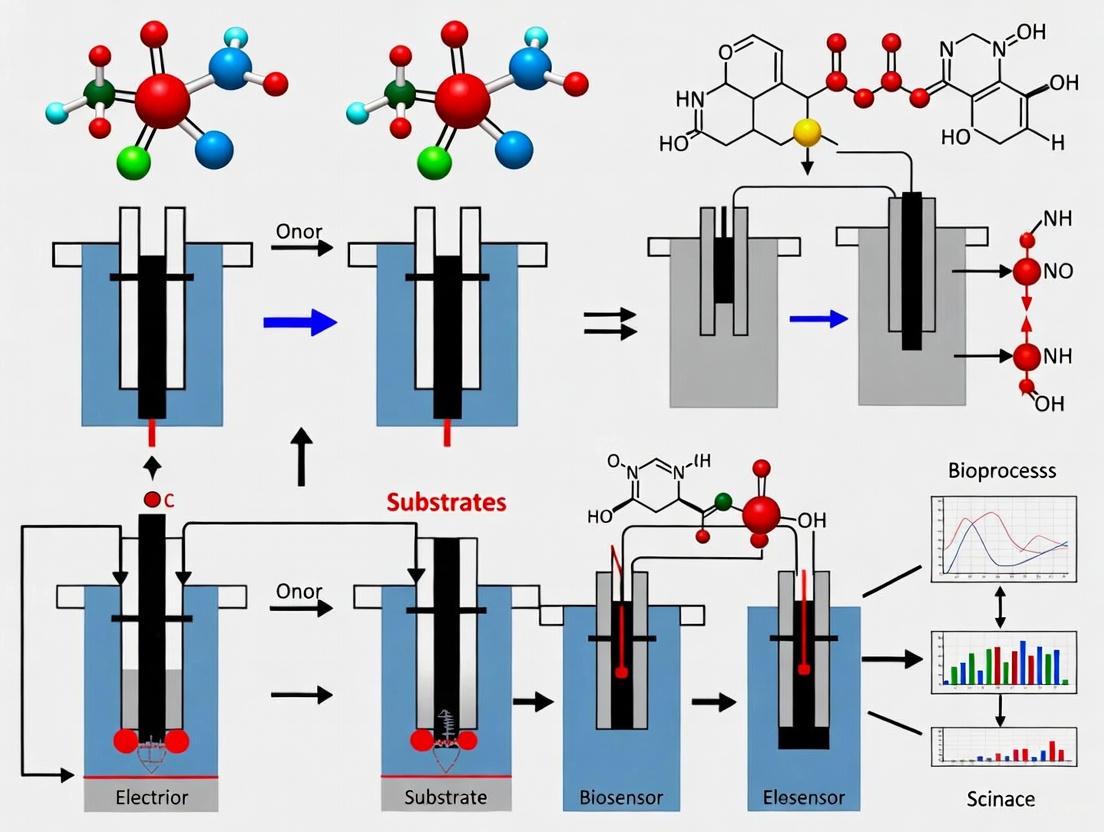
This article provides a comprehensive overview of how enzyme-based biosensors function within bioprocesses, tailored for researchers, scientists, and drug development professionals.
Enzyme-Based Biosensors in Bioprocesses: Principles, Applications, and Future Directions for Advanced Bio-Manufacturing
Abstract
This article provides a comprehensive overview of how enzyme-based biosensors function within bioprocesses, tailored for researchers, scientists, and drug development professionals. It explores the foundational principles of biocatalytic recognition and signal transduction, details methodological approaches for real-time monitoring of metabolites and process control, addresses key challenges in sensor stability and optimization, and evaluates performance validation against traditional analytical techniques. The content synthesizes the latest advancements in nanotechnology, immobilization techniques, and intelligent system integration, offering a complete guide for implementing these powerful analytical tools to enhance yield, consistency, and automation in bio-manufacturing and pharmaceutical production.
The Core Principles of Enzyme-Based Biosensors: From Biological Recognition to Measurable Signals
Enzyme-based biosensors represent a transformative analytical technology that leverages the specificity and catalytic efficiency of enzymes for quantitative detection of target substances. These devices are indispensable in bioprocess research, enabling real-time monitoring of key metabolites, process optimization, and high-throughput screening [1] [2]. Their unique ability to provide rapid, sensitive, and selective responses makes them particularly valuable for monitoring complex biological systems where metabolic mechanisms require precise control [2]. This technical guide examines the fundamental architecture and operational principles of enzyme-based biosensors within the context of bioprocess applications, providing researchers and drug development professionals with a comprehensive framework for implementation and innovation.
Core Structural Components
Every enzyme-based biosensor consists of three essential integrated components that work synergistically to convert biochemical information into measurable signals.
Biological Recognition Element
The biological recognition element consists of specific enzymes that serve as biocatalysts, providing the selectivity fundamental to biosensor operation. These enzymes interact specifically with target analytes (substrates), initiating catalytic reactions that produce measurable products [1] [3]. Commonly used enzymes include glucose oxidase for glucose monitoring, urease for urea hydrolysis, lactate oxidase for lactate conversion, cholesterol oxidase for cholesterol detection, and acetylcholinesterase for pesticide and neurotoxin monitoring [1]. The selection of appropriate enzymes depends on the target analyte and required specificity, with enzyme kinetics directly influencing biosensor performance characteristics including sensitivity, dynamic range, and response time [4].
Transducer
The transducer converts the biochemical signal produced by the enzyme-substrate interaction into a quantifiable electrical or optical output [1] [3]. Various transduction methods are employed in biosensor design:
- Electrochemical transducers (amperometric, potentiometric, conductometric, impedimetric) detect changes in electrical properties resulting from enzymatic reactions [1] [3].
- Optical transducers measure changes in light properties (absorbance, fluorescence, luminescence, refractive index) caused by enzymatic activity [1] [5].
- Thermal transducers (thermistor) register heat released or absorbed during enzymatic conversion [1].
- Piezoelectric transducers detect mass changes on the sensor surface resulting from enzymatic binding or conversion processes [1].
The choice of transducer depends on the specific application requirements, including needed sensitivity, detection limits, and compatibility with the sample matrix [1].
Immobilization Matrix
The immobilization matrix serves as a support structure that stabilizes the enzyme in proximity to the transducer surface, maintaining biological activity while enabling reusability [1]. Effective immobilization is critical for biosensor stability and longevity. Common immobilization techniques include:
- Physical adsorption through van der Waals forces
- Covalent bonding to functionalized surfaces
- Entrapment within polymer gels or membranes
- Affinity-based anchoring [1] [3]
The immobilization method significantly affects biosensor performance parameters including response time, operational stability, and sensitivity by influencing enzyme orientation, stability, and accessibility to substrates [1].
Working Principles and Signal Generation
The operational principle of enzyme-based biosensors relies on the specific catalytic interaction between the enzyme and its target substrate, followed by transduction of this biochemical event into a measurable signal.
Biochemical Recognition Phase
When the target analyte contacts the immobilized enzyme, a highly specific catalytic reaction occurs. For example, glucose oxidase catalyzes the oxidation of β-D-glucose to gluconic acid and hydrogen peroxide [1]. This reaction specifically consumes the substrate while generating products in proportion to the analyte concentration. The enzyme's intrinsic specificity ensures that even trace amounts of target compounds can be accurately identified amid complex sample matrices typical in bioprocessing environments [1] [4].
Signal Transduction Phase
The enzymatic reaction causes measurable changes in physicochemical parameters—such as electron transfer, proton concentration, heat generation, or light emission—which the transducer detects and converts into an electrical or optical signal [1]. In electrochemical biosensors, this typically involves measuring current (amperometric), potential (potentiometric), or impedance changes. Optical biosensors detect alterations in light absorption, fluorescence intensity, or refractive index [1] [5]. The magnitude of this signal correlates directly with analyte concentration, enabling quantitative analysis.
Signal Processing and Output
The raw signal from the transducer undergoes processing through electronic components and algorithms that amplify, filter, and convert it into a user-interpretable output displaying analyte concentration [3] [6]. Modern biosensors often incorporate microprocessors for data analysis, wireless connectivity for real-time monitoring, and interfaces compatible with process control systems essential for bioprocess optimization [2].
Figure 1: The working principle of enzyme-based biosensors involves sequential phases from sample introduction to quantifiable output signal generation.
Classification of Enzyme-Based Biosensors
Enzyme-based biosensors can be systematically categorized according to their transduction mechanism and operational generation, each offering distinct advantages for specific bioprocess applications.
Table 1: Classification of Enzyme-Based Biosensors by Transduction Mechanism
| Transduction Type | Detection Principle | Measured Parameter | Common Applications in Bioprocessing | Key Advantages |
|---|---|---|---|---|
| Electrochemical | Electron transfer during enzymatic reaction | Current, potential, or impedance | Glucose monitoring, metabolite tracking, fermentation control [1] [7] | High sensitivity, simplicity, portability [3] |
| Optical | Changes in light properties | Absorbance, fluorescence, luminescence, refractive index | Antibiotic detection, pathogen screening, biomolecule interaction studies [5] | High specificity, multiplexing capability, real-time monitoring [5] |
| Thermal | Heat release/absorption during catalysis | Temperature change | Enzyme activity screening, inhibitor detection [1] | Universal detection principle, label-free |
| Piezoelectric | Mass change on sensor surface | Resonance frequency | Growth monitoring, biomolecule adsorption [1] | Highly sensitive to mass changes |
Generational Development of Electrochemical Biosensors
Electrochemical enzyme biosensors have evolved through three distinct generations, each marked by improved selectivity and operational efficiency:
First Generation: These biosensors detect the consumption of co-substrates (e.g., oxygen) or formation of natural products (e.g., hydrogen peroxide) involved in the enzymatic reaction. They typically require high operating potentials, making them susceptible to electrochemical interferences from compounds like ascorbic acid and uric acid [4].
Second Generation: Incorporating synthetic mediators (e.g., ferrocene derivatives, ferricyanide) that shuttle electrons between the enzyme and electrode, these biosensors operate at lower potentials, reducing interference susceptibility and enhancing measurement accuracy [2] [4].
Third Generation: These systems achieve direct electron transfer (DET) between the enzyme's redox center and the electrode surface without mediators. This approach offers superior selectivity by operating at potentials close to the redox potential of the enzyme, minimizing interference from other electroactive species [4].
Table 2: Performance Characteristics of Electrochemical Biosensor Generations
| Generation | Electron Transfer Mechanism | Operating Potential | Interference Susceptibility | Key Applications |
|---|---|---|---|---|
| First | Detection of natural reactants/products | High (~0.7 V vs. Ag/AgCl) | High | Historical glucose monitoring [4] |
| Second | Artificial redox mediators | Medium (~0.4 V vs. Ag/AgCl) | Reduced | Commercial glucose sensors, portable analyzers [2] |
| Third | Direct electron transfer | Low (near enzyme redox potential) | Minimal | Implantable sensors, neurotransmitter detection [4] |
Experimental Implementation in Bioprocess Research
Implementing enzyme-based biosensors for bioprocess monitoring requires careful consideration of immobilization strategies, measurement protocols, and selectivity enhancement approaches.
Enzyme Immobilization Protocol: Covalent Binding Method
A robust enzyme immobilization procedure ensures biosensor stability and reproducibility essential for extended bioprocess monitoring:
Electrode Pretreatment: Clean the electrode surface (e.g., gold, carbon, or platinum) through mechanical polishing (0.05 μm alumina slurry) and electrochemical cycling in 0.5 M H₂SO₄ until stable cyclic voltammograms are obtained [3].
Surface Functionalization: Incubate the electrode in a solution containing functionalizing agents (e.g., cysteamine for gold surfaces or EDC/NHS for carbon surfaces) for 2-4 hours to create reactive groups for enzyme attachment [1].
Enzyme Immobilization: Apply enzyme solution (typically 1-10 mg/mL in appropriate buffer) to the functionalized surface and incubate for 12-24 hours at 4°C to facilitate covalent bonding [1].
Blocking and Storage: Treat with blocking agents (e.g., bovine serum albumin or ethanolamine) to cover non-specific binding sites. Rinse with buffer and store in appropriate conditions until use [3].
Selectivity Enhancement Strategies
Achieving accurate measurements in complex bioprocessing matrices requires implementation of selectivity enhancement strategies:
Permselective Membranes: Coat biosensors with membranes (e.g., Nafion, cellulose acetate, or chitosan) that exclude interfering compounds based on size, charge, or hydrophobicity while allowing analyte permeation [4].
Sentinel Sensors: Incorporate identical sensors lacking only the enzyme component to measure background signals from electroactive interferents, which can be subtracted from the biosensor response [4].
Multi-Enzyme Systems: Employ coupled enzyme reactions where a second enzyme converts interferents to non-interfering species (e.g., ascorbate oxidase to eliminate ascorbic acid interference) [4].
Chemometric Approaches: Use sensor arrays with differential selectivity profiles combined with multivariate calibration to resolve analyte signals in complex mixtures [4].
Figure 2: Multiple strategies can be implemented to enhance biosensor selectivity in complex sample matrices, including membranes, sentinel sensors, multi-enzyme systems, and chemometric analysis.
The Scientist's Toolkit: Essential Research Reagents and Materials
Successful development and implementation of enzyme-based biosensors requires specific reagents and materials optimized for various aspects of biosensor fabrication and operation.
Table 3: Essential Research Reagents and Materials for Enzyme Biosensor Development
| Category | Specific Examples | Function/Purpose | Application Notes |
|---|---|---|---|
| Enzymes | Glucose oxidase, Lactate oxidase, Urease, Acetylcholinesterase | Biological recognition element; catalyzes specific substrate conversion | Select source based on purity, specific activity, and stability requirements [1] |
| Immobilization Matrices | Chitosan, Nafion, Polyacrylamide, Alginate, Sol-gels | Stabilizes enzyme structure; maintains proximity to transducer | Consider compatibility with enzyme and sample matrix; affects response time [1] |
| Crosslinkers | Glutaraldehyde, EDC/NHS, PEG-diisocyanate | Forms covalent bonds between enzyme and support matrix | Optimize concentration to balance enzyme activity and leaching prevention [1] |
| Electrode Materials | Gold, glassy carbon, platinum, screen-printed carbon, FTO/ITO | Serves as transducer platform; facilitates electron transfer | Surface roughness and pretreatment significantly affect performance [3] |
| Nanomaterials | Graphene, carbon nanotubes, metal nanoparticles, MOFs | Enhances electron transfer; increases surface area | Improves sensitivity and detection limits; requires characterization [1] [2] |
| Mediators | Ferrocene derivatives, potassium ferricyanide, Meldola's Blue | Shuttles electrons between enzyme and electrode | Lowers operating potential, reducing interference [2] [4] |
| Membranes | Cellulose acetate, polycarbonate, PDMS, Nafion | Provides selectivity; prevents fouling | Thickness and porosity control response time and selectivity [4] |
Enzyme-based biosensors represent a sophisticated integration of biological recognition elements with physicochemical transducers, creating powerful analytical tools essential for modern bioprocess research. Their core components—specific enzymes as recognition elements, various transducers, and effective immobilization matrices—work synergistically to provide selective, sensitive, and rapid detection of target analytes in complex biological matrices. The continued evolution of biosensor technology, including the development of nanozymes, advanced immobilization techniques, and integration with artificial intelligence, promises to further expand their applications in bioprocessing, enabling more efficient monitoring and control of biological systems. For researchers and drug development professionals, understanding these fundamental principles provides a foundation for innovating new biosensing platforms that address emerging challenges in bioprocess optimization and metabolic engineering.
In the landscape of bioprocess research, the precise monitoring of critical parameters is paramount for understanding metabolic pathways, optimizing production yields, and ensuring final product quality. Enzyme-based biosensors have emerged as transformative analytical tools that meet these demands, with their performance fundamentally rooted in the properties of their catalytic core: the biorecognition element [1]. This element is most often an enzyme—a biological catalyst that provides unparalleled specificity and sensitivity. Enzymes serve as the molecular interface between the complex biochemistry of a bioprocess and the physical transducer of the biosensor, initiating a selective reaction with a target analyte (substrate) to generate a measurable signal [8] [1]. The high specificity is dictated by the unique three-dimensional structure of the enzyme, which forms binding cavities that complement the target molecule through hydrogen-bonding, electrostatics, and other non-covalent interactions [8].
This technical guide delves into the mechanisms by which enzymes function as biorecognition elements, framing their operation within the context of modern bioprocess research and drug development. It explores the principles of enzyme specificity and catalytic activity, details the experimental protocols for developing and immobilizing enzymatic sensors, and highlights cutting-edge innovations that are pushing the boundaries of what these powerful tools can achieve.
Enzyme Specificity and Catalytic Mechanisms
The utility of enzymes in biosensors stems directly from their innate capacity to interact with substrates in a highly specific manner and catalyze reactions with remarkable efficiency.
Molecular Basis of Specificity
Enzyme specificity arises from the precise arrangement of amino acids within the active site, creating a unique binding pocket that is structurally and chemically complementary to its intended substrate [8]. This "lock-and-key" or "induced fit" model ensures that the biosensor responds selectively to the target analyte, even in complex matrices like fermentation broth or cell culture media. This selectivity is crucial for bioprocess monitoring, where interfering substances are common, and the accurate measurement of specific metabolites (e.g., glucose, lactate, glutamate) is critical for understanding process kinetics [9].
Signal Generation through Catalysis
Enzyme-based biosensors are predominantly biocatalytic [10]. The core signal generation mechanism involves the enzyme capturing its target analyte and catalyzing its conversion into a measurable product [8]. This biochemical transformation is the primary event that the transducer subsequently converts into a quantifiable output.
Common enzymatic reactions and their detectable products include:
- Oxidation/Reduction: Oxidoreductases often produce or consume electrochemically active species like hydrogen peroxide (H₂O₂) or nicotinamide adenine dinucleotide (NADH) [1].
- Hydrolysis: Hydrolases, such as urease, catalyze hydrolysis reactions that yield products like ammonia or carbon dioxide, leading to measurable changes in pH [1].
- Group Transfer: Transferases move functional groups between molecules, which can be coupled to other detection systems.
Table 1: Common Enzymes Used in Biosensors and Their Catalytic Reactions
| Enzyme | Target Analyte | Catalytic Reaction | Primary Detectable Signal |
|---|---|---|---|
| Glucose Oxidase (GOx) | Glucose | β-D-glucose + O₂ → Gluconic acid + H₂O₂ | Amperometric (H₂O₂ oxidation) [1] |
| Urease | Urea | Urea + H₂O → 2NH₃ + CO₂ | Potentiometric (pH change) [1] |
| Lactate Oxidase (LOx) | Lactate | L-lactate + O₂ → Pyruvate + H₂O₂ | Amperometric (H₂O₂ oxidation) [1] |
| Cholesterol Oxidase (ChOx) | Cholesterol | Cholesterol + O₂ → Cholest-4-en-3-one + H₂O₂ | Amperometric / Optical [1] |
| Acetylcholinesterase (AChE) | Pesticides (as inhibitors) | Acetylcholine → Choline + Acetate | Amperometric (inhibition of current) [1] |
The following diagram illustrates the fundamental workflow of a substrate-based enzymatic biosensor, from analyte binding to signal generation.
Enzyme Electrochemical Biosensors: Principles and Generations
The evolution of enzyme electrochemical biosensors is categorized into generations, defined by their mechanism of electron transfer between the enzyme's redox center and the electrode transducer [11].
The Four Generations of Biosensors
- First Generation: These sensors rely on the detection of a natural co-product of the enzymatic reaction, such as the consumption of oxygen or the generation of hydrogen peroxide. Their main limitation is the dependence on dissolved oxygen, which can lead to fluctuations in the signal [11].
- Second Generation: To overcome oxygen dependence, this generation introduces synthetic redox mediators (e.g., ferrocene, Prussian blue). These mediators shuttle electrons from the enzyme's redox center to the electrode surface, enabling Mediated Electron Transfer (MET). This allows operation at lower potentials, reducing interference from other electroactive substances [11].
- Third Generation: This represents the ideal for many applications, as it achieves Direct Electron Transfer (DET) between the enzyme's active site and the electrode, without any mediators. This is often facilitated by nanomaterial-modified electrodes that "wire" the enzyme directly, minimizing interference and simplifying biosensor design [11].
- Fourth Generation: Also known as non-enzymatic or nano-enzymatic biosensors, this class uses nanomaterials with intrinsic enzyme-like catalytic activity (nanozymes) as the recognition element. While offering superior stability, their selectivity is often lower than that of natural enzymes [11].
Table 2: Comparison of Electrochemical Biosensor Generations
| Generation | Electron Transfer Mechanism | Key Features | Advantages | Disadvantages |
|---|---|---|---|---|
| First | Natural Cofactor (O₂/H₂O₂) | Measures O₂ consumption or H₂O₂ production | Simple concept | Oxygen dependent; Signal interference |
| Second | Mediated Electron Transfer (MET) | Uses synthetic redox mediators | Low operating potential; Oxygen independent | Mediator can leach; Limited mediator selectivity |
| Third | Direct Electron Transfer (DET) | Direct electron flow between enzyme and electrode | No mediator; Minimal interference; High selectivity | Technically challenging; Requires specific electrode nanomaterials |
| Fourth | Nanozyme Catalysis | Uses nanomaterial-based enzyme mimics | Highly stable; Low cost; Tunable | Generally lower substrate selectivity than natural enzymes |
The conceptual shift from first- to third-generation biosensors is illustrated below, highlighting the critical difference in electron transfer pathways.
Advanced Experimental Protocols and Innovations
Protocol: Enzyme Immobilization via Nanomaterial-Modified Electrodes
A critical step in fabricating robust biosensors is the effective immobilization of the enzyme onto the transducer surface. The goal is to maintain enzyme activity, stability, and proximity to the electrode.
Detailed Methodology:
- Electrode Modification: A working electrode (e.g., glassy carbon, gold) is polished and cleaned. Nanomaterials—such as graphene oxide, carbon nanotubes, or metal-organic frameworks (MOFs)—are dispersed in a solvent (e.g., ethanol/water mixture) and drop-cast onto the electrode surface, then dried to form a thin, conductive film [11].
- Enzyme Immobilization: The enzyme is immobilized onto the nanomaterial-modified electrode using one of several techniques:
- Physical Adsorption: The enzyme solution is incubated on the electrode, relying on weak physical forces. It is simple but can lead to enzyme leaching.
- Covalent Bonding: The nanomaterial surface is activated (e.g., with EDC/NHS chemistry) to create reactive groups that form strong covalent bonds with amino acid residues on the enzyme, providing stable and reliable immobilization [11].
- Entrapment: The enzyme is mixed with a polymer matrix (e.g., Nafion, chitosan) or trapped within the porous structure of a material like a MOF, which physically confines the enzyme while allowing substrate and product diffusion [12] [1].
- Biosensor Assembly and Testing: The modified electrode is integrated into the biosensor system. Performance is validated by measuring the electrochemical response (e.g., amperometric current) in standard solutions with known concentrations of the target analyte to establish sensitivity, linear range, and limit of detection.
Innovation: Programmable Enzyme Activation via Nucleic Acid Hybridization
A groundbreaking innovation moves beyond traditional "always-on" enzymes to those that can be activated on demand. A 2025 study detailed a method to control enzyme activity with the specificity of nucleic acid hybridization [13].
Experimental Workflow:
- Synthesis of "Chemical Zymogen": An enzyme (e.g., creatine kinase, CK) is covalently conjugated to an oligonucleotide via a disulfide linkage at a critical cysteine residue (Cys-283) in its active site. This conjugation both inactivates the enzyme and splits its active homodimer form into monomers, creating an inactive "chemical zymogen" [13].
- Sequence-Specific Activation: The addition of a thiolated complementary DNA strand triggers hybridization at the conjugated oligonucleotide. This brings a thiol group into proximity, inducing a disulfide exchange reaction. This reaction liberates the oligonucleotide from the enzyme's active site [13].
- Catalytic Activity Turn-On: The freed CK monomer units reassemble into the catalytically active homodimer, switching on enzymatic activity. This activation is highly sequence-specific, as non-complementary DNA strands fail to trigger the response [13].
This protocol couples the extreme specificity of nucleic acid hybridization with the powerful signal amplification of enzymatic catalysis, opening new avenues for programmable biosensing and biochemical control. The process is summarized in the workflow below.
Innovation: Spatial Mapping of Kinase Activity with ProKAS
For understanding complex intracellular bioprocesses, a novel biosensor technology called Proteomic Kinase Activity Sensors (ProKAS) was developed to map the activity of kinases—key regulatory enzymes—inside living cells with spatial resolution [14].
Detailed Methodology:
- Introduction of Barcoded Peptides: Cells are engineered to express peptides that mimic the natural substrates of target kinases. Each peptide is tagged with a unique amino acid sequence "barcode" that also defines its sub-cellular location [14].
- In Vivo Phosphorylation: As kinases become active in response to cellular stimuli (e.g., a drug-induced DNA damage response), they phosphorylate these localized substrate peptides.
- Mass Spectrometry Readout: Cells are lysed, and the peptides are analyzed using mass spectrometry. The technique detects both the phosphorylation event (indicating kinase activity) and the specific barcode, revealing not only which kinase was active but also where and when inside the cell this activity occurred [14].
- Application: This approach allows researchers to monitor the activation patterns of numerous kinases simultaneously in specific compartments like the nucleus, providing an unprecedented view of signaling dynamics in bioprocess research and drug mechanism studies [14].
The Scientist's Toolkit: Essential Reagents and Materials
Table 3: Key Research Reagent Solutions for Enzyme Biosensor Development
| Reagent/Material | Function and Role in Development | Example Use Case |
|---|---|---|
| Redox Mediators (e.g., Ferrocene, Prussian Blue) | Synthetic molecules that shuttle electrons in MET-based (2nd Gen) biosensors, enabling low-potential detection and oxygen-independent operation [11]. | Lowering working potential in glucose sensors to avoid interference from ascorbic acid. |
| Functionalized Nanomaterials (CNTs, Graphene, MOFs) | Provide a high-surface-area, conductive scaffold for enzyme immobilization. Enhance electron transfer (facilitating DET) and can stabilize the enzyme structure [12] [11]. | MOFs engineered with redox mediators act as "wires" to transfer electrons to oxidoreductase enzymes, improving stability and efficiency [12]. |
| Thiolated Oligonucleotides | DNA strands with a terminal thiol group (~20 nucleotides). Used in advanced techniques for programmable, sequence-specific activation or inhibition of enzyme activity via disulfide chemistry [13]. | Creating hybridization-activated enzyme zymogens for highly specific nucleic acid detection. |
| Immobilization Matrices (Chitosan, Nafion, Sol-Gels) | Polymers or gels used to entrap and retain enzymes on the electrode surface, preventing leaching while allowing diffusion of substrates and products [1]. | Forming a biocompatible membrane over an enzyme layer for use in flow systems or harsh environments. |
| Nanozymes (e.g., Cerium Oxide, Prussian Blue NPs) | Nanomaterials with intrinsic enzyme-like catalytic activity. Serve as stable, cost-effective, and tunable alternatives to natural enzymes in 4th generation biosensors [1]. | Detecting reactive oxygen species in cell culture media where natural enzymes would rapidly degrade. |
The biorecognition element, particularly the enzyme, remains the cornerstone of specificity and catalytic power in biosensors designed for bioprocess research. From the foundational principles of substrate specificity and mediated electron transfer to the cutting-edge innovations of spatially mapped kinase activity and hybridization-switchable zymogens, the field is continuously evolving. The integration of sophisticated nanomaterials and novel bio-conjugation techniques is pushing the limits of sensitivity, stability, and functional complexity. For researchers and drug development professionals, a deep understanding of these enzyme mechanisms and the associated toolkit is not merely academic—it is essential for designing the next generation of analytical devices that will drive innovation in biomanufacturing, biopharmaceuticals, and beyond.
Enzyme-based biosensors are analytical devices that integrate a biological recognition element with a physicochemical transducer to detect specific analytes. The core of their functionality lies in the transducer, which converts the biochemical reaction between the enzyme and the target analyte into a quantifiable electrical or optical signal. In bioprocess research, this enables real-time monitoring of metabolites, nutrients, and contaminants, providing researchers and drug development professionals with critical data for process optimization and control. The specificity is primarily dictated by the enzyme-substrate interaction, ensuring accurate identification of target compounds like glucose, cholesterol, urea, or antibiotics even at trace concentrations [1].
The fundamental operation involves a three-component system: the enzyme serves as the biocatalyst, specifically interacting with the target analyte; the transducer detects the physicochemical change resulting from this interaction; and immobilization techniques stabilize the enzyme, enabling reusable and consistent performance. These biosensors are indispensable in diverse sectors, including bioprocess engineering, where they facilitate rapid, sensitive, and selective monitoring of fermentation processes, cell cultures, and downstream processing. Their ability to offer real-time analysis supports precision medicine, high-throughput screening, and the development of wearable or field-deployable monitoring devices [3].
Core Principles of Signal Transduction
The functional mechanism of enzyme-based biosensors relies on the specific enzyme-substrate interaction. When the target analyte comes into contact with the enzyme, a catalytic reaction occurs, often resulting in the production or consumption of specific molecules. This biochemical transformation is the first step in signal generation [1]. The enzymatic reaction causes a change in a physicochemical parameter—such as pH, redox potential, heat, mass, or light emission—which is detected by the transducer. This change is then converted into an electrical or optical signal that corresponds to the analyte concentration [1].
Table 1: Core Components of Enzyme-Based Biosensors
| Component | Description | Common Examples in Bioprocesses |
|---|---|---|
| Biological Recognition Element (Enzyme) | The biocatalyst that specifically interacts with the target analyte [1]. | Glucose oxidase, Lactate oxidase, Urease, Cholesterol oxidase [1]. |
| Transducer | The device that converts the biochemical reaction into a measurable signal [1] [15]. | Electrochemical (electrode), Optical (photodetector), Thermal (thermistor) [1]. |
| Immobilization Matrix | The support structure that stabilizes the enzyme and keeps it in proximity to the transducer [1]. | Polymers, gels, nanomaterials for physical adsorption, covalent bonding, or entrapment [1]. |
The Biorecognition and Transduction Process
The following diagram illustrates the generalized workflow of signal transduction in an enzyme-based biosensor, from analyte introduction to signal output, which is common across various detection methods.
Electrochemical Transduction
Electrochemical biosensors are dominant in clinical diagnostics and bioprocess monitoring due to their simplicity, high sensitivity, and portability [3]. They operate by detecting changes in electrical properties resulting from enzymatic redox reactions. The consumption of a substrate or the generation of a product alters the electrical characteristics at the electrode surface, which is then measured.
Methodologies and Experimental Protocols
Amperometric Detection Protocol:
- Objective: To measure the current generated by the oxidation or reduction of an electroactive species involved in the enzymatic reaction.
- Immobilization: The enzyme (e.g., Glucose Oxidase, GOx) is immobilized onto the working electrode surface via covalent bonding or entrapment within a polymer matrix like Nafion or a chitosan hydrogel [1].
- Application of Potential: A constant potential is applied between the working electrode and the reference electrode (e.g., Ag/AgCl).
- Reaction and Measurement: Upon introduction of the analyte (e.g., glucose), the enzyme catalyzes its oxidation. The co-product, hydrogen peroxide (H₂O₂), is oxidized at the electrode surface, generating a current that is directly proportional to the analyte concentration [1].
- Data Analysis: The current is measured over time, and the steady-state current or the peak current is plotted against analyte concentration to create a calibration curve.
Potentiometric Detection Protocol:
- Objective: To measure the potential difference across an electrode interface when no significant current is flowing.
- Immobilization: An ion-selective enzyme, such as Urease, is immobilized on the surface of an ion-selective electrode (e.g., a pH electrode) [1].
- Reaction and Measurement: The enzymatic reaction (e.g., hydrolysis of urea into ammonia and CO₂) causes a local change in ion concentration (e.g., pH). This change is measured as a potential shift by the electrode [1].
- Data Analysis: The potential is recorded and correlated to the logarithm of the analyte concentration using the Nernst equation.
Table 2: Performance Characteristics of Electrochemical Transduction Methods
| Method | Measured Quantity | Common Enzyme Example | Typical Bioprocess Analyte | Reported Detection Limit |
|---|---|---|---|---|
| Amperometric | Current | Glucose Oxidase (GOx) | Glucose | Low µM range [1] |
| Potentiometric | Potential (Voltage) | Urease | Urea | Low mM range [1] |
| Impedimetric | Impedance (Resistance) | Various | Broad-range detection | Varies with application [3] |
Optical Transduction
Optical biosensors measure changes in light properties as a result of the enzymatic reaction. They are favored in research for their high sensitivity, capability for multiplexing, and suitability for real-time, label-free monitoring [3]. These sensors are particularly valuable in bioprocess research for tracking biomarkers, contaminants, and metabolic products without complex sample preparation.
Methodologies and Experimental Protocols
Fluorometric Detection Protocol:
- Objective: To quantify the analyte based on changes in fluorescence intensity, lifetime, or energy transfer.
- Immobilization: The enzyme is co-immobilized with a fluorogenic substrate or encapsulated in a sensing layer near an optical fiber or a waveguide.
- Excitation and Measurement: The sensing layer is exposed to light at a specific excitation wavelength. The enzymatic reaction may produce a fluorescent product, consume a fluorescent substrate, or alter the local environment of a fluorescent dye (e.g., via pH change). The resulting fluorescence emission is detected by a photomultiplier tube or a CCD camera [5].
- Data Analysis: The intensity or lifetime of the fluorescence emission is measured and plotted against analyte concentration. For instance, β-galactosidase-based sensors can use chlorophenol red β-D-galactopyranoside as a substrate, where the enzymatic hydrolysis produces a colorimetric and fluorometric change [5].
Surface Plasmon Resonance (SPR) Protocol:
- Objective: To detect real-time binding interactions and kinetics by monitoring changes in the refractive index on a sensor surface.
- Immobilization: The enzyme is immobilized on a thin gold film sensor chip.
- Measurement: Polarized light is shone onto the chip, exciting surface plasmons. When the analyte binds to the enzyme, it causes a mass change, altering the refractive index at the surface and shifting the SPR angle [1] [3].
- Data Analysis: The shift in the resonance angle is monitored in real-time, providing information on binding kinetics (association and dissociation rates) and analyte concentration.
Colorimetric Biosensor Protocol:
- Objective: To produce a visible color change detectable by the naked eye or a simple spectrophotometer.
- Immobilization: Enzymes are immobilized on a paper-based strip or within a microfluidic channel.
- Reaction and Measurement: The enzyme reacts with the analyte to produce a colored product. For example, the production of hydrogen peroxide in an oxidase-based reaction can be coupled with a chromogen like tetramethylbenzidine (TMB) in the presence of peroxidase [5].
- Data Analysis: The color intensity is quantified using a digital scanner or a smartphone camera, and the RGB values are correlated with concentration.
Table 3: Performance Characteristics of Optical Transduction Methods
| Method | Measured Property | Example Application | Key Advantage |
|---|---|---|---|
| Colorimetric | Absorbance / Color | Tetracycline detection using Ferritin (LOD: 15.0 nM) [5] | Simplicity, cost-effectiveness [5] |
| Fluorometric | Fluorescence Intensity | Antibiotic detection using β-galactosidase [5] | High sensitivity [3] |
| SPR | Refractive Index | Real-time binding kinetics [1] | Label-free, real-time monitoring [3] |
Thermal Transduction
Thermal biosensors, or thermistor-based biosensors, measure the enthalpy change (heat) produced or absorbed during an enzymatic reaction. Virtually all enzymatic reactions are exothermic or endothermic, making thermal transduction a broadly applicable method. These sensors are highly robust as they are largely unaffected by the optical or electrochemical properties of the sample.
Methodologies and Experimental Protocols
Calorimetric/Thermometric Detection Protocol:
- Objective: To measure the temperature change in a reaction chamber resulting from the heat of an enzymatic reaction.
- Immobilization: The enzyme is immobilized onto an inert and thermally conductive solid support, such as controlled-pore glass or polymer beads, which are packed into a small column that acts as the reaction chamber [1].
- Measurement Setup: The enzyme column is integrated with a highly sensitive thermistor (temperature sensor). The entire assembly is thermally insulated to minimize heat loss to the environment. A reference column without the enzyme or with an inactivated enzyme is often used to compensate for non-specific heating or cooling.
- Reaction and Measurement: The substrate solution is passed through the enzyme column at a constant flow rate. The enzymatic reaction generates or absorbs heat, causing a temperature change (ΔT) in the column, which is detected by the thermistor.
- Data Analysis: The temperature change is proportional to the molar enthalpy (ΔH) and the number of moles of substrate converted. The signal is calibrated against known analyte concentrations. A classic example is the "enzyme thermistor" developed by the Klaus Mosbach group [15].
The following diagram illustrates the typical setup and signal flow for a thermal transduction system.
The Scientist's Toolkit: Research Reagent Solutions
The development and application of enzyme-based biosensors require a specific set of reagents and materials to ensure optimal performance, stability, and reproducibility. The following table details key components for a typical biosensor setup.
Table 4: Essential Research Reagents and Materials for Biosensor Development
| Item | Function / Application |
|---|---|
| Glucose Oxidase (GOx) | A model enzyme for amperometric biosensors; catalyzes the oxidation of β-D-glucose to gluconolactone and H₂O₂ [1]. |
| Urease | A key enzyme for potentiometric biosensors; catalyzes the hydrolysis of urea to ammonia and carbon dioxide, enabling detection via pH change [1]. |
| Acetylcholinesterase (AChE) | Used in inhibitor-based biosensors for environmental monitoring; its inhibition by organophosphates and carbamates is the basis for pesticide detection [1]. |
| Nafion / Chitosan | Polymer matrices used for enzyme immobilization on transducer surfaces via entrapment, enhancing enzyme stability and reusability [1] [3]. |
| Carbon Nanotubes (CNTs) / Graphene | Nanomaterials used to modify electrode surfaces; they provide a high surface area, excellent electrical conductivity, and can enhance sensitivity and lower detection limits [1] [15]. |
| Gold Nanoparticles (AuNPs) | Used in optical and electrochemical biosensors; they can facilitate electron transfer, act as enzyme carriers, or enhance optical signals via plasmonic effects [15]. |
| Tetramethylbenzidine (TMB) | A chromogenic substrate used in colorimetric assays, particularly in conjunction with peroxidase enzymes to produce a visible blue color [5]. |
| Chlorophenol red β-D-galactopyranoside | A chromogenic and fluorogenic substrate used in enzyme assays (e.g., with β-galactosidase) for antibiotic detection [5]. |
Enzyme immobilization is a foundational technology for developing effective enzyme-based biosensors, which are crucial tools in bioprocess research, medical diagnostics, and drug development. Immobilization refers to the confinement of enzymes to a phase different from that of the substrates and products, typically a solid support or matrix [16]. This process is indispensable for creating the core recognition element of a biosensor, as it enables the repeated and continuous use of enzymes while maintaining their catalytic activities [17]. For researchers and scientists developing analytical tools for bioprocess monitoring, the primary advantages of using immobilized enzymes include enhanced operational stability, reusability, continuous process automation, and ease of separation from reaction mixtures [16] [18]. The selection of an appropriate immobilization technique directly impacts the performance, sensitivity, and longevity of the resulting biosensor, making it a critical design consideration.
Core Enzyme Immobilization Techniques
The three primary techniques for enzyme immobilization are adsorption, covalent binding, and entrapment. Each method operates on distinct principles and offers specific advantages and limitations for biosensor applications.
Adsorption
Principles and Mechanisms: Adsorption is one of the simplest and most straightforward immobilization methods. It relies on weak physical forces—such as van der Waals forces, hydrophobic interactions, and ionic bonding—to attach enzyme molecules to the surface of a solid support [16] [17]. The process typically involves bathing the support in an enzyme solution under conditions that sustain enzyme activity, followed by washing to remove unadsorbed molecules [17].
Table 1: Sub-categories of Adsorption Immobilization
| Sub-category | Binding Force | Common Supports | Key Characteristics |
|---|---|---|---|
| Physical Adsorption | Hydrogen bonding, van der Waals forces [17] | Microcrystalline cellulose, kaolin [16] | Simple, reagent-free, low cost, but reversible binding [17] |
| Electrostatic Binding | Ionic and polar interactions [17] | Polyelectrolytes (e.g., chitosan, PSS, PAH) [17] | Utilizes enzyme's surface charge; includes Layer-by-Layer deposition [17] |
| Hydrophobic Adsorption | Hydrophobic interactions [17] | Polypropylene-based granules (e.g., Accurel EP-100) [16] | Interaction strength depends on the hydrophobicity of both adsorbent and enzyme [17] |
Experimental Protocol for Layer-by-Layer (LBL) Electrostatic Adsorption:
- Support Preparation: Begin with a solid, charged substrate (e.g., a gold electrode or silica nanoparticle).
- Polyelectrolyte Dipping: Immerse the substrate in an aqueous solution of an oppositely charged polyelectrolyte (e.g., poly(allylamine hydrochloride) for a cationic layer) for 10-20 minutes to form the first layer.
- Washing: Rinse the coated substrate thoroughly with buffer (e.g., phosphate buffer, pH 7.0) to remove loosely bound molecules.
- Enzyme Dipping: Dip the substrate into a solution of the enzyme, which carries the opposite charge to the initial polyelectrolyte layer.
- Repeat: Alternate the dipping and washing steps between polyelectrolyte and enzyme solutions until the desired number of layers is achieved.
- Final Wash and Dry: Perform a final rinse and allow the fabricated biosensing interface to air-dry under mild conditions [17].
Covalent Binding
Principles and Mechanisms: Covalent binding involves the formation of strong, irreversible covalent bonds between functional groups on the enzyme's surface (e.g., amino, carboxyl, or phenolic groups from amino acids like arginine, aspartic acid, and histidine) and reactive groups on a functionalized support [16] [19]. This method often requires the use of bi- or multifunctional cross-linking agents, such as glutaraldehyde, to facilitate the bond formation [16].
Table 2: Common Covalent Immobilization Techniques
| Technique/Reagent | Functional Groups Involved | Support Examples | Key Characteristics |
|---|---|---|---|
| Carbodiimide Chemistry | Enzyme's -COOH with support's -NH₂ [19] | Silica gel, Chitosan [16] [19] | Forms stable amide bonds; requires a carbodiimide reagent like EDC [19] |
| Schiff Base Formation | Enzyme's -NH₂ with support's -CHO [19] | CNBr-activated agarose, Glutaraldehyde-activated supports [16] [19] | Involves an aldehyde-containing support; bonds can be stabilized via reduction [19] |
| Glutaraldehyde Cross-linking | Between enzyme's -NH₂ groups [16] | Amino-functionalized supports [16] | Serves as both a cross-linker and a spacer arm; soluble in aqueous solvents [16] |
Experimental Protocol for Covalent Immobilization via Glutaraldehyde:
- Support Activation: Incubate an amino-functionalized support (e.g., aminosilane-coated magnetic nanoparticles) with a 2-5% (v/v) glutaraldehyde solution in a suitable buffer (e.g., 0.1 M phosphate buffer, pH 7.0) for 1-2 hours at room temperature with gentle agitation.
- Washing: Remove excess glutaraldehyde by extensively washing the activated support with the same buffer and then with deionized water.
- Enzyme Coupling: Add the purified enzyme solution (in a weak buffer like 0.1 M carbonate, pH 8.0, to favor the reaction with unprotonated amino groups) to the activated support. Incubate for 2-12 hours at 4°C.
- Blocking (Optional): To minimize non-specific binding, block any remaining active aldehyde groups by incubating with a inert amine-containing compound like ethanolamine (1 M, pH 8.0) for 1 hour.
- Final Washing: Wash the immobilized enzyme preparation with a high-ionic-strength buffer (e.g., phosphate buffer with 1 M NaCl) and then with the storage buffer to remove any unbound enzyme [16] [19].
Entrapment
Principles and Mechanisms: Entrapment involves physically caging enzymes within the interstices of a porous polymer network or membrane [16] [20]. Unlike adsorption and covalent binding, this method does not rely on direct binding between the enzyme and the matrix. Instead, the enzyme is encapsulated within a lattice, allowing substrates and products to diffuse freely while retaining the larger enzyme molecule [20].
Experimental Protocol for Entrapment in Alginate Gel Beads:
- Polymer Preparation: Prepare a 2-4% (w/v) sodium alginate solution in a buffer compatible with the enzyme.
- Enzyme Mixing: Gently mix the enzyme with the alginate solution until homogenous, avoiding foam formation.
- Droplet Formation: Using a syringe pump or peristaltic pump, extrude the enzyme-alginate mixture dropwise into a cold, stirred solution of calcium chloride (e.g., 0.1-0.5 M).
- Gelation: Allow the formed beads to harden in the calcium chloride solution for 30-60 minutes to complete the ionotropic gelation process.
- Harvesting and Washing: Collect the beads by filtration or sieving, and wash them thoroughly with buffer to remove any enzyme trapped on the surface and to condition the beads for use [20].
Diagram 1: Experimental workflow for immobilizing enzymes via adsorption, covalent binding, or entrapment, leading to biosensor integration.
The Scientist's Toolkit: Essential Research Reagents
Selecting the appropriate materials is critical for successful enzyme immobilization. The table below details key reagents and their functions in developing immobilized enzyme systems for biosensors.
Table 3: Essential Reagents for Enzyme Immobilization Experiments
| Reagent / Material | Function / Role | Example Applications |
|---|---|---|
| Octyl-Agarose / Sepabeads | Hydrophobic support for adsorption; enhances affinity and stability [16]. | Lipase immobilization for increased yield and tenfold stability [16]. |
| Glutaraldehyde | Bifunctional cross-linker for covalent binding; forms stable intra- and inter-subunit bonds [16]. | Covalent coupling of enzymes to amino-functionalized supports (e.g., chitosan, aminosilanes) [16] [19]. |
| Sodium Alginate | Polyanionic polymer for entrapment via ionotropic gelation with Ca²⁺ ions [20]. | Forming gel beads to encapsulate laccase for dye removal or proteases for dairy processing [20]. |
| Cyanogen Bromide (CNBr) | Activator for carbohydrate-based supports (e.g., agarose, Sepharose) to enable covalent binding [16]. | Pre-activation of Sepharose for coupling enzymes via primary amines [16]. |
| Polyelectrolytes (e.g., PSS, PAH) | Charged polymers for electrostatic Layer-by-Layer (LBL) assembly [17]. | Building multilayered enzyme films on transducer surfaces for enhanced sensitivity [17]. |
| Aminosilanes (e.g., APTES) | Coupling agent to introduce primary amine groups (-NH₂) onto inorganic supports (e.g., silica, glass) [19]. | Functionalizing mesoporous silica nanoparticles for subsequent covalent enzyme attachment [16]. |
Connecting Immobilization to Biosensor Function in Bioprocesses
In bioprocess research and drug development, enzyme-based biosensors provide real-time, in-line monitoring of critical parameters, revolutionizing process control [21]. The immobilization techniques detailed above are fundamental to the performance of these analytical devices. A biosensor integrates a biological recognition element (the immobilized enzyme) with a transducer that converts the biochemical reaction into a quantifiable signal [1].
Diagram 2: The core working principle of an enzyme-based biosensor, highlighting the role of the immobilized enzyme.
The working principle involves the specific binding of the target analyte (substrate) to the immobilized enzyme, which catalyzes a reaction, producing a detectable product or causing a change in the microenvironment [1]. This change is converted by the transducer—which can be electrochemical (amperometric or potentiometric), optical, thermal, or piezoelectric—into an electrical or optical signal proportional to the analyte concentration [1]. For instance, in a glucose biosensor, glucose oxidase immobilized on the electrode catalyzes the oxidation of glucose, producing hydrogen peroxide, which is then detected amperometrically [1].
The immobilization method directly influences the biosensor's sensitivity, stability, reusability, and response time. Effective immobilization prevents enzyme leakage, maintains biological activity, and shields the enzyme from aggregation and proteolysis [16] [17]. This is especially critical in bioprocess monitoring, where sensors must function reliably over extended periods in complex fermentation broths [22] [21].
Comparative Analysis and Application Selection
Table 4: Comparative Analysis of Immobilization Techniques for Biosensor Design
| Parameter | Adsorption | Covalent Binding | Entrapment |
|---|---|---|---|
| Binding Force | Weak physical forces (van der Waals, hydrophobic, ionic) [17] | Strong covalent bonds [19] | Physical restriction within a porous network [20] |
| Stability | Low to moderate; sensitive to pH, ionic strength, temperature [17] | Very high; prevents enzyme leaching effectively [19] | Moderate; potential for enzyme leakage if pore size is large [20] |
| Activity Retention | Typically high; no chemical modification of enzyme [17] | Can be lower due to potential involvement of active site residues [19] | Generally high; no direct chemical interaction [20] |
| Procedure Simplicity | Very simple, few steps, cost-effective [17] | Complex, requires support activation and multiple steps [19] | Moderate; requires polymer preparation and matrix formation [20] |
| Ideal Biosensor Application | Short-term, disposable sensors; preliminary research [17] | Continuous monitoring sensors; long-term, reusable devices [16] [18] | Sensors for harsh environments; detection of small analyte molecules [20] |
For researchers and drug development professionals, selecting an immobilization strategy involves trade-offs. Adsorption is suitable for rapid prototyping and disposable sensors due to its simplicity. Covalent binding is the preferred method for manufacturing robust, reusable biosensors intended for continuous bioprocess monitoring, as it offers superior operational stability despite a potentially more complex setup [18]. Entrapment is ideal for protecting enzymes in challenging environments or when dealing with small analyte molecules that can easily diffuse through the gel matrix [20]. A comprehensive understanding of these techniques enables the rational design of biosensing interfaces tailored to specific application needs in pharmaceutical and bioprocessing industries.
Enzyme-based biosensors represent a transformative technology in bioprocess research, leveraging the exceptional specificity and catalytic efficiency of biological enzymes to enable real-time, sensitive monitoring of biochemical analytes. These devices integrate a biological recognition element (an enzyme) with a physicochemical transducer to convert a biochemical reaction into a quantifiable electrical signal [1]. The inherent advantages of these biosensors—including high sensitivity, rapid response times, and the ability to function in complex matrices—make them indispensable tools for researchers and drug development professionals requiring precise control over bioprocesses [1] [5]. Central to the functionality of these systems are three fundamental enzyme classes: oxidoreductases, hydrolases, and transferases. Each class facilitates distinct biochemical transformations, enabling the detection of a wide spectrum of substrates relevant to cellular metabolism, product formation, and contaminant screening [23]. This whitepaper provides an in-depth technical examination of these key enzymes, detailing their catalytic mechanisms, implementation in biosensor design, and associated experimental protocols for bioprocess monitoring.
Table 1: Core Enzyme Classes in Bioprocess Biosensing
| Enzyme Class | Catalytic Reaction | Key Examples | Primary Analytical Signal |
|---|---|---|---|
| Oxidoreductases | Oxidation-Reduction | Glucose Oxidase, Lactate Oxidase, Laccase | Electron transfer (current), H₂O₂ production, O₂ consumption |
| Hydrolases | Bond Cleavage with Water | Acetylcholinesterase, Urease, Alkaline Phosphatase | pH change, ionic strength change, chromogenic product release |
| Transferases | Group Transfer | Glutathione S-Transferase, Transaminases | Concentration of a conjugated product or unmodified co-substrate |
Oxidoreductases in Biosensing
Catalytic Mechanism and Biosensor Integration
Oxidoreductases (EC 1) catalyze electron transfer reactions, playing a crucial role in redox-based industrial and diagnostic processes [23]. These enzymes are arguably the most prominent class in biosensing, particularly for metabolic monitoring. A classic and widespread example is Glucose Oxidase (GOx), which catalyzes the oxidation of β-D-glucose to gluconolactone, which subsequently hydrolyzes to gluconic acid, while simultaneously reducing the enzyme's flavin adenine dinucleotide (FAD) cofactor to FADH₂ [1]. The reduced cofactor then reacts with oxygen to produce hydrogen peroxide (H₂O₂). The detection of this reaction can be achieved amperometrically by measuring the current generated from the re-oxidation of FADH₂ at an electrode surface or by monitoring the production of H₂O₂ [24]. This principle is the foundation of most continuous glucose monitoring systems, which are critical in bioprocesses where glucose is a key carbon source [1]. Other vital oxidoreductases include Lactate Oxidase (LOx) for monitoring lactate in cell culture and sports medicine, and Laccases, which are used in environmental monitoring for the detection of phenolic compounds [1] [23].
Experimental Protocol: Amperometric Glucose Biosensor
Objective: To construct and characterize an amperometric biosensor for glucose quantification using immobilized Glucose Oxidase. Materials: Glucose oxidase (GOx) from Aspergillus niger; Platinum or carbon-based working electrode; Phosphate buffer (0.1 M, pH 7.0); D-Glucose; Hydrogen peroxide (H₂O₂); Nafion solution or polypyrrole for entrapment. Methodology:
- Enzyme Immobilization: Prepare the electrode surface via polishing and cleaning. Immobilize GOx onto the working electrode using a entrapment method within a Nafion or polypyrrole matrix. Allow the film to polymerize and dry at 4°C for 1 hour [1] [24].
- Apparatus Setup: Configure a standard three-electrode electrochemical cell (working, reference, and counter electrodes) connected to a potentiostat.
- Calibration: Add increasing concentrations of glucose standard solutions (e.g., 0.1 – 20 mM) to the stirred phosphate buffer under a constant applied potential (typically +0.6 to +0.8 V vs. Ag/AgCl for H₂O₂ oxidation). Record the steady-state current response.
- Data Analysis: Plot the steady-state current against glucose concentration to generate a calibration curve. Determine the sensor's linear range, sensitivity (slope of the linear region), and limit of detection (LOD).
Diagram 1: Glucose Oxidase Biosensor Reaction Workflow (6 words)
Hydrolases in Biosensing
Catalytic Mechanism and Biosensor Integration
Hydrolases (EC 3) catalyze the cleavage of chemical bonds via the addition of water and are among the most commercially important enzymes [23]. In biosensing, their application often relies on the detection of hydrolytic products that induce a measurable physicochemical change. Acetylcholinesterase (AChE) is a critically important hydrolase for inhibitor-based biosensing. It hydrolyzes the neurotransmitter acetylcholine into choline and acetate, a reaction that can be monitored electrochemically [1]. The principle of detection is inhibition: organophosphate and carbamate pesticides irreversibly inhibit AChE activity. Therefore, the decrease in the enzymatic reaction rate serves as a direct measure of the inhibitor concentration, making AChE-based biosensors powerful tools for monitoring neurotoxic contaminants in bioprocess streams or environmental samples [1]. Another key hydrolase is Urease, which catalyzes the hydrolysis of urea into ammonia and carbon dioxide, resulting in a localized pH increase that can be detected potentiometrically or optically [1]. This is useful for tracking urea levels in various bioprocesses.
Experimental Protocol: Inhibitor-Based Acetylcholinesterase Biosensor
Objective: To detect organophosphate pesticides by measuring their inhibitory effect on Acetylcholinesterase activity. Materials: Acetylcholinesterase (AChE) from Electrophorus electricus; Acetylthiocholine iodide (substrate); Dithiobisnitrobenzoate (DTNB, Ellman's reagent); Phosphate buffer (0.1 M, pH 7.5); Pesticide standard (e.g., paraoxon). Methodology:
- Enzyme Immobilization: Immobilize AChE on the transducer surface via covalent bonding using glutaraldehyde or physical adsorption.
- Baseline Activity Measurement: Incubate the biosensor in a solution containing acetylthiocholine and DTNB. The hydrolysis product, thiocholine, reacts with DTNB to produce a yellow-colored 2-nitro-5-thiobenzoate anion. Measure the initial rate of color formation spectrophotometrically at 412 nm [1].
- Inhibition Phase: Incubate the biosensor with a sample containing the suspected inhibitor (pesticide) for a fixed period (e.g., 10 minutes).
- Residual Activity Measurement: Re-measure the enzymatic activity as in step 2. The percentage of inhibition is calculated as:
(1 - (Residual Activity / Initial Activity)) * 100%. - Quantification: The percentage inhibition is correlated to the inhibitor concentration using a pre-established calibration curve.
Diagram 2: Inhibitor-Based Hydrolase Biosensor (5 words)
Transferases in Biosensing
Catalytic Mechanism and Biosensor Integration
Transferases (EC 2) catalyze the transfer of specific functional groups (e.g., amino, methyl, glycosyl) from a donor molecule to an acceptor molecule [23]. While their application in commercial biosensors is less common than oxidoreductases and hydrolases, they offer unique selectivity for certain analytes. Glutathione S-Transferases (GSTs) are a prime example, catalyzing the conjugation of glutathione (GSH) to electrophilic centers on a wide range of compounds [25]. In a biosensor configuration, the consumption of glutathione or the formation of the conjugated product can be coupled to a secondary reaction that generates an optical or electrochemical signal. This makes GST-based biosensors potentially valuable for detecting and quantifying electrophilic toxins or reactive chemical intermediates in a bioprocess stream. Other transferases, such as transaminases, are crucial in the synthesis of chiral amines for pharmaceuticals and could be utilized in biosensors to monitor the extent of these bioconversion reactions [23].
The Scientist's Toolkit: Essential Research Reagents
Successful development and deployment of enzyme-based biosensors require a suite of specialized reagents and materials. The following table details key components and their functions in biosensor research and development.
Table 2: Key Research Reagent Solutions for Enzyme Biosensors
| Reagent/Material | Function in Biosensor Development | Example Use Case |
|---|---|---|
| Glucose Oxidase (GOx) | Biorecognition element for specific glucose detection. | Core enzyme in amperometric glucose monitors for fermentation control [1]. |
| Acetylcholinesterase (AChE) | Biorecognition element for inhibitor-based detection. | Sensing organophosphate pesticides in environmental samples [1]. |
| Nafion Polymer | Cation-exchange polymer for enzyme immobilization and electrode coating. | Entrapping GOx on electrode surfaces and excluding interferents [24]. |
| Glutaraldehyde | Cross-linking agent for covalent enzyme immobilization. | Creating stable enzyme-polymer networks on transducer surfaces [1]. |
| Carbon Nanotubes (CNTs) | Nanomaterial for enhancing electrode conductivity and surface area. | Boosting electron transfer efficiency and biosensor signal strength [24]. |
| Gold Nanoparticles | Nanomaterial for facilitating direct electron transfer and immobilization. | Improving stability and sensitivity of electrochemical biosensors [24]. |
Advanced Engineering and Material Considerations
The performance of enzyme-based biosensors is not solely dependent on the choice of enzyme; advanced material engineering and immobilization strategies are critical for enhancing stability, sensitivity, and longevity. Enzyme immobilization via techniques such as physical adsorption, covalent bonding, and entrapment in gels or polymers is essential to maintain the enzyme in proximity to the transducer and retain its activity over time [1] [26]. The integration of nanomaterials, including graphene, carbon nanotubes, and metal nanoparticles, has proven highly effective. These materials enhance the electrode's surface area, improve electrical conductivity, and facilitate more efficient electron transfer between the enzyme's active site and the transducer, thereby lowering detection limits and increasing signal robustness [1] [24]. Furthermore, the emergence of nanozymes—engineered nanomaterials with enzyme-like catalytic activity—offers a promising alternative to natural enzymes. Nanozymes provide advantages such as greater stability under harsh conditions, tunable properties, and resistance to denaturation, making them suitable for long-term or challenging applications [1]. Finally, protein-engineering approaches, including directed evolution and rational design, are being employed to tailor enzyme properties like substrate specificity, stability in organic solvents, and interfacial electron transfer efficiency, further pushing the boundaries of biosensor capabilities [23] [27].
Oxidoreductases, hydrolases, and transferases form the foundational pillar of modern enzyme-based biosensing strategies within bioprocess research and development. The distinct catalytic mechanisms of each class enable the monitoring of a diverse array of critical parameters, from metabolite concentrations to the presence of process contaminants. The ongoing convergence of enzymology with advanced materials science and protein engineering is continuously refining the performance characteristics of these biosensors. As innovations in immobilization techniques, nanomaterial integration, and enzyme design mature, the next generation of biosensors will offer even greater sensitivity, robustness, and integration, paving the way for more controlled, efficient, and intelligent bioprocesses in the pharmaceutical industry and beyond.
Implementing Biosensors in Bioprocessing: Real-Time Monitoring and Control Strategies
Enzyme-based biosensors have emerged as transformative analytical tools in bioprocess research, enabling real-time, specific, and quantitative monitoring of key metabolites. These devices integrate biological recognition elements with physicochemical transducers to convert biochemical reactions into measurable electrical signals [1]. The unique ability of enzyme-based biosensors to offer rapid, sensitive, and selective responses makes them indispensable for tracking metabolic fluxes in diverse applications ranging from mammalian cell cultivation to microbial fermentation processes [1] [28]. For researchers and drug development professionals, these biosensors provide critical insights into cellular metabolism, process optimization, and quality control, ultimately enhancing productivity and ensuring consistency in biopharmaceutical production.
The fundamental strength of enzyme-based biosensors lies in their core design, which leverages the exceptional specificity and catalytic efficiency of biological enzymes. When integrated into bioprocess monitoring systems, these biosensors facilitate continuous measurement of analytes like glucose, lactate, and glutamate without requiring sample pretreatment or dilution [28]. This capability is particularly valuable in industrial biotechnology and pharmaceutical development where understanding metabolic pathways in real-time can inform feeding strategies, identify metabolic bottlenecks, and ensure product quality and consistency [24] [28]. The integration of biosensor arrays into microfluidic systems has further advanced the field by allowing simultaneous monitoring of multiple metabolites while minimizing sample consumption – a crucial consideration when dealing with precious cell cultures or fermentation broths [28].
Fundamental Working Principles of Enzyme-Based Biosensors
Core Components and Mechanism
Enzyme-based biosensors function through the synergistic operation of three essential components: the biological recognition element (enzyme), the transducer, and the immobilization matrix [1]. The biological recognition element, typically a highly specific enzyme, serves as the biocatalyst that initiates a reaction with the target metabolite. The transducer then converts the biochemical response into a quantifiable electrical signal, while the immobilization matrix ensures the enzyme remains stable and functional near the transducer surface [1].
The working principle involves a cascade of molecular events beginning with the specific binding of the target metabolite (substrate) to the enzyme, which catalyzes its conversion into a detectable product. This biochemical transformation produces a measurable change in a physicochemical parameter – such as electron flow, light emission, or temperature – which the transducer detects and converts into an analytical signal proportional to the metabolite concentration [1]. For oxidase enzymes commonly used in metabolite monitoring, the general reaction can be summarized as: Substrate + O₂ → Product + H₂O₂. The hydrogen peroxide produced can then be electrochemically oxidized at an electrode surface, generating a current signal that is measured amperometrically [29].
Transduction Mechanisms and Immobilization Strategies
Various transduction mechanisms are employed in enzyme-based biosensors, with electrochemical and optical methods being most prevalent in bioprocess monitoring. Electrochemical transducers, particularly amperometric systems, detect the current generated by redox reactions occurring at the electrode surface [1]. These systems are widely used for monitoring metabolites like glucose, lactate, and glutamate due to their high sensitivity, low detection limits, and compatibility with miniaturization [29]. Optical transducers measure changes in light properties resulting from enzymatic activity, including absorbance, fluorescence, or chemiluminescence [1]. Other transduction methods include thermistor-based sensors that detect heat changes during enzymatic reactions and piezoelectric systems that measure mass changes on the sensor surface [1].
Effective enzyme immobilization is crucial for biosensor performance and longevity. Common immobilization techniques include physical adsorption, covalent bonding, entrapment in polymer matrices, and cross-linking [1]. The immobilization method significantly impacts the sensor's stability, reusability, and response time by preserving enzymatic activity, preventing enzyme leaching, and maintaining proximity between the enzyme and transducer [1]. Recent advances incorporate enzymes within nanostructured materials like carbon nanotubes or polymer hydrogels, which enhance stability and immobilization efficiency while facilitating rapid electron transfer between enzyme active sites and electrode surfaces [24] [30].
Figure 1: Working principle of enzyme-based biosensors for metabolite monitoring, showing core components and signal transduction pathway.
Monitoring Approaches for Key Metabolites
Glucose Monitoring
Glucose monitoring represents the most established application of enzyme-based biosensors in bioprocess research, primarily utilizing glucose oxidase (GOx) as the recognition element [1] [29]. The catalytic mechanism involves GOx-catalyzed oxidation of β-D-glucose to gluconolactone, which spontaneously hydrolyzes to gluconic acid, while simultaneously reducing the enzyme's flavin adenine dinucleotide (FAD) cofactor to FADH₂ [1]. The reduced enzyme then transfers electrons to oxygen, producing hydrogen peroxide, which serves as the measurable product in most biosensor configurations [29]. The general reaction scheme follows:
D-glucose + oxygen → D-gluconolactone + hydrogen peroxide [29]
Amperometric detection of the generated H₂O₂ provides the quantitative signal proportional to glucose concentration. This detection typically occurs at a platinum electrode held at a specific potential (usually +0.6 to +0.8 V vs. Ag/AgCl) where H₂O₂ is oxidized, producing a measurable current [29]. For applications requiring oxygen-independent operation or enhanced electron transfer efficiency, mediated systems using redox polymers or nanomaterials have been developed to shuttle electrons directly from the enzyme's redox center to the electrode surface [24].
Lactate Monitoring
Lactate biosensors employ lactate oxidase (LOx) as the primary biological recognition element, catalyzing the conversion of L-lactate to pyruvate with simultaneous generation of hydrogen peroxide [29]. The enzymatic reaction follows:
L-lactate + oxygen → pyruvate + hydrogen peroxide [29]
Similar to glucose biosensors, the detection typically relies on amperometric measurement of the H₂O₂ produced. Lactate monitoring provides crucial insights into cellular metabolic states, particularly in mammalian cell cultures where lactate accumulation indicates a shift toward anaerobic glycolysis [29] [28]. This information is vital in bioprocess optimization for biopharmaceutical production, as high lactate levels can inhibit cell growth and protein expression. In microbial systems, lactate profiles can reveal metabolic pathway activities and process deviations. Recent advances include the integration of lactate biosensors into wearable platforms for continuous monitoring and the development of implantable sensors for in vivo applications [24].
Glutamate Monitoring
Glutamate biosensors typically utilize glutamate oxidase as the recognition element, which catalyzes the oxidative deamination of glutamate to α-ketoglutarate, producing hydrogen peroxide and ammonia as byproducts [28]. The general reaction is:
L-glutamate + oxygen + H₂O → α-ketoglutarate + H₂O₂ + NH₃
The detection of the generated H₂O₂ follows similar amperometric principles as glucose and lactate biosensors. Glutamate monitoring provides valuable information about nitrogen metabolism in cell cultures and microbial fermentation processes [28]. As a key amino acid and neurotransmitter, glutamate levels serve as important indicators of cell viability and metabolic activity in various bioprocessing applications. The development of glutamate biosensors has been particularly challenging due to the need for high specificity in complex biological matrices, but advances in enzyme purification and membrane technologies have enabled reliable glutamate monitoring in bioprocess research [28].
Table 1: Key Metabolites and Their Biosensor Configurations
| Metabolite | Enzyme Used | Transducer Type | Detection Mechanism | Linear Range | Key Applications |
|---|---|---|---|---|---|
| Glucose | Glucose Oxidase (GOx) | Amperometric | H₂O₂ oxidation at Pt electrode | Varies by design [29] | Cell culture monitoring, Fermentation control [1] [28] |
| Lactate | Lactate Oxidase (LOx) | Amperometric | H₂O₂ oxidation at Pt electrode | 0.1-100 mM [30] | Metabolic stress assessment, Sports medicine [29] [24] |
| Glutamate | Glutamate Oxidase | Amperometric | H₂O₂ oxidation at electrode | Not specified in search results | Mammalian cell cultivation, Neurobiology [28] |
Quantitative Comparison of Biosensor Performance
The performance of enzyme-based biosensors for metabolite monitoring is characterized by several key parameters including sensitivity, detection limit, linear range, response time, and operational stability. Understanding these parameters enables researchers to select appropriate biosensor configurations for specific bioprocess applications.
Sensitivity refers to the magnitude of the output signal relative to the analyte concentration, typically expressed as current per unit concentration (e.g., μA/mM) [29]. Detection limit represents the lowest analyte concentration that can be reliably distinguished from background noise, while linear range defines the concentration interval over which the sensor response maintains a linear relationship with analyte concentration [28]. Response time indicates how quickly the biosensor reaches a stable signal after exposure to the analyte, a critical parameter for real-time process monitoring. Operational stability reflects the biosensor's ability to maintain performance over time and repeated use, which is influenced by enzyme inactivation, membrane fouling, and electrode passivation [1].
Comparative studies of glucose and lactate biosensors have revealed distinct performance characteristics based on their construction methods. For instance, research has shown that hand-casted enzyme membranes offer improved sensitivity and faster manufacturing, while electropolymerized enzyme layers provide enhanced reproducibility despite potentially lower sensitivity [29]. These trade-offs inform selection criteria for different bioprocess monitoring applications where either sensitivity or reproducibility might be prioritized.
Table 2: Performance Characteristics of Metabolite Biosensors
| Performance Parameter | Glucose Biosensors | Lactate Biosensors | Glutamate Biosensors |
|---|---|---|---|
| Sensitivity | 63.38 μA/mMcm² (CNT-based) [30] | Varies by immobilization method [29] | Not specified in search results |
| Detection Limit | Varies by design [29] | Not specified in search results | Not specified in search results |
| Response Time | Fast (seconds to minutes) [1] | Fast (seconds to minutes) [1] | Not specified in search results |
| Stability | Weeks to months [1] | Weeks to months [1] | Not specified in search results |
| Interference Management | Permselective membranes [1] | Permselective membranes [1] | Not specified in search results |
Experimental Protocols and Implementation
Biosensor Fabrication and Integration
The fabrication of enzyme-based biosensors for metabolite monitoring follows a multi-step process beginning with electrode preparation and culminating in functional testing. A representative protocol for creating a microsensor array for simultaneous glucose, lactate, and glutamate monitoring involves the following stages [28]:
Substrate Preparation and Electrode Patterning: A glass substrate is cleaned and coated with a metal layer (e.g., Ti-Pt-Ti: 100-60-100 nm) via high vacuum evaporation. Photolithography and etching techniques define the electrode patterns, typically creating multiple 0.5×0.5 mm² platinum working electrodes with an integrated Ag/AgCl reference electrode [28].
Enzyme Immobilization: Different oxidase enzymes (GOx, LOx, glutamate oxidase) are immobilized onto separate working electrodes using photopatternable polymer membranes. The enzymes are typically mixed with a photosensitive polymer matrix (e.g., PVA-SbQ), applied to the electrode surface, and patterned through UV exposure through a photomask, creating well-defined enzyme membranes on each working electrode [28].
Membrane Cross-linking: Additional cross-linking using glutaraldehyde vapor may be employed to enhance enzyme stability and prevent leaching, particularly for applications requiring prolonged operational lifetime [28].
Flow Cell Integration: The biosensor array is integrated into a micro flow-system with a total internal volume of 2.1-6 μl, incorporating a gold counter electrode and electrical interconnections. This miniaturized design enables minimal sample consumption – a crucial advantage for precious biological samples [28].
Calibration and Validation: The completed biosensor array is calibrated with standard solutions of known metabolite concentrations to establish response curves and validate performance before application to real samples.
Measurement Protocols for Bioprocess Monitoring
Implementation of biosensors for real-time metabolite monitoring in bioprocesses requires careful experimental design and execution:
System Sterilization: For in-line bioprocess monitoring, biosensors must undergo appropriate sterilization procedures compatible with their construction materials, typically involving chemical sterilants (e.g., ethanol, hydrogen peroxide) or radiation methods [28].
Calibration Strategy: Initial multi-point calibration establishes the sensor response curve. During extended operations, periodic single-point calibrations may be performed to correct for signal drift. For some applications, standard addition methods can be implemented directly in the sample matrix [28].
Signal Acquisition: Amperometric measurements are typically performed by applying a constant potential to the working electrode (vs. reference electrode) and measuring the resulting current. For oxidase-based sensors, potentials of +0.6 to +0.8 V (vs. Ag/AgCl) are commonly used for H₂O₂ oxidation [29]. Data acquisition systems record the current signals at specified intervals (e.g., every few seconds) for continuous monitoring.
Interference Management: Strategies to minimize interference from electroactive compounds (e.g., ascorbic acid, uric acid) include using permselective membranes (e.g., Nafion), mediating systems, or pulsed potential waveforms that discriminate against interfering species [1].
Data Processing and Analysis: Raw current signals are processed to calculate metabolite concentrations based on calibration curves. Advanced data analysis may include smoothing algorithms, drift correction, and multivariate analysis for interpreting metabolic patterns [28].
Figure 2: Experimental workflow for biosensor fabrication and implementation in metabolite monitoring.
The Scientist's Toolkit: Essential Research Reagents and Materials
Successful implementation of enzyme-based biosensors for metabolite monitoring requires careful selection of reagents and materials. The following table outlines essential components and their functions in biosensor development and application.
Table 3: Essential Research Reagents and Materials for Metabolite Biosensors
| Reagent/Material | Function/Purpose | Specifications/Considerations |
|---|---|---|
| Glucose Oxidase (GOx) | Biological recognition element for glucose | Microbial source (e.g., Aspergillus niger); Activity >100 U/mg [1] [29] |
| Lactate Oxidase (LOx) | Biological recognition element for lactate | Microbial source; Specificity for L-lactate isomer [29] |
| Glutamate Oxidase | Biological recognition element for glutamate | Microbial source; Activity at neutral pH [28] |
| Photopatternable Polymer (PVA-SbQ) | Enzyme immobilization matrix | Photosensitive; Biocompatible; Enables precise patterning [28] |
| Platinum Electrodes | Transducer surface | High purity (99.99%); Patterned via photolithography [29] [28] |
| Ag/AgCl Reference Electrode | Stable reference potential | Integrated thin-film design for miniaturized systems [28] |
| Glutaraldehyde | Cross-linking agent | Vapor phase application for membrane stabilization [28] |
| Permselective Membranes (Nafion) | Interference rejection | Cation-exchange polymer blocks ascorbate, urate [1] |
| Carbon Nanotubes | Signal enhancement | High surface area; Promote direct electron transfer [24] [30] |
The field of enzyme-based biosensors for metabolite monitoring continues to evolve with emerging trends focusing on enhanced performance, miniaturization, and integration. The convergence of materials science and enzyme engineering is driving innovations that address current limitations while opening new application possibilities in bioprocess research [24].
Future developments are likely to include several key directions. Advanced nanomaterials such as graphene, metal-organic frameworks (MOFs), and nanozymes are being investigated to enhance electron transfer, increase enzyme loading, and improve biosensor stability [1] [30]. The integration of biosensor arrays with microfluidic systems creates lab-on-a-chip platforms that enable simultaneous monitoring of multiple metabolites with minimal sample consumption, particularly valuable for high-throughput screening and small-scale culture optimization [1] [28]. Multi-analyte monitoring capabilities are expanding beyond the core metabolites discussed here to include additional parameters like glutamine, oxygen, pH, and other process variables, providing more comprehensive metabolic insights [28]. The development of self-powered biosensing systems using enzymatic biofuel cells represents an innovative approach that harvests energy from the metabolites themselves, potentially enabling autonomous operation without external power sources [24]. Wireless and wearable biosensor platforms are emerging for continuous, real-time monitoring in various bioprocessing applications, from industrial fermentation to cell therapy production [24].
In conclusion, enzyme-based biosensors for glucose, lactate, and glutamate monitoring represent powerful analytical tools that have transformed bioprocess research and development. Their exceptional specificity, sensitivity, and capability for real-time measurement provide unprecedented insights into metabolic processes across diverse applications from pharmaceutical production to basic metabolic research. As materials science, nanotechnology, and biotechnology continue to converge, the next generation of biosensors will likely offer even greater capabilities, reliability, and integration, further solidifying their role as indispensable tools for researchers and drug development professionals seeking to understand and optimize biological systems.
Tracking Intracellular and Extracellular Metabolite Concentrations
In bioprocess research, particularly for therapeutic protein production like monoclonal antibodies (mAbs) using Chinese Hamster Ovary (CHO) cells, monitoring metabolites is crucial for optimizing yield and cell health [31]. Metabolites provide a direct readout of cellular physiological state and metabolic activity. Intracellular metabolite concentrations reveal the immediate biochemical environment within the cell, influencing metabolic fluxes and protein production rates [31]. Extracellular metabolite concentrations in the culture medium reflect the consumption of nutrients and the accumulation of by-products, which can inhibit growth and productivity [31]. Understanding the relationship between intracellular and extracellular dynamics is vital, as studies have shown a complex interplay, such as a demonstrated 2-day delay between the onset of intracellular mAb synthesis and its secretion into the culture medium [31].
Enzyme-based biosensors function as transformative analytical tools that leverage the specificity and catalytic efficiency of enzymes, integrated with a physicochemical transducer, to convert biochemical reactions into measurable signals in real-time [1]. Their unique ability to offer rapid, sensitive, and selective responses makes them indispensable for tracking metabolite dynamics directly in complex bioprocessing streams, overcoming the limitations of conventional methods like chromatography which are often offline, time-consuming, and require expensive equipment [1] [32]. This guide details how these biosensors work, their key components, and presents current methodologies for their application in advanced bioprocess research.
Key Components and Working Principles of Enzyme-Based Biosensors
The functionality of enzyme-based biosensors is built upon three essential components that work synergistically: the biological recognition element, the transducer, and the immobilization matrix [1].
Biological Recognition Element
The core of the biosensor is the enzyme, which serves as a highly specific biocatalyst. The enzyme selectively interacts with its target analyte (substrate), catalyzing a reaction that produces a detectable byproduct [1]. Commonly used enzymes include:
- Glucose oxidase (GOx): For glucose monitoring, a key carbon source in cell culture [1].
- Lactate oxidase (LOx): For lactate monitoring, a critical indicator of metabolic shifts between glycolysis and oxidative phosphorylation [1] [31].
- Glutamate oxidase (GlOx) and Pyruvate oxidase (POx): Used in biosensors for alanine aminotransferase (ALT), an important biomarker, by detecting the products glutamate or pyruvate, respectively [32].
Transducer
The transducer converts the biochemical signal from the enzymatic reaction into a quantifiable output. The choice of transducer depends on the application and required sensitivity [1].
- Electrochemical Transducers: Detect changes in electrical properties.
- Optical Transducers: Measure changes in light properties.
- Thermometric and Piezoelectric Transducers: Measure heat release or mass changes during the enzymatic reaction, respectively [1].
Immobilization Matrix
To ensure the enzyme remains stable, reusable, and in proximity to the transducer, it is immobilized onto the sensor surface using various techniques [1]. The chosen method significantly affects the sensor's performance, stability, and response time [1] [32].
- Covalent Bonding: Enzymes are chemically linked to the transducer surface (e.g., using glutaraldehyde), providing strong attachment and stability [32].
- Entrapment: Enzymes are enclosed within a polymeric gel or network (e.g., photopolymerized PVA-SbQ), preserving their native structure and activity [32].
- Physical Adsorption: Enzymes are attached to the surface via weak physical forces, a simple method but potentially less stable [1].
The following diagram illustrates the fundamental architecture and working principle of a generic enzyme-based biosensor.
Biosensor Architecture and Working Principle
Quantitative Comparison of Biosensor Performance
The analytical performance of enzyme-based biosensors varies based on their design, enzyme used, and immobilization method. The table below summarizes key performance parameters for selected biosensors relevant to bioprocess monitoring, highlighting the trade-offs in sensitivity, range, and design complexity.
Table 1: Performance Comparison of Selected Enzyme-Based Biosensors
| Target Analyte | Biosensor Type | Enzyme Used | Linear Range | Limit of Detection (LOD) | Key Advantages / Disadvantages | Ref. |
|---|---|---|---|---|---|---|
| Alanine Aminotransferase (ALT) | Amperometric | Pyruvate Oxidase (POx) | 1–500 U/L | 1 U/L | Higher sensitivity; Complex working solution | [32] |
| Alanine Aminotransferase (ALT) | Amperometric | Glutamate Oxidase (GlOx) | 5–500 U/L | 1 U/L | Robust in complex solutions; Potentially affected by AST activity | [32] |
| Lactate (Intracellular) | Fluorescence Lifetime (FLIM) | LiLac Biosensor | Physiological range | N/A | High specificity, large dynamic range; Requires genetic encoding | [35] |
| Antibiotics (e.g., Tetracycline) | Optical (Colorimetric) | β-galactosidase | N/A | 2.1 µg/mL | Suitable for environmental screening; Lower sensitivity than electrochemical | [5] |
Advanced Methodologies: From Single Sensors to Multiplexed Screening
High-Throughput Screening with Droplet Microfluidics
The development of high-performance biosensors has been accelerated by advanced screening technologies. BeadScan is a method that combines droplet microfluidics and automated fluorescence lifetime imaging (FLIM) to screen thousands of biosensor variants in parallel [35]. This platform encapsulates single biosensor DNA variants in microdroplets, expresses the biosensor protein using an in vitro transcription/translation (IVTT) system, and transforms the droplets into semi-permeable gel-shell beads (GSBs) [35]. These GSBs allow small analyte molecules to diffuse in while retaining the biosensor, enabling researchers to expose the entire library to a sequence of different analyte concentrations and simultaneously evaluate multiple key features such as affinity, specificity, and dynamic range in a high-throughput manner [35]. This represents a significant advance over traditional, labor-intensive screening methods.
The following workflow diagram outlines the key steps in this high-throughput screening process.
High-Throughput Biosensor Screening Workflow
Experimental Protocol: Determination of Intracellular Metabolites
For researchers requiring absolute quantification of intracellular metabolites, a standard protocol involving quenching, extraction, and analysis is employed. This method is crucial for validating biosensor readings and building kinetic models of cell metabolism [31].
- Quenching: Rapidly arrest metabolic activity. Withdraw 1 mL of culture broth and immediately vortex it into 5 mL of a cold aqueous methanol quenching solution (60% v/v) at -40°C [36].
- Addition of Internal Standard: Add a known quantity of a stable isotope-labeled internal standard (e.g., 120 μL of 13C-labeled cell extract) to correct for variations in subsequent processing steps [36].
- Metabolite Extraction: Add 5 mL of a hot aqueous ethanol solution (75% v/v, 70°C) to the sample. Place the tube in a water bath at 95°C for 4 minutes to boil the cells and release intracellular metabolites, then immediately cool down to -40°C [36].
- Sample Concentration and Cleanup: Evaporate the ethanol-water mixture under vacuum. Resuspend the dried sediment in 600 μL of Milli-Q water. Centrifuge the sample at 15,000g for 5 minutes at 1°C; transfer the supernatant and repeat the centrifugation to remove debris [36].
- Analysis and Calculation: Analyze the cleaned supernatant using techniques like LC-MS/MS. The intracellular concentration is calculated from the difference between the total broth measurement and the extracellular measurement (from cell-free culture medium) [36] [31].
The Scientist's Toolkit: Essential Research Reagent Solutions
The development and application of enzyme-based biosensors rely on a suite of specialized reagents and materials. The following table details key components and their functions in a typical biosensor experiment.
Table 2: Key Research Reagents and Materials for Biosensor Development
| Reagent / Material | Function / Description | Example in Context |
|---|---|---|
| Glucose Oxidase (GOx) | Biological recognition element; catalyzes oxidation of β-D-glucose to gluconic acid and H₂O₂. | Core enzyme for glucose monitoring in fermentation broths [1]. |
| Glutamate Oxidase (GlOx) | Biological recognition element; oxidizes glutamate, producing H₂O₂. | Used in amperometric biosensors for detecting ALT activity via its product, glutamate [32]. |
| Polyvinyl alcohol with steryl pyridinium groups (PVA-SbQ) | A photopolymerizable polymer used for enzyme entrapment. | Immobilization matrix for pyruvate oxidase in ALT biosensors upon UV exposure [32]. |
| Glutaraldehyde (GA) | A crosslinking agent for covalent enzyme immobilization. | Used to create stable bonds between glutamate oxidase and a sensor surface [32]. |
| meta-Phenylenediamine (mPD) | A monomer for electrophysiological formation of a semi-permeable membrane. | Deposited on electrode surfaces to create a membrane that blocks interferents (e.g., ascorbic acid) while allowing H₂O₂ to pass [32]. |
| In Vitro Transcription/Translation (IVTT) System | A cell-free protein synthesis system for biosensor expression. | Used in high-throughput screens (e.g., PUREfrex2.0) to express biosensor variants directly from DNA in microcompartments [35]. |
| Gel-Shell Beads (GSBs) | Semipermeable microvessels made of agarose/alginate for biosensor compartmentalization. | Enable high-throughput screening by retaining biosensor protein while allowing analyte diffusion [35]. |
Enzyme-based biosensors are powerful tools that provide a critical window into the dynamic metabolic landscape of bioprocesses. By leveraging the exquisite specificity of enzymes and advanced transduction mechanisms, they enable researchers to move beyond static, offline measurements to real-time monitoring of both intracellular and extracellular environments. The ongoing innovation in biosensor design—from the development of highly sensitive amperometric sensors and the integration of nanomaterials to the implementation of high-throughput screening platforms and sophisticated intracellular metabolite sampling protocols—is dramatically accelerating our understanding of cell physiology. This knowledge is pivotal for optimizing the production of complex biotherapeutics, ultimately enhancing yield, quality, and control in modern biomanufacturing.
Integration with Bioreactors for Automated Process Control
The evolution of biomanufacturing toward more flexible and intensified processes has created a critical need for advanced monitoring and control technologies. Enzyme-based biosensors have emerged as indispensable tools for achieving real-time, automated control of bioreactor processes, enabling precise management of critical process parameters (CPPs) that directly impact yield, product quality, and economic viability [37]. These analytical devices combine the exceptional specificity of biological recognition elements with transducers that convert biochemical reactions into quantifiable electrical signals, providing continuous data streams essential for feedback and feed-forward control strategies in bioprocessing [38] [2].
The integration of biosensors with bioreactor control systems represents a fundamental enabling technology for implementing Quality by Design (QbD) principles in biopharmaceutical production [39]. As the industry transitions toward single-use bioreactors and continuous processing, the demand for robust, disposable, or sterilizable biosensors has accelerated, driving innovation in both sensor design and integration methodologies [39]. This technical guide examines the working principles, integration strategies, and implementation protocols for incorporating enzyme-based biosensors into automated bioreactor control systems, with specific emphasis on their application within upstream bioprocessing.
Fundamental Principles of Enzyme-Based Biosensors
Core Components and Working Mechanisms
Enzyme-based biosensors function through the coordinated operation of three essential components: a biological recognition element (enzyme), a transducer, and an immobilization matrix. The enzyme serves as a highly specific biocatalyst that recognizes and converts the target analyte (substrate) into a measurable product through a biochemical reaction. The transducer then converts this biochemical interaction into a quantifiable electrical signal, while the immobilization matrix maintains enzyme stability and proximity to the transducer [1] [40].
The fundamental working principle involves the specific binding of the target analyte to the enzyme's active site, followed by catalytic conversion that generates a product or causes a chemical change detectable by the transducer. For example, oxidases produce hydrogen peroxide (H₂O₂) as a byproduct, while dehydrogenases generate reduced cofactors (NADH) during substrate conversion [38]. This biochemical signal is subsequently transformed into an electrical output (current, voltage, impedance) that correlates with analyte concentration [2].
Figure 1: Core working principle of enzyme-based biosensors showing the sequential process from analyte recognition to signal generation.
Classification and Generations of Biosensors
Enzyme-based biosensors are typically categorized by their transduction mechanism and electron transfer methodology. The most established classification system groups biosensors into three generations based on their electron transfer approach [38] [2]:
First Generation Biosensors: These mediatorless systems rely on the diffusion of natural substrates or products to the transducer surface. Oxidase-based sensors typically measure either oxygen consumption or hydrogen peroxide production at relatively high operating potentials (+0.7 V for H₂O₂ oxidation or -0.7 V for O₂ reduction) [38]. A primary limitation is their oxygen dependence, as dissolved oxygen concentration fluctuations can significantly impact sensor response, particularly under ischemic conditions or in oxygen-limited environments [38].
Second Generation Biosensors: These incorporate synthetic redox mediators (e.g., potassium ferricyanide, ferrocene derivatives) that shuttle electrons between the enzyme's active site and the electrode surface, thereby operating at lower detection potentials (0.2-0.4 V) [2]. This approach reduces interference from electroactive species in complex biological matrices and diminishes oxygen dependence, significantly enhancing measurement accuracy in bioprocess applications [2].
Third Generation Biosensors: These represent the most advanced systems, achieving direct electron transfer between the enzyme and electrode through nanomaterial engineering. Utilizing materials such as graphene, carbon nanotubes, and metal-organic frameworks (MOFs), these biosensors operate without mediators, offering excellent sensitivity (down to fM levels), minimal interference, and robust performance ideal for long-term bioprocess monitoring [2].
Table 1: Comparison of Biosensor Generations and Their Characteristics
| Generation | Electron Transfer Mechanism | Operating Potential | Sensitivity Range | Key Advantages | Primary Limitations |
|---|---|---|---|---|---|
| First | Natural co-substrates (O₂/H₂O₂) | ±0.7 V vs. Ag/AgCl | μM level | Simple design, established technology | Oxygen dependence, interference issues |
| Second | Synthetic mediators | 0.2-0.4 V | nM level | Reduced interference, lower operating potential | Mediator stability, potential toxicity |
| Third | Direct electron transfer | Variable (analyte-dependent) | fM level and beyond | Minimal interference, high stability, oxygen-independent | Complex fabrication, higher cost |
Integration Strategies with Bioreactor Control Systems
Control Architecture and System Hierarchy
Integrating enzyme-based biosensors into bioreactor control systems requires a structured approach that aligns with the ISA-95 Purdue Model for industrial automation. Modern bioprocessing facilities typically implement a distributed control strategy (DCS) with hierarchical functionality [37]:
Level 1 (Device/Actuator Control): This foundational layer comprises PID controllers that directly manage individual bioreactor parameters (temperature, pH, dissolved oxygen) based on setpoints. Enzyme biosensors providing real-time analyte concentrations feed into these controllers, enabling precise adjustment of nutrient feeds, base/acid addition, or gas flow rates [37].
Level 2 (Process Control): At this supervisory level, advanced control algorithms utilize multiple biosensor inputs to optimize process conditions. Model predictive control, artificial intelligence, and machine learning systems integrate data from various enzyme biosensors (glucose, lactate, glutamate) to maintain metabolic states and predict culture behavior [37] [2].
Level 3 (Plant Operations): This highest level orchestrates complete manufacturing workflows, utilizing biosensor data for batch record generation, quality assurance, and inter-unit operation synchronization in continuous bioprocessing [37].
The communication infrastructure between these levels employs robust data transmission protocols with error correction and redundancy to ensure operational reliability during extended bioprocess runs, which may extend several weeks for perfusion cultures [37].
Integration Modalities for Bioprocess Monitoring
Enzyme-based biosensors interface with bioreactor systems through several implementation modalities, each offering distinct advantages for specific bioprocessing applications:
In-line Sensors: These systems position the biosensing element directly within the bioreactor vessel or flow path, enabling real-time monitoring without manual sampling. Single-use biosensors with disposable sensing components are particularly valuable for upstream applications, providing guaranteed sterility and eliminating cross-contamination risks between batches [39].
On-line Sensors: This configuration connects the bioreactor to external analytical devices through automated sampling interfaces such as microdialysis probes or flow injection analysis (FIA) systems. While slightly delayed compared to in-line monitoring, on-line systems protect sensitive biosensing elements from harsh bioreactor conditions and allow for more complex analytical procedures [38].
At-line Sensors: These semi-automated systems analyze samples drawn from the bioreactor at predetermined intervals. Although not truly continuous, at-line monitoring significantly reduces analytical delay compared to traditional off-line methods and provides near-real-time data for process control decisions [41].
Figure 2: Biosensor integration modalities with bioreactor control systems showing in-line, on-line, and at-line configurations.
Experimental Protocols and Implementation Methodologies
Enzyme Immobilization Techniques
Effective enzyme immobilization is crucial for biosensor performance, directly impacting stability, sensitivity, and operational lifespan. The following protocols detail established immobilization methods used in biosensor fabrication for bioprocess applications:
Covalent Binding: This technique creates stable covalent linkages between enzyme functional groups (amino, carboxyl, hydroxyl) and activated support surfaces. A typical protocol involves: (1) Surface activation of electrode materials (carbon, gold) using linkers such as glutaraldehyde or carbodiimide; (2) Incubation with enzyme solution (1-10 mg/mL in buffer) for 2-24 hours at 4°C; (3) Extensive washing with buffer to remove unbound enzyme. This method yields exceptionally stable enzyme layers with minimal leakage, though it may partially reduce enzymatic activity due to conformational constraints [40].
Cross-linking: Enzymes are interconnected via bifunctional reagents (e.g., glutaraldehyde) to form insoluble aggregates. Standard procedure: (1) Mix enzyme solution with inert protein carrier (e.g., bovine serum albumin) at 4:1 ratio; (2) Add cross-linking agent (0.1-2.5% glutaraldehyde) with continuous mixing; (3) Deposit mixture on transducer surface and allow to cure for 12-24 hours. Cross-linking creates durable, highly concentrated enzyme matrices but may reduce activity due to diffusion limitations and potential active site involvement in linking [40].
Entrapment: Enzymes are physically confined within polymeric networks (e.g., polyacrylamide, sol-gels, conducting polymers) that permit substrate and product diffusion while retaining the enzyme. Protocol: (1) Prepare polymer precursor solution; (2) Incorporate enzyme (5-20% w/w) with gentle mixing to avoid denaturation; (3) Apply mixture to transducer and initiate polymerization (photochemically, thermally, or electrochemically). Entrapment preserves enzyme activity well but may introduce significant diffusion barriers that slow response times [42] [40].
Affinity Binding: Utilizing specific biological interactions (avidin-biotin, antibody-antigen, lectin-carbohydrate) for oriented enzyme immobilization. Typical protocol: (1) Functionalize transducer surface with capture molecules; (2) Incubate with enzyme-conjugated binding partner (e.g., biotinylated enzyme with avidin-modified surface); (3) Wash to remove unbound enzyme. This approach often preserves optimal enzyme orientation and activity but requires more complex preparation and higher cost materials [42].
Biosensor Calibration and Validation Protocols
Proper calibration and validation are essential for ensuring measurement accuracy in bioprocess environments. The following protocols establish standardized approaches:
Multi-point Calibration: Perform using standard solutions spanning the expected analyte concentration range in actual bioreactor media. Protocol: (1) Prepare at least 5 standard concentrations in cell-free culture medium; (2) Measure biosensor response for each standard; (3) Generate calibration curve (response vs. concentration); (4) Verify linear range (typically R² > 0.995), sensitivity (slope), and limit of detection (LOD = 3.3 × σ/slope, where σ is standard deviation of blank) [38].
Matrix Effect Evaluation: Assess interference from culture medium components by comparing calibration curves in buffer versus complete culture media. Significant deviation (>10% sensitivity change) indicates matrix effects requiring compensation strategies such as modified membranes, different operating potentials, or chemometric correction [38].
Stability Testing: Determine operational stability through continuous operation in simulated process conditions. Protocol: (1) Operate biosensor in cell-free culture medium at process temperature; (2) Measure response to standard concentrations at defined intervals (e.g., every 8 hours); (3) Continue testing until response declines to 80% of initial value; (4) Calculate half-life for performance comparison. For commercial applications, biosensors should typically maintain stability for at least 7-14 days to accommodate extended perfusion cultures [39].
Integration with Automated Control Loops
Implementing biosensors within feedback control systems requires specific interfacing protocols:
Signal Conditioning and Filtering: Raw biosensor signals often require processing to remove noise and drift. Implement digital filtering (e.g., moving average, low-pass filters) appropriate for process dynamics. For slowly changing analytes like glucose in perfusion culture, 5-15 minute averaging effectively reduces high-frequency noise while maintaining process responsiveness [37].
Setpoint Determination and Control Algorithms: Establish optimal concentration setpoints based on process knowledge. For glucose control in mammalian cell culture, typical setpoints range from 0.5-4 g/L depending on cell line and process phase. Implement PID or model predictive control (MPC) algorithms to adjust nutrient feed pumps based on deviation from setpoint. Tune controller parameters (proportional, integral, derivative gains) to balance responsiveness with stability [37] [41].
Fault Detection and Redundancy: Incorporate sensor validation algorithms to detect failures or drift. Approaches include: (1) Redundant sensing with multiple biosensors; (2) Parity checks with correlated parameters (e.g., oxygen uptake rate should correlate with nutrient consumption); (3) Automated recalibration using standard additions at defined intervals. These measures ensure control system reliability throughout extended bioprocess runs [41].
Essential Research Reagents and Materials
Table 2: Key Research Reagent Solutions for Enzyme Biosensor Development and Integration
| Reagent/Material | Function | Application Examples | Considerations |
|---|---|---|---|
| Enzymes (Oxidases) | Biological recognition element | Glucose oxidase, lactate oxidase, glutamate oxidase | Source affects specificity; microbial sources typically more stable than mammalian |
| Enzymes (Dehydrogenases) | Biological recognition element | Alcohol dehydrogenase, glucose dehydrogenase, lactate dehydrogenase | Require cofactor regeneration systems (NAD+/NADH) |
| Carbon Nanotubes | Transducer material & enzyme support | Electrode modification for enhanced electron transfer | Functionalization (-SH, -NH₂, -Cl, -OH) improves enzyme immobilization |
| Redox Mediators | Electron shuttle in 2nd generation biosensors | Ferrocene derivatives, potassium ferricyanide, organic salts | Lower operating potential reduces interference; must be non-toxic to cells |
| Nafion Membranes | Anti-fouling protection | Permselective coating to exclude interferents | Particularly important for complex media with proteins and metabolites |
| Glutaraldehyde | Cross-linking agent | Enzyme immobilization via covalent bonding | Concentration optimization critical (0.1-2.5%); affects activity retention |
| Chitosan | Biopolymer matrix | Enzyme entrapment and electrode modification | Excellent biocompatibility; can be combined with CNTs for composite materials |
| Ionic Liquids | Electrolyte media | Enhanced electron transfer environments | IL-modified MWCNTs optimize acetylcholinesterase immobilization for pesticide detection |
Applications in Bioprocess Monitoring and Control
Metabolic Monitoring in Upstream Processing
Enzyme-based biosensors provide critical real-time data on key metabolites that inform feeding strategies and process control decisions:
Glucose Monitoring: As the primary carbon source in most microbial and mammalian cell cultures, glucose concentration significantly impacts growth, productivity, and metabolic byproduct formation. Glucose oxidase-based biosensors enable automated control of feed rates to maintain optimal concentrations (typically 0.5-4 g/L), preventing both starvation and excessive accumulation that can lead to osmotic stress or lactate formation [38] [1]. Continuous optical glucose biosensors have demonstrated enhanced metabolic efficiency in CHO cultures while maintaining consistent product quality attributes [39].
Lactate Monitoring: Lactate accumulation serves as a key indicator of metabolic state in mammalian cell culture. Lactate oxidase biosensors allow real-time tracking of this critical metabolite, enabling process interventions such as temperature shifts or media adjustments to minimize lactate production, which can inhibit cell growth and productivity at elevated concentrations [1].
Glutamine/Gluatamate Monitoring: These amino acids play central roles in nitrogen metabolism and energy production. Glutamate oxidase biosensors facilitate balanced feeding strategies that prevent ammonia accumulation while supporting optimal cell growth and protein production [38].
Process Analytical Technology (PAT) for Biopharmaceuticals
The U.S. Food and Drug Administration's PAT initiative emphasizes real-time quality assurance through integrated monitoring and control. Enzyme-based biosensors serve as core PAT components in several applications:
High-Throughput Process Development: Miniaturized biosensor arrays enable parallel monitoring of multiple metabolites in micro-bioreactor systems, dramatically accelerating media optimization and process characterization studies. These systems facilitate scale-down model qualification and design space exploration for QbD implementation [39].
Continuous Bioprocessing Control: In integrated continuous biomanufacturing platforms, enzyme biosensors provide the real-time data essential for synchronizing unit operations and maintaining process stability. For example, glucose biosensors can trigger adjustments to perfusion rates or harvest timing based on metabolic activity, while product titer biosensors can inform downstream capture column switching strategies [41].
Product Quality Attribute Monitoring: Advanced biosensor systems now enable near-real-time monitoring of critical quality attributes such as product aggregation or glycosylation patterns. For instance, specific enzyme-based sensors can detect molecular variants or degradation products that impact drug safety and efficacy, allowing immediate process corrections rather than retrospective quality verification [39].
Current Challenges and Future Perspectives
Despite significant advances, several challenges remain in fully realizing the potential of enzyme-based biosensors for automated bioreactor control:
Stability and Reliability: Enzyme instability under process conditions (typically 2-4 week durations) remains a limitation, particularly for continuous bioprocessing applications. Research focuses on engineered enzymes with enhanced thermostability and resistance to inhibition, along with improved immobilization matrices that better preserve enzymatic activity [39] [1].
Matrix Effects and Interference: Complex bioreactor media containing proteins, lipids, and diverse metabolites can foul sensor surfaces and interfere with measurements. Development of advanced anti-fouling membranes (e.g., Nafion, polyethylene glycol) and selective operating potentials continues to address these challenges [38].
Standardization and Integration: The absence of standardized interfaces and communication protocols complicates integration of biosensors from different vendors into unified control platforms. Industry consortia are working toward standardized data structures and plug-and-play compatibility for next-generation PAT systems [2] [41].
Future developments will likely focus on multi-analyte sensing platforms, artificial intelligence-driven control algorithms, and enhanced connectivity through Industrial Internet of Things (IIoT) frameworks. The integration of nanozymes (synthetic enzyme mimics) may overcome stability limitations of biological enzymes while maintaining specificity. Additionally, progress in single-use biosensor technology will better align with the industry's transition toward disposable bioreactor systems, providing guaranteed sterility and eliminating validation concerns associated with reusable sensors [39] [1].
As these technologies mature, enzyme-based biosensors will increasingly become the cornerstone of intelligent, automated biomanufacturing platforms capable of self-optimization and predictive quality control, ultimately enabling more robust, efficient, and cost-effective production of biopharmaceuticals.
High-Throughput Screening for Strain Development and Optimization
High-throughput screening (HTS) is a critical component of industrial strain engineering, enabling researchers to rapidly evaluate vast libraries of engineered microbial strains to identify variants with improved production capabilities for target compounds [43]. The core objective is to effectively sample and utilize biological diversity to accelerate strain improvement efforts, ultimately reducing development time and costs [43]. The integration of enzyme-based biosensors has revolutionized this field by providing highly specific, sensitive, and rapid analytical capabilities that are essential for evaluating strain performance at scale.
Enzyme-based biosensors represent a transformative technology that leverages the specificity and catalytic efficiency of enzymes for analytical detection [1]. These devices combine a biological recognition element (typically an enzyme) with a physicochemical transducer to convert biochemical reactions into measurable signals [1]. Their unique ability to offer rapid, sensitive, and selective responses makes them indispensable for HTS in bioprocess monitoring and strain development [1]. The fundamental advantage of enzyme-based biosensors lies in their high specificity and sensitivity, primarily dictated by enzyme-substrate interactions, which ensures that even trace amounts of target compounds can be accurately identified amidst complex biological matrices [1].
Within the context of bioprocess research, enzyme-based biosensors enable real-time monitoring of key metabolites, substrates, and products during microbial cultivation. This capability is crucial for evaluating strain performance, identifying bottlenecks in metabolic pathways, and selecting optimal candidates for further development [44]. The functionality of these biosensors depends on three essential components: enzymes as biocatalysts, transducers that convert biochemical reactions into measurable signals, and immobilization techniques that enhance enzyme stability and reusability [1].
Fundamental Principles of Enzyme-Based Biosensors
Key Components and Working Mechanisms
Enzyme-based biosensors are sophisticated analytical devices that employ biological recognition elements integrated with transducers to detect specific analytes. Their operation relies on the catalytic activity of enzymes, which serve as biorecognition elements that initiate specific reactions with target molecules [1].
The three primary components of enzyme-based biosensors include:
Biological Recognition Element: The enzyme itself serves as the core detection mechanism, specifically interacting with the target analyte (substrate). Enzymes function as biocatalysts, initiating reactions with their substrate to produce detectable byproducts. Common examples include glucose oxidase for glucose monitoring, cholesterol oxidase for cholesterol detection, and acetylcholinesterase for pesticide detection [1].
Transducer: This component converts the biochemical signal produced by the enzyme-substrate reaction into a quantifiable electrical or optical signal. Several transducer types are utilized, including electrochemical (amperometric and potentiometric), optical (fluorescence, absorbance, bioluminescence), thermistor (detecting temperature change), and piezoelectric (detecting mass or mechanical changes) [1].
Immobilization Matrix: To maintain enzyme proximity to the transducer and preserve activity over time, enzymes are immobilized using various techniques such as physical adsorption, covalent bonding, entrapment in gels or polymers, or incorporation into nanoparticles. The immobilization method significantly impacts sensor stability, reusability, and response time [1].
The working principle of enzyme-based biosensors involves a two-step process: First, the specific enzyme-substrate interaction occurs where the target analyte contacts the enzyme, triggering a catalytic reaction that typically produces or consumes specific molecules (e.g., hydrogen peroxide, oxygen, protons). Second, this biochemical transformation generates a change in a physicochemical parameter—such as pH, redox potential, heat, mass, or light emission—which is detected by the transducer and converted into an electrical or optical signal correlating to analyte concentration [1].
Biosensor Signal Transduction Mechanisms
The following diagram illustrates the primary signaling pathways and working principles of enzyme-based biosensors used in high-throughput screening:
Diagram 1: Biosensor signaling pathways in HTS.
Enzyme-based biosensors operate through two primary measurement approaches: substrate detection and inhibitor detection. In substrate-based biosensors (e.g., glucose detection using glucose oxidase), the interaction between the substrate and enzyme generates a measurable product signal at the transducer. In inhibitor-based biosensors (e.g., acetylcholinesterase systems for pesticide detection), the suppression of enzymatic activity by inhibitors results in reduced or blocked signal generation [1].
The transduction mechanism varies based on the sensor type:
- Electrochemical techniques involve detecting voltage (potentiometric) or current (amperometric) generated by redox reactions [1].
- Optical methods measure changes in light properties caused by enzymatic activity (e.g., absorbance in UV-visible spectra or fluorescence) [1].
- Thermal biosensors (e.g., enzyme thermistors) register the heat released or absorbed during the reaction, combining the selectivity of enzymes with thermal detection sensitivity [44].
- Piezoelectric biosensors detect changes in mass on the sensor surface resulting from enzymatic binding or conversion processes [1].
High-Throughput Screening Methodologies for Strain Development
Core HTS Technologies and Platforms
High-throughput screening methodologies for strain development have evolved significantly, leveraging advanced culture systems and detection technologies to enable rapid evaluation of engineered microbial strains. Modern HTS platforms effectively combine small-scale culture tools with rapid detection technologies to screen large strain libraries, matching the throughput of diversity generation with that of strain testing [43].
Key HTS technologies include:
Microbioreactor Systems: Advanced cultivation systems such as the BioLector platform provide high-throughput cultivation based on microtiter plates with on-line continuous monitoring of cell density, dissolved oxygen (DO), pH, and fluorescence. The BioLector Pro variant incorporates microfluidic systems that allow for continuous individual pH and feeding control, in addition to on-line monitoring of critical parameters [45].
Automated Liquid Handling: Systems like the RoboLector integrate liquid handling capabilities for automated sampling, bolus feeding, and discontinuous pH adjustments in conjunction with cultivation instruments for fed-batch experiments [45].
Microfluidic Platforms: Microfluidic technologies enable the screening of enzymatic catalysts in production pathways under both aerobic and anaerobic conditions. These platforms can utilize various reporter systems, including transcription-factor-based biosensors, FRET biosensors, or enzyme-linked sensors to rank pathway efficiency [45].
Thermostability Screening: Technologies such as THERMAS employ thermophilic chassis for screening large libraries of enzyme variants with engineered stabilizing mutations. This approach utilizes fusion with custom-engineered anaerobic fluorescent reporters for high-throughput selection based on whole-cell fluorescence, accommodating sequence diversity in the range of 10³-10⁵ variants [45].
A critical consideration in HTS is ensuring correlation between small-scale testing and manufacturing scale, which allows rapid strain development with confidence that engineering improvements remain relevant at production scale [43]. Small-scale testing that accurately predicts performance at manufacturing scale enables researchers to focus only on the most promising candidates for further development.
HTS Experimental Workflow for Strain Optimization
The following diagram outlines a comprehensive experimental workflow for high-throughput strain screening and optimization:
Diagram 2: HTS workflow for strain optimization.
The HTS workflow for strain development follows a systematic approach:
Strain Library Generation: Creating genetic diversity through rational design, directed evolution, or random mutagenesis approaches to produce variant libraries for screening [45].
High-Throughput Cultivation: Utilizing microbioreactor systems for parallel cultivation of strain variants under controlled conditions. The BioLector system, for instance, enables simultaneous monitoring of cell density, dissolved oxygen, pH, and fluorescence across multiple microtiter plate cultures [45].
Real-time Monitoring and Sampling: Automated systems continuously monitor critical parameters and perform sampling for analysis. The RoboLector system enables automated sampling and feeding without manual intervention [45].
Biosensor-Based Analysis: Enzyme-based biosensors provide rapid, specific detection of target metabolites, substrates, or products. These can be integrated directly into the screening platform or used in parallel analysis systems [1] [44].
Data Integration and Machine Learning: Collection and analysis of multi-parameter data using advanced algorithms to identify patterns and predict strain performance. This step is crucial for identifying pathway bottlenecks and informing subsequent engineering cycles [45].
Strain Selection and Validation: Identification of improved candidates based on comprehensive data analysis, followed by validation at larger scales to confirm performance improvements [43].
This workflow operates within an iterative Design-Build-Test-Learn (DBTL) cycle, where data from each round informs subsequent strain engineering efforts. For example, in one documented use case, the BioLector microbioreactor system was utilized during the "Build" and "Test" phases of the DBTL cycle to optimize media compositions for enhancing compound titers in specific bacterial strains. Production data fed into machine learning algorithms identified media components that improved titers, resulting in a 148% increase in compound production through iterative optimization cycles [45].
Enzyme-Based Biosensing Platforms for HTS Applications
Biosensor Types and Their Applications in Bioprocess Monitoring
Enzyme-based biosensors employed in high-throughput screening utilize various transduction mechanisms tailored to specific analytical needs. The table below summarizes the major biosensor types and their applications in bioprocess monitoring:
Table 1: Enzyme-Based Biosensor Types and Applications in Bioprocess Monitoring
| Biosensor Type | Transduction Mechanism | Target Analytes | Applications in Strain Development | Key Advantages |
|---|---|---|---|---|
| Electrochemical [1] | Measures current (amperometric) or voltage (potentiometric) from redox reactions | Glucose, lactate, cholesterol, neurotransmitters | Real-time monitoring of substrate consumption and product formation | High sensitivity, portable, cost-effective |
| Optical [1] | Detects changes in light properties (absorbance, fluorescence, luminescence) | Pesticides, heavy metals, nerve agents, biomarkers | High-throughput detection of metabolites and environmental stressors | Multiplexing capability, high specificity |
| Thermal [44] | Measures heat change from enzymatic reactions (enzyme thermistors) | Penicillin, glucose, sucrose, lactate, urea | Continuous monitoring of fermentation processes | Universal detection principle, robust |
| Piezoelectric [1] | Detects mass changes on sensor surface from binding events | Proteins, toxins, microbial cells | Biomass monitoring and toxic compound detection | Label-free detection, real-time monitoring |
Specific Enzyme Systems for Metabolic Monitoring
Different enzyme systems are employed in biosensors depending on the target analytes relevant to specific strain development applications. The table below details major enzyme types used in biosensors for metabolic monitoring:
Table 2: Enzyme Types Used in Biosensors for Metabolic Monitoring
| Enzyme | Catalytic Reaction | Detection Method | Application in Strain Development |
|---|---|---|---|
| Glucose Oxidase (GOx) [1] | Oxidation of β-D-glucose to gluconic acid and H₂O₂ | Amperometric (H₂O₂ detection) | Monitoring carbon source utilization in microbial cultures |
| Urease [1] | Hydrolysis of urea to ammonia and CO₂ | Potentiometric (pH change) | Nitrogen metabolism studies in engineered strains |
| Lactate Oxidase (LOx) [1] | Conversion of L-lactate to pyruvate and H₂O₂ | Optical or amperometric | Monitoring metabolic stress and anaerobic fermentation products |
| Cholesterol Oxidase (ChOx) [1] | Oxidation of cholesterol to cholest-4-en-3-one and H₂O₂ | Electrochemical or optical | Screening for strains engineered for sterol production |
| Acetylcholinesterase (AChE) [1] | Hydrolysis of acetylcholine to choline and acetate | Amperometric (enzyme inhibition) | Detection of neurotoxins in fermentation broths |
| Tyrosinase [1] | Oxidation of phenols to quinones | Optical or electrochemical | Monitoring aromatic compound metabolism in engineered strains |
The selection of appropriate enzyme systems depends on the specific metabolic pathways being optimized and the target compounds of interest. For instance, glucose oxidase-based biosensors are essential for monitoring carbon utilization in heterotrophic microorganisms, while lactate biosensors provide critical insights into metabolic fluxes under anaerobic conditions.
Research Reagent Solutions for HTS Implementation
Successful implementation of high-throughput screening for strain development requires specialized reagents, materials, and instrumentation. The following table details essential research reagent solutions and their functions in HTS workflows:
Table 3: Essential Research Reagent Solutions for High-Throughput Screening
| Reagent/Material | Function | Application Examples |
|---|---|---|
| Immobilized Enzyme Columns [44] | Biological recognition element for specific analyte detection | Urea detection in dialysis monitoring; penicillin assay in fermentation |
| Nanomaterial-enhanced Electrodes [1] | Transducer surface modification for enhanced signal detection | Graphene and carbon nanotube-modified electrodes for improved sensitivity |
| Microtiter Plates with Integrated Sensors [45] | Miniaturized cultivation with real-time monitoring | BioLector system for parallel monitoring of cell density, DO, and pH |
| Enzyme Thermistors [44] | Thermal transduction for universal detection | Thermal biosensors for monitoring fermentation metabolites |
| Targeted Proteomics Kits [45] | Mass spectrometry-based protein quantification | Identifying protein-associated bottlenecks in engineered pathways |
| FRET Biosensor Systems [45] | Fluorescence resonance energy transfer-based detection | Ranking efficiency of production pathways in microfluidic platforms |
| Stabilization Matrices [1] | Enzyme immobilization for enhanced stability and reusability | Covalent bonding, entrapment in gels, or incorporation into nanoparticles |
These research reagents enable the precise detection, monitoring, and analysis capabilities required for effective high-throughput screening. The integration of advanced materials such as nanomaterials for electrode modification significantly enhances biosensor performance by improving sensitivity, reducing detection limits, and increasing stability [1]. Similarly, specialized immobilization matrices extend the operational lifespan of enzyme-based biosensors, making them more suitable for continuous monitoring applications in bioprocess development [1].
Detailed Experimental Protocols for HTS Implementation
Protocol for Microbial Strain Screening Using Microbioreactor Systems
This protocol outlines the procedure for high-throughput screening of engineered microbial strains using advanced microbioreactor systems, incorporating biosensor-based analytics for strain evaluation.
Materials and Equipment:
- BioLector or similar microbioreactor system [45]
- RoboLector liquid handling system (optional) [45]
- Sterile 96-well or 48-well microtiter plates with optodes [45]
- Engineered strain library
- Appropriate growth medium
- Calibration standards for target analytes
- Enzyme-based biosensors relevant to target metabolites [1]
Procedure:
System Calibration and Setup
- Calibrate the BioLector system for biomass, dissolved oxygen, and pH monitoring according to manufacturer specifications [45].
- Prepare calibration curves for target metabolites using appropriate enzyme-based biosensors (e.g., glucose oxidase biosensor for glucose, lactate oxidase biosensor for lactate) [1].
- Sterilize the microbioreactor plates and ensure all fluidic connections are properly established.
Inoculum Preparation and Plate Loading
- Prepare pre-cultures of each strain variant to be screened under standardized conditions.
- Dilute cultures to the target initial optical density (typically OD600 = 0.1-0.2).
- Transfer 800-1000 μL of each culture to individual wells of the microtiter plate, including appropriate controls (wild-type strain, blank medium).
- Seal the plate with a gas-permeable membrane to prevent evaporation while allowing gas exchange.
Cultivation and Real-time Monitoring
- Load the plate into the BioLector system and initiate the cultivation protocol with defined temperature, shaking frequency, and humidity control.
- Monitor biomass formation via scattered light measurement (approximately 620 nm) at regular intervals.
- Record dissolved oxygen and pH values continuously throughout the cultivation.
- For fed-batch operations, program the RoboLector system for automated feeding based on predefined criteria [45].
Sampling and Biosensor Analysis
- At designated time points, utilize the automated sampling system to withdraw culture broth for external analysis.
- Analyze samples for specific metabolites using appropriate enzyme-based biosensors:
- Perform all biosensor measurements in triplicate to ensure data reliability.
Data Collection and Analysis
- Export monitoring data from the BioLector software for further analysis.
- Calculate specific growth rates from biomass formation data.
- Determine substrate consumption and product formation rates from biosensor data.
- Normalize all data to cell density for fair comparison between strains.
- Identify superior performers based on integrated analysis of growth parameters and productivity metrics.
Protocol for Enzyme Activity Screening Using Thermal Biosensors
This protocol describes the use of enzyme thermistors for screening enzyme activity in strain development applications, particularly for characterizing immobilized enzymes or monitoring specific metabolites.
Materials and Equipment:
- Enzyme thermistor (ET) system with temperature control [44]
- Immobilized enzyme column (appropriate to target analyte) [44]
- Flow-injection analysis (FIA) system [44]
- Buffer solutions appropriate for the enzyme system
- Substrate standards for calibration
- Sample collection system
Procedure:
System Preparation
- Install the appropriate immobilized enzyme column in the ET system [44].
- Equilibrate the system with running buffer until a stable baseline is achieved.
- Set the flow rate of the FIA system according to manufacturer recommendations (typically 0.5-1.5 mL/min).
Calibration Curve Generation
- Prepare a series of standard solutions covering the expected concentration range of the target analyte.
- Inject each standard into the FIA system and record the thermal response.
- Plot the response (temperature change) against analyte concentration to generate a calibration curve.
- Determine the linear range and detection limit of the assay.
Sample Analysis
- Withdraw samples from cultivation systems at appropriate time intervals.
- If necessary, centrifuge samples to remove cells and particulates.
- Dilute samples to fall within the linear range of the calibration curve.
- Inject samples into the FIA-ET system and record thermal responses.
- Calculate analyte concentrations based on the calibration curve.
Data Interpretation
- Correlate metabolite concentrations with strain performance parameters.
- Identify metabolic bottlenecks or inefficiencies in engineered strains.
- Use data to inform subsequent strain engineering strategies.
For penicillin monitoring in fermentation processes, the ET assay time is approximately 80 seconds, even though samples require dilution, centrifugation, and filtration before measurement. The β-lactamase enzyme is preferred as the catalyst due to its stability and high activity, though penicillin acylase can also be used as an alternative side-chain specific enzyme [44].
High-throughput screening represents a powerful approach for accelerating strain development in industrial biotechnology. The integration of enzyme-based biosensors with advanced cultivation and monitoring systems enables researchers to rapidly evaluate complex strain libraries and identify variants with improved production capabilities. The continuous advancement of biosensor technologies, including the development of nanozymes—engineered nanomaterials with enzyme-like catalytic activity—promises even greater stability, tunable properties, and resistance to denaturation, making them suitable for harsh conditions or long-term use [1].
Future developments in HTS for strain development will likely focus on increasing integration between biosensing platforms and automated strain engineering workflows. The combination of microfluidic cultivation systems, advanced biosensors, and machine learning algorithms creates a powerful ecosystem for accelerating the Design-Build-Test-Learn cycle in metabolic engineering [45]. Additionally, the incorporation of multi-parameter biosensing arrays capable of simultaneously monitoring multiple metabolites will provide more comprehensive insights into strain performance and metabolic network functionality.
As these technologies continue to evolve, high-throughput screening will play an increasingly vital role in enabling the rapid development of microbial cell factories for sustainable production of biofuels, pharmaceuticals, chemicals, and materials. The synergy between advanced biosensing methodologies and strain engineering approaches will continue to drive innovations in industrial biotechnology, reducing development timelines and enhancing production efficiencies across multiple sectors.
Alanine aminotransferase (ALT) is a crucial biomarker for liver function, with elevated serum levels indicating potential liver damage from conditions such as hepatitis, drug-induced liver injury (DILI), cirrhosis, or fatty liver disease [46] [47]. In healthy individuals, ALT levels typically remain below 30 U/L, but can increase by 8 to 35 times above normal during liver cell damage [46]. Traditional methods for ALT detection, including colorimetric and spectrophotometric assays, often require centralized laboratories, expensive equipment, and trained personnel, making them unsuitable for rapid or point-of-care testing [46] [48].
Enzyme-based biosensors represent a promising alternative, leveraging the specificity and catalytic efficiency of biological recognition elements integrated with physicochemical transducers [1]. These devices offer significant advantages for bioprocess research and clinical diagnostics, including portability, cost-effectiveness, and potential for real-time monitoring [1] [30]. Within this domain, two primary enzymatic approaches have emerged for ALT activity measurement: one utilizing pyruvate oxidase (POx) and another employing glutamate oxidase (GlOx) as the biorecognition element [46]. These systems detect ALT activity indirectly by measuring reaction products that generate electrochemically detectable signals, typically hydrogen peroxide (H₂O₂) [46] [49].
This case study provides a comprehensive technical comparison of POx-based and GlOx-based biosensors for ALT monitoring, framed within the broader context of how enzyme-based biosensors function in bioprocess research. We examine detailed fabrication methodologies, analytical performance parameters, and practical considerations for implementing these biosensing platforms in both research and potential clinical settings.
Technical Foundations: Biosensor Operating Principles
Fundamental Biosensor Architecture
Enzyme-based biosensors operate by integrating a biological recognition element with a transducer that converts a biochemical reaction into a quantifiable signal [1]. The core components include:
- Biological Recognition Element: An enzyme that specifically interacts with the target analyte. For ALT detection, this involves coupling enzymes (POx or GlOx) that recognize products of the ALT-catalyzed reaction [46] [1].
- Transducer: A device that converts the biochemical signal into a measurable output. Common transducers for ALT biosensors include amperometric electrodes [46] [49], silicon nanowire field-effect transistors (SiNW-FETs) [48], and optical detection systems [50].
- Immobilization Matrix: A material or method that stabilizes the enzyme in proximity to the transducer, enhancing stability and reusability [46] [1].
ALT Detection Reaction Pathways
Alanine aminotransferase catalyzes the reversible transamination between L-alanine and α-ketoglutarate (α-KG), producing pyruvate and L-glutamate [46]. Since ALT itself lacks strong electroactive properties, its activity is measured indirectly through the detection of these reaction products using secondary enzyme systems.
The POx-based system detects the pyruvate generated by the ALT reaction. Pyruvate oxidase catalyzes the oxidative decarboxylation of pyruvate in the presence of phosphate and oxygen, producing acetyl phosphate, carbon dioxide, and hydrogen peroxide [46]. The H₂O₂ is then electrochemically detected at a platinum electrode applied at +0.6 V vs. Ag/AgCl [46].
The GlOx-based system detects the L-glutamate produced by the ALT reaction. Glutamate oxidase catalyzes the oxidation of L-glutamate to α-ketoglutarate, ammonia, and hydrogen peroxide [46] [49]. Similarly, the generated H₂O₂ is measured amperometrically [49].
Advanced Transduction Platforms
Beyond conventional amperometry, recent advancements have introduced novel transduction platforms for ALT detection:
- Silicon Nanowire Field-Effect Transistors (SiNW-FETs): These label-free sensors detect changes in surface charge density resulting from enzymatic reactions [48]. For ALT detection, this approach has been adapted by coupling the ALT-generated pyruvate to a ferricyanide reduction reaction, where the conversion of ferricyanide ([Fe(CN)₆]³⁻) to ferrocyanide ([Fe(CN)₆]⁴⁻) produces a measurable change in local ionic charge [48].
- Smartphone-Integrated Colorimetric Platforms: Emerging systems combine microfluidics with smartphone-based imaging and deep learning algorithms to quantify ALT activity through chromogenic reactions, enabling portable, cost-effective point-of-care testing [51].
Comparative Experimental Evaluation
Biosensor Fabrication and Optimization
Electrode Modification and Enzyme Immobilization
A critical step in biosensor development involves modifying the transducer surface to minimize interference and stabilize the biological recognition element [46]. For amperometric ALT biosensors, platinum electrodes are typically first modified with a semi-permeable poly(m-phenylenediamine) membrane deposited via electrochemical polymerization (5 mM m-phenylenediamine in 10 mM phosphate buffer, pH 6.5, using cyclic voltammetry from 0-0.9 V) [46]. This membrane permits H₂O₂ diffusion while blocking larger electroactive interferents such as ascorbic acid [46].
POx Immobilization via Entrapment:
- Optimal immobilization uses a photopolymerizable mixture containing 1.62 U/μL POx, 13.2% polyvinyl alcohol with steryl pyridinium groups (PVA-SbQ), 3.3% glycerol, and 1.67% bovine serum albumin (BSA) in 25 mM HEPES buffer (pH 7.4) [46].
- The mixture (0.15 μL per electrode) is applied to the electrode surface and photopolymerized under UV light (365 nm) for approximately 8 minutes until reaching 2.4 J of energy [46].
- This entrapment method helps retain enzyme activity while creating a stable hydrogel matrix.
GlOx Immobilization via Covalent Cross-linking:
- Optimal immobilization uses a mixture containing 2.67% GlOx, 0.3% glutaraldehyde, 3.3% glycerol, and 1.3% BSA in 100 mM phosphate buffer (pH 6.5) [46].
- The mixture (0.05 μL per electrode) is deposited on the electrode surface and air-dried for 35 minutes [46].
- Glutaraldehyde creates covalent bonds between enzyme molecules and the supporting matrix, enhancing operational stability.
Assay Configuration and Measurement
For conventional amperometric measurements, biosensors are typically immersed in a stirred cell containing 2 mL of working buffer at room temperature with an applied potential of +0.6 V vs. Ag/AgCl [46]. The ALT assay requires specific working solutions optimized for each enzymatic system:
POx-based Assay Working Solution:
- Must include essential POx cofactors: 0.1 mM thiamine pyrophosphate (TPP), 1.0 mM magnesium nitrate, and 0.1 mM pyridoxal phosphate (PLP) in addition to ALT substrates (L-alanine and α-ketoglutarate) [46].
GlOx-based Assay Working Solution:
- Requires only ALT substrates (L-alanine and α-ketoglutarate) without additional cofactors, simplifying the assay composition and reducing cost [46].
For SiNW-FET platforms, the assay chemistry is modified to generate a detectable charge change. The ALT-generated pyruvate is coupled to pyruvate oxidase with ferricyanide as an electron acceptor, reducing ferricyanide ([Fe(CN)₆]³⁻) to ferrocyanide ([Fe(CN)₆]⁴⁻), which alters local ionic concentration detectable by the FET [48].
Analytical Performance Comparison
Systematic evaluation of both biosensor types under comparable conditions reveals distinct performance characteristics and trade-offs.
Table 1: Performance Comparison of POx-based and GlOx-based ALT Biosensors
| Parameter | POx-Based Biosensor | GlOx-Based Biosensor |
|---|---|---|
| Linear Range | 1–500 U/L | 5–500 U/L |
| Limit of Detection | 1 U/L | 1 U/L |
| Sensitivity at 100 U/L | 0.75 nA/min | 0.49 nA/min |
| Optimal Immobilization pH | 7.4 | 6.5 |
| Enzyme Loading | 1.62 U/μL | 2.67% |
| Immobilization Matrix | PVA-SbQ (13.2%) | Glutaraldehyde (0.3%) |
| Assay Complexity | Higher (requires TPP, Mg²⁺, PLP) | Lower (no cofactors required) |
| Interference Potential | Lower | Higher (may respond to AST) |
| Stability in Complex Solutions | Moderate | Higher |
The POx-based biosensor demonstrates superior sensitivity and a wider linear range at lower ALT concentrations, making it potentially more suitable for detecting slight elevations in ALT activity [46]. However, the GlOx-based biosensor offers advantages in terms of assay simplicity, reduced cost due to the absence of required cofactors, and enhanced stability in complex matrices like serum [46].
Emerging Platforms and Advanced Applications
Recent technological innovations have expanded the capabilities of ALT biosensing beyond traditional electrochemical platforms:
Table 2: Emerging Biosensing Platforms for ALT Detection
| Platform | Detection Mechanism | Key Features | Performance |
|---|---|---|---|
| SiNW-FET [48] | Charge detection from ferricyanide reduction | Label-free, commercially manufacturable, portable | Comparable to spectrophotometric methods, wide dynamic range covering DILI levels |
| Smartphone-Microfluidic [51] | Colorimetric imaging with deep learning | Point-of-care testing, resource-limited settings, automated analysis | ALT detection range: 10-300 U/L, LOD: 2.97 U/L, R²: 0.997 |
| Fluorescent Biosensors [52] | Genetically encoded metabolite imaging | Single-cell resolution, real-time metabolic dynamics | Enables study of hepatocyte heterogeneity in liver disease |
These advanced platforms address different application niches: SiNW-FETs offer miniaturization and potential for frequent monitoring [48]; smartphone-integrated systems enable decentralized testing with clinical-grade accuracy [51]; and fluorescent biosensors provide unprecedented resolution for research into metabolic heterogeneity in liver diseases [52].
The Scientist's Toolkit: Essential Research Reagents
Successful implementation of ALT biosensing platforms requires carefully selected reagents and materials optimized for each enzymatic system.
Table 3: Essential Research Reagents for ALT Biosensor Development
| Reagent | Function | Application Notes |
|---|---|---|
| Pyruvate Oxidase (POx) | Biorecognition element for pyruvate detection | From Aerococcus viridans; requires cofactors (TPP, Mg²⁺) [46] |
| Glutamate Oxidase (GlOx) | Biorecognition element for glutamate detection | From Streptomyces sp.; simpler assay composition [46] |
| Polyvinyl Alcohol-SbQ (PVA-SbQ) | Photopolymerizable enzyme entrapment matrix | Used for POx immobilization; UV cross-linked [46] |
| Glutaraldehyde | Cross-linking agent for enzyme immobilization | Used for GlOx immobilization; forms covalent bonds [46] |
| Thiamine Pyrophosphate (TPP) | POx cofactor | Essential for POx catalytic activity; typically 0.1 mM [46] |
| Pyridoxal Phosphate (PLP) | ALT cofactor | Required for transamination reaction; typically 0.1 mM [46] |
| meta-Phenylenediamine | Electropolymerized interference-rejection membrane | Blocks ascorbic acid and other electroactive interferents [46] |
| Poly(carbamoyl) sulfonate (PCS) Hydrogel | Enzyme entrapment matrix | Alternative immobilization platform for GluOx [49] |
| Ceria-Titania Nanoparticles | Oxygen storage and release | Maintains GluOx activity in hypoxic environments [49] |
| Ferricyanide Redox Mediator | Electron acceptor for SiNW-FET detection | Enables charge-based detection in FET platforms [48] |
Experimental Workflow and Protocol Integration
Implementing ALT biosensing in bioprocess research requires systematic experimental workflows that integrate both biosensor fabrication and application.
Detailed Experimental Protocol
Based on the optimized parameters from comparative studies [46], the following protocol can be implemented for biosensor fabrication and ALT activity measurement:
Biosensor Fabrication:
- Polish platinum disc working electrodes with alumina slurry and clean in ethanol.
- Electropolymerize m-phenylenediamine membrane by cyclic voltammetry (0-0.9 V, 0.02 V/s, 10-20 cycles) in 5 mM m-phenylenediamine in 10 mM phosphate buffer (pH 6.5).
- Prepare enzyme immobilization mixture according to selected system:
- For POx-based: Mix 1.62 U/μL POx, 13.2% PVA-SbQ, 3.3% glycerol, 1.67% BSA in 25 mM HEPES buffer (pH 7.4).
- For GlOx-based: Mix 2.67% GlOx, 0.3% glutaraldehyde, 3.3% glycerol, 1.3% BSA in 100 mM phosphate buffer (pH 6.5).
- Apply immobilization mixture to electrode surface (0.15 μL for POx, 0.05 μL for GlOx).
- Complete immobilization by UV polymerization (POx, 8 min) or air-drying (GlOx, 35 min).
- Rinse prepared biosensors 2-3 times in working buffer before use.
ALT Activity Measurement:
- Configure standard three-electrode system with biosensor as working electrode, platinum counter electrode, and Ag/AgCl reference electrode.
- Apply +0.6 V potential in stirred measurement cell containing 2 mL of appropriate working solution.
- For POx system: Include 0.1 mM TPP, 1.0 mM Mg(NO₃)₂, and 0.1 mM PLP in working solution.
- Add ALT standards or samples with appropriate concentrations of L-alanine and α-ketoglutarate.
- Record amperometric current and plot response vs. ALT activity.
- Store biosensors dry at 8°C between measurements.
This technical evaluation demonstrates that both POx-based and GlOx-based biosensors offer viable pathways for ALT activity monitoring, with distinct advantages tailored to different application requirements. The POx-based system provides superior sensitivity and lower detection limits, while the GlOx-based system offers enhanced stability in complex matrices and simpler assay configuration [46].
The choice between these enzymatic approaches depends on the specific research or clinical context. For detecting subtle ALT elevations in preclinical studies or high-sensitivity applications, the POx-based biosensor may be preferable. For monitoring applications requiring robustness in complex biological samples or point-of-care deployment, the GlOx-based system presents significant advantages.
These biosensing platforms exemplify the broader principles of enzyme-based biosensors in bioprocess research: leveraging biological recognition elements for specific analyte detection, coupling biochemical reactions to measurable signals through appropriate transducers, and employing strategic immobilization approaches to enhance stability and functionality [1] [30]. Continued advancement in this field—including integration with nanomaterials [30], development of novel transduction mechanisms [48], and implementation of portable readout systems [51]—promises to further expand the capabilities of ALT biosensing for both fundamental research and clinical applications in liver health assessment.
Overcoming Challenges: Enhancing Biosensor Stability, Selectivity, and Scalability
Addressing Enzyme Instability and Denaturation in Harsh Bioprocess Environments
Enzyme-based biosensors are transformative analytical devices that integrate biological recognition elements with transducers to provide highly sensitive, selective, and portable solutions for real-time analysis in bioprocesses [1]. These biosensors leverage the specificity and catalytic efficiency of enzymes across various domains, including medical diagnostics, environmental monitoring, and industrial bioprocessing [1]. However, a significant challenge impeding their broader application is the inherent instability of enzymes when exposed to the harsh conditions typical of industrial bioprocess environments, such as extreme temperatures, pH fluctuations, organic solvents, and mechanical shear forces [53]. This instability can lead to enzyme denaturation, resulting in rapid degradation of biosensor performance, reduced operational lifespan, and compromised data reliability.
The functionality of enzyme-based biosensors rests on three essential components: enzymes as biocatalysts, transducers, and immobilization techniques [1]. Enzymes serve as the biological recognition elements, catalyzing specific reactions with target molecules to produce detectable signals. The stability of this biological component is therefore paramount to the entire system's viability. Within the context of bioprocess research, particularly in pharmaceutical development, maintaining enzyme integrity ensures accurate monitoring of metabolites, biomarkers, and process intermediates, which is crucial for quality control and optimization [1]. This technical guide examines the molecular basis of enzyme instability and presents emerging strategies to engineer robust, industrial-grade biocatalysts resilient to denaturation, thereby enhancing the reliability of enzyme-based biosensing platforms.
Quantitative Analysis of Enzyme Instability Factors
Understanding the specific factors contributing to enzyme instability is essential for developing effective stabilization strategies. The table below summarizes the primary stress factors encountered in bioprocess environments, their impact on enzyme structure and function, and the consequent effects on biosensor performance.
Table 1: Quantitative Analysis of Factors Causing Enzyme Instability in Bioprocess Environments
| Stress Factor | Impact on Enzyme Structure/Function | Effect on Biosensor Performance | Common Industrial Ranges |
|---|---|---|---|
| Elevated Temperature | Unfolding of tertiary structure, disruption of active site, aggregation [54] [53] | Decreased signal output, increased baseline drift, complete failure [55] | 40°C - 90°C+ [53] |
| Extreme pH | Alteration of charge distribution, disruption of salt bridges & H-bonding, subunit dissociation [53] | Shift in calibration curve, reduced sensitivity, prolonged response time [1] | pH 2 - pH 11 [53] |
| Organic Solvents | Disruption of hydrophobic core, conformational rigidity, altered substrate binding [53] | Signal drift, reduced selectivity, membrane damage in encapsulated sensors [1] | 5% - 50% (v/v) [53] |
| Mechanical Shear | Physical disruption of quaternary structure, surface abrasion for immobilized enzymes [53] | Loss of immobilized enzyme layer, erratic signal output [1] | Varies by reactor type (e.g., stirred tank, fluidized bed) |
| Oxidative Stress | Oxidation of methionine/cysteine residues, covalent cross-linking, inactivation of metalloenzymes [53] | Permanent loss of catalytic activity, irreversible signal decay [1] | Presence of H₂O₂, reactive oxygen species |
| Storage Instability | Slow denaturation over time, microbial contamination, proteolytic cleavage [54] | Reduced shelf-life, requires frequent re-calibration [1] | Half-life (days to months) [54] |
Advanced Strategies for Enhancing Enzyme Stability
Molecular and Computational Engineering Approaches
Protein engineering serves as a powerful approach to modify an enzyme's structure and therefore its function, including its stability [54]. By targeting specific amino acid residues, engineers can produce mutants with improved physical and biochemical properties [54]. The following table details the key methodologies.
Table 2: Protein Engineering Strategies for Enhanced Enzyme Stability
| Strategy | Core Principle | Methodology | Outcome & Example |
|---|---|---|---|
| Isothermal Compressibility-Assisted Dynamic Squeezing Index (iCASE) | Identifies flexible protein regions via dynamics and uses machine learning to guide mutagenesis [56]. | Calculates fluctuations in isothermal compressibility (βT) and dynamic squeezing index (DSI) to select mutation sites; uses Rosetta for ΔΔG prediction [56]. | Demonstrated on Protein-glutaminase (PG) and xylanase (XY); achieved 1.42-3.39x increased activity with improved thermal stability [56]. |
| B-Factor Based Design | Targets flexible regions (high B-factors from crystallography) for stabilization via mutagenesis [55]. | Uses X-ray crystal structure B-factor data to identify flexible regions; introduces stabilizing mutations (e.g., disulfide bonds, proline) [55]. | Created enzymes with >400-fold increases in half-life at high temperatures [55]. |
| Ancestral Sequence Reconstruction (ASR) | Resurrects enzymes from extinct organisms that exhibit superior innate stability [55]. | Uses phylogenetic analysis to infer ancestral sequences; genes are synthesized and expressed [55]. | Provides stable templates for alcohol dehydrogenases and laccases with broader substrate ranges [55]. |
| Machine Learning (ML)-Driven Design | Uses deep learning models trained on vast protein databases to predict stabilizing mutations [56] [55]. | Models (e.g., Potts, VAE) predict enzyme fitness from sequence/structure data, guiding multi-site mutagenesis [56]. | Variants with 67-fold longer half-lives and significantly improved enantioselectivity [55]. |
Enzyme Immobilization and Stabilization Techniques
Immobilization provides greater resistance to extreme conditions like pH or temperature and allows for easy separation and re-use of the enzyme, which is crucial for commercial biosensor applications [54]. The economy of recycling the biocatalyst is a significant advantage [54].
Table 3: Comparative Analysis of Enzyme Immobilization Techniques
| Immobilization Method | Mechanism | Advantages | Disadvantages | Impact on Biosensor Performance |
|---|---|---|---|---|
| Covalent Binding | Forms covalent bonds between enzyme and insoluble support (e.g., silica gel) [54]. | Strongest enzyme/support interaction; minimal protein leakage [54]. | Potential active site blockage; covalent bonds can be inflexible [54]. | High stability; long operational life; suitable for continuous monitoring [1]. |
| Entrapment | Enzyme is trapped inside insoluble beads or microspheres (e.g., calcium alginate) [54]. | Active site is not blocked; protects enzyme from proteases and shear [54]. | Can hinder mass transfer of substrate and product [54]. | Can cause slow response times; potential diffusion limitations [1]. |
| Affinity-Tag Binding | Enzyme is immobilized to a surface using specific protein tags [54]. | Often reversible; uniform orientation can preserve activity [54]. | Requires genetic engineering of the enzyme [54]. | High activity retention; good for re-generable sensor surfaces [1]. |
| Cross-Linking | Covalent bonding of enzyme molecules to create an enzyme-only matrix [54]. | No inert support needed; high enzyme density [54]. | Can reduce activity due to rigidification; spacer molecules may be needed [54]. | High enzyme loading; can be brittle and susceptible to shear [1]. |
| Adsorption | Enzyme is attached to the outside of a non-reactive material via physical forces [54]. | Simple and inexpensive; no chemical modification [54]. | Weak binding can lead to enzyme leaching; non-specific binding [54]. | Prone to instability over time; less suitable for long-term deployments [1]. |
The Scientist's Toolkit: Research Reagent Solutions
Table 4: Essential Research Reagents for Enzyme Stabilization Studies
| Reagent / Material | Function in Enzyme Stabilization Research |
|---|---|
| Rosetta Software Suite | A computational biology software package used for predicting protein structures and calculating changes in free energy (ΔΔG) upon mutations, crucial for rational enzyme design [56]. |
| Polymer Additives (e.g., PEG) | Soluble additives that have an adverse effect on the unfolding process, stabilizing the enzyme's confirmation in solution and during storage [54]. |
| Site-Directed Mutagenesis Kits | Commercial kits used to perform site-saturation mutagenesis, allowing researchers to modify specific amino acid residues to study their effect on stability and function [57] [54]. |
| Cross-Linking Reagents (e.g., glutaraldehyde) | Chemicals used for covalent immobilization of enzymes to supports or for creating cross-linked enzyme aggregates (CLEAs) to enhance mechanical and thermal stability [54]. |
| Nanomaterials (e.g., Graphene, CNTs) | Used as advanced immobilization matrices to enhance enzyme stability, improve electron transfer in electrochemical biosensors, and reduce detection limits [1]. |
| Thermostable Enzyme Assay Kits | Contain substrates and buffers optimized for quantifying enzyme activity at elevated temperatures, enabling high-throughput screening of thermostable variants [56]. |
Experimental Protocols for Key Stabilization Methodologies
Protocol: iCASE Strategy for Stability Engineering
The following workflow outlines the application of the iCASE strategy, a machine learning-assisted approach for enhancing enzyme stability and activity.
iCASE Engineering Workflow
- Step 1: Molecular Dynamics Analysis. Begin by performing molecular dynamics simulations of the target enzyme. Calculate the fluctuations in isothermal compressibility (βT) across the protein structure to identify regions with high conformational flexibility [56].
- Step 2: Dynamic Squeezing Index (DSI) Calculation. Compute the DSI, which couples dynamic information with the enzyme's active center. Residues with a DSI value greater than 0.8 (representing the top 20% of residues) are selected as candidate sites for mutagenesis, as they are predicted to be key for regulating activity and stability [56].
- Step 3: Energetic Profiling. Use computational tools like Rosetta or FoldX to predict the change in folding free energy (ΔΔG) for point mutations at the candidate sites. Filter out mutations predicted to be highly destabilizing (ΔΔG > 0) [56].
- Step 4: In Silico Screening. Construct a virtual library of single and combination mutants. A structure-based supervised machine learning model can be employed at this stage to predict enzyme function and fitness, identifying variants with a high likelihood of improved stability and activity [56].
- Step 5: Experimental Validation. Synthesize the top-ranking mutant sequences for wet-lab experimentation. Measure specific activity and thermal stability (e.g., via melting temperature Tm or half-life at elevated temperature) and compare against the wild-type enzyme [56].
- Step 6: Model Refinement. Incorporate the experimental results into the machine learning model as new training data. This feedback loop continuously improves the model's predictive accuracy for subsequent engineering cycles [56].
Protocol: Covalent Immobilization for Biosensor Integration
This protocol details a standard method for covalently immobilizing enzymes onto transducer surfaces, a critical step for fabricating stable biosensors.
Enzyme Covalent Immobilization
- Surface Activation: The inert support material (e.g., a carbon electrode, silica nanoparticle, or polymer membrane) is first activated. A common method involves using a cross-linker like EDC (1-Ethyl-3-(3-dimethylaminopropyl)carbodiimide) and NHS (N-Hydroxysuccinimide) to create reactive esters on carboxyl-rich surfaces [1] [54].
- Enzyme Coupling: The enzyme solution, prepared in a pH buffer optimal for its stability and the coupling reaction (typically slightly acidic to neutral for EDC/NHS), is introduced to the activated surface. The primary amines (lysine residues) on the enzyme surface nucleophilically attack the activated esters, forming stable amide bonds [54].
- Incubation and Washing: The mixture is incubated for a set period (e.g., 2-24 hours at 4°C) to allow for complete coupling. The support is then thoroughly washed with buffer to remove any enzyme that is physically adsorbed but not covalently attached. This step is critical to prevent enzyme leaching during biosensor operation [54].
- Blocking: Any remaining reactive groups on the support surface are "blocked" by incubating with an inert substance containing primary amines, such as ethanolamine or bovine serum albumin (BSA). This prevents non-specific binding of analytes during biosensor use [1].
- Characterization: The immobilization yield is determined by measuring the protein concentration in the wash solutions and the final suspension. Activity retention is calculated by comparing the activity of the immobilized enzyme to an equivalent amount of free enzyme [1].
Addressing enzyme instability is a critical frontier in advancing biosensor technology for demanding bioprocess applications. The convergence of computational design tools like iCASE and machine learning with traditional methods such as immobilization and additive engineering provides a powerful, multi-faceted toolkit for developing ultra-stable biocatalysts [56] [55] [54]. By systematically applying these strategies, researchers can create engineered enzymes that withstand the harsh conditions of industrial bioreactors, thereby enabling the creation of robust, reliable, and long-lasting biosensors. This progress is pivotal for enhancing real-time monitoring and control in pharmaceutical manufacturing and other bioprocess industries, ultimately leading to more efficient and consistent production of biologics. The future of enzyme stabilization lies in the continued integration of computational prediction with high-throughput experimental validation, accelerating the design of bespoke enzymes tailored for specific biosensing challenges.
Minimizing Matrix Interference from Complex Biological Samples
Enzyme-based biosensors represent a transformative technology in bioprocess research and drug development, leveraging the specificity and catalytic efficiency of enzymes for real-time analysis. These devices integrate a biological recognition element (an enzyme) with a physicochemical transducer to convert a biochemical reaction into a quantifiable signal [1]. A significant challenge in deploying these powerful analytical tools for in vivo monitoring or analysis of complex biological fluids is the matrix effect, a phenomenon where the complex sample itself interferes with the sensing process [58]. Although achieving low limits of detection under controlled laboratory conditions is feasible, maintaining sensor performance in real clinical or bioprocess samples is difficult [58]. Molecules present in these matrices can interact with analytes or the sensor surface, potentially affecting sensitivity, specificity, and overall response, thereby compromising the reliability of the data critical for research and development [58].
This technical guide details the sources of matrix interference and provides actionable, evidence-based strategies to mitigate them. The goal is to empower researchers and scientists to design robust enzyme-based biosensing systems that deliver consistent performance in the complex environments encountered in bioprocess monitoring and diagnostic applications.
Core Mechanisms of Matrix Interference
Matrix interference in complex biological samples (e.g., blood, serum, cell culture media) arises from various components that nonspecifically interact with the sensor's surface, the enzyme, or the analyte itself. Understanding these mechanisms is the first step toward developing effective countermeasures.
The diagram below illustrates the primary interference mechanisms affecting enzyme-based biosensors in complex matrices.
- Biofouling: The nonspecific adsorption of proteins, lipids, or cells onto the sensor surface, creating a physical barrier that impedes analyte diffusion and access to the enzyme layer [58].
- Nonspecific Binding: Sample components other than the target analyte binding to the enzyme or transducer surface, leading to false positives or signal suppression [58].
- Enzyme Inhibition/Denaturation: Specific ions, enzyme poisons, or proteases present in the sample can directly inhibit the enzyme's catalytic activity or denature its structure [1].
- Electrochemical Interferents: In electrochemical biosensors, easily oxidizable species like ascorbic acid, uric acid, and acetaminophen can generate a current that is indistinguishable from the signal produced by the enzymatic reaction [1] [59].
- Physicochemical Changes: Variations in sample pH, ionic strength, or oxygen tension can alter enzyme kinetics and stability, as well as the performance of the transducer [1].
Strategic Approaches to Minimize Interference
A multi-faceted approach is required to overcome matrix effects. The following strategies, often used in combination, have proven effective.
Advanced Material and Immobilization Strategies
The choice of immobilization matrix and technique is crucial for stabilizing the enzyme and creating a protective micro-environment.
Table 1: Nanomaterials for Enhanced Biosensor Performance
| Nanomaterial | Function in Mitigating Interference | Exemplary Application |
|---|---|---|
| Graphene & Carbon Nanotubes (CNTs) | Enhance electron transfer, reducing the operating potential and minimizing signals from interferents. Provides high surface area for effective enzyme immobilization [1] [30]. | CNT-based glucose oxidase biosensor for sensitive glucose detection in saliva [30]. |
| Gold Nanoparticles (AuNPs) | Improve electrical conductivity and facilitate direct electron transfer. Can be functionalized to create biocompatible surfaces that resist fouling [30]. | Used in various biosensors to enhance signal and stability [30]. |
| Nanozymes (Synthetic Enzymes) | Engineered nanomaterials with enzyme-like activity. Offer greater stability, tunable properties, and resistance to denaturation compared to natural enzymes [1]. | Used as stable alternatives to natural enzymes in harsh conditions [1]. |
| Polymeric Hydrogels | Act as permselective membranes, filtering out large interfering molecules (like proteins) based on size while allowing analyte diffusion [59]. | Used in continuous glucose monitors (CGMs) to create a biocompatible interface [59]. |
Physical Adsorption: A simple method where enzymes are attached via weak forces. While easy, it often results in poor stability and enzyme leaching, making it susceptible to matrix effects [1]. Covalent Bonding: Immobilizing enzymes via strong covalent bonds to functionalized surfaces. This method enhances operational stability and reusability, preventing enzyme detachment in complex matrices [1] [30]. Entrapment: Encapsulating enzymes within a polymeric gel or porous matrix. This physically protects the enzyme from proteases and inhibitors while still allowing substrate and product diffusion [1].
Sensor Design and Signal Transduction Methods
Innovations in biosensor design and electronics can inherently reduce susceptibility to interference.
- Third-Generation Biosensors: These systems utilize enzymes capable of Direct Electron Transfer (DET) to the electrode, eliminating the need for mediators and thereby reducing the sensor's vulnerability to electrochemical interferents [59]. Research is focused on engineering novel BioCat-BREs to expand the availability of DET-capable enzymes [59].
- Permselective Membranes: Coating the sensor with membranes like Nafion (negatively charged) or cellulose acetate can repel interfering anions or large molecules based on charge and size, respectively [5].
- Potentiostatic Optimization: Using lower operating potentials in amperometric sensors selectively detects the product of the enzymatic reaction while ignoring many electroactive interferents that require higher potentials to oxidize [1].
Sample Preparation and Data Analysis
- Microfluidic Integration (Lab-on-a-Chip): These devices enable the automation of sample processing steps such as filtration, dilution, and separation of plasma from whole blood, effectively pre-treating the sample before it reaches the sensor [1] [60].
- Multiplexing and Referencing: Using multi-electrode systems where one electrode lacks the enzyme (a "sentinel" electrode) allows for continuous measurement and subtraction of the background current caused by the matrix itself [61].
- Artificial Intelligence (AI)-Assisted Analytics: Machine learning models can be trained to recognize and correct for patterns of interference in sensor data, leading to more accurate readings from complex samples [60] [62]. A study demonstrated the use of a biosensor and a structure-based residual neural network (MutComputeX) to efficiently engineer an enzyme with improved properties, showcasing the power of ML in biosensor development [62].
Experimental Workflow for Mitigating Matrix Effects
The following protocol provides a systematic, step-by-step methodology for evaluating and mitigating matrix interference during biosensor development and validation.
Objective: To establish a robust biosensor protocol that delivers accurate and reliable performance in a target complex biological matrix (e.g., undiluted serum).
Materials:
- Fabricated biosensor with the enzyme of interest (e.g., Glucose Oxidase, Lactate Oxidase).
- Target analyte standard solution.
- Interferent stock solutions (e.g., Ascorbic Acid, Uric Acid, Albumin).
- Buffer solution (e.g., Phosphate Buffered Saline, PBS).
- Relevant complex biological matrix (e.g., Fetal Bovine Serum, human serum).
- Electrochemical workstation or optical detector.
- Materials for surface modification (e.g., Nafion, chitosan, PEG-based linkers).
Procedure:
Initial Sensor Calibration in Buffer:
- Calibrate the biosensor in a clean, controlled buffer solution (PBS, pH 7.4).
- Generate a standard curve (signal vs. analyte concentration) and record the sensitivity (e.g., slope, nA/µM), linear range, and limit of detection (LOD). This serves as your baseline performance metric [61].
Spike-and-Recovery Test in Biological Matrix:
- Take aliquots of the biological matrix (e.g., serum) known to be free of the analyte (or with a known baseline).
- Spike these aliquots with known concentrations of the analyte across the dynamic range.
- Measure the apparent analyte concentration with the biosensor.
- Calculate the % Recovery: (Measured Concentration / Spiked Concentration) × 100%.
- Acceptance Criterion: Recoveries between 85-115% indicate minimal matrix interference [61].
Investigation and Implementation of Mitigation Strategies:
- If recovery is outside the acceptable range, proceed with mitigation.
- Optimize Enzyme Immobilization: Compare covalent bonding (e.g., using glutaraldehyde or PEI cross-linkers) with physical adsorption. Covalent methods typically yield more stable and protected enzyme layers [1] [30].
- Apply a Permselective Membrane: Apply a thin layer of a permselective membrane (e.g., drop-coating with 1% Nafion or cellulose acetate) over the biosensor. Allow to dry/cure completely [5].
- Re-test the sensor performance using the spike-and-recovery protocol (Step 2). Iteratively optimize the membrane type and thickness.
Comprehensive Interference and Stability Testing:
- Once acceptable recovery is achieved, perform full validation.
- Selectivity Test: Challenge the sensor with specific interferents at physiologically relevant high concentrations. The signal change should be <5% of the target signal.
- Stability Test: Monitor the sensor signal in the complex matrix over time (e.g., several hours) to assess signal drift due to biofouling or enzyme inactivation.
The Scientist's Toolkit: Research Reagent Solutions
Table 2: Essential Reagents for Overcoming Matrix Interference
| Reagent / Material | Function in Mitigation | Technical Notes |
|---|---|---|
| Polyethyleneimine (PEI) & Glutaraldehyde | A common cross-linking system for covalent enzyme immobilization, enhancing stability and preventing leaching [30]. | PEI provides amine groups for glutaraldehyde to cross-link with enzyme amines. Optimize concentrations to avoid excessive cross-linking that reduces activity. |
| Nafion | A perfluorosulfonated ionomer that acts as a permselective membrane, repelling negatively charged interferents (e.g., ascorbate, urate) [5]. | Typically applied via drop-casting from a diluted alcoholic solution. Thickness is critical for performance. |
| Poly(ethylene glycol) (PEG) Linkers | Used to create a hydrophilic, protein-resistant "brush" layer on the sensor surface, minimizing nonspecific protein adsorption (biofouling) [58]. | Thiol- or silane-PEG derivatives are available for gold or silica surfaces, respectively. |
| Carbon Nanotubes (CNTs) / Graphene Oxide | Nanostructured materials that provide a high-surface-area scaffold for enzyme loading and promote efficient electron transfer [1] [30]. | Functionalization (e.g., carboxylation) is often required for effective enzyme binding and dispersion. |
| Nanozymes | Synthetic nanomaterials (e.g., cerium oxide, carbon dots) mimicking enzyme activity, offering superior stability in harsh matrix conditions [1]. | Can be used as more robust alternatives to natural enzymes, though specificity must be carefully validated. |
Minimizing matrix interference is not a single-step solution but a deliberate process of interface engineering and strategic sensor design. The successful deployment of enzyme-based biosensors in bioprocess research and drug development hinges on moving beyond pristine buffer solutions to function reliably in real-world matrices. By leveraging advanced nanomaterials like CNTs and graphene, implementing robust immobilization techniques such as covalent bonding, and incorporating protective elements like permselective membranes, researchers can significantly enhance biosensor performance. The experimental workflow and toolkit provided herein offer a concrete pathway to achieve this goal. The ongoing convergence of materials science, nanotechnology, and artificial intelligence promises a new generation of "smart" biosensors capable of self-correction and unparalleled accuracy in the most complex biological environments, ultimately accelerating biopharmaceutical development and enabling more precise bioprocess control.
Strategies for Extending Operational Lifespan and Reusability
Enzyme-based biosensors are transformative analytical devices that integrate biological recognition elements with transducers to provide sensitive, selective, and portable solutions for real-time analysis in bioprocess research [1]. Their functionality relies on three essential components: enzymes as biocatalysts, transducers that convert biochemical reactions into measurable signals, and immobilization matrices that stabilize the enzyme [1]. While these biosensors have become indispensable tools across medical diagnostics, environmental monitoring, and industrial bioprocessing, their widespread application faces significant challenges related to operational lifespan and reusability.
Enzyme instability under process conditions, interference from complex biological matrices, and gradual degradation of catalytic activity fundamentally limit the commercial viability and practical implementation of biosensing platforms [1] [63]. Overcoming these limitations requires sophisticated strategies that enhance enzyme stability, facilitate recovery and reuse, and maintain consistent performance over extended operational periods. This technical guide examines current advances in stabilization methodologies, immobilization techniques, and engineering approaches that collectively address these challenges, providing researchers with practical frameworks for developing robust, durable biosensing systems.
Foundational Components and Stability Challenges
Key Biosensor Elements and Degradation Mechanisms
The operational lifespan of enzyme-based biosensors is intrinsically linked to the stability of their core components. Enzymes, serving as biological recognition elements, catalyze specific reactions with target analytes to produce detectable signals [1]. Transducers, including electrochemical, optical, thermal, and mass-sensitive types, convert these biochemical reactions into measurable outputs [1]. The critical interface between these components is established through immobilization matrices that stabilize the enzyme while facilitating proximity to the transducer surface.
Several degradation mechanisms limit biosensor longevity. Enzyme denaturation under thermal, pH, or chemical stresses leads to irreversible activity loss [64]. Proteolytic cleavage can occur in complex biological matrices, while oxidative damage from reaction byproducts like hydrogen peroxide progressively deactivates catalytic sites [63]. For electrochemical biosensors, fouling of electrode surfaces by proteins or other matrix components diminishes signal transduction efficiency [1]. Understanding these degradation pathways is essential for developing effective stabilization strategies.
Quantitative Impact of Enzyme Degradation on Biosensor Performance
Table 1: Quantitative Impact of Enzyme Degradation on Glucose Biosensor Performance
| Operational Condition | Stabilization Approach | Initial Sensitivity | Sensitivity After 7 Days | Signal Loss | Reference |
|---|---|---|---|---|---|
| Continuous operation (5.5 mM glucose, 37°C) | GOx alone | 100% | ~40% | ~60% | [63] |
| Continuous operation (5.5 mM glucose, 37°C) | GOx + CAT co-immobilization | 100% | ~80% | ~20% | [63] |
| Continuous operation (physiological conditions) | Molecularly imprinted GOx | 100% | ~96.5% | ~3.5% | [65] |
The data in Table 1 illustrates the significant stability challenges facing enzymatic biosensors, particularly for continuous monitoring applications. The 60% signal loss observed in glucose oxidase (GOx)-based sensors under physiological conditions after just seven days highlights the critical need for effective stabilization strategies [63]. The dramatic improvement achieved through catalase (CAT) co-immobilization demonstrates how targeted intervention in degradation pathways can substantially extend operational lifespan.
Core Stabilization Strategies
Advanced Enzyme Immobilization Techniques
Immobilization represents the cornerstone of enzyme stabilization, serving to enhance stability, facilitate reusability, enable reaction control, reduce enzyme consumption, and minimize operational costs [64]. These techniques position immobilized enzymes as promising candidates for scalable, environmentally friendly applications requiring extended operational lifetimes.
Figure 1: Enzyme immobilization techniques classified by attachment mechanism and stability characteristics. Physical methods offer reversible binding, while chemical approaches provide irreversible stabilization.
Table 2: Comparison of Enzyme Immobilization Techniques
| Immobilization Method | Mechanism | Stability | Reusability | Impact on Enzyme Activity | Best Applications |
|---|---|---|---|---|---|
| Physical Adsorption | Weak bonds (van der Waals, hydrophobic) | Low | Limited | Potential partial denaturation | Short-term applications |
| Covalent Binding | Strong covalent bonds | High | Excellent | Possible active site alteration | Continuous processes |
| Entrapment | Physical confinement in porous matrix | Medium | Good | Diffusion limitations | Co-immobilization systems |
| Encapsulation | Membrane confinement | Medium | Good | Substrate diffusion barrier | Biomedical applications |
| Cross-linking | Enzyme aggregates via covalent bonds | High | Excellent | Possible conformational changes | High-temperature processes |
The selection of appropriate immobilization strategy depends on specific application requirements. Covalent binding and cross-linking provide the highest stability for long-term or continuous operations, while physical adsorption may suffice for disposable or short-duration applications [1] [64]. Entrapment and encapsulation techniques offer advantages when protecting enzymes from harsh environmental conditions or when co-immobilizing multiple enzymes in cascade systems [63].
Nanomaterial-Enhanced Stabilization
Nanostructured materials have revolutionized enzyme stabilization by providing high surface area supports, favorable microenvironments, and multi-functional properties. Graphene, carbon nanotubes, magnetic nanoparticles, and metal-organic frameworks (MOFs) enhance enzyme stability through several mechanisms: increased surface area for binding, restricted enzyme mobility reducing denaturation, and improved electron transfer in electrochemical biosensors [1].
Molecular imprinting creates synthetic recognition sites on enzyme surfaces, significantly enhancing both selectivity and stability. Recent research demonstrates that molecularly imprinted glucose oxidase exhibits relative selectivity coefficients K(β-D-glucose/mannose) and K(β-D-glucose/xylose) that are 803% and 874% higher than pristine GOx, respectively [65]. Furthermore, the MIPs layer woven on the GOx surface strengthened conformational stability, with only 3.46% signal decrease after five consecutive detection cycles [65].
Biomimetic and Artificial Enzyme Systems
Nanozymes—engineered nanomaterials with enzyme-like catalytic activity—represent a breakthrough in biosensor durability. These artificial enzymes offer advantages including greater stability, tunable properties, and resistance to denaturation, making them suitable for harsh conditions or long-term use [1]. Unlike biological enzymes, nanozymes maintain activity under extreme pH, temperature, and organic solvent conditions that would rapidly denature protein-based enzymes.
The functionality of enzyme-based biosensors builds on sophisticated bio-recognition principles. In substrate-based detection, the interaction between substrate and enzyme generates a measurable product signal at the transducer [1]. Alternatively, inhibitor-based biosensors rely on suppression of enzymatic activity by inhibitors, resulting in reduced or blocked signal generation [1]. Stabilization strategies must preserve these fundamental recognition mechanisms while extending functional lifetime.
Experimental Protocols for Enhanced Longevity
Co-Immobilization for Byproduct Management
Protocol: Glucose Oxidase and Catalase Co-Immobilization for Reactive Oxygen Species Mitigation
- Objective: Extend glucose biosensor longevity by decomposing hydrogen peroxide, a GOx deactivation byproduct.
- Materials: Glucose oxidase (GOx), catalase (CAT), alginate-silica ("algilica") microspheres, PtOEP oxygen indicator, N-(3-dimethylaminopropyl)-N´-ethylcarbodiimide hydrochloride (EDC), N-hydroxysulfosuccinimide sodium salt (NHSS), acetate buffer, poly-(allylamine hydrochloride) (PAH), poly-(sodium 4-styrenesulfonate) (PSS) [63].
- Method:
- Synthesize mesoporous alginate-silica microspheres using low-viscosity sodium alginate and (3-glycidyloxypropyl)trimethoxysilane with ammonium hydroxide initiation.
- Load PtOEP oxygen indicator into microspheres via insolubility-induced precipitation.
- Incubate PtOEP-loaded microspheres in acetate buffer (pH 4) containing 0.1 mM each of GOx and CAT for 4 hours.
- Activate carboxylate moieties with EDC/NHSS solution for 2 hours to covalently couple enzyme amines to alginate.
- Coat particles with polyelectrolyte nanofilms ([PAH-RITC/PSS]₂-[PAH/PSS]₂₃-PAH) via layer-by-layer self-assembly to create diffusion barriers.
- Validation: Sensors with CAT showed approximately 5 times greater stability than GOx-only sensors under continuous operation (5.5 mM glucose, 140 µM O₂, 37°C, pH 7.4) [63]. Modeling predicts that incorporating 0.1 mM each of active GOx and CAT enables less than 2% response variation over one month of continuous operation [63].
Molecular Imprinting for Enhanced Stability and Selectivity
Protocol: Surface Imprinting of Glucose Oxidase with DFT-Optimized Monomers
- Objective: Simultaneously enhance enzyme selectivity and conformational stability through surface molecular imprinting.
- Materials: Ti-NiCo₂O₄ @Fe₃O₄-Au nanoarrays, glucose oxidase (GOx), potential functional monomers, crosslinkers, β-D-glucose template [65].
- Method:
- Fabricate hierarchical Ti-NiCo₂O₄ @Fe₃O₄ @Au nanoarrays as supporting platform with large surface area.
- Immobilize single-layer GOx on Au nanoparticle surfaces through chemical modification.
- Optimize functional monomer selection using density functional theory (DFT) calculations of heat of formation (ΔHf) for hydrogen bonds between template and monomers.
- Generate hydroxyl radicals via GOx and peroxidase-like nanoenzyme cascade reaction for polymer initiation.
- Prepare molecular imprinting polymers (MIPs) on GOx surface using DFT-optimized monomers and β-D-glucose template.
- Remove template molecules to create specific recognition cavities.
- Validation: Molecularly imprinted GOx showed 803% and 874% higher relative selectivity coefficients for glucose over mannose and xylose respectively, with only 3.46% signal decrease after five detection cycles [65].
Figure 2: Experimental workflow for creating molecularly imprinted enzyme biosensors with enhanced stability and selectivity through surface molecular imprinting technology.
Implementation in Bioprocess Research
Integration with Monitoring and Control Systems
In bioprocess research, stabilized biosensors enable real-time monitoring of key parameters including substrate concentrations, metabolite levels, and product formation [2]. This continuous data stream facilitates precise control and optimization of bioreactor conditions, enhancing yield and batch-to-batch reproducibility in microbial fermentation and cell culture processes [2]. The integration of stabilized biosensors with multi-parameter monitoring systems supports data-driven adjustments in large-scale production of biologics [2].
Biosensor-guided high-throughput screening systems represent another critical application in bioprocess development. Genetically encoded biosensors convert specific signals into detectable outputs such as fluorescence, enabling rapid screening of enzyme libraries for improved stability or activity [66]. This approach has been successfully applied to discover stabilized variants of industrial enzymes and disease-related proteins, including nonamyloidogenic variants of human islet amyloid polypeptide [67] [66].
Research Reagent Solutions for Biosensor Longevity
Table 3: Essential Research Reagents for Biosensor Longevity Applications
| Reagent/Category | Specific Examples | Function in Longevity Enhancement | Application Context |
|---|---|---|---|
| Enzyme Stabilizers | Glycerol, trehalose, sorbitol | Protein structure preservation, reduced denaturation | Enzyme storage solutions |
| Crosslinkers | Glutaraldehyde, EDC, NHS | Covalent enzyme attachment, aggregate formation | Chemical immobilization |
| Nanomaterial Supports | Graphene, CNTs, magnetic NPs, MOFs | High surface area, electron transfer enhancement | Electrochemical biosensors |
| Polymer Matrices | Alginate, PVA, PEG, conducting polymers | Entrapment matrix, biocompatible environment | Encapsulation systems |
| Genetic Tools | CysGA tripartite fusion, transcription factors | In vivo stability monitoring, HTS readout | Protein engineering |
| Byproduct Management | Catalase, peroxidase | Reactive oxygen species decomposition | Oxidative stress protection |
The convergence of enzyme engineering with advanced materials science is creating unprecedented opportunities for biosensor longevity. Artificial enzymes (nanozymes) that mimic natural enzyme activity while offering improved stability, cost-effectiveness, and scalability represent a particularly promising direction [1]. These engineered catalysts demonstrate remarkable resistance to denaturation under harsh environmental conditions that would incapacitate biological enzymes.
Future advances will likely focus on multi-functional stabilization approaches that combine the strengths of immobilization chemistry, genetic engineering, and nanomaterial science. The integration of biosensors with wearable devices for continuous health monitoring and with intelligent bioprocessing systems for real-time metabolic control will drive demand for increasingly durable sensing platforms [1] [2]. Microelectronics and nanotechnology will further propel sensor miniaturization and integration, enabling new applications while presenting fresh challenges for maintaining long-term stability in miniaturized formats.
In conclusion, extending the operational lifespan and reusability of enzyme-based biosensors requires a systematic approach addressing multiple degradation mechanisms simultaneously. Through strategic implementation of advanced immobilization techniques, nanomaterial enhancements, co-immobilization strategies, and molecular imprinting technologies, researchers can develop biosensing platforms capable of maintaining reliable performance over extended operational periods. These advances will unlock new possibilities in bioprocess monitoring, medical diagnostics, and environmental sensing, ultimately expanding the impact of enzyme-based biosensors across scientific and industrial domains.
Enzyme-based biosensors represent a cornerstone technology in bioprocess research, leveraging the exceptional specificity of biological catalysts to monitor biochemical reactions in real-time. These devices integrate a biological recognition element, typically an enzyme, with a physicochemical transducer to convert a biochemical event into a quantifiable electrical signal [1]. The fundamental operation relies on the enzyme's ability to catalyze a specific reaction with a target analyte, subsequently generating or consuming electrochemically active species that the transducer detects [68]. In bioprocess monitoring—spanning pharmaceutical development, food bioprocessing, and fermentation control—this enables precise tracking of substrates, products, and critical biomarkers, facilitating optimized process control and quality assurance [68] [42].
Despite their high selectivity, the widespread application of enzymatic biosensors has been historically constrained by limitations including insufficient sensitivity, poor electron transfer kinetics between the enzyme's active site and the electrode surface, and limited operational stability of the immobilized enzymes [68] [69]. A transformative solution has emerged through nanoengineering, specifically the integration of carbon nanomaterials such as graphene and carbon nanotubes (CNTs). These materials possess extraordinary properties, including high electrical conductivity, vast surface-to-volume ratios, and chemical stability, which collectively address these core limitations [69] [24]. By facilitating more efficient enzyme immobilization and enhancing direct electron transfer, graphene and CNTs significantly boost biosensor sensitivity, stability, and reproducibility, thereby pushing the frontiers of what is measurable in complex bioprocess environments [69] [42].
Fundamental Principles of Enzyme-Based Biosensors
Core Components and Working Mechanism
An enzyme-based biosensor functions through the coordinated operation of three essential components, working in sequence to detect and report on a target analyte.
Biological Recognition Element (Enzyme): The enzyme serves as a highly specific biocatalyst. Its function is to bind with and convert the target analyte (substrate) into a product through a catalytic reaction. Commonly used enzymes include glucose oxidase (GOx) for glucose monitoring, urease for urea detection, and acetylcholinesterase (AChE) for pesticide detection [1]. The specificity of the enzyme-substrate interaction ensures that the sensor responds selectively to the target of interest, even in complex matrices like fermentation broth or biological fluids [1].
Transducer: The transducer is the component that converts the biochemical reaction into a measurable analytical signal. Electrochemical transducers are most prevalent and are categorized based on the measured electrical parameter:
- Amperometric: Measures the current generated by the oxidation or reduction of an electroactive species (e.g., H₂O₂) involved in the enzymatic reaction. The current is proportional to the analyte concentration [68] [24].
- Potentiometric: Measures the change in potential (voltage) at the electrode surface resulting from the enzymatic reaction, often correlated to ion concentration changes like pH [1] [42].
- Impedance & Voltammetric: Measure changes in electrode surface properties or apply varying potentials to induce and study redox reactions, respectively [24].
Immobilization Matrix: This is the interface that hosts the enzyme, securing it in proximity to the transducer. Effective immobilization is critical for maintaining enzyme activity, stability, and reusability. Common techniques include adsorption, covalent bonding, entrapment within polymers, and cross-linking [1] [42]. The choice of matrix directly impacts the sensor's performance and lifespan.
The working principle, illustrated in the diagram below, begins when the analyte diffuses to the biosensor surface. It interacts with the immobilized enzyme, triggering a catalytic reaction that produces or consumes a detectable product. This biochemical change is then converted by the transducer into a digital signal output.
Generations of Electrochemical Biosensors
The development of enzymatic biosensors is categorized into generations, defined by their mechanism of electron transfer from the enzyme to the electrode, a factor crucially enhanced by nanomaterials.
First Generation: These sensors rely on the detection of a natural co-product of the enzymatic reaction, such as oxygen consumption or hydrogen peroxide (H₂O₂) production. Their major limitation is dependence on dissolved oxygen, which can lead to inaccuracies due to fluctuating oxygen tension in the sample [68].
Second Generation: To overcome oxygen dependence, this generation introduces synthetic redox mediators (e.g., ferrocene, Prussian blue). These mediators shuttle electrons from the enzyme's redox center to the electrode surface, enabling Mediated Electron Transfer (MET). This allows operation at lower potentials, reducing interference from other electroactive substances [68].
Third Generation: Representing the current state-of-the-art, these biosensors achieve Direct Electron Transfer (DET). The enzyme is immobilized in such a way that its redox center communicates directly with the electrode, without needing a mediator or involving natural co-substrates. This simplifies the design and improves selectivity. Nanomaterials like graphene and CNTs are pivotal for enabling DET by providing a conducive nanoenvironment that minimizes the tunneling distance and facilitates efficient electrical communication [68] [69].
The Nanomaterial Enhancement: Graphene and CNTs
Properties and Functionalization for Biosensing
The integration of graphene and CNTs is not merely an additive improvement but a fundamental redesign of the biosensor interface. Their unique physicochemical properties directly target the historical bottlenecks in biosensor performance.
Carbon Nanotubes (CNTs): CNTs are cylindrical nanostructures of sp²-hybridized carbon atoms. They are classified as Single-Walled (SWCNTs) or Multi-Walled (MWCNTs). Their nanoscale dimensions, high aspect ratio, and exceptional electrical conductivity make them ideal for enhancing electron transfer between the enzyme and the electrode [69] [70]. A key challenge, however, is their inherent hydrophobicity and tendency to aggregate, which necessitates functionalization for stable dispersion and effective biomolecule integration.
- Covalent Functionalization: Involves the attachment of chemical groups (e.g., carboxyl groups via acid treatment) to the CNT sidewalls. This improves solubility and provides anchor points for covalent immobilization of enzymes [69].
- Non-Covalent Functionalization: Uses surfactants (e.g., SDS) or polymers (e.g., chitosan) that wrap around the CNTs via π-π stacking and hydrophobic interactions. This method preserves the CNTs' intrinsic electronic properties while rendering them biocompatible and water-dispersible [69].
Graphene: Graphene is a single layer of carbon atoms arranged in a two-dimensional honeycomb lattice. It offers an immense specific surface area (theoretically ~2630 m²/g) for enzyme loading, superior electrical conductivity, and rich surface chemistry. Like CNTs, graphene often requires functionalization (e.g., to create graphene oxide or reduced graphene oxide) to improve its processability and biocompatibility for biosensing applications [69].
The primary role of these nanomaterials in biosensing is twofold. First, their vast surface area allows for a high density of enzyme immobilization, increasing the catalytic sites per unit area and thus the signal strength. Second, their excellent conductivity and nanoscale interface facilitate rapid and efficient DET, drastically improving sensitivity and response time [69] [24].
Mechanism of Enhanced Direct Electron Transfer
The enhanced DET facilitated by graphene and CNTs can be visualized as a multi-faceted process where the nanomaterial creates an ideal microenvironment for the enzyme. The following diagram illustrates the key mechanisms at the nano-bio interface.
- Nanoscale Proximity: The high surface area of graphene and the fibrous structure of CNTs allow enzymes to be immobilized in very close proximity to the conductive surface. This drastically reduces the electron tunneling distance between the enzyme's deeply embedded redox-active center (e.g., FAD in glucose oxidase) and the electrode [69].
- Electrical Wiring: CNTs, in particular, can act as "molecular wires," penetrating the protein shell or making efficient electrical contact with the active site, thereby "plugging" the enzyme directly into the circuit and enabling efficient DET that is otherwise very difficult to achieve on conventional electrodes [69].
- Tuned Microenvironment: The functionalized surfaces of these nanomaterials can mimic aspects of the enzyme's natural cellular environment. This favorable nano-interface helps stabilize the enzyme's tertiary structure, preventing denaturation and preserving its catalytic activity for longer durations, which enhances the biosensor's operational stability [68] [24].
Experimental Protocols and Methodologies
Protocol 1: Fabrication of a CNT-Based Glucose Biosensor
This protocol details the construction of a third-generation amperometric biosensor for glucose, leveraging a CNT-based interface to facilitate DET of Glucose Oxidase (GOx).
1. Electrode Pretreatment:
- Begin with a clean glassy carbon electrode (GCE).
- Polish the electrode surface sequentially with alumina slurries of decreasing particle size (e.g., 1.0 µm, 0.3 µm, and 0.05 µm) on a microcloth to a mirror finish.
- Rinse thoroughly with deionized water and then with ethanol in an ultrasonic bath to remove any adsorbed polishing materials.
- Dry under a gentle stream of inert gas (e.g., nitrogen or argon).
2. CNT Functionalization and Dispersion:
- Acid Treatment: Suspend 10 mg of pristine MWCNTs in 10 mL of a 3:1 v/v mixture of concentrated H₂SO₄ and HNO₃.
- Sonicate the mixture in a water bath for 4-8 hours at 40-60°C. This process introduces carboxyl (-COOH) groups onto the CNT ends and sidewalls.
- Carefully dilute the mixture with copious amounts of deionized water and vacuum-filter through a polycarbonate membrane (e.g., 0.22 µm pore size).
- Wash the filtered CNTs repeatedly with deionized water until the filtrate reaches neutral pH.
- Dry the resulting carboxyl-functionalized CNTs (MWCNTs-COOH) overnight in a vacuum oven at 50°C.
3. Preparation of CNT/Enzyme Ink:
- Disperse 1 mg of the functionalized MWCNTs-COOH in 1 mL of deionized water by prolonged sonication (30-60 min) to create a stable, black, homogeneous suspension.
- Prepare a 10 mg/mL solution of Glucose Oxidase (GOx) in a suitable buffer (e.g., 0.1 M phosphate buffer, pH 7.4).
- Gently mix the CNT suspension and the GOx solution in a 1:1 volume ratio. Avoid vigorous stirring or sonication to prevent enzyme denaturation. Let it incubate at 4°C for 1-2 hours to allow for enzyme adsorption onto the CNTs.
4. Electrode Modification and Enzyme Immobilization:
- Deposit a precise volume (e.g., 5-10 µL) of the CNT/GOx ink onto the pre-treated GCE surface.
- Allow the droplet to dry at room temperature in a clean environment.
- To cross-link the enzyme and enhance stability, carefully place a droplet of a glutaraldehyde solution (e.g., 0.25% v/v) on the modified electrode for 15-30 minutes, then rinse gently with buffer to remove unreacted cross-linker.
- The final biosensor architecture is GCE/MWCNTs-COOH/GOx.
5. Electrochemical Measurement:
- Use a standard three-electrode system with the modified GCE as the working electrode, an Ag/AgCl reference electrode, and a platinum wire counter electrode.
- Perform amperometric measurements (i-t curve) in a stirred electrochemical cell containing a 0.1 M phosphate buffer (pH 7.4) at an applied potential of -0.2 V (vs. Ag/AgCl) to avoid common interferences.
- Successive additions of glucose standard solutions are made, and the steady-state reduction current of the generated H₂O₂ (or the direct electron transfer current) is recorded and plotted against glucose concentration to create a calibration curve [69] [42].
Protocol 2: Development of a Graphene-Based Acetylcholinesterase Sensor for Pesticide Detection
This protocol outlines the creation of an inhibition-based biosensor for organophosphorus pesticides, using acetylcholinesterase (AChE) immobilized on a graphene-nafion composite.
1. Synthesis of Reduced Graphene Oxide (rGO):
- Start with a graphene oxide (GO) dispersion (e.g., 1 mg/mL) prepared via Hummers' method or obtained commercially.
- To 10 mL of the GO dispersion, add 20 µL of hydrazine hydrate and 140 µL of ammonia solution.
- Heat the mixture in a water bath at 80°C for 1-2 hours under constant stirring. Observe the color change from brown to black, indicating reduction to rGO.
- Filter and wash the resulting rGO thoroughly, then re-disperse in deionized water to form a stable ink.
2. Fabrication of AChE/rGO/Nafion Biocomposite:
- Prepare a mixture containing 1 mL of rGO dispersion, 1 mL of AChE solution (from Electrophorus electricus, 2-5 U/mL), and 50 µL of nafion solution (5 wt%).
- Vortex the mixture gently for 30 seconds to form a homogeneous biocomposite. The nafion acts as a permeslective membrane and a binder, enhancing film stability and reducing fouling.
3. Electrode Modification:
- A glassy carbon electrode is pre-treated as described in Protocol 1.
- A precise volume (e.g., 8 µL) of the AChE/rGO/Nafion biocomposite is drop-cast onto the GCE surface.
- The electrode is left to dry overnight at 4°C. The final biosensor is designated as GCE/rGO/AChE/Nafion.
4. Inhibition and Detection Procedure:
- First, measure the baseline enzymatic activity. Record the amperometric response of the biosensor in a solution containing the substrate, acetylthiocholine (ATCh). AChE hydrolyzes ATCh to produce thiocholine, which is electrochemically oxidized at the electrode, generating a measurable current.
- Incubate the biosensor in a sample solution suspected to contain pesticides for a fixed time (e.g., 10-15 minutes). Organophosphorus compounds will irreversibly inhibit AChE.
- Re-immerse the inhibited biosensor in the substrate solution and measure the amperometric response again.
- The degree of inhibition is calculated as
% Inhibition = (I₀ - I₁)/I₀ × 100%, where I₀ is the initial current and I₁ is the current after incubation. This value is correlated with the pesticide concentration using a pre-established calibration curve [42].
Performance Data and Comparative Analysis
The integration of graphene and CNTs leads to quantifiable enhancements in key biosensor performance metrics. The following tables summarize representative performance data from the literature.
Table 1: Performance Comparison of Selected CNT-Based Enzymatic Biosensors
| Target Analyte | Enzyme | Nanomaterial Architecture | Detection Limit | Linear Range | Stability/Retention | Application Context |
|---|---|---|---|---|---|---|
| Organophosphorus Pesticides [42] | Acetylcholinesterase (AChE) | IL1-MWCNTs / AChE / GCE | 3.3 × 10⁻¹¹ M | Not Specified | 98.5% (2 weeks) | Vegetable Samples |
| Organophosphorus Pesticides [42] | AChE & Horseradish Peroxidase | Cl/MWCNTs/HRP/AChE/GCE | 4.5 × 10⁻¹² M | 1.0×10⁻¹¹ – 1.0×10⁻⁷ M | >96.5% (4 weeks) | Vegetable Samples |
| Intracellular Purines [42] | Xanthine Oxidase | MWCNTs / Xanthine Oxidase | Not Specified | Not Specified | High Sensitivity & Accuracy | Cellular Metabolite Monitoring |
| Lipase, Urease, others [70] | Various | SWCNT/MWCNT Nanocomposites | Varies by enzyme | Varies by enzyme | Improved Stability | Clinical Diagnostics |
Table 2: Key Analytical Advantages Conferred by Graphene and CNTs
| Performance Metric | Impact of Graphene/CNTs | Underlying Mechanism |
|---|---|---|
| Sensitivity | Dramatically increased (e.g., LOD down to pico-molar) [42] | High enzyme loading capacity and facilitated direct electron transfer amplify signal per analyte unit. |
| Response Time | Significantly reduced (seconds to minutes) [24] | Rapid mass transport (porous structure) and fast electron kinetics at the nanomaterial interface. |
| Stability & Lifetime | Greatly enhanced (weeks to months) [68] [42] | Immobilization matrix stabilizes enzyme conformation, prevents leaching, and protects from denaturation. |
| Selectivity | Improved, especially in 3rd gen. sensors [68] | Low operational potentials (enabled by DET) minimize interference from electroactive species (e.g., ascorbic acid, uric acid). |
The Scientist's Toolkit: Essential Research Reagents and Materials
Table 3: Essential Reagents and Materials for Nanomaterial-Enhanced Biosensor Development
| Item | Specification / Example | Primary Function in R&D |
|---|---|---|
| Carbon Nanotubes | Single-Walled (SWCNTs), Multi-Walled (MWCNTs), carboxyl-functionalized (-COOH) | Core conductive nanomaterial; provides high surface area for enzyme immobilization and facilitates electron transfer. |
| Graphene Derivatives | Graphene Oxide (GO), Reduced Graphene Oxide (rGO) | 2D conductive nanomaterial platform; offers immense surface area and tunable surface chemistry for bio-conjugation. |
| Enzymes | Glucose Oxidase (GOx), Acetylcholinesterase (AChE), Urease, Lactate Oxidase (LOx) | Biological recognition element; provides high specificity for the target analyte via catalytic reaction. |
| Cross-linking Agents | Glutaraldehyde, BS3 (bis(sulfosuccinimidyl)suberate) | Covalently binds enzymes to the nanomaterial or to itself, enhancing the stability and longevity of the biosensing layer. |
| Polymers & Surfactants | Nafion, Chitosan, Sodium Dodecyl Sulfate (SDS) | Disperses nanomaterials, forms biocompatible films, and can impart permselectivity to reduce fouling and interference. |
| Electrochemical Cell | 3-electrode system: Working, Reference (Ag/AgCl), Counter (Pt wire) | Platform for conducting electrochemical measurements and characterizing/testing biosensor performance. |
| Redox Mediators | Ferrocene derivatives, Potassium Ferricyanide, Prussian Blue | Used in second-generation biosensors to shuttle electrons between the enzyme and the electrode (MET). |
The integration of graphene and carbon nanotubes has indisputably propelled enzyme-based biosensors into a new era of performance, enabling unprecedented levels of sensitivity, speed, and reliability. By effectively addressing the critical challenges of enzyme immobilization and direct electron transfer, these nanomaterials serve as the cornerstone for third-generation biosensing platforms. This nanoengineering approach has profound implications for bioprocess research and drug development, allowing for the real-time, precise monitoring of metabolites, contaminants, and process biomarkers that was previously unattainable.
Future developments in this field are poised to focus on several key areas. The creation of multiplexed sensor arrays on a single chip will allow for the simultaneous monitoring of multiple process parameters, providing a more holistic view of complex bioprocesses [24]. The convergence of biosensors with self-powered systems using enzymatic biofuel cells promises the development of autonomous, wireless sensing devices ideal for remote or implantable monitoring [24]. Finally, the advancement of robust, mass-manufacturable fabrication techniques will be crucial for translating these high-performance laboratory prototypes into standardized, commercially viable analytical tools for widespread use in industrial and clinical settings [71]. The continued synergy between nanomaterials science and biotechnology will undoubtedly unlock new frontiers in analytical monitoring and control.
Advanced Immobilization and Synthetic Enzymes (Nanozymes) for Robustness
Enzyme-based biosensors are analytical devices that integrate a biological recognition element, typically an enzyme, with a physicochemical transducer to detect target analytes with high specificity and sensitivity [1]. These biosensors function on the principle of catalyzing a specific biochemical reaction with the target molecule and converting this event into a quantifiable electrical or optical signal [1]. In bioprocess research and drug development, they provide powerful tools for real-time monitoring of metabolites, biomarkers, and process intermediates, enabling better control and optimization of biological production systems [14] [62]. The core components of these biosensors include the biological recognition element (enzyme), the transducer, and the immobilization matrix that stabilizes the enzyme and maintains its proximity to the transducer [1].
The operational robustness of these biosensors is paramount for reliable data generation in research and commercial applications. Two advanced technological paradigms have emerged to address key challenges in enzyme stability and functionality: advanced immobilization techniques that enhance enzyme stability and reusability, and synthetic enzymes (nanozymes) that offer superior stability under harsh conditions [50] [72]. This guide provides an in-depth technical examination of these approaches, complete with experimental methodologies and implementation frameworks designed for scientific and industrial applications.
Synthetic Enzymes (Nanozymes): Expanding Biocatalysis Boundaries
Fundamental Concepts and Advantages
Nanozymes are defined as nanomaterials that exhibit intrinsic enzyme-like catalytic activity, converting substrate molecules to products while following enzymatic kinetics under physiologically relevant conditions [72]. Since the seminal discovery in 2007 that Fe₃O₄ nanoparticles possess peroxidase-like activity, thousands of nanomaterials including metal oxides, noble metals, carbon materials, and metal-organic frameworks (MOFs) have been identified as possessing biocatalytic capabilities [72]. Unlike traditional protein-based enzymes, nanozymes maintain catalytic activity and structural integrity under extreme conditions of temperature and pH where natural enzymes would denature, making them particularly valuable for industrial bioprocesses [72] [73].
The key advantages of nanozymes include:
- Enhanced Stability: Nanozymes demonstrate remarkable environmental stability compared to natural enzymes, maintaining functionality under harsh operational conditions [73].
- Tunable Catalytic Activity: Their catalytic properties can be precisely tailored by adjusting size, morphology, and surface chemistry [72].
- Multifunctionality: Nanozymes integrate biocatalytic activity with unique nano-physicochemical properties such as supermagnetism and photothermal effects [72].
- Cost-Effectiveness and Scalability: Simplified synthesis protocols and low-cost materials enable large-scale production suitable for industrial applications [73].
Nanozyme Classification and Catalytic Mechanisms
Table 1: Major Classes of Nanozymes and Their Applications
| Nanozyme Category | Representative Materials | Enzyme-Mimetic Activities | Primary Applications in Biosensing |
|---|---|---|---|
| Metal-Based | Fe₃O₄, CeO₂, V₂O₅ | Peroxidase, Oxidase, Catalase | Colorimetric detection of H₂O₂, glucose, toxins [72] [73] |
| Carbon-Based | Graphene Oxide, Carbon Nanotubes | Peroxidase, Oxidase | Electrochemical detection of neurotransmitters, environmental pollutants [73] [74] |
| Metal-Organic Frameworks (MOFs) | ZIF-8, MIL-series | Peroxidase, Oxidase, Superoxide Dismutase | Portable biosensors for medical diagnostics, heavy metal detection [74] |
| Noble Metal | Au, Pt, Ag nanoparticles | Peroxidase, Catalase | Point-of-care testing, wearable sensors [73] |
| Molecularly Imprinted Polymers (MIPs) | Polymer-based nanozymes | Enzyme-like active sites | High-selectivity detection of antibiotics, small molecules [74] |
Nanozymes employ diverse catalytic mechanisms that often differ from their natural enzyme counterparts. The catalytic activity typically arises from the nanomaterial's surface atoms that facilitate electron transfer processes, generation of reactive oxygen species, or substrate binding at interface sites [72]. For instance, peroxidase-like nanozymes catalyze the reduction of hydrogen peroxide (H₂O₂) while oxidizing a chromogenic substrate, producing a measurable color change proportional to analyte concentration [73]. This fundamental principle has been harnessed for detecting numerous analytes, including glucose, where the reaction produces a colorimetric signal detectable by spectrophotometers or even smartphone cameras [73].
Experimental Protocol: Colorimetric Glucose Detection Using Nanozymes
Principle: This protocol utilizes nanozymes with peroxidase-like activity to catalyze a colorimetric reaction in the presence of glucose, enabling quantitative detection via absorbance measurement [73].
Materials:
- Nanozyme solution (e.g., Fe₃O₄ nanoparticles, 1 mg/mL in buffer)
- Glucose oxidase (GOx) enzyme
- Chromogenic substrate (e.g., TMB, 3,3',5,5'-Tetramethylbenzidine)
- Phosphate buffer (0.1 M, pH 7.0)
- Glucose standards (0.1-10 mM series concentration)
- Spectrophotometer or microplate reader
Procedure:
- Sample Preparation: Prepare glucose standard solutions in phosphate buffer across the concentration range of 0.1-10 mM.
- Enzymatic Reaction Setup:
- Combine 50 μL of glucose standard/sample with 50 μL of GOx solution (1 U/mL)
- Incubate at 37°C for 10 minutes to generate H₂O₂
- Colorimetric Detection:
- Add 50 μL of nanozyme solution (1 mg/mL) to the reaction mixture
- Add 50 μL of TMB substrate solution (0.4 mg/mL)
- Incubate at room temperature for 5-15 minutes
- Signal Measurement:
- Measure absorbance at 652 nm using a spectrophotometer
- For quantitative analysis, generate a standard curve from glucose standards
- Data Analysis:
- Plot absorbance values against glucose concentrations
- Determine unknown concentrations from the standard curve linear regression
Technical Notes: This assay can achieve a limit of detection (LOD) as low as 0.5 μM for glucose with appropriate nanozyme optimization. The method can be adapted for high-throughput screening using 96-well plates and automated liquid handling systems [73].
Advanced Immobilization Techniques for Enhanced Stability
Immobilization Strategies and Methodologies
Effective immobilization of enzymes or nanozymes is critical for developing robust, reusable biosensors with extended operational lifetimes. Immobilization not only enhances enzyme stability but also enables enzyme recovery and reuse, significantly reducing operational costs in bioprocess applications [1] [5]. Advanced immobilization techniques focus on maximizing the retention of enzymatic activity while providing stability under diverse operational conditions.
Table 2: Advanced Enzyme Immobilization Techniques for Biosensor Applications
| Immobilization Method | Mechanism | Advantages | Limitations | Representative Applications |
|---|---|---|---|---|
| Physical Adsorption | Hydrophobic interactions, ionic bonding | Simple procedure, minimal enzyme conformation change | Enzyme leakage under changing conditions | Early-generation glucose biosensors [1] |
| Covalent Binding | Formation of covalent bonds with support matrix | Strong binding, no enzyme leakage | Possible activity loss due to harsh conditions | High-stability industrial biosensors [50] |
| Entrapment/Encapsulation | Enzyme confined within porous matrix | Protection from proteolysis and denaturation | Diffusion limitations may reduce reaction rate | Microfluidic and lab-on-a-chip devices [1] |
| Metal-Organic Frameworks (MOFs) | Enzyme encapsulated in crystalline porous materials | Ultrahigh stability, tunable pore size | Complex synthesis procedure | Biosensors for harsh environmental conditions [50] [74] |
| Molecularly Imprinted Polymers (MIPs) | Synthetic polymers with tailor-made binding sites | High selectivity, excellent stability | Requires optimization of polymerization | Antibiotic residue detection in environmental samples [74] |
Experimental Protocol: Enzyme Immobilization in Metal-Organic Frameworks
Principle: This protocol describes the co-precipitation method for encapsulating enzymes within ZIF-8 (Zeolitic Imidazolate Framework-8), a widely used MOF known for its mild synthesis conditions and high stability [50].
Materials:
- Enzyme solution (1-5 mg/mL in appropriate buffer)
- 2-methylimidazole (aqueous solution, 0.8 M)
- Zinc acetate dihydrate (aqueous solution, 0.1 M)
- Centrifugation equipment
- Phosphate buffer (0.1 M, pH 7.4)
- Characterization tools: SEM, FTIR, BET surface area analyzer
Procedure:
- Precursor Preparation:
- Dissolve 2-methylimidazole in deionized water to a final concentration of 0.8 M
- Dissolve zinc acetate in deionized water to a final concentration of 0.1 M
- Encapsulation Process:
- Mix 1 mL of enzyme solution with 4 mL of 2-methylimidazole solution
- Add 4 mL of zinc acetate solution to the mixture with vigorous stirring
- Incubate the reaction mixture at room temperature for 1 hour
- Recovery and Washing:
- Centrifuge the suspension at 10,000 × g for 5 minutes
- Discard the supernatant and resuspend the precipitate in phosphate buffer
- Repeat the washing step three times to remove unencapsulated enzyme
- Characterization:
- Analyze morphology by Scanning Electron Microscopy (SEM)
- Confirm encapsulation by Fourier-Transform Infrared Spectroscopy (FTIR)
- Measure surface area by BET analysis
- Activity Assay:
- Compare enzymatic activity of free vs. immobilized enzyme using standard assay conditions
Technical Notes: This immobilization method typically yields enzyme-MOF composites with significantly enhanced stability against thermal denaturation and proteolytic degradation. The encapsulated enzymes can retain >80% of initial activity after 30 days of storage and maintain functionality through multiple reuse cycles [50].
Integrated Applications in Bioprocess Research and Drug Development
Case Study: Biosensor-Enabled Enzyme Engineering for Alkaloid Production
A cutting-edge application combining biosensors with machine learning demonstrates the power of these technologies for drug development. Researchers recently developed a highly sensitive biosensor for 4'-O-methylnorbelladine (4NB), a key branchpoint intermediate in the biosynthesis of Amaryllidaceae alkaloids including the Alzheimer's medication galantamine [62].
Experimental Workflow:
- Biosensor Development: The generalist transcription factor RamR was engineered through directed evolution to create a biosensor variant (4NB2.1) highly specific for 4NB, achieving a limit of detection of 2.5 μM and over 80-fold selectivity for 4NB over its unmethylated precursor [62].
- Machine Learning-Guided Enzyme Engineering: A structure-based residual neural network (MutComputeX) was trained to generate activity-enriched variants of norbelladine 4'-O-methyltransferase (Nb4OMT) [62].
- High-Throughput Screening: The evolved biosensor enabled rapid screening of ML-designed enzyme variants, identifying mutants with significantly improved catalytic properties [62].
Results: This integrated approach identified enzyme variants with 60% improved product titer, 2-fold higher catalytic activity, and 3-fold reduction in off-product formation, dramatically accelerating the engineering of biocatalysts for pharmaceutical production [62].
Environmental Monitoring: Detection of Antibiotic Residues
Enzyme-based biosensors play a crucial role in environmental monitoring, particularly in detecting antibiotic residues that contribute to antimicrobial resistance (AMR). Recent developments include optical biosensors utilizing enzymes like β-galactosidase and bovine spleen ferritin for colorimetric detection of antibiotics including tetracycline, oxytetracycline, and chloramphenicol in environmental water samples [5].
Performance Metrics:
- Detection limits achieved: 15.0 nM for tetracycline using ferritin-based biosensors
- Response time: Typically <30 minutes
- Matrix: Capable of functioning in complex environmental samples including wastewater
These biosensors offer significant advantages over conventional LC-MS methods, including lower cost, simpler operation, and suitability for on-site monitoring in resource-limited settings [5].
The Scientist's Toolkit: Essential Research Reagent Solutions
Table 3: Key Research Reagents and Materials for Advanced Biosensor Development
| Reagent/Material | Function | Example Applications | Technical Notes |
|---|---|---|---|
| Barcoded Peptides | Engineered substrates with unique amino acid "barcodes" for spatial mapping | ProKAS technology for kinase activity profiling in live cells [14] | Enables multiplexed kinase activity monitoring with spatial resolution via mass spectrometry |
| Metal-Organic Frameworks (ZIF-8) | Porous crystalline materials for enzyme immobilization | Enzyme stabilization under harsh conditions [50] [74] | Mild synthesis conditions preserve enzyme activity; provides exceptional stability |
| Nanozyme Materials (Fe₃O₄, CeO₂) | Nanomaterials with enzyme-mimetic properties | Colorimetric biosensors for glucose, toxins, biomarkers [72] [73] | Tunable catalytic activity; superior stability compared to natural enzymes |
| Chromogenic Substrates (TMB, CPRG) | Produce measurable color change upon enzymatic reaction | Colorimetric detection of various analytes [73] [5] | TMB: peroxidase substrates; CPRG: β-galactosidase substrate for antibiotic detection |
| Molecularly Imprinted Polymers (MIPs) | Synthetic polymers with tailor-made recognition sites | High-selectivity detection of small molecules [74] | Creates artificial antibody-like binding sites with enhanced stability |
| Directed Evolution Kits | Tools for engineering biosensor specificity | Developing highly specific transcription factor-based biosensors [62] | Enables rapid optimization of biosensor sensitivity and selectivity |
The integration of advanced immobilization techniques and synthetic nanozymes represents a paradigm shift in the development of robust biosensing platforms for bioprocess research and drug development. These technologies address fundamental challenges in enzyme stability, reusability, and functionality under diverse operational conditions. Current research trends point toward several exciting developments:
- Multiplexed Sensing Platforms: Technologies like ProKAS demonstrate the potential for simultaneously monitoring multiple kinase activities with spatial resolution in live cells, providing unprecedented insight into cellular signaling networks [14].
- Machine Learning Integration: The combination of biosensors with ML-guided protein engineering dramatically accelerates the development of optimized enzymes for biomanufacturing therapeutic compounds [62].
- Wearable and Point-of-Care Devices: Advances in miniaturization and stability enable the translation of laboratory biosensing capabilities to field-deployable and personal monitoring devices [50] [73].
As these technologies continue to mature, they will undoubtedly expand the boundaries of what is possible in bioprocess monitoring, control, and optimization, ultimately accelerating the development of novel biotherapeutics and sustainable biomanufacturing processes.
Evaluating Performance: Biosensor Validation Against Traditional Analytical Methods
In bioprocess research, the accurate and timely monitoring of analytes is paramount for ensuring product quality, optimizing yield, and understanding metabolic pathways. Enzyme-based biosensors have emerged as a transformative technology, leveraging the specificity and catalytic efficiency of enzymes for real-time analysis [1]. This whitepaper provides a comparative analysis of these biosensors against established analytical techniques—High-Performance Liquid Chromatography (HPLC), Liquid Chromatography-Mass Spectrometry (LC-MS), and Spectrophotometry—within the context of bioprocess research and drug development. The core thesis is that enzyme-based biosensors offer a unique combination of real-time monitoring, portability, and operational simplicity, complementing the high sensitivity and specificity of traditional chromatographic and spectroscopic methods [1] [75]. Understanding the working principles, advantages, and limitations of each technology enables researchers to select the optimal tool for their specific application, from upstream cell culture monitoring to final product quality control.
Core Principles and Technologies
Enzyme-Based Biosensors
Enzyme-based biosensors are analytical devices that integrate a biological recognition element (an enzyme) with a physicochemical transducer to produce a measurable signal proportional to the concentration of a target analyte [1] [75].
Working Principle in Bioprocesses: The functionality is built on three essential components: the enzyme, the transducer, and an immobilization matrix [1]. In a typical bioprocess application, the enzyme specifically catalyzes a reaction with the target analyte (e.g., glucose, lactate, glutamate). This biochemical reaction produces a change in a physicochemical parameter—such as the concentration of protons, electrons, or oxygen—which is then converted by the transducer into a quantifiable electrical or optical signal [1] [75]. Effective immobilization strategies, such as covalent bonding or entrapment, are crucial for stabilizing the enzyme near the transducer, thereby ensuring the sensor's reusability and consistent performance over the duration of a bioprocess run [75].
Key Enzymes and Detection Mechanisms: Common enzymes used in biosensors for bioprocesses include:
- Glucose Oxidase (GOx): For glucose monitoring, a critical parameter in cell culture [1].
- Lactate Oxidase (LOx): For lactate monitoring in sports medicine and critical care, now integrated into wearable devices [1].
- Horseradish Peroxidase (HRP): Often used for the detection of hydrogen peroxide, an important byproduct of many oxidase-based reactions [75].
The detection mechanism can be direct, relying on the electron transfer between the enzyme and the electrode, or mediated, using a secondary agent to shuttle electrons [75].
Figure 1: Working principle of an enzyme-based biosensor, showing the core components and signal pathway.
Conventional Analytical Techniques
HPLC (High-Performance Liquid Chromatography): HPLC separates components of a liquid sample based on their differential interaction with a stationary phase and a pressurized mobile phase [76] [77]. Each compound elutes from the column at a characteristic retention time, allowing for identification and quantification via a detector [76]. Its versatility makes it a workhorse in laboratories for analyzing everything from small drug molecules to large proteins [77].
LC-MS (Liquid Chromatography-Mass Spectrometry): LC-MS combines the separation power of HPLC with the detection specificity of a mass spectrometer [78]. It has become a cornerstone technology in biopharmaceutical development, enabling the precise identification and quantification of analytes based on their mass-to-charge ratio [78] [79]. Its high sensitivity and specificity make it indispensable for targeted metabolomics, pharmacokinetic studies, and characterizing complex biopharmaceuticals like monoclonal antibodies [78] [79].
Spectrophotometry: This technique measures the absorption of light by a sample at specific wavelengths [80]. The absorbance is proportional to the concentration of the absorbing species in the sample, according to the Beer-Lambert law. While simple and cost-effective, its accuracy can be compromised by factors like stray light and spectral interferences, requiring careful calibration [80].
Comparative Performance Analysis
The following tables summarize the key characteristics and performance metrics of the four analytical techniques.
Table 1: General Characteristics and Application Fit
| Feature | Enzyme-Based Biosensors | HPLC | LC-MS | Spectrophotometry |
|---|---|---|---|---|
| Principle | Biological recognition & transduction [1] | Chemical separation [76] | Separation & mass detection [78] | Light absorption [80] |
| Analysis Speed | Seconds to minutes (<60 seconds possible) [1] [81] | Minutes (e.g., 10 min/sample) [81] | Minutes to tens of minutes [81] [78] | Seconds to minutes |
| Throughput | High for real-time monitoring [1] | Moderate | Moderate to High [78] | High |
| Operational Complexity | Low (can be portable) [1] | High | High [78] | Low |
| Best Suited For | Real-time, in-line monitoring, point-of-care testing [1] | Routine quantification of known compounds [76] | Identification and precise quantification of unknowns, complex matrices [78] [79] | Simple, rapid concentration checks of known chromophores |
Table 2: Quantitative Performance Metrics and Practical Considerations
| Parameter | Enzyme-Based Biosensors | HPLC | LC-MS | Spectrophotometry |
|---|---|---|---|---|
| Sensitivity | High (nanomolar to picomolar) [1] | High | Very High (picogram to femtogram levels) [78] | Moderate to High (dependent on molar absorptivity) |
| Specificity | High (enzyme-dependent) [1] | Moderate to High | Very High [78] | Low to Moderate (susceptible to interferences) [80] |
| Multi-analyte | Limited (can be engineered) [75] | Yes | Yes (highly capable) [78] | Limited |
| Sample Volume | Low (microliters) [1] | Low to Moderate (microliters) [76] | Low (microliters) | Moderate (milliliters) |
| Cost | Low to Moderate (disposable) | High (instrumentation & solvents) | Very High (instrumentation & maintenance) [78] | Low |
| Key Limitation | Enzyme stability, limited lifespan [1] [75] | Limited identification power without standards | High cost, complex operation, data analysis [78] | Susceptible to errors from stray light and turbidity [80] |
A study comparing methods for sulfite detection in food provides a concrete example of these performance differences. An LC-MS/MS method demonstrated high accuracy (100–117% recovery) and precision (RSDs < 9%) across a wide concentration range (1-100 ppb). In contrast, enzymatic test kits and test strips showed higher variability and were inaccurate at lower concentrations (<50 ppb) [82]. Similarly, a comparison of Flow Injection-MS/MS (a method without chromatography) and LC-MS/MS for ochratoxin A analysis found that while FI-MS/MS was faster (<60 s/sample), it failed to detect the toxin at 1 ppb due to insufficient sensitivity and matrix effects, whereas LC-MS/MS achieved detection limits of 0.02–0.06 ppb [81].
Experimental Protocols in Bioprocess Research
Protocol: Monitoring Metabolites with an Enzyme-Based Biosensor
This protocol outlines the steps for using a biosensor to monitor a metabolite like glucose in a bioreactor.
Biosensor Preparation and Calibration:
- Connect the biosensor to the potentiostat or readout instrument.
- Prepare standard solutions of the analyte (e.g., glucose) at known concentrations in a buffer matrix similar to the sample.
- Immerse the biosensor in each standard solution and record the steady-state current or voltage.
- Plot a calibration curve of signal response versus analyte concentration.
Sample Measurement:
- For in-line monitoring, sterilize and integrate the biosensor probe directly into the bioreactor.
- For at-line monitoring, aseptically withdraw a small sample (microliters to milliliters) from the bioreactor.
- Introduce the sample to the biosensor and allow the signal to stabilize.
Data Acquisition and Analysis:
- The transducer converts the biochemical signal (e.g., production of H₂O₂) into an electrical signal.
- The concentration of the analyte in the sample is calculated in real-time by comparing the signal to the pre-established calibration curve.
Figure 2: Experimental workflow for metabolite monitoring using an enzyme-based biosensor.
Protocol: Quantifying Product Titer and Impurities with LC-MS
This protocol is used for precise quantification of a biopharmaceutical product and its related impurities.
Sample Preparation:
- Withdraw a sample from the bioreactor or purification stream.
- Precipitate proteins or perform solid-phase extraction (SPE) to remove interfering matrix components [83].
- Optionally, derivatize the sample to improve ionization efficiency.
- Add a known amount of an isotopically labeled internal standard (e.g., ¹³C-uniformly labeled ochratoxin A) to correct for sample loss and ionization variability [81] [79].
LC-MS Analysis:
- Inject the prepared sample onto the LC column.
- Separate components using a gradient of aqueous and organic mobile phases over 5-25 minutes [81] [78].
- The eluate is introduced into the mass spectrometer via an electrospray ionization (ESI) source.
- The mass analyzer (e.g., triple quadrupole) quantifies the target analytes using pre-optimized precursor/product ion transitions.
Data Processing:
- Generate a chromatogram and integrate the peak areas for the analyte and internal standard.
- Calculate the analyte concentration using a calibration curve constructed from standards, with normalization to the internal standard response [79].
The Scientist's Toolkit: Essential Research Reagents and Materials
Table 3: Key Reagent Solutions for Biosensor and LC-MS Experiments
| Item | Function | Example in Protocol |
|---|---|---|
| Glucose Oxidase (GOx) | Biological recognition element for glucose; catalyzes its oxidation to gluconolactone and H₂O₂ [1]. | Monitoring glucose consumption in cell culture. |
| Lactate Oxidase (LOx) | Biological recognition element for L-lactate; converts it to pyruvate and H₂O₂ [1]. | Monitoring lactate production in metabolic studies. |
| Horseradish Peroxidase (HRP) | Enzyme used in detection schemes, often coupled with oxidases to amplify signal via H₂O₂ reduction [75]. | Used in bi-enzymatic biosensor designs. |
| Immobilization Matrix (e.g., Glutaraldehyde, Polymers) | Stabilizes the enzyme on the transducer surface, enhancing stability and reusability [75]. | Covalent bonding of GOx to an electrode. |
| Nanozymes (e.g., catalytic nanoparticles) | Engineered nanomaterials that mimic enzyme activity; offer greater stability and tunability than natural enzymes [1] [75]. | Used as stable alternatives to HRP in H₂O₂ detection. |
| Isotopically Labeled Internal Standard | Added to samples in LC-MS for precise quantification, correcting for matrix effects and sample preparation losses [81] [79]. | ¹³C-ochratoxin A for mycotoxin quantification [81]. |
| Solid-Phase Extraction (SPE) Cartridge | Extracts and purifies analytes from complex biological matrices, reducing ion suppression in LC-MS [83]. | Clean-up of pharmaceuticals from water samples prior to LC-MS. |
| Enzyme-linked Immunosorbent Assay (ELISA) Kit | Traditional plate-based assay for detecting specific antigens; used for comparison with biosensor performance. | Reference method for quantifying specific protein biomarkers. |
The choice between enzyme-based biosensors, HPLC, LC-MS, and spectrophotometry is not a matter of identifying a single superior technology, but rather of selecting the right tool for the specific analytical question and context within bioprocess research.
Enzyme-based biosensors are unparalleled for applications demanding real-time, continuous monitoring at the point of need, such as tracking critical metabolites like glucose and lactate in a bioreactor [1]. Their speed, portability, and integration into automated systems offer a pathway to more efficient and controlled bioprocesses.
In contrast, LC-MS remains the gold standard for applications requiring ultimate sensitivity, specificity, and the ability to identify unknown compounds in complex matrices [78] [79]. It is indispensable for definitive characterization of biopharmaceutical products, profiling complex samples, and validating the results from other methods.
HPLC and spectrophotometry occupy vital, cost-effective roles for routine quantification and rapid analysis, respectively, though with limitations in identification power and susceptibility to interferences [76] [80].
The future of analysis in bioprocess development lies in the synergistic use of these technologies. LC-MS provides the foundational data and validation for specific analytes, which in turn informs the development and deployment of robust biosensors for routine, real-time monitoring. Furthermore, the ongoing advancement of nanozymes and improved immobilization techniques promises to overcome traditional limitations of biosensors, such as enzyme instability, further solidifying their role in the modern bioprocessing toolkit [1] [75].
Enzyme-based biosensors represent a powerful class of analytical devices that integrate biological recognition elements with physicochemical transducers to detect target analytes with high specificity and sensitivity. In bioprocess research and drug development, these biosensors provide indispensable tools for real-time monitoring of critical process parameters, product quality attributes, and potential contaminants. Their unique ability to offer rapid, selective responses makes them particularly valuable for monitoring fermentation processes, quantifying metabolic intermediates, and ensuring the absence of harmful residues in biopharmaceutical products [1].
The functional efficacy of these biosensors is fundamentally governed by three core analytical parameters: sensitivity, which determines the magnitude of signal change per unit concentration of analyte; limit of detection (LOD), defining the lowest analyte concentration that can be reliably distinguished from background noise; and linear range, specifying the concentration interval over which the sensor response remains proportionally linear. Optimizing these parameters is essential for developing robust analytical methods that can accurately quantify target substances within the complex matrices typical of bioprocessing environments, from cell culture media to final product formulations [46] [1].
Fundamental Principles of Enzyme-Based Biosensors
Core Components and Working Mechanisms
Enzyme-based biosensors operate through the synergistic integration of three essential components: a biological recognition element (enzyme), a transducer, and an immobilization matrix. The enzyme serves as a highly specific biocatalyst, recognizing and converting the target analyte into a measurable product. This biochemical reaction is then converted into a quantifiable electrical or optical signal by the transducer. Effective immobilization strategies—including physical adsorption, covalent bonding, entrapment in polymers, or cross-linking—are critical for maintaining enzyme stability, functionality, and proximity to the transducer surface [1] [84].
The working principle can follow two primary pathways, as illustrated in the diagram below:
In substrate detection systems (e.g., glucose detection using glucose oxidase), the enzymatic conversion of the substrate generates a measurable product, resulting in a signal increase. Conversely, in inhibitor-based detection (e.g., pesticide detection using acetylcholinesterase), the analyte suppresses enzymatic activity, leading to a measurable signal decrease [1].
Transduction Mechanisms in Biosensing
The transduction mechanism defines how the biochemical signal is converted into a measurable output, with the choice significantly impacting sensor performance parameters:
- Electrochemical transducers (amperometric, potentiometric) detect changes in current or potential resulting from redox reactions involving enzymatic products. For instance, the hydrogen peroxide generated by oxidases can be electrochemically oxidized at a platinum electrode surface, producing a measurable current proportional to analyte concentration [46] [1].
- Optical transducers measure changes in light properties (absorbance, fluorescence, chemiluminescence) or exploit phenomena like surface plasmon resonance (SPR) to detect binding events or reaction products. SPR biosensors detect refractive index changes at a metal surface, enabling label-free monitoring of biomolecular interactions in real-time [85] [86].
- Other transduction methods include thermistor-based sensors that detect heat changes from enzymatic reactions and piezoelectric systems that measure mass changes on the sensor surface [1].
Critical Analytical Parameters in Biosensor Performance
Sensitivity
Sensitivity refers to the magnitude of the biosensor's output signal change per unit change in analyte concentration. It is typically determined from the slope of the calibration curve within the linear range. Highly sensitive biosensors can detect minute concentration variations, which is crucial for monitoring low-abundance biomarkers or subtle process fluctuations in bioprocessing. Sensitivity is influenced by multiple factors, including the enzyme's catalytic efficiency, the transducer's signal-to-noise ratio, and the effectiveness of the immobilization method in preserving enzyme activity [46] [1].
Limit of Detection (LOD)
The limit of detection is the lowest analyte concentration that can be reliably distinguished from background noise, typically defined as a signal-to-noise ratio of 3:1. Achieving a low LOD is essential for applications requiring trace-level detection, such as monitoring contaminant levels or detecting low-concentration biomarkers in early disease states. The LOD depends on both the biosensor's inherent sensitivity and the baseline signal variability, emphasizing the importance of minimizing electronic and chemical noise through proper sensor design and sample preparation [46] [86].
Linear Range
The linear range defines the concentration interval over which the sensor response maintains a linear relationship with analyte concentration, typically characterized by a correlation coefficient (R²) >0.99. A wide linear range is advantageous for applications where analyte concentrations can vary significantly, such as monitoring metabolite levels throughout a fermentation process or quantifying drug compounds across pharmacological ranges. The upper limit of the linear range is often determined by enzyme saturation kinetics or transducer signal saturation [46] [85].
Comparative Analysis of Analytical Performance Across Biosensor Platforms
The tables below summarize the analytical parameters reported for various enzyme-based biosensors, highlighting the performance achievable through different enzyme-transducer combinations.
Table 1: Analytical performance of electrochemical enzyme biosensors
| Target Analyte | Enzyme Used | Linear Range | Limit of Detection | Sensitivity | Reference |
|---|---|---|---|---|---|
| Alanine Aminotransferase (ALT) | Pyruvate Oxidase (POx) | 1–500 U/L | 1 U/L | 0.75 nA/min at 100 U/L | [46] |
| Alanine Aminotransferase (ALT) | Glutamate Oxidase (GlOx) | 5–500 U/L | 1 U/L | 0.49 nA/min at 100 U/L | [46] |
| Organophosphorus Pesticides | Acetylcholinesterase (AChE) | 1.0×10⁻¹¹–1.0×10⁻⁷ M | 4.5×10⁻¹² M | Not specified | [84] |
| Dopamine | Laccase | 5.0×10⁻¹⁰ to 4.3×10⁻⁷ M | 2.9×10⁻⁸ M | Not specified | [84] |
Table 2: Analytical performance of optical enzyme biosensors
| Target Analyte | Enzyme Used | Linear Range | Limit of Detection | Sensitivity | Reference |
|---|---|---|---|---|---|
| Chlorophene | Laccase | Up to 10 mg/L | 0.33 mg/L | Not specified | [85] |
| Dopamine | Laccase | 0.01–189 μg/mL | 0.1 ng/mL | Not specified | [86] |
| Urea | Urease | Not specified | Not specified | 15.2 mV/decade | [84] |
Experimental Protocols for Biosensor Development and Characterization
Electrode Modification and Enzyme Immobilization Protocols
Protocol 1: Pyruvate Oxidase (POx) Immobilization via Entrapment for ALT Detection [46]
- Electrode Pretreatment: Polish platinum disc working electrodes with alumina slurry, rinse thoroughly with ethanol and deionized water, and dry under nitrogen stream.
- Interference-Reducing Membrane: Electrochemically polymerize meta-phenylenediamine (5 mM in 10 mM phosphate buffer, pH 6.5) onto electrode surface using cyclic voltammetry (0-0.9 V, 0.02 V/s scan rate) for 10-20 cycles to form a semi-permeable membrane that blocks interferents while allowing H₂O₂ diffusion.
- Enzyme Gel Preparation: Prepare a mixture containing 10% glycerol, 5% bovine serum albumin (BSA), and 4.86 U/μL POx in 25 mM HEPES buffer (pH 7.4).
- Polymer Composite Formation: Mix the enzyme gel with 19.8% polyvinyl alcohol with steryl pyridinium groups (PVA-SbQ) photopolymer in a 1:2 ratio to achieve final concentrations of 3.3% glycerol, 1.67% BSA, 1.62 U/μL POx, and 13.2% PVA-SbQ.
- Membrane Formation: Apply 0.15 μL of the mixture to the electrode surface and expose to UV light (365 nm) for approximately 8 minutes until total energy reaches 2.4 J for photopolymerization.
- Post-Immobilization Treatment: Rinse the modified electrode 2-3 times with working buffer for 3 minutes each to remove unbound enzyme before measurements.
Protocol 2: Glutamate Oxidase (GlOx) Immobilization via Covalent Crosslinking for ALT Detection [46]
- Electrode Preparation: Follow the same electrode pretreatment and interference-reducing membrane formation as in Protocol 1.
- Enzyme Crosslinking Solution: Prepare a solution containing 10% glycerol, 4% BSA, and 8% GlOx in 100 mM phosphate buffer (pH 6.5).
- Crosslinker Addition: Mix the enzyme solution with 0.5% glutaraldehyde solution in a 1:2 ratio to achieve final concentrations of 3.3% glycerol, 1.3% BSA, 2.67% GlOx, and 0.3% glutaraldehyde.
- Membrane Formation: Apply 0.05 μL of the mixture to the electrode surface and allow to air-dry for 35 minutes for crosslinking completion.
- Post-Immobilization Treatment: Rinse the modified electrode with working buffer to remove unbound enzyme and crosslinker before measurements.
Protocol 3: Laccase Immobilization for SPR-Based Dopamine Detection [86]
- Chip Surface Activation: Inject a 1:1 mixture of 0.4 M EDC (N-ethyl-N'-(3-dimethylaminopropyl)carbodiimide) and 0.1 M NHS (N-hydroxysuccinimide) over the carboxymethyl dextran (CMD) SPR chip surface for 7 minutes to activate carboxyl groups.
- Enzyme Immobilization: Dilute laccase in 10 mM sodium acetate buffer (pH 4.5) and inject over the activated surface for 15-20 minutes to achieve covalent immobilization via amine coupling.
- Surface Blocking: Inject 1 M ethanolamine hydrochloride (pH 8.5) for 7 minutes to block unreacted activated groups.
- Buffer Conditioning: Wash the surface with running buffer (pH 5.6) to establish a stable baseline before analyte injection.
Biosensor Measurement and Data Acquisition Protocols
General Amperometric Measurement Protocol for ALT Detection [46]
- Instrument Setup: Use a standard three-electrode system with modified platinum working electrode, platinum counter electrode, and Ag/AgCl reference electrode connected to a potentiostat.
- Measurement Conditions: Conduct measurements in a 2 mL stirred cell at room temperature. Apply a constant potential of +0.6 V vs. Ag/AgCl to the working electrode.
- Sample Introduction: Introduce ALT samples containing L-alanine and α-ketoglutarate substrates with necessary cofactors (pyridoxal phosphate, thiamine pyrophosphate, Mg²⁺).
- Signal Recording: Monitor the current change over time resulting from H₂O₂ oxidation at the electrode surface. The rate of current change (nA/min) is proportional to ALT activity.
- Calibration: Generate a calibration curve by measuring current responses from ALT standards of known activity, then use this curve to determine ALT activity in unknown samples.
SPR Measurement Protocol for Dopamine Detection [86]
- Baseline Establishment: Flow running buffer (phosphate buffer, pH 5.6) over both sample and reference channels until a stable baseline is achieved.
- Analyte Injection: Inject dopamine solutions (concentration range: 0.01-189 μg/mL) over the laccase-immobilized surface for 3-5 minutes using continuous flow.
- Dissociation Monitoring: Replace analyte solution with running buffer to monitor dissociation for 5-10 minutes.
- Surface Regeneration: Allow complete dissociation without additional regeneration solutions due to the reversible, non-covalent nature of dopamine-laccase interaction.
- Reference Subtraction: Subtract the signal from the reference flow cell from the sample flow cell signal to correct for bulk refractive index changes and non-specific binding.
- Data Analysis: Fit the resulting sensorgram data to a 1:1 Langmuir binding model to determine kinetic parameters (kₐ, kd, KD).
The Scientist's Toolkit: Essential Research Reagent Solutions
Table 3: Key reagents and materials for enzyme-based biosensor development
| Reagent/Material | Function/Application | Examples in Research |
|---|---|---|
| Pyruvate Oxidase (POx) | Biorecognition element for ALT detection via pyruvate conversion to H₂O₂ | ALT biosensor with entrapment immobilization [46] |
| Glutamate Oxidase (GlOx) | Biorecognition element for ALT detection via glutamate conversion to H₂O₂ | ALT biosensor with crosslinking immobilization [46] |
| Laccase | Multicopper oxidase for phenolic compound detection (dopamine, chlorophene) | SPR biosensors for dopamine and chlorophene detection [85] [86] |
| Acetylcholinesterase (AChE) | Enzyme for organophosphate and carbamate pesticide detection through inhibition | Pesticide biosensors using electrochemical detection [1] [84] |
| Polyvinyl Alcohol with Styryl Pyridinium Groups (PVA-SbQ) | Photocrosslinkable polymer for enzyme entrapment | POx immobilization matrix for ALT biosensor [46] |
| Glutaraldehyde | Homobifunctional crosslinker for covalent enzyme immobilization | GlOx crosslinking for ALT biosensor [46] |
| EDC/NHS Chemistry | Carbodiimide crosslinking system for amine coupling on carboxylated surfaces | Laccase immobilization on SPR chips [85] [86] |
| meta-Phenylenediamine | Electropolymerizable monomer for creating interference-blocking membranes | Selective membrane for H₂O₂ detection in complex media [46] |
| Carbon Nanotubes (Functionalized) | Nanomaterial for enhanced electron transfer and enzyme immobilization | Acetylcholinesterase biosensor for pesticide detection [84] |
| Thiamine Pyrophosphate (TPP) | Cofactor for pyruvate oxidase enzymatic activity | Essential component in POx-based ALT detection system [46] |
Advanced Signal Transduction Pathways in Enzyme Biosensors
The following diagram illustrates the sophisticated signal transduction pathways in two common enzyme-based biosensor configurations:
These pathways demonstrate how different enzyme systems can be employed to detect the same target analyte (ALT) through different reaction products, highlighting the flexibility in biosensor design. The POx-based pathway demonstrates higher sensitivity, while the GlOx-based system offers advantages in complex biological matrices due to reduced susceptibility to interference [46].
The strategic implementation of enzyme-based biosensors in bioprocess research requires careful consideration of the interrelationship between sensitivity, limit of detection, and linear range. As demonstrated by the comparative data, selection of the appropriate enzyme-transducer combination must align with the specific analytical requirements of the application. For monitoring high-concentration metabolites throughout a fermentation process, a wide linear range may take precedence, while for detecting trace-level contaminants in final product formulations, a low LOD becomes paramount.
The continuing evolution of enzyme-based biosensing platforms—through innovations in nanozymes, advanced immobilization techniques, and multi-analyte detection capabilities—promises to further enhance these critical analytical parameters. This progression will undoubtedly expand the applications of these powerful analytical tools in bioprocess monitoring and control, ultimately contributing to more efficient, reliable, and quality-assured biopharmaceutical production.
Evaluating Biosensor Specificity and Cross-Reactivity in Complex Media
In bioprocess research, enzyme-based biosensors are indispensable tools for real-time monitoring of substrates, products, and critical metabolites. Their application spans from fermentation process control to food quality management and pharmaceutical manufacturing [68] [87]. However, the fundamental challenge compromising data integrity in these complex media is the interference from competing substances, leading to false signals and inaccurate measurements [88] [89]. Specificity refers to a biosensor's ability to detect a single target analyte exclusively, while cross-reactivity occurs when structurally similar compounds or environmental interferents trigger a response [88]. In bioprocess streams containing diverse proteins, metabolites, salts, and nutrients, this interference becomes particularly problematic, potentially derailing process control decisions and quality assessments.
The core of this challenge lies in the biorecognition element. While enzymes offer remarkable catalytic specificity through "lock-and-key" mechanisms, their active sites can sometimes accommodate analogous substrates [87]. Furthermore, the complex sample matrix can alter enzyme activity, stability, and electron transfer efficiency in electrochemical systems [68] [90]. This technical guide provides researchers with a comprehensive framework for rigorously evaluating and enhancing biosensor specificity, ensuring reliable analytical performance in industrially relevant environments.
Fundamental Principles of Enzyme-Based Biosensors
Enzyme-based biosensors integrate a biological recognition element (enzyme) with a physicochemical transducer. The biological component, typically an oxidase or dehydrogenase, catalyzes a specific reaction involving the target analyte. The transducer then converts this biochemical interaction into a quantifiable electrical or optical signal proportional to analyte concentration [91].
Generations of Electrochemical Biosensors
The evolution of electrochemical biosensors is categorized into three generations, primarily defined by their electron transfer mechanisms [68].
Table 1: Generations of Electrochemical Biosensors
| Generation | Electron Transfer Mechanism | Key Characteristics | Common Interferences |
|---|---|---|---|
| First | Relies on dissolved oxygen as natural co-factor; measures O₂ consumption or H₂O₂ production | Dependent on oxygen tension; high operating potentials | Ascorbic acid, acetaminophen, uric acid |
| Second | Uses synthetic redox mediators (e.g., ferrocene, Prussian blue) | Oxygen-independent; lower operating potentials | Mediator leaching; limited mediator selectivity |
| Third | Direct electron transfer between enzyme and electrode | No mediators required; minimal interference | Difficult to achieve; requires precise enzyme orientation |
Specificity Mechanisms in Enzyme Biosensors
Enzymes provide intrinsic specificity through their uniquely structured active sites that complement the target analyte's geometry and chemical properties. This "lock-and-key" recognition ensures that only the intended substrate fits optimally, enabling precise catalytic transformation [87]. In multi-enzyme systems, this specificity is further enhanced through cascade reactions, where the product of one enzymatic reaction becomes the substrate for the next, creating additional recognition checkpoints before signal generation [68].
The signal transduction pathway contributes additional selectivity through the applied potential in amperometric sensors or specific wavelength detection in optical systems. Proper optimization of these parameters can significantly reduce contributions from interfering compounds [68] [91].
Experimental Protocols for Specificity Assessment
Interference Testing Protocol
Objective: To identify and quantify signal contributions from non-target compounds present in the bioprocess matrix.
Materials:
- Fully characterized biosensor
- Target analyte standard solution
- Potential interfering compounds (structural analogs, media components)
- Buffer solution matching bioprocess pH
- Standard analytical equipment (potentiostat, spectrophotometer)
Procedure:
- Record baseline response in pure buffer
- Measure sensor response to target analyte at expected operational concentration
- Individually introduce potential interferents at maximum expected concentration
- Measure response to mixture containing target plus all potential interferents
- Calculate percentage interference: (Response to interferent/Response to target) × 100
Interpretation: Cross-reactivity exceeding 5% for any single interferent indicates significant specificity compromise requiring sensor modification [88].
Matrix Effect Evaluation Protocol
Objective: To assess accuracy loss when transitioning from simple buffers to complex bioprocess media.
Materials:
- Biosensor calibrated in standard buffer
- Blank bioprocess media (without target analyte)
- Spiked bioprocess media samples
- Reference method (HPLC, LC-MS)
Procedure:
- Prepare standard calibration curve in simple buffer
- Prepare calibration curve in blank bioprocess media
- Compare slopes to calculate matrix effect: ((Slope_matrix/Slope_buffer) - 1) × 100
- Analyze spiked samples using both biosensor and reference method
- Calculate recovery: (Measured concentration/Spiked concentration) × 100
Interpretation: Recovery values outside 85-115% range indicate significant matrix effects requiring mitigation strategies [90].
Quantitative Data Analysis and Performance Metrics
Rigorous quantification of specificity parameters enables objective comparison between biosensor configurations and benchmarking against regulatory standards for analytical devices.
Table 2: Specificity and Cross-Reactivity Performance Metrics
| Performance Parameter | Calculation Method | Acceptance Criterion | Example from Glucose Biosensing |
|---|---|---|---|
| Cross-Reactivity Percentage | (Signal from interferent / Signal from target) × 100 | <5% for each interferent | Lactose interference: 3.2% [68] |
| Signal-to-Interference Ratio | Target signal / Highest interferent signal | >20:1 | Acetaminophen SIR: 25:1 [68] |
| Recovery in Spiked Matrix | (Measured concentration / Spiked concentration) × 100 | 85-115% | Glucose in fermentation broth: 92% [68] |
| Limit of Detection in Matrix | 3.3 × (Standard deviation of blank/slope) | <10% of lowest expected concentration | Lactic acid LOD: 0.5 μM [87] |
Technological Solutions for Enhanced Specificity
Nanomaterial-Enhanced Interfaces
Nanomaterials provide sophisticated solutions to specificity challenges through multiple mechanisms. Metal-organic frameworks (MOFs) and graphene-related materials create size-exclusion structures that physically block larger interferents while permitting target analyte access [68] [50]. Functionalized carbon nanotubes and metal nanoparticles facilitate direct electron transfer in third-generation biosensors, enabling operation at lower potentials where fewer interfering compounds undergo electrochemical reactions [68].
Advanced Biorecognition Elements
Multi-enzyme systems employ cascade reactions where the product of the first enzyme serves as substrate for the second, creating additional specificity checkpoints. For example, sucrose biosensors may combine invertase, mutarotase, and glucose oxidase, providing three recognition events before signal generation [68].
Nanozymes (nanomaterial-based artificial enzymes) offer advantages in stability and consistency, though they often trade some specificity for enhanced robustness [68]. These are particularly valuable in harsh bioprocessing environments where natural enzymes might denature.
Data Processing Approaches
Array-based sensing utilizes multiple sensor elements with varying selectivity patterns, creating unique response fingerprints for different analytes. Machine learning algorithms then deconvolute these complex signals to identify and quantify individual components in mixtures [88]. This approach is particularly powerful for monitoring multiple bioprocess parameters simultaneously.
Artificial intelligence integration enables advanced pattern recognition that can distinguish between target signals and interference based on subtle differences in response kinetics, magnitude, or spectral characteristics [92] [93]. These systems improve with exposure to more complex samples, continually enhancing their discrimination capabilities.
Specificity Optimization Workflow
The pathway to achieving robust biosensor specificity involves systematic investigation and optimization of both biological and physicochemical components.
The Scientist's Toolkit: Essential Research Reagents and Materials
Successful development of specific biosensors requires carefully selected materials and reagents tailored to address complex media challenges.
Table 3: Essential Research Reagents for Biosensor Specificity Enhancement
| Material/Reagent | Function in Specificity Enhancement | Application Example |
|---|---|---|
| Metal-Organic Frameworks (MOFs) | Size-selective filtration; molecular sieving | ZIF-8 for excluding large protein interferents [68] [50] |
| Redox Mediators (e.g., Ferrocene derivatives) | Lowering operating potential to avoid interferent oxidation | Second-generation glucose biosensors [68] |
| Cross-linking Reagents (e.g., glutaraldehyde) | Enzyme immobilization stability prevention | Stabilizing oxidase enzymes in flow injection systems [68] |
| Blocking Agents (e.g., BSA, casein) | Passivating non-specific binding sites | Reducing protein adsorption in microbial culture monitoring [90] |
| Permselective Membranes (e.g., Nafion) | Charge-based exclusion of interferents | Blocking ascorbic acid in neuronal glutamate sensing [68] |
| Nanozymes (e.g., Prussian Blue) | Artificial enzyme mimics with tunable specificity | Peroxidase-like activity for H₂O₂ detection [92] |
Ensuring biosensor specificity in complex bioprocess media remains a multifaceted challenge requiring integrated approaches spanning materials science, enzymology, and signal processing. The experimental frameworks and technical solutions presented in this guide provide researchers with systematic methodologies for developing robust analytical tools capable of reliable operation in real-world bioprocessing environments. As bioprocess monitoring evolves toward more sophisticated multi-analyte profiling and real-time control, advances in nanomaterial interfaces, artificial intelligence, and biomimetic recognition elements will further bridge the specificity gap between idealized laboratory performance and industrial application demands.
Direct Comparison of Different Enzymatic Systems (e.g., POx vs. GlOx for ALT)
Enzyme-based biosensors have emerged as transformative tools in bioprocess research and monitoring, leveraging the exceptional specificity and catalytic efficiency of biological recognition elements. These devices integrate enzymes with physicochemical transducers to provide highly sensitive, selective, and portable solutions for real-time analysis of critical process parameters [1]. The fundamental operation relies on an enzyme's ability to catalyze a specific reaction with a target molecule, producing a detectable signal that corresponds to analyte concentration [1]. For researchers and drug development professionals, these biosensors offer significant advantages over conventional analytical methods, including rapid response times, cost-effectiveness, and adaptability to field applications and point-of-care testing [1]. This technical guide provides an in-depth comparison of two enzymatic systems for detecting alanine aminotransferase (ALT), a key biomarker of liver function, examining their relative performance characteristics within the broader context of biosensor design principles for bioprocess applications.
Key Components and Working Principles of Enzyme-Based Biosensors
Enzyme-based biosensors function through the coordinated operation of three essential components: the biological recognition element, the transducer, and the immobilization matrix [1].
Biological Recognition Element
The core of an enzyme-based biosensor is the enzyme itself, which serves as a biocatalyst that specifically interacts with the target analyte. Enzymes such as glucose oxidase, cholesterol oxidase, and acetylcholinesterase initiate reactions with their specific substrates to produce detectable byproducts [1]. In the case of ALT detection, the enzymes pyruvate oxidase (POx) and glutamate oxidase (GlOx) serve as secondary recognition elements that detect the products of the primary ALT-catalyzed reaction [32].
Transducer Systems
The transducer converts the biochemical signal from the enzyme-substrate reaction into a quantifiable output. Common transduction methods include:
- Electrochemical (amperometric and potentiometric) detecting changes in electrical signals
- Optical (fluorescence, absorbance, bioluminescence) measuring changes in light properties
- Thermal (thermistor) registering heat changes from reactions
- Mass-sensitive (piezoelectric) detecting mechanical or mass changes [1]
Amperometric transduction, which measures current generated from redox reactions, is particularly prevalent in clinical biosensors for metabolites like glucose and cholesterol [1], and was the method employed in the comparative ALT biosensor study [32].
Immobilization Techniques
Effective immobilization is crucial for maintaining enzyme stability and reusability. Common techniques include:
- Physical adsorption through weak interactions
- Covalent bonding for stable attachment
- Entrapment in gels or polymers
- Incorporation into nanoparticles [1]
The immobilization method significantly affects sensor stability, reusability, and response time, and must be carefully optimized for each enzymatic system [1].
Table 1: Core Components of Enzyme-Based Biosensors
| Component | Function | Examples | Importance in Bioprocess Research |
|---|---|---|---|
| Biological Recognition Element | Specific interaction with target analyte | Glucose oxidase, Pyruvate oxidase, Glutamate oxidase | Determines specificity and selectivity for target molecules |
| Transducer | Converts biochemical reaction to measurable signal | Amperometric, Potentiometric, Optical | Enables quantification and real-time monitoring |
| Immobilization Matrix | Stabilizes enzyme near transducer | Covalent crosslinking, Entrapment in polymers | Enhances operational stability and reusability |
Case Study: Direct Comparison of POx vs. GlOx for ALT Detection
Alanine aminotransferase (ALT) is a crucial biomarker for liver health, with elevated levels indicating potential liver damage from conditions such as hepatitis, liver cirrhosis, or fatty liver disease [32]. Since ALT lacks strong electroactive properties, its activity must be measured indirectly through its reaction products using secondary enzyme systems [32].
Biochemical Pathways for ALT Detection
ALT catalyzes the reversible transamination between L-alanine and α-ketoglutarate, producing pyruvate and L-glutamate. Two distinct enzymatic approaches have been developed to detect these products [32]:
Figure 1: Biochemical Pathways for ALT Detection Using POx and GlOx Enzymatic Systems
Experimental Design and Manufacturing Protocols
A recent systematic comparison developed two amperometric biosensors for ALT detection using identical instrumentation, electrodes, buffers, and sensor modifications to enable direct performance comparison [32].
POx-Based Biosensor Fabrication
The POx-based biosensor utilized entrapment immobilization with the following optimized parameters [32]:
- Enzyme loading: 1.62 U/μL
- PVA-SbQ photopolymer concentration: 13.2%
- Immobilization pH: 7.4 (25 mM HEPES buffer)
- Additional components: 3.3% glycerol and 1.67% BSA to enhance membrane elasticity and reduce enzyme leaching
The enzyme-polymer mixture (0.15 μL per electrode) was applied to the electrode surface and photopolymerized under UV light (365 nm) until 2.4 J (~8 minutes) [32].
GlOx-Based Biosensor Fabrication
The GlOx-based biosensor employed covalent crosslinking with these optimized conditions [32]:
- Enzyme loading: 2.67%
- Glutaraldehyde concentration: 0.3%
- Immobilization pH: 6.5 (100 mM phosphate buffer)
- Additional components: 3.3% glycerol and 1.3% BSA
The enzyme mixture (0.05 μL per electrode) was deposited on the electrode surface and air-dried for 35 minutes [32].
Both biosensor designs incorporated a semi-permeable poly(meta-phenylenediamine) membrane to minimize interference from electroactive compounds like ascorbic acid present in biological samples [32].
Performance Comparison and Analytical Parameters
The systematic evaluation revealed distinct performance characteristics for each enzymatic system, highlighting important trade-offs in biosensor design [32].
Table 2: Direct Performance Comparison of POx vs. GlOx Biosensors for ALT Detection
| Performance Parameter | POx-Based Biosensor | GlOx-Based Biosensor | Implications for Bioprocess Research |
|---|---|---|---|
| Linear Range | 1–500 U/L | 5–500 U/L | POx offers wider dynamic range for low-concentration detection |
| Limit of Detection | 1 U/L | 1 U/L | Equivalent sensitivity for trace analysis |
| Sensitivity at 100 U/L | 0.75 nA/min | 0.49 nA/min | POx provides superior signal response |
| Stability in Complex Solutions | Moderate | High | GlOx performs better in biological matrices |
| Assay Cost | Higher | Lower | GlOx offers economic advantages for high-throughput applications |
| Specificity for ALT | High | Potentially affected by AST | POx provides more specific ALT measurement |
Advantages and Limitations in Research Applications
POx-Based System Advantages and Limitations
The POx-based biosensor demonstrated higher sensitivity and a broader linear range, particularly at lower ALT concentrations, making it preferable for applications requiring detection of subtle changes in enzyme activity [32]. Its specificity for ALT detection is another significant advantage, as the pyruvate detected is uniquely produced by the ALT-catalyzed reaction [32]. However, this system showed reduced stability in complex biological solutions and required more complex multicomponent working solutions, increasing operational costs [32].
GlOx-Based System Advantages and Limitations
The GlOx-based biosensor exhibited superior stability in complex media and required a simpler working solution, reducing operational expenses [32]. This makes it particularly suitable for applications where cost-effectiveness and robustness are prioritized. However, its potential cross-reactivity with AST (aspartate aminotransferase) represents a significant limitation for specific ALT measurement, as glutamate is produced by multiple enzymatic pathways [32]. Interestingly, this cross-reactivity could be leveraged to develop multiplexed detection systems for both ALT and AST [32].
The Scientist's Toolkit: Essential Research Reagents and Materials
The experimental comparison utilized specific reagents and materials that represent essential components for developing enzymatic biosensors in research settings [32].
Table 3: Key Research Reagent Solutions for Enzymatic Biosensor Development
| Reagent/Material | Specification | Function in Biosensor Development |
|---|---|---|
| Pyruvate Oxidase (POx) | 35 U/mg from Aerococcus viridans | Biorecognition element for pyruvate detection in POx-based ALT biosensor |
| Glutamate Oxidase (GlOx) | Recombinant, 7 U/mg from Streptomyces sp. | Biorecognition element for glutamate detection in GlOx-based ALT biosensor |
| Alanine Aminotransferase (ALT) | 84 U/mg from porcine heart | Target analyte for biosensor validation and calibration |
| PVA-SbQ Photopolymer | Polyvinyl alcohol with steryl pyridinium groups | Photo-crosslinkable polymer for enzyme entrapment in POx-based biosensor |
| Glutaraldehyde | 0.3% concentration in final mixture | Crosslinking agent for covalent enzyme immobilization in GlOx-based biosensor |
| meta-Phenylenediamine | 5 mM in phosphate buffer | Electropolymerization monomer for creating semi-permeable interference-rejection membrane |
| Thiamine Pyrophosphate (TPP) | Cofactor | Essential coenzyme for POx catalytic activity |
| Pyridoxal Phosphate (PLP) | Cofactor | Essential coenzyme for ALT catalytic activity |
Broader Implications for Biosensor Design in Bioprocess Research
The comparative analysis of POx and GlOx systems for ALT detection illustrates fundamental principles in enzymatic biosensor design that extend to diverse bioprocess research applications.
Trade-offs in Biosensor Optimization
The study highlights the inherent trade-offs between sensitivity, robustness, and versatility in biosensor design [32]. The choice between enzymatic systems depends heavily on the specific application requirements:
- For maximum sensitivity and specific detection, the POx-based system is preferable
- For enhanced stability in complex matrices and cost-effectiveness, the GlOx-based system offers advantages
Emerging Trends and Future Directions
Enzyme-based biosensors continue to evolve with several emerging trends impacting bioprocess research:
- Integration of nanozymes (engineered nanomaterials with enzyme-like activity) offering greater stability and tunable properties [1]
- Lab-on-a-chip and microfluidic devices enabling miniaturization and reduced sample volumes [1]
- Wearable biosensor platforms allowing continuous, non-invasive monitoring [1]
- Artificial intelligence integration improving analytical precision and automated data interpretation [92]
These advancements are driving the development of more robust, multifunctional, and real-time analytical tools for bioprocess monitoring and control [1].
The direct comparison between POx and GlOx enzymatic systems for ALT detection demonstrates that the optimal biosensor configuration depends critically on the specific research or clinical application requirements. The POx-based system offers superior sensitivity and specificity, making it ideal for applications demanding precise measurement of low ALT concentrations. In contrast, the GlOx-based system provides enhanced stability in complex biological matrices and lower operational costs, advantageous for high-throughput screening or point-of-care testing. This comparative analysis underscores the importance of systematic evaluation of enzymatic systems within the broader context of biosensor design principles, providing valuable insights for researchers developing next-generation biosensing platforms for bioprocess monitoring, medical diagnostics, and pharmaceutical development. As enzyme-based biosensors continue to evolve through integration with nanomaterials, microfluidics, and artificial intelligence, their role in advancing bioprocess research and healthcare applications will undoubtedly expand.
Conclusion
Enzyme-based biosensors represent a transformative technology for bioprocessing, enabling unprecedented real-time monitoring and control of critical parameters. Their integration is pivotal for advancing intelligent bio-manufacturing, enhancing product yield, and ensuring batch-to-batch consistency. Future advancements will be driven by the convergence of nanotechnology for improved sensitivity, AI and machine learning for data analytics and predictive control, and the development of novel synthetic biology-derived recognition elements. These innovations will further solidify the role of biosensors as indispensable tools for achieving scalable, efficient, and automated bioprocesses in pharmaceutical development and industrial biotechnology, ultimately accelerating the transition towards a more sustainable bioeconomy.
References
- 1. Advances in Enzyme-Based Biosensors: Emerging Trends ... [https://www.mdpi.com/2673-4591/106/1/5]
- 2. Recent advances in biosensors: structure, principles ... [https://www.sciencedirect.com/science/article/abs/pii/S1046202325001665]
- 3. A Closer Look at Biosensors: A Practical Tutorial for ... [https://www.spectroscopyonline.com/view/a-closer-look-at-biosensors-a-practical-tutorial-for-spectroscopists]
- 4. Addressing the Selectivity of Enzyme Biosensors: Solutions ... [https://www.mdpi.com/1424-8220/21/9/3038]
- 5. Recent Trends in Enzyme‐Based Biosensors for On‐Site ... [https://pmc.ncbi.nlm.nih.gov/articles/PMC12498194/]
- 6. Structural design of biosensor: A review [https://jmpcr.samipubco.com/article_177586.html]
- 7. Recent Advances in Biosensor Technology for Potential ... [https://www.frontiersin.org/journals/bioengineering-and-biotechnology/articles/10.3389/fbioe.2016.00011/full]
- 8. Guide to Selecting a Biorecognition Element for Biosensors [https://pmc.ncbi.nlm.nih.gov/articles/PMC6416154/]
- 9. Realization of user‐friendly bioanalytical tools to quantify ... [https://pmc.ncbi.nlm.nih.gov/articles/PMC8961037/]
- 10. Biorecognition Element - an overview [https://www.sciencedirect.com/topics/engineering/biorecognition-element]
- 11. Immobilization of Enzyme Electrochemical Biosensors and ... [https://www.preprints.org/manuscript/202308.1310]
- 12. Improving Biosensors: Scientists Solve Significant Enzyme ... [https://scitechdaily.com/improving-biosensors-scientists-solve-significant-enzyme-challenge-using-special-material/]
- 13. Activation of enzymatic catalysis via nucleic acid ... [https://www.nature.com/articles/s41467-025-64636-z]
- 14. New biosensor technology maps enzyme mystery inside cells [https://news.cornell.edu/stories/2025/11/new-biosensor-technology-maps-enzyme-mystery-inside-cells-0]
- 15. A Review on Biosensors and Recent Development of ... [https://pmc.ncbi.nlm.nih.gov/articles/PMC7915135/]
- 16. Enzyme immobilization: an overview on techniques and ... [https://pmc.ncbi.nlm.nih.gov/articles/PMC3563746/]
- 17. An Overview of Techniques in Enzyme Immobilization [https://www.e-asct.org/journal/view.html?doi=10.5757/ASCT.2017.26.6.157]
- 18. Industrial applications of immobilized enzymes—A review [https://www.sciencedirect.com/science/article/pii/S2468823119304560]
- 19. Covalent immobilization: A review from an enzyme ... [https://www.sciencedirect.com/science/article/pii/S1385894724095457]
- 20. A Comprehensive Guide to Enzyme Immobilization: All You ... [https://www.mdpi.com/1420-3049/30/4/939]
- 21. Biosensors, bioprocessing, process monitoring, real-time ... [https://www.leadventgrp.com/blog/biosensors-in-bioprocessing-revolutionizing-process-monitoring]
- 22. Applications of biosensor systems for bioprocess monitoring [https://www.sciencedirect.com/science/article/abs/pii/000326709187004Q]
- 23. Enzymes as Catalysts in Industrial Biocatalysis: Advances ... [https://www.mdpi.com/2073-4344/15/9/891]
- 24. Synergistic convergence of materials and enzymes for ... [https://www.nature.com/articles/s43246-024-00557-6]
- 25. Biotransformation of Pesticides across Biological Systems [https://pmc.ncbi.nlm.nih.gov/articles/PMC12592964/]
- 26. Research Progress on the Enhancement of Immobilized ... [https://pmc.ncbi.nlm.nih.gov/articles/PMC11944737/]
- 27. Advanced strategies for enzyme–electrode interfacing in ... [https://www.sciencedirect.com/science/article/pii/S0167779924003445]
- 28. Biosensor arrays for simultaneous measurement of ... [https://www.sciencedirect.com/science/article/abs/pii/S0956566301002986]
- 29. Glucose and Lactate Biosensors for Scanning ... [https://pmc.ncbi.nlm.nih.gov/articles/PMC2836715/]
- 30. A comprehensive review on enzyme-based biosensors: ... [https://www.sciencedirect.com/science/article/abs/pii/S0141813024016210]
- 31. mAb production kinetics in CHO batch culture [https://www.frontiersin.org/journals/bioengineering-and-biotechnology/articles/10.3389/fbioe.2025.1546105/full]
- 32. Development and Comparative Evaluation of Two Enzyme ... [https://www.mdpi.com/2072-666X/16/10/1168]
- 33. Colorimetric Biosensors: Advancements in Nanomaterials ... [https://www.mdpi.com/2079-6374/15/6/362]
- 34. A general method for the development of multicolor ... [https://pmc.ncbi.nlm.nih.gov/articles/PMC10449634/]
- 35. A high-throughput multiparameter screen for accelerated ... [https://www.nature.com/articles/s41467-022-30685-x]
- 36. Intracellular metabolite sampling [https://bio-protocol.org/exchange/minidetail?id=8287788&type=30]
- 37. Bioreactor control systems in the biopharmaceutical industry [https://pmc.ncbi.nlm.nih.gov/articles/PMC8340809/]
- 38. Enzyme Biosensors for Biomedical Applications [https://pmc.ncbi.nlm.nih.gov/articles/PMC4934206/]
- 39. Single-use biosensors for biomanufacturing [https://www.sciencedirect.com/science/article/abs/pii/S2468451123000685]
- 40. Enzyme Biosensors for Point-of-Care Testing [https://www.intechopen.com/chapters/58836]
- 41. Controlling Integrated, Continuous Processes: Real-Time ... [https://www.bioprocessintl.com/continuous-bioprocessing/controlling-integrated-continuous-processes-real-time-monitoring-with-feed-back-and-feed-forward-controls-enables-synchronization-and-enhances-robustness]
- 42. Research Progress on Nanotechnology-Driven Enzyme ... [https://pmc.ncbi.nlm.nih.gov/articles/PMC11989163/]
- 43. High-throughput screening for improved microbial cell ... [https://www.sciencedirect.com/science/article/pii/S095816691930045X]
- 44. The development and applications of thermal biosensors ... [https://www.sciencedirect.com/science/article/abs/pii/S0167779999013785]
- 45. High Throughput Screening [https://agilebiofoundry.org/capabilities/test/high-throughput-screening/]
- 46. Development and Comparative Evaluation of Two Enzyme ... [https://pmc.ncbi.nlm.nih.gov/articles/PMC12566202/]
- 47. Shining a light on liver health [https://pmc.ncbi.nlm.nih.gov/articles/PMC11066187/]
- 48. Alanine aminotransferase assay biosensor platform using ... [https://www.nature.com/articles/s44172-023-00057-4]
- 49. The design, development and application of ... [https://www.sciencedirect.com/science/article/abs/pii/S016599361530100X]
- 50. Enzymatic optical biosensors for healthcare applications [https://www.sciencedirect.com/science/article/pii/S2590137022001716]
- 51. Smartphone-integrated portable microfluidic platform for ... [https://www.nature.com/articles/s41598-025-29431-2]
- 52. Single-cell imaging of liver metabolic dynamics using ... [https://www.sciencedirect.com/science/article/pii/S1043276025002243?dgcid=rss_sd_all]
- 53. Enhancing stability of enzymes for industrial applications [https://pubmed.ncbi.nlm.nih.gov/41060484/]
- 54. Top 4 Strategies To Improve The Stability Of Enzyme [https://infinitabiotech.com/blog/stability-of-enzyme/]
- 55. Protein Engineering Advances Unlock Pathways to ... [https://www.newswise.com/articles/protein-engineering-advances-unlock-pathways-to-greener-industrial-biocatalysts]
- 56. Tailoring industrial enzymes for thermostability and activity ... [https://www.nature.com/articles/s41467-025-55944-5]
- 57. Current status and emerging frontiers in enzyme engineering [https://www.sciencedirect.com/science/article/pii/S2405844024087048]
- 58. Transformative biomedical devices to overcome biomatrix effects [https://pubmed.ncbi.nlm.nih.gov/40120290/]
- 59. In-vivo continuous monitoring with biosensors based on ... [https://www.frontiersin.org/journals/sensors/articles/10.3389/fsens.2025.1579359/full]
- 60. Biosensor technologies for natural medicine discovery [https://www.sciencedirect.com/science/article/abs/pii/S0165993625003668]
- 61. ICCS Quality & Standards Committee Modules [https://www.cytometry.org/web/quality.php]
- 62. Biosensor and machine learning-aided engineering of an ... [https://www.nature.com/articles/s41467-024-46356-y]
- 63. Enhancing the longevity of microparticle-based glucose ... - PMC [https://pmc.ncbi.nlm.nih.gov/articles/PMC2818267/]
- 64. Enzyme immobilization advances: a key to unlocking ... [https://pubs.rsc.org/en/content/articlehtml/2025/gc/d5gc03388h]
- 65. Simultaneously enhancing the selectivity and stability of ... [https://www.sciencedirect.com/science/article/abs/pii/S0925400522006815]
- 66. Biosensor-guided discovery and engineering of metabolic ... [https://www.sciencedirect.com/science/article/abs/pii/S0734975023001581]
- 67. An enzyme-based biosensor for monitoring and engineering ... [https://pmc.ncbi.nlm.nih.gov/articles/PMC8020752/]
- 68. Immobilization of Enzyme Electrochemical Biosensors and Their Application to Food Bioprocess Monitoring - PMC [https://pmc.ncbi.nlm.nih.gov/articles/PMC10526424/]
- 69. An Overview of Carbon Nanotubes and Graphene for ... [https://pmc.ncbi.nlm.nih.gov/articles/PMC6199032/]
- 70. CNTs-based biosensors for enzyme detection [https://www.sciencedirect.com/science/article/pii/S0924424724007477]
- 71. Biosensor nanoengineering: Design, operation, and ... [https://www.sciencedirect.com/science/article/pii/S2666351120300401]
- 72. Nanozymes expanding the boundaries of biocatalysis [https://www.nature.com/articles/s41467-025-62063-8]
- 73. Nanozyme-based colorimetric biosensor with a systemic ... [https://pmc.ncbi.nlm.nih.gov/articles/PMC9475463/]
- 74. A Comprehensive Review of Nanozyme Construction ... [https://www.sciencedirect.com/science/article/pii/S2666053925001122]
- 75. Enzyme (Single and Multiple) and Nanozyme Biosensors [https://pmc.ncbi.nlm.nih.gov/articles/PMC8615953/]
- 76. What is HPLC (High Performance Liquid Chromatography) [https://www.shimadzu.com/an/service-support/technical-support/analysis-basics/basic/what_is_hplc.html]
- 77. High-performance liquid chromatography [https://en.wikipedia.org/wiki/High-performance_liquid_chromatography]
- 78. Recent Advances in Liquid Chromatography–Mass ... [https://pmc.ncbi.nlm.nih.gov/articles/PMC12204688/]
- 79. Recent applications of quantitative mass spectrometry in ... [https://www.sciencedirect.com/science/article/abs/pii/S0731708523003503]
- 80. Errors in Spectrophotometry and Calibration Procedures to ... [https://pmc.ncbi.nlm.nih.gov/articles/PMC5293527/]
- 81. Comparison of Flow Injection-MS/MS and LC ... [https://pmc.ncbi.nlm.nih.gov/articles/PMC8402343/]
- 82. Comparison and optimization of three commercial methods ... [https://www.sciencedirect.com/science/article/abs/pii/S0308814619303565]
- 83. Comparison of LC–MS and GC–MS for the Analysis ... [https://www.spectroscopyonline.com/view/comparison-lc-ms-and-gc-ms-analysis-pharmaceuticals-and-personal-care-products-surface-water-and-tre]
- 84. Research Progress on Nanotechnology-Driven Enzyme ... [https://www.mdpi.com/2304-8158/14/7/1254]
- 85. A Novel Enzyme-Based SPR Strategy for Detection of the ... [https://pmc.ncbi.nlm.nih.gov/articles/PMC7915018/]
- 86. The potential of a novel enzyme-based surface plasmon ... [https://www.nature.com/articles/s41598-024-64796-w]
- 87. Enzyme-Based Biosensors and Their Applications - PMC [https://pmc.ncbi.nlm.nih.gov/articles/PMC10136108/]
- 88. Selectivity and Specificity: Pros and Cons in Sensing - PMC [https://pmc.ncbi.nlm.nih.gov/articles/PMC6173322/]
- 89. , Artificial Intelligence Biosensors , False Results and... Biosensors [https://pmc.ncbi.nlm.nih.gov/articles/PMC12025796/]
- 90. The value and validation of broad spectrum biosensors for ... [https://pmc.ncbi.nlm.nih.gov/articles/PMC3925709/]
- 91. Biosensor - an overview [https://www.sciencedirect.com/topics/engineering/biosensor]
- 92. Colorimetric Biosensors: Advancements in Nanomaterials ... [https://pmc.ncbi.nlm.nih.gov/articles/PMC12190540/]
- 93. A quantitative prediction method utilizing whole omics data ... [https://www.nature.com/articles/s41598-024-84323-1]