Mastering Biosensor LOD: The Complete IUPAC Definition and Its Critical Role in Biomedical Research
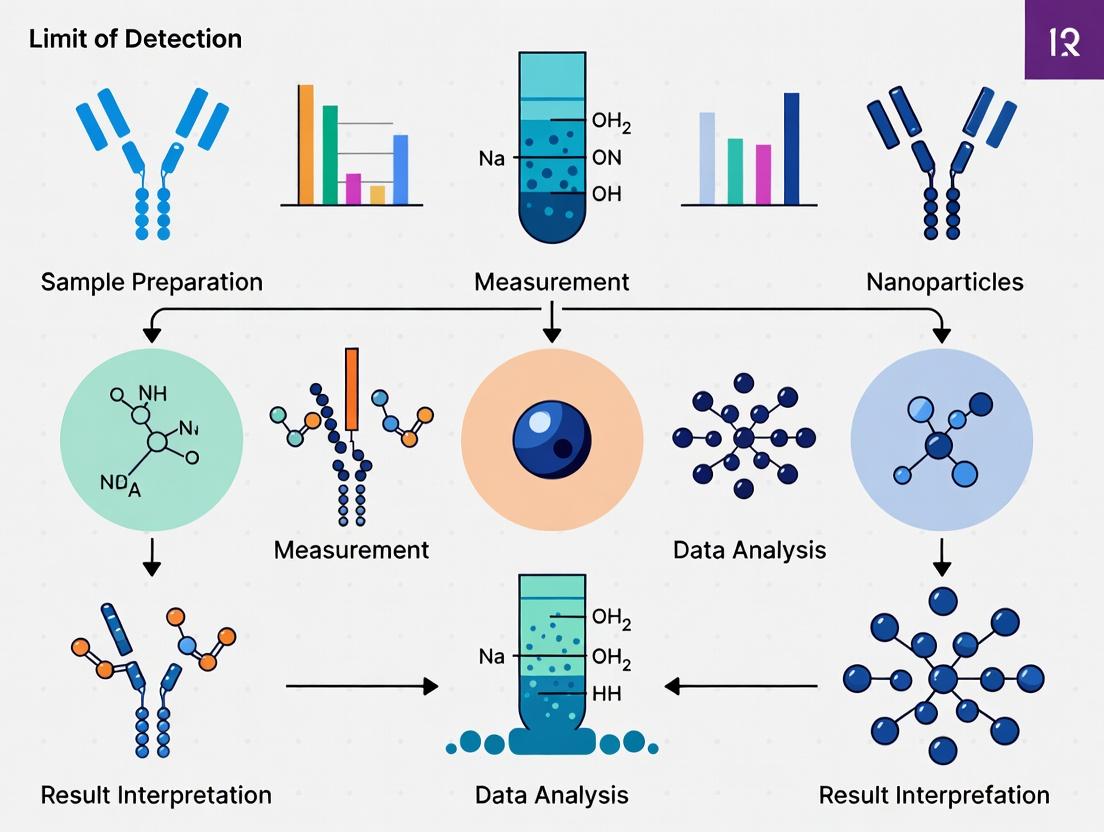
This article provides a comprehensive exploration of the IUPAC (International Union of Pure and Applied Chemistry) definition for the limit of detection (LOD) in biosensing, a cornerstone metric for analytical...
Mastering Biosensor LOD: The Complete IUPAC Definition and Its Critical Role in Biomedical Research
Abstract
This article provides a comprehensive exploration of the IUPAC (International Union of Pure and Applied Chemistry) definition for the limit of detection (LOD) in biosensing, a cornerstone metric for analytical reliability. Tailored for researchers, scientists, and drug development professionals, we dissect the foundational theory and precise statistical formulation of LOD. We then translate this into practical methodologies for experimental determination and data analysis. The guide addresses common pitfalls, optimization strategies for enhanced sensitivity, and essential protocols for validation and cross-platform comparison. By integrating foundational concepts with advanced application, this resource empowers professionals to accurately define, achieve, and report LOD, ensuring robust and credible biosensor data for diagnostic and pharmaceutical development.
LOD Demystified: Understanding the IUPAC Definition and Core Principles for Biosensors
The IUPAC Framework and Its Primacy in Biosensor Research
The International Union of Pure and Applied Chemistry (IUPAC) provides the definitive, harmonized definition for the Limit of Detection (LOD). Within biosensor science, the IUPAC defines LOD as the lowest concentration or amount of an analyte that can be reliably distinguished from the analytical background noise (the blank) with a stated level of confidence. Operationally, this is expressed as a concentration derived from the mean of the blank response (( \bar{y}{blank} )) plus three standard deviations of the blank (( 3 \times \sigma{blank} )):
[ LOD = \bar{y}{blank} + 3\sigma{blank} ]
This statistical bedrock transforms LOD from a simple performance metric into a universal, comparable benchmark. It moves beyond manufacturer claims or idealized conditions, mandating a rigorous, protocol-driven assessment grounded in error theory. For researchers developing electrochemical, optical, or piezoelectric biosensors, adherence to the IUPAC protocol ensures that reported sensitivities are credible, reproducible, and directly comparable across laboratories and publications—a critical factor for translational research in drug development and clinical diagnostics.
Quantitative Comparison of LOD Across Biosensor Modalities
The table below summarizes recent, high-impact biosensor studies, highlighting the central role of the IUPAC-defined LOD as the reported sensitivity metric. All values are derived from experimental blanks as per IUPAC guidelines.
Table 1: IUPAC-Derived LOD Benchmarks for Contemporary Biosensors
| Biosensor Type | Target Analyte | Transduction Mechanism | Reported LOD (IUPAC Method) | Key Advantage for Sensitivity |
|---|---|---|---|---|
| Electrochemical | miRNA-21 (Cancer biomarker) | Catalytic hairpin assembly with Au-nanoparticle amplification | 0.82 fM | Signal amplification reduces σ_blank |
| Optical (SPR) | SARS-CoV-2 Spike Protein | Antigen-antibody, plasmonic nanohole array | 0.11 ng/mL | Enhanced field reduces background noise |
| Field-Effect Transistor (FET) | Cortisol (Stress hormone) | Graphene FET with aptamer receptor | 100 pM in sweat | Low electronic noise of graphene |
| Electrochemiluminescence (ECL) | Cardiac Troponin I | Ru(bpy)₃²⁺-doped silica nanoparticles | 0.4 pg/mL | High signal-to-blank ratio |
| Colorimetric | Ebola Virus Glycoprotein | Gold nanoparticle aggregation | 2.1 nM | Visual readout, but higher LOD |
Experimental Protocol: Determining LOD for an Electrochemical Aptasensor
This protocol details the steps to determine an IUPAC-compliant LOD for a model electrochemical biosensor detecting thrombin.
Reagents & Materials:
- Capture Probe: Thiolated thrombin-binding aptamer (15-mer).
- Target: Pure human α-thrombin.
- Electrode: Gold disk working electrode (2 mm diameter).
- Electrochemical Cell: Three-electrode setup with Pt counter and Ag/AgCl reference.
- Buffer: 10 mM Tris-HCl, 120 mM NaCl, 5 mM KCl, 20 mM MgCl₂, pH 7.4 (assay buffer).
- Redox Mediator: 5 mM Potassium ferri/ferrocyanide ([Fe(CN)₆]³⁻/⁴⁻) in assay buffer.
- Instrument: Potentiostat with electrochemical impedance spectroscopy (EIS) capability.
Procedure:
- Electrode Pretreatment: Polish the Au electrode with 0.3 μm and 0.05 μm alumina slurry. Rinse with DI water and ethanol. Electrochemically clean in 0.5 M H₂SO₄ via cyclic voltammetry (CV) until a stable CV profile is obtained.
- Aptamer Immobilization: Incubate the cleaned electrode in 1 μM thiolated aptamer solution in Tris-EDTA buffer for 16 hours at 4°C. Passivate with 1 mM 6-mercapto-1-hexanol for 1 hour to block non-specific sites. Rinse thoroughly.
- Blank Measurement Series: Place the functionalized electrode in the electrochemical cell containing only the redox mediator in assay buffer (no thrombin present). Perform EIS measurements (100 kHz to 0.1 Hz, 10 mV amplitude) at the formal potential of the mediator. Repeat this measurement with 10 independently prepared, identical sensors.
- Data Analysis for LOD:
- Signal Response: Use the charge transfer resistance (Rct) from EIS Nyquist plots as the analytical signal (y).
- Calculate Mean Blank: Compute the mean Rct value from the 10 blank measurements (( \bar{y}{blank} )).
- Calculate Blank Standard Deviation: Compute the standard deviation of the 10 blank Rct values (( \sigma{blank} )).
- Compute LOD (Critical Value): ( LOD{signal} = \bar{y}{blank} + 3\sigma{blank} ).
- Calibration Curve & LOD in Concentration Units: Measure Rct for a series of thrombin standards (e.g., 1 pM, 10 pM, 100 pM, 1 nM, 10 nM). Plot ΔRct (vs. average blank) vs. log[thrombin]. Perform linear regression. The concentration corresponding to the ( LOD_{signal} ) on the calibration curve is the final LOD in mol/L.
The Scientist's Toolkit: Essential Reagents for LOD Determination
Table 2: Key Research Reagent Solutions for Rigorous LOD Assessment
| Item | Function in LOD Determination |
|---|---|
| Ultra-High Purity Buffers | Minimizes non-specific binding and variable ionic strength that increase σ_blank. |
| Certified Reference Materials (CRMs) | Provides analyte of known purity and concentration for accurate calibration curves. |
| Blocking Agents (e.g., BSA, Casein) | Passivates sensor surface to reduce non-specific adsorption, lowering background noise. |
| High-Fidelity Recognition Elements | Monoclonal antibodies or sequenced aptamers with minimal batch-to-batch variation ensure reproducible binding kinetics. |
| Signal Amplification Reagents | Enzyme conjugates (HRP, AP) or nanoparticle labels enhance signal relative to the blank, improving S/N ratio. |
| Standardized Substrates (for optical/ECL) | Provides consistent turnover rates for enzymatic labels, crucial for stable blank measurements. |
Visualizing the LOD Determination Workflow and Its Context
The following diagram illustrates the logical and experimental pathway from sensor operation to the final IUPAC-compliant LOD value.
Flowchart: The IUPAC LOD Determination Pathway.
The core signaling pathway central to many amplified biosensor designs is shown below, explaining how signal generation links to LOD.
Diagram: Specific Signal Amplification vs. Background Noise.
This whitepaper provides a technical deconstruction of the official International Union of Pure and Applied Chemistry (IUPAC) definition of the Limit of Detection (LOD) within the specific context of biosensors research. For drug development professionals and analytical scientists, precise quantification of an analyte at minimal concentrations is critical. This guide explicates the formal terminology, links it to practical experimental protocols, and situates it within the broader thesis of harmonizing detection capability reporting across biosensing platforms.
IUPAC provides authoritative, standardized definitions to ensure clarity and reproducibility in chemical measurement. For biosensors—integrated devices using biological recognition elements coupled to transducers—the LOD defines the lowest quantity of an analyte that can be distinguished from the absence of that analyte (a blank value) within a stated confidence level. The formal definition is foundational for comparing sensor performance, validating diagnostic assays, and meeting regulatory standards in drug development.
Deconstructing the Formal IUPAC Definition
The IUPAC recommends a probabilistic and statistical framework for LOD. Key terms are parsed below:
- Limit of Detection (LOD): The smallest concentration or amount of analyte that can be reliably distinguished from zero. It is a decision limit at which one can conclude, with a defined error probability, that an analyte is present.
- Distinguished from the absence of analyte: This implies statistical hypothesis testing. The signal from the analyte must be statistically significant compared to the signal from a blank or background matrix.
- Stated confidence level: Typically set at 95% or 99% confidence, directly linking to the standard deviation of the blank measurement and the selected Type I error risk (α, false positive rate).
The core mathematical expression derived from the IUPAC approach is: LOD = y_blank + k * σ_blank where y_blank is the mean signal of the blank, σ_blank is the standard deviation of the blank signal, and k is a numerical factor chosen according to the desired confidence level (commonly k=3, corresponding to ~99% confidence for a normal distribution).
Experimental Protocol for LOD Determination in Biosensor Research
The following detailed methodology is aligned with IUPAC recommendations and contemporary biosensor validation practices.
A. Materials & Reagents
- Target analyte of known purity.
- Biosensor platform (e.g., electrochemical, optical, piezoelectric).
- Appropriate biological recognition element (e.g., antibody, aptamer, enzyme).
- Buffer solutions for analyte serial dilution and sensor conditioning.
- Control matrix (e.g., artificial saliva, serum, buffer) matching intended sample.
B. Step-by-Step Protocol
- Blank Measurement: Perform a minimum of 20 independent replicate measurements using the biosensor exposed only to the control matrix (zero analyte concentration). Record the output signal (e.g., current, voltage, fluorescence intensity, frequency shift).
- Calibration Curve: Prepare a minimum of 6 concentration levels of the analyte, spanning from well below the expected LOD to the linear range. Analyze each concentration in triplicate, in randomized order, to minimize drift effects.
- Data Processing: Calculate the mean (y_blank) and standard deviation (σ_blank) of the blank measurements.
- Statistical Calculation:
- Method 1 (Blank Standard Deviation): LOD = y_blank + 3σ_blank. The corresponding concentration is found from the calibration curve.
- Method 2 (Calibration Curve): LOD = (3.3 * σ_blank) / S, where S is the slope of the calibration curve in the low-concentration region. This method is preferred when the calibration function is well-established.
- Verification: Experimentally test the calculated LOD concentration with at least 10 replicates. ≥95% of the measurements should yield a signal distinguishable from the blank (signal > y_blank + 1.645*σ_blank for a 5% false negative rate).
Key Data and Comparative Analysis
Table 1: Comparison of IUPAC-Compliant LOD Values for Select Biosensor Platforms (Hypothetical Data)
| Biosensor Type | Target Analyte | Recognition Element | Reported LOD (IUPAC Method) | Matrix | Key Influence on LOD |
|---|---|---|---|---|---|
| Electrochemical | Prostate-Specific Antigen (PSA) | Monoclonal Antibody | 0.5 pg/mL | Human Serum | Nanomaterial amplification reduces σ_blank |
| Fluorescence-based | microRNA-21 | DNA Aptamer | 10 fM | Buffer | High-affinity aptamer improves signal-to-noise |
| Surface Plasmon Resonance (SPR) | SARS-CoV-2 Spike Protein | ACE2 Receptor | 50 nM | Saliva | Nonspecific binding in complex matrix increases σ_blank |
| Field-Effect Transistor (FET) | Dopamine | Boronic Acid Ligand | 100 pM | Artificial CSF | Debye screening limits performance in high-ionic strength |
Table 2: Essential Research Reagent Solutions for Biosensor LOD Studies
| Item | Function in LOD Determination |
|---|---|
| High-Affinity Capture Probe (e.g., antibody, aptamer) | Provides specific recognition; affinity constant directly influences lower detection limit. |
| Signal Amplification Reagents (e.g., enzyme- conjugates, nanomaterials) | Enhances output signal, improving the signal-to-noise ratio crucial for low-concentration detection. |
| Blocking Agents (e.g., BSA, casein) | Minimizes nonspecific adsorption to the sensor surface, reducing σ_blank. |
| Standard Reference Material (SRM) | Provides traceable, accurate analyte for calibration curve generation. |
| Matrix-Matched Blank Solutions | Essential for obtaining realistic y_blank and σ_blank values relevant to the sample type. |
Visualizing the Conceptual and Experimental Framework
Diagram 1: From IUPAC Definition to Biosensor LOD Value
Diagram 2: IUPAC-Compliant Experimental LOD Workflow
A rigorous understanding and application of the official IUPAC definition of LOD is non-negotiable for advancing robust, comparable biosensors research. By deconstructing its formal terminology into a clear experimental protocol, supported by structured data and visual guides, this whitepaper provides researchers and drug development professionals with a foundational framework. Adherence to this standard ensures that reported detection capabilities are statistically sound, fostering reliable translation from lab-based sensing to clinical and diagnostic applications.
In biosensor research, the precise determination of an analyte's detectability and quantifiability is paramount for clinical and diagnostic reliability. The International Union of Pure and Applied Chemistry (IUPAC) provides the authoritative framework for these concepts, formally defining the Limit of Detection (LOD) as the smallest concentration or amount of an analyte that can be distinguished from the absence of that analyte (a blank value) within a stated probability. This definition inherently ties the LOD to two other fundamental performance parameters: the Limit of Blank (LOB) and the Limit of Quantitation (LOQ). Distinguishing between these three core components is critical for validating biosensor performance, ensuring regulatory compliance, and accurately interpreting data, particularly in low-concentration regimes common in biomarker detection and therapeutic drug monitoring.
IUPAC Definitions and Conceptual Foundations
The IUPAC-endorsed definitions form a hierarchical model of measurement capability:
- Limit of Blank (LOB): The highest apparent analyte concentration expected to be found when replicates of a blank sample containing no analyte are tested. LOB = μblank + 1.645σblank (for 95% specificity in a one-sided test).
- Limit of Detection (LOD): The lowest analyte concentration likely to be reliably distinguished from the LOB and at which detection is feasible. LOD = LOB + 1.645σ_low concentration sample (for 95% sensitivity). IUPAC emphasizes that the LOD is a decision limit, not a quantification limit.
- Limit of Quantitation (LOQ): The lowest concentration at which the analyte can not only be reliably detected but also measured with an acceptable level of precision (imprecision typically ≤ 20%) and accuracy. LOQ is often defined as the concentration where the relative standard deviation (RSD) reaches a predefined level (e.g., 20%).
Comparative Analysis and Quantitative Data
The relationship between LOB, LOD, and LOQ is sequential, with each representing a higher threshold of performance. The following table summarizes their core differences based on current IUPAC-aligned guidelines.
Table 1: Core Differentiators of LOB, LOD, and LOQ in Biosensor Validation
| Parameter | Primary Question Answered | Statistical Basis (Typical) | Key Requirement | Relationship to Signal |
|---|---|---|---|---|
| LOB | What is the background noise level? | 95th percentile of blank distribution (Meanblank + 1.645SDblank) | Specificity | Signal ≤ LOB is indistinguishable from blank. |
| LOD | Can the analyte be detected? | LOB + 1.645SD of a low-concentration sample | Detectability | Signal > LOD indicates presence with high probability. |
| LOQ | Can the analyte be measured precisely? | Concentration where CV or RSD ≤ 20% (or other defined threshold) | Quantitative Precision | Signal ≥ LOQ can be reliably quantified. |
Table 2: Exemplary Calculation from a Hypothetical Electrochemical Biosensor Study
| Sample Type | Mean Signal (nA) | Standard Deviation (nA) | Calculated Parameter | Value (nA) | Converted Concentration (nM)* |
|---|---|---|---|---|---|
| Blank (Zero Analyte) | 1.2 | 0.3 | LOB | 1.2 + 1.645*0.3 = 1.69 | 0.85 |
| Low Conc. Sample (1 nM) | 2.5 | 0.4 | LOD | 1.69 + 1.645*0.4 = 2.35 | 1.65 |
| Mid Conc. Sample (5 nM) | 8.0 | 0.8 | Imprecision (CV) | (0.8/8.0)*100 = 10% | - |
| LOQ (CV=20%) | - | - | LOQ (from precision profile) | 3.1 | 2.5 |
Assuming a linear calibration curve: Signal = 1.0nA + 1.0*nA/nM * [Concentration].
Experimental Protocols for Determination
Protocol 1: Determination of LOB and LOD
This protocol aligns with IUPAC and Clinical and Laboratory Standards Institute (CLSI) EP17-A2 guidelines.
- Sample Preparation: Prepare a minimum of 20 replicate measurements of a blank matrix (e.g., buffer, pooled negative serum). Independently, prepare 20 replicates of a low-concentration sample spiked with the analyte near the expected detection limit.
- Measurement: Analyze all replicates in a randomized sequence using the biosensor protocol.
- Data Analysis:
- For the blank replicates, test for normality. Calculate the mean (μblank) and standard deviation (SDblank).
- LOB = μblank + 1.645 * SDblank (for 5% probability that a blank result exceeds this limit).
- For the low-concentration sample replicates, calculate the standard deviation (SDlow).
- LOD = LOB + 1.645 * SDlow (for 95% probability that a sample at the LOD will exceed the LOB). Iteration with a sample closer to the calculated LOD may be required.
Protocol 2: Determination of LOQ via Precision Profile
- Calibration and Sample Preparation: Establish a calibration curve. Prepare at least 5 different analyte concentrations spanning from near the LOD to the upper range. For each concentration, prepare a minimum of 10 independent replicates.
- Measurement: Analyze all samples across multiple runs/days to capture between-run imprecision.
- Data Analysis:
- For each concentration level, calculate the mean, SD, and CV (%).
- Plot CV (%) versus analyte concentration (precision profile).
- Fit a suitable curve (e.g., power function) to the data.
- The LOQ is defined as the concentration at which the fitted curve crosses the acceptable CV threshold (e.g., 20% for bioanalytical assays).
Logical Relationship Diagram
Title: Hierarchical Relationship of LOB, LOD, and LOQ
The Scientist's Toolkit: Essential Reagents & Materials
Table 3: Key Research Reagent Solutions for Biosensor Limit Studies
| Item | Function in LOB/LOD/LOQ Experiments |
|---|---|
| Certified Reference Material (CRM) | Provides a traceable, high-purity source of the target analyte for accurate spiking and calibration. Essential for defining the true concentration axis. |
| Blank Matrix | The analyte-free biological fluid or buffer matching the sample type (e.g., charcoal-stripped serum, synthetic urine). Critical for establishing the baseline signal and calculating LOB. |
| Stabilization Buffers | Preserve analyte integrity and biosensor surface functionality during repeated measurements, ensuring reproducible SD calculations. |
| Precision Controls (Low & High) | Independently prepared samples at concentrations near the LOD and LOQ. Used to monitor assay precision and stability over time during the validation study. |
| Regeneration Solution | For reusable biosensors (e.g., SPR, certain electrochemical). Ensures consistent surface properties between replicate measurements of blanks and low-concentration samples. |
| High-Sensitivity Substrate/Readout Reagent | For enzyme-linked or signal-amplification-based biosensors. Its quality and consistency directly impact the signal-to-noise ratio, a key determinant of LOD. |
Within the framework of IUPAC definitions for analytical detection limits, the 95% confidence criterion, operationalized through a coverage factor (k=3), provides the foundational statistical model for distinguishing a true analyte signal from instrumental and biological noise in biosensor research. This whitepaper delineates the theoretical underpinnings, experimental protocols, and practical applications of this model, contextualized for modern biosensor development and validation in drug discovery and clinical diagnostics.
The International Union of Pure and Applied Chemistry (IUPAC) defines the Limit of Detection (LOD) as the smallest concentration or quantity of an analyte that can be reliably distinguished from a blank sample. For biosensors—devices incorporating a biological sensing element coupled to a physicochemical transducer—the LOD is paramount. It dictates the sensor’s utility in detecting low-abundance biomarkers, pathogens, or therapeutic drug levels. The core challenge is the statistical discrimination of the signal (S) from the noise (N).
Core Statistical Model: Signal, Noise, and the k=3 Criterion
Theoretical Foundation
The model assumes that measurements of a blank (or very low-concentration) sample follow a normal distribution. The variability of this blank measurement represents the noise.
- Mean Blank Signal: ( \bar{y}_{blank} )
- Standard Deviation of Blank: ( \sigma_{blank} )
- The Limit of Detection (LOD): Defined as the analyte concentration yielding a signal equal to the mean blank signal plus k times the standard deviation of the blank. [ y{LOD} = \bar{y}{blank} + k \cdot \sigma_{blank} ]
The choice of k=3 is derived from the properties of the normal distribution. A coverage factor of k=2 provides approximately 95% confidence for a single-tailed test. However, to account for additional uncertainties (e.g., low number of replicate measurements, non-ideal distributions, and both Type I and Type II errors), IUPAC and related guidelines (e.g., ISO 11843) often recommend k=3. This offers a confidence level of approximately 99.7% that a signal exceeding this threshold is not due to blank noise, effectively minimizing false positives in critical biosensing applications.
Table 1: Statistical Confidence Levels for Different k-Factors (Assuming Normal Distribution)
| Coverage Factor (k) | Theoretical Confidence Level (%) | Common Application Context in Biosensing |
|---|---|---|
| 1.0 | 68.3 | Rarely used for formal LOD. |
| 2.0 | 95.4 | Limit of Quantification (LOQ); less stringent screening. |
| 3.0 | 99.7 | Recommended IUPAC LOD criterion. |
| 3.3 | 99.9 | Used in some regulatory contexts for ultra-high certainty. |
Table 2: Example LOD Calculation for a Model Electrochemical Biosensor
| Parameter | Value (nA) | Notes |
|---|---|---|
| Mean Blank Current (( \bar{y}_{blank} )) | 1.2 nA | Average of 20 blank buffer measurements. |
| SD of Blank (( \sigma_{blank} )) | 0.15 nA | |
| LOD Signal (k=3) | 1.65 nA | ( 1.2 + 3 \times 0.15 = 1.65 ) nA |
| Calibration Sensitivity (S) | 50 nA/µM | From linear regression of low-concentration standards. |
| Calculated Concentration LOD | 9.0 pM | ( (1.65 - 1.2) / 50 ) nA/(nA/µM) = 0.009 µM |
Experimental Protocols for LOD Determination
Protocol A: Determination from Blank Standard Deviation
Objective: Empirically determine the LOD based on the statistical distribution of blank measurements.
- Sample Preparation: Prepare a minimum of 10 (recommended 20) independent replicate blank samples. A "blank" contains all matrix components (e.g., serum, buffer) except the target analyte.
- Measurement: Analyze each blank using the fully optimized biosensor protocol (including any incubation, wash, and detection steps).
- Data Analysis:
- Calculate the mean (( \bar{y}{blank} )) and standard deviation (( s{blank} )) of the measured signals.
- The LOD signal is ( \bar{y}{blank} + k \cdot s{blank} ), with k=3.
- Convert the LOD signal to concentration using the calibration curve slope (sensitivity) obtained from low-level standards.
Protocol B: Determination from the Calibration Curve
Objective: Determine LOD based on the standard error of the regression, suitable for methods where a linear calibration is established near the limit.
- Calibration Standards: Prepare a series of 5-8 standard solutions at concentrations near the expected LOD.
- Measurement: Analyze each standard in triplicate.
- Data Analysis:
- Perform linear regression: ( y = b + m \cdot x ), where ( y ) is signal, ( x ) is concentration.
- Calculate the standard error of the y-intercept (( Sb )) or the residual standard deviation (( S{y/x} )).
- The LOD concentration can be calculated as: ( LOD = 3 \cdot Sb / m ) or using similar error propagation formulas incorporating ( S{y/x} ).
Visualizing the Statistical and Experimental Framework
Diagram 1: Workflow for Determining Biosensor LOD via k=3
Diagram 2: Statistical Meaning of k=3 Criterion for LOD
The Scientist's Toolkit: Key Research Reagent Solutions
Table 3: Essential Materials for Biosensor LOD Validation Experiments
| Item / Reagent Category | Example & Function |
|---|---|
| Biosensor Platform | Functionalized Gold Electrode / SPR Chip: The transducer surface where biorecognition elements (antibodies, aptamers) are immobilized. |
| Biorecognition Element | Monoclonal Antibody (Clone X): High-affinity, target-specific binding agent. Critical for sensor specificity and ultimate sensitivity. |
| Signal Reporter | Horseradish Peroxidase (HRP)-Conjugated Secondary Antibody: Enzyme for catalytic amplification of signal in electrochemical or optical detection. |
| Matrix Mimic | Synthetic Serum/Artificial Saliva: Used to prepare blanks and spiked standards. Essential for evaluating matrix effects on noise and signal. |
| Calibration Standards | Certified Reference Material (CRM) of Target Analyte: Traceable, high-purity analyte for generating the calibration curve. |
| High-Precision Buffer | PBS-T (0.05% Tween 20): Standard washing and dilution buffer. Consistency is key for reproducible blank signals and low noise. |
| Blocking Agent | BSA or Casein (1% w/v): Reduces non-specific binding on the sensor surface, a major contributor to background noise. |
| Data Analysis Software | Statistical Package (e.g., R, Origin, GraphPad Prism): For robust regression analysis, standard deviation calculation, and visualization. |
Within biosensor research, the limit of detection (LOD) is a critical figure of merit quantifying the lowest analyte concentration that can be reliably distinguished from its absence. A standardized, rigorous definition is essential for comparing sensor performance, validating diagnostic assays, and meeting regulatory requirements in drug development. The International Union of Pure and Applied Chemistry (IUPAC) has been a primary architect of such standardization, with its guidance evolving alongside that of other regulatory and standards bodies. This whitepaper traces this historical evolution, framing it within a thesis on establishing a unified, practical IUPAC-endorsed LOD framework for modern biosensor research.
Chronological Evolution of Key Definitions and Recommendations
Foundational IUPAC Contributions
The foundational IUPAC perspective was established in 1976, focusing on univariate chemical measurements. It defined LOD as the smallest concentration or quantity derived from the smallest measure that can be detected with reasonable certainty for a given analytical procedure. The LOD was calculated as a multiple (typically k=3) of the standard deviation of the blank signal, acknowledging the probabilistic nature of detection.
Subsequent refinements in the 1990s and 2000s, often in collaboration with the International Union of Biochemistry and Molecular Biology (IUBMB), addressed more complex calibration functions and the importance of error rates (α for false positives, β for false negatives). The current consensus definition, solidified in the "Orange Guide" and recent technical reports, treats LOD as a net concentration (or amount) and emphasizes method-specific validation.
Parallel Developments from Other Bodies
Other organizations have developed complementary or application-specific guidance.
- Clinical and Laboratory Standards Institute (CLSI): EP17-A2 (2012) provides detailed protocols for establishing LOD and lower limit of quantification (LLOQ) in clinical laboratory medicine, emphasizing verification using low-concentration samples.
- International Organization for Standardization (ISO): ISO 11843 (Capability of Detection) provides a statistical framework aligned with IUPAC but phrased in terms of "minimum detectable value."
- Food and Drug Administration (FDA): For in vitro diagnostic (IVD) devices, the FDA requires extensive LOD studies using contaminated clinical matrices, focusing on real-world robustness (e.g., Guidance for Industry and FDA Staff, 2016).
- International Conference on Harmonisation (ICH): Q2(R2) guideline on Validation of Analytical Procedures (2023) provides a harmonized framework for the pharmaceutical industry, defining LOD via visual evaluation, signal-to-noise, or standard deviation of the response and the slope.
Convergence and Current Consensus
The evolution shows convergence on core principles: LOD is a statistical construct, must be determined empirically, and is distinct from sensitivity or the lower limit of quantification (LLOQ). The modern, hybridized approach for biosensors integrates IUPAC's statistical rigor with CLSI's practical verification protocols and regulatory bodies' (FDA, EMA) requirements for matrix testing.
Table 1: Comparative Evolution of LOD Guidance
| Body | Key Document/Year | Core LOD Definition & Approach | Primary Context & Contribution |
|---|---|---|---|
| IUPAC | 1976 Recommendations, 1995 Technical Report | LOD = Mean(blank) + k * SD(blank); k=3 recommended. Probabilistic, based on error rates. |
Foundational chemical analysis. Established statistical theory. |
| IUPAC/IUBMB | 1999, 2009 Updates | Refined for non-linear calibration, emphasized net concentration and method-specific validation. | Adaptation for biochemical/biological assays and sensors. |
| CLSI | EP17-A2 (2012) | Defines LOD via experiment using low-level samples; provides verification protocols. | Clinical laboratory medicine. Practical, procedural focus. |
| ISO | ISO 11843-1:1997, -6:2019 | "Minimum detectable value" within a statistical model of the calibration curve. | General quality standards. Harmonized statistical framework. |
| ICH | Q2(R1) 2005, Q2(R2) 2023 | Defines LOD via visual, signal-to-noise, or SD/slope methods. Flexible, industry-focused. | Pharmaceutical drug development. Global regulatory harmonization. |
| FDA | Guidance for IVD Devices (2016) | Requires LOD determination in appropriate matrix with statistical confidence. | In vitro diagnostics. Emphasis on clinical matrix and robustness. |
Experimental Protocols for LOD Determination in Biosensor Research
Based on the converged guidance, a robust experimental protocol for biosensor LOD determination involves two main stages: Precision-based Estimation (IUPAC/ISO core) and Probability-of-Detection Verification (CLSI/FDA influenced).
Protocol A: Precision-Based Estimation from Blank/Mock Matrix
Objective: To estimate the preliminary LOD based on the variability of the blank signal.
- Sample Preparation: Prepare a minimum of 20 independent replicates of a blank sample (matrix without analyte) or a mock matrix (e.g., buffer, pooled negative serum).
- Measurement: Analyze all replicates using the full biosensor assay protocol.
- Data Analysis:
- Calculate the mean (
μ_blank) and standard deviation (SD_blank) of the measured signal (e.g., current, fluorescence, absorbance). - Compute the critical value
LC = μ_blank + k * SD_blank. For an α (false positive rate) of ~1%, k=2.33 for a one-sided normal distribution; the traditional k=3 corresponds to α~0.15%. - Convert
LCto concentration:LOD_estimated = (LC - μ_blank) / S, whereSis the slope of the calibration curve in the low-concentration region.
- Calculate the mean (
Protocol B: Verification via Low-Concentration Spiked Samples
Objective: To verify the estimated LOD by determining the concentration at which the analyte is detected in ≥95% of trials.
- Sample Preparation: Prepare analyte spiked into the relevant matrix at 3-5 concentrations around the
LOD_estimatedfrom Protocol A (e.g., at 0.5x, 1x, 2x LOD_estimated). Prepare a minimum of 20 replicates per concentration level. - Measurement: Analyze all replicates in a randomized order.
- Data Analysis:
- For each concentration, calculate the proportion of replicates producing a signal above the
LC(or a matched negative control mean + k*SD). - Fit a probit or logistic regression model to the proportion detected vs. log(concentration) data.
- The verified LOD is the concentration corresponding to a 95% probability of detection (with associated confidence intervals).
- For each concentration, calculate the proportion of replicates producing a signal above the
Diagram 1: Integrated LOD Determination Workflow
Title: Integrated LOD determination workflow for biosensors.
The Scientist's Toolkit: Key Research Reagent Solutions
Table 2: Essential Materials for Biosensor LOD Validation Experiments
| Item | Function in LOD Studies | Critical Consideration |
|---|---|---|
| Certified Reference Material (CRM) | Provides the gold-standard analyte for accurate spiking and calibration. Essential for traceability. | Purity, stability, and matrix compatibility. Sourced from NIST, NIBSC, etc. |
| Synthetic or Artificial Matrix | Mimics the key interferents of the real sample (e.g., serum, saliva) without endogenous analyte. Used for initial calibration and blank studies. | Must match ionic strength, pH, viscosity, and common protein/lipid content. |
| Pooled Negative Biological Matrix | The most realistic blank/mock sample for final verification. Collected from confirmed negative donors. | Requires informed consent, ethical approval. Must be characterized for potential cross-reacting substances. |
| High-Sensitivity Detection Reagents | e.g., low-autofluorescence labels, high-activity enzymes, signal-amplification substrates (poly-HRP, rolling circle amplification kits). | Minimizes background signal and maximizes signal-to-noise ratio, directly lowering LOD. |
| Low-Binding Microplates/Tubes | Containers for sample and reagent preparation. | Minimizes nonspecific adsorption of low-concentration analyte, improving accuracy and precision. |
| Precision Liquid Handling System | For accurate, reproducible dispensing of low-volume, low-concentration spike solutions and reagents. | Crucial for reducing volumetric errors that disproportionately affect low-end precision. |
Signaling Pathways in Signal-Amplification Based Biosensors
Modern ultrasensitive biosensors often incorporate enzymatic or nanomaterial-based signal amplification to achieve low LODs. A common pathway involves immuno-complex formation coupled to an enzyme cascade.
Diagram 2: Enzymatic Signal Amplification for Low LOD
Title: Enzyme cascade signal amplification pathway.
Within the rigorous framework of biosensor research, the Limit of Detection (LOD) is not merely a performance metric but a foundational parameter that dictates the validity of scientific conclusions and the efficacy of diagnostic applications. This whitepaper, framed within the context of the IUPAC definition, details the technical and procedural importance of accurate LOD determination. We elucidate how LOD fundamentally governs the reliability of biomarker quantification, impacts diagnostic sensitivity and specificity, and underpins the credibility of translational research.
The IUPAC Definition and Its Imperative
The International Union of Pure and Applied Chemistry (IUPAC) defines the Limit of Detection (LOD) as the smallest concentration or quantity of an analyte that can be distinguished with a stated probability from the blank value. Crucially, this is not a value derived from a single measurement but a statistical construct, typically calculated as LOD = ( \text{Mean}{blank} + 3 \times \text{SD}{blank} ), where SD is the standard deviation of the blank signal.
This statistical rigor is paramount. An improperly determined LOD leads to Type I (false positive) and Type II (false negative) errors, corrupting data interpretation. In drug development, an overestimated LOD can cause critical low-abundance biomarkers to be overlooked, while an underestimated LOD can generate false leads, wasting resources and misdirecting research.
Quantitative Impact on Diagnostic Accuracy
Diagnostic accuracy is quantified by sensitivity (true positive rate) and specificity (true negative rate). The LOD is the pivot upon which sensitivity hinges. A biosensor cannot detect an analyte present below its LOD, imposing a hard ceiling on achievable sensitivity.
Table 1: Impact of LOD on Diagnostic Performance Metrics
| Diagnostic Metric | Direct Influence of LOD | Consequence of Inaccurate LOD |
|---|---|---|
| Clinical Sensitivity | Determines the lowest analyte concentration reliably detected. | LOD too high: False negatives increase, sensitivity drops. |
| Analytical Specificity | Defines the threshold for distinguishing signal from noise/interference. | LOD too low: False positives increase, specificity drops. |
| Area Under ROC Curve | Defines the lower limit of the assay's dynamic range. | Inaccurate LOD skews ROC analysis, overstating clinical utility. |
| Predictive Values | Affects the pre-test probability modeling. | Leads to incorrect post-test diagnosis probabilities. |
Experimental Protocols for Robust LOD Determination
Adherence to standardized protocols is critical for research validity.
Protocol A: LOD Determination per IUPAC Guidelines
- Blank Solution Preparation: Prepare a minimum of 20 replicate blank samples (matrix without analyte).
- Measurement: Analyze all blank replicates under identical experimental conditions.
- Statistical Calculation:
- Calculate the mean signal (( \bar{S}{blank} )) and standard deviation (( SD{blank} )) of the blanks.
- LOD (concentration) is derived from the signal: ( LOD = \bar{S}{blank} + 3 \times SD{blank} ).
- Convert this signal to concentration using the calibration curve's slope (s): ( c{LOD} = 3 \times SD{blank} / s ).
Protocol B: LOD Verification via Low-Concentration Samples
- Sample Preparation: Prepare a set of samples at a concentration near the calculated ( c_{LOD} ) (e.g., 1x, 2x, and 3x LOD), with at least 10 replicates per concentration.
- Validation Criterion: The analyte must be detected (signal > ( \bar{S}{blank} + 3 \times SD{blank} )) in ≥ 90% of replicates at the 3x LOD concentration. This confirms the LOD's practical reliability.
Logical Pathway of LOD Influence on Research Outcomes
The following diagram maps the cascading impact of an inaccurately determined LOD on the research and development pipeline.
Diagram 1: LOD Error Impact on Research Validity (85 chars)
The Scientist's Toolkit: Essential Reagents for LOD Studies
Table 2: Key Research Reagent Solutions for LOD Validation Experiments
| Reagent / Material | Function in LOD Studies | Critical Consideration |
|---|---|---|
| Certified Reference Material (CRM) | Provides a traceable, known analyte quantity to establish the calibration curve's slope (s). | Purity and stability are essential for accurate LOD concentration conversion. |
| Matrix-Matched Blank | The blank solution must match the sample's biological/chemical matrix (e.g., serum, buffer). | Controls for matrix effects that inflate blank signal variance (( SD_{blank} )). |
| High-Affinity Capture Probes | Antibodies, aptamers, or molecularly imprinted polymers specific to the target analyte. | Binding affinity (Kd) must be sufficiently low to capture analytes at the LOD concentration. |
| Low-Background Signal Reporter | Enzymes (e.g., HRP), fluorophores, or electroactive tags with minimal non-specific binding. | Minimizes background noise, directly reducing ( SD_{blank} ) and improving LOD. |
| Precision Microfluidic Chips | For reproducible sample handling and reaction volume control in biosensor platforms. | Reduces operational variance, leading to a more reliable and lower ( SD_{blank} ). |
| Blocking Agents (BSA, Casein) | Suppresses non-specific binding of reagents to the sensor surface or sample matrix. | Critical for minimizing background signal and its variability. |
Experimental Workflow for Validated Biosensor Analysis
The following diagram outlines a comprehensive experimental workflow integrating LOD determination for validated biosensor research.
Diagram 2: LOD-Integrated Biosensor Workflow (62 chars)
The IUPAC-defined Limit of Detection is a cornerstone of analytical science with profound implications. Its accurate determination is not an optional characterization step but a fundamental prerequisite. It directly gates diagnostic accuracy by defining the threshold of detection and safeguards research validity by ensuring that reported findings—especially regarding low-abundance biomarkers—are statistically sound and reproducible. For scientists and drug developers, rigorous LOD assessment is the indispensable first step in transforming a promising biosensor signal into a reliable tool for discovery and health.
From Theory to Bench: Step-by-Step Methods to Determine Biosensor LOD
In the rigorous application of the International Union of Pure and Applied Chemistry (IUPAC) definition for the limit of detection (LOD) in biosensor research, establishing a stable baseline and comprehensively characterizing noise are foundational prerequisites. The IUPAC defines LOD as the smallest concentration or quantity that can be detected with reasonable certainty for a given analytical procedure. This "reasonable certainty" is statistically derived from the distribution of the blank signal and its associated noise. Therefore, without a rigorously characterized baseline and noise profile, any stated LOD is fundamentally unreliable. This guide details the experimental and analytical protocols necessary to fulfill this prerequisite, ensuring that subsequent LOD calculations are valid, reproducible, and meaningful for applications in diagnostics and drug development.
The Nature of Baseline and Noise in Biosensing Systems
The baseline is the sensor's output signal in the absence of the target analyte under specified operating conditions. It is not inherently zero and can drift due to environmental or instrumental factors. Noise is the stochastic fluctuation superimposed on the baseline signal. For LOD determination, the critical parameter is the standard deviation of the blank measurement (σ). Noise sources are typically categorized as:
- Thermal (Johnson) Noise: Fundamental, arising from thermal agitation of charge carriers.
- Shot Noise: Due to the discrete nature of charge carriers crossing a junction.
- Flicker (1/f) Noise: Inverse frequency-dependent noise, dominant at low frequencies.
- Environmental Noise: From temperature fluctuations, mechanical vibrations, or electromagnetic interference.
- Biochemical Noise: Non-specific binding, matrix effects, or instability of biological recognition elements.
Experimental Protocols for Baseline Stabilization and Noise Measurement
Protocol 3.1: Pre-Measurement System Conditioning
Objective: To achieve a stable, reproducible baseline prior to analyte introduction.
- Immobilization & Blocking: Following the immobilization of the biorecognition element (e.g., antibody, aptamer), incubate the sensor surface with a suitable blocking buffer (e.g., 1% BSA, casein) for 60 minutes at the assay temperature to passivate non-specific binding sites.
- Equilibration: Continuously flow run buffer (the buffer used for sample dilution) through the sensor system at the operational flow rate for a minimum of 30 minutes, or until the signal drift falls below a predetermined threshold (e.g., < 0.1 RU/s for SPR, < 1 pA/s for electrochemical sensors).
- Signal Averaging: Record the baseline signal at a high sampling frequency (≥10 Hz) for a final 300-second period. The mean value of this period defines the operational baseline (µ_blank).
Protocol 3.2: Long-Term Baseline and Noise Acquisition
Objective: To characterize the noise amplitude and frequency profile of the blank.
- Extended Recording: With the conditioned sensor under constant buffer flow, record the output signal for a minimum of 30 minutes (1,800 seconds). Maintain precise environmental control (temperature ±0.1°C, vibration isolation).
- Data Segmentation: Divide the acquired time-series data into N non-overlapping intervals (e.g., 30 intervals of 60 seconds each). Each interval represents one independent "blank experiment."
- Statistical Analysis:
- For each interval i, calculate the standard deviation (σ_i).
- The pooled standard deviation (σpooled) of the blank is calculated as the root mean square of the individual σi values and serves as the best estimate of the system noise for LOD calculation: σblank = √( Σ(σi²) / N ).
Quantitative Data and Noise Profiles
Table 1: Typical Baseline Drift and Noise Amplitudes for Common Biosensor Platforms
| Biosensor Platform | Typical Baseline Drift (per hour) | Typical Noise (σ_blank) | Primary Noise Source |
|---|---|---|---|
| Surface Plasmon Resonance (SPR) | 10-30 Resonance Units (RU) | 0.5-1.5 RU | Bulk refractive index fluctuation, mechanical drift. |
| Electrochemical (Amperometric) | 50-200 pA | 5-20 pA | Capacitive charging, electrochemical interference. |
| Quartz Crystal Microbalance (QCM) | 5-15 Hz | 0.5-2 Hz | Viscosity changes, non-specific mass adhesion. |
| Field-Effect Transistor (BioFET) | 1-5 mV | 0.1-0.5 mV | Charge screening, dielectric noise. |
Table 2: Statistical Parameters for LOD Calculation (Hypothetical Data Set)
| Parameter | Symbol | Value (Arbitrary Units) | Calculation Method |
|---|---|---|---|
| Mean of Blank Signal | µ_blank | 100.2 | Average of all data points from Protocol 3.2. |
| Pooled Std. Dev. of Blank | σ_blank | 1.65 | Root mean square of interval standard deviations. |
| IUPAC Recommended LOD | LOD | 5.42 | LOD = µblank + kσblank, where k=3.29 (99% confidence level for low n). |
| Decision Threshold | LC | 103.62 | LC = µblank + 1.65σblank (95% confidence for false positive). |
Visualizing Workflows and Relationships
Title: Workflow for Baseline and Noise Characterization
Title: From Noise Measurement to IUPAC LOD
The Scientist's Toolkit: Research Reagent Solutions
Table 3: Essential Materials for Baseline Stabilization Experiments
| Item | Function | Example & Specification |
|---|---|---|
| High-Purity Run Buffer | Provides consistent ionic strength and pH; minimizes bulk shift noise. | 10mM HEPES, 150mM NaCl, 0.005% P20 surfactant, pH 7.4 (for SPR). 1x PBS, pH 7.4, 0.22 µm filtered. |
| Blocking Agent | Passivates the sensor surface to reduce non-specific binding (biochemical noise). | Bovine Serum Albumin (BSA), 1% w/v. Casein, 1% w/v. Ethanolamine (for amine coupling). |
| Degasser & Filter | Removes dissolved air (microbubbles) and particulates to prevent spike noise. | In-line degasser (0.2 MPa) coupled with a 0.22 µm membrane filter. |
| Temperature Controller | Stabilizes thermal noise and prevents baseline drift. | Peltier-controlled flow cell (±0.05°C) or water-jacketed chamber. |
| Vibration Isolation Table | Mitigates low-frequency mechanical noise (a source of 1/f noise). | Active or passive air-isolation platform. |
| Faraday Cage | Shields the sensor and electronics from electromagnetic interference. | Custom-built or integrated cage for sensitive amperometric/potentiometric systems. |
| Data Acquisition (DAQ) System | High-resolution, low-noise recording of analog sensor signals. | 24-bit ADC, with sampling frequency ≥10x the signal bandwidth of interest. |
Within the rigorous framework of IUPAC guidelines for defining the limit of detection (LOD) in biosensor research, the Standard Calibration Curve Approach remains the foundational quantitative method. This in-depth guide details its application for deriving key analytical figures of merit, central to validating sensor performance for researchers and drug development professionals.
Theoretical Foundation and IUPAC Context
The IUPAC definition of LOD characterizes it as the smallest concentration or quantity that can be detected with reasonable certainty for a given analytical procedure. The calibration curve is the primary tool for its estimation, establishing the statistical relationship between the biosensor's response (signal) and the concentration of the target analyte. The approach integrates both visual inspection of linearity and statistical treatment of regression data, as endorsed by IUPAC, to ensure robustness.
Detailed Experimental Protocol
The following protocol is generalized for a typical label-free biosensor (e.g., based on surface plasmon resonance or electrochemical impedance).
1. Preparation of Standard Solutions:
- Prepare a stock solution of the purified target analyte (e.g., a protein biomarker, drug molecule) in an appropriate matrix (e.g., PBS, diluted serum).
- Perform serial dilutions to create a minimum of six standard concentrations, spanning at least two orders of magnitude. The range should bracket the expected LOD and the working range of the sensor.
- Include blank samples (matrix without analyte) in replicate (n≥10).
2. Biosensor Measurement:
- Condition the biosensor surface according to manufacturer/specific protocol.
- For each standard concentration and blank, introduce the solution to the sensing surface.
- Record the analytical response (Y) – e.g., resonance unit shift, current change, impedance modulus.
- Perform all measurements in randomized order to minimize drift artifacts. Replicate each concentration at least three times.
3. Data Processing and Curve Fitting:
- Calculate the mean response for each concentration and the mean (
ȳ_bl) and standard deviation (s_bl) of the blank responses. - Plot mean response (Y-axis) against analyte concentration (X-axis).
- Perform a linear regression analysis (ordinary least squares) on the data to obtain the calibration function:
Y = bX + a, wherebis the slope (sensitivity) andais the intercept. - Assess linearity via the coefficient of determination (R²) and residual plots.
Quantitative Data Analysis and LOD Calculation
The calibration curve provides the parameters for calculating the LOD according to IUPAC-recommended formulas.
Table 1: Representative Calibration Data for Model Biosensor (Target: IL-6 in buffer)
| Concentration (pg/mL) | Mean Response (ΔHz) | Standard Deviation (Hz) | n |
|---|---|---|---|
| 0 (Blank) | 1.2 | 0.8 | 10 |
| 5 | 12.5 | 1.5 | 3 |
| 10 | 22.1 | 2.1 | 3 |
| 25 | 48.7 | 3.0 | 3 |
| 50 | 92.4 | 4.5 | 3 |
| 100 | 181.9 | 6.8 | 3 |
| 200 | 360.0 | 10.2 | 3 |
Table 2: Calculated Analytical Parameters from Regression
| Parameter | Symbol | Value (from example data) | Calculation Formula |
|---|---|---|---|
| Slope | b | 1.79 Hz/(pg/mL) | From linear regression |
| Intercept | a | 3.05 Hz | From linear regression |
| Linearity | R² | 0.9987 | - |
| Residual Std Error | s_y/x | 4.12 Hz | √(Σ(Yobs - Ypred)²/(n-2)) |
| LOD | LOD | 4.6 pg/mL | 3.3 * s_bl / b |
| LOQ | LOQ | 14.0 pg/mL | 10 * s_bl / b |
Note: LOD = Limit of Detection; LOQ = Limit of Quantification; s_bl = standard deviation of the blank response.
Visualizing the Workflow and Data Relationships
The process from experiment to LOD declaration involves a structured workflow and logical decision-making.
Standard Calibration Curve & LOD Determination Workflow
The mathematical relationship between key parameters for error estimation is critical.
Key Parameter Interdependence for LOD
The Scientist's Toolkit: Essential Research Reagents & Materials
Table 3: Key Research Reagent Solutions for Calibration Experiments
| Item | Function in Experiment | Critical Specifications |
|---|---|---|
| Purified Target Analyte | Serves as the standard for generating the calibration curve. | High purity (>95%), known activity/concentration, stability in matrix. |
| Assay Buffer / Diluent | Matrix for preparing standard solutions and blanks. | Matches sample matrix (e.g., PBS, HBS-EP), low non-specific binding, pH stabilized. |
| Biosensor Chip / Electrode | The transducing platform functionalized with a biorecognition element. | Consistent surface chemistry, low batch-to-batch variation, high binding capacity. |
| Immobilization Reagents | Chemicals used to attach the capture probe (antibody, aptamer) to the sensor surface. | E.g., EDC/NHS for carboxyl groups, specific thiol or streptavidin-biotin kits. |
| Regeneration Solution | A solution to remove bound analyte from the capture probe without damaging it. | Maintains probe activity over multiple cycles (e.g., low pH glycine, high salt). |
| Reference Standard | An independent, internationally recognized standard (e.g., NIST) for method validation. | Used to verify accuracy of in-house prepared calibration standards. |
This guide details the application of Method 2 for determining the Limit of Detection (LOD) of biosensors, a critical parameter rigorously defined by IUPAC. The IUPAC definition characterizes LOD as the smallest concentration or quantity of an analyte that can be distinguished with a stated probability from the blank or background signal. Method 2, grounded in the analysis of low-level sample replicates as endorsed by ISO 11843 (Capability of detection) and ICH Q2(R1) (Validation of Analytical Procedures), provides a robust, experimentally-driven pathway to estimate this limit, essential for validating the sensitivity of biosensing platforms in research and regulated drug development.
Foundational Principles & Regulatory Alignment
ISO 11843 Part 6: Methodology for the determination of the critical value and the minimum detectable value in Poisson distributed measurements by normal approximations provides the statistical backbone. It defines:
- Critical Value (y_c): The measured signal above which the observed effect is attributed to the presence of the analyte rather than the blank.
- Minimum Detectable Value (xd or MDV): The true net concentration or amount that leads to a signal exceeding yc with a specified probability (typically 1-β, where β is the probability of a false negative, often set at 0.05).
ICH Q2(R1) Guidelines in Section 6. "Detection Limit" explicitly mentions the method based on the "standard deviation of the response and the slope" of the calibration curve, which is operationally derived from the analysis of low-level sample replicates.
The synthesis of these guidelines for biosensors yields the formula: LOD = (t{(1-α, df)} * sblank) / Sensitivity Where:
- t: Student's t-value for a one-tailed test at a confidence level (1-α, typically 95%) with degrees of freedom (df) from the blank variance estimate.
- s_blank: Standard deviation of the response for multiple independent blank or low-concentration sample replicates.
- Sensitivity (Slope): The slope of the calibration curve in the low-concentration region (signal per unit concentration).
Detailed Experimental Protocol
This protocol is designed for the validation of a biosensor's LOD.
Materials and Preparation
- Biosensor Platform: (e.g., functionalized electrode, SPR chip, lateral flow strip).
- Analyte: Purified standard in a matrix matching the sample (e.g., buffer, serum).
- Blank Matrix: Identical to the sample matrix but devoid of the analyte.
- Assay Reagents: All necessary binding partners, labels, buffers, and substrates.
- Instrumentation: Appropriate reader (potentiostat, optical scanner, etc.).
Procedure
- Calibration Curve Generation (Low Range): Prepare a minimum of six standard solutions at concentrations expected to be near the LOD (e.g., 0, 0.5x, 1x, 1.5x, 2x, and 3x the estimated LOD). Each concentration is measured in triplicate.
- Independent Low-Level Sample Replicate Analysis: Prepare a minimum of 10 independent replicates of a sample at a single low concentration (typically at 1-3x the estimated LOD) and the blank matrix. These must be independently prepared from stock solutions to capture total method variance.
- Measurement: Analyze all samples (calibration standards and independent replicates) in a randomized sequence under identical experimental conditions.
- Data Processing: Record the raw signal (current, absorbance, RFU, etc.) for each replicate.
Data Analysis & Calculation Workflow
Step-by-Step Calculation
- Calculate Mean and Standard Deviation for the 10+ independent low-concentration sample replicates.
- Perform Regression Analysis on the low-range calibration data to determine the sensitivity (slope, S). Ensure linearity in this range.
- Estimate Standard Deviation of the Response: Use the standard deviation (s) calculated from the low-concentration sample replicates. ICH allows the use of the standard deviation of the blank if a blank variance study is performed, but sample replicates are preferred.
- Determine t-value: Select the one-tailed t-value for df = n-1 (where n is the number of replicates, e.g., 10) at α = 0.05 (95% confidence). For df=9, t ≈ 1.833.
- Apply LOD Formula: LOD = (t * s) / S
Data Presentation Table
Table 1: Example Data Set for LOD Determination via Method 2
| Parameter | Value | Notes |
|---|---|---|
| Low-Concentration Sample Level | 1.0 pM | Estimated near-LOD level |
| Number of Independent Replicates (n) | 10 | Meets minimum statistical requirement |
| Mean Signal (Low Sample) | 205.3 RFU | Raw instrument response |
| Standard Deviation (s) | 12.7 RFU | Measure of response variability |
| Sensitivity from Calibration (Slope, S) | 198.5 RFU/pM | Derived from linear fit of low-concentration standards |
| t-value (one-tailed, df=9, α=0.05) | 1.833 | From statistical table |
| Calculated LOD | ~0.117 pM | LOD = (1.833 * 12.7) / 198.5 |
| Signal at Calculated LOD (y_LOD) | ~23.2 RFU | Derived from calibration curve at LOD concentration |
Diagram: Method 2 LOD Calculation Workflow
The Scientist's Toolkit: Research Reagent Solutions
Table 2: Essential Materials for LOD Validation via Method 2
| Item | Function in Experiment | Key Considerations |
|---|---|---|
| Certified Reference Material (CRM) | Provides the definitive analyte standard for preparing known low-concentration samples and calibration standards. | Purity and stability are critical for accurate LOD determination. |
| Matrix-Matched Blank | Serves as the true "blank" and the diluent for preparing low-concentration samples. Is essential for assessing specificity and background. | Must be identical to the sample matrix (e.g., artificial saliva, pooled serum) but analyte-free. |
| High-Sensitivity Detection Reagents | Antibodies, enzymes, or nanoparticles that generate the biosensor's measurable signal (e.g., HRP-conjugate, fluorescent tag). | Low non-specific binding and high batch-to-batch consistency are mandatory. |
| Stabilized Buffer System | Maintains consistent pH and ionic strength across all replicates to prevent signal drift. | Should include blockers (e.g., BSA) to minimize non-specific adsorption on the biosensor surface. |
| Precision Micro-pipettes & Vials | For accurate and reproducible preparation of low-concentration replicates. | Regular calibration of pipettes is required. Use low-binding vials to prevent analyte loss. |
Diagram: Relationship Between Statistical Parameters & LOD
Advantages, Limitations, and Reporting
Advantages:
- Empirical: Directly accounts for the total variance of the entire analytical procedure at relevant low concentrations.
- Regulatorily Accepted: Fully compliant with ICH and ISO standards for validation.
- Practically Relevant: Mirrors actual sample analysis conditions.
Limitations:
- Resource Intensive: Requires a significant number of replicate preparations and analyses.
- Concentration Dependence: The accuracy relies on the chosen low-concentration level being appropriately near the true LOD.
Reporting Requirements: A complete report must include: the calculated LOD value, the number (n) of independent replicates, the concentration of the low-level sample used, the standard deviation (s) of their response, the derived sensitivity (S) with its confidence interval, the statistical confidence level (α, β), and a clear statement of the formula used.
This technical guide details the fundamental data analysis protocols required for the rigorous determination of the Limit of Detection (LOD) for biosensors, as per IUPAC definitions. The IUPAC-recommended LOD is derived from the analysis of the calibration curve and the variability of the blank (or low-concentration) sample. Precise calculation of the mean, standard deviation, and appropriate critical value (t-statistic) is paramount to statistically defend the lowest analyte concentration distinguishable from the zero-dose or blank signal.
Core Statistical Protocols
Calculating the Mean (Average)
The mean provides a central tendency estimate for a set of replicate measurements, such as blank sensor responses.
Protocol:
- For
nindependent replicate measurements (x₁, x₂, ..., xₙ), sum all values. - Divide the sum by the number of replicates
n. - Formula:
Mean (x̄) = (Σxᵢ) / n
Application in LOD: The mean of the blank signal (x̄_blank) establishes the analytical baseline.
Calculating the Standard Deviation (SD)
The standard deviation quantifies the dispersion or random error (noise) in the measurement system.
Protocol (Sample Standard Deviation):
- Calculate the mean (
x̄) of the dataset. - For each value, calculate the deviation from the mean and square it:
(xᵢ - x̄)² - Sum all squared deviations.
- Divide this sum by
(n - 1)to obtain the variance (s²). - Take the square root of the variance.
- Formula:
Standard Deviation (s) = √[ Σ(xᵢ - x̄)² / (n - 1) ]
Application in LOD: The standard deviation of the blank (s_blank) is the critical measure of noise.
Determining the Critical Value (t-statistic)
The critical value (t) is a multiplier that provides a specified confidence level that the LOD has been exceeded. It accounts for the uncertainty in estimating the standard deviation from a finite number of replicates.
Protocol:
- Select the desired confidence level (typically 95% or 99% for LOD estimation).
- Determine the degrees of freedom (
df). For calculating SD fromnreplicates,df = n - 1. - Consult a one-tailed (directional) Student's t-distribution table. The IUPAC method typically uses a one-tailed test because the LOD is concerned with detecting a signal greater than the blank.
- Find the t-value at the intersection of the chosen confidence level and the calculated
df. - Common Values: For
df = n-1and a 95% confidence level (α=0.05, one-tailed),t≈ 1.645 for largen, but is higher for small sample sizes (e.g.,t=2.920forn=10,df=9).
Synthesizing the LOD
Following the IUPAC approach, the LOD is calculated as the mean blank signal plus a multiple (the critical value, t) of the standard deviation of the blank.
Formula: LOD = x̄_blank + (t * s_blank)
For methods where the blank may yield zero signal, the LOD is expressed as a concentration derived from the calibration curve: LOD (Conc.) = 3.3 * s_blank / S, where S is the slope of the calibration curve and the factor 3.3 approximates t (for n~20) at 95% confidence.
Data Presentation
Table 1: Example Data for LOD Calculation from 10 Replicate Blank Measurements
| Replicate | Signal Response (a.u.) | Deviation from Mean (xᵢ - x̄) | Squared Deviation |
|---|---|---|---|
| 1 | 0.051 | 0.001 | 1.00E-06 |
| 2 | 0.049 | -0.001 | 1.00E-06 |
| 3 | 0.050 | 0.000 | 0.00E+00 |
| 4 | 0.052 | 0.002 | 4.00E-06 |
| 5 | 0.048 | -0.002 | 4.00E-06 |
| 6 | 0.050 | 0.000 | 0.00E+00 |
| 7 | 0.051 | 0.001 | 1.00E-06 |
| 8 | 0.049 | -0.001 | 1.00E-06 |
| 9 | 0.050 | 0.000 | 0.00E+00 |
| 10 | 0.052 | 0.002 | 4.00E-06 |
| Mean (x̄_blank) | 0.0502 | Sum of Squares: | 1.60E-05 |
| SD (s_blank) | 0.00133 | df = n-1: | 9 |
| t-value (95%, one-tailed, df=9) | 1.833 | ||
| Signal LOD (x̄ + t*s) | 0.0526 a.u. |
Table 2: Critical t-Values (One-Tailed) for Common Degrees of Freedom
| Confidence Level | df=4 (n=5) | df=9 (n=10) | df=14 (n=15) | df=19 (n=20) |
|---|---|---|---|---|
| 95% (α=0.05) | 2.132 | 1.833 | 1.761 | 1.729 |
| 99% (α=0.01) | 3.747 | 2.821 | 2.624 | 2.539 |
Experimental Protocol: LOD Determination for an Electrochemical Biosensor
This protocol outlines the steps to generate the data required for the above analysis.
Aim: To determine the Limit of Detection for Target Analyte X using an amperometric biosensor.
Materials: See "The Scientist's Toolkit" below. Procedure:
- Blank Solution Preparation: Prepare a minimum of 10 independent replicates of the assay buffer or matrix containing all components except the target analyte (Analyte X).
- Sensor Conditioning: Condition the biosensor according to manufacturer specifications in assay buffer.
- Blank Measurement: For each replicate blank solution, record the steady-state current response (nA or µA) under identical, optimized experimental conditions (applied potential, temperature, stirring).
- Calibration Curve: Prepare and measure a series of standard solutions of Analyte X across an appropriate concentration range (e.g., from expected LOD to 10x LOD). Perform each measurement in triplicate.
- Data Analysis:
a. Calculate the mean (
x̄_blank) and standard deviation (s_blank) of the 10 blank responses. b. Determine the critical t-value for a 95% confidence level with 9 degrees of freedom (t=1.833). c. Calculate the signal LOD:LOD_signal = x̄_blank + t * s_blank. d. Plot the calibration curve (Mean Signal vs. Concentration). Perform linear regression to obtain the slope (S). e. Calculate the concentration LOD:LOD_conc = 3.3 * s_blank / S.
Visualizations
Title: Workflow for IUPAC-Compliant LOD Calculation
Title: Statistical Basis of LOD: α and β Errors
The Scientist's Toolkit: Essential Research Reagents & Materials
| Item | Function in Biosensor LOD Experiment |
|---|---|
| High-Purity Analyte Standard | Provides the known concentrations for calibration curve generation. Critical for accurate slope determination. |
| Assay Buffer (e.g., PBS, 0.1M pH7.4) | Provides a consistent, interference-free chemical background for blank and sample measurements. |
| Biosensor Chip/Electrode | The transducer platform containing the immobilized biorecognition element (enzyme, antibody, aptamer). |
| Electrochemical Workstation | Applies controlled potential and measures the resulting current (amperometry) for signal transduction. |
| Low-Binding Microcentrifuge Tubes & Pipettes | Minimizes analyte loss due to surface adsorption, crucial for handling low-concentration standards. |
| Standard Reference Material (SRM) / Certified Matrix | Validates the accuracy of the calibration standard and assesses matrix effects on the LOD. |
| Data Analysis Software (e.g., R, Python, Origin) | Performs robust linear regression, statistical calculations (mean, SD, t-tests), and visualization. |
Within the rigorous framework of biosensor research, the accurate and comprehensive reporting of the Limit of Detection (LOD) is paramount. The International Union of Pure and Applied Chemistry (IUPAC) provides the definitive, harmonized definition of LOD as the lowest concentration or amount of an analyte that can be detected with a specified probability, although not necessarily quantified as an exact value. This whitepaper establishes best practices for presenting LOD, embedding it within the essential context of units, statistical confidence, and full experimental conditions. Adherence to these practices ensures data integrity, facilitates cross-study comparison, and upholds the scientific principles central to drug development and diagnostic innovation.
The IUPAC Framework and Core Definitions
IUPAC delineates a clear hierarchy of detection capabilities:
- Limit of Detection (LOD, c~L~ or x~L~): The minimum signal or concentration reliably distinguishable from a blank. It is expressed as a concentration, derived from the mean blank signal (y~B~), its standard deviation (s~B~), and a statistical confidence factor (k): LOD = y~B~ + k s~B~.
- Limit of Identification: The smallest amount or concentration for which the sensor can identify the analyte in a given matrix.
- Limit of Quantification (LOQ): The lowest concentration at which the analyte can be quantified with acceptable precision and accuracy, typically defined as y~B~ + 10s~B~.
The recommended confidence factor k is 3, corresponding to a ~99% confidence level for a normal distribution of blank signals, minimizing false positives.
Essential Components for Reporting LOD
The LOD Value with Explicit Units
The LOD must be reported as a concentration (e.g., mol/L, ng/mL, nM) derived from a calibration function, not as a raw instrument signal (e.g., mV, absorbance). The unit must be explicitly stated and appropriate for the sample matrix.
The Statistical Confidence & Method of Derivation
The method used to calculate the LOD and its confidence estimate must be explicitly documented. Common methods include:
- Blank Standard Deviation Method: Based on repeated measurements (n ≥ 10) of a blank or low-concentration sample.
- Calibration Curve Method (IUPAC preferred): LOD = (3.3 * s) / m, where s is the residual standard deviation of the regression line and m is its slope.
- Signal-to-Noise Ratio (S/N): While common (S/N ≥ 3), it is less rigorous and must be accompanied by a definition of how "noise" was measured.
Comprehensive Experimental Conditions
LOD is not an intrinsic property; it is conditional. The following must be reported alongside the LOD value:
Table 1: Mandatory Experimental Conditions for LOD Reporting
| Category | Specific Parameters to Report |
|---|---|
| Biosensor Platform | Type (e.g., electrochemical aptasensor, SPR, FET), electrode/material geometry, surface modification. |
| Biorecognition Element | Identity (e.g., anti-IL-6 mAb, DNA aptamer sequence), supplier, lot, immobilization method/linkage chemistry. |
| Analyte | Full name, source, purity, preparation buffer, molecular weight. |
| Sample Matrix | Exact composition during assay (e.g., 1x PBS pH 7.4, 10% human serum in PBS, synthetic urine). |
| Assay Protocol | Incubation times/temperatures, wash steps/stringency, sample volume, flow rate (if applicable). |
| Instrumentation | Device model, software version, measurement settings (e.g., potential, frequency). |
| Data Processing | Software, smoothing algorithms, baseline correction methods. |
| Validation | Number of replicates (n), number of independent sensor batches tested. |
Recommended Experimental Protocol for LOD Determination (IUPAC-Aligned)
This protocol outlines a robust, statistically sound method for LOD determination suitable for a typical affinity-based biosensor.
Objective: To determine the LOD for a target analyte in a specified matrix using a calibration curve method. Materials: See "The Scientist's Toolkit" below. Procedure:
- Blank Solution Preparation: Prepare a minimum of 10 independent replicates of the blank matrix solution. The blank contains all components except the target analyte.
- Calibration Standard Preparation: Prepare a dilution series of the analyte in the relevant matrix, spanning from below the expected LOD to above the LOQ. Use a minimum of 5 concentration levels, plus the zero (blank).
- Randomized Measurement: Measure all blank replicates and calibration standards in a randomized order to avoid systematic drift bias. For each concentration, perform a minimum of 3 replicate measurements.
- Signal Measurement: For each sample, apply the complete, standardized assay protocol (incubation, wash, detection) and record the output signal (e.g., current, frequency shift, optical intensity).
- Data Analysis: a. Plot the mean measured signal (y-axis) against the analyte concentration (x-axis). b. Perform a linear regression analysis on the data points within the linear range (y = mx + c). c. Calculate the residual standard deviation (s) of the regression. d. Calculate LOD = (3.3 * s) / |m|. e. Calculate LOQ = (10 * s) / |m|.
- Reporting: Report the LOD and LOQ as concentrations with units. Include the regression equation, coefficient of determination (R²), the value of s, and a summary of experimental conditions as per Table 1.
Title: Experimental Workflow for Robust LOD Determination
Data Presentation: Structuring Comparative Results
When presenting LOD data for multiple biosensor configurations or against literature, structured tables are essential.
Table 2: Exemplary Comparative LOD Data for Model Cytokine (IL-6) Biosensors
| Biosensor Platform | Biorecognition Element | Sample Matrix | Reported LOD (Units) | Derivation Method (k / Confidence) | Key Condition Note | Ref. |
|---|---|---|---|---|---|---|
| Electrochemical Impedimetric | Anti-IL-6 monoclonal antibody (Clone 6708) | 1x PBS, pH 7.4 | 0.5 pg/mL (30 fM) | Calibration curve (k=3.3, 99%) | Gold SPE, cysteamine/glutaraldehyde cross-linking | [1] |
| Localized SPR (LSPR) | DNA aptamer (5'-/ThioMC6-D/-...) | 10% Human Serum in HEPES | 11 nM | Blank SD method (n=20, k=3) | Triangular Au nanoprisms on substrate | [2] |
| Graphene FET | Engineered lipocalin protein (Anticalin) | Undiluted Human Plasma | 90 pM | S/N = 3 | Microfluidic sample delivery, real-time monitoring | [3] |
The Scientist's Toolkit
Table 3: Key Research Reagent Solutions for Biosensor LOD Studies
| Item | Function / Role in LOD Determination |
|---|---|
| High-Purity Target Analyte | Certified reference material with known purity and stability. Essential for preparing accurate calibration standards. |
| Matrix-Matched Blank | The exact sample matrix (buffer, serum, etc.) without the analyte. Critical for measuring baseline noise and specificity. |
| Blocking Agent (e.g., BSA, Casein) | Minimizes non-specific binding to the sensor surface, reducing background signal and improving LOD. |
| Precision Microfluidic System | Enables controlled delivery of sample/reagents with minimal volume variance, reducing assay noise. |
| Stable Reference Electrode | Provides a constant potential in electrochemical cells; drift directly impacts signal stability and LOD. |
| Data Analysis Software | Enables rigorous statistical analysis (regression, SD calculation) per IUPAC guidelines. |
Title: The Triad of Essential LOD Reporting Components
The IUPAC definition provides the theoretical bedrock for LOD in biosensor science. Its practical utility, however, is realized only through meticulous reporting that inextricably links the numerical LOD value to its units, its statistical confidence, and the full suite of experimental conditions under which it was obtained. Adopting these best practices elevates research quality, ensures reproducibility, and accelerates the translation of biosensor innovations from the laboratory to clinical and pharmaceutical applications.
This in-depth technical guide is framed within the broader thesis of applying the International Union of Pure and Applied Chemistry (IUPAC) definition of the Limit of Detection (LOD) to novel biosensor platforms. The IUPAC defines LOD as the smallest concentration or quantity of an analyte that can be detected with a stated, reasonable certainty. For electrochemical aptasensors—biosensors combining a target-specific aptamer with an electrochemical transducer—accurately determining the LOD is critical for validating analytical performance and ensuring reliable deployment in clinical diagnostics, environmental monitoring, and drug development. This guide details a case study on calculating LOD for a representative model system, providing a rigorous, step-by-step protocol aligned with IUPAC recommendations.
Theoretical Basis: IUPAC LOD for Biosensors
The IUPAC recommends a statistical approach to LOD determination, distinct from simple signal-to-noise ratio estimations. For biosensors, the LOD is derived from the analysis of the calibration function and the variability of the blank (or low-concentration) samples.
Core Equations:
- LOD = 3.3 * (sblank / S) (for homogeneous blank variance)
- Where
s<sub>blank</sub>is the standard deviation of the blank (or intercept) andSis the slope of the calibration curve.
- Where
- Alternatively, LOD can be determined as the concentration corresponding to the signal equal to the mean blank signal + 3.3 * sblank.
This method requires a robust calibration curve using low-concentration standards near the expected detection limit and replicate measurements to estimate variance reliably.
Case Study: Model Electrochemical Aptasensor for Thrombin
This case study uses a model system: a Gold Electrode-based Aptasensor for Thrombin Detection using Electrochemical Impedance Spectroscopy (EIS). Thrombin is a common model analyte in aptasensor research.
Signaling Pathway & Assay Principle: The detection is based on the target-induced conformational change or binding of the thrombin-binding aptamer (TBA), which alters the interfacial electron transfer resistance (Ret) at the electrode surface, measured via EIS.
Diagram Title: Signaling Pathway for EIS Aptasensor
Experimental Protocol for LOD Determination
Sensor Fabrication & Assay Workflow
Diagram Title: Aptasensor Fabrication and Assay Workflow
Detailed LOD Calibration Experiment
- Prepare Analyte Standards: Prepare a dilution series of thrombin in suitable buffer (e.g., PBS with Mg²⁺) covering a low-concentration range (e.g., 1 pM to 1 nM). Include a "zero" or blank standard (buffer only).
- Replicate Measurements: For each concentration standard (including the blank), perform the full assay workflow (Steps 4-6 from Section 4.1) using at least N=5 independently fabricated sensors.
- Signal Quantification: For each measurement, calculate the signal (
y) asΔR<sub>et</sub> = R<sub>et(post)</sub> - R<sub>et(baseline)</sub>(Ohms). - Construct Calibration Curve: Plot mean
ΔR<sub>et</sub>(y-axis) against log10[thrombin] (x-axis). Perform a linear regression on the linear portion of the curve. - Statistical Analysis for LOD:
- Method A (From Calibration): Calculate the standard deviation of the y-intercept residuals (
s<sub>blank</sub>). Obtain the slope (S) from the linear regression. ApplyLOD = 3.3 * s<sub>blank</sub> / S. - Method B (From Blank Replicates): Calculate the mean (
ȳ<sub>blank</sub>) and standard deviation (s<sub>blank</sub>) of theΔR<sub>et</sub>signals from the blank replicates. Determine the concentration from the calibration curve that corresponds to the signalȳ<sub>blank</sub> + 3.3 * s<sub>blank</sub>.
- Method A (From Calibration): Calculate the standard deviation of the y-intercept residuals (
Data Presentation & LOD Calculation
Table 1: Representative Calibration Data for Thrombin Aptasensor (N=5)
| [Thrombin] (pM) | Log10[Thrombin] | Mean ΔRet (kΩ) | Standard Deviation (kΩ) | RSD (%) |
|---|---|---|---|---|
| 0 (Blank) | - | 0.12 | 0.035 | 29.2 |
| 1 | 0.00 | 0.85 | 0.15 | 17.6 |
| 10 | 1.00 | 3.42 | 0.28 | 8.2 |
| 100 | 2.00 | 12.50 | 1.10 | 8.8 |
| 1000 | 3.00 | 25.80 | 2.05 | 7.9 |
Linear Regression (1 - 1000 pM range):
- Equation:
ΔR<sub>et</sub> (kΩ) = 8.24 * Log<sub>10</sub>[Thrombin (pM)] + 0.18 - Slope (
S): 8.24 kΩ / log unit - Standard deviation of y-intercept residuals (
s<sub>blank</sub>): 0.38 kΩ - Coefficient of determination (R²): 0.998
LOD Calculation (Method A):
LOD = 3.3 * (0.38 kΩ) / (8.24 kΩ/log unit) = 0.15 log units.
Convert to concentration: 10^(0.15) ≈ 1.4 pM.
Result: The calculated IUPAC LOD for this model aptasensor is 1.4 pM thrombin.
The Scientist's Toolkit: Essential Research Reagents & Materials
Table 2: Key Research Reagent Solutions for Aptasensor Development
| Item | Function/Description |
|---|---|
| Gold Disk Working Electrode (2 mm diameter) | The transducer surface for aptamer immobilization and electrochemical measurement. |
| Thiol-Modified Thrombin Binding Aptamer (TBA) | The biorecognition element (e.g., 5'-HS-(CH2)6-GGTTGGTGTGGTTGG-3'). Covalently binds to gold via Au-S chemistry. |
| 6-Mercapto-1-hexanol (MCH) | Alkanethiol used to form a self-assembled monolayer (SAM). Backfills around aptamers to minimize non-specific adsorption and orient probes. |
| Potassium Ferri/Ferrocyanide Redox Probe ([Fe(CN)6]³⁻/⁴⁻, 5 mM in PBS) | Electroactive species used in EIS and Cyclic Voltammetry (CV) to probe interfacial electron transfer resistance changes. |
| Phosphate Buffered Saline (PBS) with MgCl2 (pH 7.4, 1-10 mM Mg²⁺) | Standard incubation and measurement buffer. Divalent cations stabilize aptamer structure. |
| Purified Human α-Thrombin | Model target analyte for assay development and calibration. |
| Electrochemical Workstation with Impedance Module | Instrument for performing EIS, CV, and other electrochemical techniques. Requires software for data fitting (e.g., to a Randles circuit model). |
Troubleshooting LOD Issues: Common Pitfalls and Strategies for Optimization
Within the rigorous framework of biosensor research, the IUPAC definition of the Limit of Detection (LOD) is paramount: the lowest concentration of an analyte that can be reliably distinguished from a blank sample. This whitepaper addresses a critical impediment to achieving optimal LOD—excessive noise and baseline drift. These phenomena directly challenge the "reliably distinguished" tenet of the IUPAC definition by increasing signal variance and uncertainty, thereby inflating the calculated LOD. This guide provides a systematic, technical approach to diagnosing the physical, chemical, and electronic origins of these disturbances, essential for researchers and development professionals advancing sensor technology.
Noise and drift originate from distinct but sometimes interrelated domains. Accurate diagnosis requires categorization.
| Source Category | Specific Source | Typical Frequency Domain | Effect on Signal | Primary Impact on LOD |
|---|---|---|---|---|
| Fundamental Noise | Thermal (Johnson-Nyquist) Noise | Broadband (White) | Random fluctuation | Increases variance of blank (σ_b) |
| Shot Noise | Broadband (White) | Random fluctuation | Increases σ_b | |
| Flicker (1/f) Noise | Low Frequency | Baseline wander | Increases σ_b and drift component | |
| Chemical/BIochemical Noise | Non-specific Binding | Low Frequency / Drift | Signal offset & drift | Increases blank mean & variance |
| Substrate Depletion / Byproduct Accumulation | Drift | Signal trend | Alters calibration slope over time | |
| Reagent Degradation | Drift | Signal attenuation | Reduces sensitivity | |
| Instrumental Drift | LED/Laser Source Instability | Drift / Low Frequency | Baseline drift | Increases long-term σ_b |
| Photodetector Dark Current Drift | Drift | Baseline offset & drift | Increases blank mean & variance | |
| Temperature Fluctuation in Assay Chamber | Drift | Signal trend | Alters reaction kinetics & baseline | |
| Environmental Interference | Electrical Ground Loops | 50/60 Hz & harmonics | Periodic noise | Increases σ_b |
| Mechanical Vibration | Variable (often low freq) | Spurious spikes/drift | Increases σ_b and causes artifacts |
Experimental Protocols for Systematic Diagnosis
A tiered experimental approach isolates the contribution of each source.
Protocol 2.1: Baseline Stability Assessment
Objective: Quantify inherent system drift and low-frequency noise in the absence of biochemical reactions. Methodology:
- Prepare a blank solution (e.g., pure running buffer or sample matrix).
- Load the solution into the biosensor system as per standard operating procedure.
- Initiate data acquisition with the same optical/electrical settings used for analyte detection, but with no target or binding events introduced.
- Record the baseline signal for a duration at least 5x the typical assay time.
- Analyze the time-series data:
- Calculate the standard deviation (σ_blank) over short, non-overlapping windows (e.g., 1-minute intervals) to assess high-frequency noise.
- Perform a linear or polynomial fit to the entire dataset. The slope and curvature quantify drift.
- Apply Fast Fourier Transform (FFT) to identify periodic noise components (e.g., 60 Hz).
Protocol 2.2: Non-Specific Binding (NSB) Profiling
Objective: Differentiate chemical drift from instrumental drift. Methodology:
- Use a surface or assay format identical to the operational biosensor.
- Expose the sensor to a solution containing a high concentration of an inert protein (e.g., 1% BSA, casein) or complex matrix (e.g., diluted serum) that mimics the sample but lacks the specific target.
- Monitor the signal over the standard assay duration.
- Compare the drift profile to that from Protocol 2.1. A significant increase in drift magnitude or a different temporal profile indicates NSB is a major contributor.
Protocol 2.3: Component Stress Test
Objective: Isolate instability to specific hardware subsystems. Methodology:
- Light Source Test: Operate the source at constant power while monitoring its output with a calibrated reference photodetector. Drift in the reference signal implicates the source.
- Detector Test: In complete darkness (all covers closed, no excitation), record the detector output. Any significant shift in "dark signal" indicates detector dark current instability.
- Thermal Mapping: Use an infrared camera or embedded thermistors to map temperature in the sensor chamber, electronics board, and light source during operation. Correlate temperature changes with baseline shifts.
Visualizing Diagnostic Workflows
Title: Diagnostic Decision Tree for Noise & Drift Sources
Title: Noise Injection Points in a Biosensor Signal Chain
The Scientist's Toolkit: Key Research Reagent Solutions
Table 2: Essential Reagents & Materials for Diagnostic Experiments
| Item | Function in Noise/Drift Diagnosis | Example/Specification |
|---|---|---|
| High-Purity Bovine Serum Albumin (BSA) or Casein | Saturation agent for profiling non-specific binding (NSB). Used in Protocol 2.2 to block surfaces and quantify matrix-induced drift. | Protease-free, low immunoglobulin BSA, 96-99% purity. |
| Synthetic Blocking Buffers (e.g., based on PLL-g-PEG) | Provide chemically defined, low-noise alternatives to protein blocks. Reduce variability in baseline from lot-to-lot protein differences. | Commercially available polymeric blocking reagents. |
| Stable Reference Dye or Redox Couple | For optical or electrochemical systems, respectively. Provides a stable signal to decouple instrument drift from assay-specific drift. | e.g., Cyanine dye (Cy5) in sealed cuvette; 5mM Potassium Ferro/Ferricyanide. |
| Nuclease-/Protease-Free Buffers | Minimize chemical degradation noise from contaminating enzymes, crucial for long-term stability tests. | Certified sterile, 0.1µm filtered buffers. |
| Calibrated Neutral Density Filters / Attenuators | For stress-testing optical source and detector linearity and stability without changing chemistry. | Calibration traceable to NIST standards. |
| Embedded Temperature Loggers | Micro-thermocouples or iButton devices to map thermal profiles within microfluidic chambers or on PCBs during Protocol 2.3. | Resolution ≤ 0.1°C, small form factor. |
| Electrical Grounding and Shielding Kits | To diagnose and mitigate environmental interference (e.g., ground loops, EMI). | Includes coaxial cables, Faraday cages, line conditioners. |
Data Interpretation and Path to LOD Improvement
Diagnosis is futile without corrective action. Use the data from the protocols and tables to implement targeted solutions.
Table 3: Diagnostic Outcome vs. Corrective Action
| Identified Primary Source (From Diagnosis) | Recommended Corrective Actions | Expected Impact on LOD |
|---|---|---|
| High-Frequency White Noise (Thermal/Shot) | Signal averaging; increase excitation power (optical) or applied potential (electrochemical); cool detector (if possible). | Reduces σ_blank directly. |
| 1/f Noise & Instrumental Drift | Implement lock-in amplification or modulated detection schemes; use drift-correcting dual-reference channels; stabilize temperature. | Reduces both σ_blank and drift contribution. |
| Non-Specific Binding Drift | Optimize blocking chemistry (see Table 2); introduce more stringent wash steps; implement surface chemistry with higher specificity (e.g., mixed self-assembled monolayers). | Lowers mean blank signal and its variance. |
| Environmental Interference | Improve shielding and grounding; use battery-powered (floating) instrumentation for sensitive stages; relocate equipment. | Eliminates periodic spikes, reduces σ_blank. |
| Source/Detector Instability | Replace with higher-quality components; implement real-time intensity correction via a reference photodiode. | Reduces long-term drift, improves reproducibility. |
Achieving the lowest possible LOD, as rigorously defined by IUPAC, demands a relentless pursuit of signal integrity. Excessive noise and baseline drift are not mere inconveniences; they are fundamental barriers to precision. By employing the structured diagnostic taxonomy, experimental protocols, and visualization workflows outlined herein, researchers can systematically identify and mitigate these sources. This transforms LOD optimization from a process of iterative guesswork into a directed engineering discipline, ultimately yielding biosensors capable of reliable detection at biologically relevant concentrations.
In biosensor research, the IUPAC definition of the Limit of Detection (LOD) establishes the lowest analyte concentration that can be distinguished from a blank with a stated statistical confidence. This fundamental metric is intrinsically governed by the initial biorecognition event. The activity, stability, and orientation of immobilized biorecognition elements (BREs)—such as enzymes, antibodies, or aptamers—directly determine the magnitude of the primary analytical signal. Consequently, optimizing the supporting material and immobilization strategy is the most critical upstream intervention for minimizing noise, maximizing signal, and thus achieving a lower, IUPAC-compliant LOD. This guide details advanced methodologies to preserve and enhance BRE activity post-immobilization.
Core Material Platforms for BRE Immobilization
The choice of material sets the foundation for successful immobilization. Key properties include surface chemistry, porosity, surface area, and biocompatibility.
Table 1: Comparison of Advanced Material Platforms for BRE Immobilization
| Material Class | Specific Examples | Key Advantages for BRE Activity | Potential Limitations | Typical LOD Impact (vs. conventional) |
|---|---|---|---|---|
| Nanostructured Carbon | Graphene oxide, CNTs, Carbon nanodots | High surface area, excellent conductivity, functional groups for covalent linking. | Potential for non-specific adsorption; conductivity varies. | 10-100x improvement (signal amplification). |
| Metallic Nanoparticles | Spherical/Au nanorods, AgNPs, PtNPs | Plasmonic effects, high conductivity, facile thiol/gold chemistry. | Can be cytotoxic; may induce BRE denaturation at interfaces. | 5-50x improvement (enhanced electron transfer/plasmonics). |
| Conductive Polymers | PEDOT:PSS, Polypyrrole, Polyaniline | Tunable conductivity, 3D swelling for biomolecule accommodation, electro-polymerization. | Batch-to-batch variability; may require doping for optimal performance. | 5-20x improvement (improved mass transfer). |
| Metal-Organic Frameworks (MOFs) | ZIF-8, UiO-66-NH₂, MIL-101 | Extremely high porosity, tunable pore size, protective nano-environment. | Stability in aqueous/buffered conditions can be limited. | 10-100x improvement (high BRE loading). |
| 2D Nanomaterials | MXenes (Ti₃C₂Tₓ), MoS₂, BN nanosheets | Modular surface chemistry, high functional group density, good conductivity (MXenes). | Synthesis and functionalization can be complex. | 10-50x improvement (large active surface). |
| Smart/Responsive Polymers | pNIPAM, Stimuli-responsive hydrogels | Can modulate activity/release; reduces fouling. | May add diffusional barriers to analyte. | 2-10x improvement (reduced noise). |
Immobilization Techniques: Protocols and Impact on Activity
The method of attaching the BRE to the material is as crucial as the material itself. The goal is to control orientation, minimize steric hindrance, and maintain native conformation.
Covalent Immobilization via Carbodiimide Crosslinking (EDC/NHS)
Protocol:
- Activation: Prepare a 2 mL solution of 0.4 M EDC and 0.1 M NHS in MES buffer (0.1 M, pH 5.5). Incubate with the carboxylated material surface (e.g., graphene oxide, SPE) for 30-45 minutes at room temperature with gentle agitation.
- Washing: Wash the activated surface 3x with cold MES buffer to remove excess EDC/NHS.
- Coupling: Immediately incubate the activated surface with the BRE solution (e.g., antibody at 10-100 µg/mL in PBS, pH 7.4) for 2 hours at 4°C (to minimize denaturation) or for 1 hour at 25°C.
- Quenching: Block any remaining active esters by incubating with 1 M ethanolamine-HCl (pH 8.5) for 30 minutes.
- Final Wash: Rinse thoroughly with PBS containing 0.05% Tween 20 to remove physisorbed BREs.
Site-Directed Oriented Immobilization using Protein A/G or Fc-Specific Tags
Protocol:
- Surface Preparation: Immobilize recombinant Protein A or G onto a gold or NHS-activated surface using standard covalent protocols (as above). Alternatively, use a self-assembled monolayer (SAM) with a reactive terminal group.
- Saturation & Wash: Block the surface with 1% BSA for 30 min, wash.
- Oriented Capture: Incubate the Protein A/G surface with the antibody solution (IgG, 5-20 µg/mL in PBS) for 1 hour at 25°C. This selectively binds the Fc region, exposing the antigen-binding Fab regions uniformly towards the solution.
- Stabilization (Optional): To prevent antibody leaching, apply a mild crosslinker like bis(sulfosuccinimidyl) suberate (BS³) at a low concentration (0.5-1 mM) for 15 minutes, followed by quenching with Tris buffer.
Affinity-Based Immobilization using Streptavidin-Biotin
Protocol:
- Streptavidin Layer: Covalently immobilize streptavidin (50 µg/mL in PBS) onto a functionalized surface using EDC/NHS chemistry. Block with BSA.
- Biotinylated BRE Incubation: Incubate the streptavidin-coated surface with the biotinylated BRE (e.g., biotinylated aptamer or antibody, 10-50 nM in appropriate buffer) for 30-60 minutes. The high-affinity interaction (Kd ~10⁻¹⁵ M) ensures stable, oriented binding.
- Rigorous Washing: Use high-stringency washes (e.g., PBS with 0.1% SDS or elevated ionic strength) to remove weakly bound species.
Encapsulation within Porous Matrices (e.g., Silica Sol-Gel or MOFs)
Protocol (ZIF-8 Co-encapsulation)*:
- Solution Preparation: Prepare a methanolic solution of Zn(NO₃)₂·6H₂O (25 mM) and a separate methanolic solution of 2-methylimidazole (50 mM).
- BRE Addition: Add the BRE (e.g., enzyme) to the 2-methylimidazole solution at a concentration suitable for the target final loading.
- Rapid Mixing: Quickly mix the two solutions at a 1:1 volume ratio in the presence of the transducer surface. The rapid crystallization of ZIF-8 occurs within minutes, trapping the BRE within its porous framework.
- Washing & Curing: Gently wash the composite-coated surface with buffer to remove unreacted precursors and allow it to cure for 24 hours at 4°C.
Quantitative Impact on Biosensor Figures of Merit
Table 2: Impact of Immobilization Strategy on Key Biosensor Parameters
| Strategy | Typical Immobilization Yield (%) | Reported Activity Retention (%) | Improvement in Signal-to-Noise Ratio | Effect on Assay Kinetics (k_obs) | Stability (\% activity after 30 days) |
|---|---|---|---|---|---|
| Physical Adsorption | High (>80) | Low (10-30) | Low (1-3x) | Often reduced (diffusional + denaturation) | Poor (<20%) |
| Random Covalent (EDC/NHS) | Moderate-High (60-90) | Moderate (30-60) | Moderate (3-10x) | Variable; can be reduced by sterics | Good (60-80%) |
| Oriented (Protein A/G) | Moderate (50-70) | High (70-95) | High (10-50x) | Improved (accessible active sites) | Very Good (70-90%) |
| Streptavidin-Biotin | High (>90) | Very High (80-98) | Very High (20-100x) | Near-native (optimal orientation) | Excellent (80-95%) |
| Nano-encapsulation (MOF) | Very High (~100) | High (60-90)* | High (10-50x) | Can be slowed by pore diffusion | Superior (>95%) |
Encapsulation can protect from harsh environments. *Signal amplification often from high loading.
The Scientist's Toolkit: Key Research Reagent Solutions
Table 3: Essential Reagents for BRE Immobilization Optimization
| Reagent / Material | Primary Function & Rationale |
|---|---|
| N-Hydroxysuccinimide (NHS) / 1-Ethyl-3-(3-dimethylaminopropyl)carbodiimide (EDC) | Zero-length crosslinkers for activating carboxyl groups to form stable amide bonds with BRE amines. Gold standard for covalent attachment. |
| Sulfo-SMCC (Sulfosuccinimidyl 4-(N-maleimidomethyl)cyclohexane-1-carboxylate) | Heterobifunctional crosslinker for connecting amine groups on a surface to thiol groups on engineered BREs (e.g., cysteine-tagged proteins), enabling controlled orientation. |
| Recombinant Protein A / Protein G | Immunoglobulin-binding proteins for oriented antibody immobilization via Fc region, maximizing antigen-binding site availability. |
| Streptavidin (or NeutrAvidin) | Tetrameric protein for ultra-high affinity capture (Kd ~10⁻¹⁵ M) of biotinylated BREs. Provides stable, oriented immobilization. |
| PEG-Based Spacers (e.g., NHS-PEG-Maleimide) | Polyethylene glycol spacers to reduce steric hindrance and non-specific binding by providing a hydrophilic tether between the surface and the BRE. |
| Blocking Agents (BSA, Casein, SuperBlock) | Proteins or commercial mixtures used to passivate unoccupied surface sites after immobilization, crucial for minimizing non-specific adsorption and lowering background noise (directly improving LOD). |
| Pluronic F-127 or Tween 20 | Non-ionic surfactants used in washing buffers to reduce hydrophobic interactions and remove weakly physisorbed BREs, ensuring a stable, specific immobilized layer. |
| Zinc Nitrate & 2-Methylimidazole | Precursors for the rapid, ambient-temperature synthesis of ZIF-8 MOFs, allowing for one-pot co-precipitation and encapsulation of BREs in a protective, porous matrix. |
| Screen-Printed Electrodes (SPEs) with Carbon, Gold, or Prussian Blue modifications | Low-cost, disposable transducer platforms with modifiable surface chemistry, ideal for high-throughput testing of different material/immobilization combinations. |
Visualization of Key Concepts
Diagram 1: Immobilization Strategy Determines BRE Parameters and LOD
Diagram 2: Workflow for BRE Immobilization Optimization
The IUPAC definition of the limit of detection (LOD) for a biosensor is the lowest concentration of an analyte that can be reliably distinguished from a blank sample. It is a fundamental figure of merit, directly influenced by the signal-to-noise ratio (SNR). This whitepaper details how strategic amplification of the transducer signal—the physical or chemical change resulting from a biorecognition event—is paramount to achieving and surpassing stringent LOD requirements. By enhancing signal magnitude while suppressing noise, amplification strategies are the critical engineering lever for developing next-generation ultra-sensitive biosensors for diagnostics, drug development, and environmental monitoring.
Electrical Signal Amplification Strategies
Electrical transducers, such as electrochemical and field-effect transistor (FET) sensors, convert bio-recognition events into measurable currents, potentials, or conductivity changes.
Core Principle: Amplification is achieved by catalyzing redox reactions, accumulating charge, or gating conductivity. Key Methodologies:
- Enzymatic Amplification: Horseradish peroxidase (HRP) or alkaline phosphatase (ALP) labels generate many reporter molecules per binding event.
- Nanomaterial-Enhanced Electron Transfer: Carbon nanotubes, graphene, and metal nanoparticles facilitate rapid electron transfer between the enzyme's active site and the electrode.
- Redox Cycling: Chemical or electrochemical regeneration of an electroactive species to measure its turnover multiple times.
Experimental Protocol: Amplified Electrochemical Detection of DNA
- Probe Immobilization: Thiolated ssDNA probes are self-assembled on a gold electrode via Au-S bonds.
- Target Hybridization: The electrode is incubated with the target DNA sequence in hybridization buffer (e.g., SSC, 60°C, 2 hours).
- Signal Tag Conjugation: A secondary detector probe, complementary to another segment of the target, is introduced. This probe is conjugated to HRP.
- Amplified Detection: The electrode is transferred to an electrochemical cell containing a substrate solution (e.g., H₂O₂ and hydroquinone). HRP reduces H₂O₂, oxidizing hydroquinone to benzoquinone, which is then electrochemically reduced back at the electrode, creating a catalytic cycle. The resulting amplification current is measured via amperometry.
Table 1: Quantitative Comparison of Electrical Amplification Strategies
| Strategy | Typical Nanomaterial/Enzyme | Reported LOD Improvement vs. Non-Amplified | Assay Time (min) | Key Advantage | Key Disadvantage |
|---|---|---|---|---|---|
| Enzymatic (HRP) | HRP, ALP | 10 - 100x | 30-120 | High catalytic turnover | Enzyme stability, complex labeling |
| Conductivity (CNT-FET) | Single-Walled Carbon Nanotubes | 100 - 1000x | 10-30 | Label-free, real-time | Sensitivity to ionic strength, Debye screening |
| Redox Cycling (Interdigitated Electrode) | N/A | 50 - 200x | 5-15 | Exponential signal gain | Requires precise electrode fabrication |
| Metal Nanoparticle Dissolution | Au Nanoparticles | 100 - 500x | 60-90 | Very high atom/electron count per label | Requires acidic dissolution step |
Diagram 1: Electrical Signal Amplification Pathways
Optical Signal Amplification Strategies
Optical transducers measure changes in light absorption, emission, scattering, or refractive index.
Core Principle: Amplification is achieved by increasing the number of photons emitted, scattered, or absorbed per binding event. Key Methodologies:
- Fluorescent Dye and Quantum Dot (QD) Labeling: QDs offer high brightness and photostability.
- Surface Plasmon Resonance (SPR) & Localized SPR (LSPR): Sensitivity enhanced by coupling to amplifying nanostructures.
- Surface-Enhanced Raman Scattering (SERS): Raman signal amplified by 10⁶–10⁸-fold on plasmonic nanotextures.
- Chemiluminescence Resonance Energy Transfer (CRET): Enzyme-generated photons excite nearby QDs without external light.
Experimental Protocol: SERS-based Immunoassay
- SERS Substrate Preparation: Silica-coated gold nanostars (AuNS@SiO₂) are immobilized on a glass slide. The silica shell provides a stable surface for bioconjugation.
- Capture Antibody Immobilization: Antibodies are conjugated to the substrate using silane chemistry (e.g., (3-Aminopropyl)triethoxysilane, APTES, followed by glutaraldehyde crosslinking).
- Sandwich Assay: The substrate is incubated with antigen and then with a detector antibody conjugated to a Raman reporter molecule (e.g., Malachite Green Isothiocyanate).
- Amplified Detection: Upon laser excitation, the electromagnetic field at the tips of the AuNS is dramatically enhanced, causing massive amplification of the reporter's Raman signal. A Raman spectrometer collects the unique, sharp fingerprint spectrum.
Table 2: Quantitative Comparison of Optical Amplification Strategies
| Strategy | Typical Label/Nanostructure | Enhancement Factor (EF) | Multiplexing Capacity | Key Advantage | Key Disadvantage |
|---|---|---|---|---|---|
| Quantum Dot Fluorescence | CdSe/ZnS QD | 10-100x (vs. organic dye) | High (narrow emission) | Photostable, bright | Potential heavy metal toxicity |
| LSPR | Gold Nanorods | Refractive Index Unit (RIU) Sensitivity: ~200-500 nm/RIU | Medium | Label-free, real-time, simple optics | Bulk refractive index interference |
| SERS | Au/Ag Nanostars, Aggregates | 10⁶ – 10¹¹ | Very High (sharp peaks) | Fingerprint specificity, single-molecule potential | Substrate reproducibility, complex spectra |
| CRET | HRP + CdTe QD | 10-50x vs. direct CL | Low | No excitation light, reduces autofluorescence | Optimizing donor-acceptor distance is critical |
Diagram 2: Optical Signal Amplification Pathways
Nanomaterial-Based Signal Amplification Strategies
Nanomaterials serve as universal amplifiers by providing high surface area, unique catalytic properties, and size-tunable electronic/optical behavior.
Core Principle: Exploit the intrinsic properties of nanomaterials to augment signals from both electrical and optical transducers. Key Nanomaterials and Functions:
- Gold Nanoparticles (AuNPs): For LSPR, SERS, and as electron conduits or catalytic labels (nanozymes).
- Graphene Oxide (GO): Quenches fluorescence efficiently for "turn-on" assays, and enhances electrochemical performance.
- Magnetic Nanoparticles (MNPs): Enable sample pre-concentration to effectively increase target concentration before detection.
- Mesoporous Silica Nanoparticles (MSNs): High cargo capacity for loading thousands of signal molecules (dyes, drugs, enzymes).
Experimental Protocol: Nanozyme-based Colorimetric ELISA
- Catalytic Label Preparation: AuNPs are functionalized with detection antibodies and act as peroxidase-mimicking nanozymes.
- Traditional ELISA Steps: A 96-well plate is coated with capture antibody, followed by sample antigen and the nanozyme-labeled detection antibody (sandwich format).
- Signal Amplification & Readout: The substrate solution (TMB + H₂O₂) is added. AuNPs catalyze the oxidation of TMB, producing a blue color. The reaction is stopped with acid, turning the solution yellow, and absorbance is measured at 450 nm. The catalytic activity of each AuNP label provides higher turnover than a single HRP enzyme.
The Scientist's Toolkit: Research Reagent Solutions
Table 3: Essential Materials for Transducer Signal Amplification Research
| Item | Function in Experiments | Example Product/Chemical |
|---|---|---|
| Horseradish Peroxidase (HRP) | Enzymatic label for electrochemical and optical (e.g., chemiluminescence) amplification. | HRP-Conjugated Antibodies, Type VI-A Lyophilized Powder |
| Tetramethylbenzidine (TMB) | Chromogenic substrate for peroxidase enzymes, used in ELISA and electrochemical assays. | TMB Liquid Substrate (Sigma-Aldrich 643321) |
| Gold Nanoparticle Colloid | Core material for LSPR biosensors, SERS substrates, nanozyme labels, and electrochemical tags. | 20 nm Citrate-coated AuNP colloidal solution (Cytodiagnostics) |
| Carboxylated Magnetic Beads | For target pre-concentration and separation, improving effective LOD by removing matrix interferents. | Dynabeads M-270 Carboxylic Acid |
| (3-Aminopropyl)triethoxysilane (APTES) | Silane coupling agent for immobilizing biomolecules on silica, glass, or metal oxide surfaces. | APTES (Sigma-Aldrich 440140) |
| N-Hydroxysuccinimide (NHS) / EDC | Crosslinker chemistry for activating carboxyl groups to form stable amide bonds with antibodies/probes. | NHS/EDC Coupling Kit (Thermo Fisher 22980) |
| Single-Walled Carbon Nanotubes | For fabricating high-sensitivity conductive channels in FET biosensors and modifying electrodes. | P3-SWNT (Carbon Solutions, Inc.) |
| Raman Reporter Dye | A molecule with a strong, unique Raman fingerprint for SERS tag conjugation and detection. | Malachite Green Isothiocyanate |
| Quantum Dots (CdSe/ZnS) | Highly bright, photostable fluorescent labels for multiplexed optical detection and FRET/CRET assays. | Qdot 655 Streptavidin Conjugate (Thermo Fisher Q10121MP) |
| Interdigitated Array Electrode | Microfabricated electrode for efficient redox cycling and amplified electrochemical detection. | Metrohm DropSens IDA10 (10 μm gap) |
The strategic application of electrical, optical, and nanomaterial amplification directly manipulates the variables in the LOD equation. By maximizing the signal (S) per unit of analyte and/or minimizing the baseline noise (N), these methods push biosensor performance into the zeptomolar and single-molecule detection realms. The choice of strategy is dictated by the target analyte, sample matrix, required throughput, and available instrumentation. Future integration of multimodal amplification—combining, for instance, nanomaterial pre-concentration, enzymatic cycling, and SERS detection—holds the greatest promise for achieving the ultimate sensitivities demanded by modern biosensing challenges in research and drug development.
The accurate determination of the Limit of Detection (LoD) for biosensors, as formally defined by IUPAC, is critically dependent on the characterization and mitigation of sample matrix effects. This technical guide addresses the core challenge of matrix interference, which directly impacts the key parameters of the IUPAC LoD definition: the blank signal variability (standard deviation) and the slope of the calibration curve. Interferences from complex biological fluids (e.g., blood, plasma, serum, urine, saliva) can alter the analytical sensitivity and specificity, leading to over- or under-estimation of the true LoD. Therefore, robust strategies to mitigate these effects are not merely procedural but fundamental to validating the LoD claimed for any biosensor intended for real-world application.
Matrix effects arise from the non-target components of a sample. A live search confirms the following primary mechanisms as current and critical concerns:
- Nonspecific Binding (NSB): Proteins, lipids, or other biomolecules adhere to the sensor surface or assay components.
- Optical Interference: Color, turbidity, or autofluorescence of the sample affects optical detection systems.
- Electrochemical Interference: Electroactive species (e.g., ascorbate, urate) in biological fluids cause faradaic currents.
- Ionic Strength & pH Effects: Alter biorecognition element affinity and stability.
- Enzymatic & Chemical Degradation: Proteases or nucleases may degrade protein- or DNA-based sensing elements.
Core Mitigation Strategies: Experimental Protocols
Sample Pre-Treatment and Dilution
Protocol: Standard Dilution in Artificial Matrix
- Prepare a calibration curve by spiking the target analyte into an artificial matrix (e.g., PBS with 1% BSA) or a char-stripped, analyte-depleted biological matrix.
- Prepare the same calibration concentrations in the native biological matrix (e.g., pooled human plasma).
- Serially dilute the native matrix samples (e.g., 1:2, 1:5, 1:10) with a compatible buffer.
- Analyze all samples in replicate (n≥5).
- Plot signal vs. concentration for each condition. Compare slopes and intercepts to calculate the Matrix Effect (%):
[(Slope_Matrix / Slope_Artificial) - 1] * 100. - Identify the dilution factor where the matrix effect falls within ±15-20%, considered acceptable per current bioanalytical guidelines.
Surface Passivation and Blocking
Protocol: Optimization of a Mixed Self-Assembled Monolayer (SAM) for Electrochemical Biosensors
- Clean the gold electrode surface via electrochemical cycling in 0.5 M H₂SO₄ and/or oxygen plasma treatment.
- Immerse the electrode in a 1 mM ethanolic solution containing a mixture of two thiols:
- Receptor Thiol: e.g., carboxy-terminated thiol (HS-C11-EG6-OCH2-COOH) for subsequent probe immobilization.
- Backfill Thiol: e.g., hydroxy-terminated thiol (HS-C11-EG3-OH) to resist NSB.
- Vary the mole ratio of receptor:backfill thiol (e.g., 1:3, 1:9, 1:20) across different sensor batches. Incubate for 12-24 hours.
- Rinse thoroughly with ethanol and DI water.
- Activate carboxyl groups with a solution of 75 mM EDC and 15 mM NHS for 30 minutes.
- Immobilize the capture probe (e.g., antibody, DNA aptamer) in a suitable buffer (e.g., 10 mM acetate, pH 5.0) for 1 hour.
- Block remaining active sites with a 1-2% solution of a high-quality BSA, casein, or synthetic blocking agent for 1 hour.
- Validate blocking efficiency by exposing the sensor to a high-concentration matrix sample (e.g., 10% serum) without target and measuring the nonspecific signal. Compare to a positive control.
Internal Standardization
Protocol: Use of a Stable Isotope-Labeled Internal Standard (SIL-IS) in Mass Spectrometry-based Biosensing
- Synthesize or procure the target analyte labeled with stable isotopes (e.g., ¹³C, ¹⁵N).
- Add a fixed, known amount of the SIL-IS to every sample, calibration standard, and quality control sample prior to any pre-treatment step.
- Process all samples through extraction, purification, and analysis.
- The MS signal is recorded as the ratio of the peak area (or height) of the native analyte to that of the SIL-IS.
- Because the SIL-IS experiences nearly identical matrix effects, ionization efficiency variations, and extraction losses as the native analyte, the ratio corrects for these interferences, producing a more accurate calibration curve for LoD determination.
Data Presentation: Quantitative Comparison of Mitigation Strategies
Table 1: Efficacy of Common Mitigation Strategies on LoD Parameters
| Strategy | Mechanism of Action | Typical Reduction in Blank SD* | Typical Improvement in Slope Robustness* | Key Limitation |
|---|---|---|---|---|
| Sample Dilution (1:10) | Reduces interferent concentration | 40-60% | Can recover >80% of buffer slope | May raise practical LoD above required clinical range |
| Protein-Based Blocking (1% BSA) | Masks NSB sites on surface | 50-70% | Minimal direct effect on slope | Risk of blocker contamination or lot variability |
| Engineered SAM Passivation | Creates a physicochemically inert layer | 70-90% | Protects surface, maintaining intrinsic slope | Requires specialized fabrication expertise |
| SIL-IS (MS-based) | Corrects for ionization & recovery variance | 60-80% (on effective SD) | Corrects slope to near-buffer value | Only applicable to MS; expensive for novel analytes |
| Solid-Phase Extraction (SPE) | Physically removes interferents | 30-50% | Can improve slope by removing inhibitors | Adds steps, may cause analyte loss |
*Estimates based on aggregated data from current literature.
The Scientist's Toolkit: Key Research Reagent Solutions
Table 2: Essential Materials for Matrix Effect Studies
| Item | Function & Rationale |
|---|---|
| Charcoal/Dextran-Stripped Serum/Plasma | Analyte-depleted biological matrix for preparing calibration standards, helping to differentiate matrix from analyte effects. |
| Synthetic Blocking Agents (e.g., Synblock, PLL-g-PEG) | Defined, non-animal origin polymers that provide reproducible, low-background passivation of surfaces. |
| Polymeric Surfactants (e.g., Tween-20, Pluronic F-127) | Reduce NSB in solution and on surfaces by coating hydrophobic patches and preventing protein aggregation. |
| Stable Isotope-Labeled Internal Standards (SIL-IS) | Gold standard for correcting matrix effects in LC-MS/MS assays; crucial for definitive quantitative method validation. |
| Artificial Matrices (e.g., PBS + BSA, Synthetic Urine) | Simplified, defined matrices for initial biosensor characterization and troubleshooting. |
| SPE Cartridges (C18, Mixed-Mode) | For clean-up of small molecule analytes from complex fluids prior to analysis, reducing ionic and organic interferents. |
| High-Purity, Protease-Free BSA | A standard but critical blocking agent; lot-to-lot consistency is paramount for reproducible NSB reduction. |
Mandatory Visualizations
Impact of Matrix Effects on IUPAC LoD
Workflow for Mitigating Matrix Effects
The IUPAC definition of the Limit of Detection (LOD) for chemical analysis, including biosensors, is the lowest concentration or quantity of an analyte that can be distinguished from the absence of that analyte (a blank value) within a stated confidence level (typically 99.7% or 3σ). In biosensor research, validating an improvement in LOD is not merely demonstrating a lower numerical value; it requires rigorous statistical confirmation that the new LOD is significantly different and superior to the baseline. This guide details the methodologies for experimentally determining LOD and statistically validating its improvement, framed within the IUPAC-recommended protocols.
Core Experimental Protocols for LOD Determination
IUPAC-Recommended Method (Blank Standard Deviation)
This is the most cited method for LOD estimation.
Protocol:
- Blank Measurement: Perform at least 20 independent measurements of a blank sample (matrix without the target analyte). The measurements should span multiple days, operators, and reagent lots to capture realistic variance.
- Calibration Curve: Prepare a minimum of 6 standard concentrations across the expected low range of the assay. Analyze each in replicate (n≥3).
- Calculation:
- Calculate the mean (
Ȳ_blank) and standard deviation (s_blank) of the blank signal. - Establish the linear regression: Signal = slope (m) × concentration + intercept (c). Assess linearity (R²).
- LOD =
Ȳ_blank + 3 * s_blank. Convert this signal to concentration: LOD (concentration) = 3 * s_blank / m.
- Calculate the mean (
Calibration Curve Method (Linear Regression)
A more robust statistical approach that leverages the entire low-concentration data.
Protocol:
- Perform the calibration curve as in 2.1.
- Calculate the standard error of the regression (
s_y/x) or the standard deviation of the residuals. - The standard deviation of the predicted concentration at the LOD can be calculated. A simplified, common formula is:
- LOD = 3.3 * s_y/x / m
- The multiplier 3.3 corresponds to a 95% confidence level for both intercept and LOD (one-sided t-test, typically with n-2 degrees of freedom). The exact t-value should be used.
Signal-to-Noise Ratio (S/N)
Common in chromatographic and spectroscopic techniques.
Protocol:
- Measure a sample at a concentration near the expected LOD.
- Compare the measured signal of the analyte to the noise amplitude of the baseline.
- LOD is the concentration where S/N = 3.
Table 1: Summary of LOD Determination Methods
| Method | Key Input | Calculation Formula | Key Assumption |
|---|---|---|---|
| Blank SD (IUPAC) | Blank mean (Ȳb), blank SD (sb), slope (m) | (3 * s_b) / m | Blank distribution is normal and homogeneous. |
| Calibration Curve | Regression SD (s_y/x), slope (m), t-value | (t * s_y/x) / m | Linear response in low range; constant variance (homoscedasticity). |
| Signal-to-Noise | Analyte peak height, baseline noise | Concentration where Peak Height / Noise = 3 | Noise is representative and constant. |
Statistical Validation of LOD Improvement
Claiming an improved LOD requires demonstrating that the new value is statistically significantly lower than the original.
Protocol for Comparative Validation
- Replicate Experiments: Determine the LOD for the original (Old) and optimized (New) biosensor assay using the same method (preferably 2.1 or 2.2) with a high number of degrees of freedom (e.g., n≥10 for blank method, or many calibration points).
- Estimate Variance of LOD: The LOD estimate has an associated uncertainty. For the blank method, the critical component is the variance of the blank standard deviation.
- Variance of LOD ≈ (9 / m²) * (s_b² / (2(k-1))), where *k is the number of blank measurements.
- For the calibration method, use the confidence interval formula for the predicted concentration.
- Perform Hypothesis Test:
- Null Hypothesis (H₀): LODNew >= LODOld.
- Alternative Hypothesis (H₁): LODNew < LODOld (one-tailed test).
- Given the estimates LODNew ± UNew and LODOld ± UOld (where U is uncertainty), a non-overlap of confidence intervals (e.g., 95% CI) is a strong indicator. For a formal test, a one-tailed t-test or z-test on the estimates, factoring in their standard errors, can be constructed.
- Assess Practical Significance: Even if statistically significant, the magnitude of improvement must be practically meaningful (e.g., >20% reduction).
Bootstrap Method for Direct Comparison
A non-parametric, computational approach ideal for complex assay variance.
Protocol:
- For both Old and New assays, you have raw data (e.g., 20 blank reads, 18 calibration curve reads).
- Resample with Replacement: Create thousands of virtual datasets (e.g., 10,000) by randomly resampling from the original raw data for each assay.
- Calculate Distribution: Compute the LOD for each virtual dataset, creating a full empirical distribution of LOD values for each assay.
- Compare Distributions: Calculate the proportion of bootstrap iterations where LODNew < LODOld. A proportion >0.95 (for α=0.05) indicates statistical significance. The difference between the median LODs shows the magnitude of improvement.
Table 2: Statistical Methods for Validating LOD Improvement
| Method | Requirement | Output | Advantage |
|---|---|---|---|
| Confidence Interval Non-Overlap | Reliable estimate of LOD uncertainty (variance). | Visual and simple criterion (if 95% CIs don't overlap, p<0.05). | Intuitive and commonly accepted. |
| Formal Hypothesis Test | Standard error of LOD estimates. | A p-value for the one-tailed comparison. | Rigorous and quantitatively precise. |
| Bootstrap Resampling | Raw experimental data (e.g., all blank readings). | Empirical distribution of LOD and direct probability of improvement. | Makes no assumptions about underlying data distribution. |
The Scientist's Toolkit: Research Reagent Solutions
Table 3: Essential Materials for LOD Validation Experiments
| Item | Function in LOD Validation |
|---|---|
| Certified Reference Material (CRM) | Provides a traceable, known concentration of the target analyte for preparing accurate calibration standards, the cornerstone of reliable LOD calculation. |
| Matrix-Matched Blank | A sample containing all components of the test sample except the analyte. Critical for measuring the true, method-specific background signal (s_blank). |
| High-Purity Buffers & Reagents | Minimizes nonspecific binding and background noise, directly reducing s_blank and improving (lowering) the LOD. |
| Blocking Agents (e.g., BSA, Casein) | Coats unused sensor surface areas to prevent nonspecific adsorption of detection molecules, reducing assay noise and variance. |
| High-Sensitivity Detection Labels (e.g., Streptavidin-Poly-HRP, Electrochemiluminescent tags) | Amplifies the signal per analyte binding event, increasing the slope (m) of the calibration curve, thereby lowering LOD. |
| Precision Microplate Washer | Consistent and thorough washing removes unbound material, a key step in minimizing background variance (s_blank) in plate-based assays. |
| Calibrated Precision Pipettes | Ensures accurate and reproducible delivery of low-volume standards and samples, reducing technical variance in signal measurement. |
| Statistical Software (e.g., R, Python with SciPy, GraphPad Prism) | Essential for performing linear regression with confidence intervals, hypothesis testing, and bootstrap analyses required for statistical validation. |
Visualization of Workflows and Relationships
Title: LOD Validation & Optimization Workflow
Title: Two Primary LOD Calculation Pathways
Validating and Comparing LOD: Ensuring Robustness and Cross-Platform Assessment
Within the framework of the IUPAC definition for biosensors, the Limit of Detection (LOD) represents the smallest concentration or quantity of an analyte that can be reliably distinguished from the absence of that analyte. Internal validation of this critical figure of merit is paramount to establishing credible analytical methods. This guide details a structured approach to assess the precision, reproducibility, and robustness of the LOD, ensuring data integrity for researchers, scientists, and drug development professionals.
The IUPAC harmonizes definitions for biosensor performance, defining LOD as a probabilistic concept. It is typically derived from the analysis of the calibration function and the variability of the blank or low-concentration samples. For biosensors, this involves the specific recognition element (e.g., enzyme, antibody, nucleic acid) and its transduction mechanism (electrochemical, optical, piezoelectric). Internal validation confirms that the reported LOD is not an artifact but a reproducible, precise, and robust characteristic of the method under defined conditions.
Core Validation Parameters: Definitions & Protocols
Precision (Repeatability)
Definition: The closeness of agreement between independent results obtained under identical conditions (same analyst, instrument, day, reagents). Protocol for Assessment at LOD:
- Prepare a minimum of 10 independent samples spiked at the claimed LOD concentration.
- Analyze all samples in a single run (intra-assay) or across multiple runs (inter-assay) under identical method conditions.
- Record the biosensor response (e.g., current, fluorescence, frequency shift).
- Calculate the mean response and standard deviation (SD). Acceptance Criteria: The coefficient of variation (CV%) of the response should typically be ≤20% at the LOD level.
Reproducibility (Intermediate Precision)
Definition: The closeness of agreement between results under varied conditions (different analysts, instruments, days). Protocol for Assessment:
- Design a matrix varying key factors: Analyst (e.g., 2), Instrument (e.g., 2 of same model), Day (e.g., 3).
- Analyze samples at the LOD concentration across these varied conditions (n≥3 per condition).
- Perform a nested analysis of variance (ANOVA) to dissect variance components. Acceptance Criteria: The overall CV% should be within predefined limits, and the between-condition variance should be non-dominant.
Robustness
Definition: The capacity of the method to remain unaffected by small, deliberate variations in procedural parameters. Protocol for Assessment (Experimental Design):
- Identify critical method parameters (e.g., incubation temperature, pH of buffer, sample volume, incubation time).
- Using a Plackett-Burman or fractional factorial design, vary each parameter slightly above and below its nominal value.
- Measure biosensor response for a sample at the LOD.
- Statistically analyze (e.g., using t-test or effects plot) to identify parameters with significant influence on the response.
Table 1: Example Internal Validation Data for an Electrochemical Aptasensor LOD
| Validation Parameter | Experimental Condition | Concentration Level (pM) | Mean Signal (nA) | SD (nA) | CV% | n | Acceptance Met? |
|---|---|---|---|---|---|---|---|
| Precision (Intra-assay) | Single run, one analyst | 10.0 (Claimed LOD) | 52.3 | 4.1 | 7.8% | 12 | Yes (≤20%) |
| Precision (Inter-assay) | Three runs, one analyst | 10.0 | 50.8 | 6.2 | 12.2% | 9 | Yes |
| Reproducibility | Two analysts, three days | 10.0 | 51.5 | 7.8 | 15.1% | 18 | Yes |
| Robustness | pH varied (±0.2) | 10.0 | 48.5 - 54.1 | - | - | 6 | No significant effect |
Table 2: LOD Calculation Methods Comparison
| Method | Description | Formula/Protocol | Key Assumption | Typical Use in Biosensors |
|---|---|---|---|---|
| Signal-to-Noise (S/N) | Ratio of analyte signal to blank noise. | LOD = Concentration giving S/N = 3 | Blank noise is stable and representative. | Common in chromatographic/optical biosensors. |
| Blank SD Approach | Based on variability of the blank. | LOD = Mean(Blank) + 3*SD(Blank) | Blank distribution is normal. | Recommended by IUPAC; used with calibration curve. |
| Calibration Curve | Uses standard error of regression. | LOD = 3.3 * (Sy.x / Slope) | Linear response at low concentration. | Most statistically rigorous; common in validation. |
Experimental Workflow for Comprehensive LOD Validation
Signaling Pathway for a Model Optical Biosensor
The Scientist's Toolkit: Key Research Reagent Solutions
| Item | Function in LOD Validation | Example/Note |
|---|---|---|
| High-Purity Analytic Standard | Serves as the reference material for preparing known concentrations at the LOD level. Essential for calibration and spiking. | Certified Reference Material (CRM) or >99% purity. |
| Matrix-Matched Blank | A sample containing all components except the analyte. Critical for determining the baseline noise and applying the blank SD LOD method. | Synthetic or pooled negative real sample. |
| Stable Capture Bioreceptor | The immobilized recognition element (antibody, aptamer, enzyme). Batch-to-batch consistency is vital for reproducibility. | Affinity-purified monoclonal antibody; lyophilized aptamer. |
| Signal Generation System | The label and its substrate (e.g., HRP/ECL, ALP/pNPP). Must have low background and high specific activity for low LOD. | Recombinant enzyme, luminol-based substrates. |
| Blocking Buffer | Prevents non-specific binding on the biosensor surface, a major contributor to noise and false positives at low [analyte]. | BSA, casein, or commercial proprietary blockers. |
| Precision Microfluidic Cartridge | For biosensors using liquid handling, consistent sample/reagent volume delivery is key to precision. | Disposable cartridge with nano-liter dispensing. |
| Data Acquisition & Analysis Software | For recording raw signals (e.g., current, luminescence counts) and performing statistical analysis for LOD calculation. | Custom LabVIEW, MATLAB, or instrument software. |
In the rigorous context of biosensor development, the IUPAC definition of the Limit of Detection (LOD) mandates a comprehensive validation strategy. The LOD is defined as the smallest concentration or quantity that can be distinguished with a stated, acceptable level of confidence from a blank (zero analyte) value. External validation transcends method optimization, providing objective proof of method performance in a real-world context. This guide details the implementation of two gold-standard approaches: Certified Reference Materials (CRMs) and Spiked Real Samples, essential for substantiating claimed LODs and ensuring data integrity in pharmaceutical and clinical research.
Certified Reference Materials (CRMs) for Absolute Calibration and Trueness
CRMs are materials with one or more property values certified by a valid procedure, accompanied by a traceable certificate. They are pivotal for establishing trueness (accuracy) and calibrating the analytical response of a biosensor.
Key Research Reagent Solutions
| Item | Function & Role in LOD Validation |
|---|---|
| Matrix-Matched CRM | Provides the analyte in a biological matrix (e.g., serum, urine) identical to the sample. Validates recovery and corrects for matrix effects that directly impact LOD. |
| Pure Substance CRM | High-purity analyte for preparing primary calibration standards. Establishes the foundational dose-response curve. |
| Spiking Solution (CRM-based) | A certified solution of known high concentration used to prepare spiked real samples with exact, traceable analyte levels. |
| Blank Matrix CRM | A certified matrix material confirmed to be free of the target analyte. Essential for preparing calibration standards and spiked samples. |
Experimental Protocol: CRM Validation of Biosensor Calibration
- Preparation of Calibration Standards: Serially dilute the pure substance CRM or a matrix-matched CRM using a certified blank matrix. Prepare at least 5-7 concentration levels bracketing the expected LOD and LOQ (Limit of Quantification).
- Biosensor Analysis: Analyze each calibration standard in replicate (n ≥ 3), following the optimized biosensor protocol (e.g., incubation, washing, signal measurement).
- Data Processing: Plot mean signal response (Y) vs. certified concentration (X). Perform regression analysis (typically weighted linear or logistic). Calculate the standard deviation of the blank (sₒ) from repeated measurements (n ≥ 10) of the zero calibrator (blank matrix).
- LOD Calculation (IUPAC): Compute LOD = 3.3 * sₒ / S, where S is the sensitivity (slope of the calibration curve near zero). The trueness of this LOD estimate is anchored by the traceability of the CRM.
Table 1: Example CRM Calibration Data for Target Analyte 'X' in Human Serum
| CRM Concentration (pM) | Mean Signal (a.u.) | SD (a.u.) | Recovery (%) |
|---|---|---|---|
| 0.0 (Blank) | 105 | 12 | - |
| 1.0 | 320 | 25 | 98 |
| 2.5 | 680 | 38 | 102 |
| 5.0 | 1350 | 55 | 101 |
| 10.0 | 2500 | 90 | 99 |
| LOD (Calculated) | 1.2 pM |
Spiked Real Samples for Assessing Matrix Effects and Recovery
Spiking involves adding a known quantity of the analyte into an authentic, representative sample. This assesses recovery and identifies matrix interferences in complex biological fluids, which is critical for validating the LOD in applied settings.
Experimental Protocol: Standard Addition Method for Complex Matrices
- Sample Collection & Characterization: Obtain a pool of real, analyte-free matrix (e.g., patient serum). Confirm its baseline negativity using a confirmatory method.
- Spiking: Aliquot the blank real matrix. Spike aliquots with a CRM-based spiking solution to generate samples at concentrations covering the low range (e.g., 0x, 1x, 2x, 3x the suspected LOD).
- Analysis: Process both unspiked and spiked aliquots through the entire biosensor assay protocol.
- Recovery Calculation: Determine the measured concentration from a calibration curve prepared in a clean buffer. Calculate percentage recovery: (Measured [Spiked] – Measured [Unspiked]) / (Theoretical Spike Concentration) * 100%. Consistent recovery (80-120%) near the LOD is mandatory for a valid LOD claim.
Table 2: Recovery Data for Analyte 'X' Spiked into Various Real Matrices
| Sample Matrix | Spike Level (pM) | Mean Measured (pM) | Recovery (%) | CV (%) |
|---|---|---|---|---|
| Human Serum | 0.0 | - | - | |
| 2.0 | 1.9 | 95 | 8 | |
| 5.0 | 4.7 | 94 | 6 | |
| Artificial Saliva | 0.0 | - | - | |
| 2.0 | 2.2 | 110 | 10 | |
| 5.0 | 5.3 | 106 | 7 |
Integrated Validation Workflow
The conclusive external validation of a biosensor's LOD requires a systematic integration of both CRM and spiked sample strategies.
Diagram Title: Integrated External Validation Workflow for Biosensor LOD
Signaling Pathway for a Model Biosensor System
Diagram Title: Sandwich Assay Biosensor Signaling Pathway
This whitepaper is framed within the context of advancing the precise application of the International Union of Pure and Applied Chemistry (IUPAC) definition of the Limit of Detection (LOD) for biosensors. The IUPAC defines LOD as the lowest concentration of an analyte that can be detected with a specified probability (typically 95% confidence), distinguishing it from a blank. For biosensors, this theoretical definition must be translated into robust, platform-specific experimental protocols to ensure comparability across fundamentally different transduction mechanisms. This guide provides a structured, technical framework for evaluating and reporting LOD for optical and electrochemical biosensors, emphasizing methodologies that align with IUPAC principles for researchers and drug development professionals.
Core Principles: LOD Determination Aligned with IUPAC
For both optical and electrochemical platforms, LOD should be derived from the analysis of the calibration curve's standard deviation. The recommended method is: LOD = 3.3 * (σ / S) where σ is the standard deviation of the response of the blank (or the y-intercept residuals), and S is the slope of the calibration curve. This approach, over a simple signal-to-noise ratio (S/N=3), integrates the variability of the analytical procedure, offering greater statistical rigor.
Comparative Analysis of Biosensor Platforms
Optical Biosensors (e.g., Surface Plasmon Resonance, Fluorescence)
Transduction Principle: Measurement of changes in light properties (intensity, wavelength, angle, polarization) upon biorecognition. LOD Drivers:光源 stability, detector sensitivity, background scattering/fluorescence, labeling efficiency (if applicable). Typical LOD Range: 1 pM – 10 nM for label-free; sub-pM for labeled assays.
Electrochemical Biosensors (e.g., Amperometric, Impedimetric)
Transduction Principle: Measurement of electrical changes (current, potential, impedance) due to biochemical interactions at an electrode surface. LOD Drivers: Electrode surface area/cleanliness, redox mediator efficiency, non-Faradaic background current, electrical shielding. Typical LOD Range: 10 fM – 1 nM, often achieving lower theoretical LOD than optical due to low background.
Quantitative Data Comparison
Table 1: Comparative Framework for LOD Evaluation Across Platforms
| Parameter | Optical Biosensor (Label-Free SPR) | Electrochemical Biosensor (Amperometric) |
|---|---|---|
| Primary Measurand | Refractive Index Shift (Response Units, RU) | Faradaic Current (Amperes, A) |
| Typical Blank Signal (σ) | 0.1 – 1 RU | 1 – 10 nA |
| Calibration Slope (S) | 100 – 1000 RU/(µg/mL) | 1 – 100 µA/(µM) |
| Calculated LOD (3.3σ/S) | ~1 – 100 ng/mL | ~0.03 – 1 nM |
| Key Noise Sources | Drift, bulk refractive index change, nonspecific binding. | Capacitive charging, electrode fouling, electromagnetic interference. |
| Assay Format Flexibility | High for real-time kinetics. | High for multiplexing & miniaturization. |
| Sample Matrix Tolerance | Low (requires careful control). | Moderate (can use shielding, specific mediators). |
Detailed Experimental Protocols for LOD Determination
Protocol 5.1: LOD Determination for a Label-Free Optical (SPR) Biosensor
Objective: To determine the LOD for analyte A binding to immobilized ligand B on an SPR chip.
- Surface Preparation: Immobilize ligand B on a carboxymethyl dextran sensor chip via standard amine coupling. Use one flow cell as a reference surface.
- Running Buffer: Use HBS-EP (10 mM HEPES, 150 mM NaCl, 3 mM EDTA, 0.005% v/v Surfactant P20, pH 7.4) at a constant flow rate (e.g., 30 µL/min).
- Blank Replicates: Inject running buffer (n=20 injections) over both test and reference surfaces. Record the response. The standard deviation (σ) of these buffer injection responses after reference subtraction is calculated.
- Calibration Series: Inject a dilution series of analyte A (e.g., 6 concentrations spanning 0.5x to 2x the expected KD in duplicate, randomized order).
- Data Processing: Double-reference subtract all data (reference flow cell and blank buffer injection). Fit the equilibrium binding responses vs. concentration to a 1:1 Langmuir binding model. The slope (S) at the linear low-concentration region is derived.
- LOD Calculation: Apply LOD = 3.3σ / S.
Protocol 5.2: LOD Determination for an Electrochemical (Amperometric) Biosensor
Objective: To determine the LOD for glucose using a glucose oxidase (GOx)-based biosensor.
- Electrode Modification: Drop-cast a mixture of GOx, bovine serum albumin (BSA), and glutaraldehyde onto a Prussian Blue/carbon working electrode. Dry at 4°C.
- Electrochemical Setup: Use a three-electrode system in stirred 0.1M phosphate buffer (pH 7.0). Apply a constant potential of +0.05V vs. Ag/AgCl.
- Blank Replicates: Measure the steady-state current in pure buffer (n=20 measurements). The standard deviation (σ) of this background current is calculated.
- Calibration Series: Add aliquots of glucose stock solution to achieve increasing concentrations in the cell (e.g., 1 µM, 2 µM, 5 µM, 10 µM, 20 µM). Record the steady-state current after each addition.
- Data Processing: Plot the net steady-state current (total current minus background) vs. glucose concentration. Perform linear regression on the data.
- LOD Calculation: σ is from Step 3; S is the slope from the linear regression. Apply LOD = 3.3σ / S.
Visualization of Workflows and Relationships
Title: Optical SPR Biosensor LOD Workflow
Title: Electrochemical Biosensor LOD Workflow
Title: Logical Path from IUPAC Definition to LOD
The Scientist's Toolkit: Essential Research Reagents & Materials
Table 2: Key Reagent Solutions for Featured LOD Experiments
| Item | Function in Experiment | Example (Specific to Protocol) |
|---|---|---|
| Carboxymethyl Dextran Sensor Chip | Provides a hydrogel matrix for covalent immobilization of ligands with minimal steric hindrance. | CM5 Chip (Cytiva) for SPR. |
| Amine Coupling Kit | Contains reagents (NHS, EDC) to activate carboxyl groups, and ethanolamine to deactivate remaining sites. | GE Healthcare Amine Coupling Kit. |
| HBS-EP Buffer | Standard running buffer for SPR; HEPES maintains pH, NaCl maintains ionic strength, EDTA chelates metals, surfactant reduces nonspecific binding. | Cytiva HBS-EP+ Buffer (10x). |
| Prussian Blue (PB) Nanoparticles | An electrocatalyst that reduces the operating potential for H₂O₂ detection, lowering interference and noise. | Sigma-Aldrich or in-house electrodeposited. |
| Glucose Oxidase (GOx) | Biological recognition element; catalyzes glucose oxidation, producing H₂O₂ measured amperometrically. | Aspergillus niger GOx, >100 U/mg. |
| Glutaraldehyde (aqueous solution) | Crosslinking agent; immobilizes enzymes on the electrode surface by reacting with amine groups. | 25% Aqueous Solution, molecular biology grade. |
| Potassium Ferrocyanide/Ferricyanide | Redox probe for electrode characterization via Cyclic Voltammetry (CV) to confirm surface modification. | 5 mM K₃[Fe(CN)₆] in 0.1M KCl. |
| Standard Reference Material (Analyte) | High-purity analyte for generating calibration curves. Critical for accurate LOD reporting. | NIST-traceable glucose or other target analyte. |
The International Union of Pure and Applied Chemistry (IUPAC) defines the limit of detection (LOD) as the smallest concentration or quantity of an analyte that can be reliably distinguished from a suitable blank, with a specified level of confidence (typically at a 95% or 99% confidence level, α=β=0.05). In biosensor research, the LOD is a critical metric of analytical sensitivity, determined via statistical treatment of low-concentration signal distributions. However, the ultimate value of a biosensor is not its LOD in isolation, but how this analytical performance relates to established clinical and diagnostic thresholds. This whitepaper explores the critical process of contextualizing the LOD by mapping it to clinical decision limits, prognostic thresholds, and therapeutic windows, thereby bridging fundamental metrology with applied medical science.
Foundational Concepts: Analytical vs. Clinical Metrics
| Metric | Definition | Typical Determination Method | Relationship to LOD |
|---|---|---|---|
| Limit of Detection (LOD) | Lowest analyte concentration reliably differentiated from blank. | 3.3 * σ (standard deviation of low-concentration replicates) / S (calibration curve slope). | The foundational analytical sensitivity. |
| Limit of Quantification (LOQ) | Lowest concentration at which quantitative measurements are possible with stated precision (e.g., <20% CV). | 10 * σ / S. | Must be ≤ the relevant clinical cut-off for reliable quantification. |
| Clinical Decision Limit | Concentration threshold triggering a clinical action (e.g., diagnosis, treatment change). | Established by clinical guidelines based on outcome studies. | The target benchmark. Sensor LOD/LOQ must be below this. |
| Biological Cut-off | Threshold separating "normal" from "abnormal" in a healthy population (reference interval). | Derived statistically (e.g., 2.5th to 97.5th percentile) from a reference population. | Provides context; sensor range must cover this interval. |
| Therapeutic Window | Concentration range between minimum effective dose and toxic dose. | Determined via pharmacokinetic/pharmacodynamic (PK/PD) studies. | For therapeutic drug monitoring (TDM), sensor must precisely quantify within this window. |
Diagram 1: Relationship Hierarchy of Key Analytical and Clinical Metrics
Experimental Protocol: Establishing and Validating LOD for Clinical Context
Protocol Title: Multiplexed Electrochemical Biosensor LOD Determination and Clinical Threshold Correlation for Cardiac Troponin I (cTnI).
Objective: To determine the analytical LOD/LOQ of a novel immunosensor and evaluate its performance against the clinical decision limit for myocardial infarction (MI) (cTnI = 0.04 ng/mL).
Materials & Reagents: See "The Scientist's Toolkit" below.
Methodology:
Calibration Curve Generation:
- Prepare cTnI standards in artificial serum matrix at 0, 0.001, 0.005, 0.01, 0.02, 0.04, 0.1, 0.5, 1.0 ng/mL.
- For each concentration, perform n=20 independent replicates over 5 separate days.
- Measure amperometric signal (nA).
- Plot mean signal vs. log(concentration). Perform regression analysis.
LOD/LOQ Calculation (IUPAC/CLSI Guideline EP17):
- Low-Concentration Sample: Use the 0.001 ng/mL standard as the "low-concentration" sample (LS).
- Blank Sample: Use the 0 ng/mL standard in the same matrix (Blank).
- Calculate the mean and standard deviation (σLS, σBlank) for the replicates of each.
- Compute the pooled standard deviation (σ_pooled).
- LOD = Blank mean + 3.3 * σ_pooled.
- LOQ = Blank mean + 10 * σ_pooled.
- Convert these signal values back to concentration using the calibration curve slope (S).
Imprecision Profile & Functional Sensitivity:
- Calculate the coefficient of variation (CV) for each concentration level.
- Plot %CV vs. concentration.
- Define the LOQ alternatively as the concentration where CV = 20%.
Correlation with Clinical Cut-off:
- Overlay the established clinical decision limit (0.04 ng/mL) on the calibration curve and imprecision profile.
- Assess if both LOD and LOQ are ≤ 0.01 ng/mL (i.e., at least 4x lower than the clinical cut-off for confident rule-in/rule-out).
Diagram 2: LOD Determination and Clinical Correlation Workflow
The Scientist's Toolkit: Key Reagents & Materials
| Item | Function & Rationale |
|---|---|
| Recombinant Antigen (cTnI) | High-purity analyte for generating calibration standards. Essential for defining the measurand. |
| Artificial Serum/Plasma Matrix | Mimics the sample background. Critical for evaluating matrix effects and determining realistic LOD. |
| Capture Antibody (Anti-cTnI monoclonal) | Immobilized on sensor surface. Dictates assay specificity and primary affinity. |
| Detection Antibody (Anti-cTnI polyclonal, HRP-labeled) | Forms sandwich complex. Enzyme label (e.g., Horseradish Peroxidase) enables amplified signal generation. |
| Electrochemical Substrate (e.g., TMB/H2O2) | Enzymatic conversion produces electroactive species (e.g., TMB oxidized) for amperometric readout. |
| Stabilized Wash Buffer | Removes non-specifically bound material, reducing background noise and improving signal-to-noise ratio (SNR). |
| Potentiostat/Galvanostat | Instrument for applying potential and measuring current. High sensitivity and low noise floor are mandatory for low LOD. |
Data Interpretation & Contextualization in Practice
Table 1: Example Sensor Performance vs. Clinical cTnI Thresholds
| Performance Parameter | Calculated Value (ng/mL) | Clinical cTnI Threshold (ng/mL) | Assessment & Clinical Implication |
|---|---|---|---|
| IUPAC LOD | 0.002 | 0.04 (MI Rule-in) | Adequate. Sensor can detect levels 20x below clinical cut-off. |
| LOQ (20% CV) | 0.008 | 0.04 (MI Rule-in) | Excellent. Sensor can precisely quantify levels 5x below cut-off, enabling confident early detection. |
| Upper Limit of Quantification (ULOQ) | 25.0 | 1.0 (Severe MI typical max) | Sufficient. Covers expected pathological range. |
| Reportable Range | 0.008 – 25.0 | 0.04 – 1.0 (Key range) | Optimal. Fully encompasses the diagnostically critical concentration window. |
Interpretation: The sensor’s analytical performance is fully contextualized. Its LOQ (0.008 ng/mL) is well below the 99th percentile upper reference limit (URL) and the clinical decision limit for MI. This means the sensor is not just analytically sensitive, but clinically fit-for-purpose. It can reliably measure cTnI concentrations in the "gray zone" near the URL, providing valuable prognostic information and enabling earlier rule-in/rule-out decisions in acute coronary syndrome.
The IUPAC definition of LOD provides a rigorous, standardized foundation for evaluating biosensor sensitivity. However, this analytical figure of merit only gains true meaning when explicitly related to the clinical or diagnostic thresholds that govern medical decision-making. Researchers must progress from simply reporting a low LOD to demonstrating that the LOD and, more importantly, the LOQ, reside at a concentration that provides actionable clinical information relative to established cut-offs. This contextualization is the critical step that transitions a biosensor from a promising research tool to a viable candidate for translational application in diagnostics and therapeutic monitoring.
The IUPAC definition of the Limit of Detection (LOD) provides a statistically rigorous foundation for determining the minimum detectable concentration of an analyte. However, LOD is a single, static figure of merit, often determined under idealized conditions. For biosensors to be viable in real-world applications such as clinical diagnostics, bioprocess monitoring, and point-of-care testing, a holistic analytical performance assessment is required. This technical guide posits that the true utility and reliability of a biosensor are defined by the triumvirate of Selectivity, Dynamic Range, and Operational Stability, which contextualize and give practical meaning to the LOD. These parameters dictate whether a sensor's low LOD is meaningful in complex matrices, useful across relevant concentration scales, and dependable over time.
Selectivity: The Specificity Imperative
Selectivity refers to a biosensor's ability to respond exclusively to the target analyte in the presence of potential interferents (e.g., structurally similar molecules, endogenous substances, matrix components).
Experimental Protocol for Selectivity Assessment:
- Prepare Solutions: Measure the biosensor's response to the target analyte at a concentration near the middle of its dynamic range (e.g., 1x K_D or 10x LOD). Separately, prepare solutions of potential interferents at physiologically or environmentally relevant high concentrations (typically 10-100x the expected concentration of the interferent or 10x the concentration of the target analyte).
- Measurement: Record the signal (Sanalyte) for the target. Sequentially or in a mixture, expose the sensor to each interferent solution and record the signal (Sinterferent). A control with only the sample matrix (S_blank) is also measured.
- Calculation: The interference effect is expressed as the percentage cross-reactivity or signal change.
Cross-Reactivity (%) = [(S_interferent - S_blank) / (S_analyte - S_blank)] * 100A value <1-5% is typically considered acceptable for high-selectivity biosensors.
Table 1: Example Selectivity Data for a Glucose Biosensor
| Potential Interferent | Test Concentration | Signal Response (nA) | Calculated Cross-Reactivity (%) |
|---|---|---|---|
| Target: Glucose | 5 mM | 250.0 ± 5.2 | 100.0 (Reference) |
| Fructose | 5 mM | 2.5 ± 0.8 | 1.0 |
| Lactose | 5 mM | 1.2 ± 0.5 | 0.5 |
| Ascorbic Acid | 0.1 mM | 15.0 ± 2.1 | 6.0 |
| Uric Acid | 0.5 mM | 5.5 ± 1.3 | 2.2 |
| Acetaminophen | 0.1 mM | 10.2 ± 1.8 | 4.1 |
Diagram 1: The Principle of Biosensor Selectivity
Dynamic Range: From Detection to Quantification
Dynamic Range spans from the LOD to the upper limit of quantification (ULOQ). It defines the concentrations over which a sensor provides a quantifiable response. The working range is the linear (or monotonic) portion used for calibration.
Experimental Protocol for Dynamic Range & Linearity:
- Calibration Curve: Prepare a series of standard solutions of the analyte covering 5-8 orders of magnitude (e.g., from sub-pM to μM). Each concentration should be measured in triplicate.
- Measurement: Record the signal (e.g., current, fluorescence intensity, SPR shift) for each standard in a randomized order to avoid drift artifacts.
- Data Fitting: Plot signal vs. log(concentration). Fit the data to an appropriate model (e.g., 4- or 5-parameter logistic for immunoassays, linear for amperometric sensors in a limited range).
- Determination of Limits:
- LOD: Calculated per IUPAC as LOD = LOB + 1.645(SD low concentration sample), or commonly as (Meanblank) + 3(SDblank).
- Lower Limit of Quantification (LLOQ): The lowest concentration with an acceptable accuracy (e.g., ±20%) and precision (e.g., CV <20%).
- ULOQ: The highest concentration where the response remains in the linear range or where accuracy/precision criteria are met.
Table 2: Dynamic Range Performance of Model Biosensors
| Biosensor Type | Target | LOD | LLOQ | ULOQ | Linear Range | Response Model |
|---|---|---|---|---|---|---|
| Electrochemical | miRNA-21 | 10 fM | 100 fM | 10 nM | 100 fM - 1 nM | Log-linear |
| Fluorescent | PSA | 5 pg/mL | 20 pg/mL | 100 ng/mL | 20 pg/mL - 10 ng/mL | 4-Parameter Logistic |
| SPR-based | IgG | 1 nM | 5 nM | 1 μM | 5 nM - 200 nM | Langmuir Isotherm |
| FET-based | SARS-CoV-2 S-protein | 1 fg/mL | 10 fg/mL | 1 μg/mL | 10 fg/mL - 100 pg/mL | Power-law |
Operational Stability: The Decisive Factor for Real-World Use
Operational Stability encompasses the sensor's ability to maintain its analytical performance over time and usage. It includes shelf-life, reproducibility between sensors, reusability, and continuous operational stability.
Experimental Protocols:
- Intra- & Inter-Assay Precision: Measure replicates (n≥3) of low, medium, and high QC samples within a single run (intra-assay) and across different days/mfg. lots (inter-assay). Report as %CV.
- Long-Term Storage Stability: Store sensors under recommended conditions. Periodically (e.g., weekly/monthly) test performance against calibration standards. Record the time until key parameters (e.g., sensitivity, LOD) degrade beyond acceptable limits.
- Continuous/Real-Time Stability: For continuous monitors, operate the sensor in a relevant buffer or diluted matrix. Inject spikes of analyte at defined intervals and measure signal recovery and baseline drift over time (e.g., 72 hours).
Table 3: Operational Stability Metrics Assessment
| Stability Type | Test Method | Key Metric | Acceptability Criterion (Example) |
|---|---|---|---|
| Precision | Repeated measurement of QC samples (n=10). | Coefficient of Variation (CV %) | Intra-assay CV <10%; Inter-assay CV <15% |
| Storage Stability | Assay performance after storage at 4°C over 30 days. | % Recovery of initial sensitivity | >80% recovery |
| Reusability | Repeated regeneration and measurement of a single sensor (n=5 cycles). | % Signal retained at cycle 5 vs. cycle 1 | >70% signal retention |
| Drift (Continuous) | Signal monitoring in buffer over 24h with hourly calibrations. | Baseline drift (signal units/hour) | <0.5% of full scale per hour |
Diagram 2: Factors Affecting Biosensor Operational Stability
The Scientist's Toolkit: Key Research Reagent Solutions
Table 4: Essential Materials for Comprehensive Biosensor Evaluation
| Item/Category | Example(s) | Function in Assessment |
|---|---|---|
| High-Purity Analytes | Recombinant proteins, synthetic oligonucleotides, certified chemical standards. | Preparation of accurate calibration curves and spiking solutions. |
| Selectivity Panel | Structurally similar analogs, common metabolic interferents, endogenous proteins. | To challenge and quantify biosensor specificity and cross-reactivity. |
| Stabilization Matrices | Sucrose, trehalose, BSA, formulation buffers. | To protect biorecognition elements during storage for stability studies. |
| Regeneration Buffers | Glycine-HCl (pH 2.0-3.0), NaOH (10-100mM), EDTA. | To gently dissociate target-analyte complexes for reusability testing. |
| Reference Electrodes | Ag/AgCl (3M KCl), saturated calomel electrode (SCE). | Provides stable potential for electrochemical measurements. |
| Flow-Cell Systems | Microfluidic chips, SPR/TIRF flow cells, syringe/ peristaltic pumps. | Enables controlled sample introduction for continuous stability and kinetic assays. |
| Data Analysis Software | OriginLab, Prism, MATLAB, custom Python/R scripts. | For statistical LOD calculation, non-linear curve fitting, and drift analysis. |
A biosensor's LOD, while a critical benchmark, is an incomplete descriptor of practical utility. It must be interpreted alongside robust data on Selectivity (to ensure the signal is correct), Dynamic Range (to ensure it is quantifiable across needed concentrations), and Operational Stability (to ensure it remains reliable). Comprehensive assessment of these three pillars, as outlined in this guide, bridges the gap between a promising laboratory proof-of-concept and a viable analytical tool ready for translation into research, diagnostics, and drug development. Future IUPAC guidelines would benefit from formally incorporating recommendations for the standardized evaluation of these parameters to complement the classical definition of detection limits.
The International Union of Pure and Applied Chemistry (IUPAC) defines the limit of detection (LOD) as the lowest concentration of an analyte that can be detected, but not necessarily quantified, with a specified probability. For biosensors—integrated devices using biological recognition elements to provide analytical information—this definition is operationalized through specific experimental and statistical protocols. The harmonization of these protocols across regulatory and standardization bodies is critical for ensuring data comparability, regulatory approval, and global market access for diagnostic and therapeutic products.
This guide examines how key regulatory agencies—the U.S. Food and Drug Administration (FDA) and the European Medicines Agency (EMA)—alongside international standardization bodies like the International Organization for Standardization (ISO), provide frameworks for LOD determination and reporting, with specific implications for biosensor research and development.
Regulatory and Standardization Guidelines: A Comparative Analysis
Foundational IUPAC Recommendations
The IUPAC recommends a probabilistic model for LOD, emphasizing the distinction between the detection limit (minimum concentration reliably distinguished from a blank) and the determination limit (quantification limit). For biosensors, this involves characterizing signal distributions for blank and low-concentration samples.
Key Guideline Documents and Quantitative Requirements
The following table summarizes the core guidance documents and their stipulated approaches to LOD determination.
Table 1: Comparison of LOD Reporting Guidelines from FDA, EMA, and ISO
| Organization | Primary Guideline / Standard | Recommended LOD Determination Method | Key Statistical Requirements | Specific Notes for Biosensors / Immunoassays |
|---|---|---|---|---|
| IUPAC | Pure Appl. Chem., 1995, 67, 1699 | Probabilistic, based on error distributions (Type I & II). | LOD = mean(blank) + k * SD(blank); k typically 3. | Emphasizes foundational definitions; protocol-agnostic. |
| FDA (CDRH) | Bioanalytical Method Validation (2018) | Based on standard deviation of response and the slope of the calibration curve. | LOD = 3.3σ / S, where σ = SD of blank or low-concentration sample, S = calibration slope. | For IVD devices (e.g., biosensors), requires testing with clinical matrix. |
| FDA (CDER) | Bioanalytical Method Validation Guidance for Industry (2018) | Signal-to-noise ratio (≥3:1) or visual evaluation; confirmation with spiked samples. | Requires replicate analysis (n≥3) of blank and low-concentration samples. | Focus on ligand-binding assays (LBAs) applicable to many biosensors. |
| EMA | Guideline on bioanalytical method validation (2011, 2022 draft) | LOD should be determined using at least 3 independent series of blank and spiked matrix samples. | Recommends both non-parametric and parametric (mean + 3*SD) approaches. | Stresses importance of using relevant biological matrix. |
| ISO | ISO 11843-1:1997 & -5:2008 (Capability of detection) | Statistical hypothesis testing framework. Standard deviation estimated from calibration function. | Provides a general statistical model for calibration and detection. | Framework applicable to any measurement system, including biosensors. |
| ISO | ISO 20387:2018 (Biotechnology — Biobanking) | Requires validation of analytical methods, referencing ISO 11843 for detection limits. | Implicitly requires LOD reporting for associated analytical processes. | Broad quality system context. |
| CLSI (Informative) | EP17-A2 (Clinical and Laboratory Standards Institute) | Defines LoB (Limit of Blank) and LoD. LoD = LoB + cp * SD of low-level sample. | Detailed protocol for estimating LoB (95th %ile of blank) and LoD (95% detection probability). | De facto standard for clinical laboratory validation; highly applicable to biosensor diagnostics. |
Experimental Protocols for LOD Determination in Biosensors
Aligned with the above guidelines, the following are detailed methodologies for key experiments required for robust LOD reporting.
Protocol 1: Determination of Limit of Blank (LoB) and Limit of Detection (LoD) per CLSI EP17-A2
Objective: To empirically determine the LoB (highest apparent analyte concentration expected from a blank sample) and the LoD (lowest concentration at which the analyte can be reliably detected).
Materials: Pooled analyte-free matrix (e.g., serum, buffer), low-concentration analyte sample near expected LoD.
Procedure:
- Sample Preparation:
- Prepare 60 replicates of the blank matrix.
- Prepare 60 replicates of a low-concentration sample (spiked at 2-4 times the expected LoB).
- Measurement:
- Analyze all 120 samples in a single run with the biosensor platform under validation.
- Record the measured signal (e.g., current, fluorescence, optical density) for each replicate.
- Data Analysis:
- Calculate LoB: LoB = μblank + 1.645 * σblank (parametric, assuming normal distribution). Alternatively, use the 95th percentile of blank results non-parametrically.
- Calculate LoD:
- Compute the standard deviation (SD) of the low-concentration sample replicates (σlow).
- LoD = LoB + 1.645 * σlow (if low-concentration sample signal > LoB). If not, iterate with a higher concentration sample.
Protocol 2: Calibration Curve Method per FDA and IUPAC Recommendations
Objective: To calculate LOD from the parameters of a calibration curve and the variability of the blank response.
Materials: Calibrators at a minimum of 5 concentrations across the expected range, including zero (blank) and very low concentrations. Replicates (n≥10) of the blank matrix.
Procedure:
- Calibration:
- Run calibrators in duplicate or triplicate.
- Plot mean response (y) vs. analyte concentration (x).
- Perform regression analysis (linear or non-linear as appropriate) to determine the slope (S) and intercept.
- Blank Variability Assessment:
- Independently analyze at least 10 blank matrix replicates.
- Calculate the standard deviation (σ) of the blank responses.
- Calculation:
- LOD = (3.3 * σ) / S, where 3.3 is a constant derived from the 5% probabilities of Type I and II errors (α=β=0.05).
- Verification: The calculated LOD concentration should be experimentally verified by analyzing ~20 samples spiked at the LOD; ≥19 should produce a signal distinguishable from the blank.
Visualizing the LOD Determination Workflow and Regulatory Landscape
The following diagrams illustrate the logical workflow for LOD determination and the relationship between key guidelines.
Title: Workflow for LOD Determination in Biosensor Validation
Title: Relationship of Guidelines Influencing Biosensor LOD Reporting
The Scientist's Toolkit: Essential Research Reagent Solutions
Table 2: Key Reagents and Materials for Biosensor LOD Validation Experiments
| Item | Function / Description | Critical for Protocol |
|---|---|---|
| Analyte-Free Matrix | Pooled human serum, plasma, or other relevant biological fluid verified to be free of the target analyte. Serves as the "blank" and dilution matrix. | 1 & 2 |
| Certified Reference Material (CRM) | Highly purified analyte with a certificate of analysis detailing identity, purity, and concentration. Used for accurate spiking of calibrators and low-concentration samples. | 1 & 2 |
| Calibrator Set | A series of solutions with known analyte concentrations spanning the range from zero (blank) to above the expected LOD/LOQ. Used to construct the calibration curve. | 2 |
| Stabilized Quality Control (QC) Samples | Low-concentration QC materials (near LOD and LOQ) used to verify method performance during and after validation. | 1 & 2 (Verification) |
| Biosensor Capture Element | The immobilized biological recognition element (e.g., antibody, aptamer, enzyme) specific to the target analyte. Quality dictates baseline noise and specificity. | All |
| Signal-Generating Reagent | The label or reporter system (e.g., conjugated enzyme, fluorophore, electrochemical tag) that produces the measurable signal upon analyte binding. | All |
| Precision Pipettes & Calibrated Dispensers | For accurate and reproducible low-volume liquid handling, critical when preparing low-concentration spiked samples. | All |
| Statistical Analysis Software | Software capable of performing non-parametric percentile calculations, regression analysis, and hypothesis testing (e.g., R, Python, specialized validation packages). | All (Analysis) |
Standardized LOD reporting is not an academic exercise but a regulatory imperative for biosensor translation. The FDA, EMA, and ISO guidelines, while differing in specific procedural emphasis, are fundamentally aligned with the IUPAC probabilistic model. Adherence to structured experimental protocols, such as those derived from CLSI EP17-A2 and FDA guidance, ensures that reported LOD values are statistically defensible, reproducible, and meaningful for assessing a biosensor's clinical or analytical utility. This harmonization fosters robust scientific communication and facilitates the development of reliable in vitro diagnostic and monitoring devices.
Conclusion
A rigorous grasp of the IUPAC-defined LOD is non-negotiable for advancing credible biosensor research and development. This exploration has moved from foundational theory, through practical determination methods, to troubleshooting for optimization and rigorous validation protocols. Mastering this metric ensures that reported sensitivities are statistically defensible, reproducible, and meaningful for real-world applications. For the biomedical research community, this precision directly translates to more reliable early-disease diagnostics, more accurate biomarker tracking, and more robust data for regulatory submissions in drug development. The future lies in harmonizing these standardized LOD protocols with emerging biosensor technologies—such as single-molecule detection and continuous monitoring platforms—to push the boundaries of what is measurable and usher in a new era of precision medicine grounded in unequivocal analytical confidence.