Nanomaterial-Enhanced Biosensors for Advanced Fermentation Process Control
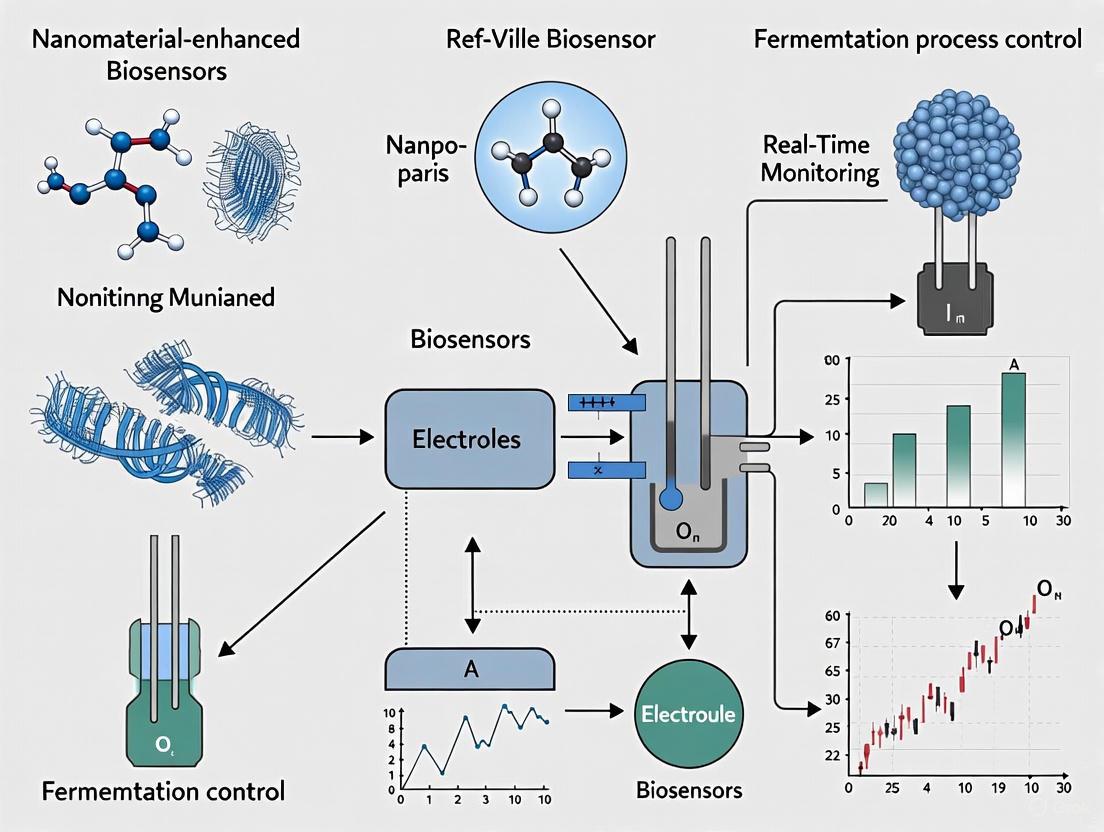
This article explores the transformative role of nanomaterial-enhanced biosensors in revolutionizing fermentation process control for biomedical and pharmaceutical applications.
Nanomaterial-Enhanced Biosensors for Advanced Fermentation Process Control
Abstract
This article explores the transformative role of nanomaterial-enhanced biosensors in revolutionizing fermentation process control for biomedical and pharmaceutical applications. It provides a comprehensive analysis for researchers and drug development professionals, covering the foundational principles of how nanomaterials like graphene, carbon nanotubes, and metal nanoparticles enhance biosensor performance. The scope extends to practical methodologies for real-time monitoring of key metabolites, troubleshooting common challenges in complex bioreactor environments, and validating sensor performance against traditional analytical techniques. By integrating the latest research, this review outlines how these advanced biosensing platforms enable precise dynamic control, improve bioproduction yields, and support the development of next-generation smart biomanufacturing systems.
The Nanomaterial Advantage: Core Principles Enhancing Biosensor Performance
The integration of nanotechnology into biosensor design has revolutionized monitoring and control capabilities within fermentation processes. Nanomaterials enhance biosensor performance by increasing the electrode surface area, improving electron transfer rates, and facilitating the stable immobilization of biological recognition elements [1]. These improvements are critical for developing robust, sensitive, and rapid analytical tools capable of operating in the complex matrix of a fermentation broth. This document provides application notes and detailed experimental protocols for using four key nanomaterials—Graphene, Carbon Nanotubes (CNTs), Metal Nanoparticles (NPs), and Quantum Dots (QDs)—in the context of biosensing for fermentation process control.
Key Nanomaterials: Properties and Fermentation Applications
The unique physicochemical properties of graphene, carbon nanotubes, metal nanoparticles, and quantum dots make them particularly suited for enhancing biosensors used in fermentation monitoring.
- Graphene is a single layer of carbon atoms arranged in a two-dimensional honeycomb lattice. Its large surface area, high electrical conductivity, and excellent biocompatibility make it an ideal material for label-free electrochemical detection of biomarkers [2]. In fermentation, graphene-based electrodes can be used for sensitive detection of metabolites like ethanol or organic acids.
- Carbon Nanotubes (CNTs) are cylindrical nanostructures composed of rolled graphene sheets. They possess unique optical, electrical, and chemical characteristics that significantly enhance the electron transfer rate in biosensors, enabling rapid detection of biochemical molecules [3]. Their functionalizable surface allows for the immobilization of enzymes, such as glucose oxidase or lactate oxidase, for real-time monitoring of sugar and lactate levels during fermentation [3] [4]. CNT-based sensors can also be designed as self-powered systems for autonomous monitoring [5].
- Metal Nanoparticles (NPs), particularly those made from noble metals like gold and silver, are prized for their localized surface plasmon resonance (LSPR), high catalytic activity, and excellent electrical conductivity [1]. Their large surface-to-volume ratio provides a high density for immobilizing biomolecules. In electrochemical biosensors, metal NPs can act as electron transfer facilitators, amplifying the detection signal for products like hydrogen peroxide from oxidase-catalyzed reactions [1].
- Quantum Dots (QDs) are semiconductor nanocrystals (2–10 nm) with size-tunable fluorescence properties, high quantum yields, and exceptional photostability [6]. These properties make them excellent fluorescent labels in optical biosensing platforms. For fermentation, QDs can be integrated into microfluidic systems (MFS) for high-throughput, real-time detection of specific analytes, leveraging phenomena like Fluorescence Resonance Energy Transfer (FRET) [7].
Table 1: Comparative Analysis of Key Nanomaterials for Biosensing in Fermentation
| Nanomaterial | Key Properties | Primary Transduction Mechanism | Example Fermentation Analytes |
|---|---|---|---|
| Graphene | Large surface area, high conductivity, biocompatibility [2] | Electrochemical (impedimetric, amperometric) [8] | Ethanol, glucose, biomarkers for microbial activity |
| Carbon Nanotubes (CNTs) | High aspect ratio, enhanced electron transfer, functionalizable surface [3] [5] | Electrochemical (amperometric, self-powered) [3] [5] | Glucose, lactate, glutamate, catechols [4] [5] |
| Metal Nanoparticles | Catalytic activity, LSPR, high electrical conductivity [1] | Optical (LSPR), Electrochemical (amperometric) [1] | Hydrogen peroxide, sugars, alcohols |
| Quantum Dots (QDs) | Size-tunable fluorescence, high photostability, FRET capability [6] [7] | Optical (fluorescence, FRET) [7] | Specific sugars, amino acids, nucleic acids |
Experimental Protocols
Protocol: CNT-Based Amperometric Glucose Biosensor for Fermentation Broth
This protocol details the construction of an amperometric biosensor for glucose monitoring, a critical parameter in saccharification and fermentation processes [4] [9].
Principle: Glucose oxidase (GOD) is immobilized onto a carbon nanotube-modified electrode. GOD catalyzes the oxidation of β-D-glucose, producing hydrogen peroxide (H₂O₂). The subsequent electrochemical oxidation of H₂O₂ at an applied potential generates a current proportional to the glucose concentration [4].
Workflow: The following diagram illustrates the key steps in the sensor fabrication and measurement process.
Materials:
- Multi-walled carbon nanotubes (MWCNTs)
- Glucose oxidase (GOD) from Aspergillus niger
- Glutaraldehyde solution (2.5% v/v)
- Phosphate Buffered Saline (PBS) (0.1 M, pH 7.4)
- Nafion perfluorinated resin solution
- Glassy carbon electrode (GCE)
Procedure:
- MWCNT Dispersion: Disperse 1 mg of MWCNTs in 1 mL of dimethylformamide (DMF) and sonicate for 30 minutes to create a homogeneous suspension.
- Electrode Modification: Clean the GCE according to standard protocols. Drop-cast 5 µL of the MWCNT dispersion onto the polished surface of the GCE and allow it to dry at room temperature, forming a MWCNT-modified electrode (MWCNT/GCE).
- Enzyme Immobilization: Prepare a 10 µL mixture containing 5 mg/mL GOD and 0.5% glutaraldehyde. Deposit this mixture onto the MWCNT/GCE surface and allow it to incubate for 1 hour at 4°C for cross-linking. Rinse gently with PBS to remove any unbound enzyme.
- Sensor Calibration: Prepare a series of standard glucose solutions in PBS (e.g., 0.1 – 10 mM). Using a standard three-electrode system, immerse the biosensor and apply a constant potential of +0.7 V (vs. Ag/AgCl reference electrode). Record the steady-state amperometric current for each standard solution and plot a calibration curve (current vs. concentration).
- Sample Measurement: Dilute the fermentation broth sample as necessary with PBS. Immerse the biosensor and record the steady-state current under the same applied potential. Calculate the glucose concentration in the sample using the prepared calibration curve.
Protocol: QD-based FRET Biosensor in Microfluidics for Metabolite Detection
This protocol describes a microfluidic approach for detecting fermentation metabolites using a Quantum Dot-based FRET assay, which offers advantages of high throughput, short analysis time, and in-situ monitoring potential [7].
Principle: Quantum Dots (QDs) are functionalized with biorecognition elements (e.g., antibodies or aptamers). A dye-labeled reporter molecule is designed to bind to the QD-bioconjugate, bringing the dye close enough for FRET to occur, quenching QD fluorescence. The presence of the target analyte displaces the reporter, disrupting FRET and restoring QD fluorescence, which is proportional to analyte concentration [7].
Workflow: The conceptual workflow and FRET mechanism are illustrated below.
Materials:
- Carboxylated CdSe/ZnS core-shell QDs
- EDC and NHS crosslinkers
- Biorecognition element (e.g., aptamer or antibody for target metabolite)
- Dye-labeled reporter molecule
- PDMS-based microfluidic chip
- Fluorescence spectrophotometer or microplate reader
Procedure:
- QD Bioconjugation: Activate the carboxyl groups on the QD surface using a mixture of EDC and NHS in MES buffer for 15 minutes. Incubate the activated QDs with the purified biorecognition element (e.g., amino-modified aptamer) for 2 hours at room temperature. Purify the QD-bioconjugates using size-exclusion chromatography or centrifugal filtration.
- Microfluidic Chip Priming: Introduce the QD-bioconjugates into the microfluidic channel and allow them to adsorb or be chemically immobilized onto the channel surface.
- FRET Pair Assembly: Flow the dye-labeled reporter molecule through the channel to allow it to bind to the QD-bioconjugate, establishing the FRET pair. Wash with buffer to remove unbound reporters.
- Detection and Quantification: Introduce the fermentation sample (clarified supernatant) into the microfluidic channel. Use a fluorescence reader to monitor the increase in QD fluorescence emission in real-time as the analyte displaces the reporter and FRET is disrupted. Quantify the analyte concentration by comparing the signal increase to a standard curve generated with known analyte concentrations.
The Scientist's Toolkit: Essential Research Reagents
Table 2: Key Reagent Solutions for Nanomaterial-Enhanced Biosensor Development
| Reagent/Material | Function/Application | Example Use Case |
|---|---|---|
| Glucose Oxidase (GOD) | Biorecognition element; catalyzes glucose oxidation [4] | Core enzyme in amperometric glucose biosensors [4] |
| L-Amino Acid Oxidase | Biorecognition element; catalyzes oxidation of L-amino acids [4] | Detection of key amino acids in fermentation broth [4] |
| Nafion Perfluorinated Resin | Cation-exchange polymer; improves selectivity [4] | Coating on enzyme electrodes to repel interferents like ascorbate [4] |
| Glutaraldehyde | Crosslinking agent; immobilizes biomolecules [4] | Stabilizing enzymes on nanomaterial-modified electrode surfaces [4] |
| EDC/NHS Chemistry | Crosslinking system for carboxyl-amine conjugation [7] | Covalent attachment of antibodies or aptamers to QD surfaces [7] |
| Multi-walled Carbon Nanotubes | Nanoscaffold; enhances electron transfer and surface area [3] [5] | Electrode modification for sensitive electrochemical detection [3] |
In the field of fermentation process control, the precise and real-time monitoring of critical biomarkers—such as microbial cell density, metabolite concentrations, and stress indicators—is paramount for optimizing yield and ensuring product quality. Nanomaterial-enhanced biosensors have emerged as powerful analytical tools that address this need by significantly improving detection sensitivity, specificity, and speed. The performance of these biosensors hinges on their core signal enhancement mechanisms, which leverage the unique electrical, optical, and plasmonic properties of nanomaterials. Plasmonic enhancement, in particular, utilizes the collective oscillations of electrons in metallic nanostructures to concentrate electromagnetic fields, dramatically amplifying optical signals for detection. This application note provides a structured overview of these enhancement mechanisms, supplemented with quantitative data comparisons, detailed experimental protocols, and essential resource guidelines to facilitate their implementation in fermentation research and development.
Fundamental Enhancement Mechanisms
Signal enhancement in biosensors is achieved through the strategic use of nanomaterials whose intrinsic properties magnify the transducer's response to a biorecognition event. The three primary mechanisms are categorized and explained below.
Plasmonic Enhancement
Plasmonic enhancement is rooted in the excitation of Surface Plasmons (SPs), which are coherent and collective oscillations of free electrons at the interface between a metal and a dielectric material (e.g., a fermentation broth) [10] [11]. This phenomenon occurs in two main forms:
- Localized Surface Plasmon Resonance (LSPR): Occurs in metallic nanoparticles (e.g., gold, silver) smaller than the wavelength of incident light. The confined electrons oscillate collectively, generating a enhanced local electromagnetic field that decays exponentially from the nanoparticle surface (within ~30 nm) [10]. The LSPR condition is highly sensitive to the local refractive index, causing measurable shifts in the extinction spectrum (absorption + scattering) upon molecular binding. The resonance frequency,
ω_LSPR, for a nanosphere is given byω_LSPR = ω_p / √(1 + 2ε_diel), whereω_pis the plasma frequency andε_dielis the dielectric constant of the surrounding medium [10]. - Surface Plasmon Polaritons (SPPs): These are propagating electromagnetic waves that travel along the surface of a continuous metal film (e.g., in a Kretschmann prism configuration) [10]. Their evanescent field extends further into the dielectric medium (~200 nm) compared to LSPR, making them sensitive to changes farther from the surface. Exciting SPPs requires momentum matching, typically achieved using a prism or grating [10].
The enormous enhancement of the local electric field (by several orders of magnitude) intensifies various optical processes, leading to several powerful sensing techniques [11]:
- Surface-Enhanced Raman Scattering (SERS): The Raman scattering signal of molecules located within the plasmonic "hot spots" is dramatically amplified, enabling single-molecule detection [11].
- Plasmon-Enhanced Fluorescence (PEF): Plasmonic nanostructures can modify the fluorescence emission rate and efficiency of fluorophores, leading to significantly brighter signals and improved photostability [10].
- Refractometric Sensing: Directly utilizes the shift in the LSPR or SPP resonance wavelength due to the adsorption of target analytes (e.g., proteins, microbes) on the nanostructure surface, changing the local refractive index [10] [12].
Optical Enhancement
Optical enhancement mechanisms, while sometimes overlapping with plasmonics, often involve non-plasmonic nanomaterials that enhance signal generation or collection:
- Enhanced Fluorescence with Quantum Dots (QDs): Semiconductor QDs offer superior photostability, high quantum yields, and size-tunable emission wavelengths compared to traditional organic dyes. Their integration into biosensors provides highly bright and photostable signals for tracking microbial metabolites or stress responses [1].
- Interferometric Sensing: Techniques like Biolayer Interferometry (BLI) monitor the interference pattern of white light reflected from a biosensor tip. The binding of biomolecules to the tip surface alters the optical path length, resulting in a measurable shift in the interference pattern, which is used to quantify binding kinetics (
k_on,k_off) and affinity (K_D) in real-time [13].
Electrical Enhancement
Electrical enhancement focuses on improving the sensitivity of electrochemical biosensors by using nanomaterials to facilitate electron transfer and increase the electroactive surface area:
- High Surface-to-Volume Ratio: Nanomaterials such as carbon nanotubes (CNTs), graphene, and metallic nanowires provide an immense surface area for immobilizing biorecognition elements (enzymes, antibodies). This maximizes the interaction with the target analyte, leading to a stronger electrical signal per unit volume [1].
- Facilitated Electron Transfer: These materials often exhibit excellent electrical conductivity, which promotes direct electron communication between the biorecognition element's redox center and the transducer electrode. This enhances the electron transfer rate, boosting the amperometric or impedimetric signal [1].
Table 1: Quantitative Comparison of Signal Enhancement Mechanisms in Biosensing
| Enhancement Mechanism | Key Nanomaterials | Typical Enhancement Factor | Key Performance Parameters | Fermentation Monitoring Application |
|---|---|---|---|---|
| SERS | Ag/Au nanoparticles (dimers, aggregates) | 1010 to 1015 [11] | Sensitivity, Specificity | Detection of low-abundance metabolites (e.g., antibiotics, organic acids) |
| LSPR Refractometry | Au/Ag nanospheres, nanocubes, nanorods | Refractive Index Sensitivity (~200-500 nm/RIU) [10] | Figure of Merit (FoM), FWHM | Label-free detection of microbial cells or proteins |
| SPP Refractometry | Au/Ag thin films, Bimetallic layers (Ag/Au) | FoM enhanced by 1.34 to 25 vs. single metal [12] | Sensitivity (nm/RIU or deg/RIU), FoM | Real-time binding kinetics of enzymes or substrates |
| Plasmon-Enhanced Fluorescence | Au/Ag nanoparticles, patterned films | Fluorescence intensity increased by 10-1000x [11] | Signal-to-Noise Ratio, Photostability | Tracking specific microbial populations with fluorescent tags |
| Electrochemical (Amperometric) | CNTs, Graphene, Metallic NPs | Sensitivity increased by 2-5 orders of magnitude [1] | Sensitivity (A/M), Detection Limit (M) | Monitoring glucose, lactate, ethanol in broth |
Experimental Protocols
Protocol: Real-Time Binding Kinetics Analysis Using Bio-Layer Interferometry (BLI)
This protocol outlines the use of BLI to characterize the interaction between a fermentation-relevant bioreceptor (e.g., an antibody, enzyme, or truncated ACE2) and its target (e.g., a microbial surface protein or metabolite) for biosensor development [13].
1. Principle: BLI measures biomolecular interactions in real-time by analyzing the shift in the interference pattern of white light reflected from the sensor tip. The wavelength shift (Δλ) is directly proportional to the thickness of the molecular layer bound to the tip, providing data on association and dissociation rates.
2. Reagents and Equipment:
- BLI instrument
- Biosensor tips (e.g., Ni-NTA for his-tagged proteins, Streptavidin)
- Purified receptor protein (Ligand)
- Target analyte (Analyte)
- Assay Buffer (e.g., PBS, compatible with fermentation broth simulants)
3. Experimental Workflow:
4. Procedure:
- Step 1: Baseline. Hydrate the biosensor tips in the assay buffer for 60 seconds to establish a stable optical baseline.
- Step 2: Loading. Immerse the tips in a solution containing the ligand (receptor) for 300 seconds to immobilize it onto the sensor surface.
- Step 3: Wash. Briefly (60 seconds) place the tips back in the assay buffer to remove any unbound ligand and stabilize the signal.
- Step 4: Association. Move the ligand-immobilized tips into the solution containing the target analyte for 300 seconds. The binding interaction will cause a positive shift in the interference pattern.
- Step 5: Dissociation. Transfer the tips back to the assay buffer for 400 seconds. The dissociation of the analyte from the ligand will be observed as a decrease in the signal.
- Step 6: Regeneration (Optional). Apply a mild regeneration solution (e.g., low pH buffer) for 15-30 seconds to remove the bound analyte and regenerate the sensor tip for a new cycle.
- Data Analysis: Fit the resulting association and dissociation sensorgrams to a 1:1 binding model using the instrument's software to extract the association rate (
k_on), dissociation rate (k_off), and equilibrium dissociation constant (K_D = k_off / k_on).
Protocol: SERS-Based Detection of Metabolites in Fermentation Broth
This protocol describes a method for sensitive detection of specific metabolites using SERS-active nanostructures.
1. Principle: When target molecules adsorb onto the surface of plasmonic nanostructures (like aggregated silver or gold nanoparticles), their Raman scattering cross-section is enormously enhanced, allowing for fingerprint identification and quantification at ultra-low concentrations.
2. Reagents and Equipment:
- SERS substrate (e.g., colloidal Ag nanoparticles, Au nanorod arrays)
- Target metabolite standard (e.g., Lactic acid, Acetoin)
- Microcentrifuge tubes
- Raman spectrometer
3. Experimental Workflow:
4. Procedure:
- Step 1: Substrate Preparation. Prepare or acquire a stable colloidal suspension of SERS-active nanoparticles (e.g., citrate-reduced silver nanoparticles). Characterize the LSPR peak via UV-Vis spectroscopy.
- Step 2: Sample Mixing. Mix a fixed volume of the nanoparticle colloid with an equal volume of the filtered fermentation broth sample or metabolite standard in a microcentrifuge tube. Gently vortex to homogenize.
- Step 3: Incubation. Allow the mixture to incubate at room temperature for 5-15 minutes to facilitate the adsorption of the target metabolite onto the metal nanoparticle surface.
- Step 4: Signal Acquisition. Pipette a small aliquot (e.g., 2 µL) of the mixture onto a glass slide or a well in a sample holder. Place it under the Raman microscope objective. Acquire spectra using a laser excitation wavelength that overlaps with the LSPR of the nanoparticles (e.g., 785 nm).
- Step 5: Data Analysis. Identify the characteristic Raman fingerprint peaks of the target metabolite. For quantification, prepare a calibration curve by measuring the SERS intensity of the characteristic peak against a series of known standard concentrations.
The Scientist's Toolkit: Research Reagent Solutions
Table 2: Essential Materials for Nanomaterial-Enhanced Biosensor Development
| Item Name | Function/Description | Example Application |
|---|---|---|
| Gold Nanoparticle Colloid | Spherical nanoparticles (e.g., 20-100 nm) for LSPR sensing and SERS substrate fabrication. | Refractometric detection of microbial adhesion; SERS tagging. |
| Bio-Layer Interferometry (BLI) Dip & Read Sensors | Functionalized biosensor tips for label-free kinetic analysis. | Characterizing binding affinity of enzymes to substrates relevant to fermentation. |
| Streptavidin-Conjugated Quantum Dots | Highly fluorescent nanocrystals for optical tagging and tracking. | Highly photostable labeling of specific microbial cells for fluorescence imaging. |
| Carbon Nanotube (CNT) Inks | Dispersions of CNTs for modifying electrode surfaces to enhance conductivity and surface area. | Fabrication of sensitive electrochemical biosensors for metabolite detection. |
| Recombinant Protein A/G | Fusion protein for oriented immobilization of antibody Fc regions on sensor surfaces. | Improving antigen-binding capacity and assay sensitivity in immunosensors. |
| Plasmonic Bimetallic Films (Ag/Au) | Pre-fabricated SPP chips with a silver core and thin gold coating for stability and performance. | High-sensitivity SPR-based monitoring of biomolecular interactions in real-time. |
| Specific Biorecognition Elements | Antibodies, aptamers, or enzymes selected for a specific fermentation analyte (e.g., lactate oxidase). | Imparting high specificity to the biosensor for the target of interest. |
The convergence of nanotechnology with molecular biology has catalyzed a revolution in biosensing, particularly for complex biochemical environments like fermentation processes. Nanomaterial-bioreceptor integration involves the strategic coupling of highly specific biological recognition elements (bioreceptors) with engineered nanomaterials to create hybrid sensing platforms with enhanced performance. These integrated systems are engineered to deliver superior sensitivity, selectivity, and robustness for real-time monitoring and control in fermentation research and industrial biotechnology. Aptamers, enzymes, and whole cells represent the three primary classes of bioreceptors, each offering distinct mechanisms of interaction with target analytes—from small molecules and metabolites to complex cellular structures.
The synergy between nanomaterials and bioreceptors addresses critical limitations of traditional fermentation monitoring methods, which often rely on offline sampling and time-consuming chromatographic or spectroscopic analyses [14]. The unique optical, magnetic, thermal, and electronic properties of nanomaterials dramatically improve the performance of conjugated bioreceptors [15]. For instance, aptamers gain enhanced stability and signaling capability, enzymes achieve direct electron transfer and improved immobilization, and whole cells experience more biocompatible interfaces that maintain their viability and physiological relevance. This integration is foundational for developing the next generation of intelligent biosensors capable of providing real-time, multi-parametric data essential for precise fermentation process control.
Fundamental Principles of Integration
Properties of Nanomaterials
Nanomaterials serve as the foundational backbone for advanced biosensors due to their exceptional physical and chemical properties, which are harnessed to enhance signal transduction, improve bioreceptor stability, and increase the sensing surface area.
- High Surface-to-Volume Ratio: Nanostructures such as graphene, carbon nanotubes, and metal nanoparticles provide an extensive surface area for the immobilization of a high density of bioreceptors, leading to an increased probability of analyte capture and improved sensor sensitivity [14].
- Tunable Electronic Properties: Materials like graphene and carbon nanotubes exhibit excellent electrical conductivity, making them ideal for electrochemical biosensors. They facilitate direct electron transfer between the bioreceptor's active site and the electrode surface, enhancing signal response and enabling the detection of low analyte concentrations [14].
- Unique Optical Characteristics: Gold nanoparticles and quantum dots possess distinctive optical properties, such as surface plasmon resonance (SPR) and fluorescence, respectively. These properties are highly sensitive to changes in the local environment, such as the binding of an analyte to a bioreceptor, allowing for the development of highly sensitive colorimetric or fluorescent biosensors [15] [16].
- Magnetic Properties: Magnetic nanoparticles enable the easy separation and concentration of target analytes from complex mixtures like fermentation broths, simplifying sample preparation and improving detection limits [15].
Bioreceptor Selection and Characteristics
The choice of bioreceptor is dictated by the target analyte and the specific requirements of the fermentation monitoring application.
- Aptamers are single-stranded DNA or RNA oligonucleotides selected for their high affinity and specificity to a target molecule. They offer advantages over traditional antibodies, including ease of chemical synthesis, superior stability at high temperatures and varying pH, minimal immunogenicity, and the ability to be chemically modified for easy immobilization onto nanomaterials [15] [14]. Their fast preparation time and cost-effectiveness make them a robust alternative in biosensor design [14].
- Enzymes are biocatalysts that provide exceptional specificity for their substrates. They generate electroactive or optically active products as a result of their catalytic activity, which can be precisely measured. Integration with nanomaterials protects enzymatic activity, enhances electron transfer kinetics, and prevents enzyme leaching, leading to more stable and sensitive biosensors [16].
- Whole Cells act as living bioreceptors that can detect a broad spectrum of bioactive compounds and metabolic status. They report on the functional effect of an analyte, such as toxicity or bioavailability, which isolated molecules cannot. Nanomaterials can be engineered to create a more biocompatible interface that supports cell viability and function, while also transducing the cellular response into a quantifiable signal [17].
Table 1: Comparative Analysis of Bioreceptor Types for Fermentation Biosensors
| Bioreceptor | Mechanism of Action | Key Advantages | Common Nanomaterial Partners | Ideal Fermentation Targets |
|---|---|---|---|---|
| Aptamers | Target binding induces conformational change | High thermal/chemical stability, tunable specificity, small size | Gold nanoparticles, Graphene, Quantum Dots | Organic acids, antibiotics, mycotoxins |
| Enzymes | Catalytic conversion of substrate | High turnover number, exceptional substrate specificity | Carbon nanotubes, Magnetic nanoparticles, Metal-oxides | Glucose, lactate, ethanol, glycerol |
| Whole Cells | Physiological response to analyte | Functional toxicity assessment, metabolic activity reporting | Conductive polymers, Biocompatible hydrogels, Silica nanoparticles | Overall metabolic status, stress markers, quorum sensing molecules |
Applications in Fermentation Process Control
Real-time Metabolite Monitoring
The ability to monitor key metabolites in real-time is crucial for optimizing fermentation yield and productivity. Nano-enhanced biosensors have been developed for this precise purpose.
- Lactate Monitoring: Electrochemical biosensors incorporating enzymes like lactate oxidase immobilized on carbon nanotube electrodes enable real-time tracking of lactate levels. The nanomaterial facilitates direct electron transfer, resulting in a rapid current response proportional to lactate concentration, allowing for dynamic adjustments to the fermentation process [16].
- Ethanol Profiling: Aptamer-based biosensors (aptasensors) conjugated with gold nanoparticles can detect ethanol through optical methods like localized surface plasmon resonance (LSPR). Binding of ethanol to the aptamer causes a shift in the plasmon resonance band, providing a real-time, label-free measurement of alcohol content during fermentation [14].
- Glucose Measurement: As a primary carbon source, glucose concentration is a critical process variable. Nanomaterial-enhanced enzyme sensors using glucose oxidase are widely employed. For example, a field-effect transistor (FET) biosensor with a graphene channel functionalized with the enzyme can detect glucose with high sensitivity, enabling precise feeding strategies in fed-batch fermentations [17].
Microbial Population and Contamination Tracking
Maintaining a pure and active culture is essential for successful fermentation. Biosensors integrated with nanomaterials provide tools for rapid pathogen detection and population dynamics analysis.
- Pathogen Detection: Aptasensors have been developed for swift identification of contaminants. For instance, an aptamer specific to Listeria spp. immobilized on a sensor surface can detect the pathogen within hours, a significant improvement over traditional culture methods that take days [17]. A microelectrode array was reported to detect E. coli O157:H7 in just 20 minutes [17].
- Starter Culture Activity: Isothermal microcalorimetry coupled with biosensors can track the metabolic activity of starter cultures, such as Lactobacillus plantarum, in real-time (4.7–18.6 hours), providing insights into fermentation progress and culture health [17].
- Quorum Sensing Monitoring: Whole-cell biosensors can be designed to respond to quorum sensing (QS) molecules, which regulate microbial behaviors like biofilm formation. Quartz crystal microbalance (QCM) sensors can track biofilm mass changes, offering an early warning system for spoilage or contamination risks in fermentations [17].
Advanced Process Control Parameters
Beyond specific analytes, biosensors can monitor broader process parameters that influence product quality and yield.
- pH and Dissolved Oxygen: While not always requiring bioreceptors, nanosensors can be integrated with bioreceptor-based systems to provide a comprehensive view of the fermentation environment. Optical nanofiber sensors coated with pH-sensitive dyes or oxygen-quenchable fluorescent compounds can provide continuous, spatially resolved data [16].
- Volatile Organic Compounds (VOCs): The production of specific VOCs can indicate the stage of fermentation or the presence of off-flavors. Nanomaterial-based sensor arrays (electronic noses) can detect these volatile profiles. For example, cooperation between Streptococcus thermophilus and Lactobacillus bulgaricus in yogurt fermentation can be monitored by biosensors tracking volatile compound production [17].
Table 2: Performance Metrics of Nanomaterial-Enhanced Biosensors in Fermentation Applications
| Target Analyte | Bioreceptor | Nanomaterial | Transduction Method | Reported Limit of Detection (LOD) | Response Time |
|---|---|---|---|---|---|
| E. coli O157:H7 | Aptamer | Microelectrode Array | Electrochemical (Impedance) | Not Specified | 20 minutes [17] |
| Salmonella spp. | Nucleic Acid | Not Specified | Electrochemical | Not Specified | Real-time [17] |
| Lactobacillus plantarum | Whole Cell | Not Specified | Calorimetric | Not Specified | 4.7 - 18.6 hours [17] |
| Prostate-Specific Antigen (PSA) | Aptamer (from SELEX) | Not Specified | Surface Plasmon Resonance (SPR) | Kd = 0.7 nM [14] | Real-time [14] |
| Small Molecules (General) | Aptamer | Gold Nanoparticles | Colorimetric / LSPR | Nanomolar (nM) range [14] | Minutes to Hours [14] |
Experimental Protocols
Protocol 1: Fabrication of an Aptamer-Gold Nanoparticle Conjugate for Optical Sensing
This protocol details the synthesis of a colorimetric aptasensor for the detection of a small molecule analyte (e.g., an antibiotic or toxin) in a fermentation broth.
Principle: The binding of the target analyte to its specific aptamer induces a conformational change in the aptamer. When the aptamer is adsorbed on the surface of gold nanoparticles (AuNPs), this conformational change alters the interparticle distance, leading to a visible color shift from red (dispersed) to blue/purple (aggregated), or vice-versa.
Materials:
- Citrate-capped Gold Nanoparticles (AuNPs), ~15-20 nm diameter
- Thiol- or amino-modified DNA aptamer specific to the target analyte
- Saline Tris-EDTA (TE) Buffer (10 mM Tris-HCl, 1 mM EDTA, pH 8.0) with varying concentrations of NaCl
- Ultrapure water (HPLC grade)
- Target analyte standard
- Spectrophotometer or microplate reader
- Benchtop centrifuge
Procedure:
- Aptamer Preparation: Dilute the modified aptamer in TE buffer to a concentration of 100 µM. Heat the solution to 95°C for 5 minutes and then allow it to cool slowly to room temperature to ensure proper folding.
- Conjugation: Mix 1 mL of the as-prepared AuNP solution with a calculated volume of the folded aptamer solution (to achieve a final aptamer concentration of 1-5 µM). Incubate the mixture at room temperature for 16-24 hours with gentle shaking.
- Aging/Salting: To stabilize the aptamer-AuNP conjugate, add NaCl solution to the mixture in a stepwise manner to a final concentration of 50 mM. Allow the solution to stand for 24 hours. This step "ages" the conjugate and removes weakly bound aptamers.
- Purification: Centrifuge the conjugated AuNP solution at high speed (e.g., 14,000 rpm for 20 minutes) to form a pellet. Carefully remove the supernatant and resuspend the red pellet in a suitable volume of TE buffer with 50 mM NaCl. This purified conjugate is your stock biosensor solution.
- Detection Assay: a. Prepare a series of samples: fermentation broth spiked with known concentrations of the target analyte and a negative control (broth without the analyte). b. In a microplate or cuvette, mix 100 µL of the purified aptamer-AuNP conjugate with 100 µL of each sample. c. Incubate for 10-15 minutes at room temperature. d. Record the UV-Vis absorption spectrum from 400 nm to 700 nm, or observe the color change visually. e. The ratio of absorbance at the peak for dispersed AuNPs (~520 nm) to that at the peak for aggregated AuNPs (~650 nm) (A520/A650) can be plotted against analyte concentration to generate a calibration curve.
Protocol 2: Development of a Nanomaterial-Enzyme Electrode for Metabolite Detection
This protocol describes the construction of an amperometric biosensor for continuous monitoring of a metabolite (e.g., glucose) using a carbon nanotube (CNT)-enzyme composite.
Principle: The enzyme (e.g., glucose oxidase, GOD) catalyzes the oxidation of the analyte, producing electrons. CNTs facilitate the direct transfer of these electrons to the working electrode, generating a current that is directly proportional to the analyte concentration.
Materials:
- Screen-printed carbon electrode (SPCE) or glassy carbon electrode
- Multi-walled carbon nanotubes (MWCNTs)
- Enzyme (e.g., Glucose Oxidase from Aspergillus niger)
- Nafion solution (0.5% w/w in alcohol)
- Phosphate Buffered Saline (PBS) (0.1 M, pH 7.4)
- Ultrasonicator
- Potentiostat
Procedure:
- CNT Preparation: Disperse 1 mg of MWCNTs in 1 mL of Nafion solution using probe ultrasonication for 30 minutes to create a stable, homogeneous black suspension.
- Enzyme-Composite Modification: a. Mix the MWCNT/Nafion suspension with the GOD solution (e.g., 10 mg/mL in PBS) at a 1:1 volume ratio. b. Pipette a fixed volume (e.g., 5 µL) of this MWCNT/Nafion/Enzyme composite onto the working electrode surface of the SPCE. c. Allow the modified electrode to dry at room temperature for at least 1 hour. The Nafion acts as a permselective membrane and binder.
- Electrochemical Measurement: a. Connect the modified SPCE to the potentiostat. b. Immerse the electrode in a stirred cell containing 0.1 M PBS (pH 7.4) at a constant applied potential (e.g., +0.7 V vs. Ag/AgCl reference). c. After stabilizing the background current, inject known volumes of a standard glucose solution into the cell. d. Record the amperometric (i-t) curve. The steady-state current increase after each addition is due to the enzymatic oxidation of glucose. e. Plot the current response as a function of glucose concentration to calibrate the biosensor.
- Sample Analysis: The calibrated biosensor can be used to measure glucose in filtered fermentation broth samples by applying the standard addition method to account for matrix effects.
Protocol 3: SELEX for Aptamer Selection Against a Fermentation-Relevant Target
The Systematic Evolution of Ligands by EXponential enrichment (SELEX) is the foundational process for generating aptamers. This protocol outlines a general SELEX workflow.
Principle: A vast library of random single-stranded DNA (ssDNA) sequences is incubated with the target. Sequences that bind to the target are partitioned from unbound ones, amplified by PCR, and used as the starting pool for the next round. Through iterative rounds of selection and amplification, the pool becomes enriched with high-affinity aptamers.
Diagram 1: SELEX Workflow for Aptamer Selection
Materials:
- Synthetic ssDNA Library (random region of ~40 nucleotides flanked by fixed primer binding sites)
- Immobilized Target Molecule (on beads or a column)
- Binding Buffer (optimized for the target)
- Washing Buffer (to remove weakly bound sequences)
- Elution Buffer (for recovering bound ssDNA)
- PCR reagents (primers, Taq polymerase, dNTPs)
- Equipment for ssDNA regeneration (e.g., asymmetric PCR or strand separation)
Procedure:
- Incubation: The ssDNA library is incubated with the immobilized target in binding buffer to allow for the formation of target-ssDNA complexes.
- Partitioning: The mixture is washed extensively with washing buffer to remove unbound and weakly bound ssDNA sequences.
- Elution: The tightly bound ssDNA is eluted from the target using a denaturing elution buffer (e.g., containing urea or high temperature).
- Amplification: The eluted ssDNA pool is amplified by PCR using the fixed region primers.
- ssDNA Regeneration: The double-stranded PCR product is converted back into a single-stranded library for the next selection round. This can be achieved by asymmetric PCR or biochemical separation.
- Repetition: Steps 1-5 are repeated for typically 8-15 rounds, with increasing selection stringency (e.g., stricter washing conditions) in later rounds to select for the highest-affinity binders.
- Cloning and Sequencing: After the final round, the enriched DNA pool is cloned and sequenced. Individual sequences are then synthesized and tested for their binding affinity (Kd) and specificity [14].
The Scientist's Toolkit: Essential Research Reagents and Materials
Table 3: Key Research Reagent Solutions for Nanomaterial-Bioreceptor Integration
| Item Name | Function/Description | Example Application |
|---|---|---|
| Gold Nanoparticles (Citrate-capped) | Plasmonic nanomaterial for colorimetric and LSPR-based detection; surface can be functionalized with thiolated biomolecules. | Conjugation with thiol-aptamers for visual detection of analytes [14]. |
| Carboxylated Multi-Walled Carbon Nanotubes (MWCNTs) | High-aspect-ratio nanomaterial for electrode modification; enhances surface area and facilitates electron transfer. | Creating enzyme-based electrochemical biosensors for metabolites like glucose or lactate [14]. |
| SELEX Kit | Commercial kit containing a random ssDNA library, primers, and buffers to streamline the aptamer selection process. | Generating novel aptamers against specific fermentation biomarkers or contaminants [14]. |
| Quartz Crystal Microbalance (QCM) Sensor Chip | Piezoelectric transducer that measures mass changes in nanograms on its surface. | Detecting biofilm formation or whole-cell adhesion in real-time [17]. |
| Nafion Perfluorinated Resin | Ion-exchange polymer used as a permselective membrane and binder for electrode modifications. | Immobilizing enzyme/CNT composites and rejecting interfering anions in electrochemical sensors. |
| Surface Plasmon Resonance (SPR) Chip (Gold-coated) | Optical transducer for label-free, real-time monitoring of biomolecular interactions. | Characterizing binding kinetics (Ka, Kd) of selected aptamers to their targets [14] [17]. |
Signaling Pathways and Experimental Workflows
The core signaling mechanisms in nanomaterial-enhanced biosensors can be categorized by their transduction principle. The following diagram illustrates the primary pathways for electrochemical and optical aptasensors.
Diagram 2: Biosensor Signaling Pathways
For researchers focused on advanced fermentation process control, the integration of nanomaterial-enhanced biosensors offers a pathway to unprecedented precision in monitoring metabolic pathways. The performance of these biosensors hinges on three core metrics: sensitivity, selectivity, and dynamic range [16] [18]. These parameters collectively determine a sensor's ability to accurately and reliably quantify specific analytes—such as metabolites, nutrients, or product titers—within the complex matrix of a fermentation broth.
Nanomaterials, including metallic nanoparticles, carbon nanotubes, and graphene, augment these key metrics by providing a high surface area-to-volume ratio, enhancing electrical conductivity, and facilitating superior bioreceptor immobilization [16] [18]. This application note details the experimental protocols and analytical frameworks essential for quantifying these metrics, ensuring robust biosensor deployment in bioprocessing and drug development environments.
Defining Core Performance Metrics
Quantitative Definitions and Their Interrelationships
A clear, quantitative understanding of each metric is fundamental to biosensor characterization and selection for fermentation monitoring.
- Sensitivity refers to the magnitude of the biosensor's output signal change per unit change in analyte concentration. In electrochemical systems, this is often the slope of the calibration curve (e.g., current output vs. analyte concentration) and is reported in units such as µA/mM [19].
- Selectivity is the biosensor's ability to respond exclusively to the target analyte in the presence of interfering substances commonly found in fermentation broths, such as media components, precursor molecules, or by-products [13]. It is quantitatively assessed by measuring the signal response to interferents versus the target analyte.
- Dynamic Range describes the span of analyte concentrations over which the biosensor provides a reliable and measurable response. It is bounded at the lower end by the Limit of Detection (LOD) and at the upper end by signal saturation [20]. The Operating Range is the concentration window where the biosensor performs optimally, typically the linear portion of the calibration curve [20].
The table below summarizes the standard definitions, key influencing factors, and the impact of nanomaterials on these core metrics.
Table 1: Fundamental Biosensor Metrics for Fermentation Control
| Metric | Formal Definition | Key Influencing Factors | Impact of Nanomaterials |
|---|---|---|---|
| Sensitivity | Change in output signal per unit change in analyte concentration (e.g., Slope of calibration curve). | Bioreceptor affinity, transducer efficiency, surface area of sensing interface. | Increased surface area and enhanced catalytic activity (e.g., nanozymes) significantly boost signal output [16] [19]. |
| Selectivity | Ability to distinguish target analyte from interferents in a complex sample matrix. | Specificity of bioreceptor (enzyme, antibody, aptamer), efficacy of surface functionalization and blocking. | Precise nano-architectures allow for denser and more oriented immobilization of bioreceptors, reducing non-specific binding [18]. |
| Dynamic Range | Concentration span from Limit of Detection (LOD) to upper saturation point. | Affinity of bioreceptor (KD), saturation of binding sites, transducer linearity. | Nanomaterials like porous gold or graphene can increase the number of available binding sites, extending the linear range [21] [20]. |
| Limit of Detection (LOD) | Lowest analyte concentration that can be reliably distinguished from a blank (typically LOD = 3σ/slope). | Signal-to-noise ratio, background signal stability, assay conditions. | Nanomaterials enhance signal amplification, lowering the LOD by improving the signal-to-noise ratio [21] [18]. |
| Response Time | Time required to reach a stable output signal (e.g., 95% of maximum) after analyte introduction. | Kinetics of analyte–bioreceptor binding (kon, koff), mass transport to sensor surface. | Nanostructured surfaces can accelerate mass transport and binding kinetics, leading to faster response times [20]. |
The Interdependence of Metrics in Sensor Design
A critical understanding for researchers is that these metrics are not independent; optimizing one can directly impact another. The relationship between binding kinetics and sensor performance is a prime example. The equilibrium dissociation constant (KD), defined as the ratio of the dissociation rate constant (koff) to the association rate constant (kon, KD = koff/kon), intrinsically links the dynamic range and response time [13]. A bioreceptor with very high affinity (low KD) may offer excellent sensitivity at low concentrations but can have a narrow dynamic range and a slow response time due to slow dissociation (low koff) [13] [20]. Therefore, selecting a bioreceptor with kinetics matched to the expected analyte concentration in the fermentation broth is crucial.
Diagram 1: Kinetics and Performance Trade-offs. This diagram illustrates the fundamental design trade-off between high-affinity and low-affinity bioreceptors, which directly influences key biosensor metrics like sensitivity, dynamic range, and response time.
Experimental Protocols for Metric Quantification
This section provides detailed methodologies for the empirical determination of sensitivity, selectivity, and dynamic range.
Protocol for Sensitivity and Dynamic Range Calibration
Objective: To construct a calibration curve for determining sensitivity, limit of detection (LOD), and dynamic range. Principle: The biosensor is exposed to a series of standard solutions with known analyte concentrations. The resulting output signals are plotted against concentration to generate a calibration curve [19].
Materials:
- Nanomaterial-enhanced biosensor (e.g., Screen-printed electrode modified with graphene and platinum nanoparticles)
- Target analyte standard (e.g., Glucose, lactate)
- Buffer solution (e.g., 0.1 M PBS, pH 7.4)
- Potentiostat or appropriate signal readout system
- Data analysis software (e.g., Origin, Python with scikit-learn)
Procedure:
- Sensor Preparation: Condition the biosensor according to manufacturer's or lab-specific protocols (e.g., cyclic voltammetry in buffer).
- Standard Preparation: Prepare a dilution series of the analyte standard in buffer, covering the expected concentration range (e.g., 1 µM to 100 mM).
- Measurement: For each standard solution, record the steady-state output signal (e.g., amperometric current, voltage shift).
- Data Analysis:
- Plot the mean signal (n=3 replicates) against analyte concentration.
- Perform linear regression on the linear portion of the plot. The slope of this line is the sensitivity.
- Calculate the LOD using the formula: LOD = 3.3 * σ / S, where σ is the standard deviation of the blank signal and S is the slope of the calibration curve.
- The dynamic range is reported from the LOD to the highest concentration that maintains linearity (R² > 0.99).
Protocol for Assessing Selectivity
Objective: To evaluate the biosensor's specificity towards the target analyte in the presence of common interferents. Principle: The signal response from potential interfering substances, individually and in a mixture, is compared to the response from the target analyte [13].
Materials:
- Functionalized biosensor
- Target analyte standard
- Interferent solutions (e.g., Ascorbic acid, urea, other structurally similar metabolites)
- Buffer solution
Procedure:
- Baseline Measurement: Record the signal for the buffer alone.
- Analyte Response: Measure the signal for a specific concentration of the target analyte (e.g., 1 mM).
- Interferent Response: Separately, measure the signal for each potential interferent at a physiologically relevant concentration, typically higher than expected in the sample (e.g., 5x concentration of the target).
- Mixture Response: Measure the signal for a solution containing the target analyte and all interferents.
- Data Analysis:
- Calculate the percentage interference for each substance:
%(Interference) = (Signal_Interferent / Signal_Analyte) * 100. - A selectivity coefficient can be determined as the ratio of the analyte response to the interferent response. A value significantly greater than 1 indicates high selectivity.
- Calculate the percentage interference for each substance:
The Scientist's Toolkit: Research Reagent Solutions
The following table catalogs essential materials and their functional roles in developing and characterizing nanomaterial-enhanced biosensors.
Table 2: Essential Research Reagents for Biosensor Development
| Reagent / Material | Function / Application | Example Use-Case |
|---|---|---|
| Gold Nanoparticles (AuNPs) | Signal amplification; enhance electron transfer; platform for bioreceptor immobilization. | Used in SERS-based immunoassays for intense plasmonic enhancement [21]. |
| Graphene & Carbon Nanotubes (CNTs) | High electrical conductivity; large surface area; excellent bioreceptor support matrix. | Electrode modification in electrochemical biosensors to boost sensitivity and lower LOD [18]. |
| Glucose Oxidase (GOx) | Model enzyme bioreceptor for glucose detection. | Immobilized on nano-composite electrodes for continuous glucose monitoring in fermenters [19]. |
| Acetylcholinesterase (AChE) | Enzyme bioreceptor for organophosphate and carbamate pesticide detection. | Inhibitor-based biosensor for monitoring toxin contamination [19]. |
| EDC/NHS Crosslinkers | Activate carboxyl groups for covalent immobilization of biomolecules (e.g., antibodies, enzymes). | Functionalizing Au-Ag nanostars with anti-α-fetoprotein antibodies for SERS detection [21]. |
| Polydopamine/Melanin-like Coatings | Versatile, biocompatible surface adhesive for biosensor functionalization. | Used in electrochemical sensors for environmental monitoring due to simple, eco-friendly preparation [21]. |
Advanced Considerations for Fermentation Control
For high-resolution applications like monitoring metabolic fluxes in real-time, dynamic performance becomes as critical as static metrics. The response time—the speed at which a biosensor reaches a stable output after a concentration change—directly impacts the ability to control fed-batch processes [20]. Furthermore, integrating biosensors with machine learning (ML) algorithms is a emerging trend that addresses signal noise and complex data interpretation. ML can enhance analytical performance by enabling intelligent signal processing, pattern recognition, and automated decision-making, leading to more reliable data from noisy fermentation environments [18] [22].
The experimental workflow below outlines the comprehensive process from sensor preparation to data-driven analysis.
Diagram 2: Biosensor Development Workflow. This diagram charts the end-to-end process for developing and deploying a nanomaterial-enhanced biosensor, from initial fabrication and characterization to final data analysis integrated with machine learning.
From Lab to Bioreactor: Implementing Real-Time Monitoring Systems
Electrochemical Platforms for Metabolite Tracking (Glucose, Lactate, Glutamine)
In bioprocessing and fermentation control, the real-time monitoring of key metabolites—glucose, lactate, and glutamine—is paramount for understanding cell physiology, optimizing productivity, and ensuring product quality. These metabolites serve as critical indicators of cellular energy status, metabolic shift, and overall culture health. Glucose is the primary carbon source in most cultures, and its consumption rate is a fundamental indicator of cellular metabolic activity [23]. Lactate, a product of glycolysis, is a key marker for metabolic waste accumulation; its buildup can inhibit cell growth and productivity. Glutamine, a major amino acid, plays a vital role in energy production and biosynthesis, particularly in rapidly proliferating cells [24].
Traditional methods for metabolite analysis, such as spectrophotometry and chromatography, are often labor-intensive, require sample removal, and provide only discrete time-point data, thus failing to capture critical dynamic metabolic changes [23] [25]. Electrochemical biosensors, particularly those enhanced with nanomaterials, offer a powerful alternative by enabling continuous, real-time monitoring directly in the culture medium without significant disruption. Integrating these platforms with microfluidic devices and smart technology paves the way for advanced fermentation process control, allowing for automated feeding strategies and early detection of process deviations [26].
Electrochemical biosensors function by converting a biological recognition event (e.g., enzyme-substrate interaction) into a quantifiable electrical signal. A typical biosensor consists of a biological recognition element (e.g., oxidase enzyme) immobilized on a transducer surface (e.g., electrode). When the target metabolite interacts with the recognition element, a chemical reaction occurs (e.g., oxidation), producing or consuming electrons that are measured by the transducer as a current (amperometry), potential (potentiometry), or impedance change.
The integration of nanomaterials has revolutionized this field by drastically improving sensor performance. Nanomaterials provide a high surface-to-volume ratio, enhancing the immobilization capacity for enzymes and increasing the electrochemical signal. They also facilitate faster electron transfer between the enzyme's active site and the electrode surface, leading to improved sensitivity and lower detection limits [27]. Common nanomaterials used include:
- Carbon allotrope-based nanomaterials such as graphene, carbon nanotubes, and carbon quantum dots, known for their excellent electrical conductivity and large surface area [27].
- Inorganic nanomaterials like gold and silver nanoparticles, which enhance electrochemical reactivity and can be used for functionalization [27].
- Organic nanomaterials derived from polymers, which offer good biocompatibility [27].
Microfabrication techniques have further advanced these platforms by enabling the development of lab-on-a-chip and microfluidic systems. These devices, such as the micropillar array-based microfluidic electrochemical device (MED), integrate biosensors into miniatured channels, offering advantages such as minimal sample volume requirements, enhanced analyte transport to the sensor surface, and the possibility for multiplexing—simultaneous detection of multiple analytes on a single chip [23] [25].
Performance Metrics of Electrochemical Metabolite Sensors
The performance of electrochemical biosensors is characterized by several key parameters. Sensitivity refers to the magnitude of the electrical signal change per unit change in metabolite concentration. Linear Range defines the concentration interval over which the sensor's response is linearly proportional to the analyte concentration. The Limit of Detection (LOD) is the lowest analyte concentration that can be reliably distinguished from a blank. The following table summarizes reported performance metrics for state-of-the-art sensors targeting glucose, lactate, and glutamine.
Table 1: Performance Metrics of Electrochemical Metabolite Sensors
| Target Metabolite | Sensor Platform | Linear Range | Sensitivity | Limit of Detection (LOD) | Key Nanomaterial / Feature | Reference Application |
|---|---|---|---|---|---|---|
| Glucose | Micropillar-based Microfluidic Device | 0.025 – 1.50 mM | 4.71 ± 0.13 μA mM⁻¹ | 19.10 ± 0.50 μM | Micropillar array for increased surface area | Cell culture health monitoring [23] |
| Lactate | Microsensor System | Not explicitly stated in results | Not explicitly stated in results | Not explicitly stated in results | Integrated in microfluidic organ-on-chip | 2D/3D cell culture and organ-on-chip monitoring [25] |
| Glutamine | Pathway Metabolite Ratios (LC-MS/MS) | N/A (Metabolomics) | N/A (Metabolomics) | N/A (Metabolomics) | Metabolite ratio analysis for pathway activity | Profiling glutamine metabolism in cancer cell lines [24] |
It is important to note that for glutamine, direct, continuous electrochemical sensing is less commonly reported than for glucose and lactate. Often, glutamine metabolism is inferred through metabolomic profiling, where metabolite concentrations are measured via techniques like LC-MS/MS and transformed into pathway-centric ratios (e.g., glutamine-to-glutamate) to provide insights into metabolic flux [24].
Detailed Experimental Protocols
Protocol 1: Real-Time Glucose Monitoring in a Microfluidic Cell Culture
This protocol describes the use of a micropillar array-based microfluidic electrochemical device (MED) for continuous glucose monitoring, adapted from [23].
4.1.1 Research Reagent Solutions
Table 2: Essential Reagents for Microfluidic Glucose Monitoring
| Item | Function / Description | Application Note |
|---|---|---|
| Glucose Oxidase (GOx) | Biological recognition element; catalyzes glucose oxidation. | Immobilize onto electrode surface via cross-linking or entrapment in a polymer matrix. |
| Phosphate Buffered Saline (PBS) or Cell Culture Medium | Electrolyte and measurement buffer. | Provides the ionic conductivity necessary for electrochemical measurement. |
| Ferrocene Derivatives or Prussian Blue | Redox mediators (if used). | Shuttle electrons from enzyme reaction center to electrode surface, lowering operating potential. |
| Nafion or Chitosan | Polymer membrane for electrode modification. | Used to immobilize enzyme and reject interfering species (e.g., ascorbate, urate). |
| Micropillar-based Microfluidic Chip | Device platform. | Micropillars increase surface area and enhance analyte transport, improving sensor sensitivity [23]. |
4.1.2 Procedure
- Sensor Calibration:
- Connect the MED to a potentiostat.
- Flush the microfluidic channel with a standard buffer (e.g., 0.1 M PBS, pH 7.4).
- Perform amperometric measurements at a fixed applied potential (e.g., +0.7 V vs. Ag/AgCl) while introducing a series of glucose standards (e.g., 0, 0.025, 0.05, 0.1, 0.5, 1.0, 1.5 mM).
- Record the steady-state current for each concentration and plot the calibration curve (current vs. concentration) to determine sensitivity and linear range.
Cell Seeding and Culture:
- Introduce a cell suspension (e.g., GP+E86 murine fibroblast cells at specified densities like 1:5 or 1:10 ratio) into the microfluidic device's culture chamber.
- Allow cells to adhere under standard incubator conditions (37°C, 5% CO₂).
Real-Time Monitoring:
- Initiate continuous amperometric measurement.
- Monitor the current signal, which is proportional to the local glucose concentration.
- Correlate the decrease in glucose concentration over time with the glucose consumption rate of the cells, identifying distinct growth phases (lag, logarithmic).
Data Validation:
- Periodically, collect effluent from the microfluidic device and analyze glucose concentration using a reference method like Ultra-High-Performance Liquid Chromatography (UHPLC) to validate the sensor's accuracy [23].
Protocol 2: Assessing Glutamine Metabolism via Pathway-Centric Metabolite Ratios
This protocol utilizes a targeted LC-MS/MS approach combined with computational analysis to probe glutamine metabolism, based on the methodology presented in [24].
4.2.1 Research Reagent Solutions
Table 3: Essential Reagents for Metabolomic Analysis of Glutamine
| Item | Function / Description | Application Note |
|---|---|---|
| LC-MS Grade Solvents (Water, Methanol, Acetonitrile) | Mobile phase for chromatographic separation. | High purity is critical to minimize background noise and ion suppression. |
| Labeled Internal Standards (e.g., ¹³C₅-Glutamine) | Isotopically labeled metabolites. | Account for sample preparation losses and matrix effects during MS analysis. |
| Cell Quenching Solution (Cold Methanol/Water) | Rapidly halts metabolic activity. | Essential for capturing an accurate snapshot of the intracellular metabolome. |
| Amino Acid Analysis Kit | Alternative for standardized measurement. | Can be used for simpler, targeted analysis of extracellular glutamine levels. |
4.2.2 Procedure
- Cell Culture and Metabolite Extraction:
- Grow cell lines (e.g., a panel of cancer and non-cancer cells) in standard culture conditions.
- At the desired time point, rapidly quench cellular metabolism by removing medium and adding cold extraction solvent (e.g., 80% methanol).
- Scrape cells, collect the extract, and centrifuge to remove protein debris.
- Dry the supernatant under nitrogen or vacuum and reconstitute in a solvent compatible with LC-MS.
LC-MS/MS Analysis:
- Separate metabolites using a reversed-phase or HILIC liquid chromatography column.
- Use tandem mass spectrometry (MS/MS) in multiple reaction monitoring (MRM) mode to quantify specific metabolites, including glutamine, glutamate, TCA cycle intermediates, and other central carbon metabolites.
Data Transformation and Ratio Calculation:
- Normalize the raw metabolite concentrations to cell number or protein content.
- Calculate pathway-centric ratios that reflect glutamine metabolism, such as:
- Glutamate / Glutamine: Indicator of glutaminolysis (the conversion of glutamine to glutamate).
- α-Ketoglutarate / Glutamate: Indicator of entry into the TCA cycle.
- TCA Metabolites (e.g., citrate, malate) / Pyruvate: Provides a view of TCA cycle activity relative to glycolytic output [24].
Cluster and Phenotype Analysis:
- Perform K-means clustering on the dataset of metabolite ratios to identify distinct metabolic clusters among the cell lines.
- Correlate the metabolic clusters with functional phenotypes, such as glutamine consumption rates, oxygen consumption rates (OXPHOS), and sensitivity to metabolic inhibitors (e.g., glutaminase inhibitors).
Data Interpretation and Integration with Fermentation Control
Interpreting data from these platforms requires understanding the metabolic context. A declining glucose signal in a microfluidic culture indicates consumption, and the rate can be used to identify growth phases and predict nutrient depletion [23]. Lactate dynamics are equally critical; a sharp increase may indicate a metabolic shift to high glycolytic flux, often associated with stressed or contaminated cultures.
The pathway-centric ratios for glutamine metabolism provide deep functional insight. For instance, a high glutamate/glutamine ratio suggests active glutaminolysis. Cells exhibiting this signature, along with high TCA cycle metabolite ratios (e.g., high α-ketoglutarate/glutamate), are often more dependent on glutamine for energy and biosynthesis and may be more susceptible to drugs targeting glutamine metabolism or oxidative phosphorylation [24].
Integrating these real-time metabolite data into a smart fermentation framework is the next frontier. The continuous data streams from electrochemical sensors can feed into IoT-enabled bioreactor controllers. Machine learning algorithms can process this data to build predictive models, enabling real-time process adjustments. For example, a glucose sensor's signal can trigger an automated feed pump to maintain optimal levels, or an anomalous lactate profile could trigger an alert for potential bacterial contamination, allowing for early intervention [23] [26]. This creates a closed-loop, data-driven system that enhances the consistency, yield, and reliability of fermentation processes across food science, biopharmaceuticals, and other biotechnology sectors.
Optical and Plasmonic Sensors for Biomarker and Protein Expression Analysis
Optical and plasmonic biosensors represent a transformative technology in biomedical science and bioprocess control, enabling the highly sensitive, label-free detection of protein biomarkers and the real-time monitoring of protein expression. These sensors leverage the interaction between light and matter to transduce a biological binding event into a quantifiable optical signal. Within the context of fermentation process control, these tools are invaluable for the real-time, non-invasive monitoring of key biochemical parameters, such as metabolite concentrations and protein expression levels, directly in the bioreactor environment. This capability is a cornerstone for advancing intelligent bio-manufacturing, allowing for precise optimization and control of bioprocesses [28] [26].
The core principle of plasmonic sensors revolves around surface plasmon resonance (SPR) and localized surface plasmon resonance (LSPR). SPR occurs when incident light excites collective oscillations of conduction electrons at a continuous metal-dielectric interface (e.g., a thin gold film), leading to a sharp dip in reflectivity at a specific resonance angle or wavelength. This resonance is exquisitely sensitive to changes in the refractive index at the metal surface, such as those caused by the binding of biomolecules [29]. In contrast, LSPR occurs in metallic nanoparticles (e.g., gold or silver nanospheres), where the confined electron oscillations generate enhanced local electromagnetic fields, or "hot spots," at the nanostructure surface. The LSPR condition is manifested as a distinct absorption or scattering peak in the visible to near-infrared spectrum, which shifts upon molecular adsorption [30] [31]. The integration of nanomaterials has been pivotal in advancing these biosensors, enhancing their sensitivity, and facilitating their application in point-of-care (POC) and industrial settings [32] [29].
Working Principles and Signaling Pathways
Understanding the fundamental mechanisms of optical and plasmonic sensing is crucial for their application in biomarker detection. The following diagram illustrates the core signaling pathways involved in the operation of an SPR biosensor.
For LSPR sensors based on metallic nanoparticles, the mechanism is based on changes in the local environment. The binding of an analyte to the functionalized nanoparticle surface causes a change in the local refractive index. This change directly affects the LSPR condition, leading to a shift in the resonance wavelength and/or a change in the absorption intensity, which can be monitored spectrophotometrically or by a visible color change [31] [29]. The high surface-to-volume ratio of nanomaterials provides a large area for molecular interactions, enabling the detection of ultralow concentrations of target proteins [29].
Experimental Protocols
This section provides a detailed methodology for fabricating a plasmonic metasurface sensor and applying it for protein biomarker detection, based on a recent study [33]. The protocol is structured to be reproducible for researchers in the field.
Fabrication of a Figure-Eight MXene/BP/Graphene Metasurface Sensor
Objective: To fabricate a highly sensitive terahertz (THz) plasmonic metasurface for the detection of protein biomarkers related to neurological disorders.
Materials:
- Substrate: Silicon dioxide (SiO₂) wafer.
- 2D Materials: MXene (Ti₃C₂Tₓ) dispersion, black phosphorus (BP) flakes, graphene.
- Chemicals: Polymethyl methacrylate (PMMA) for transfer, appropriate solvents (e.g., deionized water, isopropanol).
- Equipment: Electron-beam lithography system, plasma-enhanced chemical vapor deposition (PECVD) system, spin coater, microfluidic chamber for analyte delivery, terahertz spectrometer.
Procedure:
- Substrate Preparation: Clean the SiO₂ substrate using a standard piranha solution (3:1 H₂SO₄:H₂O₂) followed by oxygen plasma treatment to ensure a hydrophilic, contaminant-free surface.
- Graphene Layer Transfer: Transfer a single-layer graphene sheet onto the SiO₂ substrate using a wet PMMA-mediated transfer process. Ensure the layer is uniform and free of major wrinkles.
- Resonator Patterning: Use electron-beam lithography to define the pattern of four identical figure-eight-shaped resonators and three surrounding rectangular structures on the graphene-coated substrate.
- Material Deposition:
- Deposit MXene material onto the figure-eight resonators via spin-coating or drop-casting, followed by annealing.
- Deposit black phosphorus onto the rectangular resonant structures using PECVD or a similar method, taking care to minimize BP oxidation.
- Integration and Packaging: Integrate the fabricated sensor with a microfluidic chamber to enable controlled delivery of analyte solutions. Seal the connections to prevent leakage.
Critical Steps:
- The chemical potential of graphene can be tuned by applying a gate voltage to modulate the sensor's transmittance, a key feature for optimizing performance [33].
- Maintain an inert atmosphere during BP handling to prevent degradation.
Protocol for Protein Biomarker Detection
Objective: To quantitatively detect a specific protein biomarker (e.g., a brain tumor biomarker) using the fabricated plasmonic metasurface sensor.
Materials:
- Sensor: The fabricated MXene/BP/Graphene metasurface sensor.
- Biorecognition Elements: Antibodies or aptamers specific to the target protein biomarker.
- Buffers: Phosphate-buffered saline (PBS, pH 7.4) for dilution, blocking buffer (e.g., 1% BSA in PBS).
- Samples: Purified target protein in known concentrations, real biological samples (e.g., cerebrospinal fluid, culture supernatant).
- Equipment: Terahertz spectrometer, fluidic control system, computer with data acquisition software.
Procedure:
- Surface Functionalization: Immobilize the capture antibodies or aptamers onto the metasurface sensor. This is typically done by flowing a solution of the biorecognition element (10-100 µg/mL in PBS) over the sensor surface for 1 hour at room temperature.
- Blocking: Passivate the sensor surface with a blocking buffer for 1 hour to minimize non-specific binding.
- Baseline Acquisition: Flow PBS buffer over the sensor while collecting the THz transmission spectrum. This establishes the baseline resonance frequency.
- Analyte Injection & Binding: Introduce the sample containing the target protein biomarker at a known concentration into the microfluidic chamber and incubate for 15-20 minutes.
- Signal Measurement: Record the THz transmission spectrum after a stable signal is achieved. The binding of the target biomarker will induce a shift in the resonant frequency.
- Regeneration (Optional): For reusability, regenerate the sensor surface by injecting a mild regeneration solution (e.g., 10 mM glycine-HCl, pH 2.0) to dissociate the antibody-antigen complex, followed by re-equilibration with PBS buffer.
- Data Analysis: Plot the resonance frequency shift against the biomarker concentration to generate a calibration curve. Employ machine learning models, such as Bayesian Ridge Regression, to enhance the predictive accuracy for refractive index variations and biomarker concentration [33].
Performance Data and Applications
The performance of optical and plasmonic biosensors is characterized by their sensitivity, limit of detection (LOD), and dynamic range. The table below summarizes key performance metrics from recent research, providing a benchmark for comparison.
Table 1: Performance Metrics of Selected Optical and Plasmonic Biosensors
| Sensor Platform | Detection Method | Target / Application | Sensitivity | Linear Range / Performance Notes | Reference |
|---|---|---|---|---|---|
| Figure-Eight Metasurface (MXene/BP/Graphene) | THz Plasmonic Shift | Protein Biomarkers (e.g., Brain Tumor) | 395 GHz/RIU | R² = 0.956 for concentration | [33] |
| Trench D-shaped PCF-SPR | Wavelength Shift | Refractive Index (RI) | 11,500 nm/RIU (max) | Resolution: 1.74 × 10⁻⁶ RIU | [33] |
| Multimode THz Plasmonic | Frequency Shift | Malaria Detection | 429 GHz/RIU | Quality Factor: 10.352 | [33] |
| Metasurface THz Biosensor | Multi-resonance Shift | Multi-disease Detection | 3.714 THz/RIU | Angular stability up to 60° | [33] |
| Ag/PtSe₂/Graphene SPR | Angular Shift | Refractive Index | 542.5 deg/RIU | - | [33] |
| Localized SPR (LSPR) | Colorimetric / Extinction | Proteins, Viruses, Cells | Varies with NP geometry | Visible color change; suitable for POC | [31] [29] |
These sensors have diverse applications, particularly in fermentation process control. They can be integrated into bioreactors to monitor key biomarkers in real-time, such as:
- Metabolite Concentrations: Tracking glucose, lactate, and ammonia levels to optimize nutrient feeding strategies [28].
- Protein Expression: Monitoring the production of recombinant therapeutic proteins (e.g., monoclonal antibodies) to determine the optimal harvest time [28] [26].
- Cell Status: Detecting intracellular or extracellular biomarkers indicative of cell viability and stress [32] [28].
The integration of these sensors with Internet of Things (IoT) platforms and AI-driven analytics enables dynamic, data-driven control of fermentation processes, moving beyond traditional offline sampling to a fully intelligent bio-manufacturing system [26].
The Scientist's Toolkit: Research Reagent Solutions
Successful implementation of plasmonic biosensing requires specific materials and reagents. The following table details essential components and their functions for a typical experiment.
Table 2: Essential Research Reagents and Materials for Plasmonic Biosensing
| Item | Function / Role in the Experiment |
|---|---|
| Gold Nanoparticles (AuNPs) | The most common plasmonic nanomaterial; LSPR properties can be tuned by varying size and shape (nanospheres, nanorods, nanostars) [31] [34]. |
| MXene (Ti₃C₂Tₓ) | A 2D material with high electrical conductivity and rich surface chemistry; enhances analyte-resonator coupling in metasurface designs [32] [33]. |
| Black Phosphorus (BP) | A 2D semiconductor with unique anisotropic optical properties; strengthens interaction with THz waves, boosting sensor selectivity [33]. |
| Graphene | A 2D carbon material with exceptional carrier mobility and tunable plasmonic properties; allows dynamic control of sensor behavior via chemical potential modulation [33]. |
| Specific Antibodies / Aptamers | Biorecognition elements that provide high specificity for the target protein biomarker; immobilized on the sensor surface [32] [34]. |
| Microfluidic Chip / Chamber | Provides a controlled platform for precise delivery of samples and reagents to the sensor surface, minimizing sample volume and enabling automation [33] [31]. |
| Blocking Agent (e.g., BSA) | Used to passivate unused binding sites on the sensor surface after functionalization, thereby reducing non-specific adsorption and background noise. |
The experimental workflow for biomarker detection, from sensor preparation to data analysis, is summarized in the following diagram.
Optical and plasmonic sensors have emerged as powerful tools for the precise analysis of protein biomarkers and expression. Their high sensitivity, capacity for real-time and label-free detection, and growing compatibility with point-of-care and industrial environments make them ideally suited for modern fermentation process control research. The ongoing integration of novel nanomaterials like MXene and black phosphorus, coupled with advanced machine learning for data analysis, is pushing the boundaries of what these sensors can achieve. By providing detailed protocols and performance benchmarks, this application note aims to facilitate the adoption of these advanced analytical techniques, ultimately contributing to more efficient, controlled, and intelligent biomanufacturing processes.
Integration Strategies with Bioreactors and Microfluidic Systems
The integration of bioreactors with microfluidic systems has given rise to sophisticated platforms, such as microfluidic bioreactors and organs-on-chip, which enable the cultivation and analysis of biological samples under highly controlled microenvironments. A significant advancement in this field is the incorporation of real-time sensing capabilities to monitor key physicochemical parameters directly within these low-volume systems [35]. The synergy between nanomaterials, biosensors, and microfluidics enhances the sensitivity, selectivity, and real-time monitoring potential of these integrated systems, making them particularly valuable for fermentation process control and microbial single-cell analysis [36] [37].
Table 1: Key Integration Strategies and Their Applications
| Integration Strategy | Description | Key Advantages | Example Applications |
|---|---|---|---|
| Optical Sensing Module | Integrated optical components (LEDs, photodiodes) for monitoring culture conditions [35]. | Non-invasive, avoids electrode biofouling, minimal interference from biochemical species [35]. | Real-time monitoring of pH and dissolved oxygen in perfused fibroblast cultures [35]. |
| Picoliter Bioreactor (PLBR) Arrays | Microfluidic PDMS devices with picoliter-scale chambers for single-cell confinement [37]. | Enables single-cell analysis with high spatiotemporal resolution, perfect environmental control [37]. | Analysis of growth and cell-cell heterogeneity in Corynebacterium glutamicum and E. coli [37]. |
| Hybrid (PDMS-Resin) Bioreactor Fabrication | Combines soft lithography (PDMS) with vat photopolymerization (3D printing) for chamber fabrication [38]. | Excellent seal, dimensional control, ease of access for post-culture analysis, cost-effective [38]. | Culturing 2D cell layers, parasitic worms, and 3D patient-derived microtissues [38]. |
| Microfluidic Biosensors for Mycotoxin Detection | Integration of biosensors (electrochemical, optical) into microfluidic channels for on-site detection [39]. | High portability, low reagent consumption, rapid and sensitive detection of small molecules [39]. | On-site detection of aflatoxins and ochratoxin A in food samples [39]. |
| Machine Learning-Enhanced Biosensing | Use of ML algorithms to interpret complex signals from biosensors integrated in microfluidic devices [40]. | Increased accuracy, selectivity, and responsiveness of biosensors; enables intelligent microfluidics [40]. | Enhanced data analysis for physical and biochemical sensing in Lab-on-a-Chip devices [40]. |
The Role of Nanomaterials and Biosensors
Nanomaterials are pivotal in enhancing biosensor performance within integrated systems. Their high surface-to-volume ratio and unique physicochemical properties can significantly improve the immobilization of biological recognition elements and the signal transduction of biosensors [36]. These nanomaterial-enhanced biosensors can be categorized based on their transduction mechanism:
- Electrochemical Biosensors: Monitor changes in electrical properties (amperometric, potentiometric, impedimetric) and are widely used due to their simplicity and miniaturization potential [41].
- Optical Biosensors: Measure changes in light properties (absorbance, fluorescence) and are less prone to electrical interference and biofouling, making them suitable for long-term culture monitoring [35].
- Piezoelectric Biosensors: Detect mass changes, such as with Quartz Crystal Microbalance (QCM) sensors, and are useful for monitoring biofilm formation or microbial growth [17].
Experimental Protocols
Protocol 1: Fabrication and Operation of a Microfluidic Picoliter Bioreactor for Single-Cell Analysis
This protocol details the creation of a microfluidic cultivation device for analyzing single bacterial cells and their microcolonies with high spatiotemporal resolution [37].
Materials and Reagents
- Silicon Wafer: Substrate for master mold.
- SU-8 2000.5 Photoresist: For creating microfluidic patterns.
- Polydimethylsiloxane (PDMS) Kit: (Sylgard 184) for chip fabrication.
- Isopropanol and Acetone: For cleaning and development.
- Thin Glass Slide: (170 μm) for device sealing.
- Bacterial Strain: e.g., Corynebacterium glutamicum or Escherichia coli.
- Growth Medium: e.g., Brain Heart Infusion (BHI) or other desired media.
- n-Pentane: For washing PDMS chips.
Equipment and Software
- CAD Software
- Spin Coater
- Mask Aligner
- Plasma Cleaner
- Inverted Microscope with Time-Lapse Capability
- Syringe Pump
- Peristaltic Pump
- SU-8 Developer
- Hot Plate
- Vacuum Desiccator
Step-by-Step Procedure
Part A: Microfluidic Device Fabrication
- Design: Create the design of the microfluidic device using CAD software. The design should include seeding inlets, a gradient generator (if needed), an outlet, and arrays of picoliter bioreactors [37].
- Master Mold Fabrication (First Layer):
- Spin-coat a 1 μm layer of SU-8 2000.5 photoresist onto a clean silicon wafer.
- Perform a soft bake on a hot plate at 95°C to remove solvent.
- Align the photomask with the trapping regions and expose the wafer to UV light in a mask aligner.
- Conduct a post-exposure bake at 95°C to initiate polymerization.
- Develop the wafer in SU-8 developer, rinse with isopropanol, and hard bake at 150°C [37].
- Master Mold Fabrication (Second Layer): Repeat the process for the second layer to create the main flow channels, as described in the full protocol [37].
- PDMS Chip Replication:
- Mix PDMS base and curing agent in a 10:1 ratio and degas in a vacuum desiccator.
- Pour the mixture onto the master mold to a 3 mm thickness and bake at 80°C for 3 hours.
- Peel off the cured PDMS slab and cut it into individual chips.
- Wash chips sequentially in n-pentane (90 min), acetone (two baths, 90 min each), and dry overnight [37].
- Bonding:
- Punch inlets and outlets in the PDMS chip.
- Clean the PDMS chip and a glass slide thoroughly.
- Plasma treat both surfaces and bond them together immediately. Bake the assembled device at 80°C for 10 seconds to strengthen the bond [37].
Part B: System Setup and Cultivation
- Pre-culture Preparation: Inoculate a single bacterial colony into 20 mL of medium and incubate overnight. Sub-culture into fresh medium the next day to ensure cells are in the early exponential growth phase [37].
- Microscope Setup: Pre-warm the microscope incubator to the desired cultivation temperature (e.g., 30°C). Mount the chip on the microscope stage [37].
- Fluidic Connections: Connect tubing to the inlets and outlets. Prime the microfluidic channels with fresh medium at a flow rate of 200 nL/min for one hour [37].
- Cell Seeding: Load 1 mL of bacterial culture into a syringe. Replace the medium syringe with the cell suspension and infuse it into the chip at 200 nL/min until bioreactors are populated. Temporarily increase the flow rate (800-1200 nL/min) if seeding efficiency is low [37].
- Perfusion Cultivation: Reconnect the growth medium and perfuse at a constant rate (e.g., 100 nL/min). Configure and start a time-lapse microscopy sequence to monitor the bioreactors [37].
- Termination: Stop the experiment once the bioreactors are overgrown and discard the chip [37].
Data Analysis
- Use image analysis software (e.g., ImageJ) to count the number of cells in each microcolony over time.
- Plot time versus the logarithm of the cell number to calculate the maximum growth rate.
- Analyze fluorescence intensity if using reporter strains to study protein production or gene expression heterogeneity [37].
Protocol 2: Integration of an Optical Sensing Module for pH and Dissolved Oxygen Monitoring
This protocol describes the construction and integration of a low-cost, multi-analyte optical sensing module for real-time monitoring of pH and dissolved oxygen in a perfused microfluidic bioreactor [35].
Materials and Reagents
- Poly(methyl methacrylate) (PMMA) Slabs: For fabricating the fluidic chip.
- Double-Sided Adhesive Tape: (e.g., ARcare 90445) for bonding PMMA layers.
- Optical Components: Unpackaged white LED, Si photodiodes, long-pass optical filter (515 nm).
- Oxygen-Sensitive Dye: e.g., Ruthenium-based complex, for immobilization.
- Culture Medium: with phenol red pH indicator.
- Fast-Drying Epoxy: For fluidic connections.
- Microcontroller: Arduino-based board with touch screen LCD.
Equipment
- Laser Cutter
- Electronic Circuit Fabrication Equipment
- Peristaltic Pump
- Spectrophotometer (for initial characterization)
Step-by-Step Procedure
Part A: Sensor Fabrication and Characterization
- Fabricate Fluidic Chip: Laser-machine microfluidic channels (e.g., 50 mm x 3 mm x 0.5 mm) into PMMA layers. Bond layers together using double-sided adhesive tape to form the detection chamber [35].
- pH Sensor Principle: The sensor operates by measuring the absorption of light at 560 nm by phenol red in the culture medium, which changes with pH [35].
- Oxygen Sensor Principle: The sensor measures the quenching of luminescence from an oxygen-sensitive dye immobilized in a film within the detection chip [35].
- Electro-Optics Assembly:
- For pH: Position a white LED above the detection chamber and a filtered Si photodiode below it to detect light absorption through the medium.
- For Oxygen: Position a high-power blue LED to excite the dye and two Si photodiodes to measure the luminescent intensity [35].
- Electronic Interface: Develop a compact electronic circuit for signal filtering and amplification. Integrate it with an Arduino microcontroller for data acquisition and real-time display on the LCD [35].
Part B: System Integration and Cultivation
- Integrate with Bioreactor: Connect the sensing module fluidically to the microfluidic bioreactor containing the cultured cells (e.g., human dermal fibroblasts) [35].
- Perfusion Setup: Use a peristaltic pump to drive the culture medium through the bioreactor and the sensing module in a continuous loop [35].
- Real-Time Monitoring: With the system running, the microcontroller will continuously acquire and display data on pH and oxygen levels in the perfused medium for the duration of the culture (up to several days) [35].
Data Analysis
- Calibrate the pH sensor using media standards at known pH levels (e.g., 6, 7, 8).
- Calibrate the oxygen sensor by measuring luminescence intensity in solutions with known oxygen concentrations (e.g., fully aerated and deoxygenated media).
The Scientist's Toolkit: Research Reagent Solutions
Table 2: Essential Materials for Microfluidic Bioreactor Integration
| Item | Function/Application | Examples / Notes |
|---|---|---|
| Polydimethylsiloxane (PDMS) | Elastomer for fabricating microfluidic devices via soft lithography; gas-permeable, optically transparent [37]. | Sylgard 184 kit; mixed in a 10:1 base-to-curing agent ratio [37]. |
| SU-8 Photoresist | A negative photoresist used to create high-resolution master molds on silicon wafers for microfluidic device patterning [37]. | SU-8 2000 series for thin layers; requires UV exposure and a development process [37]. |
| Oxygen-Sensitive Dye | Fluorescent compound whose luminescence is quenched by oxygen; used for optical dissolved oxygen sensing [35]. | e.g., Ruthenium complexes; typically immobilized in a sol-gel or polymer matrix within the sensor [35]. |
| Phenol Red | A pH-sensitive dye commonly added to cell culture media; changes color from yellow (acidic) to red (basic) [35]. | Absorption peak at ~560 nm; enables non-invasive pH monitoring via absorbance measurements [35]. |
| Aptamers | Single-stranded DNA or RNA oligonucleotides used as synthetic biological recognition elements in biosensors; offer high stability and specificity [41]. | Selected via SELEX process; can be used for detecting mycotoxins, proteins, or whole cells [39] [41]. |
| Photopolymerizable Resin | Used in vat photopolymerization 3D printing to create rigid microfluidic components with fine features [38]. | Enables hybrid bioreactor fabrication when combined with PDMS; requires biocompatibility testing [38]. |
Workflow and System Diagrams
Microfluidic Bioreactor Integration Workflow
Integrated Optical Sensing System
Whole-Cell Biosensors for Metabolic State and Contaminant Detection
Whole-cell biosensors (WCBs) represent a powerful analytical technology that utilizes living microorganisms as sensing elements for detecting target analytes and reporting metabolic states. These biosensors integrate biological recognition elements with signal transduction mechanisms within intact cellular systems, providing significant advantages over molecular-based biosensors including greater cost-effectiveness, longer usable lifetimes, and the ability to assess the bioavailability and functional effects of contaminants [42] [43]. Within fermentation process control research, WCBs offer unprecedented opportunities for real-time monitoring of metabolic fluxes, nutrient availability, and contaminant infiltration, enabling more precise bioprocess optimization and product quality assurance [17].
The fundamental architecture of a WCB comprises three essential components: a biological sensor element that responds to target compounds, genetic logic circuits that process this recognition event, and an actuator that generates a measurable output signal [44]. These systems can be broadly categorized as either constitutive or inducible. Constitutive systems maintain constant reporter expression, with signal diminution indicating general toxicity or metabolic inhibition. Inducible systems feature reporter expression that is specifically activated or repressed in response to target analyte detection, providing selective identification capabilities [43]. The integration of nanomaterials has further enhanced WCB performance through improved signal transduction, increased stability, and enhanced sensitivity, making them particularly valuable for sophisticated applications such as fermentation monitoring where precision and reliability are paramount [36] [45].
Fundamental Principles and Design Configurations
Core Operational Mechanisms
Whole-cell biosensors function through sophisticated biological recognition mechanisms that translate chemical presence into quantifiable signals. In their most basic form, WCBs employ regulatory proteins that sense specific analytes and subsequently modulate transcription of reporter genes [44] [43]. For instance, in metabolite-sensing WCBs, transcription factors undergo conformational changes upon binding target molecules, thereby activating or repressing promoter regions controlling reporter gene expression [46]. This direct coupling between metabolic state and signal output enables real-time monitoring of fermentation processes, providing insights into cellular physiology that traditional analytical methods cannot capture.
More advanced WCB designs incorporate synthetic genetic circuits that implement logical operations for enhanced specificity and programmability. These circuits can include amplifiers that boost weak signals, NOT gates that invert response patterns, AND gates that require coincident detection of multiple analytes, and OR gates that respond to any of several inputs [44]. For fermentation monitoring, such circuits enable discrimination between desired metabolic states and contamination events, allowing for more nuanced process control. A notable example includes triple-input AND-gated biosensors that simultaneously detect arsenic, mercury, and copper ions through coupled logic gates, demonstrating the potential for multiplexed monitoring in complex bioprocess environments [44].
Reporter Systems and Detection Modalities
The choice of reporter gene significantly influences WCB performance characteristics including sensitivity, dynamic range, and compatibility with detection instrumentation. Common reporter systems employed in WCB platforms include:
- Bioluminescent reporters (lux, luc): Offer high sensitivity and rapid response but may require exogenous substrates (luc) or molecular oxygen [42].
- Fluorescent proteins (gfp, RFP): Enable substrate-free detection but may suffer from background autofluorescence and lag times for protein maturation [42].
- Colorimetric enzymes (lacZ, crtA): Allow visual detection without specialized equipment but typically require substrate addition and exhibit lower permeability [47] [42].
- Electrochemical reporters: Facilitate integration with electronic readout devices but may involve more complex cellular engineering [43].
Recent advances have focused on optimizing these reporter systems for fermentation monitoring, including the development of ratiometric measurements that normalize for cell density variations and the incorporation of degradation tags that improve temporal resolution of metabolic responses [46].
Table 1: Comparison of Common Reporter Genes Used in Whole-Cell Biosensors
| Gene | Detection Method | Advantages | Disadvantages | Best Applications |
|---|---|---|---|---|
| lux | Bioluminescence | Easy measurement, rapid response | Thermal lability, O₂ requirement | Real-time process monitoring |
| luc | Bioluminescence | High sensitivity, thermal stability | O₂ and ATP requirements, low permeability | High-sensitivity detection |
| gfp | Fluorescence | No substrate requirement, high stability | Low sensitivity, fluorescence lag time | Long-term tracking, imaging |
| lacZ | Colorimetry, Electrochemistry | Multiple detection methods, visual detection | Substrate dependent, low permeability | Field applications, low-cost tests |
| crtA/I | Colorimetry | Visual detection, no equipment needed | Substrate dependent | Rapid screening applications |
Experimental Protocols and Implementation
Protocol 1: Fabrication of Microfluidic Whole-Cell Biosensors for Fermentation Monitoring
Principle: This protocol describes the integration of whole-cell biosensors into microfluidic devices to create miniaturized analytical platforms for continuous fermentation monitoring. Microfluidic systems enhance WCB performance by enabling precise fluid control, high-throughput operation, and improved oxygen and nutrient mass transfer [47].
Materials:
- Polydimethylsiloxane (PDMS) or hybrid polymer substrates
- Microarray spotting robot
- Engineered whole-cell biosensor strains
- Photolithography or 3D printing equipment for device fabrication
- Sterile growth medium compatible with detection targets
- USB microscope or smartphone-based imaging system
Procedure:
- Device Fabrication: Create microfluidic devices using PDMS or alternative polymers via soft lithography or 3D printing techniques. Design should incorporate sampling injection, partitioning, and reaction units [47].
- Surface Preparation: Treat device surfaces to enhance cell immobilization while maintaining viability and biosensing functionality.
- Cell Immobilization: Spot individual WCB strains into designated reaction chambers using a microarray robot. Implement spatial segregation of different sensor strains for multiplexed detection.
- System Integration: Assemble microfluidic layers and connect to fluidic inlets/outlets. Incorporate pneumatic valves if necessary for flow control.
- Calibration: Perfuse devices with standard solutions containing known analyte concentrations to establish dose-response relationships and detection limits.
- Operation: Connect devices to fermentation systems via sterile interfaces. Monitor reporter signals using appropriate detection systems (e.g., microscopy, photodetectors).
Troubleshooting Tips:
- Address PDMS absorption of hydrophobic molecules by using hybrid materials or surface treatments [47].
- Maintain cellular viability through optimized medium composition and flow rates.
- Validate signal specificity using control strains and analytical confirmation.
Protocol 2: Growth-Coupled Whole-Cell Biosensor for Metabolite Detection
Principle: This protocol utilizes synthetic auxotrophy to create WCBs that directly couple analyte detection to cellular growth and fluorescent reporter expression, enabling highly sensitive detection of metabolic intermediates and fermentation products [46].
Materials:
- Pseudomonas putida KT2440 or other suitable host strain
- Plasmid vectors for genetic modifications
- Antibiotics for selection
- Target metabolites for calibration (e.g., protocatechuate, D-lactate)
- Fluorescence plate reader or flow cytometer
- De Bont minimal (DBM) medium
Procedure:
- Strain Engineering: Create chromosomal deletions to disrupt native carbon utilization pathways (e.g., glucose, gluconate, 2-ketogluconate) in the host strain [46].
- Reporter Integration: Incorporate a constitutively expressed fluorescent reporter gene (e.g., msfGFP) into the bacterial chromosome via Tn7 transposition.
- Validation: Confirm the inability of the engineered strain (e.g., P. putida SENS) to grow on disrupted carbon sources while maintaining growth on target metabolites.
- Calibration: Incubate biosensor strains with varying concentrations of target metabolites (0.075-75 mM range). Measure both growth (OD₆₀₀) and fluorescence at regular intervals.
- Quantification: Generate standard curves correlating initial metabolite concentrations with endpoint fluorescence signals or growth parameters.
- Application: Apply calibrated biosensors to fermentation samples or co-culture systems for metabolite monitoring.
Troubleshooting Tips:
- Optimize incubation times to balance signal strength with temporal resolution.
- Account for potential background fluorescence in complex fermentation media.
- Validate detection specificity using alternative carbon sources.
Signaling Pathways and Genetic Circuit Designs
Metabolic Integration and Sensing Mechanisms
Whole-cell biosensors interface with cellular metabolism through multiple mechanisms, ranging from specific transcription factor-based recognition to growth-coupled auxotrophy systems. The diagrams below illustrate key operational principles and genetic circuit designs for advanced WCB platforms.
Advanced Genetic Circuit Designs for Enhanced Specificity
Sophisticated genetic circuits enable WCBs to perform complex computations for improved detection specificity and reduced false positives in complex fermentation environments.
Research Reagent Solutions and Materials
Table 2: Essential Research Reagents for Whole-Cell Biosensor Development
| Category | Specific Examples | Function/Application | Key Characteristics |
|---|---|---|---|
| Host Strains | Pseudomonas putida KT2440, Escherichia coli DH10B | Platform organisms for biosensor engineering | Genetic tractability, diverse metabolism, safety profile [46] |
| Reporter Genes | luxCDABE, gfp, lacZ, mCherry | Signal generation and detection | Sensitivity, stability, detection methodology [42] |
| Genetic Parts | Constitutive promoters (P14g), Inducible promoters (Pars, PmerT), Ribosome binding sites | Genetic circuit construction | Strength, regulation, compatibility [44] [46] |
| Microfluidic Materials | PDMS, thermoplastics, hybrid polymers | Device fabrication and encapsulation | Biocompatibility, optical properties, fabrication ease [47] |
| Detection Substrates | X-Gal, aldehyde substrates for lux | Reporter signal development | Permeability, background, quantification linearity [42] |
| Nanomaterials | Metal nanoparticles, quantum dots, graphene | Signal enhancement and transduction | Biocompatibility, optical/electrical properties, functionalization [36] |
Applications in Fermentation Process Control
The integration of whole-cell biosensors into fermentation monitoring systems enables real-time assessment of critical process parameters, including metabolic state dynamics, nutrient availability, and contaminant presence. Specific applications include:
Metabolic State Monitoring: Growth-coupled WCBs enable quantification of key metabolites such as D-lactate and aromatic compounds during fermentation processes. The P. putida SENS platform demonstrates linear correlation (R² = 0.98) between fluorescence output and metabolite concentration across a broad dynamic range (0.075-50 mM), enabling precise tracking of metabolic fluxes [46].
Contaminant Detection: WCBs designed for heavy metal detection (e.g., arsenic, mercury, copper) implement logic-gated circuits that provide specific identification while minimizing false positives from fermentation matrix components. These systems achieve detection limits sufficient to identify contamination at biologically relevant thresholds [44].
Process Analytical Technology: Microfluidic WCB platforms facilitate at-line monitoring of fermentation parameters through miniaturized, automated systems that can be integrated with bioreactor platforms. These systems enable high-throughput screening of fermentation conditions and rapid contamination detection [47].
Advanced Applications: Recent developments include WCB platforms for monitoring complex bioconversion processes such as plastic degradation (e.g., polyethylene terephthalate hydrolysis) through detection of monomeric degradation products, demonstrating the versatility of WCB technology for diverse bioprocess applications [46].
Table 3: Performance Characteristics of Representative Whole-Cell Biosensors
| Analyte Category | Specific Target | Detection Mechanism | Reported Detection Range | Response Time |
|---|---|---|---|---|
| Heavy Metals | Arsenic, Mercury, Copper | Triple-input AND logic gate | Varies by metal; nM to μM range | Minutes to hours [44] |
| Aromatic Metabolites | Protocatechuate (PCA) | Growth-coupled with fluorescence | 0.075 - 50 mM | Hours [46] |
| Organic Contaminants | Tetracyclines | TetR-TetA regulatory system | Compound-dependent | Minutes to hours [47] |
| Stress Indicators | General toxicity | Constitutive promoter repression | Varies by toxicant | Minutes [43] |
Whole-cell biosensors represent a rapidly evolving technology with significant potential for advancing fermentation process control and monitoring. Current research directions focus on enhancing detection sensitivity through genetic amplifiers, improving specificity via sophisticated logic circuits, extending dynamic range through promoter engineering, and facilitating field deployment via microfluidic integration [47] [44] [43]. The convergence of WCB technology with nanomaterials, artificial intelligence, and autonomous monitoring systems promises to revolutionize bioprocess monitoring, enabling real-time, high-resolution analysis of metabolic states and contamination events throughout fermentation processes [17].
For research teams implementing WCB platforms, critical success factors include careful selection of host strains matched to application requirements, thoughtful design of genetic circuits that balance complexity with robustness, and strategic integration of appropriate detection modalities that align with process constraints. As these technologies continue to mature, WCBs are positioned to become indispensable tools for advanced fermentation control, quality assurance, and bioprocess optimization across pharmaceutical, food, and industrial biotechnology sectors.
Application Note: Advancing Bioprocess Control with Real-time Monitoring
The biopharmaceutical industry is undergoing a paradigm shift from traditional batch testing towards continuous, quality-focused manufacturing. This transition is driven by the implementation of Quality by Design (QbD) and Process Analytical Technology (PAT) frameworks, which are now being enhanced by nanotechnology [48] [49]. These approaches are critical for manufacturing complex biologics like therapeutic proteins and antibiotics, where consistent product quality is paramount for safety and efficacy. Real-time monitoring of Critical Process Parameters (CPPs) and Critical Quality Attributes (CQAs) enables proactive process control, significantly reducing batch failures and enhancing understanding of the relationship between process parameters and final product quality [49] [50]. This application note details how advanced analytical techniques, including nanotechnology-enhanced biosensors and cutting-edge structural biology, are being deployed to achieve unprecedented real-time control in the production of therapeutic proteins and the study of antibiotic action.
Real-time Monitoring in Therapeutic Protein Production
In the production of therapeutic proteins, PAT facilitates real-time monitoring and control by integrating advanced analytical tools directly into the manufacturing process [49]. A key application is in the downstream processing (DSP) unit operation of Ultrafiltration/Diafiltration (UF/DF), which is critical for formulating the final drug substance.
Case Study: In-line Monitoring of UF/DF using Mid-Infrared (MIR) Spectroscopy AGC Biologics has implemented a PAT approach based on MIR spectroscopy (Monipa, Irubis GmbH) for real-time, in-line monitoring during UF/DF steps [50]. This technology detects the interaction of molecular bonds with electromagnetic radiation in the mid-infrared range (400–4000 cm⁻¹), allowing for the identification and quantification of specific molecules based on their unique spectral fingerprints [50].
- Proteins are detected in the regions of 1450–1580 cm⁻¹ (amide II) and 1600–1700 cm⁻¹ (amide I).
- Excipients such as trehalose and other sugars are identified from 950–1100 cm⁻¹ [50].
The application of this PAT tool enabled real-time tracking of both the target protein (an IgG4 monoclonal antibody) and excipient concentrations with high accuracy. The system maintained an error margin within 5% for the therapeutic protein concentration and within +1% for trehalose concentration when compared to reference methods [50]. This real-time capability provides a direct indication of diafiltration progress and ensures the final product meets the specified quality attributes.
Investigating Antibiotic Mechanisms with Atomic Resolution
Understanding the precise mechanism of antibiotic action is a form of "process control" at the cellular level. Recent breakthroughs in cryo-electron tomography (cryo-ET) have enabled researchers to visualize, for the first time, how antibiotics affect protein synthesis inside pathogenic bacteria at atomic detail [51].
Case Study: Visualizing Ribosome-Antibiotic Interactions in Mycoplasma pneumoniae Scientists at EMBL Heidelberg used cryo-ET to study the bacterium Mycoplasma pneumoniae, capturing high-resolution snapshots of its translation machinery in action [51]. This technique revealed not only the structural changes in ribosomes during protein synthesis but also how this process is fundamentally reshaped—functionally, structurally, and spatially—by antibiotic treatment [51].
Researchers confirmed that different antibiotics disrupt distinct steps of protein synthesis:
- Chloramphenicol and Spectinomycin were observed binding to different sites on the ribosome, disrupting different steps of the protein synthesis process as predicted by earlier in vitro studies [51].
- Beyond Direct Binding: The study found that antibiotic effects extend far beyond the specific complex they bind to, altering interactions between ribosomes and other cellular complexes. This insight is crucial for understanding off-target effects and for designing more effective antibiotic combinations [51].
The Role of Nanomaterial-Enhanced Biosensors
The integration of nanotechnology is propelling biosensors into essential tools for precise and rapid detection [16]. Nanomaterials such as nanoparticles, carbon nanotubes (CNTs), quantum dots (QDs), and nanowires are used to fabricate nano-biosensors [18]. These materials provide several advantages:
- High surface-to-volume ratio for enhanced sensitivity.
- Enhanced electrical conductivity and color tunability.
- High carrier capacity and improved stability [18].
These properties are transformative for developing biosensors for applications in healthcare, including early disease diagnosis, therapeutic drug monitoring, and the monitoring of bioprocesses [16]. Electro-chemical biosensors, for instance, benefit from nanomaterials like transition metal oxides (MXenes), which offer high selectivity, sensitivity, and outstanding stability compared to biosensors relying on biological recognition elements [18].
The adoption of PAT, QbD, and advanced analytical techniques like cryo-ET represents the future of robust and intelligent biomanufacturing and antimicrobial research. The integration of nanomaterial-enhanced biosensors further pushes the boundaries of sensitivity and real-time monitoring capability. These technologies collectively enable a deeper process understanding, facilitate real-time release of products, and pave the way for continuous manufacturing, ultimately ensuring the production of safer and more efficacious biopharmaceuticals [49] [50].
Protocol: Experimental Workflows for Real-time Bioprocess Monitoring
Protocol 1: In-line Monitoring of a UF/DF Step using Mid-Infrared Spectroscopy
This protocol describes the procedure for implementing a PAT tool based on Mid-Infrared (MIR) spectroscopy for real-time monitoring of product and excipient concentrations during the Ultrafiltration/Diafiltration (UF/DF) step in therapeutic protein purification [50].
Research Reagent Solutions
Table 1: Essential Materials for UF/DF PAT Monitoring
| Item Name | Function/Description |
|---|---|
| Mid-Infrared (MIR) Spectrometer (e.g., Monipa, Irubis GmbH) | In-line analytical instrument that detects molecular bond vibrations in the 400-4000 cm⁻¹ range to identify and quantify components. |
| Tangential Flow Filtration (TFF) System | Filtration setup for UF/DF steps, including a pump, filters, and flow path. |
| Therapeutic Protein Solution (e.g., mAb, ADC) | The target biopharmaceutical product undergoing concentration and buffer exchange. |
| Formulation Buffer (e.g., 20 mM Histidine with 8% Trehalose, pH 6.0) | The target buffer for the final drug substance formulation. |
| Standard Solutions | Solutions of known concentration of the protein and excipients for system calibration. |
Procedure
PAT System Setup and Calibration:
- Integrate the MIR spectrometer probe directly into the flow path of the TFF system, ensuring it is placed after the filter module to monitor the retentate composition in real-time.
- Calibrate the MIR system using standard solutions of the therapeutic protein and excipients (e.g., trehalose) across the expected operational concentration range. Develop a multivariate model to correlate spectral data with reference concentration measurements.
Ultrafiltration 1 (UF1) - Concentration:
- Initiate the concentration phase as per the process parameters (e.g., target concentration of 5-25 g/L for mAbs).
- Activate the MIR PAT tool for continuous data acquisition. Monitor the increasing absorption signal in the amide I and amide II regions (1600-1700 cm⁻¹ and 1450-1580 cm⁻¹) to track the real-time increase in protein concentration.
Diafiltration (DF) - Buffer Exchange:
- Commence the diafiltration phase by adding the formulation buffer to the system at a controlled rate.
- Use the MIR PAT tool to monitor the decrease in the original buffer components and the simultaneous increase in the new excipients. Specifically, track the signal in the 950-1100 cm⁻¹ region to confirm the rise of trehalose concentration to its target level (e.g., 8%). Continue diafiltration until the MIR data indicates a complete and stable buffer exchange.
Ultrafiltration 2 (UF2) - Final Concentration:
- Perform the final concentration step to achieve the target drug substance concentration (e.g., from 25 g/L to 90 g/L for mAbs).
- The MIR system provides real-time feedback on the protein concentration, allowing for precise termination of the process once the target is reached.
Data Analysis and Process Verification:
- The software converts the spectral data into real-time concentration profiles for the protein and all critical excipients.
- Compare the final PAT-derived protein concentration with an offline reference method (e.g., SoloVPE) to validate accuracy, typically achieving an error margin within 5% [50].
Diagram 1: UF/DF PAT Monitoring Workflow
Protocol 2: Visualizing Antibiotic Action via Cryo-Electron Tomography
This protocol outlines the methodology for using cryo-electron tomography (cryo-ET) to visualize the impact of antibiotics on the translation machinery inside pathogenic bacteria at atomic resolution [51].
Research Reagent Solutions
Table 2: Essential Materials for Cryo-ET Study of Antibiotics
| Item Name | Function/Description |
|---|---|
| Pathogenic Bacterial Strain (e.g., Mycoplasma pneumoniae) | Minimal, fully-functional model organism for high-resolution cellular imaging. |
| Broad-Spectrum Antibiotics (e.g., Chloramphenicol, Spectinomycin) | Compounds of interest that target the bacterial ribosome. |
| Cryo-Electron Microscope | High-end microscope for imaging flash-frozen samples with an electron beam. |
| Cryo-Plunger/Vitrification System | Device for rapid freezing of samples in ethane slush to preserve native cellular structure in amorphous ice. |
| Tilt Series Acquisition Software | Software to automatically collect a series of 2D images of the sample at different tilt angles. |
| Tomogram Reconstruction & Analysis Software | Computational tools for aligning 2D tilt series and reconstructing them into a 3D tomogram, and for subtomogram averaging. |
Procedure
Cell Culture and Antibiotic Treatment:
- Culture Mycoplasma pneumoniae cells under standard conditions to the desired growth phase.
- Divide the culture into two aliquots: an untreated control and a treatment group. Expose the treatment group to a selected antibiotic (e.g., Chloramphenicol or Spectinomycin) at a predetermined concentration for a specific duration.
Sample Vitrification:
- From both control and treated cultures, apply a small volume of cell suspension onto a glow-discharged EM grid.
- Using a vitrification device, rapidly plunge-freeze the grid into a cryogen (e.g., liquid ethane) to preserve the cellular structures in a near-native, vitreous ice state.
Cryo-ET Data Collection:
- Load the vitrified grid into a cryo-electron microscope.
- For each cell of interest, acquire a tilt series—a series of 2D projection images—by incrementally tilting the specimen (e.g., from -60° to +60°) around a single axis.
Tomogram Reconstruction:
- Use computational software to align the 2D tilt series images based on fiducial markers or patch tracking.
- Reconstruct a 3D tomogram (a volumetric image) of the cell from the aligned tilt series using algorithms such as weighted back-projection or SIRT.
Subtomogram Averaging and Analysis:
- Within the 3D tomogram, identify and locate a large population of ribosomes.
- Extract these subvolumes, align them, and average them together to achieve a high-resolution, atomic-detail structure of the ribosome in different functional states.
- Compare the structures and spatial organization of ribosomes from antibiotic-treated cells with those from the control cells. Identify the precise binding site of the antibiotic molecule and analyze the structural and functional changes induced in the ribosome.
Diagram 2: Cryo-ET Antibiotic Analysis Workflow
Table 3: Summary of Quantitative Data from Case Studies
| Application / Parameter | Measurement Technique | Key Quantitative Result | Context / Significance |
|---|---|---|---|
| Therapeutic Protein (IgG4 mAb) Concentration | In-line MIR Spectroscopy [50] | Accuracy within 5% | Error margin vs. offline reference method (SoloVPE) during UF/DF step. |
| Excipient (Trehalose) Concentration | In-line MIR Spectroscopy [50] | Accuracy within +1% | Monitored during diafiltration to track buffer exchange completion. |
| Final mAb Concentration Range | UF/DF Process [50] | 5 - 90 g/L | Typical industry range, from initial UF1 to final UF2 concentration. |
| MIR Spectral Range for Proteins | Spectroscopy [50] | 1450-1700 cm⁻¹ | Amide I & II bonds for protein detection and quantification. |
| MIR Spectral Range for Sugars | Spectroscopy [50] | 950-1100 cm⁻¹ | Spectral fingerprint for excipients like trehalose. |
| Bacterial Model System Size | Cryo-ET [51] | ~0.0001 mm | Mycoplasma pneumoniae is a minimal model for cellular imaging. |
Navigating Complex Matrices: Stability, Reproducibility, and Interference
Addressing Biofouling and Matrix Effects in Complex Media
In the context of fermentation process control, biofouling presents a critical challenge for biosensor reliability and longevity. Biofouling refers to the undesirable accumulation of biological materials (e.g., proteins, peptides, carbohydrates, cells, and microorganisms) on sensor surfaces [52]. During fermentation processes, biosensors are continuously exposed to complex media rich in nutrients, microorganisms, and metabolic byproducts, leading to the formation of an impermeable layer on electrode surfaces [52]. This accumulation directly compromises analytical performance by reducing sensitivity and selectivity, increasing response time, generating false signals or noise, and ultimately shortening sensor lifespan [52]. The matrix effects from fermentation broths further complicate accurate measurements through nonspecific binding and interference with signal transduction.
Nanomaterial-enhanced biosensors offer promising solutions to these challenges through their unique physicochemical properties, including enhanced surface area, rapid catalytic activity, and adjustable surface chemistry [52]. The integration of nanotechnology enables the design of biosensors with inherent antifouling characteristics while maintaining the high sensitivity required for precise fermentation monitoring. This application note details practical protocols and material solutions for implementing nanomaterial-based approaches to mitigate biofouling in complex fermentation environments.
Biofouling-Resistant Nanomaterials: Mechanisms and Performance
Antifouling Mechanisms of Nanomaterials
Nanomaterials combat biofouling through several physicochemical mechanisms, which can be tailored for specific fermentation applications:
Photocatalytic activity: Metal oxide nanomaterials such as TiO₂ and ZnO absorb visible and ultraviolet light, generating reactive oxygen species (ROS) that prevent microbial growth through redox reactions [53]. These ROS (peroxides, superoxides, and hydroxyl radicals) provide localized surface toxicity while being short-lived, thus minimizing environmental impact [53].
Surface repellency: Graphene and its derivatives exhibit inherent hydrophobicity that prevents biomolecule attachment [52]. When functionalized with hydrophilic groups (–OH, –COOH, or –SO₃H), these nanomaterials can be tuned to create anti-adhesive surfaces that reduce fouling agent deposition [52].
Biocidal activity: Silver and copper nanoparticles release ions that disrupt microbial cell membranes and metabolic processes [53] [54]. MAX phases such as Nb₂AlC and Mo₃AlC₂ demonstrate excellent antimicrobial properties, with studies showing 100% E. coli growth inhibition at concentrations of 125-250 mg/L [55].
Electrochemical cleaning: Nanomaterial-enhanced electrodes can utilize electrochemical pulses to desorb fouling agents through oxidation-reduction reactions, though this requires careful implementation to prevent removal of the sensing layer itself [52].
Quantitative Performance of Antifouling Nanomaterials
Table 1: Performance Characteristics of Selected Antifouling Nanomaterials
| Nanomaterial | Antifouling Mechanism | Efficacy | Application Considerations |
|---|---|---|---|
| Silver nanoparticles | Biocidal ion release | >99% microbial reduction | Potential cytotoxicity; controlled release kinetics |
| ZnO nanorods | Photocatalytic ROS generation | >90% anti-algal activity [53] | Requires UV activation |
| Graphene oxide | Hydrophilic repellency | 40-60% improved fouling resistance [52] | Dispersion stability; functionalization options |
| Nb₂AlC MAX phase | Direct microbial inhibition | 77.15% biofilm inhibition vs. S. aureus; 69.74% vs. P. aeruginosa [55] | High conductivity; compatibility with composite membranes |
| Zwitterionic polymer coatings | Hydration layer barrier | >80% protein rejection | Hydrophilic surface modification |
Experimental Protocols for Nanomaterial-Enhanced Antifouling Biosensors
Protocol 1: Fabrication of MAX Phase-Polyether Sulfone Composite Membranes
This protocol adapts the methodology from Ghasali et al. (2024) for creating antifouling composite membranes suitable for biosensor protection in fermentation environments [55].
Materials:
- Polyether sulfone (PES) pellets
- Nb₂AlC or Mo₃AlC₂ MAX phase powders
- N-methyl-2-pyrrolidone (NMP) solvent
- Deionized water
- Bovine serum albumin (BSA) for fouling testing
- E. coli and S. aureus cultures for antimicrobial assessment
Procedure:
- Membrane Preparation: Dissolve PES pellets in NMP at 70°C to create a 18% (w/w) solution. Stir continuously for 24 hours until complete dissolution.
- Nanomaterial Incorporation: Add MAX phase powders (0.5-2.0% by weight) to the PES solution. Use probe sonication at 400 W for 30 minutes to ensure homogeneous dispersion.
- Casting and Phase Inversion: Pour the solution onto a clean glass plate and cast with a 200 μm knife gap. Immediately immerse in a deionized water coagulation bath at 25°C for phase separation.
- Membrane Characterization:
- Assess structural properties via scanning electron microscopy
- Evaluate antioxidant capacity using DPPH radical scavenging assay
- Test biofilm inhibition against relevant pathogens
- Performance Validation:
- Conduct filtration tests with BSA solution to simulate protein fouling
- Evaluate microbial adhesion using E. coli suspensions
- Measure flux recovery after cleaning cycles
Protocol 2: Evaluating Biofouling Dynamics on Coated Surfaces
This protocol quantifies the fundamental processes governing biofilm accumulation on coated surfaces, adapting approaches from the quantitative exploration of microbial settlement, growth, dispersal, and grazing mortality [56].
Materials:
- Test coupons (3 cm × 7 cm) with nanocoatings
- Natural or synthetic fermentation media
- Phospholipid analysis reagents (chloroform, methanol, phosphate standards)
- Microelectrode systems for oxygen profiling
- Radioisotope labeling materials (where applicable)
Procedure:
- Surface Preparation: Condition test surfaces by soaking in appropriate solution for minimum one month. Gently dry with laboratory paper wipes prior to use.
- Experimental Setup: Mount triplicate test coupons on sampling plates. Deploy in fermentation media or monitoring position.
- Time-Course Sampling: Collect triplicate coupons at predetermined intervals (e.g., days 7, 14, 21, 28).
- Process Rate Quantification:
- Settlement Rate: Measure initial cell adhesion using direct cell counts
- Production Rate: Determine microbial growth via phospholipid synthesis rates
- Dispersal Rate: Quantify cell loss to surrounding media
- Grazing Mortality: Assess predator-induced cell death
- Data Analysis: Calculate accumulation rates as the balance between source processes (settlement + production) and loss processes (dispersal + grazing).
Table 2: Research Reagent Solutions for Biofouling Mitigation
| Reagent/Material | Function | Application Notes |
|---|---|---|
| Zwitterionic polymers | Form hydrophilic layers that repel protein adsorption | Enhance oxidative resistance and hydrolytic stability [52] |
| Polyethylene glycol (PEG) | Create hydration barrier against foulants | Biocompatible; easily conjugated to surfaces [52] |
| Graphene oxide nanosheets | Provide nanochannels for selective separation | Oxygen-rich groups confer high hydrophilicity [52] |
| Metal-organic frameworks (MOFs) | Combine high surface area with functional sites | Can be tailored for specific analyte recognition |
| Transition metal oxides | Enzyme-mimicking glucose oxidation | Nickel and cobalt oxides show excellent stability [52] |
Implementation Strategies for Fermentation Process Control
Integration Approaches for Nanomaterial-Enhanced Biosensors
Successful implementation of antifouling strategies in fermentation biosensors requires consideration of several integration approaches:
Hybrid nanocomposites: Combine metallic nanoparticles with carbon-based nanomaterials to achieve synergistic effects where carbon components provide anti-fouling properties while metal nanoparticles enable sensing capabilities [52].
Surface functionalization: Modify nanomaterials with antifouling coatings like PEG, zwitterionic polymers, and self-assembled monolayers to create hydrophilic layers that repel protein adsorption and cellular attachment [52].
Multi-mechanism designs: Implement layered approaches that combine photocatalytic, biocidal, and repellent properties for enhanced antifouling performance across different foulant types.
Process Monitoring and Maintenance Protocols
For long-term deployment in fermentation systems:
- Establish baseline performance metrics for each biosensor regarding sensitivity, response time, and signal stability.
- Implement regular calibration cycles that account for potential drift due to minor fouling.
- Monitor performance degradation through signal pattern analysis and trigger cleaning protocols before critical failure.
- Utilize electrochemical cleaning pulses where compatible with nanomaterial functionalization to extend operational lifespan.
The integration of biofouling-resistant nanomaterials represents a transformative approach for maintaining biosensor performance in complex fermentation media. The protocols and materials described herein provide a foundation for developing robust sensing systems capable of withstanding the challenging conditions presented by fermentation processes. As research advances, emerging technologies such as smart responsive materials, green biopolymers, and digitally integrated antimicrobial systems promise even more effective solutions [54]. By implementing these nanomaterial-enhanced strategies, researchers and drug development professionals can achieve more reliable process monitoring, improved product quality, and reduced maintenance requirements in fermentation applications.
Optimizing Nanomaterial Dispersion and Electrode Homogeneity
The integration of functional nanomaterials into electrochemical biosensors is a cornerstone of modern (bio)sensing research, particularly for applications in fermentation process control where real-time, accurate monitoring of metabolites is crucial [57] [58]. The analytical performance of these biosensors—their sensitivity, reproducibility, and limit of detection—is intrinsically linked to the quality of the nanomaterial dispersion and the structural homogeneity of the modified electrode [58]. A poorly dispersed nanomaterial suspension leads to agglomeration, which directly results in inconsistent electrode surfaces, reduced active surface area, and unreliable data that can compromise the entire bioprocess [57]. This Application Note provides detailed protocols and characterization methods to help researchers achieve optimal nanomaterial dispersion and electrode fabrication, thereby enhancing the reliability of biosensors for critical research and development in pharmaceutical and industrial biotechnology.
Key Principles of Nanomaterial Dispersion
The effectiveness of nanomaterials in biosensors stems from their unique properties, which are maximized only through effective dispersion. The fundamental principles are:
- High Surface-to-Volume Ratio: Nanomaterials provide an exceptionally large surface area for the immobilization of biorecognition elements (enzymes, antibodies, DNA) [57]. Agglomeration drastically reduces this available area, diminishing the sensor's loading capacity and catalytic activity.
- Electron Transfer Capability: Carbon-based nanomaterials like Single-Wall Carbon Nananotubes (SWCNTs) and graphene are prized for their remarkable electrical conductivity, which facilitates efficient electron transfer between the bioreceptor and the transducer surface [58]. Proper dispersion is essential to establish a percolation network for charge transport.
- Biocompatibility and Functionalization: The dispersion medium and functionalization methods must preserve the biological activity of the immobilized molecules. For instance, the insolubility of SWCNTs in aqueous solutions can be overcome by functionalization with polymers or composites to create a biocompatible interface [58].
Research Reagent Solutions
Table 1: Essential Materials for Nanomaterial Dispersion and Electrode Fabrication
| Item Name | Function/Benefit | Example Applications |
|---|---|---|
| Single-Wall Carbon Nanotubes (SWCNTs) | Provide a large surface area for biomolecule immobilization; enhance electrical conductivity and electrocatalytic properties [58]. | DNA biosensors, enzymatic glucose sensors [58]. |
| Functionalized Multi-Wall Carbon Nanotubes (f-MWCNTs) | Oxygen-functionalized surfaces enable stable, covalent immobilization of biomolecules via -COOH and -NH₂ groups [58]. | Immunosensors, heavy metal detection [58]. |
| Graphene Oxide (GO) & Reduced GO (rGO) | GO offers hydrophilicity for easy processing; rGO provides restored conductivity for enhanced electrochemical signaling [58]. | High-sensitivity metabolite and pathogen detection. |
| Polypyrrole | A conductive polymer used to form composite multilayers with CNTs; provides a robust matrix for enzyme entrapment [58]. | Creating multilayer biosensors on electrode surfaces [58]. |
| EDC/NHS Chemistry | A crosslinking system for activating carboxyl groups, enabling stable covalent amide bond formation with biomolecules [59] [58]. | Immobilizing antibodies or DNA probes on COOH-modified surfaces. |
Quantitative Characterization Parameters
The quality of dispersion and electrode homogeneity must be quantified using specific analytical techniques. The following parameters are critical for benchmarking.
Table 2: Key Parameters for Assessing Dispersion and Homogeneity
| Parameter | Target Value/Range | Characterization Technique | |||
|---|---|---|---|---|---|
| Z-Average Hydrodynamic Diameter | Should be consistent with primary particle size (e.g., 1-2 nm for SWCNT bundles). | Dynamic Light Scattering (DLS) | |||
| Polydispersity Index (PDI) | < 0.2 indicates a monodisperse suspension; 0.2-0.7 is moderate; > 0.7 indicates broad distribution. | Dynamic Light Scattering (DLS) | |||
| ζ-Potential | > | ±30 mV | indicates excellent electrostatic stability. | Electrophoretic Light Scattering | |
| Electrode Surface Roughness | Minimized for homogeneity; optimized for surface area. | Atomic Force Microscopy (AFM) | |||
| Electroactive Surface Area | Significantly higher than geometric area; consistent across replicates. | Cyclic Voltammetry (using Ru(NH₃)₆³⁺ or Fe(CN)₆³⁻/⁴⁻) |
Experimental Protocols
Protocol 1: Dispersion of Carbon Nanotubes via Sonication and Functionalization
This protocol describes a standard method for preparing a stable, functionalized dispersion of carbon nanotubes for electrode modification.
- Step 1: Material Preparation. Weigh 5 mg of pristine SWCNTs or MWCNTs. Prepare a 1% (w/v) aqueous solution of sodium dodecylbenzenesulfonate (SDBS) surfactant.
- Step 2: Primary Dispersion. Add the CNTs to 10 mL of the SDBS solution in a glass vial. Probe sonicate the mixture on ice for 30 minutes at a power output of 300 W (with a 1-second on/1-second off pulse cycle to prevent overheating).
- Step 3: Centrifugation. Transfer the sonicated dispersion to a centrifuge tube and spin at 16,000 × g for 30 minutes at 25°C. This step sediments large aggregates and bundles.
- Step 4: Collection. Carefully collect the top 70-80% of the supernatant, which contains the stable, well-dispersed CNTs. Discard the pellet.
- Step 5: Functionalization (for f-MWCNTs). For covalent immobilization, oxidize the MWCNTs in a 3:1 mixture of H₂SO₄/HNO₃ (v/v) via sonication for 2 hours to introduce surface carboxyl (-COOH) groups. Purify by repeated centrifugation and washing with deionized water until the supernatant reaches neutral pH [58].
Protocol 2: Fabrication of a Homogeneous Nanocomposite Electrode
This protocol outlines the process of modifying a glassy carbon electrode (GCE) with a CNT-polypyrrole nanocomposite for enzymatic biosensing.
- Step 1: Electrode Pretreatment. Polish a bare GCE with sequential 1.0 µm, 0.3 µm, and 0.05 µm alumina slurry on a microcloth. Rinse thoroughly with deionized water and perform electrochemical cleaning in 0.5 M H₂SO₄ via cyclic voltammetry (CV) from -0.2 V to +1.0 V until a stable CV profile is obtained.
- Step 2: Nanocomposite Formulation. Mix the prepared CNT dispersion (from Protocol 1, Step 4) with an equal volume of 0.1 M pyrrole monomer in phosphate buffer saline (PBS). Add the enzyme of interest (e.g., glucose oxidase at 10 mg/mL) to the mixture.
- Step 3: Electrochemical Co-deposition. Immerse the cleaned GCE into the nanocomposite formulation. Using a three-electrode system, apply a constant potential of +0.8 V (vs. Ag/AgCl) for 60 seconds to electropolymerize the pyrrole and co-deposit the CNTs and enzyme simultaneously onto the GCE surface [58].
- Step 4: Post-treatment and Storage. Gently rinse the modified electrode with PBS to remove loosely bound material. Store in a sealed container with PBS at 4°C when not in use.
Protocol 3: Validation of Homogeneity via Electrochemical Impedance Spectroscopy (EIS)
This protocol is used to validate the consistency and quality of the modified electrode surface.
- Step 1: Measurement Setup. Prepare a solution of 5 mM K₃Fe(CN)₆/K₄Fe(CN)₆ in 0.1 M KCl. Using the modified electrode as the working electrode, perform EIS with a frequency range from 100 kHz to 0.1 Hz at the open circuit potential, with a 10 mV AC amplitude.
- Step 2: Data Analysis. Fit the obtained Nyquist plot to a modified Randles equivalent circuit. The charge transfer resistance (Rₛᵢ) is a key parameter inversely related to electron transfer efficiency.
- Step 3: Homogeneity Assessment. Prepare and test a minimum of five (n=5) electrodes under identical fabrication conditions. Calculate the relative standard deviation (RSD) of the Rₛᵢ values. An RSD of less than 5% indicates excellent batch-to-batch homogeneity.
Workflow and Signaling Pathway
The following diagram illustrates the complete workflow from nanomaterial dispersion to a functional biosensor and its application in a fermentation monitoring feedback loop.
Biosensor Fabrication and Application Workflow
Troubleshooting Guide
Table 3: Common Issues and Solutions in Nanomaterial Dispersion and Electrode Fabrication
| Problem | Potential Cause | Solution |
|---|---|---|
| Rapid Agglomeration | Inadequate surfactant concentration or energy input during sonication. | Optimize surfactant-to-nanomaterial ratio; increase sonication time; use a combination of surfactants. |
| Poor Adhesion to Electrode | Incorrect functional groups for binding; surface contamination. | Ensure proper electrode pretreatment; use appropriate crosslinkers (e.g., EDC/NHS for -COOH groups) [58]. |
| High Inter-Electrode Variability | Inconsistent drop-casting volume; uneven drying. | Switch to electrochemical deposition methods; use automated dispensers; control drying environment (e.g., in a desiccator). |
| Low Signal Output | Agglomeration reduces active area; bioreceptor denaturation. | Verify dispersion quality via DLS; ensure immobilization is performed in suitable pH and ionic strength buffers. |
| Non-Specific Binding | Lack of a passivating layer on the electrode. | Block non-specific sites with BSA, casein, or ethanolamine after bioreceptor immobilization [58]. |
Mastering the protocols for nanomaterial dispersion and the fabrication of homogeneous electrodes is not a mere procedural step but a fundamental determinant of success in developing robust biosensors. The methodologies outlined herein—from the quantitative characterization of dispersions to the detailed electrochemical validation of electrodes—provide a structured framework for researchers. By adhering to these guidelines, scientists can enhance the reproducibility, sensitivity, and reliability of their nanomaterial-enhanced biosensors, thereby generating high-quality data for advanced fermentation process control and accelerating innovation in drug development and biomanufacturing.
Strategies for Long-Term Stability and Sensor Recalibration
The integration of nanomaterial-enhanced biosensors into fermentation process control represents a significant advancement in biomanufacturing, enabling real-time monitoring of critical parameters such as metabolite concentrations, nutrient levels, and product quality [26] [60]. However, the broader application of this technology in industrial fermentation faces a substantial obstacle: signal degradation over extended operational periods. This instability arises from complex factors including biofouling, component aging, and environmental fluctuations, which collectively compromise measurement accuracy and reliability [61] [62]. For researchers and drug development professionals working with sensitive bioproduction systems, these limitations pose significant challenges for process validation and scale-up.
The fundamental challenge stems from the inherent vulnerability of biological recognition elements. In affinity-based biosensors, for instance, performance decay occurs through processes such as antibody loss from sensor surfaces and dissociation of analyte analogues, leading to progressively diminished sensitivity and selectivity [62]. Similarly, electrochemical biosensors experience signal drift due to enzyme inactivation or electrode passivation [63] [64]. Within the dynamic environment of a fermenter—with its fluctuating pH, temperature profiles, and complex media compositions—these degradation mechanisms accelerate, necessitating robust stabilization strategies and reliable recalibration protocols to maintain analytical fidelity throughout batch or continuous processes [26].
This Application Note establishes a structured framework for enhancing biosensor operational longevity, with specific focus on fermentation monitoring applications. It details stabilization methodologies, quantitative recalibration procedures, and implementation protocols designed to empower researchers in pharmaceutical development and industrial biotechnology to overcome the critical limitation of sensor stability.
Performance Metrics & Stability Challenges
Table 1: Key Performance Metrics for Biosensor Long-Term Stability
| Performance Parameter | Definition | Impact on Fermentation Monitoring | Typical Target Values |
|---|---|---|---|
| Operational Stability | Retention of sensor sensitivity and accuracy over continuous use in a bioreactor [64]. | Determines duration of reliable data collection during extended fermentation batches. | <15% signal degradation over 7-10 days [62]. |
| Shelf Life | Time period over which a biosensor retains its functionality when stored properly [64]. | Affects production scheduling and inventory management for on-demand monitoring. | >6 months at 4°C [64]. |
| Signal-to-Noise Ratio | Ratio of the magnitude of the target signal to the background noise [20]. | Critical for detecting small but metabolically significant concentration changes in complex broth. | >5:1 for reliable detection [20]. |
| Response Time | Time required for the biosensor output to reach a specified percentage of its final value after a step change in analyte concentration [20]. | Impacts the speed of feedback control for nutrient feeding or precursor addition. | <5 minutes for most metabolites [20]. |
| Dynamic Range | Span between the minimal and maximal detectable analyte concentrations [20]. | Must encompass the typical concentration range of the target analyte from inoculation to harvest. | 3-4 orders of magnitude [20]. |
The dominant mechanisms behind sensor signal degradation are multifaceted. In electrochemical biosensors, the primary failure modes include inactivation of biological elements (enzymes, antibodies, nucleic acids) and deterioration of signal mediators or the binding matrix [64]. For optical and nanomaterial-based sensors, biofouling—the non-specific adsorption of proteins, cells, or other media components onto the sensor surface—is a predominant concern, leading to signal occlusion and drift [61] [62]. This is particularly problematic in fermentation broths, which are complex, nutrient-rich mixtures. Furthermore, physical processes such as the dissociation of immobilized capture molecules (e.g., antibodies, aptamers) from the transducer surface progressively reduce the sensor's active binding sites, directly diminishing its response capacity over time [62].
Core Stabilization Strategies
Nanomaterial-Enhanced Sensor Designs
The integration of nanomaterials into biosensor architecture directly addresses several instability mechanisms by improving the immobilization environment for biorecognition elements and enhancing electron transfer efficiency.
- Reduced Graphene Oxide (rGO) & Gold Nanoparticles (AuNPs): Nanocomposites of rGO and AuNPs create a high-surface-area, conductive matrix that enhances the stability of immobilized enzymes and facilitates direct electron transfer, reducing dependence on dissolved mediators that can leach out over time [64]. This platform increases the stability of amperometric biosensors used for metabolite monitoring.
- Magnetic Microspheres: These particles enable the efficient separation and concentration of target analytes from complex fermentation media, reducing interference from broth components and mitigating biofouling effects on the primary transducer [64].
- Functionalized Nanocoatings: Applying anti-biofouling polymers or peptide layers to the sensor surface minimizes non-specific adsorption, a primary cause of signal drift in long-term fermentations [61]. Poly(o-phenylenediamine) is one such material used to create selective membranes [64].
Analytical Recalibration Methods
Even with stabilized hardware, periodic recalibration is essential. Advanced methods move beyond simple periodic recalibration with standard solutions.
- Gate-Dependence Calibration (dIds/dVg): For nanowire field-effect transistor (FET) biosensors, a strong correlation exists between the absolute current response (ΔI) and the device's gate dependence (dIds/dVg). By dividing the absolute response by dIds/dVg for each device, the calibrated response shows significantly suppressed device-to-device variation (CV reduced from 59% to 25% in model systems) [65]. This method is particularly effective when electrostatic interaction is the dominant sensing mechanism.
- Machine Learning-Assisted Calibration: Machine learning (ML) algorithms can model and correct for complex, non-linear sensor drift by analyzing the sensor's response pattern against historical calibration data [66] [60]. ML is especially powerful for compensating for signal decay and environmental interference in complex matrices like fermentation broth, effectively reintroducing specificity during data analysis [60].
Experimental Protocols
Protocol 1: dIds/dVg Calibration for Nanowire FET Biosensors
This protocol outlines the calibration procedure for suppressing device-to-device variation in nanomaterial-based FET biosensors, adapted from a model system using In₂O₃ nanowires for streptavidin detection [65].
Research Reagent Solutions:
- Functionalized Nanowire FET Sensors: In₂O₃ or SiNW devices with surface receptors (e.g., biotin, antibodies, aptamers).
- Analyte Solutions: Target analyte in appropriate buffer across a range of known concentrations.
- Reference Electrode: Ag/AgCl reference electrode for liquid gating.
- Buffer Solution: Phosphate Buffered Saline (PBS) or suitable fermentation media mimic.
Procedure:
- Baseline Characterization: Immerse the functionalized biosensor in buffer under continuous flow conditions. Measure the drain-source current (Ids) while sweeping the liquid gate voltage (Vg) to obtain the pre-exposure transfer characteristic (Ids-Vg curve).
- Gate Dependence Calculation: Calculate the gate dependence parameter, dIds/dVg, from the linear region of the Ids-Vg curve for each device.
- Analyte Exposure & Response Measurement: Introduce the target analyte to the flow system. After binding equilibrium is reached, record the absolute change in drain-source current (ΔI) at a fixed V_g.
- Calibrated Response Calculation: For each device, compute the calibrated response as: Calibrated Response = ΔI / (dIds/dVg).
- Validation: Compare the variation in calibrated responses across multiple devices against the variation in absolute responses (ΔI). The coefficient of variance (CV) should be significantly reduced post-calibration.
Protocol 2: ML-Assisted Drift Compensation for Continuous Fermentation Monitoring
This protocol describes the use of machine learning to correct for signal drift in electrochemical or optical biosensors during extended fermentation runs [66] [60].
Research Reagent Solutions:
- Biosensor Array: Integrated into a bioreactor port or flow cell.
- Calibration Standards: Solutions with known analyte concentrations for initial training and periodic validation.
- Data Acquisition System: Capable of high-frequency data logging from multiple sensors.
- Computing Environment: Python/R installation with ML libraries (e.g., scikit-learn, TensorFlow).
Procedure:
- Initial Training Data Collection: Prior to fermentation, expose the biosensor to a series of calibration standards spanning the expected operational range. Record the sensor response alongside environmental data (e.g., temperature, pH) to build a initial training dataset.
- Model Training: Train a machine learning model (e.g., Random Forest, Support Vector Machine, or Artificial Neural Network) to predict the known analyte concentration based on the raw sensor signal and contextual environmental inputs.
- Fermentation Initiation: Deploy the sensor into the active fermentation system with the trained ML model running in parallel for real-time prediction.
- Periodic Model Retraining: At defined intervals (e.g., every 24-48 hours), briefly introduce a calibration standard or use off-line analyte measurements (e.g., HPLC) as new ground-truth data points to update and retrain the ML model, allowing it to adapt to the sensor's changing drift profile.
- Output: The ML model provides a drift-corrected, calibrated prediction of the analyte concentration, which can be fed into the fermentation process control system.
The Scientist's Toolkit
Table 2: Essential Research Reagent Solutions for Stability & Recalibration Studies
| Reagent/Material | Function & Utility | Example Application |
|---|---|---|
| Reduced Graphene Oxide (rGO) | Provides a high-surface-area, conductive support for immobilizing biorecognition elements, enhancing electron transfer and stability [67] [64]. | Matrix for enzyme stabilization in amperometric metabolite biosensors. |
| Gold Nanoparticles (AuNPs) | Facilitate electron transfer, act as anchoring points for thiolated biomolecules, and can be used for signal amplification [67] [64]. | Functionalization of electrodes for immobilization of antibodies or DNA aptamers. |
| Anti-Biofouling Polymers (e.g., PEG, Zwitterions) | Form a hydration layer on the sensor surface that minimizes non-specific adsorption of proteins and cells, reducing signal drift [61]. | Coating for optical or electrochemical sensors used in complex fermentation broths. |
| Poly(o-phenylenediamine) | Electropolymerized film used to create a selective, size-exclusion membrane, reducing interferent access [64]. | Permselective membrane on glucose or lactate sensors to improve selectivity. |
| Magnetic Microspheres | Enable separation and pre-concentration of target analytes from complex samples, improving sensitivity and reducing matrix effects [64]. | Extraction and detection of specific biomarkers or contaminants from fermentation media. |
| Precision Microfluidic Syringe Pump (e.g., LSPone) | Provides precise and automated fluid handling for continuous delivery of samples, buffers, and calibration standards, which is crucial for long-term stability assays [62]. | Automation of recalibration protocols and management of microfluidic flow cells in continuous sensing. |
Achieving long-term stability and implementing robust recalibration protocols are not ancillary concerns but central to the successful integration of nanomaterial-enhanced biosensors in advanced fermentation control systems. The synergistic application of nanomaterial-based stabilization and intelligent data-driven calibration forms a powerful strategy to overcome inherent limitations of biosensor technology. For researchers in pharmaceutical development, these approaches enable more reliable process analytical technology (PAT), supporting improved control over critical quality attributes in biotherapeutic production. The continued refinement of these strategies, particularly through the lens of machine learning and advanced nanomaterials, will be pivotal in bridging the gap between laboratory proof-of-concept and robust, industrially viable monitoring solutions for the biomanufacturing sector.
Managing Response Time and Signal-to-Noise Ratio for Dynamic Control
For researchers and scientists working on advanced fermentation process control, the performance of monitoring biosensors is paramount. Achieving rapid and reliable dynamic control of bioprocesses hinges on two critical performance parameters: the response time of the biosensor and its signal-to-noise ratio (SNR). These parameters determine the speed and accuracy with which a system can detect changes in metabolite levels, biomass, or other critical process variables, and implement necessary control actions [20] [68]. The integration of nanomaterials into biosensing platforms offers a powerful pathway to simultaneously enhance both response time and SNR, thereby enabling more precise and robust control over fermentation processes, from lab-scale development to industrial-scale drug production [69] [18]. These application notes provide a detailed framework for the quantitative assessment and optimization of these key parameters.
Key Performance Metrics: Quantitative Data and Interdependence
Effective dynamic control requires a clear understanding of biosensor performance metrics. The following table summarizes the target specifications and the role of nanomaterials in achieving them.
Table 1: Key Performance Metrics for Dynamic Control Biosensors
| Performance Metric | Definition & Impact on Dynamic Control | Target Specification for Fermentation Control | Nanomaterial Enhancement Role |
|---|---|---|---|
| Signal-to-Noise Ratio (SNR) | Ratio of signal power to noise power; determines detection limit and measurement accuracy [70]. | >20 for low-concentration metabolite detection [71]. | Nanostructures (NWs, NPs) increase surface area for bioreceptor immobilization, enhancing signal amplitude and reducing electrical noise [69] [18]. |
| Response Time | Time required for the biosensor output to reach a specified percentage (e.g., 90%) of its final value after a step change in analyte [20]. | <30 seconds for near real-time monitoring and feedback [72]. | High electrical conductivity of CNTs, graphene, and metallic NPs accelerates electron transfer, speeding up the sensing reaction [69] [73]. |
| Dynamic Range | Span between the minimal and maximal detectable analyte concentrations [20]. | Must encompass the expected physiological range of the target metabolite (e.g., 0–50 mM for glucose). | Tuning nanomaterial properties (e.g., size, composition) allows for modifying sensor saturation kinetics and expanding the working range [20] [73]. |
| Sensitivity | Change in output signal per unit change in analyte concentration [20]. | Sufficient to track small, physiologically relevant fluctuations. | The large surface-to-volume ratio of nanomaterials concentrates more biorecognition events, translating a small concentration change into a large signal shift [18]. |
The relationship between response time and SNR is often characterized by a trade-off. However, strategic design can optimize both. The following diagram illustrates this critical relationship and the primary nanomaterial-based enhancement strategies.
Experimental Protocols for SNR and Response Time Enhancement
Protocol: Fabrication of a Nanomaterial-Enhanced Electrochemical Biosensor Array
This protocol details the construction of a biosensor array, a configuration proven to significantly enhance SNR and sensitivity compared to a single sensor [72].
1. Objective: To fabricate a multi-electrode (array) biosensor modified with carbon nanotubes and gold nanoparticles for enhanced SNR in the detection of fermentation metabolites.
2. Research Reagent Solutions: Table 2: Essential Materials for Biosensor Fabrication
| Item | Function / Rationale |
|---|---|
| Screen-printed carbon electrode (SPCE) arrays (e.g., 1x2, 1x3) | Provides a stable, mass-producible transducer platform. The array configuration enables signal averaging. |
| Carboxylated multi-walled carbon nanotubes (MWCNTs) | Increases the effective electrode surface area, enhances electron transfer kinetics, and provides a scaffold for further modification. |
| Chloroauric acid (HAuCl₄) | Precursor for the electrochemical synthesis of gold nanoparticles (AuNPs) on the electrode surface. |
| Uricase enzyme (or target-specific bioreceptor) | Biological recognition element for the target analyte (e.g., uric acid as a model metabolite). |
| N-(3-Dimethylaminopropyl)-N′-ethylcarbodiimide (EDC) / N-Hydroxysuccinimide (NHS) | Crosslinking agents for covalent immobilization of the enzyme onto the nanomaterial surface. |
| Bovine Serum Albumin (BSA) and Glutaraldehyde | Used for blocking non-specific binding sites and stabilizing the immobilized enzyme layer. |
3. Methodology:
- Step 1: Electrode Pretreatment. Clean SPCE arrays by cycling the potential in a suitable buffer (e.g., 0.5 M H₂SO₄) until a stable cyclic voltammogram is obtained.
- Step 2: Nanomaterial Modification.
- CNT Modification: Deposit a well-dispersed suspension of MWCNTs in a solvent (e.g., DMF) onto the working electrodes and allow to dry.
- AuNP Electrodeposition: Immerse the CNT/SPCE in a solution of HAuCl₄ (e.g., 0.5 mM) in KCl. Perform amperometry at a fixed potential (e.g., -0.4 V) to deposit AuNPs, enhancing conductivity.
- Step 3: Bioreceptor Immobilization.
- Activate the carboxyl groups on the MWCNTs using a fresh mixture of EDC and NHS.
- Incubate the electrode with a solution of the target enzyme (e.g., uricase). The enzyme covalently attaches to the activated nanostructures.
- Block remaining active sites with BSA/glutaraldehyde to minimize non-specific binding and improve stability.
- Step 4: Signal Measurement and SNR Calculation.
- Use amperometry at a determined optimal potential (e.g., +0.7 V vs. Ag/AgCl for uric acid) [72].
- Record the current response in standard solutions with known analyte concentrations.
- Calculate SNR: For a DC signal, SNR can be calculated as
(Average Signal Amplitude) / (Standard Deviation of Noise)[70]. Acquire a stable baseline (noise) and then measure the signal from a standard. The average current from the standard is the signal; the standard deviation of the baseline current is the noise.
4. Data Analysis:
- Compare the sensitivity (slope of the calibration curve) and SNR of the single electrode (1x1) versus the array (1x2, 1x3). A successful fabrication should show a statistically significant increase in both parameters with the array configuration [72].
Protocol: SNR Enhancement via Rolling Circle Amplification (RCA) on Silicon Nanowires
This protocol describes a method for drastically improving the SNR of DNA/RNA-based biosensors, which can be applied to monitor specific microbial strains or genetic responses during fermentation.
1. Objective: To employ an enzymatic amplification technique on a silicon nanowire field-effect transistor (SiNW-FET) for ultra-sensitive, label-free nucleic acid detection with high SNR.
2. Research Reagent Solutions:
- Silicon Nanowire (SiNW) FET Biosensor
- Target DNA (e.g., specific bacterial gene sequence)
- Probe DNA (complementary to the target)
- RCA Primer (complementary to a section of the target or a circular template)
- Circular RCA Template
- Phi29 DNA Polymerase and dNTPs
3. Methodology:
- Step 1: Probe Immobilization. Chemically functionalize the SiNW surface and immobilize the probe DNA.
- Step 2: Sandwich Hybridization. Incubate the sensor with the sample containing the target DNA, allowing it to hybridize with the probe. Then, introduce the RCA primer, which hybridizes to a different segment of the captured target DNA.
- Step 3: Rolling Circle Amplification. Add the circular RCA template, Phi29 DNA polymerase, and dNTPs. The polymerase continuously extends the primer around the circular template, generating a long single-stranded DNA product containing hundreds of repeats complementary to the template.
- Step 4: Signal Detection. The massively amplified, negatively charged RCA product bound to the SiNW surface induces a significant change in conductance, leading to a large signal. The workflow is illustrated below.
4. Data Analysis:
- The signal is quantified as the change in conductance of the SiNW. The noise is measured as the standard deviation of the baseline conductance.
- This method has been shown to achieve an SNR of >20 for 1 fM DNA detection, dramatically lowering the detection limit compared to non-amplified methods [71].
The Scientist's Toolkit: Research Reagent Solutions
Table 3: Key Reagents for Nanomaterial-Enhanced Biosensor Development
| Category / Reagent | Specific Example | Primary Function in Biosensor |
|---|---|---|
| Nanomaterials | ||
| Gold Nanoparticles (AuNPs) | Colloidal AuNPs, electrodeposited Au | Enhances electrical conductivity and serves as a platform for biomolecule immobilization [73]. |
| Carbon Nanotubes (CNTs) | Single-walled (SWCNTs), Multi-walled (MWCNTs) | Increases electrode surface area, facilitates electron transfer, improves mechanical strength [69] [18]. |
| Silicon Nanowires (SiNWs) | p-type or n-type doped SiNWs | Acts as an ultra-sensitive transducer in FETs; charge changes on surface directly modulate conductance [71] [74]. |
| Bioreceptors | ||
| Enzymes | Uricase, Glucose Oxidase, Lactate Oxidase | Provides specificity for metabolite detection via catalytic conversion [72]. |
| Antibodies | Anti-CA125, Anti-CEA | Provides high-affinity recognition for specific protein biomarkers [73]. |
| Aptamers | DNA or RNA aptamers | Synthetic recognition elements; offer high stability and tunability for targets like small molecules or proteins [20] [73]. |
| Signal Amplification | ||
| Rolling Circle Amplification (RCA) | Phi29 Polymerase, circular DNA template | Enzymatically generates a long DNA chain to massively amplify detection signal [71]. |
| Immobilization Chemistry | ||
| Crosslinkers | EDC/NHS, Glutaraldehyde | Creates covalent bonds between bioreceptors and nanomaterial surfaces [72] [73]. |
Data Analysis and Integration for Fermentation Control
SNR Calculation and Power Considerations:
For optical biosensors, such as those used in wearable fermentation monitors, SNR is calculated from the average and standard deviation of the raw output (e.g., ADC counts): SNR = (Average ADC Counts) / (Standard Deviation of ADC Counts) [70]. It is critical to find a balance between SNR and power consumption. Increasing LED current (in optical sensors) or sampling rate boosts SNR but drains power rapidly. System parameters must be optimized for the specific application to ensure longevity without sacrificing essential data quality [70].
Noice Suppression Strategies:
At the nanoscale, unique noise phenomena emerge. Random Telegraph Signal (RTS) noise caused by single charge traps can dominate. Monitoring the occupancy probability (g-factor) of these traps can transform this noise into a usable signal via a stochastic resonance effect, potentially suppressing noise beyond the conventional thermal limit [74].
Integrating these high-performance biosensors with machine learning (ML) algorithms represents the frontier of fermentation control. ML can denoise signals, identify patterns in complex data, and predict system behavior, turning a raw biosensor into an intelligent node in a fully automated, adaptive bioprocessing system [68] [18].
Scalability and Cost-Effective Fabrication Challenges
Application Note: Low-Cost Fabrication of Gold Leaf Electrodes for Fermentation Monitoring
Electrochemical biosensors are indispensable tools for monitoring fermentation processes, providing real-time data on key biochemical parameters such as glucose, glutamate, and other metabolites [4]. However, conventional electrode fabrication methods like physical vapor deposition (PVD) and chemical vapor deposition (CVD) are costly, require specialized equipment, and produce fragile devices, hindering their widespread adoption in industrial fermentation control [75]. This application note details a cost-effective and rapid manufacturing approach for gold leaf electrodes (GLEs) that combines lamination with laser ablation, enabling the production of highly conductive, customizable biosensor platforms suitable for integration into fermentation monitoring systems [75].
Quantitative Performance Data
Table 1: Comparison of Electrode Fabrication Methods for Biosensors
| Fabrication Method | Relative Cost | Equipment Requirements | Scalability | Key Advantages | Key Limitations |
|---|---|---|---|---|---|
| Gold Leaf Lamination & Laser Ablation [75] | Very Low | Low-cost laser cutter, laminator | High for mass production | Rapid prototyping, customizable geometries, high conductivity | Microscale resolution limited by laser precision |
| Screen Printing [75] | Low | Screen printer, curing oven | High for mass production | High-throughput production, compatible with flexible substrates | Ink impurities may affect performance, medium reproducibility |
| Inkjet Printing [75] | Medium | Specialized inkjet printer | Medium | Mask-free, intricate microscale patterns | Requires post-printing sintering, conductive ink costs |
| 3D Printing [75] [76] | Medium to High | 3D printer | Medium | Complex 3D architectures, design flexibility | Limited resolution, often requires post-processing |
| Physical/Chemical Vapor Deposition (PVD/CVD) [75] | Very High | High-vacuum systems, cleanroom facilities | Low to Medium | High precision, excellent film quality | High cost, fragile substrates, complex processes |
Detailed Experimental Protocol: GLE Fabrication and Functionalization
Materials
- Gold Leaves (24-karat, ~80-100 nm thickness) [75]
- PVC Adhesive Sheets (e.g., Fellowes ImageLast A4 125 μm Laminating Pouch) [75]
- PTFE Dry Lubricant Spray [75]
- Laser Ablation System (e.g., CO₂ laser cutter)
- Electrochemical Cell with standard three-electrode setup
- Ferri/Ferrocyanide Redox Couple ([Fe(CN)₆]³⁻/⁴⁻) in phosphate buffered saline (PBS, pH 7.4) [75]
- Biorecognition Elements: Specific antibodies, aptamers, or enzymes (e.g., glucose oxidase for glucose monitoring) [4]
Equipment
- Laminating machine
- Laser ablation system
- Potentiostat/Galvanostat for electrochemical characterization
- Scanning Electron Microscope (SEM) for surface morphology analysis
- 3D Profilometer for topographic characterization
Step-by-Step Procedure
Part A: Fabrication of Gold Leaf Electrodes (GLEs)
- Substrate Preparation: Clean a rigid or flexible substrate (e.g., plastic, glass) and apply a thin layer of PTFE dry lubricant spray to create a low-adhesion surface [75].
- Gold Leaf Lamination: Carefully laminate a sheet of 24-karat gold leaf (approximately 80 mm x 80 mm) onto the PTFE-treated substrate. The fragile gold leaf adheres to the surface without requiring additional adhesives [75].
- PVC Encapsulation: Cover the gold leaf layer with a PVC adhesive sheet and laminate thoroughly. This process encapsulates the gold leaf, forming a stable, conductive, and flexible composite film [75].
- Laser Ablation Patterning: Design the desired electrode geometry (working, counter, and reference electrodes) using computer-aided design (CAD) software. Use a laser ablation system to precisely pattern the electrode layout by removing excess gold/PVC material, leaving behind the defined conductive pathways [75].
- Electrode Characterization: Characterize the fabricated GLEs electrochemically using cyclic voltammetry (CV) and electrochemical impedance spectroscopy (EIS) in a 10 mM ferri/ferrocyanide redox probe. Validate surface morphology and topography using SEM and 3D profiling [75].
Part B: Biosensor Development for Metabolite Detection
- Surface Functionalization: Immobilize the selected biorecognition element (e.g., enzyme, antibody) onto the GLE working electrode surface. For enzymatic sensors, this can be achieved via cross-linking with glutaraldehyde or encapsulation within a polymer matrix like Nafion [4].
- Calibration and Validation: Calibrate the biosensor by recording electrochemical responses (e.g., amperometric current) to standard solutions of the target analyte (e.g., glucose, glutamate). Determine the linear range, sensitivity, and limit of detection (LOD) [4].
The Scientist's Toolkit: Research Reagent Solutions
Table 2: Essential Materials for Low-Cost Biosensor Fabrication and Fermentation Monitoring
| Item | Function/Application | Specific Examples |
|---|---|---|
| Gold Leaf | Serves as the low-cost, highly conductive transducer material for the electrode [75] | 24-karat gold leaves (e.g., Noris Blattgoldfabrik) [75] |
| PVC Adhesive Sheets | Provides a flexible, robust substrate for electrode encapsulation and structural integrity [75] | Fellowes ImageLast A4 Laminating Pouch [75] |
| Laser Ablation System | Enables precise, customizable patterning of electrode geometries with micro-scale resolution [75] | CO₂ laser cutter |
| Ferri/Ferrocyanide Redox Couple | Standard electrochemical probe for characterizing electrode performance and electron transfer efficiency [75] | K₃[Fe(CN)₆] / K₄[Fe(CN)₆] in PBS buffer [75] |
| Nafion Polymer | Cation-exchange polymer membrane used to modify electrode surfaces, improving selectivity by repelling interferents [4] | Nafion perfluorinated resin solution [4] |
| Glucose Oxidase (Gox) | Key biorecognition enzyme for constructing biosensors to monitor glucose levels in fermentation broths [4] | Enzyme from Aspergillus niger (EC 1.1.3.4) [4] |
| L-Glutamate Oxidase (GLOD) | Biological recognition element for specific detection of glutamate in fermentation processes [4] | Enzyme (EC 1.4.3.11) [4] |
Protocol: Integrating Magnetic Bead-Based Biosensors for Pathogen Detection in Fermentation
Contamination by pathogens like Salmonella typhimurium and Listeria monocytogenes poses significant risks in industrial fermentations, potentially leading to product loss and safety concerns [75]. This protocol describes the use of magnetic beads (MBs) with GLEs to create a sensitive and selective biosensing platform for pathogen detection. MBs facilitate efficient target capture, preconcentration, and separation from complex fermentation matrices, significantly enhancing detection sensitivity and selectivity [75].
Workflow Diagram: Magnetic Bead-Based Biosensing
Detailed Experimental Protocol
Materials
- Functionalized Magnetic Beads: Pathatrix Dual Kit or similar, pre-coated with antibodies specific to Salmonella and Listeria [75].
- Gold Leaf Electrodes (GLEs): Fabricated as described in Section 1.3.3.
- Buffer Solutions: PBS (pH 7.4), washing buffers.
- Pathogen Samples: Pure cultures of S. typhimurium and L. monocytogenes for method validation.
- Potentiostat/Galvanostat for electrochemical measurements.
Step-by-Step Procedure
- Bead-Pathogen Incubation: Incubate the fermentation sample (or a spiked control) with the antibody-functionalized magnetic beads for a predetermined time (e.g., 15-30 minutes) with gentle agitation to facilitate specific binding between the target pathogens and the antibodies on the MB surface [75].
- Magnetic Separation: Place the sample tube against a permanent magnet or into a magnetic rack. Allow the MB-pathogen complexes to be collected at the tube wall. Carefully aspirate and discard the supernatant [75].
- Washing: Resuspend the collected MB complex in a clean washing buffer (e.g., PBS with 0.05% Tween-20) to remove non-specifically bound materials. Repeat the magnetic separation and washing step at least twice [75].
- Sample Preparation for Analysis: After the final wash, resuspend the purified MB-pathogen complex in a small volume of electrochemical measurement buffer [75].
- Electrochemical Detection: Transfer the suspension onto the surface of the functionalized GLE. Apply an appropriate electrochemical technique:
- Amperometry: Apply a constant potential and record the current change over time.
- Electrochemical Impedance Spectroscopy (EIS): Measure the impedance change of the electrode interface. The presence of the target pathogen will induce a measurable change in the electrochemical signal [75].
- Data Analysis: Quantify the pathogen concentration by correlating the amplitude of the electrochemical signal (e.g., current decrease, impedance increase) with a pre-established calibration curve [75].
Application Note: Green Nanomaterials for Sustainable Biosensor Fabrication
The scalability of biosensor production is not only a cost challenge but also an environmental one. Green nanotechnology, which emphasizes the use of sustainable, eco-friendly materials and processes, offers a promising path forward [77]. Plant-derived and bio-based nanomaterials are gaining attention as viable alternatives to conventional, synthetically produced nanomaterials due to their biocompatibility, abundance, and low toxicity [77]. Integrating these green nanomaterials can lead to the development of more sustainable and environmentally responsible biosensing systems for long-term fermentation process control.
Quantitative Data on Green Nanomaterials
Table 3: Properties and Applications of Green Nanomaterials in Biosensing
| Nanomaterial Type | Source/Origin | Key Properties for Biosensing | Potential Fermentation Application |
|---|---|---|---|
| Plant-derived Nanoparticles | Various plant extracts [77] | Biocompatible, carbon-rich, facile synthesis [77] | General metabolite monitoring platform |
| Bacterial Nanocellulose | Bacterial synthesis [77] | High purity, excellent mechanical strength, biocompatible substrate [77] | Flexible electrode substrate, immobilization matrix |
| Chitosan-based Nanocomposites | Chitin from shellfish shells [77] | Biodegradable, film-forming, non-toxic [77] | Enzyme immobilization membrane |
| Protein-based Nanostructures | Animal/plant proteins [77] | Self-assembling, functionalizable [77] | Biorecognition element integration |
Benchmarking Performance: Analytical Validation and Economic Impact
Biosensors are analytical devices that integrate a biological recognition element with a physicochemical transducer to produce a measurable signal proportional to the concentration of a target analyte [18]. The evolution of biosensor technology spans multiple generations, beginning with first-generation devices that measured analyte composition and bioreceptor reaction products [1]. Conventional biosensors have served as valuable tools across medical, environmental, and industrial fields, yet they often face limitations in sensitivity, specificity, and operational stability [18]. The emergence of nanotechnology has revolutionized this field, enabling the development of nanomaterial-based biosensors with enhanced performance characteristics [36] [1].
The integration of nanomaterials addresses fundamental limitations of conventional biosensors by leveraging unique properties that emerge at the nanoscale, including high surface-to-volume ratios, quantum effects, and tunable surface chemistry [36] [78]. This application note provides a comparative analysis of conventional and nanomaterial-enhanced biosensors, with specific focus on their application in fermentation process control. We present structured quantitative comparisons, detailed experimental protocols, and essential reagent solutions to guide researchers in implementing these advanced sensing platforms.
Performance Comparison: Quantitative Analysis
The enhanced physical and chemical properties of nanomaterials directly translate to superior biosensor performance metrics. The tables below provide a quantitative comparison of these technologies across multiple parameters.
Table 1: Overall Performance Comparison Between Biosensor Types
| Performance Parameter | Conventional Biosensors | Nanomaterial-Based Biosensors |
|---|---|---|
| Detection Limit | Parts-per-million (ppm) to nanograms per milliliter [1] | Nanograms to femtograms per milliliter [1] |
| Sensitivity | Moderate | 10.5-12% improvement in refractive index sensitivity [79] |
| Response Time | Hours to days [80] [17] | Minutes (e.g., 20 min for E. coli detection) [17] |
| Specificity | Moderate, susceptible to interference | High, enabled by functionalization [1] [78] |
| Stability | Limited by biomolecule denaturation [18] | Enhanced through nanomaterial-biomolecule conjugation [78] |
| Multiplexing Capability | Limited | High, enabled by spectral tunability [81] |
Table 2: Comparison in Fermentation Monitoring Applications
| Fermentation Parameter | Conventional Approach | Nanomaterial-Based Approach | Performance Improvement |
|---|---|---|---|
| Pathogen Detection | Culture-based methods (days) [17] | Electrochemical biosensors (minutes) [17] | >99% time reduction |
| Metabolite Monitoring | HPLC, GC-MS (hours) | Functionalized nanowires/nanotubes (real-time) [1] | Continuous monitoring capability |
| Bacterial Load Tracking | Plate counting (1-2 days) | QCM with nanoparticles (real-time) [17] | Significant time savings |
| Starter Culture Activity | pH monitoring (indirect) | ATP-based nanobiosensors (direct) [17] | Direct metabolic assessment |
Operational Principles and Signaling Mechanisms
Fundamental Biosensor Architecture
All biosensors share three fundamental components: (1) a bioreceptor that specifically interacts with the target analyte, (2) a transducer that converts the biological interaction into a measurable signal, and (3) a signal processing system that amplifies and interprets the output [18] [1]. The critical distinction between conventional and nanomaterial-based biosensors lies in the materials and transduction mechanisms employed at the bioreceptor-transducer interface.
Conventional biosensors typically utilize biological elements such as enzymes, antibodies, or DNA immobilized on macroscopic substrates [1]. Signal transduction occurs through electrochemical, optical, or piezoelectric mechanisms, but with limitations in electron transfer kinetics and surface area [18]. Nanomaterial-based biosensors address these limitations by creating nanoscale interfaces that bridge the dimensional gap between bioreceptors and transducers [1].
Nanomaterial-Enhanced Signal Transduction
The integration of nanomaterials enables enhanced signal transduction through multiple mechanisms:
- Enhanced Surface Area: Nanomaterials provide substantially higher surface-to-volume ratios, allowing for increased bioreceptor loading and improved analyte capture efficiency [78]. This directly enhances signal intensity and reduces detection limits.
- Quantum Effects: Quantum-confined structures such as quantum dots exhibit size-tunable fluorescence properties, enabling multiplexed detection schemes not possible with conventional dyes [18] [1].
- Plasmonic Phenomena: Noble metal nanoparticles support surface plasmon resonance, generating intense electromagnetic fields that dramatically enhance optical signals [78].
- Improved Electron Transfer: Carbon nanotubes and graphene facilitate direct electron transfer between bioreceptors and electrodes, eliminating the need for mediators in electrochemical biosensors [18] [78].
Experimental Protocols
Protocol 1: Fabrication of Electrochemical Nanobiosensor for Metabolite Monitoring
This protocol details the synthesis of a carbon nanotube (CNT)-based electrochemical biosensor for real-time monitoring of metabolites during fermentation processes.
Research Reagent Solutions:
- Multi-walled carbon nanotubes (MWCNTs): Conductive nanostructure for electron transfer enhancement
- Nafion perfluorinated resin solution: Polymer binder for CNT immobilization
- Enzyme solution (e.g., glucose oxidase): Biological recognition element
- Glutaraldehyde (2.5% v/v): Cross-linking agent for enzyme immobilization
- Phosphate buffer saline (PBS, 0.1 M, pH 7.4): Electrolyte solution
- Electrode polishing kit: For electrode surface preparation
Procedure:
- Electrode Pretreatment: Polish glassy carbon electrode with 0.05 μm alumina slurry, rinse with deionized water, and dry at room temperature.
- CNT Dispersion: Disperse 1 mg MWCNTs in 1 mL Nafion solution (0.5% wt) and sonicate for 60 minutes to form homogeneous dispersion.
- Electrode Modification: Deposit 10 μL CNT dispersion onto electrode surface and dry under infrared lamp for 15 minutes.
- Enzyme Immobilization: Apply 5 μL enzyme solution (10 mg/mL in PBS) to CNT-modified electrode, followed by 5 μL glutaraldehyde solution. Incubate for 2 hours at 4°C.
- Biosensor Storage: Rinse thoroughly with PBS and store at 4°C in dry conditions when not in use.
Performance Validation:
- Linear range: 0.1-10 mM glucose
- Detection limit: 50 μM
- Response time: <5 seconds
- Stability: >85% activity retention after 30 days
Protocol 2: Optical Nanobiosensor for Bacterial Pathogen Detection
This protocol describes the development of a quantum dot-based lateral flow biosensor for rapid detection of bacterial pathogens in fermentation samples.
Research Reagent Solutions:
- Cadmium selenide quantum dots (ZnS-capped): Fluorescent nanocrystals for signal generation
- Protein A-functionalized magnetic beads: For antibody immobilization
- Specific antibodies (e.g., anti-Listeria): Recognition elements
- Nitrocellulose membrane: Porous substrate for lateral flow
- Sample pad and absorption pad: Components for fluid control
- Blocking buffer (1% BSA in PBS): Prevents non-specific binding
Procedure:
- Quantum Dot-Antibody Conjugation: Mix QDs with specific antibodies (1:5 molar ratio) in PBS and incubate for 2 hours at room temperature with gentle shaking.
- Conjugate Purification: Centrifuge at 10,000 × g for 10 minutes and resuspend in storage buffer (PBS with 1% BSA).
- Test Strip Assembly: Apply capture antibodies at test line and secondary antibodies at control line on nitrocellulose membrane using precision dispenser.
- Sample Application: Apply 100 μL fermented sample to sample pad and allow to migrate for 15 minutes.
- Signal Detection: Visualize fluorescence using UV lamp or portable reader. Positive result indicated by fluorescence at both test and control lines.
Performance Validation:
- Detection limit: 100 CFU/mL
- Assay time: 15 minutes
- Specificity: No cross-reactivity with related species
- Shelf life: 12 months at 4°C
Application in Fermentation Process Control
Real-time Monitoring of Metabolites
Nanomaterial-based biosensors enable real-time monitoring of critical fermentation parameters including glucose, lactate, ethanol, and ammonia concentrations [17]. The exceptional sensitivity of these platforms allows for detection of metabolic shifts hours before conventional methods, enabling proactive process adjustments.
For instance, graphene-based electrochemical biosensors functionalized with specific oxidases can detect glucose fluctuations in the 0.1-20 mM range with response times under 10 seconds [78]. This real-time capability facilitates dynamic control of nutrient feed rates, optimizing product yield and reducing batch inconsistencies.
Microbial Contamination Detection
Rapid detection of bacterial or fungal contamination is critical in industrial fermentation. Conventional culture methods require 24-48 hours for results, during which contaminated batches may proceed through costly processing steps [17].
Nanomaterial-based biosensors address this limitation through multiple detection platforms:
- Gold nanoparticle-based colorimetric sensors detect microbial enzymes within 2-4 hours [78]
- Silicon photonic crystal biosensors identify pathogenic bacteria through refractive index changes with limits of detection of 100 CFU/mL [79]
- Magnetic nanoparticle-based separation coupled with electrochemical detection enables direct analysis of complex fermentation media without preprocessing [1]
Starter Culture Viability Assessment
Monitoring starter culture activity and viability is essential for initiating and maintaining efficient fermentation. Nanomaterial-enhanced ATP biosensors provide real-time assessment of microbial metabolic activity, enabling optimization of inoculation densities and nutrient supplementation timing [17].
The Scientist's Toolkit: Essential Research Reagent Solutions
Table 3: Essential Research Reagent Solutions for Nanomaterial Biosensor Development
| Reagent Category | Specific Examples | Function in Biosensor Development |
|---|---|---|
| Nanomaterials | Carbon nanotubes, graphene, gold nanoparticles, quantum dots [18] [1] | Signal amplification, electron transfer mediation, bioreceptor immobilization |
| Biorecognition Elements | Enzymes, antibodies, aptamers, whole cells [18] [78] | Selective target recognition and binding |
| Immobilization Matrices | Nafion, chitosan, sol-gels, self-assembled monolayers [1] | Stabilization of biological components on transducer surface |
| Signal Generation Reagents | Electrochemical mediators, fluorescent dyes, enzyme substrates [18] | Translation of biological event to measurable signal |
| Surface Modification Agents | Glutaraldehyde, EDC-NHS, silanes [79] | Covalent attachment of bioreceptors to nanomaterial surfaces |
The comparative analysis presented herein demonstrates unequivocal advantages of nanomaterial-based biosensors over conventional platforms for fermentation process control applications. The enhanced sensitivity, rapid response times, and superior stability of nanobiosensors address critical limitations in traditional monitoring approaches.
Future development trajectories point toward increased integration of intelligent systems, with machine learning algorithms enhancing signal interpretation and predictive capabilities [18]. The convergence of nanotechnology with artificial intelligence and Internet of Things platforms will likely yield fully autonomous fermentation monitoring systems capable of real-time process optimization [17]. Additionally, the development of multi-analyte sensing arrays will enable comprehensive metabolic profiling of fermentation processes, providing unprecedented insights into microbial physiology and productivity.
As standardization and manufacturing challenges are addressed, nanomaterial-based biosensors are poised to become indispensable tools in advanced fermentation process control, driving efficiencies across pharmaceutical, food, and biofuel production industries.
Validation against HPLC, MS, and other Traditional Off-line Methods
Within fermentation process control, the real-time monitoring of critical biomarkers—such as substrates, metabolites, or potential contaminants—is essential for optimizing yield and ensuring product quality. Nanomaterial-enhanced biosensors offer a transformative path toward real-time, on-line monitoring due to their high sensitivity, rapid response, and potential for miniaturization. However, the adoption of these novel sensing platforms in regulated environments like pharmaceutical production necessitates rigorous validation against established traditional methods. This protocol details the experimental framework for validating the analytical performance of nanomaterial-enhanced biosensors against gold-standard techniques, specifically High-Performance Liquid Chromatography (HPLC) and Mass Spectrometry (MS). The procedures are contextualized for application in fermentation bioreactors, where monitoring antibiotic residues or specific metabolites is critical.
Establishing the Reference Method: HPLC-MS
The validation process begins with the development and characterization of a reliable, reference method against which the biosensor will be benchmarked. HPLC-MS is typically employed for this purpose due to its high sensitivity, selectivity, and ability to provide confirmatory data.
Experimental Protocol for HPLC-MS Method Development
Objective: To establish a validated HPLC-MS method for the quantification of a target analyte (e.g., an antibiotic or key metabolite) in a fermentation broth matrix.
Materials and Reagents:
- Analytical Standard: High-purity target analyte.
- Internal Standard (IS): A structurally similar analog or stable isotope-labeled version of the analyte, crucial for correcting for sample preparation and ionization variability [82].
- Solvents: MS-grade water, acetonitrile, and methanol [82] [83].
- Additives: Formic acid or ammonium acetate for mobile phase modification [84] [82].
- Biological Matrix: Fermentation broth or simulated matrix.
Procedure:
- Sample Preparation: Fermentation broth samples require protein precipitation and extraction. A typical protocol involves:
- Chromatographic Separation:
- Column: Use a reverse-phase C18 column (e.g., 150 mm × 4.6 mm, 5 µm) [85] [82].
- Mobile Phase: Employ a binary gradient or isocratic elution. A representative mobile phase for a small molecule is a mixture of acetonitrile, methanol, and 0.5% formic acid in water (23:10:67, v/v/v) [85].
- Flow Rate: 0.6 mL/min [85].
- Injection Volume: 20 µL [85].
- Mass Spectrometric Detection:
- Ionization Source: Electrospray Ionization (ESI), positive or negative mode, depending on the analyte [84] [86].
- Detection Mode: Multiple Reaction Monitoring (MRM) for high selectivity and sensitivity. The precursor ion is selected in the first quadrupole, fragmented, and a specific product ion is monitored in the second quadrupole [86] [83].
- Method Validation: The developed HPLC-MS method must be validated per International Council for Harmonisation (ICH) or equivalent guidelines [84] [82]. Key parameters are summarized in Table 1.
Table 1: Key Validation Parameters for the Reference HPLC-MS Method
| Validation Parameter | Experimental Procedure | Acceptance Criteria | Exemplary Data from Literature |
|---|---|---|---|
| Linearity & Range | Analyze calibration standards in matrix across expected concentration range [84] [82]. | Correlation coefficient (R²) > 0.998 [84]. | Calactin analysis: R² > 0.998 over 1–50 µg/mL [84]. |
| Limit of Detection (LOD) | Signal-to-noise ratio of 3:1 [84] [85]. | Sufficiently low to detect baseline levels. | Calactin: 0.1 µg/mL [84]. Ofloxacin: 4 ng/mL [85]. |
| Limit of Quantification (LOQ) | Signal-to-noise ratio of 10:1 [84] [85]. | Meets precision and accuracy requirements at lowest calibrator. | Calactin: 1 µg/mL [84]. Ofloxacin: 4 ng/mL [85]. |
| Precision (Repeatability) | Replicate analysis (n≥5) at Low, Medium, High QC concentrations [82]. | Relative Standard Deviation (RSD) < 15% [82]. | For a novel aminothiazole, RSD < 15% in rat plasma [82]. |
| Accuracy | Determine recovery of spiked analyte at QC concentrations [82] [83]. | Recovery of 85-115% [83]. | Mycotoxin biomarkers in dried blood spots: 79-102% recovery [83]. |
The following workflow diagrams the complete process from sample collection to data analysis for the reference method.
Validation of Nanomaterial-Enhanced Biosensors
Once the reference method is established, the biosensor's performance is systematically compared to it using identical sample sets.
Experimental Protocol for Biosensor Validation
Objective: To determine the correlation between the signal output of the nanomaterial-enhanced biosensor and the analyte concentration determined by the reference HPLC-MS method.
Materials and Reagents:
- Biosensor: The fabricated nanomaterial-enhanced biosensor.
- Buffer: Appropriate electrochemical or optical measurement buffer (e.g., phosphate-buffered saline).
- Sample Set: A series of fermentation broth samples spiked with known concentrations of the target analyte, covering the entire dynamic range of interest. These same samples are analyzed by both the biosensor and the HPLC-MS method.
Procedure:
- Biosensor Calibration: Calibrate the biosensor first using standard solutions in a clean buffer to establish its baseline sensitivity, LOD, and linear range.
- Parallel Sample Analysis:
- Split each sample from the prepared set into two aliquots.
- Analyze one aliquot using the validated HPLC-MS protocol described in Section 2.1.
- Analyze the second aliquot directly with the biosensor. The measurement should be performed under optimal conditions (e.g., applied potential for electrochemical sensors, excitation wavelength for optical sensors).
- Data Correlation: Plot the concentration obtained from the HPLC-MS analysis (x-axis) against the signal response from the biosensor (y-axis). Perform linear regression analysis to determine the slope, intercept, and correlation coefficient (R²).
Addressing Matrix Effects in Complex Fermentation Broths
Fermentation broths contain various components (cells, nutrients, salts, other metabolites) that can interfere with biosensor performance, a phenomenon known as the matrix effect.
Protocol for Matrix Effect Evaluation:
- Prepare calibration standards of the analyte in a clean buffer and in a filtered, analyte-free fermentation broth matrix.
- Measure the response for both sets of standards using the biosensor.
- Compare the slopes of the two calibration curves. A significant difference indicates a matrix effect. Signal enhancement or suppression can occur due to non-specific binding or interference from other electroactive/optical species [87] [88].
Mitigation Strategies:
- Sample Dilution: Diluting the sample can reduce the concentration of interferents, but may also dilute the analyte below the LOD.
- Surface Modification: Incorporating semi-permeable membranes (e.g., chitosan, polyurethane) or specific blocking agents on the biosensor surface can minimize fouling and improve selectivity [88].
- Standard Addition Method: This technique, where known quantities of analyte are added to the sample and measured, can help compensate for matrix effects.
Comparative Data Analysis and Performance Metrics
The ultimate goal of the validation process is to directly compare the key analytical figures of merit of the biosensor against those of the traditional method. This comparison for a hypothetical antibiotic detection in fermentation broth is summarized in Table 2.
Table 2: Performance Comparison: Nanomaterial-enhanced Biosensor vs. HPLC-MS
| Performance Metric | HPLC-MS (Reference) | Nanomaterial-Enhanced Biosensor | Implications for Fermentation Control |
|---|---|---|---|
| Analysis Time | 5 - 30 minutes [85] [82] | < 10 minutes [87] | Enables near real-time, rapid process adjustments. |
| Limit of Detection | Sub-ng/mL to low µg/mL [84] [85] | pg/mL to low ng/mL [87] | Earlier detection of contamination or metabolic shifts. |
| Sample Throughput | Moderate (requires run time) | High (potential for parallelization) | More frequent sampling and higher temporal resolution. |
| Sample Preparation | Extensive (protein precipitation, centrifugation) [85] | Minimal (often just dilution) [87] | Reduced labor, faster response, amenable to automation. |
| Portability / On-line Capability | No (lab-bound) | Yes (miniaturizable) | Potential for direct integration into bioreactor. |
| Multiplexing | Possible but complex | Easier to implement | Simultaneous monitoring of multiple analytes. |
The mechanism by which nanomaterials enhance biosensor performance to achieve this competitive performance is illustrated below.
The Scientist's Toolkit: Essential Research Reagent Solutions
The successful development and validation of these analytical platforms rely on key reagents and materials.
Table 3: Essential Research Reagents and Materials
| Reagent / Material | Function / Role | Application Notes |
|---|---|---|
| Gold Nanoparticles (AuNPs) | Signal amplification in electrochemical biosensors; enhance electron transfer and provide high surface area for enzyme immobilization [88]. | Synthesized in-house (e.g., ~2.0 nm C6-MPCs) or commercially sourced [88]. |
| Carbon Nanotubes (CNTs) | Improve electrode conductivity and surface area; facilitate electron shuttling in electrochemical detection [88]. | Often functionalized with carboxylic acid groups to improve dispersion and biomolecule attachment [88]. |
| Chromatography Columns (C18) | Stationary phase for reverse-phase separation of analytes from matrix components in HPLC-MS [85] [82]. | Common dimensions: 150 mm x 4.6 mm, 5 µm particle size [85] [82]. |
| Biorecognition Elements (Aptamers, Enzymes) | Provide analytical specificity by binding to or transforming the target analyte [87]. | Aptamers offer stability; enzymes (e.g., XOx) generate electroactive products (H₂O₂) for detection [87] [88]. |
| Semi-permeable Membranes (e.g., Polyurethane) | Coated over the biosensor to confer selectivity, reduce fouling, and control analyte diffusion [88]. | Critical for operation in complex matrices like fermentation broth [88]. |
| Internal Standards (IS) | Account for variability in sample preparation and ionization efficiency in MS, improving accuracy and precision [85] [82]. | Ideally a stable isotope-labeled version of the analyte; otherwise, a structural analog [82]. |
This application note provides a structured framework for validating nanomaterial-enhanced biosensors against traditional HPLC-MS methods. The outlined protocols for reference method establishment, parallel testing, and matrix effect evaluation are critical for demonstrating the reliability and robustness of novel biosensors. The comparative data unequivocally shows that properly validated biosensors can offer superior speed, sensitivity, and operational convenience while maintaining analytical rigor. This validation paradigm is a crucial step towards the integration of these advanced sensing platforms into fermentation process control systems, paving the way for real-time quality control and enhanced productivity in pharmaceutical and biotechnology development.
The quantitative analysis of target metabolites in fermentation broths is a cornerstone of bioprocess development and control in the pharmaceutical and nutraceutical industries. The complex, heterogeneous nature of fermentation matrices—comprising microbial cells, nutrients, metabolic byproducts, and various interfering substances—presents significant challenges for analytical methodologies [89] [17]. Within the context of advancing nanomaterial-enhanced biosensors, rigorous assessment of key analytical figures of merit—Limit of Detection (LOD), Limit of Quantification (LOQ), and Linear Dynamic Range (LDR)—is paramount for validating sensor performance in real-world fermentation environments. These parameters critically determine a method's ability to detect trace-level analytes, provide reliable quantitative data, and function across expected concentration ranges, directly impacting the efficiency of strain screening and process optimization in synthetic biology workflows [90]. This document outlines standardized protocols and application notes for establishing these vital analytical parameters, providing a framework for researchers developing next-generation biosensing platforms for fermentation process control.
Comparative Analytical Figures of Merit in Fermentation Broths
The selection of an appropriate analytical technique is guided by the required sensitivity and the specific analyte within the fermentation matrix. The table below summarizes the performance of several analytical techniques as applied to fermentation broth analysis.
Table 1: Comparison of Analytical Figures of Merit for Different Techniques Applied to Fermentation Broth Analysis
| Analytical Technique | Target Analyte | Linear Dynamic Range (LDR) | Limit of Detection (LOD) | Limit of Quantification (LOQ) | Reference |
|---|---|---|---|---|---|
| Reverse-Phase HPLC-UV | Menaquinone-7 (MK-7) | 0.10–18.00 µg/mL | 0.03 µg/mL | 0.10 µg/mL | [89] |
| Liquid Chromatography-Mass Spectrometry (LC-MS) | Glucose (in corn-to-ethanol process) | 2 - 1000 ppm (≈ 3 orders of magnitude) | - | 2 ppm | [91] |
| HPLC with Refractive Index Detection (RID) | Glucose (in corn-to-ethanol process) | 1500 - 45000 ppm (≈ 1.5 orders of magnitude) | - | 1500 ppm | [91] |
| Enzymatic Assay (Megazyme GOPOD) | Glucose (in corn-to-ethanol process) | 120 - 1500 ppm (≈ 0.9 orders of magnitude) | - | 120 ppm | [91] |
| Amperometric Glucose Biosensor | Glucose | Not specified | - | - | [92] |
| Echo MS System (Mass Spectrometry) | Angiotensin (as a model) | Demonstrated precise quantification at 25-30 mg/L | Sufficient for strain screening | Sufficient for strain screening | [90] |
Experimental Protocols for Method Validation
This section provides detailed protocols for establishing the key analytical figures of merit, with a focus on applications within fermentation broth analysis.
Protocol for HPLC-UV Analysis of Menaquinone-7 in Fermentation Broth
This protocol details the extraction and quantification of MK-7 from Bacillus subtilis fermentation broth, as a specific example of analyte isolation from a complex biological matrix [89].
Reagents and Materials
- Fermentation Broth: From Bacillus subtilis cultures.
- Menaquinone-7 (MK-7) Reference Standard: (e.g., from Gnosis by Lesaffre).
- Methanol (MeOH), Ethanol (EtOH), Tetrahydrofuran (THF): HPLC grade.
- Sulfuric Acid (H₂SO₄): 98%.
- Ultrapure Water: 18 MΩ cm–1 resistivity.
Equipment and Chromatography
- HPLC System: Equipped with UV detector (e.g., Agilent 1260 series).
- Analytical Column: Kinetex reverse-phase C8 column (2.6 μm, 100 mm × 4.6 mm).
- Mobile Phase: Isocratic elution with MeOH:EtOH:water (80:19.5:0.5, v/v/v).
- Flow Rate: 1 mL/min.
- Column Temperature: 35 °C.
- Detection Wavelength: 268 nm.
- Run Time: 3 min (Retention time for MK-7 ≈ 2.18 min).
- Injection Volume: 5 μL.
Sample Preparation: Thermo-Acidic Extraction
- Transfer: Sequentially transfer 400 μL of fermentation broth, 200 μL of 5% H₂SO₄, and 5 mL of EtOH into a 15 mL centrifuge tube.
- Mix: Briefly vortex the mixture.
- Extract: Place the tube in an ultrasonic bath at 70 °C for 15 minutes. Shake the tube manually every 5 minutes to facilitate extraction.
- Separate: Centrifuge the mixture at 7800 rpm for 5 minutes at room temperature.
- Clarify: Filter the supernatant through a 0.45 μm RC filter into an amber HPLC vial.
- Protect: Keep samples protected from light throughout the preparation.
Standard Solution Preparation
- Stock Solution (400 μg/mL): Dissolve the MK-7 reference standard in a mixture of THF:EtOH (2:98, v/v).
- Working Standards: Dilute the stock solution in EtOH to create calibration standards at concentrations of 0.10, 0.15, 0.37, 0.75, 1.50, 7.50, 12.00, 13.50, 15.00, and 18.00 μg/mL.
- Storage: Store all standard solutions at -20 °C protected from light.
Determination of LOD, LOQ, and Linear Range
- Linearity and Range: Inject the working standards in triplicate. Plot the peak area versus concentration and perform linear regression. The method is linear across the 0.10–18.00 μg/mL range [89].
- Limit of Detection (LOD) and Quantification (LOQ): The LOD and LOQ can be determined based on signal-to-noise ratios (S/N) of 3:1 and 10:1, respectively. For this method, LOD was 0.03 μg/mL and LOQ was 0.10 μg/mL [89].
Protocol for LC-MS Quantitation of Sugars in Corn-to-Ethanol Fermentation
This protocol highlights a high-sensitivity method for simultaneous quantitation of sugars during fermentation [91].
Sample Collection and Preparation
- Sampling: Collect samples from corn mash fermentation broth every 12 hours from T14 to T62.
- Preparation: Centrifuge broth samples to remove particulate matter. Dilute the supernatant as necessary with an appropriate solvent (e.g., water/acetonitrile).
LC-MS Analysis
- Technique: Liquid Chromatography Mass Spectrometry with Electrospray Ionization (ESI).
- Detection Mode: Selected Ion Monitoring (SIM).
- Quantitation: Generate a calibration curve for glucose, maltose (DP2), and maltotriose (DP3). The LC-MS method provides an LOQ of 2 ppm for glucose and the widest dynamic range (2.7 orders of magnitude) among compared techniques, enabling simultaneous quantitation of all three analytes throughout the fermentation process [91].
General Framework for Validating Nanomaterial-Enhanced Biosensors
For biosensors, especially those incorporating nanomaterials, validation must follow established guidelines (e.g., ICH, FDA) and address unique parameters [93].
- Specificity/Selectivity: Demonstrate the biosensor's ability to distinguish the target analyte from interferents in the fermentation broth. This is a fundamental requirement [93].
- Linearity and Range: Test the biosensor's response across the expected concentration range of the analyte in the broth. The calibration curve should have a coefficient of determination (R²) > 0.99.
- LOD and LOQ: Determine experimentally by measuring the response of blank samples (broth matrix without analyte) and calculating LOD = 3.3σ/S and LOQ = 10σ/S, where σ is the standard deviation of the blank response and S is the slope of the calibration curve.
- Accuracy (Recovery): Spike the fermentation broth with known concentrations of the analyte. The recovery (%) = (Measured Concentration / Spiked Concentration) × 100%. Acceptable recovery ranges are typically 80-120% for the matrix.
- Precision: Assess repeatability (intra-day) and intermediate precision (inter-day, different analysts) by testing multiple replicates of QC samples at low, mid, and high concentrations within the linear range. Express results as % Relative Standard Deviation (%RSD). For biosensors, RSD < 5% is often targeted [92].
- Robustness: Evaluate the method's resilience to small, deliberate variations in analytical parameters (e.g., pH, temperature, incubation time).
- Stability of the Immobilized Ligand (for biosensors): For biosensors with immobilized bioreceptors (e.g., enzymes, antibodies), the stability of the ligand baseline and its binding capacity over multiple regeneration cycles must be monitored. A surface is typically considered stable if a positive control binds within 20% of its original value [94].
Experimental Workflow and Signaling Pathways
The following diagram illustrates the logical workflow for the development and validation of an analytical method for fermentation broth analysis, integrating both traditional and biosensor-based approaches.
Analytical Method Development Workflow
The following diagram illustrates the general signaling pathway in an enzymatic biosensor, a common architecture for metabolite detection, highlighting the role of nanomaterials in signal enhancement.
Biosensor Signaling Pathway
The Scientist's Toolkit: Research Reagent Solutions
Table 2: Essential Materials and Reagents for Fermentation Broth Analysis
| Item | Function/Application | Example from Context |
|---|---|---|
| MK-7 Reference Standard | Qualification and quantification; used for preparing calibration standards. | Obtained from Gnosis by Lesaffre [89]. |
| HPLC-Grade Solvents (MeOH, EtOH, THF) | Mobile phase preparation; sample dilution and extraction. | Used in mobile phase (MeOH:EtOH:water) and for sample extraction [89]. |
| C8 or C18 Reverse-Phase HPLC Column | Chromatographic separation of analytes from matrix components. | Kinetex C8 column (2.6 μm, 100 mm × 4.6 mm) [89]. |
| Glucose Oxidase (GOx) Enzyme | Biorecognition element in amperometric glucose biosensors. | Immobilized from Aspergillus niger [92]. |
| Nanomaterial Platforms (TiO₂ NTs, Metal NPs) | Transducer enhancement; increase surface area and improve electron transfer in biosensors. | Titanium dioxide nanotubes array (TiO₂NTAs) used as an electrochemical platform [92]. |
| Pentafluorophenyl Methacrylate (PFM) | Covalent immobilization of biomolecules onto sensor surfaces. | Used as an anchor for GOx immobilization via amide bond formation [92]. |
| Chitosan | Protective layer on biosensors; enhances biocompatibility and stability. | Used to protect immobilized GOx molecules on the biosensor [92]. |
| Surface Plasmon Resonance (SPR) Chip | Label-free detection of biomolecular interactions in real-time. | CM5 sensor chip used in BIAcore systems for immunoassays [94]. |
Multiplexing Capabilities for Simultaneous Multi-Analyte Detection
Multiplexed detection technologies represent a paradigm shift in biosensing, enabling the simultaneous measurement of multiple analytes from a single sample. These systems are particularly transformative for complex biological environments like fermentation processes, where real-time monitoring of various biomarkers is crucial for optimal control. Unlike traditional single-analyte biosensors, multiplexed platforms utilize arrays of cross-reactive sensors that generate unique response patterns for different molecular targets, functioning as "artificial olfactory systems" or "electronic tongues" for comprehensive sample analysis [95]. This approach provides significant advantages for fermentation monitoring, including reduced analysis time, minimized sample volume requirements, and comprehensive process insights that would be impossible to gather through sequential single-analyte testing.
The fundamental principle underlying multiplexed detection involves the use of multiple sensing elements that exhibit differential binding affinities across various target molecules. When exposed to complex samples containing multiple analytes, these sensor arrays produce composite signals that serve as molecular "fingerprints," which can be deconvoluted through statistical analysis and machine learning algorithms [95]. For fermentation process control, this capability allows researchers to simultaneously track substrate concentrations, metabolic byproducts, microbial density, and potential contaminants in real-time, providing a systems-level view of the fermentation dynamics that is essential for precision control and optimization.
Technological Platforms for Multiplexed Analysis
Optical Sensor Arrays
Nanomaterial-enhanced optical sensors constitute a prominent platform for multiplexed detection in fermentation monitoring. These systems typically utilize various forms of nanoparticles, photonic crystals, and quantum dots functionalized with specific molecular recognition elements. The assembly of 0D nanoparticles into periodic structures creates photonic crystals capable of affecting light propagation through photonic bandgaps, which shift in response to molecular binding events [95]. This phenomenon enables label-free detection of multiple analytes through changes in structural color or reflectance patterns. Similarly, quantum dots with size-tunable emission spectra allow simultaneous detection of multiple targets through spectral multiplexing, where different emission wavelengths correspond to different analytes.
For fermentation applications, these optical arrays can be designed to monitor key process indicators including glucose concentration, ethanol production, organic acids, and microbial density. The signal transduction mechanisms vary from fluorescence resonance energy transfer (FRET) to surface-enhanced Raman spectroscopy (SERS) and reflectometric interference, each offering distinct advantages for specific fermentation parameters [95]. Recent advances have focused on improving the stability of these optical interfaces under the variable pH, temperature, and chemical composition typical of fermentation broths, with silica encapsulation and hydrogel immobilization strategies showing particular promise for maintaining sensor functionality throughout extended fermentation cycles.
Electrochemical Biosensor Arrays
Electrochemical platforms represent another major technological approach for multiplexed monitoring in fermentation systems. These typically employ arrays of microelectrodes functionalized with different biological recognition elements (enzymes, antibodies, aptamers) specific to fermentation biomarkers. Each electrode in the array can be tailored to detect a specific analyte through changes in electrical properties such as impedance, potentiometric response, or amperometric current [95].
The integration of nanomaterials including graphene, carbon nanotubes, and metal nanoparticles has significantly enhanced the performance characteristics of these electrochemical arrays. For instance, graphene-based nanocomposites increase electrode surface area and electron transfer kinetics, thereby improving sensitivity and detection limits for critical fermentation parameters like sugar consumption and product formation [95]. Similarly, functionalized carbon nanotubes facilitate direct electron transfer between redox enzymes and electrode surfaces, enabling the development of reagentless biosensors for continuous monitoring. Recent designs incorporate flexible substrates and microfluidic sample handling to enhance compatibility with fermentation systems, allowing for in-line monitoring without extensive sample preparation.
SPR-Based Multiplexed Platforms
Surface plasmon resonance (SPR) biosensors have evolved significantly to address multiplexing challenges through innovative platform designs. The Sensor-Integrated Proteome On Chip (SPOC) technology represents a cutting-edge approach that combines high-throughput protein production with multiplexed detection on biosensor surfaces [96]. This system utilizes a silicon nanowell slide containing thousands of isolated reaction chambers (2.0 nL volume) positioned above a functionalized biosensor surface [96]. Each nanwell is printed with plasmid DNA encoding a target protein, and when filled with cell-free expression system, expressed proteins are simultaneously capture-purified onto the biosensor surface through tag-linker chemistry [96].
For fermentation monitoring, this platform enables the simultaneous analysis of numerous enzymes, regulatory proteins, or metabolic biomarkers relevant to process control. The SPR detection component measures binding interactions in real-time without labels, providing kinetic data on biomolecular interactions that can inform fermentation optimization [96]. A key advantage for industrial applications is the platform's customizability – the DNA array can be rapidly reconfigured to monitor different biomarker panels specific to various fermentation processes or microbial hosts.
Non-Array Multiplexing Approaches
Beyond sensor arrays, innovative non-array platforms have emerged for specific multiplexing applications in fermentation monitoring. Nanopore-based sensing represents one such approach, where multiple proteases can be simultaneously detected and quantified by monitoring the degradation of a single peptide substrate containing multiple cleavage sites within a single nanopore [97]. This strategy eliminates the need for spatial separation of sensing elements while maintaining multiplexing capability through distinctive signal patterns generated by different enzymatic activities.
For fermentation control, this approach could be adapted to monitor multiple enzyme activities simultaneously, providing insights into microbial metabolic status and extracellular protease production. The compact nature of nanopore systems further offers potential for miniaturized, in-line monitoring devices that could be integrated directly into fermentation bioreactors for continuous, real-time process analytics [97].
Quantitative Comparison of Multiplexing Platforms
Table 1: Performance Characteristics of Multiplexed Detection Platforms
| Platform Type | Multiplexing Capacity | Detection Limit | Time Resolution | Key Fermentation Applications |
|---|---|---|---|---|
| Optical Sensor Arrays | 10-100 analytes | nM-pM range | Seconds to minutes | Nutrient monitoring, product formation, microbial density |
| Electrochemical Arrays | 5-50 analytes | µM-nM range | Seconds | Metabolite tracking, redox status, enzyme activities |
| SPR Platforms (SPOC) | Up to 2400 proteins | Not specified | Real-time (kinetics) | Protein expression profiling, biomolecular interactions |
| Nanopore Sensors | Limited multiplexing (demonstrated with 2 proteases) | Not specified | Continuous monitoring | Enzyme activity profiling, substrate degradation |
Table 2: Analytical Capabilities of Multiplexed Detection Methods
| Detection Method | Multiplexing Mechanism | Label Requirement | Compatibility with Complex Fermentation Broths |
|---|---|---|---|
| Fluorescence-based | Spectral encoding | Typically labeled | Moderate (potential for autofluorescence) |
| SPR | Spatial addressing | Label-free | High (with appropriate surface chemistry) |
| Electrochemical | Electrode addressing | Label-free | Moderate to high (depending on fouling resistance) |
| Nanopore | Temporal signal patterns | Label-free | Low to moderate (may require sample preprocessing) |
Detailed Experimental Protocols
Protocol 1: SPOC Platform for Multiplexed Protein Interaction Analysis
The SPOC platform enables high-throughput production and screening of protein libraries on biosensor surfaces for multiplexed kinetic analysis [96].
Materials and Reagents:
- Silicon nanowell slides (10,000 or 30,000 wells)
- Plasmid DNA library encoding HaloTag fusion proteins
- Functionalized biosensor capture slides with HaloTag chloro-alkane linker
- HeLa cell-based in vitro transcription and translation (IVTT) lysate
- AutoCap instrument (SPOC Proteomics, Inc.)
- Carterra LSA or LSAXT SPR instrument
Procedure:
- DNA Array Printing: Spot plasmid DNA solutions into individual nanowells on silicon slide using high-precision non-contact printing. Center-to-center spacing typically 225-375 μm depending on slide format [96].
- Biosensor Surface Preparation: Functionalize gold biosensor surfaces with HaloTag chloro-alkane linker according to manufacturer specifications. Verify surface uniformity before proceeding.
- Sandwich Assembly: Align DNA-printed nanowell slide parallel to biosensor capture slide with functionalized surface facing nanowells. Maintain precise alignment to ensure each nanwell corresponds to a discrete capture region.
- Lysate Injection and Sealing: Inject IVTT lysate mixture between assembled slides using specialized injection port. Apply uniform pressure to press-seal slides together, effectively isolating individual nanowells as separate reaction chambers.
- Protein Expression and Capture: Incubate sealed assembly at 30°C for 2-4 hours to allow concurrent cell-free protein expression and capture. During this process, expressed HaloTag fusion proteins diffuse to biosensor surface and covalently immobilize.
- Post-Expression Processing: Carefully separate slides after expression period. Rinse biosensor surface with appropriate buffer to remove unbound components and prepare for analysis.
- Multiplexed SPR Analysis: Mount biosensor chip in SPR instrument. Introduce analytes of interest and monitor binding interactions in real-time across all capture regions simultaneously. Collect kinetic data (association/dissociation rates) for each protein-analyte combination.
Troubleshooting Notes: Incomplete protein capture may occur due to surface functionalization issues – verify linker density through control experiments. Cross-talk between adjacent spots can compromise data quality – ensure adequate spacing between nanowells and optimize sealing to prevent leakage between chambers [96].
Protocol 2: Nanopore Multiplexed Protease Detection
This protocol describes simultaneous detection of multiple protease activities using a single nanopore, adaptable for monitoring proteolytic activities in fermentation systems [97].
Materials and Reagents:
- Cylindrical conically shaped nanopores (e.g., in glass or polymer membranes)
- Custom peptide substrate containing multiple protease cleavage sites
- Protease samples (e.g., ADAM10 and ADAM17 or fermentation-relevant proteases)
- Electrolyte solution (typically KCl or NaCl with buffer)
- Patch-clamp amplifier system for current monitoring
- Data acquisition software
Procedure:
- Nanopore Preparation: Fabricate or obtain cylindrical conical nanopores with appropriate diameter (typically 5-20 nm). Characterize pore size and shape through current-voltage measurements before experiments.
- Peptide Substrate Design: Design and synthesize peptide substrate containing cleavage sites for target proteases. For dual protease detection, incorporate specific recognition sequences in tandem within a single peptide backbone.
- Baseline Establishment: Add peptide substrate to electrolyte solution on cis side of nanopore membrane. Apply holding potential and monitor baseline current until stable.
- Protease Incubation and Measurement: Introduce protease samples to cis compartment. Monitor current fluctuations in real-time as proteases cleave peptide substrates, generating characteristic signal patterns.
- Signal Pattern Analysis: Record current traces over appropriate time course (typically 30-60 minutes). Identify distinctive signal patterns corresponding to cleavage events from different proteases.
- Quantification: Correlate signal frequency and characteristics with protease concentration using calibration standards. Analyze temporal patterns to distinguish simultaneous activities of multiple proteases.
Fermentation Adaptation: For monitoring microbial proteases in fermentation broths, pre-filter samples to remove particulate matter that could clog nanopores. Include appropriate controls to distinguish specific protease activities from background signal interference [97].
Visualization of Multiplexed Sensing Approaches
SPOC Platform Workflow
Nanopore Multiplexed Detection
The Scientist's Toolkit: Research Reagent Solutions
Table 3: Essential Reagents for Multiplexed Biosensor Applications
| Reagent/Material | Function | Example Applications | Considerations for Fermentation Research |
|---|---|---|---|
| HaloTag Chloro-alkane Linker | Covalent capture of expressed proteins | SPOC platform protein immobilization | Ensure compatibility with fermentation analyte matrix |
| Cell-Free Expression Systems | In situ protein synthesis | SPOC, NAPPA platforms | Optimize for metabolic enzyme expression |
| Functionalized Nanoparticles | Signal amplification elements | Optical and electrochemical arrays | Enhance stability in fermentation conditions |
| Plasmid DNA Libraries | Encoding target proteins | SPOC platform | Customize for fermentation-relevant biomarkers |
| Cleavable Peptide Substrates | Protease activity reporting | Nanopore multiplexed detection | Design for microbial protease specificity |
| Cross-reactive Sensor Elements | Differential binding | Array-based platforms | Select for fermentation metabolite targets |
Applications in Fermentation Process Control
Multiplexed biosensing platforms offer transformative potential for advancing fermentation process control research through simultaneous monitoring of multiple critical process parameters. In traditional fermentation monitoring, measurements typically occur through sequential off-line analyses that provide limited temporal resolution and cannot capture the dynamic interactions between different process variables [26]. Nanomaterial-enhanced multiplexed biosensors address these limitations by enabling real-time tracking of substrate consumption, product formation, potential contaminants, and microbial physiological status within a single integrated platform.
For precision control of traditional food fermentations like kimchi, yogurt, or tempeh production, multiplexed sensors can simultaneously monitor pH, organic acids, microbial density, and pathogen markers, addressing the challenges of microbial variability and batch inconsistency that plague traditional methods [26]. In industrial biotechnology applications, these platforms enable simultaneous tracking of carbon sources, metabolic intermediates, protein expression, and enzyme activities – providing comprehensive datasets for feeding strategy optimization and metabolic engineering validation [26] [96]. The integration of these multiplexed sensing platforms with IoT architectures and machine learning analytics creates closed-loop control systems that can dynamically adjust fermentation parameters based on real-time multi-analyte data, significantly enhancing product consistency, yield, and quality [26].
The future development of multiplexed biosensing for fermentation applications will likely focus on enhancing robustness against biofouling, expanding the repertoire of detectable analytes, and improving compatibility with industrial-scale bioreactor systems. As these technologies mature, they will play an increasingly central role in the evolution of smart fermentation facilities that leverage comprehensive multi-analyte data for unprecedented process control and optimization.
The integration of nanomaterial-enhanced biosensors into fermentation process control represents a paradigm shift in bioprocessing, offering researchers and drug development professionals unprecedented capabilities for real-time monitoring. These advanced analytical devices synergize the exceptional specificity of biological recognition elements with the enhanced sensitivity provided by nanomaterials [98]. In the context of fermentation, this technological convergence addresses longstanding challenges in traditional bioprocessing, including microbial variability, product inconsistency, and limited scalability [26]. By delivering precise, real-time data on critical process parameters, nanobiosensors enable more informed and timely decision-making, ultimately reducing operational costs and shortening development cycles for pharmaceutical products.
The economic imperative for adopting these technologies is substantial. The global biosensors market is projected to grow from USD 31.8 billion in 2025 to USD 76.2 billion by 2035, registering a compound annual growth rate (CAGR) of 9.1% [99]. This growth is fueled by technological advancements that have improved biosensor sensitivity, specificity, and connectivity while reducing costs. For fermentation-dependent industries, particularly pharmaceutical development, nanomaterial-enhanced biosensors offer a pathway to optimize resource utilization, minimize batch failures, and accelerate time-to-market for critical therapeutics.
Quantitative Economic and Performance Advantages
The implementation of nanomaterial-based biosensing systems delivers measurable improvements across key performance and economic indicators. The enhanced sensitivity and specificity of these systems reduce reagent consumption, decrease analytical time, and minimize product loss through early fault detection.
Table 1: Economic Impact of Nanobiosensor Implementation in Fermentation Processes
| Parameter | Traditional Methods | Nanobiosensor-Enhanced Approach | Economic Impact |
|---|---|---|---|
| Detection Time | Hours to days (sampling + offline analysis) [26] | Real-time to minutes (continuous monitoring) [100] [101] | Reduces process decision latency by >90% |
| Detection Limit | Micromolar to millimolar range [4] | Nanomolar to picomolar range [102] [100] | Enables earlier corrective actions, saving raw materials |
| Process Consistency | Microbial variability, batch-to-batch variation [26] | High consistency via real-time control [26] [98] | Reduces batch failures and reprocessing costs |
| Labor Requirements | Manual sampling and analysis | Automated, continuous monitoring | Frees highly-skilled personnel for higher-value tasks |
| Market Growth Trajectory | N/A | Biosensors market CAGR of 9.1% (2025-2035) [99] | Indicates strong ROI and increasing industry adoption |
Table 2: Performance Characteristics of Select Nanomaterials in Biosensing
| Nanomaterial | Key Properties | Representative Performance in Sensing | Relevant Fermentation Analytes |
|---|---|---|---|
| Graphene-based | High electrical conductivity, large surface area [100] | Lead ion detection in water at 0.01 ppb LOD [100] | Heavy metal contaminants, metabolites |
| Gold Nanoparticles (AuNPs) | Surface plasmon resonance, quantum size effects [103] [98] | Mercury ion detection with 0.005 ppb LOD [100] | Cofactors, enzyme activities |
| Carbon Nanotubes (CNTs) | sp² carbon bonds, high strength, excellent electron transfer [98] | Ultrasensitive DNA detection [98] | Microbial contamination, genetic markers |
| Quantum Dots (QDs) | Size-tunable fluorescence, high photostability [98] | High-sensitivity FRET-based detection [103] | Sugars, amino acids, proteins |
| Metal-Organic Frameworks (MOFs) | High specific surface area, ordered pore structure [103] | Signal amplification for ATP detection [103] | Nucleotides, energy charge |
Experimental Protocols
Protocol 1: Development of a Glutamate Biosensor for Fermentation Monitoring
Objective: To construct an electrochemical biosensor for real-time monitoring of L-glutamate in fermentation broths using a nanocomposite-enhanced electrode.
Background: Glutamate is a critical metabolite in many microbial fermentation processes, serving as both a primary product and key intermediate in nitrogen metabolism. Traditional offline analysis introduces significant delays, whereas this protocol enables real-time control [4].
Materials:
- Glutamate Oxidase (GLOD, EC 1.4.3.11): Biological recognition element [4].
- Platinum Electrode: Transducer platform.
- Nafion Polymer: Permselective membrane to reduce interferent access [4].
- Carbon Nanotubes (CNTs): Nanomaterial for signal amplification and increased surface area [98].
- Electrochemical Workstation: For amperometric measurements.
- Fermentation Broth Simulant: Containing L-glutamate in buffer.
Procedure:
- Electrode Modification:
- Prepare a homogeneous dispersion of CNTs in suitable solvent.
- Deposit CNT suspension onto cleaned platinum electrode surface and dry.
- Apply Nafion membrane over CNT layer to form an interferent-rejecting barrier.
Enzyme Immobilization:
- Prepare glutamate oxidase solution in appropriate buffer.
- Drop-cast enzyme solution onto Nafion/CNT-modified electrode.
- Cross-link with glutaraldehyde vapor or similar cross-linker.
- Rinse thoroughly with buffer to remove unbound enzyme.
Biosensor Calibration:
- Immerse biosensor in stirred buffer under applied potential (+0.7V vs. Ag/AgCl for H₂O₂ oxidation).
- Record baseline current until stable.
- Add successive aliquots of standard glutamate solution.
- Plot steady-state current response against glutamate concentration to generate calibration curve.
Fermentation Monitoring Application:
- Insert calibrated biosensor into fermentation bioreactor via appropriate port.
- Monitor current output continuously throughout fermentation.
- Correlate current signal with glutamate concentration using calibration data.
- Implement control strategies based on real-time glutamate levels.
Troubleshooting Tips:
- Low sensitivity may indicate enzyme denaturation; optimize immobilization conditions.
- Signal drift suggests membrane instability; ensure proper Nafion curing.
- Interference effects require thicker or more selective membrane application.
Protocol 2: CRISPR/Cas12a-Nanomaterial Hybrid Sensor for Microbial Contamination Detection
Objective: To detect specific microbial contamination in fermentation processes using a CRISPR/Cas system enhanced with gold nanoparticles for visual readout.
Background: Microbial contamination can compromise fermentation batches, requiring rapid detection methods. This protocol combines the precise recognition of CRISPR/Cas systems with the signal amplification of nanomaterials for sensitive pathogen detection [103].
Materials:
- Cas12a Protein: CRISPR-associated nuclease with collateral cleavage activity.
- crRNA: Designed to target specific microbial DNA sequence.
- Gold Nanoparticles (AuNPs, 20-30 nm): Visual signal reporters [103].
- Single-Stranded DNA Reporter Molecules: Designed with AuNP attachment sites.
- Nucleic Acid Extraction Kit: For sample preparation from fermentation broth.
- Microcentrifuge Tube Reaction Vessels.
Procedure:
- Sample Preparation:
- Withdraw small sample (1-2 mL) from fermentation bioreactor.
- Extract total nucleic acids using appropriate kit.
- Quantify DNA concentration and dilute if necessary.
Assay Assembly:
- Combine Cas12a protein, target-specific crRNA, and DNA reporter molecules.
- Add extracted nucleic acid sample to reaction mixture.
- Incubate at 37°C for 15-60 minutes to allow CRISPR activation and collateral cleavage.
Signal Detection with AuNPs:
- Functionalize AuNPs with complementary DNA sequences.
- Add functionalized AuNPs to completed CRISPR reaction.
- Observe color change: aggregated AuNPs (blue) indicate negative result; dispersed AuNPs (red) indicate positive detection via reporter cleavage.
- For quantitative results, measure absorbance spectrum.
Data Interpretation and Action:
- Positive contamination detection should trigger immediate corrective actions.
- Negative results allow fermentation to proceed normally.
- Document all results for batch records and regulatory compliance.
Troubleshooting Tips:
- No color change may indicate crRNA mismatch; verify target sequence.
- High background signal suggests insufficient washing of functionalized AuNPs.
- Weak signal may require longer incubation time or temperature optimization.
Workflow Integration and Decision Pathways
The integration of nanobiosensors into fermentation control systems follows a structured pathway from data acquisition to process intervention. The following diagram illustrates the continuous monitoring and decision-making loop:
Diagram 1: Smart Fermentation Control Workflow
This automated workflow significantly reduces the time-to-decision compared to traditional fermentation monitoring, where manual sampling and offline analysis could delay critical process adjustments by hours or days [26]. The integration of AI/ML platforms enables predictive control, potentially addressing deviations before they impact product quality.
The Scientist's Toolkit: Essential Research Reagent Solutions
Successful implementation of nanomaterial-enhanced biosensing requires specific reagents and materials optimized for fermentation monitoring applications.
Table 3: Essential Research Reagents for Nanobiosensor Development
| Reagent/Material | Function | Example Application | Key Considerations |
|---|---|---|---|
| Enzyme Bioreceptors | Biological recognition element | Glutamate oxidase for glutamate detection [4] | Specificity, pH/temperature stability, immobilization method |
| Carbon Nanotubes (CNTs) | Electron transfer amplification | Electrode modification for enhanced sensitivity [98] | Functionalization for biomolecule attachment, dispersion stability |
| Gold Nanoparticles | Signal transduction and reporting | Colorimetric detection in CRISPR assays [103] | Size control, surface modification, conjugation chemistry |
| Nafion Membranes | Interferent rejection | Permselective coating for electrochemical sensors [4] | Thickness optimization, curing conditions, biocompatibility |
| CRISPR/Cas Systems | Nucleic acid recognition | Pathogen detection in fermentation broths [103] | gRNA design, collateral activity optimization, delivery format |
| Immobilization Matrices | Bioreceptor stabilization | Enzyme attachment to transducer surfaces [4] | Cross-linking density, biocompatibility, mass transfer properties |
| Quantum Dots | Fluorescent signaling | FRET-based metabolite detection [98] | Emission wavelength, surface functionalization, quenching efficiency |
Technological Integration and Implementation Challenges
The full economic benefit of nanomaterial-enhanced biosensors is realized through integration with complementary technologies. The Internet of Things (IoT) enables interconnectivity between biosensors and control systems, while artificial intelligence and machine learning platforms analyze complex multivariate data for predictive process control [26] [101]. This integration facilitates fully automated feedback control loops that maintain optimal fermentation conditions with minimal human intervention.
Despite the clear advantages, implementation challenges remain. Biosensor stability under fluctuating fermentation conditions can affect long-term reliability [99]. Regulatory frameworks for pharmaceutical applications require extensive validation, potentially delaying commercialization [99] [101]. Additionally, the initial investment for sensor integration and platform development may be substantial, though the long-term economic benefits through reduced waste and improved productivity typically justify this investment [26].
Future developments will likely focus on multi-analyte sensing platforms, further miniaturization for disposable applications, and improved biocompatibility for extended in situ monitoring [101] [98]. As these technologies mature, nanomaterial-enhanced biosensors will become increasingly central to efficient, cost-effective fermentation processes in pharmaceutical development and manufacturing.
Conclusion
Nanomaterial-enhanced biosensors represent a paradigm shift in fermentation process control, moving from intermittent sampling to continuous, real-time monitoring. The integration of nanomaterials confers unparalleled improvements in sensitivity, selectivity, and miniaturization, directly addressing the critical need for dynamic regulation in bioproduction. Future advancements will hinge on overcoming challenges related to long-term stability in industrial environments and scaling up nanofabrication. The convergence of these biosensors with AI-driven analytics and IoT frameworks paves the way for fully autonomous, self-optimizing biomanufacturing systems. This progression is poised to significantly accelerate drug development timelines, enhance the consistency of biologic therapeutics, and solidify the role of precision fermentation in the future of biomedicine.
References
- 1. Nanomaterial-Powered Biosensors: A Cutting-Edge ... [https://www.mdpi.com/2072-666X/16/9/1042]
- 2. A comprehensive review of graphene-based biosensors [https://pubmed.ncbi.nlm.nih.gov/40980496/]
- 3. Recent developments and trends of biosensors based on ... [https://www.sciencedirect.com/science/article/pii/S2590137023001279]
- 4. Biosensors in Fermentation Applications [https://www.intechopen.com/chapters/52219]
- 5. Carbon Nanotube-Based Self-Powered Sensors for ... [https://www.mdpi.com/2227-9040/13/11/388]
- 6. Quantum dots for biosensing: Classification and applications [https://www.sciencedirect.com/science/article/pii/S0956566325000545]
- 7. Biosensing with Quantum Dots: A Microfluidic Approach - PMC [https://pmc.ncbi.nlm.nih.gov/articles/PMC3231262/]
- 8. Recent advances in graphene-based electrochemical ... [https://www.sciencedirect.com/science/article/pii/S2451910325000961]
- 9. Biosensors and their applications – A review - PMC [https://pmc.ncbi.nlm.nih.gov/articles/PMC4862100/]
- 10. Plasmon-Enhanced Optical Sensors: A Review - PMC [https://pmc.ncbi.nlm.nih.gov/articles/PMC4274271/]
- 11. Plasmon-enhanced light–matter interactions and applications [https://www.nature.com/articles/s41524-019-0184-1]
- 12. Quantitative Cross-Platform Performance Comparison ... [https://www.mdpi.com/1424-8220/18/9/3136]
- 13. An Experimental Framework for Developing Point-of-Need ... [https://pmc.ncbi.nlm.nih.gov/articles/PMC9688365/]
- 14. Recent Advances in Nanomaterial-Based Aptasensors ... [https://pmc.ncbi.nlm.nih.gov/articles/PMC8067492/]
- 15. Aptamer-based nanomaterials and nanodevices for ... [https://www.sciencedirect.com/science/article/pii/S2215017X2400016X]
- 16. Recent advances in nano-enhanced biosensors [https://www.sciencedirect.com/science/article/pii/S2214180425000492]
- 17. Biosensors in Microbial Ecology: Revolutionizing Food ... [https://pmc.ncbi.nlm.nih.gov/articles/PMC12300841/]
- 18. Nanotechnology-Enabled Biosensors: A Review of ... [https://pmc.ncbi.nlm.nih.gov/articles/PMC9856107/]
- 19. Advances in Enzyme-Based Biosensors: Emerging Trends ... [https://www.mdpi.com/2673-4591/106/1/5]
- 20. Challenges and Opportunities in Smart Biosensing for ... [https://pmc.ncbi.nlm.nih.gov/articles/PMC12455640/]
- 21. Biosensors, Volume 15, Issue 9 (September 2025) [https://www.mdpi.com/2079-6374/15/9]
- 22. Emerging trends in AI-integrated optical biosensors for point ... [https://pubs.rsc.org/en/content/articlehtml/2025/cc/d5cc04899k]
- 23. Micropillar array-based microfluidic device for ... [https://www.sciencedirect.com/science/article/pii/S0956566325004087]
- 24. Pathway metabolite ratios reveal distinctive glutamine ... [https://pmc.ncbi.nlm.nih.gov/articles/PMC12322234/]
- 25. from 2D culture to organ-on-chip (2019–2024) - RSC Publishing [https://pubs.rsc.org/en/content/articlehtml/2025/lc/d4lc00437j]
- 26. Microbial Process Control in Traditional Fermented Foods [https://www.mdpi.com/2311-5637/11/6/323]
- 27. Nanomaterials for Healthcare Biosensing Applications - PMC [https://pmc.ncbi.nlm.nih.gov/articles/PMC6928990/]
- 28. Recent advances in biosensors: structure, principles ... [https://www.sciencedirect.com/science/article/abs/pii/S1046202325001665]
- 29. Nanoplasmonic Biosensors: A Comprehensive Overview ... [https://pmc.ncbi.nlm.nih.gov/articles/PMC12067471/]
- 30. Surface plasmon resonance optical sensors involving ... [https://www.sciencedirect.com/science/article/pii/S0003267025010876]
- 31. Plasmonic nanosensors for point-of-care biomarker detection [https://pmc.ncbi.nlm.nih.gov/articles/PMC9062760/]
- 32. Advancing protein biosensors: redefining detection through ... [https://pubs.rsc.org/en/content/articlehtml/2025/ra/d4ra06791f]
- 33. Plasmonic SPR biosensor with bayesian regression for ... [https://www.nature.com/articles/s41598-025-22949-5]
- 34. Multiplexed Optical Nanobiosensing Technologies for ... [https://pmc.ncbi.nlm.nih.gov/articles/PMC12562344/]
- 35. A microfluidic optical platform for real-time monitoring of pH and... [https://pmc.ncbi.nlm.nih.gov/articles/PMC5001973/]
- 36. Applications of nanomaterial technology in biosensing [https://www.sciencedirect.com/science/article/pii/S246821792400025X]
- 37. Video: Microfluidic Picoliter Bioreactor for Microbial Single-cell... [https://www.jove.com/v/50560/microfluidic-picoliter-bioreactor-for-microbial-single-cell-analysis]
- 38. Fabrication of a bioreactor combining soft lithography and vat... [https://pubs.rsc.org/en/content/articlelanding/2025/lc/d5lc00172b]
- 39. a promising analytical tool for on-site detection of mycotoxins [https://www.nature.com/articles/s41538-025-00444-5]
- 40. Integrating machine learning and biosensors in microfluidic ... [https://www.sciencedirect.com/science/article/pii/S0956566324006389]
- 41. Microfluidics Integrated Biosensors: A Leading Technology ... [https://pmc.ncbi.nlm.nih.gov/articles/PMC4721704/]
- 42. The Application of Whole Cell-Based Biosensors for Use in ... [https://pmc.ncbi.nlm.nih.gov/articles/PMC5539819/]
- 43. Microbial whole-cell biosensors: Current applications ... [https://www.sciencedirect.com/science/article/abs/pii/S0956566321003961]
- 44. Whole-Cell Microbial Bioreporter for Soil Contaminants ... [https://www.frontiersin.org/journals/bioengineering-and-biotechnology/articles/10.3389/fbioe.2021.622994/full]
- 45. Biosensor Technologies for Water Quality: Detection of ... [https://www.mdpi.com/2079-6374/15/3/189]
- 46. A versatile microbial platform as a tunable whole-cell ... [https://www.nature.com/articles/s41467-024-52755-y]
- 47. Microfluidic Based Whole-Cell Biosensors for ... [https://pmc.ncbi.nlm.nih.gov/articles/PMC8006271/]
- 48. Towards real-time monitoring of therapeutic protein quality ... [https://www.sciencedirect.com/science/article/abs/pii/S0958166914001219]
- 49. Current PAT Landscape in the Downstream Processing of ... [https://pmc.ncbi.nlm.nih.gov/articles/PMC12120361/]
- 50. Drug Development Study | Real-Time Monitoring with PAT [https://www.agcbio.com/case-studies/pat-technology-real-time-process-monitoring]
- 51. Seeing antibiotics in action inside a pathogenic bacterium [https://www.embl.org/news/science/seeing-antibiotics-in-action-inside-a-pathogenic-bacterium/]
- 52. Biofouling-resistant nanomaterials for non-enzymatic ... [https://pmc.ncbi.nlm.nih.gov/articles/PMC12020842/]
- 53. Nanocoating Is a New Way for Biofouling Prevention [https://www.frontiersin.org/journals/nanotechnology/articles/10.3389/fnano.2021.771098/full]
- 54. Antimicrobial materials for water infrastructure: Mitigating ... [https://www.sciencedirect.com/science/article/pii/S2772416625003079]
- 55. Biofouling mitigation of Nb 2 AlC and Mo 3 AlC 2 MXene ... [https://pubmed.ncbi.nlm.nih.gov/38583624/]
- 56. Quantitative exploration of the contribution of settlement, ... [https://pmc.ncbi.nlm.nih.gov/articles/PMC3935016/]
- 57. Nanomaterials in Biosensors: Fundamentals and Applications - PMC [https://pmc.ncbi.nlm.nih.gov/articles/PMC7152100/]
- 58. Electrochemical biosensors: perspective on functional nanomaterials for on-site analysis | Biomaterials Research | Full Text [https://biomaterialsres.biomedcentral.com/articles/10.1186/s40824-019-0181-y]
- 59. Comparison of biosensor platforms in the evaluation ... [https://www.sciencedirect.com/science/article/pii/S0003269716301592]
- 60. Progress of machine learning-based biosensors for the ... [https://www.sciencedirect.com/science/article/abs/pii/S0956566324007887]
- 61. The challenge of long-term stability for nucleic acid-based ... [https://www.sciencedirect.com/science/article/pii/S2451910321002167]
- 62. New research in continuous biosensing: Long-term stability [https://amf.ch/new-research-in-continuous-biosensing-long-term-stability/]
- 63. Recent Advances in Biosensor Technology for Potential ... [https://pmc.ncbi.nlm.nih.gov/articles/PMC4754454/]
- 64. Stability in biosensors derived from domain map analysis of ... [https://pmc.ncbi.nlm.nih.gov/articles/PMC11077358/]
- 65. A Calibration Method for Nanowire Biosensors to Suppress ... [https://pmc.ncbi.nlm.nih.gov/articles/PMC2805439/]
- 66. Fermentation design and process optimization strategy ... [https://www.sciencedirect.com/science/article/pii/S2693125725000032]
- 67. Nanomaterials-based biosensing strategies for biomarkers ... [https://www.sciencedirect.com/science/article/pii/S2590137022001388]
- 68. Fermentation Processes: Modeling, Optimization and Control [https://www.mdpi.com/2311-5637/11/7/408]
- 69. Nanomaterials-based biosensor and their applications [https://www.sciencedirect.com/science/article/pii/S2405844023071372]
- 70. Signal-to-Noise Ratio as a Quantitative Measure for Optical ... [https://www.analog.com/en/resources/design-notes/signaltonoise-ratio-as-a-quantitative-measure-for-optical-biosensors.html]
- 71. Signal-to-noise ratio enhancement of silicon nanowires ... [https://pubmed.ncbi.nlm.nih.gov/23937430/]
- 72. An array configuration to increase the performance of a ... [https://www.sciencedirect.com/science/article/abs/pii/S0925400513000038]
- 73. Nanomaterials-Enhanced Electrochemical Biosensors for ... [https://www.mdpi.com/2079-6374/15/12/766]
- 74. Noise suppression beyond the thermal limit with ... [https://www.nature.com/articles/s41598-020-69493-y]
- 75. A Cost-Effective and Rapid Manufacturing Approach for ... [https://pmc.ncbi.nlm.nih.gov/articles/PMC11944730/]
- 76. Recent Progress in Low-cost Methods for Electrochemical ... [https://www.sciencedirect.com/science/article/pii/S2451910325001309]
- 77. Emerging Trends in Smart and Sustainable Nano-Biosensing [https://www.sciencedirect.com/science/article/pii/S0926669024020855]
- 78. An in-depth exploration of recent technological advances [https://www.sciencedirect.com/science/article/abs/pii/S2352507X24000398]
- 79. Pedestal High-Contrast Gratings for Biosensing [https://www.mdpi.com/2079-4991/12/10/1748]
- 80. Unlocking the potential of 2D nanomaterial -based biosensors in... [https://pubs.rsc.org/en/content/articlehtml/2025/ma/d4ma00546e]
- 81. A general method for the development of multicolor ... [https://www.nature.com/articles/s41589-023-01350-1]
- 82. Development and validation of HPLC-UV and LC-MS ... [https://pmc.ncbi.nlm.nih.gov/articles/PMC11546340/]
- 83. Development and Validation of an HPLC-MS/MS Method ... [https://www.mdpi.com/2227-9040/13/8/296]
- 84. HPLC-MS standardization and validation methods for ... [https://www.sciencedirect.com/science/article/pii/S2405844025003433]
- 85. A conventional HPLC-MS method for the simultaneous ... [https://pmc.ncbi.nlm.nih.gov/articles/PMC3979261/]
- 86. Development and validation of the HPLC–MS/MS method ... [https://www.frontiersin.org/journals/pharmacology/articles/10.3389/fphar.2025.1547415/full]
- 87. Advances in nanomaterials-enhanced biosensing ... [https://www.sciencedirect.com/science/article/abs/pii/S0026265X25030358]
- 88. Mechanistic Elucidation of Nanomaterial-Enhanced First ... [https://www.mdpi.com/2079-6374/13/8/798]
- 89. A Novel Fast HPLC-UV Method for Menaquinone-7 ... [https://pmc.ncbi.nlm.nih.gov/articles/PMC12079229/]
- 90. Rapid quantitative analysis of fermentation broth samples ... [https://sciex.com/tech-notes/pharma/discovery/rapid-quantitative-analysis-of-fermentation-broth-samples-to-ass]
- 91. A Comparative Analysis of Methods for Quantitation ... [https://www.sciencedirect.com/science/article/pii/S2472630322010603]
- 92. Analytical Parameters of a Novel Glucose Biosensor Based ... [https://www.mdpi.com/1424-8220/21/12/4185]
- 93. Validation Requirements in Biosensors | 17 | Leyla Karadu [https://www.taylorfrancis.com/chapters/edit/10.1201/9781003189435-17/validation-requirements-biosensors-leyla-karadurmus-irem-kaya-goksu-ozcelikay-mehmet-gumustas-bengi-uslu-sibel-ozkan]
- 94. Validation parameters for a novel biosensor assay which ... [https://www.sciencedirect.com/science/article/abs/pii/S0022175997001403]
- 95. Multi-analyte sensing strategies towards wearable and ... [https://pmc.ncbi.nlm.nih.gov/articles/PMC9629030/]
- 96. Multiplexed proteomic biosensor platform for label-free real ... [https://www.nature.com/articles/s42003-025-07844-z]
- 97. Simultaneous detection of multiple proteases using a non- ... [https://pubs.rsc.org/en/content/articlelanding/2021/nr/d1nr04085e]
- 98. Nanomaterial-Powered Biosensors: A Cutting-Edge ... [https://pmc.ncbi.nlm.nih.gov/articles/PMC12471708/]
- 99. Biosensors Market Size & Demand Forecast 2025-2035 [https://www.futuremarketinsights.com/reports/biosensors-market]
- 100. Next-generation nanomaterials-based biosensors: Real- ... [https://www.sciencedirect.com/science/article/pii/S2589234724004044]
- 101. Sustainable and smart nano-biosensors: Integrated ... [https://www.sciencedirect.com/science/article/pii/S0926669025008830]
- 102. Recent applications and challenges of inorganic ... [https://www.sciencedirect.com/science/article/pii/S2773045X25000032]
- 103. Nanomaterials driven CRISPR/Cas-based biosensing ... [https://www.sciencedirect.com/science/article/abs/pii/S1385894723043462]