Nanomaterial-Enhanced Biosensors for Heavy Metal Detection: Advances, Applications, and Future Directions in Biomedical Research
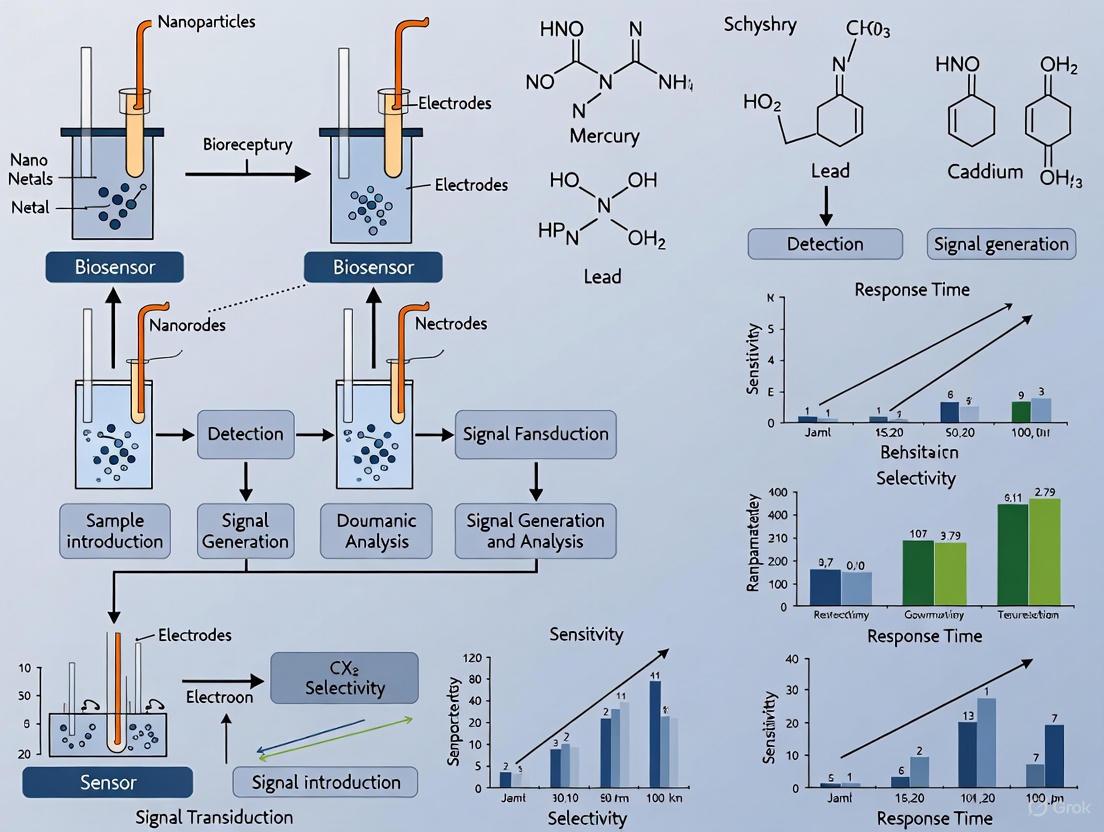
This article provides a comprehensive review of the latest advancements in nanomaterial-enhanced biosensors for detecting toxic heavy metals.
Nanomaterial-Enhanced Biosensors for Heavy Metal Detection: Advances, Applications, and Future Directions in Biomedical Research
Abstract
This article provides a comprehensive review of the latest advancements in nanomaterial-enhanced biosensors for detecting toxic heavy metals. Tailored for researchers, scientists, and drug development professionals, it explores the foundational principles of these sensors, including the unique properties of nanomaterials that enable high sensitivity and selectivity. The scope covers diverse methodological approaches—optical, electrochemical, and electronic—along with their practical applications in environmental and clinical monitoring. The article further addresses critical challenges in sensor optimization and stability, presents a comparative analysis of performance metrics, and discusses the integration of portable technologies for on-site detection. By synthesizing recent research, this review aims to serve as a resource for developing next-generation sensing platforms to address public health challenges posed by heavy metal contamination.
The Foundation of Nanomaterial-Enhanced Biosensors: Principles, Materials, and Toxicity
Heavy Metals of Primary Concern
Heavy metal contamination poses a significant global challenge due to these elements' environmental persistence, bioaccumulation potential, and detrimental health effects. Among the numerous heavy metals, four have been prioritized by regulatory agencies worldwide due to their prevalence and toxicity: arsenic, lead, cadmium, and mercury [1]. These metals are naturally occurring but have entered environmental cycles at elevated concentrations through past and present industrial activities and pollution [1]. Their presence in food and water is of particular concern because they can cause significant harm during critical periods of brain development—from in utero stages through early childhood [1].
Table 1: Priority Heavy Metals: Sources and Health Hazards
| Heavy Metal | Primary Sources | Major Health Hazards |
|---|---|---|
| Arsenic (As) | Natural deposits, historical pesticide use, industrial processes [2]. | Carcinogenic, skin lesions, circulatory system damage [2]. |
| Lead (Pb) | Plumbing infrastructure, automotive batteries, industrial effluents [2]. | Neurodevelopmental effects, kidney damage, hypertension, cardiovascular issues [2]. |
| Cadmium (Cd) | Industrial activities, agricultural fertilizers and pesticides, improper waste disposal [2]. | Kidney damage, severe gastrointestinal effects, carcinogen [2]. |
| Mercury (Hg) | Industrial processes, gold mining; converts to methylmercury in aquatic environments [2]. | Neurotoxin, kidney damage, can be fatal at low concentrations [2]. |
Regulatory Limits and Exposure Guidelines
To protect public health, international environmental and food safety agencies have established maximum permissible levels for toxic heavy metals in consumables like drinking water. These limits are set to minimize the risk of both acute and chronic health effects. The U.S. Food and Drug Administration (FDA) actively monitors contaminant levels in foods and takes action to reduce exposure to these toxic elements, especially in foods consumed by vulnerable populations like infants and young children [1]. Furthermore, there is ongoing legislative effort, such as the proposed "Baby Food Safety Act of 2024," which seeks to establish specific limits for arsenic, cadmium, mercury, and lead in infant and toddler foods [3].
Table 2: Regulatory Limits for Heavy Metals in Drinking Water
| Heavy Metal | U.S. EPA Limit | Key Health Rationale |
|---|---|---|
| Arsenic | 10 ppb [2] | Based on carcinogenic risk [2]. |
| Lead | 15 ppb [2] | To prevent neurodevelopmental and kidney damage [2]. |
| Cadmium | 5 ppb [2] | To prevent kidney damage and gastrointestinal effects [2]. |
| Mercury | 2 ppb [2] | Based on neurotoxicity and potential for fatal outcomes [2]. |
Note: ppb = parts per billion
Experimental Protocols for Heavy Metal Detection
The accurate detection of heavy metals in environmental and biological samples is a critical step in exposure assessment and regulatory compliance. While conventional methods like Inductively Coupled Plasma Mass Spectrometry (ICP-MS) are highly accurate, they are ill-suited for rapid, on-site analysis [4]. The following protocols detail the preparation and use of advanced, nanomaterial-enhanced biosensors.
Protocol 3.1: Synthesis of a Graphene Oxide-Gold Nanoparticle (GO-AuNP) Composite for Electrode Modification
This protocol creates a high-surface-area, highly conductive nanocomposite platform for immobilizing bioreceptors, enhancing the sensitivity of electrochemical biosensors [4] [5].
Research Reagent Solutions:
- Graphene Oxide (GO) Dispersion (1 mg/mL): Provides a high-surface-area scaffold for nanomaterial assembly.
- Chloroauric Acid (HAuCl₄) Solution (1% w/v): Precursor for the synthesis of gold nanoparticles.
- Sodium Citrate Solution (1% w/v): Serves as a reducing and stabilizing agent.
- Phosphate Buffered Saline (PBS), 0.1 M, pH 7.4: Provides a stable physiological environment for synthesis and subsequent bioreceptor immobilization.
Methodology:
- Reduction and Decoration: Add 10 mL of the GO dispersion (1 mg/mL) to a 50 mL round-bottom flask under constant stirring. Heat the solution to 80°C.
- AuNP Synthesis: Rapidly inject 1 mL of the heated HAuCl₄ solution (1% w/v) into the stirring GO dispersion.
- Composite Formation: Immediately add 2 mL of the sodium citrate solution (1% w/v) to the mixture. The solution color will change from brown to dark black, indicating the reduction of Au³⁺ to Au⁰ and the formation of AuNPs on the GO sheets.
- Purification: Continue stirring and heating at 80°C for 1 hour. Allow the solution to cool to room temperature.
- Washing and Storage: Centrifuge the GO-AuNP composite at 12,000 rpm for 15 minutes. Discard the supernatant and re-disperse the pellet in 10 mL of PBS (pH 7.4). Store the final composite at 4°C until use.
Protocol 3.2: Fabrication of an Aptamer-Based Electrochemical Biosensor for Lead (Pb²⁺) Detection
This protocol outlines the development of a specific and sensitive biosensor for lead ions, utilizing a DNA aptamer as the biorecognition element and an electroactive methylene blue (MB) tag for signal transduction [4] [5].
Research Reagent Solutions:
- GO-AuNP Composite: From Protocol 3.1; serves as the electrode-modifying nanomaterial.
- Thiol-Modified Pb²⁺ Aptamer (5 µM in PBS): The biological recognition element with high specificity for lead ions. Sequence: 5'-HS-(CH₂)₆-GGGTGGGTGGGTGGGT-3'.
- Methylene Blue (MB) Solution (10 mM): An electroactive label that intercalates with the DNA aptamer.
- 6-Mercapto-1-hexanol (MCH) Solution (1 mM): A passivating agent used to create a well-oriented aptamer monolayer and reduce non-specific binding.
- Lead Standard Solutions: Prepared in the desired matrix (e.g., buffer or simulated sample) for calibration and testing.
Methodology:
- Electrode Pretreatment: Polish the glassy carbon working electrode (GCE) with 0.05 µm alumina slurry, followed by sequential sonication in ethanol and deionized water for 1 minute each. Dry under a nitrogen stream.
- Electrode Modification: Drop-cast 8 µL of the GO-AuNP composite onto the clean GCE surface and allow it to dry at room temperature.
- Aptamer Immobilization: Incubate the GO-AuNP/GCE with 10 µL of the thiol-modified aptamer solution overnight in a humidified chamber at 4°C. The thiol group will form a stable Au-S bond with the AuNPs.
- Surface Blocking: Rinse the electrode gently with PBS to remove unbound aptamers. Then, incubate it with 10 µL of the 1 mM MCH solution for 1 hour to backfill any uncovered gold surfaces.
- Signal Tagging: Incubate the aptamer/MCH/GO-AuNP/GCE with 10 µL of the 10 mM MB solution for 30 minutes to allow intercalation into the aptamer structure.
- Detection and Measurement: Wash the electrode and place it in an electrochemical cell containing a supporting electrolyte. Use Square Wave Voltammetry (SWV) to record the MB signal. The presence of Pb²⁺ causes the aptamer to fold into a G-quadruplex structure, changing the electron transfer efficiency of MB and resulting in a measurable drop in current, which is proportional to the Pb²⁺ concentration.
Diagram 1: Aptamer-based electrochemical biosensor fabrication and detection workflow.
Toxicity Mechanisms and Signaling Pathways
Heavy metals exert their toxic effects through multiple interconnected biochemical pathways. Understanding these mechanisms is crucial for assessing health risks and developing targeted detection strategies.
Diagram 2: Heavy metal toxicity mechanisms and health outcomes.
The pathways illustrated above are initiated after heavy metals enter the body via ingestion, inhalation, or dermal exposure. They are transported in the blood, often bound to specific chaperones, and enter cells through selective and non-selective channels [5]. For instance, arsenic is transported via aquaglyceroporins, while cadmium and lead can enter through calcium channels [5]. Once inside the cell, they disrupt normal function via several key mechanisms:
- Oxidative Stress: Metals like arsenic, cadmium, and mercury induce the production of reactive oxygen species (ROS), leading to lipid peroxidation, protein oxidation, and DNA damage [5].
- Enzyme Inhibition: By binding to sulfhydryl groups in enzyme active sites or displacing essential cofactor metals (e.g., Zn²⁺, Ca²⁺), heavy metals can inactivate critical enzymes involved in cellular metabolism and antioxidant defense [5] [2].
- DNA Damage and Carcinogenesis: Metals such as arsenic and cadmium can directly and indirectly cause DNA damage and impair repair mechanisms, contributing to mutagenesis and carcinogenesis [5].
The Scientist's Toolkit: Key Research Reagents and Materials
The development and operation of nanomaterial-enhanced biosensors rely on a suite of specialized reagents and materials.
Table 3: Essential Research Reagents for Nanomaterial-Enhanced Biosensors
| Research Reagent | Function in Biosensor Development |
|---|---|
| Nucleic Acid Aptamers | Serve as synthetic, highly specific biorecognition elements (affinity agents) for heavy metal ions, selected via the SELEX process [4] [5]. |
| Gold Nanoparticles (AuNPs) | Used for electrode modification to enhance conductivity and as a platform for immobilizing bioreceptors (e.g., via thiol-gold chemistry); also used in colorimetric sensors [4] [5]. |
| Graphene Oxide (GO) & Carbon Nanotubes (CNTs) | Provide a high-surface-area scaffold for nanomaterial assembly, improving electron transfer rates and increasing bioreceptor loading capacity [4] [5]. |
| Methylene Blue | Acts as an electroactive redox label in electrochemical aptasensors; signal change upon target binding is the basis for quantification [4]. |
| Metal-Organic Frameworks (MOFs) | Porous crystalline materials used to modify sensor surfaces, offering ultra-high surface area and pre-concentration of target analytes, thereby boosting sensitivity [4]. |
| 6-Mercapto-1-hexanol (MCH) | A passivating molecule used to create a well-ordered, oriented monolayer of aptamers on gold surfaces, minimizing non-specific adsorption [4]. |
The contamination of water systems by heavy metals such as lead, mercury, cadmium, and arsenic presents a significant global health challenge, as these toxic ions accumulate in the environment and pose severe risks to human health even at trace concentrations [2] [6]. Conventional detection methods, including atomic absorption spectroscopy and inductively coupled plasma mass spectrometry, offer accuracy but are hampered by high costs, complex operation, and lack of portability for real-time monitoring [7] [6]. Nanomaterial-enhanced biosensors have emerged as transformative tools that overcome these limitations by leveraging the unique physicochemical properties of nanomaterials to provide rapid, sensitive, and field-deployable solutions for heavy metal detection [8] [6].
The integration of nanomaterials into biosensing platforms significantly enhances analytical performance through three fundamental properties: their exceptionally high surface area-to-volume ratio that increases analyte binding sites, exceptional catalytic activity that accelerates signal generation, and highly tunable surface chemistry that enables precise interaction with target metal ions [2] [8]. These properties collectively contribute to the development of biosensors with improved sensitivity, selectivity, and stability, making them ideally suited for environmental monitoring, clinical diagnostics, and food safety applications [9] [7]. This document outlines the fundamental principles, practical protocols, and key applications of these nanomaterial properties within the context of heavy metal detection biosensors.
Property 1: High Surface Area-to-Volume Ratio
Theoretical Foundation and Functional Advantages
The high surface area-to-volume ratio is a defining characteristic of nanomaterials that becomes particularly pronounced at dimensions below 100 nanometers [8]. This property arises from the simple geometric principle that as particle size decreases, the proportion of atoms located on the surface increases exponentially relative to those in the bulk material. For biosensing applications, this expanded surface area provides a significantly increased platform for immobilizing biorecognition elements such as enzymes, antibodies, aptamers, and whole cells [7] [8]. The functional advantage extends beyond merely providing more binding sites; it also reduces diffusion distances for analytes, decreases response times, and increases the probability of target-receptor interactions, ultimately leading to lower detection limits and enhanced signal-to-noise ratios in heavy metal detection [2].
In practical terms, nanomaterials such as graphene, carbon nanotubes, MXenes, and metal-organic frameworks provide massive surface areas that can be strategically functionalized with specific metal-binding ligands or biorecognition elements [9] [2] [6]. For instance, two-dimensional MXene nanosheets exhibit an accordion-like morphology that creates extensive surface area for chemical functionalization and analyte interaction [9]. Similarly, the large surface area of carbon nanotubes (ranging from 50 to 1315 m²/g depending on their structure) has been exploited to pre-concentrate heavy metal ions at electrode surfaces, significantly enhancing the sensitivity of electrochemical detection platforms [10].
Experimental Protocol: MXene-Based Electrode Fabrication for Heavy Metal Detection
Principle: This protocol details the fabrication of an electrochemical sensor electrode using MXene nanosheets for the detection of lead (Pb²⁺) and cadmium (Cd²⁺) ions. The high surface area of MXene provides numerous active sites for metal ion interaction and electron transfer, significantly enhancing the electrochemical signal compared to conventional electrodes [9].
Materials:
- Ti₃AlC₂ MAX phase precursor powder
- Hydrofluoric acid (HF, 49%) or lithium fluoride (LiF) and hydrochloric acid (HCl) mixture for etching
- Dimethyl sulfoxide (DMSO) for delamination
- Deionized water (18.2 MΩ·cm)
- Screen-printed carbon electrode (SPCE) or glassy carbon electrode (GCE)
- Nafion solution (0.5% in alcohol)
- Standard solutions of Pb²⁺ and Cd²⁺ (1000 ppm)
- Acetate buffer (0.1 M, pH 4.5) as supporting electrolyte
Procedure:
- MXene Synthesis (HF Etching Method):
- Add 1 g of Ti₃AlC₂ powder slowly to 20 mL of HF (49%) under continuous stirring in a polypropylene container.
- Maintain the reaction at 35°C for 24 hours to ensure complete etching of the aluminum layer.
- Centrifuge the resulting suspension at 3500 rpm for 10 minutes and wash repeatedly with deionized water until neutral pH is achieved.
- To delaminate the multilayered MXene, add the sediment to 100 mL of DMSO and stir for 24 hours.
- Centrifuge again and resuspend in deionized water, followed by bath sonication for 1 hour under argon atmosphere.
- Collect the supernatant containing single-layer MXene nanosheets after centrifugation at 3500 rpm for 30 minutes [9].
Electrode Modification:
- Polish the glassy carbon electrode with 0.05 μm alumina slurry and rinse thoroughly with deionized water.
- Drop-cast 10 μL of the MXene suspension (2 mg/mL) onto the electrode surface.
- Allow to dry at room temperature, then apply 5 μL of Nafion solution (0.5%) as a protective layer.
- Dry again at room temperature before use [9].
Heavy Metal Detection Using Square Wave Anodic Stripping Voltammetry (SWASV):
- Prepare standard solutions of Pb²⁺ and Cd²⁺ in acetate buffer (0.1 M, pH 4.5).
- Transfer 10 mL of the sample solution to the electrochemical cell.
- Apply a deposition potential of -1.2 V vs. Ag/AgCl for 120 seconds with stirring.
- After a 15-second equilibration period, record the SWASV from -1.0 V to -0.2 V with the following parameters: frequency 25 Hz, amplitude 25 mV, step potential 4 mV.
- Identify Pb²⁺ and Cd²⁺ based on their characteristic stripping peaks at approximately -0.5 V and -0.7 V, respectively.
- Generate a calibration curve by plotting peak current versus metal ion concentration [9].
Troubleshooting Notes:
- If MXene films peel off during measurement, optimize the Nafion concentration or explore alternative immobilization strategies such as electrophoretic deposition.
- If sensitivity decreases over time, ensure proper storage in inert atmosphere and fresh preparation of MXene suspension.
- If peak resolution is poor, optimize deposition time and SWASV parameters based on target concentration range.
Property 2: Catalytic Activity
Nanozymes and Catalytic Mechanisms
Many nanomaterials exhibit intrinsic enzyme-mimicking properties, functioning as "nanozymes" that catalyze biochemical reactions with several advantages over natural enzymes, including enhanced stability, tunable activity, and lower production costs [11]. This catalytic activity is particularly valuable in biosensors for heavy metal detection, where nanomaterials can catalyze signal-generating reactions or directly participate in the redox processes of target metal ions [2] [11]. Common nanozymes include metal-doped carbon dots, cerium oxide nanoparticles, and iron oxide nanoparticles that mimic peroxidase, oxidase, catalase, and superoxide dismutase activities [11].
The catalytic mechanisms of nanomaterials vary based on their composition and structure. For instance, metal-doped carbon dots exhibit peroxidase-like activity that catalyzes the oxidation of substrates like 3,3',5,5'-tetramethylbenzidine (TMB) in the presence of hydrogen peroxide, producing a color change measurable by spectrophotometry [11]. Heavier metal ions can inhibit this catalytic activity, providing a detection mechanism through signal reduction. Similarly, MXene materials demonstrate outstanding electrical conductivity that catalyzes electron transfer reactions in electrochemical sensors, effectively lowering overpotentials and enhancing current responses for heavy metal detection [9].
Table 1: Catalytic Nanomaterials for Heavy Metal Detection
| Nanomaterial | Catalytic Activity | Detection Mechanism | Target Heavy Metals |
|---|---|---|---|
| Fe-doped Carbon Dots | Peroxidase-mimic | Catalytic oxidation of TMB; inhibition by heavy metals | Hg²⁺, Cu²⁺ [11] |
| MXenes (Ti₃C₂Tₓ) | Electrocatalytic | Enhancement of electron transfer in redox reactions | Pb²⁺, Cd²⁺, Cu²⁺ [9] |
| Ce-doped Carbon Dots | Oxidase-mimic | O₂ reduction to generate reactive oxygen species | As³⁺, Cr⁶⁺ [11] |
| Gold Nanoparticles | Peroxidase-mimic | Catalysis of H₂O₂-mediated oxidation reactions | Hg²⁺, Pb²⁺ [10] |
Experimental Protocol: Metal-Doped Carbon Dots as Peroxidase Mimics for Mercury Detection
Principle: This protocol describes the synthesis of iron-doped carbon dots (Fe-CDs) and their application as peroxidase mimics for the colorimetric detection of mercury ions (Hg²⁺). The peroxidase-like activity of Fe-CDs catalyzes the oxidation of TMB in the presence of H₂O₂, producing a blue color. Hg²⁺ ions inhibit this catalytic activity, causing a measurable decrease in color intensity proportional to Hg²⁺ concentration [11].
Materials:
- Citric acid (anhydrous)
- Iron(III) chloride hexahydrate (FeCl₃·6H₂O)
- Ethylenediamine
- 3,3',5,5'-Tetramethylbenzidine (TMB)
- Hydrogen peroxide (H₂O₂, 30%)
- Sodium acetate buffer (0.2 M, pH 4.0)
- Standard Hg²⁺ solution (1000 ppm)
- Deionized water
- Autoclave (200 mL) or microwave reactor
Procedure:
- Synthesis of Fe-Doped Carbon Dots:
- Dissolve 2.1 g citric acid and 0.27 g FeCl₃·6H₂O in 30 mL deionized water.
- Add 1 mL ethylenediamine dropwise with stirring.
- Transfer the solution to a 100 mL Teflon-lined autoclave and heat at 180°C for 8 hours.
- Allow the reaction mixture to cool to room temperature naturally.
- Filter the resulting solution through a 0.22 μm membrane to remove large particles.
- Dialyze the filtrate against deionized water using a 1000 Da molecular weight cutoff dialysis membrane for 24 hours.
- Collect the Fe-CDs solution and store at 4°C in the dark. Determine concentration by drying a known volume and weighing the residue [11].
Peroxidase-like Activity Assay:
- Prepare the following reaction mixture in a 2 mL tube: 200 μL sodium acetate buffer (0.2 M, pH 4.0), 50 μL Fe-CDs (0.1 mg/mL), 50 μL TMB (4 mM in DMSO), and 50 μL H₂O₂ (10 mM).
- Incubate at 35°C for 15 minutes.
- Measure the absorbance at 652 nm using a UV-Vis spectrophotometer.
- A significant increase in absorbance indicates successful synthesis of Fe-CDs with peroxidase-like activity [11].
Hg²⁺ Detection Protocol:
- Prepare standard Hg²⁺ solutions in the concentration range of 0-500 nM by serial dilution.
- Add 100 μL of each standard or sample solution to the reaction mixture described above (modify volumes proportionally).
- Incubate at 35°C for 15 minutes.
- Measure absorbance at 652 nm.
- Plot the inhibition ratio [(A₀ - A)/A₀ × 100%] versus Hg²⁺ concentration, where A₀ and A represent absorbance in the absence and presence of Hg²⁺, respectively.
- Calculate the detection limit using the 3σ/slope rule, where σ is the standard deviation of blank measurements [11].
Troubleshooting Notes:
- If the TMB oxidation background is too high, optimize the concentrations of Fe-CDs, H₂O₂, and TMB.
- If sensitivity is insufficient, try different pH values (3.5-5.0) and incubation temperatures.
- If interference is observed, introduce masking agents like EDTA for other metal ions or implement a pre-concentration step.
Property 3: Tunable Surface Chemistry
Surface Functionalization Strategies
The tunable surface chemistry of nanomaterials represents perhaps their most powerful attribute for biosensing applications, enabling precise control over interactions with target heavy metal ions [2] [8]. This tunability allows researchers to engineer nanomaterial surfaces with specific functional groups, biorecognition elements, and synthetic ligands that selectively bind to target analytes while rejecting interferents [2]. Common functionalization strategies include: covalent modification through silanization, amidation, or esterification reactions; non-covalent modification via π-π stacking, electrostatic interactions, or van der Waals forces; and in-situ functionalization during nanomaterial synthesis [2] [11].
The selective detection of specific heavy metals requires careful matching between surface functional groups and target ions. For example, MXenes naturally contain surface termination groups (-O, -OH, -F) that can be further modified to enhance selectivity [9]. The electrochemical etching method for MXene synthesis enables precise control over surface chemistry by adjusting potential, electrolyte composition, and etching time [9]. Similarly, carbon dots can be functionalized with amino, carboxyl, or thiol groups that demonstrate varying affinities for different metal ions [11]. Thiol-modified surfaces show particularly high affinity for mercury, while phosphate groups selectively complex with uranium, and nitrogen-containing groups effectively bind cadmium and copper ions [2].
Table 2: Functionalization Strategies for Heavy Metal Selectivity
| Functional Group | Immobilization Method | Target Heavy Metals | Binding Mechanism |
|---|---|---|---|
| Thiol groups (-SH) | Silanization or thiolated aptamers | Hg²⁺, Pb²⁺ | Strong covalent binding with soft metals [11] |
| Amino groups (-NH₂) | Amidation or amine-containing polymers | Cd²⁺, Cu²⁺, Cr⁶⁺ | Coordination bonding [2] |
| Carboxyl groups (-COOH) | Esterification or carboxylated aptamers | Pb²⁺, As³⁺ | Electrostatic interactions [2] |
| Aptamers | π-π stacking or covalent bonding | Specific to aptamer sequence | Folding into metal-ion specific structures [7] |
Experimental Protocol: Aptamer-Functionalized Graphene for Arsenic Detection
Principle: This protocol describes the development of an electrochemical biosensor for arsenic (As³⁺) detection using aptamer-functionalized graphene. The graphene provides a high surface area platform and excellent electrical conductivity, while the arsenic-specific aptamer offers selective recognition. When As³⁺ binds to the aptamer, it induces a conformational change that alters the interfacial electron transfer resistance, measurable via electrochemical impedance spectroscopy [7] [6].
Materials:
- Graphene oxide (GO) suspension (2 mg/mL)
- Arsenic-specific aptamer with amino modification: 5'-NH₂-(CH₂)₆-GGTAATACGACTCACTATAGGGAGATACCGCTTATTATATTTA-3'
- N-Hydroxysuccinimide (NHS) and 1-ethyl-3-(3-dimethylaminopropyl)carbodiimide (EDC)
- 2-(N-morpholino)ethanesulfonic acid (MES) buffer (0.1 M, pH 6.0)
- Phosphate buffered saline (PBS, 0.1 M, pH 7.4) containing 5 mM [Fe(CN)₆]³⁻/⁴⁻
- Gold electrode (2 mm diameter)
- Standard As³⁺ solutions (0-100 ppb)
Procedure:
- Electrode Pretreatment:
- Clean the gold electrode by polishing with 0.05 μm alumina slurry, followed by sonication in ethanol and deionized water for 5 minutes each.
- Electrochemically clean in 0.5 M H₂SO₄ by cycling between 0 V and 1.5 V until a stable cyclic voltammogram is obtained.
- Rinse thoroughly with deionized water and dry under nitrogen stream [6].
Graphene-Aptamer Bioconjugate Preparation:
- Prepare 10 mL of graphene oxide (0.5 mg/mL) in MES buffer (0.1 M, pH 6.0).
- Add 20 mM EDC and 10 mM NHS to the GO suspension and activate for 30 minutes with gentle stirring.
- Add the amino-modified aptamer (1 μM final concentration) and incubate for 12 hours at 4°C with slow stirring.
- Centrifuge at 12,000 rpm for 15 minutes to remove unbound aptamer.
- Wash the conjugate three times with PBS buffer and resuspend in 1 mL PBS [7] [6].
Electrode Modification:
- Drop-cast 10 μL of the graphene-aptamer conjugate onto the pretreated gold electrode.
- Allow to dry overnight at 4°C in a humid environment.
- Block non-specific binding sites by treating with 1 mM 6-mercapto-1-hexanol for 1 hour.
- Rinse with PBS buffer before use [6].
Arsenic Detection Using Electrochemical Impedance Spectroscopy (EIS):
- Incubate the modified electrode in standard or sample As³⁺ solutions for 15 minutes.
- Rinse gently with PBS to remove unbound arsenic.
- Record EIS spectra in PBS containing 5 mM [Fe(CN)₆]³⁻/⁴⁻ with the following parameters: frequency range 0.1 Hz to 100 kHz, amplitude 10 mV, DC potential 0.22 V.
- Use the charge transfer resistance (Rct) values to quantify As³⁺ concentration.
- Generate a calibration curve by plotting ΔRct versus As³⁺ concentration [6].
Troubleshooting Notes:
- If reproducibility is poor, ensure consistent electrode polishing and functionalization conditions.
- If sensitivity is lower than expected, optimize aptamer density on the graphene surface.
- If interference occurs, include a control sensor with scrambled aptamer sequence to subtract non-specific binding.
The Scientist's Toolkit: Essential Research Reagents and Materials
Table 3: Essential Research Reagents for Nanomaterial-Enhanced Heavy Metal Detection
| Reagent/Material | Function/Application | Key Characteristics | Examples in Research |
|---|---|---|---|
| MXenes (Ti₃C₂Tₓ) | Electrode modifier for electrochemical sensors | High conductivity, tunable surface chemistry, hydrophilic [9] | Detection of Pb²⁺, Cd²⁺ with LOD < 1 ppb [9] |
| Carbon Dots (Doped) | Fluorescent probes and nanozymes | Tunable fluorescence, catalytic activity, low toxicity [11] | Peroxidase-mimic for Hg²⁺ detection [11] |
| Graphene Oxide | Biosensor platform | Large surface area, rich oxygen functional groups [6] | Aptamer immobilization for As³⁺ detection [6] |
| Gold Nanoparticles | Signal amplification | Surface plasmon resonance, biocompatibility [10] | Colorimetric detection of Hg²⁺ [10] |
| Specific Aptamers | Biorecognition elements | High specificity, stability, design flexibility [7] | Selective binding to As³⁺, Pb²⁺, Hg²⁺ [7] |
| Nafion | Cation exchange polymer | Permselective membrane, film-forming capability [9] | Rejection of interferents in electrochemical sensors [9] |
Logical Framework of Nanomaterial Properties in Biosensing
The following diagram illustrates the logical relationship between the fundamental properties of nanomaterials and their functional advantages in heavy metal detection biosensors:
Nanomaterial Properties to Biosensor Performance
This diagram illustrates how the three fundamental properties of nanomaterials contribute to enhanced biosensor performance for heavy metal detection through specific mechanisms, ultimately leading to improved analytical figures of merit.
Nanomaterial-enhanced biosensors represent a transformative approach in environmental monitoring, particularly for the detection of toxic heavy metals. The integration of nanomaterials such as noble metals, graphene, quantum dots, and manganese oxides has significantly improved the sensitivity, selectivity, and portability of sensing platforms. These materials leverage their unique physicochemical properties—including high surface-to-volume ratios, tunable optical characteristics, and superior electrical conductivity—to address the limitations of conventional detection methods. Within the context of a broader thesis on advanced biosensing technologies, this document provides detailed application notes and experimental protocols for utilizing these key nanomaterials in heavy metal detection, offering researchers and drug development professionals practical methodologies for implementation in environmental and biomedical research.
Key Nanomaterials and Performance Metrics
The selection of an appropriate nanomaterial is paramount to biosensor performance. The table below summarizes the core properties and performance metrics of the four key nanomaterial classes in heavy metal sensing.
Table 1: Performance Comparison of Key Nanomaterials in Heavy Metal Detection
| Nanomaterial | Key Properties | Heavy Metals Detected | Reported Detection Limits | Primary Sensing Mechanisms |
|---|---|---|---|---|
| Noble Metals (e.g., Au, Ag) | Localized Surface Plasmon Resonance (LSPR), high electrical conductivity, strong enhancement of optical signals | Hg²⁺, Pb²⁺, Cd²⁺, As³⁺ | Sub-ppb to low ppb range [12] [13] | Colorimetric shift, electrochemical stripping, SERS |
| Graphene & Derivatives | Large specific surface area, excellent electrical conductivity, facile surface functionalization | Pb²⁺, Cd²⁺, Cu²⁺, Hg²⁺ | ~0.732 nM for Pb²⁺ (in composite sensors) [14] | Electrochemical impedance, field-effect transduction, adsorption |
| Quantum Dots | Size-tunable photoluminescence, high quantum yield, photostability | Zn²⁺, Cu²⁺, Hg²⁺, Cd²⁺ | Varies by metal and QD type [12] [15] | Fluorescence quenching/enhancement, FRET |
| Manganese Oxides | Multiple oxidation states, rich redox chemistry, catalytic activity, magnetic susceptibility | Pb²⁺, Cd²⁺, Zn²⁺, Cu²⁺ | Sub-ppb range (electrochemical) [16] | Electrochemical catalysis, adsorption, redox cycling |
Detailed Experimental Protocols
Protocol: Synthesis of Manganese Oxide Nanocomposite for Electrochemical Sensing
This protocol details the synthesis of a manganese oxide-reduced graphene oxide (MnO₂@RGO) nanocomposite for the electrochemical detection of lead and cadmium, based on a reviewed methodology [16].
- Primary Materials:
- Graphite powder (precursor for graphene oxide)
- Potassium permanganate (KMnO₄, manganese source)
- Hydrogen peroxide (H₂O₂, reducing agent)
- Hydrazine hydrate or similar reducing agent
- Sulfuric acid (H₂SO₄) and Phosphoric acid (H₃PO₄)
Equipment:
- Ultrasonic bath
- Teflon-lined autoclave for hydrothermal synthesis
- Centrifuge
- Vacuum drying oven
- Electrochemical workstation (e.g., CHI instruments) with three-electrode cell
Step-by-Step Procedure:
- Synthesis of Graphene Oxide (GO): Prepare GO from graphite powder using a modified Hummers' method.
- Formation of MnO₂@RGO Nanocomposite:
- Disperse 100 mg of GO in 100 mL deionized water via 1-hour ultrasonication to create a homogeneous suspension.
- Add 50 mg of KMnO₄ to the GO suspension under constant stirring.
- Transfer the mixture to a 150 mL Teflon-lined autoclave and heat at 120°C for 12 hours.
- During this hydrothermal step, GO is simultaneously reduced to RGO, and MnO₂ nanoparticles nucleate and grow on its surface.
- Allow the autoclave to cool to room temperature naturally. Collect the resulting precipitate by centrifugation (10,000 rpm, 10 min).
- Wash the precipitate (MnO₂@RGO) sequentially with deionized water and ethanol several times to remove impurities.
- Dry the final product in a vacuum oven at 60°C for 6 hours.
- Sensor Fabrication and Measurement:
- Prepare a 2 mg/mL dispersion of the MnO₂@RGO nanocomposite in water via ultrasonication.
- Drop-cast 5 µL of the dispersion onto a polished glassy carbon electrode (GCE) and allow it to dry at room temperature.
- Use the modified GCE as the working electrode in a standard three-electrode electrochemical cell with Ag/AgCl reference and Pt wire counter electrodes.
- Perform Anodic Stripping Voltammetry (ASV) in a buffer solution (e.g., acetate buffer, pH 4.5) containing the target heavy metal ions.
- Employ a deposition potential of -1.2 V for 120 seconds with stirring to pre-concentrate metals on the electrode surface.
- Record the stripping voltammogram by scanning the potential anodically. The oxidation peaks for cadmium and lead will appear at approximately -0.8 V and -0.5 V (vs. Ag/AgCl), respectively.
- Critical Notes:
- The MnO₂@RGO nanocomposite benefits from the synergistic effect: RGO provides a conductive network and large surface area, while MnO₂ offers abundant active sites for heavy metal adsorption and redox cycling [16].
- The inherently low electrical conductivity of pristine MnO₂ is mitigated by forming a composite with conductive RGO [16].
Protocol: Dual-Color Whole-Cell Biosensor for Lead and Mercury
This protocol describes the use of an engineered E. coli biosensor that produces distinct pigment outputs for the sensitive and discriminative detection of Pb(II) and Hg(II) [14].
- Primary Materials:
- Engineered E. coli biosensor strain: Harboring pPb-vioABE-Hg-vioC plasmid or similar, with ampicillin resistance [14].
- Luria-Bertani (LB) Broth & Agar
- Ampicillin (100 mg/mL stock solution)
- Isopropyl β-D-1-thiogalactopyranoside (IPTG) for induction
- Model analytes: Pb(NO₃)₂ and HgCl₂ standard solutions
Equipment:
- Microplate reader or spectrophotometer
- Sterile shaking incubator
- Centrifuge for microcentrifuge tubes
- Laminar flow hood
Step-by-Step Procedure:
- Culture Preparation:
- Inoculate 5 mL of LB medium containing 100 µg/mL ampicillin with a single colony of the engineered biosensor strain.
- Incubate overnight at 37°C with shaking at 200 rpm.
- Sensing Induction:
- Dilute the overnight culture 1:100 into fresh LB medium with ampicillin.
- Grow the cells to mid-log phase (OD₆₀₀ ~0.5-0.6).
- Add IPTG to a final concentration of 0.1-0.5 mM to induce the expression of the biosensing machinery.
- Simultaneously, spike the culture with the environmental water sample or standard solutions of Pb(II) and/or Hg(II).
- Continue incubation for a further 4-6 hours at 30°C to allow for pigment production.
- Signal Measurement and Analysis:
- Centrifuge 1 mL of the induced culture at 10,000 rpm for 2 min to pellet the cells.
- Observe the cell pellet for color development: a yellow-brown hue indicates Pb(II) induction (PDV production), while a violet hue indicates Hg(II) induction (DV production) [14].
- For quantification, resuspend the pellet in a fixed volume of a suitable solvent (e.g., methanol) to extract the pigments. Measure the absorbance at characteristic wavelengths (e.g., ~400 nm for PDV and ~575 nm for DV).
- Culture Preparation:
- Critical Notes:
- The biosensor operates via a synthetic biology construct where Pb(II) binding to the metalloregulator PbrR activates the transcription of the vioABE gene cluster, leading to the production of the yellow-brown pigment PDV. Concurrently, Hg(II) binding to MerR activates the transcription of vioC, which converts PDV to the violet pigment DV [14].
- This system allows for discriminative detection: Pb(II) alone yields a yellow-brown color; Hg(II) alone or in mixture with Pb(II) yields a violet color due to the action of VioC on endogenous or PDV precursors [14].
- The reported detection limits are 0.732 nM for Pb(II) and 0.183 nM for Hg(II), with high selectivity in complex matrices like freshwater and seawater [14].
The logical workflow and the signaling pathway within the engineered bacteria for this protocol are summarized in the diagrams below.
Diagram 1: Workflow for the dual-color bacterial biosensor assay.
Diagram 2: Signaling pathways for Pb(II) and Hg(II) in the engineered bacterial biosensor.
The Scientist's Toolkit: Essential Research Reagent Solutions
The following table outlines key reagents and their critical functions in developing and working with nanomaterial-based biosensors for heavy metal detection.
Table 2: Essential Research Reagents for Nanomaterial-Enhanced Heavy Metal Sensing
| Reagent / Material | Function / Application | Specific Examples & Notes |
|---|---|---|
| Screen-Printed Carbon Electrodes (SPCE) | Disposable, customizable, and portable electrochemical sensing platform. Ideal for field deployment [15]. | Often integrated with nanoparticle decorations (e.g., Bi, Au) to enhance sensitivity and anti-fouling properties. |
| Noble Metal Nanoparticles | Signal amplification in optical and electrochemical sensors. Used as labels, catalysts, or for enhancing surface area [12] [13]. | Gold nanoparticles (AuNPs) are frequently used in colorimetric assays and for electrode modification. |
| Synthetic Biolabels (e.g., HaloTag) | Enable chemogenetic FRET pairing with FPs for creating biosensors with large dynamic ranges and spectral tunability [17]. | Can be labeled with cell-permeable synthetic fluorophores (e.g., rhodamines like SiR, JF dyes). |
| Aptamers & Functional DNA | Serve as high-affinity biorecognition elements. Specific sequences can selectively bind heavy metal ions [15]. | T-T mismatch-rich DNA strands selectively capture Hg²⁺ to form T-Hg²⁺-T complexes. DNAzymes can be cleaved in the presence of Pb²⁺. |
| Metalloregulators | Natural or engineered proteins that act as the sensing module in whole-cell biosensors, triggering transcription upon metal binding [14]. | PbrR (for Pb²⁺) and MerR (for Hg²⁺) are well-characterized examples used in bacterial biosensors. |
The detection of heavy metal ions (HMIs) is a critical challenge in environmental monitoring and public health protection. Conventional analytical techniques, while accurate, are often ill-suited for rapid, on-site screening due to their cost, complexity, and need for skilled operators [15] [5]. The emergence of biosensors has revolutionized this field by offering devices that are rapid, sensitive, cost-effective, and portable. A pivotal component of any biosensor is its biorecognition element, the biological molecule responsible for the specific and selective interaction with the target analyte [5]. This application note details the properties, applications, and experimental protocols for four principal classes of biorecognition elements—aptamers, enzymes, antibodies, and whole cells—within the context of advanced, nanomaterial-enhanced biosensors for heavy metal detection. The integration of nanomaterials such as gold nanoparticles, carbon nanotubes, and graphene oxide has significantly augmented the performance of these biosensors by improving sensitivity, stability, and signal transduction [4] [5].
Aptamers
Aptamers are single-stranded DNA or RNA oligonucleotides, typically 30-100 nucleotides in length, selected for their high affinity and specificity to a target molecule through an in vitro process known as Systematic Evolution of Ligands by EXponential enrichment (SELEX) [18] [19]. Dubbed "chemical antibodies," aptamers offer several advantages over their protein counterparts, including superior stability, ease of chemical synthesis and modification, reusability, and lack of batch-to-batch variability [4] [19]. Their functional principle relies on a conformational change (e.g., folding into a specific 3D structure like a G-quartet) upon binding to a target metal ion, which can be transduced into a measurable signal [4] [19]. For instance, thymine-rich aptamers are known to specifically bind Hg²⁺ to form stable T-Hg²⁺-T complexes, while guanine-rich sequences can fold into G-quadruplex structures in the presence of Pb²⁺ [15] [19].
Aptamers have been successfully deployed in various sensing platforms. Electrochemical aptasensors often utilize aptamers immobilized on electrodes; binding to the metal ion alters the electron transfer kinetics, which can be measured via impedance or current changes [18] [4]. Optical aptasensors, including colorimetric and fluorescent variants, frequently employ gold nanoparticles (AuNPs) or quantum dots (QDs). In a typical colorimetric assay, aptamers adsorbed on AuNPs prevent their salt-induced aggregation, keeping the solution red. Upon target binding, the aptamers desorb, leading to aggregation and a color shift to blue [18] [4]. The integration of nanomaterials like graphene oxide (GO) and carbon nanotubes (CNTs) has further enhanced signal amplification and stability [4].
Table 1: Performance of Selected Aptasensors for Heavy Metal Detection
| Target Ion | Sensor Type | Nanomaterial Used | Limit of Detection (LOD) | Linear Range | Reference |
|---|---|---|---|---|---|
| Hg²⁺ | Electrochemical | DNA | 0.5 nM | 0.5 nM – 990 nM | [18] |
| Hg²⁺ | Electrochemiluminescence | Dendrimer/CdTe@CdS QDs | 2.0 aM | Not Specified | [4] |
| Cd²⁺ | Fluorescence | Carbon Nanotubes (CNTs) | Not Specified | Not Specified | [18] |
| Pb²⁺ | Colorimetric | Gold Nanoparticles (AuNPs) | Not Specified | Not Specified | [4] |
Experimental Protocol: GO-SELEX for Aptamer Selection
The following protocol describes Graphene Oxide-SELEX (GO-SELEX), a common method for selecting aptamers against small molecules like heavy metal ions [19].
Principle: GO adsorbs single-stranded DNA (ssDNA) via π-π stacking and hydrophobic interactions. When a metal ion is introduced, ssDNA sequences with high affinity bind to the target and are released from the GO surface, allowing for their separation and amplification.
Materials:
- Initial ssDNA Library: A synthetic library with a central random region (e.g., 40-60 nt) flanked by fixed primer binding sites.
- Graphene Oxide (GO) Suspension
- Binding Buffer: e.g., Tris-HCl or HEPES with relevant salts, pH-adjusted.
- Target Metal Ion Solution: e.g., Cd²⁺, Pb²⁺, or Hg²⁺ stock solution.
- Non-target Metal Ion Solutions: For counter-selection.
- PCR Reagents: Primers, Taq polymerase, dNTPs.
- Equipment: Thermocycler, centrifuge, spectrophotometer, gel electrophoresis apparatus.
Procedure:
- Incubation: The ssDNA library is incubated with the GO suspension in binding buffer. During this step, the vast majority of ssDNA strands are adsorbed onto the GO surface.
- Elution of Unbound DNA: The mixture is centrifuged, and the supernatant containing unbound DNA is discarded.
- Positive Selection: The target metal ion is added to the GO-ssDNA pellet and resuspended. Sequences with specific affinity for the target will undergo a conformational change and be released into the supernatant.
- Separation: The sample is centrifuged. The supernatant, now enriched with target-specific aptamer candidates, is collected.
- Amplification: The collected ssDNA is amplified by asymmetric PCR or converted to double-stranded DNA (dsDNA) for PCR and then transcribed/separated to regenerate an ssDNA pool for the next round.
- Counter-Selection (Negative Selection): To improve specificity, from round 4 onwards, the enriched library is first incubated with non-target metal ions (e.g., Zn²⁺, Cu²⁺). Sequences that bind to these are discarded, while the unbound fraction is used for the positive selection with the target metal.
- Repetition: Steps 1-6 are repeated for typically 8-15 rounds until the library enrichment plateaus.
- Cloning and Sequencing: The final pool is cloned, sequenced, and the resulting sequences are analyzed for common motifs and secondary structures.
- Characterization: The affinity (dissociation constant, Kd) and specificity of individual aptamer candidates are characterized using techniques like isothermal titration calorimetry (ITC) or surface plasmon resonance (SPR).
The workflow for this selection process is delineated below.
Enzymes
Enzyme-based biosensors utilize the catalytic activity and specificity of enzymes as a recognition mechanism. Heavy metals often act as enzyme inhibitors, particularly for oxidoreductases and hydrolases, by binding to thiol groups or active site residues, disrupting their structure and function [20] [21]. This inhibition is frequently exploited in biosensor design, where the decrease in catalytic activity is proportional to the concentration of the metal contaminant [20]. For example, heavy metal ions like Hg²⁺, Cd²⁺, and Ag⁺ are potent non-competitive inhibitors of glucose oxidase (GOx) [20].
A common configuration is an amperometric biosensor, where the enzyme is immobilized on an electrode transducer. The operational principle involves measuring the change in current resulting from an enzymatic reaction. For instance, in a GOx-based sensor, the enzyme catalyzes the oxidation of glucose, producing hydrogen peroxide (H₂O₂), which can be oxidized at the electrode to generate a measurable current. The presence of a heavy metal inhibitor reduces the rate of H₂O₂ production, leading to a quantifiable decrease in current [20]. The sensitivity and stability of these sensors are greatly enhanced by nanomaterials. Multi-walled carbon nanotubes (MWCNTs) and redox mediators like ruthenium(IV) oxide (RuO₂) can be used to modify the electrode, lowering the working potential for H₂O₂ detection and minimizing interference from other electroactive species [20].
Table 2: Performance of Selected Enzyme-Based Biosensors for Heavy Metal Detection
| Target Ion | Enzyme | Transducer | Nanomaterial | LOD | Reference |
|---|---|---|---|---|---|
| Hg²⁺, Cd²⁺, Ag⁺ | Glucose Oxidase (GOx) | Amperometric | MWCNTs, RuO₂ | Not Specified | [20] |
| Various | Urease | Potentiometric | Not Specified | Not Specified | [5] |
Experimental Protocol: Amperometric Glucose Oxidase Biosensor for Metal Inhibition
This protocol details the construction of an amperometric biosensor using GOx inhibition for the detection of heavy metals [20].
Principle: The catalytic activity of GOx immobilized on an electrode is inhibited by heavy metals. The subsequent decrease in the enzymatic production of H₂O₂ is measured amperometrically, providing a quantifiable signal inversely proportional to the metal concentration.
Materials:
- Glassy Carbon Electrode (GCE)
- Enzyme: Glucose Oxidase (GOx) from Aspergillus niger.
- Nanomaterials: Multi-walled carbon nanotubes (MWCNTs), Ruthenium(IV) oxide (RuO₂).
- Polymer Matrix: Nafion solution.
- Chemicals: D-Glucose, Hydrogen Peroxide (H₂O₂), Metal salt solutions (e.g., HgCl₂, CdCl₂, AgNO₃), Phosphate buffer saline (PBS).
- Equipment: Electrochemical workstation (potentiostat), Magnetic stirrer.
Procedure:
- Electrode Modification:
- MWCNTs/RuO₂ Dispersion: Prepare a homogeneous dispersion of MWCNTs containing 5% (w/w) RuO₂ in a suitable solvent (e.g., DMF).
- Coating: Drop-cast a precise volume (e.g., 5-10 µL) of the MWCNTs/RuO₂ dispersion onto the polished surface of the GCE and allow it to dry. This forms the conductive, mediator-enhanced base layer (GCE/MWCNTs-RuO₂).
- Enzyme Immobilization: Deposit 20 µg of GOx (optimized amount) onto the modified electrode surface.
- Polymer Stabilization: To secure the enzyme layer and enhance stability, cover it with a thin layer of Nafion (e.g., 5 µL of 0.5% solution) and allow it to dry completely. The final biosensor is designated GCE/MWCNTs-RuO₂/GOx/Nafion.
Amperometric Measurement:
- Place the biosensor in a stirred electrochemical cell containing PBS (e.g., 0.1 M, pH 7.4) at an optimized stirring rate of 400 rpm.
- Apply a constant working potential of +0.4 V (vs. Ag/AgCl reference electrode).
- After stabilizing the baseline, inject a known concentration of glucose (the substrate) into the cell. Monitor the increase in current due to the oxidation of enzymatically generated H₂O₂. Record this as the initial current (I₀).
- Rinse the biosensor thoroughly with buffer.
- Re-immerse the biosensor in a fresh buffer solution and incubate it with the sample containing the target heavy metal ion for a fixed period (e.g., 10-15 minutes).
- Repeat the amperometric measurement with the same concentration of glucose. Record the new, inhibited current (I).
- The percentage of inhibition can be calculated as:
Inhibition (%) = [(I₀ - I) / I₀] × 100.
Calibration: A calibration curve is constructed by plotting the % inhibition against the logarithm of the heavy metal concentration.
The signaling pathway of this inhibitory mechanism is illustrated in the following diagram.
Whole Cells
Whole-cell biosensors (WCBs) employ living microorganisms (e.g., bacteria, yeast, protozoa) as the recognition element. These biosensors are typically designed as "turn-on" assays, where a quantifiable reporter signal is generated upon exposure to the target analyte [22] [23]. This is achieved by genetically engineering the host cell to contain a metal-responsive promoter fused to a reporter gene, such as luciferase (lux), gfp, or mCherry [22] [23]. When a bioavailable heavy metal ion enters the cell, it activates the promoter, leading to the expression of the reporter protein and the emission of light (luminescence) or color (fluorescence).
A key advantage of WCBs is their ability to report on the bioavailable fraction of a metal—the fraction that is biologically active and can interact with living organisms—rather than the total metal concentration [22]. This provides more relevant toxicological information. Furthermore, ciliated protozoans like Tetrahymena thermophila offer the advantage of lacking a cell wall, allowing for faster and more sensitive responses to environmental pollutants [22]. Recent advances have demonstrated the use of engineered E. coli expressing metal-responsive promoters (copA, zntA, mer) fused to fluorescent proteins like mCherry, enabling visual and colorimetric detection of Cu, Cd, and Hg [23].
Table 3: Performance of Selected Whole-Cell Biosensors for Heavy Metal Detection
| Host Organism | Promoter | Reporter | Target Ions | Detection Range | Reference |
|---|---|---|---|---|---|
| Tetrahymena thermophila | MTT1, MTT5 | Luciferase | Cd²⁺, Cu²⁺, Zn²⁺, Pb²⁺, Hg²⁺ | ~0.25 µM (Cd²⁺) | [22] |
| Escherichia coli | copA | mCherry | Cu²⁺ | 2 - 7.5 ppm | [23] |
| Escherichia coli | zntA | mCherry | Cd²⁺ | 0.2 - 0.75 ppm | [23] |
| Escherichia coli | mer | mCherry | Hg²⁺ | 0.1 - 0.75 ppm | [23] |
Experimental Protocol: Fluorescent Whole-Cell Biosensor with E. coli
This protocol describes the use of recombinant E. coli harboring a metal-inducible promoter fused to a fluorescent protein for the detection of heavy metals [23].
Principle: Genetically modified E. coli cells carry a plasmid with a heavy-metal-responsive promoter (e.g., mer for Hg²⁺) driving the expression of a fluorescent reporter protein (e.g., mCherry). Exposure to the target metal induces reporter expression, and the resulting fluorescence intensity is proportional to the metal concentration.
Materials:
- Bacterial Strain: Recombinant E. coli DH5α (or similar) harboring the sensing plasmid (e.g., pMerp-mCherry).
- Plasmid: High-copy-number plasmid (e.g., pUC57 backbone) with ampicillin resistance, containing the metal-responsive promoter and the ompA-mCherry fusion gene.
- Media: Luria-Bertani (LB) broth and M9 minimal medium, supplemented with 50 µg/mL ampicillin.
- Metal Solutions: Standard solutions of Hg²⁺, Cd²⁺, Cu²⁺, etc.
- Equipment: Microplate reader (with fluorescence capability), centrifuge, shaker incubator.
Procedure:
- Strain Preparation:
- Transform the engineered plasmid (e.g., pMerp-mCherry) into competent E. coli cells via heat shock or electroporation.
- Select transformed colonies on LB agar plates containing ampicillin.
Cell Cultivation and Induction:
- Inoculate a single colony into LB medium with ampicillin and grow overnight at 37°C with shaking.
- Dilute the overnight culture 1:100 in fresh LB medium and grow until the mid-log phase (OD600 ≈ 0.5).
- Harvest the cells by centrifugation (3000 rpm, 5 min), wash, and resuspend in M9 minimal medium to a high cell density (OD600 ≈ 5.0).
Metal Exposure and Detection:
- Dispense the concentrated cell suspension into a multi-well plate.
- Add various concentrations of the target heavy metal (e.g., Hg²⁺ from 0.1 to 0.75 ppm) to the wells. Include a negative control (no metal) and relevant controls for specificity.
- Incubate the plate at 37°C with shaking for a defined induction period (e.g., 2-4 hours).
- Measure the fluorescence intensity (Ex/Em: 587/610 nm for mCherry) using a microplate reader.
- The fluorescence signal can be normalized to the optical density (OD600) of the culture to account for cell density variations.
Data Analysis: Plot the normalized fluorescence intensity against the heavy metal concentration to generate a calibration curve.
The logical workflow for this cellular sensing mechanism is as follows.
The Scientist's Toolkit: Research Reagent Solutions
Table 4: Essential Materials for Biosensor Development
| Reagent/Material | Function/Application | Examples & Notes |
|---|---|---|
| Aptamer Library | Starting point for in vitro selection of specific receptors. | ssDNA library with a central random region (30-60 nt); custom-synthesized. |
| Gold Nanoparticles (AuNPs) | Colorimetric signal generation; platform for biomolecule immobilization. | Spherical, 10-50 nm diameter; functionalized with thiolated aptamers. |
| Graphene Oxide (GO) | Platform for SELEX; quencher in fluorescent assays. | Used in GO-SELEX for efficient separation of bound/unbound aptamers. |
| Glucose Oxidase (GOx) | Enzyme receptor for inhibition-based metal detection. | From Aspergillus niger; used in amperometric biosensors. |
| Multi-walled Carbon Nanotubes (MWCNTs) | Electrode nanomodifier to enhance conductivity and surface area. | Often used with redox mediators (e.g., RuO₂) in electrochemical biosensors. |
| Nafion | Cation-exchange polymer for stabilizing enzyme layers on electrodes. | Prevents leaching of enzyme; provides a biocompatible microenvironment. |
| Metal-Inducible Plasmids | Genetic construct for whole-cell biosensor engineering. | e.g., pUC57 with copA, zntA, or mer promoter driving mCherry expression. |
| Reporter Proteins | Generation of measurable signal in whole-cell biosensors. | Luciferase (luminescence), GFP/mCherry (fluorescence). |
The development of effective nanomaterial-enhanced biosensors for heavy metal detection relies heavily on precise characterization of their physical, chemical, and structural properties. The integration of nanomaterials such as metal nanoparticles, quantum dots, and carbon-based structures has significantly improved biosensor performance for detecting toxic heavy metals like lead, cadmium, mercury, and arsenic in environmental and biological samples [5] [24]. Selection of appropriate characterization techniques is paramount for researchers to correlate nanomaterial properties with biosensing performance metrics including sensitivity, selectivity, and detection limits. This protocol details the standardized application of four fundamental characterization techniques—Scanning Electron Microscopy (SEM), Atomic Force Microscopy (AFM), X-Ray Diffraction (XRD), and Fourier Transform Infrared (FTIR) Spectroscopy—specifically contextualized for nanobiosensors developed for heavy metal detection.
The complementary use of SEM, AFM, XRD, and FTIR provides a comprehensive understanding of nanobiosensor morphology, topography, crystallinity, and chemical functionality. The table below summarizes the primary applications and key output parameters of each technique relevant to nanobiosensor characterization.
Table 1: Core Characterization Techniques for Nanobiosensors
| Technique | Primary Applications | Key Output Parameters | Sample Requirements |
|---|---|---|---|
| SEM | Morphology, surface structure, elemental composition (with EDX), particle size/distribution [25] [26] | High-resolution topographical images, elemental mapping | Conductive coatings (Au, Pt) for non-conductive samples, dry, stable under vacuum |
| AFM | 3D surface topography, roughness, mechanical properties, nanoscale interactions [27] | Height images, adhesion force measurements, surface roughness (Ra, Rq) | Solid substrate, can analyze in air/liquid, no conductive coating needed |
| XRD | Crystalline structure, phase identification, crystal size, strain analysis [25] [26] | Diffraction pattern, peak position/intensity, crystallite size (Scherrer equation) | Powder or solid film, flat sample surface for preferred orientation analysis |
| FTIR | Chemical bonding, functional groups, surface chemistry, biomolecule conjugation [25] [28] [26] | Absorption spectrum, functional group fingerprints (e.g., -OH, C=O, N-H) | Compatible with various forms (powder, film, pellet), minimal water interference |
Detailed Experimental Protocols
Scanning Electron Microscopy (SEM)
Principle: SEM generates high-resolution images by scanning a focused electron beam across the sample surface and detecting secondary or backscattered electrons. It is indispensable for visualizing the morphology and surface architecture of nanobiosensors [25] [26].
Protocol for Nanobiosensor Characterization:
- Sample Preparation:
- Deposit the nanobiosensor material (e.g., nanofibers, functionalized nanoparticles) onto a clean silicon wafer or an SEM stub with a conductive carbon tape.
- For non-conductive materials (e.g., polymer nanofibers, cellulose-based sensors), sputter-coat the sample with a thin layer (5–15 nm) of gold or platinum using a sputter coater to prevent charging and enhance signal quality.
- Instrument Setup:
- Load the sample into the SEM chamber and evacuate to high vacuum (~10⁻⁵ Pa).
- Set the accelerating voltage typically between 5–20 kV. Lower voltages can reduce beam damage for sensitive materials.
- Select appropriate detectors (e.g., Everhart-Thornley detector for secondary electrons).
- Imaging and Analysis:
- Navigate to regions of interest at low magnification.
- Acquire images at various magnifications to assess morphology, uniformity, and distribution of nanomaterials.
- For elemental analysis, employ an Energy-Dispersive X-ray (EDX) spectrometer attached to the SEM to confirm the presence of specific heavy metals adsorbed onto the sensor surface [26].
Atomic Force Microscopy (AFM)
Principle: AFM measures surface topography and mechanical forces using a sharp probe on a cantilever, providing atomic-scale resolution without the need for conductive coatings. It is particularly valuable for studying the functionalization of biosensors and specific interactions at the nanoscale [27].
Protocol for Nanobiosensor Characterization:
- Substrate and Sample Preparation:
- Use an atomically flat substrate such as freshly cleaved muscovite mica.
- Deposit a dilute suspension of the nanobiosensor material onto the mica substrate and allow it to dry or adsorb in a controlled environment.
- Tip Functionalization (for Force Spectroscopy):
- To create a biosensor for detecting specific herbicides or heavy metals, functionalize the AFM tip with a biological recognition element (e.g., the enzyme acetolactate synthase, ALS) [27].
- Clean the silicon nitride tip in a UV chamber.
- Expose the tip to vapors of 3-aminopropyltriethoxysilane (APTES) to create an amine-terminated surface.
- Incubate with glutaraldehyde solution, followed by the enzyme solution (0.200 mg/mL). Wash thoroughly to remove unbound enzyme [27].
- Imaging and Force Spectroscopy:
- Operate in tapping mode in air or liquid to obtain high-resolution topography images and measure surface roughness.
- For detection studies, perform force spectroscopy by approaching and retracting the functionalized tip from a surface treated with the target analyte (e.g., herbicide). Record the force-distance curves.
- Specific interactions, such as between an enzyme and its inhibitor, result in significantly higher adhesion forces (increases of ~250% have been reported) compared to non-specific interactions, confirming sensor efficacy [27].
X-Ray Diffraction (XRD)
Principle: XRD identifies crystalline phases, determines crystal structure, and estimates crystallite size by measuring the diffraction pattern of a material bombarded with X-rays.
Protocol for Nanobiosensor Characterization:
- Sample Preparation:
- For powder samples, fill a shallow sample holder with the nanobiosensor powder and flatten the surface to ensure a uniform plane.
- For thin films, ensure the substrate is non-reactive and has a broad, amorphous diffraction halo (e.g., glass slide).
- Data Acquisition:
- Load the sample into the XRD spectrometer.
- Set the scan range (2θ) typically from 5° to 80°.
- Use a Cu Kα X-ray source (λ = 1.5406 Å) and appropriate voltage/current settings (e.g., 40 kV, 40 mA).
- Conduct the scan with a slow step size (e.g., 0.02°) and longer counting time per step to enhance signal-to-noise ratio for nanoscale materials.
- Data Analysis:
- Identify the crystalline phases by matching peak positions with reference patterns in the International Centre for Diffraction Data (ICDD) database.
- Estimate the average crystallite size using the Scherrer equation: D = Kλ / (β cosθ), where D is the crystallite size, K is the shape factor (~0.9), λ is the X-ray wavelength, β is the full width at half maximum (FWHM) of the diffraction peak in radians, and θ is the Bragg angle [26].
Fourier Transform Infrared (FTIR) Spectroscopy
Principle: FTIR identifies molecular bonds and functional groups by measuring the absorption of infrared light, producing a unique chemical "fingerprint." It is crucial for verifying the success of surface functionalization and understanding binding mechanisms in nanobiosensors [28] [26].
Protocol for Nanobiosensor Characterization:
- Sample Preparation and Technique Selection:
- Transmission Mode: Mix a small amount of powder with dry potassium bromide (KBr) and press into a transparent pellet.
- Attenuated Total Reflectance (ATR): Place the sample (powder, film, or liquid) directly onto the diamond or crystal ATR element and apply uniform pressure. ATR is favored for its minimal sample preparation and suitability for a wide range of materials [26].
- Data Acquisition:
- Acquire a background spectrum without the sample.
- Place the sample and collect the IR spectrum in the mid-IR range (4000–400 cm⁻¹).
- Set the instrument to a resolution of 4 cm⁻¹ and accumulate 32–64 scans to ensure a high-quality signal.
- Spectral Analysis:
- Identify key functional groups involved in nanomaterial synthesis and functionalization: O-H/N-H stretches (3200–3600 cm⁻¹), C=O stretches (1650–1750 cm⁻¹), and C-O stretches (1000–1300 cm⁻¹) [26].
- Compare spectra before and after functionalization to confirm the attachment of biorecognition elements (e.g., enzymes, aptamers).
- Analyze peak shifts or intensity changes after exposure to heavy metals to investigate the binding mechanism, as FTIR can profile interactions between functional groups and toxic metal ions [28].
Figure 1: Integrated characterization workflow for nanobiosensor development, showing how SEM, AFM, XRD, and FTIR data are combined to optimize sensor performance.
Research Reagent Solutions
The following table lists essential materials and reagents commonly used in the fabrication and characterization of nanobiosensors for heavy metal detection.
Table 2: Essential Research Reagents for Nanobiosensor Development
| Reagent/Material | Function/Application | Examples & Notes |
|---|---|---|
| Silicon Wafers / Mica | Atomically flat substrates for AFM and as a base for SEM sample preparation. | Muscovite mica is ideal for AFM due to its easy cleavage and ultra-flat surface [27]. |
| Gold & Platinum Targets | Sputter coating for non-conductive samples to prevent charging in SEM. | Creates a thin conductive layer (5-15 nm) for high-quality SEM imaging. |
| APTES ((3-Aminopropyl)triethoxysilane) | Silane coupling agent for surface functionalization. | Creates amine-terminated surfaces on AFM tips and substrates for subsequent biomolecule immobilization [27]. |
| Glutaraldehyde | Homobifunctional crosslinker. | Links amine groups on the surface to amine groups in biomolecules (enzymes, antibodies) during sensor functionalization [27]. |
| Biorecognition Elements | Provide specificity for target heavy metal ions. | Enzymes (e.g., Acetolactate Synthase) [27], Aptamers (ssDNA/RNA selected via SELEX) [5] [24], Antibodies [5] [24]. |
| Metal Salts | Precursors for nanoparticle synthesis and standard solutions for sensor testing. | Chlorides or nitrates of gold, silver, cadmium, lead, mercury, etc. |
| KBr (Potassium Bromide) | Matrix for FTIR sample preparation in transmission mode. | Must be thoroughly dried to avoid interference from water absorption bands. |
Application in Heavy Metal Detection Research
The synergistic application of these characterization techniques provides critical insights for advancing heavy metal nanobiosensors. For instance, SEM confirms the successful formation of a porous nanofiber matrix, while AFM quantifies the increase in surface roughness after functionalization, which correlates with higher loading capacity for biorecognition elements [29]. XRD verifies the crystalline structure of metallic nanoparticles (e.g., gold or selenium) used in the sensor, ensuring their intended plasmonic or catalytic properties [26] [24]. Finally, FTIR is indispensable for confirming the covalent attachment of aptamers or enzymes to the nanomaterial surface, a key step in biosensor fabrication [27] [26]. Furthermore, FTIR can be used to profile the interactions between functional groups on the sensor and toxic metal ions, providing clues to the binding mechanism [28].
Post-detection characterization is equally important. SEM-EDX can map and confirm the presence of adsorbed heavy metals on the sensor surface, while AFM force spectroscopy can quantify the specific binding forces between the functionalized sensor and target metal ions. The integration of data from these techniques allows researchers to form robust structure-property relationships, guiding the rational design of next-generation nanobiosensors with enhanced sensitivity, selectivity, and stability for monitoring heavy metals in complex environmental and biological matrices [25] [5] [30].
Sensor Methodologies and Real-World Applications in Biomedical and Environmental Monitoring
The escalating concern of environmental pollution, particularly from heavy metal ions (HMIs), has necessitated the development of rapid, sensitive, and reliable detection technologies [31]. Nanomaterial-enhanced optical biosensors have emerged as powerful tools, surpassing conventional analytical techniques by offering high sensitivity, selectivity, portability, and the potential for on-site detection [31] [2]. These sensors transduce the interaction between a target analyte and a biological recognition element into a measurable optical signal. This application note details the mechanisms, protocols, and key reagents for three principal optical biosensing modalities—colorimetric, fluorescent, and surface-enhanced Raman spectroscopy (SERS)—within the context of a research thesis focused on heavy metal detection.
Sensing Mechanisms and Comparative Analysis
The operational principles of the three optical biosensing techniques are distinct, leveraging different nanomaterial properties and yielding unique output signals.
The table below summarizes the key characteristics and performance metrics of these three optical biosensing methods for heavy metal detection.
Table 1: Comparison of Optical Biosensing Modalities for Heavy Metal Detection
| Feature | Colorimetric | Fluorescent | SERS-Based |
|---|---|---|---|
| Transduction Principle | Change in Localized Surface Plasmon Resonance (LSPR) | Change in fluorescence intensity (quenching/enhancement) | Enhancement of inelastic Raman scattering |
| Measured Signal | Absorbance/Wavelength shift | Emission intensity/Wavelength shift | Vibrational fingerprint spectrum |
| Key Nanomaterials | Au/Ag nanoparticles (NPs), Metal oxides [31] [32] | Quantum Dots (QDs), Carbon dots, Copper Nanoclusters (Cu NCs) [31] [33] | Au/Ag NPs, core-shell nanostructures, semiconductors [34] [35] |
| Sensitivity (Typical LOD) | µM to nM range [36] | nM to pM range (e.g., ~0.5 nM for metal ions) [33] | Single-molecule level (femto- to atto-molar for probe molecules) [35] |
| Advantages | Simplicity, low cost, visual readout, suitability for POC [32] | High sensitivity, potential for multiplexing and sensor arrays [33] | Excellent specificity (molecular fingerprint), high sensitivity, multiplexing capability [34] [35] |
| Disadvantages | Lower sensitivity compared to other methods, susceptibility to sample turbidity | Susceptibility to photobleaching, potential interference from autofluorescence | Complex substrate fabrication, high cost of instrumentation, signal reproducibility challenges [35] |
Experimental Protocols
Protocol: Multi-Target Detection using a Fluorescent Cu NC Sensor Array
This protocol describes a method for simultaneous detection of multiple heavy metal(loid)s and pesticides using a machine learning-powered fluorescent sensor array [33].
Workflow Overview
Step-by-Step Procedure
Synthesis of Copper Nanoclusters (Cu NCs):
- Lys-Cu NCs: Dissolve lysozyme in ultrapure water. Add an aqueous solution of CuSO₄ under vigorous stirring. Adjust the pH to ~12 using NaOH. Incubate the mixture at 55°C for 3-6 hours until a clear, fluorescent solution forms [33].
- Cys-Cu NCs: Mix an aqueous solution of L-cysteine with CuCl₂. Reduce the mixture using ascorbic acid and incubate at room temperature for 12 hours [33].
- AA-Cu NCs: Prepare Cu(NO₃)₂ and ascorbic acid in water. Heat the mixture at 80°C for 1 hour to form the nanoclusters [33].
- Purification: Purify all synthesized Cu NCs via dialysis or centrifugation to remove unreacted precursors. Characterize using UV-Vis absorption spectroscopy, fluorescence spectroscopy, and TEM.
Sensor Array Fabrication:
- Prepare stable solutions of the three types of Cu NCs in appropriate buffers (e.g., phosphate buffer, pH 7.4).
- Aliquot the Cu NC solutions into a multi-well plate to create the sensing array.
Sample Introduction and Data Acquisition:
- Introduce the target analytes (individual heavy metal ions, pesticides, or mixtures) to the wells of the sensor array.
- Incubate for 10 minutes at room temperature to allow for interaction [33].
- Measure the fluorescence response of each well using a microplate reader. The excitation/emission wavelengths will depend on the specific Cu NCs used.
Data Processing and Machine Learning:
- Compile the fluorescence intensity changes from all three sensor elements into a response vector for each analyte.
- Input the collective response data into pattern recognition algorithms.
- Use Linear Discriminant Analysis (LDA) to project the data into a low-dimensional space for clear clustering and identification.
- Use Hierarchical Cluster Analysis (HCA) to generate dendrograms visualizing the similarity between different analyte responses.
Key Performance Metrics [33]:
- Identification Accuracy: 100% for the studied heavy metal(loid)s and pesticides.
- Limit of Detection (LOD): ~0.5 nM for heavy metal(loid)s; ~7.1 ppb for pesticides.
- Response Time: <10 minutes.
- Application: Successfully validated in complex matrices including blood, urine, soil, tap water, and food samples.
Protocol: Colorimetric Detection of Heavy Metals Using a Microalgae Biosensor
This protocol outlines the use of Chlorella vulgaris as a whole-cell biosensor for the colorimetric detection of heavy metal toxicity in water [36].
Step-by-Step Procedure
Biosensor Preparation:
- Culture Chlorella vulgaris in a standard growth medium under controlled light and temperature.
- Harvest microalgae during the logarithmic growth phase by centrifugation.
- Optional - Immobilization: Resuspend the algal pellet in a sodium alginate solution (e.g., 2%) and drip it into a CaCl₂ solution (e.g., 1.5%) to form stable beads. This enhances storage stability [36].
Sample Exposure:
- Prepare a series of water samples spiked with known concentrations of target heavy metals (e.g., Cr⁶⁺, Cd²⁺, Hg²⁺) or unknown environmental samples.
- Incubate the Chlorella vulgaris (free cells or immobilized beads) with the water samples. Optimize parameters such as pH (5-9) and algal density [36].
- Allow an exposure time sufficient for the toxicants to affect the algae (e.g., 30-60 minutes).
Signal Detection and Analysis:
- Primary Readout - Kautsky Fluorescence: Measure the chlorophyll fluorescence yield using a fluorometer. An increase in fluorescence is correlated with heavy metal toxicity [36].
- Naked-Eye Assessment (Semi-Quantitative): Observe the color change in the algal suspension or beads. A visible change from vibrant green to a paler shade or yellow can indicate toxicity, with sensitivity reported as highest for mercury [36].
Key Performance Metrics [36]:
- Sensitivity (LC₅₀): 7.2 µmol for Hg²⁺, 67.32 µmol for Cd²⁺, 79.2 µmol for Cr⁶⁺.
- Advantages: Cost-effective, environmentally sustainable, and provides a measure of integrated toxicological effects.
Protocol: SERS-Based Detection of Heavy Metals
This protocol describes a general approach for detecting heavy metals using a label-free SERS method [34] [35].
Step-by-Step Procedure
Substrate Preparation:
- Fabricate or procure a SERS-active substrate. Common examples include:
- Colloidal suspensions of gold or silver nanoparticles (e.g., citrate-reduced AuNPs).
- Solid substrates with immobilized metallic nanostructures (e.g., silicon wafers coated with Au nanorods).
- Characterize the substrate using SEM and UV-Vis-NIR spectroscopy to ensure the presence of plasmonic resonances.
- Fabricate or procure a SERS-active substrate. Common examples include:
Sample Loading:
- Mix the aqueous sample containing the target heavy metal ions with the colloidal SERS substrate, or drop-cast the sample onto the solid SERS substrate.
- Allow the analyte molecules to adsorb onto the metal surface. The incubation time can be optimized (e.g., 10-30 minutes).
SERS Measurement:
- Place the prepared sample under a Raman spectrometer.
- Focus the laser beam (e.g., 785 nm, 633 nm) onto the sample.
- Collect multiple SERS spectra from different spots to account for substrate heterogeneity.
Data Analysis:
- Pre-process the raw spectra (cosmic ray removal, baseline correction, normalization).
- Identify the characteristic vibrational fingerprint peaks of the heavy metal complexes adsorbed on the substrate.
- Construct a calibration curve by plotting the intensity of a specific Raman peak against the logarithm of the analyte concentration for quantification.
The Scientist's Toolkit: Research Reagent Solutions
Table 2: Essential Reagents and Materials for Nanomaterial-Enhanced Optical Biosensors
| Reagent/Material | Function/Application | Examples & Notes |
|---|---|---|
| Gold Nanoparticles (AuNPs) | Colorimetric probe; LSPR shifts upon aggregation [31] [32]. | Spherical, rod-shaped; functionalized with thiolated ligands for specificity. |
| Copper Nanoclusters (Cu NCs) | Fluorescent probe; emission changes upon analyte binding [33]. | Synthesized with ligands like Lysozyme, L-Cysteine, Ascorbic Acid. |
| SERS Substrates | Enhances Raman signal via electromagnetic/chemical mechanisms [34] [35]. | Au/Ag colloids, nanostructured films; core-shell structures for stability. |
| Biological Recognition Elements | Provides selectivity and specificity for target analytes. | Enzymes, antibodies, aptamers, whole cells (e.g., Chlorella vulgaris) [31] [36]. |
| L-Cysteine | Ligand for synthesizing fluorescent metal nanoclusters [33]. | Provides binding sites for heavy metal ions. |
| Lysozyme | Protein template for synthesizing and stabilizing metal nanoclusters [33]. | Used in the synthesis of Lysozyme-templated Cu NCs. |
| Ascorbic Acid | Reducing agent in nanomaterial synthesis; ligand for clusters [33]. | Used in the synthesis of Ascorbic Acid-capped Cu NCs. |
| Immobilization Matrix (e.g., Sodium Alginate) | Encapsulates biological elements (e.g., microalgae) to enhance stability and reusability [36]. | Forms hydrogel beads; compatible with colorimetric and fluorescent cells. |
Electrochemical biosensors are powerful analytical tools that combine the specificity of biological recognition elements with the sensitivity of electrochemical transducers. These devices convert biological interactions into measurable electrical signals such as current, potential, or impedance, enabling the detection of various analytes with high specificity. For researchers focused on heavy metal detection, integrating nanomaterials into these biosensing platforms has significantly enhanced their performance, offering improved sensitivity, selectivity, and lower detection limits. This application note provides a detailed comparison of three primary electrochemical biosensing techniques—voltammetric, potentiometric, and impedimetric—within the context of nanomaterial-enhanced heavy metal detection, along with standardized experimental protocols for their implementation.
Technical Comparison of Electrochemical Biosensing Approaches
The table below summarizes the core characteristics, advantages, and limitations of the three major electrochemical biosensing techniques, with a specific focus on their application in heavy metal detection.
Table 1: Comparison of Voltammetric, Potentiometric, and Impedimetric Biosensing Approaches for Heavy Metal Detection
| Feature | Voltammetric Biosensors | Potentiometric Biosensors | Impedimetric Biosensors |
|---|---|---|---|
| Measured Signal | Current as a function of applied potential [37] [38] | Potential (voltage) at zero current flow [37] [39] | Impedance (resistance & capacitance) of the electrode interface [39] |
| Common Techniques | Cyclic Voltammetry (CV), Differential Pulse Voltammetry (DPV), Square Wave Voltammetry (SWV) [38] | Ion-Selective Electrodes (ISEs), Solid-Contact ISEs (SC-ISEs) [37] | Electrochemical Impedance Spectroscopy (EIS) [39] |
| Key Mechanism | Measurement of faradaic current from redox reactions of electroactive species [38] | Measurement of potential difference due to ion activity change across a selective membrane [37] | Monitoring changes in charge-transfer resistance or interfacial capacitance upon target binding [39] |
| Detection Limits | Very high sensitivity; suitable for trace analysis [40] | Typically µM to nM range for ions [39] | Very low detection limits, often label-free [39] |
| Heavy Metal Application | Direct detection of heavy metal ions (e.g., Cd, Pb, Cu) via stripping voltammetry [40] | Detection of ionic species (e.g., Cu²⁺, Pb²⁺) and monitoring of biomarkers or enzymatic reactions linked to heavy metal exposure [37] [2] | Label-free detection of heavy metal binding events using aptamers, antibodies, or whole cells [39] [2] |
| Impact of Nanomaterials | Nanomaterials (e.g., MoS₂, graphene) amplify signal, increase surface area, and enhance electron transfer [38] [40] | Nanomaterials (e.g., CNTs, conducting polymers) act as ion-to-electron transducers in SC-ISEs, improving stability and signal [37] | Nanomaterials (e.g., Au nanoparticles, graphene) increase surface area, enhance electron transfer, and improve bioreceptor immobilization [39] |
| Primary Advantages | High sensitivity, broad dynamic range, ability to detect multiple metals simultaneously [40] | Simple design, cost-effectiveness, suitability for miniaturization and portable/wearable devices [37] [41] | Label-free operation, real-time monitoring, minimal sample preparation [39] |
| Primary Limitations | Can require complex surface modification, may need redox mediators [39] | Lower sensitivity compared to other methods, mostly limited to ionic analytes [39] | Signal interpretation can be complex; may be susceptible to non-specific binding [39] |
Experimental Protocols for Nanomaterial-Enhanced Biosensors
Protocol: Voltammetric Detection of Heavy Metals using MoS₂-Based Nanocomposites
This protocol details the modification of a glassy carbon electrode (GCE) with a MoS₂ nanocomposite for the sensitive detection of heavy metal ions like Cadmium (Cd²⁺) and Lead (Pb²⁺) using Differential Pulse Voltammetry (DPV).
I. Electrode Modification and Sensor Fabrication
- Preparation of MoS₂ Nanocomposite Dispersion:
- Synthesize or procure 1T-phase MoS₂ nanosheets using a chemical exfoliation method, as the metallic 1T-phase offers superior conductivity and electrocatalytic activity compared to the semiconducting 2H-phase [40].
- Prepare a 1.0 mg/mL dispersion of the MoS₂ nanosheets in a mixture of deionized water and Nafion solution (0.05% v/v). Sonicate for 60 minutes to obtain a homogeneous dispersion.
- Electrode Pre-treatment:
- Polish a bare 3 mm diameter Glassy Carbon Electrode (GCE) successively with 1.0, 0.3, and 0.05 µm alumina slurry on a microcloth pad.
- Rinse thoroughly with deionized water and then with ethanol. Dry under a gentle stream of nitrogen gas.
- Electrochemically clean the electrode in a 0.5 M H₂SO₄ solution by performing Cyclic Voltammetry (CV) between -0.2 V and +1.0 V (vs. Ag/AgCl) until a stable voltammogram is achieved.
- Drop-Casting of Nanocomposite:
- Pipette 5 µL of the prepared MoS₂ nanocomposite dispersion onto the polished surface of the GCE.
- Allow the electrode to dry at room temperature under an inert atmosphere. This forms the MoS₂-modified GCE (MoS₂/GCE).
II. Heavy Metal Detection Procedure
- Sample Preparation and Pre-concentration (Deposition):
- Prepare the standard or sample solution in a 0.1 M acetate buffer (pH 5.0) as the supporting electrolyte.
- Transfer 10 mL of the solution into the electrochemical cell. Introduce the MoS₂/GCE as the working electrode, along with an Ag/AgCl reference electrode and a Platinum wire counter electrode.
- To pre-concentrate heavy metals onto the electrode surface, apply a deposition potential of -1.2 V (vs. Ag/AgCl) to the working electrode for 120 seconds under constant stirring.
- Stripping and Measurement:
- After the deposition time, stop stirring and allow the solution to become quiescent for 15 seconds.
- Record the stripping voltammogram using Differential Pulse Voltammetry (DPV) by scanning from -1.0 V to -0.2 V (vs. Ag/AgCl). Use the following DPV parameters: pulse amplitude of 50 mV, pulse width of 50 ms, and scan rate of 20 mV/s.
- Data Analysis:
- Identify the specific heavy metal ions based on their characteristic peak potentials (e.g., Cd²⁺ at ~ -0.8 V, Pb²⁺ at ~ -0.5 V vs. Ag/AgCl).
- Construct a calibration curve by plotting the peak current intensity against the known concentration of the standard solutions. Use this curve to quantify the heavy metal concentration in unknown samples.
The following workflow visualizes the key steps of this voltammetric protocol:
Protocol: Impedimetric Detection of Heavy Metals using a Gold Interdigitated Electrode (IDE)
This protocol describes a label-free approach for detecting heavy metal ions using a non-faradaic impedimetric biosensor with a gold interdigitated electrode (IDE) functionalized with a specific aptamer.
I. Biosensor Functionalization
- Electrode Cleaning:
- Clean the Gold IDE by rinsing with ethanol and deionized water, then dry under a stream of nitrogen gas.
- Electrochemically clean the IDE by performing CV in a 0.5 M H₂SO₄ solution.
- Aptamer Immobilization:
- Incubate the cleaned Gold IDE with a 1 µM solution of thiolated aptamer (specific to the target heavy metal, e.g., Pb²⁺ or Hg²⁺) in Tris-EDTA buffer for 16 hours at 4°C. This forms a self-assembled monolayer via gold-thiol chemistry [39].
- Rinse the electrode gently with buffer to remove any unbound aptamers.
- Surface Passivation:
- To minimize non-specific binding, treat the electrode with a 1 mM solution of 6-mercapto-1-hexanol for 1 hour. This step backfills any uncovered gold sites.
II. Impedimetric Measurement and Analysis
- Baseline Measurement:
- Place the functionalized IDE in an electrochemical cell containing a suitable buffer solution.
- Using Electrochemical Impedance Spectroscopy (EIS), measure the baseline impedance. A typical non-faradaic EIS setup uses a low-amplitude AC voltage (e.g., 10 mV) over a frequency range from 100 kHz to 0.1 Hz.
- Sample Incubation and Measurement:
- Introduce the sample solution containing the target heavy metal ions to the cell. Incubate for 15 minutes to allow the binding event to occur.
- After incubation, perform the EIS measurement again under the same conditions as the baseline.
- Data Processing:
- The binding of the target metal ion to the aptamer causes a change in the interfacial properties of the electrode, leading to an increase in the measured charge-transfer resistance or a change in capacitance.
- The signal can be quantified by the relative change in charge-transfer resistance, often represented as ΔRₐᵣ/Rₐᵣ, where Rₐᵣ is the initial resistance.
- A calibration curve is generated by plotting ΔRₐᵣ/Rₐᵣ against the logarithm of the heavy metal concentration.
The diagram below illustrates the signal transduction mechanism for this impedimetric biosensor:
The Scientist's Toolkit: Essential Research Reagents and Materials
The following table lists key reagents, nanomaterials, and equipment essential for developing and working with nanomaterial-enhanced electrochemical biosensors for heavy metal detection.
Table 2: Essential Research Reagents and Materials for Nanomaterial-Enhanced Electrochemical Biosensors
| Category | Item | Function/Application |
|---|---|---|
| Nanomaterials | MoS₂ Nanosheets (1T-phase) | Electrode modifier; provides high surface area and active sites for electrocatalytic heavy metal detection [40]. |
| Graphene Oxide & Reduced Graphene Oxide | Signal amplifier; enhances electron transfer and provides platform for bioreceptor immobilization [39]. | |
| Gold Nanoparticles | Facilitates electron transfer and serves as a platform for functionalization with thiolated biomolecules (e.g., aptamers) [39]. | |
| Manganese Oxide (MnOx) Nanoparticles | Low-cost, eco-friendly alternative with rich redox chemistry for sensing platforms [16]. | |
| Biorecognition Elements | DNAzymes & Aptamers | Synthetic bioreceptors with high specificity for heavy metal ions; used in voltammetric and impedimetric sensors [39] [42]. |
| Antibodies | Used for detecting heavy metal-induced biomarkers or metal-bound proteins in impedimetric biosensors [39]. | |
| Whole Cells & Enzymes | Biological components for measuring heavy metal toxicity or inhibition effects [39]. | |
| Electrode & Electrochemical Supplies | Glassy Carbon Electrode (GCE) | Versatile working electrode substrate for modification with nanomaterials [40]. |
| Gold Interdigitated Electrode (IDE) | Platform for label-free, highly sensitive impedimetric biosensing [39]. | |
| Ag/AgCl Reference Electrode | Provides a stable and reproducible reference potential in a three-electrode system [37]. | |
| Screen-Printed Electrodes (SPEs) | Disposable, portable platforms for on-site and point-of-care testing [39]. | |
| Buffer & Chemical Reagents | Acetate Buffer (pH 5.0) | Optimal supporting electrolyte for anodic stripping voltammetry of many heavy metals [40]. |
| Phosphate Buffered Saline (PBS) | Common electrolyte for biochemical and impedimetric assays. | |
| Ferricyanide/ Ferrocyanide ([Fe(CN)₆]³⁻/⁴⁻) | Redox probe for characterizing electrode surfaces and for use in faradaic impedimetric sensing [39]. | |
| Nafion Solution | Cation-exchange polymer used to bind nanomaterials to electrode surfaces and form stable films [40]. | |
| Key Equipment | Potentiostat/Galvanostat | Core instrument for applying potentials and measuring electrochemical signals (current, impedance) [38]. |
| Ultrasonicator | For dispersing nanomaterials and preparing homogeneous suspensions. | |
| Centrifuge | For purifying and washing synthesized nanomaterials. |
Field-effect transistor (FET) and nanowire-based biosensors represent a cutting-edge platform for the detection of heavy metal ions (HMIs) in environmental and biological samples. These devices function by transducing a biological recognition event into a quantifiable electrical signal, leveraging the exceptional sensitivity of nanoscale semiconductor materials [43] [44]. Their operation is based on the field-effect principle, where the binding of charged analyte species (such as HMIs) to a specially modified gate surface alters the charge carrier density within the transducer channel, leading to a measurable change in conductance [43] [45]. The integration of nanomaterials, including silicon nanowires, carbon nanotubes, graphene, and transition metal dichalcogenides, has dramatically enhanced the performance of these biosensors, enabling the detection of target analytes at ultra-low concentrations, often in the parts-per-billion (ppb) range or lower [46] [43]. Within the broader context of a thesis on nanomaterial-enhanced biosensors, this document provides detailed application notes and standardized experimental protocols for the development and implementation of FET and nanowire-based platforms, with a specific focus on addressing the critical challenge of heavy metal detection in water systems [46] [2].
The performance of nanomaterial-based FET biosensors for heavy metal detection is characterized by high sensitivity and low detection limits. The following table summarizes the performance characteristics of various FET biosensor platforms as reported in recent literature.
Table 1: Performance Metrics of Nanomaterial-based FET Biosensors for Heavy Metal Ion Detection
| Channel Material | Functionalization/Receptor | Target HMI | Detection Limit | Linear Range | Key Characteristics | Reference |
|---|---|---|---|---|---|---|
| Silicon Nanowire (SiNW) | Aptamers (e.g., DNA, RNA) | Pb²⁺, Hg²⁺, Cd²⁺ | < 1 nM | nM - µM | Label-free, real-time response, high sensitivity in low ionic strength solutions | [43] [44] |
| Graphene | Ion-selective membranes / Thiol compounds | Cd²⁺, Pb²⁺, Hg²⁺ | Low ppb | ppb - ppm | High carrier mobility, large surface area, tunable surface chemistry | [46] [43] |
| Carbon Nanotubes (CNTs) | Antibodies / Whole-cell bioreceptors | As³⁺, Cd²⁺ | ~ nM | - | High surface-to-volume ratio, efficient electron transfer | [5] [43] |
| AlGaN/GaN | Peptide nucleic acids (PNA) | Cr⁶⁺, Pb²⁺ | Sub-ppb | - | High chemical stability, sensitivity, and low electronic noise | [43] [47] |
| Transition Metal Dichalcogenides (TMDs) | Enzymes (e.g., Urease) | Cd²⁺, Hg²⁺ | - | - | Tunable bandgap, high surface activity | [43] |
The regulatory limits for heavy metals in drinking water, as defined by the World Health Organization (WHO) and the US Environmental Protection Agency (EPA), underscore the required sensitivity for practical sensors. The following table lists these limits and the associated health risks for key heavy metals.
Table 2: Regulatory Limits and Health Hazards of Primary Heavy Metal Pollutants
| Heavy Metal | WHO/US EPA Limit (in water) | Primary Health Hazards |
|---|---|---|
| Lead (Pb) | 0.05 mg L⁻¹ (WHO) / 0.015 mg L⁻¹ (EPA) | Neurodevelopmental damage, kidney failure, hypertension [2] [43] |
| Cadmium (Cd) | 0.005 mg L⁻¹ (WHO/EPA) | Kidney toxicity, osteoporosis, carcinogenic [2] [43] |
| Mercury (Hg) | 0.001 mg L⁻¹ (WHO) / 0.002 mg L⁻¹ (EPA) | Neurological damage, impaired development, Minamata disease [2] [43] |
| Arsenic (As) | 0.05 mg L⁻¹ (WHO) / 0.01 mg L⁻¹ (EPA) | Skin lesions, cardiovascular diseases, cancer [2] |
| Chromium (Cr) | 0.05 mg L⁻¹ (WHO/EPA) | Carcinogenic, respiratory disorders, dermatitis [2] [43] |
Experimental Protocols
Protocol 1: Fabrication of a Silicon Nanowire FET Biosensor
Application Note: This protocol details the top-down fabrication of a SiNW-FET, which offers high compatibility with standard CMOS processes, ensuring good reproducibility and scalability for device manufacturing [44].
Materials:
- Silicon-on-Insulator (SOI) wafer (device layer thickness: 50-100 nm)
- Photoresist and developer
- Reactive Ion Etching (RIE) system
- Thermal oxidation furnace
- Electron beam evaporator (for source/drain electrodes)
- Buffered Oxide Etch (BOE)
- Anhydrous ethanol and acetone
Procedure:
- Photolithography and Patterning: Clean the SOI wafer using a standard piranha cleaning procedure. Dehydrate the wafer and spin-coat with a positive photoresist. Soft-bake, expose the nanowire pattern using a photomask, and develop to create an etch mask [44].
- Nanowire Etching: Transfer the pattern to the top silicon device layer of the SOI wafer using an anisotropic RIE process with SF₆/C₄F₈ chemistry. This step defines the physical dimensions of the nanowire channel [44].
- Gate Oxide Formation: Grow a uniform, high-quality gate oxide layer (e.g., 5-10 nm SiO₂) on the patterned silicon nanostructures via dry thermal oxidation at 800-900 °C. This layer serves as the sensing surface and isolation dielectric [43] [44].
- Source/Drain Electrode Formation: Deposit a layer of photoresist and pattern it via photolithography to open contact vias. Use an electron beam evaporator to deposit a thin adhesion layer (e.g., 10 nm Ti) followed by a 100 nm gold layer. Lift off the excess metal in acetone to form the source and drain electrodes [44].
- Electrical Characterization: Prior to functionalization, electrically characterize the device in a probe station. Measure the transfer (I₉-V₉) and output (I𝒹-V𝒹) characteristics to confirm FET behavior and determine baseline performance parameters such as transconductance and carrier mobility.
Protocol 2: Surface Functionalization for Hg²⁺ Ion Detection
Application Note: This protocol describes the functionalization of a SiO₂-gated FET/NW surface with a Thiol-modified DNA aptamer for the specific and label-free detection of mercury ions (Hg²⁺). Mercury ions exhibit a strong affinity for thymine (T) bases in DNA, forming stable T-Hg²⁺-T complexes [5] [43].
Materials:
- Fabricated SiNW-FET device (with SiO₂ surface)
- (3-Aminopropyl)triethoxysilane (APTES)
- N,N-Diisopropylethylamine (DIPEA)
- N-Hydroxysuccinimide (NHS)
- N-(3-Dimethylaminopropyl)-N′-ethylcarbodiimide (EDC)
- Thiol-modified DNA aptamer (sequence: 5'-HS-(CH₂)₆-TTT TTT TTT T-3')
- Phosphate Buffered Saline (PBS, 10 mM, pH 7.4)
- ͏͏2-Mercaptoethanol (MEA) or TCEP (for reducing disulfide bonds)
Procedure:
- Surface Silanization: Place the FET device in a vacuum desiccator with a few drops of APTES. Evacuate the desiccator and let the vapor-phase silanization proceed for 2 hours at room temperature. Subsequently, bake the device at 110 °C for 10 minutes to cure the silane layer, resulting in a surface terminated with amine (-NH₂) groups. Rinse thoroughly with anhydrous ethanol to remove any unbound APTES [44].
- Aptamer Preparation: Reduce the disulfide bond of the thiol-modified aptamer by incubating it with a 10 mM solution of TCEP or MEA in PBS for 1 hour. Purify the reduced aptamer using a desalting column to remove excess reducing agent.
- Cross-linking: Activate the terminal carboxyl group of a heterobifunctional crosslinker (like Sulfo-SMCC) using a mixture of NHS and EDC in PBS for 15 minutes. Introduce this solution to the aminated FET surface and incubate for 1 hour to form a maleimide-activated surface. Rinse with PBS.
- Aptamer Immobilization: Incubate the maleimide-activated FET surface with the reduced, thiolated aptamer solution (1 µM in PBS) for 12-16 hours at 4 °C. The thiol group will covalently bind to the maleimide group, immobilizing the aptamer on the sensor surface. Wash the device extensively with PBS to remove any physisorbed aptamers [5] [43].
- Blocking: To minimize non-specific binding, incubate the functionalized sensor surface with a 1 mM solution of 2-mercaptoethanol in PBS for 1 hour to block any remaining reactive maleimide groups.
Protocol 3: Electrical Measurement and Heavy Metal Ion Sensing
Application Note: This protocol outlines the procedure for conducting real-time, label-free electrical detection of HMIs using the functionalized FET/NW biosensor. The measurement relies on monitoring conductance changes in the FET channel due to the specific binding of charged HMIs to the surface-immobilized receptors [43] [44].
Materials:
- Functionalized FET/NW biosensor
- Semiconductor Parameter Analyzer (e.g., Keithley 4200)
- Flow cell or electrochemical cell
- Ag/AgCl reference electrode
- Analyte solutions: Hg²⁺ standards in a low ionic strength buffer (e.g., 1 mM HEPES, pH 7.4)
- Control solutions: Buffer and solutions of non-target ions (e.g., Na⁺, Ca²⁺)
Procedure:
- Sensor Setup: Mount the functionalized FET device in a fluidic cell. Connect the source and drain electrodes to the parameter analyzer. Insert an Ag/AgCl reference electrode into the solution, which will act as the liquid gate. The gate voltage (V₉) is applied through this reference electrode [43].
- Baseline Measurement: Introduce the low ionic strength buffer (1 mM HEPES) into the flow cell at a constant rate. Apply a fixed drain-source voltage (V𝒹ₛ). Monitor the drain-source current (I𝒹ₛ) over time until a stable baseline is established (typically 5-10 minutes). The use of low ionic strength buffer is critical to maximize the Debye length (λ𝒹), enabling the electric field from the bound HMIs to penetrate through the double layer and effectively gate the channel [44].
- Sensing Measurement: Switch the fluidic input to introduce the Hg²⁺ ion standard solution. Continuously monitor the I𝒹ₛ in real-time. The specific binding of Hg²⁺ ions to the thymine bases in the DNA aptamer will induce a change in the surface charge density, leading to a measurable change in the nanowire's conductance.
- Regeneration and Reusability: After the sensing signal saturates, switch back to the pure buffer to wash the sensor. For regeneration, a low-pH buffer (e.g., 10 mM glycine-HCl, pH 2.0) or a chelating agent (e.g., EDTA) can be introduced to dissociate the bound Hg²⁺ ions and regenerate the aptamer surface for subsequent measurements [43].
- Data Analysis: Plot the normalized conductance change (ΔG/G₀) as a function of time. The magnitude of the conductance shift is correlated with the concentration of the target HMI. A calibration curve can be constructed by repeating steps 2-4 with different standard concentrations.
The Scientist's Toolkit: Research Reagent Solutions
Table 3: Essential Materials for FET/NW Biosensor Fabrication and Functionalization
| Item Name | Function / Application Note |
|---|---|
| Silicon-on-Insulator (SOI) Wafers | Provides a well-defined, single-crystalline silicon device layer on an insulating substrate, which is essential for fabricating high-performance, low-leakage nanowire FETs [44]. |
| (3-Aminopropyl)triethoxysilane (APTES) | A silane coupling agent used to introduce primary amine (-NH₂) groups onto SiO₂ surfaces, creating a molecular bridge for the subsequent immobilization of bioreceptors [44]. |
| Thiol-Modified DNA Aptamers | Synthetic single-stranded DNA molecules selected for high-affinity binding to specific HMIs (e.g., T-rich sequences for Hg²⁺). The thiol group enables directed covalent immobilization on gold surfaces or via cross-linkers [5] [43]. |
| NHS/EDC Chemistry | A common carbodiimide cross-linking system used to activate carboxyl groups for covalent coupling to primary amines, facilitating the immobilization of proteins or aminated biomolecules [5]. |
| Ag/AgCl Reference Electrode | Provides a stable and reproducible potential for applying the gate voltage (V₉) in a solution-gated FET (SGFET) configuration, which is the standard setup for biosensing in liquid environments [43]. |
| Semiconductor Parameter Analyzer | A precision instrument capable of sourcing voltage and measuring current with high accuracy. It is used to characterize the electrical properties of the FET (I-V curves) and perform real-time conductance monitoring during sensing experiments [44]. |
Workflow and Signaling Diagrams
FET Biosensor Setup
NW Fabrication Flow
Multiplexed Detection Strategies for Simultaneous Heavy Metal Analysis
The increasing global burden of heavy metal pollution poses a significant threat to environmental safety and public health. Traditional analytical techniques for heavy metal detection, while sensitive and accurate, often require sophisticated instrumentation, skilled personnel, and are unsuitable for rapid, on-site monitoring. There is a growing need for analytical strategies capable of simultaneously detecting multiple heavy metal ions in complex matrices. Multiplexed detection addresses this challenge by enabling the parallel analysis of several analytes in a single experiment, thereby improving efficiency, reducing costs, and providing a more comprehensive contamination assessment [48].
The convergence of nanotechnology and sensor design has been pivotal in advancing these strategies. The integration of functional nanomaterials enhances key sensor performance parameters, including sensitivity, selectivity, and stability, while facilitating the development of miniaturized, portable devices [45]. This application note, framed within a broader thesis on nanomaterial-enhanced biosensors, details the principles, current platforms, and detailed protocols for multiplexed heavy metal detection, providing researchers with practical tools for implementation.
Fundamental Principles and Key Technologies
Multiplexed detection strategies for heavy metals can be broadly classified based on their transduction mechanism and the type of nanomaterial employed. The core principle involves using a single sensing platform to generate distinct, measurable signals for different metal ions, often achieved by functionalizing the sensor with specific recognition elements or by leveraging the unique electronic and optical properties of nanomaterials.
Working Principles of Multiplexed Sensing
The following diagram illustrates the general workflow and logical relationships involved in a multiplexed heavy metal analysis, from sample introduction to data interpretation.
The Role of Nanomaterials in Sensing
Nanomaterials are integral to modern multiplexed sensing platforms. Their high surface-to-volume ratio and tunable surface chemistry allow for increased loading of biorecognition elements and enhanced signal transduction.
- Quantum Dots (QDs): Semiconductor nanocrystals with size-tunable photoluminescence, high quantum yield, and narrow emission bands, making them ideal for optical multiplexing. Different QDs can be designed to respond to specific metal ions [48] [49].
- Gold Nanoparticles (AuNPs): Used in electrochemical sensors to increase the electroactive surface area, facilitate electron transfer, and improve conductivity. They can be functionalized with thiol groups for metal ion binding [50] [5].
- Graphene and Carbon Nanotubes (CNTs): Provide a highly conductive scaffold for electrode modification, enhancing sensitivity in electrochemical detection [51] [45].
- Magnetic Nanoparticles: Enable pre-concentration and separation of analytes from complex samples, reducing interference [51].
Current Multiplexed Detection Platforms
Recent research has yielded several sophisticated platforms for the simultaneous detection of heavy metals. The table below summarizes the key performance metrics of selected advanced sensor technologies.
Table 1: Performance Comparison of Multiplexed Heavy Metal Detection Platforms
| Detection Platform | Nanomaterial Used | Target Metals | Linear Range | Limit of Detection (LoD) | Real Sample Application |
|---|---|---|---|---|---|
| Electrochemical Sensor [50] | Gold Nanoparticle-modified Carbon Thread | Cd²⁺, Pb²⁺, Cu²⁺, Hg²⁺ | 1–100 µM | 0.99 µM (Cd²⁺), 0.62 µM (Pb²⁺), 1.38 µM (Cu²⁺), 0.72 µM (Hg²⁺) | Lake Water |
| Flow-based ASV Sensor [51] | (BiO)₂CO₃-rGO-Nafion & Fe₃O₄-Au-IL Nanocomposites | As(III), Cd(II), Pb(II) | 0–50 µg/L | 2.4 µg/L (As), 0.8 µg/L (Cd), 1.2 µg/L (Pb) | Simulated River Water |
| Triple-Emission Nanoprobe [49] | CDs & dual-capped CdTe QDs (GSH & MPA) | Ag⁺, Cu²⁺, Hg²⁺, Al³⁺, Pb²⁺, etc. | Low mmol L⁻¹ | N/A (Quantified via Chemometrics) | Validated in mixed ion systems |
| Colorimetric Paper Sensor [52] | Urease Enzyme | Hg²⁺, Pb²⁺ | N/A | 0.1 nM (Hg²⁺), 2 µM (Pb²⁺) | Food Samples (e.g., Milk) |
Technology Workflow Integration
The operation of these platforms often involves an integrated workflow, as demonstrated in the following diagram of a sensor system combining IoT and data analytics.
Detailed Experimental Protocols
Protocol 1: Fabrication and Use of an IoT-Integrated Electrochemical Sensor for Cd²⁺, Pb²⁺, Cu²⁺, and Hg²⁺
This protocol is adapted from a study demonstrating a sensor with deep learning-assisted signal processing [50].
Research Reagent Solutions
Table 2: Essential Reagents and Materials
| Item | Specification/Function |
|---|---|
| Carbon Thread Electrodes | Base substrate for the three-electrode system. |
| Gold Salt Solution (e.g., HAuCl₄) | For electrochemical deposition of AuNPs onto the working electrode. |
| Ag/AgCl Ink | For modifying the reference electrode. |
| HCl-KCl Buffer (pH 2.0) | Supporting electrolyte for differential pulse voltammetry (DPV). |
| Standard Stock Solutions | 1 mM each of Cd²⁺, Pb²⁺, Cu²⁺, and Hg²⁺ in deionized water. |
| Portable Potentiostat | For performing electrochemical measurements. |
Step-by-Step Procedure
Sensor Fabrication:
- Cut carbon thread to create working, reference, and counter electrodes.
- Immerse the working electrode in a solution of HAuCl₄ and perform electrochemical deposition (e.g., by applying a constant potential or cycling the potential) to deposit AuNPs.
- Characterize the modified surface using Scanning Electron Microscopy (SEM) and Energy-Dispersive X-ray Spectroscopy (EDX) to confirm AuNP deposition [50].
- Coat the reference electrode with Ag/AgCl ink and allow it to dry.
Sample Preparation:
- Dilute real water samples (e.g., from lakes or wastewater) with HCl-KCl buffer (pH 2.0) in a 1:1 ratio. The acidic condition is crucial for effective metal ion analysis [50].
DPV Measurement:
- Transfer the prepared sample to the electrochemical cell containing the fabricated sensor.
- Set the potentiostat parameters for DPV: Voltage range: -1 V to +1 V; Scan rate: 15 mV/s; Pulse amplitude: 90 mV; Pulse time: 25 ms.
- Run the DPV measurement and record the voltammogram. Sharp oxidation peaks should appear at approximately -0.85 V (Cd²⁺), -0.60 V (Pb²⁺), -0.20 V (Cu²⁺), and +0.20 V (Hg²⁺).
Data Processing with Deep Learning:
- Input the raw DPV data into a pre-trained Convolutional Neural Network (CNN) model.
- The CNN model automatically extracts features from the complex voltammogram, classifies the heavy metal ions present, and quantifies their concentrations.
- The results are then displayed on an IoT-enabled user interface for remote access and monitoring [50].
Protocol 2: Multiplexed ASV Detection of As(III), Cd(II), and Pb(II) Using a 3D-Printed Flow Cell
This protocol details a flow-based system for automated, high-throughput analysis [51].
Research Reagent Solutions
Table 3: Essential Reagents and Materials for Flow-Based ASV
| Item | Specification/Function |
|---|---|
| Screen-Printed Electrodes (SPEs) | Fabricated on polyimide with graphite (WE/CE) and Ag/AgCl (RE) inks. |
| Nanocomposite Suspensions | (BiO)₂CO₃-rGO-Nafion and Fe₃O₄-Au-IL for modifying working electrodes. |
| Acetate Buffer (0.1 M, pH 4.5) | Common supporting electrolyte for ASV of heavy metals. |
| Standard Stock Solutions | 1000 mg/L of As(III), Cd(II), and Pb(II). |
| 3D-Printed Flow Cell | Optimized geometry to minimize dead volume and ensure efficient flow. |
| Peristaltic Pump & Tubing | For automated injection and transport of samples and standards. |
Step-by-Step Procedure
Electrode Modification:
- Drop-cast the (BiO)₂CO₃-rGO-Nafion nanocomposite suspension onto one working electrode of the SPE.
- Drop-cast the Fe₃O₄-Au-IL nanocomposite suspension onto the second working electrode.
- Allow the modified electrodes to dry at room temperature.
System Assembly:
- Integrate the modified SPE with the 3D-printed flow cell, ensuring a leak-proof seal.
- Connect the inlet of the flow cell to the peristaltic pump and tubing. The outlet leads to a waste container.
Optimization of ASV Parameters:
- Optimize key parameters using standard solutions:
- Deposition Potential: Typically between -1.4 V and -0.8 V (vs. Ag/AgCl).
- Deposition Time: 60-300 seconds, depending on the desired sensitivity.
- Flow Rate: 1-5 mL/min to ensure efficient mass transport.
- Optimize key parameters using standard solutions:
Square-Wave ASV Measurement:
- Pump the sample or standard, prepared in acetate buffer, through the flow cell.
- Apply the optimized deposition potential to pre-concentrate the metal ions onto the modified working electrodes.
- Subsequently, run a square-wave anodic stripping scan from a negative to a positive potential.
- Record the stripping voltammograms for both working electrodes simultaneously.
Data Analysis:
- Identify each metal by its characteristic stripping peak potential.
- Quantify the concentration by measuring the peak current and comparing it to a calibration curve constructed from standard solutions.
Data Analysis and Chemometric Tools
In multiplexed sensing, especially with optical probes, signal interpretation can be complex due to overlapping responses. Chemometrics provides powerful tools to deconvolute this data.
- First- vs. Second-Order Data: First-order data refers to a single emission spectrum per sample. Second-order data (e.g., excitation-emission matrices or kinetic spectral data) provides more information per sample, leading to improved accuracy and selectivity in quantifying multiple analytes [49].
- Model Application: For quantification, Partial Least Squares (PLS) and unfolded-PLS (U-PLS) regression models are highly effective. These models correlate the complex spectral data with analyte concentration, even in the presence of interferents. For discrimination between different metal ion mixtures, PLS-Discriminant Analysis (PLS-DA) can be used [49].
Challenges and Future Perspectives
Despite significant advances, several challenges remain in the widespread deployment of multiplexed heavy metal sensors. Sensor fouling in complex real-world samples like wastewater can impair long-term stability and reproducibility. Furthermore, achieving simultaneous detection of more than four metals with high specificity and without interference is still a technical hurdle [5] [53].
Future research will focus on developing more robust and selective bioreceptors, such as aptamers and engineered whole cells. The integration with Internet of Things (IoT) platforms and artificial intelligence (AI) for real-time data analysis and remote monitoring is a key trend, as demonstrated in the discussed protocols [50] [53]. Finally, the drive towards low-cost, disposable sensors for one-time use in field testing will continue to make these technologies more accessible for routine environmental and food safety monitoring.
The detection of heavy metals in complex matrices such as water, food, and biological samples presents significant challenges due to matrix effects, interfering substances, and the need for ultra-low detection limits. Nanomaterial-enhanced biosensors have emerged as powerful tools to address these challenges, offering the sensitivity, selectivity, and robustness required for accurate analysis in real-world samples [25] [54]. These sensors leverage the unique properties of nanomaterials, including high surface area-to-volume ratios, tunable surface functionalities, and enhanced electron transfer capabilities, to achieve exceptional analytical performance.
This application note details standardized protocols for utilizing two prominent nanomaterial-enhanced sensing platforms: a machine learning-powered fluorescent sensor array for multi-analyte detection and a graphene-based electrochemical sensor for specific heavy metal ions. The procedures have been optimized for complex matrices including blood, urine, soil, tap water, vegetables, and fruits [33], as well as tea [54] and milk [55].
Detailed Experimental Protocols
Protocol 1: Machine Learning-Powered Fluorescent Sensor Array for Multi-Analyte Detection
This protocol describes a method for simultaneously identifying and discriminating nine heavy metal(loid)s (Cr(III), Cd(II), Hg(II), Pb(II), Co(II), Zn(II), Mn(II), As(III), Se(VI)) and five pesticides (propiconazole, penconazole, cyproconazole, indoxacarb, azoxystrobin) in complex samples [33].
Principle
The sensor utilizes three distinct copper nanoclusters (Cu NCs) synthesized with different ligands (Lysozyme, L-Cysteine, and Ascorbic acid). Each type of Cu NC provides a unique fluorescent "fingerprint" response upon interaction with the target analytes. These fingerprint patterns are processed using machine learning algorithms (Linear Discriminant Analysis and Hierarchical Cluster Analysis) for precise identification and quantification [33].
Materials and Reagents
- Copper Salts: CuCl₂, Cu(NO₃)₂, CuSO₄ (source: Aladdin Reagent Co. Ltd.)
- Ligands for Cu NCs: Lysozyme (Lys), L-Cysteine (Cys), Ascorbic Acid (AA) (source: Sigma-Aldrich)
- Target Analytes: Standard solutions of the nine heavy metal(loid)s and five pesticides.
- Real-World Samples: Blood, urine, soil, tap water, lettuce, apples.
- Ultrapure water (18.2 MΩ·cm)
Step-by-Step Procedure
Step 1: Synthesis of Copper Nanoclusters (Cu NCs)
- Lys-Cu NCs: Reduce a copper salt (e.g., CuSO₄) using Lysozyme as a ligand and reducing agent in an aqueous solution. Incubate the mixture at a controlled temperature (e.g., 37°C) for several hours until fluorescence emission is observed.
- Cys-Cu NCs: Synthesize by reducing a copper salt with L-Cysteine in water. Adjust the pH to alkaline conditions and stir at room temperature.
- AA-Cu NCs: Prepare by reducing a copper salt with Ascorbic Acid in an aqueous medium.
Step 2: Characterization of Cu NCs
- Confirm successful synthesis and optical properties using:
- Fluorescence Spectroscopy: To measure emission profiles.
- Transmission Electron Microscopy (TEM): To determine size and morphology.
- Fourier-Transform Infrared Spectroscopy (FTIR): To verify functional groups and ligand binding.
Step 3: Sample Preparation
- Liquid Samples (Water, Blood, Urine): Dilute with an appropriate buffer. Centrifuge if necessary to remove particulates.
- Solid Samples (Soil, Vegetables, Fruits): Homogenize the sample. Extract analytes using a suitable solvent (e.g., methanol/water mixture for pesticides, acid digestion for metals). Centrifuge and filter the supernatant.
- Tea Leaves: Dry, grind, and extract using a solid-liquid extraction method compatible with both pesticide and metal analysis [54].
Step 4: Sensor Array Incubation and Data Acquisition
- In a multi-well plate, mix a fixed volume of each of the three Cu NCs solutions with an equal volume of the prepared sample.
- Incubate the mixture for 10 minutes at room temperature to allow for interaction.
- Measure the fluorescence intensity of each Cu NCs sample mixture using a fluorescence microplate reader or spectrometer. Record the fluorescence change (e.g., quenching or enhancement) for each of the three sensor elements.
Step 5: Data Analysis and Machine Learning
- Compile the fluorescence response patterns from the three sensors into a data matrix.
- Input the data into machine learning algorithms:
- Use Linear Discriminant Analysis (LDA) to generate a 2D or 3D canonical score plot for visual clustering and identification of analytes.
- Use Hierarchical Cluster Analysis (HCA) to create dendrograms showing the discrimination between different analytes and their mixtures.
- The model achieves 100% identification accuracy for the target analytes under optimized conditions [33].
Protocol 2: Graphene-Based Electrochemical Sensor for Heavy Metal Detection
This protocol focuses on the detection of specific heavy metal ions like Cd²⁺, Pb²⁺, and Hg²⁺ in complex samples such as milk and water using square wave anodic stripping voltammetry (SWASV) with graphene-modified electrodes [55].
Principle
The sensor leverages the high specific surface area and excellent electrical conductivity of graphene derivatives. Metal ions in the sample solution are first electrodeposited onto the working electrode surface at a specific potential. Subsequently, the deposited metals are stripped back into the solution using a square-wave potential scan, generating a current signal proportional to the concentration of the metal ions [55].
Materials and Reagents
- Graphene Materials: Graphene (GR), Graphene Oxide (GO), Reduced Graphene Oxide (rGO).
- Electrode Modifiers: Metal nanoparticles (e.g., Au, Bi), polymers, ionic liquids.
- Supporting Electrolyte: Acetate buffer (pH 4.5) or HNO₃/KCl.
- Standard Solutions: Cd²⁺, Pb²⁺, Hg²⁺.
- Real Samples: Milk, tap water, industrial wastewater.
Step-by-Step Procedure
Step 1: Electrode Modification
- Clean the bare glassy carbon electrode (GCE) with alumina slurry and rinse with ultrapure water.
- Prepare a dispersion of the graphene-based nanocomposite (e.g., Graphene Aerogel with Au Nanoparticles, or Bismuth-film modified graphene) in a suitable solvent.
- Drop-cast a precise volume of the dispersion onto the GCE surface and allow it to dry, forming a uniform film.
Step 2: Sample Pre-treatment
- Milk Samples: To avoid fouling, precipitate proteins by adding trichloroacetic acid, then centrifuge to obtain a clear supernatant [55].
- Water Samples: Filter to remove suspended particles. Adjust pH if necessary.
Step 3: Square Wave Anodic Stripping Voltammetry (SWASV)
- Transfer the prepared sample and supporting electrolyte into the electrochemical cell.
- Pre-concentration/Deposition Step: Apply a negative deposition potential (e.g., -1.2 V vs. Ag/AgCl) to the working electrode for a fixed time (e.g., 120-300 seconds) while stirring. This reduces and deposits metal ions onto the electrode surface.
- Equilibration Step: Stop stirring and allow the solution to become quiescent for about 15 seconds.
- Stripping Step: Apply a square-wave potential scan from a negative to a positive potential (e.g., -1.2 V to 0 V). The deposited metals are oxidized and stripped back into the solution, generating characteristic current peaks.
- Record the voltammogram (current vs. potential).
Step 4: Data Analysis
- Identify the specific heavy metals based on their characteristic peak potentials (e.g., Cd ~ -0.8 V, Pb ~ -0.5 V, Hg ~ +0.4 V vs. Ag/AgCl).
- Quantify the concentration by measuring the peak current height and comparing it to a calibration curve constructed from standard solutions.
Performance Data and Analysis
The tables below summarize the key performance metrics for the sensing platforms described.
Table 1: Analytical Performance of Featured Nanomaterial-Enhanced Biosensors
| Sensor Platform | Target Analytes | Matrix | Limit of Detection (LOD) | Linear Range | Analysis Time | Reference |
|---|---|---|---|---|---|---|
| Machine Learning Fluorescent Array | Heavy Metal(loid)s (9) | Blood, Urine, Food | ~0.5 nM | Not Specified | 10 min | [33] |
| Machine Learning Fluorescent Array | Pesticides (5) | Blood, Urine, Food | ~7.1 ppb | Not Specified | 10 min | [33] |
| Graphene-based Electrochemical | Hg²⁺ | Milk | 0.16 fM | Not Specified | ~5-10 min (deposition dependent) | [55] |
| Graphene-based Electrochemical | Cd²⁺, Pb²⁺ | Water | Sub-ppb levels | Not Specified | ~5-10 min (deposition dependent) | [55] |
| Nanobiomaterials (NBMs) | Mixed Heavy Metals | Wastewater | ~99% Adsorption | Not Specified | Varies | [25] |
Table 2: "The Scientist's Toolkit": Essential Research Reagents and Materials
| Item | Function/Application | Key Characteristics | Reference |
|---|---|---|---|
| Copper Nanoclusters (Cu NCs) | Fluorescent sensing elements in array-based sensors. | Tunable emission, biocompatibility, low cost, ligand-specific binding affinities. | [33] |
| Graphene & Derivatives (GO, rGO) | Electrode modifier in electrochemical sensors. | High surface area, excellent conductivity, facilitates electron transfer. | [25] [55] |
| Gold Nanoparticles (AuNPs) | Electrode modifier to enhance conductivity and signal. | High catalytic activity, good chemical stability, synergistic effects with graphene. | [55] |
| Lycopene, L-Cysteine, Ascorbic Acid | Ligands for synthesizing and functionalizing nanoclusters. | Provide specific binding sites and determine selectivity towards different analytes. | [33] |
| Bismuth (Bi) Film | Environmentally friendly electrode coating for anodic stripping voltammetry. | Effective for metal deposition, replaces toxic mercury films, high sensitivity. | [55] |
| Aptamers | Biological recognition elements for biosensors. | High specificity to targets (e.g., Hg²⁺), can be integrated with graphene aerogels. | [55] |
Experimental Workflow and Signaling Pathways
The following diagram illustrates the logical workflow for the machine learning-powered fluorescent sensor array, from sample preparation to result interpretation.
Diagram 1: Workflow for machine learning-powered sensor array operation.
The diagram below outlines the signaling mechanism and experimental flow for an electrochemical graphene-based sensor using anodic stripping voltammetry.
Diagram 2: Signaling pathway for graphene-based electrochemical heavy metal detection.
Overcoming Practical Challenges: Optimization, Stability, and Selectivity
Addressing Nanomaterial Stability and Aggregation in Complex Media
The performance of nanomaterial-enhanced biosensors for heavy metal detection is critically dependent on the stability of the nanomaterials within complex media. Complex environmental and biological samples present numerous challenges, including high ionic strength, variable pH, and the presence of natural organic matter, all of which can trigger nanomaterial aggregation. This aggregation alters critical nanomaterial properties such as surface plasmon resonance, fluorescence quantum yield, and electrochemical activity, ultimately compromising biosensor sensitivity, selectivity, and reliability [56] [57]. The imperative for stable nano-biosensors is particularly acute in heavy metal detection, where target analytes often exist at trace concentrations (parts per billion levels) amidst complex matrices such as soil extracts, wastewater, and biological fluids [58] [2]. This document provides detailed application notes and standardized protocols to systematically evaluate and mitigate nanomaterial aggregation, ensuring the generation of robust and reproducible data for heavy metal biosensing applications.
Quantitative Aggregation Profiles in Common Media
The following table summarizes the stability profiles of various nanomaterials commonly employed in heavy metal biosensors when dispersed in different complex media. The data is derived from empirical studies and serves as a critical reference for selecting appropriate nanomaterials for specific application environments.
Table 1: Stability and Aggregation Profiles of Nanomaterials in Complex Media
| Nanomaterial | Complex Media | Key Stability Indicator | Performance Impact on Heavy Metal Sensing | Observed Time to Aggregation |
|---|---|---|---|---|
| Gold Nanoparticles (AuNPs) | High-Ionic-Strength Wastewater | Redshift & Damping of LSPR Peak | Reduced colorimetric signal for Hg²⁺, Pb²⁺ [57] | 2-4 hours |
| Carbon Dots (CQDs) | Soil Pore Water (Variable pH) | Fluorescence Quenching (>50% at pH<5) | False negative for Fe³⁺ detection [57] | >24 hours (pH neutral) |
| Graphene Oxide (GO) | Synthetic Biological Fluids | π-π Stacking & Precipitation | Decreased electrochemical active area [59] | 1-2 hours |
| Quantum Dots (CdSe/ZnS) | Serum-containing Buffers | Hydrodynamic Size Increase (>50 nm) | Compromised FRET efficiency in pathogen detection [60] | 6-8 hours |
Experimental Protocol for Systematic Stability Assessment
Protocol: Hydrodynamic Size and Zeta Potential Monitoring
Objective: To quantitatively track nanomaterial aggregation kinetics and colloidal stability in a target complex medium.
Materials & Reagents:
- Nanomaterial Dispersion: Synthesized AuNPs (20 nm, OD₅₂₀ = 1.0) [57].
- Dispersant: 2 mM Sodium Citrate (stabilizing agent).
- Complex Media: Simulated soil solution (10 mM CaCl₂, 5 mg/L Humic Acid, pH 6.5) [2].
- Equipment: Dynamic Light Scattering (DLS) and Zeta Potential Analyzer.
Procedure:
- Preparation: Dialyze the as-prepared nanomaterial dispersion against a dispersant solution (e.g., 2 mM sodium citrate) for 12 hours to standardize the initial ionic environment.
- Incubation: Mix the purified nanomaterial dispersion with the selected complex medium at a 1:1 volume ratio in a low-adhesion microcentrifuge tube. Vortex for 30 seconds to ensure homogeneity.
- DLS Measurement: At predetermined time points (t = 0, 1, 2, 4, 8, 24 hours), pipette 1 mL of the mixture into a disposable DLS cuvette.
- Equilibrate the sample in the instrument for 60 seconds.
- Perform three consecutive size measurements, recording the hydrodynamic diameter (Z-avg) and polydispersity index (PDI).
- Zeta Potential Measurement: Transfer the sample to a dedicated zeta potential cell.
- Measure the electrophoretic mobility, which the instrument software converts to zeta potential. Perform at least five runs per sample.
- Data Analysis: Plot the mean hydrodynamic diameter and zeta potential versus time. A progressive increase in size and a decrease in the absolute value of zeta potential (toward 0 mV) indicate onset of aggregation and loss of stability.
Protocol: Functional Performance Validation in Heavy Metal Sensing
Objective: To correlate nanomaterial stability with the analytical performance of the heavy metal biosensor.
Materials & Reagents:
- Stable & Pre-Aggregated Nanomaterials: e.g., Citrate-capped AuNPs.
- Heavy Metal Standard Solutions: 1000 ppm stock solutions of Hg²⁺, Pb²⁺, Cd²⁺.
- Buffer: 10 mM HEPES, pH 7.4.
- Equipment: UV-Vis Spectrophotometer or Fluorometer.
Procedure:
- Sample Preparation:
- Group A (Stable): Incubate 1 mL of stable AuNPs with 50 µL of heavy metal standard (e.g., 10 µM Hg²⁺) for 10 minutes.
- Group B (Aggregated): First, induce aggregation in 1 mL of AuNPs by adding 50 µL of a high-salt solution (e.g., 100 mM NaCl). After 5 minutes, add 50 µL of the same heavy metal standard.
- Group C (Control): Incubate 1 mL of stable AuNPs with 50 µL of buffer only.
- Signal Acquisition: After incubation, transfer each mixture to a cuvette and acquire the full UV-Vis absorption spectrum (400-800 nm) or fluorescence emission spectrum.
- Data Analysis:
- For colorimetric AuNP sensors, calculate the ratio of absorbance at a longer wavelength (e.g., 650 nm, aggregated) to that at the LSPR peak (e.g., 520 nm, dispersed), A₆₅₀/A₅₂₀.
- Compare the sensor response (ΔA₆₅₀/A₅₂₀) between Group A and Group B. A significantly diminished response in Group B demonstrates the detrimental impact of pre-aggregation on sensing capability [56] [57].
Workflow for Stability Assessment and Mitigation
The following diagram outlines a systematic workflow for diagnosing stability issues and implementing appropriate mitigation strategies during biosensor development and application.
Stability Assessment and Mitigation Workflow
The Scientist's Toolkit: Essential Reagents for Stability Studies
Table 2: Key Research Reagent Solutions for Nanomaterial Stabilization
| Reagent / Material | Primary Function | Application Example in Heavy Metal Sensing |
|---|---|---|
| Polyethylene Glycol (PEG) | Steric stabilization; forms a hydrophilic polymer layer that prevents close approach of nanoparticles. | Coating on AuNPs to maintain dispersion and colorimetric response in high-ionic-strength wastewater samples [57]. |
| Citrate & Tannic Acid | Electrostatic stabilization; provides surface charge that generates repulsive forces between particles. | Common capping agent for noble metal nanoparticles during synthesis and application in aqueous media [56]. |
| Alginate Hydrogel | Encapsulation matrix; provides a porous 3D network that physically separates nanomaterials. | Entrapment of carbon dots or enzymes to protect them from aggregation and denaturation in soil slurry analysis [58]. |
| Silica Shell (SiO₂) | Core-shell structuring; creates an inert physical barrier around the nanomaterial. | Coating on quantum dots to enhance chemical stability and reduce cytotoxicity in complex media [60]. |
| Humic Acid | Natural organic matter simulant; used to challenge sensor stability in environmentally relevant conditions. | Added to simulated soil solutions to test the anti-fouling properties of nanomaterial-based sensors [2]. |
Strategies for Enhancing Selectivity and Minimizing Matrix Interference
The accurate detection of heavy metals in environmental and biological samples presents a significant challenge due to the complex composition of sample matrices and the coexistence of multiple interfering ions. Matrix interference refers to the effect of other components in a sample that can alter the analytical signal, leading to inaccurate measurements. For biosensors targeting heavy metals such as lead, cadmium, mercury, and arsenic, these interferences can severely compromise detection specificity and sensitivity. The development of nanomaterial-enhanced biosensors has created new opportunities to address these long-standing limitations through sophisticated material design and strategic sensing approaches.
This application note details proven strategies for enhancing sensor selectivity and minimizing matrix effects, framed within the broader context of advanced heavy metal detection research. We provide actionable protocols and data-driven recommendations to guide researchers in developing robust, reliable sensing platforms capable of operating in complex real-world samples.
Core Strategies for Enhancing Selectivity
Selectivity ensures a biosensor responds exclusively to the target analyte despite the presence of similar interfering substances. The integration of functionalized nanomaterials has enabled unprecedented control over molecular recognition events.
Material-Based Selective Recognition
Nanomaterial functionalization creates specific binding pockets or affinity sites for target metal ions. Porous nanomaterials and noble metal nanostructures can be engineered with surface groups that exhibit preferential binding for specific heavy metals [56] [2]. Common functionalization approaches include:
- Thiol-grafting on noble metal nanoparticles (gold, silver) for soft metals like Hg²⁺ and Cd²⁺
- Amino-functionalization on magnetic microparticles for efficient capture and separation
- Polymer imprinting creating molecular memory for specific ion coordination geometries
Table 1: Functionalization Strategies for Specific Heavy Metal Detection
| Heavy Metal Target | Preferred Functional Groups | Nanomaterial Platform | Selectivity Mechanism |
|---|---|---|---|
| Lead (Pb²⁺) | Carboxyl, Phosphate | Polyaniline/Sodium Alginate Composite | Ion exchange & coordination [61] |
| Cadmium (Cd²⁺) | Thiol, Amino | Gold Nanoparticles (AuNPs) | Soft-soft acid-base interaction [61] |
| Mercury (Hg²⁺) | Thiol, Selenol | Noble Metal Nanostars | High affinity covalent coordination [56] |
| Arsenic (As³⁺/5⁺) | Hydrous Oxides, Chelators | Iron Oxide Nanoparticles | Oxo-anion selective adsorption [2] |
| Chromium (Cr⁶⁺) | Amino, Imidazole | Magnetic Microbeads | Selective redox interaction [2] |
Signal Transduction-Based Discrimination
Advanced signal transduction mechanisms provide additional selectivity layers by generating unique signatures for specific analytes. Surface-Enhanced Raman Scattering (SERS) utilizes plasmonic nanomaterials to produce vibrational fingerprints specific to metal-ligand complexes, enabling discrimination between structurally similar ions [56] [62]. Key platforms include:
- Au-Ag nanostars with sharp-tipped morphology for intense plasmonic enhancement [56]
- Graphene-field effect transistors (GFETs) capturing electrochemical fingerprints of specific metal coordinations [61]
For electrochemical sensors, applying different stripping potentials or using electrochemical impedance spectroscopy can distinguish metals based on their redox signatures. Localized Surface Plasmon Resonance (LSPR) monitors refractive index changes in the immediate vicinity of nanostructures, which can be tuned to be selective for specific metal-binding events [63] [62].
Approaches for Minimizing Matrix Interference
Matrix effects from complex samples remain a primary challenge for heavy metal biosensing. Strategic sample processing and sensor design can effectively mitigate these interferences.
Sample Preparation and Pre-Concentration
Effective sample pre-treatment significantly reduces matrix complexity while concentrating target analytes. Magnetic separation using functionalized microparticles enables selective extraction and purification of targets from complex samples [61]. A typical protocol involves:
- Incubating sample with antibody-functionalized magnetic beads
- Applying external magnetic field to separate bead-analyte complexes
- Washing away unbound matrix components
- Eluting purified analyte for detection
This approach concentrates the target and eliminates soluble interferents, dramatically improving signal-to-noise ratios in complex media like serum, wastewater, and biological fluids.
Sensor Surface Engineering and Blocking
Strategic surface passivation prevents non-specific adsorption of matrix components. Effective blocking protocols combine:
- Inert protein layers (BSA, casein) to occupy non-specific binding sites
- PEGylation creating hydrophilic anti-fouling surfaces
- Short-chain alkane thiols forming dense self-assembled monolayers on gold surfaces
For nanostructured sensors, conformal dielectric coatings (e.g., SiO₂ on plasmonic nanoparticles) improve physical and chemical stability while maintaining sensing functionality [62].
Internal Referencing and Calibration
Incorporating internal reference elements compensates for matrix-induced signal variations. Dual-mode sensors with built-in calibration correct for non-specific matrix effects:
- Ratiometric electrochemical sensors measuring current ratios at different potentials
- Dual-channel plasmonic sensors with reference nanostructures functionalized with inert molecules
- SERS-based platforms using internal standard peaks for signal normalization
Quantitative Performance of Advanced Platforms
Recent advancements in nanomaterial-enhanced biosensors have demonstrated remarkable performance in complex matrices. The table below summarizes documented achievements from current literature.
Table 2: Performance Metrics of Nanomaterial-Enhanced Biosensors for Heavy Metal Detection
| Sensor Platform | Target Analyte | Limit of Detection | Linear Range | Matrix Tested | Selectivity Features |
|---|---|---|---|---|---|
| PANI/Sodium Alginate Electrochemical Sensor [61] | Pb²⁺, Cd²⁺ | Low nM range | Not specified | Environmental samples | Composite ion exchange properties |
| Au-Ag Nanostars SERS Platform [56] | α-Fetoprotein (model) | 16.73 ng/mL | 0-500 ng/mL | Serum-compatible | Antibody-functionalized specificity |
| Magnetic Microbead Electrochemical Immunoplatform [61] | EpCAM+ Extracellular Vesicles | 0.4 ng·μL⁻¹ | Not specified | Serum samples | Sandwich immunoassay with dual antibodies |
| GFET Amino Acid Sensor [61] | Amino acids/PTMs | Not specified | Not specified | Buffer systems | Electrochemical fingerprinting |
| LAPS with Gaussian Fitting [61] | pH (reference) | High sensitivity | 0.07 V bias range | Low power requirement | Novel data processing method |
Detailed Experimental Protocols
Protocol: Functionalization of Gold Nanoparticles for Mercury Detection
Purpose: To create thiol-functionalized gold nanoparticles selective for mercury ions.
Materials:
- Citrate-capped gold nanoparticles (15-20 nm)
- 11-mercaptoundecanoic acid (11-MUA)
- Ethanol (HPLC grade)
- EDC/NHS coupling reagents
- Phosphate buffer saline (PBS, 0.01 M, pH 7.4)
- Centrifugation filters (100 kDa MWCO)
Procedure:
- Characterize AuNP concentration and size using UV-Vis spectroscopy (peak ~520 nm).
- Add 1mL of 10mM 11-MUA in ethanol to 10mL of AuNPs under vigorous stirring.
- React for 24 hours at room temperature protected from light.
- Remove excess thiols by centrifugation at 14,000 × g for 20 minutes.
- Resuspend functionalized AuNPs in PBS buffer and characterize using FTIR and DLS.
- Activate carboxyl groups with fresh EDC/NHS mixture (50mM/25mM) for 30 minutes.
- Purify activated AuNPs using centrifugation and immediately proceed to receptor immobilization.
Quality Control: Monitor functionalization success through zeta potential changes (from -30mV to -45mV) and FTIR peaks at 1700 cm⁻¹ (C=O stretch) and 2550 cm⁻¹ (S-H stretch disappearance).
Protocol: SERS-Based Detection Using Au-Ag Nanostars
Purpose: To detect heavy metal complexes using surface-enhanced Raman scattering.
Materials:
- Au-Ag nanostars (concentrated colloidal solution)
- Raman reporter molecule (methylene blue, 1mM)
- Mercaptopropionic acid (MPA)
- EDC/NHS activation reagents
- Specific capture antibodies or aptamers
- Portable Raman spectrometer with 785nm laser
Procedure:
- Concentrate nanostars by centrifugation (10-60 minutes at 5,000 × g) [56].
- Incubate with Raman reporter (1μM final concentration) for 2 hours.
- Functionalize with MPA (1mM, 1 hour) to create carboxyl-terminated surface.
- Activate with EDC/NHS (40mM/20mM) for 15 minutes at room temperature.
- Immobilize specific antibodies (50μg/mL in PBS) overnight at 4°C.
- Block with 1% BSA for 1 hour to minimize non-specific binding.
- Incubate with sample for 90 minutes with gentle mixing.
- Wash three times with PBS-Tween (0.05%) to remove unbound material.
- Acquire SERS spectra with 785nm laser at 5mW power, 5-second integration.
Data Analysis: Process spectra by baseline correction, vector normalization, and peak intensity measurement at 1620 cm⁻¹. Quantify against standard curve prepared with known analyte concentrations.
Signaling Pathways and Workflow Diagrams
The Scientist's Toolkit: Essential Research Reagents
Table 3: Key Research Reagent Solutions for Heavy Metal Biosensing
| Reagent/Material | Function | Example Application | Key Characteristics |
|---|---|---|---|
| Gold Nanoparticles (AuNPs) | Plasmonic transducer, conjugation platform | SERS, LSPR sensors [56] [62] | Tunable optics, easy functionalization, high enhancement factors |
| Magnetic Microbeads (HOOC-MBs) | Sample preparation, analyte concentration | Immunoassays, electrochemical detection [61] | Efficient capture, easy separation, surface modifiable |
| Polyaniline (PANI) Composites | Conducting polymer for electron transfer | Electrochemical sensors [61] | High conductivity, environmental stability, redox activity |
| Graphene FETs (GFETs) | High-sensitivity transducer | Amino acid fingerprinting, charge detection [61] | Excellent charge transfer, single-molecule sensitivity |
| EDC/NHS Chemistry | Covalent immobilization of receptors | Antibody/aptamer conjugation [56] | Carboxyl-to-amine coupling, aqueous compatibility |
| Mercaptopropionic Acid (MPA) | Surface functionalization linker | SERS platform development [56] | Thiol-gold binding, carboxyl termination for further chemistry |
Improving Sensor Regeneration, Reusability, and Long-Term Stability
The advancement of nanomaterial-enhanced biosensors represents a paradigm shift in environmental monitoring, particularly for the detection of toxic heavy metals in water. However, the widespread deployment and commercial viability of these sophisticated sensing platforms are fundamentally constrained by challenges related to sensor regeneration, reusability, and long-term stability. Sensor drift, material fouling, and performance degradation over time remain critical bottlenecks, especially for applications requiring continuous monitoring or repeated use in resource-limited settings [64]. The emerging focus on sustainable technologies further necessitates strategies that extend the functional lifespan of sensors, reduce electronic waste, and improve cost-effectiveness [65]. This protocol details standardized methodologies for evaluating and enhancing these critical performance parameters, specifically within the context of biosensors employing polymers, graphene, and other nanomaterials for heavy metal detection. The procedures are designed to provide researchers with a unified framework for quantifying sensor resilience and implementing effective regeneration protocols, thereby accelerating the translation of laboratory innovations into reliable, field-deployable devices.
Experimental Protocols for Sensor Regeneration and Reusability
This section provides detailed, actionable protocols for assessing and implementing sensor regeneration strategies. The focus is on practical, bench-ready methods that can be adapted for various nanomaterial-based sensing platforms.
Hydration-Based Regeneration for Hydrogel Sensors
Principle: This method is designed for sensors incorporating biopolymer hydrogels (e.g., gelatin, chitosan) as the sensing matrix. It leverages the reversible swelling and rehydration properties of hydrogels to restore their ionic conductivity and active surface area, which can diminish over time due to water loss [66].
Materials:
- Deionized water (18.2 MΩ·cm resistivity)
- Temperature-controlled bath or hot plate (±0.5 °C accuracy)
- Micropipettes (10-100 µL range)
- Data acquisition system (e.g., Keithley source meter or equivalent)
- Environmental chamber for controlled humidity (optional)
Procedure:
- Baseline Performance Measurement: Characterize the sensor's key performance metrics (e.g., sensitivity, response time, baseline signal) in its pristine or pre-aged state. For a temperature sensor, this would involve measuring the voltage output across the operational temperature range (e.g., 250 K to 310 K) [66].
- Aging Simulation or Natural Aging: Subject the sensor to accelerated aging conditions (e.g., elevated temperature, low humidity) or utilize a sensor that has undergone natural aging over a defined period (e.g., two years) [66].
- Post-Aging Performance Assessment: Re-measure the performance metrics from Step 1 to quantify the degree of degradation.
- Regeneration Cycle: a. Place the aged sensor on a temperature-controlled stage. b. Set the stage temperature to a value above the gelation point of the hydrogel nanocomposite (e.g., 306 K for a gelatin-graphene system) [66]. c. Using a micropipette, inject a controlled volume of deionized water (e.g., a few drops) directly onto the active surface of the sensor. d. Allow the sensor to hydrate for a predetermined time (e.g., 15-30 minutes) while maintained at the elevated temperature.
- Post-Regeneration Assessment: After the hydration period, allow the sensor to cool to room temperature and stabilize. Repeat the performance measurement from Step 1.
- Reusability Cycling: Repeat steps 2-5 for multiple cycles (n ≥ 5 recommended) to establish the robustness and limit of the regeneration protocol.
Data Analysis: Compare the sensitivity, response time, and power consumption before aging, after aging, and after regeneration. Successful regeneration is indicated by the restoration of performance parameters to >90% of their pristine values.
Electrochemical Cleaning for Graphene-Based Heavy Metal Sensors
Principle: Applied to electrochemical sensors (e.g., for Cd²⁺, Pb²⁺, Hg²⁺ detection), this protocol uses an applied potential to desorb accumulated analytes and reaction by-products from the active electrode surface, thereby restoring its electroactive area and sensitivity [67].
Materials:
- Potentiostat/Galvanostat
- Standard three-electrode cell: Working electrode (the sensor), Reference electrode (e.g., Ag/AgCl), Counter electrode (e.g., Pt wire)
- Supporting electrolyte (e.g., 0.1 M acetate buffer, pH 4.5)
- Nitrogen gas for deaeration
Procedure:
- Initial Sensor Characterization: Perform square-wave anodic stripping voltammetry (SWASV) in a standard solution containing target heavy metal ions (e.g., 50 ppb Cd²⁺ and Pb²⁺). Record the peak currents and potentials.
- Fouling/Sensing Cycle: Expose the sensor to a complex sample matrix or perform multiple successive measurements to induce fouling and signal degradation.
- Post-Fouling Characterization: Repeat the SWASV measurement from Step 1 to confirm signal attenuation.
- In-Situ Electrochemical Regeneration: a. In the supporting electrolyte, apply a constant positive potential (e.g., +0.8 V to +1.2 V vs. Ag/AgCl) to the working electrode for 120-300 seconds under constant stirring. b. Alternatively, apply a series of cyclic voltammetry (CV) scans (e.g., 10-20 cycles) between -1.0 V and +1.0 V at a scan rate of 100 mV/s.
- Post-Cleaning Characterization: Repeat the SWASV measurement from Step 1. The regeneration is successful if the stripping peaks return to >85% of their initial height and show stable baseline.
Data Analysis: Monitor the recovery of stripping peak current for each metal ion over multiple regeneration cycles. Calculate the relative standard deviation (RSD) of the peak currents across cycles to assess reproducibility.
Thermal Annealing for Metal Oxide Sensor Arrays
Principle: For metal-oxide (e.g., SnO₂) based electronic noses, thermal annealing can reverse long-term drift caused by physicochemical changes in the sensor material. High-temperature treatment burns off contaminants and resets the surface chemistry, mitigating first-order drift [64].
Materials:
- Electronic nose system with integrated heating capability
- Controlled atmosphere chamber (air or specific gas)
- Data logging software for sensor resistance/baseline
Procedure:
- Baseline Drift Monitoring: Collect baseline resistance data for all sensors in the array over an extended period (weeks to months) under a standardized carrier gas flow (e.g., compressed air) [64].
- Drift Quantification: Model the baseline drift for each sensor as a function of time.
- Regeneration via Annealing: a. Increase the operating temperature of the sensor array to a regeneration temperature, typically 50-100°C above the standard operating temperature, for a defined period (e.g., 30-60 minutes). b. Maintain a pure carrier gas flow during annealing to avoid contamination.
- Cooling and Stabilization: Return the sensors to their standard operating temperature and allow them to stabilize for a set time (e.g., 2-4 hours).
- Post-Annealing Assessment: Measure the baseline resistance and compare it to the initial baseline. Re-calibrate the sensor array with standard analytes.
Data Analysis: The effectiveness of annealing is evaluated by the shift of the baseline resistance back towards its original value and the improved stability of subsequent measurements. The reduction in the drift coefficient (e.g., % change in baseline per day) should be quantified.
Quantifying Long-Term Stability and Performance
Rigorous, quantitative assessment is fundamental for validating sensor longevity. The following metrics and protocols provide a standard for benchmarking.
Key Metrics for Stability Assessment
Table 1: Key Quantitative Metrics for Long-Term Stability Assessment
| Metric | Description | Measurement Protocol | Target Benchmark |
|---|---|---|---|
| Sensitivity Drift | Change in sensor sensitivity (e.g., mV/K, nA/ppb) over time. | Periodic calibration with standard references over the sensor's operational lifespan. | < ±5% change from initial value over 12 months [66]. |
| Baseline Signal Drift | Gradual shift in the sensor's output under zero-analyte conditions. | Continuous or frequent monitoring of baseline in a clean, controlled environment [64]. | < ±2% of full-scale output per month. |
| Response/Recovery Time Degradation | Increase in the time taken to reach 90% of final signal (response) or return to 10% above baseline (recovery). | Measure time constants after pulsed analyte exposure at regular intervals. | < ±10% change from initial value over 6 months. |
| Power Consumption Stability | Variation in operational power requirements. | Monitor current/voltage during operation using a source meter. | < ±10% change in consumed power over lifespan [66]. |
Protocol for Accelerated Aging Studies
Objective: To predict long-term stability within a condensed timeframe by subjecting sensors to elevated stress conditions.
Procedure:
- Initial Characterization: Fully characterize a cohort of sensors (n ≥ 3) as per Table 1.
- Stress Conditioning: Expose sensors to one or more accelerated aging factors:
- Thermal Stress: Constant storage at an elevated temperature (e.g., 40-60°C).
- Humidity Stress: High relative humidity (e.g., 75-90% RH) or dry conditions.
- Operational Stress: Continuous cycling (e.g., on/off, exposure to low-level analyte).
- Intermittent Testing: At fixed time intervals (e.g., 24, 48, 96 hours), remove samples, condition them to standard lab temperature and humidity, and repeat the initial characterization.
- Data Modeling: Plot performance metrics against aging time. Use models (e.g., Arrhenius for thermal aging) to extrapolate expected lifetime under normal operating conditions.
The Scientist's Toolkit: Essential Research Reagents and Materials
Table 2: Key Research Reagent Solutions for Sensor Fabrication and Testing
| Material/Reagent | Function/Application | Key Characteristics & Rationale |
|---|---|---|
| Gelatin-Graphene Nanocomposite | Active layer for eco-friendly, self-powered temperature and humidity sensors [66]. | Biodegradable, water-processable, high dielectric properties. Enables regeneration via rehydration. |
| Gold Nanoparticle (AuNP)-Graphene Composites | Electrode modifier for electrochemical heavy metal sensors [67]. | High catalytic activity, enhances electron transfer, improves sensitivity and stability for Hg²⁺, Cd²⁺, Pb²⁺ detection. |
| Functionalized Paper Substrate | Platform for Paper-based Analytical Devices (PADs) for colorimetric metal detection [68]. | Low-cost, portable, enables nanoparticle immobilization for sensitive and selective detection in resource-limited areas. |
| Tin Dioxide (SnO₂) Nanowires | Sensing element in metal-oxide gas sensor arrays for volatile compounds [64]. | High sensitivity to gases, but prone to long-term drift; requires drift correction algorithms and periodic thermal annealing. |
| Bismuth Film Electrodes | Eco-friendly alternative to mercury electrodes in anodic stripping voltammetry [67]. | Non-toxic, provides well-defined stripping peaks for simultaneous detection of multiple heavy metals (Zn, Cd, Pb, Sb). |
Workflow and Data Analysis Diagrams
Sensor Regeneration Workflow
Sensor Drift Compensation Logic
Optimization of Synthesis, Surface Functionalization, and Immobilization Techniques
This document provides detailed protocols and application notes for the optimization of nanomaterial-enhanced biosensors, specifically focusing on the synthesis, functionalization, and bioreceptor immobilization techniques critical for sensitive heavy metal detection. These procedures are designed for researchers and scientists developing advanced biosensing platforms for environmental monitoring, food safety, and public health protection. The protocols outlined herein support the broader thesis that precise nanomaterial engineering is fundamental to enhancing biosensor performance, including sensitivity, selectivity, and stability for detecting toxic heavy metal ions (HMIs) like Pb²⁺, Cd²⁺, and Hg²⁺ at regulatory-relevant concentrations [25] [31] [15].
Heavy metal contamination in water systems poses a significant global threat to human health and ecosystems. Nanomaterial-enhanced biosensors have emerged as transformative tools, offering rapid, sensitive, and portable detection capabilities that surpass conventional analytical methods like atomic absorption spectroscopy [31] [2] [15]. These biosensors leverage the unique properties of nanomaterials—such as high surface-to-volume ratios, excellent catalytic activity, and tunable surface chemistry—integrated with biological recognition elements (enzymes, antibodies, aptamers, whole cells) [25] [31].
The performance of these biosensors is intrinsically linked to the careful optimization of three core technical aspects: the synthesis of the nanomaterial transducers, the functionalization of their surfaces to introduce specific binding groups, and the stable immobilization of biorecognition elements. This document provides a standardized, detailed framework for these optimization procedures to ensure reproducibility and high performance in heavy metal detection research.
Optimization of Nanomaterial Synthesis and Characterization
The synthesis of nanomaterials with defined size, morphology, and composition is the first critical step. The chosen method directly influences the biosensor's electrochemical or optical properties, stability, and ultimate detection limit [31] [2].
Key Synthesis Methods
- Bottom-Up Chemical Reduction for Metal Nanoparticles: This common method produces gold and silver nanoparticles, which are pivotal for optical and electrochemical sensors due to their plasmonic and conductive properties.
- Protocol:
- Prepare a 1 mM aqueous solution of chloroauric acid (HAuCl₄) for gold nanoparticles or silver nitrate (AgNO₃) for silver nanoparticles. Heat to boiling under vigorous stirring.
- Rapidly add a 1% (w/v) solution of trisodium citrate dihydrate (38.8 mM for 15 nm AuNPs). The solution will change color (e.g., from yellow to deep red for gold).
- Reflux for 15 minutes after color change, then cool to room temperature under continuous stirring.
- Characterize the synthesized nanoparticles using UV-Vis spectroscopy (Surface Plasmon Resonance peak ~520 nm for 15 nm AuNPs) and Dynamic Light Scattering (DLS) for size distribution.
- Protocol:
- Green Synthesis Using Biological Extracts: An eco-friendly alternative that utilizes plant extracts or microbial cultures as reducing and stabilizing agents.
- Protocol:
- Prepare an aqueous extract from plant biomass (e.g., Cinnamomum camphora leaves) by boiling 10 g of washed leaves in 100 mL deionized water for 10 minutes, followed by filtration.
- Mix the extract with a 1 mM metal precursor solution (e.g., HAuCl₄ or AgNO₃) in a 1:9 (v/v) ratio.
- Incubate the mixture at 60°C for 1-2 hours, observing the color change indicating nanoparticle formation.
- Purify nanoparticles via repeated centrifugation (e.g., 15,000 rpm for 20 minutes) and re-dispersion in deionized water.
- Protocol:
Standardized Characterization Workflow and Metrics
Post-synthesis, nanomaterials must be thoroughly characterized to confirm their properties. The table below summarizes key techniques and target metrics for biosensor applications.
Table 1: Standard Characterization Techniques for Synthesized Nanomaterials
| Characterization Technique | Key Parameters Analyzed | Target Metrics for Optimization |
|---|---|---|
| UV-Vis Spectroscopy | Surface Plasmon Resonance (SPR) peak, absorbance | Sharp, intense SPR peak at expected wavelength; indicates size and shape uniformity [25]. |
| Dynamic Light Scattering (DLS) | Hydrodynamic size distribution, polydispersity index (PDI) | Low PDI (<0.2) indicating a monodisperse population; confirms desired nano-scale size [2]. |
| Scanning Electron Microscopy (SEM) | Surface morphology, particle size, aggregation | Visual confirmation of spherical morphology and uniform dispersion [25]. |
| Atomic Force Microscopy (AFM) | Surface topography, roughness | Low surface roughness for uniform functionalization and immobilization [25]. |
| Fourier-Transform Infrared (FTIR) Spectroscopy | Surface functional groups, confirms successful coating | Presence of characteristic peaks for stabilizing agents (e.g., citrate, biomolecules) [25]. |
| X-ray Diffraction (XRD) | Crystallinity, phase identification | Sharp diffraction peaks confirming high crystallinity and crystal phase (e.g., face-centered cubic for Au/Ag) [25]. |
| Thermogravimetric Analysis (TGA) | Thermal stability, loading of organic components | Weight loss profile indicating stability at operational temperatures and quantification of surface ligands [25]. |
The following workflow diagram illustrates the logical sequence from synthesis to a characterized nanomaterial ready for functionalization.
Surface Functionalization Strategies
Surface functionalization introduces specific chemical groups (-COOH, -NH₂, -SH) onto the nanomaterial surface, which are essential for the subsequent stable immobilization of biorecognition elements and for preventing non-specific binding [2] [69].
Protocol: Graphene Oxide (GO) Functionalization with Carboxyl Groups
This protocol enhances the density of carboxylic acid groups on GO, facilitating covalent immobilization via EDC/NHS chemistry.
- Oxidation Treatment:
- Disperse 100 mg of synthesized GO in 100 mL of a 3:1 (v/v) mixture of concentrated H₂SO₄ and H₃PO₄ in an ice bath.
- Slowly add 500 mg of potassium permanganate (KMnO₄) while keeping the temperature below 10°C.
- After addition, transfer the reaction to a 40°C water bath and stir for 2 hours.
- Termination and Purification:
- Carefully pour the reaction mixture onto 100 mL of ice-cold deionized water containing 3 mL of 30% hydrogen peroxide (H₂O₂). The mixture will effervesce and turn bright yellow.
- Centrifuge the resulting product at 8,000 rpm for 15 minutes. Discard the supernatant.
- Wash the pellet sequentially with 30% HCl, ethanol, and deionized water (3x each) to remove metal ions and acids.
- Re-disperse the final functionalized GO (GO-COOH) in deionized water or a suitable buffer (e.g., 10 mM PBS, pH 7.4) and store at 4°C.
Comparative Analysis of Functionalization Techniques
Table 2: Common Surface Functionalization Methods for Nanomaterials
| Functionalization Method | Mechanism | Key Advantages | Commonly Used For |
|---|---|---|---|
| Ligand Exchange | Replacing original capping ligands with bifunctional molecules (e.g., thiols, silanes). | High-density functionalization; improves biocompatibility. | Gold NPs (via thiols), Metal Oxide NPs (via silanes) [2]. |
| Oxidation Treatment | Introducing oxygen-containing groups (e.g., -COOH, -OH) via strong oxidizing agents. | Creates anchors for covalent chemistry; applicable to carbon-based materials. | Graphene Oxide (GO), Carbon Nanotubes (CNTs) [25] [2]. |
| Polymer Coating | Grafting or adsorbing polymers (e.g., PEG, chitosan) onto the surface. | Enhances colloidal stability; reduces non-specific adsorption; offers multi-functionality. | A wide range of NPs (Metallic, Magnetic) for improved bio-interfacing [25] [69]. |
Bioreceptor Immobilization Techniques
The final and most crucial step is the stable attachment of biorecognition elements (enzymes, antibodies, aptamers, DNAzymes) onto the functionalized nanomaterial. The choice of immobilization method directly impacts the biosensor's sensitivity, specificity, and reusability [70] [69].
Protocol: Covalent Immobilization of Urease Enzyme on Screen-Printed Electrodes (SPEs)
This protocol details a method for creating a highly sensitive biosensor for nickel ions, as demonstrated in food analysis [70].
- Electrode Pre-treatment and Functionalization:
- Clean the working electrode surface of a Silver-SPE by cycling in 0.5 M H₂SO₄ via Cyclic Voltammetry (CV) from -0.2 to +1.2 V until a stable CV is obtained.
- Activate the electrode surface by drop-casting 10 µL of a 2.5% glutaraldehyde solution in 0.1 M phosphate buffer (PB, pH 7.0) for 1 hour at room temperature in a humid chamber.
- Rinse thoroughly with 0.1 M PB (pH 7.0) to remove unbound glutaraldehyde.
- Enzyme Immobilization:
- Prepare an enzyme-alginate mixture: 10 mg/mL urease in 2% (w/v) sodium alginate solution.
- Drop-cast 10 µL of the urease-alginate mixture onto the activated working electrode area.
- Allow the immobilization to proceed for 2 hours at 4°C.
- Cross-linking and Storage:
- Rinse the modified electrode gently with 0.1 M PB (pH 7.0) to remove physically adsorbed enzyme.
- The biosensor can be stored dry at 4°C until use. The immobilized urease activity is measured via Cyclic Voltammetry, with sensitivity optimized to 2.1921 µA Mm⁻¹ cm⁻² and a Limit of Detection (LOD) of 0.005 mg/L for Ni²⁺ [70].
Performance Metrics for Immobilized Bioreceptors
Table 3: Performance Comparison of Different Immobilization Methods
| Immobilization Method | Binding Mechanism | Impact on Biosensor Performance | Reported Example (Heavy Metal) |
|---|---|---|---|
| Covalent Binding | Strong, stable bonds (amide, ether) between functional groups and bioreceptor. | High stability, low leaching, reusable; may cause activity loss if active site is affected [70] [69]. | Urease on Ag-SPE for Ni²⁺ (LOD: 0.005 mg/L) [70]. |
| Physical Adsorption | Weak forces (van der Waals, ionic, hydrogen bonding). | Simple and rapid; but low stability, prone to desorption and leaching [69]. | N/A for critical quantitative applications. |
| Entrapment/Encapsulation | Bioreceptor confined within a polymer matrix (e.g., alginate, silica sol-gel). | Protects bioreceptor; but can cause diffusion limitations, slowing response [71] [69]. | GEM cells in matrix for Cd²⁺/Zn²⁺/Pb²⁺ [71]. |
| Avidin-Biotin Linkage | High-affinity non-covalent interaction. | Excellent orientation of bioreceptor; preserves activity; requires biotinylation [15]. | DNAzyme-based sensors for Pb²⁺ [31]. |
The following diagram summarizes the complete experimental workflow from a raw nanomaterial to a functional, optimized biosensor.
The Scientist's Toolkit: Research Reagent Solutions
This section lists essential materials and reagents required for the experiments described in these application notes.
Table 4: Essential Research Reagents and Materials
| Item Name | Specification / Example | Primary Function in Protocol |
|---|---|---|
| Chloroauric Acid (HAuCl₄) | ≥99.9% trace metals basis | Metal precursor for synthesizing gold nanoparticles (AuNPs) [31]. |
| Trisodium Citrate Dihydrate | ≥99.0% | Reducing and stabilizing agent in the chemical synthesis of AuNPs [31]. |
| Glutaraldehyde Solution | 25% in H₂O | Crosslinker for covalent immobilization of enzymes on functionalized surfaces [70] [69]. |
| Screen-Printed Electrodes (SPEs) | e.g., Silver, Carbon (with Ag/AgCl reference) | Disposable, portable electrochemical platform for biosensor assembly and testing [70] [15]. |
| Urease Enzyme | From Canavalia ensiformis (Jack bean) | Biorecognition element that specifically catalyzes a reaction inhibited by Nickel ions [70]. |
| EDC & NHS | N-(3-Dimethylaminopropyl)-N′-ethylcarbodiimide & N-Hydroxysuccinimide | Coupling agents for activating carboxyl groups to form stable amide bonds with amine-containing bioreceptors [69]. |
| Dimethylglyoxime (DMG) | ≥99% (ACS reagent) | Synthetic ligand used as a recognition element in electrochemical sensors for Nickel [70]. |
| Phosphate Buffered Saline (PBS) | 0.01 M, pH 7.4 | Standard buffer for maintaining physiological pH during biomolecule immobilization and storage [70]. |
Scalability and Cost-Effectiveness for Commercial Translation
For research teams developing nanomaterial-enhanced biosensors for heavy metal detection, effective global collaboration and dissemination of findings are paramount. The scalability and cost-effectiveness of commercial translation processes directly impact the speed and consistency with which research protocols, safety data, and regulatory documents are shared across international borders. This document outlines application notes and protocols to establish a efficient, scalable framework for translating scientific content related to biosensor research, ensuring that technical accuracy is maintained while managing translation costs.
Quantitative Analysis of Translation Strategies
The table below summarizes the core characteristics of different translation approaches, which can be matched to various content types produced in a research environment.
Table 1: Translation Strategy Analysis for Research Content
| Strategy / Tool | Primary Function | Impact on Scalability | Impact on Cost-Effectiveness | Ideal for Research Content Type |
|---|---|---|---|---|
| Translation Management System (TMS) [72] [73] | Centralizes and automates translation workflows. | High (Enables management of large, complex projects) | High (Reduces project management overhead and errors) | Multi-component project documentation, recurring reports |
| Translation Memory (TM) [72] [74] | Database storing previously translated segments for reuse. | High (Accelerates turnaround for repetitive content) | High (Eliminates payment for duplicate text) | Standardized protocols, reagent lists, method descriptions |
| Machine Translation (MT) [72] [73] | Automated translation using AI. | High (Enables instant, large-volume translation) | Medium-High (Requires post-editing; cost varies with quality) | Initial drafts of internal communications, literature reviews |
| Purpose-Built AI [74] | AI trained specifically for translation tasks. | High | High (Superior initial output reduces post-editing time/cost) [74] | Technically complex documents requiring high accuracy |
| Human Translation Only | Translation by expert linguists without AI aid. | Low (Limited by human bandwidth) | Low (Highest per-word cost, slow for large volumes) | Final journal submissions, patent filings, regulatory documents |
Experimental Protocols for Translation Process Implementation
Protocol for Developing a Translation Glossary and Style Guide
Objective: To create foundational linguistic assets that ensure consistency and accuracy in the translation of technical terminology related to nanomaterial biosensors.
Materials:
- Source documents (research papers, protocols, material safety data sheets)
- Stakeholders (Principal Investigator, lead scientists, project manager)
- Glossary management tool (e.g., within a TMS) [73] [75]
Methodology:
- Term Extraction: Compile a list of key terms from source documents. Focus on:
- Nanomaterial types (e.g., "gold nanoparticles," "carbon nanotubes").
- Heavy metals analyzed (e.g., "Arsenic (As)," "Lead (Pb)").
- Technical processes (e.g., "electrochemical impedance spectroscopy," "aptamer functionalization").
- Instrumentation and units of measure.
- Brand names and proprietary terms [75].
- Definition and Context: For each term, provide a clear definition and an example of its use in a sentence from the research context [75].
- Approval and Translation: The research team approves the source terms. Professional translators, ideally with a background in life sciences or nanotechnology, provide the approved translations in all target languages [75].
- Integration: The finalized glossary is integrated into the TMS and made accessible to all translators to ensure consistent application across all projects [73] [76].
Protocol for a Tiered Quality Assurance Workflow
Objective: To align the translation review process with the criticality of the research document, optimizing both quality and cost.
Materials:
- Content categorized by tier (see below)
- Translation Management System (TMS)
- Linguists and subject-matter expert (SME) reviewers
Methodology: The workflow for this tiered approach is designed for efficiency and rigor, as visualized below.
Table 2: Research Reagent Solutions for Translation Management
| Item / Resource | Function in the Translation Process | Application Note |
|---|---|---|
| Translation Management System (TMS) [72] [73] | A centralized platform that automates project workflow, stores linguistic assets, and facilitates collaboration. | Essential for managing the translation of multi-part grant proposals or collaborative international study documentation. |
| Style Guide [75] [77] | A document governing linguistic style, tone, and formatting preferences for all translated content. | Critical for maintaining a consistent, professional voice across all public-facing documents, from lab websites to press releases. |
| Terminology Glossary [72] [75] | A centralized database of approved terms and their definitions, with pre-translated equivalents. | Prevents critical errors in translating specific nanomaterial names (e.g., "CdSe Quantum Dots") or analytical techniques (e.g., "LOD - Limit of Detection"). |
| Translation Memory (TM) [72] [74] | A database that stores "source-target" text segment pairs for future reuse. | Dramatically reduces costs and ensures consistency for recurring text in method sections, biosensor characterization protocols, and safety disclaimers. |
| Subject-Matter Expert (SME) Linguist | A translator with specific expertise in nanotechnology, biochemistry, or a related life science field. | Their expertise is non-negotiable for high-stakes content like patents or regulatory dossiers to ensure technical precision [72]. |
Centralized Communication and Workflow Protocol
A centralized communication protocol is critical for preventing errors and delays. Scattered emails and file versions pose a significant risk to project integrity [76].
Performance Validation and Comparative Analysis of Sensing Platforms
The accurate detection of heavy metals in environmental and biological samples is a critical public health imperative, as exposure to metals like lead, mercury, and arsenic is linked to severe health issues including neurodevelopmental deficits, cancer, and cardiovascular diseases [2] [78]. For researchers developing nanomaterial-enhanced biosensors, three analytical performance metrics are particularly vital: the limit of detection (LOD) defines the lowest analyte concentration that can be reliably distinguished from background noise, linear range specifies the concentration interval over which the sensor response changes proportionally, and sensitivity indicates the magnitude of signal change per unit concentration change [12] [45]. These parameters collectively determine the practical utility of biosensors for real-world applications, from environmental monitoring to diagnostic testing. Advances in nanotechnology have enabled significant improvements in these metrics by leveraging the unique properties of nanomaterials such as high surface area-to-volume ratios, enhanced electron transfer capabilities, and tunable surface functionalities [25] [55].
The evaluation of these metrics requires standardized experimental protocols and a clear understanding of the underlying sensing mechanisms. This document provides a comprehensive framework for comparing analytical performance across different nanomaterial-based biosensing platforms, with specific focus on their application for heavy metal detection in complex matrices. The protocols and data presented herein are designed to assist researchers in optimizing sensor design and conducting rigorous performance validation.
Quantitative Performance Comparison of Nanomaterial-Based Sensors
Table 1: Performance Metrics of Electrochemical Nanosensors for Heavy Metal Detection
| Heavy Metal Ion | Nanomaterial Platform | Detection Technique | Linear Range | Limit of Detection (LOD) | Reference |
|---|---|---|---|---|---|
| Hg²⁺ | Graphene/AuNPs | Voltammetry | 0.0005 - 100 nM | 6 ppt (0.03 pM) | [55] |
| Hg²⁺ | Graphene Aerogel/AuNPs/Aptasensor | Voltammetry | 0.5 fM - 10 pM | 0.16 fM | [55] |
| Cd²⁺, Pb²⁺ | AuNPs/Graphene/L-cysteine/Bismuth Film | SWASV* | 0.5 - 50 μg/L | Cd²⁺: 0.1 μg/L, Pb²⁺: 0.2 μg/L | [55] |
| Multiple Metals | Screen-Printed Electrodes (SPEs) | Electrochemical | Varies by metal | Parts-per-billion (ppb) range | [78] |
| Heavy Metal Ions | Nanocellulose-Graphene Oxide Composites | Adsorption/Sensing | Not specified | ~99% adsorption efficiency | [25] |
SWASV: Square Wave Anodic Stripping Voltammetry
The performance data reveals that nanomaterial-enhanced sensors consistently achieve detection limits at parts-per-billion (ppb) concentrations or lower, surpassing the maximum contaminant levels set by regulatory agencies [2] [55]. For instance, the World Health Organization (WHO) drinking water guideline for mercury is 2 ppb, a threshold easily detected by advanced graphene-based sensors with LODs as low as 6 ppt [55]. The exceptional sensitivity of these platforms stems from the synergistic effects between nanomaterials and biological recognition elements, which significantly enhance signal response at trace analyte concentrations [12] [45].
The linear range of these sensors spans several orders of magnitude, enabling accurate quantification from trace levels to significantly higher concentrations encountered in contaminated samples [78] [55]. This broad dynamic range is particularly valuable for environmental monitoring applications where metal concentrations can vary substantially. The integration of different nanomaterials—including graphene derivatives, metal nanoparticles, and nanocomposites—provides opportunities to tailor sensor properties for specific analytical needs, optimizing the balance between sensitivity, linear range, and selectivity [25] [2].
Experimental Protocols for Performance Evaluation
Sensor Fabrication and Modification Protocol
The fabrication of high-performance nanomaterial-based biosensors requires meticulous attention to material synthesis, electrode modification, and characterization. The following protocol outlines the standard procedure for developing graphene-based electrochemical sensors for heavy metal detection [55]:
Material Synthesis: Prepare graphene oxide (GO) using improved Hummers' method. Subsequently, reduce GO to obtain reduced graphene oxide (rGO) using chemical (hydrazine hydrate) or thermal (350°C under argon atmosphere) reduction methods. Characterize the resulting materials using SEM, AFM, and Raman spectroscopy to confirm layer structure and quality [25] [55].
Electrode Modification: Clean the glassy carbon electrode (GCE) sequentially with 0.3 and 0.05 μm alumina slurry, followed by sonication in ethanol and deionized water. Deposit 5-10 μL of graphene dispersion (0.5-1.0 mg/mL in DMF) onto the GCE surface and allow to dry under infrared light. For composite sensors, further modify with metal nanoparticles (e.g., AuNPs) via electrochemical deposition or drop-casting of nanoparticle suspensions [55].
Bioreceptor Immobilization: For aptasensors, incubate the nanomaterial-modified electrode with thiolated or amine-functionalized DNA aptamers (1-10 μM concentration) for 12-16 hours at 4°C. Rinse thoroughly with buffer to remove unbound aptamers. For enzyme-based sensors, immobilize enzymes via cross-linking with glutaraldehyde or encapsulation in polymer matrices [12] [45].
Quality Control: Characterize the modified electrode using cyclic voltammetry in 5 mM K₃Fe(CN)₆/K₄Fe(CN)₆ solution to verify successful modification and assess electron transfer efficiency. Scan rate studies (10-500 mV/s) can confirm surface-controlled processes [55].
Analytical Performance Assessment Protocol
Standardized assessment of detection limits, linear range, and sensitivity is essential for meaningful cross-platform comparisons [78] [45]:
Calibration Curve Generation: Prepare standard solutions of target heavy metals at minimum 5-7 concentrations spanning the expected linear range. For each concentration, record the sensor response using the optimal technique (e.g., SWASV for electrochemical sensors). Perform triplicate measurements at each concentration level [78].
Linear Range Determination: Plot sensor response (e.g., peak current, fluorescence intensity) versus analyte concentration. Perform linear regression analysis to establish the calibration curve. The linear range is defined as the concentration interval where correlation coefficient (R²) ≥ 0.990 and residuals show random distribution [45].
Limit of Detection Calculation: Measure the response of blank solutions (n ≥ 10) and calculate the standard deviation (σ). The LOD is typically determined as 3σ/slope, where slope is derived from the linear regression of the calibration curve [78] [55].
Sensitivity Assessment: The sensitivity is directly given by the slope of the calibration curve, expressed in units of signal change per unit concentration (e.g., nA/ppb, mV/μM) [45].
Interference Testing: Evaluate sensor selectivity by challenging with potential interferents (e.g., other metal ions, organic compounds) at concentrations typical of real samples. Calculate the tolerance limit defined as the maximum concentration of interferent causing <±5% relative error in target analyte measurement [12] [55].
Diagram 1: Sensor performance assessment workflow illustrating the sequential process from material synthesis to analytical validation.
The Researcher's Toolkit: Essential Materials and Reagents
Table 2: Essential Research Reagents for Nanomaterial-Enhanced Heavy Metal Biosensors
| Category | Specific Materials | Function/Purpose | Key Considerations |
|---|---|---|---|
| Nanomaterials | Graphene oxide (GO), Reduced GO, Carbon nanotubes, Metal nanoparticles (Au, Pt) | Signal amplification, Increased surface area, Enhanced electron transfer | Purity, layer number (for 2D materials), size distribution (for nanoparticles) [25] [55] |
| Biorecognition Elements | DNA aptamers, Enzymes (urease, glucose oxidase), Antibodies, Whole cells | Selective target binding, Signal generation | Specificity, binding affinity, stability under operational conditions [12] [45] |
| Electrode Materials | Glassy carbon electrodes, Screen-printed electrodes (SPEs), Indium tin oxide (ITO) | Transduction platform, Electrical signal collection | Surface reproducibility, chemical stability, cost considerations [78] [55] |
| Characterization Tools | Atomic Force Microscopy (AFM), Scanning Electron Microscopy (SEM), Fourier-Transform Infrared Spectroscopy (FTIR) | Material characterization, Surface analysis, Functional group identification | Resolution, sample preparation requirements, vacuum compatibility [25] |
| Electrochemical Reagents | Potassium ferricyanide/ferrocyanide, Phosphate buffer solutions, Bismuth film solutions, Supporting electrolytes | Redox probes, pH control, Signal enhancement in stripping voltammetry | Purity, ionic strength, deoxygenation requirements [78] [55] |
The selection of appropriate materials fundamentally influences biosensor performance metrics. Nanomaterials serve as the foundation for signal enhancement—graphene derivatives provide exceptional electrical conductivity and large surface area for bioreceptor immobilization, while metal nanoparticles offer catalytic properties that lower overpotentials and improve electron transfer kinetics [25] [55]. The choice between carbon allotropes and metal nanoparticles involves trade-offs between cost, stability, and performance requirements.
Biorecognition elements determine the fundamental selectivity of the biosensing platform. DNA aptamers have gained prominence for heavy metal detection due to their metal-ion-specific folding properties, thermal stability, and synthetic accessibility [12] [55]. Enzymes provide catalytic amplification but may show lower stability. The immobilization method—whether physical adsorption, covalent binding, or entrapment—significantly impacts bioreceptor orientation, activity, and longevity, thereby affecting sensor reproducibility and operational lifetime [45].
Signaling Mechanisms and Performance Relationships
Diagram 2: Signal transduction pathways in nanomaterial-based biosensors showing the relationship between recognition events and performance metrics.
The signaling mechanisms in nanomaterial-enhanced biosensors directly determine their analytical performance characteristics. In electrochemical sensors, heavy metal binding typically induces changes in electron transfer kinetics or interfacial properties, measured as current (amperometry), potential (potentiometry), or impedance (impedimetry) variations [78] [55]. The high conductivity of materials like graphene and carbon nanotubes amplifies these signals, directly improving sensitivity and lowering detection limits. Stripping voltammetry techniques, which involve pre-concentrating metals onto the electrode surface followed by electrochemical dissolution, are particularly effective for trace metal detection, with LODs in the parts-per-trillion range [55].
In optical sensors, nanomaterials enhance signals through mechanisms such as surface-enhanced Raman scattering (SERS), fluorescence resonance energy transfer (FRET), or plasmonic effects [78]. Quantum dots and metal nanoparticles can serve as signal reporters whose optical properties change upon metal binding. The linear range in these systems is influenced by the dynamic quenching constants or saturation binding kinetics, while sensitivity depends on the magnitude of spectral changes per binding event [12]. The integration of nanomaterials with microfluidics and smartphone-based detection has further expanded the practical application of these sensors for field deployment [78].
Understanding these fundamental relationships between material properties, transduction mechanisms, and performance metrics enables researchers to strategically design biosensors optimized for specific heavy metal detection applications, whether prioritizing ultra-sensitive detection at trace levels or robust operation across wide concentration ranges encountered in environmental monitoring.
The accurate detection of heavy metal ions (HMIs), such as lead, mercury, cadmium, and arsenic, is indispensable due to their severe threats to the environment and human health. Their non-degradable nature and tendency to accumulate in biological systems necessitate the development of rapid, sensitive, and reliable detection methods [56] [5]. While conventional techniques like Atomic Absorption Spectroscopy (AAS), Inductively Coupled Plasma Mass Spectrometry (ICP-MS), and High-Performance Liquid Chromatography (HPLC) have long been the analytical mainstays, nanomaterial-enhanced biosensors are emerging as powerful alternatives [79] [5]. This application note provides a detailed protocol for fabricating and validating a model electrochemical biosensor against these standard techniques, ensuring its analytical credibility for researchers and scientists in drug development and environmental monitoring.
Experimental Protocols
Fabrication of a Nanomaterial-Enhanced Electrochemical Biosensor
This protocol details the construction of an aptamer-based electrochemical biosensor for the detection of lead ions (Pb²⁺), utilizing gold nanoparticles (AuNPs) and graphene oxide (GO) to enhance sensitivity [5].
2.1.1 Research Reagent Solutions
Table 1: Essential Materials and Reagents for Biosensor Fabrication
| Item Name | Function/Description |
|---|---|
| Gold Electrode | Provides the conductive base platform for the biosensor. |
| Gold Nanoparticles (AuNPs) | Increase the active surface area, facilitate electron transfer, and serve as an immobilization matrix [5]. |
| Graphene Oxide (GO) | Enhances electrical conductivity and provides a high surface area for nanomaterial assembly [5]. |
| Thiol-Modified Aptamer | Acts as the biorecognition element that specifically binds to the target heavy metal ion (e.g., Pb²⁺) [5]. |
| Potassium Ferricyanide (K₃[Fe(CN)₆]) | Serves as a redox probe in the electrolyte solution for electrochemical measurements. |
| 6-Mercapto-1-hexanol (MCH) | Used to block non-specific binding sites on the electrode surface, improving sensor specificity. |
2.1.2 Step-by-Step Procedure
- Electrode Pretreatment: Polish the gold working electrode with 0.3 µm and 0.05 µm alumina slurry sequentially. Rinse thoroughly with deionized water and ethanol, then dry under a nitrogen stream. Electrochemically clean the electrode in 0.5 M H₂SO₄ solution via cyclic voltammetry (CV) until a stable voltammogram is obtained [5].
- Nanocomposite Modification: Prepare a suspension of graphene oxide (GO) and synthesize AuNPs as per established chemical methods. Mix the GO suspension and AuNP solution in a 1:1 volume ratio to form a homogeneous nanocomposite. Deposit 5 µL of this GO-AuNP suspension onto the clean gold electrode surface and allow it to dry at room temperature [5].
- Aptamer Immobilization: Incubate the modified electrode with 10 µL of a 1 µM thiol-modified aptamer solution for 12 hours at 4°C. The thiol group will form a stable Au-S bond with the AuNPs, anchoring the aptamer to the sensor surface.
- Surface Blocking: To minimize non-specific adsorption, treat the electrode with 1 mM 6-Mercapto-1-hexanol (MCH) for 1 hour. Rinse gently with phosphate buffer (pH 7.4) to remove any unbound reagents.
- Measurement and Detection: The fabricated biosensor is now ready for use. Electrochemical measurements (e.g., Electrochemical Impedance Spectroscopy (EIS) or Differential Pulse Voltammetry (DPV)) are performed in a solution containing the redox probe. The binding of Pb²⁺ to the aptamer causes a conformational change, altering the electron transfer resistance or current, which is quantified and correlated to analyte concentration.
The following workflow diagram illustrates the biosensor fabrication and signal transduction process:
Diagram 1: Workflow for electrochemical biosensor fabrication and detection.
Standard Technique: ICP-MS/MS Method for Heavy Metal Analysis
This protocol outlines the key steps for validating biosensor performance using Inductively Coupled Plasma Tandem Mass Spectrometry (ICP-MS/MS), a reference method known for its high sensitivity and ability to resolve spectral interferences [80] [81].
2.2.1 Research Reagent Solutions
Table 2: Essential Materials and Reagents for ICP-MS/MS Analysis
| Item Name | Function/Description |
|---|---|
| ICP-MS/MS Instrument | Provides high-sensitivity detection and quantification of metal ions with minimal interference. |
| High-Purity Nitric Acid | Used for sample digestion and acidification to keep metals in solution. |
| Multi-Element Calibration Standard | A certified standard solution containing known concentrations of target analytes for instrument calibration. |
| Internal Standard Solution | (e.g., Rhodium, Indium). Added to all samples and standards to correct for instrument drift and matrix effects. |
| Collision/Reaction Gas | High-purity Helium (He) or Ammonia (NH₃) to eliminate polyatomic interferences in the collision/reaction cell [80]. |
2.2.2 Step-by-Step Procedure
- Sample Preparation: Digest environmental or biological samples with concentrated nitric acid using an appropriate microwave-assisted digestion system. Dilute the final digestate to a final nitric acid concentration of 2% (v/v) with deionized water [81] [82].
- Instrument Setup and Tuning: Optimize the ICP-MS/MS torch position, ion lenses, and gas flows to achieve maximum sensitivity and stability. Ensure the CeO/Ce ratio is tuned to <1.5% to indicate efficient plasma conditions and minimize polyatomic interferences [80].
- Method Development: For each target heavy metal, determine the most robust detection mode.
- Begin with Helium (He) Collision Mode as the default for most analytes, as it universally reduces polyatomic interferences [80].
- For specific, challenging interferences (e.g., ArC⁺ on Cr⁺), employ a Reaction Gas Mode (e.g., NH₃) to chemically resolve the overlap. Use the instrument's application library or precursor/product ion scans to select the optimal gas [80].
- Calibration: Prepare a series of calibration standards by serial dilution of the multi-element stock solution. Add the internal standard to all calibration standards and samples at the same concentration.
- Analysis and Quantification: Introduce samples, blanks, and quality control standards into the ICP-MS/MS. Monitor the signal of the target isotopes and the internal standard. Use the calibration curve to calculate heavy metal concentrations in the samples, applying internal standard correction for accuracy.
Data Presentation and Comparative Analysis
Performance Comparison of Detection Techniques
The fabricated nanomaterial-based biosensors must be rigorously benchmarked against established techniques. The table below summarizes the typical analytical performance and characteristics of each method.
Table 3: Comparative Analysis of Heavy Metal Detection Techniques [79] [5] [80]
| Parameter | Nanomaterial-Based Biosensor | AAS | ICP-MS/MS | HPLC-ICP-MS |
|---|---|---|---|---|
| Detection Limit | ~0.1 - 10 µg/L (ppb) [5] | ~1 - 50 µg/L (ppb) [79] | ~0.001 - 0.01 µg/L (ppt) [80] | ~0.01 - 0.1 µg/L (ppt) [5] |
| Linear Dynamic Range | 2 - 3 orders of magnitude | 2 - 3 orders of magnitude | 7 - 9 orders of magnitude | 4 - 5 orders of magnitude |
| Analysis Speed | Minutes (rapid, real-time potential) | Several minutes per sample | ~1-3 minutes per sample (multi-element) | ~10-30 minutes per run |
| Cost | Low (cost-effective materials) | Low to Moderate | High (equipment and operation) | Very High |
| Sample Volume | Small (µL range) | Moderate (mL range) | Small (mL range) | Small (µL range) |
| Multi-Element Capability | Limited (typically single or few targets) | Limited | Excellent | Excellent (with speciation) |
| Operational Complexity | Low (portable, field-deployable) | Moderate | High (requires skilled operator) | High |
| Key Advantage | Portability, low cost, user-friendliness | Cost-effectiveness, simplicity | Ultra-trace detection, wide dynamic range | Chemical speciation capability |
Validation Protocol and Data Correlation
To validate the biosensor, analyze a common set of samples (e.g., spiked water, digested soil, or biological fluids) using both the biosensor and the standard techniques.
- Sample Set: Prepare a minimum of 15-20 samples with analyte concentrations spanning the biosensor's claimed dynamic range, including blanks.
- Parallel Analysis: Each sample is analyzed independently by the biosensor (following Section 2.1 protocol) and by the reference methods (AAS, ICP-MS, HPLC-ICP-MS as applicable).
- Data Correlation and Statistical Analysis: Plot the results obtained from the biosensor (y-axis) against those from the reference method (x-axis). Perform linear regression analysis. A valid method should demonstrate a strong correlation coefficient (R² > 0.98), and a slope and intercept not significantly different from 1 and 0, respectively, as determined by a t-test.
- Statistical Measures: Calculate the Relative Standard Deviation (RSD) for precision and the percentage recovery for accuracy. Recovery values between 85-115% are generally considered acceptable for biological and environmental samples [81] [82].
The following diagram outlines this validation workflow and the key performance metrics assessed:
Diagram 2: Workflow for biosensor validation against standard techniques.
The integration of nanotechnology with biosensor design has created powerful tools for heavy metal detection that offer compelling advantages in speed, cost, and portability. However, their adoption in critical fields like drug development and environmental monitoring hinges on rigorous validation against internationally recognized standard techniques such as AAS, ICP-MS, and HPLC. The protocols and comparative framework provided here empower researchers to systematically benchmark their nanomaterial-enhanced biosensors, ensuring the generation of reliable, accurate, and defensible data. This validation is a critical step in translating innovative biosensor technology from the laboratory into practical application.
Nanomaterial-enhanced biosensors represent a significant advancement in the detection of heavy metal ions (HMIs), which pose severe threats to human health and ecosystems due to their toxicity, non-biodegradability, and tendency to accumulate in the environment [31] [2]. The unique physicochemical properties of nanomaterials have been leveraged to develop sensing platforms that overcome the limitations of conventional detection methods, such as atomic absorption spectroscopy and inductively coupled plasma mass spectrometry, which are often laboratory-bound, costly, and require complex operation [31] [83]. Among the various nanomaterials employed, graphene-based materials, metal nanoparticles, and quantum dots have emerged as particularly promising due to their excellent electrical, optical, and catalytic properties [31] [84] [85]. This review provides a comparative analysis of these three nanomaterial types, focusing on their fundamental properties, operational mechanisms, and performance in heavy metal detection, framed within the context of developing advanced biosensors for environmental monitoring and food safety.
Fundamental Properties and Sensing Mechanisms
The efficacy of nanomaterials in biosensing applications is governed by their intrinsic physical and chemical properties. Graphene, a two-dimensional honeycomb lattice of sp²-hybridized carbon atoms, exhibits exceptional electrical conductivity, high specific surface area, and remarkable mechanical strength [86] [85]. Its derivatives, such as graphene oxide (GO) and reduced graphene oxide (rGO), contain oxygen functional groups that enhance dispersibility and provide sites for functionalization, while graphene quantum dots (GQDs) combine the properties of graphene with quantum confinement and edge effects, resulting in photoluminescence [87] [85]. Metal nanoparticles (e.g., Au, Ag, Pt) are characterized by their localized surface plasmon resonance (LSPR), high catalytic activity, and ease of functionalization, which facilitate signal amplification in various sensing modalities [31] [55]. Quantum dots (QDs), including traditional semiconductor QDs (e.g., CdSe, PbS) and carbon-based GQDs, are nanoscale crystals with size-tunable fluorescence emission, high quantum yield, and excellent photostability, making them ideal for optical signaling [84] [87].
The sensing mechanisms vary based on the transducer platform. In electrochemical sensors, nanomaterials enhance electron transfer, increase the electroactive surface area, and facilitate the electrocatalytic reduction or oxidation of HMIs. For instance, graphene and metal nanoparticles are often used to modify working electrodes in voltammetric sensors, improving sensitivity and lowering detection limits via stripping analysis [31] [55] [67]. Optical sensors rely on changes in optical signals, such as fluorescence, colorimetry, or surface-enhanced Raman scattering (SERS). QDs and GQDs function as fluorophores in fluorescence-based sensors, where metal ion binding quenches or enhances emission [31] [84]. Metal nanoparticles, particularly Au and Ag NPs, enable colorimetric detection based on LSPR-induced color changes or act as SERS substrates for signal amplification [31]. Electronic sensors, such as field-effect transistors (FETs), utilize nanomaterials like graphene and semiconductor nanowires as channel materials, where HMI adsorption alters channel conductivity [31] [85].
Table 1: Fundamental Properties and Primary Sensing Mechanisms
| Nanomaterial Type | Key Properties | Primary Sensing Mechanisms | Representative Examples |
|---|---|---|---|
| Graphene-based | High surface area (~2630 m²/g), excellent electrical conductivity (∼200,000 cm²/V·s), strong mechanical strength, tunable functionalization [86] [85] | Electrochemical (electron transfer, adsorption), FET (conductivity modulation), Optical (fluorescence quenching, SPR) [31] [88] [85] | GO, rGO, GQDs, graphene FETs [31] [85] |
| Metal Nanoparticles | Localized Surface Plasmon Resonance (LSPR), high catalytic activity, excellent electrical conductivity, facile surface functionalization [31] [55] | Colorimetric (LSPR shift, aggregation), Electrochemical (catalysis, signal amplification), SERS (signal enhancement) [31] | AuNPs, AgNPs, PtNPs [31] [55] |
| Quantum Dots | Size-tunable photoluminescence, high quantum yield, excellent photostability, broad excitation/narrow emission spectra [84] [87] | Fluorescence (quenching/enhancement), Electrochemiluminescence (ECL) [31] [84] | CdSe QDs, Graphene QDs (GQDs) [84] [87] |
Performance Comparison in Heavy Metal Detection
When deployed in biosensors for heavy metal detection, each class of nanomaterial demonstrates distinct advantages and limitations. Performance is typically evaluated based on sensitivity, limit of detection (LOD), selectivity, response time, and applicability in real-world samples.
Graphene-based sensors excel in electrochemical detection due to graphene's high conductivity and large surface area, which promote efficient electron transfer and provide numerous binding sites for HMIs. For example, sensors using graphene composites have achieved impressive LODs for lead (Pb²⁺) and mercury (Hg²⁺), with one study reporting a LOD of 6 ppt for Hg²⁺ using a gold nanoparticle-graphene composite [55] [67]. Graphene's functionalization versatility allows for enhanced selectivity; aptamer- or DNAzyme-functionalized graphene sensors can specifically recognize target ions like Cd²⁺ or Pb²⁺ [31] [88]. Furthermore, graphene FETs show high sensitivity for on-site detection. However, challenges include potential restacking of sheets, which reduces active surface area, and the need for precise control over functionalization to ensure reproducibility [86] [85].
Metal nanoparticle-based sensors are renowned for their strong optical and catalytic properties. The LSPR of AuNPs and AgNPs enables highly sensitive colorimetric detection visible to the naked eye. For instance, the aggregation of AuNPs functionalized with specific ligands (e.g., DNA) in the presence of target HMIs like Hg²⁺ or Pb²⁺ causes a distinct color change from red to blue, allowing for rapid, on-site screening [31]. As electrocatalysts, metal nanoparticles lower overpotentials in electrochemical stripping analysis, enabling simultaneous detection of multiple metals like Cd²⁺ and Pb²⁺ with sub-ppb LODs [55]. A key limitation is the potential instability of nanoparticles, particularly in complex sample matrices, which can lead to aggregation and false signals. Selectivity can also be a challenge without careful surface functionalization [31].
Quantum dot-based sensors offer superior performance in fluorescence-based detection. Their high quantum yield and photostability make them excellent fluorophores for sensing HMIs like Cu²⁺, Hg²⁺, and Ag⁺ via electron or energy transfer processes that quench (turn-off) or enhance (turn-on) their fluorescence [31] [84]. GQDs, in particular, have gained traction due to their lower toxicity compared to heavy-metal containing QDs like CdSe, and their surface functional groups facilitate the creation of "on-off-on" sensing platforms for specific ions [87] [88]. While offering high sensitivity with LODs in the nanomolar to picomolar range, QD sensors can suffer from interference in complex samples and may require surface passivation to maintain stability [84] [87].
Table 2: Analytical Performance for Key Heavy Metal Ions
| Heavy Metal Ion | Nanomaterial Platform | Detection Technique | Linear Range | Limit of Detection (LOD) | Real Sample Application |
|---|---|---|---|---|---|
| Pb²⁺ | Nitrogen-doped Graphene/AuNPs [88] | SWASV | 0.05 - 200 µg/L | 0.01 µg/L | Water, Food [67] |
| Pb²⁺ | DNAzyme-AuNPs [31] | Colorimetry | 5 - 200 nM | 3 nM | Water |
| Pb²⁺ | GQDs [88] | Fluorescence | 0.1 - 10 µM | 40 nM | Water |
| Hg²⁺ | AuNPs-Graphene [55] | DPV | 0.1 - 1000 nM | 0.03 nM (6 ppt) | Water |
| Hg²⁺ | DNA-AuNPs [31] | Colorimetry | 10 - 500 nM | 5 nM | Water, Soil |
| Hg²⁺ | GQDs [31] | Fluorescence | 0.5 - 50 nM | 0.2 nM | Water |
| Cd²⁺ | Aptamer/rGO [88] | Fluorescence | 5 - 200 nM | 2.5 nM | Water, Food [67] |
| Cd²⁺ | AuNPs/GR/L-cys [55] | SWASV | 0.5 - 50 µg/L | 0.1 µg/L | Water |
| Cu²⁺ | GQDs [88] | Fluorescence | 0.1 - 20 µM | 50 nM | Water |
Experimental Protocols
Protocol 1: Fabrication of a Graphene-Gold Nanoparticle Composite for Hg²⁺ Detection
This protocol outlines the synthesis of an AuNP-decorated graphene composite for the electrochemical detection of Hg²⁺ using differential pulse voltammetry (DPV) [55] [67].
Research Reagent Solutions:
- Graphene Oxide (GO) Dispersion: 1 mg/mL aqueous dispersion, serves as the precursor scaffold.
- Chloroauric Acid (HAuCl₄) Solution: 10 mM aqueous solution, precursor for gold nanoparticles.
- Sodium Citrate Solution: 1% (w/v) aqueous solution, acts as a reducing and stabilizing agent.
- Phosphate Buffered Saline (PBS): 0.1 M, pH 7.4, used as the electrolyte and for sensor rinsing.
- Hg²⁺ Standard Solution: 1000 ppm stock solution, diluted to desired concentrations for calibration and testing.
Procedure:
- Synthesis of rGO/AuNP Composite: In a round-bottom flask, mix 10 mL of the GO dispersion (1 mg/mL) with 1 mL of HAuCl₄ solution (10 mM). Heat the mixture to 90°C under continuous stirring.
- Reduction and Decoration: Rapidly add 2 mL of sodium citrate solution (1%) to the boiling mixture. The solution color will change from brown to black-red, indicating the simultaneous reduction of GO to rGO and the formation of AuNPs on its surface.
- Purification: Continue stirring and heating for 30 minutes. Allow the mixture to cool to room temperature. Centrifuge the resulting rGO/AuNP composite at 12,000 rpm for 15 minutes, discard the supernatant, and re-disperse the pellet in deionized water. Repeat this washing step twice.
- Electrode Modification: Clean a glassy carbon electrode (GCE) sequentially with 0.3 and 0.05 µm alumina slurry, followed by sonication in ethanol and water. Drop-cast 5 µL of the rGO/AuNP composite dispersion onto the GCE surface and allow it to dry under an infrared lamp.
- Electrochemical Detection: Immerse the modified electrode in a standard or sample solution containing Hg²⁺ ions in 0.1 M PBS (pH 7.4). Apply a deposition potential of -0.8 V (vs. Ag/AgCl) for 120 seconds to pre-concentrate Hg⁰ onto the electrode surface. Subsequently, record a DPV scan from -0.4 V to +0.4 V. The anodic stripping peak current at approximately +0.25 V is proportional to the Hg²⁺ concentration.
Protocol 2: Functionalization of GQDs for Fluorescent Detection of Cu²⁺
This protocol describes the preparation of nitrogen-doped GQDs (N-GQDs) and their application as a fluorescent "turn-off" sensor for Cu²⁺ ions [87] [88].
Research Reagent Solutions:
- Citric Acid (CA): Solid powder, serves as the carbon source.
- Urea: Solid powder, acts as the nitrogen dopant.
- Sodium Hydroxide (NaOH) Solution: 1 M, for pH adjustment.
- Cu²⁺ Standard Solution: 1000 ppm stock solution, diluted to desired concentrations.
- HEPES Buffer: 10 mM, pH 7.0, used as the measurement buffer.
Procedure:
- Synthesis of N-GQDs: Mix 2 g of citric acid and 4 g of urea in a beaker. Transfer the mixture to a 50 mL Teflon-lined autoclave and heat at 160°C for 4 hours. The reaction proceeds via a bottom-up pyrolysis and carbonization process.
- Purification and Recovery: After cooling to room temperature, the resulting dark brown solution is dissolved in deionized water and subjected to dialysis (using a 1000 Da molecular weight cut-off membrane) for 24 hours to remove small molecular by-products. The purified N-GQD solution is then collected and freeze-dried to obtain a solid powder for storage.
- Sensor Preparation: Dissolve the N-GQD powder in 10 mM HEPES buffer (pH 7.0) to prepare a 0.1 mg/mL stock solution. This solution exhibits strong blue fluorescence under UV light.
- Fluorescence Measurement: In a cuvette, mix 1 mL of the N-GQD stock solution with an aliquot of the sample or standard Cu²⁺ solution. Vortex the mixture and allow it to incubate for 5 minutes at room temperature.
- Detection and Quantification: Measure the fluorescence emission spectrum of the mixture with an excitation wavelength of 360 nm. The fluorescence intensity at the emission maximum (typically around 450 nm) will decrease with increasing Cu²⁺ concentration. Plot the quenching efficiency (I₀/I) against the logarithm of Cu²⁺ concentration to generate a calibration curve.
Workflow and Signaling Pathways
The following diagrams illustrate the general experimental workflow for sensor fabrication and the core signaling mechanisms for electrochemical and optical detection.
The Scientist's Toolkit: Essential Research Reagents
Table 3: Key Research Reagent Solutions for Nanomaterial-Based Heavy Metal Detection
| Reagent / Material | Function | Example Application |
|---|---|---|
| Graphene Oxide (GO) | A foundational 2D material with abundant oxygen-containing groups (-COOH, -OH) for easy functionalization and as a precursor for rGO and composites [86] [85]. | Electrode modifier, fluorescence quencher in FRET assays, scaffold for composite sensors [88] [85]. |
| Gold Nanoparticles (AuNPs) | Functional plasmonic nanoparticles enabling colorimetric detection via LSPR shift upon aggregation and enhancing electron transfer in electrochemical sensors [31] [55]. | Colorimetric probes for Hg²⁺, Pb²⁺; electrocatalyst in stripping voltammetry [31] [55] [67]. |
| Graphene Quantum Dots (GQDs) | Fluorescent carbon nanomaterials with low toxicity, excellent biocompatibility, and tunable photoluminescence for optical sensing [87] [88]. | Fluorescent "on-off" probes for Cu²⁺, Hg²⁺; can be doped (N, S) to enhance properties [87] [88]. |
| Specific Aptamers / DNAzymes | Synthetic oligonucleotides that bind to a specific target metal ion with high affinity, providing superior selectivity [31] [88]. | Recognition element in electrochemical and optical sensors for Pb²⁺, Cd²⁺, Hg²⁺ [31] [88]. |
| Nafion Ionomer | A perfluorosulfonated cation-exchange polymer used to form stable films on electrodes, preventing fouling and improving selectivity [88]. | Binder for modifier composites on glassy carbon electrodes in anodic stripping voltammetry [88]. |
| Bismuth Film Precursor | A non-toxic alternative to mercury for forming in-situ or ex-situ films on electrodes, which alloys with target metals during stripping analysis [55]. | Co-deposited with target metals on carbon electrodes to enhance stripping signals for Zn²⁺, Cd²⁺, Pb²⁺ [55]. |
Portable and Smartphone-Integrated Sensors for Point-of-Care Testing
The detection of heavy metal ions (HMIs) represents a critical challenge in environmental monitoring, food safety, and clinical diagnostics. Traditional analytical methods, including atomic absorption spectroscopy (AAS) and inductively coupled plasma mass spectrometry (ICP-MS), offer accuracy but are laboratory-bound, expensive, and require skilled operators, making them unsuitable for point-of-care testing (POCT) [68] [89] [31]. The integration of nanomaterial-enhanced biosensors with smartphones has emerged as a transformative solution, enabling portable, sensitive, and user-friendly detection platforms for on-site analysis [90] [91]. These systems leverage the advanced computational power, imaging capabilities, and connectivity of smartphones, combined with the high sensitivity and specificity provided by nanomaterials such as gold nanoparticles (AuNPs), quantum dots (QDs), and metal-organic frameworks (MOFs) [68] [31] [92]. This paradigm shift supports global health initiatives and environmental sustainability by facilitating real-time monitoring in resource-limited areas [68].
Core Sensing Mechanisms and Nanomaterial Integration
Portable smartphone-integrated sensors primarily utilize optical and electrochemical sensing mechanisms, enhanced by functional nanomaterials.
Optical Sensing Modalities
Colorimetric Sensors: These sensors detect color changes resulting from the interaction between functionalized nanomaterials and target HMIs. Gold and silver nanoparticles are particularly effective due to their strong surface plasmon resonance (SPR), which induces a visible color shift upon binding with metal ions [68] [31]. For instance, the aggregation of AuNPs functionalized with specific probes (e.g., lipoic acid) leads to a color change from red to blue, enabling the detection of Pb²⁺ and Cu²⁺ at parts-per-billion (ppb) levels [89]. Smartphone cameras capture these color changes, and dedicated applications quantify the intensity to determine analyte concentration [93] [91].
Fluorescence Sensors: These rely on changes in fluorescence intensity, lifetime, or resonance energy transfer (FRET) upon interaction with HMIs. Fluorescent probes, including doped carbon quantum dots and CdTe QDs, provide high quantum yields and optical stability [89] [31]. A smartphone-based ratiometric fluorescence device has been developed for the sensitive detection of Hg²⁺, Fe³⁺, and Cu²⁺, using UV LED excitation and the phone's camera to capture emission signals, achieving detection limits in the nanomolar range [89].
Surface-Enhanced Raman Scattering (SERS): SERS utilizes plasmonic nanomaterials (e.g., AuNPs, AgNPs) to amplify the Raman signals of molecules adsorbed on their surface, providing a unique fingerprint for specific HMIs. While not as commonly integrated with smartphones as colorimetric or fluorescence methods, portable Raman systems are advancing towards full smartphone compatibility [89] [31].
Electrochemical Sensing Modalities
Electrochemical sensors convert biochemical interactions into measurable electrical signals such as current, potential, or impedance [89] [5]. The integration of nanomaterials like graphene, carbon nanotubes, and metal nanoparticles onto electrode surfaces (e.g., screen-printed electrodes) enhances electron transfer kinetics, catalytic activity, and overall sensitivity [31] [5]. These miniaturized systems can be connected to smartphones via wired or wireless interfaces for data acquisition and analysis, enabling portable voltammetric or potentiometric detection of HMIs with high sensitivity and rapid response times [89] [91].
Table 1: Performance Comparison of Smartphone-Integrated Sensing Modalities for Heavy Metal Detection
| Sensing Mechanism | Functional Nanomaterials | Typical Detection Limits | Key Advantages |
|---|---|---|---|
| Colorimetric | Gold Nanoparticles (AuNPs), Silver Nanoparticles (AgNPs) | ~1 ppb for Pb²⁺, Cu²⁺ [89] | Simplicity, low cost, direct visual readout |
| Fluorescence | Carbon Quantum Dots, CdTe Quantum Dots | 3 nM for Hg²⁺, 0.5 nM for Fe³⁺ [89] | High sensitivity, ratiometric capability for accuracy |
| SERS | AuNPs, AgNPs | Sub-ppb levels possible [31] | Provides molecular fingerprint, high specificity |
| Electrochemical | Graphene, Carbon Nanotubes, Metal NPs | Low nM to pM range [5] | Excellent sensitivity, miniaturization potential, quantitative |
Experimental Protocols
Protocol: Colorimetric Detection of Cu(II) using a Paper-Based Analytical Device (PAD) and Smartphone
Principle: This protocol describes the detection of Cu(II) ions in water using a paper-based sensor functionalized with a colorimetric probe. The assay is based on the measurement of light transmission through the assay spot, which provides a wider linear quantification range compared to reflected light intensity measurement [93].
Materials:
- Whatman Grade 1 Filter Paper
- Hydrophobic Barrier Agent: Wax printer or polystyrene solution.
- Colorimetric Probe: Dithiooxamide (DTO) or a similar Cu²⁺-specific chelator.
- Standard Solutions: Cu(II) stock solution (1000 mg L⁻¹) for preparing calibration standards.
- Smartphone: Any model with a camera and a dedicated app for color intensity analysis (e.g, ImageJ, ColorGrab).
- Portable Densitometer (Optional): For direct transmission measurement [93].
- 3D-Printed Enclosure: To standardize lighting and camera distance.
Procedure:
- PAD Fabrication:
- Design a microfluidic pattern with circular test zones using design software.
- Print the hydrophobic barrier onto the filter paper using a wax printer or by hand-drawing with a polystyrene solution. Bake the paper at 100°C for 2 minutes to allow the wax to penetrate and create a hydrophobic barrier.
- Cut the paper into individual sensors.
Sensor Functionalization:
- Spot 2 µL of the DTO solution (1 mM in ethanol) onto the center of each test zone.
- Allow the sensors to dry completely at room temperature.
Sample Assay:
- Pipette 5 µL of the standard or water sample onto the functionalized test zone.
- Incubate the sensor for 5 minutes at room temperature to allow color development.
- A positive result for Cu(II) is indicated by a color change to olive-green.
Signal Acquisition and Quantification:
- Using a Smartphone:
- Place the developed PAD inside the 3D-printed enclosure to ensure consistent, diffuse illumination.
- Capture an image of the sensor with the smartphone camera.
- Use a color analysis app to measure the grayscale intensity or RGB values of the test spot.
- Using a Transmission Densitometer:
- Insert the developed PAD directly into the portable transmission densitometer and record the optical density reading [93].
- Using a Smartphone:
Data Analysis:
- Plot the signal intensity (from the smartphone or densitometer) against the logarithm of the Cu(II) concentration for the standard series.
- Generate a calibration curve and use it to determine the concentration of Cu(II) in unknown samples.
Protocol: Fluorescence Detection of Hg(II) using a Ratiometric Smartphone Sensor
Principle: This protocol employs multiple emissive carbon quantum dots (CDs) that respond to different metal ions. The ratiometric approach (using the ratio of fluorescence intensities at two different wavelengths) minimizes interference from variable ambient light and sensor conditions, enhancing reliability [89].
Materials:
- Fluorescent Probes: Three types of doped carbon quantum dots (CDs) sensitive to Hg²⁺, Fe³⁺, and Cu²⁺.
- Portable Detection Device: Comprising:
- UV LED light source (e.g., 365 nm).
- A dark chamber to house the sample and block external light.
- A three-channel cartridge to hold the probe and sample mixtures.
- A smartphone fixed in position for image capture.
- Microcentrifuge Tubes and Pipettes.
Procedure:
- Probe Preparation:
- Dispense 100 µL of each type of CD solution into separate microcentrifuge tubes.
Sample Reaction:
- Add 100 µL of the standard or water sample to each tube containing the CDs.
- Vortex the mixtures briefly and incubate in the dark for 10 minutes.
Signal Acquisition:
- Transfer each mixture to its respective channel in the detection cartridge.
- Place the cartridge inside the dark chamber of the device and illuminate with the UV LED.
- Capture a fluorescence image of the three channels using the smartphone camera.
Data Processing:
- Use the smartphone app to separate the red, green, and blue (RGB) channels of the image.
- Measure the fluorescence intensity for each channel corresponding to the different CDs.
- Calculate the intensity ratio (e.g., G/R) for each sample.
- The concentration of Hg²⁺ is proportional to the specific intensity ratio for its channel.
The Scientist's Toolkit: Essential Research Reagents and Materials
Table 2: Key Research Reagent Solutions for Nanomaterial-Enhanced Heavy Metal Sensing
| Item Name | Function/Application | Key Characteristics |
|---|---|---|
| Gold Nanoparticles (AuNPs) | Colorimetric & SERS probe; electrode modifier | Strong SPR, easily functionalized with thiol groups, high stability [68] [31] |
| Doped Carbon Quantum Dots | Fluorescent probe | High quantum yield, tunable emission, low toxicity, good photostability [89] [31] |
| Screen-Printed Electrodes (SPEs) | Electrochemical sensing platform | Disposable, miniaturized, integrable with portable potentiostats [89] [5] |
| Metal-Organic Frameworks (MOFs) | Signal amplification; selective capture | Ultra-high surface area, tunable porosity, catalytic activity [31] [92] |
| Nucleic Acid Aptamers | Biorecognition element | High affinity and selectivity for specific metal ions, synthetic, stable [31] [5] |
| Paper Substrates (Filter Paper) | PAD matrix | Low-cost, porous, wicks fluids via capillary action [68] [93] |
Workflow and System Integration Diagrams
The following diagram illustrates the generalized workflow and hardware integration for a smartphone-based optical biosensor.
Diagram 1: Smartphone Biosensor Workflow
The diagram below details the hardware components of a typical transmissive optical fiber sensor integrated with a smartphone.
Diagram 2: Optical Fiber Biosensor Hardware
Robustness and Reproducibility Assessment in Real-World Samples
Within the advancing field of environmental monitoring, nanomaterial-enhanced biosensors represent a transformative technology for detecting toxic heavy metals. A critical step in transitioning these biosensors from laboratory proof-of-concept to field-deployable analytical tools is the rigorous assessment of their robustness and reproducibility when challenged with real-world sample matrices [5] [24]. These characteristics define the analytical reliability and practical viability of a biosensing platform.
Robustness refers to the ability of a biosensor to maintain its analytical performance—such as sensitivity and specificity—under slight, deliberate variations in method parameters (e.g., pH, temperature, incubation time) and in the presence of complex, interfering components found in environmental samples [45]. Reproducibility, on the other hand, denotes the precision of the biosensor, reflecting the closeness of agreement between independent results obtained under stipulated conditions, which is essential for inter-laboratory validation and commercial adoption [45]. This application note provides detailed protocols and frameworks for evaluating these critical attributes, contextualized within a broader research thesis on developing robust biosensing platforms.
Quantitative Performance of Nanomaterial-Enhanced Biosensors
The tables below summarize the reported performance of selected nanomaterial-enhanced biosensors for heavy metal detection, highlighting their sensitivity and applicability in complex matrices, which underpins robustness and reproducibility evaluations.
Table 1: Performance Summary of Selected Biosensor Platforms in Real-World Samples
| Biosensor Type | Nanomaterial Used | Target Metal(s) | Reported LOD | Real-World Sample Tested | Key Performance Metric |
|---|---|---|---|---|---|
| GEM-based Biosensor [94] | Genetically engineered E. coli | Cd²⁺, Zn²⁺, Pb²⁺ | 1-6 ppb | Contaminated water | Linear response (R² > 0.97), specific vs. Fe³⁺, AsO₄³⁻ |
| Dual-sensing Bacterial Sensor [95] | Fluorescent protein reporters | Hg²⁺, Cd²⁺ | Hg²⁺: 0-5 µM; Cd²⁺: 0-200 µM | - | Differential fluorescence for concurrent detection |
| Electrochemical Aptasensor [55] | Graphene Aerogel/AuNPs (GAs-AuNPs) | Hg²⁺ | 0.16 fM | Milk | Femtomolar sensitivity in complex food matrix |
| Electrochemical Sensor [15] | Screen-Printed Carbon Electrode (SPCE) | Various cations | Varies by modification | - | Reusability, low cost, portability, batch production |
Table 2: Key Parameters for Assessing Robustness and Reproducibility
| Assessment Parameter | Typical Variation Range | Acceptance Criterion | Example from Literature |
|---|---|---|---|
| pH Tolerance | Optimal pH ± 1.0 unit | Signal variation < 10% | GEM biosensor operated optimally at pH 7.0 [94] |
| Temperature Stability | Optimal ± 2-5°C | Signal variation < 10% | Standard incubation at 37°C for bacterial sensors [95] [94] |
| Incubation Time | Optimal time ± 10% | Signal variation < 10% | - |
| Signal Reproducibility | Repeated measurements (n≥3) | Relative Standard Deviation (RSD) < 5% | - |
| Inter-batch Variation | Different sensor batches (n≥3) | RSD < 15% | - |
Experimental Protocols
The following protocols provide a standardized framework for evaluating the robustness and reproducibility of heavy metal biosensors.
Protocol for Robustness Testing Against Environmental Parameters
This protocol assesses the biosensor's performance stability under varying physicochemical conditions.
Sample Preparation:
- Prepare a standard solution of the target heavy metal (e.g., 100 ppm Cd²⁺ stock in ddH₂O from CdCl₂) [94].
- Serially dilute the stock solution to create working standards encompassing the sensor's dynamic range (e.g., 0.1 to 5.0 ppm) [94].
- For real-world sample testing, spike the target metal into a filtered sample of the matrix of interest (e.g., wastewater, lake water). Include an unspiked sample as a control.
Variation of Test Conditions:
- pH Robustness: Adjust the pH of the sample or assay buffer across a relevant range (e.g., pH 6.0, 7.0, 8.0) using dilute NaOH or HCl. The optimal pH is often around 7.0 for bacterial biosensors [94].
- Temperature Robustness: Perform the assay at different temperatures (e.g., 25°C, 37°C, 45°C) using controlled incubators or water baths.
- Incubation Time: Vary the primary incubation or reaction time (e.g., -10%, optimal, +10% of the standard time).
Analysis and Data Acquisition:
- Run the biosensor assay following its standard procedure for each varied condition.
- For fluorescent biosensors, measure fluorescence intensity using a plate reader or fluorometer [95] [94].
- For electrochemical sensors, perform voltammetric measurements (e.g., Square Wave Anodic Stripping Voltammetry) [55] [15].
Data Analysis:
- Calculate the mean signal and standard deviation for replicates at each condition.
- Compare the signals obtained under varied conditions to those under optimal conditions. A variation of less than 10% is typically considered indicative of good robustness [45].
Protocol for Reproducibility and Real-World Sample Analysis
This protocol evaluates the precision of the biosensor across multiple replicates and different production batches, and its effectiveness in complex samples.
Intra-assay Reproducibility:
- Using a single batch of biosensors, analyze a minimum of three (n≥3) replicates of the same standard solution or spiked real-world sample within the same assay run.
- Record the individual signals and calculate the mean, standard deviation, and Relative Standard Deviation (RSD). An RSD of less than 5% indicates high intra-assay reproducibility [45].
Inter-assay/Batch Reproducibility:
- Prepare multiple independent batches of the biosensor (e.g., different bacterial cultures [94] or separately fabricated electrode modifications [55]).
- Analyze the same standard solution with each batch on different days.
- Calculate the RSD across the results from the different batches. An RSD of less than 15% is generally acceptable for inter-batch comparisons [45].
Specificity Assessment in Complex Matrices:
- Test the biosensor against a panel of non-target metal ions (e.g., Fe³⁺, AsO₄³⁻, Ni²⁺) at environmentally relevant concentrations to rule out cross-reactivity [94].
- Test in unspiked, complex matrices (e.g., wastewater, soil extracts, food samples like milk [55]) to determine the background signal and potential matrix suppression/enhancement effects.
Calibration and Recovery:
- Perform a standard addition calibration in the real-world matrix by spiking known concentrations of the target analyte into the sample.
- Calculate the percentage recovery using the formula:
Recovery (%) = (Measured Concentration / Spiked Concentration) * 100. Recoveries between 80-120% are often considered satisfactory.
The Scientist's Toolkit: Essential Research Reagent Solutions
Table 3: Key Reagents and Materials for Biosensor Assessment
| Item | Function/Description | Application Example |
|---|---|---|
| Genetically Engineered Microbial (GEM) Cells [95] [94] | Whole-cell biosensor; expresses reporter protein (e.g., eGFP, mCherry) upon metal binding. | Specific detection of bioavailable Cd²⁺, Zn²⁺, Pb²⁺, Hg²⁺. |
| Aptamer Probes [5] [15] [24] | Single-stranded DNA/RNA recognition element; high affinity for specific metal ions (e.g., T-Hg²⁺-T binding). | Hg²⁺ detection in electrochemical or optical aptasensors. |
| Gold Nanoparticles (AuNPs) [55] [24] | Signal amplification; enhance conductivity and facilitate electron transfer in electrochemical sensors. | Used in graphene-AuNP composites for ultrasensitive detection. |
| Graphene Oxide (GO) / Reduced GO (rGO) [55] | Electrode modifier; high surface area and excellent conductivity for electrochemical sensing. | Base material for composite electrodes in voltammetric analysis. |
| Screen-Printed Carbon Electrodes (SPCE) [15] | Disposable electrochemical cell (working, reference, auxiliary electrode). | Portable, low-cost, customizable platform for field detection. |
| Fluorescent Reporters (eGFP, mCherry) [95] | Visual signal output for optical biosensors; enables differential detection. | Dual-sensing bacterial biosensors for concurrent Hg²⁺/Cd²⁺. |
A systematic approach to assessing robustness and reproducibility is indispensable for validating the real-world applicability of nanomaterial-enhanced biosensors. The protocols and frameworks outlined herein provide a standardized pathway for researchers to generate reliable, high-quality data, thereby accelerating the transition of these promising technologies from laboratory benches to the field for effective environmental monitoring of heavy metal contamination.
Conclusion
Nanomaterial-enhanced biosensors represent a transformative approach for heavy metal detection, offering significant advantages in sensitivity, selectivity, and portability over conventional methods. The integration of diverse nanomaterials with various transduction mechanisms has enabled the development of sophisticated sensing platforms capable of detecting trace-level contaminants in complex biological and environmental matrices. Future research should prioritize the development of multifunctional, scalable, and cost-effective sensors that can simultaneously detect multiple heavy metals with high robustness in field conditions. The convergence of nanotechnology with smartphone-based readouts and artificial intelligence presents a promising pathway for creating connected diagnostic systems. For biomedical research and drug development, these advanced biosensors will play a crucial role in elucidating heavy metal toxicity mechanisms, monitoring environmental exposures, and developing targeted therapeutic interventions, ultimately contributing to improved public health outcomes and the advancement of personalized medicine.
References
- 1. Environmental Contaminants in Food [https://www.fda.gov/food/chemical-contaminants-pesticides/environmental-contaminants-food]
- 2. Nanomaterials for the removal and detection of heavy metals [https://pubs.rsc.org/en/content/articlehtml/2025/en/d4en01041h]
- 3. New Heavy Metal Legislation Proposed in Senate [https://natlawreview.com/article/senators-propose-heavy-metal-legislation-product-testing-requirements]
- 4. Nanomaterials-based aptasensors: An efficient detection ... [https://www.sciencedirect.com/science/article/pii/S0013935123019746?via%3Dihub]
- 5. Recent Advances in Nanotechnology-Based Biosensors ... [https://pmc.ncbi.nlm.nih.gov/articles/PMC7870343/]
- 6. Sensors for toxic metal ion detection in aquatic environment [https://link.springer.com/article/10.1007/s42452-025-07936-9]
- 7. A Review on the Application of Biosensors for Monitoring ... [https://www.mdpi.com/1424-8220/25/16/4945]
- 8. Advancements in nanomaterials for nanosensors: a comprehensive review - Nanoscale Advances (RSC Publishing) DOI:10.1039/D4NA00214H [https://pubs.rsc.org/en/content/articlehtml/2024/na/d4na00214h]
- 9. Recent Advances in MXene-Based Electrochemical Sensors - PMC [https://pmc.ncbi.nlm.nih.gov/articles/PMC11852424/]
- 10. Sensitive Detection of Heavy Metals by using Nano Sensor ... [http://www.orientjchem.org/vol41no3/sensitive-detection-of-heavy-metals-by-using-nano-sensor-in-environmental-samples/]
- 11. Frontiers | Nanomaterials as a new frontier platform: metal-doped and hybrid carbon dots as enzyme mimics for environmental applications [https://www.frontiersin.org/journals/materials/articles/10.3389/fmats.2025.1553214/full]
- 12. Nanomaterial-Powered Biosensors: A Cutting-Edge ... [https://pmc.ncbi.nlm.nih.gov/articles/PMC12471708/]
- 13. Nanotechnology-Enabled Biosensors: A Review of ... [https://www.mdpi.com/2079-6374/13/1/40]
- 14. Metabolic engineering-enabled dual-color biosensor for ... [https://www.sciencedirect.com/science/article/abs/pii/S2213343724023091]
- 15. Recent Advances in the Application of Bionanosensors for the ... [https://pmc.ncbi.nlm.nih.gov/articles/PMC10780001/]
- 16. Manganese Nanoparticles for Heavy Metal Detection vs. ... [https://www.mdpi.com/2227-9040/13/8/313]
- 17. A general method for the development of multicolor ... [https://www.nature.com/articles/s41589-023-01350-1]
- 18. Practical Application of Aptamer-Based Biosensors in ... [https://pmc.ncbi.nlm.nih.gov/articles/PMC6017897/]
- 19. Advances in aptamer screening and aptasensors' detection of ... [https://jnanobiotechnology.biomedcentral.com/articles/10.1186/s12951-021-00914-4]
- 20. Application of the Enzymatic Electrochemical Biosensors ... [https://pmc.ncbi.nlm.nih.gov/articles/PMC6651500/]
- 21. Advances in protein/enzyme-based biosensors for the ... [https://www.sciencedirect.com/science/article/abs/pii/B9780128146798000121]
- 22. Whole‐cell biosensors for detection of heavy metal ions in ... [https://pmc.ncbi.nlm.nih.gov/articles/PMC3815263/]
- 23. Development of Colorimetric Whole-Cell Biosensor for ... [https://www.mdpi.com/1660-4601/18/23/12721]
- 24. Nanomaterial enabled sensors for environmental contaminants | Journal of Nanobiotechnology | Full Text [https://jnanobiotechnology.biomedcentral.com/articles/10.1186/s12951-018-0419-1]
- 25. Nanobiomaterials-enabled sensors for heavy metal ... [https://www.sciencedirect.com/science/article/pii/S2590123025017657]
- 26. Application of Fourier Transform Infrared (FTIR ... [https://www.mdpi.com/1420-3049/30/3/684]
- 27. Nanobiosensors Based on Chemically Modified AFM Probes [https://pmc.ncbi.nlm.nih.gov/articles/PMC3649369/]
- 28. Emerging roles of FTIR spectroscopy in toxic metal profiling [https://foodsafetyandrisk.biomedcentral.com/articles/10.1186/s40550-025-00119-9]
- 29. Electrospun Nanofibers for Sensing and Biosensing ... [https://www.mdpi.com/1422-0067/22/12/6357]
- 30. Recent Advances in the Application of Bionanosensors for ... [https://www.mdpi.com/1420-3049/29/1/34]
- 31. Nanomaterial-based sensors for heavy metal ions analysis [https://www.sciencedirect.com/science/article/abs/pii/S0026265X25028590]
- 32. Colorimetric Sensors: Methods and Applications - PMC [https://pmc.ncbi.nlm.nih.gov/articles/PMC10747148/]
- 33. Machine learning-powered fluorescent sensor arrays for ... [https://www.sciencedirect.com/science/article/abs/pii/S0956566325005809]
- 34. Recent advances of surface enhanced Raman ... [https://www.sciencedirect.com/science/article/pii/S0165993624004734]
- 35. Recent development of surface-enhanced Raman ... [https://pmc.ncbi.nlm.nih.gov/articles/PMC10163864/]
- 36. Evaluation of Chlorella vulgaris as sensitive, cost-effective, ... [https://pubmed.ncbi.nlm.nih.gov/40175639/]
- 37. New trends in potentiometric sensors: From design to ... [https://www.sciencedirect.com/science/article/abs/pii/S0039914025001092]
- 38. Electrochemical Signal Amplification Strategies and Their ... [https://pmc.ncbi.nlm.nih.gov/articles/PMC9394270/]
- 39. Advances in Impedimetric Biosensors: Current Applications ... [https://pmc.ncbi.nlm.nih.gov/articles/PMC12654138/]
- 40. MoS2-Based Composites for Electrochemical Detection of ... [https://pmc.ncbi.nlm.nih.gov/articles/PMC12609012/]
- 41. Recent advances in nano-enhanced biosensors [https://www.sciencedirect.com/science/article/pii/S2214180425000492]
- 42. a next-gen technology in cancer biomarker detection [https://pubs.rsc.org/en/content/articlehtml/2025/nr/d5nr01675d?page=search]
- 43. Ten Years Progress of Electrical Detection of Heavy Metal ... [https://pmc.ncbi.nlm.nih.gov/articles/PMC8699440/]
- 44. Nanowire-Based Biosensors: From Growth to Applications [https://pmc.ncbi.nlm.nih.gov/articles/PMC6316191/]
- 45. Nanomaterial-Powered Biosensors: A Cutting-Edge ... [https://www.mdpi.com/2072-666X/16/9/1042]
- 46. Field-effect transistor based sensors for heavy metal ion ... [https://pubs.rsc.org/en/content/articlehtml/2025/nr/d5nr03133h?page=search]
- 47. Ten Years Progress of Electrical Detection of Heavy Metal ... [https://pubmed.ncbi.nlm.nih.gov/34940235/]
- 48. Recent progress on multiplexed detection strategies of heavy metals with emphasis on quantum dots - ScienceDirect [https://www.sciencedirect.com/science/article/abs/pii/S2214158824000205]
- 49. Chemometrically driven multiplexed metal ion detection ... [https://pmc.ncbi.nlm.nih.gov/articles/PMC11698780/]
- 50. IoT integrated and deep learning assisted electrochemical sensor for multiplexed heavy metal sensing in water samples | npj Clean Water [https://www.nature.com/articles/s41545-025-00441-x]
- 51. Multiplexed Anodic Stripping Voltammetry Detection of ... [https://www.frontiersin.org/journals/chemistry/articles/10.3389/fchem.2022.815805/full]
- 52. A rapid, multiplexed, and naked-eye-readable paper assay ... [https://www.sciencedirect.com/science/article/pii/S0022030224014462]
- 53. Real-Time Detection of Heavy Metals and Some Other Pollutants in Wastewater Using Chemical Sensors: A Strategy to Limit the Spread of Antibiotic-Resistant Bacteria [https://www.mdpi.com/2227-9040/13/9/352]
- 54. Research Progress of Biosensors in the Detection ... [https://www.mdpi.com/2079-6374/15/12/778]
- 55. Electrochemical Detection of Heavy Metals Using ... [https://pmc.ncbi.nlm.nih.gov/articles/PMC12384100/]
- 56. Nanomaterial-based sensors and strategies for heavy ... [https://www.sciencedirect.com/science/article/pii/S2772577422000192]
- 57. Natural and Engineered Nanomaterials for the ... [https://pmc.ncbi.nlm.nih.gov/articles/PMC9370674/]
- 58. Advances in Nanomaterial -Based Biosensors for Heavy ... Metal [https://www.bohrium.com/paper-details/advances-in-nanomaterial-based-biosensors-for-heavy-metal-detection-and-remediation-in-soil/1067648400100425741-4308]
- 59. (PDF) Monitoring: Cutting-Edge Biosensing with Nanomaterials [https://www.academia.edu/144301702/Monitoring_Cutting_Edge_Biosensing_with_Nanomaterials]
- 60. Nanomaterial-based biosensors: a new frontier in plant ... [https://pmc.ncbi.nlm.nih.gov/articles/PMC12055542/]
- 61. List of accepted submissions [https://sciforum.net/event/IECB2025/submissions/view/10?section=]
- 62. Nanoplasmonic biosensors for detecting viruses and ... [https://www.nature.com/articles/s44328-025-00043-0]
- 63. Recent advances in nanomaterial-based optical ... [https://www.sciencedirect.com/science/article/pii/S2095177925001662]
- 64. Long-term drift behavior in metal oxide gas sensor arrays [https://www.nature.com/articles/s41597-025-05993-8]
- 65. From the synthesis of wearable polymer sensors to their ... [https://pubs.rsc.org/en/content/articlehtml/2025/sc/d5sc01634g]
- 66. Regeneration and Long-Term Stability of a Low-Power Eco ... [https://pmc.ncbi.nlm.nih.gov/articles/PMC10856540/]
- 67. Electrochemical Detection of Heavy Metals Using ... [https://www.mdpi.com/2079-6374/15/8/505]
- 68. Advances in nanoparticle-enhanced paper sensor for ... [https://www.sciencedirect.com/science/article/pii/S0039914025006368]
- 69. Enzyme Immobilization on Nanomaterials and Their ... [https://pmc.ncbi.nlm.nih.gov/articles/PMC12430663/]
- 70. Development, Optimization, Characterization, and ... [https://www.mdpi.com/2079-6374/11/12/519]
- 71. Validation and calibration of a novel GEM biosensor for ... [https://pmc.ncbi.nlm.nih.gov/articles/PMC10709830/]
- 72. Business Translation: What It Is, and How to Manage It [https://phrase.com/blog/posts/business-translation/]
- 73. Scaling Translation: A Scalable Translation Strategy Guide [https://www.dynamiclanguage.com/scaling-translation-a-scalable-translation-strategy-guide/]
- 74. Translation Cost Reduction Strategies: Budget Optimization ... [https://translated.com/resources/translation-cost-reduction-strategies-budget-optimization-efficiency-guide/]
- 75. How to Create a Translation Style Guide & Glossary [https://www.getblend.com/blog/translation-style-guide-glossary/]
- 76. Team Standards & Guidelines - Translated [https://translated.com/resources/translation-communication-protocols]
- 77. 10 Best Practices for Translation [https://avantpage.com/blog/10-best-practices-for-translation/]
- 78. Electrochemical and Colorimetric Nanosensors for ... [https://www.mdpi.com/1424-8220/23/22/9080]
- 79. From contamination to detection: The growing threat of ... [https://www.sciencedirect.com/science/article/pii/S2405844025000933]
- 80. Key Steps in Method Development for Inductively Coupled ... [https://www.spectroscopyonline.com/view/key-steps-in-method-development-for-inductively-coupled-plasma-tandem-mass-spectrometry-icp-ms-ms-]
- 81. review of advances in atomic spectrometry and related ... [https://pubs.rsc.org/en/content/articlehtml/2025/ja/d5ja90013a]
- 82. Development of an accurate analytical method using ICP-MS [https://www.sciencedirect.com/science/article/pii/S0308814620325395]
- 83. Emerging nanosensor technologies for the rapid detection ... [https://pubs.rsc.org/en/content/articlelanding/2025/ay/d5ay01248a]
- 84. Quantum dots for biosensing: Classification and applications [https://www.sciencedirect.com/science/article/pii/S0956566325000545]
- 85. A comprehensive review of graphene-based biosensors [https://pmc.ncbi.nlm.nih.gov/articles/PMC12448920/]
- 86. Graphene Based Nanocomposites: A State of the Art in ... [https://www.sciencedirect.com/science/article/abs/pii/S0026265X25029352]
- 87. Recent Advancements in Graphene Quantum Dot‐Based ... [https://pmc.ncbi.nlm.nih.gov/articles/PMC12457731/]
- 88. Advances in Graphene-Based Materials for Metal Ion ... [https://www.mdpi.com/2076-3298/12/2/43]
- 89. Advances in Portable Heavy Metal Ion Sensors [https://www.mdpi.com/1424-8220/23/8/4125]
- 90. Portable optical fiber biosensors integrated with smartphone [https://pmc.ncbi.nlm.nih.gov/articles/PMC10942678/]
- 91. Smartphone-based mobile biosensors for the point-of-care ... [https://www.sciencedirect.com/science/article/pii/S2590006422000527]
- 92. Applications of metal organic frameworks in point of care ... [https://www.sciencedirect.com/science/article/pii/S0165993624000785]
- 93. Portable paper sensors for the detection of heavy metals ... [https://pubs.rsc.org/en/content/articlelanding/2019/an/c9an01131e]
- 94. Validation and calibration of a novel GEM biosensor for ... [https://bmcbiotechnol.biomedcentral.com/articles/10.1186/s12896-023-00820-7]
- 95. Differential Detection of Bioavailable Mercury and ... [https://pmc.ncbi.nlm.nih.gov/articles/PMC9043898/]