Non-Specific Adsorption in SPR Biosensing: Mechanisms, Mitigation Strategies, and Clinical Applications
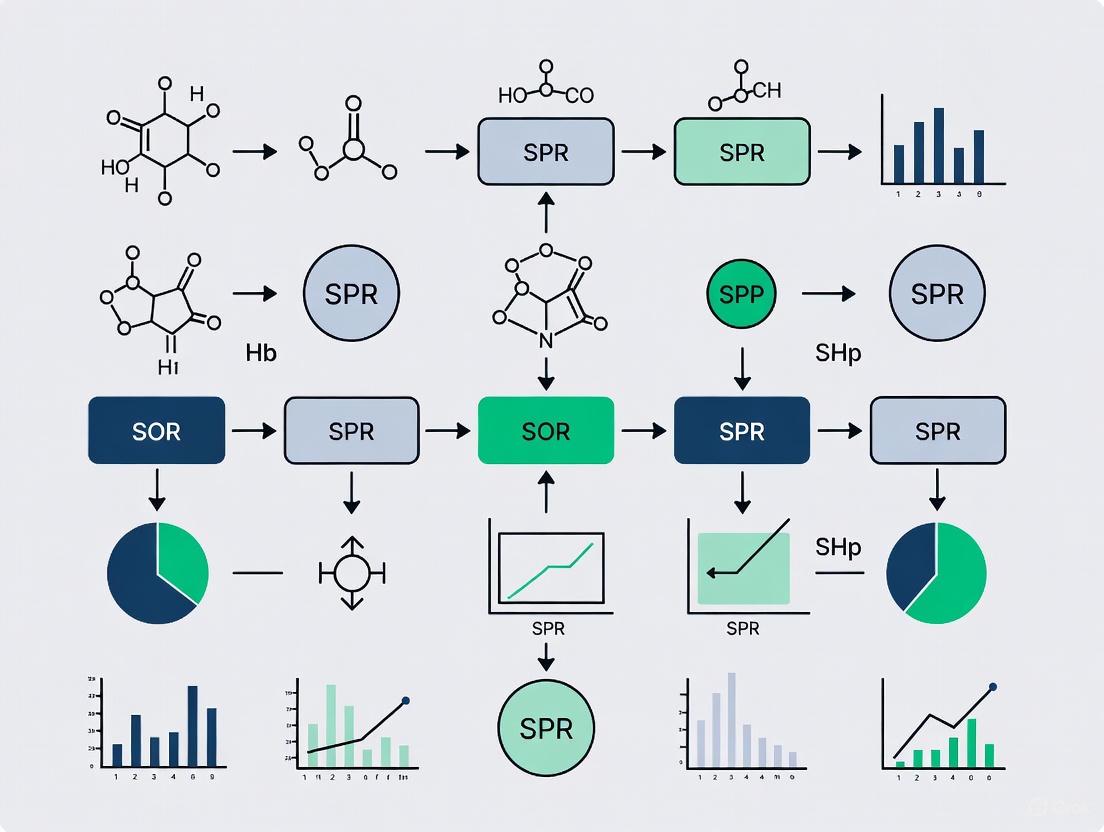
Surface Plasmon Resonance (SPR) biosensors are powerful tools for real-time, label-free analysis of biomolecular interactions, but their performance in complex clinical and biological samples is severely compromised by non-specific adsorption...
Non-Specific Adsorption in SPR Biosensing: Mechanisms, Mitigation Strategies, and Clinical Applications
Abstract
Surface Plasmon Resonance (SPR) biosensors are powerful tools for real-time, label-free analysis of biomolecular interactions, but their performance in complex clinical and biological samples is severely compromised by non-specific adsorption (NSA). This comprehensive review explores the fundamental mechanisms driving NSA, including hydrophobic, electrostatic, and van der Waals interactions that cause fouling in biosensors. We detail cutting-edge antifouling strategies—from passive surface coatings like zwitterionic peptides and 2D materials to active removal methods and advanced immobilization techniques that preserve bioreceptor functionality. The article provides practical troubleshooting frameworks for optimizing SPR assays and examines validation methodologies through case studies in cancer detection, therapeutic monitoring, and pathogen identification. This resource equips researchers and drug development professionals with the knowledge to design robust, reliable SPR biosensors for challenging real-world applications.
Understanding Non-Specific Adsorption: Fundamental Mechanisms and Impacts on SPR Biosensor Performance
In the field of biosensing, particularly surface plasmon resonance (SPR) research, non-specific adsorption (NSA) stands as a primary barrier to the development of reliable, sensitive, and accurate diagnostic tools. NSA refers to the undesirable accumulation of molecules other than the target analyte on the biosensing interface, a phenomenon also commonly termed biofouling [1]. This process negatively impacts nearly all critical analytical characteristics of a biosensor, including signal stability, selectivity, sensitivity, and overall accuracy [1] [2]. The problem intensifies with the complexity of the sample matrix, making it a paramount concern for applications in clinical diagnostics, drug development, and food safety monitoring where samples like blood, serum, and cell lysates are routine [1] [3]. For SPR biosensors, which function by detecting minute changes in refractive index at a metal surface, the unintended adsorption of non-target proteins or other biomolecules can generate signals that are indistinguishable from specific binding events, leading to false positives and inaccurate data interpretation [1] [2]. This technical guide delves into the core mechanisms of NSA, its direct impact on signal integrity, and the advanced methodologies employed to evaluate and mitigate its effects, providing a foundational resource for researchers and drug development professionals.
The accumulation of non-target sample components on biosensor interfaces is predominantly driven by physisorption, a process facilitated by a combination of non-covalent intermolecular forces [2]. Unlike specific, lock-and-key biorecognition, NSA is governed by less specific interactions between the sensor surface and components within the sample matrix.
The primary mechanisms include:
- Electrostatic Interactions: Attractive forces between charged functional groups on the sensor surface and ions or charged molecules in the solution.
- Hydrophobic Interactions: The association of non-polar regions on proteins or other biomolecules with hydrophobic areas on the sensing surface, driven by the entropy gain from releasing water molecules.
- Hydrogen Bonding: Strong dipole-dipole interactions between hydrogen bond donors and acceptors on the surface and in the solution.
- van der Waals Forces: Weak, short-range forces arising from induced electrical interactions between adjacent atoms or molecules [1] [2].
Understanding these contributions is a multi-layered initiative that must address the foulant-containing sample, the interaction between the sample matrix and the interface, and the intrinsic nature and coating of the biosensor surface itself [1]. In the context of immunosensors, a common type of biosensor, methodological non-specificity can arise from surface protein denaturation, mis-orientation, substrate stickiness, and the adsorption of molecules in free spaces not occupied by the bioreceptor [2].
Table 1: Primary Forces Driving Non-Specific Adsorption
| Interaction Force | Nature of Interaction | Common Scenarios in SPR Biosensing |
|---|---|---|
| Electrostatic | Attraction between opposite charges | Adsorption of serum proteins on charged gold surfaces; interaction with ionic dextran matrices (e.g., CM5 chips). |
| Hydrophobic | Driven by entropy gain from water release | Adsorption of non-polar protein domains on bare gold or hydrophobic self-assembled monolayers (SAMs). |
| Hydrogen Bonding | Strong dipole-dipole attraction | Binding of biomolecules to surface hydroxyls or ether groups on coatings like PEG or dextran. |
| van der Waals | Weak, induced electrical forces | Universal force contributing to the initial proximity and adhesion of nearly all molecules to a surface. |
Impact of NSA on SPR Biosensor Signals
The interference caused by NSA manifests in several distinct ways that critically degrade biosensor performance. Fundamentally, the signal originating from non-specifically adsorbed molecules can either interfere with or completely overshadow the signal generated by the specific biorecognition event [1]. In SPR biosensing, where the output is a sensorgram tracking resonance unit (RU) shifts proportional to mass concentration at the surface, this translates directly to an overestimation of analyte binding [4].
Conversely, NSA can also lead to false negatives. The adsorption of foulant molecules can passivate the biosensor surface, physically blocking the access of the target analyte to its bioreceptor. Furthermore, adsorbed species may restrict the ability of conformation-switching bioreceptors, such as certain aptamers, to undergo the structural changes required for target binding and signal generation [1]. Over time, progressive fouling leads to a significant degradation of the biosensor surface, causing signal drift that cannot be corrected by algorithms alone [1]. The perceived severity of fouling is also intrinsically linked to the sensitivity of the method used for its evaluation, which is why a combination of analytical techniques often provides a more complete picture of NSA than a single method [1].
The following diagram illustrates the progressive impact of NSA on a typical SPR sensorgram, contrasting it with an ideal, fouling-free signal.
Evaluating and Quantifying NSA
A critical step in combating NSA is its accurate evaluation and quantification. SPR instrumentation itself is a powerful tool for this purpose, as it can detect very small changes in mass (~pg/mm²) at the sensor surface in real-time [4]. The standard output, the sensorgram, plots resonance units (RU) against time, providing a direct readout of binding events.
Key Quantitative Metrics from Sensorgrams
The analysis of sensorgrams allows researchers to extract several key metrics to quantify NSA:
- *Surface Coverage:* Often expressed in pg/mm², this is a direct measure of the mass of non-specifically adsorbed material [5].
- *Limit of Detection (LOD):* Defined as three times the standard deviation of the background noise, the LOD is directly worsened by high NSA, which increases background signal variability [5].
- *Signal-to-Noise Ratio:* The ratio of the specific binding signal to the non-specific background. Effective NSA reduction strategies seek to maximize this ratio.
High-Throughput and Comparative Evaluation
Surface Plasmon Resonance Imaging (SPRi) extends the capability of traditional SPR by enabling simultaneous, high-throughput monitoring of hundreds of interactions on a single sensor chip [5] [3]. This is particularly valuable for screening the antifouling performance of multiple surface chemistries in parallel. For example, one comparative study used SPRi to evaluate NSA from cell lysate and human serum on surfaces functionalized with polyethylene glycol (PEG), α-cyclodextrin (CD), hydrogel dextran, and surface-initiated polymerization (SIP) coatings [3]. The study found that while all surfaces exhibited some degree of fouling, SIP-based surfaces demonstrated the best performance, with high sensitivity and minimal NSA [3].
Table 2: Comparative NSA Evaluation of Surface Chemistries via SPRi (in complex media)
| Surface Chemistry | Non-Specific Adsorption Level | Key Observations | Source |
|---|---|---|---|
| Surface Initiated Polymerization (SIP) | Low | Showed high sensitivity and minimum NSA, making it a promising universal platform. | [3] |
| Dextran Hydrogel | Low to Moderate | A common commercial matrix (e.g., CM5 chips); can be tuned for better antifouling. | [3] [4] |
| Polyethylene Glycol (PEG) | Moderate | A gold-standard antifouling coating, but performance can vary with density and chain length. | [3] |
| α-Cyclodextrin (CD) | High | Showed significant NSA response to complex media like cell lysate and serum. | [3] |
Techniques like matrix-assisted laser desorption/ionization time-of-flight mass spectrometry (MALDI-TOF/TOF MS) can be used in conjunction with SPR to identify the specific proteins responsible for fouling, providing deeper insight into the mechanisms of NSA [3].
Experimental Protocols for NSA Assessment and Mitigation
This section outlines detailed methodologies for key experiments cited in this guide, providing a reproducible framework for researchers.
Protocol: Evaluating Antifouling Surfaces with SPRi
This protocol is adapted from a comparative study investigating NSA from serum and cell lysate on various 3D biosensor platforms [3].
- Sensor Chip Functionalization: Prepare multiple flow cells on a single SPRi gold chip with different antifouling coatings (e.g., PEG, dextran, α-cyclodextrin, SIP) using standard synthetic and immobilization chemistry. Confirm successful surface fabrication using techniques like Fourier Transform Infrared (FTIR) spectroscopy.
- Baseline Establishment: Flow a running buffer (e.g., phosphate-buffered saline, pH 7.4) over all functionalized surfaces at a constant flow rate (e.g., 5-10 µL/min) until a stable baseline is achieved.
- Sample Injection: Introduce the complex biological sample (e.g., 10% human serum or cell lysate in running buffer) simultaneously over all functionalized surfaces. Monitor the SPRi response in real-time for a defined period (e.g., 15-20 minutes).
- Washing and Dissociation: Switch back to running buffer to wash away loosely bound molecules. Monitor the dissociation phase for an additional 10-15 minutes.
- Data Analysis: Quantify the total RU shift for each surface after the washing step. This value represents the irreversible NSA. Surfaces with lower final RU shifts possess superior antifouling properties.
- Regeneration (Optional): If reusing the chip, apply a regeneration solution (e.g., 10 mM glycine-HCl, pH 2.0) to remove all adsorbed materials and re-establish the original baseline.
Protocol: Signal Amplification via Atom Transfer Radical Polymerization (ATRP)
This protocol details a method to enhance SPR detection sensitivity by using ATRP to grow polymer brushes specifically from target protein sites, thereby amplifying the signal and enabling detection of ultra-low abundance proteins that would otherwise be masked by NSA [6].
- Target Immobilization: Covalently immobilize the target protein (e.g., Cholera Toxin) on a gold SPR sensor chip via standard amine-coupling chemistry.
- Specific Recognition: Inject a biotinylated antibody (biot-IgG) specific to the target. This binds specifically to the immobilized protein.
- Initiator Attachment: Introduce neutravidin, which binds with high affinity to biotin, followed by a biotinylated ATRP initiator. This localizes the polymerization initiator exclusively to the target sites.
- Polymerization (First ATRP Step): Flush the flow cell with a degassed solution containing the monomer (e.g., 2-hydroxyethyl methacrylate, HEMA), CuBr catalyst, and ligand (e.g., 2,2'-bipyridyl). Ascorbic acid is added as a deoxygenating agent. This triggers the growth of poly(HEMA) brushes from the initiator sites.
- Polymerization (Second ATRP Step - Hyper-branching): To further enhance the signal, use the hydroxyl groups on the poly(HEMA) brushes from the first step to initiate a second ATRP reaction, creating a hyper-branched polymer structure.
- SPR Measurement: The significant mass increase from the polymer film produces a large, easily quantifiable SPR signal shift, allowing for the quantification of the initial target protein at extremely low concentrations (e.g., LOD of 6.27 × 10⁻¹⁵ mol/cm² for Cholera Toxin) [6].
The workflow for this sophisticated signal enhancement strategy is illustrated below.
The Scientist's Toolkit: Research Reagent Solutions
A range of chemical and biological reagents is essential for developing effective antifouling strategies and conducting NSA research. The following table details key solutions used in the field.
Table 3: Essential Reagents for NSA Research in SPR Biosensing
| Reagent / Material | Function / Application | Specific Examples |
|---|---|---|
| Blocking Proteins | Passive physical method to occupy vacant surface sites and prevent subsequent NSA. | Bovine Serum Albumin (BSA), Casein, other milk proteins [2]. |
| Polyethylene Glycol (PEG) | A gold-standard chemical coating; forms a hydrated, neutral barrier that reduces molecular interactions [3]. | PEG-based SAMs, PEG-containing copolymers. |
| Amphiphilic Sugars | Reversible blocking agent; adsorbs on hydrophobic surfaces to prevent NSA during assay, then washes away. | n-Dodecyl β-D-maltoside [7]. |
| Surface Initiated Polymerization (SIP) | Creates dense, brush-like polymer coatings that are highly resistant to protein adsorption. | Polymer brushes via ATRP [6] or other controlled polymerization. |
| Hydrogel Matrices | 3D matrix on sensor chips that can be tuned for low fouling and high bioreceptor loading. | Carboxymethyl-dextran (e.g., CM5 chips) [4]. |
| Biotin-Neutravidin System | High-affinity capture system for localizing initiators or labels in signal amplification protocols [6]. | Biotinylated antibodies, NeutrAvidin. |
| ATRP Initiator & Catalysts | Enables controlled polymer growth from specific sites for signal amplification or antifouling layers. | Biotinylated ATRP initiator, CuBr catalyst, 2,2'-Bipyridyl ligand [6]. |
Non-specific adsorption remains a formidable yet addressable challenge in the development of robust SPR biosensors. A deep understanding of its mechanisms—rooted in physisorption and intermolecular forces—is the first step toward its mitigation. As this guide has outlined, the research community has developed a sophisticated toolkit to combat NSA, ranging from simple blocking protocols and advanced antifouling coatings like SIP and PEG to innovative signal amplification strategies such as ATRP. The rigorous evaluation of these strategies using quantitative metrics from SPR sensorgrams, high-throughput SPRi, and complementary techniques like MALDI-TOF MS is crucial for progress. By systematically applying these principles and methods, researchers and drug developers can significantly enhance the fidelity of their biosensing data, paving the way for more reliable diagnostic assays and therapeutic evaluations. The ongoing development of new materials and high-throughput evaluation methods promises to further minimize the impact of NSA, enabling the full potential of SPR biosensing in complex medical and biological applications.
In Surface Plasmon Resonance (SPR) biosensing, non-specific adsorption (NSA) refers to the undesirable adherence of molecules to the sensor surface through mechanisms other than the specific biorecognition event being studied [2]. This phenomenon poses a significant challenge for researchers, scientists, and drug development professionals, as it generates background signals that can obscure accurate data interpretation, compromise detection sensitivity, and reduce assay reproducibility [2] [1]. The fundamental forces driving NSA are primarily hydrophobic interactions, electrostatic forces, and van der Waals interactions, which facilitate physisorption rather than chemical bonding [2]. Unlike chemisorption, which involves the formation of covalent bonds, physisorption relies on these weaker, reversible intermolecular forces, allowing non-targeted molecules to adsorb to sensing surfaces, functionalization layers, or even the bioreceptors themselves [2]. In the context of a broader thesis on SPR biosensing research, understanding these core mechanisms is essential for developing effective strategies to mitigate NSA and improve the reliability of biosensor data across life sciences, pharmaceuticals, and clinical diagnostics [8].
Fundamental Mechanisms of Non-Specific Interactions
Hydrophobic Interactions
Hydrophobic interactions represent a major driving force for NSA, particularly in aqueous biological systems. These interactions occur between non-polar molecular regions and similarly non-polar surfaces, driven by the thermodynamic tendency of water molecules to exclude hydrophobic entities, thereby minimizing disrupted hydrogen-bonding networks in the surrounding solvent [2]. In SPR biosensing, hydrophobic patches on proteins or other biomolecules can adhere to hydrophobic areas on the sensor surface or coating materials. This mechanism is especially problematic when analyzing complex biological samples like serum, milk, or cell lysates, which contain diverse proteins with varying surface hydrophobicities [1]. The strength of hydrophobic interactions increases with the size of the involved non-polar surfaces, making larger hydrophobic molecules or aggregates particularly prone to non-specific adsorption. The mitigation of hydrophobically-driven NSA often requires surface engineering to create hydrophilic interfaces or the use of surfactants that disrupt these interactions [9].
Electrostatic Interactions
Electrostatic interactions, also known as ionic interactions, occur between charged groups on biomolecules and oppositely charged sensor surfaces. These interactions are governed by Coulomb's law and are significantly influenced by the pH and ionic strength of the running buffer [9]. Biomolecules such as proteins possess net surface charges determined by their isoelectric points (pI) relative to the solution pH, while sensor surfaces often display inherent or functionalized charges. For instance, a positively charged protein in a given buffer will readily adsorb to a negatively charged surface, leading to substantial NSA [9]. The impact of electrostatic interactions can be modulated by adjusting buffer pH to neutralize the charge of either the analyte or the surface, or by increasing ionic strength to introduce a shielding effect through counterion formation [9]. Understanding the charge characteristics of both the target analytes and potential interferents in specific biological matrices is therefore crucial for optimizing SPR assay conditions and minimizing electrostatically-driven NSA.
van der Waals Interactions
van der Waals forces encompass relatively weak, short-range electromagnetic interactions between atoms and molecules, including London dispersion forces, dipole-dipole interactions, and dipole-induced dipole forces [2]. While individually weak compared to hydrophobic or electrostatic forces, the collective effect of multiple van der Waals interactions can contribute significantly to NSA, particularly for large biomolecules with substantial surface areas contacting the sensor interface [2]. These universal forces are always present between molecules and surfaces, operating at distances typically less than 10 nanometers, which corresponds well with the evanescent field penetration depth in SPR measurements [10]. Unlike hydrophobic and electrostatic interactions, van der Waals forces are less dependent on buffer conditions and more challenging to selectively eliminate without fundamentally altering the surface chemistry or employing specific blocking strategies that create a physical barrier to prevent close approach of non-target molecules to the sensor surface [2].
Table 1: Comparative Analysis of Primary NSA Mechanisms in SPR Biosensing
| Interaction Type | Strength Range | Effective Distance | Buffer Dependence | Common Mitigation Approaches |
|---|---|---|---|---|
| Hydrophobic | Strong | Short (~0.5 nm) | Low | Surfactants (e.g., Tween 20), hydrophilic coatings |
| Electrostatic | Medium to Strong | Long (1-10 nm) | High (pH, ionic strength) | Buffer optimization, salt addition, surface charge neutralization |
| van der Waals | Weak (individually) | Very Short (<10 nm) | Low | Surface passivation, increasing surface distance |
Experimental Characterization of NSA Mechanisms
Direct SPR Measurement Approaches
Characterizing NSA mechanisms begins with establishing robust experimental protocols to distinguish specific binding from non-specific interactions. The fundamental approach involves parallel measurement using both active sensing surfaces (with immobilized ligands) and reference surfaces (without ligands or with blocked functionality) [11]. Multi-parametric SPR (MP-SPR) systems, which operate at multiple wavelengths simultaneously, provide enhanced characterization capabilities by independently quantifying refractive index changes and layer thickness variations associated with molecular adsorption [11] [12]. This advanced approach enables researchers to differentiate between specific binding events and NSA based on both kinetic profiles and physical properties of the adsorbed layers. For comprehensive characterization, initial experiments should involve flowing the analyte over bare sensor surfaces without immobilized ligands to establish baseline NSA levels under various buffer conditions [9]. Subsequent experiments with functionalized surfaces then allow researchers to quantify the proportion of specific binding relative to total adsorption, providing crucial data for optimizing surface chemistry and assay conditions to minimize NSA contributions to the final signal.
Complementary Analytical Techniques
While SPR provides excellent real-time monitoring of molecular interactions, combining it with complementary analytical techniques offers deeper insights into NSA mechanisms. X-ray photoelectron spectroscopy (XPS) enables elemental analysis of functionalized surfaces, confirming successful modification and detecting non-specifically adsorbed molecules through changes in elemental composition [11]. Polarization-modulation infrared reflection absorption spectroscopy (PM-IRRAS) provides information about molecular orientation and functional groups present on sensor surfaces, helping identify the nature of NSA [11]. Additionally, atomic force microscopy (AFM) can characterize topological changes and surface coverage resulting from NSA, though it lacks the real-time kinetic capability of SPR [12]. For specialized applications, coupling SPR with electrochemical measurements (EC-SPR) provides complementary information about interfacial processes and can help differentiate faradaic processes from capacitive charging effects that might influence NSA [1]. These integrated approaches facilitate a more comprehensive understanding of NSA mechanisms, enabling the development of more effective mitigation strategies tailored to specific biosensing applications.
Quantitative Analysis of Interaction Forces
Binding Affinity and Kinetic Parameters
Quantitative assessment of NSA requires precise measurement of binding affinity and kinetic parameters. The equilibrium dissociation constant (KD) represents the affinity between interacting molecules, with lower values indicating stronger binding. For specific interactions, KD values typically range from micromolar to picomolar, while non-specific interactions generally exhibit much weaker affinities (higher KD values) [13] [11]. SPR enables determination of both association (ka) and dissociation (kd) rate constants through real-time monitoring of binding events, providing insights into the nature of molecular interactions. Non-specific binding often displays characteristic kinetic profiles distinct from specific binding, typically showing rapid, non-saturable association and incomplete dissociation upon washing [9]. Recent advances in SPR instrumentation, particularly multi-parametric systems, have enhanced the accuracy of these measurements by simultaneously tracking multiple optical parameters, enabling more reliable discrimination between specific and non-specific interactions even in complex biological matrices [12]. Quantitative analysis of these parameters across different experimental conditions provides researchers with valuable data for optimizing assay specificity and developing effective NSA mitigation strategies.
Response Unit Correlations with Molecular Properties
In SPR biosensing, the response unit (RU) signal corresponds directly to mass concentration changes at the sensor surface, with 1 RU representing approximately 1 pg/mm² of adsorbed protein [9]. This quantitative relationship enables researchers to correlate RU signals with molecular properties and interaction mechanisms. Non-specific adsorption typically produces RU signals that increase linearly with analyte concentration without evidence of saturable binding, unlike specific interactions which display characteristic saturation binding curves [9]. The magnitude of NSA-induced RU signals varies significantly depending on the dominant interaction mechanism; electrostatically-driven adsorption often shows strong dependence on buffer ionic strength, while hydrophobically-driven NSA may be relatively insensitive to salt concentration but responsive to surfactant addition [9]. By systematically varying experimental conditions and monitoring corresponding RU changes, researchers can identify the primary mechanisms contributing to NSA in specific assay systems and select appropriate countermeasures. This quantitative approach to analyzing RU signals in context of molecular properties and buffer conditions represents a powerful strategy for optimizing SPR assay performance and minimizing false-positive results arising from NSA.
Table 2: Quantitative Parameters for NSA Mechanism Identification in SPR Biosensing
| Analytical Parameter | Hydrophobic-Driven NSA | Electrostatic-Driven NSA | van der Waals-Driven NSA |
|---|---|---|---|
| KD Value Range | ~10⁻⁴-10⁻⁶ M | ~10⁻³-10⁻⁵ M | >10⁻³ M |
| Association Kinetics | Rapid, often irreversible | Moderate, salt-dependent | Slow, proportional to size |
| Dissociation Kinetics | Incomplete even with surfactants | Enhanced with high salt | Complete with buffer flow |
| RU Signal Profile | Linear increase, no saturation | pH-dependent saturation | Weak, proportional to concentration |
| Ionic Strength Effect | Minimal reduction | Significant reduction | Minimal effect |
| Surfactant Response | >70% signal reduction | <30% signal reduction | <20% signal reduction |
Methodologies for NSA Mechanism Investigation
Systematic Buffer Optimization Protocols
Comprehensive investigation of NSA mechanisms requires systematic optimization of buffer conditions to identify the specific contributions of different interaction forces. A standardized protocol begins with preparation of a standard running buffer, typically phosphate-buffered saline (PBS) at physiological pH (7.4), which serves as the baseline for comparison [13] [9]. To assess electrostatic contributions, researchers should prepare a series of buffers with varying ionic strength (e.g., 0.15-1.0 M NaCl) while maintaining constant pH, monitoring changes in NSA signals as salt concentration increases [9]. Similarly, evaluating pH dependence across a physiologically relevant range (e.g., pH 6.0-8.5) with constant ionic strength helps identify charge-based interactions by exploiting the pH-dependent ionization state of surface functional groups and biomolecules [9]. For investigating hydrophobic interactions, researchers should incorporate non-ionic surfactants such as Tween 20 at concentrations ranging from 0.005% to 0.1% (v/v) in the running buffer, noting significant NSA reduction indicating hydrophobically-driven adsorption [9]. Throughout these investigations, reference channel measurements using surfaces without immobilized ligands are essential for accurate quantification of NSA separate from specific binding events. This systematic approach to buffer optimization provides robust experimental data for identifying dominant NSA mechanisms in specific SPR applications.
Surface Engineering and Functionalization Methods
Surface engineering represents a powerful methodology for investigating and mitigating specific NSA mechanisms through controlled modification of sensor interface properties. Standard protocols often begin with formation of self-assembled monolayers (SAMs) using alkanethiols on gold surfaces, which provide well-defined chemical functionalities for subsequent immobilization and create a physical barrier that reduces NSA [11]. Recent advances include using two-dimensional materials like graphene, MXene, and carbon nanomembranes (CNMs) as interfacial layers that enhance sensitivity while potentially reducing NSA through their unique physicochemical properties [10] [11]. For comprehensive investigation of NSA mechanisms, researchers should compare functionalization schemes with different terminal groups (e.g., oligo(ethylene glycol) for hydrophilicity, charged moieties for electrostatic repulsion) while characterizing their effectiveness against various types of NSA. Additionally, implementing passivation strategies using blocking agents such as bovine serum albumin (BSA), casein, or specially designed peptide sequences after ligand immobilization provides crucial data about their efficacy in preventing different NSA mechanisms [9] [11]. These surface engineering methodologies not only facilitate fundamental investigation of NSA mechanisms but also enable development of optimized biosensor interfaces with minimal non-specific interactions for specific application requirements.
Research Reagent Solutions for NSA Investigation
The experimental investigation of NSA mechanisms requires specific reagents carefully selected for their ability to probe particular interaction forces. These reagents function by selectively interfering with specific types of molecular interactions, enabling researchers to identify the dominant NSA mechanisms in their SPR biosensing applications. The following table comprehensively details essential research reagents, their working mechanisms, and practical implementation considerations for systematic NSA investigation.
Table 3: Essential Research Reagents for NSA Mechanism Investigation
| Reagent Category | Specific Examples | Primary Mechanism of Action | Typical Working Concentration | Targeted NSA Mechanism |
|---|---|---|---|---|
| Surfactants | Tween 20 | Disrupts hydrophobic interactions by interfacial activity | 0.005-0.1% (v/v) | Hydrophobic interactions |
| Salts | Sodium chloride (NaCl) | Shields electrostatic interactions through ionic screening | 0.15-1.0 M | Electrostatic interactions |
| Blocking Proteins | Bovine serum albumin (BSA), Casein | Occupies vacant surface sites through non-specific adsorption | 0.1-5% (w/v) | Multiple mechanisms |
| Buffer Additives | CHAPS, Triton X-100 | Reduces hydrophobic and electrostatic interactions simultaneously | 0.01-0.5% (w/v) | Hydrophobic, Electrostatic |
| pH Modifiers | Phosphate, Acetate, Borate buffers | Alters ionization state of functional groups | 10-100 mM varying pH | Electrostatic interactions |
Advanced Materials and Surface Designs for NSA Mitigation
Two-Dimensional Materials and Nanocomposites
Recent advances in nanotechnology have introduced innovative two-dimensional (2D) materials and nanocomposites that effectively mitigate NSA through sophisticated surface engineering. Materials such as MXene (Ti₃C₂Tₓ), graphene, and carbon nanomembranes (CNMs) offer unique properties that enhance SPR biosensor performance while reducing non-specific interactions [10] [11]. These ultra-thin materials (typically 1 nm or less in thickness) can be precisely functionalized with specific chemical groups that resist non-specific adsorption while facilitating oriented immobilization of biorecognition elements [11]. For instance, azide-functionalized CNMs enable covalent attachment of dibenzocyclooctyne (DBCO)-modified antibodies through copper-free click chemistry, creating well-defined biosensing interfaces with minimal NSA [11]. Similarly, graphene and MXene layers incorporated into SPR sensor designs enhance charge transfer efficiency and create surfaces with optimized work functions that preferentially promote specific binding over non-specific adsorption [10]. The exceptional surface-to-volume ratio of these 2D materials provides abundant sites for specific biorecognition while their tunable surface chemistry allows customization for particular application requirements. Implementation of these advanced materials represents a cutting-edge approach to addressing fundamental NSA challenges in SPR biosensing research.
Peptide-Based Functionalization Strategies
Peptide-based surface functionalization has emerged as a powerful strategy for creating biospecific interfaces with inherent resistance to NSA. Short synthetic peptides can be engineered as biorecognition elements or as antifouling spacers that create a hydrated barrier against non-specific interactions [12]. These peptides offer advantages over traditional functionalization approaches, including molecular-level precision in design, compatibility with diverse immobilization chemistries, and the ability to incorporate specific cleavage sites for monitoring enzyme activity [12]. For protease sensing applications, peptide substrates containing specific cleavage sequences (e.g., between Gly and Met for MMP-9 detection) enable real-time monitoring of enzymatic activity while maintaining low NSA through optimized surface presentation [12]. Furthermore, binary patterned peptide SAMs create ultralow fouling surfaces that effectively resist NSA in complex biological samples like crude serum, significantly enhancing assay reliability without compromising sensitivity [12]. The structural versatility of peptides allows researchers to fine-tune surface properties at the molecular level, enabling creation of biosensing interfaces specifically optimized to resist the predominant NSA mechanisms in particular application environments. This tailored approach to surface design represents a significant advancement in addressing persistent NSA challenges in SPR biosensing.
The comprehensive investigation of hydrophobic, electrostatic, and van der Waals interactions provides crucial insights into the fundamental mechanisms driving non-specific adsorption in SPR biosensing. Through systematic experimental characterization, quantitative analysis, and strategic implementation of advanced materials and surface designs, researchers can effectively identify and mitigate the predominant NSA mechanisms in their specific applications. The continuing development of multi-parametric SPR systems, coupled with advanced surface engineering approaches employing 2D materials and peptide-based functionalization, promises enhanced capability to discriminate between specific and non-specific interactions even in complex biological matrices. Future research directions will likely focus on high-throughput screening of antifouling materials, molecular simulations predicting interaction mechanisms, and machine learning-assisted analysis of binding data to further improve NSA identification and mitigation. As SPR biosensing continues to expand into point-of-care diagnostics, therapeutic monitoring, and complex sample analysis, deep understanding of these fundamental physical and chemical interaction mechanisms will remain essential for developing robust, reliable biosensing platforms that deliver accurate results across diverse application environments.
Non-specific adsorption (NSA) represents a fundamental challenge in surface plasmon resonance (SPR) biosensing, directly compromising critical analytical performance parameters. This technical review systematically examines the mechanisms through which NSA degrades sensor sensitivity, specificity, and reproducibility. The analysis draws upon recent advances in SPR biosensing research to detail quantitative degradation profiles, standardized experimental protocols for NSA quantification, and validated mitigation strategies. By framing NSA within the context of a broader thesis on its sources in SPR research, this work provides researchers and drug development professionals with both theoretical foundations and practical methodologies to characterize and counteract NSA-induced performance losses in complex clinical samples.
Surface plasmon resonance (SPR) biosensors function as label-free analytical tools that monitor biomolecular interactions in real-time by detecting refractive index changes near a sensor surface [14]. The core challenge in applying SPR for clinical analysis or drug development lies in maintaining signal fidelity in complex matrices, where non-specific adsorption of interfering compounds directly competes with target analyte binding [1]. NSA, also termed "biofouling," occurs when molecules other than the analyte of interest physisorb to the sensing interface through hydrophobic forces, ionic interactions, van der Waals forces, or hydrogen bonding [2] [1]. This phenomenon is particularly problematic in SPR biosensing because the detection mechanism cannot inherently distinguish between specific binding events and non-specific background interference, leading to corrupted binding kinetics and compromised analytical conclusions [2] [15].
The persistence of NSA as a critical problem in SPR research stems from its multifaceted impact on the sensor interface. First, NSA contributes directly to the measured signal, creating a background offset that obscures legitimate binding events, particularly at low analyte concentrations [1]. Second, fouling molecules can physically block biorecognition elements, reducing their accessibility to target analytes [2]. Third, NSA progressively modifies the interfacial properties of the sensor surface, altering its interaction with subsequent sample components and creating time-dependent signal drift [1]. Understanding these mechanisms is essential for developing effective countermeasures and interpreting SPR data accurately, especially when analyzing complex biological fluids like serum, blood, or saliva where hundreds of potential interfering species coexist with the target analyte [1] [15].
Mechanisms of Performance Degradation
Sensitivity Degradation
Sensitivity in SPR biosensors refers to the minimum detectable change in analyte concentration or surface binding, typically quantified as the shift in resonance angle per unit refractive index change (deg/RIU) [16]. NSA degrades sensitivity through two primary mechanisms: signal occlusion and steric hindrance. When non-specifically adsorbed molecules accumulate on the sensor surface, they generate a background refractive index signal that obscures the specific binding signal, effectively raising the detection limit [2] [1]. Research demonstrates that in microfluidic biosensors, which share fundamental interfacial challenges with SPR platforms, NSA "decreases sensitivity, specificity, and reproducibility" by introducing high background signals indistinguishable from specific binding [2].
The steric hindrance mechanism occurs when fouling agents deposit directly on or around biorecognition elements, physically blocking analyte access to binding sites as shown in Figure 1B. This phenomenon is particularly detrimental for low-abundance biomarkers where minimal binding site occupancy can significantly impact detection. The problem escalates in miniaturized systems where "the size of the molecules used for passivation and capture, as well as the analytes of interest, have similar dimensions to the sensor element" [2]. Studies of electrochemical aptamer-based (E-AB) biosensors reveal analogous behavior where non-specifically adsorbed molecules restrict the conformational changes required for target binding, directly diminishing signal response [1].
Specificity Degradation
Specificity degradation manifests as false-positive signals when non-target molecules adsorb to the sensing interface and generate SPR responses indistinguishable from true binding events [2] [1]. This occurs through multiple pathways: molecules may adsorb to vacant spaces on the sensor surface, bind to non-immunological sites on capture agents, or partially interfere with immunological sites while still permitting some antigen access [2]. In clinical analysis of complex samples, "the adsorption of foulant molecules and the specific binding of the target analyte may lead to similar changes in the reflectivity measured with an SPR biosensor" [1].
The specificity challenge intensifies when analyzing structurally similar compound families or samples with high matrix complexity. For instance, phospholipids and oligonucleotides exhibit particularly high NSA due to their charged functional groups interacting with metallic surfaces [17] [18]. The resulting false positives not only compromise individual measurements but also fundamentally undermine the reliability of binding affinity calculations and kinetic parameter estimation, which are key applications of SPR in drug development [15].
Reproducibility Degradation
Reproducibility degradation stems from the variable nature of NSA across experiments, leading to inconsistent surface properties and binding kinetics between runs [2] [17]. This variability arises from several factors: heterogeneous surface fouling patterns, time-dependent accumulation of interferents, and differential conditioning of surfaces based on sample history [1]. In liquid chromatography systems—which face analogous NSA challenges—analyte losses to metallic surfaces "negatively impact accuracy and precision of methods and often results in underreported or undetected analytes" [17].
The reproducibility problem is particularly acute in regeneration-based SPR assays where incomplete removal of fouling agents creates surface memory effects that alter performance across cycles [15]. Furthermore, NSA shows a "direct relationship between metal surface area and NSA, where higher analyte losses are seen in components that have higher metallic surface area" [17], explaining why different flow cell geometries and manufacturing tolerances can produce varying degrees of performance degradation even with identical experimental conditions.
Table 1: Quantitative Impact of NSA on SPR Analytical Performance
| Performance Parameter | Degradation Mechanism | Quantitative Impact | Detection Implications |
|---|---|---|---|
| Sensitivity | Signal occlusion from background RI change | Up to 44% reduction in measurable signal amplitude [19] | Higher limit of detection (LOD) |
| Specificity | False-positive signals from non-target adsorption | Indistinguishable reflectivity changes [1] | Compromised binding affinity calculations |
| Reproducibility | Variable surface fouling between experiments | >10% variability due to surface roughness [19] | Poor inter-assay precision |
Experimental Protocols for NSA Characterization
Baseline Signal Establishment
Establishing a stable baseline represents the critical first step in NSA characterization. The protocol begins with extensive buffer conditioning (typically 1-2 hours) of the freshly functionalized SPR sensor surface until a stable baseline drift of <0.3 RU/sec is achieved [1]. The running buffer should precisely match the sample matrix in pH and ionic composition to minimize bulk refractive index effects. Following conditioning, inject a negative control solution containing all sample matrix components except the target analyte—for serum samples, this typically involves diluted normal serum or a synthetic serum formulation. Monitor the response for a minimum of 300 seconds to establish the NSA baseline level, which should ideally be <5% of the expected specific signal for the target analyte at its lower limit of quantification [1].
Controlled Fouling Experiments
Controlled fouling experiments quantify NSA under standardized challenge conditions. Prepare a high-fouling challenge solution representative of the actual sample matrix—for blood plasma analysis, this might include a mixture of 40 mg/mL BSA, 5 mg/mL fibrinogen, and 0.5 mg/mL IgG in phosphate-buffered saline [1]. Inject this solution across both functionalized and reference flow cells at a flow rate ensuring laminar flow conditions (typically 10-30 μL/min in microfluidic SPR systems) for a duration sufficient to approach surface saturation (usually 15-30 minutes). Monitor the response trajectory, noting both the initial adsorption rate and the plateau response level, which indicates surface saturation with foulants [2] [1].
Regeneration and Surface Recovery Assessment
Surface regeneration efficiency determines long-term assay reproducibility. Following fouling experiments, inject regeneration solutions—typically acidic (10 mM glycine-HCl, pH 2.0-2.5) or basic (10-50 mM NaOH) buffers—in 30-60 second pulses until the response returns to within 10-15 RU of the original baseline [15]. The number of regeneration cycles required provides a quantitative measure of fouling strength. Calculate the percentage signal recovery as: % Recovery = [(Rfinal - Rfouled)/(Rinitial - Rfouled)] × 100. Surfaces with <85% recovery after three regeneration cycles exhibit significant NSA accumulation that compromises long-term reproducibility [15].
Table 2: Standard Experimental Protocols for NSA Quantification
| Protocol Stage | Key Parameters | Measurement Outputs | Acceptance Criteria |
|---|---|---|---|
| Baseline Establishment | Buffer conditioning: 1-2 hours; Flow rate: 10-30 μL/min | Baseline drift: <0.3 RU/sec; Noise level: <0.5 RU | Stable pre-injection baseline |
| Fouling Challenge | High-fouling solution: 15-30 minute injection; Multiple concentrations | Initial adsorption rate; Saturation response level; Association kinetics | Quantifies fouling propensity |
| Surface Recovery | Regeneration solutions: 30-60 second pulses; Multiple cycles | % Signal recovery; Residual fouling after regeneration | >85% recovery after 3 cycles |
Experimental Workflow Visualization
The following diagram illustrates the comprehensive experimental workflow for NSA characterization in SPR biosensing, integrating the protocols described above:
Research Reagent Solutions for NSA Mitigation
Effective NSA management requires specialized reagents and materials designed to minimize non-specific interactions while maintaining specific biorecognition functionality. The following toolkit represents essential solutions for SPR biosensing research:
Table 3: Essential Research Reagent Solutions for NSA Mitigation
| Reagent Category | Specific Examples | Primary Function | Application Notes |
|---|---|---|---|
| Blocking Proteins | BSA (1-5%), casein (0.5-1%), milk proteins (1-3%) | Passive surface coverage of vacant sites | Compatible with most immunoassays; may require optimization [2] |
| Chemical Additives | Surfactants (Tween-20, 0.005-0.1%), chelators (EDTA, 1-5 mM) | Reduce hydrophobic/electrostatic interactions | Critical for oligonucleotide analysis; concentration-dependent efficacy [17] |
| Advanced Coatings | PEG derivatives, zwitterionic polymers, hybrid organic-inorganic films | Create hydrophilic, non-charged boundary layer | Requires surface chemistry expertise; offers superior performance [2] [18] |
| Surface Materials | Titanium, PEEK, MaxPeak HPS technology | Replace stainless steel with low-binding alternatives | Hardware-level solution; reduces metallic surface interactions [17] [18] |
Non-specific adsorption remains a multifaceted challenge in SPR biosensing that systematically degrades sensitivity through signal occlusion and steric hindrance, compromises specificity through false-positive responses, and undermines reproducibility through variable surface fouling. The experimental frameworks and reagent solutions presented herein provide researchers with standardized methodologies to quantify NSA impacts and implement effective countermeasures. As SPR technology continues evolving toward more sensitive multiplexed configurations and point-of-care applications, addressing NSA at both fundamental and practical levels will remain essential for translating analytical promise into clinical reality. Future research directions should prioritize high-throughput screening of antifouling materials, machine learning-assisted NSA prediction, and development of universal surface functionalization strategies that maintain specificity across diverse sample matrices.
The analysis of specific biomolecular interactions in complex biological samples such as serum, blood, and cell lysates represents a significant challenge in surface plasmon resonance (SPR) biosensing research. These matrices introduce substantial non-specific adsorption (NSA), which can severely compromise data accuracy by generating false-positive signals, obscuring specific binding events, and reducing biosensor sensitivity and reproducibility [2] [1]. NSA occurs when sample components other than the target analyte adsorb to the biosensor surface through physisorption mechanisms involving hydrophobic forces, ionic interactions, van der Waals forces, and hydrogen bonding [2]. In clinical diagnostics and drug development, where SPR is increasingly utilized for biomarker detection and kinetic characterization, overcoming matrix-induced NSA is paramount for obtaining reliable analytical results from complex fluids [20] [21]. This technical guide examines the fundamental challenges posed by biological matrices in SPR biosensing, evaluates current methodological approaches to mitigate NSA and provides detailed protocols for researchers confronting these analytical obstacles.
Fundamental Challenges of Complex Matrices in SPR
Compositional Complexity and NSA Mechanisms
Serum, plasma, and cell lysates present a formidable challenge to SPR biosensing due to their heterogeneous composition of proteins, lipids, carbohydrates, and other molecular species that compete for binding sites on sensor surfaces [1]. The matrix effect is particularly pronounced in serum, which contains high concentrations of albumin, immunoglobulins, and other proteins that readily adsorb to various surfaces [20] [22]. Studies comparing serum and plasma matrices have demonstrated significantly higher non-specific background in serum, presumably due to the release of additional cellular components during the clotting process [20]. Cell lysates introduce additional complexity with their high concentration of intracellular proteins, nucleic acids, and membrane components that can interfere with specific binding measurements [1].
The mechanisms underlying NSA involve a combination of:
- Electrostatic interactions between charged residues on proteins and functionalized sensor surfaces
- Hydrophobic interactions with non-polar surface regions
- Hydrogen bonding and other dipole-dipole interactions
- van der Waals forces that promote physisorption [9] [1]
These non-specific interactions lead to signal interference that cannot be distinguished from specific binding events in conventional SPR measurements, resulting in overestimated binding responses and erroneous kinetic calculations [2] [21].
Consequences for Analytical Performance
NSA from complex matrices negatively impacts multiple critical analytical parameters in SPR biosensing:
- Reduced Sensitivity: Non-specific adsorption obscures low-abundance analytes, raising the limit of detection and potentially masking clinically relevant biomarkers present at low concentrations [20] [23].
- Compromised Specificity: Matrix interference makes it difficult to distinguish target binding from background noise, particularly for low-affinity interactions [21].
- Impaired Reproducibility: Variability in matrix composition between samples introduces inconsistent NSA, reducing measurement precision and reliability [2] [20].
- Kinetic Measurement Errors: NSA contributes to signal drift and incorrect determination of association and dissociation rates, potentially leading to flawed conclusions about binding mechanisms [9] [21].
The challenge is particularly acute for clinical applications, where the accurate quantification of active antibody concentrations in patient sera is essential for diagnostic and prognostic evaluations [21].
Quantitative Comparison of Matrix Effects
Table 1: Comparative Analysis of Matrix Effects in Immunoassays
| Matrix Type | Non-Specific Background | Cytokine Recovery | Key Interfering Components | Recommended Dilution |
|---|---|---|---|---|
| Serum | Significantly higher [20] | Lower due to greater inhibition [20] | Clotting factors, platelet-derived factors | Variable by analyte [20] |
| Plasma | Lower [20] | Higher for many cytokines [20] | Anticoagulants (heparin, citrate, EDTA) | Variable by analyte [20] |
| Cell Lysates | High (composition-dependent) [1] | Variable | Intracellular proteins, nucleic acids, membrane components | Requires optimization [1] |
Table 2: Performance Comparison of NSA Mitigation Strategies in SPR
| Strategy | Mechanism of Action | Best Suited Matrices | Limitations | Reported Efficacy |
|---|---|---|---|---|
| Surface Blocking (BSA) | Protein adsorption to free surfaces [9] | Serum, plasma | Potential interference with binding sites | Partial NSA reduction [9] |
| Buffer Optimization (pH) | Modifies charge interactions [9] | All matrices | Limited to pH-stable analytes | Condition-dependent [9] |
| Surfactant Addition (Tween 20) | Disrupts hydrophobic interactions [9] | Protein-rich matrices | Potential protein denaturation | Significant NSA reduction [9] |
| Salt Shielding (NaCl) | Shields electrostatic attractions [9] | Charge-dominated NSA | High ionic strength may affect specific binding | ~70% signal reduction demonstrated [9] |
| Cognate/Non-cognate Reference | Signal subtraction [21] | Serum, blood | Requires suitable reference molecule | Enables quantitation despite NSA [21] |
Methodologies for NSA Evaluation and Mitigation
Experimental Workflow for NSA Assessment
The following diagram illustrates a comprehensive workflow for evaluating and addressing non-specific adsorption in SPR experiments with complex matrices:
Diagram 1: Experimental workflow for NSA assessment in SPR
Advanced Surface Engineering Strategies
Recent advances in surface engineering have yielded sophisticated antifouling coatings that resist NSA while maintaining biosensor functionality:
2D Material Integration: Graphene oxide, transition metal dichalcogenides (TMDCs), and other 2D materials can enhance sensitivity while providing controlled surface functionalization that reduces NSA [24] [25]. For example, WS2-based architectures have demonstrated sensitivity of 342.14 deg/RIU for cancer cell detection while maintaining specificity in complex samples [25].
Hybrid Nanocomposites: Combinations such as graphene/gold, MoS2-coated gold optical fiber, and cadmium sulphide quantum dot-adsorbed graphene oxide create surfaces with optimized plasmonic properties and reduced fouling tendencies [24].
Structured Metallic Layers: Optimization of adhesive chromium and gold layer thicknesses using algorithmic approaches can enhance sensitivity by 230.22% and figure of merit by 110.94%, indirectly improving the signal-to-NSA ratio [23].
Reference Surface Methodology for Complex Matrices
For particularly challenging matrices like human serum, a robust methodological approach using reference surfaces enables accurate quantification despite significant NSA [21]:
Protocol: Cognate/Non-cognate Reference Surface Method
Surface Preparation:
- Functionalize the sensor surface with appropriate capture molecules (e.g., anti-B2m for HLA capture).
- In the same flow cell, capture first a non-cognate target (structurally similar but not recognized by the analyte of interest).
Sample Injection:
- Inject the complex sample (e.g., patient serum) and measure the binding response.
- Regenerate the surface without damaging the capture molecules.
- Capture the specific target of interest in a new binding cycle.
- Inject the same complex sample again and measure the binding response.
Signal Processing:
- Subtract the non-cognate response from the specific target response to obtain the specific binding signal.
- Ensure similar capture levels between cognate and non-cognate targets to normalize NSA contributions.
Quantification:
- Use the corrected binding signals for concentration analysis and kinetic calculations.
- This method has been shown to accurately determine active antibody concentrations in the 0.5-1 nM range even in undiluted sera with strong NSA [21].
The Researcher's Toolkit: Essential Reagents and Materials
Table 3: Key Research Reagent Solutions for NSA Mitigation
| Reagent/Material | Function | Application Notes | References |
|---|---|---|---|
| Bovine Serum Albumin (BSA) | Protein blocking agent | Typically used at 1% concentration; shields hydrophobic surfaces | [9] |
| Tween 20 | Non-ionic surfactant | Disrupts hydrophobic interactions; low concentrations (0.005-0.05%) recommended | [9] |
| NaCl | Ionic strength modifier | Shields electrostatic interactions; 150-200 mM effective for charge-based NSA | [9] |
| Carboxymethylated dextran | Hydrophilic matrix | Creates hydrated surface that resists protein adsorption; common in commercial chips | [1] |
| Graphene oxide | 2D nanomaterial | Enhances sensitivity while providing controlled functionalization; reduces NSA | [24] |
| Transition Metal Dichalcogenides | 2D nanomaterials | WS2, MoS2 provide high surface area with antifouling properties | [25] |
| PEG-based coatings | Polymer brush layer | Creates steric and hydration barriers to protein adsorption | [2] [1] |
The analysis of complex matrices in SPR biosensing continues to present significant challenges due to non-specific adsorption, but methodological advances in surface engineering, buffer optimization, and reference surface strategies are progressively overcoming these limitations. Future directions point toward increasingly sophisticated antifouling materials with tunable conductivity and thickness, high-throughput screening of new coating materials, and machine learning-assisted evaluation of NSA phenomena [1]. The integration of these approaches will further enhance the utility of SPR biosensing for clinical diagnostics, drug development, and fundamental biological research involving complex samples. As these technologies mature, SPR is poised to become an even more powerful tool for the accurate quantification of biomolecular interactions in challenging but biologically relevant matrices.
In Surface Plasmon Resonance (SPR) biosensing research, non-specific adsorption (NSA) represents a fundamental challenge that directly compromises assay reliability by generating false positive signals. NSA occurs when molecules other than the target analyte, such as proteins, lipids, or other matrix components from complex samples like serum or blood, adsorb onto the biosensing interface [1] [2]. This fouling phenomenon triggers detectable changes in the refractive index that are indistinguishable from specific binding events, leading to erroneous data interpretation and significant economic and operational repercussions [1] [2]. For researchers, scientists, and drug development professionals, understanding and mitigating the consequences of NSA is paramount for developing robust, reliable, and cost-effective biosensing platforms. This technical guide examines the multifaceted impact of false positives stemming from NSA and outlines established and emerging strategies to enhance assay reliability.
Economic Consequences of False Positives
The economic impact of false positives in SPR-based research and development is substantial, affecting direct costs, resource allocation, and project timelines across pharmaceutical and biotechnology industries.
Direct and Indirect Financial Costs
The financial implications of NSA-induced assay interference extend far beyond the cost of individual experiments.
Table 1: Economic Impact of False Positives in SPR Biosensing
| Cost Category | Direct Financial Impact | Indirect Operational Impact |
|---|---|---|
| Reagent Consumption | Wasted expensive reagents (antibodies, ligands, sensor chips) and samples [1] | Increased procurement overhead and inventory requirements |
| Instrument Utilization | Loss of productive instrument time during faulty experiments and troubleshooting [26] | Reduced throughput and delayed project milestones |
| Personnel Resources | Significant time invested by skilled technicians and scientists in re-running experiments and data analysis [26] | Opportunity cost from diverted research focus and delayed decision-making |
| Project Delays | Costs associated with missed deadlines in drug discovery pipelines [27] | Potential delay in patent filings or clinical trials, impacting competitive advantage |
Impact on Drug Discovery and Development
In drug discovery, SPR is indispensable for characterizing biomolecular interactions, such as antibody-antigen binding and protein-protein interactions [28] [27]. False positives can mislead lead optimization efforts, potentially resulting in the pursuit of ineffective drug candidates. The subsequent allocation of resources to advanced pre-clinical and clinical testing for such candidates magnifies financial losses, which can amount to millions of dollars per failed project [27]. Furthermore, the SPR biosensor market, valued at approximately $500 million in 2025 and growing at a CAGR of 8%, underscores the technology's widespread adoption [26]. The aggregate economic waste due to unreliable data across this expanding market is consequently immense.
Operational Consequences and Impact on Assay Reliability
Operationally, NSA degrades key analytical figures of merit, complicates data interpretation, and undermines the foundational integrity of biosensor data.
Degradation of Analytical Performance
NSA directly and negatively impacts the core performance metrics of any biosensor:
- Reduced Sensitivity and Selectivity: The accumulation of non-specifically bound material on the sensor surface creates a background signal that can mask the specific signal from low-abundance analytes, effectively raising the limit of detection (LOD) [2] [15]. This is particularly critical in clinical analysis for detecting low-concentration biomarkers, such as CA125 and HE4 for ovarian cancer, where high sensitivity is required [28] [15].
- Compromised Accuracy and Specificity: False positive signals lead to an overestimation of binding responses and analyte concentration [2]. This lack of specificity can cause both false positives and, in cases where fouling blocks the bioreceptor, false negatives [1].
- Poor Reproducibility: NSA is often an inconsistent and variable process, leading to high signal drift and poor repeatability between experiments and across different sensor chips [1] [2]. This lack of reproducibility severely hinders the validation of analytical methods and the reliability of any conclusions drawn from the data.
Complications in Data Interpretation and Kinetic Analysis
The presence of NSA introduces significant complexity into the interpretation of sensorgrams. The real-time binding curves, which are used to extract kinetic parameters (association rate k_on, dissociation rate k_off), and equilibrium constants (affinity, K_D), become distorted [9]. A sensorgram with NSA often shows an abnormally high binding response, a poorly fitting curve when analyzed with a 1:1 binding model, and a high baseline that does not return to the original level after dissociation, indicating irreversible fouling [1] [9]. Disentangling the specific signal from the non-specific background requires additional control experiments and complex data processing, increasing the risk of erroneous kinetic parameter estimation.
Methodologies for Evaluating and Mitigating NSA
A systematic approach to evaluating and mitigating NSA is essential for ensuring the generation of high-quality, reliable SPR data.
Experimental Protocols for NSA Evaluation
Before conducting main experiments, characterizing the level of NSA is a critical first step.
- Primary Control Experiment: Flow the analyte over a bare sensor surface or a surface functionalized with an irrelevant ligand. A significant response indicates a substantial level of NSA that must be addressed before proceeding with specific binding studies [9].
- Reference Surface Subtraction: In dual-channel SPR systems, one flow cell is functionalized with the specific ligand (active surface), while another is prepared with a non-reactive layer (reference surface). The response from the reference surface, which contains the signal from NSA and bulk refractive index shift, is digitally subtracted from the active surface response to isolate the specific binding signal [1].
- High-Throughput Screening and Machine Learning: Emerging approaches involve the use of machine learning-assisted evaluations and high-throughput screening of new antifouling materials to rapidly identify optimal surface chemistries for specific sample matrices [1].
Established Strategies for NSA Reduction
Several well-established biochemical and surface chemistry methods can be employed to minimize NSA.
Table 2: Standard Experimental Protocols for Reducing Non-Specific Binding
| Method | Protocol Details | Mechanism of Action | Considerations |
|---|---|---|---|
| Buffer Optimization (pH) | Adjust running buffer pH to the isoelectric point (pI) of the analyte or away from the surface charge. | Neutralizes charge-based interactions between analyte and sensor surface [9]. | Requires knowledge of the pI of the interacting molecules to avoid denaturation. |
| Protein Blockers (e.g., BSA) | Add 0.1-1% Bovine Serum Albumin (BSA) to the running buffer and/or sample solution. | BSA molecules adsorb to vacant hydrophobic or charged sites on the surface, blocking them [2] [9]. | May interfere with some immobilization chemistries; potential for low-level NSA of BSA itself. |
| Non-Ionic Surfactants (e.g., Tween 20) | Add 0.005-0.05% Tween 20 to running buffers. | Disrupts hydrophobic interactions via its amphiphilic structure [2] [9]. | High concentrations can denature proteins or disrupt biologically relevant interactions. |
| Salt Concentration (e.g., NaCl) | Increase ionic strength (e.g., 150-200 mM NaCl) in the running buffer. | Shields electrostatic attractive forces between charged molecules and the surface [9]. | Very high salt concentrations can cause "salting out" of proteins, promoting aggregation. |
Advanced Antifouling Surface chemistries
Beyond additives in the running buffer, the development of advanced surface coatings is a robust long-term strategy for suppressing NSA.
- Self-Assembled Monolayers (SAMs) of Oligo(ethylene glycol): SAMs of OEG-terminated alkanethiols on gold sensors create a dense, hydrophilic layer that strongly resists protein adsorption through high hydration and steric repulsion [2] [15].
- Zwitterionic Polymers: Materials such as poly(carboxybetaine) or poly(sulfobetaine) form surfaces with a high density of both positive and negative charges. This creates a tightly bound water layer via electrostatically induced hydration, providing exceptional antifouling properties in complex media like blood serum [2] [15].
- Biomimetic Peptides and Cross-linked Protein Films: Novel peptides and engineered protein films are being developed to create surfaces that mimic the non-fouling properties of natural cell membranes [1].
- Hydrogels and Hybrid Materials: Dextran-based hydrogels (commonly used in commercial sensor chips) and other polymer brushes provide a thick, hydrophilic, and porous matrix that minimizes NSA while offering high ligand loading capacity [1] [15].
The following workflow outlines the strategic decision-making process for diagnosing and mitigating NSA in SPR experiments:
The Scientist's Toolkit: Essential Reagents and Materials
Successful management of NSA relies on a suite of standard and specialized reagents.
Table 3: Research Reagent Solutions for NSA Reduction
| Item | Function/Application | Key Characteristics |
|---|---|---|
| BSA (Bovine Serum Albumin) | A common protein blocking agent added to buffers (typically 0.1-1%) to occupy non-specific binding sites on surfaces and tubing [9]. | Inexpensive, widely available, effective for many applications. |
| Tween 20 | A non-ionic surfactant used in running buffers (typically 0.005-0.05%) to disrupt hydrophobic interactions [9]. | Mild detergent, effective at low concentrations. |
| Carboxymethylated Dextran | A hydrogel matrix used in common sensor chips (e.g., CM5) that provides a low-fouling, hydrophilic environment for ligand immobilization [15]. | High water content, functionalizable for covalent coupling. |
| Zwitterionic Polymer Solutions | Solutions for creating ultra-low fouling surface coatings (e.g., poly(carboxybetaine)) that resist protein adsorption via strong surface hydration [2] [15]. | Highly effective in complex media; requires specific surface chemistry for grafting. |
| OEG-terminated Alkanethiols | Chemicals for forming self-assembled monolayers (SAMs) on gold sensor surfaces to create a dense, protein-resistant barrier [2]. | Forms a highly ordered, stable monolayer; requires gold substrate. |
| n-Dodecyl β-D-maltoside | An amphiphilic sugar used for reversible surface blocking, allowing simple probe attachment and NSA reduction in label-free assays [7]. | Reversible binding, compatible with hydrophobic surfaces. |
The economic and operational consequences of false positives due to non-specific adsorption in SPR biosensing are severe, leading to significant financial losses, resource misallocation, and unreliable data that can derail research and development projects. Addressing this challenge requires a multifaceted strategy, beginning with rigorous evaluation through control experiments and extending to the implementation of optimized buffer conditions, strategic blocking protocols, and the adoption of advanced antifouling surface chemistries. As the SPR market continues to grow and applications expand into point-of-care diagnostics and personalized medicine, the development of robust, reliable, and NSA-resistant biosensing platforms will be more critical than ever. By integrating the methodologies and materials outlined in this guide, researchers and drug development professionals can significantly enhance assay reliability, ensure data integrity, and mitigate the substantial costs associated with false positives.
Advanced Antifouling Strategies: Surface Modifications and Material Innovations for SPR Applications
Surface Plasmon Resonance (SPR) biosensing has established itself as a cornerstone technology for real-time, label-free detection of biomolecular interactions, with growing importance in drug discovery, clinical diagnostics, and life sciences research [29]. However, a persistent challenge that compromises the accuracy and reliability of these biosensors is nonspecific adsorption (NSA), the unwanted accumulation of non-target molecules (e.g., proteins, lipids) from complex samples like blood, serum, or cell lysates onto the sensor surface [2] [1]. This phenomenon, also termed biofouling, leads to increased background noise, false-positive signals, reduced sensitivity, and diminished sensor reproducibility [2]. The detrimental impact of NSA is particularly pronounced in SPR due to its high sensitivity to minute changes in the refractive index at the sensor surface; both specific binding and nonspecific adsorption produce similar signal changes, making them difficult to distinguish [1].
Within this context, passive prevention methods have emerged as a primary defense strategy. Unlike active methods that dynamically remove adsorbed molecules post-factum through physical forces, passive methods aim to preemptively create a surface that is inherently resistant to fouling [2]. This technical guide focuses on two cornerstone passive strategies: self-assembled monolayers (SAMs) and polymer brush coatings. These techniques engineer the interface at the molecular level to create a bioinert barrier, thereby preserving the analytical performance of SPR biosensors in complex media.
Theoretical Foundations: How Passive Layers Prevent NSA
The accumulation of nonspecific species on a biosensor surface is primarily driven by a combination of physical interactions, including electrostatic attractions, hydrophobic interactions, hydrogen bonding, and van der Waals forces [1]. Passive prevention methods work by creating a thin, hydrophilic, and often uncharged boundary layer that minimizes these interactions [2].
Self-Assembled Monolayers (SAMs) are highly ordered, molecularly organized assemblies that form spontaneously when surfactant molecules chemisorb onto a substrate [30] [31]. They provide a versatile platform for tailoring surface chemistry with precise control over terminal functional groups, allowing researchers to design surfaces with specific wetting properties and resistance to protein adsorption.
Polymer brushes consist of polymer chains tethered by one end to a surface at a density high enough that the chains are forced to stretch away from the interface [32]. In the high-density "brush regime," these extended chains create a physical and energetic barrier to fouling. The resistance mechanism is multifaceted, but primarily attributed to the formation of a highly hydrated layer. Water molecules strongly associate with the hydrophilic polymer chains, creating a thermodynamic barrier that opposes the displacement of water by adsorbing proteins due to an unfavorable entropy change [32]. Furthermore, the steric repulsion exerted by the densely packed, stretched chains compresses as a molecule approaches, generating an additional energy barrier to adsorption [32].
The following diagram illustrates the fundamental mechanisms by which SAMs and polymer brushes mitigate nonspecific adsorption on an SPR sensor surface.
Material Solutions and Quantitative Performance
A wide range of materials has been investigated for constructing SAMs and polymer brushes to impart antifouling properties. The choice of material significantly influences the physicochemical characteristics of the coating, which in turn dictates its performance in resisting NSA.
Self-Assembled Monayers (SAMs)
SAMs are typically formed from organic molecules with a specific anchor group (e.g., thiols for gold surfaces, silanes for oxide surfaces), a hydrocarbon spacer, and a terminal functional group [30] [31]. The terminal group defines the surface's properties. For antifouling, common choices include oligo(ethylene glycol) (OEG) terminals, which are highly hydrophilic and form a hydration layer, and zwitterionic groups, which mimic the outer membrane of cells and exhibit exceptional resistance to protein adsorption [2].
Polymer Brushes
Polymer brushes offer greater flexibility in terms of thickness, grafting density, and chemical functionality. They are typically synthesized via "grafting-to" (attachment of pre-formed polymers) or "grafting-from" (surface-initiated polymerization) techniques, with the latter generally providing higher grafting densities [32]. Key antifouling polymers include poly(ethylene glycol) (PEG) and its derivatives, zwitterionic polymers like poly(carboxybetaine) (pCB) and poly(sulfobetaine) (pSB), and hydrophilic polymers such as poly(acrylamide) [2] [32].
The table below summarizes the key characteristics and performance metrics of common materials used in passive NSA prevention layers for biosensing.
Table 1: Comparison of Passive Prevention Materials for NSA Reduction
| Material Class | Specific Examples | Key Characteristics | Reported Performance & Metrics |
|---|---|---|---|
| Self-Assembled Monolayers (SAMs) | Alkanethiols with OEG terminals [2] | Highly ordered, molecular-level control, hydrophilic surface | >90% reduction in protein NSA vs. bare gold [2] |
| Zwitterionic sulfobetaine-based SAMs [33] | Superhydrophilicity, electrostatically-induced hydration layer | Suppresses bacterial colonization by inhibiting non-specific protein adsorption [33] | |
| Polymer Brushes | Poly(ethylene glycol) (PEG) brushes [32] | High chain mobility, forms hydrated layer, "gold standard" | Grafting density of 0-0.61 chains/nm² achieved, directly controls surface energy & fouling [32] |
| Zwitterionic polymer brushes (e.g., pCB, pSB) [1] [33] | Dense hydration via electrostatic interactions, high stability | Exceptional performance in complex media (blood, serum); used in clinical diagnostic sensors [1] | |
| Poly(acrylamide) brushes [2] | Neutral, hydrophilic, well-hydrated | Commonly used to create non-fouling coatings for sensors [2] |
Experimental Protocols for Coating Synthesis and Application
The successful implementation of passive prevention layers requires robust and reproducible fabrication protocols. The following sections detail common methodologies for forming SAMs and polymer brushes on gold, the most prevalent substrate in SPR sensing.
Protocol A: Formation of Oligo(Ethylene Glycol) Alkanethiol SAMs on Gold
This protocol describes the formation of a protein-resistant SAM on a standard SPR gold sensor chip [2] [31].
Substrate Cleaning: The gold sensor chip is first cleaned to remove organic contaminants. This is typically done by immersion in freshly prepared "piranha solution" (a 3:1 v/v mixture of concentrated sulfuric acid (H₂SO₄) and hydrogen peroxide (H₂O₂)) for 10-15 minutes at 80°C.
- CAUTION: Piranha solution is extremely corrosive and reactive. Handle with extreme care using appropriate personal protective equipment (PPE) and protocols.
- Alternatively, plasma cleaning (e.g., oxygen plasma at 100 W for 2-5 minutes) can be used.
SAM Formation: The cleaned chip is thoroughly rinsed with ultrapure water and ethanol, then immediately immersed in a 1-10 mM solution of the OEG-alkanethiol (e.g., HS-C11-EG6-OH) in absolute ethanol for 12-24 hours at room temperature under an inert atmosphere (e.g., nitrogen or argon) to prevent oxidation.
Rinsing and Drying: After immersion, the chip is removed from the thiol solution and rinsed copiously with pure ethanol to remove physically adsorbed molecules. It is then gently dried under a stream of inert gas (e.g., nitrogen).
Protocol B: Surface-Initiated Atom Transfer Radical Polymerization (SI-ATRP) for Polymer Brushes
The "grafting-from" approach via SI-ATRP allows for the growth of thick, dense polymer brushes with excellent control over brush thickness and density [32]. The workflow for this multi-step process is visualized below.
Detailed Steps:
Immobilization of ATRP Initiator: A gold sensor chip is modified with a thiol-containing ATRP initiator molecule (e.g., ω-mercaptoundecyl bromoisobutyrate) to form an initiator SAM, following a protocol similar to Protocol A [32].
Preparation of Polymerization Solution: In a Schlenk flask, the monomer (e.g., poly(ethylene glycol) methacrylate - PEGMA, for a PEG brush) is dissolved in a water/methanol solvent mixture. The catalyst system, typically Cu(I)Br and a ligand (e.g., 2,2'-bipyridyl or PMDETA) to solubilize the copper complex, is added. The solution is degassed via several freeze-pump-thaw cycles or by bubbling with an inert gas to remove oxygen, which inhibits ATRP.
Polymerization Reaction: The initiator-functionalized sensor chip is immersed in the degassed polymerization solution. The reaction is allowed to proceed at a controlled temperature (e.g., 20-40°C for 1-12 hours). The brush thickness can be controlled by varying the reaction time and monomer concentration.
Termination and Cleaning: The chip is removed from the solution and rinsed with an appropriate solvent (e.g., water, ethanol) to terminate the reaction and remove the catalyst and unreacted monomer. The resulting brush is often characterized by ellipsometry to determine thickness and by contact angle goniometry to verify hydrophilicity.
The Scientist's Toolkit: Essential Research Reagents
The table below lists key reagents, materials, and instrumentation required for the development and characterization of SAMs and polymer brush coatings for SPR biosensors.
Table 2: Essential Research Reagents and Materials for Passive Layer Fabrication
| Category | Item | Primary Function / Application |
|---|---|---|
| Substrates & Chemicals | Gold-coated sensor chips (e.g., SPR chips) | Primary substrate for SPR sensing and layer formation [31] |
| Alkanethiols (e.g., OEG-thiols, initiator-thiols) | Building blocks for SAM formation on gold [30] [32] | |
| Silane-based initiators (e.g., for SiO₂ surfaces) | Anchor for initiator layers on oxide surfaces [32] | |
| Monomers (e.g., PEGMA, zwitterionic monomers) | Building blocks for polymer brush synthesis [32] | |
| ATRP Catalyst (Cu(I)X, ligand e.g., bipyridyl) | Mediates controlled radical polymerization in "grafting-from" [32] | |
| Characterization Equipment | Surface Plasmon Resonance (SPR) Instrument | Primary tool for evaluating NSA and specific binding performance [1] [29] |
| Ellipsometer | Measures thickness of SAMs and polymer brushes [32] | |
| Contact Angle Goniometer | Assesses surface wettability and hydrophilicity [32] | |
| X-ray Photoelectron Spectroscopy (XPS) | Analyzes surface elemental composition and chemical states [30] |
Self-assembled monolayers and polymer brushes represent a powerful and well-established passive strategy for mitigating the pervasive challenge of nonspecific adsorption in SPR biosensing. By engineering the sensor interface with molecular precision, these coatings create a bioinert barrier that preserves signal integrity and enhances analytical performance in complex biological samples.
Future developments in this field are likely to focus on several key areas. Firstly, the exploration of novel antifouling materials, such as engineered peptides and hybrid composite films, promises coatings with superior stability and specificity [1]. Secondly, high-throughput screening methods and machine learning-assisted evaluation are emerging as powerful tools to rapidly identify and optimize new antifouling materials from a vast chemical space [1]. Finally, the drive towards point-of-care diagnostics will necessitate the development of simplified, robust, and scalable coating protocols that are compatible with mass production and miniaturized, portable SPR systems [29]. The continued innovation in these passive prevention methods will be instrumental in unlocking the full potential of SPR biosensing for real-world applications in clinical diagnostics and drug development.
Surface Plasmon Resonance (SPR) biosensing represents a powerful label-free technology for monitoring biomolecular interactions in real-time. However, its application in drug development and clinical diagnostics faces a persistent challenge: non-specific adsorption (NSA) of proteins, lipids, and other biomolecules onto sensor surfaces [2]. This biofouling phenomenon causes elevated background signals, reduces analytical sensitivity and specificity, and compromises the reproducibility of results—particularly when analyzing complex biological samples like serum, plasma, or cell lysates where non-specific protein concentrations can reach 30-80 mg/mL [34] [35]. Within the context of a broader thesis on SPR biosensing research, understanding and mitigating the sources of NSA is paramount for developing robust analytical platforms. This technical guide examines the fundamental mechanisms behind NSA and explores how zwitterionic peptide self-assembled monolayers (SAMs), including commercial solutions like Afficoat, provide effective surface chemistry strategies to overcome these limitations.
Fundamental Mechanisms: How Zwitterionic Peptides Resist Biofouling
Molecular Principles of Zwitterionic Peptide SAMs
Zwitterionic peptides are composed of alternating positively and negatively charged amino acid residues. The most extensively studied sequences feature repeats of glutamic acid (E) and lysine (K), or aspartic acid (D) and lysine (K), which create a molecular surface with uniformly mixed charges [36] [37]. These peptides are typically anchored to gold sensor surfaces via thiol-gold chemistry using terminal cysteine residues or linkers like 3-mercaptopropionic acid [34] [35].
The exceptional anti-biofouling properties of these surfaces stem from their ability to form a tightly bound hydration layer through ionic solvation. Water molecules bind strongly to the charged groups on the peptide sequences, creating a physical and energetic barrier that deters protein adsorption [36] [37]. Surface force measurements using atomic force microscopy have revealed that effective zwitterionic peptide SAMs generate water-induced repulsion with a range of approximately 8 nm, significantly greater than the repulsion observed on non-fouling control surfaces [36]. This hydrated interface presents both a physical barrier and an energetically unfavorable environment for protein adsorption, as displacing the strongly bound water molecules requires substantial energy input.
Sequence-Specific Performance Variations
Research has demonstrated that anti-biofouling performance depends critically on the specific amino acid composition. Peptides with EK and DK repeating units manifest excellent bioinertness, while those with ER and DR sequences (where R is arginine) show significantly higher protein and cell adhesion [36] [37]. This performance difference underscores that not all charged residues function equivalently in creating low-fouling surfaces, likely due to variations in hydration capacity and molecular structure between arginine and lysine.
Figure 1: Hydration layer mechanism of zwitterionic peptide SAMs. The diagram illustrates how peptides anchored to gold surfaces create a hydration barrier that repels proteins.
Experimental Evidence and Performance Validation
Quantitative Protein Adsorption Studies
Multiple studies have quantified the anti-biofouling performance of zwitterionic peptide SAMs using techniques including Quartz Crystal Microbalance with Dissipation (QCM-D) and SPR. The table below summarizes key findings from these investigations:
Table 1: Protein adsorption on various surface chemistries
| Surface Chemistry | Amino Acid Sequence | Protein Adsorption | Test Conditions | Reference |
|---|---|---|---|---|
| EK Peptide SAM | (EKEKEKE) | <0.3 ng/cm² | Undiluted blood plasma & serum | [37] |
| DK Peptide SAM | (DKDKDKD) | <0.3 ng/cm² | Undiluted blood plasma & serum | [37] |
| ER Peptide SAM | (ERERERE) | Significant adsorption | Undiluted blood plasma & serum | [37] |
| DR Peptide SAM | (DRDRDRD) | Significant adsorption | Undiluted blood plasma & serum | [37] |
| Serine Peptide SAM | 3-MPA-(Ser)₅-OH | Minimal adsorption | Undiluted bovine serum | [35] |
| Afficoat | Proprietary sequence | ~20% of PEG adsorption | Bovine serum (76 mg/mL) | [34] |
These quantitative measurements demonstrate that properly designed zwitterionic peptide SAMs achieve ultra-low fouling properties, with protein adsorption below 0.3 ng/cm² – comparable to the gold standard of PEG-based coatings but with potentially greater stability [37].
Surface Force and Mechanistic Analysis
Advanced surface force measurements have provided direct evidence for the mechanism behind the anti-biofouling properties of zwitterionic peptides. Using atomic force microscopy with both probe and substrate functionalized with EK SAMs, researchers observed repulsive forces extending approximately 8 nm from the surface [36]. This long-range repulsion was attributed to structured interfacial water, with the hydrogen-bonding state of water molecules modified up to 4 nm from the EK SAM surface. In contrast, ER and DR SAMs showed no such repulsive forces, correlating with their poor performance in protein adsorption tests [36].
Commercial Implementation: Afficoat as a Case Study
Afficoat represents a commercial implementation of zwitterionic peptide SAM technology designed specifically for SPR biosensing applications. This proprietary surface coating consists of thiol-terminated peptides that form self-assembled monolayers on gold sensor surfaces via thiol-gold chemistry [34]. The carboxyl end of the peptide provides functionalization points for immobilizing capture biomolecules.
In comparative studies, Afficoat demonstrated significantly reduced non-specific adsorption compared to other well-established surface chemistries. When exposed to bovine serum containing 76 mg/mL of proteins, Afficoat showed approximately 80% reduction in NSA compared to PEG coatings and even greater reduction compared to CM-Dextran surfaces [34]. This performance makes it particularly valuable for working with complex biological samples without requiring extensive sample dilution or preprocessing.
Application in Biomedical Research
Afficoat-functionalized sensor chips have enabled various biomedical applications in SPR biosensing:
- Therapeutic drug monitoring of methotrexate in human serum samples, with results correlating well with LC-MS/MS and fluorescence polarization immunoassay [34]
- Detection of testosterone in competitive assay formats [34]
- SARS-CoV-2 antibody serology using clinical samples including serum, plasma, and dried blood spots [34]
- Evaluation of novel vaccine platforms by comparing antibody levels in pre-immunized and immunized mouse sera [38]
Table 2: Afficoat applications in biomedical research
| Application Area | Target Analyte | Sample Matrix | Performance Correlation |
|---|---|---|---|
| Therapeutic Drug Monitoring | Methotrexate | Human serum | LC-MS/MS, fluorescence polarization immunoassay |
| Hormone Detection | Testosterone | Not specified | Not specified |
| Infectious Disease Serology | SARS-CoV-2 antibodies | Serum, plasma, dried blood spots | Validation against established clinical methods |
| Vaccine Development | Influenza-specific antibodies | Mouse serum | Differentiation of immunized vs. pre-immune sera |
Experimental Protocols: Methodology for Evaluating Peptide SAMs
Fabrication of Peptide Self-Assembled Monolayers
The formation of high-quality peptide SAMs follows a systematic protocol:
Substrate Preparation: Silicon or gold-coated substrates are cleaned using UV-ozone treatment or piranha solution (Caution: piranha solution is highly corrosive and requires specialized handling) to remove organic contaminants [36].
SAM Formation: Cleaned substrates are immersed in phosphate-buffered saline (PBS, pH 7.4) containing 0.14 mM peptide for 24 hours to allow covalent bond formation between thiol groups and gold surfaces [36].
Rinsing and Characterization: After immersion, substrates are rinsed thoroughly with pure water to remove excess physically adsorbed molecules. The resulting SAMs can be characterized using:
Protein Adsorption Assays
Quartz Crystal Microbalance with Dissipation (QCM-D) provides a sensitive method for quantifying protein adsorption:
Baseline Establishment: Flow PBS buffer over the peptide-SAM functionalized sensor until a stable frequency baseline is achieved [36].
Protein Exposure: Introduce protein solution (e.g., 1 mg/mL fibrinogen in PBS) to the measurement chamber [36].
Rinsing Phase: After signal stabilization, reintroduce PBS buffer to remove loosely bound proteins [36].
Data Analysis: Calculate mass of adsorbed protein using the Sauerbrey equation:
- Δm = -C·Δfₙ
- Where C = 17.7 ng·cm⁻²·Hz⁻¹, Δf is the frequency change, and n is the overtone number [36].
Cell Adhesion Tests
Platelet adhesion assays represent a common method for evaluating biofouling resistance:
Sample Preparation: Collect blood from healthy donors with anticoagulant and prepare platelet-rich plasma (PRP) and platelet-poor plasma (PPP) via sequential centrifugation [36].
Platelet Suspension: Adjust platelet concentration to 2×10⁵ cells/μL by mixing PRP with PPP [36].
Incubation: Apply platelet suspension to peptide-SAM surfaces and incubate under appropriate conditions [36].
Analysis: Quantify adhered platelets using microscopy or other analytical methods [36].
Figure 2: Experimental workflow for developing and testing zwitterionic peptide SAMs. The diagram outlines key steps from surface functionalization to biofouling assessment.
Advanced Applications and Multifunctional Systems
Integrated Antifouling and Antibacterial Peptides
Recent innovations have expanded zwitterionic peptide functionality beyond simple antifouling. Researchers have designed multifunctional branched peptides that combine distinct domains for antifouling, antibacterial activity, and specific molecular recognition [40]. One such design incorporates:
- Antifouling domain: EKEKEKEK sequence for resisting non-specific protein adsorption [40]
- Antibacterial domain: KWKWKWKW sequence to combat bacterial adhesion and growth [40]
- Recognition domain: KSYRLWVNLGMVL for specific target binding (e.g., SARS-CoV-2 RBD protein) [40]
This integrated approach addresses the limitation that even excellent antifouling surfaces cannot completely prevent bacterial colonization over extended exposure periods, making it particularly valuable for implantable sensors or long-term monitoring applications [40].
Biosensing in Complex Biological Media
The development of advanced zwitterionic peptide surfaces has enabled biosensing applications in increasingly challenging biological environments. For example, researchers have created electrochemical biosensors based on multifunctional peptides capable of detecting the SARS-CoV-2 spike protein RBD domain in human saliva samples with a detection limit of 0.28 pg/mL [40]. The results showed excellent correlation with commercial ELISA kits, demonstrating the clinical utility of these surface chemistry approaches [40].
The Scientist's Toolkit: Essential Research Reagents
Table 3: Key reagents and materials for zwitterionic peptide SAM research
| Reagent/Material | Function/Application | Examples/Specifications |
|---|---|---|
| Zwitterionic Peptides | Form anti-biofouling SAMs | EK, DK sequences; Cysteine termination for gold attachment |
| Functionalized Sensor Chips | SPR measurement substrates | Gold surfaces; Afficoat-modified chips |
| QCM-D Sensors | Protein adsorption quantification | Gold-coated quartz crystals |
| 3-Mercaptopropionic Acid (3-MPA) | Peptide linker molecule | Forms SAMs on gold; terminates in carboxyl group for conjugation |
| SPR Instrumentation | Biomolecular interaction analysis | P4SPR; Traditional SPR systems |
| Microfluidic Components | Controlled sample delivery | Flow cells; injection systems |
| NHS/EDC Chemistry | Immobilization biomolecules | Carboxyl group activation for ligand coupling |
Zwitterionic peptide SAMs represent a sophisticated surface chemistry solution to the persistent challenge of non-specific adsorption in SPR biosensing and other bioanalytical applications. Through the formation of a highly hydrated interface via precisely alternating charged amino acid residues, particularly EK and DK sequences, these materials achieve exceptional resistance to protein adsorption and cell adhesion. The commercial implementation Afficoat demonstrates how these fundamental principles can be translated into practical research tools that enable reliable biosensing in complex biological matrices. As research advances, multifunctional peptide systems that combine antifouling properties with additional capabilities like antibacterial activity and specific molecular recognition offer promising avenues for developing next-generation biosensors capable of operating in increasingly challenging diagnostic environments.
The integration of two-dimensional (2D) materials such as graphene, MXene, and black phosphorus into surface plasmon resonance (SPR) biosensors has significantly advanced the field of clinical diagnostics and bioanalytical chemistry. These nanomaterials enhance sensor performance by improving sensitivity, increasing biomolecule adsorption, and providing active sites for biorecognition elements. However, a critical challenge persists in the form of non-specific adsorption (NSA), where unintended molecules bind to the sensor surface, compromising specificity, sensitivity, and reliability. This whitepaper provides an in-depth technical analysis of how these 2D materials augment SPR biosensing, details the mechanistic origins of NSA associated with each material, and presents standardized experimental protocols for evaluating their performance. Within the broader thesis on sources of NSA in SPR biosensing research, this review synthesizes current strategies to leverage the superior properties of 2D materials while mitigating the confounding effects of fouling in complex biological matrices.
Surface plasmon resonance (SPR) biosensing technology, predominantly based on the Kretschmann configuration, has fundamentally transformed analytical biochemistry and diagnostic applications by enabling label-free, real-time monitoring of biomolecular interactions [41] [15]. The operating principle relies on exciting collective electron oscillations—surface plasmons—at a metal-dielectric interface, leading to a characteristic dip in reflected light intensity at a specific resonance angle. This angle is exquisitely sensitive to changes in the refractive index (RI) within the evanescent field, typically extending a few hundred nanometers from the sensor surface [42] [15]. Any binding event on the functionalized sensor surface shifts the resonance condition, allowing for quantitative analysis without exogenous labels.
Despite its success, the widespread clinical adoption of SPR technology is hindered by several challenges, with non-specific adsorption (NSA) being a predominant issue. NSA, or biofouling, refers to the physisorption of non-target molecules (e.g., proteins, lipids) from complex samples like serum or blood onto the sensing interface [2] [1]. This phenomenon elevates background signals, obscures specific binding events, reduces dynamic range, and can lead to false positives or false negatives, severely impacting the accuracy and reliability of clinical diagnostics [2] [1] [15]. The advent of 2D materials, while boosting sensitivity, introduces new interfacial chemistries that can either mitigate or exacerbate NSA, depending on their surface properties and functionalization. This whitepaper delves into the specific enhancements and NSA challenges posed by three prominent 2D materials—graphene, MXene, and black phosphorus—framed within the ongoing research to understand and counter the sources of NSA in SPR biosensing.
Fundamental Properties of 2D Materials for SPR Enhancement
The efficacy of 2D materials in SPR biosensors stems from their unique physical and optical properties, which are summarized below.
Graphene
Graphene, a single layer of sp²-hybridized carbon atoms, possesses an exceptional surface-to-volume ratio of approximately 2630 m²/g, providing extensive areas for biomolecule immobilization [41] [10]. Its high carrier mobility and biocompatibility make it an ideal candidate for enhancing SPR sensors. When deposited on plasmonic metal layers, graphene acts as a dielectric spacer that amplifies local electromagnetic fields, thereby improving sensitivity, particularly for low-molecular-weight targets [41]. Furthermore, its versatile chemistry allows for covalent and non-covalent functionalization with biorecognition elements [41] [43].
MXene
MXenes, a family of 2D transition metal carbides/nitrides (e.g., Ti₃C₂Tₓ), are characterized by high electrical conductivity and hydrophilic surface functional groups (–O, –OH, –F) [10] [43]. These surface groups significantly boost the adsorption of aqueous biomolecules, while their metallic conductivity enhances the charge transfer efficiency in SPR configurations [44] [10]. However, MXenes can suffer from oxidation under ambient conditions, which may impact long-term sensor stability [43].
Black Phosphorus (BP)
Black phosphorus stands out due to its strong in-plane anisotropy and a layer-dependent direct bandgap that tunes its optical response from the visible to the infrared spectrum [42] [41]. This anisotropy results in highly direction-dependent optical and electronic properties, which can be harnessed for pronounced electromagnetic field confinement at the sensor interface [41]. A significant challenge with BP is its ambient degradation, necessitating protective encapsulation strategies, such as Al₂O₃ coatings or hexagonal boron nitride (hBN) layers, for practical biosensing applications [41].
Table 1: Comparative Fundamental Properties of 2D Materials for SPR Sensing
| Material | Key Structural Feature | Electrical Properties | Optical Properties | Primary NSA Considerations |
|---|---|---|---|---|
| Graphene | Honeycomb lattice of carbon atoms | High carrier mobility, zero bandgap (pristine) | High transparency, enhances EM field confinement | π-π interactions can promote NSA; requires passivation |
| MXene | Transition metal carbide/nitride with –O, –OH, –F termini | Metallic conductivity | Strong absorption in NIR, RI tunability | Hydrophilic groups can reduce fouling but require optimization |
| Black Phosphorus | Puckered hexagonal lattice with in-plane anisotropy | Layer-dependent direct bandgap, high hole mobility | Anisotropic optical response, strong light-matter interaction | P degradation under ambient conditions can increase NSA |
Diagram 1: 2D Material Properties and NSA Challenges. This diagram illustrates the core properties of graphene, MXene, and black phosphorus that contribute to SPR enhancement, alongside their associated non-specific adsorption challenges.
Performance Enhancement in SPR Biosensors
The integration of 2D materials into SPR sensor architectures leads to quantifiable improvements in key performance metrics, primarily sensitivity, figure of merit (FOM), and detection accuracy.
Sensitivity and Figure of Merit (FOM)
Sensitivity, defined as the shift in resonance angle per unit change in refractive index (deg/RIU), is a paramount metric. The addition of 2D materials significantly boosts this parameter by enhancing the electromagnetic field confinement and increasing the adsorption capacity for target biomarkers like carcinoembryonic antigen (CEA). For instance, a sensor with a copper layer and a black phosphorus coating achieved a maximum sensitivity of 348.07 deg/RIU at a Cu thickness of 47 nm [42]. In the same study, a graphene layer on copper yielded a sensitivity of 314.32 deg/RIU [42]. A separate design employing a graphene-black phosphorus heterostructure on a silver film reported a maximum sensitivity of 300°/RIU and a FOM of 45.455 RIU⁻¹ [41]. MXene-based sensors also show remarkable performance; a configuration of BK7 prism/gold/graphene/Al₂O₃/MXene achieved a sensitivity of 163.63 deg/RIU with a FOM of 17.52 RIU⁻¹ [10]. Another proposed sensor combining gold, MXene, WS₂ (a TMDC), and black phosphorus demonstrated a sensitivity of 190.22 deg/RIU [44].
Synergistic Effects in Heterostructures
Combining different 2D materials into heterostructures leverages their complementary advantages. For example, the graphene-BP heterostructure synergistically exploits graphene's high surface area and BP's anisotropic optical response, leading to pronounced electromagnetic field confinement and reduced ohmic losses compared to conventional metallic configurations [41]. Similarly, pairing MXene with other 2D materials like MoS₂ can further improve sensitivity [44]. These heterostructures not only enhance sensitivity but can also be engineered to address material-specific limitations, such as the poor ambient stability of BP.
Table 2: Quantitative Performance of Select 2D Material-Based SPR Sensors
| Sensor Structure (Prism/Metal/2D Materials) | Sensitivity (deg/RIU) | Figure of Merit (FOM) (RIU⁻¹) | Target / Analyte RI Range | Citation Source |
|---|---|---|---|---|
| BK7/Cu/Black Phosphorus | 348.07 | Information missing | CEA antigens | [42] |
| BK7/Cu/Graphene | 314.32 | Information missing | CEA antigens | [42] |
| BK7/Ag/Graphene/Black Phosphorus | 300.00 | 45.46 | Low-index media (1.29-1.38) | [41] |
| BK7/Au/Graphene/Al₂O₃/MXene | 163.63 | 17.52 | CEA in aqueous solution | [10] |
| BK7/Au/MXene/WS₂/Black Phosphorus | 190.22 | Information missing | General sensing | [44] |
The Non-Specific Adsorption (NSA) Challenge
Mechanisms and Impact of NSA
NSA occurs when non-target molecules physisorb to the sensor surface via a combination of electrostatic interactions, hydrophobic forces, van der Waals forces, and hydrogen bonding [2] [1]. In immunosensors, methodological NSA can arise from surface protein denaturation, mis-orientation of bioreceptors, substrate stickiness, and adsorption of molecules in free spaces on the sensor surface [2]. The consequences are severe: elevated background signals that are indistinguishable from specific binding, a reduced signal-to-noise ratio, a higher limit of detection, and compromised selectivity and reproducibility [2] [1] [15]. For SPR biosensors, this directly translates to an inaccurate correlation between the sensor response and the concentration of the target analyte.
Material-Specific NSA Considerations
- Graphene: While its large surface area is beneficial for immobilization, the hydrophobic nature of pristine graphene and potential π-π interactions can promote the NSA of aromatic molecules and proteins [43]. Effective surface functionalization is required to mitigate this.
- MXene: The hydrophilic surface functional groups of MXenes can, paradoxically, help reduce fouling. However, the long-term stability issues due to oxidation can lead to a dynamically changing surface chemistry, potentially increasing NSA over time [10] [43].
- Black Phosphorus: The primary NSA concern with BP is linked to its degradation in ambient conditions. The formation of surface oxides alters the interfacial properties, which can lead to increased and unpredictable non-specific binding [41]. Therefore, encapsulation is critical not only for stability but also for consistent NSA performance.
Experimental Protocols and Methodologies
This section outlines standard experimental procedures for fabricating, characterizing, and evaluating 2D material-enhanced SPR biosensors, with a focus on NSA assessment.
Sensor Fabrication and Optimization
A typical fabrication workflow for a five-layer SPR sensor (e.g., BK7/Ag/Graphene/BP/Analyte) involves several precise steps [41]:
- Substrate Preparation: BK7 glass wafers are rigorously cleaned (e.g., with piranha solution) to achieve atomically smooth surfaces.
- Plasmonic Metal Deposition: A thin silver (Ag) or gold (Au) layer (typically 40-65 nm) is deposited onto the prism using electron-beam evaporation or sputtering, often with a chromium or titanium adhesion layer.
- 2D Material Transfer:
- Graphene Transfer: A monolayer graphene sheet, grown via chemical vapor deposition (CVD), is transferred onto the metal surface using a polymer carrier (e.g., PMMA). Residual polymers are removed via annealing.
- Black Phosphorus Transfer: A thin BP layer, exfoliated or synthesized under inert conditions, is transferred. Due to its air sensitivity, this step must be performed in a glovebox, and the layer should be immediately encapsulated with a material like atomic-layer-deposited (ALD) Al₂O₃ [41].
- Characterization: The fabricated structure is characterized using ellipsometry for thickness monitoring, Raman spectroscopy for material quality (e.g., graphene's D and G bands), and atomic force microscopy (AFM) for surface morphology.
Performance optimization is typically conducted by varying the thickness of the metal and 2D material layers while monitoring the reflectance curve. The optimal configuration is identified by achieving the sharpest and deepest resonance dip (lowest Rmin), which correlates with high detection accuracy and FOM [42] [41].
NSA Evaluation Protocols
To quantitatively assess NSA, the following protocol, adapted from surface plasmon resonance spectroscopy studies, is recommended [2] [45]:
- Surface Functionalization: Chemically modify the sensor surface with the desired 2D material and any antifouling coatings (e.g., carboxyl-terminated self-assembled monolayers).
- Baseline Establishment: Flow a running buffer (e.g., phosphate-buffered saline) over the sensor surface until a stable baseline is recorded.
- Sample Injection: Introduce a solution containing a model foulant (e.g., liposomes, bovine serum albumin, or a complex matrix like 10% serum) at a clinically relevant concentration.
- Real-Time Monitoring: Monitor the SPR angle shift in real-time as the foulant solution is in contact with the surface. This signal corresponds to the total adsorption (specific + non-specific).
- Dissociation and Analysis: Replace the sample with a pure buffer solution to monitor the dissociation of weakly bound molecules. The remaining signal indicates strongly adsorbed species. The resulting sensorgram can be fitted with Langmuir isotherms to extract quantitative parameters like dissociation constants (K_D) and surface loading for NSA [45].
Diagram 2: SPR Sensor Fabrication and NSA Evaluation Workflow. The diagram outlines the key experimental steps for fabricating a 2D material-based SPR sensor and the subsequent protocol for evaluating its susceptibility to non-specific adsorption.
The Scientist's Toolkit: Essential Research Reagents and Materials
Table 3: Key Research Reagent Solutions for 2D Material SPR Biosensing
| Reagent / Material | Function / Role | Specific Examples & Notes |
|---|---|---|
| BK7 Prism | Optical coupling element for SPR excitation in Kretschmann configuration. | Provides a platform for momentum matching between light and surface plasmons. Low RI enables high sensitivity [41] [44]. |
| Gold (Au) / Silver (Ag) | Plasmonic metal layer for generating surface plasmon waves. | Au offers superior chemical stability and biocompatibility. Ag provides sharper resonance but oxidizes easily. Cu is a lower-cost alternative [42]. |
| CVD Graphene | 2D enhancement layer for field confinement and biomolecule adsorption. | High-quality monolayers are transferred onto the metal surface. Functionalized with bioreceptors via EDC-NHS chemistry [41] [10]. |
| MXene (Ti₃C₂Tₓ) | 2D conductive layer with hydrophilic surface for enhanced biomolecule interaction. | Dispensed via spin coating. Surface -OH groups facilitate immobilization. Requires inert storage to prevent oxidation [10] [43]. |
| Black Phosphorus | Anisotropic 2D dielectric for superior field localization. | Exfoliated flakes or synthesized layers. Must be handled in an inert atmosphere and encapsulated (e.g., with ALD Al₂O₃) [41]. |
| Self-Assembled Monolayers (SAMs) | Antifouling coatings and linkers for bioreceptor immobilization. | Carboxyl- (e.g., 16-MHA) or methyl-terminated (e.g., 11-MUA) alkane thiols on Au show reduced NSA [2] [45]. |
| Blocking Proteins (BSA, Casein) | Passive NSA reduction by coating vacant sites on the sensor surface. | Commonly used in ELISA and other immunoassays. Can be applied after bioreceptor immobilization [2]. |
The integration of graphene, MXene, and black phosphorus into SPR biosensors represents a paradigm shift in the development of highly sensitive diagnostic tools. These materials, through their unique electrical, optical, and structural properties, directly address the critical need for detecting low-abundance biomarkers in complex clinical samples. However, their deployment is intrinsically linked to the pervasive challenge of non-specific adsorption, a core thesis in interfacial biosensing research. Future progress hinges on the intelligent design of heterostructures and advanced antifouling coatings that leverage the strengths of each 2D material while suppressing their specific NSA pathways. The combination of high-throughput material screening, molecular simulations, and machine learning-assisted optimization promises to accelerate the discovery of novel interfaces with ultra-low fouling characteristics [1] [15]. As fabrication protocols become more robust and standardized, and as our fundamental understanding of the nano-bio interface deepens, 2D material-enhanced SPR biosensors are poised to become transformative, reliable platforms for point-of-care clinical diagnostics and personalized medicine.
Surface Plasmon Resonance (SPR) biosensors are powerful analytical tools for label-free, real-time detection of biomolecular interactions, finding extensive application in clinical diagnosis, drug development, and environmental monitoring [46] [47]. However, their performance in complex biological samples (e.g., blood, serum) is severely compromised by non-specific adsorption (NSA), the undesirable accumulation of non-target molecules (e.g., proteins, lipids) on the sensing interface [1]. This fouling phenomenon leads to false positives, reduced signal-to-noise ratios, diminished sensitivity, and inaccurate readings, ultimately hindering the reliable detection of low-abundance analytes such as cancer-derived exosomes or specific disease biomarkers [46] [1].
Hybrid nanocomposites, which strategically integrate metals, metal oxides, and two-dimensional (2D) materials, present a sophisticated materials-based solution to this pervasive problem. These hybrids leverage synergistic properties—such as enhanced electrical conductivity, tunable optical characteristics, and the capacity for sophisticated surface functionalization—to create biosensing interfaces that are both highly sensitive and exceptionally resistant to fouling [46] [47] [1]. This technical guide explores the composition, fabrication, and mechanism of action of these advanced materials, framing the discussion within the critical context of mitigating NSA in SPR biosensing research.
Core Components and Functions of Hybrid Nanocomposites
The design of effective hybrid nanocomposites for SPR biosensing involves the careful selection and integration of constituent materials, each playing a distinct role in enhancing performance and combating NSA. The logical relationships between these core components and their shared objective are outlined in the following diagram.
Metals: Gold (Au) and silver (Ag) are the cornerstone materials of conventional SPR biosensors due to their ability to sustain surface plasmon polaritons. In hybrid composites, metallic nanoparticles (e.g., Au NPs) are often incorporated to exploit Localized Surface Plasmon Resonance (LSPR), which can significantly amplify the electromagnetic field near the sensor surface, thereby enhancing sensitivity and the overall output signal [47]. Furthermore, these metals provide a robust platform for the covalent attachment of biorecognition elements (e.g., antibodies, aptamers) via thiol-gold chemistry.
Metal Oxides: Materials such as iron oxide (Fe₃O₄) and titanium dioxide (TiO₂) are integral for sample preparation and signal amplification. Fe₃O₄ nanoparticles exhibit superparamagnetism, enabling the magnetic separation and pre-concentration of target analytes from complex matrices like serum, thus reducing the background interference from non-target species [46]. TiO₂, on the other hand, exhibits a high affinity for phosphate groups, allowing for the efficient isolation of phospholipid-rich exosomes directly from serum [46]. This specific enrichment drastically minimizes the introduction of interfering substances to the SPR sensor. Moreover, due to their high refractive index (RI), metal oxides like Fe₃O₄@TiO₂ can cause a substantial localized RI change upon binding to the sensor surface, acting as powerful signal amplifiers [46].
2D Materials: Single-walled carbon nanotubes (SWCNTs) and graphene are at the forefront of sensitizing layers for SPR. SWCNTs possess exceptional electrical and optical properties, including high carrier mobility and tunable optical characteristics that markedly enhance the refractive index sensitivity (RIS) of the underlying SPR platform [46]. Their large surface area and sp² hybridized carbon structure allow for the dense immobilization of bioreceptors via π-π stacking or other interactions. Crucially, this surface can be engineered with antifouling molecules (e.g., specific peptides) to create a bio-inert interface that repels non-specific proteins and other foulants [46] [1].
Table 1: Key Research Reagent Solutions for Hybrid Nanocomposite-Based SPR Biosensors
| Material/Reagent | Function in the Biosensor | Key Property Utilized |
|---|---|---|
| Single-Walled Carbon Nanotubes (SWCNTs) | SPR signal sensitization layer; platform for bioreceptor immobilization [46]. | High carrier mobility, tunable optical properties, large surface area, π-π stacking capability [46]. |
| Fe₃O₄@TiO₂ Nanobeads | Magnetic isolation of exosomes; signal amplification via high RI [46]. | Ferromagnetism (Fe₃O₄), phosphate-group coordination (TiO₂), high refractive index [46]. |
| Gold Nanoparticles (Au NPs) | Signal amplification via LSPR; functionalization of bioreceptors [47]. | Localized Surface Plasmon Resonance (LSPR), facile thiol-based bioconjugation [47]. |
| Antifouling Peptides (B-PEP) | Minimizes NSA by creating a non-fouling surface; can also act as a recognition element [46] [1]. | Resistance to protein adsorption, specific binding capability (e.g., to PD-L1) [46]. |
Quantitative Performance of Nanocomposite-Enhanced SPR Biosensors
The integration of hybrid nanomaterials leads to measurable improvements in key analytical figures of merit. The following table summarizes the performance of a state-of-the-art biosensor utilizing SWCNTs and Fe₃O₄@TiO₂ for the detection of PD-L1+ exosomes, a crucial cancer biomarker, compared to the challenges of traditional SPR.
Table 2: Performance Comparison: Traditional vs. Nanocomposite-Enhanced SPR Biosensing
| Performance Parameter | Traditional SPR Challenges | SWCNT/Fe₃O₄@TiO₂ Enhanced SPR Performance |
|---|---|---|
| Target Analyte | PD-L1+ exosomes in complex samples [46]. | PD-L1+ exosomes [46]. |
| Key Limitation | Low sensitivity, high LOD, significant NSA interference due to low RI and sparse surface coverage of exosomes [46]. | Addressed via sensitivity enhancement and specific magnetic enrichment [46]. |
| Linear Detection Range | Not specified for traditional methods, but often inadequate for clinical samples. | 1.0 × 10³ to 1.0 × 10⁷ particles/mL [46]. |
| Limit of Detection (LOD) | Often not low enough for trace-level clinical detection. | 31.9 particles/mL [46]. |
| Clinical Performance (AUC) | Lower diagnostic accuracy due to NSA and low sensitivity. | 0.9835 for differentiating cancer patients from healthy individuals [46]. |
| Key NSA Mitigation Strategy | Relies on sample dilution and minimal surface modification. | Combines specific magnetic enrichment (reduces interferents) with an antifouling peptide layer on SWCNTs [46]. |
Experimental Protocols: Fabrication and Biofunctionalization
This section provides detailed methodologies for constructing and functionalizing a hybrid nanocomposite-based SPR biosensor, as cited in the literature [46].
Synthesis of Single-Walled Carbon Nanotubes (SWCNTs)
- Method: The arc plasma jet approach is a high-yield method for SWCNT synthesis [46].
- Procedure: A direct current arc is generated between two graphite electrodes under a controlled atmosphere (e.g., helium or hydrogen). The anode, which is doped with metal catalysts (e.g., Ni, Y), vaporizes due to the high temperature of the plasma jet (~4000-6000 K). SWCNTs form in the gas phase and deposit on the cooler surfaces of the reaction chamber.
- Integration: The synthesized SWCNTs are then dispersed in a suitable solvent and deposited onto the clean gold surface of an SPR sensor chip to form a uniform sensitizing layer.
Preparation of Fe₃O₄@TiO₂ Core-Shell Nanomaterials
- Synthesis of Fe₃O4 Core: Ferromagnetic Fe₃O₄ nanoparticles are typically synthesized via co-precipitation of Fe²⁺ and Fe³⁺ ions in an alkaline aqueous solution [46].
- TiO₂ Coating: The Fe₃O₄ nanoparticles are then coated with a layer of amorphous TiO₂. This can be achieved through a sol-gel process, involving the hydrolysis of a titanium alkoxide precursor (e.g., titanium isopropoxide) in the presence of the Fe₃O₄ nanoparticles [46].
- Functionalization: The resulting Fe₃O₄@TiO₂ core-shell nanoparticles can be further functionalized with specific antibodies or aptamers for immunomagnetic capture, or used directly to leverage Ti-phosphate coordination for general exosome isolation [46].
Sensor Biofunctionalization and Assay Workflow
The following diagram illustrates the key steps involved in preparing the biosensor and processing samples for detection, integrating the various nanocomponents into a cohesive workflow.
Step 1: SWCNTs Deposition and Peptide Anchoring. The SWCNTs-integrated SPR chip is functionalized with a binding peptide (B-PEP). This peptide is designed to have two key functions: it anchors firmly to the SWCNTs surface via π-π stacking interactions, and it possesses both antifouling properties and specific recognition capability for the target biomarker (e.g., PD-L1 on exosomes) [46]. This step is crucial for creating a sensitive and NSA-resistant interface.
Step 2: Specific Enrichment and NSA Reduction via Fe₃O₄@TiO₂. The complex sample (e.g., serum) is incubated with Fe₃O₄@TiO₂ nanoparticles. The TiO₂ shell coordinates with phosphate groups on the phospholipid bilayer of exosomes, enabling their efficient capture from the sample matrix [46]. An external magnetic field is then applied to separate the bead-exosome complexes from the bulk of the sample, including soluble proteins and other potential interferents that cause NSA. This step simultaneously enriches the target and purifies the sample.
Step 3: Elution and SPR Detection. The magnetically captured exosomes are eluted from the Fe₃O₄@TiO₂ beads and injected into the SPR system over the functionalized SWCNTs chip. The binding of the enriched exosomes to the B-PEP layer causes a change in the refractive index. The presence of the high-RI Fe₃O₄@TiO₂ beads bound to the exosomes provides an additional signal amplification, leading to a highly sensitive and specific detection signal [46].
Hybrid nanocomposites that strategically combine metals, metal oxides, and 2D materials represent a paradigm shift in overcoming the persistent challenge of non-specific adsorption in SPR biosensing. By moving beyond simple surface modifications to integrated materials solutions that encompass pre-sample enrichment, interfacial sensitization, and robust antifouling, these advanced constructs enable highly reliable and clinically viable detection of low-abundance biomarkers in complex biological fluids.
Future research will likely focus on the high-throughput screening of novel antifouling materials, the use of molecular simulations and machine learning to predict optimal material combinations and surface chemistries, and the further development of universal functionalization strategies [1]. As these technologies mature, hybrid nanocomposite-based SPR biosensors are poised to become indispensable tools in precision medicine, enabling earlier disease diagnosis and more effective therapeutic monitoring.
Surface Plasmon Resonance (SPR) biosensors have emerged as powerful tools for real-time, label-free monitoring of biomolecular interactions, offering significant value for clinical diagnostics and drug development [15]. However, their effectiveness in analyzing complex biological samples is severely compromised by nonspecific adsorption (NSA), where non-target molecules accumulate on the sensing interface [1]. This fouling phenomenon leads to false signals, reduced sensitivity, and inaccurate quantification of binding events.
A primary source of NSA stems from suboptimal surface chemistry, particularly the random orientation of immobilized capture ligands such as antibodies. When antibodies are immobilized randomly, a significant proportion may be oriented with their antigen-binding sites obstructed or inaccessible. This not only diminishes the analytical signal but also leaves hydrophobic Fc regions exposed, creating binding sites for interfering components in complex matrices like serum or blood [1] [48]. The surface density of ligands also plays a crucial role; overcrowded surfaces can sterically hinder analyte access and increase nonspecific interactions [1].
Oriented immobilization strategies directly address these issues by presenting capture ligands in a uniform, accessible manner. This guide details two principal approaches—Protein G-mediated capture and site-specific bioconjugation—framed within the critical context of minimizing NSA to enhance the reliability and performance of SPR biosensors.
Protein G-Mediated Immobilization
Principle and Strategic Advantages
Protein G is a bacterial cell wall protein that exhibits high affinity for the Fc region of a broad range of immunoglobulin G (IgG) antibodies. Utilizing Protein G as an immobilization scaffold orientates antibodies by selectively binding their Fc portion, thereby presenting the antigen-binding Fab regions away from the sensor surface and toward the solution [49] [48]. This strategy offers distinct advantages for reducing NSA:
- Optimal Orientation: Ensures a high proportion of active antibodies, maximizing the specific signal and allowing for lower surface densities, which in turn reduces the potential for nonspecific entrapment.
- Preserved Bioactivity: The immobilization occurs without chemical modification of the antibody, preserving its native structure and binding affinity [48].
- Pre-purification: Capturing antibodies from crude or semi-purified samples directly on the sensor chip simplifies the assay workflow and can enhance surface purity [49].
Detailed Experimental Protocol
Materials: SPR sensor chip (e.g., CM5 for covalent immobilization), Protein G, IgG antibody, activation reagents (EDC and NHS), quenching reagent (e.g., ethanolamine HCl), running buffer (e.g., HBS-EP), and regeneration solutions (e.g., glycine-HCl, pH 1.5-2.5).
Procedure:
- Surface Activation: Dock the sensor chip and prime the system with running buffer. Inject a mixture of EDC and NHS (e.g., a 1:1 or 7-min injection) over the target flow cell to activate the carboxylated dextran matrix.
- Protein G Immobilization: Dilute Protein G in a low-salt buffer (e.g., 10 mM sodium acetate, pH 4.0-5.0) to a concentration of 20-50 µg/mL. Inject the solution until the desired immobilization level is reached (typically 5-10 kRU, depending on the application). The low pH ensures the Protein G is positively charged and attracted to the negatively charged dextran surface, promoting efficient coupling.
- Quenching: Inject ethanolamine-HCl (or similar amine-based solution) to block any remaining activated ester groups.
- Antibody Capture: Dilute the target IgG antibody in running buffer. Inject the solution over the Protein G-functionalized surface. The capture level can be precisely controlled by varying the injection concentration and time. A typical capture level for immunoassays is 50-150 RU of antibody.
- Regeneration: After the analyte binding cycle, the surface is regenerated by injecting a low-pH solution (e.g., 10 mM glycine-HCl, pH 1.5-2.0) to dissociate the antibody from Protein G without denaturing the Protein G itself. The surface is then ready for a new cycle of antibody capture and analyte analysis.
Table 1: Key Reagent Solutions for Protein G Immobilization
| Reagent/Material | Function/Description | Example Source/Buffer |
|---|---|---|
| Protein G | Bacterial protein for Fc-specific antibody capture | Recombinant, animal-free (e.g., Merck) [48] |
| Carboxymethylated Dextran Chip | Hydrogel matrix providing a low-dielectric, 3D environment for immobilization | CM5 sensor chip (Cytiva) |
| EDC & NHS | Crosslinking agents for activating carboxyl groups to form reactive esters | Sigma-Aldrich [48] |
| Acetate Buffer (pH 4.0-5.0) | Low-pH buffer to positively charge Protein G for electrostatic preconcentration | 10 mM sodium acetate |
| Glycine-HCl (pH 1.5-2.5) | Regeneration solution to break Protein G:IgG interaction | 10-50 mM solution |
Site-Specific Bioconjugation Strategies
Beyond Protein G: Covalent and Chemo-enzymatic Orientation
While Protein G is highly effective, its non-covalent nature necessitates a regeneration step that can be a limitation for some applications. Site-specific bioconjugation offers an alternative by creating a stable, covalently immobilized, and oriented antibody layer. These methods target specific, conserved sites on the antibody, predominantly in the Fc region, to avoid the antigen-binding sites.
Table 2: Comparison of Site-Specific Bioconjugation Methods for Native Antibodies
| Method | Target Site | Mechanism | Key Advantages | Considerations |
|---|---|---|---|---|
| Transglutaminase (TGase) | Glutamine 295 (in Fc) | Enzymatic transamidation; attaches amine-containing substrate to Gln295 [50] | High homogeneity; single, conserved site; no need for genetic engineering | Requires prior antibody deglycosylation for high efficiency [50] |
| Glycan Remodeling | N-linked glycan (Asn 297, Fc) | Oxidizes glycan to aldehydes for coupling to hydrazide/amine linkers [50] | Targets a naturally occurring, conserved modification | Oxidation conditions need optimization to avoid antibody damage |
| Selective Disulfide Rebridging | Interchain disulfide bonds (Hinge region) | Reduces disulfides and re-bridges with bis-reactive linkers [50] | High DAR (drug-to-antibody ratio) control; stable thioether bonds | Controlled reduction is critical to prevent fragmentation |
| N-Terminal Modification | α-Amine of heavy/light chains | Selective acylation at low pH exploiting lower pKa of N-terminus [50] | Simplicity; no enzymatic steps | Can be less specific, potentially modifying lysine side chains |
| ProLinker (Calixarene) | Fc region (non-covalent initial docking) | Cup-shaped molecule that tightly binds and orients antibodies via Fc [48] | No antibody pre-modification; robust, stable surfaces | Mechanism relies on affinity rather than covalent bonding (unless cross-linked) |
Protocol: Transglutaminase-Mediated Immobilization
This chemo-enzymatic method is a leading approach for generating homogeneous antibody conjugates and surfaces.
Materials: Microbial transglutaminase (mTGase), antibody, amine-functionalized sensor chip (e.g., with a diamino-PEG monolayer), heterobifunctional crosslinker (e.g., SM(PEG)₂ or NHS-PEG-Maleimide), and a suitable reaction buffer (e.g., PBS or Tris, pH ~7.5).
Procedure:
- Surface Functionalization: Create an amine-reactive surface. For a gold chip, this can be achieved by forming a self-assembled monolayer (SAM) of an alkanethiol with a terminal carboxylic acid group, which is then activated with EDC/NHS.
- Antibody Conditioning (Optional): For highest efficiency, the antibody may be partially deglycosylated to fully expose the target glutamine residue (Gln295) [50].
- Enzymatic Conjugation: Incubate the antibody with mTGase and a large excess of a diamino-PEG crosslinker (e.g., NH₂-PEG-NH₂) in a suitable buffer. mTGase catalyzes the formation of an amide bond between the side chain of Gln295 and one amine of the PEG crosslinker.
- Immobilization: Purify the antibody now functionalized with a single, terminal primary amine group. Inject this conjugate over the activated sensor surface. The free amine on the PEG linker will react with the NHS-esters on the surface, forming a stable amide bond and immobilizing the antibody in a well-oriented manner.
- Quenching: Finally, inject ethanolamine to block any unreacted activated sites.
Comparative Analysis and Strategic Implementation
The choice between Protein G and site-specific bioconjugation depends on the specific research requirements. The following diagram illustrates the strategic decision-making workflow for selecting and implementing these methods to minimize NSA.
Performance and Applications
Implementing oriented strategies yields measurable improvements in biosensor performance. Site-specifically immobilized antibodies consistently demonstrate enhanced binding efficiency (e.g., up to two-fold higher) compared to their randomly immobilized counterparts [50]. This directly translates to a lower limit of detection and a more robust dose-response relationship, which is crucial for quantifying low-abundance biomarkers. Furthermore, these surfaces, when combined with antifouling co-modifications like PEG, exhibit significantly reduced nonspecific adsorption in complex matrices such as serum and urine, enabling more accurate direct detection in clinical samples [48].
Protein G remains the gold standard for applications requiring high-throughput screening and surface reusability, as the capture surface can be regenerated hundreds of times. In contrast, site-specific covalent immobilization is ideal for developing stable, single-use diagnostic chips or for applications where the highest level of surface homogeneity and orientation is paramount, such as in the development of sensitive point-of-care tests [50] [15].
The Scientist's Toolkit: Essential Research Reagents
Table 3: Essential Reagents for Oriented Immobilization Experiments
| Category | Reagent | Specific Function |
|---|---|---|
| Sensor Chips | CM5 (carboxymethylated dextran) | Standard hydrogel chip for high-capacity immobilization [48] |
| Gold chip (for SAM formation) | Planar surface for creating tailored chemical interfaces [48] | |
| Activation Chemistry | EDC (1-ethyl-3-(3-dimethylaminopropyl)carbodiimide) | Activates carboxyl groups to form reactive O-acylisourea intermediates [48] |
| NHS (N-hydroxysuccinimide) | Stabilizes EDC-activated carboxylates, forming NHS esters for efficient amine coupling [48] | |
| Orientation Scaffolds | Recombinant Protein G | High-affinity Fc binding protein for antibody capture and orientation [49] [48] |
| Microbial Transglutaminase (mTGase) | Enzyme that catalyzes conjugation to Gln295 in antibody Fc region [50] | |
| ProLinker B (Calixarene) | Synthetic molecule for oriented antibody immobilization via Fc domain [48] | |
| Antifouling Additives | PLL-g-PEG (Poly(L-lysine)-graft-poly(ethylene glycol)) | Creates a dense polymer brush to resist nonspecific protein adsorption [48] |
| BSA (Bovine Serum Albumin) | Common blocking agent to passivate unmodified surface sites [48] |
The systematic implementation of oriented immobilization strategies is a critical determinant for the success of SPR biosensing in complex analytical environments. Both Protein G-mediated capture and site-specific bioconjugation methods provide robust, experimentally validated pathways to significantly enhance the density of active antibodies on the sensor surface while simultaneously mitigating the primary sources of nonspecific adsorption. By moving beyond random immobilization, researchers can unlock the full analytical potential of SPR technology, achieving the levels of sensitivity, specificity, and reliability required for advanced clinical analysis and drug development. The continued development and refinement of these surface chemistry strategies will be instrumental in translating SPR biosensors from powerful research tools into routine clinical diagnostics.
Non-specific adsorption (NSA), the undesirable adhesion of molecules such as proteins to a biosensor's surface, is a persistent challenge that severely compromises the performance of surface plasmon resonance (SPR) biosensors [15] [2]. In the context of SPR research, this phenomenon, also known as biofouling, leads to elevated background signals, reduced sensitivity and specificity, and false-positive results, ultimately hindering the accurate detection of low-abundance disease biomarkers in complex clinical samples like serum and cell lysate [15] [2] [3]. For decades, the primary strategy to mitigate NSA has relied on passive methods, which involve coating the sensor surface with anti-fouling materials such as polyethylene glycol (PEG) or hydrogel dextran to create a physicochemical barrier against unwanted adsorption [2] [3].
However, passive coatings are not universally effective and can be incompatible with some sensing modalities [2]. This limitation has catalyzed a significant shift in research focus toward active removal methods [2]. These techniques dynamically remove adsorbed molecules after they have reached the surface, typically by generating forces that overpower the adhesive interactions holding the foulants [2]. Active methods are broadly categorized into electromechanical, acoustic, and hydrodynamic techniques. This review provides an in-depth technical guide to electromechanical and hydrodynamic fouling control, detailing their mechanisms, implementation, and performance within SPR biosensing frameworks.
Electromechanical Fouling Control
Electromechanical techniques utilize electrical stimuli to induce mechanical motion or reactions at the sensor surface, thereby displacing fouling agents.
Fundamental Mechanisms
The core mechanism involves applying an electrical potential or current to an electrically conductive membrane (ECM) or sensor surface. This triggers several interconnected anti-fouling processes [51]:
- Electrochemical Oxidation and Reduction: Direct electron transfer at the electrode surface can degrade organic foulants. The applied voltage generates hydroxyl radicals or other reactive oxygen species that chemically break down adsorbed biomolecules [51].
- Electrostatic Repulsion: Applying a charge to the sensor surface creates electrostatic forces that repel similarly charged molecules present in the sample solution. This can prevent the initial approach and attachment of foulants [51].
- Electrolysis-induced Turbulence: Gas bubbles evolved from water electrolysis (e.g., oxygen and hydrogen) agitate the boundary layer near the sensor surface. This physical turbulence generates shear forces that disrupt and sweep away adsorbed materials [51].
Experimental Protocols and Performance
Implementing electromechanical control in an SPR system typically requires the sensor chip to be fabricated from or coated with an electrically conductive material, most commonly gold, which also serves as the plasmonic-active layer [51]. The experimental setup integrates a potentiostat or power supply to control the electrical input.
A standard protocol involves applying a low-voltage DC (e.g., 1-3 V) or pulsed waveform to the sensor electrode immersed in the analyte solution. The voltage, waveform, and application duration are optimized to maximize fouling removal while minimizing damage to the sensor surface or any immobilized capture probes. For instance, studies on ECMs have demonstrated significant fouling control efficacy, extending sensor serviceability by reducing the need for chemical cleaning [51].
Table 1: Key Performance Data from Electrically Conductive Membrane (ECM) Studies
| Application Process | Electrical Operating Conditions | Key Outcome | Reference |
|---|---|---|---|
| Microfiltration (MF)/Ultrafiltration (UF) | Low-voltage DC/AC | Effective fouling control via electrostatic repulsion and electrochemical oxidation | [51] |
| Reverse Osmosis (RO) | Not Specified | Enhanced resistance to biofouling and organic deposition | [51] |
| Membrane Distillation (MD) | Not Specified | Mitigated scaling and organic fouling | [51] |
Hydrodynamic Fouling Control
Hydrodynamic techniques leverage the flow of fluid itself to generate shear forces at the sensor surface, preventing the deposition of foulants or removing those already adhered.
Fundamental Mechanisms
The primary mechanism is the exertion of wall shear stress [52]. As fluid flows over a surface, a velocity gradient forms, with the fluid velocity approaching zero at the boundary. The resulting shear stress acts parallel to the surface, working to dislodge and carry away adsorbed molecules. The efficiency of this process is governed by the Navier-Stokes equations, and the shear stress (τ) can be estimated by τ = μ(du/dy), where μ is the dynamic viscosity and du/dy is the velocity gradient perpendicular to the surface.
Recent advancements explore surface patterning to enhance these effects. Introducing millimeter-scale patterns on the membrane surface dramatically alters the hydrodynamic properties [52]. These patterns induce localized vortices and turbulence in the valleys between patterns, which help to lift deposited particles and transport them back into the bulk flow, thereby preventing the consolidation of a fouling layer [52].
Experimental Protocols and Performance
A common hydrodynamic method in lab-scale systems involves using programmable syringe or peristaltic pumps to create pulsatile or oscillatory flow within microfluidic channels housing the sensor. A typical protocol might specify a flow rate that generates a wall shear stress of 0.1 - 1 Pa, applied in periodic intervals (e.g., 30 seconds of high shear every 10 minutes) [2].
An innovative approach is membrane reciprocation, where the physical movement of the membrane module itself creates high shear. In one study, a reciprocation rate of 30 rpm was used, which, when combined with a chemical agent, extended the service time of a membrane bioreactor by approximately six times compared to conventional methods [53]. Computational Fluid Dynamics (CFD) simulations, using software like ANSYS Fluent, are crucial for modeling flow fields and shear stress distribution around patterned surfaces to optimize design [52].
Table 2: Quantitative Performance of Hydrodynamic Fouling Control Techniques
| Technique | Experimental Conditions | Key Performance Metric | Result | Reference |
|---|---|---|---|---|
| Millimeter-Scale Patterned Membranes | Pattern height: 55 μm | Flux decline ratio | Lowest flux decline and least particle deposition | [52] |
| Membrane Reciprocation | 30 rpm reciprocation | Service time extension | ~6x longer service time | [53] |
| Membrane Reciprocation | 30 rpm reciprocation | Energy saving | >80% energy saving vs. conventional aeration | [53] |
| General Hydrodynamic Removal | Microfluidic flow | Shear force generation | Physically shears away weakly adhered biomolecules | [2] |
The Scientist's Toolkit: Research Reagent Solutions
Successful implementation of these techniques requires specific materials and reagents. The following table details key components for building an experimental setup for active fouling control.
Table 3: Essential Research Reagents and Materials for Active Fouling Control
| Item | Function/Description | Example Application |
|---|---|---|
| Conductive Gold Sensor Chips | Serves as both the plasmonic-active layer and the electrode for electromechanical control. | SPR substrate for applying electrical potentials. [51] [54] |
| Potentiostat/Galvanostat | Instrument for applying and controlling precise electrical potentials/currents to the sensor surface. | Enabling electrochemical oxidation/reduction and electrostatic repulsion. [51] |
| Programmable Syringe Pump | Generates controlled, pulsatile, or oscillatory fluid flow in microfluidic channels. | Creating hydrodynamic shear forces for foulant removal. [2] |
| Poly(dimethylsiloxane) (PDMS) | Elastomer used for fabricating microfluidic channels with defined geometries. | Creating flow cells for hydrodynamic studies. [52] |
| CFD Software (e.g., ANSYS Fluent) | Models fluid flow, shear stress distribution, and particle trajectories. | Optimizing pattern design and flow conditions. [52] |
| Polyvinyl Alcohol (PVA) & Sodium Alginate | Polymers used to create hydrogel sheets for reagent immobilization. | Used as a matrix for encapsulating quorum quenching bacteria in combined fouling control strategies. [53] |
The transition from passive coatings to active removal techniques marks a significant evolution in the battle against non-specific adsorption in SPR biosensing. Electromechanical and hydrodynamic strategies offer dynamic, effective, and often more versatile solutions for maintaining sensor integrity and performance. Electromechanical methods exploit electrochemical and electrostatic phenomena, while hydrodynamic techniques harness fluid-mechanical shear forces. The integration of these approaches, such as combining membrane reciprocation with other antifouling strategies, demonstrates a powerful synergistic effect, leading to substantial improvements in service time and energy efficiency [53]. As SPR technology continues to advance toward point-of-care diagnostics and high-throughput analysis, the refinement and intelligent implementation of these active fouling control methods will be paramount in achieving reliable, sensitive, and robust biosensing in complex real-world samples.
Optimizing SPR Assay Development: Practical Protocols and Performance Enhancement
Non-specific adsorption (NSA) is a pervasive challenge that critically compromises the performance of surface plasmon resonance (SPR) biosensors by degrading sensitivity, specificity, and reproducibility [2]. NSA occurs when molecules other than the target analyte physisorb to the sensing surface, producing background signals often indistinguishable from specific binding events and leading to false positives or false negatives [2] [1]. In complex matrices like blood, serum, or cell lysates, the diversity and concentration of interfering species—such as proteins, lipids, and cells—intensify this fouling effect [3] [1]. The selection of an appropriate surface chemistry is therefore not merely an optimization step but a fundamental determinant of biosensor viability. This guide provides a structured framework for researchers and drug development professionals to match antifouling surface coatings to specific sample matrices, thereby mitigating NSA within the broader context of robust SPR biosensing research.
Surface Chemistry Fundamentals and NSA Mechanisms
Molecular Origins of Non-Specific Adsorption
NSA is primarily driven by physisorption, facilitated by a combination of electrostatic interactions, hydrophobic forces, van der Waals forces, and hydrogen bonding between the sensor surface and components in the sample matrix [1]. The impact of fouling is twofold: it generates an interfering signal that masks the specific binding signal, and it can sterically hinder the analyte of interest from accessing the bioreceptor, potentially causing false negatives at low concentrations [1].
General Strategies to Counteract NSA
Strategies to minimize NSA involve addressing the sample, the interface, and the sensor surface itself [1]. Sample pre-treatment (e.g., centrifugation, dilution, filtration) reduces chemical complexity. The buffer composition can be modified with surfactants, salts, or blocker proteins to disrupt matrix-interface interactions. The most critical strategy, however, is the application of antifouling coatings to the biosensor surface, which create a thin, hydrophilic, and non-charged boundary layer that repels non-specific interactions [2].
Table 1: Core Strategies for NSA Reduction in SPR Biosensors
| Strategy Category | Description | Common Examples | Key Considerations |
|---|---|---|---|
| Passive Methods (Surface Coatings) | Prevent NSA by coating the surface with a physical or chemical barrier [2]. | Polyethylene glycol (PEG), hydrogels (dextran), zwitterionic polymers, self-assembled monolayers (SAMs) [3] [2] [55]. | Must be compatible with SPR detection; requires careful control of thickness and functionalization. |
| Active Removal Methods | Dynamically remove adsorbed molecules after exposure using generated surface forces [2]. | Electromechanical transducers, acoustic devices, hydrodynamic fluid flow [2]. | Adds system complexity; effective for removing weakly adhered molecules. |
| Oriented Immobilization | Uses capture ligands to ensure bioreceptors are presented optimally [56]. | NTA (for His-tagged proteins), Protein A/G (for antibodies), Streptavidin (for biotinylated ligands) [56]. | Maximizes ligand activity and assay sensitivity; reduces nonspecific binding. |
Diagram 1: NSA mechanisms and mitigation via surface chemistry.
Matching Surface Chemistry to Sample Matrix
The optimal surface coating is highly dependent on the complexity and composition of the sample matrix being analyzed. The following section provides a detailed matrix-to-coating matching guide.
Complex Proteinaceous Solutions: Serum, Plasma, and Cell Lysates
These matrices present a significant challenge due to a high concentration and diversity of proteins that readily adsorb to most surfaces.
- Recommended Coatings: Surface-initiated polymerization (SIP) and dextran-based hydrogels have demonstrated superior performance. A comparative SPR imaging study showed that SIP-produced surfaces exhibited high sensitivity and minimal non-specific adsorption from cell lysate and serum samples [3]. Three-dimensional hydrogel coatings like carboxymethylated dextran (CMD) are also widely used as a bioinert base for further functionalization [56].
- Performance Insight: While coatings like PEG and α-cyclodextrin are often considered "non-fouling," they can still show high NSA responses in these challenging matrices, underscoring the need for rigorous empirical testing [3].
Blood and Serum for Clinical Diagnostics
For direct detection from blood-derived samples, advanced polymeric coatings are required.
- Recommended Coatings: Zwitterionic polymers and stealth modifications are highly effective. Research has shown that a hierarchical zwitterionic modification—using a mixed self-assembled monolayer topped with a zwitterionic non-fouling polymer—can enable real-time drug monitoring directly from blood plasma [55]. Cross-linked protein films and new peptide-based coatings are also promising solutions developed in recent years for electrochemical and SPR biosensors [1].
Complex Media for Pathogen Detection
Detecting bacterial or viral pathogens in environmental or food samples requires surfaces that resist adhesion of a broad range of microorganisms and organic matter.
- Recommended Coatings: A mixed self-assembled monolayer (SAM) strategy can be highly effective. For SERS substrates (a related plasmonic technique), a stealth surface formed from a mixed SAM of probe and non-fouling molecules has been shown to enable sensitive and specific detection in protein solutions [55]. This approach can be adapted for SPR surfaces.
Table 2: Surface Chemistry Selection Guide by Sample Matrix
| Sample Matrix | Recommended Surface Chemistries | Key Characteristics & NSA Performance | Experimental Evidence |
|---|---|---|---|
| Serum & Cell Lysate | Surface-Initiated Polymerization (SIP), Dextran Hydrogel [3]. | SIP shows minimum NSA and high sensitivity; 3D hydrogel provides a bioinert, functionalizable matrix [3] [56]. | SPRi study: High NSA of serum/cell lysate observed on PEG and CD; SIP and dextran performed best as universal platforms [3]. |
| Blood & Plasma | Zwitterionic Polymers, Stealth SAMs [1] [55]. | Zwitterionic polymers form a strong hydration layer; hierarchical structures enable detection in whole blood [55]. | Real-time drug monitoring achieved in blood plasma using a two-layer zwitterionic architecture on SERS substrates [55]. |
| Milk & Food Samples | Cross-linked Protein Films, Peptide-based Coatings [1]. | Coatings must resist fats, proteins, and sugars; tailored for food safety and quality applications [1]. | Recent review highlights new peptides and cross-linked protein films as promising for complex food matrices like milk [1]. |
| Environmental Samples (Pathogens) | Mixed Self-Assembled Monolayers (SAMs) [55]. | Mixed SAMs of probe and non-fouling molecules repel non-target species while allowing specific binding [55]. | "Stealth" modification on plasmonic substrates enabled specific detection in complex protein solutions [55]. |
Experimental Protocols for Evaluating NSA
A standardized experimental workflow is crucial for objectively comparing the efficacy of different surface coatings against NSA.
Workflow for NSA Assessment
Diagram 2: NSA assessment workflow.
- Step 1: Surface Functionalization: Immobilize the chosen antifouling coating (e.g., SIP, dextran, zwitterionic polymer) onto the SPR sensor chip following established protocols [3] [55].
- Step 2: Baseline Stabilization: Flow a running buffer (e.g., PBS) over the sensor surface until a stable baseline is achieved, indicating minimal non-specific interaction with the buffer components.
- Step 3: Sample Injection: Introduce the complex sample matrix (e.g., undiluted serum, cell lysate, diluted blood) over the functionalized surface for a defined period under controlled flow conditions.
- Step 4: Buffer Rinse: Switch back to running buffer to wash away any loosely bound, non-specifically adsorbed molecules.
- Step 5: Signal Measurement: Quantify the remaining change in the SPR signal (response units, RU) after the wash step. This stable signal is a direct measure of irreversible NSA [1].
- Step 6: Data Analysis: Compare the final NSA signal across different surface chemistries. A lower signal indicates superior antifouling performance. It is critical to use the same sample composition and flow conditions for all comparisons.
Complementary Techniques for NSA Validation
To gain a comprehensive understanding, SPR should be complemented with other techniques:
- Matrix-Assisted Laser Desorption/Ionization Mass Spectrometry (MALDI-TOF/TOF MS): Can be used to identify the specific proteins that have adsorbed to the surface, providing insights beyond simple quantification [3].
- Fourier Transform Infrared Spectroscopy (FTIR): Useful for confirming the successful fabrication of the surface coating before NSA testing [3].
The Scientist's Toolkit: Research Reagent Solutions
Commercial sensor chips with pre-functionalized coatings provide a reliable and reproducible starting point for assay development. The following table details key solutions.
Table 3: Commercial SPR Sensor Chips for Controlled Immobilization
| Product Type | Functional Group | Immobilization Mechanism | Key Applications & Advantages |
|---|---|---|---|
| NTA Sensor Chips [56] | Nitrilotriacetic Acid (NTA). | Reversible capture of His-tagged proteins via complexation with Ni²⁺ ions. | Oriented immobilization; easy regeneration with EDTA/imidazole; minimal baseline drift (e.g., NiHC chips) [56]. |
| Protein AG Sensor Chips [56] | Recombinant Protein AG. | Captures antibodies via their Fc region. | Directed orientation preserves antigen-binding site activity; fast assay development without activation [56]. |
| Streptavidin Sensor Chips [56] | Streptavidin. | Captures biotinylated ligands (proteins, DNA, etc.). | Exceptionally stable binding (K_D ≈ 10⁻¹⁵ M); resistant to regeneration; ideal for a wide range of ligands [56]. |
The systematic selection of surface chemistry is a critical success factor in SPR biosensing, directly determining the analytical reliability of assays conducted in complex matrices. No single coating is universally optimal; rather, the choice must be informed by the specific sample matrix, as detailed in this guide. Promising solutions like surface-initiated polymerization, zwitterionic layers, and sophisticated mixed SAMs offer powerful pathways to suppress NSA. By adhering to standardized experimental protocols for evaluation and leveraging commercial reagent solutions for reproducible immobilization, researchers can effectively manage non-specific adsorption, thereby unlocking the full potential of SPR technology for advanced biomedical research and drug development.
Non-specific adsorption (NSA) is a critical barrier in Surface Plasmon Resonance (SPR) biosensing, impacting the accuracy and reliability of biomolecular interaction analysis. NSA refers to the accumulation of species other than the analyte of interest on the biosensing interface, which can lead to false signals, reduced sensitivity, and compromised data interpretation [1]. In SPR technology, which measures refractive index changes at a sensor surface to monitor binding events in real-time, the distinction between specific binding and NSA is paramount [57] [8]. The perceived fouling is strictly related to the sensitivity of the method by which it is evaluated, making robust experimental design for NSA assessment essential [1]. This guide provides comprehensive protocols for the quantitative evaluation of NSA, framed within the broader context of understanding its sources and impacts in SPR biosensing research.
NSA Mechanisms and Impact on SPR Signals
Fundamental Mechanisms of NSA
The accumulation of non-target sample components on SPR biosensors occurs primarily through physical adsorption facilitated by several molecular interactions. These include electrostatic interactions, hydrophobic interactions, hydrogen bonds (or other dipole-dipole interactions), and van der Waals forces between the interface and components of the sample matrix [1]. The propensity for NSA increases with sample complexity and is particularly problematic in clinical samples like blood, serum, and food samples such as milk [1].
In SPR experiments, NSA typically manifests as an increase in response units (RU) not attributable to the specific ligand-analyte interaction [9]. This non-specific binding can directly inflate measured RU values, leading to erroneous calculations of binding kinetics and affinity [9]. The molecular forces driving NSA can include hydrophobic interactions, hydrogen bonding, and Van der Waals interactions, often exacerbated by suboptimal surface chemistry or buffer conditions [9].
Impact on Analytical Signals
NSA impacts SPR biosensors by contributing directly to the amplitude of the analytical signal, thereby compromising its correlation with the target analyte concentration [1]. When foulant molecules adsorb to the sensor surface, they produce refractive index changes similar to specific binding events, making differentiation challenging without proper controls [1]. This interference is particularly problematic in drug discovery applications where accurate kinetic parameters (k$a$, k$d$, K$_D$) are essential for lead optimization [57] [58].
Over time, progressing fouling can lead to significant degradation of the biosensor surface, causing signal drift that complicates data interpretation [1]. In severe cases, adsorbed molecules may passivate the sensor surface or induce conformational changes in immobilized ligands, further reducing specific binding capacity and potentially causing false negatives at low analyte concentrations [1].
Diagram 1: NSA Impact on SPR Signal. This workflow illustrates how both specific binding and non-specific adsorption contribute to the total SPR signal, potentially leading to inaccurate data interpretation without proper controls.
Quantitative NSA Evaluation Methodologies
Direct NSA Measurement Approaches
Several direct methods enable quantitative assessment of NSA in SPR biosensing. Each approach offers distinct advantages and limitations for characterizing non-specific interactions.
Table 1: Quantitative Methods for NSA Evaluation in SPR Biosensing
| Method | Principle | Measurement Output | Key Applications | Considerations |
|---|---|---|---|---|
| Blank Surface Analysis | Flowing analyte over bare sensor surface without immobilized ligand | Response Units (RU) directly attributed to NSA | Preliminary screening of buffer conditions and surface materials | Simple but doesn't account for ligand-specific NSA effects [9] |
| Reference Surface Subtraction | Using a surface with immobilized irrelevant molecule or blocked surface | Difference in RU between active and reference surfaces | Specific binding quantification in complex matrices | Requires careful reference surface selection [1] |
| Mass Spectrometry Coupling | SPR coupled with MALDI-MS for identification of adsorbed species | Molecular identification of foulants | In-depth investigation of NSA mechanisms in complex samples | Provides qualitative and molecular information [59] |
| Raman Spectroscopy Integration | Combining SPR with Surface Enhanced Raman Spectroscopy (SERS) | Molecular fingerprints of adsorbed species | Characterization of NSA at molecular level | Enhances molecular recognition capabilities [59] |
Experimental Protocols for NSA Assessment
Preliminary NSA Screening Protocol
This protocol provides a standardized approach for initial NSA assessment using blank surface analysis:
- Sensor Chip Preparation: Use a bare gold sensor chip or one coated with the intended surface chemistry without immobilized ligand.
- Buffer Conditioning: Prime the SPR system with running buffer (e.g., HBS-EP or HBS-P) until a stable baseline is achieved [60].
- Analyte Injection: Inject the analyte solution at multiple concentrations (typically 3-5 concentrations spanning the expected working range) over the blank surface using the same contact time and flow rate planned for actual experiments.
- Dissociation Monitoring: Allow sufficient dissociation time (typically 2-5 minutes) to monitor reversibility of non-specific interactions.
- Surface Regeneration: If needed, apply regeneration conditions (e.g., 10-50 mM glycine-HCl at pH 1.5-3.0 or 10-50 mM NaOH) to remove any adsorbed material [60].
- Data Collection: Record response units (RU) during association and dissociation phases for each analyte concentration.
- Threshold Determination: Establish an NSA threshold, typically <5% of the specific signal or <10 RU for sensitive applications [9].
Reference Surface Subtraction Protocol
This advanced protocol enables more accurate NSA assessment during specific binding studies:
- Dual Surface Preparation: Prepare both an active surface (with immobilized ligand) and a reference surface (with immobilized irrelevant molecule or blocked surface).
- Parallel Analysis: Inject analyte solutions simultaneously over both surfaces using the same experimental conditions.
- Data Collection: Record sensorgrams for both channels throughout the binding cycle.
- Signal Subtraction: Mathematically subtract the reference surface signal from the active surface signal to isolate specific binding.
- Validation: Verify that the reference surface adequately mimics the physicochemical properties of the active surface.
Experimental Design for Comprehensive NSA Evaluation
Systematic NSA Assessment Workflow
A comprehensive NSA evaluation requires a systematic approach that integrates multiple assessment strategies throughout the experimental timeline.
Diagram 2: NSA Evaluation Workflow. This systematic approach to NSA assessment integrates multiple strategies throughout the experimental timeline, including optimization loops for addressing identified NSA issues.
Research Reagent Solutions for NSA Mitigation
Successful NSA evaluation and mitigation requires strategic selection of reagents and surface chemistries. The following toolkit outlines essential materials for effective NSA management.
Table 2: Research Reagent Solutions for NSA Mitigation in SPR
| Reagent Category | Specific Examples | Function | Application Guidelines |
|---|---|---|---|
| Blocking Proteins | Bovine Serum Albumin (BSA) | Shields analyte from non-specific interactions with charged surfaces | Typically used at 1% concentration in buffer and sample solutions [9] |
| Non-ionic Surfactants | Tween 20 | Disrupts hydrophobic interactions between analyte and sensor surface | Low concentrations (0.005-0.05%) effectively reduce NSA without denaturing proteins [60] [9] |
| Salt Solutions | NaCl | Shields charge-based interactions through ionic strength effects | Varying concentrations (50-200 mM) prevent charged protein interactions [9] |
| Surface Regeneration Reagents | Glycine-HCl (pH 1.5-3.0), NaOH | Removes adsorbed material from sensor surface between cycles | Concentration and pH optimized for specific ligand stability [60] |
| Running Buffers | HBS-EP, HBS-N, HBS-P | Provides optimal environment for specific interactions while minimizing NSA | HBS-EP contains EDTA and surfactant P20 for reduced NSA [60] |
| Carboxymethylated Dextran Matrices | CM5 sensor chip | Provides hydrophilic environment that resists protein adsorption | Most common surface chemistry; allows various coupling chemistries [60] |
Advanced NSA Mitigation Strategies
Buffer Optimization for NSA Reduction
Strategic buffer modification represents the first line of defense against NSA in SPR experiments. The optimization should be systematic and based on the physicochemical properties of both ligand and analyte.
pH Optimization: Adjust running buffer pH to approach the isoelectric point (pI) of the analyte, reducing overall charge and electrostatic NSA. If the analyte is positively charged and interacting with a negatively charged surface, adjusting buffer pH to the pI range can neutralize these interactions [9].
Additive Screening: Implement additives sequentially to identify optimal combinations:
- Start with BSA (1%) for charge shielding
- Add Tween 20 (0.005-0.05%) for hydrophobic interaction disruption
- Incorporate NaCl (50-200 mM) for electrostatic shielding
- Evaluate combination effects on both NSA reduction and specific binding preservation [9]
Ionic Strength Adjustment: Increase salt concentration systematically to shield charge-based interactions while monitoring for potential salting-out effects that might increase hydrophobic NSA [9].
Surface Chemistry and Immobilization Strategies
Surface engineering provides powerful approaches for NSA minimization through both chemical and physical barriers.
Hydrophilic Matrix Selection: Utilize carboxymethylated dextran matrices (e.g., CM5 chips) that create a hydrated, protein-resistant environment [60].
Controlled Immobilization Density: Optimize ligand density to balance specific binding capacity against potential NSA. Overly dense surfaces can promote NSA through charge accumulation or steric effects [58].
Site-Specific Immobilization: Employ tagging strategies (His-tag, GST-tag) for oriented immobilization that presents the binding interface optimally while burying potentially adhesive regions [60].
Antifouling Coatings: Implement advanced coatings such as peptides, cross-linked protein films, and hybrid materials that resist protein adsorption while maintaining biosensor function [1].
Data Analysis and Interpretation
Quantitative NSA Metrics and Acceptance Criteria
Establishing standardized metrics for NSA assessment enables objective evaluation and comparison across experimental conditions.
NSA Signal Threshold: Specific binding signal should exceed NSA by at least 10:1 ratio for reliable kinetic analysis. For concentration assays, NSA should typically be <5% of specific signal [9].
Kinetic Consistency: Calculated rate constants (k$a$, k$d$) should be independent of analyte concentration and immobilization density when NSA is properly controlled [58].
Regeneration Efficiency: Surface regeneration should recover >95% of original baseline without significant signal loss over multiple cycles, indicating complete removal of both specifically and non-specifically bound material [60].
Troubleshooting High NSA Scenarios
When NSA exceeds acceptable thresholds, systematic troubleshooting identifies the root cause and appropriate corrective actions.
Charge-Based NSA: Manifested as increased NSA at pH values distant from analyte pI. Addressed through pH adjustment, increased ionic strength, or surface charge neutralization [9].
Hydrophobic NSA: Exhibited as strong, often partially irreversible binding. Mitigated through non-ionic surfactants, organic modifiers, or alternative surface chemistries [9].
Matrix-Dependent NSA: Occurs primarily in complex samples like serum or cell lysates. Requires combination strategies including blocking agents, surfactants, and sample dilution [1].
The integration of these quantitative NSA assessment protocols into routine SPR experimental design significantly enhances data quality and reliability. As SPR technology continues to evolve, coupling with complementary techniques like mass spectrometry and Raman spectroscopy will further advance NSA characterization capabilities [59]. Future developments in machine learning-assisted evaluation and high-throughput screening of antifouling materials promise to expand the toolkit available for addressing NSA challenges in biosensing [1].
In surface plasmon resonance (SPR) biosensing research, non-specific adsorption (NSA) represents a fundamental barrier to achieving reliable, sensitive, and accurate analytical results. NSA refers to the undesirable accumulation of non-target molecules—such as proteins, lipids, and other matrix components—onto the biosensor interface [1] [2]. This fouling phenomenon leads to elevated background signals, reduced sensitivity, false positives, and compromised data interpretation, particularly when analyzing complex biological samples like serum, plasma, or cell lysates [1] [61]. Within a broader thesis investigating the sources of NSA, this whitepaper addresses the critical contribution of the liquid sample matrix and details how its deliberate engineering through buffer composition serves as a primary defense.
Buffer optimization is a cornerstone strategy for mitigating NSA. A well-designed running or sample buffer modulates the physicochemical environment to discourage non-specific interactions without interfering with the specific biorecognition event [1] [2]. This guide provides an in-depth technical examination of three key buffer components—surfactants, salts, and blocking agents—synthesizing fundamental principles with current, advanced methodologies. It is intended to equip researchers, scientists, and drug development professionals with the knowledge to design optimized buffer systems that enhance the performance and reliability of their SPR biosensors in demanding applications.
Theoretical Foundations: Mechanisms of NSA and Buffer-Based Countermeasures
Non-specific adsorption occurs through a combination of physical and chemical interactions, including electrostatic attractions, hydrophobic forces, hydrogen bonding, and van der Waals forces between the sensor surface and interfering molecules in the sample [1] [2]. The impact of NSA on the analytical signal is profound; it can manifest as a signal drift that obscures specific binding, a passivation layer that sterically hinders analyte access to bioreceptors, or a direct false signal that is indistinguishable from specific binding in label-free techniques like SPR [1].
Buffer composition counteracts these interactions through several mechanisms, which are often used in combination:
- Shielding Electrostatic Interactions: The ionic strength provided by salts can shield charged groups on both the sensor surface and biomolecules, reducing long-range Coulombic attractions or repulsions that can lead to non-productive adsorption [1].
- Reducing Hydrophobic Interactions: Surfactants and certain blocking agents compete for and mask hydrophobic patches on surfaces and proteins, preventing the strong, often irreversible, adsorption driven by the hydrophobic effect [2].
- Forming a Physical Barrier: Macromolecular blocking agents adsorb to vacant sites on the sensor surface, creating a hydrated, physically inert layer that sterically prevents the approach of other non-target molecules [2] [11].
- Modulating Solvation Properties: The components collectively create a hydrophilic environment that promotes the stability of biomolecules and favors the hydrated state over the surface-adsorbed state for most interferents [61].
The following diagram illustrates the systematic approach to optimizing buffer composition for NSA reduction.
Comprehensive Guide to Buffer Components
Surfactants
Surfactants are amphiphilic molecules that reduce surface tension and disrupt hydrophobic interactions, a major driving force for NSA. They act by coating hydrophobic regions on the sensor surface and solubilizing hydrophobic contaminants.
Table 1: Common Surfactants in SPR Biosensing Buffers
| Surfactant | Type | Typical Working Concentration | Mechanism of Action | Key Considerations |
|---|---|---|---|---|
| Tween 20 [2] | Non-ionic | 0.005% - 0.1% (v/v) | Forms a protective monolayer, masking hydrophobic sites; minimal disruption to protein structure. | Most widely used; generally mild and biocompatible; excess can destabilize some lipid-based structures. |
| Triton X-100 [2] | Non-ionic | 0.01% - 0.1% (v/v) | Effective at solubilizing membranes and disrupting hydrophobic adsorption. | Not recommended for cell-based assays; environmental concerns due to biodegradability. |
| Sodium Dodecyl Sulfate (SDS) [2] | Anionic | 0.001% - 0.05% (w/v) | Powerful charge-based and hydrophobic disruption; can denature proteins. | Highly disruptive; use with caution and at low concentrations to avoid bioreceptor denaturation. |
| Poloxamers (e.g., Pluronic F-127) [2] | Non-ionic, triblock copolymer | 0.1% - 1% (w/v) | Adsorbs strongly to hydrophobic surfaces via PPO block, presenting a hydrophilic PEO barrier. | Excellent for nanoparticle and microfluidic surface passivation; very low protein binding. |
Experimental Protocol: Surfactant Titration for NSA Minimization
- Preparation: Prepare a standard assay buffer (e.g., 10 mM HEPES, 150 mM NaCl, pH 7.4) as a base.
- Spiking: Create a series of buffers containing a gradient of the target surfactant (e.g., 0.001%, 0.005%, 0.01%, 0.05% Tween 20).
- Baseline Signal: Prime the SPR system and establish a stable baseline with the surfactant-free running buffer.
- Challenge Sample: Inject a complex, analyte-free sample (e.g., 1-10% serum, diluted cell lysate) prepared in each surfactant-containing buffer.
- Regeneration: After the association phase, inject a regeneration solution to remove any bound material.
- Data Analysis: Plot the maximum response unit (RU) shift during the challenge sample injection against the surfactant concentration. The optimal concentration is the lowest point that minimizes the NSA signal without affecting the specific binding signal in subsequent positive control tests.
Salts and Ionic Strength Modulators
Salts are primarily used to control the ionic strength of the buffer, which shields electrostatic interactions between charged biomolecules and the sensor surface.
Table 2: Salts and Ionic Strength Modulators
| Salt | Typical Working Concentration | Mechanism of Action | Key Considerations |
|---|---|---|---|
| Sodium Chloride (NaCl) [1] | 150 mM - 500 mM | Shields negative and positive charges, reducing non-specific electrostatic attraction. | High concentrations can cause "salting-out," promoting hydrophobic aggregation and NSA. |
| Divalent Cations (Mg²⁺, Ca²⁺) | 1 mM - 10 mM | Can specifically bridge negative charges; sometimes necessary for bioreceptor function (e.g., nucleic acid aptamers). | May promote aggregation of certain proteins or facilitate unwanted adhesion of anionic species. |
| Chelating Agents (EDTA, EGTA) [2] | 1 mM - 10 mM | Removes divalent cations from solution, preventing cation-bridging events that lead to NSA. | Essential in body fluid analysis (e.g., plasma) where clotting factors require Ca²⁺. |
Experimental Protocol: Ionic Strength Optimization
- Buffer Series: Prepare a set of running buffers with a constant pH and chemical composition but varying concentrations of the primary salt (e.g., 0, 50, 150, 300, 500 mM NaCl).
- Electrostatic Probe: Inject a known, highly charged molecule (e.g., lysozyme for a negatively charged surface, or albumin for a positively charged surface) in each buffer.
- NSA Assessment: The response from the probe injection indicates the level of electrostatic NSA. The optimal salt concentration is the one that minimizes this signal.
- Functional Check: Verify that the chosen salt concentration does not negatively impact the binding kinetics or affinity of the target interaction.
Blocking Agents
Blocking agents are proteins or polymers added to the buffer or used in a separate passivation step to occupy remaining reactive sites on the sensor surface after functionalization.
Table 3: Common Blocking Agents for SPR Biosensing
| Blocking Agent | Type | Typical Working Concentration | Mechanism of Action | Key Considerations |
|---|---|---|---|---|
| Bovine Serum Albumin (BSA) [2] [61] | Protein | 0.1% - 2% (w/v) | Adsorbs to hydrophobic and charged vacancies on the surface, forming a passive protein layer. | Inexpensive and widely used; potential for cross-reactivity with anti-BSA antibodies in samples. |
| Casein [2] [11] | Milk Protein Mixture | 0.1% - 2% (w/v) | A family of phosphoproteins that form a heterogeneous, hydrophilic blocking layer. | Often very effective; ensure source is purified to avoid lactose and other milk components. |
| Gelatin [61] | Protein | 0.1% - 1% (w/v) | Forms a hydrated, cross-linked network that provides strong steric hindrance. | Can be difficult to work with due to gelling at low temperatures. |
| Synthctic Polymers (PEG, Zwitterionic Peptides) [1] [61] | Polymer / Peptide | Varies (e.g., 1-10 mM for peptides) | Forms a dense, highly hydrated, neutrally charged brush layer that is energetically unfavorable for protein adsorption. | Requires covalent surface immobilization; superior stability and antifouling performance compared to proteins [61]. |
A 2025 study demonstrated the power of advanced blocking strategies, showing that a surface covalently modified with a specific zwitterionic peptide (EKEKEKEKEKGGC) provided exceptional resistance to fouling from complex gastrointestinal fluid and bacterial lysate, significantly outperforming conventional polyethylene glycol (PEG) coatings [61]. Furthermore, another 2025 study on SARS-CoV-2 protein detection highlighted casein as the most effective blocking agent for passivating a carbon nanomembrane-functionalized SPR sensor, crucial for achieving low non-specific adsorption in complex media [11].
Experimental Protocol: Evaluation of Blocking Agent Efficacy
- Surface Preparation: Functionalize the SPR sensor chip with the intended bioreceptor (e.g., antibody, aptamer) following the standard protocol.
- Blocking Step: Expose the sensor surface to a solution of the blocking agent (e.g., 1% BSA or casein in running buffer) for 10-30 minutes. This can be done off-line or in the SPR instrument flow cell.
- Baseline Establishment: Rinse with running buffer to establish a stable baseline.
- NSA Challenge: Inject a high-fouling challenge sample (e.g., 10-100% serum or undiluted cellular lysate).
- Quantification: The residual response (in RU) after the injection and a brief wash is a direct measure of the remaining NSA. Lower values indicate more effective blocking.
The Scientist's Toolkit: Essential Research Reagent Solutions
Table 4: Key Reagents for Buffer Optimization in SPR
| Item | Function in NSA Reduction | Example Use Case |
|---|---|---|
| Non-ionic Surfactants (Tween 20) [2] | Disrupts hydrophobic interactions by masking hydrophobic surface patches. | Standard additive (0.05%) to running and sample dilution buffers for immuno-sensing. |
| Bovine Serum Albumin (BSA) [2] [61] | A generic protein blocker that adsorbs to vacant sites on the sensor surface. | Used as a 1% solution for pre-passivating surfaces or as a buffer additive (0.1-0.5%) for analysis in complex matrices. |
| Casein [2] [11] | A mixture of phosphoproteins that forms an effective, inert blocking layer. | Preferred blocker (0.5-2%) for detecting proteins in biological fluids where BSA might cause interference [11]. |
| Zwitterionic Peptides [61] | Forms a stable, covalently attached, super-hydrophilic surface that resists protein adsorption via a strong hydration layer. | Covalent immobilization on sensor surfaces for maximum fouling resistance in challenging in-vivo-like environments (e.g., GI fluid) [61]. |
| Carboxyl-terminated Self-Assembled Monolayers (SAMs) [45] | Provides a well-defined, negatively charged surface that can be further functionalized; shown to minimize liposome NSA. | Used in model studies to understand and engineer surface chemistry for minimal NSA with specific nanoparticle types [45]. |
The strategic optimization of buffer composition using surfactants, salts, and blocking agents is a powerful and essential approach to mitigate the pervasive challenge of non-specific adsorption in SPR biosensing. As research advances, the trend is moving from simple additive-based blocking towards sophisticated, covalently grafted antifouling layers, such as zwitterionic peptides, used in concert with optimized buffer formulations [1] [61]. This multi-pronged strategy—combining surface engineering with matrix modulation—enables the development of robust, sensitive, and reliable SPR biosensors capable of functioning in the most complex clinical and biological samples, thereby accelerating diagnostics and drug development.
High-Throughput Screening of Antifouling Materials and Coatings
Surface Plasmon Resonance (SPR) biosensors represent a powerful tool for label-free, real-time monitoring of biomolecular interactions, making them highly valuable for clinical diagnostics and drug development [15]. A critical barrier to their widespread adoption, however, is nonspecific adsorption (NSA), also referred to as biofouling. NSA is the accumulation of non-target sample components (e.g., proteins, lipids, cells) onto the biosensing interface [1]. In complex biological matrices like blood, serum, or saliva, this fouling leads to false positives, reduced sensitivity, and inaccurate quantification of the target analyte, severely compromising the biosensor's reliability [1] [15]. The impact of NSA is multifaceted: it can directly contribute to the analytical signal, mask the specific binding signal of the target, or passivate the sensor surface, thereby limiting the bioreceptor's ability to bind its target and causing false negatives [1]. For SPR biosensors, this often manifests as a drift in the baseline signal and a reduction in the signal-to-noise ratio, ultimately hindering the accurate detection of low-abundance disease biomarkers [15]. Addressing NSA is therefore not merely an optimization step but a fundamental requirement for the translation of SPR biosensors into routine clinical use.
Mechanisms of NSA and Antifouling Strategies
Fundamental Mechanisms of Fouling
The accumulation of foulants on a biosensor surface is driven by a combination of physical and chemical interactions between the sample matrix and the interface. The primary mechanisms include electrostatic interactions between charged groups on the surface and proteins, hydrophobic interactions, the formation of hydrogen bonds and other dipole-dipole interactions, and van der Waals forces [1]. In clinical samples such as blood or serum, which contain a high concentration of diverse proteins like albumin, fibrinogen, and immunoglobulins, these interactions can rapidly lead to the formation of an irreversible fouling layer. Minimizing NSA is a multi-layered challenge that must consider the composition of the sample, the interaction between the sample and the interface, and the physical/chemical properties of the sensor surface coating itself [1].
Antifouling strategies aim to create a bioinert surface that resists the initial adsorption of non-target molecules. These strategies can be broadly categorized as follows:
- Antifouling Coatings: This is the most direct approach, involving the functionalization of the sensor surface with a material that inherently resists protein adsorption. A wide range of materials has been developed, including hydrophilic polymers (e.g., polyethylene glycol (PEG) and its alternatives), zwitterionic materials, hydrogels, and cross-linked protein films [1]. The effectiveness of a coating depends on its properties, such as hydrophilicity, thickness, charge, and conductivity (for electrochemical-SPR coupled systems) [1].
- Surface Chemical Modification: This involves grafting specific molecular chains or creating a dense brush layer that forms a physical and energetic barrier to protein adsorption. The choice of chemistry must ensure high density and stability under operational conditions.
- Sample Pre-Treatment: While not a surface strategy, simplifying the sample matrix through dilution, filtration, or centrifugation can reduce the foulant load, though it is often undesirable for point-of-care applications seeking minimal sample preparation [1].
Figure 1: Mechanisms of Nonspecific Adsorption (NSA) and corresponding antifouling strategies. Fouling results from multiple physicochemical interactions, which can be countered by surface coatings, chemical modification, and sample pretreatment.
High-Throughput Screening (HTS) for Antifouling Materials
The Need for HTS in Antifouling Research
The development of novel antifouling materials is often slow and empirical. High-Throughput Screening (HTS) methodologies are transforming this field by enabling the rapid and systematic evaluation of hundreds to thousands of material candidates under consistent conditions. This approach is crucial for identifying lead coatings with the optimal combination of antifouling performance, stability, and compatibility with SPR transduction. The vast design space for modern coatings—including new peptides, hybrid materials, and cross-linked polymers—makes HTS an indispensable tool for accelerating discovery [1]. Furthermore, HTS platforms generate the large, consistent datasets needed to fuel machine learning models and molecular simulations, creating a virtuous cycle where computational predictions guide experimental screening, thereby widening the range of available antifouling materials [1] [62].
Key HTS Methodologies and Evaluation Protocols
A robust HTS platform for antifouling materials must reliably quantify the adhesion of proteins or cells to a library of surfaces. The following table summarizes core quantitative methods used for evaluating antifouling performance.
Table 1: Quantitative Methods for Evaluating Antifouling Coating Performance
| Method | Principle | Measured Output | Key Advantages | Reference |
|---|---|---|---|---|
| Surface Plasmon Resonance (SPR) | Tracks refractive index change near surface due to molecular adsorption. | Resonance Angle Shift (RU), Adsorption Kinetics | Label-free, real-time, high sensitivity. | [1] [15] |
| Single Thread Adhesion Test (STAT) | Measures tensile force required to detach a single mussel byssus thread. | Adhesion Force (MPa) | High accuracy, fine resolution between low-adhesion surfaces. | [63] |
| Fluorescence-Based Assay | Quantifies adsorbed fluorescently-tagged proteins. | Fluorescence Intensity | High throughput, compatible with microarray formats. | N/A |
| Electrochemical Impedance Spectroscopy (EIS) | Monitors changes in electron transfer resistance at electrode surface. | Charge Transfer Resistance (Rct) | Highly sensitive to formation of insulating fouling layers. | [1] |
Detailed HTS protocols vary depending on the detection method, but a general workflow for screening material libraries against complex media is outlined below.
Protocol: High-Throughput Screening of Antifouling Coatings Using SPR Imaging (SPRi)
Surface Fabrication & Library Spotting:
- Create a gold-coated SPR chip compatible with imaging systems.
- Functionalize the entire chip with a base layer (e.g., a self-assembled monolayer with carboxyl groups) to enable subsequent coupling.
- Using a non-contact arrayer, spot nanoliter droplets of different candidate coating solutions (e.g., polymer solutions, peptide inks) onto the chip to create a dense microarray. Each spot represents a unique material variant.
Surface Characterization (Baseline):
- Place the spotted chip into the SPRi instrument and establish a stable baseline in a running buffer (e.g., PBS).
- Record the initial reflectivity or resonance angle for every spot in the array. This serves as the reference point.
Fouling Challenge:
- Introduce the complex biological sample (e.g., 10% serum in buffer, undiluted plasma, or milk) into the flow cell at a constant rate and temperature.
- Monitor the SPRi signal in real-time for all spots simultaneously. The change in signal is proportional to mass accumulation on each surface.
Regeneration and Specific Binding Assessment (Optional but Recommended):
- Remove the foulant solution and rinse with buffer. A significant signal drop indicates reversible, weak adsorption.
- Inject a regeneration solution (e.g., glycine-HCl) to remove any strongly adsorbed foulants. The remaining signal indicates irreversible fouling.
- To confirm the biofunctionality of the coating, a specific binding assay (e.g., with a target protein) can be performed after the fouling challenge and regeneration.
Data Analysis and Hit Identification:
- For each material spot, calculate the total signal increase during the fouling challenge, which corresponds to the total adsorbed mass.
- Normalize the data against control spots (e.g., bare gold, PEG).
- Rank the materials based on the lowest irreversible adsorbed mass. "Hits" are coatings that show negligible nonspecific adsorption while retaining their specific biorecognition capabilities if tested.
Figure 2: High-throughput screening workflow for antifouling materials. The process involves creating a material library, establishing a baseline, challenging it with complex media, and analyzing data to identify top performers, with potential for machine learning integration.
Advanced and Emerging Materials
The application of HTS has accelerated the discovery and development of advanced material classes with superior antifouling properties. Recent research has moved beyond traditional materials like PEG towards more robust and tunable alternatives.
Table 2: Promising Antifouling Material Classes for SPR Biosensing
| Material Class | Example Materials | Antifouling Mechanism | Key Features & Advantages | Reference |
|---|---|---|---|---|
| Zwitterionic Polymers | Poly(carboxybetaine) (pCB), Poly(sulfobetaine) (pSB) | Strong hydration layer via electrostatic interactions. | Ultra-low fouling, high stability, tunable chemistry. | [15] |
| 2D Nanomaterials | MXene, Graphene, Black Phosphorus (BP) | High surface energy, tunable conductivity. | Enhances SPR sensitivity, can be functionalized. | [62] |
| Hybrid Materials | Hydrogel-gold nanoparticles (H-AuNPs), Protein films | Combination of physical barrier and chemical inertness. | High bioreceptor loading, tunable thickness/conductivity. | [1] |
| Peptide-Based Coatings | Self-assembled peptide monolayers | Creates a dense, hydrophilic, and neutral surface. | Biocompatibility, molecular-level control over packing. | [1] |
A notable example of innovation in this space is the integration of multiple 2D materials. One recent study designed a metasurface SPR sensor coated with a combination of MXene, black phosphorus, and graphene on geometrically optimized resonators [62]. This tri-material approach provides complementary functionalities: MXene offers strong surface functionalization for analyte coupling, black phosphorus enhances anisotropic terahertz wave interaction for selectivity, and graphene provides dynamic tunability via chemical potential modulation [62]. Such sophisticated material systems highlight the trend towards multi-functional coatings that provide both superior antifouling and enhanced sensing performance.
The Scientist's Toolkit: Research Reagent Solutions
Table 3: Essential Reagents and Materials for Antifouling HTS Experiments
| Item | Function/Description | Example Application |
|---|---|---|
| Gold SPR Chips | The substrate for SPR sensing and material coating. | Base substrate for all coating tests. |
| SPR Imaging (SPRi) Instrument | Enables parallel, real-time monitoring of binding events on a microarray. | High-throughput screening of material libraries. |
| Non-Contact Arrayer / Spotter | For precise deposition of coating solutions onto SPR chips to create microarrays. | Fabricating high-density material libraries. |
| Complex Biological Media | The fouling challenge (e.g., serum, plasma, blood, milk). | Evaluating antifouling performance in realistic conditions. |
| Zwitterionic Polymer Solutions | (e.g., pCBMA). Ready-to-use solutions for creating ultra-low fouling surfaces. | Positive control coating. |
| PEGylation Reagents | (e.g., mPEG-Thiol). Standard for creating PEG self-assembled monolayers. | Benchmarking new coatings against a traditional standard. |
| Fluorescently-Labeled Proteins | (e.g., FITC-BSA). For rapid, secondary validation of fouling via fluorescence. | Post-SPR validation of nonspecific adsorption. |
The fight against nonspecific adsorption is a central challenge in the development of robust and clinically viable SPR biosensors. High-Throughput Screening has emerged as a transformative paradigm, moving the discovery of antifouling coatings away from serendipity and towards a rational, accelerated engineering process. By leveraging HTS platforms like SPRi, researchers can efficiently navigate the vast design space of modern materials—including zwitterionic polymers, 2D nanomaterials, and hybrid composites—to identify coatings that provide a perfect balance of ultra-low fouling, stability, and biosensing functionality. The future of this field lies in the tight integration of HTS experimental data with machine learning and molecular simulations [1] [62]. This powerful combination will not only predict new high-performance materials but also provide deeper insights into the fundamental structure-property relationships that govern biofouling, ultimately paving the way for the next generation of diagnostic and therapeutic monitoring systems.
The pursuit of high sensitivity and specificity in surface plasmon resonance (SPR) biosensing is fundamentally challenged by the phenomenon of non-specific adsorption (NSA), where non-target molecules accumulate on the sensing interface. This fouling leads to signal interference, false positives, and a significant reduction in detection accuracy, particularly in complex matrices like blood, serum, and milk [1]. Overcoming this barrier requires the optimization of numerous interdependent sensor parameters, a task that is both computationally intensive and intuitively complex. This technical guide explores the integration of machine learning (ML), specifically Bayesian and multi-objective optimization algorithms, as a powerful, data-driven strategy to navigate this complex design space. This approach simultaneously enhances sensor performance metrics—such as sensitivity and figure of merit (FOM)—and mitigates the impacts of NSA, paving the way for more reliable biosensors for clinical and pharmaceutical applications [64] [65].
Core Optimization Algorithms and Workflows
The optimization of SPR biosensors involves navigating a high-dimensional parameter space encompassing structural dimensions (e.g., gold thickness, hole spacing), material properties (e.g., chemical potential of graphene), and operational conditions. Machine learning algorithms excel in this context by building surrogate models that map these design parameters to performance outcomes, drastically reducing the need for costly physical experiments or numerical simulations [64].
Multi-Objective Evolutionary Algorithms
Multi-objective optimization is essential for SPR biosensor design, as key performance indicators like sensitivity and FOM often present trade-offs. The Non-Dominated Sorting Genetic Algorithm II (NSGA-II) is a prominent evolutionary algorithm used for this purpose.
- Algorithm Principle: NSGA-II works with a population of candidate sensor designs. It uses genetic operations—selection, crossover, and mutation—to evolve the population over generations. Its core mechanism, "non-dominated sorting," ranks solutions into Pareto fronts. Solutions on the first Pareto front are not inferior to any other solution in all objectives, perfectly capturing the optimal trade-offs [64].
- Typical Objectives: Common objectives include maximizing wavelength sensitivity (nm/RIU) and maximizing the FOM (RIU⁻¹) [64] [66].
- Integration with ML: NSGA-II is typically paired with a pre-trained ML surrogate model, such as a Multilayer Perceptron (MLP), which rapidly predicts performance for any given set of design parameters, replacing slow finite element method (FEM) simulations during the optimization loop [64].
The following workflow illustrates the standard procedure for integrating finite element simulation, machine learning surrogate modeling, and multi-objective optimization in sensor design.
Bayesian Regression and Optimization
Bayesian methods offer a probabilistic framework for optimization and prediction, which is particularly valuable when data is scarce or noisy.
- Algorithm Principle: Bayesian Ridge Regression is a supervised ML model that estimates a predictive distribution rather than a single point estimate. It incorporates prior distributions over model parameters and updates these beliefs based on observed data to produce posterior distributions. This provides not only predictions but also quantifies the uncertainty (e.g., standard deviation) around those predictions [62].
- Application Context: In SPR biosensor development, Bayesian Ridge Regression has been successfully employed as a surrogate model to predict sensor performance, such as refractive index variations and angular dependencies, with high coefficients of determination (R² ≈ 86-96%) [62]. This uncertainty quantification can subsequently guide Bayesian optimization procedures in efficiently locating the global optimum with a minimal number of function evaluations.
Performance of ML-Optimized Biosensors
The application of these ML-assisted optimization frameworks has led to significant advancements in SPR biosensor performance. The table below summarizes the reported capabilities of sensors optimized using these methodologies.
Table 1: Performance Metrics of ML-Optimized SPR Biosensors
| Sensor Type | Core Optimization Approach | Key Performance Metrics | Application Reference |
|---|---|---|---|
| PCF-SPR Sensor [64] | FEM–MLP–NSGA-II framework with TOPSIS decision-making | Sensitivity: 21,172.8 nm/RIUFOM: 100.86 RIU⁻¹ | General refractive index sensing |
| PCF-SPR Biosensor [66] | ML regression (RF, XGB) & SHAP-based Explainable AI (XAI) | Wavelength Sensitivity: 125,000 nm/RIUFOM: 2112.15 RIU⁻¹ | High-precision medical diagnostics and cancer cell detection |
| Label-Free SPR Biosensor [65] | Multi-objective optimization (sensitivity, FOM, resonant dip) | Bulk Sensitivity: 24,482.86 nm/RIUDetection Limit: 54 ag/mL (0.36 aMPerformance improvement: Sensitivity ↑230.22%, FOM ↑110.94% | Single-molecule detection (tested with mouse IgG) |
| Graphene-Based Biosensor [67] | Machine learning-based structural parameter optimization | Sensitivity: 1785 nm/RIU | Early and accurate breast cancer detection |
| D-Shaped PCF-SPR Biosensor [68] | Comprehensive structural parameter analysis and optimization | Wavelength Sensitivity: 42,000 nm/RIUAmplitude Sensitivity: -1862.72 RIU⁻¹FOM: 1393.13 RIU⁻¹ | Multi-cancer detection (Basal, MDA-MB-231, Jurkat, PC-12, HeLa) |
| Plasmonic Metasurface Sensor [62] | Bayesian Ridge Regression for performance prediction | Sensitivity: 395 GHz/RIULinear Response (RI): R² = 0.954Angular Dependency Prediction: R² ≈ 96% | Non-invasive protein biomarker detection |
Mitigating Non-Specific Adsorption (NSA) in Optimized Designs
A critical challenge for biosensors operating in complex biological samples is non-specific adsorption (NSA), where non-target molecules accumulate on the sensing interface. This fouling causes signal drift, reduces specificity, and can lead to false positives [1]. While ML algorithms optimize for raw performance metrics, their solutions must be evaluated and designed with NSA in mind.
- Impact on Signal: In electrochemical (EC) biosensors, NSA can passivate the electrode, degrade coatings, and cause significant signal drift. In SPR biosensors, the adsorption of foulant molecules produces a refractive index change indistinguishable from a specific binding event, corrupting the analytical signal [1].
- Integrated Solutions: Addressing NSA requires a multi-faceted approach that can be incorporated into the ML-driven design cycle:
- Antifouling Coatings: The development of new peptides, cross-linked protein films, and hybrid materials creates surfaces that resist the adsorption of proteins and other biomolecules. These coatings must be optimized for conductivity (if used in EC-SPR) and thickness to remain compatible with SPR signal transduction [1].
- Material Selection: The use of specific materials in the sensor's architecture can enhance both performance and stability. For instance, gold is often preferred over silver as a plasmonic material due to its superior chemical stability and resistance to oxidation, which prevents tarnishing that can exacerbate NSA [68].
- Sample Preparation: Optimization protocols may also involve defining sample pre-treatment steps, such as dilution or the addition of surfactants to the running buffer, to reduce the fouling potential of the sample matrix [1].
The following diagram illustrates the major sources of non-specific adsorption and the corresponding strategies to counteract them at different stages of the sensing process.
Experimental Protocols and Reagent Solutions
Detailed Methodology for ML-Optimized PCF-SPR Sensor Development
The following protocol, derived from the FEM–ML–NSGA-II framework, provides a reproducible pathway for developing high-performance sensors [64].
Parameter Space Definition and Dataset Generation:
- Identify key structural parameters for optimization (e.g., air hole dimensions
d1,d2, hole spacingΛ, gold film thickness). - Define a realistic range for each parameter based on fabrication constraints.
- Use Finite Element Method (FEM) simulations (e.g., in COMSOL Multiphysics) to numerically solve Maxwell's equations and calculate sensor performance (effective refractive index, confinement loss) across a wide range of parameter combinations and analyte refractive indices. This creates a comprehensive dataset for ML training.
- Identify key structural parameters for optimization (e.g., air hole dimensions
Machine Learning Surrogate Model Training:
- Preprocess the simulation data, normalizing input parameters and performance outputs.
- Train multiple ML regression models (e.g., Multilayer Perceptron (MLP), Random Forest, Support Vector Regression) on the dataset. The goal is for the model to learn the mapping
f(structural parameters, wavelength) -> performance metrics. - Validate model accuracy using hold-out test sets or cross-validation, selecting the best-performing model (often MLP for its high accuracy in non-linear problems) as the fast-running surrogate for optimization [64].
Multi-Objective Optimization and Decision-Making:
- Formulate the optimization problem with two conflicting objectives, e.g.,
Maximize SensitivityandMaximize FOM. - Execute the NSGA-II algorithm, which uses the ML surrogate to evaluate candidate designs instead of slow FEM simulations.
- The algorithm outputs a Pareto-optimal frontier, a set of designs representing the best possible trade-offs between the objectives.
- Apply a decision-making method like TOPSIS (Technique for Order of Preference by Similarity to Ideal Solution) to select the single most balanced optimal design from the Pareto frontier [64].
- Formulate the optimization problem with two conflicting objectives, e.g.,
Research Reagent Solutions
The table below lists key materials and their functions in advanced, ML-optimized SPR biosensors as identified in the research.
Table 2: Essential Research Reagents and Materials for Advanced SPR Biosensors
| Material / Reagent | Function in Biosensor Design | Example Application |
|---|---|---|
| Gold (Au) | Plasmonic layer; generates surface plasmons. High chemical stability. | Standard plasmonic material in most PCF-SPR and D-shaped sensors [64] [68]. |
| Titanium Dioxide (TiO₂) | Coating on gold layer; enhances sensitivity and coupling efficiency. | Used in D-shaped PCF-SPR sensors for multi-cancer detection [68]. |
| Graphene | 2D spacer/coating; enhances electromagnetic field confinement and sensitivity due to high carrier mobility. Provides tunability via chemical potential. | Used in graphene-based biosensors and as a coating in MIM configurations [67] [68]. |
| MXene | Coating for resonators; provides high electrical conductivity and surface functionalization for enhanced analyte coupling. | Figure-eight-shaped resonators in plasmonic metasurface sensors [62]. |
| Black Phosphorus (BP) | Coating for resonant structures; offers anisotropic optical properties for enhanced THz wave interaction and selectivity. | Rectangular resonant structures in plasmonic metasurface sensors [62]. |
| Silica (SiO₂) | Substrate and background material; provides mechanical stability and low electromagnetic interference. | Common material for PCF-SPR sensor substrates and optical fibers [68]. |
| Antimonene | 2D nanomaterial for probe immobilization; offers strong adsorption energy and stability for biomolecules, improving sensitivity. | SPR sensor surface for attomolar-level miRNA detection [69]. |
| Graphene Oxide (GO) | Component of composite layers; enhances probe loading and serves as a signal amplification element. | GO-AuNP composites in SPR biosensors for miRNA detection [69]. |
| Poly(diallyldimethylammonium chloride) (PDDA) | Polyelectrolyte for layer-by-layer self-assembly; forms bilayers with GO to create sensor platforms. | Platform for label-free genosensors for miRNA quantification [69]. |
| Antifouling Peptides & Hybrid Materials | Form coatings that resist the non-specific adsorption of biomolecules, reducing signal noise. | Applied to biosensor surfaces for operation in complex samples like blood and serum [1]. |
The integration of machine learning, particularly Bayesian and multi-objective optimization algorithms, represents a paradigm shift in the design of SPR biosensors. This data-driven approach efficiently navigates complex design spaces to achieve unprecedented performance metrics, pushing the boundaries of sensitivity and detection limits. Crucially, by providing a structured framework for optimization, it enables the co-design of sensor elements for peak performance and robust resistance to non-specific adsorption. As these ML methodologies mature and are integrated with high-throughput material screening and molecular simulations, they will dramatically accelerate the development of reliable, high-performance biosensors, ultimately enhancing their utility in clinical diagnostics, drug development, and biomedical research.
In Surface Plasmon Resonance (SPR) biosensing research, non-specific adsorption (NSA) presents a fundamental challenge that compromises data integrity by generating false-positive signals and obscuring genuine biomolecular interactions. NSA refers to the undesirable accumulation of non-target molecules on the biosensor surface, which can be caused by a combination of electrostatic, hydrophobic, and van der Waals interactions [1]. Within this framework, regeneration and reusability protocols are critical for distinguishing specific binding from background noise. These protocols involve controlled processes to disrupt biological complexes formed on the sensor surface after each analysis cycle, thereby restoring its binding capacity without causing irreversible damage [70]. Effective regeneration directly combats the economic and analytical limitations imposed by NSA, enabling the same sensor chip to be used for multiple assays while maintaining consistent performance and reliable surface integrity [15] [71]. This guide details the established and emerging strategies to achieve this balance, ensuring that SPR biosensors remain powerful, reliable, and cost-effective tools for researchers and drug development professionals.
Fundamental Principles of Surface Regeneration
The core objective of surface regeneration is to remove all bound analyte and any non-specifically adsorbed material from the functionalized sensor surface, allowing the immobilized ligand to engage in a new round of binding. Achieving this requires disrupting the molecular forces responsible for complex formation while preserving the activity of the immobilized ligand and the physical and chemical integrity of the sensor chip itself [70].
A regeneration protocol must be more disruptive than the binding conditions to dissociate the complex but not so harsh that it denatures the ligand or damages the sensor surface chemistry. The success of a protocol is typically measured by two key parameters:
- Regeneration Efficiency: The ability to return the sensor signal to the baseline level prior to analyte injection, indicating complete complex dissociation.
- Surface Stability: The retention of ligand binding capacity and specificity over multiple regeneration cycles, often quantified as a percentage of the original response [70].
The choice of regeneration strategy is highly dependent on the nature of the biomolecular interaction being studied, particularly the affinity and the types of bonds (e.g., ionic, hydrophobic, hydrogen bonding) that stabilize the complex.
Established Chemical Regeneration Methodologies
Chemical regeneration is the most widely used method, relying on buffers that alter the local environment to destabilize biomolecular complexes. The table below summarizes the most common chemical regeneration agents, their mechanisms of action, and typical applications.
Table 1: Common Chemical Regeneration Agents and Their Applications
| Regeneration Agent | Mode of Action | Typical Concentration & pH | Suitable For | Considerations |
|---|---|---|---|---|
| Acids (e.g., Glycine-HCl) | Disrupts electrostatic and hydrogen bonds by protonating carboxyl groups and amino groups. | 10-100 mM, pH 2.0-3.0 [70] | Antibody-antigen complexes; high-affinity protein-protein interactions. | Can denature sensitive proteins; may require neutralization. |
| Bases (e.g., NaOH) | Ionizes functional groups, inducing electrostatic repulsion and disrupting hydrogen bonds. | 0.5-50 mM, pH 10.0-12.0 [70] | High-affinity protein interactions; DNA duplexes. | Can hydrolyze ester linkages or damage certain surface chemistries. |
| High Ionic Strength (e.g., MgCl₂, NaCl) | Shields complementary charges, disrupting electrostatic interactions. | 1-6 M [71] [70] | Aptamer-target complexes; protein-nucleic acid interactions. | May promote hydrophobic interactions; generally mild. |
| Chaotropic Agents (e.g., Urea, Guanidine HCl) | Disrupts hydrogen bonding and the hydrophobic effect, denaturing proteins. | 4-8 M [70] | Very high-affinity or hydrophobic interactions. | High risk of permanently denaturing the immobilized ligand. |
| Detergents (e.g., SDS) | Solubilizes hydrophobic interfaces and disrupts lipid assemblies. | 0.1-0.5% (w/v) [71] [70] | Membrane protein interactions; lipid-based complexes. | Difficult to rinse completely; can coat flow systems. |
| Competitive Agents (e.g., Imidazole) | Competes with the analyte for the binding site on the ligand. | 500 mM [70] | His-tagged protein capture on NTA surfaces; specific ligand-analyte pairs. | Highly specific and gentle, but requires a known competitive molecule. |
Optimized Protocol: Regeneration of NTA Surfaces
The following detailed protocol, adapted from a 2021 study, demonstrates a highly effective multi-step regeneration procedure for surfaces functionalized with Co(II)-Nitrilotriacetic acid (NTA) chemistry, commonly used for immobilizing His₆-tagged proteins [70].
Objective: To completely regenerate a Co(II)-NTA surface saturated with a His₆-tagged antibody fragment (scFv-33H1F7) over ten cycles without significant loss of binding capacity.
Procedure:
- Initial Regeneration: Immerse the sensor probe in a regeneration buffer containing 100 mM EDTA, 500 mM imidazole, and 0.5% SDS at pH 8.0. Shake at 150 rpm for 1 minute.
- Wash Step: Transfer the probe to a 0.5 M NaOH solution and incubate for 3 minutes with shaking.
- Re-stabilization: Rinse the probe thoroughly and place it in a standard buffer (e.g., TBS, pH 8.0) for at least 5 minutes to stabilize the signal.
- Re-charging: Re-activate the NTA surface by immersing the probe in 100 mM CoCl₂ solution for 5 minutes, followed by a brief wash with buffer.
- Re-functionalization: Immobilize the His₆-tagged bioreceptor by exposing the surface to a solution of the protein (e.g., 20 µg/mL in TBS) for 10 minutes.
Performance: This protocol successfully regenerated the surface for ten consecutive cycles, with the binding response for the target antigen (PAI-1) remaining consistently above 85% of the initial value, demonstrating excellent preservation of surface integrity and function [70].
Table 2: Research Reagent Solutions for NTA Surface Regeneration
| Reagent / Material | Function in the Protocol |
|---|---|
| EDTA (Ethylenediaminetetraacetic acid) | A chelating agent that strips the Co(II) ion from the NTA complex, releasing the His₆-tagged protein. |
| Imidazole | A competitive agent that displaces the His₆-tagged protein by binding to the coordination sites on the Co(II) ion. |
| SDS (Sodium Dodecyl Sulfate) | An ionic detergent that disrupts hydrophobic interactions and solubilizes proteins, ensuring complete complex dissociation. |
| Sodium Hydroxide (NaOH) | A strong base used in the wash step to remove any residual, non-specifically adsorbed molecules from the gold surface. |
| Cobalt Chloride (CoCl₂) | The source of Co(II) ions for re-charging the NTA surface, restoring its ability to capture His₆-tagged proteins. |
| NTA Self-Assembled Monolayer (SAM) | The foundational surface chemistry that chelates the Co(II) ion and provides a oriented immobilization platform. |
Advanced and Emerging Regeneration Strategies
Beyond conventional chemical methods, several advanced strategies offer promising avenues for enhancing reusability, particularly in challenging applications.
Physical and Electrochemical Regeneration
While less common, physical methods provide alternatives that avoid harsh chemicals.
- Thermal Regeneration: Applying elevated temperatures (e.g., 80°C) can denature and dissociate bound complexes. This has been used for aptamer-based biosensors but carries a high risk of permanently denaturing the immobilized bioreceptor [71].
- Electrochemical Regeneration: Applying a controlled potential to the sensor surface can desorb bound molecules or disrupt interactions. This method is highly compatible with miniaturized systems and can be very precise, but its application is largely limited to nucleic acid-based biosensors and specific electrode materials [70].
Sacrificial Layer and Self-Regenerating Platforms
A novel approach moves beyond cleaning a single surface to sequentially consuming multiple sensing layers within a single biochip. This is exemplified by digital photocorrosion (DIP) biosensors based on GaAs–AlGaAs nanoheterostructures. These chips are fabricated with multiple bilayers of GaAs and AlGaAs, where each bilayer acts as an independent sensing unit [71].
Workflow: After the first GaAs-AlGaAs bilayer is used for detection and consumed, a simple regeneration step (e.g., using a high ionic strength buffer) releases the bound spores. The biochip is then advanced to the next pristine bilayer for the subsequent assay cycle. This "sacrificial layer" strategy effectively eliminates the risk of surface degradation from repeated chemical regeneration, as a fresh, unmodified surface is used for each cycle [71]. This method has demonstrated successful repetitive detection of Bacillus thuringiensis spores, showcasing a path toward highly durable and autonomous biosensing platforms.
The following diagram illustrates the logical workflow for selecting an appropriate regeneration strategy based on the interaction type and desired outcome.
Assessing Surface Integrity and Regeneration Efficacy
Implementing a regeneration protocol is insufficient without rigorous validation. The following methods are essential for confirming that surface integrity is maintained over multiple cycles.
Quantitative Metrics for Performance Tracking
Monitoring specific analytical parameters over time is the most direct way to assess regeneration success.
- Binding Response Capacity: The primary metric. The maximum response (in Resonance Units, RU) achieved during the analyte binding phase for each cycle should be compared to the initial cycle. A decline of more than 10-15% indicates ligand degradation or loss [70].
- Binding Kinetics: Significant changes in the calculated association (kₐ) and dissociation (k_d) rate constants across cycles suggest alterations in ligand activity or surface accessibility, often due to NSA or partial denaturation.
- Sensitivity and Limit of Detection (LOD): The sensor's response to low analyte concentrations should remain stable. An increasing LOD suggests a loss of functional ligand or an increase in background noise from NSA.
Techniques for Surface Characterization
Complementary analytical techniques can provide visual and quantitative evidence of surface integrity.
- Surface Plasmon Resonance Imaging (SPRI): Can visualize the homogeneity of the ligand surface before and after regeneration. The development of "dark spots" indicates areas where the ligand has been stripped or deactivated [72].
- Atomic Force Microscopy (AFM): Can detect physical changes to the sensor surface, such as increased roughness, pitting, or the accumulation of non-removable debris, which can be a source of persistent NSA [71].
- Electrochemical Impedance Spectroscopy (EIS): When combined with SPR, EIS can probe the electrical properties of the interface, detecting passivation layers formed by irreversibly adsorbed foulants that may not produce a large SPR signal but can hinder electron transfer [1].
Table 3: Troubleshooting Common Regeneration Challenges
| Observed Problem | Potential Cause | Recommended Solution |
|---|---|---|
| Gradual loss of binding capacity | Ligand denaturation or leaching from the surface. | Use a gentler regeneration buffer; shorten exposure time; optimize ligand immobilization density and method. |
| High background or baseline drift | Accumulation of non-specifically adsorbed material. | Incorporate a more stringent wash step (e.g., with NaOH); use additives like detergents in the running buffer; apply an antifouling coating. |
| Incomplete regeneration | Regeneration buffer is too weak for the interaction. | Increase buffer strength sequentially (e.g., lower pH, add chaotropes); use a multi-step protocol. |
| Poor reproducibility between chips | Inconsistent surface chemistry or functionalization. | Standardize chip fabrication and ligand immobilization protocols; implement rigorous quality control. |
The development of robust regeneration and reusability protocols is indispensable for advancing SPR biosensing research and its applications in drug discovery and clinical diagnostics. The ideal protocol successfully balances the complete removal of the target analyte and non-specifically adsorbed molecules with the long-term preservation of surface integrity. As the field progresses, the integration of novel materials—such as ultra-stable antifouling zwitterionic polymers and self-assembled monolayers—will further enhance the ability of sensor surfaces to withstand repeated regeneration cycles [15] [1]. Furthermore, innovative concepts like the sequential sacrificial nano-layer platform [71] offer a paradigm shift from cleaning a single surface to designing inherently multi-use biochips. For researchers, a systematic and empirically validated approach to regeneration, coupled with diligent monitoring of surface performance, is the key to unlocking the full potential of SPR biosensors as cost-effective, reliable, and high-throughput analytical tools.
Validation Frameworks and Real-World Applications: From Clinical Diagnostics to Drug Development
This technical guide provides an in-depth examination of analytical validation metrics essential for Surface Plasmon Resonance (SPR) biosensing research, with particular emphasis on their relationship to sources of non-specific adsorption. We detail the core concepts of sensitivity, Limits of Detection (LOD) and Quantitation (LOQ), and binding affinity measurements, providing structured methodologies and data interpretation frameworks specifically contextualized within SPR biosensing. The content is designed to equip researchers and drug development professionals with practical protocols to optimize assay performance while identifying and mitigating analytical interference, thereby enhancing the reliability of biomolecular interaction data in pharmaceutical development.
Analytical validation ensures that bioanalytical methods produce reliable, reproducible results that are fit for their intended purpose, which is particularly critical in drug discovery and development where decisions hinge on accurate characterization of molecular interactions. Surface Plasmon Resonance has emerged as a gold-standard technique for label-free, real-time analysis of biomolecular binding events, offering unique capabilities for determining binding kinetics (association and dissociation rates) and affinity constants [73]. A fundamental challenge in SPR biosensing, however, is distinguishing specific binding signals from non-specific adsorption (NSA), where molecules interact with the sensor surface through non-covalent, non-target mechanisms, potentially compromising data integrity. NSA can artificially inflate response signals, leading to inaccurate estimation of key validation parameters including LOD, LOQ, and binding affinity. This guide systematically addresses the interrelationship between these core validation metrics within the context of SPR technology, providing frameworks to identify, quantify, and control for sources of analytical interference.
Core Analytical Validation Metrics
Limit of Blank (LoB), Limit of Detection (LOD), and Limit of Quantitation (LOQ)
The hierarchical relationship between LoB, LOD, and LOQ describes the lowest concentration levels an analytical procedure can reliably distinguish from background, detect, and quantify, respectively [74]. Understanding these parameters is fundamental to characterizing an assay's capabilities, particularly at low analyte concentrations where interference from non-specific adsorption becomes increasingly significant.
Limit of Blank (LoB): The highest apparent analyte concentration expected to be found when replicates of a blank sample (containing no analyte) are tested. It is calculated as: LoB = meanblank + 1.645(SDblank) This establishes a threshold where results below this value are likely due to background noise, with a 95% confidence level assuming a Gaussian distribution [74] [75].
Limit of Detection (LOD): The lowest analyte concentration that can be reliably distinguished from the LoB, where detection is feasible but not necessarily quantifiable. LOD is determined using both the measured LoB and test replicates of a sample containing a low concentration of analyte: LOD = LoB + 1.645(SD_low concentration sample) [74] Alternative approaches include the signal-to-noise ratio (S/N) method, where LOD is the concentration yielding a signal 2-3 times higher than background noise, and the standard deviation and slope method, where LOD = 3.3 × σ / S, with σ representing the standard deviation of the response and S the slope of the calibration curve [76] [77] [75].
Limit of Quantitation (LOQ): The lowest concentration at which the analyte can be reliably detected and quantified with acceptable precision and accuracy, defined by predetermined goals for bias and imprecision. LOQ is always greater than or equal to LOD [74]. Calculation methods parallel those for LOD: LOQ = 10 × σ / S [77] [75] For bioanalytical methods, the precision of the determined concentration at LOQ should typically be within 20% coefficient of variation (CV), with accuracy within 20% of the nominal concentration [78].
Table 1: Summary of LoB, LOD, and LOQ Characteristics
| Parameter | Sample Type | Key Characteristic | Typical Calculation |
|---|---|---|---|
| LoB | Sample containing no analyte | Highest measurement expected from a blank sample | Meanblank + 1.645(SDblank) |
| LOD | Sample with low analyte concentration | Lowest concentration reliably distinguished from LoB | LoB + 1.645(SD_low concentration) or 3.3 × σ / S |
| LOQ | Sample with low analyte concentration at expected LOQ | Lowest concentration quantified with acceptable precision and accuracy | 10 × σ / S |
Sensitivity in Analytical Methods
In analytical chemistry, "sensitivity" must be precisely defined as it can refer to two distinct concepts:
Calibration Sensitivity: The slope of the analytical calibration curve, representing the change in instrument response per unit change in analyte concentration [74]. This indicates how effectively the method distinguishes between small concentration differences.
Analytical Sensitivity: The lowest concentration of an analyte that can be reliably detected or quantified, often used interchangeably with LOD or LOQ in practice, though this usage is discouraged by regulatory guidelines [74].
For SPR biosensors, sensitivity typically refers to the smallest detectable change in refractive index at the sensor surface, often expressed in resonance units (RU) or as a concentration. Technological advances continue to push these detection limits, with some photonic crystal fiber (PCF)-SPR biosensors demonstrating wavelength sensitivity up to 125,000 nm/RIU and resolution of 8×10⁻⁷ RIU [66].
Binding Affinity Measurements
SPR technology excels at characterizing the strength and kinetics of biomolecular interactions, providing critical information for drug discovery:
Equilibrium Dissociation Constant (KD): The analyte concentration at which half the binding sites on the ligand are occupied at equilibrium, with lower KD values indicating higher affinity [73].
Kinetic Parameters: SPR measures binding interactions in real-time, enabling determination of association rate constant (kon) and dissociation rate constant (koff), where KD = koff / k_on [79] [73].
Affinity Tuning: Different therapeutic modalities require specific affinity ranges. For example, moderate affinity (K_D ≈ 50-100 nM) correlates with antitumor efficacy in CAR-T therapies, while reduced affinity can improve tumoral diffusion in antibody-drug conjugates (ADCs) [79].
SPR Biosensing: Technology and Methodologies
SPR Fundamentals and Applications
Surface Plasmon Resonance is an optical technique that detects changes in refractive index at a metal-dielectric interface, typically a gold sensor chip [73]. When biomolecular binding occurs on the sensor surface, it alters the mass concentration, changing the refractive index and shifting the SPR angle or wavelength, which is detected in real-time without labeling requirements [79] [73]. This capability makes SPR particularly valuable for:
- Drug Discovery: Characterizing interactions between therapeutic candidates and their targets, including membrane proteins like G protein-coupled receptors (GPCRs) [73].
- Off-target Screening: Identifying unintended interactions that may cause adverse drug reactions [79].
- Therapeutic Drug Monitoring (TDM): Quantifying drug concentrations in biological samples with high sensitivity [80].
Experimental Protocols for SPR Analysis
Immobilization of Capture Molecules
Proper immobilization of the ligand to the sensor chip is critical for successful SPR experiments. The following protocol for immobilizing an antibody on a CM5 sensor chip (commonly used in Biacore systems) exemplifies key considerations:
Surface Activation: Inject a mixture of 1-ethyl-3-(3-dimethylaminopropyl) carbodiimide hydrochloride (EDC) and N-hydroxysuccinimide (NHS) over the carboxymethylated dextran surface to activate carboxyl groups. Typical contact time: 7 minutes at flow rate 10 μL/min [80].
Antibody Coupling: Dilute the capture antibody to 50-100 μg/mL in 10 mM sodium acetate buffer (pH 4.0-5.5, determined empirically for optimal binding). Inject over the activated surface for a sufficient time to achieve desired immobilization level (typically 5-10 minutes). Different pH conditions should be tested through physical absorption studies to determine optimal immobilization efficiency [80].
Surface Blocking: Inject ethanolamine-HCl to deactivate remaining activated ester groups and block unreacted sites, minimizing non-specific adsorption in subsequent steps [80].
Surface Stability: Evaluate the immobilized surface stability by monitoring binding capacity over multiple assay cycles. Stable surfaces can maintain antibody binding for over 1100 assay cycles [81].
Binding Affinity and Kinetic Measurements
Sample Preparation: Prepare analyte samples in running buffer (typically HBS-EP). For small molecule analysis, include 5% DMSO to maintain solubility when necessary [80]. Centrifuge samples to remove particulates that could interfere with fluidics.
Binding Experiment: Inject analyte samples over the immobilized surface at constant flow rate (typically 30 μL/min) with sufficient contact time (120 s) to monitor association phase, followed by dissociation phase in running buffer (300 s) [80].
Reference Subtraction: Include a reference flow cell with immobilized ligand but no active binding sites (or an irrelevant ligand) to subtract background signals and refractive index changes.
Regeneration: Inject regeneration solution (typically low pH buffer like 10 mM glycine-HCl, pH 2.0-2.5) to remove bound analyte without damaging the immobilized ligand. Optimize regeneration conditions to maintain surface activity over multiple cycles.
Data Analysis: Fit sensorgram data to appropriate binding models using SPR software to calculate kon, koff, and K_D values.
Sensitivity Enhancement Strategies
Several strategies can enhance SPR assay sensitivity, particularly for challenging targets like small molecules:
Gold Nanoparticle Labels: Sequential binding formats using 20-nm gold-streptavidin labels attached to biotinylated antibodies can provide 13-fold signal enhancement and improve LOD by more than two orders of magnitude [81].
Oligoethylene Glycol Linkers: When immobilizing small molecules, use linkers (e.g., attached to the 4-position of a steroid) to project the molecule into the fluid flow, maximizing antibody binding and signal generation [81].
Secondary Antibody Amplification: Using secondary antibody-25 nm gold complexes can provide substantial signal enhancement (13-fold) and further improve LOD [81].
Table 2: Research Reagent Solutions for SPR Biosensing
| Reagent/Chip Type | Function | Application Notes |
|---|---|---|
| CM5 Sensor Chip | Carboxymethylated dextran matrix for ligand immobilization | Versatile surface chemistry; suitable for amine, thiol, or affinity coupling |
| HPA Sensor Chip | Hydrophobic association sensor for membrane studies | Used for capturing liposomes or membrane fragments [73] |
| Gold Nanoparticle-Streptavidin Conjugates | Signal amplification labels | 10-20 nm particles; sequential binding formats provide optimal enhancement [81] |
| HaloTag Capture System | Uniform protein orientation | Cell-free expressed proteins captured onto chloroalkane-coated surfaces [79] |
| EDC/NHS Chemistry | Surface activation for covalent coupling | Standard carbodiimide chemistry for amine coupling |
Non-Specific Adsorption in SPR Biosensing
Non-specific adsorption represents a significant challenge in SPR biosensing, potentially leading to false-positive signals, inaccurate kinetic parameters, and reduced assay sensitivity. Primary sources include:
- Hydrophobic Interactions: Non-polar regions of proteins or small molecules interacting with hydrophobic surface patches.
- Electrostatic Interactions: Charge-based attractions between analytes and the sensor surface.
- Matrix Effects: Components in complex biological samples (e.g., serum, blood) binding non-specifically to the sensor surface.
NSA is particularly problematic for small molecule detection and in therapeutic drug monitoring applications where complex biological matrices are analyzed [80]. In one study, NSA contributed to significant background signal in chloramphenicol detection in blood samples, requiring rigorous method validation to ensure specificity [80].
Strategies to Minimize Non-Specific Adsorption
Surface Blocking: Use inert proteins (e.g., BSA), casein, or commercial blocking reagents to occupy non-specific binding sites after ligand immobilization [80].
Surface Chemistry Optimization: Incorporate hydrophilic groups (e.g., oligoethylene glycol linkers) in immobilization protocols to create non-fouling surfaces that resist protein adsorption [81].
Buffer Optimization: Include non-ionic detergents (e.g., Tween-20) in running buffers (typically 0.05-0.1%) to reduce hydrophobic interactions without disrupting specific binding [79].
Reference Surface Subtraction: Use appropriate reference surfaces that account for bulk refractive index changes and non-specific binding to the matrix [80].
Regeneration Scouting: Identify regeneration conditions that remove non-specifically bound material while maintaining ligand activity.
Method Validation and Case Studies
SPR Method Validation Framework
Comprehensive validation of SPR methods should demonstrate the following performance characteristics:
Precision and Accuracy: Intra-day and inter-day accuracy should be 85-115% (or 80-120% at LLOQ), with precision (CV) ≤15% (≤20% at LLOQ) [80] [78]. In a CAP detection method, intra-day accuracy was 98-114% and inter-day accuracy was 110-122% [80].
Specificity: Demonstrate that the method can unequivocally assess the analyte in the presence of potential interferents. In SPR, this is confirmed by showing minimal response to structurally similar molecules and matrix components [80].
Linearity and Range: The analytical range should cover expected analyte concentrations with appropriate linearity (typically R² > 0.99). For chloramphenicol detection, a range of 0.1-50 ng/mL was established with LOD of 0.099 ng/mL [80].
Robustness: Evaluate the method's capacity to remain unaffected by small variations in method parameters (flow rate, temperature, buffer pH).
Case Study: Progesterone Immunoassay with Sensitivity Enhancement
A comprehensive study demonstrates how validation metrics can be optimized in SPR biosensing [81]:
Baseline Assay Performance: Initial progesterone immunoassay without enhancement showed LOD of approximately 1 ng/mL.
Signal Enhancement Strategies: Implementation of sequential binding formats with 20-nm gold-streptavidin labels attached to biotinylated monoclonal antibody improved LOD to 23.1 pg/mL with 2.2-fold signal enhancement.
Optimal Enhancement: Secondary antibody-25 nm gold complexes provided 13-fold signal enhancement and LOD of 8.6 pg/mL, representing more than two orders of magnitude improvement over the baseline assay.
Surface Stability: The progesterone surface immobilized to a dextran chip through an oligoethylene glycol linker maintained stable antibody binding for over 1100 assay cycles, demonstrating exceptional robustness.
Case Study: Chloramphenicol Detection in Blood Samples
This study illustrates SPR validation for therapeutic drug monitoring in complex matrices [80]:
Assay Performance: The SPR biosensor demonstrated a detection range of 0.1-50 ng/mL with LOD of 0.099 ± 0.023 ng/mL, superior to UPLC-UV method performance.
Precision and Accuracy: Intra-day accuracy of 98-114% and inter-day accuracy of 110-122% met analytical requirements despite complex blood matrix.
Specificity: Excellent specificity for chloramphenicol against other antibiotics (ciprofloxacin, azithromycin, etc.) was demonstrated, with minimal cross-reactivity.
Practical Application: Successful quantification of CAP in rat blood samples after administration, validating method applicability to real-world samples.
Robust analytical validation of SPR methods requires careful consideration of the interrelationship between standard validation metrics (sensitivity, LOD, LOQ) and sources of non-specific adsorption that can compromise data quality. By implementing appropriate surface chemistries, signal enhancement strategies, and rigorous validation protocols, researchers can significantly improve assay performance and reliability. The continuing advancement of SPR technologies, including PCF-SPR designs optimized with machine learning [66] and improved surface chemistries, promises further enhancements in detection capabilities. As SPR applications expand in drug discovery and therapeutic monitoring, maintaining rigorous attention to validation fundamentals while addressing the specific challenge of non-specific adsorption will remain essential for generating high-quality, reproducible biomolecular interaction data.
Surface Plasmon Resonance (SPR) biosensors have become indispensable tools in pharmaceutical research and diagnostic development for the real-time, label-free analysis of biomolecular interactions [82] [83]. A critical challenge in applying this technology, particularly to complex biological samples like serum, plasma, or cell lysate, is the phenomenon of non-specific adsorption (NSA), also known as biofouling [1]. NSA occurs when unintended biomolecules from the sample matrix adhere to the biosensor surface, leading to increased background noise, signal drift, reduced sensitivity, and potentially false results [1]. The surface chemistry of the SPR sensor chip, specifically the coating that interfaces with the sample, is a primary determinant of a biosensor's susceptibility to fouling [82] [34].
For decades, poly(ethylene glycol) (PEG) and carboxymethylated dextran (CMD) have been the cornerstone coatings for managing NSA in SPR biosensing. However, emerging materials, particularly zwitterionic polymers and peptides, are demonstrating superior antifouling performance [82] [34] [84]. This review provides a comparative performance analysis of these three coating classes—PEG, zwitterionic, and dextran—framed within the context of combating NSA. We will summarize quantitative data on their effectiveness, detail experimental protocols for their evaluation, and visualize their mechanisms of action, providing researchers with a technical guide for selecting and implementing these critical materials.
Coating Mechanisms and Antifouling Properties
The fundamental ability of a coating to resist NSA stems from the formation of a robust hydration layer that acts as a physical and energetic barrier, preventing approaching proteins and other biomolecules from adsorbing to the surface [61] [84]. The three coating classes achieve this through distinct molecular mechanisms, which directly influence their performance.
Dextran (CMD) Coatings: CMD forms a three-dimensional, hydrogel-like matrix on the sensor chip surface [85] [82]. This structure provides a high binding capacity for ligand immobilization. Its antifouling properties arise from its hydrophilic nature, which promotes hydrogen bonding with water molecules. However, its performance in complex matrices is often insufficient, typically requiring additional blocking steps or sample dilution to mitigate significant NSA [82] [34].
PEG Coatings: PEG, long considered the "gold standard," operates through a steric repulsion mechanism [61]. The polymer chains are highly flexible and create a dynamic, dense brush that is heavily hydrated. This entropic barrier physically prevents proteins from penetrating the layer and reaching the sensor surface. A significant limitation is PEG's susceptibility to oxidative degradation in biological media over time, which can compromise its long-term antifouling stability [61] [84].
Zwitterionic Coatings: Zwitterionic materials, including polymers and peptides, contain pairs of oppositely charged groups within their molecular structure [61] [84]. This results in a net-neutral surface that minimizes electrostatic interactions with biomolecules. Crucially, these charged groups bind water molecules through intense ionic solvation, forming a much stronger and denser hydration layer than those formed by hydrogen bonding (as with PEG and dextran) [84]. This mechanism is responsible for their exceptional resistance to NSA, often surpassing PEG [61] [34]. Furthermore, they exhibit greater stability against oxidative degradation.
The following diagram illustrates the molecular structure and hydration mechanism of each coating type on a sensor chip surface.
Diagram: Molecular hydration mechanisms of dextran, PEG, and zwitterionic coatings. Zwitterionic coatings bind water via strong ionic solvation, forming a denser barrier against non-specific protein adsorption compared to the hydrogen-bonded hydration of dextran and PEG.
Comparative Performance Data
To quantitatively compare the three coatings, we have synthesized data from multiple studies evaluating their resistance to NSA and their performance in functional biosensing assays. The following tables present a summary of this comparative performance.
Table 1: Direct comparison of non-specific adsorption levels for different surface coatings exposed to bovine serum (76 mg/mL protein concentration) [34].
| Coating Type | Relative NSA Level (%) | Notes |
|---|---|---|
| Zwitterionic (Afficoat) | ~5% | Proprietary peptide SAM; demonstrated lowest fouling |
| PEG | ~25% | Industry standard, prone to oxidative degradation |
| CM-Dextran | ~100% | High NSA; serves as the baseline for comparison |
Table 2: Performance characteristics of different coating types in SPR biosensing.
| Parameter | Dextran (CMD) | PEG | Zwitterionic |
|---|---|---|---|
| Primary Mechanism | 3D hydrogel, H-bonding [85] | Polymer brush, steric repulsion [61] | Ionic solvation, charge neutrality [61] [84] |
| Typical Coating Density | High (3D matrix) [85] | Medium to High [34] | Varies (SAMs to hydrogels) [61] [34] |
| Binding Capacity | High [85] | Medium | Low to Medium |
| Antifouling in Serum | Poor [34] | Good | Excellent [61] [34] |
| Stability | Good | Moderate (oxidatively unstable) [61] [84] | High [61] [84] |
| Functionalization | Covalent (EDC/NHS) [85] | Covalent or affinity-based | Covalent or affinity-based [34] |
Beyond direct NSA measurements, zwitterionic coatings have shown superior performance in enabling sensitive detection in complex media. For instance, a zwitterionic peptide-coated porous silicon aptasensor achieved an order of magnitude improvement in the limit of detection and signal-to-noise ratio over a PEG-passivated sensor [61]. Furthermore, SPR biosensors utilizing zwitterionic coatings like Afficoat have successfully detected targets such as methotrexate, testosterone, and SARS-CoV-2 antibodies directly in human serum, plasma, and dried blood spots, underscoring their practical utility in clinical sample analysis [34].
Experimental Protocols for Evaluation
A standardized experimental workflow is crucial for the rigorous evaluation and comparison of antifouling coatings for SPR. The following protocol outlines the key steps, from surface preparation to data analysis.
Surface Functionalization
- Dextran Chips: Commercial CMD sensor chips (e.g., from XanTec or Cytiva) are typically ready for standard EDC/NHS covalent coupling of ligands [85].
- PEG Coating: PEGylated surfaces can be created by incubating a clean gold sensor chip with a solution of thiol-terminated PEG (e.g., MW 750-5000 Da). The chip is then rinsed and stabilized in buffer [61] [34].
- Zwitterionic Coating:
- Peptide SAMs: Gold sensor chips are immersed in a micromolar solution of the zwitterionic peptide (e.g.,
EKEKEKEKEKGGCor the proprietary Afficoat sequence) in a suitable buffer for several hours to form a self-assembled monolayer [61] [34]. - Polymer Grafting: Alternative methods include "grafting-to" or "grafting-from" polymerization to form zwitterionic polymer brushes on the sensor surface [84].
- Peptide SAMs: Gold sensor chips are immersed in a micromolar solution of the zwitterionic peptide (e.g.,
NSA Challenge Assay
- Baseline Establishment: The functionalized sensor chip is installed in the SPR instrument, and a stable baseline is established with a running buffer (e.g., PBS) [34].
- Sample Injection: A complex biological sample is injected over the sensor surface. Common foulants include:
- Association & Dissociation: The sample is typically injected for 10-20 minutes to monitor the association of non-specific materials, followed by a buffer rinse for 5-10 minutes to monitor dissociation [34].
Data Analysis
The response units (RU) are measured at the end of the dissociation phase. The absolute RU value or the initial slope of the association curve is used to quantify the level of NSA. Lower values indicate superior antifouling performance [1] [34].
The workflow for this standardized evaluation is depicted below.
Diagram: Standardized experimental workflow for evaluating antifouling coatings on SPR sensor chips by challenging them with complex biological samples and quantifying non-specific adsorption (NSA).
The Scientist's Toolkit: Research Reagent Solutions
For researchers aiming to implement these coatings, the following table lists key reagents and commercial solutions referenced in the literature.
Table 3: Key research reagents and solutions for SPR antifouling coatings.
| Reagent / Product | Type | Function & Application | Example Source / Citation |
|---|---|---|---|
| XanTec NiHC / NiD Chips | NTA-modified dextran | For reversible capture of His-tagged ligands; 3D hydrogel matrix [85]. | XanTec [85] |
| Afficoat | Zwitterionic peptide SAM | Ready-to-use coating reagent for gold chips; minimizes NSA in clinical samples [34]. | Affinité Instruments [34] |
Zwitterionic Peptide EKEKEKEKEKGGC |
Zwitterionic peptide | Custom-synthesized peptide for covalent immobilization; provides broad-spectrum antifouling [61]. | Custom synthesis [61] |
| Thiol-Terminated PEG | PEG polymer | For creating PEG self-assembled monolayers (SAMs) on gold surfaces [34]. | Various chemical suppliers |
| Laponite XLG Nanosheets | Nanocomposite | Physical crosslinker to enhance mechanical strength of zwitterionic hydrogels [84]. | Various chemical suppliers |
| Cellulose Nanocrystals (CNCs) | Nanocomposite | Renewable nanomaterial for reinforcing zwitterionic hydrogels [84]. | Various chemical suppliers |
The evolution of SPR biosensing for direct analysis in complex biological matrices is intrinsically linked to the development of advanced antifouling coatings. While traditional dextran and PEG coatings have laid the foundation, they are increasingly limited by significant NSA and chemical instability, respectively. A comprehensive analysis of quantitative data and experimental evidence demonstrates that zwitterionic coatings consistently outperform these established materials. Their unique mechanism of ionic solvation creates a superior hydration barrier, resulting in exceptionally low non-specific adsorption from challenging samples like undiluted serum.
For researchers and drug development professionals, the adoption of zwitterionic coatings, whether in the form of peptide SAMs or polymer brushes, represents a strategic path toward more robust, sensitive, and reliable SPR assays. This shift is crucial for advancing applications in therapeutic drug monitoring, biomarker validation, and clinical diagnostics, where the accuracy of results depends on minimizing interference from the complex sample background.
Surface Plasmon Resonance (SPR) biosensing has emerged as a powerful analytical technique for the detection of cancer biomarkers, offering real-time, label-free analysis with exceptional sensitivity. The clinical imperative for such technology is clear: cancer remains a leading cause of mortality worldwide, with early detection representing a critical factor in improving patient survival rates and treatment outcomes [86]. Traditional cancer diagnosis often relies on invasive tissue biopsies, which carry inherent risks and may not be feasible for repeated monitoring. In contrast, liquid biopsy—the analysis of circulating biomarkers in bodily fluids such as blood, serum, and saliva—provides a minimally invasive alternative that enables both early detection and ongoing disease monitoring [87].
The fundamental principle of SPR biosensing relies on the detection of changes in the refractive index at a metal-dielectric interface, typically a thin gold or silver film, which occurs when target biomolecules bind to recognition elements immobilized on the sensor surface [86]. This interaction generates a measurable signal shift, allowing for the quantitative detection of specific analytes without the need for fluorescent or radioactive labels. While conventional SPR platforms have demonstrated considerable utility in research settings, their translation to clinical applications has been hampered by limitations in sensitivity, specificity, and robustness when analyzing complex biological samples [88] [1].
A significant challenge in SPR biosensing, particularly within the context of a thesis investigating sources of non-specific adsorption, is the phenomenon of fouling—the non-specific accumulation of non-target molecules on the sensor surface. This fouling arises from complex interactions including electrostatic attraction, hydrophobic interactions, hydrogen bonding, and van der Waals forces between the sensor interface and components of the sample matrix [1]. In clinical samples such as blood, serum, or saliva, the presence of abundant proteins, lipids, and other biomolecules can lead to substantial non-specific adsorption, resulting in false-positive signals, reduced sensitivity, and impaired analytical accuracy [1]. The interference is particularly problematic when detecting low-abundance cancer biomarkers, where the specific signal may be dwarfed by non-specific background noise.
Recent advancements in nanomaterial engineering have opened new pathways to address these challenges. The integration of zinc oxide (ZnO) and two-dimensional transition metal dichalcogenides (TMDCs) such as molybdenum disulfide (MoS₂), tungsten disulfide (WS₂), and their analogues into SPR sensor architectures has demonstrated remarkable potential for enhancing sensor performance while mitigating non-specific adsorption [88] [89] [90]. These materials contribute not only to signal amplification but also to creating more tailored interfaces that promote specific biorecognition events while resisting fouling. This case study examines the implementation of ZnO and TMDC-enhanced SPR sensors for cancer biomarker detection, with particular emphasis on their role in addressing the pervasive challenge of non-specific adsorption in complex clinical samples.
Technical Foundations: SPR Mechanism and Enhancement Strategies
Fundamentals of Surface Plasmon Resonance
Surface Plasmon Resonance (SPR) operates on the principle of exciting charge density oscillations, known as surface plasmon polaritons (SPPs), at the interface between a metal and a dielectric material. In a typical Kretschmann configuration, which is most commonly employed in biosensing applications, a polarized light source is directed through a prism onto a thin metal film (usually gold or silver) [91]. When the wavevector of the incident light matches that of the surface plasmons, resonance occurs, resulting in a sharp dip in the reflected light intensity at a specific angle of incidence, known as the resonance angle [86]. This resonance condition is exquisitely sensitive to changes in the refractive index within the evanescent field region, which typically extends hundreds of nanometers from the metal surface [86].
The adsorption of biomolecules onto the sensor surface alters the local refractive index, leading to a measurable shift in the resonance angle or wavelength. This shift serves as the primary signal transduction mechanism, enabling real-time monitoring of biomolecular interactions without the need for labels. The key performance parameters for SPR biosensors include sensitivity (the resonance shift per unit change in refractive index), figure of merit (FOM, combining sensitivity and resonance curve width), and detection limit (the lowest analyte concentration detectable) [88].
Enhancement Materials: ZnO and TMDCs
The integration of nanomaterials into SPR biosensors has revolutionized their performance capabilities. Zinc oxide (ZnO) and transition metal dichalcogenides (TMDCs) have emerged as particularly promising materials for enhancing sensor functionality.
Zinc Oxide (ZnO) is a semiconductor metal oxide with several advantageous properties for biosensing applications. Its high isoelectric point facilitates the immobilization of biomolecules, while its excellent electrical properties and biocompatibility make it suitable for electrochemical and optical biosensors [90]. ZnO nanostructures can be synthesized in various morphologies, including nanoparticles, nanorods, and thin films, each offering different surface area and functionalization capabilities.
Transition Metal Dichalcogenides (TMDCs), such as MoS₂, MoSe₂, WS₂, and WSe₂, belong to a class of two-dimensional materials characterized by their layered structure and unique electronic, optical, and catalytic properties [88] [89]. Unlike graphene, which has a zero bandgap, TMDCs possess layer-dependent bandgaps, making them semiconductors with strong light-matter interactions. Their large surface area, high optical absorption efficiency, and presence of active edge sites contribute to enhanced SPR signals [89]. Furthermore, the hydrophobic nature of TMDC surfaces enables direct immobilization of biorecognition elements through hydrophobic interactions, potentially reducing the need for complex chemical linkers that can contribute to non-specific binding [89].
Table 1: Key Properties of Enhancement Materials for SPR Biosensors
| Material | Key Properties | Role in SPR Enhancement | Compatibility with Bioreceptors |
|---|---|---|---|
| ZnO | High isoelectric point, biocompatibility, wide bandgap, various nanostructures | Electric field enhancement, charge transfer, waveguide effects | Strong affinity for antibodies via high IEP, suitable for protein immobilization |
| MoS₂ | Layer-dependent bandgap, high surface area, hydrophobic surface, active edge sites | Field enhancement, charge transfer, adsorption efficiency | Direct antibody immobilization via hydrophobic interactions, chemical-free binding |
| WS₂ | Strong light-matter interaction, high refractive index, excellent stability | Electric field confinement, sensitivity enhancement | Functionalization via van der Waals forces, suitable for biomolecule attachment |
| Composite Structures | Synergistic effects, multi-functional interfaces, tunable properties | Combined enhancement mechanisms, optimized field distribution | Multiple immobilization strategies, enhanced bioreceptor stability |
The synergistic combination of ZnO and TMDCs in hybrid structures has demonstrated remarkable improvements in SPR biosensor performance. These materials work collectively to enhance the electromagnetic field at the sensing interface, improve the adsorption efficiency of target analytes, and provide more robust platforms for bioreceptor immobilization [88] [90].
Material Integration and Sensor Architectures
Layered Sensor Configurations
The strategic design of layered structures is paramount to achieving optimal SPR sensor performance. Research has identified several promising configurations that incorporate ZnO and TMDCs in various arrangements to maximize sensitivity and specificity.
One particularly effective configuration employs the structure BK7/ZnO/Ag/Si₃N₄/WS₂/sensing medium, which has demonstrated exceptional sensitivity for detecting various cancer cell types, including blood cancer (Jurkat), cervical cancer (HeLa), and skin cancer (Basal) [88]. In this architecture, the BK7 prism serves as the light coupling element, while the ZnO layer functions as both an adhesion layer and an active component that enhances the electric field distribution. The silver (Ag) layer acts as the primary plasmonic material, supporting surface plasmon waves, and the silicon nitride (Si₃N₄) layer serves as a protective coating that prevents silver oxidation while contributing to waveguide effects that enhance sensitivity. The WS₂ layer, as a TMDC, provides numerous binding sites for biomolecule immobilization and further enhances the electromagnetic field at the sensing interface.
Another noteworthy configuration utilizes a thin-film Au/ZnO structure for the detection of carbohydrate antigen 15-3 (CA15-3), a breast cancer biomarker, in human saliva [92]. This simpler architecture demonstrated a linear detection range of 2.5–20 U/mL, covering clinically relevant concentrations from healthy individuals to those with breast cancer, and exhibited superior performance compared to conventional Biacore SPR systems for low-concentration detection [92].
For electrochemical SPR applications, MoS₂/ZnO nanocomposites have been developed, creating a flower-like structure that provides an extensive surface area for biomarker binding while facilitating efficient electron transfer [90]. This configuration is particularly advantageous for detecting low-abundance biomarkers such as interleukin-8 (IL-8) in saliva for oral cancer diagnosis, achieving detection limits in the femtomolar range [90].
Synthesis and Fabrication Methods
The synthesis of high-quality ZnO and TMDC materials is crucial for achieving reproducible sensor performance. Several well-established methods have been employed for fabricating these nanomaterials and integrating them into SPR sensor platforms.
ZnO Nanostructure Synthesis can be achieved through various approaches, including sol-gel processes, hydrothermal synthesis, and chemical vapor deposition. For SPR applications, ZnO is typically deposited as a thin film using techniques such as sputtering or spin-coating, with thickness carefully optimized to maximize field enhancement effects [92].
TMDC Preparation often employs hydrothermal methods for large-scale production. For instance, MoS₂ nanoflakes can be synthesized through a facile one-step hydrothermal technique, where sodium molybdate dihydrate and thiourea are dissolved in deionized ammonia, adjusted to pH <1 with HCl, and subjected to hydrothermal treatment at 220°C for 18 hours [90]. The resulting precipitate is then centrifuged, washed, and dried to obtain the final MoS₂ product. For integration into SPR sensors, TMDCs are typically exfoliated into few-layer nanosheets through liquid-phase exfoliation using sonication in suitable solvents.
Nanocomposite Formation involves combining ZnO and TMDCs to create hybrid structures with synergistic properties. In one approach, exfoliated MoS₂ nanosheets are dispersed in water via sonication, then mixed with pre-synthesized ZnO nanoparticles and stirred continuously for several hours to ensure proper integration [90]. The resulting composite material combines the advantageous properties of both components, creating an ideal platform for biomolecule immobilization and signal transduction.
Sensor Probe Fabrication for optical fiber SPR sensors involves careful preparation of the sensing interface. Typically, a multimode optical fiber is chemically etched to remove the cladding, followed by deposition of a thin metal layer (gold or silver) using techniques such as sputtering or thermal evaporation [89]. The ZnO and TMDC layers are then applied through dip-coating, drop-casting, or in-situ growth methods, with thickness parameters optimized for maximum sensitivity.
Diagram: SPR Sensor Fabrication Workflow
Performance Analysis: Quantitative Assessment of Sensor Efficacy
The integration of ZnO and TMDCs into SPR biosensors has yielded substantial improvements in key performance metrics across multiple cancer detection applications. The following analysis summarizes the quantitative enhancements achieved through these material innovations.
Table 2: Performance Comparison of ZnO-TMDC Enhanced SPR Biosensors
| Sensor Configuration | Target Biomarker/Cell | Sensitivity | Detection Limit | Linearity Range | Reference |
|---|---|---|---|---|---|
| BK7/ZnO/Ag/Si₃N₄/WS₂ | Blood Cancer (Jurkat) | 342.14 deg/RIU | N/A | N/A | [88] |
| BK7/ZnO/Ag/Si₃N₄/WS₂ | Cervical Cancer (HeLa) | 327.62 deg/RIU | N/A | N/A | [88] |
| BK7/ZnO/Ag/Si₃N₄/WS₂ | Skin Cancer (Basal) | 318.75 deg/RIU | N/A | N/A | [88] |
| Au/ZnO Thin Film | CA15-3 (Breast Cancer) | Significant enhancement vs. conventional SPR | 0.025 U/mL | 2.5-20 U/mL | [92] |
| MoS₂/ZnO/GCE | IL-8 (Oral Cancer) | 11.6 fM (LOD) | 11.6 fM | 500-4500 pg/mL | [90] |
| Conventional Ag-based SPR | Various Cancer Cells | ~200 deg/RIU (typical) | Variable | Variable | [88] |
The data clearly demonstrates the significant sensitivity enhancements achieved through ZnO and TMDC integration. The BK7/ZnO/Ag/Si₃N₄/WS₂ configuration exhibits sensitivity values exceeding 300 deg/RIU for various cancer cell types, substantially outperforming conventional Ag-based SPR sensors, which typically achieve sensitivities around 200 deg/RIU [88]. This represents an improvement of approximately 70% in sensitivity, which directly translates to enhanced capability for detecting low-abundance biomarkers.
For specific biomarker detection, the Au/ZnO thin film platform demonstrated a linear detection range of 2.5-20 U/mL for CA15-3 in human saliva, effectively covering the clinically relevant range from healthy individuals to breast cancer patients [92]. The detection limit of 0.025 U/mL represents a significant improvement over conventional SPR systems, enabling measurement of CA15-3 in saliva without sample pre-concentration—a notable advancement for non-invasive cancer diagnostics.
The exceptional performance of MoS₂/ZnO nanocomposites in electrochemical detection of interleukin-8 (IL-8) highlights the versatility of these materials across different sensing modalities. The achieved detection limit of 11.6 fM demonstrates the capability for ultra-sensitive biomarker detection, which is crucial for early cancer diagnosis when biomarker concentrations are minimal [90].
Beyond sensitivity metrics, ZnO and TMDC incorporation has been shown to improve other critical performance parameters. The figure of merit (FOM), which combines sensitivity and resonance curve width, reached 124.86 RIU⁻¹ for blood cancer detection using the WS₂-incorporated configuration, indicating excellent overall sensor performance [88]. Additionally, these materials contribute to enhanced sensor stability, with MoS₂ layers specifically noted for their ability to inhibit oxidation of metallic layers, thereby prolonging sensor lifetime [89].
Addressing Non-Specific Adsorption: Mechanisms and Strategies
Non-specific adsorption (NSA) represents a fundamental challenge in SPR biosensing, particularly when analyzing complex biological samples such as blood, serum, or saliva. The inadvertent accumulation of non-target molecules on the sensor surface can generate false-positive signals, reduce specificity, and impair detection accuracy [1]. Within the context of a thesis focused on sources of non-specific adsorption, understanding how ZnO and TMDC integration mitigates this phenomenon is paramount.
Non-specific adsorption in SPR biosensors occurs through multiple mechanisms, primarily driven by:
- Electrostatic interactions between charged groups on the sensor surface and opposite charges on non-target biomolecules
- Hydrophobic interactions between non-polar surface regions and hydrophobic domains of proteins
- Hydrogen bonding between surface functional groups and complementary groups on biomolecules
- van der Waals forces that promote physisorption of various molecules [1]
In complex clinical samples, these interactions lead to the accumulation of abundant proteins (such as albumin and immunoglobulins), lipids, and other biomolecules on the sensor surface. The impact of NSA is twofold: first, non-specifically adsorbed molecules contribute directly to the SPR signal, potentially overwhelming the specific signal from low-abundance target biomarkers; second, these molecules can sterically hinder access to immobilized bioreceptors, reducing binding efficiency and increasing the detection limit [1].
The problem is particularly acute in cancer biomarker detection, where target molecules may be present at minute concentrations (fM to pM range) amidst a background of highly abundant non-target proteins that can be 10-12 orders of magnitude more concentrated [87]. Under these conditions, even a small degree of non-specific adsorption can completely obscure the specific binding signal.
ZnO and TMDC Mitigation Strategies
The integration of ZnO and TMDCs addresses non-specific adsorption through multiple complementary mechanisms:
Controlled Surface Functionalization ZnO's high isoelectric point enables well-defined immobilization strategies for bioreceptors, creating a more uniform surface that reduces random adsorption sites. The structured morphology of ZnO nanostructures allows for precise control over surface density and orientation of capture probes, minimizing exposed areas prone to non-specific binding [90].
Hydrophobic Screening TMDCs such as MoS₂ and WS₂ possess inherently hydrophobic surfaces that can reduce non-specific protein adsorption, as many proteins exhibit limited adhesion to hydrophobic interfaces under physiological conditions [89]. This property enables the creation of surfaces that preferentially interact with specific bioreceptors while resisting adsorption of non-target biomolecules.
Enhanced Electric Field Localization The incorporation of ZnO and TMDCs creates strong field enhancement at the sensing interface, effectively increasing the relative contribution of specific binding events within the evanescent field while diminishing the impact of non-specific interactions occurring further from the surface [88]. This field confinement strategy improves the signal-to-noise ratio by amplifying signals from precisely immobilized bioreceptors while minimizing contributions from randomly adsorbed molecules.
Direct Bioreceptor Immobilization TMDCs enable direct immobilization of antibodies and other biorecognition elements through hydrophobic interactions, eliminating the need for chemical linkers that often introduce additional sites for non-specific binding [89]. This approach creates a more homogeneous sensing interface with reduced fouling potential compared to conventional functionalization methods that employ chemical crosslinkers.
Table 3: Antifouling Mechanisms of ZnO and TMDCs in SPR Biosensors
| Material | Antifouling Mechanism | Applicable Sample Types | Limitations |
|---|---|---|---|
| ZnO Nanostructures | Controlled morphology reduces random adsorption sites; High IEP enables oriented antibody immobilization | Serum, Blood, Saliva | Potential dissolution in extreme pH conditions |
| MoS₂ | Hydrophobic surface reduces protein adhesion; Direct antibody immobilization avoids chemical linkers | Serum, Plasma, Saliva | Thickness-dependent properties require precise control |
| WS₂ | Strong field localization enhances specific signal; Van der Waals functionalization | Blood, Urine, Complex media | Synthesis optimization challenging |
| Composite Structures | Combined mechanisms; Synergistic antifouling effects | All complex biological samples | Fabrication complexity; Optimization required |
The effectiveness of these antifouling strategies has been demonstrated in real-sample applications. For instance, MoS₂/ZnO nanocomposite-based sensors maintained high specificity for IL-8 detection in saliva samples, despite the complex composition of this matrix containing numerous proteins, electrolytes, and microorganisms [90]. Similarly, Au/ZnO thin film sensors successfully detected CA15-3 in human saliva without sample pre-treatment or concentration, indicating robust performance despite potential interferents [92].
Diagram: Non-Specific Adsorption Sources and Mitigation
Experimental Protocols: Methodologies for Sensor Development and Validation
Sensor Fabrication and Functionalization Protocol
Optical Fiber SPR Sensor Preparation
- Begin with a plastic-cladded multimode step-index fiber of appropriate core diameter.
- Remove a section of the plastic cladding (typically 1-2 cm) through mechanical stripping.
- Chemically etch the exposed fiber core using hydrofluoric acid (HF) solution (48% w/w) to achieve the desired fiber diameter and evanescent field strength.
- Thoroughly rinse the etched fiber with deionized water and dry under nitrogen stream.
- Deposit a thin gold film (approximately 50 nm thickness) using sputtering or thermal evaporation techniques.
- Apply ZnO layer through dip-coating or sputtering, with thickness optimized for maximum enhancement (typically 10-20 nm).
- Functionalize with TMDCs by immersing the ZnO-coated sensor in a dispersion of exfoliated TMDC nanosheets (e.g., MoS₂, WS₂) for specified duration.
- Characterize the fabricated sensor using UV-Vis spectroscopy, XRD, and electron microscopy to verify layer integrity and composition [89].
Bioreceptor Immobilization
- For TMDC-functionalized surfaces: Incubate the sensor with antibody solution (typically 10-100 μg/mL in suitable buffer) for 2-4 hours at room temperature, allowing direct immobilization through hydrophobic interactions.
- For ZnO-dominated surfaces: Utilize carbodiimide chemistry or affinity-based immobilization strategies tailored to the high isoelectric point of ZnO.
- Block remaining active sites with blocking agents such as bovine serum albumin (BSA) or casein to minimize non-specific adsorption.
- Validate immobilization efficiency through fluorescence microscopy or electrochemical methods [89] [90].
Detection and Analysis Protocol
Sample Preparation
- Collect clinical samples (blood, saliva, serum) using standardized protocols to minimize variability.
- Process samples as needed (centrifugation for serum separation, filtration for particulates) while maintaining biomarker integrity.
- Prepare standards and quality controls in matrix-matched solutions to account for potential matrix effects.
SPR Measurement
- Mount the functionalized sensor in the flow cell or measurement chamber of the SPR instrument.
- Establish a stable baseline using running buffer (typically PBS, pH 7.4).
- Introduce samples and standards sequentially, allowing sufficient contact time for binding equilibrium.
- Monitor resonance angle or wavelength shifts in real-time throughout the association phase.
- Initiate buffer flow to monitor dissociation kinetics.
- Regenerate the sensor surface using appropriate regeneration solutions (e.g., low pH buffer, surfactant solutions) when reusable sensors are employed [92].
Data Analysis
- Process sensorgrams to extract binding responses, subtracting reference cell signals when available.
- Calculate equilibrium response levels for concentration-dependent analysis.
- Generate calibration curves from standard measurements and interpolate sample concentrations.
- Determine kinetic parameters (association rate kₐ, dissociation rate kḍ, equilibrium constant Kᴅ) through appropriate modeling when kinetic analysis is required.
- Validate assay performance through precision, accuracy, and recovery studies [92].
The Scientist's Toolkit: Essential Research Reagents and Materials
Table 4: Key Research Reagent Solutions for ZnO-TMDC SPR Biosensor Development
| Category | Specific Materials | Function/Purpose | Considerations for Use |
|---|---|---|---|
| Substrate Materials | BK7 prism, Optical fibers (multimode), Glass slides | Light coupling, sensor platform | refractive index, transmission characteristics |
| Plasmonic Materials | Gold (Au), Silver (Ag) targets | Surface plasmon generation | purity, deposition parameters |
| Enhancement Materials | Zinc acetate dihydrate, Sodium molybdate dihydrate, Thiourea | ZnO and TMDC synthesis | precursor purity, reaction conditions |
| Biorecognition Elements | Anti-CA15-3, Anti-IL-8, Anti-PSA, Cancer-specific antibodies | Target capture and specificity | affinity, specificity, stability |
| Chemical Reagents | (3-Aminopropyl)triethoxysilane, N-Hydroxysuccinimide, 1-Ethyl-3-(3-dimethylaminopropyl) carbodiimide | Surface functionalization | reactivity, storage conditions |
| Buffer Components | Phosphate buffered saline, HEPES, Borate buffer | pH maintenance, ionic strength | compatibility with biomolecules |
| Blocking Agents | Bovine serum albumin, Casein, Polyethylene glycol | Reduction of non-specific binding | concentration, incubation time |
The integration of zinc oxide and transition metal dichalcogenides into SPR biosensing platforms represents a significant advancement in cancer biomarker detection technology. These nanomaterials address fundamental challenges in biosensing, notably enhancing sensitivity to clinically relevant levels while providing innovative solutions to the persistent problem of non-specific adsorption. The demonstrated performance of ZnO-TMDC enhanced sensors—achieving sensitivity exceeding 340 deg/RIU for cancer cell detection and detection limits in the femtomolar range for specific biomarkers—establishes a new benchmark for SPR-based clinical diagnostics.
From the perspective of non-specific adsorption research, these materials offer multiple mitigation strategies: controlled surface functionalization, hydrophobic screening, enhanced field localization, and direct bioreceptor immobilization. Each approach addresses different aspects of the fouling problem, and their combination in hybrid structures creates synergistic effects that substantially improve sensor specificity in complex biological matrices. This multi-faceted strategy aligns with the growing recognition that effective antifouling solutions must address the diverse physicochemical mechanisms that drive non-specific adsorption.
Despite these promising developments, challenges remain in the widespread clinical implementation of ZnO-TMDC enhanced SPR sensors. The reproducibility of nanomaterial synthesis, long-term stability of functionalized sensors, and standardization of fabrication protocols require further investigation. Future research directions should focus on optimizing the interfacial properties of these hybrid materials, developing more robust immobilization strategies, and validating sensor performance across diverse clinical sample types. Additionally, the integration of these enhanced sensors with microfluidic systems for automated sample processing represents a promising path toward point-of-care diagnostic devices.
As research in this field advances, ZnO-TMDC enhanced SPR biosensors are poised to make significant contributions to cancer diagnostics, enabling earlier detection, more precise monitoring, and ultimately improved patient outcomes through the reliable analysis of cancer biomarkers in easily accessible biological fluids.
Surface Plasmon Resonance (SPR) biosensors have emerged as powerful label-free tools for therapeutic drug monitoring (TDM), enabling real-time, quantitative measurement of drug concentrations in patient serum [93] [15]. However, a significant barrier to their clinical translation is non-specific adsorption (NSA), also termed biofouling, where non-target biomolecules in complex samples adhere to the sensor surface [94] [2]. This fouling effect is particularly pronounced in clinical matrices like human serum, which contains 60-80 mg/mL of total protein [34] [94], leading to increased background noise, reduced sensitivity, false positives, and unreliable data [2] [1].
The mechanisms driving NSA involve a combination of physisorption interactions, including hydrophobic forces, ionic interactions, van der Waals forces, and hydrogen bonding [2]. In immunosensors, methodological non-specificity can arise from surface protein denaturation, substrate stickiness, non-specific electrostatic binding to charged surfaces, and adsorption of molecules in free spaces not occupied by the bioreceptor [2]. For TDM, where drugs often circulate at low concentrations, these effects can obscure the specific binding signal, compromising assay accuracy and clinical utility [95] [15]. This case study explores the implementation of advanced antifouling coatings to mitigate these challenges, using specific examples from the literature to detail the materials, methods, and performance metrics essential for successful SPR-based TDM.
Antifouling Coatings: Materials and Comparative Performance
Types of Antifouling Materials
Antifouling strategies for biosensors are broadly categorized into passive and active methods. Passive methods aim to prevent undesired adsorption by coating the surface with a physical or chemical barrier, while active methods dynamically remove adsorbed molecules post-functionalization [2]. For SPR biosensing in complex media, passive chemical coatings are the most prevalent and effective approach. These coatings function by creating a thin, hydrophilic, and well-hydrated boundary layer that minimizes intermolecular forces between the adsorbing molecules and the sensor substrate [2]. Key materials include:
- Zwitterionic Peptides: Afficoat is a proprietary self-assembled monolayer (SAM) composed of thiol-terminated peptides that are hydrophilic and zwitterionic. Its immobilization to gold sensor surfaces is achieved via thiol-gold chemistry, and the carboxyl end of the peptide can be used to immobilize capture biomolecules [34].
- Poly(Ethylene Glycol) (PEG) and Derivatives: A traditional polymer known for its hydrophilicity and chain flexibility that creates a steric and hydrative barrier to protein adsorption [94] [2].
- Carboxymethyl-Dextran (CM-Dextran): A polysaccharide-based hydrogel commonly used in commercial SPR chips for its three-dimensional structure that provides high ligand loading capacity, though it can be susceptible to fouling in complex media [34].
- Zwitterionic Polymers: Materials like poly(carboxybetaine) that possess both positive and negative charges on the same monomer unit, leading to strong hydration and excellent antifouling properties [94].
- Glycosaminoglycans: Such as chondroitin sulfate, a heteropolysaccharide containing massive carboxyl, amide, and hydroxyl groups that confer strong hydrophilicity and antifouling capability [96].
Quantitative Performance Comparison
The efficacy of an antifouling coating is quantitatively assessed by exposing the functionalized sensor surface to a complex biological fluid and measuring the resulting signal, which corresponds to the mass of adsorbed proteins. Table 1 summarizes the non-specific adsorption levels of several coatings when exposed to bovine serum containing 76 mg/mL of total protein, as demonstrated in controlled SPR experiments [34].
Table 1: Comparison of Non-Specific Adsorption Levels on Various Surface Coatings
| Surface Coating | Composition Type | Relative Non-Specific Adsorption Level (a.u.) | Key Characteristics |
|---|---|---|---|
| Afficoat | Zwitterionic peptide SAM | ~50 | Optimized peptide sequence; minimal fouling; allows functionalization |
| PEG | Poly(ethylene glycol) | ~250 (reference level) | Well-established; moderate antifouling performance |
| CM-Dextran | Polysaccharide hydrogel | >400 | High binding capacity; significant fouling in complex samples |
In a decisive experiment, Afficoat demonstrated superior performance, reducing non-specific adsorption by approximately 80% compared to PEG and over 90% compared to CM-Dextran [34]. This profound reduction is critical for TDM, as it preserves the sensitivity and specificity of the assay in undiluted serum. Furthermore, Afficoat has been shown to allow immobilized enzymes to retain their activity and enable the determination of equilibrium dissociation constants (KD), confirming that its antifouling properties do not compromise the functionality of the captured biorecognition elements [34].
Experimental Protocols: From Surface Functionalization to TDM Assay
Functionalization of SPR Sensor Chips with Afficoat
The following protocol details the process for creating a low-fouling, functional biosensor surface using Afficoat chemistry, suitable for subsequent immobilization of antibodies or other receptors for TDM [34].
Materials:
- Gold-coated SPR sensor chips
- Afficoat solution (proprietary thiol-terminated zwitterionic peptides)
- Absolute ethanol or phosphate buffer saline (PBS), pH 7.4
- Coupling agents: e.g., mixture of N-(3-Dimethylaminopropyl)-N′-ethylcarbodiimide (EDC) and N-Hydroxysuccinimide (NHS)
- Appropriate buffer for receptor immobilization (e.g., acetate buffer for antibodies)
Procedure:
- Substrate Cleaning: Thoroughly clean the gold sensor chip with oxygen plasma or piranha solution (a 3:1 mixture of concentrated sulfuric acid and 30% hydrogen peroxide). Caution: Piranha solution is extremely corrosive and must be handled with extreme care. Rinse with copious amounts of pure water and dry under a stream of nitrogen.
- SAM Formation: Incubate the clean gold chip in a solution of Afficoat (concentration typically in the micromolar range) for a specified period (e.g., 12-24 hours) at room temperature. The thiol groups spontaneously form a covalent bond with the gold surface, creating a dense, ordered monolayer.
- Rinsing and Stabilization: Rinse the modified chip with pure ethanol and PBS buffer to remove physically adsorbed peptides. Stabilize the surface under running buffer in the SPR instrument until a stable baseline is achieved.
- Receptor Immobilization (Carboxyl Group Activation): For immobilizing bioreceptors via amine coupling, activate the terminal carboxyl groups of the Afficoat layer by injecting a fresh mixture of EDC and NHS (e.g., 0.4 M EDC / 0.1 M NHS) over the sensor surface for 7-10 minutes.
- Ligand Coupling: Dilute the capture molecule (e.g., antibody, enzyme, or receptor protein) in a suitable low-ionic-strength buffer (e.g., 10 mM sodium acetate, pH 5.0). Inject the solution over the activated surface for a sufficient time to achieve the desired immobilization level.
- Blocking: Deactivate any remaining active esters by injecting a solution of 1 M ethanolamine-HCl (pH 8.5) for 5-7 minutes.
- Final Rinse: The functionalized sensor chip is now ready for use. A final rinse with running buffer ensures a stable baseline before sample injection.
This functionalization workflow is visualized in the following diagram:
SPR Assay for Infliximab TDM with Anti-Drug Antibody Characterization
Grasmeier et al. (2023) developed a comprehensive SPR assay for monitoring the therapeutic antibody Infliximab (IFX) and characterizing anti-drug antibodies (ADA) in patient serum [95]. This protocol highlights the integration of an antifouling surface within a clinically relevant assay.
Materials:
- Functionalized SPR sensor chip (e.g., with immobilized TNF-α, the target of IFX)
- HBS-EP running buffer (10 mM HEPES, 150 mM NaCl, 3 mM EDTA, 0.05% v/v Surfactant P20, pH 7.4)
- Patient serum samples
- Regeneration solution (e.g., 10 mM Glycine-HCl, pH 2.0)
- Magnetic beads coupled with Protein A for ADA enrichment (for ADA assay)
IFX Quantification (IFXmon Assay) Procedure:
- Baseline: Establish a stable baseline with HBS-EP buffer flowing over the TNF-α-functionalized sensor chip.
- Sample Injection: Inject diluted or undiluted patient serum over the active (TNF-α) and reference (blank or blocked) flow cells for a defined association phase (e.g., 3-5 minutes).
- Dissociation: Replace the sample with running buffer and monitor the dissociation of bound molecules for several minutes.
- Surface Regeneration: Inject a short pulse of regeneration solution (e.g., 30-60 seconds of Glycine-HCl, pH 2.0) to completely remove bound IFX and any associated molecules, restoring the surface for the next analysis cycle.
- Data Analysis: The specific response (active cell minus reference cell) is plotted in a sensorgram. The maximum response during the association phase is used to quantify IFX concentration by interpolation from a calibration curve generated with IFX standards.
ADA Characterization (ADAmon Assay) Procedure:
- Pre-analytic Enrichment: To overcome drug tolerance (where ADA is masked by circulating IFX), incubate patient serum with magnetic beads coupled with Protein A to capture and enrich total IgG, including ADAs. This step separates ADAs from the drug.
- SPR Analysis: Inject the enriched sample over an IFX-immobilized sensor surface.
- Binding Stability Calculation: From the resulting sensorgram, calculate the Dissociation Ratio (DissR) as an index for ADA:IFX binding stability. The DissR is defined as the ratio of the dissociation phase response at a specific time point (e.g., 60 seconds after the start of dissociation) to the response at the end of the association phase [95]. A higher DissR indicates less stable binding.
- Clinical Correlation: The study found that a DissR cut-off of 1.524 could indicate undetectable IFX levels with high sensitivity and specificity, providing clinicians with a novel parameter for therapy management [95].
Advanced Detection Strategies and Data Analysis
Competitive Assay for Small Molecule Drugs
For monitoring small-molecule drugs, a competitive assay format is often employed to enhance sensitivity. This format was successfully demonstrated for methotrexate, an anti-cancer drug [93]. The assay relies on competition between the drug in the sample and a nanoparticle-functionalized analog of the drug for a limited number of immobilized receptor sites.
Table 2: Research Reagent Solutions for SPR-based TDM
| Reagent / Material | Function in the Assay | Application Example |
|---|---|---|
| Afficoat | Forms an antifouling self-assembled monolayer on gold sensor chips; reduces NSA from serum proteins. | General TDM in serum/plasma [34] |
| TNF-α Protein | Immobilized bioreceptor that specifically captures the drug Infliximab. | Infliximab TDM [95] |
| Magnetic Protein A Beads | Used for pre-analytic enrichment of IgG antibodies from serum; overcomes drug tolerance. | Anti-Infliximab Antibody detection [95] |
| EDC/NHS Mixture | Cross-linking agents that activate carboxyl groups on the sensor surface for ligand immobilization. | Standard amine-coupling chemistry [34] |
| Gold Nanoparticles | High-mass labels conjugated to a drug analog; amplify the SPR signal in competitive assays. | Methotrexate TDM [93] |
The workflow of a competitive assay, as applied to methotrexate monitoring, is as follows:
In the absence of the drug, the nanoparticles bind extensively, producing a high signal. When the drug is present, it occupies binding sites, reducing nanoparticle attachment and causing a signal decrease proportional to the drug concentration [93]. This method provides a response time of about one minute and is widely applicable pending the availability of the molecular receptor and a suitable competitor molecule.
Addressing Mass Transport and Kinetic Analysis
A significant challenge in obtaining accurate binding kinetics from SPR data, especially for high-affinity interactions, is the influence of mass transport limitation. This occurs when the rate of analyte diffusion to the sensor surface is slower than the intrinsic reaction rate, leading to an underestimation of the association rate constant (kon) [97].
Advanced numerical methods have been developed to decouple mass transport from the binding kinetics. One study employed the Generalized Integral Transform Technique (GITT) to solve the convective-diffusive-reaction equations governing analyte transport in the SPR flow cell, coupled with the Markov Chain Monte Carlo (MCMC) method for robust estimation of the intrinsic kinetic constants (kon and koff) [97]. This hybrid analytical-numerical approach was validated against experimental data for the SARS-CoV-2 spike protein binding to its receptor (ACE2), demonstrating its robustness in describing the dynamic system and providing parameter estimates with a high confidence interval [97]. For TDM assays aiming to extract not just concentration but also binding affinity parameters of ADAs, such sophisticated data analysis tools are invaluable.
The integration of advanced antifouling coatings like Afficoat into SPR biosensing protocols is a critical enabler for reliable TDM in complex biological fluids such as human serum. The documented ~90% reduction in NSA compared to standard coatings directly translates to enhanced assay sensitivity, specificity, and reproducibility [34]. When combined with robust assay formats (direct, competitive, or inhibition) and rigorous data analysis techniques, SPR emerges as a powerful alternative to traditional methods like ELISA, offering the added advantages of label-free detection, real-time kinetics, and multiplexing potential [95] [15].
For researchers implementing these protocols, key considerations include:
- Chip Regeneration: The choice of regeneration solution is crucial for assay reusability and precision. It must completely strip bound analytes without damaging the immobilized receptor or the underlying antifouling layer.
- Reference Surface: The use of a well-designed reference flow cell (e.g., blocked with an irrelevant protein or a scrambled peptide sequence) is essential for subtracting bulk refractive index shifts and signals from non-specific adsorption, improving data quality [94] [1].
- Sample Preparation: While antifouling coatings allow for analysis in undiluted serum, minimal processing such as centrifugation to remove lipids or particulates may further enhance assay robustness and fluidic stability.
The future of SPR-based TDM lies in the continued development of ultralow fouling materials, the miniaturization of instruments for point-of-care testing, and the integration of high-throughput capabilities, ultimately paving the way for personalized dosing regimes tailored to individual patient pharmacokinetics.
The performance of surface plasmon resonance (SPR) biosensors for detecting pathogens and toxins is critically dependent on the design of the sensor interface. A primary challenge in analyzing complex samples such as blood, serum, or food matrices is non-specific adsorption (NSA), where unintended molecules adhere to the sensing surface, compromising signal accuracy, sensitivity, and selectivity [1]. A primary source of NSA stems from suboptimal presentation of the biorecognition element. Random antibody immobilization often obscures antigen-binding sites, reducing effective binding capacity and promoting non-specific interactions [98] [99].
Oriented antibody immobilization presents a strategic solution to this problem. By directing antibodies in a uniform orientation that favors antigen access, this approach enhances both specific binding capacity and the overall robustness of the immunosensor. This case study examines the implementation of oriented immobilization techniques for pathogen and toxin detection, framing it within the broader research objective of mitigating NSA in SPR biosensing [99].
Comparative Analysis of Antibody Immobilization Techniques
Four principal immobilization techniques have been systematically evaluated for their impact on the binding capacity of an SPR immunosensor for human growth hormone (a model analyte), providing a framework applicable to pathogen and toxin detection [98].
- Random Immobilization via SAM (MUA): Antibodies are randomly attached to a self-assembled monolayer (SAM) of 11-mercaptoundecanoic acid (MUA) on a gold sensor chip.
- Random Immobilization within CMD Hydrogel: Antibodies are randomly covalently immobilized within a carboxymethyl dextran (CMD) hydrogel matrix via amine coupling.
- Oriented Coupling via Protein G (MUA/pG): Antibodies are oriented via their Fc-fragment to a protein G layer assembled on an MUA SAM.
- Oriented Immobilization of Fragmented Antibodies: Antibody fragments (F(ab')₂) are generated via chemical reduction and immobilized via native thiol groups directly onto the gold surface [98] [49].
Quantitative Performance Comparison
The table below summarizes the key performance characteristics of these techniques, as reported in a comparative study [98].
Table 1: Comparative Performance of Antibody Immobilization Techniques for SPR Immunosensors
| Immobilization Technique | Antibody Orientation | Maximum Surface Concentration of Antibodies | Antigen Binding Capacity | Key Advantages | Key Limitations |
|---|---|---|---|---|---|
| Random via SAM (MUA) | Random | Low | Low | Simple methodology | Low binding capacity; prone to NSA |
| Random in CMD Hydrogel | Random | Highest | Moderate | High antibody loading | Suboptimal orientation limits binding efficiency |
| Oriented via Protein G | Oriented (Fc-specific) | Moderate | Highest | Maximized antigen binding | Requires additional protein G layer; cost |
| Oriented via Fragmented Antibodies | Oriented | Moderate | High (Sufficient) | Simplicity, low cost, direct gold binding | Requires antibody fragmentation step |
The study concluded that while the protein-G method yielded the highest antigen binding capacity, the fragmented antibody approach was the most suitable for designing a practical SPR immunosensor due to its sufficient binding capacity, simplicity, and low cost [98].
Experimental Protocols for Key Oriented Immobilization Techniques
Protocol A: Oriented Immobilization via Protein G
This stepwise, site-selective conjugation strategy promotes a uniform, antigen-favorable orientation [99] [49].
- Surface Preparation: Create a self-assembled monolayer (SAM) on a clean gold SPR chip using 11-mercaptoundecanoic acid (MUA) to present carboxylic acid groups [98].
- Protein G Coupling: Activate the carboxylic acid groups of the SAM with a cross-linker (e.g., EDC/NHS) to generate reactive esters. Immobilize recombinant protein G onto this activated surface. Protein G has high affinity for the Fc region of antibodies [49].
- Antibody Capture: Introduce the antibody solution over the protein G-modified surface. The protein G selectively binds the Fc portion of the antibody, leaving the antigen-binding fragments (Fab) exposed and available for binding [99].
- Stabilization (Optional): To enhance stability, the captured antibodies can be chemically cross-linked to the protein G layer to prevent dissociation under varying measurement conditions [49].
Protocol B: Oriented Immobilization via Fragmented Antibodies (F(ab')₂)
This method leverages direct chemisorption of thiolated antibody fragments onto gold [98] [49].
- Antibody Fragmentation:
- Subject intact antibodies to chemical reduction using 2-mercaptoethylamine (2-MEA) to cleave disulfide bonds in the hinge region.
- An optimal concentration of 15 mM 2-MEA has been used for this process [98].
- This reaction liberates free sulfhydryl (-SH) groups on the resulting F(ab')₂ fragments.
- Purification: Purify the reduced F(ab')₂ fragments to remove residual reducing agents and intact antibodies, typically using dialysis or size-exclusion chromatography.
- Surface Immobilization: Incubate the purified, thiolated F(ab')₂ fragments directly with a bare gold SPR sensor chip. The thiol groups form stable Au-S bonds, anchoring the fragments in an oriented manner [98].
Visualizing Immobilization Techniques and NSA Mechanisms
Antibody Immobilization Methods
Impact of Non-Specific Adsorption (NSA)
The Scientist's Toolkit: Essential Reagents and Materials
Successful implementation of oriented antibody immobilization and NSA mitigation requires specific reagents and materials.
Table 2: Key Research Reagent Solutions for Oriented Antibody SPR Biosensors
| Item Name | Function / Description | Application Note |
|---|---|---|
| SPR Sensor Chip (Gold) | The foundational transducer substrate for SPR. Bare gold chips are essential for SAM formation and thiol-based coupling. | Enables various surface chemistries and provides a high-refractive-index material for plasmon generation [91] [100]. |
| 11-Mercaptoundecanoic Acid (MUA) | A molecule used to form a self-assembled monolayer (SAM) on gold, presenting carboxylic acid groups for further functionalization. | Serves as the base layer for Protein G immobilization or for random antibody coupling after EDC/NHS activation [98]. |
| Recombinant Protein G / Protein A | Fc-binding proteins that capture intact antibodies in a uniform orientation, exposing antigen-binding sites. | Crucial for Protocol A. Offers high specificity for the antibody Fc region, ensuring proper orientation [99] [49]. |
| 2-Mercaptoethylamine (2-MEA) | A reducing agent used to fragment intact antibodies by cleaving hinge-region disulfide bonds, generating F(ab')₂ fragments with free thiols. | Essential for Protocol B. An optimal concentration of 15 mM has been identified for efficient fragmentation [98]. |
| EDC / NHS Cross-linkers | N-(3-Dimethylaminopropyl)-N'-ethylcarbodiimide (EDC) and N-Hydroxysuccinimide (NHS) form an activating mixture for carboxylic acids, creating reactive esters for amine coupling. | Used to covalently immobilize Protein G or antibodies onto SAMs or carboxymethylated surfaces [49]. |
| Carboxymethyl Dextran (CMD) Hydrogel | A porous, hydrophilic polymer matrix that can be coated on sensor chips to increase surface area and binding capacity. | While prone to causing random orientation, it is a common platform against which oriented methods are compared [98]. |
| Antifouling Peptides / PEG | Molecules co-immobilized on the sensor surface to create a bioinert background that represses non-specific adsorption from complex samples. | Critical for analyzing real-world samples like serum or milk. Minimizes background signal and improves assay accuracy [1]. |
Oriented antibody immobilization is a powerful strategy to enhance the performance of SPR immunosensors for pathogen and toxin detection. By increasing the specific binding capacity and reducing the footprint for non-specific interactions, this methodology directly addresses one of the key sources of NSA. Techniques such as Fc-specific capture with Protein G and direct thiol-coupling of F(ab')₂ fragments have demonstrated superior performance over traditional random immobilization [98] [99].
Future advancements in this field will likely focus on the development of novel heterofunctional support matrices that offer more cost-effective and simplified control over antibody orientation [99]. Furthermore, the integration of advanced antifouling coatings, such as new peptide sequences and hybrid materials, will work synergistically with oriented immobilization to enable direct analysis in highly complex matrices like blood and milk [1]. As SPR technology evolves towards portability and higher throughput, these robust and well-orientated surface chemistries will be indispensable for deploying reliable biosensors in clinical, food safety, and environmental monitoring applications.
Surface Plasmon Resonance (SPR) biosensing has emerged as a powerful label-free technology for real-time monitoring of biomolecular interactions in clinical research and drug development. However, the translation of SPR data into reliable clinical or analytical outcomes requires rigorous cross-platform validation to establish credibility and ensure accurate interpretation. This process is particularly crucial given the pervasive challenge of non-specific adsorption (NSA), where unintended accumulation of non-target molecules on biosensor surfaces can significantly compromise data integrity [1] [2]. NSA leads to elevated background signals, reduced sensitivity, false positives, and ultimately questionable correlations with established methods [1].
This technical guide provides a comprehensive framework for validating SPR biosensing data against gold-standard techniques including ELISA, LC-MS, and clinical assays. By addressing both theoretical and practical aspects of correlation studies, we aim to equip researchers with methodologies to confidently translate SPR findings into biologically and clinically meaningful results, while systematically accounting for and minimizing the confounding effects of non-specific interactions.
Theoretical Foundations: SPR Principles and NSA Challenges
Fundamentals of SPR Biosensing
SPR biosensors detect biomolecular interactions in real-time without labels by measuring changes in the refractive index at a metal-dielectric interface, typically a gold film. When polarized light hits this interface under total internal reflection conditions, it generates an evanescent wave that excites surface plasmons. The resonance condition is highly sensitive to minute changes in mass concentration at the sensor surface, enabling monitoring of binding events as they occur [101] [15]. This principle has been successfully implemented in various configurations including prism-coupled systems, imaging platforms (SPRi), and fiber-optic sensors, each offering distinct advantages for specific applications [15].
SPR instruments measure binding kinetics and affinity by tracking the association and dissociation of molecular complexes in real time, providing quantitative parameters such as association (kₐ) and dissociation (kḍ) rate constants, and the equilibrium dissociation constant (K_D) [34]. For clinical applications, SPR's ability to function in complex matrices like serum, blood, and saliva with minimal sample preparation makes it particularly valuable, though this also introduces significant challenges related to biofouling [101].
Non-Specific Adsorption: Mechanisms and Impact
Non-specific adsorption refers to the physisorption of non-target molecules (e.g., proteins, lipids) to the biosensor surface through a combination of electrostatic interactions, hydrophobic forces, hydrogen bonding, and van der Waals forces [1] [2]. In complex biological samples such as serum (containing 40-80 mg/mL of protein) or cell lysate (30-60 mg/mL of protein), NSA can profoundly impact SPR signals through several mechanisms:
- Signal Interference: Non-specifically adsorbed molecules contribute directly to the refractive index change, creating background signals indistinguishable from specific binding events [1] [2].
- Reduced Sensitivity: Fouling layers can sterically hinder target molecules from accessing immobilized receptors, leading to false negatives and underestimated analyte concentrations [1].
- Altered Binding Kinetics: NSA can modify the physicochemical properties of the sensor surface, potentially changing the observed kinetics of molecular interactions [1].
- Poor Reproducibility: Inconsistent fouling across experiments or channels introduces variability that compromises data reliability [2].
The following diagram illustrates the fundamental SPR principle and how NSA compromises the specific signal:
Cross-Platform Validation Methodologies
SPR vs. ELISA Validation
Enzyme-Linked Immunosorbent Assay (ELISA) represents the most common reference method for validating SPR immunoassays due to its widespread use in protein detection and clinical diagnostics. Successful correlation requires careful experimental design and data analysis.
Experimental Protocol for SPR-ELISA Correlation:
- Shared Reagents: Use identical antibody-antigen pairs, buffer systems, and sample dilutions across both platforms to minimize variables.
- Calibration Standards: Prepare a dilution series of purified analyte spanning the expected physiological range (e.g., 0.5-128 ng/mL for protein biomarkers) [102].
- Matrix Matching: Dilute standards in the same complex matrix used for samples (e.g., 10% serum in PBS) to account for matrix effects.
- Parallel Testing: Analyze identical samples on both platforms within the same time frame to prevent sample degradation artifacts.
- Data Normalization: Express results from both methods relative to positive and negative controls included in each experiment.
In a landmark study comparing SPR and ELISA for detection of CD166/ALCAM (a pancreatic cancer biomarker), researchers demonstrated excellent correlation between methods with detection limits below 1 ng/mL for both platforms [102]. The SPR assay offered significant advantages in time efficiency, requiring only 30 minutes compared to several hours for ELISA, while consuming less sample volume.
Table 1: Quantitative Comparison of SPR vs. ELISA Performance Characteristics
| Parameter | SPR | ELISA | Experimental Conditions |
|---|---|---|---|
| Detection Time | 30 minutes [103] | 3-4 hours [102] | ALCAM detection in human serum |
| Sample Consumption | 1:5 dilution [104] | 1:50 dilution [104] | SARS-CoV-2 antibody detection |
| Detection Limit | <1 ng/mL [102] | <1 ng/mL [102] | ALCAM in buffer and serum |
| Dynamic Range | 5 orders of magnitude [105] | 2-3 orders of magnitude | SARS-CoV-2 antigen detection |
| Throughput | Medium (4-8 samples parallel) [103] | High (96-well plates) | Typical configuration |
| Reproducibility | <10% CV [101] | <15% CV | Reported coefficients of variation |
SPR vs. LC-MS Validation
Liquid Chromatography-Mass Spectrometry (LC-MS) provides orthogonal validation for SPR, particularly for small molecule detection where specificity challenges are pronounced. While SPR excels at measuring binding events and kinetics, LC-MS offers structural confirmation and absolute specificity.
Experimental Protocol for SPR-LC-MS Correlation:
- Sample Preparation: Split identical samples for parallel SPR and LC-MS analysis, maintaining consistent processing conditions.
- Extraction Efficiency: For small molecules, determine recovery rates from complex matrices for both methods.
- Concurrency: Perform analyses within the same degradation time frame, especially for labile analytes.
- Calibration Curve Correlation: Establish quantitative relationship between SPR response units and LC-MS peak areas.
A compelling example comes from therapeutic drug monitoring of methotrexate, where SPR results using a portable P4SPR instrument cross-validated with LC-MS demonstrated excellent correlation in human serum samples [34]. The SPR assay employed Afficoat antifouling surface chemistry to minimize NSA in the complex serum matrix, enabling reliable detection comparable to the gold-standard LC-MS method.
Validation with Clinical Reference Assays
When developing SPR for clinical diagnostics, validation against established clinical assays is essential for regulatory approval and clinical adoption.
SARS-CoV-2 Serology Case Study: During the COVID-19 pandemic, researchers extensively validated SPR for detecting anti-SARS-CoV-2 antibodies against multiple reference methods. In a comprehensive multi-site validation, a portable SPR instrument demonstrated excellent correlation (Pearson's coefficients >0.85) with both in-house and commercial ELISAs for IgG detection in plasma and dried blood spots [103]. The SPR assay utilized immobilized SARS-CoV-2 nucleocapsid and spike proteins on antifouling surfaces to specifically capture antibodies from clinical samples.
The following workflow illustrates a comprehensive cross-platform validation strategy:
NSA Mitigation Strategies for Reliable Validation
Effective cross-platform validation requires systematic control of NSA through both surface chemistry and experimental design. The following table summarizes key antifouling strategies:
Table 2: Antifouling Surface chemistries for SPR Biosensing
| Antifouling Material | Mechanism of Action | Performance | Best Use Cases |
|---|---|---|---|
| Polyethylene Glycol (PEG) | Steric repulsion through hydrated polymer chains | Moderate protection, widely used | General purpose, buffer-based assays |
| Zwitterionic Peptides (Afficoat) | Electrostatic hydration via mixed charge groups | Superior NSA reduction in serum [34] | Complex biological samples |
| Carboxymethylated Dextran | 3D hydrogel matrix with high water content | Good capacity but moderate antifouling | High receptor density applications |
| Surface-Initiated Polymerization | Dense polymer brush formation | Excellent performance in comparative studies [3] | Long-term measurements |
| Mixed Self-Assembled Monolayers | Tunable surface chemistry and charge | Customizable properties | Specific application optimization |
Recent advances in antifouling coatings have significantly improved the reliability of SPR in complex matrices. Zwitterionic peptides such as Afficoat have demonstrated exceptional performance, reducing NSA by approximately 80% compared to traditional PEG coatings when challenged with bovine serum containing 76 mg/mL of protein [34]. This level of protection is essential for obtaining accurate correlations with reference methods that may incorporate washing steps or other NSA mitigation strategies.
The Scientist's Toolkit: Essential Reagents and Materials
Successful implementation of cross-platform validation studies requires careful selection of reagents and materials. The following toolkit summarizes essential components:
Research Reagent Solutions for SPR Cross-Platform Validation:
Afficoat Antifouling Coating: Zwitterionic peptide self-assembled monolayer that minimizes NSA in complex samples through hydrophilic and zwitterionic properties [34].
Carboxymethylated Dextran Hydrogels: Three-dimensional matrix providing high binding capacity while offering moderate antifouling properties; suitable for various immobilization chemistries [3].
PEG-Based Thiols: Traditional alkylene glycol-based coatings that create a hydration barrier through steric repulsion mechanisms [2].
SARS-CoV-2 Recombinant Proteins: Nucleocapsid and spike proteins expressed in mammalian cell lines (e.g., CHO cells) for proper folding and glycosylation in serological assays [103].
Anti-Human IgG Secondary Antibodies: Critical for sandwich assay configurations that enhance sensitivity in both SPR and ELISA platforms [103] [104].
Regeneration Buffers: Solutions such as glycine-HCl (pH 2.0-3.0) that disrupt antibody-antigen bonds without damaging immobilized receptors, enabling sensor surface reuse [103].
Matrix-Matched Calibrators: Analytic standards prepared in biological matrix equivalent to samples to account for suppression/enhancement effects in quantitative analysis.
Advanced Applications and Case Studies
SARS-CoV-2 Antibody Serology
The COVID-19 pandemic provided a compelling real-world testbed for SPR validation against multiple reference methods. Researchers demonstrated that a portable SPR instrument could quantitatively detect anti-SARS-CoV-2 IgG antibodies in human serum, plasma, and dried blood spots with performance comparable to ELISA [103]. This validation was particularly robust because it involved:
- Multi-site testing across different institutions
- Multiple sample types (serum, plasma, DBS)
- Comparison with both in-house and commercial ELISAs
- Cross-reactivity assessment with variant spike proteins
The SPR platform offered distinct advantages including minimal sample dilution (1:5 vs 1:50 for ELISA), shorter analysis time (30 minutes vs several hours), and real-time kinetic data providing additional information about antibody affinity and concentration [104].
Cancer Biomarker Detection
In oncology diagnostics, SPR validation has proven crucial for biomarker verification. The previously mentioned CD166/ALCAM study demonstrated that SPR could distinguish protein levels in cancer versus control sera using direct detection without amplification steps [102]. This correlation with clinical status, combined with technical validation against ELISA, strengthens the case for SPR as a diagnostic tool.
Therapeutic Drug Monitoring
SPR has been successfully validated for monitoring small molecule drugs in patient samples, as demonstrated with methotrexate tracking in human serum [34]. The correlation with LC-MS represents a higher standard of validation, as MS detection provides orthogonal specificity confirmation that is particularly valuable for small molecules prone to interference in complex matrices.
Cross-platform validation remains essential for establishing SPR as a reliable analytical and clinical tool. As demonstrated through numerous case studies, successful correlation with ELISA, LC-MS, and clinical reference methods requires careful experimental design, appropriate antifouling strategies, and rigorous statistical analysis. The growing body of validation data, particularly in challenging applications like SARS-CoV-2 serology and cancer biomarker detection, continues to strengthen confidence in SPR technology.
Future developments will likely focus on standardizing validation protocols across laboratories, creating certified reference materials for specific applications, and establishing acceptance criteria for correlation metrics. Additionally, as SPR technology becomes more accessible through portable, cost-effective instruments, validation against point-of-care clinical assays will become increasingly important. Through continued rigorous validation practices, SPR biosensing will further solidify its role as a powerful tool for research, diagnostics, and therapeutic development.
Conclusion
Non-specific adsorption remains a critical challenge in SPR biosensing, but significant advances in antifouling materials, surface chemistry, and assay optimization provide powerful solutions. The integration of zwitterionic coatings, 2D materials, and oriented immobilization strategies has dramatically improved biosensor performance in complex biological samples. Machine learning-assisted optimization and high-throughput screening approaches are accelerating the development of next-generation antifouling surfaces. For clinical translation, robust validation frameworks that demonstrate reliability across multiple sample matrices are essential. Future research should focus on developing standardized NSA evaluation protocols, creating multifunctional coatings that combine antifouling with signal enhancement, and engineering portable SPR systems that maintain performance in point-of-care settings. These advances will unlock the full potential of SPR biosensing for personalized medicine, therapeutic monitoring, and rapid diagnostics in real-world clinical and pharmaceutical applications.
References
- 1. Promising Solutions to Address the Non-Specific ... [https://www.mdpi.com/2227-9040/13/3/92]
- 2. Non-Specific Adsorption Reduction Methods in Biosensing [https://pmc.ncbi.nlm.nih.gov/articles/PMC6603772/]
- 3. Non-specific adsorption of serum and cell lysate on 3D ... [https://www.sciencedirect.com/science/article/pii/S1878535215002099]
- 4. Surface plasmon resonance as a high throughput method ... [https://pmc.ncbi.nlm.nih.gov/articles/PMC4656072/]
- 5. Surface Plasmon Resonance (SPR) Spectroscopy and ... [https://pmc.ncbi.nlm.nih.gov/articles/PMC9028357/]
- 6. Highly Sensitive Detection of Protein Toxins by Surface ... [https://pmc.ncbi.nlm.nih.gov/articles/PMC6469689/]
- 7. Reduction of non-specific adsorption in label-free assays ... [https://www.sciencedirect.com/science/article/pii/S0925400522002994]
- 8. Surface plasmon resonance technology: Recent advances ... [https://www.sciencedirect.com/science/article/pii/S0165993623001668]
- 9. 4 Ways to Reduce Non-Specific Binding in SPR Experiments [https://nicoyalife.com/blog/4-ways-reduce-non-specific-binding-spr/]
- 10. Ultra-sensitive surface plasmon resonance sensor ... [https://www.nature.com/articles/s41598-025-97853-z]
- 11. Highly sensitive and label-free detection of SARS-CoV-2 ... [https://www.nature.com/articles/s41598-025-16342-5]
- 12. Real-Time Protease Biomarker Tracking With a Peptide ... [https://www.spectroscopyonline.com/view/real-time-protease-biomarker-tracking-with-a-peptide-spr-biosensor]
- 13. Surface plasmon resonance, molecular docking, and ... [https://pmc.ncbi.nlm.nih.gov/articles/PMC11521726/]
- 14. Surface plasmon resonance biosensing [https://pubmed.ncbi.nlm.nih.gov/19151937/]
- 15. State-of-the-art strategies of surface plasmon resonance ... [https://www.sciencedirect.com/science/article/abs/pii/S0010854524004958]
- 16. Design and simulation of a graphene-integrated SPR ... [https://pmc.ncbi.nlm.nih.gov/articles/PMC12264435/]
- 17. Managing nonspecific adsorption to liquid chromatography ... [https://www.sciencedirect.com/science/article/abs/pii/S0003267023002155]
- 18. Mitigation of Non-Specific Adsorption on HPLC Systems ... [https://www.waters.com/nextgen/us/en/library/application-notes/2023/mitigation-of-non-specific-adsorption-on-hplc-systems-using-maxPeak-premier-columns.html?srsltid=AfmBOoqA7Ei4hCQ0w4_RULQJh8zk1F9w5fOUu3yfMvRvoA0MChtG4vYI]
- 19. Experimental study of sensitivity enhancement in surface ... [https://opg.optica.org/abstract.cfm?uri=ol-32-13-1902]
- 20. Effects of serum and plasma matrices on multiplex ... [https://pmc.ncbi.nlm.nih.gov/articles/PMC4332596/]
- 21. Overcoming non-specific binding to measure the active ... [https://www.sciencedirect.com/science/article/abs/pii/S0956566318304433]
- 22. Matrix Effects—A Challenge toward Automation of ... [https://www.sciencedirect.com/science/article/pii/S1535553510000158]
- 23. Algorithm assisted comprehensive optimization of SPR ... [https://www.sciencedirect.com/science/article/abs/pii/S0956566325007225]
- 24. Recent Advances in Surface Plasmon Resonance Sensors ... [https://pmc.ncbi.nlm.nih.gov/articles/PMC8946561/]
- 25. On the sensing performance improvement in SPR ... [https://www.nature.com/articles/s41598-025-14131-8]
- 26. Surface Plasmon Resonance (SPR) System 2025 Trends ... [https://www.archivemarketresearch.com/reports/surface-plasmon-resonance-spr-system-321816]
- 27. Surface Plasmon Resonance Market Size, Share, Trends ... [https://www.transparencymarketresearch.com/surface-plasmon-resonance-market.html]
- 28. Recent Advances in Surface Plasmon Resonance (SPR) ... [https://pmc.ncbi.nlm.nih.gov/articles/PMC10705257/]
- 29. Surface Plasmon Resonance (SPR) Biosensor [https://www.archivemarketresearch.com/reports/surface-plasmon-resonance-spr-biosensor-836213]
- 30. Multifunctional organic monolayer-based coatings for ... [https://www.sciencedirect.com/science/article/pii/S2590137023000468]
- 31. Self-assembled monolayers and polymer brushes in ... [https://pubmed.ncbi.nlm.nih.gov/16153077/]
- 32. From Self-Assembled Monolayers to Coatings [https://www.mdpi.com/2073-4360/7/7/1346]
- 33. Non-Specific Adsorption Reduction Methods in Biosensing [https://www.semanticscholar.org/paper/Non-Specific-Adsorption-Reduction-Methods-in-Lichtenberg-Ling/498c19ce009e78ec3a6f75ba09e8b3c7be162139]
- 34. Afficoat™ for Reducing Non-Specific Adsorption in SPR ... [https://www.affiniteinstruments.com/post/afficoat-for-reducing-non-specific-adsorption]
- 35. Peptide self-assembled monolayers for label-free and ... [https://pubmed.ncbi.nlm.nih.gov/19606821/]
- 36. Protein- and Cell-Resistance of Zwitterionic Peptide-Based ... [https://pmc.ncbi.nlm.nih.gov/articles/PMC8527039/]
- 37. Ultra-low fouling peptide surfaces derived from natural ... [https://www.sciencedirect.com/science/article/abs/pii/S0142961209006887]
- 38. Evaluation of a Novel Vaccine Platform by Using Portable ... [https://www.affiniteinstruments.com/post/novel-vaccine-platform-p4spr]
- 39. Resistance of Zwitterionic Peptide Monolayers to Biofouling. [https://scholars.duke.edu/display/pub1348004]
- 40. A low-fouling electrochemical biosensor based on ... [https://www.sciencedirect.com/science/article/abs/pii/S0925400524000510]
- 41. Enhanced surface plasmon resonance biosensor with ... [https://pmc.ncbi.nlm.nih.gov/articles/PMC12594348/]
- 42. Performance Evaluation of Black Phosphorus and ... [https://www.mdpi.com/2304-6732/12/11/1105]
- 43. 2D Materials: From Design and Synthesis to Applications in ... [https://pmc.ncbi.nlm.nih.gov/articles/PMC12462577/]
- 44. A theoretical approach to improve the performance of SPR ... [https://www.sciencedirect.com/science/article/abs/pii/S0030402619313282]
- 45. Investigating non-specific binding to chemically ... [https://pubs.rsc.org/en/content/articlelanding/2016/an/c6an00820h]
- 46. Construction of a sensitive SWCNTs integrated SPR ... [https://www.sciencedirect.com/science/article/abs/pii/S0956566324005323]
- 47. Advances in Biosensor Applications of Metal/Metal-Oxide ... [https://www.mdpi.com/2227-9040/13/2/49]
- 48. Direct Detection of Protein Biomarkers in Human Fluids ... [https://pmc.ncbi.nlm.nih.gov/articles/PMC3958245/]
- 49. Immobilization [https://www.sprpages.nl/experimental/immobilization]
- 50. Site-specific conjugation of native antibody - PMC [https://pmc.ncbi.nlm.nih.gov/articles/PMC7906296/]
- 51. Electrically conductive membrane for fouling control [https://www.sciencedirect.com/science/article/abs/pii/S0011916424001565]
- 52. Improved hydrodynamic properties and enhanced ... [https://www.sciencedirect.com/science/article/abs/pii/S037673882400303X]
- 53. An innovative combination for fouling control and energy ... [https://www.sciencedirect.com/science/article/abs/pii/S0043135423014756]
- 54. Surface Plasmon Resonance-Based Biodetection Systems [https://pmc.ncbi.nlm.nih.gov/articles/PMC11763797/]
- 55. Biosensing - The Yu Research Group - Cornell University [https://qiuming.cbe.cornell.edu/research/biosensing/]
- 56. Products | SPR Sensor chips | Coatings [https://www.xantec.com/products/spr_sensorchips/coatings.php]
- 57. Surface Plasmon Resonance (SPR)-Based Biosensor ... [https://pmc.ncbi.nlm.nih.gov/articles/PMC4402104/]
- 58. Assay design [https://www.sprpages.nl/experimental/assay-design]
- 59. Advances in surface plasmon resonance techniques ... [https://www.sciencedirect.com/science/article/pii/S266605392200056X]
- 60. Surface Plasmon Resonance (SPR) Analysis of Binding ... [https://pmc.ncbi.nlm.nih.gov/articles/PMC2864718/]
- 61. Porous silicon biosensors meet zwitterionic peptides [https://pubs.rsc.org/en/content/articlehtml/2025/nh/d5nh00478k]
- 62. Plasmonic SPR biosensor with bayesian regression for ... [https://www.nature.com/articles/s41598-025-22949-5]
- 63. An Improved Method for Quantitatively Measuring ... [https://www.pnnl.gov/publications/improved-method-quantitatively-measuring-antifouling-coating-performance-using-mussel]
- 64. Machine learning-assisted multi-objective optimization of ... [https://www.sciencedirect.com/science/article/abs/pii/S1569441025001282]
- 65. Algorithm assisted comprehensive optimization of SPR ... [https://pubmed.ncbi.nlm.nih.gov/40812130]
- 66. Design optimization of high-sensitivity PCF-SPR biosensor ... [https://journals.plos.org/plosone/article?id=10.1371/journal.pone.0330944]
- 67. Enhancement and optimization of a graphene-based ... [https://www.nature.com/articles/s41598-025-20570-0]
- 68. Advanced SPR biosensor with optimized gold-TiO2 D ... [https://www.nature.com/articles/s41598-025-24697-y]
- 69. Plasmonic Biosensors in Cancer-Associated miRNA ... [https://pmc.ncbi.nlm.nih.gov/articles/PMC11940778/]
- 70. Novel Regeneration Approach for Creating Reusable FO ... [https://pmc.ncbi.nlm.nih.gov/articles/PMC7828519/]
- 71. Regenerable photonic aptasensor for detection of bacterial ... [https://pubs.rsc.org/en/content/articlehtml/2025/sd/d4sd00367e]
- 72. Surface Plasmon Resonance: A Versatile Technique for ... [https://pmc.ncbi.nlm.nih.gov/articles/PMC4481982/]
- 73. Surface plasmon resonance spectroscopy for ... [https://www.sciencedirect.com/science/article/pii/S0005273613001466]
- 74. Limit of Blank, Limit of Detection and Limit of Quantitation [https://pmc.ncbi.nlm.nih.gov/articles/PMC2556583/]
- 75. Method Validation Essentials, Limit of Blank ... [https://www.biopharminternational.com/view/method-validation-essentials-limit-blank-limit-detection-and-limit-quantitation]
- 76. The Limit of Detection [https://www.chromatographyonline.com/view/limit-detection]
- 77. What is meant by the limit of detection and quantification (LOD ... [https://mpl.loesungsfabrik.de/en/english-blog/method-validation/limit-of-detection-quantifcation]
- 78. Limit of Quantitation - an overview [https://www.sciencedirect.com/topics/nursing-and-health-professions/limit-of-quantitation]
- 79. Real-Time SPR Biosensing to Detect and Characterize ... [https://pmc.ncbi.nlm.nih.gov/articles/PMC12190930/]
- 80. Development of a surface plasmon resonance biosensor ... [https://pmc.ncbi.nlm.nih.gov/articles/PMC9805936/]
- 81. Sensitivity enhancement of surface plasmon resonance ... [https://www.sciencedirect.com/science/article/abs/pii/S0003269705003623]
- 82. Review Surface plasmon resonance biosensor chips [https://www.sciencedirect.com/science/article/abs/pii/S0731708525003590]
- 83. Surface plasmon resonance biosensor chips [https://pubmed.ncbi.nlm.nih.gov/40516235/]
- 84. Recent Advances in High-Strength Zwitterionic Polymer ... [https://link.springer.com/article/10.1007/s12209-025-00440-6]
- 85. XanTec bioanalytics GmbH | Products | SPR Sensor chips [https://www.xantec.com/products/spr_sensorchips/index.php]
- 86. Surface Plasmon Resonance (SPR) Sensor for Cancer ... [https://www.mdpi.com/2079-6374/13/3/396]
- 87. Surface Plasmon Resonance for Biomarker Detection [https://www.frontiersin.org/journals/chemistry/articles/10.3389/fchem.2019.00570/full]
- 88. On the sensing performance improvement in SPR ... [https://pmc.ncbi.nlm.nih.gov/articles/PMC12322250/]
- 89. Two-dimensional transition metal dichalcogenides assisted ... [https://www.nature.com/articles/s41598-019-43531-w]
- 90. MoS2-ZnO Nanocomposite Mediated Immunosensor for ... [https://pmc.ncbi.nlm.nih.gov/articles/PMC10138070/]
- 91. Advancements in surface plasmon resonance sensors for real ... [https://pubs.rsc.org/en/content/articlehtml/2025/tc/d4tc04890c]
- 92. Development of an Au/ZnO thin film surface plasmon ... [https://www.sciencedirect.com/science/article/abs/pii/S0009912012005097]
- 93. Label-free technologies for monitoring drug interactions [https://www.drugtargetreview.com/article/3357/label-free-technologies-for-biomolecular-interaction-monitoring-2/]
- 94. Recent Advances in Antifouling Materials for Surface ... [https://pmc.ncbi.nlm.nih.gov/articles/PMC8229487/]
- 95. Surface plasmon resonance assays for the therapeutic ... [https://pubmed.ncbi.nlm.nih.gov/36753693/]
- 96. An antifouling electrochemical biosensor using self-signal ... [https://www.sciencedirect.com/science/article/abs/pii/S0308814624011865]
- 97. Analysis of binding kinetics and mass transport in SPR ... [https://www.sciencedirect.com/science/article/abs/pii/S0010482525014829]
- 98. Comparative study of random and oriented antibody ... [https://pubmed.ncbi.nlm.nih.gov/20669994/]
- 99. Oriented immobilization of antibodies onto sensing platforms [https://www.sciencedirect.com/science/article/pii/S0003267021007339]
- 100. 2D Nanomaterial-Based Surface Plasmon Resonance ... [https://www.mdpi.com/2072-666X/11/8/779]
- 101. Surface plasmon resonance applications in clinical analysis [https://pmc.ncbi.nlm.nih.gov/articles/PMC7080119/]
- 102. Comparative study of SPR and ELISA methods based on ... [https://www.sciencedirect.com/science/article/abs/pii/S0956566308006143]
- 103. Cross-validation of ELISA and a portable surface plasmon ... [https://pubs.rsc.org/en/content/articlehtml/2021/an/d1an00893e]
- 104. SPR to examine cross-reactivity of antibodies [https://www.affiniteinstruments.com/post/spr-to-examine-cross-reactivity-of-antibodies-with-native-and-variant-sars-cov-2-spike-proteins]
- 105. Surface plasmon resonance biosensor with laser heterodyne ... [https://pmc.ncbi.nlm.nih.gov/articles/PMC8898347/]