Optimizing Biosensor Detection Range for High-Concentration Fermentations: Strategies for Enhanced Bioprocess Monitoring
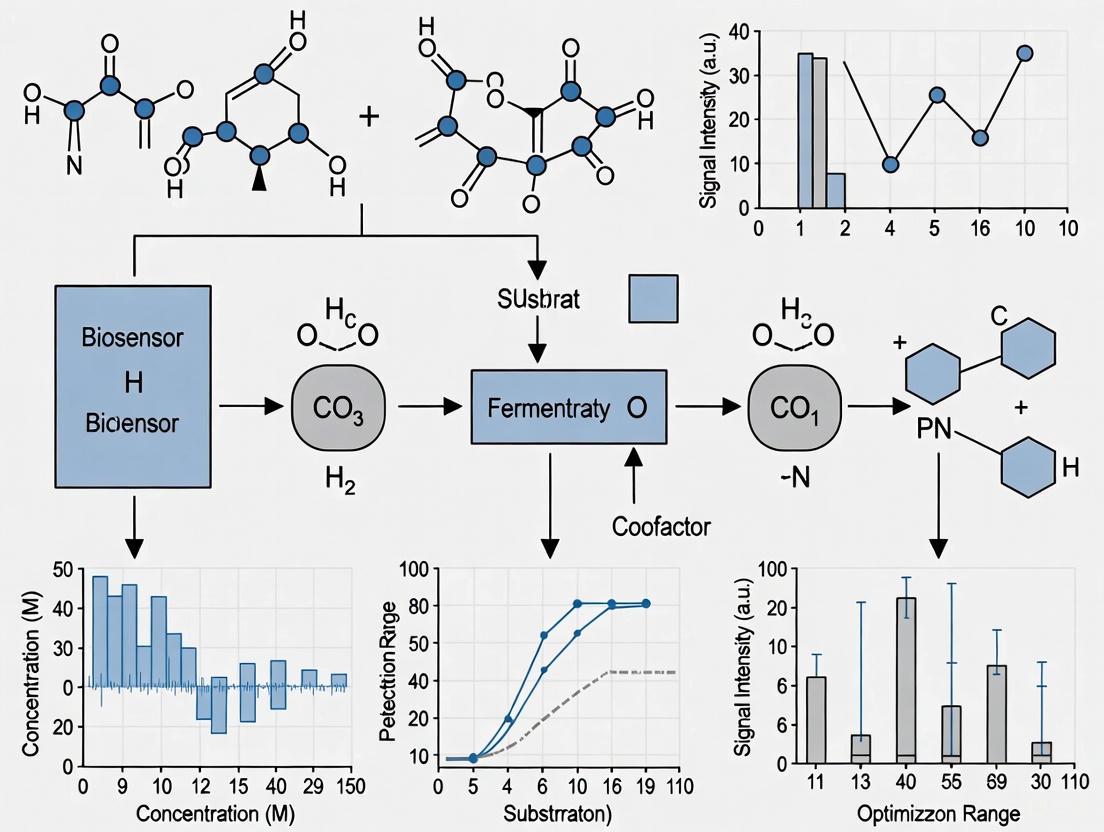
This article addresses the critical challenge of biosensor saturation and toxicity in high-concentration fermentation environments, a key limitation in biomanufacturing and drug development.
Optimizing Biosensor Detection Range for High-Concentration Fermentations: Strategies for Enhanced Bioprocess Monitoring
Abstract
This article addresses the critical challenge of biosensor saturation and toxicity in high-concentration fermentation environments, a key limitation in biomanufacturing and drug development. It provides a comprehensive framework for expanding biosensor operational ranges, covering foundational principles, practical engineering strategies like exporter systems, and advanced optimization techniques including AI-driven design. Aimed at researchers and process development scientists, the content synthesizes recent advancements to enable robust, real-time monitoring and control of high-yield industrial bioprocesses.
The High-Concentration Challenge: Why Conventional Biosensors Fail in Fermentation
The Saturation and Toxicity Barrier in Industrial Bioprocessing
Frequently Asked Questions (FAQs)
Q1: Why does my biosensor signal plateau or become unreliable when monitoring high-cell-density fermentations? This occurs due to a common limitation known as sensor saturation. Biosensors have a fixed dynamic range, which is the concentration span over which they can produce a measurable and linear signal. In high-concentration fermentations, the analyte level (e.g., a target biochemical) can exceed this upper limit. When the bioreceptor becomes fully saturated, additional analyte cannot be bound, and no further signal change is produced, leading to a plateau. This can also be exacerbated by matrix effects, where the complex fermentation broth causes non-specific binding or fouling of the sensor surface [1] [2].
Q2: How can I adjust my biosensor's detection range to prevent saturation? Tuning the dynamic range often involves modifying the biorecognition element itself. For biosensors using functional nucleic acids (like aptamers or DNAzymes), the binding affinity can be rationally engineered or new receptors can be selected through in vitro processes to better match the required concentration window. Another strategy is to systematically dilute the sample stream from the bioreactor, though this adds complexity. For enzyme-based biosensors, the enzyme loading or immobilization density can be optimized to shift the saturation point [2].
Q3: What specific toxic compounds in fermentation broths can degrade biosensor performance, and how can I mitigate this? Fermentation broths can contain proteases that degrade protein-based bioreceptors like enzymes and antibodies. Organic solvents, extreme pH shifts, and high ionic strength can also denature sensitive biological components. Mitigation strategies include:
- Using Robust Bioreceptors: Employ synthetic receptors like aptamers or Molecularly Imprinted Polymers (MIPs), which have higher stability under harsh conditions [3] [2].
- Protective Membranes: Incorporating a protective, semi-permeable membrane over the sensing interface can shield the bioreceptor from macromolecules and debris while allowing the analyte to pass through [1].
- Sample Pre-treatment: Implementing inline filtration or dialysis units to clarify the sample before it contacts the biosensor.
Q4: My biosensor works perfectly in buffer but fails in the actual fermentation broth. What is the primary cause? This discrepancy is almost always due to the complex sample matrix. The fermentation medium is rich in proteins, cells, nutrients, and other metabolites that can cause non-specific adsorption to the sensor surface, blocking analyte binding or generating a false signal. This lack of selectivity in complex media is a major barrier to practical sensor application. To overcome this, you must improve the selectivity of your bioreceptor and implement rigorous surface blocking protocols during sensor fabrication to minimize non-specific interactions [3] [2].
Troubleshooting Guides
Issue: Signal Saturation at High Analytic Concentrations
Symptoms:
- The sensor signal reaches a maximum and does not increase further, even with known increases in analyte concentration.
- Loss of linearity in the upper concentration range of the calibration curve.
Diagnostic Steps:
- Calibration Check: Perform a fresh calibration with standard solutions whose concentrations span the entire expected range in the fermentation. This will confirm the sensor's effective dynamic range.
- Sample Dilution: Dilute a sample from the fermenter and re-measure. If the signal becomes proportional after dilution, saturation is confirmed.
Solutions:
- Engineer the Bioreceptor: For nucleic acid-based sensors, use in vitro selection to isolate aptamers with a lower affinity, effectively raising the saturation point [2].
- Optimize the Sensing Interface: Use Design of Experiments (DoE) to systematically optimize factors like bioreceptor density on the sensor surface. A lower density may push the saturation point higher, though it may trade off some absolute sensitivity. DoE is a powerful chemometric tool that can model interactions between variables like immobilization pH, time, and concentration to find the global optimum [4].
- Implement a Dilution System: Integrate a microfluidic system that automatically dilutes the incoming sample to within the sensor's optimal range.
Issue: Signal Drift and Performance Degradation in Complex Broths
Symptoms:
- A steady, non-random change (drift) in the baseline signal over time.
- A gradual loss of signal sensitivity upon repeated exposure to fermentation samples.
Diagnostic Steps:
- Buffer Test: Re-introduce the sensor to a clean calibration buffer. If the baseline and sensitivity do not recover, it suggests permanent damage or fouling (biofouling).
- Surface Inspection: If possible, inspect the sensor surface for visible buildup or damage.
Solutions:
- Improve Selectivity: Develop or select bioreceptors with higher specificity for the target analyte to reduce interference from matrix components.
- Surface Passivation: Coat the sensor with a blocking agent (e.g., bovine serum albumin, casein) or use non-fouling materials like polyethylene glycol (PEG) to minimize non-specific binding [3].
- Use Stable Bioreceptors: Replace labile antibodies with more robust aptamers or whole-cell-based biosensors, which are typically more robust across various application conditions [1] [2].
- In-situ Cleaning: Design a system that allows for periodic, gentle cleaning or regeneration of the sensor surface without destroying the bioreceptor.
Experimental Protocols for Detection Range Optimization
Protocol 1: Systematic Optimization of a Biosensor using Design of Experiments (DoE)
This protocol provides a framework for efficiently optimizing multiple biosensor fabrication parameters to enhance performance, such as dynamic range and sensitivity [4].
Objective: To determine the optimal combination of immobilization pH, bioreceptor concentration, and incubation time that maximizes the dynamic range of an electrochemical aptasensor.
Materials:
- Functionalized screen-printed gold electrodes
- DNA or RNA aptamer solution (1 µM stock)
- Cross-linking reagents (e.g., EDC/NHS)
- Phosphate buffer saline (PBS) at various pH levels (6.0, 7.0, 8.0)
- Blocking buffer (e.g., 1% BSA)
- Serial dilutions of the target analyte
Methodology:
- Identify Factors and Ranges: Define the input variables (factors) and their experimental ranges. For this example:
- Factor A (pH): 6.0, 7.0, 8.0
- Factor B (Aptamer Concentration): 0.5 µM, 1.0 µM, 1.5 µM
- Factor C (Incubation Time): 30 min, 60 min, 90 min
- Generate Experimental Matrix: Use a Central Composite Design (CCD) to create a set of experimental runs. This statistical design efficiently explores the multi-dimensional parameter space with a reduced number of experiments compared to the "one-variable-at-a-time" approach.
- Sensor Fabrication: Fabricate the biosensors according to the conditions specified in the experimental matrix.
- Calibration and Response Measurement: For each fabricated sensor, perform a full calibration with the target analyte. The response (output) to be maximized could be the Linear Dynamic Range (the concentration range where the signal is linear, e.g., from LOD to the point of saturation).
- Data Analysis and Model Building: Input the experimental data into DoE software. The software will generate a statistical model (often a quadratic polynomial) that describes how the factors influence the response. The model can be visualized as a 3D response surface.
- Validation: Use the model to predict the optimal factor settings. Fabricate a new sensor using these predicted optimal conditions and validate that the performance matches the prediction.
Protocol 2: High-Throughput Screening using a Metabolic Biosensor
This protocol is for optimizing a multigene metabolic pathway in a microbial host to avoid the accumulation of toxic intermediates and achieve high titers, using a biosensor for high-throughput screening [5].
Objective: To screen a large library of engineered E. coli strains with varying expression levels of a biosynthetic pathway to identify variants that constitutively produce high titers of glycolate without expensive inducers.
Materials:
- Library of E. coli strains with a randomly assembled pathway (e.g., using gradient-strength promoters).
- Glycolate-responsive biosensor strain (e.g., containing GlcC/PglcD-sfGFP construct).
- 48-well deep-well plates.
- M9 minimal media.
- Fluorescence plate reader.
- HPLC system (for validation).
Methodology:
- Library Transformation: Transform the plasmid library containing the variable-strength pathway into the biosensor reporter strain.
- Primary Agar Plate Screening: Plate the transformants on agar plates containing the necessary selective media. Visually identify colonies that exhibit higher fluorescence, indicating higher glycolate production.
- Secondary Deep-Well Plate Screening: Inoculate the selected colonies into 48-well deep-well plates containing liquid media. Grow the cultures for a specified time (e.g., 24-48 hours).
- Fluorescence Measurement: Using a plate reader, measure the fluorescence of each culture, which serves as a proxy for glycolate production.
- Strain Selection: Select the top-performing strains showing the highest fluorescence signals.
- Validation with HPLC: Cultivate the selected strains in shake flasks and measure the actual glycolate titer using HPLC to confirm the correlation between biosensor signal and product titer.
Data Presentation
Table 1: Performance Metrics of Optimized Biosensors from Literature
This table summarizes key quantitative data from recent studies where biosensors were optimized for enhanced detection, relevant to overcoming saturation and toxicity challenges.
| Biosensor Platform | Target Analyte | Optimization Method | Key Performance Metric | Limit of Detection (LOD) | Linear Dynamic Range | Reference Context |
|---|---|---|---|---|---|---|
| Surface Plasmon Resonance (SPR) | Mouse IgG | Multi-objective Particle Swarm Optimization | Sensitivity enhanced by 230.22% | 54 ag/mL (0.36 aM) | Femtograms/mL to Micrograms/mL | [6] |
| Glycolate Metabolic Biosensor | Glycolate | Biosensor-coupled HTP screening | Dynamic Range: ~200 mM | N/A | Enabled screening of 6x10^5 variants | [5] |
| Graphene-based Optical | Breast Cancer Biomarkers | Machine Learning optimization | Sensitivity: 1785 nm/RIU | Not Specified | Implied broad range from high sensitivity | [7] |
Table 2: Research Reagent Solutions for Biosensor Development and Fermentation Monitoring
This table details key materials and reagents used in the development of robust biosensors for bioprocessing applications.
| Item | Function / Application | Key Characteristics |
|---|---|---|
| Aptamers | Synthetic bioreceptors for target recognition. | High stability, can be selected for toxins, tunable affinity, in vitro production. [1] [2] |
| Whole Microbial Cells | Bioreceptors in cell-based biosensors. | Self-replicating, robust, can be engineered for specific stress or metabolic responses. [1] |
| Graphene & 2D Materials | Transducer material for electrode or surface modification. | High electrical conductivity, large surface area, enhances signal sensitivity. [6] [7] |
| Molecularly Imprinted Polymers (MIPs) | Synthetic polymer-based artificial receptors. | High chemical/thermal stability, cost-effective, usable in harsh environments. [3] |
| Gradient-strength Promoters | Tool for multigene pathway optimization in metabolic engineering. | Allows for fine-tuning gene expression levels without inducers to balance metabolic flux. [5] |
Signaling Pathways and Workflows
Diagram: Biosensor Optimization Workflow. This flowchart outlines the systematic, iterative process of using Design of Experiments (DoE) to optimize biosensor performance, crucial for adapting sensors to challenging fermentation environments [4].
Diagram: Biosensor Failure Modes and Solutions. This diagram illustrates the logical relationship between the major barriers (Saturation and Toxicity) encountered in fermenters and the corresponding engineering solutions to overcome them [1] [3] [2].
A biosensor is an analytical device that combines a biological component with a physicochemical detector to measure the presence or concentration of a specific substance, known as an analyte [8] [9]. These devices are engineered to convert a biological recognition event into a measurable, quantifiable signal, typically electrical or optical, that is proportional to the analyte's concentration [10]. This conversion process enables researchers, scientists, and drug development professionals to obtain precise, real-time data from complex biological systems, such as fermentation processes. The core value of biosensors lies in their ability to provide highly selective and sensitive measurements directly in relevant environments, from laboratory bioreactors to industrial fermentation tanks [11].
For researchers focused on optimizing biosensor detection ranges for high-concentration fermentations, understanding these fundamental operating principles is crucial. The challenge of sensor saturation at high analyte concentrations often limits their practical application in industrial biomanufacturing [12]. This technical support article explores the core principles of biosensor signal conversion and provides practical guidance for troubleshooting common experimental issues encountered when deploying these devices in demanding fermentation research environments.
Core Components and Working Principles
A typical biosensor consists of four fundamental components that work in sequence to detect and quantify analytes: the analyte, bioreceptor, transducer, and electronics/display system [8]. The precise interaction and integration of these components determine the overall performance, reliability, and applicability of the biosensor, particularly in high-concentration environments like industrial fermentations.
Table 1: Core Components of a Biosensor
| Component | Function | Examples |
|---|---|---|
| Analyte | The substance of interest that needs detection | Glucose, nisin A, antigens, toxins [8] [12] |
| Bioreceptor | Biological element that specifically recognizes the analyte | Enzymes, antibodies, cells, nucleic acids, aptamers [8] [9] |
| Transducer | Converts the biological recognition event into a measurable signal | Electrochemical (electrode), optical (photomultiplier), piezoelectric [8] [9] |
| Electronics | Processes the transduced signal and prepares it for display | Signal amplifiers, processors, data conversion circuits [8] |
The Bio-Recognition Process
The bioreceptor is the biologically-derived or biomimetic component that provides the specificity for analyte detection [9]. It interacts with, binds to, or recognizes the analyte through various mechanisms, creating a biological response that can be measured. Different types of bioreceptors offer distinct advantages for fermentation monitoring applications:
Enzymatic Interactions: Enzymes like glucose oxidase catalyze specific reactions, converting the analyte into a detectable product or exhibiting measurable changes in activity upon analyte binding [9]. These are commonly used for substrate monitoring in fermentations.
Antibody/Antigen Interactions: Antibodies provide high specificity through lock-and-key binding with antigens, generating physicochemical changes that can be detected with tracers like fluorescent molecules or enzymes [9].
Nucleic Acid Interactions: Genosensors use complementary base pairing to detect specific DNA/RNA sequences, while aptamers (specific nucleic acid-based antibody mimics) recognize targets through non-covalent interactions and induced fitting [9].
Cellular and Tissue-Based Receptors: Whole cells or tissues can detect global parameters like stress conditions, toxicity, and organic derivatives, often maintaining higher activity and stability by preserving enzymes in their natural environment [9].
Signal Transduction Mechanisms
The transducer serves as the critical interface that transforms the biological recognition event into a quantifiable signal [8]. Different transduction principles can be employed based on the nature of the biological response and the requirements of the application:
Electrochemical Transduction: Measures electrical changes (current, potential, or conductivity) resulting from the bio-recognition event. For example, in a glucose biosensor, glucose oxidase catalyzes the oxidation of glucose, producing hydrogen peroxide that can be measured amperometrically [11].
Optical Transduction: Detects changes in light properties (absorbance, fluorescence, luminescence) resulting from analyte-bioreceptor interactions. Calcium biosensors, for instance, generate fluorescent outputs that turn on, change color, or alter intensity in the presence of calcium ions [10].
Other Transduction Methods: Piezoelectric transducers measure changes in mass or viscoelasticity, while thermal transducers detect enthalpy changes from biochemical reactions [9].
The following diagram illustrates the sequential workflow of how these core components interact to convert a biological response into a quantifiable signal:
Biosensor Signal Conversion Workflow
Advanced Strategy: Expanding Detection Range for High-Concentration Fermentations
A significant challenge in fermentation research is the limited detection range of conventional biosensors when operating at high analyte concentrations. Traditional biosensors often experience signal saturation and cellular toxicity issues at elevated ligand concentrations, restricting their utility in industrial biomanufacturing where high-yield producer screening is essential [12]. Recent research has demonstrated innovative approaches to overcome these limitations.
Exporter-Based Strategy for High-Concentration Detection
A groundbreaking approach to shifting the detection range of biosensors toward high concentrations involves using ligand-related exporters within bacterial or mammalian cells [12] [13]. This strategy addresses both saturation effects and toxicity concerns that traditionally limit biosensor performance in high-concentration environments:
Specific Exporters: When available for a particular ligand, specific exporters like NisFEG for nisin A can directly regulate intracellular ligand concentrations, fine-tuning the biosensor's detection range. In the nisin A biosensor, the NisFEG exporter specifically exports nisin A, shifting the detection range and enabling more effective screening of high-yield producers [12].
Nonspecific Exporters: When dedicated exporters are unavailable, nonspecific exporters like AcrAB-TolC, regulated by the activator MarA, can serve as alternative solutions. In quorum-sensing (QS) biosensors, this approach has successfully expanded the detection range and improved biosensor function [12].
This exporter-based strategy represents a modular approach to enhancing biosensor performance without extensive genetic rewiring, offering significant advantages over traditional methods like transcription factor engineering or promoter tuning [12]. The following diagram illustrates how this exporter mechanism functions to expand the detection range:
Exporter Mechanism for Range Expansion
Troubleshooting Guide: Common Experimental Challenges
Table 2: Biosensor Troubleshooting Guide for Fermentation Applications
| Problem | Possible Causes | Solutions | Prevention Tips |
|---|---|---|---|
| Signal Saturation at High Analyte Concentrations [12] | Biosensor operating beyond linear detection range; Intracellular ligand saturation | Implement ligand-related exporters; Engineer detection components for wider range; Use dilution protocols for samples | Characterize full detection range before experiments; Consider exporter-assisted biosensor designs |
| Poor Selectivity in Complex Media [8] | Interference from matrix components; Non-specific binding | Optimize bioreceptor immobilization; Incorporate blank/reference sensors; Use additional separation steps | Validate biosensor in actual fermentation matrix; Employ multi-array designs with reference electrodes |
| Signal Drift During Long-Term Monitoring [8] [11] | Bioreceptor degradation; Fouling of transducer surface; Temperature fluctuations | Implement regular calibration checks; Use stable immobilization methods; Incorporate temperature compensation | Choose biosensors with demonstrated long-term stability; Validate performance over required monitoring period |
| Limited Linear Detection Range [8] [12] | Fundamental limitation of bioreceptor-analyte interaction kinetics | Employ exporter strategies; Use multiple biosensors with complementary ranges; Implement sample dilution automation | Select biosensors with range appropriate for expected concentrations; Design systems with dilution capability |
| Cellular Toxicity at High Analyte Concentrations [12] | Intracellular accumulation of toxic ligands | Incorporate specific or nonspecific exporters; Use robust host cells; Implement in situ product removal | Pre-screen analyte toxicity; Design exporter systems for toxic compounds |
Experimental Protocols: Key Methodologies
Protocol: Expanding Detection Range Using Ligand Exporters
This protocol is adapted from recent research demonstrating how to shift the detection range of cell-based biosensors toward high ligand concentrations using specific and nonspecific exporters [12]:
Materials and Reagents:
- Bacterial strains (e.g., E. coli MG1655 for testing, MC1061 F- for cloning)
- Plasmid vectors with Golden Gate assembly compatibility
- Specific exporter genes (e.g., NisFEG for nisin A)
- Nonspecific exporter components (e.g., AcrAB-TolC regulated by MarA)
- Target ligands (e.g., nisin A, AHLs for QS biosensors)
- Culture media appropriate for host strains
Methodology:
- Genetic Construction: Clone specific exporter genes (e.g., NisFEG) or nonspecific exporter systems (e.g., AcrAB-TolC with MarA regulator) into appropriate expression vectors using Golden Gate assembly methods [12].
Biosensor Integration: Introduce exporter systems into biosensor host cells containing the recognition components (e.g., transcription factors, two-component systems) for your target analyte.
Calibration and Validation: Cultivate the engineered biosensor cells across a range of analyte concentrations (from low to high) and measure the output signals (e.g., fluorescence, gene expression).
Performance Assessment: Compare the detection range, sensitivity, and linear range of exporter-equipped biosensors against control biosensors without exporters.
Application Testing: Validate biosensor performance in the intended application environment (e.g., high-yield producer screening, fermentation monitoring).
Expected Results: Biosensors equipped with appropriate exporters should demonstrate significantly expanded detection ranges, reduced saturation effects at high ligand concentrations, and improved viability in high-concentration environments [12].
Protocol: Fermentation Glucose Monitoring with Electrochemical Biosensors
This protocol details the implementation of an electrochemical glucose biosensor for fermentation monitoring, capable of detecting glucose concentrations up to 150 mM [11]:
Materials and Reagents:
- Commercial biosensor platform with flow-through-cell design (e.g., B.LV5 chip)
- Potentiostat with appropriate connections (e.g., SIX transmitter)
- Microfluidic tubing and connections (e.g., Ismatec, TYGON S3TM)
- Calibration solutions with known glucose concentrations
- Fermentation broth samples (cell-free or cell-containing)
Methodology:
- System Setup: Connect the biosensor chip to the potentiostat and integrate into a flow system with appropriate pumping to move samples through the flow-through-cell.
Calibration: Perform initial calibration using glucose standards in relevant matrix (0-150 mM range) to establish standard curve.
Sample Measurement: Introduce fermentation samples (with or without prior cell separation) into the flow system for glucose quantification.
Signal Processing: Monitor electrochemical signals (typically amperometric) and convert to glucose concentrations using calibration curve.
Validation: Compare biosensor results with reference methods (e.g., HPLC) to verify accuracy.
Technical Notes: This biosensor platform utilizes a 1μl flow-through-cell with multiple Pt-working electrodes and an internal Ag/AgCl pseudo-reference electrode, allowing measurements in both cell-free and cell-containing fermentation samples with response times under 5 minutes [11].
Frequently Asked Questions (FAQs)
Q1: What are the key characteristics that determine biosensor performance in fermentation applications?
The most critical performance characteristics for fermentation biosensors include [8]:
- Selectivity: The ability to specifically detect the target analyte in complex fermentation matrices containing multiple interfering substances.
- Sensitivity: The minimum detectable amount of analyte, particularly important for monitoring low-concentration metabolites or early contamination.
- Linearity: The concentration range over which the sensor response changes linearly with analyte concentration, crucial for accurate quantification.
- Reproducibility: The ability to generate consistent results across repeated measurements and different sensor units.
- Stability: The maintenance of performance characteristics over time, especially important for long-term fermentation processes.
Q2: How can I overcome signal saturation when monitoring high analyte concentrations in fermentation broth?
Recent research demonstrates several effective strategies [12]:
- Implement ligand-related exporters to regulate intracellular ligand concentrations in cell-based biosensors
- Use specific exporters like NisFEG when available for your target analyte
- Employ nonspecific exporters like AcrAB-TolC regulated by MarA for broader application
- Consider modular engineering approaches that don't require extensive genetic rewiring of existing biosensors
- Utilize sample dilution systems integrated with automated sampling platforms
Q3: What advantages do biosensors offer compared to traditional analytical methods for fermentation monitoring?
Biosensors provide several significant advantages for fermentation applications [11]:
- Rapid analysis (often <5 minutes compared to hours for HPLC)
- Continuous monitoring capability for real-time process control
- Simplified operation with minimal sample preparation
- Direct application in complex matrices like fermentation broth
- Compact size and potential for integration into bioreactor systems
- Cost-effectiveness compared to sophisticated analytical instruments
Research Reagent Solutions
Table 3: Essential Research Reagents for Biosensor Development and Application
| Reagent/Category | Function/Application | Examples/Specific Instances |
|---|---|---|
| Biological Recognition Elements | Provides specificity for target analyte detection | Enzymes (glucose oxidase), Antibodies, Whole cells, Nucleic acids (aptamers), Transcription factors [8] [9] |
| Signal Transduction Components | Converts biological recognition to measurable signal | Electrochemical electrodes (Pt, Au), Optical components (fluorophores, photomultipliers), Piezoelectric crystals [9] [11] |
| Export Systems for Range Expansion | Shifts detection range to higher concentrations | Specific exporters (NisFEG for nisin A), Nonspecific exporters (AcrAB-TolC), Regulatory proteins (MarA) [12] |
| Host Organisms | Platform for biosensor implementation | E. coli MG1655 (validation), E. coli MC1061 F- (cloning), L. lactis NZ9000 (nisin applications) [12] |
| Detection Probes/Reporters | Generates quantifiable output signal | Fluorescent proteins, Enzymatic reporters, Metal nanoparticles, Radioisotropic tracers [9] [10] |
Biosensor Classification and Operating Principles
Biosensors are analytical devices that integrate a biological recognition element with a transducer to convert a biological response into a quantifiable signal [14] [15]. They are indispensable tools in modern bio-manufacturing for real-time monitoring, process control, and high-throughput screening [16].
The table below outlines the fundamental components of a biosensor.
| Biosensor Component | Description & Function | Examples |
|---|---|---|
| Biorecognition Element [14] [15] | Biological entity that provides specificity by interacting with the target analyte. | Enzymes, antibodies, nucleic acids, aptamers, whole cells [14]. |
| Transducer [14] [15] | Converts the biorecognition event into a measurable signal. | Electrode, optical detector, piezoelectric crystal [14]. |
| Signal Processing System [14] [15] | Electronics and software that amplify, process, and convert the raw signal into a user-readable output. | Amplifier, analog-to-digital converter, display/software [14]. |
Biosensors are primarily classified by their transduction method. The following table summarizes the main types relevant to biomanufacturing.
| Biosensor Type | Principle of Operation | Key Characteristics | Biomanufacturing Applications |
|---|---|---|---|
| Electrochemical [14] [15] | Measures electrical changes (current, potential, impedance) from biochemical reactions. | High sensitivity, portability, low power requirements [14]. | Real-time monitoring of glucose, lactate, and other metabolites in fermenters [14] [16]. |
| Optical [14] [15] [17] | Detects changes in light properties (absorbance, fluorescence, refractive index) due to analyte binding. | Superior multiplexing capability, high resolution, label-free detection possible (e.g., SPR) [14] [17]. | Monitoring binding kinetics (SPR/BLI), intracellular metabolite levels, and pathogen detection [14] [17]. |
| Whole-Cell [14] [18] | Uses engineered live cells (e.g., E. coli, yeast) as the recognition element, often linked to a reporter gene. | Can report on complex physiological states and metabolite fluxes [18] [19]. | High-throughput screening of strain libraries for aromatic compound production (e.g., L-tryptophan) [18] [19]. |
| Thermal [14] [15] | Measures the heat absorbed or released during a biochemical reaction. | Universality (all reactions involve heat change) [15]. | Monitoring enzyme-catalyzed reactions [14]. |
| Piezoelectric [14] [15] | Detects mass changes on a sensor surface through shifts in resonance frequency. | High sensitivity to mass changes [14]. | Detection of microbial pathogens or biomolecular interactions [14]. |
The following diagram illustrates the core working principle shared by all biosensors, from biorecognition to signal output.
Troubleshooting Guides for Biomanufacturing Applications
Troubleshooting Weak or No Signal
| Symptom | Possible Cause | Solution |
|---|---|---|
| No Signal or Weak Signal | Bioreceptor denaturation or incorrect immobilization [14] [20]. | Optimize immobilization method and surface chemistry; verify bioreceptor activity [14]. |
| Analyte concentration below detection limit [20]. | Concentrate sample or perform serial dilution to check for detection in a more concentrated sample [20]. | |
| Matrix interference or fouling in complex fermentation broth [14]. | Use sample pre-filtration, blocking agents, or antifouling coatings on the sensor surface [14]. | |
| Depleted or inactive reagent (e.g., standard, enzyme) [20]. | Prepare fresh solutions and reagents; check expiration dates [20]. | |
| High Background Signal | Non-specific binding on the sensor surface [14] [20]. | Improve washing steps; optimize blocking with BSA, casein, or detergents like Tween-20 [20]. |
| Bioreceptor concentration too high [20]. | Titrate and decrease the concentration of the primary or secondary bioreceptor [20]. | |
| Contaminated buffers or plastics [20]. | Prepare fresh buffers and use disposable, single-use labware to prevent carry-over contamination [20]. | |
| High Variability Between Replicates | Insufficient mixing or uneven coating [20]. | Ensure all solutions are thoroughly mixed before use; verify pipette calibration [20]. |
| Inconsistent washing of wells [20]. | Standardize wash steps in terms of volume, duration, and number of cycles [20]. | |
| Variations in incubation time or temperature [20]. | Use controlled environments (e.g., incubators) and timers to ensure consistent assay conditions [20]. | |
| Sensor Signal Drift | Degradation of the biological element over time [14]. | Implement regular recalibration; use reference standards; ensure proper storage conditions [14] [21]. |
| Temperature or pH fluctuations affecting bioreceptor activity [14]. | Use temperature correction algorithms or engineer more robust enzyme mutants [14]. | |
| Fouling of the transducer surface in long-term fermentation monitoring [14] [16]. | Apply specialized antifouling materials; integrate inline cleaning cycles [16]. |
Optical Biosensor (SPR/BLI) Specific Troubleshooting
| Problem | Possible Cause | Solution |
|---|---|---|
| Low immobilization efficiency | Improper sensor surface chemistry or ligand preparation [17]. | Select appropriate chip type (e.g., COOH for amines, streptavidin for biotin); optimize ligand concentration and immobilization time [17]. |
| No binding signal | Low analyte concentration or activity [17]. | Increase analyte concentration; ensure analyte is in its active form. |
| Non-specific binding | Impurities in sample or inappropriate buffer [17]. | Purify the sample; include surfactants in the running buffer; use a different surface chemistry to minimize interactions [17]. |
| Poor kinetic data | Insufficient data points or analyte concentration range [17]. | Use a wider range of analyte concentrations; ensure association and dissociation phases are monitored for an adequate duration [17]. |
Whole-Cell Biosensor Specific Troubleshooting
| Problem | Possible Cause | Solution |
|---|---|---|
| Low dynamic range | Poor sensitivity of the genetic circuit (e.g., transcription factor, promoter) [22] [19]. | Engineer the genetic parts (e.g., promoter, RBS) via directed evolution to tune sensitivity and dynamic range [22]. |
| Slow response time | Inherent delay in gene expression (transcription/translation) [22]. | Use faster-acting components like riboswitches or two-component systems; employ hybrid control strategies [22]. |
| High background noise | Leaky expression of the reporter gene [22] [19]. | Optimize genetic circuit design to minimize basal expression; use more specific promoters or riboswitches [22]. |
| Loss of performance in fermenter | Metabolic burden or host cell stress [18] [19]. | Re-clone the circuit to ensure genetic stability; use a lower-copy-number plasmid; employ a more robust microbial chassis [19]. |
Essential Experimental Protocols
Protocol 1: Immobilization of Bioreceptors on a Solid Surface
Principle: Stable and oriented immobilization of the bioreceptor (e.g., enzyme, antibody) is critical for maintaining its activity and ensuring sensor sensitivity and reproducibility [14].
Materials:
- Sensor Chip/Electrode: Gold, glassy carbon, or functionalized polymer surfaces.
- Bioreceptor: Purified enzyme, antibody, or DNA aptamer.
- Coupling Buffers: Activation buffers (e.g., EDC/NHS for carboxyl groups), immobilization buffers (e.g., phosphate buffer saline, PBS).
- Blocking Solution: 1% Bovine Serum Albumin (BSA) or casein to passivate unbound sites.
- Wash Buffer: PBS with 0.05% Tween-20 (PBST).
Procedure:
- Surface Activation: If using a carboxyl-functionalized surface, activate it with a mixture of 1-ethyl-3-(3-dimethylaminopropyl)carbodiimide (EDC) and N-hydroxysuccinimide (NHS) for 10-15 minutes to form reactive ester groups [17].
- Immobilization: Dilute the bioreceptor in a suitable coupling buffer (e.g., low salt, pH near its isoelectric point). Incubate the activated sensor surface with the bioreceptor solution for 30 minutes to several hours. For affinity-based capture (e.g., His-tagged proteins on Ni-NTA chips), incubate according to manufacturer's instructions [17].
- Washing: Rinse the surface thoroughly with wash buffer to remove any unbound or loosely attached molecules.
- Blocking: Incubate the sensor with a blocking solution (e.g., 1% BSA) for at least 1 hour to cover any remaining reactive sites and minimize non-specific binding [20].
- Final Wash & Storage: Perform a final wash. The sensor can be used immediately or stored in an appropriate buffer at 4°C.
Protocol 2: Characterizing an Optical Biosensor using Surface Plasmon Resonance (SPR)
Principle: SPR measures real-time biomolecular interactions by detecting changes in the refractive index on a gold film surface when a binding event occurs [17].
Materials:
- SPR instrument and compatible sensor chips (e.g., carboxymethyl dextran gold chip).
- Purified ligand and analyte.
- Running buffer (e.g., HBS-EP: 10 mM HEPES, 150 mM NaCl, 3 mM EDTA, 0.05% surfactant P20, pH 7.4).
- Regeneration buffer (e.g., 10 mM glycine-HCl, pH 2.0-3.0).
Procedure:
- System Setup: Prime the SPR instrument with filtered and degassed running buffer.
- Ligand Immobilization: Follow the immobilization protocol above to covalently couple the ligand to the sensor chip surface [17].
- Analyte Binding (Association): Inject a series of analyte solutions at different concentrations (e.g., from low to high) over the ligand surface for a fixed time (2-5 minutes). The instrument records the binding response in Resonance Units (RU) in real-time [17].
- Dissociation: Replace the analyte flow with running buffer and monitor the signal as the analyte dissociates from the ligand for several minutes [17].
- Surface Regeneration: Inject a regeneration buffer to break the ligand-analyte bonds, returning the surface to its baseline state for the next cycle [17].
- Data Analysis: Use the instrument's software to fit the association and dissociation curves from all concentrations globally. This analysis calculates the association rate (ka), dissociation rate (kd), and the equilibrium dissociation constant (KD) [17].
The workflow for an SPR experiment is detailed in the diagram below.
Protocol 3: High-Throughput Screening using a Whole-Cell Biosensor
Principle: Engineered microbial cells act as living sensors, producing a fluorescent or colorimetric output in response to a target metabolite, enabling rapid screening of mutant libraries [18] [19].
Materials:
- Library of engineered microbial strains (e.g., E. coli).
- Microtiter plates (96 or 384-well).
- Culture medium and inducer if needed.
- Plate reader (fluorescence or absorbance).
Procedure:
- Strain Cultivation: Inoculate the strain library into deep-well plates containing culture medium. Grow with shaking to a target optical density (OD).
- Induction & Production: If the pathway is inducible, add an inducer. Transfer a small aliquot of each culture to a fresh microtiter plate with medium containing the precursor for the target product.
- Signal Development: Incubate the assay plate to allow for metabolite production and subsequent activation of the biosensor, leading to reporter gene expression (e.g., GFP).
- Output Measurement: Measure the fluorescence/absorbance (reporter signal) and OD (cell density) of each well using a plate reader.
- Data Analysis & Hit Identification: Normalize the reporter signal to cell density. Select "hit" strains that show the highest normalized output, indicating superior metabolite production [19].
Frequently Asked Questions (FAQs)
Q1: How can I improve the detection range of my biosensor for high-concentration fermentations? A1: Several strategies can be employed:
- Tune Biosensor Sensitivity: For whole-cell biosensors, engineer the genetic components (e.g., promoter strength, transcription factor affinity) to shift the operational range to higher concentrations [22] [19].
- Sample Dilution: Integrate an inline dilution step prior to analysis for electrochemical or optical sensors to bring the analyte within the linear range [20].
- Use a Robust Transducer: Select transducer materials (e.g., certain nanomaterials) that are less prone to saturation or fouling at high analyte levels [14] [16].
Q2: What are the key performance metrics I should characterize for a new biosensor? A2: Essential metrics include [22]:
- Sensitivity: The change in signal per unit change in analyte concentration.
- Dynamic Range: The span between the minimum and maximum detectable signals.
- Operating Range: The concentration window where the biosensor performs optimally with a linear response.
- Selectivity/Specificity: The ability to distinguish the target analyte from interferents.
- Response Time: The speed at which the biosensor reaches a stable signal after analyte exposure.
- Limit of Detection (LOD): The lowest analyte concentration that can be reliably distinguished from background noise.
Q3: My whole-cell biosensor works in plates but fails in the bioreactor. What could be wrong? A3: This is a common challenge due to the more complex and dynamic bioreactor environment.
- Metabolic Burden: The energy demand of maintaining the biosensor circuit can be high. Use lower-copy plasmids or genomic integration to reduce this burden [19].
- Environmental Differences: Factors like pH, dissolved oxygen, and shear stress in a fermenter can differ greatly from shake flasks and affect cell physiology. Characterize biosensor performance under simulated bioreactor conditions first [16].
- Genetic Instability: The biosensor circuit may be lost over time without selective pressure. Use robust genetic design and, if possible, integrate the circuit into the genome [19].
Q4: How can I reduce non-specific binding in my optical biosensor assays? A4:
- Optimize Surface Chemistry: Use hydrophilic polymer coatings (e.g., PEG) on the sensor chip to create an antifouling surface [17].
- Include Surfactants: Add non-ionic detergents like Tween-20 or P20 (0.005-0.01%) to the running buffer [20] [17].
- Improve Blocking: Ensure a thorough and effective blocking step with a protein like BSA or casein after ligand immobilization [20].
- Purify Samples: Pre-filtrate or centrifuge complex samples like fermentation broth to remove particulate matter [14].
The Scientist's Toolkit: Key Research Reagent Solutions
| Reagent / Material | Function in Biosensor Development & Application |
|---|---|
| Functionalized Sensor Chips (e.g., COOH, NH2, Streptavidin) [17] | Provides a solid support with specific chemical groups for stable and oriented immobilization of bioreceptors (ligands). |
| EDC/NHS Crosslinking Kit | Standard chemistry for activating carboxylated surfaces to enable covalent coupling of proteins via their primary amines [17]. |
| Affinity Tags & Matrices (e.g., His-tag/Ni-NTA, GST/Glutathione) [17] | Allows for uniform, oriented immobilization of protein-based bioreceptors, often preserving higher activity. |
| Blocking Agents (e.g., BSA, Casein, Skim Milk) [20] | Proteins used to passivate unoccupied binding sites on the sensor surface, thereby minimizing non-specific binding. |
| Anti-Fouling Reagents (e.g., PEG-based coatings) [17] | Specialized polymers or surface treatments that resist the non-specific adhesion of proteins and cells in complex samples. |
| Reporter Proteins (e.g., GFP, RFP, Luciferase) [18] [19] | Genetically encoded proteins that produce a measurable optical output (fluorescence/luminescence) in whole-cell biosensors. |
| Transcription Factor Plasmids | Engineered genetic constructs that form the core of TF-based biosensors, linking metabolite sensing to gene expression [19]. |
In high-concentration fermentation research, the ability of a biosensor to deliver accurate and reliable data is paramount. This performance is quantified by several key metrics—Detection Range, Sensitivity, and Dynamic Range—which define the boundaries of what a biosensor can measure and how well it can measure it. Optimizing these metrics is essential for effectively monitoring metabolic byproducts, such as l-carnitine, or controlling process parameters in real-time. A thorough grasp of these parameters allows researchers to select the appropriate biosensor for their application and troubleshoot issues that arise during experiments [8] [23] [24].
This technical support center provides FAQs and troubleshooting guides to help you define, measure, and optimize these critical metrics in your laboratory setting.
Definitions and Key Concepts
What is the Detection Range? The Detection Range, also known as the Analytical Range, is the interval between the lowest and highest concentrations of an analyte that a biosensor can measure with demonstrated precision. The lower end is defined by the Limit of Detection (LoD) and the Limit of Quantification (LoQ), while the upper end is the highest concentration before the sensor signal saturates or becomes non-linear [23].
What is Sensitivity? Sensitivity is defined as the change in the biosensor's output signal per unit change in the concentration of the analyte. It is a measure of how effectively the biosensor responds to small variations in analyte concentration. Mathematically, it is the slope of the calibration curve (e.g., for a glucose sensor, it may be expressed as 67 nA/mM) [23].
What is Dynamic Range? Dynamic Range is the ratio of the largest measurable signal to the smallest measurable signal, typically where the signal-to-noise ratio (SNR) is 1. In practical terms, it describes the span of concentrations over which the biosensor provides a usable output. A wide dynamic range is crucial in fermentation research where analyte concentrations can vary over several orders of magnitude [25].
How are Detection Range and Dynamic Range different? While these terms are related, they describe different concepts. The Detection Range is concerned with analyte concentration (e.g., from 10⁻⁴ mM to 10 mM), specifying the operational window of the biosensor. The Dynamic Range is a ratio (e.g., 1000:1) that describes the signal span the transducer and electronics can handle. A wide dynamic range in the sensing system often enables a wide detection range for the analyte [24] [25].
Troubleshooting Common Experimental Issues
| Issue | Possible Cause | Troubleshooting Steps |
|---|---|---|
| Signal Saturation at High Concentrations | Analyte concentration exceeds the upper limit of the detection range. | 1. Dilute the sample and re-measure.2. Verify if the sensor's clinical/analytical range covers your expected values [23].3. Optimize bioreceptor, as demonstrated with transcription factor engineering [24]. |
| Poor Sensitivity (Low Signal) | Bioreceptor-analyte interaction is weak, or transducer is not optimized. | 1. Check LoD/LoQ: Ensure signal is >3x noise for detection and >10x noise for quantification [23].2. Optimize transducer: For impedimetric sensors, reduce inter-electrode gap to enhance sensitivity [26].3. Confirm bioreceptor activity and immobilization stability [8]. |
| Signal Drift Over Time | Instability of the bioreceptor or temperature-sensitive electronics. | 1. Calibrate the sensor regularly, as is standard for pH sensors [23].2. Control the incubation temperature to minimize ambient disturbances [8].3. Check for bioreceptor degradation over the period of use [8]. |
| Non-Linear Response | Sensor operation outside its linear range or issues with bioreceptor affinity. | 1. Define Linear Range: Establish the concentration range where response is linear (y=mc) [8].2. Use appropriate calibration curves (e.g., logarithmic) if the response is non-linear. |
| Unspecific Signal / Low Selectivity | Bioreceptor interacting with non-target molecules in the fermentation broth. | 1. Validate Selectivity: Test the bioreceptor against other compounds in the sample matrix [8].2. Use high-affinity bioreceptors (e.g., antibodies, aptamers) for specific recognition of the exact analyte [23] [9]. |
Experimental Protocols for Metric Characterization
Protocol 1: Determining Limit of Detection (LoD) and Limit of Quantification (LoQ)
- Measure Baseline Noise: Record the sensor's signal output in a blank solution (containing all components except the analyte) for a minimum of 20 replicates.
- Calculate Noise Standard Deviation (σ): Determine the standard deviation of the blank measurement signals.
- Generate Calibration Curve: Measure the sensor response for a series of low-concentration analyte standards.
- Calculate LoD and LoQ:
Protocol 2: Measuring Biosensor Sensitivity
- Obtain Calibration Data: Measure the steady-state signal output for at least five standard solutions with known analyte concentrations across the intended working range.
- Plot Calibration Curve: Plot the measured signal (y-axis) against the analyte concentration (x-axis).
- Perform Linear Regression: Fit a straight line (y = mx + c) to the linear portion of the data.
- Determine Sensitivity: The slope (m) of this line is the sensitivity of the biosensor (e.g., in nA/mM or mV/µg/mL) [23].
Protocol 3: Expanding Dynamic Range via Bioreceptor Engineering
Recent research on an l-carnitine biosensor demonstrates a method to extend the dynamic range.
- Identify Key Bioreceptor: Select a biological recognition element (e.g., the transcription factor CaiF for l-carnitine) [24].
- Computer-Aided Design: Model the 3D structure of the bioreceptor and simulate its DNA binding site to identify critical amino acid residues.
- Saturation Mutagenesis: Perform targeted mutagenesis at the identified key sites. The study used a "Functional Diversity-Oriented Volume-Conservative Substitution Strategy" [24].
- High-Throughput Screening: Screen the mutant libraries for variants that exhibit a wider concentration response range and higher output signal.
- Validate Performance: Characterize the best-performing variant (e.g., CaiFY47W/R89A). The cited study achieved a 1000-fold wider response range and a 3.3-fold higher output signal [24].
Signaling Pathways and Experimental Workflows
Biosensor Signal Pathway
Metric Optimization Workflow
Research Reagent Solutions
Essential materials and reagents for developing and optimizing biosensors for high-concentration applications.
| Item | Function in Biosensor Development |
|---|---|
| High-Affinity Bioreceptors (e.g., engineered antibodies, aptamers, transcription factors) | Specifically recognize and bind the target analyte; their affinity dictates selectivity and stability [8] [24] [9]. |
| Enzymes (e.g., Glucose Oxidase) | Catalyze the conversion of the analyte, generating a detectable product (e.g., hydrogen peroxide); commonly used for metabolic analytes [8] [9]. |
| Interdigitated Electrodes (IDEs) | A transducer design for electrochemical biosensors; electrode geometry (gap, width) is critical for maximizing sensitivity [26]. |
| Nanomaterials (e.g., Gold Nanoparticles, Carbon Nanotubes) | Used to enhance signal transduction by providing a high surface-to-volume ratio, good conductivity, and improved immobilization of bioreceptors [15]. |
| Artificial Binding Proteins | Engineered protein scaffolds that offer high stability and specificity as bioreceptors, often selected via phage display [9]. |
The Impact of Limited Detection Range on Fermentation Yield and Process Control
Core Concepts: Detection Range and Fermentation Performance
What is the detection range of a biosensor, and why is it critical in fermentation?
The detection range is the concentration window of a target molecule (or analyte) over which a biosensor produces a measurable and reliable signal change. In fermentation, this range must cover the concentrations of key metabolites from the beginning to the end of the process for effective monitoring and control [22]. A limited detection range can severely restrict fermentation yield and process control. If a biosensor becomes saturated or toxic at high metabolite concentrations, it loses its ability to provide data for dynamic pathway regulation or to identify high-producing microbial strains [12] [22]. This can cap the potential yield of valuable products like amino acids, biofuels, or therapeutic compounds.
What specific performance parameters define a biosensor's detection range?
Several key metrics characterize a biosensor's performance, and understanding them is essential for troubleshooting [23].
Table: Key Biosensor Performance Metrics
| Metric | Definition | Impact on Fermentation |
|---|---|---|
| Dynamic Range | The span between the minimal and maximal detectable signals [22]. | A narrow range fails to track the full production profile. |
| Operating Range | The concentration window where the biosensor performs optimally [22]. | Determines the useful in-process control range. |
| Response Time (T90) | Time for the sensor output to reach 90% of its final value after a concentration change [23]. | Slow response delays corrective actions in fed-batch processes. |
| Signal-to-Noise Ratio | The clarity and reliability of the output signal compared to system noise [22]. | A low ratio can lead to inaccurate readings and poor control decisions. |
| Limit of Detection (LoD) | The lowest analyte concentration that yields a signal distinguishable from noise (typically Signal-to-Noise > 3) [23]. | Limits sensitivity for detecting early-stage pathway activation. |
| Limit of Quantification (LoQ) | The lowest concentration that can be quantitatively measured with acceptable precision (typically Signal-to-Noise > 10) [23]. | Defines the threshold for reliable, quantitative data. |
Troubleshooting Common Problems
FAQ: Our biosensor signal plateaus mid-fermentation, causing a loss of process control. What could be the cause?
This is a classic symptom of biosensor saturation. The intracellular concentration of the target metabolite has exceeded the maximum capacity of the biosensor's recognition elements (e.g., transcription factors). The biosensor can no longer report further increases in concentration, creating a false signal plateau and blinding you to the true state of the fermentation [12]. This is a common limitation when screening for high-yield production strains, as the best producers will generate metabolite levels that saturate standard biosensors [12].
FAQ: Our high-producing strain triggers autolysis too early, limiting final product titers. How is this related to biosensor range?
This problem in quorum-sensing (QS) systems is directly linked to a limited detection range. In engineered autolysis systems, a QS biosensor triggers cell lysis at a specific population density. If the biosensor's operational range is set for low concentrations of the autoinducer (e.g., AHLs), it will activate the lysis gene at a relatively low cell density (e.g., OD600 < 0.2), wasting the bioconversion potential of a larger population [12]. Shifting the detection range to higher concentrations allows the population to grow to a much higher density before initiating lysis, thereby maximizing the yield of the therapeutic agent or enzyme being produced [12].
FAQ: How can I expand the detection range of my biosensor to monitor high-concentration fermentations?
Conventional methods like engineering transcription factors or optimizing promoters and RBSs offer limited improvements [12]. A powerful and more generalizable strategy is to use ligand-related exporters to actively regulate the intracellular concentration of the ligand (the metabolite being sensed) [12]. This approach directly counters saturation and toxicity.
Table: Strategies for Shifting Biosensor Detection Range
| Strategy | Mechanism | Application Example | Advantage |
|---|---|---|---|
| Specific Exporter | Uses a dedicated transporter to pump the target ligand out of the cell. | The NisFEG exporter was used to shift the detection range of a nisin A biosensor, enabling a 100-fold expansion for screening high-yield producers [12]. | High specificity; mitigates ligand toxicity. |
| Nonspecific Exporter | Uses a broad-spectrum transporter to export a range of molecules. | The AcrAB-TolC exporter, regulated by MarA, was used to shift the detection range of quorum-sensing biosensors, improving autolysis control [12]. | Versatile; applicable when a dedicated exporter is unavailable. |
| Directed Evolution | Uses iterative mutagenesis and high-throughput screening to improve biosensor components. | A CysB(T102A) mutant was created, resulting in a 5.6-fold increase in fluorescence responsiveness of an L-threonine biosensor [27]. | Can dramatically improve sensitivity and dynamic range without prior structural knowledge. |
The following diagram illustrates the conceptual workflow for diagnosing a limited detection range and selecting the appropriate enhancement strategy.
Diagram: Diagnostic and Strategy Workflow for Expanding Biosensor Range
Experimental Protocols & Reagent Solutions
Protocol: Shifting Detection Range Using the AcrAB-TolC Exporter
This protocol details the use of the nonspecific AcrAB-TolC exporter, regulated by MarA, to shift the operational range of a quorum-sensing (QS) biosensor for better control of cell autolysis in a fermentation setting [12].
Materials:
- Bacterial Strain: E. coli MG1655 or similar production chassis.
- Plasmids:
- pQS-Sensor: Plasmid containing the QS biosensor circuit (e.g., based on LuxR/LuxI or similar) driving expression of a reporter gene (e.g., GFP) and the lysis gene ΦX174E.
- pMarA-AcrAB: Plasmid for inducible or constitutive expression of the transcriptional activator MarA, which upregulates the AcrAB-TolC efflux system.
- Culture Media: Standard LB and fermentation media (exact composition depends on the application).
- Inducer: The specific autoinducer molecule for the QS system (e.g., AHL for LuxI/R systems).
- Equipment: Spectrophotometer (for OD600), fluorometer (for GFP), bioreactor.
Methodology:
- Strain Engineering: Co-transform the production E. coli strain with both pQS-Sensor and pMarA-AcrAB plasmids. Include controls with the pQS-Sensor alone.
- Fermentation Setup: Inoculate primary cultures and then transfer to a bioreactor with controlled temperature, pH, and dissolved oxygen.
- Monitoring and Induction:
- Monitor OD600 and GFP fluorescence throughout the fermentation.
- For strains containing pMarA-AcrAB, induce MarA expression at the desired mid-log phase if an inducible promoter is used.
- Data Collection: Record the OD600 at the moment a sharp increase in GFP fluorescence is observed, indicating QS activation and subsequent autolysis.
- Validation: Compare the lysis OD600 between the control strain (pQS-Sensor only) and the exporter-enhanced strain (pQS-Sensor + pMarA-AcrAB). The enhanced strain should exhibit a significantly higher lysis threshold.
Protocol: High-Throughput Screening with an L-Threonine Biosensor
This protocol employs a biosensor for high-throughput screening of L-threonine overproducers, demonstrating how a refined biosensor is used in strain development [27].
Materials:
- Biosensor Strain: E. coli DH5α or MC1061 transformed with the pSensorThr plasmid. This plasmid contains the evolved CysB(T102A) mutant transcription factor and the PcysK promoter driving expression of eGFP [27].
- Mutant Library: A library of E. coli production strains (e.g., generated via random mutagenesis or targeted engineering) to be screened.
- Culture Media: M9 minimal medium or similar, supplemented with different concentrations of L-threonine (0-4 g/L) for calibration.
- Equipment: Microtiter plates, fluorescence plate reader, flow cytometer (optional for more precise sorting).
Methodology:
- Biosensor Calibration: Grow the biosensor strain in media with known concentrations of L-threonine (0, 1, 2, 3, 4 g/L). Measure the fluorescence (eGFP) and OD600 to generate a standard curve of fluorescence/OD versus threonine concentration.
- Co-culture or Supernatant Assay:
- Co-culture Method: Mix the biosensor strain with individual clones from the mutant library in microtiter plates.
- Supernatant Assay: Grow mutant clones, harvest cell-free supernatant, and add it to wells containing the biosensor strain.
- High-Throughput Measurement: After a defined incubation period (e.g., 8-10 hours), measure the fluorescence and OD600 of each well using a plate reader.
- Strain Selection: Calculate the fluorescence intensity normalized to cell density for each mutant. Select clones that elicit the highest fluorescence response from the biosensor, indicating superior L-threonine production.
- Validation: Validate the selected high-producing mutants in shake-flask or bioreactor fermentations using HPLC or other analytical methods to confirm L-threonine titers.
The Scientist's Toolkit: Research Reagent Solutions
Table: Essential Reagents for Biosensor-Enhanced Fermentation Research
| Reagent / Material | Function / Explanation | Example Use Case |
|---|---|---|
| NisFEG Exporter System | A specific ABC transporter that exports the bacteriocin nisin A. | Shifting the detection range of nisin A biosensors to screen for high-yield producer strains [12]. |
| MarA Regulator & AcrAB-TolC System | MarA is a transcriptional activator that upregulates the AcrAB-Tolc multidrug efflux pump, a nonspecific exporter. | Expanding the operational range of quorum-sensing biosensors to delay autolysis and increase bioconversion yield [12]. |
| CysB(T102A) Mutant TF | A transcription factor engineered via directed evolution for enhanced responsiveness to L-threonine. | Core sensing element in a highly sensitive biosensor for high-throughput screening of L-threonine overproducers [27]. |
| Golden Gate Assembly Kit | A modular, standardized DNA assembly method for rapid biosensor construction. | Used for the modular cloning of biosensor components (promoters, TFs, reporters) in the exporter study [12]. |
| Universal Stress Protein (UspA) Promoter | A promoter activated in response to various stress conditions, including heavy metal exposure. | Used in a whole-cell biosensor to detect cobalt contamination in food matrices like wheat bran [28]. |
The following diagram outlines the key steps in developing and applying an exporter-enhanced biosensor, from construction to fermentation control.
Diagram: Biosensor Development and Application Workflow
Engineering Solutions: Expanding Functional Range with Exporter Systems and Synthetic Biology
Technical Support Center
Frequently Asked Questions (FAQs)
Q1: My biosensor signal saturates at high ligand concentrations, preventing accurate quantification. What is the underlying cause and a potential solution? A: Biosensor saturation is often caused by the limited dynamic range of native transcriptional regulators and their associated toxicity at high metabolite levels. A novel strategy to overcome this is engineering biosensors with ligand-related exporters. By expressing specific or nonspecific exporters, you can actively regulate intracellular ligand concentrations, shifting the operational detection range toward higher concentrations. For instance, incorporating the nonspecific AcrAB–TolC exporter, regulated by MarA, has been shown to successfully shift the detection range of quorum-sensing biosensors [29].
Q2: How do I choose between a specific and a nonspecific exporter for my application? A: The choice depends on the ligand and availability of known transport systems.
- Specific Exporters: Use when a dedicated transporter for your target ligand is known. For example, the NisFEG exporter specifically exports nisin A and can be directly used to optimize its corresponding biosensor [29].
- Nonspecific Exporters: Use when a specific exporter is unavailable. The AcrAB–TolC multidrug efflux pump is a versatile, nonspecific exporter that can handle a broad range of molecules and has been proven effective for quorum-sensing autoinducers [29].
Q3: I've incorporated an exporter, but my biosensor response is now too weak at low ligand concentrations. What should I do? A: This indicates that the exporter activity might be too high, overly depleting the intracellular ligand pool. Fine-tuning is required. You can:
- Modulate exporter expression using tunable promoters or RBS engineering to find an optimal level that extends the upper range without completely desensitizing the biosensor to lower concentrations [29].
- Ensure that the regulatory element controlling the nonspecific exporter (e.g., MarA for AcrAB–TolC) is functioning correctly and is not constitutively overexpressed [29].
Q4: What are common issues when applying this strategy in a fermentation environment? A: Fermentation broths are complex and can present unique challenges:
- Non-specific binding: Components in the broth may bind to the sensor surface or cells. Supplementing your system with additives like surfactants or BSA can help minimize this [30].
- Robustness under variable conditions: Ensure your engineered biosensor strain is stable and performs consistently under the changing pH, temperature, and medium composition of a fermentation process. This may require further strain engineering and validation in a controlled bioreactor system [29].
- Oxygen limitations: For electrochemical biosensors, oxygen can be a limiting substrate. Select a biosensor platform validated for high substrate concentrations and capable of operating in your fermentation medium [11].
Troubleshooting Guide
The table below outlines common problems, their potential causes, and recommended actions.
| Problem | Possible Cause | Suggested Action |
|---|---|---|
| No signal shift after exporter incorporation | Exporter not functional or expressed; ligand not a substrate. | Verify exporter gene sequence and expression (e.g., via RT-qPCR). For nonspecific exporters, confirm ligand is a known substrate [29]. |
| High signal noise or background | Non-specific binding of media components; cellular stress from exporter overexpression. | Add buffer additives like BSA or dextran [30]. Tune down exporter expression to reduce metabolic burden [29]. |
| Signal drift during on-line monitoring | Biofouling of sensor surfaces; enzyme instability in prolonged fermentation. | Integrate an automated cleaning/regeneration protocol. For electrochemical biosensors, validate long-term stability in the actual fermentation broth [11]. |
| Inconsistent autolysis timing in QS systems | Premature autolysis due to rapid autoinducer accumulation. | Implement the AcrAB–TolC exporter to delay threshold concentration, enabling autolysis at higher cell density (OD600 >0.2) [29]. |
| Cell toxicity persists at high concentrations | Exporter efficiency is insufficient to handle the ligand load. | Combine exporter strategy with other robustness engineering (e.g., target mutagenesis). Consider a different or additional exporter [29]. |
Experimental Protocols & Research Toolkit
Detailed Methodology: Implementing an Exporter in a Nisin A Biosensor
This protocol outlines the key steps for incorporating the specific exporter NisFEG to shift the detection range of a nisin A Two-Component System (TCS) biosensor [29].
1. Plasmid Construction and Strain Engineering
- Molecular Cloning: Use Golden Gate assembly or other standard techniques to construct plasmids containing the nisin A TCS biosensor (e.g., NisRK system) and the NisFEG exporter genes [29].
- Host Strain: Lactococcus lactis NZ9000 is a common host for nisin-related genetic circuits. The constructed plasmids are typically transformed into E. coli MC1061 for cloning and then into the final L. lactis host for functional testing [29].
- Control: Always engineer a control strain with the biosensor but without the exporter module.
2. Culture Conditions and Induction
- Grow the engineered strains in an appropriate medium (e.g., GM17 for L. lactis) with necessary selective antibiotics.
- To test the shifted range, induce cultures with a gradient of nisin A concentrations (e.g., from 0 ng/mL to levels that would saturate a standard biosensor).
- Incubate under optimal growth conditions (30°C for L. lactis) while monitoring growth (OD600).
3. Signal Measurement and Data Analysis
- Measure the biosensor output (e.g., fluorescence from a reporter gene like GFP) at different time points and nisin A concentrations.
- Compare the dose-response curves of the exporter-equipped strain versus the control strain. A successful implementation will show a right-ward shift of the dynamic range, with the linear response region extending to significantly higher nisin A concentrations.
The Scientist's Toolkit: Essential Research Reagents
The table below lists key reagents and materials used in the development and validation of exporter-enhanced biosensors, as cited in the research [29].
| Reagent / Resource | Function in the Experiment | Source / Identifier |
|---|---|---|
| E. coli MG1655 | A standard host strain for functional testing of engineered genetic circuits, particularly for quorum-sensing biosensors. | Weidibio (CAT# DL2030) |
| L. lactis NZ9000 | A common host for nisin-controlled gene expression, used for optimizing the nisin A biosensor. | MiaoLingBio (CAT# P1770) |
| Nisin A | The target ligand; a bacteriocin used to test and validate the performance of the nisin A TCS biosensor. | MCE (CAT# HY-P1607) |
| N-(3-Hydroxytetradecanoyl)-dl-homoserine lactone | A common quorum-sensing autoinducer (AHL) used to test and validate QS biosensor performance. | Sigma-Aldrich (CAT# 51481) |
| Plasmids (pNZ8148 series) | Cloning vectors used for constructing the biosensor and exporter modules, often assembled via Golden Gate assembly. | Addgene and local suppliers |
Performance of Exporter-Enhanced Biosensors
The following table summarizes the quantitative improvements achieved by applying the exporter strategy, as demonstrated in recent research [29].
| Biosensor System | Ligand | Exporter Used | Key Performance Improvement |
|---|---|---|---|
| Nisin A TCS Biosensor | Nisin A | NisFEG (Specific) | Detection range expanded by 100-fold, enabling effective screening of high-yield nisin producers. |
| Quorum-Sensing Biosensor | AHLs | AcrAB-TolC (Nonspecific, MarA-regulated) | Detection range shifted upward; enabled controlled autolysis at higher cell densities for bioconversion. |
| QS Biosensor in Therapy | AHLs | AcrAB-TolC (Nonspecific, MarA-regulated) | Significant inhibition of tumor growth in mice via biosensor-mediated therapeutic release. |
Biosensor Signaling Pathway with Exporter
This diagram illustrates the logical relationship and signaling pathway within a generic biosensor system enhanced by a ligand-related exporter.
Experimental Workflow for Implementation
This flowchart outlines the key decision points and steps for implementing the exporter strategy in a biosensor project.
Core Concepts and Troubleshooting Guide
This guide addresses common challenges in developing a Nisin A biosensor, focusing on the role of the NisFEG exporter in enhancing the biosensor's detection range for high-concentration fermentations.
Frequently Asked Questions
Q1: Why does my Nisin A biosensor fail to report accurate measurements in high-cell-density fermentations?
A: The primary cause is often self-toxicity from Nisin A accumulation. In high-density cultures, even with the NisFEG exporter, the capacity to shuttle Nisin A out of the cell can be overwhelmed. This leads to intracellular Nisin A binding to the sensor kinase NisK non-productively, before it can induce the reporter signal, effectively desensitizing the biosensor [31]. This is a classic problem of "flux memory," where metabolic burden and product toxicity create selective pressure for non-producing or low-producing cells to overtake the population [32].
Q2: How can I expand the linear detection range of my biosensor to monitor industrial-scale nisin production?
A: The most effective strategy is a multi-pronged approach:
- Enhance NisFEG Expression: Ensure the NisFEG exporter is expressed from a strong, constitutive promoter to maximize its capacity to export Nisin A, thereby reducing intracellular toxicity [33] [34].
- Host Engineering for Tolerance: Use Adaptive Laboratory Evolution (ALE) to generate host strains with heightened nisin tolerance. ALE-mutant-based biosensors have demonstrated a 10-fold larger linear detection range compared to those using wild-type strains [35].
- Optimize Genetic Stability: Employ strategies like plasmid stabilization systems (e.g.,
parandcerloci) and genomic integration of the biosensor circuit to mitigate genetic drift and the rise of non-producer mutants during extended fermentations [32].
Q3: My biosensor shows poor signal-to-noise ratio. What could be the issue?
A: This often stems from suboptimal promoter strength for the regulatory components.
- Weak NisR/NisK Expression: In the Nisin Controlled Expression (NICE) system, the response regulator NisR and sensor kinase NisK are often driven by their native promoter,
PnisR. This promoter may be suboptimal in non-native hosts like Streptococcus thermophilus. ReplacingPnisRwith a strong, pre-screened host-specific promoter (e.g., the P25 promoter from S. thermophilus) can significantly boost the expression of NisR/K, leading to a more sensitive and robust response to nisin [33] [34]. - Low Reporter Output: Ensure your fluorescent or colorimetric reporter gene (e.g.,
gfp,mCherry) is codon-optimized for your host and driven by a strong ribosome binding site.
Troubleshooting Common Experimental Issues
The table below summarizes common problems, their likely causes, and recommended solutions.
Table 1: Troubleshooting Guide for Nisin A Biosensor Development
| Problem | Potential Cause | Recommended Solution |
|---|---|---|
| Low or no fluorescence signal | Inefficient NisR/NisK expression | Replace native PnisR with a strong, host-specific promoter [33] [34] |
| Incorrect nisin induction concentration | Perform a nisin titration (e.g., 0-2500 ng/mL) to find the optimal level [33] [34] | |
| Plasmid loss or genetic instability | Use antibiotic selection, auxotrophic markers, or active partitioning systems (par loci) [32] |
|
| Signal saturation at low nisin concentrations | High background expression of reporter | Use a tightly regulated promoter and screen for low-leakage genetic constructs |
| Biosensor host is too sensitive | Use ALE to generate a less sensitive host or tune expression levels of NisK [35] | |
| Signal decreases during fermentation ("Biosensor Crash") | Nisin A self-toxicity & pore formation | Overexpress the NisFEG exporter and NisI immunity protein; use ALE for tolerant strains [35] [31] |
| Genetic drift & regime shift to non-producers | Implement laboratory evolution to enforce flux memory towards production or use dynamic metabolic controls [32] | |
| Inconsistent results between replicates | High mutational load in producer culture | Use a low-mutation-rate host strain and pre-adapt producer strains to fermentation conditions [32] |
| Heterogeneous culture conditions | Ensure consistent aeration, pH, and mixing in both pre-cultures and main fermentation |
Quantitative Data and Protocols
Key Performance Data for Biosensor Optimization
The following table compiles key quantitative data from relevant studies to guide the optimization of your Nisin A biosensor system.
Table 2: Key Quantitative Data for Biosensor and System Optimization
| Parameter | Value | Context & Relevance |
|---|---|---|
| Optimal Nisin Induction | 2,500 ng/mL | Concentration that yielded highest heterologous protein expression in an optimized S. thermophilus NICE system [33] [34] |
| Nisin Titer Improvement | ~55.7% | Increase achieved by overexpressing the murG gene (involved in cell wall biosynthesis) in L. lactis, enhancing acid tolerance and nisin yield [36] |
| Detection Range Expansion | 10-fold | Increase in linear detection range for a tetracycline biosensor achieved by using an ALE-derived mutant host instead of the wild-type strain [35] |
| Pore Formation Threshold | ~200 ng/mL | Nisin concentration that begins to disrupt membrane integrity in Corynebacterium glutamicum, illustrating host susceptibility [31] |
| Fluorescence Response Time | 3 hours post-induction | Time after nisin induction at which maximal reporter (GFP) expression level was observed in an optimized system [33] [34] |
Detailed Experimental Protocols
Protocol 1: Adaptive Laboratory Evolution (ALE) for Enhanced Nisin Tolerance
This protocol is adapted from the work on developing tetracycline and nisin biosensors using ALE-mutant hosts [35].
- Objective: To generate a host strain with significantly increased tolerance to Nisin A, enabling its use in a biosensor for high-concentration fermentations.
- Materials:
- Wild-type biosensor host strain (e.g., E. coli, L. lactis).
- Growth medium appropriate for the host (e.g., GM17 for L. lactis).
- Nisin A stock solution.
- Erlenmeyer flasks or bioreactors.
- Procedure:
- Inoculation: Start a batch culture of the wild-type strain in a standard medium.
- Serial Passaging: When the culture reaches the mid-exponential phase, inoculate a small volume (e.g., 1% v/v) into fresh medium containing a sub-lethal concentration of Nisin A.
- Selection Pressure: Gradually and incrementally increase the nisin concentration in the fresh medium with each subsequent passage.
- Monitoring: Continuously monitor cell growth (OD600). The culture will experience a lag phase after each increase in nisin concentration; resume passaging once robust growth is re-established.
- Isolation: After numerous generations (e.g., 100+), plate the culture to isolate single colonies.
- Screening: Screen individual clones for improved nisin tolerance and, crucially, verify that the biosensor functionality (signal generation in response to nisin) is retained.
- Key Consideration: The ALE process enriches for random mutations that confer a growth advantage under the selection pressure. Whole-genome resequencing of the final evolved strain is recommended to identify the causal mutations [32] [35].
Protocol 2: Optimizing the NICE System with a Strong Native Promoter
This protocol is based on the optimization of the NICE system in S. thermophilus [33] [34].
- Objective: To boost the expression of the NisR and NisK regulatory proteins by replacing their native promoter, thereby increasing biosensor sensitivity.
- Materials:
- Plasmid carrying the NICE system (e.g., pNZ8148 derivative with
PnisA-gfp-PnisR-nisR-nisK). - Genomic DNA from the host organism (e.g., S. thermophilus) for promoter amplification.
- Restriction enzymes and cloning reagents.
- Electroporation system.
- Plasmid carrying the NICE system (e.g., pNZ8148 derivative with
- Procedure:
- Promoter Selection: Identify and select strong constitutive promoters native to your host organism. This can be done via RNA-seq data analysis or from a pre-established promoter toolbox [33] [34].
- Vector Linearization: Digest the NICE system plasmid to remove the native
PnisRpromoter. - Promoter Insertion: Amplify the selected strong promoter (e.g., P15, P18, P23, P25) and clone it upstream of the
nisRgene using a seamless assembly cloning kit. - Transformation: Electroporate the resulting plasmid into your target host strain.
- Validation: Characterize the new biosensor strain by measuring the fluorescence intensity across a range of nisin concentrations and compare it to the strain with the native
PnisRpromoter. The optimized system should show a higher signal output and potentially a wider dynamic range [33] [34].
Visualization of Workflows and Mechanisms
NisFEG-mediated Biosensor Protection Pathway
This diagram illustrates how the NisFEG exporter protects the biosensor cell from self-intoxication by actively shuttling Nisin A out, which is crucial for maintaining detection fidelity.
Integrated Workflow for Biosensor Optimization
This diagram outlines the comprehensive experimental strategy, combining genetic engineering and adaptive evolution to build a robust biosensor.
The Scientist's Toolkit: Research Reagent Solutions
Table 3: Essential Research Reagents for Nisin Biosensor Development
| Item | Function & Application | Example & Notes |
|---|---|---|
| Nisin A Standard | Quantitative calibration of biosensor response and antimicrobial activity assays. | Commercial purified Nisin A from suppliers like Sigma-Aldrich. Essential for creating a standard curve. |
| NisFEG Expression Plasmid | Confers nisin immunity to the biosensor host by exporting intracellular nisin, preventing self-toxicity. | Plasmid containing the nisF, nisE, and nisG genes under a strong, constitutive promoter [31]. |
| Strong Constitutive Promoters | Drives high-level expression of regulatory genes (nisR/nisK) or exporter genes (nisFEG) to enhance biosensor performance. |
Host-specific promoters like P25 for S. thermophilus [33] [34] or P44 for L. lactis. |
| Fluorescent Reporter Proteins | Visual readout for biosensor activity. GFP and mCherry are common choices for quantitative measurement. | Superfolder GFP (sfGFP) for enhanced brightness and folding; mCherry for red-shifted fluorescence [33] [31]. |
| ALE Selection Platform | Generates host strains with enhanced nisin tolerance, directly expanding the biosensor's operational range. | Custom setup for serial passaging in liquid media with increasing nisin concentration [35]. |
| L. lactis Sensor Strain | Specialized strain used as a reference to detect and quantify active nisin in a sample via a nisin-inducible reporter. | Contains Pnis promoter fused to a reporter gene (e.g., mCherry) for specific nisin detection [31]. |
The AcrAB-TolC efflux pump is a multi-component system in bacteria that primarily functions as a defense mechanism, expelling a wide range of antimicrobial agents. Recent research has uncovered its critical secondary role in bacterial cell-cell communication, known as quorum sensing (QS), by exporting signaling molecules [37]. Engineering control over this pump allows researchers to manipulate the timing and intensity of QS, a strategy that is pivotal for optimizing biosensors designed to function in high-concentration environments, such as industrial fermentations [12]. This technical support center provides detailed protocols and troubleshooting guides for researchers integrating the AcrAB-TolC system into their metabolic engineering and biosensor projects.
Key Experimental Findings and Data
Understanding the phenotypic outcomes of manipulating the AcrAB-TolC system is fundamental. The table below summarizes the core quantitative findings from foundational research.
Table 1: Summary of Key Experimental Phenotypes Related to AcrAB-TolC Function
| Experimental Observation | Strain/Treatment | Quantitative Effect (vs. Wild Type) | Biological Significance |
|---|---|---|---|
| Stationary Phase Cell Density [37] | (\Delta acrAB) mutant | 17% ± 4% increase in OD | Mutants cannot export a growth-inhibiting QS signal, leading to overgrowth. |
| (tolC210) mutant | ≈10% increase in OD | Confirms role of the full tripartite pump (AcrAB-TolC). | |
| (\Delta norE) mutant | Overgrowth phenotype | NorE is another MDR transporter with a similar role in QS. | |
| Cells overproducing AcrAB | Lower final cell density | Excess export of QS signal leads to premature growth cessation. | |
| Conditioned Medium (CM) Growth Repression [37] | CM from (\Delta acrAB) mutant | Represses growth less than WT CM | Confirms mutant CM has a lower concentration of the inhibitory signal. |
| CM from AcrAB-overproducing cells | Represses growth more than WT CM | Confirms overproducer CM has a higher concentration of the inhibitory signal. | |
| Biosensor Detection Range [12] | QS Biosensor + AcrAB-TolC | Shifted detection range | Enabled dynamic control of autolysis at higher cell densities (OD(_{600}) >0.2). |
Detailed Experimental Protocols
Protocol: Growth Curve Analysis to Assess AcrAB-TolC Phenotype
This protocol is used to characterize the growth phenotype of strains with modified AcrAB-TolC activity [37].
Key Materials:
- Bacterial Strains: Wild-type (e.g., E. coli MG1655), (\Delta acrAB) mutant, (\Delta tolC) mutant, and AcrAB-overexpressing strain.
- Growth Media: LB or M9 minimal medium.
- Equipment: Spectrophotometer, shaking incubator, flasks.
Methodology:
- Inoculate fresh colonies into 5 mL of LB medium and grow overnight at 37°C with shaking.
- Dilute the overnight cultures to a standard OD(_{600}) of 0.05 in fresh, pre-warmed medium.
- Aliquot the diluted cultures into flasks ensuring the volume is no more than 10-20% of the flask's capacity for proper aeration.
- Incubate the flasks at 37°C with constant shaking.
- Measure the OD(_{600}) of the cultures every 30-60 minutes throughout the exponential and stationary phases. Ensure measurements are within the linear range of the spectrophotometer; dilute samples with fresh medium if necessary.
- Continue measurements for at least 24 hours to fully capture entry into stationary phase.
- Plot OD(_{600}) versus time. Compare the growth curves of mutant and overexpression strains to the wild type. The characteristic overgrowth of (\Delta acrAB) mutants becomes apparent in the transition to stationary phase.
Protocol: Conditioned Medium (CM) Growth Repression Assay
This assay tests the hypothesis that AcrAB-TolC exports a growth-repressing quorum-sensing signal [37].
Key Materials:
- Conditioned Medium (CM): Sterile-filtered supernatant from stationary-phase cultures of wild-type, (\Delta acrAB), and AcrAB-overexpressing strains.
- Test Strain: Fresh, early-logarithmic phase culture of wild-type cells.
- Control: Fresh, sterile growth medium.
Methodology:
- Prepare CM: Grow the donor strains (WT, (\Delta acrAB), AcrAB-overproducer) to stationary phase. Centrifuge the cultures (e.g., 4000 x g, 10 min) to pellet cells. Pass the supernatant through a 0.22 µm filter to sterilize. This filtered supernatant is the Conditioned Medium (CM).
- Set Up Assay: Combine 50% fresh, sterile medium with 50% CM in a flask. For the control, use 100% fresh medium.
- Inoculate: Dilute a fresh, early-log phase culture of wild-type cells into each flask to a starting OD(_{600}) of ~0.05.
- Monitor Growth: Incubate the flasks at 37°C with shaking and monitor the OD(_{600}) over 12-24 hours.
- Interpret Results: Expect to see that CM from the (\Delta acrAB) mutant supports higher final cell density, while CM from the AcrAB-overproducer results in a lower final cell density, compared to CM from the wild type.
Troubleshooting Guides and FAQs
Problem: My (\Delta acrAB) mutant does not show an overgrowth phenotype.
- Solution 1: Verify the genotype of your mutant strain by performing PCR or diagnostic plating. Ensure the deletion is complete.
- Solution 2: Check the growth medium. The phenotype is consistent in both rich (LB) and minimal (M9) media, but ensure the carbon source supports robust growth [37].
- Solution 3: Monitor the growth curve closely during the transition from late exponential to early stationary phase. The difference can be subtle (10-20%) and may be missed if readings are too infrequent.
Problem: The conditioned medium (CM) from different strains shows no difference in growth repression.
- Solution 1: Ensure the donor cultures used to make CM have reached a true stationary phase. The QS signal accumulates in a density-dependent manner.
- Solution 2: Confirm that the CM was properly sterilized by filtration to avoid microbial contamination that would confound the growth measurements.
- Solution 3: Use a fresh, actively growing wild-type culture as the reporter strain for the CM assay to ensure maximum sensitivity.
Problem: I cannot achieve a sufficient shift in my quorum-sensing biosensor's detection range.
- Solution 1: Modulate the expression level of the AcrAB-TolC pump. Simply deleting or overexpressing may not be sufficient for fine-tuning. Use an inducible promoter (e.g., araBAD, tetA) to precisely control AcrAB expression [12].
- Solution 2: Co-express the MarA regulator, which has been shown to upregulate AcrAB and effectively shift the detection range of QS biosensors to higher cell densities [12].
- Solution 3: Consider the specific autoinducer molecule. The effect of AcrAB-TolC might be more pronounced for certain types of QS signals.
Signaling Pathways and Experimental Workflows
Diagram 1: Regulatory Network of AcrAB-TolC in Quorum Sensing. The diagram shows how engineering increased pump flux via MarA upregulation lowers intracellular QS signal, shifting biosensor activation to higher cell densities.
Diagram 2: Conditioned Medium (CM) Assay Workflow. This experimental flow chart outlines the key steps for preparing conditioned medium and testing its growth repression effects.
The Scientist's Toolkit: Research Reagent Solutions
Table 2: Essential Research Reagents for AcrAB-TolC and Biosensor Studies
| Reagent / Tool | Function / Description | Example Use Case |
|---|---|---|
| E. coli MG1655 | A standard wild-type laboratory strain of E. coli with a well-annotated genome. | Used as the base host for generating knockout mutants and for testing biosensor performance [12] [27]. |
| (\Delta acrAB) mutant | An isogenic strain with a deletion of the (acrA) and (acrB) genes. | Serves as a negative control to demonstrate the phenotypic consequences of losing the efflux pump [37]. |
| MarA Expression Plasmid | A plasmid for inducible or constitutive expression of the MarA transcriptional activator. | Used to upregulate the native (acrAB) operon to enhance efflux pump activity and shift QS biosensor range [12]. |
| AcrR Expression System | Tools for expressing the AcrR repressor protein. | Used to finely downregulate (acrAB) expression to study its effects or to fine-tune biosensor sensitivity [38]. |
| Quorum Sensing Biosensor Plasmid | A genetic circuit containing a QS-responsive promoter (e.g., from (lux) or (sdiA) systems) fused to a reporter gene (e.g., GFP). | The primary tool for quantifying the impact of AcrAB-TolC flux on QS activation thresholds [12]. |
| Conditioned Medium (CM) | Sterile, cell-free supernatant from a stationary-phase bacterial culture. | Used in bioassays to test for the presence of exported, extracellular QS signals that influence growth or gene expression [37]. |
Frequently Asked Questions (FAQs)
Q1: Why does my biosensor's signal saturate or become inaccurate in high-concentration fermentation broths?
High-concentration environments present specific challenges that can lead to sensor saturation and signal drift. The primary reasons include:
- Sensor Saturation: The ligand concentration exceeds the dynamic range of the biosensor's native receptor system, leading to a maximum, unchangeable output signal [13].
- Cellular Toxicity: Elevated levels of the target molecule can be toxic to the cellular components of the biosensor, impairing its function and viability [13].
- Fouling and Contamination: Complex fermentation media can contain solids, proteins, or other components that foul the sensor surface. This physical contamination can block binding sites or alter the diffusion of analytes, leading to signal degradation and inaccurate readings [39].
Q2: What strategies can extend the detection range of my biosensor for high-concentration applications?
Recent research has identified several effective strategies to shift the operational range of biosensors.
- Ligand-Related Exporters: A key strategy involves engineering biosensor cells to express specific or nonspecific exporters that actively pump the target ligand out of the cell. This maintains intracellular ligand concentrations at a level the biosensor can handle without saturation, effectively shifting the detection range to higher external concentrations [13].
- Material and Design Solutions: For physical sensors, selecting materials with high chemical resistance is crucial. Using specialized alloys like Hastelloy C276 or ceramic and sapphire components can prevent corrosion and degradation from aggressive chemicals in the fermentation broth [39]. Implementing designs that minimize fouling, such as self-cleaning surfaces or protective diaphragm seals, also improves long-term accuracy [39].
Q3: How can I troubleshoot erratic signals or complete signal loss from my transducer in a harsh fermentation environment?
A systematic approach is essential for diagnosing problems in extreme environments. The table below outlines a framework for troubleshooting.
| Symptom | Potential Causes | Diagnostic Actions | Solutions & Prevention |
|---|---|---|---|
| Erratic/Intermittent Signal [40] [39] | Loose electrical connections; Electromagnetic Interference (EMI); Rapid temperature changes; Process media contamination. | Check all connections and wiring; Use an oscilloscope to check for EMI; Verify stability of temperature and power supply; Inspect for fouling [40] [39]. | Use high-quality shielded cables; Ensure proper grounding; Install filters; Implement vibration-dampening mounts; Use self-cleaning sensor designs or seals [39]. |
| No Signal/Output [40] | Incorrect wiring; Power supply failure; Open circuit in sensor. | Verify wiring per calibration sheet; Check excitation voltage; Test fuse in readout instrument; Check for bridge continuity with a multimeter [40]. | Re-establish correct wiring connections; Replace faulty power supply or fuses; Return over-ranged sensor for service [40]. |
| Incorrect/Drifting Output [40] [39] | Sensor over-ranged; Chemical attack/corrosion; Thermal shock or cycling. | Check zero offset; Measure input/output resistance; Perform visual inspection for corrosion or physical damage; Analyze environmental exposure history [40] [39]. | Recalibrate sensor; Select chemically compatible materials (e.g., Hastelloy, titanium); Use remote electronics to isolate from high-temperature areas [39]. |
Troubleshooting Guides
Guide 1: Troubleshooting Electrochemical Biosensor Performance in High-Concentration Environments
Problem: Signal saturation and loss of linear correlation at high analyte concentrations.
Required Materials:
- Calibration solutions spanning low to high concentrations
- Data acquisition system
- Equipment for aseptic sampling (if in-line)
Procedure:
- Verify Saturation: Confirm the signal has plateaued by testing with a calibration standard known to be above the sensor's stated range.
- Check for Toxicity: If using a whole-cell biosensor, perform a viability assay. A loss of viability at high concentrations confirms toxicity.
- Implement Exporter Strategy: As demonstrated in recent studies, genetically engineer your biosensor to express specific exporters like NisFEG or regulate nonspecific exporters like AcrAB-TolC using the MarA activator [13]. This actively pumps excess ligand from the cell, preventing saturation.
- Re-calibrate: After implementing the exporter, perform a full calibration to characterize the new, shifted dynamic range.
Guide 2: Troubleshooting Physical Transducer Failures in Harsh Fermenters
Problem: Signal drift, erratic readings, or complete failure of pressure, conductivity, or other physical transducers.
Required Materials:
- Digital Multimeter (DMM)
- Ohmmeter
- Insulation resistance tester
Procedure:
- Initial Electrical Check:
- Use the DMM to check power supply voltage and stability.
- Measure the output signal directly at the transducer's leads, bypassing any intermediate wiring or readout instruments [40].
- Bridge Integrity Check: Use an ohmmeter to perform a transducer bridge resistance test, comparing measured values against the manufacturer's tolerances. Readings near 1000 ohms or 700 ohms often indicate an open bridge or open leg [40].
- Short-to-Ground Test: Using a Mohm-scale meter, short all transducer wires to one probe and touch the other to the transducer body. A low resistance reading (e.g., 1-5 Ohms) indicates a serious short, while a reading in the 10k-200k Ohm range may suggest moisture ingress [40].
- Environmental Analysis: Correlate symptoms with environmental stressors from the fermentation process:
- Thermal Cycling: Leads to progressive accuracy loss from fatigue cracking.
- Chemical Attack: Causes gradual drift from diaphragm thinning or pitting.
- Vibration: Results in intermittent signals from loose connections [39].
- Mitigation: Based on the root cause, apply solutions such as using silicon-on-sapphire sensors for thermal stability, Hastelloy materials for corrosion resistance, or vibration isolation mounts [39].
Experimental Protocols
Protocol: Shifting Biosensor Detection Range Using Ligand Exporters
Objective: To extend the dynamic range of a bacterial biosensor for detecting nisin A in high-concentration fermentation broths by employing the NisFEG exporter.
Principle: Native biosensors saturate at high ligand concentrations. By introducing the specific NisFEG exporter, the intracellular concentration of nisin A is actively managed, preventing receptor saturation and allowing the sensor to respond to higher external concentrations [13].
Research Reagent Solutions
| Reagent/Material | Function in the Experiment |
|---|---|
| NisFEG Exporter System | The specific ABC transporter that actively exports nisin A from the bacterial cell, maintaining sub-saturating intracellular levels [13]. |
| MarA Regulator & AcrAB-TolC Exporter | A nonspecific exporter system; MarA is a regulatory activator that upregulates the AcrAB-TolC multidrug efflux pump, which can export a broad range of ligands [13]. |
| High-Yield Nisin A Producer Strain | Used to generate a high-concentration environment to test and validate the performance of the modified biosensor [13]. |
| Quorum-Sensing (QS) Biosensor | A model biosensor system used to demonstrate the application of the exporter strategy for controlling cell autolysis and enhancing bioconversion [13]. |
Methodology:
- Genetic Engineering: Clone and integrate the genes for the NisFEG exporter into the genome of your chosen bacterial biosensor strain.
- Cultivation: Grow the engineered biosensor strain and a control strain (without the exporter) under appropriate conditions.
- Challenge and Measurement: Expose both strains to a gradient of nisin A concentrations, ranging from low to very high.
- Data Acquisition: Measure the biosensor output (e.g., fluorescence, luminescence) at each concentration.
- Analysis: Plot the dose-response curves for both strains. The successful integration of the exporter will be evidenced by a rightward shift in the dynamic range of the engineered strain compared to the control [13].
Visualizations
Diagram: Strategy for High-Concentration Biosensing
Diagram: Sensor Failure Mode Analysis
Troubleshooting Guides
FAQ: What are the most common issues with in-line monitoring systems and how can I resolve them?
Q: My in-line pH or temperature sensors are showing unstable readings. What should I check? A: Fluctuations in pH and temperature often stem from sensor malfunctions or inadequate control systems. Begin by calibrating sensors regularly against standard solutions. Implement automated feedback loops to maintain parameters within the desired range. Check for fouling or coating on sensor surfaces, and ensure all control algorithms are properly tuned for your specific process [41].
Q: Our bioreactor is experiencing excessive foam formation that disrupts process control. How can we manage this? A: Excessive foam typically results from high agitation speeds or certain media components. We recommend using antifoam agents carefully, adjusting agitation rates, or installing mechanical foam breakers. For in-line monitoring, ensure foam doesn't coat or block sensor interfaces, as this can lead to inaccurate readings [41].
Q: We're getting inconsistent readings from our in-line metabolite sensors. What could be causing this? A: First, verify the sensor detection range matches your expected metabolite concentrations. For high-concentration environments, consider technologies like enzymatic probes or Raman spectroscopy. Ensure your flow cells aren't compromised by oxygen limitations, and validate sensor readings against offline reference measurements like HPLC. Implement regular cleaning protocols to prevent fouling, and check for air bubbles in flow-through systems [11] [42].
Q: How can we detect contamination early using our monitoring system? A: Early contamination signs include unexpected changes in growth patterns (earlier growth than expected), substrate consumption rates, or acid production (evidenced by medium color changes in pH-sensitive systems). An increase in turbidity can provide early warning. For more subtle contaminants like mycoplasma or viruses, poor cell growth and culture performance may be the only indicators when visual changes are absent [43].
FAQ: How do I select the right monitoring approach for my bioreactor system?
Q: What's the difference between inline, online, atline, and offline monitoring? A: These represent different sampling and analysis methodologies with distinct advantages:
Table: Comparison of Bioreactor Monitoring Approaches
| Monitoring Type | Methodology | Data Frequency | Reproducibility | Best For |
|---|---|---|---|---|
| Inline | Sensors directly integrated into the bioreactor | Continuous, real-time | High | Critical parameters needing constant control (pH, DO, temperature) |
| Online | Sample automatically diverted to external analyzer | Frequent, near real-time | High | Metabolites, nutrients where continuous data is crucial |
| Atline | Manual sample transfer to nearby analyzer | Periodic, dependent on sampling | Moderate | Applications not requiring real-time data |
| Offline | Manual sample to distant lab for analysis | Low, significant delays | Low | Complex analyses requiring specialized equipment |
Inline monitoring provides direct real-time data without manual intervention, while online systems offer greater flexibility for maintenance as instruments are external to the bioreactor. Atline and offline methods require manual handling but may be necessary for certain analyses [44].
Q: Which monitoring approach is most suitable for tracking glucose in fermentation processes? A: For glucose monitoring, online systems with flow-through electrochemical biosensors have demonstrated excellent performance. These systems can detect glucose concentrations up to 150 mM in complex fermentation broth, providing results in less than 5 minutes compared to hours for traditional HPLC analysis. The automated platform maintains mechanical stability in direct contact with fermentation medium and provides accurate quantification even in the presence of various electroactive species [11].
Advanced Applications: Optimizing Biosensor Detection Range for High-Concentration Fermentations
Experimental Protocol: Expanding Biosensor Dynamic Range Using Ligand-Related Exporters
Background: Traditional cell biosensors often fail at high ligand concentrations due to saturation effects and cellular toxicity. This protocol details a strategy to shift the detection range upward using specific and nonspecific exporters [13] [12].
Materials Required:
- Bacterial strains (E. coli MG1655, L. lactis NZ9000)
- Plasmid vectors for biosensor construction
- Specific exporter genes (e.g., NisFEG for nisin A)
- Nonspecific exporter genes (e.g., AcrAB-TolC regulated by MarA)
- Target ligands (e.g., nisin, AHLs for quorum sensing)
Table: Research Reagent Solutions for Biosensor Optimization
| Reagent/Resource | Function/Application | Example Sources/Identifiers |
|---|---|---|
| E. coli MG1655 | Host cell for biosensor functional testing | CAT# DL2030 (Weidibio) |
| Nisin A | Ligand for biosensor validation and testing | HY-P1607 (MCE) |
| AHLs (Quorum Sensing Molecules) | Autoinducers for QS biosensor optimization | Various (e.g., Sigma-Aldrich CAT# 51481) |
| Plasmid Construction System | Golden Gate assembly for genetic engineering | Modified BglBrick plasmids or Addgene |
| Culture Media | LB, Terrific Broth, Minimal Salt Media | Formedium Ltd., Carl Roth GmbH |
Methodology:
Biosensor Engineering:
- Clone specific exporter genes (e.g., NisFEG for nisin A) into appropriate expression vectors
- For ligands without specific exporters, engineer nonspecific exporters (AcrAB-TolC) under regulatory control (MarA activator)
- Assemble constructs using Golden Gate assembly methods [12]
Strain Transformation and Validation:
- Introduce plasmid constructs into host cells (E. coli MC1061 F- for pNZ8148 series plasmids)
- Validate exporter expression and function through Western blot or reporter assays
Detection Range Characterization:
- Expose engineered biosensors to ligand concentration gradients
- Measure response outputs (e.g., fluorescence, luminescence) across concentrations
- Compare dynamic range with and without exporter systems
- For nisin A biosensors with NisFEG, detection range expanded up to 100-fold [12]
Application Testing:
- Implement optimized biosensors in high-yield producer screening
- Test in bioconversion systems with controlled autolysis
- Validate in relevant fermentation conditions (e.g., bioreactor systems)
Experimental Protocol: Systematic Biosensor Optimization Using Design of Experiments (DoE)
Background: Traditional one-variable-at-a-time optimization often misses critical interactions between factors. Design of Experiments (DoE) provides a systematic approach for optimizing biosensor fabrication and performance, particularly crucial for ultrasensitive platforms [4].
Materials Required:
- Biosensor platform components
- Biorecognition elements (enzymes, antibodies, cells)
- Immobilization matrices
- Target analytes for testing
- Statistical software for experimental design
Methodology:
Factor Identification:
- Identify all factors potentially affecting biosensor performance (e.g., immobilization strategy, detection conditions, material formulations)
- Establish experimental ranges for each factor based on preliminary knowledge
Experimental Design Selection:
- For initial screening: Use 2^k factorial designs to identify significant factors with minimal experiments
- For response surface mapping: Employ central composite designs to estimate quadratic effects
- For mixture optimization: Apply mixture designs when components must sum to 100%
Model Building and Validation:
- Conduct experiments according to the predetermined grid
- Measure responses (sensitivity, detection limit, signal-to-noise ratio)
- Build mathematical models using linear regression
- Validate model adequacy through residual analysis and confirmation experiments
Optimization and Implementation:
- Use models to predict optimal factor settings
- Verify predictions with experimental validation
- Iterate design if necessary to refine optimization
Implementation Guide: Integrating Advanced Monitoring in Bioreactor Systems
FAQ: How can we implement real-time monitoring for advanced process control?
Q: What emerging technologies show promise for in-line monitoring in bioreactors? A: Several advanced PAT (Process Analytical Technology) tools are enhancing bioreactor monitoring capabilities:
- Raman Spectroscopy: For monitoring metabolites, nutrients, and even protein concentrations
- Capacitance Sensors: For real-time viable cell density measurements
- Fluorescence Lifetime Imaging (FLIM): For advanced cellular analysis
- Enzymatic Probes: For specific metabolite detection (glucose, lactate, glutamine)
- NIR/MWIR Spectroscopy: For chemical composition analysis
These technologies are increasingly being integrated with control systems for automated process optimization [42].
Q: How can we maintain sensor integrity and accuracy throughout long fermentation runs? A: Sensor design must account for continuous operation in aseptic environments. For stainless steel bioreactors, sensors must withstand steam-in-place cycles. For single-use systems, they must tolerate gamma irradiation. Implement regular calibration checks, have backup sensors available to minimize downtime, and choose sensors where sensing materials aren't consumed in reactions for long-term stability [42].
Q: What strategies help with oxygen limitations in electrochemical biosensor systems? A: Oxygen limitations can compromise biosensor performance, particularly in densely populated fermentations. Ensure proper aeration and mixing in your bioreactor. Consider biosensor designs that minimize oxygen dependence, such as second-generation biosensors with artificial electron mediators. For flow-through systems, verify that oxygen levels in the sample stream are sufficient for the enzymatic reactions [11].
Advanced Optimization and Troubleshooting for Robust Fermentation Monitoring
Overcoming Matrix Interference and Biofouling in Complex Fermentation Broths
For researchers and scientists in drug development and bioengineering, achieving precise monitoring and control of fermentation processes is paramount. Two persistent obstacles often stand in the way: matrix interference and biofouling. Matrix interference occurs when the complex composition of a fermentation broth—containing cells, proteins, media components, and various metabolites—obscures the signal of the target analyte, leading to inaccurate readings. Biofouling is the unwanted adhesion of cells, proteins, and other biological substances to sensor surfaces, which degrades sensor performance over time by reducing sensitivity, slowing response, and ultimately causing sensor failure [45] [46]. This technical support document provides targeted troubleshooting guides and FAQs to help you overcome these challenges, with a specific focus on extending biosensor functionality in high-concentration fermentation environments.
Troubleshooting Guides
Guide 1: Diagnosing and Mitigating Biofouling on Sensor Surfaces
Biofouling manifests as a gradual but steady drift in sensor readings, a decreased signal-to-noise ratio, or a complete loss of signal over the course of a fermentation run.
Symptoms:
- Drifting baseline or output signal during long-term operation.
- Reduced sensitivity and slower response times.
- Inability to return to baseline after cleaning cycles.
Corrective and Preventive Actions:
| Strategy | Mechanism of Action | Example Protocols | Efficacy & Considerations |
|---|---|---|---|
| Physical Methods | Disrupts biofilm structure through energy input. | - Thermal: Superheated steam (150°C for 15s) or hot water (71°C) treatments effectively eradicate mature biofilms on robust sensor housings or adjacent surfaces [46].- Electric Fields: Applying low-amperage direct current (DC) or alternating current (AC) can induce biofilm detachment via the "bioelectric effect," particularly when combined with antimicrobials [46].- Ultrasound: Using ultrasound (e.g., 40 kHz), especially in synergy with organic acids (e.g., citric acid) or acidic electrolyzed water, disrupts biofilm integrity [46]. | Thermal methods require heat-resistant components. Electric fields and ultrasound are promising for integrated, automated cleaning cycles but require further optimization for sensitive electronics. |
| Chemical & Biological Methods | Targets the extracellular polymeric substance (EPS) matrix or prevents bacterial adhesion. | - Enzymatic Cleaners: Proteases (to degrade proteins), amylases (for polysaccharides), and DNases (for extracellular DNA) can specifically digest EPS components with minimal damage to sensor membranes [45] [46].- Surface Modification: Coating sensor surfaces with anti-fouling polymers (e.g., brush-like polymers with oligoethylene glycol side chains), nanoparticles (e.g., silver, zinc oxide), or creating slippery liquid-infused porous surfaces (SLIPS) can significantly reduce initial cell attachment [45] [46].- Biological Strategies: Using specific bacteriophages or Quorum Quenching molecules to interfere with biofilm formation and integrity shows promise as a targeted, low-energy solution [45]. | Enzymatic treatments can be expensive. Surface coatings must be stable and not interfere with sensor function. Biological strategies are highly specific but may require custom development. |
Guide 2: Counteracting Matrix Interference for Accurate Analytics
Matrix interference leads to inaccurate quantification of your target molecule, such as glucose or a product metabolite, due to the presence of confounding substances in the broth.
Symptoms:
- Inaccurate calibration (standards in buffer do not match performance in broth).
- High background signal or noise.
- Poor correlation between biosensor readings and reference methods (e.g., HPLC).
Corrective and Preventive Actions:
| Strategy | Mechanism of Action | Example Protocols | Efficacy & Considerations |
|---|---|---|---|
| Sample Pretreatment & Sensor Design | Isolates the analyte or blocks interferents. | - Filtration/Centrifugation: For at-line analysis, using a 0.2 µm filter to create cell-free samples is the most straightforward method to remove cellular interferents [11].- Dialysis Membranes: Incorporating a semi-permeable membrane in front of the biosensor selectively allows small molecules (e.g., glucose) to pass while blocking larger proteins and cells [11].- Use of Blank Sensors: Employing sensor arrays that include a "blank" (non-enzyme coated) working electrode allows for continuous measurement and subtraction of background current from electroactive interferents [11]. | Pretreatment adds complexity and time. Dialysis membranes can slow response time. Blank electrodes effectively compensate for constant background noise. |
| Biosensor Engineering | Shifts the operational window and enhances specificity. | - Exporter Co-engineering: To prevent intracellular metabolite saturation and toxicity, co-express specific ligand exporters (e.g., NisFEG for nisin A) or nonspecific exporters (e.g., AcrAB-TolC) in your microbial biosensor chassis. This strategy has been shown to shift the dynamic range toward higher concentrations [13].- Directed Evolution: Improve biosensor specificity by generating mutant libraries of the sensing element (e.g., transcription factor CysB for threonine sensing) and screening for variants with reduced cross-reactivity to interferents [27]. | Exporter engineering is a powerful method for high-concentration fermentation monitoring. Directed evolution requires a high-throughput screening setup but can yield highly specific sensors. |
The following workflow integrates key strategies for developing a robust biosensor system, from initial design to application in a fermenter.
Diagram 1: Integrated workflow for developing and applying a fouling-resistant biosensor for fermentation monitoring.
Frequently Asked Questions (FAQs)
Q1: My electrochemical biosensor works perfectly in buffer but fails in fermented broth. What is the first thing I should check? A1: The first and most common issue is biofouling or matrix interference from electroactive compounds. Check for a drifting baseline. If possible, inspect the sensor surface for a visible film. As an initial diagnostic, run a calibration curve using spiked, cell-free supernatant (obtained via 0.2 µm filtration) instead of buffer. If performance improves, the issue is likely cellular fouling or interference from cells. If problems persist, interference from soluble compounds in the matrix is the probable cause, and you should explore using a dialysis membrane or blank electrode subtraction [11].
Q2: Are there biosensor strategies specifically designed for monitoring high-concentration fermentations? A2: Yes, this is an emerging frontier. Traditional biosensors often saturate at relatively low concentrations. A advanced strategy is to co-express ligand exporters in the cellular chassis of your biosensor. For instance, engineering a nisin biosensor with the NisFEG exporter shifted its detection range to higher nisin concentrations, enabling effective screening of high-yield producer strains. Similarly, using nonspecific exporters like AcrAB-TolC can be applied to quorum-sensing molecules, making biosensors functional in high-concentration environments typical of industrial fermentations [13].
Q3: What are the most practical anti-fouling surface modifications for a sensor used in long-term fermentation? A3: The practicality depends on your sensor material and fabrication process. For many applications, coatings that create a hydrophilic and neutral barrier are most accessible. These include:
- Polymer Brushes: Grafting polymers like poly(ethylene glycol) (PEG) or those with oligoethylene glycol side chains creates a hydration layer that reduces protein and cell adhesion [45].
- Slippery Liquid-Infused Porous Surfaces (SLIPS): Creating a micro/nano-structured surface infused with a lubricating liquid film can significantly inhibit biofilm formation on materials like stainless steel, which is often used in sensor housings [46].
- Nanoparticle Coatings: Incorporating anti-microbial nanoparticles such as silver or zinc oxide into the sensor's polymer matrix can provide continuous protection [46].
Q4: How can I dynamically monitor membrane fouling in a biorefinery separation process when direct resistance measurement isn't possible? A4: When direct sensor measurement is not feasible, a hybrid modeling approach can be highly effective. This involves coupling a linear data-driven model (to estimate unmeasured parameters like trans-membrane pressure from other available sensors) with a knowledge-driven physical model (to compute individual membrane resistances). This strategy has been successfully implemented in an industrial biorefinery to monitor both reversible and irreversible fouling in multi-module systems, providing valuable insight for predictive maintenance and process control [47].
The Scientist's Toolkit: Research Reagent Solutions
Table: Essential reagents and materials for developing and applying fermentation biosensors.
| Research Reagent / Material | Function in Context | Key Considerations |
|---|---|---|
| CysB Protein & Mutants (e.g., CysBT102A) | Serves as the sensing element for L-threonine in transcription factor-based biosensors. Directed evolution creates mutants with improved sensitivity and dynamic range [27]. | Specificity for threonine over similar metabolites must be validated. |
| NisFEG / AcrAB-TolC Exporters | Genetic components used to shift biosensor detection range to higher ligand concentrations by actively exporting the sensed molecule from the cell, preventing saturation [13]. | Choice depends on the ligand. AcrAB-TolC is nonspecific and may have broader application. |
| Anti-Fouling Polymers (e.g., PEG-based) | Used to modify sensor surfaces to create a hydration barrier that reduces non-specific adsorption of proteins and cells, mitigating biofouling [45]. | Grafting density and polymer chain length are critical for performance. |
| Enzymes for Cleaning (Proteases, DNases) | Used in cleaning solutions to degrade specific components of the biofouling matrix (proteins, extracellular DNA) without damaging sensitive sensor components [46]. | Must be compatible with the sensor's biorecognition element (e.g., glucose oxidase). |
| Electrochemical Biosensor Platform (e.g., Flow-Cell with Pt Electrodes) | A commercial or custom-built platform that allows for at-line or on-line integration with fermenters. Enables rapid, specific quantification of analytes like glucose [11]. | Look for features like multiple working electrodes and an integrated flow-cell for easy sampling. |
The diagram below summarizes the signaling pathways and components involved in engineering cellular biosensors, highlighting how exporters can be used to tune performance.
Diagram 2: Engineered cellular biosensor with exporter for high-concentration detection. The exporter module (1) actively manages intracellular ligand levels, which are sensed (2) by the intracellular apparatus, activating a transcription factor (3) to produce a measurable output (4).
Ensuring Long-Term Stability and Mitigating Sensor Drift
Frequently Asked Questions (FAQs)
Q1: What is sensor drift and why is it a critical issue in high-concentration fermentations? Sensor drift is the gradual change in a sensor's output over time, even when the physical parameter being measured remains constant. It causes a discrepancy between the true state of the fermentation broth and the sensor's readings [48]. In high-concentration fermentations, this can lead to inaccurate process control, reduced product yield, and significant financial or safety risks if critical parameters like temperature are mismanaged [48].
Q2: What are the primary causes of drift in biosensors? The causes can be categorized as follows:
- Environmental Factors: Temperature fluctuations are a primary cause, as they can alter the physical properties of sensor materials and the kinetics of biological recognition elements [49].
- Biological Element Degradation: The immobilized enzymes, antibodies, or whole cells can denature, lose activity, or become contaminated over time [50].
- Long-Term Use and Aging: Mechanical stress, chemical exposure, and the natural aging of materials can change the sensor's internal structure and electrical properties [49].
- Saturation and Toxicity: At high ligand concentrations, biosensors can become saturated. Furthermore, the target molecules themselves may be toxic to the cellular components of the biosensor, impairing its function [13] [12].
Q3: How can I expand my biosensor's detection range for high-concentration environments? A modern strategy involves engineering ligand-related exporters into cell-based biosensors. These exporters actively pump target ligands out of the cell, reducing intracellular concentration. This prevents saturation and mitigates toxicity, thereby shifting the operational range to higher concentrations [13] [12]. Specific exporters (e.g., NisFEG for nisin A) or nonspecific ones (e.g., AcrAB-TolC for quorum-sensing molecules) can be used [12].
Q4: What are the best practices for storing biosensors to ensure their stability? Always follow the manufacturer's instructions. Key practices include controlling storage temperature and humidity, protecting sensors from light, and using sealed, sterile packaging to prevent exposure to air, moisture, and contaminants [50].
Troubleshooting Guides
Problem: Gradual Decrease in Signal Output or Accuracy Over Time
| Possible Cause | Diagnostic Steps | Corrective Actions |
|---|---|---|
| Biological Element Degradation [50] | Check performance against standard solutions with known concentrations. Compare current sensitivity to baseline data. | Re-calibrate the sensor. If performance does not improve, replace the biosensor. Use stabilizers (buffers, sugars) in the immobilization matrix in future designs [50]. |
| Temperature-Induced Drift [49] | Monitor output stability in a temperature-controlled environment. Track if drift correlates with ambient temperature changes. | Implement temperature control for the fermentation system. Use hardware (e.g., thermistor circuits) or software (e.g., polynomial fitting, neural networks) compensation algorithms [49]. |
| Sensor Aging [49] | Review sensor's lifetime specifications and usage history. Perform a calibration check against a reference instrument. | Schedule regular sensor calibration and replacement based on the manufacturer's guidelines and observed performance degradation [48]. |
Problem: Biosensor Saturation or Toxic Effects at High Analytic Concentrations
| Possible Cause | Diagnostic Steps | Corrective Actions |
|---|---|---|
| Saturation of Molecular Recognition Sites [12] | Observe if the sensor signal plateaus despite increasing analyte concentration. | Engineer specific exporters (e.g., NisFEG) into cellular biosensors to lower intracellular ligand concentration [12]. |
| Ligand Toxicity to Cellular Components [13] | Observe a drop in signal or cell viability at high analyte concentrations in cell-based biosensors. | Introduce nonspecific exporters (e.g., AcrAB-TolC regulated by MarA) to expel a broad range of toxic ligands and maintain cell health [13] [12]. |
Experimental Protocols for Drift Mitigation and Range Expansion
Protocol 1: Bio-Layer Interferometry (BLI) for Characterizing Biosensor Receptors This protocol outlines how to use BLI to gather kinetic data for informed biosensor design, connecting molecular interaction data to biosensor performance indicators [51].
- Immobilization: Dilute the biotinylated receptor (e.g., truncated ACE2) and immobilize it onto streptavidin-coated BLI biosensor tips.
- Baseline: Establish a stable baseline by immersing the biosensor in a buffer solution for 60-120 seconds.
- Loading: Incubate the biosensor in a sample containing the target analyte (e.g., SARS-CoV-2 spike protein) for 5-10 minutes to measure the association rate (
kon). - Dissociation: Transfer the biosensor to a buffer solution to monitor the dissociation rate (
koff) for 5-10 minutes. - Regeneration: Use a low-pH glycine buffer to remove bound analyte from the receptor, regenerating the biosensor for the next cycle.
- Data Analysis: Calculate the equilibrium dissociation constant (
KD = koff / kon). A lowerKDindicates higher affinity, which can inform the expected sensitivity and operating range of the final biosensor [51].
Protocol 2: Implementing Exporter Systems in Cell-Based Biosensors This protocol describes a genetic engineering strategy to shift the detection range toward high concentrations [12].
- Exporter Selection: Choose a specific exporter if available for your target ligand (e.g., NisFEG for nisin A). If not, select a nonspecific exporter (e.g., AcrAB-TolC).
- Genetic Construction: Use Golden Gate assembly or similar methods to clone the genes for the chosen exporter into a suitable plasmid vector under a constitutive or inducible promoter.
- Transformation: Introduce the constructed plasmid into the host cell line of your biosensor (e.g., E. coli MG1655).
- Functional Validation: Culture the engineered cells and expose them to a gradient of high ligand concentrations.
- Performance Assessment: Measure the biosensor's output (e.g., fluorescence) and compare it to a control strain without the exporter. A successful implementation will show a linear response in the previously saturating or toxic concentration range [12].
Biosensor Stability and Export Pathways
The diagram below illustrates the core mechanisms of sensor drift and the exporter-based strategy to enhance stability and detection range.
Research Reagent Solutions
The table below lists key reagents and materials used in the development of stable, high-range biosensors, as featured in the cited research.
| Research Goal | Key Reagent / Material | Function & Rationale |
|---|---|---|
| Shifting Detection Range [12] | NisFEG Exporter System | A specific bacterial exporter complex. When engineered into a nisin A biosensor, it actively exports the ligand, shifting the detection range 100-fold higher and mitigating toxicity [12]. |
| Shifting Detection Range [12] | AcrAB-TolC Exporter & MarA Regulator | A broad-spectrum efflux pump. Regulated by MarA, it exports a wide range of compounds (e.g., quorum-sensing autoinducers), expanding the biosensor's operational window in high-concentration environments [12]. |
| Molecular Interaction Analysis [51] | Biolayer Interferometry (BLI) | An optical technique used to measure real-time biomolecular binding kinetics (KD, kon, koff). This data is critical for rationally selecting receptors with optimal affinity and stability for biosensor design [51]. |
| Biological Element Stabilization [50] | Immobilization Matrices (e.g., Polydopamine, Gels) | Protects and retains the biological recognition element (enzyme, cell, antibody). This prevents leaching and denaturation, thereby enhancing the biosensor's operational stability and shelf life [50]. |
| Hardware Drift Compensation [49] | Thermistors & Temperature Compensation Circuits | Electronic components used to monitor and actively correct for temperature-induced signal drift in the sensor's hardware, improving accuracy. |
Machine Learning and Explainable AI for Predictive Biosensor Design and Optimization
## Troubleshooting Guides and FAQs
This technical support center addresses common challenges researchers face when applying Machine Learning (ML) and Explainable AI (XAI) to optimize biosensors, particularly for detecting high-concentration ligands in fermentations.
### Frequently Asked Questions
Q1: Our ML model accurately predicts biosensor performance in simulation, but fails during wet-lab experimental validation. What could be wrong? A1: This is often a data quality or feature mismatch issue.
- Cause 1: Inadequate Training Data. The dataset used to train the ML model may not cover the full experimental parameter space (e.g., refractive index, structural dimensions, ligand concentrations) encountered in the lab.
- Solution: Expand your training dataset using simulation tools like COMSOL Multiphysics to include a wider range of parameters, especially those near the upper detection limits relevant to your fermentation process [52].
- Cause 2: Incorrect Feature Selection. The model may be relying on features that are not critical in a real-world setting.
- Solution: Employ Explainable AI (XAI) techniques like SHapley Additive exPlanations (SHAP) to identify the most influential design parameters. For a PCF-SPR biosensor, SHAP analysis revealed that wavelength, analyte refractive index, gold thickness, and pitch were the most critical factors. Retrain your model using these prioritized features [52].
Q2: How can I expand the dynamic range of my cell-based biosensor to detect higher ligand concentrations in fermentations? A2: Biosensors often saturate at high concentrations due to the inherent limitations of single-site binding. A powerful strategy is to use ligand-related exporters [12] [53].
- Specific Exporter Strategy: If a specific exporter for your target ligand is known, engineer it into your biosensor cell. For example, the NisFEG exporter was used to shift the detection range of a nisin A biosensor, enabling a 100-fold expansion for high-yield screening [12].
- Non-specific Exporter Strategy: When a specific exporter is unavailable, use a broad-spectrum one. The AcrAB–TolC exporter, regulated by MarA, successfully shifted the detection range of quorum-sensing biosensors, allowing for better control in high-concentration environments [12].
- Receptor Blending: Generate a set of receptor variants with different affinities but identical specificities. By mixing these variants in optimized ratios, you can create a biosensor with a log-linear dynamic range extended by several orders of magnitude [53].
Q3: Our high-concentration biosensor shows poor signal-to-noise ratio. How can ML help improve sensitivity and reduce loss? A3: ML is excellent for optimizing the trade-off between sensitivity and signal loss.
- Cause: Suboptimal geometric or material parameters in the biosensor design.
- Solution: Use ML regression models (e.g., Random Forest, Gradient Boosting) to predict key performance metrics like effective index and confinement loss based on design parameters. This hybrid approach significantly accelerates sensor optimization and helps identify designs that simultaneously achieve high sensitivity and low loss. For instance, one ML-optimized PCF-SPR design achieved a wavelength sensitivity of 125,000 nm/RIU and a confinement loss of -1422.34 RIU⁻¹ [52].
### Performance Data for ML-Optimized Biosensors
The following table summarizes key performance metrics achievable through ML-driven design optimization, providing benchmarks for your experiments [52].
Table 1: Performance Metrics of an ML-Optimized PCF-SPR Biosensor
| Performance Metric | Value | Description |
|---|---|---|
| Maximum Wavelength Sensitivity (Sλ) | 125,000 nm/RIU | Shift in resonance wavelength per refractive index unit change. |
| Amplitude Sensitivity (SA) | -1422.34 RIU⁻¹ | Change in signal amplitude per refractive index unit change. |
| Resolution | 8 × 10⁻⁷ RIU | Smallest detectable change in refractive index. |
| Figure of Merit (FOM) | 2112.15 | Overall performance indicator combining sensitivity and loss. |
Table 2: Predictive Accuracy of ML Models for Biosensor Properties [52]
| ML Model | Predicted Property | Key Performance |
|---|---|---|
| Random Forest (RF) | Effective Index, Confinement Loss | High predictive accuracy, efficient for non-linear relationships. |
| Gradient Boosting (GB) | Amplitude Sensitivity | Effectively captures complex parameter interactions. |
| Extreme Gradient Boosting (XGB) | Optical Properties | High speed and accuracy in predicting performance metrics. |
## Experimental Protocols
### Protocol 1: ML-Driven Optimization of a Photonic Biosensor
This protocol outlines the workflow for designing a high-sensitivity biosensor using ML and XAI [52].
1. Sensor Design and Parameter Definition:
- Define the initial design of your biosensor (e.g., a PCF-SPR layout) and its key variable parameters (e.g., pitch, gold layer thickness, air hole radius).
- Define the target performance metrics (e.g., wavelength sensitivity, confinement loss).
2. Data Generation via Simulation:
- Use a simulation platform like COMSOL Multiphysics to model the biosensor's performance.
- Systematically vary the input parameters across a defined range and run simulations to generate a dataset of input parameters and their corresponding output performance metrics.
3. Machine Learning Model Training:
- Preprocess the generated dataset (e.g., normalization).
- Train multiple ML regression models (e.g., Random Forest, Decision Tree, Gradient Boosting) to predict the output metrics from the input parameters.
- Validate model performance using a hold-out test set and select the best-performing model.
4. Model Interpretation with XAI:
- Apply XAI methods, specifically SHAP analysis, to the trained model.
- Use SHAP to determine the contribution of each input parameter (e.g., wavelength, gold thickness) to the model's predictions, identifying the most influential design factors.
5. Design Optimization and Validation:
- Use the ML model and XAI insights to propose an optimized sensor design that maximizes performance metrics.
- Validate the final design through simulation and/or physical experimentation.
### Protocol 2: Shifting Biosensor Detection Range Using Exporters
This protocol describes a biological method to shift the operational range of cell-based biosensors toward higher ligand concentrations [12].
1. Strain and Plasmid Construction:
- Specific Exporter Pathway: For a known ligand (e.g., nisin A), clone the gene for its specific exporter (e.g.,
NisFEG) into an appropriate expression vector. - Non-specific Exporter Pathway: For ligands without a known specific exporter, clone genes for a non-specific exporter system (e.g.,
AcrAB–TolC) and its regulator (e.g.,MarA). - Transform the constructed plasmids into your biosensor host cell (e.g., E. coli MG1655).
2. Culture Conditions and Assay:
- Grow the engineered biosensor strains in relevant media under selective pressure.
- Induce the biosensor and exporter systems at the appropriate growth phase.
- Expose the biosensor to a wide range of ligand concentrations, including the high concentrations relevant to your fermentation process.
3. Data Collection and Analysis:
- Measure the output signal (e.g., fluorescence) at each concentration.
- Plot the dose-response curve (signal vs. ligand concentration) for the biosensor with and without the exporter system.
- Compare the curves to confirm a shift in the operational range (e.g., EC50) towards higher concentrations.
## The Scientist's Toolkit: Research Reagent Solutions
Table 3: Key Reagents and Materials for Biosensor Engineering and Optimization
| Reagent / Material | Function / Application | Example Use Case |
|---|---|---|
| COMSOL Multiphysics | Finite element analysis software for simulating biosensor performance and generating training data. | Modeling the optical properties of a PCF-SPR biosensor to predict confinement loss and effective index [52]. |
| SHAP (SHapley Additive exPlanations) | An XAI method to interpret ML model outputs and determine feature importance. | Identifying that gold thickness and pitch are the most critical parameters for PCF-SPR sensitivity [52]. |
| NisFEG Exporter System | A specific ABC transporter for the bacteriocin nisin A. | Engineering nisin A biosensors to function at high, otherwise toxic concentrations for screening high-yield producers [12]. |
| AcrAB–TolC Exporter System | A non-specific, multidrug efflux pump in E. coli. | Broadly shifting the detection range of quorum-sensing biosensors to higher autoinducer concentrations [12]. |
| MarA Regulatory Protein | A transcriptional activator that regulates the acrAB and tolC genes. |
Co-expressed to control and enhance the activity of the AcrAB-TolC exporter system [12]. |
| E. coli MG1655 | A common laboratory strain used as a host for engineered bacterial biosensors. | Used as the chassis for functional testing of exporter-assisted QS biosensors [12]. |
Troubleshooting Guide: Addressing Common Experimental Challenges
Problem: Signal Saturation at High Analyte Concentrations
- Explanation: In high-concentration fermentations, the large amount of target analyte can overwhelm the biosensor's detection capability, leading to a plateau in signal response that masks true concentration differences [54].
- Solution: Implement a sample dilution protocol optimized for your fermentation matrix. Alternatively, modify the biosensor's dynamic range by engineering the bioreceptor-analyte affinity or using non-linear calibration models that can accurately interpret saturated signals [54] [55].
Problem: Increased Non-Specific Binding in Complex Fermentation Broths
- Explanation: Fermentation matrices contain numerous proteins, metabolites, and cells that can adhere non-specifically to sensor surfaces, creating background noise that interferes with target detection [56].
- Solution: Incorporate advanced antifouling nanomaterials such as polyethylene glycol (PEG)-functionalized surfaces or innately anti-fouling carbon nanomaterials. These materials create a protective barrier that repels interfering substances while maintaining target accessibility [56].
Problem: Biofouling and Sensor Drift During Long Fermentation Monitoring
- Explanation: During extended fermentation processes, the accumulation of microbial cells or organic debris on the sensor surface causes gradual signal drift, reducing accuracy over time [57].
- Solution: Utilize nanostructured electrodes with inherent anti-fouling properties. Materials like graphene derivatives or novel carbon nanomaterials provide high stability without requiring additional coatings that can reduce signal sensitivity [56].
Problem: Inconsistent Performance Across Sensor Replicates
- Explanation: Variations in nanomaterial synthesis and integration (e.g., differences in carbon nanotube chirality, density, or orientation) cause device-to-device performance variations, compromising reproducibility [54].
- Solution: Standardize nanomaterial fabrication protocols using statistical process control. Employ network-based sensors (e.g., SWCNT networks) that average properties across multiple nanostructures rather than relying on individual components [54].
Frequently Asked Questions (FAQs)
Q: What nanomaterial properties most significantly impact signal-to-noise ratio at high analyte levels?
- A: Key properties include high electrical conductivity (reduces thermal Johnson-Nyquist noise), large surface-to-volume ratio (enhances signal capture), and tunable surface chemistry (enables precise bioreceptor immobilization). Carbon nanotubes and graphene excel in these properties, with specific conductivities orders of magnitude higher than traditional materials [56] [58].
Q: How can I expand the dynamic range of my biosensor for high-concentration applications?
- A: Three primary strategies exist: (1) Genetic engineering of bioreceptors to modulate binding affinity; (2) Incorporating diffusion-limiting membranes that control analyte access to the sensing element; (3) Employing multi-scale calibration models that combine data from sensors with different sensitivity ranges [54] [59].
Q: What signal transduction mechanisms work best in noisy fermentation environments?
- A: Electrochemical transduction methods (particularly impedimetric and potentiometric) often outperform optical methods in turbid fermentation broths. Their signals are less affected by light scattering or particulate interference common in microbial cultures [57] [60].
Q: Can I recalibrate my biosensor after it has been exposed to high analyte concentrations?
- A: Yes, but the protocol depends on the bioreceptor type. Enzyme-based sensors can often be regenerated with specific washing buffers, while antibody-based sensors may require more stringent regeneration conditions. Whole-cell biosensors typically cannot be recalibrated and should be replaced after signal saturation [61].
Experimental Optimization Protocols
Protocol 1: Nanomaterial-Enhanced Electrode Fabrication for Reduced Noise
Purpose: To create electrodes with inherent noise-suppression capabilities for high-concentration detection [56].
Materials:
- Carbon nanotube or graphene oxide dispersion
- Substrate electrodes (gold, glassy carbon, or screen-printed)
- Anti-fouling nanocomposite solution (e.g., BSA/prGOx/GA)
- Electrochemical deposition apparatus
Procedure:
- Substrate Preparation: Clean substrate electrodes via plasma treatment or electrochemical cycling.
- Nanomaterial Deposition: Apply carbon nanomaterial dispersion using drop-casting or electrochemical deposition.
- Surface Passivation: Coat with anti-fouling nanocomposite via spin-coating (3000 rpm, 60 seconds).
- Bioreceptor Immobilization: Cross-link specific bioreceptors (enzymes, antibodies, aptamers) using glutaraldehyde or EDC/NHS chemistry.
- Performance Validation: Characterize using electrochemical impedance spectroscopy (EIS) and standard analyte solutions.
Expected Outcomes: Electrodes should demonstrate >50% reduction in 1/f flicker noise and significantly improved signal stability in complex media compared to unmodified electrodes [56].
Protocol 2: GPCR-Based Biosensor Optimization for High-Concentration Detection
Purpose: To adapt GPCR-based biosensors for accurate melatonin detection in fermented beverages where concentrations can vary widely [55].
Materials:
- Engineered yeast biosensor strain (e.g., yWS1544)
- Melatonin standards (1-105 nM concentration range)
- Microtiter plates (96-well, clear flat bottom)
- Fluorescence plate reader
Procedure:
- Strain Preparation: Culture biosensor strain in appropriate selective medium overnight.
- Sample Preparation: Dilute fermented beverage samples to fall within biosensor detection range.
- Assay Setup: In microtiter plates, combine 220 μL cell culture (OD600 ~0.9) with 30 μL sample or standard.
- Incubation and Measurement: Incubate at 28°C with orbital shaking (200 rpm) for specified duration.
- Fluorescence Detection: Measure sfGFP fluorescence using appropriate excitation/emission settings.
- Data Analysis: Generate dose-response curve from standards and interpolate sample concentrations.
Expected Outcomes: Properly optimized biosensor should detect melatonin concentrations from 1-105 nM with a linear response range appropriate for fermented beverage analysis [55].
Quantitative Performance Data
Table 1: Comparison of Nanomaterial-Enhanced Biosensor Performance at High Analyte Levels
| Nanomaterial Platform | Limit of Detection | Dynamic Range | Signal-to-Noise Improvement | Optimal Application Context |
|---|---|---|---|---|
| Carbon Nanotube Networks | Sub-nanomolar | 3-4 orders of magnitude | 5-8x over metal electrodes | Metabolite monitoring in fermentation broths [54] |
| Graphene & Derivatives | Nanomolar range | 4-5 orders of magnitude | 10-15x over conventional materials | Biofilm formation monitoring [56] |
| Silicon Nanowires | Picomolar range | 3 orders of magnitude | 3-5x over planar sensors | Pathogen detection in food matrices [54] |
| Quantum Dots | Nanomolar range | 2-3 orders of magnitude | 5-10x over organic fluorophores | Multiplexed toxin detection [58] |
Table 2: Troubleshooting Solutions for Signal-to-Noise Optimization
| Problem | Root Cause | Material Solution | Protocol Adjustment |
|---|---|---|---|
| Signal Saturation | Analyte concentration exceeds sensor capacity | Lower-affinity bioreceptors | Sample dilution in same matrix [54] |
| High Background Noise | Non-specific binding in complex media | Innate anti-fouling carbon nanomaterials | Additional washing steps with optimized buffers [56] |
| Signal Drift | Biofouling accumulation | PEGylated nanostructures | Frequent calibration or reference electrode use [57] |
| Device-to-Device Variation | Nanomaterial synthesis inconsistencies | Network-based nanostructures | Statistical calibration across sensor arrays [54] |
Signaling Pathways and Experimental Workflows
Biosensor Signal Pathway
High-Concentration Workflow
Research Reagent Solutions
Table 3: Essential Materials for Nanomaterial-Enhanced Biosensor Development
| Reagent/Material | Function | Example Applications | Key Considerations |
|---|---|---|---|
| Carbon Nanotubes | Signal transduction | Metabolite sensing, pathogen detection | Chirality affects semiconductor properties [54] |
| Graphene Oxide | Electrode modification | Biofilm monitoring, toxin detection | Oxygen content tunable for specific applications [54] |
| PEGylation Reagents | Anti-fouling coating | Fermentation monitoring, in vivo sensing | Molecular weight affects analyte accessibility [56] |
| Genetic Biosensor Strains | Whole-cell detection | Metabolite production screening | Require specific growth conditions [55] |
| EDC/NHS Chemistry | Bioreceptor immobilization | Antibody or aptamer attachment | Optimization needed for each nanomaterial [61] |
Balancing Exporter Expression, Host Fitness, and System Modularity
This guide provides technical support for researchers employing exporter-assisted biosensors in high-concentration fermentation environments. The following FAQs, troubleshooting guides, and experimental protocols are designed to help you overcome common challenges in optimizing biosensor performance.
Frequently Asked Questions (FAQs)
Q1: What is the core principle behind using exporters to enhance biosensors?
- A: Exporters are used to actively remove the target ligand from inside the cell, thereby regulating the intracellular concentration. This prevents sensor saturation and mitigates ligand toxicity at high extracellular concentrations, effectively shifting the biosensor's operational range to higher levels [12].
Q2: How do I choose between a specific and a nonspecific exporter for my system?
- A: If a dedicated exporter for your target ligand is known (e.g., NisFEG for nisin A), use it for precise control. When a specific exporter is unavailable, a nonspecific exporter like AcrAB–TolC, regulated by a controller like MarA, can be employed as a versatile alternative to handle a broader range of molecules [12].
Q3: What are the key trade-offs when integrating exporters into a host chassis?
- A: The primary trade-off involves balancing exporter expression with host fitness. High exporter expression is needed for effective ligand transport but can impose a metabolic burden, potentially reducing growth rates and overall system robustness. This requires careful optimization of expression levels [12].
Q4: How modular is this exporter strategy for different biosensor platforms?
- A: The strategy is highly modular. The exporter module, often under the control of a tunable promoter, can be genetically "plugged into" various biosensor chassis with minimal rewiring, making it applicable to diverse systems like two-component systems and quorum-sensing circuits [12].
Troubleshooting Guide
| Symptom | Possible Cause | Suggested Solution |
|---|---|---|
| Low host cell growth or viability post-exporter integration | High metabolic burden from constitutive exporter expression. | Tune exporter expression using a weaker or inducible promoter. Use plasmid vectors with low copy numbers or integrate the exporter gene into the chromosome [12]. |
| Insufficient shift in biosensor detection range | Exporter expression too low or exporter is ineffective for the target ligand. | Increase exporter expression strength via promoter/RBS engineering. Verify exporter specificity and functionality for your ligand; consider an alternative nonspecific exporter [12]. |
| High background signal or early activation at low ligand concentrations | Leaky expression in the exporter or biosensor circuit. | Incorporate stronger transcriptional terminators. Use tighter repression systems for the exporter module and ensure the biosensor's genetic parts are well-insulated [12]. |
| Poor system performance in a bioreactor vs. lab-scale cultures | Inadequate exporter performance under dynamic, high-density conditions. | Validate exporter function and biosensor response in a controlled, scaled-down bioreactor system. Optimize aeration and mixing to ensure consistent ligand-export interaction [12]. |
Experimental Protocol: Validating Exporter-Assisted Biosensor Performance
This protocol outlines the key steps for quantifying the improvement in your biosensor's detection range after incorporating an exporter module.
Strain Construction and Culture Conditions
- Plasmid Construction: Use Golden Gate assembly or similar modular cloning systems to construct plasmids containing your biosensor and the exporter module [12].
- Host Strains: E. coli MG1655 is a commonly used host. For nisin-specific systems, Lactococcus lactis NZ9000 is typical [12].
- Culture Conditions: Grow cells in appropriate media (e.g., LB) at 37°C. For nisin experiments, use GM17 medium with 0.5% glucose for L. lactis [12].
Dose-Response Characterization
- Procedure: Inoculate strains (with and without the exporter) into a series of cultures with varying concentrations of the target ligand (e.g., nisin A, AHLs).
- Measurement: Grow cultures to mid-log phase and measure the output signal (e.g., fluorescence, OD600 for autolysis assays) for each ligand concentration.
- Data Analysis: Plot the dose-response curve (signal vs. ligand concentration). The detection range is defined as the concentration range that produces a measurable signal change.
Quantitative Analysis of Detection Range Shift
- Key Metrics:
- Dynamic Range: The ratio between the maximum and minimum output signals.
- EC~50~: The ligand concentration that produces half of the maximum signal.
- Operational Window: The range of ligand concentrations over which the biosensor responds linearly.
The table below summarizes the quantitative improvements achieved in a validated exporter-assisted biosensor system.
Table 1: Performance Metrics of an Exporter-Optimized Nisin A Biosensor
| Performance Metric | Biosensor without NisFEG | Biosensor with NisFEG | Improvement Factor |
|---|---|---|---|
| Detection Range | Limited to low concentrations | Expanded to high concentrations | 100-fold shift [12] |
| Application | Ineffective for high-yield producer screening | Enabled screening of high-yield nisin producers [12] | - |
Table 2: Performance of a Quorum-Sensing Biosensor with a Nonspecific Exporter
| Parameter | QS Biosensor without AcrAB-TolC | QS Biosensor with AcrAB-TolC/MarA |
|---|---|---|
| Cell Density at Autolysis (OD600) | < 0.2 [12] | Significantly higher [12] |
| Therapeutic Outcome | Limited drug delivery efficiency | Significant inhibition of tumor growth in a mouse model [12] |
Key Signaling Pathways and Workflows
The following diagrams illustrate the core logical relationships in exporter-assisted biosensor systems.
Exporter-Assisted Biosensor Workflow
Specific vs. Nonspecific Exporter Pathways
The Scientist's Toolkit: Key Research Reagent Solutions
Table 3: Essential Reagents and Materials for Exporter-Assisted Biosensor Research
| Reagent / Material | Function in Research | Example from Study |
|---|---|---|
| NisFEG Exporter System | A specific exporter that actively transports nisin A, shifting the biosensor's detection range and mitigating toxicity [12]. | Used to optimize the nisin A TCS biosensor for screening high-yield producers [12]. |
| AcrAB-TolC Exporter with MarA | A nonspecific multidrug efflux pump system that can be harnessed to export a broad range of ligands, including quorum-sensing autoinducers [12]. | Regulated by MarA to shift the detection range of QS biosensors, enabling control of autolysis timing [12]. |
| E. coli MG1655 | A standard laboratory strain of E. coli frequently used as a host chassis for building and testing biosensor circuits [12]. | Used as the host cell for functional testing of engineered biosensor systems [12]. |
| L. lactis NZ9000 | A model bacterial host for nisin-related studies and genetic manipulation [12]. | Used in conjunction with the nisin A biosensor and NisFEG exporter [12]. |
| Golden Gate Assembly | A modular cloning method that allows for the standardized, efficient, and reproducible assembly of multiple genetic parts, such as biosensors and exporters [12]. | The primary method used for plasmid construction in the referenced studies [12]. |
Validation Frameworks and Comparative Analysis of Biosensor Performance
In the journey from laboratory discovery to pilot-scale production, validating the performance of biosensors is a critical step. This process is particularly challenging when monitoring industrial fermentations where metabolites and target products accumulate to very high concentrations. At these levels, conventional biosensors often fail due to saturation effects and cellular toxicity, limiting their usefulness for process monitoring and control [12]. This technical support document outlines a structured validation protocol and troubleshooting guide to help researchers overcome these hurdles, ensuring that biosensors provide accurate, reliable data throughout the biomanufacturing pipeline.
Troubleshooting Guide & FAQs
Q1: Our biosensor signal plateaus even as the metabolite concentration continues to increase in the fermenter. What could be causing this?
A: This is a classic symptom of biosensor saturation. The dynamic range of your biosensor has been exceeded.
- Root Cause: The biological recognition element (e.g., transcription factor) in the biosensor is fully occupied and cannot respond to further increases in the target ligand concentration [12].
- Solutions:
- Engineer Ligand Export: Introduce specific or nonspecific exporters to lower the intracellular ligand concentration. For example, the specific exporter NisFEG was used to shift the detection range of a nisin A biosensor, enabling effective function at 100-fold higher concentrations [12].
- Modify the Biosensor: Use protein engineering (e.g., directed evolution of the transcription factor) or optimize regulatory parts like Ribosome Binding Sites (RBS) to alter the biosensor's affinity and dynamic range [12] [27].
- Dilute Samples: For offline validation, dilute fermentation broth samples into the linear range of the biosensor before measurement.
Q2: High product concentrations are causing toxicity in our sensor cells, reducing signal and viability. How can we mitigate this?
A: Toxicity at high concentrations is a common obstacle, often intertwined with saturation.
- Root Cause: The accumulated ligand, or the fermentation environment itself, compromises the health of the cellular host of the biosensor [12].
- Solutions:
- Utilize Export Systems: As with saturation, employing exporters is a primary strategy. By actively removing the ligand from the cell, exporters alleviate intracellular toxicity. The nonspecific exporter AcrAB–TolC has been successfully used for this purpose [12].
- Employ Robust Host Strains: Use industrial microbial strains known for their resilience to harsh fermentation conditions, rather than standard laboratory strains.
- Implement In-line Dilution: For automated systems, integrate a dilution step before the biosensor chamber to reduce the concentration of toxic compounds to a tolerable level.
Q3: Our biosensor works perfectly in shake-flask cultures but fails in a bioreactor. What factors should we investigate?
A: This discrepancy often arises from differences in the physicochemical environment between lab-scale and pilot-scale systems.
- Root Causes:
- Shear Stress: Agitation in bioreactors can damage sensor cells.
- Dissolved Oxygen (DO) & pH Variations: These parameters are tightly controlled in bioreactors and can differ significantly from shake flasks.
- Metabolic Burden: The high-energy demand of maintaining the biosensor plasmid can hinder long-term performance.
- Solutions:
- Characterize Performance Under Process Conditions: Validate the biosensor in simulated fermentation media and under controlled pH and DO levels before pilot-scale runs [62].
- Use Integrated Monitoring Platforms: Employ systems that allow for continuous, real-time monitoring of the biosensor signal alongside key process parameters like OD, pH, and DO to correlate performance [16].
- Consider Alternative Immobilization: Protect sensor cells by encapsulating them in robust, permeable hydrogels to shield them from shear stress.
Q4: How can we be sure that our biosensor's response is specific to the intended target molecule and not interfered with by other compounds in the complex fermentation broth?
A: Specificity and the control of artifacts are fundamental to any validation protocol.
- Root Cause: Complex fermentation broths contain myriad metabolites, salts, and cellular debris that can interfere with recognition elements or cause background signals.
- Solutions:
- Run Comprehensive Controls: As outlined in foundational protocols, always include:
- Donor-only and Acceptor-only controls (for FRET biosensors) to correct for signal bleed-through [62].
- Biosensor mutant controls that are biologically inactive to identify non-specific interactions [62].
- Non-specific regulator controls to demonstrate that the response is specific to your target pathway [62].
- Validate with Reference Analytics: Continuously correlate the biosensor signal with gold-standard methods (e.g., HPLC, LC-MS) throughout the fermentation to verify accuracy [27].
- Run Comprehensive Controls: As outlined in foundational protocols, always include:
Core Experimental Protocol: Validating and Applying Biosensors
The following workflow provides a detailed methodology for validating biosensor performance and applying it to strain screening, a critical step in developing high-performance microbial cell factories for fermentation.
Experimental Workflow for Biosensor Validation and Screening
The diagram below illustrates the key stages of the validation and screening process.
Detailed Methodology
Step 1: Biosensor Construction and Initial Validation
- Design: For a metabolite biosensor, fuse a promoter responsive to the target (e.g., PcysK for L-threonine) to a reporter gene (e.g., eGFP). Co-express the corresponding regulator protein (e.g., CysB) [27].
- Initial Testing: Clone the biosensor into the production host. Cultivate replicates in a 96-well microplate with a gradient of pure target metabolite (e.g., 0-4 g/L L-threonine). Measure fluorescence and cell density (OD600) using a plate reader [62] [27].
- Data Analysis: Calculate the response factor (Fluorescence/OD600). Plot this against the metabolite concentration to define the initial dynamic range and sensitivity.
Step 2: Directed Evolution for Enhanced Performance
- Rationale: If the native biosensor's range is insufficient, improve it through directed evolution.
- Protocol: Create a mutant library of the regulator protein (e.g., CysB). Use error-prone PCR or site-saturation mutagenesis. Employ the method from Step 1 to screen thousands of variants for increased fluorescence at high ligand concentrations. Isolate and sequence top performers [27].
Step 3: High-Throughput Screening of a Strain Library
- Library Generation: Create a diverse mutant library of your production strain using random mutagenesis (e.g., UV, chemicals) or targeted engineering.
- Cultivation and Sorting: Grow the library in deep-well plates or micro-bioreactors. Use the optimized biosensor from Step 2 to measure the fluorescence of each clone, which correlates with product titer.
- Isolation of Hits: Use Fluorescence-Activated Cell Sorting (FACS) or a high-throughput picker to isolate the top 0.1-1% of brightest clones [27].
Step 4: Validation and Scale-Up
- Confirmation: Cultivate the selected hits in shake flasks. Use analytical gold-standard methods (e.g., HPLC) to measure the actual product titer in the broth and confirm that the biosensor signal correlates with production yield [27].
- Fermentation: Take the best-confirmed strains to a controlled bioreactor system (e.g., 5 L scale). Monitor the biosensor signal online if possible, and track the final product titer, yield, and productivity [27].
Quantitative Data from a Case Study: L-Threonine Biosensor
The table below summarizes key quantitative outcomes from a real-world example where this protocol was successfully applied to develop an L-threonine overproducing E. coli strain [27].
Table 1: Performance Metrics of an Evolved L-Threonine Biosensor and Production Strain
| Parameter | Initial Biosensor (CysB) | Evolved Biosensor (CysB-T102A) | Final Engineered Strain (THRM13) |
|---|---|---|---|
| Fluorescence Response | Baseline | 5.6-fold increase over 0-4 g/L | N/A |
| Dynamic Range | 0 - 4 g/L | 0 - 4 g/L (with higher output) | N/A |
| L-Threonine Titer | N/A | N/A | 163.2 g/L |
| Yield (on Glucose) | N/A | N/A | 0.603 g/g |
| Scale | Microplate | Microplate | 5 L Bioreactor |
The Scientist's Toolkit: Key Research Reagent Solutions
The table below lists essential materials and their functions for establishing a biosensor-based validation and screening pipeline.
Table 2: Essential Reagents and Materials for Biosensor Development
| Reagent / Material | Function / Application | Examples / Notes |
|---|---|---|
| Reporter Proteins | Generates measurable signal output for detection. | eGFP, YFP, CFP; preferred for fluorescence-based detection [62] [27]. |
| Specialized Exporters | Shifts detection range upward and mitigates toxicity. | NisFEG (specific for nisin A); AcrAB-TolC (nonspecific, MarA-regulated) [12]. |
| Genetic Parts | Fine-tunes expression of biosensor components. | Promoters (e.g., PcysK), RBS libraries, plasmid vectors (e.g., pTrc99A) [27]. |
| Microplates & Bioreactors | Provides cultivation format for HTS and scale-up. | 96-/384-well plates for initial screening; 5 L benchtop bioreactors for process validation [62] [27]. |
| Directed Evolution Tools | Creates genetic diversity to improve biosensor traits. | Error-prone PCR kits, site-directed mutagenesis primers [27]. |
| High-Throughput Sampler | Enables automated, real-time monitoring in bioreactors. | Integrated systems for online sampling of broth and measurement of biosensor signal [16]. |
Visualization: The Exporter Strategy for Enhanced Detection Range
The following diagram illustrates the core mechanism of using exporters to shift the biosensor detection range to higher concentrations, a key strategy for fermentation monitoring.
In the field of industrial biotechnology, achieving optimal production of valuable compounds during fermentation requires precise monitoring and control of metabolite concentrations. Traditional biosensors often face a significant limitation: their effective detection range becomes saturated at high ligand concentrations, and they can suffer from cellular toxicity, hindering their utility in high-yield processes [13]. To overcome these barriers, researchers have developed two primary classes of engineering strategies. Traditional methods focus on modifying core genetic components like transcription factors (TFs) and ribosome binding sites (RBSs) to adjust a biosensor's intrinsic sensitivity [63]. A more recent and innovative approach leverages cellular transporter systems, specifically ligand-related exporters, to actively manage intracellular metabolite levels, thereby shifting the biosensor's operational window to higher concentration ranges [13] [64]. This technical resource center provides a comparative analysis, detailed protocols, and troubleshooting guides for implementing these strategies to optimize biosensor performance for high-concentration fermentation research.
Core Concepts: Mechanism Comparison
The following diagram illustrates the fundamental operational differences between exporter-assisted biosensors and those engineered with traditional TF/RBS methods.
Biosensor Engineering Strategies
Comparative Analysis: Technical Specifications
The table below summarizes the key technical characteristics and performance metrics of the two engineering approaches, providing a guide for selection based on project requirements.
| Feature | Traditional Engineering (TF/RBS) | Exporter-Assisted Biosensors |
|---|---|---|
| Primary Mechanism | Modifies biosensor genetic parts to alter ligand affinity or expression level of components [63]. | Uses specific or nonspecific exporters to control intracellular ligand concentration [13]. |
| Key Engineering Targets | Promoter strength, operator sites, RBS sequences, TF ligand-binding domain [63] [22]. | Expression level of specific exporters (e.g., NisFEG) or regulator of nonspecific exporters (e.g., MarA for AcrAB-TolC) [13]. |
| Typical Impact on Detection Range | Fine-tunes sensitivity and dynamic range within a limited, intrinsic window [63]. | Shifts the operational range toward significantly higher ligand concentrations [13]. |
| Best-Suited Applications | Pathway screening, dynamic regulation in standard fermentations [65]. | Screening high-yield producers, bioconversion in high-concentration environments, controlling cell autolysis [13]. |
| Advantages | Well-established methods; high degree of tunability for a given range [63]. | Overcomes intrinsic saturation limits of TFs; mitigates ligand toxicity [13]. |
| Limitations/Challenges | Limited by the intrinsic properties of the TF; complex food matrices can cause interference [57] [63]. | Requires identification and characterization of suitable exporters; potential for pleiotropic effects [13]. |
Experimental Protocols
Protocol: Shifting Detection Range Using Specific Exporters
This protocol details the methodology for optimizing a biosensor's detection range for high concentrations of a target compound (e.g., nisin A) by employing a specific exporter system [13].
Step 1: Exporter Identification and Engineering
- Identify a Specific Exporter: Select an exporter system known to transport your ligand of interest. For example, the NisFEG exporter is used for the bacteriocin nisin A [13].
- Genetic Modification: Engineer your microbial host (e.g., Lactococcus lactis) to express the exporter genes. This can involve chromosomal integration or plasmid-based expression.
Step 2: Biosensor Integration and Characterization
- Construct Biosensor Strain: Introduce the ligand-responsive biosensor into the exporter-engineered host. The biosensor typically consists of a TF (e.g., NisR for nisin), its cognate promoter, and a reporter gene (e.g., GFP) [13].
- Dose-Response Analysis: Expose the engineered strain to a wide range of ligand concentrations (e.g., 0-500 µg/mL nisin).
- Data Collection: Measure the reporter signal (e.g., fluorescence) and cell growth (OD600) at each concentration.
- Generate Dose-Response Curve: Plot the normalized reporter output against the ligand concentration to visualize the shift in the operational range compared to a control strain without the exporter.
Step 3: Validation in Application
- Functional Screening: Use the optimized exporter-biosensor system in a high-throughput screening setup to identify high-producing strains from a mutant library. The shifted range allows effective discrimination between top performers that would saturate a traditional biosensor [13].
Protocol: Tuning Biosensors via Traditional TF and RBS Engineering
This protocol outlines the standard process for adjusting biosensor performance by engineering transcription factors and ribosome binding sites, as applied in organisms like E. coli and S. cerevisiae [63].
Step 1: Promoter and Operator Site Engineering
- Objective: Fine-tune the sensitivity, dynamic range, and cooperativity of the dose-response curve [63].
- Methods:
- Vary the number, sequence, or location of TF operator sites within the promoter region.
- Introduce point mutations in the -35 and -10 promoter elements to alter RNA polymerase binding affinity.
- Create a library of promoter variants and screen for desired characteristics.
Step 2: Transcription Factor (TF) Engineering
- Objective: Adjust the biosensor's specificity, sensitivity, and dynamic range by altering the TF itself [63].
- Methods:
- Directed Evolution: Use error-prone PCR or DNA shuffling on the TF gene, followed by high-throughput screening to select variants with improved properties or altered ligand specificity [63] [65].
- Rational Design: If structural data is available, make targeted mutations in the TF's ligand-binding domain to change affinity or specificity [63].
Step 3: RBS Engineering for Translational Control
- Objective: Modulate the translation rate of the TF or the reporter protein to optimize the dynamic range without altering specificity [63].
- Methods:
- Design a library of RBS sequences with varying strengths upstream of the TF or reporter gene.
- Screen or select clones to find the RBS that provides the optimal expression level for maximizing the signal-to-noise ratio.
Step 4: Characterization and Validation
- Dose-Response Analysis: For each engineered variant, perform a dose-response experiment to measure the output signal across a range of inducer concentrations.
- Parameter Calculation: From the dose-response curve, calculate key performance metrics such as dynamic range, sensitivity (EC50/SC50), and background leakage [63].
- Application Testing: Validate the performance of the best-performing engineered biosensor in the intended application, such as screening a library of pathway variants or implementing dynamic regulation [65].
The Scientist's Toolkit: Research Reagent Solutions
| Reagent / Genetic Part | Function / Description | Example Applications |
|---|---|---|
| Specific Exporter (e.g., NisFEG) | ATP-binding cassette transporter that actively exports a specific ligand (e.g., nisin A) from the cell [13]. | Shifting the detection range of nisin biosensors for screening high-yield producer strains [13]. |
| Nonspecific Exporter (e.g., AcrAB-TolC) | A broad-spectrum multidrug efflux pump that can export various small molecules [13]. | Expanding the operational range of quorum-sensing biosensors; applications in bioconversion and cancer therapy models [13]. |
| Transcription Factor (TF) | Allosteric protein that binds a ligand and regulates transcription from a target promoter [63] [66]. | The core sensing element in genetically encoded biosensors (e.g., War1p for weak acids in yeast) [64]. |
| Reporter Gene (e.g., GFP) | Encodes a fluorescent, luminescent, or colorimetric protein that produces a measurable output signal [65]. | Quantifying biosensor activation in high-throughput screening via flow cytometry or microplate readers [65] [64]. |
| MarA Regulator | Transcriptional activator that regulates the expression of the acrAB-tolC efflux system in bacteria [13]. | Engineering host strains to control nonspecific export capacity and tune biosensor ranges [13]. |
Frequently Asked Questions (FAQs) and Troubleshooting
Q1: My biosensor signal is saturated even at low metabolite concentrations, making it impossible to distinguish between high-producing strains. What can I do?
- Problem: The biosensor's dynamic range is too low for your application.
- Solution 1 (Traditional): Use RBS or promoter engineering to reduce the sensitivity of your biosensor. Weaker TF expression or a weaker promoter can raise the detection threshold [63].
- Solution 2 (Exporter-Assisted): This is the ideal scenario for an exporter-assisted strategy. Introduce or overexpress a specific exporter for your metabolite to lower the intracellular concentration and shift the operational range to higher extracellular concentrations [13].
Q2: After introducing an exporter, my biosensor shows no response to the ligand. What might be wrong?
- Problem: Over-expression of the exporter may be reducing the intracellular ligand concentration below the detection threshold of the TF.
- Solution: Systematically tune the expression level of the exporter. Use a tunable promoter (e.g., inducible or with a range of strengths) to find an expression level that shifts the range without completely abolishing the signal [13] [64].
Q3: I observe high background signal (leakiness) in my TF-based biosensor in the absence of the ligand. How can I reduce it?
- Problem: Leaky expression of the reporter gene leads to a high signal-to-noise ratio.
- Solution:
- Promoter/Operator Engineering: Increase the binding affinity of the repressor TF for its operator site by mutating the operator sequence. This can more effectively block transcription in the uninduced state [63].
- TF Engineering: Evolve or engineer the TF for a tighter DNA binding affinity in the uninduced state [63].
Q4: My biosensor responds to multiple similar compounds, lacking the needed specificity. Can this be fixed?
- Problem: The transcription factor has broad ligand specificity.
- Solution: Employ directed evolution on the TF's ligand-binding domain. Screen for mutants that respond to your target compound but not to the structurally similar off-target compounds. Computational protein design can also guide this process if structural data is available [63] [65].
Q5: The response time of my biosensor is too slow for real-time process monitoring. Any optimization strategies?
- Problem: Slow response kinetics limit applications in dynamic regulation.
- Solution:
- Component Engineering: While not always directly tunable, selecting TFs known for faster turnover or engineering faster folding/maturation reporter proteins can help.
- Hybrid Systems: Consider integrating faster-acting RNA-based sensors (e.g., riboswitches) with TF-based systems to improve overall response times [22].
Technical Support & Troubleshooting Hub
This hub provides targeted support for researchers working to enhance biosensor performance for high-concentration fermentation monitoring.
Frequently Asked Questions (FAQs)
Q1: Our biosensor signal saturates at high analyte concentrations, missing critical data. What are the primary strategies to expand the detection range?
A1: Signal saturation is a common limitation. The main strategies involve engineering the internal cellular handling of the ligand to prevent accumulation [12]:
- Exporter Overexpression: Introduce or overexpress specific or nonspecific exporters to actively pump the target ligand out of the cell, maintaining intracellular concentrations within the biosensor's dynamic range. This has been shown to expand the detection range by up to 100-fold [12].
- Transcription Factor (TF) Engineering: Mutate the ligand-binding domain of the biosensor's transcription factor to alter its affinity and saturation point [12].
- Genetic Circuit Tuning: Modify regulatory elements like Ribosome Binding Sites (RBS) to fine-tune the expression levels of the TF and reporter proteins [12].
Q2: The target ligand is toxic to our biosensor host cell at production-relevant concentrations. How can we mitigate this toxicity to maintain cell viability and sensor function?
A2: Toxicity at high concentrations can halt fermentation. The most effective strategy is to use ligand-related exporters [12].
- Specific Exporters: For ligands like nisin A, the specific exporter NisFEG can be used to expel the toxic compound, protecting the cell and shifting the operational range [12].
- Nonspecific Exporters: For ligands without a dedicated exporter, broad-specificity efflux pumps like AcrAB–TolC, regulated by MarA, can be harnessed to confer resistance and enable detection in toxic environments [12].
Q3: We are developing a microbial fuel cell (MFC) biosensor for fermentation toxins. The electrical output is unstable. What key operational factors should we control?
A3: MFC-based biosensors are highly sensitive to environmental conditions. For a stable signal, you must tightly control [67]:
- Temperature: Fluctuations directly impact microbial metabolic rates and electron transfer.
- pH: The anode respiring bacteria have a defined optimal pH range.
- Salinity: Changes in ionic strength can affect microbial activity and electrochemical interfaces.
- Anode Potential: The set potential of the anode governs the metabolic pathways and electron transfer efficiency of the electrochemically active microorganisms.
Troubleshooting Guides
Problem: Low Signal-to-Noise Ratio in Electrochemical Biosensor Readings.
| Possible Cause | Verification Method | Solution |
|---|---|---|
| Interference from electroactive species | Test biosensor in fresh, analyte-free fermentation medium. | Use a blank (non-enzyme coated) electrode to subtract background current [11]. Employ a selective membrane to filter interferents. |
| Fouling of the electrode surface | Inspect electrode; perform a standard calibration. | Implement a regular cleaning protocol (e.g., gentle polishing). Integrate an automated cleaning cycle in flow-through systems [11]. |
| Sub-optimal enzyme immobilization | Characterize electrode surface (e.g., FTIR) and test enzymatic activity. | Re-optimize immobilization protocol (e.g., covalent bonding for stability) [68]. Ensure enzyme purity and activity before use. |
Problem: Whole-Cell Biosensor Shows Poor Reproducibility Between Batches.
| Possible Cause | Verification Method | Solution |
|---|---|---|
| Inconsistent cell growth and induction | Measure OD600 and reporter signal at multiple time points. | Standardize pre-culture and inoculation protocols. Use a defined growth medium and严格控制 induction timing [69]. |
| Genetic instability of biosensor plasmid | Plate cells on selective and non-selective media to check for plasmid loss. | Use a stable, low-copy-number plasmid or genomic integration. Maintain appropriate antibiotic selection pressure [12]. |
| Variability in fermentation sample matrix | Test biosensor with spiked samples and standard solutions. | Introduce a sample pre-treatment step (e.g., filtration, dilution) to normalize the matrix [69]. Use a standard addition method for quantification. |
Experimental Data & Protocols
This section provides quantitative data and detailed methodologies from key studies on biosensor optimization.
Quantitative Performance Gains
Table 1: Performance Metrics of Biosensor Optimization Strategies
| Biosensor Type / Target | Optimization Strategy | Original Detection Range | Optimized Detection Range | Key Performance Gain | Reference | ||
|---|---|---|---|---|---|---|---|
| Nisin A TCS Biosensor | Specific Exporter (NisFEG) | Not specified | Expanded 100-fold | Enabled screening of high-yield nisin producers | [12] | ||
| Quorum Sensing (QS) Biosensor | Nonspecific Exporter (AcrAB-TolC + MarA) | Autolysis at OD<0.2 | Shifted to higher cell density | Improved bioconversion & drug delivery efficiency | [12] | ||
| Electrochemical Glucose Biosensor | Commercial Flow-Cell Platform (B.LV5) | Typically up to 25-33 mM | Up to 150 mM | Direct, on-line monitoring in fermentation broth | [11] | ||
| E. coli Biosensor | Mn-doped ZIF-67/Anti-O Antibody | Varies with method | 10 - 10^10 CFU mL–1 | Detection limit of 1 CFU mL–1; >80% sensitivity for 5 weeks | [70] | ||
| MFC-based Toxicity Biosensor | Inhibition Model (Michaelis-Menten) | N/A | N/A | Calculates inhibition rate (I) to quantify toxicity: `I(%) = | CYnor - CYtox | / CY * 100` | [67] |
Table 2: Essential Research Reagent Solutions
| Reagent / Material | Function in Biosensor Development | Specific Example / Application |
|---|---|---|
| NisFEG Exporter | Specific exporter for the bacteriocin nisin A; shifts detection range and mitigates toxicity. | Optimization of nisin A biosensors for high-yield producer screening [12]. |
| AcrAB–TolC Exporter System | Nonspecific multidrug efflux pump; broadens detection range for various ligands when regulated by MarA. | Shifting detection range of quorum-sensing biosensors; controlling autolysis timing [12]. |
| Glucose Oxidase (GOD) | Enzyme bioreceptor; catalyzes oxidation of β-D-glucose to gluconolactone and H2O2. | Functionalization of electrochemical and optical biosensors for glucose monitoring [11] [68]. |
| Zeolitic Imidazolate Framework-67 (ZIF-67) | Metal-Organic Framework (MOF); provides high surface area for bioreceptor immobilization and enhances electron transfer. | Base material for highly sensitive electrochemical biosensors; can be doped with metals (e.g., Mn) [70]. |
| Transcription Factors (e.g., LldR, PdhR) | Biological recognition elements; specifically bind ligands to induce reporter gene expression. | Core of whole-cell biosensors for metabolites like L- and D-lactic acid in fermentation broths [69]. |
Detailed Experimental Protocols
Protocol 1: Shifting Biosensor Detection Range Using Ligand Exporters
This protocol is adapted from research demonstrating a 100-fold expansion in detection range [12].
Objective: To engineer a bacterial biosensor to detect high concentrations of a target ligand by incorporating a specific or nonspecific exporter.
Materials:
- Biosensor plasmid with inducible promoter and reporter gene (e.g., GFP).
- Plasmid or genomic locus for the specific exporter (e.g., nisFEG for nisin A) or nonspecific exporter (e.g., acrAB-tolC with marA regulator).
- Appropriate bacterial strain (e.g., E. coli MG1655).
- Ligand stock solutions.
- Microplate reader or flow cytometer.
Method:
- Strain Construction: Co-transform the biosensor plasmid and the exporter construct into your host strain. Include a control strain with the biosensor only.
- Cultivation: Grow overnight cultures of both the engineered and control strains in an appropriate medium with necessary antibiotics.
- Dose-Response Assay: Dilute the overnight cultures to a standard OD600 (e.g., 0.05) in fresh medium. Aliquot into a multi-well plate.
- Induction: Add a range of ligand concentrations to the wells. Include a negative control (no ligand). Incubate with shaking until the control strain reaches saturation.
- Measurement: Measure the optical density (OD600) to assess growth and the reporter signal (e.g., fluorescence/GFP) for each well.
- Data Analysis: Plot the dose-response curve (reporter signal vs. ligand concentration). The engineered strain with the exporter should show a shifted and expanded dynamic range compared to the control.
Protocol 2: On-Line Glucose Monitoring in Fermentation Using an Electrochemical Biosensor
This protocol is based on the application of a commercial biosensor platform for real-time glucose quantification [11].
Objective: To integrate a flow-through electrochemical glucose biosensor for continuous, on-line monitoring during a fermentation process.
Materials:
- Commercial electrochemical biosensor platform (e.g., B.LV5 chip with SIX transmitter).
- Bioreactor with sampling port.
- Peristaltic pump and tubing.
- Data acquisition software (e.g., bioMON).
- Fermentation medium and inoculum.
Method:
- System Setup: Connect the biosensor's flow-through cell to the bioreactor's sampling line using a peristaltic pump. Ensure all connections are sterile and leak-proof.
- Calibration: Calibrate the biosensor before fermentation begins using standard glucose solutions in the fermentation medium (cell-free) across the expected concentration range (e.g., 0-150 mM).
- Fermentation Integration: Start the fermentation. Configure the pump and software for periodic or continuous sampling from the bioreactor. The sample flows through the biosensor cell, and the glucose concentration is measured amperometrically.
- Signal Processing: The potentiostat (SIX transmitter) measures the current generated from the enzymatic reaction (glucose oxidation). The software converts this current into a glucose concentration based on the calibration curve.
- Validation: Periodically, take manual samples for validation using a reference method like HPLC to ensure biosensor accuracy throughout the fermentation run.
Signaling Pathways & Workflow Diagrams
A significant challenge in the industrial application of cell-based biosensors is their performance limitation at high ligand concentrations due to saturation effects and cellular toxicity. This often restricts their use in critical applications like high-yield strain screening and fermentation control. Research has demonstrated a strategy to shift the detection range of biosensors toward high concentrations by employing ligand-related exporters, providing a more robust solution for high-concentration environments like fermentation broths [12].
Frequently Asked Questions (FAQs)
1. What does Technology Readiness Level (TRL) 5 mean for a biosensor? TRL 5 indicates that the biosensor technology has been validated in a laboratory-relevant environment. For the exporter-assisted biosensors discussed, this includes successful demonstration in controlled bioreactor systems for nisin A production and in therapeutic applications in small animal models [12].
2. Why does my biosensor's output signal saturate at high substrate concentrations? Signal saturation is a common limitation where high ligand concentrations do not yield a proportional increase in biosensor output. This is often due to the limited dynamic range of the biological sensing element (e.g., transcription factors). The exporter-based strategy actively removes intracellular ligands to prevent this saturation, effectively expanding the operational range [12].
3. My biosensor host cells show poor viability during high-yield fermentation screening. What could be the cause? High concentrations of the target ligand or by-products can be cytotoxic to the host cells. For instance, high nisin A concentrations impair biosensor performance due to toxicity. Using specific exporters, like NisFEG for nisin, can mitigate this toxicity by reducing the intracellular concentration of the harmful compound [12].
4. Are there general strategies to expand the detection range of my biosensor? Yes, several strategies exist:
- Transcription Factor (TF) Engineering: Introducing mutations to alter ligand affinity [12].
- Regulator and RBS Tuning: Modifying the expression levels of regulatory parts [12].
- Exporter-Based Strategy (Featured): A modular method using specific or nonspecific exporters to regulate intracellular ligand levels, effectively shifting the detection window toward higher concentrations without extensive genetic rewiring [12].
5. What are the main challenges in moving these biosensors beyond TRL 5? Key challenges include optimizing exporter expression for robustness under industrial variable conditions, minimizing off-target effects, conducting scale-up validation in manufacturing environments, and navigating regulatory review for therapeutic or environmental applications [12].
Troubleshooting Guides
Problem: Early Activation of Quorum Sensing (QS) Biosensor
- Problem Description: In a bacterial autolysis system for drug delivery, the QS biosensor triggers cell lysis at a much lower cell density (e.g., OD₆₀₀ < 0.2) than desired, reducing the efficiency of the system [12].
- Primary Cause: Rapid accumulation of autoinducers (e.g., AHLs) in the culture medium quickly reaches the critical concentration needed to activate the sensor.
- Solution:
- Engineer the Biosensor Strain: Incorporate the nonspecific exporter system AcrAB–TolC, regulated by the activator MarA.
- How it Works: This exporter system actively pumps autoinducers out of the cell, raising the population density threshold required to achieve the intracellular concentration needed for sensor activation.
- Outcome: This shift allows the bacterial population to grow to a higher density before lysis is triggered, enhancing the system's drug delivery capacity [12].
Problem: Inaccurate Glucose Monitoring in Fermentation
- Problem Description: A glucose biosensor integrated into a fermentation process provides unreliable readings or has a limited detection range that does not cover the required concentrations.
- Primary Causes:
- Solutions & Recommendations:
- Sensor Selection: Use a commercial flow-through-cell with integrated electrochemical glucose biosensors designed for extended range (e.g., up to 150 mM, or ~27 g/L) [71].
- System Integration: Ensure proper integration with a flow-through system and a potentiostat for measurement. Using a biosensor chip with a multi-array design allows for duplicate measurements, enhancing reliability [71].
- Methodology: For on-line monitoring, an auto-sampling unit with cell-separation can be used to analyze cell-free samples, preventing clogging and interference [71].
Experimental Protocols & Data
Protocol: Shifting Detection Range Using the NisFEG Exporter
This protocol outlines the methodology for optimizing a nisin A biosensor for high-concentration detection [12].
- Objective: To expand the detection range of a nisin A Two-Component System (TCS) biosensor and mitigate toxicity by co-expressing the specific exporter NisFEG.
- Materials:
- Procedure:
- Strain Construction: Use Golden Gate assembly or similar methods to construct plasmids. Introduce the biosensor plasmid and the NisFEG exporter plasmid into the E. coli host strain [12].
- Cultivation & Induction: Grow the engineered strain in relevant media and expose it to a gradient of nisin A concentrations.
- Signal Measurement: Measure the output signal (e.g., fluorescence) of the biosensor across the nisin A concentration range.
- Data Analysis: Compare the dose-response curves of the strain with and without the NisFEG exporter.
- Expected Outcome: The strain equipped with the NisFEG exporter will show a right-shifted dose-response curve, maintaining a linear response at nisin A concentrations approximately 100-fold higher than the wild-type biosensor [12].
Quantitative Data: Expanded Detection Ranges
The table below summarizes experimental data demonstrating the enhanced performance of exporter-equipped biosensors.
| Biosensor Type | Target Ligand | Exporter Used | Improvement Achieved | Key Application |
|---|---|---|---|---|
| Nisin A TCS [12] | Nisin A | Specific: NisFEG | Detection range shifted 100-fold higher | Screening high-yield nisin producers |
| Quorum Sensing [12] | AHLs | Nonspecific: AcrAB-TolC (MarA-regulated) | Activation threshold shifted to higher cell density | Controlling autolysis for bioconversion |
| Electrochemical [71] | Glucose | N/A (Extended range sensor) | Detection up to 150 mM (~27 g/L) | On-line yeast fermentation monitoring |
The Scientist's Toolkit: Key Research Reagents
| Reagent / Material | Function in Research | Example Application |
|---|---|---|
| NisFEG Exporter | Specific exporter for nisin A; shifts intracellular concentration and mitigates toxicity. | Optimizing nisin A biosensors for high-yield producer screening [12]. |
| AcrAB-TolC Exporter | Nonspecific multidrug efflux pump; regulated by MarA to export a broad range of compounds. | Shifting detection range of QS biosensors for controlled autolysis [12]. |
| MarA Regulatory Protein | Transcriptional activator that regulates the expression of the AcrAB-TolC exporter system. | Fine-tuning the expression level of the nonspecific exporter [12]. |
| Extended Range Glucose Biosensor (B.LV5 Chip) | Commercial electrochemical biosensor with a flow-through cell for high-concentration detection. | At-line and on-line monitoring of glucose (up to 150 mM) in yeast fermentations [71]. |
Supporting Diagrams
Exporter-Assisted Biosensor Workflow
Strategy Selection for Range Expansion
Troubleshooting Guides & FAQs
Q1: My biosensor output signal plateaus and does not increase proportionally with higher ligand concentrations in the fermentation broth. What is the cause and how can I resolve this?
A: This is a classic symptom of biosensor saturation, a common limitation where the sensor's detection system becomes overwhelmed at high ligand concentrations [12]. A primary solution is to engineer the host cell to express ligand-specific exporters. For example, incorporating the NisFEG exporter in a nisin A biosensor can shift the detection range upward by actively expelling the ligand from the cell, preventing intracellular saturation and mitigating toxicity. This approach expanded the functional detection range by 100-fold, enabling effective screening of high-yield nisin producers [12].
Q2: My microbial host cell experiences toxicity or premature autolysis when exposed to high concentrations of the target ligand or autoinducer, disrupting the fermentation process. How can I make the system more robust?
A: Toxicity and premature activation (e.g., autolysis at OD600 <0.2 in quorum-sensing systems) can be addressed by using nonspecific exporters to manage intracellular ligand levels [12]. Implement the AcrAB–TolC exporter system, regulated by the transcriptional activator MarA. This exporter broadens the host's capacity to efflux a variety of compounds, raising the intracellular ligand threshold required to trigger a response. This strategy has been successfully demonstrated to delay autolysis to a higher cell density, enhancing bioconversion efficiency and the efficacy of therapeutic agent delivery in mouse models [12].
Q3: What are the key economic and operational trade-offs to consider when implementing an exporter-assisted biosensor system in a large-scale fermentation process?
A: The integration of exporters introduces several trade-offs, summarized in the table below.
| Factor | Trade-off Analysis |
|---|---|
| Process Complexity | Increased genetic engineering and system optimization are required. However, the exporter strategy is a modular solution that often requires less extensive rewiring than transcription factor engineering [12]. |
| Upstream Cost | Higher R&D and strain development costs. This is balanced against the potential for significantly higher product yields and more robust process control [12]. |
| Operational Scalability | Requires validation in pilot-scale bioreactors (TRL 5) to ensure performance under industrial conditions. Challenges include maintaining exporter expression and system robustness over long fermentation runs [12]. |
| Process Yield | Initial metabolic burden from exporter expression. This is often outweighed by the ability to operate at high, otherwise toxic ligand concentrations, leading to an overall increase in titer and yield [12]. |
Experimental Protocol: Exporter-Assisted Biosensor Optimization
This protocol details the methodology for expanding the detection range of a nisin A Two-Component System (TCS) biosensor using the specific NisFEG exporter [12].
1. Plasmid Construction and Strain Engineering
- Method: Employ Golden Gate assembly for modular plasmid construction [12].
- Key Components:
- Clone the genes for the nisin A TCS biosensor (e.g., NisK and NisR) into an appropriate expression vector.
- Clone the NisFEG exporter genes into a compatible vector or into the same operon.
- Use strong, constitutive promoters to ensure adequate exporter expression. RBS optimization may be required to balance expression levels.
- Host Strain: Lactococcus lactis NZ9000 or a similar suitable host [12].
2. Biosensor Calibration and Range-Shifting Assay
- Culture Conditions: Grow engineered strains in a relevant medium in a controlled bioreactor system. Induce with a gradient of nisin A concentrations, spanning from low (ng/mL) to high (μg/mL) ranges.
- Data Collection: Measure the biosensor output (e.g., fluorescence) and cell viability (OD600) at each concentration point.
- Validation: Compare the dose-response curves of strains with and without the NisFEG exporter. A successful implementation will show a rightward shift in the dynamic range and maintained cell viability at high nisin concentrations [12].
Key Signaling Pathways and Workflows
Biosensor with Exporter Pathway
Experimental Workflow for Validation
The Scientist's Toolkit: Research Reagent Solutions
| Reagent / Material | Function in Exporter-Assisted Biosensor Research |
|---|---|
| NisFEG Exporter System | A specific ATP-binding cassette (ABC) transporter that exports nisin A, used to shift the biosensor's detection range upward and reduce toxicity [12]. |
| AcrAB–TolC Exporter System | A nonspecific, multidrug efflux pump regulated by MarA; used to manage intracellular levels of quorum-sensing autoinducers and other ligands [12]. |
| MarA Regulatory Protein | A transcriptional activator that upregulates the expression of the AcrAB–TolC efflux system [12]. |
| Quorum-Sensing Autoinducers | Signaling molecules (e.g., AHLs) used to trigger biosensor responses; their intracellular concentration is controlled by exporters [12]. |
| Golden Gate Assembly Kit | A modular DNA assembly system used for the precise and rapid construction of genetic circuits containing biosensor and exporter components [12]. |
Conclusion
Optimizing biosensor detection ranges for high-concentration fermentations is no longer a theoretical challenge but an achievable engineering goal. The integration of ligand-related exporter systems represents a paradigm shift, providing a direct method to overcome the fundamental limitations of saturation and cytotoxicity. When combined with advanced materials, AI-driven design, and robust validation frameworks, these biosensors are poised to become indispensable tools for intelligent biomanufacturing. Future progress hinges on interdisciplinary efforts to enhance stability under industrial conditions, achieve seamless integration with automated control systems, and expand the library of specific exporters, ultimately enabling unprecedented levels of control and yield in the production of therapeutics and biochemicals.
References
- 1. A Review on the Application of Biosensors for Monitoring ... [https://pmc.ncbi.nlm.nih.gov/articles/PMC12390133/]
- 2. Overcoming Major Barriers to Developing Successful Sensors ... [https://pmc.ncbi.nlm.nih.gov/articles/PMC9197978/]
- 3. Innovations in Biosensor Technologies for Healthcare ... [https://www.mdpi.com/1424-8220/24/16/5143]
- 4. Perspectives on systematic optimization of ultrasensitive ... [https://pubs.rsc.org/en/content/articlehtml/2024/tc/d4tc02131b]
- 5. Biosensor-Based Multigene Pathway Optimization for ... [https://pmc.ncbi.nlm.nih.gov/articles/PMC8174665/]
- 6. Algorithm assisted comprehensive optimization of SPR ... [https://www.sciencedirect.com/science/article/abs/pii/S0956566325007225]
- 7. Enhancement and optimization of a graphene-based ... [https://www.nature.com/articles/s41598-025-20570-0]
- 8. Introduction to biosensors - PMC [https://pmc.ncbi.nlm.nih.gov/articles/PMC4986445/]
- 9. Biosensor [https://en.wikipedia.org/wiki/Biosensor]
- 10. Viral Vectors 101: Biosensors [https://blog.addgene.org/viral-vectors-101-biosensors]
- 11. Automated Electrochemical Glucose Biosensor Platform as ... [https://www.frontiersin.org/journals/bioengineering-and-biotechnology/articles/10.3389/fbioe.2020.00436/full]
- 12. Shifting the detection range of cell biosensors toward high ... [https://www.sciencedirect.com/science/article/abs/pii/S0167779925002057]
- 13. Shifting the detection range of cell biosensors toward high ... [https://pubmed.ncbi.nlm.nih.gov/40533367/]
- 14. A Closer Look at Biosensors: A Practical Tutorial for ... [https://www.spectroscopyonline.com/view/a-closer-look-at-biosensors-a-practical-tutorial-for-spectroscopists]
- 15. A Review on Biosensors and Recent Development of ... [https://pmc.ncbi.nlm.nih.gov/articles/PMC7915135/]
- 16. Recent advances in biosensors: structure, principles ... [https://www.sciencedirect.com/science/article/abs/pii/S1046202325001665]
- 17. BLI and SPR Protocol FAQs: Your Essential Guide [https://www.alpha-lifetech.com/bli-and-spr-protocol-and-faqs/]
- 18. Engineering and Application of Biosensors for Aromatic ... [https://www.mdpi.com/2076-2607/13/10/2358]
- 19. Biosensor-enabled Pathway Optimization in Metabolic ... [https://pmc.ncbi.nlm.nih.gov/articles/PMC9177593/]
- 20. ELISA Troubleshooting Guide [https://www.bio-techne.com/resources/protocols-troubleshooting/elisa-troubleshooting]
- 21. How to Troubleshoot pH Biosensor Problems in 6 Steps [https://www.linkedin.com/advice/1/what-do-you-your-ph-biosensors-working-properly-zkpkf]
- 22. Challenges and Opportunities in Smart Biosensing for ... [https://pmc.ncbi.nlm.nih.gov/articles/PMC12455640/]
- 23. Biosensors Metrics Glossary of Definitions - Zimmer & Peacock [https://www.zimmerpeacocktech.com/knowledge-base/faq/biosensors-glossary/]
- 24. Extending dynamic and operational range of the biosensor ... [https://www.sciencedirect.com/science/article/pii/S2405805X25000596]
- 25. Understanding Dynamic Range…The Numbers Game [https://www.ophiropt.com/en/n/understanding-dynamic-range]
- 26. Sensitivity studies and optimization of an impedance- ... [https://www.sciencedirect.com/science/article/pii/S2590137024000438]
- 27. Combining biosensor and metabolic network optimization ... [https://biotechnologyforbiofuels.biomedcentral.com/articles/10.1186/s13068-025-02640-7]
- 28. Biosensors, Volume 15, Issue 11 (November 2025) [https://www.mdpi.com/2079-6374/15/11]
- 29. Shifting the detection range of cell biosensors toward high ... [https://www.sciencedirect.com/science/article/pii/S0167779925002057]
- 30. Surface Plasmon Resonance Troubleshooting - SPR ... [https://bitesizebio.com/31665/spr-instrument-troubleshooting-surface-plasmon-resonance-assay-technology/]
- 31. Recombinant production of the lantibiotic nisin using ... [https://microbialcellfactories.biomedcentral.com/articles/10.1186/s12934-022-01739-y]
- 32. Mitigation of host cell mutations and regime shift during ... [https://www.sciencedirect.com/science/article/abs/pii/S0958166920301117]
- 33. Construction and optimization of a nisin-controlled ... [https://www.frontiersin.org/journals/microbiology/articles/10.3389/fmicb.2025.1586348/full]
- 34. Construction and optimization of a nisin-controlled ... [https://pmc.ncbi.nlm.nih.gov/articles/PMC12401007/]
- 35. Development of transcriptional factor-based whole-cell ... [https://www.sciencedirect.com/science/article/abs/pii/S0304389424011154]
- 36. Enhance nisin yield via improving acid-tolerant capability ... [https://www.nature.com/articles/srep27973]
- 37. Quorum sensing and multidrug transporters in Escherichia ... [https://pmc.ncbi.nlm.nih.gov/articles/PMC1413681/]
- 38. Local Repressor AcrR Regulates AcrAB Efflux Pump ... [https://www.frontiersin.org/journals/cellular-and-infection-microbiology/articles/10.3389/fcimb.2018.00270/full]
- 39. Pressure Transducer Troubleshooting Extreme Environments [https://sucoesi.com/pressure-transducer-troubleshooting-extreme-environments/]
- 40. Troubleshooting Guide 4 [https://www.transducertechniques.com/troubleshooting-guide4.aspx?srsltid=AfmBOoo5C6gr0-3TEgaAKNJQNuntB7PEqDuPqPH9zhVGn9YuxJzEMMnz]
- 41. Troubleshooting Common Issues in Bioreactor System ... [https://www.ask.com/culture/troubleshooting-common-issues-bioreactor-system-operations]
- 42. Advances in Inline Monitoring for Improved Bioreactor ... [https://www.biopharminternational.com/view/advances-in-inline-monitoring-for-improved-bioreactor-performance]
- 43. How to troubleshoot bioreactor contamination [https://infors-ht.com/pt/blog/how-to-troubleshoot-bioreactor-contamination]
- 44. A guide to Inline, Online, Atline, and Offline monitoring [https://amf.ch/technical-note/a-guide-to-inline-online-atline-and-offline-monitoring/]
- 45. Do biological-based strategies hold promise to biofouling ... [https://www.sciencedirect.com/science/article/abs/pii/S0043135413005241]
- 46. Recent Advances in Biofilm Control Technologies for the ... [https://pmc.ncbi.nlm.nih.gov/articles/PMC11939704/]
- 47. Hybrid modeling of a biorefinery separation process to ... [https://www.sciencedirect.com/science/article/pii/S0009250923009697]
- 48. Identifying and Managing Risks of Sensor Drift - APERIO [https://aperio.ai/sensor-drift/]
- 49. The reasons for sensor drift and solutions - Just Measure it [https://zeroinstrument.com/the-reasons-for-sensor-drift-and-solutions/]
- 50. How can you ensure the stability of biosensors over time? [https://www.linkedin.com/advice/0/how-can-you-ensure-stability-biosensors-over-time-xwdte]
- 51. An Experimental Framework for Developing Point-of-Need ... [https://pmc.ncbi.nlm.nih.gov/articles/PMC9688365/]
- 52. Design optimization of high-sensitivity PCF-SPR biosensor ... [https://journals.plos.org/plosone/article?id=10.1371/journal.pone.0330944]
- 53. Engineering biosensors with extended, narrowed, or ... [https://pmc.ncbi.nlm.nih.gov/articles/PMC3522460/]
- 54. Strategies for enhancing the analytical performance of ... [https://pmc.ncbi.nlm.nih.gov/articles/PMC7126169/]
- 55. Engineering a GPCR-based yeast biosensor for a highly ... [https://www.nature.com/articles/s41598-024-68633-y]
- 56. A guide to reducing noise and increasing sensitivity in ... [https://blog.igii.uk/a-guide-to-reducing-noise-and-increasing-sensitivity-in-biosensors]
- 57. Biosensors in Microbial Ecology: Revolutionizing Food ... [https://pmc.ncbi.nlm.nih.gov/articles/PMC12300841/]
- 58. Advancements in nanomaterials for nanosensors [https://pubs.rsc.org/en/content/articlehtml/2024/na/d4na00214h]
- 59. Genetically Encoded Biosensor Engineering for ... [https://pmc.ncbi.nlm.nih.gov/articles/PMC10619561/]
- 60. Nanotechnology-Enabled Biosensors: A Review of ... [https://www.mdpi.com/2079-6374/13/1/40]
- 61. A Review on the Application of Biosensors for Monitoring ... [https://www.mdpi.com/1424-8220/25/16/4945]
- 62. A high content assay for biosensor validation and ... [https://pmc.ncbi.nlm.nih.gov/articles/PMC4324324/]
- 63. Applications and Tuning Strategies for Transcription Factor ... [https://pmc.ncbi.nlm.nih.gov/articles/PMC10136082/]
- 64. Transporter-Driven Engineering of a Genetic Biosensor for ... [https://www.frontiersin.org/journals/bioengineering-and-biotechnology/articles/10.3389/fbioe.2022.838732/full]
- 65. Transcription factor-based biosensors for screening and ... [https://www.frontiersin.org/journals/bioengineering-and-biotechnology/articles/10.3389/fbioe.2023.1118702/full]
- 66. Microbial Transcription Factor-Based Biosensors: Innovations ... [https://pmc.ncbi.nlm.nih.gov/articles/PMC12024804/]
- 67. Microbial Fuels Cell-Based Biosensor for Toxicity Detection [https://pmc.ncbi.nlm.nih.gov/articles/PMC5677232/]
- 68. A Novel Biosensor for the Detection of Glucose ... [https://www.mdpi.com/1424-8220/24/4/1247]
- 69. Application of whole-cell biosensors for analysis and improvement of... [https://microbialcellfactories.biomedcentral.com/articles/10.1186/s12934-023-02233-9]
- 70. High-performance electrochemical biosensor comprising ... [https://www.nature.com/articles/s42004-025-01703-y]
- 71. Automated Electrochemical Glucose Biosensor Platform as ... [https://pmc.ncbi.nlm.nih.gov/articles/PMC7253623/]