Photonic Crystal Biosensors: Principles, Applications, and Future Directions in Biomedical Research
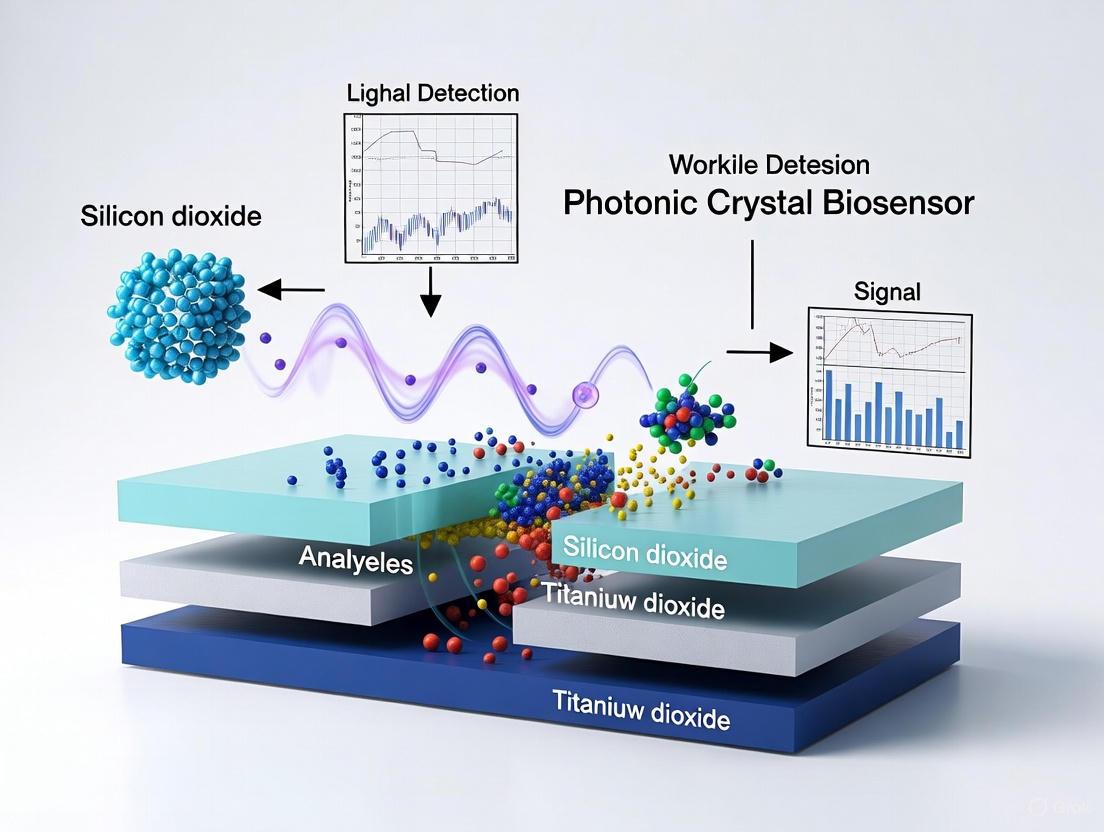
This article provides a comprehensive overview of photonic crystal (PhC) biosensors, detailing their fundamental operating principles based on photonic bandgaps and refractive index modulation.
Photonic Crystal Biosensors: Principles, Applications, and Future Directions in Biomedical Research
Abstract
This article provides a comprehensive overview of photonic crystal (PhC) biosensors, detailing their fundamental operating principles based on photonic bandgaps and refractive index modulation. It explores their design methodologies, fabrication techniques, and diverse applications in biomedical research, including cancer cell detection, biomarker analysis, and drug discovery. The content addresses key performance optimization challenges and presents a comparative analysis with competing biosensing technologies. Tailored for researchers, scientists, and drug development professionals, this review synthesizes recent advances and future prospects for integrating PhC biosensors into point-of-care diagnostics and high-throughput screening platforms.
The Fundamental Principles of Photonic Crystal Biosensors
Photonic crystals (PhCs) are nanostructured materials composed of periodic arrangements of dielectric materials that interact with light in unique ways, reflecting specific wavelengths at specific angles due to their periodic structure [1]. These nature-inspired structures mimic phenomena found in various animals such as fish and beetles that employ responsive photonic crystals for camouflage, signaling, or to bait their prey [1]. The fundamental operating principle of photonic crystals revolves around the photonic band gap (PBG)—a range of frequencies where light propagation is forbidden within the crystal [2]. This PBG arises from the periodic variation in refractive index, which creates destructive interference for specific wavelengths while allowing others to propagate [1] [2].
When the periodicity of these nanostructures is altered through the introduction of defects or when the refractive index of the constituent materials changes, the optical properties of the photonic crystal undergo significant modifications [1]. This responsive behavior forms the foundational mechanism for photonic crystal sensing applications. The ability to precisely control and manipulate light at the nanoscale has made photonic crystals particularly valuable in biosensing, where they can detect minute changes in the local environment through measurable shifts in their optical characteristics [1] [3].
Photonic crystals can be fabricated in one-dimensional (1D), two-dimensional (2D), and three-dimensional (3D) configurations, each offering distinct advantages for specific applications [2]. One-dimensional PhCs, such as Bragg gratings, exhibit periodicity in only one direction [2]. Two-dimensional PhCs contain periodicity in two directions and are widely studied for optical devices due to their efficient light confinement and easier calculation of photonic band gaps compared to 3D structures [4] [2]. Three-dimensional PhCs, including synthetic opals and inverse opals, offer periodicity in all three spatial dimensions and provide enhanced interaction with analytes due to their larger surface area [1].
Photonic Crystal Biosensing Mechanisms
Core Sensing Principles
Photonic crystal biosensors primarily operate through refractive index-based sensing mechanisms, where the binding of target biological molecules to a functionalized sensor surface alters the local refractive index, subsequently changing the optical characteristics of the transmission or reflection spectrum [2]. This label-free detection approach provides significant advantages over fluorescent-based methods by allowing biomolecules to be detected in their natural forms without the need for complex labeling procedures [2].
Two primary detection protocols are employed in photonic crystal biosensing:
Resonant Wavelength Shift (RWS) Scheme: This method identifies the presence of biological molecules by measuring changes in the resonance wavelength of the transmission spectrum [2]. The magnitude of the wavelength shift correlates directly with the concentration or surface density of the bound analyte. This approach requires narrow full width at half maximum (FWHM) spectra for high accuracy and is suitable for measuring a wider range determined by the free spectral range (FSR) [2].
Intensity Variation (IV) Scheme: This technique detects biomolecular binding by measuring changes in the intensity of light at a fixed resonant frequency [2]. In contrast to the RWS scheme, broader FWHM is desirable for this method, which can only calculate a small range of wavelength shift [2].
The evanescent field phenomenon plays a crucial role in photonic crystal biosensing [5]. As light propagates through the photonic crystal structure, an electromagnetic field extends beyond the physical surface of the sensor, creating an evanescent wave that interacts with biological molecules near the sensor surface [5]. When target analytes bind to receptors immobilized on the sensor, they alter the local refractive index in this evanescent field region, resulting in detectable changes in the light's properties [5].
Advanced Sensing Modalities
Recent advancements have introduced more sophisticated photonic crystal sensing modalities that enhance detection capabilities:
Photonic Crystal Enhanced Fluorescence (PCEF) combines the selective binding capabilities of photonic crystals with fluorescence detection, where the photonic crystal structure enhances the excitation intensity and channels photon emission preferentially along the dispersion curve [3]. This dual enhancement effect can achieve fluorescence enhancement factors as high as 7500×, significantly boosting the signal-to-noise ratio for detection of low-concentration biomarkers [3].
External Cavity Laser (ECL) biosensing incorporates the photonic crystal as a wavelength-selective element within an laser cavity, generating extremely narrow resonant linewidths through stimulated emission [3]. This approach enables ultra-high resolution detection of small wavelength shifts associated with low molecular weight analytes such as small molecule drug compounds [3].
Surface Plasmon Resonance (SPR) enhanced photonic crystal fiber sensors combine the light-guiding capabilities of photonic crystal fibers with the sensitivity of surface plasmon resonance [6] [7]. In these systems, plasmonic materials such as gold, silver, or titanium oxide generate surface plasmons—collective oscillations of free electrons at the metal-dielectric interface—that create strong localized electromagnetic fields highly sensitive to changes in the surrounding refractive index [6] [7].
Performance Metrics and Quantitative Analysis
The performance of photonic crystal biosensors is evaluated through several key parameters that determine their effectiveness for specific applications. Understanding these metrics is essential for selecting appropriate sensor designs and interpreting experimental results accurately.
Table 1: Key Performance Metrics for Photonic Crystal Biosensors
| Parameter | Definition | Formula | Significance |
|---|---|---|---|
| Quality Factor (Q) | Measure of spectral selectivity and sharpness of resonance | ( Q = \frac{\lambda0}{\Delta\lambda{FWHM}} ) | Higher Q indicates sharper resonance peaks, enabling detection of smaller wavelength shifts [4] [2] |
| Sensitivity (S) | Wavelength shift per unit change in refractive index | ( S = \frac{\Delta\lambda}{\Delta n} ) | Determines the smallest refractive index change that produces a measurable response [4] [8] [2] |
| Figure of Merit (FoM) | Comprehensive metric combining sensitivity and resonance width | ( FoM = \frac{S}{\Delta\lambda_{FWHM}} ) | Higher FoM indicates better overall sensor performance [4] |
| Detection Limit (DL) | Minimal detectable change in refractive index | ( DL = \frac{FWHM}{S} ) | Lower DL enables detection of smaller analyte concentrations [8] [2] |
| Full Width at Half Maximum (FWHM) | Spectral width of resonance at half maximum power | - | Narrower FWHM improves Q-factor and DL [2] |
| Free Spectral Range (FSR) | Wavelength distance between adjacent resonance peaks | - | Wider FSR prevents interference between peaks [2] |
Table 2: Performance Comparison of Recent Photonic Crystal Biosensor Designs
| Sensor Type | Target Analyte | Sensitivity (nm/RIU) | Quality Factor | Detection Limit | Reference |
|---|---|---|---|---|---|
| Eye-shaped Cavity 2D PhC | Cancer cells | 236-243 | 15,764-87,070 | - | [4] |
| Compact 2D PhC | Glucose in urine | 20,040.30 | 10,424.55 | 8×10⁻¹⁰ RIU | [8] |
| D-shaped PCF-SPR | Multiple cancer cells | 42,000 | - | - | [7] |
| Hexagonal PhC | Cancer cells | 72.28 | 1,741 | - | [4] |
| Microcavity Ring | Cancer cells | 995 | 70 | - | [4] |
The tables above demonstrate the wide performance range achievable with different photonic crystal biosensor designs. The exceptionally high sensitivity of 42,000 nm/RIU reported for the D-shaped PCF-SPR sensor highlights the potential of hybrid approaches that combine photonic crystal fibers with surface plasmon resonance [7]. Similarly, the compact 2D PhC glucose sensor achieves a remarkably low detection limit of 8×10⁻¹⁰ RIU, enabling precise measurement of subtle biological variations [8].
Experimental Protocols and Methodologies
Sensor Fabrication Approaches
Photonic crystal biosensors can be fabricated using diverse techniques suitable for different material systems and performance requirements:
Nanoimprint Lithography and Replica Molding enable high-throughput fabrication of photonic crystal sensors using UV-curable polymers on transparent substrates [3]. This approach begins with creating a master mold typically through electron-beam lithography, followed by replication using UV-curable polymers at room temperature [3]. The low refractive index polymer structure is subsequently coated with a high refractive index material such as TiO₂ to achieve the final sensor structure with guided mode resonance properties [3].
Electron-Beam Lithography provides the highest resolution for intricate photonic crystal designs critical for high sensitivity but involves higher costs and is less suited for large-scale production [8]. This method directly writes the photonic crystal pattern onto a resist-coated substrate using a focused electron beam, enabling precise control over feature sizes down to nanometers [8].
Colloidal Self-Assembly offers a bottom-up approach for creating three-dimensional photonic crystals, particularly synthetic opals, through controlled evaporation of colloidal suspensions containing monodisperse nanoparticles [1] [9]. This method is simple and inexpensive compared to top-down lithographic approaches but provides less control over crystal defects and long-range order [9].
CMOS-Compatible Fabrication techniques leverage standard semiconductor manufacturing processes to create photonic crystal sensors on silicon or silicon-on-insulator (SOI) platforms [5]. These approaches enable large-scale production and co-integration of optical sensing elements with electronic circuits for signal processing and communication [5].
Biosensing Experimental Workflow
A standardized experimental protocol for photonic crystal biosensing involves the following key steps:
Step 1: Sensor Functionalization Immobilize specific biorecognition elements (antibodies, aptamers, or DNA probes) on the photonic crystal surface using appropriate chemical coupling chemistry. Common approaches include silanization of oxide surfaces followed by covalent attachment of capture molecules, or physical adsorption of recognition elements through hydrophobic or electrostatic interactions [3] [2].
Step 2: Baseline Measurement Record the reference transmission or reflection spectrum of the functionalized sensor using a broadband light source and spectrometer before sample introduction. This establishes the baseline resonant wavelength or intensity for subsequent comparison [2].
Step 3: Sample Introduction and Incubation Introduce the analyte solution to the sensor surface using precision fluidic handling systems. Maintain controlled temperature and flow conditions during the incubation period to ensure consistent binding kinetics [4] [7].
Step 4: Real-Time Monitoring Continuously monitor the spectral response throughout the binding process to capture kinetic information. For resonant wavelength shift detection, track the progressive shift in the resonance peak; for intensity-based detection, monitor changes in transmission or reflection at a fixed wavelength [2].
Step 5: Washing and Regeneration Remove unbound molecules by flowing buffer solution through the system. For reusable sensors, apply appropriate regeneration solutions to dissociate bound analytes without damaging the immobilized recognition elements [3].
Step 6: Data Analysis Quantify the sensor response by calculating the maximum wavelength shift or intensity change. Correlate this response with analyte concentration using appropriate calibration curves or kinetic models [2].
The Scientist's Toolkit: Essential Research Reagents and Materials
Successful implementation of photonic crystal biosensing requires careful selection of materials and reagents tailored to specific applications. The table below outlines essential components for developing and utilizing photonic crystal biosensors.
Table 3: Essential Research Reagents and Materials for Photonic Crystal Biosensing
| Category | Specific Examples | Function/Purpose | Application Notes |
|---|---|---|---|
| Substrate Materials | Silicon (Si), Silicon Nitride (Si₃N₄), TiO₂, SiO₂, Polymers | Forms the structural foundation of photonic crystals with specific refractive indices | Silicon offers high refractive index (n=3.46); polymers enable flexible substrates [4] [5] |
| Plasmonic Materials | Gold (Au), Silver (Ag), Titanium Oxide (TiO₂), Graphene | Enhances sensitivity through surface plasmon resonance | Gold provides chemical stability; silver offers higher sensitivity but lower stability [6] [7] |
| Biorecognition Elements | Antibodies, Aptamers, DNA Probes, Molecular Imprinted Polymers | Provides specificity for target analytes | Selection depends on required specificity, stability, and conjugation chemistry [3] [2] |
| Surface Functionalization Reagents | Silanes (APTES, MPTMS), Thiols, Carboxylic Acids, NHS-EDC Chemistry | Enables covalent immobilization of recognition elements | Choice depends on substrate material and biorecognition element [3] [2] |
| Optical Components | Tunable Lasers, Broadband Light Sources, Spectrometers, Polarizers | Provides illumination and detection capabilities | Tunable lasers offer precision; broadband sources enable spectral monitoring [4] [7] |
| Microfluidic Components | PDMS Channels, Syringe Pumps, Valves, Tubing | Controls sample delivery and manipulation | Enables precise fluid handling and automation [4] [5] |
| Buffer Systems | PBS, HEPES, Tris-based Buffers with Surfactants (Tween-20) | Maintains physiological conditions and reduces nonspecific binding | Prevents denaturation of biological components and minimizes background noise [3] |
The selection of appropriate substrate materials represents a critical design consideration, as the refractive index contrast between the dielectric materials determines the strength of the photonic band gap effect [1] [2]. Silicon remains a popular choice for high-index contrast systems due to its well-established fabrication protocols and high refractive index (n=3.46), while polymers offer advantages for flexible, disposable sensors produced through replica molding or nanoimprint lithography [3].
For surface functionalization, (3-aminopropyl)triethoxysilane (APTES) provides primary amine groups for subsequent covalent attachment of biomolecules to oxide surfaces, while thiol-based chemistry enables functionalization of gold-coated sensors [3] [2]. N-hydroxysuccinimide (NHS) and 1-ethyl-3-(3-dimethylaminopropyl)carbodiimide (EDC) chemistry remains the standard approach for activating carboxylic acid groups to form stable amide bonds with primary amines in proteins and aptamers [3].
Applications in Biomedical Research and Drug Development
Photonic crystal biosensors have demonstrated exceptional capabilities across diverse biomedical applications, particularly in areas requiring high sensitivity and specificity.
Cancer Diagnostics represents a major application area where photonic crystal biosensors detect cancer cells through their elevated refractive index compared to normal cells, resulting from higher protein concentrations in the cytoplasm [4]. Recent designs incorporating specialized cavities, such as the eye-shaped defect structure, have achieved simultaneous high sensitivity (236-243 nm/RIU) and quality factors (up to 87,070) for distinguishing various cancer cell types including blood cancer (Jurkat), skin cancer (Basal), cervical cancer (HeLa), breast cancers (MDA-MB-231 and MCF-7), and adrenal gland cancer (PC12) [4]. The D-shaped photonic crystal fiber SPR biosensor with optimized gold-TiO₂ layers has demonstrated exceptional wavelength sensitivity of 42,000 nm/RIU for multi-cancer detection [7].
Glucose Monitoring for diabetes management has benefited significantly from photonic crystal sensing technology. A compact 2D photonic crystal biosensor designed for detecting glucose concentrations in urine achieved remarkable sensitivity of 20,040.30 nm/RIU with a quality factor of 10,424.55 and an exceptionally low detection limit of 8×10⁻¹⁰ RIU [8]. These performance metrics surpass conventional glucose detection methods, offering potential for non-invasive, real-time monitoring systems.
Biomarker Detection for various diseases has been demonstrated using photonic crystal platforms optimized for specific protein targets. Photonic crystal sensors have detected cancer biomarkers such as EGFR and AFP with limits of detection reaching 100 pg/nL, enabling early disease diagnosis [9]. The integration of photonic crystals with microplate formats has facilitated high-throughput screening of drug-protein interactions, particularly valuable for pharmaceutical development [3].
Virus and Pathogen Detection represents another significant application, with photonic crystal biosensors demonstrating capabilities for detecting influenza virus from saliva at concentrations as low as 1 ng/mL and human immunodeficiency virus (HIV-1) at 10⁴ copies per mL [9]. The label-free operation and rapid response times make these sensors particularly valuable for infectious disease monitoring and outbreak management.
Single-Molecule Detection represents the cutting edge of photonic crystal biosensing, with next-generation sensors achieving detection at attomolar and even zeptomolar levels [10]. These ultra-sensitive platforms overcome key limitations of conventional fluorescence-based methods by offering higher sensitivity, improved photostability, and label-free operation, opening new possibilities for fundamental biological research and clinical diagnostics [10].
The continuous advancement of photonic crystal biosensing technology holds significant promise for transforming biomedical research, clinical diagnostics, and drug development processes. As these sensors become increasingly sophisticated, accessible, and integrated with complementary technologies such as artificial intelligence and microfluidics, they are poised to become indispensable tools for researchers and healthcare professionals alike.
The photonic bandgap (PBG) is a fundamental property of photonic crystals (PhCs) that enables unprecedented control over light propagation. This phenomenon, arising from periodic dielectric structures, forms the cornerstone of modern photonic crystal biosensors. By creating forbidden frequency ranges for photons and leveraging defect-engineered cavities, PhCs can confine light to nanoscale volumes, dramatically enhancing light-matter interactions. This technical guide explores the physics behind photonic bandgaps and their critical role in advanced biosensing applications, particularly for medical diagnostics and drug development. The discussion encompasses operational principles, performance metrics, material considerations, and experimental implementations that underpin the exceptional sensitivity of PhC-based biosensing platforms.
Photonic crystals are nanostructured materials with periodic variations in dielectric constant that create a photonic bandgap (PBG)—a range of frequencies where light propagation is forbidden [2]. Analogous to the electronic bandgap in semiconductors, the PBG arises from Bragg diffraction of photons, where specific wavelengths are completely reflected due to constructive interference from the periodic lattice [4]. This property enables unprecedented control over light propagation at wavelength scales.
These structures are categorized by their dimensionality: one-dimensional (1D), with periodicity in one direction (e.g., multilayer films); two-dimensional (2D), with periodicity in two directions (e.g., dielectric rods in air or air holes in dielectric slabs); and three-dimensional (3D), with periodicity in all directions (e.g., opals) [2]. The PBG's existence and characteristics depend on several factors, including the contrast in refractive indices between the constituent materials, the lattice geometry (e.g., square, triangular, hexagonal), and the filling factor of high-dielectric material [4] [11].
Introducing defects into the perfect periodic lattice creates localized states within the PBG, enabling precise control and manipulation of light. Defects can be point defects (acting as nanocavities), line defects (acting as waveguides), or more complex shapes [4] [2]. This defect engineering is the fundamental principle behind most PhC-based devices, including waveguides, filters, lasers, and highly sensitive biosensors.
The Role of the Photonic Bandgap in Biosensing
In biosensing, the PBG provides the foundation for a label-free detection mechanism primarily based on refractive index (RI) changes [2]. The operational principle involves confining light within a defect region, often a nanocavity or waveguide, where the electromagnetic field intensity is significantly enhanced. When target biomolecules (such as proteins, DNA, or whole cells) bind to the functionalized surface of this defect region, they alter the local refractive index. This change subsequently perturbs the properties of the localized state within the PBG, causing a measurable shift in the device's optical characteristics.
Two primary detection schemes are employed, both reliant on the high field confinement enabled by the PBG:
- Resonant Wavelength Shift (RWS): The binding of analytes causes a shift in the resonant wavelength of the cavity mode. The magnitude of this shift is proportional to the concentration or surface density of the bound molecules [2]. This method requires a high-quality factor (Q-factor) to detect minute shifts.
- Intensity Variation (IV): Alternatively, the change in the transmitted or reflected light intensity at a fixed resonant frequency can be monitored [2].
The presence of a PBG is crucial as it prevents light from leaking into the bulk structure, ensuring that all optical energy in the defect mode is concentrated in the sensing region. This confinement dramatically enhances the interaction between the light and the analyte, leading to significantly higher sensitivity compared to conventional optical sensors [9] [4].
Table 1: Key Performance Metrics for Photonic Crystal Biosensors
| Metric | Definition | Formula | Significance in Biosensing |
|---|---|---|---|
| Quality Factor (Q) | Resonant wavelength divided by the full width at half maximum (FWHM) of the resonance peak. | ( Q = \frac{\lambda{0}}{\Delta\lambda{FWHM}} ) [4] [11] | A higher Q indicates a sharper resonance, enabling the detection of smaller wavelength shifts and thus, smaller analyte concentrations. |
| Sensitivity (S) | The shift in resonant wavelength per unit change in the refractive index. | ( S = \frac{\Delta\lambda}{\Delta n} ) (nm/RIU) [4] [11] | Defines the sensor's responsiveness to analyte binding. Directly measures the device's ability to translate a biological event into an optical signal. |
| Figure of Merit (FoM) | Ratio of sensitivity to the resonance linewidth. | ( FoM = \frac{S}{\Delta\lambda_{FWHM}} ) (RIU⁻¹) [4] | A comprehensive metric balancing sensitivity and resonance sharpness. A higher FoM indicates better overall sensor performance. |
| Detection Limit (DL) | The smallest detectable change in refractive index. | ( DL = \frac{\lambda}{S \times Q} ) (RIU) [11] | The ultimate measure of a sensor's resolution, defining the minimum detectable biological change. |
| Full Width at Half Maximum (FWHM) | The spectral width of the resonance peak at half its maximum power. | - | A narrower FWHM leads to a higher Q-factor and a lower DL [2]. |
Quantitative Performance of Photonic Crystal Biosensors
The performance of PhC biosensors varies significantly with their design, material, and target application. Recent research demonstrates their capability to detect a wide range of analytes with high precision. The following table summarizes the performance metrics reported for various PhC biosensor configurations.
Table 2: Reported Performance of Various Photonic Crystal Biosensors
| Sensor Geometry / Core Material | Target Analyte | Sensitivity (nm/RIU) | Quality Factor (Q) | Figure of Merit (FoM) | Citation |
|---|---|---|---|---|---|
| Eye-shaped Cavity (Si) | Cancer Cells (e.g., Jurkat, HeLa) | 236 - 243 | 15,764 - 87,070 | Not specified | [4] |
| 2:1 Multiplexer (Si) | Cholesterol in Blood | 2,673.4 | 45.4 - 52.88 | 80.91 - 82.06 RIU⁻¹ | [11] |
| 2:1 Multiplexer (Si) | Creatinine in Blood | 3,582.7 | 101.1 - 109.4 | 199.01 - 201.3 RIU⁻¹ | [11] |
| 1D Annular Crystal (TiO₂/SiO₂) | Protein (c=10 nmol/L) | 576.27 nm/nmol/L | 5,630.76 | 4,432.85 nmol/L* | [12] |
| 2D GaN-based PC | Skin Diseases (Vitiligo, Cutis Laxa) | High (specific value not stated) | High (specific value not stated) | High (specific value not stated) | [13] |
| D-shaped PCF (Au/TiO₂) | Cancer Cells (Basal, HeLa, etc.) | 42,000 | Not specified | 1,393.128 RIU⁻¹ | [7] |
*Reported as "figure of merit" in the source, interpreted as a combined performance metric.
Experimental Protocols and Methodologies
Numerical Design and Analysis
The design and analysis of PhC biosensors rely heavily on numerical methods to solve Maxwell's equations and model light propagation.
- Plane Wave Expansion (PWE): This method is the standard for calculating the photonic band diagram, which reveals the PBG of an infinite, perfect crystal [11] [2]. It helps identify the frequency ranges where propagating modes are forbidden.
- Finite-Difference Time-Domain (FDTD): This is the most widely used technique for simulating the transmission spectra and field distributions of finite PhC devices with defects [4] [13] [11]. It works by discretizing both space and time to model the evolution of electromagnetic waves. The transmission spectrum is obtained by launching a broadband pulse (e.g., a Gaussian pulse) into the structure and computing the normalized power at the output. A sharp dip in the transmission spectrum indicates a resonant cavity mode.
Fabrication Techniques
Fabrication methods depend on the PhC's dimensionality and material system.
- 2D PhCs on Silicon-on-Insulator (SOI): These are typically fabricated using deep ultraviolet lithography or electron-beam lithography to define the pattern, followed by reactive ion etching to create the air holes or dielectric rods [9] [11].
- Nano-replica Molding: This is an economical and flexible method for mass production. It involves creating a master template (e.g., via e-beam lithography), then using it to mold polymers like PDMS, followed by processes to achieve a high-refractive-index final structure [11].
- Colloidal Self-Assembly: For 3D PhCs and some 2D applications, this bottom-up approach is common. Monodisperse colloidal nanoparticles (e.g., polystyrene, silica) spontaneously assemble into ordered crystalline structures [9] [14]. Inkjet printing has recently emerged as a programmable method for depositing colloidal photonic inks to create specific patterns [14].
Measurement and Biosensing Procedure
A typical experimental setup for a PhC biosensor involves the following workflow, which can be visualized in the diagram below.
Diagram 1: Biosensing experimental workflow.
- Optical Excitation: A tunable laser source generates incident light, which is passed through a polarizer to ensure the correct polarization (typically Transverse Electric, TE) is launched into the PhC structure [7].
- Analyte Introduction: The sample containing the target analyte (e.g., blood, serum, protein solution) is introduced onto the sensor surface, often using a programmable microfluidic pump system for precise control [7].
- Signal Acquisition: The output light from the biosensor is collected and sent to an optical spectrum analyzer (OSA), which measures the transmission or reflection spectrum [7].
- Data Analysis: The spectral data is transferred to a computer for analysis. The presence and concentration of the analyte are determined by tracking the shift in the resonant wavelength (( \Delta \lambda )) or the change in intensity at the resonant frequency [7] [2].
The Scientist's Toolkit: Research Reagent Solutions
The following table details key materials and reagents essential for the fabrication and operation of photonic crystal biosensors.
Table 3: Essential Research Reagents and Materials for PhC Biosensors
| Material / Reagent | Function / Application | Specific Examples |
|---|---|---|
| High-Index Dielectrics | Form the scattering elements of the photonic crystal to create a strong PBG. | Silicon (Si) [4] [11], Gallium Nitride (GaN) [13], Titanium Dioxide (TiO₂) [12]. |
| Colloidal Nanoparticles | Self-assemble to form 2D or 3D photonic crystal structures. | Polystyrene (PS) [14], Silica (SiO₂) [14]. |
| Functionalization Chemistry | Modify the PhC surface with capture agents (e.g., antibodies, aptamers) to bind specific targets. | Silane chemistry [9], thiol-gold chemistry [7]. |
| Microfluidic Components | Precisely deliver and control liquid samples and reagents over the sensor surface. | Programmable pumps, tubing, PDMS channels [7]. |
| Plasmonic Materials | Used in hybrid PhC-SPR sensors to further enhance sensitivity and light confinement. | Gold (Au) [7], Silver (Ag). |
| Buffer Solutions | Maintain a stable pH and ionic strength during biological assays to ensure specific binding and minimize non-specific adsorption. | Phosphate Buffered Saline (PBS) [9]. |
Emerging Trends and Integration with Artificial Intelligence
The field of PhC biosensing is rapidly evolving, with two key trends shaping its future: hybrid material systems and the integration of artificial intelligence (AI).
Hybrid and Advanced Materials: Researchers are combining PhCs with other sensitive materials to create synergistic effects. A prominent example is the surface plasmon resonance (SPR) biosensor with optimized gold-TiO₂ D-shaped photonic crystal fiber, which achieved an extremely high sensitivity of 42,000 nm/RIU for cancer cell detection [7]. GaN is also gaining traction due to its superior thermal stability and biocompatibility compared to silicon [13].
AI-Enhanced Sensing: AI and machine learning (ML) are being leveraged to overcome traditional limitations in biosensing. Deep learning algorithms can independently extract multi-dimensional features from complex spectral data, distinguish weak biological signals from noise, and achieve real-time dynamic calibration [15]. For instance, ML models like K-nearest neighbors, Random Forest, and Support Vector Machines have been used to classify sensor data for detecting skin diseases with higher accuracy [13]. Furthermore, AI is being used to authenticate security labels based on physically unclonable encryption features in advanced photonic systems [14]. This intelligent, data-driven approach marks a significant shift toward more robust and automated diagnostic platforms.
The photonic bandgap is not merely an interesting physical phenomenon but the enabling engine of a powerful biosensing technology. The ability to engineer photonic crystals to control light propagation with extreme precision allows for the confinement of optical energy into sub-wavelength volumes, creating a highly responsive sensing interface. As detailed in this guide, the refractive-index-based sensing mechanism, underpinned by the PBG, translates minute biochemical interactions into quantifiable optical signals with high sensitivity and specificity. Continued advancements in nanofabrication, the exploration of new material systems like GaN, and the burgeoning integration of artificial intelligence are poised to further elevate the capabilities of photonic crystal biosensors. These platforms hold immense promise for revolutionizing point-of-care diagnostics, drug development, and the monitoring of therapeutic interventions, offering a path toward faster, more sensitive, and label-free bioanalytical solutions.
In photonic crystal (PhC) biosensors, the refractive index (RI) serves as the primary transducer for detecting biological interactions. These label-free sensors operate on a fundamental principle: when a target analyte, such as a protein, DNA strand, or entire cell, binds to the functionalized surface of the photonic crystal, it alters the local refractive index in the sensor's active region [16]. This change directly influences the propagation characteristics of light confined within the PhC structure. The key to the sensor's functionality is its ability to convert this minute RI change, often induced by a thin molecular layer, into a measurable shift in an optical signal, such as a resonance wavelength or intensity [17]. This mechanism allows for the real-time, quantitative monitoring of biomolecular interactions without the need for fluorescent or radioactive labels.
The superiority of PhC-based sensing lies in the strong light confinement achieved through their periodic dielectric structure. By engineering photonic band gaps (PBGs)—ranges of light frequencies that cannot propagate through the crystal—and introducing deliberate "defects," light can be trapped in a very small volume [4] [17]. When the target analyte binds, it perturbs the electromagnetic field in this confined space, leading to a detectable and quantifiable change in the sensor's output. This process forms the basis for highly sensitive and specific detection of a wide array of biological targets, from small proteins to entire cancer cells [4] [12].
Fundamental Optical Transduction Mechanisms
The alteration of the local refractive index through analyte binding is translated into an optical readout via several key mechanisms. The most common and sensitive method is the monitoring of a shift in a resonant wavelength.
Resonance Shift Mechanism
Photonic crystal biosensors often incorporate high-quality factor (Q-factor) microcavities. A microcavity is created by introducing a defect into the otherwise perfect periodic lattice of the PhC. This defect localizes light of a specific resonant wavelength, (\lambdaR), within a tiny volume. The precise value of (\lambdaR) is determined by the optical path length within the cavity, which is the product of the geometric path length and the effective refractive index ((n{eff})) experienced by the light [17]. The binding of an analyte increases the (n{eff}), thereby increasing the optical path length. This shifts the resonant condition, resulting in a measurable shift of (\lambda_R) in the transmission or reflection spectrum. The relationship is described by:
[\Delta \lambda_R = S \cdot \Delta n]
where (\Delta \lambda_R) is the resonant wavelength shift, (S) is the sensitivity of the sensor (in nm/RIU), and (\Delta n) is the change in the effective refractive index [4]. For instance, a specific PhC biosensor with an eye-shaped cavity demonstrated a sensitivity (S) of 236–243 nm/RIU, meaning that for every unit change in the refractive index of the analyte, the resonant wavelength shifted by this amount [4].
Intensity and Phase Interrogation
While wavelength shift is the most common method, changes in refractive index can also be transduced through alterations in optical intensity or phase. In intensity interrogation, the binding of an analyte at the resonant wavelength causes a change in the transmitted or reflected light intensity, which can be monitored with a simple photodetector [16]. Phase-sensitive detection, often implemented in interferometric configurations like Mach-Zehnder Interferometers (MZIs), is another highly sensitive method. A change in (n_{eff}) alters the phase velocity of light propagating in the sensor arm relative to a reference arm, leading to a change in the interference pattern output [16]. The following table summarizes these core transduction mechanisms.
Table 1: Fundamental Optical Transduction Mechanisms in Photonic Crystal Biosensors
| Mechanism | Physical Principle | Typical Readout | Key Advantage |
|---|---|---|---|
| Resonance Wavelength Shift | Change in optical path length within a resonant cavity alters the resonant condition. | Spectral shift (nm) measured by an Optical Spectrum Analyzer (OSA). | High sensitivity and quantitative; direct relationship with RI change. |
| Intensity Change | Analyte binding modulates the coupling efficiency or loss at a fixed wavelength. | Change in optical power (μW) measured by a Photodetector (PD). | Simpler and potentially lower-cost readout system. |
| Phase Change | Change in (n_{eff}) alters the phase velocity of light in an interferometer. | Shift in interference fringes. | Very high sensitivity to minute RI changes. |
Visualizing the Core Sensing Pathway
The fundamental signaling pathway, from biological interaction to measurable output, can be summarized in the following workflow. The process begins with the immobilization of receptor molecules on the sensor surface and culminates in the quantitative detection of the target analyte.
Quantitative Performance Metrics and Data
The performance of a photonic crystal biosensor is quantitatively evaluated using a set of standardized metrics that define its sensitivity, precision, and detection limits.
Sensitivity (S) is the most direct metric, defined as the shift in the resonant wavelength per unit change in the refractive index of the surrounding medium (nm/RIU) [4] [16]. A higher sensitivity indicates a larger signal change for a given biological event. The Quality Factor (Q) describes the sharpness of the resonance peak and is calculated as ( Q = \lambda0 / \Delta\lambda{FWHM} ), where ( \lambda0 ) is the resonant wavelength and ( \Delta\lambda{FWHM} ) is the full width at half-maximum of the resonance peak [4]. A high Q-factor (e.g., >10,000) signifies a sharp resonance, which allows for the detection of smaller wavelength shifts. The Figure of Merit (FoM) combines sensitivity and resonance sharpness, defined as ( FoM = S / \Delta\lambda_{FWHM} ) (RIU⁻¹), and is a comprehensive indicator of sensor resolution [4]. Finally, the Detection Limit (LOD) is the smallest detectable refractive index change or surface mass density, often expressed in RIU or mass per unit area (e.g., fg/mm²) [17] [12].
Recent research demonstrates the advanced performance of modern PhC biosensors. The following table compiles quantitative data from recent studies, showcasing the high performance achievable with different designs.
Table 2: Quantitative Performance Metrics of Reported Photonic Crystal Biosensors
| Sensor Architecture / Target | Sensitivity (nm/RIU) | Quality Factor (Q) | Figure of Merit (FoM) | Detection Limit (LOD) | Source |
|---|---|---|---|---|---|
| Eye-shaped Cavity (Cancer Cells) | 236 - 243 | 15,764 - 87,070 | N/R | N/R | [4] |
| 1D Annular PhC (Protein) | 576.27 (per nmol/L) | 5,630.76 | 4,432.85 nmol/L⁻¹ | 1.1×10⁻⁵ | [12] |
| PC-TIR Sensor (Molecular Film) | N/R | N/R | N/R | 24 fg/mm² (mass) 7×10⁻⁸ RIU (bulk) | [17] |
| 2D GaN-based PhC (Skin Disease) | ~219 (target) | N/R | N/R | N/R | [13] |
| Slotted PhC Cavity (Avidin) | N/R | N/R | N/R | 15 nM (concentration) | [16] |
Experimental Protocols and Methodologies
A robust experimental protocol is essential for validating the sensing mechanism and obtaining reliable data. The following section outlines a generalized methodology for conducting a photonic crystal biosensing experiment, from sensor preparation to data analysis.
Sensor Fabrication and Functionalization
The process typically begins with a silicon-on-insulator (SOI) wafer as the substrate [16]. The photonic crystal pattern, defined via electron-beam lithography, is transferred to the silicon layer using inductively coupled plasma (ICP) etching to create a lattice of air holes [4] [16]. For biosensing, the inner surfaces of the holes or the defect cavity must be chemically functionalized. This involves immobilizing receptor molecules (e.g., antibodies, single-stranded DNA) that are highly specific to the target analyte. This step is often achieved through silane chemistry, creating a stable monolayer that covalently binds the receptors [16]. The sensor is then integrated with a microfluidic system to enable precise and automated delivery of liquid samples and buffers [16].
Data Acquisition and Measurement Setup
The optical measurement setup is built around the sensor chip. A tunable laser or broadband light source is used to launch light into the photonic crystal waveguide. The output light from the sensor is collected and directed to an optical spectrum analyzer (OSA) for wavelength shift interrogation or to a photodetector for intensity-based measurements [16]. The sensor's baseline transmission spectrum is first recorded with a buffer solution flowing through the microfluidic channel. The analyte sample is then introduced, and the spectral response is monitored in real-time. The binding event causes a shift in the resonance dip, which is tracked over time. After binding reaches saturation, a buffer rinse is performed to remove non-specifically bound molecules, leaving only the specific signal [17].
Data Analysis and Signal Processing
The raw spectral data is processed to extract the resonant wavelength (( \lambda0 )) for each measurement point. A plot of ( \lambda0 ) versus time, known as a sensorgram, is generated, which displays the kinetics of the binding event. The wavelength shift (( \Delta \lambda )) between the baseline and the post-binding stable signal is calculated. This ( \Delta \lambda ) is then correlated to the change in refractive index or analyte concentration using the sensor's known sensitivity (S) and established calibration curves [4] [12]. The following workflow diagram illustrates the complete experimental process from start to finish.
The Scientist's Toolkit: Essential Research Reagents and Materials
The development and operation of a high-performance photonic crystal biosensor require a suite of specialized materials and reagents. The following table details key components of the research toolkit and their specific functions in the sensing process.
Table 3: Essential Research Reagent Solutions and Materials for PhC Biosensing
| Item / Material | Function / Role in the Sensing Mechanism | Specific Examples / Notes |
|---|---|---|
| High-Index Substrate | Forms the core of the PhC, providing strong optical confinement and a large bandgap. | Silicon (n~3.46), Gallium Nitride (GaN), Indium Phosphide (InP). SOI wafers are industry-standard [4] [13]. |
| Functionalization Chemistry | Creates a covalent link between the sensor surface and the bioreceptor layer. | Silane-based linkers (e.g., (3-Aminopropyl)triethoxysilane). Enable stable receptor immobilization [16]. |
| Bioreceptor Molecules | Provides specificity by selectively binding the target analyte. | Antibodies, single-stranded DNA (ssDNA) probes, aptamers. Choice depends on the target [9] [16]. |
| Microfluidic System | Automates the delivery of samples and buffers, enables precise flow control and multiplexing. | PDMS chips, integrated fluidic channels. Essential for real-time kinetic studies [16]. |
| Calibration Analytes | Used to characterize sensor sensitivity and performance by inducing known RI changes. | Ethanol (n=1.359), deionized water (n=1.332), sodium chloride solutions of varying concentration [16]. |
| Blocking Agents | Reduces non-specific binding (NSB) of non-target molecules to the sensor surface. | Bovine Serum Albumin (BSA), casein. Critical for ensuring assay specificity and low background noise. |
Bragg's Law and Resonant Wavelength Shifts in Biosensing
This whitepaper elucidates the operational principles of photonic crystal (PhC) biosensors, with a specific focus on the role of Bragg's Law and the detection mechanism of resonant wavelength shifts. As a cornerstone of a broader thesis on photonic crystal biosensor functionality, this document details how periodic dielectric structures control light to achieve exceptional sensitivity in detecting biological analytes. The discussion encompasses fundamental physics, sensor design paradigms, critical performance metrics, and detailed experimental methodologies, providing researchers and drug development professionals with a comprehensive technical guide to this rapidly advancing field.
Photonic crystals are periodic nanostructures engineered from low-loss dielectric materials to control and manipulate the flow of light [2] [3]. Their periodicity, which can be one-dimensional (1D), two-dimensional (2D), or three-dimensional (3D), gives rise to a photonic band gap (PBG)—a range of frequencies or wavelengths where light propagation is forbidden [2]. This unique property enables PhCs to confine photons with high precision. A photonic crystal biosensor is formed by functionalizing such a structure with biological recognition molecules (e.g., antibodies, aptamers), creating a transducer that converts a biological binding event into a quantifiable optical signal [3].
The appeal of PhC biosensors lies in their label-free detection capability, allowing biomolecules to be sensed in their natural forms without the need for fluorescent or radioactive tags [2]. Furthermore, their compatibility with complementary metal–oxide–semiconductor (CMOS) fabrication techniques facilitates the development of low-cost, disposable sensors for high-throughput applications, including microtiter plates and microfluidic devices [2] [3]. These attributes make PhC biosensors a powerful platform for diverse applications, from drug discovery and molecular diagnostics to live-cell analysis [3].
Fundamental Physics: Bragg's Law and the Photonic Band Gap
Bragg's Law in One-Dimensional Photonic Crystals
The foundational principle underlying the operation of 1D PhCs is Bragg's Law. A 1D PhC is essentially a multilayer stack, or a distributed Bragg reflector, composed of alternating layers of two different dielectric materials [2]. When light propagates through this structure, it undergoes partial reflection at each interface between the layers.
Bragg's Law describes the condition for constructive interference of these reflected waves. For a 1D PhC with a lattice constant ( \Lambda ) (the center-to-center distance between two adjacent layers), the resonant wavelength ( \lambda ) for normal incidence is given by: [ m\lambda = 2n{eff}\Lambda ] where ( m ) is the diffraction order, and ( n{eff} ) is the effective refractive index of the propagating mode [18]. This equation dictates that specific wavelengths satisfying this condition are strongly reflected, creating a band of high reflectivity—the photonic band gap. Wavelengths outside this band are transmitted.
From Bragg's Law to the Resonant Wavelength Shift Sensing Mechanism
The sensing mechanism of PhC biosensors is directly derived from the physics described by Bragg's Law. Any change in the effective refractive index ( n_{eff} ) in the vicinity of the PhC structure will alter the condition for constructive interference [2] [18].
In a typical biosensing experiment, the PhC surface is biofunctionalized with probe molecules (e.g., antibodies). When target analyte molecules (e.g., antigens) bind to these probes, the local refractive index increases. According to Bragg's Law, this increase in ( n_{eff} ) necessitates a proportional increase in the resonant wavelength ( \lambda ) to maintain the equality, resulting in a measurable red-shift of the resonant peak in the transmission or reflection spectrum [18] [3]. This process, known as the refractive index (RI) change mechanism, forms the basis for label-free detection in most PhC sensors [2]. The magnitude of this resonant wavelength shift (( \Delta \lambda )) is directly proportional to the mass of bound analyte and is used to quantify the binding kinetics and affinity [3].
Photonic Crystal Biosensor Architectures and Performance
Photonic crystal biosensors are implemented in various dimensionalities and geometries, each offering distinct advantages.
One-Dimensional (1D) Photonic Crystal Sensors
1D PhCs are multilayer stacks where a "defect" layer, which holds the analyte, is introduced into the periodic structure [19] [18]. This defect layer localizes light, creating a sharp resonant peak within the photonic band gap. The high confinement of the electric field within the defect layer makes the resonant wavelength highly sensitive to changes in the defect layer's refractive index. For instance, a 1D PhC plasma cell sensor demonstrated a high sensitivity of 3300 nm/RIU (nanometers per Refractive Index Unit) by monitoring the red-shift of the defect peak as the refractive index of the infiltrated plasma changed [18].
Two-Dimensional (2D) Photonic Crystal Sensors
2D PhCs, often comprising a lattice of dielectric rods in air or air holes in a dielectric slab, offer greater design flexibility [2]. Sensing is typically achieved using resonant cavities or waveguides. A resonant cavity is created by introducing a point defect (e.g., by modifying the size or position of one or more holes) [2] [4]. The proposed eye-shaped cavity biosensor, for example, is designed to identify cancerous cells by placing the analyte rods along the cavity boundary, achieving a sensitivity of 236–243 nm/RIU and a very high quality factor of up to 87,070 [4]. Alternatively, line defects create waveguides, and sensing can be performed by measuring changes in the transmission properties of light guided through these structures [2].
Table 1: Performance Metrics of Representative Photonic Crystal Biosensors
| Sensor Architecture | Target Analyte | Sensitivity (nm/RIU) | Quality Factor (Q) | Figure of Merit (RIU⁻¹) | Limit of Detection (RIU) | Citation |
|---|---|---|---|---|---|---|
| 1D PC with TiO₂/SiO₂ | Chemicals | 675 | 13,687 | 8,437 | 7.30 × 10⁻⁶ | [19] |
| 1D PC (Ge/CaF₂) | Blood Plasma | 3,300 | 103 | Not Calculated | 1.00 × 10⁻⁵ | [18] |
| 2D PC Nanocavity | Blood Components | 760 | Not Specified | Not Specified | Not Specified | [20] |
| 2D PC Eye-Shaped Cavity | Cancer Cells (e.g., Jurkat, HeLa) | 236–243 | 15,764–87,070 | Reported | Not Specified | [4] |
| Plasmonic-PhC Hybrid | Basal Cell Cancer | 714–719 | Lower than pure PhC | 60.1–156.2 | Not Specified | [21] |
Key Performance Parameters in Biosensing
The performance of a PhC biosensor is quantified by several key parameters [2]:
- Sensitivity (S): Defined as the wavelength shift per unit change in refractive index ((S = \Delta \lambda / \Delta n)). It is typically reported in nm/RIU.
- Quality Factor (Q): A measure of the sharpness of the resonance peak, calculated as (Q = \lambda0 / \Delta\lambda{FWHM}), where ( \lambda0 ) is the resonant wavelength and ( \Delta\lambda{FWHM} ) is the full width at half maximum of the peak. A high Q-factor indicates a narrow resonance, which is crucial for detecting small wavelength shifts.
- Figure of Merit (FoM): Often defined as (FoM = S / \Delta\lambda_{FWHM}), it provides a combined metric that considers both sensitivity and resonance linewidth.
- Detection Limit (DL): The smallest detectable change in refractive index. A narrower resonance (higher Q) enables a lower detection limit [2].
- Full Width at Half Maximum (FWHM): The spectral width of the resonance peak at half its maximum intensity. A narrower FWHM is desirable for high-resolution sensing.
Table 2: The Scientist's Toolkit: Essential Reagents and Materials for Photonic Crystal Biosensing
| Category | Item | Function in Biosensing |
|---|---|---|
| Sensor Substrate Materials | Silicon (Si), Titanium Dioxide (TiO₂), Silicon Dioxide (SiO₂), Gallium Arsenide (GaAs), Polymers | Form the periodic dielectric structure of the photonic crystal, creating the photonic band gap. High refractive index contrast materials (e.g., TiO₂) are often used to enhance sensitivity [19] [21] [4]. |
| Functionalization Reagents | Monoclonal Antibodies, Aptamers | Act as biorecognition elements immobilized on the sensor surface to specifically capture target analytes (e.g., cancer biomarkers, proteins) [22]. |
| Chemical Linkers | (3-Aminopropyl)triethoxysilane (APTES), Mercaptopropionic Acid (MPA), EDC/NHS Chemistry | Facilitate the covalent immobilization of biorecognition elements onto the sensor surface, ensuring a stable and oriented binding layer [22]. |
| Analyte Samples | Blood Plasma, Whole Cells (Cancerous vs. Healthy), Proteins, DNA | The target samples for detection. Their binding to the functionalized surface induces the measurable refractive index change [18] [4]. |
| Simulation & Design Software | Finite-Difference Time-Domain (FDTD), Plane-Wave Expansion (PWE), Finite Element Method (FEM) | Used for modeling light propagation in the photonic crystal structure, calculating the photonic band gap, and optimizing sensor design before fabrication [2] [20] [4]. |
Experimental Protocols and Methodologies
Numerical Simulation and Sensor Design
The design of a high-performance PhC biosensor begins with numerical simulation.
- Structure Definition: The geometry of the PhC (lattice type, periodicity, rod/hole dimensions, and defect configuration) is defined in simulation software.
- Band Gap Calculation: The Plane-Wave Expansion (PWE) method is used to compute the photonic band structure and identify the PBG [2].
- Transmission Spectrum Analysis: The Finite-Difference Time-Domain (FDTD) or Finite Element Method (FEM) is employed to simulate the transmission or reflection spectrum of the designed sensor with a introduced defect [2] [20] [4]. These methods solve Maxwell's equations to model the interaction of light with the nanostructure.
- Performance Optimization: Parameters such as the defect size, cavity geometry, and coupling distances are iteratively adjusted to maximize sensitivity and the Q-factor. For instance, in a nano-cavity sensor, the radius of the defect hole was varied, and a radius of 80 nm was found to yield the maximum quality factor [2].
Fabrication and Functionalization
Following design and simulation, the sensor is fabricated and prepared for biological sensing.
- Fabrication: Techniques such as electron beam lithography [3], nanoreplica molding [3], and CMOS-compatible processes [2] are used to create the nanostructured PhC surface.
- Biofunctionalization: The sensor surface is chemically modified to immobilize biorecognition elements. A common protocol involves:
- Cleaning and activating the sensor surface.
- Silanization (e.g., with APTES) to create amine-reactive groups on oxide surfaces.
- Covalent coupling of antibodies or aptamers using a cross-linker like EDC (1-Ethyl-3-(3-dimethylaminopropyl)carbodiimide) and NHS (N-Hydroxysuccinimide) [22].
- Blocking: The remaining surface areas are blocked with a non-reactive protein (e.g., Bovine Serum Albumin) to minimize non-specific binding.
Measurement and Interrogation
The actual biosensing experiment involves monitoring the resonant wavelength in real-time.
- Baseline Acquisition: A buffer solution is passed over the functionalized sensor, and the initial resonant wavelength (( \lambda_0 )) is recorded using a spectrometer or a specialized interrogation system [3].
- Sample Introduction: The analyte solution is introduced. As target molecules bind to the surface, the resonant wavelength is tracked.
- Kinetic Measurement: The resulting sensorgram (a plot of ( \lambda ) vs. time) provides data on binding kinetics (association and dissociation rates) and affinity.
- Signal Processing: For ultra-high resolution, advanced techniques like External Cavity Laser (ECL) biosensing can be employed. Here, the PhC sensor acts as a wavelength-selective mirror in a laser cavity. Any shift in its resonance directly tunes the lasing wavelength, offering superior resolution for detecting small molecules [3].
Photonic crystal biosensors, governed by the fundamental principles of Bragg's Law and resonant wavelength shifts, represent a sophisticated and highly versatile technology for label-free biomolecular analysis. Their ability to transduce a biological binding event into a precise optical signal enables sensitive and specific detection of a wide range of analytes, from small drug molecules and proteins to entire cells. Ongoing research continues to push the boundaries of sensitivity, integration, and application, solidifying their role as an indispensable tool in drug development, clinical diagnostics, and fundamental life science research. The continued refinement of fabrication techniques, functionalization protocols, and interrogation methods promises to further unlock the potential of PhC biosensors in the evolving landscape of personalized medicine and point-of-care testing.
Photonic crystals (PhCs) are periodic optical nanostructures that control the propagation of light due to the formation of a photonic band gap (PBG)—a range of frequencies where light cannot propagate through the structure. This unique property enables the development of highly sensitive biosensors that transduce subtle biochemical interactions, such as biomarker binding or changes in cellular refractive index, into measurable optical signals. The operational principle of PhC biosensors relies on the fact that introducing a target analyte into the photonic crystal structure disturbs its periodicity, thereby altering its optical characteristics. This perturbation manifests as a shift in the resonant wavelength, a change in the intensity of transmitted or reflected light, or a variation in the angle of reflected light, providing a label-free, real-time method for detecting biological and chemical analytes [23] [24].
The confinement and manipulation of light within these structures are profoundly influenced by their dimensionality. One-dimensional (1D) PhCs, consisting of alternating layers of different dielectric materials, are prized for their computational and fabrication simplicity. Two-dimensional (2D) PhCs, featuring periodic arrangements in two directions, offer enhanced light confinement and greater design flexibility, enabling complex on-chip integrations like waveguides and cavities. Three-dimensional (3D) PhCs, with periodicity in all directions, provide the ultimate control over light, potentially leading to devices with unparalleled sensitivity; however, their fabrication complexity remains a significant challenge. The following sections provide a detailed technical examination of these configurations, their operational principles, performance metrics, and experimental protocols, contextualized within a broader research framework on photonic biosensing.
Fundamental Working Principles and Performance Metrics
The sensing mechanism in all PhC biosensors is fundamentally based on detecting changes in the refractive index (RI) at the sensor surface, which occurs when target biomolecules (e.g., proteins, DNA, cells) bind to a functionalized layer. This RI change modulates the properties of the guided light. The most common interrogation methods are angular interrogation, where the resonance condition is observed as a dip in reflectance at a specific angle, and wavelength interrogation, where resonance is observed as a sharp dip in transmission or reflectance at a specific wavelength [23] [25].
Several key performance parameters are universal across PhC biosensor configurations and are critical for evaluating and comparing their efficacy [11] [26] [24]:
- Sensitivity (S): This is the most crucial parameter, defined as the shift in the resonant signal per unit change in the refractive index of the analyte. It is expressed in nm/RIU (wavelength interrogation) or deg/RIU (angular interrogation).
- Quality Factor (Q-factor): A dimensionless parameter quantifying the sharpness of the resonance peak, defined as ( Q = \frac{\lambda{0}}{\Delta\lambda{FWHM}} ), where ( \lambda{0} ) is the resonant wavelength and ( \Delta\lambda{FWHM} ) is the full width at half maximum of the resonance peak. A higher Q-factor indicates a sharper resonance, enabling the detection of smaller shifts.
- Figure of Merit (FoM): A comprehensive metric defined as ( FoM = \frac{Sensitivity}{\Delta\lambda_{FWHM}} ), typically expressed in RIU⁻¹. It balances sensitivity and resonance sharpness.
- Detection Limit (DL): The smallest detectable change in refractive index, often calculated as ( DL = \frac{\lambda}{10 \times S \times Q} ) (in RIU), where ( \lambda ) is the operating wavelength. A lower DL is desirable.
The following diagram illustrates the general workflow and logical relationship involved in the operation and data interpretation of a photonic crystal biosensor.
One-Dimensional (1D) Photonic Crystal Biosensors
Configuration and Operational Principles
One-dimensional photonic crystals are formed by stacking alternating layers of high and low refractive index materials, creating a periodic structure in a single direction. A central defect layer, which acts as the sensing region, is often introduced by breaking this periodicity. This defect layer supports a resonant optical mode within the photonic band gap, which is highly sensitive to changes in the refractive index of the material infiltrating the defect cavity. The typical structure is denoted as (AB)ND(AB)N, where A and B are the two dielectric materials, N is the number of periods, and D is the defect/sensing layer [27] [28].
The core analytical method for modeling light propagation in 1D-PhCs is the Transfer Matrix Method (TMM). This method computes the transmission and reflection spectra of the multilayer stack by solving Maxwell's equations at each interface, providing a powerful tool for designing and optimizing sensor performance before fabrication.
Performance and Applications
1D-PhC biosensors offer a compelling combination of high performance and relative simplicity. Their planar geometry makes them compatible with standard microfabrication techniques, facilitating cost-effective production. As demonstrated in the table below, they achieve high sensitivity across diverse application fields.
Table 1: Performance Metrics of 1D Photonic Crystal Biosensors
| Application Target | Sensor Structure | Sensitivity (nm/RIU) | Q-Factor | Figure of Merit (RIU⁻¹) | Citation |
|---|---|---|---|---|---|
| Fat in Milk | (Si/SiO₂)₅ D (Si/SiO₂)₅ | 585.1 | 51,900 | 45,007.6 | [27] |
| Infected Blood Plasma | (SiO₂/PbS)ₙ D (SiO₂/PbS)ₙ | 1025.4 | N/R | N/R | [28] |
| Dengue Virus (Ag Layers) | Ag / Blood Sample / Ag | 1182 | 2228 | 2617 | [29] |
N/R: Not explicitly reported in the search results.
Detailed Experimental Protocol: 1D-PhC for Milk Analysis
The following protocol is adapted from the study on fat concentration measurement in commercial milk [27].
- Objective: To precisely measure the fat concentration in commercial milk by detecting refractive index shifts using a 1D-PhC biosensor.
- Sensor Fabrication: The sensor structure is modeled as [air/(Si/SiO₂)₅ / D / (Si/SiO₂)₅ / glass]. The defect layer (D) is an air cavity with an optimized thickness of 1.15 µm.
- Functionalization: The defect layer cavity is prepared to receive the liquid milk sample.
- Optical Interrogation:
- A light source with a reference wavelength of λ₀ = 660 nm is used.
- The incident angle is varied within the range of [0, 0.7] radians to find the optimal sensitivity condition (0.44 radians).
- The transmission spectrum is recorded for different milk samples.
- Data Analysis:
- The resonant wavelength shift (Δλ) is measured for each sample.
- A pre-calibrated curve, λres = f(n), is used to correlate the wavelength shift to the refractive index change.
- The refractive index value is then converted to fat concentration based on established correlations.
Two-Dimensional (2D) Photonic Crystal Biosensors
Configuration and Operational Principles
Two-dimensional photonic crystals possess periodicity in two directions, typically realized as a lattice of dielectric rods in air or air holes in a dielectric slab. The PBG in these structures prevents light from propagating in the plane of periodicity. Introducing point defects (e.g., by removing or modifying rods) creates highly confined resonant cavities, while line defects (e.g., removing a row of rods) act as waveguides. A typical 2D-PhC biosensor integrates a waveguide coupled to one or more resonant cavities; the analyte, placed within the cavity, modulates its resonant properties [11] [26] [30].
The primary numerical methods for analyzing 2D-PhCs are the Plane Wave Expansion (PWE) method, used for calculating the photonic band structure, and the Finite-Difference Time-Domain (FDTD) method, used for simulating the propagation of light through the device and obtaining transmission spectra.
Performance and Applications
2D-PhCs offer superior light confinement and a high degree of design freedom, enabling the creation of compact, on-chip biosensors with high sensitivity and high Q-factors. They are particularly suited for complex biological detection, such as differentiating between cancer cells and healthy cells.
Table 2: Performance Metrics of 2D Photonic Crystal Biosensors and Multiplexers
| Application Target | Sensor Structure | Sensitivity | Q-Factor | Figure of Merit (RIU⁻¹) | Citation |
|---|---|---|---|---|---|
| Cholesterol in Blood | 2:1 PC Mux (Ring-shaped) | 2673.4 nm/RIU | ~49 | ~81.5 | [11] |
| Creatinine in Blood | 2:1 PC Mux (Ring-shaped) | 3582.7 nm/RIU | ~105 | ~200 | [11] |
| Cancer Cells (HeLa, Jurkat, etc.) | Eye-Shaped Cavity | 236-243 nm/RIU | 15,764-87,070 | N/R | [26] |
| Brain Tissue (Metastasis) | Dual-Cavity | 79.03 nm/RIU | N/R | N/R | [30] |
N/R: Not explicitly reported in the search results.
Detailed Experimental Protocol: 2D-PhC with Eye-Shaped Cavity for Cancer Detection
The following protocol is adapted from the design of a highly sensitive and thermally stable PhC biosensor featuring an eye-shaped cavity [26].
- Objective: To accurately detect and differentiate between various cancerous cells (e.g., HeLa, Jurkat, Basal) by monitoring resonance shifts.
- Sensor Fabrication:
- A square lattice of silicon rods (n=3.46) in air is created with a lattice constant of 540 nm and rod diameter of 200 nm.
- Two line-defect waveguides are created for input and output.
- An "Eye-shaped" cavity is engineered by strategically placing and sizing analyte-embedded rods to act as the sensing region.
- Functionalization: The rods within the eye-shaped cavity are exposed to the analyte containing the target cells.
- Optical Interrogation:
- An optical signal is launched into the input waveguide.
- The output transmission spectrum is measured using a high-resolution spectrometer.
- Data Analysis:
- The resonant wavelength (( \lambda0 )) and the full width at half maximum (( \Delta\lambda{FWHM} )) of the dropout peak in the transmission spectrum are recorded.
- Sensitivity (S) is calculated as ( S = \frac{\Delta\lambda}{\Delta n} ).
- The Q-factor is calculated as ( Q = \frac{\lambda0}{\Delta\lambda{FWHM}} ).
- The FoM is calculated as ( FoM = \frac{S}{\Delta\lambda_{FWHM}} ).
Three-Dimensional (3D) and Advanced Photonic Crystal Biosensors
Configuration and Operational Principles
Three-dimensional photonic crystals extend periodicity in all three spatial dimensions, offering the most complete control over light. One promising architecture is the short-pillar 3D-PhC, which consists of a lattice of nanopillars that are only one or two lattice constants high. This design is more amenable to fabrication via techniques like nanoimprinting while maintaining strong light-analyte interaction. The pillars can be functionalized with different receptors, allowing for multiplexed detection of several analytes in a single, miniature device [31].
Another advanced category is Photonic Crystal Fiber (PCF)-based sensors. PCFs contain a periodic arrangement of air holes running along the fiber's length. When combined with Surface Plasmon Resonance (SPR), they become powerful PCF-SPR sensors. A metal layer (e.g., gold, silver) is deposited on the fiber, and resonance occurs when the momentum of the guided light matches that of the surface plasmons, a condition exquisitely sensitive to the surrounding dielectric environment [23] [24].
Performance and Applications
While 3D-PhCs are less reported in the recent search results, the short-pillar architecture shows promise for multi-analyte, lab-on-a-chip diagnostics. PCF-SPR sensors, however, are a dominant theme in current research due to their extremely high sensitivity and flexibility.
Table 3: Performance of Advanced Photonic Crystal Biosensors
| Sensor Type | Key Feature | Application Example | Reported Performance | Citation |
|---|---|---|---|---|
| 3D Short-Pillar PhC | Multi-analyte detection | Disease diagnostics | Narrow linewidths for accurate concentration identification | [31] |
| PCF-SPR | High sensitivity, label-free | Cancer detection, environmental monitoring | Sensitivity enhanced by 2D materials (e.g., Graphene, TMDCs) | [23] [24] |
| SPR with 2D Materials (WS₂) | Enhanced electric field | Cancer cell detection | 342.14 deg/RIU, FoM: 124.86 RIU⁻¹ | [25] |
The Scientist's Toolkit: Research Reagent Solutions
The experimental realization and operation of photonic crystal biosensors rely on a suite of specialized materials and reagents. The following table details key components and their functions.
Table 4: Essential Research Reagents and Materials for Photonic Crystal Biosensing
| Material/Reagent | Function in Biosensor Development | Example Usage |
|---|---|---|
| Silicon (Si) & Silicon Dioxide (SiO₂) | High and low refractive index materials for constructing the periodic lattice of 1D and 2D PhCs. | Used in (Si/SiO₂)₅D(Si/SiO₂)₅ structure for milk fat sensing [27]. |
| Lead Sulfide (PbS) | High-refractive-index nanomaterial used in alternating layers with SiO₂ in 1D-PhCs for enhanced contrast. | Employed in (SiO₂/PbS)ₙ D (SiO₂/PbS)ₙ structure for blood component analysis [28]. |
| Gold (Au) and Silver (Ag) | Plasmonic materials used to coat surfaces to excite surface plasmon resonance (SPR). | Ag layers in a 1D-PhC for dengue virus detection [29]; Au in PCF-SPR sensors [24]. |
| Transition Metal Dichalcogenides (TMDCs: WS₂, MoS₂) | 2D materials used as enhancement layers on SPR sensors to increase light absorption and sensitivity. | WS₂ used in BK7/ZnO/Ag/Si₃N₄/WS₂ structure for cancer cell detection [25]. |
| Specific Bioreceptors (Antibodies, Aptamers) | Immobilized on the sensor surface to provide selective binding for target analytes (antigens, biomarkers). | Used in SPR sensors for detecting prostate-specific antigen (PSA) for prostate cancer [25]. |
The landscape of photonic crystal biosensors is defined by a trade-off between performance and fabrication complexity. 1D-PhCs provide a robust, computationally simple, and highly sensitive platform for a wide range of applications, from food quality control to blood infection screening. 2D-PhCs offer enhanced light confinement and integration potential, enabling the design of complex on-chip devices with high Q-factors suitable for demanding tasks like cancer cell discrimination. Emerging and advanced configurations, such as 3D short-pillar PhCs and PCF-SPR sensors, push the boundaries of sensitivity and multiplexing capability, pointing toward the future of compact, multi-analyte diagnostic tools.
Future progress in this field hinges on addressing key challenges, including fabrication complexity for 3D structures, the cost of high-quality materials, and the transition from laboratory prototypes to commercially viable, robust devices. The integration of machine learning for sensor design optimization and data analysis, along with the continued exploration of novel 2D materials and hybrid plasmonic-photonic systems, will undoubtedly unlock new levels of performance and application scope for photonic crystal biosensors in scientific research and clinical diagnostics.
Photonic crystal (PhC) biosensors have emerged as a powerful platform for label-free detection of biological analytes, ranging from small molecules and proteins to entire cells and viruses. Their operation principle is based on transducing a biochemical binding event on the sensor surface into a measurable optical signal. As optical resonators, PhC biosensors support resonant modes whose characteristics are exquisitely sensitive to changes in the local refractive index caused by the presence of target biomolecules. The performance of these biosensors is quantitatively evaluated through three critical metrics: sensitivity, quality factor (Q-factor), and detection limit. These parameters collectively determine the sensor's ability to detect minute quantities of analytes with high precision and reliability, making their optimization crucial for applications in clinical diagnostics, drug discovery, and environmental monitoring [9] [3].
The fundamental working principle of photonic crystal biosensors involves a periodic dielectric structure that creates a photonic bandgap, preventing light of certain wavelengths from propagating through the structure. Introduction of defect modes within this periodic structure creates highly confined optical resonances. When biological molecules bind to the functionalized sensor surface, they alter the local refractive index, causing a measurable shift in the resonance wavelength. This shift can be correlated to the concentration of the target analyte, enabling quantitative biosensing. Unlike metallic surface plasmon resonance (SPR) sensors, PhC biosensors composed of low-loss dielectric materials can achieve significantly narrower resonance linewidths, providing enhanced measurement precision for detecting small wavelength shifts [3].
Defining the Core Performance Metrics
Sensitivity
Sensitivity (S) quantifies the responsiveness of a biosensor to changes in the refractive index of its environment. It is defined as the shift in the resonant wavelength (Δλ) per unit change in the refractive index (Δn) of the analyte medium, typically expressed in nanometers per refractive index unit (nm/RIU) [4]. The mathematical expression for sensitivity is:
S = Δλ / Δn
Higher sensitivity values indicate that the sensor can detect smaller refractive index changes, which is particularly important for identifying low-concentration analytes or distinguishing between similar biomolecules. Recent advancements in photonic crystal design have demonstrated remarkable sensitivity values. For instance, a 2D PhC biosensor designed for glucose detection in urine achieved an exceptional sensitivity of 20,040.30 nm/RIU for glucose concentrations ranging from 0-15 mg/dl [32]. Another PhC biosensor featuring an eye-shaped cavity for cancer cell detection demonstrated high sensitivity ranging from 236 to 243 nm/RIU across different cancerous cell types [4].
Quality Factor (Q-Factor)
The quality factor (Q-factor) is a dimensionless parameter that characterizes the sharpness and spectral purity of the resonance peak supported by the photonic crystal cavity. It is defined as the ratio of the resonant wavelength (λ₀) to the full width at half maximum (FWHM or Δλ) of the resonance peak [4]:
Q = λ₀ / ΔλFWHM
A higher Q-factor indicates a sharper resonance peak with narrower linewidth, which enables more precise determination of the resonance wavelength shift. This becomes particularly important when discriminating between closely spaced resonance features or detecting minute wavelength shifts corresponding to low analyte concentrations. The PhC biosensor with an eye-shaped cavity reported remarkably high Q-factors ranging from 15,764 to 87,070, depending on the specific cancerous cell type being detected [4]. Similarly, the glucose detection sensor achieved a Q-factor of 10,424.55 [32]. These high Q-factors are substantially superior to those typically achieved by conventional surface plasmon resonance sensors, which generally exhibit broader resonance features due to higher optical losses in metallic components [3].
Detection Limit
The detection limit (DL), also referred to as limit of detection, represents the smallest detectable change in refractive index that the biosensor can reliably resolve. It is a composite metric that incorporates both the sensitivity and the Q-factor, representing the sensor's ultimate resolution for identifying minimal refractive index variations [32]. While the exact mathematical formulation may vary between implementations, it generally follows the principle that DL is inversely proportional to both sensitivity and Q-factor. For the glucose detection PhC biosensor, the detection limit was reported to be as low as 8 × 10⁻¹⁰ RIU, underscoring its exceptional capability to detect minute changes in analyte concentration [32].
Table 1: Performance Metrics of Recent Photonic Crystal Biosensors
| Sensor Application | Sensitivity (nm/RIU) | Quality Factor | Detection Limit (RIU) | Reference |
|---|---|---|---|---|
| Glucose detection in urine | 20,040.30 | 10,424.55 | 8 × 10⁻¹⁰ | [32] |
| Cancer cell detection (Eye-shaped cavity) | 236-243 | 15,764-87,070 | Not specified | [4] |
| Skin disease detection (GaN-based) | Various values analyzed | Various values analyzed | Various values analyzed | [13] |
Interrelationship and Optimization of Metrics
The three performance metrics are fundamentally interconnected, and optimizing a photonic crystal biosensor requires careful balancing of these parameters. The relationship between sensitivity, Q-factor, and detection limit often involves trade-offs. For instance, designs that maximize light-analyte interaction to enhance sensitivity may simultaneously increase optical losses, thereby reducing the Q-factor. Similarly, achieving an ultra-high Q-factor might require tight optical confinement that potentially limits the interaction with the analyte, consequently reducing sensitivity [4].
The detection limit represents the most comprehensive metric as it incorporates both sensitivity and resonance linewidth. A superior detection limit requires both high sensitivity (large wavelength shift per refractive index change) and high Q-factor (sharp resonance peak), enabling the resolution of minute resonance shifts. Advanced photonic crystal designs strategically manage these trade-offs through optimized cavity geometries, careful selection of materials, and precise control of fabrication parameters [13] [4].
Recent sensor designs have demonstrated that these metrics can be simultaneously improved through innovative approaches. The eye-shaped cavity biosensor achieves this through its unique geometry that enhances light confinement while maintaining strong interaction with the analyte. Similarly, the integration of machine learning algorithms with photonic crystal sensors has shown promise in enhancing the effective detection limits by improving the accuracy of classifying sensor responses and interpreting complex spectral data [13].
Diagram: Interrelationship between photonic crystal design parameters and critical performance metrics, showing how they collectively determine overall sensor performance.
Experimental Protocols for Performance Characterization
Sensor Fabrication and Design
The fabrication of photonic crystal biosensors involves creating periodic dielectric structures with precise nanoscale features. Common approaches include nanoreplica molding, electron beam lithography, and reactive ion etching. For example, a typical fabrication process might begin with a silicon-on-insulator (SOI) wafer, upon which a periodic lattice of holes or rods is defined using electron beam lithography. The pattern is then transferred to the silicon layer through reactive ion etching, creating a two-dimensional photonic crystal slab. For the eye-shaped cavity biosensor, a rectangular array (21 × 17) of circular silicon rods (nSi = 3.46) was arranged in an air medium with a lattice constant of Λ = 540 nm and rod diameter of 200 nm [4]. The sensor incorporates two linear defect waveguides serving as input and output ports, with a specially engineered eye-shaped cavity to hold the analyte.
Measurement Setup and Data Acquisition
The experimental characterization of photonic crystal biosensors typically employs the finite-difference time-domain (FDTD) method for simulation and design optimization. For actual measurements, a tunable laser source or broadband light source is used to illuminate the sensor, while a spectrometer or photodetector monitors the transmitted or reflected signal [13] [4]. The sensor is typically integrated within a microfluidic system to enable controlled introduction of analytes with different refractive indices. Transmission spectra are recorded before and after analyte introduction, and the resonance wavelength shift is precisely measured. For the eye-shaped cavity biosensor, a two-dimensional Finite Element Method (FEM) was employed to simulate and optimize the design before experimental validation [4].
Data Analysis and Parameter Calculation
The acquired transmission spectra are analyzed to extract the resonance wavelength (λ₀) and the full width at half maximum (ΔλFWHM) of the resonance peak. These values are then used to calculate the key performance metrics:
Q-factor Calculation: The quality factor is computed using the formula Q = λ₀ / ΔλFWHM, where λ₀ is the resonant wavelength and ΔλFWHM is the full width at half maximum of the resonance peak [4].
Sensitivity Determination: The sensitivity is determined by measuring resonance wavelength shifts (Δλ) in response to known changes in the refractive index (Δn) of solutions with different concentrations. The slope of the plot of resonance wavelength versus refractive index gives the sensitivity (S = Δλ/Δn) [4].
Detection Limit Estimation: The detection limit is calculated based on the minimum resolvable wavelength shift (typically limited by the spectrometer resolution or system noise) and the sensor sensitivity. For the glucose detection sensor, this was reported as 8 × 10⁻¹⁰ RIU [32].
Table 2: Essential Research Reagents and Materials for Photonic Crystal Biosensing
| Category | Specific Examples | Function in Biosensing |
|---|---|---|
| Substrate Materials | Silicon (n = 3.46), Gallium Nitride (GaN), TiO₂, Polymers | Forms the periodic dielectric structure that creates the photonic bandgap and supports resonant modes. |
| Plasmonic Materials | Gold (Au), Silver (Ag) | Enhances sensitivity through surface plasmon resonance in hybrid designs [6]. |
| Analytes | Glucose, Cancer cells (Jurkat, Basal, HeLa), Proteins (BSA, IgG), DNA | Target molecules or cells to be detected, with refractive indices typically ranging from 1.36 to 1.41 [4]. |
| Functionalization Chemicals | Antibodies, Aptamers, SAMs (Self-Assembled Monolayers) | Immobilized on sensor surface to provide specific binding sites for target analytes. |
| Fabrication Tools | Electron Beam Lithography, FDTD Simulation Software, Reactive Ion Etching | Enables precise design and fabrication of nanoscale photonic crystal structures [13]. |
Advanced Applications and Future Directions
The optimization of sensitivity, Q-factor, and detection limit has enabled photonic crystal biosensors to address challenging applications across biomedical diagnostics and environmental monitoring. In cancer diagnostics, PhC biosensors can distinguish between different cancerous cell types (e.g., Jurkat blood cancer, Basal skin cancer, HeLa cervical cancer) based on their refractive index differences [4]. For metabolic monitoring, they enable detection of glucose at clinically relevant concentrations in urine [32]. In disease detection, GaN-based PhC biosensors integrated with machine learning techniques have been developed for identifying skin diseases such as vitiligo and cutis laxa by detecting changes in skin pigments and elastin [13].
Future advancements in photonic crystal biosensing are focusing on several promising directions. The integration of machine learning algorithms with sensor systems enhances classification accuracy for complex biological samples [13]. The development of hybrid sensor architectures combining photonic crystals with other transduction mechanisms, such as surface plasmon resonance, aims to achieve even higher sensitivity and lower detection limits [6]. Additionally, the miniaturization of sensor systems and their integration with portable readout instruments is expanding point-of-care testing capabilities, potentially enabling deployment in resource-limited settings [9] [10].
The ongoing refinement of sensitivity, Q-factor, and detection limit in photonic crystal biosensors continues to push the boundaries of what is detectable, moving toward the ultimate goal of single-molecule detection [10]. As these performance metrics improve through innovative designs and advanced materials, photonic crystal biosensors are poised to play an increasingly transformative role in healthcare, life sciences research, and environmental monitoring.
Design, Fabrication, and Real-World Biomedical Applications
Photonic crystal (PhC) biosensors have emerged as a powerful platform for label-free, high-sensitivity detection of biological analytes, from proteins and DNA to whole cells and viruses [9]. These nanostructured materials contain periodic arrangements of dielectric materials that create a photonic band gap (PBG)—a range of frequencies where light propagation is forbidden [1] [2]. The core sensing principle relies on introducing carefully engineered defects within this periodic structure to create highly confined optical modes whose properties shift when biological molecules bind to the sensor surface [1] [2]. This guide explores three fundamental design paradigms—waveguides, cavities, and defect engineering—that enable precise control over light-matter interactions for advanced biosensing applications, contributing to a broader understanding of how photonic crystal biosensors work at fundamental level.
The significance of these design approaches lies in their ability to enhance key biosensing performance metrics, including sensitivity (wavelength shift per refractive index unit), quality factor (Q-factor, indicating resonance sharpness), and detection limit (smallest detectable change) [2] [26]. By manipulating photonic crystal geometries at the nanoscale, researchers can achieve performance surpassing conventional optical biosensors while maintaining compatibility with compact, chip-integrated formats ideal for point-of-care diagnostics [9].
Photonic Crystal Waveguide Designs
Photonic crystal waveguides (PhCWs) represent one of the most versatile structures for biosensing applications, created by introducing line defects into an otherwise perfect photonic crystal lattice [1] [33]. These line defects, typically formed by removing or modifying a single row of elements, allow light to be guided through the structure within the photonic band gap frequency range [33]. The strong confinement and slow-light effects achievable in PhCWs significantly enhance the interaction between light and analyte, leading to improved sensing performance [34].
A particularly innovative approach involves nanocavity-coupled PhC waveguides, where point defects are positioned adjacent to a waveguide to create resonant modes that couple evanescently to the guided light [33]. This design combines the high sensitivity of cavity resonances with the practical advantage of in-plane light coupling, enabling multiplexed detection on a single chip [33]. Numerical simulations using methods such as the Finite-Difference Time-Domain (FDTD) approach predict the optical characteristics of these structures before fabrication, allowing for optimization of critical parameters including lattice constant, air hole radius, and defect geometry [33].
Recent advancements in waveguide design have demonstrated exceptional performance for specific biosensing applications. A steeple-house defect photonic crystal waveguide (SDPCW) achieved an electro-optical sensitivity of approximately 244.42 nm/RIU while simultaneously expanding the transmission bandwidth and enhancing buffering capacity [34]. In a different approach, a 2D ring-shaped photonic crystal structure functioning as a 2:1 multiplexer demonstrated the capability to diagnose both cholesterol and creatinine levels in blood samples, with reported sensitivities of 2,673.4 nm/RIU and 3,582.7 nm/RIU, respectively [11].
Table 1: Performance Metrics of Advanced Photonic Crystal Waveguide Sensors
| Waveguide Type | Sensitivity (nm/RIU) | Target Analyte | Key Feature | Reference |
|---|---|---|---|---|
| Steeple-house defect PCW | 244.42 | Refractive index | Enhanced bandwidth & buffering | [34] |
| Ring-shaped MUX (Cholesterol) | 2,673.4 | Cholesterol in blood | 2:1 multiplexing capability | [11] |
| Ring-shaped MUX (Creatinine) | 3,582.7 | Creatinine in blood | 2:1 multiplexing capability | [11] |
| Nanocavity-coupled waveguide | N/A | Human IgG | Error-corrected sensing | [33] |
Experimental Protocol: Fabrication of Silicon PhC Waveguide Sensors
The standard fabrication methodology for silicon-based PhC waveguide sensors involves the following optimized steps [33]:
Substrate Preparation: Begin with a silicon-on-insulator (SOI) wafer featuring a 400 nm thick top device layer and a 1 μm thick buried oxide layer.
Oxide Hard Mask Formation: Grow a 130 nm thick oxide layer via wet oxidation to serve as a hard mask for subsequent patterning.
Pattern Definition: Spin-coat polymethylmethacrylate (PMMA) as an electron-beam resist. Expose the PhC pattern using high-resolution electron-beam lithography, then develop to create openings in the resist.
Pattern Transfer: Dry-etch the oxide hard mask using argon-assisted CHF₃ gas, transferring the pattern from the resist to the hard mask.
Silicon Etching: Etch the underlying silicon device layer using a gas mixture of CF₄ and BCl₃ to form the complete photonic crystal structure.
Device Finishing: Dice the individual sensor chips and polish the waveguide facets to enable efficient coupling of light from external sources.
This protocol enables the creation of waveguide structures with lattice constants typically ranging from 372 to 388 nm and air hole radii of 111-117 nm, optimized for operation in the 1440-1590 nm wavelength range where silicon exhibits low absorption [33].
Figure 1: Photonic Crystal Waveguide Design Workflow
Cavity-Based Sensing Architectures
Photonic crystal cavities represent perhaps the most sensitive biosensing configuration, achieving exceptional performance through extreme light confinement in minute volumes. These structures are created by introducing point defects—localized disruptions in the photonic crystal periodicity—that support resonant modes with high quality factors (Q-factors) and small modal volumes [33] [26]. The fundamental operating principle involves tracking shifts in these resonant frequencies as biomolecules adhere to the cavity surface, changing the local refractive index [33] [2].
Cavity designs have evolved significantly from simple single-hole defects to complex geometric shapes optimized for specific sensing applications. Recent innovations include eye-shaped cavities capable of detecting various cancer cells with high specificity [26]. This design incorporates a rectangular array (21 × 17) of silicon rods in air with strategically placed defects that form an eye-shaped pattern to hold the analyte. The structure demonstrates remarkable performance metrics, including sensitivity of 236-243 nm/RIU, Q-factors ranging from 15,764 to 87,070, and transmission efficiency between 69.7% and 99.9% [26]. The linear response to refractive index variations across the biologically relevant range (1.36 to 1.401) makes this design particularly suitable for distinguishing between different cancer cell types based on their refractive indices [26].
Other advanced cavity configurations include nanoring resonators and slotted structures that further enhance light-matter interaction by concentrating the optical field in nanoscale regions where analytes preferentially accumulate [9]. The performance trade-offs between different cavity architectures highlight the importance of matching design selection to specific application requirements, whether prioritizing ultimate sensitivity, Q-factor, or multiplexing capability.
Table 2: Performance Comparison of Photonic Crystal Cavity Biosensors
| Cavity Type | Sensitivity (nm/RIU) | Quality Factor | Target Application | Detection Limit |
|---|---|---|---|---|
| Eye-shaped cavity | 236-243 | 15,764-87,070 | Cancer cell detection | N/A |
| Hexagonal structure | 72.28 | 1,741 | Cancer cell detection | N/A |
| Microcavity ring | 995 | 70 | Cancer cell detection | N/A |
| GaAs rod structure | 798.143 | 9,881.926 | Malaria detection | N/A |
| Nanocavity sensor | N/A | N/A | Human IgG | 1.5 fg |
Experimental Protocol: Cavity Sensor Characterization and Biofunctionalization
The standard methodology for preparing and characterizing photonic crystal cavity biosensors involves these critical steps [33] [26]:
Optical Characterization Setup: Employ a tunable laser source (e.g., Hewlett Packard 8168F) covering the 1440-1590 nm wavelength range with 0.001 nm resolution. Connect the output to a polarization controller to selectively excite transverse electric (TE) modes, then couple light to the PhC device through tapered ridge waveguides.
Baseline Measurement: Record the initial transmission spectrum of the sensor in a clean buffer solution to establish baseline resonant wavelengths and Q-factors.
Surface Functionalization: Introduce appropriate capture molecules (antibodies, aptamers, or DNA probes) specific to the target analyte. For protein detection (e.g., human IgG), immobilize specific antibodies on the silicon surface using silane chemistry or physisorption.
Blocking Step: Apply a blocking solution (e.g., bovine serum albumin) to passivate non-specific binding sites on the sensor surface.
Analyte Exposure: Introduce the sample containing the target analyte at known concentrations and monitor resonance shifts in real-time.
Regeneration (Optional): For reusable sensors, apply a regeneration solution (e.g., low pH buffer) to dissociate bound analytes without damaging the capture layer.
This protocol enables the detection of human IgG molecules with demonstrated sensitivity of 2.3 ± 0.24 × 10⁵ nm/M and a detection limit as low as 1.5 fg [33].
Advanced Defect Engineering Strategies
Defect engineering represents the cornerstone of photonic crystal biosensor design, enabling precise control over optical properties and sensing performance. While basic defects include simple modifications such as removing or resizing single elements, advanced strategies employ complex geometric patterns that dramatically alter light confinement and distribution [2] [26]. These engineered defects create localized regions where light-matter interaction is significantly enhanced, leading to improved sensitivity and lower detection limits.
The eye-shaped cavity design exemplifies sophisticated defect engineering, where rods are strategically arranged to form a defect region resembling an eye, complete with a central "iris" area [26]. This configuration creates highly confined optical modes with strong electric field enhancements at the edges of the defect, particularly where the analyte is placed. The design demonstrates robust tolerance to fabrication variations and maintains stable performance across a wide temperature range (25°C to 75°C), making it suitable for real-world diagnostic applications [26].
Another innovative approach involves steeple-house defect photonic crystal waveguides, where a series of connected steeple-house shapes are implanted along a two-line photonic crystal waveguide [34]. This irregular slot defect configuration enables exceptional control over group delay (GD), group velocity dispersion (GVD), and group delay dispersion (GDD) effects while simultaneously achieving high electro-optical sensitivity of 244.42 nm/RIU [34]. The structure also provides enhanced transmission bandwidth and outstanding tolerance to fabrication imperfections, addressing critical challenges in practical device implementation.
Beyond these specific geometries, defect engineering also encompasses dynamic structures based on responsive materials such as hydrogels [35]. These materials swell or shrink in response to specific biochemical stimuli (pH, ions, enzymes), causing predictable changes in the photonic crystal periodicity and resulting in visible color shifts that can be detected without sophisticated instrumentation [35]. This approach is particularly valuable for developing low-cost, portable diagnostic devices suitable for resource-limited settings.
Figure 2: Advanced Defect Engineering Strategies
The Scientist's Toolkit: Research Reagent Solutions
Successful implementation of photonic crystal biosensing platforms requires carefully selected materials and reagents optimized for specific detection scenarios. The following table summarizes essential components and their functions in typical experimental setups.
Table 3: Essential Research Reagents for Photonic Crystal Biosensing
| Reagent/Material | Function | Application Example | Considerations |
|---|---|---|---|
| Silicon-on-Insulator (SOI) wafers | Substrate for device fabrication | All silicon-based PhC sensors | Top silicon thickness (e.g., 400 nm) and oxide layer (e.g., 1 μm) critical for optical confinement |
| Polymethylmethacrylate (PMMA) | Electron-beam resist for patterning | High-resolution PhC structures | Molecular weight affects resolution; requires optimized exposure and development |
| Specific antibodies | Capture probes for target analytes | Human IgG detection [33] | Immobilization method (physisorption vs. covalent) affects sensitivity and specificity |
| Bovine Serum Albumin (BSA) | Blocking agent for non-specific sites | Surface passivation in protein detection | Concentration and incubation time affect signal-to-noise ratio |
| Functionalized hydrogels | Responsive material for dynamic sensing | Photonic crystal hydrogel sensors [35] | Swelling ratio and response kinetics determine sensitivity |
| Gold nanoparticles | Signal amplification tags | Alzheimer's biomarker detection [36] | Size and functionalization affect enhancement factor and specificity |
Emerging Trends and Future Perspectives
The field of photonic crystal biosensing continues to evolve through innovative combinations of established design paradigms with emerging materials and technologies. Recent demonstrations include the integration of photonic crystal structures with microfluidics for automated sample handling, combination with plasmonic elements for field enhancement, and incorporation of two-dimensional materials such as graphene for enhanced light-matter interaction [9] [37]. These hybrid approaches leverage the respective advantages of different technologies to overcome individual limitations.
A particularly promising direction involves the development of multiplexed detection systems capable of simultaneously measuring multiple biomarkers from a single sample [11] [36]. The 2:1 photonic crystal multiplexer for cholesterol and creatinine detection represents an important step in this direction, enabling measurement of two distinct analytes on a single compact platform [11]. Similarly, recent work on Alzheimer's disease biomarker detection has demonstrated the capability to measure both Aβ42 and Aβ40 peptides in the same channel, which is highly relevant for assessing disease progression and therapeutic efficacy [36].
Looking forward, research priorities include improving portability through integration with compact readout systems, enhancing stability for real-world applications, and reducing manufacturing costs to enable widespread adoption [9] [35]. As these advancements continue, photonic crystal biosensors based on sophisticated waveguide, cavity, and defect engineering approaches are poised to make significant contributions to personalized medicine, point-of-care diagnostics, and fundamental biological research.
The transition of photonic crystal (PhC) biosensors from research laboratories to widespread clinical and pharmaceutical use is critically dependent on advances in nanofabrication. These biosensors, which are nanostructures composed of periodic arrangements of dielectric materials, control light propagation to detect biological analytes with exceptional sensitivity [1]. Their operational principle is based on the fact that any change in the periodicity or refractive index of the structure alters the reflected or transmitted color, providing a colorimetric sensing mechanism [1]. While laboratory demonstrations have shown remarkable capabilities—including detection of cancer biomarkers, viruses, and proteins at clinically relevant concentrations—the full potential of PhC biosensors can only be realized through manufacturing techniques that balance precision, scalability, and cost-effectiveness [3] [9]. This technical guide examines the evolution of nanofabrication techniques for PhC biosensors, focusing on the critical pathway from laboratory validation to mass production, framed within the broader context of how photonic crystal biosensors work in real-world applications.
Photonic Crystal Biosensor Working Principles and Fabrication Implications
Fundamental Operating Mechanisms
Photonic crystal biosensors function as wavelength-selective optical resonators that transduce biological binding events into measurable optical signals [3]. Their operation relies on two primary phenomena:
- Refractive Index Change Mechanism: When target biological molecules (proteins, DNA, cells) bind to functionalized sensing surfaces, the local refractive index changes, altering the resonant wavelength or intensity of the transmission spectrum [2]. This forms the basis for most label-free PhC biosensors.
- Photonic Band Gap Engineering: PhCs contain periodically arranged nanostructures that create forbidden frequency ranges (photonic band gaps) where light cannot propagate [4] [35]. Introducing defects into this periodicity creates resonant cavities that confine light with high intensity, enhancing sensitivity to minute refractive index changes [38].
Structural Configurations and Fabrication Considerations
Different PhC configurations present distinct fabrication challenges and advantages:
- One-Dimensional (1D) Slabs: Consist of periodic layers with varying refractive indices, typically fabricated through sputtering, spin-coating, or self-assembly [1]. These structures offer relative fabrication simplicity but provide more limited light control capabilities.
- Two-Dimensional (2D) Structures: Comprise periodic arrangements of holes in dielectric slabs or rods in air, fabricated using advanced lithography and etching techniques [4] [38]. These offer superior light confinement and are compatible with planar photonic integration.
- Three-Dimensional (3D) Photonic Crystals: Include self-assembled colloidal crystals (synthetic opals) and inverse opals that provide enhanced light-matter interaction but present significant fabrication challenges for mass production [1].
Table 1: Performance Metrics of Photonic Crystal Biosensor Configurations
| Configuration | Typical Q-Factor | Sensitivity (nm/RIU) | Fabrication Complexity | Integration Potential |
|---|---|---|---|---|
| 1D Slabs | 100-1,000 | 100-300 | Low | Moderate |
| 2D Cavities | 1,000-100,000 | 200-1,000 | High | High |
| 2D Waveguides | 500-5,000 | 150-500 | Moderate | High |
| 3D Colloidal Crystals | 50-500 | 300-800 | Moderate | Low |
| Photonic Crystal Fibers | 1,000-10,000 | 100-400 | High | Moderate |
Laboratory-Scale Fabrication Techniques
Top-Down Fabrication Methods
Top-down approaches begin with bulk materials and pattern nanostructures through removal or modification processes:
- Electron Beam Lithography (EBL): Utilizes a focused electron beam to write nanoscale patterns on electron-sensitive resist materials. EBL achieves high resolution (<20 nm) essential for creating precise PhC cavities and waveguides [38]. This technique has been used to fabricate silicon-on-insulator (SOI) PhC nanocavities with quality factors exceeding 10,000 for protein sensing applications [38]. The method's primary limitations include low throughput and high equipment costs, restricting it primarily to research applications.
- Reactive Ion Etching (RIE): Transfers patterns from resist masks into underlying substrates using chemically reactive plasma. RIE provides anisotropic etching profiles critical for creating vertical sidewalls in high-aspect-ratio PhC structures [38]. Modern RIE processes can achieve etch selectivities greater than 50:1 between silicon and SiO₂, enabling precise control over photonic crystal hole depth and morphology.
- Optical Lithography: Employs ultraviolet light exposure through photomasks to pattern large areas simultaneously. Deep ultraviolet (DUV) lithography can achieve feature sizes down to 100 nm, sufficient for many PhC biosensor applications operating in the near-infrared spectrum [11]. While offering higher throughput than EBL, conventional optical lithography faces resolution limitations for visible-range PhCs requiring smaller periodicities.
Bottom-Up Fabrication Approaches
Bottom-up methods construct nanostructures from molecular or colloidal building blocks:
- Colloidal Self-Assembly: Utilizes the spontaneous organization of monodisperse nanoparticles into close-packed crystalline arrays [1] [9]. Silica or polymer nanospheres with diameters of 100-500 nm can assemble into opal-like structures through controlled evaporation or gravitational sedimentation. These colloidal crystals serve as templates for inverse opal PhCs or function directly as optical sensors [9].
- Hydrogel-Based PhC Fabrication: Embeds colloidal crystals within responsive hydrogel matrices to create sensors that change color in response to specific analytes [35]. The hydrogel swelling or contraction alters the lattice spacing, shifting the photonic bandgap. This approach enables label-free detection of glucose, ions, and proteins through simple colorimetric readouts [35].
Mass Production Fabrication Strategies
Scalable Manufacturing Techniques
Transitioning from laboratory prototypes to commercial products requires fabrication methods that balance cost, throughput, and precision:
- Nano-Replica Molding: A highly promising approach for mass production of PhC biosensors that uses master templates created via EBL or DUV lithography to replicate structures in UV-curable polymers [3]. This room-temperature process enables rapid production of large-area PhC surfaces at low cost, with demonstrated capability to fabricate sensors in standard microplate formats compatible with automated liquid handling systems [3]. The process involves surface treatment of silicon templates, spin-coating of PDMS, and final transfer to high-refractive-index materials via e-beam evaporation [11].
- Roll-to-Roll Nanoimprint Lithography: Extends replica molding to continuous production by patterning UV-curable resins on flexible substrates passing between rotating cylinders [3]. This method enables fabrication of square meters of PhC biosensor surfaces per hour, dramatically reducing cost per sensor while maintaining feature resolutions below 100 nm.
- Deep Ultraviolet Lithography: While requiring significant capital investment, DUV lithography provides the combination of resolution (<100 nm) and throughput necessary for high-volume semiconductor-style manufacturing of PhC biosensor chips [11]. Modern DUV steppers can pattern multiple sensor arrays simultaneously on 300-mm wafers, achieving the economies of scale needed for disposable diagnostic applications.
Table 2: Comparison of Mass Production Techniques for Photonic Crystal Biosensors
| Fabrication Method | Minimum Feature Size | Throughput | Cost Efficiency | Material Compatibility |
|---|---|---|---|---|
| Nano-Replica Molding | 50-100 nm | High | Very High | Polymers, Hybrid Materials |
| Roll-to-Roll NIL | 50-200 nm | Very High | Very High | Flexible Polymers |
| Deep UV Lithography | <100 nm | High | Moderate | Silicon, SOI, Polymers |
| Colloidal Self-Assembly | 20-500 nm | Moderate | High | Polymers, Silica, Hydrogels |
| Inkjet Printing | 1-10 μm | Moderate | High | Functional Inks, Polymers |
Integration and Packaging
Successful mass production requires more than just nanostructure fabrication; it demands robust integration and packaging approaches:
- Microfluidic Integration: PhC biosensors for liquid sample analysis require seamless integration with microfluidic networks for sample delivery, mixing, and washing [3] [9]. Injection-molded plastic microfluidics bonded to PhC sensor surfaces provides a cost-effective solution for disposable lab-on-chip devices [9].
- Readout Instrument Compatibility: Mass-produced PhC biosensors must interface efficiently with detection instrumentation [3]. This has driven designs toward normal-incidence excitation that eliminates the need for complex coupling optics, enabling compact reader designs suitable for point-of-care settings [3].
Experimental Protocols and Methodologies
Fabrication Protocol: Nano-Replica Molded Photonic Crystal Biosensors
This protocol details the manufacturing process for polymer-based PhC biosensors suitable for high-throughput screening applications [3]:
- Master Template Preparation: Create a silicon master template using electron beam lithography and reactive ion etching with the desired PhC pattern (typically 1D grating with 550 nm period for operation at 850 nm wavelength).
- Surface Treatment: Vapor-coat the silicon master with a hydrophobic silane (e.g., tridecafluoro-1,1,2,2-tetrahydrooctyl-trichlorosilane) to facilitate polymer release.
- Replica Molding: Apply UV-curable polymer (e.g., NOA81) to the master template, cover with polyester sheet, and cure under UV exposure (10-15 mW/cm² for 2-5 minutes).
- Demolding: Carefully peel the replicated polymer structure from the master template.
- High-Index Coating: Deposit a thin film (70-100 nm) of high-refractive-index material (TiO₂ or Si₃N₄) via electron-beam evaporation to enhance resonance quality.
- Functionalization: Incubate sensor surface with appropriate capture molecules (antibodies, DNA probes) using suitable cross-linkers for the target application.
- Quality Control: Verify resonant wavelength uniformity across the sensor surface using reflectance spectroscopy with broadband light source.
Fabrication Protocol: Silicon Photonic Crystal Nanocavity Biosensors
This protocol describes the creation of high-Q silicon PhC nanocavities for ultra-sensitive detection [38]:
- Substrate Preparation: Begin with silicon-on-insulator (SOI) wafers with 300 nm top silicon layer and 1 μm buried oxide.
- Electron Beam Lithography: Spin-coat hydrogen silsesquioxane (HSQ) negative-tone resist, pre-bake at 90°C for 2 minutes, expose using high-resolution EBL system with dose optimization for 200-400 nm pitch patterns.
- Pattern Development: Immerse exposed wafer in 25% tetramethylammonium hydroxide (TMAH) solution for 1 minute to remove unexposed resist, followed by deionized water rinse and nitrogen drying.
- Etch Transfer: Use inductively coupled plasma reactive ion etching (ICP-RIE) with HBr/Cl₂ chemistry to transfer pattern through top silicon layer, stopping on the buried oxide.
- Strip Resist: Remove remaining HSQ mask using dilute hydrofluoric acid (HF) or oxygen plasma.
- Surface Functionalization: Apply appropriate silane chemistry (e.g., 3-aminopropyltriethoxysilane) for biomolecule immobilization.
- Characterization: Perform scanning electron microscopy to verify structural dimensions and optical testing to measure quality factors and resonant wavelengths.
The following workflow diagram illustrates the decision process for selecting appropriate nanofabrication techniques based on application requirements:
The Scientist's Toolkit: Research Reagent Solutions
Successful fabrication and implementation of PhC biosensors requires specialized materials and reagents. The following table details essential components for PhC biosensor development:
Table 3: Essential Research Reagents for Photonic Crystal Biosensor Fabrication and Functionalization
| Reagent/Chemical | Function/Purpose | Application Examples |
|---|---|---|
| Silicon-on-Insulator Wafers | Substrate for high-index contrast PhCs | 2D PhC nanocavities, waveguides [38] |
| UV-Curable Polymers (NOA81, SU-8) | Replication material for nanoimprinting | Disposable PhC sensors, microplate integration [3] |
| High-Index Coating Materials (TiO₂, Si₃N₄) | Enhance resonance quality and sensitivity | Polymer PhC surface enhancement [3] |
| Functional Silanes (APTES, PEG-silane) | Surface chemistry for biomolecule immobilization | Antibody attachment, non-fouling surfaces [38] |
| Monodisperse Silica/Polymer Nanoparticles | Colloidal crystal self-assembly | 3D PhC sensors, hydrogel composites [9] |
| Hydrogel Precursors (PEGDA, NIPAM) | Responsive matrix for analyte detection | Smart sensors for glucose, ions, proteins [35] |
| Plasma Etching Gases (SF₆, C₄F₈, HBr) | Anisotropic pattern transfer | Silicon PhC fabrication, hole etching [38] |
| Electron Beam Resists (PMMA, HSQ) | High-resolution patterning | Nanocavity fabrication, EBL masters [38] |
Performance Metrics and Characterization
Rigorous characterization ensures fabricated PhC biosensors meet application requirements:
- Quality Factor (Q): Ratio of resonant wavelength to full width at half maximum (Δλ_FWHM), indicating resonance sharpness and capacity for precise wavelength measurement [4] [2]. High-Q cavities (Q > 10,000) enable detection of smaller wavelength shifts associated with low molecular weight analytes or low concentrations [3] [4].
- Sensitivity (S): Defined as the resonant wavelength shift per unit refractive index change (nm/RIU) [4] [2]. Typical PhC biosensors demonstrate sensitivities ranging from 100-500 nm/RIU for standard designs to over 1000 nm/RIU for optimized structures [4] [11].
- Detection Limit (DL): The smallest detectable refractive index change or surface mass density, calculated as DL = λ/(10×S×Q) for refractive index changes or in units of mass per area for biomolecular detection [2] [11]. State-of-the-art PhC biosensors have achieved detection limits below 1 pg/mm² for protein detection [3].
- Figure of Merit (FOM): Comprehensive performance metric combining sensitivity and resonance quality: FOM = S/Δλ_FWHM [4]. Higher FOM values indicate superior overall sensing performance, with advanced designs exceeding 100 RIU⁻¹ [4].
Transition to Mass Production: Challenges and Solutions
The evolution from laboratory fabrication to mass production presents several significant challenges:
- Dimensional Uniformity: Maintaining consistent feature dimensions across large areas is crucial for reproducible sensor performance [3]. Nano-replica molding addresses this by using precisely fabricated masters that can be replicated thousands of times with minimal feature degradation [3].
- Functionalization Consistency: Achieving uniform surface chemistry across production-scale sensor batches requires development of robust functionalization protocols [9]. Spray coating and inkjet printing of capture molecules offer scalable alternatives to manual incubation methods [9].
- Cost Management: Applications in clinical diagnostics and pharmaceutical screening demand low-cost sensors [9]. Roll-to-roll manufacturing approaches reduce production costs by orders of magnitude compared to wafer-based cleanroom fabrication [3].
- Integration Complexity: Incorporating PhC sensors into complete analytical systems necessitates compatible fluidic, optical, and electronic interfaces [3]. Modular designs that separate disposable sensor elements from permanent instrumentation facilitate practical implementation [3].
Emerging Trends and Future Directions
Nanofabrication of PhC biosensors continues to evolve with several promising developments:
- Hybrid Fabrication Approaches: Combining top-down and bottom-up methods to create structures with enhanced functionality [15]. For example, self-assembled nanoparticle superstructures integrated with lithographically defined waveguides enable new sensing modalities with augmented light-matter interaction [15].
- AI-Optimized Manufacturing: Machine learning algorithms are being employed to optimize fabrication parameters and predict sensor performance, reducing development cycles and improving yield [15]. Deep learning approaches also enhance signal processing from PhC biosensors, enabling distinction of weak biological signals from noise [15].
- Multiplexed Sensor Arrays: Advanced fabrication techniques enable creation of PhC sensor arrays capable of detecting multiple analytes simultaneously [11]. Recent demonstrations include 2:1 multiplexer biosensors that can detect both cholesterol and creatinine in blood samples using the same platform [11].
- Flexible and Wearable Sensors: Nano-replica molding on flexible substrates enables PhC biosensors integrated into wearable devices for continuous health monitoring [9] [35]. These platforms leverage responsive hydrogels to detect biomarkers in sweat, tears, or interstitial fluid [35].
The successful transition of photonic crystal biosensors from laboratory demonstrations to commercially viable products hinges on selecting appropriate nanofabrication strategies that balance performance requirements with manufacturing practicalities. While high-resolution techniques like electron beam lithography remain essential for research and development of advanced sensor designs, nano-replica molding and roll-to-roll approaches offer the scalability and cost-effectiveness necessary for widespread adoption in clinical diagnostics and pharmaceutical screening. As fabrication methodologies continue to mature and incorporate emerging capabilities in AI optimization and hybrid nanomanufacturing, photonic crystal biosensors are poised to become increasingly sophisticated, accessible, and impactful tools for biomedical research and healthcare applications.
Photonic crystal (PhC) biosensors represent a cutting-edge technology in the field of optical sensing, enabling the detection and monitoring of biological molecules or chemical substances without the need for fluorescent or radioactive labels. These compact devices are fabricated from periodic dielectric materials that possess a unique property: a photonic bandgap (PBG). This bandgap is an energy range within which the propagation of specific wavelengths of light is prohibited. When the periodic structure of the PhC is disrupted by introducing a defect, such as a resonant cavity, it creates a highly localized state within the bandgap, leading to the phenomenon of photonic localization. This defect state can confine light intensely and is extremely sensitive to changes in the surrounding environment, forming the fundamental operating principle of PhC biosensors [39].
The application of this technology for cancer detection is of paramount importance in modern healthcare. According to World Health Organization data from 2020, approximately ten million people worldwide died from cancer, highlighting the urgent need for improved diagnostic methods. Early detection significantly increases survival rates, particularly for diseases like breast cancer. Traditional diagnostic methods such as computed tomography (CT) scans involve substantial radiation exposure, while positron emission tomography (PET) and magnetic resonance imaging (MRI) are often prohibitively expensive for widespread use. Furthermore, conventional biosensors that rely on organic fluorescent dyes suffer from limitations including poor photostability, broad absorption and emission ranges, and small Stokes shifts, making long-term or repeated analysis extremely complex. Photonic crystal biosensors overcome these limitations by offering a label-free detection mechanism that reduces both the complexity and cost of clinical diagnosis while providing high precision, miniaturization, and high sensitivity [39].
The ability to distinguish between malignant and healthy cells using PhC biosensors relies on a fundamental biophysical difference: cancer cells typically exhibit a higher refractive index compared to their normal counterparts due to elevated protein levels in the cytoplasm. This refractive index discrepancy causes measurable shifts in the resonant wavelength of light interacting with the photonic crystal structure, allowing for precise identification of cancerous cells without invasive procedures or chemical labeling [4].
Working Principles and Sensing Mechanisms
Fundamental Operating Principles
The operational foundation of photonic crystal biosensors rests on two interrelated phenomena: the formation of a photonic bandgap and the creation of defect modes. Photonic crystals are artificial structures with a periodic arrangement of dielectric materials with different refractive indices. This periodicity creates frequency ranges where light cannot propagate through the structure, similar to how the electronic bandgap in semiconductors forbids certain electron energies. When a defect is intentionally introduced into this periodic lattice—whether as a point defect (creating a resonant cavity), a line defect (forming a waveguide), or a more complex geometrical shape—it generates permitted energy states within the forbidden bandgap. These defect states allow specific wavelengths of light to be localized and resonate within the structure [39] [4].
The sensing mechanism occurs through the following process: incident light is coupled into the PhC structure through input waveguides and confined within the resonant cavity. When the resonant condition is met, a sharp peak appears in the transmission spectrum at a specific resonant wavelength. As biological analytes, such as cancer cells, are introduced onto the sensor surface, they interact with the evanescent field of the confined light, altering the effective refractive index of the cavity region. This modification shifts the resonance condition, resulting in a measurable displacement of the resonant wavelength in the output transmission spectrum. The magnitude of this shift is directly proportional to the refractive index change caused by the presence of target cells, enabling both quantitative and qualitative analysis [39] [40].
Refractive Index as a Detection Parameter
The effectiveness of PhC biosensors in distinguishing cancerous from healthy cells hinges on consistent differences in their refractive indices. Cancer cells typically demonstrate a greater refractive index (ranging from approximately 1.36 to 1.42) compared to normal cells due to their elevated protein concentrations in the cytoplasm and structural changes in their cellular components. This intrinsic biophysical property provides a natural contrast mechanism that does not require exogenous labeling agents. Research has documented specific refractive indices for various cell types, including cervical cancer (HeLa), skin cancer (Basal), breast cancers (MDA-MB-231 and MCF-7), blood cancer (Jurkat), and adrenal gland cancer (PC12), all falling within the 1.36 to 1.401 range [4].
For oral cancer detection in the terahertz regime, studies have quantified specific frequency-dependent refractive indices and absorption coefficients for normal and cancerous oral cells. These optical parameters provide the foundation for designing specialized biosensing platforms that can exploit these differential characteristics [41].
Table 1: Refractive Indices of Various Cancer Cell Types
| Cell Type | Refractive Index Range | Cancer Category |
|---|---|---|
| HeLa | ~1.36 - 1.401 | Cervical Cancer |
| Basal | ~1.36 - 1.401 | Skin Cancer |
| MDA-MB-231 & MCF-7 | ~1.36 - 1.401 | Breast Cancer |
| Jurkat | ~1.36 - 1.401 | Blood Cancer |
| PC12 | ~1.36 - 1.401 | Adrenal Gland Cancer |
Visualization of the Sensing Principle
The following diagram illustrates the core working principle of a photonic crystal biosensor, showing how an input signal is guided to a resonant cavity where interaction with cancer cells occurs, producing a measurable output shift.
Performance Metrics and Quantitative Comparison
Key Performance Indicators
The effectiveness of photonic crystal biosensors is evaluated through several standardized performance metrics that allow for objective comparison between different designs and architectures:
Quality Factor (Q-factor): This dimensionless parameter measures the spectral selectivity of the sensor and is defined as the ratio between the resonant wavelength (λ₀) and the full width at half maximum (FWHM) of the resonance peak:
Q = λ₀ / Δλ_FWHM. A higher Q-factor indicates a sharper, more defined resonance peak, which enables the detection of smaller spectral shifts and improves measurement precision. High Q-factors are particularly valuable for distinguishing between biological samples with very similar refractive indices [39] [4].Sensitivity (S): Sensitivity quantifies how responsive the sensor is to changes in the refractive index of the analyte. It is defined as the shift in resonant wavelength (Δλ) per unit change in refractive index (Δn):
S = Δλ / Δn. The unit is typically nanometers per refractive index unit (nm/RIU). Higher sensitivity values indicate that the sensor can detect smaller refractive index variations, which is crucial for identifying subtle differences between normal and cancerous cells [39] [4].Detection Limit (DL): Also referred to as the limit of detection, this parameter represents the smallest detectable change in refractive index that the sensor can reliably measure. It is inversely proportional to both the quality factor and sensitivity:
DL = λ / (10 × Q × S). A lower detection limit signifies a sensor capable of identifying minute biological changes, potentially enabling earlier disease detection [39].Figure of Merit (FoM): The FoM provides a comprehensive metric that combines both sensitivity and resonance peak quality:
FoM = S / Δλ_FWHM. A higher FoM indicates superior overall sensor performance for detecting minimal refractive index changes [4].Transmission Efficiency: This measures the percentage of input optical power that is successfully transmitted through the sensor structure at the resonance wavelength. Higher transmission efficiency contributes to better signal-to-noise ratio and more reliable measurements [39] [40].
Comparative Performance Analysis
Recent research has produced various photonic crystal biosensor designs with diverse performance characteristics tailored for cancer cell detection. The table below provides a quantitative comparison of representative sensor architectures documented in scientific literature:
Table 2: Performance Comparison of Photonic Crystal Biosensors for Cancer Detection
| Sensor Architecture | Sensitivity (nm/RIU) | Quality Factor (Q) | Detection Limit (RIU) | Reference |
|---|---|---|---|---|
| Hexagonal Cavity with Gear-Ring Pillars | 915.75 | 980 | 0.000236 | [39] |
| Eye-Shaped Cavity Biosensor | 236 - 243 | 15,764 - 87,070 | - | [4] |
| Photonic Crystal Ring Resonator | 308.5 | 3,803.55 | - | [40] |
| Oval Ring Resonator | 650 - 900 | 190 | 1.0 × 10⁻⁴ | [42] |
| GaAs Rod Ring Resonator | 720 | 30 | - | [39] |
| Hexagonal Resonant Cavity | 561 | 3,740 | - | [39] |
The data reveals significant variation in performance metrics across different designs. Sensors with exceptionally high quality factors (e.g., the eye-shaped cavity with Q up to 87,070) produce extremely sharp resonance peaks, enabling precise measurement of minute wavelength shifts. Conversely, designs with higher sensitivity values (e.g., the oval ring resonator at 650-900 nm/RIU) exhibit greater responsiveness to refractive index changes but may sacrifice some spectral resolution. This performance diversity allows researchers to select sensor architectures optimized for specific applications, whether prioritizing the detection of subtle spectral shifts or maximizing responsiveness to refractive index variations.
Experimental Protocols and Methodologies
Sensor Fabrication and Design
The development of a photonic crystal biosensor begins with careful design and fabrication, typically following these methodological steps:
Substrate Selection: Most PhC biosensors are built on Silicon-on-Insulator (SOI) platforms, which offer unparalleled advantages in manufacturing cost, space efficiency, and photonic device quality. Silicon exhibits remarkable biocompatibility and benefits from extensive CMOS fabrication process compatibility, enabling creation of miniature devices with high integration, superior performance, and low energy consumption [39]. Alternative materials like Gallium Nitride (GaN) are also employed for their superior thermal stability, wide bandgap, and biocompatibility, making them well-suited for clinical environments [13].
Lattice Design: The periodic arrangement of dielectric materials is typically configured in either triangular or square lattice patterns. For 2D PhCs, this involves creating regular arrays of dielectric rods in air or air holes in dielectric substrates. The lattice constant (periodicity) typically ranges from 400-600 nm for operation in the near-infrared region, which is optimal for biological sensing due to low optical absorption in tissue and compatibility with standard telecom components [39] [4].
Bandgap Calculation: The Plane Wave Expansion (PWE) method is commonly employed to calculate the photonic band structure and identify the photonic bandgap ranges where defect modes will be created. For instance, one documented hexagonal cavity design exhibits a bandgap range of 1188 nm ≤ λ ≤ 1968 nm [39].
Defect Engineering: Strategic introduction of defects into the periodic lattice creates resonant cavities. Research has explored various cavity geometries including hexagonal cavities, ring resonators, eye-shaped cavities, and more complex designs incorporating gear-shaped and ring-shaped dielectric pillars. The geometry significantly influences light confinement and sensing performance [39] [4].
Numerical Simulation: Before fabrication, sensors are extensively simulated using computational methods such as the Finite-Difference Time-Domain (FDTD) technique or Finite Element Method (FEM). These simulations predict optical properties including transmission spectra, field distributions, and performance metrics, allowing for design optimization prior to costly fabrication [39] [4] [13].
Cell Detection and Imaging Protocol
The experimental workflow for detecting cancer cells using photonic crystal biosensors involves the following key procedures:
Sensor Functionalization: Prior to cell introduction, the sensor surface may be chemically modified with specific capture agents (e.g., antibodies, aptamers) that selectively bind to target cell surface markers. This functionalization enhances specificity but may not be necessary for label-free detection based solely on refractive index differences.
Sample Preparation: Cell suspensions are prepared in appropriate physiological buffers at controlled concentrations. Both cancer cells and normal control cells are processed in parallel to establish baseline measurements and validate detection specificity.
Optical Characterization: The experimental setup typically includes a tunable laser source covering the relevant wavelength range (e.g., 1200-1600 nm), optical fibers for input and output coupling, and a high-resolution spectrometer for detecting transmission spectra. Polarization controllers may be incorporated to maintain consistent input polarization states [39] [43].
Data Acquisition: Transmission spectra are recorded with the sensor immersed in buffer solution to establish a baseline measurement, then again after introducing cell suspensions. For imaging applications, a wavelength-tunable light source and CCD camera system can map shifts in resonant wavelength across the sensor surface, enabling spatial localization of cell binding events [43].
Real-Time Monitoring: The biosensor platform enables continuous monitoring of cell proliferation and cytotoxic effects. As demonstrated in prior research, this method can track cancer cell attachment, proliferation, and detachment induced by exposure to drug compounds over extended time periods [43].
The following workflow diagram illustrates the key experimental steps from sensor preparation through data analysis:
The Scientist's Toolkit: Essential Research Reagents and Materials
Successful implementation of photonic crystal biosensors for cancer cell detection requires specific materials, software tools, and instrumentation. The following table catalogues essential components referenced across experimental studies:
Table 3: Essential Research Reagents and Materials for PhC Biosensor Research
| Category | Specific Examples | Function/Purpose | Research Context |
|---|---|---|---|
| Substrate Materials | Silicon (Si), Gallium Nitride (GaN) | Forms the high-refractive-index contrast foundation of the photonic crystal structure | [39] [13] |
| Simulation Software | Finite-Difference Time-Domain (FDTD), Finite Element Method (FEM) | Numerical modeling of optical properties and sensor performance prior to fabrication | [39] [4] [13] |
| Fabrication Equipment | Electron-beam lithography, Reactive ion etching | Precision patterning of nanoscale photonic crystal structures | [39] [4] |
| Optical Components | Tunable laser sources (1200-1600 nm), High-resolution spectrometers, Polarization controllers | Generating input signals and detecting output transmission spectra | [39] [43] |
| Cell Culture Reagents | Cancer cell lines (HeLa, MCF-7, etc.), Culture media, Physiological buffers | Providing biological samples for sensor validation and testing | [4] [43] |
| Characterization Tools | Scanning Electron Microscopy (SEM), Atomic Force Microscopy (AFM) | Verification of structural dimensions and quality after fabrication | [39] |
Emerging Trends and Future Perspectives
Integration with Artificial Intelligence
The field of photonic crystal biosensing is increasingly intersecting with artificial intelligence (AI) and machine learning (ML) methodologies. Recent research demonstrates how AI algorithms can enhance sensor capabilities through multi-dimensional data analysis of spectral and image-based outputs. Deep learning algorithms can independently extract features from complex spectral data, distinguish weak biological signals from noise, optimize detection parameters, and achieve real-time dynamic calibration. This integration is particularly valuable for interpreting subtle spectral patterns that may elude conventional analysis methods [15].
Specific machine learning approaches being applied in this domain include K-nearest neighbor, Random Forest, Support Vector Machine, and Multi-Layer Perceptron algorithms. These techniques enable advanced classification of sensor data with higher accuracy, potentially identifying complex patterns correlating with specific cancer types or progression stages. The fusion of nanophotonic precision with computational intelligence represents a paradigm shift toward intelligent, application-specific biosensing platforms that can learn and adapt to complex biological samples [13].
Advanced Materials and Structural Designs
Research continues to explore novel photonic crystal configurations to enhance sensing capabilities. Eye-shaped cavities represent an innovative approach that demonstrates exceptional quality factors up to 87,070, significantly higher than conventional circular or hexagonal resonators. These designs strategically position analyte materials along the boundary and central area resembling an iris, facilitating accurate detection through resonance wavelength shifts [4].
The incorporation of parity-time (PT) symmetry into photonic crystals introduces a new paradigm for enhancing biosensor performance. PT symmetry, achieved by balancing gain and loss within the photonic system, can lead to unique optical phenomena such as exceptional points, which enable ultrahigh sensitivity to small perturbations. Structures designed with PT symmetry have demonstrated enhanced peak transmittance and sharper defect modes, making them ideal candidates for next-generation biosensors capable of detecting minute refractive index changes associated with malignant transformations [41].
Multi-Modal Sensing and Clinical Translation
Future developments in photonic crystal biosensing are likely to focus on multi-parameter detection that incorporates both the real and imaginary components of the refractive index. Most current detection schemes primarily respond to variations in the real part of the refractive index associated with cancerous tissues, largely neglecting the extinction coefficient (imaginary part). This oversight is significant because the extinction coefficient encapsulates the material's absorption characteristics, which can carry valuable diagnostic information about cancer progression and biochemical composition. Incorporating both parameters could lead to a more comprehensive optical fingerprint of cancer, thereby improving both sensitivity and overall diagnostic performance [41].
As the field progresses toward clinical implementation, issues of scalability, long-term stability, and integration with microfluidic sample handling systems will become increasingly important. The ultimate goal is the development of compact, automated diagnostic systems that could outperform current screening methods and make sophisticated cancer detection accessible in diverse healthcare settings [15].
Photonic crystal (PC) biosensors are a class of optical sensors that use nanostructured dielectric materials to detect biological molecules through interactions with light. These sensors are comprised of periodic arrangements of dielectric materials that create a photonic band gap (PBG)—a range of wavelengths that cannot propagate through the structure [1] [44]. The fundamental principle behind PC biosensors is that any change in the periodicity or refractive index of the structure, such as when a target biomarker binds to the sensor surface, alters the optical properties of the crystal, resulting in a measurable shift in the reflected or transmitted wavelength [1] [44]. This label-free, real-time detection mechanism offers significant advantages over conventional techniques like enzyme-linked immunosorbent assay (ELISA), including reduced assay times, elimination of labeling steps, and potential for point-of-care (POC) applications [9] [45].
The interest in PC biosensors has grown substantially due to their high sensitivity, selectivity, stability, and compact size [9] [1]. They can be fabricated in one-dimensional (1D), two-dimensional (2D), or three-dimensional (3D) configurations using various materials and methods, from self-assembled colloids to nanoimprint lithography [9] [46]. This technical guide explores the working principles, performance metrics, and experimental applications of PC biosensors for detecting proteins, DNA, and pathogens, providing researchers and drug development professionals with a comprehensive resource in the field of optical biosensing.
Fundamental Sensing Principles and Performance Metrics
Operational Principles and Transduction Mechanisms
The operation of photonic crystal biosensors hinges on their ability to confine and manipulate light. When a biological analyte, such as a protein, DNA strand, or pathogen, binds to the functionalized surface of a PC, it changes the local refractive index (RI) within the region of the enhanced electromagnetic field [9] [47]. This RI change perturbs the PC's band structure, leading to a measurable shift in a specific optical feature—most commonly a resonant wavelength or the position of a photonic band edge [9] [44]. The magnitude of this shift (Δλ) is directly proportional to the mass density of the bound molecules, enabling quantitative analysis [45].
Different PC structures employ various transduction mechanisms. Defect-based cavities are engineered by introducing a break in the periodicity of the crystal, which creates a highly confined optical mode within the bandgap. The sensitivity of such a cavity is greatly enhanced because the light interacts repeatedly with the analyte [4] [47]. In waveguide-coupled structures, light is guided through a line defect, and binding events on the waveguide surface alter the propagation characteristics of the guided mode [9]. Alternatively, guided-mode resonances in slab-type PCs can be observed in a surface-normal transmission configuration, where binding-induced shifts are detected as intensity changes in a specific color channel of a camera, facilitating imaging and multiplexing [48].
Key Performance Parameters
The performance of a PC biosensor is quantified through several key parameters, which are crucial for comparing different sensor designs and their suitability for specific applications.
- Sensitivity (S): Defined as the shift in resonant wavelength per unit change in the refractive index (nm/RIU). Higher sensitivity allows the sensor to detect smaller refractive index changes. It is calculated as ( S = \Delta\lambda / \Delta n ) [4].
- Quality Factor (Q-factor): A dimensionless parameter that describes the sharpness of the resonance peak. A higher Q-factor indicates a narrower resonance linewidth, which enables the resolution of smaller wavelength shifts. It is given by ( Q = \lambda0 / \Delta\lambda{FWHM} ), where ( \lambda0 ) is the resonant wavelength and ( \Delta\lambda{FWHM} ) is the full width at half-maximum of the resonance peak [4].
- Figure of Merit (FoM): A comprehensive metric that combines sensitivity and resonance sharpness, defined as ( FoM = S / \Delta\lambda_{FWHM} ). A high FoM is desirable for detecting minute changes [12] [4].
- Limit of Detection (LoD): The lowest concentration or mass density of an analyte that the sensor can reliably detect. This is a critical parameter for assessing the sensor's utility in diagnosing low-abundance biomarkers [12] [45].
- Dynamic Range: The range of analyte concentrations over which the sensor provides a linear response, determining its applicability across various clinical scenarios.
The design of a PC biosensor often involves trade-offs between these parameters. For instance, achieving an ultra-high Q-factor might compromise the sensor's sensitivity or dynamic range, and vice versa [4].
Quantitative Performance of Various PC Biosensor Designs
The table below summarizes the reported performance of different PC biosensor designs for the detection of various biomolecules, highlighting the diversity and capability of this technology.
Table 1: Performance Metrics of Various Photonic Crystal Biosensors
| Target Analyte | PC Structure | Sensitivity | Q-Factor | FoM | Limit of Detection (LoD) | Citation |
|---|---|---|---|---|---|---|
| Proteins (General) | 1D Annular PC (Theoretical) | 576.27 nm/nmol/L | 5,630.76 | 4,432.85 /nmol/L | 1.1 × 10⁻⁵ nmol/L | [12] |
| Cancer Cells (e.g., HeLa, MCF-7) | 2D Slab with Eye-shaped Cavity | 236–243 nm/RIU | 15,764–87,070 | N/A | N/A | [4] |
| Bacillus anthracis Spore | 1D Annular PC (Theoretical) | 450.5–472.8 nm/nmol/L | N/A | N/A | N/A | [49] |
| ssDNA | 2D Waveguide Holes | N/A | N/A | N/A | 19.8 nM | [9] |
| Avidin | Slotted 2D Holes | N/A | N/A | N/A | 1 μg/mL | [9] |
| Human IgG | 1D Slab | N/A | N/A | N/A | 0.5 mg/mL | [9] |
| D-biotin (244 Da) | 1D PC in TIR geometry | High S/N for small molecules | ~10²–10³ | N/A | Molecular Wt. < 250 Da | [47] |
Detection of Specific Biomarker Classes
Protein Biomarker Detection
Protein detection is a cornerstone of clinical diagnostics, and PC biosensors have demonstrated exceptional capability in this area. The standard approach involves functionalizing the PC surface with capture antibodies or aptamers that are specific to the target protein [45] [48]. A common and powerful format is the sandwich assay, where the target protein is captured and then bound by a second, detection antibody, amplifying the signal [45]. For example, a PC biosensor was used to detect ferritin and soluble transferrin receptor (sTfR)—key biomarkers for iron deficiency anemia—in chronic kidney disease patients. The assay involved extracting antigens from patient serum using functionalized iron-oxide nanoparticles (fAb-IONs), followed by magnetic separation and detection on a PC biosensor functionalized with a complementary detection antibody [45]. This method demonstrated performance comparable to certified ELISAs, highlighting its clinical relevance.
Multiplexed protein detection has been achieved using an imaging photonic crystal biosensor. In this system, different capture molecules are spotted at distinct locations on a single PC slab. The binding of targets like CD40 ligand antibody, EGF antibody, and streptavidin is detected in parallel by monitoring intensity changes in the green color channel of a camera, which correspond to shifts in the guided-mode resonance [48]. This label-free, multiplexed capability is invaluable for complex biomarker panels in drug development and diagnostics. The detection of very small molecules, such as D-biotin (244 Da), with a high signal-to-noise ratio has also been demonstrated using a high-sensitivity 1D PC sensor in a total-internal-reflection (TIR) geometry, showcasing the potential for pharmaceutical applications like drug candidate screening [47].
DNA and Nucleic Acid Detection
PC biosensors for DNA detection typically rely on the hybridization of complementary DNA strands. The PC surface is functionalized with a single-stranded DNA (ssDNA) probe. When the target ssDNA in the solution hybridizes with the probe, the increase in bound mass and the associated change in refractive index cause a measurable wavelength shift [9]. This principle has been applied to detect specific DNA sequences with high sensitivity. For instance, a biosensor based on colloidal spheres has been reported to detect DNA at concentrations as low as 13.5 fM [9]. Another design using a 2D waveguide with holes demonstrated detection of ssDNA with a limit of detection of 19.8 nM [9]. Furthermore, PC biosensors can be used to study DNA-drug interactions, such as the binding of the anticancer drug daunorubicin to DNA, providing a tool for pharmaceutical research [9].
Pathogen Detection
The ability of PC biosensors to detect whole cells and viruses makes them a promising platform for rapid pathogen diagnostics in healthcare and environmental monitoring. These sensors can identify a wide variety of bacterial cells, including E. coli, Pseudomonas aeruginosa, Bacillus anthracis (Anthrax), Staphylococcus aureus, and others, often by detecting cell-specific surface antigens or the entire cell itself [9] [49]. For example, a 1D annular photonic crystal biosensor was designed to detect various waterborne bacteria with a high sensitivity ranging from 450.5 to 472.8 nm/nmol/L, depending on the bacterial species [49]. The large cavity in such designs allows whole bacterial cells to be introduced and detected.
Viral detection has also been successfully demonstrated. A PC biosensor with 2D holes and point defects was used to detect human papillomavirus (HPV) virus-like particles with a limit of detection of 1.5 nM [9]. Similarly, a 1D slab structure detected HIV-1 at concentrations of 10⁴ copies per mL, and another design identified rotavirus at 36 focus-forming units (FFU) [9]. The rapid, label-free nature of these detections is critical for early diagnosis and containment of infectious diseases.
Experimental Protocols and Workflows
Generalized Workflow for PC Biosensor Assay
A typical experimental protocol for biomarker detection using a PC biosensor involves several critical steps, from sensor preparation to data analysis. The following diagram outlines this general workflow.
Detailed Experimental Methodology
The following section provides a detailed breakdown of a specific experiment for detecting protein biomarkers, such as ferritin and sTfR, in patient serum, as validated against ELISA [45].
1. Sensor Surface Functionalization:
- PC biosensor microplates (e.g., 96-well format) are used as the substrate.
- The silica surface of the PC is activated via epoxy-silanization. This involves incubating the well with a solution of 0.1 M NaOH, followed by sonication. The surface is then treated with 3-glycidoxy-propyl-trimethoxy-silane (GTPMS) to create an epoxy-functionalized surface suitable for covalent protein attachment [45].
2. Capture Ligand Immobilization:
- Specific capture antibodies are covalently coupled to the functionalized surface. For instance, monoclonal mouse anti-human capture antibodies for sTfR or ferritin are diluted in phosphate-buffered saline (PBS) and applied to the wells.
- The plate is incubated to allow covalent bonding between the antibody and the epoxy group on the sensor surface, creating a stable capture layer [45].
3. Blocking:
- After immobilization, the remaining reactive sites on the sensor surface are blocked with an inert protein solution, such as StartingBlock blocking buffer or bovine serum albumin (BSA). This critical step minimizes non-specific binding of proteins from the sample matrix, which is essential for achieving a low background and high signal-to-noise ratio [45] [47].
4. Antigen Extraction and Introduction (Alternative to Direct Assay):
- For complex matrices like patient serum, a magnetic extraction step can be incorporated to improve specificity. Functionalized iron-oxide nanoparticles (fAb-IONs) conjugated with a detection antibody are mixed with the serum sample. These nanoparticles bind to the target antigen (e.g., ferritin or sTfR).
- A magnet is used to separate the nanoparticle-immunocomplex from the serum, concentrating the analyte and reducing interference [45].
- The extracted complexes are then introduced to the PC biosensor surface, where the antigen binds to the immobilized capture antibody, forming a "sandwich" complex.
5. Signal Detection and Data Acquisition:
- The PC biosensor is illuminated by a broadband light source (e.g., 400–700 nm), and the reflected or transmitted light is analyzed.
- The readout instrument (e.g., BIND system) tracks the peak wavelength value (PWV) of the resonance in real-time.
- The binding of mass to the sensor surface increases the local refractive index, causing a positive shift in the PWV (ΔPWV). This shift is directly proportional to the surface mass density of the bound molecules [45].
- Quantification is performed by comparing the ΔPWV of samples to a standard curve generated from known concentrations of the target protein [45].
The Scientist's Toolkit: Essential Research Reagents and Materials
Successful implementation of PC biosensor experiments requires a set of specialized reagents and materials. The following table details key components and their functions.
Table 2: Essential Research Reagents and Materials for PC Biosensor Experiments
| Reagent/Material | Function/Description | Example Use Case |
|---|---|---|
| PC Biosensor Substrate | The core sensing element; often a 1D slab, 2D hole array, or 3D inverse opal structure fabricated on glass/silicon. | 96-well PC microplates for high-throughput screening [45] [48]. |
| Capture Ligands | Molecules that specifically bind the target analyte (e.g., antibodies, aptamers). | Covalent immobilization of anti-ferritin antibody for protein detection [45]. |
| Surface Functionalization Chemistry | Chemicals that modify the sensor surface for ligand attachment (e.g., silanes). | GTPMS for creating an epoxy-activated silica surface [45]. |
| Blocking Buffer | A solution of inert proteins (e.g., BSA) used to passivate unreacted surface sites. | Reducing non-specific binding from complex samples like serum [45] [47]. |
| Magnetic Nanoparticles | Functionalized particles for target extraction and pre-concentration. | fAb-IONs for extracting ferritin from patient serum [45]. |
| Microfluidic Flow Cell | A device for controlled delivery of samples and reagents to the sensor surface. | PDMS flow cells with dual channels for sample and reference [47]. |
| Optical Readout System | Instrumentation for illuminating the sensor and detecting spectral shifts. | BIND system or custom setups with spectrometers/CMOS cameras [45] [48]. |
Photonic crystal biosensors represent a powerful and versatile technology for the sensitive, label-free detection of proteins, DNA, and pathogens. Their ability to provide real-time, quantitative data on biomolecular interactions makes them an indispensable tool for scientific research and drug development. As fabrication techniques advance and integration with microfluidics and portable readout systems (including smartphones) progresses, these biosensors are poised to make a significant impact not only in central laboratories but also at the point-of-care, ultimately accelerating diagnostics and therapeutic discovery [9]. The continued refinement of sensor designs to achieve higher sensitivity, greater multiplexing capability, and robust performance in complex clinical samples will further solidify their role in the future of biomedical analysis.
Integration with Microfluidics for Lab-on-a-Chip Devices
Photonic crystal (PhC) biosensors represent a cutting-edge analytical technology that leverages periodic dielectric structures to control and manipulate light for sensitive biochemical detection [2]. These sensors operate primarily on the principle of refractive index (RI) change, where the binding of target biological molecules to a functionalized sensor surface alters the local optical environment, resulting in measurable changes in the transmitted or reflected light [2]. The integration of these sophisticated optical sensors with microfluidic systems creates complete lab-on-a-chip (LOC) platforms that consolidate multiple laboratory functions—including sample preparation, reaction, separation, and detection—onto a single miniaturized device [50] [51]. This powerful convergence enables highly sensitive, label-free detection with significant advantages in portability, reduced reagent consumption, and rapid analysis times, making these systems particularly valuable for point-of-care diagnostics, environmental monitoring, and drug development applications [50] [9].
The fundamental operating principle of most photonic crystal biosensors relies on monitoring changes in the optical characteristics of a resonant structure when biological analytes interact with its surface [2]. These changes typically manifest as shifts in the resonant wavelength or variations in the intensity of the transmission spectrum, which can be precisely correlated to the concentration of target molecules [2]. When combined with microfluidics, these sensors benefit from precise fluid handling capabilities that enable controlled delivery of samples and reagents to the sensing region, significantly enhancing analysis efficiency and reliability [50] [52]. The miniaturization inherent in LOC devices not only reduces sample and reagent volumes but also enables the development of portable, cost-effective diagnostic tools suitable for deployment in resource-limited settings [9] [51].
Fundamental Operating Principles of Photonic Crystal Biosensors
Photonic Band Gap and Defect Engineering
At the core of photonic crystal biosensor functionality lies the photonic band gap (PBG) phenomenon, which refers to forbidden frequency ranges where light propagation through the periodic structure is prohibited [2] [4]. Photonic crystals are categorized by their dimensionality: one-dimensional (1D), two-dimensional (2D), and three-dimensional (3D) structures, with 2D PhCs being widely investigated for biosensing applications due to their efficient light confinement and relative fabrication ease [2] [4]. Introducing intentional defects into the perfectly periodic structure creates localized states within the photonic band gap, enabling precise control and manipulation of light at the nanoscale [2]. These defects can be formed by modifying the size or position of elements within the crystal lattice—such as altering the radius of air holes in silicon-based PhCs or replacing specific rods—thereby creating highly sensitive regions where light-matter interactions are significantly enhanced [2] [4].
This defect engineering facilitates the formation of optical resonators and cavities that are extremely responsive to changes in the surrounding dielectric environment [4]. When biological analytes bind to the functionalized surface of these defect regions, the local refractive index increases proportionally to the concentration of bound molecules [2]. This refractive index change subsequently alters the optical properties of the resonant structure, resulting in measurable shifts in the output signal that serve as the primary transduction mechanism for biosensing applications [2]. The strategic design of these defect structures enables researchers to optimize key performance parameters including sensitivity, quality factor, and detection limit, allowing customization of photonic crystal biosensors for specific application requirements [2] [4].
Sensing Mechanisms and Signal Transduction
Photonic crystal biosensors primarily employ two fundamental sensing protocols: label-free detection and fluorescent-based detection [2]. Label-free approaches, which dominate PhC biosensing applications, detect target molecules in their natural forms without requiring fluorescent or other tags, thereby simplifying assay procedures and maintaining biomolecular integrity [2]. The majority of label-free PhC biosensors operate based on one of two primary signal transduction mechanisms:
Resonant Wavelength Shift (RWS): This method detects the presence of target molecules by measuring spectral shifts in the resonance wavelength peak position [2]. The magnitude of this shift directly correlates with the surface density of bound analyte, providing quantitative detection capabilities. Sensors utilizing this approach typically require narrow full width at half maximum (FWHM) resonance peaks to achieve high detection accuracy [2].
Intensity Variation (IV): This approach monitors changes in the transmission intensity at a fixed resonant wavelength [2]. As target molecules bind to the sensor surface, the alteration in refractive index causes a measurable change in output intensity at the monitoring wavelength. This method benefits from broader FWHM resonance peaks and is particularly effective for detecting small wavelength shifts [2].
Both mechanisms leverage the evanescent field phenomenon, where a portion of the guided light extends beyond the physical structure of the photonic element into the surrounding environment [50]. This evanescent field is exceptionally sensitive to minute changes in the local refractive index, enabling detection of molecular binding events occurring at or near the sensor surface [50]. When biological analytes interact with biorecognition elements (such as antibodies, aptamers, or molecularly imprinted polymers) immobilized on the PhC surface, the resulting increase in bound mass alters the refractive index within the evanescent field region, consequently modifying the optical characteristics of the propagating light [50] [2].
Integration with Microfluidic Systems
Microfluidic Platform Technologies and Materials
The integration of photonic crystal biosensors with microfluidics requires careful selection of platform materials that satisfy optical, chemical, and biological compatibility requirements while enabling cost-effective fabrication [51]. Different materials offer distinct advantages and limitations for specific application scenarios:
Table 1: Microfluidic Platform Materials for Integrated Photonic Biosensors
| Material | Key Advantages | Limitations | Compatibility with PhC Biosensing |
|---|---|---|---|
| Silicon | Well-characterized surface chemistry; high design flexibility; CMOS compatibility [50] [51] | Optically opaque; relatively high cost; complex fabrication [51] | Excellent for integrated electronics but requires external optical detection |
| Glass | Excellent optical transparency; low autofluorescence; high chemical resistance [51] | Brittle nature; high-temperature bonding required [51] | Ideal for optical detection applications |
| PDMS | Optical transparency; gas permeability; rapid prototyping capability [51] | Hydrophobicity; small molecule absorption; limited scalability [51] | Well-suited for research prototypes and cell culture integration |
| Polymers (PMMA, COC) | Low cost; mass production capability; good optical properties [53] | Limited chemical resistance; autofluorescence in some cases [53] | Suitable for disposable diagnostic devices |
| Paper | Extremely low cost; capillary fluid movement; no external power [53] [51] | Limited flow control; lower sensitivity; sample volume restrictions [53] | Emerging material for ultra-low-cost point-of-care applications |
Material selection critically influences the design approach, fabrication methodology, and ultimate application of integrated photonic biosensing systems [51]. For high-sensitivity applications requiring superior optical characteristics, glass substrates often provide the optimal balance of performance and practicality [51]. Conversely, for rapid prototyping and research development purposes, PDMS remains popular due to its ease of fabrication and optical transparency [51]. Recent advances in hybrid material systems that combine multiple substrates have enabled enhanced functionality by leveraging the beneficial properties of each material while mitigating their individual limitations [50] [54].
Microfluidic Components and Functions
Successful integration of photonic crystal biosensors within microfluidic platforms requires the coordinated operation of multiple fluidic components that perform specific functions:
Sample Introduction and Metering: Microfluidic interfaces facilitate the precise introduction of minute sample volumes (typically microliters to nanoliters) into the LOC system [52] [51]. Capillary-driven systems eliminate the need for external pumping mechanisms, enhancing portability and simplifying operation [52].
Plasma Separation: For whole blood analysis, integrated separation modules efficiently extract plasma from cellular components through membrane filtration, hydrodynamic effects, or centrifugal methods [52]. Recent innovations include capillary force-driven separation devices that can precisely isolate 5-30 μL of plasma with less than 10% error, enabling quantitative analysis without centrifugation [52].
Mixing and Reaction: Microscale mixing elements ensure proper interaction between samples and reagents through chaotic advection, electrokinetic effects, or passive diffusion [51]. The laminar flow conditions predominant in microfluidics can present mixing challenges that require specialized geometric designs or active mixing strategies.
Fluid Control: Miniaturized valves and flow controllers regulate fluid movement through the system, directing samples to specific sensing regions and enabling sequential processing steps [51]. These components are essential for implementing complex assay protocols on-chip.
Waste Management: Integrated reservoirs collect spent reagents and processed samples after analysis, preventing cross-contamination and maintaining proper fluidic operation [51].
The incorporation of these microfluidic components transforms discrete photonic crystal biosensors into complete analytical systems capable of performing sophisticated assays with minimal user intervention [50] [51]. This integration significantly enhances analytical performance through automated fluid handling, reproducible delivery of samples to the sensing region, and precise control over reaction and incubation times [50] [52].
Performance Characterization and Optimization
Critical Performance Parameters
The analytical performance of integrated photonic crystal biosensors is quantitatively assessed through several key parameters that collectively determine their suitability for specific applications:
Sensitivity (S): Defined as the shift in resonant wavelength per unit change in refractive index (typically expressed in nm/RIU - refractive index units) [2] [4]. Higher sensitivity enables detection of smaller analyte concentrations. State-of-the-art PhC biosensors have demonstrated sensitivities ranging from 236-995 nm/RIU for cancer cell detection [4].
Quality Factor (Q): A dimensionless parameter representing the sharpness of the resonance peak, calculated as the ratio of the resonant wavelength to the full width at half maximum (FWHM) of the resonance peak [2] [4]. Higher Q-factors (typically 10³-10⁵) enable more precise resolution of small wavelength shifts [4].
Full Width at Half Maximum (FWHM): The spectral width of the resonance peak at half its maximum intensity [2]. Narrower FWHM values correspond to higher quality factors and improved detection limits.
Detection Limit (DL): The smallest detectable change in refractive index or minimal detectable analyte concentration [2]. This parameter is influenced by both sensitivity and resonance linewidth, with lower DL values indicating superior performance for trace analyte detection.
Figure of Merit (FoM): A comprehensive metric defined as the ratio of sensitivity to FWHM, providing a consolidated measure of overall sensor performance [4].
Table 2: Performance Metrics of Representative Photonic Crystal Biosensors
| Sensor Architecture | Sensitivity (nm/RIU) | Quality Factor | Detection Limit | Target Application |
|---|---|---|---|---|
| Eye-shaped Cavity [4] | 236-243 | 15,764-87,070 | Not specified | Cancer cell detection |
| Hexagonal Structure [4] | 72.28 | 1,741 | Not specified | Cancer cell detection |
| Microcavity Ring [4] | 995 | 70 | Not specified | Malignant cell sensing |
| Cascaded Microring Arrays [50] | Not specified | Not specified | Parts-per-billion level | Various biochemical targets |
| Slotted 2D Holes [9] | Not specified | Not specified | 0.1 pg mL⁻¹ | Protein detection |
Optimization Strategies
Enhancing the performance of photonic crystal biosensors involves strategic optimization of multiple design parameters:
Cavity Design: The geometry of resonant cavities significantly influences light-matter interaction. Innovative designs such as eye-shaped cavities, slotted structures, and ring resonators can dramatically enhance sensitivity and quality factors [4]. These specialized geometries strengthen field confinement and increase the overlap between the optical mode and target analytes.
Material Selection: The refractive index contrast between dielectric materials directly impacts the strength of light confinement and the resulting photonic band gap characteristics [2] [4]. High-index contrast materials like silicon (n = 3.46) enable stronger light confinement and smaller mode volumes compared to lower-index alternatives [4].
Defect Engineering: Precisely controlling the size, position, and configuration of defects in the photonic crystal lattice enables tuning of resonant wavelengths and field distribution profiles [2]. Strategic introduction of multiple coupled defects can create complex resonance lineshapes with enhanced sensitivity to specific environmental changes.
Surface Functionalization: Optimizing the density and orientation of biorecognition elements (antibodies, aptamers, etc.) on the sensor surface maximizes binding efficiency and minimizes non-specific adsorption [53]. Appropriate surface chemistry is crucial for maintaining biomolecular activity while ensuring stability under operational conditions.
System Integration: Coordinating the photonic biosensor with optimized microfluidic components ensures efficient sample delivery to the sensing region while minimizing dilution effects and nonspecific binding [52] [51]. Proper flow channel design maintains laminar flow conditions and prevents bubble formation that could interfere with optical measurements.
Experimental Implementation and Protocols
Fabrication Methodologies
The realization of integrated photonic crystal biosensors employs various fabrication techniques selected according to material systems, feature size requirements, and production scalability:
CMOS-Compatible Fabrication: Silicon-based photonic biosensors leverage well-established complementary metal-oxide-semiconductor processes, enabling high-volume production and direct integration with electronic components [50]. These approaches typically employ deep ultraviolet photolithography to define nanoscale features with critical dimensions below 100 nm [50].
Soft Lithography: For polymer-based devices, particularly those utilizing PDMS, soft lithography techniques enable rapid prototyping and replication of microfluidic structures [51]. This method involves creating a master mold (often in silicon) followed by replica molding of the polymer material.
Electron Beam Lithography: For research prototypes requiring extreme precision and complex nanoscale features, electron beam lithography provides superior resolution beyond the limitations of optical lithography [4]. This direct-write approach is particularly valuable for creating specialized defect structures in photonic crystals.
Nanoimprint Lithography: This emerging technique enables high-throughput fabrication of nanostructures through mechanical deformation of resist materials using a rigid mold [9]. Nanoimprint lithography offers an attractive compromise between resolution, throughput, and cost for commercial applications.
Laser Writing: Direct laser writing systems provide flexible, maskless fabrication of 2D and 3D structures in photosensitive materials [54]. This approach enables rapid design iterations and customization for specialized applications.
Biosensing Experimental Protocol
A standardized experimental protocol for photonic crystal biosensing encompasses device preparation, functionalization, measurement, and data analysis stages:
Device Preparation and Functionalization:
- Surface Cleaning: Thoroughly clean the photonic crystal sensor surface using oxygen plasma treatment or piranha solution (3:1 H₂SO₄:H₂O₂) to remove organic contaminants and activate surface groups [53].
- Surface Modification: Functionalize the sensor surface with appropriate chemical linkers such as silanes (for silicon/glass surfaces) or thiols (for gold surfaces) to provide reactive groups for biomolecule attachment [53].
- Bioreceptor Immobilization: Covalently attach specific biorecognition elements (antibodies, aptamers, etc.) to the functionalized surface at optimal density to maximize binding sites while minimizing steric hindrance [53].
- Blocking: Treat the surface with blocking agents (e.g., BSA, casein, or specialized commercial blockers) to passivate unused binding sites and reduce nonspecific adsorption [53].
Measurement Procedure:
- Baseline Establishment: Flow buffer solution through the microfluidic system while monitoring the resonance wavelength until a stable baseline is established [2] [4].
- Sample Introduction: Introduce the sample containing target analytes into the microfluidic channel using precise flow control [52].
- Association Phase: Monitor the resonance shift in real-time as target molecules bind to the immobilized receptors on the sensor surface [2].
- Dissociation Phase: Replace the sample solution with buffer to monitor dissociation of bound complexes [2].
- Surface Regeneration: For reusable sensors, apply appropriate regeneration conditions (e.g., low pH buffer, surfactant solution) to remove bound analytes without damaging the immobilized receptors [53].
Data Analysis:
- Signal Processing: Apply digital filtering algorithms to reduce high-frequency noise while preserving meaningful signal components [15].
- Binding Kinetics: Extract association (kₐ) and dissociation (kḍ) rate constants by fitting the sensorgram data to appropriate kinetic models [2].
- Quantification: Determine analyte concentration by correlating the maximum response signal with calibration curves established using standards of known concentration [2].
The Scientist's Toolkit: Essential Research Reagents and Materials
Table 3: Essential Research Reagents and Materials for Photonic Crystal Biosensor Development
| Category | Specific Examples | Function/Purpose | Application Notes |
|---|---|---|---|
| Substrate Materials | Silicon wafers; Glass slides; PDMS; PMMA; COC | Provides structural foundation for photonic and microfluidic elements | Material selection depends on optical requirements, fabrication capabilities, and application needs [51] |
| Surface Modification | (3-Aminopropyl)triethoxysilane (APTES); (3-Mercaptopropyl)trimethoxysilane; Poly-L-lysine | Creates reactive surface groups for biomolecule immobilization | Critical for stable attachment of recognition elements while maintaining activity [53] |
| Biorecognition Elements | Monoclonal antibodies; DNA aptamers; Molecularly imprinted polymers (MIPs) | Provides specific binding sites for target analytes | Selection based on affinity, stability, and commercial availability for target of interest [53] |
| Blocking Agents | Bovine serum albumin (BSA); Casein; SuperBlock; Homebrew blockers | Reduces nonspecific binding to improve signal-to-noise ratio | Must be compatible with recognition elements and not interfere with target binding [53] |
| Buffer Systems | Phosphate buffered saline (PBS); HEPES; Tris-based buffers | Maintains physiological pH and ionic strength during assays | Should be optimized for specific biomolecular interactions [53] |
| Detection Reagents | Fluorescent labels (Cy3, Cy5, FITC); Enzyme conjugates (HRP, AP) | Enables signal amplification and detection in non-label-free formats | Required for fluorescence-based or enhanced detection protocols [2] |
| Regeneration Solutions | Glycine-HCl (low pH); NaOH; SDS solutions | Removes bound analytes for sensor reuse | Must be strong enough to disrupt binding but not damage immobilized receptors [53] |
Applications in Biomedical Research and Drug Development
Integrated photonic crystal biosensors find diverse applications across biomedical research and pharmaceutical development, leveraging their unique capabilities for sensitive, label-free detection:
Cancer Diagnostics: PhC biosensors successfully distinguish between various cancer cell types (including blood, skin, cervical, and breast cancers) by detecting subtle differences in refractive indices between normal and malignant cells [4]. For example, specialized eye-shaped cavity biosensors demonstrate exceptional capability in identifying Jurkat (blood cancer), Basal (skin cancer), HeLa (cervical cancer), and multiple breast cancer cell lines with high sensitivity [4].
Infectious Disease Detection: These platforms enable rapid detection of pathogens and viral particles, including HIV, influenza, and rotavirus, with limits of detection reaching clinically relevant levels [9]. The integration of microfluidics facilitates processing of complex biological samples such as blood, saliva, and urine with minimal pretreatment [9] [52].
Biomarker Analysis: PhC biosensors quantify clinically relevant protein biomarkers including cancer antigens (EGFR, AFP, CEA), cytokines (IL-10), and immunoglobulins with sensitivity down to picogram-per-milliliter levels [9]. This capability supports early disease detection and therapeutic monitoring applications.
Drug Discovery and Development: The real-time, label-free nature of PhC biosensing makes it invaluable for studying biomolecular interactions in drug screening, including characterization of binding kinetics between drug candidates and their targets [50]. The compatibility with high-density array formats enables high-throughput screening applications.
Toxicology and Safety Assessment: Integrated organ-on-chip platforms incorporating photonic biosensors provide sophisticated models for evaluating drug toxicity and metabolic effects [51]. These systems enable real-time monitoring of cellular responses to pharmaceutical compounds in physiologically relevant microenvironments.
Space Biology Research: Recently, LOC systems with biosensing capabilities have been adapted for space research applications, monitoring cellular responses and biomolecular changes under microgravity conditions [54]. Their compact size, automation capabilities, and minimal resource requirements make them ideally suited for spaceflight experiments.
Future Perspectives and Emerging Trends
The field of integrated photonic crystal biosensors continues to evolve rapidly, with several emerging trends shaping future development:
Advanced Materials Integration: The incorporation of novel materials including silicon nitride, indium phosphide, and hybrid organic-inorganic compounds expands the operational capabilities of photonic biosensors [50]. These materials enable operation across broader wavelength ranges, reduce optical losses, and introduce new functionalities such as gain elements for active sensors [50].
Artificial Intelligence Integration: Machine learning and deep learning algorithms are increasingly being applied to optimize sensor design, enhance signal processing, and interpret complex multidimensional data [50] [15]. AI-assisted biosensors can distinguish subtle biological signals from noise, automatically optimize detection parameters, and enable real-time dynamic calibration [15].
Point-of-Care Deployment: Ongoing miniaturization and simplification of integrated systems are driving the transition of photonic biosensors from laboratory settings to point-of-care applications [9] [51]. Future developments will focus on enhancing robustness, usability, and affordability for deployment in resource-limited environments.
Multi-analyte Detection: Advanced fabrication techniques enable the creation of sensor arrays capable of simultaneous detection of multiple analytes [50] [53]. These multiplexed systems are particularly valuable for comprehensive diagnostic panels and complex biological studies.
Wearable and Implantable Sensors: The convergence of photonic biosensing with flexible electronics creates opportunities for continuous health monitoring through wearable and implantable devices [50]. These systems could provide real-time physiological data for personalized medicine applications.
In conclusion, the integration of photonic crystal biosensors with microfluidic systems represents a powerful technological platform that continues to transform biomedical research, clinical diagnostics, and drug development. As these systems evolve through advances in materials science, fabrication technologies, and data analytics, they are poised to deliver increasingly sophisticated capabilities while becoming more accessible and practical for diverse applications across healthcare and life sciences.
Emerging Applications in Drug Delivery Monitoring and Cellular Imaging
Photonic crystal (PhC) biosensors have emerged as a powerful platform for label-free, high-sensitivity detection in biomedical applications. These sensors are composed of periodic dielectric or metallic nanostructures that create a photonic band gap (PBG)—a range of frequencies where light cannot propagate through the structure [4] [24]. The fundamental operating principle relies on the fact that when biological analytes, such as proteins, cells, or drug molecules, bind to the sensor surface, they induce localized changes in the refractive index (RI) near the photonic crystal. This alteration directly affects the properties of the light propagating within the structure, causing measurable shifts in resonance wavelength, intensity, or phase [4] [3]. This mechanism enables real-time, quantitative monitoring of biomolecular interactions without the need for fluorescent or radioactive labels.
The integration of PhC technology into drug delivery monitoring and cellular imaging represents a significant advancement over conventional analytical methods. Unlike traditional techniques that often require cell lysis, fixed endpoints, or exogenous labels, PhC biosensors facilitate dynamic, live-cell analysis under physiological conditions [55] [3]. This capability is crucial for obtaining accurate kinetic data in drug delivery studies and for observing transient cellular processes during imaging. Furthermore, the high sensitivity and quality factor (Q-factor) of these sensors allow for the detection of minute changes in refractive index, corresponding to incredibly small quantities of biomolecules or subtle cellular forces [4] [8]. As this field evolves, the convergence of photonic crystal biosensing with artificial intelligence and advanced data processing is poised to further enhance its capabilities in decoding complex biological signals [15].
Technical Foundations of Photonic Crystal Biosensing
Fundamental Working Principles
At its core, a photonic crystal biosensor functions by controlling light propagation through a periodic nanostructure. The sensor's design can be tailored for specific applications, but all share the common feature of a photonic band gap. Introducing defects into this periodic structure creates highly confined optical modes, whose properties are exquisitely sensitive to the surrounding dielectric environment [4] [24]. In biosensing applications, the functionalized surface of the photonic crystal captures target analytes, and the subsequent change in the local refractive index is transduced into an optical signal shift.
Two primary configurations dominate application in biological sensing: surface-based resonant biosensors and photonic crystal fibers (PCFs). Surface-based biosensors, often configured as slabs or waveguides, support guided-mode resonances that are sensitive to surface binding events. When illuminated with a broadband light source, these sensors exhibit sharp resonance dips or peaks in their reflection or transmission spectra, which shift upon biomolecule adsorption [3]. Conversely, photonic crystal fibers contain a periodic arrangement of air holes running along their length, which guide light through a modified total internal reflection or photonic bandgap effect. Analyte introduction into the air holes or coating on the fiber surface interacts with the evanescent field of the guided mode, enabling sensitive detection within a microfluidic environment [24] [56].
Key Performance Metrics
The performance of photonic crystal biosensors is quantified through several standardized metrics, which are critical for evaluating their suitability for specific applications like drug delivery or cellular imaging.
Sensitivity (S): Defined as the shift in resonant wavelength (Δλ) per unit change in refractive index (Δn), typically expressed in nm/RIU (refractive index unit). Higher sensitivity enables detection of lower analyte concentrations [4] [8]. It is calculated as: ( S = \frac{\Delta \lambda}{\Delta n} ) [4] [8]
Quality Factor (Q): A dimensionless parameter that describes the sharpness of the resonant peak. A high Q-factor indicates low optical loss and a narrow resonance linewidth, which is crucial for resolving small wavelength shifts [4] [8]. It is given by: ( Q = \frac{\lambda{0}}{\Delta \lambda{FWHM}} ) [4] where ( \lambda{0} ) is the resonant wavelength and ( \Delta \lambda{FWHM} ) is the full width at half maximum of the resonance peak.
Figure of Merit (FoM): This metric combines sensitivity and resonance linewidth to evaluate the overall detection capability, including the limit of detection. A higher FoM is generally desirable [4]. ( FoM = \frac{S}{\Delta \lambda_{FWHM}} ) [4]
Detection Limit (DL): The smallest detectable change in refractive index, which is a function of the sensor's sensitivity and the system's ability to resolve spectral shifts [8].
Confinement Loss (CL): Particularly relevant for PCF-SPR sensors, this measures the attenuation of light due to its interaction with surface plasmons or leakage from the core. It is calculated using the imaginary part of the effective mode index [24].
The following table summarizes typical performance parameters for various photonic crystal biosensor types used in biomedical applications.
Table 1: Performance Metrics of Photonic Crystal Biosensors in Biomedical Applications
| Sensor Type | Target Application | Sensitivity (nm/RIU) | Quality Factor (Q) | Figure of Merit (FoM) | References |
|---|---|---|---|---|---|
| 2D PhC with Eye-Shaped Cavity | Cancer cell detection | 236 - 243 | 15,764 - 87,070 | Not Specified | [4] |
| Compact 2D PhC Biosensor | Glucose detection in urine | 20,040.30 | 10,424.55 | Not Specified | [8] |
| Hexagonally Structured PhC | Cancer cell detection | 72.28 | 1,741 | 70.74 RIU⁻¹ | [4] |
| 2D Microcavity Ring | Cancer cell detection | 995 | ~70 | Not Specified | [4] |
| PCF-SPR Sensor | General biosensing | Varies by design | Varies by design | Varies by design | [24] |
Advanced Applications in Drug Delivery Monitoring
The precise monitoring of drug delivery processes is critical for evaluating therapeutic efficacy and optimizing dosage regimens. Photonic crystal biosensors offer a robust platform for this purpose, enabling the real-time, label-free analysis of drug release kinetics and biomolecular interactions.
Principles of Drug Release and Interaction Monitoring
PhC biosensors monitor drug delivery through several mechanisms. In drug release studies, a model membrane or hydrogel incorporating drug molecules can be deposited on the sensor surface. As drugs are released into a buffer solution, the resulting change in the refractive index of the coating layer causes a measurable shift in the sensor's resonance, providing a direct readout of release kinetics [3] [57]. For binding kinetics analysis, a protein target or cell receptor is immobilized on the functionalized sensor surface. When a drug molecule in solution binds to this target, the increase in adsorbed mass changes the local RI, allowing for the quantification of association and dissociation rates ((k{on}) and (k{off})), and the calculation of binding affinity ((K_D)) [3]. This is particularly valuable in high-throughput screening of drug candidates.
A prominent example is the use of External Cavity Laser (ECL) biosensors for small-molecule screening. In this configuration, the photonic crystal surface acts as a wavelength-selective element in a laser cavity. Binding events on the PC surface tune the lasing wavelength with extremely high resolution. This system has been successfully implemented in a 384-well microplate format, enabling high-throughput, label-free analysis of drug-protein interactions with the precision needed to detect small molecules binding to immobilized protein targets [3].
Experimental Protocol for Drug Release Kinetics
The following workflow details a generalizable method for monitoring drug release kinetics using a surface-based photonic crystal biosensor.
Diagram 1: Drug release kinetics workflow.
- Step 1: Sensor Functionalization: The pristine photonic crystal surface (e.g., a TiO₂-coated polymer grating or a silicon rod lattice) is cleaned and functionalized with specific chemical groups (e.g., amine, carboxyl) to promote adhesion of the subsequent layer [3] [8].
- Step 2: Drug-Loaded Matrix Deposition: A thin film of a biocompatible polymer (e.g., polyacrylamide hydrogel) or a lipid bilayer, loaded with the drug molecule of interest, is deposited onto the functionalized sensor surface. The thickness and composition of this matrix are controlled to mimic the desired drug delivery system [3].
- Step 3: Baseline Acquisition: The sensor, now coated with the drug-loaded matrix, is placed in a flow cell and immersed in a suitable buffer (e.g., PBS). A broadband light source is used to illuminate the sensor, and the initial resonant wavelength ((λ_{baseline})) is recorded until a stable signal is achieved [3].
- Step 4: Release Initiation: The buffer solution in the flow cell is replaced with fresh, drug-free buffer to create a sink condition, initiating the diffusion-driven release of drug molecules from the matrix into the solution.
- Step 5: Real-Time Monitoring: The resonant wavelength of the photonic crystal is continuously monitored at a high sampling rate (e.g., one measurement per second). The release of drug molecules from the matrix into the solution causes a progressive shift in the resonant wavelength ((Δλ(t))) due to the changing RI of the matrix [3] [8].
- Step 6: Data Analysis: The recorded wavelength shift data, (Δλ(t)), is converted into a cumulative drug release profile. This profile can be fitted with mathematical models (e.g., Higuchi, Korsmeyer-Peppas) to quantify key release parameters, such as the diffusion coefficient and release rate constant.
Advanced Applications in Cellular Imaging and Biomechanics
Photonic crystal biosensors have transcended traditional molecular detection to become powerful tools for visualizing and quantifying cellular behavior, providing unprecedented insights into cell mechanics, adhesion, and tissue-level processes.
Photonic Crystal Cellular Force Microscopy (PCCFM)
A groundbreaking application in this domain is Photonic Crystal Cellular Force Microscopy (PCCFM). This technology utilizes a photonic crystal substrate (PCS) made of a polyacrylamide hydrogel embedded with a periodic array of silica nanoparticles. When cells adhere and exert forces on this substrate, they cause micro-nano deformations that alter the periodicity of the nanostructure. This deformation, in turn, shifts the photonic stop band of the crystal, resulting in a perceivable change in the reflected structural color [55]. PCCFM enables the direct visualization and quantification of vertical cellular forces over a wide field of view (e.g., >1 mm²) at high speeds (∼20 frames per second), all without the need for a reference measurement or cell lysis [55].
The key advantage of PCCFM is its ability to perform cross-scale monitoring, from subcellular structures like focal adhesions to tissue-level cell sheets and aggregates. It has been used to observe mechanical behaviors in diverse contexts, including tumor cell invasion, immune cell recognition, and the real-time beating of cardiac cell monolayers, making it highly suitable for advanced drug evaluation models like organ-on-a-chip systems [55].
Experimental Protocol for Cellular Force Imaging
The following protocol outlines the methodology for imaging and quantifying vertical cellular forces using a PCCFM system.
Diagram 2: Cellular force imaging workflow.
- Step 1: PCS Fabrication: A pre-gel solution containing monodisperse silica nanoparticles (e.g., 178 nm diameter), acrylamide, bis-acrylamide, and a photoinitiator is deionized to form colloidal crystals. A small volume (e.g., 2.4 µl) is pipetted into a chamber formed by a vinyl-modified glass slide and a cover slide, with a controlled thickness of ≈24 µm. The assembly is then polymerized under UV light (e.g., 500 mW cm⁻² for 15 seconds) to form a nano-periodic PC film covalently bound to the slide [55].
- Step 2: Surface Functionalization: To promote cell adhesion, the surface of the PCS is coated with extracellular matrix proteins, such as collagen type I. This is typically achieved using a heterobifunctional crosslinker like sulfo-SANPAH, which covalently links the protein to the hydrogel surface [55].
- Step 3: Cell Seeding: Relevant cell types (e.g., Madin-Darby canine kidney (MDCK) cells, fibroblasts, or cardiomyocytes) are seeded onto the functionalized PCS at an appropriate density and allowed to adhere and spread in a cell culture incubator.
- Step 4: Image Acquisition: The PCS with live cells is placed on a modified epifluorescence microscope equipped with a wide-spectrum tungsten-halogen lamp and a color CMOS camera. Time-lapse movies of the color patterns are captured without the need for fluorescent labels. A wide field of view (e.g., 1.3 mm × 1.0 mm with a 10x objective) can be imaged at high frame rates (~20 fps) [55].
- Step 5: Color-to-Spectrum Conversion: A fast algorithm is applied to convert the RGB values from each pixel of the color image into a corresponding reflection spectrum. The shift in the reflection peak (λ) from the baseline (non-deformed PCS) is calculated for every pixel in the image and over time [55].
- Step 6: Force Field Calculation: The measured wavelength shifts are converted into substrate deformation values. Using the known mechanical properties (elastic modulus, e.g., 20 kPa) of the PCS, the local deformation map is transformed into a quantitative map of vertical cellular forces (traction forces). This allows for the resolution of forces at subcellular levels, such as those generated by focal adhesions [55].
The Scientist's Toolkit: Essential Research Reagents and Materials
Successful implementation of photonic crystal biosensing experiments requires a carefully selected set of materials and reagents. The table below catalogs key components used in the fabrication and application of these biosensors.
Table 2: Research Reagent Solutions for Photonic Crystal Biosensing
| Category / Item | Specific Examples | Function / Application | References |
|---|---|---|---|
| Substrate Materials | Silicon (Si), TiO₂-coated UV-polymer, Polyacrylamide (PAA) Hydrogel | Forms the low-loss dielectric periodic structure of the photonic crystal, providing the platform for light manipulation and sensing. | [4] [55] [3] |
| Nanoparticles for Self-Assembly | Monodisperse Silica Nanoparticles (e.g., 178 nm) | Self-assemble into colloidal crystals within a hydrogel to create the periodic nanostructure for sensors like PCCFM. | [55] |
| Plasmonic Materials | Gold (Au), Silver (Ag) | Coated on PCFs or surfaces to generate surface plasmon resonance (SPR), enhancing sensitivity and electric field. | [24] |
| Surface Functionalization | Sulfo-SANPAH, Aminosilanes, Collagen, Fibronectin | Crosslinkers and adhesion molecules used to covalently attach extracellular matrix proteins to the sensor surface, promoting specific cell adhesion. | [55] [3] |
| Optical Components | Tungsten-Halogen Lamp, Color CMOS Camera, Semiconductor Optical Amplifier (SOA) | Key elements of the detection instrumentation for illuminating the sensor and capturing resonance shifts or structural color changes. | [55] [3] |
The field of photonic crystal biosensing is rapidly evolving, with several emerging trends poised to expand its applications in drug delivery and cellular imaging. The integration of artificial intelligence (AI) and deep learning is set to revolutionize data analysis from these sensors. AI algorithms can independently extract multi-dimensional features from complex spectral and image data, distinguish weak biological signals from noise, optimize detection parameters, and achieve real-time dynamic calibration, thereby improving the accuracy and throughput of analysis [15]. Furthermore, the development of novel plasmonic materials beyond gold and silver, such as graphene, transition metal dichalcogenides (TMDs), and transparent conducting oxides (TCOs), promises to enhance sensitivity and tailor sensor performance for specific biological targets [24].
In conclusion, photonic crystal biosensors represent a versatile and powerful technology that is uniquely positioned to address complex challenges in biomedical research. Their ability to provide label-free, high-sensitivity, and real-time quantitative data on molecular interactions, drug release kinetics, and cellular biomechanics makes them an indispensable tool for researchers and drug development professionals. As fabrication techniques become more scalable and cost-effective, and as data analysis becomes more sophisticated through AI, the adoption of photonic crystal biosensors is expected to grow, further solidifying their role in advancing personalized medicine, drug discovery, and fundamental biological understanding.
Overcoming Challenges and Enhancing Biosensor Performance
Addressing Fabrication Bottlenecks and Material Compatibility Issues
Photonic crystal (PhC) biosensors are transformative analytical devices that translate biological interactions into quantifiable optical signals, enabling highly sensitive detection of biomarkers for disease diagnosis, environmental monitoring, and drug development [58] [59]. Their operation relies on periodic nanostructures that create a photonic band gap (PBG), a specific range of wavelengths that cannot propagate through the material [35] [58]. When target biomolecules interact with the sensor surface, they alter the local refractive index, shifting the PBG and providing a detectable signal, often visualized as a color change or spectral shift [35] [58]. Despite their significant potential, the widespread adoption of PhC biosensors in research and clinical settings is hampered by persistent fabrication bottlenecks and material compatibility challenges. This technical guide examines these limitations within the broader context of photonic biosensor research and presents advanced methodologies to overcome them, enabling more robust, scalable, and sensitive biosensing platforms.
Table 1: Key Performance Metrics of Representative Photonic Crystal Biosensors
| Target Analyte | Sensor Architecture | Sensitivity (nm/RIU) | Quality Factor (Q) | Detection Limit (RIU) | Reference |
|---|---|---|---|---|---|
| Cholesterol | 2D PhC Multiplexer | 2673.4 | 45.4-52.88 | 0.00125-0.00143 | [11] |
| Creatinine | 2D PhC Multiplexer | 3582.7 | 101.1-109.4 | 4.98e-4-5.26e-4 | [11] |
| Skin Disease Markers | 2D GaN-based PhC | Not Specified | High | Not Specified | [13] |
| General Biomolecules | Photonic Crystal Hydrogel | Highly Sensitive | Not Specified | Not Specified | [35] |
Fabrication Bottlenecks: Current Landscapes and Emerging Solutions
The transition from laboratory prototypes to commercially viable PhC biosensors requires fabrication processes that balance nanoscale precision, scalability, and cost-effectiveness. Traditional top-down approaches, while enabling exquisite control, often present significant barriers to mass production.
Conventional Microfabrication Techniques and Their Limitations
Traditional PhC fabrication has roots in micro-electromechanical systems (MEMS) processes, utilizing materials such as silicon, quartz, and glass with photolithography, etching, and deposition processes [60]. These methods present several drawbacks for widespread biosensor implementation:
- High Substrate Costs: Polymer substrates like PMMA cost 0.2-2 cents/cm², compared to 10-20 cents/cm² for specialty glass such as Corning Pyrex [60].
- Process Complexity and Time: Iterative steps for cleaning, patterning, etching, and deposition conducted in cleanroom environments lead to extended process cycles and high costs [60].
- Profile Limitations: Wet etching processes typically produce shallow or circular channels, while achieving high-aspect-ratio structures requires expensive deep reactive ion etching (DRIE) [60].
- Undesirable Physical Properties: Silicon is not transparent and poses challenges for optical sensing, while biomolecules often adhere to silicon surfaces, requiring additional chemical treatments that increase contamination risk [60].
Advanced Fabrication Methodologies for Scalable Production
Emerging fabrication approaches aim to overcome these limitations through both improved replication techniques and novel direct-writing methods:
Replication-Based Approaches for High-Volume Manufacturing
- Hot Embossing and Injection Molding: These high-throughput processes are particularly suitable for mass production of thermoplastic polymer microfluidic devices [60]. After initial master fabrication, these techniques enable rapid replication of nanostructured features with excellent reproducibility.
- Nano-Replica Molding: Identified as the most economical, effective, and flexible fabrication method for 2D PhC structures [11]. The process involves: (1) preparing a silicon grating template; (2) surface treatment with hydrophobic silane; (3) spin-coating PDMS; (4) creating PDMS nano grating; and (5) applying high refractive index grating film layer through e-beam evaporation [11].
Direct-Write and Additive Manufacturing Techniques
- Laser Ablation: An energy-assisted method that uses focused laser beams to selectively remove material and create microfluidic channels and photonic structures without the need for masks [60].
- Two-Photon Polymerization and 3D Printing: Enable fabrication of complex 3D photonic structures with sub-micrometer resolution, though challenges remain in achieving the necessary smoothness for optimal optical performance [60].
- Deep Ultraviolet Lithography and E-beam Etching: High-resolution techniques suitable for creating nanostructures with feature sizes down to several nanometers, essential for operating in visible and near-infrared wavelengths [11].
Material Compatibility and Biocompatibility Considerations
The selection of appropriate materials is paramount for ensuring both optimal optical performance and biological compatibility in PhC biosensors. Material properties directly influence sensor sensitivity, stability, and applicability in complex biological environments.
Material Classes for Photonic Biosensing
Table 2: Material Classes for Advanced Photonic Biosensors
| Material Category | Representative Examples | Key Properties | Biosensing Applications |
|---|---|---|---|
| Semiconductors | Silicon (Si), Gallium Nitride (GaN) | High refractive index, tunable bandgap | 2D PhC sensors, waveguide structures [13] [11] |
| Polymers & Hydrogels | pNIPAM, PDMS, PEGDA, SU-8 | Responsive to stimuli (pH, temperature), biocompatible | Drug delivery systems, implantable sensors [35] [60] [58] |
| Carbon-Based Materials | Graphene, CNTs | High surface area, excellent electrical conductivity | Enhanced sensitivity, composite structures [59] |
| Metallic Nanoparticles | Gold, Silver | Localized Surface Plasmon Resonance (LSPR) | Signal enhancement, fluorescence applications [61] |
| Biocompatible Coatings | Chitosan, Polydopamine | Improved biocompatibility, surface functionalization | Reduced immune response, enhanced tissue integration [59] |
Advanced Material Integration Strategies
Hydrogel-Based Photonic Crystals
Photonic crystal hydrogels (PCHs) represent a promising class of materials that combine the optical properties of PhCs with the responsive nature of hydrogels [35]. These materials are typically fabricated by infiltrating hydrogel precursors into the voids of colloidal photonic crystal arrays, followed by polymerization, effectively embedding the photonic crystals within the hydrogel matrix [35]. The resulting composite materials exhibit remarkable responsiveness to environmental stimuli such as temperature, pH, and specific ions, producing detectable optical signals through changes in their structural color [35].
Innovative Nanocomposites
The "filling" technique for creating Au-doped inverse opal photonic crystals (IOPCs) addresses the critical challenge of fluorescence quenching that occurs when luminescent quantum dots are placed in close proximity to metal nanoparticles [61]. This approach encapsulates Au nanoparticles uniformly within insulating silica, creating effective separation between the metal nanoparticles and infiltrated luminescent quantum dots, thereby enhancing photoluminescence intensity by 106-fold [61]. Further enhancement to 242-fold can be achieved through a double-layer IOPC-OPC composite that integrates an Au-doped IOPC with an opal photonic crystal to completely reflect excitation or emission light [61].
Integrated Experimental Protocols
Protocol 1: Fabrication of 2D Photonic Crystal Biosensor via Nano-Replica Molding
This protocol outlines the fabrication of a 2D silicon PhC biosensor for detection of cholesterol and creatinine, adapted from recent research [11].
Materials Required:
- Silicon wafer substrate
- Polydimethylsiloxane (PDMS) elastomer kit
- Hydrophobic silane surface treatment agent
- High refractive index grating film material
- Photoresist for template patterning
Procedure:
- Silicon Grating Template Preparation: Create a master template on a silicon wafer using deep ultraviolet lithography or electron beam lithography to define the PhC pattern with nanoscale precision.
- Surface Treatment: Treat the silicon template with hydrophobic silane to facilitate subsequent release of the replicated structures.
- PDMS Replication:
- Prepare PDMS mixture according to manufacturer specifications (typically 10:1 base to curing agent ratio).
- Degas the PDMS under vacuum until all bubbles are removed.
- Spin-coat PDMS onto the treated silicon template at optimized rotational speed to achieve desired thickness.
- Cure at 65-75°C for 2-4 hours.
- PDMS Nano Grating Separation: Carefully peel the cured PDMS from the silicon template, resulting in an inverse replica of the PhC structure.
- High Refractive Index Layer Deposition: Using e-beam evaporation, deposit a high refractive index grating film layer onto the PDMS structure to enhance optical performance.
- Quality Validation: Characterize the fabricated PhC structure using scanning electron microscopy (SEM) to verify structural integrity and optical testing to confirm photonic band gap properties.
Performance Metrics: Expected quality factors of 45.4-52.88 for cholesterol detection and 101.1-109.4 for creatinine detection with sensitivities of 2673.4 nm/RIU and 3582.7 nm/RIU, respectively [11].
Protocol 2: Development of Inverse Opal Photonic Crystals (IOPCs) for Enhanced Fluorescence Sensing
This protocol details the creation of Au-doped IOPCs for significantly enhanced fluorescence applications [61].
Materials Required:
- Polystyrene (PS) microspheres (260-360 nm diameter)
- Tetraethyl orthosilicate (TEOS) for silica sol-gel synthesis
- Chloroauric acid (HAuCl₄) and trisodium citrate for Au NP synthesis
- Cadmium Selenide (CdSe) quantum dots
- Quartz substrates
Procedure:
- Opal PC Template Fabrication:
- Prepare aqueous suspension of PS microspheres at appropriate concentration.
- Incline pre-cleaned quartz substrates in the PS suspension for controlled self-assembly.
- Allow template to assemble over 12+ hours in controlled temperature and humidity conditions.
- Au Nanoparticle Synthesis:
- Prepare 50 mL solution of 0.01 wt% chloroauric acid and heat to boiling.
- Rapidly add 1 mL of 30 wt% trisodium citrate solution to the boiling HAuCl₄ solution with continuous stirring for 15-20 minutes.
- Continue ultrasonic dispersion for 30 minutes to ensure uniform Au NP distribution (average diameter: 8±2 nm).
- Inverse Opal Fabrication via "Filling" Technique:
- Infiltrate hybrid sol-gel solution (silica with uniformly dispersed Au NPs) into the void spaces of the PS template.
- Perform calcination at 500°C to remove PS template, creating porous silica IOPC with encapsulated Au NPs.
- Quantum Dot Incorporation:
- Infiltrate CdSe QDs into the porous Au-doped IOPC structure.
- The silica matrix maintains optimal separation between Au NPs and QDs to prevent fluorescence quenching.
Performance Validation: The resulting structure demonstrates 106-fold fluorescence enhancement, increasing to 242-fold when configured as an IOPC-OPC composite structure [61].
Emerging Solutions and Future Directions
Machine Learning-Enhanced Photonic Biosensing
The integration of machine learning (ML) algorithms with photonic biosensing represents a paradigm shift in data analysis and interpretation. Recent research demonstrates the application of ML models including K-nearest neighbor, Random Forest, Support Vector Machine, and Multi-Layer Perceptron to enhance classification accuracy in GaN-based 2D PhC biosensors for skin disease detection [13]. These computational approaches enable:
- Enhanced Classification: ML algorithms can identify complex patterns in spectral data that may be imperceptible to conventional analysis methods.
- Noise Reduction: Advanced signal processing techniques can distinguish meaningful sensor responses from background noise.
- Multi-Parameter Optimization: Simultaneous optimization of multiple sensor parameters including quality factor, sensitivity, and detection limit.
- Real-Time Analysis: Rapid processing of spectral data for point-of-care applications requiring immediate results.
Microfluidic Integration for Sample Handling
The convergence of photonic biosensors with microfluidic technologies addresses critical sample handling challenges and enables automated processing. Polymer-based microfluidic devices offer particular advantages for biosensing applications, including reduced cost, enhanced biocompatibility, and simplified fabrication [60]. Key integration benefits include:
- Reduced Sample Volumes: Microfluidic systems typically handle fluids in small quantities from 1 attoliter to 1 nanoliter, minimizing precious biological samples [60].
- Controlled Flow Conditions: Precise manipulation of fluid flow enables optimized interaction between target analytes and photonic sensing elements.
- Multi-Analyte Capabilities: Integrated microfluidic networks can facilitate simultaneous detection of multiple biomarkers.
- Automation Potential: Self-contained microfluidic-photonic systems can perform complex assay protocols with minimal user intervention.
Biocompatibility Engineering for Enhanced Sensor Performance
As photonic biosensors increasingly target in vivo and implantable applications, sophisticated biocompatibility engineering has become essential. Key considerations include:
- Immune Response Management: Surface modifications that minimize non-specific protein adsorption and cellular immune responses [59].
- Tissue Integration Strategies: Material selection and surface topographies that promote harmonious interfaces with biological tissues [59].
- Long-Term Stability: Engineering materials that maintain structural integrity and optical performance in physiological environments.
- Reduced Fouling: Surface chemistries that resist accumulation of biological materials that can degrade sensor performance over time.
The ongoing evolution of photonic crystal biosensors is intrinsically linked to advances in fabrication technologies and material science. While significant challenges remain in achieving cost-effective mass production, ensuring material compatibility, and maintaining consistent performance across diverse biological environments, the field has demonstrated remarkable progress through innovative approaches. Nano-replica molding, advanced self-assembly techniques, responsive material systems, and computational enhancements collectively represent a powerful toolkit for addressing these fundamental bottlenecks. As these technologies mature and converge, they will undoubtedly unlock new capabilities in biosensing, enabling more sensitive, robust, and accessible diagnostic platforms that will transform biomedical research, clinical diagnostics, and therapeutic development.
Optimizing Sensitivity and Specificity for Complex Biological Samples
Photonic crystal (PC) biosensors are advanced optical sensing platforms that utilize nanostructures with periodic dielectric materials to detect and quantify biological analytes. These sensors function by controlling the propagation of light, exhibiting a photonic band gap—a range of wavelengths that cannot propagate through the structure. Any change in the periodicity or refractive index of the PC, such as when a target biomolecule binds to its surface, alters its optical characteristics, resulting in a measurable shift in the reflected or transmitted wavelength [1] [58]. This fundamental principle makes PCs highly sensitive tools for label-free detection, enabling researchers and clinicians to monitor biomolecular interactions in real time without the need for fluorescent or radioactive labels [9] [3].
The significance of PC biosensors has grown substantially in biomedical research and drug development due to their high sensitivity, potential for miniaturization, and compatibility with point-of-care (POC) diagnostic formats. Unlike conventional detection methods, such as enzyme-linked immunosorbent assay (ELISA), which can be time-consuming and require multiple washing and labeling steps, PC biosensors offer a streamlined and rapid alternative [9]. Their ability to be fabricated on various substrates, including glass, silicon, and polymers, via cost-effective techniques like nano-replica molding and colloidal self-assembly, further enhances their appeal for high-throughput screening and clinical diagnostics [3] [35]. This technical guide delves into the core mechanisms, performance optimization strategies, and experimental protocols for employing PC biosensors in the analysis of complex biological samples.
Fundamental Working Principles and Sensing Mechanisms
At the heart of a photonic crystal biosensor's functionality is its ability to transduce a biological binding event into a quantifiable optical signal. The primary sensing mechanism is based on refractive index (RI) sensing. The sensor surface is functionalized with biorecognition elements (e.g., antibodies, DNA probes). When target analytes bind to this surface, the local refractive index within the evanescent field of the PC changes. This change in RI directly modulates the photonic band gap, causing a shift in the sensor's resonant wavelength [4] [3]. This shift (∆λ) is the primary measured output and is directly proportional to the amount of bound analyte, allowing for kinetic analysis and quantification.
The relationship between the biological interaction and the optical response can be described by a simplified version of Bragg's law: $$mλ = 2nd × sinθ$$ Here, m is the diffraction order, λ is the resonant wavelength, n is the mean effective refractive index, d is the lattice spacing, and θ is the angle of incident light [58]. A binding event effectively changes the value of n, thereby shifting λ. This principle is exploited across various PC configurations, including one-dimensional (1D) slabs, two-dimensional (2D) waveguides, and three-dimensional (3D) structures like inverse opals [1] [9].
The following diagram illustrates the core working principle and signal transduction pathway of a photonic crystal biosensor.
Key Performance Metrics and Optimization Strategies
Optimizing a PC biosensor involves balancing several interdependent performance metrics. Understanding and controlling these parameters is crucial for achieving high sensitivity and specificity with complex samples.
Critical Performance Parameters
- Sensitivity (S): Defined as the shift in resonant wavelength per unit change in refractive index (S = ∆λ/∆n, units: nm/RIU). Higher sensitivity enables detection of lower analyte concentrations and smaller molecules [4] [62].
- Quality Factor (Q-factor): A dimensionless parameter representing the sharpness of the resonance peak (Q = λ₀/Δλ_FWHM). A high Q-factor indicates a narrow resonance linewidth, which allows for more precise measurement of small wavelength shifts and improves the sensor's resolution [4].
- Figure of Merit (FoM): A composite metric that combines sensitivity and resonance linewidth (FoM = S / Δλ_FWHM). It provides a more holistic measure of sensor performance, as a high sensitivity is less useful if the resonance peak is broad and poorly defined [4].
- Detection Limit (DL): The smallest detectable change in refractive index or the lowest concentration of an analyte that the sensor can reliably measure. This is influenced by both sensitivity and signal-to-noise ratio [13].
- Full Width at Half Maximum (FWHM): The spectral width of the resonance peak at half its maximum height. A smaller FWHM is desirable and contributes to a higher Q-factor and FoM [13].
Structured Optimization Approaches
Table 1: Strategies for Optimizing Key Performance Metrics
| Performance Metric | Primary Optimization Strategy | Specific Tactics |
|---|---|---|
| Sensitivity (S) | Enhance light-analyte interaction | • Use high refractive index materials (e.g., GaN, Silicon) [13] [4].• Engineer defect cavities (e.g., eye-shaped, elliptical) to strongly confine light [4].• Employ slot waveguides to concentrate the optical field in the sensing region [13]. |
| Quality Factor (Q) | Reduce optical losses and sharpen resonance | • Utilize low-loss dielectric materials [3].• Optimize cavity design to minimize radiative leakage [4].• Implement external cavity laser (ECL) configurations to achieve ultra-narrow linewidths via stimulated emission [3]. |
| Specificity | Functionalize surface with selective probes | • Immobilize high-affinity antibodies, aptamers, or molecularly imprinted polymers [9] [35].• Incorporate blocking agents (e.g., BSA, casein) to minimize non-specific adsorption in complex fluids [9]. |
| Detection Limit | Minimize system noise and enhance signal | • Integrate with machine learning to distinguish signal from noise [13] [62].• Use active laser-based sensing (e.g., ECL) for higher signal-to-noise ratios [3].• Employ photonic crystal enhanced fluorescence (PCEF) for tagged assays [3]. |
Materials and Fabrication for Enhanced Performance
The choice of materials and fabrication techniques directly impacts the sensor's optical performance, biocompatibility, and suitability for specific applications.
Material Selection
- High Index Dielectrics: Materials like silicon (Si) and gallium nitride (GaN) are commonly used for their high refractive indices, which enable strong light confinement and the creation of a robust photonic band gap. GaN offers additional advantages such as superior thermal stability and biocompatibility, making it suitable for clinical diagnostic applications [13] [4].
- Polymers and Hydrogels: Photonic crystal hydrogels (PCHs) represent a powerful class of responsive materials. They combine the optical properties of PCs with the swelling/deswelling behavior of hydrogels in response to specific stimuli (e.g., pH, temperature, ionic strength, or target analytes). This swelling changes the lattice constant (d in Bragg's law), producing a visible color shift that can be used for intuitive, label-free detection [35].
- Plasmonic Composites: Integrating metals like gold into PC structures, as in photonic crystal fiber-based surface plasmon resonance (PCF-SPR) sensors, combines the high field confinement of plasmonics with the design flexibility of PCs. Gold is often preferred for its chemical stability and strong plasmonic resonance in biological sensing windows [62].
The Scientist's Toolkit: Essential Research Reagent Solutions
Table 2: Key Reagents and Materials for Photonic Crystal Biosensing
| Item | Function in Biosensing | Example Application |
|---|---|---|
| Functionalized PC Substrates | The core transducer; its surface is modified to capture specific analytes. | Silicon or polymer-based 2D PC slabs with etched waveguides and cavities [4] [3]. |
| Biorecognition Elements | Provides specificity by binding to the target analyte. | Antibodies, single-stranded DNA probes, aptamers, or molecularly imprinted polymers [9]. |
| Blocking Agents | Reduces non-specific binding of irrelevant proteins or molecules in the sample. | Bovine Serum Albumin (BSA), casein, or commercial blocking buffers [9]. |
| Refractive Index Markers | Used for sensor calibration and sensitivity characterization. | Solutions of known RI (e.g., glycerol/water mixtures, salt solutions) [4]. |
| Polymer Hydrogel Precursors | For constructing responsive PCHs that swell/shrink upon target binding. | N-Isopropylacrylamide (NIPAM), acrylamide, and cross-linkers [58] [35]. |
Integrating Machine Learning for Sensor Optimization and Data Analysis
The integration of machine learning (ML) represents a paradigm shift in the design and operation of photonic crystal biosensors. ML models can rapidly predict sensor performance and unravel complex relationships between design parameters and output metrics, drastically reducing the time and computational resources required for optimization compared to traditional simulation-based methods [13] [62].
In practice, datasets are generated through simulation or experimentation, mapping sensor design parameters (e.g., lattice constant, hole radius, material type) to performance outputs (e.g., effective index, confinement loss, sensitivity). This data is used to train ML models such as Random Forest (RF), Support Vector Machine (SVM), and Multi-Layer Perceptron (MLP) for classification or regression tasks [13] [62]. Furthermore, Explainable AI (XAI) techniques, like SHapley Additive exPlanations (SHAP), can be employed to interpret model predictions and identify the most critical design parameters, thereby providing valuable physical insights and guiding the sensor design process [62].
The following workflow diagram outlines the process of integrating machine learning into the biosensor development cycle.
Experimental Protocols for High-Sensitivity Detection
This section provides a generalized yet detailed protocol for conducting a biosensing experiment using a 2D photonic crystal resonator, drawing from methodologies cited in recent literature [4] [3].
Sensor Functionalization Protocol
- Surface Activation: Clean the PC sensor surface (e.g., a silicon-based 2D PC with an eye-shaped cavity) with oxygen plasma treatment for 5-10 minutes to create hydroxyl groups and remove organic contaminants.
- Silanization: Expose the surface to a vapor phase or solution of (3-aminopropyl)triethoxysilane (APTES) to form an amine-terminated self-assembled monolayer. Incubate for 2-4 hours at room temperature, followed by thorough rinsing with anhydrous ethanol and curing at 110°C for 1 hour.
- Cross-linker Attachment: Immerse the sensor in a solution of a homo-bifunctional cross-linker such as glutaraldehyde (2.5% v/v in PBS) for 1 hour. Rinse with phosphate-buffered saline (PBS) to remove unbound cross-linker.
- Probe Immobilization: Incubate the sensor with a solution containing the specific biorecognition element (e.g., a monoclonal antibody at 50-100 µg/mL in PBS). This should be performed overnight at 4°C to ensure covalent bonding while preserving protein activity.
- Blocking: To passivate any remaining reactive sites and minimize non-specific binding, incubate the functionalized sensor with a blocking buffer (e.g., 1% BSA in PBS) for at least 2 hours at room temperature. The sensor is now ready for use.
Data Acquisition and Analysis Workflow
- Baseline Establishment: Mount the functionalized sensor in a flow cell integrated with the optical measurement system (e.g., a spectrometer coupled to a microscope). Flow a running buffer (PBS, pH 7.4) over the sensor at a constant rate (e.g., 50 µL/min) until a stable baseline resonant wavelength (λ_baseline) is established.
- Sample Introduction: Introduce the sample containing the target analyte into the flow cell. Monitor the transmission spectrum in real-time. The binding of the analyte will cause a progressive shift in the resonant wavelength.
- Washing: After a sufficient association phase, revert to flowing the running buffer to wash away unbound or weakly bound molecules. The wavelength may shift slightly backward during this step.
- Data Processing: The sensorgram (a plot of λ_resonant vs. time) is analyzed. The maximum wavelength shift (∆λ) from the baseline is recorded. Sensitivity can be calibrated by testing a series of analyte standards with known concentrations or refractive indices.
The optimization of photonic crystal biosensors for complex biological samples is a multi-faceted endeavor that requires a deep understanding of nanophotonics, material science, surface chemistry, and increasingly, data science. By strategically engineering the photonic structure and defect modes, selecting appropriate functional materials, carefully designing surface chemistry protocols, and leveraging machine learning for design and analysis, researchers can push the boundaries of sensitivity and specificity. These advancements are paving the way for powerful new tools in drug discovery, clinical diagnostics, and fundamental life science research, enabling the detection of low-abundance biomarkers in highly complex matrices like blood, serum, and saliva with unprecedented precision and speed.
Strategies for Improving Thermal Stability and Signal-to-Noise Ratio
Photonic crystal biosensors have emerged as powerful tools for label-free, real-time detection in biomedical diagnostics and drug development. Their operation is based on the manipulation of light within periodic dielectric structures, where changes in the local environment, such as binding events, alter the optical properties of the crystal [63]. However, two significant challenges impede their performance in practical applications: thermal instability and limited signal-to-noise ratio (SNR). Thermal fluctuations cause drift in the sensor's optical response, compromising measurement accuracy, while a low SNR can obscure the detection of small, clinically significant signals [64]. This guide synthesizes current research to provide actionable strategies for overcoming these hurdles, thereby enhancing the reliability and sensitivity of photonic crystal biosensors for critical research and development purposes.
Foundational Principles of Photonic Crystal Biosensors
Operational Mechanisms
Photonic crystals (PhCs) are optical nanostructures with a periodic refractive index that creates a photonic band gap (PBG), a range of frequencies where light cannot propagate through the structure [63]. Biosensing exploits the sensitivity of this PBG to changes in the refractive index at the sensor surface. When target biomolecules (e.g., proteins, DNA) bind to functionalized recognition sites on the PhC, the local refractive index changes, causing a measurable shift in the characteristics of the light interacting with the crystal, such as a shift in resonance wavelength, angle, or intensity [65] [66].
Key Performance Metrics
The performance of a biosensor is quantified by several key parameters:
- Sensitivity (S): The change in the sensor's output signal per unit change in the measured quantity (e.g., nm/°C for temperature, nm/RIU for refractive index). It is defined as ( S = \Delta \lambda / \Delta x ), where ( \Delta \lambda ) is the shift in resonance wavelength and ( \Delta x ) is the change in the environmental parameter [66].
- Quality Factor (Q): A measure of the sharpness of the resonance, defined as ( Q = \lambdac / \Delta \lambda ), where ( \lambdac ) is the resonance wavelength and ( \Delta \lambda ) is the full width at half maximum (FWHM). A higher Q indicates a sharper resonance and potentially better resolution [66].
- Signal-to-Noise Ratio (SNR): The ratio of the power of the desired signal to the power of background noise. A higher SNR allows for the detection of smaller signals [67].
- Figure of Merit (FOM): A composite parameter often defined as ( FOM = S / FWHM ), which balances sensitivity and resonance sharpness [66].
Strategic Approach 1: Enhancing Thermal Stability
Thermal stability is paramount for obtaining reliable data, as temperature variations induce refractive index changes via the thermo-optic effect, leading to signal drift.
Material Selection and Thermal Compensation
A primary strategy involves using materials with opposing thermo-optic coefficients to create a thermally balanced system.
- Principle: The effective refractive index of a composite structure depends on the weighted combination of its constituents. By pairing a material with a positive thermo-optic coefficient (dn/dT > 0, e.g., silicon) with one that has a negative coefficient (dn/dT < 0, e.g., certain oils or polymers), their opposing responses can cancel out, resulting in a net zero thermo-optic effect for a specific design [64].
- Implementation: One demonstrated method is to infiltrate the air holes of a silicon PhC with a liquid like Cargille immersion oil (dn/dT ≈ -3×10⁻⁴/K). The electric field overlap with the silicon (dn/dT ≈ +2×10⁻⁴/K) and the oil is engineered so that their combined thermo-optic effect is minimized [64]. This approach has achieved a 20- to 27-fold reduction in temperature sensitivity, with one resonance showing an exceptionally low shift of -0.003 nm/K [64].
Table 1: Material Properties for Thermal Compensation
| Material | Thermo-Optic Coefficient (dn/dT) | Role in Thermal Stabilization |
|---|---|---|
| Silicon (Si) | +2.0 × 10⁻⁴ /K [64] | Host PhC material with positive dn/dT |
| Silicon Dioxide (SiO₂) | +1.0 × 10⁻⁵ /K (typical) | Low positive dn/dT for stability |
| Cargille Oil (Type B) | -3.0 × 10⁻⁴ /K [64] | Infiltrating liquid with negative dn/dT |
| Polymers (e.g., PC, PS) | Negative (typical) [64] | Negative dn/dT layer for compensation |
Leveraging Topological Protection
Topological photonic crystals (TPCs) offer inherent stability against various perturbations, including structural imperfections.
- Principle: TPCs support topologically protected edge states that are robust against scattering and defects due to topological invariants like the Chern number [66] [68]. This resilience translates to stable optical performance even in the presence of minor geometrical or thermal distortions.
- Implementation: A 1D topological PhC thermal sensor was demonstrated using a structure of Si/SiO₂ combined with a hyperbolic metamaterial (HMM) defect. The topological edge states provided stable resonant modes with a sensitivity of 0.27 nm/°C, and their performance remained robust against designed geometrical changes [68]. Another TPC design using lead telluride and gallium nitride achieved a high sensitivity of 1.62 nm/°C while maintaining topological resilience [69] [70].
Strategic Approach 2: Improving Signal-to-Noise Ratio
A high SNR is crucial for detecting weak signals from low-concentration analytes or small binding events.
Advanced Signal Processing: The Projection Method
Computational methods can significantly enhance SNR without altering the physical sensor hardware.
- Principle: The projection method uses a pre-calculated reference matrix of noise-free transmission spectra across a range of refractive indices. A noisy measured spectrum is normalized and projected onto this reference set. The refractive index of the unknown sample is determined by finding the best match in the reference library, effectively filtering out noise [67].
- Implementation:
- Simulate Reference Matrix (M): Use Finite-Difference Time-Domain (FDTD) simulations to generate transmission spectra (T) for a finely spaced range of refractive indices (e.g., in steps of 1×10⁻³ RIU). Normalize each spectrum ( T_n = T / \|T\| ) and compile them into matrix M [67].
- Process Measured Data: For an unknown sample, acquire the transmission spectrum (v), normalize it ( vn = v / \|v\| ), and project it onto the reference matrix to obtain a solution vector: ( s = M \cdot vn ) [67].
- Estimate Refractive Index: Interpolate the solution vector (s); the abscissa of its maximum gives the estimated refractive index. This method has been shown to improve the SNR by an order of magnitude and lower the limit of detection compared to direct dip-tracking [67].
Sensor Design for High-Q Resonances
Designing the sensor to support sharp, high-quality-factor (high-Q) resonances directly improves SNR by providing a more distinct signal to track.
- Principle: A high-Q resonance has a narrow linewidth, making small shifts easier to detect against noise. Topological designs and optimized defect modes are particularly effective at achieving high Q factors [63] [66].
- Implementation:
- Defect Engineering in 1D PhCs: Introducing a defect layer in a one-dimensional photonic crystal can create a sharp resonant transmission mode within the photonic band gap. Optimizing the defect layer's thickness and properties can yield very high Q factors. For instance, a defective 1D PhC with glycerin achieved a Q factor of 35,443 [63].
- Topological Edge States: As mentioned for thermal stability, topological edge states often naturally possess high Q factors. A 1D topological PhC sensor demonstrated a Q factor of ~19,899 [69], while other topological designs have reported Q factors in the range of 10⁶ to 10⁷ [68].
Table 2: Performance of Various Photonic Sensing Architectures
| Sensor Architecture | Reported Sensitivity | Quality Factor (Q) | Key Feature |
|---|---|---|---|
| 1D Defective PhC (GaN/Glycerin) | 10 - 20 nm/°C [63] | Up to 35,443 [63] | Optimized defect layer |
| 1D Topological PhC (PbTe/GaN) | 1.62 nm/°C [69] | ~19,899 [69] | Topological protection |
| SPR-PCF (External Trapezoidal) | 5200 pm/°C (5.2 nm/°C) [71] | Not Specified | Surface Plasmon Resonance |
| Topological PhC with HMM (Si/SiO₂/HMM) | 0.27 nm/°C [68] | High (in 10⁶ range) [68] | Hyperbolic Metamaterial defect |
Experimental Protocols
Protocol: Implementing Thermal Compensation via Optofluidic Infiltration
This protocol details the process of creating a temperature-insensitive optofluidic PhC cavity [64].
- Fabricate the Photonic Crystal: Create a one-dimensional or two-dimensional PhC waveguide (e.g., a silicon PhC membrane with a lattice of air holes) using standard nanofabrication techniques like electron-beam lithography and reactive ion etching.
- Design the Microfluidic System: Fabricate a polydimethylsiloxane (PDMS) microfluidic channel aligned to the PhC region. The channel should have inlet and outlet ports for liquid introduction.
- Select the Infiltration Liquid: Choose a liquid with a sufficiently negative thermo-optic coefficient. Cargille immersion oil (Type B) is a proven candidate [64].
- Infiltrate the Lattice: Introduce the selected oil into the microfluidic channel, allowing it to infiltrate the air holes of the PhC via capillary action.
- Characterize Thermal Stability: Use a tunable laser and photodetector to measure the transmission spectrum of the infiltrated PhC cavity across a temperature range (e.g., 20°C to 50°C). The thermally stabilized cavity will show minimal shift in its resonance wavelength compared to an air-filled cavity.
Protocol: Applying the Projection Method for SNR Enhancement
This protocol outlines the steps to employ the projection method for processing sensor data [67].
- Generate the Reference Matrix:
- Use FDTD simulation software (e.g., OptiFDTD) to model the sensor's transmission spectrum.
- Run simulations over the entire refractive index range of interest (e.g., n = 1.32 to 1.40) with high resolution (e.g., Δn = 0.001).
- For each simulated spectrum, normalize the transmission vector and compile all normalized vectors into a reference matrix M.
- Acquire Experimental Data:
- Illuminate the sensor with a broadband light source and collect the transmission spectrum using a spectrometer.
- For each sample with an unknown refractive index, record the transmission spectrum.
- Process the Data:
- Normalize the measured transmission vector.
- Project this normalized vector onto the pre-computed reference matrix M to obtain the solution vector.
- Interpolate the solution vector to find the refractive index value that corresponds to the maximum projection value. This is the estimated refractive index of the unknown sample.
The Scientist's Toolkit: Essential Research Reagents & Materials
Table 3: Key Reagents and Materials for Photonic Biosensor Development
| Item Name | Function/Application | Specific Example |
|---|---|---|
| Gallium Nitride (GaN) | High refractive index material for PhC layers [63] | Fabricating periodic layers in 1D PhCs [63] |
| Cargille Immersion Oil | Negative dn/dT liquid for thermal compensation [64] | Infiltrating PhC air holes to create temperature-insensitive devices [64] |
| Silicon (Si) & Silicon Dioxide (SiO₂) | Common pair of dielectric materials for PhCs [68] | Building blocks for 1D topological PhC stacks [68] |
| Hyperbolic Metamaterial (HMM) | Engineered material for topological states and angle-independent PBGs [68] | Subwavelength multilayer (e.g., Si/BGO) in a topological sensor [68] |
| Gold (Au) & Silver (Ag) | Plasmonic materials for SPR excitation [72] [71] | Thin film coating on PCFs to generate surface plasmon resonance [72] [71] |
| Biotinylation Reagent | For surface functionalization and biomolecular immobilization [67] | (e.g., EZ-Link Sulfo-NHS-LC-Biotin) for labeling sensing surface to capture streptavidin [67] |
| Ethanol-Chloroform Mixture | Temperature-sensitive analyte for testing [71] | Filling channel in SPR-PCF sensors to characterize temperature sensitivity [71] |
Conceptual Workflows
The following diagrams illustrate the core strategies and relationships discussed in this guide.
Diagram 1: A high-level overview of the core strategies for improving photonic crystal biosensor performance, linking the key problems to their solutions and outcomes.
Diagram 2: Detailed workflow for implementing the projection method, showing the simulation-based preparation of the reference matrix and its application to experimental data processing to achieve a higher SNR.
The advancement of photonic crystal (PC) biosensors represents a paradigm shift in label-free detection technologies for life science research and pharmaceutical development. These sensors, which translate biomolecular binding events into quantifiable optical signals, inherently rely on the precise delivery of minute fluid volumes to the active sensing surface [9] [1]. The integration of microfluidics—the science of manipulating fluids at the sub-millimeter scale—with sophisticated readout instrumentation is therefore not merely an enhancement but a fundamental requirement to unlock the full potential of PC biosensors [73] [74]. This integration creates compact, automated, and highly efficient lab-on-a-chip (LoC) platforms that address critical challenges in drug discovery, including the need for high-throughput screening, minimal reagent consumption, and reproducible kinetic analysis of molecular interactions [75] [3]. This guide examines the core principles, technical challenges, and implementation strategies for successfully uniting these technologies to create robust biosensing systems.
Fundamental Principles of Photonic Crystal Biosensors
Operating Mechanism and Sensing Modalities
A photonic crystal biosensor functions as a wavelength-selective optical resonator. Its structure typically consists of a periodic arrangement of dielectric materials, which creates a photonic band gap (PBG)—a range of wavelengths that cannot propagate through the structure [4] [1]. Introducing a defect within this periodic structure, such as a waveguide or cavity, allows a specific resonant wavelength to be supported within the band gap.
The core sensing principle is refractive index (RI) sensing. When biomolecular binding occurs on the sensor surface, it alters the local refractive index at the interface. This change subsequently causes a measurable shift in the sensor's resonant wavelength [76] [3]. The magnitude of this wavelength shift (ΔPWV, Peak Wavelength Value) is directly proportional to the mass density of the molecules bound to the surface, enabling label-free, quantitative analysis of biomolecular interactions in real time [45].
Key Performance Metrics
The performance of a PC biosensor is quantified by several critical parameters, which are often in a trade-off relationship and must be optimized for the specific application:
- Sensitivity (S): Defined as the shift in resonant wavelength per unit change in refractive index (nm/RIU). It is calculated as ( S = \frac{\Delta \lambda}{\Delta n} ) [4] [11].
- Quality Factor (Q): A dimensionless parameter describing the sharpness of the resonance peak, defined as ( Q = \frac{\lambda{0}}{\Delta \lambda{FWHM}} ), where ( \Delta \lambda_{FWHM} ) is the full width at half maximum of the resonance peak. A high Q-factor enables the detection of smaller wavelength shifts [4].
- Figure of Merit (FoM): Often defined as ( FoM = \frac{S}{\Delta \lambda_{FWHM}} ), this metric provides a combined measure of sensitivity and resonance quality [4] [11].
- Detection Limit (DL): The smallest detectable change in refractive index, which is a function of both sensitivity and Q-factor [11].
Table 1: Performance Metrics of Recent PC Biosensor Designs
| Sensor Design/Feature | Target Analyte | Sensitivity (nm/RIU) | Quality Factor (Q) | Figure of Merit (RIU⁻¹) | Reference |
|---|---|---|---|---|---|
| Eye-Shaped Cavity | Cancer Cells (e.g., HeLa, MCF-7) | 236 - 243 | 15,764 - 87,070 | Not Specified | [4] |
| 2:1 Multiplexer | Cholesterol | 2,673.4 | 45.4 - 52.88 | 80.91 - 82.06 | [11] |
| 2:1 Multiplexer | Creatinine | 3,582.7 | 101.1 - 109.4 | 199.01 - 201.3 | [11] |
| External Cavity Laser | Small Molecule Drugs | High (Specific values not given) | Extremely High | Not Specified | [3] |
The following diagram illustrates the fundamental working principle of a photonic crystal biosensor and the resulting signal.
Microfluidic Integration: Design and Fabrication
The Role of Microfluidics in PC Biosensing
Microfluidics provides the critical link between the sample and the sensor by managing fluidic handling with precision that matches the high resolution of optical detection [73] [74]. Its primary functions in an integrated PC biosensor system include:
- Minimal Sample Consumption: Microfluidics enables analysis with sample volumes in the microliter to picoliter range, which is crucial for precious or scarce biological samples [9] [74].
- Laminar Flow and Controlled Transport: The predictable, low-Reynolds number flow within microchannels allows for precise control over analyte delivery, leading to highly reproducible binding kinetics data [73].
- Automation and Multiplexing: Microfluidic networks can be designed to perform complex assay protocols (e.g., sample introduction, washing, reagent switching) automatically. They also enable the parallel analysis of multiple targets on a single chip, vastly increasing throughput [75] [3].
- Contained Microenvironment: Sealed microfluidic channels protect the sensor surface from contamination and evaporation, ensuring stable experimental conditions [73].
Material Selection and Fabrication Techniques
The choice of material for the microfluidic subsystem is a key decision that balances performance, cost, and biocompatibility.
- Polydimethylsiloxane (PDMS): A widely used elastomer due to its optical transparency, gas permeability (beneficial for cell culture), and ease of prototyping via soft lithography. However, it can absorb small hydrophobic molecules, which is a significant drawback for drug screening applications [73].
- Thermoplastics (e.g., Cyclo-olefin polymer, PMMA): Materials like cyclo-olefin polymer offer excellent chemical resistance and are suitable for mass production through methods like hot embossing and injection molding, making them ideal for disposable devices [9] [73].
- Hybrid Materials: Often, the sensor substrate (e.g., a glass slide or silicon wafer with the PC structure) is permanently or reversibly bonded to a PDMS or plastic microfluidic manifold to form the complete chip [76] [3].
Fabrication of the PC structure itself employs techniques ranging from nano-replica molding—a low-cost, mass-production-friendly method for creating sensors on plastic films—to cleanroom-based processes like electron-beam lithography for high-precision research devices [9] [3].
Readout Instrumentation and Detection Modalities
The readout instrument must accurately and reliably monitor the resonant wavelength of the PC biosensor. Several optical detection schemes have been developed, each with distinct advantages.
Spectrometer-Based Systems
This is a common approach for measuring the passive resonance of the PC. The system typically uses a broadband light source (e.g., a white LED or halogen lamp) to illuminate the sensor. The reflected or transmitted light is collected and dispersed by a spectrometer, which records the full spectrum and identifies the resonant wavelength with sub-picometer resolution [76] [45]. These systems are robust and well-suited for multiplexed detection from multi-well plates or large-area sensors.
Laser-Based and Active Sensing Systems
To achieve superior resolution, active systems incorporate the PC as part of a laser cavity.
- External Cavity Laser (ECL) Biosensors: In this configuration, the PC biosensor acts as a wavelength-selective reflector in an external laser cavity, which includes a Semiconductor Optical Amplifier (SOA) as the gain medium [3]. Biomolecular binding on the PC surface tunes the lasing wavelength. This method generates an extremely narrow linewidth output, enabling the detection of exceptionally small wavelength shifts associated with low-concentration analytes or small molecules [3].
- Self-Referencing Dual-Mode ECL: This advanced configuration uses two PC sensors in adjacent wells as independent wavelength-selective elements within the same laser cavity. One well serves as an active sensor, while the other is a reference, allowing for real-time compensation for non-specific binding and instrumental drift, which is critical for reliable small-molecule screening [3].
Imaging-Based Readouts
For applications requiring spatial information, such as monitoring cell attachment or performing microarray analysis, imaging systems are used. Photonic Crystal Enhanced Microscopy (PCEM) uses a monochromatic light source and a camera to track intensity changes at a fixed wavelength, converting these variations into a high-resolution map of biomolecular adsorption on the sensor surface [3]. This allows for label-free, kinetic imaging of live cells and even the detection of single nanoparticles.
Table 2: Comparison of Readout Modalities for PC Biosensors
| Readout Modality | Operating Principle | Key Advantages | Ideal Application |
|---|---|---|---|
| Spectrometer-Based | Measures reflected spectrum from a broadband source under PC resonance. | Simplicity, compatibility with multiplexed well-plates, cost-effectiveness. | High-throughput screening, clinical biomarker validation. |
| External Cavity Laser (ECL) | PC sensor forms a mirror in a laser cavity; binding tunes lasing wavelength. | Ultra-high resolution, narrow linewidth, ideal for detecting small molecules. | Small-molecule drug-protein interaction studies. |
| Imaging (PCEM) | Monochromatic light at fixed wavelength; camera records intensity changes from binding. | High spatial resolution, label-free cell imaging, single-particle detection. | Cell adhesion/migration studies, digital (single-molecule) assays. |
Experimental Protocols and System Workflow
A typical experiment for kinetic characterization of a biomolecular interaction on an integrated PC biosensor system follows a well-defined workflow. The following diagram and protocol outline the process for a sandwich immunoassay, a standard method for detecting proteins.
Detailed Protocol: Sandwich Immunoassay for Biomarker Detection
This protocol is adapted from studies validating PC biosensors for clinical biomarkers like ferritin and sTfR against certified ELISAs [45].
Step 1: Surface Functionalization
- Clean the PC biosensor surface, often housed in a 96-well microplate format.
- Functionalize the surface with an epoxy-silane (e.g., 3-Glycidoxy-propyl-trimethoxy-silane, GTPMS) to create a reactive substrate for biomolecule immobilization [45].
- Covalently immobilize the capture antibody (e.g., monoclonal mouse anti-human ferritin) by incubating a solution (10-100 µg/mL in phosphate-buffered saline (PBS)) on the sensor for at least 1 hour at room temperature.
Step 2: Surface Blocking
- Rinse the surface with PBS to remove unbound antibody.
- Incubate the sensor with a blocking buffer (e.g., StartingBlock or a solution of 1% Bovine Serum Albumin (BSA)) for at least 1 hour to passivate any remaining reactive sites and minimize non-specific binding in subsequent steps.
Step 3: Assay Execution and Data Acquisition
- Place the functionalized microplate into the readout instrument (e.g., BIND system or ECL instrument) and establish fluidic connections.
- Flow running buffer (e.g., PBS) to establish a stable baseline resonant wavelength (PWV₀).
- Inject the sample containing the analyte (antigen). For complex matrices like serum, pre-processing may be required, such as using functionalized iron-oxide nanoparticles (fAb-IONs) to extract and concentrate the target antigen [45].
- Monitor the wavelength shift (ΔPWV) in real-time as the analyte binds to the capture antibody (association phase).
- Switch back to running buffer to monitor the dissociation of the analyte.
- (Optional) For a sandwich assay, inject a second, detection antibody. The binding of this antibody provides signal amplification and enhances specificity.
- The raw data output is a sensorgram—a plot of ΔPWV versus time.
Step 4: Data Analysis
- The sensorgram is processed and fit to an appropriate interaction model (e.g., 1:1 Langmuir binding) using software provided by the instrument vendor or other analysis tools.
- The fitting procedure extracts kinetic rate constants: the association rate constant (kₐ) and the dissociation rate constant (kₔ).
- The equilibrium dissociation constant (KD), a measure of binding affinity, is calculated from the ratio KD = kₔ / kₐ.
The Scientist's Toolkit: Essential Research Reagent Solutions
Successful implementation of the protocols above requires a suite of specialized reagents and materials.
Table 3: Key Research Reagents and Materials
| Reagent / Material | Function / Description | Application in Protocol |
|---|---|---|
| Epoxy-Silane (e.g., GTPMS) | Creates a reactive, stable monolayer on the sensor surface for covalent immobilization of biomolecules. | Surface Functionalization (Step 1) |
| Capture & Detection Antibodies | High-affinity, specific antibodies for the target analyte. Detection Ab may be conjugated for signal amplification. | Core Assay Reagent (Steps 1 & 3) |
| Blocking Buffer (e.g., BSA) | A protein or polymer solution used to cover non-specific binding sites on the sensor surface. | Surface Blocking (Step 2) |
| Phosphate-Buffered Saline (PBS) | An isotonic, pH-stabilized buffer that maintains biological activity. | Running Buffer, Diluent (All Steps) |
| Functionalized Nanoparticles (fAb-IONs) | Magnetic nanoparticles coated with antibodies; used to pre-concentrate analyte from complex samples. | Sample Pre-processing [45] |
| Regeneration Buffer (e.g., low pH Glycine) | A solution that disrupts antibody-antigen bonds without damaging the immobilized capture antibody. | Surface Regeneration (Step 6) |
The seamless integration of microfluidics and readout instrumentation is the cornerstone of robust, sensitive, and user-friendly photonic crystal biosensing platforms. While significant challenges remain in standardization and scaling, the convergence of these technologies—driven by advances in materials science, nanotechnology, and optical engineering—continues to push the boundaries of what is possible in life science research and drug development. The resulting systems provide researchers with powerful tools to interrogate molecular interactions with high precision and unprecedented efficiency, accelerating the path from basic research to therapeutic breakthroughs.
Advanced Signal Processing and Artificial Intelligence for Data Analysis
Photonic crystal (PhC) biosensors are a class of optical sensors that use nanostructured dielectric materials to control and manipulate light for highly sensitive label-free detection of biological analytes [9]. These sensors are constructed from periodic arrangements of materials with different refractive indices, which create a photonic band gap (PBG)—a range of frequencies where light cannot propagate through the structure [1] [2]. The fundamental operating principle of most PhC biosensors relies on refractive index change mechanisms, where the binding of target biological molecules (such as proteins, DNA, or cells) to the active sensing surface alters the local refractive index, leading to measurable changes in the sensor's optical characteristics [2]. This change manifests as a shift in the resonant wavelength or a variation in the intensity of the transmission spectrum, providing a quantifiable signal that correlates with the presence and concentration of the target analyte [2].
Photonic crystals can be fabricated in one-dimensional (1D), two-dimensional (2D), or three-dimensional (3D) configurations, with 2D PhCs being particularly prominent in biosensing applications due to their easier fabrication and efficient light confinement capabilities [2]. These sensors offer several advantages over competing biosensing technologies, including cost-effective fabrication, short assay times, high sensitivity, and compatibility with label-free detection [9]. The ability to fabricate PhC biosensors using various inexpensive methods such as colloidal self-assembly, hydrogels, and mold-based replica imprinting further enhances their practicality for point-of-care diagnostic applications [9].
Working Principles of Photonic Crystal Biosensors
Fundamental Sensing Mechanisms
The operation of photonic crystal biosensors primarily exploits two fundamental detection schemes based on how biological binding events transduce measurable optical signals. In the Resonant Wavelength Shift (RWS) scheme, the binding of target molecules to the functionalized sensor surface increases the local refractive index, resulting in a shift of the resonance peak in the transmission spectrum toward longer wavelengths [2]. This wavelength shift (Δλ) is directly proportional to the surface density of bound molecules and the sensitivity of the sensor structure. The RWS approach requires sensors with narrow full width at half maximum (FWHM) to accurately resolve small wavelength shifts, and the measurement range is constrained by the free spectral range (FSR) of the device [2].
Alternatively, the Intensity Variation (IV) scheme detects changes in the transmission intensity at a fixed resonant frequency as molecules bind to the sensor surface [2]. In this approach, a broader FWHM is desirable as it allows measurement of intensity changes over a small range of wavelength shifts. Both methods enable real-time, label-free monitoring of biomolecular interactions, though the RWS scheme generally provides more precise quantification of binding kinetics and affinity constants [3].
Table 1: Key Performance Parameters for Photonic Crystal Biosensors
| Parameter | Definition | Importance in Biosensing |
|---|---|---|
| Quality Factor (Q) | Q = λ₀/ΔλFWHM, where λ₀ is resonant wavelength and ΔλFWHM is full width at half maximum | Higher Q indicates sharper resonance peaks, enabling detection of smaller wavelength shifts [4] [2] |
| Sensitivity (S) | S = Δλ/Δn, where Δλ is resonant wavelength shift and Δn is refractive index change [4] | Determines the minimum detectable refractive index change; reported in nm/RIU (refractive index units) [4] |
| Full Width at Half Maximum (FWHM) | Spectral width of the resonance peak at half its maximum power | Narrower FWHM enables higher quality factor and better detection limit [2] |
| Figure of Merit (FoM) | FoM = S/Δλ_FWHM [4] | Combines sensitivity and resonance sharpness to evaluate overall sensor performance [4] |
| Detection Limit (DL) | DL = FWHM/S [2] | The smallest detectable refractive index or concentration change [2] |
Advanced Sensing Modalities
Recent advancements in photonic crystal biosensing have introduced several enhanced detection modalities that improve sensitivity and application scope. Photonic Crystal Enhanced Fluorescence (PCEF) leverages the intense electromagnetic fields generated at the PC surface to significantly boost fluorescence excitation and extraction efficiency, with reported enhancement factors as high as 7500× compared to unstructured surfaces [3]. This approach dramatically improves signal-to-noise ratios for detecting low-abundance biomarkers using fluorescent dyes, quantum dots, or Raman scattering [3].
External Cavity Laser (ECL) biosensing represents another innovative approach where the photonic crystal serves as a wavelength-selective element in an laser cavity. In this configuration, adsorption of biomolecules tunes the resonant wavelength of the PC, which subsequently shifts the lasing wavelength of the ECL [3]. This method generates extremely narrow resonant linewidths through stimulated emission, enabling detection of small molecule binding to immobilized protein targets with higher precision than passive PC biosensors [3].
AI-Enhanced Data Analysis for Photonic Biosensing
Machine Learning Integration in Photonic Biosensors
The integration of artificial intelligence (AI) and machine learning (ML) with photonic crystal biosensors has created a paradigm shift from traditional threshold-based detection to intelligent, data-driven classification systems. ML algorithms can independently extract multi-dimensional features from complex spectral data, distinguish weak biological signals from noise, optimize detection parameters, and achieve real-time dynamic calibration [15]. This capability is particularly valuable for analyzing the subtle spectral variations that occur when photonic biosensors interact with complex biological samples, where multiple analytes may contribute to the overall optical response.
In a recent demonstration of this approach, a GaN-based 2D photonic crystal biosensor was integrated with multiple machine learning models including K-nearest neighbor, Random Forest, Support Vector Machine, and Multi-Layer Perceptron for classification of skin diseases such as vitiligo and cutis laxa [13]. The ML algorithms processed sensor parameters including resonant wavelength shifts, quality factors, and transmission efficiencies to accurately differentiate between disease states based on their distinctive refractive index signatures [13]. This hybrid approach combines nanophotonic precision with computational intelligence, enabling high-sensitivity tissue differentiation that surpasses conventional optical analysis methods.
Figure 1: AI-Enhanced Analysis Workflow for Photonic Biosensor Data
Deep Learning for Spectral Analysis
Deep learning (DL) algorithms represent a more advanced approach to analyzing photonic biosensor data, particularly when dealing with complex spectral patterns from multiple analytes or noisy experimental conditions. Convolutional Neural Networks (CNNs) can process raw spectral data directly, automatically learning relevant features without manual feature engineering [15]. Recurrent Neural Networks (RNNs) are particularly suited for analyzing time-series data from kinetic binding experiments, enabling more accurate quantification of association and dissociation rates in molecular interaction studies.
The application of deep learning to superstructure-based photonic biosensors has shown remarkable potential in overcoming limitations related to target binding specificity, long-term stability, and signal decoding efficiency [15]. DL algorithms can extract subtle features from multi-dimensional data including spectra, images, and kinetic binding curves, distinguishing weak biological signals from instrumental noise and environmental fluctuations. This capability is transforming photonic biosensors from simple detection devices into intelligent analytical systems capable of real-time decision making in complex diagnostic scenarios.
Performance Analysis of Photonic Crystal Biosensors
Quantitative Performance Metrics
The performance of photonic crystal biosensors is quantified through several key parameters that determine their suitability for specific applications. Sensitivity defines the minimum detectable refractive index change and is typically measured in nanometers per refractive index unit (nm/RIU). Quality factor represents the sharpness of the resonant peak and determines the sensor's ability to resolve small wavelength shifts. The figure of merit combines both sensitivity and resonance sharpness to provide a comprehensive metric of sensor performance [4]. Higher values for these parameters generally enable detection of lower analyte concentrations and more precise measurement of binding kinetics.
Table 2: Performance Comparison of Recent Photonic Crystal Biosensor Designs
| Sensor Design | Target Application | Sensitivity (nm/RIU) | Quality Factor | Figure of Merit (RIU⁻¹) | Reference |
|---|---|---|---|---|---|
| Eye-shaped Cavity Biosensor | Cancer cell detection | 236-243 | 15,764-87,070 | N/R | [4] |
| Hexagonal Structure Biosensor | Cancer cell detection | 72.28 | 1,741 | 70.74 | [4] |
| Microcavity Ring with Waveguide | Malignant cell detection | 995 | 70 | N/R | [4] |
| GaAs Rod Structure | Malaria detection | 798.143 | 9,881.926 | 4,496.079 | [4] |
| GaN-based Biosensor with ML | Skin disease detection | 219 | N/R | N/R | [13] |
N/R: Not reported in the referenced literature
Application-Specific Performance
Photonic crystal biosensors have demonstrated exceptional performance across diverse biomedical applications. For cancer detection, recently developed sensors leverage the fact that cancerous cells typically exhibit higher refractive indices compared to normal cells due to their elevated protein levels in the cytoplasm [4]. An eye-shaped cavity biosensor demonstrated successful differentiation between various cancer cell types including blood cancer (Jurkat, n=1.395), skin cancer (Basal, n=1.400), cervical cancer (HeLa, n=1.392), breast cancers (MDA-MB-231, n=1.399; MCF-7, n=1.401), and adrenal gland cancer (PC12, n=1.387) based on their distinct refractive indices [4].
In skin disease diagnostics, GaN-based photonic crystal biosensors have shown promise for detecting conditions like vitiligo and cutis laxa by monitoring changes in skin pigments and components including melanin, keratin, collagen, elastin, epidermis, and dermis [13]. The integration of machine learning with these sensors has further enhanced their classification accuracy, enabling differentiation between various disease subtypes based on their distinctive spectral signatures [13].
Experimental Protocols and Methodologies
Sensor Fabrication and Functionalization
The fabrication of 2D photonic crystal biosensors typically begins with the creation of a periodic nanostructure on a suitable substrate. Common approaches include electron beam lithography [3] [2], nano-replica molding [3], and roll-to-roll mass production [3] for disposable sensor formats. For silicon-based PhC biosensors, a common approach involves creating a rectangular array of circular silicon rods (refractive index n=3.46) within an air medium, with typical lattice constants of 540 nm and rod diameters of 200 nm [4]. The specific geometric parameters including lattice constant, rod diameter, and defect characteristics are optimized through iterative simulations using numerical methods such as the Finite-Difference Time-Domain (FDTD) and Plane-Wave Expansion (PWE) approaches [4] [2].
Following fabrication, the sensor surface must be functionalized with appropriate biorecognition elements to enable specific detection of target analytes. This process typically involves cleaning and activation of the sensor surface, followed by immobilization of capture molecules such as antibodies, DNA probes, or aptamers through covalent coupling or physical adsorption. Proper functionalization is critical for achieving high specificity while minimizing non-specific binding that can generate false positive signals. The functionalized sensors are then integrated into microfluidic systems for controlled sample delivery in automated assay formats [9].
Data Acquisition and Analysis Procedures
Experimental characterization of photonic crystal biosensors involves illuminating the sensor structure with a broadband light source and measuring the reflected or transmitted spectrum using a spectrometer. As target analytes bind to the functionalized sensor surface, the resulting refractive index changes induce shifts in the resonant wavelength or variations in transmission intensity that are recorded in real-time. For kinetic measurements, sensorgrams plotting resonance shift versus time are analyzed to determine association and dissociation rate constants, from which binding affinity (KD) can be calculated [3].
Figure 2: Experimental Workflow for Photonic Crystal Biosensor Development
For AI-enhanced analysis, the raw spectral data undergoes preprocessing including noise reduction, baseline correction, and normalization before feature extraction. Machine learning models are then trained on labeled datasets to recognize patterns associated with specific analytes or disease states. The performance of these models is validated using cross-validation techniques and independent test datasets to ensure robust classification accuracy before deployment in diagnostic applications [13] [15].
The Scientist's Toolkit: Essential Research Reagents and Materials
Table 3: Essential Research Reagent Solutions for Photonic Crystal Biosensing
| Reagent/Material | Function | Application Examples |
|---|---|---|
| Silicon (Si) Rods | Forms high-refractive-index component of 2D PhC structures | Creating square-lattice photonic crystals with PBG in 1.2-2.1 μm range [4] |
| Gallium Nitride (GaN) | Wide bandgap semiconductor material with high thermal stability | Biosensors for skin disease detection with enhanced biocompatibility [13] |
| Titanium Dioxide (TiO₂) | High-refractive-index coating for polymer grating structures | Enhancing resonance characteristics in 1D photonic crystal sensors [3] |
| Functionalization Chemistry | Surface modification for biomolecule immobilization | Covalent attachment of antibodies, DNA probes, or aptamers for specific target capture [9] |
| UV-Curable Polymers | Replica molding material for mass production of disposable sensors | Fabrication of low-cost PhC sensors in microplate formats [3] |
| Block-Copolymers | Self-assembling materials for creating periodic nanostructures | Formation of 1D planar photonic crystal structures [1] |
The integration of advanced signal processing and artificial intelligence with photonic crystal biosensors represents a transformative advancement in analytical technology. These intelligent sensing systems combine the exceptional sensitivity and label-free detection capabilities of photonic crystals with the pattern recognition and classification power of machine learning algorithms. This synergy enables highly precise detection and differentiation of complex biological targets including cancer cells, pathogens, and disease-specific biomarkers. As fabrication methods continue to advance and AI algorithms become more sophisticated, these systems are poised to revolutionize point-of-care diagnostics, drug discovery, and personalized medicine by providing rapid, sensitive, and cost-effective analytical capabilities in both clinical and resource-limited settings.
Ensuring Biocompatibility and Long-Term Stability in Clinical Environments
The transition of photonic crystal (PhC) biosensors from research laboratories to clinical environments creates a critical imperative for ensuring biocompatibility and long-term stability. In clinical settings, these sensors often have direct or indirect contact with patient samples or are even deployed as implantable or wearable devices for continuous monitoring [77]. The performance of these sensors hinges on their ability to function reliably within the complex milieu of biological fluids and tissues without eliciting adverse reactions, while maintaining their optical and analytical performance over extended timeframes. This technical guide examines the fundamental principles, material strategies, and validation protocols essential for developing clinically viable PhC biosensors that meet these rigorous requirements, framed within broader research on how photonic crystal biosensors work in real-world applications.
Fundamental Working Principles of Photonic Crystal Biosensors
Photonic crystal biosensors are nanostructured materials composed of periodic arrangements of dielectric materials that interact with light in specific ways. Their operation is fundamentally based on the photonic band gap (PBG)—a range of forbidden frequencies where light cannot propagate through the crystal structure. Introducing defects within this periodic structure creates resonant cavities that confine light at specific wavelengths, which are extremely sensitive to changes in the local refractive index [1] [2].
The primary sensing mechanism in most PhC biosensors is label-free detection based on refractive index change. When target biological molecules (analytes) bind to recognition elements functionalized on the sensor surface, the local refractive index changes. This alteration modifies the optical characteristics of the PhC, typically causing a shift in the resonant wavelength (Δλ) in the transmission or reflection spectrum, or a change in the intensity at a fixed wavelength [2]. The relationship between the wavelength shift and the refractive index change is quantified by the sensor's sensitivity (S), defined as S = Δλ/Δn (nm/RIU) [4] [11].
Figure 1: Fundamental signaling workflow of photonic crystal biosensors, showing the conversion of a biological binding event into a measurable optical signal.
Material Selection for Biocompatibility
Inorganic Dielectric Materials
The core structural materials of PhC biosensors must provide both optical functionality and biological safety. Silicon and silicon nitride are widely used due to their high refractive indices and well-established fabrication protocols using CMOS-compatible techniques. For enhanced biocompatibility and optical performance, gallium nitride (GaN) has emerged as a promising material, offering superior thermal stability, wide bandgap, and excellent biocompatibility, making it well-suited for clinical environments [13]. Titanium dioxide (TiO₂) is another favorable material used in replica-molded polymer sensors coated with high-index films to achieve guided mode resonance with narrow bandwidth and high reflectivity [3].
Polymer and Flexible Substrates
For wearable and implantable applications, flexible materials are essential to ensure mechanical biocompatibility—defined by low modulus, light weight, high flexibility, and good stretchability. These properties ensure that sensors can maintain continuous and consistent signal acquisition without limiting active body movements [77]. Common strategies include:
- Structural engineering: Implementing "island-bridge" layouts, serpentine structures, and pre-tensioned elastomeric substrates [77].
- Thin-layer designs: Using single-crystal silicon nanofilms with thicknesses of 100–200 nm transferred from silicon-on-insulator (SOI) wafers to thin polymer substrates to achieve extreme flexibility [77].
- Elastic materials: Employing polymers such as polydimethylsiloxane (PDMS), which has an elastic modulus similar to skin, enabling optimal skin-device contact and adhesion [77]. Other polymeric materials include polyvinyl alcohol (PVA), polyethylene terephthalate (PET), polyimide (PI), and polyethylene naphthalate (PEN) [77].
Natural Biopolymers
Natural biomaterials are gaining attention for their superior biological characteristics, including renewability, low cost, water-solubility, biodegradability, self-adherence, and self-cleaning. Chitosan and natural pollen have been applied to physical and chemical parameter sensing applications, offering enhanced environmental friendliness and skin compatibility for long-term deployment [77].
Surface Engineering and Functionalization Strategies
Biopassivation and Anti-fouling Coatings
Preventing non-specific protein adsorption and biofilm formation is critical for long-term stability in complex biological fluids. Effective strategies include:
- Hydrogel matrices: Polyethylene glycol (PEG) and zwitterionic polymers create a hydration layer that resists protein adhesion.
- Natural biopolymer coatings: Chitosan-based films provide both anti-fouling properties and functional groups for further modification [77].
- Hybrid materials: Combining synthetic polymers with natural biomaterials to achieve both functionality and biocompatibility.
Biofunctionalization for Specific Targeting
Immobilizing specific recognition elements on the PhC surface enables selective detection of target analytes. Common approaches include:
- Molecular imprinting: Creating binding sites structurally and chemically complementary to target molecules [78].
- Aptamer functionalization: Utilizing nucleic acid receptors with high affinity and selectivity through specific folding structures [78].
- Antibody immobilization: Employing covalent bonding techniques to attach specific antibodies while maintaining their biological activity.
Quantitative Performance Metrics for Biocompatibility and Stability
Table 1: Key Performance Metrics for Biocompatible Photonic Crystal Biosensors
| Metric Category | Specific Parameter | Target Performance Range | Clinical Significance |
|---|---|---|---|
| Biocompatibility | Cytotoxicity (Cell Viability) | >90% | Ensures no toxic effects on living cells [77] |
| Immune Response | Minimal inflammation | Prevents immune activation upon contact [77] | |
| Mechanical Mismatch | Modulus matching tissue | Reduces tissue damage and interface motion [77] | |
| Sensing Performance | Sensitivity (S) | 236–3582 nm/RIU [4] [11] | Determines detection capability for low analyte concentrations |
| Quality Factor (Q) | 15,764–87,070 [4] | Impacts signal-to-noise ratio and detection limit | |
| Detection Limit (DL) | 0.00125–0.00143 RIU (Cholesterol) [11] | Defines lowest measurable analyte concentration | |
| Long-term Stability | Signal Drift | <5% over 30 days | Ensures calibration integrity over time |
| Biofouling Resistance | >90% signal retention | Maintains performance in complex media | |
| Functional Lifetime | Weeks to months | Determines suitability for chronic monitoring [77] |
Experimental Validation Protocols
In Vitro Biocompatibility Testing
Figure 2: Comprehensive experimental workflow for validating biocompatibility and long-term stability of photonic crystal biosensors.
Rigorous in vitro testing forms the foundation of biocompatibility assessment:
- Cytotoxicity testing: Following ISO 10993-5 standards using fibroblast or epithelial cell lines, with viability assessed via MTT or Alamar Blue assays after direct contact or extract exposure.
- Protein adsorption studies: Quantifying non-specific binding of albumin, fibrinogen, and other plasma proteins using radiolabeling or fluorescence techniques.
- Hemocompatibility assessment: Evaluating thrombogenicity and platelet adhesion for blood-contacting devices.
Long-term Stability Assessment
Protocols for evaluating temporal stability must simulate clinical use conditions:
- Accelerated aging studies: Exposing sensors to elevated temperatures and humidity while monitoring optical performance (resonant wavelength stability, Q-factor, transmission efficiency).
- Continuous operation testing: Monitoring signal drift during extended exposure to biological buffers (PBS, simulated body fluid) with periodic calibration.
- Cyclic stress testing: Applying mechanical deformation (for wearable sensors) or flow-induced shear (for implantable sensors) to assess durability.
Performance Validation in Complex Media
Progressive testing complexity validates sensor functionality:
- Buffer solutions: Establishing baseline performance in simple electrolytes.
- Diluted serum/plasma: Assessing initial matrix effects at 1-10% concentration [36].
- Undiluted biological fluids: Final validation in 100% serum, blood, or interstitial fluid equivalents [36].
- Analyte-spiking experiments: Determining recovery rates and detection limits in complex matrices.
The Scientist's Toolkit: Essential Research Reagent Solutions
Table 2: Essential Research Reagents for Developing Biocompatible Photonic Crystal Biosensors
| Reagent Category | Specific Examples | Primary Function | Technical Considerations |
|---|---|---|---|
| Structural Materials | Silicon, GaN, TiO₂ [13] [3] | Core photonic crystal fabrication | High refractive index, CMOS compatibility |
| Flexible Substrates | PDMS, PET, PI, PEN [77] | Mechanical biocompatibility | Low modulus, skin-adhesion, stretchability |
| Natural Biopolymers | Chitosan, pollen grains [77] | Biocompatible interface | Low cost, biodegradability, self-adherence |
| Anti-fouling Agents | PEG, zwitterionic polymers | Reduce non-specific binding | Hydrophilicity, conjugation chemistry |
| Bio-recognition Elements | Aptamers, antibodies, MIPs [78] | Target-specific capture | Affinity, stability, surface immobilization |
| Signal Amplification | Gold nanoparticles [36] | Enhance detection sensitivity | Size optimization, functionalization |
| Cell Culture Assays | L929 fibroblasts, HUVECs | Biocompatibility testing | ISO 10993-5 compliance, viability metrics |
Implementation Case Studies in Clinical Sensing
Cancer Diagnostics
A 2D PhC biosensor featuring an eye-shaped cavity demonstrated precise identification of cancerous cells with high sensitivity (236–243 nm/RIU) and quality factor (15,764–87,070). The design maintained stable performance across a wide temperature range (25°C to 75°C) and exhibited robust tolerance to fabrication variations, validating its precision for biomedical diagnostics [4].
Neurodegenerative Disease Monitoring
A nanopillar PhC biosensor configured with gold nanoparticle amplification achieved detection of 0.2 pg/ml of amyloid-β (Aβ) peptides in 1% human blood serum, equivalent to 20 pg/ml in undiluted serum—the clinically required level for Alzheimer's disease monitoring. This performance was attributed to the combination of high resonance Q-factor, amplitude, and sensitivity in a dimer configuration [36].
Continuous Metabolic Monitoring
Glucose sensors based on responsive hydrogels incorporated into PhC structures demonstrate the principle of long-term metabolite monitoring. These systems rely on volumetric changes of stimulus-responsive polymers within the PhC structure, causing lattice spacing modifications that shift the reflected wavelength in proportion to analyte concentration [1] [9].
Ensuring biocompatibility and long-term stability in photonic crystal biosensors requires a multidisciplinary approach integrating materials science, surface chemistry, optical engineering, and biological validation. The strategies outlined in this guide—careful material selection, surface engineering, rigorous testing protocols, and intelligent sensor design—provide a pathway toward reliable clinical implementation. As these sensors evolve toward more sophisticated implantable and wearable formats, maintaining performance while ensuring biological safety will remain paramount. Future developments will likely focus on smarter materials with inherent biocompatibility, more robust anti-fouling strategies, and self-monitoring capabilities that can report on their own operational status, further enhancing their reliability in critical clinical applications.
Performance Validation and Comparative Analysis with Competing Technologies
Photonic crystal (PhC) biosensors represent a cutting-edge class of optical sensing devices that have revolutionized diagnostic detection methodologies. These sensors are engineered from nanostructured materials with periodic dielectric arrangements that create a photonic band gap (PBG)—a specific range of wavelengths that cannot propagate through the structure [1] [79]. The introduction of deliberate defects within this periodic architecture enables precise control and manipulation of light, leading to the formation of highly sensitive resonant modes [2]. The fundamental sensing mechanism relies on detecting shifts in these resonant optical properties caused by changes in the local refractive index when target analytes bind to the sensor surface [4] [2]. This label-free detection principle, combined with their high sensitivity, miniaturization potential, and compatibility with point-of-care (POC) applications, has positioned PhC biosensors as powerful tools in clinical diagnostics for conditions ranging from cancer to infectious diseases [9].
The clinical relevance of these biosensors is particularly evident in their ability to detect subtle biomolecular interactions without requiring fluorescent or radioactive labels, thereby simplifying assay procedures and reducing costs [9] [2]. As the healthcare landscape increasingly emphasizes early detection and personalized medicine, PhC biosensors offer a promising technological platform that bridges the gap between sophisticated laboratory testing and accessible clinical diagnostics.
Working Principle of Photonic Crystal Biosensors
Fundamental Sensing Mechanism
The operational principle of photonic crystal biosensors centers on the phenomenon of refractive index modulation. These sensors contain active sensing surfaces functionalized with specific biorecognition elements such as antibodies, aptamers, or DNA probes. When target molecules bind to these surfaces, they alter the local refractive index (RI) within the evanescent field of the resonant mode [2]. This alteration directly affects the optical properties of the photonic crystal structure. In practical terms, this RI change manifests as a measurable shift in the sensor's output signal, typically observed as either a resonant wavelength shift (RWS) or an intensity variation (IV) at a fixed wavelength [2]. The RWS approach is generally preferred for quantitative measurements due to its superior accuracy and wider dynamic range, provided the resonant peaks are sufficiently narrow to enable precise tracking of minute shifts [4] [2].
Device Architectures and Configurations
Photonic crystal biosensors are implemented in various structural configurations, each offering distinct advantages for specific clinical applications:
Two-Dimensional Slab Resonators: These designs typically incorporate waveguides and resonant cavities patterned in materials like silicon. The "eye-shaped" cavity biosensor exemplifies this architecture, where input and output waveguides couple light into a central cavity containing the analyte. The confined light-matter interaction within the cavity produces sharp resonance peaks that shift proportionally with refractive index changes [4].
Photonic Crystal Fibers (PCF): These specialized optical fibers feature air holes running along their length, creating unique light-guiding properties. PCF-based sensors can be functionalized with metallic layers (e.g., silver) to support surface plasmon resonance (SPR) effects, significantly enhancing sensitivity. Recent advancements have demonstrated that operating these sensors in the near-infrared spectrum improves sensitivity by approximately 1.69 times compared to visible wavelengths [80].
Photonic Crystal Hydrogels (PCHs): These responsive materials combine the optical properties of photonic crystals with the stimuli-responsive swelling behavior of hydrogels. Binding events cause volumetric changes in the hydrogel matrix, altering the periodic structure's spacing and consequently shifting the reflected wavelength or structural color [35]. This mechanism provides an intuitive visual detection method that requires minimal instrumentation.
Clinical Validation in Cancer Diagnosis
Case Study 1: Detection of Multiple Cancer Cell Types Using an Eye-Shaped Cavity Biosensor
Experimental Protocol and Methodology:
A sophisticated 2D PhC biosensor was engineered for the specific purpose of discriminating between various cancerous cell types [4]. The sensor architecture consisted of a square lattice of silicon rods (refractive index = 3.46) embedded in air, with a lattice constant of 540 nm and rod diameter of 200 nm. The design incorporated two line-defect waveguides for optical input and output, along with a uniquely engineered eye-shaped cavity to host the analyte. The sensing mechanism capitalized on the inherent refractive index differences between normal and cancerous cells, the latter typically exhibiting higher refractive indices (ranging from 1.36 to 1.401) due to their elevated protein concentrations in the cytoplasm [4].
The experimental procedure involved the following critical steps:
- Sensor Fabrication: The photonic crystal structure was fabricated using compatible semiconductor processes on a silicon-on-insulator (SOI) platform.
- Functionalization: The eye-shaped cavity region was functionalized with appropriate capture ligands to ensure specific binding of target cancer cells.
- Optical Characterization: A broadband light source was coupled into the input waveguide, and the transmission spectrum was analyzed using a high-resolution spectrometer.
- Sample Introduction: Cancer cell suspensions of known refractive indices were introduced to the sensor surface.
- Data Acquisition: Resonance wavelength shifts were recorded before and after cell binding using the finite-difference time-domain (FDTD) method for simulation and analysis [4].
Table 1: Performance Metrics of the Eye-Shaped Cavity Cancer Biosensor
| Performance Parameter | Value Range | Clinical Significance |
|---|---|---|
| Sensitivity | 236–243 nm/RIU | High wavelength shift per unit refractive index change enables precise detection |
| Quality Factor (Q) | 15,764–87,070 | Sharp resonance peaks for accurate wavelength shift measurement |
| Transmission Efficiency | 69.7%–99.9% | Strong output signal for reliable detection |
| Figure of Merit (FoM) | High | Excellent overall sensor performance |
| Linear Response | Demonstrated | Direct correlation between analyte concentration and signal output |
The clinical validation of this biosensor demonstrated its capability to distinguish between multiple cancer cell lineages, including cervical cancer (HeLa), skin cancer (Basal), breast cancers (MDA-MB-231 and MCF-7), blood cancer (Jurkat), and adrenal gland cancer (PC12) based on their characteristic refractive indices [4]. The sensor maintained stable performance across a physiologically relevant temperature range (25°C to 75°C) and exhibited robust tolerance to potential fabrication variations, supporting its reliability for clinical implementation.
Case Study 2: Hexagonal Resonant Cavity Sensor for Blood Component Analysis
Experimental Protocol and Methodology:
Another innovative biosensor design employed a silicon photonic crystal with a hexagonal resonant cavity incorporated into a triangular lattice array [79]. This sensor was specifically engineered to detect cancer cells and viruses present in blood by monitoring refractive index variations in the range of 1.330 to 1.401. The design optimization involved replacing the outermost circular dielectric pillars with gear-shaped and ring-shaped structures and incorporating a central capsule-shaped pillar to enhance light confinement and sensitivity [79].
The experimental workflow included:
- Band Gap Analysis: The plane wave expansion (PWE) method was used to calculate the photonic band gap, determined to be 1188 nm ≤ λ ≤ 1968 nm.
- Simulation Setup: The FDTD method was employed to simulate optical wave propagation and determine transmission characteristics.
- Performance Optimization: Structural parameters were systematically varied to maximize quality factor and sensitivity.
- Analyte Testing: The sensor was evaluated using blood samples with varying concentrations of target cells to establish detection capabilities.
Table 2: Performance Comparison of Cancer Detection Biosensors
| Sensor Architecture | Sensitivity (nm/RIU) | Quality Factor | Detection Limit (RIU) | Target Applications |
|---|---|---|---|---|
| Eye-Shaped Cavity [4] | 236–243 | 15,764–87,070 | Not specified | Multiple cancer cell types |
| Hexagonal Resonant Cavity [79] | 915.75 | 980 | 0.000236 | Cancer cells and viruses in blood |
| Oval Ring Resonator [42] | 650–900 | 190 | 1×10⁻⁴ | Blood components and cancer cells |
| GaAs Rod Structure [4] | 798.143 | 9881.926 | Not specified | Malaria detection |
The clinical significance of this sensor lies in its compact design (10.2 μm × 7.5 μm) and impressive detection resolution, making it suitable for integration into lab-on-a-chip platforms for real-time medical applications [79] [42]. The ultra-high sensitivity of 915.75 nm/RIU and low detection limit of 0.000236 RIU enable the identification of minute cellular changes associated with early-stage malignancies, potentially facilitating earlier diagnosis and intervention.
Clinical Validation in Infectious Disease Testing
Case Study 1: Detection of Iron Deficiency Biomarkers in Chronic Kidney Disease Patients
Experimental Protocol and Methodology:
The clinical performance of PhC biosensors was rigorously evaluated for diagnosing iron deficiency anemia (IDA) in chronic kidney disease (CKD) patients by measuring ferritin and soluble transferrin receptor (sTfR) biomarkers [45]. This validation study employed a commercially available BIND reading system with 96-well PC microplates, directly comparing sensor performance against FDA-certified ELISA kits as reference methods.
The comprehensive experimental protocol included:
- Sample Preparation: Sera from hemodialysis patients with end-stage renal disease (CKD stage 5) were processed using functionalized iron-oxide nanoparticles (fAb-IONs) for magnetic separation of target antigens.
- Surface Functionalization: PC biosensor surfaces were epoxy-silanized using 3-glycidoxy-propyl-trimethoxy-silane (GTPMS) to create reactive surfaces for antibody immobilization.
- Antibody Immobilization: Capture antibodies (monoclonal mouse anti-human for sTfR; monoclonal mouse anti-human liver ferritin for ferritin) were covalently bound to the activated sensor surface.
- Assay Procedure: Samples and standards were applied to the functionalized wells, followed by incubation and washing steps.
- Detection: Complementary detection antibodies conjugated to iron oxide nanoparticles were introduced to form sandwich complexes with captured antigens.
- Signal Measurement: The BIND instrument illuminated the PC with a broadband light source (400–700 nm) and measured peak wavelength value (PWV) shifts corresponding to bound biomarker concentrations [45].
Table 3: Clinical Validation of PhC Biosensor for Iron Deficiency Biomarkers
| Performance Metric | Ferritin Detection | sTfR Detection | Clinical Implications |
|---|---|---|---|
| Reference Standard | WHO reference standard 94/572 | WHO recombinant sTfR reference reagent | Internationally standardized measurements |
| Detection Range | 62.5–1000 ng/mL | 0.25–6 µg/mL | Covers clinically relevant concentrations |
| Comparison to ELISA | Similar means, SD, and CV | Similar means, SD, and CV | Comparable performance to gold standard |
| Diagnostic Capability | Effective discrimination of CKD patients with low iron stores | Effective discrimination of CKD patients with low iron stores | Clinically useful for IDA diagnosis |
| Total Error | Higher than allowable error (TEa) | Higher than allowable error (TEa) | Requires further optimization |
The clinical validation demonstrated that despite having a total calculated error (TEcalc) exceeding the total allowable error (TEa) for both biomarkers—indicating a need for further optimization—the PhC biosensor effectively discriminated CKD patients with low iron stores, confirming its diagnostic utility [45]. This study highlighted the importance of method validation against established clinical standards when introducing novel biosensing platforms.
Case Study 2: DNA Hybridization Detection for Infectious Pathogens
Experimental Protocol and Methodology:
A sophisticated near-infrared surface plasmon resonance (SPR) biosensor based on photonic crystal fiber was developed for detecting DNA hybridization, a critical process for identifying infectious pathogens [80]. This innovative approach utilized the transition metal disulfide material MoS₂ as a modulation layer to induce SPR effects in the near-infrared spectrum, significantly enhancing sensitivity compared to conventional visible wavelength operation.
The experimental design incorporated:
- Fiber Preparation: Photonic crystal fibers were selected as the substrate platform.
- Metal Deposition: A 50nm silver film was deposited as the SPR excitation layer through 55-second plating.
- 2D Material Integration: MoS₂ film was applied as a modulation layer to enhance sensitivity and shift SPR to near-infrared.
- Probe Immobilization: Complementary DNA (cDNA) probes specific to the epidermal growth factor receptor (EGFR) gene—a marker for malignant tumors—were immobilized on the sensor surface.
- Multi-parameter Sensing: Additional channels were incorporated for simultaneous temperature sensing (using polydimethylsiloxane, PDMS) and pH detection (using PAA/CS hydrogel) to decouple confounding factors.
- Hybridization Detection: Target DNA samples were introduced, and hybridization-induced refractive index changes were monitored through wavelength shifts in the near-infrared spectrum [80].
The three-channel sensor design successfully addressed the critical challenge of parameter crosstalk in biomolecular detection, particularly the confounding effects of temperature and pH variations on binding affinity and signal output. The experimental results demonstrated a remarkable sensitivity of 0.22 nm/(nmol/L) for cDNA concentration detection, confirming the platform's capability for quantitative DNA analysis relevant to infectious disease diagnostics [80].
Essential Research Reagents and Materials
The successful implementation and clinical validation of photonic crystal biosensors rely on specialized research reagents and materials that ensure optimal sensor performance and assay reliability.
Table 4: Essential Research Reagent Solutions for Photonic Crystal Biosensing
| Reagent/Material | Function | Application Examples |
|---|---|---|
| Silicon-on-Insulator (SOI) Platforms | Substrate for device fabrication | Cancer cell sensors [4] [79] |
| 3-Glycidoxy-propyl-trimethoxy-silane (GTPMS) | Surface epoxy-silanization for antibody immobilization | Ferritin and sTfR detection [45] |
| Functionalized Iron-Oxide Nanoparticles (fAb-IONs) | Magnetic separation of target antigens from complex matrices | Serum biomarker analysis [45] |
| MoS₂ Transition Metal Disulfide | Modulation layer for enhancing SPR in near-infrared | DNA hybridization detection [80] |
| Polydimethylsiloxane (PDMS) | Temperature sensing material | Multi-parameter detection systems [80] |
| PAA/CS Hydrogel | pH-responsive sensing material | Environmental parameter monitoring [80] |
| WHO International Reference Standards | Calibration and quantification | Ferritin (94/572) and sTfR (07/202) [45] |
| Monoclonal Capture/Detection Antibodies | Specific biorecognition elements | Cancer cell and protein biomarker detection [4] [45] |
Experimental Workflows and Signaling Pathways
The operational principles and experimental procedures for photonic crystal biosensors can be visualized through standardized workflows that illustrate the sequential steps from sensor preparation to result interpretation.
General Photonic Crystal Biosensing Mechanism
Clinical Validation Workflow for Biomarker Detection
The comprehensive clinical validation case studies presented in this technical review demonstrate the significant potential of photonic crystal biosensors as transformative tools in cancer diagnosis and infectious disease testing. The consistent demonstration of high sensitivity, specificity, and reliability across multiple clinical scenarios supports their evolving role in modern diagnostics. The ability of these platforms to provide label-free detection with minimal sample processing, combined with their compatibility with point-of-care applications, positions them as promising solutions for addressing critical challenges in global healthcare [9].
Despite these advancements, several challenges require continued research and development. As identified in the CKD biomarker study, optimization is needed to reduce total analytical error to meet stringent clinical standards [45]. Future research directions should focus on enhancing multi-analyte detection capabilities, improving integration with digital health technologies, and establishing standardized validation protocols across diverse patient populations [9] [81]. The convergence of PhC biosensors with emerging technologies such as artificial intelligence for data analysis, smartphone-based readout systems, and minimally invasive sampling methods will further accelerate their clinical adoption [81].
As photonic crystal biosensors continue to evolve from research laboratories to clinical settings, their capacity to provide rapid, accurate, and accessible diagnostic information will play an increasingly vital role in advancing personalized medicine and improving patient outcomes across the spectrum of human disease.
Biosensors are analytical devices that combine a biological recognition element with a transducer to convert a biological event into a measurable signal [81]. In clinical diagnostics, techniques such as Polymerase Chain Reaction (PCR) and Enzyme-Linked Immunosorbent Assay (ELISA) have long been considered gold standards for nucleic acid and protein detection, respectively. However, these methods face limitations, including long assay times, the need for highly trained personnel, and complex, multi-step protocols that hinder their use at the point-of-care (POC) [9] [81].
Photonic crystal (PC) biosensors represent an emerging class of label-free optical sensors that hold promise to address these challenges. These devices utilize nanostructured materials with periodic dielectric constants to create a photonic band gap, a range of frequencies where light propagation is forbidden [58] [2]. This property enables the highly sensitive detection of biological targets such as cells, pathogens, proteins, and nucleic acids by monitoring changes in the refractive index or lattice structure of the PC when a target analyte binds to its surface [9] [58]. This technical guide provides an in-depth comparison of these sensing platforms, detailing the principles, performance, and protocols of PC biosensors alongside established gold standard methods.
Principles of Photonic Crystal Biosensors
Fundamental Operating Mechanisms
A photonic crystal is an optical nanostructure with a periodic arrangement of dielectric materials that creates a photonic band gap [58]. This band gap allows PCs to control and manipulate the propagation of light. The fundamental sensing principle of most PC biosensors relies on monitoring changes in the optical properties of the crystal—such as the position or intensity of a resonant peak—when biological molecules bind to its functionalized surface [2]. This binding event alters the local refractive index (RI) of the PC structure, which can be transduced into a quantifiable signal.
The relationship between the optical response and the physical structure of the PC is often described by a simplified version of Bragg’s law:
mλ = 2nd sinθ
where m is the diffraction order, λ is the wavelength of reflected light, n is the mean effective refractive index, d is the lattice spacing, and θ is the angle of incident light [58]. Any stimulus that changes n or d—such as the binding of a biomolecule—will cause a shift in the reflected wavelength λ, which serves as the primary readout for the sensor. This mechanism can be configured for either label-free detection, where biomolecules are detected in their natural form, or fluorescent-based detection [2].
Key Performance Parameters
The performance of optical biosensors, including PCs, is quantified by several key parameters:
- Sensitivity (S): Defined as the shift in resonant wavelength (
Δλ) per unit change in the measured parameter (Δx), such as the refractive index:S = Δλ / Δx[66] [11]. It is typically reported in nm/RIU (refractive index units). - Quality Factor (Q): A measure of the resonance sharpness, defined as the ratio of the resonant wavelength (
λc) to the full width at half maximum (FWHM,Δλ) of the resonance peak:Q = λc / Δλ[66] [2]. A high Q-factor indicates a sharp resonance, which is crucial for detecting small shifts. - Figure of Merit (FOM): Often calculated as the ratio of sensitivity to the resonance linewidth:
FOM = S / FWHM[66]. - Detection Limit (DL): The smallest detectable change in the measured parameter, often related to the sensor's resolution. It can be calculated as
DL = λc / (S * Q)[66] orDL = FWHM / S[2].
The following diagram illustrates the core working principle of a photonic crystal biosensor based on the resonant wavelength shift.
Gold Standard Methods: Principles and Limitations
Polymerase Chain Reaction (PCR)
PCR is a foundational molecular biology technique that amplifies specific DNA or RNA sequences, enabling the detection of low-abundance nucleic acid targets.
- Principle: The process relies on thermal cycling to facilitate repeated rounds of DNA denaturation, primer annealing, and enzyme-driven extension. This results in the exponential amplification of the target sequence.
- Limitations: The method requires specialized, expensive instrumentation, trained technicians, and has a long turnaround time (often >2 hours) [81]. It is also susceptible to contaminants that can cause false positives and is not suited for point-of-care settings.
Enzyme-Linked Immunosorbent Assay (ELISA)
ELISA is a widely used biochemical assay for detecting and quantifying soluble antigens, such as proteins, antibodies, or hormones.
- Principle: The assay typically involves immobilizing a capture antibody on a solid surface. After the sample is added, the target antigen binds to the antibody. A series of steps including binding of a labeled detection antibody, addition of an enzyme substrate, and final signal measurement completes the process.
- Limitations: ELISA is a multi-step procedure that requires multiple washing and incubation steps, making it time-consuming and labor-intensive [9]. It often requires a large sample volume and its performance is dependent on the quality of the antibodies used.
Performance Benchmarking: PC Biosensors vs. Gold Standards
The following table provides a quantitative comparison of PCR, ELISA, and photonic crystal biosensors across key performance metrics.
Table 1: Performance Benchmarking of Diagnostic Platforms
| Parameter | PCR | ELISA | Photonic Crystal Biosensor |
|---|---|---|---|
| Assay Time | >2 hours [9] [81] | >2 hours, multiple steps [9] | <1 hour to >2 hours [9] |
| Detection Limit | Very high (detects few copies) | High (e.g., pg/mL) | Very High (e.g., 0.1 pg mL⁻¹ for CEA protein [9], 13.5 fM for DNA [9]) |
| Multi-target Detection | Possible with multiplexing | Possible with multiplexing | Possible, integrated fiber bundles for multidetection [9] |
| Labeling Requirement | Yes (fluorescent probes) | Yes (enzyme-linked antibodies) | Label-free possible [2] |
| Sample Pre-processing | Extensive required | Often required | Can be integrated with microfluidics [9] |
| Key Advantage | Ultra-high sensitivity | High specificity, well-established | Label-free, real-time kinetics, potential for miniaturization |
Photonic crystal biosensors have demonstrated exceptional performance in research settings. For instance, a PC sensor detected the cancer biomarker Carcinoembryonic Antigen (CEA) at a limit of detection of 0.1 pg mL⁻¹ [9], while another detected DNA at a concentration of 13.5 fM [9]. These values are comparable to, and in some cases surpass, the sensitivity of traditional methods. The key advantage of PC sensors lies in their label-free operation and potential for integration into compact, automated systems, significantly reducing assay complexity and time [9] [2].
Experimental Protocols
Protocol for Photonic Crystal Biosensing
The following workflow outlines a general procedure for conducting a label-free biodetection assay using a photonic crystal biosensor.
Step-by-Step Procedure:
- Sensor Surface Functionalization: The surface of the photonic crystal is modified with specific biorecognition elements (e.g., antibodies, single-stranded DNA probes) designed to capture the target analyte. This is often achieved through chemical immobilization techniques such as gold-thiol interactions or covalent bonding [81].
- Baseline Acquisition: A buffer solution is flowed over the functionalized sensor surface. The instrument records the stable baseline resonant wavelength (
λ₀) or intensity of the PC. - Sample Introduction: The sample solution (e.g., serum, blood, buffer containing the target) is introduced to the sensor chamber.
- Real-time Monitoring: The binding of target molecules to the surface causes a local change in the refractive index. The biosensor instrument continuously monitors the optical output (e.g., the reflection spectrum) in real-time.
- Signal Quantification and Analysis: The total shift in the resonant wavelength (
Δλ) from the baseline is calculated. This shift is proportional to the mass of analyte bound and can be correlated to its concentration in the sample using a calibration curve [2] [82].
The Scientist's Toolkit: Essential Research Reagents
Table 2: Key Research Reagents and Materials for Photonic Crystal Biosensing
| Reagent/Material | Function in the Experiment |
|---|---|
| Functionalization Chemistry (e.g., thiols, silanes) | Provides a chemical linker layer for immobilizing biorecognition elements onto the PC surface [81]. |
| Biorecognition Elements (e.g., antibodies, DNA probes, aptamers) | Serves as the capture molecule that specifically binds the target analyte; the core of sensor specificity [81]. |
| Blocking Agents (e.g., BSA, casein) | Prevents non-specific binding of non-target molecules to the sensor surface, reducing background noise. |
| Microfluidic Flow Cell | Enables precise control and delivery of sample and buffer solutions over the active sensor area [9]. |
| Reference Sensor | An unfunctionalized or differently functionalized region on the same chip used to account for non-specific binding and environmental noise [82]. |
Photonic crystal biosensors represent a powerful and versatile technology that competes favorably with established gold standard methods. While PCR and ELISA remain the workhorses of centralized laboratories for nucleic acid and protein detection, respectively, their operational complexity and time-consuming protocols are significant drawbacks. PC biosensors offer a compelling alternative with their label-free, real-time detection capabilities, high sensitivity rivaling traditional methods, and potential for miniaturization and integration into point-of-care devices.
The future of this field lies in overcoming challenges related to clinical translation, scalability, and full integration with digital health technologies. As fabrication methods advance and multiplexing capabilities improve, photonic crystal biosensors are poised to make a substantial impact on diagnostic workflows, drug development, and personalized medicine.
Biosensors are analytical devices that integrate a biological recognition element with a transducer to detect and quantify specific biological targets, playing an increasingly critical role in healthcare, environmental monitoring, and food safety [83]. The evolution of biosensing technologies has progressed from conventional laboratory techniques to modern automated immunoassays and now to real-time sensing platforms, with photonic, plasmonic, and electrical biosensors representing three prominent categories [9] [84]. This review provides a comprehensive technical comparison of these biosensing platforms, focusing on their underlying operational mechanisms, performance metrics, and applications within biomedical research and drug development. The ability to perform label-free, real-time monitoring of biomolecular interactions has positioned these technologies as indispensable tools for researchers and scientists working in diagnostic development and biochemical analysis.
Fundamental Operating Principles
Photonic Crystal Biosensors
Photonic crystals (PhCs) are periodic dielectric structures that can control and manipulate light propagation through the creation of photonic band gaps (PBGs)—frequency ranges where light transmission is forbidden [2]. These structures are categorized into one-dimensional (1D), two-dimensional (2D), and three-dimensional (3D) configurations based on their periodicity dimensionality [2] [6]. The sensing mechanism in most PhC biosensors relies on refractive index (RI) changes [2]. When target biological molecules bind to the functionalized surface of the PhC, the local refractive index changes, altering the characteristics of the transmission spectrum [2]. This alteration manifests primarily as either a resonant wavelength shift (RWS) or intensity variation (IV) at a fixed wavelength, enabling detection and quantification of the bound analyte [2].
Advanced PhC designs incorporate specialized cavities and waveguides to enhance performance. For instance, an eye-shaped cavity PC biosensor demonstrates high sensitivity for cancer cell detection by strategically positioning analyte-filled rods along the defect boundary to maximize light-analyte interaction [4]. Similarly, photonic crystal fiber (PCF) sensors utilize microstructured air holes to guide light through modified total internal reflection or photonic bandgap effects, offering exceptional control over light guidance and confinement [85] [6]. The PCF-based surface plasmon resonance (SPR) sensors further enhance detection capabilities by integrating plasmonic materials to generate surface plasmon polaritons at metal-dielectric interfaces [6].
Plasmonic Biosensors
Plasmonic biosensors utilize the resonant oscillation of conduction electrons at metal-dielectric interfaces when excited by light, generating surface plasmons that create enhanced electromagnetic fields at the surface [83]. These sensors primarily operate through two mechanisms: surface plasmon resonance (SPR) occurring on continuous thin metal films, and localized surface plasmon resonance (LSPR) on metal nanostructures [83].
In SPR configurations, light incident at a specific angle under total internal reflection conditions couples energy to surface plasmon waves, resulting in a sharp dip in reflectance at the resonance angle [83] [84]. This resonance condition is extremely sensitive to refractive index changes within the evanescent field region, typically extending 100-200 nm from the metal surface [83]. The LSPR platform operates on similar principles but with resonance characteristics determined by the size, shape, and composition of the nanostructures rather than the propagation length [83].
Recent innovations include self-illuminating plasmonic sensors with embedded light sources provided by quantum tunnel junctions, eliminating the need for external light sources [86]. These devices incorporate resonant metasurfaces that serve dual roles as electrical contacts for tunnel junctions and optical interfaces for facilitating light emission through inelastic electron tunneling, significantly reducing device footprint for point-of-care applications [86].
Electrical Biosensors
Electrical biosensors transduce biological recognition events into measurable electrical signals such as current, potential, or impedance changes [87]. These platforms typically employ a biorecognition element (antibodies, aptamers, enzymes) immobilized on an electrode surface, which specifically binds to target analytes, resulting in altered electrical properties [87].
A significant advancement in this category involves three-dimensional (3D) immobilization of capture probes using materials such as metal nanoparticles, carbon-based materials, and metal-organic frameworks [87]. These 3D architectures substantially increase the binding surface area compared to traditional two-dimensional (2D) surfaces, enhancing sensitivity and signal amplification [87]. For influenza virus detection, for example, these sensors have demonstrated improved performance through techniques including spin coating, dip coating, electrodeposition, and layer-by-layer assembly for probe immobilization [87].
Table 1: Performance Comparison of Biosensor Technologies
| Parameter | Photonic Crystal Sensors [9] [4] | Plasmonic Sensors [85] [83] | Electrical Sensors [9] [87] |
|---|---|---|---|
| Sensitivity | 236-995 nm/RIU (cavity), Up to 17,000 nm/RIU (PCF-SPR) | High sensitivity, single-molecule detection possible | High sensitivity for specific targets |
| Quality Factor | 15,764-87,070 (cavity) | Lower than PhC but sufficient for most applications | Not applicable |
| Assay Time | >2 hours | <1 hour | >2 hours |
| Multi-target Detection | Possible with readout integration | Possible with multiplexing | Possible with electrode arrays |
| Fabrication Method | Self-assembly, e-beam lithography, nanoimprint lithography | Clean room techniques often required | Electrode patterning without clean room |
| Sample Pre-processing | Required, can be integrated with microfluidics | Multiple washing steps often needed | Sample pre-processing to replace ionic content |
| Detection Mechanism | Refractive index change | Refractive index change | Impedance, capacitance, or current change |
Experimental Protocols and Methodologies
Photonic Crystal Biosensor Fabrication and Characterization
The fabrication of 2D PhC biosensors typically begins with creating a square lattice of silicon rods (n = 3.46) on a substrate, with standard parameters including rod radius of 0.1 μm and lattice constant of 540 nm [4]. The process involves introducing two line-defect waveguides for input and output, along with a specifically engineered eye-shaped cavity to hold the analyte [4]. The experimental workflow includes:
Structure Design and Optimization: Using numerical methods like plane-wave expansion (PWE) to calculate the photonic band gap and finite-difference time-domain (FDTD) simulations to analyze light propagation and transmission spectra [2].
Defect Engineering: Strategic introduction and optimization of point and line defects to create resonant cavities and waveguides. For the eye-shaped biosensor, analyte rods are embedded as central defects with refractive indices matching target cancerous cells (1.36-1.401) [4].
Performance Characterization: Measuring transmission spectra using a broadband source and spectrometer, then calculating key parameters including quality factor (Q = λ₀/ΔλFWHM), sensitivity (S = Δλ/Δn), and figure of merit (FoM = S/ΔλFWHM) [4].
Thermal Stability Testing: Evaluating performance across temperature ranges (25°C to 75°C) to ensure operational stability under varying conditions [4].
PhC Biosensor Fabrication Workflow
Plasmonic Biosensor Experimental Setup
For quantum tunneling plasmonic biosensors, the experimental protocol involves [86]:
Substrate Preparation: Thermal oxidation of amorphous aluminum film evaporated onto glass substrate to form uniform Al₂O₃ tunneling barrier (~5 nm thickness).
Metasurface Fabrication: Depositing 50-nm-thick gold film with chromium adhesion layer (~5 nm) followed by electron-beam lithography to create doubly periodic nanowire metasurface with ~92 nm width and 400 nm period.
Electrical Integration: Wire bonding contact pads to custom-printed circuit board for electrical biasing, with positive bias voltage applied to Au metasurface while Al layer is grounded.
Optical Measurement: Applying bias voltage to generate inelastic electron tunneling light emission, then detecting far-field signal with spectrometer for spectral analysis or camera for imaging, while monitoring intensity and spectral profile modulations from analyte binding.
The metasurface optimization focuses on creating interconnected nanowire mesh to prevent defect-related emission discontinuities, ensuring highly uniform emission over large detection areas [86].
Electrical Biosensor with 3D Immobilization
The protocol for developing electrochemical biosensors with 3D immobilization involves [87]:
Electrode Preparation: Cleaning and pretreating electrode surfaces (typically gold or carbon) to ensure proper functionalization.
3D Scaffold Formation: Creating three-dimensional structures using materials such as:
- Metal nanoparticles (gold, silver) for enhanced conductivity
- Carbon-based materials (graphene, carbon nanotubes) for large surface area
- Metal-organic frameworks (MOFs) for ultrahigh porosity
- Hydrogels for biocompatible environments
Probe Immobilization: Attaching capture probes (antibodies, aptamers, DNA) to 3D matrix using:
- Covalent binding via crosslinkers (EDC/NHS chemistry)
- Physical adsorption or entrapment
- Affinity-based interactions (biotin-streptavidin)
Sensor Assembly: Integrating functionalized electrode into fluidic system with reference and counter electrodes.
Electrochemical Measurement: Applying techniques including:
- Electrochemical impedance spectroscopy (EIS)
- Cyclic voltammetry (CV)
- Differential pulse voltammetry (DPV)
- Amperometric detection
Table 2: Research Reagent Solutions for Biosensor Development
| Reagent/Material | Function | Application Examples |
|---|---|---|
| Silicon Rods (n = 3.46) | Forms periodic lattice structure | 2D PhC cavity biosensors [4] |
| Gold (Au) & Silver (Ag) | Plasmonic material for SPR excitation | PCF-SPR sensors, nanoplasmonic biosensors [83] [6] |
| Graphene & 2D Materials | Enhances light-matter interaction | PCF-SPR performance improvement [6] |
| Polydopamine | Surface modification & adhesion | Electrochemical sensor fabrication [22] |
| EDC/NHS Chemistry | Covalent probe immobilization | Antibody attachment in SERS platforms [22] |
| Metal-Organic Frameworks | Provides 3D porous structure | Enhanced probe immobilization in electrochemical sensors [87] |
| Hydrogels | Biocompatible matrix for biomolecules | Glucose sensing, cell encapsulation [9] |
Performance Analysis and Applications
Quantitative Performance Metrics
Photonic crystal biosensors demonstrate exceptional performance characteristics, with eye-shaped cavity designs achieving quality factors of 15,764-87,070 and sensitivity of 236-243 nm/RIU for cancer cell detection [4]. High-quality factors enable sharper resonance peaks, improving resolution for distinguishing minute spectral shifts. PCF-SPR configurations push sensitivity even further, with demonstrated wavelength sensitivity up to 17,000 nm/RIU and resolution of 5.88×10⁻⁶ RIU for organic solution detection [85]. The figure of merit (FoM), representing the smallest detectable change, reaches approximately 298 for these sensors [85].
Plasmonic biosensors, while generally exhibiting lower quality factors than PhC sensors, offer superior sensitivity in many configurations, with some platforms approaching single-molecule detection capabilities [86] [83]. The recent quantum tunneling plasmonic sensor demonstrates particular promise for miniaturized point-of-care applications by eliminating external light sources while maintaining high spatial resolution for refractometric sensing of nanometer-thick molecular coatings [86].
Electrical biosensors excel in detection speed and miniaturization potential, with some achieving detection limits in the pico- to femto-molar range for neurotransmitter detection [6]. The integration of 3D immobilization matrices significantly enhances their performance by increasing probe density and improving binding efficiency [87].
Biosensing Transduction Mechanisms
Application-Specific Implementation
Biomedical Diagnostics
Photonic crystal biosensors have demonstrated exceptional capability in disease biomarker detection, with specific applications including:
- Cancer Diagnosis: Identification of various cancer cells (Jurkat, Basal, HeLa, MCF-7, MDA-MB-231, PC12) through refractive index differences between healthy and malignant cells [4].
- Protein Detection: Sensing of biomarkers including EGFR (cancer biomarker), AFP (hepatocellular carcinoma), and CEA (colon cancer) with limits of detection reaching 0.1 pg mL⁻¹ [9].
- Virus Detection: Identification of human IL-10 antibody, influenza virus from saliva, and HIV-1 with sensitivity to 1 ng mL⁻¹ and 10⁴ copies per mL respectively [9].
Plasmonic biosensors have found extensive application in:
- Autoimmune Disease Diagnostics: Detection of autoantibodies for conditions such as rheumatoid arthritis and lupus [84].
- Infectious Disease Testing: Diagnosis of Epstein-Barr virus infections and detection of vascular endothelial growth factor receptors in clinical samples [83].
- Therapeutic Drug Monitoring: Rapid screening of antibiotics in milk samples and sensitive detection of mycotoxins [83].
Electrical biosensors excel in:
- Virus Detection: Specific identification of influenza strains using 3D immobilized capture probes [87].
- Neurotransmitter Monitoring: Dopamine detection with limits reaching 0.1-10 nM clinical range using aptamer receptors and organic electrochemical transistors [6].
- Continuous Monitoring: Glucose tracking in interstitial fluid using enzyme-free sensors with sensitivity of 95.12 ± 2.54 µA mM⁻¹ cm⁻² [22].
Environmental and Food Safety
Photonic crystal sensors detect environmental contaminants including heavy metal ions (Pb²⁺, Cd²⁺, Hg²⁺, Cu²⁺), pesticides, and waterborne pollutants [6]. Plasmonic platforms enable on-site screening of antibiotics in food products and detection of patulin mycotoxin with impressive detection limits [83]. Electrical biosensors incorporating melanin-related materials demonstrate efficient detection of toxic metal ions, drugs, and pesticides in environmental and food samples [22].
The comparative analysis of photonic crystal, plasmonic, and electrical biosensors reveals distinct advantages and optimal application domains for each technology. Photonic crystal biosensors offer superior quality factors and sensitivity for label-free biomolecular detection, making them ideal for research applications requiring high precision. Plasmonic platforms provide exceptional sensitivity in compact configurations suitable for point-of-care diagnostics, with recent quantum tunneling designs eliminating external optics for further miniaturization. Electrical biosensors leverage 3D immobilization strategies to achieve excellent sensitivity and selectivity in portable, cost-effective formats.
The convergence of these technologies with advancements in nanomaterials, microfluidics, and multiplexing capabilities continues to push the boundaries of biosensing performance. Future development will likely focus on integrated systems that combine the strengths of multiple sensing modalities, enabling researchers and clinicians to address increasingly complex diagnostic challenges with enhanced reliability and efficiency.
Assessment of Multi-analyte Detection Capabilities and Throughput
Photonic crystal (PhC) biosensors have emerged as a powerful platform for label-free, high-throughput detection of multiple analytes, driven by advancements in nanofabrication, optical design, and data analytics. This whitepaper assesses the multi-analyte detection capabilities and throughput of PhC biosensors within the broader context of operational principles. By integrating specialized structural designs, such as multi-channel waveguides and resonant cavities, with sophisticated detection instruments and deep learning-based data processing, these sensors achieve simultaneous quantification of diverse biomarkers with exceptional sensitivity and specificity. The evaluation of throughput must consider not only the analytical speed but also the integration of these systems with microfluidics and hyperspectral imaging, enabling real-time, multiplexed analysis critical for drug development and clinical diagnostics.
Photonic crystals are nanostructured materials with periodic dielectric constants that create a photonic bandgap (PBG), a range of wavelengths where light propagation is forbidden [88]. Introducing defects within this periodic structure localizes light at specific wavelengths, creating resonant modes highly sensitive to changes in the local refractive index (RI) at the sensor surface [4] [88]. When biomolecules such as proteins, DNA, or whole cells bind to the functionalized surface, the resultant RI shift alters the properties of the resonant light, which is measured as a peak wavelength shift (PWS) [88]. This label-free transduction mechanism forms the basis for quantitative and kinetic monitoring of biomolecular interactions.
The pursuit of multi-analyte detection is driven by the need for precision, speed, and cost-effectiveness in biomedical research and clinical diagnostics. Unlike single-analyte assays, multi-analyte biosensors can provide complex biomarker profiles from a single sample, offering a more comprehensive diagnostic picture [89] [9]. However, optimizing PhC structures for multi-analyte sensing is computationally intensive. Traditional numerical methods like the Finite Element Method (FEM) demand substantial resources, a challenge now being addressed by machine learning (ML) and deep learning (DL) techniques for rapid design and performance prediction [89].
Fundamental Working Principles
The operational principle of PhC biosensors hinges on the interaction between light and the periodic nanostructure. The following diagram illustrates the core mechanism of label-free detection on a PhC surface.
Transduction Mechanism and Signal Readout
The biosensing process involves a well-defined sequence, from surface preparation to quantitative readout, as shown in the workflow below.
The primary readout is a shift in the resonant condition—either a Peak Wavelength Shift (PWS) or a change in the Angle of Minimum Transmission (AMT)—which is directly proportional to the mass density of bound biomolecules [88]. For imaging applications, instruments like the Biomolecular Interaction Detection (BIND) scanner use hyperspectral imaging to gather hundreds of reflected spectra simultaneously from a line across the sensor, generating PWS images that spatially map biomolecular attachment [88]. This allows for the label-free monitoring of processes such as cell adhesion and protein microarray binding [88].
Multi-analyte Detection Capabilities
Multi-analyte detection in PhC biosensors is achieved through spatial multiplexing, where distinct sensing regions functionalized with different capture probes are integrated onto a single chip.
Design Approaches and Sensor Architectures
- Spatially Defined Channels: A prominent approach uses a photonic crystal fiber (PCF)-based surface plasmon resonance (SPR) biosensor designed for dual-analyte detection. The sensor features two independent microfluidic channels (Ch1 and Ch2), each functionalized to capture specific analytes. This design allows simultaneous detection from a single sample injection [89].
- Multi-Channel PCF-SPR Sensors: Advanced designs incorporate a three-channel sensor on a photonic crystal fiber platform. One channel is functionalized with a DNA hybridization probe for detecting complementary DNA (cDNA), another uses a PAA/CS hydrogel for pH sensing, and a third uses polydimethylsiloxane (PDMS) for temperature measurement. This cascade and parallel strategy enables simultaneous detection of DNA concentration, pH, and temperature, effectively decoupling parameter crosstalk [80].
- Complex Cavity Designs: For cellular detection, 2D PhC biosensors with specialized cavities, such as an "Eye-shaped cavity," have been developed. The unique geometry enhances light-matter interaction, allowing the sensor to differentiate between various cancerous cell lines (e.g., Jurkat, Basal, HeLa) based on their distinct refractive indices [4].
Performance Metrics for Multi-analyte Detection
The performance of multi-analyte PhC biosensors is quantified by several key metrics, as exemplified by recent studies:
Table 1: Performance Metrics of Representative Multi-analyte Photonic Crystal Biosensors
| Sensor Architecture | Target Analytes | Sensitivity | Quality (Q) Factor | Detection Limit (DL) | Key Feature | Source |
|---|---|---|---|---|---|---|
| Dual-analyte PCF-SPR | General Biotargets (RI: 1.33-1.40) | 10,000 nm/RIU (WS); 3,102.41 RIU⁻¹ (AS) | N/A | 1 × 10⁻⁵ RIU | Deep Learning optimized RNN-LSTM for prediction | [89] |
| Three-channel PCF-SPR | cDNA, Temperature, pH | 0.22 nm/(nmol/L) (for cDNA) | N/A | N/A | Decouples temperature/pH crosstalk | [80] |
| 2D PhC with Eye-shaped Cavity | Cancer Cells (RI: 1.36-1.401) | 236–243 nm/RIU | 15,764–87,070 | N/A | High thermal stability & fabrication tolerance | [4] |
| 2D PhC for Urine Glucose | Glucose (0-15 mg/dl) | 20,040.30 nm/RIU | 10,424.55 | 8 × 10⁻¹⁰ RIU | Ultra-high sensitivity and compact design | [8] |
AS: Amplitude Sensitivity, WS: Wavelength Sensitivity, RIU: Refractive Index Unit
Assessment of Throughput
Throughput in PhC biosensing encompasses the number of analyses per unit time, the density of parallel measurements, and the speed of data acquisition and analysis.
High-Throughput Imaging and Microplate Integration
A significant advancement is the development of Photonic Crystal Enhanced Microscopy (PCEM). This technique integrates PhC biosensors into standard microscope formats or dedicated scanners, enabling label-free, real-time imaging of biomolecular interactions over a large surface area [88]. PCEM can monitor dynamic cellular processes like adhesion, migration, and apoptosis for extended periods (hours to days) without the photobleaching associated with fluorescent dyes [88].
- The BIND Scanner: This instrument uses an imaging spectrometer to collect reflected spectra from one line across the sensor surface simultaneously, imaging a 6-mm diameter region at approximately 20 µm pixel resolution [88]. This allows for high-resolution spatial mapping of biomolecular interactions, as demonstrated by imaging spotted protein patterns and monitoring cell attachment and death in response to plant extracts [88].
- 96-well Microplates: Commercially available PhC biosensors are fabricated in standard 96-well microplate formats, compatible with automated liquid handling systems. The BIND readout instrument can measure the peak wavelength value (PWV) of an entire 96-well microplate in approximately 10 seconds, enabling rapid, high-throughput screening [45].
Data Processing and Deep Learning Acceleration
The analysis of complex spectral or image data from PhC biosensors can be a bottleneck. Deep learning (DL) models are now being employed to drastically accelerate both the sensor design phase and data analysis.
- Design Optimization: A hybrid Recurrent Neural Network Long-Short-Term Memory (RNN-LSTM) model was developed to predict the confinement loss (CL) of a dual-analyte PCF-SPR biosensor. This DL approach showed superior performance (MSE: 0.0014, R²: 0.9510) compared to other models, significantly reducing the computational cost and time required for sensor optimization using traditional finite element method simulations [89].
- Signal Analysis: DL algorithms can independently extract multi-dimensional features from spectra and images, distinguishing weak biological signals from noise and enabling real-time dynamic calibration. This is particularly valuable for analyzing complex samples and improving the reliability of superstructure-based photonic biosensors [15].
Experimental Protocols for Multi-analyte Sensing
This section outlines a generalized experimental methodology for conducting a multi-analyte assay using a photonic crystal biosensor, based on protocols described in the literature [89] [45].
Sensor Surface Functionalization
- Surface Activation: The PhC surface (e.g., in a 96-well plate) is first cleaned and activated. A common method is epoxy-silanization, involving incubation with a solution like 0.1 M NaOH, followed by a silane coupling agent such as 3-glycidoxy-propyl-trimethoxy-silane (GTPMS) to create a reactive epoxy surface [45].
- Probe Immobilization: Specific capture molecules (e.g., antibodies, single-stranded DNA probes) are diluted in a suitable buffer (e.g., phosphate-buffered saline, PBS) and spotted or pipetted onto the distinct sensing channels or wells. The plate is incubated to allow covalent bonding between the probes and the activated surface.
- Blocking: After immobilization, the remaining reactive sites are deactivated by incubating with a blocking buffer (e.g., StartingBlock from Pierce) to minimize non-specific binding in subsequent steps [45].
Sample Preparation and Assay
- Sample Extraction (if required): For complex matrices like serum, targets can be pre-concentrated and purified using functionalized magnetic nanoparticles. For example, functionalized iron-oxide nanoparticles (fAb-IONS) are mixed with the sample, and a magnet is used to separate the bound targets [45].
- Assay Procedure: The sample, containing the target analytes, is introduced to the sensor surface. In a sandwich assay format, the analyte is captured by the immobilized probe. Then, a detection antibody (which may be conjugated to a nanoparticle for signal amplification) is introduced to form a sandwich complex [45]. For DNA detection, complementary DNA is hybridized with the surface-immobilized probe DNA [80].
- Washing: Between each step, the surface is rinsed with buffer to remove unbound material.
Data Acquisition and Analysis
- Baseline Measurement: The PWV of each functionalized well or channel is measured before analyte introduction to establish a baseline [45].
- Kinetic Measurement: The PWV is measured at regular intervals (e.g., every 10 seconds for a full plate) throughout the assay to monitor binding events in real-time [45].
- Quantification: The resulting PWS is calculated. The concentration of the analyte is determined by fitting the PWS (or the rate of shift) to a standard curve generated from known concentrations of the analyte run in parallel [45].
The Scientist's Toolkit: Essential Research Reagents
Table 2: Key Research Reagent Solutions for Photonic Crystal Biosensing
| Reagent/Material | Function in the Experiment | Example |
|---|---|---|
| Capture Antibodies / DNA Probes | Immobilized on the PhC surface to specifically bind the target analyte(s). | Monoclonal mouse anti-human antibodies, ssDNA probes [45] [80] |
| Detection Antibodies | Bind to the captured analyte to form a sandwich complex; may be conjugated for signal enhancement. | Goat anti-human antibodies, nanoparticle-conjugated antibodies [45] |
| Functionalized Nanoparticles | Used for sample pre-concentration (e.g., magnetic IONs) or signal amplification (e.g., gold NPs). | fAb-IONs for magnetic separation [45] |
| Surface Activation Chemistry | Modifies the inert PhC surface to enable covalent attachment of capture probes. | Epoxy-silanization with GTPMS [45] |
| Blocking Buffer | Saturates non-specific binding sites on the sensor surface to reduce background noise. | StartingBlock buffer, PBS with protein (e.g., BSA) [45] |
| Biomolecular Standards | Used for calibration and generating quantitative standard curves. | WHO international standards for ferritin/sTfR [45] |
Photonic crystal biosensors represent a mature yet rapidly evolving technology for multi-analyte detection and high-throughput analysis. Their label-free nature, high sensitivity, and capacity for spatial multiplexing and real-time kinetic measurement make them indispensable tools for researchers in drug development and diagnostics. The integration of these sensors with hyperspectral imaging, microfluidics, and automated plate readers has established a robust framework for high-throughput screening.
Future advancements will be driven by several key trends. The application of Deep Learning and artificial intelligence will further revolutionize sensor design, optimize detection parameters, and enhance data analysis, enabling the distinction of weak biological signals from noise and facilitating real-time calibration [89] [15]. Secondly, the push toward point-of-care (POC) diagnostics will fuel the development of more compact, portable, and cost-effective PhC biosensors. This includes integration with smartphone-based readout systems [45] and the use of scalable fabrication techniques like Nanoimprint Lithography (NIL) to reduce costs [8]. Finally, the creation of sensors with increasingly complex functionality, such as the simultaneous monitoring of multiple physical and chemical parameters (e.g., temperature, pH, and specific biomarker concentration) on a single platform, will provide a more holistic analytical tool for complex biological samples [80]. As these trends converge, photonic crystal biosensors are poised to become even more powerful and accessible, solidifying their role in the next generation of biomedical analysis.
Cost-Benefit Analysis for Research vs. Clinical Deployment
Photonic crystal (PhC) biosensors represent a transformative class of analytical devices that leverage periodic nanostructures to detect biochemical interactions through optical transduction mechanisms. These systems have evolved from research prototypes to promising clinical tools capable of detecting a diverse array of biotargets including cells, pathogens, proteins, antibodies, and nucleic acids with remarkable efficiency and selectivity [9]. The fundamental operating principle relies on the photonic band gap (PBG) effect—a range of frequencies where light propagation is forbidden within the crystal structure [11]. When target biomolecules interact with the PhC surface, they induce measurable changes in the refractive index near the sensor interface, consequently altering the optical properties of the crystal in a quantifiable manner [8]. This physical mechanism enables label-free, real-time monitoring of biochemical interactions, positioning PhC biosensors as compelling alternatives to conventional analytical techniques like enzyme-linked immunosorbent assay (ELISA) that require multiple processing steps, labeling, and extended assay times [9].
The transition of PhC biosensors from research laboratories to clinical environments necessitates a rigorous cost-benefit analysis that balances technological capabilities against practical implementation constraints. Research efforts have successfully demonstrated ultra-high sensitivity detection reaching attomolar and even zeptomolar levels for various applications including cancer diagnostics, viral identification, and pollutant sensing [10]. Recent designs have achieved exceptional performance metrics, such as sensitivities of 20,040.30 nm/RIU for glucose detection and 3,582.7 nm/RIU for creatinine monitoring [8] [11]. However, the pathway to widespread clinical deployment faces significant challenges related to fabrication complexity, biocompatibility assurance, regulatory compliance, and cost-effective manufacturing [8] [90]. This technical guide provides a comprehensive framework for evaluating the trade-offs between research advancement and clinical implementation of PhC biosensors, with particular emphasis on performance metrics, fabrication methodologies, and economic considerations relevant to researchers, scientists, and drug development professionals.
Working Principles and Sensing Mechanisms
Fundamental Operating Principles
Photonic crystal biosensors function through precise optical confinement and manipulation effects arising from their periodic dielectric structures. These nanostructured materials exhibit a photonic band gap—specific ranges of photon frequencies where light propagation is prohibited—enabling exceptional control over light-matter interactions [11]. The sensing mechanism capitalizes on the phenomenon that when target analyte molecules bind to functionalized recognition elements on the PhC surface, they locally alter the refractive index in the immediate vicinity of the crystal structure [8]. This modification perturbs the photonic band gap properties, resulting in measurable shifts in optical characteristics such as resonant wavelength, transmission intensity, or reflection spectra [9]. The magnitude of these optical changes correlates directly with the concentration of captured analyte, enabling quantitative biosensing applications across clinical diagnostics, environmental monitoring, and pharmaceutical development.
The theoretical foundation of PhC biosensing is governed by Maxwell's equations, which describe electromagnetic wave propagation through periodic media. For two-dimensional PhC structures typically composed of periodic arrangements of silicon rods in air or dielectric materials, the photonic band structure can be calculated using the Plane Wave Expansion (PWE) method [11]. The Finite-Difference Time-Domain (FDTD) technique further facilitates the analysis of light propagation and resonance behavior within these complex nanostructures, enabling precise sensor design and optimization [11]. The resonance condition in cavity-based PhC sensors follows the relationship:
$$λ = 2n_{eff}L/m$$
where λ represents the resonant wavelength, $n_{eff}$ is the effective refractive index of the resonant mode, L denotes the effective cavity length, and m is an integer representing the resonance order [8]. Monitoring the spectral position of these resonances enables detection of refractive index changes with exceptional sensitivity, forming the fundamental basis for photonic crystal biosensing applications across diverse domains including point-of-care diagnostics, laboratory instrumentation, and continuous monitoring systems.
Key Performance Metrics and Quantification
The performance of photonic crystal biosensors is characterized through several quantitative parameters that collectively determine their efficacy for specific applications. Sensitivity (S) represents the magnitude of spectral response per unit change in refractive index, typically expressed in nanometers per refractive index unit (nm/RIU) and calculated as S = Δλ/Δn, where Δλ is the resonant wavelength shift and Δn is the refractive index change [8] [11]. Quality factor (Q) quantifies the sharpness of resonant features defined as Q = λ/ΔλFWHM, where λ is the resonant wavelength and ΔλFWHM is the full width at half maximum of the resonance peak [8]. Higher Q-factors enable more precise resonance tracking and lower detection limits. The detection limit (DL) represents the smallest detectable refractive index change, expressed as DL = λ/(10SQ) in refractive index units (RIU) [11]. Figure 1 illustrates the fundamental sensing workflow and parameter relationships in photonic crystal biosensors.
Figure 1. Fundamental sensing workflow in photonic crystal biosensors. The process begins with optical excitation of the photonic crystal structure, followed by biorecognition events that alter the local refractive index, resulting in measurable optical response shifts that are quantified for analytical purposes.
Table 1: Key Performance Metrics for Photonic Crystal Biosensors
| Parameter | Definition | Formula | Typical Range | Clinical Significance |
|---|---|---|---|---|
| Sensitivity (S) | Spectral response per refractive index change | S = Δλ/Δn (nm/RIU) | 2,000-20,000 nm/RIU [8] [11] | Determines minimum detectable concentration |
| Quality Factor (Q) | Sharpness of resonance | Q = λ/Δλ_FWHM | 10,000-100,000 [8] | Impacts measurement precision |
| Detection Limit (DL) | Smallest detectable change | DL = λ/(10SQ) (RIU) | 10^-6-10^-9 RIU [11] | Defines clinical detection threshold |
| Figure of Merit (FOM) | Overall performance indicator | FOM = S/Δλ_FWHM | 80-200 RIU^-1 [11] | Combines sensitivity and resolution |
Research Advancements and Experimental Protocols
Enhanced Sensitivity Configurations
Recent research has focused on developing innovative PhC architectures to achieve unprecedented sensitivity levels for detecting clinically relevant biomarkers. Advanced designs incorporating slotted waveguides, microcavity coupling, and heterostructured photonic crystals have demonstrated remarkable improvements in light-matter interaction, leading to enhanced sensing capabilities [9]. For instance, a compact 2D PhC biosensor configured for glucose detection in urine achieved a sensitivity of 20,040.30 nm/RIU across the physiological concentration range of 0-15 mg/dl, coupled with a quality factor of 10,424.55 and a detection limit of 8×10^-10 RIU [8]. Similarly, a ring-shaped PhC multiplexer configured for simultaneous detection of cholesterol and creatinine in blood samples demonstrated sensitivities of 2,673.4 nm/RIU and 3,582.7 nm/RIU, respectively, highlighting the potential for multi-analyte monitoring in complex biological matrices [11].
The experimental protocol for achieving such enhanced sensitivity typically involves several critical stages, beginning with sophisticated numerical modeling using PWE and FDTD methods to optimize the photonic crystal lattice parameters, defect configurations, and resonance characteristics [8]. Subsequent nanofabrication employs high-resolution techniques such as electron-beam lithography (EBL) or nanoimprint lithography (NIL) to realize the designed structures with nanometric precision [8]. Functionalization of the PhC surface with appropriate biorecognition elements (e.g., antibodies, aptamers, or molecularly imprinted polymers) follows, tailored to the specific target analyte [11]. Optical characterization then quantifies the baseline resonance properties, followed by exposure to standard solutions with known analyte concentrations to establish calibration curves relating resonant wavelength shifts to analyte concentrations [8]. This comprehensive approach enables researchers to systematically optimize PhC biosensor designs for maximum sensitivity while maintaining structural integrity and operational stability.
Experimental Protocol for Glucose Sensing in Urine
The detection of glucose concentrations in urine using photonic crystal biosensors follows a meticulously optimized experimental workflow that balances analytical performance with practical implementation considerations. Figure 2 illustrates the comprehensive protocol from design conception through performance validation.
Figure 2. Experimental workflow for PhC-based glucose detection. The protocol encompasses computational design, physical fabrication, biochemical functionalization, optical characterization, calibration with standard solutions, and final validation with clinical samples.
Phase 1: Sensor Design and Numerical Optimization
- Utilize PWE method to calculate photonic band gap for hexagonal lattice of silicon rods (r = 0.3a, a = 880 nm)
- Employ FDTD simulations to optimize cavity defects (A, B, C in Figure 3) for maximum field-analyte overlap
- Verify resonant wavelength at approximately 1.599 μm for water analyte (refractive index = 1.33) [8]
Phase 2: Nanofabrication Process
- Select high-resistivity silicon wafer substrate
- Apply electron-beam lithography (EBL) to pattern PhC structure with precise rod placement
- Implement reactive ion etching (RIE) to transfer pattern with vertical sidewalls
- Critical step: Control etching depth to ensure optimal light confinement [8]
Phase 3: Surface Functionalization
- Clean fabricated sensor with oxygen plasma treatment
- Silanize surface using (3-aminopropyl)triethoxysilane (APTES) to introduce amine groups
- Immobilize glucose oxidase enzyme via glutaraldehyde cross-linking
- Validate functionalization uniformity through fluorescence labeling [8]
Phase 4: Optical Characterization and Calibration
- Establish baseline transmission spectrum using broadband light source and optical spectrum analyzer
- Introduce standard glucose solutions (0, 5, 10, 15 mg/dL) in phosphate buffered saline
- Monitor resonant wavelength shifts with increasing glucose concentration
- Calculate sensitivity using formula: S = Δλ/Δn (nm/RIU) [8]
Phase 5: Clinical Sample Validation
- Collect urine samples from healthy volunteers under approved ethical protocols
- Dilute samples 1:10 with buffer to minimize matrix interference effects
- Measure glucose concentration with PhC biosensor and compare with reference method (HPLC)
- Determine correlation coefficient and clinical agreement using Bland-Altman analysis [8]
Table 2: Research vs. Clinical Performance Requirements for Glucose Sensing
| Parameter | Research Prototype | Clinical Deployment Requirements | Gap Analysis |
|---|---|---|---|
| Sensitivity | 20,040.30 nm/RIU [8] | >15,000 nm/RIU | Requirement met |
| Sample Volume | 50-100 μL (lab setting) | <10 μL (point-of-care) | Requires microfluidic integration |
| Assay Time | 15-30 minutes | <5 minutes | Needs optimization |
| Measurement Range | 0-15 mg/dL [8] | 0-100 mg/dL (extended range) | Design modification needed |
| Interference Resistance | Limited characterization | Comprehensive cross-reactivity testing | Additional validation required |
The Scientist's Toolkit: Essential Research Reagents and Materials
Successful development and implementation of photonic crystal biosensors requires carefully selected materials and reagents that collectively enable precise fabrication, functionalization, and operation. The following table details essential components and their specific functions within the biosensing workflow.
Table 3: Essential Research Reagents and Materials for PhC Biosensor Development
| Material/Reagent | Specification | Function | Research Consideration |
|---|---|---|---|
| Silicon Wafers | High-resistivity, <100> orientation | Substrate for PhC fabrication | Low optical absorption crucial |
| Electron Beam Resist | PMMA, 495K molecular weight | Patterning PhC nanostructures | Resolution determines minimal feature size |
| Reactive Ion Etching Gases | SF₆, C₄F₈ mixture | Anisotropic etching of silicon | Selectivity over SiO₂ critical |
| Functionalization Silane | APTES (3-aminopropyl)triethoxysilane | Surface amine group introduction | Moisture-sensitive storage required |
| Crosslinking Agent | Glutaraldehyde, 25% aqueous solution | Enzyme immobilization | Fresh preparation needed for optimal activity |
| Biorecognition Element | Glucose oxidase, antibodies, aptamers | Target-specific binding | Specificity validation essential |
| Calibration Standards | Certified reference materials | Sensor calibration and quantification | Traceability to national standards |
| Optical Matching Fluid | Glycerin-water mixtures | Refractive index matching | Temperature coefficient consideration |
Clinical Deployment Considerations
Performance Validation and Regulatory Pathways
The transition of photonic crystal biosensors from research environments to clinical deployment necessitates rigorous validation against established diagnostic standards and compliance with regulatory requirements. For applications such as glucose monitoring, clinical validation must demonstrate strong correlation with reference methods like high-performance liquid chromatography (HPLC) across the clinically relevant concentration range [8]. This process typically involves testing hundreds of clinical samples to establish statistical significance, determining diagnostic sensitivity, specificity, accuracy, and precision under intended use conditions [91]. For infectious disease testing, as highlighted during the COVID-19 pandemic, photonic biosensors must demonstrate performance comparable to gold standard methods like reverse transcriptase polymerase chain reaction (RT-PCR), particularly regarding detection limits and ability to identify infections during the incubation phase [91].
The regulatory pathway for clinical deployment varies by jurisdiction but generally requires extensive documentation covering analytical validation, clinical utility assessment, manufacturing quality control, and end-user usability testing [90]. For point-of-care applications, additional studies must demonstrate operational simplicity for non-laboratory personnel and stability under various environmental conditions [9] [91]. The recent emergence of photonic biosensors for SARS-CoV-2 detection has established valuable precedents for regulatory approval processes, highlighting the importance of well-designed clinical trials that appropriately represent target populations [91]. Additionally, quality management systems implementing Good Manufacturing Practice (GMP) principles must be established to ensure consistent production of reliable devices, requiring significant investment in facility infrastructure, personnel training, and documentation systems [90].
Fabrication Techniques: Research vs. Clinical Scale
The fabrication methodology for photonic crystal biosensors significantly influences their performance, cost structure, and ultimately their viability for clinical deployment. Research prototypes typically prioritize performance optimization over manufacturing scalability, often employing high-resolution techniques like electron-beam lithography (EBL) that offer exceptional precision but have limited throughput and high operational costs [8]. In contrast, clinical-scale manufacturing requires fabrication approaches that balance adequate resolution with reproducibility, throughput, and cost-effectiveness, making nanoimprint lithography (NIL) a promising alternative despite its somewhat lower resolution capabilities [8].
Table 4 compares prominent fabrication techniques across critical parameters that influence both research and clinical deployment decisions.
Table 4: Fabrication Techniques for Photonic Crystal Biosensors
| Fabrication Method | Resolution | Throughput | Cost Structure | Clinical Scalability | Best Suited Application |
|---|---|---|---|---|---|
| Electron-Beam Lithography (EBL) | <10 nm [8] | Very Low | Very High ($500-1000 per device) [8] | Limited | Research prototyping, ultra-high sensitivity applications |
| Nanoimprint Lithography (NIL) | 10-50 nm [8] | High | Medium ($50-100 per device at scale) [8] | Excellent | Medium-to-high volume clinical applications |
| Laser Interference Lithography (LIL) | 100-200 nm | Medium | Low ($10-50 per device at scale) | Good | Cost-sensitive applications with relaxed resolution requirements |
| Soft Lithography | 50-100 nm | Medium | Low ($20-60 per device) | Moderate | Flexible/wearable sensor applications [90] |
The selection of an appropriate fabrication strategy represents a critical cost-benefit decision point in the development pathway. Research institutions often prioritize EBL for its unparalleled resolution when demonstrating proof-of-concept devices with exceptional sensitivity [8]. However, transition to clinical deployment typically necessitates migration to NIL or other scalable approaches despite potential compromises in ultimate performance, as the dramatically reduced manufacturing costs enable viable commercialization and broader patient access [8] [90]. This fundamental trade-off between optimal performance and manufacturing practicality represents a central consideration in photonic crystal biosensor development strategy.
Comprehensive Cost-Benefit Analysis Framework
Research Investment Requirements
The development of photonic crystal biosensors from concept to clinically viable prototype demands substantial investment across multiple domains. Research and development costs typically encompass several key components, including sophisticated computational resources for design optimization and simulation, nanofabrication equipment access or acquisition, specialized personnel with interdisciplinary expertise in photonics, nanotechnology, and biochemistry, and comprehensive materials characterization infrastructure [8]. The specialized nature of PhC biosensor development often requires collaborative efforts between academic institutions and specialized fabrication facilities, further complicating cost structures and intellectual property arrangements [9] [8].
Personnel costs represent a significant portion of the research investment, with competitive compensation required to attract and retain researchers possessing the necessary multidisciplinary skills in photonics, nanofabrication, surface chemistry, and biomedical engineering [8]. Additionally, the extended development timeline for complex biosensing platforms—typically ranging from 2-5 years from initial concept to validated prototype—substantially increases financial requirements through sustained funding needs [9]. Prototyping expenses are particularly considerable for photonic crystal biosensors, with electron-beam lithography runs often costing $500-1000 per device for small batches, excluding associated materials and characterization costs [8]. These substantial research investments must be carefully weighed against the potential benefits of successful clinical translation, including diagnostic capabilities surpassing existing technologies and access to substantial commercial markets for medical devices.
Clinical Implementation Economics
The economic considerations for clinical deployment of photonic crystal biosensors extend far beyond the direct manufacturing costs to encompass comprehensive lifecycle expenses. Manufacturing scale-up requires significant capital investment in production facilities equipped with cleanroom environments, precision instrumentation, and quality control systems compliant with regulatory standards [90]. While per-device costs decrease substantially with volume production—potentially reaching $20-50 for disposable sensor cartridges using nanoimprint lithography—the initial capital investment can reach millions of dollars for automated production lines [8]. Additionally, clinical trials necessary for regulatory approval represent a major expense, typically ranging from $1-10 million depending on device complexity and target patient population size [91].
Beyond initial development and approval costs, ongoing expenses include establishment of distribution networks, training programs for healthcare providers, technical support infrastructure, and potential royalty payments for licensed technologies [90]. The business case for clinical deployment must also account for market size, reimbursement structures, competition from established technologies, and potential price sensitivity in healthcare systems [9] [91]. Despite these substantial costs, successful photonic crystal biosensors offer compelling economic benefits through improved diagnostic accuracy that reduces follow-up testing requirements, earlier disease detection that decreases treatment costs, and rapid results that streamline clinical workflows [91]. Quantitative assessments of these economic impacts can be measured through metrics like Disability-Adjusted Life Years (DALYs) averted, with studies suggesting that improved diagnostic technologies could reduce DALY loss by hundreds per 100,000 people for conditions like COVID-19 [91].
Integrated Cost-Benefit Decision Framework
A systematic decision framework for transitioning photonic crystal biosensors from research to clinical deployment must integrate technical performance, economic considerations, and clinical utility assessments. Figure 3 illustrates the key decision nodes and evaluation criteria throughout the development pathway.
Figure 3. Decision framework for research to clinical transition. The pathway from initial research through clinical deployment involves critical decision points based on technical performance, clinical utility, regulatory considerations, and economic viability.
Technical Viability Assessment:
- Performance superiority over existing technologies (sensitivity, specificity, speed)
- Reliability across intended operating conditions and sample matrices
- Shelf life stability meeting clinical requirements (typically >12 months)
- Integration compatibility with existing clinical workflows and instrumentation
Economic Viability Evaluation:
- Total addressable market size justifying development costs
- Reimbursement code availability and payment levels
- Manufacturing scalability with acceptable yield rates (>90% typically required)
- Return on investment timeline aligned with organizational objectives
Clinical Implementation Analysis:
- Clear improvement in patient outcomes versus current standards
- Usability by intended operators (laboratory staff vs. point-of-care users)
- Training requirements and implementation support needs
- Clinical workflow integration and result reporting compatibility
This comprehensive framework enables systematic assessment of the cost-benefit balance at each development stage, facilitating data-driven decisions about continuing, modifying, or terminating development projects based on technical feasibility, economic viability, and clinical impact considerations.
Future Directions and Strategic Recommendations
Emerging Trends and Integration Opportunities
The evolving landscape of photonic crystal biosensors reveals several promising directions that could significantly enhance the cost-benefit ratio for clinical deployment. Integration with artificial intelligence (AI) and machine learning algorithms represents a particularly transformative trend, enabling enhanced analytical performance through intelligent signal processing, pattern recognition, and automated decision-making [92]. AI-assisted biosensors can distinguish weak biological signals from complex background noise, optimize detection parameters in real-time, and perform multi-analyte pattern recognition for improved diagnostic accuracy [92] [15]. Additionally, the combination of photonic biosensors with telemedicine platforms and cloud connectivity facilitates remote monitoring capabilities and centralized data analysis, potentially expanding access to specialized diagnostic expertise in resource-limited settings [9].
Advanced materials development continues to open new opportunities for performance enhancement and cost reduction in photonic crystal biosensors. Emerging plasmonic materials including gold, silver, and graphene offer enhanced light-matter interaction capabilities that can boost sensitivity while potentially simplifying sensor architectures [24]. Furthermore, innovations in nanoparticle superstructures and metamaterials enable unprecedented control over optical properties, potentially enabling novel sensing modalities beyond traditional refractive index detection [15]. Flexible and wearable photonic sensor configurations compatible with continuous physiological monitoring represent another significant frontier, particularly for chronic disease management applications requiring longitudinal data collection [9] [90]. These technological advancements collectively promise to bridge the gap between research capabilities and clinical requirements, potentially accelerating the adoption of photonic crystal biosensors in routine healthcare delivery.
Strategic Implementation Recommendations
Based on the comprehensive cost-benefit analysis, several strategic recommendations emerge for optimizing the development and deployment pathway for photonic crystal biosensors:
1. Prioritize Clinical Applications with Unmet Needs: Focus development efforts on diagnostic applications where current technologies have significant limitations, such as early disease detection requiring exceptional sensitivity or point-of-care settings demanding rapid results without sophisticated instrumentation [9] [91]. These applications typically offer more favorable cost-benefit ratios due to clearer clinical value propositions and reduced price sensitivity.
2. Implement Design-for-Manufacturing Early: Incorporate scalability considerations during the initial research phase rather than after prototype validation, selecting materials and architectures compatible with high-volume production techniques like nanoimprint lithography despite potentially modest performance compromises compared to research-optimized designs [8] [90].
3. Pursue Strategic Partnerships: Establish collaborations between academic research groups, clinical validation centers, and industrial manufacturing partners to distribute costs, share expertise, and accelerate the translation pathway while mitigating individual organizational risk [9] [90].
4. Adopt Modular Design Principles: Develop photonic crystal biosensor platforms with modular components that can be adapted for multiple applications through different functionalization approaches, spreading development costs across multiple diagnostic targets and improving return on investment potential [9] [24].
5. Leverage Regulatory Science Advancements: Engage with regulatory agencies early in the development process to align validation strategies with evolving regulatory frameworks for novel diagnostic technologies, potentially qualifying for expedited review pathways where appropriate [91] [90].
By implementing these strategic approaches, researchers and developers can optimize the cost-benefit balance for photonic crystal biosensors, enhancing the likelihood of successful clinical translation while maximizing the potential for improved patient care through advanced diagnostic capabilities.
Regulatory Considerations and Path to Commercialization
Photonic crystal (PhC) biosensors have emerged as a prominent technology platform in life science research and in vitro diagnostics, distinguished by their high sensitivity, label-free detection capability, and compatibility with miniaturized formats [3]. These sensors leverage nanostructured dielectric materials to create a photonic band gap, allowing precise control of light. The sensing mechanism is fundamentally based on shifts in the resonant wavelength or intensity of the transmission spectrum caused by changes in the local refractive index when target biomolecules bind to the sensor surface [2]. The journey from a robust research concept to a commercially viable product, however, necessitates careful navigation of regulatory pathways and strategic planning for scalable manufacturing and market adoption. This guide outlines the key regulatory considerations and provides a framework for the commercialization of PhC biosensor technology for researchers, scientists, and drug development professionals.
Pre-Commercialization: Performance Benchmarking and Analytical Validation
Prior to regulatory submission, a biosensor must undergo rigorous analytical validation to benchmark its performance against established standards. Key performance metrics must be quantified and documented.
Key Performance Metrics and Experimental Protocols
The performance of a PhC biosensor is characterized by several key parameters, which should be determined using standardized experimental protocols.
- Quality Factor (Q-Factor): The Q-factor measures the sharpness of the resonant peak and the selectivity of the sensor. It is calculated as Q = λ₀ / ΔλFWHM, where λ₀ is the resonant wavelength and ΔλFWHM is the full width at half maximum of the resonance peak [4] [2] [11]. A higher Q-factor indicates a sharper resonance, which allows for the detection of smaller wavelength shifts. In practice, this is measured by obtaining a high-resolution transmission or reflection spectrum of the sensor and calculating the FWHM.
- Sensitivity (S): Sensitivity is the shift in resonant wavelength per unit change in refractive index, typically reported in nanometers per refractive index unit (nm/RIU). It is calculated as S = Δλ / Δn, where Δλ is the change in resonant wavelength and Δn is the variation in the refractive index [4] [2] [11]. This is experimentally determined by exposing the sensor to solutions with known, varying refractive indices (e.g., sucrose solutions) and measuring the corresponding resonant wavelength shift.
- Detection Limit (DL): The DL represents the smallest detectable change in refractive index. It is derived from the sensitivity and the resonance linewidth, calculated as DL = λ / (10 × S × Q) or alternatively, DL = Δλ_FWHM / S [2] [11]. This metric defines the sensor's ability to detect low-abundance analytes.
- Figure of Merit (FoM): The FoM is a composite parameter that helps determine the smallest detectable change, calculated as FoM = S / Δλ_FWHM [4] [11]. A higher FoM indicates a better overall sensing performance.
Table 1: Benchmark Performance Metrics for Photonic Crystal Biosensors
| Metric | Definition | Formula | Reported State-of-the-Art Examples |
|---|---|---|---|
| Quality Factor (Q) | Sharpness/resolution of resonance peak | ( Q = \frac{\lambda0}{\Delta\lambda{FWHM}} ) | 15,764–87,070 [4]; ~1,741–9,881 [4] |
| Sensitivity (S) | Wavelength shift per refractive index unit | ( S = \frac{\Delta\lambda}{\Delta n} ) | 236–243 nm/RIU (Cancer cells) [4]; 3,582 nm/RIU (Creatinine) [11]; 798 nm/RIU (Malaria) [4] |
| Detection Limit (DL) | Minimal detectable refractive index change | ( DL = \frac{\lambda}{10 \times S \times Q} ) or ( \frac{\Delta\lambda_{FWHM}}{S} ) | 0.00125–0.00143 RIU (Cholesterol) [11]; 4.98e-4–5.26e-4 RIU (Creatinine) [11]; 2.5 fg of BSA [9] |
| Figure of Merit (FoM) | Overall sensor performance | ( FoM = \frac{S}{\Delta\lambda_{FWHM}} ) | 80.91–82.06 RIU⁻¹ (Cholesterol) [11]; 199–201 RIU⁻¹ (Creatinine) [11]; 4,496 RIU⁻¹ (Malaria) [4] |
Detailed Experimental Protocol for Biomarker Detection
The following protocol details a standard sandwich immunoassay, a common method for detecting specific proteins or biomarkers, adapted for a photonic crystal biosensor platform [3] [36].
- Sensor Functionalization: The pristine PhC surface is first activated (e.g., with oxygen plasma for silicon-based sensors) to generate reactive chemical groups. A capture molecule, such as a monoclonal antibody specific to the target biomarker (e.g., Amyloid-β for Alzheimer's disease detection), is then immobilized onto the activated surface via covalent chemistry (e.g., using silane-PEG-NHS linkers) [36].
- Blocking: The remaining reactive sites on the sensor surface are blocked with an inert protein solution (e.g., Bovine Serum Albumin or casein) to prevent non-specific binding in subsequent steps.
- Baseline Acquisition: A buffer solution is introduced over the sensor, and the resonant wavelength (λ₀) is measured to establish a stable baseline.
- Sample Incubation: The sample containing the target analyte (e.g., diluted blood serum) is introduced and incubated for a defined period (e.g., 1 hour) to allow the analyte to bind to the capture antibody.
- Washing: Unbound molecules are removed by rinsing with buffer. The resonant wavelength (λ₁) is measured again. The wavelength shift Δλᵦᵢₙd = λ₁ - λ₀ is proportional to the mass of bound analyte.
- Signal Amplification (Optional): For enhanced sensitivity, a detection antibody conjugated to a gold nanoparticle (AuNP) is introduced. This antibody binds to a different epitope on the captured analyte, forming a "sandwich." The large refractive index of the AuNP induces a significant additional wavelength shift (Δλₐₘₚ), dramatically boosting the signal [36].
- Final Measurement and Quantification: After a final wash step, the resonant wavelength (λ₂) is measured. The total shift (Δλₜₒₜₐₗ = λ₂ - λ₀) is calibrated against a standard curve of known analyte concentrations to quantify the target in the unknown sample.
Diagram 1: Biosensor Assay Workflow
The Scientist's Toolkit: Research Reagent Solutions
Successful development and validation of a PhC biosensor require a suite of specialized reagents and materials.
Table 2: Essential Research Reagents and Materials
| Reagent/Material | Function in Experimental Protocol | Specific Examples |
|---|---|---|
| Capture Probe | Immobilized molecule that specifically binds the target analyte; forms the sensing layer. | Monoclonal antibodies [36], single-stranded DNA (for nucleic acid detection) [9], aptamers. |
| Blocking Agent | Reduces non-specific binding by adsorbing to unused reactive sites on the sensor surface. | Bovine Serum Albumin (BSA) [36], casein, salmon sperm DNA. |
| Chemical Linkers | Facilitates covalent immobilization of the capture probe to the sensor surface. | Silane-PEG-NHS [36], MPTMS, glutaraldehyde. |
| Signal Amplification Tags | Enhances the refractive index shift upon binding, lowering the detection limit. | Gold nanoparticles (AuNPs) [36], polystyrene beads, enzymatic precipitates. |
| Detection Antibody | Binds to the captured analyte for detection; often used in a sandwich assay format. | Polyclonal or monoclonal antibody, often conjugated to a nanoparticle for amplification [36]. |
| Reference Materials | Used for sensor calibration and quantification of the target analyte. | Purified analyte protein (e.g., Aβ40, Aβ42 peptides [36]), certified reference materials. |
Navigating the Regulatory Pathway
Regulatory approval is a critical milestone for any diagnostic device. The pathway varies by intended use, jurisdiction, and device classification.
Device Classification and Key Considerations
The risk-based classification of the device (e.g., in the US: Class I, II, or III; in the EU: Class A, B, C, or D under IVDR) dictates the rigor of the regulatory review. Key general considerations include:
- Analytical and Clinical Validation: Data must demonstrate that the device consistently and accurately detects the intended analyte(s). Clinical validation must show that the device correctly identifies a clinical condition or status in the target population [93].
- Quality Management System (QMS): Implementation of a QMS, such as ISO 13485, is mandatory. This system governs all aspects of design, development, production, and post-market surveillance.
- Manufacturing and Labeling: Controls must be in place to ensure device consistency. Labeling must be clear and include intended use, limitations, and instructions for use.
The Commercialization Path: From Lab to Market
Commercialization is a multi-stage process that integrates technical, manufacturing, and market strategies.
Manufacturing and Scalability
A significant advantage of many PhC biosensors is their compatibility with cost-effective, scalable fabrication methods. Selecting the right technique is crucial for commercial viability.
- Nano-replica Molding: This is a highly economical and flexible method for mass production, particularly suited for polymer-based sensors. It involves creating a master template (e.g., via electron-beam lithography) and then using it to replicate sensor structures in UV-curable polymers on substrates like polyester sheets [3] [11]. This method is compatible with roll-to-roll mass production, making it ideal for high-volume disposable sensors [3].
- Other Fabrication Techniques: Depending on material requirements and feature size, other methods may be employed, including electron-beam lithography for high-precision silicon devices [3] [9], and colloidal self-assembly for creating 3D photonic crystals like synthetic opals [1] [9].
Strategic Market Integration
Successful market entry involves aligning the product format with application needs.
- Integrated Formats: PhC biosensors have been successfully demonstrated in formats compatible with automated workflows, including 384-well microplates for high-throughput drug screening [3] and integrated within microfluidic devices for lab-on-a-chip applications [1] [3].
- Point-of-Care (POC) Deployment: For POC applications, research is advancing towards portable, handheld readers [36]. The simplicity of measuring resonance shifts using low-intensity broadband sources or LEDs, without needing complex prism coupling, facilitates instrument miniaturization [3].
Diagram 2: Commercialization Pathway
The path to commercializing a photonic crystal biosensor is a complex but manageable journey that intertwines deep technical expertise with strategic regulatory and business planning. Success hinges on rigorously validating analytical performance, selecting a scalable and cost-effective manufacturing pathway, and proactively navigating the regulatory landscape. As this field continues to evolve, interdisciplinary collaboration between scientists, engineers, and regulatory experts will be paramount in transforming these sophisticated laboratory sensors into robust tools that enhance healthcare diagnostics and drug development worldwide [93].
Conclusion
Photonic crystal biosensors represent a transformative technology in biomedical sensing, offering exceptional sensitivity, label-free operation, and potential for miniaturization. Their ability to provide real-time, high-resolution data makes them invaluable tools for fundamental research, drug discovery, and clinical diagnostics. Future advancements will likely focus on overcoming integration and fabrication challenges, enhancing multi-analyte detection capabilities through AI-assisted analysis, and developing cost-effective, disposable point-of-care devices. As these sensors evolve toward greater accessibility and reliability, they hold immense promise for revolutionizing personalized medicine, enabling early disease detection, and accelerating therapeutic development through more efficient high-throughput screening.
References
- 1. Photonic crystal sensor [https://en.wikipedia.org/wiki/Photonic_crystal_sensor]
- 2. Photonic Crystal Chemical/Biochemical Sensors [https://www.intechopen.com/chapters/50452]
- 3. Recent Advances in Biosensing With Photonic Crystal ... [https://pmc.ncbi.nlm.nih.gov/articles/PMC5021450/]
- 4. Photonic crystal biosensor featuring an eye-shaped cavity ... [https://www.nature.com/articles/s41598-025-07938-y]
- 5. Integrated Photonic Biosensors: Enabling Next-Generation ... [https://pmc.ncbi.nlm.nih.gov/articles/PMC12114457/]
- 6. Recent Advances in Photonic Crystal Fiber-Based SPR ... [https://www.mdpi.com/2072-666X/16/7/747]
- 7. Advanced SPR biosensor with optimized gold-TiO2 D ... [https://www.nature.com/articles/s41598-025-24697-y]
- 8. A Compact 2-D photonic crystal biomedical sensor for ... [https://www.nature.com/articles/s41598-025-87547-x]
- 9. Photonic crystals: emerging biosensors and their promise for ... [https://pmc.ncbi.nlm.nih.gov/articles/PMC5529146/]
- 10. Next-generation photonic sensors for single-molecule ... [https://www.sciencedirect.com/science/article/pii/S2709472325000486]
- 11. Bio-sensing applications of a 2:1 photonic crystal multiplexer [https://www.nature.com/articles/s41598-025-01238-1]
- 12. Protein detection capabilities of photonic biosensor ... [https://www.sciencedirect.com/science/article/pii/S2666950124000361]
- 13. Design and analysis of a GaN-based 2D photonic crystal ... [https://www.nature.com/articles/s41598-025-25893-6]
- 14. Fine Optimization of Colloidal Photonic Crystal Structural ... [https://pmc.ncbi.nlm.nih.gov/articles/PMC11132029/]
- 15. Photonic Biosensors based on Nanoparticle Superstructures [https://www.sciencedirect.com/science/article/pii/S2667325825004947]
- 16. Photonic Crystals for Optical Sensing: A Review [https://www.intechopen.com/chapters/42033]
- 17. Label-free biosensing using a photonic crystal structure in ... [https://pmc.ncbi.nlm.nih.gov/articles/PMC2917834/]
- 18. Plasma cell sensor using photonic crystal cavity - PMC [https://pmc.ncbi.nlm.nih.gov/articles/PMC8475417/]
- 19. Design and simulation of a highly sensitive one ... [https://www.sciencedirect.com/science/article/pii/S2666950123000287]
- 20. Design and analysis of a photonic crystal nanocavity based ... [https://opg.optica.org/abstract.cfm?uri=ao-62-36-9462]
- 21. Optical biosensors using plasmonic and photonic crystal ... [https://www.nature.com/articles/s41598-022-09213-w]
- 22. Biosensors, Volume 15, Issue 9 (September 2025) [https://www.mdpi.com/2079-6374/15/9]
- 23. Advances in PCF-SPR sensors: a comprehensive review of ... [https://www.sciencedirect.com/science/article/abs/pii/S0263224125025850]
- 24. Recent Advances in Photonic Crystal Fiber-Based SPR ... [https://pmc.ncbi.nlm.nih.gov/articles/PMC12298052/]
- 25. On the sensing performance improvement in SPR ... [https://www.nature.com/articles/s41598-025-14131-8]
- 26. Photonic crystal biosensor featuring an eye-shaped cavity for ... [https://pmc.ncbi.nlm.nih.gov/articles/PMC12227678/]
- 27. Next-generation 1D photonic crystal sensor [https://www.sciencedirect.com/science/article/abs/pii/S0921452625005459]
- 28. Enhanced 1D photonic crystal biosensor for blood ... [https://link.springer.com/article/10.1140/epjd/s10053-024-00838-2]
- 29. A photonic crystal-based sensor device with two metallic ... [https://link.springer.com/article/10.1140/epjd/s10053-025-01058-y]
- 30. Design and analysis of 2D photonic crystals biosensor ... [https://www.sciencedirect.com/science/article/abs/pii/S003040262400559X]
- 31. Three-dimensional photonic crystal short-pillar architecture ... [https://opg.optica.org/abstract.cfm?uri=josab-38-3-968]
- 32. A Compact 2-D photonic biomedical sensor for enhanced... crystal [https://pubmed.ncbi.nlm.nih.gov/39929943/]
- 33. Silicon Photonic Crystal Nanocavity-Coupled Waveguides for ... [https://pmc.ncbi.nlm.nih.gov/articles/PMC3104068/]
- 34. Dispersion engineering of W2 steeple-house-defect ... [https://www.sciencedirect.com/science/article/pii/S221137972031994X]
- 35. Advances in photonic crystal hydrogels for biomedical ... [https://www.sciencedirect.com/science/article/abs/pii/S0168165625001051]
- 36. Ultrasensitive Alzheimer's Disease Biomarker Detection ... [https://preprints.opticaopen.org/articles/preprint/Ultrasensitive_Alzheimer_s_Disease_Biomarker_Detection_with_Nanopillar_Photonic_Crystal_Biosensors/28765784]
- 37. A review of recent developments in photonic crystal fibers ... [https://jesit.springeropen.com/articles/10.1186/s43067-025-00268-z]
- 38. Photonic crystal nanostructures for optical biosensing ... [https://www.sciencedirect.com/science/article/abs/pii/S0956566309002632]
- 39. Design of Photonic Crystal Biosensors for Cancer Cell ... [https://www.mdpi.com/2072-666X/14/7/1478]
- 40. Label-Free cancer cell biosensor based on photonic crystal ... [https://www.sciencedirect.com/science/article/pii/S2211379723001109]
- 41. Oral cancer biosensor using ternary photonic crystal ... - PMC [https://pmc.ncbi.nlm.nih.gov/articles/PMC12480628/]
- 42. Sensing blood components and cancer cells with photonic ... [https://www.sciencedirect.com/science/article/pii/S2666950123002456]
- 43. A label-free photonic crystal biosensor imaging method for ... [https://pubmed.ncbi.nlm.nih.gov/17252197/]
- 44. Photonic crystal based biosensors: an overview [https://link.springer.com/article/10.1007/s41683-022-00092-x]
- 45. Comparison of Methods Study between a Photonic Crystal ... [https://pmc.ncbi.nlm.nih.gov/articles/PMC5677296/]
- 46. Photonic crystal based biosensors: Emerging inverse opals for ... [https://pmc.ncbi.nlm.nih.gov/articles/PMC7466948/]
- 47. Real-Time Biomolecular Binding Detection Using a ... [https://pmc.ncbi.nlm.nih.gov/articles/PMC2917384/]
- 48. Handheld imaging photonic crystal biosensor for ... [https://pubmed.ncbi.nlm.nih.gov/26504624/]
- 49. Detection of wide variety of pathogens by using one ... [https://www.sciencedirect.com/science/article/pii/S2214785323028304]
- 50. Integrated Photonic Biosensors: Enabling Next-Generation ... [https://www.mdpi.com/2079-4991/15/10/731]
- 51. Lab on chip for medical and clinical applications [https://pubs.rsc.org/en/content/articlehtml/2025/sd/d5sd00096c]
- 52. Innovative microfluidic chip for quantitative plasma ... [https://www.sciencedirect.com/science/article/abs/pii/S1385894725042093]
- 53. a promising analytical tool for on-site detection of mycotoxins [https://www.nature.com/articles/s41538-025-00444-5]
- 54. Lab-on-chip technologies for space research [https://pmc.ncbi.nlm.nih.gov/articles/PMC10721686/]
- 55. Imaging cellular forces with photonic crystals [https://www.nature.com/articles/s41467-023-43090-9]
- 56. (PDF) Photonic Waveguide Crystal Biosensor [https://www.academia.edu/109510374/Photonic_Crystal_Waveguide_Biosensor]
- 57. | SpringerLink Photonic Crystal Biosensors [https://link.springer.com/chapter/10.1007/978-3-030-48387-6_5]
- 58. Photonic crystal materials and their application in ... [https://pmc.ncbi.nlm.nih.gov/articles/PMC8241077/]
- 59. Biocompatible materials for next-generation biosensors [https://link.springer.com/article/10.1007/s44371-024-00042-6]
- 60. Fabrication Methods for Microfluidic Devices: An Overview [https://pmc.ncbi.nlm.nih.gov/articles/PMC8002879/]
- 61. Boosting fluorescence efficiency via filling technique ... [https://www.nature.com/articles/s41598-025-04296-7]
- 62. Design optimization of high-sensitivity PCF-SPR biosensor ... [https://journals.plos.org/plosone/article?id=10.1371/journal.pone.0330944]
- 63. Maximizing temperature sensitivity in a one-dimensional ... [https://www.nature.com/articles/s41598-024-82889-4]
- 64. Making temperature-insensitive optofluidic photonic-crystal ... [https://www.spie.org/news/1706-making-temperature-insensitive-optofluidic-photonic-crystal-devices]
- 65. Graphene in photonic sensing: From fundamentals to ... [https://www.sciencedirect.com/science/article/pii/S2667325825004522]
- 66. Topological Photonic Crystal Sensors - PubMed Central - NIH [https://pmc.ncbi.nlm.nih.gov/articles/PMC11902838/]
- 67. Projection method for improving signal to noise ratio of ... [https://pmc.ncbi.nlm.nih.gov/articles/PMC5231312/]
- 68. Improved performance of temperature sensors based on ... [https://pmc.ncbi.nlm.nih.gov/articles/PMC11345424/]
- 69. One-dimensional topological photonic crystal-based ... [https://opg.optica.org/ao/abstract.cfm?uri=ao-64-23-6672]
- 70. One-dimensional topological photonic crystal-based ... [https://pubmed.ncbi.nlm.nih.gov/40981921/]
- 71. Improving Temperature-Sensing Performance of Photonic ... [https://www.mdpi.com/2073-4352/13/5/813]
- 72. Design of a nanoscale gold-coated photonic crystal fiber ... [https://www.frontiersin.org/journals/physics/articles/10.3389/fphy.2023.1164255/full]
- 73. Microfluidics in 2025: Applications, Trends & How It Work [https://eden-microfluidics.com/news-events/microfluidics-overview/]
- 74. Advancements and Future Perspectives of Microfluidic ... [https://pmc.ncbi.nlm.nih.gov/articles/PMC12442622/]
- 75. Microfluidics Industry Outlook and Competition Analysis ... [https://finance.yahoo.com/news/microfluidics-industry-outlook-competition-analysis-094000225.html]
- 76. Photonic crystal label-free biosensors [https://nano.ece.illinois.edu/research-smartphone-biosensors/photonic-crystal-label-free-biosensors/]
- 77. Biocompatible and Long-Term Monitoring Strategies of ... [https://pmc.ncbi.nlm.nih.gov/articles/PMC10054135/]
- 78. Preparation of responsive photonic crystals and their ... [https://www.sciencedirect.com/science/article/abs/pii/S095671352500622X]
- 79. Design of Photonic Crystal Biosensors for Cancer Cell Detection [https://pmc.ncbi.nlm.nih.gov/articles/PMC10383766/]
- 80. Near-infrared SPR biosensor based on photonic crystal ... [https://www.sciencedirect.com/science/article/abs/pii/S0003267024011863]
- 81. Point-of-care biosensors for infectious disease diagnosis [https://pubs.rsc.org/en/content/articlehtml/2025/ra/d5ra03897a?page=search]
- 82. Photonic crystal surface mode imaging biosensor based on ... [https://www.sciencedirect.com/science/article/abs/pii/S0925400518315399]
- 83. Nanoplasmonic Biosensors: A Comprehensive Overview ... [https://pmc.ncbi.nlm.nih.gov/articles/PMC12067471/]
- 84. Plasmonic biosensors: Towards fully operative detection ... [https://www.sciencedirect.com/science/article/pii/S0165993624002462]
- 85. Highly sensitive photonic crystal fiber based surface ... [https://www.sciencedirect.com/science/article/pii/S2214180424000059]
- 86. Plasmonic biosensor enabled by resonant quantum ... [https://www.nature.com/articles/s41566-025-01708-y]
- 87. Electrochemical biosensors based on the 3D immobilization of ... [https://pubs.rsc.org/en/content/articlehtml/2025/ra/d5ra03744a]
- 88. Label-Free Biosensor Imaging on Photonic Crystal Surfaces [https://www.mdpi.com/1424-8220/15/9/21613]
- 89. Deep learning optimized dual-analyte detection-based ... [https://pmc.ncbi.nlm.nih.gov/articles/PMC12642998/]
- 90. Challenges in Adapting Fibre Optic Sensors for Biomedical ... [https://pmc.ncbi.nlm.nih.gov/articles/PMC12110622/]
- 91. Progress and Challenges of Point-of-Need Photonic ... [https://pmc.ncbi.nlm.nih.gov/articles/PMC9496547/]
- 92. Emerging trends in AI-integrated optical biosensors for point ... [https://pubs.rsc.org/en/content/articlehtml/2025/cc/d5cc04899k]
- 93. A century of photonics research shapes the future of ... [https://www.igb.illinois.edu/article/century-photonics-research-shapes-future-healthcare-diagnostics]