Real-Time Biomolecular Interaction Analysis with Surface Plasmon Resonance (SPR): A Comprehensive Guide for Drug Discovery and Biomedical Research
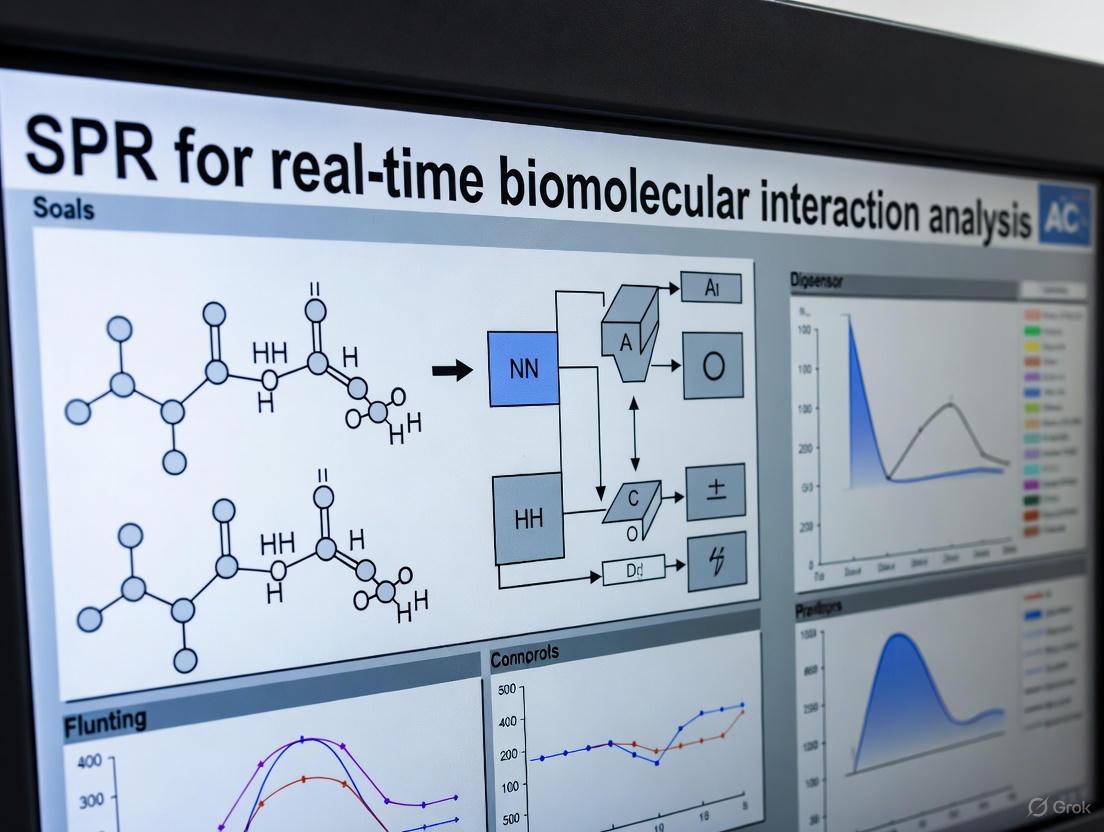
Surface Plasmon Resonance (SPR) has revolutionized the study of biomolecular interactions by providing a label-free, real-time analytical platform.
Real-Time Biomolecular Interaction Analysis with Surface Plasmon Resonance (SPR): A Comprehensive Guide for Drug Discovery and Biomedical Research
Abstract
Surface Plasmon Resonance (SPR) has revolutionized the study of biomolecular interactions by providing a label-free, real-time analytical platform. This article offers a comprehensive overview for researchers, scientists, and drug development professionals, covering the foundational principles of SPR technology and its critical advantage in detecting transient interactions often missed by endpoint assays. It delves into methodological considerations for robust experimental design, practical applications in drug discovery and nanomedicine, and essential troubleshooting strategies for common challenges. Furthermore, the article provides a comparative analysis with other biosensing techniques and explores advanced configurations incorporating 2D materials for enhanced sensitivity, synthesizing key insights to guide future biomedical and clinical research applications.
Understanding SPR: Core Principles and Advantages in Biomolecular Analysis
Surface Plasmon Resonance (SPR) is a powerful optical biosensing technique that enables real-time, label-free analysis of biomolecular interactions. The technology has revolutionized how researchers study binding events in fields ranging from basic research to drug discovery. The fundamental principle of SPR revolves around the excitation of surface plasmons—coherent oscillations of free electrons at the interface between a metal (typically gold) and a dielectric material (such as a buffer solution). When this excitation occurs under specific conditions, it creates an electromagnetic field known as an evanescent wave that extends approximately 200 nanometers from the metal surface. This field is exquisitely sensitive to changes in the refractive index at the interface, allowing for the detection of molecular binding events without the need for fluorescent or radioactive labels [1].
The real-time capability of SPR provides significant advantages over traditional endpoint assays, which risk false-negative results for interactions with fast kinetics. While endpoint methods rely on stable complexes surviving multiple washing steps, SPR monitors interactions as they form and disassemble, capturing even transient binding events that might otherwise go undetected [2]. This sensitivity to kinetic parameters makes SPR particularly valuable for applications where understanding binding dynamics is crucial, such as in therapeutic development for modalities like CAR-T cells, antibody-drug conjugates, and targeted protein degradation, where precise affinity tuning is essential for efficacy [2].
The Physical Mechanism of SPR Detection
The SPR phenomenon occurs under precise conditions of angle, wavelength, and polarization. When p-polarized light (with its electric field component perpendicular to the metal surface) strikes the metal-dielectric interface at a specific angle known as the resonance angle, it transfers energy to the electrons in the metal film, exciting surface plasmons [1]. This energy transfer causes a measurable drop in the intensity of the reflected light. The resonance angle is highly sensitive to the refractive index of the medium adjacent to the metal surface—a property that forms the basis for SPR's detection capability [1].
The excitation of surface plasmons generates an evanescent electromagnetic field that decays exponentially with distance from the metal surface. This field typically penetrates 100-300 nanometers into the dielectric medium, making it ideally suited for detecting binding events at the molecular scale. When biomolecules bind to the sensor surface, they displace buffer solution within the evanescent field, changing the local refractive index and altering the resonance conditions [1].
Detection of Binding Events
In a typical SPR experiment, one interaction partner (the ligand) is immobilized on the sensor chip surface, while the other (the analyte) is flowed over the surface in solution. As analyte molecules bind to the immobilized ligand, the increased mass concentration on the sensor surface causes a proportional increase in the refractive index within the evanescent field. This change shifts the resonance angle, which is detected in real-time and plotted as a sensorgram—a graph of response units (RU) versus time [3].
The sensorgram provides a complete temporal profile of the molecular interaction, with the rising phase representing the association of analyte with ligand and the falling phase representing dissociation when analyte injection stops and buffer flow resumes. Each phase contains valuable kinetic information: the association rate constant (kₐ) describes how quickly complexes form, while the dissociation rate constant (kḍ) describes how quickly they break apart [3] [4]. From these pre-equilibrium rate constants, the equilibrium dissociation constant (K({}_{\text{D}})) can be calculated, providing a comprehensive picture of the binding interaction that extends beyond what is possible with endpoint methods [3].
Table 1: Key Physical Principles of SPR Biosensing
| Principle | Description | Experimental Significance |
|---|---|---|
| Surface Plasmons | Coherent electron oscillations at metal-dielectric interface [1] | Forms the basis of detection sensitivity |
| Evanescent Field | Electromagnetic field extending ~200 nm from surface [1] | Probes the immediate environment where binding occurs |
| Refractive Index Change | Alteration of optical properties due to mass changes [3] [1] | Directly correlates with bound analyte concentration |
| Resonance Angle Shift | Change in angle of minimum reflected light intensity [1] | Measurable output indicating binding events |
| P-Polarized Light Requirement | Light with electric field perpendicular to surface [1] | Necessary for efficient plasmon excitation |
Experimental Workflow and Protocol
The following diagram illustrates the complete SPR experimental workflow, from sensor chip preparation to data analysis:
SPR Experimental Workflow
Sensor Chip and Buffer Preparation
Sensor Chip Selection and Preparation:
- Chip Type Selection: Choose an appropriate sensor chip based on the immobilization strategy. Common options include carboxymethylated dextran (CM5) for amine coupling, NTA chips for capturing His-tagged proteins, or specialized chips with pre-immobilized capture reagents [3].
- Chip Cleaning: For reused chips, rinse thoroughly with double-distilled water and dry gently with delicate wipers, taking care not to touch the gold surface. For new chips, follow manufacturer's instructions for initial preparation [3].
- Chip Docking: Place the chip in its sheath with correct orientation and dock in the SPR instrument, ensuring proper alignment according to the instrument manual [3].
Running Buffer Preparation:
- Composition: Prepare an appropriate running buffer (RB), typically 50 mM Tris-HCl pH 7.5, 150 mM NaCl with any necessary additives such as 0.05% (w/v) DDM (n-Dodecyl β-D-maltoside) for membrane proteins [3].
- Filtration and Degassing: Filter all buffers through 0.22 µm protein-compatible filters. If the instrument lacks an in-line degasser, degas buffers prior to use to prevent air bubble formation during experiments [3].
- Sample Buffer Matching: Dialyze protein samples overnight or dilute them extensively against the running buffer to avoid buffer mismatch artifacts that can cause bulk refractive index shifts [3].
Ligand Immobilization
Amine Coupling Method: This approach covalently immobilizes proteins through primary amines on lysine residues or the N-terminus:
- Surface Activation: Inject a fresh mixture of 0.4 M EDC (1-ethyl-3-(3-dimethylaminopropyl)carbodiimide) and 0.1 M NHS (N-hydroxysuccinimide) over the carboxymethylated dextran surface for 7 minutes to activate carboxyl groups.
- Ligand Injection: Dilute the ligand to 10-100 µg/mL in low-salt buffer (typically 10 mM sodium acetate, pH 4.0-5.5) and inject over the activated surface for 5-15 minutes.
- Surface Blocking: Deactivate remaining active esters by injecting 1 M ethanolamine-HCl (pH 8.5) for 7 minutes [4].
Capture Methods:
- His-Tag/NTA Capture: For His-tagged proteins, condition the NTA surface with a 0.5 mM NiCl₂ injection, followed by injection of the His-tagged ligand at ~20 µg/mL concentration. Use low ligand concentrations with longer injections at low flow rates for optimal immobilization [3].
- Antibody Capture Systems: Use species-specific antibody surfaces to capture Fc-tagged ligands, preserving proper ligand orientation and activity.
Analyte Binding and Regeneration
Analyte Series Preparation:
- Prepare analyte concentrations typically ranging from 10 µM to 10 nM in ten-fold dilutions in running buffer.
- Always start with the lowest concentration first to minimize carryover effects.
- Remove aggregates by gel filtration or ultracentrifugation (10 minutes at 100,000 × g) immediately before the experiment to prevent nonspecific binding and surface fouling [3].
Binding Cycle Execution:
- Baseline Stabilization: Establish a stable baseline with running buffer flowing over the ligand surface.
- Association Phase: Inject analyte for 2-5 minutes while monitoring the increasing SPR response as binding occurs.
- Dissociation Phase: Switch back to running buffer only and monitor the decreasing signal as complexes dissociate for 5-15 minutes.
- Surface Regeneration: Inject a regeneration solution (such as 10 mM glycine-HCl, pH 2.0-3.0, or 100 mM HCl for NTA chips) for 30-60 seconds to remove bound analyte without damaging the immobilized ligand [3] [4].
Instrument Parameters:
- Set flow rate to 30-50 µL/min for optimal mass transport and detection.
- Maintain temperature at 25°C unless specific experimental requirements dictate otherwise.
- For temperature-sensitive samples, set the sample compartment to 7°C to maintain protein stability throughout the experiment [3].
Data Interpretation and Analysis
Sensorgram Interpretation
The sensorgram provides a rich source of information about the binding interaction. The following key features can be extracted:
Association Phase Analysis: During analyte injection, the increasing signal represents the formation of ligand-analyte complexes. The slope of this curve indicates the association rate, which depends on both the analyte concentration and the association rate constant (kₐ). At higher analyte concentrations, the association phase rises more steeply and reaches a higher response level at equilibrium [3].
Dissociation Phase Analysis: When analyte injection stops and buffer flow resumes, the decreasing signal represents the breakdown of complexes. The dissociation rate constant (k({}{\text{d}})) can be determined from the exponential decay of the signal during this phase. A steep decline indicates fast dissociation (high k({}{\text{d}})), while a gradual decline indicates stable complex formation (low k({}_{\text{d}})) [3].
Equilibrium Analysis: The plateau region reached during analyte injection represents the steady-state equilibrium where association and dissociation rates are equal. The response at this plateau is proportional to the amount of complex formed and can be used to calculate the equilibrium dissociation constant (K({}_{\text{D}})) when measured at multiple analyte concentrations [4].
Kinetic and Affinity Calculations
SPR data analysis typically involves fitting the sensorgram data to appropriate binding models to extract kinetic and affinity parameters:
1:1 Langmuir Binding Model: This model applies to simple bimolecular interactions and uses the following equation: [\frac{dR}{dt} = k{\text{a}} \cdot C \cdot (R{\text{max}} - R) - k_{\text{d}} \cdot R] Where:
- dR/dt is the rate of change of response
- k({}_{\text{a}}) is the association rate constant (M⁻¹s⁻¹)
- C is the analyte concentration (M)
- R({}_{\text{max}}) is the maximum binding capacity
- k({}_{\text{d}}) is the dissociation rate constant (s⁻¹)
- R is the response at time t
From these rate constants, the equilibrium dissociation constant is calculated as: [K{\text{D}} = \frac{k{\text{d}}}{k_{\text{a}}}]
Heterogeneity and Complex Models: For more complex interactions, such as those involving conformational changes or multiple binding sites, more sophisticated models like two-state binding or heterogeneous ligand models may be required. These models provide additional parameters to describe the complexity of the interaction [4].
Table 2: Key SPR-Derived Binding Parameters and Their Significance
| Parameter | Symbol | Units | Biological Significance |
|---|---|---|---|
| Association Rate Constant | kₐ | M⁻¹s⁻¹ | How quickly molecules form complexes |
| Dissociation Rate Constant | k({}_{\text{d}}) | s⁻¹ | How quickly complexes break apart |
| Equilibrium Dissociation Constant | K({}_{\text{D}}) | M | Affinity strength; concentration at half-maximal binding |
| Half-Life | t({}_{1/2}) | s | Complex stability; ln(2)/k({}_{\text{d}}) |
| Maximum Response | R({}_{\text{max}}) | RU | Proportional to molecular weight of analyte and ligand density |
Essential Research Reagent Solutions
Successful SPR experiments require careful selection and preparation of reagents. The following table outlines key materials and their functions:
Table 3: Essential Research Reagents for SPR Experiments
| Reagent/Category | Specific Examples | Function/Purpose |
|---|---|---|
| Sensor Chips | CM5 (carboxymethylated dextran), NTA, SA (streptavidin) [3] | Provides functionalized surface for ligand immobilization |
| Coupling Chemicals | EDC, NHS, ethanolamine-HCl [4] | Enables covalent immobilization via amine coupling |
| Capture Reagents | NTA (Ni²⁺), anti-His antibodies, streptavidin [3] | Captures tagged ligands with proper orientation |
| Running Buffers | HBS-EP, PBS, Tris-HCl with detergents [3] | Maintains pH, ionic strength, and ligand stability |
| Regeneration Solutions | Glycine-HCl (pH 2.0-3.0), NaOH, SDS, HCl [3] | Removes bound analyte without damaging ligand |
| Ligand Formats | His-tagged proteins, Fc fusions, biotinylated ligands [3] | Compatible with various immobilization strategies |
| Reference Analytes | Well-characterized antibodies, protein standards [3] | Validates system performance and data quality |
Applications in Biomolecular Interaction Research
SPR's real-time detection capability makes it invaluable for numerous research applications, particularly in drug discovery and basic research. In pharmaceutical development, SPR provides critical insights for various therapeutic modalities. For CAR-T cell therapies, moderate affinity (K({}_{\text{D}}) ≈ 50-100 nM) of antigen-binding domains correlates with clinical efficacy. For antibody-drug conjugates (ADCs), reducing target binding affinity has emerged as a strategy to improve tumor penetration and reduce on-target, off-site toxicity. Similarly, targeted protein degradation therapies require precise affinity tuning to optimize ternary complex formation and avoid the "hook effect" where high drug concentrations shift equilibrium toward non-productive binary interactions [2].
SPR plays a crucial role in off-target toxicity screening, where it helps identify interactions with unintended targets that could cause adverse effects. Traditional endpoint assays often miss transient interactions with fast dissociation rates, creating false negatives that may only surface in later development stages. SPR's real-time monitoring captures these fleeting interactions, providing a more comprehensive safety profile early in drug development. This capability is particularly important given that an estimated 30% of drug failures are attributed to toxicity from off-target interactions [2].
For membrane protein studies, SPR offers unique advantages despite the challenges of working with these hydrophobic complexes. The technology's compatibility with detergents and lipids enables researchers to characterize interactions between membrane proteins and their soluble partners. The small sample requirements (microgram to nanogram amounts) are particularly beneficial when studying membrane proteins, which are often difficult to express and purify in large quantities [3]. This has enabled detailed investigation of systems such as ABC transporters and their cognate substrate-binding proteins [3].
Recent technological advancements like Sensor-Integrated Proteome on Chip (SPOC) further expand SPR's capabilities by coupling cell-free protein synthesis directly on SPR biosensors. This approach enables high-density protein production on-chip for cost-efficient, high-throughput screening of protein interaction networks, significantly increasing multiplex capacity compared to traditional SPR platforms [2].
Technical Considerations and Limitations
While SPR is a powerful technique, researchers must be aware of its limitations and potential artifacts. The method's high sensitivity to refractive index changes means that any factor altering this property at the sensor surface will be detected, including nonspecific binding, buffer mismatches, or temperature fluctuations. Appropriate reference surfaces and careful experimental design are essential to distinguish specific binding from these confounding effects [3].
Mass Transport Limitations can occur when the rate of analyte delivery to the surface is slower than the intrinsic binding rate, leading to underestimation of association rate constants. This effect can be minimized by using higher flow rates, lower ligand densities, or specially designed flow cells that enhance mass transport [3].
Surface Activity Concerns must be addressed through proper immobilization strategies that maintain ligand functionality. Random immobilization through amine coupling may occasionally block binding sites or cause heterogeneity in binding behavior. Capture methods that orient ligands uniformly often provide more reliable kinetic data, though they require additional genetic modification of the ligand [4].
Regeneration Optimization is crucial for reusable sensor surfaces. Overly harsh regeneration conditions may damage the immobilized ligand, while insufficient regeneration leaves residual bound analyte that compromises subsequent binding cycles. Empirical testing of different regeneration solutions and contact times is typically required for each new ligand-analyte system [3].
Despite these considerations, when properly controlled and implemented, SPR remains one of the most informative techniques for studying biomolecular interactions, providing unparalleled insights into the dynamics of binding events that underlie biological function and therapeutic intervention.
Surface Plasmon Resonance (SPR) technology has established itself as a cornerstone technique in modern biological research and drug development by enabling the real-time, label-free analysis of biomolecular interactions. This optical phenomenon occurs when polarized light strikes a metal film (typically gold) at the interface of two media, generating electron charge density waves called plasmons. The resonance angle at which this occurs is exquisitely sensitive to changes in mass on the metal surface, allowing researchers to monitor binding events as they happen without requiring fluorescent or radioactive labels [5] [6].
The significance of SPR lies in its dual capability: it provides both qualitative confirmation of interactions and quantitative data on the kinetics and affinity of these interactions. Unlike endpoint assays, SPR reveals the complete binding profile—including association rates (how quickly molecules bind), dissociation rates (how quickly complexes break apart), and equilibrium constants (binding strength). This comprehensive kinetic profiling is indispensable for understanding biological mechanisms and optimizing therapeutic compounds, particularly in pharmaceutical development where binding kinetics strongly correlate with drug efficacy and duration of action [5] [7].
Core Principles and Instrumentation
The SPR Phenomenon and Detection Mechanism
The fundamental principle underlying SPR technology involves the detection of changes in the refractive index at the sensor surface. When biomolecular binding occurs, the accumulated mass alters the local refractive index, which in turn shifts the SPR angle. This shift is measured in resonance units (RU) and plotted in real-time to generate a sensorgram—a visual representation of the entire interaction process [6].
A typical SPR experiment involves immobilizing one interaction partner (the ligand) onto a sensor chip, while the other partner (the analyte) flows over the surface in solution. As analytes bind to ligands during the association phase, the sensor response increases. When buffer alone flows over the surface during the dissociation phase, the response decreases as complexes break apart. The resulting sensorgram provides rich data about the interaction kinetics that can be mathematically modeled to extract rate constants [6] [7].
Experimental Workflow
The following diagram illustrates the standardized workflow for conducting an SPR experiment, from sensor chip preparation to data analysis:
Key Advantage 1: Label-Free Detection
Principles and Benefits of Label-Free Analysis
Label-free detection represents a paradigm shift from traditional bioanalytical methods that require chemical modification of molecules with fluorescent tags, radioactive isotopes, or enzymes. SPR measures binding events directly through intrinsic physical properties, eliminating potential artifacts introduced by labeling processes. This preservation of molecular integrity is crucial for obtaining biologically relevant data, as labels can sterically hinder binding sites, alter molecular conformation, or affect biological activity [5].
The advantages of this label-free approach extend beyond preserving native molecular function. It significantly reduces experimental preparation time by eliminating labeling steps and associated purification procedures. Furthermore, it enables the study of interactions that lack convenient labeling sites or where labels would interfere with the binding interface. This is particularly valuable for studying membrane proteins, protein complexes, and other challenging targets that may be destabilized by chemical modification [5].
Experimental Applications of Label-Free Detection
Case Study 1: Protein-Protein Interaction Analysis In studying antibody-antigen interactions, researchers immobilize antibodies onto a carboxymethyldextran sensor chip surface using standard amine coupling chemistry. Serial dilutions of antigen are injected over the surface, with each binding cycle regenerated using mild acid or base to remove bound antigen without damaging the immobilized antibody. The resulting binding responses provide direct measurement of interaction specificity and strength without requiring secondary detection reagents [7].
Case Study 2: Small Molecule Screening For low molecular weight compounds (<500 Da), SPR detects minimal mass changes through high-sensitivity settings. The technique can distinguish specific binding from non-specific interactions through reference surface subtraction, enabling reliable identification of hits in fragment-based drug discovery. The label-free approach is particularly advantageous here, as adding fluorescent or other tags to small molecules would significantly alter their physicochemical properties and potentially create false positives or negatives [7].
Key Advantage 2: Real-Time Kinetic Profiling
Extracting Kinetic Parameters from SPR Data
Real-time kinetic profiling provides unprecedented insight into the dynamics of molecular interactions, revealing not just whether molecules interact, but how they interact over time. The association rate constant (kₐ or kₒₙ) describes how rapidly complexes form, while the dissociation rate constant (kₑ or kₒffₒ) indicates complex stability. The ratio of these rates (kₑ/kₐ) yields the equilibrium dissociation constant (K_D), a measure of binding affinity [7].
These kinetic parameters have profound biological implications. For therapeutic antibodies, a slow dissociation rate (long residence time) often correlates with prolonged efficacy in vivo, allowing less frequent dosing. Conversely, for some enzyme inhibitors, rapid association may be critical for effective inhibition. SPR uniquely provides this comprehensive kinetic picture, enabling researchers to select candidates with optimal binding characteristics for their intended biological context [8].
Kinetic Data Interpretation
The table below summarizes the key kinetic parameters obtained from SPR analysis and their biological significance:
| Parameter | Symbol | Definition | Biological Significance |
|---|---|---|---|
| Association Rate Constant | kₐ (M⁻¹s⁻¹) | Rate of complex formation | Determines how quickly molecules interact upon encounter; influenced by electrostatic steering and conformational adjustments |
| Dissociation Rate Constant | kₑ (s⁻¹) | Rate of complex breakdown | Indicates complex stability; slow dissociation (low kₑ) correlates with long target residence time in therapeutics |
| Equilibrium Dissociation Constant | K_D (M) | kₑ/kₐ ratio; concentration at half-maximal binding | Measures binding affinity; lower K_D indicates tighter binding |
| Response at Equilibrium | R_eq (RU) | Signal when association and dissociation rates equal | Proportional to molecular weight and binding stoichiometry |
Experimental Protocols
Standard Protein-Protein Interaction Analysis
This protocol details the steps for characterizing the interaction between two proteins using a carboxymethyldextran sensor chip:
Materials and Reagents
- HBS-EP+ running buffer: 10 mM HEPES, 150 mM NaCl, 3 mM EDTA, 0.05% surfactant P20, pH 7.4
- Amine coupling reagents: 400 mM EDC (1-ethyl-3-(3-dimethylaminopropyl)carbodiimide), 100 mM NHS (N-hydroxysuccinimide)
- Ligand protein in immobilization buffer (typically 10 mM sodium acetate, pH 4.0-5.5)
- Analyte protein in running buffer at concentrations spanning 0.1-10 × expected K_D
- Regeneration solution: 10 mM glycine-HCl, pH 1.5-2.5
- Quenching solution: 1 M ethanolamine-HCl, pH 8.5
Instrument Setup
- Prime the SPR instrument with degassed HBS-EP+ buffer for 30-60 minutes to remove air bubbles and stabilize fluidics
- Dilute ligand to 5-50 µg/mL in appropriate immobilization buffer
- Prepare analyte serial dilutions in running buffer (minimum of 5 concentrations with 2-3-fold spacing)
- Set flow rate to 30 µL/min for immobilization and 50-100 µL/min for kinetic measurements
Immobilization Procedure
- Activate dextran matrix with 1:1 mixture of EDC/NHS for 7 minutes
- Inject ligand solution for 5-10 minutes to achieve desired immobilization level (typically 5-10 kRU for proteins)
- Block remaining activated groups with ethanolamine for 7 minutes
- Stabilize surface with 2-3 buffer injections until stable baseline
Kinetic Measurement
- Establish stable baseline with running buffer for 2-3 minutes
- Inject analyte for 3-5 minutes (association phase)
- Monitor dissociation in running buffer for 5-30 minutes
- Regenerate surface with 30-60 second glycine pulse
- Repeat steps 1-4 for all analyte concentrations in randomized order
Data Analysis
- Subtract reference channel signals to remove bulk refractive index changes
- Align sensorgrams to baseline and zero time points
- Fit processed data to appropriate binding model (typically 1:1 Langmuir) using global fitting algorithms
- Assess fit quality by examining residuals and χ² values [6] [7]
Quality Control and Data Validation
Ensuring the reliability of SPR data requires rigorous quality control measures. The ideal binding curve exhibits specific characteristics: the association phase shows clear curvature before injection ends, approaching equilibrium with flattening response, while the dissociation phase follows a single exponential decay. Several artifacts can compromise data quality and must be identified and addressed:
Common Artifacts and Solutions
- Mass transport effects: Occur when analyte delivery to surface is slower than binding, resulting in linear association phases. Remedied by reducing ligand density, increasing flow rate, or using higher analyte concentrations
- Non-specific binding: Creates false positives when analyte interacts with sensor surface rather than ligand. Detected using reference surfaces and minimized by optimizing buffer ionic strength or adding mild detergents
- Bulk shifts: Appear as square-shaped responses from refractive index mismatches between sample and running buffers. Corrected by buffer matching or reference subtraction [7]
The Scientist's Toolkit: Essential Research Reagents and Materials
Successful SPR experiments require careful selection of reagents and materials optimized for label-free detection. The following table details essential components:
| Component | Function | Examples & Specifications |
|---|---|---|
| Sensor Chips | Provide surface for ligand immobilization | CM5 (carboxymethyldextran), NTA (nitrilotriacetic acid for His-tagged proteins), SA (streptavidin for biotinylated ligands) |
| Coupling Reagents | Activate surface for covalent immobilization | EDC/NHS for amine coupling, EDC/sulfo-NHS for carboxyl groups |
| Running Buffers | Maintain physiological pH and ionic strength | HBS-EP+ (10 mM HEPES, 150 mM NaCl, 3 mM EDTA, 0.05% P20, pH 7.4) |
| Regeneration Solutions | Remove bound analyte without damaging ligand | Glycine-HCl (pH 1.5-3.0), NaOH (10-50 mM), SDS (0.01-0.05%) |
| Ligand & Analyte | Interaction partners being studied | Proteins, antibodies, DNA, small molecules in appropriate formulation buffers |
| Reference Surface | Control for non-specific binding and bulk effects | Deactivated surface without ligand or immobilized irrelevant protein |
Advanced Applications and Future Perspectives
Emerging SPR Methodologies
Recent technological advances have expanded SPR applications beyond conventional interaction analysis. Diffusion-based SPR (D-SPR) combines diffusion measurements with computational simulations to characterize complex biomolecular mixtures without chromatography or external labels. This approach has proven particularly valuable for studying heterogeneous systems like ocular fluid models, where it detected oligomeric transitions in α-crystallin proteins relevant to cataract formation—events undetectable by conventional dynamic light scattering [9].
The versatility of SPR platforms continues to grow with applications in diverse fields:
- Pharmaceutical development: Characterization of antibody-drug conjugates, bispecific antibodies, and fusion proteins
- Diagnostics: Detection of biomarkers in complex biological fluids at clinically relevant concentrations
- Material science: Study of protein interactions with nanomaterials and biomaterials
- Food safety and environmental monitoring: Detection of contaminants and pathogens [5]
Data Presentation for Publication
Strong presentation of SPR data is crucial for manuscript acceptance. Journals expect:
- Display of corrected reference-subtracted sensorgrams with fitting curves overlaid
- Inclusion of residual plots to demonstrate fitting quality
- Tabulation of kinetic parameters with standard errors from global fitting
- Description of experimental details: instrument model, sensor chip, immobilization level, flow rates, temperatures, and buffer compositions
- Availability of raw data as supplemental information for reviewer verification [7]
The global SPR market, projected to reach $1099 Million by 2025 and $1832.55 Million by 2033, reflects the technology's expanding adoption across academic, pharmaceutical, and biotechnology sectors [10]. This growth is driven by SPR's unique capacity to provide quantitative kinetic and affinity data that accelerates research and development timelines while delivering publication-quality results that meet rigorous journal standards.
Accurate detection of biomolecular interactions is foundational to diagnostics, proteomics, and drug discovery. Traditional investigative methods have heavily relied on endpoint assays, which capture a single measurement after incubation and wash steps. However, these methods risk false-negative results for interactions with fast kinetics, as transient complexes may form and dissociate rapidly before detection occurs [2]. For critical applications like off-target screening of therapeutics, such false negatives can have major implications for therapeutic efficacy and safety, contributing to a significant proportion of drug failures due to dose-limiting toxicity [2].
Real-time biosensing techniques, particularly Surface Plasmon Resonance (SPR), address this fundamental limitation by monitoring interactions as they form and disassemble. This application note, framed within broader thesis research on real-time biomolecular interaction analysis, details how SPR technology can overcome the pitfalls of endpoint assays. We provide comparative data and detailed experimental protocols to guide researchers in implementing real-time detection to characterize binding kinetics and reduce false negatives in their interaction studies.
Comparative Analysis of Binding Assay Techniques
The following table summarizes key characteristics of major biomolecular interaction analysis techniques, highlighting the unique advantages of SPR.
Table 1: Comparison of Biomolecular Interaction Analysis Techniques
| Technique | Detection Method | Throughput | Kinetics Data | Affinity Data | Thermodynamics | Label-Free |
|---|---|---|---|---|---|---|
| Surface Plasmon Resonance (SPR) | Refractive index change [11] | Moderately High [12] | Yes (ka, kd) [2] [12] | Yes (KD) [2] [12] | Yes (ΔH) [13] | Yes [11] |
| Biolayer Interferometry (BLI) | White light interferometry [12] | Moderate | Yes (ka, kd) [12] | Yes (KD) [12] | No [12] | Yes |
| Isothermal Titration Calorimetry (ITC) | Heat change [12] | Low | No [12] | Yes (KD) [12] | Yes (ΔH, ΔS) [12] | Yes |
| Microscale Thermophoresis (MST) | Thermophoretic movement [12] | Moderate | No [12] | Yes (KD) [12] | No [12] | No (requires fluorescent label) [12] |
| Fluorescent Endpoint Assay | Fluorescence intensity | High | No [2] | Semi-quantitative | No | No |
SPR stands out as the most versatile technique, providing a complete profile of the biomolecular interaction, including real-time kinetics, affinity, and thermodynamic data without the need for labels, making it the gold-standard for regulatory submissions [12].
The Critical Role of Kinetics in Drug Discovery
Understanding the kinetic parameters of a molecular interaction—the association rate (ka) and dissociation rate (kd)—is crucial, as they determine the equilibrium dissociation constant (KD) and the bound complex's half-life (t1/2) [2]. Transient interactions with fast dissociation rates are particularly susceptible to being washed away in endpoint assays before detection can occur, leading to false negatives [2].
The implications of missing these interactions are severe, especially in therapeutic development:
- Off-Target Toxicity: An estimated 30% of drug failures are attributed to toxicity from off-target binding [2]. In vitro promiscuity correlates with in vivo toxicity, making early detection critical.
- Affinity Tuning in Modern Therapies: Contrary to the assumption that higher affinity is always better, emerging therapeutic modalities like CAR-T, ADCs, and Targeted Protein Degradation (TPD) require precise affinity optimization for maximal efficacy and reduced toxicity [2]. SPR is indispensable for this fine-tuning.
Case Study: Detecting Transient Antibody Interactions
To illustrate the limitation of endpoint assays, we compared the performance of a fluorescent endpoint assay versus real-time SPR for characterizing two commercial antibodies (Ab #1 and Ab #2) targeting HaloTag antigens [2].
Experimental Design and Reagent Solutions
Table 2: Key Research Reagents and Materials
| Item | Function/Description | Source |
|---|---|---|
| Anti-HaloTag (Ab #1) | Mouse monoclonal antibody; model ligand with transient binding | Proteintech (28a8) |
| Anti-HaloTag (Ab #2) | Rabbit polyclonal antibody; model ligand with stable binding | Promega (G9281) |
| HaloTag Fusion Proteins | Cell-free expressed target antigens | DNASU Plasmid Repository |
| SPOC Biosensor Slides | Chloroalkane-coated SPR slides for in-situ protein capture | SPOC Proteomics |
| HeLa IVTT Cell-Free Extract | Cell-free system for protein synthesis | ThermoFisher (8882) |
| Protein NanoFactory System | Proprietary instrument for high-density on-chip protein synthesis | SPOC Proteomics |
Protocol: SPOC-Based SPR Screening
Step 1: On-Chip Protein Synthesis and Capture
- Print plasmid DNA containing HaloTag fusion protein open-reading frames into the nanowells of a nanowell slide [2].
- Affix the nanowell slide to a Protein NanoFactory system along with a chloroalkane-coated SPR biosensor slide [2].
- Inject HeLa in vitro transcription and translation (IVTT) cell-free extract over the nanowell slide surface and press-seal the nanowells against the SPR biosensor [2].
- Incubate the assembly at 30°C for 2 hours to allow for protein synthesis and simultaneous capture via the HaloTag [2].
- Disassemble the setup and rinse the SPR biosensor slide with PBST (1X PBS with 0.2% Tween-20) to remove non-specifically bound material [2].
Step 2: Real-Time SPR Binding Analysis
- Prime the SPR instrument with running buffer (e.g., 1X PBS).
- Dock the prepared biosensor slide into the SPR instrument.
- Establish a baseline with running buffer.
- Inject primary antibodies (Ab #1 and Ab #2), each at a series of concentrations (e.g., 0.5-100 nM), over the captured protein spots.
- Monitor the binding response in real-time for an association phase.
- Switch back to running buffer to monitor the dissociation phase.
- Regenerate the surface with a mild regeneration solution (e.g., 10 mM Glycine-HCl, pH 2.0) to remove bound antibody.
Results and Interpretation
The SPR analysis demonstrated that both antibodies successfully bound to the HaloTag fusion proteins. However, they exhibited distinct kinetic profiles:
- Ab #1 showed a fast dissociation rate (kd), characteristic of a transient interaction.
- Ab #2 showed a slow dissociation rate, indicating a stable complex.
In parallel, a fluorescent endpoint assay was performed on similarly prepared glass slides. This assay involved incubation with primary antibodies, wash steps, incubation with fluorescently-labeled secondary antibodies, more wash steps, and finally, fluorescence detection [2]. The endpoint assay failed to detect the binding of Ab #1, yielding a false-negative result. The fast-dissociating Ab #1 complexes did not survive the multiple wash steps before detection [2].
This case study directly demonstrates how real-time SPR monitoring captures transient interactions that are missed by endpoint methods, thereby de-risking critical screening processes.
SPR Biosensing Protocol for Off-Target Screening
The following protocol adapts the SPOC approach for a generic, high-throughput off-target screening campaign using SPR.
Protocol: High-Throughput Off-Target Profiling
Step 1: Proteome Microarray Fabrication
- Utilize a library of expression plasmids for putative off-target proteins, each fused to a common capture tag (e.g., HaloTag).
- Use a high-throughput SPOC or similar system to synthesize and capture hundreds to thousands of different proteins directly onto a single SPR biosensor chip [2] [11]. This creates a proteome microarray.
Step 2: SPR Binding Screening
- Dock the proteome microarray biosensor into a multiplexed SPR imaging instrument (e.g., a system capable of monitoring 384 to 864 spots simultaneously) [2].
- Establish a stable baseline with an appropriate running buffer.
- Inject the therapeutic compound (small molecule, antibody, etc.) over the entire proteome array at a therapeutically relevant concentration.
- Monitor the binding response in real-time across all protein spots during the association phase.
- Switch to running buffer to monitor dissociation.
- Identify potential off-targets as protein spots that show a significant binding response above a baseline threshold.
Step 3: Kinetic Characterization of Hits
- For each potential off-target hit identified in the primary screen, perform a detailed kinetic analysis.
- Inject a concentration series of the therapeutic compound over the specific protein spot(s).
- Fit the resulting sensorgram data to an appropriate binding model (e.g., 1:1 Langmuir) to determine the kinetic rate constants (ka, kd) and calculate the equilibrium dissociation constant (KD).
This integrated workflow enables the unbiased discovery and subsequent quantitative characterization of off-target interactions in a single, label-free platform, significantly reducing the risk of false negatives that could later lead to costly clinical-stage failures.
The transition from endpoint assays to real-time monitoring with SPR biosensing represents a paradigm shift in biomolecular interaction analysis. As demonstrated, SPR provides unparalleled insight into binding kinetics, enabling the detection of transient interactions that are a common source of false negatives in traditional methods. For researchers and drug development professionals, adopting SPR-based strategies—especially when integrated with high-throughput technologies like SPOC—is no longer just an enhancement but a critical necessity for improving the accuracy of diagnostic assays, the reliability of basic research, and the success rates of therapeutic development.
Surface Plasmon Resonance (SPR) has emerged as a cornerstone technology in biophysical characterization, providing real-time, label-free analysis of biomolecular interactions. This application note details the critical kinetic and affinity parameters—association rate constant (ka), dissociation rate constant (kd), and equilibrium dissociation constant (KD)—derived from SPR data. Framed within a broader thesis on real-time biomolecular interaction analysis, this document provides comprehensive protocols for experimental setup, data acquisition, and interpretation. Aimed at researchers and drug development professionals, it emphasizes the significance of these parameters in accelerating therapeutic discovery, from hit identification to lead optimization, by offering quantitative insights into binding kinetics and affinity.
Surface Plasmon Resonance (SPR) is an optical technique that measures biomolecular interactions in real-time by detecting changes in the refractive index on a sensor surface. When one molecule (the ligand) is immobilized on a sensor chip and another (the analyte) is flowed over it, their binding causes a measurable shift in the resonance angle, recorded as a sensorgram—a plot of response units (RU) versus time [14] [15]. This label-free methodology allows for the precise determination of interaction kinetics and affinity, which are foundational for understanding mechanism of action in drug discovery [16].
The primary parameters obtained from SPR analysis provide a quantitative description of the binding event:
- Association rate constant (ka): Measures the rate of complex formation, indicating how quickly the analyte binds to the ligand.
- Dissociation rate constant (kd): Measures the stability of the complex, indicating how quickly the bound complex dissociates.
- Equilibrium dissociation constant (KD): The ratio kd/ka, representing the affinity between the interactants; a lower KD value indicates a higher affinity interaction [14] [17].
These parameters are not merely descriptive; they are critical for differentiating between therapeutic candidates. For instance, a compound with slow dissociation (low kd) may confer longer target occupancy and thus superior in vivo efficacy [16].
Theoretical Foundations of Kinetic and Affinity Constants
The binding between a ligand (L) and an analyte (A) to form a complex (LA) is described by the equation: A + L ⇌ LA
The association rate constant (ka), expressed in M⁻¹s⁻¹, defines the speed at which the complex forms. A higher ka suggests a faster on-rate, often influenced by factors such as electrostatic steering or conformational gating. Conversely, the dissociation rate constant (kd), expressed in s⁻¹, defines the stability of the complex once formed. A lower kd indicates a longer-lived, more stable complex, which is a highly desirable property for many therapeutic antibodies [14] [16].
The equilibrium dissociation constant (KD), calculated as kd/ka and expressed in molar units (M), represents the analyte concentration required to occupy half of the available ligand binding sites at equilibrium. It is a direct measure of binding affinity, where a lower KD value signifies a tighter interaction. SPR uniquely resolves this composite affinity constant into its individual kinetic components, providing a deeper mechanistic understanding than equilibrium methods alone [14]. The following diagram illustrates the core binding reaction and the governing equations for these constants.
Experimental Protocols for Determining ka, kd, and KD
A robust SPR experiment requires meticulous planning and execution across three main phases: surface preparation, sample analysis, and data processing.
Sensor Surface Preparation and Ligand Immobilization
The first critical step involves immobilizing the ligand onto the sensor chip surface without compromising its biological activity.
Protocol: Amine Coupling Immobilization
- Surface Activation: Inject a mixture of N-ethyl-N'-(dimethylaminopropyl)carbodiimide (EDC) and N-hydroxysuccinimide (NHS) over the carboxymethylated dextran (CM5) sensor chip surface. A successful activation is confirmed by an immediate increase of 100-200 Response Units (RU) [17].
- Ligand Coupling: Dilute the ligand in a low-salt buffer with a pH (typically 4.0-5.0) below its isoelectric point to ensure a positive net charge. Inject the ligand solution over the activated surface. The immobilization level, typically between 5,000 and 15,000 RU for proteins, should be optimized to minimize mass transport effects and rebinding during dissociation [17] [15].
- Surface Blocking: Inject a high-concentration solution of ethanolamine-HCl to deactivate and block any remaining reactive NHS esters on the surface, thereby minimizing non-specific binding in subsequent steps [17].
Sample Analysis and Data Acquisition
With the ligand stably immobilized, the analyte is passed over the surface to monitor binding in real-time.
Protocol: Kinetic Titration Series
- System Preparation: Prime the SPR instrument with a running buffer that is compatible with both the interactants and the immobilization chemistry.
- Analyte Dilution Series: Prepare a minimum of five two-fold serial dilutions of the analyte in the running buffer. It is critical that the buffer composition of the analyte samples matches the running buffer exactly to avoid bulk refractive index shifts [14].
- Binding Cycle Execution: For each analyte concentration, execute a binding cycle consisting of:
- Baseline Stabilization: Flow running buffer alone to establish a stable baseline.
- Association Phase: Inject the analyte solution for a fixed contact time (typically 1-5 minutes) while monitoring the increase in RU as the complex forms.
- Dissociation Phase: Switch back to running buffer and monitor the decrease in RU as the complex dissociates.
- Surface Regeneration: A brief pulse (15-60 seconds) of a regeneration solution (e.g., 10 mM glycine-HCl, pH 2.0-3.0) is often required to remove any remaining bound analyte and restore the ligand surface for the next cycle.
Data Processing and Curve Fitting
The raw sensorgram data is processed and fitted to a binding model to extract the kinetic constants.
Protocol: 1:1 Langmuir Binding Model Fitting
- Reference Subtraction: Subtract the signal from a reference flow cell (with no ligand or an irrelevant ligand immobilized) from the active flow cell sensorgrams to account for refractive index changes and non-specific binding.
- Zero Adjustment: Align the response to zero immediately before the injection start time for each sensorgram.
- Model Selection and Fitting: Fit the entire set of concentration-series sensorgrams globally to a 1:1 Langmuir binding model using the instrument's software (e.g., Biacore T200 Evaluation Software). This model simultaneously fits the association and dissociation phases for all analyte concentrations to determine a single, global ka and kd value.
- Affinity Calculation: The software automatically calculates the equilibrium dissociation constant as KD = kd/ka [17].
Data Presentation and Analysis
The following table summarizes quantitative SPR affinity data for a series of Synthetic Cannabinoids (SCs) binding to the CB1 receptor, demonstrating how KD values and the underlying kinetic constants elucidate structure-affinity relationships [17].
Table 1: Experimentally Determined CB1 Receptor Affinity Constants for Synthetic Cannabinoids
| Classification | Substance | KD Value (M) | Relative Affinity |
|---|---|---|---|
| Indazole-based | FUB-AKB-48 | 1.571 × 10⁻⁶ | Highest |
| Indazole-based | MDMB-4en-PINACA | 5.786 × 10⁻⁶ | Very High |
| Indazole-based | AB-CHMINACA | 7.641 × 10⁻⁶ | Very High |
| Indazole-based | 5F-AKB-48 | 8.287 × 10⁻⁶ | High |
| Indazole-based | 5F-MDMB-PINACA | 1.502 × 10⁻⁵ | High |
| Indole-based | STS-135 | 1.770 × 10⁻⁵ | Medium |
| Indole-based | FDU-PB-22 | 1.844 × 10⁻⁵ | Medium |
| Indole-based | MAM-2201 | 2.293 × 10⁻⁵ | Medium |
| Indole-based | AMB-4en-PICA | 3.295 × 10⁻⁵ | Low |
| Indole-based | JWH-018 | 4.346 × 10⁻⁵ | Lowest |
The data clearly demonstrates that indazole-based SCs consistently exhibit stronger binding affinity (lower KD) to the CB1 receptor compared to their indole-based counterparts. For example, the substitution of the parent core from indole (in STS-135, KD = 1.770 × 10⁻⁵ M) to indazole (in 5F-AKB-48, KD = 8.287 × 10⁻⁶ M) resulted in an approximate 50% reduction in the KD value, indicating a significantly stronger affinity [17]. This quantitative analysis validates SPR's power in discriminating between structurally similar analogs.
The complete experimental workflow, from surface preparation to data analysis, is visualized below, highlighting the key steps and their outputs.
The Scientist's Toolkit: Essential Research Reagents and Materials
Successful execution of SPR experiments depends on the availability and quality of specific reagents and instrumentation. The following table details the essential components of an SPR toolkit.
Table 2: Key Research Reagent Solutions for SPR Experiments
| Item | Function in SPR Experiment |
|---|---|
| Sensor Chips (e.g., CM5) | The solid support with a gold film and a functionalized dextran matrix (carboxymethylated) that enables ligand immobilization via common chemistries like amine coupling [17]. |
| Immobilization Reagents (EDC, NHS) | Cross-linking agents used in amine coupling to activate carboxyl groups on the sensor chip surface, facilitating covalent attachment of ligand molecules [17]. |
| Running Buffer | The consistent buffer solution used to dilute analytes and maintain the system; its exact composition must be matched in all analyte samples to prevent bulk refractive index shifts [14]. |
| Regeneration Solution (e.g., Glycine-HCl, pH 2.0) | A low-pH buffer or other disruptive agent used to remove bound analyte from the immobilized ligand without denaturing it, allowing for the re-use of the ligand surface for multiple binding cycles [15]. |
| High-Throughput SPR Instrumentation (e.g., Carterra LSA) | Advanced SPR platforms that enable parallel screening of hundreds to thousands of interactions simultaneously, dramatically accelerating epitope binning and kinetic profiling in antibody discovery campaigns [16]. |
The critical SPR parameters—ka, kd, and KD—provide an indispensable, quantitative framework for deciphering the dynamics and strength of biomolecular interactions. The detailed protocols and data analysis workflows outlined in this application note empower researchers to reliably obtain these constants. As the case study on synthetic cannabinoids illustrates, the ability to correlate kinetic and affinity data with molecular structure is paramount for informed decision-making in therapeutic development. By integrating high-throughput capabilities, SPR continues to evolve as a powerful tool, offering unparalleled insights that drive innovation from basic research through the drug discovery pipeline.
In Surface Plasmon Resonance (SPR) biosensing, the sensorgram is the fundamental output, providing a real-time, label-free visualization of biomolecular interactions. This plot of response (in Resonance Units, RU) versus time captures the entire lifecycle of a binding event between an analyte in solution and a ligand immobilized on the sensor chip surface [18] [19]. The significance of the sensorgram lies in its ability to transform a qualitative observation of binding into quantitative data on affinity, kinetics, and specificity, which are indispensable parameters in fundamental research and therapeutic drug development [20] [2]. By monitoring interactions as they form and disassemble in real-time, SPR reduces the risk of false-negative results common in endpoint assays, especially for interactions with fast dissociation rates [2]. This guide details the interpretation of sensorgrams and provides protocols for obtaining high-quality data within the context of real-time biomolecular interaction analysis.
Qualitative Interpretation: The Phases of a Sensorgram
A typical sensorgram is composed of five distinct phases, each revealing specific aspects of the molecular interaction. The diagram below illustrates the sequential flow and key processes of each phase in a standard SPR experiment.
- Baseline: This initial phase establishes system stability. A stable, flat baseline using a running buffer (e.g., phosphate-buffered saline or HEPES-NaCl) is crucial, as drift, injection spikes, or high buffer response indicate a system that requires checking and cleaning [18] [19].
- Association: The injection of the analyte begins this phase, marked by a sharp rise in the SPR signal. The shape of this curve is ideally a single exponential and represents the binding of the analyte to the immobilized ligand. The rate of increase is governed by the analyte concentration, the association rate constant (kon), and the density of available ligand binding sites [18] [21].
- Steady-State: This plateau occurs when the rate of analyte association equals the rate of dissociation, resulting in a net rate of zero for complex formation. A horizontal steady-state indicates that the system has reached equilibrium. The response level at equilibrium (Req) depends on the analyte concentration and the binding affinity [18] [21].
- Dissociation: Upon switching back to a buffer flow, the specific bonds between analyte and ligand break, causing a decrease in the signal. The downward slope provides direct information about the stability of the complex; a steeper slope indicates a less stable complex with a faster dissociation rate (koff) [18] [19].
- Regeneration: A final injection of a low-pH buffer (e.g., glycine) or high-salt solution removes any remaining bound analyte, resetting the sensor surface for a new experiment. Effective regeneration is critical for reusing the sensor chip across multiple binding cycles without damaging the immobilized ligand's activity [18] [20].
Quantitative Analysis: Extracting Kinetic and Affinity Data
The sensorgram's true power is unlocked by quantitatively analyzing the association and dissociation phases to determine kinetic and affinity parameters.
Key Parameters and Their Significance
- Association Rate Constant (kon or ka): Measures the speed at which the analyte binds to the ligand (Units: M-1s-1). A higher kon indicates faster complex formation.
- Dissociation Rate Constant (koff or kd): Measures the stability of the complex, indicating how quickly the analyte dissociates from the ligand (Units: s-1). A lower koff indicates a more stable complex.
- Equilibrium Dissociation Constant (KD): The affinity constant, calculated as KD = koff / kon (Units: M). A lower KD value indicates a higher affinity interaction. The KD is also equivalent to the analyte concentration at which half of the ligand binding sites are occupied at equilibrium [18] [20] [21].
Data Fitting and Analysis
Sensorgram data is processed by fitting to a binding model, most commonly a 1:1 Langmuir binding model, using integrated software (e.g., TraceDrawer, Scrubber). Global fitting, where all sensorgrams from a concentration series are fitted simultaneously to a single set of parameters, is the standard for obtaining robust and reliable kinetic constants [18] [22] [21]. The table below summarizes the core quantitative parameters derived from sensorgram analysis.
Table 1: Key Quantitative Parameters from Sensorgram Analysis
| Parameter | Symbol | Definition | Biological Significance |
|---|---|---|---|
| Association Rate Constant | kon or ka | Rate of complex formation | Speed of binding; molecular recognition |
| Dissociation Rate Constant | koff or kd | Rate of complex breakdown | Complex stability; duration of interaction |
| Equilibrium Dissociation Constant | KD | koff / kon; [Analyte] at half-maximal binding | Binding affinity; strength of interaction |
| Maximal Response | Rmax | Theoretical response at full ligand saturation | Validation of binding model and immobilization level |
Experimental Protocol: A Step-by-Step Guide
This protocol outlines the key steps for performing a kinetic SPR experiment to characterize a protein-peptide interaction, based on established methodologies [20] [22].
Pre-Experiment Planning and Surface Preparation
- Immobilization Strategy: Select a sensor chip and immobilization chemistry based on the ligand's properties. For his-tagged proteins (e.g., GSK3β [22]), use an Ni-NTA chip. For antibodies, a Protein A chip is suitable. For covalent immobilization via amine groups, a CM5 dextran chip is standard.
- Ligand Immobilization:
- Conditioning: For an Ni-NTA chip, inject a conditioning solution (e.g., 40 mM NiSO4 [22] or 150 mM NiCl2 [20]) to charge the surface with nickel ions.
- Capture: Dilute the his-tagged ligand in running buffer and inject over the sensor surface until the desired immobilization level (Response Units, RU) is achieved. The level should be optimized for the analyte size to avoid mass transport limitations and to achieve a sufficient maximum response (Rmax) [20].
- Running Buffer Selection: Use a physiologically relevant buffer such as HEPES, Tris, or PBS. Include additives like 0.01% Tween 20 to minimize non-specific binding. If analytes are dissolved in DMSO, match the DMSO percentage exactly in all samples and the running buffer to avoid bulk refractive index disturbances [20] [23].
Kinetic Titration Experiment
- Analyte Series Preparation: Prepare a dilution series of the analyte covering a range from below to above the expected KD. An optimal range is typically 0.1 to 10 times the KD [21]. Include at least five analyte concentrations and a zero-concentration (buffer) blank for double-referencing.
- Instrument Setup:
- Set the flow rate (typically 30-50 µL/min).
- Set the association time (typically 2-5 minutes) to allow binding to approach equilibrium for at least the highest concentrations.
- Set the dissociation time (typically 2-10 minutes) to capture sufficient curvature for reliable koff determination [20] [22].
- Data Collection: Automatically inject the analyte series from lowest to highest concentration. After each dissociation phase, inject a regeneration solution (e.g., 10 mM glycine pH 2.0 or 2 M NaCl [20] [22]) for 30-60 seconds to remove bound analyte and reset the surface. Confirm that the signal returns to the original baseline.
The workflow below summarizes the key stages of a complete SPR experiment, from surface preparation to data analysis.
Advanced Applications in Drug Discovery
SPR sensorgrams are pivotal in modern drug development, providing insights beyond simple affinity measurements.
- Off-Target Binding Screening: SPR's real-time capability reduces the risk of false negatives in secondary pharmacology profiling, as it can detect weak, transient interactions that might dissociate during the wash steps of endpoint assays [2]. This is crucial for identifying dose-limiting toxicity early in development.
- Affinity-Tuning for Novel Modalities: For therapeutic classes like CAR-T cells, Antibody-Drug Conjugates (ADCs), and Targeted Protein Degraders (TPD), the sensorgram provides the kinetic rationale for affinity optimization. For instance, moderate affinity (KD in the ~50-100 nM range) in CAR-T therapies has been correlated with improved antitumor efficacy [2].
- Binding Site Mapping: Sequential or co-injection experiments can determine if two analytes bind to the same site on a target. As demonstrated with GSK3β inhibitors hDISCtide and FRATide, if pre-incubating the target with one inhibitor does not block the binding of the second, the two likely bind to distinct sites, enabling the design of bi-specific molecules [22].
The Scientist's Toolkit: Essential Reagents and Materials
Table 2: Key Research Reagent Solutions for SPR Experiments
| Item | Function / Description | Example Use Case |
|---|---|---|
| Ni-NTA Sensor Chip | Surface for capturing his-tagged ligands via nickel chelation. | Immobilization of his-tagged GSK3β kinase for peptide inhibitor studies [22]. |
| CM5 Sensor Chip | Carboxymethylated dextran surface for covalent coupling of ligands. | Amine-based immobilization of antibodies or proteins [20]. |
| Running Buffer (HEPES/NaCl) | Standard buffer (e.g., 10 mM HEPES pH 7.4, 150 mM NaCl) to maintain pH and ionic strength. | Provides a stable baseline and physiologically relevant conditions for interaction [20]. |
| Regeneration Solution (Glycine pH 2.0) | Low-pH buffer that disrupts protein-protein interactions without denaturing the ligand. | Removal of bound antibodies or peptides from the immobilized target [20] [22]. |
| Membrane Scaffold Protein (MSP) Nanodiscs | Nanoscale lipid bilayers used to present membrane-associated targets in a native-like environment. | Incorporating lipids like phosphatidic acid (PA) to study protein-lipid interactions [20]. |
Troubleshooting Common Sensorgram Artefacts
Even well-designed experiments can produce suboptimal sensorgrams. The table below lists common issues and their solutions.
Table 3: Troubleshooting Common Sensorgram Issues
| Problem | Potential Cause | Recommended Solution |
|---|---|---|
| Baseline Drift | Contamination on sensor chip or in fluidics; buffer instability; temperature fluctuations. | Clean fluidic system and sensor chip; prepare fresh, filtered buffer; ensure instrument temperature is stable [19]. |
| Low Binding Signal | Analyte concentration too low; insufficient active ligand immobilized; low-affinity interaction. | Increase analyte concentration; optimize ligand immobilization level to increase Rmax [19]. |
| Non-Specific Binding (NSB) | Analyte interacts with the sensor matrix rather than the ligand. | Include a control flow cell; use a different chip chemistry (e.g., lower charge); add a non-ionic detergent (e.g., Tween-20) to the buffer [20] [19]. |
| Incomplete Regeneration | Regeneration solution is too mild for the interaction. | Test a gradient of harsher regeneration solutions (e.g., higher salt, lower pH) while verifying ligand remains active [20]. |
| Poor Curve Fitting | Incorrect binding model (e.g., using 1:1 model for a complex interaction); mass transport limitation. | Test more complex models (e.g., two-state, bivalent); increase flow rate to reduce mass transport effects [21]. |
SPR in Practice: Methodologies, Protocols, and Cutting-Edge Applications
Within the framework of real-time biomolecular interaction analysis using Surface Plasmon Resonance (SPR), sensor chip selection is a foundational step that directly determines data quality and reliability. SPR technology enables the label-free, real-time monitoring of molecular interactions by detecting changes in the refractive index at a sensor surface [24]. The sensor chip itself serves as the platform upon which one interaction partner (the ligand) is immobilized, while the other (the analyte) is flowed over it in solution [25] [26]. The choice of chip dictates the immobilization chemistry, which in turn influences ligand activity, orientation, and the overall sensitivity of the assay. This application note provides a detailed strategic guide for researchers and drug development professionals on the use of three predominant sensor chips: the versatile CM5, the affinity-based NTA, and the capture-oriented SA chip. By outlining their distinct properties, ideal applications, and specific experimental protocols, this document aims to standardize and optimize SPR practices for obtaining high-quality kinetic and affinity data.
The core of an SPR biosensor chip is a glass substrate coated with a thin gold layer. This layer is typically functionalized with a chemical coating or matrix that facilitates the immobilization of the ligand [27]. The immobilization method falls into two primary categories: covalent coupling, which creates a stable, irreversible attachment, and capture coupling, which uses specific, reversible affinity interactions [28] [27].
Table 1: Comparative Overview of CM5, NTA, and SA Sensor Chips
| Feature | CM5 Chip | NTA Chip | SA (Streptavidin) Chip |
|---|---|---|---|
| Immobilization Chemistry | Covalent coupling (primarily amine) [28] | Affinity capture of His-tagged ligands [29] [28] | Affinity capture of biotinylated ligands [29] [27] |
| Surface Structure | Carboxymethylated dextran matrix (3D) [29] [26] | NTA groups on a 2D or 3D surface [29] | Immobilized streptavidin on a surface [29] |
| Key Advantage | High stability, versatile, high ligand density | Controlled orientation, surface regenerable | Very stable capture, excellent orientation |
| Key Limitation | Random ligand orientation, potential for denaturation | Ligand leaching, requires His-tag | Requires biotinylation, high affinity can complicate regeneration |
| Ideal for | General protein-protein interactions, antibody-antigen studies [26] | His-tagged recombinant proteins, protein-small molecule studies [26] [28] | Biotinylated antibodies, DNA, carbohydrates, and proteins [27] |
The following decision workflow provides a logical path for selecting the appropriate sensor chip based on key experimental parameters:
Detailed Chip Characteristics and Applications
CM5 Sensor Chip
The CM5 chip is a versatile workhorse in SPR laboratories. Its surface consists of a carboxymethylated dextran hydrogel that provides a three-dimensional matrix for covalent immobilization, significantly increasing the available surface area and ligand-loading capacity [26] [27]. This makes it suitable for a wide array of interactions.
The most common immobilization method on the CM5 chip is amine coupling. This involves activating the carboxyl groups on the dextran matrix with a mixture of EDC (1-Ethyl-3-(3-dimethylaminopropyl)carbodiimide) and NHS (N-hydroxysuccinimide) to form reactive NHS esters. These esters then readily couple with primary amine groups (e.g., from lysine residues) on the ligand to form stable amide bonds [28] [27].
Pros: The covalent bond creates a highly stable surface that is resistant to harsh regeneration conditions, allowing for multiple analyte injections using the same ligand surface. It is a straightforward and consistent method applicable to most proteins [27]. Cons: The random nature of the coupling can lead to heterogeneous ligand orientation, potentially blocking the active site and reducing analyte binding capacity. The chemical activation and coupling process itself can also denature sensitive proteins [27].
NTA Sensor Chip
The NTA sensor chip is designed for the capture of polyhistidine-tagged (typically His₆) ligands via nickel-chelation chemistry [25] [28]. This provides a uniform and specific orientation for the ligand, which helps preserve its functional activity.
Before use, the surface must be charged with nickel ions (e.g., using NiCl₂). The His-tagged ligand is then injected and captured by coordination with the immobilized nickel ions. A key advantage of this system is its reversibility; the ligand can be stripped from the surface using a regeneration solution containing EDTA, which chelates the nickel ions, allowing the chip to be recharged and reused [25] [28].
Pros: Excellent for controlled orientation and ideal for studying recombinant proteins immediately after purification. The surface is highly regenerable [28] [30]. Cons: The affinity capture is not permanent, which can lead to ligand dissociation (leaching) during long experiments or dissociation phase monitoring, potentially affecting the kinetic data. The requirement for a His-tag may not be suitable for all proteins [27].
SA Sensor Chip
The SA sensor chip is functionalized with immobilized streptavidin, which has an extremely high affinity (K_D ~ 10⁻¹⁵ M) for biotin. This makes it ideal for capturing biotinylated ligands with exceptional stability and specificity [28] [27].
The protocol simply involves flowing the biotinylated ligand over the streptavidin surface for capture. The near-irreversible nature of the binding means the surface is exceptionally stable once formed.
Pros: Provides a very stable ligand surface with minimal leaching. Ensures a well-defined and consistent orientation of the ligand, which is crucial for studying interactions where orientation matters, such as antibody-antigen binding [27]. Cons: The ligand must be biotinylated, which adds an extra step to sample preparation. The extreme stability of the biotin-streptavidin bond can make it difficult to regenerate the surface without damaging the immobilized streptavidin, often making the surface single-use for a particular ligand [28].
Table 2: Recommended Applications and Experimental Considerations
| Chip Type | Recommended Applications | Optimal Ligand Density (RU) | Recommended Regeneration Solutions |
|---|---|---|---|
| CM5 | Protein-protein interactions [26], antibody characterization, receptor-ligand binding | 5,000 - 15,000 RU (dependent on analyte size) | Glycine pH 1.5 - 3.0, 10-100 mM NaOH |
| NTA | Interaction analysis of His-tagged recombinant proteins, kinase-inhibitor studies, protein-small molecule screening [26] [30] | 50 - 150 RU (for a 50 kDa protein) | 350 mM EDTA, 10-100 mM NaOH [25] |
| SA | Analysis with biotinylated antibodies, DNA/RNA hybridization, carbohydrate-lectin interactions, capturing biotinylated peptides | 100 - 500 RU (for a 150 kDa antibody) | Glycine pH 1.5 - 2.5, 1% SDS (use may degrade surface) |
Detailed Experimental Protocols
Protocol 1: Ligand Immobilization on a CM5 Chip via Amine Coupling
This protocol details the steps for covalently immobilizing a protein ligand on a CM5 sensor chip.
The Scientist's Toolkit:
- CM5 Sensor Chip: Features a carboxymethylated dextran matrix for covalent coupling [26].
- Running Buffer (RB): e.g., HBS-EP (10 mM HEPES, 150 mM NaCl, 3 mM EDTA, 0.05% P20 surfactant), pH 7.4. Must be filtered (0.22 µm) and degassed.
- EDC/NHS Mixture: For surface activation. Typically 400 mM EDC and 100 mM NHS, mixed 1:1 immediately before use.
- Ligand Solution: Purified protein diluted in sodium acetate buffer (pH 4.0-5.0, must be optimized) to a concentration of 1-10 µg/mL.
- Deactivation Solution: 1 M Ethanolamine-HCl, pH 8.5.
- Regeneration Solution: 10 mM Glycine, pH 2.0-3.0.
Procedure:
- System Startup: Dock a new CM5 chip and prime the system with running buffer until a stable baseline is achieved.
- Surface Activation: Inject a 1:1 mixture of EDC and NHS for 7-14 minutes at a flow rate of 5-10 µL/min. This converts carboxyl groups to reactive NHS esters.
- Ligand Injection: Immediately inject the ligand solution for 7-14 minutes at a flow rate of 5-10 µL/min. The low pH ensures the ligand's amine groups are protonated and directed toward the negatively charged surface for efficient coupling.
- Surface Deactivation: Inject 1 M ethanolamine for 5-7 minutes to block any remaining active esters.
- Stabilization: Wash with running buffer to establish a stable baseline. The ligand is now covalently immobilized and ready for analysis.
Protocol 2: Capturing His-Tagged Ligand on an NTA Chip
This protocol describes the process of charging an NTA chip with nickel and capturing a His-tagged ligand [25].
The Scientist's Toolkit:
- NTA Sensor Chip: Functionalized with nitrilotriacetic acid groups [29].
- Running Buffer (RB): As in Protocol 1, but often supplemented with a low concentration of a chelator-free detergent if working with membrane proteins.
- Nickel Solution: 0.5 mM NiCl₂ in running buffer.
- His-Tagged Ligand Solution: Diluted in running buffer to ~1-10 µg/mL.
- Regeneration Solution: 350 mM EDTA in running buffer [25].
Procedure:
- Chip Conditioning: Dock the NTA chip and prime with running buffer.
- Nickel Charging: Inject the 0.5 mM NiCl₂ solution for 2-4 minutes at a flow rate of 10-20 µL/min to saturate the NTA groups with Ni²⁺ ions.
- Baseline Stabilization: Wash with running buffer to remove unbound nickel and achieve a stable baseline.
- Ligand Capture: Inject the His-tagged ligand solution for 2-5 minutes at a flow rate of 5-10 µL/min. Monitor the response to achieve the desired capture level (typically 50-150 RU for a standard protein).
- Analysis: The chip is now ready for analyte binding experiments. After the experiment, the surface can be regenerated with a 1-3 minute injection of 350 mM EDTA to remove the ligand and nickel, allowing the chip to be recharged for a new experiment [25].
Strategic selection of the SPR sensor chip is not a mere preliminary step but a critical determinant of experimental success. The CM5, NTA, and SA chips each offer a unique set of advantages tailored to different biological questions and molecular systems. The versatile CM5 is the default for robust covalent immobilization, the NTA chip provides a regenerable platform for oriented capture of His-tagged proteins, and the SA chip offers unmatched stability for biotinylated ligands. By aligning the choice of chip with the biochemical properties of the molecules under investigation and following optimized protocols, researchers can ensure the generation of high-fidelity, publication-quality data that reliably advances our understanding of biomolecular interactions in basic research and drug development.
Within the framework of a broader thesis on using Surface Plasmon Resonance (SPR) for real-time biomolecular interaction analysis, the strategic choice of immobilization method is a critical foundational step. SPR enables the label-free, real-time monitoring of interactions by immobilizing one interactant (the ligand) on a sensor chip and flowing the other (the analyte) over it [31] [32]. The quality of the immobilization directly influences the reliability of the extracted kinetic (association rate, ka; dissociation rate, kd) and affinity (equilibrium dissociation constant, KD) parameters [31]. A poorly executed immobilization can lead to ligand heterogeneity, reduced activity, and obscured binding sites, complicating data interpretation [33] [34]. This application note provides a detailed comparison between two principal immobilization philosophies—covalent coupling and capture methods—and offers optimized protocols for their implementation in a drug development and research context.
The core objective of immobilization is to attach the ligand to the sensor surface in a manner that preserves its biological activity and allows for unhindered access to its binding site [33]. The choice between covalent and capture methods depends on the ligand characteristics, the nature of the study, and the required surface stability.
The following diagram illustrates the key decision-making pathway for selecting an optimal immobilization strategy.
Covalent Coupling Methods
Covalent coupling involves forming stable, irreversible chemical bonds between functional groups on the ligand and the sensor surface matrix. It is renowned for creating highly stable surfaces suitable for repeated use and regeneration [33].
Key Chemistries and Selection Guide
The choice of covalent chemistry depends on the available reactive groups on the ligand. The table below summarizes the primary options.
Table 1: Comparison of Covalent Coupling Chemistries
| Coupling Chemistry | Reactive Group on Ligand | Recommended For | Considerations and Limitations |
|---|---|---|---|
| Amine Coupling | Primary amines (-NH₂) from lysine or peptide N-terminus [33] | Neutral or basic peptides/proteins; most generally applicable method [33] | Unsuitable for acidic ligands (pI < 3.5); can block binding sites if amines are involved in binding; random orientation [33] |
| Thiol Coupling | Free thiols (-SH) from cysteine [33] | Ligands with available native thiols; or those where thiols can be introduced site-specifically [33] | More robust than amine coupling; unsuitable under strong reducing conditions; allows for more controlled, unidirectional immobilization [33] |
| Aldehyde Coupling | Aldehyde groups (-CHO) [33] | Polysaccharides, glycoconjugates, and glycoproteins [33] | Specific to oxidized carbohydrates; spontaneous reaction with surface amines over a wide pH range [33] |
Detailed Protocol: Standard Amine Coupling
This protocol is for a carboxymethylated dextran sensor chip (e.g., CM5, CM3) and can be adapted for other chip types.
Workflow Overview:
Step-by-Step Procedure:
Surface Activation
- Equilibrate the sensor chip surface with HBS-EP running buffer (10 mM HEPES, 150 mM NaCl, 3 mM EDTA, 0.005% v/v surfactant P20, pH 7.4) [31] [34].
- Inject a 1:1 mixture of 0.4 M N-ethyl-N'-(3-dimethylaminopropyl)carbodiimide (EDC) and 0.1 M N-hydroxysuccinimide (NHS) for 7 minutes at a flow rate of 5-10 µL/min. This activates the carboxyl groups on the dextran matrix, forming reactive NHS esters [34].
Ligand Injection
- Dilute the ligand to 10-50 µg/mL in a low-salt coupling buffer (e.g., 10 mM sodium acetate, pH 4.0-5.5). The optimal pH should be at least 1.0 unit below the ligand's pI to ensure a positive charge for electrostatic pre-concentration [33].
- Inject the ligand solution for 5-7 minutes at a flow rate of 5-10 µL/min to achieve the desired immobilization level (Response Units, RU) [34].
Surface Deactivation
- Inject 1 M ethanolamine-HCl (pH 8.5) for 5-7 minutes to block any remaining activated ester groups on the surface [34].
Surface Validation
- Inject a known positive control analyte to confirm the activity and binding capability of the immobilized ligand. A non-binding negative control should be used to assess non-specific binding [31].
Capture Methods
Capture methods utilize a high-affinity interaction between an immobilized capture molecule and a specific tag on the ligand. This approach is superior for achieving controlled, oriented immobilization, which often results in a higher fraction of active ligand [33] [35].
Key Capture Systems and Selection Guide
The most common capture systems leverage highly specific biological interactions, as outlined in the table below.
Table 2: Comparison of Common Capture Methods
| Capture System | Capture Molecule on Surface | Tag on Ligand | Recommended For | Considerations and Limitations |
|---|---|---|---|---|
| Streptavidin-Biotin | Streptavidin or NeutrAvidin [33] | Biotin [33] | Nucleic acids, polysaccharides, biotinylated proteins; extremely high affinity (K_D ~10⁻¹⁵ M) [33] | Requires biotinylation of the ligand (random or site-specific); random biotinylation can inactivate the ligand or lead to poor orientation [35] |
| His-NTA | Nitrilotriacetic acid (NTA) chip [36] | Hexahistidine (His₆) [36] | Recombinant His-tagged proteins; reversible immobilization [36] [37] | Affinity is lower than streptavidin-biotin; can suffer from metal ion leakage and baseline drift, complicating slow kinetic studies [37] |
| Antibody-Mediated | Anti-tag antibody (e.g., anti-GST, anti-FLAG) [33] | GST, FLAG, myc tags [33] | Capturing specific tagged proteins directly from crude mixtures like culture media [33] | The capturing antibody must be immobilized first; potential for ligand dissociation during long experiments |
Detailed Protocol: His-Tag Capture via NTA Chip
This protocol is ideal for recombinant proteins with a hexahistidine tag and allows for surface regeneration and ligand replenishment [36] [37].
Workflow Overview:
Step-by-Step Procedure:
Surface Charging
- Inject a 0.5 mM solution of NiCl₂ or other divalent cation over the NTA sensor chip for 2-3 minutes to load the NTA groups with nickel ions [36].
Ligand Capture
- Dilute the His-tagged ligand in HBS-EP running buffer. The concentration will depend on the desired capture level.
- Inject the ligand solution for 2-5 minutes to achieve the target immobilization level. The His-tag chelates the surface-bound Ni²⁺, immobilizing the ligand in a uniform orientation [36].
Binding Experiment
- Perform the analyte binding experiment as usual. The captured ligand is now ready for interaction analysis.
Surface Regeneration
- After the experiment, regenerate the surface with a single 1-2 minute injection of 350 mM EDTA. This chelates and removes the nickel ions, releasing the His-tagged ligand [37].
- The surface can be re-charged with Ni²⁺ and a fresh batch of ligand can be captured for the next experiment. This is particularly valuable for characterizing covalent inhibitors that inactivate the ligand [38] [37].
Comparative Data and Analysis
Quantitative Comparison of Immobilization Performance
A systematic study comparing immobilization strategies for single-domain antibodies (sdAbs) provides quantitative insights into their performance [35].
Table 3: Performance Comparison of sdAb Immobilization Methods (Adapted from [35])
| Immobilization Method | Relative Active Density | Impact on Antigen Capture in SPR | Limit of Detection (LOD) in Bead Assay | |
|---|---|---|---|---|
| Direct Covalent (Amine) | Baseline | Baseline | Ricin: 1.6 ng/mL | EA1: ~200 ng/mL |
| Random Biotin/NeutrAvidin | Low | Low | Similar to direct covalent | Similar to direct covalent |
| Site-Specific Biotin/NeutrAvidin | Intermediate | Improved | Not specified | Not specified |
| sdAb-Alkaline Phosphatase Fusion | High | High | Not specified | Not specified |
| sdAb-Streptavidin Core Fusion | Highest (≥2x others) | Highest | Ricin: 0.32 ng/mL | EA1: 1.6 ng/mL |
Impact on Binding Kinetics and Data Quality
The immobilization method can significantly influence the observed binding kinetics and affinity constants:
- Covalent Coupling: Can induce heterogeneity in the immobilized ligand population, leading to complex binding sensorgrams that may not fit a simple 1:1 interaction model. A distribution of affinities and kinetic rate constants is often observed [34].
- Capture Methods: Particularly those offering oriented immobilization, tend to produce a more homogeneous population of active ligands. This results in cleaner sensorgrams that are more reliably fitted to standard binding models, providing more accurate kinetic parameters (ka, kd, KD) [35]. Capture methods are also essential for characterizing covalent inhibitors using a "two-state" model to define
kinact(covalent bond formation rate) andKI(non-covalent affinity) [38].
The Scientist's Toolkit: Essential Research Reagents
Successful SPR immobilization requires a suite of reliable reagents and materials. The following table details key solutions for the featured methods.
Table 4: Essential Research Reagent Solutions for SPR Immobilization
| Item | Function/Description | Example Use Cases |
|---|---|---|
| CM-series Sensor Chip | A gold sensor chip coated with a carboxymethylated dextran matrix that provides a hydrophilic, low non-specific binding surface for covalent coupling [32] [34]. | Standard platform for amine, thiol, and aldehyde coupling chemistries. |
| NTA Sensor Chip | A chip surface functionalized with Nitrilotriacetic Acid for capturing His-tagged proteins via divalent cations like Ni²⁺ [36]. | Reversible capture of recombinant His-tagged proteins; ideal for unstable proteins or covalent inhibitor studies [37]. |
| SA Sensor Chip | A chip surface with pre-immobilized streptavidin [33]. | Direct capture of biotinylated ligands without the need for initial surface preparation. |
| EDC/NHS Mixture | A chemical cross-linking system that activates carboxyl groups on the sensor chip dextran matrix to form reactive NHS esters [34]. | Essential first step in amine, thiol, and aldehyde covalent coupling protocols. |
| HEPES Buffered Saline-EP (HBS-EP) | A standard SPR running buffer (10 mM HEPES, 150 mM NaCl, 3 mM EDTA, 0.005% P20, pH 7.4). Provides a stable, physiological pH and ionic strength, while the surfactant reduces non-specific binding [34]. | Standard running and dilution buffer for most SPR experiments. |
| Sodium Acetate Buffer | A low ionic strength buffer (10-100 mM, pH 4.0-5.5) used for ligand dilution during amine coupling. Facilitates electrostatic pre-concentration of the ligand onto the negatively charged dextran surface [33] [34]. | Optimizing ligand binding during the injection step of covalent coupling. |
| Ethanolamine-HCl | A blocking agent used to deactivate any remaining NHS esters on the sensor surface after ligand coupling, preventing non-specific binding in subsequent steps [34]. | Final step in amine coupling protocols. |
| Regeneration Solutions | Mild acidic (e.g., 10 mM Glycine-HCl, pH 2.0-3.0) or basic solutions, or specific chelators (e.g., 350 mM EDTA for NTA chips). Used to dissociate bound analyte without damaging the immobilized ligand [32] [37]. | Restoring the ligand surface between binding analysis cycles. |
Surface Plasmon Resonance (SPR) is a gold-standard analytical technique for real-time, label-free analysis of biomolecular interactions [39]. Its core principle involves exploiting an optical phenomenon to monitor binding events as they occur. In a typical SPR instrument, a thin layer of gold on a glass sensor chip is illuminated by a laser at a specific angle [40]. This light excites electrons (plasmons) in the gold, creating an electromagnetic field that extends a short distance (on the order of 100 nm) from the surface [39]. When biomolecules bind to a ligand immobilized on this gold surface, they alter the refractive index within this field, causing a measurable shift in the angle of reflected light [40]. This shift is recorded in Resonance Units (RU) and plotted in a sensorgram, providing a real-time profile of the association and dissociation of molecular complexes [39] [40].
The power of SPR lies in its ability to provide rich kinetic and affinity data. Unlike endpoint assays, which risk false negatives for transient interactions with fast dissociation rates, SPR monitors the entire interaction lifecycle [2]. This allows researchers to extract crucial kinetic parameters: the association rate (kₒₙ), which describes how quickly a molecule binds to its target; the dissociation rate (kₒff), which indicates how quickly the complex dissociates; and the equilibrium dissociation constant (K_D), a measure of binding affinity [39]. For drug discovery, understanding these kinetics is critical, as the duration of target engagement (driven by kₒff) can be more important for therapeutic efficacy than affinity alone [2].
Ligand Immobilization Strategies
The foundation of a successful SPR experiment is the effective immobilization of the ligand to the sensor chip. The chosen strategy must maintain the ligand's stability and biological activity. The following section details the most common immobilization chemistries and strategic considerations.
Immobilization Chemistries
A variety of sensor chips are available to accommodate different immobilization strategies. Table 1 summarizes the key characteristics of the most widely used approaches.
Table 1: Common SPR Ligand Immobilization Chemistries
| Immobilization Method | Principle | Ligand Requirement | Advantages | Considerations |
|---|---|---|---|---|
| Amine Coupling [41] | Covalent coupling via primary amines (lysine) to a carboxymethylated dextran matrix. | Accessible primary amines; stable in pH 4.0-4.5 immobilization buffer. | Robust, universal; high immobilization levels. | Non-specific orientation; potential masking of binding sites. |
| Strep-Tag/ Capture | High-affinity capture of Strep-tag II fusion proteins. | Recombinant ligand with Strep-tag II. | Defined orientation; preserves activity; regenerable surface. | Requires recombinant tagging; lower capacity than amine coupling. |
| Anti-IgG Capture | Fc-specific antibody captures IgG. | Antibody ligand. | Excellent orientation; maintains antigen-binding capacity. | Capacity limited by capture antibody; requires regeneration. |
| LIP/LCP Immobilization [42] | Stabilizing membrane proteins in lipid bilayers or lipoparticles. | G protein-coupled receptors (GPCRs) and other membrane proteins. | Maintains native membrane environment; crucial for unstable targets. | Technically challenging; more complex surface preparation. |
| HaloTag Capture [2] | Covalent coupling of HaloTag fusion proteins to a chloroalkane-coated surface. | Recombinant ligand with HaloTag. | Irreversible, specific capture; high-density, oriented arrays. | Requires recombinant tagging. |
Immobilization Level Optimization
The density of the immobilized ligand is a critical experimental parameter that must be optimized for the specific application. Table 2 provides a practical guideline for target immobilization levels based on the primary goal of the experiment [41].
Table 2: Guideline for Ligand Immobilization Levels Based on Application [41]
| Application Goal | Recommended Ligand Density | Rationale |
|---|---|---|
| Specificity & Screening | A wide range is acceptable. | The primary need is a detectable signal; kinetics may be qualitative. |
| Concentration Analysis | High density. | To induce mass transfer limitation, making binding dependent on analyte concentration. |
| Affinity Ranking | Low to moderate density. | Enables analyte saturation in a reasonable time for accurate K_D comparison. |
| Kinetic Analysis | Lowest possible density that yields a good signal. | Minimizes effects of mass transfer limitation and steric hindrance for accurate kₒₙ and kₒff. |
| Small Molecule Binding | High density. | Maximizes the small RU change from low molecular weight analytes. |
For kinetic experiments, the theoretical maximum response (Rmax) can be calculated to guide immobilization levels. The formula below estimates the ligand density (in RU) needed to achieve a desired Rmax, typically kept below 100 RU for kinetics [41]: Rmax = (Molecular WeightAnalyte / Molecular Weight_Ligand) × Immobilized Ligand (RU) × Stoichiometry
The following workflow diagram outlines the key decision points for selecting and optimizing an immobilization strategy.
Figure 1: A strategic workflow for selecting an appropriate ligand immobilization method based on the properties of the ligand and the experimental requirements.
Experimental Design and Setup
A well-designed experiment is crucial for generating high-quality, publication-ready SPR data. This involves careful planning of the run parameters and the analytical approach.
Running the Assay: Kinetic Titrations and Controls
Once the ligand is immobilized, the analyte is injected in a series of concentrations over the surface. A typical kinetic titration uses a minimum of five analyte concentrations, spanning a range above and below the expected K_D. Each injection cycle consists of:
- Baseline: Buffer is flowed over the surface to establish a stable baseline.
- Association: Analyte solution is injected, and binding is monitored in real-time.
- Dissociation: Buffer flow is resumed, and the dissociation of the complex is monitored.
- Regeneration: A brief pulse of a regeneration solution (e.g., low pH or high salt) is used to break the ligand-analyte complex without damaging the ligand, preparing the surface for the next injection.
Including robust controls is non-negotiable. A reference flow cell, immobilized with an irrelevant protein or left underivatized, is used to subtract signals from bulk refractive index changes and non-specific binding. For high-throughput systems, this is often a dedicated reference channel. Solvent correction cycles should also be run to account for any DMSO effects when working with small molecules.
High-Throughput SPR (HT-SPR)
Modern SPR has evolved to a high-throughput format (HT-SPR), which uses patented microfluidics to create arrays of hundreds to thousands of individual ligand spots [43] [40]. Systems like the Carterra LSAXT can perform up to 384 simultaneous interactions analyses in a single run, using 100 times less sample than traditional platforms [43] [40]. This is transformative for applications requiring screening against large ligand panels, such as epitope binning for antibody discovery, off-target binding assessment, or characterizing interactions across entire protein families like kinases or GPCRs [40].
Data Analysis and Interpretation
Transforming the raw sensorgram data into meaningful kinetic parameters requires careful processing and fitting to appropriate interaction models.
Processing and Fitting Kinetic Data
The data analysis workflow typically follows these steps:
- Reference Subtraction: The signal from the reference flow cell is subtracted from the active flow cell(s).
- Solvent Correction: If applicable, a buffer-only injection is used to correct for solvent effects.
- Zeroing: The Y-axis (response) is zeroed to the baseline before each injection, and the X-axis (time) is aligned to the start of injection.
- Model Fitting: The processed data for all analyte concentrations is globally fitted to a binding model.
The 1:1 Langmuir binding model is the most common and should be the starting point for analysis. It assumes homogenous ligand and analyte, and that binding is not complicated by mass transfer or avidity. The model is defined by the following differential equation: dR/dt = kₒₙ × C × (Rmax - R) - kₒff × R Where R is the response at time t, C is the analyte concentration, and Rmax is the maximum binding capacity.
More complex models (e.g., bivalent analyte, conformational change) should only be considered if the data clearly warrants it and the simpler model provides a poor fit. Figure 2 illustrates the key steps in data processing and the visual output of a well-fitted kinetic experiment.
Figure 2: The sequential workflow for processing and analyzing SPR kinetic data, from raw sensorgrams to final parameter extraction.
Quality Control and Validation
Evaluating the quality of the fit is essential. The fitted curve should overlay closely with the experimental data across all concentrations. The residuals plot (the difference between the fitted and raw data) should be randomly distributed around zero; a patterned residual indicates a poor fit and suggests an incorrect model was used. Report the chi-squared (χ²) value and the standard error for the fitted constants as measures of confidence. Adherence to the Standards for Reporting Optical Biosensor Experiments (STROBE) guidelines is highly recommended to ensure transparency, reproducibility, and credibility of published data [44].
Advanced Applications and the Scientist's Toolkit
SPR is a versatile technique that has kept pace with the most advanced areas of therapeutic development.
Application Notes in Modern Drug Discovery
- GPCR Characterization: SPR analysis of G protein-coupled receptors requires specialized immobilization strategies, such as capturing the receptor in liposomes, nanodiscs, or lipoparticles, to maintain stability outside the native membrane environment [42].
- Off-Target Screening: SPR's real-time detection makes it superior to endpoint assays for identifying weak, transient off-target interactions of drug candidates, a major cause of dose-limiting toxicity and clinical trial failures [2].
- Complex Modalities: SPR is indispensable for characterizing next-generation therapeutics. It is used for epitope binning of antibodies, assessing affinity of CAR-T antigen-binding domains, optimizing antibody-drug conjugates (ADCs), and studying ternary complex formation in targeted protein degradation (TPD) [44].
The Scientist's Toolkit: Essential Reagent Solutions
Table 3: Key Research Reagent Solutions for SPR Experiments
| Reagent / Material | Function in SPR Protocol |
|---|---|
| Sensor Chips (CM5, C1, Series S) | The solid support with a gold film and various coatings (e.g., carboxymethyl dextran) for ligand immobilization. |
| Amine Coupling Kit | Contains N-hydroxysuccinimide (NHS), N-ethyl-N'-(3-dimethylaminopropyl)carbodiimide (EDC) for activation, and ethanolamine-HCl for deactivation. |
| HBS-EP Buffer | Standard running buffer (HEPES, NaCl, EDTA, Surfactant P20) for maintaining pH and ionic strength, and reducing non-specific binding. |
| Regeneration Solutions | Low pH buffers (e.g., glycine-HCl), high salt, or other solutions to dissociate bound analyte without damaging the immobilized ligand. |
| Capture Reagents | Anti-species IgG, streptavidin, or anti-tag antibodies for oriented capture of specific ligands. |
| Lipid Mixtures / Nanodiscs | For reconstituting and immobilizing membrane proteins like GPCRs in a native-like lipid environment [42]. |
The Future: Integration of Machine Learning and AI
The field is being transformed by the integration of Artificial Intelligence (AI) and Machine Learning (ML). As an information-rich technique, SPR generates vast, complex datasets. ML-driven software extensions, such as Biacore Intelligent Analysis, can automate data evaluation tasks like sample classification and outlier removal, saving over 80% of the time typically spent on manual analysis [44]. Furthermore, the large, high-quality datasets generated by HT-SPR are ideal for training AI models to predict molecular behavior and guide protein engineering, creating a powerful cycle of prediction and experimental validation [44] [40].
Surface Plasmon Resonance (SPR) biosensor analysis has established itself as a gold-standard technique in biopharmaceutical research for characterizing biomolecular interactions in real-time and without labels [45]. This capability is particularly crucial in two fundamental areas of therapeutic development: comprehensive off-target screening and precise affinity optimization. Traditional endpoint assays, which rely on single measurements after incubation and wash steps, carry a significant risk of false-negative results for transient interactions with fast dissociation rates [2]. SPR technology overcomes this limitation by monitoring interactions as they form and disassemble, providing researchers with a complete picture of binding events.
The critical importance of these applications is underscored by pharmaceutical industry statistics indicating that small molecule drugs interact with approximately 6-11 unintended targets in the human body, while 33% of lead antibody candidates exhibit off-target binding [2]. These unintended interactions contribute significantly to adverse drug reactions, which account for approximately 30% of drug failures [2]. Meanwhile, affinity optimization requires careful balancing, as demonstrated across emerging therapeutic modalities including CAR-T cell therapies, antibody-drug conjugates (ADCs), and targeted protein degradation (TPD) platforms, where moderate affinity often correlates with improved efficacy and reduced toxicity [2].
This application note provides detailed methodologies for implementing SPR biosensor analysis to address these critical challenges in drug discovery, with specific protocols for off-target profiling and affinity characterization.
Key Applications in Drug Discovery
Off-Target Screening
Off-target screening represents a crucial secondary pharmacological profiling requirement in regulatory guidelines for investigational new drugs [2]. SPR biosensing significantly enhances this process through its real-time, label-free detection capabilities, which reduce false negatives by capturing transient interactions that might dissociate before detection in endpoint assays [2].
Table 1: Kinetic Parameters for Off-Target Risk Assessment
| Kinetic Parameter | Calculation | Risk Assessment Threshold | Interpretation |
|---|---|---|---|
| Association Rate (ka) | Measured directly | Compound-dependent | Faster association may indicate higher promiscuity risk |
| Dissociation Rate (kd) | Measured directly | >10-1 s-1 | Fast dissociation suggests transient, potentially problematic binding |
| Equilibrium Dissociation Constant (KD) | kd/ka | Varies by target and indication | Weaker affinity may still cause issues at elevated doses |
| Half-Life (t1/2) | ln(2)/kd | <10 seconds | Short complex lifetime often missed in endpoint assays |
The sensor-integrated proteome on chip (SPOC) technology represents a significant advancement for off-target screening applications, enabling high-density protein production directly onto SPR biosensors for cost-efficient, high-throughput analysis of therapeutic candidates against extensive protein panels [2].
Affinity Optimization
SPR provides critical kinetic and affinity parameters that guide rational affinity optimization across diverse therapeutic modalities. Contrary to conventional wisdom, higher affinity does not always correlate with improved therapeutic outcomes, as demonstrated in several advanced therapeutic platforms:
- CAR-T Therapies: Moderate affinity (KD = ~50.0-100 nM range) of the antigen binding domain correlates with enhanced antitumor efficacy [2].
- Antibody-Drug Conjugates (ADCs): Reduced target binding affinity can improve tumoral diffusion and decrease on-target, off-site toxicity [2].
- Targeted Protein Degradation (TPD): Excessive affinity can shift therapeutic molecules toward non-functional binary interactions, reducing productive ternary complex formation [2].
Table 2: Affinity Optimization Guidelines by Therapeutic Modality
| Therapeutic Modality | Optimal KD Range | Key Kinetic Considerations | SPR Analysis Focus |
|---|---|---|---|
| Traditional Biologics | pM - low nM | Slow dissociation preferred for target engagement | Primarily KD and kd |
| CAR-T Cell Therapies | ~50-100 nM | Moderate affinity enhances efficacy | Balance ka and kd for optimal activation |
| Antibody-Drug Conjugates | nM range tuned | Reduced affinity improves penetration | kd optimization for payload delivery |
| Targeted Protein Degradation | μM - nM for each binding event | Prevents "hook effect" from excessive affinity | Ternary complex formation kinetics |
Experimental Protocols
Protocol 1: High-Throughput Off-Target Screening Using SPOC Technology
This protocol describes a method for screening therapeutic candidates against panels of potential off-target proteins using SPOC technology, which combines cell-free protein synthesis with SPR biosensing [2].
Research Reagent Solutions and Essential Materials
| Item | Function/Application |
|---|---|
| HaloTag Fusion Proteins | Standardized capture domain for consistent immobilization |
| Amine-terminated HaloTag Ligand | Surface functionalization for protein capture |
| Hydrogel-coated Glass Capture Slides | High-capacity surface for array-based screening |
| HeLa IVTT Cell-Free Extract | In vitro transcription/translation system |
| PBST-M Buffer | Assay buffer with blocking agents to reduce nonspecific binding |
| Anti-HaloTag Antibodies | Quality control for protein immobilization efficiency |
Procedure:
SPR Chip Functionalization:
- Prepare amine-terminated HaloTag ligand at 1.0 mg/mL concentration in suitable coupling buffer.
- Pipette 80 µL onto a clean lifter slip and place activated hydrogel-coated capture slide facing down.
- Incubate overnight at room temperature for complete surface functionalization.
- Quench and block surfaces with SuperBlock solution for at least 30 minutes with rocking.
On-Chip Protein Synthesis:
- Source plasmid DNA containing HaloTag fusion protein open-reading frames compatible with cell-free expression.
- Print DNA into nanowells of a nanowell slide and affix to Protein NanoFactory system along with functionalized capture slides.
- Prepare HeLa IVTT cell-free extract according to manufacturer's instructions.
- Inject IVTT extract over nanowell slide surface and press-seal nanowells against capture surfaces.
- Incubate at 30°C for 2+ hours for simultaneous protein synthesis and capture.
SPR Screening:
- Disassemble nanowell and capture slides, rinsing in PBST.
- Mount capture slide in SPR instrument with appropriate fluidics.
- Prepare therapeutic candidate dilutions in running buffer matching sample matrix.
- Program instrument method for baseline establishment, association phase (1-5 minutes), and dissociation phase (3-10 minutes).
- Screen candidates against entire protein array, including reference surfaces for double-referencing.
Data Analysis:
- Process sensorgrams using standard double-referencing methods.
- Identify hits based on specific binding responses exceeding 3× standard deviation of negative controls.
- For confirmed hits, perform kinetic analysis to determine ka, kd, and KD values.
Figure 1: SPOC Technology Workflow for High-Throughput Off-Target Screening. This diagram illustrates the integrated process from surface preparation through data analysis for comprehensive off-target profiling.
Protocol 2: Membrane Protein Off-Target Screening Using Lipid Nanodiscs
Membrane proteins represent approximately 60% of drug targets but present significant technical challenges for SPR analysis due to difficulties in maintaining native conformation during immobilization [46]. This protocol describes a robust method for membrane protein immobilization using SpyCatcher-SpyTag covalent coupling combined with lipid nanodisc technology.
Procedure:
Membrane Protein Preparation:
- Express target membrane protein with appropriate solubilization tags (e.g., His-tag, FLAG-tag).
- Solubilize membrane proteins from cell membranes using suitable detergents.
- Purify proteins using affinity chromatography followed by size exclusion chromatography.
Nanodisc Assembly:
- Prepare membrane scaffold protein (MSP) fused to SpyTag (MSP-SpyTag).
- Combine MSP-SpyTag, phospholipids, and target membrane protein at optimized ratios.
- Initiate nanodisc assembly by detergent removal using bio-beads or dialysis.
- Purify reconstituted nanodiscs containing membrane protein by size exclusion chromatography.
SPR Chip Surface Preparation:
- Immobilize SpyCatcher protein on CM5 sensor chip using standard amine coupling:
- Activate carboxyl groups on sensor surface with EDC/NHS mixture.
- Dilute SpyCatcher protein to 50 µg/mL in sodium acetate buffer (pH 5.0).
- Inject for 7 minutes at 5 µL/min for covalent immobilization.
- Deactivate remaining active esters with ethanolamine-HCl.
- Verify immobilization level (target: 5,000-10,000 RU).
- Immobilize SpyCatcher protein on CM5 sensor chip using standard amine coupling:
Membrane Protein Capture:
- Dilute nanodisc preparation in running buffer (e.g., HBS-EP+).
- Inject nanodiscs over SpyCatcher surface for 10-15 minutes at 5-10 µL/min.
- Monitor capture level (target: 2,000-5,000 RU for membrane protein).
- Stabilize surface with multiple buffer injections until stable baseline achieved.
Off-Target Screening:
- Prepare therapeutic candidate dilutions in running buffer.
- Program high-throughput screening method:
- Baseline: 60-180 seconds
- Association: 60-180 seconds
- Dissociation: 120-300 seconds
- Include blank injections and reference surface corrections.
- Regenerate surface between cycles with mild conditions (e.g., pH 2.0 glycine for 30 seconds).
Figure 2: Membrane Protein Immobilization Strategy for Off-Target Screening. This workflow maintains native protein conformation through nanodisc incorporation and enables efficient screening against membrane protein targets.
Protocol 3: Affinity Kinetic Characterization for Therapeutic Optimization
Comprehensive kinetic characterization provides critical insights for affinity optimization across different therapeutic modalities. This protocol describes detailed methods for determining kinetic parameters and their application to therapeutic development.
Procedure:
Experimental Design:
- Prepare at least five concentrations of therapeutic candidate spanning a range below and above expected KD (typically 0.1× to 10× KD).
- Include buffer blanks and reference cell corrections in each run.
- For low molecular weight fragments (<300 Da), use high-density protein immobilization and extended association phases to enhance sensitivity.
SPR Analysis:
- Immobilize target protein using appropriate method (amine coupling, capture coupling, or direct capture).
- Establish stable baseline with running buffer for at least 5 minutes.
- Program multi-cycle kinetics method:
- Contact time: 1-5 minutes for association phase
- Dissociation time: 5-30 minutes to adequately characterize kd
- Regeneration: identify minimal conditions that fully regenerate surface
- Inject samples in randomized order to avoid systematic bias.
- Include duplicate injections of at least one concentration for quality control.
Data Analysis:
- Process sensorgrams using double-referencing (reference surface and buffer injections).
- Fit data to appropriate binding model (typically 1:1 Langmuir binding).
- Evaluate goodness of fit using residual plots and chi-squared values.
- Calculate kinetic parameters (ka, kd) and equilibrium constants (KD = kd/ka).
Affinity Optimization Guidance:
- For CAR-T applications: select candidates with KD in 50-100 nM range and moderate kd values.
- For ADC platforms: prioritize candidates with faster kd to enhance tumor penetration.
- For TPD molecules: verify linear response across concentrations to avoid "hook effect".
Technology Comparison
Table 3: Label-Free Technologies for Off-Target Screening and Affinity Optimization
| Technology | Throughput | Kinetic Capability | Sample Consumption | Key Applications |
|---|---|---|---|---|
| Surface Plasmon Resonance (SPR) | Medium-High (Carterra LSAXT: 384-864 spots) | Full (ka, kd, KD) | Medium (~200 µL) | Primary screening, detailed kinetics, off-target profiling |
| Bio-Layer Interferometry (BLI) | High (Octet R8: 8-96 samples) | Full (ka, kd, KD) | Low (180-220 µL) | Crude sample screening, epitope binning, affinity ranking |
| Isothermal Titration Calorimetry (ITC) | Low | Thermodynamic (ΔH, ΔS) only | High (mL range) | Binding mechanism, small molecule profiling |
| Mass Spectrometry | Medium | Equilibrium only | Low | Proteome-wide off-target identification |
SPR biosensor analysis provides an indispensable platform for addressing two critical challenges in modern drug discovery: comprehensive off-target screening and rational affinity optimization. The protocols described in this application note enable researchers to implement robust, reproducible methods for characterizing therapeutic candidates throughout the discovery and development pipeline. By leveraging SPR's real-time, label-free capabilities and kinetic resolution, researchers can make informed decisions that enhance therapeutic efficacy while minimizing safety liabilities associated with off-target interactions. As SPR technology continues to evolve with innovations such as SPOC platforms and membrane protein stabilization methods, its impact on driving efficient drug discovery continues to grow.
Surface Plasmon Resonance (SPR) spectroscopy has emerged as a versatile, label-free optical technique capable of real-time measurement of molecular interactions through changes in the refractive index (RI) in the vicinity of a metal surface [47]. This technology provides significant advantages for characterizing lipid-based nanomedicines (LBNMs), including liposomes, lipid nanoparticles (LNPs), and extracellular vesicles (EVs), which represent more than 30% of marketed nano-drugs [48]. SPR's capacity to monitor interactions without labeling requirements makes it particularly valuable for studying the complex behavior of LBNMs in conditions mimicking their biological environment [49] [47].
In the context of a broader thesis on using SPR for real-time biomolecular interaction analysis, this technology provides simultaneous kinetic and equilibrium characterization of interactions between LBNMs and their biological targets. The method operates by immobilizing one binding partner (ligand) on a sensor chip while the free counterpart (analyte) is injected through a microfluidic setup [47]. For LBNMs, which are recognized as one of the most clinically acceptable nano-formulations, SPR has become an indispensable tool for understanding their interactions with serum proteins, cellular targets, and extracellular matrix components – critical factors determining their therapeutic efficacy [47] [48].
Classification of Lipid-Based Nanomedicines
LBNMs can be broadly categorized into three major subsets based on their structure and origin:
Liposomes: Membrane-enclosed vesicles composed of phospholipids and cholesterol, first discovered in 1961 [48]. Doxorubicin-encapsulated liposome (Doxil) represents the first FDA-approved nanomedicine [48]. Their modifiable surface facilitates conjugation of functional moieties like polyethylene glycol (PEG) to extend circulation time and improve biodistribution [48].
Lipid Nanoparticles (LNPs): Micelle-like nanoparticles with a single lipid layer, including solid lipid nanoparticles (SLNPs) and nanostructured lipid carriers (NLCs) [48]. They are composed of phospholipids, cationic or ionizable lipids for cargo encapsulation, cholesterol for structure stabilization, and PEGylated lipids for improved stability [48]. LNPs have gained prominence for delivering therapeutic mRNA and siRNA, as exemplified by the COVID-19 vaccines [48].
Extracellular Vesicles (EVs): Naturally occurring lipid-bilayer enclosed vesicles secreted from cells that mediate intercellular communication [48]. They offer inherent benefits including immune-escape, long-circulation, bio-barrier crossing, and cell-targeting capabilities [48].
Characterization Challenges
Despite considerable clinical success, the bench-to-bedside translation efficiency of LBNMs remains unsatisfactory, primarily due to challenges in comprehensive characterization [48]. The high degree of intrinsic polydispersity and poor rigidity of LBNMs makes accurate characterization particularly difficult [48]. Regulatory bodies like the FDA and China Center of Drug Evaluation (CDE) require thorough characterization of nano-drug products to assess function-related properties and ensure quality control [48].
Key properties that dictate the biological characteristics and clinical performance of LBNMs include size distribution, particle concentration, morphology, drug encapsulation efficiency, and surface properties [48]. Understanding these parameters at the single-particle level is essential for predicting in vivo behavior and therapeutic performance [48].
Table 1: Core Properties of Lipid-Based Nanomedicines and Their Biological Impact
| Property | Analytical Methods | Impact on Biological Behavior |
|---|---|---|
| Size Distribution | NTA, DLS, nano-flow cytometry | Tissue penetration, cellular uptake, biodistribution |
| Surface Charge | Zeta potential measurement | Protein corona formation, cellular interactions, clearance |
| Drug Encapsulation | Chromatography, fluorescence techniques | Therapeutic efficacy, release kinetics, stability |
| Surface Modification | SPR, BLI, immunoassays | Target specificity, immune recognition, circulation time |
| Lipid Composition | MS, chromatography | Membrane fluidity, stability, fusion capabilities |
SPR Technology: Fundamental Principles
Basic SPR Phenomenon
The SPR phenomenon occurs when a material exhibiting free electron behavior (such as gold) interacts with photons from a p-polarized light source [47]. Plasmons are quantized waves of the collective movement of electrons resulting from this interaction. The propagation of surface plasmon-polaritons (SPPs) produces alternating positive and negative regions that, in contact with a lower RI medium, result in a confined evanescent field that decays exponentially in the perpendicular direction at both sides of the interface [47].
The most widely employed method in SPR instruments is the Kretschmann configuration, where SPP excitation is attained through total internal reflection (TIR) [47]. Depending on the incident angle (Θi), the light component is absorbed by SPPs, resulting in a drop of reflectivity. At a given RI in the medium, ΘSPR allows the maximum light absorption by SPPs and the minimum reflected light. As RI changes due to molecular binding, kSPP is modified and a different ΘSPR is required to fulfill the new resonance condition [47].
SPR Measurement and Data Analysis
SPR measurements are typically performed at a fixed Θi, with changes expressed as SPR response (ΔR or ΔΘ) registered as a function of time, yielding curves known as sensorgrams [47]. The microfluidic SPR setup allows infusion of a running buffer and sequential injection of small volume sample solutions (50–1,000 μL) that interact with the sensor platform [47].
The adequate choice of flow rate is critical to avoid mass transport limitations or shear stress effects that could compromise data quality [47]. Platform design must be optimized to prevent steric hindrance that can affect binding events, requiring appropriate surface modification strategies tailored to LBNMs [47].
Experimental Protocols for LBNM Characterization
Sensor Surface Preparation
The preparation of appropriate sensor surfaces is fundamental for successful SPR analysis of LBNMs. Several immobilization methods have been utilized, primarily based on covalent immobilization or hydrophobic attachment:
Protocol 4.1.1: Hydrophobic Immobilization of LNPs
- Materials: L1 sensor chip (Cytiva), running buffer (e.g., HBS-EP: 10 mM HEPES, 150 mM NaCl, 3 mM EDTA, 0.005% v/v Surfactant P20, pH 7.4), LBNM sample, regeneration solution (40 mM CHAPS)
- Procedure:
- Equilibrate the SPR system with running buffer at a flow rate of 10 μL/min.
- Inject LBNM sample (50-100 μg/mL in running buffer) for 5-10 minutes.
- Monitor immobilization level through response units (RU) increase.
- Wash with running buffer for 10 minutes to remove loosely attached particles.
- Validate immobilization stability by baseline monitoring for 15 minutes.
Protocol 4.1.2: Covalent Immobilization via Amine Coupling
- Materials: CM5 sensor chip (Cytiva), activation solution (0.4 M EDC + 0.1 M NHS in water), coupling buffer (10 mM sodium acetate, pH 4.0-5.5), blocking solution (1 M ethanolamine HCl, pH 8.5)
- Procedure:
- Activate carboxyl groups on CM5 chip with activation solution for 7 minutes.
- Inject LBNM sample diluted in coupling buffer (pH optimized for specific LBNM) for 10-15 minutes.
- Block remaining activated groups with ethanolamine for 7 minutes.
- Wash with running buffer until stable baseline is achieved.
Binding Interaction Analysis
Protocol 4.2.1: Kinetic Characterization of LBNM-Target Interactions
- Materials: Prepared LBNM sensor surface, analyte samples in running buffer (typically 3-5 concentrations in 2-fold serial dilutions), regeneration solution (optimized for specific interaction)
- Procedure:
- Establish stable baseline with running buffer at flow rate of 30 μL/min.
- Inject lowest analyte concentration for 2-3 minutes (association phase).
- Switch to running buffer for 5-10 minutes (dissociation phase).
- Regenerate sensor surface with appropriate solution (e.g., 10 mM glycine-HCl, pH 2.0-3.0).
- Repeat steps 2-4 for each analyte concentration in ascending order.
- Include blank injections (running buffer) for double-referencing.
Protocol 4.2.2: Steady-State Affinity Analysis
- Materials: Prepared LBNM sensor surface, analyte samples at 8-10 concentrations covering full binding range
- Procedure:
- Inject each analyte concentration for sufficient time to reach binding equilibrium (typically 5-10 minutes).
- Allow dissociation in running buffer for 2-3 minutes.
- Regenerate surface between injections.
- Plot equilibrium response (Req) versus analyte concentration ([A]).
- Fit data to appropriate binding model (e.g., 1:1 Langmuir isotherm).
Table 2: Key Experimental Parameters for SPR Analysis of LBNMs
| Parameter | Recommended Condition | Variation Impact |
|---|---|---|
| Flow Rate | 30 μL/min | Lower rates may cause mass transport limitation; higher rates may reduce binding response |
| Temperature | 25°C | Affects binding kinetics and membrane fluidity |
| Running Buffer | HBS-EP, pH 7.4 | Buffer composition affects electrostatic interactions and LBNM stability |
| Contact Time | 2-5 minutes (kinetics)5-10 minutes (equilibrium) | Insufficient contact may not reach equilibrium; excessive contact wastes analyte |
| Regeneration | Glycine pH 2.0-3.0 or mild detergents | Harsh conditions may damage LBNM integrity; mild conditions may not fully regenerate |
Data Analysis and Interpretation
For a single compound (C) binding to n equivalent sites on DNA (or other biopolymer), the interaction process is described by:
More complex models with nonequivalent sites require more complex functions [49]. Commercial SPR instrument software packages typically include fitting algorithms for various interaction models.
Protocol 4.3.1: Kinetic Data Fitting
- Subtract reference flow cell and blank injections.
- Align sensorgrams to baseline immediately before injection start.
Fit association and dissociation phases simultaneously to 1:1 binding model:
dR/dt = ka × C × (Rmax - R) - kd × R
where R is response, Rmax is maximum binding capacity, C is analyte concentration, ka is association rate constant, and kd is dissociation rate constant.
Calculate equilibrium dissociation constant: KD = kd/ka
Protocol 4.3.2: Steady-State Affinity Determination
- Extract equilibrium response values (Req) at each concentration.
- Plot Req versus analyte concentration ([A]).
Fit to binding isotherm:
Req = (Rmax × [A]) / (KD + [A])
For more complex binding, use alternative models (e.g., two-site binding, cooperative binding).
Applications in Lipid Nanomedicine Research
Protein Corona Characterization
The formation of a protein corona on LBNMs upon introduction to biological fluids significantly alters their surface properties and biological identity [47]. SPR provides a powerful approach to study protein corona formation in real-time:
Protocol 5.1.1: Protein Corona Analysis
- Immobilize LBNMs on sensor surface via hydrophobic capture.
- Expose to human plasma or serum at physiologically relevant dilutions.
- Monitor protein adsorption kinetics over time.
- Quantify total bound protein mass through RU response.
- Regenerate surface with mild detergent for repeated measurements.
Target Binding Validation
For targeted LBNMs functionalized with ligands (e.g., antibodies, peptides, aptamers), SPR enables validation of binding specificity and affinity to intended molecular targets:
Protocol 5.2.1: Targeting Ligand Validation
- Immobilize purified target molecule on sensor surface.
- Inject targeted LBNMs at varying concentrations.
- Compare binding response to non-targeted control LBNMs.
- Determine kinetic parameters and binding specificity.
Stability and Release Kinetics
SPR can monitor LBNM stability and drug release under various physiological conditions:
Protocol 5.3.1: Stability Assessment
- Immobilize LBNMs on sensor surface.
- Expose to different pH conditions simulating physiological environments.
- Monitor changes in LBNM integrity through mass loss.
- Correlate with drug release measurements by complementary techniques.
Research Reagent Solutions
Table 3: Essential Materials for SPR Analysis of LBNMs
| Reagent/Category | Specific Examples | Function in Experimental Workflow |
|---|---|---|
| Sensor Chips | L1 (lipophilic capture), CM5 (carboxylated dextran), C1 (flat carboxylated) | Provides surface for LBNM immobilization through hydrophobic or covalent interactions |
| Buffers | HBS-EP, PBS-P (0.005% surfactant P20) | Maintains pH and ionic strength while minimizing non-specific binding |
| Regeneration Solutions | Glycine-HCl (pH 2.0-3.0), NaOH (10-50 mM), SDS (0.01-0.1%) | Removes bound analyte without damaging immobilized LBNMs |
| Coupling Reagents | EDC/NHS for amine coupling, EDC/sulfo-NHS for stable linkages | Activates carboxyl groups on sensor surface for covalent immobilization |
| Quality Control Analytes | Anti-human Fc antibody for captured antibodies, known binders for system validation | Verifies proper surface preparation and system performance |
| Lipid Standards | Pure phospholipids, cholesterol, PEGylated lipids | Reference materials for method development and calibration |
SPR technology provides a powerful, label-free platform for comprehensive characterization of lipid-based nanomedicines, enabling real-time analysis of their interactions with biological targets. The methodologies outlined in this application note – from surface preparation to data analysis – offer researchers robust protocols for evaluating critical parameters governing LBNM performance in physiological environments. As the field of nanomedicine continues to advance, SPR biosensing remains at the forefront of techniques ensuring the rational design and clinical translation of increasingly sophisticated lipid nanoparticle formulations.
Surface Plasmon Resonance (SPR) biosensing has emerged as a powerful analytical technology for real-time biomolecular interaction analysis in cancer research and diagnostic applications. This optical technique enables label-free detection of molecular interactions by measuring refractive index changes near a metallic sensor surface [45]. The fundamental principle relies on the excitation of surface plasmons - coherent electron oscillations - at the metal-dielectric interface when illuminated under specific conditions [50]. When cancer biomarkers or whole cells interact with recognition elements immobilized on the sensor surface, the resulting mass change alters the local refractive index, causing a measurable shift in the SPR response [51].
The significance of SPR technology in oncology stems from its exceptional capabilities for real-time monitoring of biomolecular interactions, high sensitivity reaching picomolar detection limits, and label-free operation that preserves native molecular conformation [45] [50]. These attributes make SPR ideally suited for detecting low-abundance cancer biomarkers in complex biological matrices, studying cancer cell dynamics, and supporting drug discovery efforts targeting oncological pathways [51] [52]. Recent advances in SPR platform design have further enhanced their applicability to cancer diagnostics through improved spatial resolution, integration with microfluidics, and incorporation of novel nanomaterials that amplify detection signals [50] [53].
Detection of Cancer Biomarkers
SPR biosensors have demonstrated remarkable capabilities in detecting protein-based cancer biomarkers with clinical significance. These platforms employ various biorecognition elements, including antibodies, aptamers, and molecular imprinted polymers, to capture specific biomarkers from complex samples [54].
Protein Biomarkers
Table 1: Performance of SPR Biosensors in Detecting Protein Cancer Biomarkers
| Biomarker | Cancer Type | Recognition Element | Detection Limit | Linear Range | Reference |
|---|---|---|---|---|---|
| Carcinoembryonic Antigen (CEA) | Colon, Liver, Breast | MXene/Graphene | 0.063 RIU (sensitivity: 163.63 deg/RIU) | 0-5 ng/mL | [55] |
| Neuron-Specific Enolase (NSE) | Non-small Cell Lung Cancer | DNA Aptamer | 3.9 nM | 3.9 nM - 1 μM | [54] |
| ProGRP(31-98) | Non-small Cell Lung Cancer | DNA Aptamer | 15.6 nM | 15.6 nM - 1 μM | [54] |
| CA15-3 | Breast Cancer | Gold/ZnO Nanocomposite | 0.025 U/mL | Not specified | [51] |
| Prostate-Specific Antigen (PSA) | Prostate Cancer | Anti-PSA Antibody | 0.010 ng/mL (linear: 0.010-0.40 ng/mL) | 0.010-0.40 ng/mL | [51] |
The detection of carcinoembryonic antigen (CEA), a critical biomarker for colorectal, liver, and breast cancers, has been significantly enhanced through innovative SPR designs incorporating two-dimensional materials. A Kretschmann-configured SPR biosensor utilizing graphene, aluminum oxide (Al₂O₃), and MXene (Ti₃C₂Tₓ) demonstrated exceptional sensitivity of 163.63 deg/RIU and figure of merit (FOM) of 17.52 RIU⁻¹ [55]. This architecture leverages the large surface area and enhanced charge transfer properties of 2D materials to improve biomarker capture efficiency and signal amplification.
For lung cancer diagnostics, SPR biosensors employing DNA aptamers have shown excellent performance in detecting neuron-specific enolase (NSE) and progastrin-releasing peptide (ProGRP(31-98)) [54]. The aptamer-based approach offers advantages over traditional antibody-mediated detection, including better stability, easier modification, and lower production costs. The sensor surface was functionalized with biotin-labeled aptamers immobilized on a streptavidin (SA) chip, with optimized running buffer containing 5 mM Mg²⁺ to maintain aptamer conformation and enhance binding affinity [54].
Experimental Protocol: Aptamer-Based Detection of Lung Cancer Biomarkers
Principle: This protocol describes the direct detection of neuron-specific enolase (NSE) and progastrin-releasing peptide (ProGRP(31-98)) using aptamer-functionalized SPR biosensors for non-small cell lung cancer diagnosis [54].
Materials and Reagents:
- Biacore SPR instrument or equivalent
- SA sensor chips (streptavidin-coated)
- Biotin-labeled DNA aptamers for NSE and ProGRP(31-98)
- Purified NSE and ProGRP(31-98) standards
- Running buffer: 1× PBS (pH 7.5) with 0.1% Tween 20 and 5 mM MgCl₂
- Regeneration solution: 0.5% sodium dodecyl sulfate (SDS)
- Clinical samples: Serum diluted 100-fold in running buffer
Procedure:
- Chip Preparation: Prime the SA chip with running buffer at a flow rate of 30 μL/min. Inject biotin-labeled aptamer solution (NSE-Apt5-5BioTEG for NSE detection) until a saturation response of approximately 170 RU is achieved [54].
- Baseline Establishment: Flow running buffer for 600 seconds to establish a stable baseline.
- Sample Injection: Inject samples or standards (180 seconds contact time) while monitoring the response unit (RU) increase due to biomarker-aptamer binding.
- Dissociation Phase: Switch to running buffer (600 seconds) to monitor complex dissociation.
- Surface Regeneration: Inject 0.5% SDS solution (30 seconds at 30 μL/min) to remove bound biomarkers without damaging aptamer functionality.
- Data Analysis: Construct calibration curves by plotting maximum RU values against biomarker concentrations. Determine unknown concentrations from the standard curve.
Optimization Notes:
- The Mg²⁺ concentration in running buffer is critical for maintaining aptamer conformation; optimize between 1-10 mM.
- Regeneration conditions should be validated for multiple cycles (≥5) to ensure sensor chip reusability.
- For serum samples, appropriate dilution (typically 100-fold) minimizes matrix effects while maintaining detectable analyte levels [54].
Cancer Cell Detection
SPR biosensors have been successfully engineered to detect entire cancer cells, providing valuable tools for cancer diagnosis and monitoring. The detection mechanism typically relies on capturing cells through surface-immobilized recognition elements that target specific cell surface markers [51].
Table 2: SPR Biosensor Performance in Cancer Cell Detection
| Cancer Cell Type | SPR Configuration | Sensitivity | Key Materials | Reference |
|---|---|---|---|---|
| Blood Cancer (Jurkat) | BK7/ZnO/Ag/Si3N4/WS2 | 342.14 deg/RIU (FOM: 124.86 RIU⁻¹) | ZnO, Si3N4, WS2 | [51] |
| Cervical Cancer (HeLa) | BK7/ZnO/Ag/Si3N4/WS2 | Not specified | ZnO, Si3N4, WS2 | [51] |
| Skin Cancer (Basal) | BK7/ZnO/Ag/Si3N4/WS2 | Not specified | ZnO, Si3N4, WS2 | [51] |
| Breast Cancer Cells | Not specified | Below 50 nM detection limit | Graphene-coated fiber optic | [51] |
A particularly effective SPR configuration for cancer cell detection incorporates multiple functional layers to enhance sensitivity. The structure BK7/ZnO/Ag/Si₃N₄/WS₂/sensing medium demonstrated the highest overall sensitivity for distinguishing blood cancer (Jurkat), cervical cancer (HeLa), and skin cancer (Basal) cells from healthy cells [51]. This design achieved remarkable sensitivity of 342.14 deg/RIU and figure of merit (FOM) of 124.86 RIU⁻¹ for blood cancer detection, outperforming other configurations incorporating different transition metal dichalcogenides (TMDCs) such as MoS₂, MoSe₂, and WSe₂ [51].
The electric field distribution across the SPR sensor interfaces, analyzed through finite element method (FEM) simulations, revealed enhanced field confinement and amplification in the presence of cancer cells when WS₂ was incorporated as the top 2D material layer [51]. This enhancement contributes to the superior sensitivity observed in WS₂-based configurations compared to other TMDCs.
Experimental Protocol: Cancer Cell Detection Using Multi-Layered SPR Biosensors
Principle: This protocol utilizes a multi-layered SPR architecture with 2D materials to enhance sensitivity for detecting and differentiating cancer cells based on their distinctive refractive indices and surface properties [51].
Materials and Reagents:
- BK7 prism
- Coating materials: Zinc oxide (ZnO), Silver (Ag), Silicon nitride (Si₃N₄), Tungsten disulfide (WS₂)
- Cancer cell lines: Jurkat (blood cancer), HeLa (cervical cancer), Basal (skin cancer)
- Cell culture medium appropriate for each cell type
- Phosphate buffered saline (PBS), pH 7.4
- Surface functionalization reagents (e.g., antibodies, peptides)
Procedure:
- Sensor Fabrication: Deposit successive layers of ZnO, Ag, Si₃N₄, and WS₂ on a BK7 prism using appropriate thin-film deposition techniques (e.g., sputtering, chemical vapor deposition).
- Surface Functionalization: Immobilize cell-specific capture ligands (antibodies, aptamers) on the WS₂ surface to enhance cell capture efficiency.
- Baseline Establishment: Flow cell culture medium over the sensor surface to establish a stable baseline resonance angle.
- Sample Introduction: Introduce cancer cell suspensions (105-106 cells/mL) in culture medium and monitor resonance angle shifts.
- Angular Interrogation: Measure resonance angle shifts using fixed-wavelength light source and angular scanning apparatus.
- Data Analysis: Calculate sensitivity as the ratio of resonance angle shift to refractive index change. Compare against healthy control cells.
- Validation: Correlate SPR responses with cell counts determined by complementary methods (e.g., microscopy, flow cytometry).
Technical Considerations:
- Optimal layer thicknesses determined through FEM simulations: Ag ~50 nm, ZnO ~10 nm, Si₃N₄ ~5 nm, WS₂ ~0.7 nm [51].
- The angular interrogation method provides superior sensitivity for cell detection compared to wavelength interrogation.
- Sensor performance should be validated with multiple cell lines and mixed populations to confirm specificity.
Extracellular Vesicle and Exosome Analysis
Exosomes, small extracellular vesicles (30-200 nm) carrying molecular cargo from their parent cells, have emerged as promising cancer biomarkers [56]. SPR biosensors are particularly suited for exosome analysis due to their exceptional sensitivity to size-matched nanoparticles and capability for real-time, label-free detection [56].
Two primary SPR platforms have been developed for exosome analysis: Propagating SPR (PSPR) and Localized SPR (LSPR) [56]. PSPR systems, typically based on the Kretschmann configuration with thin gold films, generate propagating surface plasmon waves along the metal-dielectric interface, offering high sensitivity but limited spatial resolution. LSPR platforms utilizing noble metal nanoparticles produce confined plasmonic fields around nanostructures, enabling single-particle detection but with reduced overall sensitivity compared to PSPR [56].
Recent advances in plasmonic scattering microscopy (SPSM) have further improved the spatial resolution of exosome imaging by directly collecting scattered surface plasmon waves, eliminating the parabolic tails that limit conventional SPR microscopy [50]. This approach achieves diffraction-limited spatial resolution in all lateral directions in real time, enabling detailed observation of exosome binding and distribution [50].
The Scientist's Toolkit: Research Reagent Solutions
Table 3: Essential Research Reagents and Materials for SPR-Based Cancer Detection
| Reagent/Material | Function | Application Examples | Key Characteristics |
|---|---|---|---|
| Transition Metal Dichalcogenides (WS₂, MoS₂) | Signal amplification layer | Cancer cell detection [51] | Enhanced electric field confinement, high surface-to-volume ratio |
| MXene (Ti₃C₂Tₓ) | Biomolecule adsorption | CEA detection [55] | Large surface area, hydrophilic functional groups, excellent charge transfer |
| Graphene | Interface layer | BRCA gene detection [51] | High carrier mobility, biocompatibility, molecular adsorption |
| DNA Aptamers | Biorecognition element | NSE and ProGRP detection [54] | Thermal stability, facile modification, target versatility |
| Monoclonal Antibodies | Biorecognition element | PSA, CEA detection [51] | High specificity, commercial availability |
| Streptavidin Sensor Chips | Immobilization platform | Aptamer-based assays [54] | Uniform biotin-binding capacity, stable baseline |
| Microfluidic Components | Sample delivery | Live cell monitoring [53] | Precise volume control, automation, multi-parameter detection |
Emerging Applications and Future Perspectives
The integration of SPR biosensing with complementary analytical techniques creates powerful multimodal platforms for comprehensive cancer analysis. A notable example is the electrochemical-SPR (EC-SPR) microfluidic system, which combines the complementary advantages of both detection methods [53]. Such integrated platforms have been successfully applied to monitor hydrogen peroxide (H₂O₂) release from living cancer cells in real-time, providing insights into cellular oxidative stress responses [53].
Future developments in SPR technology for cancer diagnostics are progressing along several innovative pathways. Portable and point-of-care devices are being developed through miniaturization and integration with smartphone-based detection systems [45]. Artificial intelligence and machine learning algorithms, including convolutional neural networks (CNN) and recurrent neural networks (RNN), are being implemented to enhance data analysis accuracy and enable predictive modeling of biomolecular interactions [45]. Multi-parameter detection platforms capable of simultaneous measurement of multiple cancer biomarkers are emerging through SPR imaging (SPRi) and microarray integration [50]. Enhanced spatial resolution techniques such as surface plasmonic scattering microscopy (SPSM) are pushing detection capabilities to the single-molecule level [50].
Despite these promising advances, challenges remain in applying SPR biosensors to complex clinical samples. Non-specific binding in serum and blood samples can compromise detection accuracy, necessitating improved anti-fouling strategies using materials like polyethyleneglycol (PEG) and zwitterionic polymers [45]. Standardization of assay protocols and sensor manufacturing processes will be crucial for clinical translation and regulatory approval [45]. As these challenges are addressed, SPR biosensors are poised to become indispensable tools in cancer research, clinical diagnostics, and therapeutic development.
Mastering SPR Performance: Troubleshooting and Optimization Strategies
Non-specific binding (NSB) presents a major challenge in Surface Plasmon Resonance (SPR) experiments, potentially compromising data quality and leading to inaccurate kinetic measurements [57]. Within the context of a broader thesis on using SPR for real-time biomolecular interaction analysis, addressing NSB is a foundational prerequisite for obtaining reliable results. NSB occurs when analytes interact with the sensor surface or other non-target molecules through unintended hydrophobic, electrostatic, or Van der Waals forces, rather than through the specific interaction of interest [58]. This application note provides detailed protocols and optimization strategies for employing surface blocking and buffer optimization to effectively minimize NSB, thereby enhancing the accuracy of biomolecular interaction analysis in drug development and basic research.
Core Principles and Impact of NSB
The Consequences of NSB on Data Quality
NSB directly inflates the measured response units (RU), leading to overestimation of binding responses and subsequent miscalculations of affinity (KD) and kinetic rate constants (ka, kd) [58]. In severe cases, NSB can obscure the specific signal entirely or create false positives, fundamentally undermining the validity of the interaction study. For sensitive applications within drug discovery—such as off-target binding screening or characterization of low-affinity interactions—controlling NSB is not merely an optimization step but a critical component of experimental design [2].
NSB typically originates from:
- Electrostatic Interactions: Occur between charged analyte molecules and oppositely charged functional groups on the sensor surface [58].
- Hydrophobic Interactions: Arise from non-polar regions on proteins or other analytes interacting with hydrophobic surfaces [58].
- Insufficient Surface Blocking: Unoccupied active sites on the sensor chip after ligand immobilization can promiscuously bind analyte [57].
Optimization Strategies: A Structured Approach
A systematic, sequential approach is the most efficient way to identify and eliminate sources of NSB. The following sections provide detailed protocols for the most effective strategies.
Preliminary NSB Assessment
Before optimization, establish a baseline level of NSB.
- Protocol: Immobilize your ligand on the sensor chip as planned. In a separate flow cell, leave the surface underivatized or immobilize an irrelevant protein as a reference. Inject your analyte over both the ligand and reference surfaces. A significant response on the reference surface indicates NSB that must be addressed [57] [58]. A more direct test involves injecting the analyte over a bare sensor chip with no immobilized ligand to assess inherent surface reactivity [58].
Surface Blocking Strategies
After ligand immobilization, any remaining active groups on the sensor surface must be blocked to prevent non-specific analyte adsorption.
Primary Protocol: Ethanolamine Blocking
- Application: Standard blocking following amine-coupling immobilization on CM5 and similar carboxymethylated dextran chips.
- Methodology: Following ligand immobilization via EDC/NHS chemistry, inject a 1.0 M ethanolamine hydrochloride solution (pH 8.5) for a 5-7 minute pulse. This reagent deactivates excess NHS-esters by covalently bonding to the surface [57].
- Considerations: While effective, ethanolamine itself can impart a slight positive charge to the surface. For analytes that are basic or positively charged, alternative blockers may be preferable.
Alternative Protocol: Protein-Based Blockers
- Application: Broad-spectrum blocking for various surface chemistries and analytes.
- Methodology: Prepare a 0.5-1.0% (w/v) solution of a neutral protein like Bovine Serum Albumin (BSA) or casein in the running buffer. Inject this solution over the immobilized ligand surface for 5-10 minutes. The proteins adsorb to remaining hydrophobic or charged sites, creating a neutral shield [58].
- Considerations: Ensure the blocker does not interact with the immobilized ligand or analyte. This method is particularly useful when NSB is caused by strong hydrophobic interactions.
Table 1: Summary of Surface Blocking Reagents
| Blocking Reagent | Recommended Concentration | Primary Mechanism | Typical Application |
|---|---|---|---|
| Ethanolamine | 1.0 M, pH 8.5 | Covalent deactivation of NHS-esters | Standard post-coupling block for amine chemistry |
| Bovine Serum Albumin (BSA) | 0.5 - 1.0 % (w/v) | Adsorption to free surface sites | Broad-spectrum blocking; shields charged/hydrophobic patches |
| Casein | 0.5 - 1.0 % (w/v) | Adsorption to free surface sites | Alternative to BSA; can offer lower background in some systems |
Buffer Optimization Strategies
Optimizing the composition of the running buffer and sample buffer is one of the most powerful tools for suppressing NSB. The following protocols can be used individually or in combination.
Protocol 1: pH Adjustment for Charge Shielding
- Principle: Adjusting the buffer pH to the isoelectric point (pI) of the protein analyte neutralizes its net charge, reducing charge-based NSB [58].
- Methodology:
- Determine the theoretical pI of your analyte using protein sequence analysis software.
- Prepare running buffers at a pH near the pI (e.g., pI ± 0.5 pH units).
- Test these buffers in the preliminary NSB assessment protocol. The buffer that yields the lowest NSB signal without compromising the specific binding signal or protein stability is optimal.
- Example: If an analyte is positively charged at pH 7.4 and sticking to a negative dextran surface, raising the pH toward its pI will reduce its positive charge and the associated NSB.
Protocol 2: Addition of Non-Ionic Surfactants
- Principle: Mild detergents disrupt hydrophobic interactions, a major driver of NSB [57] [58].
- Methodology: Add a non-ionic surfactant like Tween-20 or Triton X-100 to the running and sample buffers. A low concentration is often sufficient.
- Tween-20: Start with a concentration of 0.005% - 0.01% (v/v).
- Validation: Perform NSB assessment at this concentration. If NSB persists, the concentration can be incrementally increased, but should typically not exceed 0.05% to avoid denaturing the proteins or disrupting the specific interaction.
Protocol 3: Increasing Ionic Strength
- Principle: High salt concentrations shield electrostatic attractions by creating a cloud of counterions around charged molecules [58].
- Methodology:
- Prepare running buffer with an increased concentration of a salt like NaCl. A common starting point is an additional 150-200 mM NaCl.
- If using a standard HBS-EP buffer (150 mM NaCl), the concentration can be increased to 250-500 mM.
- Test the buffer using the NSB assessment protocol.
- Note: High ionic strength can sometimes weaken specific interactions, particularly those that are electrostatically driven. The specific binding signal must be verified after optimization.
Table 2: Buffer Additives for NSB Reduction
| Additive | Recommended Starting Concentration | Primary Mechanism | Key Consideration |
|---|---|---|---|
| Tween-20 | 0.005% - 0.01% (v/v) | Disrupts hydrophobic interactions | High concentrations may denature proteins or disrupt membranes |
| Sodium Chloride (NaCl) | Additional 150 - 200 mM | Shields electrostatic interactions | May weaken specific, charge-dependent interactions |
| Glycerol | 2-5% (v/v) | Stabilizes protein structure; can reduce surface adhesion | Useful if analyte is stored in glycerol [59] |
The following workflow diagram illustrates the logical sequence for diagnosing and addressing NSB in an SPR experiment.
The Scientist's Toolkit: Essential Reagents for NSB Reduction
The following table catalogues key reagents and materials essential for implementing the protocols described in this document.
Table 3: Research Reagent Solutions for NSB Reduction
| Reagent / Material | Function / Application | Notes |
|---|---|---|
| Ethanolamine-HCl | Standard blocking agent for deactivating NHS-esters after amine coupling. | Typically used at 1 M concentration, pH 8.5. |
| Bovine Serum Albumin (BSA) | Protein-based blocking agent for adsorbing to free surface sites. | Use at 0.5-1% in running buffer; ensure no interaction with binding partners. |
| Tween-20 | Non-ionic surfactant for disrupting hydrophobic interactions. | Effective at very low concentrations (0.005-0.05%); use high-purity grade. |
| HEPES Buffered Saline (HBS) | Common SPR running buffer. | Allows for easy modulation of pH and ionic strength (NaCl concentration). |
| L1 Sensor Chip | Hydrophobic surface chip for capturing liposomes and membranes. | Particularly prone to NSB; requires careful optimization of surfactants and blocking [59]. |
| CM5 Sensor Chip | General-purpose carboxymethylated dextran chip. | The most common chip for protein immobilization; used with ethanolamine blocking. |
Concluding Remarks
Effective management of non-specific binding through systematic surface blocking and buffer optimization is a critical skill in SPR-based research. The protocols outlined herein provide a robust framework for researchers to diagnose NSB and implement targeted solutions. By integrating these strategies into standard experimental design, scientists can significantly improve the quality and reliability of kinetic and affinity data, thereby strengthening conclusions in drug discovery, biomarker characterization, and fundamental studies of biomolecular interactions. A methodical approach to troubleshooting NSB not only saves time and resources but also ensures that the real-time binding data generated accurately reflects the biology under investigation.
Surface Plasmon Resonance (SPR) is a gold-standard, label-free technique for monitoring biomolecular interactions in real-time, providing critical insights into binding kinetics and affinity [2]. However, obtaining high-quality data requires careful optimization to overcome common signal-related challenges. Issues such as low response, complete signal absence, or signal saturation can compromise data integrity and lead to inaccurate kinetic calculations. This application note provides detailed protocols and solutions for identifying, troubleshooting, and resolving these prevalent SPR signal issues within the context of real-time biomolecular interaction analysis for drug development research.
Understanding and Addressing Low Response
Core Principles and Troubleshooting
Low response signals, while sometimes preferable to avoid mass transport limitations, can problematic when they approach the instrument's noise floor [60]. A response of approximately 100 Resonance Units (RU) is often a good starting point, but the optimal level depends on your specific instrument and interaction characteristics [60]. The signal must be sufficiently above the baseline noise level, with replicate injections that overlay cleanly [60].
To systematically troubleshoot low response, begin by determining your system's noise level. Equilibrate the instrument thoroughly to minimize drift, then perform multiple injections of flow buffer. The average response during these injections establishes your baseline noise level [60]. The experimental signal should be significantly above this baseline for reliable detection.
Experimental Optimization Protocol
Instrument Noise Baseline Establishment:
- Equilibrate the SPR instrument with running buffer until a stable baseline is achieved (typically 2-3 column volumes).
- Perform at least five sequential injections of flow buffer using the same volume and flow rate planned for analyte injections.
- Record the average response deviation during these injections; this represents your instrument's noise level under experimental conditions.
- Ensure the system is fully equilibrated by confirming that buffer injection curves are level shortly after injection start [60].
Ligand and Analyte Optimization:
- Increase Ligand Density: If the initial immobilization level is too low, increase the ligand concentration during immobilization or optimize immobilization time. Aim to increase the density gradually, monitoring for signal improvement while watching for emergent mass transport effects [61].
- Verify Analyte Concentration: Use an analyte concentration range between 0.1-10 times the expected KD value [61] [60]. For preliminary experiments where the KD is unknown, start with low nM concentrations and increase until a binding response is observed [61].
- Confirm Ligand Activity: Ensure the immobilized ligand remains functional after immobilization. Test activity with a known positive control analyte if available [62].
- Check Molecular Weight: For small molecule analytes, remember that the SPR response is proportional to the mass bound to the surface. Lower molecular weight analytes will naturally generate smaller response signals [63].
Table 1: Troubleshooting Guide for Low Response Signals
| Issue | Diagnostic Steps | Solution |
|---|---|---|
| Insufficient Ligand Density | Check immobilization level; test with high analyte concentrations | Increase ligand concentration or immobilization time; optimize immobilization chemistry [61] |
| Suboptimal Analyte Concentration | Perform kinetic titration from low to high concentration (e.g., 0.1 nM - 1 µM) [60] | Use analyte concentrations between 0.1-10 times expected KD; extend range if no signal observed [61] |
| Low Ligand Activity | Test ligand surface with known positive control | Use fresh protein preps; ensure immobilization method preserves activity [62] |
| Excessive Baseline Noise | Inject buffer multiple times; observe baseline stability | Extend system equilibration; clean instrument; ensure buffer degassing [60] |
Figure 1: Systematic troubleshooting workflow for diagnosing and resolving low response signals in SPR experiments.
Diagnosing and Resolving No Signal Issues
Comprehensive Diagnostic Approach
Complete absence of binding signal when interaction is expected requires methodical investigation. The problem can originate from either the ligand, analyte, or instrument itself.
Ligand-Related Issues: The immobilized ligand may be inactive, incorrectly oriented, or present at insufficient density. Verify ligand activity after immobilization using alternative methods if possible [62]. For tagged ligands, ensure the capture method provides proper orientation and binding site accessibility [61].
Analyte-Related Issues: The analyte may be inactive, improperly diluted, or buffer mismatches may cause problems. Always prepare analyte dilutions in running buffer to minimize bulk refractive index effects [61] [63].
Step-by-Step Diagnostic Protocol
Ligand Viability and Immobilization Check:
- Confirm Ligand Purity and Integrity: Analyze ligand protein purity via SDS-PAGE or other methods before immobilization. Use the purest binding partner as the ligand when using carboxyl coupling chemistry [61].
- Verify Immobilization Level: Check the final immobilization response (RU). If too low, optimize immobilization conditions (pH, concentration, activation time).
- Test Ligand Orientation: For tagged ligands, compare random covalent coupling versus directed capture. Directed capture often yields higher activity [61].
- Validate with Positive Control: Inject a known binding partner to confirm ligand activity post-immobilization.
Analyte Functionality and Experimental Conditions:
- Confirm Analyte Activity: Test analyte binding capability using an alternative assay if available.
- Check Buffer Composition: Ensure running buffer and analyte buffer are perfectly matched to prevent bulk shift effects that can mask small binding signals [61].
- Test Broad Concentration Range: Inject a wide range of analyte concentrations (e.g., from low nM to µM) to rule out inappropriate concentration selection [60].
- Verify Flow Rate: Use appropriate flow rates (typically 30-100 µL/min) to ensure adequate analyte delivery to the surface.
Table 2: Diagnostic Matrix for No Signal Issues
| Component | Potential Failure Point | Corrective Action |
|---|---|---|
| Ligand | Inactive due to immobilization | Use milder immobilization conditions; try directed capture [61] |
| Incorrect orientation | Utilize tag-based capture for proper orientation [61] | |
| Insufficient density | Increase ligand concentration or immobilization time | |
| Analyte | Loss of activity | Use fresh preparations; avoid repeated freeze-thaw |
| Incorrect concentration | Verify dilution calculations; use serial dilution [61] | |
| Buffer mismatch | Match analyte buffer exactly to running buffer [61] | |
| System | Reference subtraction error | Verify reference surface is properly configured [63] |
| Flow cell blockage | Perform system maintenance and cleaning [60] |
Managing Signal Saturation and Overload
Identifying Saturation Artifacts
Signal saturation occurs when the binding response exceeds the system's dynamic range or when high ligand density creates artifacts. Overloaded signals can lead to mass transport limitations where the rate of analyte diffusion to the surface becomes slower than the association rate constant (ka), distorting kinetic measurements [61] [60].
Signs of Saturation and Mass Transport:
- Linear Association Phase: A lack of curvature in the association phase suggests mass transport limitation [61].
- Flow Rate Dependence: If the observed association rate (ka) decreases at lower flow rates, the system is likely mass transport limited [61].
- Excessively High Rmax: The maximum binding response should be theoretically appropriate for the molecular weights and immobilization level.
Optimization Protocol for Saturated Signals
Reducing Ligand Density:
- Calculate Theoretical Rmax: Use the formula: Rmax = (MWanalyte / MWligand) × ImmobilizedLigandRU × Stoichiometry. Aim for experimental Rmax values close to theoretical predictions.
- Decrease Immobilization Level: Reduce ligand concentration or immobilization time to achieve lower density. "In SPR experiments, low responses are preferred over high responses" to avoid mass transport and non-1:1 interactions [60].
- Dilute Existing Surfaces: If possible, use a less densely immobilized flow cell or regenerate and use a shorter contact time for ligand injection.
Addressing Mass Transport Limitations:
- Increase Flow Rate: Use higher flow rates (e.g., 100 µL/min instead of 30 µL/min) to enhance analyte delivery to the surface [61].
- Use Lower Ligand Density: This is the most effective approach to reduce mass transport effects [60].
- Data Analysis Adjustment: If mass transport cannot be eliminated experimentally, use a mass transport corrected model during data fitting [61].
Experimental Design to Prevent Saturation:
- Preliminary Scouting: Perform kinetic titrations with a broad concentration range to identify appropriate ligand densities and analyte concentrations [60].
- Analyte Concentration Range: Use 3-5 concentrations between 0.1 to 10 times the expected KD value for kinetics analysis [61].
- Monitor Regeneration: Ensure complete regeneration between cycles to prevent analyte accumulation that could lead to saturation in subsequent injections [61].
Table 3: Quantitative Guidelines for Preventing Signal Saturation
| Parameter | Recommended Range | Purpose |
|---|---|---|
| Ligand Density | Aim for ~100 RU as starting point [60] | Minimize mass transport & steric hindrance |
| Analyte Concentrations | 0.1 - 10 × KD; minimum 3 concentrations [61] | Ensure even curve spacing in sensorgram |
| Flow Rate | 30-100 µL/min; higher for fast kinetics [61] | Enhance analyte delivery to surface |
| Theoretical Rmax | Should match experimental values | Verify appropriate system stoichiometry |
Figure 2: Decision pathway for identifying and addressing signal saturation and mass transport limitations in SPR binding data.
The Scientist's Toolkit: Essential Research Reagents and Materials
Successful SPR experimentation requires careful selection of reagents and materials. The following table details essential components for robust SPR studies of biomolecular interactions.
Table 4: Essential Research Reagents and Materials for SPR Experiments
| Reagent/Material | Function/Purpose | Application Notes |
|---|---|---|
| CMD Dextran Sensor Chips (e.g., CM5) | Versatile surface for covalent coupling via amine, thiol, or aldehyde chemistry [60] [63] | Suitable for most protein ligands; high capacity; standard for Biacore systems |
| NTA Sensor Chips | Captures His-tagged ligands via nickel chelation [61] | Provides oriented immobilization; requires His-tagged proteins |
| Capture Sensor Chips (e.g., Anti-Mouse Fc) | Captures antibodies via Fc regions [62] | Ideal for monoclonal antibody studies; ensures proper orientation |
| HBS-EP/PS Running Buffer (10 mM HEPES, 150 mM NaCl, 3 mM EDTA, 0.05% P20 surfactant) | Standard running buffer; reduces non-specific binding [60] [63] | Maintain pH and ionic strength; surfactant minimizes surface interactions |
| Regeneration Solutions (e.g., low pH, high salt, EDTA) | Removes bound analyte without damaging ligand [61] [60] | Condition specific; start mild (e.g., 10 mM glycine pH 2.5-3.0) |
| Amine-Coupling Kit (NHS/EDC, ethanolamine) | Standard chemistry for covalent immobilization of proteins [60] | Requires free primary amines on ligand; optimize pH scouting |
| BSA (1%) or Tween 20 (0.05%) | Blocking agents to reduce non-specific binding [61] [62] | Add to running buffer; BSA for charged interactions, Tween for hydrophobic |
Effective management of SPR signal issues—whether low response, no signal, or saturation—requires systematic troubleshooting and preventive experimental design. By implementing the protocols outlined in this application note, researchers can significantly improve data quality and reliability. The key principles include: optimizing ligand density to balance signal strength against mass transport artifacts, carefully matching buffer conditions to minimize bulk effects, validating ligand and analyte activity, and employing appropriate regeneration strategies. Following these detailed methodologies will enhance the robustness of real-time biomolecular interaction analysis, providing more accurate kinetic and affinity data to advance drug discovery and basic research.
Within the context of real-time biomolecular interaction analysis research using Surface Plasmon Resonance (SPR), the stability of the baseline signal is a critical prerequisite for obtaining reliable kinetic and affinity data. The baseline, or the response signal measured when only running buffer flows over the sensor surface, represents the system's equilibrium state. Baseline drift—a gradual shift in this signal over time—and excessive system noise can obscure genuine binding events, lead to inaccurate parameter estimation, and compromise data integrity. This document outlines the primary sources of and solutions for these destabilizing factors, providing researchers and drug development professionals with detailed protocols to achieve a stable experimental foundation.
Understanding and Diagnosing Baseline Instabilities
Characteristics of Baseline Drift and Noise
A stable SPR baseline is characterized by a flat, low-noise signal with random noise typically below 1 Response Unit (RU) [64]. Instabilities manifest in two primary forms:
- Baseline Drift: A unidirectional, gradual increase or decrease in the baseline response level. It is often symptomatic of a system or surface that has not reached equilibrium.
- System Noise: High-frequency, random fluctuations in the signal that can mask small binding responses. It is often quantified as the standard deviation of the baseline signal.
Primary Causes of Baseline Drift
Drift is frequently observed after docking a new sensor chip or following ligand immobilization, primarily due to the rehydration of the surface and the wash-out of chemicals used during the immobilization procedure [64]. Additional causes include:
- Insufficient System Equilibration: The sensor surface and fluidic system have not been adequately flushed with running buffer to reach a steady state.
- Buffer Incompatibility or Degradation: The use of old buffers or a change in running buffer composition can cause drift. Buffers stored at 4°C contain more dissolved air, which can lead to air-spikes and drift upon warming [64].
- Surface Regeneration Issues: Inefficient regeneration after each measurement cycle can cause a buildup of residual material, shifting the baseline over time [57].
- Start-up Effects: Some sensor surfaces are susceptible to flow changes, manifesting as drift immediately after initiating fluid flow [64].
Primary Causes of System Noise
Excessive noise can stem from multiple sources, including:
- Air Bubbles: Bubbles in the fluidic path or integrated fluidic cartridge (IFC) cause sharp, large spikes and baseline disturbances.
- Particulate Contamination: Undissolved particles in samples or buffers can cause blockages and signal fluctuations.
- Electrical or Mechanical Instabilities: Fluctuations in temperature, pressure, or power can introduce noise.
- Poor Buffer Hygiene: Unfiltered or contaminated buffers are a common source of noise.
Experimental Protocols for Troubleshooting and Optimization
Protocol 1: Comprehensive System Equilibration
Purpose: To achieve a stable, low-noise baseline before commencing analyte injections.
- Buffer Preparation: Prepare a fresh running buffer daily. Filter through a 0.22 µm filter and degas thoroughly. Avoid adding detergents before degassing to prevent foam formation [64].
- System Priming: Prime the entire fluidic system with the new running buffer multiple times to ensure complete displacement of previous buffers and elimination of air.
- Initial Equilibration: Flow the running buffer over the sensor chip at the experimental flow rate. Monitor the baseline until it stabilizes. This may take 5–30 minutes or, in cases of severe drift, overnight [64].
- Start-up Cycles: Incorporate at least three start-up cycles into the experimental method. These cycles should be identical to sample runs but inject running buffer instead of analyte. If a regeneration step is used, include it. Do not use these cycles for data analysis [64].
- Baseline and Noise Assessment: Perform several buffer-only injections. A well-equilibrated system will show a flat baseline with minimal pump strokes and an overall noise level of < 1 RU [64].
Protocol 2: Minimizing Non-Specific Binding (NSB) and Drift
Purpose: To optimize surface chemistry and buffer conditions to reduce NSB, a common cause of drift and poor data quality.
- Surface Blocking: After ligand immobilization, inject a blocking agent (e.g., 1.0 M ethanolamine-HCl for amine coupling, or 2 mg/mL BSA) to occupy any remaining active sites on the sensor chip [65] [57].
- Buffer Optimization: Incorporate additives to reduce NSB. Surfactants like Tween-20 (0.005% v/v P20 in HBS-P buffer) are highly effective. A dedicated "Non-specific binding reducer" solution containing carboxymethyl dextran is also available [65] [57].
- Flow Rate Tuning: Optimize the flow rate. A moderate flow rate (e.g., 30 µL/min) that matches the analyte's diffusion rate is generally ideal. Too high a flow rate can cause turbulence, while too low a rate may lead to NSB and mass transport limitations [57].
- Control Injections: Always include blank injections (buffer alone) and negative control analytes (e.g., irrelevant proteins) to monitor and correct for NSB and bulk refractive index shifts [64].
Protocol 3: Addressing Poor Regeneration and Surface Contamination
Purpose: To restore the sensor surface to its pre-injection state without damaging the immobilized ligand.
- Regeneration Scouting: Systematically test different regeneration solutions to identify the mildest yet most effective condition. Common reagents include:
- 10 mM Glycine-HCl, pH 1.5 - 3.0
- 10 mM NaOH
- 0.5% SDS (BIAdesorb Solution 1) [65]
- Regeneration Validation: After a regeneration scouting experiment, inject a high concentration of analyte to ensure the binding capacity of the surface remains consistent. A significant drop in response indicates ligand degradation, requiring a milder regeneration condition.
- System Cleaning: If baseline issues persist, perform a rigorous system clean using dedicated desorb solutions (e.g., BIAdesorb Solution 1: 0.5% SDS, and Solution 2: 50 mM glycine-NaOH, pH 9.5) according to the instrument manufacturer's guidelines [65].
Table 1: Common Buffer Additives for Stabilizing the Baseline and Reducing NSB
| Additive | Typical Working Concentration | Primary Function | Considerations |
|---|---|---|---|
| Surfactant P20 | 0.005% (v/v) | Reduces NSB by minimizing hydrophobic interactions | Standard component of HBS-P and HBS-EP buffers [65]. |
| BSA | 0.1 - 1 mg/mL | Blocks non-specific protein binding sites | Can bind some analytes; use high-purity, protease-free. |
| EDTA | 1-3 mM | Chelates divalent cations; prevents metal-dependent aggregation | Used in HBS-EP buffer; important for protein stability [65]. |
| Carboxymethyl Dextran | 10 mg/mL | Acts as a non-specific binding reducer | Proprietary solution from Biacore [65]. |
Table 2: Characterizing Common Baseline Anomalies and Solutions
| Symptom | Probable Cause | Recommended Corrective Action |
|---|---|---|
| Gradual, consistent drift | System/surface not equilibrated; buffer mismatch | Extend equilibration time with buffer flow; prime after buffer change [64]. |
| Sudden, permanent shift | Introduction of new buffer; air bubble | Prime system thoroughly; ensure buffers are filtered and degassed [64] [57]. |
| High-frequency noise | Air in fluidics; particulate contamination; electrical interference | Prime system vigorously; filter all samples and buffers; check instrument grounding. |
| Large spikes during injection | Air bubbles or particles in sample | Centrifuge samples before injection; ensure no air is drawn during sample loading. |
| Drift after regeneration | Harsh regeneration damaging the ligand; carryover | Optimize regeneration conditions; use a longer wash step after regeneration [57]. |
The Scientist's Toolkit: Essential Research Reagents
Table 3: Key Reagent Solutions for SPR Baseline Stabilization
| Reagent / Material | Function in Experiment | Example Product / Composition |
|---|---|---|
| CM5 Sensor Chip | A carboxymethylated dextran matrix for covalent ligand immobilization. Research grade. | Cat. no. BR-1000-14 (Biacore) [65]. |
| HBS-EP Buffer | A standard running buffer. Provides ionic strength and pH stability, with EDTA and surfactant to minimize NSB. | 0.15 M NaCl, 0.01 M HEPES, 3 mM EDTA, 0.005% v/v Surfactant P20, pH 7.4 [65]. |
| Amine Coupling Kit | Contains reagents (EDC, NHS) for activating carboxyl groups on the sensor chip for covalent ligand immobilization. | EDC (0.4 M), NHS (0.1 M), Ethanolamine (1.0 M) [65]. |
| Sodium Acetate Buffers | Low pH buffers used to dilute the ligand for amine coupling, optimizing its electrostatic pre-concentration on the chip surface. | 10 mM sodium acetate, pH 4.0 - 5.5 [65]. |
| Regeneration Solutions | Used to dissociate bound analyte from the ligand without destroying ligand activity, enabling surface re-use. | 10 mM Glycine-HCl (pH 1.5-3.0); 10-50 mM NaOH [65]. |
| BIAdesorb Solutions | Powerful cleaning solutions for the integrated fluidic system (IFC) and sensor chip to remove stubborn contaminants. | Solution 1 (0.5% SDS), Solution 2 (50 mM glycine-NaOH, pH 9.5) [65]. |
Data Analysis and Referencing Strategies
Even with meticulous preparation, some level of drift may be present. Double referencing is a critical data processing technique to compensate for this, as well as for bulk refractive index effects [64].
- Reference Surface Subtraction: First, subtract the signal from a reference flow cell (which lacks the specific ligand or is coated with an irrelevant molecule) from the signal of the active flow cell. This removes signal contributions from bulk refractive index shifts and instrument noise.
- Blank Injection Subtraction: Second, subtract the response from a blank injection (running buffer) from the analyte injection responses. This corrects for any systematic drift or differences between the reference and active surfaces over time. It is recommended to space blank injections evenly throughout the experiment (e.g., one every five to six analyte cycles) [64].
Workflow Visualization
The following diagram illustrates a systematic workflow for diagnosing and resolving common baseline instability issues in SPR experiments.
Within real-time biomolecular interaction analysis using Surface Plasmon Resonance (SPR), the ability to regenerate the sensor surface—returning it to its baseline state by completely dissociating the analyte from the immobilized ligand—is fundamental for efficient and cost-effective research [66]. Successful regeneration allows the same sensor chip to be reused for multiple binding cycles, enabling the collection of high-quality, reproducible kinetic and affinity data [61]. However, this process presents a critical balancing act: the regeneration solution must be strong enough to prevent carryover (the persistence of bound analyte from one cycle to the next) but sufficiently mild to maintain the ligand's activity and binding competence over time [66]. This application note provides detailed protocols and strategies to achieve this balance, ensuring the generation of reliable data for drug discovery and basic research.
The Regeneration Challenge: Principles and Consequences
The Fundamentals of Regeneration
Regeneration in SPR involves injecting a solution that disrupts the specific interactions between the analyte and ligand without damaging the immobilized ligand [66]. Its success is judged by a return of the response signal to the pre-injection baseline and the reproducibility of binding responses across multiple cycles with the same analyte concentration [61]. Incomplete regeneration leads to carryover, where residual analyte remains on the surface, artificially inflating the response in subsequent cycles and skewing affinity and kinetic calculations. Conversely, an overly harsh regeneration solution can denature or strip the ligand from the sensor surface, leading to a progressive loss of binding capacity and signal [66].
Identifying Regeneration Issues in Sensorgrams
Inspecting sensorgrams is the first step in diagnosing regeneration problems. The table below outlines common signs and their implications.
Table 1: Identifying Regeneration Issues from Sensorgram Data
| Observation | Description | Implication |
|---|---|---|
| Incomplete Regeneration | The sensorgram fails to return to the original baseline before the next analyte injection [61]. | Carryover of analyte; inaccurate concentration and kinetics data. |
| Signal Drift | A steadily decreasing baseline over multiple regeneration cycles. | Gradual, cumulative damage to the ligand or the sensor surface. |
| Decreasing Maximal Response (Rmax) | The maximum binding response for a fixed analyte concentration diminishes over cycles [61]. | Loss of active ligand due to denaturation or removal from the surface. |
Experimental Protocols for Regeneration Scouting and Optimization
A systematic approach to "regeneration scouting" is crucial for any new interaction study. The following protocol provides a detailed methodology.
Protocol: Systematic Scouting for Regeneration Solutions
Principle: Identify the mildest effective regeneration solution that completely removes the analyte while preserving ligand activity for multiple cycles [66] [61].
Materials:
- SPR Instrument with active ligand surface and reference flow cell.
- Running Buffer: Standard buffer for the interaction (e.g., HBS-EP).
- Analyte Sample: A single, moderate concentration of the analyte.
- Regeneration Scouting Solutions: A panel of solutions of varying stringency (see Table 2).
Table 2: Common Regeneration Scouting Solutions
| Solution Type | Example Formulations | Typical Contact Time | Primary Mechanism |
|---|---|---|---|
| Acidic | 10 mM Glycine-HCl, pH 2.0 - 3.010 mM Phosphoric acid | 15 - 60 seconds | Disrupts electrostatic and polar interactions; protonates carboxyl groups and histidine. |
| Basic | 10 - 50 mM NaOH10 mM Glycine-NaOH, pH 9.0 - 11.0 | 15 - 60 seconds | Deprotonates amines and tyrosine; can disrupt hydrophobic patches. |
| High Salt | 1 - 4 M NaCl2 M MgCl₂ | 30 - 60 seconds | Shields electrostatic interactions; can disrupt salt bridges. |
| Chaotropic | 1 - 6 M Guanidine-HCl | 30 - 60 seconds | Disrupts hydrogen bonding and hydrophobic interactions. |
| Surfactant | 0.05% SDS | 30 - 60 seconds | Disrupts hydrophobic interactions (use with caution). |
Procedure:
- Condition the Surface: Perform 1-3 initial injections of a mild regeneration solution (e.g., high salt) to stabilize the ligand surface [61].
- Establish a Binding Baseline: Inject the chosen analyte sample over the ligand surface and allow the association phase to proceed. Do not inject a regeneration solution yet; allow dissociation in running buffer to establish a baseline dissociation rate.
- Initial Regeneration Test: Inject the mildest candidate regeneration solution (e.g., 2 M NaCl) for 30-60 seconds at a flow rate of 100-150 µL/min.
- Assess Regeneration:
- If the response returns to the original baseline, proceed to step 5.
- If the response does not return to baseline, inject a slightly harsher solution (e.g., moving from high salt to a mild acid like pH 3.0).
- Verify Ligand Activity: Re-inject the same analyte sample. The binding response (Rmax) should be identical (±5%) to the initial injection. A decreased response indicates ligand damage.
- Iterate and Refine: If regeneration was incomplete, try a solution of intermediate stringency. If ligand activity was compromised, try a milder solution or a shorter contact time. The addition of 10% glycerol to the regeneration solution has been shown to protect ligand activity (e.g., antibody ligands) while allowing for complete regeneration [66].
- Validate with Kinetics: Once a candidate solution is identified, perform a full kinetic run with a concentration series of analyte in duplicate or triplicate to confirm the robustness of the regeneration over multiple cycles [61].
Advanced Strategies and Troubleshooting
Enhancing Regeneration Solutions
A key advanced strategy is the use of solution additives to improve the utility of regeneration buffers. For instance, adding glycerol to a final concentration of 10% (e.g., a 9:1 ratio of 10 mM glycine pH 2.0 to glycerol) can act as a stabilizer, preserving the full activity of sensitive ligands like antibodies while still enabling complete regeneration [66]. This is particularly valuable for interactions with very low off-rates that require stronger regeneration conditions.
Troubleshooting Common Problems
The table below outlines specific problems and evidence-based solutions.
Table 3: Troubleshooting Guide for Regeneration Problems
| Problem | Potential Cause | Recommended Solution |
|---|---|---|
| Persistent Carryover | Regeneration solution is too mild for the interaction strength. | Systematically increase stringency (e.g., lower pH, add chaotropes). Scout solutions in order of increasing harshness [61]. |
| Loss of Ligand Activity | Regeneration solution is too harsh, denaturing or removing the ligand. | 1. Shorten the contact time with the regeneration solution.2. Add a stabilizing agent like 10% glycerol to the regeneration buffer [66].3. Try a different chemistry (e.g., switch from acid to base). |
| Ligand Removal from Surface | The regeneration conditions disrupt the ligand-surface attachment chemistry (e.g., imidazole elutes His-tagged ligands). | For capture-based immobilization (e.g., NTA, antibody anti-tag), plan to re-immobilize the ligand after each regeneration step [61]. |
The Scientist's Toolkit: Essential Reagents for SPR Regeneration
A well-stocked laboratory is key to efficient regeneration scouting. The following table details essential reagents and their functions.
Table 4: Key Research Reagent Solutions for SPR Regeneration
| Reagent / Solution | Function in Regeneration | Key Considerations |
|---|---|---|
| Glycine-HCl Buffer (10-100 mM, pH 1.5-3.0) | A versatile acidic reagent that protonates carboxylates and histidine, disrupting hydrogen bonds and ionic interactions. | A first-line choice for many protein-antibody and protein-protein interactions. |
| Sodium Hydroxide (10-50 mM) | A strong base that deprotonates amines and tyrosine residues, effective for disrupting hydrophobic interactions and sanitizing surfaces. | Can damage alkaline-sensitive ligands. Useful for removing non-covalently bound, precipitated material. |
| Sodium Chloride (1-4 M) | A high-ionic-strength solution that shields electrostatic attractions (e.g., salt bridges). | Often used as a mild first scouting step or in combination with other solutions. |
| Guanidine Hydrochloride (1-6 M) | A chaotropic agent that disrupts the native structure of water, weakening hydrophobic interactions and hydrogen bonding. | Very effective for high-affinity complexes but has a high risk of denaturing the ligand. |
| Glycerol | An additive (typically at 10% v/v) that stabilizes protein structure, protecting the ligand from denaturation during regeneration [66]. | Can be mixed with acidic, basic, or salt solutions to enhance their gentleness. |
| HaloTag Ligand-coated Surface | A covalent, high-affinity capture chemistry that provides a stable foundation, making the immobilized ligand more resilient to regeneration conditions [2]. | Offers an alternative to traditional carboxylated dextran surfaces for improved regeneration tolerance. |
Surface Plasmon Resonance (SPR) is a powerful, label-free technique for the real-time analysis of biomolecular interactions, playing a critical role in drug discovery and basic research [32] [40]. Its ability to provide quantitative data on binding kinetics and affinity, without the need for fluorescent or radioactive labels, makes it indispensable for characterizing therapeutic candidates [2]. However, the quality and reliability of SPR data are highly dependent on rigorous pre-experimental planning and optimization [61]. This application note details essential protocols for optimizing three foundational parameters—buffer compatibility, sample quality, and flow rate—within the context of a broader research thesis on robust biomolecular interaction analysis. Proper management of these factors is crucial for minimizing experimental artifacts and ensuring the generation of high-quality, publication-ready data.
Buffer Compatibility and Solution
The refractive index (RI) of the running buffer and analyte solution is the fundamental property measured by SPR. Discrepancies between these solutions can create significant artifacts, obscuring genuine binding signals.
The Bulk Refractive Index Shift
A bulk shift or solvent effect occurs when the RI of the analyte solution differs from that of the running buffer [61]. This produces a characteristic square-shaped signal in the sensorgram at the start and end of the analyte injection. While this shift does not alter the intrinsic binding kinetics, it can complicate the detection of small binding responses and must be mitigated for accurate data interpretation [61].
Optimization Protocol
Protocol 1: Minimizing Bulk Refractive Index Shifts
- Objective: To prepare analyte samples in a buffer that matches the running buffer's refractive index.
- Materials: Running buffer, analyte stock solution, dialysis membrane or desalting columns, analytical-grade reagents.
- Procedure:
- Dialysis: Dialyze the analyte stock solution against a large volume of the running buffer for at least 6 hours at 4°C with gentle stirring. Change the dialysis buffer at least once.
- Buffer Exchange: As a faster alternative, use a desalting column pre-equilibrated with the running buffer to exchange the buffer of the analyte stock.
- Dilution: Prepare all analyte dilutions for the concentration series using the running buffer.
- Centrifugation: After buffer matching, centrifuge the analyte solutions at high speed (e.g., 14,000 × g for 10 minutes) to remove any precipitated material or debris that could introduce noise.
- Troubleshooting: If certain additives essential for analyte stability (e.g., DMSO, glycerol) cannot be omitted, their concentration must be perfectly matched between the running buffer and the analyte sample. A reference flow cell with no immobilized ligand can be used for signal subtraction, but this may not fully correct for large RI mismatches [61].
Table 1: Common Buffer Additives and Their Impact on Refractive Index
| Additive | Typical Use | Impact on RI | Recommendation |
|---|---|---|---|
| DMSO | Solubilizing small molecules | High | Match concentration exactly between running buffer and analyte sample; keep as low as possible (often ≤1%) [61]. |
| Glycerol | Protein stabilization | High | Avoid if possible; if essential, match concentration exactly in all solutions. |
| High Salt (e.g., >500 mM NaCl) | Shielding charge interactions | Moderate | Use the same salt concentration in running buffer and analyte samples. |
| Detergents (e.g., Tween-20) | Reducing non-specific binding | Low to Moderate | Use at a consistent, low concentration (e.g., 0.005-0.05% v/v) in all solutions [61]. |
Sample Quality and Immobilization
The integrity and purity of the ligand and analyte are non-negotiable for successful SPR experiments. Contaminants or inactive molecules lead to inaccurate kinetics and poor data quality.
Sample Quality Assessment Protocol
Protocol 2: Assessing and Preparing Protein Samples
- Objective: To ensure samples are pure, monodisperse, and functionally active prior to immobilization or injection.
- Materials: SDS-PAGE system, analytical size-exclusion chromatography (SEC) column, UV-Vis spectrophotometer.
- Procedure:
- Purity Analysis: Analyze ligand and analyte samples via SDS-PAGE under reducing and non-reducing conditions to check for purity and the presence of contaminating proteins or degraded fragments.
- Aggregation Assessment: Perform analytical SEC on the samples. A single, symmetric peak indicates a monodisperse preparation. The presence of high-molecular-weight shoulders or peaks suggests aggregation, which can clog microfluidics and cause non-specific binding.
- Concentration Determination: Use a UV-Vis spectrophotometer to accurately measure the sample concentration based on its extinction coefficient. Avoid colorimetric assays (e.g., BCA) for this step, as they are less accurate for kinetic analysis.
- Decision Matrix:
- For the Ligand: The partner to be immobilized should be the purest sample. If using carboxyl coupling chemistry, high purity is critical to ensure only the molecule of interest is attached to the chip surface [61].
- For the Analyte: The partner in solution should be of high purity and monodispersity to prevent clogging and non-specific binding. If the analyte has a tendency to aggregate, consider further purification by SEC immediately before the SPR experiment.
Ligand Immobilization and Surface Capacity
The choice of which binding partner to immobilize (the ligand) and the density at which it is immobilized are critical decisions that impact the signal and the validity of the kinetic model.
Table 2: Guidelines for Selecting the Immobilized Ligand
| Criterion | Preferred Choice for Ligand | Rationale |
|---|---|---|
| Size | The smaller molecule | Maximizes the response signal (RU change) when the larger analyte binds [61]. |
| Purity | The purer molecule | Minimizes immobilization of contaminants, leading to a more specific and interpretable signal. |
| Valency | The monovalent molecule | Using a multivalent molecule as the ligand can lead to avidity effects, artificially lowering the calculated dissociation rate (kd) [61]. |
| Tags | The tagged molecule (e.g., His-tag, Biotin) | Facilitates directed, homogeneous immobilization, ensuring proper orientation and maximizing functional activity [61]. |
Optimizing Ligand Density: The density of the immobilized ligand (measured in Resonance Units, RU) must be carefully optimized. While a higher density provides a larger signal, it can also introduce artifacts:
- Mass Transport Limitation: If the ligand density is too high, the rate of analyte binding to the surface becomes limited by its diffusion from the bulk solution to the sensor surface, rather than by the intrinsic association rate constant (ka). This results in underestimated ka values [67] [68].
- Steric Hindrance: Dense packing of ligands can block analyte access to binding sites.
- Recommendation: For kinetic analysis, use the lowest ligand density that yields a robust signal. This minimizes mass transport effects and often provides a more accurate measurement of the true binding constants [61] [68].
Flow Rate Optimization
The flow rate at which the analyte is passed over the sensor surface is a key hydrodynamic parameter that influences binding kinetics and data quality.
The Role of Flow Rate
Flow rate affects the delivery of analyte to the ligand surface. A low flow rate can allow a depletion zone to form at the sensor surface, where the local analyte concentration is lower than in the bulk solution. This can lead to mass transport-limited binding [67]. Conversely, very high flow rates may not allow sufficient contact time for binding to occur, especially for weak interactions, and can consume more sample.
Optimization Protocol
Protocol 3: Scouting and Optimizing Flow Rate
- Objective: To identify a flow rate that minimizes mass transport limitations for kinetic analysis.
- Materials: SPR instrument, prepared ligand surface, single concentration of analyte (e.g., ~10x expected KD).
- Procedure:
- Immobilize the ligand at a low, preliminary density.
- Inject the same analyte concentration at a series of different flow rates (e.g., 10, 30, 50, 100 µL/min) while keeping all other parameters constant.
- Observe the resulting sensorgrams.
- Data Interpretation and Decision:
- If the observed association rate (the shape of the binding curve) increases with increasing flow rate, the system is likely under mass transport limitation at the lower flow rates.
- The optimal flow rate for kinetics is the lowest rate at which the binding curves from different flow rates overlap. This indicates that the observed rate is no longer limited by analyte delivery and reflects the true association rate constant.
- Generally, a higher flow rate (e.g., 30-100 µL/min) is recommended for kinetic analysis to minimize mass transport effects [67] [61].
The following diagram illustrates the logical workflow integrating the optimization of these three key pre-experimental parameters:
The Scientist's Toolkit: Essential Research Reagents and Materials
A successful SPR experiment relies on having the correct reagents and materials for sample preparation, surface chemistry, and instrument operation.
Table 3: Key Research Reagent Solutions for SPR
| Item | Function | Application Notes |
|---|---|---|
| CM5 Sensor Chip | A gold sensor chip coated with a carboxymethylated dextran matrix that provides a hydrophilic, flexible 3D surface for ligand immobilization. | The most common chip type; suitable for amine coupling of proteins, antibodies, and other biomolecules [67]. |
| HBS-EP Buffer | (HEPES Buffered Saline, EDTA, Surfactant P20) A standard running buffer for SPR. Provides a consistent pH and ionic strength, while the surfactant reduces non-specific binding. | A good starting buffer for many protein and antibody interaction studies. Surfactant concentration may need optimization. |
| EDC and NHS | (1-Ethyl-3-(3-dimethylaminopropyl)carbodiimide and N-Hydroxysuccinimide) Activate the carboxyl groups on the dextran matrix of chips like the CM5 for covalent coupling to primary amines on the ligand. | Standard chemistry for amine coupling. Solutions should be prepared fresh before immobilization. |
| Ethanolamine | A blocking agent used to deactivate and quench any remaining activated ester groups on the sensor surface after ligand immobilization. | Prevents non-specific binding of the analyte to the activated chip surface. |
| Regeneration Solution | A solution (e.g., mild acid, base, or high salt) used to break the analyte-ligand complex and return the sensor surface to its baseline response without damaging the ligand. | Must be optimized for each specific interaction. Common examples include 10 mM Glycine-HCl (pH 1.5-3.0) or 10 mM NaOH [61]. |
| Bovine Serum Albumin (BSA) | A blocking agent used to passivate the sensor surface and reduce non-specific binding (NSB) of the analyte to the chip or the immobilized ligand. | Typically used at 0.1-1% concentration. Add to running buffer during analyte injections only, not during immobilization [61]. |
Validating SPR Data and Comparative Analysis with Complementary Techniques
Within the context of a broader thesis on using Surface Plasmon Resonance (SPR) for real-time biomolecular interaction analysis, this application note provides a detailed comparison with the Quartz Crystal Microbalance (QCM). Both SPR and QCM are label-free, real-time biosensing technologies used to study molecular interactions, binding, and adsorption events [69] [70]. Despite these similarities, their fundamental detection mechanisms differ, leading to distinct data outputs, experimental capabilities, and applicability in research and drug development [71] [70]. SPR is an optical technique that detects changes in the refractive index near a sensor surface [11], while QCM is an acoustic technique that measures changes in the resonance frequency of an oscillating quartz crystal [72]. This document outlines the core principles, provides directly applicable protocols, and offers a clear framework for selecting the appropriate technique for specific research objectives, particularly in kinetic analysis and drug discovery.
Core Principles and Technical Comparison
The fundamental difference between SPR and QCM lies in their physical sensing principles, which directly dictates the type of mass they measure and their respective strengths and limitations.
Surface Plasmon Resonance (SPR): An optical technique where polarized light is directed onto a sensor chip coated with a thin gold layer. Under specific conditions, this excites surface plasmons, causing an attenuation (a "dip") in the reflected light [11]. The angle of this intensity minimum is sensitive to changes in the refractive index within the evanescent field (typically ~200 nm depth) at the gold-solution interface [11] [70]. When biomolecules bind to the surface, the local refractive index changes, leading to a shift in the resonance angle, which is measured in real-time [73]. As SPR measures the displacement of solvent by adsorbed material, it reports an "optical" or "dry mass" that largely excludes the hydration shell of the biomolecular layer [71] [70].
Quartz Crystal Microbalance (QCM): An acoustic technique based on the piezoelectric effect. An oscillating electric field applied to a quartz crystal causes it to vibrate at a specific resonance frequency [72]. When mass adsorbs to the crystal's surface, this frequency decreases. The QCM with Dissipation Monitoring (QCM-D) further measures the energy dissipation (D), which provides information about the viscoelasticity (softness or rigidity) of the adsorbed layer [69] [70]. QCM measures the total oscillating mass, including the biomolecules and any coupled solvent (water of hydration), thereby reporting a "hydrated mass" or "wet weight" [71] [70].
Table 1: Fundamental Comparison of SPR and QCM Technologies.
| Parameter | Surface Plasmon Resonance (SPR) | Quartz Crystal Microbalance (QCM) |
|---|---|---|
| Technology | Optical [69] [70] | Acoustic [69] [70] |
| Measured Parameter | Shift in resonance angle (ϴ) [69] [70] | Shift in resonance frequency (f) and energy dissipation (D) [69] |
| Sensed Mass | Optical ("Dry") Mass - displaces solvent [70] | Acoustic ("Hydrated") Mass - includes coupled solvent [71] [70] |
| Information Output | Binding kinetics (ka, kd), affinity (KD), concentration, refractive index, optical thickness [69] [73] | Hydrated mass, acoustic thickness, viscoelastic properties, conformational changes [69] [70] |
| Sensing Depth | ~200 nm (limited by evanescent field decay) [11] [70] | ~250 nm (depends on solution viscosity and oscillation frequency) [70] |
| Sample Volume | Typically < 1 µl – ~ µl over the surface [70] | 15 – 40 µl over the surface [70] |
The following workflow diagrams illustrate the core experimental processes for both SPR and QCM, highlighting the parallel steps and key differences in the final detected signal.
Experimental Protocols
This section provides detailed methodologies for immobilizing biomolecules and analyzing interactions using both SPR and QCM, with a specific example for QCM.
SPR Experimental Workflow
A typical SPR experiment involves immobilizing one interactant (the ligand) on the sensor chip and flowing the other (the analyte) over it [73]. The following table outlines the key steps and objectives for a kinetic analysis experiment.
Table 2: Key steps in a standard SPR binding kinetics experiment.
| Step | Description | Purpose | Critical Parameters |
|---|---|---|---|
| 1. Surface Preparation | The sensor chip (e.g., carboxymethylated dextran gold chip) is conditioned and activated. | To create a reactive surface for ligand immobilization. | Chip type, flow rate, temperature. |
| 2. Ligand Immobilization | The ligand is covalently attached to the sensor surface, often via amine coupling using EDC/NHS chemistry [72]. | To stably anchor one binding partner without affecting its activity. | Ligand density, immobilization buffer (pH), activity check. |
| 3. Analyte Injection (Association) | A series of analyte concentrations are injected over the ligand surface. | To observe the binding event in real-time as complexes form. | Contact time, flow rate, analyte concentrations. |
| 4. Buffer Flow (Dissociation) | The flow is switched back to running buffer. | To observe the dissociation of the bound complex over time. | Dissociation time, flow rate. |
| 5. Surface Regeneration | A brief injection of a regeneration solution (e.g., low pH or high salt) is used. | To remove all bound analyte without damaging the immobilized ligand, preparing the surface for the next cycle. | Regeneration solution strength, contact time. |
| 6. Data Analysis | The resulting sensorgrams for all concentrations are globally fitted to a binding model (e.g., 1:1 Langmuir). | To calculate kinetic rate constants (ka, kd) and the equilibrium dissociation constant (KD). | Model choice, fitting quality (χ²). |
QCM Experimental Protocol: Polydopamine-Based Immobilization
This protocol details a simple and robust method for fabricating a QCM biosensor surface using polydopamine (PDA) for real-time analysis of protein-protein interactions [72].
3.2.1 Principle Polydopamine coatings can be formed on virtually any surface via dopamine self-polymerization in alkaline aqueous solution. The resulting film, rich in catechol/quinone groups, allows for the conjugation of proteins containing nucleophilic amine or thiol groups via Michael addition or Schiff base reactions [72].
3.2.2 Materials
- QCM instrument (e.g., Attana A200) and gold sensor chips.
- Dopamine hydrochloride.
- Tris(hydroxymethyl)aminomethane (Tris).
- Ligand protein (e.g., anti-myoglobin 7005 antibody).
- Analyte protein (e.g., human cardiac myoglobin).
- Phosphate-buffered saline (PBS), pH 7.4.
- Piranha solution (Caution: Highly corrosive and reactive).
3.2.3 Step-by-Step Procedure
- Sensor Chip Cleaning: Clean the gold sensor chip with fresh piranha solution (3:1 v/v conc. H2SO4: 30% H2O2) for 30 minutes. Rinse thoroughly with purified water and dry under a stream of nitrogen [72].
- PDA Coating: Apply a 50 µL drop of dopamine solution (2 mg/mL in 10 mM Tris buffer, pH 8.5) to the cleaned gold chip surface. Incubate overnight in a humid environment at room temperature. Rinse the chip with water and dry under nitrogen [72].
- Protein Immobilization: Apply a 50 µL drop of the ligand protein solution (100 µg/mL in PBS, pH 7.4) onto the PDA-coated sensor chip. Incubate for 4 hours at 4°C in a humid environment. Wash the sensor surface with PBS buffer to remove any un-immobilized protein [72].
- QCM Docking: Mount the prepared sensor chip into the QCM instrument holder and dock it into the flow cell.
- Interaction Analysis: Prime the system with running buffer (e.g., PBS). Dilute the analyte protein to the desired concentrations in the running buffer. Inject the analyte solutions over the sensor surface using the instrument's fluidics system while monitoring the frequency (Δf) and dissipation (ΔD) shifts in real-time.
- Regeneration: After each binding cycle, regenerate the surface by injecting a suitable regeneration solution (e.g., 10 mM glycine-HCl, pH 2.0) to remove bound analyte, readying the surface for the next injection.
3.2.4 Data Interpretation
- The decrease in frequency (Δf) is proportional to the total mass (protein + hydrodynamically coupled water) bound to the surface.
- The change in dissipation (ΔD) provides information on the rigidity or softness of the formed layer. A large ΔD indicates a soft, viscoelastic layer.
- Kinetic parameters can be extracted by fitting the Δf data (or modeled mass data) over time to appropriate binding models, similar to SPR.
Applications and Suitability
Choosing between SPR and QCM depends heavily on the specific scientific question and the nature of the interacting system. The following decision chart provides a guided approach to technique selection.
Table 3: Application-specific recommendations for SPR and QCM.
| Research Goal | Recommended Technique | Rationale |
|---|---|---|
| High-Throughput Drug Screening & Hit Validation | SPR [11] [2] | Superior for obtaining high-quality kinetic constants (ka, kd) and affinity (KD), which are critical in lead optimization [2] [73]. |
| Studying Polymer Swelling, Hydrogel Formation, or Layer Hydration | QCM-D [71] [70] | Directly senses water coupled to the material, providing unique information on hydration/dehydration states and solvation changes that SPR cannot detect [71]. |
| Analyzing Weak, Transient Interactions with Fast Dissociation | SPR [2] | Real-time monitoring reduces the risk of false negatives common in endpoint assays, as it detects complexes as they form and disassemble without wash steps [2]. |
| Cell Adhesion, Protein Conformational Changes, or Soft Film Characterization | QCM-D [70] | The dissipation factor is highly sensitive to changes in viscoelasticity and structural rigidity, providing insight into structural rearrangements and layer softness [69] [70]. |
| Epitope Mapping & Binding Specificity | Both [74] | Both techniques have been shown to provide comparable results in mapping antibody epitopes and determining binding specificity, as demonstrated in studies with human endothelin-1 [74]. |
Essential Research Reagent Solutions
Successful biomolecular interaction analysis requires high-quality reagents and surfaces. The following table lists key materials used in the protocols and research fields featured in this note.
Table 4: Key research reagents and materials for SPR and QCM experiments.
| Item | Function / Application | Example in Context |
|---|---|---|
| Carboxymethylated Dextran Sensor Chip (e.g., CM5) | A common SPR sensor surface functionalized with carboxymethylated dextran hydrogel, enabling covalent ligand immobilization via amine coupling [72]. | Used for immobilizing proteins, antibodies, or other biomolecules with primary amines in standard SPR kinetic experiments [73]. |
| Polydopamine (PDA) Coating | A versatile, substrate-independent coating that allows for simple and strong immobilization of biomolecules via its reactive catechol groups [72]. | Used in the featured QCM protocol to create a robust biosensor surface for antibody immobilization without complex chemistry [72]. |
| EDC / NHS Crosslinkers | 1-Ethyl-3-(3-dimethylaminopropyl)carbodiimide (EDC) and N-hydroxysuccinimide (NHS) are used to activate carboxyl groups on sensor surfaces for efficient amine coupling [72]. | Standard for covalent immobilization of ligands on carboxylated SPR and QCM sensor chips in the amine coupling method [72]. |
| HaloTag Protein Fusion System | A technology for high-throughput, in-situ capture and purification of proteins directly onto biosensor surfaces for interaction analysis [2]. | Enables the creation of high-density protein arrays for SPR imaging (SPRi) and other biosensor applications, streamlining the study of multiple interactions [2]. |
| Regeneration Solutions (e.g., Glycine-HCl) | Low pH or other specific buffers used to break the ligand-analyte interaction without denaturing the immobilized ligand, allowing for sensor surface reuse [73]. | Critical for multi-cycle kinetic experiments in both SPR and QCM to ensure a consistent starting surface for each analyte injection [72] [73]. |
SPR and QCM are powerful, complementary techniques for real-time, label-free biomolecular interaction analysis. SPR is the established gold-standard for determining binding kinetics and affinity, making it indispensable in drug discovery and basic research where precise quantification of interaction strengths is needed [2] [73]. In contrast, QCM provides unique insights into the hydrated mass and structural/viscoelastic properties of the adsorbed layer, making it ideal for studying soft materials, polymers, and cellular interactions [71] [70]. The choice between them should be guided by the specific research question: SPR for "what binds and how strongly," and QCM for "what binds and in what state." Integrating both technologies can provide a more comprehensive understanding of complex biomolecular interactions, from kinetic parameters to structural consequences.
Understanding biomolecular interactions is fundamental to drug discovery, biochemistry, and immunology research. Surface Plasmon Resonance (SPR) has emerged as a powerful label-free technique for real-time analysis of these interactions, but its correlation with established methods like Enzyme-Linked Immunosorbent Assay (ELISA), Isothermal Titration Calorimetry (ITC), and Förster Resonance Energy Transfer (FRET) requires thorough understanding. Each technique offers unique advantages and limitations, making them complementary rather than directly comparable. SPR provides real-time kinetic data without labeling requirements, while ELISA offers high throughput and sensitivity for end-point detection, ITC delivers complete thermodynamic profiling, and FRET enables spatial resolution of interactions within living cells [75] [76] [77].
The selection of appropriate methodology depends heavily on research objectives, sample availability, and required information content. SPR's label-free, real-time monitoring capabilities make it particularly valuable for direct measurement of binding kinetics, while traditional methods often provide complementary data on thermodynamic parameters or cellular context. This application note examines each technique's capabilities, establishes correlation frameworks, and provides detailed protocols for researchers seeking to integrate SPR with established methodologies in their biomolecular interaction studies [75] [76].
Technology Comparison and Correlation Analysis
Comprehensive Technique Comparison
Table 1: Comprehensive comparison of SPR, ELISA, ITC, and FRET technologies
| Parameter | SPR | ELISA | ITC | FRET |
|---|---|---|---|---|
| Detection Principle | Label-free, refractive index change [78] [75] | Enzyme-linked colorimetric/fluorimetric detection [79] [75] | Heat measurement from binding events [76] [80] | Energy transfer between fluorophores [77] |
| Information Obtained | Real-time kinetics (kₐ, kd), affinity (KD) [75] [81] | End-point concentration, affinity (with limitations) [82] [75] | Thermodynamics (ΔG, ΔH, ΔS), stoichiometry (n) [76] [80] | Spatial proximity, interaction dynamics in cells [77] |
| Throughput | Medium to high [81] | High [75] | Low [76] | Medium [77] |
| Sample Consumption | Low (50-100 μL) [81] | Medium to high [76] | High (300-500 μL) [76] | Low [77] |
| Label Requirement | Label-free [78] [75] | Requires labeling [79] [75] | Label-free [76] [80] | Requires dual fluorophores [77] |
| Temporal Resolution | Real-time (milliseconds) [81] | End-point only [82] [75] | Stepwise equilibrium [76] | Real-time (seconds) [77] |
| Affinity Range | 10⁻³ to 10⁻¹² M [81] | Limited by equilibrium attainment [82] | 10⁻³ to 10⁻⁸ M [76] | ~1-10 nm distance [77] |
| Experimental Time | Minutes to hours [75] | 4-24 hours [75] | 30 minutes to hours [76] | Minutes to hours [77] |
| Strengths | Label-free, real-time kinetics, low sample volume [75] [81] | High sensitivity, high throughput, established protocol [75] | Complete thermodynamics, label-free, in solution [76] [80] | Spatial resolution, live-cell application [77] |
| Limitations | Immobilization required, surface effects [76] | Labeling may affect activity, no kinetics [82] [75] | High sample consumption, low sensitivity for weak binders [76] | Photobleaching, spectral overlap requirements [77] |
SPR and ELISA Correlation
SPR and ELISA frequently show strong correlation in detecting binding events, but SPR typically provides more accurate affinity measurements and detects weak interactions that ELISA may miss. In comparative studies, SPR detected anti-drug antibodies (ADA) in patient samples with 7-490 times higher sensitivity than ELISA and identified additional ADA-positive patients that ELISA classified as negative [82]. This discrepancy occurs because ELISA's multiple wash steps remove transient or low-affinity binders before detection, while SPR monitors interactions in real-time without washing [82] [75].
A critical case study demonstrated that ELISA-reported K_D values were 43.7-fold and 14.1-fold higher for two different alpaca antibody clones compared to SPR measurements, significantly underestimating binding affinity [82]. This systematic error stems from ELISA's inability to confirm equilibrium binding; SPR kinetic analysis revealed required incubation times of 5.34 and 2.29 hours for accurate measurements, far exceeding typical ELISA protocols [82]. When properly correlated using SPR-determined equilibrium times, both techniques can produce aligned results, as demonstrated in a study analyzing CD166/ALCAM levels in cancer sera where both methods showed excellent correlation with detection limits below ng/mL [83].
SPR and ITC Complementarity
SPR and ITC provide fundamentally different but complementary information about molecular interactions. SPR excels at determining binding kinetics (association and dissociation rates), while ITC directly measures thermodynamics (enthalpy, entropy, and binding stoichiometry) [76] [80]. This complementarity makes them ideal partners in characterization workflows: SPR can rapidly screen multiple candidates under various conditions with minimal sample consumption, while ITC provides deep thermodynamic profiling of selected hits [76].
The techniques differ significantly in sample requirements, with SPR needing only 50-100 μL per analysis compared to ITC's 300-500 μL requirements at higher concentrations [76] [81]. SPR also offers superior sensitivity for weak interactions (down to pM range), while ITC struggles with very low affinity binders (K_D > 10⁵ M) due to minimal heat signal [76] [81]. Many research laboratories employ both techniques sequentially, using SPR for initial screening and kinetic analysis followed by ITC for complete thermodynamic characterization of promising candidates [76].
SPR and FRET Spatial and Temporal Resolution
SPR and FRET operate in different spatial domains but can be correlated for cellular validation of in vitro findings. SPR provides ensemble binding data with high temporal resolution but no direct spatial information within cellular environments, while FRET acts as a "molecular ruler" effective at 1-10 nm distances, ideal for monitoring protein-protein interactions (PPIs) with high spatial precision in live cells [77].
FRET-based approaches like fluorescence lifetime imaging microscopy-FRET (FLIM-FRET) and single-molecule FRET (smFRET) enable direct visualization of PPIs with high spatiotemporal resolution in physiological conditions, complementing SPR's precise kinetic measurements with intracellular context [77]. While SPR requires immobilization of one binding partner, FRET monitors both partners in solution or cellular environments, making them orthogonal techniques for validating interactions across different experimental systems [77] [81].
Detailed Experimental Protocols
SPR Protocol for Biomolecular Interaction Analysis
Table 2: Key research reagents for SPR analysis
| Reagent/Chip Type | Function | Application Context |
|---|---|---|
| CM5 Sensor Chip | Carboxymethylated dextran matrix for covalent immobilization [81] | General purpose protein-ligand studies |
| NTA Sensor Chip | Nickel chelation for His-tagged protein capture [81] | Membrane proteins, tagged proteins |
| HBS-EP Buffer | Running buffer (HEPES, saline, EDTA, surfactant) [79] | Maintains stability and reduces non-specific binding |
| Amine Coupling Kit | Contains NHS/EDC for activating carboxyl groups [81] | Covalent immobilization of proteins |
| Glycine-HCl (pH 1.5-2.5) | Surface regeneration solution [81] | Removes bound analyte without damaging ligand |
| Reference Surface | Non-functionalized flow cell [81] | Signal referencing and background subtraction |
Workflow Overview:
Figure 1: SPR experimental workflow from project design to final reporting.
Step-by-Step Procedure:
Project Consultation and Assay Design (1-2 days)
- Define study objectives and required data output (kinetics, affinity, screening)
- Select appropriate sensor chip chemistry based on ligand properties:
- CM5: General purpose amine coupling
- NTA: His-tagged protein capture
- SA: Streptavidin-biotin capture
- Design experimental buffer composition (typically HBS-EP: 10mM HEPES, 150mM NaCl, 3mM EDTA, 0.005% surfactant P20, pH 7.4)
- Plan regeneration strategy based on complex stability
Sample Preparation and Quality Control (1 day)
- Purify ligand and analyte to ≥95% homogeneity
- Confirm protein concentration using UV absorbance at 280nm
- Exchange samples into running buffer using desalting columns or dialysis
- Remove aggregates by centrifugation at 14,000 × g for 10 minutes
- Filter samples through 0.22μm membrane for complex mixtures
- Quality control metrics: SEC-HPLC for monodispersity, CD for folding
Sensor Chip Functionalization (2-3 hours)
- Surface Activation: Inject 1:1 mixture of 0.4M EDC and 0.1M NHS for 7 minutes at 10μL/min
- Ligand Immobilization: Dilute ligand in 10mM sodium acetate pH 4.0-5.5, inject for 10-15 minutes to achieve desired immobilization level (typically 5-10k RU for proteins)
- Surface Blocking: Inject 1M ethanolamine-HCl pH 8.5 for 7 minutes to deactivate excess groups
- Stability Check: Perform 2-3 buffer injections to establish stable baseline
Real-Time SPR Analysis (2-4 hours)
- Prime system with running buffer until stable baseline achieved
- Program automated method with following sequence:
- Association phase: Inject analyte at 30μL/min for 3-5 minutes
- Dissociation phase: Switch to running buffer for 5-10 minutes
- Regeneration: Inject regeneration solution (10-50mM glycine-HCl pH 1.5-2.5) for 30-60 seconds
- Include blank injections (zero analyte) for double referencing
- Test minimum of 5 analyte concentrations in 3-fold serial dilutions
- Perform all measurements in duplicate or triplicate
Data Processing and Kinetic Modeling (1-2 days)
- Process sensorgrams using double referencing:
- Subtract reference flow cell signal
- Subtract buffer blank injections
- Fit data to appropriate binding models:
- 1:1 Langmuir model for simple bimolecular interactions
- Heterogeneous ligand model for complex binding
- Bivalent analyte model for antibodies
- Evaluate fit quality using χ² values and residual analysis
- Calculate kinetic parameters (kₐ, kd) and equilibrium constants (KD) with confidence intervals
- Process sensorgrams using double referencing:
Quality Control and Deliverables
- Verify reproducibility between replicate injections
- Confirm mass transport limitations are absent
- Validate regeneration stability over entire experiment
- Deliver comprehensive report including:
- Raw and referenced sensorgrams
- Kinetic parameters with statistical analysis
- Curve fitting with residual plots
- Experimental conditions and methodology details
Correlative ELISA Protocol Optimized Using SPR Data
Workflow Overview:
Figure 2: ELISA workflow highlighting critical steps for correlation with SPR data.
Step-by-Step Procedure:
Plate Coating (Day 1, 2 hours + overnight)
- Dilute capture protein in carbonate-bicarbonate buffer (50mM, pH 9.6)
- Add 100μL/well to 96-well microtiter plate (0.5-5μg/mL concentration)
- Seal plate and incubate overnight at 4°C or 2 hours at 37°C
- Wash plate 3× with PBS containing 0.05% Tween-20 (PBST)
Blocking (Day 2, 2 hours)
- Add 200μL/well blocking buffer (3-5% BSA or non-fat dry milk in PBST)
- Incubate for 2 hours at room temperature with gentle shaking
- Wash plate 3× with PBST
Sample Incubation (Critical Step - Time Determined by SPR)
- Prepare analyte serial dilutions in assay buffer
- Add 100μL/well and incubate for predetermined time (based on SPR tₑqᵤᵢₗ)
- Key Optimization: Use SPR-determined equilibrium time (e.g., 5.34 hours for high-affinity binders) rather than standard 1-hour incubation [82]
- Include negative controls (no analyte) and positive controls
- Wash plate 3-5× with PBST to remove unbound analyte
Detection Antibody Incubation (2 hours)
- Add detection antibody conjugated to enzyme (HRP or AP) at optimized dilution
- Incubate for 2 hours at room temperature with gentle shaking
- Wash plate 5× with PBST to remove unbound antibody
Signal Development and Detection (30 minutes)
- Add enzyme substrate (TMB for HRP, pNPP for AP)
- Incubate for 15-30 minutes at room temperature in dark
- Stop reaction with equal volume stop solution (1M H₂SO₄ for TMB)
- Measure absorbance immediately at appropriate wavelength (450nm for TMB)
Data Analysis and Correlation with SPR
- Generate standard curve using reference standards
- Calculate apparent K_D values from concentration-response curves
- Compare with SPR-derived K_D values to validate assay performance
- For discrepancies, re-optimize incubation time using SPR kinetic data
Integrated SPR-ITC Protocol for Complete Interaction Characterization
Workflow Overview:
Figure 3: Integrated SPR-ITC workflow for complete interaction profiling.
Coordinated Step-by-Step Procedure:
Phase 1: SPR Kinetic Screening (3-4 days)
- Perform comprehensive SPR analysis as described in Protocol 3.1
- Focus on determining association (kₐ) and dissociation (k_d) rates
- Calculate equilibrium dissociation constants (K_D) from kinetic parameters
- Screen multiple binding partners or conditions to identify candidates for ITC
- Select 2-3 top candidates based on kinetic profile for thermodynamic characterization
Phase 2: ITC Sample Preparation (1-2 days)
- Concentrate protein samples to 10-100μM using centrifugal concentrators
- Ensure exact buffer matching between protein and ligand solutions:
- Use same batch of buffer for both samples
- Perform extensive dialysis against running buffer
- Alternatively, use desalting columns for buffer exchange
- Degas all samples for 10 minutes under vacuum to prevent bubble formation
- Confirm sample purity and monodispersity after concentration
Phase 3: ITC Experimental Procedure (1 day per sample)
- Load sample cell with 300-500μL of protein solution (10-100μM)
- Fill injection syringe with ligand solution at 10-20 times higher concentration
- Program automated titration protocol:
- Initial delay: 60 seconds
- Injection volume: 2-5μL first injection, then equal volumes
- Injection duration: 4-8 seconds each
- Spacing between injections: 180-300 seconds
- Number of injections: 15-25 total
- Reference power: 5-10 μcal/sec
- Run experiment at constant temperature (typically 25°C or 37°C)
- Include control experiment (ligand into buffer) for heat of dilution correction
Phase 4: Data Analysis and Integration (2-3 days)
- ITC Data Analysis:
- Subtract control experiment heats from sample data
- Fit integrated heat data to appropriate binding model
- Extract thermodynamic parameters: ΔH, ΔS, K_A, and stoichiometry (n)
- Calculate KD from KA (KD = 1/KA)
- SPR-ITC Data Integration:
- Compare K_D values from both techniques for validation
- Correlate kinetic (SPR) and thermodynamic (ITC) parameters
- Generate comprehensive interaction profile:
- Kinetic drivers: association/dissociation rates
- Thermodynamic drivers: enthalpy/entropy contributions
- Binding affinity and stoichiometry
Applications in Drug Discovery and Development
Antibody Characterization and Epitope Binning
SPR has become indispensable in therapeutic antibody development, particularly for epitope binning and affinity maturation studies. In epitope binning experiments, SPR enables rapid classification of antibody candidates based on their binding sites, facilitating selection of diverse epitope coverage for therapeutic cocktails. The real-time kinetic data from SPR helps identify antibodies with optimal dissociation rates, which often correlate with biological efficacy and therapeutic half-life [81].
The integration of SPR with ELISA creates a powerful validation pipeline: SPR identifies candidates with desirable kinetic profiles, while ELISA provides high-throughput screening of selected clones under various conditions. This approach was successfully applied in a study where SPR detected low-affinity anti-drug antibodies that were missed by ELISA, demonstrating superior sensitivity for clinically relevant interactions [82] [75]. For biosimilar development, SPR provides critical comparative analysis between reference products and biosimilars, ensuring similar binding kinetics and affinity profiles [80] [81].
Fragment-Based Drug Discovery
SPR's sensitivity for detecting weak interactions makes it ideal for fragment-based drug discovery (FBDD), where low molecular weight fragments with minimal affinity must be identified. SPR can detect binders with K_D values as weak as mM range, enabling identification of starting points for medicinal chemistry optimization [81]. The technique's low sample consumption allows screening of extensive fragment libraries with limited protein supply, a significant advantage over ITC for initial screening [76] [81].
In FBDD workflows, SPR serves as primary screening tool, followed by ITC for hit validation and detailed thermodynamic characterization. This integrated approach was used to identify Bcl-2 family protein inhibitors, where SPR rapidly screened thousands of fragments, and ITC provided detailed thermodynamic profiling of confirmed hits, enabling structure-based optimization toward clinical candidates [76] [81].
Quality Control and Batch Consistency
SPR provides robust analytical methods for quality control in biologics manufacturing, where batch-to-batch consistency must be demonstrated for regulatory approval. The technique's ability to measure precise kinetic parameters makes it sensitive to minor changes in protein structure or modifications that might affect biological activity [81]. SPR assays can detect differences in glycosylation patterns, aggregation states, or chemical modifications that alter binding kinetics, providing critical quality attributes for release testing [80] [81].
Compared to ELISA, SPR offers advantages in monitoring progressive changes over production cycles, as the real-time data can reveal subtle kinetic alterations that might precede more significant quality issues. The label-free nature of SPR also eliminates variability introduced by detection antibody binding, making it more direct and reproducible for comparative analyses [75] [81].
Troubleshooting and Technical Considerations
Common Artifacts and Resolution Strategies
Mass Transport Limitations: When binding is faster than analyte diffusion to the surface, results show concentration-dependent association rates. Resolution: Increase flow rate (75-100μL/min), reduce ligand density, or use lower density sensor chips.
Non-Specific Binding: Analyte binds to sensor surface rather than specific ligand. Resolution: Include detergent in running buffer (0.005% P20), increase salt concentration, use different sensor chemistry, or include competitor DNA/protein.
Surface Heterogeneity: Multi-phasic dissociation due to mixed ligand populations. Resolution: Improve ligand purity, use directed coupling strategies, or employ capture methods rather than random immobilization.
Carryover Between Injections: Incomplete regeneration leaves bound analyte. Resolution: Optimize regeneration conditions (pH, ionic strength, additives), increase regeneration time, or use multiple regeneration pulses.
Bulk Refractive Index Changes: Signal shifts from buffer mismatches. Resolution: Ensure exact buffer matching, include blank injections, and use double referencing procedures.
Method Validation and Quality Controls
Positive Controls: Include well-characterized interaction pairs with known kinetics (e.g., antibody-antigen, receptor-ligand) to verify system performance.
Replicate Consistency: Perform minimum duplicate injections at each concentration; variations >10% suggest technical issues.
Regeneration Stability: Confirm consistent binding response after multiple regeneration cycles; >20% decay indicates damaging regeneration conditions.
Linear Concentration Dependence: Verify that maximum response (R_max) scales linearly with analyte concentration in dilution series.
Reference Surface Correlation: Demonstrate specific binding by comparing active and reference surfaces; significant reference binding indicates non-specific interactions.
SPR, ELISA, ITC, and FRET each provide valuable and complementary information for biomolecular interaction analysis. SPR excels in providing real-time kinetic data with minimal sample consumption, while ELISA offers high-throughput screening capability, ITC delivers complete thermodynamic profiling, and FRET enables spatial resolution in cellular environments. The correlation between these techniques is strongest when each method's limitations are understood and addressed through appropriate experimental design.
Successful integration of these technologies requires recognizing that SPR should guide ELISA protocol optimization, particularly for incubation times needed to reach equilibrium. Meanwhile, SPR and ITC form a powerful combination for comprehensive interaction analysis, covering both kinetic and thermodynamic aspects. The future of biomolecular interaction analysis lies in multi-technique approaches that leverage the unique strengths of each method to build complete interaction profiles, ultimately accelerating drug discovery and improving our understanding of biological systems.
Within the framework of real-time biomolecular interaction analysis using Surface Plasmon Resonance (SPR), the incorporation of rigorous controls is not merely a supplementary step but a foundational requirement for data integrity. SPR is a quantitative, label-free technique that measures interactions in real time by detecting changes in the refractive index at a sensor surface, often expressed in resonance units (RU) [59]. This sensitivity, capable of detecting picogram amounts of material per square millimeter, makes the technique powerful but also vulnerable to artifacts from non-specific binding and matrix effects [67] [84]. For researchers and drug development professionals, establishing a protocol that proactively identifies and corrects for these interferences is critical for generating kinetically and thermodynamically sound data, thereby ensuring that reported affinities and specificities are reliable.
The Critical Role of Controls in SPR
The primary objective of incorporating controls is to distinguish specific, biologically relevant binding from non-specific background interactions. A well-designed control strategy validates that the observed response is due to the interaction of interest and provides a means to quantify and subtract confounding signals. This is especially crucial when working with complex analytes like lipids or nanotherapeutics, where interactions can be influenced by charge, hydrophobicity, and steric factors [59] [67]. Failure to do so can lead to inaccurate determination of kinetic rate constants (kon and koff) and equilibrium dissociation constants (Kd), compromising the validity of the entire study.
Essential Control Experiments
The following section outlines the mandatory control experiments, their detailed protocols, and their role in ensuring data reliability.
Reference Surface Control
This is the most fundamental control in SPR, used to account for signals arising from bulk refractive index shifts, injection artifacts, and non-specific binding of the analyte to the sensor chip matrix.
Detailed Protocol:
- Surface Preparation: Prepare a minimum of two flow cells on the same sensor chip. The specific chip type (e.g., CM5, C1, L1) should be selected based on the experiment [67]. On the reference flow cell, immobilize an inert protein or perform a "mock" immobilization using the same chemistry (e.g., EDC/NHS) but without the specific ligand. For carboxymethylated dextran chips, this often involves activating and then deactivating the surface with ethanolamine without adding the ligand [59]. On the active flow cell, immobilize your target ligand.
- Data Collection: Run all analyte concentrations sequentially over both the active and reference flow cells.
- Data Processing: In the evaluation software, subtract the sensorgram obtained from the reference flow cell from the sensorgram obtained from the active ligand surface. This double-referencing procedure yields a signal that reflects only the specific binding to the ligand.
Solvent Correction Control
Differences in buffer composition between the analyte sample and the running buffer can cause significant refractive index changes that are mistaken for binding.
Detailed Protocol:
- Sample Preparation: Prepare all analyte samples in the identical running buffer that will be used in the SPR instrument. Ensure that the buffer is degassed and sterile-filtered [59].
- Correction Cycle: Include a "blank" injection of running buffer alone or a sample containing a non-binding molecule. Some instruments allow for the use of a separate reference channel for automatic solvent correction.
- Data Processing: Apply the solvent correction function in the evaluation software, which subtracts the signal from the blank injection from all analyte sensorgrams, eliminating the bulk refractive index shift.
Specificity and Competition Control
This control verifies that the observed binding is specific to the intended ligand.
Detailed Protocol:
- Analyte Competition: Pre-mix a fixed concentration of the analyte with a molar excess (e.g., 5-10x) of the free, soluble ligand or a known inhibitor before injecting it over the ligand-immobilized surface.
- Expected Outcome: The response from the mixture should be significantly reduced (typically by >70-90%) compared to the injection of the analyte alone, confirming that the binding is specific and can be competed out.
Lipid Vesicle Control (for lipid-protein interaction studies)
When studying protein interactions with immobilized liposomes, a control vesicle is essential to assess non-specific binding to the lipid matrix itself [59].
Detailed Protocol:
- Vesicle Preparation: Prepare two types of vesicles using established extrusion methods (e.g., 41 passes through a filter membrane) [59]. The control vesicle should contain only physiologically relevant but non-interacting lipids, such as 100% POPC (phosphatidylcholine) or an 80:20 mixture of POPC:POPE (phosphatidylethanolamine). The specific vesicle should be identical to the control but "spiked" with the lipid species of interest (e.g., phosphatidylserine or a phosphoinositide) [59].
- Immobilization and Analysis: Immobilize both vesicle types on separate flow cells of an L1 sensor chip (designed for lipid capture). Measure the binding response of the protein analyte to both surfaces.
- Data Interpretation: Specific binding to the target lipid is calculated by subtracting the response from the control vesicle surface from the response from the specific vesicle surface.
Table 1: Summary of Essential Control Experiments
| Control Type | Purpose | Key Experimental Steps | Data Output |
|---|---|---|---|
| Reference Surface | Account for bulk shift & non-specific binding | Mock immobilization on separate flow cell; subtract reference signal | Specific binding sensorgram |
| Solvent Correction | Correct for buffer mismatch | Inject running buffer or blank sample; apply correction | Bulk shift-corrected sensorgram |
| Specificity/Competition | Verify target-specific binding | Pre-incubate analyte with soluble ligand; inject mixture | >70% signal reduction confirms specificity |
| Lipid Vesicle Control | Assess non-specific lipid binding | Immobilize control & specific vesicles on L1 chip; subtract responses | Binding signal attributable to specific lipid |
Experimental Workflow for a Controlled SPR Experiment
The diagram below illustrates the logical workflow for incorporating these controls into a standard SPR experiment.
The Scientist's Toolkit: Essential Research Reagents and Materials
The table below lists key materials required for a robust SPR study, with a focus on ensuring specificity and reliability.
Table 2: Key Research Reagent Solutions for Controlled SPR Experiments
| Item | Function/Explanation | Application Notes |
|---|---|---|
| Sensor Chip L1 | Specialized chip coated with lipophilic anchors for capturing intact lipid vesicles [59]. | Essential for lipid-protein interaction studies; enables presentation of a biological membrane mimic. |
| CM5 Sensor Chip | Gold chip with a carboxymethylated dextran matrix for covalent ligand immobilization [67]. | The most common chip for protein/protein and small molecule studies; versatile but may sterically hinder nanoparticle access. |
| C1 Sensor Chip | Gold chip with a flat carboxylated surface without a 3D dextran matrix [67]. | Preferred for large analytes like nanoparticles to prevent steric hindrance and mass transfer limitations. |
| HEPES-KCl Running Buffer | A common, detergent-free buffer (10 mM HEPES, 150 mM KCl, pH 7.4) for maintaining analyte stability [59]. | Detergent-free formulation is critical to prevent destabilization of lipid vesicles. Must be degassed. |
| POPC / POPE Lipids | 1-palmitoyl-2-oleoyl phospholipids used to create control vesicles with minimal non-specific binding [59]. | High-purity lipids from suppliers like Avanti Polar Lipids are the gold standard for reproducible results. |
| Regeneration Solutions | Solutions (e.g., 50 mM NaOH, 20 mM CHAPS) used to remove bound analyte without damaging the immobilized ligand [59]. | Protocol must be optimized for each specific interaction to ensure surface stability over many cycles. |
Data Interpretation and Validation
Once controls are in place, correct data interpretation is paramount. The quantitative relationship between the SPR response (RU) and surface concentration is linear, with approximately 0.10° RU per ng mm⁻² for proteins, allowing for highly precise measurements [84]. For kinetic analysis, it is vital to ensure that the binding is not mass transfer-limited, especially for large analytes like nanoparticles with slow diffusion rates. This can be mitigated by using lower ligand densities and higher flow rates [67]. Finally, any reported affinity (Kd) should be derived from a concentration series that reaches a clear saturation point (Rmax), and the fitted kinetic curves should align well with the experimental data, validating the chosen binding model. By systematically implementing and correctly interpreting these controls, researchers can place a high degree of confidence in their SPR-derived results.
Application Notes
Surface Plasmon Resonance (SPR) has established itself as a cornerstone technology for real-time, label-free analysis of biomolecular interactions, providing critical insights into binding kinetics and affinity in drug discovery and basic research [2]. However, the detection of low-molecular-weight analytes and low-abundance biomarkers demands sensitivities beyond the capabilities of conventional metallic thin films. The integration of two-dimensional (2D) materials and nanostructures represents a paradigm shift, engineered to overcome these limitations by significantly enhancing the sensor's response to minute refractive index changes at the interface [85]. These advanced materials boost sensitivity through several synergistic mechanisms: intensified electromagnetic field confinement, increased surface area for probe immobilization, and tailored light-matter interactions [86] [87]. The following data summarizes the performance of several state-of-the-art SPR sensor configurations enhanced by 2D materials, demonstrating the substantial gains achievable through nanomaterial engineering.
Table 1: Performance Comparison of 2D Material-Enhanced SPR Sensors
| Sensor Configuration | Sensitivity (°/RIU) | Figure of Merit (RIU⁻¹) | Detection Limit (RIU) | Key Enhancement Materials |
|---|---|---|---|---|
| Conventional Ag Film [86] | ~118 (calculated) | Not Reported | Not Reported | Silver (Ag) |
| HMM-WS₂ [86] | 240.4 | Not Reported | Not Reported | Hyperbolic Metamaterial (Ag/Al₂O₃), WS₂ |
| Graphene-Black Phosphorus [87] | 300 | 45.455 | 0.018 | Graphene, Black Phosphorus |
| Graphene Oxide [85] | >200 (generalized) | Not Reported | Not Reported | Graphene Oxide |
| MXene (Ti₃C₂Tₓ) [87] | 263.57 | 34.62 | Not Reported | MXene |
The operational principle of an SPR sensor relies on tracking the resonance condition shift—whether in angle, wavelength, or intensity—caused by a change in the local refractive index upon analyte binding [88] [85]. The enhanced performance of 2D material hybrids stems from their unique properties. Graphene offers an ultra-high surface-to-volume ratio for efficient probe loading and contributes to field enhancement via charge transfer interactions with the metal film [87]. Anisotropic materials like black phosphorus provide directionally dependent optical responses that can be tuned for superior field confinement [87]. Hyperbolic metamaterials (HMMs), engineered nanostructures composed of alternating metal-dielectric layers, exhibit a unique hyperbolic dispersion relation that supports high-k waves and dramatically increases the density of optical states, leading to a significantly enhanced plasmonic field [86] [85]. Transition metal dichalcogenides (TMDs) like WS₂ and MoS₂ possess strong optical absorption and high refractive indices, further strengthening the light-matter interaction at the sensor interface [86].
The application of these sensors is particularly impactful in areas requiring high sensitivity. In drug discovery, they are crucial for characterizing weak, transient off-target interactions that may be missed by traditional endpoint assays but are critical for assessing therapeutic specificity and avoiding adverse effects [2]. Furthermore, for emerging modalities like antibody-drug conjugates (ADCs) and targeted protein degradation (TPD), where optimal efficacy requires precise affinity tuning rather than simply maximum binding, the accurate kinetic data (association rate, kₐ; dissociation rate, kₑ) provided by these enhanced SPR platforms is indispensable [2].
Experimental Protocols
Protocol 1: Fabrication of a Graphene-Black Phosphorus Enhanced SPR Sensor Chip
This protocol details the procedure for constructing a five-layer SPR biosensor (BK7/Ag/Graphene/Black Phosphorus/Analyte) optimized for high-sensitivity detection of low-refractive-index analytes, achieving a sensitivity of up to 300 °/RIU [87].
Research Reagent Solutions
Table 2: Essential Materials for Sensor Fabrication
| Item Name | Function / Explanation |
|---|---|
| BK7 Glass Prism/Substrate | Optical coupling component that enables the excitation of surface plasmons on the metal film in the Kretschmann configuration. |
| Silver (Ag) Target | Source for depositing the plasmonic metal film that supports surface plasmon polariton waves. |
| Monolayer Graphene Sheet | 2D material that enhances the local electric field and provides a large surface area for biomolecule immobilization. |
| Black Phosphorus (BP) Crystal | Anisotropic 2D dielectric material that provides strong electromagnetic field confinement and enhances sensitivity. |
| Electron-Beam Evaporator | Equipment for depositing a thin, uniform layer of silver onto the substrate under high vacuum. |
| Chemical Vapor Deposition (CVD) System | Used for the high-quality growth of monolayer graphene. |
| Raman Spectrometer | Critical instrument for characterizing the quality and layer number of graphene and black phosphorus. |
Procedure
- Substrate Preparation: Begin with a BK7 glass substrate. Clean the substrate thoroughly using a multi-step process involving ultra-sonication in acetone and isopropanol, followed by oxygen plasma treatment to ensure an atomically smooth and hydrophilic surface [87].
- Silver Film Deposition: Load the cleaned BK7 substrate into an electron-beam evaporation system. Deposit a silver film with a thickness between 40–65 nm under ultra-high vacuum conditions. Optimization of this thickness is critical for achieving the deepest resonance dip and maximum sensitivity [87].
- Graphene Transfer: Transfer a commercially sourced or CVD-grown monolayer graphene sheet onto the silver-coated substrate using a wet transfer process (e.g., using a poly(methyl methacrylate) (PMMA) support layer). Subsequently, remove the PMMA by dissolving it in acetone, and anneal the chip to eliminate any transfer-related residues and ensure intimate contact between graphene and silver [87].
- Black Phosphorus Integration: Under an inert atmosphere (e.g., in a nitrogen glovebox) to prevent ambient degradation, mechanically exfoliate a thin flake of black phosphorus onto a polydimethylsiloxane (PDMS) stamp. Pre-determine the flake thickness using optical contrast or atomic force microscopy (AFM). Precisely align and stamp the BP flake onto the target area of the graphene layer [87].
- Encapsulation and Characterization: Immediately after BP transfer, apply a protective encapsulation layer, such as a thin film of Al₂O₃ deposited via atomic layer deposition (ALD), to prevent oxidation of the BP. Finally, characterize the completed sensor chip using Raman spectroscopy and AFM to confirm the successful integration and quality of each layer [87].
Protocol 2: Real-Time Kinetic Analysis of Antibody Binding Using a 2D Material-Enhanced SPR Sensor
This protocol describes the process of immobilizing a protein target and analyzing the binding kinetics of a therapeutic antibody candidate, leveraging the enhanced sensitivity of the fabricated sensor chip.
Research Reagent Solutions
- Running Buffer: HEPES-buffered saline (HBS-EP), pH 7.4.
- Ligand: Recombinant antigen (e.g., HaloTag fusion protein), purified.
- Analyte: Monoclonal antibody sample at various concentrations.
- Immobilization Reagents: Amine-coupling kit (containing N-ethyl-N'-(3-dimethylaminopropyl)carbodiimide (EDC), N-hydroxysuccinimide (NHS), and ethanolamine hydrochloride).
- Sensor Chip: Fabricated Graphene-BP or HMM-TMDC enhanced SPR sensor chip.
Procedure
- System Setup: Prime the SPR instrument (e.g., Biacore, Carterra LSA) with the running buffer. Install the fabricated 2D material-enhanced sensor chip into the instrument.
- Surface Functionalization (Covalent Immobilization):
- Activate the graphene surface by injecting a 1:1 mixture of EDC and NHS for 5-10 minutes.
- Dilute the ligand to 10-50 µg/mL in a low-salt acetate buffer (pH 4.5-5.5) and inject it over the activated surface until the desired immobilization level (Response Units, RU) is achieved.
- Block any remaining activated esters by injecting a 1 M ethanolamine-HCl solution (pH 8.5) for 5-10 minutes.
- Kinetic Data Acquisition:
- Set the instrument temperature to 25°C.
- Dilute the antibody analyte in running buffer to a minimum of five concentrations, spanning a range above and below the expected equilibrium dissociation constant (K_D). A typical 3-fold serial dilution is recommended.
- Program an injection series with a 60-second contact time and a 120-second dissociation time at a flow rate of 30 µL/min.
- Data Processing and Analysis:
- Process the resulting sensorgrams by subtracting the signal from a reference flow cell.
- Fit the double-referenced data to a 1:1 Langmuir binding model using integrated software (e.g., Biacore Evaluation Software, Scrubber) to determine the association rate constant (kₐ), dissociation rate constant (kₑ), and the calculated K_D ( = kₑ / kₐ) [2] [89].
Associated Diagrams and Visualizations
Diagram 1: SPR Sensor Enhancement Mechanism
Diagram 2: Sensor Fabrication Workflow
Diagram 3: Kinetic Analysis Binding Cycle
Surface Plasmon Resonance (SPR) is a powerful optical biosensing technology that enables real-time, label-free analysis of biomolecular interactions by detecting changes in the refractive index at a metal-dielectric interface [32] [90]. When polarized light hits a metal film (typically gold) under total internal reflection conditions, it generates an evanescent wave that excites surface plasmons, resulting in a measurable drop in reflected light intensity at a specific resonance angle [32] [90]. This resonance angle shifts when biomolecules bind to or dissociate from the sensor surface, allowing researchers to monitor interaction kinetics without radioactive or fluorescent labels [32]. The technology produces sensorgrams that provide detailed information on association rates (kₐₙ), dissociation rates (kₒff), and binding affinity (K_D) [32].
SPR biosensors have evolved from specialized research tools to increasingly accessible platforms for clinical applications [32] [52]. The technology's ability to measure binding events in real-time without labels eliminates the need for multistep detection protocols and provides kinetic data that traditional endpoint assays like ELISA cannot offer [11]. Recent technological advancements have significantly expanded SPR's capabilities, making it suitable for applications ranging from therapeutic drug monitoring to pathogen detection [52]. The integration of artificial intelligence with SPR platforms is further enhancing data analysis and interpretation, enabling faster processing of complex sensor data and improving detection capabilities [91]. These developments position SPR as a transformative technology for clinical diagnostics and personalized medicine, particularly for applications requiring precise biomolecular interaction analysis.
Current and Emerging SPR Technologies
Advanced SPR Platforms and Configurations
The landscape of SPR technologies has diversified significantly beyond traditional prism-coupled systems, with several advanced configurations emerging to address specific limitations of conventional platforms. Table 1 summarizes the key characteristics of major SPR-based biosensing technologies, highlighting their unique advantages and applications.
Table 1: Comparison of Surface-Sensitive Biosensing Technologies
| Technology | Sensing Principle | Key Advantages | Clinical Applications |
|---|---|---|---|
| Traditional SPR | Surface plasmon excitation at metal-dielectric interface [32] | Well-established, commercial systems available [32] | Biomolecular interaction analysis, antibody characterization [32] |
| SPR Imaging (SPRI) | Spatial resolution of SPR signals across array surfaces [11] | High-throughput, multiplexed analysis [11] | Protein microarrays, simultaneous multi-analyte detection [11] |
| Bloch Surface Wave (BSW) Biosensors | Electromagnetic waves at periodic dielectric structures [92] | Reduced thermal effects, enhanced field confinement [92] | Prolonged single-molecule studies, sensitive detection [92] |
| Optical Waveguide Biosensors | Guided modes in dielectric layers [92] | Enhanced resonance curve, intense field strength [92] | High-resolution binding studies, low-concentration detection [92] |
| Total Internal Reflection (TIR) Biosensors | Evanescent field scattering at dielectric interface [92] | Label-free single-protein imaging, reduced background [92] | Single-molecule detection, protein interaction mapping [92] |
| Plasmonic Scattering Microscopy (PSM) | Out-of-plane scattering of surface plasmonic waves [92] | Single-protein detection limit, high-throughput single-cell analysis [92] | Cellular heterogeneity studies, rare biomarker detection [92] |
Nanomaterial-Enhanced SPR Sensing
The integration of novel nanomaterials has dramatically improved the sensitivity and specificity of SPR biosensors. Two-dimensional (2D) inorganic materials, particularly MXene quantum dots (SMQDs), have demonstrated exceptional properties for biosensing applications, including high conductivity, tunable plasmonic characteristics, and excellent biocompatibility [90]. These nanomaterials enhance SPR performance through several mechanisms: they increase the surface area available for biomolecular immobilization, enhance the local electromagnetic field through plasmonic coupling, and improve the selectivity toward target analytes [90].
SMQDs, composed of transition metal carbides with atomic-layer thickness, are particularly promising for clinical applications due to their superior optical properties and functionalization capabilities [90]. Their high conductivity and plasmonic properties significantly enhance the sensitivity of SPR biosensors, enabling detection of biomarkers at clinically relevant concentrations [90]. Additionally, the biocompatibility of SMQDs makes them suitable for applications involving direct detection in complex biological matrices, a crucial requirement for clinical diagnostics [90]. The development of hybrid nanoparticles incorporating SMQDs with other nanomaterials continues to push the detection limits of SPR biosensors toward single-molecule resolution, opening new possibilities for early disease diagnosis and personalized therapeutic monitoring [92] [90].
Quantitative Performance Data for Clinical Applications
The analytical performance of SPR biosensors in detecting medically relevant biomarkers continues to improve through technological innovations. Table 2 summarizes the detection capabilities of SPR-based platforms for various classes of clinical analytes, demonstrating their utility across diverse diagnostic applications.
Table 2: Analytical Performance of SPR Biosensors for Clinical Targets
| Analyte Class | Specific Target | Detection Limit | Assay Time | Key Clinical Relevance |
|---|---|---|---|---|
| Proteins | Beta-2-microglobulin [32] | Not specified | 25 minutes (single-cycle kinetics) [32] | Renal function marker, multiple myeloma monitoring [32] |
| Nucleic Acids | DNA hybridization events [11] | Not specified | Real-time monitoring [11] | Genetic disease markers, pathogen detection [52] |
| Cells | Circulating tumor cells (CTCs) [52] | Not specified | Real-time monitoring [52] | Cancer diagnosis, treatment monitoring [52] |
| Viruses | Intact viral particles [52] | Not specified | Real-time monitoring [52] | Infectious disease diagnosis [52] |
| Bacteria | Bacterial cells [52] | Not specified | Real-time monitoring [52] | Sepsis diagnosis, food safety monitoring [52] |
| Exosomes | Tumor-derived exosomes [52] | Not specified | Real-time monitoring [52] | Liquid biopsy, cancer monitoring [52] |
SPR biosensors cover an extensive range of binding kinetics, accommodating association rates (kₐₙ) from 10³ to 10⁹ M⁻¹s⁻¹ and dissociation rates (kₒff) from 10⁻⁵ to 1 s⁻¹, with equilibrium dissociation constants (K_D) spanning micromolar to picomolar levels [32]. This broad dynamic range makes SPR suitable for characterizing diverse molecular interactions, from low-affinity transient complexes to high-affinity antibody-antigen interactions [32]. The technology's capability to measure both kinetic parameters and active concentration of analytes through calibration-free concentration analysis (CFCA) provides comprehensive molecular interaction data essential for diagnostic applications and therapeutic development [32].
Experimental Protocols
Protocol 1: SPR-Based Detection of Protein Biomarkers
This protocol details the procedure for detecting and characterizing protein biomarkers using SPR technology, with specific application to cancer antigen detection.
Reagent Preparation
- Prepare running buffer: 10 mM HEPES, 150 mM NaCl, 3 mM EDTA, 0.005% surfactant P20, pH 7.4 [57]
- Prepare sample buffer: Match running buffer composition exactly to minimize bulk refractive index effects [61]
- Prepare regeneration solution: 10 mM glycine-HCl, pH 2.5 (optimize pH based on ligand stability) [61]
- Prepare immobilization reagents: 400 mM EDC, 100 mM NHS for carboxyl coupling [57]
Sensor Surface Preparation
- Select appropriate sensor chip: CM5 for covalent coupling or NTA for His-tagged capture [57] [61]
- Activate surface: Inject EDC/NHS mixture for 7 minutes at flow rate 10 μL/min [57]
- Immobilize capture antibody: Dilute to 10-50 μg/mL in sodium acetate buffer pH 5.0, inject until desired immobilization level (500-10,000 RU) is reached [57] [61]
- Block remaining active groups: Inject 1 M ethanolamine-HCl pH 8.5 for 7 minutes [57]
- Condition surface: Perform 2-3 regeneration cycles to stabilize the surface [61]
Kinetic Analysis
- Dilute antigen: Prepare 5 concentrations spanning 0.1-10 times expected K_D using serial dilution [61]
- Inject samples: Use contact time 120-300 seconds, dissociation time 300-600 seconds, flow rate 30 μL/min [57]
- Include blank injections: Buffer-only samples for double-referencing [61]
- Regenerate surface: Apply regeneration solution for 15-30 seconds between cycles [61]
- Data analysis: Fit sensorgrams to 1:1 Langmuir binding model or more complex models as needed [32]
Figure 1: SPR Experimental Workflow for Biomarker Detection
Protocol 2: High-Throughput SPR Screening for Drug Discovery
This protocol adapts SPR technology for high-throughput screening applications, enabling rapid characterization of compound libraries against therapeutic targets.
Array-Based SPR Setup
- Select SPR imaging system: Capable of simultaneous monitoring of multiple spots [11]
- Design microarray: Spot 100-1000 different ligands in defined pattern [11]
- Prepare sensor surface: Use carboxyl-functionalized gold chip [11]
- Print ligands: Using non-contact arrayer with 150-200 μm spot diameter [11]
- Block non-specific sites: Incubate with 1% BSA for 30 minutes [61]
Screening Parameters
- Prepare compound dilutions: 3-5 concentrations in running buffer with 1% DMSO [61]
- Set flow conditions: 50-100 μL/min for rapid sample delivery [57]
- Injection sequence: Program autosampler for sequential or parallel injections [11]
- Include controls: Reference spots without ligand for background subtraction [61]
- Regeneration: Optimize for each ligand type to maintain activity over multiple cycles [61]
Data Processing and Analysis
- Image processing: Extract time-course data for each spot [11]
- Reference subtraction: Subtract signals from control spots [61]
- Bulk correction: Adjust for refractive index changes [61]
- Kinetic analysis: Fit data globally across concentrations [32]
- Quality assessment: Check Rmax values and chi-squared statistics [61]
The Scientist's Toolkit: Essential Research Reagents and Materials
Successful SPR experiments require careful selection of reagents and materials to ensure data quality and reproducibility. Table 3 catalogs the essential components for SPR-based biomolecular interaction analysis.
Table 3: Essential Research Reagents for SPR Experiments
| Reagent Category | Specific Examples | Function and Application Notes |
|---|---|---|
| Sensor Chips | CM5 (carboxymethylated dextran) [57] | Universal chip for covalent immobilization via amine coupling [57] |
| NTA (nitrilotriacetic acid) [57] | Capture of His-tagged proteins, requires nickel charging [57] | |
| SA (streptavidin) [57] | Immobilization of biotinylated ligands, high stability [57] | |
| Coupling Reagents | EDC/NHS [57] | Carboxyl activation for covalent immobilization [57] |
| Sodium acetate buffers [61] | pH optimization for ligand orientation [61] | |
| Running Buffers | HEPES-buffered saline (HBS) [57] | Standard physiological buffer, minimal non-specific binding [57] |
| Phosphate-buffered saline (PBS) [57] | Alternative physiological buffer, compatible with most biomolecules [57] | |
| Buffer Additives | Surfactant P20 (0.005%) [57] | Reduces non-specific binding [57] |
| BSA (0.1-1%) [61] | Protein-based blocking agent, use in sample only [61] | |
| Tween 20 (0.01-0.05%) [61] | Non-ionic detergent for reducing hydrophobic interactions [61] | |
| Regeneration Solutions | Glycine-HCl (pH 2.0-3.0) [61] | Mild acid for antibody-antigen complexes [61] |
| NaOH (10-50 mM) [61] | Strong base for robust complexes, may damage some ligands [61] | |
| EDTA (10-100 mM) [61] | Chelating agent for metal-dependent interactions [61] | |
| Reference Compounds | Well-characterized antibodies [61] | System suitability testing and positive controls [61] |
| Known inhibitors/ligands [32] | Benchmark compounds for validation [32] |
Troubleshooting and Data Quality Assessment
Common Experimental Challenges and Solutions
SPR experiments can present several technical challenges that affect data quality. The following troubleshooting guide addresses the most common issues:
Non-specific binding (NSB): evidenced by significant response on reference surface or unexpected curvature in sensorgrams [57] [61]. Solutions: Increase salt concentration (up to 500 mM NaCl) to shield electrostatic interactions [61]; add non-ionic detergents (Tween-20 at 0.01-0.05%) to reduce hydrophobic binding [57] [61]; optimize buffer pH to match protein isoelectric point [61]; switch to sensor chip with different surface chemistry [61].
Mass transport limitation: indicated by linear association phase and flow-rate dependent binding rates [57] [61]. Solutions: Increase flow rate (50-100 μL/min) to enhance analyte delivery [57] [61]; reduce ligand density to minimize surface binding sites [57]; use higher analyte concentrations if possible [57].
Bulk refractive index effects: identified by square-shaped injection artifacts and poor reference subtraction [61]. Solutions: Precisely match running buffer and sample buffer composition [61]; prepare analyte samples by dialysis against running buffer [57]; use desalting columns for buffer exchange [57]; minimize DMSO concentration differences (<0.5% variation) [61].
Incomplete regeneration: evidenced by baseline drift and reduced binding capacity over cycles [61]. Solutions: Optimize regeneration solution strength using scouting experiments [61]; use longer contact time or multiple short injections [61]; include conditioning injections at beginning of experiment [61]; test alternative regeneration solutions (acid, base, salt, chelators) [61].
Data Quality Assessment Parameters
High-quality SPR data should meet the following criteria:
- Binding responses: Rmax values should be 50-150 RU for kinetic analysis to minimize mass transport effects [57]
- Concordance: Calculated Rmax from fitting should match theoretical Rmax within 10% [61]
- Residuals: Randomly distributed around zero without systematic deviations [61]
- Chi-squared values: <10% of Rmax for well-fitting data [61]
- Reproducibility: Triplicate injections should show <5% variation in response [57]
Figure 2: SPR Troubleshooting Guide for Common Data Quality Issues
SPR technology has evolved from a specialized research tool to a versatile platform with significant potential for clinical diagnostics and personalized medicine. The ongoing development of high-throughput SPR formats, including SPR imaging and array-based systems, addresses historical limitations in throughput while maintaining the technology's unique capacity for label-free, real-time kinetic analysis [11]. These advancements, combined with integration of artificial intelligence for data analysis, are creating powerful new tools for biomarker validation, therapeutic drug monitoring, and clinical diagnostics [91].
The future trajectory of SPR in clinical applications will likely focus on several key areas: further miniaturization and development of point-of-care devices [91], increased integration with multi-omics platforms for systems biology applications [32], enhanced sensitivity through novel nanomaterials like MXene quantum dots [90], and implementation in liquid biopsy approaches for cancer detection and monitoring [52]. As these technological innovations converge, SPR is poised to become an increasingly central technology in personalized medicine, enabling precise characterization of biomolecular interactions that underlie disease mechanisms and therapeutic responses. The continued refinement of experimental protocols and troubleshooting approaches will further enhance data quality and reproducibility, supporting the transition of SPR from research laboratories to routine clinical applications.
Conclusion
Surface Plasmon Resonance stands as an indispensable technology in modern biomolecular analysis, offering unparalleled insights into interaction kinetics and affinity that are critical for drug discovery and diagnostic development. Its ability to monitor interactions in real-time provides a significant advantage over traditional endpoint assays, particularly for detecting transient but biologically relevant binding events. As methodological refinements and advanced materials like 2D TMDCs continue to enhance sensitivity and specificity, SPR's application scope is expanding rapidly into areas such as nanomedicine characterization and early disease diagnostics. The future of SPR lies in its integration into portable, high-throughput systems and its growing validation as a tool for clinical decision-making, solidifying its role as a cornerstone technique for unraveling complex biological interactions and accelerating therapeutic innovation.
References
- 1. Surface Plasmon Resonance-Based Biodetection Systems: Principles, Progress and Applications—A Comprehensive Review - PMC [https://pmc.ncbi.nlm.nih.gov/articles/PMC11763797/]
- 2. Real-Time SPR Biosensing to Detect and Characterize Fast Dissociation Rate Binding Interactions Missed by Endpoint Detection and Implications for Off-Target Toxicity Screening - PMC [https://pmc.ncbi.nlm.nih.gov/articles/PMC12190930/]
- 3. Real Time Measurements of Membrane Protein:Receptor Interactions Using Surface Plasmon Resonance (SPR) - PMC [https://pmc.ncbi.nlm.nih.gov/articles/PMC4354417/]
- 4. Surface Plasmon Resonance: A Sensitive Tool to Study Protein-Protein Interactions - PubMed [https://pubmed.ncbi.nlm.nih.gov/37930540/]
- 5. Surface plasmon resonance technology: Recent advances ... [https://www.sciencedirect.com/science/article/pii/S0165993623001668]
- 6. Video: Surface Plasmon Resonance to Study Biomolecular ... [https://www.jove.com/v/30521/surface-plasmon-resonance-to-study-biomolecular-interactions-using]
- 7. Technical Guide: Expert Tips on Publishing Your SPR Data [https://nicoyalife.com/blog/publishing-spr-data/]
- 8. Surface Plasmon Resonance: Enabling Insights into ... [https://drughunter.com/articles/surface-plasmon-resonance-enabling-insights-into-kinetics-and-mechanism]
- 9. Surface plasmon resonance unveils diffusion fingerprints of ... [https://www.sciencedirect.com/science/article/pii/S095656632500956X]
- 10. Surface Plasmon Resonance SPR Market Report 2025 ... [https://www.cognitivemarketresearch.com/surface-plasmon-resonance-spr-market-report]
- 11. a review of new surface plasmon resonance technologies [https://www.sciencedirect.com/science/article/abs/pii/S0958166906000966]
- 12. Comparison of Biomolecular Interaction Techniques — SPR ... [https://www.reichertspr.com/insights/white-papers/comparison-of-biomolecular-interaction-techniques---white-paper]
- 13. SPR Biosensors | SPR Systems | System Comparison [https://www.xantec.com/products/spr_biosensors/spr_systems_comparison.php]
- 14. How does SPR work in Drug Discovery? [https://denovobiolabs.com/how-does-spr-work-in-drug-discovery/]
- 15. SPR Overview [https://www.sprpages.nl/spr-overview]
- 16. High Throughput Surface Plasmon Resonance [https://carterra-bio.com/understanding-surface-plasmon-resonance/]
- 17. Surface Plasmon Resonance (SPR) for the Binding ... [https://pmc.ncbi.nlm.nih.gov/articles/PMC12027443/]
- 18. SPR Sensorgram Explained [https://www.affiniteinstruments.com/post/spr-sensorgram-explained]
- 19. Surface Plasmon Resonance Sensorgram: A Step-by-Step ... [https://www.iaanalysis.com/surface-plasmon-resonance-sensorgram-guide.html]
- 20. Use of Surface Plasmon Resonance (SPR) to Determine ... [https://pmc.ncbi.nlm.nih.gov/articles/PMC8489108/]
- 21. A Curve [https://www.sprpages.nl/sensorgrams/a-curve]
- 22. Application Note #34 - Surface Plasmon Resonance [https://www.reichertspr.com/insights/application-notes/application-note-34]
- 23. Application Notes [https://episentum.com/literature/application-notes/]
- 24. Surface Plasmon Resonance: A Versatile Technique for ... [https://pmc.ncbi.nlm.nih.gov/articles/PMC4481982/]
- 25. Measurements of Membrane Protein:Receptor Interactions... Real Time [https://www.jove.com/t/51937/real-time-measurements-membrane-proteinreceptor-interactions-using]
- 26. Choosing the Right Biacore Sensor Chips for Your SPR ... [https://www.creative-proteomics.com/resource/choosing-biacore-sensor-chips.htm]
- 27. Explained: Sensor Chips for Surface Plasmon Resonance and Other... [https://bitesizebio.com/34644/biosensor-chips-surface-plasmon-resonance/]
- 28. Surface Plasmon Resonance Sensors : A Guide for Scientists [https://nicoyalife.com/blog/spr-sensor-guide/]
- 29. Sensor chips [https://www.sprpages.nl/sensor-chips]
- 30. SPR Chip Selection for Various Applications [https://www.creative-biostructure.com/spr-chip-selection.htm?srsltid=AfmBOopmCCLyL6wiKsd3wMXxFQHFZ_3-IUSctDzgztNZRXXyCLvMcDKx]
- 31. Tips on ligand immobilization and kinetic study using ... [https://pmc.ncbi.nlm.nih.gov/articles/PMC5108983/]
- 32. Real-time and Label-free Bio-sensing of Molecular ... [https://pmc.ncbi.nlm.nih.gov/articles/PMC3529553/]
- 33. Immobilization theory [https://www.sprpages.nl/immobilization/theory]
- 34. A comparison of binding surfaces for SPR biosensing ... [https://pmc.ncbi.nlm.nih.gov/articles/PMC3840496/]
- 35. Comparison of single domain antibody immobilization ... [https://www.sciencedirect.com/science/article/abs/pii/S0022175912003493]
- 36. A capture coupling method for the covalent immobilization of ... [https://pubmed.ncbi.nlm.nih.gov/20217615/]
- 37. Regenerable Biosensors for Small-Molecule Kinetic ... [https://www.sciencedirect.com/science/article/pii/S2472555222067077]
- 38. Discovering Covalent Therapeutics with Biophysics [https://www.sygnaturediscovery.com/news-and-events/blog/stuck-on-you-discovering-covalent-therapeutics-with-biophysics/]
- 39. SPR Technology in Drug Discovery & Biologics [https://denovobiolabs.com/spr-technology/]
- 40. SPR Explained: Accelerating Modern Drug Discovery [https://www.labmanager.com/spr-explained-accelerating-modern-drug-discovery-33890]
- 41. Strategy [https://www.sprpages.nl/immobilization/strategy]
- 42. Latest surface plasmon resonance advances for G protein- ... [https://www.sciencedirect.com/science/article/pii/S2095177925001984]
- 43. Carterra Announces its 2025 Symposia Series on ... [https://www.biospace.com/press-releases/carterra-announces-its-2025-symposia-series-on-speeding-drug-discovery-with-ai-ml-and-other-new-technologies]
- 44. Machine learning drives smarter SPR analysis [https://www.selectscience.net/article/machine-learning-drives-smarter-spr-analysis]
- 45. 关于表面等离子体共振生物传感器的教程综述:在生物医学中 ... [https://www.ebiotrade.com/newsf/2025-11/20251124105448898.htm]
- 46. 科学岛团队在膜蛋白表面等离子共振分析方面取得新进展 [https://www.hf.cas.cn/kxyj/kyjz/202509/t20250918_7970181.html]
- 47. Surface Plasmon Resonance as a Characterization Tool for ... [https://pmc.ncbi.nlm.nih.gov/articles/PMC7817952/]
- 48. Characterization of lipid-based nanomedicines at the single ... [https://pmc.ncbi.nlm.nih.gov/articles/PMC11197724/]
- 49. Quantitative Analysis of Small Molecule–Nucleic Acid ... [https://pmc.ncbi.nlm.nih.gov/articles/PMC2993496/]
- 50. Surface Plasmon Resonance Biosensors: A Review of ... [https://pmc.ncbi.nlm.nih.gov/articles/PMC10886473/]
- 51. On the sensing performance improvement in SPR ... [https://www.nature.com/articles/s41598-025-14131-8]
- 52. Surface plasmon resonance biosensors and their medical ... [https://www.sciencedirect.com/science/article/pii/S0956566325001824]
- 53. 双金属纳米酶EC-SPR微流控传感平台,实现片上原位监测活 ... [https://www.mems.me/mems/microfluidics_202508/13596.html]
- 54. 临床疾病相关的生物标志物分析,用Biacore就对了 - ByDrug [https://bydrug.pharmcube.com/news/detail/0e2e715265d502166f21bd16a91603d5]
- 55. Ultra-sensitive surface plasmon resonance sensor integrating ... [https://pmc.ncbi.nlm.nih.gov/articles/PMC12009283/]
- 56. 等离子体传感技术:助力外泌体检测分析 [https://www.siat.ac.cn/siatxww/kyjz/202502/t20250220_7530798.html]
- 57. Troubleshooting and Optimization Tips for SPR Experiments [https://www.creative-proteomics.com/resource/troubleshooting-optimization-tips-for-spr-experiments.htm]
- 58. 4 Ways to Reduce Non-Specific Binding in SPR Experiments [https://nicoyalife.com/blog/4-ways-reduce-non-specific-binding-spr/]
- 59. Using Surface Plasmon Resonance to Quantitatively ... [https://pmc.ncbi.nlm.nih.gov/articles/PMC5964981/]
- 60. How low did you go? [https://www.sprpages.nl/all-blog-posts?view=article&id=113&catid=21]
- 61. Top 10 tips for high quality SPR data | SPR Guide [https://nicoyalife.com/blog/spr-tips/top-10-tips-for-high-quality-spr-data/]
- 62. Surface Plasmon Resonance Protocol & Troubleshooting [https://www.creativebiolabs.net/surface-plasmon-resonance.htm]
- 63. Surface Plasmon Resonance (SPR) [https://cmi.hms.harvard.edu/surface-plasmon-resonance]
- 64. Baseline drift [https://www.sprpages.nl/troubleshooting/baseline-drift]
- 65. Surface Plasmon Resonance (SPR) Analysis of Binding ... [https://pmc.ncbi.nlm.nih.gov/articles/PMC2864718/]
- 66. Overcoming Regeneration Problems [https://www.reichertspr.com/insights/blog-posts/overcoming-regeneration-problems]
- 67. Surface plasmon resonance as a high throughput method ... [https://pmc.ncbi.nlm.nih.gov/articles/PMC4656072/]
- 68. SPR Essentials & Principles of High Throughput Kinetic ... [https://carterra-bio.com/resources/surface-plasmon-resonance-spr-essentials-principles-of-high-throughput-kinetic-analysis-march-19-2021/]
- 69. QCM-D vs SPR - what is the difference? [https://www.biolinscientific.com/blog/should-i-use-spr-or-qcm-d]
- 70. QCM-D vs. SPR - What are the differences, and which ... [https://www.nanoscience.com/blogs/qcm-d-vs-spr-what-are-the-differences-and-which-technique-fits-your-application/]
- 71. Technical Guide: Comparing SPR and QCM [https://nicoyalife.com/blog/quartz-crystal-microbalance-vs-surface-plasmon-resonance/]
- 72. QCM Biosensor Based on Polydopamine Surface for Real- ... [https://www.mdpi.com/2073-4360/9/10/482]
- 73. Surface Plasmon Resonance for Biomolecular Interaction ... [https://www.aragen.com/article/exploring-molecular-interactions-through-surface-plasmon-resonance/]
- 74. Comparison between the surface plasmon resonance ... [https://www.sciencedirect.com/science/article/abs/pii/S0956566303004329]
- 75. SPR vs ELISA | Comparing techniques for biomolecular ... [https://nicoyalife.com/blog/spr-vs-elisa-comparing-techniques-for-biomolecular-detection/]
- 76. Surface Plasmon Resonance (SPR) vs. Isothermal Titration ... [https://www.labmanager.com/surface-plasmon-resonance-spr-vs-isothermal-titration-calorimetry-itc-analyzing-molecular-interactions-33668]
- 77. Progress and Prospects in FRET for the Investigation of ... [https://pmc.ncbi.nlm.nih.gov/articles/PMC12467375/]
- 78. Application and Method of Surface Plasmon Resonance ... [https://pmc.ncbi.nlm.nih.gov/articles/PMC11249113/]
- 79. Inhibition of Protein-Protein Interactions: Non-Cellular Assay ... [https://www.ncbi.nlm.nih.gov/books/NBK92000/]
- 80. Efficient Biomolecular Interaction Analysis [https://www.creative-diagnostics.com/efficient-biomolecular-interaction-analysis.htm]
- 81. Surface Plasmon Resonance (SPR) Analysis Service [https://www.iaanalysis.com/surface-plasmon-resonance-spr-platform.html]
- 82. SPR vs. ELISA: SPR Guides Accurate ELISA Results [https://www.rapidnovor.com/spr-vs-elisa/]
- 83. Comparative study of SPR and ELISA methods based on ... [https://pubmed.ncbi.nlm.nih.gov/19157844/]
- 84. Quantitative determination of surface concentration ... [https://www.sciencedirect.com/science/article/pii/002197979190284F]
- 85. Two-dimensional nanomaterials as enhanced surface ... [https://www.sciencedirect.com/science/article/abs/pii/S0956566323006140]
- 86. Sensitivity enhancement of surface plasmon resonance ... [https://www.spiedigitallibrary.org/conference-proceedings-of-spie/13962/139620B/Sensitivity-enhancement-of-surface-plasmon-resonance-sensors-with-hyperbolic-metamaterials/10.1117/12.3083358.full]
- 87. Enhanced surface plasmon resonance biosensor with ... [https://pmc.ncbi.nlm.nih.gov/articles/PMC12594348/]
- 88. Advancements in surface plasmon resonance sensors for real ... [https://pubs.rsc.org/en/content/articlehtml/2025/tc/d4tc04890c]
- 89. Unified Software Solution for Efficient SPR Data Analysis in ... [https://www.sciencedirect.com/science/article/pii/S2472555222069465]
- 90. Biomedical Applications of an Ultra-Sensitive Surface ... [https://pmc.ncbi.nlm.nih.gov/articles/PMC9496527/]
- 91. Surface Plasmon Resonance (SPR) Biosensor Market ... [https://www.linkedin.com/pulse/surface-plasmon-resonance-spr-biosensor-market-emerging-pqckf]
- 92. Dielectric Surface-Based Biosensors for Enhanced ... [https://pmc.ncbi.nlm.nih.gov/articles/PMC11592350/]