Real-Time Biosensors for Pesticide Monitoring in Water: Advanced Technologies and Applications for Environmental Health
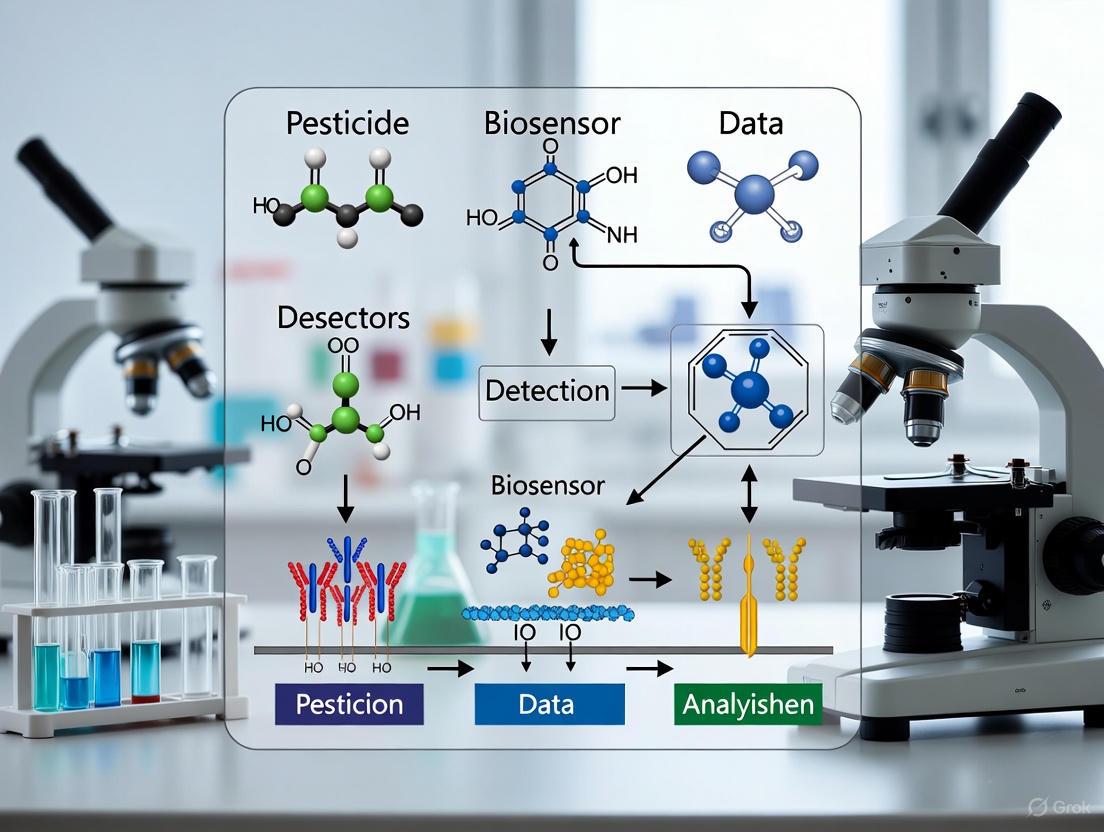
This article provides a comprehensive review of biosensor technologies for the real-time monitoring of pesticides in aquatic environments.
Real-Time Biosensors for Pesticide Monitoring in Water: Advanced Technologies and Applications for Environmental Health
Abstract
This article provides a comprehensive review of biosensor technologies for the real-time monitoring of pesticides in aquatic environments. Tailored for researchers, scientists, and drug development professionals, it explores the foundational principles of various biosensor platforms, including enzyme-based, antibody-based, aptasensors, and whole-cell biosensors. It delves into methodological applications for detecting specific pesticide classes, discusses critical challenges in sensor stability and real-world deployment, and offers a comparative analysis against traditional chromatographic techniques. The review synthesizes current advancements and future trajectories, highlighting the role of biosensors in enabling proactive environmental surveillance and protecting water resources.
Understanding Biosensor Platforms: Core Principles for Pesticide Detection
Emerging contaminants (ECs) represent a diverse group of chemical substances detected in environmental matrices at concentrations levels ranging from ng·mL⁻¹ to μg·mL⁻¹, raising concerns due to their potential ecological and human health impacts [1] [2]. These compounds are classified as "emerging" not necessarily because they are new, but because their presence is being identified in quantities and locations not previously recorded, often bypassing conventional monitoring programs and water treatment processes [3] [2]. The pervasive nature of ECs is exemplified by their detection in various urban water systems worldwide, including rivers, ponds, reservoirs, lakes, and groundwater [4].
Pesticides constitute a significant category of ECs that pose substantial monitoring challenges. These chemical substances are extensively used in agriculture to prevent, control, and eliminate pests, with over 1500 types currently employed worldwide [5]. While supporting crop yield and quality, their unscientific application has led to harmful residues persisting in plants, food, water, and soil, creating significant ecosystem risks [5]. Aquatic ecosystems serve as the main sink for these residues, with studies reporting pesticide concentrations between 7 ng·L⁻¹ and 121 μg·L⁻¹ in global surface waters [1].
The Critical Need for Pesticide Monitoring in Water
The imperative for advanced pesticide monitoring stems from several interconnected factors affecting environmental sustainability and public health.
Environmental and Health Impacts
Pesticides entering aquatic environments pose severe threats to ecosystem integrity and biodiversity. These compounds demonstrate remarkable persistence, with an estimated only 0.1% of applied pesticides reaching their target sites, while the majority migrates through spray drift, runoff, and accumulation in off-target locations [1]. This inefficient application leads to chronic contamination of water resources, with European surface waters showing higher median concentrations for fungicides (0.96 μg·L⁻¹) compared to herbicides (0.063 μg·L⁻¹) and insecticides (0.034 μg·L⁻¹) [1].
The health implications of pesticide exposure are equally concerning. Acute poisoning can cause respiratory difficulties, nausea, and vomiting, while long-term low-dose exposure associates with nervous system damage, reproductive system problems, and cancer [5]. Particularly vulnerable populations include children, pregnant women, and the elderly, who face heightened risks from even minimal exposure due to bioaccumulation effects [5].
Regulatory and Monitoring Gaps
Current regulatory frameworks struggle to address the complex challenge of pesticide monitoring. Legislation for pesticide limits in water remains scarce, with some countries establishing no maximum residue levels for surface or groundwater [1]. The European Union's Drinking Water Directive sets a maximum concentration of 0.1 mg·L⁻¹ for individual pesticides and 0.5 mg·L⁻¹ for total pesticides, but these standards represent exceptions rather than global norms [1].
Conventional analytical methods relying on gas chromatography-mass spectrometry (GC-MS) and liquid chromatography-tandem mass spectrometry (LC-MS/MS) offer reliability and sensitivity with detection limits reaching ng·L⁻¹ [1]. However, these approaches present significant limitations including expensive and time-consuming laboratory analysis, extensive sample preparation requiring toxic solvents, and inability to provide real-time continuous surveillance [1]. These constraints delay timely interventions and complicate comprehensive monitoring programs, particularly in developing regions where resources are limited [2].
Biosensor Technology for Pesticide Detection
Fundamental Principles and Advantages
Biosensors represent integrated analytical devices incorporating biological recognition elements in direct spatial contact with transduction systems to detect target analytes [5] [1]. These systems offer transformative potential for pesticide monitoring by providing rapid, cost-effective, and disposable systems for high-throughput detection that can complement conventional methods [1].
The fundamental advantage of biosensors lies in their ability to enable real-time, on-site analysis without extensive sample preparation. This capability facilitates timely interventions when pesticide levels surpass acceptable limits and supports long-term monitoring trends to identify emerging concerns [1]. Biosensors are particularly valuable as an initial screening step in tiered assessment strategies, where positive results can trigger more comprehensive laboratory analysis [1].
Biosensor Classification and Mechanisms
Biosensors for pesticide detection employ diverse recognition elements and transduction mechanisms, each offering distinct advantages for specific application contexts. The major biosensor categories include:
Table 1: Classification of Biosensors for Pesticide Detection
| Classification Basis | Biosensor Type | Key Characteristics | Representative Applications |
|---|---|---|---|
| Recognition Element | Enzymatic biosensors | Utilize enzyme inhibition or catalytic activity; high specificity | Organophosphate detection via acetylcholinesterase inhibition |
| Immunosensors | Employ antibody-antigen interactions; high sensitivity and selectivity | Herbicide detection using specific monoclonal antibodies | |
| Aptasensors | Use nucleic acid aptamers as recognition elements; tunable affinity | Various pesticides through selective aptamer binding | |
| Whole-cell biosensors | Incorporate living microorganisms or tissues; provide toxicity assessment | General toxicity screening of water samples | |
| Transduction Mechanism | Optical biosensors | Measure light signal changes (fluorescence, colorimetry, SPR) | Portable colorimetric strips for field testing |
| Electrochemical biosensors | Detect electrical signal changes (current, potential, impedance); high sensitivity | Miniaturized electrodes for in-situ pesticide quantification | |
| Thermal biosensors | Monitor temperature changes from biochemical reactions | Laboratory-based precision analysis | |
| Acoustic biosensors | Measure mass or viscosity changes through frequency variations | Specialized laboratory applications |
Biosensors function through coordinated processes beginning with selective binding between the biological recognition element and target pesticide molecules, followed by transduction of this interaction into a quantifiable signal proportional to analyte concentration [5] [1]. Advanced biosensors increasingly incorporate nanomaterials to enhance sensitivity, stability, and response kinetics, addressing previous limitations in field deployment [5].
Biosensor Operational Workflow
Advanced Biosensing Methodologies: Experimental Protocols
Metal-Organic Framework (MOF)-Based Biosensors
Protocol Title: Fabrication and Application of MOF-Enzyme Composite Biosensors for Pesticide Detection
Principle: This protocol leverages the synergistic combination of Metal-Organic Frameworks (MOFs) and biological recognition elements for enhanced pesticide detection. MOFs provide exceptional tunability, efficient catalysis, and excellent selectivity while protecting enzymatic activity and enhancing stability [6].
Materials and Reagents:
- Metal precursors (e.g., Zn(NO₃)₂·6H₂O, ZrCl₄, Cu(NO₃)₂·3H₂O)
- Organic ligands (e.g., 2-methylimidazole, terephthalic acid, trimesic acid)
- Enzymes (e.g., acetylcholinesterase, organophosphorus hydrolase, tyrosinase)
- Buffer solutions (phosphate buffer, Tris-HCl)
- Pesticide standard solutions
- Signal probes (e.g., chromogenic substrates, electrochemical mediators)
Procedure:
Preparation of MOF-based enzyme/nanozyme composites:
- Select appropriate MOF composition based on target pesticide properties
- Employ one of three primary immobilization strategies:
- Surface immobilization: Covalently attach enzymes to pre-synthesized MOFs
- Pore encapsulation: Infiltrate enzymes into MOF pores during synthesis
- In-situ encapsulation: Co-crystallize MOFs around enzyme molecules
Biosensor fabrication:
- Deposit MOF-enzyme composites onto transducer surfaces (electrodes, optical fibers)
- Optimize composite loading to maximize sensitivity and reproducibility
- Characterize using SEM, XRD, and FTIR to verify successful integration
Detection procedure:
- Incubate biosensor with sample solution for predetermined time (typically 5-15 minutes)
- Measure signal response (electrochemical current, fluorescence intensity, color change)
- Compare response to calibration curve for quantitative analysis
- Regenerate sensor surface if applicable for reusable applications
Applications: MOF-based biosensors demonstrate particular efficacy for detecting organophosphates, carbamates, and neonicotinoid pesticides with significantly enhanced stability compared to free enzymes [6].
Electrochemical Biosensing Platform
Protocol Title: Electrochemical Detection of Pesticides Using Enzyme Inhibition-Based Biosensors
Principle: This method utilizes the inhibitory effect of specific pesticides on enzyme activity, with the inhibition level proportional to pesticide concentration. Measurable changes in electrochemical signals (current, potential, impedance) provide quantitative analysis [5].
Materials and Reagents:
- Working electrode (glassy carbon, gold, or screen-printed electrodes)
- Enzyme solutions (acetylcholinesterase, butyrylcholinesterase)
- Enzyme substrates (acetylthiocholine, butyrylthiocholine)
- Electrochemical mediators (e.g., ferricyanide, Prussian Blue)
- Electrolyte solutions (KCl, phosphate buffer)
- Electrochemical workstation with data acquisition software
Procedure:
Electrode modification:
- Clean electrode surface according to standard protocols
- Immobilize enzyme layer through cross-linking, entrapment, or adsorption
- Characterize modified electrode using cyclic voltammetry and electrochemical impedance spectroscopy
Measurement protocol:
- Record baseline electrochemical signal in substrate solution
- Incubate modified electrode with sample solution for 10 minutes
- Measure signal decrease relative to baseline due to enzyme inhibition
- Calculate inhibition percentage: Inhibition (%) = [(I₀ - I)/I₀] × 100 where I₀ is initial current and I is current after incubation
Quantification:
- Construct calibration curve using standard pesticide solutions
- Apply appropriate regression model for concentration determination
- Validate with control samples to ensure specificity
Performance Characteristics: Electrochemical biosensors typically achieve detection limits of 0.1-10 nM for organophosphate and carbamate pesticides, with complete analysis within 15-30 minutes [5].
Table 2: Performance Comparison of Biosensor Technologies for Pesticide Detection
| Biosensor Technology | Detection Principle | Target Pesticides | Limit of Detection | Analysis Time | Advantages |
|---|---|---|---|---|---|
| Enzyme Inhibition-Based | Acetylcholinesterase inhibition | Organophosphates, Carbamates | 0.1-10 nM | 10-30 min | Broad detection spectrum, well-established |
| Immunosensors | Antibody-antigen interaction | Herbicides, Fungicides | 0.01-1 ng·mL⁻¹ | 15-45 min | High specificity, excellent sensitivity |
| Aptasensors | Aptamer conformational change | Various classes | 0.001-0.1 nM | 5-20 min | Tunable affinity, enhanced stability |
| Whole-cell Biosensors | Cellular response signaling | Broad-spectrum toxicity | Varies with toxicity | 30-120 min | Provides ecotoxicological relevance |
| MOF-Based Sensors | Enhanced recognition/catalysis | Organophosphates, Glyphosate | 0.001-0.1 nM | 5-15 min | Superior stability, multifunctionality |
The Scientist's Toolkit: Essential Research Reagents and Materials
Successful implementation of biosensor technologies for pesticide monitoring requires specific materials and reagents optimized for each detection platform.
Table 3: Essential Research Reagents for Biosensor Development and Application
| Category | Specific Examples | Function in Biosensor Systems | Application Notes |
|---|---|---|---|
| Biological Recognition Elements | Acetylcholinesterase, Organophosphorus hydrolase, Antibodies, DNA aptamers | Target-specific molecular recognition | Selection depends on pesticide class; stability varies |
| Nanomaterials | Graphene oxide (GO), Metal-organic frameworks (MOFs), Molecularly imprinted polymers (MIPs) | Signal enhancement, immobilization support, catalytic activity | MOFs offer exceptional tunability and protection [6] |
| Transduction Platforms | Screen-printed electrodes, Optical fibers, Quartz crystal microbalances, Field-effect transistors | Conversion of biological event to measurable signal | Choice depends on required sensitivity and portability |
| Signal Probes | Ferrocene derivatives, Prussian Blue, Fluorescent dyes, Enzymatic substrates | Generate detectable signals from molecular interactions | Must minimize background interference in complex matrices |
| Buffer Systems | Phosphate buffer, Tris-HCl, HEPES | Maintain optimal pH and ionic strength | Critical for preserving biological component activity |
Technological Integration and Future Perspectives
The effective deployment of biosensors for pesticide monitoring requires seamless integration into comprehensive environmental assessment frameworks. A tiered monitoring approach represents the most pragmatic strategy for implementation.
Tiered Monitoring Implementation Strategy
Future advancements in biosensor technology will focus on several critical areas to enhance practical implementation:
Multiplexing Capabilities: Developing sensors capable of simultaneous detection of multiple pesticide classes to provide comprehensive contamination profiles [5]
Advanced Materials: Engineering novel biocomposite materials with enhanced stability, sensitivity, and antifouling properties for real-world applications [6]
Integration with Digital Technologies: Incorporating Internet of Things (IoT) connectivity, artificial intelligence for data analysis, and cloud-based data management to enable smart monitoring networks [7]
Miniaturization and Portability: Creating increasingly compact, user-friendly devices capable of laboratory-comparable performance in field settings [1]
Despite significant progress, challenges remain in achieving long-term stability under variable environmental conditions, ensuring reproducibility across production batches, and reducing costs for widespread deployment [5] [6]. Addressing these limitations through continued research and development will further establish biosensors as indispensable tools for protecting water resources against pesticide contamination, ultimately supporting the achievement of Sustainable Development Goals related to clean water and ecosystem protection [2] [4].
Core Principles of Biosensor Design
A biosensor is an analytical device that converts a biological response into a measurable electrical signal [8]. Its core function is to detect a specific substance, or analyte, in a sample. The sophisticated operation of a biosensor relies on the seamless interplay of three fundamental components: the bioreceptor, the transducer, and the signal processor [8]. This integrated system allows for the sensitive, selective, and rapid detection of target compounds, making it invaluable for applications such as the real-time monitoring of pesticides in water [9] [10].
The bioreceptor is a biological molecular recognition element that interacts specifically with the target analyte [8]. This interaction, termed bio-recognition, is the first critical step and is the primary source of a biosensor's selectivity. The transducer then converts the physicochemical change resulting from the bioreceptor-analyte interaction into a quantifiable energy form [8]. Finally, the signal processor amplifies, conditions, and digitally converts this signal for clear presentation to the user on a display unit [8].
Table 1: Fundamental Components of a Biosensor
| Component | Function | Key Characteristics | Examples |
|---|---|---|---|
| Bioreceptor | Specifically recognizes and binds the target analyte [8]. | High selectivity and affinity for the analyte. | Enzymes, Antibodies, Nucleic Acids (Aptamers), Whole Cells [9]. |
| Transducer | Converts the bio-recognition event into a measurable signal [8]. | Sensitivity, robustness. | Electrodes (Electrochemical), Photodetectors (Optical), Piezoelectric Crystals [10]. |
| Signal Processor | Processes the transduced signal for interpretation [8]. | Amplification, filtering, and analog-to-digital conversion. | Electronic circuitry and microprocessors. |
| Display | Presents the final output to the user [8]. | User-friendly interface. | Liquid crystal display (LCD), direct printer, software interface. |
Quantitative Performance Metrics for Biosensors
The performance of a biosensor is evaluated against a set of critical metrics that determine its suitability for real-world applications, including environmental monitoring [8]. For the detection of trace-level pesticides in water, sensitivity and selectivity are particularly paramount [9].
- Sensitivity and Limit of Detection (LOD): The LOD defines the lowest concentration of an analyte that the biosensor can reliably detect [8]. In the context of emerging contaminants like pesticides, which can have toxic effects even at concentrations as low as ng/L, a low LOD is crucial [9]. For instance, amperometric enzyme-based biosensors have been developed for pollutants with LODs as low as 0.014 μg/L [10].
- Selectivity: This is the ability of a biosensor to measure the target analyte exclusively in a sample containing other interfering substances or contaminants [8]. The high specificity of bioreceptors, such as an antibody binding only to its corresponding antigen, is the key to achieving this [9] [8].
- Stability, Reproducibility, and Linearity: Stability refers to the sensor's susceptibility to ambient disturbances and its ability to maintain performance over time and during prolonged use [8]. Reproducibility is the precision and accuracy of obtaining identical results for repeated measurements [8]. Linearity indicates the accuracy of the sensor's response across a range of analyte concentrations, which defines its working range and resolution [8].
Table 2: Key Performance Metrics for Biosensors in Environmental Monitoring
| Performance Metric | Description | Significance for Pesticide Monitoring |
|---|---|---|
| Selectivity | Ability to detect a specific analyte in a sample containing admixtures and contaminants [8]. | Ensures accurate detection of a specific pesticide class (e.g., organophosphates) without cross-reactivity. |
| Sensitivity (LOD) | The minimum amount of analyte that can be reliably detected [8]. | Essential for detecting toxic pesticides present at trace levels (ng/L to μg/L) in water bodies [9]. |
| Reproducibility | Ability to generate identical responses for a duplicated experimental setup [8]. | Ensures reliable and comparable data across different monitoring events and locations. |
| Stability | Degree of susceptibility to ambient disturbances and signal drift over time [8]. | Critical for long-term, in-situ deployment in variable environmental conditions [10]. |
| Linearity | Accuracy of the measured response to a straight line over a concentration range [8]. | Allows for accurate quantification of pesticide concentration within a defined working range. |
Advanced Biosensor Typologies: Mechanisms and Applications
Biosensors are categorized based on the type of bioreceptor and the signal transduction method. Each typology offers distinct advantages for the detection of environmental pollutants [9] [10].
Bioreceptor-Based Classification
- Enzyme-Based Biosensors: These use enzymes as bioreceptors. The analyte can be a substrate that the enzyme metabolizes, or an inhibitor that reduces the enzyme's activity. The resulting change in the concentration of a product (e.g., a proton or electron) is measured [9]. They are widely used for detecting pesticides, many of which act as enzyme inhibitors [9].
- Antibody-Based Immunosensors: These leverage the high affinity and specificity of antigen-antibody binding [9]. They can be designed as label-free (detecting impedance or mass changes) or labeled (using fluorescent or enzymatic tags for signal generation) systems [9].
- Nucleic Acid-Based Aptasensors: These employ synthetic single-stranded DNA or RNA aptamers, selected for their high binding affinity to specific targets, including small molecules like pesticides [9] [10]. They offer high stability and are synthesized through chemical processes [9].
- Whole Cell-Based Biosensors: These utilize microorganisms (e.g., bacteria, algae) as integrated sensing elements. The cells can be engineered to produce a detectable signal (e.g., bioluminescence) in response to the presence of a target pollutant [9] [10]. They are robust and can self-replicate, but typically have a slower response time.
Transducer-Based Classification
- Electrochemical Biosensors: These measure the electrical properties (current, potential, impedance) change due to the biorecognition event. They are among the most common biosensors due to their portability, simplicity, and high sensitivity [9] [8].
- Optical Biosensors: These detect changes in light properties, such as absorbance, fluorescence, or chemiluminescence. A prominent example is a biosensor using Förster Resonance Energy Transfer (FRET), where the binding event alters the energy transfer between two fluorophores [11].
- Piezoelectric Biosensors: These measure the change in mass on the sensor surface (e.g., a quartz crystal) by correlating it with a change in the crystal's oscillation frequency [10].
Experimental Protocols for Biosensor Development and Evaluation
Protocol 1: Fabrication of an Electrochemical Enzyme Biosensor for Pesticide Detection
Principle: This protocol outlines the steps for creating a biosensor based on enzyme inhibition. The target pesticide inhibits the immobilized enzyme, reducing its catalytic activity, which is measured as a decrease in electrochemical current [9] [10].
Materials:
- Glassy carbon or gold working electrode
- Enzyme (e.g., Acetylcholinesterase for organophosphate pesticides)
- Cross-linking agent (e.g., Glutaraldehyde)
- Nanoparticle suspension (e.g., Gold nanoparticles to enhance surface area and electron transfer [10])
- Phosphate buffer saline (PBS), pH 7.4
- Electrochemical workstation
- Substrate for the enzyme (e.g., Acetylthiocholine)
Procedure:
- Electrode Pretreatment: Polish the working electrode with alumina slurry (0.05 μm) on a microcloth to a mirror finish. Rinse thoroughly with deionized water and then with ethanol. Dry under a stream of inert gas (e.g., nitrogen).
- Nanomaterial Modification (Optional): To enhance sensitivity, deposit a suspension of nanomaterials (e.g., gold nanoparticles) onto the electrode surface and allow to dry [10].
- Enzyme Immobilization: Prepare a 10 μL droplet of enzyme solution. Mix it with a cross-linking agent. Deposit this mixture onto the pre-treated electrode surface and allow it to incubate in a humid chamber at 4°C for 2 hours.
- Rinsing and Storage: Gently rinse the modified electrode with PBS buffer to remove any unbound enzyme. Store the biosensor in PBS at 4°C when not in use.
- Measurement of Baseline Activity: Place the biosensor in an electrochemical cell containing PBS and the enzyme substrate. Measure the amperometric current generated by the enzymatic reaction over time. This serves as the baseline signal (I₀).
- Inhibition and Sample Measurement: Incubate the biosensor in a sample solution containing the target pesticide for a fixed period (e.g., 10 minutes). Re-measure the amperometric current in the substrate solution (Iᵢ).
- Quantification: The degree of inhibition is calculated as (I₀ - Iᵢ)/I₀ × 100%, which is correlated with the pesticide concentration using a pre-established calibration curve.
Protocol 2: Validation of Biosensor Performance in Real Water Samples
Principle: This protocol describes the validation of a developed biosensor using spiked real water samples to assess its accuracy and matrix effects [10].
Materials:
- Developed biosensor from Protocol 1
- Real water samples (e.g., river, lake, or tap water)
- Standard solution of target pesticide
- Filtration apparatus (0.45 μm filter)
- Reference analytical instrument (e.g., HPLC-MS, if available)
Procedure:
- Sample Preparation: Collect water samples from the target environment. Filter the samples through a 0.45 μm filter to remove particulate matter.
- Spiking: Spike the filtered water samples with known concentrations of the target pesticide standard to create a series of validation samples.
- Biosensor Analysis: Analyze the spiked samples using the developed biosensor following the measurement procedure from Protocol 1. Record the calculated concentration for each sample.
- Data Analysis: Calculate the recovery percentage for each spiked sample using the formula: Recovery (%) = (Measured Concentration / Spiked Concentration) × 100%. A recovery of 80-120% is generally considered acceptable, demonstrating the method's accuracy despite the sample matrix.
- Cross-Validation (Optional): If available, analyze the same set of spiked samples using a standard reference method (e.g., HPLC-MS) to cross-validate the results obtained from the biosensor.
The Scientist's Toolkit: Research Reagent Solutions
Table 3: Essential Reagents and Materials for Biosensor Research
| Item | Function/Application |
|---|---|
| Gold Nanoparticles (AuNPs) | Used to modify electrode surfaces to enhance electron transfer and increase the effective surface area for bioreceptor immobilization, thereby improving sensitivity [10]. |
| Glutaraldehyde | A common cross-linking agent for covalently immobilizing bioreceptors (e.g., enzymes, antibodies) onto transducer surfaces [9]. |
| Aptamers | Synthetic single-stranded DNA or RNA oligonucleotides selected via SELEX to bind specific targets; used as robust and versatile bioreceptors in aptasensors [9] [10]. |
| Allosteric Transcription Factors (aTFs) | Used in cell-free biosensing systems; they undergo a conformational change upon binding a target analyte (e.g., heavy metals), which can be linked to a reporter gene output [10]. |
| FRET-Compatible Fluorophores (e.g., edCerulean, edCitrine) | Paired donor and acceptor fluorescent proteins used in the construction of genetically encoded ratiometric biosensors for real-time monitoring of analytes like hormones or ions in living cells [11]. |
| Laccase Enzymes | Used in both detection and enzymatic detoxification of phenolic pollutants and dyes, catalyzing their oxidation and degradation [10]. |
| Engineered Microbial Cells (e.g., E. coli, Pseudomonas sp.) | Genetically modified whole-cell bioreceptors that can be designed to both detect pollutants (via bioluminescence) and express detoxifying enzymes [10]. |
Signaling Pathways and Workflow Visualizations
Biosensor Operational Workflow
FRET Biosensor Mechanism
Enzyme-based biosensors represent a transformative technology for the real-time monitoring of pesticides in water, leveraging the specificity and catalytic efficiency of enzymes to detect target analytes with high accuracy [12]. These analytical devices integrate a biological recognition element (an enzyme) with a physicochemical transducer to convert biochemical reactions into measurable signals [12]. Their unique ability to offer rapid, sensitive, and selective responses makes them indispensable tools for environmental monitoring, complementing conventional methods like chromatography and mass spectrometry [1].
The relevance of enzyme-based biosensors is particularly pronounced in the context of aquatic ecosystem protection. It is estimated that only 0.1% of applied pesticides reach their target site, with the majority accumulating in off-target environments like water bodies [1]. These biosensors provide a time- and cost-effective solution for screening large numbers of environmental samples, offering portability and real-time results that enable timely interventions when pesticide levels exceed acceptable limits [1].
Key Principles and Components
Fundamental Components
Enzyme-based biosensors consist of three primary components that work synergistically to detect target pesticides:
- Biological Recognition Element: Enzymes serve as biocatalysts that specifically interact with target analytes. Commonly used enzymes include acetylcholinesterase for neurotoxic insecticide detection, tyrosinase for phenolic compounds, and photosynthetic system enzymes for herbicide monitoring [12] [13].
- Transducer: This component converts the biochemical signal produced by the enzyme–analyte interaction into a quantifiable output. Transducers can be electrochemical (amperometric, potentiometric), optical (fluorescence, absorbance), thermistor, or piezoelectric [12].
- Immobilization Matrix: To ensure the enzyme remains stable and functional near the transducer, various immobilization techniques are employed, including physical adsorption, covalent bonding, entrapment in gels or polymers, or incorporation into nanoparticles [12].
Working Principles
The functional mechanism of enzyme-based biosensors for pesticide detection primarily operates through two distinct principles:
- Inhibition-Based Detection: For neurotoxic insecticides like organophosphates and carbamates, the detection relies on enzyme inhibition. These compounds suppress enzymatic activity, resulting in reduced or blocked signal generation [12] [13].
- Catalytic Detection: Alternatively, some biosensors exploit the direct catalytic activity of enzymes that utilize pesticides as substrates, though this approach is less common [14].
The resulting biochemical transformation is detected by the transducer, which produces an electrical or optical signal proportional to the analyte concentration [12].
Figure 1: Working principle of enzyme-based biosensors for pesticide detection, showing the sequential process from biological recognition to signal output.
Detection Mechanisms and Signaling Pathways
Enzyme Inhibition Mechanisms
The detection of neurotoxic insecticides primarily exploits their mechanism of toxicity, which involves inhibition of key enzymes:
- Acetylcholinesterase (AChE) Inhibition: Organophosphorus and carbamate insecticides inhibit AChE, preventing the hydrolysis of the neurotransmitter acetylcholine [13]. This inhibition forms the basis for numerous biosensors, where the decrease in enzymatic activity correlates with insecticide concentration [13].
- Photosynthetic System Inhibition: Herbicides like atrazine and diuron inhibit photosystem II (PSII) in the photosynthetic electron transport chain, particularly targeting the D1 protein [14]. This inhibition can be measured through changes in chlorophyll fluorescence or oxygen evolution [14].
Advanced Discrimination Techniques
To enhance selectivity for specific pesticides, advanced approaches using multiple enzyme variants and chemometric methods have been developed:
- Multi-Enzyme Arrays: Genetically engineered enzyme variants with different sensitivity patterns toward specific insecticides are employed in array formats [13].
- Artificial Neural Networks (ANNs): These computational models process signals from multiple biosensors to discriminate between different insecticides in mixtures [13]. For example, ANNs have successfully resolved binary mixtures of paraoxon and carbofuran with prediction errors of 0.4 μg L⁻¹ and 0.5 μg L⁻¹, respectively [13].
Figure 2: Advanced pesticide discrimination using enzyme arrays and artificial neural networks for identifying specific pesticides in mixtures.
Research Reagent Solutions
Table 1: Essential research reagents for enzyme-based biosensor development
| Reagent Category | Specific Examples | Function in Biosensor | Key Characteristics |
|---|---|---|---|
| Enzymes | Acetylcholinesterase (AChE) [13], Tyrosinase [12], Glucose oxidase (GOx) [12], Urease [12], Lactate oxidase (LOx) [12] | Biological recognition element | High specificity, catalytic efficiency, stability |
| Transducer Materials | Graphene, Carbon nanotubes [12], Gold nanoparticles [13] | Signal transduction and amplification | Enhanced sensitivity, conductivity, surface area |
| Immobilization Matrices | Polymeric gels, Sol-gels, Nafion [12] | Enzyme stabilization and retention | Biocompatibility, porosity, chemical stability |
| Signal Probes | 5,5′-dithiobis(2-nitrobenzoic) acid (DTNB) [13], Red genetically encoded potassium indicators (RGEPOs) [15] | Signal generation and detection | High sensitivity, selectivity, and dynamic range |
Experimental Protocols
Protocol 1: Acetylcholinesterase-Based Biosensor for Neurotoxic Insecticides
Principle: This protocol describes the development of an amperometric biosensor for detecting organophosphorus and carbamate insecticides based on acetylcholinesterase (AChE) inhibition [13].
Materials:
- Acetylcholinesterase enzyme (from electric eel or genetically engineered variants)
- Transducer electrode (glassy carbon, gold, or screen-printed electrodes)
- Chitosan or Nafion for enzyme immobilization
- Acetylthiocholine iodide as substrate
- Phosphate buffer (0.1 M, pH 7.4)
- Standard solutions of target insecticides
Procedure:
- Electrode Modification: Clean the transducer electrode according to standard protocols (e.g., polishing with alumina slurry for solid electrodes) [13].
- Enzyme Immobilization: Prepare enzyme solution (2-4 U/μL AChE in phosphate buffer) and mix with immobilization matrix (e.g., 1% chitosan solution). Deposit 5-10 μL of the mixture onto the electrode surface and allow to dry at 4°C for 12 hours [13].
- Baseline Measurement: Immerse the biosensor in stirred phosphate buffer (0.1 M, pH 7.4) containing 0.5 mM acetylthiocholine iodide. Apply a detection potential of +0.7 V vs. Ag/AgCl and record the steady-state amperometric current (I₀) [13].
- Inhibition Phase: Incubate the biosensor in sample solution containing the insecticide for 10-15 minutes to allow enzyme inhibition.
- Post-Inhibition Measurement: Re-immerse the biosensor in substrate solution and record the steady-state current after inhibition (Iᵢ).
- Data Analysis: Calculate inhibition percentage using the formula: % Inhibition = [(I₀ - Iᵢ)/I₀] × 100. Determine insecticide concentration from a calibration curve prepared with standard solutions [13].
Troubleshooting Tips:
- If sensitivity is low, consider using genetically engineered AChE variants with enhanced sensitivity to specific insecticides [13].
- If reproducibility is problematic, optimize immobilization procedure and ensure consistent enzyme loading.
Protocol 2: Photosystem II-Based Biosensor for Herbicides
Principle: This protocol utilizes photosynthetic systems (algae, thylakoids, or chloroplasts) for detecting herbicides that inhibit photosystem II (PSII), such as atrazine and diuron [14].
Materials:
- Fresh spinach leaves or algal cultures (Chlorella, Scenedesmus)
- Isolation buffer (0.4 M sucrose, 50 mM HEPES, 10 mM NaCl, pH 7.5)
- Oxygen electrode or fluorescence measuring system
- Herbicide standard solutions
Procedure:
- Thylakoid/Chloroplast Isolation: Homogenize fresh spinach leaves in cold isolation buffer. Filter through muslin cloth and centrifuge at 2,000 × g for 5 min. Resuspend pellet in isolation buffer [14].
- Immobilization: Mix thylakoid/chloroplast preparation with bovine serum albumin (BSA) and glutaraldehyde. Deposit mixture on electrode surface or membrane support and allow to crosslink [14].
- Chlorophyll Fluorescence Measurement: For optical detection, immerse the biosensor in buffer and measure chlorophyll fluorescence parameters (Fv/Fm ratio) before and after exposure to sample [14].
- Amperometric Oxygen Detection: For electrochemical detection, immerse the biosensor in buffer saturated with CO₂. Illuminate with actinic light and measure the photocurrent generated by oxygen evolution [14].
- Inhibition Measurement: Expose the biosensor to sample solution for 5-10 minutes. Remeasure fluorescence parameters or photocurrent.
- Data Analysis: Calculate inhibition of photosynthetic activity by comparing signals before and after exposure. Quantify herbicide concentration using a calibration curve [14].
Troubleshooting Tips:
- If biosensor stability is low, prepare fresh thylakoid membranes and maintain at 4°C throughout the procedure.
- If signal-to-noise ratio is poor, optimize light intensity and ensure proper CO₂ saturation for amperometric detection.
Performance Data and Applications
Table 2: Performance characteristics of enzyme-based biosensors for pesticide detection
| Biosensor Type | Target Pesticides | Detection Principle | Linear Range | Detection Limit | Application Matrix |
|---|---|---|---|---|---|
| Acetylcholinesterase-based | Organophosphates, Carbamates [13] | Enzyme inhibition | 0–20 μg L⁻¹ [13] | 0.4–1.6 μg L⁻¹ [13] | Water, Food samples [13] |
| Photosystem II-based | Atrazine, Diuron [14] | Photosynthetic inhibition | 0.1–100 μg L⁻¹ [14] | 0.1–1 μg L⁻¹ [14] | Environmental water [14] |
| Tyrosinase-based | Phenolic herbicides [12] | Enzyme inhibition | Varies by compound | Varies by compound | Water samples [12] |
| Cell-based | Multiple herbicide classes [14] | Metabolic inhibition | 1–1000 μg L⁻¹ [14] | ~1 μg L⁻¹ [14] | Aquatic environmental samples [14] |
Enzyme-based biosensors represent promising tools for the real-time monitoring of pesticides in water, offering significant advantages in terms of sensitivity, portability, and cost-effectiveness compared to conventional analytical methods [1]. While challenges remain regarding enzyme stability, reproducibility, and potential interference from complex environmental matrices, recent advancements in nanotechnology, genetic engineering, and data analysis have substantially improved their performance and reliability [12] [13].
Future developments in this field are likely to focus on the integration of biosensors into automated monitoring systems, the creation of multi-analyte arrays for simultaneous detection of multiple pesticide classes, and the enhancement of operational stability through improved immobilization techniques and synthetic enzymes [12] [1]. As these technologies mature, enzyme-based biosensors are poised to become indispensable tools for comprehensive environmental monitoring programs, contributing significantly to the protection of aquatic ecosystems and human health.
Within the framework of developing biosensors for the real-time monitoring of pesticides in water, immunosensors emerge as a powerful analytical technology. These devices combine the exceptional specificity of antibody-antigen interactions with the sensitivity of physicochemical transducers, fulfilling an urgent need for cost-effective, high-throughput screening tools [1]. Conventional methods for pesticide detection, such as gas or liquid chromatography coupled with mass spectrometry (GC-MS/LC-MS/MS), are reliable but often time-consuming, expensive, and require well-trained personnel and laboratory settings [1] [16]. In contrast, immunosensors offer the potential for rapid, on-site analysis, making them ideal for an initial screening step in a tiered monitoring assessment, thereby complementing conventional methods [1]. This document provides application notes and detailed protocols for leveraging immunosensors, in both label-free and labeled formats, for the detection of currently-used pesticides in aquatic environments.
Immunosensor Working Principles and Classification
Immunosensors are affinity-based biosensors that rely on the specific binding between an antibody (Ab), immobilized on a transducer surface, and its target antigen (Ag), which can be a pesticide or its metabolite [17] [18]. This binding event generates a physicochemical change that is converted by the transducer into a measurable electrical or optical signal.
Transducer Types
The transducer is a core component defining the immunosensor's operational principle. Electrochemical transducers are the most prevalent due to their cost-effectiveness, portability, and high sensitivity [19] [18]. They can be further categorized based on the measured electrical property:
- Amperometric: Measures current resulting from a redox reaction at a constant potential.
- Potentiometric: Measures the potential difference between electrodes when no current flows.
- Impedimetric: Measures the impedance (resistance to current flow) of the electrode interface, often tracking the increase in electron transfer resistance upon antibody-antigen complex formation [19].
- Conductometric: Measures changes in the electrical conductivity of a solution.
Optical transducers, such as those based on Surface Plasmon Resonance (SPR) or whispering gallery mode (WGM) sensors, detect changes in the refractive index or light absorption properties upon analyte binding [20] [21]. Piezoelectric transducers measure the change in mass on the sensor surface through shifts in resonant frequency [17].
Assay Formats: Label-Free vs. Labeled
A critical distinction in immunosensor design is the use of labels.
Label-Free Immunosensors: These detect the physical or chemical changes resulting directly from the formation of the Ab-Ag complex, such as a change in mass or refractive index [19] [17]. The main advantage is the simplified assay procedure, as no additional labeling or washing steps are needed, enabling real-time monitoring of the binding event. A challenge, however, is the potential for non-specific adsorption of other proteins to the sensor surface, which can increase background signal and reduce sensitivity [17].
Labeled Immunosensors: These employ a signal-generating label (e.g., enzymes, nanoparticles, fluorescent dyes) attached to the antigen or antibody [19] [17]. The detection of this label correlates with the amount of target analyte. Labeled formats generally exhibit higher sensitivity and versatility, with a reduced effect from non-specific adsorption. Their drawbacks include higher development costs, more complex assay procedures, and the inability for real-time monitoring of the binding reaction [17].
Assay Formats: Competitive vs. Non-Competitive (Sandwich)
The choice of assay format is largely dictated by the molecular size of the target analyte.
Competitive Assays: Primarily used for small molecules, such as most pesticides, which have a low molecular weight and only one epitope (the antibody binding site) [22] [17]. In this format, the target analyte in the sample competes with a labeled version of the analyte for a limited number of antibody binding sites. The measured signal is inversely proportional to the concentration of the target in the sample [22].
Non-Competitive (Sandwich) Assays: This format is suitable for large molecules with multiple epitopes [22] [17]. It uses a capture antibody immobilized on the sensor and a second, labeled detector antibody that binds to a different epitope on the target antigen. The formation of this "sandwich" generates a signal that is directly proportional to the analyte concentration. This format is less common for small molecule pesticides [17].
The logical workflow for selecting and operating an immunosensor is summarized in the diagram below.
Application in Pesticide Monitoring
Immunosensors have been successfully developed for a range of environmentally relevant pesticides. Their application is particularly valuable for monitoring water sources, where pesticides accumulate due to runoff and spray drift [1].
Target Pesticides and Performance
The following table summarizes exemplary performance data of immunosensors for detecting specific pesticide classes in water samples.
Table 1: Representative Immunosensor Performance for Pesticide Detection in Water
| Pesticide Class / Example | Immunosensor Format | Transducer | Linear Range | Limit of Detection (LOD) | Sample Matrix |
|---|---|---|---|---|---|
| Organophosphates (e.g., Parathion, Methyl-parathion) [16] | Competitive, Label-based | Electrochemical | Not Specified | Low ng/L to µg/L range | Environmental Water |
| Neonicotinoids [16] | Competitive | Optical / Electrochemical | Not Specified | Low ng/L to µg/L range | Water, Food |
| Glyphosate [16] | Competitive | Electrochemical | Not Specified | Low ng/L to µg/L range | Water, Soil |
| Herbicides (e.g., Atrazine, Metolachlor) [1] | Various Immunosensors | Various | – | – | Surface Water |
| Fungicides (e.g., Tebuconazole, Carbendazim) [1] | Various Immunosensors | Various | – | – | Surface Water |
Addressing Specificity: Broad-Specificity Antibodies
A novel trend in pesticide immunosensing is the development of broad-specificity antibodies [16]. These are raised against a generic hapten designed from the common structure of a group of related pesticides. This allows a single immunosensor to detect multiple analytes simultaneously, making it a powerful tool for cost-effective multi-residue screening. For instance, a single broad-specificity monoclonal antibody has been reported for the detection of parathion, methyl-parathion, and fenitrothion [16].
Experimental Protocols
This section provides a generalized, step-by-step protocol for developing a competitive electrochemical immunosensor, a common format for detecting small-molecule pesticides in water.
Protocol: Competitive Electrochemical Immunosensor for Pesticides
Principle: The target pesticide (analyte) in a water sample competes with a fixed amount of enzyme-labeled pesticide (tracer) for binding sites on antibodies immobilized on the electrode surface. The enzyme label (e.g., Horseradish Peroxidase - HRP) catalyzes a reaction with its substrate, generating an electroactive product. The resulting current is inversely proportional to the pesticide concentration in the sample [22] [16].
Workflow Overview:
Materials and Reagents
- Working Electrode: Glassy Carbon Electrode (GCE), Gold Disk Electrode, or screen-printed carbon electrodes (SPCEs) for disposability.
- Nanomaterials: Gold nanoparticles (AuNPs), carbon nanotubes, graphene oxide, or metal oxides (e.g., MnO₂) to enhance surface area and conductivity [18] [23].
- Biorecognition Elements:
- Capture Antibody: Monoclonal or polyclonal antibody specific to the target pesticide.
- Tracer: Pesticide molecule conjugated to an enzyme (e.g., HRP) or a redox tag (e.g., Ferrocene).
- Chemical Reagents:
- Cross-linkers: Glutaraldehyde or BS³ (bis(sulfosuccinimidyl)suberate) for antibody immobilization [20].
- Blocking Agent: Bovine Serum Albumin (BSA) or casein to prevent non-specific binding [17].
- Electrochemical Probe: [Fe(CN)₆]³⁻/⁴⁻ in buffer for impedimetric or voltammetric measurements [19].
- Enzyme Substrate: e.g., H₂O₂ with a mediator like TMB (3,3',5,5'-Tetramethylbenzidine) for HRP [20].
- Buffers: Phosphate Buffered Saline (PBS, 0.01 M, pH 7.4), acetate buffer.
Step-by-Step Procedure
Step 1: Electrode Surface Modification and Antibody Immobilization
- Electrode Pretreatment: Clean the working electrode (e.g., GCE) mechanically (polishing with alumina slurry) and electrochemically (via cyclic voltammetry in H₂SO₄ or probe solution) to ensure a fresh, active surface.
- Nanomaterial Deposition (Optional but Recommended): Deposit a suspension of nanomaterials (e.g., AuNPs, γ-MnO₂-Chitosan nanocomposite [23]) onto the electrode surface via drop-casting or electrodeposition. This step significantly increases the active surface area for antibody loading and enhances electron transfer.
- Antibody Immobilization:
- Physical Adsorption: Incubate the modified electrode with a solution of the capture antibody (e.g., 10-100 µg/mL in PBS) for several hours at 4°C or 1-2 hours at room temperature. Wash thoroughly with PBS to remove unbound antibodies.
- Covalent Binding (More Robust): For AuNP-modified surfaces, use thiol-based linkers like cysteamine, followed by glutaraldehyde, to create an aldehyde-functionalized surface. The amine groups of the antibody will then covalently attach to the aldehydes [24]. Alternatively, use cross-linkers like BS³ on aminated surfaces [20].
Step 2: Blocking
- Incubate the antibody-functionalized electrode with a blocking solution (e.g., 1% BSA or 1% casein in PBS) for 1-2 hours at room temperature.
- This critical step covers any remaining bare electrode surface to minimize non-specific adsorption of other molecules from the sample, thereby reducing background noise [17].
- Wash the electrode thoroughly with PBS or a mild detergent solution (e.g., Tween 20 in PBS).
Step 3: Competitive Immunoassay Incubation
- Prepare a mixture containing a fixed, known concentration of the enzyme-labeled pesticide tracer and a varying concentration of the target pesticide (either as a standard for calibration or the unknown environmental water sample).
- Incubate this mixture on the surface of the blocked immunosensor for a defined period (e.g., 15-30 minutes). During this time, the target pesticide and the tracer compete for the limited binding sites on the immobilized antibody.
- After incubation, perform a gentle washing step to remove unbound tracer and sample components.
Step 4: Electrochemical Measurement and Signal Readout
- Place the immunosensor into an electrochemical cell containing the appropriate substrate solution. For an HRP label, this would be a solution containing H₂O₂ and TMB.
- Apply the relevant electrochemical technique:
- The measured current signal is inversely proportional to the concentration of the target pesticide in the sample.
Step 5: Data Analysis
- Measure the current signals for a series of pesticide standards with known concentrations.
- Plot the signal (e.g., current in µA) versus the logarithm of the pesticide concentration to generate a calibration curve.
- Fit the data points with a four-parameter logistic (4PL) model, which is standard for competitive immunoassays.
- Interpolate the signal from the unknown sample on this calibration curve to determine its concentration.
The Scientist's Toolkit: Key Research Reagent Solutions
Table 2: Essential Materials for Immunosensor Development
| Item / Reagent | Function / Application | Examples / Notes |
|---|---|---|
| Capture Antibodies | Biorecognition element; binds specifically to the target analyte. | Monoclonal (high specificity), Polyclonal (often higher affinity), Recombinant (engineered), Nanobodies (small, stable) [16]. |
| Electrode Materials | Platform for bioreceptor immobilization and signal transduction. | Glassy Carbon Electrode (GCE), Gold Electrode, Screen-Printed Electrodes (SPEs; disposable, portable) [18]. |
| Nanomaterials | Signal amplification; increases surface area for probe immobilization. | Gold Nanoparticles (AuNPs), Carbon Nanotubes (CNTs), Graphene Oxide, Metal Oxide Nanocomposites (e.g., MnO₂) [18] [23]. |
| Cross-linking Chemicals | Covalently immobilizes bioreceptors onto the sensor surface. | Glutaraldehyde, BS³ (Bissulfosuccinimidyl suberate), EDC/NHS chemistry [20] [24]. |
| Blocking Agents | Reduces non-specific binding by occupying non-specific sites. | Bovine Serum Albumin (BSA), Casein, Milk Proteins, Polyethylene Glycol (PEG) [17]. |
| Electrochemical Labels/Probes | Generates or contributes to the measurable electrochemical signal. | Enzymes (HRP, Alkaline Phosphatase), Redox Molecules (Ferrocene, Thionine), Nanomimetic Enzymes [22] [19]. |
| Buffer Systems | Provides a stable pH and ionic environment for immuno-reactions. | Phosphate Buffered Saline (PBS), Acetate Buffer, Carbonate-Bicarbonate Buffer (for coating) [20]. |
Aptasensors, a class of biosensors that utilize synthetic DNA or RNA aptamers as recognition elements, represent a powerful technological advancement for the specific and sensitive detection of target analytes. Their application is particularly relevant for the real-time monitoring of pesticides in water, a critical need for environmental protection and public health [25] [26]. Aptamers are short, single-stranded oligonucleotides (typically 25-90 nucleotides) selected in vitro through a process called Systematic Evolution of Ligands by EXponential enrichment (SELEX) [27] [28]. They function as "chemical antibodies" by folding into unique three-dimensional structures that enable high-affinity and specific binding to a target molecule, ranging from small pesticides to entire cells [27] [29]. The binding mechanism relies on various molecular interactions, including hydrogen bonding, electrostatic interactions, van der Waals forces, and aromatic ring stacking [27].
Compared to traditional antibodies, aptamers offer significant advantages for environmental biosensing. They are characterized by high thermostability, protease resistance, and cost-effectiveness for in vitro production [25]. They also exhibit minimal batch-to-batch variation, are small in size, and are easy to modify and handle [25] [29]. Critically, for pesticide targets that are small molecules with low immunogenicity, aptamers can be developed where antibody generation is challenging or impossible [30]. These properties make aptamer-based biosensors exceptionally suitable for developing field-deployable devices that adhere to the ASSURED principles: Affordable, Sensitive, Specific, User-friendly, Rapid and robust, Equipment-free, and Deliverable to end-users [25].
The SELEX Process: Generating Target-Specific Aptamers
The generation of high-affinity aptamers is accomplished through the SELEX process, an iterative in vitro selection and amplification methodology. The following workflow and detailed protocol describe the key steps for selecting aptamers against a pesticide target.
Detailed SELEX Protocol for Pesticide Targets
Objective: To isolate single-stranded DNA (ssDNA) aptamers with high affinity and specificity for a target pesticide (e.g., Carbendazim).
Materials:
- Synthetic Oligonucleotide Library: A library containing a central random region (e.g., 40-70 nucleotides) flanked by fixed primer binding sites (e.g., 5'-GGGAGACAAGAATAAACGCTCAA-[N40]-TGGACACGGTGGCTTAGT-3').
- Target Pesticide: High-purity target molecule (e.g., Carbendazim).
- Immobilization Matrix: Streptavidin-coated magnetic beads if the pesticide is biotinylated, or a suitable chromatography resin for immobilization.
- Buffers: Binding buffer (e.g., PBS with Mg²⁺), washing buffer, and elution buffer.
- Enzymes: Taq DNA polymerase for PCR.
- Primers: Forward and reverse primers complementary to the fixed regions of the library.
- Equipment: Thermal cycler, magnetic rack, agarose gel electrophoresis system, and a spectrophotometer.
Procedure:
Library Preparation: Dilute the synthetic ssDNA library in the binding buffer. Denature the library at 95 °C for 5 minutes and immediately cool on ice for 10 minutes to allow the sequences to fold into their native structures [25].
Positive Selection (Binding): Incubate the pre-folded ssDNA library with the immobilized pesticide target. The incubation time and temperature should be optimized (e.g., 30 minutes at room temperature with gentle agitation) [25].
Partitioning (Washing): Separate the target-bound sequences from the unbound ones. If using magnetic beads, apply a magnetic field to retain the bead-aptamer-pesticide complexes and carefully remove the supernatant containing unbound sequences. Wash the beads multiple times with the washing buffer to remove weakly bound sequences [25].
Elution: Elute the specifically bound aptamers from the target. This can be achieved by heating the complex (e.g., 80 °C for 10 minutes) in an appropriate elution buffer or by using a denaturing agent [25].
Amplification: Amplify the eluted ssDNA sequences using asymmetric PCR or a similar method to generate a new, enriched ssDNA pool for the subsequent selection round. The PCR conditions must be optimized to minimize the formation of by-products [28].
Counter-Selection (Negative Selection): To enhance specificity, perform a counter-selection against the bare immobilization matrix (e.g., streptavidin beads without pesticide) in later rounds (e.g., rounds 3-4). Sequences that bind to the matrix are discarded, and the unbound fraction is used for the positive selection step [25].
Iteration: Repeat steps 1-6 for 8-15 rounds, progressively increasing the selection stringency by reducing the incubation time, increasing the number and volume of washes, or adding competing non-target molecules [25] [28].
Cloning and Sequencing: After the final selection round, clone the amplified PCR products into a plasmid vector and transform into bacteria. Pick multiple colonies for Sanger sequencing to identify the enriched aptamer sequences [31].
Binding Characterization: Synthesize the identified aptamer candidates and characterize their affinity for the target pesticide by determining the dissociation constant (Kd) using techniques like surface plasmon resonance (SPR) or isothermal titration calorimetry (ITC). Specificity should be tested against other structurally similar pesticides [25] [27].
Aptasensor Construction and Signaling Mechanisms
Once a high-affinity aptamer is secured, it is integrated into a biosensor platform. The binding event is transduced into a measurable signal through various mechanisms, each with distinct advantages for pesticide detection in water.
Signaling Modalities for Pesticide Detection
Table 1: Key Aptasensor Platforms for Pesticide Detection
| Sensor Type | Detection Principle | Advantages | Reported Performance (Example) |
|---|---|---|---|
| Electrochemical [25] [27] | Measures change in electrical properties (current, impedance) upon aptamer-pesticide binding. | High sensitivity, portability, low cost, suitable for miniaturization. | Carbendazim (CBZ): LOD of 0.2 fM (femtomolar) using a dual-aptamer design with a metal-organic framework [27]. |
| Fluorescence [30] [29] | Measures change in fluorescence intensity/wavelength upon binding (e.g., using molecular beacons, FRET). | High sensitivity, suitability for multiplexing, real-time detection. | Tetrodotoxin (TTX): LOD of 3.07 nM using a fluorescent nanoscale metal-organic framework (NMOF) [29]. |
| Colorimetric [25] [30] | Measures visible color change, often due to aggregation/dispersion of gold nanoparticles (AuNPs). | Simplicity, low cost, equipment-free, result visible to the naked eye. | Generally more affordable; excellent for rapid, on-site screening [25]. |
| Surface-Enhanced Raman Scattering (SERS) [27] [29] | Measures enhancement of Raman signal from a reporter molecule upon binding to a nanostructured metal surface. | Provides unique fingerprint spectra, ultra-high sensitivity, multiplexing capability. | Patulin (PAT): LOD of 0.0384 ng/mL using Au-Ag composite nanoparticles [29]. |
Protocol: Fabricating an Electrochemical Aptasensor for Carbendazim
Objective: To construct a voltammetric aptasensor for the ultrasensitive detection of the pesticide Carbendazim (CBZ) based on a published design [27].
Materials:
- Aptamer Sequence: CBZ-specific ssDNA aptamer (e.g., with a thiol modification at the 5' end for Au-S bonding).
- Electrode: Glassy carbon electrode (GCE) or gold electrode.
- Nanomaterials: Graphene nanoribbons, Gold Nanoparticles (Au NPs), Zirconium-based Metal-Organic Framework (MOF-808).
- Chemical Reagents: Methylene blue (redox probe), 6-mercapto-1-hexanol (MCH), potassium ferricyanide.
- Buffer: PBS (Phosphate Buffered Saline) for immobilization and washing.
- Equipment: Electrochemical workstation, cell for electrochemical measurement.
Procedure:
Electrode Modification:
- Polish the glassy carbon electrode (GCE) sequentially with alumina slurries (e.g., 1.0, 0.3, and 0.05 µm) and rinse thoroughly with deionized water.
- Deposit a nanocomposite suspension (e.g., graphene nanoribbons and MOF-808) onto the clean GCE surface and allow it to dry.
- Electrodeposit Au NPs onto the modified electrode to create a nano-structured surface for aptamer immobilization [27].
Aptamer Immobilization:
- Dilute the thiolated CBZ aptamer (CBZA) and its complementary strand (SH-cCBZA) in an immobilization buffer.
- Incubate the mixture on the Au NP-modified electrode overnight to allow the formation of a double-stranded DNA (dsDNA) structure and covalent bonding via Au-S chemistry.
- Rinse the electrode with buffer to remove unbound aptamers.
- Backfill the electrode with 1 mM 6-mercapto-1-hexanol (MCH) for 1 hour to block non-specific binding sites on the gold surface [27].
Measurement and Detection:
- Incubate the modified electrode with samples containing varying concentrations of CBZ for a fixed time (e.g., 30 minutes).
- Wash the electrode gently to remove unbound targets.
- Perform a square wave voltammetry (SWV) measurement in a solution containing a redox probe (e.g., methylene blue). The binding of CBZ to the aptamer causes a conformational change, releasing the complementary strand and altering the electron transfer efficiency, leading to a measurable increase in the oxidation current.
- Plot the change in current (ΔI) against the logarithm of CBZ concentration to generate a calibration curve [27].
Performance Data and Applications
The integration of aptamers with advanced nanomaterials and sensor designs has led to remarkable analytical performance for pesticide detection, often surpassing traditional methods in speed and sensitivity for on-site application.
Table 2: Comparative Performance of Selected Aptasensors for Pesticides
| Target Pesticide | Aptasensor Type | Linear Range | Limit of Detection (LOD) | Application in Real Samples |
|---|---|---|---|---|
| Carbendazim (CBZ) [27] | Electrochemical (Voltammetric) | 0.8 fM - 100 pM | 0.2 fM | Not specified in the source; suitable for ultra-trace analysis in water. |
| Thiamethoxam (TMX) [27] | Electrochemical | Not specified | Low pM range (enhanced by PrGO) | Demonstrated high sensitivity for on-site monitoring. |
| Atrazine [25] | Not specified (Various platforms) | Not specified | 0.62 nM (for a specific aptamer) | A model herbicide for aptasensor development. |
| Acetamiprid [25] | Not specified (Various platforms) | Not specified | 4.98 µM (for a specific aptamer) | An insecticide target for aptamer selection. |
The Scientist's Toolkit: Essential Research Reagents and Materials
The development and deployment of pesticide aptasensors rely on a core set of reagents and materials.
Table 3: Essential Research Reagent Solutions for Aptasensor Development
| Item | Function/Description | Key Utility |
|---|---|---|
| SELEX Library [25] [28] | A synthetic pool of ~10^15 unique ssDNA or RNA sequences with a central randomized region. | The starting point for in vitro selection of aptamers against any target pesticide. |
| Functionalized Aptamers [27] | Selected aptamers with 5' or 3' modifications (e.g., Thiol, Biotin, Amine, Fluorescent dyes). | Enables covalent immobilization on sensor surfaces (thiol, amine) or affinity capture (biotin). |
| Streptavidin-Coated Magnetic Beads [25] | Micron-sized beads functionalized with streptavidin for binding biotinylated molecules. | Crucial for target immobilization and efficient partitioning during the SELEX process. |
| Nanomaterial Composites [27] | Engineered materials like graphene derivatives, metal nanoparticles (Au, Pt), and MOFs. | Enhance electrode conductivity, increase surface area for aptamer loading, and amplify detection signals. |
| Electrochemical Redox Probes [27] | Molecules like Methylene Blue or Ferricyanide that undergo reversible redox reactions. | Generate the measurable current signal in electrochemical aptasensors upon target binding. |
| Gold Nanoparticles (AuNPs) [30] [29] | Colloidal gold nanoparticles (often ~20 nm diameter). | Serve as a colorimetric probe (color change upon aggregation) and as a platform for immobilization. |
Aptasensors, built upon the foundation of high-affinity DNA/RNA aptamers selected via SELEX, present a transformative approach for monitoring pesticide residues in water. Their superior stability, modifiability, and production simplicity compared to antibody-based systems make them ideal biorecognition elements. The integration of these aptamers with diverse transduction platforms—particularly electrochemical and optical methods—enables the creation of sensitive, specific, and portable devices. The provided protocols for SELEX and sensor fabrication offer a practical roadmap for researchers to develop and implement these advanced analytical tools. As the field progresses, the combination of novel SELEX methodologies, sophisticated nanomaterial engineering, and miniaturized readout systems will further solidify the role of aptasensors in achieving real-time, on-site water quality assessment, thereby contributing significantly to environmental safety and public health.
Application Notes: Environmental Monitoring of Pesticides
Whole-cell biosensors (MWCBs) are analytical devices that utilize living, genetically engineered microorganisms as the core sensing element to detect specific target analytes. They function by linking the cellular recognition of a chemical, such as a pesticide, to the production of a quantifiable reporter signal [32] [33]. For research on real-time pesticide monitoring in water, MWCBs present a cost-effective and biologically relevant alternative to conventional methods like gas chromatography-mass spectrometry (GC-MS) or liquid chromatography-tandem mass spectrometry (LC-MS/MS), which are expensive, time-consuming, and require extensive sample preparation [1].
A significant advantage of MWCBs is their ability to report on the bioavailable fraction of a contaminant—the portion that is actually accessible to living organisms and can thus elicit a biological effect [32] [34]. This is a crucial distinction from chemical methods that only provide total concentration, offering more physiologically relevant data for ecological risk assessment [1].
Recent advancements have focused on overcoming environmental challenges. For instance, traditional biosensors built on lab strains like Escherichia coli fail in high-salinity conditions. Pioneering work has created halotolerant biosensors using the chassis organism Halomonas cupida J9U, enabling the detection and degradation of organophosphate pesticides (OPs) in hypersaline ecosystems, such as saline-alkali soil and seawater [35]. The integration of biosensors with technologies like fiber-optic tips has also facilitated the development of portable systems for on-site, real-time toxicity assessment of water and sediment samples [34].
Table 1: Performance Metrics of Representative Whole-Cell Biosensors for Pesticide Detection
| Target Analyte | Chassis Organism | Sensing Element | Reporter Signal | Linear Detection Range | Limit of Detection (LOD) | Application Matrix |
|---|---|---|---|---|---|---|
| Methyl Parathion (MP) / p-Nitrophenol (pNP) | Halomonas cupida J9U-mpd | PobR regulator & cognate promoter | Green Fluorescent Protein (GFP) | 0.1–60 μM (pNP); 0.1–20 μM (MP) [35] | 0.1 μM (in water); 0.026 mg/kg (in soil) [35] | Seawater, high-salinity river water, saline-alkali soil [35] |
| General Cytotoxicity | Escherichia coli TV1061 | grpE promoter (heat shock response) | Bioluminescence (luxCDABE) | Dose-dependent response to stressors [34] | N/A (General stress response) | Water and sediment samples [34] |
Experimental Protocols
This section provides a detailed methodology for the application of a halotolerant, dual-functional whole-cell biosensor for the detection and degradation of p-nitrophenol-substituted organophosphate pesticides, as exemplified by recent research [35].
Protocol: Detection and Degradation of Methyl Parathion in Hypersaline Samples
Biosensor Preparation and Cultivation
- Strain: Use the genetically engineered biosensor strain Halomonas cupida J9U-mpd-pBBR-P3pobRA-gfp (or the P17 variant) [35]. This strain harbors a pNP-responsive transcriptional regulator (PobR) and its cognate promoter controlling GFP expression, along with a genomic mpd gene for methyl parathion degradation.
- Culture Conditions: Grow the biosensor cells in Luria-Bertani (LB) medium supplemented with appropriate antibiotics and 5-10% (w/v) NaCl to maintain halotolerance. Incubate at 30°C with shaking at 200-220 rpm [35].
- Cell Harvesting: In the late exponential growth phase, harvest the cells by centrifugation (e.g., 5,000 × g for 10 minutes). Wash the cell pellet and resuspend it in a saline buffer matching the salinity of the environmental samples to be tested.
Sample Preparation and Exposure
- Environmental Samples: Collect water (seawater, river water) or soil extracts from the monitoring site. For soil samples, create a slurry with a high-salinity buffer [35].
- Biosensor Assay: In a multi-well plate, combine the resuspended biosensor cells with the environmental sample or a standard solution of methyl parathion (MP) or p-nitrophenol (pNP) for calibration. A typical reaction volume is 200 μL per well.
- Incubation: Incubate the assay mixture at 30°C for a predetermined period (e.g., 80 minutes) to allow for both pesticide degradation and the induction of the GFP signal [35].
Signal Measurement and Data Analysis
- Fluorescence Measurement: Measure the fluorescence intensity using a microplate reader with excitation at 485 nm and emission at 510-520 nm.
- Quantification: Generate a standard dose-response curve using known concentrations of pNP or MP. Fit the fluorescence data to the standard curve to interpolate the concentration of the target analyte in the unknown environmental samples.
- Validation: Validate the biosensor's results by analyzing a subset of samples with a conventional method such as High-Performance Liquid Chromatography (HPLC) to confirm accuracy [35].
Protocol: On-Site Toxicity Assessment Using a Fiber-Optic Biosensor
Bioreporter Immobilization
- Strain: Use E. coli TV1061, which contains the grpE promoter fused to the Photorhabdus luminescens luxCDABE operon [34].
- Encapsulation: Mix a concentrated suspension of the bioreporter cells with a sterile, low-viscosity sodium alginate solution (e.g., 1-2% w/v). Carefully dip the tip of an optical fiber into this mixture.
- Gel Formation: Expose the coated fiber tip to a calcium chloride solution (e.g., 100 mM) for several minutes to cross-link the alginate and form a stable, semi-permeable hydrogel matrix around the tip, entrapping the cells [34].
Field Measurement
- Setup: Connect the proximal end of the fiber-optic tip to a photon counter or luminometer housed within a light-proof, portable case.
- Testing: Directly submerge the biosensor tip into vials containing water or suspended sediment samples collected on-site [34].
- Data Acquisition: Record the bioluminescent signal continuously or at specific time intervals. The induction of bioluminescence above baseline levels indicates the presence of cytotoxic stressors in the sample.
Visualization: Signaling Pathways and Workflows
Signaling Pathway of a Transcription Factor-Based Whole-Cell Biosensor
Experimental Workflow for On-Site Sediment Toxicity Assessment
The Scientist's Toolkit: Research Reagent Solutions
Table 2: Essential Reagents and Materials for Whole-Cell Biosensor Construction and Application
| Item Name | Function/Description | Example Use Case |
|---|---|---|
| Halotolerant Chassis (Halomonas cupida J9U) | A robust microbial host that remains functional under high-salt stress, enabling biosensing in saline environments. | Detection of pesticides in seawater, saline-alkali soil, and high-salinity wastewater [35]. |
| Reporter Genes (e.g., gfp, luxCDABE) | Encodes for a measurable signal (fluorescence or bioluminescence) upon activation by the target analyte. | GFP for quantitative fluorescence detection; lux operon for self-sufficient bioluminescence without external substrate [35] [34]. |
| Transcriptional Regulator (e.g., PobR) | The sensing protein that specifically binds to the target analyte (e.g., pNP), triggering the expression of the reporter gene. | Core component of inducible biosensors for p-nitrophenol-substituted organophosphate pesticides [35]. |
| Calcium Alginate Hydrogel | A biocompatible polymer used to immobilize and protect bioreporter cells on surfaces like fiber-optic tips. | Creates a semi-permeable membrane for on-site biosensors, allowing toxin diffusion while retaining cells [34]. |
| General Stress Promoter (e.g., grpE) | A promoter sequence activated by cellular damage or metabolic stress, used for non-specific toxicity screening. | Drives reporter gene expression in response to a wide range of cytotoxicants for general toxicity assessment [34]. |
The escalating reliance on pesticides in global agriculture necessitates robust monitoring programs to protect aquatic ecosystems and human health. Conventional analytical techniques, while highly accurate, are often ill-suited for the demands of rapid, on-site screening due to their operational complexity and cost. Biosensor technology presents a transformative alternative, offering a powerful toolkit for decentralized water quality assessment. This application note details how the inherent advantages of biosensors—specifically their portability, cost-effectiveness, and rapid response—are being harnessed to advance the real-time monitoring of pesticides in water, framing these attributes within a broader thesis on innovative environmental surveillance.
The limitations of traditional methods are well-documented. Techniques such as high-performance liquid chromatography (HPLC) and gas chromatography–mass spectrometry (GC-MS) require expensive instrumentation, often exceeding tens of thousands of dollars, necessitate complex sample preparation, and must be operated by trained personnel within laboratory settings [10] [9]. This centralized model leads to significant delays between sample collection and result acquisition, hindering timely decision-making. In contrast, biosensors integrate a biological recognition element (e.g., enzyme, antibody, aptamer) with a physicochemical transducer to create compact, self-contained analytical devices [36]. This fundamental design is the foundation for their critical advantages, enabling deployment at the point-of-need and providing actionable data with unprecedented speed.
Comparative Advantage: Biosensors vs. Conventional Analysis
The following table summarizes the performance and operational characteristics of biosensors in direct comparison to traditional laboratory methods, highlighting their suitability for on-site monitoring.
Table 1: Performance comparison of biosensors and conventional methods for pesticide detection.
| Feature | Biosensors | Conventional Methods (HPLC, GC-MS) |
|---|---|---|
| Analysis Time | Minutes to under an hour [10] | Hours to days, including sample preparation [9] |
| Portability | High; portable and handheld platforms available [9] [37] | Low; confined to laboratory settings |
| Equipment Cost | Low to moderate [9] | High (e.g., HPLC equipment can cost up to $100,000) [10] |
| Operational Skill | Minimal training required; designed for on-site use [38] | Requires trained technicians and specialized labs [38] |
| Sample Preparation | Minimal or none required [36] | Complex, time-consuming, and requires costly reagents [10] |
| Throughput | Ideal for single or few analytes; suitable for rapid screening [39] | High-throughput for multiple analytes in a single run |
| Sensitivity | High; capable of detection from ng/L to μg/L [9] | High (similar or better sensitivity) |
| Primary Use Case | Rapid screening, on-site monitoring, point-of-care testing [39] [37] | Confirmatory analysis, regulatory compliance, reference testing |
Biosensor Typologies and Signaling Mechanisms for Pesticide Detection
Biosensors are classified based on their biorecognition element and transduction mechanism, each offering distinct pathways for detecting pesticide residues.
Table 2: Biosensor classifications based on biorecognition element and transducer type.
| Biosensor Type | Biorecognition Element | Transducer Type | Example Mechanism for Pesticide Detection |
|---|---|---|---|
| Enzymatic Biosensor | Enzyme (e.g., esterase, acetylcholinesterase) | Electrochemical, Optical | Enzyme inhibition by organophosphate pesticides; measurement of decreased enzymatic activity [40] [9] |
| Immunosensor | Antibody | Electrochemical, Optical | Competitive or sandwich immunoassay; antigen-antibody binding generates electrical or optical signal [9] [36] |
| Aptasensor | Nucleic Acid Aptamer (ssDNA/RNA) | Electrochemical, Optical | Conformational change in aptamer upon binding target pesticide, altering electrochemical properties or fluorescence [9] [36] |
| Whole-Cell Biosensor | Microbial cell (e.g., bacteria, yeast) | Optical (e.g., bioluminescence, fluorescence) | Genetically engineered microbes produce a measurable signal (e.g., light) in response to pesticide exposure [9] [38] |
Experimental Workflow for Biosensor Deployment
The general workflow for applying biosensors in field monitoring involves preparation, measurement, and analysis stages. The following diagram visualizes the standard and emerging pathways for pesticide detection.
Protocol: Enzymatic Detection of Organophosphates Using a Fluorescent Biosensor
This protocol is adapted from research on a thermostable esterase (EST2) from Alicyclobacillus acidocaldarius for detecting organophosphate pesticides like paraoxon [40].
1. Principle: Organophosphate pesticides act as enzyme inhibitors. The active-site serine of the EST2 enzyme can be covalently labeled with a fluorescent probe. Upon binding of the pesticide, fluorescence quenching occurs, providing a quantifiable signal proportional to the pesticide concentration.
2. Reagents and Materials:
- Recombinant EST2 enzyme: Purified mutant form of the thermostable esterase.
- Fluorescent probe: A suitable fluorophore for labeling the enzyme's active site.
- Organophosphate standards: Paraoxon, methyl-paraoxon, etc., for calibration.
- Assay buffer: Optimal pH buffer for enzyme activity (e.g., pH 7.4 phosphate buffer).
- Microplate or cuvettes: Compatible with fluorometer readings.
3. Procedure: 1. Enzyme Labeling: Label the EST2 enzyme with the fluorescent probe following standard bioconjugation protocols. Purify the labeled enzyme to remove excess fluorophore. 2. Calibration Curve: Prepare a series of dilutions of the pesticide standard (e.g., paraoxon) in assay buffer, covering a range from low nM to µM concentrations. 3. Incubation: In a microplate or cuvette, mix a fixed concentration of the labeled EST2 enzyme with each pesticide standard or the unknown water sample. Allow the mixture to incubate for a defined period (e.g., 10-15 minutes) at room temperature. 4. Signal Measurement: Measure the fluorescence intensity of each sample using a fluorometer (or a portable fluorescence reader for on-site application). 5. Data Analysis: Plot the fluorescence quenching (e.g., F0/F) against the logarithm of the pesticide concentration to generate a calibration curve. Determine the concentration of the unknown sample by interpolation from this curve.
4. Performance Metrics: This method has demonstrated complete enzyme inhibition and significant fluorescence quenching at equimolar (nanomolar) concentrations of paraoxon, confirming high sensitivity [40]. The assay has been successfully validated using real food samples, such as fruits and juices, indicating its robustness for complex matrices.
The Researcher's Toolkit: Essential Reagent Solutions
The development and operation of high-performance biosensors rely on a suite of specialized reagents and materials.
Table 3: Key research reagents and materials for biosensor development.
| Research Reagent / Material | Function and Role in Biosensing |
|---|---|
| Nanomaterials (Gold nanoparticles, graphene, porous gold) | Enhance signal transduction by increasing electrode surface area, improving electron transfer, and facilitating biomolecule immobilization [10] [41]. |
| Bioreceptors (Enzymes, antibodies, aptamers) | Provide specificity by selectively binding to the target pesticide analyte [9] [36]. |
| Immobilization Matrices (Polydopamine, self-assembled monolayers) | Create a stable surface for attaching bioreceptors to the transducer, maintaining their activity and stability [41] [36]. |
| Cell-Free Transcription-Translation (CFTT) Systems | Lyophilized, machinery for gene expression. Used in cell-free biosensors to produce a colorimetric or fluorescent output upon detection of a target, enabling room-temperature storage and field deployment [38]. |
| Signal Amplification Tags (Alkaline phosphatase, horseradish peroxidase) | Enzymes used in conjunction with reporters to catalyze a reaction that generates a amplified optical or electrochemical signal [42]. |
Biosensor technology decisively addresses the critical need for analytical tools that are not only sensitive and specific but also portable, cost-effective, and rapid. The ability to move detection from the central laboratory to the field represents a paradigm shift in environmental monitoring. By providing detailed protocols and highlighting the key advantages, this application note underscores the role of biosensors as an enabling technology for advancing research and application in the real-time monitoring of water quality, forming a core component of the broader thesis on next-generation environmental surveillance systems. Future advancements, including the integration of artificial intelligence and the development of multifunctional sensing platforms, promise to further solidify the critical advantage of biosensors in global environmental and public health protection.
From Lab to Field: Biosensor Deployment for Specific Pesticide Classes
The real-time monitoring of pesticides in water resources is critical for safeguarding public health and ecosystem integrity. Biosensors, which integrate a biological recognition element with a physicochemical transducer, have emerged as powerful analytical tools for this purpose, offering advantages in sensitivity, portability, and rapid analysis compared to traditional chromatographic methods [43] [9]. This document details the application notes and experimental protocols for three primary transduction mechanisms—optical, electrochemical, and piezoelectric—within the context of a broader thesis on advanced biosensing for environmental monitoring. Each methodology is examined for its principle of operation, performance in detecting specific pesticides, and suitability for field-deployable, real-time sensing applications.
Optical Biosensors
Principle and Signaling Pathways
Optical biosensors function by detecting changes in light properties resulting from the interaction between a biorecognition element and a target pesticide analyte. The measurable changes can include absorbance, fluorescence, chemiluminescence, or refractive index [44] [45]. Techniques such as Surface Plasmon Resonance (SPR) and Surface-Enhanced Raman Scattering (SERS) are particularly prominent due to their label-free nature and high sensitivity [45]. For instance, SPR sensors detect refractive index shifts near a metal (typically gold) surface, which occur when pesticides bind to immobilized bioreceptors, such as antibodies or enzymes [45].
Application Notes and Performance Data
Optical biosensors are highly versatile and have been successfully applied to the detection of various pesticide classes, including organophosphates, carbamates, and neonicotinoids [45]. Their advantages include the potential for multiplexed detection and high specificity.
Table 1: Performance Metrics of Optical Biosensors for Pesticide Detection
| Pesticide Detected | Optical Technique | Recognition Element | Limit of Detection (LOD) | Linear Range | Reference |
|---|---|---|---|---|---|
| Organophosphates | Fluorescence | Acetylcholinesterase (AChE) | Varies (e.g., 10-7–10-9 M) | Not Specified | [45] |
| Various Insecticides | Colorimetric | Gold Nanoparticles (AuNPs) | Low µM – nM range | Not Specified | [45] |
| Pyrethroid | Cell-based Optical | E. coli whole cell | 3 ng/mL | Not Specified | [9] |
| Hg2+ and Pb2+ | Paper-based/Cell-free | Allosteric Transcription Factors | 0.5 nM (Hg2+), 0.1 nM (Pb2+) | 0.5–500 nM (Hg2+), 1–250 nM (Pb2+) | [10] |
Detailed Experimental Protocol: Fluorescence-Based Detection of Organophosphates
Principle: This protocol utilizes the inhibition of acetylcholinesterase (AChE). The active enzyme hydrolyzes a substrate, producing a fluorescent product. The presence of organophosphate pesticides inhibits AChE, leading to a measurable decrease in fluorescence intensity [45].
Materials:
- Bioreceptor: Acetylcholinesterase (AChE) enzyme.
- Substrate: Acetylthiocholine or a similar fluorogenic substrate.
- Transducer: Spectrofluorometer or a miniaturized optical detector with appropriate excitation/emission filters.
- Immobilization Matrix: A suitable hydrogel or polymer for enzyme stabilization on the sensor surface.
- Buffers: Phosphate buffer saline (PBS), pH 7.4.
Procedure:
- Bioreceptor Immobilization: Immobilize AChE onto the sensor surface via a chosen method (e.g., covalent bonding or physical entrapment) to create the biosensing interface.
- Baseline Measurement: Introduce the fluorogenic substrate in buffer and measure the initial fluorescence intensity (F0).
- Sample Exposure: Incubate the biosensor with the water sample containing the target pesticide for a fixed period (e.g., 10-15 minutes).
- Inhibition Measurement: Re-introduce the substrate and measure the resulting fluorescence intensity (F).
- Signal Quantification: Calculate the percentage of enzyme inhibition using the formula:
Inhibition (%) = [(F₀ - F) / F₀] × 100. - Calibration: Relate the percentage of inhibition to the pesticide concentration using a pre-established calibration curve.
Electrochemical Biosensors
Principle and Signaling Pathways
Electrochemical biosensors transduce the biological recognition event into an electrical signal such as current, potential, or impedance [44] [46]. They are classified based on the measured electrical parameter: amperometric (current), potentiometric (potential), conductometric (conductance), and impedimetric (impedance) [44] [47]. A common mechanism for pesticide detection is the inhibition of enzymes like AChE, which alters the electro-oxidation rate of its enzymatic products, thereby changing the measured current [47].
Application Notes and Performance Data
Electrochemical biosensors are highly regarded for their high sensitivity, low cost, and portability, making them ideal for point-of-care and on-site monitoring [47] [46]. The incorporation of nanomaterials, particularly metal oxides like samarium molybdate, has significantly enhanced their electrocatalytic activity and sensitivity [48].
Table 2: Performance Metrics of Electrochemical Biosensors for Pesticide Detection
| Pesticide Detected | Electrochemical Technique | Electrode Material | Limit of Detection (LOD) | Linear Range | Reference |
|---|---|---|---|---|---|
| Malathion, Carbaryl, Glyphosate, 2,4-D | Voltammetry (DPV, CV) | Various modified electrodes | Low µM – nM range (Varies by pesticide) | Not Specified | [47] |
| Organophosphates & Carbamates | Amperometric | AChE-based sensors | 10-7–10-8 M | Not Specified | [43] |
| Various Pesticides | Electrochemical (General) | Metal oxide-based (e.g., Sm2(MoO4)3) | Low LOD, High Sensitivity | Not Specified | [48] |
Detailed Experimental Protocol: Amperometric Detection of Carbamates
Principle: This method is based on the inhibition of AChE. The active enzyme hydrolyzes acetylthiocholine to thiocholine, which is oxidized at the electrode surface, generating a measurable current. Carbamate pesticides inhibit AChE, leading to a reduction in this catalytic current proportional to the pesticide concentration [47] [43].
Materials:
- Three-Electrode System: Working electrode (e.g., Glassy Carbon, Au; often modified with metal oxides or carbon nanotubes), Ag/AgCl reference electrode, and Platinum counter electrode.
- Bioreceptor: Acetylcholinesterase (AChE) enzyme.
- Substrate: Acetylthiocholine.
- Apparatus: Potentiostat for electrochemical measurements.
- Immobilization Reagents: Cross-linkers (e.g., glutaraldehyde) or nanomaterials for enzyme stabilization.
Procedure:
- Electrode Modification: Modify the working electrode surface with nanomaterials (e.g., carboxylated multi-walled carbon nanotubes) to enhance the active surface area and electron transfer kinetics.
- Enzyme Immobilization: Covalently immobilize AChE onto the modified electrode surface. Wash thoroughly to remove unbound enzyme.
- Baseline Current Measurement: Place the electrode system in a stirred buffer solution. Apply a constant potential (e.g., +0.5 V vs. Ag/AgCl) and allow the background current to stabilize. Add a known concentration of acetylthiocholine substrate and record the steady-state current (i0).
- Inhibition Step: Incubate the biosensor in the sample solution containing the carbamate pesticide for a fixed time (e.g., 10 minutes).
- Post-Inhibition Measurement: Transfer the biosensor back to the buffer, add the same concentration of substrate, and record the new steady-state current (i).
- Quantification: Calculate the percentage of inhibition:
Inhibition (%) = [(i₀ - i) / i₀] × 100. The pesticide concentration is determined from a calibration curve of inhibition percentage versus log(concentration).
Piezoelectric Biosensors
Principle and Signaling Pathways
Piezoelectric biosensors are mass-sensitive devices. The core transducer is a piezoelectric crystal, commonly Quartz Crystal Microbalance (QCM), which resonates at a fundamental frequency. The adsorption of mass onto the crystal surface, such as the binding of a pesticide to an immobilized antibody, causes a decrease in the resonant frequency, as described by the Sauerbrey equation [44] [43] [49]. This allows for real-time, label-free detection.
Application Notes and Performance Data
Piezoelectric biosensors are valued for their real-time output, high sensitivity, and simplicity [43]. They have been extensively applied for the detection of organophosphate and carbamate pesticides, often using enzymes like AChE as the recognition element [43] [49].
Table 3: Performance Metrics of Piezoelectric (QCM) Biosensors for Pesticide Detection
| Pesticide Detected | Bioreceptor | Limit of Detection (LOD) | Linear Range | Reference |
|---|---|---|---|---|
| Diisopropylfluorophosphate | AChE | 1 × 10⁻¹⁰ M | Not Specified | [43] |
| Carbaryl | AChE | 2 × 10⁻¹⁰ M / 11 μg/L | Not Specified | [43] |
| Paraoxon | AChE | 5 × 10⁻⁸ M – 6 × 10⁻⁸ M | Not Specified | [43] |
| Phoxim & Chlorpyrifos | AChE with MWNTs-COOH | Comparable to GC | Not Specified | [49] |
Detailed Experimental Protocol: QCM-Based Detection with AChE
Principle: The AChE enzyme is immobilized on the QCM crystal. The hydrolysis of acetylcholine by AChE produces low-mass products that diffuse away, causing minimal frequency shift. The presence of a pesticide inhibitor reduces enzyme activity, altering the mass distribution at the crystal-liquid interface and resulting in a measurable frequency shift [43].
Materials:
- Piezoelectric Transducer: QCM crystal (e.g., AT-cut, 10 MHz) with gold electrodes.
- Immobilization Chamber: A flow cell or static holder for the crystal.
- Bioreceptor: Acetylcholinesterase (AChE) enzyme.
- Immobilization Reagents: Cross-linkers (e.g., glutaraldehyde) or polymer matrices (e.g., macromolecular polymer).
- Apparatus: Frequency counter or QCM analyzer.
Procedure:
- Crystal Preparation: Clean the QCM gold electrode surface with piranha solution (Caution: Highly corrosive) or oxygen plasma, followed by rinsing and drying.
- Enzyme Immobilization: Functionalize the crystal surface. A common method involves coating the surface with a layer of carboxyl multi-walled carbon nanotubes (MWNTs-COOH) dispersed in a macromolecular polymer to increase the surface area for enzyme loading. Then, immobilize AChE onto this modified surface via cross-linking with glutaraldehyde.
- Baseline Stabilization: Mount the modified QCM crystal in the flow cell and perfuse with a stable buffer solution at a constant flow rate and temperature until a stable baseline frequency (Fbase) is achieved.
- Sample Measurement: Introduce the water sample containing the target pesticide into the flow cell for a specific contact time.
- Frequency Monitoring: Continuously monitor the resonance frequency of the QCM crystal. The frequency shift (ΔF) after sample exposure is correlated to the degree of enzyme inhibition and, consequently, the pesticide concentration.
- Regeneration: To regenerate the biosensor for subsequent measurements, wash the crystal surface with a regeneration buffer (e.g., low pH buffer or containing a weak nucleophile) to dissociate the pesticide from the enzyme.
The Scientist's Toolkit: Essential Research Reagents and Materials
Table 4: Key Research Reagent Solutions for Biosensor Development
| Reagent/Material | Function/Application | Examples / Notes |
|---|---|---|
| Acetylcholinesterase (AChE) | Primary bioreceptor for organophosphate & carbamate pesticide detection via enzyme inhibition. | Sourced from electric eel or recombinant expression; stability is a key performance factor [43] [49]. |
| Antibodies | Bioreceptors for immunosensors; provide high specificity for a target pesticide or class. | Used in ELISA, SPR, and electrochemical immunosensors [45] [9]. |
| Aptamers | Synthetic single-stranded DNA/RNA oligonucleotides as bioreceptors; high stability and specificity. | Selected via SELEX; used in optical and electrochemical aptasensors [9]. |
| Gold Nanoparticles (AuNPs) | Signal amplification in colorimetric and electrochemical sensors; enhance conductivity and surface area. | Functionalized with bioreceptors for improved sensitivity [45] [46]. |
| Carbon Nanotubes (CNTs) | Electrode modifiers; enhance electron transfer and provide a high surface area for bioreceptor immobilization. | Multi-walled (e.g., MWNTs-COOH) used in piezoelectric and electrochemical sensors [49]. |
| Metal Oxides | Electrode modification materials; improve electrocatalytic activity and sensitivity. | e.g., Samarium molybdate, zinc oxide [48]. |
| Molecularly Imprinted Polymers (MIPs) | Artificial receptors with tailor-made binding sites for specific pesticides; robust and stable. | Alternative to biological receptors in harsh environments [46]. |
The real-time monitoring of pesticide residues in water is crucial for safeguarding environmental and public health. Organophosphates (OPs) and pyrethroids represent two major classes of insecticides that pose significant risks to aquatic ecosystems and human populations due to their widespread use and potential toxicity. Conventional detection methods, including chromatography-based techniques, are limited for on-site applications due to their operational complexity, time-consuming procedures, and requirement for sophisticated instrumentation [50]. Biosensor technology has emerged as a powerful alternative, offering rapid, sensitive, and cost-effective detection capabilities suitable for field-deployable environmental monitoring [39]. This application note provides detailed protocols and configurations for biosensing platforms specifically targeting organophosphate and pyrethroid insecticides, supporting advanced research in environmental monitoring and toxicological assessment.
Biosensor Classification and Operational Principles
Biosensors are analytical devices that integrate biological recognition elements with transducers to produce measurable signals proportional to target analyte concentrations. For insecticide detection, these platforms leverage specific biorecognition mechanisms including enzymatic inhibition, antigen-antibody interactions, nucleic acid aptamer binding, and whole-cell responses [50] [39]. The classification and operational principles of major biosensor types applicable to OP and pyrethroid detection are summarized below.
Electrochemical Biosensors
Electrochemical biosensors represent the most extensively developed category for insecticide detection, leveraging amperometric, potentiometric, or impedimetric transduction mechanisms. These systems typically employ acetylcholinesterase (AChE) or organophosphorus hydrolase (OPH) as recognition elements, with the enzymatic activity inhibition or hydrolysis products generating measurable electrical signals [50].
Table 1: Performance Characteristics of Electrochemical Biosensors for Insecticide Detection
| Recognition Element | Transducer Type | Target Insecticides | Detection Limit | Linear Range | Reference |
|---|---|---|---|---|---|
| Acetylcholinesterase (AChE) | Amperometric | Chlorpyrifos, Paraoxon | 0.1 nM | 0.5-100 nM | [50] |
| Organophosphorus Hydrolase (OPH) | Potentiometric | Methyl parathion, Parathion | 1 nM | 5-500 nM | [50] |
| Tyrosinase | Amperometric | Permethrin, Cypermethrin | 5 nM | 10-1000 nM | [39] |
| AChE with CNT Nanocomposite | Impedimetric | Malathion, Dichlorvos | 0.05 nM | 0.1-50 nM | [50] |
Optical Biosensors
Optical biosensors utilize various photonic phenomena including fluorescence, luminescence, surface plasmon resonance (SPR), and colorimetric changes for insecticide detection. These platforms offer advantages of high sensitivity and potential for multiplexed analysis, with recent developments focusing on enhanced portability for field applications [50].
Table 2: Optical Biosensor Platforms for Insecticide Detection
| Transduction Mechanism | Biorecognition Element | Target Insecticides | Detection Limit | Response Time | Reference |
|---|---|---|---|---|---|
| Fluorescence Inhibition | AChE | Chlorpyrifos, Diazinon | 0.5 nM | <10 min | [50] |
| Chemiluminescence | Immunoassay | Permethrin, Deltamethrin | 1 nM | <15 min | [39] |
| Surface Plasmon Resonance (SPR) | Antibody | Parathion, Malathion | 0.2 nM | <5 min | [50] |
| Colorimetric | Whole-cell biosensor | Chlorpyrifos, Parathion | 5 nM | <30 min | [39] |
Figure 1: Fundamental biosensor architecture showing core components and their relationships.
Experimental Protocols
Protocol 1: Acetylcholinesterase-based Electrochemical Biosensor for Organophosphates
Principle: This protocol utilizes the inhibition of AChE enzyme by organophosphate pesticides, which reduces enzymatic conversion of acetylcholine to thiocholine, thereby decreasing amperometric current signal proportional to OP concentration [50].
Materials:
- Acetylcholinesterase (AChE) from Electrophorus electricus
- Screen-printed carbon electrodes (SPCE)
- Acetylthiocholine iodide (ATCh) substrate
- Phosphate buffer saline (PBS), 0.1 M, pH 7.4
- Glutaraldehyde (2.5%) for enzyme immobilization
- Nafion perfluorinated resin solution
- Magnetic stirrer and electrochemical workstation
Procedure:
- Electrode Modification: Polish SPCEs with 0.05 μm alumina slurry and rinse thoroughly with deionized water. Apply 5 μL of Nafion solution (0.5%) and allow to dry at room temperature for 30 minutes.
- Enzyme Immobilization: Prepare AChE solution (0.5 U/μL) in PBS. Mix 10 μL enzyme solution with 5 μL glutaraldehyde (0.25%) and deposit 5 μL of this mixture onto the Nafion-modified electrode surface. Incubate at 4°C for 12 hours to complete cross-linking.
- Measurement Procedure:
- Immerse the modified electrode in 10 mL PBS containing 0.1 mM ATCh.
- Apply a constant potential of +0.5 V vs. Ag/AgCl reference electrode.
- Record the steady-state current (I₀) after stabilization (approximately 2 minutes).
- Introduce 100 μL of sample solution containing OPs and incubate for 10 minutes.
- Record the decreased steady-state current (I₁).
- Data Analysis: Calculate inhibition percentage using: % Inhibition = [(I₀ - I₁)/I₀] × 100. Determine OP concentration from a pre-established calibration curve.
Validation: Test the biosensor with standard OP solutions (0.1-100 nM) to establish linearity, detection limit, and reproducibility. Assess interference from common ions and other pesticides.
Protocol 2: Immunosensor for Pyrethroid Detection
Principle: This protocol employs antibody-antigen recognition principles, where pyrethroid-specific antibodies immobilized on a transducer surface selectively bind target analytes, generating measurable optical or electrochemical signals [39].
Materials:
- Monoclonal anti-pyrethroid antibodies
- Gold electrodes or SPR chips
- N-hydroxysuccinimide (NHS) and 1-ethyl-3-(3-dimethylaminopropyl)carbodiimide (EDC)
- Ethanolamine hydrochloride (1 M, pH 8.5)
- Pyrethroid-protein conjugates (for surface functionalization)
- PBST washing buffer (PBS with 0.05% Tween 20)
- Sample preconcentration units
Procedure:
- Surface Functionalization:
- Clean gold surfaces with piranha solution (3:1 H₂SO₄:H₂O₂) for 2 minutes and rinse extensively with deionized water.
- For SPR chips, incubate with mixed self-assembled monolayer (11-mercaptoundecanoic acid and 6-mercapto-1-hexanol, 1:3 ratio) for 24 hours.
- Antibody Immobilization:
- Activate carboxyl groups with NHS/EDC mixture (1:1, 0.4 M) for 30 minutes.
- Apply antibody solution (50 μg/mL in acetate buffer, pH 5.0) for 2 hours at 25°C.
- Block non-specific sites with ethanolamine for 1 hour.
- Assay Procedure:
- Establish baseline signal with PBST buffer flow.
- Inject sample (100 μL) and allow binding for 15 minutes.
- Wash with PBST for 5 minutes to remove unbound analytes.
- Measure signal change (angular shift for SPR, current change for electrochemical).
- Regeneration: Use 10 mM glycine-HCl (pH 2.5) to dissociate antibody-pyrethroid complexes, allowing sensor reuse.
Validation: Determine cross-reactivity with structurally similar compounds and assess sensor stability over 50 measurement cycles.
Figure 2: Experimental workflow for pesticide detection using biosensors.
Protocol 3: Whole-Cell Biosensor for Toxicity Screening
Principle: Genetically engineered microbial cells expressing sensitive reporter systems (luminescence, fluorescence) respond to insecticide exposure, providing integrative toxicity assessment [39].
Materials:
- Recombinant E. coli or yeast strains with stress-responsive promoters
- Luminescence or fluorescence reporter genes (luciferase, GFP)
- Luria-Bertani (LB) broth culture medium
- Microplate reader with temperature control
- Black 96-well microplates with clear bottoms
- Positive control insecticides (chlorpyrifos, permethrin)
Procedure:
- Cell Culture: Inoculate recombinant bacterial strain in LB medium with appropriate antibiotics. Incubate at 37°C with shaking until OD₆₀₀ reaches 0.6.
- Sample Exposure:
- Dilute cell culture to OD₆₀₀ = 0.1 in fresh medium.
- Add 90 μL diluted culture to each well of microplate.
- Introduce 10 μL of sample or standard insecticide solutions.
- Include negative (solvent only) and positive (known insecticide) controls.
- Signal Measurement:
- Incubate microplate at 37°C for 2 hours.
- Measure luminescence/fluorescence intensity using microplate reader.
- Record optical density at 600 nm for normalization.
- Data Processing: Calculate normalized response as (Signal Intensity/OD₆₀₀). Express results as fold-change compared to negative control.
Validation: Determine EC₅₀ values for reference insecticides and assess assay reproducibility across different batches.
Advanced Biosensing Platforms
Organ-on-Chip Technology for Toxicity Assessment
Organ-on-chip platforms represent advanced biosensing systems that mimic human physiological responses to toxicants. These microfluidic devices contain living human cells in microenvironment that simulate organ-level functions, providing valuable insights into insecticide toxicity mechanisms [50].
Table 3: Organ-on-Chip Models for Insecticide Toxicity Assessment
| Organ Model | Cell Types | Target Insecticides | Measured Parameters | Application in Research |
|---|---|---|---|---|
| Liver-on-Chip | Hepatocytes | Dichlorodiphenyl trichloroethane, Permethrin | Metabolic activity, Albumin secretion | Hepatotoxicity assessment [50] |
| Lung-on-Chip | Alveolar cells | Chlorpyrifos, Malathion | Barrier integrity, Cytokine release | Respiratory toxicity [50] |
| Multi-Organ Chip | Hepatocytes, Neurons | Parathion, Cypermethrin | Metabolite exchange, Cell viability | Systemic toxicity evaluation [50] |
OmicSense: Computational Framework for Biosensing
The OmicSense platform represents a novel computational approach that utilizes entire omics datasets as biosensing tools. This method employs a mixture of Gaussian distributions to model relationships between omics features and target variables, enabling robust prediction of insecticide exposure and effects [51].
Working Principle:
- Constructs multiple regression models between target variables and individual omics features
- Generates conditional probability distributions for target prediction
- Combines distributions to yield most probable target values
- Effectively handles high-dimensional data with inherent noise
Application Protocol:
- Data Preparation: Collect transcriptomic, metabolomic, or proteomic data from exposed biological systems
- Model Training: Input training dataset with known insecticide concentrations
- Prediction: Apply model to unknown samples to estimate insecticide levels
- Validation: Compare predicted values with actual measurements
This approach has demonstrated high prediction performance (r > 0.8) for various omics data types, making it valuable for comprehensive insecticide monitoring [51].
The Scientist's Toolkit: Essential Research Reagents
Table 4: Essential Research Reagents for Insecticide Biosensor Development
| Reagent Category | Specific Examples | Function in Biosensing | Application Notes |
|---|---|---|---|
| Enzymes | Acetylcholinesterase, Organophosphorus hydrolase, Tyrosinase | Biorecognition element through inhibition or catalysis | AChE most common for OPs; source affects sensitivity [50] |
| Antibodies | Anti-pyrethroid monoclonal antibodies, Anti-OP polyclonal antibodies | Selective binding in immunosensors | High specificity but limited to single compounds [50] |
| Nucleic Acid Aptamers | DNA aptamers for permethrin, RNA aptamers for chlorpyrifos | Synthetic recognition elements | Enhanced stability over antibodies; SELEX selection required [39] |
| Whole Cells | Recombinant E. coli, Yeast, Algae | Living sensors for toxicity assessment | Provide integrated biological response [39] |
| Nanomaterials | Carbon nanotubes, Graphene, Gold nanoparticles | Signal amplification, enhanced immobilization | Improve sensitivity and detection limits [50] |
| Transducers | Screen-printed electrodes, SPR chips, QCM crystals | Convert biological event to measurable signal | Choice depends on required sensitivity and portability [50] |
Biosensor technology continues to evolve as a powerful tool for detecting organophosphate and pyrethroid insecticides in environmental water samples. The protocols and configurations detailed in this application note provide researchers with comprehensive methodologies for implementing various biosensing platforms, from traditional enzyme-based systems to advanced organ-on-chip models and computational approaches. While significant progress has been made in enhancing sensitivity and selectivity, future development should focus on improving operational stability, reproducibility, and field-deployability to transform these promising technologies into practical environmental monitoring solutions.
The real-time monitoring of pesticide residues in water is a critical requirement for protecting aquatic ecosystems and human health. Herbicides and fungicides are among the most frequently detected emerging contaminants in water bodies, with concentrations ranging from ng/L to µg/L [1]. Conventional analytical methods, such as gas chromatography-mass spectrometry (GC-MS) and liquid chromatography-tandem mass spectrometry (LC-MS/MS), though reliable and sensitive, present limitations for routine monitoring due to high costs, complex sample preparation, and lack of real-time capability [9] [1]. Biosensors, which combine a biological recognition element (bioreceptor) with a physical transducer, offer a promising alternative, providing advantages such as portability, cost-effectiveness, rapid processing, and potential for real-time, on-site detection [9] [10]. This document details specific bioreceptor and transducer combinations for detecting herbicides and fungicides, providing structured data and experimental protocols for researchers and scientists working in environmental monitoring and drug development.
Biosensor Types: Mechanisms and Combinations
Biosensors are classified based on their bioreceptor and transducer. Common bioreceptors include enzymes, antibodies, nucleic acids (aptamers), and whole cells. Transducers convert the biorecognition event into a quantifiable signal and are primarily electrochemical, optical, or piezoelectric [9] [10]. The selection of a specific combination depends on the target analyte and the required sensitivity, specificity, and operational conditions.
Enzyme-Based Biosensors
Enzyme-based biosensors employ enzymes as bioreceptors. The detection mechanism can be based on: (1) the enzyme metabolizing the analyte; (2) the analyte inhibiting the enzyme, leading to a reduction in product synthesis; or (3) the analyte altering specific enzyme characteristics [9]. Electrochemical transducers are most common for this type due to their rapid response, simplicity, and portability [9].
Antibody-Based Biosensors (Immunosensors)
Immunosensors utilize the high specificity and affinity of antibodies for target recognition. They can be label-free, detecting physical changes (e.g., impedance, refractive index) upon antigen-antibody binding, or labeled, using secondary molecules (e.g., fluorescence dyes, enzymes) to generate a signal [9].
Nucleic Acid-Based Biosensors (Aptasensors)
Aptasensors use synthetic single-stranded DNA or RNA aptamers as recognition elements. The aptamer-analyte binding, facilitated by mechanisms such as π-π stacking and van der Waals forces, triggers a conformational change that is transduced into an optical, electrochemical, or piezoelectric signal [9].
Whole Cell-Based Biosensors
These biosensors use microbial cells (e.g., bacteria, algae) as integrated sensing elements. They are robust, self-replicating, and can be engineered to respond to specific analytes via metabolic activity, stress responses, or gene expression regulation [9].
Specific Combinations for Herbicides and Fungicides
The tables below summarize specific bioreceptor and transducer combinations for detecting key herbicides and fungicides, including their performance metrics.
Table 1: Bioreceptor-Transducer Combinations for Herbicide Detection
| Target Herbicide | Biosensor Type (Bioreceptor) | Transducer Type | Detection Limit | Linear Range | Sample Matrix | Reference Key Findings |
|---|---|---|---|---|---|---|
| Atrazine | Immunosensor | Electrochemical | Low ng/L range | Not Specified | Surface Water | Frequently detected in surface waters; immunosensors developed for its monitoring [1]. |
| Metolachlor | Immunosensor | Electrochemical | Low ng/L range | Not Specified | Surface Water | Among the most frequently identified herbicides in surface waters; target of immunosensors [1]. |
| Organophosphates | Enzyme-based (AChE) | Electrochemical | Varies by compound | Not Specified | Water | Inhibition of acetylcholinesterase (AChE) is a common mechanism for insecticide and herbicide detection [9]. |
| Phenylurea & Triazine | Whole Cell-based (E. coli) | Optical | ~3 ng/mL (model) | Not Specified | Aqueous Sample | Example of a label-free cell-based biosensor for pesticide detection [9]. |
Table 2: Bioreceptor-Transducer Combinations for Fungicide Detection
| Target Fungicide | Biosensor Type (Bioreceptor) | Transducer Type | Detection Limit | Linear Range | Sample Matrix | Reference Key Findings |
|---|---|---|---|---|---|---|
| Tebuconazole | Aptasensor | Electrochemical/Optical | Sub-µg/L range | Not Specified | Surface Water | One of the most frequently detected fungicides in surface waters; aptasensors show promise for its detection [1]. |
| Carbendazim | Immunosensor | Electrochemical | Sub-µg/L range | Not Specified | Surface Water | Frequently detected in surface waters; immunosensors developed for its monitoring [1]. |
| Chlorpyrifos | Aptasensor | Electrochemical | ~0.1 nM | Not Specified | Water | Recent advancement using nanomaterials for high sensitivity in real water samples [10]. |
Experimental Protocols
Protocol for an Enzymatic Biosensor for Herbicide Detection (Inhibition-Based)
Principle: This protocol describes the development of an electrochemical biosensor based on the inhibition of acetylcholinesterase (AChE) by organophosphate herbicides.
Materials:
- Acetylcholinesterase (AChE) enzyme
- Acetylthiocholine chloride (ATCl) or acetylcholine as substrate
- Phosphate buffer saline (PBS, 0.1 M, pH 7.4)
- Working electrode (e.g., Glassy Carbon, Gold)
- Potentiostat
- Herbicide standard solutions
Procedure:
- Electrode Modification: Immobilize the AChE enzyme onto the surface of the working electrode. This can be achieved via cross-linking with glutaraldehyde, entrapment in a polymer matrix (e.g., Nafion), or deposition on a nanomaterial-modified electrode.
- Baseline Measurement: Place the modified electrode in an electrochemical cell containing PBS and the substrate (e.g., 1 mM ATCl). Record the amperometric current generated by the enzymatic production of thiocholine over time. This current represents the uninhibited enzyme activity (I₀).
- Inhibition Step: Incubate the AChE-modified electrode in a solution containing the target herbicide for a fixed period (e.g., 10-15 minutes).
- Post-Inhibition Measurement: Wash the electrode gently with PBS to remove unbound herbicide. Re-immerse it in the PBS/substrate solution and record the amperometric current again (Iᵢ).
- Data Analysis: Calculate the percentage of enzyme inhibition using the formula: % Inhibition = [(I₀ - Iᵢ) / I₀] × 100. The herbicide concentration is quantified by calibrating the % inhibition against known standard concentrations.
Protocol for an Immunosensor for Fungicide Detection (Label-Free Impedimetric)
Principle: This protocol outlines the steps for creating a label-free immunosensor to detect a fungicide like carbendazim by monitoring impedance changes upon antigen-antibody binding.
Materials:
- Anti-carbendazim monoclonal antibody
- Carbendazim standard solutions
- Carboxylic acid-functionalized working electrode (e.g., screen-printed carbon electrode)
- EDC/NHS cross-linking reagents
- Ethanolamine blocking solution
- Potassium ferricyanide/ferrocyanide ([Fe(CN)₆]³⁻/⁴⁻) redox probe in PBS
- Impedance Analyzer (Potentiostat with EIS capability)
Procedure:
- Antibody Immobilization: Activate the carboxylic groups on the electrode surface by incubating with a mixture of EDC and NHS for 30-60 minutes. Rinse with buffer and then incubate with the anti-carbendazim antibody solution for 1-2 hours, allowing covalent amide bond formation.
- Surface Blocking: Treat the electrode with ethanolamine or BSA solution to block any remaining non-specific binding sites. Wash thoroughly with PBS.
- Baseline Impedance Measurement: Perform Electrochemical Impedance Spectroscopy (EIS) in a solution containing the [Fe(CN)₆]³⁻/⁴⁻ redox probe. Record the charge-transfer resistance (Rcₜ), which is the diameter of the semicircle in the Nyquist plot. This is Rcₜ₀.
- Antigen Binding Incubation: Expose the immunosensor to a sample solution containing carbendazim for 15-20 minutes. The binding of the antigen (carbendazim) to the surface-immobilized antibody forms an immunocomplex that hinders electron transfer to the electrode.
- Post-Binding Impedance Measurement: Wash the electrode and perform EIS again in the fresh redox probe solution. Record the new charge-transfer resistance (Rcₜᵢ).
- Data Analysis: The increase in Rcₜ is proportional to the amount of fungicide bound. Calculate the ΔRcₜ = Rcₜᵢ - Rcₜ₀. The concentration of carbendazim is determined by calibrating ΔRcₜ against a series of standard solutions.
Signaling Pathways and Workflow Diagrams
Diagram 1: Enzyme inhibition pathway for herbicide detection.
Diagram 2: General workflow for a label-free immunosensor.
The Scientist's Toolkit: Research Reagent Solutions
Table 3: Essential Reagents and Materials for Biosensor Development
| Item | Function/Brief Explanation | Example Application |
|---|---|---|
| Acetylcholinesterase (AChE) | Key bioreceptor for inhibition-based detection of organophosphate and carbamate pesticides. | Enzymatic biosensors for herbicides and insecticides [9]. |
| Specific Antibodies (IgG) | Biorecognition element that provides high specificity and affinity for a target analyte. | Immunosensors for atrazine, carbendazim, and other specific fungicides [9] [1]. |
| DNA/RNA Aptamers | Synthetic nucleic acid bioreceptors selected via SELEX; offer high stability and design flexibility. | Aptasensors for targets like tebuconazole and chlorpyrifos [9] [10]. |
| Engineered Microbial Cells | Whole-cell bioreceptors; can be designed to respond to analyte presence via luminescence or color change. | Detection of broad-spectrum pollutants and specific pesticides [9] [10]. |
| Electrochemical Transducers | Convert biorecognition events into measurable electrical signals (current, impedance, potential). | Used in amperometric and impedimetric biosensors [9] [10]. |
| Nanomaterials (e.g., AuNPs, Graphene) | Enhance electrode surface area, improve electron transfer, and increase bioreceptor loading. | Used to lower detection limits and improve sensor sensitivity in various biosensor types [10]. |
| EDC/NHS Cross-linkers | Activate carboxylated surfaces for the covalent immobilization of bioreceptors (e.g., antibodies). | Essential step in constructing stable immunosensors and aptasensors [10]. |
The real-time monitoring of pesticide residues in water sources is a critical requirement for safeguarding public health and ecosystem integrity. Conventional analytical techniques, while reliable, are often ill-suited for this task due to their laboratory-bound nature, high operational costs, and inability to provide immediate results [52]. Biosensors enhanced with innovative nanomaterials represent a transformative technological solution, offering the potential for rapid, sensitive, and field-deployable pesticide detection [9] [53]. This document details the application and protocols for biosensors incorporating nanomaterials, metal-organic frameworks (MOFs), and graphene oxide, framing them within a research thesis focused on advancing real-time environmental monitoring. These materials dramatically improve biosensor performance by increasing the electroactive surface area, enhancing electron transfer kinetics, and providing versatile platforms for the immobilization of biorecognition elements [54] [55] [56].
Application Notes
The integration of advanced materials fundamentally upgrades the capabilities of biosensing platforms, moving them from conceptual tools to practical devices for environmental surveillance.
Performance of Material-Enhanced Biosensors for Pesticide Detection
The analytical performance of material-enhanced biosensors is a key metric of their effectiveness. The following table summarizes the documented capabilities of various biosensor configurations for detecting pesticides relevant to water monitoring.
Table 1: Analytical Performance of Selected Nanomaterial-Enhanced Biosensors for Pesticide Detection
| Target Pesticide | Biosensor Type & Recognition Element | Key Nanomaterial(s) Used | Detection Limit | Linear Range | Sample Matrix | Reference |
|---|---|---|---|---|---|---|
| Carbendazim (CBZ) | Electrochemical Aptasensor | Au NPs, MOF-808, Graphene Nanoribbons | 0.2 fM | 0.8 fM - 100 pM | Laboratory Buffer [55] | |
| Chlorpyrifos | Electrochemical Immunosensor | Gold Nanoparticles (AuNPs) | 70 × 10⁻³ ng L⁻¹ | Not Specified | Chinese cabbage, Lettuce [57] | |
| Organophosphorus (OPs) | Fluorescent Enzyme Sensor | CdTe Quantum Dots (QDs) | 0.38 pM | Not Specified | Apples [53] | |
| Malathion | Optical Aptasensor | Silver Nanoparticles (AgNPs) | 0.08 mg L⁻¹ | 0.1 - 5 mg L⁻¹ | Fruits [53] | |
| Thiamethoxam (TMX) | Electrochemical Aptasensor | Carbon Nanotubes (CNTs), Metal Nanoparticles | Information Missing from Snippet | Information Missing from Snippet | Information Missing from Snippet [55] |
Material Selection Guide
Choosing the right nanomaterial is paramount to meeting specific sensing requirements. The table below outlines the primary functions and advantages of key material classes.
Table 2: Nanomaterial Functions in Biosensors for Pesticide Monitoring
| Material Class | Specific Examples | Key Functions & Advantages in Biosensors |
|---|---|---|
| Metal Nanoparticles | Gold NPs (AuNPs), Silver NPs (AgNPs) | High electrical conductivity; surface plasmon resonance for optical sensing; facile bioconjugation; signal amplification [57] [58]. |
| Carbon Nanomaterials | Graphene Oxide, Carbon Nanotubes (CNTs) | Large surface area; excellent electron transfer capabilities; can be functionalized with oxygen-containing groups for biomolecule immobilization [55] [57]. |
| Metal-Organic Frameworks (MOFs) | MOF-808, ZIF-8 | Ultra-high porosity and surface area for analyte preconcentration; tunable chemical functionality; can host fluorescent dyes or enzymes; signal amplification [55] [56]. |
| Nanohybrids | Pt-based bimetal NPs, ZIF-8@Ag | Combine properties of individual components; synergistic effects for enhanced catalysis (e.g., peroxidase-like activity) and signal generation [56] [59]. |
Experimental Protocols
Protocol 1: Fabrication of an Electrochemical Aptasensor using MOF-Graphene Nanoribbon Nanohybrid
This protocol describes the development of a highly sensitive dual-signal electrochemical aptasensor for the detection of carbendazim, based on a study by Wang et al. [55].
Principle: The sensor uses a dual-aptamer strategy. The binding of the target pesticide (CBZ) to its aptamer (CBZA) causes the dissociation of a complementary DNA strand (SH-cCBZA) from the electrode surface. This displacement leads to a measurable change in the electrochemical signal, which is amplified by the nanohybrid material.
Workflow Diagram: MOF-Graphene Aptasensor Fabrication
Materials:
- Working Electrode: Glassy carbon electrode (GCE)
- Nanomaterials: Graphene nanoribbons, MOF-808, Chloroauric acid (HAuCl₄) for Au NP electrodeposition
- Biorecognition Elements: Thiol-modified complementary CBZ aptamer (SH-cCBZA), Carbendazim-specific aptamer (CBZA)
- Chemicals: Potassium ferricyanide ([Fe(CN)₆]³⁻/⁴⁻) as a redox mediator, buffer components (e.g., PBS, Tris-HCl)
- Equipment: Electrochemical workstation, Ultrasonicator, Centrifuge
Step-by-Step Procedure:
- Electrode Pretreatment: Polish the GCE with alumina slurry (0.3 and 0.05 µm) sequentially, followed by rinsing with water and ethanol. Dry under nitrogen stream.
- Graphene Nanoribbon Modification: Disperse graphene nanoribbons in DMF (1 mg/mL) via ultrasonication. Drop-cast a fixed volume (e.g., 5 µL) onto the clean GCE surface and allow to dry.
- Au Nanoparticles Electrodeposition: Immerse the modified electrode in a HAuCl₄ solution (e.g., 0.5 mM in 0.1 M KNO₃). Perform electrodeposition using chronoamperometry at a fixed potential (e.g., -0.2 V) for a specific duration to form Au NPs.
- Immobilization of SH-cCBZA: Incubate the Au NP/GNR/GCE with the SH-cCBZA solution in immobilization buffer overnight at 4°C. The thiol group will form a stable Au-S bond.
- Hybridization with CBZA: After rinsing, incubate the electrode with the CBZA solution to allow for the formation of a double-stranded DNA (dsDNA) structure. Block any nonspecific sites with MCH (6-mercapto-1-hexanol).
- Detection of Carbendazim: Incubate the fabricated aptasensor with the sample solution containing CBZ. The strong affinity between CBZ and its aptamer will disrupt the dsDNA, releasing the SH-cCBZA strand.
- Electrochemical Measurement: Perform differential pulse voltammetry (DPV) or electrochemical impedance spectroscopy (EIS) in a solution containing [Fe(CN)₆]³⁻/⁴⁻. The removal of the DNA strand reduces steric hindrance, leading to an increased current signal proportional to the CBZ concentration.
Protocol 2: Developing a Fluorescent Microfluidic Sensor for Organophosphorus Pesticides
This protocol outlines the creation of a microfluidic sensor that utilizes enzyme inhibition and quantum dot fluorescence for the detection of organophosphorus pesticides (OPs) [53].
Principle: The sensor is based on the inhibition of acetylcholinesterase (AChE). In the absence of OPs, AChE hydrolyzes acetylthiocholine (ATCh) to produce thiocholine, which quenches the fluorescence of CdTe QDs. The presence of OPs inhibits AChE, reducing thiocholine production and resulting in the recovery of fluorescence.
Workflow Diagram: Fluorescent Microfluidic Sensor
Materials:
- Fluorophore: CdTe Quantum Dots (for aerogel synthesis)
- Enzyme: Acetylcholinesterase (AChE)
- Substrate: Acetylthiocholine (ATCh)
- Device: PDMS-based microfluidic chip
- Equipment: Fluorescence spectrophotometer/microscope, Syringe pumps
Step-by-Step Procedure:
- QD Aerogel Synthesis: Synthesize CdTe QDs via a hydrothermal method. Assemble the QDs into a 3D porous aerogel network using a freeze-drying process.
- Microchip Fabrication and Integration: Fabricate a microfluidic chip from PDMS using standard soft lithography. Integrate a small piece of the QD aerogel into the detection zone of the microchannel.
- Enzyme Immobilization: Introduce a solution of AChE into the microchannel and allow it to immobilize on the aerogel surface or the channel walls near the aerogel.
- Sensor Operation and Measurement:
- Continuously flow a mixture of the sample and ATCh substrate through the microchannel.
- Use a fluorescence detector to monitor the emission from the QD aerogel in real-time.
- In the absence of OPs, AChE is active, producing thiocholine which quenches QD fluorescence.
- In the presence of OPs, AChE is inhibited, leading to a recovery of fluorescence intensity proportional to the OP concentration.
The Scientist's Toolkit
Successful implementation of the aforementioned protocols requires specific reagents and materials. The following table lists essential solutions and their critical functions.
Table 3: Essential Research Reagent Solutions for Biosensor Development
| Reagent Solution | Composition / Example | Primary Function in the Experiment |
|---|---|---|
| Nanomaterial Dispersions | Graphene Oxide (0.5-1 mg/mL in DMF), Au NP colloid | Forms the conductive and sensitive foundational layer on the transducer surface [55] [57]. |
| Biorecognition Elements | DNA Aptamers (e.g., CBZ Aptamer), Acetylcholinesterase (AChE) | Provides high specificity and selectivity for the target pesticide analyte [55] [53]. |
| Immobilization Buffers | Tris-HCl buffer (with EDTA, Tween 20), Phosphate Buffered Saline (PBS) | Provides optimal ionic strength and pH for stable biomolecule attachment to the sensor surface. |
| Blocking Solutions | Bovine Serum Albumin (BSA, 1%), MCH (1-10 µM) | Blocks non-specific binding sites on the sensor surface to minimize background signal and improve accuracy [55]. |
| Electrochemical Redox Probes | Potassium ferricyanide/ferrocyanide ([Fe(CN)₆]³⁻/⁴⁻) | Serves as a diffusional electron transfer mediator to generate and amplify the electrochemical signal [55]. |
| Enzyme Substrates | Acetylthiocholine (ATCh) | Hydrolyzed by AChE to produce a product (thiocholine) that modulates the optical or electrical signal [53]. |
The integration of microfluidics with biosensors represents a significant advancement in the field of analytical chemistry, particularly for the real-time monitoring of pesticides in water. Microfluidics, defined as the science and technology of systems that process or manipulate small amounts (10⁻⁹ to 10⁻¹⁸ liters) of fluids using micrometer-scale channels, provides a powerful set of tools for automating and miniaturizing analytical processes [60]. When combined with biosensors—analytical devices incorporating a biological recognition element coupled to a physicochemical transducer—this integration creates a robust platform for environmental monitoring [61]. For pesticide detection in water, this synergy addresses critical challenges, including the need for portability, reduced reagent consumption, faster analysis times, and enhanced sensitivity, thereby facilitating high-throughput screening and on-site analysis that is both cost-effective and reliable [62] [1] [63].
Key Characteristics and Materials of Microfluidic Devices
Microfluidic platforms are characterized by several features that make them exceptionally suitable for pesticide biosensing: low sample and reagent consumption, high surface-to-volume ratios, and the ability to precisely manipulate fluids at a small scale [61] [60]. These characteristics lead to higher efficiency, reduced analysis times, and improved control over the chemical environment [62]. The choice of material for a microfluidic chip is paramount, as it impacts fabrication complexity, cost, optical properties, and biocompatibility.
Table 1: Comparison of Common Microfluidic Chip Materials for Biosensing
| Material | Key Advantages | Key Disadvantages | Suitability for Pesticide Biosensing |
|---|---|---|---|
| Glass | Optically transparent, inert, impermeable to gases, high chemical stability [63] | Brittle, complex and expensive fabrication [62] | Excellent for optical detection; ideal for algal-based sensors requiring gas barrier properties [63] |
| Polydimethylsiloxane (PDMS) | Optically transparent, flexible, gas-permeable, easy prototyping [62] | Hydrophobic, prone to nonspecific adsorption of molecules [62] | Good for rapid prototyping; permeability may be a drawback for dissolved gas sensing |
| Polymethylmethacrylate (PMMA) | Good optical clarity, rigid, low cost [62] | Susceptible to certain solvents, lower thermal stability [62] | Cost-effective for disposable chips; suitable for optical detection methods |
| Paper | Very low cost, capillary action eliminates need for pumps, disposable [62] | Lower resolution, porous structure can complicate some assays [62] | Ideal for ultra-low-cost, single-use, point-of-need test strips |
Microfluidic Biosensor Configurations for Pesticide Detection
Biosensors integrated into microfluidic devices can be categorized based on their transduction mechanism. Each type offers distinct advantages for detecting the physiological changes or binding events that occur when a pesticide interacts with the biological recognition element.
Table 2: Transduction Mechanisms in Microfluidic Biosensors for Pesticide Detection
| Transduction Type | Measurable Signal | Advantages | Reported Application in Pesticide Detection |
|---|---|---|---|
| Electrochemical | Change in current (amperometric), potential (potentiometric), or impedance (impedimetric) [61] | High sensitivity, ease of miniaturization, low cost [61] | Commonly used with enzymatic recognition elements; high potential for portable devices [64] |
| Optical | Change in light properties (e.g., fluorescence intensity, absorbance, SPR) [61] | High sensitivity, versatility, potential for multiplexing [61] | Detection of photosynthetic inhibition in algae via fluorescence and O₂/pH sensing [63] |
| Colorimetric | Change in visible color | Simple readout (often by eye or smartphone camera) [62] | Well-suited for paper-based microfluidic devices (μPADs) and rapid screening [62] |
A prominent example of an integrated system is a glass microfluidic device developed for the complementary analysis of pesticides using the green alga Chlamydomonas reinhardtii [63]. This device incorporates optical sensor spots for pH and oxygen, alongside a channel for monitoring intrinsic algal fluorescence. When pesticides like Diuron, Atrazine, or Simazine inhibit the photosynthetic electron transport chain in the algae, a cascade of measurable metabolic changes occurs: oxygen production decreases, carbon dioxide assimilation (reflected as a pH change) is altered, and the chlorophyll fluorescence yield increases [63]. Monitoring these three parameters simultaneously in a miniaturized, controlled environment allows for fast (under 10 minutes) and sensitive (nanomolar range) detection of photosynthetic inhibitors [63].
Application Note: Protocol for Algal-Based Pesticide Detection in a Microfluidic Chip
This protocol details the experimental procedure for fabricating and operating a glass microfluidic biosensor for the detection of photosynthetic-inhibiting pesticides, based on the work of Erdem et al. (2017) [63].
Research Reagent Solutions and Materials
Table 3: Essential Materials and Reagents
| Item | Function / Specification | Notes / Rationale |
|---|---|---|
| Glass Microfluidic Chip | Fabricated with microchannels and chambers via standard etching/lithography [63] | Glass provides optical clarity, gas impermeability, and biocompatibility. |
| Optical Sensor Spots | Pre-fabricated spots for pH and O₂, based on luminescent indicator dyes [63] | Integrated into the chip using a micro-dispenser for metabolite monitoring. |
| Algal Culture | Chlamydomonas reinhardtii strain in mid-log growth phase. | Serves as the living biocatalytic recognition element. |
| Growth Medium | TAP or other suitable liquid culture medium. | Provides nutrients for maintaining algal health during the assay. |
| Pesticide Standards | Analytical grade Diuron, Atrazine, or Simazine dissolved in buffer or solvent. | Prepare a series of dilutions for calibration and testing (e.g., 0.1 nM - 100 µM). |
| Buffer Solution | Suitable aqueous buffer (e.g., Tris or phosphate buffer). | For diluting samples and maintaining a stable pH baseline. |
| Optical Detection System | LED light source(s) and photodetector(s)/microscope for fluorescence, O₂, and pH. | Configured to excite the sensors/algae and detect the emitted light. |
| Flow Control System | Precision syringe or pressure-driven pump with tubing. | Manages the introduction of algae and samples into the microchannels. |
Experimental Workflow
The following diagram and steps outline the complete process from chip preparation to data analysis.
Step 1: Chip Fabrication and Sensor Integration
- Fabricate the glass microfluidic device using standard photolithography and wet/dry etching techniques to create the designed channel and chamber network [63].
- Integrate commercial optical sensor spots for pH and dissolved oxygen into designated locations within the microchannel using a micro-dispenser or a similar precise method. Ensure the sensors are securely immobilized and positioned for optimal optical readout [63].
Step 2: Algal Loading and Biofilm Formation
- Introduce a concentrated suspension of Chlamydomonas reinhardtii in fresh growth medium into the microfluidic chip using a calibrated flow system (e.g., syringe pump at 1-10 µL/min).
- Allow the algae to settle and form a thin biofilm within the designated chamber under a stagnant or very low flow condition for a predetermined period (e.g., 30-60 minutes).
Step 3: Baseline Signal Acquisition
- Perfuse the chip with a clean, pesticide-free buffer or growth medium under a constant, low flow rate.
- Illuminate the algal chamber with the appropriate light source (e.g., LED at ~680 nm for chlorophyll excitation) to initiate photosynthesis.
- Record the stable baseline signals from the three detection channels simultaneously for at least 5 minutes:
- Fluorescence Intensity of chlorophyll.
- Dissolved Oxygen concentration.
- pH of the medium.
Step 4: Sample Injection and Exposure
- Switch the flow from the buffer to the sample solution (buffer spiked with a known concentration of pesticide or an unknown environmental water sample).
- Ensure a rapid and complete switch to initiate the exposure event. The use of a multi-port valve (e.g., MUX distributor) is recommended for precise and repeatable sample injection [65].
Step 5: Real-Time Signal Monitoring
- Continuously monitor and record the signals from all three sensors (Fluorescence, O₂, pH) for a duration of 10-30 minutes post-exposure.
- The inhibition of photosynthesis will manifest as:
- A rapid increase in chlorophyll fluorescence.
- A decrease in the dissolved oxygen level.
- A change in pH due to altered CO₂ fixation.
Step 6: Data Analysis and Quantification
- Calculate the inhibition ratio for each signal relative to the established baseline. For fluorescence:
(F - F₀) / F₀, where F is the signal post-exposure and F₀ is the baseline signal. - Generate a dose-response curve by testing a series of pesticide standards of known concentration.
- Determine the concentration of the target pesticide in an unknown sample by interpolating its inhibition signal from the calibrated dose-response curve.
Critical Considerations for Method Development
- Fluid Control: Precise control over flow rates is critical for reproducible results. Pressure-driven flow controllers (e.g., OB1 type) offer high responsiveness and stability, enabling accurate flow rates and fast medium switching, which is essential for studying rapid biological responses [65].
- Bubble Elimination: Air bubbles are a common issue in microfluidics and can disrupt flow, damage biological elements, and cause experimental errors. Protocols for priming the system and degassing liquids should be rigorously followed [65].
- Biological Element Stability: The performance and longevity of the biosensor depend on the health and stability of the algal culture within the chip. Factors such as nutrient availability, waste accumulation, and long-term exposure to light must be optimized. The device can be designed to allow for the removal and refilling of fresh algae to rejuvenate the system [63].
- Multiplexing and Throughput: Microfluidic platforms inherently support high-throughput analysis. By designing devices with multiple parallel channels or chambers, several samples or different pesticides can be tested simultaneously on a single chip, drastically increasing analysis throughput [62] [61].
The monitoring of pesticides in aquatic environments is a critical component of environmental and public health protection. Conventional analytical methods, such as gas chromatography-mass spectrometry (GC-MS) and liquid chromatography-tandem mass spectrometry (LC-MS/MS), provide sensitive and reliable quantification but are constrained by high costs, complex sample preparation, time-consuming protocols, and the need for centralized laboratories and trained personnel [1] [9]. These limitations hinder real-time or prompt in-situ monitoring, delaying decision-making and interventions [1]. Biosensors, as analytical devices that combine a biological recognition element with a transducer, represent a promising alternative. They offer the potential for cost-effective, rapid, sensitive, and portable detection, making them ideal for on-site and continuous monitoring scenarios [1] [9]. This application note details successful field applications of biosensors for pesticide detection in water, providing structured data and detailed experimental protocols for researchers and scientists.
Field Application Case Studies
The following case studies exemplify the successful integration of biosensors into practical, on-site water monitoring platforms. A summary of their key performance metrics is provided in Table 1.
Table 1: Performance Summary of Field-Deployable Biosensors for Pesticide Monitoring
| Biosensor Platform | Target Analyte(s) | Detection Principle | Sample Matrix | Limit of Detection (LOD) | Analysis Time | Key Feature |
|---|---|---|---|---|---|---|
| Silicon Nanophotonic Immunosensor [66] | Fenitrothion | Bimodal Waveguide Interferometry (BiMW) / Competitive Immunoassay | Tap Water | 0.29 μg L⁻¹ (1.05 nM) | 20 min | Label-free, real-time, minimal sample pre-treatment |
| Smartphone/Resistive Biosensor [67] | Paraoxon-Methyl (Organophosphates) | Acetylcholinesterase (AChE) Inhibition / Resistive Transduction | Food & Environmental Water (river, well) | 0.304 ppt | ~15 min | Reagentless, integrated mobile app, ultra-sensitive |
| All-in-One Smartphone Paper Biosensor [68] | Broad Toxicity (e.g., Microcystin-LR, Pesticides) | Aliivibrio fischeri Bioluminescence Inhibition | Tap & Wastewater | 0.23 ppb (for Microcystin-LR) | 15 min | Sustainable paper sensor, AI-based image analysis, multi-toxin response |
Case Study 1: Silicon Nanophotonic Biosensor for Fenitrothion
This case study demonstrates a highly specific, label-free biosensor for the organophosphate insecticide fenitrothion (FN) in tap water.
Experimental Protocol
A. Sensor Chip Functionalization
- Surface Activation: Clean the bimodal waveguide interferometer (BiMW) sensor chip with oxygen plasma. Incubate with a triethoxysilane-polyethylene glycol-carboxylic acid (silane-PEG-COOH) solution for 1 hour to create a carboxyl-functionalized surface.
- Covalent Immobilization: Activate the carboxyl groups with a fresh mixture of 0.4 M EDC and 0.1 M sulfo-NHS for 10 minutes. Rinse and incubate with a fenitrothion-BSA conjugate (hapten-protein conjugate) for 40 minutes. The conjugate covalently attaches to the sensor surface, presenting FN haptens.
- Blocking: Treat the surface with 1.0 M ethanolamine hydrochloride (pH 8.5) for 10 minutes to deactivate and block any remaining reactive groups.
- Storage: Store the functionalized sensor chips in PBS at 4°C until use.
B. Competitive Immunoassay and Measurement
- Sample Preparation: Dilute tap water samples 1:1 with PBS. For the assay, mix a fixed concentration of monoclonal anti-fenitrothion antibody with the standard or pre-diluted sample.
- Incubation: Inject the antibody-sample mixture over the functionalized sensor surface and incubate for 20 minutes. Free FN in the sample competes with the immobilized FN haptens for the limited antibody binding sites.
- Signal Detection: Monitor the phase shift of the interferometric signal in real-time. The signal is inversely proportional to the FN concentration in the sample.
- Quantification: Use a calibration curve (phase shift vs. log[FN]) to determine the unknown FN concentration in the sample.
Results and Discussion
The biosensor achieved a low detection limit of 0.29 μg L⁻¹, well below the calculated health-based value (HBV) of 8 μg L⁻¹ for fenitrothion [66]. The assay was highly reproducible and required only a simple dilution of tap water samples without complex extraction, providing results within 20 minutes. This highlights its suitability as an initial screening tool for water quality [66].
Case Study 2: Integrated Smartphone/Resistive Biosensor for Organophosphates
This platform showcases a highly sensitive, reagentless, and portable system for detecting organophosphate pesticides like paraoxon-methyl (PM) in complex matrices.
Experimental Protocol
A. Nanosensor Fabrication
- Electrode Preparation: Clean gold interdigitated electrodes (AuIDEs) by sonication in acetone and DI water.
- Nanocomposite Modification: Drop-cast a suspension of carbon nanotubes and partially dedoped polyaniline nanofibers (CNT/PAnNF) onto the AuIDE sensing area and air-dry.
- Enzyme Immobilization: Drop-cast acetylcholinesterase (AChE) solution onto the CNT/PAnNF nanocomposite, allowing the enzyme to entrap within the nanonetwork.
- Stabilization: Cover the enzyme layer with chitosan solution to prevent leakage and improve stability. Air-dry and store the nanosensor at 4°C.
B. Assay Execution via Smartphone App
- Sample Pre-treatment: Place a pre-loaded glass fiber pad containing anti-interference reagents (e.g., EDTA) onto the sensor.
- Signal Generation: Place a second pre-loaded glass fiber pad containing the substrate acetylcholine (ACh) onto the sensor.
- Measurement: Add the liquid sample. The hydrolysis of ACh by AChE produces protons, which dope the PAnNFs and increase conductance. The presence of OPs inhibits AChE, reducing the rate of conductance change.
- Data Acquisition: A portable digital multimeter records the resistive signal and transmits it wirelessly to a custom smartphone app. The app analyzes the data and displays the concentration result.
The signaling pathway and experimental workflow are summarized in the diagram below:
Results and Discussion
This biosensor demonstrated exceptional sensitivity with a detection limit of 0.304 parts-per-trillion (ppt) for paraoxon-methyl [67]. It exhibited a wide linear range (1 ppt – 100 ppb) and high reproducibility (RSD <5%). When tested in spiked food and water samples (river, well), it showed an average recovery rate of 98.3%, correlating well with LC-MS results [67]. The integration of pre-loaded reagent pads and a smartphone app makes it a true "sample-in, answer-out" system for on-site use.
Case Study 3: All-in-One Smartphone Paper Biosensor for Water Toxicity
This study presents a broad-spectrum toxicity sensor that leverages bioluminescent bacteria on a paper platform, integrated with AI for data analysis.
Experimental Protocol
A. Paper Biosensor Fabrication
- Design and Printing: Design a circular, flower-like paper chip with seven hydrophilic wells (one central, six peripheral) using presentation software. Print the design on chromatography paper using a wax printer to create hydrophobic barriers.
- Heat Treatment: Heat the printed paper at 150°C for 1 minute to allow the wax to penetrate and form complete barriers.
- Bacteria Immobilization: Mix a suspension of Aliivibrio fischeri bacteria (OD₆₀₀ = 5.0) with warm, liquid 0.5% agarose. Immediately pipette 20 μL of the mixture into each hydrophilic well and allow it to solidify at room temperature for 30 minutes.
B. Toxicity Assay and AI Analysis
- Calibration and Sample Loading: Add standard toxin solutions (e.g., NaClO for a calibration curve) to the six peripheral wells. Add the unknown water sample to the central well.
- Incubation: Incubate the sensor for 15 minutes at room temperature.
- Signal Capture: Place the sensor in a dark cardboard box to eliminate ambient light. Capture an image of the bioluminescent signals using a smartphone camera with a 30-second integration time (ISO 1600).
- Data Processing: Analyze the image using a custom Android application (e.g., "Scentinel"). The AI algorithm normalizes the sample signal against the on-board calibration curve and reports the result in toxicity equivalents.
Results and Discussion
The biosensor detected cyanotoxin (microcystin-LR) at 0.23 ppb and was also sensitive to pesticides, chlorophenols, and heavy metals [68]. The use of a paper substrate and an AI-powered app that compensates for different smartphone camera specifications makes this a highly sustainable, low-cost, and robust tool suitable for citizen science and widespread field deployment [68].
The Scientist's Toolkit: Research Reagent Solutions
The successful development of the biosensors described above relied on key reagents and materials. Table 2 lists these essential components and their functions.
Table 2: Key Research Reagents and Materials for Biosensor Development
| Item | Function in Biosensor Development | Example Application |
|---|---|---|
| Monoclonal Antibodies | High-specificity biorecognition elements that bind to a unique epitope on the target analyte. | Specific detection of fenitrothion in a competitive immunoassay format [66]. |
| Acetylcholinesterase (AChE) | Key enzyme whose inhibition by organophosphates and carbamates serves as the detection mechanism. | Core recognition element in enzymatic biosensors for neurotoxic pesticides [67]. |
| Silane-PEG-Carboxylic Acid | A linker molecule that forms a self-assembled monolayer on sensor surfaces, enabling covalent immobilization of bioreceptors. | Functionalization of waveguide surfaces for antibody or hapten conjugation [66]. |
| Carbon Nanotubes (CNTs) & Polyaniline Nanofibers (PAnNFs) | Nanomaterials that enhance electron transfer, act as transducers, and provide a high-surface-area matrix for enzyme immobilization. | Signal amplification in resistive and electrochemical biosensors [67]. |
| Bioluminescent Bacteria (A. fischeri) | Whole-cell bioreporter whose metabolic activity (light emission) decreases upon exposure to toxic substances. | Broad-spectrum toxicity assessment in water samples [68]. |
| Agarose Hydrogel | A porous polymer used to entrap and maintain the viability of biological components (e.g., cells, enzymes) on a solid support. | Immobilization of A. fischeri on paper-based sensors [68]. |
The case studies presented herein validate that biosensors are no longer confined to laboratory settings but are viable, effective tools for real-world water monitoring. Key advancements in nanomaterial integration, portable transducer design (e.g., photonic chips, smartphone cameras), and user-friendly interfaces (e.g., AI-powered apps) have enabled the development of systems that are sensitive, rapid, and deployable at the point of need. For researchers, the future direction involves addressing challenges related to long-term stability and multiplexed detection, while continuing to refine these technologies for comprehensive environmental surveillance.
The presence of multiple pesticide residues in water bodies poses a significant threat to environmental safety and human health. While traditional methods like gas chromatography-mass spectrometry are accurate, they are ill-suited for real-time monitoring due to their cost, time-consuming procedures, and operational complexity [69] [9]. The need for robust, accessible sensing methods has driven the exploration of biosensors capable of detecting several analytes at once—a capability known as multiplexing [69]. This document outlines key strategies and provides detailed protocols for developing biosensing platforms for the simultaneous detection of multiple pesticides, framed within the broader objective of real-time water monitoring.
Multiplex Biosensor Platforms: Mechanisms and Strategies
Multiplex biosensors for pesticides leverage various biorecognition elements and transducers. The core strategies can be categorized based on their design and signal generation mechanism.
Spatial Resolution on a Single Device
This strategy involves creating distinct detection zones on a single sensor substrate, each tailored to identify a specific pesticide.
- Paper-Based Multi-Channel Sensors: A functional poly(sulfobetaine methacrylate)-coated paper device (pSBMA-μPAD) has been developed with multiple detection areas. Each branch is modified with specific chromogenic reagents to detect chlorpyrifos (CHL), profenofos (PRO), and cypermethrin (CYP) independently and simultaneously [70]. The hydrophilic zwitterionic polymer coating reduces fouling, enabling detection in complex sample matrices.
- Sensor Arrays (E-noses/E-tongues): These systems use a suite of sensors with partial specificity. The combined response pattern from all sensor units creates a unique fingerprint for a sample containing multiple pesticides. Advanced data-processing methods, particularly machine learning, are then employed to deconvolute this complex signal for accurate identification and quantification [69].
Dual-Response on a Single Probe
This approach utilizes a single sensing platform that can generate two or more distinct types of signals in response to different targets.
- Colorimetric and Fluorescent Aptasensors: A sensor constructed from gold nanoparticles (AuNPs) and carefully designed aptamers can detect two pesticides, such as thiamethoxam (TMX) and acetamiprid (ACE), via different optical responses. The presence of TMX triggers AuNP aggregation, causing a colorimetric (color) change. Simultaneously, the presence of ACE leads to the displacement of a fluorescently-labelled aptamer, generating a fluorescent signal. These two detection modes operate without interference [71].
Signal Amplification for Enhanced Sensitivity
For ultra-trace level detection, amplifying the sensor signal is crucial, especially in real water samples where pesticide concentrations can be very low.
- Surface-Enhanced Raman Scattering (SERS): A portable SERS platform based on a ZnO@Co3O4@Ag heterostructure has been demonstrated for sensitive multiplex detection. The heterojunction and plasmonic nanoparticles provide significant signal enhancement, allowing for the identification and quantification of triazophos, fonofos, and thiram at very low concentrations (down to 10⁻⁹ M for triazophos) on a portable Raman instrument [72].
The following diagram illustrates the core logical relationship and workflow common to these multiplex biosensing strategies.
Detailed Experimental Protocols
Protocol 1: Fabrication of a pSBMA-Coated Paper Sensor for Three Pesticides
This protocol details the creation of a multiplexed, anti-fouling paper sensor for chlorpyrifos, profenofos, and cypermethrin [70].
3.1.1 Research Reagent Solutions
| Item | Function / Description |
|---|---|
| Whatman Filter Paper No. 1 | Cellulose substrate for the sensor. |
| Sulfobetaine methacrylate (SBMA) | Monomer for grafting zwitterionic polymer to impart anti-fouling properties. |
| 2-Bromoisobutyryl bromide (BIBB) | Initiator for Atom Transfer Radical Polymerization (ATRP). |
| CuBr/CuBr₂ | Catalyst system for ATRP. |
| Acetylcholinesterase (AChE) | Enzyme; inhibition by CHL and PRO is measured. |
| 5,5-dithiobis(2-nitrobenzoic) acid (DTNB) | Chromogenic reagent for thiocholine, producing a yellow color. |
| Ninhydrin | Chromogenic reagent for CYP, producing a purple color. |
| PDMS (Polydimethylsiloxane) | Used to create hydrophobic barriers on the paper. |
3.1.2 Step-by-Step Procedure
Paper Patterning and ATRP Initiator Immobilization
- Cut the Whatman filter paper into the desired branched shape using a craft cutter.
- Treat the paper with a solution of BIBB and triethylamine in anhydrous tetrahydrofuran to immobilize the ATRP initiator onto the cellulose surface.
- Rinse the paper thoroughly with tetrahydrofuran and methanol to remove any unbound initiator, then dry under a nitrogen stream.
Grafting of pSBMA Polymer Brush
- Prepare the ATRP reaction mixture containing SBMA monomer, CuBr catalyst, CuBr₂ deactivator, and 2,2'-bipyridine ligand in a methanol-water solution.
- Place the initiator-immobilized paper into the reaction mixture and incubate at room temperature for several hours under an inert atmosphere to allow polymer brush growth.
- After polymerization, remove the paper (now pSBMA-CF) and wash extensively with ultrapure water to remove all catalysts and unreacted monomers.
Sensor Assembly and Reagent Deposition
- Prepare a PDMS slurry and pour it onto a glass slide to form a thin layer. Partially cure it.
- Place the pSBMA-CF onto the semi-cured PDMS layer and fully cure the assembly, creating a sealed device with the paper as the detection layer.
- Spot specific reagent mixtures onto each detection zone:
- For CHL and PRO: A solution of AChE and DTNB.
- For CYP: A solution of ninhydrin.
- Allow the sensor to dry thoroughly before use.
Detection and Quantification
- Apply the water sample to the central zone of the sensor. The sample will wick through the hydrophilic channels to the detection zones.
- Incubate the sensor for a defined period (e.g., 10-15 minutes) at room temperature.
- Capture an image of the sensor using a standard scanner or smartphone.
- Analyze the color intensity of each detection zone using image analysis software (e.g., ImageJ). Quantify pesticide concentrations by comparing the intensities to a pre-established calibration curve.
The workflow for this protocol is visualized below.
Protocol 2: A Dual-Response AuNP-Aptasensor for Thiamethoxam and Acetamiprid
This protocol describes the synthesis of a sensor that uses colorimetric and fluorescence signals for the non-interfering detection of two neonicotinoid pesticides [71].
3.2.1 Research Reagent Solutions
| Item | Function / Description |
|---|---|
| Gold Nanoparticles (AuNPs) | Signal probe; core of the sensor, provides colorimetric and quenching properties. |
| TMX Aptamer (Tapt) | Binds thiamethoxam; also acts as a molecular switch for AuNP aggregation. |
| ACE Aptamer (Aapt) | Binds acetamiprid; modified with a Cy3 fluorophore. |
| Black Hole Quencher 2 (BHQ2) | Quencher molecule attached to Tapt; suppresses fluorescence when close to Cy3. |
| High Salt Solution | Triggers aggregation of unprotected AuNPs. |
3.2.2 Step-by-Step Procedure
Synthesis of Gold Nanoparticles (AuNPs)
- Prepare a boiling solution of trisodium citrate and rapidly add a solution of hydrogen tetrachloroaurate under vigorous stirring.
- Continue heating and stirring until the solution turns a deep red color, indicating the formation of stable, monodisperse AuNPs.
- Cool the solution to room temperature and filter it through a 0.22 µm membrane. Characterize the AuNPs by UV-Vis spectroscopy to confirm a peak at ~520 nm.
Sensor Assembly (TAapt@AuNPs)
- Design the DNA strands: The TMX aptamer (Tapt) is extended at its 5' end with a sequence complementary to the ACE aptamer (Aapt) and modified with BHQ2 at the 3' end. The ACE aptamer (Aapt) is labeled with Cy3 at its 3' end.
- Mix the Tapt and Aapt strands in an appropriate buffer to allow them to hybridize via their complementary extensions.
- Incubate the resulting duplex with the synthesized AuNPs for a set period. The single-stranded portion of Tapt adsorbs onto the AuNP surface, protecting them from salt-induced aggregation and bringing the Cy3 (on Aapt) close to the AuNP surface and BHQ2, thereby quenching the fluorescence.
Dual-Mode Detection
- Colorimetric Mode for TMX: In the presence of TMX, Tapt preferentially binds to the pesticide and desorbs from the AuNP surface. The now-unprotected AuNPs aggregate upon the addition of the high salt solution, causing a color change from red to blue. Monitor this shift via UV-Vis spectroscopy or visually.
- Fluorescence Mode for ACE: In the presence of ACE, Aapt binds to the pesticide and dissociates from the Tapt strand. This releases the Cy3-labeled Aapt into the solution, moving it away from the BHQ2 quencher and the AuNP surface, resulting in a recovery of fluorescence. Measure the fluorescence intensity at the excitation/emission maxima for Cy3.
- For simultaneous detection, mix the sample with the TAapt@AuNPs sensor, then add the high salt solution. Measure both the UV-Vis absorption spectrum (for TMX) and the fluorescence spectrum (for ACE) from the same solution.
The mechanism of this dual-response sensor is detailed below.
Performance Comparison of Multiplexing Strategies
The table below summarizes the key performance metrics of the multiplex biosensor platforms discussed in these protocols and the literature.
Table 1: Performance Comparison of Selected Multiplex Biosensors for Pesticides
| Detection Platform | Target Pesticides | Multiplexing Strategy | Transduction Method | Linear Range | Limit of Detection (LOD) | Reference |
|---|---|---|---|---|---|---|
| pSBMA-μPAD | Chlorpyrifos (CHL) | Spatial resolution | Colorimetric | Not specified | 0.235 mg/L | [70] |
| Profenofos (PRO) | Colorimetric | Not specified | 4.891 mg/L | |||
| Cypermethrin (CYP) | Colorimetric | Not specified | 4.053 mg/L | |||
| AuNP-Aptasensor | Thiamethoxam (TMX) | Dual-response on a single probe | Colorimetric | Not specified | Not specified | [71] |
| Acetamiprid (ACE) | Fluorescence | Not specified | Not specified | |||
| SERS Platform (ZnO@Co3O4@Ag) | Triazophos | Signal amplification | SERS | Not specified | 10⁻⁹ M (standard), 10⁻⁷ M (real sample) | [72] |
| Fonofos | SERS | Not specified | 10⁻⁸ M (standard), 10⁻⁶ M (real sample) | |||
| Thiram | SERS | Not specified | 10⁻⁷ M (standard), 10⁻⁶ M (real sample) | |||
| Electrochemical Immunosensor | Glyphosate | Spatial resolution | Electrochemical | 0.5 ng/mL – 10 μg/mL (Glyphosate) | 0.5 ng/mL (Glyphosate) | [69] |
| Atrazine | Electrochemical | 10 fg/mL – 1 ng/mL (Atrazine) | 1 fg/mL (Atrazine) |
Application in Real-Time Water Monitoring: Considerations
Integrating these multiplex biosensors into a framework for real-time pesticide monitoring in water requires addressing several practical aspects.
- Sample Pre-treatment: For on-site applications, water samples may require minimal pre-treatment, such as filtration to remove large particulates, to prevent clogging of microfluidic channels or fouling of the sensor surface [9] [70].
- Portability and Automation: The future of real-time monitoring lies in portable, automated systems. Paper-based sensors and SERS platforms coupled with portable readers or smartphones are inherently suitable for field deployment [72] [70]. The integration of these sensors with microfluidics and IoT (Internet of Things) platforms can enable continuous sampling, automated analysis, and wireless data transmission [10].
- Data Processing and Machine Learning: For sensor arrays that generate complex response patterns, machine learning algorithms are indispensable. They can be trained to recognize the unique signature of specific pesticide mixtures, improving the accuracy and reliability of identification and quantification in the presence of environmental interferents [69] [10].
- Stability and Regeneration: Sensor longevity is critical for sustained monitoring. The use of robust materials like zwitterionic polymers [70] and stable bioreceptors like aptamers [71] enhances operational stability. Research into self-regenerating or easily replaceable sensor cartridges is a key direction for future development [10].
Overcoming Practical Hurdles: Stability, Sensitivity, and Real-World Deployment
The real-time monitoring of pesticides in water using biosensors represents a significant advancement over traditional analytical methods, offering the promise of rapid, cost-effective, and on-site detection [1] [73]. However, the transition from controlled laboratory settings to real-world aquatic environments presents substantial challenges for sensor stability and reliability. Sensor stability—the ability to maintain consistent performance over time—is critically compromised by variable environmental conditions including temperature fluctuations, pH shifts, and chemical fouling [10] [74]. These factors collectively represent the most significant barrier to the long-term deployment of biosensing platforms for pesticide monitoring in aquatic systems.
This application note provides a structured experimental framework to systematically evaluate and mitigate these destabilizing influences. By presenting standardized protocols, quantitative stability benchmarks, and validated antifouling strategies, we aim to equip researchers with practical methodologies to enhance biosensor robustness for environmental monitoring applications.
Core Stability Challenges in Aquatic Environments
The deployment of biosensors in natural waters exposes them to a complex matrix of interfering factors that can severely impact data quality and operational longevity. Biofouling, the unwanted accumulation of microorganisms, algae, and other biological material on sensor surfaces, is widely recognized as a primary obstacle to autonomous environmental monitoring [74]. This process begins within minutes of immersion, as dissolved organic molecules form a conditioning film, followed by bacterial colonization and subsequent biofilm maturation [74].
Simultaneously, temperature variations affect reaction kinetics, binding affinities, and the structural integrity of biological recognition elements, while fluctuating pH levels can alter the charge state and conformational stability of bioreceptors [10]. The cumulative effect of these challenges is sensor drift, reduced sensitivity, and ultimately, device failure. One review estimates that up to 50% of operational budgets for deployed aquatic instrumentation are directly attributable to biofouling management [74], underscoring the economic and technical imperative for effective stabilization strategies.
Quantitative Impact Assessment: Experimental Protocol
This protocol systematically evaluates how environmental variables affect the analytical performance of biosensors targeting organophosphate pesticides.
Research Reagent Solutions
Table 1: Essential Reagents for Stability Assessment
| Reagent/Material | Function | Specifications & Notes |
|---|---|---|
| Thermostable Esterase-2 (EST2-S35C) [75] | Bioreceptor for Organophosphates | Mutant from Alicyclobacillus acidocaldarius; provides inherent thermal and pH stability. |
| IAEDANS Fluorophore [75] | Fluorescent Probe | Labels EST2-S35C; fluorescence quenching indicates pesticide binding. |
| Paraoxon [75] | Model Organophosphate Pesticide | Target analyte for inhibition/quenching studies. |
| Phosphate Buffered Saline (PBS) | Matrix for Standard Solutions | Provides a consistent ionic background; pH can be adjusted for tests. |
| Artificial Freshwater [76] | Simulated Environmental Matrix | Mimics the ionic composition and potential interferents of natural waters. |
| Fouling Cocktail [74] | Challenge Test Solution | Contains proteins, polysaccharides, and humic acids to simulate biofouling. |
Procedure for Evaluating Environmental Stressors
- Biosensor Preparation: Immobilize the fluorescently labeled EST2-S35C enzyme [75] onto the chosen transducer surface (e.g., optical fiber, electrode). Confirm initial activity and signal output in standard buffer.
- Temperature Stress Testing:
- Expose the biosensor to a temperature gradient (e.g., 5°C to 45°C) in a controlled water bath.
- For each temperature, incubate for 1 hour before measuring the baseline signal and subsequent response to a fixed concentration of paraoxon.
- Calculate the signal-to-noise ratio (SNR) and limit of detection (LOD) at each temperature.
- pH Stress Testing:
- Prepare artificial freshwater samples [76] spiked with paraoxon across a pH range of 5.0 to 9.0.
- Measure the biosensor's response to the analyte at each pH level. Monitor for signal drift and changes in response time over a 4-hour exposure.
- Fouling Resistance Testing:
- Expose the biosensor to a fouling cocktail [74] for a predetermined period (e.g., 24-72 hours).
- Periodically measure the sensor's response to a standard paraoxon solution to track performance degradation.
- Analyze the sensor surface post-experiment via microscopy to quantify biofilm adhesion.
Data Analysis and Interpretation
Table 2: Stability Benchmarking Under Environmental Stressors
| Stress Factor | Tested Range | Performance Metric | Acceptance Criterion | Observed Impact on Biosensor [75] |
|---|---|---|---|---|
| Temperature | 5°C - 45°C | Signal Deviation | < ±10% from response at 25°C | Stable activity observed from 15°C to 40°C. |
| pH | 5.0 - 9.0 | Limit of Detection (LOD) | LOD change < ±15% from pH 7.0 | Low LOD and constant signal intensity maintained over a broad pH range. |
| Chemical Fouling | 24-72 hr exposure | Signal Retention | > 80% of initial signal after 24h | N/A |
| Operational Stability | 30 days | Calibration Drift | < 5% signal loss per week | N/A |
The workflow for the stability assessment protocol is as follows:
Mitigation Strategies and Validation
Antifouling Surface Treatments
Biofouling progresses through stages, from molecular conditioning to macrofouling. Effective strategies target the initial stages.
Effective mitigation strategies include:
- Surface Coatings: Apply non-toxic, antifouling coatings such as polymeric hydrogels or foul-release silicones that create a physical barrier or low-adhesion surface [74].
- Nanomaterial Integration: Incorporate nanomaterials like graphene or quantum dots to enhance surface properties and improve fouling resistance [10] [76].
- Biocides: Use controlled-release biocides cautiously, ensuring they comply with environmental regulations like the EU's Biocidal Products Regulation [74].
- Mechanical Methods: Integrate mechanical wipers or scrapers designed for sensor housings to periodically remove accumulated biofilm [74].
Signal Normalization and Drift Compensation
For factors like temperature that cannot be fully eliminated, implement computational corrections:
- Co-locate a Thermistor: Precisely measure the ambient temperature at the biosensor interface.
- Establish a Correction Algorithm: For an enzymatic biosensor, model the activity-temperature relationship (e.g., Arrhenius-type or polynomial).
- Apply Real-time Correction: Use the model to normalize the signal output to a reference temperature (e.g., 25°C).
Case Study: Validation of a Robust Biosensor
The fluorescence-based biosensor using the thermostable EST2-S35C enzyme demonstrates the successful application of these principles [75]. The inherent stability of this engineered bioreceptor allows it to maintain high specificity and affinity for organophosphate pesticides across a range of temperatures and pH levels. In validation tests with real surface water samples, the biosensor successfully detected OP contaminants and showed a consistent signal intensity over time, confirming the effectiveness of the stabilization approach [75].
The reliable, long-term deployment of biosensors for pesticide monitoring in aquatic environments is contingent on proactively addressing sensor stability. The experimental framework and protocols detailed in this application note provide a pathway to systematically quantify the impacts of temperature, pH, and fouling, and to validate effective mitigation strategies. By integrating stable bioreceptors like thermostable enzymes, advanced antifouling materials, and intelligent signal processing, researchers can significantly enhance the robustness and field-readiness of their biosensing platforms, thereby contributing to more effective water quality monitoring.
Enhancing Sensitivity and Lowering Limits of Detection (LOD) to ng/L Levels
The sustainable monitoring of pesticide residues in aquatic ecosystems is critical for preserving biodiversity, ensuring water quality, and safeguarding public health [52]. Conventional analytical techniques, such as gas chromatography-mass spectrometry (GC-MS) and liquid chromatography-tandem mass spectrometry (LC-MS/MS), while highly sensitive and reliable, are hampered by their high cost, complex sample preparation, time-consuming protocols, and lack of suitability for real-time, on-site analysis [52] [9]. These limitations delay timely interventions and hinder comprehensive environmental surveillance.
Biosensors represent a promising biotechnological alternative, offering the potential for cost-effective, rapid, and portable detection of pollutants [52] [77]. A biosensor is an analytical device that integrates a biological recognition element (bioreceptor) with a physicochemical transducer to produce a measurable signal proportional to the concentration of the target analyte [78]. The pressing challenge in this field is to enhance the sensitivity of these devices and lower their Limits of Detection (LOD) to the ng/L (parts-per-trillion) level, a concentration at which many pesticides can still exert significant ecological and toxicological effects [9]. This document outlines detailed application notes and protocols, framed within a thesis on real-time monitoring, to achieve this goal.
Biosensor Performance: Types and Comparative Analysis
Biosensors are categorized based on their biorecognition element and transduction mechanism. The choice of bioreceptor and transducer is pivotal in determining the sensor's specificity, sensitivity, and overall performance [78]. The table below summarizes the main types of biosensors used in environmental monitoring.
Table 1: Key Types of Biosensors for Pesticide Detection
| Biosensor Type | Biorecognition Element | Transduction Mechanism | Typical Targets | Key Advantages | Inherent Challenges for Low LOD |
|---|---|---|---|---|---|
| Enzyme-Based [9] [78] | Purified Enzymes (e.g., acetylcholinesterase) | Electrochemical (Amperometric), Optical, Calorimetric | Insecticides (organophosphates, carbamates) | High specificity, fast response | Susceptibility to environmental inhibition, limited enzyme stability |
| Immunosensor [52] [9] | Antibodies (IgG, IgM) | Optical (SPR, Fluorescence), Electrochemical (Impedimetric) | Broad range (herbicides, fungicides, insecticides) | Exceptional specificity and affinity | Complex and costly antibody production, potential for cross-reactivity |
| Aptasensor [52] [9] | Synthetic DNA/RNA aptamers | Optical, Electrochemical, Piezoelectric | Broad range, including small molecules | Chemical stability, ease of modification, small size | In vitro selection (SELEX) can be lengthy, stability of RNA aptamers |
| Whole Cell-Based [52] [9] | Microorganisms (bacteria, algae) | Optical (Bioluminescence, Fluorescence) | Broad classes of toxicants | Can report on bioavailability and toxicity | Longer response time, less specific, complex maintenance |
Achieving ng/L detection requires optimizing both the biorecognition event and the signal transduction. Strategies include using high-affinity bioreceptors (e.g., monoclonal antibodies or carefully selected aptamers), signal amplification techniques (e.g., enzymatic labels or nanomaterials), and minimizing non-specific binding on the sensor surface.
Advanced Protocols for Achieving ng/L Detection Limits
The following protocols provide detailed methodologies for developing highly sensitive biosensor platforms capable of detecting pesticides at ng/L concentrations in water samples.
Protocol: Impedimetric Immunosensor for Antibiotic Detection
This protocol details the development of a highly sensitive, label-free immunosensor, adaptable for pesticide detection, based on the work of Ionescu et al. (cited in [9]) which achieved a LOD of 10 pg/mL for ciprofloxacin.
1. Sensor Fabrication and Antibody Immobilization:
- Materials:
- Gold disk working electrode, Ag/AgCl reference electrode, Pt counter electrode.
- Specific monoclonal antibody for the target pesticide (e.g., atrazine antibody).
- Phosphate Buffered Saline (PBS, 0.01 M, pH 7.4).
- 11-mercaptoundecanoic acid (11-MUA) solution (1 mM in ethanol).
- N-(3-Dimethylaminopropyl)-N′-ethylcarbodiimide (EDC) and N-Hydroxysuccinimide (NHS) solutions.
- Ethanolamine solution (1 M, pH 8.5).
- Procedure:
- Electrode Pretreatment: Polish the gold electrode with 0.05 µm alumina slurry, rinse with deionized water, and sonicate in ethanol and water. Perform electrochemical cleaning via cyclic voltammetry in 0.5 M H₂SO₄.
- Self-Assembled Monolayer (SAM) Formation: Immerse the clean gold electrode in the 11-MUA solution for 12 hours at room temperature to form a SAM. Rinse thoroughly with ethanol and water to remove physisorbed thiols.
- Antibody Immobilization: Activate the terminal carboxylic acid groups of the SAM by immersing the electrode in a mixture of EDC (0.4 M) and NHS (0.1 M) in PBS for 30 minutes. Rinse with PBS. Immediately incubate the electrode with the pesticide-specific antibody solution (50 µg/mL in PBS) for 2 hours. The antibody covalently attaches via its primary amines to the activated ester.
- Surface Blocking: To minimize non-specific binding, treat the electrode with 1 M ethanolamine solution (pH 8.5) for 30 minutes. Rinse with PBS. The sensor is now ready for use.
2. Electrochemical Measurement and Analysis:
- Apparatus: Potentiostat equipped with a frequency response analyzer.
- Procedure:
- Baseline Measurement: Place the functionalized electrode in a cell containing PBS. Perform electrochemical impedance spectroscopy (EIS) over a frequency range of 0.1 Hz to 100 kHz at a formal potential, using a 10 mV amplitude perturbation. Record the charge-transfer resistance (Rₑₜ).
- Sample Incubation: Incubate the sensor with the water sample (or standard solution) containing the target pesticide for 20 minutes. The analyte binds to the immobilized antibody.
- Post-Incubation Measurement: Rinse the electrode gently with PBS and perform EIS again under identical conditions. The binding of the pesticide-antibody complex impedes electron transfer, leading to an increase in Rₑₜ.
- Quantification: The change in Rₑₜ (ΔRₑₜ) is proportional to the concentration of the target pesticide. A calibration curve is constructed by plotting ΔRₑₜ vs. the logarithm of pesticide concentration.
Protocol: Aptasensor with Quantum Dot Signal Amplification
This protocol describes a fluorescent aptasensor that utilizes quantum dots (QDs) for signal amplification, enabling ultra-sensitive detection.
1. Aptamer Functionalization and Conjugate Preparation:
- Materials:
- Biotinylated DNA aptamer specific to the target pesticide (e.g., chlorpyrifos).
- Streptavidin-coated quantum dots (QDs, e.g., CdSe/ZnS, emission 605 nm).
- Magnetic beads coated with streptavidin.
- Binding buffer (e.g., Tris-EDTA buffer with Mg²⁺).
- Washing buffer.
- Procedure:
- QD-Aptamer Conjugate Formation: Incubate the biotinylated aptamer with the streptavidin-coated QDs at a molar ratio of 20:1 (aptamer:QD) in binding buffer for 1 hour. Purify the conjugate using size-exclusion chromatography or filtration to remove unbound aptamers.
- Immobilization of Complementary Strand (Optional Competitive Assay): For a competitive format, immobilize a short, complementary DNA sequence to the magnetic beads via a streptavidin-biotin linkage.
2. Assay Execution and Fluorescence Detection:
- Apparatus: Fluorescence spectrophotometer or microplate reader.
- Procedure:
- Sample Incubation: Mix the water sample with the QD-aptamer conjugate. If using a competitive format, also add the magnetic beads with the immobilized complementary strand.
- Binding and Separation: Incubate the mixture for 30 minutes. The target pesticide binds to the aptamer, causing a conformational change or preventing binding to the complementary strand.
- Washing: In the competitive format, use a magnetic rack to separate the beads. Wash the beads thoroughly. The amount of QD-aptamer retained on the beads is inversely proportional to the pesticide concentration in the sample.
- Signal Measurement: Measure the fluorescence intensity of the supernatant (direct assay) or the eluted fraction from the beads (competitive assay). The signal is directly (or inversely) related to the pesticide concentration, allowing for quantification down to ng/L levels when calibrated with standards.
Workflow and Signaling Pathways
The following diagrams, generated using DOT language and the specified color palette, illustrate the logical workflow for biosensor development and the signaling mechanisms in cell-based biosensors.
Biosensor Development and Assay Workflow
Signaling in Whole-Cell Biosensors
The Scientist's Toolkit: Essential Research Reagents
The development and implementation of high-sensitivity biosensors require a suite of specialized reagents and materials.
Table 2: Essential Research Reagents for Biosensor Development
| Reagent/Material | Function and Role in Enhancing Sensitivity/Lowering LOD |
|---|---|
| High-Affinity Monoclonal Antibodies | Provides exceptional specificity; high affinity constant (K_D) directly enables lower LOD by improving binding at minimal analyte concentrations [9]. |
| DNA/RNA Aptamers (from SELEX) | Synthetic bioreceptors that can be selected for small molecules; their small size allows for high surface density, potentially increasing signal per unit area [9]. |
| Enzymes (e.g., Horseradish Peroxidase - HRP) | Used as labels in enzyme-linked assays (e.g., ELISA-based biosensors). Catalyzes the conversion of a substrate to a colored/electroactive product, providing significant signal amplification [78]. |
| Functionalized Nanomaterials (Gold NPs, Graphene, QDs) | Used to modify transducer surfaces. They increase the electroactive surface area, enhance electron transfer kinetics (electrochemical), or act as highly bright fluorescent labels (QDs), drastically improving the signal-to-noise ratio [9]. |
| Self-Assembled Monolayer (SAM) Kits (e.g., alkanethiols) | Creates a well-defined, ordered layer on gold transducers, enabling controlled and stable immobilization of bioreceptors while minimizing non-fouling (via PEG components) [78]. |
| Crosslinking Kits (EDC/Sulfo-NHS) | Facilitates the covalent conjugation of biomolecules (e.g., antibodies, aptamers) to sensor surfaces or labels, ensuring stable and oriented immobilization which is critical for assay reproducibility and sensitivity [9]. |
Combating Signal Interference from Complex Water Matrices and Co-existing Contaminants
The real-time monitoring of pesticides in water using biosensors is significantly hampered by the complex nature of environmental samples. Complex water matrices contain various interfering substances—including humic acids, dissolved organic matter, heavy metals, and co-occurring pollutants—that can obscure detection signals, reduce sensor sensitivity, and generate false positives or negatives [36] [1]. These challenges are particularly pronounced in aquatic ecosystems, where pesticides often appear at trace concentrations (ng L⁻¹ to µg L⁻¹) alongside other contaminants, creating a competitive environment for biorecognition elements [1]. The vulnerability of biosensors to these interferences represents a critical bottleneck in transitioning laboratory-based designs to robust field-deployable systems for environmental monitoring [79].
The fundamental issue stems from the non-selective binding of interferents to biorecognition elements or transducer surfaces, physicochemical matrix effects that alter bioreceptor activity, and fouling that reduces sensor lifespan and reliability [1] [80]. For instance, in electrochemical biosensors, coexisting ions can affect electron transfer kinetics, while in optical platforms, turbidity or colored substances can interfere with signal measurement [36]. Understanding and mitigating these effects is therefore paramount for developing reliable biosensing strategies capable of accurate pesticide quantification in real-world applications [81].
Fundamental Strategies for Interference Mitigation
Material-Based Solutions and Bioreceptor Engineering
Table 1: Bioreceptor Engineering Strategies for Enhanced Specificity
| Strategy | Mechanism | Target Analytes | Interference Reduced |
|---|---|---|---|
| Aptamers (Systematic Evolution of Ligands by Exponential Enrichment - SELEX) | In vitro selection of nucleic acid sequences with high affinity to specific targets [36] | Pharmaceuticals, heavy metals, pesticides [36] [1] | Non-specific binding from organic matter [36] |
| Molecularly Imprinted Polymers (MIPs) | Synthetic polymers with tailor-made recognition sites mimicking natural receptors [36] | Pesticides, endocrine-disrupting chemicals [36] | Structurally similar compounds, humic acids [36] |
| Engineered Whole-Cell Biosensors | Genetic modification of cells to produce detectable signals upon target exposure [1] | Insecticides, herbicides [1] | Matrix effects through cellular homeostasis [1] |
Advanced material interfaces play a crucial role in shielding biosensors from fouling and non-specific interactions. The incorporation of nanomaterials such as graphene, carbon nanotubes, and metal nanoparticles enhances sensor sensitivity and creates physical barriers against interferents [36]. These nanomaterials provide high surface-area-to-volume ratios for efficient bioreceptor immobilization and can be functionalized with anti-fouling agents. Furthermore, the creation of self-assembled monolayers (SAMs) on transducer surfaces offers a controlled interface that minimizes non-specific adsorption of confounding substances [36]. When combined with sophisticated bioreceptor engineering, these material strategies significantly improve biosensor selectivity in complex media such as wastewater and agricultural runoff [36] [1].
System Integration and Sampling Approaches
Table 2: Platform Integration Strategies for Interference Minimization
| Platform Approach | Key Feature | Benefit | Implementation Example |
|---|---|---|---|
| Microfluidic Integration | Miniaturized fluid handling channels and chambers [36] | Enables sample filtration, separation, and dilution prior to detection [36] | On-chip filters to remove particulate matter [36] |
| Multi-Sensor Arrays | Multiple sensing elements with varying selectivity [80] | Pattern recognition to distinguish target signals from interference [80] | Electronic tongue systems with cross-reactive sensors [80] |
| Sample Pre-Treatment Modules | Integrated sample preparation steps [81] | Removal of interferents before analysis, mimicking laboratory clean-up [81] | Dialysis membranes, solid-phase extraction cartridges [81] |
System-level design considerations are equally vital for combating signal interference. Microfluidic integration allows for precise fluid manipulation, enabling automated sample preparation steps such as filtration, dilution, and preconcentration directly within the biosensing platform [36]. This approach significantly reduces the burden of interfering substances before the sample reaches the detection zone. Additionally, the adoption of multi-analyte detection schemes facilitates internal validation and signal correction through reference channels [80]. For instance, incorporating a negative control channel with inhibited bioreceptors enables subtraction of background signals arising from matrix effects, thereby enhancing the reliability of pesticide quantification in complex water samples [1] [80].
Experimental Protocols for Interference Assessment and Mitigation
Protocol 1: Evaluating Matrix Effects in Environmental Water Samples
Purpose: To quantify the extent of signal interference in different water matrices and optimize sample preparation methods accordingly.
Reagents and Materials:
- Stock standard solutions of target pesticides (e.g., atrazine, chlorpyrifos)
- Water samples from various sources (groundwater, surface water, wastewater)
- Phosphate buffer saline (PBS, 0.1 M, pH 7.4)
- Humic acid stock solution (as model interferent)
- Nanomaterial-based additives (e.g., graphene oxide, Au nanoparticles)
- Filtration units (0.45 µm and 0.22 µm membranes)
- Solid-phase extraction (SPE) cartridges (C18 and polymer-based)
Procedure:
- Sample Collection and Preparation: Collect water samples from monitoring sites. Filter through 0.45 µm membranes to remove particulate matter. Divide into aliquots for different treatments [1].
- Spiking Protocol: Fortify samples with known concentrations of target pesticides (e.g., 0, 1, 10, 100 µg L⁻¹). Include both individual and mixed pesticide solutions to assess competitive effects [1].
- Interference Modeling: Add humic acid (0-50 mg L⁻¹) to selected samples to simulate dissolved organic matter interference [1].
- Pre-treatment Evaluation: a. Filtration: Compare signals from unfiltered, 0.45 µm filtered, and 0.22 µm filtered samples. b. Dilution: Analyze samples at different dilution factors (1:1 to 1:100) with PBS. c. SPE Clean-up: Process samples through SPE cartridges and compare with untreated samples [1].
- Biosensor Analysis: Measure each treated sample with the biosensor platform in triplicate.
- Data Analysis: Calculate recovery rates for each treatment and matrix. Use statistical analysis (e.g., ANOVA) to identify significant differences between treatments.
Protocol 2: Surface Functionalization with Anti-Fouling Monolayers
Purpose: To create a robust sensor interface that minimizes non-specific binding in complex water matrices.
Reagents and Materials:
- Gold or silicon transducer surfaces
- Thiol-based (for Au) or silane-based (for Si) SAM precursors
- Poly(ethylene glycol) (PEG) derivatives
- Ethanol (HPLC grade)
- Bioreceptors (antibodies, aptamers, or enzymes)
- Cross-linkers (e.g., EDC/NHS for carboxylated surfaces)
Procedure:
- Surface Cleaning: Clean transducer surfaces with oxygen plasma treatment or piranha solution (Caution: highly corrosive), followed by rinsing with ethanol and drying under nitrogen stream [36].
- SAM Formation: a. Prepare 1 mM thiol (for Au) or silane (for Si) solution in ethanol. b. Immerse cleaned substrates in the solution for 12-24 hours at room temperature. c. Include PEG-terminated precursors in the SAM mixture (recommended ratio 1:9 PEG:alkyl chains) [36].
- Surface Characterization: Verify SAM quality using contact angle measurements, electrochemical impedance spectroscopy, or atomic force microscopy.
- Bioreceptor Immobilization: a. For carboxyl-terminated SAMs, activate with EDC/NHS mixture (50 mM/25 mM in water) for 30 minutes. b. Incubate with bioreceptor solution (e.g., 50 µg mL⁻¹ antibodies in PBS) for 2 hours. c. Block remaining active sites with 1% BSA or casein for 1 hour [36].
- Fouling Resistance Test: a. Expose functionalized surfaces to wastewater samples or model interferent solutions (e.g., 10 mg mL⁻¹ BSA in PBS). b. Quantify non-specific adsorption using appropriate detection methods (e.g., fluorescence microscopy for labeled proteins). c. Compare with non-PEGylated control surfaces.
The Scientist's Toolkit: Essential Reagent Solutions
Table 3: Research Reagent Solutions for Interference Mitigation Studies
| Reagent/Category | Function in Interference Mitigation | Example Applications | Considerations |
|---|---|---|---|
| Molecularly Imprinted Polymers (MIPs) | Synthetic recognition elements with high stability in complex matrices [36] | Selective enrichment of target pesticides from water samples [36] | Requires optimization of monomer-template combinations for each analyte |
| Aptamers | Nucleic acid-based receptors selected for high specificity under challenging conditions [36] | Detection of pesticides (e.g., atrazine) in agricultural runoff [1] | Susceptible to nuclease degradation; chemical modifications enhance stability |
| Nanomaterial-Based Signal Amplifiers | Enhance signal-to-noise ratio through catalytic activity or plasmonic effects [36] | Au@Pt core-shell nanoparticles for electrochemical detection [36] | Batch-to-batch variation in synthesis requires quality control |
| Anti-Fouling Self-Assembled Monolayers (SAMs) | Create physical and chemical barriers against non-specific adsorption [36] | PEG-terminated SAMs on electrochemical biosensors for wastewater monitoring [36] | Formation quality dependent on surface cleanliness and solvent purity |
| Whole-Cell Biosensors | Biological systems with inherent homeostasis mechanisms against matrix effects [1] | Detection of insecticide contamination in surface waters [1] | Longer response times compared to abiotic sensors; maintenance of cell viability |
Visualizing Interference Mitigation Strategies and Workflows
Interference Mitigation Workflow for Pesticide Biosensing
Biosensor Platform Integration for Interference Resistance
Addressing signal interference from complex water matrices requires an integrated approach combining advanced materials, innovative biorecognition elements, and sophisticated system design. The strategies outlined in this application note—from sample pre-treatment to signal processing—provide a comprehensive framework for developing robust biosensing platforms capable of accurate pesticide monitoring in environmentally relevant conditions. Future advancements in artificial intelligence-assisted signal processing and multi-parameter sensing arrays promise to further enhance the discrimination between target analytes and interfering substances, ultimately leading to more reliable field-deployable systems for environmental protection and public health safeguarding [80]. As these technologies mature, their integration into continuous monitoring networks will transform our ability to track pesticide dynamics in aquatic ecosystems with unprecedented accuracy and temporal resolution.
Optimizing Bioreceptor Immobilization Techniques for Improved Longevity and Reusability
The reliable and continuous monitoring of pesticides in water sources is critical for safeguarding public health and ecosystem integrity. Electrochemical biosensors offer a promising solution for such real-time, on-site detection, with their performance fundamentally hinging on the stability and activity of the bioreceptor layer [82] [1]. The bioreceptor—whether an enzyme, antibody, aptamer, or whole cell—must be effectively anchored to the transducer surface. This immobilization process is a critical determinant of the biosensor's overall longevity, reusability, and analytical performance [83] [84]. Optimizing this interface is therefore not merely a technical step but a core research challenge in developing robust biosensing platforms for environmental monitoring. This document provides detailed application notes and protocols for immobilizing various classes of bioreceptors, framed within the specific context of a thesis focused on real-time pesticide monitoring in water.
Bioreceptor Immobilization Techniques: A Comparative Analysis
The choice of immobilization technique involves a careful balance between the strength of attachment, the retention of bioreceptor activity, and the operational stability of the biosensor. The table below summarizes the key characteristics of common methods.
Table 1: Comparison of Bioreceptor Immobilization Techniques for Biosensors
| Immobilization Method | Type of Interaction | Key Advantages | Key Disadvantages | Ideal for Bioreceptor Type |
|---|---|---|---|---|
| Covalent Binding [83] | Irreversible | High stability; strong binding; controlled orientation | Potential damage to active site; requires specific functional groups | Enzymes, Antibodies |
| Cross-Linking [83] | Irreversible | High stability; prevents leaching | Can be toxic; may cause diffusion limitations; random orientation | Enzymes |
| Entrapment/Encapsulation [83] | Irreversible | Stable to pH/ionic changes; protects bioreceptor | Limited by mass transfer; can lead to leakage | Enzymes, Whole Cells |
| Bioaffinity [83] | Reversible | Excellent orientation; high specificity & selectivity | High cost (e.g., avidin, Protein A) | Antibodies, Nucleic Acids |
| Adsorption [83] | Reversible | Simple; fast; low cost | Random orientation; weak attachment; poor reproducibility | All (initial testing) |
| Chelation / Metal Binding [83] | Reversible | Simple procedure | Limited reproducibility | His-tagged Proteins |
Experimental Protocols for Key Immobilization Techniques
Protocol: Covalent Immobilization of Enzymes onto AuNP-Modified Electrodes
This protocol is widely used for creating stable electrochemical biosensor interfaces for pesticides that are enzyme inhibitors, such as organophosphates [85] [84].
1. Materials and Reagents
- Working electrode (e.g., Glassy Carbon, Gold)
- Gold Nanoparticle (AuNP) colloid (e.g., 20 nm diameter)
- Bioreceptor enzyme (e.g., Acetylcholinesterase, AChE)
- Coupling agent: Mixture of N-Hydroxysuccinimide (NHS) and N-(3-Dimethylaminopropyl)-N'-ethylcarbodiimide (EDC)
- Buffers: Phosphate Buffered Saline (PBS, 0.1 M, pH 7.4), 2-(N-morpholino)ethanesulfonic acid (MES) buffer (0.1 M, pH 6.0)
- Blocking agent: e.g., Bovine Serum Albumin (BSA) or Ethanolamine
2. Step-by-Step Procedure 1. Electrode Modification with AuNPs: Polish the working electrode to a mirror finish. Deposit AuNPs onto the clean electrode surface via electrodeposition or drop-casting. Rinse gently with deionized water to remove loosely bound nanoparticles. 2. Activation of the Surface: Place the AuNP-modified electrode in a solution containing a mixture of NHS (50 mM) and EDC (200 mM) prepared in MES buffer. Incubate for 30-60 minutes at room temperature to activate carboxyl groups on the AuNP capping agents, forming amine-reactive NHS esters. 3. Enzyme Coupling: Rinse the electrode thoroughly with PBS (pH 7.4) to remove excess NHS/EDC. Immediately incubate the electrode in a solution of the target enzyme (e.g., 1 mg/mL AChE in PBS) for 2 hours at 4°C. This allows the primary amines (e.g., lysine residues) on the enzyme to form stable amide bonds with the activated surface. 4. Blocking: Rinse the electrode with PBS to remove unbound enzyme. Incubate in a solution of 1% BSA or 1 M Ethanolamine for 30 minutes to block any remaining reactive sites and minimize nonspecific adsorption. 5. Storage: The functionalized biosensor should be stored in a suitable buffer (e.g., PBS) at 4°C when not in use.
3. Critical Notes
- The pH during coupling is critical; a slightly basic pH (7.4-8.0) favors amide bond formation but should not exceed the stability limits of the enzyme.
- EDC is unstable in aqueous solution; the activation mixture should be prepared fresh.
- The concentration of the enzyme and incubation time must be optimized to achieve a monolayer and prevent multi-layering.
Protocol: Bioaffinity Immobilization of Antibodies using a Biotin-Streptavidin System
This protocol leverages the strong non-covalent interaction between biotin and streptavidin to achieve oriented antibody immobilization, which is ideal for immunosensors targeting specific pesticides like imazalil or Bisphenol A [73].
1. Materials and Reagents
- Functionalized transducer surface (e.g., silicon chip with PEG layer, gold electrode)
- Biotinylated capture molecule (e.g., biotin-dsDNA, biotin-PEG)
- Streptavidin
- Biotinylated antibody (specific to the target pesticide)
- Blocking buffer (e.g., PBS with 1% BSA and 0.1% Tween 20)
2. Step-by-Step Procedure 1. Surface Preparation: If using a silicon-based optical transducer, functionalize it with a polymer layer (e.g., PLL-g-PEG/azide-PLL-g-PEG) to enable subsequent covalent or affinity-based binding [86]. 2. Immobilization of Biotin Layer: Incubate the surface with the biotinylated capture molecule (e.g., DBCO-dsDNA-biotin for click chemistry or simple biotin-PEG) for 1 hour. Rinse to remove excess molecules. 3. Streptavidin Coupling: Introduce a solution of streptavidin (0.1-0.5 mg/mL in PBS) to the biotinylated surface. Incubate for 30-45 minutes. The surface will be saturated with streptavidin, each molecule offering up to three free biotin-binding sites. 4. Antibody Immobilization: Rinse the surface and incubate with the biotinylated antibody (1-10 µg/mL in blocking buffer) for 1 hour. The antibody will bind specifically via its biotin tag to the pre-immobilized streptavidin, ensuring a defined orientation with the antigen-binding sites exposed to the solution. 5. Final Blocking and Storage: Perform a final blocking step and store the sensor in PBS at 4°C.
3. Critical Notes
- The high specificity and affinity of the biotin-streptavidin bond (K_d ≈ 10^{-15} M) make this a very stable configuration.
- Ensure the antibody is biotinylated on the Fc region to prevent steric hindrance of the antigen-binding site.
- This method, while highly effective for orientation, adds complexity and cost to the sensor fabrication.
Visualizing Biosensor Assembly and Performance Optimization
The following diagrams illustrate the core concepts of biosensor assembly and the factors influencing its long-term stability.
Diagram 1: Biosensor Component Relationships. This workflow shows the functional hierarchy and interactions between the core components of a biosensor, from the transducer foundation to the final analyte binding event.
Diagram 2: Key Factors Affecting Biosensor Longevity. This diagram outlines the primary molecular origins of signal drift and performance degradation in biosensors over extended operational periods, as identified in aging studies [86].
The Scientist's Toolkit: Essential Research Reagents
The table below lists key materials required for the fabrication of bioreceptor interfaces as discussed in these protocols.
Table 2: Essential Reagents for Bioreceptor Immobilization
| Reagent / Material | Function / Application | Key Characteristics |
|---|---|---|
| NHS/EDC Coupling Kit [83] | Activates carboxyl groups for covalent amine coupling. | Standard chemistry for stable amide bond formation; requires fresh preparation. |
| Gold Nanoparticles (AuNPs) [84] | Nanomaterial for electrode modification; enhances surface area and electron transfer. | Good biocompatibility; high surface-to-volume ratio; can be functionalized with thiols. |
| Streptavidin [86] | Bioaffinity bridge for biotinylated bioreceptors (antibodies, DNA). | Extremely high affinity for biotin (K_d ≈ 10^{-15} M); enables oriented, stable immobilization. |
| Biotin-PEG | A blocking agent and spacer; used to passivate surfaces and reduce nonspecific binding. | Biotin tag for streptavidin binding; PEG chain resists protein adsorption. |
| Screen-Printed Electrodes (SPEs) [83] | Disposable, mass-producible electrochemical transducers. | Low-cost; portable; ideal for point-of-use and field-deployable biosensors. |
| Polymeric Matrices (e.g., Chitosan, PEDOT) [85] [84] | Used for entrapment immobilization and forming biocompatible 3D interfaces. | Form hydrogels; biocompatible; can enhance stability and provide a favorable microenvironment. |
The strategic optimization of bioreceptor immobilization is foundational to advancing biosensor technology for the real-time monitoring of pesticides in water. The protocols and analyses provided here underscore that there is no universal solution; the choice between covalent, bioaffinity, or entrapment methods must be guided by the specific bioreceptor, transducer platform, and intended application. Covalent and bioaffinity methods generally offer superior longevity and reusability, crucial for continuous monitoring applications. Future work should focus on integrating advanced materials like molecularly imprinted polymers (MIPs) and conductive nanocomposites to further enhance stability and signal transduction [84] [36]. By systematically applying and refining these immobilization strategies, researchers can develop next-generation biosensors that are not only sensitive and specific but also robust and reliable for long-term deployment in complex environmental matrices.
Strategies for In-Situ Calibration and Maintaining Reproducibility in Flowing Systems
Real-time monitoring of pesticides in water using biosensors represents a significant advancement over traditional analytical methods, which are often costly, time-consuming, and laboratory-bound [1] [73]. Biosensors integrate biological recognition elements with transducers to generate measurable signals, offering advantages of portability, rapid analysis, and potential for continuous monitoring [1] [10]. However, the transition from laboratory validation to reliable field deployment hinges on addressing two critical challenges: effective in-situ calibration and maintaining long-term reproducibility in flowing environmental samples [87] [88].
This application note details practical strategies and protocols to overcome these challenges, framed within the context of a broader thesis on advanced pesticide monitoring. The dynamic nature of aquatic environments—with fluctuating pH, temperature, and chemical composition—can significantly impact biosensor signal stability and biological recognition element activity [87] [10]. Furthermore, flowing systems introduce additional complexities related to hydrodynamic focusing, sample dispersion, and fouling [89] [90]. By implementing the robust calibration and reproducibility protocols outlined herein, researchers can enhance the reliability and credibility of their biosensing data, accelerating the adoption of these technologies in environmental protection and public health sectors.
Key Concepts and Challenges
The Critical Role of Calibration and Reproducibility
In flowing systems, calibration establishes the functional relationship between the biosensor's output signal and the analyte concentration in a dynamic stream. Reproducibility ensures that this relationship remains consistent over time and across different sensor units [88]. For pesticide biosensors, factors such as biofouling, enzyme inactivation, and transducer drift can compromise performance, making systematic calibration and validation protocols indispensable [87] [84]. The ultimate goal is to deliver data that supports accurate risk assessment of pesticides in water, which are known to harm aquatic ecosystems and biodiversity even at low concentrations [1].
Fundamentals of Flow Systems
Biosensors integrated into flowing systems, such as those employing Flow Injection Analysis (FIA), benefit from automated sample handling and reduced analysis time [89]. In FIA, a sample is injected into a continuous carrier stream, where it undergoes dispersion—a process governed by convection and diffusion—forming a transient signal peak at the detector [89]. Reproducible timing and controlled dispersion are fundamental to achieving high-quality, reproducible measurements [89]. Advanced flow systems may incorporate features like double sheath configurations and gradual hydrodynamic focusing to achieve precision spatial positioning of particles or cells, thereby minimizing mechanical shearing and enhancing signal consistency [90].
Strategies for In-Situ Calibration
In-situ calibration refers to procedures performed to verify or maintain the calibration of a sensor in its operational location, thus avoiding the need for removal and re-installation [88].
Calibration Methodologies
The table below summarizes the primary in-situ calibration validation methods applicable to biosensor systems.
Table 1: Comparison of In-Situ Calibration Validation Methods for Flowing Systems
| Method | Principle | Procedure Summary | Key Advantages | Key Limitations |
|---|---|---|---|---|
| Zero Flow Validation [88] | Verification at a single, reproducible zero-flow condition. | Isolate meter from process, allow equilibrium with ambient conditions, and verify signal output. | Simple; utilizes a single known reference point. | Does not validate sensor performance across the measurement range. |
| Resistance Validation [88] | Measures electrical resistance of the sensor (e.g., a Pt RTD). | Measure resistance across the velocity sensor and compare to baseline value. | Checks basic sensor integrity. | Does not validate the sensor's functional response to flow or analyte; does not account for drift due to fouling. |
| Full-Flow Validation [88] | Generates a series of known flow rates across the sensor's range. | Use a calibrated source (e.g., sonic nozzle) to pass known flows from zero to full scale. | Validates sensor response across the entire operational range. | Complex, costly setup; calibration of the flow source itself must be maintained. |
| Flow Audit Method [88] | Uses a high-accuracy, portable flow standard to prove in-situ accuracy. | Install the audit meter in series with the sensor under test and compare readings. | High reliability; directly validates accuracy against a traceable standard. | Requires a separate, high-accuracy audit meter. |
| Integrated Calibration Method (ICM) [91] | Integrates standard preparation and measurement into the flow system. | Use a multi-channel FIA system to mix and dilute a single stock standard with the sample stream in a controlled ratio. | High reliability and procedural similarity to common batch calibration. | Requires a more complex flow injection apparatus. |
For critical applications such as regulatory compliance monitoring of pesticides, the Flow Audit Method is highly recommended due to its direct traceability [88]. The Integrated Calibration Method (ICM) for FIA represents a robust solution that merges interpolative and extrapolative calibration, enhancing reliability and mimicking batch calibration procedures [91].
Protocol: In-Situ Calibration of a Pesticide Biosensor using the Flow Audit Method
This protocol outlines the steps for validating the calibration of an amperometric biosensor for chlorpyrifos detection in a flowing water stream.
Research Reagent Solutions & Essential Materials
Table 2: Key Research Reagent Solutions for Pesticide Biosensor Calibration
| Item | Function/Description | Example/Notes |
|---|---|---|
| High-Accuracy Audit Biosensor [88] | A portable, traceably calibrated biosensor used as a reference standard. | e.g., Biosensor based on acetylcholinesterase inhibition, with calibration traceable to standard reference materials. |
| Standard Pesticide Stock Solutions | Provides known analyte concentrations for calibration. | Prepare in deionized water; certified reference materials (CRMs) are ideal for stock solutions of pesticides like chlorpyrifos, atrazine, etc. [1]. |
| Carrier Buffer Stream | The liquid medium transporting the sample and standards in the flow system. | Phosphate buffer (e.g., 0.1 M, pH 7.4) to maintain stable pH for enzymatic biosensors [87]. |
| Nanomaterial-Enhanced Electrode | The transducer interface where biological recognition occurs. | e.g., Glassy Carbon Electrode (GCE) modified with Gold Nanoparticles (AuNPs) and Chitosan [84]. AuNPs provide a large surface area, good biocompatibility, and enhance electron transfer [84]. |
Experimental Workflow:
- System Setup: Install the biosensor under test (BUT) in the sampling stream. Install a T-connector or a bypass line to allow for the sequential insertion of the audit biosensor in series with the BUT. Ensure both sensors are operating within their specified parameters.
- Baseline Verification: Flow the carrier buffer stream until a stable baseline signal is achieved on both sensors.
- Standard Introduction: Introduce a series of standard pesticide solutions (e.g., 0.1, 1, 10, and 50 µg/L chlorpyrifos in carrier buffer) into the flowing stream. These concentrations should bracket the expected environmental range (noting that the EU directive sets a maximum of 0.1 µg/L for individual pesticides in drinking water) [1].
- Data Collection & Comparison: Record the response signals from both the BUT and the audit biosensor for each standard concentration.
- Analysis: Plot the audit biosensor's concentration readings (x-axis) against the BUT signal (y-axis). Perform a linear regression analysis. The coefficient of determination (R²) should be >0.99, and the slope should be close to 1 for the BUT to be considered in calibration.
- Action: If a significant deviation is found, the BUT may require cleaning, re-calibration, or repair.
The following diagram illustrates the logical workflow and decision points of this protocol.
Strategies for Maintaining Reproducibility
Reproducibility ensures that a biosensor provides consistent measurements over time and across multiple devices. In flowing systems, this is threatened by biofouling, sensor drift, and variable hydrodynamic conditions.
Enhancing Biosensor Interface Stability
The interface where the biological element (e.g., enzyme, antibody) is immobilized is critical for long-term stability [84].
- Use of Advanced Materials: Incorporating nanomaterials and polymers can significantly improve interface stability.
- Gold Nanoparticles (AuNPs): Provide a large specific surface area, excellent biocompatibility, and a favorable microenvironment for biomolecule immobilization, leading to improved signal stability [84]. One study showed only a 4% current increase over one month for an AuNP-modified interface, compared to 14% for other methods [84].
- Graphene Oxide-Chitosan (GO-CS) Composites: GO offers high water solubility and a platform for biomolecule loading, while CS provides excellent film-forming ability and biocompatibility. This composite can create a stable environment for receptor fixation, with one study reporting a relative standard deviation (RSD) from 0.21% to 1.95%, indicating high reproducibility [84].
- Spatial Organization of Enzymes: For multienzyme cascade systems (MCS), the spatial organization and molecular ratio of enzymes co-immobilized on the electrode surface are crucial for efficient substrate channeling and overall cascade efficiency, directly impacting signal reproducibility [92].
Protocol: Establishing a Reproducibility Baseline for a Flow-Based Biosensor
This protocol describes a method to quantify the reproducibility of a biosensor's response before and after deployment or modification.
Experimental Workflow:
- System Conditioning: Assemble the flow system with a new or freshly serviced biosensor. Flow carrier buffer (e.g., 0.1 M phosphate buffer, pH 7.4) for at least 30 minutes to condition the sensor and establish a stable baseline.
- Reproducibility Test Solution: Prepare a single test solution of a target pesticide (e.g., 5 µg/L atrazine in carrier buffer).
- Repeated Injection: Using an automated FIA system, inject the identical test solution into the carrier stream ten consecutive times. Ensure consistent injection volume and flow rate throughout the experiment. The flow rate must be maintained constant, as it directly influences the dispersion profile and the resulting peak shape [89].
- Data Collection: Record the peak signal (e.g., height or area) for each injection.
- Statistical Analysis: Calculate the mean peak signal, standard deviation (SD), and relative standard deviation (RSD) for the ten replicates.
- RSD (%) = (Standard Deviation / Mean) × 100
- Acceptance Criterion: For a well-functioning system, the RSD for these replicate measurements should typically be less than 5%. An RSD exceeding this value indicates poor reproducibility, potentially due to issues with the flow system (e.g., pumping pulsations, bubble formation), the biosensor interface instability, or inadequate signal processing.
The following diagram visualizes the key components of a flow injection analysis system and their role in ensuring reproducible measurements.
Concluding Remarks
The successful deployment of biosensors for real-time pesticide monitoring in flowing water systems is technically demanding but achievable. By integrating the outlined strategies—selecting appropriate in-situ calibration methods like the Flow Audit or Integrated Calibration Method, and employing materials and designs that enhance interface stability—researchers can significantly improve the reliability and data credibility of their systems. Future developments will likely involve greater integration of self-calibrating systems, AI-driven drift correction, and multifunctional biosensors capable of detecting a broader range of pesticide classes, thereby providing a more comprehensive tool for environmental protection [10].
Power and Data Management for Sustainable Long-Term Deployment in Remote Areas
The transition of biosensor technology from controlled laboratory settings to remote, unattended field locations for the real-time monitoring of pesticides in water presents unique challenges in power and data management [10]. Sustainable long-term deployment hinges on the development of autonomous systems that can reliably generate, store, and utilize power while efficiently collecting, processing, and transmitting critical environmental data [10]. This document outlines application notes and experimental protocols for managing these resources, framed within a research thesis focused on in-situ biosensor networks for detecting aquatic pesticides such as insecticides, herbicides, and fungicides [52] [9].
Power Management Strategies
A reliable power supply is the cornerstone of any remote monitoring system. The design must balance energy consumption with the availability of local renewable resources.
Power System Architecture
A hybrid architecture that combines energy harvesting with efficient storage is recommended for resilience. The block diagram below illustrates the core components and energy flow within such a system.
Diagram 1: Power system architecture for a remote biosensor node.
Quantitative Analysis of Power System Components
Table 1: Power Source Options for Remote Biosensor Deployment
| Power Source | Typical Output | Advantages | Limitations | Suitability for Remote Deployment |
|---|---|---|---|---|
| Solar Panel | 5-20 W per panel | High power potential, widely available | Intermittent (day/night, weather) | Excellent; primary energy harvester for most locations [10]. |
| Li-ion Battery | 10,000-20,000 mAh | High energy density, low self-discharge | Degradation over time, temperature sensitivity | Excellent; primary energy storage component. |
| Thermal Generator | < 1 W (small scale) | Continuous operation, day/night | Low efficiency, requires temperature gradient | Moderate; niche applications with stable thermal sources. |
Table 2: Power Consumption Profile of Key Biosensor System Components
| System Component | Operational Mode | Current Draw | Voltage | Duty Cycle Strategy |
|---|---|---|---|---|
| Microcontroller (MCU) | Active | 10-50 mA | 3.3 V | Constant operation in low-power sleep mode. |
| Microcontroller (MCU) | Deep Sleep | 50-200 µA | 3.3 V | Base state; >95% uptime. |
| Electrochemical Sensor | Sensing | 1-5 mA | 3.3-5 V | Activated for 1-2 minutes per measurement cycle. |
| Optical Sensor (LED) | Sensing | 10-30 mA | 3.3-5 V | Pulsed operation (ms bursts) to minimize energy. |
| LoRaWAN Transceiver | Transmitting (TX) | 100-120 mA | 3.3 V | Activated only after data acquisition (e.g., 5s every 15 min). |
| LoRaWAN Transceiver | Receiving (RX) | 10-15 mA | 3.3 V | Minimal use; scheduled check-ins. |
| Heating Element | Active (Cold Climates) | 500 mA - 2 A | 5-12 V | Thermostatically controlled; major power consumer. |
Protocol: Power Budget Calculation and System Sizing
Objective: To design a power system that can sustain a biosensor node through a period of limited renewable energy input (e.g., 3 cloudy days).
Materials:
- Component datasheets with power specifications.
- Historical solar insolation data for the deployment site.
Procedure:
- Define Operational Profile: Determine the duty cycle for each component. Example: Measurements every 15 minutes, data transmission every hour.
- Calculate Daily Energy Consumption (E_total):
- For each component, calculate its energy use per day:
E_component = (Voltage × Current × Uptime_per_day). - Sum the energy of all components to find
E_total. - Example Calculation for a baseline:
- MCU (Sleep):
3.3V × 0.0002A × 86400s = 57 Joules - Sensor (Active 2 min/cycle, 96 cycles):
5V × 0.005A × (120s × 96) = 288 Joules - Transceiver (TX 5s/cycle, 24 cycles):
3.3V × 0.1A × (5s × 24) = 39.6 Joules - Total Estimated Energy per Day:
~384.6 Joules (or about 0.107 Wh).
- MCU (Sleep):
- For each component, calculate its energy use per day:
- Size the Battery:
Battery_Capacity (Wh) = (E_total × Days_of_Autonomy) / (System_Efficiency × Depth_of_Discharge). Assuming 3-day autonomy, 80% efficiency, and 80% DoD:(0.107 Wh × 3) / (0.8 × 0.8) ≈ 0.5 Wh. This is a minimal estimate; a larger buffer (e.g., 10-20 Wh) is recommended for real-world conditions. - Size the Solar Panel:
Panel_Power (W) = (E_total × 1.2) / (Peak_Sun_Hours). The multiplier 1.2 accounts for charging inefficiencies. If the site averages 4 peak sun hours:(0.107 Wh × 1.2) / 4 h ≈ 0.032 W. A 5W panel provides a significant safety margin.
Data Management Strategies
Efficient data handling is critical given the constraints of bandwidth and power in remote areas.
Data Flow and Processing Architecture
Data should be processed as close to the source as possible to minimize transmission costs. The following workflow outlines the path from data collection to end-user access.
Diagram 2: Data flow and processing architecture for a remote biosensor network.
Quantitative Analysis of Data Transmission Technologies
Table 3: Comparison of Communication Technologies for Remote Data Transfer
| Technology | Typical Range | Data Rate | Power Consumption | Cost | Best Use Case |
|---|---|---|---|---|---|
| LoRaWAN | 5-15 km (rural) | 0.3-50 kbps | Very Low | Low | Frequent, small data packets from regional sites [10]. |
| Cellular (NB-IoT/LTE-M) | 1-10 km | ~100 kbps | Low | Moderate | Areas with reliable cellular coverage; higher bandwidth. |
| Satellite (IoT) | Global | 100s bps - 1 kbps | Medium-High | High | Truly remote locations with no terrestrial infrastructure. |
Protocol: Implementing Adaptive Data Sampling and Transmission
Objective: To optimize the data collection and transmission strategy for power efficiency while ensuring critical data is captured, especially during pollution events.
Materials:
- Microcontroller (e.g., ARM Cortex-M, ESP32) with sleep capabilities.
- Real-time clock (RTC) module.
- Biosensor interface (e.g., ADC, I2C).
Procedure:
- Baseline Low-Frequency Monitoring:
- Program the MCU to wake from deep sleep at a fixed interval (e.g., every 15 minutes).
- Power up the biosensor, allow for signal stabilization (e.g., 30 seconds).
- Acquire a sensor reading and convert it to a pesticide concentration using an on-board calibration curve.
- Store the timestamped reading in local non-volatile memory.
- Transmit the data packet via the chosen wireless technology only at a longer interval to save power (e.g., batch and send every 12 hours).
- Return the entire system to deep sleep.
- Implementing Event-Driven Triggering:
- Define a threshold for pesticide concentration based on regulatory limits (e.g., 0.1 μg/L for a specific pesticide) [52].
- During each measurement cycle, the MCU compares the new reading against this threshold.
- If the reading is above the threshold, the system immediately switches to a high-frequency monitoring mode (e.g., measurements every minute).
- It simultaneously initiates immediate data transmission to alert the cloud server and researchers.
- After a defined period of normalized readings, the system reverts to the baseline low-frequency mode.
Integrated Experimental Validation Protocol
This protocol describes how to validate the performance of the integrated power and data management system in a simulated field environment.
Objective: To verify the operational longevity and data reliability of a biosensor node under controlled power constraints.
Materials:
- Assembled biosensor node with power management and data transceiver.
- Programmable environmental chamber.
- Source of target pesticide (e.g., Chlorpyrifos or Atrazine standard) [52].
- Data logging equipment.
Procedure:
- System Calibration: Calibrate the biosensor's response to the target pesticide in the laboratory using standard solutions [9].
- Controlled Environment Testing:
- Place the biosensor node in the environmental chamber.
- Set the chamber to mimic the temperature and humidity cycles of the target deployment site.
- Connect the node to a source of water spiked with a sub-threshold concentration of the pesticide.
- Power the system solely from a battery that has been pre-charged to a known capacity (e.g., 50% of its rated capacity).
- Program the node with the adaptive sampling protocol from Section 3.3.
- Event Simulation:
- After 24 hours of baseline operation, introduce a pulse of high-concentration pesticide into the water source to simulate a pollution event.
- Monitor the system's response, noting the time taken to detect the event, switch to high-frequency mode, and transmit the alert.
- Data Analysis:
- Longevity: Record the total operational time until the battery is depleted.
- Data Fidelity: Compare the data recorded on the local SD card with the data successfully received on the cloud server to check for transmission losses.
- Event Detection Performance: Measure the latency between the pollution pulse and the reception of the alert.
The Scientist's Toolkit: Research Reagent & Material Solutions
Table 4: Essential Materials and Reagents for Biosensor Deployment and Testing
| Item Name | Function / Application | Technical Notes |
|---|---|---|
| Bioreceptors (Aptamers) | Synthetic DNA/RNA strands that bind specifically to a target pesticide molecule [9]. | Selected via SELEX; offer high stability and easier modification than antibodies [9] [41]. |
| Enzymes (e.g., Acetylcholinesterase) | Biorecognition element for organophosphate and carbamate insecticides [52] [9]. | Analyte detection is based on the level of enzyme inhibition; requires stable immobilization. |
| Gold/Nanoparticle Composites | Used to functionalize electrode surfaces; enhance electrical conductivity and signal amplification [10] [41]. | Increases sensor sensitivity, enabling detection at ng/L levels relevant for water monitoring [9]. |
| Portable Potentiostat | Miniaturized instrument for applying potentials and measuring electrochemical currents in field-deployed biosensors. | Critical for electrochemical biosensing modalities; must have low power consumption. |
| Polydopamine Coating | Versatile, biocompatible coating for sensor surfaces that improves bioreceptor immobilization and stability [41]. | Mimics natural mussel adhesives; simple, environmentally friendly preparation in aqueous solutions [41]. |
| LoRaWAN Module | Low-power, long-range wireless communication module for transmitting sensor data to a network gateway [10]. | Operates in license-free frequency bands; ideal for sending small packets of data over kilometers. |
The transition of biosensors from laboratory proof-of-concept to commercially viable products for the real-time monitoring of pesticides in water represents a critical challenge and a significant opportunity in environmental sensing. While research demonstrates the high sensitivity and specificity of biosensors, their widespread adoption is contingent upon overcoming hurdles related to scalable manufacturing and cost-effectiveness [9] [93]. Commercialization requires a holistic approach that integrates design for manufacturability, process optimization, and stringent quality control from the outset. This document outlines detailed application notes and protocols to guide researchers and development professionals through the key stages of scaling up production while maintaining performance and managing costs, specifically within the context of pesticide monitoring in water systems.
Scalable Manufacturing Approaches for Biosensor Platforms
Selecting an appropriate fabrication technology is paramount for scaling. The ideal process should balance resolution, throughput, material compatibility, and cost. The following table summarizes and compares key manufacturing methodologies explored for biosensor production.
Table 1: Comparison of Biosensor Manufacturing Methods for Scalability
| Manufacturing Method | Key Advantages | Key Limitations | Cost-Effectiveness for Scale | Suitability for Pesticide Aptasensors |
|---|---|---|---|---|
| Physical/Chemical Vapor Deposition (PVD/CVD) [94] | High precision, excellent film adhesion, high resolution. | Requires expensive equipment and cleanrooms; fragile substrates; low throughput. | Low for high-volume production; high capital investment. | High for creating pure, sensitive thin-films, but cost may be prohibitive. |
| Screen Printing [94] | Highly scalable, cost-effective for mass production, compatible with flexible substrates. | Reproducibility challenges due to screen wear; ink impurities can affect performance. | High for disposable, single-use sensors. | Excellent for mass-producing disposable electrochemical electrodes for field use. |
| Inkjet Printing [94] | Maskless, rapid prototyping; precise microscale patterning. | Requires costly conductive inks; post-printing sintering can limit material choices. | Moderate; high material costs can impact large-scale production. | Good for creating intricate, high-resolution electrode patterns. |
| Laser Ablation of Laminated Films [94] | Rapid, cost-effective, customizable geometries; no cleanroom needed. | Limited to 2D patterns; dependent on base material quality. | Very high; low material and equipment costs. | Promising for low-cost, rapid production of transducer electrodes. |
| Additive Manufacturing (3D Printing) [94] | Unparalleled design freedom for complex 3D structures; integrated components. | Limited resolution and material conductivity; often requires post-processing. | Improving; potential for cost-effective, customized sensor designs. | Emerging technology for creating novel, fluidic-integrated sensor housings. |
A notable example of a cost-effective approach is the fabrication of Gold Leaf Electrodes (GLEs). This method involves laminating inexpensive gold leaf onto a polyvinyl chloride (PVC) adhesive sheet, followed by patterning the electrode geometry using laser ablation [94]. This process avoids the high vacuum and cleanroom requirements of traditional thin-film deposition methods like PVD and CVD, significantly reducing capital and operational costs while enabling the rapid production of highly conductive electrodes suitable for electrochemical aptasensors.
Experimental Protocol: Fabrication of Gold Leaf Electrodes via Lamination and Laser Ablation
Application: Cost-effective mass production of electrochemical transducer platforms. Key Principle: This protocol replaces expensive vapor deposition techniques with a lamination process to create a conductive gold surface, which is then patterned using a laser ablation system [94].
Materials and Equipment:
- Substrate: PVC adhesive sheets (e.g., Fellowes ImageLast A4 Laminating Pouch, 125 μm).
- Conductive Material: 24-karat gold leaf sheets (e.g., Noris Blattgoldfabrik).
- Release Agent: PTFE dry lubricant spray (e.g., Wurth).
- Fabrication System: CO₂ or fiber laser ablation system.
- Cleaning Supplies: Ethanol, deionized water, nitrogen gas stream.
Procedure:
- Surface Preparation: Spray a uniform, thin layer of PTFE onto a clean, flat working surface. This acts as a release agent to prevent the gold leaf from permanently adhering during lamination.
- Gold Leaf Application: Carefully place a sheet of gold leaf onto the PTFE-coated surface.
- Lamination: Place the PVC adhesive sheet (adhesive side down) onto the gold leaf. Apply uniform pressure using a laminating machine or a manual roller to ensure firm and even adhesion between the PVC and the gold leaf.
- Peeling: Gently peel the PVC-gold leaf composite from the PTFE-coated surface. The gold leaf will remain adhered to the PVC adhesive.
- Laser Patterning: Secure the PVC-gold leaf composite on the laser ablation stage. Use computer-aided design (CAD) software to define the electrode geometry (e.g., working, counter, and reference electrodes). Ablate the unwanted gold areas using optimized laser parameters (power, speed, pulses) to create clean, defined electrode patterns.
- Post-processing: Clean the fabricated GLEs by gently rinsing with ethanol and deionized water, then dry under a stream of nitrogen gas.
Commercialization Note: This process allows for the production of thousands of electrodes on 8-inch wafer-scale lines in standard semiconductor foundries, demonstrating a clear path to high-volume manufacturing [94] [95].
Performance Evaluation and Optimization for Commercial Viability
A biosensor's commercial success is determined by its performance characteristics in real-world conditions. For pesticide monitoring in water, key parameters include sensitivity, selectivity, and stability.
Table 2: Key Performance Characteristics for Commercial Pesticide Biosensors
| Characteristic | Definition | Importance for Commercialization | Target for Pesticide Detection |
|---|---|---|---|
| Sensitivity | The relationship between analyte concentration and the generated signal [96]. | Determines the ability to detect pesticides at regulatory-relevant levels (often ng/L to μg/L) [9]. | Detection limits in the ng/L (ppt) range, as required for emerging contaminants [9]. |
| Selectivity | The ability to bind only to the target analyte in a sample matrix [96]. | Ensures accurate readings in complex water samples containing multiple interfering substances. | High specificity for target pesticides (e.g., carbendazim, thiamethoxam) over common ions and organics [55]. |
| Stability | The ability to resist performance changes over time and under environmental stress [96]. | Defines shelf-life and operational lifetime, impacting logistics and user cost. | Robust performance under varying pH, temperature, and ionic strength for field deployment. |
| Reproducibility | The precision of results between different production batches and sensors [96]. | Critical for quality control, regulatory approval, and building user trust. | Low coefficient of variation (<5%) in signal response for identical samples. |
A primary strategy for enhancing sensitivity and stability is the integration of nanomaterials. For example, the electrodeposition of gold nanoparticles (Au NPs) onto electrodes enhances conductivity and provides a high-surface-area platform for aptamer immobilization via Au-S bonds [55]. Similarly, the use of graphene nanoribbons and metal-organic frameworks (MOFs) can significantly improve electron transfer and provide abundant sites for bioreceptor attachment, leading to ultra-trace detection capabilities [55].
Experimental Protocol: Enhancing an Electrochemical Aptasensor with Au NPs
Application: Signal amplification for the detection of low concentrations of pesticides like carbendazim. Key Principle: This protocol details the modification of a basal plane electrode with Au NPs to create a high-performance transduction platform for aptamer immobilization [55].
Materials and Equipment:
- Working Electrode: Glassy carbon electrode or screen-printed carbon electrode.
- Chemical Reagents: Hydrogen tetrachloroaurate (HAuCl₄), potassium chloride (KCl), potassium ferricyanide (K₃[Fe(CN)₆]), potassium ferrocyanide (K₄[Fe(CN)₆]).
- Aptamer Solution: Thiol-modified DNA aptamer specific to the target pesticide (e.g., carbendazim).
- Instrumentation: Potentiostat/Galvanostat, three-electrode electrochemical cell.
Procedure:
- Electrode Pretreatment: Polish the working electrode with alumina slurry (0.05 μm) on a microcloth pad. Rinse thoroughly with deionized water and dry.
- Gold Nanoparticle Electrodeposition:
- Prepare an electrodeposition solution containing 1 mM HAuCl₄ and 0.1 M KCl.
- Immerse the cleaned working electrode, along with a Pt counter electrode and an Ag/AgCl reference electrode, into the solution.
- Perform cyclic voltammetry (CV) scanning between -0.2 V and +1.0 V for 10-15 cycles at a scan rate of 50 mV/s. This will reduce Au³⁺ ions to Au⁰, forming a layer of nanoparticles on the electrode surface.
- Rise the modified electrode with deionized water.
- Aptamer Immobilization: Incubate the Au NP-modified electrode in a solution of the thiolated aptamer (1-5 µM) for 12-16 hours at 4°C. The thiol groups will form self-assembled monolayers on the gold surface.
- Sensor Characterization: Use electrochemical impedance spectroscopy (EIS) and CV in a 10 mM [Fe(CN)₆]³⁻/⁴⁻ redox probe solution to confirm each modification step. Successful aptamer immobilization will increase the electron transfer resistance.
The logical workflow for developing a commercial biosensor, from design to deployment, is outlined below.
Diagram 1: Biosensor Commercialization Workflow
The Scientist's Toolkit: Essential Research Reagent Solutions
The development and operation of high-performance biosensors rely on a suite of key materials and reagents. The following table details these essential components, their functions, and commercial considerations.
Table 3: Key Research Reagents and Materials for Pesticide Aptasensors
| Item | Function | Example in Protocol | Commercial Sourcing & Cost Consideration |
|---|---|---|---|
| DNA/RNA Aptamers | Synthetic biorecognition element that binds the target pesticide with high specificity [55]. | Carbendazim-specific aptamer [55]. | Custom synthesis from specialized oligo manufacturers. Cost scales with length and modification (e.g., thiol, biotin). |
| Gold Nanoparticles (Au NPs) | Nanomaterial for signal amplification and providing a surface for aptamer immobilization via thiol-gold chemistry [55]. | Electrodeposited Au NPs on electrode surface [55]. | Can be purchased as colloidal solutions or synthesized in-lab. Purity and size distribution affect consistency and cost. |
| Magnetic Beads (MBs) | Solid support for preconcentration of analytes and separation of bound/free components, enhancing sensitivity and reducing matrix effects [94]. | Used in pathogen detection kits; applicable for pesticide extraction [94]. | Available conjugated with streptavidin or other affinity ligands. A key cost driver in sample preparation steps. |
| Carbon Nanomaterials | Enhance electrode conductivity and provide high surface area. Includes graphene, carbon nanotubes [55]. | Graphene nanoribbons in a dual-signal aptasensor [55]. | Sourcing high-quality, defect-free materials is critical for reproducible electrochemical performance. |
| Electrochemical Redox Probes | Mediate electron transfer in electrochemical detection, generating the measurable signal. | Ferri/Ferrocyanide ([Fe(CN)₆]³⁻/⁴⁻) [94]. | Low-cost, standard laboratory chemicals. |
The relationship between the core components of a biosensor and the scalable manufacturing techniques discussed is fundamental to commercialization, as visualized below.
Diagram 2: Biosensor Core Components and Scalable Tech
The path to commercializing biosensors for pesticide monitoring is being paved by innovations in manufacturing and a steadfast focus on cost-effectiveness. Techniques like laser ablation of laminated films and screen printing are demonstrating that high-performance sensors do not require prohibitively expensive production methods. The integration of nanomaterials and novel aptamer designs continues to push the boundaries of sensitivity and specificity. By adhering to structured development protocols, rigorous performance evaluation, and scalable manufacturing principles, researchers and drug development professionals can successfully translate promising biosensor technologies from the lab into the field, ultimately contributing to safer water and a healthier environment.
Benchmarking Performance: Biosensors vs. Conventional Analytical Techniques
In the context of increasing global pesticide use and the consequent need for effective environmental monitoring, the development of real-time biosensors for water quality assessment represents a critical research frontier. The performance and reliability of these emerging biosensor technologies are fundamentally dependent on their validation against established analytical gold standards. Chromatographic techniques coupled with mass spectrometry, namely Gas Chromatography-Mass Spectrometry (GC-MS) and Liquid Chromatography-Mass Spectrometry (LC-MS/MS), constitute these reference methods. They provide the sensitive, specific, and quantitative data required to confirm biosensor accuracy and to establish regulatory limits for pesticides in water. This article provides a detailed primer on these foundational techniques, framing their application protocols and performance characteristics within the workflow of developing and validating novel biosensing platforms for the real-time monitoring of aquatic pesticides.
Established Techniques for Pesticide Quantification
The accurate quantification of pesticide residues, especially in complex environmental matrices like water, relies on advanced chromatographic methods coupled with sensitive detectors. The choice of technique is primarily dictated by the physicochemical properties of the target analytes.
Technical Specifications and Comparative Analysis
The following table summarizes the core characteristics, applications, and limitations of the primary chromatographic techniques used in pesticide analysis.
Table 1: Comparison of Primary Chromatographic Techniques for Pesticide Analysis
| Technique | Best For Pesticide Classes | Key Strengths | Common Limitations |
|---|---|---|---|
| GC-MS / GC-MS/MS | Organochlorines, synthetic pyrethroids, organophosphates (non-polar, volatile, semi-volatile) [97] [98] | Excellent separation efficiency; robust and extensive spectral libraries for compound identification [99] [100] | Requires analyte volatility and thermal stability; derivatization often needed for polar compounds [1] [98] |
| HPLC (with UV, DAD) | Various classes (when coupled with MS); used with less complex matrices or for specific, known compounds [100] | Versatile; can analyze a broader range of pesticides without the need for volatility [100] | Generally lower sensitivity and selectivity compared to MS detection; co-eluting interferences are a challenge [100] |
| LC-MS/MS | Herbicides, fungicides, neonicotinoids, carbamates, and other polar, thermally labile compounds [97] [1] [98] | Unmatched sensitivity and selectivity for polar pesticides; no need for derivatization; ideal for multi-residue analysis [97] [101] | Significant matrix effects can suppress/enhance signal; requires skilled operation and method optimization [97] [101] |
Quantitative Performance Metrics
Method validation is critical for generating reliable data. The following table outlines standard performance metrics and typical values achieved by validated protocols for water and food matrices, which serve as benchmarks for biosensor development.
Table 2: Standard Validation Parameters for Chromatographic Methods in Pesticide Analysis
| Performance Parameter | Acceptance Criteria | Exemplary Performance from Literature |
|---|---|---|
| Limit of Quantification (LOQ) | Sufficiently low to meet regulatory MRLs | 0.01 mg/kg in paddy grain [97]; 0.005 mg/kg for 135 pesticides in chili powder [101]; 0.01 µg/L in river water (after 1000x concentration) [99] |
| Accuracy (Recovery %) | Typically 70-120% | 71-118% in paddy and processed rice [97]; 70-110% in chili powder [101] |
| Precision (RSD) | Typically ≤ 20% | Intra- and inter-day precision < 15% in chili powder [97] [101] |
| Linearity (R²) | ≥ 0.990 | 0.993 - 0.999 for 79 pesticides [97] |
| Matrix Effect | Ideally within ± 20% | Significant (±20%) in paddy/rice [97]; Reduced to <35% with d-SPE cleanup in chili powder [101] |
Experimental Protocol: A Representative Multi-Residue Workflow
The following detailed protocol for the analysis of pesticides in a complex matrix (e.g., water with high organic load or agricultural products) using LC-MS/MS is adapted from validated methodologies in the literature [97] [101]. This workflow is typical for generating the reference data against which biosensor performance is benchmarked.
Materials and Reagents
Table 3: Essential Research Reagent Solutions for Sample Preparation and Analysis
| Item Name | Function / Explanation |
|---|---|
| Acetonitrile (LC-MS Grade) | Primary extraction solvent for QuEChERS; effectively denatures proteins and extracts a wide polarity range of pesticides. |
| QuEChERS Extraction Salts | Magnesium sulfate (MgSO₄) for water removal via exothermic reaction; sodium chloride (NaCl) for liquid-liquid partitioning. |
| d-SPE Cleanup Sorbents | PSA: Removes fatty acids and sugars; GCB: Removes pigments (e.g., chlorophyll); C18: Removes non-polar interferents like lipids [101]. |
| Ammonium Formate / Formic Acid | Mobile phase additives for LC-MS/MS; enhance ionization efficiency of target pesticides in the mass spectrometer. |
| Pesticide Analytical Standards | High-purity certified reference materials for accurate calibration and quantification. |
Sample Preparation and Cleanup (Modified QuEChERS)
- Extraction: Weigh 10.0 ± 0.1 g of a homogenized sample (e.g., concentrated water filtrate, vegetation) into a 50 mL centrifuge tube. Add 10 mL of acetonitrile and shake vigorously for 1 minute.
- Partitioning: Add a pre-packaged QuEChERS salt mixture (e.g., containing 4g MgSO₄, 1g NaCl, 1g trisodium citrate dihydrate, 0.5g disodium hydrogen citrate sesquihydrate). Seal and shake immediately and vigorously for 3 minutes to prevent salt aggregation.
- Centrifugation: Centrifuge at ≥ 4000 rpm for 5 minutes. The organic (acetonitrile) layer, now containing the extracted pesticides, will be on top.
- Cleanup (d-SPE): Transfer 1 mL of the upper acetonitrile extract to a 2 mL d-SPE tube containing 150 mg MgSO₄, 25 mg PSA, and 25 mg C18 (and GCB if dealing with pigmented matrices). Shake for 30 seconds and centrifuge at ≥ 10,000 rpm for 2 minutes.
- Reconstitution: Dilute the cleaned extract with LC-MS compatible solvent (e.g., water/methanol mixture) to ensure compatibility with the chromatographic mobile phase [97] [101].
Instrumental Analysis: LC-MS/MS Parameters
- Chromatography:
- Column: C18 reversed-phase (e.g., 100 mm x 2.1 mm, 1.8 µm particle size).
- Mobile Phase: (A) Water with 5mM ammonium formate / 0.1% formic acid; (B) Methanol with 5mM ammonium formate / 0.1% formic acid.
- Gradient: Start at 5% B, ramp to 95% B over 10-15 minutes, hold, then re-equilibrate. Total run time: ~24 minutes [97].
- Flow Rate: 0.3 mL/min. Injection Volume: 5 µL.
- Mass Spectrometry (Triple Quadrupole):
- Ionization: Electrospray Ionization (ESI), positive/negative switching mode.
- Operation Mode: Multiple Reaction Monitoring (MRM). For each pesticide, one precursor ion → two product ion transitions are monitored.
- Optimization: Optimize compound-dependent parameters (collision energy, fragmentor voltage) by infusing pure standards [97].
Data Analysis and Quantification
- Calibration: Prepare a matrix-matched calibration curve by fortifying blank matrix extract with pesticide standards at a minimum of five concentration levels.
- Quantification: Use the ratio of the analyte peak area to the internal standard peak area for calculation. The quantifier MRM transition is used for quantification, and the qualifier transition is used for confirmation (with a permitted tolerance in their ratio, e.g., ± 30%) [97].
The Role of Gold-Standard Methods in Biosensor Development
Conventional chromatographic methods, while highly accurate, are costly, time-consuming, and require complex sample preparation and skilled operators [1] [26] [73]. This creates a critical need for innovative, real-time monitoring solutions like biosensors. The relationship between established methods and emerging biosensors is synergistic, not competitive.
As visualized in the workflow, the high-quality data generated by GC- and LC-MS/MS form the foundation for validating novel biosensors. Biosensors, which combine a biological recognition element (e.g., enzymes, antibodies, aptamers, whole cells) with a transducer, offer advantages of portability, rapid analysis, and potential for real-time, continuous monitoring [1] [10] [26]. Before deployment, their sensitivity, specificity, and accuracy must be rigorously tested against the gold-standard methods to ensure reliability. For instance, a nanobody-based biosensor being developed for real-time detection of pesticides like chlorpyrifos in water will require calibration and cross-verification using data from GC-MS/MS or LC-MS/MS analysis [102].
Furthermore, gold-standard methods are indispensable for establishing Maximum Residue Limits (MRLs) and for conducting comprehensive dietary and environmental risk assessments. The hazard quotient (HQ) and hazard index (HI) calculations, which determine if the consumption of a food product or exposure to water is safe, rely on precise residue concentrations provided by these techniques [97]. Therefore, while biosensors represent the future of rapid screening, traditional chromatographic methods remain the unchallenged benchmark for definitive quantification, regulatory compliance, and the foundational science that enables biosensor innovation.
The real-time monitoring of pesticides in water represents a critical challenge in environmental science and public health. Conventional analytical techniques, such as gas chromatography-mass spectrometry (GC-MS) and liquid chromatography-mass spectrometry (LC-MS), provide accurate results but are constrained by high operational costs, complex sample preparation, and lack of portability for field applications [9] [103]. These limitations hinder timely intervention and large-scale screening efforts.
Biosensor technology has emerged as a promising alternative, offering the potential for sensitive, specific, cost-effective, and rapid on-site detection of environmental contaminants [9] [52]. These devices integrate a biological recognition element with a physicochemical transducer. Research and development in this field have progressed significantly, yielding diverse biosensor platforms. However, a systematic comparison of their analytical performance is essential to guide sensor selection and application-specific development.
This application note provides a structured, head-to-head comparison of various biosensor technologies for pesticide detection in water, focusing on the critical performance parameters of sensitivity, specificity, and detection limits. It includes standardized experimental protocols to facilitate method replication and validation, supporting the broader research objective of establishing reliable biosensor networks for environmental water monitoring.
Performance Comparison of Biosensor Platforms
The analytical performance of biosensors varies significantly based on the biorecognition element and transduction mechanism. The table below summarizes the reported performance metrics for major biosensor categories used in pesticide detection.
Table 1: Performance Comparison of Biosensor Platforms for Pesticide Detection
| Biosensor Category | Transduction Method | Target Analyte (Example) | Detection Limit | Sensitivity & Specificity Notes | Sample Matrix |
|---|---|---|---|---|---|
| Enzyme-based Biosensors [9] | Electrochemical | Various pesticides (via enzyme inhibition) | Not specified | High specificity for enzyme-analyte interaction; sensitivity depends on catalytic activity. | Water, tea leaves [103] |
| Immunosensors [9] | Impedimetric | Ciprofloxacin (antibiotic) | 10 pg/mL | High specificity from antigen-antibody affinity; label-free systems offer direct detection. | Environmental water |
| Aptasensors [9] [103] | Fluorescence / Electrochemical | Various pesticides and heavy metals | nM to pM range [103] | High affinity and specificity of synthetic aptamers; stability and design flexibility. | Tea leaves, water |
| Whole Cell-based Biosensors [9] | Optical | Pyrethroid insecticide | 3 ng/mL | Robustness and self-replication; can report integrated metabolic or stress responses. | Water |
Detailed Experimental Protocols
Protocol: Aptasensor-Based Detection of Pesticides in Water
This protocol outlines the procedure for using an electrochemical aptasensor for the detection of specific pesticides, such as organophosphorus compounds, in water samples [9] [103].
Research Reagent Solutions & Essential Materials
Table 2: Key Research Reagents and Materials
| Item Name | Function/Description |
|---|---|
| DNA or RNA Aptamer | Synthetic single-stranded oligonucleotide serving as the biorecognition element with high affinity for the target pesticide. |
| Electrochemical Transducer | Gold or carbon-based electrode that converts the binding event into a measurable electrical signal. |
| Redox Mediators (e.g., [Fe(CN)₆]³⁻/⁴⁻) | Used in solution to amplify the electrochemical signal change upon aptamer-target binding. |
| Blocking Agents (e.g., BSA, MCH) | Used to cover unused electrode surface to minimize non-specific binding and reduce background noise. |
| Buffer Solutions (e.g., PBS, TE) | To maintain optimal pH and ionic strength for aptamer stability and binding efficiency. |
Procedure
- Aptamer Immobilization: Dilute the thiol- or amino-modified aptamer in an appropriate buffer. Drop-cast the solution onto the clean surface of the electrochemical transducer (e.g., a gold electrode). Incubate in a humid chamber to allow self-assembled monolayer formation. Rinse thoroughly with buffer to remove unbound aptamers.
- Surface Blocking: Incubate the functionalized electrode with a solution of a blocking agent (e.g., 1 mM 6-mercapto-1-hexanol for gold surfaces) for 1 hour to passivate any unreacted sites. Wash again to remove excess blocking agent.
- Sample Incubation: Expose the prepared biosensor to the water sample or a standard solution containing the target pesticide. Incubate for a fixed period (e.g., 20-30 minutes) to allow the binding event to occur.
- Signal Measurement: Measure the electrochemical response (e.g., via electrochemical impedance spectroscopy or differential pulse voltammetry) in a solution containing redox mediators. The binding of the target pesticide typically causes a measurable change in electron transfer resistance or current.
- Data Analysis: Quantify the target concentration by comparing the signal to a calibration curve generated from standards of known concentration.
Protocol: Whole Cell-Based Biosensor for Insecticide Screening
This protocol describes the use of engineered microbial cells for the label-free optical detection of insecticides like pyrethroids [9].
Research Reagent Solutions & Essential Materials
- Engineered Bacterial Cells (e.g., E. coli): Genetically modified to produce a detectable optical signal (e.g., fluorescence, bioluminescence) in response to cellular stress or specific metabolic changes induced by the insecticide.
- Microplate Reader or Fluorometer: For measuring the optical output of the bacterial biosensor.
- Growth Medium (e.g., LB Broth): For culturing and maintaining the bacterial cells.
- Multi-well Plates: For high-throughput sample processing and signal measurement.
Procedure
- Cell Culture and Preparation: Inoculate the engineered bacterial strain in a suitable growth medium and incubate until the mid-logarithmic growth phase is reached.
- Sample Exposure: Aliquot the bacterial suspension into multi-well plates. Add the water sample or insecticide standard to the wells. Include negative (buffer only) and positive (known insecticide) controls. Incubate for a specified period.
- Signal Detection: After incubation, measure the optical signal (e.g., fluorescence intensity) directly using a microplate reader.
- Data Interpretation: The signal intensity is correlated with the concentration of the target insecticide. The limit of detection for a pyrethroid insecticide using this method has been reported as low as 3 ng/mL [9].
Signaling Pathways and Workflow Visualizations
Biosensor Recognition Mechanisms
The following diagram illustrates the fundamental working principles of the four main types of biosensors used in pesticide detection.
Tiered Assessment Workflow for Water Monitoring
This workflow proposes an integrated strategy where biosensors serve as an initial, high-throughput screening tool, complementing conventional analytical methods.
The need for effective monitoring of pesticide residues in water is driven by growing environmental and public health concerns. Conventional analytical techniques, while highly accurate, are often characterized by prolonged analysis times, high operational costs, and a significant requirement for skilled personnel, making them unsuitable for rapid, on-site screening [9] [52]. Biosensors have emerged as a promising technological alternative, offering the potential for real-time or near-real-time detection. This application note provides a comparative evaluation of the operational workflows for different biosensor types, focusing on the critical parameters of time-to-result, cost-per-sample, and skill requirements, within the context of a broader thesis on real-time pesticide monitoring.
Comparative Analysis of Biosensor Platforms
The operational characteristics of biosensors vary significantly depending on the biorecognition element and transduction mechanism employed. The table below summarizes the key performance and workflow metrics for major biosensor classes used in pesticide detection.
Table 1: Comparative Operational Workflows for Pesticide Biosensors
| Biosensor Type | Example Target | Time-to-Result | Estimated Cost-Per-Sample | Skill Requirements | Key Advantages & Limitations |
|---|---|---|---|---|---|
| Enzyme Inhibition-based | Organophosphates, Carbamates [13] | 15 - 30 minutes [13] | Low | Moderate (requires enzyme handling) | Advantages: Biologically relevant toxicity indication [13].Limitations: Limited to enzyme-inhibiting pesticides. |
| Immunosensor | Fenitrothion [66] | ~20 minutes [66] | Low to Moderate | Moderate (immunoassay protocol) | Advantages: High specificity, suitable for complex samples [66].Limitations: Requires production of specific antibodies. |
| Whole-cell Biosensor | Broad-spectrum toxicity [68] | ~15 minutes [68] | Very Low | Low (minimal handling) | Advantages: Very low-cost, sustainable materials [68].Limitations: Less specific, indicates general toxicity. |
| Conventional Methods (HPLC/GC-MS) | Multi-residue analysis [52] | Hours to Days [9] [52] | High (equipment, solvents) | High (skilled technicians) | Advantages: Gold standard for sensitivity and multi-residue analysis [52].Limitations: Time-consuming, lab-bound, expensive [9] [52]. |
Detailed Experimental Protocols
Protocol 1: Bimodal Waveguide (BiMW) Interferometric Immunosensor for Fenitrothion
This protocol details the specific steps for detecting the organophosphate insecticide fenitrothion in tap water using a label-free, real-time optical biosensor [66].
Research Reagent Solutions
Table 2: Key Reagents for BiMW Immunosensor
| Reagent / Material | Function in the Protocol |
|---|---|
| BSA-Fenitrothion Hapten Conjugate | Recognition layer; immobilized on sensor surface to capture antibodies [66]. |
| Anti-Fenitrothion Monoclonal Antibodies | Biorecognition element; binds to conjugate or free analyte in a competitive format [66]. |
| Silane-PEG-Carboxylic Acid | Forms a functionalized self-assembled monolayer on the sensor surface for biomolecule immobilization [66]. |
| EDC / sulfo-NHS | Crosslinking agents; activate carboxylic acid groups for covalent bonding with proteins [66]. |
| Phosphate Buffered Saline (PBS) | Running buffer; provides a stable pH and ionic environment for biomolecular interactions [66]. |
Step-by-Step Workflow
- Sensor Surface Functionalization: Clean the BiMW sensor chip. Inject a solution of silane-PEG-COOH to form a carboxyl-rich monolayer on the waveguide surface. Activate the carboxylic groups by flowing a mixture of EDC and sulfo-NHS [66].
- Hapten Conjugate Immobilization: Inject the BSA-Fenitrothion hapten conjugate solution over the activated sensor surface. The conjugate covalently binds to the sensor, creating the recognition layer. Deactivate any remaining active esters with ethanolamine [66].
- Competitive Immunoassay:
- Mix a fixed concentration of anti-fenitrothion monoclonal antibodies with the standard or sample containing fenitrothion.
- Incubate the mixture to allow the free fenitrothion in the sample to compete with the surface-immobilized hapten for the limited antibody-binding sites.
- Inject the mixture over the functionalized sensor surface. The signal generated is inversely proportional to the fenitrothion concentration in the sample—more pesticide in the sample leads to less antibody binding on the sensor and a lower signal [66].
- Real-Time Measurement and Regeneration: Monitor the phase shift of the interferometric signal in real-time using the BiMW readout system. After each measurement, regenerate the sensor surface by injecting a glycine-HCl solution to dissociate the bound antibodies, preparing the sensor for the next analysis cycle [66].
The following workflow diagram illustrates the competitive immunoassay process and signal detection.
Protocol 2: Smartphone-Based Paper Biosensor for Water Toxicity
This protocol describes a low-cost, all-in-one paper biosensor that uses bioluminescent bacteria and a smartphone for quantitative toxicity assessment, ideal for on-site screening [68].
Research Reagent Solutions
Table 3: Key Reagents for Paper Biosensor
| Reagent / Material | Function in the Protocol |
|---|---|
| Aliivibrio fischeri Bioluminescent Bacteria | Bioreporter; metabolic activity and corresponding bioluminescence decrease upon exposure to toxicants [68]. |
| Agarose Hydrogel | Immobilization matrix; entraps and preserves bacterial viability on the paper sensor [68]. |
| Wax-Printed Chromatography Paper | Sensor platform; hydrophobic barriers define hydrophilic wells for reagent containment [68]. |
| Trehalose and Glycerol | Protectants; enhance bacterial stability during storage of the paper sensor [68]. |
| Custom Android App (e.g., "Scentinel") | Data analysis; converts smartphone camera images of bioluminescence into quantitative toxicity results [68]. |
Step-by-Step Workflow
- Biosensor Fabrication:
- Design and wax-print a pattern of hydrophilic wells on chromatography paper. Heat the paper to melt the wax and create hydrophobic barriers.
- Culture Aliivibrio fischeri bacteria to the desired growth phase.
- Mix the bacterial suspension with a warm agarose solution and supplements like trehalose.
- Dispense the bacteria-agarose mixture into the hydrophilic wells of the paper sensor and allow it to solidify at room temperature [68].
- On-Sample Analysis:
- Apply a precise volume (e.g., 30 µL) of the water sample or standard solution directly onto the wells of the paper sensor.
- Incubate for 15 minutes at room temperature. Toxic compounds in the sample inhibit bacterial metabolism, leading to a reduction in bioluminescence [68].
- Signal Acquisition with Smartphone:
- Place the paper sensor inside a simple dark box to eliminate ambient light interference.
- Using a smartphone, capture an image of the sensor with a long exposure setting (e.g., 30 seconds) to record the bioluminescence signal [68].
- Data Processing with AI:
- The acquired image is analyzed by a custom Android application.
- The app uses an integrated calibration curve and an artificial intelligence algorithm to convert the bioluminescence intensity from each well into a quantitative result (e.g., toxicity equivalents), which is then displayed to the user [68].
The integrated workflow from sample application to result is shown below.
The data and protocols presented demonstrate that biosensors can significantly streamline the operational workflow for pesticide monitoring compared to conventional techniques. The primary advantages are pronounced reductions in time-to-result (from days to minutes) and cost-per-sample, alongside a general lowering of skill requirements, especially for platforms designed for end-user operation [9] [66] [68].
Enzyme-based and immunosensors offer targeted, quantitative detection of specific pesticides or classes, making them suitable for regulatory compliance checking [13] [66]. In contrast, whole-cell biosensors provide a rapid, low-cost solution for general toxicity screening, ideal for a tiered monitoring approach where positive samples are escalated for more detailed laboratory analysis [52]. The integration of biosensors with mobile technologies, microfluidics, and AI-driven data analysis, as shown in Protocol 2, is a key trend that further enhances their portability, ease of use, and reliability for field deployment [104] [68].
In conclusion, biosensors present a powerful tool for real-time and on-site monitoring of pesticides in water. Their operational characteristics make them particularly valuable as an initial, high-throughput screening tool within a comprehensive environmental monitoring strategy, complementing rather than entirely replacing conventional chromatographic methods for confirmatory analysis.
The integration of biosensors for environmental monitoring represents a significant advancement in the detection of pesticides and other emerging contaminants in water. These devices offer the potential for rapid, on-site, and cost-effective analysis, which is crucial for timely decision-making [9]. However, the adoption of biosensor data in critical applications requires rigorous validation against established standard analytical methods. This application note provides detailed protocols for correlating biosensor data with conventional techniques, ensuring data reliability and supporting the integration of biosensors into environmental monitoring frameworks. The context is a thesis focused on the real-time monitoring of pesticides in water, addressing the need for standardized validation to bridge innovative sensing technology with regulatory and scientific acceptance.
Biosensors are analytical devices that integrate a biological recognition element (bioreceptor) with a physicochemical transducer to produce a measurable signal proportional to the concentration of a target analyte [36]. Table 1 summarizes the main types of biosensors based on their bioreceptor and their application in environmental monitoring.
Table 1: Types of Biosensors for Environmental Monitoring
| Biosensor Type | Bioreceptor | Target Analytes | Key Advantages | Typical Transduction Methods |
|---|---|---|---|---|
| Enzymatic Biosensor | Enzyme (e.g., acetylcholinesterase) | Organophosphorus pesticides, heavy metals [105] | High specificity, catalytic amplification | Electrochemical, Optical [9] |
| Immunosensor | Antibody | Pesticides (e.g., MC-LR), antibiotics [106] | High affinity and specificity | Electrochemical, Impedimetric, Optical [9] |
| Aptasensor | Nucleic Acid Aptamer | Heavy metals, organic compounds, pathogens [9] | Thermal stability, in vitro synthesis | Electrochemical, Optical, Piezoelectric [9] |
| Whole-Cell Biosensor | Microorganism (e.g., E. coli) | Heavy metals, organic pollutants, general toxicity [9] | Self-replication, robustness, assesses bioavailability [9] | Optical, Electrochemical [105] |
Conventional methods for pesticide detection, such as Gas Chromatography-Mass Spectrometry (GC-MS) and Liquid Chromatography-Tandem Mass Spectrometry (LC-MS/MS), are considered gold standards due to their high sensitivity and reliability [1]. They offer detection limits as low as ng/L, which is necessary for monitoring toxic contaminants [1]. However, these techniques are characterized by high operational costs, complex sample preparation, lengthy analysis times, and the need for laboratory-bound equipment and skilled personnel [9] [1]. This limits their utility for rapid, on-site screening, creating a niche for biosensors to serve as complementary, high-throughput screening tools prior to confirmatory analysis with standard methods [1].
Experimental Design for Correlation Studies
A robust correlation study requires careful planning, from sample collection to data analysis. The following workflow outlines the key stages.
Sample Collection and Preparation
- Sample Collection: Collect real water samples (e.g., surface water, groundwater, wastewater) in clean, chemically inert containers. Samples should be stored at 4°C and analyzed within 24 hours to prevent degradation of target analytes. The study should include samples from various locations and with varying expected contaminant levels to cover a broad concentration range.
- Sample Preparation:
- For standard methods: Follow established sample preparation procedures, which may include solid-phase extraction (SPE) or other concentration and clean-up steps to remove matrix interferents [1].
- For biosensor analysis: Sample preparation is typically minimal. Filtration (e.g., using a 0.45 μm or 0.22 μm membrane filter) may be necessary to remove suspended solids or microorganisms that could foul the sensor surface [107]. For some biosensors, dilution with a suitable buffer (e.g., Phosphate Buffered Saline - PBS) may be required to adjust pH and ionic strength to optimal sensing conditions [106].
Parallel Analysis Protocol
- Biosensor Measurement:
- Calibration: Calibrate the biosensor using a series of standard solutions of the target analyte in a clean buffer. A calibration curve (signal vs. concentration) should be established each day of analysis.
- Sample Measurement: Analyze each prepared water sample in triplicate (or more) using the biosensor. Record the output signal (e.g., current, impedance, fluorescence intensity).
- Data Recording: Document the raw signals, calculated concentrations from the calibration curve, and any relevant environmental conditions (e.g., temperature).
- Standard Method Measurement:
- Analysis: Analyze the same set of water samples using the chosen standard method (e.g., LC-MS/MS) according to its official protocol (e.g., EPA methods) [106].
- Quality Control: Include quality control samples (blanks, spikes) to ensure the accuracy and precision of the standard method.
- Data Recording: Document the definitive concentration values obtained for each sample.
Validation Parameters and Statistical Correlation
The correlation between the two methods is assessed by evaluating several key analytical performance parameters. Table 2 outlines the core parameters and their acceptance criteria.
Table 2: Key Validation Parameters and Acceptance Criteria
| Parameter | Description | Recommended Acceptance Criteria | Statistical Method/Tool |
|---|---|---|---|
| Accuracy (Recovery) | Measure of how close the biosensor result is to the standard method value. | Recovery of 70-120% for environmental samples [106]. | ( \text{Recovery} = \frac{\text{[Biosensor]}}{\text{[Standard Method]}} \times 100\% ) |
| Precision | Measure of the reproducibility of the biosensor results. Expressed as Relative Standard Deviation (RSD). | RSD < 10-15% for triplicate measurements. | ( RSD = \frac{\text{Standard Deviation}}{\text{Mean}} \times 100\% ) |
| Limit of Detection (LOD) | The lowest concentration that can be detected by the biosensor. | Should be comparable to or lower than the regulatory limit for the target analyte. | ( LOD = 3.3 \times \frac{S_{y/x}}{Slope} ) (from calibration curve) |
| Linearity (R²) | Strength of the linear relationship between biosensor and standard method data. | R² > 0.95 | Linear Regression Analysis |
| Sensitivity | The ability of the biosensor to distinguish small concentration differences. | - | Slope of the regression line. |
A case study for the detection of the cyanotoxin Microcystin-LR (MC-LR) demonstrated a successful validation protocol. An antibody-based electrochemical biosensor was correlated with the standard Enzyme-Linked Immunosorbent Assay (ELISA) method. The biosensor achieved an excellent LOD of 0.34 ng/L, which is well below the WHO guideline of 1 μg/L for drinking water [106]. The recovery rates in real lake water samples ranged from 75% to 112%, with a precision (RSD) of 1.0% to 4.4%, indicating high accuracy and reliability in a complex matrix [106].
The following framework visualizes the multi-faceted process of assessing biosensor performance and establishing its validity against a reference method.
Case Study: Detailed Protocol for an Immunosensor
This protocol details the experimental steps for validating an antibody-based electrochemical biosensor for Microcystin-LR (MC-LR) detection, as presented in [106].
Research Reagent Solutions
Table 3: Essential Materials and Reagents
| Item | Specification / Example | Function / Purpose |
|---|---|---|
| Screen-Printed Carbon Electrode (SPCE) | Disposable, with 2-4 mm diameter working electrode | Cost-effective, portable electrochemical platform [106] |
| Monoclonal Anti-MC-LR Antibody | e.g., MC10E7 | Bioreceptor for specific capture of MC-LR analyte [106] |
| Cysteamine | >95% purity | Forms a self-assembled monolayer (SAM) on the electrode for antibody immobilization [106] |
| Electrochemical Redox Probe | 5 mM [Fe(CN)₆]³⁻/⁴⁻ in PBS | Generates electrochemical signal; binding events alter this signal [106] |
| Buffer Solutions | Phosphate Buffered Saline (PBS), Acetate Buffer | Maintain pH and ionic strength for bioreceptor stability [106] |
| Cleaning Solvents | Acetone, Ethanol, Isopropanol | Clean electrode surface to minimize performance variability [106] |
Step-by-Step Experimental Methodology
Electrode Pretreatment and Cleaning:
- Immerse the SPCE in acetone and sonicate for 90 minutes.
- Rinse thoroughly with isopropanol and Milli-Q water.
- Dry under a gentle stream of nitrogen gas.
- Rationale: This critical step removes manufacturing impurities and contaminants, creating a reproducible electrode surface and minimizing performance variance [106].
Surface Functionalization (Biosensor Fabrication):
- Coat the cleaned working electrode with a cysteamine solution to form a self-assembled monolayer (SAM). Incubate, then rinse.
- Immobilize the monoclonal anti-MC-LR antibody onto the cysteamine-modified surface.
- Block any remaining non-specific binding sites on the electrode with a blocking agent (e.g., Bovine Serum Albumin - BSA).
- Rationale: This process constructs the biological recognition layer. Cysteamine provides a stable linker, antibodies ensure specificity, and blocking reduces false-positive signals [106].
Electrochemical Measurement and Calibration:
- Perform Electrochemical Impedance Spectroscopy (EIS) measurements in the presence of the redox probe after each fabrication step to characterize the surface.
- Incubate the functionalized biosensor with standard solutions of known MC-LR concentration.
- Measure the EIS signal. The binding of MC-LR increases the electron transfer resistance (Rₑₜ).
- Construct a calibration curve by plotting the change in Rₑₜ (ΔRₑₜ) against the logarithm of MC-LR concentration.
Analysis of Real Samples and Correlation:
- Prepare real water samples (lake water) by filtration.
- Analyze each sample with the fabricated biosensor and record the ΔRₑₜ. Determine the MC-LR concentration from the calibration curve.
- In parallel, analyze the same samples using a standard ELISA kit according to the manufacturer's instructions.
- Use statistical methods (e.g., linear regression, recovery calculation) to correlate the biosensor results with the ELISA data.
This application note provides a comprehensive framework for the validation of biosensor data against standard analytical methods. The detailed protocols and validation parameters ensure that biosensor performance—including its accuracy, precision, and reliability in complex real-world matrices—is rigorously demonstrated. For thesis research and broader scientific acceptance, such structured correlation studies are indispensable. They bridge the gap between innovative biosensing technology and the stringent requirements of environmental monitoring, ultimately supporting the adoption of biosensors as effective tools in a tiered assessment strategy for water quality.
Conventional methods for detecting pesticides in water, such as gas chromatography-mass spectrometry (GC-MS) and liquid chromatography-tandem mass spectrometry (LC-MS/MS), are highly sensitive and reliable but present significant drawbacks for widespread monitoring [1]. These methods are time-consuming, expensive, require complex sample preparation, and rely on sophisticated laboratory infrastructure, which hinders real-time or prompt in situ monitoring and delays decision-making [1] [26]. Consequently, the current risk assessment framework for aquatic environments suffers from a lack of continuous, high-throughput surveillance data, which is crucial for preserving ecosystem health, safeguarding biodiversity, and mitigating human health risks [1].
A tiered monitoring framework that incorporates biosensors as an initial screening step offers a sustainable and efficient solution. In this approach, biosensors are used for the high-throughput screening of a large number of samples [1] [108]. Samples that trigger a positive or exceedance signal from the biosensor can then be forwarded for confirmatory analysis using conventional chromatographic methods. This strategy leverages the strengths of both technologies: the speed, portability, and cost-effectiveness of biosensors for initial triage, and the high sensitivity and accuracy of instrumental analysis for definitive quantification [1]. This framework optimizes resource allocation, enables more frequent and broader spatial monitoring, and facilitates timely interventions when pesticide levels surpass acceptable limits.
Biosensor Fundamentals and Classification for Pesticide Detection
A biosensor is an analytical device that integrates a biological recognition element (bioreceptor) with a physicochemical transducer [26]. The bioreceptor selectively interacts with the target pesticide, and the transducer converts this biological response into a measurable signal, typically electrical or optical, which is proportional to the analyte concentration [26].
Biosensors for pesticides can be categorized based on their bioreceptor or their transduction method. Table 1 summarizes the main types of biosensors used in environmental monitoring.
Table 1: Classification of Biosensors for Pesticide Monitoring
| Biosensor Type | Biorecognition Element | Common Transduction Method | Working Mechanism | Key Characteristics |
|---|---|---|---|---|
| Enzymatic Biosensor | Enzyme (e.g., acetylcholinesterase) | Electrochemical, Optical | Analyte inhibits or is metabolized by the enzyme, causing a measurable change in signal [26]. | High specificity, sensitive, but enzyme can be unstable [1] [26]. |
| Immunosensor | Antibody (Immunoglobulin) | Optical, Electrochemical | High-affinity binding between antibody and target pesticide (antigen) [26]. | Very high specificity and sensitivity; can be label-free or labeled [26] [109]. |
| Aptasensor | Synthetic DNA or RNA aptamer | Optical, Electrochemical | Aptamer folds into structure that binds target with high affinity, triggering signal change [26]. | Chemically stable, tunable; selected via SELEX process [26]. |
| Whole-Cell Biosensor | Microorganism (bacteria, algae) | Optical | Living cell responds to pesticide presence, often via engineered genetic circuits [1] [26]. | Robust, self-replicating; can report on toxicity and bioavailability [1] [26]. |
The following diagram illustrates the logical workflow of a biosensor within a tiered monitoring framework, from sample introduction to data output.
Performance Data and Benchmarks
The effectiveness of a biosensor as a screening tool depends on its performance against regulatory benchmarks. Aquatic Life Benchmarks (ALBs) established by the U.S. Environmental Protection Agency (EPA) provide estimates of pesticide concentrations below which there is a low risk of concern to freshwater organisms [110]. Furthermore, the European Union's Drinking Water Directive sets a maximum concentration of 0.1 µg/L for any single pesticide [1]. Biosensors must be capable of detecting pesticides at or below these levels to be effective for environmental screening.
Table 2 collates detection data for pesticides frequently detected in water bodies, their relevant regulatory benchmarks, and the demonstrated performance of various biosensors.
Table 2: Pesticide Detection Limits of Biosensors vs. Regulatory Benchmarks
| Pesticide (Class) | Common Occurrence in Water | Human Health Benchmark (HHB) or ALB | Reported Biosensor Detection Limit | Biosensor Type (Example) |
|---|---|---|---|---|
| Atrazine (Herbicide) | Frequently detected in surface and groundwater [1] | EPA Benchmark Available [110] | ng/L to µg/L range [1] | Immunosensor, Aptasensor |
| Chlorpyrifos (Insecticide) | Frequently detected in surface waters [1] | EPA Benchmark Available [110] | ng/L to µg/L range [1] | Enzymatic Biosensor |
| DBCP (Fumigant) | Detected in groundwater at >Max Containment Level [111] | 2 µg/L (MCL) [111] | Information missing | Information missing |
| Metolachlor (Herbicide) | One of the most frequently identified [1] | EPA Benchmark Available [110] | ng/L to µg/L range [1] | Information missing |
| Various Pesticides | Wide range of emerging contaminants [26] | Varies by compound | ng/L to g/L range [26] | Multiple (Enzyme, Antibody, Aptamer, Whole Cell) |
Detailed Experimental Protocols
This section provides a detailed methodology for implementing different biosensors in a high-throughput screening context for pesticide detection in water samples.
Protocol: High-Throughput Screening using a Whole-Cell Biosensor in Multi-Well Plates
This protocol is adapted from methods used in metabolic engineering [108] and applied here for environmental sensing of pesticides that may induce a cellular stress response or be metabolized by engineered microbes.
I. Research Reagent Solutions & Materials
Table 3: Essential Materials for Whole-Cell Biosensor Assay
| Item/Category | Function/Description | Example/Note |
|---|---|---|
| Engineered Microbial Strain | Whole-cell bioreporter; expresses a fluorescent protein (e.g., GFP) in response to target pesticide or cellular stress. | e.g., E. coli with a stress-responsive promoter fused to GFP. |
| Culture Medium | Supports growth and maintenance of the microbial biosensor. | Lysogeny Broth (LB) or M9 minimal medium. |
| Microtiter Plate | Platform for high-throughput, parallel cultivation and assay of many samples. | 96-well or 384-well black-walled plates with clear flat bottoms. |
| Multi-Mode Microplate Reader | Instrument for measuring fluorescence and optical density (OD) of cultures in plates. | Must have appropriate filters for GFP (Ex ~488 nm, Em ~510 nm). |
| Positive Control | A known compound that reliably induces the biosensor's response. | e.g., Pesticide standard of known concentration. |
| Negative Control | A sample containing no pesticide to define the baseline signal. | Culture medium or buffer. |
II. Step-by-Step Procedure
- Biosensor Cultivation: Inoculate the engineered biosensor strain into an appropriate culture medium and grow overnight to stationary phase under optimal conditions (e.g., 37°C for E. coli with shaking).
- Sample Dilution & Plate Setup: In a 96-well plate, serially dilute water samples (and pesticide standards for a calibration curve) in a final volume of 100-200 µL of fresh medium per well. Include positive and negative controls in replicate.
- Inoculation & Incubation: Dilute the overnight culture 1:100 into fresh medium and add 1-5 µL of this dilution to each sample well. Seal the plate with a breathable membrane and incubate in the plate reader with continuous shaking at the appropriate temperature.
- Kinetic Measurement: Program the plate reader to measure the OD600 (biomass) and fluorescence (biosensor response) of each well at regular intervals (e.g., every 15-30 minutes) over 6-24 hours.
- Data Analysis:
- Normalize the fluorescence signal of each well to its OD600 to calculate a fluorescence/OD ratio,
- Plot the normalized response against the log concentration of the standard to generate a dose-response curve,
- Use this curve to interpolate the "pesticide-equivalent" response of unknown environmental samples.
The workflow for this protocol is visualized below.
Protocol: Detection of Pesticides using an Electrochemical Aptasensor
This protocol outlines the steps for developing a biosensor using a DNA aptamer as the biorecognition element and an electrochemical transducer, known for its sensitivity and potential for portability [26].
I. Research Reagent Solutions & Materials
- Gold Electrode: The transducer surface for aptamer immobilization.
- Thiol-Modified DNA Aptamer: The bioreceptor; the thiol group allows for self-assembled monolayer formation on the gold surface.
- Electrochemical Cell & Potentiostat: Instrumentation for applying potential and measuring current.
- Redox Probe: e.g., Ferricyanide/ferrocyanide ([Fe(CN)₆]³⁻/⁴⁻), used to measure electron transfer changes at the electrode surface.
- Buffer Solutions: Immobilization buffer (e.g., Tris-EDTA with Mg²⁺), and electrochemical measurement buffer (e.g., phosphate buffered saline).
II. Step-by-Step Procedure
- Electrode Pretreatment: Clean the gold electrode by polishing with alumina slurry, followed by sonication in ethanol and water. Electrochemically clean by cycling the potential in sulfuric acid.
- Aptamer Immobilization: Incubate the clean gold electrode with a solution of the thiol-modified aptamer (e.g., 1 µM) for several hours (or overnight) to form a self-assembled monolayer. Passivate the remaining gold surface with a spacer molecule like 6-mercapto-1-hexanol.
- Baseline Measurement: Place the functionalized electrode in an electrochemical cell containing a measurement buffer and redox probe. Perform an electrochemical technique such as Electrochemical Impedance Spectroscopy (EIS) or Differential Pulse Voltammetry (DPV) to record the baseline signal.
- Analyte Incubation: Incubate the electrode with the water sample (or standard) for a defined period (e.g., 30 minutes) to allow the target pesticide to bind to the immobilized aptamer.
- Signal Measurement: Rinse the electrode gently and measure the electrochemical signal again under the same conditions as in step 3. The binding of the target pesticide causes a conformational change in the aptamer or blocks the electrode surface, altering the electron transfer kinetics of the redox probe, which is measured as a change in current or impedance.
- Quantification: The change in signal (e.g., increase in charge transfer resistance in EIS) is proportional to the logarithm of the target concentration, allowing for quantification via a calibration curve.
Advanced Screening Technologies and Workflow Integration
For ultra-high-throughput screening, such as when evaluating large libraries of engineered biosensor variants for improved sensitivity, advanced microfluidic platforms can be employed. The BeadScan system exemplifies this approach, combining droplet microfluidics with automated fluorescence imaging to screen thousands of biosensor variants in parallel against multiple conditions (e.g., different analyte concentrations) [112].
The core workflow involves:
- Emulsion PCR (emPCR): Isolating and amplifying single DNA molecules from a biosensor library in microfluidic droplets [112].
- DNA Bead Immobilization: Capturing the clonal, amplified DNA onto streptavidin-coated microbeads via active microfluidic droplet fusion [112].
- In Vitro Transcription/Translation (IVTT): Re-encapsulating single DNA beads into droplets containing a cell-free protein expression system to biosensor protein at high concentrations [112].
- Gel-Shell Bead (GSB) Formation: Converting the IVTT droplets into semi-permeable gel-shell beads that retain the biosensor while allowing small molecule analytes to diffuse in and out [112].
- Multiparameter Imaging: Exposing the array of GSBs to different conditions and using automated fluorescence imaging (e.g., Fluorescence Lifetime Imaging - FLIM) to simultaneously evaluate multiple biosensor features like brightness, contrast, and affinity [112].
This integrated workflow for biosensor development and screening is depicted below.
Regulatory acceptance of environmental monitoring data is contingent upon the demonstrated reliability, relevancy, and robustness of the data submitted [113]. For biosensors to transition from a promising research tool to a trusted technology in pesticide monitoring programs, the data they generate must satisfy the same rigorous criteria as those obtained from conventional analytical methods. Regulatory bodies like Health Canada's Pest Management Regulatory Agency (PMRA) require high-quality, real-world data to inform regulatory decisions for the protection of human health and the environment [113]. This application note details the protocols and criteria necessary to ensure that biosensor-derived data for pesticide monitoring meets these stringent requirements, thereby facilitating their integration into regulatory compliance and continuous oversight initiatives.
Foundational Principles of Data Quality for Compliance
For data to be considered reliable and relevant in a regulatory context, it must be generated following standardized procedures and be fit for its intended purpose [113]. The table below summarizes the core data quality principles and their specific implications for biosensor design and deployment.
Table 1: Foundational Data Quality Principles for Regulatory Acceptance of Biosensor Data
| Quality Principle | Definition | Operational Requirement for Biosensors |
|---|---|---|
| Reliability | Equated to data quality and soundness; supported by comprehensive metadata [113]. | Provision of raw data, limits of detection (LOD), limits of quantification (LOQ), calibration data, sample date/location, and full quality assurance/quality control (QA/QC) records [113]. |
| Relevance | Data must be applicable to the intended regulatory assessment (e.g., human health vs. ecological risk) [113]. | Sampling must occur in relevant water bodies (e.g., sources of drinking water) and during periods of pesticide use, considering the persistence and mobility of the target analyte [113]. |
| Robustness | The ability of data to represent conditions in specific water systems over short- and long-term periods [113]. | Sample frequency must be sufficient to characterize potential exposure duration (e.g., 2-3 times per week during use periods for acute impact assessment) [113]. |
The following workflow delineates the logical progression from biosensor development to regulatory submission, highlighting critical checkpoints for data quality assurance.
Biosensor Types and Their Application in Pesticide Monitoring
Biosensors are categorized based on their biorecognition element, each with distinct mechanisms and operational characteristics suitable for detecting different pesticide classes [9]. A summary of their performance for key pesticides is provided below.
Table 2: Performance Summary of Biosensor Types for Select Pesticide Monitoring
| Biosensor Type | Biorecognition Element | Example Target Pesticide(s) | Reported Detection Limit | Transduction Method |
|---|---|---|---|---|
| Enzyme-Based | Enzyme (e.g., acetylcholinesterase) | Organophosphates, Carbamates [9] | Varies by design (ng/L to µg/L) [9] | Electrochemical (amperometric, potentiometric) [9] [114] |
| Immunosensor | Antibody (IgG, IgM, etc.) | Ciprofloxacin (antibiotic), Herbicides [9] | Ciprofloxacin: 10 pg/mL [9] | Impedimetric, Fluorescent (QD) [9] |
| Aptasensor | Synthetic DNA/RNA Aptamer | Wide variety (ions, organics, cells) [9] | Varies by design (ng/L to µg/L) [9] | Optical, Electrochemical, Piezoelectric [9] |
| Whole Cell-Based | Microbial Cell (e.g., E. coli) | Pyrethroid insecticides [9] | Permethrin: 3 ng/mL [9] | Optical, Electrochemical [9] |
Experimental Protocol: Validation of an Electrochemical Biosensor for Water Monitoring
This protocol outlines a standardized procedure for validating an electrochemical biosensor, the most common transducer type due to its portability and ease of miniaturization [114], for the detection of pesticides in environmental water samples.
Scope and Application
This protocol is designed to determine the key analytical figures of merit—including sensitivity, limit of detection (LOD), limit of quantification (LOQ), and specificity—for an electrochemical biosensor intended to measure pesticide concentrations in surface and groundwater.
Experimental Workflow
The following diagram illustrates the complete experimental workflow, from sample preparation to data analysis.
Materials and Equipment
Research Reagent Solutions
Table 3: Essential Reagents and Materials for Biosensor Operation and Validation
| Item Name | Function / Rationale | Specifications / Notes |
|---|---|---|
| Biorecognition Element | Provides specificity for the target pesticide [9]. | e.g., Enzyme, antibody, aptamer, or whole cells. Must be stabilized for environmental use [9]. |
| Electrochemical Transducer | Converts biological binding event into a quantifiable electronic signal [114]. | Typically a 3-electrode system: Working, Reference (e.g., Ag/AgCl), and Counter electrode [114]. |
| Signal Amplification Nano-material | Enhances sensor sensitivity and lowers detection limits [9]. | e.g., Hybrid nanomaterials, magnetic nanoparticles, or quantum dots used to amplify the output signal [9] [114]. |
| Calibration Standards | Generates the dose-response curve for quantifying analyte concentration [113]. | Prepared in reagent water and matrix-matched to sample type. Must cover expected environmental range (ng/L to µg/L) [52]. |
| Buffer Solutions | Maintains consistent pH and ionic strength, which are critical for bioreceptor stability and function [114]. | e.g., Phosphate buffer saline (PBS). |
Equipment
- Electrochemical Potentiostat/Galvanostat
- pH Meter
- Analytical Balance (precision 0.1 mg)
- Ultrapure Water System
- Filtration Apparatus (0.45 µm or 0.22 µm filters)
Step-by-Step Procedure
Biosensor Calibration:
- Prepare a minimum of five standard solutions of the target pesticide across a concentration range relevant to environmental levels (e.g., 0.1 µg/L to 100 µg/L) [52].
- Measure the biosensor response (e.g., current for amperometric, potential for potentiometric) for each standard.
- Plot the response versus concentration to generate a calibration curve. Determine the linear range, sensitivity (slope), and correlation coefficient (R²).
Determination of LOD and LOQ:
- LOD (Limit of Detection): Calculate as 3.3 × σ/S, where σ is the standard deviation of the response of the blank and S is the slope of the calibration curve.
- LOQ (Limit of Quantification): Calculate as 10 × σ/S [113]. The LOQ should be at or below the relevant regulatory reference value (e.g., Aquatic Life Reference Value).
Sample Analysis with QA/QC:
- Field Blank: Analyze reagent water transported to the sampling site and processed identically to environmental samples to check for contamination.
- Matrix Spike/Recovery: Spike a subset of environmental samples with a known concentration of the pesticide. The percentage recovery should be within 70-120% to demonstrate method accuracy in the sample matrix.
- Replicate Analysis: Analyze at least 10% of samples in duplicate. The relative percent difference should be <20% to demonstrate precision.
Specificity Testing:
- Challenge the biosensor with potential interfering compounds (e.g., other pesticides, humic acids, metal ions) that may be present in the water matrix. A signal change of <10% is typically acceptable.
Standardization and Reporting for Regulatory Submission
To be used in regulatory decisions, data must be managed and reported with complete transparency [113]. The following metadata should accompany all datasets:
- Full Sample Metadata: Sample location (GPS), date, time, depth, and water quality parameters (e.g., pH, temperature, dissolved organic carbon).
- Analytical Metadata: Biosensor type and bioreceptor, transducer principle, LOD/LOQ, calibration model, and all QA/QC results (blanks, spikes, replicates).
- Data Processing Details: Description of any algorithms or software used for signal processing or data transformation.
Adherence to these protocols for data generation, validation, and reporting will ensure that biosensor-derived data meets the benchmark of being reliable, relevant, and robust, thereby strengthening the case for its regulatory acceptance in environmental monitoring programs for pesticides [113] [52].
For researchers and scientists focused on the real-time monitoring of pesticides in water, the rapid emergence of new chemical agents presents a significant analytical challenge. Conventional methods, such as gas or liquid chromatography coupled with mass spectrometry (GC-MS/LC-MS), while highly sensitive, are often ill-suited for rapid adaptation to new contaminants, as they require costly instrumentation, skilled personnel, and lengthy method re-development [1]. Biosensor platforms, leveraging biological recognition elements integrated with transducers, offer a promising path toward adaptable and future-proof monitoring solutions. Their inherent modularity allows for strategic reconfiguration to target new analytes, facilitating a more responsive monitoring framework [5] [38]. This application note details the core components and protocols that underpin the adaptability of biosensor platforms, providing a toolkit for researchers to develop and refine biosensors capable of detecting emerging pesticide threats.
Core Components of an Adaptable Biosensor Platform
The adaptability of a biosensor is governed by the careful selection and engineering of its core components: the biorecognition element and the transducer. A comparative overview of the main biosensor types is provided in Table 1.
Table 1: Comparison of Key Biosensor Platforms for Pesticide Detection
| Biosensor Type | Biorecognition Element | Key Feature | Adaptability & Engineering Potential | Common Transducers |
|---|---|---|---|---|
| Enzymatic Biosensor | Enzyme (e.g., AChE, ChOx) | Inhibitory or catalytic action | Medium; enzyme engineering or sourcing new enzymes | Electrochemical, Optical [115] [9] |
| Immunosensor | Antibody (IgG, IgM) | High affinity and specificity | Low; new antibody production required for new targets | Electrochemical, Optical (SPR, Fluorescence) [9] [57] |
| Aptasensor | Nucleic Acid Aptamer | In vitro selection (SELEX) | High; sequences can be selected for virtually any target | Electrochemical, Optical, Piezoelectric [9] [116] |
| Whole-Cell Biosensor | Engineered Microorganism | Functional metabolic or stress pathways | High; synthetic biology tools enable reprogramming | Optical (Fluorescence, Colorimetry) [9] [38] |
| Biomimetic Sensor (MIP) | Molecularly Imprinted Polymer | Synthetic polymer with imprinted cavities | Medium; polymer synthesis must be optimized for new templates | Electrochemical, Optical [5] [116] |
The Scientist's Toolkit: Research Reagent Solutions
Table 2: Essential Materials for Biosensor Research and Development
| Item | Function & Utility in Development | Examples / Notes |
|---|---|---|
| Nucleic Acid Aptamers | Synthetic bioreceptors selected via SELEX; offer high stability and re-programmability for new targets. | In-house SELEX library or commercial synthesis [9]. |
| Engineered Enzyme Variants | Provide enhanced stability, specificity, or novel catalytic activity for improved sensor performance. | Nanozymes (e.g., CuO NPs), single-atom nanozymes (SAzymes) [116]. |
| Conductive Inks / Nanomaterials | Form the transducer element; enhance electron transfer and signal amplification. | PEDOT:PSS, Graphene Oxide (GO), Gold Nanoparticles (AuNPs), Carbon Nanotubes (CNTs) [117] [57]. |
| Cell-Free Transcription-Translation Systems | Provide a flexible, biologically active environment for biosensing without maintaining live cells. | Freeze-dried, field-deployable systems for expression of reporter proteins [38]. |
| Molecularly Imprinted Polymer (MIP) Pre-polymers | Create synthetic, stable binding sites mimicking natural receptors. | Methacrylic acid, ethylene glycol dimethacrylate as common monomers [5] [116]. |
Experimental Protocols for Adaptive Biosensor Development
Protocol 1: Selection and Characterization of DNA Aptamers via SELEX
This protocol is central to developing highly adaptable aptasensors for emerging pesticides for which natural receptors may not exist [9].
Workflow Overview:
Materials:
- Target Analyte: Emerging pesticide of interest (e.g., a new neonicotinoid).
- Initial ssDNA Library: A random-sequence oligonucleotide library (e.g., 40-60 nt variable region flanked by constant primer regions).
- Binding Buffer: Optimized for pH and ionic strength to promote specific binding.
- Separation Matrix: Immobilized target on beads or a nitrocellulose filter-based partition system.
- PCR Reagents: Primers, Taq polymerase, dNTPs.
Procedure:
- Incubation: Mix the ssDNA library with the target pesticide in binding buffer for 30-60 minutes.
- Partition: Separate the target-bound DNA sequences from unbound ones. This can be achieved through filtration, affinity chromatography, or other methods if the target is immobilized.
- Amplification: Elute the bound sequences and amplify them using asymmetric PCR or other methods to generate a new, enriched ssDNA pool for the next selection round.
- Counter-Selection (Critical for Specificity): After a few rounds, introduce a counter-selection step. Incubate the enriched library with structurally similar, non-target pesticides to remove cross-reactive sequences.
- Monitoring and Completion: Monitor the enrichment of high-affinity binders, typically after 8-15 rounds. Common methods include measuring the increasing affinity of the pool after each round or using quantitative PCR.
- Cloning and Sequencing: Clone the final enriched PCR products, sequence individual clones, and analyze them for consensus families.
- Characterization: Synthesize the identified aptamer candidates and characterize their affinity (e.g., via Surface Plasmon Resonance) and specificity.
Protocol 2: Functionalization of a Transducer with a Bioreceptor
This general protocol describes immobilizing a selected bioreceptor (e.g., aptamer, antibody, enzyme) onto an electrochemical transducer, such as a screen-printed electrode (SPE) modified with nanomaterials.
Workflow Overview:
Materials:
- Transducer: Screen-printed carbon/gold electrode (SPCE/SPGE).
- Nanomaterial Dispersion: e.g., Gold Nanoparticles (AuNPs), multi-walled carbon nanotubes (MWCNTs), or Graphene Oxide (GO) in distilled water.
- Bioreceptor: SH-/NH2-modified aptamer, purified antibody, or enzyme (e.g., AChE).
- Crosslinkers: EDC/NHS for carboxyl-amine coupling.
- Blocking Agent: Bovine Serum Albumin (BSA, 1% w/v) or ethanolamine.
Procedure:
- Transducer Preparation: Clean the electrode surface according to manufacturer's protocols (e.g., electrochemical cycling in H₂SO₄ for SPCE).
- Nanomaterial Modification: Drop-cast a precise volume (e.g., 5-10 µL) of the nanomaterial dispersion onto the electrode's working area. Allow to dry under ambient conditions or mild heating. This step increases the active surface area and can facilitate electron transfer.
- Surface Activation:
- For AuNPs/SPGE: Incubate with a thiolated bioreceptor (e.g., 1 µM thiol-aptamer) for several hours to form a self-assembled monolayer.
- For GO/COOH-functionalized surfaces: Activate carboxyl groups with a fresh mixture of EDC and NHS (e.g., 400mM/100mM) for 30 minutes, then rinse.
- Bioreceptor Immobilization: Incubate the activated electrode with the solution containing the bioreceptor (e.g., NH2-modified aptamer or antibody) for 1-2 hours.
- Blocking: Incubate the functionalized electrode with a blocking agent (e.g., 1% BSA) for 30-60 minutes to passivate any non-specific binding sites.
- Storage and Use: The biosensor can be stored in a suitable buffer at 4°C. Before use, perform electrochemical characterization (e.g., Electrochemical Impedance Spectroscopy) to confirm successful fabrication.
Protocol 3: Direct Writing of Custom Biosensor Arrays
This advanced protocol allows for the rapid prototyping of custom-formatted biosensors, ideal for creating multi-analyte arrays or sensors for unconventional form factors [117] [118].
Materials:
- Direct-Writing System: Automated dispensing system (e.g., Nordson EFD) on a 3-axis translation stage.
- Conductive Ink: Custom composite ink (e.g., PEDOT:PSS with Pt microparticles and silicone) [117] or commercial dispensable ink.
- Substrate: Flexible laminate, glass slide, or even a cell culture dish.
- Post-processing Equipment: Oven or pressurized steam chamber for curing/polymerization.
Procedure:
- Ink Formulation and Rheology: Formulate or select an ink with appropriate rheological properties (viscoelasticity, yield stress) for printing. Characterize storage (G') and loss (G") moduli to ensure shape retention after deposition [118].
- Design and Path Planning: Create a digital design of the biosensor array (e.g., working, reference, and counter electrodes). Convert the design into a toolpath for the dispensing system.
- Printing: Load the ink into a syringe equipped with a fine-gauge nozzle (e.g., 100 µm inner diameter). Print the design onto the substrate at a controlled dispensing rate and height.
- Curing/Polymerization: Process the printed structure according to the ink's requirements. This may involve thermal curing, UV exposure, or treatment with pressurized steam to create porous, sponge-like architectures [118].
- Functionalization: Following Protocol 2, functionalize the specific working electrodes within the printed array with different bioreceptors to create a multi-analyte sensing platform.
Data Presentation and Analysis
The performance of newly developed biosensors must be rigorously validated. Table 3 outlines key analytical figures of merit to be reported.
Table 3: Key Analytical Performance Metrics for Biosensor Validation
| Performance Metric | Definition & Significance | Target Benchmark for Pesticides |
|---|---|---|
| Limit of Detection (LOD) | Lowest concentration distinguishable from background. Dictates early warning capability. | Significantly below Maximum Residue Limits (MRLs); often in ng/L to µg/L range [57] [1]. |
| Linear Dynamic Range | Concentration range over which sensor response is linear. Determines utility without sample dilution. | Should encompass relevant regulatory thresholds. |
| Selectivity / Cross-Reactivity | Sensor's response to target vs. interferents. Validates specificity of the bioreceptor. | < 5-10% signal change from common co-contaminants (e.g., other pesticides, ions) [116]. |
| Response Time | Time to reach a stable signal. Critical for real-time and near-real-time monitoring. | Minutes to a few hours, depending on application [38]. |
| Operational Stability | Loss of signal over time/use under operating conditions. Impacts deployment duration. | > 80% initial activity after 2-4 weeks in model solutions [117]. |
The future of environmental water monitoring relies on agile diagnostic tools. Biosensor platforms, particularly those employing synthetic biology-derived aptamers and engineered whole cells, or those fabricated via rapid prototyping techniques, offer a fundamentally adaptable framework [5] [38]. By mastering the protocols for bioreceptor selection, surface functionalization, and sensor fabrication outlined in this document, researchers can systematically develop and deploy new sensing solutions. This capability is paramount for proactively addressing the continuous challenge of emerging pesticides, thereby safeguarding water quality and public health.
Conclusion
Biosensors represent a paradigm shift in environmental monitoring, moving from delayed, lab-centric analyses to rapid, on-site, and potentially continuous surveillance of water quality. This synthesis underscores that while challenges in long-term stability and real-world validation persist, the integration of advanced materials, sophisticated bioreceptor engineering, and data analytics is rapidly closing the performance gap with conventional methods. The future of pesticide monitoring lies in intelligent, connected biosensor networks capable of providing early warning systems. For biomedical and clinical research, the underlying technologies developed for environmental biosensors—particularly the high-sensitivity detection of low-abundance molecules—offer direct parallels for diagnosing exposure-linked diseases, monitoring therapeutic drug levels, and advancing the field of personalized medicine through non-invasive, real-time biomarker tracking.
References
- 1. Harnessing the power of biosensors for environmental ... [https://pmc.ncbi.nlm.nih.gov/articles/PMC11991957/]
- 2. Editorial: Emerging Water Contaminants in Developing ... [https://www.frontiersin.org/journals/water/articles/10.3389/frwa.2025.1584752/abstract]
- 3. Understanding emerging contaminants in water and ... [https://www.sciencedirect.com/science/article/pii/S2772416625001664]
- 4. Emerging Contaminants: A Rising Threat to Urban Water ... [https://www.mdpi.com/2073-4441/17/16/2367]
- 5. Biomaterials and biosensing technologies in the detection ... [https://www.sciencedirect.com/science/article/abs/pii/S0010854525006800]
- 6. Enzyme and nanozyme biosensors based on MOFs for ... [https://www.sciencedirect.com/science/article/abs/pii/S0165993625002493]
- 7. Biosensor Detection in the Real World: 5 Uses You'll ... [https://www.linkedin.com/pulse/biosensor-detection-real-world-5-uses-youll-actually-lctfc]
- 8. Introduction to biosensors - PMC [https://pmc.ncbi.nlm.nih.gov/articles/PMC4986445/]
- 9. A Review on the Application of Biosensors for Monitoring ... [https://pmc.ncbi.nlm.nih.gov/articles/PMC12390133/]
- 10. Advances in Smart Biosensors for Real-Time Pollutant ... [https://www.sciencedirect.com/science/article/abs/pii/S0165993625003516]
- 11. Looking through the lens of quantitative biology [https://pmc.ncbi.nlm.nih.gov/articles/PMC10095858/]
- 12. Advances in Enzyme-Based Biosensors: Emerging Trends ... [https://www.mdpi.com/2673-4591/106/1/5]
- 13. Advances in Enzyme-Based Biosensors for Pesticide ... [https://pmc.ncbi.nlm.nih.gov/articles/PMC6022933/]
- 14. Herbicide detection: A review of enzyme- and cell-based ... [https://www.sciencedirect.com/science/article/abs/pii/S0013935124002342]
- 15. Sensitive red fluorescent indicators for real-time visualization ... [https://pmc.ncbi.nlm.nih.gov/articles/PMC12456824/]
- 16. Trends and Perspectives in Immunosensors for Determination of Currently-Used Pesticides: The Case of Glyphosate, Organophosphates, and Neonicotinoids - PMC [https://pmc.ncbi.nlm.nih.gov/articles/PMC6468886/]
- 17. Immunosensors—The Future of Pathogen Real-Time ... [https://pmc.ncbi.nlm.nih.gov/articles/PMC9785510/]
- 18. Electrochemical immunosensors – A powerful tool for ... [https://www.sciencedirect.com/science/article/abs/pii/S0956566317307583]
- 19. Label-free and label-based electrochemical detection of ... [https://pmc.ncbi.nlm.nih.gov/articles/PMC11289512/]
- 20. A Guide to Quantitative Biomarker Assay Development using ... [https://pmc.ncbi.nlm.nih.gov/articles/PMC5657521/]
- 21. A review on label free biosensors [https://www.sciencedirect.com/science/article/pii/S2590137022001091]
- 22. The Applications of Electrochemical Immunosensors in ... [https://pmc.ncbi.nlm.nih.gov/articles/PMC10144570/]
- 23. A novel electrochemical immunosensor based on ... [https://www.nature.com/articles/s41598-025-09547-1]
- 24. The development of an electrochemical immunosensor ... [https://www.nature.com/articles/s41598-023-50501-w]
- 25. Pesticide Aptasensors—State of the Art and Perspectives - PMC [https://pmc.ncbi.nlm.nih.gov/articles/PMC7730859/]
- 26. A Review on the Application of Biosensors for Monitoring ... [https://www.mdpi.com/1424-8220/25/16/4945]
- 27. Current Advances in Aptasensors for Pesticide Detection [https://link.springer.com/article/10.1007/s41061-025-00498-9]
- 28. Advances in Aptamer-Based Biosensors and Cell ... [https://pmc.ncbi.nlm.nih.gov/articles/PMC9687594/]
- 29. Advances in Aptamer-Based Biosensors for the Detection ... [https://www.mdpi.com/1420-3049/29/16/3974]
- 30. Practical Application of Aptamer-Based Biosensors in ... [https://pmc.ncbi.nlm.nih.gov/articles/PMC6017897/]
- 31. SELEX identifies high-affinity RNA targets for chromatin ... [https://pmc.ncbi.nlm.nih.gov/articles/PMC12396488/]
- 32. Microbial Whole-Cell Biosensors - PubMed Central - NIH [https://pmc.ncbi.nlm.nih.gov/articles/PMC8376793/]
- 33. Microbial whole-cell biosensors: Current applications ... [https://www.sciencedirect.com/science/article/abs/pii/S0956566321003961]
- 34. Whole-Cell Fiber-Optic Biosensor for Real-Time, On-Site ... [https://www.mdpi.com/2079-6374/15/7/404]
- 35. Creating a novel halotolerant whole-cell biosensor for ... [https://www.sciencedirect.com/science/article/pii/S0956566325011170]
- 36. Biosensor Technologies for Water Quality: Detection of ... [https://www.mdpi.com/2079-6374/15/3/189]
- 37. Lab-on-paper for point-of-care detection of pesticides [https://www.sciencedirect.com/science/article/pii/S0026265X25018417]
- 38. A primer on emerging field-deployable synthetic biology ... [https://www.nature.com/articles/s41545-020-0064-8]
- 39. Harnessing the power of biosensors for environmental ... [https://pubmed.ncbi.nlm.nih.gov/40216649/]
- 40. Use of biosensors for rapid and sensitive detection of ... - EFSA [https://www.efsa.europa.eu/en/efsajournal/pub/e200922]
- 41. Biosensors, Volume 15, Issue 9 (September 2025) [https://www.mdpi.com/2079-6374/15/9]
- 42. Research Progress of Biosensing Technology in the ... [https://pmc.ncbi.nlm.nih.gov/articles/PMC12565948/]
- 43. Piezoelectric Biosensors for Organophosphate and ... [https://pmc.ncbi.nlm.nih.gov/articles/PMC4264360/]
- 44. Types of Biosensors : Optical , Electrochemical , Piezoelectric ... [https://www.rfwireless-world.com/articles/biosensor-types-and-working-principles]
- 45. Recent Advances on Detection of Insecticides Using Optical ... [https://pmc.ncbi.nlm.nih.gov/articles/PMC8199770/]
- 46. Point-of-care biosensors for infectious disease diagnosis: recent... [https://pubs.rsc.org/en/content/articlehtml/2025/ra/d5ra03897a]
- 47. Electrochemical detection of pesticides [https://www.sciencedirect.com/science/article/pii/S1388248124001826]
- 48. Metal oxide-based electrochemical sensors for pesticide ... [https://pubs.rsc.org/en/content/articlelanding/2024/va/d3va00313b]
- 49. A Rapid Detection of Pesticide Residue Based on ... [https://www.sciencedirect.com/science/article/pii/S1877705811023435]
- 50. Biosensors for detection of organophosphate pesticides [https://www.sciencedirect.com/science/article/pii/S0026265X2200248X]
- 51. A quantitative prediction method utilizing whole omics data ... [https://www.nature.com/articles/s41598-024-84323-1]
- 52. Harnessing the power of biosensors for environmental ... [https://link.springer.com/article/10.1007/s00253-025-13461-x]
- 53. Research Advances in Nanosensor for Pesticide Detection ... [https://www.mdpi.com/2079-4991/15/14/1132]
- 54. Nanoparticle-supported electrochemical sensors for ... [https://www.sciencedirect.com/science/article/pii/S2949771X25000076]
- 55. Current Advances in Aptasensors for Pesticide Detection [https://pmc.ncbi.nlm.nih.gov/articles/PMC11930883/]
- 56. Metal–Organic-Framework-Based Optical Biosensors [https://www.mdpi.com/1424-8220/25/16/5081]
- 57. Recent Advances in Nanomaterial-Based Biosensors for ... [https://pmc.ncbi.nlm.nih.gov/articles/PMC9405907/]
- 58. Nano-enabled biosensors in early detection of plant diseases [https://www.frontiersin.org/journals/nanotechnology/articles/10.3389/fnano.2025.1545792/full]
- 59. Nanomaterials-Enhanced Multiplex Immunosensing ... [https://portal.nifa.usda.gov/web/crisprojectpages/1015285-nanomaterials-enhanced-multiplex-immunosensing-device-for-rapid-and-sensitive-detection-of-pesticide-residues.html]
- 60. Application of Microfluidics in Biosensors [https://www.intechopen.com/chapters/71835]
- 61. Microfluidics Integrated Biosensors: A Leading Technology ... [https://pmc.ncbi.nlm.nih.gov/articles/PMC4721704/]
- 62. a promising analytical tool for on-site detection of mycotoxins [https://www.nature.com/articles/s41538-025-00444-5]
- 63. Fast pesticide detection inside microfluidic device with ... [https://www.sciencedirect.com/science/article/abs/pii/S0956566316307710]
- 64. Analytical advances in pesticide toxicology: Integrating ... [https://www.sciencedirect.com/science/article/abs/pii/S0026265X25037233]
- 65. Microfluidic application notes [https://elveflow.com/microfluidic-application-notes/]
- 66. Real-time monitoring of fenitrothion in water samples using ... [https://www.sciencedirect.com/science/article/abs/pii/S0003267021001021]
- 67. Development of integrated smartphone/resistive biosensor for ... [https://pmc.ncbi.nlm.nih.gov/articles/PMC10732357/]
- 68. An All-in-One Sustainable Smartphone Paper Biosensor for ... [https://pmc.ncbi.nlm.nih.gov/articles/PMC12392259/]
- 69. Biosensors for Multiple Target Pesticide : Improvement... Detection [https://www.jstage.jst.go.jp/article/ras/12/0/12_128/_html/-char/en]
- 70. Simultaneous and Sensitive Detection of Three Pesticides ... [https://www.mdpi.com/2079-6374/13/3/309]
- 71. Simultaneous detection of two pesticides by colorimetric ... [https://www.sciencedirect.com/science/article/abs/pii/S0889157525005770]
- 72. A portable SERS sensing platform for the multiplex identification and... [https://pubs.rsc.org/en/content/articlelanding/2022/tc/d2tc02926j]
- 73. The Future of Water Quality: Biosensors for Real-Time ... [https://www.niagara-project.eu/news/future-water-quality-biosensors-real-time-pollutant-detection]
- 74. Antifouling Strategies for Sensors Used in Water Monitoring [https://pmc.ncbi.nlm.nih.gov/articles/PMC7827029/]
- 75. Monitoring of pesticide amount in water and drinkable ... - EFSA [https://www.efsa.europa.eu/en/efsajournal/pub/e200403]
- 76. Sensing toxicants in Marine waters makes Sense ... - CORDIS [https://cordis.europa.eu/project/id/613844/reporting]
- 77. A review on biosensor approaches for the detection of ... [https://www.sciencedirect.com/science/article/pii/S2666831925001389]
- 78. Biosensor - an overview | ScienceDirect Topics [https://www.sciencedirect.com/topics/agricultural-and-biological-sciences/biosensor]
- 79. Opportunities and Challenges for Biosensors and Nanoscale ... [https://pmc.ncbi.nlm.nih.gov/articles/PMC7319134/]
- 80. Integration of Artificial Intelligence in Biosensors for Enhanced Detection of Foodborne Pathogens [https://www.mdpi.com/2079-6374/15/10/690]
- 81. Biosensors for waterborne virus detection: Challenges and ... [https://www.sciencedirect.com/science/article/pii/S2095177923002095]
- 82. Bioreceptors as the key components for electrochemical ... [https://www.sciencedirect.com/science/article/pii/S2666386424000213]
- 83. Bioconjugation and stabilisation of biomolecules in ... [https://pmc.ncbi.nlm.nih.gov/articles/PMC4986470/]
- 84. Materials and Methods of Biosensor Interfaces With Stability [https://www.frontiersin.org/journals/materials/articles/10.3389/fmats.2020.583739/full]
- 85. Immobilization of Enzyme Electrochemical Biosensors and ... [https://pmc.ncbi.nlm.nih.gov/articles/PMC10526424/]
- 86. Molecular Origins of Long-Term Changes in a Competitive ... [https://pmc.ncbi.nlm.nih.gov/articles/PMC11287755/]
- 87. Stability in biosensors derived from domain map analysis of ... [https://pmc.ncbi.nlm.nih.gov/articles/PMC11077358/]
- 88. In-Situ Calibration Validation of Thermal Flowmeters [https://www.azom.com/article.aspx?ArticleID=15063]
- 89. 13.4: Flow Injection Analysis [https://chem.libretexts.org/Bookshelves/Analytical_Chemistry/Analytical_Chemistry_2.1_(Harvey)/13%3A_Kinetic_Methods/13.04%3A_Flow_Injection_Analysis]
- 90. High resolution optics combined with high spatial reproducibility in flow [https://pubmed.ncbi.nlm.nih.gov/7021108/]
- 91. Univariate calibration techniques in flow injection analysis [https://www.sciencedirect.com/science/article/pii/S0003267001008601]
- 92. Synergistic optimization strategies for the development of ... [https://www.sciencedirect.com/science/article/abs/pii/S095656632500096X]
- 93. Exploring Biosensors' Scientific Production and Research ... [https://www.mdpi.com/1424-8220/24/10/3082]
- 94. A Cost-Effective and Rapid Manufacturing Approach for ... [https://pmc.ncbi.nlm.nih.gov/articles/PMC11944730/]
- 95. Startup's biosensor makes drug development and ... [https://news.mit.edu/2025/startup-biosensor-makes-drug-development-and-manufacturing-cheaper-0615]
- 96. Biosensors: Design, Development and Applications [https://www.intechopen.com/chapters/76543]
- 97. LC–MS/MS and GC–MS/MS quantification of pesticide ... [https://www.sciencedirect.com/science/article/abs/pii/S0026265X25007465]
- 98. Innovative Analytical Approaches for Food Pesticide Residue ... [https://pmc.ncbi.nlm.nih.gov/articles/PMC12452724/]
- 99. Comparative study of pesticide analysis in river water by ... [https://www.sciencedirect.com/science/article/pii/S2772391725000842]
- 100. Detection of Pesticide Residues in Fruits and Vegetables ... [https://pubmed.ncbi.nlm.nih.gov/41045182/]
- 101. LC–MS/MS Method Tackles Complex Challenge of ... [https://www.chromatographyonline.com/view/lc-ms-ms-method-tackles-complex-challenge-of-pesticide-detection-in-chili-powder]
- 102. A CUSTOMIZABLE NANOBODY-BASED BIOSENSOR FOR ... [https://www.nal.usda.gov/research-tools/food-safety-research-projects/customizable-nanobody-based-biosensor-real-time-pesticide-detection]
- 103. Research Progress of Biosensors in the Detection ... [https://www.mdpi.com/2079-6374/15/12/778]
- 104. Electrochemical Biosensors for Smart Agri-Food Monitoring ... [https://www.sciencedirect.com/science/article/abs/pii/S2451910325001292]
- 105. A review of biosensor for environmental monitoring [https://pmc.ncbi.nlm.nih.gov/articles/PMC10308875/]
- 106. Rapid microcystin-LR detection using antibody-based ... [https://www.nature.com/articles/s41598-024-83623-w]
- 107. Continuous Biosensor Based on Particle Motion [https://pmc.ncbi.nlm.nih.gov/articles/PMC11443519/]
- 108. Effective use of biosensors for high-throughput library ... [https://pmc.ncbi.nlm.nih.gov/articles/PMC8788864/]
- 109. Comparison of biosensor platforms in the evaluation ... [https://www.sciencedirect.com/science/article/pii/S0003269716301592]
- 110. EPA Updates Aquatic Life Benchmarks for Registered ... [https://www.epa.gov/pesticides/epa-updates-aquatic-life-benchmarks-registered-conventional-and-antimicrobial-0]
- 111. Report on Pesticide Contamination of Nation's ... [https://beyondpesticides.org/dailynewsblog/2025/10/report-on-pesticide-contamination-of-nations-groundwater-shows-widespread-exposure-and-health-threats/]
- 112. A high-throughput multiparameter screen for accelerated ... [https://www.nature.com/articles/s41467-022-30685-x]
- 113. Framework for pesticide water monitoring programs in ... [https://www.canada.ca/en/health-canada/services/consumer-product-safety/reports-publications/pesticides-pest-management/corporate-plans-reports/framework-pesticide-water-monitoring-programs.html]
- 114. Electrochemical Biosensors - Sensor Principles and ... [https://pmc.ncbi.nlm.nih.gov/articles/PMC3663003/]
- 115. Emerging vistas on pesticides detection based ... [https://www.sciencedirect.com/science/article/abs/pii/S0308814621021324]
- 116. Research Advances in Nanosensor for Pesticide Detection in ... [https://pmc.ncbi.nlm.nih.gov/articles/PMC12298915/]
- 117. Simple Fabrication of Flexible Biosensor Arrays Using ... [https://pmc.ncbi.nlm.nih.gov/articles/PMC7263197/]
- 118. Rapid custom prototyping of soft poroelastic biosensor for ... [https://www.nature.com/articles/s41467-021-23959-3]