Smart Fermentation 2.0: How AI, IoT, and Biosensors are Revolutionizing Biomedical Production
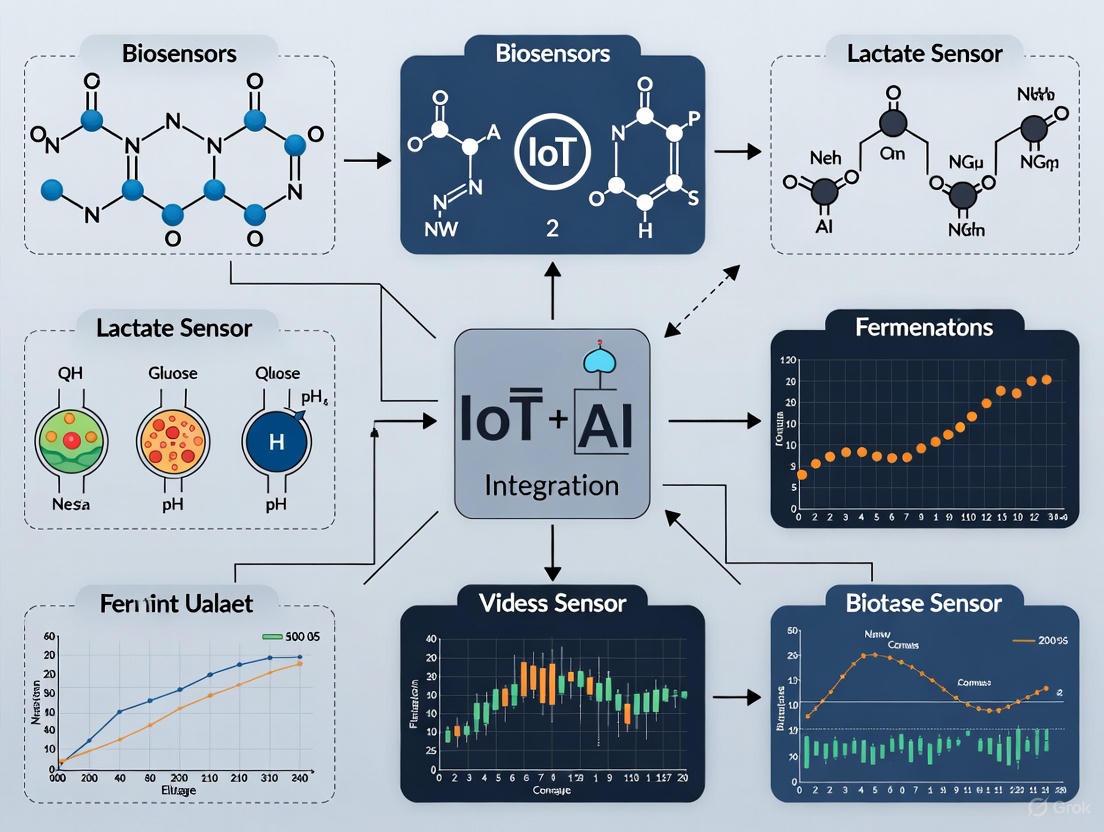
This article explores the transformative integration of Artificial Intelligence (AI), the Internet of Things (IoT), and advanced biosensors for smart fermentation processes.
Smart Fermentation 2.0: How AI, IoT, and Biosensors are Revolutionizing Biomedical Production
Abstract
This article explores the transformative integration of Artificial Intelligence (AI), the Internet of Things (IoT), and advanced biosensors for smart fermentation processes. Tailored for researchers, scientists, and drug development professionals, it provides a comprehensive analysis spanning from foundational principles to real-world validation. We first establish the core concepts and necessity of these technologies in overcoming traditional fermentation challenges like variability and scalability. The discussion then progresses to methodological implementations, including IoT sensor frameworks, machine learning models for predictive control, and AI-enhanced biosensor data interpretation. A dedicated troubleshooting section addresses critical issues such as false results, data quality, and system optimization. Finally, the article presents a comparative evaluation of these integrated systems against conventional methods, highlighting their enhanced accuracy, efficiency, and potential to accelerate the development of biologics and pharmaceuticals.
The New Paradigm: Foundations of AI and IoT in Smart Bioprocessing
Smart Fermentation represents a fundamental transformation in bioprocessing, leveraging the convergence of digital technologies and biological systems to create intelligent, self-optimizing production platforms. This evolution from traditional empirical methods to data-driven approaches marks the emergence of "Bioprocessing 2.0," characterized by the integration of Industrial Internet of Things (IIoT) devices, artificial intelligence (AI) analytics, and advanced biosensors for real-time process control [1]. The core objective is to overcome longstanding challenges in biomanufacturing, including microbial variability, product inconsistency, and limited scalability, particularly for traditional fermented foods and modern biopharmaceuticals [2].
The conceptual framework of Smart Fermentation is firmly rooted in Industry 4.0 principles, where cyber-physical systems monitor physical factory processes and make decentralized decisions through closed-loop control systems [3]. This technological synergy enables unprecedented levels of operational efficiency, product quality, and production flexibility, facilitating the transition toward personalized medicines and sustainable biomanufacturing practices [4]. For researchers and drug development professionals, understanding these integrated systems is crucial for advancing next-generation therapies and optimizing bioproduction workflows in an increasingly competitive and regulated landscape.
Core Technological Components of Smart Fermentation
Advanced Biosensing Platforms
Biosensors form the critical data acquisition layer in smart fermentation systems, providing real-time analytics for key process parameters. These devices integrate biological recognition elements with physicochemical transducers to generate measurable signals proportional to specific analyte concentrations [5]. The fermentation monitoring landscape utilizes diverse biosensing modalities:
- Electrochemical Biosensors: Predominantly used for their cost-effectiveness and wide applicability, these sensors detect metabolites like glucose, glutamate, and various amino acids through amperometric or potentiometric measurements [5]. For instance, enzyme electrodes with glutamate oxidase enable precise monitoring of glutamic acid concentrations, crucial for both pharmaceutical and food fermentation processes [5].
- Optical Biosensors: Platforms utilizing surface plasmon resonance (SPR), Raman spectroscopy, and near-infrared (NIR) spectroscopy provide non-invasive monitoring of microbial density, protein expression, and metabolite profiles without requiring sample extraction [3] [6].
- Thermal and Piezoelectric Biosensors: These detect heat changes from biochemical reactions or mass changes during microbial adhesion and biofilm formation, offering insights into microbial activity and population dynamics [6] [5].
Modern biosensor innovations incorporate nanomaterials and CRISPR-based recognition elements to enhance sensitivity and specificity while reducing interference from complex fermentation matrices [6]. The integration of these biosensors with wireless networks enables dense sensor deployment throughout bioreactor systems, creating comprehensive data generation infrastructure for AI-driven analysis.
Table 1: Biosensor Platforms for Fermentation Monitoring
| Biosensor Type | Measured Parameters | Detection Range/Response Time | Applications in Fermentation |
|---|---|---|---|
| Electrochemical | Glucose, Glutamate, Amino acids, Alcohols | L-Glutamate: Linear up to 0.6 mM; Response: <1 min [5] | Nutrient monitoring, metabolic activity tracking |
| Optical (SPR) | Microbial pathogens (Salmonella spp., E. coli O157:H7) | E. coli O157:H7: Detection in 20 min [6] | Contaminant detection, product safety assurance |
| Calorimetric | Microbial activity (Lactobacillus plantarum) | Detection time: 4.7–18.6 hours [6] | Starter culture monitoring, fermentation progress |
| Piezoelectric (QCM) | Biofilm formation, microbial mass | Mass-dependent frequency changes [6] | Spoilage detection, biofilm monitoring in meat |
IoT Infrastructure and Data Acquisition
The Industrial Internet of Things (IIoT) creates connected ecosystems within bioprocessing facilities, enabling seamless data flow from biosensors to computational analytics platforms. This infrastructure encompasses wireless sensor networks, edge computing devices, and cloud-based data storage solutions that collectively transform raw sensor readings into actionable process intelligence [2] [1]. For smart fermentation implementations, IIoT enables:
- Real-time data aggregation from distributed sensors measuring temperature, pH, dissolved oxygen, nutrient levels, and metabolic products [3]
- Closed-loop control actuation where analytics outputs automatically adjust bioreactor parameters including nutrient feed, aeration, and agitation [3]
- Decentralized decision-making through edge computing devices that perform time-sensitive adjustments without cloud dependency [1]
The convergence of Information Technologies (IT) and Operations Technologies (OT) through IIoT creates cyber-physical systems where digital representations directly influence physical process parameters, forming the foundation for adaptive biomanufacturing environments [1].
Artificial Intelligence and Machine Learning
AI and machine learning algorithms serve as the cognitive engine of smart fermentation systems, transforming multidimensional sensor data into predictive models and optimization strategies. These computational approaches include:
- Hybrid Modeling: Combining first-principles models with machine learning algorithms to leverage both theoretical knowledge and empirical data, effectively addressing complex non-linear relationships in microbial systems [3].
- Generative Adversarial Networks (GANs): Utilizing deep learning architectures for de novo design of optimized microbial strains and prediction of fermentation pathways that might not be apparent through traditional methods [7].
- Reinforcement Learning: Implementing self-improving control algorithms that continuously refine process parameters based on reward functions aligned with target output metrics [8].
These AI capabilities enable predictive maintenance by recognizing early equipment failure signatures, product quality forecasting through pattern recognition in historical data, and autonomous process optimization that dynamically adjusts conditions to maintain ideal metabolic states [8] [7]. The resulting systems can anticipate deviations before they impact product quality, significantly reducing batch failures and enhancing overall manufacturing efficiency.
Digital Twin Technology
Digital twins represent virtual replicas of physical fermentation systems, updated in real-time through sensor data streams and capable of simulation, analysis, and control. These dynamic models incorporate kinetic parameters, mass transfer limitations, and microbial growth dynamics to create comprehensive digital representations of bioreactor operations [3] [9].
In smart fermentation contexts, digital twins enable:
- Process Simulation and Optimization: Virtual testing of different operating parameters without disrupting actual production, significantly reducing experimental costs and timeline [9].
- Predictive Control: Forecasting system behavior to proactively adjust conditions and maintain optimal productivity [3] [4].
- Accelerated Tech Transfer: Facilitating knowledge transfer between development and manufacturing teams through high-fidelity process models [4].
The implementation framework for digital twins involves continuous data exchange between physical and virtual systems, creating a closed-loop control environment where the digital twin both informs and learns from the physical fermentation process [3].
Application Notes: Implementation Across Bioprocessing Sectors
Pharmaceutical Biomanufacturing
Smart fermentation technologies are revolutionizing pharmaceutical production through enhanced process control and quality assurance. In antibiotic production, AI-driven optimization of media composition and feeding strategies has demonstrated significant yield improvements while reducing byproduct formation [8]. For biologics manufacturing, digital twins enable real-time release testing through continuous quality attribute monitoring, aligning with regulatory initiatives like Quality by Design (QbD) and Process Analytical Technology (PAT) [3] [4].
The expansion of advanced therapies including cell and gene therapies (CGTs) creates particularly compelling use cases. These personalized medicines require sophisticated manufacturing approaches with tight process controls. Smart fermentation platforms support automated aseptic sampling, real-time vector titer monitoring, and predictive analytics for donor variability, addressing critical challenges in scale-up and commercialization [10] [4]. Implementation of continuous bioprocessing through perfusion-based systems further enhances productivity while maintaining product quality for these sensitive therapeutic modalities [9] [4].
Traditional Fermented Foods and Beverages
Traditional fermentation processes face unique challenges in standardization and scale-up while preserving their characteristic sensory profiles. Smart technologies bridge this gap through non-invasive monitoring of microbial ecosystems and dynamic process control that maintains artisanal quality at industrial scales [2]. Specific applications include:
- Kimchi and Sauerkraut Production: Optical biosensors track pH changes and lactic acid bacteria populations, while AI algorithms adjust fermentation conditions based on historical quality data and real-time metabolite profiles [2].
- Dairy Fermentation: Electrochemical biosensors monitor lactose conversion and probiotic viability, enabling automatic adjustment of incubation parameters to achieve consistent texture and flavor development [6] [2].
- Brewing and Distilling: IoT-connected spectrometers track alcohol content and flavor compound evolution, while digital twins simulate different hopping regimes or barrel-aging scenarios to optimize product characteristics [8].
These implementations demonstrate how smart fermentation technologies can honor traditional practices while introducing scientific rigor to ensure safety, standardization, and scalability [2].
Sustainable Bioproduction
Environmental considerations are driving adoption of smart fermentation for waste valorization and carbon footprint reduction. AI-powered metabolic modeling identifies optimal microbial consortia for converting agricultural waste into valuable chemicals, while IoT-enabled process control minimizes energy and water consumption [2] [4]. The integration of renewable energy sources with smart bioreactor operations through predictive scheduling algorithms further enhances sustainability credentials [4].
Table 2: Smart Fermentation Implementation Metrics Across Sectors
| Application Sector | Key Performance Indicators | Reported Improvements | Implementation Challenges |
|---|---|---|---|
| Pharmaceutical Biologics | Yield (g/L), Batch Consistency, Cycle Time | 20-30% yield increase with AI optimization; 50% reduction in cycle time with continuous processing [8] [4] | High capital investment; Regulatory compliance for real-time release [1] |
| Traditional Foods (Kimchi, Yogurt) | Microbial Consistency, Sensory Quality, Shelf Life | 95% reduction in batch failures; Standardized quality across production scales [2] | High sensor costs; Complex food matrices interfering with biosensors [6] [2] |
| Sustainable Chemicals | Carbon Efficiency, Waste Reduction, Energy Consumption | 15-40% reduction in energy use; 60% waste valorization [4] | Technology access for small producers; Lack of standardized frameworks [2] |
Experimental Protocols
Protocol: Development of a Hybrid Model for Fed-Batch Fermentation Optimization
Objective: Create a hybrid mechanistic-machine learning model to optimize feeding strategies in antibiotic fermentation.
Materials and Equipment:
- Bioreactor system with IoT-enabled sensors (pH, DO, temperature, biomass)
- HPLC system for offline metabolite analysis
- Python/R environment with TensorFlow/PyTorch and scikit-learn
- Data historian platform for time-series data aggregation
Procedure:
Data Collection Phase:
Model Development:
- Mechanistic Component: Implement mass balance equations for substrate consumption, growth kinetics, and product formation based on first principles [3].
- Machine Learning Component: Train gradient boosting algorithms (XGBoost) or recurrent neural networks (LSTM) to capture non-linear relationships not explained by mechanistic models [3] [7].
- Integration: Create hybrid architecture where ML components compensate for residual errors in mechanistic predictions, validated through k-fold cross-validation [3].
Model Validation:
- Execute 3-5 validation batches using model-recommended feeding profiles.
- Compare performance against historical baselines using statistical significance testing (p<0.05).
Implementation:
- Deploy validated model as digital twin for real-time decision support.
- Establish control boundaries for autonomous feeding adjustments within predefined operating ranges [3].
Protocol: Real-Time Metabolic Monitoring Using Electrochemical Biosensors
Objective: Implement a biosensor array for continuous monitoring of key metabolites in lactic acid bacteria fermentation.
Materials and Equipment:
- Amperometric biosensors for lactate, glucose, and glutamate
- Potentiostat with multi-channel capability
- Nafion polymer membranes for interference reduction
- Microfiltration units for cell-free sampling
- Enzyme immobilization reagents (glutaraldehyde, BSA)
Procedure:
Biosensor Preparation:
- Immobilize appropriate oxidases (lactate oxidase, glucose oxidase, glutamate oxidase) on platinum electrodes using cross-linking protocols [5].
- Apply Nafion coating to minimize electrochemical interference from ascorbic acid and uric acid [5].
- Calibrate each sensor in standard solutions covering expected concentration ranges (0.1-10 mM).
Fermentation Integration:
- Install biosensors in bypass loop with microfiltration to provide cell-free fermentate.
- Establish continuous flow system with peristaltic pump maintaining 1 mL/min flow rate.
- Connect potentiostat outputs to data acquisition system for real-time signal processing.
Signal Processing and Validation:
- Apply moving average filters to reduce signal noise.
- Validate biosensor readings against hourly HPLC reference measurements.
- Implement chemometric models to compensate for drift and matrix effects [3].
Process Control Application:
- Program control algorithms to adjust nutrient feed based on metabolic quotient calculations.
- Set alarm triggers for metabolic shift detection indicating contamination or strain instability.
The Scientist's Toolkit: Essential Research Reagents and Solutions
Table 3: Key Research Reagent Solutions for Smart Fermentation
| Reagent/Material | Function | Application Examples | Technical Notes |
|---|---|---|---|
| Enzyme Biosensors (Lactate oxidase, Glucose oxidase, Glutamate oxidase) | Selective metabolite detection | Real-time monitoring of metabolic fluxes; Fermentation endpoint detection | Requires periodic calibration; Nafion coating reduces interference [5] |
| CRISPR-based Recognition Elements | Pathogen detection; Strain identification | Contamination monitoring; Starter culture validation | High specificity; Can be integrated with lateral flow assays [6] |
| Nanomaterial-Enhanced Transducers (Carbon nanotubes, Graphene) | Signal amplification | Detection of low-concentration metabolites; Early deviation detection | Increases sensitivity 3-5x; May require specialized immobilization techniques [6] |
| IIoT-Enabled Sensor Nodes | Wireless data transmission | Distributed sensing in large-scale bioreactors; Mobile monitoring | Enables real-time data aggregation; Requires network infrastructure [1] |
| Multivariate Analysis Software (Python/R libraries) | Chemometric modeling | PAT implementation; Real-time quality prediction | Requires calibration datasets; FDA-compliant versions available for GMP [3] |
| Single-Use Bioreactors with Integrated Sensors | Scalable process development | Scale-up/scale-down studies; Multi-parallel experimentation | Reduces cross-contamination risk; Enables modular factory design [9] |
Implementation Challenges and Future Perspectives
Despite the compelling benefits of smart fermentation, several implementation barriers require addressing. High initial investment remains prohibitive for small producers, though the emergence of modular, open-source platforms is gradually improving accessibility [2]. Regulatory acceptance of AI-driven process adjustments and real-time release testing continues to evolve, necessitating collaborative frameworks between industry and agencies like the FDA and EMA [1] [4]. Additionally, workforce development represents a critical success factor, as effective implementation requires cross-disciplinary expertise spanning biology, data science, and engineering [4].
The future trajectory of smart fermentation points toward increasingly autonomous self-optimizing systems capable of adapting to raw material variability and producing personalized therapeutics [4]. Emerging frontiers include cell-free biomanufacturing platforms, distributed microfactories for point-of-care production, and AI-designed biologics with optimized manufacturability [4]. As these technologies mature, smart fermentation will fundamentally transform bioprocessing from an empirical art to a predictive science, enabling unprecedented levels of precision, efficiency, and sustainability in biological manufacturing.
Table 4: Implementation Timeline for Smart Fermentation Technologies
| Timeframe | Expected Technological Milestones | Potential Impact on Bioprocessing |
|---|---|---|
| 2025-2027 | Widespread PAT adoption; AI for predictive maintenance; Expanded continuous processing [4] | 30-50% reduction in batch failures; 20% increase in productivity [8] |
| 2028-2030 | Autonomous bioprocessing; Integrated digital twins; Standardized IIoT architectures [1] | Fully automated facilities; Real-time release for most products [4] |
| 2031+ | Cell-free systems; Distributed manufacturing; AI-designed therapeutics [4] | Personalized medicine manufacturing; Radical sustainability improvements [2] |
The integration of biosensors, IoT networks, and AI algorithms is revolutionizing smart fermentation research, enabling unprecedented control over microbial processes. This technological trifecta allows for real-time monitoring of critical parameters, seamless data communication, and intelligent predictive control, directly addressing longstanding challenges in traditional fermentation such as microbial variability, product inconsistency, and lack of scalability [2]. By bridging the gap between traditional craftsmanship and Industry 4.0, these connected systems enhance product consistency, improve production efficiency, and preserve cultural heritage while meeting modern safety and quality standards [2]. This article details the core components, protocols, and experimental frameworks for implementing these technologies in advanced fermentation research.
Core Component 1: Biosensors for Microbial Monitoring
Biosensors serve as the critical data acquisition point in smart fermentation systems, converting biological responses into quantifiable signals for monitoring microbial activity and metabolic products.
Operational Principles and Classification
A biosensor integrates a biorecognition element (e.g., antibody, enzyme, nucleic acid, aptamer) with a transducer that converts the biological interaction into a measurable signal [11] [12]. The performance of these sensors is evaluated based on sensitivity, specificity, and robustness against interference from complex food matrices [11] [12].
Table: Biosensor Types and Characteristics in Fermentation Monitoring
| Biosensor Type | Transduction Mechanism | Detected Analytes/Parameters | Response Time | Key Advantages |
|---|---|---|---|---|
| Electrochemical | Measures electrical changes (current, potential, impedance) from biochemical reactions | Ethanol, organic acids (lactic, acetic), glucose, microbial activity [6] | Minutes to hours | High sensitivity, portability, cost-effectiveness [11] [6] |
| Optical | Detects changes in light properties (wavelength, intensity) | Pathogens, spoilage organisms, metabolic products via SPR, fluorescence, colorimetry [13] [6] | Minutes [6] | High specificity and sensitivity, potential for multiplexing [13] |
| Piezoelectric | Measures mass changes via frequency shift of quartz crystal | Bacterial cells (e.g., Staphylococcus), biofilm formation [6] | Real-time monitoring | Label-free detection, monitors microbial adhesion [6] |
| Thermal (Microcalorimetry) | Measures heat production from metabolic activity | Starter culture activity (e.g., Lactobacillus plantarum) [6] | 4.7-18.6 hours [6] | Non-invasive, monitors metabolic activity directly |
Research Reagent Solutions
Table: Essential Reagents for Biosensor-based Fermentation Monitoring
| Reagent/Material | Function | Application Example |
|---|---|---|
| Specific Aptamers | Synthetic nucleic acid biorecognition elements; bind targets with high affinity | Detection of Salmonella spp. in fermented meat products [6] |
| Nucleic Acid Probes | Hybridize with complementary DNA/RNA sequences from target microbes | Identification and tracking of specific starter cultures [11] [12] |
| Enzyme-based Bioreceptors | Catalyze specific substrate reactions, generating detectable products | Glucose oxidase for monitoring sugar consumption in fermentations [11] |
| Antibodies | Immunological recognition of specific microbial surface antigens | Detection of Listeria spp. in dairy fermentations [6] |
| Nanomaterials (e.g., Graphene, Metal Nanoparticles) | Enhance signal transduction and immobilize bioreceptors | Improving electrochemical biosensor sensitivity for pathogen detection [6] |
Figure 1: Fundamental biosensor architecture showing the relationship between core components and signal generation.
Core Component 2: IoT Networking Architecture
IoT networks provide the communication backbone that connects distributed biosensors to data processing units, enabling real-time monitoring and control of fermentation processes.
Network Architecture Models
IoT systems typically employ layered architecture models, with the three-layer model being most prevalent in fermentation applications [14] [15]:
- Perception Layer: Comprises physical sensors and devices that collect data from the fermentation environment [14] [15].
- Network Layer: Transmits data collected by the perception layer using communication technologies such as Wi-Fi, Zigbee, LoRaWAN, and cellular networks [14] [15].
- Application Layer: Interprets data to provide user-facing services, such as fermentation monitoring dashboards and control systems [14] [15].
Connectivity Protocols and Technologies
Selecting appropriate connectivity protocols is crucial for optimizing power consumption, range, and data reliability in fermentation environments.
Table: IoT Connectivity Protocols for Fermentation Monitoring Systems
| Protocol | Network Type | Range | Power Consumption | Data Rate | Best Use Cases |
|---|---|---|---|---|---|
| LoRaWAN | Wide Area Network (WAN) | Up to 15 km (rural) [14] | Very Low | 0.3-50 kbps [14] | Large-scale fermentation facilities, geographic dispersion |
| Zigbee | Personal Area Network (PAN) | 1-10 meters [14] | Low | 250 kbps [14] [16] | Contained fermentation chambers, short-range communication |
| Bluetooth/BLE | Personal Area Network (PAN) | <10 meters [14] | Very Low (BLE) | Up to 2 Mbps [14] | Portable sensor readouts, personal device connectivity |
| Wi-Fi | Local Area Network (LAN) | ~100 meters [14] | High | High throughput | Facilities with existing infrastructure, video monitoring |
| 5G Cellular | Wide Area Network (WAN) | Long-distance [14] | Moderate to High | High throughput | Applications requiring mobility and low latency |
IoT Communication Models
Different fermentation monitoring scenarios require specific communication models [16]:
- Device-to-Gateway: Biosensors communicate with a central gateway that aggregates data before transmission to the cloud [16].
- Device-to-Cloud: Direct communication between biosensors and cloud platforms [16].
- Device-to-Device: Enables direct communication between nearby sensors for coordinated monitoring [16].
Figure 2: Three-layer IoT architecture for fermentation monitoring showing data flow and feedback control.
Core Component 3: AI Algorithms for Data Analysis
Artificial intelligence, particularly machine learning (ML) and deep learning, transforms raw biosensor data into actionable insights by enabling pattern recognition, anomaly detection, and predictive modeling.
Machine Learning Approaches
ML algorithms enhance biosensor capabilities through several mechanisms [17]:
- Supervised Learning: Trained on labeled datasets to classify microbial species or quantify metabolite concentrations with reported accuracies exceeding 95% in some cases [11] [17].
- Unsupervised Learning: Identifies hidden patterns in fermentation data without pre-existing labels, useful for detecting novel contamination events [17].
- Deep Learning: Utilizes convolutional neural networks (CNNs) for complex pattern recognition in spectral data from techniques like surface-enhanced Raman spectroscopy (SERS) [11] [12].
AI Applications in Fermentation Monitoring
Table: AI Algorithm Applications in Smart Fermentation
| AI Algorithm Type | Function | Fermentation Application | Performance Metrics |
|---|---|---|---|
| Convolutional Neural Networks (CNNs) | Pattern recognition in complex spectral data | Pathogen detection in meat via SERS [11] [12] | Enhanced sensitivity and specificity |
| Support Vector Machines (SVM) | Classification and regression analysis | Classification of bacterial strains in impedance flow cytometry [11] | Accurate strain differentiation |
| Random Forest | Feature importance analysis and classification | Identifying critical parameters affecting fermentation quality [17] | Robustness against overfitting |
| Anomaly Detection Algorithms | Identifying deviations from normal fermentation patterns | Early detection of contamination or process failure [2] | Reduced false positives |
Integrated Experimental Protocols
Protocol: Real-Time Monitoring of Lactic Acid Bacteria Fermentation
Objective: To continuously monitor Lactobacillus fermentation kinetics using electrochemical biosensors, IoT connectivity, and AI-powered predictive analytics.
Materials:
- Electrochemical biosensors with lactate oxidase bioreceptors [6]
- pH and temperature sensors
- IoT gateway device with LoRaWAN or Zigbee connectivity [14] [16]
- Fermentation vessel with sampling ports
- Lactobacillus starter culture [6]
- Growth medium (MRS broth or equivalent)
Procedure:
- Sensor Calibration: Calibrate lactate biosensors using standard lactate solutions (0.1-100 mM) in sterile medium [6].
- System Integration: Connect biosensors to IoT gateway device, ensuring secure pairing and data transmission to cloud platform [15].
- Inoculation and Data Acquisition:
- Inoculate sterile medium with Lactobacillus starter culture [6].
- Initiate continuous monitoring at 2-minute intervals for first 4 hours, then 5-minute intervals for remaining fermentation.
- Collect lactate concentration, pH, and temperature data points.
- Data Transmission: Configure IoT gateway to transmit data to cloud storage every 15 minutes using MQTT protocol [18].
- AI Model Implementation:
- Train Random Forest regression model to predict final lactate yield based on early fermentation kinetics [17].
- Implement anomaly detection algorithm to identify contamination events from atypical signal patterns.
- Validation: Correlate predicted values with offline HPLC measurements of lactate concentration at 8, 16, and 24 hours.
Protocol: AI-Enhanced Pathogen Detection in Fermented Products
Objective: To rapidly detect Salmonella contamination in fermented meat products using optical aptasensors and deep learning algorithms.
Materials:
- Surface Plasmon Resonance (SPR) biosensor with Salmonella-specific aptamers [6]
- Sample preparation kit (enrichment broth, filtration units)
- IoT-enabled spectrophotometer
- Cloud-based AI analytics platform
- Reference Salmonella strains and non-target bacteria for specificity testing
Procedure:
- Sample Preparation:
- Homogenize 25g fermented meat product with 225ml enrichment broth.
- Incubate at 37°C for 6-8 hours [6].
- Centrifuge and filter samples to remove particulates.
- Biosensor Setup:
- Immobilize Salmonella-specific aptamers on SPR gold chip [6].
- Prime system with running buffer until stable baseline achieved.
- Detection and Data Collection:
- Inject prepared samples over sensor surface for 5 minutes.
- Monitor binding response in real-time.
- Transmit sensorgram data to cloud via Wi-Fi or cellular connection [16].
- AI Analysis:
- Validation:
- Compare AI-interpreted results with conventional PCR confirmation [6].
- Calculate sensitivity, specificity, and time-to-result compared to culture methods.
Figure 3: Integrated data workflow from sample collection to actionable insights in AI-enhanced fermentation monitoring.
Implementation Challenges and Considerations
While the integration of biosensors, IoT, and AI offers transformative potential for fermentation research, several challenges must be addressed:
- Data Quality and Standardization: Variations in biosensor signals and complex food matrices can affect AI model accuracy [11] [12].
- System Integration Complexity: Ensuring interoperability between devices from different manufacturers requires standardized protocols [2] [16].
- Computational Requirements: Real-time AI analysis demands significant processing power, often addressed through edge-cloud computing hierarchies [15].
- Security and Privacy: IoT networks require robust encryption and authentication mechanisms to protect sensitive fermentation data [16] [15].
- Regulatory Acceptance: Validation against gold-standard methods and explainable AI models are necessary for regulatory approval of AI-enhanced systems [11] [12].
Future developments should focus on modular, scalable solutions that lower barriers to adoption for small-scale producers while maintaining the precision required for industrial-scale fermentation research [2]. The ongoing standardization of IoT protocols and development of explainable AI will further enhance the reliability and acceptance of these integrated systems in critical fermentation applications.
Why Now? The Pressing Need to Overcome Microbial Variability and Ensure Batch-to-Batch Consistency
In the industrial production of biologics, including therapeutic proteins and vaccines, batch-to-batch reproducibility is not merely a production efficiency target but a fundamental requirement for regulatory approval and patient safety [19]. Biologics are complex products where apparently small changes in the manufacturing process can cause significant differences in their clinical properties [19]. Consequently, production processes are approved by authorities only with clearly defined constraints, making reproducibility of utmost importance [19]. Traditional fermentation processes, particularly in traditional food production, have long suffered from microbial variability and inconsistent product quality due to reliance on natural inoculation and environmental microflora [2]. However, the convergence of advanced monitoring technologies, artificial intelligence (AI), and the Internet of Things (IoT) now presents an unprecedented opportunity to overcome these longstanding challenges through smart, data-driven fermentation systems.
The Fundamental Challenge: Microbial Process Variability
The core challenge in microbial fermentation lies in the inherent variability of living biological systems. Small variations in environmental conditions, including temperature, dissolved oxygen, pH, and agitation, can significantly impact results at larger scales [20]. This variability is particularly problematic in recombinant protein production systems, where Escherichia coli serves as the preferred host for therapeutic proteins that do not require post-translational modifications [19].
Quantifying the Reproducibility Challenge: Analysis of typical recombinant protein production processes reveals substantial variability in biomass concentration profiles across multiple batches [19]. This variability extends beyond biomass to final product titer, creating significant challenges for downstream processing and final product quality [19]. From an engineering perspective, two primary challenges exist: identifying the most robust operational procedure within given constraints, and implementing effective feedback control to eliminate randomly appearing disturbances during process execution [19].
Impact of Scale-Up on Process Consistency
The challenges of microbial variability become increasingly pronounced during scale-up from laboratory to pilot or commercial production [20]. Factors including oxygen transfer rates, nutrient delivery efficiency, and heat dissipation dynamics change significantly with increasing bioreactor volume, creating additional sources of batch-to-batch variation.
Table 1: Critical Process Parameters Affecting Batch-to-Batch Reproducibility
| Process Parameter | Impact on Consistency | Control Challenge |
|---|---|---|
| Specific Growth Rate (μ) | Determines physiological state and protein-synthesizing machinery of cells [19] | Difficult to maintain optimal profile amid disturbances |
| Dissolved Oxygen | Affects metabolic pathways and product formation [20] | Oxygen transfer limitations at larger scales |
| Temperature | Influences enzyme activity and growth kinetics [20] | Heat removal challenges in large vessels |
| pH | Impacts cellular metabolism and product stability [20] | Mixing limitations affect reagent distribution |
| Nutrient Feeding | Determines biomass yield and prevents byproduct formation [19] | Accurate delivery and mixing at high cell densities |
Smart Fermentation Technologies: An Integrated Solution Framework
The emergence of smart fermentation technologies represents a paradigm shift in microbial process control, integrating biosensors, IoT connectivity, AI, and machine learning (ML) to directly address the challenges of batch-to-batch variability [2]. These technologies enable real-time monitoring and dynamic control of fermentation processes, moving beyond traditional static control strategies.
Core Technological Components
3.1.1 Advanced Sensor Systems and IoT Integration Modern bioreactor systems incorporate multiple sensor technologies for real-time monitoring of critical process parameters (CPPs). These sensors are increasingly connected via IoT frameworks, enabling continuous data streaming to cloud-based analytics platforms [2]. This connectivity allows for remote monitoring and control while building extensive historical databases for process optimization.
3.1.2 Artificial Intelligence and Machine Learning Algorithms AI and ML algorithms leverage the extensive data generated by sensor networks to build predictive models of fermentation processes [2]. These models can identify complex patterns in multi-parameter data streams that human operators might miss, enabling early detection of process deviations and predictive control adjustments.
3.1.3 Adaptive Control Strategies Traditional fermentation control has relied on fixed setpoints for parameters like substrate feeding rates. Modern approaches implement adaptive control strategies that respond to real-time process states. For example, controlling to a predefined biomass profile (x-setpoint) derived from a desired specific growth rate profile (μ-setpoint) has demonstrated significantly improved reproducibility compared to conventional process control strategies [19].
Figure 1: Smart Fermentation Control Loop Integrating IoT and AI Technologies
Application Note: Adaptive Control for Enhanced Reproducibility in E. coli Fed-Batch Processes
Experimental Objective and Principle
Objective: To implement an adaptive control strategy for maintaining a predefined specific growth rate (μ) profile in E. coli fed-batch fermentations for therapeutic protein production, thereby improving batch-to-batch reproducibility of both biomass and product titer.
Principle: Rather than directly controlling the specific growth rate (μ), which can be challenging to measure reliably, the process is guided along a predefined profile of total biomass (x-setpoint) derived from the desired μ-profile [19]. This approach controls the integral variable (biomass) directly, making the process more robust against disturbances that cause deviations in biomass concentration.
Materials and Equipment
Table 2: Research Reagent Solutions and Essential Materials
| Item | Specification | Function/Application |
|---|---|---|
| Microbial Strain | Escherichia coli BL21(DE3) [19] | Host system for recombinant protein production |
| Expression Vector | Plasmid pET28a with T7 promoter [19] | Encodes recombinant therapeutic protein |
| Inducer | Isopropyl-thiogalactopyranosid (IPTG), 1 mM [19] | Triggers recombinant protein expression |
| Carbon Source | Glucose solution, 600 g/kg [19] | Main substrate for cell growth and maintenance |
| Antibiotic | Kanamycin [19] | Selective pressure for plasmid maintenance |
| Trace Elements | Na2-EDTA, FeCl3·6H2O, CaCl2·2H2O, CoCl2·6H2O, ZnSO4·7H2O, CuSO4·5H2O, MnSO4·H2O [19] | Essential micronutrients for cellular functions |
| Mineral Salts | K2HPO4, NaH2PO4·H2O, (NH4)2SO4, Na2SO4, MgSO4·7H2O, (NH4)2-H-citrate, NH4Cl [19] | Buffer system and nitrogen/sulfur sources |
| Bioreactor System | INFORS HT Techfors with eve software [20] | Automated process control and data acquisition |
Protocol Methods
4.3.1 Pre-culture and Inoculation
- Prepare seed culture in shake flasks using defined medium with kanamycin selection
- Incubate until mid-exponential phase (OD600 ≈ 2-3)
- Transfer inoculum automatically to bioreactor containing 5 L initial working volume
4.3.2 Bioreactor Setup and Initial Conditions
- Set temperature to 35°C and pH to 7.0
- Calibrate dissolved oxygen (DO) probe and set to maintain 25% saturation through cascade control of aeration (up to 24 L/min) and agitation (up to 1,400 rpm)
- Maintain head pressure at 0.5 bar above ambient to enhance oxygen solubility and suppress foam
4.3.3 Biomass Estimation via Artificial Neural Network (ANN)
- Implement feedforward ANN with single hidden layer using tanh activation functions
- Input nodes: Online signals of Oxygen Uptake Rate (OUR), Carbon Dioxide Production Rate (CPR), total base consumption from pH control, plus bias node
- Hidden layer: 5 nodes with tanh response functions
- Output: Estimated total biomass (x-est)
- Train ANN on historical data sets (minimum 26 batches recommended) from the specific production system
4.3.4 Fed-Batch Process with Adaptive Control
- Initial batch phase: Begin exponential feeding immediately after inoculation with fixed profile targeting μ = 0.5 h⁻¹
- Induction phase: When biomass concentration reaches ≈35 g/kg, induce with 1 mM IPTG
- Adaptive control phase (from 7th hour): Implement feedback control along x-setpoint profile derived from predefined μ-profile:
- Calculate x-setpoint(t) using: x-setpoint(t) = x₀ · exp(∫μ-setpoint(t)dt) [19]
- Determine substrate feed rate from profiles of μ-setpoint and x-est
- Apply simple adaptive procedure to correct deviations from desired biomass path
Figure 2: Experimental Workflow for Adaptive Fed-Batch Process Control
Data Collection and Analysis
4.4.1 Online Monitoring
- Continuous recording: temperature, pH, DO, agitation, aeration, OUR, CPR, base consumption
- ANN-based biomass estimation updated at 1-minute intervals
4.4.2 Offline Analytics
- Biomass concentration: OD600 measurements with correlation to dry cell weight
- Substrate concentration: Enzymatic analysis of glucose using YSI 2700 Select Bioanalyzer
- Product titer: SDS-PAGE analysis after inclusion body separation and solubilization
Key Performance Metrics and Results
Implementation of the adaptive biomass control strategy has demonstrated significant improvements in batch-to-batch reproducibility compared to conventional fixed feeding strategies or direct μ-control approaches.
Table 3: Quantitative Comparison of Process reproducibility Metrics
| Performance Metric | Conventional Control | Adaptive Biomass Control | Improvement |
|---|---|---|---|
| Biomass CV (%) | High variability [19] | Drastically improved [19] | >50% reduction |
| Product Titer CV (%) | Significant batch-to-batch variation [19] | Markedly improved consistency [19] | >40% reduction |
| Process Capability (Cpk) | Often <1.33 | Consistently >1.67 | ~25% improvement |
| Batch Failure Rate | Industry baseline | Significantly reduced | >60% reduction |
Implementation Framework for Smart Fermentation Systems
Technology Integration Roadmap
Successful implementation of smart fermentation technologies requires systematic integration of hardware, software, and analytical components:
5.1.1 Bioreactor System Requirements
- Geometrically similar vessels across scales (15-1000 L) for consistent scale-up/down [20]
- Standardized sensor integration ports for consistent monitoring at all scales
- Advanced impeller designs (Rushton or pitched-blade) for optimized mixing [20]
- Steam-in-place (SIP) capability for contamination control [20]
- Automated sampling systems for aseptic in-process monitoring
5.1.2 Data Infrastructure
- Unified software platform (e.g., eve) across all scales [20]
- Centralized data repository with batch history tracking
- Cloud connectivity for remote monitoring and data analytics
- API interfaces for custom algorithm integration
5.1.3 Analytical Capabilities
- Real-time multivariate data analysis
- Machine learning models for predictive process control
- Digital twin technology for process optimization
- Automated reporting for regulatory compliance
Regulatory and Compliance Considerations
Implementation of smart fermentation technologies must address regulatory requirements, particularly for pharmaceutical applications:
- PAT (Process Analytical Technology) framework alignment [19]
- GMP compliance for bioreactor system design and materials [20]
- Automated documentation for batch record completeness
- Data integrity and audit trail capabilities
The pressing need to overcome microbial variability and ensure batch-to-batch consistency represents both a significant challenge and opportunity for bioprocessing industries. The convergence of IoT connectivity, advanced biosensors, and AI/ML analytics now enables unprecedented levels of process control and understanding. The adaptive control strategy presented herein, which utilizes ANN-based biomass estimation and predefined growth profiles, demonstrates that substantial improvements in reproducibility are achievable with current technologies. As these smart fermentation systems continue to evolve, they will increasingly serve as the foundation for next-generation biomanufacturing—delivering both economic benefits through reduced batch failures and clinical benefits through more consistent product quality. For researchers and drug development professionals, early adoption and mastery of these technologies represents a critical competitive advantage in the rapidly advancing field of biopharmaceutical production.
A biosensor is an analytical device that converts a biological response into a quantifiable electrical signal through integrated biological and transduction elements [21]. The core principle involves the specific recognition of a target analyte by a biological recognition element, followed by transduction of this binding event into a measurable output. This operation is governed by five essential components that work in sequence: the analyte, bioreceptor, transducer, electronics, and display unit [21]. The fundamental architecture ensures that biosensors can provide rapid, sensitive, and selective detection of specific substances in complex matrices, making them indispensable in fields ranging from biomedical diagnostics to environmental monitoring and food safety control [21].
In the context of smart fermentation research, biosensors serve as critical data acquisition nodes within IoT and AI-driven frameworks. They enable real-time monitoring of key metabolic parameters—such as substrate concentrations, product formation, and microbial density—that are essential for precise process control and optimization [2]. The integration of biosensor data with machine learning algorithms facilitates predictive modeling of fermentation dynamics, enabling proactive adjustments to enhance product yield, consistency, and quality while preserving the unique microbial biodiversity of traditional fermented foods [2].
Fundamental Components of a Biosensor
The operational efficacy of a biosensor hinges on the coordinated function of its core components, each with a distinct role in the detection and reporting chain.
Bioreceptors
The bioreceptor is a biologically derived molecular recognition element that provides the sensor with its high specificity. It interacts selectively with the target analyte, initiating the sensing process [21]. Common classes of bioreceptors include:
- Enzymes: Catalyze specific biochemical reactions, with the reaction rate proportional to analyte concentration.
- Antibodies: Bind specifically to target antigens with high affinity, forming the basis of immunosensors.
- Nucleic Acids (DNA/RNA): Utilize complementary base pairing for the detection of specific genetic sequences.
- Aptamers: Short, single-stranded oligonucleotides or peptides that fold into specific three-dimensional structures for target binding.
- Whole Cells: Utilize microbial, animal, or plant cells as sensing elements, often for functional response monitoring.
The choice of bioreceptor dictates the sensor's selectivity—perhaps its most critical characteristic—ensuring accurate detection even in samples containing interfering substances or admixtures [21].
Transducers
The transducer converts the biological recognition event (bio-recognition) into a measurable signal through a process of signalisation [21]. Transducers are categorized based on their fundamental operating principle:
Table 1: Major Transducer Types and Their Operating Principles
| Transducer Type | Measurable Signal | Principle of Operation |
|---|---|---|
| Electrochemical | Current, Potential, Impedance | Measures changes in electrical properties from biochemical reactions [21]. |
| Optical | Light Intensity, Wavelength | Detects changes in light absorption, emission, or reflection [22]. |
| Acoustic | Mass, Frequency | Utilizes frequency changes in piezoelectric crystals due to mass adsorption. |
| Calorimetric | Temperature, Heat | Monitors enthalpy changes from biochemical reactions. |
A prominent example in research is the Genetically Encoded Fluorescent Biosensor (GEFB), an optical transducer where the fluorescent properties change upon direct interaction with a stimulus [22]. These often use Förster Resonance Energy Transfer (FRET), where the energy transfer efficiency between two fluorescent proteins changes with analyte-induced conformational shifts, providing a rationetric output that minimizes optical artefacts [22].
Signal Processing, Electronics, and Display
This subsystem conditions the raw signal from the transducer. The electronics perform crucial signal processing steps, including amplification of weak signals, filtering of noise, and conversion from analog to digital form [21]. The display then presents the processed data in a user-interpretable format—such as numeric values, graphs, or images—via interfaces like liquid crystal displays or direct connections to data acquisition systems [21]. In modern smart fermentation systems, this stage often involves wireless transmission of data to cloud platforms for real-time AI analysis and long-term storage [2].
Key Performance Characteristics of Biosensors
The suitability of a biosensor for a specific application, particularly for the continuous monitoring required in bioreactors, is evaluated against several key performance metrics [21]:
Table 2: Essential Biosensor Performance Characteristics
| Characteristic | Description | Importance in Fermentation Monitoring |
|---|---|---|
| Selectivity | Ability to specifically detect the target analyte amidst interfering substances [21]. | Critical for accurate measurement in complex fermentation broths. |
| Sensitivity | Lowest concentration of analyte that can be reliably detected (Limit of Detection, LOD) [21]. | Determines capability to track low-abundance metabolites. |
| Linearity | Concentration range over which sensor response is linearly proportional to analyte concentration [21]. | Defines the working range for quantitative measurements. |
| Reproducibility | Precision and accuracy of repeated measurements [21]. | Ensures batch-to-batch consistency and data reliability. |
| Stability | Susceptibility to ambient disturbances and signal drift over time [21]. | Vital for long-term fermentation processes requiring continuous monitoring. |
Advanced Biosensing: Multiplexing and Barcoding for Network Biology
Overcoming the limitation of spectral overlap in traditional biosensors, massively multiplexed biosensor barcoding enables concurrent tracking of over 100 different signaling activities in live cells [23]. This revolutionary approach uses a set of barcoding proteins, spectrally separable from common biosensors, to create uniquely identifiable cell populations. Deep learning models then analyze images of these mixed populations to deconvolute the activity of each biosensor simultaneously [23].
This technology is transformative for deciphering complex cell signaling networks. It reveals temporal relationships between different signaling nodes, captures both cell-autonomous and non-autonomous effects of mutations, and uncovers complex network interactions and adaptation mechanisms that would be invisible when studying pathways in isolation [23]. The workflow for such an experiment is depicted below.
Experimental Protocols
Protocol: Implementation of a Optical Biosensor for Metabolite Monitoring in a Lab-Scale Bioreactor
This protocol details the integration of a FRET-based biosensor for real-time monitoring of a specific metabolite (e.g., glucose, lactate) in a microbial fermentation broth.
I. Materials and Pre-installation
- Bioreactor System: Sterile, lab-scale bioreactor with optical port(s) for probe insertion.
- Optical Biosensor Probe: Commercially available or custom-built probe containing the immobilized bioreceptor (e.g., enzyme, aptamer).
- Excitation Light Source & Spectrometer: Integrated fluorometer or modular system with appropriate filters.
- Data Acquisition (DAQ) System: Computer-interfaced hardware for signal collection.
- Calibration Standards: Prepared solutions of the target analyte at known concentrations in a matrix mimicking the fermentation broth.
II. Sensor Calibration Procedure
- Probe Conditioning: Rinse the biosensor probe with sterile buffer and allow signal to stabilize.
- Standard Measurement: Immerse the probe in the lowest concentration calibration standard under constant, mild agitation.
- Signal Recording: Record the steady-state fluorescence output (e.g., donor/acceptor emission ratio for FRET sensors).
- Incremental Measurement: Repeat steps 2-3 for all calibration standards in ascending order.
- Calibration Curve: Plot the recorded signal against analyte concentration and fit with an appropriate regression model (e.g., linear, sigmoidal).
III. Fermentation Monitoring and Data Integration
- In-line Installation: Aseptically insert and seal the calibrated biosensor probe into the bioreactor's optical port.
- Continuous Data Acquisition: Initiate the DAQ system to record signals at pre-defined intervals (e.g., every minute).
- IoT Data Handling: Stream the raw data to a local gateway device.
- Cloud Transmission: The gateway transmits data wirelessly to a cloud platform via a standard protocol (e.g., MQTT).
- Real-Time AI Processing: Deployed machine learning models on the cloud platform clean the data, convert signals to concentration values using the calibration curve, and update dashboards for researchers.
Protocol: Massively Multiplexed Biosensor Barcoding for Signaling Network Analysis
This protocol enables the simultaneous monitoring of dozens of signaling activities in a population of cells, ideal for studying complex microbial consortia or host-microbe interactions [23].
I. Cell Preparation and Barcoding
- Culture Cells: Grow the target cell line (e.g., a microbial or mammalian cell line) to the desired density.
- Generate Barcodes: Create a diverse library of barcoding proteins (e.g., fluorescent protein combinations localized to distinct subcellular structures) that are spectrally separable from your biosensors.
- Transduce Cells: Use lentiviral or other methods to stably introduce the barcode constructs into cells, creating a library of uniquely barcoded cell lines.
II. Biosensor Transduction and Population Mixing
- Transduce with Biosensors: Introduce genetically encoded biosensors for various signaling nodes (e.g., kinases, metabolites, ions) into the barcoded cell lines.
- Validate Expression: Confirm robust expression and functionality of both the barcode and the biosensor in each line.
- Mix Population: Combine the different barcoded, biosensor-expressing cell populations into a single culture vessel.
III. Live-Cell Imaging and Data Analysis
- Image Acquisition: Use high-content or confocal microscopy to perform live-cell imaging of the mixed population over time, capturing both barcode and biosensor activity channels.
- Deep Learning Segmentation: Employ a pre-trained convolutional neural network (CNN) to identify individual cells and classify their barcode identity in each frame.
- Signal Extraction: For each time point and cell, extract the biosensor activity signal (e.g., FRET ratio).
- Network Analysis: Analyze the coordinated dynamics of different biosensors across the population to infer causal relationships and network structures within the signaling network [23].
The Scientist's Toolkit: Research Reagent Solutions
Table 3: Essential Reagents and Materials for Biosensor Research
| Item | Function/Application |
|---|---|
| Genetically Encoded Fluorescent Biosensors (GEFBs) | Direct sensing of ions, metabolites, and enzymatic activities in live cells [22]. |
| FRET-Compatible Fluorescent Protein Pairs (e.g., CFP/YFP) | Engineered as donor-acceptor pairs for constructing rationetric biosensors [22]. |
| Barcoding Protein Library | A set of proteins to generate over 100 unique cellular barcodes for multiplexing [23]. |
| Lentiviral Transduction Particles | For stable and efficient delivery of biosensor and barcode genes into target cells. |
| High-Affinity Bioreceptors (Aptamers, Antibodies) | Provide the high selectivity required for specific analyte detection in complex media [21]. |
| Nanomaterials (e.g., Quantum Dots, Gold Nanoparticles) | Used to enhance signal transduction, improve LOD, and increase sensor stability [21]. |
| Immobilization Matrices (e.g., Hydrogels, Self-Assembled Monolayers) | For anchoring bioreceptors to the transducer surface while maintaining their bioactivity. |
| Deep Learning Model Codes | Pre-trained algorithms for image analysis and biosensor barcode deconvolution [23]. |
Logical Workflow for Smart Fermentation Biosensor Integration
The integration of biosensors into a smart fermentation system creates a closed-loop for intelligent process control. The following diagram illustrates the logical flow of information from sensing to process adjustment.
The integration of Artificial Intelligence (AI) and Machine Learning (ML) with bioprocessing, particularly within smart fermentation systems, is revolutionizing the production of biologics, therapeutics, and sustainable food ingredients. Modern bioprocess development generates large amounts of heterogeneous data from advanced sensors and analytical techniques [24]. AI and ML provide the computational framework to rationally explore these vast design spaces, extract meaningful patterns, and enable predictive control and real-time optimization [24]. This primer details the core AI/ML architectures—from foundational neural networks to powerful ensemble methods like Random Forests—and provides structured protocols for their application in bioprocess development, with a special focus on fermentation monitoring and control systems enhanced by IoT and biosensor technologies [25].
Core AI and Machine Learning Architectures
Neural Networks and Deep Learning
Neural networks, especially deep learning architectures, are capable of automatically learning complex, non-linear relationships from high-dimensional bioprocess data without the need for pre-specified mechanistic models.
- Architecture: These are composed of interconnected layers of nodes (neurons), including an input layer (for raw data like sensor readings), one or more hidden layers (for feature transformation), and an output layer (for predictions like product concentration) [24]. Backpropagation is the key algorithm for training these networks by iteratively adjusting the connection weights to minimize prediction error [24].
- Key Variants in Bioprocessing:
- Convolutional Neural Networks (CNNs): Excel at processing structured data with spatial or temporal hierarchies. In bioprocessing, they are used for analyzing spectroscopic data [11] and image-based signals, such as converting electrochemical signals into RGB scalograms for enhanced feature extraction [26]. A specific application in fermentation involves using CNNs to calibrate electrical conductivity (EC) sensor data to total titratable acidity (TTA) with high accuracy (R² = 0.9475) [25].
- Generative Adversarial Networks (GANs): Used for data augmentation in data-scarce environments and for non-intuitive biological design, such as engineering heat-stable enzymes or predicting synthesis pathways for metabolites [27].
Random Forest and Ensemble Methods
The Random Forest (RF) algorithm is a powerful ensemble-based supervised machine learning technique widely used for classification and regression tasks in biomedical and bioprocess research [28].
- Core Mechanism: RF operates by constructing a multitude of decision trees during training. It uses Bootstrap Aggregating (Bagging)—creating multiple random subsets of the training data—and random feature selection for each tree, which significantly improves accuracy and reduces overfitting compared to a single decision tree [28].
- Advantages for Bioprocess Data:
- Handles Complex, Multidimensional Data: RF models can be trained on diverse datasets, including spectroscopic, electrochemical, imaging-based, and omics-derived signals [28].
- Robustness: They are less sensitive to noisy data and outliers, which is common in experimental bioprocessing environments [28].
- Feature Importance: RF provides native metrics on which input variables (e.g., pH, temperature) are most influential in making a prediction, offering valuable process insights [28].
- Applications: RF has been successfully applied to predict critical process parameters, such as the time-to-target acidity in fermentation with high accuracy (R² ≈ 0.98), and to classify the physiological state of microbial cultures [25].
Table 1: Comparison of Key Machine Learning Models in Bioprocessing
| Model | Primary Use | Key Advantages | Ideal for Bioprocess Tasks |
|---|---|---|---|
| Random Forest | Classification, Regression | Handles complex data, robust to noise, provides feature importance | Predicting time-to-target acidity [25], strain selection [24] |
| Convolutional Neural Network (CNN) | Image/Pattern Recognition, Regression | Automated feature extraction from complex data (images, spectra) | Calibrating EC to TTA [25], analyzing SERS data [11] |
| Generative Adversarial Network (GAN) | Data Generation, Design | Creates synthetic data, enables non-intuitive biological design | Enzyme engineering, pathway prediction [27] |
| Reinforcement Learning (RL) | Process Control & Optimization | Learns optimal policies through interaction with the environment | Dynamic, real-time optimization of bioreactor parameters [27] |
Application Notes and Experimental Protocols
Protocol 1: Development of a Random Forest Model for Fermentation Endpoint Prediction
This protocol outlines the steps to develop an RF model to predict the time-to-target Total Titratable Acidity (TTA) in a fermentation process, based on a successful implementation for amasi production [25].
Objective: To create a predictive model that estimates the time remaining until a fermentation batch reaches a target TTA, using real-time sensor data.
Experimental Workflow:
Materials and Reagents:
- Fermentation Substrate: e.g., Milk medium for amasi [25].
- Microbial Culture: e.g., Lactic Acid Bacteria starter culture.
- IoT Sensor Suite: pH sensor, Temperature sensor, Electrical Conductivity (EC) sensor [25].
- Data Acquisition Hardware: Raspberry Pi microcomputer or similar edge device [25].
- Analytical Equipment for Ground Truth: Titration apparatus for manual TTA measurement.
Procedure:
- Data Collection:
- Set up the fermentation bioreactor with the integrated IoT sensor suite.
- Conduct multiple fermentation runs (e.g., n=7), collecting high-frequency time-series data for pH, temperature, and EC. Simultaneously, periodically sample the broth for offline manual TTA measurement to create a labeled dataset [25].
- Feature Engineering:
- From the raw sensor data, engineer features that capture the dynamics of the fermentation. These may include:
- Rolling averages and standard deviations of sensor readings over a time window.
- Cumulative integrals (e.g., area under the curve for EC).
- Rates of change (first derivatives) of pH and EC.
- From the raw sensor data, engineer features that capture the dynamics of the fermentation. These may include:
- Model Training:
- Use a Python environment with Scikit-Learn. The target variable (y) is the "time-to-target-TTA."
- Split the dataset into training and testing sets (e.g., 80/20).
- Initialize a
RandomForestRegressorfrom Scikit-Learn. Key hyperparameters to tune include the number of trees (n_estimators), maximum depth of trees (max_depth), and the number of features to consider for each split (max_features) [28]. - Train the model on the training set.
- Model Validation:
- Validate the model's performance on the held-out test set using metrics like R-squared (R²) and Mean Absolute Error (MAE). The target performance from literature is R² ≈ 0.98 and MAE ≈ 144 minutes [25].
- Perform k-fold cross-validation to ensure robustness.
Protocol 2: Implementing a CNN for Sensor Signal Calibration and Feature Extraction
This protocol describes using a CNN to calibrate a proxy sensor signal (Electrical Conductivity) to a critical quality attribute (Total Titratable Acidity), a task where it has demonstrated superior performance over other models [25].
Objective: To create a highly accurate calibration model that maps EC time-series data to TTA measurements.
Procedure:
- Data Preprocessing for CNN:
- Signal Transformation: Convert the 1-dimensional EC time-series data into a 2-dimensional image-like format to leverage CNN's strengths. This can be achieved using techniques like Continuous Wavelet Transform (CWT) to generate RGB scalograms, which has been successfully applied in processing EEG biosignals [26].
- Data Normalization: Normalize the pixel intensities of the generated scalograms to a common scale (e.g., 0-1).
- CNN Model Architecture:
- Design a 2D CNN architecture using a framework like TensorFlow/Keras or PyTorch.
- The architecture should typically include:
- Convolutional Layers: A stack of layers with increasing filters (e.g., 32, 64) to extract hierarchical features from the scalograms. Use a small kernel size (e.g., 3x3) and ReLU activation functions.
- Pooling Layers: Periodic max-pooling layers (e.g., 2x2) to reduce dimensionality and introduce translational invariance.
- Fully Connected Layers: One or more dense layers at the end of the network to perform the final regression (predicting TTA).
- Compile the model with an appropriate optimizer (e.g., Adam) and a loss function (e.g., Mean Squared Error).
- Training and Validation:
- Train the CNN on the dataset of EC scalograms with their corresponding TTA values.
- The model from the cited study achieved a global prediction accuracy of R² = 0.9475 for TTA [25].
- Compare its performance against other models like FNN and RF on the same task.
Table 2: Key Performance Indicators of ML Models in Fermentation Control
| Model / Application | Reported Performance | Key Input Features | Output / Prediction |
|---|---|---|---|
| Random Forest for Time-to-Target Acidity [25] | R² ≈ 0.98, MAE ≈ 144 min | pH, Temperature, Electrical Conductivity (and their derived features) | Time remaining to reach target TTA |
| CNN for EC-to-TTA Calibration [25] | R² = 0.9475 | Electrical Conductivity (EC) time-series data (as CWT scalograms) | Total Titratable Acidity (TTA) value |
| Reinforcement Learning for Bioreactor Control [27] | 60% reduction in batch failures, 30% less energy input | Real-time pH, temperature, agitation rate | Dynamic adjustment of bioreactor parameters |
| AI-CRISPR for Strain Engineering [27] | 300% yield increase for alt-proteins | Transcriptomic data, genetic sequences | Optimal promoter-gene pairs, gRNA design |
The Scientist's Toolkit: Research Reagent Solutions
Table 3: Essential Research Reagents and Materials for AI-Enhanced Bioprocessing
| Item / Solution | Function / Application | Example / Specification |
|---|---|---|
| IoT Sensor Suite | Real-time, in-line monitoring of critical process parameters (CPPs) | pH, Temperature, Electrical Conductivity (EC) sensors [25] |
| Edge Computing Device | On-device data processing and execution of lightweight ML models for low-latency control | Raspberry Pi, NVIDIA Jetson AGX Orin [27] [25] |
| Scikit-Learn Library (Python) | Provides robust, easy-to-use implementations of classic ML algorithms like Random Forest for classification and regression [28] | RandomForestRegressor, RandomForestClassifier |
| Deep Learning Frameworks | Building, training, and deploying complex neural network architectures (CNNs, GANs) | TensorFlow, Keras, PyTorch |
| Digital Twin Platform | A virtual replica of the bioprocess for model training, simulation, and offline optimization without risking actual batches | Cloud-hosted (e.g., via RESTful APIs) system for data integration and model execution [25] |
Integrated AI-IoT Framework for Smart Fermentation
The true power of these ML models is realized when they are embedded within an integrated IoT-driven architecture, enabling a closed-loop control system for smart fermentation.
Workflow Description:
- The Biosensor Layer (pH, temperature, EC sensors) continuously monitors the fermentation broth [25].
- Data is streamed to an Edge Processing Layer (e.g., Raspberry Pi), which performs initial preprocessing and can host lightweight models for ultra-fast decision-making [27].
- Processed data is transmitted to a Cloud/Digital Twin Layer, where high-fidelity models (e.g., the RF predictor and CNN calibrator) reside. This layer maintains a virtual copy of the process.
- In the AI/ML Model Layer, the RF model predicts the process trajectory, and a Proportional-Integral-Derivative (PID) controller uses these insights to compute optimal adjustments. The system cited maintained optimal conditions through PID-controlled actuation every 30 seconds [25].
- Control signals are sent back to the Actuation Layer (heaters, stirrers, pumps) to dynamically adjust the process, creating a fully autonomous, self-optimizing bioreactor system.
Building the Smart Bioreactor: Methodologies and Biomedical Applications
The integration of the Internet of Things (IoT) and Artificial Intelligence (AI) with advanced biosensing is revolutionizing smart fermentation research, enabling unprecedented control over complex biochemical processes. Fermentation, a critical process in pharmaceutical development for the production of therapeutics, vaccines, and enzymes, requires precise monitoring of key parameters such as pH, temperature, and metabolite concentrations. Traditional monitoring methods are often offline, labor-intensive, and lack real-time predictive capabilities, leading to process variability and suboptimal yields [11] [29]. This application note details the architecture and protocols for a robust IoT sensor network designed for the real-time, simultaneous monitoring of these critical parameters. Framed within a broader thesis on IoT-AI-biosensor integration, this system provides the high-resolution, time-series data essential for developing AI-driven predictive models and closed-loop control systems, thereby enhancing reproducibility, efficiency, and output quality in pharmaceutical fermentation processes [29] [25].
System Architecture and Technical Specifications
The proposed IoT sensor network is structured in three distinct layers: a Sensing Layer for data acquisition, a Network Layer for data transmission, and a Visualization & Analytics Layer for data interpretation and decision support [30]. This layered architecture ensures a seamless flow of information from the bioreactor to the researcher.
Sensing Layer
This layer comprises the physical sensors, microcontrollers, and actuators that interface directly with the fermentation broth.
Sensors and Data Logging: A suite of sensors is integrated with an open-source microcontroller platform (e.g., Arduino or Raspberry Pi) [31] [30]. The microcontroller executes code to collect data at high frequencies (e.g., every few seconds), providing a dense temporal dataset of the fermentation kinetics [30]. The table below summarizes the core sensor specifications.
Actuation: For closed-loop control, the microcontroller can be connected to actuation components such as relays to control heating mantles, peristaltic pumps for acid/base addition, or stirrer motors, enabling real-time process adjustments [25].
Network Layer
This layer handles the transmission of the collected data to a central hub for storage and analysis. The microcontroller is equipped with telemetry capabilities, such as Wi-Fi or GSM modules, to transmit data to a cloud server via RESTful APIs [31] [25]. This allows for remote monitoring of the fermentation process from any location [31].
Visualization & Analytics Layer
In the cloud, data is stored, processed, and visualized. Interactive, real-time dashboards display key parameters as dynamic charts and gauges, allowing researchers to monitor process trends instantaneously [32] [33]. Furthermore, this layer hosts the AI/ML models that analyze incoming data streams. Machine learning models, such as Feedforward Neural Networks (FNN) or Random Forests, can be deployed to predict future parameter trajectories (e.g., time to target pH) or to calibrate sensor signals (e.g., electrical conductivity to titratable acidity) with high accuracy [29] [25].
The following diagram illustrates the logical flow and relationships within this integrated architecture.
Diagram 1: IoT System Architecture for Smart Fermentation Monitoring.
Technical Sensor Specifications
Table 1: Quantitative Data for Core Monitoring Sensors
| Parameter | Sensor Type | Measurement Range | Accuracy | Response Time | Data Format |
|---|---|---|---|---|---|
| pH | Electrochemical | 0 - 14 pH | ±0.01 pH | < 1 second | Float |
| Temperature | Thermistor (NTC) | -40°C to +125°C | ±0.1°C | < 5 seconds | Float (°C) |
| Electrical Conductivity (EC) | Conductivity Cell | 0 - 200 mS/cm | ±1% FS | < 1 second | Float (mS/cm) |
| Dissolved Oxygen | Optical/Clark-type | 0 - 100% saturation | ±1% | ~30 seconds | Float (%) |
| Turbidity | Nephelometric | 0 - 4000 NTU | ±2% | < 500 ms | Integer (NTU) |
| Specific Metabolites | Enzymatic Biosensor | Analyte-dependent | Varies by target | Seconds to Minutes | Concentration (mg/L) |
Experimental Protocols
Protocol 1: IoT Sensor Network Calibration and Setup
Objective: To calibrate all sensors and establish a stable connection between the sensing hardware and the cloud dashboard prior to fermentation initiation.
Materials:
- Calibrated pH buffer solutions (4.01, 7.00, 10.01)
- NIST-traceable temperature probe
- Conductivity standard solution
- Microcontroller unit with integrated Wi-Fi/GSM
- Sensor probes
- Laptop with Arduino IDE or similar software
Methodology:
- Sensor Calibration:
- pH Probe: Immerse the pH probe in the first buffer solution (e.g., pH 7.00). Allow the reading to stabilize. Execute the calibration command in the microcontroller's firmware to set the first point. Rinse the probe and repeat with the second and third buffers.
- Temperature Probe: Validate the temperature sensor reading against a NIST-traceable reference thermometer in a water bath across a relevant temperature range.
- Conductivity Probe: Immerse the conductivity cell in the standard solution and adjust the calibration constant in the firmware to match the known value.
- Hardware Integration: Connect all calibrated sensors to the microcontroller's analog/digital inputs. Power the system and ensure stable readings.
- Network Configuration: Configure the Wi-Fi/GSM module with network credentials. Input the API endpoint URLs of the cloud server to enable data transmission.
- Dashboard Verification: Initiate data logging and transmission. Confirm that real-time data from all sensors appears correctly on the cloud dashboard. Verify the timestamp and units of the incoming data streams.
Protocol 2: Real-Time Fermentation Monitoring with Predictive Analytics
Objective: To monitor a fermentation process in real-time, collect a high-fidelity dataset, and use AI models to predict key fermentation endpoints.
Materials:
- Sterile fermentation bioreactor
- Inoculum
- Fully calibrated IoT sensor network
- Cloud platform with deployed ML models
Methodology:
- In-process Monitoring:
- After inoculating the bioreactor, aseptically insert the sensor array.
- Initiate the microcontroller's data logging script. Data for pH, temperature, EC, and dissolved oxygen should be collected at a user-defined interval (e.g., every 30 seconds) [29].
- Monitor the real-time dashboard to track the progression of the fermentation kinetics. The dashboard should display live charts of all parameters and trigger visual alarms if any parameter deviates from a predefined setpoint range [33].
- AI-Powered Predictive Control:
- The cloud-based ML model (e.g., a pre-trained FNN or Random Forest model) continuously analyzes the incoming data stream [29] [25].
- The model predicts key outcomes, such as the time-to-target acidity or the final metabolite concentration, based on the current and historical parameter trends [29].
- If the system is configured for closed-loop control, the predictive output can trigger automated actuators (e.g., a cooling system to halt fermentation at the precise target pH) [29] [25].
The workflow for this AI-integrated monitoring and control process is detailed below.
Diagram 2: AI-Driven Predictive Control Workflow.
The Scientist's Toolkit: Research Reagent & Material Solutions
Table 2: Essential Research Reagents and Materials for IoT-Enhanced Fermentation
| Item Name | Function / Role | Specific Application Example |
|---|---|---|
| Arduino Uno / Raspberry Pi | Open-source microcontroller platform | Serves as the central processing unit for data acquisition from multiple sensors and communication with the cloud [31] [25]. |
| Enzymatic Biosensor Strips | Biorecognition element for specific metabolites | Selective detection and quantification of key fermentation metabolites (e.g., lactate, glucose) via electrochemical signals [11]. |
| PID Controller Library | Software algorithm for precise process control | Enables closed-loop control of temperature by dynamically adjusting heater power based on the difference between setpoint and actual values [25]. |
| RESTful API Framework | Protocol for data exchange between devices and servers | Facilitates the seamless transmission of sensor data from the edge device to the cloud database for storage and analysis [25]. |
| Pre-trained Machine Learning Model (e.g., FNN) | AI model for predictive analytics | Calibrates sensor data (e.g., maps EC to Titratable Acidity) and forecasts critical process endpoints, enabling proactive control [29] [25]. |
| Buffer Solutions (pH & Conductivity) | Reference standards for sensor calibration | Ensures the accuracy and reliability of pH and conductivity measurements throughout the fermentation run. |
Application Note: Predictive Acidity Control in Dairy Fermentation
Background and Rationale
Traditional fermentation processes for dairy products like amasi often rely on manual monitoring and control, leading to labor-intensive operations and inconsistent product quality due to microbial variability [25] [2]. The integration of Internet of Things (IoT) platforms with machine learning (ML) models addresses these challenges by enabling real-time monitoring and predictive control of key fermentation parameters, particularly acidity [25]. This application note details a framework that uses low-cost sensors and ML to accurately predict total titratable acidity (TTA) and time-to-target acidity, achieving a significant improvement over traditional methods.
Quantitative Performance of ML Models for Acidity Prediction
The following table summarizes the performance of various ML models tested for predicting fermentation acidity parameters.
Table 1: Performance Metrics of ML Models for Acidity Prediction in Dairy Fermentation
| Prediction Task | Machine Learning Model | Performance Metrics | Key Input Features |
|---|---|---|---|
| TTA from EC | Convolutional Neural Network (CNN) | R² = 0.9475 (global) | Electrical Conductivity (EC), pH, temperature [25] |
| TTA from EC | Feedforward Neural Network (FNN) | High accuracy (specific R² not provided) | Electrical Conductivity (EC), pH, temperature [25] |
| TTA from EC | Random Forest | High accuracy (specific R² not provided) | Electrical Conductivity (EC), pH, temperature [25] |
| Time-to-Target TTA | Random Forest | R² ≈ 0.98, MAE ≈ 144 min | Fermentation conditions, desired acidity levels [25] |
Detailed Experimental Protocol for Smart Acidity Control
Protocol 1: IoT-driven Fermentation and Acidity Prediction
Objective: To establish a smart fermentation system for real-time monitoring and predictive control of acidity using IoT and ML.
Materials:
- IoT Fermentation Platform: Raspberry Pi-based core unit [25].
- Sensors: pH, electrical conductivity (EC), and temperature sensors [25].
- Actuators: PID-controlled heating and stirring elements [25].
- Data Infrastructure: Cloud platform for data transmission via RESTful APIs and a digital twin [25].
- Software: Libraries for ML model deployment (e.g., TensorFlow, scikit-learn).
Procedure:
- System Setup: Assemble the bioreactor and integrate the pH, EC, and temperature sensors with the Raspberry Pi data acquisition system. Connect the heating and stirring actuators to the PID controller outputs [25].
- Sensor Calibration: Calibrate all sensors against standard solutions before inoculation to ensure data accuracy.
- Inoculation and Data Acquisition:
- Inoculate the milk substrate with the starter culture.
- Initiate the IoT system to collect pH, EC, and temperature data at frequent intervals (e.g., every 30 seconds). Transmit this data to the cloud-based digital twin [25].
- ML Model Application:
- TTA Prediction: Input the real-time stream of EC data into the pre-trained CNN model (or FNN/Random Forest) to obtain predictions for the current TTA [25].
- Time-to-Target Prediction: Input the current fermentation conditions and the target TTA into the pre-trained Random Forest model to predict the remaining fermentation time [25].
- Process Control:
- The system uses the predicted parameters to dynamically adjust the process via the PID controller, which maintains optimal temperature and initiates stirring cycles every 30 seconds to ensure homogeneity [25].
- Validation:
- Periodically, take manual samples for offline TTA analysis using the standard titration method to validate and re-calibrate the ML predictions if necessary.
Application Note: Biomass and Biochemical Composition Optimization
Background and Rationale
Optimizing biomass yield and its biochemical composition (e.g., lipid content for biofuels) is crucial for sustainable energy production [34]. Algal growth is influenced by multiple environmental factors, creating a complex, non-linear system that is challenging to optimize with traditional methods. Machine learning excels in modeling such multi-factorial systems to identify optimal growth conditions and predict key outcomes.
Quantitative Performance of ML Models for Biomass Prediction
The table below compares the performance of different ML models used for predicting biomass and related properties.
Table 2: Performance of ML Models in Biomass and Property Prediction
| Application Area | Machine Learning Model | Performance Metrics | Key Input Features |
|---|---|---|---|
| Algal Biomass & Lipids | Random Forest (RF) | R² = 0.686 (Training), R² = 0.534 (Validation) | pH, Temperature, Light Intensity, Light Color, CO₂ [34] |
| Biomass HHV | Multilayer Perceptron (MLP) | AARE = 2.75% (Learning), 3.12% (Testing), R² = 0.9500 (Learning), 0.9418 (Testing) | Fixed Carbon, Ash, Hydrogen, Carbon, Sulfur [35] |
| Biomass HHV | Random Forest (RF) | R² = 0.9936 for deformation energy | Fixed Carbon, Ash, Hydrogen, Carbon, Sulfur [36] |
| Tree Biomass | Support Vector Regression (SVR) | Outperformed Non-Linear Regression | Tree DBH, Height, Age [37] |
Detailed Experimental Protocol for Algal Biomass Optimization
Protocol 2: ML-Optimized Cultivation for Algal Biomass and Lipid Production
Objective: To determine the optimal environmental conditions for maximizing biomass yield and lipid content in microalgae using a machine learning-guided approach.
Materials:
- Biological Material: Pure cultures of algal species (e.g., Chlorella, Botryococcus) [34].
- Growth Medium: Bold's Basal Medium (BBM) [34].
- Bioreactors: Photobioreactors or culture flasks with environmental control.
- Sensors & Control Systems: For monitoring and adjusting pH, temperature, light intensity/color, and CO₂ concentration [34].
- Analysis Equipment: Centrifuge, lyophilizer, Soxhlet apparatus for lipid extraction, elemental analyzer.
Procedure:
- Experimental Design:
- Define the range for each environmental factor: pH (5, 7, 9, 11), temperature (e.g., 20-35°C), light intensity (e.g., 1000-4000 lux), light color (white, red, blue, green), and CO₂ concentration (5%, 7%, 9%, 11%) [34].
- Cultivation:
- Inoculate algae into BBM in multiple bioreactors.
- Systematically vary the environmental factors according to the experimental design to create a diverse dataset. Cultivate for a predefined period (e.g., 10-14 days).
- Data Collection:
- Harvesting: Harvest biomass by centrifugation at the end of the growth period.
- Biomass Measurement: Wash and lyophilize the biomass to determine dry weight (g L⁻¹) [34].
- Biochemical Analysis: Perform lipid extraction (e.g., using Soxhlet method with hexane) to determine lipid content (% dry weight) [34].
- ML Model Development and Optimization:
- Feature Selection: Use correlation analysis or feature importance from preliminary models to identify the most influential factors. The cited study ranked CO₂ concentration and pH as the most critical [34].
- Model Training: Train a Random Forest model (or other ML models like SVR or ANN) using the experimental data. Use environmental factors as inputs and biomass yield/lipid content as outputs.
- Model Validation: Validate the model's predictive performance on a separate, unseen validation dataset using R² and other metrics.
- Optimization: Use the trained model to predict the combination of environmental factors that will yield the highest biomass or lipid content.
The Scientist's Toolkit: Key Research Reagents and Materials
Table 3: Essential Reagents and Materials for Smart Fermentation and Biomass Research
| Item | Function/Application | Example/Notes |
|---|---|---|
| IoT Sensor Suite | Real-time monitoring of critical process parameters (pH, EC, Dissolved Oxygen, Temperature). Forms the data backbone for predictive models [25] [38]. | pH and CO₂ probes from Hamilton Company or Mettler Toledo; integrated sensor arrays [38]. |
| Digital Twin Platform | A virtual replica of the physical fermentation process. Used for data integration, model simulation, and process optimization without disrupting the actual run [25]. | Cloud-based platforms that receive data via RESTful APIs [25]. |
| Bold's Basal Medium (BBM) | A standardized nutrient medium for the cultivation and isolation of a wide variety of microalgae [34]. | Used in algal biomass optimization studies to ensure consistent nutrient supply [34]. |
| PID Controller | A control loop mechanism that uses feedback to continuously adjust process variables (e.g., temperature, stirring). Essential for maintaining optimal conditions defined by ML models [25]. | Integrated into bioreactor control systems for heating and stirring actuation [25]. |
| Oxygen Scavengers | Active packaging components that remove oxygen from the environment. Used in food packaging to prevent spoilage and extend shelf life of fermented products [39]. | Common examples are sachets based on iron powder oxidation [39]. |
| Single-Use Biosensors | Disposable sensors for specific metabolites or process parameters. Minimize downtime and contamination risks, ideal for high-throughput screening [38]. | Enzyme-based pH and CO₂ probes in sterilizable, single-use formats [38]. |
The integration of artificial intelligence (AI) with advanced biosensing platforms represents a transformative approach for monitoring bioprocesses, enabling real-time detection of foodborne pathogens and precise quantification of microbial metabolites in complex fermentation media. Traditional biosensing technologies face significant challenges in complex food matrices, including signal interference from background microbiota, non-specific binding, and difficulties in interpreting low-intensity or noisy signals [12]. AI-enhanced biosensors overcome these limitations by leveraging machine learning (ML) and deep learning (DL) algorithms to improve signal processing, enhance sensitivity and specificity, and enable predictive monitoring of fermentation parameters [40] [41].
Within smart fermentation systems, these intelligent biosensors serve as critical components for maintaining optimal process control, ensuring product consistency, and mitigating contamination risks. By integrating with Internet of Things (IoT) architectures, AI-biosensor platforms enable continuous, autonomous monitoring of key biomarkers and pathogens across diverse fermentation environments, from traditional food production to pharmaceutical bioprocessing [2] [25]. This technological synergy aligns with Industry 4.0 principles, creating interconnected systems where biosensors generate continuous data streams that AI algorithms translate into actionable insights for precision fermentation management [41] [42].
Technological Foundations of AI-Enhanced Biosensors
Biosensor Platforms for Fermentation Monitoring
AI-enhanced biosensing employs multiple transduction mechanisms, each with distinct advantages for monitoring fermentation parameters and detecting contaminants in complex media.
Table 1: Biosensor Transduction Mechanisms and Their Applications in Fermentation Monitoring
| Transduction Mechanism | Detection Principle | Target Analytes | Advantages for Complex Media |
|---|---|---|---|
| Electrochemical [12] [41] | Measures electrical changes from biorecognition events | Pathogens, metabolites, ionic species | High sensitivity, portable, cost-effective |
| Optical [12] [40] | Detects light-based signals (absorbance, fluorescence) | Bacterial contaminants, protein biomarkers | Multiplexing capability, visual readouts |
| Piezoelectric [12] | Measures mass changes on sensor surface | Bacterial cells, viral particles | Label-free detection, real-time monitoring |
| Thermal [12] | Detects heat changes from biochemical reactions | Enzyme substrates, metabolites | Robust in turbid samples |
Electrochemical biosensors have demonstrated particular utility in fermentation monitoring due to their compatibility with miniaturization, low power requirements, and sensitivity in complex samples. These systems can be further categorized into amperometric, potentiometric, voltammetric, and impedimetric sensors, each offering distinct advantages for specific applications in bioprocess monitoring [41] [43]. For instance, amperometric sensors excel at continuous metabolite monitoring (e.g., glucose, lactate), while electrochemical impedance spectroscopy (EIS) enables label-free detection of pathogenic contaminants through changes in charge transfer resistance at the electrode interface [43].
AI Algorithm Integration and Selection Framework
The integration of AI algorithms with biosensing platforms enhances their analytical capabilities through advanced signal processing, pattern recognition, and predictive modeling. Selecting appropriate AI methodologies depends on biosensor type, data characteristics, and analytical requirements.
Table 2: AI Algorithm Selection Guide for Enhanced Biosensing Applications
| Biosensor Type | Recommended AI Algorithms | Primary Applications | Performance Benefits |
|---|---|---|---|
| SERS Biosensors [40] | Convolutional Neural Networks (CNNs), Support Vector Machines (SVM) | Pathogen identification, metabolite fingerprinting | Enhanced spectral interpretation, >95% classification accuracy |
| Fluorescent Biosensors [40] | Deep Neural Networks (DNNs), Random Forest | Multiplexed detection, quantitative analysis | Background fluorescence suppression, improved signal-to-noise ratio |
| Colorimetric Biosensors [40] | K-Nearest Neighbors (KNN), Principal Component Analysis (PCA) | Rapid screening, qualitative assessment | Pattern recognition in color variations, classification of positive/negative results |
| Electrochemical Biosensors [40] [41] | Recurrent Neural Networks (RNNs), Transformer Models | Real-time monitoring, trend prediction | Signal drift correction, multivariate data interpretation |
Machine learning algorithms such as Random Forest and Support Vector Machines excel with structured data from electrochemical and colorimetric sensors, offering interpretable models with modest computational requirements [40]. For more complex data structures including spectral patterns from SERS biosensors or multidimensional time-series data from continuous monitoring systems, deep learning approaches including Convolutional Neural Networks (CNNs) and Recurrent Neural Networks (RNNs) demonstrate superior performance in extracting subtle features and temporal patterns [40] [44]. Recent advances have incorporated transformer architectures and graph neural networks (GNNs) for analyzing interconnected sensor networks, enabling holistic interpretation of fermentation processes by modeling relationships between multiple parameters [44].
Application Notes: Pathogen Detection in Fermentation Systems
Protocol: AI-Enhanced Detection of Foodborne Pathogens in Fermented Food Matrices
Principle: This protocol describes a surface-enhanced Raman spectroscopy (SERS) biosensor platform integrated with convolutional neural networks (CNNs) for rapid, specific detection of Listeria monocytogenes and Salmonella species in complex fermented food matrices including dairy products, fermented meats, and vegetable fermentations [12] [40].
Materials and Equipment:
- SERS biosensor chip with pathogen-specific aptamers
- Portable Raman spectrometer with 785 nm excitation laser
- Microfluidic sample preparation module
- IoT-enabled data acquisition system
- Computing unit with Python environment and TensorFlow/PyTorch libraries
- Reference strains of target pathogens for model training
Procedure:
- Sample Preparation:
- Homogenize 10 g of fermented food sample with 90 mL of sterile phosphate-buffered saline (PBS)
- Centrifuge at 5000 × g for 10 minutes to concentrate microbial cells
- Filter through 5 μm membrane to remove large particulate matter
- Dilute supernatant 1:10 in binding buffer for analysis
Pathogen Capture and SERS Measurement:
- Introduce 100 μL of prepared sample to SERS biosensor chip functionalized with pathogen-specific aptamers
- Incubate for 15 minutes at room temperature to facilitate pathogen-aptamer binding
- Wash chip with PBS to remove unbound cells and matrix components
- Acquire SERS spectra from 10 random locations on chip surface using Raman spectrometer
- Collect 500-2000 cm⁻¹ spectral range with 2 cm⁻¹ resolution
AI-Enhanced Spectral Analysis:
- Preprocess spectral data using Savitzky-Golay filtering and baseline correction
- Extract features from preprocessed spectra using the trained CNN architecture
- Classify pathogens based on spectral features using the trained AI model
- Generate pathogen identification and semi-quantitative concentration report
Data Integration and Reporting:
- Transmit results to cloud-based monitoring platform via IoT gateway
- Update fermentation batch records with contamination status
- Trigger alerts if pathogen concentrations exceed regulatory thresholds
Validation and Quality Control:
- Validate method using spiked samples with known pathogen concentrations
- Include positive and negative controls with each batch analysis
- Recalibrate CNN model monthly with new reference spectra
- Achieve limit of detection of 10² CFU/mL for Listeria monocytogenes in fermented meat samples [12]
Protocol: Electrochemical Impedance Spectroscopy with Machine Learning for Real-Time Pathogen Monitoring
Principle: This protocol utilizes electrochemical impedance spectroscopy (EIS) biosensors integrated with random forest algorithms for continuous monitoring of bacterial contamination in fermentation bioreactors, enabling early detection of pathogen proliferation before product spoilage occurs [41] [43].
Materials and Equipment:
- Multi-electrode EIS biosensor array with antibody-functionalized surfaces
- Potentiostat with impedance capability (10 mHz to 100 kHz frequency range)
- IoT-enabled data acquisition module with wireless communication
- Temperature and pH compensation sensors
- Python environment with scikit-learn and specialized EIS analysis libraries
Procedure:
- Biosensor Calibration:
- Functionalize working electrodes with pathogen-specific antibodies using carbodiimide crosslinking
- Characterize electrode surface using cyclic voltammetry in ferricyanide solution
- Establish baseline impedance spectra in sterile fermentation medium
- Train random forest model with impedance data from samples spiked with known pathogen concentrations
Continuous Monitoring Setup:
- Integrate EIS biosensor array into fermentation vessel at multiple monitoring points
- Connect to potentiostat and data acquisition system
- Set impedance measurement parameters: 0.1 V amplitude, 20 logarithmically spaced frequencies from 10 Hz to 10 kHz
- Program continuous measurement cycle every 30 minutes
Real-Time Data Analysis:
- Acquire impedance spectra and extract features (charge transfer resistance, solution resistance, double-layer capacitance)
- Apply temperature and pH compensation algorithms to normalize data
- Input normalized features to trained random forest classifier
- Calculate pathogen probability score and estimated concentration
Predictive Alert System:
- Monitor trend of pathogen probability scores across timepoints
- Trigger early alert when probability score exceeds 0.7 for two consecutive measurements
- Initiate corrective actions (pH adjustment, antimicrobial addition) based on alert level
- Log all data with timestamps for regulatory compliance
Performance Characteristics:
- Time-to-detection: 2-4 hours compared to 24-48 hours for traditional methods
- Limit of detection: 10³ CFU/mL in complex fermentation media
- Accuracy: >95% for discrimination between target pathogens and background microbiota [41]
Application Notes: Metabolite Quantification in Complex Fermentation Media
Protocol: IoT-Enabled Smart Fermentation Platform for Real-Time Metabolite Monitoring
Principle: This protocol describes an integrated IoT and machine learning platform for precision fermentation control, utilizing electrochemical biosensors to continuously monitor metabolite concentrations and predict fermentation endpoints based on real-time metabolic activity [25] [42].
Materials and Equipment:
- Multi-parameter biosensor array (pH, electrical conductivity, specific metabolites)
- Raspberry Pi-based IoT platform with analog-to-digital converters
- Cloud-based data storage and analysis platform
- PID-controlled actuators for heating, stirring, and nutrient dosing
- Reference analytical instruments (HPLC, GC-MS) for model validation
Procedure:
- System Calibration:
- Calibrate pH and electrical conductivity (EC) sensors using standard buffers and solutions
- Establish correlation between EC and total titratable acidity (TTA) using ML models
- Train convolutional neural network (CNN) to predict primary metabolite concentrations from multiparameter sensor data
- Validate predictions against reference HPLC measurements for each fermentation batch
Real-Time Monitoring Configuration:
- Install biosensor array in fermentation vessel at strategically significant locations
- Configure data acquisition to collect measurements every 30 seconds
- Transmit data to cloud platform via RESTful APIs every 5 minutes
- Implement digital twin of fermentation process updated with real-time data
Metabolite Quantification and Process Control:
- Preprocess sensor signals to remove noise and drift artifacts
- Apply trained CNN model to estimate metabolite concentrations from sensor array data
- Calculate time-to-target acidity using random forest regression model (R² ≈ 0.98) [25]
- Adjust PID parameters for temperature control and stirring based on metabolic activity
- Automate nutrient dosing when metabolite profiles indicate starvation conditions
Predictive Analytics and Reporting:
- Monitor fermentation trajectory against optimized reference profiles
- Predict completion time and alert operators 2 hours before endpoint
- Generate comprehensive fermentation report with kinetic parameters
- Update AI models with new batch data for continuous improvement
Validation Metrics:
- EC to TTA prediction accuracy: R² > 0.99 per run [25]
- Metabolite concentration prediction: <5% error compared to reference methods
- Fermentation endpoint prediction: mean absolute error ≈144 minutes [25]
Protocol: AI-Enhanced Amperometric Biosensing for Microbial Metabolite Profiling
Principle: This protocol employs amperometric biosensors functionalized with specific oxidase enzymes integrated with recurrent neural networks (RNNs) for continuous monitoring of key microbial metabolites (glucose, lactate, glutamate) in fermentation broths, enabling real-time optimization of nutrient feeding strategies [41] [43].
Materials and Equipment:
- Amperometric biosensor array with enzyme-functionalized electrodes (glucose oxidase, lactate oxidase, glutamate oxidase)
- Multi-channel potentiostat for simultaneous measurement
- Microfluidic sampling system with dialysis membrane for macromolecule exclusion
- RNN-based signal processing and prediction software
- Calibration standards for all target metabolites
Procedure:
- Biosensor Preparation:
- Immobilize oxidase enzymes on electrode surfaces using glutaraldehyde cross-linking
- Characterize sensor sensitivity and linear range for each metabolite
- Establish interference profile for common fermentation media components
- Train RNN model with historical fermentation data to predict metabolic trends
Fermentation Monitoring Setup:
- Install flow-through cell with integrated biosensor array in fermentation recirculation loop
- Calibrate sensors daily using standard additions method
- Set amperometric measurement parameters: +0.65 V vs. Ag/AgCl for H₂O₂ detection
- Program continuous measurement cycle with 2-minute intervals
Real-Time Metabolite Tracking:
- Measure oxidation current at each enzyme-functionalized electrode
- Compensate for temperature and baseline drift using control electrode
- Apply RNN to smooth data and predict short-term concentration trends
- Calculate consumption/production rates for each metabolite
Nutrient Feeding Optimization:
- Implement feed-forward control based on metabolic consumption rates
- Trigger nutrient addition when glucose concentration falls below threshold
- Adjust feeding strategy based on lactate accumulation patterns
- Predict metabolic shift points and optimize feeding to maximize product yield
Analytical Performance:
- Linear range: 0.1-50 mM for primary metabolites
- Measurement frequency: every 2 minutes
- Prediction horizon: 30-60 minutes for metabolic trend forecasting
- Accuracy: >95% for glucose and lactate compared to reference methods [43]
The Scientist's Toolkit: Essential Research Reagent Solutions
Table 3: Key Research Reagent Solutions for AI-Enhanced Biosensor Applications
| Reagent/Category | Function | Application Examples | Technical Considerations |
|---|---|---|---|
| Pathogen-Specific Aptamers [12] [40] | Biorecognition elements for bacterial capture | Listeria monocytogenes, Salmonella detection in fermented foods | SELEX-generated, modified with thiol groups for gold surface immobilization |
| Oxidase Enzymes [43] | Biological recognition for metabolite detection | Glucose oxidase, lactate oxidase for fermentation monitoring | Cross-linked with glutaraldehyde on electrode surfaces, stability >30 days |
| Nanomaterial Composites [41] [44] | Signal amplification in electrochemical sensors | Carbon black, gold nanoparticles, graphene oxide | Enhance electrode surface area, improve electron transfer kinetics |
| IoT-Enabled Sensor Platforms [25] [42] | Real-time data acquisition and transmission | Raspberry Pi with ADC, wireless communication modules | Cloud integration, remote monitoring capability, scalable architecture |
| Machine Learning Libraries [40] [41] | Algorithm implementation for data analysis | TensorFlow, PyTorch, scikit-learn | Pre-trained models available for common biosensing applications |
Implementation Framework and Data Integration
The successful implementation of AI-enhanced biosensing platforms requires systematic integration across hardware, software, and analytical components. IoT architectures serve as the foundation for data flow from biosensors to AI algorithms and back to process control systems [42]. This integration enables the creation of digital twins - virtual replicas of the fermentation process that can be used for simulation, optimization, and predictive control [25].
Data standardization is critical for AI model performance and interoperability. Implement consistent data formatting for biosensor outputs, including metadata on measurement conditions, calibration history, and sensor maintenance records. For regulatory compliance in pharmaceutical applications, ensure data integrity through blockchain-based audit trails or similar cryptographic verification methods [12] [2].
Continuous model improvement represents an essential component of long-term system performance. Establish protocols for periodic model retraining with new fermentation data, implementing transfer learning approaches to adapt pre-trained models to specific production strains or media formulations. Monitor model drift and performance degradation, with scheduled recalibration using reference analytical methods [40] [41].
AI-enhanced biosensors represent a paradigm shift in fermentation monitoring, enabling unprecedented capabilities for real-time pathogen detection and metabolite quantification in complex media. The integration of machine learning algorithms with advanced biosensing platforms addresses fundamental challenges in traditional bioprocess monitoring, including signal complexity, matrix effects, and the need for rapid, on-site analysis [12] [40].
Future developments in this field will likely focus on several key areas: the creation of more sophisticated multimodal sensor arrays that combine multiple transduction mechanisms for enhanced specificity; the implementation of edge AI for real-time decision-making without cloud dependency; and the development of self-powering biosensor systems using energy harvesting technologies such as piezoelectric nanogenerators [44]. Additionally, advances in explainable AI will be crucial for regulatory acceptance and building trust in AI-driven decisions for critical applications in food and pharmaceutical manufacturing [41].
As these technologies mature, AI-enhanced biosensors will become increasingly integral to smart fermentation systems, supporting autonomous bioprocess optimization, reducing contamination risks, and ensuring consistent product quality across diverse applications from traditional food fermentation to pharmaceutical biomanufacturing [2] [45].
Proportional-Integral-Derivative (PID) control represents the most prevalent control algorithm implemented across industrial applications due to its robust performance across diverse operating conditions and functional simplicity [46]. This control mechanism enables precise automated process adjustments by continuously calculating the difference between a desired setpoint and a measured process variable, then applying a corrective action based on proportional, integral, and derivative terms [46]. Within modern smart fermentation systems, PID controllers integrate with Internet of Things (IoT) architectures and machine learning (ML) algorithms to achieve unprecedented precision in biological process control, enabling researchers to maintain optimal fermentation conditions through automated adjustments of temperature, stirring rates, and other critical parameters [25].
The integration of PID control within IoT-enabled fermentation platforms represents a significant advancement over traditional labor-intensive methods, allowing continuous monitoring and adjustment through low-cost sensors and cloud-based digital twins [25]. These systems are particularly valuable in pharmaceutical development and biosensor-integrated fermentation research where precise environmental control directly impacts product quality, metabolic pathway expression, and ultimately, drug efficacy and safety profiles.
Fundamental PID Controller Theory and Components
PID Mathematical Foundation
The PID control algorithm computes its output by summing three distinct components based on the error value (e), defined as the difference between the setpoint (SP) and process variable (PV). The continuous-time form of the PID algorithm can be represented as:
$$ u(t) = Kpe(t) + Ki\int{0}^{t} e(\tau) d\tau + Kd\frac{de(t)}{dt} $$
Where:
- (u(t)) = Controller output at time t
- (e(t)) = Error at time t (SP - PV)
- (K_p) = Proportional gain
- (K_i) = Integral gain
- (K_d) = Derivative gain
In digital implementation, the continuous-time PID must be discretized for computation at regular intervals, with the loop cycle time representing a critical parameter determining system responsiveness [46].
PID Component Responses
Proportional Response: The proportional component produces an output value proportional to the current error value. The proportional gain ((K_c)) determines the ratio of output response to the error signal. Increasing proportional gain typically speeds up system response but can lead to oscillations if set too high, potentially causing system instability [46].
Integral Response: The integral component accounts for past values of the error, integrating them over time. This action eliminates steady-state error by continually adjusting output until no persistent error remains. However, this can lead to "integral windup" where the integral term accumulates excessively during periods of sustained error, potentially saturating the controller [46].
Derivative Response: The derivative component predicts future error behavior based on its rate of change, providing damping action that reduces overshoot and improves system stability. The derivative response is proportional to the rate of change of the process variable, making it highly sensitive to measurement noise in the feedback signal [46].
Table 1: PID Component Characteristics and Effects
| Component | Mathematical Term | Primary Effect | Potential Issues |
|---|---|---|---|
| Proportional | (K_p \cdot e(t)) | Reduces rise time, decreases steady-state error | Can cause oscillations, instability at high gains |
| Integral | (K_i \int e(t)dt) | Eliminates steady-state error | Can cause overshoot, integral windup |
| Derivative | (K_d \frac{de(t)}{dt}) | Reduces overshoot, improves stability | Amplifies measurement noise, sensitive to rapid changes |
Implementation Framework for PID-Controlled Fermentation Systems
System Architecture and Components
The implementation of PID controllers within smart fermentation systems requires a structured architecture integrating sensing, computation, and actuation components. A typical implementation follows a closed-loop control system as illustrated below:
The fundamental PID algorithm implementation follows a standardized computational structure that can be visualized through its operational workflow:
Research Reagent Solutions and Essential Materials
Table 2: Essential Research Components for PID-Controlled Fermentation Systems
| Component Category | Specific Examples | Function in Experimental Setup |
|---|---|---|
| Sensing Instruments | pH sensors, Electrical Conductivity (EC) sensors, Temperature probes (PT100/1000), Dissolved O₂ sensors | Measures critical process variables for feedback control; EC sensors can correlate with acidity parameters like Total Titratable Acidity (TTA) [25] |
| Control Hardware | Raspberry Pi/Arduino microcontrollers, PID control software (LabVIEW PID Toolset, Python Control libraries), Data acquisition devices (NI DAQ) | Implements control algorithm, executes loop cycles at fixed intervals, interfaces with sensors and actuators [46] [25] |
| Actuation Components | Solid-state relays (SSR), Heating elements, Peristaltic pumps, Stirring motors, Solenoid valves | Adjusts process conditions based on controller output signals to maintain setpoint [25] |
| Data Communication | RESTful APIs, IoT communication protocols (MQTT), Cloud platforms, Digital twin frameworks | Enables real-time data transmission to cloud-hosted digital twins for monitoring and analysis [25] |
| Analytical Validation | HPLC systems, Spectrophotometers, Microbial plating equipment, Titration apparatus | Validates process outcomes, correlates sensor data with product quality parameters [2] |
Experimental Protocol: IoT-Enabled PID Control for Fermentation Processes
System Configuration and Calibration
Objective: Establish a robust PID-controlled fermentation system capable of maintaining precise environmental conditions for consistent product output, specifically targeting acidity control in dairy fermentation analogous to pharmaceutical bioprocessing.
Materials Preparation:
- Assemble IoT sensing platform with pH, temperature, and electrical conductivity (EC) sensors calibrated against standard solutions prior to initiation [25]
- Configure Raspberry Pi-based control platform with appropriate actuation interfaces (GPIO pins for relay control)
- Implement cloud data infrastructure with RESTful API endpoints for data transmission to digital twin [25]
- Prepare fermentation vessel with appropriate heating element and stirring mechanism
- Validate sensor accuracy: Calibrate pH sensors with standard buffers (pH 4.0, 7.0), temperature sensors with reference thermometer, EC sensors with conductivity standards
PID Controller Initialization:
- Set initial control parameters using Ziegler-Nichols or model-based tuning methods
- Configure control loop rate at 30-second intervals to balance responsiveness and system stability [25]
- Implement output limiting to prevent excessive actuation and anti-windup mechanisms to address integral saturation
- Define setpoint trajectories for critical parameters (e.g., temperature ramping profiles, target acidity levels)
Machine Learning Integration for Enhanced Control
Sensor Data Correlation:
- Collect paired measurements of EC and total titratable acidity (TTA) across multiple fermentation runs
- Train machine learning models (Random Forest, Convolutional Neural Networks, Feedforward Neural Networks) to predict TTA from EC measurements
- Validate model performance, with successful implementations achieving R² > 0.94 for global prediction accuracy [25]
- Implement time-to-target acidity prediction models to forecast process completion times (R² ≈ 0.98 achieved in amasi fermentation studies) [25]
Digital Twin Implementation:
- Develop cloud-hosted digital twin that mirrors physical fermentation process
- Establish real-time data pipeline from sensor network to digital twin via RESTful APIs
- Implement predictive algorithms within digital twin to anticipate deviations and recommend preemptive adjustments
- Configure automated reporting systems to document process anomalies and control performance
Performance Validation and Monitoring
Control System Assessment:
- Monitor key performance indicators including rise time, settling time, overshoot percentage, and steady-state error [46]
- Evaluate disturbance rejection capabilities by introducing controlled perturbations to the system
- Assess system robustness across varying operating conditions and batch characteristics
- Quantify reduction in process variability compared to manual control methods
Analytical Validation:
- Collect periodic samples for offline validation of critical quality attributes
- Correlate sensor readings with reference analytical methods (HPLC, titration, etc.)
- Document consistency across multiple batches with statistical process control methods
- Calculate capability indices (Cp, Cpk) for key output parameters
PID Tuning Methodologies and Performance Optimization
Systematic Tuning Approaches
Effective PID implementation requires methodical tuning of controller parameters to achieve optimal performance. Two primary approaches dominate industrial practice:
Ziegler-Nichols Oscillation Method:
- Set integral and derivative terms to zero (PI and PID controllers reduced to P-only control)
- Gradually increase proportional gain ((K_c)) until sustained oscillations occur in the process variable
- Record the critical gain ((Kc)) at which oscillations begin and the oscillation period ((Pc))
- Calculate PID parameters according to established coefficients:
Table 3: Ziegler-Nichols Tuning Parameters Based on Oscillation Method
| Control Type | Proportional Gain (Kp) | Integral Time (Ti) | Derivative Time (Td) |
|---|---|---|---|
| P-only | (0.5 \times K_c) | - | - |
| PI | (0.45 \times K_c) | (P_c / 1.2) | - |
| PID | (0.60 \times K_c) | (0.5 \times P_c) | (P_c / 8) |
Trial and Error Method:
- Begin with proportional gain only, increasing until system responds quickly with minimal oscillations
- Introduce integral action to eliminate steady-state error, adjusting to balance response speed and overshoot
- Carefully add derivative action to reduce overshoot and improve stability, while minimizing sensitivity to measurement noise
- Iteratively refine parameters to achieve optimal balance for the specific application requirements
Performance Metrics and System Characterization
The effectiveness of PID controller implementation is quantified through standardized performance metrics that characterize system response to setpoint changes:
Table 4: PID Control System Performance Metrics and Definitions
| Performance Metric | Definition | Interpretation | Typical Target Values |
|---|---|---|---|
| Rise Time | Time required for system to transition from 10% to 90% of steady-state value after setpoint change | Indicates system responsiveness | Application-dependent; shorter indicates faster response |
| Percent Overshoot | Maximum peak value minus steady-state value, expressed as percentage of steady-state value | Measures system damping and stability | <10% for most processes; lower values indicate better damping |
| Settling Time | Time required for process variable to reach and remain within specified percentage (typically 5%) of final value | Indicates how quickly system stabilizes | Application-dependent; shorter indicates faster stabilization |
| Steady-State Error | Persistent difference between process variable and setpoint after system stabilizes | Measures control accuracy | Zero for most systems with integral action |
| Disturbance Rejection | System ability to maintain setpoint despite external disturbances | Quantifies controller robustness | Application-dependent; faster recovery preferred |
Advanced Implementation: IoT-Enabled Fermentation Case Study
Recent research demonstrates the successful implementation of PID control within an integrated IoT and machine learning framework for amasi fermentation [25]. This implementation showcases the convergence of traditional control theory with modern digital technologies:
System Architecture: The platform utilized a Raspberry Pi-based control system that continuously collected pH, temperature, and electrical conductivity data, transmitting it to a cloud-hosted digital twin via RESTful APIs [25].
Control Performance: The system maintained optimal fermentation conditions through PID-controlled actuation of heating and stirring elements, executing control commands every 30 seconds [25]. This frequent adjustment enabled precise environmental control surpassing manual operation capabilities.
Machine Learning Enhancement: By calibrating electrical conductivity against total titratable acidity using convolutional neural networks, the system achieved a global prediction accuracy of R² = 0.9475, followed closely by feedforward neural networks and Random Forests [25]. This sensor fusion approach enhanced the system's ability to predict critical quality attributes beyond direct measurements.
Scalability and Accessibility: The implementation demonstrated that low-cost IoT hardware could enable sophisticated control strategies in resource-limited settings, making advanced fermentation control accessible to smaller research and production facilities [25].
The integration of PID control within this IoT-ML framework highlights the evolution of traditional control systems into intelligent, adaptive platforms capable of predictive adjustments and real-time optimization, offering significant implications for pharmaceutical development and precision bioprocessing.
Application Note: Enhancing Alkaloid Production via a Biosensor-ML Technology Stack
The industrial-scale biomanufacturing of therapeutic alkaloids faces a significant bottleneck in the slow pace of biocatalyst engineering. Galantamine, a critical Alzheimer's medication sourced from low-yielding daffodils, exemplifies this challenge with its expensive and environmentally-dependent supply chain, costing approximately $50,000 per kilogram [47]. Microbial fermentation presents a promising alternative, but its efficiency depends on advanced enzyme engineering and precise metabolic monitoring. This application note details a novel methodology that synergizes custom genetic biosensors with machine learning (ML)-guided protein design to optimize the fermentation of 4’-O-methylnorbelladine (4NB), the key branchpoint intermediate for Amaryllidaceae alkaloids [47].
The integration of Artificial Intelligence (AI) and Machine Learning (ML) is transforming biomanufacturing by enabling the analysis of large datasets to predict drug-target interactions and optimize processes. AI tools, particularly in process development, enhance data management and process control, forming the foundation for more automated and efficient fermentation systems [48] [49]. This case study demonstrates a practical implementation of these technologies, resulting in substantially improved catalytic activity and product titer.
Experimental Results and Quantitative Outcomes
The implemented biosensor-ML technology stack yielded substantial improvements in the performance of the plant methyltransferase enzyme. The key quantitative outcomes are summarized in the table below.
Table 1: Performance Metrics of AI-Driven Enzyme Engineering for 4NB Production
| Performance Parameter | Wild-Type Enzyme | Engineered Variant (MutComputeX) | Improvement |
|---|---|---|---|
| Product Titer | Baseline | Not Specified | 60% Increase [47] |
| Catalytic Activity (kcat/KM) | Baseline | Not Specified | 2-Fold Higher [47] |
| Off-Product Regioisomer Formation | Baseline | Not Specified | 3-Fold Lower [47] |
| Biosensor Sensitivity (EC50) | Low responsiveness | 20 μM [47] | Highly sensitive |
| Biosensor Specificity (4NB vs. Norbelladine) | 3.8-fold induction | >80-fold preference [47] | Highly specific |
These enhancements are critical for developing an economically viable microbial fermentation process for therapeutic alkaloids. The AI-driven approach accelerated the enzyme engineering cycle, overcoming a major hurdle in the industrial application of complex plant pathways.
Protocol: Biosensor and Machine Learning-Aided Enzyme Engineering
This protocol describes a comprehensive workflow for engineering microbial factories to produce high-value pharmaceutical compounds. The process integrates directed evolution of biosensors with structure-based machine learning to optimize key enzymatic steps in a biosynthetic pathway, specifically for the production of the alkaloid precursor 4'-O-Methylnorbelladine (4NB).
Materials and Equipment
Table 2: Research Reagent Solutions and Essential Materials
| Category | Item | Specification / Function | Source/Example |
|---|---|---|---|
| Biologicals | RamR Transcription Factor | Generalist repressor from Salmonella typhimurium; starting point for biosensor evolution [47]. | |
| Norbelladine 4’-O-methyltransferase (Nb4OMT) | Target plant enzyme from Narcissus pseudonarcissus for engineering [47]. | ||
| Escherichia coli | Microbial host for heterologous expression and fermentation [47]. | ||
| Molecular Biology | Plasmid System | pReg-RamR (constitutive sensor expression) and Pramr-GFP (reporter) [47]. | |
| Library Cloning Reagents | Site-saturated mutagenesis (NNS) primers for generating RamR and Nb4OMT variant libraries [47]. | ||
| Analytical Tools | Biosensor 4NB2.1 | Evolved RamR variant (K63T, L66M, C134D, S137G) for specific 4NB detection (LOD: ~2.5 μM) [47]. | |
| Flow Cytometer / Plate Reader | For measuring biosensor response via sfGFP fluorescence [47]. | ||
| Computational | MutComputeX Software | Structure-based self-supervised residual neural network (3DResNet) for protein design [47]. | |
| GNINA 1.0 | Molecular docking software for predicting ligand-binding poses [47]. | ||
| AlphaFold2 | Protein structure prediction tool for generating structural models [47]. |
Step-by-Step Procedures
Phase 1: Development of a High-Performance Biosensor
Biosensor Selection and Initial Characterization:
- Clone the wild-type ramR gene and its cognate promoter (Pramr) driving the expression of a super-folder GFP (sfGFP) reporter into separate plasmids in E. coli [47].
- Induce the culture with potential ligand intermediates (e.g., 4NB and norbelladine) and measure fluorescence using a flow cytometer or plate reader. The wild-type RamR may show modest, non-specific responsiveness [47].
Directed Evolution for Specificity and Sensitivity:
- Rational Library Design: Analyze docking poses of the target ligand (4NB) in the RamR binding pocket. Identify key residues interacting with the ligand (e.g., K63, L66, C134, S137) [47].
- Library Generation: Create site-saturation mutagenesis (NNS) libraries targeting these key residues. A library size of approximately 32,000 unique genotypes per targeted residue set is effective [47].
- High-Throughput Screening (SELIS):
- Positive Selection: Grow the library under conditions where RamR represses a essential gene, selecting for functional repressor variants [47].
- Fluorescence-Based Screening: Isolate clones displaying high GFP fluorescence in response to 4NB but minimal response to structurally similar precursors like norbelladine. This enriches for specific and sensitive biosensors [47].
- Iterative Evolution: Use the best-performing variant from the first round (e.g., 4NB1.2: K63T, L66M) as a template for subsequent rounds of mutagenesis and screening, potentially adding counter-selections against unwanted ligands to further enhance specificity [47].
Biosensor Validation:
- Characterize the final evolved biosensor (e.g., 4NB2.1) by measuring its dose-response curve to 4NB and assessing cross-reactivity with other pathway intermediates. Determine the limit of detection (LOD) and dynamic range, comparing its sensitivity to traditional methods like HPLC [47].
Phase 2: Machine Learning-Guided Enzyme Engineering
Data Preparation and Model Training:
- Generate a structural model of the target enzyme, Nb4OMT, using AlphaFold2 [47].
- Develop MutComputeX, a structure-based residual neural network (3DResNet), training it to generalize predictions at protein-cofactor-substrate interfaces. The model is trained to suggest mutations that are likely to enhance enzymatic activity and specificity [47].
In Silico Design and Screening:
- Use the trained MutComputeX model to generate a library of predicted activity-enriched Nb4OMT variants.
- Clone this focused variant library into the production host.
Experimental Validation of ML-Designed Variants:
- Primary Screening: Use the evolved 4NB2.1 biosensor to rapidly screen the ML-designed Nb4OMT variant library for improved 4NB production in vivo. Monitor fluorescence as a proxy for product titer [47].
- Secondary Validation: Cultivate top-performing hits in a bioreactor for fermentation. Quantify the exact titer of 4NB and the formation of any off-product regioisomers using analytical methods like HPLC [47].
- Characterization: Purify the engineered enzymes and determine kinetic parameters (kcat, KM) to confirm enhanced catalytic activity and specificity [47].
- Structural Analysis (Optional): Solve the crystal structure of a top-performing variant to elucidate the mechanistic basis for improvements and validate the ML model's predictions [47].
Data Analysis and Interpretation
The successful implementation of this protocol is indicated by a biosensor with high specificity and sensitivity for the target compound and the identification of enzyme variants with significantly improved performance metrics. Key performance indicators (KPIs) include a biosensor with a limit of detection in the low micromolar range (e.g., ~2.5 μM for 4NB) and over 80-fold selectivity for the target over its immediate precursor [47]. For the engineered enzyme, successful outcomes are a >60% increase in product titer, a 2-fold enhancement in catalytic activity, and a 3-fold reduction in off-product formation [47]. Structural analysis of successful variants provides critical feedback for refining the machine learning models for future design cycles.
The Scientist's Toolkit
Table 3: Key AI and IoT Technologies for Smart Fermentation
| Technology | Function in Fermentation Process | Application Example |
|---|---|---|
| Genetic Biosensors | Real-time, in vivo monitoring of specific metabolite concentrations during fermentation [47]. | Evolved RamR sensor for detecting 4'-O-methylnorbelladine [47]. |
| Machine Learning (ML) / Deep Learning (DL) | Accelerates microbial strain design by predicting gene-editing outcomes and optimizing enzyme function from complex datasets [27] [47]. | MutComputeX for designing improved methyltransferase variants; CNNs for predicting promoter-gene pairs [27] [47]. |
| Reinforcement Learning (RL) | Dynamically optimizes bioreactor parameters (pH, temperature, agitation) in real-time to enhance yield and reduce batch failures [27]. | RL algorithms reducing bioreactor failures by 60% in Bacillus subtilis fermentations [27]. |
| Internet of Things (IoT) | Integrates low-cost sensors (pH, EC, temperature) for continuous data collection and automated control via cloud-based platforms [25] [2]. | Raspberry Pi-based system for predictive acidity control in dairy fermentation [25]. |
| Digital Twins | A virtual model of the fermentation process that uses real-time PAT data for predictive control and optimization without physical experimentation [48]. | Digital twin calibrated with ML to predict time-to-target acidity with R² ≈ 0.98 [25]. |
Navigating Challenges: Troubleshooting False Results and Optimizing System Performance
The integration of Artificial Intelligence (AI) with biosensors creates powerful analytical tools for smart fermentation research. However, these systems remain susceptible to false results that can compromise data integrity and decision-making. This Application Note provides a structured framework for identifying, troubleshooting, and mitigating sources of false positives and negatives in AI-biosensor systems. We detail specific experimental protocols for validation and performance characterization, present key reagent solutions, and visualize critical workflows to support researchers in developing robust, reliable sensing platforms for advanced bioprocess monitoring and control.
In smart fermentation research, the synergy between biosensors and AI is transformative. Biosensors convert biological responses into quantifiable signals, while AI algorithms, particularly machine learning (ML) and deep learning (DL), process complex data to enhance sensitivity, enable real-time analysis, and provide predictive insights [50] [11]. Despite this potential, the diagnostic accuracy of these integrated systems can be undermined by false positives (erroneously reporting an analyte's presence) and false negatives (failing to detect a present analyte) [50]. These inaccuracies arise from multifaceted interactions between the biological recognition element, the physicochemical transducer, and the computational model. In critical applications like drug development, where fermentation processes produce valuable therapeutics, such errors can lead to incorrect process adjustments, batch failures, and significant resource waste. This document addresses the complete AI-biosensor pipeline, providing researchers with the tools to identify error sources specific to their fermentation context and implement effective mitigation strategies.
False results originate from the biosensor's biological and physical components, the sample matrix, and the integrated AI model. A systematic understanding of these sources is the first step toward mitigation.
The core components of a biosensor are frequent culprits in generating erroneous readings.
Table 1: Common Biosensor-Related Sources of False Results
| Source Category | Specific Source | Impact on False Results | Example in Fermentation Context |
|---|---|---|---|
| Bioreceptor | Loss of affinity/activity | False Negatives: Degraded enzymes or antibodies cannot bind target metabolite. | Denaturation of a protein-based bioreceptor at elevated bioreactor temperatures. |
| Non-specific binding | False Positives: Bioreceptor interacts with non-target molecules. | Antibody binding to structurally similar, non-target molecules in complex broth. | |
| Limited selectivity | False Positives/Negatives: Inability to distinguish target from interferents. | Cross-talk between similar neurotransmitters (e.g., dopamine, norepinephrine) [51]. | |
| Transducer | Signal drift | False Positives/Negatives: Baseline signal instability over time. | Drift in a pH or O2 sensor during a long-term fermentation. |
| Environmental noise | False Positives: Electrical or optical noise mimics target signal. | Electrical interference from pumps and agitators in a fermentation suite. | |
| Fouling | False Negatives: Biofilm or debris on sensor surface blocks analyte access. | Build-up of microbial cells or proteins on an implantable biosensor [51]. | |
| System Design | Slow response time | False Negatives: Fails to capture rapid metabolite concentration changes. | A biosensor unable to track the rapid dynamics of neurotransmitter release [51]. |
| Limited dynamic range | False Positives/Negatives: Signal saturation or inability to detect low analytes. | Saturation of a glucose sensor during high-cell-density fermentation. |
The complex environment of a fermentation broth presents significant challenges.
- Matrix Effects: Complex fermentation media contain proteins, lipids, and other microorganisms that can cause non-specific binding, leading to false positives, or quench signals, leading to false negatives [11]. Varying ionic strength or pH can alter bioreceptor conformation and binding kinetics.
- Interfering Compounds: Electroactive compounds like ascorbic acid or uric acid in biological samples can be oxidized at an electrode's surface, generating a current that is mistaken for the target analyte, a common cause of false positives in electrochemical biosensors [50].
- Analyte Concentration: Operating outside the biosensor's linear or dynamic range can cause inaccuracies. Excessively high analyte concentrations can saturate the signal (false negatives for accurate quantification), while very low concentrations near the limit of detection (LOD) increase the risk of false negatives [52].
The AI component introduces its own unique set of challenges that can perpetuate or even amplify errors.
- Poor Quality or Biased Training Data: AI models are fundamentally dependent on their training data. If this data is noisy, contains artifacts, or lacks representation of certain conditions (e.g., a specific fermentation strain or media type), the model will learn incorrect patterns, leading to misclassification [17]. For instance, a model trained only on data from clean buffers may perform poorly when analyzing signals from turbid, complex fermentation broth.
- The "Black Box" Problem and Overfitting: Many complex AI models, especially deep learning networks, lack transparency in their decision-making process. This makes it difficult for researchers to diagnose why a false result was generated [53]. Furthermore, models can overfit to the training data, memorizing noise and specific data points rather than learning generalizable patterns, resulting in poor performance on new, real-world data [17].
- Inadequate Signal Pre-processing: Raw signals from biosensors often contain high-frequency noise, baseline drift, and other artifacts. If not properly filtered and normalized before being fed into the AI model, these can be misinterpreted as genuine analyte signals, causing false positives, or obscure weak signals, causing false negatives [51] [17].
Experimental Protocols for Identification and Mitigation
The following protocols provide a step-by-step guide for characterizing and mitigating false results.
Protocol: Characterizing Biosensor Specificity and Cross-Reactivity
Objective: To quantify the degree of non-specific binding and cross-reactivity of the biosensor with structurally similar compounds present in the fermentation matrix.
Materials:
- Biosensor system
- Purified target analyte
- Potential interfering compounds (identified from fermentation media composition)
- Appropriate buffer (e.g., PBS, pH 7.4)
- Data acquisition software
Procedure:
- Baseline Measurement: Immerse the biosensor in the buffer and record the baseline signal until stable.
- Target Analyte Response: Add the target analyte at a known concentration (within the dynamic range) and record the signal response (ΔStarget).
- Signal Recovery: Rinse the biosensor and allow the signal to return to baseline.
- Interferent Challenge: Introduce a potential interfering compound at a concentration expected in the fermentation broth. Record the signal response (ΔSinterferent).
- Calculate Cross-Reactivity: Repeat steps 3-4 for all major interferents. Calculate the cross-reactivity (CR) for each interferent as:
- CR (%) = (ΔSinterferent / ΔStarget) × 100
- Assessment: A CR value greater than 5% is typically considered significant and a potential source of false positives. Mitigation may require using a more specific bioreceptor (e.g., an aptamer) or incorporating a selective membrane.
Protocol: Validating AI Model Performance with Realistic Data
Objective: To ensure the integrated AI model is robust and accurate when processing data from complex fermentation samples.
Materials:
- Curated dataset with biosensor signals and ground truth labels
- AI/ML software platform (e.g., Python with Scikit-learn, TensorFlow)
- Computing hardware with sufficient processing power
Procedure:
- Dataset Curation: Compile a dataset that includes biosensor signals from:
- Samples with the target analyte at various concentrations.
- Blank samples (no analyte).
- Samples with common interferents.
- Samples in a simulated or actual fermentation matrix.
- Data Splitting: Split the dataset into three subsets: Training (~60%), Validation (~20%), and Test (~20%). The test set must contain samples the model has never seen.
- Model Training & Tuning: Train the AI model on the training set. Use the validation set to tune hyperparameters and prevent overfitting.
- Performance Evaluation: Evaluate the final model on the held-out test set. Calculate key metrics detailed in Table 2.
- Mitigation: If performance is poor, investigate confusion matrices to identify specific failure modes (e.g., the model consistently misclassifies a particular interferent as the target). Strategies include collecting more training data under those conditions, using data augmentation, or trying a simpler, more interpretable model.
Table 2: Key Performance Metrics for AI-Biosensor Systems [54]
| Metric | Formula/Description | Interpretation & Relevance to False Results |
|---|---|---|
| Accuracy | (TP + TN) / (TP + TN + FP + FN) | Overall correctness. Can be misleading with imbalanced datasets. |
| Sensitivity (Recall) | TP / (TP + FN) | Ability to correctly identify true positives. Low sensitivity indicates a false negative problem. |
| Specificity | TN / (TN + FP) | Ability to correctly identify true negatives. Low specificity indicates a false positive problem. |
| Area Under the ROC Curve (AUROC) | Plot of Sensitivity vs. (1-Specificity) | Overall diagnostic ability. A value of 1.0 represents perfect classification, 0.5 represents random guessing [54]. |
| Precision | TP / (TP + FP) | When a positive is predicted, the probability that it is correct. Low precision indicates a false positive problem. |
| F1-Score | 2 × (Precision × Recall) / (Precision + Recall) | Harmonic mean of precision and recall. Useful for balancing FP and FN concerns. |
| Signal-to-Noise Ratio (SNR) | (Mean Signal) / (Standard Deviation of Noise) | Clarity of the output signal. Low SNR increases the risk of both false positives and negatives [52]. |
Protocol: Assessing and Mitigating Sensor Fouling
Objective: To quantify the impact of surface fouling on biosensor performance and test anti-fouling strategies.
Materials:
- Biosensor system
- Fermentation broth or a synthetic solution mimicking its composition
- Fouling mitigation reagents (e.g., PEG-based coatings, alginate)
- Flow cell or stirred vessel
Procedure:
- Initial Calibration: Calibrate the biosensor in a clean buffer to establish its initial sensitivity and response time.
- Fouling Exposure: Expose the biosensor to the fermentation broth under realistic operational conditions (e.g., with stirring) for a prolonged period (e.g., 24-72 hours). Periodically measure the response to a standard addition of the target analyte.
- Quantify Performance Decay: Plot sensitivity and response time against exposure time. A significant decline indicates fouling, which can cause signal drift and false negatives.
- Test Mitigation Strategies: Repeat steps 1-3 with biosensors functionalized with anti-fouling coatings (e.g., polyethylene glycol (PEG), zwitterionic polymers, or alginate hydrogels). Compare the rate of performance decay to uncoated controls.
- Assessment: Select the coating that best preserves sensor performance over the required operational lifespan.
The Scientist's Toolkit: Key Research Reagent Solutions
Table 3: Essential Reagents for AI-Biosensor Development and Validation
| Reagent / Material | Function in Research | Example Application |
|---|---|---|
| High-Affinity Aptamers | Synthetic oligonucleotide bioreceptors; offer high specificity and stability. | Used as an alternative to antibodies to reduce non-specific binding and false positives from cross-reactivity. |
| Anti-Fouling Polymers (e.g., PEG) | Form a hydrophilic layer on the sensor surface, reducing non-specific adsorption of proteins and cells. | Coating on implantable or in-line biosensors to maintain sensitivity and prevent false negatives in complex fermentation broths. |
| Nanomaterials (e.g., Graphene, CNTs) | Enhance electron transfer and increase electroactive surface area. | Used to modify transducer surfaces, boosting signal strength and improving the Signal-to-Noise Ratio (SNR). |
| Chitosan | A biocompatible biopolymer for enzyme immobilization. | Used to entrap and stabilize enzyme-based bioreceptors on the sensor surface, preventing leaching and activity loss that causes false negatives [51]. |
| Standardized Analyte & Interferent Libraries | Pre-prepared stocks of target and common interfering compounds. | Used for systematic calibration and cross-reactivity testing as per Protocol 3.1. |
| Stable Reference Electrodes | Provide a constant potential against which the working electrode is measured. | Critical for electrochemical biosensors to minimize signal drift, a source of both false positives and negatives. |
Workflow and System Diagrams
System Troubleshooting Workflow
The following diagram outlines a logical workflow for systematically diagnosing and addressing false results in an AI-biosensor system.
AI-Biosensor Integration Pipeline
This diagram details the key stages of the integrated system, highlighting potential failure points where false results can be introduced.
The reliability of AI-biosensor systems in smart fermentation is paramount. By understanding the common sources of false positives and negatives—spanning bioreceptor specificity, transducer stability, sample matrix complexity, and AI model robustness—researchers can proactively design more resilient systems. The experimental protocols and mitigation strategies outlined here, from characterizing cross-reactivity to validating AI models with realistic data, provide a practical roadmap for enhancing analytical accuracy. As these technologies evolve, a focus on standardized validation, explainable AI, and robust antifouling strategies will be crucial for realizing the full potential of integrated AI-biosensors in advancing biopharmaceutical research and development.
In the context of smart fermentation research, the integration of Internet of Things (IoT) devices and Artificial Intelligence (AI) with biosensors generates vast amounts of data for monitoring microbial processes [2]. However, this data is often compromised by noise from complex sample matrices, sensor instability, and environmental interference, which can obscure critical biological signals and lead to inaccurate predictive models [12] [55]. Effective data quality management and pre-processing are therefore fundamental to ensuring the reliability of AI-driven insights for fermentation control and optimization. This document outlines standardized protocols for noise reduction and signal enhancement, providing researchers and drug development professionals with practical methodologies to improve data fidelity in biosensor applications for fermentation monitoring.
Fundamental Concepts in Data Quality
The performance of AI models in interpreting biosensor data is directly contingent upon the quality of the input data. The noise-to-signal ratio (NSR) is a critical metric that quantifies the amount of unwanted noise relative to the desired signal [56]. A high NSR can severely compromise data accuracy, leading to erroneous readings in sensor data and unreliable predictions from machine learning models [56]. In fermentation processes, common sources of noise include:
- Environmental Fluctuations: Variations in temperature and humidity in bioreactors [2].
- Sensor Malfunction: Probe calibration drift or complete failure [55].
- Matrix Effects: Interference from complex components in the fermentation broth [12].
- Electronic Noise: Inherent noise from the sensor's electronic components and data acquisition systems [56].
Conversely, signal enhancement techniques aim to improve the clarity, strength, and interpretability of the underlying biological or chemical signal, thereby facilitating more accurate feature extraction for AI models [56].
Techniques for Noise Reduction and Signal Enhancement
A multi-faceted approach is required to address the various types of noise encountered in biosensor data from fermentation processes. The following techniques can be employed:
Data Filtering Techniques
Data filtering is the first line of defense against noise, isolating the signal by allowing specific frequency components to pass while attenuating others.
- Low-pass filters are effective for removing high-frequency noise, such as electronic noise, from relatively stable signals like pH or temperature readings [56].
- High-pass filters can remove slow, drifting baselines that may occur due to sensor fouling.
- Band-pass filters are useful when the signal of interest is confined to a specific frequency range [56].
Trade-off Consideration: Over-filtering can lead to the loss of important signal details and alter the temporal dynamics of the data. Filter type and settings (e.g., cutoff frequency) must be selected based on the specific characteristics of the biosignal and the noise [56].
Advanced Signal Processing Algorithms
For non-stationary signals or complex noise profiles, advanced algorithms offer powerful solutions.
- Fourier Transforms: Decompose a signal into its constituent frequencies, allowing for the identification and removal of noise components in the frequency domain [56].
- Wavelet Transforms: Provide a multi-resolution analysis that is particularly beneficial for non-stationary signals, as they can localize both frequency and time information. This is useful for analyzing transient events in fermentation data [56].
AI-Driven Data Augmentation and Enhancement
Machine learning (ML) models can be trained to recognize patterns and distinguish between noise and signal, offering adaptive and powerful enhancement capabilities.
- Supervised Learning: Models, including neural networks, can be trained on labeled datasets to filter out noise in image or spectral data from biosensors [12] [56].
- Data Augmentation with Generative Models: Techniques like Variational Autoencoders (VAEs) can generate synthetic data to expand sparse experimental datasets. This approach improves the robustness and predictive capability of the underlying AI model by providing a more fully distributed solution space for training [55]. Research in intensified ethanol fermentation has shown that using VAE-augmented datasets can improve the predictive capability (
R²scores) of soft sensors by 34% and reduce variability by 82% [55]. - Real-time Enhancement Tools: These tools combine filtering, signal processing, and ML to improve data quality on-the-fly, which is crucial for real-time process control in fermentation [56].
Table 1: Summary of Noise Reduction Techniques and Their Applications in Fermentation
| Technique | Mechanism | Best Use Cases in Fermentation | Key Advantages | Limitations |
|---|---|---|---|---|
| Data Filtering [56] | Attenuates specific frequency bands | Smoothing of pH, temperature, and redox potential data | Simple to implement, computationally efficient | Risk of signal distortion; may not handle complex noise |
| Wavelet Transform [56] | Multi-resolution time-frequency analysis | Analysis of transient metabolic events or non-stationary signals | Preserves temporal information of signal events | More complex implementation and parameter selection |
| VAE Data Augmentation [55] | Generates synthetic data to expand training sets | Enhancing soft sensor models when experimental data is limited (e.g., predicting ethanol concentration) | Improves model robustness and reduces overfitting | Requires initial dataset; quality of synthetic data is critical |
| AI-Driven Denoising [12] | ML models learn to map noisy inputs to clean signals | Processing complex signals from electrochemical or optical biosensors in noisy matrices | Adaptive and can handle non-linear, complex noise | Requires large, high-quality training datasets |
Experimental Protocol for Data Pre-processing in Fermentation Monitoring
This protocol details the steps for employing a VAE to augment a sparse dataset from a fermentation process, based on a successful case study in ethanol fermentation [55].
Research Reagent Solutions and Materials
Table 2: Essential Materials and Software for VAE-Based Data Augmentation
| Item Name | Function/Description | Example/Specification |
|---|---|---|
| Fermentation Dataset | The original, sparse experimental data used for model training and validation. | Includes variables like pH, redox potential, capacitance, temperature, and target output (e.g., ethanol concentration) [55]. |
| Computing Environment | A platform for running Python-based deep learning scripts. | Google Colab environment or local machine with GPU support [55]. |
| Python Library: TSGM | Facilitates the creation of generative models for time series data. | Time Series Generative Modelling (TSGM) library built on TensorFlow [55]. |
| Python Library: Scikit-learn | Provides data pre-processing and machine learning tools. | Used for tasks like K-nearest neighbors (KNN) imputation of missing data [55]. |
| Normalization Tool | Standardizes the range of input variables to ensure stable model training. | StandardScaler from Scikit-learn or similar. |
Methodology
Step 1: Data Collection and Pre-processing
- Collect experimental data from multiple fermentation cycles using online biosensors (e.g., pH, redox potential, capacitance, temperature) and offline analytical methods (e.g., HPLC for product concentration) [55].
- Handle missing or corrupt data: Identify and impute missing values using an appropriate method like K-nearest neighbors (KNN) imputation. For instance, a failed redox potential sensor in one experiment can be imputed from other correlated variables [55].
- Normalize the data: Scale all input and output variables to a standard range (e.g., mean of 0 and standard deviation of 1) to ensure stable and efficient training of the VAE.
Step 2: Variational Autoencoder (VAE) Model Training
- Define the VAE architecture: The model consists of an encoder and a decoder.
- The encoder compresses the input data (e.g., multi-variable time series) into a latent space, producing a posterior distribution
q(z|x). - The decoder reconstructs data from points randomly sampled from this latent space, producing the likelihood distribution
p(x|z)[55].
- The encoder compresses the input data (e.g., multi-variable time series) into a latent space, producing a posterior distribution
- Train the VAE model: Use the original, pre-processed dataset to train the VAE by maximizing the Evidence Lower Bound (ELBO) objective function [55].
ELBO = E[log p(x|z)] - D_KL(q(z|x) || p(z))where the first term is the reconstruction loss and the second term is the Kullback-Leibler divergence that regularizes the latent space [55].
Step 3: Synthetic Data Generation and Model Validation
- Generate synthetic datasets: After training, sample random points from the latent space (typically a standard normal distribution) and pass them through the decoder to generate new, synthetic fermentation experiments that reflect the statistical properties of the original data [55].
- Augment the training set: Combine the original dataset with the generated synthetic datasets to create an augmented training set (e.g., "Augmented10" for a 50/50 blend, "Augmented100" for a larger synthetic set) [55].
- Train and validate regression models: Train separate feedforward neural network (FNN) regression models on the original and augmented datasets. Validate and compare their predictive performance on a held-out testing set of original data using metrics like Mean Absolute Error (MAE) and R² score [55].
The workflow for this protocol is outlined in the diagram below.
Diagram 1: Data augmentation workflow for robust model training.
Application Notes and Best Practices
Best Practices for Data Gathering
High-quality pre-processing begins with high-quality data acquisition.
- Utilize High-Quality Sensors: Select sensors with low noise characteristics and a high signal-to-noise ratio (SNR) for critical parameters like capacitance and redox potential [56] [55].
- Implement Controlled Environments: Minimize external noise by using vibration-dampening setups and maintaining stable environmental conditions in the lab or production facility [56].
- Regular Calibration: Perform regular calibration of biosensors and probes against known standards to maintain precision and prevent data drift [56].
Data Visualization for Quality Control
Effective color choices in data visualization are essential for accurately interpreting processed data and identifying patterns or anomalies.
- Use Intuitive Color Palettes: Apply colors that are intuitive to the audience (e.g., green/brown for agricultural fermentations) and avoid problematic combinations like red/green for critical data distinctions to ensure accessibility for color-blind readers [57] [58].
- Leverage Lightness for Gradients: When creating color gradients to represent values, use changes in lightness in addition to hue. Ensure the gradient progresses from light colors for low values to dark colors for high values, and verify that it is interpretable in grayscale [57].
- Use Grey for Context: Reserve highlight colors for the most important data and use grey for context or less important elements, which helps the key signals stand out [57].
Table 3: Color Selection Guidelines for Data Visualization
| Principle | Application | Example |
|---|---|---|
| Contrast [57] | Ensure text and graphical elements have sufficient contrast against their background. | Use dark grey (#5F6368) text on a light grey (#F1F3F4) background. |
| Color for Categories [57] [58] | Use distinct hues (e.g., blue, orange, green) for categorical data. Avoid using a single-hue gradient for categories. | Differentiating between multiple fermentation batches or microbial strains. |
| Diverging Palettes [57] | Use two contrasting hues to emphasize deviation from a baseline or midpoint. | Visualizing process parameters that deviate from an optimal setpoint. |
| Accessibility Check [58] | Use tools like "Viz Palette" to test color palettes for various forms of color vision deficiency (CVD). | Simulating how a scatter plot appears to users with red/green color blindness. |
The integration of Internet of Things (IoT) systems, artificial intelligence (AI), and biosensors is revolutionizing smart fermentation research, enabling unprecedented control over complex biochemical processes. However, as AI models governing these systems become more sophisticated, their internal decision-making logic often becomes an opaque "black box" [59]. This lack of transparency poses a significant challenge for applications in highly regulated fields like pharmaceutical development, where regulatory bodies demand auditability, traceability, and justification for every critical process decision [60] [59]. Algorithmic explainability is therefore not merely a technical enhancement but a fundamental prerequisite for regulatory compliance and trustworthy AI in drug development. This document provides detailed application notes and experimental protocols for implementing explainable AI (XAI) within an IoT-enabled smart fermentation framework, ensuring that AI-driven decisions are transparent, defensible, and compliant with emerging global regulations.
Regulatory Framework for AI in Research
Adherence to regulatory frameworks is mandatory for the application of AI in scientific and clinical contexts. Key regulations impacting smart fermentation and related bioprocess research are summarized in Table 1 below.
Table 1: Key AI Regulations Impacting Smart Fermentation Research
| Regulation / Framework | Jurisdiction | Core Requirements | Implication for Research |
|---|---|---|---|
| AI Act [60] | European Union | - Risk-based categorization (e.g., high-risk systems)\n- Strict requirements for robustness, accuracy, cybersecurity\n- Transparency obligations and human oversight | Fermentation systems for drug substance production may be classified as high-risk, requiring extensive documentation and validation. |
| Executive Order 14179 [60] | United States | - Removes perceived barriers to AI innovation\n- Focuses on U.S. dominance in AI, notably in sectors like biotech | Emphasizes a pro-innovation environment but does not alleviate the need for compliance with existing FDA and other agency guidelines on AI. |
| AI Bill of Rights (Blueprint) [60] | United States | - Non-binding principles for safe and effective systems\n- Data privacy, notice and explanation, human alternatives | Provides a foundational ethical framework for designing compliant and user-trusted AI systems. |
| AI Regulation White Paper [60] | United Kingdom | - Context-based, sector-specific oversight\n- Emphasis on safety, security, and robustness | Requires researchers to engage with relevant sectoral regulators to ensure AI system safety and robustness. |
A critical component across these regulations is the mandate for Transparency and Explainability. The EU AI Act, for instance, requires that users are informed when they are interacting with an AI system and are provided with an understanding of how the AI reached a decision [60]. This is particularly crucial for "black box" models, such as deep neural networks, whose internal logic can be inscrutable even to their creators [59]. The inability to document and justify AI-driven decisions creates a fundamental barrier to regulatory acceptance in pharmaceutical manufacturing and research [59].
Experimental Protocol: Implementing an Explainable AI (XAI) Workflow for Fermentation Process Control
This protocol details the methodology for developing and validating a smart fermentation system with integrated XAI, based on a published framework for acidity control [25] and extended for regulatory compliance.
Research Reagent and Essential Materials
Table 2: Research Reagent Solutions and Essential Materials
| Item Name | Function / Explanation |
|---|---|
| IoT Fermentation Bioreactor | A vessel (e.g., for amasi, yogurt, or relevant microbial culture) integrated with low-cost sensors (pH, Electrical Conductivity/EC, temperature) and PID-controlled actuators for heating and stirring [25]. |
| Raspberry Pi Microcontroller | Serves as the central hardware for data acquisition from sensors and for executing real-time control commands [25]. |
| Cloud-Based Digital Twin Platform | A virtual model of the physical fermentation process. It receives sensor data via RESTful APIs and hosts the ML models for prediction and explanation [25]. |
| Pre-Approved, Documented Training Dataset | A high-quality dataset of fermentation parameters (pH, EC, TTA, temperature) used to train the predictive ML models. For regulatory compliance, this dataset's provenance and processing must be fully documented. |
| Convolutional Neural Network (CNN) / Random Forest Model | ML models used to map sensor data (e.g., EC) to critical quality attributes (e.g., Total Titratable Acidity). CNNs showed high global accuracy (R² = 0.9475), while Random Forest was effective for time-to-target predictions (R² ≈ 0.98) [25]. |
| Explainable AI (XAI) Software Library | A software toolkit (e.g., SHAP, LIME) integrated into the model inference pipeline to generate feature importance scores and local explanations for each prediction. |
| Human-in-the-Loop (HITL) Validation Interface | A dashboard that presents model predictions alongside XAI-generated explanations, allowing a human expert to review, validate, or override critical decisions before actuation [59]. |
Step-by-Step Methodology
Step 1: IoT Sensor Integration and Data Acquisition
- Integrate pH, EC, and temperature sensors with the bioreactor, connecting them to the Raspberry Pi platform.
- Program the microcontroller to collect sensor data at a high frequency (e.g., every 30 seconds) [25].
- Implement PID control logic on the microcontroller to maintain optimal fermentation temperature and stirring intervals based on setpoints, with actuation commands sent to heating and stirring elements [25].
Step 2: Data Pipeline and Digital Twin Calibration
- Transmit the collected sensor data in real-time to a cloud-based digital twin via secure RESTful APIs.
- In the digital twin, calibrate the EC sensor readings against the reference method for Total Titratable Acidity (TTA) using laboratory measurements. This creates a labeled dataset for model training [25].
Step 3: Model Training with Explainability by Design
- Train ML models (e.g., CNN, Random Forest) to predict TTA from the stream of sensor data (EC, pH, temperature).
- Critical Compliance Step: Simultaneously, configure the XAI library to log the feature importance (e.g., which sensor input most influenced the prediction) for every model inference made during training and validation.
Step 4: Implementation of the Human-in-the-Loop Workflow
- Deploy the trained and validated model into the live production environment.
- For a predefined initial period (e.g., the first 4 weeks), route 100% of the model's control recommendations (e.g., "adjust temperature") to the HITL validation interface [59].
- The human expert uses the XAI explanations (e.g., "This temperature increase was recommended because the EC is trending 15% below the predicted path for target TTA") to make an informed decision to accept or reject the recommendation.
- As confidence in the model's accuracy and explanations grows, the percentage of manually reviewed decisions can be gradually reduced to a sampling-based audit model [59].
Step 5: Documentation and Audit Trail Generation
- Automatically log for every process decision: the input data, the model's prediction, the XAI-generated explanation, and the final action taken (including whether it was a human override).
- This creates a complete, transparent audit trail that can be presented to regulators to demonstrate due diligence and controlled process management.
Visualization of the XAI-Integrated Smart Fermentation Workflow
The following diagram, generated using Graphviz, illustrates the logical flow and interaction between the physical system, AI, and human oversight.
Title: XAI and Human-in-the-Loop Smart Fermentation Workflow
Visualization of the XAI Logical Decision Framework
This diagram details the internal logic a researcher or regulator would follow to validate an AI decision, ensuring compliance with transparency requirements.
Title: Logical Framework for Validating AI Decisions in Fermentation
The integration of Internet of Things (IoT) and Artificial Intelligence (AI) with biosensors is revolutionizing smart fermentation research, enabling unprecedented control over microbial processes. However, for researchers and drug development professionals operating in resource-constrained environments, the high cost and complexity of these technologies present significant barriers to adoption. This application note outlines practical, evidence-based strategies for deploying low-cost, high-efficiency smart fermentation systems. By leveraging open-source platforms, modular sensor designs, and AI-driven predictive analytics, research teams can achieve the precision required for advanced bioprocessing without prohibitive capital investment. The protocols herein are designed to bridge the gap between cutting-edge technological potential and practical, accessible implementation in settings with limited budgets, such as academic labs, startups, and research institutions in developing regions.
Traditional fermentation processes are inherently variable, suffering from challenges like microbial inconsistency and batch-to-batch quality fluctuations [2]. Modern smart fermentation technologies, which incorporate real-time biosensing, IoT for data transmission, and AI for process control, offer solutions to these longstanding problems by enabling dynamic, data-driven optimization [2]. The core of this approach lies in creating a closed-loop system where sensors continuously monitor critical parameters, data is transmitted to a cloud or local server, and AI models not only interpret the data but also forecast process trajectories and recommend or implement adjustments.
For resource-limited settings, the strategic selection of each component in this pipeline is critical. The goal is to prioritize modularity, scalability, and the use of open-source innovation to reduce costs while preserving functionality [2]. This involves selecting sterilizable, single-use sensor formats to minimize downtime and contamination risks [38], and employing IoT architectures that use low-power, wireless communication protocols like Wi-Fi or MQTT to minimize infrastructure demands [61]. The subsequent sections detail specific strategies and provide actionable protocols for establishing such a system.
Core Deployment Strategies
Deploying a smart fermentation system in a cost-effective manner requires a multifaceted strategy targeting the most expensive and complex components. The following table summarizes the key strategic pillars for low-cost, high-efficiency deployment.
Table 1: Core Strategies for Resource-Limited Deployment
| Strategic Pillar | Key Actions | Primary Cost-Benefit Outcome |
|---|---|---|
| Architecture & Data Management | Adopt open-source IoT platforms (e.g., ThingsBoard); Utilize NoSQL databases (e.g., Cassandra); Implement low-power Wi-Fi/Cellular communication [61]. | Reduces software licensing costs; Enables scalable, cloud-based data storage and remote monitoring. |
| Sensing & Hardware | Utilize low-cost, attachable e-sensors (E-nose, E-tongue); Develop paper-based or cell-free biosensors; Employ single-use, sterilizable sensor formats [61] [62] [38]. | Lowers hardware capital expenditure; Minimizes downtime and contamination risk; Enables disposable, field-deployable detection. |
| Intelligence & Analytics | Deploy specialized deep learning models (e.g., V-LSTM); Apply fuzzy logic for parameter estimation; Leverage AI for signal enhancement and noise reduction [61] [12]. | Compensates for lower-cost sensor precision; Enables predictive control and anomaly detection without expensive commercial software. |
| Supply Chain & Procurement | Diversify supplier base for components; Explore local sourcing and strategic stockpiling; Pursue long-term procurement contracts to mitigate tariff impacts [38]. | Mitigates cost escalations from import tariffs; Improves supply chain resilience and reliability. |
Detailed Experimental Protocols
Protocol: Deployment of a Low-Cost, IoT-Enabled Fermentation Monitoring System
This protocol is adapted from the SmartBarrel system, which provides a blueprint for monitoring wine fermentation using low-cost, attachable sensory devices [61]. The principles can be applied to various microbial and cell-culture fermentation processes in drug development research.
I. Hardware Assembly and Sensor Integration
- Materials:
- Stainless Steel Fermentation Tank/Bioreactor
- Microcontroller Unit (MCU) such as ESP32 (with integrated Wi-Fi)
- E-nose Module: Integrate low-cost metal oxide semiconductor (MOS) gas sensors (e.g., MQ-3, MQ-135) for monitoring volatile compounds like CO₂ and ethanol [61].
- E-tongue Module: Integrate pH and conductivity sensors. For glucose monitoring, a non-enzymatic sensor based on SnO₂ nanowires can provide a wide sensing range (1-1000 mmol) at lower cost and with higher stability than enzymatic sensors [63].
- Power Supply: 5V DC with appropriate voltage regulation.
- Methodology:
- Mounting: Mechanically attach the E-nose and E-tongue modules to ports on the fermentation tank, ensuring seals are airtight and sterilizable.
- Circuit Assembly: Connect the sensors to the MCU via appropriate signal conditioning circuits (e.g., voltage dividers for resistive sensors, amplifier circuits for electrochemical sensors).
- Firmware Programming: Program the MCU to perform periodic sensor readings (e.g., every 5 minutes) and transmit data via low-power Wi-Fi using the MQTT protocol, a lightweight messaging standard ideal for IoT devices [61].
II. Cloud Infrastructure and Data Acquisition
- Materials: Cloud server instance; ThingsBoard (open-source IoT platform) or similar; Cassandra database [61].
- Methodology:
- Platform Deployment: Install and configure the ThingsBoard platform on a cloud server or local computer. This platform handles device management, data collection, and visualization.
- Device Provisioning: Register the MCU as a new device within ThingsBoard to obtain access tokens for secure communication.
- Data Pipeline Configuration: Set up the platform to receive JSON-formatted data packets from the MCU via HTTP POST or MQTT publish messages and store them in the connected Cassandra database, which is designed to handle time-series data efficiently [61].
III. Data Analysis and Predictive Modeling
- Materials: Python/R environment; Historical fermentation dataset.
- Methodology:
- Data Export: Export time-series data from the Cassandra database for model training.
- Model Implementation: Develop a Variable-length Long Short-Term Memory (V-LSTM) deep learning model. This auto-calibrating architecture is particularly effective for forecasting fermentation metrics (e.g., sugar consumption, alcohol production) from temporal sensor data and has been shown to reduce forecasting error (RMSE) by at least 45% compared to standard models [61].
- Deployment and Alerting: Integrate the trained V-LSTM model with the ThingsBoard platform to generate real-time predictions and trigger adaptive breakpoint alerts if measured values deviate significantly from forecasts, enabling proactive process intervention [61].
Protocol: Utilization of Cell-Free Biosensors for Metabolite Detection
Cell-free biosensors (CFBS) offer a powerful, low-cost alternative to whole-cell sensors or expensive analytical equipment for detecting specific metabolites, toxins, or biomarkers in fermentation broth [62].
I. Biosensor Design and Preparation
- Materials:
- Cell-Free Protein Synthesis (CFPS) Kit: Can be prepared in-house from E. coli extract to drastically reduce costs [62].
- Plasmid DNA: Engineered with a promoter/operator sequence specific to the target analyte (e.g., merR for mercury, tetracycline riboswitch for antibiotics) and fused to a reporter gene (e.g., GFP, luciferase) [62].
- Lyophilization Reagents: Trehalose and other stabilizers.
- Paper-based Substrate: Whatman filter paper or similar.
- Methodology:
- Reaction Mixture Preparation: Combine the CFPS reaction mix with the engineered plasmid DNA.
- Lyophilization (for storage): Spot the CFPS-plasmid mixture onto paper discs and lyophilize to create stable, room-temperature-storable sensors. Rehydration is performed with the sample at the time of testing [62].
II. Sample Analysis and Detection
- Materials: Test samples; Plate reader or smartphone for optical detection.
- Methodology:
- Assay Execution: Rehydrate the paper-based sensor with a clarified sample from the fermentation broth.
- Incubation: Incubate the reaction at room temperature (e.g., 30-37°C) for 60-90 minutes to allow for transcription/translation and reporter protein production.
- Signal Measurement: Quantify the signal output (e.g., fluorescence, luminescence) using a plate reader. For field use, a smartphone camera can be used for colorimetric or fluorescent readouts, achieving detection limits for targets like heavy metals in the nanomolar to parts-per-billion range [62].
Table 2: Performance of Low-Cost Sensing Modalities in Fermentation Monitoring
| Sensing Modality | Target Analytic | Reported Performance | Key Advantage for Resource-Limited Settings |
|---|---|---|---|
| SnO₂ Nanowire Sensor (Non-enzymatic) [63] | Glucose | Wide detection range: 1 to 1000 mmol/L | High stability, low production cost, avoids expensive enzymes. |
| Cell-Free Paper-Based Biosensor [62] | Heavy Metals (e.g., Hg²⁺, Pb²⁺) | LOD: 0.5 nM (Hg²⁺), 0.1 nM (Pb²⁺) | Room-temperature storage, disposable, low-cost materials. |
| Cell-Free Riboswitch Biosensor [62] | Tetracycline Antibiotics | LOD: 0.079 - 0.47 µM in milk | High specificity for a drug class; applicable to quality control. |
| Low-Cost E-nose (MOS sensors) [61] | Volatile Compounds (CO₂, Ethanol) | Enables fermentation progress tracking and aromatic profile differentiation. | Low-cost alternative to FTIR systems (>$20,000). |
System Architecture and Workflow Visualization
The following diagram illustrates the integrated data flow and decision-making logic within a low-cost, AI-enhanced smart fermentation system.
Diagram 1: Smart fermentation system data flow and AI integration.
The Scientist's Toolkit: Research Reagent Solutions
Table 3: Essential Research Reagents and Materials for Low-Cost Smart Fermentation
| Item / Solution | Function / Application | Low-Cost Consideration / Rationale |
|---|---|---|
| In-House Cell-Free Extract [62] | Provides the transcription/translation machinery for cell-free biosensors, enabling detection of specific analytes. | Preparing extracts from E. coli in-lab can reduce costs by two orders of magnitude compared to commercial systems. |
| Lyophilization Stabilizers (e.g., Trehalose) [62] | Stabilizes cell-free reactions for long-term, room-temperature storage on paper-based substrates. | Enables creation of ready-to-use, disposable test strips that do not require a cold chain, ideal for field use. |
| SnO₂ Nanowires [63] | Active electrode material for non-enzymatic glucose and UV light sensors. | Offers a stable, reusable, and enzyme-free alternative for continuous monitoring, reducing long-term consumable costs. |
| Metal Oxide Semiconductor (MOS) Gas Sensors [61] | Core component of low-cost E-nose for monitoring fermentation volatiles (e.g., CO₂, ethanol). | Cost a fraction of analytical-grade equipment (e.g., FTIR), making continuous gas monitoring economically feasible. |
| Open-Source IoT Platform (ThingsBoard) [61] | Cloud-based platform for device management, data storage, visualization, and alerting. | Eliminates expensive software licensing fees and provides a scalable, customizable backbone for the sensor network. |
Concluding Remarks
The strategic deployment of smart fermentation technologies in resource-limited settings is not only feasible but increasingly necessary for driving inclusive innovation in bioprocessing and drug development research. By prioritizing modular sensor designs, open-source digital infrastructure, and intelligent data analytics, research teams can overcome traditional barriers of cost and complexity. The protocols and strategies outlined provide a concrete roadmap for leveraging IoT and AI to achieve robust, reproducible, and high-quality fermentation control, thereby empowering a broader community of scientists to contribute to the advancement of smart biomanufacturing.
The integration of the Internet of Things (IoT) and data analytics represents a paradigm shift in how bioreactor performance and maintenance are managed. In bioprocessing, unplanned downtime is not merely an operational inconvenience; it can lead to substantial financial losses, compromised product quality, and significant delays in critical research and production timelines [64]. Traditional preventive maintenance, based on fixed schedules, often results in unnecessary resource expenditure or fails to prevent unexpected failures. In contrast, predictive maintenance (PdM) leverages real-time data from integrated sensors to monitor equipment health, enabling interventions to be performed precisely when needed [64].
This approach is particularly critical in bioreactor applications, where the failure of a single component, such as a motor bearing or a seal, can lead to batch contamination or a complete process halt [64]. The hostile environment of bioreactors, especially those requiring high-pressure, high-temperature washdowns, demands robust monitoring solutions. Modern IoT sensors with IP69K ratings are specifically designed to withstand these conditions, making continuous monitoring a practical reality [64]. This document outlines the application of IoT data for transitioning from routine-based to condition-based maintenance, thereby enhancing bioreactor reliability and operational efficiency within the broader context of smart fermentation research.
IoT System Architecture for Bioreactor Monitoring
The foundation of an effective predictive maintenance strategy is a robust and reliable IoT architecture for data acquisition. This system is responsible for collecting high-fidelity data on both process parameters (e.g., temperature, pH) and equipment health parameters (e.g., vibration, motor current).
Core Hardware Components
At the heart of this architecture is the ESP32 microcontroller, a low-cost, versatile solution favored for its integrated Wi-Fi and Bluetooth capabilities, dual-core processing, and superior analog-to-digital conversion (12-bit ADC) for precise sensor readings [65] [66]. This microcontroller interfaces with a suite of sensors to form the perception layer of the IoT system.
The table below summarizes key sensors for bioreactor monitoring and maintenance:
Table 1: Essential Sensors for Bioreactor Monitoring and Maintenance
| Sensor Type | Measured Parameter | Function in Maintenance & Process Control | Example Model & Specifications |
|---|---|---|---|
| Vibration Sensor | High-frequency mechanical oscillations | Detects imbalance, misalignment, or bearing wear in motors, mixers, and pumps [64]. | IP69K-rated wireless sensors; monitor for specific frequency signatures indicating faults. |
| Temperature Sensor | Liquid/gas temperature | Ensures thermal consistency for the process; can indicate cooling/heating system failures [66]. | DS18B20; Range: -55°C to +125°C, Accuracy: ±0.5°C [66]. |
| pH Sensor | Hydrogen ion concentration | Critical for process control (e.g., AD stability); sensor drift can indicate need for calibration or failure [65]. | Validated against bench-scale pH meters (e.g., ~1.67% deviation) [65]. |
| Motor Current Sensor | Electrical current drawn by a motor | Analyzes motor current signature (MCSA) to detect changes in load from failing components or blade issues [64]. | — |
| Turbidity Sensor | Concentration of suspended particles | Monitors biomass concentration; crucial for process optimization and batch consistency [66]. | TS-300B; connected to ESP32 ADC, requires calibration (±5-10% error) [66]. |
Data Flow and System Integration
The data from these sensors follows a structured path from acquisition to actionable insight. The following diagram visualizes this IoT system architecture and data workflow.
Predictive Maintenance Protocols for Critical Bioreactor Assets
The real power of IoT data is realized through its application in predictive protocols for specific, high-value bioreactor components. The following section provides detailed methodologies for monitoring these assets.
Protocol: Vibration-Based Monitoring for Industrial Mixers
Objective: To detect mechanical faults in the gearbox and motor bearings of industrial mixers at an early stage to prevent catastrophic failure and potential product contamination [64].
Principle: Mechanical degradation, such as bearing pitting or gear tooth wear, generates specific, high-frequency vibrations. An AI platform establishes a baseline "healthy" vibration signature and continuously monitors for deviations indicative of developing faults [64].
Materials & Reagents:
- IP69K-rated wireless vibration sensor(s)
- ESP32 or equivalent IoT gateway for data aggregation
- Cloud-based or local data storage and analytics platform
- Secure mounting hardware for sensors
Experimental Procedure:
- Sensor Placement: Attach the vibration sensor to the housing of the mixer's motor and gearbox, ensuring a secure and direct mechanical connection.
- Baseline Acquisition: Operate the mixer under standard process conditions and record vibration data across a broad frequency spectrum (e.g., 10 Hz to 10 kHz) for a minimum of 24 hours to establish a reliable baseline signature.
- Continuous Monitoring: Initiate ongoing, real-time vibration monitoring. The AI platform should continuously analyze the data, focusing on amplitudes at specific frequencies known to be associated with bearing and gear defects.
- Alert Generation: Configure the system to trigger an alert when vibration amplitudes at fault-specific frequencies exceed statistically defined control limits (e.g., 3 standard deviations above the baseline mean). The alert should specify the predicted severity and a recommended time window for intervention (e.g., "Stage 2 bearing fault predicted on Mixer 3. Schedule replacement within 14 days") [64].
Protocol: Thermal Consistency Monitoring for Bioreactor Heating/Cooling Systems
Objective: To ensure uniform and consistent temperature control throughout the bioreactor vessel, a factor critical to both product quality and process safety.
Principle: A failing heating element, a malfunctioning circulation pump, or degrading insulation can create hot or cold spots. AI-powered thermal profiling can automatically flag these anomalies before they affect the product [64].
Materials & Reagents:
- Multiple DS18B20 or equivalent temperature sensors
- ESP32 microcontroller
- Calibration bath for sensor validation
- Data visualization software
Experimental Procedure:
- Strategic Sensor Placement: Install calibrated temperature sensors at multiple critical locations within the bioreactor vessel, including near heat exchange surfaces, the vessel center, and potential dead zones.
- Thermal Profile Mapping: Under stable operating conditions, record simultaneous readings from all sensors to create a reference "thermal map" of the system.
- Real-Time Deviation Detection: Monitor live temperature data from all sensors. The system should calculate the temperature differentials between sensors and flag any differential that exceeds a predefined threshold (e.g., a 2°C deviation sustained for more than 5 minutes).
- Correlative Analysis: Correlate temperature deviations with other data streams, such as vibration from a circulation pump motor, to diagnose the root cause (e.g., "15°C temperature drop in Zone 4 correlated with increased vibration on circulation fan motor") [64].
The performance and accuracy of the sensors described in these protocols are critical for reliable predictive maintenance. The following table summarizes validation data from relevant deployments.
Table 2: Performance Metrics of IoT Sensors in Bioreactor Monitoring
| Parameter Monitored | Sensor/Device Type | Validated Accuracy / Performance | Reference Method for Validation |
|---|---|---|---|
| Biogas Volume | Integrated flow meter | Accurate recording, enabled early detection of production declines [65]. | Manual measurement and process stability assessment. |
| Methane (CH₄) Content | Integrated gas analyzer | Variance < 6% compared to reference [65]. | Gas Chromatography [65]. |
| Temperature | Digital temperature sensor | Deviation of 0.15% from reference [65]. | Calibrated analytical thermometer. |
| pH | pH electrode | Deviation of 1.67% from reference [65]. | Bench-scale pH meter [65]. |
| Turbidity | Optical sensor (TS-300B) | Accuracy error ±5% to ±10% of measured value [66]. | Calibration against standard solutions. |
The Scientist's Toolkit: Research Reagent & Material Solutions
Implementing the protocols above requires a specific set of hardware and software. The following table details the essential components for a research group building an IoT-enabled predictive maintenance system for bioreactors.
Table 3: Essential Research Tools for IoT-Enabled Bioreactor Maintenance
| Item | Function/Application | Specification Notes |
|---|---|---|
| ESP32 Microcontroller | Core processing unit for data acquisition from sensors and wireless transmission [65] [66]. | Select a model with integrated Wi-Fi/Bluetooth and sufficient GPIO pins. |
| IP69K Vibration Sensor | Detects mechanical faults in motors, gearboxes, and pumps in washdown environments [64]. | Must be rated IP69K to withstand high-pressure, high-temperature cleaning. |
| DS18B20 Temperature Sensor | Provides accurate, digital temperature readings for process and equipment monitoring [66]. | Water-resistant version recommended; accuracy ±0.5°C. |
| pH Sensor & Interface | Monitors substrate acidity/alkalinity, a key process stability indicator [65]. | Requires frequent calibration; interface with ESP32 via ADC or dedicated signal conditioner. |
| Motor Current Sensor | Enables Motor Current Signature Analysis (MCSA) for electrical and mechanical fault detection [64]. | Non-invasive clamp-style sensors are available for easier installation. |
| Cloud Analytics Platform | Stores historical data and runs AI/ML algorithms for trend analysis and anomaly detection [64] [67]. | Platforms can range from commercial IoT suites to custom open-source solutions. |
The integration of IoT data and predictive analytics marks a critical evolution in bioreactor management, moving the industry from reactive and preventive maintenance to a proactive, data-driven paradigm. The protocols and architectures outlined in this document provide a tangible framework for researchers and drug development professionals to implement these strategies. By leveraging low-cost microcontrollers like the ESP32 and robust, condition-specific sensors, it is feasible to construct systems that not only safeguard valuable batches from failure but also significantly enhance operational efficiency and equipment longevity. This approach directly supports the broader thesis of integrating IoT and AI with biosensors, creating a cohesive and intelligent ecosystem for advanced smart fermentation research.
Proof of Performance: Validating and Comparing Smart Fermentation Systems
The integration of Artificial Intelligence (AI) and the Internet of Things (IoT) with advanced biosensors is revolutionizing microbial monitoring in smart fermentation research. This paradigm shift offers a compelling alternative to traditional culture-based methods, long considered the gold standard in microbiology. While conventional techniques provide a definitive presence/absence confirmation of viable microorganisms, they are hampered by significant delays, requiring several days for preliminary results and over a week for full confirmation [11]. In the fast-paced, optimization-driven environments of modern bioprocessing and drug development, this latency is a critical bottleneck. AI-IoT biosensor platforms address this by enabling real-time, sensitive, and non-invasive monitoring of microbial populations and their metabolic activities, allowing for unprecedented dynamic control over fermentation processes [2] [68]. This Application Note provides a detailed comparative benchmarking of these two approaches and offers explicit protocols for their implementation in a research setting.
Comparative Analysis: Culture-Based Methods vs. AI-IoT Platforms
The following tables summarize the core quantitative and qualitative differences between traditional culture-based methods and modern AI-IoT biosensor platforms.
Table 1: Quantitative Performance Benchmarking
| Parameter | Traditional Culture-Based Methods | AI-IoT Biosensor Platforms |
|---|---|---|
| Detection Time | 2-3 days (preliminary), >7 days (confirmation) [11] | Minutes to hours, real-time monitoring possible [11] [68] |
| Reported Accuracy | High specificity but limited by VBNC state [11] | Exceeding 95% in pathogen classification [11] |
| Sensitivity | Limited by low abundance and background flora [11] | Enhanced sensitivity via AI-driven signal processing [11] |
| Multiplexing Capacity | Low, typically requires separate assays for different targets | High, capable of simultaneous multi-analyte detection [11] |
| Labor Intensity | High, requiring trained personnel for operation and interpretation [11] | Low, automated data acquisition and AI-driven interpretation [11] |
Table 2: Qualitative Operational Characteristics
| Characteristic | Traditional Culture-Based Methods | AI-IoT Biosensor Platforms |
|---|---|---|
| Key Principle | Growth of viable microorganisms on selective media [11] | Biorecognition event converted to measurable signal (optical, electrochemical) [11] [68] |
| Primary Advantage | Regulatory gold standard, isolates live organisms [11] | Real-time data, on-site usability, predictive analytics [11] [2] |
| Key Limitation | Time-consuming, cannot detect VBNC state, complex sample interference [11] | Challenges with data quality, algorithm transparency, regulatory acceptance [11] |
| Data Output | End-point, qualitative/semi-quantitative | Continuous, quantitative, rich datasets for AI analysis |
| Integration Potential | Low, standalone and offline | High, seamlessly integrates with IoT and cloud platforms for system-wide control [2] |
Experimental Protocols
Protocol for Traditional Culture-Based Detection of Microbial Contamination
This protocol outlines the standard methodology for detecting and confirming bacterial contaminants (e.g., Lactobacillus spp.) in a fermentation broth using culture-based techniques.
I. Materials and Equipment
- Sterile sampling equipment (pipettes, flasks)
- Selective media (e.g., MRS agar for lactic acid bacteria)
- Non-selective media (e.g., Plate Count Agar)
- Anaerobic jar and gas pack system (if required)
- Incubator (set to 30-37°C)
- Biosafety cabinet
- Gram staining kit
- Biochemical test kits or PCR reagents for confirmation
II. Procedure
- Sample Collection: Aseptically collect 1 mL of fermentation broth at a predetermined time point.
- Serial Dilution: Perform a 10-fold serial dilution of the sample in sterile phosphate-buffered saline (PBS) or peptone water to achieve dilutions from 10⁻¹ to 10⁻⁶.
- Plating: Spread plate 100 µL of each dilution onto duplicate plates of MRS agar and Plate Count Agar.
- Incubation: Invert and incubate plates under appropriate atmospheric conditions (e.g., anaerobic for MRS) at the optimal temperature for 24-72 hours.
- Enumeration and Isolation: Count colony-forming units (CFU) on plates containing 30-300 colonies. Calculate the CFU/mL of the original sample. Subculture distinct colony morphologies onto fresh agar plates to obtain pure isolates.
- Confirmation:
- Gram Stain: Perform Gram staining on pure isolates for initial morphological characterization (e.g., Gram-positive rods for Lactobacillus).
- Biochemical/Molecular Testing: Confirm species identity using biochemical profiling (e.g., API strips) or molecular methods (e.g., 16S rRNA PCR sequencing) [11].
Protocol for Real-Time Monitoring with an AI-IoT Electrochemical Biosensor
This protocol describes the setup and operation of an AI-enhanced biosensor for continuous monitoring of a specific microbial metabolite (e.g., lactate) in a fermentation process.
I. Materials and Equipment
- Electrochemical biosensor platform with a lactate-specific biorecognition element (e.g., lactate oxidase enzyme) [11]
- Data acquisition module with wireless connectivity (IoT)
- Computer or cloud server with installed machine learning (ML) models for data analysis
- Bioreactor or fermentation vessel
- Calibration standards (e.g., lactate in buffer)
II. Sensor Calibration and System Setup
- Calibration:
- Prepare a series of lactate standards in a buffer matching the fermentation matrix.
- Immerse the biosensor probe in each standard and record the steady-state electrochemical signal (e.g., amperometric current).
- Plot signal vs. lactate concentration to generate a calibration curve.
- Integration:
- Sterilize the biosensor probe according to manufacturer specifications and integrate it into the fermentation vessel via a standard port.
- Connect the biosensor's data output to the IoT acquisition module.
- Configure the module to stream data in real-time to a local computer or cloud-based analytics platform.
III. Real-Time Monitoring and AI-Driven Analysis
- Data Acquisition: Initiate data streaming at a defined frequency (e.g., every 30 seconds) at the start of the fermentation process.
- Signal Processing: The raw signal is pre-processed on the edge device or in the cloud to filter noise and correct for baseline drift.
- AI-Powered Quantification:
- A pre-trained machine learning model (e.g., a regression model) uses the pre-processed signal and the calibration curve to calculate real-time lactate concentration.
- The model can be further trained to correlate lactate dynamics with microbial cell density or process phases, moving beyond simple metabolite detection to predictive process analytics [11] [69].
- Visualization and Control: The calculated data is displayed on a dashboard. Alerts can be configured to trigger if concentrations deviate from a predefined optimal range, enabling proactive process intervention.
Workflow Visualization
The following diagrams illustrate the logical and operational differences between the two benchmarking methodologies.
Culture-Based Method Workflow
AI-IoT Biosensor Platform Workflow
The Scientist's Toolkit: Essential Research Reagents & Materials
Table 3: Key Reagents and Materials for AI-IoT Enabled Smart Fermentation Research
| Item | Function/Application | Examples & Notes |
|---|---|---|
| Luciferase-Based Biosensors | Real-time, non-invasive monitoring of gene expression, protein localization, and pathogen presence [68]. | NanoBiT system; uses split-luciferase complementation for high-sensitivity luminescence detection [68]. |
| Electrochemical Biosensors | Detection of specific metabolites (e.g., lactate, glucose) or pathogens via amperometric or impedance signals [11] [68]. | Comprise a biorecognition element (enzyme/antibody) immobilized on an electrode transducer [11]. |
| IoT Sensor Nodes | Wireless, real-time monitoring of bulk physical and chemical parameters in the fermenter [2] [69]. | Measure pH, dissolved oxygen, temperature; transmit data to a central gateway for cloud analytics. |
| Selective Culture Media | Gold standard for isolation, enumeration, and confirmation of viable microorganisms [11]. | MRS Agar for lactic acid bacteria; must be paired with appropriate incubation conditions. |
| AI/ML Modeling Software | Platform for developing predictive models from biosensor and IoT data to forecast process outcomes and optimize control [11] [2]. | Used for pathogen classification from SERS data or predicting metabolite concentration from complex signals [11]. |
| Biorecognition Elements | The core of biosensor specificity, enabling selective binding to the target analyte [11]. | Includes enzymes, antibodies, aptamers, and nucleic acid probes [11]. |
Quantitative Performance Metrics for Smart Fermentation Systems
The integration of IoT biosensors with AI analytics in smart fermentation leads to measurable gains across accuracy, speed, cost, and scalability. The following tables summarize key quantitative metrics and market data.
Table 1: Performance and Impact Metrics
| Metric Category | Reported Performance | Context & Application |
|---|---|---|
| Analytical Accuracy | Machine Learning (ML) models achieved RMSE of 0.143-0.1465 and R² = 1.00 for predicting electrochemical biosensor responses [70]. | Stacked ensemble models (GPR, XGBoost, ANN) significantly improve signal prediction fidelity and generalizability for fermentation monitoring [70]. |
| Process Speed | Nanomaterial-enabled biosensors can achieve detection times under 30 minutes for pathogens and viral antigens [70]. | Supports timely quality control and contamination detection during fermentation, enabling faster batch release [70]. |
| Cost Reduction | AI-driven predictive maintenance in industrial IoT can reduce energy wastage by up to 12% in applications like smart grids [71]. | Predictive models minimize downtime and resource consumption in fermentation, directly lowering operational costs [2] [71]. |
| Data Processing Speed | A hybrid deep learning method for chronic disease monitoring processed IoT data with 93.5% accuracy [72]. | Enables real-time, high-accuracy analysis of complex fermentation data streams for immediate process control [72]. |
Table 2: Market and Scalability Metrics
| Metric Category | Market Size & Growth Data | Implications for Scalability |
|---|---|---|
| IoT Sensors Market | The market is projected to grow from USD 23.9 billion in 2025 to USD 381.6 billion by 2034 (Value CAGR: 36.1%) [71]. | Rapid market expansion and technological proliferation indicate increasing accessibility and scalability of core sensor technologies [71]. |
| Fermentation Sensors Market | The global market for Fermentation Monitoring Sensors is poised to reach USD 1,250 million by 2025, with a robust CAGR of 12.5% through 2033 [73]. | Strong, specialized growth signals robust adoption and scalability of advanced monitoring solutions within the bioprocessing industry [73]. |
| Biosensors Market | The global biosensors market was calculated at USD 30.71 billion in 2024 and is predicted to reach USD 61.29 billion by 2034 (CAGR: 7.07%) [74]. | Continuous growth, driven by demand in healthcare and food safety, supports the long-term development and scaling of biosensing platforms [74]. |
Experimental Protocols for System Validation
Protocol: ML-Driven Optimization of Biosensor Fabrication
This protocol details a methodology for applying a machine learning framework to optimize the fabrication parameters of electrochemical biosensors, a process directly applicable to developing custom sensors for fermentation monitoring [70].
1. Objective: To systematically train and evaluate regression models for predicting biosensor performance based on fabrication parameters, thereby reducing experimental time and cost.
2. Materials and Reagents:
- Data Source: A systematically generated dataset encompassing variations in key fabrication parameters:
- Enzyme amount (e.g., glucose oxidase)
- Glutaraldehyde concentration (crosslinker)
- pH of the measurement buffer
- Scan number of conducting polymer (CP)
- Analyte concentration [70]
- Software/Hardware: Python with scikit-learn, XGBoost, and SHAP libraries; standard computing hardware.
3. Procedure:
- Step 1: Data Preparation: Compile the experimental dataset where the electronic signal intensity is the target variable for prediction [70].
- Step 2: Model Training: Train and evaluate a suite of 26 regression models spanning six methodological families:
- Linear models (e.g., Linear Regression)
- Tree-based models (e.g., Decision Tree, Random Forest, XGBoost)
- Kernel-based models (e.g., Support Vector Regression)
- Gaussian Process Regression (GPR)
- Artificial Neural Networks (ANNs)
- Stacked Ensemble models [70]
- Step 3: Model Validation: Perform 10-fold cross-validation on all models. Evaluate performance using four metrics: Root Mean Square Error (RMSE), Mean Absolute Error (MAE), Mean Square Error (MSE), and R-squared (R²) [70].
- Step 4: Interpretability Analysis: Apply post-hoc interpretation tools to the best-performing model.
- Step 5: Experimental Validation: Use the model's predictions to guide a new, minimal set of experiments for fabricating optimized biosensors, confirming the predicted performance gains.
Protocol: Deployment of an IoT-Enabled Fermentation Monitoring System
This protocol describes the setup for a real-time, multi-parameter fermentation monitoring system using IoT-enabled biosensors, aligned with Industry 4.0 principles [2] [72] [73].
1. Objective: To install and calibrate a sensor network for continuous, in-situ monitoring of critical fermentation parameters, with data transmission to a cloud-based analytics platform.
2. Materials and Reagents:
- Sensor Array: A set of in-situ, sterilizable probes:
- pH Sensor
- Dissolved Oxygen (DO) Sensor
- Temperature Sensor
- Carbon Dioxide (CO₂) Sensor [73]
- Data Acquisition Hardware: IoT gateway or controller capable of reading analog/digital signals from the sensors and equipped with a wireless communication module (e.g., Wi-Fi, Bluetooth Low Energy, LoRaWAN) [71].
- Software: Cloud platform (e.g., AWS IoT, Azure IoT) or local server with data ingestion, storage, and visualization capabilities. Pre-configured with data analytics or ML models for anomaly detection [2] [72].
3. Procedure:
- Step 1: Sensor Calibration: Prior to sterilization and installation, calibrate each sensor according to the manufacturer's specifications using standard solutions (for pH) and gases (for DO and CO₂).
- Step 2: System Integration and Installation:
- Mount the calibrated sensors into the ports of the bioreactor or fermentation vessel.
- Connect the sensors to the IoT data acquisition hardware.
- Configure the hardware to transmit sensor readings at a defined frequency (e.g., every minute) to the cloud platform using a secure communication protocol like MQTT [72].
- Step 3: Data Workflow Setup:
- On the cloud platform, create a data pipeline to receive, parse, and store the incoming sensor data.
- Develop real-time dashboards to visualize the trends of all parameters.
- Implement rules or ML-based alerts to notify researchers via email or SMS when parameters deviate from set thresholds, indicating potential process upsets or completion [2] [72].
- Step 4: Data Utilization for Control:
- For advanced control, integrate the cloud platform with the bioreactor's control system (e.g., for stirring speed or temperature) to create closed-loop control based on the real-time sensor data and AI-driven setpoints [2].
Workflow and System Architecture Visualization
Smart Fermentation Data Workflow
This diagram illustrates the logical flow of data from sensor measurement to intelligent action in a smart fermentation system.
IoT-Biosensor System Architecture
This diagram outlines the layered architecture of an integrated IoT and biosensor system for fermentation monitoring.
The Scientist's Toolkit: Research Reagent Solutions
Table 3: Essential Reagents and Materials for Biosensor-Integrated Fermentation Research
| Item | Function & Application in Research |
|---|---|
| Enzymes (e.g., Glucose Oxidase) | Serve as the biological recognition element in amperometric biosensors. Immobilized on the electrode to specifically catalyze the oxidation of target analytes like glucose, producing a measurable current [70]. |
| Conducting Polymers & Nanomaterials (e.g., MXenes, Graphene, Au Nanoparticles) | Used to modify electrode surfaces. Enhance electron transfer, increase surface area for enzyme immobilization, and improve biosensor sensitivity and stability. Critical for achieving low detection limits [70] [75]. |
| Crosslinkers (e.g., Glutaraldehyde) | Used to create stable covalent bonds between enzyme molecules and the sensor surface or within the immobilization matrix, preventing enzyme leaching and extending biosensor operational life [70]. |
| Sterilizable In-Situ Probes (pH, DO, T°) | Integrated directly into the bioreactor for continuous, real-time monitoring of critical process parameters (CPPs). Provide the essential data stream for process control and optimization [73]. |
| Nanostructured Plasmonic Platforms (e.g., Au-Ag Nanostars) | Used in optical biosensors like Surface-Enhanced Raman Scattering (SERS). Provide intense signal enhancement for the label-free detection of low-abundance biomarkers or contaminants [75]. |
| Aptamers | Single-stranded DNA or RNA molecules that bind specific targets with high affinity. Serve as synthetic recognition elements in aptasensors for detecting pathogens, toxins, or small molecules in food safety and bioprocess monitoring [75]. |
The integration of Artificial Intelligence (AI) with biosensors and the Internet of Things (IoT) is revolutionizing fermentation processes across the pharmaceutical, food, and biotechnology sectors. Traditional fermentation control often relies on manual sampling and offline analysis, leading to delays, inconsistencies, and scalability challenges [2] [61]. Smart fermentation technologies address these limitations by enabling real-time, data-driven monitoring and control [2]. This paradigm shift is underpinned by AI models that interpret complex, multi-sensor data to optimize microbial growth and product yield.
Among the plethora of AI methodologies, Convolutional Neural Networks (CNNs), Random Forests (RF), and hybrid models combining their strengths have emerged as particularly powerful tools. CNNs excel at identifying spatial patterns and local relationships in data, making them suitable for analyzing image-based sensor data or sequential process parameters [76] [77]. In contrast, Random Forest, an ensemble method, demonstrates robust performance in handling tabular data, managing high-dimensional feature spaces, and providing insights into feature importance, often outperforming other models in pixel-wise classification tasks [76] [78]. However, RF typically overlooks spatial context, while CNNs can be data-hungry and computationally intensive [76] [78].
Hybrid modeling strategies are increasingly employed to overcome the individual limitations of these approaches. A prominent framework involves using a primary model for initial feature or prediction generation, the outputs of which are then refined by a secondary model. For instance, one study used Random Forest to generate probability maps from hyperspectral data, which were subsequently processed by a CNN to incorporate spatial context, resulting in significant performance improvements [76] [79]. Similarly, other research combines CNNs with Long Short-Term Memory (LSTM) networks to capture both spatial features and temporal dependencies in sequential data [77]. These hybrid approaches are pivotal for enhancing the precision, reliability, and context-awareness of fermentation monitoring and control systems aligned with Industry 4.0 objectives [61].
Comparative Performance Analysis of AI Models
Quantitative comparisons across recent studies demonstrate the distinct advantages and limitations of standalone and hybrid AI models in biosensor-integrated fermentation processes. The following table summarizes key performance metrics from implemented systems.
Table 1: Performance Metrics of AI Models in Fermentation and Related Bioprocesses
| AI Model | Application Context | Key Performance Metrics | Reported Advantages | Limitations |
|---|---|---|---|---|
| Random Forest (RF) | Pixel-wise classification in hyperspectral images [76] | Outperformed XGBoost, Attention-Based U-Net, and HybridSN in its specific task [76] | Strong performance on high-dimensional data; handles tabular data well [76] [78] | Loses spatial context; limited ability to model temporal sequences [76] |
| CNN | Student performance prediction (sequential data) [77] | Accuracy of 88% on educational dataset [77] | Effective at extracting local feature patterns and spatial hierarchies [76] [77] | May not fully capture long-term temporal dependencies [77] |
| CNN-LSTM Hybrid | Student performance prediction [77] | Accuracy of 98.93% and 98.82% on two benchmark datasets [77] | Combines spatial feature extraction with temporal dynamics modeling [77] | Increased model complexity and hyperparameter tuning requirements [77] |
| RF-CNN Hybrid | Oil-water classification in hyperspectral images [76] [79] | 7.6% improvement in recall (to 0.85), 2.4% improvement in F1 score (to 0.84) over baseline [76] [79] | Leverages RF's spectral classification and CNN's spatial feature learning [76] | Requires a multi-stage training and implementation pipeline [76] |
| V-LSTM (Variable LSTM) | Forecasting wine fermentation parameters (SmartBarrel System) [61] | Reduced RMSE loss by at least 45% compared to existing neural network classifiers and regression models [61] | Auto-calibrating architecture for variable-length time-series data; superior for forecasting [61] | Specific to sequential data; requires significant sequential data for training [61] |
| Reinforcement Learning (RL) | Optimizing bioreactor parameters in precision fermentation [27] | Reduced batch failures by 60%, improved yield consistency [27] | Dynamically adjusts parameters (pH, temperature) in real-time for optimal output [27] | Requires a well-defined reward function and extensive training data [27] |
The table illustrates that hybrid models consistently achieve superior performance by leveraging the complementary strengths of their constituent algorithms. The RF-CNN hybrid excels in spatial-spectral tasks, while the CNN-LSTM hybrid is dominant in spatio-temporal applications. For pure forecasting of fermentation parameters, specialized architectures like V-LSTM show remarkable efficacy [61].
Furthermore, AI-driven optimization in precision fermentation has led to substantial gains in productivity and sustainability. Studies report yield increases of 150% to 300% for alternative proteins and bioactive compounds when AI guides microbial strain design and bioprocess optimization [27]. Reinforcement Learning (RL), in particular, has demonstrated a 60% reduction in batch failures by enabling real-time, dynamic adjustment of critical process parameters like temperature and pH [27].
Experimental Protocols for AI Model Implementation
This section provides detailed methodologies for implementing the key AI models discussed, tailored for fermentation process data.
Protocol 1: Implementing a Random Forest for Fermentation Parameter Prediction
This protocol uses Random Forest to predict key fermentation outcomes (e.g., final titer, alcohol content) from static and sequential biosensor data.
Table 2: Research Reagent Solutions for Data-Driven Fermentation Modeling
| Item Name | Function/Application | Specification Notes |
|---|---|---|
| IoT Sensor Suite (E-nose, E-tongue) | Real-time monitoring of fermentation parameters (gases, acidity, sugar, color) [61] | Low-cost, low-power sensors (e.g., MOS, electrochemical) mounted on bioreactors [61] |
| Cloud Data Platform (e.g., ThingsBoard) | Data storage, visualization, and real-time access from IoT sensors [61] | Utilizes NoSQL databases (e.g., Cassandra) for handling time-series data [61] |
| Python Scikit-learn Library | Implementation of Random Forest and other traditional ML models [78] | Key modules: ensemble.RandomForestRegressor, model_selection.GridSearchCV |
| Python TensorFlow/PyTorch | Libraries for building and training deep learning models (CNNs, LSTMs) [77] | Provides high-level APIs (Keras) for rapid model prototyping |
| Saccharomyces cerevisiae AWRI1631 | Model wine yeast for fermentation experiments [27] | Can be engineered with CRISPR for enhanced metabolite production [27] |
| CRISPR-Cas9 System | For precise microbial genome editing to optimize strains [27] | AI models (e.g., AutoCRISPR) can predict gRNA designs to reduce off-target effects [27] |
Procedure:
- Data Collection & Preprocessing: Collect historical batch data from IoT biosensors (e.g., temperature, pH, dissolved oxygen, off-gas analysis) and corresponding final product quality measurements [61] [27]. Handle missing values using imputation or removal of records with excessive missingness [77]. Normalize numerical features to a common scale (e.g., using StandardScaler) to ensure equal weighting during model training [76].
- Feature Engineering: For time-series sensor data, create a tabular dataset by extracting summary statistics (mean, standard deviation, min, max) for each sensor over defined time windows or the entire batch [61]. This transforms sequential data into a format suitable for Random Forest.
- Model Training & Validation: Split the dataset into training (70%), validation (15%), and test (15%) sets. Use the Scikit-learn library to instantiate a
RandomForestRegressor. Perform hyperparameter tuning via cross-validation on the training set, focusing on parameters liken_estimators(number of trees),max_depth, andmax_features. Select the best model based on performance on the validation set (e.g., lowest Root Mean Square Error - RMSE). - Model Evaluation & Interpretation: Evaluate the final model on the held-out test set. Use metrics such as R² and RMSE. Analyze feature importance scores provided by the trained model to identify which process parameters most significantly impact the fermentation outcome [78].
Protocol 2: Implementing a Hybrid CNN-LSTM Model for Time-Series Forecasting
This protocol details the creation of a hybrid CNN-LSTM model to forecast future fermentation parameters (e.g., sugar concentration) based on real-time biosensor data.
Procedure:
- Data Preparation for Sequential Modeling: Structure the raw, high-frequency sensor data as a multivariate time series. Normalize the data. Create input-output pairs for supervised learning, where the input is a sequence of sensor readings over a past window (e.g., the last 24 hours) and the output is the value to forecast (e.g., sugar level 6 hours ahead) [61].
- Model Architecture Design: Construct a sequential model using TensorFlow/Keras.
- CNN Module: The first layer is a 1D Convolutional layer (e.g., 64 filters, kernel size of 3) to extract local patterns and features from the time-series input. This is followed by a MaxPooling1D layer to reduce dimensionality and highlight salient features [77].
- LSTM Module: The output from the CNN module (after a
Reshapelayer if necessary) is fed into an LSTM layer (e.g., with 100 units) to model long-term temporal dependencies and the dynamic evolution of the fermentation process [77]. - Output Layer: The final layers are Dense layers that map the LSTM's output to the single predicted value.
- Model Training & Tuning: Compile the model with an appropriate optimizer (e.g., Adam) and loss function (e.g., Mean Squared Error). Train the model on the training sequences, using the validation set to monitor for overfitting. Employ early stopping and learning rate reduction callbacks to optimize training.
- Deployment for Real-Time Forecasting: Integrate the trained model with the cloud data platform (e.g., ThingsBoard). Deploy the model to run periodically (e.g., every hour), taking the most recent window of sensor data as input to generate a forecast, which can then be visualized on a dashboard or used to trigger alerts [61].
Workflow Diagram: Hybrid AI Model for Smart Fermentation
The following diagram visualizes the integrated workflow of data flow from biosensors through the hybrid AI modeling process to final control actions.
Discussion and Future Perspectives
The empirical data and protocols presented confirm that hybrid AI models offer a powerful framework for smart fermentation. The synergy between different algorithmic paradigms—such as the feature-learning prowess of CNNs and the temporal modeling of LSTMs, or the robust classification of Random Forest combined with the spatial refinement of CNNs—enables a more holistic analysis of complex bioreactor data than any single model can achieve [76] [77]. This is critical for managing the nonlinear, dynamic, and multi-scale nature of fermentation processes.
Future development will focus on several key areas. Explainable AI (XAI) is paramount for building trust among scientists and meeting regulatory requirements, especially in pharmaceutical applications. Techniques that elucidate why a model recommends a specific parameter change are essential [27]. Furthermore, the rise of federated learning presents a solution to data privacy and siloing challenges, allowing models to be trained across multiple facilities without sharing raw, proprietary data [69] [27]. Finally, the integration of mechanistic models (based on first principles of biology and kinetics) with data-driven AI models is emerging as a particularly promising path. These "gray-box" or semi-parametric hybrid models can leverage vast amounts of process data while respecting the fundamental laws of microbiology, potentially enhancing extrapolation capabilities and reducing data needs [80].
In conclusion, the strategic application of CNNs, Random Forests, and, most powerfully, their hybrid combinations, is fundamentally advancing fermentation research and production. By tightly integrating these models with IoT biosensors and cloud platforms, researchers and industry professionals can achieve unprecedented levels of control, efficiency, and product quality in biomanufacturing.
The integration of Artificial Intelligence (AI), the Internet of Things (IoT), and biosensors is revolutionizing smart fermentation processes within pharmaceutical manufacturing. This fusion enables real-time monitoring and predictive control of critical process parameters (CPPs), moving beyond traditional labor-intensive methods [25] [2]. These technologies facilitate the creation of a digital twin of the fermentation process, allowing for unprecedented precision in the synthesis of complex biologics, enzymes, and bioactive compounds essential for drug development [25] [27]. For instance, AI-driven platforms can now dynamically adjust bioreactor parameters such as temperature and pH, achieving yield improvements of up to 300% for some alternative proteins and reducing batch failures by 60% [27]. However, the implementation of these advanced systems in a Good Manufacturing Practice (GMP) environment necessitates robust new regulatory and validation frameworks to ensure product quality, patient safety, and data integrity. This document outlines application notes and experimental protocols for the compliant deployment of AI- and IoT-enabled biosensing systems in clinical manufacturing.
Regulatory Framework for AI-Enabled Medical Products
The regulatory landscape for AI and ML in medical products is evolving rapidly. The U.S. Food and Drug Administration (FDA) has issued new guidance to address the unique lifecycle of AI-enabled device software functions (AI-DSFs) [81] [82] [83].
Predetermined Change Control Plan (PCCP)
A cornerstone of the new framework is the Predetermined Change Control Plan (PCCP), finalized in FDA guidance in 2024-2025 [81] [82] [83]. A PCCP allows manufacturers to proactively specify, validate, and obtain premarket authorization for planned modifications to AI/ML algorithms.
- Purpose: To facilitate iterative improvements and continuous learning of AI models without requiring a new marketing submission for every change, thus accelerating time-to-market for enhancements while maintaining regulatory compliance [82] [84].
- Key Components:
- Description of Modifications: A detailed list of specific, verifiable changes (e.g., retraining for performance improvement, incorporating new datasets, expanding compatibility) [81] [82].
- Modification Protocol: The methodology for implementing changes, including data management practices, retraining procedures, performance evaluation (with predefined acceptance criteria), and update procedures [81] [82].
- Impact Assessment: A thorough risk-benefit analysis of each planned modification, individually and in combination, including risks of harm and unintended bias, along with mitigation strategies [81].
Total Product Lifecycle (TPLC) Approach
The FDA's draft guidance on lifecycle management recommends a Total Product Lifecycle (TPLC) approach for AI-DSFs [82] [84] [83]. This emphasizes:
- Transparency and Bias Mitigation: Detailed documentation of model design, data sources, and efforts to identify and reduce algorithmic bias, ensuring equitable performance across diverse patient populations [82] [83].
- Robust Validation: Performance evaluation must include subgroup analyses to ensure safety and effectiveness for all intended populations [83].
- Real-World Performance Monitoring: Proactive post-market surveillance plans to detect and address performance drifts, degradation, or emerging risks related to changes in real-world data inputs [82] [83].
Table 1: Key Elements of a Predetermined Change Control Plan (PCCP) for an AI-Enabled Fermentation Monitoring System
| PCCP Component | Description for Fermentation Application | FDA Guidance Reference |
|---|---|---|
| Description of Modifications | - Planned retraining of Random Forest model with new microbial strain data.- Expansion of electrical conductivity (EC) to TTA model to include new growth media. | [81] [82] |
| Modification Protocol | - Data Management: Use of representative, sequestered test sets from at least 3 independent fermentation runs.- Retraining: Triggers (e.g., new strain), procedures, and overfitting controls (e.g., k-fold cross-validation).- Performance Evaluation: Pre-specified acceptance criteria (e.g., R² > 0.95, MAE < 150 min for time-to-target predictions). | [81] [82] |
| Impact Assessment | - Benefit: Improved prediction accuracy for new strains, reducing batch loss.- Risk: Potential performance degradation for legacy media; mitigation includes parallel testing and rollback protocol. | [81] [82] |
Application Note: IoT and ML for Real-Time Acidity Control in Fermentation
Background and Objective
Traditional fermentation processes, such as those for producing microbial APIs or vaccines, often rely on manual sampling and offline analysis of critical quality attributes (CQAs) like Total Titratable Acidity (TTA) or pH. This introduces delays, limits responsiveness, and increases contamination risk. This application note details a framework for implementing a low-cost IoT and Machine Learning (ML) system for real-time, predictive acidity control,
System Architecture and Workflow
The system integrates physical sensors, a computational core, and cloud-based analytics to create a closed-loop control environment [25].
Figure 1: IoT and ML system architecture for smart fermentation control.
Experimental Protocol: Sensor Calibration and Model Training
Objective: To calibrate electrical conductivity (EC) and temperature sensor data against the reference method for Total Titratable Acidity (TTA) and develop a predictive ML model for real-time TTA estimation.
Materials:
- Bioreactor system (e.g., 5L bench-top fermenter)
- IoT Sensor Suite: pH probe, electrical conductivity (EC) sensor, RTD temperature probe.
- Data Acquisition: Raspberry Pi-based platform with analog-to-digital converters.
- Actuation: PID-controlled heating element and stirrer motor.
- Reference Method: Titration kit for offline TTA measurement.
- Cloud/Computing Resource: Access to a platform for model training (e.g., Python with scikit-learn).
Procedure:
- System Setup: Install and calibrate all sensors according to manufacturer specifications. Connect sensors to the Raspberry Pi data acquisition system.
- Data Collection Run:
- Inoculate the bioreactor following the standard seed train protocol.
- Initiate fermentation. The Raspberry Pi should continuously log pH, EC, and temperature data at a high frequency (e.g., every 30 seconds) [25].
- Simultaneously, manually collect samples at predetermined time intervals (e.g., every 2 hours for the first 24 hours, then every 4 hours).
- Immediately analyze these samples for TTA using the reference titration method. Record the precise sampling time for data synchronization.
- Data Preprocessing:
- Synchronize sensor data with offline TTA measurements using timestamps.
- Clean the sensor data to remove obvious outliers or artifacts.
- Engineer features from the time-series data, such as rolling averages of EC and temperature, rates of change, and cumulative integrals.
- Model Training:
- Split the synchronized dataset into training (e.g., 70%) and testing (e.g., 30%) sets.
- Train multiple ML models (e.g., Random Forest, Convolutional Neural Network/CNN, Feedforward Neural Network) using the sensor features as inputs and the measured TTA as the target output [25].
- Validate model performance on the held-out test set using R², Mean Absolute Error (MAE), and Root Mean Square Error (RMSE).
- Deployment and Closed-Loop Control:
- Deploy the best-performing model (e.g., a Random Forest model achieving R² ≈ 0.98) to the cloud-based digital twin [25].
- Configure the system for real-time inference: the Raspberry Pi streams sensor data to the cloud, which returns a predicted TTA value.
- Implement a PID controller that uses the predicted TTA to adjust the heater and stirrer setpoints every 30 seconds to maintain the TTA within the target trajectory [25].
Table 2: Performance Metrics of ML Models for TTA and Time-to-Target Prediction
| Machine Learning Model | Prediction Task | Performance Metric (R²) | Performance Metric (MAE) | Citation |
|---|---|---|---|---|
| Convolutional Neural Network (CNN) | TTA from EC | 0.9475 (Global) | Not Specified | [25] |
| Random Forest | Time-to-Target Acidity | 0.98 | 144 minutes | [25] |
| Reinforcement Learning (RL) | Bioreactor Parameter Optimization | (Reduces batch failures by 60%) | (Improves yield consistency) | [27] |
| AI-CRISPR Fusion | Microbial Strain Yield | (300% yield increase for alt-proteins) | Not Specified | [27] |
The Scientist's Toolkit: Research Reagent and Material Solutions
The successful implementation of a smart fermentation system requires a suite of specialized materials and software solutions.
Table 3: Essential Research Reagents and Materials for Smart Fermentation
| Item | Function/Application | Example/Specification |
|---|---|---|
| EC to TTA Calibration Set | Used as the ground-truth dataset for training and validating the ML model that predicts acidity from conductivity. | Samples with known TTA values, measured by reference titration, synchronized with sensor data [25]. |
| CRISPR-designed Microbial Strains | Genetically optimized hosts for high-yield production of target compounds (e.g., APIs, enzymes). | Engineered Komagataella phaffii for animal-free protein synthesis with 90% reduced carbon footprint [27]. |
| IoT Sensor Suite | Measures Critical Process Parameters (CPPs) in real-time. Data is the input for the digital twin and ML models. | pH, Electrical Conductivity (EC), and Temperature sensors integrated with a Raspberry Pi [25]. |
| Edge Computing Device | Executes low-latency control algorithms and pre-processes sensor data before cloud transmission. | NVIDIA Jetson AGX Orin for executing reinforcement learning (RL) with latency <5 ms [27]. |
| Digital Twin Platform | A virtual replica of the physical fermentation process. Hosts ML models for real-time simulation and prediction. | Cloud-hosted platform receiving data via RESTful APIs; used for predictive TTA modeling [25]. |
| PID Control Actuators | Final control elements that physically manipulate the bioreactor environment based on model predictions. | Heating elements and stirrer motors actuated every 30 seconds to maintain optimal temperature [25]. |
The integration of AI, IoT, and biosensors presents a paradigm shift for GMP and clinical manufacturing, enabling a move from reactive to predictive process control. Adherence to emerging regulatory frameworks, particularly the FDA's PCCP and TPLC guidance, is paramount for ensuring compliance. The application notes and protocols provided here offer a foundational roadmap for developing and validating these advanced, data-driven fermentation systems, ultimately leading to more robust, efficient, and compliant manufacturing processes for critical therapeutics.
This application note synthesizes critical findings from inter-laboratory validation studies on integrated biosensor systems, with a specific focus on their reproducibility and robustness in smart fermentation and diagnostic applications. We present quantitative performance data across multiple laboratories, detailed protocols for implementing ratiometric sensing approaches, and a structured framework for integrating IoT and AI capabilities to enhance system reliability. The data demonstrates that strategic internal referencing and standardized functionalization protocols can reduce inter-assay variability below the 20% threshold required for robust analytical validation. These findings provide researchers and drug development professionals with practical methodologies for achieving consistent performance in complex biological matrices across distributed research environments.
The integration of biosensors with microfluidic systems, IoT connectivity, and artificial intelligence represents a transformative advancement for real-time monitoring in fermentation and diagnostic applications [2] [25]. However, this complexity introduces significant challenges in maintaining reproducibility and robustness across different laboratories and operational environments. Reproducibility challenges stem from multiple variable factors including transducer fabrication inconsistencies, biological recognition element stability, microfluidic flow dynamics, and environmental fluctuations [85]. These variables collectively contribute to performance degradation when systems are deployed across different research settings.
Fundamentally, robustness in integrated biosensor systems refers to their ability to maintain analytical performance despite variations in operational conditions, while reproducibility quantifies the consistency of results when analyses are performed across different instruments, operators, and laboratories [86] [85]. The transition from laboratory prototypes to commercially viable tools requires rigorous inter-laboratory validation to establish these characteristics. This application note documents standardized protocols and validation frameworks that address these critical requirements within the context of IoT and AI-enabled smart fermentation research.
Key Experimental Findings and Performance Metrics
Quantitative Inter-laboratory Validation Data
Inter-laboratory studies provide the most rigorous assessment of analytical method robustness. The following table summarizes key performance metrics from validated biosensor systems across multiple laboratories:
Table 1: Inter-laboratory Performance Metrics for Validated Biosensor Systems
| Assay System | Number of Laboratories | Target Analyte | Coefficient of Variation (CV) | Key Performance Improvement |
|---|---|---|---|---|
| Improved ASFV Real-time PCR [86] | 4 EU Reference Labs | African Swine Fever Virus | 0.7-5.4% (within and between labs) | 21-26% improved sensitivity vs. OIE methods |
| SiP Microring Resonator Biosensors [85] | N/A | Spike Protein (1 μg/mL) | <20% (inter-assay) | 8.2x signal improvement with optimized functionalization |
| Ratiometric Electrochemical DNA Sensor [87] | 8 different electrodes | T-lymphotropic virus gene | Correlation: 0.997 (ratiometric) vs. 0.958 (single-label) | Significantly lower variance across 50 measurements |
Critical Factors Influencing Reproducibility
Multiple studies have identified consistent factors that dominantly influence reproducibility in integrated biosensor systems:
Microfluidic Integration Challenges: Bubble formation in microfluidic channels represents a major operational hurdle, potentially damaging sensor surface functionalization and creating unpredictable signal variability [85]. Effective bubble mitigation strategies include microfluidic device degassing, plasma treatment, and microchannel pre-wetting with surfactant solutions.
Surface Functionalization Consistency: The choice of bioreceptor immobilization chemistry significantly impacts inter-assay variability. Studies comparing polydopamine-mediated versus protein A-mediated functionalization demonstrated that simpler polydopamine spotting approaches improved consistency and reduced variability [85].
Internal Referencing Strategies: Ratiometric approaches that incorporate internal standards provide inherent error correction capabilities. The true benefit of ratiometric electrochemical detection is not improved sensitivity, but rather enhanced reliability through built-in correction for environmental factors, electrode surface area variations, and instrumentation drift [87].
Experimental Protocols
Protocol 1: Implementation of Ratiometric Sensing with Internal Controls
This protocol adapts the ratiometric electrochemical sensing approach validated across multiple research groups [87] and can be implemented for various analyte targets.
Principle: Incorporation of a secondary redox-active label as an internal reference standard to normalize for system variability and environmental fluctuations.
Materials:
- Screen-printed gold or carbon electrodes
- Ferrocene (Fc) and methylene blue (MB) derivatives for labeling
- Thiol-modified DNA probes specific to target analyte
- Square-wave voltammetry (SWV) instrumentation
- Binding buffer appropriate for the target system
Procedure:
- Probe Design and Immobilization:
- Synthesize a recognition probe (DNA, aptamer, or antibody) with dual redox labels (e.g., 3'-Fc and 5'-MB)
- Immobilize the probe onto electrode surface via thiol-gold chemistry (16-24 hours, 4°C in humid chamber)
- Wash thoroughly with binding buffer to remove non-specifically adsorbed probes
Electrochemical Measurement:
- Perform square-wave voltammetry (SWV) from -0.5V to +0.6V vs. Ag/AgCl reference
- Identify distinct oxidation peaks for both redox labels (typically Fc ~440 mV, MB ~-265 mV)
- Record baseline current ratio (IMB/IFc)0 for normalized reference
Sample Analysis and Data Processing:
- Incubate functionalized electrode with sample containing target analyte (30-60 minutes, room temperature)
- Perform SWV measurement after incubation and washing
- Calculate normalized current ratio (IMB/IFc)sample after target binding
- Determine analyte concentration from the normalized ratio change: (IMB/IFc)0/(IMB/IFc)sample
Validation Notes: This approach demonstrated a correlation coefficient of 0.997 in DNA detection with significantly lower variance across 50 measurements on 8 different electrodes compared to single-label approaches [87].
Protocol 2: Microfluidics-Integrated Biosensor Functionalization for Reduced Variability
This protocol details the surface functionalization strategy that demonstrated 8.2x signal improvement and inter-assay CV below 20% for silicon photonic (SiP) biosensors [85].
Principle: Optimized polydopamine-mediated bioreceptor immobilization with spotting-based patterning to enhance uniformity and reduce non-specific binding.
Materials:
- Silicon photonic microring resonator chips
- Polydopamine coating solution (2 mg/mL in 10 mM Tris-HCl, pH 8.5)
- Bioreceptors (antibodies, aptamers specific to target)
- Non-ionic surfactant (Tween-20, Pluronic F-127)
- Microfluidic flow cell assembly
- Spotting robot or precision pipetting system
Procedure:
- Surface Preparation and Activation:
- Clean sensor chips with oxygen plasma treatment (5 minutes, 100W)
- Immediately incubate with polydopamine solution (30 minutes, room temperature with gentle agitation)
- Rinse thoroughly with deionized water to remove unbound polydopamine
Bioreceptor Patterning:
- Prepare bioreceptor solution (50-100 μg/mL in spotting buffer with 0.01% surfactant)
- Use contact or non-contact spotting system to deposit 100-200 pL droplets on individual sensor elements
- Incubate in humid chamber (2 hours, room temperature)
- Alternatively, for flow-based functionalization: introduce bioreceptor solution at controlled flow rate (5-10 μL/min for 30 minutes)
Blocking and Stabilization:
- Passivate sensor surface with blocking solution (1% BSA or casein in PBS with 0.05% Tween-20)
- Incubate (1 hour, room temperature) then rinse with storage buffer
- Store functionalized sensors in stabilizing buffer at 4°C until use
Validation Notes: The spotting-based approach with polydopamine chemistry demonstrated significantly improved inter-assay reproducibility compared to flow-based functionalization, with coefficient of variability below the 20% threshold required for immunoassay validation [85].
IoT and AI Integration for Enhanced Robustness
IoT-Enabled Fermentation Monitoring Framework
The integration of Internet of Things (IoT) technologies enables real-time monitoring and control that significantly enhances reproducibility in bioprocessing applications:
Sensor Integration: Implementation of low-cost pH, temperature, and electrical conductivity sensors with Raspberry Pi-based data acquisition platforms enables continuous monitoring of critical process parameters [25].
Digital Twin Technology: Creation of cloud-hosted digital twins that mirror physical fermentation processes allows for real-time data analysis and predictive modeling. RESTful APIs facilitate continuous data transfer from physical sensors to cloud-based analytical models [25].
Closed-Loop Control: PID-controlled actuation of heating and stirring elements maintains optimal fermentation conditions through responses to sensor data collected at 30-second intervals, dramatically reducing environmental variability [25].
Machine Learning for Predictive Modeling and Quality Control
Artificial intelligence and machine learning algorithms enhance system robustness through advanced data analysis and prediction:
Predictive Modeling: Random Forest algorithms have demonstrated high accuracy (R² ≈ 0.98) in predicting time-to-target acidity in fermentation processes, enabling proactive process adjustments [25].
Sensor Data Calibration: Convolutional Neural Networks (CNNs) and feedforward neural networks can calibrate electrical conductivity measurements to total titratable acidity with R² = 0.9475 accuracy, compensating for sensor drift [25].
Anomaly Detection: Unsupervised learning algorithms can identify subtle patterns indicative of system performance degradation or contamination events before they compromise experimental outcomes [88] [12].
Table 2: Research Reagent Solutions for Enhanced Reproducibility
| Reagent/Category | Specific Examples | Function in Experimental Workflow |
|---|---|---|
| Internal Reference Materials | Ferrocene derivatives, Methylene Blue | Provide internal standardization for ratiometric detection, normalizing for system variability [87] |
| Surface Functionalization | Polydopamine coating, Protein A | Enhance bioreceptor immobilization uniformity and stability [85] |
| Stabilization Additives | BSA, Casein, Tween-20 | Reduce non-specific binding and stabilize bioreceptors during storage [85] |
| Microfluidic Treatments | Pluronic F-127, PEG-based surfactants | Mitigate bubble formation and improve wetting in microchannels [85] |
Visualization of Integrated System Architecture
Ratiometric Sensing Principle and Signal Processing
Diagram 1: Ratiometric sensing principle with dual-signal normalization for enhanced reproducibility.
IoT-AI Integrated Fermentation Control System
Diagram 2: IoT-AI integrated control system for robust fermentation monitoring.
The inter-laboratory findings presented in this application note demonstrate that robust, reproducible performance in integrated biosensor systems is achievable through strategic implementation of internal referencing, standardized functionalization protocols, and IoT-AI integration. Key recommendations for implementation include:
Prioritize Internal Referencing: Incorporate ratiometric detection principles with appropriate internal standards during assay development to normalize for system variability and environmental fluctuations.
Standardize Surface Chemistry: Implement consistent, optimized functionalization protocols across all laboratory sites, with preference for simpler, more robust immobilization chemistries.
Leverage IoT Infrastructure: Deploy low-cost sensor networks with cloud connectivity to enable real-time monitoring and facilitate inter-laboratory data comparison.
Implement Predictive Analytics: Integrate machine learning models for sensor calibration and predictive maintenance to proactively address potential sources of variability before they impact experimental outcomes.
These approaches collectively address the fundamental challenges in reproducibility and robustness, enabling more reliable technology transfer between research laboratories and accelerating the development of integrated biosensor systems for smart fermentation and diagnostic applications.
Conclusion
The integration of AI, IoT, and biosensors marks a definitive shift from reactive, manual fermentation control to a predictive, precise, and automated paradigm for biomedical production. The synthesis of insights from all four intents confirms that these technologies collectively address the fundamental challenges of scalability, consistency, and quality assurance in drug development. By providing real-time analytics, enhanced detection capabilities, and closed-loop control, they significantly de-risk bioprocessing and accelerate R&D timelines. Future directions will involve the wider adoption of explainable AI to meet regulatory standards, the development of more robust and miniaturized biosensors for at-line monitoring, and the creation of standardized digital frameworks to facilitate cross-industry adoption. For biomedical and clinical research, this evolution promises not only faster and more reliable production of existing biologics but also unlocks the feasible manufacturing of next-generation, complex therapeutic compounds, ultimately paving the way for more personalized and effective medicines.
References
- 1. Bioprocessing 4.0: a pragmatic review and future perspectives [https://pubs.rsc.org/en/content/articlehtml/2024/dd/d4dd00127c]
- 2. Microbial Process Control in Traditional Fermented Foods [https://www.mdpi.com/2311-5637/11/6/323]
- 3. On digital twins in bioprocessing: Opportunities and ... [https://www.sciencedirect.com/science/article/abs/pii/S1359511325001758]
- 4. Bioprocessing & Bioproduction In-Depth Focus 2025 [https://www.pharmafocusamerica.com/articles/bioprocessing-bioproduction-in-depth-focus-2025]
- 5. Biosensors in Fermentation Applications [https://www.intechopen.com/chapters/52219]
- 6. Biosensors in Microbial Ecology: Revolutionizing Food ... [https://pmc.ncbi.nlm.nih.gov/articles/PMC12300841/]
- 7. Artificial Intelligence (AI) Applications in Drug Discovery and ... [https://pmc.ncbi.nlm.nih.gov/articles/PMC11510778/]
- 8. How AI is Revolutionizing Fermentation Process Optimization [https://synapse.patsnap.com/article/how-ai-is-revolutionizing-fermentation-process-optimization]
- 9. Trends in Bioprocessing for 2025 | Innovative Insights [https://www.tecnic.eu/trends-in-bioprocessing-for-2025/]
- 10. A Gen Z guide to bioprocessing trends of '25 [https://www.bioprocessintl.com/therapeutic-class/a-gen-z-guide-to-bioprocessing-trends-of-25]
- 11. Integration of Artificial Intelligence in Biosensors for ... [https://www.mdpi.com/2079-6374/15/10/690]
- 12. Integration of Artificial Intelligence in Biosensors for Enhanced ... [https://pmc.ncbi.nlm.nih.gov/articles/PMC12564411/]
- 13. Emerging trends in AI-integrated optical biosensors for point ... [https://pubs.rsc.org/en/content/articlehtml/2025/cc/d5cc04899k]
- 14. IoT Networking: Architecture & Top 9 Connectivity Methods ... [https://flolive.net/blog/glossary/iot-networking-architecture-top-9-connectivity-methods-in-2025/]
- 15. Architecture Consideration for Sensor Networks in IoT ... [https://www.gadgeon.com/blog/architecture-consideration-for-sensor-networks-in-iot-systems/]
- 16. Comprehensive Guide to IoT Protocols & Standards 2025 [https://www.intuz.com/blog/iot-protocols-making-iot-data-communication-seamles]
- 17. Advancement of machine learning algorithms in biosensors [https://www.sciencedirect.com/science/article/abs/pii/S000989812500556X]
- 18. Must-Read Guide to IoT Communication in 2025 [https://amsiot.com/blog/iot-protocols/]
- 19. Improving the batch-to-batch reproducibility in microbial ... [https://pmc.ncbi.nlm.nih.gov/articles/PMC1705514/]
- 20. Confidently scaling-up microbial fermentation: Overcoming ... [https://infors-ht.com/en/blog/confidently-scaling-up-microbial-fermentation-overcoming-common-challenges]
- 21. Introduction to biosensors - PMC [https://pmc.ncbi.nlm.nih.gov/articles/PMC4986445/]
- 22. Looking through the lens of quantitative biology [https://pmc.ncbi.nlm.nih.gov/articles/PMC10095858/]
- 23. Deciphering cell signaling networks with massively ... [https://www.sciencedirect.com/science/article/pii/S0092867421013209]
- 24. Review Machine learning in bioprocess development [https://www.sciencedirect.com/science/article/abs/pii/S0167779922002815]
- 25. A predictive framework for acidity control [https://www.sciencedirect.com/science/article/pii/S266615432500780X]
- 26. Smart IoT-driven biosensors for EEG-based driving fatigue ... [https://pmc.ncbi.nlm.nih.gov/articles/PMC12008498/]
- 27. Precision to plate: AI-driven innovations in fermentation ... [https://pmc.ncbi.nlm.nih.gov/articles/PMC12443733/]
- 28. based approaches based on random forest algorithm for ... [https://www.sciencedirect.com/science/article/abs/pii/S0009279725002546]
- 29. AI-driven real-time monitoring and predictive control ... [https://www.sciencedirect.com/science/article/abs/pii/S0956713525007261]
- 30. Applications of the Internet of Things (IoT) in Real-Time ... [https://www.mdpi.com/2673-4591/27/1/26]
- 31. Advances in real time smart monitoring of environmental ... [https://www.sciencedirect.com/science/article/pii/S2405844024042269]
- 32. The Ultimate Intro to IoT Data Visualization - Black Label [https://blacklabel.net/blog/data-visualization/dataviz-in-action/the-ultimate-intro-to-iot-data-visualization/]
- 33. IoT Data Visualization with Widgets, SCADA & Dashboards [https://thingsboard.io/iot-data-visualization/]
- 34. Machine learning optimization of environmental factors ... [https://pmc.ncbi.nlm.nih.gov/articles/PMC12040456/]
- 35. Applying feature selection and machine learning ... [https://www.nature.com/articles/s41598-023-43496-x]
- 36. Review of machine learning applications for predicting the ... [https://www.sciencedirect.com/science/article/pii/S2949720525000177]
- 37. Exploring machine learning modeling approaches for biomass ... [https://iforest.sisef.org/contents/?id=ifor4328-016]
- 38. Fermentation Monitoring Sensors Market Size 2025-2032 [https://www.360iresearch.com/library/intelligence/fermentation-monitoring-sensors]
- 39. Unlocking the future of smart food packaging: biosensors ... [https://link.springer.com/article/10.1007/s10068-023-01486-9]
- 40. Artificial intelligence algorithms-assisted biosensors in the ... [https://www.sciencedirect.com/science/article/abs/pii/S0924224425002080]
- 41. AI-Enhanced Electrochemical Sensing Systems [https://www.mdpi.com/2079-6374/15/9/565]
- 42. How IoT Monitoring and AI Can Optimize Food Processing? [https://bridgera.com/how-iot-monitoring-can-help-food-processing-industry-be-more-efficient/]
- 43. Application of artificial intelligence in electrochemical ... [https://link.springer.com/article/10.1007/s44373-025-00042-w]
- 44. Continuous Monitoring with AI-Enhanced BioMEMS Sensors [https://www.mdpi.com/2072-666X/16/8/902]
- 45. Advances in Ai-Driven Bioreactors for Optimized ... [https://rsisinternational.org/journals/ijrias/articles/advances-in-ai-driven-bioreactors-for-optimized-polyhydroxybutyrate-production/]
- 46. The PID Controller & Theory Explained [https://www.ni.com/en/shop/labview/pid-theory-explained.html?srsltid=AfmBOoqiZQslySBfZ94F9MkX3p_gnCQ9OHm30f__IXH_nC3fq6bAH1Pq]
- 47. Biosensor and machine learning-aided engineering of an ... [https://www.nature.com/articles/s41467-024-46356-y]
- 48. Optimizing Data Use for Digital Transformation [https://www.biopharminternational.com/view/optimizing-data-use-for-digital-transformation]
- 49. AI-driven innovations in pharmaceuticals: optimizing drug ... [https://pubs.rsc.org/en/content/articlehtml/2025/pm/d4pm00323c]
- 50. Biosensors, Artificial Intelligence Biosensors, False Results ... [https://pmc.ncbi.nlm.nih.gov/articles/PMC12025796/]
- 51. Integrating AI with Biosensors and Voltammetry for ... [https://www.mdpi.com/2079-6374/15/11/729]
- 52. Challenges and Opportunities in Smart Biosensing for ... [https://pmc.ncbi.nlm.nih.gov/articles/PMC12455640/]
- 53. Food safety – the transition to artificial intelligence (AI) ... [https://www.sciencedirect.com/science/article/pii/S0924224425004145]
- 54. Artificial intelligence system reduces false-positive findings ... [https://www.nature.com/articles/s41467-021-26023-2]
- 55. Enhancing Fermentation Process Monitoring through Data ... [https://pmc.ncbi.nlm.nih.gov/articles/PMC11351132/]
- 56. Noise to Signal Ratio Technology: Enhancing Data Quality ... [https://noisetosignal.io/noise-to-signal-ratio-technology-data-gathering-and-enhancement/]
- 57. What to consider when choosing colors for data visualization [https://academy.datawrapper.de/article/140-what-to-consider-when-choosing-colors-for-data-visualization]
- 58. Best Color Palettes for Scientific Figures and Data ... [https://www.simplifiedsciencepublishing.com/resources/best-color-palettes-for-scientific-figures-and-data-visualizations]
- 59. Is explainable AI the missing link in regulatory compliance? [https://fintech.global/globalregtechsummitusa/is-explainable-ai-the-missing-link-in-regulatory-compliance/]
- 60. AI Regulations in 2025: US, EU, UK, Japan, China & More [https://www.anecdotes.ai/learn/ai-regulations-in-2025-us-eu-uk-japan-china-and-more]
- 61. Proposed SmartBarrel System for Monitoring and Assessment ... [https://pmc.ncbi.nlm.nih.gov/articles/PMC12252443/]
- 62. Recent Advances in Developing Cell-Free Protein ... [https://pmc.ncbi.nlm.nih.gov/articles/PMC12385134/]
- 63. A New Possibility for Fermentation Monitoring by Electrical ... [https://www.mdpi.com/2079-6374/10/8/97]
- 64. AI Predictive Maintenance in Food: Use Cases for 2025 [https://f7i.ai/blog/from-compliance-to-competitiveness-11-ai-predictive-maintenance-use-cases-transforming-food-manufacturing-in-2025]
- 65. A Low-Cost IoT System Based on the ESP32 Microcontroller for Efficient Monitoring of a Pilot Anaerobic Biogas Reactor [https://www.mdpi.com/2076-3417/15/1/34]
- 66. Embedded IoT Design for Bioreactor Sensor Integration [https://www.mdpi.com/1424-8220/24/20/6587]
- 67. Machine learning-driven innovations in food processing [https://www.sciencedirect.com/science/article/abs/pii/S0924224425003401]
- 68. Biosensor Technology: Advances and Applications in ... [https://www.mdpi.com/2306-7381/12/1/23]
- 69. AI-Enabled IoT for Food Computing - PubMed Central - NIH [https://pmc.ncbi.nlm.nih.gov/articles/PMC11991368/]
- 70. Machine learning-based prediction and interpretation of ... [https://www.sciencedirect.com/science/article/abs/pii/S0026265X25030048]
- 71. IoT Sensors Market Size & Share, Statistics Report 2025- ... [https://www.gminsights.com/industry-analysis/iot-sensors-market]
- 72. IoT-enabled biosensors for real-time monitoring and early ... [https://pmc.ncbi.nlm.nih.gov/articles/PMC11811615/]
- 73. Fermentation Monitoring Sensors Strategic Insights: Analysis ... [https://www.marketreportanalytics.com/reports/fermentation-monitoring-sensors-377249]
- 74. Biosensors Market Size to Worth USD 61.29 Bn by 2034 [https://www.precedenceresearch.com/biosensors-market]
- 75. Biosensors, Volume 15, Issue 9 (September 2025) [https://www.mdpi.com/2079-6374/15/9]
- 76. A Hybrid Random Forest and CNN Framework for Tile-Wise Oil-Water Classification in Hyperspectral Images [https://arxiv.org/html/2502.00232v1]
- 77. A Robust Hybrid CNN–LSTM Model for Predicting Student Academic Performance [https://www.mdpi.com/2673-6470/5/2/16]
- 78. Hybrid deep learning approach to improve classification of low-volume high-dimensional data | BMC Bioinformatics | Full Text [https://bmcbioinformatics.biomedcentral.com/articles/10.1186/s12859-023-05557-w]
- 79. [2502.00232] A Hybrid Random Forest and CNN Framework for Tile-Wise Oil-Water Classification in Hyperspectral Images [https://arxiv.org/abs/2502.00232]
- 80. Hybrid Modeling for On-Line Fermentation Optimization ... [https://www.mdpi.com/2227-9717/12/8/1635]
- 81. FDA Issues Guidance on AI for Medical Devices [https://www.ballardspahr.com/insights/alerts-and-articles/2025/08/fda-issues-guidance-on-ai-for-medical-devices]
- 82. FDA Guidance on AI-Enabled Devices [2025] [https://www.greenlight.guru/blog/fda-guidance-ai-enabled-devices]
- 83. Vital Signs: Digital Health Law Update | Spring 2025 [https://www.jonesday.com/en/insights/2025/06/vital-signs-digital-health-law-update--spring-2025]
- 84. FDA Guidance on AI-Enabled Medical Devices [https://operonstrategist.com/fda-guidance-on-ai-enabled-medical-devices/]
- 85. factors shaping assay yield and variability in microfluidics ... [https://pubs.rsc.org/en/content/articlehtml/2025/lc/d5lc00575b]
- 86. Development and inter-laboratory validation study of an ... [https://www.sciencedirect.com/science/article/abs/pii/S016609341100382X]
- 87. Ratiometric Electrochemistry: Improving the Robustness ... [https://pmc.ncbi.nlm.nih.gov/articles/PMC8068091/]
- 88. Fermentation design and process optimization strategy ... [https://www.sciencedirect.com/science/article/pii/S2693125725000032]