Statistical Methods for Biosensor Design: A Data-Driven Approach to Optimization
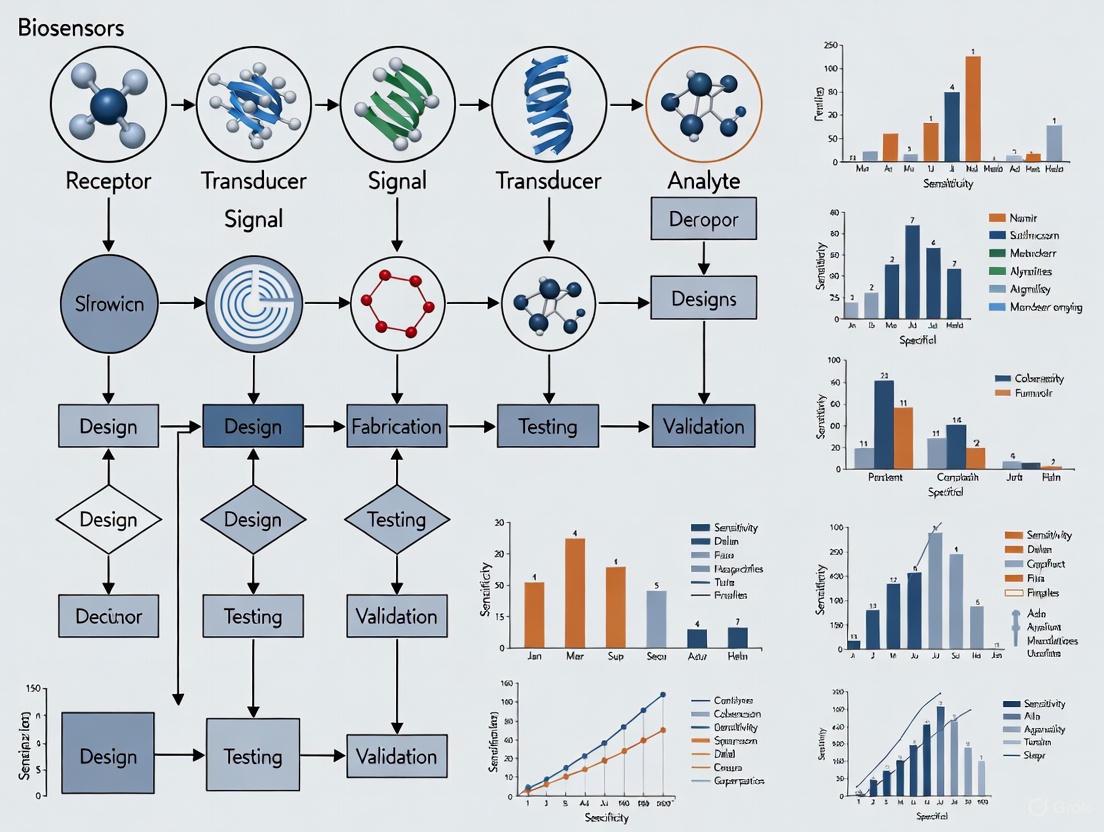
This article explores the transformative role of statistical methods and machine learning in navigating the complex design space of biosensors, a critical technology for healthcare, diagnostics, and biomanufacturing.
Statistical Methods for Biosensor Design: A Data-Driven Approach to Optimization
Abstract
This article explores the transformative role of statistical methods and machine learning in navigating the complex design space of biosensors, a critical technology for healthcare, diagnostics, and biomanufacturing. Tailored for researchers, scientists, and drug development professionals, it provides a comprehensive guide from foundational concepts to advanced applications. We cover the principles of tuning biosensor parameters like dynamic range and sensitivity, detail practical methodologies such as Design of Experiments (DoE) and automated high-throughput screening, and address troubleshooting for context-dependent performance. The piece concludes with validation strategies and comparative analyses of different biosensor architectures, highlighting how data-driven approaches accelerate the development of robust, high-performance biosensing systems for precision medicine and point-of-care diagnostics.
Navigating the Biosensor Design Space: Core Parameters and Challenges
A biosensor is an analytical device that integrates a biological recognition element with a physicochemical transducer to convert a biological event into a measurable signal [1]. This integrated system allows for the sensitive and specific detection of target analytes, ranging from simple metabolites to complex biomolecules and whole cells [1]. The performance and reliability of any biosensor are determined by a set of core, tunable parameters that define its operational characteristics and suitability for specific applications, whether in drug development, clinical diagnostics, or bioprocess monitoring [2] [1].
The design space of a biosensor encompasses all the variable elements that can be systematically modified to optimize its function. Understanding this design space is critical for researchers aiming to develop robust biosensors for precise biomolecular analysis. Key performance metrics include sensitivity (the minimum detectable signal change per analyte concentration), specificity (the ability to distinguish the target from interferents), dynamic range (the span between minimal and maximal detectable signals), operating range (the concentration window for optimal performance), and response time (the speed of reaction to analyte changes) [2]. Additional characteristics such as signal-to-noise ratio and stability under operational conditions further complete the performance profile [2] [1]. The following diagram illustrates the fundamental architecture of a biosensor and the flow of information from recognition to output.
Core Tunable Parameters in Biosensor Design
The performance of a biosensor is governed by the careful balancing of multiple interdependent parameters. These can be broadly categorized into parameters related to the biorecognition element, the transducer, and the overall system integration.
Biorecognition Element Selection and Properties
The choice of biorecognition element primarily determines the sensor's specificity and the range of analytes it can detect.
Table 1: Types of Biosensors and Their Characteristics
| Category | Biosensor Type | Sensing Principle | Key Advantages | Typical Analytes |
|---|---|---|---|---|
| Protein-Based | Transcription Factors (TFs) | Ligand binding induces DNA interaction to regulate gene expression [2]. | Suitable for high-throughput screening; broad analyte range [2]. | Metabolites, ions, small molecules [2]. |
| Protein-Based | Two-Component Systems (TCSs) | Sensor kinase autophosphorylates and transfers signal to a response regulator [2]. | High adaptability; environmental signal detection [2]. | Extracellular ions, nutrients [2]. |
| Protein-Based | Enzyme-based Sensors | Substrate-specific catalytic activity generates a measurable output [2]. | High specificity; rapid response [2]. | Sugars, lactate, glutamate [1]. |
| RNA-Based | Riboswitches | Ligand-induced RNA conformational change affects translation [2]. | Compact; integrates well into metabolic regulation [2]. | Nucleotides, amino acids [2]. |
| RNA-Based | Toehold Switches | Base-pairing with trigger RNA activates translation of downstream genes [2]. | Programmable; enables logic-gated pathway control [2]. | Specific RNA sequences [2]. |
Performance and Operational Parameters
Beyond the core recognition element, a suite of performance parameters must be characterized and tuned for optimal function.
Table 2: Key Performance Metrics for Biosensor Characterization
| Parameter | Definition | Tuning Methods | Impact on Performance |
|---|---|---|---|
| Dose-Response & Dynamic Range | The relationship between analyte concentration and output signal, defining the minimal and maximal detectable signals [2]. | Modifying promoter strength, ribosome binding sites (RBS), and operator regions [2]. | Defines the useful detection window; must match expected analyte concentrations [2]. |
| Sensitivity | The slope of the dose-response curve; the change in output per unit change in analyte concentration [2]. | Adjusting plasmid copy number, tuning protein expression levels [2]. | Determines the ability to detect small concentration changes; high sensitivity can reduce false negatives [2]. |
| Response Time | The speed at which the biosensor reacts to changes in analyte concentration [2]. | Using faster-acting components (e.g., riboswitches) or hybrid systems [2]. | Critical for real-time monitoring; slow response hinders dynamic control [2]. |
| Signal-to-Noise Ratio | The ratio of the specific output signal to the background variability [2]. | Directed evolution, optimizing immobilization methods, using antifouling coatings [2] [1]. | Affects resolution and reliability; low SNR can obscure true signal in high-throughput screens [2]. |
| Specificity | The ability to respond only to the intended target analyte and not to structurally similar compounds [1]. | Engineering substrate binding pockets (e.g., chimeric fusions), using high-affinity aptamers [2] [1]. | Reduces false positives in complex samples like serum or cell lysates [1]. |
Engineering Methodologies and Experimental Protocols
Engineering an effective biosensor involves iterative cycles of design, build, test, and analysis. The workflow below outlines a generalized protocol for developing and optimizing a biosensor, incorporating both rational design and high-throughput screening strategies.
Detailed Protocol: Development of a Protein-Based Biosensor (SweetTrac1)
The development of SweetTrac1, a biosensor derived from the Arabidopsis SWEET1 sugar transporter, provides a concrete example of a biosensor engineering pipeline [3].
Identification of Insertion Site:
- A circularly permuted green fluorescent protein (cpsfGFP) was inserted into the intracellular loop connecting the third and fourth transmembrane helices of the transporter [3].
- A homology model based on a related protein structure was used to select six potential insertion sites.
- Functional Screening: The optimal insertion site (after K93) was identified using a yeast complementation assay. Chimeras were expressed in a Saccharomyces cerevisiae strain (EBY4000) that lacks endogenous hexose carriers. The site that best restored growth on glucose media was selected, as it indicated retained transport functionality [3].
Linker Optimization via High-Throughput Screening:
- A gene library was created with degenerate codons to randomize the amino acid sequences of the linkers connecting the split transporter to the cpsfGFP.
- Fluorescence-Activated Cell Sorting (FACS): Approximately 450,000 yeast cells expressing the biosensor library were screened via FACS to remove non-fluorescent variants and isolate the top ~900 cells with the highest green fluorescence [3].
- Response-Based Selection: The sorted cells were regrown and individually tested for fluorescence change in response to glucose addition. Forty-four outliers with the largest responses were sequenced to identify successful linker combinations [3].
- Consensus Design: Statistical analysis of the winning linker sequences was performed. The most frequent amino acids at each position were combined to create the final variant, SweetTrac1, with linkers DGQ and LTR [3].
Functional Characterization and Validation:
- Transport Assay: The biosensor's ability to transport glucose was confirmed using [14C]-glucose influx assays in the EBY4000 yeast strain, verifying that its kinetics were similar to the wild-type transporter [3].
- Specificity Control: Key amino acids near the substrate-binding site were mutated (e.g., P23A, N73A, N192A). Mutants that lost transport capability also lost the fluorescence response, confirming that the signal was correlated with substrate binding and transport [3].
- Photophysical Characterization: Excitation and emission spectra of SweetTrac1 were recorded, showing a major excitation peak at ~490 nm and an emission peak at ~515 nm, with intensity increasing upon glucose addition [3].
The Scientist's Toolkit: Essential Research Reagents and Materials
Table 3: Key Reagent Solutions for Biosensor Development and Implementation
| Reagent / Material | Function / Description | Example Application |
|---|---|---|
| Circularly Permuted GFP (cpsfGFP) | A fluorescent protein variant where the original N- and C-termini are linked and new termini are created elsewhere, making it sensitive to conformational changes [3]. | Core component in FRET-based and conformation-based biosensors like SweetTrac1 [3]. |
| Fluorescence-Activated Cell Sorter (FACS) | An instrument that rapidly analyzes and sorts individual cells based on their fluorescent properties [3]. | High-throughput screening of biosensor variant libraries for fluorescence intensity and dynamic range [2] [3]. |
| Spherical Nucleic Acids (SNAs) | Gold nanoparticles densely functionalized with a shell of oligonucleotides (DNA or RNA) [4]. | Used as probes in colorimetric and lateral flow biosensors; density of DNA can be tuned to modulate binding accessibility [4]. |
| CRISPR/Cas System (e.g., Cas12a) | A programmable gene-editing system that can also be repurposed for diagnostics due to its collateral cleavage activity upon target recognition [5]. | Provides extreme specificity for nucleic acid detection; can be coupled with isothermal amplification for portable biosensors [5] [4]. |
| Nanomaterials (e.g., MXenes, Quantum Dots) | Engineered materials with high surface-to-volume ratio and unique optical, electrical, or catalytic properties [5] [6]. | Used to enhance signal transduction, improve sensitivity, and facilitate miniaturization in electrochemical and optical biosensors [6]. |
Data Interpretation and Analysis Frameworks
The final, critical phase of working with biosensors involves converting raw data into reliable, quantitative information. A mathematical model based on mass action kinetics can be formulated to correlate the fluorescence response of a biosensor (e.g., SweetTrac1) with the net transport rate of its substrate [3]. Such models allow researchers to move beyond qualitative observations to precise, quantitative measurements of analyte flux and concentration.
Statistical and machine learning approaches are increasingly vital for analyzing complex biosensor data, especially in multiplexed formats. For instance, deep learning models can be trained to analyze images from experiments where over 100 different fluorescent biosensors are tracked concurrently in barcoded cell populations [7]. This enables the deciphering of complex signaling network interactions and temporal relationships that would be impossible to unravel manually. The diagram below conceptualizes this data interpretation pipeline.
The process typically begins with raw signal preprocessing, including baseline correction and noise reduction, to isolate the specific biosensor response [1]. The cleaned data is then fitted to a mathematical model (e.g., a dose-response curve or kinetic transport model) to extract key parameters such as binding affinity ((Kd)), maximum response ((V{max})), and half-life [2] [3]. For highly multiplexed systems, advanced computational tools like deep learning are required to deconvolute signals from multiple biosensors and reveal underlying network structures [7]. This structured approach to data analysis ensures that the tunable parameters defined in the design phase are accurately measured and validated, closing the loop on the biosensor engineering cycle.
In the field of biosensing, the ability to quantitatively measure biological and chemical analytes with precision and reliability is paramount. Performance metrics provide the essential framework for evaluating, comparing, and optimizing biosensor designs, bridging the gap between theoretical potential and practical application. For researchers and drug development professionals exploring the biosensor design space with statistical methods, a deep understanding of these metrics is not merely academic—it is a fundamental requirement for innovation. These metrics, including sensitivity, dynamic range, specificity, and cooperativity, serve as quantifiable indicators of a biosensor's operational quality and determine its suitability for specific applications, from point-of-care diagnostics to real-time process monitoring in biomanufacturing [8]. The systematic evaluation of these parameters enables the data-driven selection and refinement of biosensors, ensuring they meet the stringent demands of modern biotechnology and pharmaceutical development.
This whitepaper provides an in-depth technical examination of these four core performance metrics. It delineates their precise definitions, establishes their quantitative significance, and presents structured experimental methodologies for their determination. Furthermore, it illustrates the practical application of these concepts through a contemporary case study and provides a foundational toolkit for researchers embarking on biosensor characterization. The integration of these metrics within a statistical research framework allows for the development of robust, predictable, and highly optimized sensing systems, ultimately accelerating the translation of novel biosensor technologies from laboratory benches to real-world applications.
Defining the Core Performance Metrics
A biosensor's performance is characterized by its ability to reliably detect and quantify a target analyte within a complex sample matrix. The following metrics form the cornerstone of this characterization.
Sensitivity refers to the magnitude of the output signal change for a given change in analyte concentration. A highly sensitive biosensor produces a significant signal shift in response to a small concentration change, which is critical for detecting low-abundance biomarkers or toxins. Sensitivity is often derived from the slope of the calibration curve within its linear range and directly influences the limit of detection (LOD), the lowest analyte concentration that can be reliably distinguished from zero [9] [10].
Dynamic Range describes the span of analyte concentrations over which the biosensor provides a usable quantitative response. It is bounded at the lower end by the LOD and at the upper end by the point of signal saturation, beyond which increases in concentration no longer produce a significant change in output. A wide dynamic range is essential for applications requiring the quantification of analytes that can vary widely in concentration, such as glucose in blood or metabolites in fermentation broths [9].
Specificity is the biosensor's ability to distinguish the target analyte from other non-target substances in the sample. High specificity minimizes false positives caused by interference from structurally similar molecules, matrix effects, or nonspecific binding. This metric is a direct reflection of the molecular recognition element's affinity for its intended ligand [9].
Cooperativity describes the nature of the binding interaction between the analyte and the recognition element, which influences the shape of the dose-response curve. Positive cooperativity results in a sigmoidal response curve, where the binding of the first analyte molecule facilitates the binding of subsequent molecules. This can sharpen the biosensor's response within a specific concentration window, which is advantageous for applications requiring a binary decision. Cooperativity is quantitatively described by the Hill coefficient [9].
Table 1: Key Performance Metrics for Biosensor Evaluation
| Metric | Definition | Quantitative Descriptor | Impact on Performance |
|---|---|---|---|
| Sensitivity | Change in output signal per unit change in analyte concentration. | Slope of the linear region of the calibration curve. | Determines the limit of detection and ability to measure small concentration changes. |
| Dynamic Range | Range of analyte concentrations between the lower and upper detection limits. | Concentration at LOD to concentration at signal saturation. | Defines the operational window for quantitative measurement without sample dilution. |
| Specificity | Ability to respond only to the target analyte and not to interferents. | Signal ratio (Target vs. Non-target analyte); Cross-reactivity data. | Reduces false positives and ensures measurement accuracy in complex samples. |
| Cooperativity | Degree to which binding of one analyte molecule influences subsequent binding. | Hill coefficient (nH); Shape of dose-response curve (sigmoidal vs. hyperbolic). | Affects the sharpness of the response transition and the effective switching range. |
Quantitative Analysis of Biosensor Performance
A rigorous, quantitative approach is necessary to compare biosensor performance across different designs and platforms. The data is typically generated from dose-response experiments and visualized through standardized curves.
Dose-Response Curves and Metric Extraction: The relationship between analyte concentration and biosensor output is fundamental. A typical dose-response curve for a biosensor, particularly one based on a transcription factor, is often sigmoidal when plotted on a semi-logarithmic axis [9]. From this curve, all key metrics can be derived. The dynamic range is visualized as the concentration range over which the signal transitions from its baseline to its maximum value. The sensitivity is highest in the linear portion of the curve's mid-section, corresponding to the steepest slope. The presence and degree of cooperativity are indicated by the steepness of this sigmoidal curve, which is quantified by the Hill slope. A Hill slope greater than 1 indicates positive cooperativity, a slope of 1 indicates non-cooperative (Michaelis-Menten) behavior, and a slope less than 1 suggests negative cooperativity [9].
Quantifying Specificity: Specificity is evaluated by challenging the biosensor with a panel of potential interferents that are structurally similar or commonly found in the intended sample matrix. The output signals are then compared to the signal generated by the target analyte. This data is often presented as a bar chart or tabulated as cross-reactivity percentages, calculated as (Signal from Interferent / Signal from Target) × 100% at equivalent concentrations. A highly specific biosensor will show minimal response to non-target molecules [9].
Table 2: Representative Performance Data from Various Biosensor Technologies
| Biosensor Technology / Target | Sensitivity (LOD) | Dynamic Range | Specificity (Key Interferents Tested) | Cooperativity (Hill Slope) | Source Context |
|---|---|---|---|---|---|
| Transcription Factor (TF)-Based Sensor (General) | Defined by calibration curve slope | Range between lower and upper limits | Difference in output for target vs. alternative ligands | High cooperativity from multi-step binding or TF multimerization | [9] |
| Gold Nanorod Molecular Probe (IgG) | Low nanomolar (10⁻⁹ M) | 10⁻⁹ M to 10⁻⁶ M | High; minimal non-specific binding after functionalization | Not Specified | [10] |
| cdGreen2 (c-di-GMP Biosensor) | Kd = 214 nM | Responds to conc. from <50 nM to >5 µM | High ligand specificity; validated via binding site mutation | Sigmoidal response; Hill slope = 2.30 (Positive) | [11] |
| SERS-based α-Fetoprotein Sensor | 16.73 ng/mL | 0 - 500 ng/mL | High; uses monoclonal anti-α-fetoprotein antibodies | Not Applicable | [12] |
Experimental Protocols for Metric Characterization
Standardized experimental protocols are crucial for generating reproducible and comparable data on biosensor performance. The following sections outline general methodologies for characterizing the core metrics.
Protocol for Determining Sensitivity and Dynamic Range
This protocol describes a general procedure for establishing the calibration curve of a biosensor, from which sensitivity and dynamic range are derived.
- Sample Preparation: Prepare a dilution series of the target analyte in an appropriate buffer. The series should span a concentration range expected to cover from below the anticipated LOD to well above the saturation point. Use a minimum of 8-10 data points, spaced logarithmically, for accurate curve fitting. Include a blank sample (zero analyte) for background subtraction.
- Signal Acquisition: For each concentration in the dilution series, introduce the sample to the biosensor and measure the output signal according to the biosensor's standard operating procedure (e.g., measure fluorescence, electrochemical current, or optical shift). For each concentration, perform a minimum of n=3 technical replicates to assess variability.
- Data Analysis:
- Plot the mean signal value (Y-axis) against the analyte concentration (X-axis). The X-axis is typically on a logarithmic scale for sigmoidal curves.
- Fit an appropriate mathematical model to the data. For many biosensors, a four-parameter logistic (4PL) curve (sigmoidal) model is used:
Y = Bottom + (Top - Bottom) / (1 + (EC50/X)^HillSlope). - The sensitivity at any point is the first derivative of the fitted curve. The linear dynamic range is often defined as the concentration range between EC20 and EC80 (the concentrations eliciting 20% and 80% of the maximum response, respectively).
- The Limit of Detection (LOD) is typically calculated as the concentration corresponding to the signal of the blank plus three times the standard deviation of the blank.
Protocol for Assessing Specificity and Cross-Reactivity
This protocol evaluates the biosensor's response to non-target molecules to confirm specificity.
- Interferent Selection: Compile a list of potential interferents, including molecules structurally analogous to the target, metabolites, and salts or proteins expected in the sample matrix.
- Sample Preparation: Prepare solutions of the target analyte at a concentration near its EC50. Separately, prepare solutions of each potential interferent at the same concentration, and optionally, at a higher physiological or environmentally relevant concentration. Also, prepare a mixture of the target and each interferent.
- Signal Acquisition and Analysis: Measure the biosensor's response to the target, each interferent alone, and the mixtures. The response to each interferent alone should be negligible compared to the target. The response to the mixture should not significantly differ from the target alone. Calculate the cross-reactivity percentage for each interferent as:
(Signal_Interferent / Signal_Target) * 100%.
Protocol for Evaluating Cooperativity
Cooperativity is assessed by analyzing the shape of the dose-response curve.
- Data Collection: Use the comprehensive dose-response data collected in Section 4.1.
- Curve Fitting: Fit the data to the Hill equation, a variant of the 4PL model:
Y = Bottom + (Top - Bottom) / (1 + (K_d / X)^nH), wherenHis the Hill coefficient. - Interpretation: The value of the Hill coefficient (
nH) quantifies cooperativity.nH > 1indicates positive cooperativity,nH = 1indicates no cooperativity (Michaelis-Menten kinetics), andnH < 1indicates negative cooperativity. The steepness of the curve is directly related to thenHvalue.
Case Study: Dissecting Performance in a Genetically Encoded c-di-GMP Biosensor
The development and characterization of "cdGreen2," a genetically encoded ratiometric biosensor for the bacterial second messenger c-di-GMP, serves as an exemplary model for applying the core performance metrics in a real-world research scenario [11].
Sensor Design and Objective: The researchers aimed to create a biosensor that could monitor dynamic changes of c-di-GMP with high temporal resolution in single bacterial cells. They started with a circularly permuted EGFP (cpEGFP) scaffold sandwiched between two c-di-GMP-binding domains from the protein BldD. A directed evolution approach using iterative fluorescence-activated cell sorting (FACS) under alternating c-di-GMP regimes was employed to select variants with improved performance [11].
Performance Characterization:
- Sensitivity and Dynamic Range: The purified cdGreen2 biosensor was tested in vitro with a dilution series of c-di-GMP. The resulting dose-response curve exhibited a sigmoidal profile, yielding a fitted dissociation constant (Kd) of 214 nM, indicating high sensitivity. The sensor was functional across a physiologically relevant range, responding to c-di-GMP concentrations from below 50 nM to over 5 µM in vivo [11].
- Cooperativity: The sigmoidal shape of the dose-response curve and a calculated Hill slope of 2.30 provided strong evidence for positive cooperativity in ligand binding. This is consistent with the intended design, as the BldD domains dimerize upon c-di-GMP binding, a process that inherently involves cooperative interactions [11].
- Specificity: To validate that the observed signal was specific to c-di-GMP, the researchers performed a critical control experiment. They introduced point mutations (Arg and Asp substitutions) into the ligand-binding motif of the BldD domain, which were known to abrogate c-di-GMP binding. The mutant sensor failed to respond to c-di-GMP, confirming that the signal generation was specifically dependent on ligand binding to the intended site and not an artifact [11].
This case study demonstrates a comprehensive performance evaluation, where quantitative metrics were used to validate the success of the engineering strategy and establish the biosensor's reliability for biological applications.
The Scientist's Toolkit: Research Reagent Solutions
The following table outlines key reagents and materials essential for the development and characterization of biosensors, as exemplified by the research in the cited literature.
Table 3: Essential Research Reagents for Biosensor Development and Characterization
| Reagent / Material | Function / Role | Example from Literature |
|---|---|---|
| Circularly Permuted Fluorescent Proteins (cpFP) | Scaffold for intensiometric biosensors; optical properties change upon analyte binding. | cpEGFP used as the core scaffold in the cdGreen2 biosensor [11]. |
| Ligand-Binding Domains | Provides specificity for the target analyte. | C-terminal domains (CTDs) of the BldD transcription factor used to bind c-di-GMP [11]. |
| Flexible/ Rigid Peptide Linkers | Genetically encodes connection between protein domains; tuning length/rigidity affects sensor performance. | Linker libraries with Gly-Ser (flexible) and Pro-Ala (stiff) repeats were engineered in cdGreen2 [11]. |
| Reference Fluorescent Protein | Enables ratiometric measurement, normalizing for sensor concentration and environmental variability. | mScarlet-I inserted into cdGreen2 to create the "Matryoshka" ratiometric version [11]. |
| Directed Evolution System | Platform for iterative screening and improvement of biosensor variants. | E. coli strain with tunable c-di-GMP levels used for FACS-based selection [11]. |
| Gold Nanorods (GNRs) | Nanoscale transducers for optical biosensors; plasmonic properties are sensitive to local environment. | Functionalized with antibodies to create gold nanorod molecular probes (GNrMPs) [10]. |
| Alkanethiols (e.g., MUA) | Forms a self-assembled monolayer on gold surfaces for subsequent biomolecule immobilization. | 11-mercaptoundecanoic acid (MUA) used to replace CTAB coating on GNRs to reduce nonspecific binding [10]. |
The rigorous characterization of sensitivity, dynamic range, specificity, and cooperativity is not the final step in biosensor development but a guiding principle throughout the design process. These metrics provide a common language for researchers to communicate performance, compare technologies, and identify areas for improvement. As the field advances, the integration of statistical modeling and machine learning with biosensor design is poised to further refine our understanding and control over these parameters [13] [14]. For drug development professionals and scientists, a mastery of these metrics is essential for selecting the right tool for the task, validating its performance, and ultimately, trusting the data it generates. By anchoring biosensor evaluation in these fundamental, quantitative principles, the scientific community can continue to push the boundaries of what is measurable, driving innovation in diagnostics, biomanufacturing, and fundamental biological research.
The engineering of synthetic genetic circuits represents a cornerstone of synthetic biology, enabling the reprogramming of cellular behavior for applications ranging from living therapeutics to advanced biomanufacturing [15]. A fundamental challenge that consistently emerges in this field is the pervasive interdependence of genetic components, where the function and performance of any single part are inextricably linked to its genetic context and the host's cellular machinery. This interdependency violates the ideal of modularity that underpins traditional engineering disciplines, making the predictable design of complex circuits exceptionally difficult. The "synthetic biology problem" is precisely this discrepancy between qualitative design intentions and quantitative performance outcomes in living systems [16]. These interdependencies manifest across multiple layers, from direct protein-DNA interactions to resource competition for the host's transcriptional and translational machinery. This technical guide explores the nature of these interdependencies within the context of advanced biosensor design, providing researchers with a framework for understanding, quantifying, and mitigating these challenges through statistical methods and robust design principles. The implications are significant for drug development professionals seeking to create reliable cellular biosensors or implement complex genetic programs in therapeutic cells.
Core Classes of Interdependencies
Component-Level Interdependencies
At the most fundamental level, interdependencies arise from the physical and functional interactions between genetic components. Transcriptional regulators, including DNA-binding proteins, invertases, and CRISPR-based systems, exhibit context-dependent behavior that complicates their modular composition [15].
DNA-Binding Proteins: Classic repressors like TetR, LacI, and CI, along with newer variants such as zinc finger proteins and TALEs, function by binding specific operator sequences to block RNA polymerase progression. While conceptually simple, their effective binding affinity and leakage levels are highly dependent on promoter architecture and the specific chromosomal context [15]. This context dependence means a repressor that functions optimally in one circuit may exhibit significantly different dynamics in another.
CRISPRi Systems: CRISPR interference systems utilize a catalytically dead Cas9 protein complexed with guide RNAs to target specific DNA sequences. Although celebrated for their designability through complementary guide RNA sequences, these systems introduce additional interdependencies between the guide RNA expression level, stability, and Cas9 binding kinetics [15]. Furthermore, the requirement for multiple gRNAs in complex circuits can create competition for limited dCas9 proteins, creating hidden coupling between seemingly independent regulation pathways.
Invertases and Recombinases: Site-specific recombinases such as Cre, Flp, and serine integrases facilitate irreversible genetic changes ideal for memory circuits. However, their reaction kinetics are comparatively slow (2-6 hours) and can generate mixed populations when targeting multicopy plasmids [15]. This stochasticity introduces interdependence between circuit state and copy number dynamics, making quantitative prediction challenging.
System-Level Interdependencies
As circuit complexity increases, new system-level interdependencies emerge that extend beyond direct component interactions:
Metabolic Burden: The engineered genetic circuit operates within a living cell that has finite resources. Heterologous gene expression necessarily competes with native cellular processes for energy, nucleotides, amino acids, and ribosomal machinery. This competition creates a hidden coupling between all circuit components, where overexpression of one gene can indirectly diminish the expression of others by draining shared cellular resources [16]. This effect becomes particularly pronounced in large circuits, ultimately limiting their design capacity.
Cross-Talk and Orthogonality: True orthogonality—where components function without unintended interactions—remains an elusive goal in genetic circuit engineering. Despite efforts to create orthogonal regulatory systems, unexpected cross-talk frequently occurs between synthetic components and native cellular networks, or between supposedly insulated synthetic modules [15]. This cross-talk can manifest as promoter leakage, non-specific transcription factor binding, or metabolic interference.
Context-Dependent Expression: The expression level of a genetic part is influenced by its surrounding sequence context. Upstream and downstream sequences can affect RNA stability, translation initiation, and transcription termination in ways that are difficult to predict from part characterization in isolation [16]. This context dependence means that the same promoter can exhibit different apparent strengths when placed in different positions within a circuit.
Table 1: Classification of Genetic Circuit Interdependencies
| Interdependency Class | Primary Manifestation | Impact on Circuit Function |
|---|---|---|
| Component-Level | Altered binding kinetics in new contexts | Unpredictable transfer functions, leakage |
| Resource Competition | Metabolic burden, shared polymerase pools | Growth coupling, reduced dynamic range |
| Genetic Context | Varying expression efficiency | Altered part performance between designs |
| Cross-Talk | Non-specific molecular interactions | Reduced signal-to-noise ratio, false activation |
Quantitative Analysis of Interdependencies
Measuring Context-Dependent Performance
The quantitative impact of interdependencies can be measured through systematic characterization of genetic parts across different contexts. Key performance metrics that exhibit context dependence include:
Transfer Functions: The relationship between input signal concentration and output expression level often shifts when regulators are placed in different circuit contexts. These shifts manifest as changes in the dynamic range, response coefficient, and leakage levels of the regulatory element [15].
Expression Noise: Both intrinsic and extrinsic noise profiles are sensitive to genetic context. The cell-to-cell variability in gene expression can change significantly when a part is moved from a characterization vector to its final circuit context, affecting circuit reliability [15].
Kinetic Parameters: The response time of genetic components, including their activation and deactivation rates, often shows context dependence due to differences in transcription factor abundance, mRNA stability, and translation efficiency in different circuit environments.
Table 2: Quantitative Metrics for Assessing Interdependencies
| Metric | Standard Measurement | Context-Dependent Variation | Experimental Assessment |
|---|---|---|---|
| Dynamic Range | Ratio of ON/OFF states | Can vary by >10-fold | Flow cytometry of reporter expression |
| Response Coefficient | Hill coefficient from dose response | Often changes between contexts | Titration of inducer with fluorescence measurement |
| Leakage Level | OFF-state expression | Highly dependent on context | Fluorescence in uninduced state |
| Response Time | Time to reach 50% maximal output | Affected by cellular resource availability | Time-course measurements after induction |
Circuit Compression as a Mitigation Strategy
A promising approach to mitigating interdependencies is circuit compression, which reduces the number of genetic components required to implement a given logical function. The Transcriptional Programming (T-Pro) approach leverages synthetic transcription factors and promoters to achieve complex logic with fewer parts, thereby reducing opportunities for adverse interactions [16].
Recent advances have demonstrated complete sets of 3-input Boolean logical operations (256 distinct functions) using engineered repressor/anti-repressor systems responsive to orthogonal signals (IPTG, D-ribose, and cellobiose). This compression approach reduces metabolic burden and context effects by minimizing the genetic footprint of complex circuits. On average, compression circuits are approximately 4-times smaller than canonical inverter-based genetic circuits while maintaining predictable performance [16].
Algorithmic enumeration methods have been developed to automatically identify maximally compressed circuit designs for any desired truth table. These algorithms model circuits as directed acyclic graphs and systematically enumerate solutions in order of increasing complexity, guaranteeing identification of the minimal implementation [16].
Experimental Protocols for Characterizing Interdependencies
Characterization of Part Performance in Context
Protocol 1: Context-Dependent Transfer Function Analysis
Cloning and Assembly: For each genetic part (promoter, RBS, etc.), create multiple construct variants using Golden Gate or Gibson assembly, placing the part in different contextual environments (different upstream/downstream sequences, vector backbones, and copy numbers) [16].
Transformation: Transform each construct into the target host organism (e.g., E. coli MG1655) using electroporation or heat shock, with at least three biological replicates per construct.
Cultivation and Induction: Inoculate 2 mL of LB medium with antibiotic and grow overnight. Dilute cultures 1:100 in fresh medium and grow to mid-log phase (OD600 ≈ 0.5). For inducible systems, create a dilution series of the inducer molecule (e.g., 0, 0.1, 1, 10, 100 μM) and incubate for 4-6 hours to reach steady state.
Flow Cytometry Analysis: Dilute cells 1:10 in PBS and analyze using a flow cytometer with appropriate laser/filter sets for fluorescent reporters (e.g., 488 nm laser with 530/30 filter for GFP). Collect at least 10,000 events per sample.
Data Processing: Calculate the mean fluorescence intensity for each sample after subtracting autofluorescence from uninduced controls. Fit the dose-response data to a Hill function to extract dynamic range, Hill coefficient, and EC50/Kd values.
Context Impact Quantification: Compare fitted parameters across different contexts to quantify the magnitude of context dependence for each part.
Protocol 2: Metabolic Burden Assessment
Strain Construction: Create isogenic strains carrying circuits of varying complexity (e.g., 1-gene, 3-gene, and 5-gene circuits) along with a control strain containing no circuit.
Growth Rate Measurement: Inoculate 5 mL cultures in biological triplicate and monitor OD600 every 30 minutes for 12-16 hours using a plate reader or spectrophotometer.
Data Analysis: Calculate the maximum growth rate (μmax) for each strain by fitting the exponential phase of growth. Compute the burden as the percentage reduction in μmax relative to the control strain.
Correlation Analysis: Plot circuit burden against the number of genes, promoter strength, or total coding sequence length to identify key determinants of metabolic load.
Predictive Design Workflows
Modern approaches to managing interdependencies incorporate predictive design workflows that explicitly account for context effects:
Parts Characterization: Systematically measure all basic parts (promoters, RBSs, terminators) in multiple contexts to build a data set of context-dependent parameters [16].
Model Training: Use machine learning or statistical models to predict part performance in new contexts based on sequence features and previously measured context effects.
Circuit Design: Utilize algorithmic tools to select part combinations that minimize adverse interactions while achieving target circuit functions [16].
Iterative Refinement: Employ directed evolution or rational design to refine parts for improved orthogonality and context independence.
These workflows enable quantitative prediction of circuit performance with average errors below 1.4-fold across multiple test cases, significantly improving first-pass success rates in genetic circuit construction [16].
Visualization of Interdependencies and Design Workflows
Diagram 1: Network of Interdependencies in Genetic Circuits
Diagram 2: Circuit Compression Reduces Interdependencies
Research Reagent Solutions for Managing Interdependencies
Table 3: Essential Research Reagents for Addressing Genetic Circuit Interdependencies
| Reagent / Tool | Primary Function | Utility in Managing Interdependencies |
|---|---|---|
| Orthogonal TF Systems (TetR, LacI, CelR variants) | Transcriptional regulation with minimal cross-talk | Enables parallel regulation pathways without interference [16] |
| Synthetic Anti-Repressors (EA1TAN, EA2TAN, EA3TAN) | Implementation of NOT/NOR logic without inversion | Reduces part count and context effects through circuit compression [16] |
| CRISPR-dCas9 Systems | Programmable transcription regulation | Allows design of large orthogonal regulator sets through guide RNA programming [15] |
| Algorithmic Enumeration Software | Automated circuit design with minimal part count | Identifies maximally compressed implementations to reduce interdependencies [16] |
| Context Characterization Vectors | Standardized measurement of part context dependence | Quantifies context effects for predictive modeling [16] |
| Fluorescent Protein Reporters (GFP, YFP, RFP) | Quantitative measurement of gene expression | Enables precise characterization of part performance across contexts [15] |
| Flow Cytometry | Single-cell resolution measurement of expression | Reveals cell-to-cell variability caused by context effects [16] |
The interdependencies within genetic circuit components represent a fundamental challenge in synthetic biology that cannot be eliminated but can be systematically managed. Through quantitative characterization of context effects, implementation of circuit compression strategies, and application of predictive design workflows, researchers can mitigate the adverse impacts of these interdependencies. The integration of statistical methods and computational tools with robust experimental characterization enables the design of genetic circuits with predictable performance, even as complexity increases. For researchers exploring biosensor design space, acknowledging and explicitly addressing these interdependencies is essential for creating reliable, high-performance systems for drug development and diagnostic applications. Future advances will likely come from continued development of orthogonal biological parts, improved predictive models of cellular resource allocation, and novel circuit architectures that inherently minimize component interference.
Foundational Statistical Concepts for Systematic Design Exploration
The systematic optimization of biosensors remains a primary obstacle limiting their widespread adoption as dependable point-of-care tests [17]. Traditional one-variable-at-a-time approaches often fail to detect critical interactions between factors and may not identify true optimal conditions, hindering the practical application of these biosensors in diagnostic settings [17]. Experimental design, or Design of Experiment (DoE), provides a powerful chemometric solution by enabling the systematic and statistically reliable optimization of multiple parameters simultaneously [17] [18]. This approach is particularly crucial for ultrasensitive biosensing platforms with sub-femtomolar detection limits, where challenges like enhancing the signal-to-noise ratio, improving selectivity, and ensuring reproducibility are most pronounced [17].
Within the broader context of exploring biosensor design space, statistical methods offer a structured framework for navigating complex parameter landscapes. By applying these methodologies, researchers can develop data-driven models that connect variations in input variables—such as materials properties and production parameters—to sensor outputs, thereby facilitating more efficient development and performance enhancement of biosensing devices [17]. This technical guide examines the core statistical concepts essential for systematic design exploration in biosensor research, providing researchers with both theoretical foundations and practical implementation protocols.
Core Statistical Concepts for Experimental Design
Fundamental Principles of Design of Experiments (DoE)
The experimental design approach hinges on developing data-driven models constructed using causal data collected across a comprehensive grid of experiments covering the entire experimental domain [17]. Unlike traditional univariate methods where each experiment is defined based on previous outcomes, DoE establishes an experimental plan a priori, enabling prediction of responses at any point within the experimental domain and providing global knowledge for optimization purposes [17]. A key advantage of DoE approaches is their ability to account for potential interactions among variables—when an independent variable exerts varying effects on the response based on the values of another independent variable—which consistently elude detection in one-variable-at-a-time approaches [17].
The DoE workflow typically involves multiple iterations, beginning with identifying all factors that may exhibit causality with the targeted output signal (response), establishing their experimental ranges, and determining the distribution of experiments within the experimental domain [17]. It is advisable not to allocate more than 40% of available resources to the initial set of experiments, as subsequent DoE iterations are often necessary to refine the problem by eliminating insignificant variables, redefining experimental domains, or adjusting hypothesized models [17].
Key Experimental Design Models
Factorial Designs
The 2^k factorial designs are first-order orthogonal designs requiring 2^k experiments, where k represents the number of variables being studied [17]. In these models, each factor is assigned two levels coded as -1 and +1, corresponding to the variable's range selected based on the specific application [17]. The experimental matrix defines the grid of experiments used to compute the coefficient of the model and contains 2^k rows (each representing an individual experiment) and k columns (each representing a specific variable) [17].
For a 2^2 factorial design involving two variables (X1 and X2), the postulated mathematical model is defined as: Y = b0 + b1X1 + b2X2 + b12X1X2 This includes a constant term (b0) corresponding to the response at the center point, two linear terms (b1, b2), and a two-term interaction (b12) [17]. Geometrically, the experimental domain for two variables forms a square with responses recorded at each corner, while three variables create a cubic domain and higher dimensions form hypercubes [17].
Table 1: Experimental Matrix for a 2^2 Factorial Design
| Test Number | X1 | X2 |
|---|---|---|
| 1 | -1 | -1 |
| 2 | +1 | -1 |
| 3 | -1 | +1 |
| 4 | +1 | +1 |
Advanced Design Configurations
When response functions demonstrate approximate linearity with respect to independent variables, first-order orthogonal designs can yield substantial information with minimal experimental effort [17]. However, when responses follow quadratic functions, second-order models become essential [17]. Central composite designs address this need by augmenting initial factorial designs to estimate quadratic terms, thereby enhancing the predictive capacity of the model [17].
For mixture components where the combined total must equal 100%, mixture designs are employed instead of standard factorial designs [17]. In these specialized designs, components cannot be altered independently since changing one component's proportion necessitates proportional adjustments to others [17].
Multi-Objective Optimization Framework
Biosensor design often requires balancing multiple, sometimes competing, objectives. A multi-objective H2/H∞ performance criterion has been developed for design specifications of biosensors to achieve H2 optimal matching of desired input/output responses alongside H∞ optimal filtering of intrinsic parameter fluctuations and external cellular noise [19]. This approach employs a Takagi-Sugeno (T-S) fuzzy model to interpolate several local linear stochastic systems to approximate nonlinear stochastic biosensor systems, transforming the design problem into a linear matrix inequality (LMI)-constrained multi-objective optimization problem [19].
Multi-objective evolutionary algorithms (MOEAs) provide effective solutions for these complex optimization scenarios, determining non-dominated Pareto optimal solutions by mimicking biological evolution events such as mutation, crossover, and selection [19]. This approach is particularly valuable when considering tradeoffs between design factors in multi-objective H2/H∞ design problems [19].
Experimental Protocols and Methodologies
Protocol for Full Factorial Design Implementation
Objective: To systematically optimize biosensor fabrication parameters using a full factorial design approach.
Materials and Equipment:
- Biosensor substrate components
- Biolayer reagents (antibodies, aptamers, or enzymes)
- Immobilization chemistry reagents
- Detection instrumentation (optical or electrochemical)
- Statistical analysis software
Procedure:
- Identify Critical Factors: Select k factors that may significantly influence biosensor performance (e.g., biorecognition element concentration, immobilization time, temperature, pH).
- Define Factor Levels: Establish two levels for each factor (-1 and +1) representing practical operating ranges based on preliminary experiments or literature values.
- Randomize Experimental Order: Generate a randomized test sequence to mitigate systematic effects.
- Execute Experimental Matrix: Perform all 2^k experiments according to the randomized sequence.
- Record Responses: Measure relevant performance metrics (sensitivity, selectivity, response time, stability) for each experimental run.
- Calculate Model Coefficients: Use linear regression to determine coefficients for the mathematical model.
- Analyze Significance: Apply statistical tests (e.g., ANOVA) to identify significant factors and interactions.
- Validate Model: Conduct confirmation experiments at predicted optimal conditions.
Data Analysis: For a biosensor optimization case with factors A (bioreceptor concentration) and B (incubation time), the model would be: Response = b0 + b1A + b2B + b12AB The coefficients quantify how each factor affects the response, with interaction term b12 indicating whether the effect of one factor depends on the level of the other.
Protocol for Multi-Objective Biosensor Optimization
Objective: To design a metal ion biosensor with optimal I/O response matching and noise filtering capabilities using multi-objective optimization.
Materials and Equipment:
- Component libraries (promoters, RBS sequences, reporter genes)
- Molecular biology reagents for genetic construction
- Host cells (e.g., E. coli)
- Metal ion solutions of varying concentrations
- Fluorescence or other detection equipment
Procedure:
- System Modeling: Develop a nonlinear stochastic model representing the biosensor system dynamics.
- Specify Design Requirements: Define desired input/output response characteristics and noise attenuation specifications.
- Formulate Multi-Objective Problem: Establish H2 performance criteria for I/O response matching and H∞ criteria for robust noise filtering.
- Component Selection: Choose appropriate biological parts from libraries (e.g., metal ion-induced promoters, constitutive promoters, reporter genes).
- Solve LMI-Constrained Optimization: Apply mathematical programming to identify parameter sets satisfying both objectives.
- Pareto Front Analysis: Use MOEA to generate and evaluate tradeoffs between competing objectives.
- Construct and Validate: Build the optimized biosensor design and experimentally verify performance.
Application Example: A metal ion biosensor was systematically designed by selecting promoter-RBS components from corresponding libraries: a metal ion-induced promoter-RBS component (Mi), a constitutive promoter-RBS component (Cj), and a quorum sensing-dependent promoter-RBS component (Ak) [19]. The dynamic model of this biosensor was described using differential equations accounting for concentrations of autoinducer synthase, autoinducer, transcriptional activator protein, and immature reporter protein [19].
Visualization of Statistical Design Workflows
DoE Iterative Optimization Process
Multi-Objective Biosensor Optimization
Research Reagent Solutions for Biosensor Optimization
Table 2: Essential Research Reagents for Biosensor Design and Optimization
| Reagent Category | Specific Examples | Function in Biosensor Development |
|---|---|---|
| Biolayer Components | Antibodies, aptamers, enzymes, molecularly imprinted polymers | Provide specific recognition capabilities for target analytes; crucial for biosensor specificity and sensitivity [17] |
| Transduction Elements | Electroactive mediators, fluorophores, quantum dots, nanoparticles | Enable conversion of biological recognition events into measurable optical or electrical signals [17] [20] |
| Immobilization Matrices | Hydrogels, sol-gels, self-assembled monolayers, conducting polymers | Facilitate stable attachment of biorecognition elements to transducer surfaces while maintaining biological activity [17] |
| Genetic Circuit Components | Promoters (metal ion-induced, constitutive), RBS sequences, reporter genes | Enable construction of synthetic biological biosensors using standardized biological parts [19] |
| Signal Amplification Reagents | Enzymes (HRP, AP), nanoparticles, dendrimers | Enhance detection sensitivity through catalytic or physical amplification of output signals [17] |
Implementation Considerations for Biosensor Researchers
Practical Guidelines for Experimental Design Application
Successful implementation of statistical design strategies requires careful consideration of several practical aspects. Researchers should begin with screening designs to identify the most influential factors before progressing to more comprehensive optimization designs [17]. Resource allocation should follow the 40% guideline, reserving sufficient budget and experimental capacity for iterative design improvements [17]. For biosensors intended for point-of-care applications, environmental factors such as temperature, pH, and sample matrix effects should be incorporated as design factors to ensure robustness under real-world conditions [20].
When working with biological components exhibiting natural variability, replication becomes crucial to account for this inherent variation. Randomized run orders help minimize the impact of uncontrolled environmental factors or systematic measurement drift. For multi-objective optimization scenarios, clearly defining acceptable tradeoff ranges between competing objectives before beginning the optimization process facilitates more efficient decision-making when analyzing Pareto fronts [19].
Analytical Methodologies for Data Interpretation
The analysis of data from designed experiments extends beyond determining optimal parameter settings to provide insights into underlying biological and physical mechanisms [17]. Residual analysis validates model adequacy by examining discrepancies between measured and predicted responses [17]. For factorial designs, the magnitude and sign of model coefficients directly indicate both the direction and relative impact of each factor on the response [17].
In multi-objective optimization, the Pareto front visualization enables researchers to make informed decisions about tradeoffs between competing performance criteria, such as sensitivity versus response time or specificity versus detection range [19]. For nonlinear biosensor systems, the T-S fuzzy modeling approach facilitates controller and observer design while maintaining mathematical tractability through linear matrix inequalities [19].
Systematic design exploration through statistical methods provides an essential framework for advancing biosensor technology, particularly as applications expand into point-of-care diagnostics, environmental monitoring, and space exploration [20]. The foundational concepts of experimental design—including factorial designs, response surface methodology, and multi-objective optimization—offer powerful approaches for navigating complex parameter spaces and interaction effects that routinely challenge conventional optimization strategies [17] [19].
As biosensor research progresses toward increasingly sophisticated applications, including lab-on-a-chip platforms for space exploration [20] and ultrasensitive detection systems [17], these statistical methodologies will play an increasingly vital role in ensuring reliable performance while minimizing development time and resources. By integrating these foundational statistical concepts into their research workflows, scientists and engineers can more effectively tackle the multifaceted challenges of biosensor design space exploration, accelerating the development of next-generation biosensing technologies.
A Practical Guide to DoE and Machine Learning for Biosensor Optimization
Implementing Design of Experiments (DoE) for Efficient Fractional Sampling
The development of advanced genetically encoded biosensors represents a cornerstone of modern synthetic biology, with applications spanning enzyme optimization, strain development, and microbial process control. However, the vast number of possible biosensor permutations creates a complex combinatorial design space that necessitates careful optimization of screening strategies [21]. This complexity is further compounded by biosensor performance traits, such as tunability, which require effector titration analysis under monoclonal screening conditions [21]. In this context, Design of Experiments (DoE) has emerged as a powerful statistical framework that enables researchers to efficiently navigate this intractably large design space through structured fractional sampling methods.
Traditional one-factor-at-a-time (OFAT) optimization approaches suffer from significant limitations in biosensor engineering. They are time and resource intensive due to the extensive number of experimental iterations required, and for systems in which variables are not perfectly independent, the final combination of variable set points after an OFAT approach is likely to be suboptimal [22]. The degree of suboptimality depends on the order in which variables were perturbed, potentially leaving researchers trapped in local maxima of performance [22].
DoE overcomes these limitations by allowing for the simultaneous analysis of multiple variables (factors) through carefully designed fractional factorial experiments. This approach provides a systematic method for exploring the relationship between factors and their effects on biosensor performance, capturing interaction effects that OFAT approaches inevitably miss. As the number of genes encoded in a designed metabolic pathway increases, the size of the total genetic design space quickly becomes intractable, making DoE not just beneficial but essential for efficient optimization [22].
Fundamental Principles of DoE for Biosensor Engineering
Key Variables in Biosensor Design Space
In DoE for biosensor optimization, variables play a pivotal role in shaping the experimental design and analysis process. These variables can be broadly classified as either categorical or continuous. Categorical variables delineate qualitative attributes into distinct groups, which can be further divided into nominal variables (representing categories without inherent ranking, such as promoter types or media components) and ordinal variables (showing a specific order or ranking but lacking consistent intervals between categories, such as the order of genes in a gene cluster) [22].
Continuous variables provide quantitative measurements with infinite values within a defined range, including parameters such as pH, temperature, or the strength of regulatory elements [22]. Recent advances in the design and measurement of promoter and ribosome binding site (RBS) strengths now allow these factors to be considered as continuous variables rather than as ordinal values, enabling more precise optimization of biosensor performance [22].
During a DoE experiment, these biological and physical factors of interest are discretized into a set of values referred to as levels. These levels are then tested in different combinations, and a model predicting the response of the system is generated based on input data gathered through iterative experimentation [22]. The total "design space" of the system represents all possible combinations of factor levels that are then used for optimization.
Types of DoE Approaches
DoE can be classified into several distinct methodologies based on the experimental goals and the nature of the system being optimized. The table below summarizes the primary DoE approaches relevant to biosensor development:
Table 1: Classification of DoE Approaches for Biosensor Optimization
| DoE Type | Primary Purpose | Key Characteristics | Typical Applications |
|---|---|---|---|
| Screening Designs | Identify significant factors from many variables | Tests a fraction of full factorial space; efficient for large variable sets | Initial phase of biosensor development; identifying critical genetic elements [22] |
| Full Factorial Designs | Characterize all possible factor combinations | Tests every possible combination of factors at all levels; comprehensive but resource-intensive | Small-scale systems with limited variables; understanding complete interaction effects [22] |
| Plackett-Burman Designs | Screening many factors with minimal experimental runs | Highly fractionalized designs; identifies most influential factors | Early-stage screening of promoter libraries, RBS variants, and transcription factor combinations [22] |
| Response Surface Methodology (RSM) | Optimization of critical factors | Models relationship between factors and responses; finds optimal factor settings | Fine-tuning dynamic range, sensitivity, and specificity of biosensors [23] |
| Definitive Screening Designs (DSD) | Combined screening and optimization | Efficiently screens many factors while capturing curvature effects | Comprehensive biosensor optimization with limited experimental resources [22] |
The selection of an appropriate DoE methodology depends on the specific stage of biosensor development, the number of factors being investigated, and the available experimental resources. For initial screening phases where many factors must be evaluated quickly, Plackett-Burman or other highly fractional factorial designs are most appropriate. Once critical factors have been identified, Response Surface Methodology (RSM) approaches such as Box-Behnken Design (BBD) or Central Composite Design (CCD) can be applied to fine-tune biosensor performance characteristics [22].
Experimental Framework for DoE in Biosensor Development
Automated Workflow for Biosensor Design Space Exploration
The implementation of DoE for biosensor optimization requires a structured experimental workflow that combines computational design with automated laboratory execution. The following diagram illustrates this integrated approach:
Diagram Title: DoE Biosensor Optimization Workflow
This workflow begins with the clear definition of biosensor performance objectives, which may include dynamic range, sensitivity, specificity, or operational stability. Subsequent steps involve identifying key genetic factors and their practical ranges, selecting an appropriate DoE framework based on the number of factors and experimental constraints, and generating an experimental design matrix that specifies which factor combinations will be tested [21].
Library construction is then performed using automated molecular biology techniques, followed by high-throughput characterization of biosensor variants. The resulting data undergoes statistical analysis to build predictive models that describe the relationship between genetic factors and biosensor performance. Finally, model predictions are validated through targeted experimentation, leading to the selection of optimized biosensor configurations [21] [23].
Key Experimental Protocols
Promoter and RBS Library Construction
The creation of diverse promoter and ribosome binding site (RBS) libraries forms the foundation for biosensor optimization through DoE. This protocol involves:
Library Design: Computational identification of natural promoter/RBS sequences with predicted variation in strength, followed by design of synthetic variants with systematic sequence modifications. Bioinformatic tools are employed to mine allosteric transcription factors that can serve as the sensing components of biosensors [23].
Automated Library Synthesis: Implementation of automated DNA assembly methods to generate comprehensive libraries of genetic constructs. This process typically utilizes robotic platforms for PCR assembly, Golden Gate assembly, or other standardized cloning techniques to ensure high-fidelity construction of variant libraries [21].
Library Quality Control: Verification of library diversity and sequence accuracy through next-generation sequencing of representative samples. This step is critical to ensure that the experimental library adequately represents the intended design space [21].
The resulting libraries and their corresponding expression data are transformed into structured dimensionless inputs, enabling computational mapping of the full experimental design space and facilitating the application of DoE algorithms [21].
Effector Titration Analysis
Characterization of biosensor response to varying effector concentrations is essential for quantifying performance metrics. The effector titration protocol includes:
Graded Effector Preparation: Preparation of a dilution series of the target effector molecule (e.g., terephthalate for PET hydrolase biosensors) across a concentration range spanning several orders of magnitude [23].
High-Throughput Screening: Implementation of automated cultivation and sampling systems to expose biosensor variants to different effector concentrations under controlled conditions. This process is coupled with high-throughput measurement of output signals (typically fluorescence or luminescence) using plate readers or flow cytometry systems [21].
Response Curve Modeling: Fitting of dose-response data to appropriate mathematical models (e.g., Hill equation) to extract quantitative performance parameters such as dynamic range, EC50, Hill coefficient, and background expression levels [23].
This fractional sampling approach, coupled with effector titration analysis using a high-throughput automation platform, enables comprehensive characterization of biosensor performance across the defined design space [21].
Data Analysis and Modeling Approaches
Statistical Analysis of DoE Results
The analysis of data generated from DoE experiments requires specialized statistical approaches to extract meaningful insights about factor effects and interactions. The key steps in this analytical process include:
Response Modeling: Development of mathematical models that describe the relationship between experimental factors (e.g., promoter strength, RBS strength, transcription factor concentration) and biosensor performance metrics (e.g., dynamic range, sensitivity). These models typically take the form of polynomial equations that include main effects and interaction terms [22].
Significance Testing: Application of statistical tests (e.g., ANOVA) to determine which factors and factor interactions have statistically significant effects on biosensor performance. This analysis helps identify the most critical elements for further optimization [22].
Model Diagnostics: Evaluation of model adequacy through analysis of residuals, checking for patterns that might indicate model misspecification or the presence of outliers that could distort results [22].
The statistical modeling process enables researchers to learn and optimize biosensor genetic circuits in a systematic, data-driven manner, moving beyond intuitive approaches that struggle to investigate multidimensional sequence/design space efficiently [23].
Response Surface Methodology for Optimization
For biosensor optimization, Response Surface Methodology (RSM) provides a powerful framework for identifying factor settings that maximize or minimize specific performance metrics. The implementation of RSM involves:
Experimental Design: Selection of an appropriate RSM design (e.g., Central Composite Design or Box-Behnken Design) that efficiently explores the design space around a promising baseline configuration identified during screening experiments [22].
Surface Modeling: Development of second-order polynomial models that capture the curvature in the response surface, enabling prediction of biosensor performance at untested factor combinations [22].
Optimization: Application of numerical optimization algorithms to identify factor settings that produce the desired biosensor performance characteristics. For multi-response optimization, desirability functions are often employed to balance potentially competing objectives [23].
The following diagram illustrates the conceptual process of statistical modeling and optimization in biosensor development:
Diagram Title: Statistical Modeling Process Flow
This modeling approach was successfully demonstrated in the development of TphR-based terephthalate biosensors, where researchers employed a DoE framework to simultaneously engineer the core promoter and operator regions of the responsive promoter [23]. Through a dual refactoring approach, they were able to explore an enhanced biosensor design space and assign their causative performance effects, ultimately developing tailored biosensors with enhanced dynamic range and diverse signal output, sensitivity, and steepness [23].
Research Reagent Solutions for DoE Implementation
The successful implementation of DoE for biosensor optimization relies on a suite of specialized research reagents and tools. The table below catalogues essential materials and their functions in fractional sampling workflows:
Table 2: Essential Research Reagents for DoE in Biosensor Development
| Reagent/Tool Category | Specific Examples | Function in DoE Workflow | Application Notes |
|---|---|---|---|
| Library Construction Tools | Promoter libraries, RBS libraries, plasmid vectors | Generation of genetic diversity for experimental sampling | Automated selection systems enhance throughput and reproducibility [21] |
| Allosteric Transcription Factors | TphR (for terephthalate), Rex (for NADH/NAD+) | Biosensor input modules that respond to specific effector molecules | Bioinformatic mining expands available sensing capabilities [23] [24] |
| Reporter Systems | Fluorescent proteins (GFP, YFP), luciferases | Quantitative measurement of biosensor output signals | Time-resolved fluorescence enables ratiometric measurements with one excitation/emission wavelength [24] |
| Microfluidic Platforms | Lab-on-a-chip devices, automated culture systems | Miniaturization and parallelization of biosensor characterization | Essential for real-time monitoring and high-throughput effector titration analyses [20] |
| Statistical Software | JMP, R, Python with DoE packages | Experimental design generation and data analysis | Enables efficient mapping of complex sequence-function relationships [22] |
These research reagents collectively enable the implementation of the integrated computational and experimental workflow necessary for efficient fractional sampling of biosensor design space. The selection of appropriate tools and reagents should be guided by the specific biosensor architecture and performance objectives.
Applications and Case Studies
Terephthalate Biosensor Optimization
A compelling case study in the application of DoE for biosensor optimization comes from the development of TphR-based terephthalate biosensors for monitoring polyethylene terephthalate (PET) plastic degradation. Researchers employed a DoE approach to build a framework for efficiently engineering activator-based biosensors with tailored performances [23]. By simultaneously engineering the core promoter and operator regions of the responsive promoter, and employing a dual refactoring approach, they were able to explore an enhanced biosensor design space and assign their causative performance effects [23].
This approach enabled the development of tailored biosensors with enhanced dynamic range and diverse signal output, sensitivity, and steepness. The optimized biosensors were subsequently applied to primary screening of PET hydrolases and enzyme condition screening, demonstrating the potential of statistical modeling in optimizing biosensors for tailored industrial and environmental applications [23].
NADH/NAD+ Biosensor Development
Another significant application of systematic biosensor optimization appears in the development of genetically encoded fluorescent NADH/NAD+ biosensors such as Peredox, SoNar, and Frex [24]. These biosensors, which utilize circularly permuted fluorescent proteins (cpFPs) coupled with bacterial NADH-binding proteins, enable monitoring of cellular redox states through ratiometric measurement approaches.
Research in this area has led to the development of novel analysis methods that use the fractional intensities of time-resolved fluorescence. When the conformations of these biosensors change upon NADH/NAD+ binding, the fractional intensities (αiτi) have opposite changing trends, and their ratios can be exploited to quantify NADH/NAD+ levels with larger dynamic range and higher resolution compared to commonly used fluorescence intensity and lifetime methods [24]. This approach requires only one excitation and one emission wavelength, simplifying the design while achieving highly sensitive analyte quantification.
The integration of Design of Experiments with automated biosensor engineering workflows represents a paradigm shift in genetic circuit optimization. This approach provides an agnostic framework for the development and optimization of future biosensor systems and genetic circuits, contributing a valuable regulatory toolkit for the synthetic biology community [21]. As the field advances, several emerging trends are likely to shape future applications of DoE in biosensor development:
First, the increasing adoption of machine learning approaches, particularly artificial neural networks, as alternatives or complements to traditional RSM methods promises to enhance the efficiency of design space exploration [22]. These techniques may prove particularly valuable for modeling complex, non-linear relationships between genetic factors and biosensor performance.
Second, the continued development of lab-on-a-chip technologies and microfluidic platforms will further enhance the throughput of biosensor characterization, enabling more comprehensive sampling of complex design spaces with reduced resource requirements [20]. These advancements are particularly relevant for space exploration and extreme environment monitoring, where portable, efficient biosensing platforms are essential [20].
Finally, the growing repository of well-characterized genetic parts and their quantitative performance data will facilitate more predictive biosensor design, potentially reducing the experimental burden required for optimization. As these databases expand, in silico design and optimization will play an increasingly prominent role in the biosensor development pipeline.
In conclusion, the implementation of Design of Experiments for efficient fractional sampling represents a powerful methodology for navigating the complex combinatorial design space of genetically encoded biosensors. By combining statistical experimental design with automated laboratory workflows, researchers can efficiently identify biosensor configurations with optimized performance characteristics, accelerating the development of these critical tools for biotechnology, medicine, and environmental monitoring.
Allosteric transcription factor (aTF)-based biosensors are indispensable tools in synthetic biology, dynamically transducing chemical inputs into genetic outputs to enable applications in metabolic engineering, high-throughput screening, and diagnostics [25] [26]. These molecular switches function by undergoing a conformational change upon binding a specific small molecule effector, which modulates their affinity for DNA operator sequences and consequently regulates reporter gene expression [25] [27]. However, naturally occurring aTFs often lack the requisite performance characteristics—such as dynamic range, sensitivity, selectivity, and operational range—for specific biotechnological applications.
Engineering optimized aTF biosensors presents a formidable challenge due to the vast and complex design space. Key tunable parameters include the transcription factor itself (e.g., its effector binding and DNA binding domains), promoter architecture (e.g., operator sites, -10 and -35 hex-boxes), and ribosome binding sites (RBS) [25]. The interdependencies between these components mean that a change intended to optimize one performance parameter can inadvertently and negatively impact others [25]. Traditional optimization methods, such as rational design or directed evolution, often struggle with this complexity: rational design may miss optimal solutions due to incomplete a priori knowledge, while untargeted directed evolution can be inefficient, requiring the screening of prohibitively large libraries to find rare, beneficial variants [25] [28].
Design of Experiments (DoE) emerges as a powerful statistical framework to overcome these limitations. DoE enables the efficient, structured exploration of multivariable experimental spaces with a minimal number of experiments by systematically varying multiple factors simultaneously [25] [29] [30]. This approach not only identifies the individual effect of each factor but also crucially captures interaction effects between them, which are often missed in traditional one-variable-at-a-time approaches [30]. This case study examines how DoE methodologies are being applied to streamline the development and optimization of aTF biosensors, providing researchers with a more rational and efficient path to tailoring these critical tools for bespoke applications.
Core Concepts and Terminology
Key Performance Parameters of aTF Biosensors
The performance of an aTF biosensor is quantitatively described by several key parameters derived from its dose-response curve, which plots the output signal (e.g., fluorescence) as a function of ligand concentration [25]. The table below summarizes these critical parameters.
Table 1: Key Performance Parameters for aTF Biosensors
| Parameter | Description | Typical Range/Values |
|---|---|---|
| Dynamic Range | The ratio of the maximum output signal (ON state) to the baseline output signal (OFF state). | 1.4 to 2000-fold [25] |
| Sensitivity (EC₅₀) | The concentration of effector required to elicit a half-maximal output signal. | 0.1 nM to 10 mM [25] |
| Operational Range | The range of ligand concentrations over which the biosensor responds. | Dictated by the upper and lower limits of the dose-response curve [25] |
| Cooperativity (nₕ) | The Hill coefficient, describing the slope of the dose-response curve and its "digital" or "analog" nature. | Higher values indicate a steeper, more digital response [25] |
| Specificity | The ability of the biosensor to discriminate between its intended effector and other similar molecules. | Modulated at the Effector Binding Domain (EBD) level [25] |
Fundamentals of Design of Experiments (DoE)
DoE is a chemometric method based on performing a pre-determined set of experiments that collectively span a defined experimental domain [29]. The responses from these experiments are used to construct a mathematical model (often via linear regression) that describes the relationship between the input variables and the output responses [29]. This model can then predict system behavior across the entire experimental space and identify the optimal factor settings.
Key principles and advantages of DoE include:
- Factorial Designs: These are first-order designs where each of the k factors is varied between two levels (coded as -1 and +1). A 2k factorial design requires 2k experiments and is efficient for screening and identifying significant factors and their interactions [29].
- Interaction Effects: DoE can detect when the effect of one factor depends on the level of another factor, a phenomenon that is invisible to one-variable-at-a-time optimization [30].
- Global Optimization: Unlike sequential methods that can converge on a local optimum, DoE provides a global view of the experimental domain, enabling the identification of a true optimum [29] [30].
- Efficiency: DoE can dramatically reduce the time and resources required for optimization compared to a full factorial screening of all possible combinations [25] [30].
DoE in Practice: Methodologies and Workflows
The general workflow for applying DoE to aTF biosensor optimization involves an iterative cycle of design, experimentation, and analysis.
Figure 1: Generalized iterative workflow for applying DoE to aTF biosensor optimization.
Protocol for Efficient Sampling of Biosensor Design Space
A detailed protocol for using DoE and automation to sample the aTF biosensor design space efficiently involves several key stages [25]:
Library Design and Creation:
- Identify biosensor-specific regulatory elements that can be systematically tuned as continuous variables. These are grouped into modules, such as those regulating effector transport, transcription factor expression, and output gene expression [25].
- Create promoter and RBS libraries by targeting key functional sites, including hex-boxes, operator sites, and the RBS sequences themselves [25].
Computational Mapping and Fractional Sampling:
- Transform the library data and corresponding expression data into structured, dimensionless inputs. This allows for the computational mapping of the full experimental design space [25].
- Use a DoE algorithm to perform fractional sampling of this mapped space. This step intelligently selects a subset of all possible combinations to explore, maximizing information gain while minimizing experimental effort [25].
High-Throughput Experimental Validation:
- Couple the DoE-generated experimental plan with effector titration analysis on a high-throughput automation platform (e.g., liquid handling robots) [25].
- Measure biosensor outputs (e.g., fluorescence) to generate the dose-response data needed to fit performance parameters (EC₅₀, dynamic range, etc.) [25] [27].
Data Analysis and Model Building:
Sensor-Seq: A Highly Multiplexed Screening Platform
For optimizing the aTF protein itself, the Sensor-seq platform represents a major advancement in screening throughput and sensitivity [28]. This method addresses the challenge of genotyping vast libraries of aTF variants by combining RNA barcoding with deep sequencing.
- Workflow: Each aTF variant is genetically linked to a random DNA barcode. The pooled library of variants is exposed to a ligand, and the cellular response is quantified by sequencing the reporter mRNA transcripts associated with each barcode. A normalized metric (F-score) is calculated from the transcript counts in the presence and absence of the ligand to quantify each variant's activity [28].
- Scale and Sensitivity: Sensor-seq can profile tens of thousands of variants simultaneously against multiple ligands in a single pooled experiment. Its sensitivity allows it to identify rare, low-activity variants that would be missed by conventional flow cytometry or plate-based screens but which can serve as valuable starting points for further engineering [28].
- Application: This platform was successfully used to screen 17,737 variants of the TtgR aTF against eight different ligands, identifying biosensors for non-native ligands like naltrexone and quinine with high dynamic range [28] [31].
Figure 2: The Sensor-seq workflow for highly multiplexed screening of aTF variant libraries.
Case Studies and Quantitative Outcomes
The application of DoE to aTF biosensor tuning has yielded significant performance improvements across diverse systems, as summarized in the table below.
Table 2: Summary of Case Studies Applying DoE to aTF Biosensor Optimization
| Biosensor System | DoE Method / Platform | Key Factors Optimized | Performance Outcome | Source |
|---|---|---|---|---|
| RNA Integrity Biosensor | Iterative Definitive Screening Design (DSD) | Concentrations of reporter protein, poly-dT oligonucleotide, DTT | 4.1-fold increase in dynamic range; 33% reduction in required RNA concentration | [32] |
| TtgR aTF for Non-Native Ligands | Sensor-seq (Highly Multiplexed Screening) | Mutations in the effector binding pocket of TtgR | Identified functional biosensors for naltrexone, quinine, and tamoxifen derivatives from a library of 17,737 variants | [28] [31] |
| PcaV aTF for Aromatic Aldehydes | Directed Evolution (Supported by DoE principles) | Targeted mutations in 7 amino acid positions in the EBD | Altered ligand specificity from protocatechuic acid (PCA) to vanillin; generated the Van2 biosensor | [27] |
| Cell-Free Biosensors with Signal Amplification | Polymerase Strand Recycling (PSR) | Concentrations of transcription factor and DNA template | 3.6 to 4.6-fold decrease in EC₅₀, achieving sub-micromolar sensitivity | [33] |
Detailed Analysis: Tuning an RNA Biosensor with Iterative DoE
A study aiming to enhance an in vitro RNA biosensor for mRNA quality control provides a clear example of an iterative DoE process [32]. Researchers used a Definitive Screening Design (DSD) to systematically explore different assay conditions, including the concentrations of reporter protein, poly-dT oligonucleotide, and DTT.
- Process: Through multiple rounds of DSD and experimental validation, they built a refined model of the system.
- Optimal Conditions: The model revealed that reducing reporter protein and poly-dT concentrations while increasing DTT concentration was optimal.
- Resulting Performance: This optimized condition led to a 4.1-fold increase in dynamic range and reduced the sample RNA requirement by one-third, significantly enhancing the biosensor's practicality without compromising its ability to discriminate between capped and uncapped RNA [32]. This case underscores how DoE can uncover non-intuitive, synergistic interactions between factors to drive major performance gains.
Detailed Analysis: Repurposing aTF Specificity with Sensor-Seq
The development of biosensors for non-native ligands like naltrexone (an opiate analog) demonstrates the power of highly multiplexed design [28]. The challenge is that mutating the ligand-binding pocket often disrupts allostery, making functional variants rare.
- Platform: The Sensor-seq platform was used to screen a library of 17,737 TtgR variants.
- Outcome: The screen successfully identified variant "3A7" as a functional biosensor for naltrexone. Structural analysis of the 3A7 variant bound to naltrexone revealed that shape-complementary methionine-aromatic interactions were key to the newly acquired specificity [28].
- Application: The designed biosensor was then deployed in a cell-free system for naltrexone detection, showcasing a direct path to practical application [28]. This work highlights how DoE-driven, data-rich approaches can overcome the constraints of natural biosensor specificity.
The experimental workflows described rely on a suite of key reagents, computational tools, and databases.
Table 3: Essential Research Reagents and Resources for aTF Biosensor Engineering
| Category | Item / Tool | Function / Purpose | Example / Source |
|---|---|---|---|
| Genetic Parts | Promoter & RBS Libraries | Tunable modules to control transcription and translation rates of biosensor components. | Characterized parts from literature [25] |
| Allosteric Transcription Factor (aTF) | The core sensing protein; often the target for engineering ligand specificity. | TtgR, PcaV, TetR families [28] [27] | |
| Reporter Genes | Generates a measurable output (e.g., fluorescence) upon biosensor activation. | eGFP [27] | |
| Screening & Analysis | High-Throughput Automation | Enables precise execution of DoE plans and effector titration analyses. | Liquid handling robotics [25] |
| Sensor-seq Barcoding System | Links aTF genotype to phenotypic output in massively parallel screens. | RNA-seq with DNA barcodes [28] | |
| Computational Resources | DoE Software | Generates optimal experimental designs and analyzes results to build predictive models. | Various commercial and open-source packages [29] [30] |
| aTF & Ligand Databases | Provides starting points for biosensor design by cataloging known TF-ligand pairs. | RegulonDB, GroovDB [26] |
The integration of Design of Experiments into the workflow for developing and tuning aTF-based biosensors represents a significant paradigm shift from traditional, often intuitive, optimization methods. By enabling the efficient, systematic, and data-driven exploration of a complex multivariable design space, DoE empowers researchers to rapidly identify non-obvious solutions and achieve globally optimal biosensor performance. The case studies discussed—from enhancing the dynamic range of an RNA biosensor to fundamentally reprogramming aTF ligand specificity—demonstrate the tangible and powerful outcomes of this approach.
As the field advances, the combination of DoE with high-throughput automation, multiplexed screening technologies like Sensor-seq, and emerging machine learning methods promises to further accelerate the design cycle. This will be crucial for expanding the detectable metabolite space and providing a robust toolkit for synthetic biology, ultimately advancing applications in metabolic engineering, diagnostics, and bioprocessing. Framed within the broader thesis of exploring biosensor design space with statistical methods, it is clear that DoE provides the necessary rigorous framework to navigate this complexity, transforming biosensor design from an art into a predictive science.
Biology-Guided Machine Learning for Predictive Biosensor Modeling
The creation of efficient and robust whole-cell biosensors is a cornerstone for advancing metabolic engineering and precision biomanufacturing. These biosensors, often based on allosteric transcription factors (TFs), are instrumental in detecting target molecules and elicing a measurable response, thereby enabling applications in environmental molecule detection, bioproduction screening, and dynamic regulation of metabolic pathways [34] [35]. However, a significant challenge persists: the behavior of genetic biosensors is not static but is profoundly influenced by their environmental and genetic context. Factors such as promoter strength, ribosome binding site (RBS) tuning, media composition, and carbon sources can lead to unanticipated effects and variable performance, making rational design a complex endeavor [34].
To address this complexity, a novel approach that synergizes mechanistic biological knowledge with data-driven machine learning (ML) is emerging. This paradigm, known as biology-guided or scientific machine learning, moves beyond black-box models by embedding established biological principles into the learning framework [34]. This hybrid methodology is particularly powerful for optimizing biosensor design spaces, as it leverages prior mechanistic knowledge to inform model architecture, leading to more predictive and generalizable models that can accurately account for context-dependent behavior. This in-depth technical guide explores the core principles, methodologies, and applications of this integrated approach, framing it within a broader thesis on exploring biosensor design with advanced statistical methods.
Core Principles and Mechanisms
The operational logic of a biosensor is defined by its core components and the dynamic signaling pathways that govern its response. The following diagram illustrates the fundamental architecture and workflow of a biology-guided machine learning pipeline for biosensor development.
Fundamental Biosensor Architecture
A typical whole-cell biosensor consists of two primary modules:
- Sensing Module: This module comprises an allosteric transcription factor (TF) such as FdeR or an evolved RamR, which acts as the sensor for a specific ligand (e.g., naringenin or 4'-O-methylnorbelladine) [34] [36]. The TF is encoded by a gene whose expression is regulated by a combinatorial library of genetic parts, including promoters and RBSs of varying strengths.
- Reporting Module: This module contains the TF's operator region placed upstream of a reporter gene, such as those encoding Green Fluorescent Protein (GFP) or other output effectors like enzymes for colorimetric change. The expression of this reporter is dependent on the ligand-bound state of the TF [34] [37].
The activation mechanism involves the ligand binding to the TF, inducing a conformational change that enables the TF to bind the operator region and initiate transcription of the reporter gene. The performance of this system is tuned by modifying regulatory elements (promoters, RBSs) and is highly sensitive to the environmental context (media, carbon sources) [34].
The Biology-Guided Machine Learning Workflow
The integration of machine learning into biosensor engineering follows an iterative Design-Build-Test-Learn (DBTL) cycle, enhanced by biological priors [34]:
- Design: A library of genetic parts and environmental conditions is defined using optimal experimental design (DoE) to maximize information gain.
- Build & Test: Genetic circuits are assembled and their dynamic responses are characterized under a wide range of specified conditions.
- Learn: A hybrid modeling approach is employed. A mechanistic model, based on ordinary differential equations (ODEs) that describe the known biochemistry of the system, is first calibrated to the experimental data. Subsequently, a machine learning model is used to learn the context-dependent parameters of the mechanistic model from the genetic and environmental factors [34]. This creates a powerful predictive ensemble that can forecast biosensor performance for new combinations of parts and conditions.
Quantitative Data and Performance Metrics
The performance of biosensors and their optimized variants is quantified using specific metrics. The table below summarizes key quantitative findings from recent studies.
Table 1: Performance Metrics of Engineered Biosensors and Models
| Biosensor / Model | Target Analyte | Key Performance Metrics | Reference |
|---|---|---|---|
| Evolved RamR (4NB2.1) | 4'-O-Methylnorbelladine (4NB) | Limit of Detection: ~2.5 μMDynamic Range: 2.5 - 250 μMSpecificity: >80-fold preference for 4NB over precursor norbelladine | [36] |
| FdeR Biosensor Library | Naringenin | Characterized Constructs: 17 variantsKey Tuning Factors: 4 promoters, 5 RBSs, media, supplementsOutput Measurement: Fluorescence intensity | [34] |
| Meta-Plasmonic Biosensor (ML-Designed) | DNA | Sensitivity Enhancement: >13x over conventional detectionMethod: Machine learning (multilayer perceptron, autoencoder) used to predict optimal metamaterial structure | [38] |
| MutComputeX (ML Model) | Norbelladine 4'-O-methyltransferase (Nb4OMT) enzyme | Product Titer: 60% improvementCatalytic Activity: 2-fold higherOff-product Reduction: 3-fold lower | [36] |
Experimental Protocols and Methodologies
Protocol 1: Library Construction and Dynamic Characterization of a Naringenin Biosensor
This protocol outlines the steps for building and testing a TF-based biosensor library, as demonstrated for the FdeR naringenin biosensor [34].
Combinatorial Library Design:
- Sensing Module Construction: Assemble a collection of DNA parts, typically including 4 promoters and 5 RBSs of different strengths, to combinatorially regulate the expression of the FdeR transcription factor.
- Reporter Module Construction: Clone a second module containing the FdeR operator region upstream of a GFP reporter gene.
- Library Assembly: Use standard molecular biology techniques (e.g., Golden Gate assembly) to combine the sensing and reporter modules, aiming to create a full combinatorial library. Note that not all high-strength combinations may be viable [34].
Functional Characterization under Reference Conditions:
- Culture Conditions: Grow all assembled circuits in a standard medium, such as M9 with 0.4% glucose.
- Induction: Induce the biosensor response with a predetermined saturating concentration of the target ligand (e.g., 400 μM naringenin).
- Data Collection: Measure the fluorescence output and optical density over time, typically for at least 7 hours, to capture the dynamic response. Select a construct with representative behavior as a reference for subsequent experiments [34].
Context-Dependent Performance Testing:
- Environmental Variation: Test the reference construct across a matrix of environmental conditions. This includes different media and carbon sources/supplements.
- Data Acquisition: Quantify the biosensor's output (e.g., normalized fluorescence) in each condition to establish the significance of contextual effects [34].
Protocol 2: Developing a Biology-Guided Predictive Model
This protocol details the computational workflow for creating a hybrid mechanistic-ML model [34].
Optimal Experimental Design (DoE):
- Use a D-optimal design of experiments to select an informative subset of genetic and environmental combinations from the full library. This step maximizes the information content of the data for model training while minimizing experimental effort [34].
Mechanistic Model Calibration:
- Model Structure: Formulate a system of ODEs based on the known biology of the biosensor. This model should include equations for TF expression, ligand binding, reporter gene transcription and translation, and cell growth.
- Parameter Fitting: Sample the dynamic response data and use bagging (bootstrap aggregating) to calibrate an ensemble of mechanistic models by optimally fitting their parameters. This provides a distribution of plausible parameter sets [34].
Machine Learning for Context-Parameter Mapping:
- Training Data: Use the fitted parameters from the mechanistic ensemble as targets for the ML model.
- Model Training: Train a deep learning model (e.g., a neural network) to predict the mechanistic model's parameters based on the input context (e.g., promoter identity, RBS sequence, media type). This model learns the mapping from the design space to the dynamic behavioral space [34].
Prediction and Validation:
- The final hybrid model can predict the biosensor's dynamic response for any new combination of genetic parts and environmental conditions within the trained design space. These predictions must be validated with held-out experimental data.
The Scientist's Toolkit: Essential Research Reagents
Successful implementation of a biology-guided ML pipeline for biosensors requires a suite of specialized reagents and computational tools.
Table 2: Key Research Reagents and Resources for Biosensor Engineering
| Category | Item / Tool | Function / Explanation |
|---|---|---|
| Genetic Parts | Promoter & RBS Library | Provides a range of transcriptional and translational strengths to tune TF and reporter expression levels [34]. |
| Allosteric Transcription Factor (e.g., FdeR, RamR) | Serves as the core sensing element; binds a specific ligand and regulates reporter gene expression [34] [36]. | |
| Reporter Genes (sfGFP, lacZ, nLuc) | Encodes measurable outputs (fluorescence, colorimetric, luminescence) for quantifying biosensor activation [34] [37]. | |
| Strains & Vectors | Escherichia coli Chassis | A standard, well-characterized host organism for prototyping and characterizing bacterial biosensors [34] [36]. |
| Plasmid Vectors with Different Origins of Replication | Modulates gene copy number, which is a key factor in tuning biosensor response dynamics and range [34]. | |
| Assay & Screening | Freeze-Dried, Cell-Free (FDCF) Systems | Enables shelf-stable, abiotic biosensing; useful for wearable applications and simplifies assay setup [37]. |
| Flow Cytometry / Microplate Reader | Essential instrument for high-throughput, quantitative measurement of fluorescent reporter signals from cell populations [34] [36]. | |
| Computational Tools | ODE Solver & Parameter Estimation Toolbox (e.g., in MATLAB/Python) | Used to implement, simulate, and calibrate the mechanistic model against experimental kinetic data [34]. |
| Deep Learning Frameworks (e.g., TensorFlow, PyTorch) | Provides the environment for building and training neural networks to learn context-dependent parameters [34] [38]. | |
| Structure Prediction & Docking Software (e.g., AlphaFold2, GNINA) | Aids in rational biosensor design by modeling protein-ligand interactions and informing library design [36]. |
Advanced Visualization: Specialized Biosensor Applications
Biosensors integrated with ML are being deployed in increasingly sophisticated formats. The diagram below illustrates the architecture of a wearable, freeze-dried biosensor.
The integration of artificial intelligence (AI) with photonic biosensors is fundamentally advancing the development of next-generation diagnostic tools. This whitepaper examines how machine learning (ML) and explainable AI (XAI) methodologies are being deployed to systematically navigate the complex design space of these sensors. By moving beyond traditional, inefficient optimization techniques, AI-driven approaches enable the rapid development of biosensors with dramatically enhanced sensitivity, specificity, and scalability. Framed within a broader thesis on utilizing statistical methods for biosensor design, this guide details the experimental protocols, computational models, and reagent solutions that are empowering researchers and drug development professionals to create high-performance, point-of-care diagnostic platforms.
Photonic biosensors are analytical devices that exploit the interaction between light and biological analytes to deliver highly sensitive, label-free detection. Their operational principle often relies on monitoring changes in the properties of light—such as intensity, phase, or wavelength—resulting from a biorecognition event at the sensor surface [39]. Technologies like surface plasmon resonance (SPR) and photonic crystal fiber-based SPR (PCF-SPR) are prominent examples that provide robust platforms for detecting minute refractive index variations associated with the presence of a target molecule [40] [39].
Despite their potential, the optimization of photonic biosensors presents a significant challenge. The performance of a sensor is governed by a multitude of interdependent physical and biochemical parameters, creating a vast and complex design space. Traditional "one-variable-at-a-time" optimization approaches are not only time-consuming and computationally intensive but also risk missing optimal configurations due to their inability to account for variable interactions [29]. The emergence of AI and ML offers a powerful solution to this bottleneck. By leveraging data-driven models, researchers can now predict sensor performance, identify critical design parameters, and accelerate the path to optimal design with unprecedented efficiency and insight [40] [41].
AI and Statistical Methodologies for Biosensor Optimization
The optimization of photonic biosensors leverages a suite of computational and statistical methods to efficiently navigate the multi-parameter design space.
Machine Learning Regression Models
Machine learning regression techniques are employed to build predictive models that map a set of input design parameters to key sensor performance metrics. These models are trained on data generated from either simulation software (e.g., COMSOL Multiphysics) or physical experiments. Once trained, they can instantly predict outcomes for new parameter sets, drastically reducing the need for protracted simulations.
Commonly used ML models in biosensor optimization include Random Forest (RF), Decision Tree (DT), Gradient Boosting (GB), Extreme Gradient Boosting (XGB), and Bagging Regressor (BR) [40]. These algorithms have demonstrated high predictive accuracy for optical properties such as the effective refractive index (Neff), confinement loss (CL), amplitude sensitivity (SA), and wavelength sensitivity (Sλ) [40]. For instance, one study achieved a maximum wavelength sensitivity of 125,000 nm/RIU and an amplitude sensitivity of -1422.34 RIU⁻¹ through ML-guided optimization [40].
Design of Experiments (DoE)
Design of Experiments is a powerful chemometric tool that provides a structured, statistical framework for optimization. Unlike one-variable-at-a-time approaches, DoE systematically varies all relevant factors simultaneously across a predefined experimental domain. This allows for the efficient construction of a data-driven model that relates input variables to the response, while also quantifying interactions between factors [29].
Key DoE approaches include:
- Full Factorial Designs: Used to fit first-order models and study the individual and interactive effects of
kvariables, requiring2^kexperiments [29]. - Central Composite Designs: Augment factorial designs to estimate quadratic effects, enabling the modeling of curvature in the response [29].
- Mixture Designs: Employed when the factors are components of a mixture that must sum to 100% [29].
The iterative application of DoE, where the results of one design inform the next, leads to a globally optimal sensor configuration with minimized experimental effort.
Explainable AI (XAI) with SHAP
While ML models can be highly predictive, they are often treated as "black boxes." Explainable AI (XAI) techniques, such as SHapley Additive exPlanations (SHAP), are critical for interpreting model outputs and extracting actionable design insights [40]. SHAP analysis quantifies the contribution of each input feature to the final prediction, thereby identifying which parameters most significantly influence sensor performance. For example, a SHAP analysis on a PCF-SPR biosensor revealed that wavelength, analyte refractive index, gold thickness, and pitch were the most critical factors governing performance [40]. This transparency is invaluable for guiding subsequent design iterations and fundamental understanding.
Table 1: Key AI and Statistical Methods for Biosensor Optimization
| Method Category | Specific Technique | Primary Function in Optimization | Key Advantage |
|---|---|---|---|
| Machine Learning | Random Forest, XGBoost | Predicts sensor performance (e.g., sensitivity, loss) from design parameters. | Rapid prediction; reduces computational cost vs. simulation. |
| Statistical Design | Full Factorial, Central Composite DoE | Systematically explores factor effects and interactions. | Efficient, model-driven; quantifies interaction effects. |
| Explainable AI (XAI) | SHAP Analysis | Identifies and ranks the influence of design parameters. | Provides interpretability; guides design priorities. |
Integrated AI-Optimization Workflow
The following diagram illustrates the logical workflow for integrating these AI and statistical methodologies into the biosensor development cycle.
AI-Driven Biosensor Optimization Workflow
Experimental Protocols and Performance Benchmarking
This section outlines a detailed methodology for the AI-driven optimization of a photonic crystal fiber-based SPR (PCF-SPR) biosensor, a protocol adapted from recent literature [40].
Detailed Experimental Protocol
1. Sensor Design and Parameter Definition:
- Design a PCF-SPR structure with a core and cladding featuring a periodic arrangement of air holes.
- Define the key geometric and material parameters to be optimized:
- Pitch (Λ): The distance between the centers of two adjacent air holes.
- Air hole radius (r): The radius of the cladding air holes.
- Gold layer thickness (tg): The thickness of the plasmonic metal coating.
- Analyte refractive index (na): The RI range of the target analytes (e.g., 1.31 to 1.42).
2. Data Generation via Simulation:
- Use a simulation tool like COMSOL Multiphysics with the Finite Element Method (FEM) to model the sensor.
- For each parameter set defined by a DoE matrix, simulate the optical modes to calculate performance metrics:
- Effective refractive index (
Neff) - Confinement Loss (CL)
- Amplitude Sensitivity (
SA) - Wavelength Sensitivity (
Sλ)
- Effective refractive index (
- Assemble a dataset where each row is a unique parameter combination and the columns are the input parameters and output performance metrics.
3. Machine Learning Model Training and Optimization:
- Split the dataset into training and testing sets (e.g., 80/20 split).
- Train multiple ML regression models (e.g., Random Forest, XGBoost) on the training set to predict the performance metrics (
Neff, CL,SA,Sλ). - Tune model hyperparameters using techniques like cross-validation.
- Evaluate model performance on the test set using metrics like Mean Squared Error (MSE) and R-squared (
R²).
4. Explainable AI and Parameter Importance Analysis:
- Apply SHAP analysis to the best-performing ML model.
- Generate summary plots to rank the input parameters based on their importance in influencing the sensor's sensitivity and loss.
- Use these insights to refine the understanding of the design space and potentially narrow down parameter ranges for a subsequent DoE iteration.
5. Validation:
- Fabricate the biosensor with the ML-predicted optimal parameters.
- Experimentally characterize the sensor's performance by flowing analytes with known refractive indices and measuring the resonance wavelength shift.
- Compare the experimental sensitivity, loss, and figure of merit (FOM) with the ML predictions to validate the optimization process.
Benchmarking Performance: AI-Optimized vs. Conventional Sensors
The following table quantifies the performance gains achieved through AI-driven optimization, comparing recently reported AI-optimized sensors with earlier, conventionally optimized designs.
Table 2: Performance Benchmark of AI-Optimized Photonic Biosensors
| Sensor Type / Optimization Method | Max. Wavelength Sensitivity (nm/RIU) | Amplitude Sensitivity (RIU⁻¹) | Figure of Merit (FOM) | Resolution (RIU) | Reference Context |
|---|---|---|---|---|---|
| PCF-SPR / ML & XAI | 125,000 | -1422.34 | 2112.15 | 8.0 × 10⁻⁷ | [40] |
| PCF-SPR / ANN | 18,000 | 889.89 | N/A | 5.56 × 10⁻⁶ | [40] |
| PCF-SPR / Conventional | 13,257.2 | N/A | 36.52 | N/A | [40] |
| Photonic Crystal / Conventional | 915.75 | N/A | N/A | 2.36 × 10⁻⁴ | [42] |
The Scientist's Toolkit: Research Reagent Solutions
The development and functionalization of high-performance photonic biosensors rely on a suite of critical materials and reagents. The following table details essential components and their functions.
Table 3: Essential Research Reagents for Photonic Biosensor Development
| Reagent / Material | Function in Biosensor Development |
|---|---|
| Silicon & Silicon Nitride | Primary material for CMOS-compatible photonic circuits; provides high refractive index and low optical loss. [39] |
| Gold (Au) | Plasmonic metal layer used in SPR sensors; excites surface plasmons for highly sensitive detection. [40] |
| Biorecognition Elements | Molecules that provide specificity by binding to the target analyte. Includes: • Antibodies/Antibody Fragments: High-affinity protein-based binders. [41] [43] • Aptamers: Single-stranded DNA or RNA oligonucleotides selected for high specificity to targets. [41] • Enzymes: Catalyze reactions with specific substrates for catalytic-based sensing. [44] |
| Immobilization Chemistries | Surface functionalization protocols (e.g., UV-assisted immobilization, linker molecules) to attach biorecognition elements to the sensor surface while maintaining their activity. [39] |
| Analyte Solutions | Solutions of the target molecules (e.g., cancer biomarkers, glucose, viruses) used for calibration and sensitivity testing across a defined refractive index range (e.g., 1.31-1.42). [40] [42] |
The integration of AI, statistical DoE, and XAI into the development workflow of photonic biosensors represents a paradigm shift. This synergistic approach moves sensor design from an artisanal, trial-and-error process to an efficient, data-driven engineering discipline. By enabling the comprehensive exploration of complex design spaces, these methods unlock unprecedented levels of performance, as evidenced by sensors achieving six-figure wavelength sensitivities and ultra-low detection limits. For researchers and drug development professionals, mastering these tools is no longer optional but essential for creating the next generation of rapid, sensitive, and reliable point-of-care diagnostic tools that will shape the future of personalized medicine and global health.
Solving Real-World Problems: Context-Dependence and Performance Trade-Offs
Identifying and Mitigating Context-Dependent Performance Variation
Context-dependent performance variation presents a significant challenge in the development of reliable biological systems, particularly in biosensor technology and metabolic engineering. These variations can substantially impact the robustness, scalability, and predictive accuracy of biological designs when transferred from controlled laboratory environments to industrial or physiological settings [34]. The emerging integration of statistical methods and machine learning with traditional bio-engineering approaches offers promising pathways to identify, quantify, and mitigate these context effects, enabling more predictable performance across diverse operational conditions [34] [2]. This technical guide examines the core principles and methodologies for addressing performance variability within the biosensor design space, providing researchers with structured frameworks for enhancing measurement reliability and functional consistency in complex biological systems.
Quantifying Context-Dependent Variation in Biosensors
Critical Performance Parameters
Systematic quantification begins with characterizing fundamental biosensor performance parameters that exhibit context dependence. The table below summarizes key metrics essential for assessing variability across different operational contexts [2].
Table 1: Key Performance Parameters for Biosensor Characterization
| Parameter | Definition | Impact of Context | Measurement Approach |
|---|---|---|---|
| Dynamic Range | Span between minimal and maximal detectable signals | Varies with cellular resource availability and metabolic state | Dose-response curves under different conditions |
| Operating Range | Concentration window for optimal biosensor performance | Affected by gene expression capacity and transcriptional/translational resources | Signal output across analyte concentrations |
| Response Time | Speed of biosensor reaction to signal changes | Influenced by growth rate, metabolic activity, and environmental factors | Time-series measurements of output signal |
| Signal-to-Noise Ratio | Clarity and reliability of output signal | Dependent on promoter leakage and non-specific interactions | Signal variance under constant conditions |
| Sensitivity | Minimal detectable concentration change | Affected by regulator expression levels and ligand affinity | Limit of detection studies |
Contextual Factors Influencing Performance
Multiple contextual factors contribute to performance variation in biological systems. Genetic context elements include promoter strengths, ribosome binding site (RBS) efficiencies, plasmid copy numbers, and genetic chassis [34]. Environmental factors encompass media composition, carbon sources, temperature, pH, and aeration conditions [34] [20]. Physiological influences include cellular growth phase, metabolic burden, and resource availability, while scale-up factors involve bioreactor heterogeneity, mixing efficiency, and nutrient gradients during industrial translation [2].
Experimental Methodologies for Identification and Characterization
Systematic Library Construction and Screening
Construct combinatorial libraries of biosensor variants using diverse regulatory elements. For a naringenin biosensor study, researchers assembled a library consisting of 4 promoters and 5 ribosome binding sites (RBS) of different strengths, creating 17 distinct constructs to evaluate performance variability [34]. The experimental workflow proceeded as follows:
- Module Assembly: Combine a naringenin-responsive transcription factor (FdeR) with various promoter-RBS combinations
- Reporter Integration: Assemble FdeR modules with an operator region and GFP reporter gene
- Functional Validation: Test constructs under standardized conditions (e.g., M9 medium with 0.4% glucose and 400μM naringenin)
- Context Variation: Expose reference constructs to 16 different media and supplement combinations to quantify environmental effects [34]
This methodology revealed that promoters P1 and P3 produced the highest fluorescence outputs, while promoter P4 yielded the lowest. Environmental screening demonstrated that M9 medium produced the highest normalized fluorescence, followed by SOB medium, with glycerol and sodium acetate supplements enhancing signals compared to glucose [34].
Figure 1: Experimental workflow for systematic characterization of biosensor performance variation across genetic and environmental contexts.
Design of Experiments (DoE) for Contextual Analysis
Implement statistical experimental design to efficiently explore multifactorial context spaces. The D-optimal design of experiments (DoE) approach enables researchers to select the most informative experimental combinations from large parameter spaces [34]. For biosensor characterization, this involves:
- Factor Selection: Identify key genetic and environmental factors (promoters, RBS, media, supplements)
- Experimental Matrix: Generate an optimal set of 32 experiments using D-optimal design to maximize information gain
- Response Analysis: Measure biosensor outputs across all experimental conditions
- Interaction Mapping: Quantify pairwise interactions between factors through comparative analysis
This method efficiently identified that promoter P3 consistently exhibited higher fluorescence values across various RBS, media, and supplements compared to other promoters [34].
Dynamic Response Characterization
Beyond steady-state measurements, temporal characterization captures essential performance aspects. Monitor biosensor activation kinetics through time-series measurements of output signals (e.g., fluorescence) across different contextual conditions [2]. Key protocols include:
- Rise Time Measurement: Quantify time required to reach 90% of maximum output after inducer addition
- Signal Decay Profiles: Monitor signal persistence after stimulus removal
- Hysteresis Assessment: Evaluate history-dependent responses through cycling experiments
- Long-term Stability: Measure performance consistency across multiple growth cycles
Statistical and Computational Modeling Approaches
Mechanistic-Guided Machine Learning
Integrate mechanistic knowledge with data-driven modeling to predict context-dependent behavior. The biology-guided machine learning approach combines physical understanding of biosensor dynamics with predictive algorithms through these steps [34]:
- Mechanistic Foundation: Develop ordinary differential equation models describing transcription, translation, and ligand binding
- Parameter Ensemble: Use bagging to calibrate multiple parameter sets from experimental data
- Deep Learning Integration: Train neural networks on parameter ensembles to predict dynamic responses
- Context Incorporation: Model parameters as functions of contextual factors (promoter strength, media conditions)
- Predictive Validation: Test model performance on unseen context combinations
This hybrid approach successfully predicted optimal condition combinations for desired biosensor specifications, both for automated screening and dynamic regulation applications [34].
Statistical Process Control (SPC) for Performance Monitoring
Implement statistical process control methods to detect and mitigate process variations. SPC provides real-time monitoring capabilities through control charts that visualize process behavior over time, identifying trends, shifts, or abnormal variations [45]. The methodology includes:
- Control Chart Implementation: Establish X-bar and R charts for critical biosensor performance parameters
- Process Capability Analysis: Calculate Cp and Cpk indices to quantify how well biosensor processes meet specifications
- Variation Source Identification: Distinguish between common cause and special cause variation
- Corrective Action Triggers: Define statistical thresholds for intervention when processes exceed control limits
SPC techniques enable researchers to maintain processes within predetermined limits, fostering consistency and reliability in biosensor outputs while minimizing risk through early detection of potential failure modes [45].
Mitigation Strategies for Context-Dependent Variation
Biosensor Engineering and Optimization
Employ modular engineering approaches to enhance biosensor robustness. The table below outlines key engineering strategies for mitigating context-dependent variation.
Table 2: Engineering Strategies for Context Variation Mitigation
| Strategy | Methodology | Application | Effect on Variation |
|---|---|---|---|
| Regulatory Element Tuning | Exchanging promoters and RBS sequences; modifying operator regions | Adjust dynamic and operational ranges | Reduces sensitivity to genetic context |
| Chimeric Protein Engineering | Fusion of DNA and ligand binding domains from different sources | Modifying biosensor specificity | Decreases cross-reactivity with host factors |
| Directed Evolution | High-throughput screening combined with iterative mutagenesis | Improving sensitivity and specificity under target conditions | Selects for variants with robust performance |
| Hybrid System Design | Combining slower, stable systems with faster-acting components | Enhancing response dynamics | Buffers against transient environmental fluctuations |
| Orthogonal Circuit Design | Implementing components with minimal host crosstalk | Reducing host interference | Isplements biosensor from cellular context |
Engineering approaches demonstrate that response sensitivity can be tuned by modulating plasmid copy number, while trade-offs frequently exist between dynamic range and detection threshold [2]. High-throughput techniques like fluorescence-activated cell sorting (FACS), combined with directed evolution strategies, have proven effective for developing biosensors with improved sensitivity and specificity maintained across contextual variations [2].
Environmental and Process Control
Standardize operational conditions and implement control strategies to minimize environmental variability. Research shows that medium composition primarily determines RNA and protein production rates, as well as mRNA degradation rates in cells [34]. Strategic approaches include:
- Media Optimization: Systematically evaluate biosensor performance across different media formulations and supplements
- Growth Phase Standardization: Define optimal measurement windows based on growth phase-dependent expression
- Process Parameter Control: Maintain consistent temperature, aeration, and induction parameters during scale-up
- Additive Screening: Identify media supplements that enhance signal stability and reduce noise
Experimental results indicate that environmental standardization can significantly impact output signals, with specific carbon sources like sodium acetate producing higher normalized fluorescence compared to glucose across media types [34].
Research Reagent Solutions Toolkit
Table 3: Essential Research Reagents for Context-Dependence Studies
| Reagent/Category | Function | Example Applications | Context Considerations |
|---|---|---|---|
| ONE-GO Biosensor Platform | Universal biosensor platform for measuring G-protein activation | Characterizing context-dependent GPCR activity across cell types | Broadly applicable across GPCRs, cell types, and assay formats [46] |
| FdeR-based Naringenin Biosensors | Transcription factor-based flavonoid detection | Studying genetic and environmental context effects in E. coli | Performance varies with promoter-RBS combinations and media [34] |
| Lab-on-a-Chip (LoC) Systems | Miniaturized analytical platforms with microfluidics | Environmental monitoring and point-of-care diagnostics in extreme conditions | Robust detection in harsh environments; colorimetric and electrochemical preferred [20] |
| Bubble-Based Concentration Technology | Microgravity-enhanced sample concentration | Detecting low-abundance biomarkers (e.g., early cancer markers) | Leverages space environment for improved sensitivity; terrestrial applications limited [47] |
| Statistical Process Control Software | Monitoring process variations through control charts | Real-time quality control during biomanufacturing | Detects deviations from statistical norms for proactive intervention [45] |
Signaling Pathways and Context Dependence Mechanisms
Figure 2: Signaling pathways in biosensing systems and their modulation by contextual factors, showing how different sensor types transduce signals and where context introduces variability.
Addressing context-dependent performance variation requires integrated approaches combining systematic experimental design, statistical modeling, and strategic mitigation. The methodologies outlined in this guide provide researchers with structured frameworks for identifying, quantifying, and controlling variability sources throughout biosensor development and implementation. As the field advances, the integration of machine learning with mechanistic modeling [34], coupled with robust engineering strategies [2], will enable more predictable performance across increasingly complex biological contexts. These approaches are essential for translating laboratory biosensor designs into reliable tools for industrial biomanufacturing, therapeutic applications, and environmental monitoring where consistency across varying conditions is paramount.
The Trade-Off Between Sensitivity, Robustness, and Versatility
The engineering of high-performance biosensors is a central endeavor in synthetic biology and biomedical engineering, directly impacting advancements in diagnostics, therapeutic monitoring, and biomanufacturing. A fundamental challenge in this field lies in navigating the intrinsic and often inverse relationships between three core performance metrics: sensitivity, robustness, and versatility. High sensitivity enables the detection of low-abundance analytes but can render a sensor susceptible to noise and environmental fluctuations, thereby compromising its robustness [2]. Similarly, a sensor designed for versatile operation across a wide range of analytes or conditions may see a reduction in its peak sensitivity or operational stability for any single specific application [48]. This technical guide explores the quantitative nature of these trade-offs and outlines how statistical and machine learning (ML) methods are revolutionizing the design space, allowing for a more principled optimization of biosensor performance for targeted applications.
Core Performance Metrics and Their Interdependencies
The performance of a biosensor is quantified by a set of key parameters that are inherently interconnected. Understanding these parameters is a prerequisite for analyzing their trade-offs.
- Sensitivity: This defines the smallest change in analyte concentration that the biosensor can detect. It is quantitatively expressed as the change in output signal per unit change in input analyte concentration. In optical sensors, for example, wavelength sensitivity is reported in nm/RIU (refractive index unit) [40].
- Robustness: This refers to the ability of a biosensor to maintain consistent performance in the face of environmental perturbations, such as fluctuations in temperature, pH, or the presence of confounding biomolecules in complex media. It is closely related to a low signal-to-noise ratio and stability over time [2] [48].
- Versatility: This describes the adaptability of a biosensing platform to detect different analytes or to function reliably across various operational contexts (e.g., in vitro, in vivo, point-of-care) with minimal redesign [2].
The table below summarizes these metrics and their associated quantitative parameters, which are often the subjects of optimization efforts.
Table 1: Key Biosensor Performance Metrics and Parameters
| Performance Metric | Key Quantitative Parameters | Definition/Description |
|---|---|---|
| Sensitivity | Wavelength Sensitivity (nm/RIU) [40] | Shift in resonance wavelength per unit change in analyte refractive index. |
| Amplitude Sensitivity (RIU⁻¹) [40] | Change in output signal amplitude per unit change in analyte concentration. | |
| Limit of Detection (LoD) | The lowest analyte concentration that can be reliably distinguished from zero. | |
| Robustness | Signal-to-Noise Ratio [2] | Ratio of the power of the meaningful signal to the power of background noise. |
| Response Time [2] | The speed at which the biosensor reacts to a change in analyte concentration. | |
| Operational Stability | The ability to maintain performance over time and repeated use. | |
| Versatility | Dynamic Range [2] | The span between the minimal and maximal detectable analyte concentrations. |
| Operating Range [2] | The concentration window for optimal biosensor performance. | |
| Modularity | The ease of swapping recognition elements for different analytes. |
Quantitative Analysis of Design Trade-Offs
The interdependence of biosensor metrics means that improving one often comes at the expense of another. This section provides a data-driven analysis of these critical trade-offs.
Sensitivity vs. Robustness
The pursuit of ultra-high sensitivity can directly undermine robustness. A sensor engineered for extreme responsiveness to a target analyte often becomes more susceptible to non-specific binding and environmental interference, leading to a higher false-positive rate [2]. For instance, in clinical biochemistry laboratories, a biosensor with excellent in vitro sensitivity may fail in real-world applications due to "fouling" or non-specific adsorption (NSA) from complex biological matrices like serum or saliva [48]. Furthermore, a narrow operating range, which is sometimes a feature of highly sensitive systems, can limit their usefulness in environments with fluctuating analyte concentrations [2].
Recent advances in Photonic Crystal Fiber-based Surface Plasmon Resonance (PCF-SPR) biosensors illustrate this trade-off. While one optimized design achieved a remarkable wavelength sensitivity of 125,000 nm/RIU, maintaining this performance requires precise control over design parameters such as gold layer thickness and pitch, as deviations can significantly increase confinement loss and reduce signal clarity [40]. This highlights that the stability (robustness) of a highly sensitive system is often contingent on tightly controlled conditions.
Sensitivity vs. Versatility
A biosensor is often tailored for a specific analyte to achieve maximum sensitivity, which can limit its versatility. Protein-based transcription factors (TFs), for example, exhibit high specificity and sensitivity for their native metabolites but are difficult to re-engineer for novel targets [2]. This specificity-versatility trade-off is a significant bottleneck in biosensor development.
Conversely, more versatile sensing platforms may exhibit lower peak sensitivity. RNA-based toehold switches are highly programmable and can be designed to respond to a wide array of RNA triggers, making them versatile tools for logic-gated pathway control [2]. However, their generalized design principle often means they do not reach the peak sensitivity of a highly specialized, optimized protein-based sensor for a single analyte.
Robustness vs. Versatility
The design choices that enhance robustness can also constrain versatility. For a biosensor to be robust across diverse environments, its components must be insulated from contextual effects, which often requires specialized, non-modular design. The challenge of "context-dependent performance" is a known limitation for many biosensors when integrated into different synthetic circuits or host chassis [2].
In drug discovery, SPR biosensors are valued for their robust, label-free detection and real-time monitoring capabilities [49]. However, their application to novel, non-standard biomolecules often requires extensive re-optimization of the sensor surface and experimental protocol, demonstrating a trade-off between reliable, robust operation for known assays and versatile adaptation to new ones.
Table 2: Representative Biosensor Performance Data Illustrating Trade-Offs
| Biosensor Type | Reported Sensitivity | Key Robustness/Versatility Characteristics | Implicit Trade-Off |
|---|---|---|---|
| PCF-SPR (Optimized) [40] | 125,000 nm/RIU (Wavelength), -1422.34 RIU⁻¹ (Amplitude) | High performance is dependent on precise structural parameters (gold thickness, pitch). | High sensitivity requires controlled conditions, potentially limiting operational robustness. |
| Transcription Factors (TFs) [2] | High for native metabolites | Limited to a narrow range of analytes; difficult to engineer for new targets. | High native sensitivity at the cost of versatility. |
| Toehold Switches [2] | Programmable for various RNA targets | Highly versatile and programmable for different targets, but may have lower sensitivity than specialized TFs. | Versatility is achieved, but peak sensitivity for any single target may be lower. |
| Electrochemical Glucose Sensors [50] | High for glucose in blood | Robust and reliable for a single, specific analyte (glucose) in a defined matrix. | High robustness and sensitivity for one analyte, but not a versatile platform for other targets. |
Statistical and Machine Learning Approaches for Trade-Off Optimization
Traditional, iterative experimental approaches to balancing these trade-offs are slow and resource-intensive. The integration of statistical methods and machine learning (ML) now offers a powerful paradigm for navigating the multi-dimensional biosensor design space more efficiently.
ML-Guided Predictive Modeling
Machine learning regression models can accurately predict biosensor performance based on design parameters, drastically reducing the need for exhaustive experimental trials. In PCF-SPR biosensor development, models like Random Forest (RF), Gradient Boosting (GB), and Extreme Gradient Boosting (XGB) have demonstrated high predictive accuracy for key optical properties such as effective index, confinement loss, and amplitude sensitivity [40]. This allows researchers to virtually screen thousands of design variations to identify candidates that optimally balance sensitivity with other metrics.
Explainable AI for Design Insight
Beyond prediction, Explainable AI (XAI) methods are critical for understanding which design parameters most influence performance. SHapley Additive exPlanations (SHAP) analysis has been used to reveal that parameters like wavelength, analyte refractive index, gold thickness, and pitch are the most critical factors influencing the performance of a PCF-SPR biosensor [40]. This insight directs experimental efforts toward the most impactful parameters, enabling a more targeted approach to overcoming trade-offs. For example, if a design is too sensitive to manufacturing variations (low robustness), SHAP analysis can identify which parameter tolerances need to be tightened.
High- throughput Characterization and Data-Driven Tuning
The dynamic performance of biosensors—including response time and signal-to-noise ratio—is a key component of robustness [2]. High-throughput characterization using flow cytometry or microplate readers generates large datasets on biosensor performance under varied conditions. Statistical analysis of this data enables the fine-tuning of biosensor components, such as promoters and ribosome binding sites, to adjust the dynamic range and response threshold, thereby finding a better compromise between sensitivity, speed, and operational stability [2].
Diagram Title: ML-Driven Biosensor Optimization Workflow
Experimental Protocols for Characterizing Trade-Offs
A systematic, data-driven characterization of biosensor performance is fundamental to understanding and optimizing trade-offs. The following protocols provide a framework for generating comparable and quantitative data.
Protocol for Dose-Response Characterization
Objective: To determine the sensitivity, dynamic range, and operating range of a biosensor.
- Sample Preparation: Prepare a dilution series of the target analyte across a concentration range expected to span from below to above the predicted detection limit. Include replicate samples and negative controls (zero analyte).
- Signal Measurement: For each concentration, measure the biosensor's output signal (e.g., fluorescence, electrochemical current, resonance wavelength shift). Ensure measurements are performed under consistent environmental conditions (temperature, pH).
- Data Analysis: Plot the mean output signal against the logarithm of the analyte concentration. Fit a sigmoidal curve (e.g., 4-parameter logistic fit) to the data.
- Parameter Extraction:
- Sensitivity: Derived from the slope of the linear portion of the dose-response curve.
- Dynamic Range: Calculated as the difference between the upper and lower asymptotes of the fitted curve.
- Operating Range: Often defined as the concentration interval between EC~10~ and EC~90~ (the effective concentrations yielding 10% and 90% of the maximum response) [2].
Protocol for Robustness and Cross-Reactivity Assessment
Objective: To evaluate the biosensor's performance stability under non-ideal conditions and its specificity.
- Environmental Robustness: Test the biosensor's response to a fixed, mid-range analyte concentration while varying a single environmental parameter (e.g., temperature ±5°C, pH ±0.5 units). The coefficient of variation (CV) of the output signal under these conditions quantifies robustness.
- Cross-Reactivity Test: Measure the biosensor's response to structurally similar molecules or common interferents found in the application matrix (e.g., serum proteins). The signal generated by the interferent as a percentage of the signal from the target analyte defines the degree of cross-reactivity.
- Long-Term Stability: Measure the biosensor's response to a standard analyte concentration over days or weeks during storage in its intended buffer. A significant drift in the baseline or sensitivity signal indicates poor operational stability.
The Scientist's Toolkit: Essential Research Reagents and Materials
The following table details key reagents and tools critical for the development and optimization of biosensors, particularly when employing statistical and ML-guided approaches.
Table 3: Essential Research Reagent Solutions for Biosensor R&D
| Category | Item | Primary Function in Biosensor Research |
|---|---|---|
| Biological Parts | Transcription Factors (TFs) & Two-Component Systems [2] | Serve as natural sensing modules for specific metabolites; can be engineered for new specificities. |
| Riboswitches & Toehold Switches [2] | Provide programmable, RNA-based sensing platforms for dynamic regulation and logic-gated control. | |
| Transduction Materials | Gold & Silver Films [40] | Used as plasmonic materials in SPR biosensors for generating the resonance signal. |
| Glucose Oxidase (GOx) & Other Oxidoreductases [50] | Act as bio-recognition elements in electrochemical sensors, catalyzing reactions that generate measurable currents. | |
| Characterization Tools | COMSOL Multiphysics Software [40] | Enables finite element analysis (FEA) for simulating and optimizing the physical properties of biosensors (e.g., PCF-SPR). |
| Atomic Force Microscopy (AFM) [51] | Used for high-resolution topographical imaging and nanomechanical characterization of biosensor surfaces and drug delivery carriers. | |
| Computational & Analytical Tools | ML Libraries (scikit-learn, XGBoost) [40] | Provide algorithms for building regression models to predict biosensor performance from design data. |
| SHAP (SHapley Additive exPlanations) [40] | An XAI library for interpreting the output of ML models and identifying critical design parameters. |
The trade-offs between sensitivity, robustness, and versatility are not merely obstacles but defining elements of the biosensor design problem. Acknowledging their interconnected nature is the first step toward rational design. The emerging paradigm, which leverages high-throughput experimental data, machine learning predictive modeling, and explainable AI, is transforming this challenge. By providing deep, quantitative insights into the relationship between design parameters and system-level performance, these statistical methods empower researchers to make informed decisions. This allows for the strategic navigation of the design space to create biosensors whose performance profiles are not just high in one metric, but optimally balanced for their specific application in drug development, diagnostics, and beyond.
Strategies for Managing Host-Biosensor Intermolecular Interactions
In the broader context of exploring biosensor design space with statistical methods, managing the complex intermolecular interactions between a biosensor and its host organism is a critical challenge. Genetically encoded biosensors are powerful tools for high-throughput information processing, enabling the transduction of environmental or chemical inputs into measurable genetic outputs [21]. However, the vast number of possible biosensor permutations creates a complex combinatorial design space where host-biosensor interactions—including DNA-protein and protein-protein interactions—significantly influence performance [21]. This technical guide details the fundamental strategies and methodologies for systematically managing these interactions to achieve optimal biosensor function, with particular emphasis on statistical approaches for efficient design space exploration.
Core Tuning Strategies for Biosensor Components
Biosensor performance is governed by the interplay of specific genetic components. Tuning these components allows researchers to optimize key performance parameters such as dynamic range, sensitivity, operational range, and specificity [9] [52]. The table below summarizes the primary tuning strategies, their mechanistic basis, and their impact on biosensor performance.
Table 1: Core Tuning Strategies for Biosensor Components
| Tuning Strategy | Mechanistic Basis | Key Performance Parameters Affected | Key Considerations |
|---|---|---|---|
| Transcription Factor (TF) Engineering [9] | Mutating the ligand-binding domain of the TF or its operator DNA sequence to alter affinity. | Specificity, Sensitivity, Dynamic Range | Requires knowledge of TF structure and binding mechanism; expression level changes with cell growth conditions. |
| Promoter Engineering [9] | Changing the number, location, or sequence of TF operator sites, or the -35/-10 RNA polymerase binding sites. | Sensitivity, Detection Range, Dynamic Range, Cooperativity | Cannot adjust sensor specificity for target metabolites. |
| Ribosome Binding Site (RBS) Engineering [9] | Controlling the translation initiation rate to modulate the production level of the TF or reporter protein. | Dynamic Range, Output Signal Intensity | Provides translational control; often combined with transcriptional control for multi-layered regulation. |
The optimal expression level of the transcription factor is particularly crucial. If TF expression is too low, it results in low sensitivity and a small dynamic range; if too high, it can permanently activate or repress the reporter output, rendering the sensor unresponsive [9]. Furthermore, the expression level of the TF must be balanced with the copy number of its operator sites in the host [9].
An Integrated Experimental Framework for Sampling Design Space
The optimization of host-biosensor interactions requires navigating a vast combinatorial space of possible genetic configurations. A statistically rigorous, high-throughput workflow is essential for this task.
Design of Experiments (DoE) and Automation Workflow
An efficient protocol for sampling this design space involves a combination of computational design and automated experimentation [21]. The workflow begins with the creation of modular genetic libraries (e.g., for promoters and RBSs). The expression data from these libraries is transformed into structured, dimensionless inputs to computationally map the full experimental design space. A Design of Experiments (DoE) algorithm is then used to perform fractional sampling of this space, which is coupled with automated effector titration analysis on a high-throughput platform [21]. This integrated approach allows for the efficient identification of biosensor configurations with desired dose-response curves.
The following diagram illustrates the logical workflow for this statistical sampling approach:
Connecting Molecular Interactions to Biosensor Performance
A critical step in rational biosensor design is linking quantitative data from molecular interaction studies to final biosensor performance indicators. Bio-layer interferometry (BLI) provides a valuable experimental technique for this purpose, as it can characterize the binding kinetics (association rate, kon; dissociation rate, koff; and dissociation constant, KD) between a biorecognition element (e.g., a transcription factor) and its target analyte [53]. These kinetic parameters can inform the expected performance of the resulting biosensor.
Table 2: Mapping Molecular Interaction Kinetics to Biosensor Performance
| Interaction Kinetic Parameter | Description | Influence on Biosensor Performance |
|---|---|---|
| KD (Dissociation Constant) | Analyte concentration at which 50% of the receptors are bound. Lower KD indicates higher affinity [53]. | Primarily determines sensitivity and operational range. A lower KD generally allows detection of lower analyte concentrations. |
| kon (Association Rate) | Speed at which the analyte binds to the receptor [53]. | Influences the response time. A faster kon can lead to a quicker biosensor response. |
| koff (Dissociation Rate) | Speed at which the analyte-receptor complex dissociates [53]. | Impacts hysteresis and reversibility. A slower koff can result in a more stable signal but may slow the return to baseline. |
Detailed Experimental Protocols
Protocol for Tuning Transcription Factor Expression
Purpose: To optimize the expression level of a biosensor's transcription factor to maximize dynamic range and sensitivity [9].
- Clone the TF Gene: Place the TF gene under the control of a tunable promoter (e.g., inducible or a library of constitutive promoters with varying strengths).
- Construct Reporter Plasmid: Clone a reporter gene (e.g., GFP) downstream of a promoter containing the TF's operator sequence.
- Co-transform Host: Introduce both plasmids into the microbial host.
- Induce and Measure: For a range of TF expression levels (induced by varying inducer concentration or using different promoter strengths), measure the corresponding reporter output signal both in the absence and presence of a saturating concentration of the target metabolite.
- Calculate Dynamic Range: For each TF expression level, calculate the dynamic range (fold-change) as the ratio of the induced output to the uninduced (basal) output.
- Identify Optimal Point: The TF expression level that yields the highest dynamic range without significant basal leakage is selected for further applications.
Protocol for Characterizing Binding Kinetics via BLI
Purpose: To determine the affinity and kinetics of the interaction between a biosensor's recognition element and its target metabolite, informing sensor design [53].
- Immobilize Ligand: Immobilize the purified biorecognition element (e.g., transcription factor) onto a BLI biosensor tip.
- Baseline Acquisition: Place the tip in a buffer solution to establish a baseline signal.
- Association Phase: Dip the tip into a well containing the target analyte at a known concentration. Monitor the binding signal in real-time as the complex forms.
- Dissociation Phase: Transfer the tip back to the buffer solution. Monitor the signal decrease as the complex dissociates.
- Repeat and Analyze: Repeat steps 2-4 for a series of analyte concentrations. globally fit the resulting binding curves to a 1:1 binding model to calculate the kinetic rate constants (
konandkoff) and the equilibrium dissociation constant (KD = koff/kon).
The Scientist's Toolkit: Research Reagent Solutions
The following table details essential materials and reagents for implementing the strategies discussed in this guide.
Table 3: Essential Research Reagents for Managing Host-Biosensor Interactions
| Reagent / Material | Function / Application |
|---|---|
| Tunable Promoter Libraries [9] | Provides a set of genetic parts with varying transcriptional strengths for fine-tuning TF or reporter gene expression. |
| RBS Library Variants [9] [21] | Enables control of translation initiation rates, allowing for post-transcriptional optimization of protein production levels. |
| Allosteric Transcription Factors [9] [52] | The core sensing component; undergoes a conformational change upon ligand binding to regulate reporter gene expression. |
| Reporter Genes (e.g., GFP) [9] [54] | Encodes a easily measurable output (e.g., fluorescence) that is linked to the biosensor's activation state. |
| High-Throughput Automation Platform [21] | Enables the execution of fractional sampling and effector titration assays with necessary speed and precision. |
| Bio-Layer Interferometry (BLI) Instrument [53] | Allows for label-free, real-time kinetic characterization of biomolecular interactions critical for informed biosensor design. |
Effectively managing host-biosensor intermolecular interactions is fundamental to deploying robust and reliable biosensors in synthetic biology and biotechnology. The strategies outlined herein—ranging from component-level engineering of TFs, promoters, and RBSs to the adoption of integrated statistical and high-throughput experimental workflows—provide a structured pathway for navigating the complex biosensor design space. As the field progresses, the continued development of sophisticated computational models, coupled with advanced molecular biology tools and automation, will further enhance our ability to rationally design biosensors with tailor-made functionalities for diverse applications in research, drug development, and industrial biotechnology.
The performance of a biosensor is not determined solely by its genetic circuit design. Achieving robust, reliable, and predictable function requires meticulous optimization of the environmental context and the biological chassis that hosts the sensor. Environmental factors such as growth media, carbon sources, and supplements can drastically alter cellular physiology, thereby influencing every stage of biosensor operation—from ligand detection and intracellular signal transduction to the final output of a reporter gene [34]. Ignoring these factors can lead to inconsistent performance, poor signal-to-noise ratios, and a failure of sensors that function well in laboratory conditions to perform in more complex, real-world environments such as fermenters or diagnostic samples [34] [55]. This guide provides a technical framework for researchers to systematically investigate and optimize these critical parameters, with a focus on integrating statistical methods to efficiently navigate the vast design space of biosensor development.
Core Environmental Factors and Their Mechanistic Impact
Media and Supplements: Foundations of Cellular Physiology
The growth medium establishes the fundamental metabolic state of the biosensor host. Key components include:
- Carbon Sources: Compounds like glucose, glycerol, and sodium acetate are not merely energy sources; they exert global regulatory effects. For example, in E. coli, glucose can cause catabolite repression, altering the expression of numerous genes. Switching from glucose to sodium acetate has been shown to significantly increase the normalized fluorescence output of naringenin biosensors, indicating a profound impact on the sensor's operational capacity [34].
- Inducer Molecules: The performance of inducible systems is highly dependent on the specific inducer and its concentration. In SimCells (chromosome-free bacterial chassis), molecules like acrylate, L-arabinose, and glucarate successfully induced GFP expression in a dose-dependent manner, demonstrating that core cellular machinery remains functional even in a simplified chassis [56].
- Media Composition: The choice of defined (e.g., M9) versus rich (e.g., SOB) medium affects biosensor dynamics by altering the cell's growth rate, transcriptional/translational capacity, and metabolic burden. Research has demonstrated that the same genetic biosensor construct can exhibit significantly different normalized fluorescence outputs when placed in M9, SOB, or other media, underscoring the necessity of empirical testing under the intended operational conditions [34].
The Chassis Organism: The Host Environment
The chassis is the host organism that carries the biosensor circuit, and its selection is paramount. A framework for chassis selection must consider multiple constraints [55]:
- Ecological Persistence: The chassis must survive and function in the target environment. This requires tolerance to the biotic (e.g., competing microbes) and abiotic (e.g., pH, temperature, osmolarity) stresses present in that niche.
- Metabolic Persistence: The primary and secondary metabolism of the chassis must be compatible with the environment and should not interfere with the biosensor's function. Genome-scale metabolic models (GEMs) can be useful for predicting metabolic compatibility [55].
- Genetic Tractability: The chassis must be amenable to genetic modification, with available tools for DNA delivery, stable maintenance of circuits, and well-annotated genomic information [55].
- Safety and Biocontainment: Especially for environmental applications, the chassis must be non-pathogenic and ideally equipped with biocontainment strategies (e.g., auxotrophies, kill-switches) to prevent uncontrolled proliferation [55].
Innovative chassis designs are emerging to address these challenges. SimCells are a novel chassis derived from minicells of E. coli ΔminD. They lack a chromosome and are therefore unable to replicate, mitigating safety concerns related to genetically modified organisms (GMOs). Despite their simplicity, SimCells retain the necessary machinery to transcribe and translate plasmid-encoded genes, enabling them to function as biosensors for small molecules like glucarate and arabinose [56].
Table 1: Key Considerations for Chassis Selection in Environmental Biosensing
| Constraint | Key Questions | Characterization Methods |
|---|---|---|
| Ecological Persistence | Can the chassis survive the biotic/abiotic stresses of the target environment? | Benchtop incubation studies with environmental samples; amplicon sequencing [55] |
| Metabolic Persistence | Is the primary metabolism suited to the environment? Do secondary metabolites interfere with sensing? | Genome-scale metabolic modeling (GEMs); analytical chemistry [55] |
| Genetic Tractability | Are genetic tools available for DNA delivery and circuit integration? | Conjugation/transformation protocols; availability of broad-host-range plasmids [55] |
| Safety & Biocontainment | Is the chassis non-pathogenic and containable? | Auxotrophy validation; kill-switch testing; adherence to regulatory guidelines [55] |
Quantitative Analysis of Environmental Effects
Statistical Data on Media and Supplement Performance
Systematic studies reveal the quantitative impact of environmental context. In one investigation, a reference naringenin biosensor construct was grown in 16 different combinations of media and supplements, and the output was measured as normalized fluorescence [34]. The results, summarized below, show clear performance trends that can guide media selection.
Table 2: Impact of Media and Carbon Sources on a Naringenin Biosensor's Normalized Fluorescence [34]
| Medium | Supplement (Carbon Source) | Relative Normalized Fluorescence |
|---|---|---|
| M9 | Glycerol (S1) | High |
| M9 | Sodium Acetate (S2) | Highest |
| M9 | Glucose (S0) | Low |
| SOB | Glycerol (S1) | Moderate |
| SOB | Sodium Acetate (S2) | High |
| SOB | Glucose (S0) | Low |
Tuning Genetic Parts for Context Compatibility
The performance of a biosensor is also modulated by its internal genetic parts. Promoters and Ribosome Binding Sites (RBSs) of varying strengths can be combinatorially assembled to fine-tune the expression levels of the sensor components, such as transcription factors. This tuning is crucial for matching the sensor's dynamic range to the environmental context [34]. For instance, a library of FdeR-based naringenin biosensors was built from 4 promoters and 5 RBSs, resulting in 17 functional constructs. When tested under standard conditions (M9, 0.4% glucose), constructs with promoters P1 and P3 produced the highest fluorescence outputs, while promoter P4 yielded the lowest [34]. This highlights that part selection is a primary determinant of sensor capacity.
Table 3: Genetic Part Performance in a Biosensor Library under Standard Conditions [34]
| Promoter | Relative Fluorescence Output | Notable Characteristics |
|---|---|---|
| P1 | High | Consistently high output with various RBSs |
| P3 | High | Highest median fluorescence in experimental set |
| P2 | Moderate | Intermediate performance |
| P4 | Low | Lowest fluorescence output |
Experimental Protocols for Optimization
Protocol: Characterizing Biosensor Response Across Media and Supplements
This protocol outlines a systematic approach to quantifying the effect of environmental factors on biosensor performance.
1. Biosensor Library Preparation:
- Clone the biosensor genetic circuit into the chosen chassis organism. If tuning is desired, build a combinatorial library of constructs with different promoters and RBSs controlling the expression of the sensor's transcription factor [34].
- Transform the constructs into the chassis and obtain single colonies.
2. Experimental Culture Setup:
- Select a range of media (e.g., M9, SOB, LB) and carbon sources/supplements (e.g., glucose, glycerol, sodium acetate) relevant to the final application.
- Inoculate pre-cultures of each biosensor construct in a standard medium and grow to mid-log phase.
- Dilute the pre-cultures into fresh tubes or wells containing the different test media and supplements. Ensure a minimum of three biological replicates per condition.
- Add the target analyte (ligand) at a concentration within the expected dynamic range. Include negative controls (no analyte) for each condition.
3. Dynamic Measurement and Data Collection:
- Incubate the cultures in a controlled environment (e.g., microplate reader with temperature control).
- Measure both optical density (OD) and reporter signal (e.g., fluorescence) periodically over a sufficient time course (e.g., 7-10 hours). For fluorescent proteins, excitation at 420 nm before 500 nm can help reverse photo-conversion for probes like HyPer [57].
- Record the data for subsequent analysis.
4. Data Analysis:
- Normalize the reporter signal (e.g., fluorescence) to the cell density (OD) to calculate normalized output.
- Plot the dynamic response curves for each condition.
- Extract key performance indicators (KPIs) such as maximum output, dynamic range, response time, and background leakiness for each media-supplement-construct combination [34].
Protocol: A Pipeline for Quantitative Image Analysis of Ratiometric Biosensors
For biosensors with ratiometric outputs (e.g., FRET-based or excitation-ratiometric probes), a standardized image analysis pipeline is essential for robust quantification.
1. Image Acquisition:
- Culture cells expressing the ratiometric biosensor (e.g., HyPer for H~2~O~2~) under appropriate conditions [57].
- Acquire time-lapse images using a fluorescence microscope. For HyPer, sequentially excite at two wavelengths (e.g., 420 nm and 500 nm) for each time point, acquiring the emission at ~516 nm. Acquiring at 420 nm first helps reverse photo-conversion [57].
- Save images in a high dynamic range format (at least 12-bit) as a 2-channel stack.
2. Automated Image Analysis with PiQSARS Pipeline:
- Use the FIJI software with a custom macro (like PiQSARS) for analysis [57].
- Step 1: Import the 2-channel image stack. The macro will split it into "C1.tif" (~420 nm) and "C2.tif" (~500 nm).
- Step 2: Pre-process the images. Apply additive binning if needed to improve the signal-to-noise ratio and dynamic range.
- Step 3: Calculate Ratio Image. The macro generates a ratio image (C2/C1) for each time point.
- Step 4: Segment and Track Individual Cells. For each cell, draw a region of interest (ROI) and let the macro track it over time. The software will segment the cell within the ROI for each frame.
- Step 5: Quantify Fluorescence Intensities. The macro quantifies the intensity in both channels and calculates the ratio for each cell at every time point.
- Step 6: Data Export. The macro exports a summary table with time values and fluorescence intensities for each analyzed cell [57].
3. Statistical Analysis:
- Import the raw ratio data into statistical software (e.g., R, MATLAB).
- Calculate graphic parameters (e.g., area under the curve, maximum response) for each cell's response.
- Perform statistical tests (e.g., ANOVA, functional principal component analysis) to compare responses across different experimental conditions [57].
Visualization of Workflows and Pathways
Biosensor Optimization and Analysis Workflow
The following diagram illustrates the integrated experimental and computational pipeline for optimizing biosensors and analyzing their performance.
Context-Dependent Biosensor Activation Pathway
This diagram details the intracellular pathway of a transcription factor-based biosensor and highlights how environmental factors influence its performance.
The Scientist's Toolkit: Research Reagent Solutions
Table 4: Essential Reagents and Materials for Biosensor Optimization
| Reagent/Material | Function/Application | Example Use-Case |
|---|---|---|
| Defined Media (e.g., M9) | Provides a minimal, controlled growth environment; ideal for probing metabolic effects on biosensor function. | Used to characterize context-dependent performance of naringenin biosensors [34]. |
| Alternative Carbon Sources (Glycerol, Acetate) | Serve as non-repressing carbon sources to avoid catabolite repression and alter metabolic flux. | Sodium acetate supplement was shown to produce high normalized fluorescence in biosensors [34]. |
| Inducer Molecules (Arabinose, Glucarate) | Act as ligands to trigger biosensor activation in inducible genetic systems. | Used to induce GFP production in parent cells and SimCells, validating sensor functionality [56]. |
| Broad-Host-Range Plasmids | Enable the delivery and maintenance of genetic circuits in diverse, non-model chassis organisms. | Critical for expanding biosensor applications beyond laboratory strains like E. coli [55]. |
| Ratiometric Fluorescent Probes (e.g., HyPer, roGFP2) | Genetically encoded biosensors that report on physiological parameters via a ratio of two fluorescence signals, independent of probe concentration. | HyPer probe used for monitoring H~2~O~2~ dynamics with the PiQSARS analysis pipeline [57]. |
| Microplate Reader with Environmental Control | Allows high-throughput, dynamic measurement of biosensor output (absorbance, fluorescence) across multiple conditions simultaneously. | Essential for collecting the time-course data needed to model biosensor dynamics [34] [56]. |
Optimizing the environmental context and chassis for a biosensor is not a final polishing step but a foundational component of the design process. The interplay between media, supplements, genetic parts, and the host organism creates a complex landscape that can be effectively navigated through systematic, statistically-guided experimentation. By adopting the DBTL cycle, employing robust quantitative analysis pipelines for various biosensor types, and carefully selecting the chassis based on ecological, metabolic, and genetic constraints, researchers can transform fragile proof-of-concept sensors into robust tools capable of reliable operation in real-world applications from drug discovery to environmental monitoring.
Benchmarking Biosensor Performance: Validation Frameworks and Comparative Analysis
The development of robust, reliable biosensors represents a critical frontier in synthetic biology, with far-reaching applications in metabolic engineering, diagnostic medicine, and environmental monitoring. As biosensors transition from laboratory tools to integrated components in therapeutic and diagnostic systems, establishing comprehensive validation frameworks becomes paramount. The convergence of statistical design of experiments (DoE) methodologies with the Design-Build-Test-Learn (DBTL) cycle creates a powerful paradigm for efficiently exploring the vast biosensor design space while generating the rigorous evidence required for regulatory compliance. This technical guide examines systematic approaches for biosensor development and validation, providing researchers and drug development professionals with methodologies to navigate the complex pathway from initial design to regulatory approval.
The fundamental challenge in biosensor development lies in the multidimensional optimization required to achieve desired performance characteristics—including dynamic range, sensitivity, specificity, and operational stability—while operating within variable biological contexts. DoE methodologies provide a structured framework for sampling this complex design space, enabling researchers to efficiently identify optimal configurations and understand interaction effects between genetic components and environmental conditions [21] [29]. When integrated within an iterative DBTL cycle, these approaches facilitate the development of biosensors with predictable, reliable performance characteristics that meet the stringent requirements of regulatory bodies overseeing medical devices and pharmaceutical applications [34].
Design-Build-Test-Learn (DBTL) Cycle Implementation
Core DBTL Framework and Integration with DoE
The DBTL cycle represents an iterative framework for genetic circuit design that combines computational modeling with experimental validation. When augmented with DoE methodologies, this approach enables efficient exploration of the complex, multidimensional biosensor design space. The core process begins with computational design of genetic components, proceeds to physical assembly of variants, advances to high-throughput characterization, and concludes with data analysis and model refinement to inform the next design cycle [34].
A key advantage of integrating DoE with the DBTL cycle is the ability to systematically investigate context-dependent effects on biosensor performance. Research demonstrates that biosensor function is significantly influenced by environmental factors including growth media composition, carbon sources, and gene expression regulatory elements [34]. For example, a study optimizing naringenin biosensors found that switching from glucose to glycerol or sodium acetate supplements significantly increased output signal strength, while different media (M9 versus SOB) produced substantially different fluorescence responses from identical genetic constructs [34]. These findings underscore the necessity of testing biosensors under conditions that mirror their intended operational environment.
DoE Methodologies for Systematic Biosensor Optimization
DoE provides a structured, statistically grounded approach for exploring the complex parameter spaces inherent in biosensor design. Different experimental designs address distinct optimization challenges:
Factorial designs efficiently screen multiple factors simultaneously to identify those with significant effects on biosensor performance. In a 2^k factorial design, each of k factors is tested at two levels (-1 and +1), requiring 2^k experiments. This approach allows researchers to not only determine individual factor effects but also identify factor interactions that would be missed in one-variable-at-a-time approaches [29].
Central composite designs build upon factorial designs by adding center and axial points, enabling estimation of quadratic response surfaces.- This is particularly valuable when optimizing biosensor parameters that exhibit nonlinear responses to factor changes [29].
D-optimal designs are especially valuable when working with constrained resources, as they select experimental points to maximize information gain while minimizing the number of required trials. This approach was successfully implemented in the development of FdeR naringenin biosensors, where a D-optimal design selected 32 experiments from hundreds of possible combinations of promoters, RBSs, media, and supplements to efficiently characterize biosensor dynamics [34].
Table 1: Design of Experiments (DoE) Applications in Biosensor Development
| DoE Methodology | Key Characteristics | Biosensor Application Example |
|---|---|---|
| Factorial Designs | Tests multiple factors simultaneously; identifies interaction effects | Screening promoter-RBS combinations for transcriptional regulation [29] |
| Central Composite Designs | Estimates quadratic response surfaces; identifies optimal operating conditions | Optimizing biosensor sensitivity and dynamic range [29] |
| D-Optimal Designs | Maximizes information with limited experiments; handles constrained experimental spaces | Characterizing context-dependent biosensor performance across genetic and environmental factors [34] |
| Mixture Designs | Handles component proportioning where total must equal 100% | Formulating detection interface compositions with multiple biomaterials [29] |
Statistical Methods for Biosensor Design Space Exploration
Mechanistic Modeling and Machine Learning Integration
The integration of mechanistic modeling with machine learning (ML) approaches represents a powerful paradigm for biosensor optimization. Mechanistic models based on biological first principles provide a theoretical foundation for understanding biosensor dynamics, while ML techniques can capture complex, non-linear relationships that may be difficult to model deterministically [34].
In practice, this hybrid approach begins with developing a mechanistic model based on known biosensor dynamics. For allosteric transcription factor-based biosensors, this typically includes equations describing transcription factor expression, ligand binding kinetics, operator site binding, and reporter gene expression [34]. This mechanistic framework is then parameterized using experimental data, with ML algorithms helping to identify context-dependent parameter values. For instance, research on FdeR naringenin biosensors demonstrated that promoter strengths could be treated as independent of context, while RBS strengths and growth rates needed to be modeled as context-dependent for accurate predictions [34].
DoE-Enabled Characterization of Biosensor Performance Parameters
DoE methodologies provide a systematic approach for characterizing the key performance parameters that define biosensor function:
Dynamic Range: The ratio between the fully activated (ON) and baseline (OFF) states of the biosensor, typically measured using fluorescence or other reporter outputs. DoE approaches efficiently identify genetic configurations that maximize this ratio while maintaining functionality in the desired operational context [21] [25].
Sensitivity (EC50): The concentration of effector required to elicit half-maximal response. This parameter can be tuned through modifications to the operator sites, promoter sequences, and transcription factor expression levels [25].
Cooperativity (nH): The Hill coefficient describing the steepness of the biosensor response curve, which affects how digital versus analog the response behavior appears. This is influenced by protein-protein interactions between ligand-bound transcription factors [25].
Operational Range: The concentration range over which the biosensor responds to its target molecule, which must be matched to the expected concentration ranges in the application environment [25].
Table 2: Key Biosensor Performance Parameters and Tuning Strategies
| Performance Parameter | Definition | Genetic Tuning Strategies |
|---|---|---|
| Dynamic Range | Ratio between ON and OFF states | Promoter engineering, RBS optimization, operator site modification [25] |
| Sensitivity (EC50) | Effector concentration for half-maximal response | Operator site affinity modulation, transcription factor expression tuning [25] |
| Cooperativity (nH) | Steepness of response curve | Manipulation of protein-protein interactions between transcription factors [25] |
| Operational Range | Ligand concentration range eliciting response | Effector binding domain engineering, transporter co-expression [25] |
| Specificity | Selectivity for target versus similar molecules | Effector binding domain engineering through rational design or directed evolution [25] |
Regulatory Compliance Frameworks for Biosensor Validation
Medical Device Classification and Regional Requirements
Biosensors intended for medical applications must navigate complex regulatory landscapes that vary across jurisdictions. Understanding these frameworks early in the development process is essential for designing appropriate validation strategies:
United States (FDA): The FDA employs a risk-based classification system where Class I devices (low risk) face minimal regulation, while Class II and III devices undergo increasingly stringent review. The Digital Health Innovation Action Plan provides pathways for digital health technologies, though approval timelines typically range from 18-24 months [58] [59].
European Union (MDR/IVDR): The Medical Device Regulation (MDR) and In Vitro Diagnostic Regulation (IVDR) introduce rigorous requirements for clinical evidence, post-market surveillance, and unique device identification. Biosensors can be regulated as standalone devices or as components of medical devices depending on their intended use [58] [59].
India (MDR 2017): India's Medical Device Rules establish a risk-based classification system where low-to-moderate risk devices fall under Class A and B, while moderate-to-high-risk devices are classified as Class C and D [58].
The regulatory classification of a biosensor depends critically on its intended use and risk profile. Biosensors making health claims typically face stricter regulatory scrutiny than those marketed for general wellness or lifestyle monitoring [58] [59].
The V3 Validation Framework for Biosensors
A comprehensive approach to biosensor validation is provided by the V3 framework, which outlines three critical steps for establishing biosensor reliability:
Verification: An engineering assessment conducted at the bench to confirm that the biosensor hardware and software function as intended. This stage addresses the question "Was the tool made right?" through rigorous performance testing under controlled conditions [60].
Analytical Validation: Determination of how well the biosensor measures the intended physiological or behavioral parameter. This establishes that the device "measures the thing it claims to measure" through comparison to reference standards [60].
Clinical Validation: Demonstration that the biosensor output correlates with clinically meaningful endpoints. This stage provides evidence that the measurement is "useful for the stated purpose" in the target population [60].
This framework is particularly valuable for biosensors incorporating artificial intelligence components, as it provides a structured approach to validating both the sensor hardware and the analytical algorithms [61] [60].
Implementation Guide: From DoE to Regulatory Submission
Quality by Design (QbD) and Risk Management
Implementing Quality by Design (QbD) principles from the initial stages of biosensor development establishes a foundation for regulatory success. This systematic approach to development emphasizes prioritizing product and process understanding based on sound science and quality risk management [61]. For biosensors, this includes:
Critical Quality Attribute (CQA) Identification: Systematically determining which biological, physical, and chemical attributes affect biosensor safety and efficacy.
Critical Process Parameter (CPP) Definition: Identifying which manufacturing and formulation parameters significantly impact CQAs.
Design Space Establishment: Using DoE methodologies to define the multidimensional combination of input variables and process parameters that demonstrate assured quality [61].
For biosensors incorporating AI/ML components, the EU's Annex 22 specifies additional requirements for model explainability, requiring systems to "log features in the test data that contributed to classification or decisions" using techniques such as SHAP or LIME [61]. Furthermore, systems must log confidence scores for each result, with low-confidence outputs flagged as "undecided" [61].
Documentation Strategies for Regulatory Compliance
Comprehensive documentation throughout the DBTL cycle is essential for regulatory submissions. Key elements include:
Design History File: Complete record of biosensor design development and modifications.
DoE Protocols and Results: Detailed documentation of experimental designs, including statistical rationale, raw data, and analysis results.
Validation Master Plan: Comprehensive plan covering computer system validation, analytical method validation, and process validation.
Risk Management File: Documentation of risk analysis, evaluation, control, and review activities throughout the development lifecycle.
Particular attention should be paid to data integrity principles (ALCOA+: Attributable, Legible, Contemporaneous, Original, Accurate, + Complete, Consistent, Enduring, Available) throughout all development and validation activities [61].
Research Reagent Solutions for Biosensor Development
Table 3: Essential Research Reagents for Biosensor Development and Validation
| Reagent Category | Specific Examples | Function in Biosensor Development |
|---|---|---|
| Promoter Libraries | Constitutive (J23100 series), Inducible (Ptac, PLlacO-1) [25] | Transcriptional tuning of biosensor components; controlling transcription factor and reporter expression levels |
| RBS Libraries | BbaB0030, BbaB0031, Bba_B0032 [25] | Translational tuning for optimizing protein expression levels of biosensor components |
| Reporter Systems | Fluorescent proteins (GFP, RFP, YFP), Enzymatic (LacZ, Luciferase) [25] | Providing measurable output for biosensor activation; enabling high-throughput screening |
| Operator Site Variants | Native and engineered operator sequences with varying affinity [23] | Tuning biosensor sensitivity and dynamic range through transcription factor binding affinity |
| Vector Backbones | High-copy (pUC origin), Low-copy (pSC101 origin) [34] | Modulating gene dosage effects on biosensor performance and cellular burden |
Workflow Visualization for Biosensor Validation
The following diagram illustrates the integrated DBTL-DoE workflow for biosensor development and validation:
Integrated DBTL-DoE Workflow for Biosensor Validation
This workflow illustrates how DoE methodologies inform both the Design and Test phases of the DBTL cycle, while regulatory considerations influence the Design phase based on learnings from previous iterations. Contextual factors are explicitly incorporated into the testing phase to ensure biosensor robustness under variable operational conditions.
The establishment of robust validation frameworks for biosensors requires the integration of statistical experimental design with iterative development cycles and regulatory science principles. By implementing DoE methodologies within a DBTL framework, researchers can efficiently explore the vast biosensor design space while generating the rigorous evidence base required for regulatory submissions. As biosensors continue to find applications in pharmaceutical development, medical diagnostics, and environmental monitoring, these systematic approaches to validation will be essential for translating laboratory innovations into reliable, real-world solutions.
The future of biosensor validation will likely see increased emphasis on AI/ML model validation, interoperability standards, and adaptive regulatory frameworks that can keep pace with technological innovation. By adopting the integrated DBTL-DoE approach outlined in this guide, researchers and developers can position themselves to not only navigate the current regulatory landscape but also contribute to the evolution of validation standards for next-generation biosensing technologies.
Alanine aminotransferase (ALT) is a crucial biomarker for liver health, with elevated levels in blood indicating hepatic damage from conditions such as hepatitis, liver cirrhosis, and fatty liver disease [62] [63]. In healthy individuals, ALT levels are typically below 30 U/L, but can increase by 8 to 35 times during liver injury [63]. Conventional methods for ALT detection—including colorimetric, spectrophotometric, and chromatographic techniques—are often expensive, time-consuming, and require trained personnel and laboratory equipment [63]. There is a growing need for simpler, faster, and more cost-effective analytical approaches suitable for point-of-care testing.
Amperometric biosensors represent a promising alternative, offering advantages in portability, cost, and potential for rapid diagnosis [63]. However, a key challenge in biosensor development is the selection and optimization of the biorecognition element. Since ALT itself lacks strong electroactive properties, its activity is typically measured indirectly through the detection of its reaction products, pyruvate or glutamate, using secondary oxidase enzymes [63]. The two predominant enzymatic configurations for ALT biosensors utilize pyruvate oxidase (POx) and glutamate oxidase (GlOx), yet a direct, systematic comparison under controlled conditions has been lacking [63].
Framed within a broader thesis on exploring biosensor design space with statistical methods, this whitepaper provides a comparative evaluation of these two enzymatic configurations. It systematically analyzes their analytical performance, details their experimental protocols, and integrates the role of statistical optimization frameworks like Design of Experiments (DoE) to guide the rational development of robust, high-performance biosensing devices for clinical applications [29] [34].
Enzymatic Pathways for ALT Detection
The core principle of enzymatic ALT biosensors involves coupling the primary ALT transamination reaction to a secondary enzyme that produces an electrochemically detectable signal. The specific pathways differ based on whether POx or GlOx is used.
Fundamental Biochemical Reactions
The primary reaction catalyzed by ALT is the reversible transamination between L-alanine and α-ketoglutarate, producing pyruvate and L-glutamate [63]: 1. ALT Reaction: L-alanine + α-ketoglutarate ⇌ pyruvate + L-glutamate
The detection pathway then diverges:
- POx-Based Biosensor: Detects the pyruvate produced in the ALT reaction. 2. POx Reaction: Pyruvate + Phosphate + O₂ → Acetyl phosphate + CO₂ + H₂O₂ [63]
- GlOx-Based Biosensor: Detects the L-glutamate produced in the ALT reaction. 3. GlOx Reaction: L-glutamate + O₂ → α-ketoglutarate + NH₃ + H₂O₂ [63]
Both pathways ultimately generate hydrogen peroxide (H₂O₂), which is electrochemically detected at a platinum electrode: 4. Electrochemical Detection: H₂O₂ → O₂ + 2H⁺ + 2e⁻ [63]
The following diagram illustrates the logical relationship and sequence of these two distinct detection pathways.
Comparative Analytical Performance
A direct comparative study evaluated POx-based and GlOx-based amperometric biosensors fabricated under their respective optimized immobilization conditions: entrapment in a PVA-SbQ photopolymer for POx and covalent crosslinking with glutaraldehyde for GlOx [63].
Table 1: Comparative Analytical Performance of POx-based and GlOx-based ALT Biosensors
| Parameter | POx-Based Biosensor | GlOx-Based Biosensor |
|---|---|---|
| Immobilization Method | Entrapment in PVA-SbQ | Covalent Crosslinking |
| Optimal Immobilization pH | 7.4 | 6.5 |
| Enzyme Loading | 1.62 U/µL | 2.67% |
| Linear Range (U/L) | 1 – 500 | 5 – 500 |
| Limit of Detection (U/L) | 1 | 1 |
| Sensitivity (nA/min at 100 U/L ALT) | 0.75 | 0.49 |
| Key Advantage | Higher Sensitivity | Greater Stability in Complex Solutions |
| Key Disadvantage | - | Can Be Affected by AST Activity |
The data reveals a distinct trade-off: the POx-based biosensor demonstrates a superior analytical performance with a wider linear range starting at a lower value and higher sensitivity [63]. This makes it particularly suited for applications requiring the detection of low ALT levels. In contrast, the GlOx-based biosensor exhibits greater robustness in complex matrices like serum and benefits from a simpler, more cost-effective working solution, enhancing its practicality for clinical use [63]. A notable consideration for the GlOx-based sensor is its potential susceptibility to interference from aspartate aminotransferase (AST) activity in samples, as AST also produces glutamate, which could lead to an overestimation of ALT levels [63].
Table 2: Optimized Fabrication Parameters for Bioselective Membranes
| Component / Parameter | POx-Based Biosensor | GlOx-Based Biosensor |
|---|---|---|
| Biorecognition Enzyme | Pyruvate Oxidase (POx) | Glutamate Oxidase (GlOx) |
| Polymer Matrix | PVA-SbQ (13.2%) | - |
| Crosslinker | - | Glutaraldehyde (0.3%) |
| Additives | Glycerol (3.3%), BSA (1.67%) | Glycerol (3.3%), BSA (1.3%) |
| Curing / Processing | UV Photopolymerization (~8 min) | Air-Drying (35 min) |
Detailed Experimental Protocols
Biosensor Fabrication and Preparation
The following protocols are adapted from the comparative study, which used a standard three-electrode system with a platinum disc working electrode, a platinum counter electrode, and an Ag/AgCl reference electrode [63].
Electrode Pre-treatment and Modification
A critical first step for both biosensor designs is the electrode modification with a semi-permeable poly(meta-phenylenediamine) (PPD) membrane. This membrane minimizes interference from electroactive compounds like ascorbic acid present in biological samples by allowing H₂O₂ diffusion while blocking larger molecules [63].
- Polishing & Cleaning: Polish the platinum disc working electrode to a mirror finish using alumina (0.05 µm particles). Rinse extensively with distilled water and then sonicate in bidistilled water [63].
- Electropolymerization: Immerse the cleaned electrode in a solution of 5 mM meta-phenylenediamine in 10 mM phosphate buffer (pH 6.5).
- Membrane Formation: Perform cyclic voltammetry (0–0.9 V, step 0.005 V, scan rate 0.02 V/s) for 10-20 cycles. Stable voltammograms indicate complete surface coverage. Confirm membrane formation using SEM [63].
POx-Based Bioselective Membrane Immobilization
This protocol uses entrapment within a photopolymerizable matrix [63].
- Prepare Enzyme Gel: Mix the following components in 25 mM HEPES buffer (pH 7.4):
- Glycerol: 10%
- Bovine Serum Albumin (BSA): 5%
- Pyruvate Oxidase (POx): 4.86 U/µL
- Create Photopolymer Mixture: Combine the enzyme gel with a 19.8% PVA-SbQ photopolymer solution in a 1:2 ratio. The final mixture will contain approximately 1.62 U/µL POx, 13.2% PVA-SbQ, 3.3% glycerol, and 1.67% BSA.
- Apply and Polymerize: Pipette 0.15 µL of the final mixture onto the PPD-modified electrode surface. Spread it carefully to cover the entire surface without air bubbles. Photopolymerize under UV light (365 nm) until an energy dose of 2.4 J is delivered (approximately 8 minutes).
- Rinse: Before measurements, rinse the modified electrode 2-3 times for 3 minutes in the working buffer.
GlOx-Based Bioselective Membrane Immobilization
This protocol uses covalent crosslinking with glutaraldehyde [63].
- Prepare Enzyme Gel: Mix the following components in 100 mM phosphate buffer (pH 6.5):
- Glycerol: 10%
- Bovine Serum Albumin (BSA): 4%
- Glutamate Oxidase (GlOx): 8%
- Create Crosslinking Mixture: Combine the enzyme gel with a 0.5% glutaraldehyde (GA) solution in a 1:2 ratio. The final mixture will contain approximately 2.67% GlOx, 0.3% GA, 3.3% glycerol, and 1.3% BSA.
- Apply and Crosslink: Pipette 0.05 µL of the final mixture onto the PPD-modified electrode surface. Allow it to air-dry at room temperature for 35 minutes to facilitate crosslinking.
- Rinse: Before measurements, rinse the modified electrode in the working buffer.
The complete workflow for the fabrication and testing of these biosensors is summarized below.
Assay Procedure and Measurement
- Prepare Working Solution: The solution must contain all necessary substrates and cofactors for the coupled enzyme system. For a standard ALT assay, this includes L-alanine, α-ketoglutarate, and essential cofactors like thiamine pyrophosphate (TPP) for POx and pyridoxal phosphate (PLP) for ALT [63].
- Amperometric Measurement: Place the fabricated biosensor into the stirred working solution containing the sample. Apply a constant potential of +0.6 V (vs. Ag/AgCl) and allow the background current to stabilize.
- Inject Sample & Record: Introduce the sample containing ALT. The enzymatic production of H₂O₂ will lead to an increase in current. The rate of current change (nA/min) is proportional to the ALT activity in the sample [63].
- Calibration: Construct a calibration curve by measuring the current response for standard solutions with known ALT activities.
The Scientist's Toolkit: Research Reagent Solutions
Table 3: Essential Materials and Reagents for ALT Biosensor Development
| Item | Function / Role | Example from Research |
|---|---|---|
| Pyruvate Oxidase (POx) | Secondary enzyme; catalyzes oxidation of pyruvate to produce H₂O₂. | From Aerococcus viridans; used in POx-based biosensor [63]. |
| Glutamate Oxidase (GlOx) | Secondary enzyme; catalyzes oxidation of glutamate to produce H₂O₂. | Recombinant from Streptomyces sp.; used in GlOx-based biosensor [63]. |
| Alanine Aminotransferase (ALT) | Primary enzyme / analyte; used for calibration and validation. | From porcine heart; source of ALT activity [63]. |
| PVA-SbQ | Photopolymerizable polymer; matrix for entrapping enzymes (POx). | Used at 13.2% final concentration for POx immobilization [63]. |
| Glutaraldehyde | Crosslinking agent; covalently immobilizes enzymes (GlOx). | Used at 0.3% final concentration for GlOx immobilization [63]. |
| Bovine Serum Albumin (BSA) | Stabilizing agent; reduces enzyme leaching and improves membrane stability. | Added to both POx (1.67%) and GlOx (1.3%) immobilization mixtures [63]. |
| meta-Phenylenediamine | Monomer for electropolymerization; forms a selective barrier membrane. | Used to create a PPD membrane on the Pt electrode to block interferents [63]. |
| Thiamine Pyrophosphate (TPP) | Essential cofactor; required for POx enzyme activity. | Component of the working solution for the POx-based system [63]. |
| Pyridoxal Phosphate (PLP) | Essential cofactor; required for ALT enzyme activity. | Component of the working solution for the ALT reaction [63]. |
Statistical and Systematic Optimization in Biosensor Design
The development of high-performance biosensors extends beyond simple fabrication; it requires systematic optimization of multiple, often interacting, variables. This aligns with the core thesis of exploring the biosensor design space using statistical methods.
The Role of Design of Experiments (DoE)
Traditional one-variable-at-a-time (OVAT) optimization is inefficient and fails to account for interactions between factors, such as how the optimal pH for enzyme immobilization might depend on the enzyme loading concentration [29]. Design of Experiments (DoE) is a powerful chemometric tool that addresses this by systematically planning experiments to build a data-driven model of the system [29].
- Full Factorial Designs: These are first-order designs used to screen for significant factors and estimate their main effects and interactions. A 2^k design (where k is the number of factors) tests each factor at two levels (e.g., high and low) and requires 2^k experiments [29].
- Central Composite Designs: To model curvature in the response (e.g., when an optimal value exists within the tested range), second-order models are needed. Central composite designs augment factorial designs with additional points to estimate these quadratic effects [29].
The application of DoE in biosensor optimization can guide the selection of factors like enzyme loading, polymer concentration, crosslinker density, and pH to maximize responses such as sensitivity, signal-to-noise ratio, and stability [29].
Integrating DoE into a Broader Framework: The DBTL Cycle
Advanced biosensor development employs an iterative Design-Build-Test-Learn (DBTL) pipeline [34]. In this context, DoE is central to the "Design" phase, ensuring that the "Build" and "Test" phases generate maximally informative data. The "Learn" phase then uses this data to calibrate mechanistic or machine learning models, which inform the next cycle of design [34].
A recent study on naringenin biosensors exemplifies this approach. Researchers built a library of genetic biosensors and used D-optimal experimental design to select 32 informative combinations of factors (promoters, RBSs, media, supplements) from a vast possible design space [34]. The resulting data was used to train a biology-guided machine learning model that could predict biosensor dynamics and identify optimal configurations for desired specifications [34]. This methodology is directly transferable to the optimization of enzymatic biosensors, where it can rationally navigate complex parameter spaces to achieve tailored analytical performance.
This comparative evaluation clearly delineates the performance trade-offs between POx and GlOx-based enzymatic configurations for ALT detection. The POx-based biosensor emerges as the configuration of choice for applications demanding high sensitivity and a low limit of detection. In contrast, the GlOx-based biosensor offers a compelling profile of enhanced stability and operational simplicity, advantageous for deployment in complex biological fluids, provided potential cross-reactivity with AST is accounted for.
The choice between these configurations should be guided by the specific clinical or analytical requirement. Furthermore, moving beyond empirical optimization to a systematic, model-guided framework is critical for advancing biosensor design. The integration of statistical methods like Design of Experiments within a DBTL cycle provides a powerful, rational strategy for navigating the complex, multi-parameter design space. This approach enables the efficient development of robust, high-performance biosensors, accelerating their translation into reliable clinical diagnostics.
Benchmarking Optical vs. Electrochemical Biosensor Platforms
Biosensors are analytical devices that convert a biological response into a quantifiable and processable signal [64]. The global biosensors market, valued at over $32 billion in 2024, is a testament to their critical role across medical, environmental, and biotechnological fields [65]. At the heart of this technology are two dominant transducer principles: electrochemical and optical detection. Electrochemical biosensors, which measure electrical changes resulting from biochemical interactions, hold the largest market share (71.1%), while optical biosensors are notable for their high sensitivity and growing application potential [66] [67].
Selecting the appropriate biosensor platform is a complex, multi-parameter decision that significantly impacts the success of research and development. This choice is further complicated by the vast combinatorial design space involving bioreceptors, transducer materials, and assay conditions. Efficiently navigating this space is crucial for optimizing biosensor performance for specific applications [21]. This guide provides a technical benchmarking of optical and electrochemical platforms, framed within the context of modern design-space exploration, to inform researchers and drug development professionals.
Core Principles and Technical Mechanisms
Electrochemical Biosensors
Electrochemical biosensors transduce a biological recognition event into an electrical signal. Their operation is based on the detection of changes in electrical properties at the electrode-electrolyte interface upon analyte binding [68] [64].
- Amperometric Sensors: Measure the current generated by the oxidation or reduction of an electroactive species at a constant working electrode potential. A prime example is glucose monitoring, where the enzymatic reaction produces a measurable current [69] [64].
- Potentiometric Sensors: Detect changes in the potential difference between a working electrode and a reference electrode under conditions of zero current [69].
- Impedimetric Sensors: Monitor changes in the impedance (resistance and capacitance) of the electrode interface, often used for label-free detection of binding events like protein-protein interactions [68] [69].
- Conductometric Sensors: Measure changes in the electrical conductivity of a solution resulting from a biochemical reaction [69].
A critical advancement in this field is the use of advanced nanomaterials to enhance sensor performance. For instance, Mn-doped Zeolitic Imidazolate Frameworks (ZIF-67) have been shown to significantly boost electron transfer, surface area, and catalytic activity, leading to extremely sensitive detection of targets like E. coli with a limit of detection (LOD) of 1 CFU mL⁻¹ [70].
Optical Biosensors
Optical biosensors detect analyte interactions through modulation of light properties. They are known for their high sensitivity and capability for multiplexing [71] [69].
- Surface Plasmon Resonance (SPR): Measures changes in the refractive index on a sensor chip surface upon biomolecular binding, allowing for real-time, label-free kinetic analysis [69].
- Fluorescence-based Biosensors: Detect the presence of a target by measuring fluorescence emission from labeled molecules or intrinsic fluorophores. They offer high sensitivity and can be combined with techniques like FRET (Förster Resonance Energy Transfer) [69].
- Colorimetric Biosensors: Provide a simple, visual detection method often manifested by a color change, making them suitable for rapid, low-cost point-of-care tests [69].
- Electrochemiluminescence (ECL): A hybrid technique where an electrochemical reaction generates an excited state that then emits light, combining the controllability of electrochemistry with the low background of optical detection [68].
Recent innovations include the integration of decomposition Muller matrix polarimetry with gold nanoparticle-based aptasensors, achieving detection limits as low as 1.24 fM for lysozyme [69].
Comparative Performance Benchmarking
The table below summarizes the key performance metrics of electrochemical and optical biosensor platforms, synthesizing data from recent research and market analyses.
Table 1: Performance Benchmarking of Electrochemical and Optical Biosensors
| Performance Metric | Electrochemical Biosensors | Optical Biosensors |
|---|---|---|
| Sensitivity | High (e.g., 1 CFU mL⁻¹ for E. coli [70]; 0.29 pg mL⁻¹ for HER2 [69]) |
Exceptionally High (e.g., 1.24 fM for lysozyme [69]; 25 fg/mL for methylated DNA [67]) |
| Selectivity | High, dependent on bioreceptor (antibody, aptamer) and interface design [68] [70] | High, dependent on bioreceptor; can be compromised by non-specific binding [71] |
| Multiplexing Capacity | Moderate; requires multiple electrode arrays [71] | High; inherent capability for parallel detection using multiple wavelengths [71] |
| Detection Limit | Ultra-low (femtomolar to picomolar) [67] [70] | Ultra-low (femtomolar to attomolar) [67] [69] |
| Response Time | Seconds to minutes [68] | Real-time to minutes (SPR); can be longer for fluorescence assays [71] |
| Robustness & Portability | Excellent; miniaturized, low power, suitable for field use [68] [72] | Moderate; can be sensitive to environmental fluctuations; systems are often benchtop [71] |
| Cost & Scalability | Low-cost, scalable production (e.g., screen printing) [66] [67] | Higher cost; optical components and precise alignment can increase manufacturing complexity [71] |
| Primary Applications | Glucose monitoring, infectious disease detection, point-of-care diagnostics, environmental monitoring [68] [66] [65] | Drug discovery, kinetic studies, biomarker validation, high-throughput screening [71] |
Experimental Protocols for Biosensor Evaluation
Protocol: Developing a High-Performance Electrochemical Immunosensor
This protocol outlines the key steps for creating a sensitive electrochemical biosensor, as demonstrated for the detection of the breast cancer biomarker HER2 and E. coli [69] [70].
- Electrode Preparation and Modification:
- Begin with a clean glassy carbon electrode (GCE).
- Nanomaterial Modification: Immobilize a layer of nanodiamonds (nanoD) onto the GCE surface to provide a high-surface-area, stable substrate.
- Conductivity Enhancement: Electrodeposit gold nanoparticles (AuNPs) onto the nanoD-modified surface. This step significantly enhances electrical conductivity and provides a platform for bioreceptor immobilization [69].
- Bioreceptor Immobilization:
- For an immunosensor, incubate the modified electrode with a solution containing the specific capture antibody (e.g., anti-HER2 or anti-E. coli antibody).
- Allow the antibodies to covalently bind or adsorb onto the AuNP surface, typically via amine-coupling chemistry or through thiol groups.
- Blocking:
- Treat the electrode surface with an inert protein solution (e.g., Bovine Serum Albumin - BSA) to block any remaining active sites and minimize non-specific adsorption of non-target molecules.
- Target Analyte Incubation and Measurement:
- Expose the functionalized biosensor to the sample containing the target analyte (e.g., HER2 protein, E. coli cells).
- After binding and a washing step, perform electrochemical measurement. Techniques like Electrochemical Impedance Spectroscopy (EIS) or Cyclic Voltammetry (CV) are commonly used. The binding event typically increases impedance or alters the voltammetric signal, which is quantitatively related to analyte concentration [69] [70].
Protocol: Executing a Label-free Optical Aptasensor Assay
This protocol describes the workflow for a sensitive optical detection method using an aptamer-based sensor [69].
- Sensor Surface Functionalization:
- A glass or gold sensor chip is cleaned and functionalized to create a reactive surface.
- Probe Immobilization: Thiol- or biotin-labeled DNA aptamers, selected for high affinity to the target (e.g., lysozyme), are immobilized onto the sensor surface.
- Baseline Establishment:
- For SPR or polarimetry systems, a buffer solution is flowed over the sensor chip to establish a stable optical baseline signal (reflectivity angle, depolarization index, etc.).
- Sample Introduction and Binding:
- The sample solution is introduced to the sensor surface. The target analyte binds to the immobilized aptamers, causing a change in the surface properties.
- Real-time Signal Acquisition:
- For SPR: The binding event causes a shift in the resonance angle, which is monitored in real-time.
- For Polarimetry: The binding is detected by measuring changes in the polarization state of the reflected light, such as the depolarization index. The use of gold nanoparticles (AuNPs) in this step can greatly amplify the signal [69].
- Regeneration (Optional):
- For reusable sensors, the surface is regenerated by applying a mild acidic or basic solution to dissociate the bound analyte-aptamer complex, returning the sensor to its baseline state for the next measurement.
Diagram 1: Generalized experimental workflow for biosensor development and evaluation, highlighting the iterative feedback loop enabled by Design of Experiments (DoE).
The Scientist's Toolkit: Key Reagents and Materials
The performance of biosensors is heavily dependent on the materials and reagents used in their construction. The table below lists essential components for developing state-of-the-art biosensor platforms.
Table 2: Essential Research Reagents and Materials for Biosensor Development
| Category | Item | Function in Biosensor Development |
|---|---|---|
| Biorecognition Elements | Antibodies (e.g., anti-O antibody [70]) | Provide high specificity for binding to target antigens or whole cells. |
| DNA/Aptamers (e.g., lysozyme aptamer [69]) | Nucleic acid-based recognition elements offering synthetic versatility and stability. | |
| Enzymes (e.g., Glucose Oxidase [64]) | Catalyze the conversion of a target analyte, generating a measurable product. | |
| Nanomaterials | Gold Nanoparticles (AuNPs) [69] | Enhance conductivity in electrochemical sensors and amplify signals in optical sensors via plasmonic effects. |
| Metal-Organic Frameworks (ZIF-67) [70] | Provide an ultra-high surface area for bioreceptor immobilization and can enhance electron transfer. | |
| Nanodiamonds (nanoD) [69] | Offer a stable, biocompatible substrate with good electrochemical properties. | |
| Electrode & Substrate Materials | Glassy Carbon Electrode (GCE) [69] | A common working electrode material providing a wide potential window and good surface reproducibility. |
| Indium Tin Oxide (ITO) [69] | A transparent conducting oxide used in optical-electrochemical systems. | |
| Screen-Printed Electrodes (SPEs) | Disposable, low-cost electrodes ideal for portable point-of-care devices. | |
| Surface Chemistry Reagents | Polyethylenimine (PEI) [69] | A polymer used for surface modification to improve biomolecule adhesion. |
| Bovine Serum Albumin (BSA) [70] | Used as a blocking agent to passivate surfaces and reduce non-specific binding. |
Navigating the Design Space with Statistical Methods
The development of an optimal biosensor involves tuning a multitude of interdependent variables, such as bioreceptor concentration, nanomaterial stoichiometry, immobilization chemistry, and assay conditions. This creates a vast combinatorial design space that is impractical to explore exhaustively using traditional one-variable-at-a-time approaches [21].
Design of Experiments (DoE) is a powerful statistical methodology that addresses this challenge. It enables efficient fractional sampling of this complex space by running a structured set of experiments. This allows researchers to:
- Map Interactions: Systematically evaluate the effects of multiple factors and their interactions on key performance outputs (e.g., sensitivity, signal-to-noise ratio).
- Optimize Efficiently: Identify the optimal biosensor configuration with a significantly reduced number of experimental runs.
- Build Predictive Models: Generate mathematical models that predict biosensor performance based on its design parameters.
A demonstrated workflow involves creating libraries of genetic circuit components (e.g., promoters, ribosome binding sites), transforming them into structured dimensionless inputs, and using a DoE algorithm to guide high-throughput automated screening [21]. This agnostic framework is applicable to both electrochemical and optical biosensor development, accelerating the transition from initial concept to a fully optimized device.
Diagram 2: The iterative workflow for efficient biosensor design space exploration using Design of Experiments (DoE) and automation.
The choice between electrochemical and optical biosensor platforms is not a matter of declaring a universal winner but of aligning platform strengths with specific application requirements. Electrochemical biosensors are the undisputed leader for decentralized, portable, and cost-sensitive applications like point-of-care glucose monitoring and field-based environmental testing, offering robustness, miniaturization, and low cost [68] [66] [65]. In contrast, optical biosensors excel in laboratory settings where ultra-high sensitivity, multiplexing, and detailed kinetic analysis are paramount, such as in drug discovery and biomarker validation [71] [67].
The future of biosensor development lies in the convergence of these technologies and the adoption of sophisticated statistical frameworks. The emergence of hybrid techniques like electrochemiluminescence (ECL) underscores this trend [68]. Furthermore, efficiently navigating the immense design space of modern biosensors necessitates a move away from traditional R&D methods. The integration of Design of Experiments (DoE) with high-throughput automation provides a rigorous, data-driven pathway to rapidly identify optimal sensor configurations, accelerating the development of next-generation biosensing platforms for researchers and drug developers alike [21].
The transition of a biosensor from a promising laboratory prototype to a reliable, commercially viable tool hinges on a rigorous and systematic validation process. Real-world validation provides the critical evidence that a biosensor performs accurately, safely, and effectively in its intended setting, whether that is a busy clinic, a patient's home, or an industrial processing plant. For researchers exploring the biosensor design space with statistical methods, validation is the ultimate test of their models, confirming that in-silico optimizations translate to real-world performance. This guide details the frameworks, protocols, and case studies that define successful biosensor validation, providing a roadmap for researchers and developers to bridge the gap between innovation and application.
Validation Frameworks and Protocols
A structured, staged approach to validation is essential for de-risking the development process and building confidence among investors and regulators [73].
The Evidence Ladder: A Staged Validation Strategy
A well-planned validation strategy progresses through distinct stages of increasing complexity and real-world relevance [73]:
- Analytical Validation (Bench): This initial stage assesses fundamental performance parameters in a controlled laboratory environment. Tests include Limit of Detection (LOD), linearity, drift, repeatability, and calibration stability. This phase typically takes 2–8 weeks and does not involve biological samples [73].
- Technical/Engineering Verification: Here, the hardware and software undergo stress testing. This includes electromagnetic interference and compatibility (EMI/EMC) tests, electrical safety (IEC 60601 family), and assessments of battery life and thermal performance. These are often conducted at third-party test houses [73].
- Controlled Clinical Accuracy: This stage involves testing the biosensor against a gold-standard comparator using samples or participants under ideal conditions. It can employ retrospective samples or case-control designs to provide an initial, cost-effective estimate of sensitivity and specificity. Reporting should follow STARD guidelines [73].
- Prospective Clinical Validation: This is a crucial de-risking study for investors. It involves testing the device on the intended use population in real-world conditions, with pre-specified endpoints. This study design accounts for variables like user motion, environmental conditions, and population diversity [73].
- Real-World Performance & Utility (Deployment Study): The final stage assesses the biosensor's impact on clinical pathways, health economics, and patient outcomes. It provides evidence that the device changes decision-making, improves adherence, or reduces healthcare costs [73].
Defining Endpoints and Comparators
Choosing the correct primary endpoint and comparator is fundamental to a successful validation study.
Primary Endpoints (Investor Expectations) [73]:
- Arrhythmia detection: Patient-level sensitivity & specificity for a condition like atrial fibrillation versus a 12-lead ECG interpreted by a cardiologist.
- Heart rate monitoring: Mean Absolute Error (MAE) in beats/min versus clinical ECG across various physical states (resting, walking, post-exercise). A common target is MAE ≤5 bpm.
- Cuffless blood pressure: Mean error and limits of agreement versus a validated sphygmomanometer (following ISO 81060 standards).
Selection of Gold-Standard Comparators [73]:
- Rhythm/Arrhythmia: 12-lead ECG or continuous Holter monitor, with interpretation adjudicated by at least two cardiologists.
- Heart Rate: Clinical-grade ECG, time-synchronized for beat-to-beat comparison.
- SpO₂: Clinical-grade pulse oximeter (e.g., Masimo) with documented calibration.
- Blood Pressure (Cuffless): Validated automated upper-arm sphygmomanometer per ISO 81060 or AAMI protocols.
Statistical Design and Sample Size
A pre-specified statistical analysis plan (SAP) is mandatory. Key analytical methods include Bland-Altman plots for continuous measures (reporting bias and limits of agreement), sensitivity/specificity with exact 95% confidence intervals (e.g., Clopper-Pearson), and intra-class correlation (ICC) for repeatability [73].
Sample size must be statistically justified. The following table provides a worked example for an atrial fibrillation (AF) detection biosensor.
Table 1: Sample Size Calculation Worked Example for an AF Detection Biosensor
| Parameter | Value | Description and Rationale |
|---|---|---|
| Target Sensitivity (Se) | 0.95 | The desired minimum sensitivity for the biosensor. |
| CI Half-Width (d) | 0.03 | The allowable margin of error (precision) for the estimate. |
| Z-score (for 95% CI) | 1.96 | The standard normal deviate for the desired confidence level. |
| Calculation | n_pos = [Z² × Se × (1-Se)] / d² |
Formula for the required number of positive cases [73]. |
| Required Positive Cases | 203 | The minimum number of AF-positive participants needed. |
| Assumed Prevalence | 5% | The expected proportion of AF cases in the recruitment pool. |
| Total Sample Size | 4,060 | Total participants needed: n_pos / prevalence. |
This calculation highlights a common challenge: the high total sample size required for conditions with low prevalence. To increase efficiency, many teams use enriched sampling or case-control cohorts for initial validation, followed by confirmation in a pragmatic, prospective cohort [73].
Clinical Validation Case Studies
Continuous Glucose Monitoring (CGM): The Gold Standard in Wearables
Continuous Glucose Monitors represent one of the most successful translations of biosensor technology into clinical practice.
Intended Use & Clinical Actionability: CGM devices provide real-time glucose levels for insulin-dependent diabetic patients, enabling immediate clinical decisions such as insulin adjustment. Glucose levels can change rapidly (within 5–10 minutes), making continuous monitoring a necessity, not a luxury [74].
Validation & Performance Journey: Early CGMs in the 2000s were hampered by short wear times, frequent calibrations, and poor accuracy. Through iterative development and rigorous validation, modern enzyme-based CGMs have achieved high selectivity for glucose with minimal interference [74]. Key to their success has been the concurrent optimization of human factors—easy application, intuitive user interfaces, and clear alarm systems—alongside analytical performance [74].
Impact: CGM usage is clinically proven to reduce HbA1c, decrease hypoglycemic episodes, and improve quality of life, ultimately paving the way for closed-loop automated insulin delivery systems [74].
Sleep Apnea Monitoring: Validating Against Clinical Surrogates
Home Sleep Apnea Test (HSAT) wearables demonstrate how biosensors can be validated for conditions where they measure surrogates, not the primary biomarker.
Intended Use: Devices like WatchPAT and Sunrise use signals like peripheral arterial tonometry, oxygen saturation, and mandibular movement to estimate the Apnea-Hypopnea Index (AHI), diagnosing obstructive sleep apnea [74].
Validation Framework: These devices are FDA-cleared and reimbursable under established CPT codes. Their validation hinges on demonstrating a strong correlation with traditional, more invasive diagnostic methods (like polysomnography) in capturing rapid, clinically relevant events (oxygen desaturation, autonomic arousals) [74]. Multi-night monitoring is often used in validation studies to improve reliability and account for night-to-night variability [74].
Challenges: Specificity can be challenging in patients with co-morbidities like vascular disease or arrhythmias, a key consideration for subgroup analysis during validation [74].
SERS-Based Immunoassay for Alpha-Fetoprotein (AFP)
A recent study exemplifies the validation of a novel optical biosensor for cancer diagnostics.
Technology: The platform uses sharp-tipped Au-Ag nanostars to provide intense plasmonic enhancement for Surface-Enhanced Raman Scattering (SERS). This design addresses limitations of traditional assays, such as low sensitivity and dependence on external Raman reporters [12].
Experimental Protocol & Validation [12]:
- Nanostar Synthesis & Optimization: Nanostars were synthesized and their concentration tuned via simple centrifugation (10, 30, 60 min). SERS performance was evaluated using methylene blue and mercaptopropionic acid as probe molecules.
- Biofunctionalization: Optimized nanostars were functionalized with mercaptopropionic acid (MPA), followed by EDC/NHS chemistry to covalently attach monoclonal anti-AFP antibodies.
- Performance Assessment: The assay was validated across an antigen range of 500–0 ng/mL. The key outcome, the Limit of Detection (LOD), was determined to be 16.73 ng/mL.
This platform is notable for detecting the intrinsic vibrational modes of the AFP biomarker, enabling a sensitive and rapid detection method without additional labels [12].
Industrial and Environmental Validation Case Studies
Melanin-Based Materials for Electrochemical Sensing
Melanin-related materials, particularly polydopamine, are being validated in electrochemical sensors for environmental and food monitoring due to their biocompatibility, adhesive properties, and eco-friendly production [12].
Applications: These sensors have been developed for targets including toxic metal ions, drugs, and pesticides. Their validation involves demonstrating performance in complex, real-world matrices like soil extracts and food samples, where selectivity against interferents is critical [12].
Validation Metrics: Key parameters include sensitivity, selectivity (over common interferents), and sensor stability over time. A primary challenge is ensuring a reproducible and stable sensing surface that reduces fouling in complex biological or environmental solutions [12] [6].
Aptasensors for Food Safety
Aptamer-based biosensors (aptasensors) are a rapidly advancing technology for the rapid detection of hazards in food, including foodborne pathogens, mycotoxins, and pesticides [12].
Technology & Validation Focus: These sensors utilize synthetic nucleic acid aptamers as recognition elements and transduce signals via electrochemistry, fluorescence, or colorimetry. The validation of aptasensors for point-of-use focuses on key performance criteria [12]:
- Speed and Convenience: The total assay time must be suitable for on-site testing.
- Cost-Effectiveness: The materials and manufacturing process should allow for inexpensive production.
- Sensitivity and Specificity: Must meet or exceed regulatory detection limits for the target hazard without cross-reactivity.
The ongoing challenge is to transition these validated lab-scale aptasensors into robust, mass-producible devices for real-world use [12].
The Role of Statistical and AI Methods in Validation
Design of Experiments (DoE) for Systematic Optimization
The systematic optimization of biosensor fabrication and operation is a primary obstacle to their widespread adoption. Design of Experiments (DoE) is a powerful chemometric tool that addresses this by providing a structured, model-based approach to optimization [29].
Unlike the traditional "one-variable-at-a-time" approach, DoE varies all relevant factors simultaneously across a pre-determined experimental grid. This allows for the efficient construction of a mathematical model that connects input variables (e.g., material properties, fabrication parameters) to the sensor's output response (e.g., sensitivity, LOD). A key advantage is its ability to identify and quantify interactions between variables—situations where the effect of one factor depends on the level of another—which are invariably missed by univariate methods [29].
Common DoE frameworks used in biosensor development include [29]:
- Full Factorial Designs: Used for fitting first-order models and screening a large number of factors to identify the most influential ones.
- Central Composite Designs: Augment factorial designs to estimate quadratic effects, enabling the modeling of curvature in the response and the location of a true optimum.
The following diagram illustrates the iterative workflow of using DoE for biosensor optimization.
AI-Enhanced Signal Processing and Decision-Making
The integration of Artificial Intelligence (AI), particularly machine learning (ML) and deep learning (DL), is revolutionizing biosensor validation and performance. AI algorithms enhance biosensors by [14]:
- Improving Sensitivity/Specificity: ML models can intelligently process complex signal patterns, distinguishing a true target signal from noise or non-specific binding events, thereby lowering the LOD and reducing false positives.
- Enabling Multiplexing: DL-powered pattern recognition can deconvolute signals from multiple biomarkers detected simultaneously, a task that is challenging with traditional analytical methods.
- Facilitating Automated Decision-Making: AI can integrate real-time sensor data to provide diagnostic recommendations or alerts, moving the device from a data generator to a decision-support tool.
AI integration is particularly impactful for optical biosensors like SPR, fluorescence, and Raman-based systems, where it helps interpret complex spectral data and improve quantitative accuracy [14].
The Scientist's Toolkit: Essential Reagents and Materials
Table 2: Key Research Reagent Solutions for Biosensor Development and Validation
| Reagent / Material | Function in Biosensor Development |
|---|---|
| Biorecognition Elements (Antibodies, Aptamers, Enzymes) | Provides the core selectivity by binding specifically to the target analyte. The immobilization strategy is critical for maintaining activity [75] [12]. |
| Nanomaterials (Porous Gold, Graphene, Pt Nanoparticles) | Enhances the transducer surface area, catalytic activity, and electron transfer, leading to improved sensitivity and lower detection limits [12] [6]. |
| Surface Functionalization Agents (EDC, NHS, MPA) | Enables the stable and oriented covalent immobilization of biorecognition elements onto the sensor surface, ensuring reproducibility [12]. |
| Signal Probes & Reporters (Methylene Blue, Enzymes like HRP) | Generates a measurable signal (electrochemical, optical) proportional to the concentration of the target analyte [12]. |
| Blocking Agents (BSA, Casein) | Reduces non-specific binding to the sensor surface, a key step for minimizing background noise and improving assay specificity [73]. |
Real-world validation is the crucible in which theoretical biosensor designs are tested and proven. A successful strategy requires a staged, evidence-based approach that moves from analytical benchmarks to proven clinical or industrial utility. As demonstrated by the case studies, this involves not just meeting statistical performance targets but also addressing human factors, reimbursement pathways, and specific use-case needs. The increasing adoption of structured statistical methods like Design of Experiments and advanced AI-driven data analysis provides a powerful toolkit for navigating the complex biosensor design space. These methods enable researchers to optimize performance more efficiently and build the robust, validated evidence base required to turn innovative biosensors into impactful, real-world solutions.
Conclusion
The integration of statistical methods and machine learning is revolutionizing biosensor design, transforming it from a traditionally empirical process into a rational, data-driven engineering discipline. By adopting structured approaches like Design of Experiments and predictive modeling, researchers can efficiently navigate the vast combinatorial design space, overcoming challenges of context-dependence and performance trade-offs. These methodologies enable the precise tuning of biosensors for specific applications, from ultra-sensitive medical diagnostics to robust environmental monitoring. Future directions point toward the increased use of explainable AI (XAI) for transparent model decisions, the development of more sophisticated multi-analyte detection systems, and the creation of fully automated biofoundries that integrate these computational tools. This paradigm shift promises to accelerate the development of next-generation biosensors, ultimately enhancing their impact on precision medicine, global health, and biomanufacturing.
References
- 1. A Closer Look at Biosensors: A Practical Tutorial for ... [https://www.spectroscopyonline.com/view/a-closer-look-at-biosensors-a-practical-tutorial-for-spectroscopists]
- 2. Challenges and Opportunities in Smart Biosensing for ... [https://pmc.ncbi.nlm.nih.gov/articles/PMC12455640/]
- 3. Development and quantitative analysis of a biosensor ... [https://pmc.ncbi.nlm.nih.gov/articles/PMC8794804/]
- 4. Thermal drying synthesized density-tunable and high ... [https://www.sciencedirect.com/science/article/pii/S0956566325007390]
- 5. Biosensors and Bioelectronics | Vol 273, 1 April 2025 [https://www.sciencedirect.com/journal/biosensors-and-bioelectronics/vol/273/suppl/C]
- 6. Biosensor nanoengineering: Design, operation, and ... [https://www.sciencedirect.com/science/article/pii/S2666351120300401]
- 7. Deciphering cell signaling networks with massively ... [https://www.sciencedirect.com/science/article/pii/S0092867421013209]
- 8. Recent advances in biosensors: structure, principles ... [https://www.sciencedirect.com/science/article/abs/pii/S1046202325001665]
- 9. Applications and Tuning Strategies for Transcription Factor ... [https://pmc.ncbi.nlm.nih.gov/articles/PMC10136082/]
- 10. Quantitative Evaluation of Sensitivity and Selectivity ... [https://pmc.ncbi.nlm.nih.gov/articles/PMC2072052/]
- 11. A genetically encoded biosensor to monitor dynamic ... [https://www.nature.com/articles/s41467-024-48295-0]
- 12. Biosensors, Volume 15, Issue 9 (September 2025) [https://www.mdpi.com/2079-6374/15/9]
- 13. Machine Learning Enhances the Performance of Bioreceptor ... [https://pmc.ncbi.nlm.nih.gov/articles/PMC8401027/]
- 14. Emerging trends in AI-integrated optical biosensors for point ... [https://pubs.rsc.org/en/content/articlehtml/2025/cc/d5cc04899k]
- 15. Principles of Genetic Circuit Design - PMC [https://pmc.ncbi.nlm.nih.gov/articles/PMC4230274/]
- 16. Engineering wetware and software for the predictive ... [https://www.nature.com/articles/s41467-025-64457-0]
- 17. Perspectives on systematic optimization of ultrasensitive ... [https://pmc.ncbi.nlm.nih.gov/articles/PMC11403992/]
- 18. Perspectives on systematic optimization of ultrasensitive ... [https://pubs.rsc.org/doi/d4tc02131b]
- 19. Systematic Design of a Metal Ion Biosensor: A Multi-Objective ... [https://journals.plos.org/plosone/article?id=10.1371/journal.pone.0165911]
- 20. Reviewing the state of biosensors and lab-on-a- chip ... - PMC [https://pmc.ncbi.nlm.nih.gov/articles/PMC10470837/]
- 21. Efficient Sampling of Genetically Encoded Biosensor ... [https://pubmed.ncbi.nlm.nih.gov/41182995/]
- 22. Using design of experiments to guide genetic optimization of ... [https://pmc.ncbi.nlm.nih.gov/articles/PMC10981448/]
- 23. Tuning the performance of a TphR-based terephthalate ... [https://www.sciencedirect.com/science/article/pii/S2214030124000191]
- 24. Using Fractional Intensities of Time-resolved Fluorescence ... [https://www.nature.com/articles/s41598-017-04051-7]
- 25. Efficient Sampling of Genetically Encoded Biosensor Space... Design [https://app.jove.com/t/68448/efficient-sampling-genetically-encoded-biosensor-design-space-enabled]
- 26. -based Transcription for screening and dynamic... factor biosensors [https://pmc.ncbi.nlm.nih.gov/articles/PMC9939652/]
- 27. Directed evolution of the PcaV allosteric to... transcription factor [https://jbioleng.biomedcentral.com/articles/10.1186/s13036-019-0214-z]
- 28. Highly multiplexed design of an allosteric transcription ... [https://www.nature.com/articles/s41467-024-54260-8]
- 29. Perspectives on systematic optimization of ultrasensitive ... [https://pubs.rsc.org/en/content/articlehtml/2024/tc/d4tc02131b]
- 30. Design of experiments in the optimization of nanoparticle- ... [https://www.sciencedirect.com/science/article/abs/pii/S0168365923003073]
- 31. Highly multiplexed design of an allosteric transcription ... [https://www.glbrc.org/data-and-tools/glbrc-data-sets/highly-multiplexed-design-allosteric-transcription-factor-sense-new]
- 32. Enhancing the performance of an in vitro RNA biosensor ... [https://pubmed.ncbi.nlm.nih.gov/40071731/]
- 33. New Polymerase Strand Recycling Method Enhances Biosensor ... [https://scisimple.com/en/articles/2025-10-19-new-polymerase-strand-recycling-method-enhances-biosensor-sensitivity--a3opd6w]
- 34. Context-Aware Biosensor Design Through Biology-Guided ... [https://pmc.ncbi.nlm.nih.gov/articles/PMC12186671/]
- 35. Biosensors and their applications – A review - PMC [https://pmc.ncbi.nlm.nih.gov/articles/PMC4862100/]
- 36. Biosensor and machine learning-aided engineering of an ... [https://www.nature.com/articles/s41467-024-46356-y]
- 37. Wearable materials with embedded synthetic biology ... [https://www.nature.com/articles/s41587-021-00950-3]
- 38. Machine learning-based design of meta-plasmonic ... [https://www.sciencedirect.com/science/article/abs/pii/S0956566320303304]
- 39. Integrated Photonic : Enabling... | Preprints.org Biosensors [https://www.preprints.org/manuscript/202504.2166]
- 40. Design optimization of high-sensitivity PCF-SPR biosensor using... [https://journals.plos.org/plosone/article?id=10.1371/journal.pone.0330944]
- 41. Artificial Intelligence in Point-of-Care Biosensing: Challenges ... [https://pmc.ncbi.nlm.nih.gov/articles/PMC11172335/]
- 42. Design of Photonic Crystal Biosensors for Cancer Cell Detection [https://pmc.ncbi.nlm.nih.gov/articles/PMC10383766/]
- 43. , Artificial Intelligence Biosensors , False Results and... Biosensors [https://pmc.ncbi.nlm.nih.gov/articles/PMC12025796/]
- 44. Synergistic optimization strategies for the development of ... [https://www.sciencedirect.com/science/article/pii/S095656632500096X]
- 45. Can Statistical Process Control Mitigate Risks? [https://bizmasterz.com/can-statistical-process-control-mitigate-risks/]
- 46. Direct interrogation of context-dependent GPCR activity ... [https://www.sciencedirect.com/science/article/pii/S0092867424000655]
- 47. New Biosensing Method Could Detect Cancer Markers and ... [https://issnationallab.org/upward/upward72-notre-dame-bubbles/]
- 48. Challenges in the application of biosensor technology ... [https://www.frontiersin.org/journals/sensors/articles/10.3389/fsens.2025.1641221/full]
- 49. Optimizing drug discovery: Surface plasmon resonance ... [https://www.sciencedirect.com/science/article/pii/S2667022423002530]
- 50. Biosensor-Integrated Drug Delivery Systems as New ... [https://pmc.ncbi.nlm.nih.gov/articles/PMC9496590/]
- 51. Biosensing, Characterization of Biosensors, and Improved ... [https://www.frontiersin.org/journals/nanotechnology/articles/10.3389/fnano.2021.798928/full]
- 52. Strategies for Improving Small-Molecule Biosensors in ... [https://www.mdpi.com/2079-6374/12/2/64]
- 53. An Experimental Framework for Developing Point-of-Need ... [https://pmc.ncbi.nlm.nih.gov/articles/PMC9688365/]
- 54. Interrogating ligand-receptor interactions using highly ... [https://www.nature.com/articles/s41467-023-43589-1]
- 55. A Framework for the Systematic Selection of Biosensor ... [https://pmc.ncbi.nlm.nih.gov/articles/PMC9486965/]
- 56. Development of SimCells as a novel chassis for functional ... [https://www.nature.com/articles/s41598-017-07391-6]
- 57. PiQSARS: A pipeline for quantitative and statistical ... [https://pmc.ncbi.nlm.nih.gov/articles/PMC7486618/]
- 58. Biosensors in wearable medical devices: Regulatory ... [https://www.sciencedirect.com/science/article/pii/S0003450925000380]
- 59. What Are the Latest Standards in Wearable Biosensor ... [https://eureka.patsnap.com/report-latest-standards-in-wearable-biosensor-regulation]
- 60. Validation and verification framework and data integratio... [https://www.degruyterbrill.com/document/doi/10.1515/cclm-2023-1455/html?lang=en&srsltid=AfmBOooUWaCCwBd5_36BE9IsEObKHMxLxyN6OID4zRlyGpWzKXv2noiU]
- 61. AI in Pharma: Software & Validation in New EU Regulations [https://ttms.com/artificial-intelligence-in-pharma-software-implementation-and-validation-according-to-new-eu-regulations/]
- 62. An Update on the Role of Alanine Aminotransferase ... [https://pubmed.ncbi.nlm.nih.gov/40726808/]
- 63. Development and Comparative Evaluation of Two Enzyme ... [https://www.mdpi.com/2072-666X/16/10/1168]
- 64. - Sensor Principles and Architectures... Electrochemical Biosensors [https://pmc.ncbi.nlm.nih.gov/articles/PMC3663003/]
- 65. Biosensors Market Size & Share Report, 2025 – 2034 [https://www.gminsights.com/industry-analysis/biosensors-market]
- 66. Biosensors Market Size & Demand Forecast 2025-2035 [https://www.futuremarketinsights.com/reports/biosensors-market]
- 67. Biosensor Market Size, Growth, Share & Industry Trends ... [https://www.mordorintelligence.com/industry-reports/biosensor-market]
- 68. Electrochemical Biosensors: A Prospective Insight to ... [https://www.sciencedirect.com/science/article/abs/pii/S2451910325001358]
- 69. and Electrochemical : Innovation... | Preprints.org Optical Biosensors [https://www.preprints.org/manuscript/202506.0107/v2]
- 70. High-performance electrochemical biosensor comprising ... [https://www.nature.com/articles/s42004-025-01703-y]
- 71. The role of electrochemical and optical biosensors in ... [https://pubmed.ncbi.nlm.nih.gov/41128785/]
- 72. Reviewing the state of biosensors and lab-on-a- chip ... [https://www.frontiersin.org/journals/microbiology/articles/10.3389/fmicb.2023.1215529/full]
- 73. Clinical Validation of Biosensors: Protocols That Investors ... [https://medstartups.org/clinical-validation-biosensors-protocols-investors-expect]
- 74. The Promise and Challenge of On-Body Biosensors [https://www.medicaldesignbriefs.com/component/content/article/54155-the-promise-and-challenge-of-on-body-biosensors-a-perspective-on-clinical-utility-and-commercial-viability-in-patient-management]
- 75. Blueprints for Biosensors: Design, Limitations, and ... [https://pmc.ncbi.nlm.nih.gov/articles/PMC6115959/]