Strategies for Enhancing Long-Term Stability of Enzyme Biosensors in Bioreactors
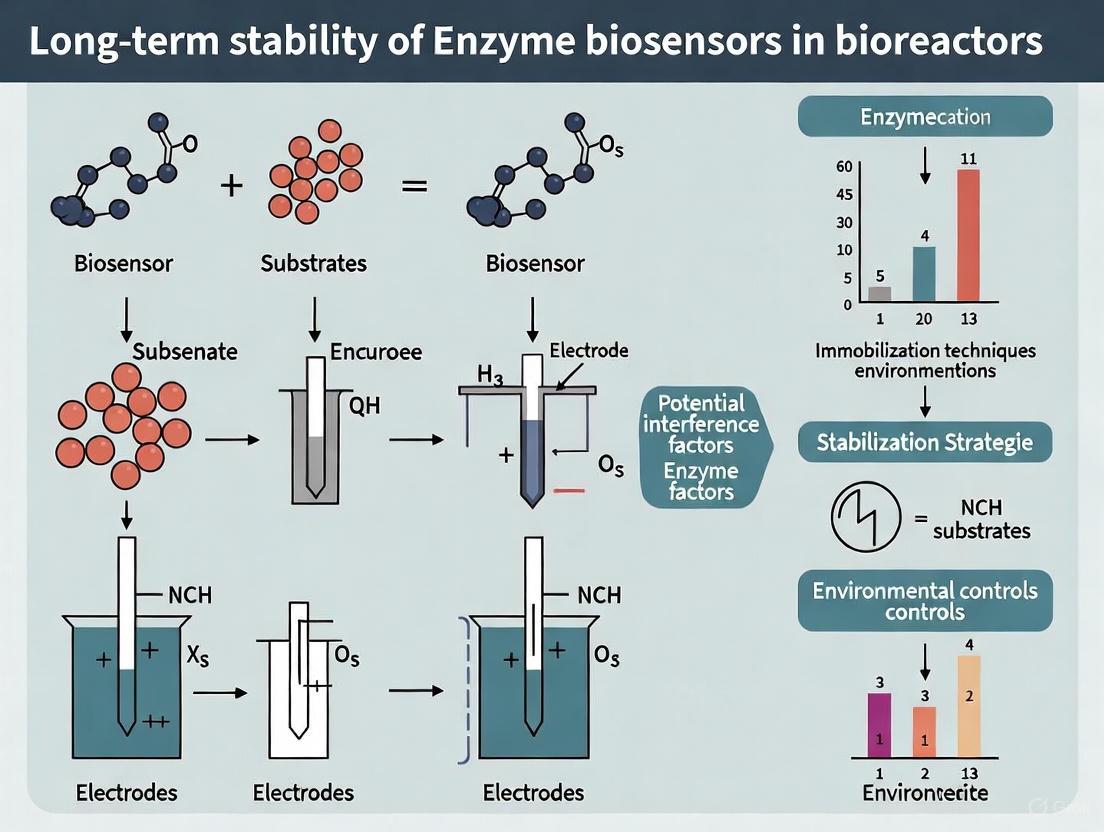
Enzyme biosensors are crucial tools in bioprocessing and drug development, yet their long-term operational stability remains a significant challenge for implementation in bioreactors.
Strategies for Enhancing Long-Term Stability of Enzyme Biosensors in Bioreactors
Abstract
Enzyme biosensors are crucial tools in bioprocessing and drug development, yet their long-term operational stability remains a significant challenge for implementation in bioreactors. This article comprehensively addresses the factors compromising biosensor longevity and presents proven stabilization methodologies. We explore foundational concepts of enzyme inactivation mechanisms, followed by practical immobilization techniques including cellulose matrices and polyelectrolyte complexes that demonstrate stability for several months. The content provides systematic troubleshooting guidance for fouling, leaching, and denaturation issues, supported by comparative validation data on different enzymatic configurations and materials. Designed for researchers, scientists, and drug development professionals, this review synthesizes current advances to enable more reliable and durable biosensor integration in biomedical and industrial applications.
Understanding Enzyme Biosensor Degradation: Key Challenges and Stability Mechanisms
Critical Factors Compromising Long-Term Biosensor Stability
A technical support guide for researchers navigating the challenges of enzyme biosensor stability in bioreactors.
This resource addresses the most frequent challenges researchers face when striving for stable, reliable performance from enzyme-based biosensors in bioreactor environments. The following guides and FAQs are synthesized from current literature to help you diagnose issues and implement effective solutions.
Troubleshooting Guide: Common Stability Issues & Solutions
The table below summarizes the primary factors that compromise biosensor stability and the corresponding corrective strategies you can implement in your experiments.
| Critical Factor | Underlying Mechanism | Impact on Stability | Corrective Strategy |
|---|---|---|---|
| Enzyme Inactivation/Leaching [1] [2] | Loss of enzymatic activity over time; physical detachment of the enzyme from the sensor surface. | Continuous signal drift towards lower readings; complete failure. | Use advanced immobilization techniques (covalent bonding, cross-linking) and nano-engineered supports like mesoporous silica or Metal-Organic Frameworks (MOFs) [1] [3]. |
| Mass Transfer Limitations [4] | Poor diffusion of substrate or products through the sensor's membrane or matrix, often due to biofilm formation or fouling. | Slowed response time; reduced sensitivity; inaccurate low readings. | Optimize reactor/sensor design with Computational Fluid Dynamics (CFD); use anti-fouling surface coatings like zwitterionic polymers [5] [4]. |
| Interference & Matrix Effects [6] [2] | Non-target substances in the complex bioreactor broth (e.g., proteins, cells) foul the surface or cause false signals. | Erratic signal noise; reduced specificity and accuracy. | Incorporate protective membranes (e.g., Nafion); use selective nanomaterials (e.g., graphene); employ AI-driven surface design for anti-fouling properties [5] [7]. |
| Physical Degradation of Components [8] [9] | Degradation of the transducer or membrane materials under prolonged exposure to harsh bioreactor conditions (pH, temperature, sterility cycles). | Complete sensor failure; permanent baseline shift; loss of signal. | Select materials with high chemical resistance (e.g., certain polymers, gold nanoparticles); ensure robust packaging and sealing [9] [3]. |
| Shelf-Life & Storage Degradation [6] | Inactivation of the biological recognition element (enzyme) during storage before use. | Sensor fails calibration before deployment; shortened usable lifespan. | Develop optimized storage buffers; use lyophilization (freeze-drying) protocols; integrate stabilizing agents like polyethylene glycol (PEG) [6] [3]. |
Frequently Asked Questions (FAQs)
Q1: Our biosensors show excellent initial sensitivity but a rapid signal decline within hours in a bioreactor. What is the most likely cause?
The most probable cause is enzyme leaching or inactivation [2] [3]. Physical adsorption, a simple immobilization method, often leads to enzymes detaching from the sensor surface. Furthermore, enzymes can denature due to shear forces, pH shifts, or temperature fluctuations in the bioreactor.
- Solution: Transition from physical adsorption to covalent immobilization strategies. Employ nano-scaffolds like silica nanoparticles or gold nanoparticles that offer high surface area and functional groups (e.g., thiols, amines) for stable covalent bonding, which greatly reduces leaching and can enhance enzyme rigidity against denaturation [3].
Q2: How can we prevent biofilm formation and fouling on our biosensor membranes, which drastically reduces performance?
Fouling is a major challenge in complex media. The key is surface engineering.
- Solution: Implement anti-fouling surface coatings. Recent research focuses on zwitterionic polymers and PEGylated surfaces that create a hydration barrier, preventing non-specific adhesion of proteins and cells [5]. Furthermore, AI-driven design is now being used to model and predict optimal surface chemistries that resist fouling, moving beyond traditional trial-and-error approaches [5].
Q3: What are the best practices for storing enzyme-based biosensors to maximize their shelf life?
Consistent storage conditions are critical for maintaining the activity of the biological component.
- Solution: Store biosensors in a dry, dark environment at a controlled, cool temperature (often 4°C). The storage buffer is crucial—it should maintain a stable pH and contain stabilizing agents like trehalose or PEG to protect enzyme conformation. For long-term storage, lyophilization (freeze-drying) is an effective method to preserve enzymatic activity [6] [3].
Q4: We observe significant signal drift over long-term continuous monitoring. How can we distinguish between enzyme decay and sensor fouling?
Diagnosing the root cause of drift requires a systematic approach, which can be visualized in the following diagnostic workflow:
Q5: Are there material innovations that specifically address biosensor stability?
Yes, nanomaterials and porous structures are at the forefront of stability innovation.
- Solution: Integrate Metal-Organic Frameworks (MOFs) and core-shell nanoparticles. MOFs provide a stable, porous crystalline structure that immobilizes enzymes and protects them from the harsh bioreactor environment while facilitating electron transfer [1]. Core-shell structures (e.g., silica core with a functional polymer shell) can encapsulate enzymes, shielding them from proteolysis and denaturation while allowing substrate diffusion [3].
The Scientist's Toolkit: Key Research Reagent Solutions
The following table lists essential materials and reagents cited in recent literature for developing stable enzyme biosensors.
| Research Reagent | Primary Function in Enhancing Stability | Key Characteristics & Considerations |
|---|---|---|
| Metal-Organic Frameworks (MOFs) [1] | Provides a stable, porous host for enzyme immobilization, reducing leaching and deactivation. | High surface area; tunable pore size; can be modified with redox mediators to act as an "electron wire". |
| Gold Nanoparticles (AuNPs) [3] | Serves as a platform for covalent enzyme immobilization via thiol groups; enhances electron transfer. | Excellent biocompatibility; high conductivity; easy surface functionalization; various morphologies (rods, spheres) offer tuning. |
| Silica Nanoparticles [3] | Mesoporous structure confines and protects enzymes, increasing stability against pH and temperature. | High chemical stability; low cost; high surface area; surface can be functionalized with amino or carboxyl groups. |
| Magnetic Nanoparticles [3] | Enables easy recovery and reuse of immobilized enzymes from a reaction mixture via a magnetic field. | Facilitates separation and reusability studies; often composited with silica or polymers for better performance. |
| Cross-linking Agents (e.g., Glutaraldehyde) [2] | Creates strong covalent bonds between enzyme molecules and the support matrix, preventing leaching. | Enhances operational stability significantly; over-cross-linking can potentially reduce enzyme activity. |
| Zwitterionic Polymers [5] | Forms an ultra-low fouling surface coating by creating a hydration barrier, preventing non-specific adsorption. | Critical for maintaining performance in complex biological matrices like fermentation broth; improves biocompatibility. |
Detailed Experimental Protocol: Evaluating Immobilization Stability
To systematically assess the long-term stability of your enzyme immobilization strategy, follow this protocol adapted from current methodologies [2] [3].
Objective: To determine the operational and shelf-life stability of an enzyme immobilized on a novel sensor surface.
Materials:
- Prepared biosensor with immobilized enzyme (e.g., glucose oxidase on an MOF/electrode).
- Relevant substrate solution (e.g., glucose in buffer).
- Standard calibration solutions.
- Bioreactor or simulated bioreactor conditions (controlled temperature, pH, stirring).
- Electrochemical or optical setup for signal measurement.
Procedure:
- Initial Characterization: Measure the initial maximum response (e.g., peak current for amperometric sensors) of the biosensor to a saturating concentration of substrate. Record this as ( S₀ ).
- Operational Stability Test:
- Continuously or intermittently (e.g., every hour for 8 hours) expose the biosensor to the substrate under operational conditions.
- After each cycle, measure and record the sensor response (( S_n )).
- Calculate the relative activity after ( n ) cycles: ( \text{Relative Activity (%)} = (Sn / S0) \times 100 ).
- Shelf-Life Stability Test:
- Store three identical biosensors in a suitable buffer at 4°C.
- At predetermined intervals (e.g., day 1, 7, 14, 30), remove one sensor, calibrate it, and measure its response ( S_t ) to the standard substrate.
- Calculate the remaining activity: ( \text{Remaining Activity (%)} = (St / S0) \times 100 ).
Data Interpretation:
- Plot the relative activity (%) versus time/number of cycles. A steep decline indicates poor stability.
- The half-life of the biosensor can be estimated as the time/cycle number at which the activity drops to 50% of its initial value.
- Compare different immobilization strategies (e.g., covalent vs. adsorbed) using this direct quantitative metric to identify the most robust approach for your application.
For researchers developing enzymatic biosensors, the long-term functional stability of the biological recognition element is a paramount concern, directly influencing the reliability, shelf-life, and analytical performance of the device in bioreactor monitoring and drug development applications. Enzyme inactivation—a process where enzymes lose their catalytic capability—can arise from multiple mechanisms, primarily denaturation, leaching, and conformational changes [10]. These processes are influenced by operational conditions such as temperature, pH, and physical forces, as well as the chosen method of enzyme immobilization [11]. A profound understanding of these inactivation pathways is not merely an academic exercise; it is a critical prerequisite for designing robust biosensors that deliver consistent, accurate data over extended periods in vitro and in vivo. This guide provides a structured troubleshooting framework to help scientists identify, mitigate, and overcome the common challenges associated with enzyme instability.
Core Inactivation Mechanisms & Troubleshooting
Denaturation: Loss of Functional Structure
Denaturation refers to the loss of a protein's three-dimensional structure, leading to inactivation. The native, functional conformation of an enzyme is maintained by a delicate balance of weak interactions, including hydrogen bonds, hydrophobic interactions, and electrostatic forces [12]. This structure is only marginally stable, with a free energy difference of about 25–60 kJ·mol⁻¹ between the native (N) and unfolded (U) states [12].
- Mechanism: Denaturation involves the transition from the ordered, functional native state (N) to a disordered, non-functional state (U), potentially through partially folded intermediates (I). This process can be reversible or, if accompanied by chemical deterioration or aggregation, become irreversible [12] [10].
- Primary Causes: Elevated temperature, extreme pH, high pressure, the presence of chemical denaturants (e.g., urea, organic solvents), and interfacial forces (e.g., air bubbles) can disrupt the stabilizing interactions [12] [10].
The diagram below outlines the pathways of protein denaturation and inactivation.
Troubleshooting Guide: Denaturation
| Observed Problem | Possible Cause | Recommendations & Solutions |
|---|---|---|
| Rapid loss of activity upon heating | Incorrect storage temperature or operational overheating. | Store enzymes at recommended temperatures (e.g., -20°C or -80°C for some biosensors). Avoid repeated freeze-thaw cycles. Use a benchtop cooler during handling [13] [14]. |
| Activity loss after pH change | Exposure to non-physiological pH during immobilization or operation. | Use adequate buffering systems tailored to the enzyme's optimal pH range. Avoid sharp pH transitions during biosensor fabrication and storage [10]. |
| Unexpected inactivation in supercritical media or biphasic systems | Structural changes induced by rapid CO₂ release or interfacial tension. | Optimize pressurization/depressurization cycles. Minimize the creation of air bubbles or liquid/liquid interfaces during sample introduction [10]. |
| Loss of activity after sterilization | Denaturation by heat or steam. | Employ gentler sterilization methods such as hydrogen peroxide, gamma irradiation, or ultraviolet light, which are less destructive to enzyme structure [15]. |
Leaching: Physical Loss of the Enzyme
Leaching is the physical detachment of enzyme molecules from the biosensor's transducer surface or immobilization matrix into the surrounding solution.
- Mechanism: This occurs when the binding forces between the enzyme and the support material are insufficient to withstand the operational conditions, such as flow rates in a bioreactor or changes in ionic strength [11].
- Consequence: Leaching leads to a continuous decline in the biosensor's signal (sensitivity) as the amount of active enzyme on the sensor decreases, ultimately causing biosensor failure.
Troubleshooting Guide: Leaching
| Observed Problem | Possible Cause | Recommendations & Solutions |
|---|---|---|
| Gradual, continuous signal decline over time | Enzyme immobilized via weak adsorption is desorbing. | Shift from adsorption-based immobilization (e.g., simple dipping) to stronger covalent bonding or cross-linking methods [11]. |
| Signal drop in high-flow or stirred environments | Physical shear forces displacing the enzyme. | Ensure the containment membrane (e.g., polyurethane or glutaraldehyde-crosslinked protein layer) is intact and optimally formed to limit convective loss [15] [14]. |
| Leaching after changes in ionic strength or pH | Weakening of electrostatic adsorptive interactions. | Use immobilization methods that are less dependent on electrostatic forces, such as covalent bonding or entrapment within a polymer network [11]. |
Conformational Changes and Irreversible Inactivation
Beyond complete unfolding, more subtle conformational changes can inactivate enzymes. This can involve the dissociation of oligomeric enzymes into inactive subunits or the local distortion of the active site [10]. Furthermore, the unfolded state (U) can proceed to a completely denatured state (D) via irreversible chemical and physical processes.
- Irreversible Mechanisms:
- Chemical Inactivation: Includes oxidation of sensitive amino acids (e.g., cysteine, methionine), hydrolysis of peptide bonds, or formation of incorrect disulfide bonds [10].
- Aggregation: The association of unfolded or partially unfolded molecules to form inactive, and often insoluble, aggregates [12] [10].
- Suicide Inhibition: For certain enzymes, the substrate analogue or reaction intermediate can covalently modify and permanently inactivate the active site [10].
Troubleshooting Guide: Conformational Changes & Irreversible Inactivation
| Observed Problem | Possible Cause | Recommendations & Solutions |
|---|---|---|
| Biphasic inactivation (rapid initial loss followed by slow decay) | Presence of multiple enzyme forms or populations with different stabilities. | Analyze inactivation kinetics at several temperatures to build a robust model. Consider the presence of active and inactive oligomeric states [10]. |
| Inactivation by heavy metals or oxidants | Chemical modification of functional groups essential for catalysis or structure. | Use high-purity reagents. Include protective antioxidants (e.g., DTT) in storage buffers if applicable, and ensure they do not interfere with sensor function [10]. |
| Progressive inactivation when processing catechol-like substrates | Suicide inhibition of enzymes like catechol-2,3-dioxygenase. | Co-immobilize enzyme reactivation systems, such as [2Fe-2S] plant-like ferredoxins (e.g., XylT), which can reduce and reactivate the oxidized metal center in the enzyme's active site [10]. |
Experimental Protocols for Stability Analysis
Protocol: Assessing Immobilization Method Efficacy
This protocol helps researchers compare the effectiveness of different enzyme immobilization strategies in preventing leaching and denaturation.
- Biosensor Fabrication: Prepare multiple batches of biosensors, each using a different immobilization method (e.g., Adsorption, Covalent Bonding, Entrapment, Cross-linking) on identical transducer platforms [11].
- Initial Calibration: For each biosensor (n≥3 per group), perform a full calibration with standard solutions of the target analyte (e.g., glucose, lactate). Record the initial VMAX (indicative of the number of active enzyme molecules) and KM (reflecting enzyme-substrate affinity) [14].
- Stability Challenge:
- Leaching Test: Immerse biosensors in a gently-agitated buffer (e.g., PBS, pH 7.4) for 24-48 hours. Periodically, remove the biosensors, rinse, and measure the activity in a standard solution.
- Operational Stability: Continuously operate the biosensors in a flow-through cell with a constant, low concentration of analyte, monitoring the signal decay over time.
- Storage Stability: Store biosensors at different temperatures (+4°C, -20°C, -80°C) and calibrate them at weekly or monthly intervals over 120 days [14].
- Data Analysis: Calculate the percentage of initial activity retained after each challenge. Compare the decay rates (leaching) and half-lives of activity between the different immobilization methods.
Protocol: Quantitative Analysis of Kinetic Parameters
Monitoring the kinetic parameters VMAX and KM provides deep insight into the nature of enzyme inactivation on the biosensor surface [14].
- Significance of VMAX: A decrease in VMAX over time indicates a reduction in the number of catalytically active enzyme molecules, typically caused by denaturation or leaching [14].
- Significance of KM: An increase in KM suggests a loss of the enzyme's affinity for its substrate, often resulting from subtle conformational changes that distort the active site without fully unfolding the enzyme [14].
The workflow below illustrates the process of fabricating a biosensor and using kinetic parameters to diagnose stability.
Frequently Asked Questions (FAQs)
Q1: What are the most critical factors to control for maximizing the shelf-life of my enzymatic biosensors? The three most critical factors are temperature, immobilization method, and humidity control. Storage at low temperatures (-80°C has shown superior results for some glucose and lactate biosensors) significantly decelerates denaturation. A robust immobilization method like cross-linking or covalent bonding prevents leaching. Finally, storing biosensors in a dry, sealed environment protects them from condensation and microbial growth [14] [13].
Q2: How can I determine if the signal loss from my biosensor is due to leaching or denaturation? Compare the VMAX of your biosensor before and after use. A decrease indicates a loss of active enzyme, common to both mechanisms. To distinguish between them, analyze the storage or operational buffer for the presence of enzyme activity or protein content; if detected, leaching is occurring. If no enzyme is found in the buffer, denaturation on the sensor surface is the more likely cause [14] [10].
Q3: Are there strategies to reactivate partially inactivated enzymes on a biosensor? For certain types of inactivation, yes. If inactivation is caused by the oxidation of a metal cofactor (e.g., in some dioxygenases), co-immobilizing a reactivation system like a [2Fe-2S] ferredoxin (XylT) can restore activity by reducing the metal center. However, for most forms of denaturation (aggregation, irreversible chemical modification) or leaching, reactivation is not feasible, and the biosensor must be replaced [10].
Q4: Our biosensor works perfectly in the lab but fails rapidly in the bioreactor. What could be the cause? Complex biological matrices in bioreactors introduce multiple potential stressors. These include proteases that can hydrolyze the enzyme, surfactants from cell lysis that can denature proteins, shear forces from agitation that can promote leaching, and interfacial inactivation at air bubbles. Using a more selective containment membrane and optimizing its porosity can help shield the enzyme from these interferents [15] [10].
The Scientist's Toolkit: Essential Reagents for Enzyme Stabilization
| Reagent / Material | Function in Biosensor Development | Key Consideration |
|---|---|---|
| Glutaraldehyde (GTA) | A cross-linking agent that creates strong covalent bonds between enzyme molecules and/or with a carrier protein (e.g., BSA), drastically reducing leaching. | Can lead to a partial loss of initial activity due to modification of essential amino groups in the active site [15] [11]. |
| Polyurethane (PU) | A polymer used to form a semi-permeable containment membrane on the biosensor tip. It controls analyte diffusion and physically protects the enzyme layer. | The membrane thickness and porosity must be optimized to allow rapid analyte diffusion while preventing enzyme loss [14]. |
| Bovine Serum Albumin (BSA) | Often used as an inert carrier protein in cross-linking immobilization. It increases the protein density, improving the efficiency of cross-linking and creating a more stable enzyme matrix. | Serves as a scaffold, ensuring a dense protein layer that can be effectively cross-linked by glutaraldehyde [14]. |
| Polyols (e.g., Trehalose) | Stabilizing cosolvents that can substitute for water molecules, strengthening the hydrogen-bonding network around the enzyme and preserving its hydrated structure, especially during storage or lyophilization. | Acts as a "water substitute," protecting against denaturation induced by dehydration or temperature swings [12]. |
| [2Fe-2S] Ferredoxins (e.g., XylT) | Specific reactivation proteins for certain metalloenzymes. They reduce oxidized metal centers in the enzyme's active site, reversing suicide inhibition. | A powerful but highly specific strategy for enzymes prone to inactivation by their reactive intermediates [10]. |
The Role of Matrix Materials in Enzyme Protection and Stabilization
For researchers developing enzyme biosensors for bioreactor applications, achieving long-term stability is a paramount challenge. Free enzymes in their native state are often hampered by structural instability, irreversible activity loss, and inefficient recovery from reaction systems, which severely limits their practical deployment in industrial and diagnostic applications [16]. Enzyme immobilization onto matrix materials presents a viable solution to these challenges, enhancing biocatalyst performance by improving structural stability, prolonging operational lifetime, and enabling multiple reuse cycles [16]. This technical support center provides targeted guidance on selecting, optimizing, and troubleshooting matrix materials to achieve robust enzyme stabilization for extended biosensor operation in bioreactors.
Core Stabilization Mechanisms of Matrix Materials
Matrix materials protect enzymes through several key mechanisms, each addressing different destabilizing factors:
- Conformational Stabilization: Multipoint covalent bonding between the enzyme and support matrix rigidifies the enzyme's three-dimensional structure, reducing structural fluctuations and denaturation under thermal or chemical stress [17].
- Microenvironment Creation: The matrix creates a protected niche around the enzyme, buffering against extreme pH shifts, chemical denaturants, and shear forces encountered in bioreactor environments [16].
- Mass Transfer Facilitation: Optimally designed porous matrices allow substrate and product diffusion while protecting enzymes from microbial proteases and aggregation [18].
The selection of an appropriate immobilization strategy is fundamental to success. The table below compares the primary techniques used for enzyme stabilization in biosensor applications.
Table: Comparison of Enzyme Immobilization Techniques for Biosensor Applications
| Immobilization Technique | Stabilization Mechanism | Optimal Use Cases | Advantages | Limitations |
|---|---|---|---|---|
| Covalent Binding [17] | Forms strong, irreversible covalent bonds between enzyme and activated support. | Biosensors requiring high operational stability and no enzyme leakage. | Prevents enzyme leakage; Improved thermal stability; Easy substrate contact. | Potential activity loss due to improper orientation; Relatively expensive supports. |
| Adsorption [17] | Utilizes weak forces (ionic bonds, van der Waals). | Preliminary research, low-cost applications, or when enzyme reversibility is desired. | Simple and cheap; High activity retention; Reusable carrier. | Enzyme leakage due to desorption from weak bonds; Product contamination. |
| Entrapment/Encapsulation [2] | Confines enzyme within a polymeric network or microcapsule. | Biosensors for small molecule analytes where enzyme retention is critical. | Protects enzyme from direct contact with harsh environment. | Mass transfer limitations for larger substrates; Possible enzyme leakage from pores. |
| Bacterial Spore Surface Display [16] | Genetically or physicochemically anchors enzymes to robust spore coats. | Applications demanding exceptional resistance to environmental stressors. | Excellent biosafety (GRAS); Enhanced stability from natural spore coat; Cost-effective production. | Relatively low display efficiency requires optimization. |
Troubleshooting Guide: Common Issues with Immobilized Enzymes
This section addresses specific problems researchers might encounter when working with immobilized enzymes in biosensor development.
Problem: Rapid Loss of Enzymatic Activity in Bioreactor
| Possible Cause | Recommended Solution |
|---|---|
| Enzyme Leakage from Matrix | Switch from adsorption to covalent bonding or entrapment methods [17]. For covalent binding, ensure the carrier surface is properly activated with linkers like glutaraldehyde [17]. |
| Structural Denaturation | Implement multipoint covalent bonding to rigidify the enzyme structure [17]. Consider using a matrix that provides a more compatible micro-environment (e.g., hydrophilic for aqueous systems) [19]. |
| Inappropriate Matrix Pore Size | Select a matrix with a pore size that allows for unhindered substrate and product diffusion while securely housing the enzyme [16]. |
| Chemical Inhibition | Ensure the matrix material is inert and does not introduce inhibitory substances. Pre-wash the matrix to remove any potential contaminants [19]. |
Problem: Reduced Signal Output in Biosensor Over Time
| Possible Cause | Recommended Solution |
|---|---|
| Fouling or Contamination | Incorporate a pre-filtering step in the bioreactor stream or use a protective membrane over the biosensor surface. |
| Mass Transfer Limitations | Optimize matrix porosity or reduce matrix thickness to enhance diffusion of substrate to the enzyme and product to the transducer [16]. |
| Inactivation by By-Products | Design a flow system that efficiently removes reaction by-products (e.g., hydrogen peroxide) from the sensor interface. |
| Transducer Passivation | Regularly calibrate the transducer element and ensure the immobilization layer does not insulate the transducer from the biochemical signal. |
Problem: Inconsistent Performance Between Batch Preparations
| Possible Cause | Recommended Solution |
|---|---|
| Variation in Matrix Properties | Source matrix materials from reliable suppliers with strict quality control. Characterize each batch for parameters like particle size, porosity, and functional group density. |
| Non-standardized Immobilization Protocol | Establish and meticulously follow a Standard Operating Procedure (SOP) for the immobilization process, including precise control of pH, temperature, and enzyme/support ratio [19]. |
| Partial or Inefficient Immobilization | Monitor the immobilization yield and efficiency consistently. Increase incubation time or optimize the concentration of coupling agents for covalent methods [17]. |
Frequently Asked Questions (FAQs)
Q1: What are the key properties to consider when selecting a matrix material for a long-term biosensor application? The ideal matrix should possess high biocompatibility to avoid enzyme denaturation, sufficient functional groups for stable immobilization, appropriate mechanical strength to withstand bioreactor hydrodynamic forces, and optimal porosity to ensure good mass transfer while retaining the enzyme. Materials like functionalized chitosan, porous silica, and metal-organic frameworks (MOFs) are often investigated for these properties [20] [17].
Q2: How can I prevent enzyme leakage from the matrix during prolonged use? While adsorption is simple, it is prone to leakage. For permanent stabilization, covalent binding is the preferred method as it forms stable, irreversible bonds [17]. Alternatively, entrapment within a stable polymer gel or the use of advanced systems like bacterial spore surface display can effectively prevent enzyme leaching [16].
Q3: My immobilized enzyme is stable but the activity is significantly lower than the free enzyme. What could be the reason? This is often due to mass transfer limitations, where the substrate cannot easily reach the enzyme's active site within the matrix, or the product cannot efficiently diffuse out. Try using a matrix with larger pores or a thinner immobilization layer [16]. Another cause could be steric hindrance or improper orientation during immobilization, which blocks the active site. Using a different coupling chemistry or introducing a spacer arm can help alleviate this [17].
Q4: Are there any emerging matrix technologies that offer superior stability? Yes, several advanced systems are showing great promise. Metal-Organic Frameworks (MOFs) can be engineered to create highly ordered porous structures for efficient enzyme encapsulation and electron transfer [18] [1]. Bacterial Spore Surface Display Systems (BSSDS) leverage the natural resilience of bacterial spores, providing exceptional resistance to environmental stressors, which is highly valuable for bioreactor conditions [16]. Additionally, nanozymes (synthetic enzyme mimics) are being explored to overcome the inherent instability of natural enzymes [2].
Essential Experimental Protocols
Protocol 1: Covalent Immobilization on Chitosan Beads
This is a widely used method due to chitosan's biocompatibility and modifiable functional groups [17].
- Support Activation: Suspend 1 g of chitosan beads in 20 mL of 2.5% (v/v) glutaraldehyde solution in 0.1 M phosphate buffer (pH 7.0). Stir gently for 2 hours at room temperature.
- Washing: Thoroughly wash the activated beads with the same phosphate buffer to remove any excess glutaraldehyde.
- Enzyme Coupling: Incubate the activated beads with 10-20 mg of your target enzyme (in 0.1 M phosphate buffer, pH 7.0) for 12-16 hours at 4°C with gentle agitation.
- Blocking and Final Wash: Block any remaining active sites by incubating with 1 M ethanolamine (pH 8.0) for 1 hour. Wash the final preparation extensively with buffer and store at 4°C.
Protocol 2: Assessing Immobilization Efficiency and Stability
- Immobilization Yield Calculation: After immobilization, centrifuge the suspension and measure the protein concentration in the supernatant. Calculate the yield as follows:
- Immobilization Yield (%) = [(Total protein added - Protein in supernatant) / Total protein added] × 100
- Activity Retention Assessment: Assay the activity of the free and immobilized enzyme. Calculate the retained activity:
- Activity Retention (%) = [Activity of immobilized enzyme / Activity of free enzyme] × 100
- Operational Stability Test: Perform repeated batch reactions with the immobilized enzyme. After each cycle, wash the beads and reassay the activity. Plot the remaining activity versus the number of cycles to determine the half-life of your preparation [17].
- Storage Stability: Store the immobilized enzyme in a suitable buffer at 4°C and periodically measure its activity over several weeks to determine its shelf-life.
Decision Workflow for Matrix Selection
The following diagram outlines a logical pathway for selecting the most appropriate enzyme stabilization strategy based on your specific research goals and constraints.
The Scientist's Toolkit: Key Research Reagent Solutions
Table: Essential Materials for Enzyme Immobilization and Stabilization Research
| Reagent/Material | Function/Application | Key Considerations |
|---|---|---|
| Glutaraldehyde [17] | A homobifunctional crosslinker for activating amine-containing supports (e.g., chitosan) for covalent immobilization. | Concentration and reaction time must be optimized to prevent excessive cross-linking and loss of enzyme activity. |
| Chitosan [17] | A natural, biodegradable, and biocompatible polymer used as a support matrix for adsorption or covalent binding. | Its porosity, degree of deacetylation, and mechanical strength can vary based on source and preparation method. |
| Metal-Organic Frameworks (MOFs) [1] | Crystalline porous materials that can encapsulate enzymes, providing a protective nano-environment and facilitating electron transfer. | Select MOFs with pore sizes suitable for your enzyme and consider their stability in the operational pH range. |
| Bacterial Spores (e.g., B. subtilis) [16] | Used as a robust, GRAS-certified carrier in Bacterial Spore Surface Display Systems for enhanced enzyme stability. | Requires expertise in genetic engineering for recombinant systems or optimization of adsorption conditions for non-recombinant systems. |
| Carbodiimide (e.g., EDC) [17] | A zero-length crosslinker for forming covalent bonds between carboxyl and amine groups on enzymes and supports. | Often used with N-Hydroxysuccinimide (NHS) to improve coupling efficiency and stability. |
| Alginate [2] | A natural polymer used for entrapment, forming a gel matrix in the presence of calcium ions. | Gentle encapsulation process, but pore size can be large, potentially allowing enzyme leakage. |
Analyzing Operational vs. Storage Stability in Bioreactor Environments
Definitions and Key Concepts FAQ
What is the difference between operational stability and storage stability?
- Operational Stability: Refers to the retention of enzyme activity during active use. For a biosensor in a bioreactor, this means how many analyses it can perform accurately before signal degradation. It is critical for multi-use devices and continuous monitoring systems [21] [6].
- Storage Stability (or Shelf Stability): Relates to the retention of activity of the sensing elements (enzymes, proteins) during storage over time, before the device is put into operation. This is the key concern for single-use, disposable biosensors [6].
Why is stability a critical challenge for biosensors in bioreactors?
Biosensors are susceptible to ageing, which manifests as a decrease in signal over time. The loss of stability is the sum of changes affecting the biological material (e.g., enzyme denaturation, antibody deactivation), the signal mediator, and the binding material in the immobilization matrix. This directly impacts the device's longevity, reliability, and commercial viability [22].
How does enzyme immobilization affect stability?
Cross-linking with agents like glutaraldehyde is a common immobilization method. However, being a strong bifunctional reagent, glutaraldehyde can drastically modify the enzyme, leading to conformational changes and activity loss. Incorporating inert "protein-based stabilizing agents" (PBSAs) like lysozyme or Bovine Serum Albumin (BSA) during this step minimizes excessive intramolecular crosslinkages within the enzyme. This enhances intermolecular linkages between the enzyme and the inert protein, thereby stabilizing the immobilized enzyme system [23].
Troubleshooting Common Stability Issues
Problem: Rapid loss of biosensor signal during continuous operation in a bioreactor.
| Potential Cause | Diagnostic Checks | Corrective Actions |
|---|---|---|
| Enzyme Denaturation/Deactivation | Check for activity loss in high substrate concentration environments [23]. | Incorporate protein-based stabilizing agents (e.g., lysozyme) during enzyme immobilization [23]. |
| Inefficient Mixing & Aeration | Verify dissolved oxygen (DO) levels and nutrient distribution; look for gradients [24] [25]. | Optimize agitation speeds and aeration rates; perform routine maintenance of impellers and air supply systems [24] [25]. |
| Sensor Fouling (Biofouling) | Inspect for physical debris or biofilm on the sensor membrane [24] [26]. | Implement regular cleaning protocols; use sensors with anti-biofouling coatings or membranes [24] [26]. |
| Unstable pH or Temperature | Review process data logs for fluctuations that deviate from optimal ranges for the enzyme [24]. | Calibrate pH and temperature sensors regularly; use automated control systems with feedback loops [24] [25]. |
Problem: Significant loss of biosensor activity after storage.
| Potential Cause | Diagnostic Checks | Corrective Actions |
|---|---|---|
| Inherent Instability of Sensing Elements | Test activity after storage under different conditions (temperature, humidity) [6]. | Optimize storage buffer composition; use stabilizing additives like polyelectrolytes or sugar alcohols [23] [6]. |
| Poor Container-Closure Integrity | Check for leaks or compromised seals that could lead to contamination or desiccation [27]. | Methodically check and replace all sealing rings during assembly; ensure proper closure [27] [28]. |
| Sub-Optimal Storage Conditions | Monitor for temperature excursions or light exposure during storage [27]. | Define and validate robust storage conditions (e.g., refrigeration, dark); use monitored storage systems [27]. |
Experimental Protocols for Stability Assessment
Protocol: Enhancing Operational Stability with Protein-Based Stabilizing Agents (PBSAs)
This methodology is derived from a study demonstrating considerable enhancement of operational stability for glucose and sucrose biosensors [23].
Key Research Reagent Solutions:
- Lysozyme or BSA: Serves as an inert protein-based stabilizing agent (PBSA) to prevent excessive intramolecular crosslinking and enhance the stability of the immobilized enzyme matrix [23].
- Glutaraldehyde: A bifunctional crosslinking reagent used to create covalent bonds between enzymes and inert proteins or the support matrix [23].
- Glucose Oxidase (GOD)/Invertase/Mutarotase: Model enzymes for constructing biosensors for glucose and sucrose, respectively [23].
- Cellophane/Teflon Membranes: Used to entrap the enzyme-PBSA matrix on the transducer surface, providing a permeable barrier to substrates and products [23].
Detailed Workflow:
- Enzyme Immobilization Mixture: Prepare a mixture containing the target enzyme(s) (e.g., Glucose Oxidase) and the selected PBSA (e.g., Lysozyme) in a suitable buffer.
- Cross-linking: Add glutaraldehyde to the enzyme-PBSA mixture to initiate cross-linking.
- Membrane Entrapment: Apply the cross-linked mixture onto the surface of the transducer and cover it with a permeable membrane (e.g., cellophane with a specific molecular weight cut-off), securing it with an O-ring.
- Stability Testing: Install the biosensor in a bioreactor or flow system. Perform repeated analyses of a standard substrate solution (e.g., 10% glucose). Record the sensor's response over time and/or the number of successful analyses until a significant drop in signal is observed.
- Comparison: Compare the performance (e.g., number of analyses, signal retention over days) against a control biosensor fabricated without a PBSA.
Expected Outcome: The study demonstrated that GOD immobilized with lysozyme could analyze 750 samples over 230 days for glucose, a significant improvement over the control [23]. The table below summarizes quantitative data from this experiment.
Quantitative Data on PBSA Enhancement of Biosensor Operational Stability [23]
| Analyte | Enzyme System | PBSA Used | Number of Analyses | Operational Duration | Key Finding |
|---|---|---|---|---|---|
| Glucose | Glucose Oxidase (GOD) | Lysozyme | 750 | 230 days | Lysozyme was the best stabilizer, followed by BSA and gelatin. |
| Glucose | Glucose Oxidase (GOD) | None | ~100 | N/S | Virtually no enzyme activity without additives. |
| Sucrose | Invertase, Mutarotase, GOD | Lysozyme | 400 | 40 days | Enhanced stability demonstrated in a multienzyme system. |
Protocol: Modeling Operational Stability Using Enzyme Kinetics
This protocol uses mathematical modeling to understand and predict the operational stability of enzyme-based biosensors, such as lactate biosensors [21].
Key Research Reagent Solutions:
- Amperometric Transducer: Converts the biochemical reaction (e.g., lactate oxidation) into a quantifiable electrical current [21].
- Lactate Oxidase (LOx) or Lactate Dehydrogenase (LHD): Bioselective elements for lactate biosensors [21].
- Nonlinear Optimization Software: Used for model parameter estimation based on experimental data [21].
Detailed Workflow:
- Biosensor Construction: Build an amperometric biosensor for the target analyte (e.g., lactate) using your chosen immobilization method.
- Data Collection: Empirically record the biosensor's response (current) over time under various substrate concentrations and operational conditions.
- Model Formulation: Develop a dynamic model incorporating Michaelis-Menten kinetics. To increase accuracy, integrate delays (distributed or discrete) to capture the intricate dynamics of substrate diffusion and reaction.
- Parameter Estimation: Use a nonlinear optimization method to determine the model parameters (e.g., ( V{max} ), ( KM ), delay values), leveraging initial experimental data.
- Stability Analysis: Perform stability analysis by linearizing the model around its equilibrium state and examining the characteristic roots of the system. This can reveal stability margins and phenomena like transitions to limit cycles with increasing delay [21].
Expected Outcome: The model can reveal the system's "marginal stability," a delicate balance between asymptotic stability and instability. Qualitative analysis can show how factors like delay influence dynamic behavior, aiding in the design of more stable biosensors [21].
This technical support center is designed for researchers working on the long-term stability of enzyme-based biosensors and bioreactors. A landmark study demonstrating an 11-month operational lifespan for a glucose oxidase membrane provides a critical foundation for improving biosensor durability [29]. The following guides and FAQs consolidate experimental protocols and troubleshooting advice to help you achieve similar success in your research.
Experimental Protocols & Data
Detailed Methodology: Cellulose-Based Glucose Oxidase Membrane Preparation
This protocol is adapted from the study where this method resulted in a biosensor that maintained a linear response for 11 months, with only a 50% decrease in signal magnitude after this period [29].
Key Reagents:
- Glucose Oxidase (GOD): 203 U·mg⁻¹, from Aspergillus niger [29].
- Cellulose Solution: 5 wt% in 1-ethyl-3-methylimidazolium acetate ionic liquid [29].
- Substrate: Glassy Carbon (GC) electrode, 3 mm in diameter [29].
- Buffer: 0.1 M citrate buffer, pH 5.5 [29].
Step-by-Step Procedure:
- Enzyme Deposition: Dissolve GOD in water to create a 5 wt% solution. Pipette 20 µL of this solution and drop it directly onto the surface of a clean GC electrode [29].
- Drying: Allow the electrode to dry for 2 hours at room temperature to form an initial enzyme layer [29].
- Cellulose Coating: Pipette 20 µL of the cellulose ionic liquid solution and carefully spread it over the GOD-coated electrode to form a uniform layer [29].
- Membrane Formation: Let the electrode stand stationary for 1 minute. Then, immerse the entire electrode in water for 5 minutes to coagulate the cellulose and remove the ionic liquid, forming a solid, entrapment membrane [29].
- Curing: Dry the finished electrode for 4 hours before its first use. Store at 4 °C when not in use [29].
Measurement of Current Response:
- Immerse the prepared electrode in a stirred 0.1 M citrate buffer (pH 5.5) at room temperature (23 ± 2 °C) [29].
- Apply a potential of +1.0 V vs. Ag/AgCl to the GC electrode to oxidize the hydrogen peroxide produced by the enzymatic reaction [29].
- Add a known concentration of glucose to the buffer and record the steady-state oxidation current [29].
The table below summarizes the long-term stability data from the case study, providing a benchmark for your experiments.
Table 1: Long-Term Stability of Cellulose-Based Glucose Oxidase Membrane [29]
| Time After Preparation | Response to 1 mM Glucose (nA) | Percentage of Initial Response | Linear Response Range |
|---|---|---|---|
| Initial (Day 0) | 161 ± 10 | 100% | Up to 1 mM |
| Day 117 (~4 months) | 119 ± 6 | ~74% | Up to 1 mM (unchanged) |
| Day 329 (~11 months) | 63 ± 5 | ~50% | Up to 1 mM (unchanged) |
Troubleshooting Guides & FAQs
Frequently Asked Questions
Q1: My biosensor's sensitivity is decaying much faster than expected. What are the most likely causes? A1: Rapid decay can stem from several factors related to enzyme immobilization and storage:
- Enzyme Leaching: The immobilization matrix may be too porous or the binding too weak. Ensure your cellulose membrane is formed correctly by following the immersion and drying steps precisely. Consider alternative covalent immobilization strategies, such as creating Schiff-base bonds on oxidized cellulose, which can form stronger attachments [30] [31].
- Enzyme Denaturation: The local environment around the enzyme is critical. The cellulose matrix is hydrophilic, which helps stabilize the enzyme's native structure. Avoid introducing harsh solvents or extreme pH conditions during fabrication or operation [29] [31].
- Improper Storage: Always store the biosensor in a refrigerator at 4°C in a dry state or in an appropriate buffer when not in use to minimize spontaneous denaturation [29].
Q2: Beyond the described protocol, what strategies can further improve long-term stability? A2: The case study highlights enzyme entrapment as key. You can enhance this further by:
- Chemical Cross-linking: Using cross-linkers like glutaraldehyde can create additional covalent bonds within the enzyme and between the enzyme and the cellulose matrix, reducing leaching [31].
- Using Stabilizers: Adding stabilizers like polyethylene glycol (PEG) to the immobilization matrix can protect the enzyme's active conformation from denaturation, especially in suboptimal environments [31].
- Advanced Material Composites: Incorporating nanomaterials like metal-organic frameworks (MOFs) or carbon nanotubes can improve electron transfer efficiency and provide a more protective nanoenvironment for the enzyme [32] [1].
Q3: How does the cellulose membrane protect the enzyme from denaturants like urea? A3: Research indicates that the hydrophilic cellulose matrix creates a stabilizing microenvironment for the entrapped enzyme. In comparative studies, enzymes immobilized in cellulose retained higher activity when immersed in urea solution than those in polyion complex membranes. This suggests that the chemical nature and hydrophilicity of the cellulose shield the enzyme from denaturing attacks [29].
Experimental Workflow Visualization
The following diagram illustrates the logical workflow for developing and testing a stable cellulose-based enzyme membrane, integrating core concepts from the case study and troubleshooting advice.
The Scientist's Toolkit: Research Reagent Solutions
This table lists essential materials used in the featured case study and related advanced research for developing stable cellulose-based biosensors.
Table 2: Essential Research Reagents for Cellulose-Based Enzyme Membranes
| Reagent / Material | Function / Role | Example from Research |
|---|---|---|
| Cellulose & Derivatives | Matrix/Support: Provides a biocompatible, hydrophilic, and mechanically stable scaffold for enzyme immobilization. | Regenerated cellulose from ionic liquids (e.g., 1-ethyl-3-methylimidazolium acetate) [29] [33]. |
| Enzymes | Biorecognition Element: Catalyzes specific reaction with the target analyte, generating a detectable signal. | Glucose Oxidase (GOD) for glucose detection [29]. α-Glucosidase for inhibitor screening [30]. |
| Ionic Liquids | Green Solvent: Dissolves natural cellulose for processing into regenerated membranes without derivatization. | 1-ethyl-3-methylimidazolium acetate, 1-allyl-3-methylimidazolium chloride [29] [33]. |
| Cross-linkers & Modifiers | Stability Enhancement: Forms covalent bonds to strengthen enzyme attachment and prevent leaching. | Glutaraldehyde, Schiff-base formation via oxidized cellulose aldehydes [30] [31]. |
| Nanomaterials | Performance Enhancers: Improve electrical conductivity, surface area, and stability. Can act as nanozymes. | Metal-Organic Frameworks (MOFs), Carbon Nanotubes (CNTs) [32] [1]. |
| Stabilizers | Enzyme Protection: Maintains enzyme conformation and activity in non-aqueous media or over long periods. | Polyethylene Glycol (PEG), sorbitol [31]. |
Advanced Immobilization Techniques and Material Selection for Enhanced Stability
Comparative Evaluation of Enzyme Immobilization Strategies
Troubleshooting Guide: Common Immobilization Challenges
This guide addresses specific issues researchers might encounter during enzyme immobilization experiments, framed within the context of improving long-term stability for biosensors in bioreactors.
Problem 1: Incomplete or No Digestion/Coupling
Observable Symptoms: Lower-than-expected enzyme activity post-immobilization; enzyme leakage detected in the reaction mixture.
| Possible Cause | Recommendations & Solutions |
|---|---|
| Inactive Enzyme | - Check the enzyme’s expiration date and verify storage at –20°C [13].- Avoid multiple freeze-thaw cycles (no more than three); use a benchtop cooler during handling [13]. |
| Suboptimal Immobilization Protocol | - Follow the manufacturer’s recommended protocol for the specific enzyme and support matrix [13].- Use the recommended reaction buffer and ensure all necessary cofactors (e.g., Mg²⁺) are present [13].- Perform the reaction at the optimal temperature specified for the immobilization chemistry [13]. |
| Improper Reaction Assembly | - Add the restriction enzyme last to the reaction and mix thoroughly to ensure it does not settle [13].- Keep the glycerol concentration in the reaction mixture to <5% to prevent interference [13]. |
| Contaminants in Enzyme or Support Solution | - Remove contaminants like SDS, EDTA, or salts by purifying the enzyme solution before immobilization [13] [34]. |
| Mass Transfer Limitations | - This is common with entrapment methods [35]. Optimize the pore size of the polymer network (e.g., gel, MOF) to allow free diffusion of substrates and products while preventing enzyme leakage [35] [1]. |
Problem 2: Unexpected Performance (Low Activity/Stability)
Observable Symptoms: Immobilized enzyme shows significantly reduced catalytic efficiency, rapid loss of activity over time, or altered reaction kinetics.
| Possible Cause | Recommendations & Solutions |
|---|---|
| Uncontrolled Enzyme Orientation | - Use site-specific immobilization strategies (e.g., His-tag, aldehyde-tag) to control orientation and prevent active site blockage [35] [36]. A study on transaminases showed site-specific attachment could maintain high activity [36]. |
| Conformational Changes & Denaturation | - Poorly designed protocols can cause denaturation [35]. Non-covalent methods like physical adsorption or entrapment are less likely to alter enzyme conformation [35].- Avoid harsh coupling conditions. For covalent methods, test different linking chemistries (e.g., epoxide, glutaraldehyde) [37] [36]. |
| Non-Specific Binding | - Use blocking agents (e.g., ethanolamine, BSA, casein) to occupy any remaining active sites on the support surface after immobilization [38].- Optimize buffer composition; additives like Tween-20 can help prevent unwanted adsorption [38]. |
| Enzyme Leaching | - Non-covalent methods (adsorption) are prone to leaching [35]. Ensure the immobilization involves multiple weak forces or switch to covalent bonding or entrapment for more secure attachment [35] [37]. |
Problem 3: Poor Reproducibility Between Batches
Observable Symptoms: Significant variation in immobilization efficiency, activity, or stability when the protocol is repeated.
| Possible Cause | Recommendations & Solutions |
|---|---|
| Inconsistent Surface Preparation | - Standardize surface activation and ligand immobilization protocols with careful monitoring of time, temperature, and pH [38].- Include pre-conditioning steps for sensor chips or supports to stabilize the surface and remove contaminants [38]. |
| Variation in Support or Enzyme Quality | - Ensure consistent quality of raw materials. Repurify the enzyme if aggregates or denatured proteins are suspected [38].- Characterize supports for consistent surface area and chemistry between batches. |
| Environmental Fluctuations | - Perform experiments in a controlled environment. Temperature fluctuations and humidity can impact immobilization efficiency and sensor chip performance [38]. |
Experimental Protocols for Key Immobilization Techniques
Protocol 1: Covalent Coupling to Silicon Supports (e.g., for Biosensors)
This protocol is adapted for silicon-based transducers common in micro-biosensors [37].
- Step 1: Surface Cleaning. Begin with a solvent-cleaned silicon surface with a native silicon oxide layer [37].
- Step 2: Surface Activation (e.g., Aminosilane Derivatization).
- Treat the silicon surface with aminopropyltrimethoxysilane to create a pendant alkylamine chain tethered to the surface [37].
- Wash thoroughly to remove unreacted silane.
- Step 3: Enzyme Coupling.
- Activate the amine-functionalized surface with glutaraldehyde.
- Incubate with the enzyme solution (e.g., Glucose Oxidase) at a suitable pH and temperature to form Schiff base bonds between the enzyme's amine groups and the glutaraldehyde [37].
- Step 4: Quenching and Washing. Quench the reaction with ethanolamine or a similar blocking agent. Wash extensively to remove any physically adsorbed enzyme [37] [38].
Evaluation: Surface loadings using this method can approach 1 pmol/mm², with immobilized enzyme retaining >75% activity after several weeks of storage [37].
Protocol 2: Site-Specific Immobilization Using Aldehyde-Tag
This advanced technique allows for controlled, oriented immobilization [36].
- Step 1: Enzyme Engineering. Recombinantly produce the enzyme with a consensus sequence (e.g., for the formylglycine-generating enzyme, FGE) incorporated [36].
- Step 2: Tag Generation. Treat the enzyme with the FGE, which converts a specific cysteine residue in the consensus sequence to a C-formylglycine (fGly), exposing a unique aldehyde group [36].
- Step 3: Directed Coupling. Incubate the aldehyde-tagged enzyme with amine-functionalized beads (HA-beads). The exposed aldehyde specifically reacts with the amine groups on the support, creating a stable covalent bond [36].
- Step 4: Washing. Wash the beads thoroughly to remove any unbound enzyme.
Evaluation: This method provides a single-point attachment, which can minimize activity loss due to rigidification. For some transaminases, this method resulted in the highest observed activities of up to 62 U/g of beads [36].
Frequently Asked Questions (FAQs)
Q: What is the single most important factor for successful enzyme immobilization? A: There is no universal "best" method. The optimal strategy is highly dependent on the specific enzyme (its structure and stability), the chosen support matrix, and the intended application (e.g., biosensor, bioreactor) [35] [36]. A method that works for one enzyme may destabilize another.
Q: Can immobilization improve an enzyme's stability? A: Yes, but it is not guaranteed. The primary advantages are easier product separation, enzyme reusability, and often enhanced stability. However, poorly designed immobilization protocols can actually reduce stability compared to the free enzyme, for example, by causing unfavorable conformational changes or multi-point attachments that overly rigidify the enzyme [35].
Q: We are developing a biosensor and need high electron transfer efficiency. What immobilization strategies are promising? A: Recent research focuses on using advanced materials like Metal-Organic Frameworks (MOFs). These porous structures can be modified with redox mediators to act as "wires," facilitating efficient electron exchange between the enzyme's active site and the electrode, which is crucial for electrochemical biosensors [1].
Q: How can I prevent my immobilized enzyme from losing activity after a few uses in a bioreactor? A: Focus on preventing enzyme leaching and denaturation. Ensure a stable covalent attachment or effective entrapment. Also, consider the operational environment (pH, temperature, solvents) and choose an immobilization strategy that stabilizes the enzyme against those specific stressors. A combined approach of protein engineering to create a more robust enzyme followed by immobilization is often the most effective path to long-term stability [35].
The Scientist's Toolkit: Essential Research Reagents
This table details key materials used in enzyme immobilization for biosensor and bioreactor research.
| Item | Function in Immobilization | Example Use Case |
|---|---|---|
| Aminopropyltrimethoxysilane | A silane reagent used to introduce primary amine groups (-NH₂) onto silicon or glass surfaces, enabling subsequent covalent coupling [37]. | Functionalizing a silicon-based transducer chip for biosensor development [37]. |
| Glutaraldehyde | A homobifunctional crosslinker that reacts with amine groups. It is used to "activate" amine-functionalized supports or to cross-link enzymes to each other [37] [36]. | Creating a cross-linked network between amine beads and enzymes, or forming Cross-Linked Enzyme Aggregates (CLEAs) [36]. |
| Formylglycine-Generating Enzyme (FGE) | A biocatalyst that creates a unique aldehyde tag (formylglycine) on a specific enzyme, enabling site-specific immobilization [36]. | Engineering enzymes for controlled, oriented attachment to amine-functionalized supports, maximizing active site accessibility [36]. |
| Metal-Organic Frameworks (MOFs) | Porous crystalline materials that combine metal ions and organic linkers. They can entrap enzymes and be modified with redox mediators to facilitate electron transfer [1]. | Developing highly efficient and stable electrochemical biosensors by harnessing the porous structure for enzyme encapsulation and electron "wiring" [1]. |
| Glycidoxypropyltrimethoxysilane | A silane reagent used to introduce highly reactive epoxide groups onto surfaces. Epoxides can directly react with enzyme amine, thiol, or hydroxyl groups [37]. | Covalently immobilizing enzymes to epoxy-coated magnetic beads for easy retrieval from a bioreactor mixture. |
Immobilization Strategy Workflow
The diagram below outlines a logical decision-making workflow for selecting and optimizing an enzyme immobilization strategy, based on the target application's primary requirement.
FAQs: Fundamentals of Cellulose Matrix Engineering
Q1: What are the key advantages of using ionic liquids for cellulose processing in enzyme immobilization?
Ionic liquids (ILs) are highly effective for pretreating and fractionating cellulosic fibers from biomass due to their ability to dissolve cellulose by disrupting its extensive hydrogen-bonding network. Specifically, ILs like 1-butyl-3-methylimidazolium acetate ([Bmim][Ac]) possess high hydrogen-bond basicity, which facilitates delignification and reduces cellulose crystallinity. This process increases porosity and exposes more reactive groups on the cellulose surface, creating a superior matrix for enzyme immobilization. Using [Bmim][Ac] on maize leaves achieved a dissolution capacity of 38 w/w% and a cellulose yield of 45 w/w%. Enzymes immobilized on IL-pretreated cellulose demonstrate greater structural and thermal stability, with studies on stem bromelain (BM) showing an increase in thermal stability of approximately 5°C and enhanced enzyme activity [39].
Q2: How does enzyme entrapment in a cellulose matrix improve biosensor long-term stability in bioreactors?
Entrapment immobilizes enzymes by enclosing them within a porous solid matrix or fiber network. For biosensors, this technique significantly enhances long-term stability and reusability by protecting the enzyme from harsh operational conditions such as pH extremes, temperature fluctuations, and denaturing solvents. The cellulose matrix prevents enzyme leaching, allows for easy separation from the reaction mixture, and facilitates reuse over multiple cycles. A key advantage is that entrapment does not require chemical modification of the enzyme, which helps preserve its native catalytic activity. This is crucial for maintaining consistent performance in continuous bioreactor processes and for the economic viability of biosensor applications [35] [40].
Q3: What are the critical differences between entrapment and other common enzyme immobilization methods?
The choice of immobilization technique significantly impacts the enzyme's performance, stability, and cost-effectiveness. The table below summarizes the key characteristics of major immobilization methods.
| Immobilization Method | Preparation Process | Impact on Enzyme Structure | Operational Stability | Mass Transfer Considerations |
|---|---|---|---|---|
| Entrapment | Support material forms around the enzyme, trapping it within a matrix [40]. | Minimal changes; no covalent bonding [40]. | High, but leaching can occur if the matrix breaks down [40]. | Diffusion can be limited by the matrix density; depends on material design [35] [40]. |
| Adsorption | Enzyme binds to a pre-formed support via physical interactions (e.g., hydrophobic, ionic) [40]. | Possible changes in surface charge distribution; conformation largely retained [40]. | Low to moderate; binding is weak and sensitive to reaction conditions (pH, ionic strength) [40]. | Easy diffusion; enzyme is in close contact with the reaction medium [40]. |
| Covalent Binding | Enzyme is attached to the support via stable covalent bonds [35] [40]. | Structure is modified at attachment points; risk of denaturation if protocol is poor [35]. | High; strong binding minimizes leaching [40]. | Potential reduction in mass transfer due to enzyme tethering [40]. |
| Cross-Linking | Enzymes are linked to each other or a support using cross-linkers, forming aggregates [35]. | Structure can be affected by cross-linkers [40]. | Good, but leaching can occur with soft aggregates [40]. | Depends on the size and density of the cross-linked aggregate [40]. |
Troubleshooting Guide: Experimental Challenges and Solutions
Problem: Low Enzyme Immobilization Yield or Efficiency
| Observed Issue | Potential Cause | Recommended Solution |
|---|---|---|
| Low enzyme activity on the matrix. | Uncontrolled enzyme orientation during immobilization, blocking the active site [35]. | Employ site-specific immobilization strategies, such as using engineered enzymes with His-tags for controlled orientation [35]. |
| Enzyme leaching from the cellulose matrix. | Pore sizes in the cellulose matrix are too large, or the entrapment matrix is mechanically weak [35] [40]. | Optimize the polymer concentration and cross-linking density during cellulose matrix formation to create a tighter network [40]. |
| Poor enzyme recovery after reuse. | Physical degradation of the cellulose support matrix over time [39]. | Use reinforced composite matrices (e.g., gauze-reinforced regenerated cellulose) to enhance mechanical robustness for repeated use [39]. |
Problem: Suboptimal Performance of the Immobilized Enzyme Biosensor
| Observed Issue | Potential Cause | Recommended Solution |
|---|---|---|
| Reduced catalytic activity over time. | Enzyme denaturation under operational conditions (e.g., temperature, pH) [35]. | Pre-treat the cellulose matrix with stabilizing ionic liquids like [Bmim][Ac], which can enhance the thermal and structural stability of the immobilized enzyme [39]. |
| Inaccurate sensor readings (e.g., signal drift). | Inefficient electron transfer between the enzyme and the transducer in electrochemical biosensors [1]. | Integrate redox-active materials (e.g., modified Metal-Organic Frameworks/MOFs) into the cellulose matrix. These materials act as "wires" to mediate efficient electron transfer [1]. |
| Slow response time. | Mass transfer limitations where the substrate cannot easily diffuse through the cellulose matrix to reach the enzyme [35] [40]. | Fine-tune the porosity of the cellulose matrix during the IL regeneration and drying process to facilitate better substrate and product diffusion [39] [35]. |
Experimental Protocols for Key Processes
Protocol: Pretreatment of Cellulose from Biomass using Ionic Liquids
This protocol is adapted from a study on processing maize leaves with [Bmim][Ac] to create a cellulosic matrix for enzyme stabilization [39].
Materials:
- Biomass Source: Dried and milled maize leaves (or other lignocellulosic material).
- Ionic Liquid: 1-butyl-3-methylimidazolium acetate ([Bmim][Ac]).
- Equipment: Oil bath with magnetic stirrer, vacuum oven, centrifuge, filtration setup.
Method:
- Dissolution: Combine 1 gram of dried maize biomass with 20 mL of [Bmim][Ac] in a round-bottom flask. Heat the mixture to 100°C with continuous stirring for 8 hours under an inert atmosphere to prevent cellulose degradation.
- Regeneration & Fractionation: Slowly add an anti-solvent (e.g., deionized water or ethanol) to the cooled mixture under vigorous stirring to precipitate the cellulose fraction. The typical ratio of antisolvent to ionic liquid is 2:1 (v/v).
- Recovery: Separate the regenerated cellulose fibers via centrifugation at 8,000 rpm for 15 minutes. Wash the pellet multiple times with deionized water to remove any residual ionic liquid.
- Drying: Lyophilize or dry the purified cellulose in a vacuum oven at 60°C overnight. The resulting solid is ready for matrix formation and enzyme immobilization.
Expected Outcome: This process typically yields ~45 w/w% cellulose from the original biomass. The regenerated cellulose will have reduced crystallinity and increased surface area, making it ideal for enzyme entrapment [39].
Protocol: Enzyme Entrapment in a Regenerated Cellulose Matrix
Materials:
- Regenerated cellulose (from Protocol 3.1).
- Enzyme of interest (e.g., Stem Bromelain, Glucose Oxidase).
- Suitable buffer for the enzyme (e.g., Phosphate Buffer Saline, pH 7.4).
- Cross-linker (optional, e.g., 0.5% glutaraldehyde for covalent stabilization).
Method:
- Matrix Preparation: Dissolve the regenerated cellulose in a suitable solvent system (e.g., N,N-Dimethylformamide, DMF) to create a homogeneous slurry.
- Enzyme Incorporation: Gently mix the enzyme solution with the cellulose slurry. Ensure the mixture is homogeneous but avoid vigorous stirring to prevent enzyme foaming and denaturation.
- Formation & Setting: Cast the enzyme-cellulose mixture into the desired shape (e.g., a thin film on an electrode surface, or beads). Expose the cast matrix to conditions that induce solidification, such as immersion in a coagulation bath (e.g., ethanol) or solvent evaporation.
- Stabilization (Optional): For increased stability, incubate the formed matrix with a low-concentration cross-linking agent like glutaraldehyde to further secure the enzyme within the network.
- Washing: Rinse the final immobilized enzyme matrix thoroughly with buffer to remove any unbound enzyme and cross-linker residues.
Expected Outcome: A stable biocatalytic system where the enzyme is physically entrapped within the cellulose network, retaining its activity and allowing for reuse over multiple cycles [39] [35].
Research Reagent Solutions: Essential Materials and Their Functions
| Reagent/Material | Function in Cellulose Matrix Engineering |
|---|---|
| 1-Butyl-3-methylimidazolium acetate ([Bmim][Ac]) | A key ionic liquid for dissolving and pretreating raw biomass. It reduces cellulose crystallinity and enhances the matrix's affinity for enzymes [39]. |
| Stem Bromelain (BM) | A model cysteine protease enzyme used in immobilization studies to demonstrate enhanced thermal and structural stability on IL-pretreated cellulose [39]. |
| Glucose Oxidase (GOx) | A widely used enzyme in biosensors; it serves as a biological recognition element for glucose, catalyzing its oxidation to produce a measurable signal [2]. |
| Metal-Organic Frameworks (MOFs) | Porous crystalline materials that, when modified with redox mediators, can be integrated into the matrix to act as electron "wires," improving signal transduction in biosensors [1]. |
| Glutaraldehyde | A common homobifunctional cross-linker used to form covalent bonds between enzymes and the cellulose support or between enzyme molecules, reducing leaching [39] [35]. |
| Poly(ethylene glycol)-poly(lactic acid) (PEG-PLA) | A biodegradable copolymer that can be blended with cellulose nanocrystals (CNCs) to drastically improve the flexibility and toughness of the composite film, making it more practical for sensor fabrication [41]. |
Workflow and Signaling Pathway Visualizations
Cellulose Processing and Enzyme Entrapment
Biosensor Signal Transduction Pathway
For researchers developing enzyme biosensors for bioreactor applications, achieving operational stability over several months represents a significant challenge. Operational stability, defined as the retention of enzyme activity during use, is crucial for the commercial viability and practical application of biosensors in continuous monitoring scenarios such as biopharmaceutical production and fermentation processes [21]. Polyelectrolyte complexes (PECs) have emerged as a promising immobilization strategy to enhance enzyme stability. These complexes form through the self-assembly of oppositely charged polymers in aqueous media, creating a protective microenvironment for enzymes without the need for harsh chemical crosslinkers [42] [43]. Among various polyelectrolytes, DEAE-dextran (diethylaminoethyl dextran), a positively charged polysaccharide derivative, offers particular promise for creating stable complexes that can maintain enzyme function over extended periods, potentially achieving the target of 5-month stability required for long-term bioreactor operations.
The fundamental driving force behind polyelectrolyte complexation is an entropy gain from the release of counterions originally associated with the polymers [43]. This spontaneous process can be represented by the equation: Pol⁺A⁻·xH₂O + Pol⁻M⁺·yH₂O ⇌ Pol⁺Pol⁻·iH₂O + A⁻ + M⁺ + zH₂O, where Pol⁺ represents the polycation (such as DEAE-dextran) and Pol⁻ represents the polyanion. The resulting complexes can establish additional stabilizing interactions including dipole interactions, van der Waals forces, hydrogen bonding, and hydrophobic interactions [42]. For biosensor applications, these complexes can entrap fragile enzyme molecules under mild conditions without establishing covalent bonds that might cause enzyme inactivation [42].
Troubleshooting Guide: DEAE-Dextran Complexation and Stability
Table 1: Troubleshooting Common Issues with DEAE-Dextran Polyelectrolyte Complexes
| Problem | Possible Causes | Recommended Solutions |
|---|---|---|
| Incomplete or No Complex Formation | Incorrect charge stoichiometry | Adjust polyanion/polycation ratio closer to 1:1 charge balance [42] [43] |
| Suboptimal ionic strength | Reduce salt concentration to enhance electrostatic driving force; the entropic gain from counterion release drives complexation [43] | |
| pH affecting charge density | For weak polyelectrolytes, adjust pH to ensure both polymers are fully charged [43] | |
| Reduced Operational Stability (<5 months) | Weak polyelectrolyte combination | Consider combining DEAE-dextran with strong polyanions (e.g., PSS) for pH-independent charge density [44] |
| Physical disintegration | Use charge-bearing supports/matrices to enhance adhesion and physical stability [45] | |
| Enzyme leaching | Optimize crosslinking density or use additional stabilizing additives (e.g., agar) [42] | |
| Variable Performance Between Batches | Inconsistent mixing procedures | Standardize mixing order, speed, and duration during complex preparation [43] |
| Molecular weight variations | Source DEAE-dextran with consistent molecular weight specifications and lot-to-lot consistency [43] | |
| Water quality issues | Use high-purity, nuclease-free water to avoid contaminants [13] | |
| Reduced Enzyme Activity Post-Immobilization | Harsh processing conditions | Ensure entrapment occurs under mild conditions to prevent enzyme inactivation [42] |
| Limited substrate diffusion | Optimize polymer density to balance enzyme protection with substrate accessibility [21] | |
| Inappropriate polyelectrolyte pairing | Test multiple polyanion partners with DEAE-dextran to find optimal enzyme compatibility |
Frequently Asked Questions (FAQs)
Q1: What factors most significantly impact the long-term stability of DEAE-dextran based PECs? The long-term stability is governed by multiple factors including: (1) the strength of polyelectrolyte interactions—combining DEAE-dextran with strong polyanions like PSS provides pH-independent stability from pH 0-14 [44]; (2) the charge stoichiometry—ratios close to 1:1 generally enhance stability [42]; (3) the physical stability on supports—using charge-bearing substrates significantly improves adhesion [45]; and (4) environmental conditions such as pH, ionic strength, and temperature [43].
Q2: How can I verify that my DEAE-dextran complexes have formed properly? Proper complex formation can be verified through several analytical methods: (1) Turbidity measurements as complex formation often results in increased solution turbidity; (2) Size and zeta potential measurements to confirm nanoscale formation and surface charge; (3) Calorimetric studies (DSC) to confirm establishment of polymeric interactions [42]; and (4) Functional testing through enzyme activity assays before and after complexation.
Q3: What is the expected shelf life of prepared DEAE-dextran polyelectrolyte complexes? When stored properly in appropriate buffers at 4°C, polyelectrolyte complexes can typically remain stable for months [45]. However, for operational stability during use, studies have shown that properly formulated PECs can maintain performance for over 100,000 ppm hours of oxidative exposure (equivalent to several months of continuous operation) [45] [46]. The 5-month target is achievable with optimized formulation parameters.
Q4: Can DEAE-dextran complexes withstand cleaning cycles in bioreactor environments? Yes, properly designed PECs demonstrate excellent resistance to chemical cleaning agents. Research shows that PECs based on strong polyelectrolytes like PDADMAC/PSS withstand over 100,000 ppm hours NaOCl (pH 8) [45], suggesting DEAE-dextran complexes with appropriate polyanion partners can be formulated for similar robustness. The choice of polycation significantly determines oxidative stability [45].
Q5: How does ionic strength affect my DEAE-dextran complex stability? Ionic strength plays a crucial role in PEC stability. At low salt concentrations, solid-like complexes typically form, while increasing salt concentration can lead to liquid-like complex coacervates, and very high salt concentrations may dissolve complexes entirely [43]. For long-term stability, maintain ionic strength appropriate for your application, noting that physiological conditions (∼150 mM NaCl) are generally compatible with stable complex formation.
Experimental Protocols for Enhanced Operational Stability
Protocol 1: Formulating DEAE-Dextran PECs for Maximum Stability
This protocol describes the preparation of DEAE-dextran-based polyelectrolyte complexes optimized for long-term operational stability in enzyme biosensors.
Materials:
- DEAE-dextran hydrochloride (appropriate molecular weight for application)
- Complementary polyanion (e.g., PSS, carboxymethyl cellulose, or DNA)
- Enzyme solution (in appropriate buffer)
- Coupling buffers (varying pH as needed)
- High-purity water (nuclease-free, molecular biology grade)
Procedure:
- Prepare separate 1 mg/mL solutions of DEAE-dextran and selected polyanion in coupling buffer.
- Adjust pH to ensure both polymers are fully charged (typically pH 5-7 for DEAE-dextran).
- Filter solutions through 0.22 μm filters to remove particulate matter.
- While vortexing the DEAE-dextran solution, add the polyanion solution dropwise at a controlled rate of approximately 0.1 mL/min.
- Continue mixing for 30 minutes after complete addition to ensure complete complex formation.
- Add the enzyme solution to the formed complexes and mix gently but thoroughly.
- Allow the enzyme-loaded complexes to equilibrate for 1-2 hours at 4°C.
- Characterize complex formation through turbidity measurements, dynamic light scattering, and zeta potential analysis.
- Assess enzyme activity retention through standard activity assays.
Key Optimization Parameters:
- Systematically vary the DEAE-dextran:polyanion ratio (0.5:1 to 2:1) to find optimal stoichiometry
- Test different ionic strengths (0-150 mM NaCl) to balance stability and enzyme activity
- Evaluate the effect of pH (3-10) on complex stability and enzyme function
- Consider incorporating secondary stabilizers like agar for enhanced mechanical stability [42]
Protocol 2: Accelerated Stability Testing for Long-Term Performance Prediction
This protocol describes methods for predicting 5-month stability through accelerated aging studies.
Procedure:
- Prepare DEAE-dextran PECs according to Protocol 1.
- Divide samples into aliquots for different storage conditions.
- Implement elevated temperature studies (e.g., 4°C, 25°C, 37°C) with regular activity assays.
- Conduct periodic challenge tests including:
- pH variations across the expected operational range
- Oxidative stress exposure (e.g., 0-1000 ppm hydrogen peroxide)
- Mechanical stress through agitation or freeze-thaw cycles
- Measure enzyme activity weekly for 8-12 weeks.
- Use Arrhenius modeling of temperature-dependent decay to extrapolate long-term stability.
- Validate model predictions with real-time stability studies.
Table 2: Key Parameters for Monitoring Long-Term Stability
| Parameter | Assessment Method | Target for 5-Month Stability |
|---|---|---|
| Enzyme Activity Retention | Standard activity assays | ≥80% initial activity |
| Complex Integrity | Dynamic light scattering, SEM | Consistent size distribution & morphology |
| Leakage Rate | Protein assay in supernatant | <5% total enzyme over 30 days |
| Performance Consistency | Biosensor response to standard | <15% CV in signal response |
| Physical Stability | Turbidity, visual inspection | No precipitation or phase separation |
Visualization: DEAE-Dextran Complexation Workflow
The Scientist's Toolkit: Essential Research Reagents
Table 3: Key Research Reagents for DEAE-Dextran Polyelectrolyte Complex Studies
| Reagent/Category | Function/Application | Stability Considerations |
|---|---|---|
| DEAE-Dextran | Positively charged polysaccharide; primary polycation for complex formation | Stable at -20°C; avoid freeze-thaw cycles (>3 cycles) [13] |
| Strong Polyanions (PSS) | pH-independent charge density; enhances stability across broad pH range [44] | Maintains charge from pH 0-14; compatible with various cleaning regimes |
| Weak Polyanions (PAA, CMC) | pH-responsive behavior; enables stimulus-responsive release | Charge density varies with pH; useful for targeted applications |
| Crosslinkers (Glutaraldehyde, Genipin) | Enhance mechanical stability and reduce enzyme leaching | Optimize concentration to balance stability and enzyme activity |
| Stabilizing Additives (Agar, Trehalose) | Improve mechanical integrity and enzyme stability | Agar particularly effective at enhancing complex stability [42] |
| Charge-Bearing Supports | Provide ionic interactions for enhanced multilayer adhesion | SPES supports show superior adhesion vs. non-ionic PES [45] |
FAQs: Core Principles and Selection
Q1: What is the fundamental trade-off between covalent cross-linking and physical entrapment?
Covalent cross-linking involves forming strong, irreversible chemical bonds between enzyme molecules and a support matrix or between the enzymes themselves. Physical entrapment confines enzymes within a porous polymer network or membrane without forming covalent bonds.
The core trade-off is stability versus activity:
- Covalent Cross-linking provides superior stability and prevents enzyme leakage, making it ideal for long-term applications. However, the chemical process can lead to a greater loss of initial activity due to potential conformational changes or modification of active sites [47].
- Physical Entrapment is less destructive to the enzyme's native structure, often resulting in higher retention of initial activity. The main drawback is the risk of enzyme leakage over time, especially if the pore sizes of the matrix are too large, which compromises long-term stability [35].
Q2: For a bioreactor requiring months of operational stability, which method is generally preferred?
For long-term operational stability, covalent cross-linking is often the preferred method. The strong covalent bonds formed between the enzyme and the support matrix prevent leaching and denaturation, ensuring the enzyme remains fixed and active over extended periods [47] [48]. Research has demonstrated covalently immobilized enzymes functioning stably in sensors for over 600 days in vitro and over five months in bioreactors [15] [48].
Q3: How does the choice of immobilization affect the enzyme's kinetic parameters (KM and Vmax)?
The immobilization method can significantly alter the enzyme's kinetic parameters:
- Vmax: This is the maximum reaction rate. A decrease in Vmax is common after immobilization and can be more pronounced in covalent methods due to rigidification or active site distortion. An increase in Vmax over time, however, has been observed in some cross-linked systems stored at -80°C, indicating improved performance [14].
- KM: The Michaelis constant reflects enzyme-substrate affinity. Mass transfer limitations are a key factor here. In physical entrapment, the polymer matrix can create a diffusion barrier, increasing the apparent KM (lower affinity) as substrates take longer to reach the active site. Covalent methods on a well-designed surface may have less impact on KM if mass transfer is not hindered [35] [14].
Table 1: Comparison of Covalent Cross-linking and Physical Entrapment
| Feature | Covalent Cross-linking | Physical Entrapment |
|---|---|---|
| Bonding Type | Strong, irreversible covalent bonds [47] | Weak physical forces (van der Waals, hydrophobic) [35] |
| Stability | Very high; resistant to leaching, pH, and temperature changes [47] | Moderate to low; susceptible to enzyme leakage over time [35] |
| Activity Retention | Can be lower due to conformational changes [47] | Typically higher, as enzyme structure is less disturbed [35] |
| Risk of Leakage | Very low [47] | Higher, depends on pore size and polymer integrity [35] |
| Mass Transfer | Generally good, depends on support material | Often limited by diffusion through the polymer matrix [35] |
| Best Use Cases | Long-term biosensors, continuous bioreactors, harsh conditions [15] [48] | Single-use or short-term bioprocessing, sensitive enzymes [35] |
Troubleshooting Guides
Issue 1: Rapid Loss of Biosensor Sensitivity in a Continuous Bioreactor
Problem: Your enzyme biosensor shows a rapid decline in signal shortly after deployment in a bioreactor.
Potential Causes and Solutions:
Cause: Enzyme Leaching. The enzyme is washing out of the immobilization matrix.
- Solution A: Switch from physical entrapment or adsorption to covalent cross-linking. Use a cross-linker like glutaraldehyde to form stable bonds [15] [11].
- Solution B: If using entrapment, ensure the polymer matrix pore size is optimized to be smaller than the enzyme diameter. Consider composite matrices for better retention [35].
Cause: Enzyme Denaturation. The operational environment (e.g., temperature, pH, solvents) is degrading the enzyme.
- Solution A: Incorporate additives or stabilizers like polyelectrolytes (e.g., DEAE-dextran) or bovine serum albumin (BSA) during the cross-linking process to protect the enzyme's active conformation [48].
- Solution B: Optimize the cross-linking density. Too much cross-linking can over-rigidify and inactivate the enzyme. Perform a cross-linker concentration gradient test [47] [11].
Cause: Mass Transfer Limitation. Substrates cannot efficiently reach the enzyme's active site.
Issue 2: Low Catalytic Activity After Immobilization
Problem: The immobilized enzyme shows unacceptably low activity immediately after the immobilization procedure.
Potential Causes and Solutions:
Cause: Loss of Active Conformation. The immobilization chemistry is too harsh, distorting the enzyme's 3D structure.
- Solution A: For covalent binding, use milder chemistries or explore site-specific immobilization techniques that target amino acids far from the active site [47] [49].
- Solution B: Switch to a gentler method like physical entrapment in a biocompatible polymer like alginate, which minimizes chemical modification [35].
Cause: Steric Hindrance. The enzyme is immobilized in an orientation that blocks the active site.
- Solution: Employ oriented immobilization strategies. This can be achieved by engineering enzymes with specific tags (e.g., His-tag) or using supports with specific functional groups that bind to a predetermined site on the enzyme, leaving the active site accessible [49].
Cause: Over-Crosslinking.
- Solution: Titrate the amount of cross-linker (e.g., glutaraldehyde). Find the optimal concentration that provides sufficient stability without forming such a dense network that it restricts substrate access or enzyme flexibility [11].
Experimental Protocols
Protocol 1: Glutaraldehyde Cross-linking for Enzyme Stabilization
This is a common method for creating robust, cross-linked enzyme aggregates (CLEAs) or for covalently attaching enzymes to aminated supports [15] [11] [50].
Workflow Overview:
Detailed Steps:
- Enzyme Solution: Prepare a solution of your target enzyme (e.g., Glucose Oxidase, Lactate Oxidase) in a suitable buffer (e.g., 50 mM phosphate buffer, pH 7.4) [15] [14].
- Add Stabilizer: Mix in a stabilizer like Bovine Serum Albumin (BSA) to a final concentration of 1-2% (w/v). This forms a protein matrix that improves stability and activity retention [15] [14].
- Cross-linking: Add glutaraldehyde (GTA) to a final concentration of 0.5% to 2.5% (v/v). Mix gently but thoroughly. The glutaraldehyde reacts with free amino groups (e.g., from lysine residues) on the enzyme and BSA [15] [11].
- Incubation: Allow the mixture to incubate at room temperature for 15-60 minutes, or until a solid or highly viscous cross-linked gel is formed.
- Washing: Centrifuge the cross-linked material and discard the supernatant. Wash the pellet multiple times with the assay buffer to remove any unreacted glutaraldehyde and other soluble components.
- Storage: Resuspend the final cross-linked enzyme preparation in a storage buffer (e.g., PBS at pH 7.4) and store at 4°C or -20°C [14].
Protocol 2: Alginate Entrapment for High Activity Retention
This method is ideal for when preserving high initial activity is a priority and the operational environment is mild [35].
Workflow Overview:
Detailed Steps:
- Preparation: Dissolve sodium alginate (2-4% w/v) in deionized water or a mild buffer. Gently mix this solution with your enzyme preparation.
- Bead Formation: Using a syringe or peristaltic pump, add the enzyme-alginate mixture dropwise into a stirred solution of calcium chloride (50-100 mM). The calcium ions cross-link the alginate polymer chains, instantly forming gel beads with the enzyme trapped inside.
- Curing: Allow the beads to cure in the CaCl₂ solution for 30-60 minutes to ensure complete gelation and mechanical strength.
- Washing and Use: Collect the beads by filtration or decanting. Wash them with buffer to remove surface-bound enzyme and CaCl₂. The beads are now ready for use in your bioreactor or biosensor flow cell.
The Scientist's Toolkit: Research Reagent Solutions
Table 2: Essential Reagents for Enzyme Immobilization
| Reagent | Function/Brief Explanation | Common Application |
|---|---|---|
| Glutaraldehyde (GTA) | A bifunctional cross-linker that reacts with amino groups (-NH₂) on enzyme surfaces to form strong covalent bonds [15] [11]. | Covalent cross-linking of enzyme aggregates (CLEAs) and attachment to aminated supports. |
| Bovine Serum Albumin (BSA) | Used as an inert protein stabilizer. It provides additional matrix for cross-linking, which can protect enzyme activity and prevent over-rigidification [15] [14]. | Added during glutaraldehyde cross-linking to form a composite protein matrix. |
| Sodium Alginate | A natural polysaccharide that forms a hydrogel in the presence of divalent cations (e.g., Ca²⁺), physically entrapping enzymes [35]. | Gentle entrapment of enzymes and whole cells for batch processes. |
| Diethylaminoethyl-Dextran (DEAE-Dextran) | A positively charged polyelectrolyte that forms stabilizing complexes with enzymes via electrostatic interactions, enhancing operational stability [48]. | Stabilization of enzymes before adsorption onto porous carbon electrodes. |
| Polyurethane (PU) | A polymer used to form a containment membrane or matrix on a biosensor tip. It controls the diffusion of substrate to the enzyme layer [15] [14]. | Creating diffusion-controlled membranes for biosensors. |
| Carbodiimide | A coupling agent (e.g., EDC) used to activate carboxyl groups (-COOH) on supports or enzymes for covalent bonding with amino groups [47]. | Covalent immobilization of enzymes to carboxy-functionalized surfaces. |
Novel Porous Carbon Electrodes for High Enzyme Loading and Electrical Contact
FAQs: Core Principles and Material Selection
Q1: What are the key advantages of using novel porous carbon electrodes in enzyme biosensors? Novel porous carbon electrodes offer a combination of high surface area, excellent electrical conductivity, and a porous structure that is ideal for immobilizing enzymes. This combination enables high enzyme loading capacity, good electrical contact for efficient electron transfer, and low electrical resistance throughout the sensing element. The porous network also helps protect the immobilized enzymes, contributing to significantly extended operational stability of the biosensor [48].
Q2: How does the structure of porous carbon contribute to long-term sensor stability? The porous framework provides a protective, confined environment for enzymes. This immobilization reduces enzyme leaching and denaturation, which are common failure modes in biosensors. By stabilizing the enzyme's active conformation and integrating it closely with the conductive transducer, the porous carbon matrix helps maintain sensor activity over prolonged periods, with some studies demonstrating stability over several months [48] [51].
Q3: What are common immobilization strategies used with these electrodes? Enzymes can be integrated into porous carbon electrodes through several methods:
- Physical Adsorption: The enzyme is held within the pores via weak forces. This is simple but can lead to leaching.
- Covalent Attachment: Enzymes are chemically bonded to functional groups on the carbon surface, offering greater stability.
- In-Situ Encapsulation: The enzyme is trapped within the porous structure during its synthesis or formation, providing a protective microenvironment [51].
- Complexation with Polyelectrolytes: Pre-forming a stable complex between the enzyme and a polyelectrolyte (like DEAE-dextran) before adsorption into the carbon pore network can dramatically increase operational stabilization without adverse effects on enzyme activity [48].
Q4: My biosensor signal is low. Could this be related to the electrode? Yes, a low signal can stem from several electrode-related issues:
- Insufficient Enzyme Loading: The pore volume or surface area may be inadequate, or the immobilization protocol may be inefficient.
- Poor Electrical Contact: The carbon material may have low intrinsic conductivity, or the enzyme may not be properly oriented for efficient electron transfer.
- Pore Blockage: The pores may be clogged, preventing substrate diffusion to the enzyme active sites. Checking your immobilization protocol and ensuring the porosity of your carbon material is suitable for your target enzyme is recommended.
Troubleshooting Guide: Common Experimental Issues
Problem 1: Low Sensitivity and High Detection Limit
| Possible Cause | Investigation | Solution |
|---|---|---|
| Insufficient enzyme loading | Measure enzyme concentration in solution pre- and post-immobilization. | Optimize immobilization time/pH; use carbon with higher surface area/pore volume; employ polyelectrolyte complexes to enhance loading [48]. |
| Poor electron transfer kinetics | Perform electrochemical impedance spectroscopy (EIS). | Incorporate electron mediators (e.g., ferrocene derivatives, metal nanoparticles); use surface functionalization to promote direct enzyme wiring [52]. |
| Inaccessible active sites | Test different substrate concentrations; model diffusion kinetics. | Use carbon with larger pore sizes or hierarchical porosity to minimize diffusion barriers [48]. |
Problem 2: Poor Operational Stability and Rapid Signal Decay
| Possible Cause | Investigation | Solution |
|---|---|---|
| Enzyme leaching or denaturation | Test storage and operational stability over time; check wash solutions for enzyme activity. | Use stronger immobilization methods (covalent, encapsulation); employ enzyme-polyelectrolyte complexes to stabilize the enzyme structure [48] [51]. |
| Electrode fouling | Inspect electrode surface (e.g., SEM); test in complex vs. simple matrices. | Apply anti-fouling membranes (e.g., Nafion, PEG); use size-exclusion porous structures; pre-treat samples if necessary [26] [52]. |
| Unstable electrical contact | Monitor baseline current and impedance over time. | Ensure mechanical stability of the carbon layer; use cross-linkers to secure the biocomposite; select carbon materials with robust structural integrity [48]. |
Problem 3: Signal Drift and Non-Linear Response
| Possible Cause | Investigation | Solution |
|---|---|---|
| pH or temperature sensitivity | Characterize sensor response across different pH/temperature values. | Incorporate adequate buffering in the immobilization matrix; use a thermostated measurement cell; select enzymes with broader pH stability [52]. |
| Substrate diffusion limitation | Analyze response at varying stirring rates. | Ensure porous network is not clogged; optimize the thickness of the enzyme-carbon biocomposite layer on the electrode [48]. |
| Interference from complex samples | Perform standard addition methods in the sample matrix. | Use additional selective membranes; choose a carbon material with intrinsic selectivity; employ a multi-sensor array with differential measurement [52]. |
Experimental Protocols
Protocol 1: Immobilization of Enzyme-Polyelectrolyte Complexes into Porous Carbon
This protocol is adapted from a method demonstrating high operational stability for glucose biosensors [48].
Preparation of Enzyme-Polyelectrolyte Complex:
- Prepare a 2 mg/mL solution of DEAE-dextran (a positively charged polyelectrolyte) in a suitable buffer (e.g., 10 mM phosphate buffer, pH 7.0).
- Dissolve your target enzyme (e.g., Glucose Oxidase, Horseradish Peroxidase) in the same buffer to a concentration of 10 mg/mL.
- Gently mix the enzyme and DEAE-dextran solutions in a 1:1 volume ratio.
- Incubate the mixture for 30-60 minutes at 4°C to allow the complex to form.
Adsorption into Porous Carbon:
- Prepare your porous carbon electrode. This could be a rod, disk, or screen-printed electrode with a porous active carbon layer.
- Pipette a precise volume (e.g., 5-10 µL) of the enzyme-polyelectrolyte complex onto the surface of the porous carbon electrode.
- Allow the electrode to dry under mild conditions (e.g., 1 hour at 4°C) for the complex to adsorb into the porous network.
Stabilization and Storage:
- Once dry, rinse the electrode gently with buffer to remove any loosely bound complex.
- Store the modified electrode in a humidified environment at 4°C in an appropriate buffer when not in use.
Protocol 2: Performance Characterization for Long-Term Stability
Initial Calibration:
- Using a standard electrochemical setup (e.g., potentiostat), record the amperometric response of the biosensor at its optimal working potential (e.g., +0.7 V vs. Ag/AgCl for H₂O₂ detection).
- Obtain the calibration curve by adding successive aliquots of the analyte (e.g., glucose) into a stirred buffer solution. Record the steady-state current.
Operational Stability Assessment:
- Continuously operate the biosensor in a buffer solution containing a fixed, relevant concentration of the analyte.
- Monitor the signal output at regular intervals (e.g., every hour for the first 12 hours, then daily).
- Plot the normalized signal response (% of initial response) versus time. A stable sensor should show minimal decay. Studies have shown stability can be achieved for over 5 months for glucose sensors and several weeks for hydrogen peroxide sensors using these materials [48].
Reproducibility Testing:
- Fabricate at least five biosensors independently using the same protocol.
- Calibrate each one and calculate the relative standard deviation (RSD) of the sensitivity. Well-optimized protocols can achieve an RSD of less than 5% [48].
Workflow and System Diagrams
Diagram: Enzyme Immobilization and Signal Transduction
Diagram: Biosensor Stability Optimization Pathway
Research Reagent Solutions
| Reagent/Material | Function in Experiment | Key Consideration |
|---|---|---|
| Porous Active Carbon | High-surface-area scaffold for enzyme immobilization and electron transduction. | Select a grade with high porosity, good electrical conductivity, and pore size distribution suitable for your enzyme [48]. |
| DEAE-Dextran | Positively charged polyelectrolyte used to form stable complexes with enzymes, preventing denaturation and leaching. | The ratio of polyelectrolyte to enzyme is critical to form a stable complex without inhibiting activity [48]. |
| Glucose Oxidase (GOx) | Model enzyme for biosensor development; catalyzes the oxidation of glucose. | Source (e.g., Aspergillus niger) and specific activity (U/mg) can affect biosensor performance [48] [52]. |
| Horseradish Peroxidase (HRP) | Model enzyme often used in conjunction with oxidases to amplify signal via H₂O₂ reduction. | Used in bienzyme systems or for direct H₂O₂ sensing [48] [52]. |
| Nafion Membrane | A perfluorosulfonate ionomer used as an anti-fouling coating to repel negatively charged interferents (e.g., ascorbic acid, uric acid) in biological samples [52]. | A thin coating is sufficient; thicker layers can increase response time by hindering diffusion. |
Practical Solutions for Biosensor Fouling, Leaching and Performance Decay
Frequently Asked Questions (FAQs)
1. How do pH and temperature interact to affect the long-term stability of an enzyme biosensor? pH and temperature are critical, interdependent parameters. Each enzyme has an optimal pH where its active site maintains the correct ionic state for substrate binding and catalysis. Deviations from this pH can reduce activity and stability by altering the enzyme's charge and structure [53]. Temperature increases reaction rates but beyond an optimal point (often near 37°C for biological enzymes), it causes irreversible denaturation [53]. In bioreactors, where operational times are long, even slight deviations from the optimal ranges can lead to significant activity loss over time. For instance, a study on a uric acid biosensor showed that rational enzyme engineering (UOxQ170K mutant) significantly enhanced thermal stability, increasing the melting temperature by +7.54 °C and extending the operational half-life by 1.94-fold [54].
2. What is the role of applied potential in amperometric biosensors, and how is it optimized? Applied potential drives the electrochemical reaction at the transducer surface. In amperometric enzyme biosensors, the goal is to select a potential that efficiently measures the product of the enzymatic reaction (e.g., H₂O₂) while minimizing interference from other electroactive species in the sample matrix (e.g., ascorbic acid, uric acid, acetaminophen) [55]. Optimization involves running experiments where the current response to a fixed analyte concentration is measured at different applied potentials. The potential that yields the highest signal-to-noise ratio is typically chosen. For example, a glucose biosensor based on a bimetallic PtCo nanozyme was operated at a specific potential to catalyze the reduction of H₂O₂ produced by the glucose oxidase enzyme, which resulted in high sensitivity and excellent anti-interference ability [55].
3. Why is enzyme immobilization critical for biosensors in bioreactors, and what are the best techniques? Immobilization anchors the enzyme to the transducer, preventing leaching and enhancing its stability and reusability—key for long-term operation in a bioreactor [2]. Effective immobilization protects the enzyme from harsh conditions and can sometimes improve its activity.
- Physical Adsorption: Simple but can lead to enzyme leakage.
- Covalent Bonding: Provides strong, stable attachment.
- Entrapment: Encapsulates the enzyme within a polymer or gel matrix (e.g., Nafion [55]).
- Metal-Organic Frameworks (MOFs): Advanced composites like ZIF-8 offer protective cages, while incorporating carbon nanotubes (CNTs) enhances electron transfer [54]. The HRP@ZIF-8/CNT nanocomposite is a prime example, contributing to a biosensor that retained over 85% signal stability after 14 days [54].
4. My biosensor signal is drifting during prolonged operation. What are the likely causes? Signal drift in a bioreactor can stem from several issues:
- Enzyme Inactivation: Gradual denaturation due to non-optimal pH or temperature [53].
- Enzyme Leaching: Inadequate immobilization [2].
- Electrode Fouling: Non-specific adsorption of proteins or other molecules from the complex bioreactor media onto the sensor surface, blocking the active sites [56]. Using a conformational change-based sensing mechanism, as in some E-DNA sensors, can confer inherent resistance to fouling [56].
- Loss of Mediator/Co-factor: If the biosensor relies on a diffusing component, it can be depleted over time.
Troubleshooting Guide
| Observed Problem | Potential Causes | Recommended Solutions |
|---|---|---|
| Low Sensitivity | - Sub-optimal pH or temperature.- Enzyme denaturation.- Inefficient electron transfer from enzyme to electrode. | - Re-determine optimal pH/Temp (see Exp. Protocol 1).- Use engineered enzymes with higher stability [54].- Incorporate conductive nanomaterials (CNTs, AuNPs) or nanozymes (PtCo NPs) to enhance electron transfer [55] [54]. |
| Poor Selectivity / High Interference | - Applied potential is too high, oxidizing interfering species.- Poor enzyme specificity. | - Optimize applied potential to the lowest possible value [55].- Use a protective membrane (e.g., Nafion) to repel charged interferents [55]. |
| Signal Instability & Drift | - Enzyme leaching from the sensor surface.- Fouling of the electrode in complex media.- Gradual enzyme inactivation. | - Switch to a more robust immobilization method (covalent bonding or entrapment in MOFs) [54].- Implement anti-fouling strategies (e.g., conformational change-based sensors) [56].- Ensure operational parameters are within the enzyme's stable range. |
| Short Operational Lifespan | - Enzyme instability under operational conditions.- Degradation of the transducer or immobilization matrix. | - Utilize protein engineering to create more robust enzyme mutants [54].- Design nanocomposite immobilization matrices that stabilize the enzyme (e.g., ZIF-8/CNT) [54]. |
Quantitative Parameter Optimization Data
The following table summarizes optimal parameters and key outcomes from recent studies to guide your experimental setup.
Table 1: Experimentally Determined Optimal Parameters from Recent Studies
| Biosensor Type / Analytic | Optimal pH | Optimal Temperature | Applied Potential / Key Parameter | Key Stability Outcome | Reference |
|---|---|---|---|---|---|
| Laccase-based Dopamine SPR Sensor | 5.6 (acidic) | Not Specified | N/A (Optical Detection) | High specificity; surface easily regenerated with buffer. | [57] |
| Uric Acid Biosensor (HRP@ZIF-8/CNT-UOxQ170K) | Not Specified | Not Specified | Amperometric | >85% signal retention over 14 days; enhanced thermal stability. | [54] |
| Glucose Biosensor (GOx/PtCo Nanozyme) | Not Specified | Not Specified | Amperometric (for H₂O₂ reduction) | Retained 95.33% initial response after 14-day storage. | [55] |
| General Enzyme Kinetics | Varies by enzyme (e.g., ~7.0 common) | Varies by enzyme (e.g., ~37°C common) | N/A | Activity declines sharply outside optimal ranges due to denaturation. | [53] |
Detailed Experimental Protocols
Experimental Protocol 1: Systematic Optimization of pH and Temperature
This protocol is used to empirically determine the optimal pH and temperature for your enzyme-based biosensor.
1. Reagent Preparation:
- Prepare a series of buffers covering a relevant pH range (e.g., 4.0 to 9.0).
- Prepare a stock solution of your target analyte at a concentration within the expected linear range.
2. Instrument Setup:
- Set up your electrochemical workstation (e.g., potentiostat) or relevant measurement device.
- If using a temperature-controlled system, calibrate the temperature for your reaction vessel.
3. pH Profiling (at Fixed Temperature):
- Immobilize your enzyme biosensor in the measurement cell.
- Set the system to a constant, moderate temperature (e.g., 25°C).
- For each buffer pH, inject the analyte stock solution and record the sensor's response (e.g., current for amperometric sensors).
- Rinse the sensor with a cleaning solution between measurements to reset the baseline.
4. Temperature Profiling (at Optimal pH):
- Identify the optimal pH from Step 3.
- Using the optimal pH buffer, repeat the measurement of sensor response across a temperature gradient (e.g., from 15°C to 60°C).
5. Data Analysis:
- Plot the sensor response versus pH and versus temperature.
- The peaks of these plots indicate the optimal pH and temperature, respectively [53].
- These optimal conditions should be used for all subsequent experiments and operational deployment.
Experimental Protocol 2: Optimizing Applied Potential for Amperometric Biosensors
This protocol finds the ideal working potential to maximize signal and minimize interference.
1. Background Measurement:
- Place your biosensor in the supporting electrolyte (buffer without analyte).
- Run a cyclic voltammetry (CV) scan or measure the background current at a range of potentials to identify the inherent electrochemical window.
2. Signal Measurement:
- Add a known concentration of your analyte to the cell.
- Measure the steady-state current (or change in current) at a series of fixed, increasing applied potentials.
3. Signal-to-Interference Ratio (SIR) Assessment:
- At the potential that gave the highest signal, test the sensor's response to common interferents present in your sample matrix (e.g., ascorbic acid, uric acid).
- The signal-to-interference ratio is calculated as: ( SIR = \frac{I{analyte}}{I{interferent}} )
4. Final Potential Selection:
- Choose the applied potential that offers the best compromise between a high analytical signal and a high SIR. Often, this is the potential just sufficient to drive the desired reaction without unnecessarily oxidizing/reducing interferents [55].
Experimental Workflow Visualization
The following diagram illustrates the key stages in the development and optimization of a stable enzyme biosensor.
The Scientist's Toolkit: Essential Research Reagents & Materials
Table 2: Key Reagents and Materials for Enzyme Biosensor Development
| Item | Function / Rationale | Example from Research |
|---|---|---|
| Enzyme Mutants (Engineered) | Enhanced catalytic efficiency, thermal stability, and operational half-life compared to wild-type enzymes. | UOxQ170K mutant showed a 2.84-fold activity increase and +7.54 °C melting temperature change [54]. |
| Nanozymes (e.g., PtCo NPs) | Synthetic materials mimicking natural enzyme activity; offer high stability, lower cost, and excellent electrocatalytic properties. | PtCo nanoparticles catalyzed H₂O₂ reduction, forming the core of a highly stable glucose biosensor [55]. |
| Immobilization Matrices (MOFs, e.g., ZIF-8) | Provide a protective, porous framework for enzyme encapsulation, reducing leaching and denaturation. | ZIF-8 in a nanocomposite contributed to a biosensor retaining >85% signal over 14 days [54]. |
| Conductive Nanomaterials (CNTs) | Enhance electron transfer between the enzyme's active site and the electrode, boosting sensitivity. | CNTs were integrated with ZIF-8 to create a high-performance nanohybrid for uric acid detection [54]. |
| Protective Polymers (e.g., Nafion) | A permeslective membrane that coats the sensor surface, repelling negatively charged interferents like ascorbic acid. | Used in a glucose biosensor to achieve exceptional anti-interference ability [55]. |
Mitigating Contamination and Fouling in Complex Bioreactor Media
Frequently Asked Questions (FAQs)
1. What are the most common types of fouling in membrane bioreactors? The most prevalent and problematic type is biofouling, which accounts for approximately 45% of overall fouling in Membrane Bioreactors (MBRs). Biofouling is a natural process where microbial communities form a matrix on membrane surfaces, primarily driven by extracellular polymeric substances (EPS) excreted by cells. This matrix creates a significant barrier to permeate flow, shortening membrane service time and increasing energy consumption [58] [59].
2. Beyond biofouling, what other fouling mechanisms should I consider? Fouling is a multi-stage process. The main mechanisms, with origins in early filtration studies, include:
- Blocking: where particles block membrane pores.
- Standard Blocking: gradual reduction in pore volume.
- Intermediate Blocking: a combination of pore blocking and cake formation.
- Cake Filtration: the formation of a layer of retained solids on the membrane surface [59].
3. What is a Contamination Control Strategy (CCS) and why is it important? A Contamination Control Strategy (CCS) is a holistic, documented plan required by regulations like the EU Annex 1 for Good Manufacturing Practice (GMP). It defines all critical control points and assesses the effectiveness of all controls (design, procedural, technical, and organizational) to manage risks to product quality and safety. For sterile manufacturing processes, it should provide an overview of how contamination and containment practices work together, covering facilities, equipment, raw materials, and personnel procedures [60].
4. How can Quorum Quenching (QQ) help control biofouling? Quorum Quenching (QQ) is an innovative biological strategy to combat biofouling. It uses enzymes or bacteria to degrade bacterial signaling molecules, such as N-acyl-l-homoserine lactones. These signals are required for microbial communication that triggers biofilm formation and biofouling. By disrupting this communication, QQ inhibits the collective behavior of bacteria, thereby delaying biofouling without significantly harming the broader microbial community [58].
5. What is the benefit of combining different antifouling strategies? Combining strategies can have a powerful synergistic effect. For example, pairing membrane reciprocation (a physical method that creates shear to reduce biosolids accumulation) with QQ (a biological method that inhibits biofilm growth) has been shown to extend MBR service time approximately six-fold and reduce energy consumption by over 80% compared to conventional methods that rely on extensive aeration [58].
Troubleshooting Guides
Problem 1: Rapid Decline in Permeate Flux
Possible Causes and Solutions:
Cause: Excessive Biofouling
- Solution: Implement Quorum Quenching.
- Protocol: Prepare QQ media by immobilizing QQ bacteria (e.g., Pseudomonas species) in a porous matrix. A tested method involves creating a sheet of polyvinyl alcohol and sodium alginate mixture, sterilizing it, and infiltrating it with a concentrated culture of QQ bacteria. These sheets (e.g., 1 cm x 1 cm) can then be injected directly into the bioreactor. A dose of 200 mg/L of media has been shown to be highly effective [58].
Cause: Insufficient Shear at Membrane Surface
- Solution: Integrate a membrane reciprocation system.
- Protocol: Employ a system that moves the membrane module in a back-and-forth motion. A reciprocation rate of 30 rpm has been demonstrated to significantly reduce physically reversible fouling resistance. This physical shearing works synergistically with QQ for enhanced control [58].
Cause: Concentration Polarization and Gel Layer Formation
- Solution: Optimize hydrodynamic conditions.
- Protocol: Increase cross-flow velocity or aeration to promote turbulence. This reduces the thickness of the concentration boundary layer, enhancing the back-transport of solutes from the membrane surface into the bulk liquid. Monitor the Reynolds number (Re); a value above 2100 indicates turbulent flow, which is desirable for reducing solute build-up [59].
Problem 2: Loss of Signal in Integrated Enzyme Biosensors
Possible Causes and Solutions:
Cause: Enzyme Instability or Inhibition
- Solution: Ensure a surplus of enzyme activity and robust immobilization.
- Protocol: Immobilize enzymes using a method that guarantees a high initial activity and stable fixation. A documented procedure involves using a mixture of human serum albumin (HSA) and glutaraldehyde (GDA) with the enzyme (e.g., glucose oxidase), covered by a polyurethane membrane with well-defined diffusion qualities. This helps maintain a diffusion-controlled process even if some enzyme activity is lost over time [15].
Cause: Biofouling on the Sensor Surface
- Solution: Apply surface modification or antifouling strategies.
- Protocol: Modify the sensor surface to resist biomolecule adhesion. This can include physical coating/adsorption, grafting methods, plasma treatment, or surface modification with nanoparticles. These coatings can create a barrier that reduces the nonspecific adsorption of EPS and other foulants, preserving sensor function [59] [61].
Problem 3: High Energy Consumption from Aeration for Fouling Control
Possible Cause and Solution:
- Cause: Reliance on Conventional Air Scouring
- Solution: Adopt energy-efficient alternatives like membrane reciprocation.
- Protocol: Replace or supplement high-intensity aeration with a mechanical reciprocation system. Research shows that a pilot-scale MBR using membrane reciprocation consumed only 72 Wh per m³ of permeate at a flux of 40 L/m²-h, significantly lower than the 290 Wh/m³ required by a conventional MBR using air scouring. At lower fluxes, energy can be further reduced to 3–15 Wh/m³, representing up to 85% energy savings [58].
Quantitative Data on Antifouling Strategies
The table below summarizes key performance data from recent research on fouling control methods.
Table 1: Comparison of Antifouling Strategies in Membrane Bioreactors
| Strategy | Key Parameter | Performance Result | Energy Consumption | Reference |
|---|---|---|---|---|
| Conventional Aeration (Baseline) | Air-scouring intensity | Reference service time | ~290 Wh/m³ (at 40 L/m²-h flux) | [58] |
| Membrane Reciprocation | 30 rpm reciprocation | Service time extended multiple times | 72 Wh/m³ (at 40 L/m²-h flux); 3-15 Wh/m³ (at 25 L/m²-h flux) | [58] |
| Quorum Quenching (QQ) | 200 mg/L BH4 dose | Significant delay in biofouling | Not specified | [58] |
| Combined Reciprocation & QQ | 30 rpm + 200 mg/L BH4 | Service time extended ~6x | >81% saving vs. extensive aeration | [58] |
Experimental Protocols
Protocol 1: Implementing Quorum Quenching with Immobilized Media
This protocol details the preparation and application of encapsulated QQ bacteria for biofouling control [58].
Media Preparation:
- Dissolve 10 g of polyvinyl alcohol (PVA) and 1 g of sodium alginate in 69 g of deionized water.
- Sterilize the mixture.
- For the QQ media, infiltrate the sterile PVA/sodium alginate mixture with a concentrated culture of a suitable QQ bacterium (e.g., Pseudomonas species).
- Form the mixture into sheets of the desired size (e.g., 1 cm x 1 cm x 0.5 mm).
- For a control (vacant media), follow the same steps without adding the QQ bacteria.
Application:
- Directly inject the prepared QQ media sheets into the membrane bioreactor.
- A dose of 200 mg/L of media has been demonstrated to be effective in significantly extending service time.
Protocol 2: Fouling Resistance Analysis
This methodology allows for the quantitative analysis of different fouling resistance types in your system [58].
Total Hydraulic Resistance (Rₜ): Calculate this using Darcy's law:
- Rₜ = ΔP / (μ × J)
- Where ΔP is the transmembrane pressure, μ is the permeate viscosity, and J is the permeate flux.
Physically Reversible Resistance (Rᵣ):
- After a filtration cycle, physically clean the membrane by wiping its surface.
- Measure the membrane resistance after cleaning (R'ₘ).
- Rᵣ = Rₜ - R'ₘ
Irreversible Fouling Resistance (Rᵢᵣ):
- After physical cleaning, perform a chemical clean to restore the membrane.
- Measure the membrane resistance of the cleaned membrane (Rₘ).
- Rᵢᵣ = R'ₘ - Rₘ
Signaling Pathways and Workflows
Biofouling and Quorum Quenching Pathway
The following diagram illustrates the mechanism of biofouling and how Quorum Quenching intervenes to prevent it.
Fig. 1: Quorum Quenching Disrupts Biofouling Signaling
Integrated Fouling Control Experimental Workflow
This workflow outlines the steps for conducting an experiment that combines physical and biological antifouling methods.
Fig. 2: Combined Fouling Control Experiment Workflow
The Scientist's Toolkit: Research Reagent Solutions
Table 2: Essential Materials for Fouling Mitigation Research
| Reagent/Material | Function/Description | Example Application |
|---|---|---|
| Quorum Quenching Bacteria | Microorganisms that degrade quorum sensing signal molecules. | Pseudomonas species used to produce QQ media for biofouling control [58]. |
| Polyvinyl Alcohol (PVA) | A synthetic polymer used to form a hydrogel matrix for immobilization. | Component of the encapsulation matrix for QQ bacteria [58]. |
| Sodium Alginate | A natural polysaccharide used for gelation and encapsulation. | Combined with PVA to form a stable, porous medium for holding QQ bacteria [58]. |
| BH4 | A specific reagent (likely a signal molecule analog or enzyme cofactor) used in QQ studies. | Used at concentrations of 100-200 mg/L in QQ media to enhance fouling control efficacy [58]. |
| Human Serum Albumin (HSA) | A protein used as a carrier in immobilization matrices. | Used in enzyme immobilization protocols for biosensors to enhance stability [15]. |
| Glutaraldehyde (GDA) | A crosslinking agent for proteins and other molecules. | Used to covalently immobilize and stabilize enzymes on sensor or membrane surfaces [15]. |
| Extracellular Polymeric Substances (EPS) | A matrix of high molecular weight polymers excreted by cells; the primary foulant. | Studied to understand fouling mechanisms and develop targeted removal strategies [59]. |
| N-acylhomoserine lactones (AHLs) | A class of signaling molecules used in bacterial quorum sensing. | Target molecules for QQ enzymes; their concentration can be monitored to assess QQ efficacy [58]. |
Stabilizer Additives and Their Protective Electrostatic Interactions
Frequently Asked Questions (FAQs)
What is the primary mechanism by which electrostatic stabilizers protect enzymes? These additives, such as polyelectrolytes and certain proteins, form a protective "cage" around the enzyme via electrostatic interactions. This cage stabilizes the enzyme's three-dimensional structure, minimizes undesirable conformational changes upon immobilization, and shields the active site from harsh environmental conditions, thereby reducing denaturation and inactivation [62] [63].
Why is enzyme orientation important for biosensor stability and performance? Proper enzyme orientation on the electrode surface is crucial for efficient Direct Electron Transfer (DET). Precise control over orientation, often achieved through rational surface modification that leverages electrostatic interactions, ensures optimal electron transfer between the enzyme's active center and the electrode. This improves biosensor sensitivity and stability [64] [65].
Besides stabilizers, what other strategies can improve biosensor selectivity? Multiple strategies exist to enhance selectivity, including:
- Permselective Membranes: These membranes prevent interfering electroactive compounds from reaching the electrode surface based on charge, size, or hydrophobicity [63] [66].
- Sentinel Sensors: A second sensor without the enzyme (e.g., using BSA) measures signals from interferences, which are then subtracted from the biosensor's signal [63] [66].
- Use of Multi-Enzyme Systems: Cascade reactions can help eliminate interferents or detect products that are not directly measurable [64] [63].
How do cationic stabilizers like lysozyme compare to traditional options like BSA? Research has demonstrated that lysozyme can be superior to BSA and gelatin in enhancing the operational stability of immobilized enzyme systems. For instance, a glucose oxidase biosensor stabilized with lysozyme performed over 750 analyses during 230 days, significantly outperforming systems using other protein-based stabilizing agents [23].
Troubleshooting Guides
Problem: Rapid Loss of Enzymatic Activity Post-Immobilization
This is a common issue where the biosensor signal degrades quickly after only a few uses.
- Potential Cause & Solution
| Potential Cause | Recommended Solution | Experimental Verification |
|---|---|---|
| Denaturation during cross-linking: The use of strong bifunctional cross-linkers like glutaraldehyde can cause drastic conformational changes and activity loss [23]. | Incorporate a Protein-Based Stabilizing Agent (PBSA) like lysozyme, BSA, or gelatin during the cross-linking step. These inert proteins minimize excessive intramolecular crosslinkages within the enzyme and promote beneficial intermolecular linkages [23]. | Immobilize your enzyme with and without the PBSA (e.g., 2% w/v lysozyme). Compare the initial activity and operational stability over multiple analyses (e.g., 50 cycles). A significant improvement with the PBSA confirms its protective role. |
| Unfavorable electrostatic environment: The charge on the electrode or immobilization matrix may repel the enzyme or force it into an unproductive orientation [65]. | Optimize the electrostatic compatibility. Use charged polyelectrolytes like DEAE-dextran or Gafquat 755N in the immobilization matrix. Alternatively, introduce divalent cations like Ca²⁺ to the buffer, which can act as electrostatic bridges, promoting efficient electron transfer and stability [62] [65]. | Perform protein film voltammetry in non-turnover conditions. A more reversible voltammogram after adding CaCl₂ (e.g., 1-5 mM) indicates improved DET and a more stable interface [65]. |
Problem: Low Catalytic Current and Poor Signal-to-Noise Ratio
The biosensor functions but produces a weak signal that is difficult to distinguish from background noise.
- Potential Cause & Solution
| Potential Cause | Recommended Solution | Experimental Verification |
|---|---|---|
| Poor electron transfer efficiency: The distance for electron tunneling between the enzyme's active center and the electrode is too great, or the enzyme is misoriented [64] [65]. | Employ nanomaterials and oriented immobilization. Use charged nanomaterials like metal-organic frameworks (MOFs) or carbon nanotubes. Their high surface area and tunable surface charge can provide more efficient sites for immobilization and facilitate DET by properly aligning the enzyme [64] [49]. | Compare the amperometric response of a biosensor with a nanomaterial-modified electrode to one with a bare electrode. A significant increase in catalytic current at a lower applied potential suggests improved electron transfer. |
| Enzyme leaching: The enzyme is not securely attached to the transducer surface and washes away over time. | Switch the immobilization strategy from physical adsorption to covalent bonding or entrapment within a cross-linked polymer matrix containing stabilizers. This creates a robust, three-dimensional network that encapsulates the enzyme [23] [2]. | Measure the enzyme activity in washing solutions after immobilization. Low activity in the wash and high retained activity on the sensor indicate successful and stable immobilization. |
Experimental Protocols for Investigating Stabilizers
Protocol 1: Evaluating Protein-Based Stabilizing Agents (PBSAs)
Objective: To test the efficacy of different PBSAs in enhancing the operational stability of a glucose oxidase (GOD)-based biosensor.
Materials:
- Glucose oxidase (GOD)
- Protein-based stabilizing agents: Lysozyme, Bovine Serum Albumin (BSA), Gelatin
- Glutaraldehyde solution (cross-linker)
- Cellophane membrane (MW cut-off 6000-8000)
- Oxygen electrode and meter
- Phosphate buffer (50 mM, pH 6.0)
- Glucose standard solution (10% w/v)
Methodology:
- Enzyme Immobilization: Prepare four separate immobilization mixtures:
- Group 1: GOD + Lysozyme (2% w/v)
- Group 2: GOD + BSA (2% w/v)
- Group 3: GOD + Gelatin (2% w/v)
- Control: GOD only (no PBSA) Cross-link each mixture with glutaraldehyde.
- Biosensor Assembly: Immobilize the cross-linked matrices on the tip of an oxygen electrode and cover with a cellophane membrane.
- Stability Testing: Perform repeated measurements by exposing the biosensor to 30 μl of 10% glucose solution and recording the dissolved oxygen consumption.
- Data Analysis: Plot the percentage of initial activity against the number of analyses. The stabilizer that allows for the highest number of analyses (e.g., 750 for lysozyme as reported) while retaining >80% activity is the most effective [23].
Protocol 2: Investigating Polyelectrolyte Stabilizers
Objective: To assess the ability of polyelectrolytes to improve the thermal stability of oxidases like alcohol oxidase or horseradish peroxidase.
Materials:
- Target enzyme (e.g., Alcohol Oxidase)
- Polyelectrolytes: Diethylaminoethyl (DEAE)-dextran, Gafquat 755N
- Neutral polymers: Dextran T-500 (for comparison)
- Sugar alcohol: Lactitol
- Thermostat or water bath
Methodology:
- Sample Preparation: Prepare enzyme solutions containing different additives:
- Enzyme + DEAE-dextran
- Enzyme + Gafquat 755N
- Enzyme + Dextran T-500 (neutral control)
- Enzyme + Lactitol
- Enzyme only (negative control)
- Stress Test: Incubate all samples at an elevated temperature (e.g., 45-50°C) for a set period.
- Activity Assay: Periodically withdraw samples and measure the residual enzymatic activity using a standard spectrophotometric assay.
- Data Analysis: Calculate the half-life and percentage of activity retained for each formulation. A theoretical model suggests that a significant increase in activity retention for charged polyelectrolytes over neutral polymers indicates stabilization via electrostatic interactions [62].
The Scientist's Toolkit: Key Research Reagent Solutions
| Reagent / Material | Function in Research | Key Consideration |
|---|---|---|
| Lysozyme | A highly effective Protein-Based Stabilizing Agent (PBSA) that prevents excessive intramolecular cross-linking during glutaraldehyde immobilization, dramatically extending biosensor operational life [23]. | Ensure its products do not interfere with the primary enzymatic reaction. Its basic nature may be particularly effective with certain enzymes. |
| DEAE-Dextran | A cationic polyelectrolyte that interacts electrostatically with enzymes, enhancing thermal stability and activity retention during desiccation and storage [62]. | The stabilization effect is concentration-dependent and varies with the enzyme's isoelectric point; optimization is required. |
| Divalent Cations (Ca²⁺) | Act as electrostatic bridges at enzyme-electrode interfaces or between enzyme domains, promoting efficient Direct Electron Transfer (DET) and increasing catalytic current [65]. | The concentration (typically 1-5 mM) and buffer composition must be optimized to avoid precipitation or inhibition. |
| Gafquat 755N | A quaternary polymer used as a conditioning agent, functioning as a polyelectrolyte stabilizer in combination with other agents like lactitol to enhance enzyme stability [62]. | Often used in synergistic combinations rather than as a standalone stabilizer. |
| Nanomaterials (e.g., MOFs, CNTs) | Provide a high-surface-area, charged substrate for enzyme immobilization. They can enhance electron transfer rates and stabilize enzymes through confinement and multi-point electrostatic attachment [64] [49]. | The pore size, surface charge, and functional groups of the nanomaterial must be compatible with the specific enzyme. |
Workflow and Mechanism Visualization
The following diagram illustrates the logical workflow for selecting and testing stabilizers, and the mechanistic role of electrostatic stabilizers.
Stabilizer Investigation Workflow
Mechanism of Electrostatic Stabilization
Semi-Permeable Membranes for Interference Reduction Without Sensitivity Loss
Troubleshooting Guides & FAQs
Frequently Asked Questions
Q1: Why is my biosensor's signal unstable during long-term operation in a bioreactor?
Instability often arises from the degradation of the enzyme or fouling of the membrane. For long-term stability, ensure a surplus of enzyme activity so the sensing remains a diffusion-controlled process rather than reaction-controlled [15]. Using stabilizing matrices like cellulose can significantly enhance operational lifetime; one study showed a cellulose-based glucose oxidase membrane maintained its response for four months and was still operational at 50% effectiveness after 11 months [29].
Q2: How can I reduce interference from species like ascorbate and uric acid without adding complex mediators?
Semipermeable membranes are a primary strategy for this. They act as a physical barrier, selectively allowing the target analyte (e.g., glucose) to pass while blocking larger or differently charged interfering molecules [67]. A novel development is the use of conductive membranes, where a potential is applied to the membrane to electrochemically deactivate redox-active interferents before they reach the sensor surface, achieving up to a 72% reduction in interference [68].
Q3: I've successfully reduced interference, but my sensor's sensitivity has dropped. What went wrong?
This is a common trade-off. The membrane you selected might be too restrictive, slowing the diffusion of your target analyte. To mitigate this, consider:
- Membrane Thickness: Optimize the membrane thickness to find a balance between interference rejection and analyte access.
- Material Pore Size: Select a membrane material with an appropriate pore size for your specific analyte and interferents.
- Advanced Materials: Explore conductive membranes, which are designed to deactivate interferents without physically blocking the analyte, thus having less impact on sensitivity [68].
Q4: What are the best practices for immobilizing enzymes on a sensor to ensure stability?
The goal is strong immobilization without loss of enzyme activity. Entrapment within a polymer matrix like cellulose is highly effective, as it provides a conducive microenvironment for the enzyme and protects it from denaturation, even in the presence of denaturants like urea [29]. Covalent bonding is another strong method, but the required reagents can sometimes alter the enzyme [29].
Troubleshooting Common Experimental Issues
| Problem | Potential Cause | Recommended Solution |
|---|---|---|
| High signal from interfering species | Membrane is not selective enough; interferents are redox-active. | Implement a conductive membrane strategy to electrochemically deactivate interferents [68] or use a more selective dialysis membrane [67]. |
| Drifting baseline or slow signal decay | Biofouling of the membrane in complex media; reversible enzyme inhibition. | Apply an antifouling coating (e.g., polyethylene glycol) or use carbon nanomaterials with innate antifouling properties [69]. For in vivo applications, this may be inherent to the environment [15]. |
| Complete loss of signal | Enzyme denaturation or leaching from the immobilization matrix. | Re-optimize the immobilization protocol. Enzyme entrapment in a cellulose or polyion-complex matrix can enhance long-term stability [29]. |
| Long response time | The semipermeable membrane is too thick, creating a significant diffusion barrier. | Fabricate a thinner, more uniform membrane layer to improve analyte diffusion kinetics to the transducer surface [67]. |
Experimental Data & Protocols
The table below summarizes key findings from recent research on membrane-enhanced biosensors, providing benchmarks for performance expectations.
| Membrane Material | Target Analyte | Key Performance Metric | Result | Reference |
|---|---|---|---|---|
| Cellulose | Glucose | Long-term Stability (Response Retention) | ~100% for 4 months; ~50% after 11 months | [29] |
| Conductive Gold-coated | Glucose | Interference Reduction | 72% reduction | [68] |
| Conductive Gold-coated | Glucose | Detection Limit Improvement | 8-fold decrease | [68] |
| Cellulose | Glucose | Linear Response Range | Up to 1 mM (maintained for 11 months) | [29] |
| Polyurethane/HSA-Glutaraldehyde | Glucose | In vitro Functional Stability | >600 days | [15] |
Detailed Experimental Protocol: Cellulose-Based Enzyme Membrane Fabrication
This protocol is adapted from a study demonstrating exceptional long-term stability for a glucose oxidase biosensor [29].
Objective: To immobilize glucose oxidase (GOD) within a cellulose membrane on a glassy carbon (GC) electrode for stable glucose sensing.
Materials:
- Glassy carbon (GC) electrode
- Glucose oxidase (GOD) from Aspergillus niger
- Cellulose solution (5 wt%) in an ionic liquid (e.g., 1-ethyl-3-methylimidazolium acetate)
- 0.1 M citrate buffer (pH 5.5)
Methodology:
- Enzyme Deposition: Dissolve GOD in water to create a 5 wt% solution. Pipette 20 µL of this solution and drop it directly onto the clean surface of the GC electrode.
- Drying: Allow the electrode to dry for 2 hours at room temperature to form a thin enzyme layer.
- Membrane Casting: Pipette 20 µL of the cellulose solution in ionic liquid and carefully spread it over the enzyme-coated electrode.
- Membrane Formation: Let the electrode stand for 1 minute to allow a uniform layer to form. Then, immerse the entire electrode in water for 5 minutes. This step coagulates the cellulose and removes the ionic liquid, forming a solid, semipermeable membrane that entraps the enzyme.
- Curing: Dry the finished biosensor for 4 hours at room temperature before use.
- Measurement: The biosensor is typically operated by applying a potential of +1.0 V vs. Ag/AgCl in a buffer solution (e.g., 0.1 M citrate, pH 5.5) to oxidize the hydrogen peroxide produced by the enzymatic reaction, with the current proportional to glucose concentration.
Detailed Experimental Protocol: Conductive Membrane for Interference Mitigation
This protocol outlines the novel strategy of using a powered membrane to selectively remove interferents [68].
Objective: To encapsulate a biosensor with a conductive membrane that deactivates redox-active interferents.
Materials:
- Functional biosensor (e.g., first-generation glucose oxidase sensor)
- Gold-coated track-etch membranes
Methodology:
- Sensor Encapsulation: Encapsulate the surface of the biosensor with three layers of gold-coated track-etch membranes.
- Potential Application: Apply a specific electrical potential to these conductive membrane layers. The exact potential can be modified based on the interferents targeted.
- Interferent Removal: The applied potential electrochemically deactivates (oxidizes or reduces) redox-active interference molecules as they approach the membrane.
- Analyte Sensing: The target analyte (e.g., glucose), which is redox-inactive at the applied potential, passes through the membrane layers unaltered and is detected at the underlying biosensor surface.
Research Reagent Solutions
The following table lists key materials used in the development of advanced membrane-based biosensors.
| Research Reagent | Function in Biosensor Development |
|---|---|
| Cellulose (in ionic liquid) | A hydrophilic matrix for enzyme entrapment; provides a stabilizing microenvironment that promotes long-term enzyme activity and excellent long-term stability [29]. |
| Glucose Oxidase (GOD) | A common enzyme for glucose detection; catalyzes the oxidation of glucose, producing hydrogen peroxide which is electrochemically detected [67]. |
| Gold-coated Track-etch Membranes | Serves as a conductive membrane; an applied potential can be used to selectively deactivate redox-active interfering species before they reach the sensor transducer [68]. |
| Polyion Complex (e.g., PLL/PSS) | Used to form a semipermeable film for enzyme entrapment via layer-by-layer deposition; offers an alternative to cellulose for creating a controlled diffusion barrier [29]. |
| Polyurethane (PU) Membrane | A common outer membrane material used to control the diffusion of analyte and co-reactants (like oxygen) to the enzyme layer, ensuring a diffusion-controlled reaction [15]. |
| Human Serum Albumin (HSA) & Glutaraldehyde (GDA) | Used as a mixture to cross-link and immobilize enzymes on the electrode surface, providing a robust and stable enzyme layer [15]. |
Experimental Workflow & System Diagrams
Biosensor Membrane Fabrication and Testing Workflow
The diagram below outlines the key stages in creating and evaluating a semipermeable membrane for an enzymatic biosensor.
Mechanism of a Conductive Protection Membrane
This diagram illustrates how a conductive membrane selectively mitigates interference while allowing the target analyte to pass through.
Storage Conditions and Regeneration Protocols for Extended Lifespan
Troubleshooting Guides
Frequently Asked Questions (FAQs)
Q1: What are the primary factors that cause the degradation of enzyme biosensor performance in bioreactors over time? The main factors include enzyme instability under operational conditions (temperature, pH), enzyme leaching from the immobilization matrix, deactivation due to fouling or interference from the biological matrix, and degradation of the transducer or immobilization support material [2] [70]. The loss of activity is often due to the detachment of enzyme molecules from the electrode surface or their denaturation in the complex bioreactor environment [1] [3].
Q2: How can I confirm if a drop in signal is due to enzyme leaching versus enzyme denaturation? To diagnose the cause, perform a simple activity test on the reaction solution. If the solution shows catalytic activity after removing the biosensor, enzyme leaching is likely occurring. If no activity is detected in the solution, the signal loss is probably due to enzyme denaturation on the sensor surface. Furthermore, inspecting the immobilization matrix using techniques like FE-SEM can reveal physical deterioration or loss of integrity that promotes leaching [70] [71].
Q3: Our biosensors show significant batch-to-batch variation. How can this be improved? Batch-to-batch variation is often linked to inconsistencies in the electrode fabrication and enzyme immobilization processes. Implementing a rigorous Quality Control (QC) strategy during electro-fabrication is crucial. This can involve using an embedded redox probe, like Prussian Blue nanoparticles, to monitor each fabrication step in real-time. One study demonstrated that such a QC strategy reduced the relative standard deviation (RSD) in biosensor performance from over 11% to under 2.5% [71]. Standardizing protocols for surface cleaning, immobilization time, and reagent concentrations is also essential.
Q4: Are there specific regeneration buffers that work for most enzyme biosensors? No, a universal regeneration buffer does not exist. The optimal buffer is highly dependent on the specific enzyme, the immobilization chemistry, and the target analyte. However, mild acidic or basic buffers (e.g., 10 mM glycine-HCl pH 2.5-3.0 or 10 mM NaOH), buffers with high ionic strength, or mild detergent solutions are common starting points for testing. The key is to use a condition that disrupts the enzyme-analyte interaction without permanently damaging the enzyme's active site or its linkage to the electrode [57].
Common Performance Issues and Solutions
| Problem | Possible Causes | Recommended Solutions |
|---|---|---|
| Drifting Baseline | - Unstable temperature or pH.- Fouling from matrix components.- Leaching of immobilized enzyme. | - Equilibrate biosensor and samples to the same temperature [2].- Use protective membranes (e.g., Nafion) to reduce fouling [70].- Optimize immobilization method to prevent leaching [3]. |
| Decreased Sensitivity | - Enzyme denaturation.- Passivation of electrode surface.- Blockage of the active site. | - Implement regular regeneration protocols between measurements [57].- Store in appropriate buffer at recommended temperature [2].- Use nano-engineered supports (e.g., MOFs, AuNPs) to enhance stability [1] [3]. |
| Slow Response Time | - Diffusion barriers from fouling.- Thick or dense immobilization matrix. | - Clean surface with gentle pepsin or detergent solution [70].- Re-optimize immobilization to create a more porous matrix [49]. |
| Poor Reproducibility | - Inconsistent immobilization.- Variations in electrode surfaces. | - Adopt a quality-controlled electro-fabrication process [71].- Use standardized immobilization protocols (consistent time, concentration, temperature) [49]. |
Experimental Protocols for Enhanced Stability
Protocol: Quality-Controlled Electrodeposition for Reproducible Biosensor Fabrication
This protocol outlines a method for creating highly reproducible enzyme biosensors by integrating real-time quality control, adapting a strategy used for molecularly imprinted polymers [71].
Key Reagents:
- Screen-printed or planar gold electrodes
- Prussian Blue (PB) solution (e.g., containing FeCl₃ and K₃Fe(CN)₆ in KCl/HCl)
- Enzyme of interest and reagents for its immobilization (e.g., EDC/NHS for covalent binding)
Procedure:
- QC1 - Electrode Pre-screening: Visually inspect bare electrodes for defects. Electrochemically characterize in a standard redox probe (e.g., [Fe(CN)₆]³⁻/⁴⁻) to ensure consistent initial performance. Discard outliers.
- QC2 - Redox Probe Deposition: Electrodeposit Prussian Blue nanoparticles (PB NPs) onto the electrode surface using cyclic voltammetry (e.g., 5 cycles between -0.05 V and 0.35 V at 50 mV/s). Monitor the current intensity of the PB reduction peak; electrodes with a peak current RSD >5% from the target should be excluded.
- Enzyme Immobilization: Immobilize your enzyme onto the PB-modified electrode using your chosen method (e.g., covalent crosslinking, entrapment).
- QC3 - Post-Immobilization Check: Perform CV again in a clean buffer. A successful immobilization often causes a predictable change in the PB signal (e.g., a slight decrease due to the protein layer). This step verifies the enzyme layer has been applied consistently.
- QC4 - Regeneration Testing: Subject the biosensor to its intended regeneration protocol. Monitor the PB signal stability over multiple regeneration cycles. A stable signal indicates the fabrication is robust and can withstand regeneration.
Visual Workflow for QC Protocol:
Protocol: Enzyme Immobilization via Metal-Organic Frameworks (MOFs) for Stability
This protocol is based on recent research using MOFs to enhance electron transfer and prevent enzyme leaching [1].
Key Reagents:
- Synthesis precursors for the MOF (e.g., metal ions and organic linkers)
- Redox mediator (if the MOF is not intrinsically conductive)
- Enzyme solution (e.g., glucose oxidase, laccase)
- Buffer solutions for immobilization (e.g., 10 mM phosphate buffer, pH 7.0)
Procedure:
- MOF Modification: Synthesize or acquire the MOF material. To overcome the poor electrical conductivity of typical MOFs, modify them with a suitable redox mediator to act as an electron-transfer "wire" [1].
- Electrode Preparation: Clean the base electrode (e.g., glassy carbon) and deposit a thin layer of the modified MOF material onto the surface.
- Enzyme Immobilization: Immobilize the enzyme onto the MOF-modified electrode. The porous structure of the MOF allows easy access to the enzyme's active sites while providing a protective cage. This can be done via:
- Washing and Stabilization: Rinse the biosensor thoroughly with a suitable buffer to remove loosely bound enzymes. The biosensor is now ready for use or storage.
Recommended Storage Conditions for Different Biosensor Types
| Biosensor Component | Storage Condition | Rationale & Supporting Evidence | Expected Lifespan Extension |
|---|---|---|---|
| General Rule | 4°C in a dry, dark environment. | Slows down enzymatic degradation and microbial growth. A standard for preserving bioactivity. | Weeks to months [2]. |
| Enzyme-based (General) | In a buffered solution (e.g., 0.1 M PBS, pH close to enzyme optimum). | Prevents pH-induced denaturation and maintains hydration of the enzyme's tertiary structure. | Crucial for maintaining initial activity [70]. |
| Nano-engineered (e.g., MOF, AuNP immobilized) | 4°C in a slightly humidified container. | The nanostructured support (e.g., MOF, AuNP) provides stability, but the enzyme itself still requires a non-drying environment [1] [3]. | Significantly enhanced; demonstrated stability over several weeks to months due to robust immobilization [1] [3]. |
| Dry-state Biosensors | -20°C in a desiccated, vacuum-sealed pouch. | Removing water drastically reduces molecular motion and freeze-thaw cycles, which is one of the most effective ways to achieve long-term storage. | Can extend to years for some commercial biosensors. |
Regeneration Protocol Efficacy for Different Fouling Agents
| Fouling Agent / Cause of Signal Loss | Regeneration Protocol | Application Details | Efficacy & Notes |
|---|---|---|---|
| Reversibly Bound Analyte | Mild buffer wash. | Flushing with the running buffer (e.g., PBS, pH 7.4) for 2-3 minutes. | High efficacy for refreshing the surface between measurements in a series [57]. |
| Non-specific Protein Adsorption | Low-pH or detergent wash. | Rinsing with 10 mM glycine-HCl, pH 2.5-3.0, or a 0.1% (w/v) solution of SDS for 30-60 seconds. | Good efficacy. Caution: Prolonged exposure to low pH or SDS can denature some enzymes [70]. |
| Small Molecule Inhibitors | Competitive displacement. | Incubating with a high concentration of a non-detectable substrate or a specific releasing agent. | Variable. Highly specific to the enzyme-inhibitor pair. Requires tailored method development. |
| Strong Biofouling | Enzymatic cleaning. | Incubating with a 1 mg/mL pepsin solution in a low-pH buffer for 5-10 minutes to digest adsorbed proteins. | Effective for heavy contamination. Follow with thorough buffer rinsing to remove digestive products and re-equilibrate pH [70]. |
The Scientist's Toolkit: Research Reagent Solutions
| Reagent / Material | Function in Biosensor Development | Key Reference / Example |
|---|---|---|
| Prussian Blue (PB) Nanoparticles | Serves as an embedded redox probe for real-time quality control during sensor fabrication and as an electron mediator. | [71] |
| Metal-Organic Frameworks (MOFs) | Porous crystalline materials used as enzyme immobilization scaffolds. They enhance stability and can be modified with redox mediators to facilitate electron transfer. | [1] |
| Gold Nanoparticles (AuNPs) | Provide a high-surface-area, biocompatible platform for enzyme immobilization. Their surface can be easily functionalized with thiol groups for stable enzyme attachment. | [3] |
| Carbon Nanotubes (MWCNTs) | Used as carriers for enzyme immobilization. Their high surface area and conductive properties enhance electron transfer and sensor sensitivity. | [70] |
| N-Hydroxysuccinimide (NHS) / Ethyldimethylaminopropyl Carbodiimide (EDC) | Crosslinking agents used for covalent immobilization of enzymes onto electrode surfaces functionalized with carboxyl groups. | [57] |
| Glutaraldehyde | A homobifunctional crosslinker used to create stable covalent bonds between enzyme amine groups and aminated support surfaces. | [70] [3] |
| Chitosan | A natural biopolymer used to form hydrogels for entrapping enzymes, providing a biocompatible and stable matrix. | [3] |
Workflow for Developing a Stable Biosensor
Performance Metrics: Systematic Comparison of Biosensor Configurations and Materials
FAQs on Core Analytical Parameters
Q1: What is the fundamental difference between sensitivity and the Limit of Detection (LoD)?
A1: Sensitivity and LoD are distinct but related parameters. Sensitivity is the change in a biosensor's response for a small variation in analyte concentration—it's the slope of your calibration curve. The Limit of Detection (LoD), however, is the lowest analyte concentration that can be reliably distinguished from a blank sample. It is a measure of the smallest detectable quantity and is determined by both the sensitivity and the noise level of your measurement system [72] [73]. A high sensitivity does not guarantee a good (low) LoD if the background noise is also high [72].
A2: Signal noise can stem from electronic, environmental, or biological sources. Key strategies to mitigate it include:
- Electronic & Environmental Noise: This includes thermal noise and electromagnetic interference from power lines or other devices. Ensure proper shielding of your setup and use high-quality, conductive electrode materials [69].
- Biological Noise (Biofouling): Non-specific adsorption of molecules from complex samples like blood or serum can cause interference. Using antifouling coatings such as polyethylene glycol (PEG) or bovine serum albumin (BSA) can help. Alternatively, novel carbon nanomaterials with innate antifouling properties can reduce this issue without adding a signal-blocking barrier [69].
- Material Selection: Electrode materials with high conductivity and fewer defects can reduce intrinsic noise like 1/f (flicker) noise [69].
Q3: How do I correctly determine the LoD for my label-free biosensor?
A3: A robust method involves the following steps [73] [74]:
- Measure the Blank: Perform multiple independent measurements (n~B~) of your signal using a sample without the analyte (the blank).
- Calculate Mean and Standard Deviation: Compute the mean signal (y~B~) and its standard deviation (s~B~) from these blank measurements.
- Apply the LoD Formula: The concentration at the LoD is calculated as:
CLoD = k × s~B~ / a
where:
- k is a numerical factor chosen based on the desired confidence level. A value of 3 is often recommended, corresponding to a ~99% confidence level for a Gaussian distribution [73].
- a is the analytical sensitivity (slope) of your calibration curve.
It is critical to perform a sufficient number of replicate measurements to obtain reliable estimates of the standard deviation [73].
Q4: My biosensor loses linearity at higher concentrations. What does this indicate and how should I handle it?
A4: Loss of linearity, often manifesting as a signal "plateau," is typical when the biosensing surface becomes saturated with the analyte [73] [74]. In this saturated region, the sensitivity decreases and the uncertainty in concentration measurement increases dramatically.
- Solution: Your linear range is the concentration interval where the calibration curve is linear. You should perform your measurements within this range. For quantification, use a calibration curve constructed with a minimum of five concentration points within the linear region [73]. The entire dynamic range, including the non-linear saturation phase, can be modeled with other fits (e.g., sigmoidal curves) to extract different experimental parameters [73].
Troubleshooting Guides
Problem: Poor Long-Term Operational Stability
Background: A rapid decline in signal over time in a bioreactor can be caused by enzyme leaching or denaturation.
Investigation & Resolution Flowchart:
Detailed Protocols:
Solution 1: Strengthen Enzyme Immobilization.
- Protocol: Instead of simple adsorption, use covalent bonding. First, form a self-assembled monolayer (SAM) on your electrode support (e.g., gold). Then, activate the SAM using a cross-linker like EDC/NHS. Finally, incubate with your enzyme solution, allowing covalent bonds to form with amino acid side chains (e.g., lysine's ε-amino group) [11].
- Rationale: Covalent bonding creates stable complexes that prevent enzyme leaching, though it may slightly affect initial activity [11].
Solution 2: Use Enzyme-Polyelectrolyte Complexes.
- Protocol: Pre-mix your enzyme (e.g., Glucose Oxidase) with a stabilizing polyelectrolyte like DEAE-Dextran to form a complex. Adsorb this complex into a porous active carbon electrode. The electrostatic interactions with the polyelectrolyte help the enzyme retain its active conformation [48].
- Rationale: This method dramatically increases operational stability without significant activity loss, as demonstrated by glucose sensors stable for over 5 months [48].
Problem: Low Sensitivity and Selectivity in Complex Media
Background: The biosensor shows a weak signal and is affected by interfering compounds present in the sample matrix (e.g., bioreactor broth).
Investigation & Resolution Flowchart:
Detailed Protocols:
Solution 1: Move to a Second-Generation Biosensor with a Mediator.
- Protocol: Co-immobilize your enzyme and a redox mediator (e.g., ferrocene derivatives, ferricyanide) on the electrode. The mediator shuttles electrons from the enzyme's active site to the electrode surface [11] [66].
- Rationale: This reduces the operating potential, minimizing the electrochemical interference from other compounds that oxidize/reduce at high potentials [66].
Solution 2: Implement a Permselective Membrane.
- Protocol: Coat your biosensor with a membrane like Nafion (charge-selective) or cellulose acetate (size-selective). This can be done via drop-casting or dip-coating.
- Rationale: The membrane acts as a barrier, preventing negatively charged (e.g., ascorbic acid, uric acid) or large interfering molecules from reaching the electrode surface, while allowing the target analyte or reaction products (e.g., H~2~O~2~) to pass through [66].
Key Reagents and Materials for Enhanced Biosensor Performance
Table: Essential Research Reagent Solutions
| Item | Function & Rationale | Example Application |
|---|---|---|
| DEAE-Dextran | A polyelectrolyte used to form stabilized complexes with enzymes, protecting their active conformation and preventing denaturation. [48] | Improving operational stability of glucose oxidase and horseradish peroxidase sensors. [48] |
| Porous Active Carbon | Electrode material allowing for high enzyme loading, good electrical contact, and low resistance. Provides a stable porous structure for adsorption. [48] | Serving as a conductive and robust support for immobilized enzyme-polyelectrolyte complexes. [48] |
| Redox Mediators (e.g., Ferrocene) | Small molecules that shuttle electrons between the enzyme's active site and the electrode, enabling low-potential detection. [11] [66] | Constructing second-generation amperometric biosensors to reduce interference. [66] |
| Permselective Membranes (e.g., Nafion) | Coatings that prevent interfering compounds from reaching the electrode surface based on charge or size exclusion. [66] | Blocking ascorbic acid and uric acid in implantable glucose sensors for analysis in biological fluids. [66] |
| Novel Carbon Nanomaterials | Electrode materials offering high conductivity, large surface area, and innate antifouling properties, reducing noise and improving SNR. [69] | Enhancing sensitivity and selectivity in complex matrices like blood or serum without additional coatings. [69] |
Table: Defining and Determining Key Biosensor Parameters
| Parameter | Definition | Standard Method of Determination |
|---|---|---|
| Sensitivity | The slope (a) of the calibration curve (y = aC + b). Represents the change in signal per unit change in concentration. [73] | Perform linear regression on the signal vs. concentration data within the linear range. |
| Limit of Detection (LoD) | The smallest analyte concentration that can be reliably distinguished from a blank. CLoD = k × s~B~ / a, where k is often 3. [73] [74] | Measure the mean (y~B~) and standard deviation (s~B~) of the blank signal, and divide by the sensitivity (a). |
| Linear Range | The interval of analyte concentration over which the biosensor's response changes linearly. [73] | Construct a calibration curve and identify the concentration range where the data fits a linear model (e.g., R² > 0.99). |
Enzyme-based biosensors are powerful analytical tools for monitoring specific analytes in complex biological matrices, a capability critical for bioprocess control in bioreactors. The long-term stability of these biosensors is a paramount concern, as it directly impacts the reliability and cost-effectiveness of prolonged research and production cycles. This technical support center provides a direct comparison between two prominent enzymatic systems: those based on pyruvate oxidase (PyO) and those utilizing glutamate oxidase (GluOx or GlutOx). While PyO is often the basis for detecting phosphate ions or pyruvate, GluOx is predominantly used for sensing the neurotransmitter L-glutamate. Understanding the operational parameters, optimization strategies, and failure modes of each system is essential for researchers aiming to improve sensor longevity and performance in demanding bioreactor environments. The following guides and FAQs are designed to help you troubleshoot specific issues and select the appropriate biosensor for your application.
Technical Specifications & Performance Data
The quantitative performance of a biosensor is a key determinant in its selection for a specific application. The table below summarizes the characteristic performance data for PyO-based and GluOx-based biosensors as reported in the literature.
Table 1: Performance Comparison of Pyruvate Oxidase and Glutamate Oxidase Biosensors
| Parameter | Pyruvate Oxidase (PyO) Biosensor | Glutamate Oxidase (GluOx) Biosensor |
|---|---|---|
| Primary Analytic | Phosphate ions (Pi) or Pyruvate [75] [76] | L-glutamate [77] [78] [79] |
| Typical Detection Principle | Amperometric detection of enzymatically generated H₂O₂ [75] | Amperometric detection of enzymatically generated H₂O₂ [80] [78] |
| Linear Range | Phosphate: 1.0 µM - 100 µM [75] [81] | 0.0025 mM - 0.175 mM (2.5 µM - 175 µM) [82] to 25 µM - 300 µM [79] |
| Detection Limit | Phosphate: ~0.3 µM [75] [81] | ~0.44 µM [78] to ~1.045 µM [82] |
| Response Time | ~6 seconds [75] | ~1.67 seconds [78] |
| Key Cofactors / Requirements | Requires thiamine pyrophosphate (TPP), Mg²⁺ for pyruvate detection [83] | Does not require additional cofactors for detection [83] |
Experimental Protocols for Biosensor Fabrication
Protocol 1: Fabrication of a Nano-CP/PyO Phosphate Biosensor
This protocol details the construction of a phosphate biosensor based on pyruvate oxidase (PyO) covalently immobilized onto a nanostructured conducting polymer, as described by Rahman et al. [75] [81].
Workflow Overview:
Materials & Reagents:
- Working Electrode: Glassy carbon electrode (GCE).
- Monomer: 5,2':5',2''-terthiophene-3'-carboxylic acid (TTCA).
- Supporting Electrolyte: Tetrabutylammonium perchlorate (TBAP) in anhydrous dichloromethane.
- Enzyme: Pyruvate oxidase (PyO) from Aerococcus species.
- Crosslinker: 1-ethyl-3 (3-(dimethylamino)-propyl) carbodiimide (EDC).
- Buffer: 0.1 M Potassium phosphate buffer (pH 7.4) for measurements.
- Cofactors: For pyruvate sensing, Thiamine pyrophosphate (TPP), Mg²⁺, and Flavin adenine dinucleotide (FAD) are required [76].
Step-by-Step Procedure:
- Electropolymerization: Electropolymerize the TTCA monomer onto the cleaned GCE surface. This is performed by cyclic voltammetry (CV) in a solution of 1.0 mM TTCA and 0.1 M TBAP in dichloromethane, scanning between 0.0 V and 1.5 V at a rate of 100 mV/s. This forms the nanoparticle-comprised conducting polymer (nano-CP) layer [75].
- Enzyme Immobilization: Covalently immobilize PyO onto the nano-CP layer. The carboxylic acid groups on the poly-TTCA film are activated using EDC. The PyO enzyme is then introduced, forming stable amide bonds with the activated surface, leading to a robust and stable enzyme layer [75].
- Optimization: Optimize experimental parameters for maximum sensitivity. This includes determining the optimal pH (typically around 7.0-7.5), applied potential for H₂O₂ oxidation (found to be +0.40 V vs. Ag/AgCl for this system), and the concentration of necessary cofactors (TPP, Mg²⁺, FAD) if detecting pyruvate [75] [76].
- Calibration & Use: Calibrate the biosensor in a standard phosphate buffer solution. The amperometric current generated from the oxidation of H₂O₂ (produced by the PyO-catalyzed reaction of pyruvate, phosphate, and O₂) is measured and correlated to the phosphate ion concentration [75].
Protocol 2: Fabrication of a NanoPt/GluOx Glutamate Biosensor
This protocol describes the construction of a highly sensitive and stable glutamate biosensor using glutamate oxidase (GluOx) immobilized on a nanoplatinum (nanoPt) surface, a method shown to enhance longevity for in vivo applications [80].
Workflow Overview:
Materials & Reagents:
- Working Electrode: Platinum (Pt) wire or Pt-based microelectrode.
- Platinization Solution: 25 mM H₂PtCl₆ in 1 mM HCl.
- Enzyme: Glutamate oxidase (GluOx).
- Crosslinking Matrix: Bovine serum albumin (BSA) and glutaraldehyde.
- Selectivity Layer: m-Phenylenediamine (mPD).
- Buffer: Phosphate buffered saline (PBS, pH 7.4).
Step-by-Step Procedure:
- NanoPt Deposition: Roughen the Pt electrode surface to create nanostructures. Immerse the electrode in a 25 mM H₂PtCl₆ solution in 1 mM HCl and apply a constant potential of -0.3 V vs. Ag/AgCl for 3 minutes. This electrochemically deposits a nanoPt layer, significantly increasing the effective surface area [80].
- Interferent Screening: Deposit a size-exclusion polymer layer to block interferents. Immerse the electrode in a 10 mM mPD solution in PBS and apply +0.7 V vs. Ag/AgCl for 5 minutes. This forms a poly(mPD) layer that prevents ascorbic acid, dopamine, and other electroactive species from reaching the electrode surface [80] [83].
- Enzyme Immobilization: Immobilize GluOx via cross-linking. Prepare a solution containing BSA and glutaraldehyde. Mix this solution with GluOx (final concentration ~0.1 U/μL). Carefully apply a small volume (e.g., 1 μL) of this enzyme mixture onto the electrode surface and allow it to dry, forming a stable, cross-linked enzyme layer [80].
- Calibration & Use: Calibrate the biosensor in standard L-glutamate solutions. Perform amperometric measurements at a constant potential of +0.7 V vs. Ag/AgCl. The current generated from the oxidation of H₂O₂ (a product of the GluOx-catalyzed reaction) is proportional to the glutamate concentration [80] [83].
The Scientist's Toolkit: Research Reagent Solutions
Table 2: Essential Reagents for PyO and GluOx Biosensor Development
| Reagent | Function / Role | Example Application |
|---|---|---|
| Pyruvate Oxidase (PyO) | Biological recognition element; catalyzes the oxidation of pyruvate, producing H₂O₂ in a phosphate-dependent manner [75]. | Core enzyme for phosphate or pyruvate biosensors [75] [76]. |
| Glutamate Oxidase (GluOx) | Biological recognition element; catalyzes the oxidation of L-glutamate, producing H₂O₂ [80] [82]. | Core enzyme for glutamate biosensors in neurochemical or food monitoring [78] [79]. |
| Tetrabutylammonium perchlorate (TBAP) | Supporting electrolyte for non-aqueous electropolymerization [75]. | Formation of conducting polymer (poly-TTCA) for PyO immobilization [75]. |
| 1-ethyl-3 (3-dimethylaminopropyl) carbodiimide (EDC) | Crosslinker; activates carboxyl groups for covalent bonding with amine groups [75]. | Covalent immobilization of PyO onto a carboxylic acid-functionalized conducting polymer [75]. |
| Bovine Serum Albumin (BSA) & Glutaraldehyde | Matrix for enzyme entrapment and cross-linking; BSA stabilizes the enzyme, glutaraldehyde forms covalent bonds [80] [83]. | Physical stabilization and immobilization of GluOx on Pt electrode surfaces [80]. |
| m-Phenylenediamine (mPD) | Monomer for electrophlymerization; forms a permselective film that blocks interferents [80] [83]. | Creating a size-exclusion layer on GluOx biosensors to reject ascorbic acid and dopamine [80]. |
| Nafion | Cation-exchange polymer; forms a permselective film that repels anions [83]. | Rejecting anionic interferents like ascorbic acid and uric acid in GluOx biosensors [83]. |
| Thiamine Pyrophosphate (TPP), Mg²⁺ | Essential cofactors for the enzymatic activity of PyO [76] [83]. | Must be added to the measurement buffer for pyruvate detection with a PyO-based biosensor [83]. |
Troubleshooting Guides & FAQs
Frequently Asked Questions (FAQs)
Q1: Which biosensor system is more suitable for long-term, chronic implantation studies? A: Current research indicates that GluOx-based systems, particularly when combined with surface modifications like nanoplatinum (nanoPt), show promising results for extended use. One study demonstrated that nanoPt/GluOx biosensors maintained a measurable signal in vivo for up to 7 days, outperforming smooth Pt sensors. Enhancing the stability of the immobilized enzyme layer is a key strategy for improving longevity [80].
Q2: Why does my PyO-based biosensor show low sensitivity, even with fresh enzyme? A: Low sensitivity in PyO systems is frequently due to insufficient cofactor concentration. Unlike GluOx, PyO requires cofactors like Thiamine Pyrophosphate (TPP), Mg²⁺, and Flavin Adenine Dinucleotide (FAD) for its catalytic activity. Ensure your measurement buffer is supplemented with adequate levels of these molecules [76] [83].
Q3: My glutamate biosensor signal is unstable. What are the common sources of interference? A: The primary interferents in biological samples are ascorbic acid (AA) and dopamine (DA). These can be oxidized at a similar potential as H₂O₂, generating a false current. To mitigate this, incorporate permselective membranes like overoxidized polypyrrole (to block both AA and DA) and/or Nafion (to repel anionic AA) during sensor fabrication [83].
Q4: How can I improve the stability of the immobilized enzyme layer? A: Moving beyond simple physical adsorption is crucial. For both systems, covalent immobilization [75] or cross-linking in a BSA matrix [80] provides a more stable enzyme layer. Furthermore, using oriented immobilization strategies, such as employing a chitin-binding domain (ChBD) tag to bind GluOx to a chitosan matrix, can enhance both activity retention and operational stability [79].
Troubleshooting Guide
Table 3: Common Issues and Solutions for PyO and GluOx Biosensors
| Problem | Potential Causes | Suggested Solutions |
|---|---|---|
| High Background Noise | 1. Electroactive interferents (AA, DA, UA).2. Electrode passivation. | 1. Apply permselective membranes (e.g., mPD, Nafion) [80] [83].2. Implement a proper electrode cleaning protocol before modification. |
| Drifting Baseline | 1. Unstable enzyme layer.2. Inadequate reference electrode.3. Temperature or pH fluctuations. | 1. Use covalent or cross-linked immobilization methods [75] [80].2. Check the stability of your reference electrode.3. Use a thermostated cell and well-buffered solutions. |
| Low Sensitivity | 1. (PyO) Missing/inactive cofactors (TPP, Mg²⁺).2. Enzyme denaturation or leaching.3. Low H₂O₂ oxidation efficiency. | 1. Supplement buffer with fresh TPP, Mg²⁺, and FAD [76] [83].2. Optimize immobilization protocol to enhance stability.3. Use a nano-structured electrode (e.g., nanoPt, nano-CP) to increase surface area [75] [80]. |
| Slow Response Time | 1. Diffusional barriers in the polymer/enzyme matrix.2. Low enzyme activity. | 1. Optimize the thickness of the polymer and enzyme layers.2. Ensure enzymes are stored correctly and not expired. |
Frequently Asked Questions (FAQs)
Q1: What are the primary factors that cause a decline in the response of enzyme-based biosensors during long-term operation in a bioreactor?
The long-term stability of enzyme biosensors is compromised by several interconnected factors. The most common is the gradual inactivation or leaching of the enzyme from the immobilization matrix, which directly reduces the catalytic activity available for sensing [2]. Furthermore, biofouling, the accumulation of cells, proteins, or other biomolecules on the sensor surface, can create a diffusion barrier, physically blocking the substrate from reaching the enzyme and altering the sensor's response kinetics [8] [84]. The stability of the enzyme itself is also critical; it can denature under suboptimal environmental conditions (e.g., pH shifts, temperature fluctuations, or exposure to harsh chemicals) within the bioreactor [2] [4]. Finally, for electrochemical sensors, the degradation of the transducer surface or underlying electrode can lead to signal drift over time [8].
Q2: How can we differentiate between signal drift caused by enzyme inactivation versus biofouling?
A systematic troubleshooting approach can help distinguish between these causes. The following table outlines diagnostic experiments and their interpretations:
| Diagnostic Experiment | Observation if Issue is Enzyme Inactivation | Observation if Issue is Biofouling |
|---|---|---|
| Calibration Check | A significant reduction in sensitivity across the entire calibration range. | The baseline signal may be shifted, and sensitivity may be reduced, but the linear range might be preserved. |
| Physical Inspection | The sensor surface appears clean. | A visible film or cloudiness may be present on the sensor surface. |
| Response Time Analysis | The response time may remain relatively unchanged. | The response time is often significantly increased due to the added diffusion barrier. |
| Test in Fresh Buffer | The low response persists, confirming a loss of intrinsic activity. | The signal may partially recover as loosely bound foulants diffuse away. |
Q3: What advanced immobilization techniques can improve enzyme stability for extended deployments?
Beyond simple physical adsorption, several advanced techniques enhance stability. Covalent bonding of enzymes to functionalized surfaces or matrices provides a strong, stable attachment that minimizes leaching [2]. Entrapment within polymer hydrogels (e.g., poly(vinyl alcohol) as used in a salivary nitrite sensor) or cross-linked enzyme aggregates (CLEAs) can protect the enzyme from the bulk environment and denaturing forces [2] [85]. The integration of nanomaterials, such as graphene, carbon nanotubes, or metal-organic frameworks (MOFs), provides a high-surface-area, biocompatible environment that can enhance electron transfer and stabilize the enzyme structure [8] [2].
Q4: Are there alternatives to natural enzymes that offer better stability for long-term monitoring?
Yes, the field is increasingly exploring robust alternatives. Nanozymes, which are engineered nanomaterials with enzyme-like catalytic activity, offer greater stability, tunable properties, and resistance to denaturation under harsh conditions, making them suitable for long-term use [2]. For affinity-based sensing (as opposed to catalytic), aptamers (synthetic DNA or RNA strands) are being investigated. They can be synthesized chemically and are often more stable than protein-based receptors [86] [87]. Furthermore, research into engineered biological recognition elements (BREs), including fusion proteins and designer enzymes, aims to create biocatalysts with enhanced stability and direct electron transfer capabilities [84] [88].
Troubleshooting Guides
Problem: Gradual Signal Drift and Sensitivity Loss
This is a common issue where the sensor's output signal steadily decreases over days or weeks, and calibrations show reduced sensitivity.
Investigation & Resolution Workflow:
Recommended Actions:
- For Biofouling: Develop and validate a gentle but effective cleaning-in-place (CIP) protocol. Consider modifying the sensor surface with anti-fouling coatings, such as hydrophilic polymers like poly(vinyl alcohol) [85] or zwitterionic materials.
- For Enzyme Inactivation/Leaching: Re-assess the enzyme immobilization protocol. Shift from physical adsorption to more robust methods like covalent bonding or entrapment in a stable polymer matrix [2]. Ensure the operating conditions (pH, temperature) are within the enzyme's stability window.
- For Transducer Degradation: This may require sensor re-design. Investigate more stable electrode materials or protective membranes. The use of nanozymes or other stable BREs can also circumvent issues with traditional enzyme-electrode systems [2] [84].
Problem: Increased Response Time
A noticeable slowdown in the sensor's time-to-result indicates a growing barrier between the analyte and the recognition element.
Investigation & Resolution Workflow:
Recommended Actions:
- Confirm Biofouling: Follow the diagnostic steps in the previous guide. Increased response time is a classic symptom of a diffusion barrier.
- Optimize Cleaning Protocols: Implement more frequent or effective cleaning routines to remove the fouling layer without damaging the biosensitive layer.
- Review Membrane Selection: If a protective membrane is used, ensure it has not swollen, degraded, or become clogged. Select a membrane with a pore size and thickness that provides a good compromise between response time and protection.
Key Experimental Protocols for Stability Assessment
Protocol for Daily Operational Stability Monitoring
This protocol is designed to track biosensor performance under simulated or actual bioreactor conditions over an extended period.
Objective: To quantitatively monitor the sensitivity, baseline, and response time of an enzyme biosensor daily to assess its operational stability.
Materials:
- Enzyme biosensor system (functionalized electrode, transducer, potentiostat)
- Bioreactor or flow-cell setup
- Fresh calibration standards (substrate in appropriate buffer)
- Process buffer (mimicking bioreactor media)
Procedure:
- Initial Characterization: Before long-term testing, perform a full calibration with at least 5 standard concentrations to determine the initial sensitivity (slope of the calibration curve), linear range, and limit of detection.
- Daily Monitoring Routine:
- Step 1: Rinse the sensor surface with process buffer.
- Step 2: Record the baseline signal in a steady state of process buffer.
- Step 3: Challenge the sensor with a single, mid-range calibration standard (e.g., 5 mM glucose for a glucose sensor).
- Step 4: Record the response signal and the time taken to reach 95% of the steady-state signal (response time).
- Step 5: Return the sensor to process buffer.
- Data Recording: Log the daily values for baseline signal, response signal (to the standard), and response time.
- Weekly Full Calibration: Once per week, perform a full multi-point calibration to accurately track any changes in sensitivity and linear range.
Data Analysis: Plot the daily response signal (normalized to the initial value) and response time over the testing period. A stable sensor will show a horizontal trend for the normalized response. A decline indicates instability.
Protocol for Validating Against a Reference Method
It is critical to ensure that signal drift is not leading to inaccurate concentration readings.
Objective: To validate the accuracy of the biosensor reading against a standard laboratory analytical method during a long-term stability test.
Materials:
- Biosensor system integrated into a bioreactor
- Gold-standard analytical method (e.g., HPLC, Griess assay [85])
- Equipment for the reference method
Procedure:
- Synchronized Sampling: At predetermined time points (e.g., daily), simultaneously record the output from the biosensor and collect a liquid sample from the bioreactor from a port as close to the sensor as possible.
- Sample Analysis: Immediately analyze the collected sample using the reference method (e.g., HPLC) to determine the "true" analyte concentration.
- Data Correlation: Plot the concentration value reported by the biosensor against the concentration measured by the reference method for each time point.
Data Analysis: Calculate the correlation coefficient and the relative error for each paired measurement. This protocol, as used in the validation of a salivary nitrite sensor against the Griess method [85], directly quantifies the accuracy of the biosensor over time and is essential for justifying its use in a bioprocess.
The following table summarizes key stability performance metrics from recent research on enzyme-based biosensors, providing a benchmark for comparison.
| Biosensor Type / Target | Key Stability Feature Tested | Duration | Performance Result / Stability Metric | Reference Context |
|---|---|---|---|---|
| Enzyme-based POCT (Nitrite) [85] | Operational stability in complex matrix (saliva) | Not Explicitly Stated | Maintained performance without centrifugation; unaffected by sample turbidity. | Validation vs. Gold-Standard |
| Acetylcholinesterase (AChE) (Pesticides) [2] | Enzyme instability & interference | N/A (Review) | Highlighted as a core challenge. Advanced immobilization & nanomaterials proposed as solutions. | Review of Challenges |
| General Enzyme Biosensors [2] | Impact of immobilization techniques | N/A (Review) | Covalent bonding, entrapment in polymers, and cross-linking improve operational lifespan. | Review of Solutions |
| Third-Generation Biosensors (DET-enabled) [84] | In vivo continuous monitoring | N/A (Perspective) | Direct Electron Transfer (DET) principle is ideal for stability; limited enzyme availability is a challenge. | Perspective on Future BREs |
The Scientist's Toolkit: Essential Research Reagents & Materials
This table lists key materials and their functions for developing and testing stable enzyme biosensors.
| Item | Function in Stability Testing | Specific Example / Note |
|---|---|---|
| Poly(vinyl alcohol) (PVA) | Hydrogel for enzyme entrapment and anti-fouling coating. Protects enzyme and reduces non-specific adsorption. | Used to modify electrodes for salivary nitrite sensing, preventing interference from turbidity [85]. |
| Screen-Printed Carbon Electrodes (SPCEs) | Low-cost, disposable, mass-producible transducer platform. Ideal for testing multiple immobilization strategies. | Common substrate for biosensor development and prototyping [85]. |
| Nanozymes | Synthetic, nanomaterial-based alternatives to natural enzymes. Offer superior stability and tunable catalytic activity. | Proposed to overcome challenges of enzyme instability in harsh conditions or long-term use [2]. |
| Covalent Immobilization Kits | Chemical kits (e.g., EDC/NHS) for creating stable amide bonds between enzymes and functionalized surfaces. | Minimizes enzyme leaching, a primary cause of signal drift [89] [2]. |
| Ascorbate Oxidase / Ascorbate | Oxygen scavenging system. Reduces interference from ambient oxygen in the sample matrix, improving signal stability. | Used in an enzymatic biosensor to adapt it for complex sample analysis [85]. |
Frequently Asked Questions
What is the fundamental mechanism by which urea denatures proteins in biosensor matrices? Urea denatures proteins through a dual mechanism: it indirectly alters the solvent properties of water, reducing the hydrophobic effect, and it directly interacts with the protein backbone and polar residues, stabilizing non-native conformations [90]. Molecular dynamics simulations show that urea first leads to the expansion of the hydrophobic core, which is then solvated by water and, later, by urea molecules themselves [90].
Why is evaluating urea resistance important for biosensor stability in bioreactors? The operational stability of enzyme-based biosensors is a critical performance parameter. Exposure to denaturants in complex biological matrices can lead to the loss of enzymatic activity, degrading biosensor performance over time. Evaluating urea resistance helps researchers select immobilization methods and matrix materials that protect the enzyme's active conformation, thereby improving long-term stability for continuous monitoring in bioreactors [48] [52] [14].
Experimental Protocols & Workflows
Core Experimental Protocol: Urea Immersion Testing
The following workflow outlines a standardized procedure for evaluating the denaturant resistance of enzyme biosensors. This method can be adapted for different biosensor designs and matrix materials.
Detailed Protocol Steps:
Biosensor Fabrication: Prepare biosensors using a layer-by-layer deposition method. A typical configuration involves [14]:
- A platinum wire transducer electrode.
- An electrosynthesized poly(o-phenylenediamine) (p-OPD) inner membrane.
- Multiple layers of enzyme (e.g., Glucose Oxidase or Lactate Oxidase) adsorbed with polyethylenimine (PEI).
- A final containment net, which is the variable matrix under test (e.g., polyurethane (PU) or glutaraldehyde (GTA)/Bovine Serum Albumin (BSA) cross-linked matrix).
Baseline Calibration: Prior to urea exposure, perform a full calibration for each biosensor to determine the initial kinetic parameters [14]:
- VMAX: The maximum enzymatic rate, indicative of the number of active enzyme molecules.
- KM: The Michaelis constant, representing the enzyme's affinity for its substrate.
- LRS (Linear Region Slope): The sensitivity of the biosensor within its linear operating range.
Urea Immersion: Immerse the biosensors in a denaturing solution of 8 M urea at an elevated temperature (e.g., 60°C) for a defined period. Molecular dynamics simulations suggest that a 20-nanosecond exposure under these conditions is sufficient to initiate and observe the unfolding of a model protein like chymotrypsin inhibitor 2 [90]. Note: The duration and temperature can be scaled for laboratory testing.
Post-Treatment Calibration: After immersion, thoroughly rinse the biosensors and perform a second full calibration to determine the same kinetic parameters (VMAX, KM, LRS).
Data Analysis & Stability Assessment: Compare the pre- and post-immersion kinetic parameters. The percent retention of VMAX and LRS is a direct indicator of denaturant resistance.
Urea-Free Alternative Sample Preparation Protocol
For comparative studies, a urea-free method using formic acid (FA) can be employed to assess its efficacy and gentler denaturation profile [91].
Troubleshooting Guide
Frequently Asked Questions
We observed a >80% drop in VMAX after urea immersion. What are the most likely causes? A significant drop in VMAX indicates a substantial loss of active enzyme. This is most commonly due to:
- Inadequate Immobilization: The enzyme was not sufficiently stabilized within the matrix. The containment net (e.g., PU or GTA/BSA) failed to protect the enzyme's tertiary structure from urea penetration and denaturation [90] [14].
- Direct Urea Binding: Urea molecules have directly bound to the enzyme, competing with native interactions and disrupting the active site, a mechanism confirmed in simulation studies [90].
Our biosensors show high variability in urea resistance between batches. How can we improve reproducibility? Batch-to-batch variability often stems from inconsistent immobilization. To improve reproducibility:
- Standardize the Dipping Protocol: Ensure the number of dips, drying time between layers, and solution concentrations are strictly controlled [14].
- Use Quality Controls: Implement control biosensors from each batch that undergo urea immersion testing. This helps monitor consistency and identify problematic batches early [92].
- Consider Alternative Matrices: If using carbon-based electrodes, ensure the paste composition is highly reproducible, or switch to a novel porous active carbon that allows for high, consistent enzyme loading [48].
Are there alternatives to urea for denaturation studies that are more compatible with downstream analysis? Yes, formic acid (FA) is an effective alternative. A 2% FA solution can simultaneously denature proteins, reduce disulfide linkages, and cleave proteins at aspartic acid (D) sites. This method is urea-free, which eliminates urea's interference with techniques like MALDI-TOF MS and has been shown to increase the number of identifiable peptides by ~80% compared to conventional urea-assisted methods [91].
Data Interpretation & Material Solutions
The following table summarizes key kinetic parameters and their interpretation when evaluating denaturant resistance. Data is synthesized from studies on biosensor stability and protein denaturation [90] [14].
Table 1: Key Parameters for Evaluating Denaturant Resistance
| Parameter | Description | Interpretation of Change Post-Urea Exposure |
|---|---|---|
| VMAX | Maximum enzymatic reaction rate. | Decrease: Indicates a loss of active enzyme molecules due to denaturation. The % retention is a primary metric of resistance. |
| KM | Michaelis constant; substrate concentration at half VMAX. | Increase: Suggests a decrease in enzyme-substrate affinity, often due to conformational changes at the active site. |
| LRS (Linear Region Slope) | Slope of the current vs. concentration plot in the linear range. | Decrease: Directly correlates with a loss of analytical sensitivity. A critical parameter for biosensor application. |
| Non-polar Solvent Accessible Surface Area | Measure of hydrophobic core exposure. | Increase: A molecular-level indicator of protein unfolding, as the hydrophobic core becomes solvated [90]. |
Table 2: Comparison of Immobilization Matrix Performance
| Matrix Material | Mechanism | Advantages | Reported Performance |
|---|---|---|---|
| Glutaraldehyde (GTA) / BSA | Cross-links enzyme molecules, creating a rigid, covalent network. | High mechanical stability; strong enzyme attachment. | Good initial activity retention; performance varies with storage temperature [14]. |
| Polyurethane (PU) | Physical containment of enzymes within a polymer net. | Good biocompatibility; relatively simple application. | Can yield biosensors with very long operational stability (over 5 months) [48] [14]. |
| DEAE-Dextran | Polyelectrolyte complex; stabilizes via electrostatic interactions. | Protects enzyme's active conformation; increases operational stability dramatically. | Used to construct biosensors retaining initial activity after several weeks without adverse effects on enzyme activity [48]. |
| Porous Active Carbon | Physical adsorption into porous structure. | High enzyme loading; good electrical contact; low resistance. | Allows for construction of highly stable biosensors with good reproducibility (<5% RSD) [48]. |
The Scientist's Toolkit: Essential Research Reagents
Table 3: Key Reagents for Denaturant Resistance Studies
| Reagent / Material | Function in Experiment |
|---|---|
| Urea (8M Solution) | The primary denaturant used to challenge the stability of the immobilized enzyme and simulate harsh chemical environments [90]. |
| Formic Acid (FA), 2% Solution | A urea-free alternative for protein denaturation and cleavage, useful for comparative studies and MS-compatible preparation [91]. |
| Glutaraldehyde (GTA) & BSA | Components of a cross-linking matrix for enzyme immobilization, providing a rigid support structure [14]. |
| Polyurethane (PU) | A polymer used to form a physical containment net around the immobilized enzyme layer [14]. |
| Polyethylenimine (PEI) | A polymer used for the initial adsorption of the enzyme onto the transducer surface prior to the application of the containment net [14]. |
| Dithiothreitol (DTT) | A reducing agent used to break disulfide linkages in proteins, often employed in conjunction with denaturants [91]. |
| Glucose Oxidase (GOx) / Lactate Oxidase (LOx) | Model enzymes used in the construction of biosensors for denaturation studies [14]. |
Troubleshooting Guides
FAQ: Biosensor Performance and Stability
Why does my enzyme biosensor performance degrade in a bioreactor compared to a buffer solution?
Performance degradation in complex media is primarily due to two factors: biofouling and limited electron transfer efficiency. Complex media contain proteins, cells, and other molecules that can adsorb to the biosensor surface, creating a diffusion barrier and reducing signal response. Furthermore, inefficient electron transfer between the enzyme's active site and the electrode is often exacerbated by the challenging bioreactor environment [1] [93].
How can I improve the long-term stability of my enzyme biosensor in complex media?
Recent research demonstrates that using engineered metal-organic frameworks (MOFs) can significantly enhance both stability and performance. These porous materials can be modified with redox mediators to act as "wires," facilitating efficient electron exchange. They also provide a protective structure that immobilizes the enzyme, preventing it from leaching away and maintaining its activity over time [1] [93].
What are common signs of bioreactor contamination, and how does it affect biosensor readings?
Common signs include unexpected changes in culture color, increased turbidity, premature acid production, and poor cell growth [94]. Contamination can compromise biosensor readings by introducing competing metabolic processes that alter the concentration of the analyte you are measuring or by fouling the sensor surface [94] [24].
How do gradients in large-scale bioreactors impact process monitoring?
In large-scale bioreactors, imperfect mixing creates gradients in substrate, pH, and dissolved oxygen (DO) [95]. Cells moving through these different zones experience fluctuating conditions, which can lead to population heterogeneity and reduced product yield [95]. This means a sensor placed in one location might not reflect the conditions experienced by all cells, potentially leading to misleading data and suboptimal process control [95].
Table 1: Biosensor Performance in Buffer vs. Complex Media
| Performance Metric | Buffer System | Complex Media | Notes |
|---|---|---|---|
| Signal Response Time | Fast (seconds) | Slower (minutes to hours) | Increased diffusion barrier in media [1] [93]. |
| Operational Stability | High (weeks) | Reduced (days) | Biofouling and enzyme leaching degrade performance [1] [94]. |
| Measurement Accuracy | High | Potentially Compromised | Interference from media components and cellular metabolites [96] [24]. |
| Electron Transfer Efficiency | Variable | Often Inefficient | Enhanced by engineered materials like redox-active MOFs [1] [93]. |
| Susceptibility to Fouling | Low | High | Requires robust immobilization strategies and regular calibration [94] [96]. |
Table 2: Impact of Bioreactor Parameters on Sensor Performance
| Bioreactor Parameter | Effect on Complex Media | Impact on Biosensor |
|---|---|---|
| Mixing Inefficiency | Creates substrate/DO gradients [95] | Sensor may not represent bulk conditions [95] [96]. |
| High Cell Density | Increased viscosity, metabolite secretion [95] | Higher fouling risk and potential analyte interference [96]. |
| Foam Formation | Can trap cells and nutrients [24] | Potential physical interference with sensor placement [24]. |
| pH Fluctuations | Common in fed-batch processes [95] | Can denature the enzyme in the biosensor [24]. |
Experimental Protocols
Protocol 1: Validating Biosensor Performance in a Small-Scale Bioreactor
This protocol uses advanced analytical techniques to correlate biosensor readings with key process parameters.
- Objective: To calibrate and validate an enzyme biosensor's output against offline measurements of product titre and viable cell density (VCD) in a complex media formulation.
- Equipment & Materials:
- Methodology:
- Bioprocess Operation: Run your bioprocess in the SSBR with the desired complex media formulation. The process can be run for multiple days (e.g., 13 days) [96].
- Scheduled Sampling: Aseptically extract samples from the bioreactor at set time points (e.g., Day 0, 3, 9, and 13) [96].
- Sample Clarification: Centrifuge the samples to remove cells and large debris. Use the supernatant for analysis [96].
- Parallel Analysis:
- Biosensor Measurement: Analyze the clarified sample with your enzyme biosensor.
- pTSFS & SyLS Analysis: Collect TSFS|| and SyLS|| spectra from the same sample. These spectra capture changes in fluorescent metabolites and light scattering properties, which correlate with process evolution [96].
- Offline Validation: Measure the actual product titre and VCD from the samples using your standard offline methods (e.g., HPLC, cell counters).
- Data Correlation: Use multivariate data analysis (e.g., Principal Component Analysis (PCA) or Support Vector Machines (SVM)) to build a model that links the biosensor signal, pTSFS/SyLS data, and the offline measurements. This model validates the biosensor's accuracy in the complex media [96].
Protocol 2: Investigating Scale-Down Gradient Effects on Biosensor Response
This protocol mimics large-scale inhomogeneities to test biosensor robustness.
- Objective: To study the effect of substrate gradients, typical in large-scale bioreactors, on enzyme biosensor readings and cellular physiology.
- Equipment & Materials:
- Scale-down bioreactor system (e.g., a two-compartment reactor or a single STR with controlled feeding) [95]
- Enzyme biosensor
- Dissolved Oxygen (DO) and pH probes
- Concentrated substrate feed
- Methodology:
- Setup: Configure a scale-down bioreactor system. A common setup involves a "stirred tank" compartment connected to a "plug flow" compartment, simulating mixed and unmixed zones of a large bioreactor [95].
- Cultivation: Inoculate with your chosen microorganism (e.g., E. coli, S. cerevisiae) in a defined complex media [95].
- Induce Gradients: In fed-batch mode, introduce a concentrated substrate feed at a single point (e.g., top of the reactor) to create a deliberate substrate gradient. This creates a high-concentration "excess zone" near the feed port and a low-concentration "limitation/starvation zone" farther away [95].
- Monitoring: Place your enzyme biosensor in different zones of the reactor system (if possible) or in the main recirculation loop.
- Data Collection: Continuously monitor biosensor output, DO, and pH. Compare the biosensor reading from the scale-down system with a control run in a well-mixed lab-scale bioreactor where gradients are minimal [95].
- Analysis: Analyze how the fluctuating conditions (as experienced by the cells) affect the biosensor's signal stability and accuracy compared to the homogeneous control.
The Scientist's Toolkit
Table 3: Key Research Reagent Solutions for Enhanced Biosensor Stability
| Item | Function in Research |
|---|---|
| Redox-Active Metal-Organic Frameworks (MOFs) | Engineered porous materials that enhance electron transfer between the enzyme and electrode, acting as molecular "wires". Crucial for improving signal strength and stability in complex media [1] [93]. |
| Enzyme Immobilization Matrices | Materials (e.g., polymers, hydrogels) used to trap and secure enzymes on the electrode surface. Prevents enzyme leaching and can enhance stability against pH and temperature fluctuations [1]. |
| Polarized Total Synchronous Fluorescence (pTSFS) | An advanced spectroscopic technique used for multi-attribute monitoring of bioprocesses. Helps correlate biosensor readings with other critical process parameters like product titre [96]. |
| Scale-Down Bioreactor Systems | Laboratory-scale setups (e.g., multi-compartment reactors) that mimic the gradient conditions of large-scale production bioreactors. Essential for predictive testing of biosensor robustness before scale-up [95]. |
| Antifoam Agents | Chemicals used to control foam formation in aerated bioreactors. Prevents physical interference and potential fouling of biosensor probes [94] [24]. |
Conclusion
The pursuit of enhanced long-term stability in enzyme biosensors requires a multifaceted approach addressing immobilization techniques, material science, and operational optimization. Evidence demonstrates that cellulose-based matrices and polyelectrolyte complexes can extend functional lifespan to nearly a year while maintaining critical analytical performance. The comparative analysis reveals trade-offs between sensitivity, robustness, and versatility that must be balanced for specific applications. Future directions should focus on novel biocompatible materials, advanced geometric designs exploiting nanowell structures, and intelligent biosensors capable of self-monitoring and regeneration. These advances will significantly impact biomedical research and clinical applications by enabling more reliable, continuous monitoring in bioreactor systems and point-of-care diagnostics, ultimately accelerating drug development and bioprocessing optimization.
References
- 1. Improving the performance of biosensors: Developing new ... [https://www.sciencedaily.com/releases/2025/01/250130140825.htm]
- 2. Advances in Enzyme-Based Biosensors: Emerging Trends ... [https://www.mdpi.com/2673-4591/106/1/5]
- 3. Nanoengineered Enzyme Immobilization: Toward Biomedical ... [https://pmc.ncbi.nlm.nih.gov/articles/PMC12368629/]
- 4. Optimizing enzymatic bioreactors: The role of mass transfer ... [https://ui.adsabs.harvard.edu/abs/2025ChEnJ.50860844W/abstract]
- 5. 人工智能增强的生物传感器表面功能化:从基础到未来展望 [https://www.ebiotrade.com/newsf/2025-11/20251102003242094.htm]
- 6. The Example of Blood Glucose Meters [https://www.mdpi.com/2227-9040/13/8/300]
- 7. 化学传感器市场2025-2033:重点产业机遇与挑战评估 [https://www.reportsinsights.com/zh/industry-forecast/%E5%8C%96%E5%AD%B8%E6%84%9F%E6%B8%AC%E5%99%A8%E5%B8%82%E5%A0%B4-702418]
- 8. Recent advances in biosensors: structure, principles ... [https://www.sciencedirect.com/science/article/abs/pii/S1046202325001665]
- 9. 2025年全球生物传感器行业概述及技术进展调研报告 [https://m.yjbzr.com/analyze/7127.html]
- 10. Enzyme Inactivation - an overview [https://www.sciencedirect.com/topics/immunology-and-microbiology/enzyme-inactivation]
- 11. Immobilized Enzymes in Biosensor Applications - PMC [https://pmc.ncbi.nlm.nih.gov/articles/PMC6337536/]
- 12. Conformational Stability and Denaturation Processes of ... [https://pmc.ncbi.nlm.nih.gov/articles/PMC9610776/]
- 13. Restriction enzyme troubleshooting guide [https://www.thermofisher.com/us/en/home/life-science/cloning/cloning-learning-center/invitrogen-school-of-molecular-biology/molecular-cloning/restriction-enzymes/restriction-enzyme-troubleshooting-guide.html]
- 14. Low-Temperature Storage Improves the Over-Time ... [https://pmc.ncbi.nlm.nih.gov/articles/PMC6359396/]
- 15. Stability of immobilized enzymes as biosensors for ... [https://www.sciencedirect.com/science/article/abs/pii/S1381117799000247]
- 16. Bacterial spore surface display system for enzyme ... [https://www.sciencedirect.com/science/article/abs/pii/S0924224425004121]
- 17. Review of research progress in immobilization and chemical ... [https://microbialcellfactories.biomedcentral.com/articles/10.1186/s12934-025-02791-0]
- 18. Enzyme immobilization advances: a key to unlocking ... [https://pubs.rsc.org/ja-jp/content/articlehtml/2025/gc/d5gc03388h]
- 19. Working with Enzymes: Stability, Purification and Activity [https://bitesizebio.com/6249/working-with-enzymes-stability-purification-and-activity/]
- 20. Plant-derived enzymes as sustainable biocatalysts for ... [https://www.sciencedirect.com/science/article/pii/S0926669025008829]
- 21. Operational stability study of lactate biosensors: modeling, ... [https://pmc.ncbi.nlm.nih.gov/articles/PMC11292224/]
- 22. Stability in biosensors derived from domain map analysis of ... [https://pmc.ncbi.nlm.nih.gov/articles/PMC11077358/]
- 23. Enhancement of operational stability of an enzyme ... [https://www.sciencedirect.com/science/article/abs/pii/S0956566302000210]
- 24. Troubleshooting Common Issues in Bioreactor System ... [https://www.ask.com/culture/troubleshooting-common-issues-bioreactor-system-operations]
- 25. 5 Ways To Improve Bioreactor Productivity [https://internationalfilterproducts.com/blogs/ifp-blog/5-ways-to-improve-bioreactor-productivity?srsltid=AfmBOoqTWfypYF2TG2xXAMTwSHydu31l4jpZYDMBhuTkiISY3JMV9982]
- 26. The challenge of long-term stability for nucleic acid-based ... [https://www.sciencedirect.com/science/article/pii/S2451910321002167]
- 27. Best Practices for In-Use Stability and Compatibility Studies [https://www.bioprocessintl.com/cmc-forums/best-practices-for-in-use-stability-and-compatibility-studies-a-summary-of-the-2024-casss-cmc-strategy-forum-part-2]
- 28. Top 3 tips for bioprocessing success [https://infors-ht.com/en/blog/top-3-tips-for-bioprocessing-success]
- 29. Long-Term Stability of a Cellulose-Based Glucose Oxidase ... [https://pmc.ncbi.nlm.nih.gov/articles/PMC5453101/]
- 30. Cellulose membrane-based enzymatic colorimetric ... [https://www.sciencedirect.com/science/article/abs/pii/S0026265X24002662]
- 31. How to Lengthen the Long-Term Stability of Enzyme ... [https://www.mdpi.com/2073-4344/7/2/36]
- 32. Advancing nanocellulose-based biosensors [https://www.sciencedirect.com/science/article/abs/pii/S0141813025036098]
- 33. Regenerated cellulose membranes for efficient separation ... [https://www.sciencedirect.com/science/article/abs/pii/S1383586623020269]
- 34. Restriction Enzyme Troubleshooting Guide [https://www.neb.com/en-us/tools-and-resources/troubleshooting-guides/restriction-enzyme-troubleshooting-guide?srsltid=AfmBOooF5ve5Jr7m8GJRxm9dCT8lR3KtRu3I7_DPWgQeIzYC-6mhTjug]
- 35. A Comprehensive Guide to Enzyme Immobilization: All You ... [https://pmc.ncbi.nlm.nih.gov/articles/PMC11857967/]
- 36. Comparison of Four Immobilization Methods for Different ... [https://www.mdpi.com/2073-4344/13/2/300]
- 37. Comparison of techniques for enzyme immobilization on ... [https://www.sciencedirect.com/science/article/abs/pii/S0141022998000842]
- 38. Troubleshooting and Optimization Tips for SPR Experiments [https://www.creative-proteomics.com/resource/troubleshooting-optimization-tips-for-spr-experiments.htm]
- 39. Biomass-Derived Cellulose as a Green Matrix for Improved ... [https://www.sciencedirect.com/science/article/abs/pii/S2213343725042216]
- 40. Enzyme entrapment, biocatalyst immobilization without ... [https://pubs.rsc.org/en/content/articlehtml/2021/gc/d1gc01852c]
- 41. High-performance bioinspired multi-responsive chiral ... [https://www.sciencedirect.com/science/article/abs/pii/S1385894724050058]
- 42. Polyelectrolyte complexes based on a novel and ... [https://pmc.ncbi.nlm.nih.gov/articles/PMC11499397/]
- 43. Polyelectrolyte complex-based materials for separations [https://pubs.rsc.org/en/content/articlehtml/2025/mh/d4mh01840k]
- 44. On the long-term pH stability of polyelectrolyte multilayer ... [https://www.sciencedirect.com/science/article/pii/S0376738820311091]
- 45. Long term physical and chemical stability of polyelectrolyte ... [https://www.sciencedirect.com/science/article/abs/pii/S0376738815003622]
- 46. Progress towards Stable and High-Performance ... [https://pmc.ncbi.nlm.nih.gov/articles/PMC10146247/]
- 47. Covalent immobilization: A review from an enzyme perspective - ScienceDirect [https://www.sciencedirect.com/science/article/pii/S1385894724095457]
- 48. Improved operational stability of biosensors based on ... [https://www.sciencedirect.com/science/article/abs/pii/S0956566398000669]
- 49. Advanced strategies for enzyme–electrode interfacing in ... [https://www.sciencedirect.com/science/article/pii/S0167779924003445]
- 50. Cross-linked enzyme aggregate - Wikipedia [https://en.wikipedia.org/wiki/Cross-linked_enzyme_aggregate]
- 51. Recent advances in enzyme immobilization based on ... [https://www.sciencedirect.com/science/article/abs/pii/S0010854522000091]
- 52. Enzyme Biosensors for Biomedical Applications [https://pmc.ncbi.nlm.nih.gov/articles/PMC4934206/]
- 53. Investigating the Impact of Temperature and pH on Enzyme ... [https://www.omicsonline.org/open-access/investigating-the-impact-of-temperature-and-ph-on-enzyme-activity-a-kinetic-analysis-135969.html]
- 54. Stability enhancement of uric acid biosensor via enzyme ... [https://www.sciencedirect.com/science/article/abs/pii/S0141813025033781]
- 55. An Amperometric Enzyme–Nanozyme Biosensor for ... [https://pmc.ncbi.nlm.nih.gov/articles/PMC12384605/]
- 56. Conformational change-based electrochemical biosensor for ... [https://pubs.rsc.org/en/content/articlehtml/2025/ra/d5ra06247k?page=search]
- 57. The potential of a novel enzyme-based surface plasmon ... [https://www.nature.com/articles/s41598-024-64796-w]
- 58. An innovative combination for fouling control and energy ... [https://www.sciencedirect.com/science/article/abs/pii/S0043135423014756]
- 59. Fouling Issues in Membrane Bioreactors (MBRs) for ... [https://www.mdpi.com/2227-9717/2/4/795]
- 60. Strategies for Contamination Control [https://www.biopharminternational.com/view/strategies-for-contamination-control]
- 61. Synergistic convergence of materials and enzymes for ... [https://www.nature.com/articles/s43246-024-00557-6]
- 62. The Stabilisation of Analytical Enzymes Using ... [https://www.sciencedirect.com/science/article/abs/pii/B9780444893727500440]
- 63. Addressing the Selectivity of Enzyme Biosensors: Solutions ... [https://www.mdpi.com/1424-8220/21/9/3038]
- 64. Immobilization of Enzyme Electrochemical Biosensors and ... [https://pmc.ncbi.nlm.nih.gov/articles/PMC10526424/]
- 65. Enzyme-Based Biosensors: Tackling Electron Transfer Issues [https://pmc.ncbi.nlm.nih.gov/articles/PMC7349488/]
- 66. Addressing the Selectivity of Enzyme Biosensors: Solutions ... [https://pmc.ncbi.nlm.nih.gov/articles/PMC8123588/]
- 67. Application of Semipermeable Membranes in Glucose ... [https://pmc.ncbi.nlm.nih.gov/articles/PMC5192411/]
- 68. A novel conductive membrane sensor protection technique ... [https://www.sciencedirect.com/science/article/pii/S2590137023000638]
- 69. A guide to reducing noise and increasing sensitivity in ... [https://blog.igii.uk/a-guide-to-reducing-noise-and-increasing-sensitivity-in-biosensors]
- 70. Research Progress on Nanotechnology-Driven Enzyme ... [https://pmc.ncbi.nlm.nih.gov/articles/PMC11989163/]
- 71. A novel strategy for controllable electrofabrication of ... [https://www.nature.com/articles/s41598-025-93025-1]
- 72. Detection limit matters. Sensitivity not really [https://www.biolinscientific.com/blog/qcm-sensitivity-vs-limit-of-detection-lod?update_2025=1]
- 73. On the Determination of Uncertainty and Limit of Detection ... [https://www.mdpi.com/1424-8220/18/7/2038]
- 74. On the Determination of Uncertainty and Limit of Detection in ... [https://pmc.ncbi.nlm.nih.gov/articles/PMC6068557/]
- 75. The biosensor based on the pyruvate oxidase modified ... [https://www.sciencedirect.com/science/article/abs/pii/S0956566305001235]
- 76. Advances in the biosensors for lactate and pyruvate ... [https://www.sciencedirect.com/science/article/abs/pii/S016599361830308X]
- 77. In vivo Electrochemical Biosensor for Brain Glutamate Detection [https://pmc.ncbi.nlm.nih.gov/articles/PMC4405803/]
- 78. Design optimisation and characterisation of an ... [https://www.sciencedirect.com/science/article/pii/S0003267022007760]
- 79. A biosensor based on oriented immobilization of an ... [https://www.sciencedirect.com/science/article/abs/pii/S0308814622027546]
- 80. Improving Sensitivity and Longevity of In Vivo Glutamate ... [https://pmc.ncbi.nlm.nih.gov/articles/PMC11310907]
- 81. The biosensor based on the pyruvate oxidase modified ... [https://pubmed.ncbi.nlm.nih.gov/15893466/]
- 82. Development of an Enzymatic Biosensor Using Glutamate ... [https://www.mdpi.com/2079-6374/13/4/430]
- 83. A Micro-Platinum Wire Biosensor for Fast and Selective Detection of... [https://pmc.ncbi.nlm.nih.gov/articles/PMC4934193/]
- 84. In-vivo continuous monitoring with biosensors based on ... [https://www.frontiersin.org/journals/sensors/articles/10.3389/fsens.2025.1579359/full]
- 85. Point-of-care testing of nitrite in oral medicine [https://www.sciencedirect.com/science/article/pii/S2214180425001266]
- 86. Challenges in realizing therapeutic antibody biosensing [https://www.sciencedirect.com/science/article/pii/S0167779925002641]
- 87. A Review on the Application of Biosensors for Monitoring ... [https://pmc.ncbi.nlm.nih.gov/articles/PMC12390133/]
- 88. Automated in vivo enzyme engineering accelerates ... [https://www.nature.com/articles/s41467-024-46574-4]
- 89. Biosensors, Volume 15, Issue 9 (September 2025) [https://www.mdpi.com/2079-6374/15/9]
- 90. The molecular basis for the chemical denaturation of ... [https://pmc.ncbi.nlm.nih.gov/articles/PMC154312/]
- 91. Urea free and more efficient sample preparation method for ... [https://www.sciencedirect.com/science/article/abs/pii/S0039914011007715]
- 92. Troubleshooting & FAQs [https://www.cygnustechnologies.com/resources/faqs/?srsltid=AfmBOop7Z_9NdVzhM-134_byxzJ6-au4zdoscRu4r118XuMaXMmYFP23]
- 93. Improving Biosensors: Scientists Solve Significant Enzyme ... [https://scitechdaily.com/improving-biosensors-scientists-solve-significant-enzyme-challenge-using-special-material/]
- 94. How to troubleshoot bioreactor contamination [https://infors-ht.com/en/blog/how-to-troubleshoot-bioreactor-contamination]
- 95. Scale-down bioreactors—comparative analysis of configurations [https://pmc.ncbi.nlm.nih.gov/articles/PMC12460589/]
- 96. Monitoring small-scale bioreactor studies for media ... [https://www.sciencedirect.com/science/article/pii/S0168165624002657]