Surface Roughness and Non-Specific Adsorption: Mechanisms, Mitigation, and Impact on Biosensor Performance
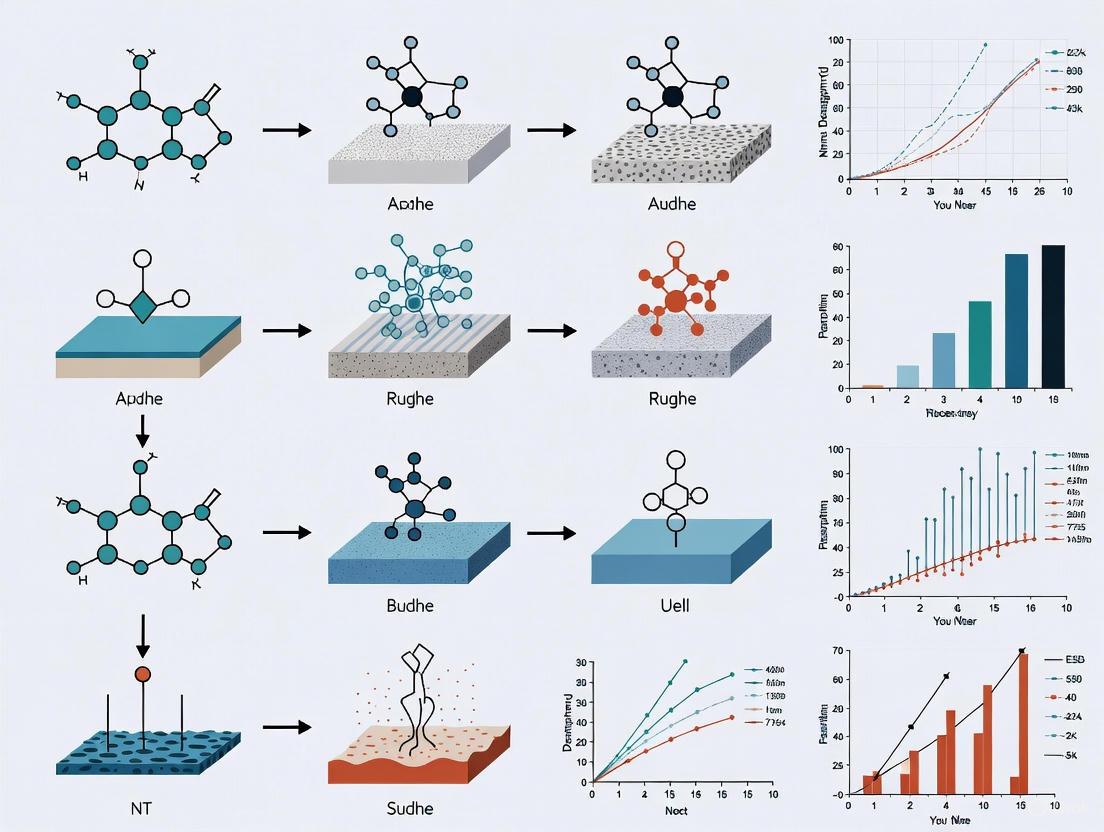
Non-specific adsorption (NSA) is a critical barrier to the reliability of biosensors and biomedical devices, with surface roughness being a key yet often overlooked factor.
Surface Roughness and Non-Specific Adsorption: Mechanisms, Mitigation, and Impact on Biosensor Performance
Abstract
Non-specific adsorption (NSA) is a critical barrier to the reliability of biosensors and biomedical devices, with surface roughness being a key yet often overlooked factor. This article provides a comprehensive analysis for researchers and drug development professionals on how micro- and nano-scale surface topography influences fouling in complex biological matrices like serum and blood. We explore the foundational physical-chemical mechanisms driving NSA, evaluate advanced characterization methodologies from single-molecule to ensemble techniques, and present cutting-edge optimization strategies including zwitterionic coatings and surface engineering. A critical comparison of validation protocols is provided to guide the selection of appropriate methods for qualifying ultralow fouling surfaces, ultimately aiming to enhance the sensitivity, specificity, and real-world applicability of biomedical technologies.
The Interface Frontier: How Surface Topography Governs Non-Specific Adsorption
Non-Specific Adsorption (NSA) represents a fundamental challenge in the development and deployment of biosensors, particularly affecting applications in clinical diagnostics and environmental monitoring. This technical review examines NSA's detrimental effects on biosensor performance, focusing on its mechanisms and the interplay with surface physical properties such as roughness. We systematically evaluate current reduction methodologies, including advanced antifouling materials and active removal technologies, and provide standardized protocols for NSA quantification. The analysis synthesizes findings from recent high-impact research to offer a comprehensive framework for addressing NSA-related limitations in biosensing platforms.
Non-Specific Adsorption (NSA), frequently termed biofouling or non-specific binding, describes the physisorption of non-target molecules—such as proteins, lipids, and other biomolecules—onto a biosensor's sensing interface [1]. This phenomenon occurs when atoms, ions, or molecules from a liquid medium adhere to a surface primarily through weak intermolecular forces, including hydrophobic interactions, ionic interactions, van der Waals forces, and hydrogen bonding [1]. In contrast to specific biorecognition events, NSA is an indiscriminate process that can significantly degrade biosensor performance.
The persistence of NSA poses a substantial barrier to the widespread adoption of biosensors, alongside challenges like the limited stability of biorecognition elements and insufficient signal selectivity [2]. The problem is exacerbated when analyzing complex biological samples (e.g., blood, serum, milk) containing high concentrations of potential foulants like proteins and fats [2]. The resistance to fouling must therefore be adapted to specific operational conditions, including static or hydrodynamic environments, varying measurement durations, and samples with diverse pH, ionic strength, and complex compositions [2].
The Detrimental Impact of NSA on Biosensor Performance
NSA negatively influences nearly all critical analytical characteristics of a biosensor. Its impact extends beyond simple signal interference to fundamentally alter the sensor's interface and functionality.
Mechanisms of Signal Degradation
The consequences of NSA manifest in two primary ways, as illustrated in the diagram below:
Diagram: Mechanisms of NSA-Induced Biosensor Signal Degradation
First, molecules adsorbed non-specifically generate a background signal that is often indistinguishable from the specific biorecognition event, leading to false positives and an overestimation of the target analyte concentration [2] [1]. Second, the adsorbed foulant molecules can passivate the sensing interface and sterically hinder the ability of the bioreceptor (e.g., an antibody or aptamer) to bind its target, potentially causing false negatives at low analyte concentrations [2]. In electrochemical biosensors, fouling dramatically affects the interface characteristics and impedes electron transfer rates [2]. For structure-switching aptamer-based biosensors, NSA can restrict the aptamer's necessary conformational change, thereby abolishing the specific signal [2].
Quantitative Impact on Analytical Figures of Merit
The table below summarizes the specific effects of NSA on key biosensor performance parameters.
Table 1: Quantitative Impact of NSA on Biosensor Performance Metrics
| Performance Metric | Impact of NSA | Underlying Mechanism |
|---|---|---|
| Sensitivity | Decreased | Non-specific layers increase background noise and sterically block access to bioreceptors, reducing the measurable signal change per unit of analyte [1]. |
| Limit of Detection (LOD) | Elevated | Increased background signal variance and reduced specific signal require a higher analyte concentration to produce a distinguishable signal [1]. |
| Specificity & Selectivity | Compromised | Inability to distinguish signal from non-target molecules (e.g., proteins in serum) from the target analyte signal [2] [1]. |
| Reproducibility | Reduced | Inconsistent fouling across sensors or between assay runs leads to high signal variance and poor reliability [1]. |
| Dynamic Range | Narrowed | Elevated background and signal saturation at lower-than-expected analyte concentrations [1]. |
| Accuracy | Diminished | False positives and false negatives lead to incorrect quantification of the target analyte [2]. |
The Critical Link: Surface Roughness and NSA
Surface roughness is a critical, yet often overlooked, physical property that profoundly influences the propensity for NSA. The micro- and nano-scale topography of a sensing surface dictates its interactive area and the energetics of biomolecule adhesion.
Mechanisms of Roughness-Enhanced Adsorption
At the micro- and nanoscale, surface roughness increases the effective surface area available for interactions with biomolecules, thereby providing more sites for physisorption [3]. Beyond this simple geometric effect, rougher surfaces can exhibit enhanced nanoscale hydrophobicity and create topographical niches that protect adsorbed molecules from shear forces, strengthening their adhesion [3]. The relationship between surface properties and NSA is multifaceted, as shown in the following workflow for investigating it:
Diagram: Workflow for Investigating Surface Roughness and NSA
Surface Roughness Measurement Techniques
Selecting an appropriate method for quantifying surface roughness is essential for correlating topography with NSA outcomes. The table below compares the primary techniques.
Table 2: Techniques for Surface Roughness Measurement in Biosensor Research
| Method | Principle | Lateral Resolution | Key Advantage | Key Disadvantage |
|---|---|---|---|---|
| Stylus Profilometry | A physical stylus traces surface topography. | ~0.1 - 1 µm | Simple, cost-effective, standardized parameters (Ra, Rq) [3]. | Contact method risks surface damage; slower than optical methods [3]. |
| Atomic Force Microscopy (AFM) | A sharp probe measures forces from the surface. | < 1 nm | Extremely high resolution; can map in liquid environments [3]. | Small scan area; slow; complex operation and data analysis [3]. |
| Optical Profilometry | Non-contact measurement using light interference or confocal microscopy. | ~0.2 - 1 µm | Fast, non-destructive, suitable for large areas [3]. | Can struggle with very smooth or steep-sided features; generally lower resolution than AFM [3]. |
| Scanning Electron Microscopy (SEM) | Focused electron beam for high-resolution imaging. | ~1 - 10 nm | Exceptional resolution and depth of field for qualitative assessment [3]. | Does not provide direct height data; often requires conductive coating [3]. |
Methodologies for NSA Reduction and Evaluation
A multifaceted approach is required to combat NSA, involving surface engineering, chemical coatings, and active removal strategies. These methods aim to minimize the intermolecular forces and interactions that drive physisorption.
Passive Antifouling Coatings
Passive methods create a thin, hydrophilic, and neutrally charged boundary layer to thermodynamically discourage protein adsorption [1]. The goal is to minimize intermolecular forces so that non-specifically bound molecules can be easily detached under low shear stresses [1].
Polymer-Based Brushes and Hydrogels: Zwitterionic polymers and materials like poly(oligo(ethylene glycol) methacrylate) (POEGMA) form highly hydrated surfaces via strong hydrogen bonding with water molecules, creating a physical and energetic barrier to protein adsorption [4]. Zwitterionic sulfobetaine-based materials, for instance, possess both positive and negative charges, resulting in strong hydrophilicity and exceptional antifouling performance [5]. Polyethylene glycol (PEG) and its derivatives remain widely used due to their ability to form a dense, steric hydration layer that resists protein adhesion [6] [1].
Biomimetic and Hybrid Materials: Self-assembled monolayers (SAMs) of alkanethiols on gold or silanes on silicon/glass substrates provide a simple method to create well-ordered, tunable surfaces that can be terminated with antifouling groups like oligo(ethylene glycol) [1]. Cross-linked protein films, such as those made from bovine serum albumin (BSA), are classic blocking agents that occupy vacant sites on the surface [2] [1]. Newer peptide-based coatings are being developed to mimic the antifouling properties of natural surfaces [2].
Active NSA Removal Methods
Active methods dynamically remove adsorbed molecules after they have attached to the surface, offering a complementary approach to passive coatings.
Electromechanical and Acoustic Transducers: These methods use surface-bound transducers, such as piezoelectric elements, to generate mechanical vibrations or surface waves (e.g., surface acoustic waves). These vibrations create high surface shear forces that overpower the adhesive forces of physisorbed molecules, literally shaking them loose from the interface [1]. One study demonstrated a microfabricated hypersonic resonator with a 2.5 gigahertz resonant frequency that could effectively remove NSBs and also function as a gravimetric sensor [5].
Hydrodynamic Removal: This strategy relies on controlled, pressure-driven fluid flow within microfluidic channels to generate shear forces sufficient to remove weakly adhered biomolecules [1]. The efficacy of this method depends on the precise design of the microchannel and the flow rate parameters [5].
Standardized Protocol for NSA Evaluation
A robust evaluation of NSA reduction strategies is crucial for development. The following protocol outlines a general workflow using surface plasmon resonance (SPR) as a representative, label-free technique.
Protocol: Evaluating Antifouling Coating Efficacy via SPR
- Surface Preparation: Functionalize the SPR sensor chip (typically gold) with the antifouling coating of interest (e.g., create a zwitterionic SAM or graft a POEGMA brush).
- Baseline Establishment: Flow a suitable buffer (e.g., phosphate-buffered saline) over the sensor surface at a constant rate (e.g., 10-50 µL/min) until a stable baseline is achieved.
- Foulant Challenge: Introduce the challenging solution—100% blood serum, 10 mg/mL BSA in buffer, or undiluted milk—for a defined period (e.g., 10-30 minutes).
- Wash Phase: Switch back to the pure buffer flow to remove any loosely bound material.
- Data Analysis: Quantify the total change in resonance units (ΔRU) between the end of the wash phase and the initial baseline. A lower ΔRU indicates a superior antifouling coating. This protocol can be adapted for electrochemical biosensors by measuring the change in charge transfer resistance or double-layer capacitance before and after the foulant challenge.
The Scientist's Toolkit: Essential Reagents and Materials
Table 3: Key Research Reagent Solutions for NSA Reduction Studies
| Reagent/Material | Function | Specific Example Uses |
|---|---|---|
| Zwitterionic Polymers | Form a highly hydrated surface layer via strong water binding, creating a physical and energetic barrier to protein adsorption. | Sulfobetaine-based polymers grafted on gold surfaces for SPR sensors; POEGMA brushes on magnetic beads for immunoassays [5] [4]. |
| PEG Derivatives | Create a steric and energetic barrier through a dense, flexible, and hydrated layer that resists protein adhesion. | Used as a surface graft, as a component in SAMs, or as an additive in blocking buffers [6] [1]. |
| Blocking Proteins (BSA, Casein) | Passivate vacant sites on the sensing surface and microfluidic channel walls through rapid, passive adsorption. | A standard step in ELISA and many immunosensors; used at concentrations of 1-5% in buffer [1]. |
| Self-Assembled Monolayer (SAM) Kits | Provide a well-defined, reproducible, and chemically tunable surface for fundamental studies of NSA and functionalization. | Alkanethiolates on gold for electrochemical sensors; silanes on SiO₂ for optical transducers [1]. |
| Complex Challenge Media | Serve as a rigorous and realistic test for antifouling performance under conditions mimicking real-world application. | Undiluted blood serum, plasma, or full milk are used to validate biosensor performance in complex matrices [2]. |
NSA remains a formidable obstacle to achieving reliable, reproducible, and sensitive biosensing, particularly in complex matrices. Its impact on sensitivity, specificity, and reproducibility is profound, mediated through both signal interference and physical passivation of the sensing interface. The physical topography of the surface, quantified as roughness, is an intrinsic property that significantly influences NSA by increasing the effective interaction area and creating adhesion-favoring nanoscale environments. Addressing NSA requires a holistic strategy that combines a fundamental understanding of surface-biomolecule interactions with the strategic application of advanced antifouling materials—from zwitterionic polymers and PEG-based coatings to innovative active removal methods. Future progress will depend on the high-throughput screening of new materials, the integration of machine learning-assisted evaluations, and the development of standardized, rigorous testing protocols that accurately reflect the challenging environments in which biosensors must operate.
Surface roughness, defined as the small, microscopic deviations or irregularities on a material's surface, is a fundamental property that profoundly influences how components interact with their environment [7] [8]. In the context of non-specific adsorption (NSA) research, which is critical for applications ranging from biosensors to medical implants, surface roughness is not merely a geometric characteristic but a pivotal factor controlling the initial stages of biofouling [1] [9]. The interplay between surface topography, surface chemistry, and the dynamic processes of protein adsorption dictates the performance and reliability of biomedical and analytical devices. This review provides an in-depth technical examination of surface roughness, its characterization, its synergistic effects with other material properties, and its direct impact on non-specific adsorption, aiming to equip researchers with the knowledge to design superior antifouling surfaces.
Fundamental Roughness Parameters and Characterization
The international standard ISO 25178 defines a comprehensive set of three-dimensional (3D) parameters for characterizing surface topography, moving beyond traditional two-dimensional (2D) line profiles to provide a more complete description of surface texture [10]. These parameters are categorized into six groups: height, spatial, hybrid, functional, volume, and feature parameters [10]. However, studies indicate that significant redundancy exists among these 26 standard parameters. A data mining approach has identified a Characterization Parameter Set (CPS) and a Redundant Parameter Set (RPS), with the CPS capable of fully covering surface topography information without duplication [10].
The table below summarizes the core 3D roughness parameters from ISO 25178 that are most relevant to surface interaction and fouling studies.
Table 1: Key 3D Surface Roughness Parameters per ISO 25178
| Category | Symbol | Name | Description |
|---|---|---|---|
| Height Parameters | Sa |
Arithmetical Mean Height | The arithmetic average of the absolute of the height deviations from the mean plane. |
Sq |
Root Mean Square Height | The root mean square average of the height deviations from the mean plane. | |
Sz |
Maximum Height | The sum of the largest peak height and the largest pit depth within the defined area. | |
Ssk |
Skewness | A measure of the asymmetry of the surface height distribution. | |
Sku |
Kurtosis | A measure of the peakedness or sharpness of the surface height distribution. | |
| Hybrid Parameters | Sdq |
Root Mean Square Gradient | The root mean square slope of the surface. |
Sdr |
Developed Interfacial Area Ratio | The percentage of additional surface area contributed by the texture compared to a perfectly flat plane. | |
| Feature Parameters | Spc |
Arithmetic Mean Peak Curvature | The average of the principal curvatures of the peaks. |
Spd |
Density of Peaks | The number of peaks per unit area. |
Measurement Techniques
A variety of contact and non-contact methods are available for roughness assessment, each with specific strengths and limitations [3].
- Contact Profilometry: A physical stylus is traversed across the surface. While it risks damaging soft surfaces, it is often preferred for its simplicity and cost-effectiveness in industrial settings [3].
- Optical Methods: These include white light interferometry and laser scanning confocal microscopy. They offer high-resolution, non-contact measurement but can be complex and costly [3] [8].
- Atomic Force Microscopy (AFM): AFM provides extremely high, nanoscale resolution by scanning a sharp probe over the surface. It is invaluable for research on soft materials like polymers and biological samples and is widely used to characterize membranes and protein-fouled surfaces [9] [11].
The Interplay Between Roughness and Non-Specific Adsorption
Non-specific adsorption (NSA) or biofouling is the irreversible physisorption of biomolecules like proteins to a sensor or material surface, leading to elevated background signals, reduced sensitivity, and false positives in diagnostic assays [1]. Surface roughness influences NSA through multiple, often competing, mechanisms.
Dialectical Role of Roughness in Fouling
The effect of surface roughness on fouling is not monolithic; it is dialectical and heavily dependent on the intrinsic wettability of the material [12].
- For Hydrophilic Membranes: Increasing surface roughness (
r, the ratio of actual surface area to projected area) enhances the interfacial hydration repulsion barrier. This stronger repulsion makes it more difficult for foulants to attach, thereby reducing fouling [12]. - For Hydrophobic Membranes: Increasing roughness lowers the interfacial energy barrier, weakening the already poor hydration repulsion. This promotes fouling by making attachment easier [12].
This relationship is further modulated by operational conditions. Higher initial water flux (J0) and solution ionic strength (Is) can cause severe fouling independent of roughness, whereas at lower J0 or Is, the influence of roughness becomes more pronounced [12].
Combined Effects with Other Surface Properties
Research on reverse osmosis membranes demonstrates that surface roughness does not act alone. A study investigating Bovine Serum Albumin (BSA) protein fouling across eight commercial membranes found that surface roughness and the Hansen Solubility Parameter (HSP) distance were more significant factors than hydrophilicity (as measured by water contact angle) alone [9] [13].
The HSP describes the affinities between materials based on their dispersion, polar, and hydrogen-bonding forces. A smaller HSP distance between a foulant and the membrane surface indicates higher compatibility and a greater tendency for the foulant to "stick" [9]. The study recommends considering the HSP distance when selecting membrane materials to systematically design fouling-resistant surfaces, moving beyond a trial-and-error approach [9].
Table 2: Combined Factors Influencing Protein Fouling on Membranes
| Factor | Metric | Mechanism of Influence on Fouling |
|---|---|---|
| Surface Roughness | Sa, Sdq |
Increases effective surface area and alters interaction energy barriers; effect is modulated by hydrophilicity. |
| Hydrophilicity | Water Contact Angle | Governs hydration repulsion forces; lower contact angles generally improve fouling resistance. |
| Chemical Affinity | HSP Distance | A smaller HSP distance between foulant and surface increases adsorption due to greater chemical compatibility. |
| Surface Charge | Zeta Potential | Electrostatic interactions can attract or repel charged foulants, though this effect can be shielded in high ionic strength solutions. |
Experimental Protocols for Investigating Roughness and NSA
A critical comparison of techniques for evaluating protein adsorption on low-fouling surfaces reveals that no single method provides a complete picture [11]. A multi-technique approach is essential.
Protocol: Comprehensive Analysis of Protein Adsorption Dynamics
This protocol combines ensemble-averaging and single-molecule techniques to characterize protein-surface interactions on a test substrate (e.g., a polymer brush or coated membrane) [11].
1. Surface Preparation and Characterization:
- Surface Functionalization: Create surfaces with varying roughness and chemistry. For example, prepare polyethylene glycol (PEG) brush surfaces with high and low grafting densities on gold substrates via thiol chemistry [11].
- Pre-Adsorption Roughness Measurement: Characterize the surface topography using Atomic Force Microscopy (AFM) in tapping mode in air. Obtain high-resolution images (e.g., 5 µm × 5 µm scan size) and calculate roughness parameters like
Sa[11].
2. Protein Exposure:
- Prepare solutions of model proteins (e.g., BSA, Fibrinogen) in a suitable buffer (e.g., phosphate-buffered saline) at physiologically relevant concentrations (e.g., 1 mg/mL) [11].
3. Ensemble-Averaging Adsorption Measurement:
- Surface Plasmon Resonance (SPR): Use an SPR instrument to measure the mass of irreversibly adsorbed protein in ng/cm².
- Procedure: Mount the test substrate in the SPR spectrometer. Establish a stable baseline with running buffer. Introduce the protein solution at a constant flow rate. Monitor the resonance angle shift in real-time. Rinse with buffer to remove reversibly adsorbed protein and solution-phase background. The remaining signal corresponds to irreversibly adsorbed protein [11].
- Note: SPR's typical limit of detection is 0.1–2 ng cm⁻². "Ultralow fouling" is often defined as adsorbed protein < 5 ng cm⁻² [11].
4. Single-Molecule Adsorption Kinetics:
- Single-Molecule Total Internal Reflection Fluorescence (TIRF) Microscopy: This technique probes the dynamics of individual protein molecules interacting with the surface.
- Procedure: Label the target protein with a fluorophore. Conduct experiments at very low protein concentrations (e.g., pM-nM) to enable single-molecule detection. Focus an evanescent field laser on the surface to excite only fluorophores within ~150 nm of the interface. Record a time-lapse video of the fluorescent spots. Use tracking software to determine the adsorption rate constant (
k_ads) and desorption rate constant (k_des) for thousands of individual binding events [11]. - Advantage: Provides unparalleled insight into the kinetics and heterogeneity of protein-surface interactions without requiring a rinse step.
- Procedure: Label the target protein with a fluorophore. Conduct experiments at very low protein concentrations (e.g., pM-nM) to enable single-molecule detection. Focus an evanescent field laser on the surface to excite only fluorophores within ~150 nm of the interface. Record a time-lapse video of the fluorescent spots. Use tracking software to determine the adsorption rate constant (
5. Post-Adsorption Surface Analysis:
- X-ray Photoelectron Spectroscopy (XPS): Analyze the chemical composition of the surface after protein exposure to quantify the elemental nitrogen signal, which confirms the presence of adsorbed protein [11].
- Post-Adsorption AFM: Re-image the surface to observe the distribution and morphology of adsorbed proteins and any changes to the surface structure [11].
The following diagram illustrates the workflow and the key interactions studied in this protocol:
The Scientist's Toolkit: Essential Research Reagent Solutions
The following table lists key reagents and materials essential for conducting research on surface roughness and non-specific adsorption.
Table 3: Essential Research Reagent Solutions for NSA Studies
| Reagent/Material | Function in Research | Example Application |
|---|---|---|
| Polyethylene Glycol (PEG) | Gold-standard polymer for creating low-fouling surfaces by forming a hydrated brush layer that sterically hinders protein approach. | Fabricating PEG brushes on gold substrates to study the effect of grafting density on protein resistance [11]. |
| Bovine Serum Albumin (BSA) | A model globular protein used extensively in fouling experiments due to its stability and relevance as a common contaminant. | Serving as a standard foulant to test and compare the antifouling performance of different surface modifications [9] [11]. |
| Fluorophore Labels (e.g., Alexa Fluor dyes) | Fluorescent tags for covalently labeling proteins to enable detection and tracking in single-molecule microscopy. | Labeling BSA or fibrinogen for kinetic studies using TIRF microscopy [11]. |
| Self-Assembled Monolayer (SAM) Kits | Provide well-defined, reproducible chemical platforms for functionalizing gold and other surfaces with specific terminal groups (e.g., OH, COOH, CH3). | Creating surfaces with controlled chemistry and roughness to systematically study the contributions of different factors to NSA [1]. |
| Hansen Solubility Parameter (HSP) Software | Software tools used to calculate the HSP distance between a membrane polymer and a target foulant, predicting adhesion tendency. | Screening and selecting membrane materials with high HSP distance to specific foulants like BSA to minimize adsorption [9]. |
Surface roughness is a critical, multi-faceted parameter that profoundly influences non-specific adsorption and material performance. Its impact is not isolated but is dialectically intertwined with the surface's chemical properties, particularly intrinsic wettability and chemical affinity (HSP). While rougher surfaces can exacerbate fouling on hydrophobic materials, they can enhance the antifouling performance of hydrophilic surfaces by strengthening hydration repulsion barriers. Moving forward, a systematic approach to material design—one that simultaneously optimizes roughness, hydrophilicity, and HSP distance—is essential. Furthermore, employing a combination of ensemble-averaging and single-molecule techniques provides a more complete understanding of protein adsorption dynamics, enabling the rational design of next-generation, high-performance antifouling materials for biomedical and diagnostic applications.
The behavior of molecules at interfaces is a fundamental aspect of numerous scientific and industrial processes, from biosensing to environmental remediation. While interactions at idealized, smooth surfaces have been extensively studied, most real-world interfaces exhibit some degree of nanoscale roughness that significantly alters interfacial phenomena. This technical guide examines how surface roughness modulates the three primary physical-chemical mechanisms—electrostatic, hydrophobic, and van der Waals interactions—that govern non-specific adsorption (NSA) at interfaces.
Non-specific adsorption represents a persistent challenge across multiple domains, particularly in biosensing and biomedical applications, where it decreases sensitivity, specificity, and reproducibility [1]. The research community has recognized that surface roughness, often inspired by biological systems, can be strategically engineered to either promote or inhibit molecular interactions [14]. Understanding these mechanisms is crucial for advancing technologies in drug development, biosensor design, water treatment, and materials science.
This review synthesizes current understanding of how nanoscale topography influences interfacial forces, presents quantitative data on these effects, details experimental methodologies for their investigation, and provides practical guidance for researchers seeking to control molecular behavior at rough interfaces.
Theoretical Framework: Fundamental Interactions at Rough Interfaces
Primary Physical-Chemical Mechanisms
The interaction between molecules and surfaces is governed by three fundamental forces that operate differently at rough compared to smooth interfaces:
Electrostatic Interactions: These occur between charged surfaces and molecules, influenced by the surface potential, solution ionic strength, and dielectric properties. Surface roughness alters the local charge distribution and enhances the effective surface area available for electrostatic binding [15]. Roughness can create localized regions of intensified electric fields, particularly at asperities and valleys, which significantly affects the adsorption of charged species such as proteins and ions [16].
Hydrophobic Interactions: These entail the association of non-polar molecules or moieties in aqueous environments, driven primarily by entropic gains from water molecule reorganization. Nanoscale roughness amplifies hydrophobic effects by creating air pockets and reducing the effective contact area between water and surface, potentially leading to superhydrophobic states [17]. The combination of surface chemistry and topography determines the extent of hydrophobic interactions.
Van der Waals Forces: These universal forces arise from transient dipole interactions and operate at short ranges (typically <10 nm). Surface roughness modifies the effective separation distance between interacting bodies, creating regions of enhanced and diminished van der Waals attraction [17]. The complex topography of rough surfaces leads to highly heterogeneous force landscapes that cannot be predicted by models assuming smooth surfaces.
Combined Effect of Roughness on Fundamental Interactions
The interplay between these mechanisms creates complex adsorption behavior at rough interfaces. Surface roughness enhances the available surface area for all interaction types, but its primary influence lies in modifying the spatial arrangement and magnitude of these forces. Molecular dynamics simulations reveal that even small instances of surface rugosity can alter molecular transport by over an order of magnitude compared to smooth surfaces [18]. The combinatorial effect of multiple interactions often leads to unexpected adsorption phenomena that cannot be predicted by considering individual forces in isolation.
Table 1: Fundamental Interactions and Their Modification by Surface Roughness
| Interaction Type | Key Characteristics | Effect of Roughness | Range | Dependence on Environment |
|---|---|---|---|---|
| Electrostatic | Charge-charge interactions; influenced by pH, ionic strength | Creates heterogeneous charge distribution; enhances local field effects at asperities | Long-range (1-100 nm) | High - sensitive to ionic strength and pH |
| Hydrophobic | Entropy-driven; minimization of non-polar surface area with water | Enhances effects through air trapping; creates composite interfaces | Short-range (0.1-10 nm) | Moderate - affected by temperature and dissolved species |
| Van der Waals | Universal; always attractive between similar materials; distance-dependent | Modifies effective separation distances; creates heterogeneous force landscape | Short-range (0.1-10 nm) | Low - relatively insensitive to environmental conditions |
Quantitative Effects of Roughness on Molecular Interactions
Experimental and simulation studies provide compelling data on how nanoscale roughness quantitatively influences molecular adsorption and transport.
Impact on Adsorption Capacity and Transport
Molecular simulations of CH₄/CO₂ mixtures in carbon nanopores demonstrate that surface rugosity significantly alters both adsorption and transport properties. Smooth pores exhibit unrealistically fast transport, while rugose pores show a reduction in transport diffusivity by over an order of magnitude [18]. The fast plug-like flow observed in idealized slit pores dissipates with increasing rugosity, indicating a fundamental change in flow patterns that must be accounted for in predictive models.
Surface roughness also affects adsorption capacity. Studies indicate that rugose pores exhibit a lower capacity for CO₂ adsorption compared to smooth pore models, suggesting that the performance of applications like CO₂-enhanced oil recovery may be systematically overestimated when using simplified smooth pore models [18].
Protein Adsorption and Surface Roughness
Research on protein interactions with silica surfaces reveals that surface roughness creates distinct selection pressures for adsorption. Statistical analysis of hundreds of soluble proteins shows that adsorbed proteins contain a higher number of charged amino acids, particularly arginine, consistent with enhanced electrostatic interactions with silica surfaces [15]. Surprisingly, adsorbed proteins also show a marked bias toward low aromatic amino acid content (phenylalanine, tryptophan, tyrosine, and histidine) [15].
Structural analyses and molecular dynamics simulations indicate that non-adsorbed proteins exhibit approximately twice as many π-π interactions and higher structural rigidity [15]. These findings support a model where adsorption correlates with protein flexibility and the ability to spread on surfaces, with roughness creating sites that facilitate this deformation.
Table 2: Quantitative Effects of Surface Roughness on Molecular and Protein Interactions
| System | Performance Metric | Smooth Surface | Rough Surface | Change | Reference |
|---|---|---|---|---|---|
| Carbon nanopores (CH₄/CO₂) | Transport diffusivity | Unrealistically fast | Reduced | >10x decrease | [18] |
| Carbon nanopores (CH₄/CO₂) | CO₂ adsorption capacity | High | Lower | Significant decrease | [18] |
| Silica surface (proteins) | Charged amino acids in adsorbed proteins | Baseline | Increased | Higher in adsorbed proteins | [15] |
| Silica surface (proteins) | Aromatic amino acids in adsorbed proteins | Baseline | Decreased | Lower in adsorbed proteins | [15] |
| Silica surface (proteins) | π-π interactions in non-adsorbed proteins | Baseline | Increased | ~2x higher in non-adsorbed | [15] |
Experimental Methodologies and Protocols
Atomic Force Microscopy (AFM) for Adhesion Measurement
Atomic force microscopy provides direct measurement of adhesion forces at nanoscale interfaces with sub-nanonewton resolution [16] [17]. The following protocol details adhesion measurement under controlled environmental conditions:
Sample Preparation
- Surface Modification: Silicon wafers are modified with selected silanes (e.g., APTES, triethoxy(octyl)silane, trimethoxy(octdecyl)silane) to create surfaces with defined chemical properties [17].
- Tip Functionalization: AFM tips are functionalized with target molecules (e.g., PFAS, proteins) using appropriate conjugation chemistry.
- Environment Control: Place the system in an environmental chamber with controlled relative humidity (2%-80%) using a modular humidity generator [16].
Measurement Procedure
- Force Distance Curves: Collect force-distance curves at multiple positions (typically >100) to ensure statistical significance.
- Adhesion Force Calculation: Determine adhesion force (Fₐ) as the absolute value of the minimum force during retraction: Fₐ(|r̂ₙ|) = |Fₘᵢₙ(r̂ₙ)| [16].
- Bias Application (if studying electric fields): Apply bias pulses (e.g., 30-second duration) between tip and sample before engagement to study field-induced adhesion changes.
- Data Analysis: Compile adhesion forces from multiple measurements and perform statistical analysis to determine significant differences between conditions.
Investigating Protein Adsorption on Nanostructured Surfaces
This protocol examines how nanometer surface roughness influences protein adsorption, inspired by B-lymphocyte membrane topography [14]:
Surface Preparation
- First Layer (Antibody Adsorption): Adsorb mouse IgG2a antibodies (concentration: 3.3-11.1 μg/mL in PBS) to polystyrene well plates for 1 hour at room temperature. Gently rinse 5 times with PBS [14].
- Second Layer (Nanoparticle Immobilization): Immobilize Protein A-conjugated particles (40nm, 460nm, or 860nm diameter) overnight. Use stock solutions at appropriate dilutions (1:0 to 1:10,000). Rinse 5 times with PBS [14].
- Third Layer (Antibody Orientation): Adsorb a second layer of specific or non-specific antibodies using the same protocol as the first layer. Protein A binds the Fc region, properly orienting antibodies for antigen capture [14].
Characterization and Testing
- Surface Roughness Analysis: Use AFM in tapping mode to characterize surface topography. Perform 5×5 μm scans at 512×512 resolution, three scans per sample [14].
- Functional Testing: Expose surfaces to antigenic fluorescent microspheres to quantify specific vs. non-specific binding.
- Data Analysis: Correlate nanometer roughness parameters with antigen capture efficiency and non-specific binding.
Research Reagent Solutions and Materials
Table 3: Essential Research Reagents for Studying Interactions at Rough Interfaces
| Reagent/Material | Function/Application | Examples/Specifications | Key References |
|---|---|---|---|
| Functionalized AFM Tips | Direct force measurement | n-type antimony doped Si tips (radius: 5-12 nm); spring constant: 0.8 N/m | [16] [17] |
| Surface Modification Silanes | Creating defined surface chemistries | APTES (amine), triethoxy(octyl)silane (C8), trimethoxy(octdecyl)silane (C18) | [17] |
| Blocking Proteins | Reducing non-specific adsorption | Bovine Serum Albumin (BSA), casein, milk proteins | [1] [19] |
| Protein A-Conjugated Particles | Creating biologically-inspired roughness | Gold (40nm) or polystyrene (460nm, 860nm) particles conjugated to Protein A | [14] |
| Model Adsorbates | Studying specific interactions | PFAS (PFOS, PFBS), proteins (Con A, IgG, SpA), gases (CH₄, CO₂) | [18] [19] [17] |
Visualization of Mechanisms and Methodologies
Molecular Interactions at Rough Interfaces
Experimental Workflow for Adhesion Measurement
Surface roughness represents a critical parameter that profoundly influences the physical-chemical mechanisms governing molecular interactions at interfaces. The complex interplay between electrostatic, hydrophobic, and van der Waals forces at rough surfaces leads to emergent adsorption behaviors that cannot be predicted from smooth surface models. Experimental evidence demonstrates that nanoscale roughness can alter transport diffusivity by over an order of magnitude, selectively enhance or suppress protein adsorption based on structural determinants, and create opportunities for engineered interfaces with tailored adhesion properties.
The strategic engineering of surface roughness, inspired by biological systems such as B-lymphocyte membranes, offers promising pathways for controlling molecular interactions in applications ranging from biosensors to environmental remediation. Future research should focus on developing multiscale models that connect nanoscale roughness features with macroscopic interfacial behavior, and on creating standardized methodologies for characterizing and reporting surface topography in adsorption studies. As our understanding of these complex interactions deepens, so too will our ability to design advanced materials with precisely controlled interfacial properties.
Porous silicon (PSi) has emerged as a highly promising material for the development of label-free biosensors, finding applications in clinical diagnostics, environmental monitoring, and pharmaceutical research. These structures are characterized by their tunable nanoarchitectures, high specific surface area, and versatile surface chemistry that facilitates functionalization with various biorecognition elements [20] [21]. The fundamental appeal of PSi lies in its optical and electrochemical properties that are sensitive to changes in the refractive index within the porous matrix, enabling direct transduction of biomolecular binding events into measurable signals [20]. However, the very feature that makes PSi an exceptionally sensitive sensing platform—its extensive internal surface area—also renders it highly vulnerable to biofouling, presenting a significant barrier to reliable operation in complex biological environments [20].
Biofouling refers to the non-specific adsorption (NSA) of proteins, cells, and other biomolecules onto the sensor surface, which can generate interfering background signals that obscure specific detection events [20] [2]. In complex media such as blood serum, gastrointestinal fluid, or cell lysates, fouling can severely compromise analytical performance by reducing the signal-to-noise ratio, increasing the limit of detection, and impairing reproducibility [20]. This review examines the dual role of PSi's high surface area, exploring its function as both a sensitivity-enhancing feature and a fouling-susceptible liability, with a specific focus on how surface roughness and chemical modification strategies can mitigate NSA.
The Fundamental Challenge: High Surface Area and Fouling Mechanisms
The PSi Structure-Fouling Relationship
The porous architecture of PSi is a double-edged sword for biosensing applications. The large internal surface area provides ample sites for immobilization of capture probes such as antibodies, aptamers, or enzymes, thereby enhancing the potential for target analyte binding and signal generation [20]. However, this same expansive surface also presents numerous sites for non-specific interactions with interfering components present in complex samples.
The extent of fouling in PSi biosensors is governed by a complex interplay between the pore size, surface chemistry, and the physicochemical properties of both target and interfering molecules [20]. Research indicates that pore size plays a critical role in fouling behavior: while small pores increase the total surface area, they can function as effective molecular filters that physically exclude larger biomolecules, thereby reducing non-specific binding. Conversely, larger pores, despite offering a reduced surface area, demonstrate comparatively higher susceptibility to fouling due to easier accessibility for interfering species [20].
Table 1: Pore Size Impact on Fouling Behavior in PSi Biosensors
| Pore Size | Surface Area | Fouling Tendency | Primary Fouling Mechanism |
|---|---|---|---|
| Small Pores (<10 nm) | High | Moderate | Limited by physical exclusion; smaller proteins may penetrate |
| Medium Pores (10-30 nm) | Moderate | High | Accessible to most proteins and biomolecules |
| Large Pores (>30 nm) | Lower | High | Unrestricted access for proteins and cellular components |
Molecular Mechanisms of Non-Specific Adsorption
The accumulation of non-target sample components on PSi biosensors occurs primarily through physical adsorption, driven by a combination of electrostatic interactions, hydrophobic forces, hydrogen bonding, and van der Waals forces between the interface and matrix components [2]. Protein adsorption at interfaces involves complex, dynamic processes influenced by environmental conditions including pH, ionic strength, and temperature [20]. In solution, proteins rotate freely and orient themselves to maximize interactions with surface properties—exposing hydrophilic regions to hydrophilic surfaces and hydrophobic regions to hydrophobic surfaces [20]. Similarly, charged protein domains can align with oppositely charged surfaces, enabling even net-positively or negatively charged proteins to adsorb to surfaces with similar overall charges under specific conditions [20].
Surface roughness significantly amplishes these interactions by increasing the available contact area and creating topological features that enhance adhesion through mechanical interlocking. Rough surfaces can exhibit altered wettability compared to their smooth counterparts, with the apparent contact angle being influenced by both the surface chemistry and the roughness profile [22]. The relationship between surface roughness and fouling is not merely a function of increased surface area; nanoscale topography can affect the conformation and binding strength of adsorbed proteins, potentially making them more resistant to removal [22] [13].
Diagram 1: Fouling Mechanisms on PSi Surfaces. This diagram illustrates the complex interplay between PSi properties, environmental factors, and protein characteristics that collectively determine fouling behavior.
Antifouling Strategies for PSi Biosensors
Conventional Surface Passivation Approaches
To overcome non-specific adsorption and minimize biofouling, several passivation strategies have been employed for PSi biosensors, primarily relying on inert blocking agents that operate through either physical adsorption or covalent binding [20]. The most common approaches include:
- Small hydrophilic molecules such as ethanolamine and Tris, which are conjugated to the surface after immobilization of the capture probe [20].
- Polyethylene glycol (PEG) of varying molecular weights, which has long served as the "gold-standard" antifouling material due to its ability to form a hydration barrier through hydrogen bonding [20]. PEG molecules create a steric and energetic barrier that prevents protein adsorption, though they are prone to oxidative degradation in biological media [20].
- Hyperbranched polyglycerol (HPG), an analog to PEG with a three-dimensional, multi-terminal hydroxyl group structure that offers superior thermal and oxidative stability along with enhanced hydrophilicity and surface coverage [20]. However, HPG polymerization is difficult to control due to increased viscosity during the process [20].
- Thermal carbonization of PSi (TCPSi), which forms a stable Si-C layer that improves biosensor stability and functionality in biological environments [20]. TCPSi surfaces can be further functionalized with PEG derivatives to enhance antifouling properties, though excessive carbonization can lead to pore blockages and reduced porosity that impair biosensing performance [20].
Zwitterionic Peptides: A Next-Generation Solution
Recent innovative approaches have focused on zwitterionic peptides as advanced antifouling coatings for PSi biosensors. These peptides consist of alternating positively and negatively charged amino acids, such as glutamic acid (E) and lysine (K), arranged in specific repeating motifs (e.g., EKEKEKEKEKGGC) [20]. At physiological pH, these sequences present both positive and negative charges while maintaining net neutrality, creating a strong hydration layer via electrostatic interactions that serves as an effective barrier against non-specific adsorption [20].
The zwitterionic peptide strategy offers several advantages over conventional approaches:
- Superior antibiofouling properties compared to PEG, effectively preventing nonspecific adsorption of biomolecules from complex biofluids including gastrointestinal fluid and bacterial lysate [20].
- Broad-spectrum protection against both molecular fouling (proteins) and cellular contamination (bacteria and mammalian cells) [20].
- Commercial availability and ease of sequence control, enabling optimization of surface passivation and biosensor performance [20].
- Facile conjugation via terminal cysteine residues that serve as anchoring groups for covalent attachment to PSi surfaces [20].
Table 2: Performance Comparison of Antifouling Coatings for PSi Biosensors
| Coating Type | Fouling Reduction | Stability | Ease of Fabrication | Cellular Fouling Resistance |
|---|---|---|---|---|
| PEG | Moderate | Moderate (oxidatively unstable) | High | Limited |
| HPG | Good | Good | Moderate (viscosity issues) | Moderate |
| TCPSi | Good | Excellent | Moderate (high temperature) | Moderate |
| Zwitterionic Peptides | Excellent | Good | High | Excellent |
| QAC18-silane | Good | Good | Moderate | Good (antimicrobial) |
In a systematic evaluation of zwitterionic peptides, a specific sequence (EKEKEKEKEKGGC) demonstrated exceptional performance, enabling the development of a PSi-based aptasensor for lactoferrin detection that achieved more than one order of magnitude improvement in both the limit of detection and signal-to-noise ratio over PEG-passivated sensors [20]. This represents a significant advancement for biosensing in clinically relevant concentration ranges.
Surface Modification Chemistry: Hydrosilylation
A critical aspect of implementing effective antifouling strategies on PSi is the method of surface modification. Hydrosilylation has emerged as a particularly important approach for forming highly stable surface linkages through Si-C bonding [21]. This chemical process involves a direct reaction between unsaturated carbon compounds and hydride-terminated PSi surfaces, creating monolayers that are significantly more robust than silane-based Si-O linkages, especially under biological conditions [21].
The key advantages of hydrosilylation for PSi modification include:
- Formation of highly stable Si-C bonds that resist hydrolysis in aqueous environments [21].
- True monolayer passivation that minimizes pore blockage compared to thicker polymeric layers [21].
- Superior surface coverage due to reduced steric effects on curved PSi surfaces [21].
- Compatibility with various functional groups for subsequent bioreceptor immobilization [21].
Recent advances have enabled the incorporation of multiple chemical functionalities onto a single PSi surface through sophisticated hydrosilylation approaches, expanding the possibilities for creating complex, multifunctional biosensing interfaces [21].
Experimental Protocols and Methodologies
Zwitterionic Peptide Functionalization of PSi Surfaces
The following protocol details the covalent immobilization of zwitterionic peptides onto PSi thin films, as described in recent literature [20]:
Materials Required:
- Freshly prepared PSi thin films (prepared by electrochemical etching)
- Zwitterionic peptides with terminal cysteine residue (e.g., EKEKEKEKEKGGC)
- Anhydrous ethanol and methanol
- Phosphate buffered saline (PBS), pH 7.4
- (3-aminopropyl)triethoxysilane (APTES)
- N-γ-maleimidobutyryl-oxysuccinimide ester (GMBS) or similar heterobifunctional crosslinker
Procedure:
- PSi Preparation and Oxidation: Prepare PSi thin films via electrochemical etching of silicon wafers. Oxidize the fresh PSi surfaces by treatment with hydrogen peroxide to generate a hydrophilic Si-SiO₂ core-shell structure.
- Surface Activation: Incubate oxidized PSi surfaces with 2% (v/v) APTES in anhydrous ethanol for 2 hours at room temperature to introduce primary amine groups. Rinse thoroughly with ethanol and dry under nitrogen stream.
- Crosslinker Coupling: React the aminated surfaces with 2 mM GMBS in ethanol for 30 minutes to introduce maleimide functional groups. Rinse with ethanol to remove unbound crosslinker.
- Peptide Immobilization: Incubate the functionalized surfaces with zwitterionic peptide solution (100 μg/mL in PBS, pH 7.4) for 2 hours at room temperature. The terminal cysteine residue of the peptide will specifically react with the maleimide groups on the surface.
- Washing and Storage: Rinse the modified PSi surfaces extensively with PBS and deionized water to remove physically adsorbed peptides. Store under nitrogen until use.
Validation Methods:
- Contact Angle Measurement: Verify successful modification by measuring water contact angle changes after each modification step.
- Fluorescence Microscopy: Confirm peptide immobilization using fluorescently labeled analogues.
- Fouling Assessment: Test antifouling performance by exposing surfaces to complex biofluids (e.g., 10% serum, GI fluid) and quantify non-specific adsorption.
Diagram 2: Zwitterionic Peptide Functionalization Workflow. This diagram outlines the stepwise chemical process for creating antifouling PSi surfaces via zwitterionic peptide conjugation.
Quantitative Fouling Assessment Protocol
To systematically evaluate the efficacy of antifouling surface modifications, researchers can employ the following fouling assessment protocol:
Sample Preparation:
- Prepare modified PSi surfaces (test articles) and appropriate controls (unmodified PSi, PEG-modified PSi).
- Condition all surfaces in PBS for 30 minutes before fouling experiments.
Fouling Exposure:
- Expose surfaces to challenging biofluids:
- 100% blood serum or plasma
- Gastrointestinal fluid (simulated or authentic)
- Bacterial lysate (e.g., E. coli lysate)
- Cell culture media with 10% serum
- Incubate for predetermined time points (1-24 hours) at 37°C with gentle agitation.
Quantification Methods:
- Optical Interferometric Reflectance: For PSi thin films, measure the change in effective optical thickness (EOT) before and after exposure to fouling solutions.
- Fluorescence Quantification: For fluorescently labeled foulants or using non-specific staining (e.g., Coomassie Blue for proteins).
- Surface Analysis: Employ X-ray photoelectron spectroscopy (XPS) to determine elemental composition changes after fouling.
- Sensor Performance: For functional biosensors, measure the change in limit of detection and signal-to-noise ratio for target analytes.
Data Analysis: Calculate the percentage reduction in non-specific adsorption compared to unmodified PSi surfaces using the formula: % Reduction = [(Fcontrol - Ftest)/Fcontrol] × 100 Where Fcontrol and F_test represent the fouling on control and test surfaces, respectively.
The Scientist's Toolkit: Essential Research Reagents
Table 3: Key Research Reagents for PSi Antifouling Research
| Reagent/Chemical | Function | Application Notes |
|---|---|---|
| Zwitterionic Peptides (EK repeats) | Surface passivation | Commercial synthesis; cysteine-terminated for orientation control |
| APTES ((3-Aminopropyl)triethoxysilane) | Surface amination | Creates amine functional groups for subsequent conjugation |
| GMBS (N-γ-maleimidobutyryl-oxysuccinimide ester) | Heterobifunctional crosslinker | Links surface amines to peptide cysteine residues |
| PEG-Silane Derivatives | Conventional antifouling coating | Various molecular weights available (e.g., 750 Da) |
| Hydrogen Peroxide | Surface oxidation | Creates hydrophilic SiO₂ layer on PSi |
| QAC18-silane | Amphiphilic quaternary ammonium coating | Provides antimicrobial and antifouling properties [23] |
| Pluronic F-127 | Amphiphilic polymer coating | Enhases nanoparticle stability in biological media [23] |
The high surface area of porous silicon presents a fundamental paradigm in biosensor development: it simultaneously enables exceptional sensitivity while creating significant vulnerability to fouling. The strategic implementation of advanced antifouling coatings, particularly zwitterionic peptides, represents a promising approach to resolving this duality. These materials form stable, charge-neutral hydration layers that effectively resist non-specific adsorption while preserving surface functionality for specific biorecognition [20].
Future research directions should focus on several key areas:
- High-throughput screening of novel peptide sequences and synthetic polymers to identify optimized antifouling materials [2].
- Molecular simulations and machine learning to predict fouling behavior and guide rational design of antifouling surfaces [2].
- Multifunctional coatings that combine fouling resistance with inherent antimicrobial properties [23].
- Universal functionalization strategies compatible with various transducer types and detection modalities [2].
As these advanced antifouling technologies mature, porous silicon biosensors will increasingly overcome the challenges of operation in complex biological environments, unlocking their potential for clinical diagnostics, point-of-care testing, and continuous monitoring applications where reliability in fouling-prone media is paramount.
Measuring and Modeling: Techniques for Characterizing Fouling at Complex Interfaces
This guide details the application of Surface Plasmon Resonance (SPR), Quartz Crystal Microbalance (QCM), and X-ray Photoelectron Spectroscopy (XPS) as ensemble-averaging techniques for measuring non-specific adsorption, with a specific focus on the influence of surface roughness. Within materials science and interfacial chemistry, accurately quantifying molecular adsorption onto bulk surfaces is critical. Surface roughness introduces significant complexity to these measurements by altering the available surface area, creating diffusion barriers, and facilitating non-specific interactions that can confound data interpretation. This whitepaper, framed within broader thesis research on the effect of surface roughness, provides a technical guide for employing SPR, QCM, and XPS to obtain reliable, quantitative adsorption data. The protocols and analyses herein are designed to assist researchers, scientists, and drug development professionals in deconvoluting the role of topography in adsorption processes.
Theoretical Foundations of Ensemble-Averaging Techniques
Ensemble-averaging techniques measure the collective properties of a vast number of molecules interacting with a surface, providing statistically robust data on adsorption phenomena. Unlike methods that probe single molecules, these techniques yield averaged parameters—such as total mass uptake, average thickness, or elemental composition—across the sensor interface, which is essential for understanding bulk behavior in real-world applications.
Surface Plasmon Resonance (SPR): SPR operates on the principle of exciting surface plasmon polaritons—non-radiative electromagnetic waves that propagate at the interface between a metal (typically gold) and a dielectric medium (e.g., a buffer solution) [24]. The resonance condition for this excitation is exquisitely sensitive to changes in the refractive index within the evanescent field, which typically extends a few hundred nanometers from the metal surface. When molecules adsorb onto the functionalized metal film, the local refractive index changes, causing a shift in the resonance angle or wavelength that can be monitored in real-time. It is crucial to recognize that surface roughness can modulate the local electromagnetic field enhancement and the effective propagation length of the surface plasmons, thereby influencing the measured signal in a non-linear fashion relative to the actual adsorbed mass [24].
Quartz Crystal Microbalance (QCM): QCM is a piezoelectric gravimetric sensor that leverages the inverse piezoelectric effect. An oscillating electric field applied to a quartz crystal substrate induces a shear wave oscillation at its resonant frequency [25]. The adsorption of mass onto the electrode surface of the crystal decreases its resonant frequency, as described by the Sauerbrey equation for rigid, thin films in air or vacuum. In liquid environments, the technique also becomes sensitive to viscoelastic properties and liquid entrapment within surface features. Surface roughness amplifies these effects by trapping solvent, which can lead to an overestimation of the adsorbed mass if not properly accounted for. The oscillation is also sensitive to other factors such as pressure, temperature, and the properties of the surrounding medium, necessitating careful experimental control [25].
X-ray Photoelectron Spectroscopy (XPS): XPS is a surface-sensitive spectroscopic technique that determines the elemental composition, empirical formula, chemical state, and electronic state of elements within a material. It operates on the principle of the photoelectric effect, where a sample is irradiated with X-rays, ejecting core-level photoelectrons [26]. The kinetic energy of these electrons is measured, allowing the calculation of their binding energy, which is element-specific and sensitive to the chemical environment. For adsorption studies, XPS can identify and quantify the presence of specific adsorbates on a surface. Surface roughness complicates XPS analysis by creating topographic shadows that reduce the effective signal intensity and by potentially causing differential charging effects, which can shift the apparent binding energies.
Table 1: Fundamental Principles of the Techniques
| Technique | Primary Measured Parameter | Underlying Physical Principle | Information Depth |
|---|---|---|---|
| SPR | Shift in resonance angle/wavelength | Excitation of surface plasmon polaritons and changes in refractive index [24] | ~200-300 nm (evanescent field depth) |
| QCM | Shift in resonant frequency (Δf) and energy dissipation (ΔD) | Piezoelectric effect and mass-induced damping of acoustic waves [25] | ~250 nm (quartz crystal shear wave decay in liquid) |
| XPS | Photoelectron intensity vs. binding energy | Photoelectric effect and inelastic mean free path of electrons [26] | 5-10 nm (depending on photoelectron kinetic energy) |
Experimental Protocols for Adsorption Measurement
This section provides detailed methodologies for conducting adsorption experiments using SPR, QCM, and XPS, with specific considerations for accounting for surface roughness.
Surface Preparation and Characterization
The substrate's surface properties are paramount. A standardized protocol for preparation and characterization is essential.
- Substrate Fabrication: For SPR, a 50-nm gold film is thermally evaporated onto a glass substrate (e.g., BK7) with a 2-nm chromium or titanium adhesion layer. For QCM, AT-cut quartz crystals with gold electrodes are standard. Polishing these crystals to a specific root-mean-square (RMS) roughness is necessary for comparative studies.
- Surface Roughness Quantification: Prior to any adsorption experiment, characterize the surface topography using Atomic Force Microscopy (AFM). Acquire multiple images (e.g., 5 images of 5×5 µm² areas) across the substrate to calculate the average RMS roughness (Rq) and surface area ratio (Sdr). This data is critical for correlating with adsorption metrics.
- Surface Functionalization: To study non-specific adsorption, surfaces may be used as-prepared or coated with the material of interest (e.g., proteins, polymers). For specific binding studies, a self-assembled monolayer (e.g., of alkanethiols) is formed, followed by standard covalent chemistry (e.g., EDC/NHS coupling) to immobilize capture ligands.
SPR Protocol for Kinetic and Affinity Analysis
The following protocol is designed to measure adsorption kinetics and affinity while considering surface topography.
- Instrument Setup: Pre-wet the sensor chip with running buffer (e.g., PBS, HBS-EP) and establish a stable baseline. The HBS-EP buffer (containing a surfactant) is particularly useful for minimizing non-specific adsorption on rough surfaces.
- Baseline Establishment: Flow buffer over both the active and reference flow cells at a constant rate (typically 20-30 µL/min) until a stable baseline is achieved (drift < 0.1 RU/sec).
- Analyte Injection: Inject a series of analyte concentrations (e.g., five 2-3 fold serial dilutions) over the sensor surface for a sufficient time to approach binding saturation (association phase). A rough surface may exhibit a slower association rate due to diffusion limitations.
- Dissociation Monitoring: Replace the analyte solution with running buffer to monitor the dissociation phase. Rough surfaces with complex pore structures may show multiphasic dissociation, indicating trapped analytes.
- Surface Regeneration: If the interaction is reversible, inject a regeneration solution (e.g., 10 mM glycine-HCl, pH 2.0) to remove bound analyte and prepare the surface for the next cycle.
- Data Analysis: Use a 1:1 Langmuir binding model or a more complex model (e.g., a two-state or heterogeneous ligand model) to fit the sensograms and extract the association (ka) and dissociation (kd) rate constants. The equilibrium dissociation constant (KD) is calculated as kd/ka. For rough surfaces, the maximum binding capacity (Rmax) should be normalized using the AFM-derived surface area ratio (Sdr) rather than the projected geometric area.
QCM Protocol for Gravimetric and Viscoelastic Analysis
This protocol details the use of QCM to measure adsorbed mass and assess the viscoelastic properties of the adlayer, which is critical for rough surfaces.
- Calibration: Calibrate the QCM flow chamber and electronics with a reference crystal of known properties. Ensure temperature stability, as frequency is highly temperature-sensitive.
- Baseline Acquisition: Record the fundamental resonant frequency (e.g., 5 MHz) and several overtones (e.g., 3rd, 5th, 7th, 11th) in buffer for at least 10-15 minutes to establish a stable baseline (Δf < 1 Hz/min).
- Analyte Introduction: Introduce the analyte solution into the flow cell while continuously monitoring frequency (Δf) and dissipation (ΔD). The dissipation factor is particularly informative for rough surfaces, as a significant ΔD increase suggests substantial solvent entrapment and the formation of a soft, hydrated layer.
- Rinsing and Equilibrium: After a sufficient association period, switch back to running buffer to rinse away unbound analyte and monitor the system until a new stable signal is reached.
- Data Interpretation:
- For rigid, thin films on smooth surfaces where ΔD is negligible, use the Sauerbrey equation: Δm = -C · Δf / n, where C is the sensitivity constant (e.g., 17.7 ng cm⁻² Hz⁻¹ for a 5 MHz crystal) and n is the overtone number.
- For rough surfaces or soft, viscoelastic adlayers (where ΔD / Δf > 1×10⁻⁷), the Sauerbrey model underestimates mass. In these cases, model the Δf and ΔD data from multiple overtones using appropriate viscoelastic models (e.g., Kelvin-Voigt) to extract the hydrated mass, which is often significantly larger than the dry mass on rough surfaces due to solvent trapping.
XPS Protocol for Quantitative Surface Composition
This protocol outlines the use of XPS for quantifying the elemental composition of adsorbed layers on surfaces of varying roughness.
- Sample Preparation: After the adsorption experiment, rinse the substrate thoroughly with a volatile solvent (e.g., methanol, water) to remove salts and loosely bound molecules. Dry under a stream of inert gas (N₂ or Ar). For rough surfaces, ensure drying is consistent to avoid crystallization of buffer salts in topographic valleys.
- Sample Mounting: Mount the sample on a standard holder using conductive tape or clips to minimize charging. For highly insulating or rough samples, a charge neutralizer (flood gun) must be used.
- Data Acquisition:
- Perform a wide survey scan (e.g., 0-1100 eV binding energy with a pass energy of 100-150 eV) to identify all elements present.
- Acquire high-resolution regional scans for elements of interest (e.g., C 1s, N 1s, O 1s, S 2p) with a higher pass energy (e.g., 20-50 eV) for better chemical state resolution. Use an X-ray spot size appropriate for the sample homogeneity.
- Data Analysis:
- Perform peak fitting on high-resolution spectra after applying a suitable background subtraction (e.g., Shirley or Tougaard background). Assign chemical states based on binding energy databases.
- Calculate the atomic concentration (%) of each element using the peak areas and relative sensitivity factors (RSFs) provided by the instrument manufacturer. The formula is: Atomic Concentration (%) = (Ii/SFi) / Σ(Ij/SFj), where I is the peak area and SF is the sensitivity factor.
- For adsorption studies, the ratio of a characteristic element from the adsorbate to an element from the substrate (e.g., N/Au for protein on gold) can be used as a semi-quantitative measure of surface coverage. On rough surfaces, the absolute signal intensity will be lower, but this ratio can still be informative if the roughness is consistent across samples.
Diagram 1: Integrated experimental workflow for comprehensive surface adsorption analysis.
Data Interpretation and Roughness Considerations
Interpreting data from adsorption experiments on rough surfaces requires moving beyond simple models.
- SPR Signal Enhancement and Deconvolution: Nanoscale roughness can lead to localized SPR (LSPR) effects, enhancing the electromagnetic field and the sensor's sensitivity to refractive index changes [24]. However, microscale roughness can scatter propagating surface plasmons, dampening the signal. To deconvolute these effects, correlate the SPR response with AFM-derived roughness parameters. Anomalously high response units (RU) per unit of projected area often indicate a rough surface. Normalize the binding response (Rmax) by the surface area ratio (Sdr) to compare affinity values across surfaces of different topographies accurately.
- QCM Hydrated Mass and Solvent Trapping: The QCM measures the mass of the adsorbate plus any hydrodynamically coupled solvent. On rough surfaces, the significant increase in ΔD relative to Δf is a key indicator of solvent trapping within the surface features. The apparent Sauerbrey mass will thus be an overestimate of the actual dry mass of the adsorbate. The ratio of the QCM-derived (hydrated) mass to the XPS-derived (dry) mass can serve as a useful metric for the "hydration degree" of the adlayer, which is typically higher on rough surfaces.
- XPS Signal Attenuation on Rough Surfaces: Surface roughness causes topographic shadowing, reducing the number of photoelectrons that can reach the detector from deep valleys. This leads to an underestimation of the absolute surface concentration. To mitigate this, use a take-off angle of 90° (normal to the sample surface) to maximize signal and ensure the analyzed area is representative. When comparing samples, consistent sample mounting and analysis geometry are critical. XPS is highly effective for identifying the chemical states of adsorbed species, such as confirming the presence of specific functional groups from adsorbates, which can be crucial for understanding non-specific interactions [26].
Table 2: Comparative Analysis of SPR, QCM, and XPS for Adsorption Studies
| Parameter | SPR | QCM-D | XPS |
|---|---|---|---|
| Primary Output | Binding kinetics (ka, kd), affinity (KD), concentration | Mass change (hydrated), viscoelastic properties | Elemental composition, chemical state, empirical formula |
| Effect of Roughness | Alters plasmon propagation; can enhance or dampen signal | Increases solvent coupling and dissipation; overestimates hydrated mass | Causes signal attenuation due to shadowing; complicates quantification |
| Mass Sensitivity Range | ~0.1 - 10 ng/cm² (dry mass, refractive index dependent) | ~10 - 1000 ng/cm² (hydrated mass) | N/A (not a direct mass technique) |
| Time Resolution | Excellent (Real-time, seconds) | Excellent (Real-time, seconds) | Poor (Bulk snapshot, minutes to hours) |
| Key Roughness Metric for Normalization | Surface Area Ratio (Sdr) | Change in Dissipation (ΔD) | RMS Roughness (Rq) for signal intensity correlation |
| Information on Hydration | Indirect (via refractive index) | Direct (via ΔD/Δf ratio) | No |
The Scientist's Toolkit: Essential Research Reagents and Materials
Successful execution of these techniques requires specific, high-quality materials and reagents. The following table details key items essential for research in this field.
Table 3: Essential Research Reagents and Materials
| Item | Function/Description | Key Consideration |
|---|---|---|
| Gold Sensor Chips (SPR) | Evaporated gold on glass substrate; provides the conductive surface for plasmon excitation. | A thin (1-2 nm) Cr or Ti adhesion layer is crucial for stability; surface flatness (low Rq) is key for reproducible kinetics. |
| AT-cut Quartz Crystals (QCM) | Piezoelectric crystal substrates that oscillate at a specific resonant frequency when an electric field is applied [25]. | Gold electrodes are standard; the fundamental frequency (e.g., 5 MHz) determines mass sensitivity. Polishing ensures a smooth surface. |
| Self-Assembled Monolayer (SAM) Kits | Alkanethiols (e.g., with OH, COOH, or EG3 termini) for functionalizing gold surfaces. | Used to create well-defined, reproducible chemical interfaces and to minimize non-specific adsorption on smooth and rough surfaces. |
| Coupling Chemistry (EDC/NHS) | N-(3-Dimethylaminopropyl)-N'-ethylcarbodiimide (EDC) and N-Hydroxysuccinimide (NHS) for activating carboxyl groups to immobilize ligands containing primary amines. | Essential for covalent attachment of biomolecules (e.g., antibodies, peptides) for specific binding studies on SPR and QCM sensors. |
| Running Buffers (HBS-EP, PBS) | High-quality buffers with defined pH and ionic strength for maintaining analyte and surface stability during flow experiments. | HBS-EP (with EDTA and surfactant) is preferred for SPR to reduce non-specific binding and chelate divalent cations. |
| AFM Calibration Grid | Standard sample with known pitch and height features (e.g., TGZ01, TGQ1) for calibrating the AFM scanner. | Critical for obtaining accurate, quantitative surface roughness measurements (Rq, Sdr) to correlate with adsorption data. |
| Charge Neutralizer (XPS) | Low-energy electron or ion flood gun used to compensate for surface charging on insulating or rough samples. | Prevents shifting of binding energy peaks, which is vital for accurate chemical state identification, especially on rough, heterogeneous surfaces. |
The integration of SPR, QCM, and XPS provides a powerful, multi-faceted approach to measuring adsorption, uniquely positioning researchers to deconvolute the complex effects of surface roughness. SPR delivers high-sensitivity kinetic data, QCM provides crucial insights into hydrated mass and viscoelasticity, and XPS offers definitive chemical identification of the adlayer. The central theme emerging from this guide is that surface roughness is not a mere experimental complication but a critical parameter that must be quantitatively characterized and integrated into the data analysis framework. By employing the detailed protocols, data interpretation strategies, and material considerations outlined herein, researchers can advance the fundamental understanding of non-specific adsorption phenomena. This rigorous approach is indispensable for applications ranging from the development of anti-fouling coatings and robust biosensors to the rational design of drug delivery vehicles and implantable medical devices, where interfacial interactions dictate performance and safety.
Total Internal Reflection Fluorescence (TIRF) microscopy is a powerful optical technique that enables the investigation of interfacial dynamics and molecular binding events with exceptional axial resolution and signal-to-noise ratio. Developed by Daniel Axelrod in the early 1980s, TIRF microscopy exploits the unique properties of an evanescent electromagnetic field to selectively excite fluorophores within a very thin region typically extending less than 100-200 nanometers from the interface [27] [28]. This exceptional sectioning capability makes it particularly valuable for studying processes occurring at surfaces and interfaces, including the fundamental problem of non-specific adsorption (NSA) that affects virtually all surface-based biosensing platforms.
The persistent challenge of NSA, also known as non-specific binding or biofouling, negatively impacts biosensors by decreasing sensitivity, specificity, and reproducibility [1]. When molecules adsorb non-specifically to a sensor surface, they generate background signals that are often indistinguishable from specific binding events, leading to false positives and reduced detection limits [1] [29]. Within this context, TIRF microscopy emerges as an indispensable tool for characterizing and quantifying both specific and non-specific binding events at interfaces with single-molecule resolution, providing critical insights for the development of surfaces with controlled adsorption properties.
Fundamental Principles of TIRF Microscopy
Physical Basis of Total Internal Reflection and Evanescent Field Generation
TIRF microscopy is predicated on the optical phenomenon of total internal reflection, which occurs when light propagating through a medium with a higher refractive index (n₁) encounters an interface with a medium of lower refractive index (n₂) at an angle greater than the critical angle [30]. Under these conditions, the incident light is completely reflected back into the first medium, while simultaneously generating an electromagnetic field known as an evanescent wave that propagates into the second medium with exponentially decaying intensity [30] [27].
The critical angle (θ_c) at which total internal reflection occurs is governed by Snell's Law:
[θc = \sin^{-1}\left(\frac{n2}{n_1}\right)]
where n₁ and n₂ represent the refractive indices of the higher and lower index media, respectively [30] [27]. In biological applications, n₁ typically corresponds to the glass coverslip (refractive index ≈1.52), while n₂ corresponds to the aqueous specimen medium (refractive index ≈1.33-1.38) [30] [28].
The intensity of the evanescent field decays exponentially with distance (z) from the interface:
[I(z) = I_0 e^{-z/d}]
where I₀ is the intensity at the interface (z=0), and d is the penetration depth [27]. The penetration depth depends on the excitation wavelength (λ₀), the angle of incidence (θ), and the refractive indices of the two media:
[d = \frac{\lambda0}{4\pi} \left(n2^2 \sin^2\theta - n_1^2\right)^{-1/2}]
Typically, penetration depths range from 60 to 200 nm, creating an exceptionally thin optical section for fluorescence excitation [30] [27] [28]. This restricted excitation volume effectively eliminates background fluorescence from out-of-focus planes, enabling single-molecule detection with outstanding signal-to-noise ratio [31].
Instrumentation Configurations for TIRF Microscopy
There are two primary instrumental approaches to achieving total internal reflection in microscopy: prism-based and objective-based configurations [30] [27].
Prism-based TIRF employs a prism attached to the coverslip surface to direct a focused laser beam toward the coverslip-medium interface at an angle exceeding the critical angle [30] [28]. While this method produces a clean evanescent wave with minimal stray light, it restricts access to the specimen, making it difficult to perform manipulations, inject media, or carry out physiological measurements [30] [27]. Additionally, in inverted microscope designs, prism-based illumination requires imaging through the bulk of the specimen [30].
Objective-based TIRF utilizes high numerical aperture (NA) objectives (typically >1.45) to introduce laser illumination at angles sufficient to achieve total internal reflection at the coverslip-specimen interface [30] [28]. This approach offers several practical advantages, including easy switching between widefield and TIRF illumination, unrestricted specimen access, and simplified alignment procedures [27] [28]. The numerical aperture of the objective determines the range of achievable illumination angles according to the relationship:
[NA = n\sin\theta]
where n represents the refractive index of the immersion medium and θ is half the objective's angular aperture [30]. Modern TIRF systems increasingly employ objective-based configurations due to their versatility and ease of use [30] [28].
Table 1: Comparison of Prism-based and Objective-based TIRF Configurations
| Parameter | Prism-based TIRF | Objective-based TIRF |
|---|---|---|
| Evanescent Field Quality | Minimal stray light, clean exponential decay [27] | Contaminated with 10-15% stray light in some implementations [27] |
| Specimen Access | Restricted, difficult to perform manipulations [30] [27] | Unrestricted, compatible with standard sample handling [27] [28] |
| Implementation Complexity | High precision required, challenging alignment [30] | Simplified alignment, commercial turnkey systems available [30] [31] |
| Compatibility with Live-cell Imaging | Limited due to access restrictions [30] | Excellent, enables media changes and pharmacological manipulations [28] |
| Cost Considerations | Lower hardware cost (hundreds of dollars) [27] | Higher hardware cost (thousands of dollars) [27] |
TIRF Microscopy in Surface Research: Investigating Non-Specific Adsorption
The Problem of Non-Specific Adsorption in Biosensing
Non-specific adsorption represents a persistent challenge in surface-based biosensing and biomedical applications. NSA occurs when molecules physisorb to sensor surfaces through non-covalent interactions such as hydrophobic forces, ionic interactions, van der Waals forces, and hydrogen bonding [1]. This phenomenon leads to elevated background signals, reduced sensitivity and specificity, false positives, and compromised reproducibility in biosensing applications [1] [29].
The extent of NSA depends on multiple factors including surface properties (hydrophobicity, charge, topography, chemical composition), solution conditions (pH, ionic strength), and the intrinsic properties of the adsorbing molecules [1] [29] [32]. For immunosensors, methodological non-specificity can arise from various sources including protein-protein interactions, surface protein denaturation or mis-orientation, substrate stickiness, non-specific electrostatic binding to charged surfaces, and adsorption of molecules in free spaces [1].
Surface Roughness as a Determinant of Non-Specific Adsorption
Surface topography, particularly at the nanoscale, significantly influences molecular adsorption behavior. Research has demonstrated that nanometer-scale surface roughness affects protein adsorption through multiple mechanisms:
Increased Surface Area: Nanoscale roughness enlarges the effective contact surface area between the adsorbing molecules and the substrate, potentially enhancing both specific and non-specific interactions [14]. Computational modeling has suggested that promoted surface roughness may enhance antigen capture on immunoassay-biosensor surfaces through this mechanism [14].
Altered Surface Energetics: Nanoscale roughness creates unique surface energetics with greater portions of surface defects and altered electron delocalizations, which can influence molecular adhesion [14].
Biomimetic Approaches: Studies investigating the nanostructure of immune cell membranes (e.g., B-lymphocytes) have revealed that naturally optimized surface topographies promote antigen-antibody interactions [14]. When model immunosurfaces were engineered to mimic the nanoscale roughness of B-lymphocyte membranes using immobilized particles ranging from 40-860 nm, specific antigen capture increased with greater nanometer surface roughness, while non-specific antigen capture did not correlate with surface roughness [14].
Table 2: Surface Properties Affecting Non-Specific Adsorption
| Surface Property | Effect on NSA | Experimental Evidence |
|---|---|---|
| Hydrophobicity | Hydrophobic surfaces generally promote protein adsorption [29] | CYTOP S-grade (-CF₃ terminal group) showed lower BSA adsorption than more hydrophilic grades [29] |
| Surface Charge | Charged surfaces attract oppositely charged molecules [29] | Silica exhibited high BSA adsorption despite hydrophilicity due to fixed positive charges [29] |
| Nanoscale Roughness | Increased specific binding while non-specific binding may not correlate with roughness [14] | Antigen capture increased with surface roughness on engineered surfaces while non-specific capture showed no correlation [14] |
| Chemical Composition | Specific functional groups either promote or suppress adsorption [29] | SU-8 showed significantly lower BSA adsorption than CYTOP or silica [29] |
TIRF Methodologies for Quantifying Surface Binding Events
TIRF microscopy provides powerful approaches for characterizing and quantifying molecular interactions at surfaces with single-molecule resolution:
Single-Molecule Detection and Counting: By eliminating out-of-focus fluorescence, TIRF enables visualization and counting of individual fluorescent molecules at surfaces [31]. This capability allows researchers to directly quantify the density of both specifically and non-specifically adsorbed molecules on different surfaces.
Stoichiometric Analysis: Single-molecule intensity analysis in TIRF microscopy can determine the oligomeric state and stoichiometry of surface-bound complexes [31] [33]. For instance, researchers have employed TIRF to quantify receptor dimerization in live cells by analyzing intensity distributions of single-molecule fluorescence signals [33].
Kinetic Measurements: TIRF facilitates real-time observation of binding and dissociation events at surfaces, enabling quantification of kinetic on and off rates for both specific and non-specific interactions [31]. The high temporal resolution of modern TIRF systems allows monitoring of rapid adsorption and desorption processes.
Single-Pair FRET (spFRET): Combining TIRF with FRET methodology enables detection of conformational changes within single molecules during their interactions with surfaces [31]. This approach can reveal how surface properties influence molecular structure and function.
Experimental Protocols for TIRF-Based Surface Analysis
Surface Preparation and Functionalization
Proper surface preparation is critical for reliable TIRF imaging of interfacial dynamics. The following protocol outlines a method for creating well-defined surfaces for studying molecular interactions:
Materials:
- High-precision glass coverslips (thickness #1.5, 170 μm)
- Piranha solution (3:1 H₂SO₄:H₂O₂) or Hellmanex solution for cleaning
- Oxygen plasma treatment system
- Functionalization reagents (e.g., silanes, polyethylene glycol, bioreceptors)
- Immobilization scaffolds (e.g., tris-NTA for His-tagged proteins) [33]
Procedure:
- Coverslip Cleaning: Thoroughly clean coverslips using piranha solution or Hellmanex followed by extensive rinsing with purified water and ethanol [31]. Proper cleaning removes organic contaminants that contribute to non-specific adsorption.
- Surface Activation: Treat cleaned coverslips with oxygen plasma for 5-10 minutes to generate hydroxyl groups and enhance surface reactivity.
- Functionalization: Apply appropriate surface chemistry to create the desired interface. Common approaches include:
- PEGylation: Use methoxy-PEG-silane and biotin-PEG-silane mixtures to create non-fouling surfaces with specific binding sites [1].
- Bioreceptor Immobilization: Attach antibodies, ligands, or other capture molecules through covalent coupling or affinity interactions.
- Biomimetic Surface Engineering: Create nanostructured surfaces using immobilized particles (40-860 nm) to mimic biological surface topographies [14].
- Characterization: Verify surface properties using contact angle goniometry, atomic force microscopy, and/or ellipsometry before TIRF imaging.
TIRF Imaging of Single-Molecule Surface Interactions
This protocol describes the procedure for imaging and analyzing single-molecule binding events at functionalized surfaces using TIRF microscopy:
Materials:
- Objective-based TIRF microscope system with high NA objective (>1.45)
- Laser sources appropriate for fluorophore excitation
- EMCCD or sCMOS camera for detection
- Image analysis software (e.g., ImageJ, custom tracking algorithms)
- Purified, fluorescently labeled analyte molecules
Procedure:
- Microscope Alignment: Align TIRF illumination to achieve homogeneous evanescent field distribution across the imaging area. For objective-based systems, ensure the laser beam is focused at the edge of the objective's back focal plane [33].
- Penetration Depth Calibration: Measure the penetration depth of the evanescent field using fluorescent beads or dyes at known distances from the interface. Calculate depth using the exponential decay formula [30] [27].
- Sample Mounting: Apply the functionalized surface to the microscope stage. For live-cell experiments, use appropriate environmental control to maintain temperature and CO₂ levels.
- Data Acquisition: Acquire time-lapse image sequences with appropriate temporal resolution (typically 10-100 ms frame rates) to capture binding and dissociation events.
- Single-Molecule Detection and Tracking: Identify single molecules in each frame using peak-finding algorithms. Construct trajectories by linking detected particles across consecutive frames.
- Binding Analysis: Quantify residence times, binding frequencies, and surface densities from single-molecule trajectories.
Quantitative Analysis of Binding Parameters
The rich data obtained from TIRF imaging enables comprehensive quantification of binding parameters:
Residence Time Analysis:
- Compile dwell times from single-molecule trajectories.
- Plot survival probability distributions and fit with single or multi-exponential decays.
- Calculate dissociation rate constants (k_off) from fitted exponential time constants.
Binding Site Density Quantification:
- Count the number of binding events per unit area and time.
- Normalize by analyte concentration to obtain association rate constants (k_on).
- Calculate binding affinity (KD = koff/k_on) for specific interactions.
Stoichiometry Determination:
- Measure fluorescence intensities of individual surface-bound complexes.
- Construct intensity histograms and identify subpopulations corresponding to different oligomeric states.
- Compare with intensity standards of known stoichiometry for calibration [33].
Advanced TIRF Methodologies for Surface Research
Multi-angular TIRF for Enhanced Quantification
Recent advancements in TIRF illumination schemes have significantly improved quantitative capabilities for surface interaction studies. Traditional objective-based TIRF produces Gaussian intensity profiles with interference fringes that complicate intensity-based quantification [33]. Multi-angular TIRF addresses this limitation by incorporating a spatial light modulator (SLM) to rapidly cycle through multiple incident angles during a single camera exposure, creating highly homogeneous illumination [33].
Implementation:
- Integrate a πShaper to transform Gaussian laser beams into flat-top intensity profiles
- Employ a binary ferroelectric liquid crystal on silicon (FLCOS-SLM) device for fast display update rates
- Cycle through nine phase gratings with equidistant angles of orientation (0°, 60°, 120°) and three phase shifts (0, 2/3π, 4/3π) during each exposure [33]
Benefits for Surface Studies:
- Enables precise intensity-based stoichiometry measurements of surface-bound complexes
- Facilitates accurate single-molecule FRET studies of conformational dynamics at interfaces
- Allows robust tracking of molecular diffusion and interactions in heterogeneous surface environments
Correlative TIRF and Super-Resolution Imaging
Combining TIRF with structured illumination microscopy (SIM) enables correlative analysis of single-molecule dynamics and nanoscale surface topography. This approach is particularly valuable for investigating how surface nanostructure influences molecular behavior:
Experimental Design:
- Implement dual-camera detection for simultaneous TIRF and SIM imaging
- Use image splitters with minimal crosstalk between channels
- Employ fiduciary markers for precise image registration
Applications in Surface Science:
- Correlate molecular mobility with nanoscale surface features
- Visualize how cytoskeletal structures influence receptor organization and dynamics at the plasma membrane
- Investigate molecular partitioning in spatially heterogeneous surface environments [33]
The Scientist's Toolkit: Essential Reagents and Materials
Table 3: Essential Research Reagents and Materials for TIRF Surface Studies
| Item | Function | Application Notes |
|---|---|---|
| High NA TIRF Objectives (>1.45 NA) | Enable achievement of critical angle for TIRF illumination | Require correction collar for temperature-dependent refractive index changes [28] |
| Functionalized Coverslips | Provide defined surfaces for molecular interactions | #1.5 thickness (170 μm) optimal for high NA objectives [31] |
| tris-NTA Functionalized Surfaces | Specific immobilization of His-tagged proteins | Enables controlled orientation and presentation of proteins [33] |
| PEG Passivation Reagents | Reduce non-specific adsorption on surfaces | Mixtures of methoxy-PEG and biotin-PEG allow specific capture sites [1] |
| Anti-ALFA Nanobodies | Inducible dimerization system for controlled receptor crosslinking | Useful for studying dimerization-dependent processes [33] |
| Fluorogenic HaloTag Ligands | Background-free single-molecule labeling | MaP555 enables high-precision single-molecule detection [33] |
| Low-adsorption Microfluidic Materials | Minimize NSA in flow-based experiments | SU-8 demonstrates superior resistance to protein adsorption [29] |
Data Interpretation and Technical Considerations
Analyzing Single-Molecule Binding Data
Proper interpretation of TIRF data requires careful consideration of several factors:
Distinguishing Specific from Non-Specific Binding:
- Specific binding typically shows longer residence times and saturable binding sites
- Non-specific binding often exhibits shorter, more heterogeneous interactions
- Competition experiments with unlabeled ligands can validate specificity
Accounting for Photophysical Artifacts:
- Fluorophore blinking can mimic binding and dissociation events
- Photobleaching limits observation time for single molecules
- Control experiments with fixed samples help characterize photophysical parameters
Quantifying Surface Heterogeneity:
- Analyze spatial distributions of binding parameters across the surface
- Identify hotspots of increased binding activity
- Correlate heterogeneity with surface topography or composition
Technical Challenges and Optimization Strategies
Several technical challenges require attention for robust TIRF measurements of surface interactions:
Evanescent Field Stability:
- Maintain stable illumination intensity through temperature control
- Monitor laser power throughout experiments
- Use reference fluorophores for intensity normalization
Surface-induced Artifacts:
- Some surfaces may quench fluorescence or induce blinking
- Test multiple surface chemistries to identify optimal conditions
- Include appropriate controls to distinguish surface effects from biological phenomena
Sample-induced Refractive Index Changes:
- Cellular specimens alter local refractive indices, affecting evanescent field penetration
- Adjust TIRF angle during live-cell experiments to maintain consistent illumination
- Use cells with similar morphology and attachment for comparative studies
TIRF microscopy continues to evolve as a powerful methodology for investigating interfacial dynamics and molecular binding events at surfaces. Recent technical advancements, including highly homogeneous multi-angular illumination and correlative super-resolution imaging, are expanding the quantitative capabilities of TIRF for surface science applications [33]. These developments promise to provide increasingly detailed insights into the fundamental mechanisms governing molecular behavior at interfaces.
The application of TIRF microscopy to study surface roughness effects on non-specific adsorption represents a particularly promising research direction. As biosensing technologies advance toward increasingly miniaturized formats and single-molecule detection, understanding and controlling molecular interactions at nanostructured surfaces becomes paramount [1] [14]. TIRF provides the necessary spatial and temporal resolution to directly visualize how nanoscale topography influences both specific and non-specific binding events, enabling rational design of surfaces with tailored adsorption properties.
Future developments will likely focus on enhancing the quantitative precision of TIRF methodologies, improving compatibility with complex biological systems, and increasing throughput for high-content surface screening applications. As these technical advances mature, TIRF microscopy will continue to serve as an indispensable tool for elucidating the complex interplay between surface properties and molecular behavior, ultimately facilitating the development of improved biosensing platforms, biomedical devices, and therapeutic strategies.
The performance of analytical biosensors and biomaterials is critically governed by the phenomena occurring at their surfaces, where non-specific adsorption (NSA) represents a fundamental challenge. NSA, the undesirable accumulation of non-target molecules on a sensing interface, severely compromises analytical performance by reducing sensitivity, specificity, and reproducibility [1]. Within this context, the surface roughness of a material is a pivotal yet often overlooked factor that directly influences the severity of NSA. Rough surfaces provide increased surface area and more attachment sites for foulant molecules, thereby amplifying nonspecific interactions [34]. A critical comparison of analytical techniques is, therefore, essential for researchers aiming to design surfaces and select methodologies that minimize NSA while maximizing detection capability. This review provides an in-depth technical analysis of prominent techniques, comparing their limits of detection, spatial resolution, and practical considerations, with a consistent focus on the implications of surface roughness for NSA in biomedical research and drug development.
The Impact of Non-Specific Adsorption and Surface Roughness
Mechanisms and Consequences of NSA
Non-specific adsorption occurs primarily through physisorption, driven by intermolecular forces such as hydrophobic interactions, electrostatic forces, van der Waals forces, and hydrogen bonding [1] [32]. When a biosensor interface is exposed to a complex biological matrix like blood, serum, or milk, proteins and other biomolecules can spontaneously adsorb onto the surface [2]. This fouling leads to elevated background signals that are often indistinguishable from specific binding events, resulting in false positives and a reduced signal-to-noise ratio [1]. Over time, progressive fouling can cause signal drift and passivate the biosensor surface, degrading its analytical performance and potentially leading to false negatives at low analyte concentrations [2]. The impact of NSA is particularly pronounced in affinity-based biosensors, such as immunosensors, where it can directly interfere with the antibody-antigen binding event [1].
The Critical Role of Surface Roughness
Surface quality, particularly surface roughness, is a key determinant of a material's biocompatibility and its propensity for NSA [34]. The relationship between roughness and adsorption is multifaceted:
- Increased Surface Area: Rough surfaces possess a greater effective surface area than their smooth counterparts, providing more sites for molecules to adhere to through physical and chemical interactions.
- Selective Protein Adsorption: Surface roughness induces selective adsorption of specific proteins from complex media, which in turn dictates how cells interact with the material, as cells attach to the adsorbed protein layer rather than the material itself [34].
- Nanoscale Morphology: At the nanoscale, variations in surface features, including roughness, crystallinity, and porosity, directly influence cell behavior such as differentiation, proliferation, and viability, which are critical for in vitro biocompatibility assessments [34].
Consequently, understanding and controlling surface topography is not merely a matter of optimization but a fundamental requirement for developing reliable biosensors and biomaterials.
Comparative Analysis of Key Techniques
The following table provides a quantitative comparison of several key techniques used in biosensing and surface analysis, highlighting their performance metrics and relation to NSA challenges.
Table 1: Comparison of analytical techniques relevant to NSA and surface characterization.
| Technique | Typical Limit of Detection (LOD) | Spatial Resolution | Key Principles and NSA Relevance |
|---|---|---|---|
| Electrochemical (EC) Biosensors [2] | Varies (e.g., pM-nM for aptasensors) | N/A (Bulk measurement) | Measures electrical signals from redox reactions. NSA fouls the electrode, increasing electron transfer resistance and causing signal drift. |
| Surface Plasmon Resonance (SPR) [2] | Varies (e.g., pM-nM for immunosensors) | >10 µm (Lateral) | Detects changes in refractive index at a metal surface. NSA contributes directly to the signal, mimicking specific binding. |
| Coupled EC-SPR Biosensors [2] | Extended dynamic range | N/A (Bulk measurement) | Combines EC and SPR for complementary data. Antifouling coatings must meet dual requirements for conductivity and optimal SPR thickness. |
| Quartz Crystal Microbalance with Dissipation (QCM-D) [35] | ~100 ng/cm² (Mass sensing) | N/A (Bulk measurement) | Measures adsorbed mass and viscoelastic properties. Directly quantifies protein adsorption (both specific and non-specific). |
| Super-Resolution Multicolor Fluorescence Colocalization (SR-MFC) [36] | e.g., 38 particles/μL for exosomes | ~20-30 nm (Lateral) | Optical super-resolution imaging. Visually distinguishes and excludes NSA sites based on spatial location, drastically reducing false positives. |
| Scattering-Type SNOM (s-SNOM) [37] | N/A (Optical contrast) | 1 nm (Lateral) | Near-field optical microscopy. Enables optical imaging of atomic-scale defects and structures that influence NSA. |
Analysis of Comparative Data
The data in Table 1 reveals critical trade-offs. Techniques like s-SNOM offer unparalleled spatial resolution, capable of visualizing atomic-scale defects that serve as nucleation points for NSA [37]. However, they do not directly provide quantitative detection limits for analytes. In contrast, bulk-sensitive methods like QCM-D are excellent for directly quantifying adsorbed mass but lack spatial resolution to pinpoint where adsorption occurs [35]. The innovative SR-MFC technique represents a paradigm shift by not just minimizing NSA but actively identifying and excluding it through optical super-resolution, thereby improving reliability even in the presence of residual fouling [36]. For standard biosensing, EC and SPR are workhorses whose effectiveness is entirely dependent on the successful mitigation of NSA, a challenge that coupled EC-SPR platforms aim to address by providing more detailed interfacial information [2].
Detailed Experimental Protocols
Protocol 1: Functionalizing a Polyelectrolyte Multilayer to Control NSA
This protocol, adapted from [35], details the creation of a pegylated multilayer film to minimize NSA and enable specific binding.
1. Surface Preparation and Polyelectrolyte Multilayer Formation:
- Clean the substrate (e.g., gold for SPR, silica for QCM-D) with a piranha solution (3:1 mixture of concentrated sulfuric acid to 30% hydrogen peroxide) to create a charged, clean surface. Caution: Piranha is extremely corrosive and must be handled with care.
- Employ the Layer-by-Layer (LbL) technique to build the base multilayer film.
- Immerse the substrate in a 0.1-1.0 mg/mL solution of a positively charged polyelectrolyte (e.g., Poly-L-Lysine (PLL)) in a buffer like 10 mM HEPES with 150 mM NaCl (pH 7.4) for 10-15 minutes.
- Rinse thoroughly with the same buffer to remove loosely adsorbed chains.
- Immerse the substrate in a solution of a negatively charged polyelectrolyte (e.g., Poly-L-Glutamic Acid (PGA)) of the same concentration for 10-15 minutes, followed by rinsing.
- Repeat this cycle until the desired number of bilayers (e.g., 5-10) is achieved.
2. Pegylation for NSA Reduction:
- To eliminate NSA, adsorb a pegylated polyelectrolyte (e.g., PLL-g-PEG) as the final layer onto the pre-formed multilayer.
- Use a solution of PLL-g-PEG (0.1 mg/mL in the same buffer) and incubate for 30-60 minutes.
- The length and density of the grafted PEG chains are critical; longer chains (e.g., 5 kDa vs 2 kDa) provide better steric repulsion against protein adsorption [35].
- Rinse the surface to create a protein-resistant coating.
3. Functionalization for Specific Binding:
- To introduce specific binding capability, use a pegylated polyelectrolyte with a functional terminal group (e.g., PLL-g-PEG-Biotin).
- After adsorption of PLL-g-PEG-Biotin, incubate with a solution of Streptavidin (0.1 mg/mL) for 30 minutes to form a stable bridge.
- Rinse and then immobilize a biotinylated antibody or other bioreceptor for specific antigen capture.
4. Validation via QCM-D:
- Monitor each step in real-time using QCM-D to confirm film formation, pegylation, and subsequent protein adsorption.
- Validate NSA reduction by exposing the functionalized surface to complex media like Fetal Bovine Serum (FBS) or high-fouling proteins like Fibrinogen (FIB). A successful coating will show minimal frequency and dissipation shifts.
Protocol 2: Super-Resolution MFC for Discriminating Specific Binding from NSA
This protocol, based on [36], uses super-resolution imaging to visually exclude NSA, ensuring highly reliable immunoassays.
1. Sample Preparation and Staining:
- Immobilize the target of interest (e.g., exosomes, proteins) on a functionalized glass coverslip.
- Incubate with a primary antibody against the target, followed by a secondary antibody conjugated to a photoswitchable or blinkable fluorescent dye.
- In parallel, use a second biomarker on the same target and label it with a different fluorescent dye (e.g., a different color that is also compatible with super-resolution imaging).
2. Data Acquisition with SMLM:
- Mount the sample on a single-molecule localization microscope (SMLM), such as a STORM or PALM setup.
- Image the sample under conditions that induce stochastic blinking of the dyes.
- Acquire thousands of image frames to build up a super-resolution dataset for each color channel.
3. Data Analysis and Colocalization:
- Reconstruct a super-resolution image for each channel with a spatial resolution of ~20-30 nm.
- Perform multicolor fluorescence colocalization analysis. Genuine specific binding events will show colocalization of the two different colored signals from the same target particle.
- Eliminate False Positives: Signals from only one color channel that do not colocalize are indicative of nonspecifically adsorbed probes and are excluded from the quantitative analysis.
4. Quantification:
- Count only the colocalized signals to determine the true concentration of the target analyte. This method has demonstrated a detection limit as low as 38 exosomes per μL, with a drastically reduced false-positive rate compared to conventional immunofluorescence [36].
Visualization of Core Concepts
Workflow for NSA-Resistant Surface Functionalization
The following diagram illustrates the sequential process of creating a surface that minimizes NSA while allowing for specific biorecognition, as described in Section 4.1.
Diagram Title: Workflow for NSA-Resistant Surface Functionalization
Differentiating Specific Binding from NSA with SR-MFC
This diagram contrasts conventional immunoassay with the SR-MFC method, highlighting how the latter discriminates and excludes nonspecific adsorption.
Diagram Title: Differentiating Specific Binding from NSA
The Scientist's Toolkit: Essential Reagents and Materials
The following table lists key reagents and materials essential for implementing the NSA reduction and characterization strategies discussed in this review.
Table 2: Key research reagent solutions for controlling and studying NSA.
| Reagent / Material | Function / Application | Key Considerations |
|---|---|---|
| PLL-g-PEG [35] | A pegylated polyelectrolyte used to create protein-resistant surfaces on negatively charged substrates. | PEG chain length (e.g., 2k vs 5k Da) and grafting density are critical for antifouling efficacy. |
| Bovine Serum Albumin (BSA) / Casein [1] | Blocking agents used to passivate vacant surface sites and reduce NSA in assays like ELISA. | A classic physical passive method; can sometimes be desorbed or interfere with sensing. |
| Surfactants (e.g., Tween, CHAPS) [32] | Added to buffers to improve analyte solubility and weaken hydrophobic interactions that cause NSA. | Must be selected to avoid signal suppression in downstream detection (e.g., mass spectrometry). |
| Low-Adsorption Consumables [32] | Tubes and plates with polymer coatings that minimize surface adhesion of sticky molecules (proteins, nucleic acids). | Essential for handling challenging samples like cationic lipids, peptides, and nucleic acids. |
| Biotinylated PLL-g-PEG (PLL-g-PEG-Biotin) [35] | Enables the creation of a functional, low-NSA surface for the subsequent immobilization of streptavidin-biotin complexes. | Allows for the specific attachment of bioreceptors after the antifouling layer is established. |
| Photoswitchable Fluorescent Dyes [36] | Required for Super-Resolution Microscopy (SR-MFC) to discriminate specific binding from NSA. | Different colors are needed for multicolor colocalization analysis. |
The relentless pursuit of more sensitive and reliable biosensors and biomaterials necessitates a deep understanding of non-specific adsorption and the factors that govern it. Surface roughness stands out as a critical parameter that directly amplifies NSA by increasing the available surface area for foulant attachment. As this review demonstrates, no single technique is superior in all aspects; the choice involves a careful balance between the required detection limit, spatial resolution, and the specific NSA challenges posed by the sample matrix and surface morphology. Emerging methods like SR-MFC offer a revolutionary approach by not just reducing but actively identifying and excluding NSA, while advanced microscopy like s-SNOM provides the tools to characterize the nanoscale surface features that initiate fouling. Moving forward, the integration of high-throughput material screening, molecular simulations, and machine learning with the experimental frameworks discussed here will undoubtedly accelerate the development of next-generation surfaces and sensors resistant to the pervasive challenge of non-specific adsorption.
Within the broader research on the effect of surface roughness on non-specific adsorption, controlling protein-surface interactions is a cornerstone for developing advanced biomaterials, biosensors, and drug delivery systems. Non-specific protein adsorption, or fouling, can compromise the function of medical implants, diagnostic sensors, and therapeutic nanoparticles. The quest for effective antifouling surfaces has led to the intensive study of polymer brushes, such as poly(ethylene glycol) (PEG), and natural polymers like polysaccharides. Surface roughness, a key physical parameter, exerts a profound influence on these interactions by modulating surface area, wettability, and the conformation of adsorbed molecules. This case study examines the mechanisms, performance, and experimental characterization of PEG brushes and polysaccharide-based surfaces in resisting protein adsorption, contextualized within the critical role of surface topography.
Core Concepts and Definitions
Non-Specific Adsorption (NSA) and its Impact
Non-specific adsorption (NSA) refers to the unintended accumulation of species other than the target analyte (e.g., proteins, cells, lipids) on a surface. Its impact on biosensors and biomedical devices is multifaceted [2]:
- Signal Interference: Adsorbed foulant molecules can generate a signal that masks the specific signal from the target analyte, leading to false positives.
- Passivation: NSA can block biorecognition elements (e.g., aptamers, antibodies) from binding their targets, causing false negatives.
- Signal Instability: Progressive fouling leads to signal drift, complicating data interpretation and quantification.
- Device Failure: In biomedical implants, NSA can trigger adverse foreign body reactions, chronic inflammation, and fibrotic encapsulation [38] [39].
The Critical Role of Surface Roughness
Surface roughness is a measure of topographical irregularities at the micro- and nanoscale. It is not merely a passive increase in surface area but an active modulator of interfacial properties [40] [41].
- Hydrophobicity Enhancement: Roughness can amplify surface wettability. For inherently hydrophobic surfaces, roughness typically enhances hydrophobicity, as described by the Wenzel model, where liquid completely penetrates surface asperities [41].
- Composite Interfaces: On rough, low-energy surfaces, a composite solid-liquid-air interface can form, trapping air pockets. This is described by the Cassie-Baxter model and can lead to superhydrophobicity [41].
- Water Film Dynamics: Topographical irregularities at the nanoscale promote the rupture of intervening water films, thereby enhancing the probability of bubble-particle attachment in processes like flotation. Conversely, engineered nanoscale roughness can also create a stable hydration layer that resists protein adhesion [40].
- Protein Conformation: Roughness can influence the conformation and orientation of adsorbed proteins. Nanoscale features comparable to protein dimensions can lead to increased structural denaturation upon adsorption, affecting subsequent cell responses [38].
Protein Adsorption on PEG Brushes
Mechanism of Action
PEG brushes are dense layers of poly(ethylene glycol) chains tethered by one end to a surface. Their antifouling performance stems from the formation of a steric and energetic barrier [39]:
- Steric Repulsion: The densely grafted, flexible PEG chains are highly hydrated and occupy a large volume. Compressing this layer to allow a protein to approach the surface entails a significant loss of conformational entropy, which is thermodynamically unfavorable.
- Hydration Layer: PEG molecules form a strong hydration shell via hydrogen bonding. The energy required to displace this bound water is a major barrier to protein adsorption.
The performance is critically dependent on two parameters: grafting density (chain number per unit area) and chain length (degree of polymerization). A sufficiently high "critical brush density" is required to prevent protein adsorption, which decreases with increasing chain length [39].
Quantitative Data and Performance
Table 1: Critical Brush Densities for Polypeptoid Brushes (PEG-mimetic)
| Polymer Chain Length (Number of Monomers) | Critical Brush Density (Chains/nm²) | Experimental Technique | Reference |
|---|---|---|---|
| 10-mer | 0.88 | Ellipsometry, AFM | [39] |
| 50-mer | 0.42 | Ellipsometry, AFM | [39] |
Experimental Protocols
A standard "grafted-to" approach for creating PEG-like brushes and characterizing their antifouling properties is detailed below [39].
Protocol: Assessing Antifouling Performance of Polymer Brushes
1. Surface Preparation & Brush Immobilization:
- Substrate: Use a silicon wafer with a native oxide layer (SiO₂) or a titanium dioxide (TiO₂) film deposited via electron-beam evaporation.
- Functionalization: Employ a mussel-adhesive inspired pentapeptide (DOPA-Lys-DOPA-Lys-DOPA) as a versatile anchoring motif. This allows for aqueous deposition on various oxide surfaces.
- Grafting: Synthesize monodisperse, N-substituted glycine "polypeptoids" (PEG-mimetics) of defined length via solid-phase submonomer synthesis. React the end-functionalized polymers with the activated surface to form a dense brush.
2. Surface Characterization:
- Brush Thickness & Density: Use Spectroscopic Ellipsometry to measure the dry thickness of the polymer layer, which can be correlated with grafting density.
- Wettability: Measure the Dynamic Water Contact Angle to assess surface hydrophilicity/hydrophobicity.
- Topography: Use Atomic Force Microscopy (AFM) in tapping mode to image the surface morphology and verify the homogeneity of the brush layer.
3. Protein Adsorption Assay:
- Exposure: Incubate the brush-coated substrate in a solution of a model protein (e.g., human fibrinogen at 1 mg/mL in HEPES or MOPS buffer, pH 7.4) for a set time (e.g., 1-2 hours) at room temperature.
- Rinsing: Thoroughly rinse the substrate with buffer and ultrapure water to remove loosely bound proteins.
- Quantification:
- Spectroscopic Ellipsometry: Measure the change in layer thickness before and after protein exposure to determine the adsorbed mass.
- Quartz Crystal Microbalance (QCM-D): Monitor the frequency (ΔF) and energy dissipation (ΔD) shifts in real-time during protein injection to study adsorption kinetics and viscoelastic properties of the adlayer.
- AFM Imaging: Image the surface after protein exposure. A clean surface indicates the brush is above the critical density; isolated protein aggregates indicate it is below.
Diagram 1: Experimental workflow for evaluating antifouling polymer brushes, covering surface preparation, characterization, and protein adsorption assays.
Protein Adsorption on Polysaccharide Surfaces
Mechanism of Action
Polysaccharides are natural polymers that can resist fouling or modulate protein interactions through different mechanisms than PEG [42] [43]:
- Electrostatic Repulsion: Highly charged anionic polysaccharides (e.g., ι-carrageenan, carboxymethyl cellulose (CMC)) create a strong negative surface charge. This generates electrostatic repulsion against similarly charged proteins, preventing their close approach and aggregation.
- Hydrophilicity and Hydration: The abundant hydroxyl, carboxyl, and sulfate groups on polysaccharides form extensive hydrogen bonds with water, creating a protective hydration layer similar to PEG.
- Steric Stabilization: The long, entangled chains of polysaccharides can physically block proteins from reaching the underlying surface. Adsorbed polysaccharides like CMC and chia mucilage (ChM) on cellulose surfaces adopt a perpendicular orientation, forming a steric barrier that stabilizes dispersions and prevents nonspecific attachment [43].
Quantitative Data and Performance
Table 2: Solubilization and Stabilization Effects of Polysaccharides on Proteins
| Polysaccharide | Type / Charge | System Studied | Key Performance Metric | Result / Effect | Reference |
|---|---|---|---|---|---|
| ι-Carrageenan | Sulfated / Anionic | Myofibrillar Protein (MP) | Solubility in salt-free solution | Increased from 15.23% to 44.16% | [42] |
| Carboxymethyl Cellulose (CMC) | Carboxylated / Anionic | Myofibrillar Protein (MP) | Solubility in salt-free solution | Increased from 15.23% to 45.36% | [42] |
| Carboxymethyl Cellulose (CMC) | Carboxylated / Anionic | Bacterial Nanocellulose (BNC) | Adsorbed mass on cellulose film (QCM-D) | 10.0 ± 0.3 mg/m² (stable adsorption) | [43] |
| Chia Mucilage (ChM) | Natural Gel / Anionic | Bacterial Nanocellulose (BNC) | Adsorbed mass on cellulose film (QCM-D) | 7.8 ± 2.3 mg/m² (stable adsorption) | [43] |
| Sodium Alginate (Alg) | Carboxylated / Anionic | Bacterial Nanocellulose (BNC) | Adsorbed mass on cellulose film (QCM-D) | 3.6 ± 0.6 mg/m² | [43] |
Experimental Protocols
The following protocol outlines the study of polysaccharide effects on protein solubility and dispersion stability [42] [43].
Protocol: Evaluating Polysaccharide-Protein Interactions and Dispersion Stability
1. Sample Preparation:
- Protein Extraction: Extract the target protein (e.g., myofibrillar protein (MP) from chicken breast meat via homogenization and centrifugation).
- Complex Formation: Prepare mixtures of the protein (e.g., 10 mg/mL MP) with various polysaccharides (e.g., 0.5% w/v) in a salt-free aqueous solution. Use a high-speed blender or homogenizer to ensure mixing.
2. Solubility and Stability Assessment:
- Solubility Measurement: Centrifuge the protein-polysaccharide mixtures (e.g., at 10,000 g for 15 min at 4°C). Measure the protein concentration in the supernatant using the Biuret method or UV absorbance at 280 nm. Calculate the solubility percentage.
- Dispersion Stability: Visually inspect homogenized mixtures (e.g., BC-polysaccharide dispersions) over time for phase separation. Assess redispersibility after drying by adding water and quantifying the ease of re-suspension.
3. Interaction Analysis:
- Quartz Crystal Microbalance with Dissipation (QCM-D): Adsorb the polysaccharide onto a sensor chip (e.g., cellulose-coated). Monitor frequency (ΔF) and dissipation (ΔD) shifts in real-time. A large ΔF decrease indicates significant mass adsorption; a small ΔD increase suggests a rigid adlayer. A stable signal after washing indicates strong, irreversible adsorption.
- Fourier-Transform Infrared Spectroscopy (FTIR): Analyze the protein-polysaccharide complexes to identify non-covalent interaction modes (e.g., electrostatic, hydrogen bonding) by observing shifts in characteristic absorption bands.
- Molecular Dynamics (MD) Simulations: Model the interaction between polysaccharide chains (e.g., CMC, ChM) and a model surface (e.g., cellulose) in silico. Quantify interaction energies, hydrogen bonding, and polymer conformation (e.g., perpendicular binding) to explain experimental observations [43].
The Scientist's Toolkit: Essential Research Reagents and Materials
Table 3: Key Reagents and Materials for NSA Research
| Item Name | Function / Application | Example in Context |
|---|---|---|
| Poly(ethylene glycol) (PEG) Derivatives | Form antifouling brushes; "grafted-to" surface functionalization. | End-functionalized PEG chains for creating dense brush layers [44] [39]. |
| Zwitterionic Monomers | Create ultra-low fouling surfaces via a strong electrostatically-induced hydration layer. | Sulfobetaine, carboxybetaine; polymerized into brushes or hydrogels [44]. |
| Charged Polysaccharides | Modulate protein solubility and stability via electrostatic and steric interactions. | ι-Carrageenan (sulfated), Carboxymethyl Cellulose (carboxylated) [42] [43]. |
| Quartz Crystal Microbalance (QCM-D) | Label-free, real-time monitoring of adsorption kinetics and adsorbed mass. | Measuring protein adsorption on polymer brushes or polysaccharide films [45] [43]. |
| Atomic Force Microscopy (AFM) | High-resolution surface imaging and quantification of topography at nanoscale. | Visualizing protein aggregates on surfaces below critical brush density [39]. |
| Spectroscopic Ellipsometry | Measures the thickness and refractive index of thin films adsorbed on a surface. | Determining dry thickness of polymer brushes and adsorbed protein mass [39]. |
| Molecular Dynamics (MD) Simulations | Computational modeling of molecular-level interactions, dynamics, and conformations. | Simulating collector adsorption on minerals or polymer-surface interactions [40] [43]. |
This case study demonstrates that both PEG brushes and anionic polysaccharides present powerful, albeit mechanistically distinct, strategies for controlling non-specific protein adsorption. PEG brushes operate primarily through steric repulsion and the entropy cost of chain compression, requiring a high grafting density for optimal performance. In contrast, charged polysaccharides like ι-carrageenan and CMC leverage strong electrostatic repulsion and hydration to enhance protein solubility and stabilize dispersions. Surface roughness emerges as a critical, cross-cutting factor that can amplify the intrinsic wettability of these materials and influence protein conformation. The choice between these systems depends on the application: PEG and zwitterionic brushes are ideal for creating inert, antifouling surfaces in biosensors and implants, while polysaccharides excel in modulating protein interactions in food science and biomaterial formulations. Future research, leveraging machine learning and high-throughput screening, will further refine our understanding of the intricate interplay between surface chemistry, topography, and biological activity, paving the way for next-generation antifouling materials.
Engineering Antifouling Surfaces: Strategies to Combat Roughness-Induced NSA
The performance of biomedical devices, implantable sensors, and drug delivery systems is profoundly influenced by their initial interactions with biological environments. Upon contact with bodily fluids, non-specific adsorption of proteins, cells, and other biomolecules occurs rapidly on material surfaces, often triggering undesirable downstream responses such as biofouling, thrombosis, inflammation, and immune rejection [46] [47]. Passive surface modification strategies aim to mitigate these effects by creating non-adhesive, bio-inert interfaces that resist non-specific interactions without actively releasing bioactive agents. The efficacy of these coatings is governed by their intrinsic physicochemical properties, among which surface roughness has emerged as a critical determinant of non-specific adsorption behavior.
This technical guide examines three principal classes of passive surface modifications: poly(ethylene glycol) (PEG) coatings, zwitterionic peptides, and zwitterionic hydrogels. It explores their mechanisms of action, performance characteristics, and experimental methodologies for evaluation, with particular emphasis on how surface topography and roughness modulate their antifouling properties. Understanding these relationships is essential for designing advanced biomaterials with predictable in vivo behavior and enhanced clinical performance.
Fundamental Principles: Surface Properties and Non-Specific Adsorption
The Role of Surface Wettability and Hydration
The initial moments of biomaterial-tissue interaction involve a sequential process: water adsorption occurs within nanoseconds, followed by protein adsorption within seconds, and finally cellular attachment over minutes to hours [48]. A material's wettability, typically quantified by the water contact angle (θ), fundamentally guides these interactions. Surfaces with moderate hydrophilicity (θ ≈ 40-65°) generally support favorable cell adhesion, while extremely hydrophilic surfaces (θ < 40°) often exhibit reduced protein and cell attachment [46] [48].
The underlying mechanism involves hydration forces. Surfaces that strongly bind water molecules form a tightly organized hydration layer that acts as a physical and energetic barrier, preventing approaching proteins from directly interacting with the substrate. Displacing this bound water requires significant energy input, making adsorption thermodynamically unfavorable on highly hydrated surfaces [47]. This principle forms the basis for most passive antifouling strategies.
Table 1: Relationship Between Water Contact Angle and Biological Responses
| Water Contact Angle (θ) | Surface Character | Protein Adsorption | Cell Adhesion | Typical Applications |
|---|---|---|---|---|
| < 30° | Superhydrophilic | Very Low | Very Low | Antifouling coatings, sensors |
| 30° - 65° | Hydrophilic | Low to Moderate | Moderate to High | Cell culture substrates, implants |
| 65° - 90° | Moderate | High | High | General biomaterials |
| > 90° | Hydrophobic | Very High | Variable | Tissue engineering, adsorption-based devices |
The Critical Influence of Surface Roughness
Surface roughness amplifies the intrinsic wettability of a material according to the Wenzel equation, which describes how microscopic irregularities increase the effective contact area between a surface and liquid [48]. This relationship has profound implications for biological interactions:
- Enhanced Hydrophilicity/Hydrophobicity: Roughness magnifies the inherent wetting behavior of a material, making hydrophilic surfaces more hydrophilic and hydrophobic surfaces more hydrophobic [49].
- Increased Available Surface Area: Rough surfaces provide greater surface area for potential protein adsorption and cell attachment [50].
- Altered Protein Conformation: Time-dependent conformational changes in adsorbed proteins are influenced by surface topography, affecting their biological activity [46].
- Mechanical Interlocking: Surface features can physically anchor proteins or cells, strengthening adhesion through mechanical means [50].
Research on titanium implant surfaces demonstrates that while increased roughness generally enhances initial cell adhesion (≤24 hours) due to greater surface area, long-term cell proliferation (≥48 hours) is mediated by specific topographic features rather than roughness alone [50]. This highlights the complex interplay between surface topography and biological responses.
Established Antifouling Materials: PEG and Beyond
Poly(Ethylene Glycol) - The Traditional Gold Standard
Poly(ethylene glycol) and its derivatives have served as the benchmark antifouling material for decades. PEG's effectiveness stems from its hydrophilicity and unique mechanism of action:
- Hydration via Hydrogen Bonding: PEG chains bind water molecules primarily through hydrogen bonding, forming a hydration layer that creates a steric barrier against approaching proteins [47].
- Conformational Mobility: Flexible PEG chains exhibit significant conformational entropy, requiring energy for compression during protein approach [47].
- Neutral Charge: PEG's electrical neutrality minimizes electrostatic interactions with charged protein residues.
However, PEG exhibits significant limitations in complex biological environments. It is susceptible to oxidative degradation, and its antifouling performance is strictly limited to specific application environments [47]. Perhaps most concerningly, recent studies have confirmed the existence of PEG-specific antibodies that can trigger immune responses, potentially leading to accelerated blood clearance and reduced therapeutic efficacy [51] [47].
Zwitterionic Materials - A Superior Alternative
Zwitterionic materials contain both cationic and anionic groups within the same molecular unit, resulting in a net neutral charge with strong dipolar character. This unique structure confers exceptional antifouling properties through:
- Ionic Solvation: Zwitterionic groups bind water molecules primarily through ionic solvation, which is stronger than the hydrogen bonding utilized by PEG [52] [47].
- Enhanced Hydration Capacity: Zwitterionic polymers can bind 7-8 water molecules per repeating unit, compared to only one water molecule per ethylene glycol unit in PEG [47].
- Minimal Protein Interaction: The strong hydration layer and charge balance result in minimal interaction with proteins through hydrophobic, electrostatic, or hydrogen bonding mechanisms [53].
Table 2: Quantitative Comparison of Antifouling Materials
| Property | PEG | Zwitterionic Polymers | Traditional Hydrogels |
|---|---|---|---|
| Primary Hydration Mechanism | Hydrogen Bonding | Ionic Solvation | Hydrogen Bonding |
| Water Molecules per Repeat Unit | ~1 | 7-8 | Variable |
| Hydration Energy | Moderate | High | Moderate to High |
| Susceptibility to Oxidation | High | Low | Variable |
| Immunogenicity | Moderate (PEG antibodies) | Low | Variable |
| Anti-Polyelectrolyte Effect | No | Yes | No |
Zwitterionic Hydrogels: Design Principles and Properties
Fundamental Structure and Preparation
Zwitterionic hydrogels are three-dimensional networks of crosslinked zwitterionic polymers that retain large amounts of water while maintaining structural integrity. They are typically synthesized from zwitterionic monomers such as sulfobetaine (SBMA), carboxybetaine (CBMA), and phosphorylcholine (PC) [53] [47]. Primary fabrication methods include:
- Radical Polymerization: Zwitterionic monomers are crosslinked using initiators (light, heat, or redox agents) and crosslinkers such as dimethacrylated zwitterionic agents to preserve antifouling properties throughout the network [47].
- Polymer Coupling: Pre-formed zwitterionic polymers are chemically conjugated to form hydrogels.
- Supramolecular Self-Assembly: Physical crosslinking through non-covalent interactions creates dynamic, self-healing networks [47].
These hydrogels create an environment that mimics the natural extracellular matrix, providing excellent biocompatibility while resisting non-specific adsorption [53].
Unique Properties and Advantages
Zwitterionic hydrogels exhibit several distinctive characteristics that make them particularly valuable for biomedical applications:
- Exceptional Antifouling Performance: The strong hydration layer formed through ionic solvation effectively resists protein adsorption, cell adhesion, and bacterial attachment [53] [47].
- Anti-Polyelectrolyte Effect: Unlike conventional polyelectrolytes, zwitterionic hydrogels often swell in saline solutions due to charge shielding within the network, which reduces electrostatic attractions between oppositely charged groups [53] [51].
- Tunable Mechanical Properties: Through crosslinking density control and composite strategies, zwitterionic hydrogels can be engineered with mechanical properties ranging from soft and compliant to tough and durable [51].
- Low Immunogenicity: Zwitterionic materials typically evoke minimal immune responses, making them suitable for long-term implantation [53] [52].
- Stimuli-Responsiveness: Some zwitterionic hydrogels exhibit pH, temperature, or ionic strength responsiveness, enabling smart drug delivery and sensing applications [51].
The Critical Role of Surface Roughness in Non-Specific Adsorption
Quantitative Relationships Between Roughness and Adsorption
Surface roughness significantly influences non-specific adsorption through multiple mechanisms. Atomic force microscopy (AFM) studies have revealed a stark transition in protein adhesion behavior at water contact angles of approximately 60-65°, with stronger adhesion observed on more hydrophobic surfaces (θ > 60-65°) [46]. This adhesion is also time-dependent, increasing with prolonged contact time regardless of surface wettability [46].
The scale and geometry of surface features determine their biological impact. Nanoscale roughness typically reduces protein adsorption on hydrophilic surfaces by enhancing the stability of the hydration layer, while microscale roughness often increases adsorption by providing greater surface area and opportunities for mechanical interlocking [50] [49]. Surface characterization parameters such as arithmetic average roughness (Ra) and fractal dimension (Df) provide quantitative metrics for correlating topography with biological responses [50] [49].
Roughness-Dependent Performance of Antifouling Coatings
The efficacy of passive surface modifications is strongly influenced by substrate roughness and the resulting topography of the applied coating:
- PEG Coatings: Conformal application of PEG coatings typically preserves the underlying substrate topography. On rough surfaces, the antifouling performance may be compromised due to incomplete coverage or defect formation at topographic features.
- Zwitterionic Peptides: Self-assembled monolayers of zwitterionic peptides can planarize minor surface irregularities but may amplify the effects of significant roughness through variations in packing density and molecular orientation.
- Zwitterionic Hydrogels: Due to their thickness and swelling behavior, hydrogels can effectively smooth substrate roughness, creating a more uniform interface with the biological environment [54].
Studies on zwitterionic PEG-PC hydrogels have demonstrated that both chemical composition and physical properties (modulus, roughness) regulate protein adsorption and macrophage adhesion, with stiffer hydrogels (165 kPa) eliciting stronger foreign body responses than softer counterparts (3 kPa) despite similar surface chemistry [54]. This highlights the complex interplay between mechanical properties, topography, and biological responses.
Experimental Methodologies for Evaluation
Surface Characterization Techniques
Comprehensive evaluation of modified surfaces requires multiple complementary analytical approaches:
- Atomic Force Microscopy (AFM): Provides high-resolution topographical imaging and quantitative roughness measurements (Ra, Rq) at nanometer resolution. AFM force spectroscopy can directly measure adhesion forces between protein-modified tips and sample surfaces [46] [49].
- Contact Angle Goniometry: Quantifies surface wettability through sessile drop measurements of advancing and receding water contact angles [46] [50].
- Optical Profilometry: Enables non-contact measurement of surface topography over larger areas than AFM [49].
- Scanning Electron Microscopy (SEM): Visualizes surface morphology and feature distribution [50].
Surface Characterization and Protein Adsorption Workflow
Protein Adsorption and Biological Response Assessment
- Protein Adhesion Measurements: AFM with protein-modified probes can directly quantify adhesion forces between specific proteins and test surfaces as a function of contact time [46]. Alternatively, quartz crystal microbalance (QCM) and surface plasmon resonance (SPR) provide label-free monitoring of adsorption kinetics.
- Cell Culture Assays: Osteoblast-like cell adhesion and proliferation studies on textured titanium surfaces demonstrate time-dependent relationships between roughness and biological response [50].
- In Vivo Implantation: Subcutaneous implantation in animal models assesses the foreign body response, including fibrous capsule formation, collagen deposition, and immune cell recruitment [54].
- Mass Spectrometry Analysis: Identifies specific proteins adsorbed to material surfaces, revealing patterns correlated with macrophage adhesion and inflammatory responses [54].
Research Reagent Solutions and Experimental Tools
Table 3: Essential Materials for Surface Modification and Characterization
| Category | Specific Reagents/Materials | Function/Application | Key Considerations |
|---|---|---|---|
| Zwitterionic Monomers | Sulfobetaine methacrylate (SBMA), Carboxybetaine methacrylate (CBMA), 2-methacryloyloxyethyl phosphorylcholine (MPC) | Synthesis of zwitterionic polymers and hydrogels | Purity, storage conditions, compatibility with crosslinkers |
| Crosslinking Agents | N,N'-methylenebisacrylamide (MBAA), Dimethacrylated zwitterionic crosslinkers | Forming hydrogel networks | Zwitterionic crosslinkers preserve antifouling properties throughout the network [47] |
| Surface Modification Substrates | Low-density polyethylene (LDPE), Titanium disks, Silicon wafers | Model substrates for modification | Surface energy, roughness, and chemical functionality |
| Characterization Proteins | Bovine serum albumin (BSA), Fibrinogen, Human Factor XII | Protein adsorption studies | Molecular weight, isoelectric point, biological relevance [46] |
| Roughening Methods | Grinding media, Acid etchants (HF), Sandblasting materials (Al₂O₃) | Controlled surface texturing | Particle size, treatment duration, resulting roughness scale [50] [49] |
Passive surface modification strategies employing PEG, zwitterionic peptides, and hydrogel coatings represent powerful approaches to mitigate non-specific adsorption in biological environments. The performance of these coatings is intrinsically linked to substrate and coating topography, with surface roughness acting as a critical modulator of protein adsorption and cellular responses. Zwitterionic materials in particular offer superior hydration capacity and antifouling performance compared to traditional PEG-based coatings, though their mechanical properties and long-term stability require further optimization.
Future advancements in this field will likely involve the development of increasingly sophisticated zwitterionic hydrogel systems with enhanced mechanical strength through nanocomposite approaches [51], injectable formulations for minimally invasive application [52], and smart materials responsive to specific pathological cues. The integration of machine learning and computational modeling will further accelerate the optimization of surface parameters, including roughness, for specific biological applications. As our understanding of the complex interplay between surface topography and biological responses deepens, next-generation antifouling coatings will offer unprecedented control over material-tissue interactions, enabling new frontiers in biomedical device technology and therapeutic delivery.
Interplay of Surface Properties and Biological Responses
Porous silicon (PSi) biosensors represent a promising platform for label-free, sensitive detection of biomarkers, holding particular potential for in-vivo diagnostics and monitoring of inflammatory gastrointestinal disorders [20] [55]. However, their widespread adoption has been critically limited by a fundamental vulnerability: biofouling. The exceptionally high surface area of PSi nanostructures, while advantageous for biomarker capture, also renders them highly susceptible to non-specific adsorption of proteins, cells, and other biomolecules from complex biological fluids [20]. This fouling phenomenon generates substantial background noise, obscuring specific detection signals, compromising sensor accuracy, and ultimately leading to device failure in real-world applications [20] [2].
For decades, polyethylene glycol (PEG) has served as the gold-standard antifouling coating for biosensors and other biomedical devices [20] [56]. Nevertheless, PEG exhibits significant limitations, including susceptibility to oxidative degradation in biological media [20]. This vulnerability has driven the search for more robust alternatives. Among the most promising candidates are zwitterionic peptides—short sequences of amino acids bearing balanced positive and negative charges [20] [57]. This whitepaper examines a groundbreaking study that demonstrates how tailored zwitterionic peptides not only surpass PEG's antifouling performance but also enable a new level of sensitivity and reliability for PSi biosensors operating in clinically relevant environments [20].
Zwitterionic Peptides: Mechanism and Design Superiority
Theoretical Foundations of Zwitterionic Anti-Fouling
Zwitterionic materials resist biofouling through two synergistic mechanisms that create a formidable energetic and physical barrier to non-specific adsorption [56]:
- Electrostatically-Induced Hydration: Zwitterionic peptides contain both positive and negative charges within their molecular structure. These opposing charges create a strong electric field that tightly binds water molecules via electrostatic interactions, forming a stable, continuous hydration layer [20] [56]. This layer acts as a physical barrier, requiring proteins and cells to displace the strongly bound water molecules before they can adsorb to the surface—an energetically unfavorable process [56].
- Spatial Steric Effects: The molecular structure of surface-tethered peptides creates a dense brush-like layer that provides steric hindrance against approaching foulants. The effectiveness of this steric shield depends on the peptide's grafting density and chain length, with higher density and molecular weight generally improving anti-fouling performance [56].
Compared to PEG, which binds water primarily through hydrogen bonding, zwitterionic materials form a more compact and higher-quality hydration layer with superior stability [56]. Nuclear magnetic resonance (NMR) studies have confirmed that water molecules bound by zwitterionic polymers are much more tightly organized than those associated with PEG chains [56].
Comparative Analysis: Zwitterionic Peptides vs. Traditional PEG
Table 1: Performance Comparison of Antifouling Coatings for PSi Biosensors
| Characteristic | Zwitterionic Peptides (EKEKEKEKEKGGC) | Polyethylene Glycol (PEG) |
|---|---|---|
| Primary Mechanism | Electrostatic-induced hydration & steric hindrance | Hydrogen bonding & steric hindrance |
| Hydration Layer Quality | Compact, tightly-bound water molecules [56] | Less organized water structure [56] |
| Oxidative Stability | High resistance to degradation [20] | Susceptible to oxidative degradation [20] [56] |
| Structural Control | Precise sequence control, tunable properties [20] [57] | Limited chemical diversity, repetitive structure [57] |
| Immunogenicity Potential | High sequence diversity may reduce adaptive immune responses [57] | Increasing concerns about immunogenicity [57] |
| Fouling Resistance in GI Fluid | Superior performance demonstrated [20] | Inferior to zwitterionic peptides [20] |
Experimental Validation: Zwitterionic Peptides on PSi Biosensors
Peptide Design and Screening Methodology
The groundbreaking study published in Nanoscale Horizons systematically designed and screened multiple zwitterionic peptides to identify optimal sequences for PSi protection [20]. The experimental design incorporated both novel candidates and established controls to enable comprehensive performance evaluation.
Table 2: Zwitterionic Peptide Sequences Evaluated for PSi Anti-Fouling
| Peptide Number | Amino Acid Sequence | Molecular Weight (Da) | Key Design Feature |
|---|---|---|---|
| 1 | EKEKEKEKEKGGC | 1563 | Alternating EK repeats (optimal performer) |
| 2 | EEKKEEKKEKGGC | 1563 | Block-charged E₂K₂ repeats |
| 3 | ERERERERERGGC | 1589 | Glutamic acid & arginine alternation |
| 4 | KSESKSESKSEGGC | 1464 | Serine spacers between E/K |
| 5 | TTSTSTTTSTSGGC | 1194 | Uncharged hydrophilic control |
PSi Fabrication and Functionalization Protocol:
- PSi Fabrication: PSi thin films were fabricated via electrochemical anodization of silicon wafers in a 3:1 (v/v) solution of HF (48%) and ethanol [55]. The current density and etching time were varied to control pore size (50 nm or 80 nm diameters) and layer thickness [55].
- Surface Activation: Freshly etched PSi surfaces were thermally oxidized at 800°C for 1 hour to create a stable silica-like surface rich in hydroxyl groups [55].
- Silane Treatment: Oxidized PSi films were immersed in (3-aminopropyl)triethoxysilane (APTES) to create an amine-terminated surface [55].
- Peptide Conjugation: Zwitterionic peptides were covalently immobilized onto the amine-functionalized surface using carbodiimide coupling chemistry (EDC/NHS activation), with the terminal cysteine residue serving as an anchoring point [20].
Quantitative Performance Assessment
The research quantified antifouling performance through multiple rigorous assays, with the alternating EK peptide (Sequence #1) demonstrating exceptional capabilities across all test conditions:
Table 3: Quantitative Performance of Optimal Zwitterionic Peptide vs. PEG
| Test Metric | Zwitterionic Peptide (EK) | PEG (750 Da) | Improvement Factor |
|---|---|---|---|
| Lactoferrin Detection LOD | >1 order of magnitude lower [20] | Baseline | >10x |
| Signal-to-Noise Ratio | >1 order of magnitude higher [20] | Baseline | >10x |
| Protein Fouling Resistance | Superior reduction in non-specific adsorption [20] | Moderate reduction | Significant |
| Bacterial Adhesion | Prevented biofilm-forming bacteria adhesion [20] | Limited protection | Substantial |
| Mammalian Cell Adhesion | Effective prevention [20] | Limited protection | Substantial |
The biosensor functionalized with the EK zwitterionic peptide demonstrated particular effectiveness in challenging environments, including gastrointestinal (GI) fluid and bacterial lysate, maintaining sensitivity where conventional coatings failed [20]. This performance is crucial for applications in real clinical samples, where complex matrices typically compromise biosensor function.
The Scientist's Toolkit: Essential Research Reagents
Table 4: Key Reagents for Zwitterionic Peptide-based PSi Biosensor Development
| Reagent Category | Specific Examples | Function in Experimental Workflow |
|---|---|---|
| PSi Substrates | Highly doped p-type Si wafers [55] | Biosensor transducer foundation |
| Etching Components | HF (48%), ethanol [55] | Electrochemical formation of porous nanostructure |
| Zwitterionic Peptides | EKEKEKEKEKGGC [20] | Primary antifouling coating |
| Surface Chemistry | APTES, 10-undecenoic acid [55] [58] | Surface functionalization and activation |
| Coupling Agents | EDC, NHS [55] | Covalent immobilization of peptides |
| Recognition Elements | Anti-lactoferrin aptamers [55], truncated PNA probes [58] | Target-specific capture molecules |
| Biological Samples | GI fluid, bacterial lysate, serum [20] [55] | Complex media for validation testing |
| Microfluidic Integration | 3D-printed chips with SHM or microimpellers [55] | Enhanced mass transport and sensitivity |
Implications for Surface Roughness and Non-Specific Adsorption Research
The success of zwitterionic peptides on PSi biosensors carries profound implications for the broader research on surface roughness and non-specific adsorption. PSi presents an extreme case of surface roughness at the nanoscale, with its intricate porous network amplifying the challenges of fouling compared to planar surfaces [20]. The demonstrated efficacy of zwitterionic peptides in this challenging environment suggests their potential utility across a spectrum of rough or structured interfaces where conventional coatings like PEG prove inadequate.
Future research directions emerging from this work include:
- Sequence-Function Relationships: Systematic investigation of how specific amino acid arrangements within zwitterionic peptides influence their interaction with nanoscale topographies [57].
- Charge Motif Engineering: Exploration of charge spatial patterning (alternating vs. block configurations) to optimize hydration layer formation within constrained porous environments [20] [57].
- Multi-Length Scale Protection: Development of hierarchical coating strategies that address fouling across molecular, cellular, and bacterial scales simultaneously [20].
The development of zwitterionic peptide coatings for PSi biosensors represents a significant advancement in interfacial science that effectively addresses the long-standing challenge of biofouling. The identified peptide sequence EKEKEKEKEKGGC has demonstrated comprehensive superiority over traditional PEG coatings, enabling sensitive biosensing operation in clinically relevant complex fluids including GI fluid and bacterial lysate [20]. This work establishes a new paradigm for designing bioinert surfaces that maintain functionality in challenging nanoscale environments.
Future research will likely focus on expanding the library of optimized zwitterionic sequences, exploring their application to other nanostructured transducers, and developing integrated systems that combine fouling resistance with enhanced mass transport through microfluidic integration [55]. The tunability of zwitterionic peptides through sequence modification offers a powerful design space for creating tailored surface properties that can address specific fouling challenges across different application domains, from medical implants to marine coatings. As the fundamental understanding of the relationship between peptide sequence, surface topography, and hydration capacity deepens, these smart coatings will play an increasingly vital role in enabling reliable biosensor operation in real-world complex environments.
Fouling, the undesirable accumulation of material on surfaces, presents a significant challenge across industries, from water treatment and marine engineering to biomedical diagnostics. Within the specific context of research on the effects of surface roughness on non-specific adsorption, active removal methods offer a pathway to control and study interfacial phenomena. This whitepaper provides an in-depth technical guide to two prominent active fouling control strategies: electromechanical and acoustic techniques. It details the fundamental mechanisms, presents quantitative performance data, outlines standardized experimental protocols, and discusses the integration of these methods into advanced sensor systems. The focus is on providing researchers and drug development professionals with actionable methodologies to mitigate fouling, thereby enhancing the accuracy and reliability of surface interaction studies.
Fouling control is a critical frontier in surface science, particularly for research investigating the relationship between surface roughness and non-specific adsorption (NSA). NSA refers to the accumulation of non-target species on a sensing or functional interface, which can severely compromise performance by obscuring specific binding events, altering surface energy, and leading to signal drift or false readings [2]. While surface roughness can be engineered to enhance specific interactions or properties, it often inadvertently increases susceptibility to NSA by creating topological niches that trap foulants.
Active removal methods distinguish themselves from passive coatings by applying external energy to dislodge or prevent the accumulation of foulants. Electromechanical techniques leverage electrical phenomena to disrupt foulants, often at the molecular level. Acoustic methods utilize sound waves, typically in the ultrasonic range, to generate physical forces that clean surfaces. The strategic application of these methods allows for dynamic control over surface cleanliness, which is invaluable for prolonged experiments, reusable sensors, and studying the fundamental kinetics of adsorption and desorption in complex media like blood serum or fermentation broths [59] [2] [60]. This guide explores the technical execution of these methods to advance control in non-specific adsorption research.
Electromechanical Fouling Control
Electromechanical methods utilize electrical currents and fields to prevent or remove fouling, primarily through electrochemical reactions that generate foulant-destabilizing species.
Fundamental Principles and Mechanisms
Electromechanical antifouling operates on several key principles:
- Electrocatalytic Self-Cleaning: Electrically conductive membranes (ECMs) can function as electrodes. Applying a potential generates reactive oxygen species (ROS) such as hydroxyl radicals (•OH) at the anode surface. These radicals non-selectively oxidize and degrade organic foulants, breaking them down into simpler, less adherent molecules or mineralizing them to CO₂ and water [60].
- Electrocoagulation: In a pretreatment context, sacrificial anode dissolution (e.g., iron or aluminum) releases metal cations that hydrolyze to form flocs. These flocs entrap and remove suspended particles, colloidal materials, and dissolved organic matter from the bulk solution, preventing their deposition on downstream surfaces [61].
- Electrostatic Repulsion: Applying a controlled electrical potential to a surface can generate an electrostatic field that repels similarly charged foulants, preventing their initial attachment.
Key Materials and Configurations
The efficacy of electromechanical methods is heavily dependent on the materials used. The table below summarizes prominent material classes.
Table 1: Key Materials for Electromechanical Fouling Control
| Material Class | Examples | Key Properties | Role in Fouling Control |
|---|---|---|---|
| Carbonaceous | Carbon Nanotubes (CNTs), Reduced Graphene Oxide (rGO) | High electrical conductivity, tunable surface structure, large specific surface area [62] [60]. | Serves as a conductive membrane/electrode; can be doped or composited to enhance catalytic activity for ROS generation. |
| Metal Oxides | Ti₄O₇, SnO₂-Sb, ZnO-coated electrodes | High electrocatalytic activity, efficient generation of ROS, chemical stability [61] [60]. | Used as anode materials to directly oxidize foulants via electrocatalysis. |
| Conductive Polymers | Polyaniline (PANI), Polypyrrole (PPY) | Good redox activity, chemical stability, low cost [60]. | Can be applied as conductive, electroactive coatings on membranes or sensors. |
| Emerging Materials | MXene, Metal-Organic Frameworks (MOFs) | Abundant active sites, adjustable surface properties, high porosity [60]. | Promising for next-generation ECMs due to their unique structures and high designability. |
A notable configuration is the interdigitated electrode pattern, where working and counter electrodes are co-located on the same surface. This design enhances cleaning efficiency by localizing electrochemical reactions. Studies show that self-cleaning efficiency in such systems is non-linearly related to surface coverage, with coverage increasing from 25% to 66% improving efficiency from 20% to 60% [62].
Quantitative Performance Data
The performance of electromechanical methods can be quantified in terms of removal efficiency and operational parameters.
Table 2: Performance Metrics of Electromechanical Techniques
| Technique | Configuration / Material | Key Operational Parameter | Performance Outcome | Reference |
|---|---|---|---|---|
| Electrocatalytic Membrane | CNT-based interdigitated pattern | Surface coverage increased from 25% to 66% | Self-cleaning efficiency improved from 20% to 60% | [62] |
| Electrocoagulation Pretreatment | ZnO-coated Fe electrodes | Current density: 10-30 mA/cm²; pH: 6-8 | 62% reduction in Dissolved Organic Carbon (DOC); 59.7% reduction in UV₂₅₄ absorbance | [61] |
| Electrocatalytic Membrane | rGO/ZnO composite | Applied potential (vs. SHE) | 90% flux recovery after dye fouling due to enhanced •OH generation | [60] |
Acoustic Fouling Control
Acoustic techniques, particularly ultrasonics, use sound energy to create physical conditions hostile to foulant adhesion and conducive to removal.
Fundamental Principles and Mechanisms
The cleaning action of acoustic methods is driven by several fluid-dynamic phenomena:
- Acoustic Streaming: The propagation of high-intensity sound waves in a fluid induces a steady, circulatory flow. This streaming flow generates shear forces at the surface that can strip away weakly adhered foulants [63].
- Acoustic Cavitation: The formation, growth, and implosive collapse of microscopic vapor bubbles in a liquid subjected to ultrasonic waves. The collapse generates intense local shock waves and micro-jets with pressures of several hundred atmospheres, which can disintegrate and remove even strongly adhered layers like calcified scales and biofilms [59] [63].
- Surface Wave Atomization: As applied to droplets on surfaces like optical sensors, acoustic waves at specific frequencies induce capillary waves on the droplet interface. At sufficient amplitude, this leads to the atomization of the droplet into a fine mist, effectively clearing the surface [59].
System Components and Operational Parameters
A typical system includes a function generator, power amplifier, and piezoelectric transducer. The ring-shaped piezoceramic transducer is a common design for optical applications as it allows an unobstructed central view [59]. Key operational parameters are:
- Frequency: Lower ultrasonic frequencies (e.g., 20-40 kHz) are more effective for macrofouling control as they produce larger, more energetic cavitation bubbles. Higher frequencies (100 kHz - 1 MHz) produce gentler, more numerous bubbles suitable for micro-fouling and labile coatings [63].
- Power and Voltage: Higher input power (and thus higher acoustic pressure amplitude) increases the intensity of cavitation and streaming, enhancing cleaning efficacy but potentially increasing the risk of surface erosion [59].
- Resonance Mode: Operating the transducer at its resonant frequency maximizes energy transfer and cleaning efficiency. For a ring-piezoactuator, this has been observed at 21.6 kHz [59].
Quantitative Performance Data
Table 3: Performance Metrics of Acoustic Techniques
| Application | Acoustic Parameters | Target Foulant | Performance Outcome | Reference |
|---|---|---|---|---|
| Optical Sensor Cleaning | Ring-piezoactuator at 21.6 kHz, 20 Vₚₚ | Water droplets, coffee residues | Rapid atomization and evaporation of droplets; restored sensor view in seconds. | [59] |
| Marine Biofouling Control | Ultrasonic transducers, ~20 kHz | Barnacles, algae, mussels | Significant biofouling inhibition reported in multiple sea trials. | [63] |
| Hybrid Acoustic-Thermal | 21.6 kHz + transparent heater (40-60°C) | Sessile water droplets | Combined method achieved faster and more complete contaminant removal than either method alone. | [59] |
Experimental Protocols for Fouling Control Research
To ensure reproducible and comparable results, researchers should adhere to detailed experimental protocols.
Protocol: Evaluating Electromechanical Self-Cleaning of Conductive Membranes
Objective: To quantify the self-cleaning efficiency of an electrically conductive membrane with an interdigitated electrode pattern against a standardized organic foulant.
Materials:
- Electrically Conductive Membrane (ECM): e.g., CNT-based membrane with an interdigitated electrode pattern [62].
- Foulant Solution: 1000 mg/L sodium alginate in a background electrolyte of 10 mM NaCl and 1 mM CaCl₂ [62] [60].
- Electrochemical Cell: A custom filtration cell integrated with electrical connections for applying potential.
- DC Power Supply or Potentiostat.
- Data Acquisition System: To monitor transmembrane pressure (TMP) and flux in real-time.
Procedure:
- Baseline Measurement: Filter the background electrolyte (without foulant) through the clean ECM at a constant flux. Record the initial TMP (TMP₀) and initial hydraulic resistance.
- Fouling Phase: Filter the foulant solution through the ECM at a constant flux until a target TMP increase (e.g., 150% of TMP₀) is achieved. Record the final TMP before cleaning (TMP_fouled).
- Cleaning Phase: Stop the feed flow or switch to flow-by mode. Apply a constant DC potential (e.g., 2.0 V) to the ECM electrodes for a set duration (e.g., 10 minutes) using the electrolyte as the conducting medium.
- Post-Cleaning Measurement: After cleaning, resume filtration of the clean background electrolyte at the same constant flux. Record the stabilized TMP (TMP_cleaned).
- Efficiency Calculation: Calculate the flux recovery ratio (FRR) or cleaning efficiency.
- Flux Recovery Ratio (FRR):
FRR (%) = (J_cleaned / J_initial) * 100, where J is the flux at constant TMP. - Cleaning Efficiency (CE):
CE (%) = [(R_fouled - R_cleaned) / (R_fouled - R_initial)] * 100, where R is the hydraulic resistance.
- Flux Recovery Ratio (FRR):
Protocol: Assessing Acoustic Fouling Removal Efficiency
Objective: To evaluate the efficacy of a ring-piezoactuator in removing a standardized liquid foulant (sessile droplet) from a hydrophobic surface.
Materials:
- Acoustic Actuator: Ring-shaped piezoceramic transducer [59].
- Function Generator and Power Amplifier.
- Hydrophobic Test Substrate: e.g., organosilane-coated surface.
- High-Speed Camera or Microscope: For visualizing droplet dynamics.
- Image Analysis Software: e.g., ImageJ [59].
- Contaminant: Deionized water or a complex contaminant like coffee solution.
Procedure:
- System Characterization: Determine the resonant frequency of the ring-piezoactuator by performing an impedance sweep.
- Droplet Deposition: Place the test substrate horizontally. Dispense a precise volume (e.g., 5 µL) of the contaminant droplet onto the center of the substrate, within the ring of the piezoactuator.
- Image Acquisition: Start recording with the high-speed camera to capture the baseline droplet image. Measure the initial projected droplet area (A₀).
- Acoustic Activation: Drive the piezoactuator at its resonant frequency (e.g., 21.6 kHz) with a specified peak-to-peak voltage (e.g., 20 Vpp) for a set duration (e.g., 30 seconds).
- Image Analysis: After activation, capture a final image and measure the remaining contaminant area (A_residual). For a more detailed analysis, use time-lapse imaging to track the area change over the entire process.
- Performance Calculation: Calculate the percentage area reduction.
- Area Reduction (%):
[(A₀ - A_residual) / A₀] * 100
- Area Reduction (%):
- (Optional) Hybrid Cleaning: Integrate a transparent heater. After acoustic atomization, activate the heater (e.g., to 60°C) and measure the total time required for complete evaporation of the atomized residues [59].
The Scientist's Toolkit: Essential Research Reagents and Materials
Table 4: Key Research Reagent Solutions for Fouling Control Studies
| Item | Function in Research | Example Application / Note |
|---|---|---|
| Sodium Alginate | Model organic foulant; simulates Extracellular Polymeric Substances (EPS) in biofouling. | Used to create reproducible synthetic fouling layers in filtration studies [60]. |
| Calcium Chloride (CaCl₂) | Divalent cation that bridges foulants and surfaces, enhancing adhesion and strengthening gels. | Added to alginate solutions to simulate the synergistic fouling effects of hardness ions [60]. |
| Ring-Piezoactuator | Generates acoustic waves for atomization and removal of liquid contaminants from surfaces. | Crucial for acoustic cleaning experiments on optical surfaces or sensors [59]. |
| CNT-based Conductive Membranes | Serve as the active, self-cleaning filtration medium in electromechanical studies. | Can be fabricated with interdigitated electrode patterns for localized cleaning [62]. |
| Optical Coherence Tomography (OCT) | Non-invasive, in-situ 3D imaging technique to quantify fouling layer thickness and structure. | Used to correlate pressure drop with the actual biofouling volume in spacer-filled channels [64]. |
| ZnO-coated Electrodes | Provides enhanced electrocatalytic activity and corrosion resistance in electrocoagulation. | Used as an anode in pretreatment to remove organic matter [61]. |
Electromechanical and acoustic techniques provide powerful, active strategies for fouling control with distinct mechanisms and applications. Electromechanical methods offer molecular-level cleaning through electrochemical reactions, ideal for integrated membrane systems and sensors. Acoustic methods provide robust, physical cleaning via cavitation and streaming, effective for a wide range of macrofoulants and liquid contaminants. The integration of these methods with real-time monitoring and predictive modeling represents the future of intelligent, sustainable fouling management. For researchers focused on surface roughness and non-specific adsorption, mastering these active removal protocols is indispensable for maintaining surface integrity and ensuring data fidelity in complex biological and process environments.
In biomedical and diagnostic applications, the functional performance of engineered surfaces is critically influenced by their topography. Surface roughness directly impacts non-specific adsorption (NSA), a phenomenon where proteins and other biomolecules adhere indiscriminately to surfaces, leading to compromised performance in devices such as biosensors, microfluidic chips, and drug delivery implants [65] [1]. NSA can cause elevated background signals, reduced sensitivity, false positives, and ultimately device failure [1] [29]. Controlling surface characteristics through advanced manufacturing processes like Fused Filament Fabrication (FFF) 3D printing presents a substantial multi-objective optimization challenge, where improving one characteristic (e.g., surface smoothness) may come at the expense of another (e.g., environmental emissions) [65].
To address these complex trade-offs, researchers are turning to sophisticated computational frameworks that integrate Artificial Neural Networks (ANN) with the Non-dominated Sorting Genetic Algorithm II (NSGA-II). This hybrid approach enables the simultaneous optimization of conflicting objectives—such as minimizing both surface roughness and volatile organic compound (VOC) emissions in 3D printing—by identifying Pareto-optimal solutions that represent the best possible compromises [65] [66]. This technical guide explores the application of the ANN-NSGA-II framework for multi-objective surface engineering, with particular emphasis on its relevance to controlling surface properties to mitigate non-specific adsorption in biomedical applications.
Theoretical Foundations of ANN-NSGA-II
Artificial Neural Networks as Surrogate Models
Artificial Neural Networks (ANNs) are computational models inspired by biological neural networks, capable of learning complex, non-linear relationships between inputs and outputs from empirical data. In surface engineering optimization, ANNs serve as high-fidelity surrogate models that approximate the behavior of complex physical systems or manufacturing processes without the computational expense of repeated full-scale simulations or experiments [65] [66].
A well-constructed ANN surrogate model can predict critical output parameters—such as surface roughness (Ra), VOC emissions, or tensile strength—based on a set of input process parameters. Studies have demonstrated ANNs achieving remarkable predictive accuracy, with one application reporting correlation coefficients of R² = 0.9967 for training, 0.956 for validation, and 0.9261 for testing [65]. This accuracy is crucial for the success of the subsequent optimization phase.
NSGA-II for Multi-Objective Optimization
The Non-dominated Sorting Genetic Algorithm II (NSGA-II) is an elite evolutionary multi-objective optimization algorithm designed to find a set of Pareto-optimal solutions for problems with multiple conflicting objectives [65] [67]. Unlike single-objective optimization that yields a single solution, NSGA-II identifies a Pareto frontier—a collection of solutions where improvement in one objective necessitates deterioration in another [66] [67].
Key operational principles of NSGA-II include:
- Fast Non-dominated Sorting: Classifies solutions into Pareto fronts based on dominance relationships.
- Crowding Distance: Preserves diversity within the solution population by promoting a uniform spread of solutions across the Pareto front.
- Elitism: Retains the best solutions from previous generations to ensure convergence [65] [68].
The integration of ANN with NSGA-II creates a powerful hybrid architecture where the ANN serves as a computationally efficient surrogate for evaluating candidate solutions during the evolutionary optimization process, dramatically reducing computational time from potentially 53 hours to just 0.8 hours in one reported case [66].
Integrated Workflow Architecture
The synergistic operation of ANN and NSGA-II follows a structured workflow. The diagram below illustrates this integrated architecture and the flow of information between its components.
Implementation Methodology for Surface Engineering
Experimental Design and Data Acquisition
The initial phase involves designing experiments to generate a comprehensive dataset for training the ANN surrogate model. Central Composite Design (CCD), a response surface methodology, is commonly employed as it efficiently explores the multi-dimensional parameter space while requiring a manageable number of experimental runs [65].
In a study optimizing FFF 3D printing for microfluidic applications, researchers identified four key process parameters significantly affecting surface finish and VOC emissions [65]. The table below summarizes these critical parameters and their typical experimental ranges.
Table 1: Key Process Parameters and Their Experimental Ranges for FFF 3D Printing Optimization
| Parameter | Symbol | Typical Range | Influence on Objectives |
|---|---|---|---|
| Layer Thickness | LT | 0.1-0.3 mm | Thinner layers improve surface finish but may increase print time and thermal exposure |
| Print Speed | PS | 30-70 mm/s | Higher speeds reduce emissions but may compromise surface quality |
| Material Flow Rate | MFR | 80-120% | Affects deposition uniformity and inter-layer adhesion |
| Raster Angle | RA | 0-90° | Influences surface topography and mechanical properties |
For real-time monitoring of VOC emissions, the referenced study developed a customized FFF 3D printer embedded with cost-effective, high-sensitivity emission sensors, providing a unique capability not available in conventional commercial printers [65]. Surface roughness is typically quantified using profilometry techniques that measure Ra (arithmetical mean deviation of the assessed profile) or Rz (maximum height of the profile).
ANN Surrogate Model Development
The experimental data is partitioned into training, validation, and testing sets (typically 70:15:15 ratio) to develop and evaluate the ANN model. The network architecture consists of:
- Input Layer: Number of nodes corresponds to the process parameters being optimized (e.g., 4 nodes for LT, PS, MFR, RA).
- Hidden Layers: One or more layers with non-linear activation functions (e.g., hyperbolic tangent, sigmoid) that capture complex parameter interactions.
- Output Layer: Nodes representing the objective functions (e.g., surface roughness, VOC emissions) [65] [66].
The model is trained using backpropagation algorithms to minimize the mean squared error (MSE) between predictions and experimental values. Performance is validated using correlation coefficients (R²) and MSE on the testing dataset to ensure generalizability beyond the training data.
NSGA-II Optimization Procedure
With the trained ANN surrogate model providing fast objective function evaluations, NSGA-II is deployed to identify the Pareto-optimal solutions. The optimization is configured with the following typical parameters:
Table 2: Typical NSGA-II Configuration Parameters for Surface Engineering Applications
| Algorithm Component | Parameter | Typical Setting | Rationale |
|---|---|---|---|
| Population | Size | 100-200 individuals | Balances diversity and computational efficiency |
| Crossover | Operator | Simulated Binary Crossover (SBX) | Preserves building blocks of good solutions |
| Probability | 0.8-0.9 | High probability promotes exploration | |
| Mutation | Operator | Polynomial Mutation | Introduces diversity into population |
| Probability | 1/n (n = number of variables) | Low probability prevents random search | |
| Termination | Criterion | Generation count (100-500) | Ensures convergence to Pareto front |
The output of the NSGA-II optimization is a set of non-dominated solutions representing the optimal trade-offs between the competing objectives. Decision-makers can then select an appropriate operating point from this Pareto frontier based on their specific application requirements and constraints [65] [68].
Application in Surface Engineering and NSA Mitigation
Case Study: FFF 3D Printing of Microfluidic Devices
The ANN-NSGA-II framework has been successfully applied to optimize FFF 3D printing of PLA microfluidic devices, where surface roughness critically affects fluid flow characteristics, mixing efficiency, and potential leakage [65]. The multi-objective optimization targeted simultaneous minimization of surface roughness and VOC emissions.
The optimization identified a Pareto-optimal solution at these parameter settings: Layer Thickness (0.15 mm), Print Speed (40 mm/s), Material Flow Rate (100%), and Raster Angle (30°). This configuration demonstrated effective control of process parameters, yielding the dual benefit of enhanced surface finish and reduced environmental impact [65].
The relationship between surface roughness and NSA is particularly critical in microfluidic biosensors. Rough surfaces provide greater surface area and more binding sites for non-specific protein adsorption, leading to biofouling that reduces sensor sensitivity and selectivity [1] [29]. Controlling surface topography through optimized manufacturing parameters represents a fundamental strategy for mitigating NSA.
Material Selection for NSA Reduction
Beyond process parameter optimization, material selection plays a crucial role in controlling NSA. Research has investigated the NSA behavior of proteins on various microfluidic materials, with significant implications for surface engineering strategies.
Table 3: Non-Specific Adsorption of BSA on Common Microfluidic Materials
| Material | Surface Characteristics | Relative BSA Adsorption | Advantages for NSA Control |
|---|---|---|---|
| SU-8 | Hydrophilic, polymeric epoxy resin | Lowest | Excellent NSA resistance post-cleaning |
| CYTOP-S | Fluoropolymer with -CF₃ terminal group | Low | Chemically compatible with organic solvents |
| CYTOP-M | Fluoropolymer with amide-silane terminal | Medium | Functionalizable surface |
| CYTOP-A | Fluoropolymer with -COOH terminal | Medium | Functionalizable surface |
| Silica | Hydrophilic but with fixed positive charge | High | Widely used despite higher NSA |
Studies have shown that hydrophilic materials like SU-8 generally exhibit lower protein adsorption compared to hydrophobic surfaces, though exceptions exist due to other factors such as surface charge [29]. The integration of material science with process optimization provides a comprehensive approach to surface engineering for NSA reduction.
Research Reagent Solutions for Surface Engineering Studies
The table below details essential research reagents and materials used in experimental investigations of surface engineering and non-specific adsorption.
Table 4: Essential Research Reagents and Materials for Surface Engineering and NSA Studies
| Reagent/Material | Function in Research | Application Context |
|---|---|---|
| Polylactic Acid (PLA) Filament | Primary manufacturing material for FFF 3D printing | Biocompatible, biodegradable polymer for microfluidic devices and biomedical components [65] |
| Bovine Serum Albumin (BSA) | Model protein for NSA quantification | Used to block non-specific interactions and study adsorption kinetics [1] [29] |
| Fluorescein Isothiocyanate (FITC) | Fluorescent labeling of proteins | Enables quantification of protein adsorption via fluorescence microscopy [29] |
| Self-Assembled Monolayers (SAMs) | Surface functionalization | Improves surface immobilization of specific bioreceptors [1] |
| Blocking Proteins (Casein, Milk Proteins) | Passive NSA reduction | Physically coats surfaces to prevent non-specific binding [1] |
| Sodium Dodecyl Sulfate (SDS) | Protein extraction compound | Quantifies binding strength by measuring residual protein after extraction [29] |
The integration of ANN surrogate modeling with NSGA-II evolutionary optimization provides a powerful computational framework for addressing complex multi-objective challenges in surface engineering. This approach has demonstrated significant success in optimizing manufacturing processes like FFF 3D printing to simultaneously improve surface quality while reducing environmental emissions [65]. The relevance of this methodology is particularly acute in biomedical applications where surface roughness directly influences non-specific adsorption—a critical determinant of device performance and reliability [1] [29].
Future developments in this field will likely focus on enhancing the robustness and applicability of the optimization frameworks. Promising directions include:
- Incorporation of additional objectives such as mechanical integrity, production time, and cost [68]
- Development of adaptive surrogate models that update during the optimization process
- Integration with real-time monitoring and control systems for closed-loop optimization
- Expansion to a wider range of manufacturing processes and material systems
As surface engineering challenges grow increasingly complex, the continued refinement of multi-objective optimization frameworks will be essential for developing next-generation biomedical devices with enhanced performance and reliability.
Benchmarking Performance: Validating Antifouling Strategies in Complex Media
The pursuit of surfaces that resist the non-specific adsorption of proteins, cells, and other biomolecules is a central challenge in the development of biomedical devices, biosensors, and drug delivery systems. This state of resistance is termed "ultralow fouling," a performance-based classification that has historically lacked universally accepted quantitative thresholds. The performance of an antifouling surface is not solely determined by its chemical composition; its physical topography, particularly surface roughness, plays a critical and often complex role. At the micro- and nanoscale, roughness directly influences fundamental interaction forces, affecting friction, adhesion, and wetting behavior, which in turn govern the initial stages of biofouling [3]. Therefore, any definitive framework for "ultralow fouling" must integrate both the quantitative metrics of adsorbed mass and the qualitative characterization of surface microgeometry. This whitepaper establishes a comprehensive definition for 'ultralow fouling' by synthesizing current research, presenting explicit performance thresholds, detailing standard measurement protocols, and examining the intricate relationship between surface roughness and non-specific adsorption (NSA) within the context of biosensing and medical applications.
Quantitative Thresholds for Ultralow Fouling
While a single, absolute threshold for ultralow fouling is context-dependent, the research community has converged on a performance benchmark based on the adsorbed mass of proteins from blood plasma or serum. Surfaces that resist fouling at this level are capable of functioning in complex biological environments.
The table below summarizes the key performance metrics used to classify an antifouling surface as "ultralow fouling."
Table 1: Key Quantitative Thresholds for Ultralow Fouling Surfaces
| Performance Metric | Ultralow Fouling Threshold | Measurement Context & Technique |
|---|---|---|
| Protein Surface Density | <5 ng/cm² | Adsorption from undiluted blood plasma or serum, typically measured by surface plasmon resonance (SPR) or optical waveguide lightmode spectroscopy (OWLS) [2]. |
| Non-Specific Adsorption (NSA) | Drastic reduction in signal interference; fouling signal is negligible compared to specific analyte signal. | Operational definition for biosensors; ensures analytical accuracy in complex samples like blood, serum, or milk [2]. |
| Surface Roughness Parameters | No universal threshold, but minimal feature size below the scale of foulants (e.g., proteins ~1-10 nm) is ideal. | Critical influencing factor; characterized via techniques like atomic force microscopy (AFM) or stylus profilometry [3]. |
The Critical Interplay Between Surface Roughness and Fouling
Surface roughness is a vital parameter in material interactions at the micro- and nanoscale, profoundly influencing a surface's propensity for fouling [3]. The relationship is not always straightforward and can be optimized for antifouling performance.
- Mechanisms of Interaction: Nanoscale roughness can enhance antifouling properties by creating a thermodynamically unfavorable interface that disrupts the adhesion points for proteins and cells. However, microscale roughness can have the opposite effect, by increasing the effective surface area available for adsorption and creating topological features that foulants can mechanically anchor to [3].
- A Double-Edged Sword: The dual nature of roughness is exemplified in industrial and biological contexts. For instance, in heat exchangers, a certain degree of crystal fouling-induced roughness can increase local turbulence (quantified by Turbulent Kinetic Energy), which paradoxically improves heat transfer for a period before the fouling layer becomes thick enough to act as an insulator [69] [70]. Similarly, in aerospace, fouling on compressor blade leading edges, which changes the surface geometry and roughness, significantly degrades aerodynamic performance by increasing losses and narrowing the stable operating range [71].
- Optimization for Biosensors: For biosensors, the goal is to minimize roughness to reduce nucleation sites for NSA. The impact of fouling on biosensor signal is shown in the following workflow, where surface roughness can exacerbate the signal degradation depicted.
Experimental Protocols for Evaluation
A robust evaluation of an ultralow fouling surface requires a multi-technique approach to quantify adsorption and characterize surface properties.
Evaluating NSA in Biosensors
A comprehensive protocol for evaluating NSA and the efficacy of antifouling coatings in biosensors involves the following key steps, which should be adapted to static or hydrodynamic operational conditions [2]:
- Surface Preparation and Characterization: The sensor surface (e.g., gold for SPR, carbon or gold for EC) is thoroughly cleaned and characterized. Baseline measurements of surface roughness should be performed at this stage using AFM or profilometry [3].
- Antifouling Coating Application: The candidate antifouling material (e.g., peptides, cross-linked protein films, hybrid polymers) is deposited onto the surface.
- Baseline Establishment: A buffer solution is flowed over the surface to establish a stable signal baseline for both the optical (e.g., SPR angle shift) and electrochemical (e.g., impedance, amperometric current) transducers.
- Exposure to Complex Sample: A complex biological fluid (e.g., 100% blood serum, undiluted milk) is introduced to the sensor surface for a defined period.
- Signal Monitoring and Washing: The signal change due to NSA is monitored in real-time. Subsequently, a buffer wash is performed to remove loosely adsorbed species.
- Data Analysis: The residual signal shift after washing is quantified. This signal is correlated to the surface density of adsorbed foulants (e.g., using a conversion factor of 0.1 ng/cm² per RU for SPR) and compared against the <5 ng/cm² threshold [2].
Characterizing Surface Roughness
Understanding the role of microgeometry requires precise measurement of surface roughness. The choice of method depends on the required resolution, whether the technique can be contact or non-contact, and cost considerations [3].
Table 2: Common Methods for Surface Roughness Characterization
| Method | Type | Key Principles | Advantages | Disadvantages |
|---|---|---|---|---|
| Stylus Profilometry | Contact | A physical stylus traces surface topography to measure vertical deviations. | Simple, cost-effective, well-established standards. | Risk of damaging soft surfaces; limited lateral resolution. |
| Atomic Force Microscopy (AFM) | Contact/Non-contact | A sharp probe on a cantilever measures forces between the tip and the surface. | Extremely high resolution (atomic scale); provides 3D topography. | Slow scan speeds; small scan area; complex operation. |
| Optical Profilometry | Non-contact | Uses interferometry or confocal microscopy to measure height variations. | Fast, non-destructive, good for large areas. | Lower resolution than AFM; can struggle with transparent films. |
| Scanning Electron Microscopy (SEM) | Non-contact | Focused electron beam generates high-resolution images of surface morphology. | Excellent depth of field and high resolution. | Requires conductive coatings; provides 2D image, not direct height data. |
The Scientist's Toolkit: Key Research Reagent Solutions
Developing and evaluating ultralow fouling surfaces requires a suite of specialized materials and reagents. The following table details key solutions used in the field.
Table 3: Essential Research Reagents for Ultralow Fouling Research
| Reagent / Material | Function and Explanation |
|---|---|
| Antifouling Polymers (e.g., PEG, Peptides, Zwitterlings) | Form a hydrated, molecular brush that creates a physical and thermodynamic barrier to protein adsorption, reducing NSA [2]. |
| Metal-Organic Frameworks (MOFs) | Porous crystalline materials with high surface area; can be functionalized or used in core-shell structures (e.g., MIL-101(Cr)) for selective adsorption or as sensor platform materials [72]. |
| Molecularly Imprinted Polymers (MIPs) | Polymers with tailor-made cavities for specific target molecules. Used as a shell on nanoparticles (e.g., MIL-101(Cr)@MIPs) to confer high selectivity, distinguishing target analytes from background foulants [72]. |
| Complex Test Matrices (Blood Serum, Milk) | Complex biological fluids used to challenge antifouling surfaces under realistic conditions. They contain proteins, lipids, and other molecules that drive NSA [2]. |
| Model Foulant Proteins | Proteins like bovine serum albumin (BSA), fibrinogen, or lysozyme are used in simplified assays to screen the antifouling performance of new surfaces against specific protein types. |
Defining 'ultralow fouling' requires moving beyond a simplistic chemical description to a holistic performance-based framework. This whitepaper establishes that an ultralow fouling surface is one that maintains an adsorbed protein mass of below 5 ng/cm² when challenged with complex biological media like blood plasma. Crucially, this performance is inseparable from the physical texture of the surface. Surface roughness is a fundamental design parameter that must be characterized and optimized, as its influence on fouling is profound and context-dependent. The future of the field lies in the intelligent integration of advanced materials, high-throughput screening, and computational modeling, including machine learning, to discover next-generation coatings [73] [74] [2]. By adopting the standardized metrics, protocols, and conceptual understanding outlined in this guide, researchers and drug development professionals can systematically design, evaluate, and deploy ultralow fouling surfaces that achieve reliable performance in real-world applications.
The performance and reliability of biomedical devices, implants, and drug delivery systems are critically dependent on the efficacy of their surface coatings when exposed to complex biological environments. Non-specific adsorption (NSA) of proteins and other biomolecules onto surfaces is a persistent challenge that can compromise device function by decreasing sensitivity, specificity, and reproducibility [1]. This phenomenon is profoundly influenced by surface characteristics, including roughness, wettability, and surface energy [3] [18]. Within the context of a broader thesis on the effect of surface roughness on non-specific adsorption, this technical guide provides a comprehensive framework for evaluating coating performance in three critical biological milieus: serum, blood, and gastrointestinal (GI) fluid. Understanding these interactions is essential for advancing biomedical applications, from diagnostic biosensors to implantable devices and oral drug formulations.
Fundamental Concepts: Surface Properties and Non-Specific Adsorption
Mechanisms of Non-Specific Adsorption
Non-specific adsorption occurs when molecules such as proteins, lipids, and cells physisorb onto a surface through a combination of intermolecular forces rather than specific receptor-ligand binding [1]. The primary mechanisms facilitating NSA include:
- Hydrophobic interactions: Dominant in aqueous environments, driving non-polar molecules and surfaces to associate.
- Electrostatic interactions: Occur between charged surfaces and ionic species in biological fluids.
- van der Waals forces: Universal attractive forces between atoms and molecules.
- Hydrogen bonding: Forms between hydrogen donors and acceptors on surfaces and in biomolecules [2] [1].
The complex composition of biological fluids further complicates these interactions. Serum and blood contain high concentrations of proteins (e.g., albumin, immunoglobulins, fibrinogen), lipids, and cells, while GI fluid presents a dynamically changing environment with digestive enzymes, varying pH, and bile salts [2] [1].
Impact of Surface Roughness on NSA
Surface microgeometry plays a pivotal role in determining the extent and nature of NSA. Roughness creates topographical features at micro- and nanoscales that can significantly increase the available surface area for molecular interactions [3] [18]. Research has demonstrated that even small instances of surface rugosity can alter molecular dynamics significantly compared to smooth surface models [18]. The relationship between roughness and NSA is not linear; while increased roughness generally promotes greater adsorption due to enhanced surface area, specific nanoscale patterning can create super-hydrophobic or super-hydrophilic states that minimize biofouling [3].
Table 1: Fundamental Interactions Driving Non-Specific Adsorption
| Interaction Type | Strength | Operating Distance | Influence of Surface Roughness |
|---|---|---|---|
| Hydrophobic | Strong | Medium (1-10 nm) | Increases with nanoscale roughness |
| Electrostatic | Medium to Strong | Long (1-100 nm) | Modulated by local charge distribution |
| van der Waals | Weak | Short (0.1-10 nm) | Enhanced by increased surface area |
| Hydrogen Bonding | Medium | Short (0.1-0.2 nm) | Affected by surface chemistry and topography |
Methodologies for Coating Evaluation
Surface Characterization Techniques
Comprehensive evaluation of coating efficacy begins with rigorous surface characterization to establish baseline properties.
Surface Roughness Measurement
- Contact Profilometry: Uses a physical stylus traversed across the surface to measure height variations. Provides direct measurement but poses risks of surface damage, especially for soft coatings [3].
- Optical Profilometry: Non-contact methods including white light interferometry and confocal microscopy. These techniques provide 3D topography maps without surface contact [3].
- Atomic Force Microscopy (AFM): Offers ultra-high resolution at atomic scales through a physical probe. Essential for characterizing nanoscale roughness that significantly influences molecular adsorption [3].
Wettability and Surface Energy Analysis
- Contact Angle Measurement: A foundational technique where a water droplet is placed on a coated surface, and the angle formed between the droplet's edge and the surface is measured using a goniometer [75] [76].
- Surface Energy Analysis: Determined by measuring contact angles with multiple test liquids (polar and non-polar) and applying models such as Owens-Wendt to calculate surface free energy components [76].
- Wilhelmy Plate Method: Measures the force exerted when a coated sample is immersed or withdrawn from a liquid, providing dynamic wetting force data suitable for non-flat surfaces [76].
Experimental Protocols for Biological Fluid Exposure
Standardized protocols for exposing coated surfaces to biological fluids are essential for generating comparable, reproducible data.
Serum Exposure Protocol
Serum represents a protein-rich environment relevant to implantable devices and diagnostic sensors.
Materials:
- Coated test substrates (minimum n=5 per group)
- Pooled human or fetal bovine serum
- Phosphate Buffered Saline (PBS), pH 7.4
- Incubation chambers (e.g., 24-well plate)
- Orbital shaker incubator
- ELISA kits for protein quantification
Procedure:
- Characterize initial surface properties (roughness, contact angle) of all substrates.
- Immerse coated substrates in 1 mL of undiluted serum per cm² of surface area.
- Incubate at 37°C with gentle agitation (50 rpm) for predetermined intervals (1, 4, 24 hours).
- Retrieve substrates and rinse gently with PBS to remove loosely adsorbed components.
- Analyze surfaces using appropriate techniques (QCM, SPR, ELISA) to quantify adsorbed proteins.
Whole Blood Exposure Protocol
Whole blood introduces cellular components and coagulation factors not present in serum.
Materials:
- Freshly drawn human blood with anticoagulant (e.g., sodium citrate)
- Calcium chloride solution for coagulation studies
- Rotating incubator or rheometer
- Scanning Electron Microscopy (SEM) equipment
Procedure:
- Pre-warm coated substrates to 37°C before blood contact.
- For non-anticoagulated studies: add CaCl₂ to recalcify blood immediately before application.
- Expose substrates to whole blood under static or flow conditions.
- For flow studies, use customized flow chambers simulating physiological shear rates (50-1000 s⁻¹).
- After exposure, gently rinse with PBS and fix for microscopic analysis or process immediately for specific adsorption assays.
GI Fluid Exposure Protocol
GI fluid simulation is particularly relevant for oral drug delivery systems and ingestible devices.
Materials:
- Simulated gastric fluid (SGF), pH 1.2
- Simulated intestinal fluid (SIF), pH 6.8
- Pepsin and pancreatin enzymes
- pH-stat apparatus
Procedure:
- Expose coated substrates to SGF for 2 hours at 37°C with agitation.
- Transfer substrates to SIF for additional 4-6 hours incubation.
- Monitor pH changes and enzyme activity throughout exposure.
- Retrieve substrates, rinse with deionized water, and characterize surface changes.
Table 2: Standard Biological Fluid Composition for Coating Evaluation
| Fluid Type | Key Components | pH Range | Exposure Temperature | Primary Challenge to Coatings |
|---|---|---|---|---|
| Serum | Albumin, Immunoglobulins, Complement Proteins | 7.2-7.4 | 37°C | Protein adsorption |
| Blood | Plasma proteins, Platelets, Erythrocytes, Leukocytes | 7.35-7.45 | 37°C | Cellular adhesion, Thrombosis |
| Gastric Fluid | Pepsin, Hydrochloric Acid, Mucus | 1.0-3.0 | 37°C | Extreme acidity, Enzymatic degradation |
| Intestinal Fluid | Pancreatic enzymes, Bile salts, Mucus | 6.0-8.0 | 37°C | Enzymatic activity, Mixed micelles |
Analytical Methods for Quantifying NSA
Following biological fluid exposure, multiple analytical techniques are employed to quantify and characterize NSA.
Quantitative NSA Measurement
- Surface Plasmon Resonance (SPR): Label-free technique providing real-time kinetics of molecular adsorption with high sensitivity [2] [1].
- Quartz Crystal Microbalance with Dissipation (QCM-D): Measures mass of adsorbed species including hydrodynamically coupled water [1].
- Electrochemical Impedance Spectroscopy (EIS): Detects changes in electrical properties at the electrode-electrolyte interface due to molecular adsorption [2] [1].
- ELISA and Fluorescent Tagging: Specific protein identification and quantification using antibody recognition or fluorescent labels [1].
Morphological and Compositional Analysis
- Scanning Electron Microscopy (SEM): Visualizes surface topography and adsorbed cellular elements at high resolution.
- Atomic Force Microscopy (AFM): Maps surface morphology and adhesion forces at nanoscale resolution.
- X-ray Photoelectron Spectroscopy (XPS): Determines elemental composition and chemical states of surface-adsorbed species.
Comparative Data Analysis and Interpretation
Quantitative Comparison of Coating Performance
Rigorous evaluation of coating efficacy across different biological fluids enables direct comparison of performance under varied physiological challenges.
Table 3: Comparative Coating Performance Across Biological Fluids
| Coating Type | Surface Roughness (Ra, nm) | Contact Angle (°) | Protein Adsorption in Serum (ng/cm²) | Platelet Adhesion in Blood (cells/mm²) | Integrity in GI Fluid (% weight loss) |
|---|---|---|---|---|---|
| PEG-based | 2.5 ± 0.3 | 28 ± 3 | 45 ± 8 | 120 ± 25 | 85 ± 10 |
| Zwitterionic | 1.8 ± 0.2 | 25 ± 2 | 32 ± 5 | 85 ± 15 | 92 ± 8 |
| Hydrophobic Fluoropolymer | 15.5 ± 2.1 | 112 ± 5 | 285 ± 35 | 450 ± 50 | 12 ± 3 |
| Phosphorylcholine | 3.2 ± 0.5 | 35 ± 4 | 65 ± 12 | 95 ± 20 | 75 ± 12 |
| Heparin-based | 5.1 ± 0.8 | 42 ± 3 | 125 ± 15 | 35 ± 8 | 60 ± 15 |
Correlation Between Surface Properties and NSA
Analysis of experimental data reveals critical relationships between surface characteristics and NSA across different biological environments.
- Roughness-NSA Relationship: While increased roughness generally enhances NSA due to greater surface area, strategically designed nanoscale patterns can create super-repellent surfaces that minimize fouling [3] [18].
- Wettability Optimization: Highly hydrophilic surfaces (contact angle <30°) typically demonstrate reduced protein and cellular adhesion in serum and blood, while moderate hydrophilicity may be more durable in the harsh GI environment [76].
- Fluid-Specific Challenges: Each biological fluid presents distinct challenges:
- Serum: Dominated by protein adsorption kinetics, with albumin fouling initially, followed by Vroman effect replacement with higher-affinity proteins [1].
- Blood: Cellular elements (platelets, leukocytes) respond to protein-adsorbed surfaces, activating coagulation and inflammatory cascades [1].
- GI Fluid: Combines extreme pH, enzymatic degradation, and surfactant action from bile salts [77] [78].
The Scientist's Toolkit: Essential Research Reagents and Materials
Successful evaluation of coating efficacy requires carefully selected materials and specialized reagents tailored to each biological environment.
Table 4: Essential Research Reagents for Coating Evaluation
| Reagent/Material | Function | Application Notes |
|---|---|---|
| Pooled Human Serum | Protein-rich medium for adsorption studies | Use undiluted for maximum challenge; avoid repeated freeze-thaw cycles |
| Anticoagulated Whole Blood | Cellular adhesion and thrombosis studies | Use within 4 hours of collection; maintain physiological temperature |
| Simulated Gastric/Intestinal Fluids | GI environment simulation | Prepare fresh with appropriate enzymes (pepsin/pancreatin) |
| PEG-Based Antifouling Coatings | Reference antifouling surface | Susceptible to oxidative degradation; include antioxidants for long-term studies |
| Zwitterionic Polymer Solutions | Ultra-low fouling coatings | Excellent stability in serum and blood; variable performance in GI fluid |
| Surface Plasmon Resonance Chips | Real-time adsorption quantification | Gold-coated chips for most applications; functionalize with reference coatings |
| QCM-D Sensors | Mass adsorption measurements with viscoelastic information | Various surface coatings available; sensitive to temperature fluctuations |
| Fluorescently Labeled Proteins | Visualization and quantification of adsorption | Albumin, fibrinogen, IgG most relevant; protect from light during experiments |
| Contact Angle Goniometer | Surface wettability characterization | Include both static and dynamic measurements |
| Atomic Force Microscope | Nanoscale topography and roughness analysis | Multiple probe types available for different resolution needs |
The comparative evaluation of coating efficacy in serum, blood, and GI fluid reveals both universal principles and fluid-specific considerations for controlling non-specific adsorption. Surface roughness emerges as a critical parameter that directly influences molecular interactions through multiple mechanisms, including increased surface area, altered flow dynamics, and modified binding site accessibility. The experimental methodologies outlined in this guide provide a standardized framework for generating comparable, reproducible data on coating performance across these diverse biological environments. As biomedical devices and drug delivery systems continue to advance, understanding these complex surface-biofluid interactions will be essential for developing next-generation coatings with enhanced specificity, durability, and clinical efficacy. Future research directions should focus on dynamic in-situ characterization techniques, advanced computational modeling of interface phenomena, and the development of environmentally responsive coatings that adapt to their biological surroundings.
Surface fouling by biological cells—including bacteria and mammalian cells—poses a significant challenge across biomedical applications, from implantable medical devices to biosensors and drug delivery systems. While protein adsorption has been extensively studied as a precursor to fouling, cellular fouling represents a more complex and critically important phenomenon in determining the ultimate success or failure of biomedical interfaces. This technical guide examines the resistance to cellular fouling within the broader context of surface roughness effects on non-specific adsorption research.
The interaction between cells and material surfaces is governed by a complex interplay of topographic, chemical, and mechanical cues. Surface roughness, operating across nano- to microscales, directly influences initial protein adsorption events that subsequently mediate cell attachment, but also exerts direct effects on cellular behavior through mechanisms that are only beginning to be understood. This review synthesizes current understanding of how surface roughness parameters influence fouling by both bacterial and mammalian cells, with particular emphasis on the divergent responses often observed between these cell types.
The Fundamental Role of Surface Roughness in Cellular Fouling
Surface roughness represents a critical determinant in cellular fouling behavior, influencing everything from initial cell-surface contact to long-term biofilm formation or tissue integration. The scale, pattern, and distribution of surface features collectively dictate cellular responses through both direct physical interactions and modulation of interfacial chemistry.
Roughness Parameters and Measurement Methodologies
Surface roughness is quantitatively characterized through several key parameters. The most commonly reported include arithmetic mean roughness (Ra), root-mean-square roughness (Rq or RMS), and roughness ratio (φ), which represents the ratio of actual surface area to projected area [79]. These parameters are typically measured using atomic force microscopy (AFM) for nanoscale features, optical profilometry for larger areas, or contact stylus profilometry, though each method presents distinct advantages and limitations [3].
The spatial distribution of features—described by parameters such as autocorrelation length and power spectral density function—often proves equally important as height parameters in determining cellular response [79]. For biological applications, roughness is frequently categorized by scale: nanoscale (features <100 nm), submicron (100 nm-1 μm), and microscale (>1 μm), with different cell types demonstrating scale-dependent sensitivity to these topographic cues.
Direct Versus Indirect Roughness Effects
Surface roughness influences cellular fouling through two primary mechanisms: direct topographic effects on cell adhesion and indirect effects through modulated protein adsorption. The direct pathway involves physical interactions between cell membrane structures (e.g., filopodia, integrin clusters) and surface features, potentially activating mechanotransduction pathways that alter gene expression and cellular behavior [80].
Indirect effects occur through roughness-mediated alterations to the adsorbed protein layer that forms immediately upon contact with biological fluids. Roughness affects both the quantity and conformation of adsorbed proteins—particularly adhesive proteins like fibronectin and vitronectin—through increased surface area, altered binding site availability, and nanoconfinement effects [80] [81]. This protein layer subsequently serves as the biochemical interface that cells encounter, ultimately dictating attachment and signaling responses.
Bacterial Fouling: Mechanisms and Roughness Dependencies
Bacterial fouling represents a persistent challenge in medical devices, marine equipment, and industrial systems. The process initiates with reversible adhesion, progressing to irreversible attachment and eventual biofilm formation, with surface roughness playing a determinative role at each stage.
Bacterial Adhesion Mechanisms on Rough Surfaces
Bacterial adhesion to surfaces occurs through a multi-stage process: (1) initial approach mediated by physical forces (Brownian motion, convection, or active motility), (2) translocation toward the surface driven by intermolecular force gradients, (3) overcoming the hydration layer disjoining pressure, and (4) molecular contact and anchoring between bacterial surface structures and the substrate [79]. Surface roughness influences each stage through alteration of the local physical and chemical environment.
The interplay between roughness and surface chemistry creates complex, sometimes seemingly paradoxical, adhesion behaviors. On hydrophobic surfaces with roughness scales from ~2 nm to ~390 nm, bacterial fouling demonstrated up to 75-fold variation solely due to roughness changes [79]. For conventionally hydrophobic surfaces (contact angle <90°), increased roughness typically enhances bacterial adhesion through both increased effective surface area and reduced activation energy for attachment.
The Special Case of Superhydrophobic Surfaces
Superhydrophobic surfaces—characterized by high contact angles (>150°) and low contact angle hysteresis—demonstrate fundamentally different roughness-fouling relationships. On these surfaces, three mechanisms collectively suppress bacterial adhesion: (1) the Laplace pressure of interstitial air exceeds bacterial adhesive forces, (2) reduced effective substrate area for direct bacterial contact due to air gaps, and (3) attenuated van der Waals forces that normally facilitate adhesion [79]. This combination of effects makes properly engineered superhydrophobic surfaces particularly effective against bacterial fouling.
Table 1: Bacterial Adhesion Response to Surface Roughness and Chemistry
| Surface Type | Roughness Scale | Adhesion Trend | Governing Mechanisms |
|---|---|---|---|
| Hydrophobic (Methyl-terminated) | ~2-390 nm | Up to 75-fold increase with roughness | Increased effective surface area; Reduced activation energy |
| Superhydrophobic | Nanoscale textures | Significant reduction | Laplace pressure of air > adhesive forces; Reduced contact area; Weakened van der Waals forces |
| Titanium Alloy (Ti-6Al-4V) | 0.32-0.87 μm | Increased adhesion with roughness | Enhanced protein adsorption; Altered fibronectin conformation |
| Polymeric Membranes | Nanoscale | Variable by bacterial species | Combined effects of roughness, hydrophilicity, and solubility parameters |
Experimental Methodologies for Bacterial Fouling Assessment
Standardized assessment of bacterial fouling employs well-established protocols. Representative methodologies include:
Surface Preparation and Characterization: Quartz or other substrate surfaces are first cleaned and subjected to oxygen plasma treatment to remove organic contaminants and standardize surface chemistry [79]. Surfaces with controlled roughness are generated through reactive-ion etching (RIE) with CF4/O2 gas for varying durations (up to 2 hours). Surface chemistry is modified through silanation with reagents like trimethylsilyl chloride (TMCS) to create defined hydrophobic surfaces.
Roughness Quantification: Atomic force microscopy (AFM) in tapping mode provides high-resolution topography data. Multiple parameters are calculated from AFM data, including RMS roughness, autocorrelation length, and roughness ratio (φ) using specialized software such as Gwyddion [79].
Bacterial Adhesion Assays: Model microorganisms (e.g., Gram-negative Salmonella typhimurium, Escherichia coli O157:H7; Gram-positive Listeria innocua) are cultured in standardized media (e.g., tryptic soy broth). Surfaces are exposed to bacterial suspensions under controlled conditions, followed by rinsing to remove non-adhered cells. Quantification employs direct visualization via scanning electron microscopy (SEM) or fluorescence microscopy following appropriate staining [79].
Mammalian Cell Response to Surface Roughness
Mammalian cells demonstrate sophisticated responses to surface topography that differ significantly from bacterial systems. While bacterial fouling is generally undesirable, mammalian cell adhesion is often beneficial—particularly for biomedical implants—requiring surface designs that selectively discourage microorganisms while promoting tissue integration.
Differential Response to Roughness Scales
Osteoblast-like cells (human bone marrow cells) exhibit pronounced sensitivity to subtle roughness variations. On titanium alloy (Ti-6Al-4V) surfaces with Ra values of 0.320, 0.490, and 0.874 μm, cell attachment and proliferation increased with increasing roughness in this narrow range [80]. Notably, these relatively modest roughness variations (differing by less than 0.6 μm) produced statistically significant enhancements in cellular response, demonstrating the exquisite sensitivity of mammalian cells to topographic cues.
The underlying mechanisms involve roughness-mediated alterations to protein adsorption. Rough titanium substrata bound approximately 10-fold more fibronectin—a key adhesive protein—compared to smooth surfaces, while adsorbing less human serum albumin, a non-adhesive protein [80]. This selective protein adsorption creates a biochemical environment favorable to osteoblast attachment and function.
Divergence from Bacterial Fouling Patterns
The differential response of bacterial versus mammalian cells to surface roughness enables design strategies for selectively controlling biofouling. While bacteria often show increased adhesion to moderately rough hydrophobic surfaces, mammalian cells may demonstrate enhanced function on the same surfaces, particularly in the case of osteogenic cells on titanium implants [79] [80]. This divergence creates opportunities for "selective fouling" surfaces that discourage microorganisms while supporting tissue integration.
Table 2: Mammalian Cellular Response to Surface Roughness
| Cell Type | Substrate | Roughness Range | Cellular Response | Key Findings |
|---|---|---|---|---|
| Human Bone Marrow Cells | Ti-6Al-4V alloy | 0.320-0.874 μm (Ra) | Increased attachment and proliferation with roughness | No significant difference in alkaline phosphatase activity; 10× more fibronectin adsorption on rough surfaces |
| Osteoblast-like Cells (MG63) | Titanium surfaces | 0.5-5 μm (Ra) | Enhanced differentiation markers | Increased osteocalcin production, collagen synthesis, and TGF-β production on rougher surfaces |
| Various Mammalian Cells | Polymer surfaces | Nanoscale | Variable adhesion | Linearly correlated with nanoscale roughness and surface energy |
Integrated Fouling Resistance Strategies
Effective resistance to cellular fouling requires integrated approaches that combine topographic, chemical, and sometimes active strategies to address the multifaceted nature of cell-surface interactions.
Combined Surface Parameters
Beyond roughness alone, comprehensive fouling resistance considers multiple surface parameters simultaneously. For reverse osmosis membranes, surface roughness and Hansen solubility parameter (HSP) distance between foulant and membrane contributed more significantly to fouling than hydrophilicity alone [13]. The HSP theory quantifies molecular affinities through dispersion (δD), polar (δP), and hydrogen bonding (δH) components, with smaller HSP distances indicating greater compatibility and fouling potential.
This multi-parameter approach explains why hydrophilicity alone often fails as a reliable predictor of fouling behavior. Surface energy components—derivable from HSP values—more comprehensively capture the complex interplay of forces governing cell adhesion, including Lifshitz-van der Waals, electrostatic, and acid-base interactions [13] [82].
Active Fouling Removal Methods
While passive surface modifications represent the first line of defense against cellular fouling, active removal methods offer complementary approaches. These techniques employ external energy to disrupt established fouling layers and include:
Electromechanical Methods: Piezoelectric transducers generate surface vibrations that produce shear forces exceeding cell adhesion strength. These systems typically operate at frequencies from kHz to MHz, creating standing or surface acoustic waves that dislodge adhered cells [83].
Acoustic Methods: Ultrasonic transducers induce cavitation microstreaming near surfaces, generating localized shear forces that remove adhered cells without damaging underlying substrates [83].
Hydrodynamic Methods: Controlled flow regimes—particularly pulsatile flows with specific amplitude and frequency characteristics—create time-varying shear stresses that prevent cell adhesion or remove weakly attached cells [83].
Experimental Protocols and Methodologies
Standardized experimental approaches enable reproducible assessment of cellular fouling across research laboratories and application contexts.
Surface Roughness Fabrication Protocols
RIE-Based Roughness Generation: Quartz substrates are cleaned and treated with oxygen plasma to standardize initial conditions. Surfaces are etched in a reactive-ion etcher (e.g., March CS-1701) under CF4/O2 gas with varying durations (minutes to 2 hours) to create controlled nanoscale roughness [79]. Roughness parameters are quantified by AFM across multiple sampling areas (typically ≥3 locations per sample) to ensure representative measurement.
Mechanical Polishing: Metal substrates (e.g., Ti-6Al-4V) are polished with progressively finer abrasives (e.g., SiC papers of 180-, 600-, and 1200-grit) to create microscale roughness variations [80]. Surfaces are thoroughly cleaned ultrasonically in solvents (acetone, ethanol) and water to remove polishing residues.
Template-Based Nanofabrication: Highly ordered polymer surfaces with identical chemistry but altered nanoscale roughness are created using poly(dimethylsiloxane) (PDMS) molds replicated from polystyrene bead templates of varying diameters [81].
Cellular Fouling Assessment Methods
Bacterial Adhesion Quantification: Surfaces are exposed to bacterial suspensions (typically 10^7-10^8 CFU/mL in appropriate buffers) for specified durations (1-4 hours) under controlled hydrodynamic conditions. Non-adhered cells are removed by gentle rinsing with isotonic solution. Adhered cells are quantified by: (1) direct counting via SEM imaging of critical-point dried samples, (2) fluorescence microscopy following DNA staining (e.g., DAPI, SYTO), or (3) detachment and plating for colony-forming unit enumeration [79].
Mammalian Cell Response Assays: Cell attachment is quantified after predetermined intervals (e.g., 4-24 hours) by enzymatic detachment and counting or colorimetric methods (e.g., hexosaminidase assay) [80]. Proliferation is assessed over multiple days using DNA content assays or metabolic indicators (e.g., MTT, Alamar Blue). Differentiation markers are measured through enzyme-specific activities (e.g., alkaline phosphatase), immunostaining, or gene expression analysis [80].
Protein Adsorption Analysis: Radiolabeling with I-125 provides quantitative adsorption measurements for single protein solutions [80]. X-ray photoelectron spectroscopy (XPS) enables surface compositional analysis of adsorbed protein layers from complex media [80]. Quartz crystal microbalance with dissipation (QCM-D) offers real-time monitoring of protein adsorption and cell adhesion dynamics.
The Scientist's Toolkit: Essential Research Reagents and Materials
Table 3: Key Research Reagents and Materials for Cellular Fouling Studies
| Reagent/Material | Function/Application | Specific Examples |
|---|---|---|
| Substrate Materials | Provides base for roughness studies | Quartz slides; Ti-6Al-4V alloy; Poly(lactic-co-glycolic acid) |
| Surface Modification Reagents | Controls surface chemistry and roughness | Trimethylsilyl chloride (TMCS); CF4/O2 gas for RIE; Poly(dimethylsiloxane) molds |
| Characterization Tools | Quantifies surface properties | Atomic force microscopy; Scanning electron microscopy; X-ray photoelectron spectroscopy |
| Bacterial Strains | Model fouling organisms | Salmonella typhimurium LT2; Escherichia coli O157:H7; Listeria innocua |
| Mammalian Cell Lines | Evaluates tissue response | Human bone marrow cells; MG63 osteoblast-like cells |
| Protein Assay Reagents | Quantifies protein adsorption | I-125 radiolabeling; Fibronectin; Bovine serum albumin; Collagen type IV |
| Cell Culture Consumables | Supports cell maintenance and assays | Tryptic soy broth/agar; Tissue culture plates; Fetal bovine serum |
Conceptual Framework and Signaling Pathways
Surface roughness influences cellular fouling through integrated physical and biochemical signaling pathways. The following diagram illustrates the key mechanisms and their interrelationships:
Diagram 1: Cellular fouling mechanisms influenced by surface roughness. Surface topography operates across multiple scales to influence both protein adsorption and direct physical interactions with cells, ultimately determining fouling outcomes through integrated biochemical and biophysical signaling.
Resistance to cellular fouling from both bacterial and mammalian cells represents a complex interplay between surface roughness, chemistry, and mechanical properties. The divergent responses of these cell types to topographic cues enables strategic surface design approaches that can selectively discourage bacterial adhesion while promoting mammalian cell functions—a critical capability for biomedical implants and tissue engineering scaffolds.
Future research directions should focus on elucidating the specific nanoscale feature parameters that maximize this selective fouling behavior, developing multi-scale roughness patterns that address different biological responses simultaneously, and creating dynamic surfaces that can modulate their properties in response to changing biological environments. The integration of advanced manufacturing techniques with biologically-inspired designs promises next-generation surfaces with unprecedented control over cellular fouling behavior.
The systematic understanding of how surface roughness affects cellular fouling—moving beyond purely protein-centric models—will accelerate the development of advanced biomaterials, medical devices, and diagnostic platforms with enhanced functionality and longevity in biological environments.
The reliable detection of biomarkers in complex clinical samples is a cornerstone of modern diagnostics and therapeutic monitoring. A persistent challenge in this field is non-specific adsorption (NSA), a form of biofouling where non-target molecules adhere to the biosensor surface, which can severely compromise performance by increasing background noise and obscuring specific signals [1] [2]. The limit of detection (LOD) and the signal-to-noise ratio (SNR) are two critical figures of merit that directly dictate a biosensor's analytical utility. These parameters are profoundly influenced by the physical and chemical properties of the sensor surface, with surface roughness emerging as a critical but double-edged design factor [84]. While optimized roughness can enhance sensitivity by increasing the surface area available for bioreceptor immobilization, uncontrolled roughness can exacerbate NSA, leading to false positives and reduced reliability [85] [84]. This technical guide explores the interplay between surface engineering, NSA mitigation, and biosensor validation, providing researchers with strategies to enhance performance for clinical applications.
Surface Roughness and Its Dual Role in Biosensing
The microstructure of a biosensor's surface is not a passive component but an active determinant of its analytical characteristics. Surface roughness, often quantified as the root-mean-square deviation of surface topography, directly impacts both the specific signal and non-specific noise.
Enhanced Sensitivity via Increased Surface Area: A primary mechanism by which controlled roughness improves LOD is by expanding the effective surface area available for the immobilization of biorecognition elements (e.g., antibodies, aptamers, enzymes). A larger surface area allows for a higher density of bioreceptors, which in turn increases the probability of capturing target analyte molecules. This is particularly crucial for the detection of low-abundance biomarkers. For instance, in non-enzymatic glucose sensing, electrodes with intentionally roughened, nanostructured surfaces demonstrated a direct correlation between increased roughness and higher sensitivity, enabling tunable detection ranges suitable for different biological fluids like blood, sweat, and urine [84].
Aggravated Non-Specific Adsorption (NSA): The same topographic complexity that increases functionalization capacity can also create nanoscale pockets and crevices that promote the irreversible physisorption of non-target proteins, cells, and other biomolecules from complex samples like blood or serum [2] [85]. This NSA is driven by a combination of hydrophobic forces, ionic interactions, and van der Waals forces [1] [2]. The resulting fouling layer elevates the baseline signal, increases noise, and can block access to bioreceptors, thereby degrading the SNR and increasing the LOD [1]. One study on reusable biosensors highlighted that uncontrolled surface roughness directly contributed to hysteresis and false-positive signals by facilitating NSA over multiple regeneration cycles [85].
Table 1: Impact of Surface Roughness on Biosensor Performance Parameters
| Performance Parameter | Effect of Optimized Roughness | Effect of Poorly Controlled Roughness |
|---|---|---|
| Limit of Detection (LOD) | Improved (increased receptor density) | Degraded (increased background noise) |
| Signal-to-Noise Ratio (SNR) | Enhanced (higher specific signal) | Reduced (elevated non-specific noise) |
| Sensitivity | Increased | Decreased or variable |
| Reproducibility | High (with uniform patterning) | Low (due to heterogeneous fouling) |
| Reusability | Feasible with stable layers | Limited (accumulation of foulants) [85] |
Strategic Mitigation of Non-Specific Adsorption
Overcoming the challenge of NSA requires a multifaceted approach focused on creating a bio-inert surface that resists fouling while maintaining the functionality of immobilized bioreceptors. The strategies can be broadly classified into passive and active methods.
Passive Methods: Surface Coatings and Functionalization
Passive methods aim to prevent NSA by creating a physical and energetic barrier through surface coatings.
Zwitterionic Materials: Zwitterionic peptides, which contain alternating positively and negatively charged groups (e.g., lysine and glutamic acid), form a strong, stable hydration layer via electrostatic interactions. This layer acts as a highly effective barrier against fouling. A 2025 study demonstrated that a porous silicon (PSi) biosensor functionalized with an EKEKEKEKEKGGC zwitterionic peptide exhibited superior antibiofouling properties compared to conventional polyethylene glycol (PEG) coatings. This resulted in an order of magnitude improvement in both LOD and SNR for lactoferrin detection in gastrointestinal fluid [20].
Polyethylene Glycol (PEG) and Alternatives: PEG has long been the "gold standard" for passivation due to its hydrophilicity and ability to form a hydration barrier. However, PEG is prone to oxidative degradation. Alternatives like hyperbranched polyglycerol (HPG) offer improved stability and surface coverage [20].
Other Blocking Agents: Traditional blocking proteins like bovine serum albumin (BSA), casein, or ethanolamine are widely used to occupy vacant sites on the sensor surface [1] [20]. While effective for many applications, they may not provide sufficient protection in highly complex samples for prolonged sensing.
Active Methods: Dynamic Removal of Foulants
Active methods involve the application of external energy to dynamically remove adsorbed molecules after they have adhered to the surface.
Electromechanical and Acoustic Removal: These methods use transducers to generate surface shear forces that overpower the adhesive forces of physisorbed molecules. This can include the application of electrical fields or surface acoustic waves to "shake loose" non-specifically bound material [1].
Hydrodynamic Removal: This technique relies on controlled fluid flow within microfluidic channels to create shear forces that wash away weakly adhered biomolecules [1]. The efficacy of this method is closely tied to the flow rate and channel geometry.
Experimental Protocols for Surface Optimization and Validation
Protocol: Optimizing APTES Functionalization for Optical Biosensors
The functionalization of biosensor surfaces with (3-Aminopropyl)triethoxysilane (APTES) is a critical step for creating a uniform linker layer for subsequent bioreceptor immobilization. An optimized protocol, as detailed in a 2025 study, can lead to a threefold improvement in LOD [86].
- Surface Preparation: Begin with soda lime glass substrates coated with a partially reflective silver layer. Clean the substrates thoroughly with acetone and isopropanol, followed by oxygen plasma treatment to activate the surface.
- APTES Deposition (Methanol-Based): Prepare a 0.095% (v/v) solution of APTES in anhydrous methanol. Introduce the solution to the sensor surface and allow it to incubate for a controlled duration. This specific solvent and concentration were found to produce a high-quality, uniform monolayer.
- Curing and Washing: After deposition, cure the APTES layer at 100°C for 5 minutes to stabilize the silane bonds. Rinse the functionalized surface thoroughly with methanol to remove any unbound or polymerized APTES.
- Bioreceptor Immobilization: Immobilize the relevant bioreceptor (e.g., biotin for streptavidin detection) onto the amine-functionalized APTES layer.
- Validation: Use atomic force microscopy (AFM) to confirm the uniformity of the APTES layer and contact angle measurements to verify the change in surface wettability. Perform dose-response analyses with the target analyte to determine the final LOD improvement [86].
Protocol: Zwitterionic Peptide Coating for Porous Silicon Biosensors
This protocol describes the application of a zwitterionic peptide layer to a porous silicon (PSi) biosensor to achieve broad-spectrum antifouling, as validated in a 2025 report [20].
- Surface Activation: Thermally oxidize the PSi film to generate a homogeneous layer of surface hydroxyl groups.
- Peptide Conjugation: Covalently immobilize the designed zwitterionic peptide (e.g., EKEKEKEKEKGGC) onto the activated PSi surface. The terminal cysteine residue serves as an anchoring point.
- Orientation Control: Ensure the peptide is conjugated in an orientation where the zwitterionic (EK) repeating motifs face outward toward the solution to maximize the formation of the hydration layer.
- Performance Assessment:
- Protein Fouling Test: Expose the coated sensor to complex biofluids such as gastrointestinal fluid or bacterial lysate. Use optical measurements to quantify the reduction in non-specific adsorption compared to uncoated or PEG-coated sensors.
- LOD Determination: Functionalize the passivated surface with an aptamer specific to a target protein (e.g., lactoferrin). Measure the LOD and SNR in a clinically relevant matrix and compare it to sensors with traditional passivation [20].
Table 2: Key Reagent Solutions for Surface Functionalization and Fouling Mitigation
| Research Reagent | Function / Purpose | Key Performance Characteristics |
|---|---|---|
| Zwitterionic Peptides (e.g., EKEKEKEK) [20] | Surface passivation | Forms a strong hydration layer; superior to PEG in preventing NSA of proteins and cells. |
| 3-Aminopropyltriethoxysilane (APTES) [86] [87] | Silane linker molecule | Creates an amine-terminated monolayer for covalent immobilization of bioreceptors. |
| Mercaptosilane (e.g., MPTMS) [87] | Silane linker molecule | Provides a thiol-terminated surface for oriented conjugation of biomolecules like aptamers. |
| Bovine Serum Albumin (BSA) [1] [86] | Blocking agent | Occupies empty surface sites to reduce NSA; widely used in assays like ELISA. |
| 6-Mercapto-1-hexanol (MCH) [87] | Passivation molecule | Used in aptasensors to backfill gold surfaces, displacing non-specifically adsorbed DNA and orienting probes. |
| Polyethylene Glycol (PEG) [1] [20] | Polymer coating | Forms a hydrophilic, steric barrier against NSA; the traditional "gold standard". |
Validation in Complex Clinical Samples
Ultimately, biosensor performance must be validated against real-world clinical samples, whose complexity (e.g., high protein content, cellular debris, and varied ionic strength) presents the ultimate test for LOD and SNR.
A prime example is a synthetic biology-driven optoelectronic biosensor validated for norovirus detection in clinical fecal samples [88]. This platform successfully demonstrated:
- A exceptional detection limit of 0.5 fM (32 Ct-equivalent).
- 100% sensitivity and selectivity when tested with 20 human fecal samples.
- A strong correlation (r = 0.945) with standard RT-qPCR results.
- Multiplexed analysis of eight samples within 45 minutes, eliminating the need for nucleic acid amplification.
This was achieved by combining high-affinity synthetic bioreceptors (scFv antibodies) with norovirus-like particles as precise reference materials, showcasing how advanced surface chemistry and recognition element engineering jointly overcome matrix effects [88].
The relentless pursuit of lower LOD and higher SNR in clinical biosensing is intrinsically linked to the mastery of surface properties. A deep understanding of the dual role of surface roughness—as both a potential amplifier of sensitivity and a catalyst for non-specific adsorption—is fundamental. By strategically implementing advanced antifouling strategies, such as zwitterionic coatings, and rigorously optimizing functionalization protocols, researchers can effectively decouple the signal from the noise. As evidenced by successful applications in detecting targets from norovirus to lactoferrin in demanding matrices, this holistic approach to surface design and validation is paving the way for a new generation of robust, reliable, and clinically actionable biosensors.
Conclusion
The interplay between surface roughness and non-specific adsorption presents a formidable challenge, yet also a significant opportunity for advancing biosensor and biomedical device performance. A holistic approach, integrating a fundamental understanding of interfacial interactions with robust methodological characterization and innovative surface engineering, is paramount. Future directions point toward the rational design of smart, multifunctional coatings, the widespread adoption of high-throughput screening and machine learning for material discovery, and the standardization of validation protocols that accurately predict long-term performance in clinically relevant environments. Success in this domain will directly translate to more reliable point-of-care diagnostics, improved implantable devices, and accelerated drug development processes.
References
- 1. Non-Specific Adsorption Reduction Methods in Biosensing [https://pmc.ncbi.nlm.nih.gov/articles/PMC6603772/]
- 2. Promising Solutions to Address the Non-Specific ... [https://www.mdpi.com/2227-9040/13/3/92]
- 3. Surface roughness and its measurement methods [https://www.sciencedirect.com/science/article/pii/S2666845925000285]
- 4. Insights in biosensors and biomolecular electronics 2024 ... [https://pmc.ncbi.nlm.nih.gov/articles/PMC12423070/]
- 5. Non-Specific Adsorption Reduction Methods in Biosensing [https://www.semanticscholar.org/paper/Non-Specific-Adsorption-Reduction-Methods-in-Lichtenberg-Ling/498c19ce009e78ec3a6f75ba09e8b3c7be162139]
- 6. A review of biomaterials for developing high-performance ... [https://www.sciencedirect.com/science/article/abs/pii/S0165993625002110]
- 7. Surface Roughness and Its Impact on Component ... [https://www.ien.com/operations/article/22930074/surface-roughness-and-its-impact-on-component-performance-and-durability]
- 8. Surface roughness [https://en.wikipedia.org/wiki/Surface_roughness]
- 9. Combined Effects of Surface Roughness, Solubility ... [https://pmc.ncbi.nlm.nih.gov/articles/PMC11596770/]
- 10. Rough Surface Characterization Parameter Set and ... [https://pmc.ncbi.nlm.nih.gov/articles/PMC9457287/]
- 11. Protein adsorption measurements on low fouling and ... [https://www.sciencedirect.com/science/article/abs/pii/S1742706119307603]
- 12. The complex influence of membrane roughness on ... [https://www.sciencedirect.com/science/article/abs/pii/S0376738825003278]
- 13. Combined Effects of Surface Roughness, Solubility ... [https://www.mdpi.com/2077-0375/14/11/235]
- 14. Influence of biologically inspired nanometer surface ... [https://pmc.ncbi.nlm.nih.gov/articles/PMC2676634/]
- 15. Structural Determinants for Protein adsorption / non - adsorption to... [https://journals.plos.org/plosone/article?id=10.1371/journal.pone.0081346]
- 16. Adhesion Control through Electric Field-Induced Water ... [https://arxiv.org/html/2508.17724]
- 17. Investigation into the adhesion properties of PFAS on model surfaces ... [https://pubs.rsc.org/en/content/articlehtml/2024/lf/d4lf00228h]
- 18. Effect of surface roughness and morphology on the ... [https://www.sciencedirect.com/science/article/pii/S2212982023002603]
- 19. Efficiency of blocking of non - specific of different proteins... interaction [https://pubmed.ncbi.nlm.nih.gov/19818963/]
- 20. Porous silicon biosensors meet zwitterionic peptides [https://pubs.rsc.org/en/content/articlehtml/2025/nh/d5nh00478k]
- 21. Hydrosilylation of porous silicon: Unusual possibilities and ... [https://www.sciencedirect.com/science/article/abs/pii/S0001868625000272]
- 22. Quantifying the impact of surface roughness on contact angle ... [https://pmc.ncbi.nlm.nih.gov/articles/PMC12075657/]
- 23. Modification of Porous Silicon with an Amphiphilic ... [https://pubmed.ncbi.nlm.nih.gov/41019950/]
- 24. 表面電漿共振- 維基百科,自由的百科全書 [https://zh.wikipedia.org/wiki/%E8%A1%A8%E9%9D%A2%E7%AD%89%E7%A6%BB%E5%AD%90%E5%85%B1%E6%8C%AF]
- 25. Qcm(石英晶体微量天秤)传感器- CN1269885A [https://patents.google.com/patent/CN1269885A/zh]
- 26. First principles study of H2 dissociation, H atom and O ... [https://wulixb.iphy.ac.cn/en/article/doi/10.7498/aps.72.20230033]
- 27. microscope - Wikipedia Total internal reflection fluorescence [https://en.wikipedia.org/wiki/Total_internal_reflection_fluorescence_microscope]
- 28. ( Total )... | Leica Microsystems Internal Reflection Fluorescence TIRF [https://www.leica-microsystems.com/science-lab/life-science/total-internal-reflection-fluorescence-tirf-microscopy/]
- 29. Non-specific adsorption of protein to microfluidic materials [https://www.sciencedirect.com/science/article/abs/pii/S0927776521005828]
- 30. ( Total )... | Nikon’s MicroscopyU Internal Reflection Fluorescence TIRF [https://www.microscopyu.com/techniques/fluorescence/total-internal-reflection-fluorescence-tirf-microscopy]
- 31. Single-Molecule Total Internal Reflection Fluorescence ... [https://pmc.ncbi.nlm.nih.gov/articles/PMC5577000/]
- 32. Nonspecific Binding: Main Factors of Occurrence and ... [https://dmpkservice.wuxiapptec.com/articles/44-nonspecific-binding-main-factors-of-occurrence-and-strategies/]
- 33. Correlative single-molecule and structured illumination ... [https://www.nature.com/articles/s41467-024-49876-9]
- 34. Role of surface quality on biocompatibility of implants [https://www.sciencedirect.com/science/article/pii/S2666964122000364]
- 35. Control of Specific/Nonspecific Protein Adsorption [https://pmc.ncbi.nlm.nih.gov/articles/PMC8706203/]
- 36. Eliminating nonspecific binding sites for highly reliable ... [https://pubmed.ncbi.nlm.nih.gov/33885541/]
- 37. Pushing the resolution limits of scattering near-field optical ... [https://www.fhi.mpg.de/2093572/2025-06-24-Shiotari]
- 38. Titanium and Protein Adsorption: An Overview of ... [https://www.mdpi.com/1996-1944/14/7/1590]
- 39. An Experimental-Theoretical Analysis of Protein Adsorption on ... [https://pmc.ncbi.nlm.nih.gov/articles/PMC3269508/]
- 40. New insights into enhancing sustainable flotation ... [https://www.sciencedirect.com/science/article/abs/pii/S1674200125002111]
- 41. Quantifying the impact of surface roughness on contact ... [https://www.nature.com/articles/s41598-025-01127-7]
- 42. Effects of polysaccharides on the solubilization ... [https://www.sciencedirect.com/science/article/abs/pii/S0268005X25001535]
- 43. Experimental and Molecular Dynamics Study [https://www.sciencedirect.com/science/article/pii/S0268005X25011944]
- 44. Quantitative Comparison of Protein Adsorption on ... [https://www.semanticscholar.org/paper/Quantitative-Comparison-of-Protein-Adsorption-on-A-Okuyama-Sugawara/aa5a2cceb64307af41d955c07ca3d8580d5c1f97]
- 45. Protein adsorption mechanisms at rough surfaces [https://www.sciencedirect.com/science/article/abs/pii/S0021979718307112]
- 46. Effects of surface wettability and contact time on protein ... [https://pmc.ncbi.nlm.nih.gov/articles/PMC3671914/]
- 47. Recent Advances in Zwitterionic Hydrogels: Preparation, ... [https://www.mdpi.com/2310-2861/8/1/46]
- 48. How Surface Roughness and Wettability Affects ... [https://www.biolinscientific.com/blog/how-surface-roughness-and-wettability-affects-biocompatibility-0]
- 49. Surface Roughness and Its Role in Flotation Behavior ... [https://www.mdpi.com/2076-3417/15/8/4557]
- 50. Effect of roughness, wettability and morphology ... [https://www.sciencedirect.com/science/article/pii/S0927775709007274]
- 51. Recent Advances in High-Strength Zwitterionic Polymer ... [https://link.springer.com/article/10.1007/s12209-025-00440-6]
- 52. Injectable Zwitterionic Hydrogels for Biomedical Applications [https://pubmed.ncbi.nlm.nih.gov/41242454/]
- 53. Zwitterionic hydrogels from material design to wound ... [https://www.sciencedirect.com/science/article/pii/S2667240525000170]
- 54. Zwitterionic PEG-PC hydrogels modulate the foreign body ... [https://pmc.ncbi.nlm.nih.gov/articles/PMC6190668/]
- 55. Enhancing the performance of porous silicon biosensors [https://www.nature.com/articles/s41378-024-00738-w]
- 56. Zwitterions modified biosensors improve detection ... [https://www.sciencedirect.com/science/article/abs/pii/S0924224424000505]
- 57. Zwitterionic peptides: Tunable next-generation stealth ... [https://pmc.ncbi.nlm.nih.gov/articles/PMC10063383/]
- 58. Truncated PNA-functionalized porous silicon biosensor for ... [https://www.sciencedirect.com/science/article/pii/S0039914025015450]
- 59. Acoustic and heat-driven active cleaning technology for ... [https://www.sciencedirect.com/science/article/abs/pii/S0924424725005278]
- 60. A Mini-Review on Electrocatalytic Self-Cleaning Membrane ... [https://www.mdpi.com/2077-0375/15/7/191]
- 61. Enhanced organic matter removal and fouling mitigation in ... [https://www.nature.com/articles/s41598-025-93220-0]
- 62. Active Fouling Removal from Electrically Conductive ... [https://pubmed.ncbi.nlm.nih.gov/40818078/]
- 63. Acoustic methods for biofouling control: A review [https://www.sciencedirect.com/science/article/abs/pii/S0029801815001572]
- 64. Improved quantitative evaluation of the fouling potential in ... [https://www.sciencedirect.com/science/article/abs/pii/S037673882300056X]
- 65. Multi-objective optimization of surface finish and VOC ... [https://www.nature.com/articles/s41598-025-17304-7]
- 66. An efficient and invertible machine learning-driven multi ... [https://www.sciencedirect.com/science/article/abs/pii/S0009250923011090]
- 67. Multi-objective optimization of 3D micro-fins using NSGA-II [https://www.sciencedirect.com/science/article/pii/S0017931022007852]
- 68. Integrated multiobjective optimization of RFSSW ... [https://www.nature.com/articles/s41598-025-21941-3]
- 69. Investigation of fouling roughness induced heat transfer ... [https://ui.adsabs.harvard.edu/abs/2025HMT....61...82R/abstract]
- 70. Investigation of fouling roughness induced heat transfer ... [https://link.springer.com/article/10.1007/s00231-025-03604-1]
- 71. Uncertainty effect of leading edge fouling on aerodynamic ... [https://www.sciencedirect.com/science/article/abs/pii/S1270963825003062]
- 72. A novel method for selective adsorption of toxic H₂S gas ... [https://pubmed.ncbi.nlm.nih.gov/41120313/]
- 73. Machine-learning guided discovery of ultralow - threshold organic gain... [https://pubs.rsc.org/en/content/articlelanding/2025/tc/d4tc05058d]
- 74. Review article Tetracycline adsorption research (2015–2025) [https://www.sciencedirect.com/science/article/pii/S2590123025024545]
- 75. The role of coatings and contact angle measurements on ... [https://www.biolinscientific.com/blog/enhancing-biomedical-devices-the-role-of-coatings-and-contact-angle-measurements]
- 76. How to: Measuring Hydrophilicity in Medical Coatings [https://hydromer.com/how-to-measuring-hydrophilicity-in-medical-coatings/]
- 77. Pharmaceutical Coating and Its Different Approaches, a ... [https://pmc.ncbi.nlm.nih.gov/articles/PMC9415771/]
- 78. Film Coated Tablets: A Guide to the Pharma Coating Process [https://www.colorcon.com/education-insights/film-coated-tablets-a-guide-to-the-pharma-coating-process]
- 79. Influence of Surface Roughness, Nanostructure, and ... [https://pmc.ncbi.nlm.nih.gov/articles/PMC10848269/]
- 80. Effect of surface roughness of the titanium alloy Ti–6Al–4V ... [https://www.sciencedirect.com/science/article/pii/S014296120000274X]
- 81. Using mathematical models to understand the effect of ... [https://pubmed.ncbi.nlm.nih.gov/24098081/]
- 82. Investigation of membrane fouling mechanism ... [https://www.nature.com/articles/s41598-020-79272-4]
- 83. Non-Specific Adsorption Reduction Methods in Biosensing [https://www.mdpi.com/1424-8220/19/11/2488]
- 84. Electrode surface roughness greatly enhances the ... [https://www.sciencedirect.com/science/article/abs/pii/S1572665722005331]
- 85. Reusable biosensors via in situ electrochemical surface ... [https://www.sciencedirect.com/science/article/abs/pii/S0956566309004242]
- 86. Improvement of the optical cavity-based biosensor's limit ... [https://www.nature.com/articles/s41598-025-92151-0]
- 87. Optimization of Surface Functionalizations for Ring ... [https://www.mdpi.com/1424-8220/24/10/3107]
- 88. Synthetic biology-driven optoelectronic biosensor for rapid ... [https://www.sciencedirect.com/science/article/abs/pii/S0956566325006633]