Systematic Optimization Strategies for Reproducible and High-Performance Biosensor Fabrication
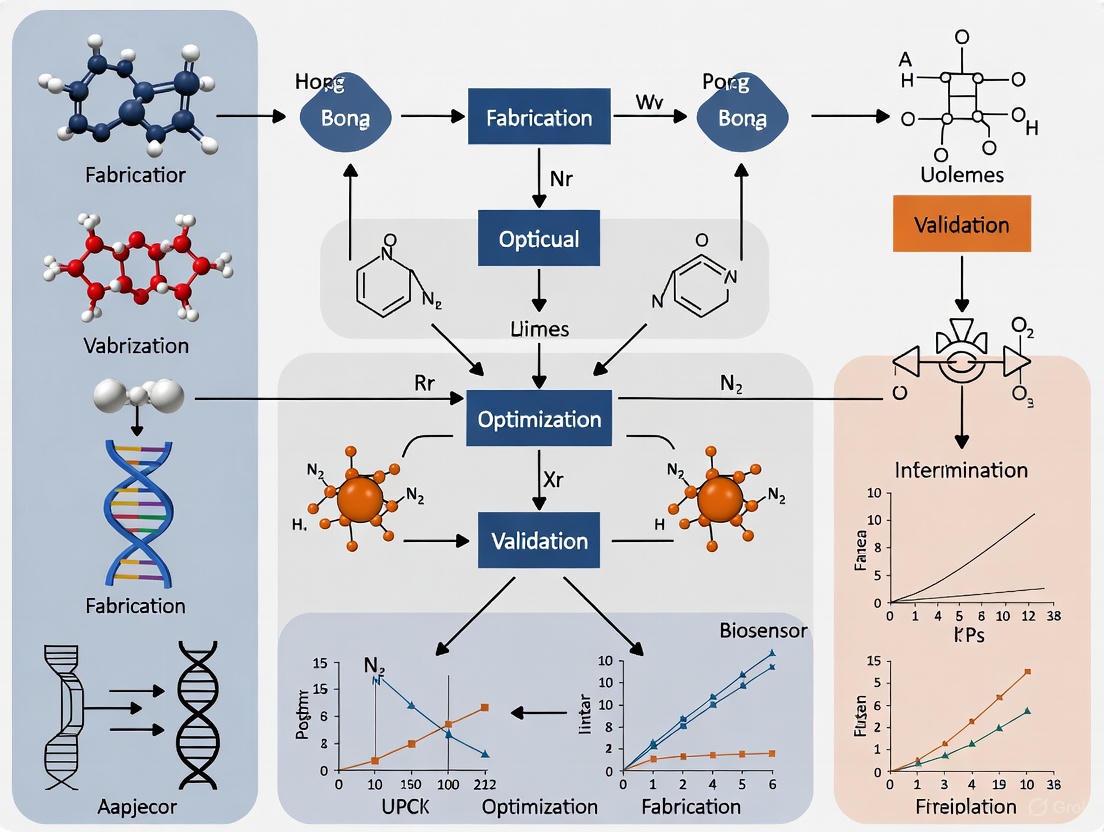
Biosensor performance and commercial viability are critically dependent on overcoming fabrication variability, a central challenge in translational research.
Systematic Optimization Strategies for Reproducible and High-Performance Biosensor Fabrication
Abstract
Biosensor performance and commercial viability are critically dependent on overcoming fabrication variability, a central challenge in translational research. This article provides a comprehensive framework for researchers and drug development professionals, detailing systematic approaches to optimize biosensor fabrication from foundational principles to clinical validation. We explore the core sources of variability in materials and manufacturing, present methodological case studies across electrochemical and optical platforms, and establish robust troubleshooting and optimization protocols. By integrating comparative analysis of biorecognition elements and transduction methods with validation strategies against gold-standard assays, this work delivers a actionable roadmap for enhancing biosensor reproducibility, sensitivity, and specificity to meet the rigorous demands of biomedical and clinical applications.
Understanding the Core Sources of Biosensor Fabrication Variability
Fabrication variability is a critical challenge in translating biosensors from research prototypes to commercially viable, reliable products. This technical support center provides targeted troubleshooting guides and FAQs to help researchers and scientists identify, understand, and mitigate the sources of this variability, enabling more robust and reproducible biosensor development.
FAQs on Fabrication Variability
1. What are the most common sources of fabrication variability in biosensors? The most common sources stem from inconsistencies in material synthesis, surface functionalization, and the integration of biological elements with transducers. For instance, with 2D materials like MoS₂, the exfoliation method (e.g., mechanical vs. chemical) directly impacts flake thickness, size, and crystal quality, leading to variations in electrical conductivity and sensor performance [1]. Similarly, in whole-cell biosensors, the immobilization process of engineered bacteria can affect their viability and response to target analytes like cobalt [2].
2. How does the choice of nanomaterial synthesis method impact variability? The synthesis method dictates critical properties like surface area, conductivity, and defect density, which are directly tied to sensor performance. The table below compares common fabrication methods for two prominent 2D materials, graphene and molybdenum disulfide (MoS₂ [1] [3].
Table 1: Comparison of Nanomaterial Fabrication Methods and Their Impact on Variability
| Material | Fabrication Method | Key Characteristics | Primary Variability Challenges |
|---|---|---|---|
| Graphene | Mechanical Exfoliation | High-quality, clean, crystalline sheets [3]. | Produces random flake thicknesses and sizes; low throughput; not scalable [3]. |
| Graphene | Chemical Vapor Deposition (CVD) | High-quality, large-area films; suitable for electronics [3]. | Transfer process to target substrates can introduce defects and contaminants [3]. |
| Graphene | Liquid-Phase Exfoliation | Scalable; suitable for bulk production and printing [3]. | Can introduce defects and impurities; requires stabilizing surfactants [3]. |
| MoS₂ | Mechanical Exfoliation ("Scotch tape" method) | Atomically thin, high-crystalline-quality nanosheets [1]. | Random flake size and thickness; high material waste; not scalable [1]. |
| MoS₂ | Chemical Vapor Deposition (CVD) | Controllable, large-area growth of uniform films [1]. | Challenges in controlling layer number uniformity and domain boundaries across a large scale [1]. |
| MoS₂ | Liquid-Phase Exfoliation | Capable of bulk production at low cost [1]. | Potential for restacking of layers and lower electrical conductivity compared to mechanically exfoliated flakes [1]. |
3. Why is sensor stability a major hurdle in commercialization, and what causes it? Stability is a function of both shelf-life and operational integrity. A primary cause is the degradation of the biological recognition element (e.g., enzymes, antibodies). Factors like storage environment, immobilization technique, and the complexity of the sample matrix (e.g., blood, food extracts) can denature these elements, reducing catalytic activity or binding affinity over time [4]. For single-use biosensors, shelf-stability is the key concern, while reusability is an additional challenge for multi-use devices [4].
4. How can I validate that my fabrication process is under control? A controlled process requires rigorous documentation and verification against a design specification. This involves a test protocol that outlines precise procedures and acceptance criteria (e.g., for accuracy, precision, limit of detection) to evaluate the biosensor consistently [5]. Furthermore, validation with real-world, unmodified samples—cross-validated against a reference method—is essential to ensure performance is not just an artifact of clean lab buffers [4].
Troubleshooting Guides
Issue 1: Inconsistent Electrochemical Signal Output
- Problem: High signal noise or drift, poor reproducibility between sensor batches.
- Potential Causes & Solutions:
- Cause: Inconsistent electrode surface morphology.
- Cause: Uncontrolled functionalization of the biorecognition layer.
- Solution: Implement precise control over reaction time, temperature, and concentration during immobilization of enzymes or antibodies. Use covalent binding strategies with cross-linkers (e.g., EDC/NHS) for more stable attachment [6].
- Cause: Variability in the underlying transducer material (e.g., graphene, MoS₂ flakes).
Issue 2: Poor Sensitivity and Selectivity in Complex Matrices
- Problem: Sensor performs well in buffer but fails in real samples like blood, food, or environmental samples due to fouling or interference.
- Potential Causes & Solutions:
- Cause: Non-specific adsorption of proteins or other molecules.
- Cause: Interference from electroactive species (e.g., ascorbic acid, uric acid in biological fluids).
- Cause: Loss of bio-recognition element activity.
- Solution: Optimize the immobilization matrix to preserve the native structure of enzymes/antibodies. Explore more robust recognition elements like DNA aptamers [7].
Issue 3: Low Production Yield and Poor Scalability
- Problem: Lab-scale fabrication is successful, but scaling up leads to high failure rates and performance inconsistency.
- Potential Causes & Solutions:
- Cause: Reliance on low-throughput, manual fabrication methods (e.g., mechanical exfoliation).
- Cause: Lack of integration and automation in the assembly process.
- Solution: Design for integration from the outset. The lack of successful commercial cases of biosensors integrated with automated control systems is a known challenge, but a focus on modular design can help [7].
Key Experimental Protocols for Variability Assessment
Protocol 1: Assessing Lot-to-Lot Reproducibility of a Nanomaterial-Based Transducer
This protocol is designed to quantify the consistency of a key transducer material, such as graphene or MoS₂, across different production batches.
- Synthesis: Prepare multiple batches (n≥5) of the nanomaterial using the same standardized method (e.g., LPE, CVD).
- Characterization: For each batch, perform:
- Raman Spectroscopy: To determine structural consistency, layer number, and defect density (e.g., D/G band ratio for graphene) [1] [3].
- Electron Microscopy (SEM/TEM): To analyze morphology, lateral dimensions, and uniformity [1] [3].
- Atomic Force Microscopy (AFM): To measure thickness and surface topography [1].
- Functional Testing: Fabricate simple test devices (e.g., resistor, FET) from each batch and measure key electrical parameters (e.g., conductivity, carrier mobility) under standardized conditions.
- Data Analysis: Calculate the coefficient of variation (CV) for the key parameters (e.g., layer thickness, electrical conductivity) across the batches. A CV of <10% is typically indicative of good lot-to-lot reproducibility.
Protocol 2: Accelerated Shelf-Life Stability Testing
This protocol helps predict the long-term stability of the biosensor's biological component during storage.
- Sample Preparation: Prepare a statistically significant number of identical biosensors (e.g., functionalized electrodes).
- Storage Conditions: Store the sensors under controlled accelerated stress conditions, such as elevated temperature (e.g., 37°C or 45°C) and varying humidity levels, following ICH guidelines.
- Periodic Testing: At predetermined time points (e.g., 0, 1, 2, 4 weeks), remove a subset of sensors and test their performance using the standard test protocol.
- Performance Metrics: Measure critical performance parameters including sensitivity, response time, and background signal. Compare these to the initial values.
- Modeling: Use the Arrhenius equation or other degradation models to extrapolate the sensor's stability under normal storage conditions from the data obtained under accelerated conditions.
The Scientist's Toolkit: Key Research Reagent Solutions
Table 2: Essential Materials for Reproducible Biosensor Fabrication
| Reagent/Material | Function in Fabrication | Considerations for Variability Control |
|---|---|---|
| 2D Materials (Graphene, MoS₂) | Transducer core; provides high surface area and signal amplification [1] [3]. | Source from reputable suppliers; insist on certificates of analysis with key parameters (flake size, layer number). |
| EDC/NHS Crosslinkers | Enables covalent immobilization of biomolecules (antibodies, enzymes) onto sensor surfaces [6]. | Use fresh, high-purity reagents; standardize reaction time and pH to ensure consistent coupling efficiency. |
| Polyethylene Glycol (PEG) | Antifouling agent; reduces non-specific binding in complex samples [3]. | Control molecular weight and grafting density to form a consistent, protective layer. |
| Bio-Recognition Elements (Enzymes, Antibodies, Aptamers) | Provides specificity to the target analyte [2] [4]. | Use aliquots from the same production lot; verify activity upon receipt and monitor degradation over time. |
| Nanoparticles (Gold, Platinum) | Signal amplification; enhances electron transfer in electrochemical sensors [2] [6]. | Standardize synthesis protocol (size, shape) or source from a single, qualified batch. |
Fabrication Workflow and Variability Control Points
The following diagram maps the general biosensor fabrication workflow, highlighting key stages where variability can be introduced and must be monitored and controlled.
Critical Analysis of Variability in Biorecognition Element Immobilization
The performance of any biosensor is fundamentally dictated by the precise and stable attachment of its biorecognition elements (such as antibodies, enzymes, or aptamers) to the transducer surface. This process, known as immobilization, directly controls the sensor's analytical performance, including its sensitivity, selectivity, and reproducibility [9]. Inconsistent immobilization is a primary source of variability in biosensor fabrication, often leading to unreliable data and hindering the translation of novel biosensors from the research lab to clinical and point-of-care applications [10]. This variability manifests in inconsistent surface density, random molecular orientation, and the loss of biological activity, which in turn affects the binding efficiency and signal output [9] [11]. This technical support article, framed within a broader thesis on addressing biosensor fabrication variability, provides a systematic troubleshooting guide and FAQ to help researchers identify, understand, and mitigate these critical challenges.
Troubleshooting Guide: Common Immobilization Issues and Solutions
Low Signal or Poor Sensitivity
- Problem: The biosensor produces an unexpectedly weak signal even when the target analyte is present at high concentrations.
- Potential Causes and Solutions:
- Cause 1: Low density of immobilized bioreceptors. An insufficient number of active biorecognition elements on the sensor surface limits the available binding sites for the target.
- Solution: Shift from traditional two-dimensional (2D) surface coatings to three-dimensional (3D) immobilization matrices [11]. Materials such as hydrogels, porous silica, metal-organic frameworks (MOFs), and 3D graphene oxide structures provide a larger surface area, significantly increasing the probe loading capacity and enhancing the resulting signal [11].
- Cause 2: Poor orientation of bioreceptors. Random attachment can block the active binding sites of proteins or antibodies, rendering them inactive [9].
- Solution: Use site-specific immobilization strategies. For antibodies, employ Fc-specific binding proteins like Protein A or Protein G, which consistently orient the antibody with its antigen-binding sites facing outward towards the sample solution [12] [11]. For enzymes or other proteins, consider genetic engineering to introduce specific tags (e.g., His-tag) for directed coupling.
- Cause 3: Inefficient signal transduction.
- Solution: Incorporate conductive nanomaterials like gold nanoparticles (AuNPs) or carbon nanotubes into the 3D matrix. These materials facilitate electron transfer in electrochemical biosensors, amplifying the signal generated from the binding event [11].
High Background Noise or Poor Selectivity
- Problem: The biosensor generates a significant signal even in the absence of the specific target (high background) or responds to non-target molecules (poor selectivity).
- Potential Causes and Solutions:
- Cause 1: Non-specific adsorption (NSA). Untreated areas of the sensor surface passively adsorb other proteins or molecules from the sample matrix.
- Solution: Implement a rigorous blocking step after immobilization. Incubate the sensor with an inert protein solution (e.g., Bovine Serum Albumin - BSA) or commercial blocking buffers to cover any remaining reactive sites on the surface [9].
- Cause 2: Suboptimal surface chemistry. The chosen chemistry may create a heterogeneous or charged surface that promotes unwanted interactions.
- Solution: Systematically optimize the composition of the blocking buffer and the immobilization time using statistical Design of Experiments (DoE) approaches. This helps identify interactions between factors that a one-variable-at-a-time approach would miss [10].
Poor Reproducibility and Stability
- Problem: Significant performance variation between different batches of sensors or degradation of signal over time.
- Potential Causes and Solutions:
- Cause 1: Inconsistent immobilization protocol. Manual or poorly controlled processes lead to variations in bioreceptor density and activity from one sensor to the next.
- Solution: Develop a Standard Operating Procedure (SOP) with strict control over all variables, including reagent concentrations, pH, temperature, and incubation times. Automated liquid handling systems can further enhance reproducibility.
- Cause 2: Unstable attachment. Bioreceptors leach off the sensor surface during storage or operation.
- Solution: Prefer covalent immobilization over physical adsorption (which is weaker and more reversible). Use robust chemistries like NHS/EDC coupling to form stable amide bonds between the bioreceptor and a functionalized surface [9] [11].
- Cause 3: Denaturation of bioreceptors. The immobilization chemistry or storage conditions may degrade the biological element.
- Solution: Store sensors in appropriate buffers at stable, cool temperatures. For certain applications, a modular biosensor design can be employed, where the disposable biorecognition hydrogel cartridge is separate from the reusable transducer, enhancing the lifetime and stability of the electrode base [13].
Frequently Asked Questions (FAQs)
Q1: How can I quickly determine if my immobilization strategy is the source of variability in my biosensor response? A1: Conduct a simple reproducibility test. Fabricate at least five sensors under identical immobilization conditions and measure their response to a standard solution of your target analyte. A high coefficient of variation (CV > 15-20%) strongly indicates inconsistencies in the immobilization process, necessitating a more robust and optimized protocol [9].
Q2: What is the most critical parameter to optimize for a reliable immobilization protocol? A2: While multiple parameters are important, bioreceptor concentration and surface density are often the most critical. Too low a density causes poor sensitivity, while too high a density can lead to steric hindrance, where closely packed molecules physically block each other's active sites, reducing binding efficiency and signal output [9]. Systematic optimization using DoE is highly recommended to find the ideal density [10].
Q3: My biosensor works well in buffer but fails in complex biological samples like blood or serum. What could be wrong? A3: This is a classic symptom of non-specific adsorption (NSA). The complex matrix of biological samples contains a multitude of proteins and other molecules that can adhere to your sensor surface. Revisit your blocking strategy. Ensure you are using an effective blocking agent and that its concentration and incubation time have been optimized for your specific sample type [9] [14].
Q4: Are there alternatives to antibodies for biorecognition to reduce variability? A4: Yes, aptamers (single-stranded DNA or RNA oligonucleotides) are a powerful alternative. They are selected in vitro via the SELEX process, can be chemically synthesized with high batch-to-batch consistency, and are often more stable than antibodies. Their smaller size also allows for higher immobilization densities [9]. Molecularly Imprinted Polymers (MIPs), which are synthetic antibody mimics, offer another highly stable and reproducible alternative [9].
Q5: How can I systematically optimize multiple factors in my immobilization process without an excessive number of experiments? A5: Employ a Design of Experiments (DoE) methodology. Instead of testing one factor at a time (OFAT), DoE allows you to vary multiple factors simultaneously in a structured matrix of experiments. For example, a Full Factorial Design can efficiently screen the main effects and interactions of factors like pH, immobilization time, and bioreceptor concentration, leading to a statistically sound optimization with fewer resources [10].
Experimental Protocols for Key Immobilization & Validation Methods
Protocol: Covalent Immobilization of Antibodies via NHS/EDC Coupling
This is a standard protocol for covalently immobilizing antibodies onto a carboxylated gold or glass surface [9] [11].
Surface Activation:
- Clean the sensor substrate thoroughly (e.g., oxygen plasma for gold surfaces).
- Incubate the surface with a solution of NHS (N-Hydroxysuccinimide) and EDC (1-Ethyl-3-(3-dimethylaminopropyl)carbodiimide) in MES buffer (pH 5.5-6.0) for 15-30 minutes. EDC activates carboxyl groups to form reactive intermediates, which NHS stabilizes.
Antibody Immobilization:
- Rinse the activated surface with immobilization buffer (e.g., PBS, pH 7.4).
- Immediately incubate the surface with a solution of your antibody (typically 10-100 µg/mL) in a suitable buffer for 1-2 hours. The primary amine groups on the antibody (lysine residues) will react with the NHS esters to form stable amide bonds.
Quenching and Blocking:
- Rinse the surface to remove unbound antibody.
- Quench any remaining active esters by incubating with 1M ethanolamine hydrochloride (pH 8.5) for 15-30 minutes.
- Block non-specific sites by incubating with a 1% BSA solution in PBS for at least 1 hour.
Storage:
- Rinse the functionalized biosensor and store in a suitable storage buffer (e.g., PBS with azide) at 4°C.
Protocol: Validation of Immobilization Density via Fluorescence Labeling
A common method to quantitatively assess the success and consistency of protein immobilization.
- Labeling: Pre-label your antibody or protein with a fluorescent dye (e.g., FITC, Cy3) following the manufacturer's protocol. Remove unconjugated dye using a size-exclusion chromatography column.
- Immobilization: Perform the immobilization protocol (as in 4.1) using the labeled antibody on your sensor substrate.
- Measurement:
- After immobilization and rigorous washing, measure the fluorescence intensity of the surface using a fluorescence scanner, microarray reader, or fluorescence microscope.
- Compare the intensity across multiple spots or sensors to check for uniformity.
- To calculate the absolute surface density, create a standard curve with known concentrations of the fluorescently labeled antibody in solution.
Systematic Optimization Framework: Design of Experiments (DoE)
Overcoming immobilization variability requires a move away from one-variable-at-a-time (OVAT) approaches to a systematic framework like Design of Experiments (DoE) [10]. DoE is a powerful chemometric tool that involves a model-based optimization, resulting in a data-driven model that connects variations in input variables to the sensor outputs.
The following workflow illustrates the iterative process of using DoE for systematic optimization:
For instance, a 2² Full Factorial Design is an efficient first-step DoE to screen critical variables. It requires only 4 experiments (plus center points for replication) to study two factors, each at two levels (e.g., high and low), and reveals any interaction between them [10]. The experimental matrix is structured as follows:
Table: 2² Full Factorial Design Matrix
| Experiment Number | Factor X₁: Immobilization Time | Factor X₂: Antibody Concentration | Response: Signal Intensity |
|---|---|---|---|
| 1 | -1 (Low) | -1 (Low) | Measured Value |
| 2 | +1 (High) | -1 (Low) | Measured Value |
| 3 | -1 (Low) | +1 (High) | Measured Value |
| 4 | +1 (High) | +1 (High) | Measured Value |
| 5 (Center Point) | 0 (Center) | 0 (Center) | Measured Value |
The data from this matrix is used to build a statistical model (e.g., Response = β₀ + β₁X₁ + β₂X₂ + β₁₂X₁X₂). A significant interaction term (β₁₂) indicates that the effect of immobilization time depends on the level of antibody concentration, an insight completely missed by OVAT approaches [10].
Research Reagent Solutions: Essential Materials for Immobilization
Table: Key Reagents for Biorecognition Element Immobilization
| Reagent Category | Specific Example | Function in Immobilization |
|---|---|---|
| Coupling Agents | EDC / NHS | Activates carboxylated surfaces to enable covalent bonding with amine-containing bioreceptors. |
| Surface Modifiers | (3-Aminopropyl)triethoxysilane (APTES) | Introduces primary amine groups onto glass/silica surfaces for subsequent functionalization. |
| 11-Mercaptoundecanoic acid (11-MUA) | Forms a self-assembled monolayer on gold with terminal carboxyl groups for coupling. | |
| Blocking Agents | Bovine Serum Albumin (BSA) | A non-reactive protein used to passivate unused surface areas and minimize non-specific binding. |
| Ethanolamine | Used to quench (deactivate) remaining reactive groups on the surface after immobilization. | |
| Orientation Tools | Protein A / Protein G | Binds the Fc region of antibodies, ensuring proper orientation for optimal antigen binding. |
| 3D Scaffolds | Polyethylene glycol diacrylate (PEGDA) Hydrogel | Forms a biocompatible 3D matrix that increases probe loading capacity and enhances stability [13] [11]. |
| 3D Graphene Oxide | Provides a high-surface-area, conductive scaffold that improves both immobilization density and electron transfer [11]. | |
| Signal Amplifiers | Gold Nanoparticles (AuNPs) | Can be used as a carrier for multiple bioreceptors or to enhance electrochemical signals [11]. |
Advanced Strategies: 3D Immobilization and Material Selection
Moving beyond flat, 2D surfaces is a key strategy for enhancing biosensor performance. Three-dimensional (3D) immobilization provides a larger surface area for probe attachment, which directly increases the number of available binding sites and can lead to a significant boost in sensitivity [11].
Table: Comparison of Advanced 3D Immobilization Materials
| Material | Key Advantages | Ideal For | Considerations |
|---|---|---|---|
| Hydrogels (e.g., PEGDA) | High water content, biocompatible, tunable porosity, can encapsulate enzymes/mediators [13]. | Creating a modular, reaction-diffusion interface for enzymatic biosensors [13]. | Diffusion kinetics of analyte and reaction products must be modeled and optimized (e.g., via Thiele modulus) [13]. |
| Metal-Organic Frameworks (MOFs) | Ultra-high porosity, crystalline structure, designable functionality. | Ultra-sensitive detection where maximum probe loading is critical. | Chemical and mechanical stability under operational conditions. |
| Carbon Nanomaterial Foams (3D Graphene) | Excellent electrical conductivity, high surface area, mechanical strength. | Electrochemical biosensors requiring both high immobilization density and efficient electron transfer [11]. | Fabrication complexity and cost. |
| Porous Silica | Tunable pore size, high surface area, well-established surface chemistry. | Size-selective capture of biomarkers. | Can be brittle in flexible sensor formats. |
The following diagram illustrates how a 3D scaffold fundamentally enhances biosensor performance compared to a traditional 2D surface:
Impact of Nanomaterial Inconsistencies on Signal Transduction
Frequently Asked Questions
1. How do nanomaterial inconsistencies typically manifest in my biosensor's output? Inconsistencies can create several identifiable problems in your data. You may observe signal drift, where the baseline signal shifts over time, or an overall increase in electrical noise, making it difficult to distinguish the true signal. Another common issue is a high sensor-to-sensor variation within the same production batch, leading to poor reproducibility and requiring individual recalibration of each device [15] [16]. Finally, you might experience an unexplained reduction in sensitivity, where the sensor fails to achieve its expected limit of detection [17].
2. Which steps in the top-down fabrication of silicon nanowire (SiNW) sensors are most prone to variability? The top-down approach, while advantageous for scale, involves several critical steps that introduce variation [15] [16]:
- Lithography and Etching: These steps define the nanowire's geometry. Minor variations in width, thickness, or sidewall roughness directly alter electrical properties like threshold voltage and transconductance, impacting sensitivity [16].
- Ohmic Contact Formation: Inconsistent formation of source and drain contacts leads to variations in feed line resistance, which can alter the measured signal from sensor to sensor [16].
- Gate Dielectric Growth: Fluctuations in the thickness or quality of the ultra-thin oxide layer grown on the SiNWs significantly affect the field-effect and the subsequent surface chemistry for bioreceptor immobilization [16].
3. My biosensor performance is inconsistent. How can a systematic DoE approach help? A traditional "one-variable-at-a-time" (OVAT) approach often misses interactions between factors. Design of Experiments (DoE) provides a structured method to:
- Identify Key Variables: Efficiently pinpoint which material or process parameters (e.g., nanomaterial concentration, incubation time, temperature) most significantly impact your desired response (e.g., sensitivity, signal-to-noise ratio) [10].
- Quantify Interactions: Discover if the effect of one factor (e.g., electrode surface roughness) depends on the level of another (e.g., bioreceptor density). These interactions are invisible to OVAT approaches [10].
- Build a Predictive Model: Develop a mathematical model that allows you to predict biosensor performance based on specific input parameters, enabling robust optimization with fewer experiments [10].
4. Are there specific quality control checks I can implement during fabrication? Yes, integrating real-time, non-destructive quality control (QC) steps is highly effective. One advanced strategy involves embedding redox probes like Prussian Blue Nanoparticles (PB NPs) during an electrofabrication process. You can monitor the current intensity of these NPs at critical stages:
- QC1: After electrodeposition of the redox probe.
- QC2: During the electropolymerization of a molecularly imprinted polymer (MIP) film.
- QC3: After template extraction. Deviations in the expected current signal at these stages indicate inconsistencies, allowing you to discard faulty sensors early. This method has been shown to reduce the relative standard deviation (RSD) in sensor response by over 79% [18].
Troubleshooting Guides
Problem: High Sensor-to-Sensor Variation in SiNW-FET Arrays Applicability: This guide is for researchers experiencing inconsistent performance between individual silicon nanowire field-effect transistor (SiNW-FET) biosensors on the same chip or batch [15] [16].
| Investigation Step | Action | Reference |
|---|---|---|
| Inspect Fabrication | Review variability in lithography and etching. Check for geometrical inconsistencies in nanowire width/cross-section. | [15] [16] |
| Check Ohmic Contacts | Verify consistency of source/drain contact formation. Measure feed line resistance for significant variations. | [16] |
| Analyze Surface Chemistry | Audit protocols for gate dielectric growth and bioreceptor immobilization. Ensure uniform functionalization across the sensor array. | [15] [16] |
| Implement DoE | Use a factorial design to systematically test the impact of fabrication parameters (e.g., etch time, oxidation temperature) on electrical performance. | [10] |
Problem: Poor Reproducibility of Electrochemical Biosensors Applicability: This guide addresses batch-to-batch inconsistencies in electrochemical biosensors, particularly those using screen-printed electrodes or modified surfaces [17] [18].
| Investigation Step | Action | Reference |
|---|---|---|
| Characterize Electrodes | Perform cyclic voltammetry (CV) and electrochemical impedance spectroscopy (EIS) on a representative sample from each batch to quantify differences in electroactive surface area and electron transfer kinetics. | [18] |
| Audit Ink/ Material Batches | Check for variability in the source and composition of nanomaterials (e.g., graphene, CNTs) and electrode inks. | [17] |
| Standardize Functionalization | Implement a QC protocol, such as monitoring an embedded redox probe (e.g., Prussian Blue), during bioreceptor immobilization to ensure consistent film deposition and activity. | [18] |
| Control Storage | Ensure all sensor strips are stored under identical, controlled conditions (temperature, humidity, inert atmosphere) to prevent degradation. | [18] |
Experimental Protocols for Systematic Optimization
Protocol 1: Implementing a 2^k Factorial Design for Biosensor Optimization This protocol provides a methodology to efficiently screen and optimize key variables affecting your biosensor's performance using a factorial design [10].
1. Define Objective and Response Clearly state the goal (e.g., "Maximize current signal while minimizing noise"). Identify a quantifiable Response (e.g., Limit of Detection (LOD), Signal-to-Noise Ratio, Peak Current).
2. Select Factors and Levels
Choose k critical Factors (variables) you suspect influence the response. For each factor, define a low (-1) and high (+1) level.
- Example Factors: Nanomaterial concentration, incubation temperature, pH of buffer, bioreceptor density.
- Example Levels for "Nanomaterial Concentration":
-1= 0.5 mg/mL,+1= 2.0 mg/mL.
3. Construct the Experimental Matrix The matrix defines all possible combinations of factor levels. For a 2^2 design (two factors), this requires 4 experiments [10].
| Experiment # | Factor A (X1) | Factor B (X2) |
|---|---|---|
| 1 | -1 | -1 |
| 2 | +1 | -1 |
| 3 | -1 | +1 |
| 4 | +1 | +1 |
4. Run Experiments and Analyze Data Execute the experiments in a randomized order to avoid bias. Measure the response for each run. Use statistical software to calculate the main effect of each factor (its average impact on the response) and the interaction effect between factors [10].
Protocol 2: Quality-Controlled Electrofabrication of MIP Biosensors This protocol details a method to create highly reproducible molecularly imprinted polymer (MIP) biosensors by integrating real-time quality control checks [18].
1. Electrodeposition of Prussian Blue Redox Probe
- Procedure: Immerse the clean working electrode in a solution containing FeCl3 and K3[Fe(CN)6] in KCl/HCl. Perform Cyclic Voltammetry (CV) through multiple scans (e.g., -0.2 V to 0.5 V) until stable reduction and oxidation peaks of PB NPs are observed.
- QC Check (QC2): Measure the current intensity of the PB NP reduction peak. Electrodes with signals outside a pre-defined acceptable range (e.g., ± 5% of the batch mean) should be discarded [18].
2. Electropolymerization of MIP Film
- Procedure: Prepare a solution containing the functional monomer (e.g., pyrrole), the cross-linker, and the template molecule (the target analyte). Using the PB-modified electrode, perform electropolymerization via CV or chronoamperometry in this solution.
- QC Check (QC3): Monitor the decrease in the PB NP current signal during polymerization. This drop correlates with the thickness and uniformity of the growing non-conductive MIP film. A consistent decrease profile indicates a reproducible fabrication process [18].
3. Template Molecule Extraction
- Procedure: Remove the template molecules from the MIP film to create recognition sites. This can be done via solvent extraction (soaking in a suitable solvent) or electro-cleaning (applying a potential in a clean buffer solution).
- QC Check (QC4): After extraction, record the CV or SWV of the PB NPs again. A significant recovery of the PB current signal indicates successful template removal and the creation of accessible pores. Sensors showing poor signal recovery should be rejected [18].
Table 1: Impact of a Quality Control (QC) Strategy on Biosensor Reproducibility Data from a study embedding Prussian Blue NPs to monitor MIP biosensor fabrication. RSD = Relative Standard Deviation [18].
| Target Analyte | Control Group RSD (%) | QC-Enabled Group RSD (%) | Reduction in RSD (%) | Success Rate (QC-Enabled) |
|---|---|---|---|---|
| Agmatine | 9.68 | 2.05 | 79% | 45% |
| GFAP Protein | 11.67 | 1.44 | 87% | 36% |
Table 2: Key Sources of Variability in Top-Down Fabricated SiNW-FET Biosensors Compiled from a review of fabrication process variations [15] [16].
| Fabrication Stage | Source of Variability | Impact on Sensor Performance |
|---|---|---|
| Lithography & Etching | Nanowire width, thickness, and sidewall roughness. | Alters threshold voltage, transconductance, and sensitivity. |
| Ion Implantation | Doping concentration and profile uniformity. | Affects carrier mobility and electrical conductivity. |
| Ohmic Contact Formation | Contact resistance and feed line resistance. | Causes signal attenuation and variation between devices. |
| Gate Dielectric Growth | Oxide layer thickness and quality. | Impacts field-effect coupling and surface functionalization. |
The Scientist's Toolkit: Research Reagent Solutions
Table 3: Essential Materials for Reproducible Biosensor Development
| Material / Reagent | Function in Biosensor Development | Key Consideration |
|---|---|---|
| Prussian Blue (PB) Nanoparticles | Embedded redox probe for real-time, non-destructive quality control during electrofabrication [18]. | Stability over multiple CV cycles is critical for reliable monitoring. |
| Silicon-on-Insulator (SOI) Wafers | Substrate for the top-down fabrication of SiNW-FETs, enabling large-scale integration [15] [16]. | High quality and uniformity of the top silicon layer are essential to minimize initial variability. |
| Orthogonal Sigma (σ) Factor Systems | Enable tunable, independent expression of multiple pathway modules in synthetic biology approaches [19]. | Orthogonality prevents cross-talk, allowing for precise module optimization without host interference. |
| Carbon Nanomaterials (e.g., Graphene, CNTs) | Transducer material providing high surface area, excellent conductivity, and consistent surface chemistry [17] [20]. | Batch-to-batch reproducibility in synthesis (e.g., layer thickness, defect density) is a major challenge. |
| Molecularly Imprinted Polymers (MIPs) | Synthetic, biomimetic receptors offering high stability, cost-effectiveness, and reusability [18]. | Precise control over polymer thickness and template extraction is vital for creating uniform recognition sites. |
DoE Optimization Workflow
Diagram 1: Systematic DoE optimization workflow for biosensor development.
Quality Control Protocol
Diagram 2: Biosensor fabrication with integrated quality control checkpoints.
Manufacturing Tolerances in Microfabrication and Bioprinting
Troubleshooting Guides and FAQs
Frequently Asked Questions
Q1: My bioprinted structures lack the required resolution for capillary replication. What parameters should I focus on? The effective bioprinting resolution is governed by a combination of your printing technology, bioink properties, and process parameters. For extrusion bioprinting, key factors include nozzle diameter, nozzle moving speed, and the nonlinearity of bioink viscosity. For light-assisted systems, focus on photocrosslinking behavior and light characteristics. Achieving resolutions below 100 µm is often necessary for replicating fine anatomical features [21].
Q2: During multi-material bioprinting, I observe backflow and contamination between bioinks. How can this be resolved? Backflow in multi-material nozzles is a common issue that compromises print fidelity. This can be addressed through nozzle geometry optimization. Key geometric parameters to optimize include the inner diameter, branch angles, and junction interpolation length (curvature). Simulation-driven design has shown that optimized Y-junction nozzles can significantly suppress backflow, minimize shear stress, and enable rapid material switching [22].
Q3: What are the most critical variables affecting cell viability in 3D bioprinted constructs? Cell viability is influenced by variables throughout the bioprinting process. Common critical factors include:
- Shear Stress: Caused by high print pressure or small needle diameters [23].
- Bioink Formulation: Material contamination, toxicity, and insufficient crosslinking can harm cells [23].
- Print Time: Extended print sessions can negatively impact viability depending on the material, cell type, and temperature [23].
- Needle Clogging: This can be caused by inhomogeneous bioink or nanoparticle agglomeration larger than the needle gauge [24].
Q4: My biosensor's detection limit is not sufficiently sensitive. How can electrode design improve it? For impedimetric biosensors, the gap between interdigitated electrodes (IDEs) is a primary factor governing sensitivity. Research has demonstrated a clear, singular correlation between reduced inner gap and enhanced detection limits. Designs with a 3 µm gap can detect concentrations as low as 50 ng/mL, a threshold not achievable with larger gaps of 4 µm or 5 µm [12].
Q5: What is a systematic method for optimizing multiple fabrication parameters simultaneously? The Design of Experiments (DoE) framework is a powerful chemometric tool for systematic optimization. Unlike the traditional "one-variable-at-a-time" approach, DoE (e.g., full factorial or central composite designs) allows you to efficiently explore the entire experimental domain, quantify the effect of individual variables, and, crucially, identify interactions between variables. This method reduces experimental effort and leads to more robust and reliable optimization [25] [26].
Troubleshooting Guide
| Problem Area | Specific Issue | Possible Causes | Recommended Solutions | Key Tolerances & Metrics to Check |
|---|---|---|---|---|
| Biostructure Fidelity | Layers merging/collapsing, lack of 3D shape. | • Insufficient bioink viscosity.• Inadequate crosslinking time. [24] | • Perform rheological tests to optimize bioink viscosity.• Increase crosslinking time for bottom layers to build foundation. [24] | • Layer Fusion Tolerance: Minimum time for layer to support next load.• Geometric Deviation: ±XY µm from CAD model. [27] |
| Strut diameter inconsistent with nozzle gauge. | • Over- or under-extrusion. [24] | • For pneumatic systems: Adjust extrusion pressure.• For pellet extrusion: Adjust extrusion rate. [24] | • Dimensional Accuracy: ±Z% of target strut diameter. [27] | |
| Cell Viability | Low viability post-printing. | • High shear stress from small needles/high pressure. [23]• Extended print time. [23]• Needle clogging. [24] | • Use larger or tapered needle tips.• Reduce print pressure.• Optimize bioink homogeneity to prevent clogs. [23] [24] | • Shear Stress Threshold: Maintain below Y Pa for >90% viability. [22]• Max Print Duration: T minutes for specific bioink. [23] |
| Mechanical & Process Failure | Needle clogging during print. | • Bioink inhomogeneity/phase separation.• Particle agglomeration larger than nozzle. [24] | • Centrifuge bioink at low RPM (e.g., 30s) to remove bubbles.• Characterize particle size via SEM; ensure < nozzle diameter. [24] | • Particle Size Limit: < X% of nozzle inner diameter. [24] |
| Nozzle dragging or embedding into previous layers. | • Incorrect Z-height calibration.• Excessive print speed. [24] | • Recalibrate Z-axis home position and layer height in G-code.• Reduce print and travel speed. [24] | • Layer Height Uniformity: ±H µm across build platform. [27] | |
| Biosensor Performance | Low sensitivity and high detection limit. | • Sub-optimal electrode geometry. [12] | • Minimize interdigitated electrode (IDE) gap.• Use finite element analysis (e.g., COMSOL) to simulate sensitivity. [12] | • IDE Gap: Target 3 µm for ng/mL-level detection. [12] |
Experimental Protocols for Systematic Optimization
Protocol 1: Design of Experiments (DoE) for Biosensor Fabrication Optimization
This protocol outlines a systematic approach to optimize biosensor fabrication parameters, accounting for variable interactions [25].
- Define Factors and Responses: Identify key input variables (e.g., electrode gap, biorecognition element concentration, incubation time). Define the measurable outputs or responses (e.g., detection limit, impedance signal, signal-to-noise ratio) [25] [12].
- Select Experimental Design: Choose an appropriate design. A 2k factorial design is efficient for screening significant factors. For example, with 3 factors, 8 experiments are required. For process optimization with curvature, a Central Composite Design is more suitable [25].
- Execute Experiments: Run the experiments in a randomized order to avoid systematic bias.
- Model and Analyze: Use linear regression to build a mathematical model linking factors to responses. Statistical analysis (e.g., ANOVA) will identify significant factors and their interactions.
- Validate Model: Conduct confirmation experiments at the predicted optimal conditions to validate the model's accuracy.
Protocol 2: High-Throughput Bioprinting Parameter Optimization using Machine Learning
This protocol uses high-throughput data generation and machine learning to predict optimal printing parameters for desired droplet size, reducing trial-and-error [28].
- Dataset Generation: Use a high-throughput bioprinter to produce a large array of cellular droplets (e.g., >50 simultaneously). Systematically vary key parameters: bioink viscosity, nozzle size, printing pressure, printing time, and cell concentration [28].
- Automated Image Analysis: Employ custom software to automatically measure the volume of each printed droplet from high-resolution images.
- Model Training: Split the data (parameter sets vs. resulting droplet volumes) into training and testing sets. Train multiple machine learning algorithms (e.g., Multilayer Perceptron, Decision Tree) to predict droplet size from input parameters [28].
- Model Selection and Deployment: Select the best-performing model based on prediction accuracy and computation time. Integrate the model into a user-friendly interface that recommends printing parameters for a target droplet size.
The Scientist's Toolkit: Research Reagent Solutions
| Item | Function / Rationale | Example Application / Note |
|---|---|---|
| Gelatin Methacrylate (GelMA) | A photopolymerizable hydrogel that provides a biocompatible, cell-adhesive ECM-like environment for cell encapsulation. [28] | Used as a primary component in bioinks; concentration affects storage modulus and mechanical properties. [28] |
| Alginate | A polysaccharide used for its rapid ionic crosslinking (e.g., with Ca²⁺), enhancing bioink shape fidelity. [22] | Often combined with GelMA or other hydrogels to tune rheological properties. [28] |
| Interdigitated Electrodes (IDEs) | Transducers for electrochemical impedance spectroscopy (EIS) in biosensors. Sensitivity is highly dependent on geometry. [12] | Optimal gap widths of ~3 µm can significantly lower detection limits for protein biomarkers. [12] |
| Herschel-Bulkley Model | A mathematical model describing the shear-thinning, yield-stress behavior of many non-Newtonian bioinks. [22] | Critical for accurate Computational Fluid Dynamics (CFD) simulations of bioink flow in nozzles. Parameters: yield stress (τ₀), consistency index (m), power-law index (n). [22] |
| Protein G | Used in biosensor functionalization to properly orient capture antibodies, improving antigen-binding efficiency. [12] | Serves as an amplification layer in impedimetric biosensors for sensitive detection. [12] |
Systematic Fabrication Methods and Their Real-World Applications
Troubleshooting Guide: Entrapment vs. Covalent Crosslinking
The following table summarizes common challenges, their causes, and solutions for the entrapment and covalent crosslinking immobilization methods.
| Problem | Possible Cause | Solution |
|---|---|---|
| Low Signal Output | Bioreceptor leaching from porous matrix [29]. | Increase polymer cross-linking density; use composite matrices (e.g., silica gels, polyacrylamide) [30]. |
| Slow Response Time | Excessive diffusion barrier from thick or dense entrapment matrix [30]. | Optimize matrix thickness and porosity; use nanomaterials (e.g., nanoparticles, nanofibers) to enhance surface area and mass transfer [29]. |
| Reduced Bioactivity | Denaturation during polymer formation (e.g., from organic solvents or high heat) [29]. | Use mild polymerization conditions (e.g., photopolymerization, biocompatible sol-gels); pre-adsorb enzymes onto nanoparticles before entrapment to preserve structure [30]. |
| High Non-Specific Binding | Hydrophobic matrix interacting with sample components [30]. | Incorporate blocking agents (e.g., BSA) into the matrix; use hydrophilic polymers like polylysine or polysaccharides [31]. |
| Poor Reproducibility | Inconsistent polymer formation or enzyme distribution across batches [30]. | Standardize mixing times, temperatures, and reagent purity; use automated dispensing systems for uniform film deposition [25]. |
| Low Immobilization Yield | Weak physical adsorption leads to desorption during washing steps [31]. | Switch to covalent crosslinking; use bifunctional agents (e.g., glutaraldehyde) to create stable bonds [30]. |
| Significant Activity Loss | Harsh reaction conditions or modification of active site residues [32] [30]. | Use milder crosslinkers (e.g., glyoxal); employ site-specific, oriented immobilization via affinity tags (e.g., His-tag, biotin) [30]. |
| Random Bioreceptor Orientation | Non-specific covalent attachment blocks the active site [32]. | Utilize heterobifunctional linkers (e.g., NHS-Maleimide) for directed coupling; immobilize via specific sugar moieties or engineered tags [30]. |
| Support Surface Incompatibility | Lack of necessary functional groups (-NH₂, -COOH) on support or bioreceptor [32]. | Chemically modify the support surface (e.g., plasma treatment); use a linker molecule with appropriate terminal groups (e.g., cysteamine for Au surfaces) [33] [31]. |
| Crowding & Steric Hindrance | High density of immobilized bioreceptors limits substrate access [31]. | Control surface density by mixing functionalized linkers with spacer molecules (e.g., mercaptohexanol on gold) [31]; optimize the ratio of crosslinker to bioreceptor [30]. |
| Leaching Over Time | Hydrolysis of covalent bonds (e.g., amide, imine) under operational conditions [30]. | Ensure proper activation of functional groups (e.g., use EDC/NHS for carbodiimide chemistry); use more stable bond chemistries (e.g., thioether) [32] [29]. |
Frequently Asked Questions (FAQs)
1. I am developing a point-of-care biosensor and need high operational stability, but I am concerned about losing too much bioreceptor activity. Which method should I prioritize?
For point-of-care applications where long-term stability and reusability are critical, covalent crosslinking is generally the recommended approach [32] [30]. It forms strong, stable bonds that prevent bioreceptor leaching, a common failure point in physical methods. While some activity loss may occur due to harsh chemistry or random orientation, this can be mitigated. To preserve activity:
- Use Site-Specific Immobilization: Employ affinity-based strategies (e.g., biotin-streptavidin, His-tag chelation) to achieve oriented immobilization, ensuring the active site remains accessible [30].
- Optimize the Crosslinking Matrix: Co-immobilize with an inert protein like Bovine Serum Albumin (BSA) to reduce crowding-induced denaturation [30].
- Systematic Optimization: Use Design of Experiments (DoE) to find the optimal balance between crosslinker concentration, pH, and reaction time, minimizing activity loss while maximizing stability [25].
2. My entrapped bioreceptors are leaching out of the matrix, leading to inconsistent sensor results. How can I prevent this?
Leaching indicates that the pore size of your matrix is too large or the physical interactions are too weak. You can address this by:
- Increasing Cross-linking Density: Tighten the polymer network by adjusting the concentration of cross-linking agents during matrix formation [30].
- Creating a Composite Matrix: Incorporate nanomaterials like silica nanoparticles or carbon nanotubes into your polymer. These provide a high surface area and can create a more tortuous path, physically trapping bioreceptors more effectively [29].
- Combining Methods (Post-Entrapment Crosslinking): After entrapping the bioreceptors, lightly cross-link them within the matrix using a mild glutaraldehyde treatment. This creates a hybrid system that combines the mildness of entrapment with the stability of covalent bonds [30].
3. My covalent immobilization protocol is resulting in a significant drop in enzymatic activity. What are the key factors to check?
A drastic activity loss often stems from suboptimal reaction conditions that damage the bioreceptor or block its active site. Systematically investigate these factors:
- Orientation: Are you immobilizing randomly? Switch to a directed strategy using affinity tags [30].
- Crosslinker Concentration and Type: High concentrations of crosslinkers like glutaraldehyde can over-crosslink and denature proteins. Test a range of concentrations and consider milder alternatives [30].
- Reaction pH and Time: The efficiency of common chemistries like the EDC/NHS reaction is highly pH-dependent. Furthermore, prolonged reaction times can increase the degree of non-specific binding. Optimize these parameters using a factorial DoE approach [25].
- Spacer Arms: Steric hindrance can be a major issue. Introduce a flexible spacer arm (e.g., polyethylene glycol) between the bioreceptor and the surface to improve mobility and substrate access [30].
4. Is hydrogen bonding a viable alternative for immobilizing antibodies on a biosensor?
Yes, recent research demonstrates that immobilization via hydrogen bonding can be a simple, efficient, and low-cost alternative to traditional covalent methods [33]. A study comparing hydrogen bonding to covalent binding for anti-HBV antibody immobilization on gold surfaces found that the hydrogen-bonded biosensors showed improved repeatability, lower matrix interference, and similar limits of detection [33]. This method is particularly advantageous because it avoids the use of additional chemical reagents like EDC/NHS, simplifying the functionalization steps. For optimal results, ensure the sensor surface and linker (e.g., cysteamine) are tailored to promote strong hydrogen bond networks [33].
5. How can I systematically optimize my immobilization process instead of testing one variable at a time?
The "one-variable-at-a-time" approach is inefficient and often misses interactions between factors. You should adopt Design of Experiments (DoE), a powerful chemometric tool for systematic optimization [25].
- Start with a Screening Design: Use a full factorial design to efficiently study the main effects and interactions of key variables (e.g., crosslinker concentration, pH, immobilization time) on your critical response (e.g., signal intensity, stability) [25].
- Refine with a Response Surface Methodology: Once you identify significant factors, a central composite design can model quadratic relationships and help you find the true optimum conditions [25].
- Benefits: This approach not only reduces the total number of experiments needed but also builds a data-driven model that provides deeper insight into how the immobilization parameters affect biosensor performance [25].
The Scientist's Toolkit: Key Research Reagent Solutions
The table below lists essential reagents used in bioreceptor immobilization, along with their common functions.
| Reagent | Function / Explanation |
|---|---|
| EDC (Ethyl(dimethylaminopropyl)carbodiimide) | Activates surface carboxyl groups (-COOH) to form reactive intermediates for amide bond formation with amine groups (-NH₂) on bioreceptors [32] [33]. |
| NHS (N-Hydroxysuccinimide) | Used with EDC to form a more stable amine-reactive ester, improving the efficiency and stability of the conjugation reaction [33] [6]. |
| Glutaraldehyde | A homobifunctional crosslinker that reacts with amine groups from proteins or surfaces to form Schiff base linkages, extensively used for covalent bonding and cross-linking [30]. |
| Cysteamine / Cysteine | Thiol-containing linkers that form self-assembled monolayers (SAMs) on gold surfaces, providing terminal amine (-NH₂) or carboxyl (-COOH) groups for subsequent bioreceptor attachment [33] [31]. |
| Bovine Serum Albumin (BSA) | An inert protein used as a blocking agent to cover unused surface areas and reduce non-specific binding. It can also be co-immobilized to reduce steric hindrance for enzymes [30]. |
| Mercaptohexanol | A spacer molecule used in mixed SAMs on gold. It displaces non-specifically adsorbed probes and creates a well-ordered, upright orientation of bioreceptors, reducing crowding and improving accessibility [31]. |
Experimental Protocol for Covalent Antibody Immobilization on a Gold Electrode
This protocol details a common method for covalently immobilizing antibodies on a gold surface using cysteamine and glutaraldehyde, a widely used chemistry in biosensor development [33] [30].
Objective: To create a stable, covalently bound layer of antibodies on a gold electrode surface for use in an electrochemical immunosensor.
Materials:
- Polycrystalline gold working electrode.
- Cysteamine (CT) solution (e.g., 95%, 10 mM in ethanol).
- Glutaraldehyde (GA) solution (e.g., 2.5% v/v in PBS).
- Antibody solution (e.g., diluted in phosphate buffer saline (PBS), pH 7.4).
- Bovine Serum Albumin (BSA, 1% w/v in PBS) for blocking.
- Phosphate Buffer Saline (PBS, 0.01 M, pH 7.4).
- Ethanol (absolute).
Method:
- Electrode Pretreatment: Clean the gold electrode mechanically by polishing with alumina slurries (e.g., 0.3 and 0.05 μm) and electrochemically by cycling in sulfuric acid solution to ensure a clean, reproducible surface [33].
- Self-Assembled Monolayer (SAM) Formation: Incubate the clean gold electrode in the cysteamine solution for a defined period (e.g., 60-90 minutes) to form a SAM with terminal amine groups. Rinse thoroughly with ethanol and water to remove physically adsorbed linkers [33].
- Surface Activation: Immerse the cysteamine-modified electrode in the glutaraldehyde solution for 30-60 minutes. Glutaraldehyde reacts with the terminal amines to create an aldehyde-functionalized surface. Rinse with PBS to remove excess glutaraldehyde [30].
- Antibody Immobilization: Incubate the activated electrode in the antibody solution for 1-2 hours at room temperature (or overnight at 4°C). The amine groups on the antibodies form Schiff base linkages with the aldehyde groups on the surface. Rinse with PBS to remove unbound antibody [30].
- Blocking: To minimize non-specific binding, incubate the electrode in the BSA solution (1%) for 30 minutes. Rinse with PBS [33] [30].
- Storage: The functionalized biosensor can be stored in PBS at 4°C until use. Performance should be validated over time to establish shelf-life.
Troubleshooting Note: If antibody activity is low, consider testing the orientation. As an alternative, a carbodiimide (EDC/NHS) chemistry can be used on a carboxyl-terminated SAM (e.g., using cysteine) to create amide bonds [33].
Covalent Antibody Immobilization Workflow
Systematic Optimization of Immobilization
To effectively reduce biosensor fabrication variability, a systematic approach to optimization is essential. The diagram below outlines a logical workflow based on the Design of Experiments (DoE) methodology [25].
Systematic Optimization Workflow
Framework for Silicon Photonic Biosensor Optimization Using Numerical Simulations
This guide provides a structured approach to optimizing silicon photonic (SiP) evanescent-field biosensors, focusing on the use of numerical simulations to enhance performance and address fabrication variability. Silicon photonics presents a promising platform for point-of-care diagnostics due to its CMOS-compatible fabrication, potential for low-cost mass production, high sensitivity, and capability for multiplexed detection [34] [35] [36]. However, achieving optimal sensor performance requires careful design and optimization of waveguide geometries to overcome limitations of conventional designs, particularly their restricted sensitivity [34].
This framework specifically addresses the optimization of sub-wavelength grating (SWG) waveguides, which can significantly enhance sensitivity compared to conventional strip waveguides. The "fishbone" SWG design has emerged as a particularly attractive option, offering improved robustness compared to conventional SWG designs while maintaining high sensitivity, making it more suitable for scalable and portable sensing applications [34] [37]. The following sections provide detailed methodologies, troubleshooting guidance, and technical specifications to support researchers in implementing this optimization framework.
Core Optimization Principles & Performance Metrics
Fundamental Operating Principles
Silicon photonic biosensors, particularly microring resonators (MRRs), function by detecting changes in the local refractive index through their evanescent field. In these devices, light is confined in waveguide structures looped back on themselves. A portion of the light's electric field, called the evanescent field, extends beyond the waveguide and interacts with the surrounding medium [34] [36]. When target analytes bind to biorecognition elements on the sensor surface, they alter the refractive index within this evanescent field region, changing the effective refractive index (neff) of the guided optical mode. For resonant structures like MRRs, this translates to a measurable shift in the resonance wavelength (λres) according to the relationship:
λres = (neff * L) / m
where L is the optical path length (L = 2πR for a circular MRR of radius R), and m is an integer representing the interference order [34].
Key Performance Metrics
Optimization efforts should target three primary metrics that collectively define biosensor performance:
Table 1: Key Performance Metrics for Silicon Photonic Biosensors
| Metric | Definition | Formula | Optimization Goal |
|---|---|---|---|
| Bulk Sensitivity (S_b) | Resonance wavelength shift per unit change in bulk refractive index [34] | Sb = Δλres / Δn_bulk [34] | Maximize |
| Quality Factor (Q) | Number of oscillations required for photon energy to decay to 1/e; indicates photon lifetime and resonance sharpness [34] | Qcrit = λres / Δλ_FWHM [34] | Maximize |
| Intrinsic Limit of Detection (iLoD) | Minimum refractive index change required to shift resonance by one resonance width [34] | iLoD = λres / (Q · Sb) [34] | Minimize |
These metrics often present trade-offs. For instance, designs that increase sensitivity may reduce the quality factor, and vice versa. The optimization framework aims to balance these competing factors to achieve the best possible intrinsic limit of detection [34].
Frequently Asked Questions (FAQs) & Troubleshooting
FAQ 1: What is the primary advantage of using sub-wavelength grating waveguides over conventional strip waveguides?
SWG waveguides significantly enhance the evanescent field interaction with the analyte compared to conventional strip waveguides. While conventional strip waveguides strongly confine light in the silicon core, SWG structures are periodic designs of silicon blocks interspaced with lower-index cladding material that increase the fractional energy in the sensing region, thereby improving sensitivity [34]. The "fishbone" SWG variant offers particular advantages for practical applications because it provides improved mechanical robustness compared to conventional SWG designs, reducing fragility and making devices more suitable for scalable production and portable sensing systems [34] [37].
FAQ 2: Why does my simulated sensitivity not match my experimental results after fabrication?
Discrepancies between simulated and experimental performance typically stem from several sources:
- Fabrication Imperfections: Simulation models assume ideal geometries with perfect sidewall verticality and smoothness. Actual fabricated devices exhibit sidewall roughness, line-edge variations, and corner rounding that increase optical scattering losses, thereby reducing the quality factor [34].
- Material Property Assumptions: Simulations rely on idealized material properties, particularly for silicon and silicon dioxide. Variations in material composition, refractive indices, or the presence of contaminants can alter performance.
- Dimension Control: Even state-of-the-art fabrication processes have tolerances that can cause critical dimensions (e.g., waveguide width, SWG period) to deviate from design values by several nanometers, significantly affecting optical performance.
To address these issues, incorporate statistical variations in your simulations (e.g., Monte Carlo analysis) to understand performance sensitivity to dimensional tolerances. Additionally, implement design for manufacturability (DFM) principles by creating designs less sensitive to expected process variations.
FAQ 3: How can I determine if my optimization problem requires a simple versus comprehensive experimental design approach?
The complexity of your experimental design should match the complexity of your optimization problem:
- Use Full Factorial Designs for initial screening of critical parameters (e.g., waveguide width, SWG period, etch depth) when you suspect interactions between variables but have limited prior knowledge. These designs (e.g., 2^k designs) systematically explore all combinations of factor levels and can identify which parameters have significant effects with minimal experimental runs [10].
- Employ Central Composite Designs when you need to model curvature in the response surface and optimize multiple interacting parameters simultaneously. These are particularly valuable for fine-tuning already promising designs to achieve peak performance [10].
For most waveguide optimization problems involving 3-5 critical geometric parameters, a central composite design provides a balanced approach between experimental efficiency and comprehensive modeling capability [10].
FAQ 4: What are the critical geometric parameters to optimize in fishbone SWG waveguide designs?
The fishbone SWG waveguide performance is primarily governed by these key geometric parameters, which should be prioritized in optimization studies:
Table 2: Key Geometric Parameters for Fishbone SWG Waveguide Optimization
| Parameter | Description | Typical Impact on Performance |
|---|---|---|
| Period (Λ) | Center-to-center distance between adjacent silicon blocks [34] | Affects optical mode distribution and evanescent field strength |
| Duty Cycle | Ratio of silicon block length to period [34] | Influences mode confinement and sensitivity |
| Waveguide Width | Total width of the waveguide structure | Impacts number of supported modes and confinement |
| Fishbone Arm Dimensions | Width and length of lateral extensions in fishbone design [34] | Enhances robustness while maintaining sensitivity |
| Ring Radius | Radius of microring resonator [34] | Affects bending losses, free spectral range, and quality factor |
Detailed Experimental Protocols
Numerical Simulation Protocol for SWG Waveguide Optimization
Objective: To determine the optimal geometric parameters of a fishbone SWG waveguide for maximum bulk sensitivity while maintaining an adequate quality factor.
Materials & Software Requirements:
- Electromagnetic simulation software (e.g., Lumerical FDTD, COMSOL)
- Computing hardware with sufficient memory for 3D simulations
- Parameter sweep/optimization module or custom scripting capability
Step-by-Step Procedure:
Define Base Geometry:
- Create a 3D model of the fishbone SWG waveguide with initial parameters based on literature values [34]
- Set material properties for silicon waveguide (n ≈ 3.48), silicon dioxide substrate (n ≈ 1.44), and aqueous cladding (n ≈ 1.33)
- Define simulation region with appropriate perfectly matched layer (PML) boundaries
Set Up Simulation:
- Configure a mode source to inject the fundamental quasi-TE mode
- Set up frequency-domain field monitors to capture mode profiles and propagation characteristics
- Implement mesh override regions with fine mesh around critical waveguide features
Parameter Sweep:
- Define ranges for key parameters (period: 200-500 nm, duty cycle: 30-70%, width: 400-600 nm)
- Use automated parameter sweep to systematically explore the design space
- For each combination, calculate effective index and mode profile
Sensitivity Calculation:
- For each parameter set, run simulations with cladding refractive indices of n = 1.33 and n = 1.34
- Calculate bulk sensitivity as Sb = Δλres / Δn = (λres/ng) * (∂neff/∂n_bulk) [34]
- Estimate propagation loss from field decay to calculate quality factor
Analysis:
- Identify parameter combinations that maximize the sensitivity-quality factor product
- Select optimal design that provides the best compromise for your specific application
Fabrication Validation Protocol
Objective: To verify that fabricated devices match design specifications and identify sources of discrepancy.
Procedure:
- SEM Imaging: Obtain high-resolution scanning electron microscope (SEM) images of multiple devices across the wafer.
- Critical Dimension Measurement: Measure actual geometric parameters (period, duty cycle, width) from SEM images.
- Statistical Analysis: Calculate mean and variance for each parameter across different locations on the wafer.
- Correlation with Performance: Measure optical performance (Q factor, resonance wavelength) and correlate with dimensional variations.
- Model Refinement: Update simulation models with actual measured dimensions to improve predictive accuracy for future designs.
Performance Data & Benchmarking
Table 3: Experimental Performance of Optimized Fishbone SWG Resonators [34]
| Device Parameter | O-Band Performance | C-Band Performance |
|---|---|---|
| Bulk Sensitivity | Up to 349 nm/RIU | Up to 438 nm/RIU |
| Intrinsic Limit of Detection | As low as 5.1 × 10⁻⁴ RIU | As low as 7.1 × 10⁻⁴ RIU |
| Comparison to State of the Art | Comparable to conventional SWG sensors | Comparable to conventional SWG sensors |
| Key Advantage | Improved robustness | Improved robustness |
Workflow Visualization
Diagram 1: Comprehensive optimization workflow for silicon photonic biosensors, integrating numerical simulations with experimental validation.
Fishbone SWG Waveguide Structure
Diagram 2: Structural composition of fishbone SWG waveguide showing key components and light-matter interaction.
Research Reagent Solutions & Essential Materials
Table 4: Essential Research Materials for SiP Biosensor Development
| Material/Category | Specific Examples | Function/Application |
|---|---|---|
| Substrate Materials | Silicon-on-Insulator (SOI) wafers, Silicon nitride substrates [36] | Base platform for waveguide fabrication |
| Simulation Software | Lumerical FDTD, COMSOL Multiphysics, MEEP | Electromagnetic simulation and design optimization |
| Biorecognition Elements | Antibodies, aptamers, nucleic acid probes [36] | Target analyte capture and specificity |
| Surface Chemistry | Silane-based linkers (e.g., (3-aminopropyl)triethoxysilane) [36] | Covalent immobilization of bioreceptors to SiOx surface |
| Passivation Agents | Poly(ethylene glycol) derivatives, bovine serum albumin [36] | Reduction of non-specific binding |
| Patterning Methods | Microcontact printing, inkjet printing, microfluidic probing [36] | Spatial control of bioreceptor deposition for multiplexing |
Advanced Bioprinting and Nanomaterial Integration for Enhanced Reproducibility
Technical Support Center: FAQs and Troubleshooting
This section addresses frequently encountered challenges in bioprinting and nanomaterial integration, providing targeted solutions to improve experimental reproducibility.
Frequently Asked Questions (FAQs)
FAQ 1: What is the primary challenge when incorporating nanoparticles into a bioink or bioprinted construct?
The most significant challenge is achieving compatibility between the nanoparticle and the host system. This is critical for preserving nanomaterial integrity during printing, ensuring stability in the final bioink formulation, and avoiding the need for complete system reformulation. Incompatible chemistries can lead to nanoparticle agglomeration, which causes nozzle clogging during printing and creates inhomogeneities that compromise the function and structural integrity of the final construct [38].
FAQ 2: Why might an "off-the-shelf" nanomaterial not work for my specific bioprinting application?
Catalog nanomaterials often fail because their attributes (such as solvent type, dispersants, surface chemistry, and particle size) are not optimized for the specific chemistries present in your bioink and bioprinting process. Factors like pH, solvent choice, and the presence of crosslinking agents can interfere with a pre-formulated nanomaterial, leading to instability or adverse reactions. Furthermore, their scalability and long-term supply at a viable cost are not always guaranteed [38].
FAQ 3: How can I prevent air bubbles in my bioink, and why are they a problem?
Air bubbles cause inhomogeneity and uneven printing, leading to voids in the printed structure [24]. To eliminate them:
- Centrifugation: Centrifuge the bioink at a low RPM for about 30 seconds. Avoid high RPMs to prevent cell clustering [24].
- Gentle Trituration: When mixing cells into the bioink, triturate slowly and dispense the bioink gently along the walls of the container to minimize bubble formation [24].
FAQ 4: My bioprinted scaffolds lack structural integrity and collapse. What are the potential causes?
This is often related to the crosslinking process and bioink properties [24].
- Insufficient Crosslinking: The choice and optimization of your crosslinking method (photocrosslinking, thermal, ionic) are crucial. Ensure the correct wavelength for photocrosslinking, the optimal bed temperature for thermal crosslinking, or the right crosslinker concentration for ionic methods [24].
- Low Bioink Viscosity: If the bioink viscosity is too low, it will not support the weight of subsequent layers. Perform rheological tests to characterize the bioink's thixotropic nature before printing [24].
Troubleshooting Guide
This guide outlines common bioprinting issues, their causes, and recommended solutions.
Table 1: Bioprinting Troubleshooting Guide
| Issue | Primary Cause | Recommended Solutions |
|---|---|---|
| Needle Clogging [24] | Bioink inhomogeneity; Nanoparticle agglomeration; Needle gauge too small. | Ensure bioink homogeneity; Characterize nanoparticle size (e.g., via SEM) to ensure it is smaller than the needle gauge; Increase extrusion pressure (limit to 2 bar for cells); Change to a larger needle gauge [24]. |
| Low Cell Viability Post-Printing [23] | High shear stress from needle; Contamination; Extended print time. | Use larger or tapered needle tips to reduce shear; Test lower print pressures; Maintain sterility: use UV/ethanol sterilization and sterile materials; Optimize bioink and reduce print time [23]. |
| Layers Not Stacking (Collapse) [24] | Insufficient bioink viscosity; Inadequate crosslinking time. | Optimize bioink viscosity through rheological testing; Increase crosslinking time or optimize crosslinker concentration to ensure lower layers solidify before next layer is deposited [24]. |
| Print Not Adhering to Print Bed [24] [39] | Nozzle too far from bed (high z-height); Unlevel bed; Improper bed surface. | Optimize z-height in G-code; Level the print bed; Use adhesives (e.g., glue) or adjust bed temperature; Use a raft or brim in the print design [24] [39]. |
| Needle Tip Colliding with Bed [24] | Incorrect G-code coordinates or home position. | Accurately set the center point coordinates in the G-code; Use a command (e.g., G1 Z5 F200 for specific printers) to raise the nozzle or lower the bed before movement [24]. |
| Lack of Structural Integrity in Scaffolds [24] | Sub-optimal crosslinking. | Characterize and choose the correct crosslinking method (photocrosslinking, thermal, ionic) and optimize its parameters (wavelength, temperature, concentration) [24]. |
Experimental Protocols for Systematic Optimization
Protocol: Integration of Nanomaterials into Bioink
This protocol provides a systematic, iterative methodology for successfully incorporating nanomaterials into a bioink formulation to ensure compatibility and functionality.
Workflow Diagram: Nanomaterial Integration Path
Objective: To create a stable, homogeneous, and functional bioink incorporating nanomaterials for enhanced biosensing or tissue engineering applications. Materials:
- Nanoparticles (e.g., custom-designed from a provider or catalog)
- Base bioink polymer (e.g., alginate, gelatin methacryloyl (GelMA), collagen)
- Cell culture media/solvent (aqueous or organic)
- Capping agents/dispersants (e.g., thiols, silanes)
- Centrifuge, sonicator, vortex mixer
Procedure:
- Define Requirements: Clearly outline performance goals (e.g., conductivity, optical properties), processing conditions (pH, temperature, solvent), and commercialization targets (budget, volume) [38].
- Initial Material Selection: In collaboration with a nanomaterial provider, design a Phase 1 material based on your requirements. Key design attributes to control include [38]:
- Particle Size and Dispersity: Critical for avoiding nozzle clogging and controlling haze. The nanoparticle size must be smaller than the printing nozzle diameter [38].
- Surface Chemistry: Use appropriate capping agents (e.g., thiols for metals, silanes for oxides) to ensure compatibility with your solvent system (aqueous/organic) and prevent agglomeration [38].
- Solvent System: The nanoparticle must be stable in your bioink's solvent. Solvent shifting techniques may be necessary [38].
- Compatibility Testing: Integrate the Phase 1 nanomaterial into your bioink and test under realistic processing conditions. Assess for agglomeration, changes in viscosity, and nozzle clogging behavior [38].
- Iterative Refinement: Provide feedback to the material provider. Common refinements include modifying particle size, changing the capping agent, adjusting particle concentration, or altering the solvent system [38].
- Validation and Scale-Up: Once a successful candidate material is identified, it enters a development and scale-up phase for pilot production, optimizing the formulation for larger volumes [38].
Protocol: Optimizing Biosensor Performance with Machine Learning
This protocol details a hybrid approach using machine learning (ML) and explainable AI (XAI) to efficiently optimize the design parameters of a biosensor, such as a Photonic Crystal Fiber Surface Plasmon Resonance (PCF-SPR) sensor.
Workflow Diagram: ML-Driven Biosensor Optimization
Objective: To rapidly and systematically optimize a biosensor's design parameters to maximize sensitivity and performance, moving beyond traditional, computationally expensive trial-and-error methods. Materials:
- Simulation software (e.g., COMSOL Multiphysics)
- Computing environment for machine learning (e.g., Python with scikit-learn, TensorFlow)
- Dataset of sensor parameters and performance metrics
Procedure:
- Design and Initial Simulation: Create a initial biosensor design (e.g., a PCF-SPR design with specific pitch, gold thickness, and air hole dimensions). Use simulation software to evaluate key optical properties like effective refractive index (Neff) and confinement loss (CL) across a range of parameters [40].
- Data Generation and Curation: Compile the simulation results into a structured dataset. The input features (X) are the design parameters, and the target variables (y) are the performance metrics (e.g., wavelength sensitivity, amplitude sensitivity) [40].
- Machine Learning Model Training: Train multiple ML regression models (e.g., Random Forest, Gradient Boosting, Decision Trees) on the dataset to predict sensor performance based on design parameters. These models can predict outcomes much faster than traditional simulations [40].
- Explainable AI (XAI) Analysis: Apply XAI techniques, such as SHapley Additive exPlanations (SHAP), to the trained ML models. This identifies which design parameters (e.g., wavelength, analyte RI, gold thickness) are most influential on sensor performance, providing actionable insights for optimization [40].
- Validation and Iteration: Validate the ML-predicted optimal designs with targeted simulations. Use the insights from SHAP analysis to refine the design further in an iterative manner until the target performance (e.g., high sensitivity, low loss) is achieved [40].
The Scientist's Toolkit: Key Research Reagents and Materials
Table 2: Essential Materials for Bioprinting and Nanomaterial Integration
| Item | Function / Relevance to Reproducibility |
|---|---|
| Capping Agents (e.g., thiols, silanes) [38] | Control nanoparticle surface chemistry to ensure stability, prevent agglomeration in bioink, and provide functional groups for further conjugation. Critical for compatibility. |
| Custom Nanomaterial Dispersions [38] | Nanoparticles pre-dispersed in a solvent compatible with the target bioink, reducing integration challenges and batch-to-batch variability. |
| Crosslinkers (Ionic, Photo-initiators, Thermal) [24] | Enable stabilization of the bioprinted hydrogel. The choice (e.g., CaCl₂ for ionic, LAP for UV) and precise optimization of concentration/exposure are vital for structural integrity. |
| High-Sensitivity Graphene | Serves as a sensitive transduction material in biosensors. Its high surface area and conductivity can be leveraged in bioprinted constructs for sensing applications [41]. |
| Rheology Modifiers | Agents used to tailor the flow (viscosity, shear-thinning) and mechanical properties of the bioink, directly impacting printability and structural fidelity. |
| Stem Cells (iPSCs) | A primary cell source for bioprinting. Using induced Pluripotent Stem Cells (iPSCs) avoids ethical concerns of embryonic stem cells but requires rigorous genetic testing to ensure safety and consistency [42]. |
Alanine aminotransferase (ALT) is a crucial biomarker for liver function, with elevated levels in blood indicating potential damage from conditions like hepatitis, liver cirrhosis, or fatty liver disease [43]. Biosensors represent a promising alternative to conventional, laboratory-bound ALT assays, offering potential for point-of-care testing [43]. However, a key source of variability in biosensor fabrication lies in the choice of the biorecognition element. For ALT detection, which itself is not electroactive, this typically involves coupling the ALT reaction to a secondary enzyme—either Pyruvate Oxidase (POx) or Glutamate Oxidase (GlOx)—that produces a measurable signal [43]. This case study, situated within a broader thesis on addressing biosensor fabrication variability, provides a direct comparative evaluation of these two enzymatic systems to guide rational and optimized biosensor development.
Experimental Protocols & System Comparison
Biosensor Fabrication and Measurement Methodology
The following protocols detail the fabrication and operation of the two biosensor designs used for the comparative study [43].
General Amperometric Setup: All measurements were conducted using a standard three-electrode system with a PalmSens potentiostat. The system consisted of a platinum disc working electrode, a platinum counter electrode, and an Ag/AgCl reference electrode. A potential of +0.6 V was applied to the working electrode to oxidize the hydrogen peroxide produced by the enzymatic reactions. To minimize interference from electroactive compounds in complex samples, the platinum electrode was first modified with a semi-permeable poly (meta-phenylenediamine) membrane via electrochemical polymerization [43].
POx-Based Biosensor Fabrication:
- Enzyme Gel Preparation: An enzyme gel was prepared containing 10% glycerol, 5% BSA, and 4.86 U/µL POx in 25 mM HEPES buffer (pH 7.4).
- Photopolymer Mixture: The enzyme gel was mixed with a 19.8% PVA-SbQ photopolymer solution in a 1:2 ratio. The final mixture contained 3.3% glycerol, 1.67% BSA, 1.62 U/µL POx, and 13.2% PVA-SbQ.
- Immobilization: A volume of 0.15 µL of the mixture was applied to the electrode surface and photopolymerized under UV light (365 nm) until an energy of 2.4 J was delivered (approximately 8 minutes).
- Rinsing: The electrode was rinsed 2-3 times for 3 minutes in working buffer before measurements [43].
GlOx-Based Biosensor Fabrication:
- Enzyme Gel Preparation: A gel was prepared in 100 mM phosphate buffer (pH 6.5) containing 10% glycerol, 4% BSA, and 8% GlOx.
- Crosslinking Mixture: The gel was mixed with a 0.5% glutaraldehyde (GA) solution in a 1:2 ratio. The final mixture contained 3.3% glycerol, 1.3% BSA, 2.67% GlOx, and 0.3% GA.
- Immobilization: A volume of 0.05 µL of the mixture was deposited on the electrode surface and air-dried for 35 minutes.
- Rinsing: The electrode was rinsed with working buffer to remove unbound molecules [43].
ALT Activity Measurement: Measurements were performed in a 2 mL stirred cell at room temperature. The biosensor was placed in the cell containing buffer, and the baseline current was allowed to stabilize. ALT activity was measured by adding a sample containing ALT, L-alanine, and α-ketoglutarate to the cell. The resulting production of pyruvate (by ALT) and subsequent production of H₂O₂ (by POx or GlOx) led to a measurable increase in current, the rate of which was proportional to the ALT activity [43].
Direct Performance Comparison: POx vs. GlOx
The two biosensor designs were systematically evaluated against key analytical parameters. The results are summarized in the table below for direct comparison.
Table 1: Analytical Performance Comparison of POx and GlOx-based ALT Biosensors [43]
| Parameter | POx-Based Biosensor | GlOx-Based Biosensor |
|---|---|---|
| Linear Range | 1 – 500 U/L | 5 – 500 U/L |
| Limit of Detection (LOD) | 1 U/L | 1 U/L |
| Sensitivity (at 100 U/L ALT) | 0.75 nA/min | 0.49 nA/min |
| Enzyme Immobilization Method | Entrapment in PVA-SbQ | Covalent Crosslinking with Glutaraldehyde |
| Optimal Immobilization pH | pH 7.4 | pH 6.5 |
| Key Advantage | Higher sensitivity, wider linear range | Greater stability in complex solutions, lower cost |
| Key Disadvantage | More complex, multi-component working solution | Potentially affected by AST activity in samples |
Signaling Pathways and Experimental Workflow
The diagrams below illustrate the conceptual signaling pathways and the high-level experimental workflow for the direct comparison of the two biosensor systems.
The Scientist's Toolkit: Key Research Reagent Solutions
This table details the essential materials and reagents used in the featured study, along with their critical functions in the biosensor fabrication and operation [43].
Table 2: Essential Research Reagents for ALT Biosensor Fabrication
| Reagent / Material | Function in the Experiment |
|---|---|
| Pyruvate Oxidase (POx) | Biorecognition element for the detection of pyruvate, producing H₂O₂. |
| Glutamate Oxidase (GlOx) | Biorecognition element for the detection of glutamate, producing H₂O₂. |
| Alanine Aminotransferase (ALT) | The target enzyme (analyte) used to validate biosensor performance. |
| PVA-SbQ | A photosensitive polymer used to entrap and immobilize POx on the electrode surface. |
| Glutaraldehyde (GA) | A crosslinking agent used to covalently immobilize GlOx and BSA on the electrode surface. |
| meta-Phenylenediamine | Used to electropolymerize a semi-permeable membrane on the Pt electrode to block interferents. |
| Thiamine Pyrophosphate (TPP) | A cofactor required for the enzymatic activity of POx. |
| Pyridoxal Phosphate (PLP) | A cofactor required for the enzymatic activity of ALT. |
| α-ketoglutarate | A key substrate in the ALT-catalyzed reaction. |
| L-alanine | A key substrate in the ALT-catalyzed reaction. |
Troubleshooting Guide and FAQs
This section addresses common challenges users might encounter during the fabrication and use of POx and GlOx-based ALT biosensors, framed within the context of systematic optimization.
Frequently Asked Questions
Q1: Under what conditions should I choose a POx-based design over a GlOx-based design for my ALT biosensor? The choice involves a trade-off. Select the POx-based biosensor if your primary need is maximum sensitivity for detecting very low ALT concentrations, as it offers a lower limit of detection and a wider linear range [43]. Choose the GlOx-based biosensor if your application involves complex biological samples (e.g., serum) where long-term stability and robustness are more critical than ultimate sensitivity. The GlOx system also benefits from a simpler and more cost-effective working solution [43].
Q2: My biosensor signal is low or non-existent. What are the primary factors I should investigate? A low signal can originate from multiple points in the system. Systematically check the following:
- Enzyme Activity: Confirm the activity of your ALT, POx, and GlOx stock solutions. Enzymes can lose activity if stored improperly or after reconstitution.
- Cofactors: Ensure all necessary cofactors are present and fresh. The POx system requires TPP, and the ALT reaction requires PLP. Their omission will halt the reaction cascade [43].
- Immobilization Integrity: The immobilization step is critical. For POx, ensure UV polymerization was complete and the gel layer is intact. For GlOx, ensure the crosslinking time was sufficient and the layer was not washed away during rinsing [43].
Q3: I am observing high background noise or interference in my measurements. How can I mitigate this? High background is often due to electroactive interferents in your sample (e.g., ascorbic acid, acetaminophen) reaching the electrode surface [43] [44]. The most effective solution demonstrated in the study is the electrochemical deposition of a poly (meta-phenylenediamine) membrane on the platinum electrode before enzyme immobilization [43]. This membrane acts as a size-exclusion layer, allowing small H₂O₂ molecules to pass while blocking larger interferent molecules.
Q4: My biosensor's performance degrades rapidly. How can I improve its stability and shelf life? Stability is a common challenge. The study indicates that the GlOx-based biosensor, with its covalent crosslinking, exhibited greater stability in complex solutions [43]. For both systems, proper storage is crucial. The sensors in the study were stored in a dry state at 8°C between measurements [43]. Other research has also suggested that storage at -20°C right after fabrication can significantly enhance sensitivity for some ALT biosensor designs [45]. Always conduct stability tests under your specific storage conditions.
Advanced Troubleshooting: Addressing Fabrication Variability
Problem: Inconsistent performance between sensor batches. Systematic Optimization Approach:
- Characterize Immobilization Chemistry: Precisely control the key variables for your chosen method. For POx entrapment, this includes UV energy dose, PVA-SbQ concentration, and enzyme loading. For GlOx crosslinking, this includes glutaraldehyde concentration, crosslinking time, and temperature.
- Implement Quality Control (QC): Adopt a QA/QC plan as used in other biosensor studies [46]. This includes running a standard ALT solution with each new batch of sensors to confirm performance falls within an expected range.
- Reagent QC: Test critical reagents, such as enzymes and substrates from different suppliers, as their quality can vary and significantly impact results [46].
Protocols for Troubleshooting and Performance Optimization
Troubleshooting Guides
pH Optimization Issues
Problem: Inconsistent sensor sensitivity and performance across different production batches. Solution: Implement a controlled pH environment during electrode fabrication and optimize the pH for your specific sensing platform.
- Root Cause: The pH during electrode synthesis significantly affects structural and electrochemical properties. For instance, in non-enzymatic glucose sensors, the pH of the chemical bath deposition process directly influences sensitivity.
- Protocol:
- Prepare electrode materials (e.g., CuO) using chemical bath deposition at different pH levels (e.g., pH 10 and pH 12) [47].
- Characterize the electrodes using techniques like SEM and AFM to analyze surface morphology and roughness.
- Perform electrochemical measurements to determine sensitivity and limit of detection (LOD).
- Expected Outcome: Electrodes fabricated at an optimized pH (e.g., pH 10 for CuO) demonstrate higher sensitivity and a lower LOD compared to those made at other pH levels [47]. The table below summarizes the effects of pH on sensor performance.
Table 1: Effect of Fabrication pH on Copper Oxide Electrode Performance
| Fabrication pH | Sensitivity (mA mM⁻¹ cm⁻²) | Detection Limit (mM) | Particle Size (nm) | Surface Roughness (nm) |
|---|---|---|---|---|
| 10 | 21.488 | 1.1 | 34.34 - 59.53 | 41.47 |
| 12 | 2.877 | 14.2 | 31.66 - 53.31 | 209.5 |
Enzyme Loading and Immobilization Problems
Problem: Low enzyme activity, instability, or hindered substrate diffusion leading to poor signal response. Solution: Use advanced encapsulation strategies to protect enzymes and improve loading efficiency.
- Root Cause: Conventional enzyme immobilization methods can suffer from low loading efficiency, random molecular orientation, and restricted substrate diffusion due to dense matrix structures [48].
- Protocol:
- Employ biomimetic mineralization using Metal-Organic Frameworks (MOFs) like MOF-74 for enzyme co-encapsulation [48].
- Co-encapsulate enzymes with additives like arginine-derived carbon dots (Argdot) to further enhance stability and catalytic activity.
- For carbon-fiber microelectrodes, use an electrodeposition method with a linear potential sweep (e.g., from 0 V to -3.25 V at 25 mV/s) to form a chitosan hydrogel for enzyme entrapment, which is more controlled than a direct potential step [49].
- Expected Outcome: This approach significantly enhances the stability and sensitivity of the enzymatic biosensor. A MOF-74/GOx/Argdot composite showed a 1.35x higher sensitivity for glucose detection compared to MOF-74/GOx alone, and the sensor retained over 94% of its response after 60 days of storage [48].
Crosslinker Concentration Challenges
Problem: Bioinks with poor printability, weak shape fidelity, or low mechanical strength. Solution: Systematically optimize the crosslinker concentration to achieve the ideal balance between structural integrity and biocompatibility.
- Root Cause: In bioinks, the crosslinker concentration directly impacts the degradation, swelling, and mechanical properties of the printed structure. An improperly crosslinked matrix can be too fragile or too dense for cell proliferation [50].
- Protocol:
- Formulate a bioink, for example, with a fixed gelatin concentration (e.g., 15%) in a semi-crosslinked alginate base [50].
- Test post-printing crosslinking with different concentrations of calcium chloride (CaCl₂) crosslinker (e.g., 100, 150, and 200 mM).
- Evaluate the degradation time, swelling behavior, and morphology of the crosslinked structures.
- Expected Outcome: An optimized crosslinker concentration (e.g., 150 mM CaCl₂ with 15% gelatin) provides a stable structure suitable for long-term cell culture, supporting homogeneous cell distribution and proliferation for up to 14 days [50].
Frequently Asked Questions (FAQs)
Q1: Why is reproducibility a major challenge in biosensor fabrication, and how can it be improved?
Reproducibility is challenging due to batch-to-batch variations in raw materials (e.g., electrode inks), subtle differences in fabrication processes (e.g., electrodeposition, polymerization), and environmental factors [18]. To improve it:
- Implement Quality Control (QC) Protocols: Integrate non-destructive QC checks at critical fabrication stages. For example, using an embedded redox probe like Prussian Blue (PB) allows for real-time monitoring of electropolymerization and template extraction, ensuring consistency [18].
- Standardize Procedures: Use controlled potential scans instead of potential steps for more uniform electrodeposition of hydrogels [49] and optimize conditioning steps for electrode surfaces [49].
Q2: What are the key parameters to optimize for a stable and sensitive enzymatic biosensor?
The three most critical parameters are:
- Enzyme Immobilization: The method (e.g., entrapment in a chitosan hydrogel [49], encapsulation in MOFs [48]) is crucial for maintaining enzymatic activity and stability.
- Crosslinker Concentration: This determines the stability and porosity of the immobilization matrix, affecting substrate diffusion and signal response [50].
- pH Environment: The fabrication and operational pH can dramatically alter the electrode's material properties and the enzyme's catalytic efficiency [47].
Q3: Are there alternatives to natural enzymes for more stable biosensors?
Yes, a prominent alternative is the use of nanozymes, which are engineered nanomaterials that mimic natural enzyme activity [51]. They offer greater stability, tunable properties, cost-effectiveness, and resistance to denaturation under harsh conditions, making them suitable for long-term use [51].
Experimental Protocols
Detailed Protocol: Optimized Enzyme Immobilization via Hydrogel Electrodeposition
This protocol details the fabrication of a chitosan-based hydrogel for entrapping oxidase enzymes (e.g., Glucose Oxidase, Lactate Oxidase) on carbon-fiber microelectrodes for co-detection of analytes [49].
- Solution Preparation: Prepare an acidic dissolution buffer (e.g., pH ~5). Add chitosan to a final concentration of 0.5% (w/v) and dissolve completely. Then, add the desired oxidase enzyme (e.g., GOx) to the solution.
- Electrode Pre-conditioning: Pre-condition the carbon-fiber microelectrode by applying a triangular waveform (e.g., from -0.4 V to +1.4 V, 400 V/s) at 60 Hz for 5 minutes, followed by 10 Hz for 5 minutes. This oxidizes and roughens the surface, improving subsequent hydrogel formation [49].
- Hydrogel Electrodeposition:
- Submerge the pre-conditioned electrode in the chitosan-enzyme solution.
- Using a potentiostat, apply a linear potential sweep from 0 V to -3.25 V (vs. a Ag/AgCl reference) at a slow scan rate of 25 mV/s. This gradual sweep generates a more uniform hydrogel with fewer defects compared to a direct potential step [49].
- The applied negative potential reduces protons (H⁺) at the electrode surface, generating hydrogen gas and increasing the local pH. When the local pH exceeds chitosan's pKa (~6.3), it deposits onto the electrode, entrapping the enzyme.
- Curing and Storage: Gently rinse the modified electrode with a neutral buffer (e.g., PBS, pH 7.4) and allow it to cure/crosslink fully before use.
Detailed Protocol: MOF-based Biomimetic Mineralization for Enzyme Encapsulation
This protocol describes creating a MOF-74-based composite to co-encapsulate enzymes and carbon dots for enhanced biosensor performance [48].
- Synthesis of Sensing Substrate: Prepare a Boron-Nitrogen co-doped porous carbon nanospheres/reduced Graphene Oxide (B,NMCNS/rGO) composite electrode. This substrate provides high conductivity and a large electroactive surface area [48].
- Preparation of MOF-Enzyme Composite:
- Synthesize MOF-74 via a biomimetic mineralization process.
- Co-encapsulate the target oxidase enzyme (e.g., Glucose Oxidase, Lactate Oxidase, Xanthine Oxidase) along with arginine-derived carbon dots (Argdot) within the MOF-74 matrix during its formation. The Argdot aids in catalyzing H₂O₂ at lower voltages and stabilizes the enzyme structure [48].
- Sensor Assembly: Immobilize the synthesized MOF-74/Enzyme/Argdot composite onto the pre-fabricated B,NMCNS/rGO electrode to serve as the selective recognition layer.
Signaling Pathways and Workflows
Research Reagent Solutions
Table 2: Essential Materials for Biosensor Fabrication and Optimization
| Reagent/Material | Function in Biosensor Fabrication | Example Use Case |
|---|---|---|
| Chitosan | Biopolymer for forming a hydrogel matrix to entrap and immobilize enzymes. | Electrodeposited on carbon-fiber microelectrodes to create a biocompatible enzyme layer [49]. |
| Metal-Organic Frameworks (MOFs) | Superb matrix for enzyme protection and encapsulation via biomimetic mineralization, offering high surface area and designable structures. | MOF-74 used to co-encapsulate enzymes and carbon dots, enhancing stability and sensitivity [48]. |
| Calcium Chloride (CaCl₂) | Crosslinking agent for bioink polymers like alginate, determining structural stability and degradation. | Used to crosslink gelatin/alginate-based bioinks for 3D bioprinted structures [50]. |
| Arginine-derived Carbon Dots (Argdot) | Nanozyme with peroxide-mimetic properties that enhances catalytic activity and stabilizes enzyme structures. | Co-encapsulated with enzymes in MOF-74 to lower working voltage and boost sensor signal [48]. |
| Prussian Blue (PB) Nanoparticles | Embedded redox probe for real-time, internal quality control during electrochemical biosensor fabrication. | Electrodeposited within a MIP to monitor film thickness and template extraction efficiency [18]. |
Troubleshooting Guides
Guide 1: Addressing Signal Drift in BioFETs
Problem: Gradual, time-dependent change in the output signal (e.g., drain current, threshold voltage) of a Field-Effect Transistor (FET) biosensor during measurement in solution, obscuring the true analyte-binding signal [52] [53].
Question: What are the primary strategies to mitigate signal drift in solution-gated biosensors?
Answer: Signal drift arises from the slow diffusion of electrolytic ions into the sensing region, altering gate capacitance and other electrical properties over time [52]. A multi-faceted approach is required for mitigation.
Table: Strategies to Mitigate Signal Drift in BioFETs
| Strategy | Description | Key Implementation Example |
|---|---|---|
| Rigorous Testing Methodology | Use infrequent DC voltage sweeps instead of continuous static (DC) or AC measurements to minimize transient effects and allow the system to stabilize between readings [52]. | D4-TFT device utilizing automated, infrequent DC sweeps [52]. |
| Stable Electrical Configuration | Employ a stable testing setup, including appropriate passivation layers to prevent leakage currents and the use of stable pseudo-reference electrodes (e.g., Palladium) [52]. | Combination of passivation and a Pd pseudo-reference electrode in a printed circuit board [52]. |
| Maximized Sensitivity | Enhance the signal-to-drift ratio by using high-sensitivity materials and surface coatings that amplify the target signal relative to the background drift [52]. | Use of semiconducting carbon nanotubes (CNTs) for high electrical sensitivity, combined with a polymer brush interface [52]. |
Guide 2: Combating Biofouling in Complex Samples
Problem: Non-specific adsorption of proteins, cells, or other biomolecules onto the sensor surface, leading to reduced sensitivity, selectivity, and functional lifetime, especially in implantable devices or those used with blood [54] [55].
Question: How can I protect my biosensor from biofouling when testing complex biological fluids like blood?
Answer: Biofouling can be addressed through passive surface modifications or active cleaning strategies. The choice depends on the intended application (e.g., single-use vs. implantable) [55].
Table: Anti-Biofouling Strategies for Biosensors
| Category | Method | Mechanism of Action | Example Material/Technique |
|---|---|---|---|
| Passive Strategies | Polymer Brushes | Create a hydrated, steric barrier that repels biomolecules [52] [54]. | Poly(oligo(ethylene glycol) methyl ether methacrylate) (POEGMA) [52] [53]. |
| Zwitterionic Materials | Form surfaces with balanced positive and negative charges that strongly bind water, creating a non-fouling layer [55]. | Not specified in results. | |
| Peptide-based Coatings | Designed cyclic peptides resist enzymatic degradation and prevent protein adsorption [54]. | Dual-loop constrained antifouling peptide (DLC-AP) [54]. | |
| Active Strategies | Stimuli-Responsive Materials | Surface properties change in response to a trigger (e.g., temperature, pH), releasing accumulated fouling [55]. | Temperature or pH-responsive polymers [55]. |
| Mechanical Actuation | Physical movement or vibration of the sensor surface to dislodge adsorbed material [55]. | Not specified in results. |
Guide 3: Ensuring Storage and Operational Stability
Problem: Degradation of biosensor performance over time, either during storage (shelf-life) or during continuous operation, due to inactivation of biorecognition elements or physical degradation of the sensor [56] [55].
Question: What factors are critical for maintaining the stability and long-term reliability of a biosensor?
Answer: Stability is influenced by the robustness of the biorecognition element, the integrity of the immobilization chemistry, and the sensor's resilience to its operating environment [56].
Table: Key Considerations for Biosensor Stability
| Factor | Impact on Stability | Improvement Strategy |
|---|---|---|
| Biorecognition Element | Enzymes can degrade; affinity receptors (antibodies, aptamers) may denature or be consumed [55]. | Use stable enzymes at optimal pH/temperature. For affinity sensors, consider renewable surfaces [55]. |
| Immobilization Chemistry | Weak bonding can lead to bioreceptor detachment. Poorly chosen chemistries can inactivate the receptor [53]. | Use stable covalent linkages. Vacuum-assisted entanglement of antibodies in polymer brushes [53]. |
| Environmental Resistance | Exposure to harsh pH, temperature, or proteolytic enzymes in vivo can degrade sensor components [54]. | Use robust materials and protective coatings (e.g., DLC-AP peptide resists enzymatic degradation) [54]. |
Frequently Asked Questions (FAQs)
FAQ 1: How can I extend the Debye length to detect large biomarkers in physiological ionic strength solutions?
The Debye screening effect limits detection to within a few nanometers in high-ionic-strength solutions, making large antibodies (~10-15 nm) undetectable. To overcome this, you can use a polymer brush interface like poly(oligo(ethylene glycol) methyl ether methacrylate) (POEGMA). This layer establishes a Donnan equilibrium potential, effectively increasing the sensing distance (Debye length) in ionic solutions like 1X PBS, thus enabling the detection of large biomolecules [52].
FAQ 2: What are the best practices for validating that my signal is from analyte binding and not drift or fouling?
A rigorous experimental design is crucial.
- Incorporate Controls: Always test a control device fabricated identically but lacking the specific bioreceptor (e.g., no capture antibody) within the same chip environment. A signal change in the control indicates interference [52].
- Account for Drift: Implement a stable testing configuration and use measurement techniques (like infrequent DC sweeps) that mitigate drift. Characterize the baseline drift profile before introducing the analyte [52].
- Validate Specificity: Test the sensor against analogous, non-target analytes to confirm selectivity and rule out false positives from fouling [55].
FAQ 3: What materials can enhance both the sensitivity and stability of my electrochemical biosensor?
Nanomaterials are key for this. Graphene and carbon nanotubes can boost electrical conductivity and surface area, leading to superior sensitivity [57]. Furthermore, specific nanostructures can improve stability; for instance, inkjet-printed nanoparticle sensors have been shown to remain stable after 1,200 bending cycles [57]. Combining these with antifouling polymers like POEGMA or melanin-like polydopamine coatings can simultaneously enhance stability and sensitivity by reducing non-specific binding [6] [56].
Experimental Protocols
Protocol 1: Implementing a POEGMA Polymer Brush for Reduced Fouling and Extended Debye Length
This protocol is adapted from work on the D4-TFT and magnetic bead-based assays [52] [53].
Objective: To grow a POEGMA brush on a sensor surface to minimize biofouling and overcome charge screening in high-ionic-strength solutions.
Materials:
- Sensor substrate (e.g., SiO₂, Au, or device-specific surface).
- Silane-based initiator (e.g., an ATRP initiator-silane).
- Oligo(ethylene glycol) methyl ether methacrylate (OEGMA) monomer.
- Catalyst for polymerization (e.g., for ATRP).
- Appropriate solvents (e.g., ethanol, toluene, water).
- Capture antibodies (if applicable).
Method:
- Surface Preparation: Clean and activate the sensor substrate (e.g., oxygen plasma for SiO₂).
- Initiator Immobilization: Incubate the substrate in a solution of the initiator-silane to form a self-assembled monolayer on the surface.
- Polymer Brush Growth: Place the initiator-functionalized substrate in a degassed solution containing the OEGMA monomer and catalyst to initiate surface-initiated atom transfer radical polymerization (SI-ATRP).
- Reaction Quenching: After a controlled time (dictates brush thickness), remove the substrate and rinse thoroughly to stop the reaction and remove unreacted monomer.
- Bioreceptor Immobilization: Immobilize capture antibodies into the polymer brush. This can be achieved via covalent chemistry or, for a simpler and more robust method, using vacuum-assisted entanglement, which physically traps the antibodies within the brush network without complex covalent steps [53].
Protocol 2: Fabrication of a Durable, Enzyme-Free Glucose Sensor
This protocol summarizes the construction of a nanostructured composite electrode for glucose sensing [6].
Objective: To create a highly sensitive and stable non-enzymatic glucose sensor for continuous monitoring applications.
Materials:
- Printed circuit board (PCB) as a platform.
- Precursors for highly porous gold.
- Polyaniline (PANI).
- Platinum nanoparticles (Pt NPs).
- Electrochemical deposition setup.
Method:
- Electrode Integration: Integrate the bare electrode onto the PCB.
- Composite Synthesis: Create a nanostructured composite of highly porous gold, polyaniline, and platinum nanoparticles. This likely involves electrochemical co-deposition or sequential deposition of the materials.
- Characterization: Test the sensor's performance in interstitial fluid or a relevant buffer. The reported sensitivity was ( 95.12 \pm 2.54 \mu A mM^{-1} cm^{-2} ) with excellent stability, surpassing conventional abiotic electrodes [6].
Visualized Workflows and Relationships
Signaling Pathway for Biosensor Failure Modes
Experimental Workflow for Drift and Fouling Mitigation
The Scientist's Toolkit: Research Reagent Solutions
Table: Essential Materials for Mitigating Biosensor Failure Modes
| Research Reagent | Function | Key Application |
|---|---|---|
| POEGMA Polymer Brush | Extends the Debye length via the Donnan potential and provides a non-fouling background [52]. | Enables detection of large antibodies in undiluted, high-ionic-strength solutions (e.g., 1X PBS) [52]. |
| Dual-Loop Constrained Antifouling Peptide (DLC-AP) | Provides exceptional resistance to biofouling and enzymatic degradation in complex media like blood [54]. | Construction of robust electrochemical biosensors for direct detection in blood samples [54]. |
| Carbon Nanotubes (CNTs) | Provide high electrical sensitivity and solution-phase processability for transducer elements [52]. | Used as the channel material in highly sensitive BioFETs (e.g., D4-TFT) [52]. |
| Gold-TiO₂ Composite Layer | Serves as the plasmonic layer in optical biosensors, enhancing sensitivity and signal strength [58]. | Used in D-shaped photonic crystal fiber (PCF) SPR biosensors for highly sensitive cancer cell detection [58]. |
| Porous Gold/Polyaniline/Platinum Composite | Creates a high-surface-area, enzyme-free catalytic interface for electrochemical detection [6]. | Fabrication of durable glucose sensors for wearable and continuous monitoring applications [6]. |
Enhancing Robustness through Material and Design Engineering
Technical Support Center: Troubleshooting Biosensor Fabrication
This technical support center provides targeted guidance to address common challenges in biosensor development, focusing on enhancing robustness through systematic material and design engineering. The following FAQs and troubleshooting guides are framed within a research thesis aimed at reducing fabrication variability.
Frequently Asked Questions (FAQs)
1. Our flexible biosensor's signal degrades under mechanical bending. What could be the cause? This is typically a failure in the mechanical integrity of the active layer or a delamination between layers. Ensure your substrate and conductive materials have matched mechanical properties (e.g., similar elastic moduli). Incorporate nanostructured materials like carbon nanotubes or silver nanowires, which can maintain conductivity under strain. Using an ultrathin, flexible substrate like parylene-C (1-5 μm thick) can also enhance conformal contact and reduce strain on the active components [59].
2. How can I improve the signal-to-noise ratio for my ultrasensitive biosensor? Optimize your bioreceptor immobilization strategy and the formulation of the detection interface. A systematic approach like Design of Experiments (DoE) is highly effective for this, as it can model interactions between variables such as bioreceptor concentration and incubation time. Furthermore, for cell-based assays, avoid media with autofluorescent components like phenol red or Fetal Bovine Serum, or use bottom-read settings to circumvent fluorescent supernatant [25] [60].
3. What is the best way to select materials for a robust, implantable biosensor? Prioritize biocompatibility, mechanical match with the target tissue, and long-term stability in biofluids. Key material strategies include using soft, stretchable polymers for the substrate and integrating conductive nanomaterials. The device should have a low bending stiffness and, for implantable scenarios, a modulus similar to the target tissue (e.g., brain, ~1 kPa) to minimize inflammatory responses [14] [59].
4. My biosensor lacks reproducibility between production batches. How can I address this? Variability often stems from inconsistent fabrication or bioreceptor immobilization. Implementing a structured optimization protocol like a factorial DoE can identify critical factors influencing reproducibility. Furthermore, adopting advanced fabrication techniques like 3D bioprinting with well-characterized bioinks can significantly improve the consistency and performance of the sensing interface [25] [61].
Troubleshooting Guides
Guide 1: Troubleshooting Low Signal Output
Low signal output can lead to poor sensitivity and high detection limits.
- Problem: Signal is weak or non-detectable.
- Investigation & Resolution:
- Check Bioreceptor Activity: Confirm the biological element (e.g., enzyme, antibody) is properly immobilized and has not denatured during fabrication. Use fresh reagents and validate activity with a control assay.
- Optimize Transducer Interface: Increase the effective surface area of your transducer. Consider using 3D-printed porous structures or nanomaterials like graphene and quantum dots to amplify the signal [62] [61].
- Verify Reader Settings (for optical assays): Ensure your microplate reader is optimally configured. Adjust the gain to a higher setting for dim signals, increase the number of flashes (e.g., 10-50) to average out noise, and optimize the focal height to read at the point of highest signal intensity (e.g., at the bottom of the well for adherent cells) [60].
Guide 2: Troubleshooting Mechanical Failure in Flexible Biosensors
Mechanical failures compromise the sensor's function and longevity.
- Problem: Cracking of conductive layers or delamination from the substrate upon stretching/bending.
- Investigation & Resolution:
- Substrate and Electrode Compatibility: Select a substrate with inherent stretchability (e.g., PDMS, Ecoflex) or use an ultrathin design (e.g., parylene-C <5 μm) to minimize bending strain. For conductors, use materials that can tolerate stretch, such as conductive polymer blends (PEDOT:PSS), metal nanowire networks, or graphene [14] [59].
- Neutral Mechanical Plane Design: Place brittle conductive components near the neutral mechanical plane of the layered device structure. This is achieved by embedding them between layers of a soft adhesive or encapsulant, which minimizes the strain they experience during bending [59].
- Adhesion Promotion: Ensure strong interfacial adhesion between layers. This can be achieved through surface plasma treatments, the use of adhesion promoters, or designing bioinks with multicomponent compositions that bind effectively to the substrate [61].
Experimental Protocols for Systematic Optimization
Protocol 1: Optimizing a Biosensing Interface Using Design of Experiments (DoE)
This protocol uses a factorial design to efficiently find the optimal conditions for bioreceptor immobilization [25].
1. Objective: Maximize the signal response of a biosensor by optimizing two variables: Bioreceptor Concentration (X1) and Immobilization Time (X2). 2. Experimental Design:
- Select a 2^2 full factorial design, requiring 4 experiments.
- Define the high (+1) and low (-1) levels for each variable.
- The experimental matrix is constructed as follows:
| Test Number | Bioreceptor Concentration (X1) | Immobilization Time (X2) |
|---|---|---|
| 1 | -1 (Low) | -1 (Low) |
| 2 | +1 (High) | -1 (Low) |
| 3 | -1 (Low) | +1 (High) |
| 4 | +1 (High) | +1 (High) |
3. Procedure:
- Prepare biosensors according to the four experimental conditions in random order.
- Measure the signal response (e.g., current, fluorescence) for each sensor under standard assay conditions.
- Input the responses into a statistical software package to compute the coefficients for the model:
Y = b0 + b1X1 + b2X2 + b12X1X2. - Analyze the model to determine the influence of each variable and their interaction (b12) on the signal.
4. Outcome: The model will identify the direction for further optimization (e.g., if both b1 and b2 are positive, higher levels of both may be needed) and reveal if there is a significant interaction between time and concentration [25].
Protocol 2: Fabricating an Ultrathin, Flexible Patch Biosensor
This protocol details the creation of a conformal biosensor for epidermal sensing [59].
1. Materials:
- Substrate: 1.4 μm-thick polyethylene terephthalate (PET) film or 1 μm parylene-C.
- Electrodes: Patterned Cr/Au (10/50 nm) or transparent silver nanowires.
- Active Layer: PEDOT:PSS solution for organic electrochemical transistors (OECTs).
- Fabrication Tools: Spin coater, thermal evaporator, photolithography setup.
2. Procedure:
- Substrate Preparation: Clean the substrate (e.g., parylene-C) and spin-coat a thin layer of an insulating polymer if needed.
- Electrode Patterning: Use photolithography and metal evaporation (or printing) to define the electrode structures.
- Active Layer Deposition: Pattern the PEDOT:PSS channel for the OECT via spin-coating and selective etching.
- Encapsulation: Apply a final, ultrathin encapsulating layer (e.g., parylene-C) to ensure bio-stability and mechanical integrity.
- Validation: Test the device's electronic performance (e.g., transconductance) and its ability to conform to curved surfaces without signal degradation.
Data Presentation Tables
Table 1: Key Material Properties for Robust Biosensor Design
| Material Category | Example Materials | Key Properties | Role in Enhancing Robustness |
|---|---|---|---|
| Flexible Substrates | Polyimide, PET, PDMS, Parylene-C | Mechanical flexibility, chemical stability, biocompatibility | Provides primary support, enables conformal contact with soft/curved surfaces [14] [59]. |
| Nanostructured Conductors | Gold Nanoparticles, Carbon Nanotubes (CNTs), Graphene, Silver Nanowires | High surface area, good electrical conductivity, shock-bearing ability | Acts as transduction element; maintains conductivity under mechanical deformation [62] [59]. |
| Functional Bioinks | Multicomponent Hydrogels, Stimuli-responsive Polymers, Conductive Bioinks | Biocompatibility, printability, tunable porosity, specific reactivity | Enables 3D fabrication of sensing interfaces; enhances bioreceptor stability and analyte diffusion [61]. |
| Stretchable Conductors | PEDOT:PSS, EGain, CNT/Elastomer Composites | High electrical conductivity under strain | Facilitates signal transduction in stretchable devices without cracking [59]. |
Table 2: DoE Model Coefficients for Biosensor Optimization
This table interprets the coefficients from a 2^2 factorial design model, Y = b0 + b1X1 + b2X2 + b12X1X2 [25].
| Coefficient | Represents | Interpretation | Impact on Robustness |
|---|---|---|---|
| b0 | Average response across all experiments | The baseline signal level. | Establishes a reproducible performance baseline. |
| b1 | Main effect of Bioreceptor Concentration (X1) | How much the signal changes with concentration. | Identifies the optimal, cost-effective reagent use for consistent output. |
| b2 | Main effect of Immobilization Time (X2) | How much the signal changes with time. | Optimizes process efficiency and ensures uniform bioreceptor activity. |
| b12 | Interaction effect (X1*X2) | Whether the effect of concentration depends on time. | Reveals complex dependencies, preventing sub-optimal conditions and improving batch-to-batch consistency. |
Experimental Workflow and Signaling Pathway Visualizations
DoE Optimization Workflow
Robust Biosensor Design Path
The Scientist's Toolkit: Research Reagent Solutions
Table 3: Essential Materials for Fabricating Robust Biosensors
| Item | Function | Application Note |
|---|---|---|
| PEDOT:PSS | Conductive polymer for active channels in OECTs; offers some mechanical flexibility [59]. | Ideal for amplifying bioelectrical signals in flexible and stretchable platforms. |
| Carbon Nanotubes (CNTs) | Nanomaterial for electrodes; provides high surface area, electrical conductivity, and structural reinforcement [62]. | Can be dispersed in inks for printing or incorporated into polymers to create conductive composites. |
| Parylene-C | A biocompatible, flexible polymer used as an ultrathin substrate and encapsulation layer [59]. | Excellent chemical barrier and pin-hole free coating for stable implantable devices. |
| Multicomponent Bioink | A printable hydrogel formulation containing bioreceptors and cell-supporting materials [61]. | Enables 3D bioprinting of complex, functional sensing interfaces with high bioreceptor activity. |
| Gold Nanoparticles (AuNPs) | Facilitate electron transfer in electrochemical biosensors; can be used for signal amplification [62]. | Can be functionalized with thiolated bioreceptors for stable immobilization on electrode surfaces. |
Leveraging AI and Microfluidics for Automated Process Control
Technical Support Center: FAQs and Troubleshooting Guides
This technical support resource addresses common challenges researchers face when integrating artificial intelligence (AI) and microfluidics for automated process control, particularly in the context of biosensor fabrication. The guidance is framed within the broader thesis of addressing fabrication variability through systematic optimization research.
Frequently Asked Questions (FAQs)
Q1: How can machine learning (ML) specifically improve the design of my microfluidic biosensor? ML algorithms can analyze complex datasets to predict fluid flow dynamics and optimize microchannel configurations, leading to enhanced device performance and efficiency. This intelligent design automation reduces the need for repetitive prototyping, saving both time and development costs [63].
Q2: My biosensor's sensitivity is inconsistent between production batches. What systematic approach can I take? Inconsistent sensitivity often stems from variability in nanomaterial synthesis or layer deposition. Implement a machine learning-driven parametric optimization. For instance, one study used ML to optimize structural parameters of a graphene-based biosensor, achieving a peak sensitivity of 1785 nm/RIU and superior reproducibility compared to conventional designs [41].
Q3: What are the common causes of low cell viability in my organ-on-a-chip model, and how can I troubleshoot them? Low cell viability can be caused by fluid shear stress or unstable conditions within the microfluidic chip. The "Pipettes and Problem Solving" framework recommends systematically evaluating all parameters. Begin by listing probable faulty functions, such as flow rate, channel geometry, or coating protocols, and then propose targeted experiments to localize the issue [64].
Q4: The output signal from my integrated biosensor is noisy and difficult to interpret. How can I improve the signal quality? The integration of machine learning algorithms is particularly beneficial for analyzing complex biosensor signals. ML can enhance accuracy, selectivity, and responsiveness by learning from data and highlighting key characteristics in the signal, effectively filtering noise and extracting meaningful information [65].
Q5: I am encountering unpredictable fluid mixing in my microchannels. How can I gain better control? Fluid behavior at the micro-scale is predominantly laminar, which can limit mixing. Focus on design considerations such as the Reynolds number and surface tension. Furthermore, explore advanced flow sculpting techniques that can be optimized with ML models to achieve the desired mixing performance [63].
Troubleshooting Guides
This section adapts structured methodologies, such as the Navy 6-step troubleshooting procedure, to address specific experimental issues [66].
Guide 1: Troubleshooting Low Sensitivity in a Graphene-based Optical Biosensor
- Step 1: Symptom Recognition - The biosensor demonstrates a significantly lower figure of merit (FOM) or sensitivity than simulated or previously obtained values.
- Step 2: Symptom Elaboration - Document the exact discrepancy. How much lower is the sensitivity? Is the resonance peak broadened or shifted? Run a standard analyte test to gather consistent performance data.
- Step 3: List Probable Faulty Functions - Based on the design, potential faulty functions include:
- Sub-optimal graphene quality or transfer process.
- Imperfect metal (Ag) layer deposition in the MIM architecture.
- Variations in the thickness of the insulating (SiO₂) layer.
- Contamination of the sensing surface [41].
- Step 4: Localize the Faulty Function - Propose and execute these experiments:
- Experiment A: Use Raman spectroscopy to verify the quality and number of layers of the transferred graphene.
- Experiment B: Employ atomic force microscopy (AFM) to measure the thickness and roughness of the metal and insulator layers.
- Step 5: Localize Trouble to the Circuit - If AFM reveals an inconsistent SiO₂ thickness, this is your faulty "circuit." Focus subsequent analysis on the deposition process for this layer.
- Step 6: Failure Analysis - Replace or repair the faulty process. Implement a machine learning model to systematically optimize the deposition parameters (e.g., speed, temperature, time) for the SiO₂ layer to prevent future variability. Record the finding in your fabrication log [41] [66].
Guide 2: Troubleshooting Unstable Droplet Generation in a Microfluidic System
- Step 1: Symptom Recognition - Generated droplets are polydisperse (not uniform in size) instead of monodisperse.
- Step 2: Symptom Elaboration - Quantify the size distribution of the droplets. Is the inconsistency continuous or intermittent? Note the flow rates of the continuous and dispersed phases.
- Step 3: List Probable Faulty Functions - Probable causes are:
- Step 4: Localize the Faulty Function - Propose these experiments:
- Experiment A: Visually inspect the channels under a microscope for blockages or defects.
- Experiment B: Replace the syringe pumps with a pressure-driven system to eliminate pulsation as a variable.
- Step 5: Localize Trouble to the Circuit - If the problem persists with a pressure-driven system and channels are clear, the issue likely lies with the surface properties or the flow rate ratio.
- Step 6: Failure Analysis - Re-optimize the flow rate ratio using a Bayesian optimization ML algorithm to find the most stable operating parameters quickly. Reapply the appropriate surface treatment to the channels [63].
Experimental Protocols and Data
Protocol: Machine Learning-Enhanced Optimization of a Biosensor's Structural Parameters
Objective: To systematically optimize the structural parameters of a multilayer biosensor to maximize sensitivity and minimize performance variability [41].
Methodology:
- Device Fabrication: Fabricate the biosensor using a Metal-Insulator-Metal (MIM) configuration (e.g., Ag-SiO₂-Ag). A graphene spacer is incorporated between the resonator and substrate. Employ photolithography or soft lithography for high-precision patterning [41] [63].
- Data Generation: Fabricate multiple device iterations with variations in key parameters (e.g., graphene layer thickness, SiO₂ thickness, metal layer roughness). Measure the sensitivity (in nm/RIU) for each device.
- Model Training: Use a supervised machine learning algorithm (e.g., a regression model like Random Forest or Gradient Boosting). Input features are the structural parameters; the target variable is the measured sensitivity.
- Prediction and Validation: The trained ML model predicts the optimal set of parameters for maximum sensitivity. A new device is fabricated based on these predictions and validated experimentally.
Table 1: Summary of Quantitative Performance Data from ML-Optimized Biosensor
| Performance Metric | Conventional Design | ML-Optimized Design | Reference |
|---|---|---|---|
| Peak Sensitivity | ~1200 nm/RIU (estimated) | 1785 nm/RIU | [41] |
| Figure of Merit (FOM) | Data not available | Significantly improved | [41] |
| Reproducibility | Moderate | High | [41] |
Workflow and Process Diagrams
ML-Driven Biosensor Optimization
Systematic Troubleshooting Process
The Scientist's Toolkit: Essential Research Reagents and Materials
Table 2: Key Materials for AI-Enhanced Microfluidic Biosensor Development
| Item | Function | Application Note |
|---|---|---|
| Polydimethylsiloxane (PDMS) | A biocompatible, transparent polymer used for rapid prototyping of microfluidic channels via soft lithography. | Ideal for organ-on-chip and cell-based assays due to gas permeability [63]. |
| Graphene & Graphene Oxide | Provides a high-surface-area, conductive base layer for biosensors, enhancing sensitivity and enabling biomarker detection. | Can be functionalized for specific analyte capture; quality is critical for performance [41]. |
| Gold (Au) & Silver (Ag) Nanoparticles | Used as plasmonic materials in optical biosensors to amplify optical response and enhance signal. | Ag-SiO₂-Ag multilayer structures can be designed for peak sensitivity [41]. |
| Monoclonal Antibodies & Aptamers | Serve as biorecognition elements that selectively bind to target biomarkers (e.g., α-fetoprotein for cancer). | Immobilized on the sensor surface; specificity is key to reducing false positives [6]. |
| Photoresist | A light-sensitive material used in photolithography to create high-precision microstructures on silicon or glass wafers. | Enables fabrication of intricate channel designs essential for complex fluid manipulation [63]. |
Benchmarking and Validation Strategies for Clinical Translation
Technical Support Center
Troubleshooting Guides
Issue 1: High Variability in Calculated LOD and LOQ
- Problem: Inconsistent Limit of Detection (LOD) and Limit of Quantification (LOQ) values across fabricated biosensor batches.
- Question: Why are my calculated LOD and LOQ values so variable between sensor batches?
- Answer: High variability often stems from inconsistent signal-to-noise ratios due to fabrication inconsistencies. Ensure your baseline signal (blank measurement) is stable by using a high-quality, stable buffer and allowing the sensor to equilibrate. Re-calculate the standard deviation of the blank (σ) and the slope of the calibration curve (S) from a minimum of 10 replicate measurements for each new batch. Implement a quality control step where a standard sample is measured to verify sensor performance before proceeding with unknowns.
Issue 2: Poor Calibration Curve Linearity Affecting Sensitivity
- Problem: The calibration curve has a low coefficient of determination (R²), making the sensitivity (slope) unreliable.
- Question: My calibration curve has a poor R² value. How does this impact sensitivity, and how can I fix it?
- Answer: A low R² indicates that the sensor's response is not reliably linear across the chosen concentration range. This directly compromises the accuracy of the sensitivity value (the slope). To troubleshoot:
- Check Assay Conditions: Verify reagent stability, pH, and temperature control.
- Dilution Errors: Ensure serial dilutions are performed accurately with calibrated pipettes.
- Dynamic Range: The analyte concentration might be outside the sensor's linear dynamic range. Test a wider or narrower range of concentrations.
- Surface Fouling: For surface-based biosensors, inconsistent surface functionalization can cause non-uniform binding, leading to non-linearity.
Issue 3: Inconsistent Figure of Merit (FOM) During Optimization
- Problem: The Figure of Merit (FOM), used to compare overall sensor performance, does not show a clear trend during systematic optimization experiments.
- Question: How can I effectively use the FOM to guide my biosensor optimization?
- Answer: The FOM must be a composite metric that meaningfully weights the key performance parameters. A common mistake is using a FOM that is dominated by a single parameter, like sensitivity, while ignoring others like reproducibility or analysis time. Define your FOM to reflect the critical needs of your application. For example:
FOM = (Sensitivity / %RSD of Slope) * (1 / LOD). Ensure you are comparing FOM values calculated from data collected under identical experimental conditions.
Frequently Asked Questions (FAQs)
FAQ 1: Definitions and Calculations
- Question: What is the practical difference between LOD and LOQ?
- Answer: The LOD is the lowest concentration that can be detected but not necessarily quantified with acceptable precision. The LOQ is the lowest concentration that can be quantitatively measured with stated accuracy and precision (typically a signal-to-noise ratio > 10 or a defined %RSD). An analyte signal at the LOD might be distinguishable from noise, but you cannot confidently report a numerical value. At the LOQ, you can.
FAQ 2: Experimental Protocol
- Question: How many replicates are sufficient for a reliable LOD/LOQ calculation?
- Answer: A minimum of 10 independent replicate measurements of the blank (for the IUPAC method) or the low-concentration sample (for the signal-to-noise method) is recommended for robust statistical calculation of the standard deviation. For the calibration curve, a minimum of 5 concentration levels with duplicates is a standard starting point.
FAQ 3: Data Interpretation
- Question: Can I compare LOD values from different publications?
- Answer: Extreme caution is advised. LOD values are highly dependent on the specific experimental conditions, matrix, and calculation method. Always check the methodology section to see how the LOD was derived. A comparison is only meaningful if the protocols are similar.
Table 1: Common Methods for Calculating LOD and LOQ
| Method | Formula (LOD) | Formula (LOQ) | Description & Use Case |
|---|---|---|---|
| IUPAC / Blank Standard Deviation | 3.3 * σ / S |
10 * σ / S |
The standard method. σ is the standard deviation of the blank signal; S is the slope of the calibration curve. Best for techniques with a well-defined blank. |
| Signal-to-Noise Ratio (S/N) | S/N ≥ 3 |
S/N ≥ 10 |
A practical, empirical method. LOD is the concentration that yields a signal 3 times the baseline noise level. Common in chromatography and spectroscopy. |
| Calibration Curve Standard Deviation | 3.3 * σ / S |
10 * σ / S |
σ is the standard deviation of the y-intercept of the regression line. Used when a blank is not available or its signal is unstable. |
Table 2: Typical Figures of Merit for Different Biosensor Platforms
| Biosensor Platform | Typical Sensitivity Range | Typical LOD Range | Key FOM (Example) |
|---|---|---|---|
| Electrochemical (Amperometric) | 10–100 nA/µM | 0.1–10 µM | FOM = Sensitivity (µA/µM) / LOD (µM) |
| Surface Plasmon Resonance (SPR) | 100–10,000 RU/nM | 0.1–10 nM | FOM = (Sensitivity (RU/nM) * R²) / LOD (nM) |
| Field-Effect Transistor (BioFET) | 10–100 mV/decade | 1 fM–1 pM | FOM = (Slope (mV/dec) * Dynamic Range) / (%RSD) |
Experimental Protocols
Protocol 1: Generating a Calibration Curve and Determining Sensitivity
- Preparation: Prepare a series of standard solutions of the analyte across a concentration range expected to cover the sensor's dynamic range (e.g., 5-7 concentrations).
- Measurement: For each concentration, measure the sensor's response (e.g., current, voltage, wavelength shift). Perform each measurement in triplicate.
- Data Plotting: Plot the average response (y-axis) against the analyte concentration (x-axis).
- Regression Analysis: Perform a linear regression analysis on the data. The equation will be of the form
y = Sx + b, whereyis the response,Sis the slope (Sensitivity),xis the concentration, andbis the y-intercept. - Validation: The coefficient of determination (R²) should be >0.99 for a reliable linear fit in quantitative work.
Protocol 2: Determining LOD and LOQ via the IUPAC Method
- Blank Measurement: Measure the sensor's response for a blank solution (containing all components except the analyte) a minimum of 10 times.
- Calculate Standard Deviation: Calculate the standard deviation (σ) of these blank measurements.
- Obtain Sensitivity: Determine the slope (S) of the calibration curve from Protocol 1.
- Calculation:
LOD = 3.3 * σ / SLOQ = 10 * σ / S
- Verification: It is good practice to prepare and measure a sample at the calculated LOD and LOQ concentrations to empirically verify the values.
Visualizations
Biosensor Optimization Workflow
FOM Relationship Diagram
The Scientist's Toolkit
Table 3: Research Reagent Solutions for Biosensor Characterization
| Reagent / Material | Function in Analysis |
|---|---|
| High-Purity Analyte Standard | Used to prepare precise calibration standards for generating the calibration curve and determining sensitivity. |
| Assay Buffer (e.g., PBS) | Provides a consistent and physiologically relevant matrix for dilution and measurement, stabilizing the baseline. |
| Blocking Agents (e.g., BSA, Casein) | Reduces non-specific binding on the sensor surface, which lowers noise and improves LOD/LOQ. |
| Reference Electrode / Unmodified Sensor | Critical for electrochemical and control measurements, allowing for accurate baseline signal determination. |
| Data Analysis Software (e.g., Origin, Prism) | Enables robust linear regression analysis for calculating slope, intercept, R², and standard deviations. |
Troubleshooting Guides and FAQs
This technical support center provides solutions for common experimental challenges in biosensor development, framed within a thesis context focused on mitigating fabrication variability through systematic optimization.
Electrochemical Biosensor Troubleshooting
Q: My electrochemical biosensor shows unstable output and high signal noise. How can I resolve this? A: Unstable output often stems from electrical noise or communication errors.
- Step 1: Verify Sensor Communication: Read the internal temperature sensor of your potentiostat chip (e.g., LMP91000). If this fails, you have a fundamental communication issue, such as an incorrect I2C address or wiring problem [68].
- Step 2: Inspect the Circuit Layout: Review your schematics for unnecessary connections or potential noise sources. Shortening paths and removing redundant links can reduce noise [68].
- Step 3: Test Electronics Independently: Disconnect the biosensor. Short the Reference Electrode (RE) and Counter Electrode (CE), then connect them to the Working Electrode (WE) via a 1 MOhm resistor. Apply a series of bias voltages; the system should output predictable, sensible voltages, confirming the electronics are functional without sensor variability [68].
Q: What are the primary causes of fabrication variability in screen-printed electrochemical sensors? A: Key factors include ink formulation inconsistencies, variations in printing speed or pressure, and uneven curing temperatures. These can alter electrode surface area, porosity, and electron transfer kinetics, directly impacting sensitivity and reproducibility.
Optical Biosensor Troubleshooting
Q: The luminescence signal in my immunoassay is inconsistent and has poor reproducibility. What could be wrong? A: This is a common issue with solid-phase assays using novel labels like europium complex-loaded nanoparticles.
- Step 1: Check for Signal Inhomogeneity: Sharp, narrow emission peaks from lanthanide labels (e.g., Europium) can lead to high signal variance due to small spatial disparities in the measurement zone. Use surface scanning across the well and increase the number of measurement replicates to mitigate this effect [2].
- Step 2: Employ Time-Resolved Detection: Ensure your reader uses time-resolved detection to eliminate short-lived background fluorescence. This can reduce background by two orders of magnitude and significantly enhance the signal in positive samples [2].
- Step 3: Standardize Immobilization: Inconsistent antibody or antigen immobilization on the substrate is a major source of variability.严格控制封闭和洗涤步骤,确保生物识别元件的均匀固定。
Q: How does the choice of bioreceptor immobilization method affect optical biosensor performance? A: The immobilization method (e.g., physical adsorption, covalent binding, affinity-based capture) directly influences the density, orientation, and activity of bioreceptors (antibodies, enzymes). Poor optimization can lead to low binding capacity, steric hindrance, and loss of functionality, increasing variability in affinity and kinetic measurements.
Thermal Biosensor Troubleshooting
Q: The baseline drift in my thermal biosensor is significant, affecting the measurement of enthalpy changes. A: Baseline drift often relates to temperature control instability or unspecific binding.
- Step 1: Temperature Equilibration: Ensure the sample and buffer are thoroughly pre-equilibrated to the instrument's set temperature before injection. Even minor temperature differences cause measurable drift.
- Step 2: Optimize Surface Blocking: Use high-purity, non-interacting blocking agents to minimize unspecific binding to the sensor surface, which can generate heat and mimic a signal.
- Step 3: Validate with a Control Interaction: Run a control experiment with a known, well-characterized molecular interaction (e.g., antibody-antigen) to confirm the system's performance and calibrate the signal output.
General Biosensor Issues
Q: My biosensor session ends early, reporting a failure. What does this mean? A: A "Session Ended Early" or "Sensor Failed" alert typically means the system can no longer provide reliable readings. This can be caused by physical damage to the biosensor, biofouling that degrades the signal, electronic failure, or the sensor reaching its expiration date [69].
Q: Why do my results differ from a standard laboratory method (e.g., glucose meter vs. optical biosensor)? A: Discrepancies between different analytical platforms are common. They can arise from several factors [69]:
- Sample Matrix: Biosensors may analyze different biofluids (e.g., interstitial fluid vs. blood) with varying analyte concentrations.
- Measurement Technology: The underlying detection principle (electrochemical vs. optical vs. thermal) has unique interferents and calibration curves.
- Biofabrication Variability: Slight differences in bioreceptor lot activity or transducer surface properties between individual sensors can lead to inter-sensor variance.
Table 1: Quantitative Comparison of Major Biosensor Platforms
| Characteristic | Electrochemical | Optical | Thermal |
|---|---|---|---|
| Market Share (2024) | ~70% (Dominant) [70] | Growing rapidly [71] | Niche segment [70] |
| Projected CAGR (2025-2030) | High (Base is large) | Highest [71] | Research interest rising [70] |
| Typical Sensitivity | High (e.g., femtomolar with nanomaterials) [70] | Very High (e.g., real-time, label-free) [72] [70] | High (measures enthalpy change) |
| Key Advantage | Cost-effective, portable, low power [70] | Label-free, real-time kinetic data [72] [71] | Label-free, universal detector |
| Key Disadvantage | Susceptible to electrode fouling | Can be complex, expensive equipment | Requires precise temperature control |
| Example Application | Glucose monitoring, cardiac markers [71] | Drug discovery, protein interaction analysis [71] | Enzyme activity monitoring |
Table 2: Research Reagent Solutions for Biosensor Fabrication and Optimization
| Essential Material / Reagent | Function in Biosensor Development |
|---|---|
| Screen-Printed Electrodes (SPEs) | Low-cost, disposable transducers for electrochemical biosensors; the substrate for bioreceptor immobilization and electron transfer. |
| Gold Nanoparticles (AuNPs) | Enhance signal transduction; used to functionalize surfaces, improve electron mobility in electrochemical sensors, and act as labels in optical sensors [70]. |
| MXene Nanosheets | Two-dimensional nanomaterial used to coat electrodes; amplifies electron mobility, boosting electrochemical biosensor response times and sensitivity [70]. |
| Streptavidin-Functionalized Surfaces | Enable specific and oriented immobilization of biotinylated bioreceptors (antibodies, DNA), crucial for standardizing assay performance and reducing variability [2]. |
| Europium Luminescent Complexes | Used as long-lifetime labels in time-resolved fluorescence immunoassays; allows for background rejection, dramatically increasing signal-to-noise ratio [2]. |
| Covalent Organic Frameworks (COFs) | Porous, tunable materials that can serve as scaffolds for ECL emitters or bioreceptors; enhance loading capacity and stability for improved reticular electrochemiluminescence [2]. |
Experimental Protocols for Systematic Optimization
Protocol 1: Standardized Characterization of Electrochemical Sensor Surface
Objective: To systematically evaluate the electroactive surface area and electron transfer kinetics of fabricated electrodes, a key step in quantifying fabrication variability.
Methodology:
- Prepare a 1 mM solution of potassium ferricyanide (K₃[Fe(CN)₆]) in 1 M KCl as a redox probe.
- Using a potentiostat, perform Cyclic Voltammetry (CV) on the electrode across a potential range of -0.2 V to +0.6 V (vs. Ag/AgCl reference) at multiple scan rates (e.g., 25, 50, 100 mV/s).
- Record the peak currents (Ipa and Ipc) for each scan rate.
- Data Analysis:
- Plot the peak current (Ip) against the square root of the scan rate (v^(1/2)). A linear relationship confirms a diffusion-controlled process.
- Calculate the electroactive surface area (A) using the Randles-Ševčík equation: Ip = (2.69×10⁵) * n^(3/2) * A * D^(1/2) * C * v^(1/2), where n is electrons transferred (1 for [Fe(CN)₆]³⁻/⁴⁻), D is the diffusion coefficient (7.6×10⁻⁶ cm²/s), and C is the concentration (mol/cm³).
- Compare the calculated area (A) across a batch of sensors to assess consistency.
Protocol 2: Validating Optical Biosensor Affinity Measurements
Objective: To obtain and verify the binding affinity (KD) and kinetic parameters (ka, kd) of a biomolecular interaction, ensuring the sensor surface is properly optimized.
Methodology:
- Immobilize the ligand (e.g., an antibody) onto the optical sensor surface (e.g., SPR chip) using a standardized coupling chemistry like amine-coupling.
- Block any remaining active sites with an inert protein (e.g., BSA).
- Flow a series of concentrations of the analyte (e.g., antigen) over the surface in a random order to avoid systematic bias. Include a blank (buffer) injection for double-referencing.
- Regenerate the surface after each cycle to remove bound analyte without damaging the ligand.
- Data Analysis:
- Fit the resulting sensograms (binding curves) to a suitable interaction model (e.g., 1:1 Langmuir binding).
- The software will output the association rate (ka), dissociation rate (kd), and equilibrium dissociation constant (KD = kd/ka).
- Assess variability by repeating the experiment with multiple sensor chips from different fabrication batches.
Biosensor Platform Analysis and Optimization Workflows
Diagram 1: Biosensor Platform Selection and Characteristics. This diagram provides a high-level overview of the core advantages, disadvantages, and primary applications of each biosensor platform to guide initial selection.
Diagram 2: Systematic Optimization Workflow for Biosensor Fabrication. This workflow outlines a staged, systematic approach to identifying and controlling key variables at each stage of biosensor development to minimize performance variability.
Validation Against Gold-Standard Clinical Assays and Statistical Correlation Methods
This technical support center provides troubleshooting guides and FAQs to help researchers address key challenges in validating biosensors against gold-standard clinical assays, a critical step in mitigating biosensor fabrication variability.
▢ Frequently Asked Questions (FAQs)
FAQ 1: What are the primary sources of bias when using an external control arm for validation, and how can they be mitigated? A major concern in externally controlled trials is that differences in patient attributes can introduce confounding, selection bias, and survivor-lead-time bias, compromising study validity [73]. Mitigation strategies include [73]:
- Feasibility Assessment: Before the study, evaluate if available data sources are adequate to serve as an external control arm.
- Statistical Adjustment: Use methods like propensity score weighting to adjust for baseline imbalances.
- Sensitivity and Bias Analysis: Perform sensitivity analyses for primary outcomes and quantitative bias analyses to test the robustness of the findings.
FAQ 2: How many covariates should be adjusted for in a statistical analysis to improve precision, and how should they be selected? Covariate adjustment is a powerful but underutilized method for improving the sensitivity and precision of clinical trial results [74]. The selection should not be based on quantity but on the prognostic strength of the covariates. Practical rules recommend selecting covariates based on their ability to explain the outcome variability, and even weak predictors can be beneficial when combined into a composite covariate [74]. The FDA provides guidance on defining covariates that can enhance the precision of estimates [74].
FAQ 3: Our biosensor shows high sensitivity in buffer but poor correlation with the gold-standard clinical assay in complex biological matrices. What should we troubleshoot? This is a classic sign of matrix effects. Focus your troubleshooting on:
- Sample Preparation: Implement purification steps or dilution protocols to reduce matrix interference.
- Surface Blocking: Ensure the biosensor surface is effectively blocked with agents like bovine serum albumin (BSA) to prevent nonspecific binding from components in the sample.
- Standard Curve Matrix: Always generate the standard curve in the same matrix as the sample (e.g., diluted plasma, artificial saliva) to account for matrix effects.
FAQ 4: How can the dynamic range of a fluorescent biosensor be improved to detect subtle biological changes? The dynamic range and sensitivity of a biosensor are highly dependent on its molecular design. A highly effective strategy is the optimization of linker sequences between protein domains. For instance, generating a randomized linker library and screening for clones with bright and dim fluorescence at different excitation wavelengths can identify variants with dramatically improved dynamic ranges and signal-to-noise ratios [75].
▢ Troubleshooting Guides
Guide 1: Troubleshooting Poor Statistical Correlation with Gold-Standard Assays
| Problem Area | Potential Cause | Solution | Recommended Statistical Method |
|---|---|---|---|
| Data Distribution | Non-normal data distribution; presence of outliers. | Perform normality tests (e.g., Shapiro-Wilk). | Use non-parametric tests (Spearman's Rank) or apply data transformation (e.g., log). |
| Sample Heterogeneity | High variability within sample groups masks a true correlation. | Increase sample size; use stricter inclusion/exclusion criteria. | Apply covariate adjustment for known prognostic factors (e.g., age, disease stage) to reduce variance [74]. |
| Systematic Bias | Consistent difference in measurements between the two methods. | Check calibration standards; validate with a secondary method. | Use Bland-Altman analysis to plot differences against averages and identify bias. |
| External Control Data | Imbalances in baseline characteristics between test and control groups. | Conduct a feasibility assessment of the external data source [73]. | Use propensity score methods to balance groups and adjust for confounding variables [73]. |
Guide 2: Troubleshooting Biosensor Performance Variability in Validation
| Symptom | Possible Root Cause | Experimental Verification & Solution |
|---|---|---|
| High Intra-assay Variation | Inconsistent surface fabrication or coating. | Use microscopy or atomic force microscopy (AFM) to inspect surface homogeneity. Standardize fabrication protocols with strict quality control (QC) checks. |
| Low Signal-to-Noise Ratio | Inefficient biorecognition element or suboptimal reporter system. | Titrate the concentration of the capture probe (e.g., antibody, aptamer). Test different fluorescent reporters or enzyme substrates. Consider a new biosensor design with improved linkers [75]. |
| Signal Drift Over Time | Unstable immobilization of biological components or reference electrode failure. | Perform a stability test in buffer alone. Use more robust cross-linking chemistry for immobilization and ensure proper storage conditions. |
| Poor Recovery in Spiked Samples | Matrix interference or non-specific binding. | Spike a known analyte concentration into the matrix and measure recovery. Optimize sample dilution and introduce wash steps with detergents (e.g., Tween-20) to reduce background. |
▢ Experimental Protocols for Key Validation Experiments
Protocol 1: Conducting a Feasibility Assessment for an External Control Arm
Purpose: To determine the suitability of a real-world data (RWD) source to serve as an external control for a single-arm biosensor trial [73]. Methodology:
- Define Eligibility Criteria: Pre-specify the patient eligibility criteria (e.g., diagnosis, age, prior treatments) that will be applied to both the biosensor test group and the potential external control cohort.
- Assess Data Adequacy: Evaluate the RWD source for completeness of key baseline covariates and outcomes data. The frequency of missing data should be low, and a plan for handling missing data must be specified [73].
- Evaluate Population Overlap: Compare the distribution of key prognostic factors (e.g., disease severity, biomarkers) between the test group and the external control group. Statistical methods like propensity score overlap plots can visualize the common support between groups.
- Pre-specify Analysis Plan: Before finalizing the study, document the statistical analysis plan, including the primary statistical method (e.g., propensity score matching/weighting) and the set of covariates for adjustment [73].
Protocol 2: Covariate Adjustment Using Propensity Score Matching
Purpose: To adjust for confounding and improve the precision of treatment effect estimates when comparing a biosensor test group to an external control [73] [74]. Methodology:
- Select Prognostic Covariates: Identify baseline variables that are predictive of the outcome (e.g., clinical biomarkers, demographic factors). These should be selected based on prior knowledge, not the data at hand [74].
- Estimate Propensity Scores: Fit a logistic regression model where the dependent variable is group assignment (test vs. control) and the independent variables are the selected prognostic covariates. The predicted probability from this model is the propensity score.
- Match Participants: For each participant in the test group, select one or more participants from the external control group with a very similar propensity score (e.g., using nearest-neighbor matching within a specified caliper).
- Assess Balance: After matching, check that the distributions of the covariates are similar between the test and control groups by comparing standardized mean differences (target <0.1).
- Analyze Outcomes: Compare the outcomes between the matched test and control groups using an appropriate statistical test (e.g., t-test, Cox regression).
▢ Essential Experimental Workflows
The following diagrams illustrate the core workflows for biosensor validation and mitigating variability through statistical adjustment.
Biosensor Validation Workflow
Statistical Adjustment Workflow
▢ The Scientist's Toolkit: Research Reagent Solutions
Table: Essential Materials for Biosensor Validation and Optimization
| Item | Function in Experiment | Example Application in Context |
|---|---|---|
| Albumin Nanoparticles | Serve as highly luminescent labels for immunoassays, eliminating the need for signal enhancement steps [2]. | Used as probes in time-resolved luminescent immunoassays for detecting targets like human IgG [2]. |
| Covalent Organic Frameworks (COFs) | Porous, tunable structures that provide fast mass transport and enhanced electrochemiluminescence (ECL) performance [2]. | Act as both active emitters and functional scaffolds for signal amplification in ECL biosensing systems [2]. |
| Propensity Score Methods | A statistical technique to adjust for confounding and selection bias in non-randomized studies by balancing covariates between groups [73]. | Used in externally controlled trials (ECTs) to create comparable test and control groups when comparing a biosensor's outcome to a gold standard [73]. |
| High-Dynamic-Range Biosensors (e.g., ExRai-AKAR2) | Fluorescent reporters with large ratio changes and high signal-to-noise ratios for monitoring subtle activity dynamics in living cells [75]. | Enable robust monitoring of kinase activity (e.g., PKA) across various detection modalities, including plate reading and in vivo imaging [75]. |
| CRISPR/Cas Hydrogel Assays | Immobilized CRISPR/Cas systems in hydrogels enable simplified, multiplexed, and unamplified detection of nucleic acid targets [76]. | Used for femtomolar-sensitive, multiplex quantification of miRNAs directly in patient plasma samples for disease diagnosis [76]. |
Assessing Scalability, Cost-Effectiveness, and Regulatory Pathway Readiness
Technical Support Center: Troubleshooting Biosensor Fabrication
Frequently Asked Questions (FAQs)
FAQ 1: How can I improve the batch-to-batch reproducibility of my electrochemical biosensors?
Answer: Poor reproducibility often stems from inconsistencies in electrode surface properties and bioreceptor immobilization. Implement a quality control (QC) strategy that uses an embedded redox probe, like Prussian blue nanoparticles (PB NPs), to monitor the electrofabrication process in real-time [18]. This non-destructive method tracks current intensity variations during key steps—electrodeposition, electropolymerization, and template extraction—allowing you to identify and eliminate faulty electrodes early. This approach has been shown to reduce the relative standard deviation (RSD) in detection by up to 87% for protein targets [18].
FAQ 2: What are some cost-effective methods for fabricating high-performance electrodes?
Answer: For rapid prototyping and cost-sensitive applications, consider these methods:
- Gold Leaf Lamination: Combine 24-karat gold leaves with polyvinyl chloride (PVC) adhesive sheets and pattern the electrodes using laser ablation. This technique avoids expensive cleanroom facilities and materials like those used in physical vapor deposition (PVD) [77].
- Lab-on-PCB: Utilize standard printed circuit board (PCB) manufacturing processes to create your sensing platform. This leverages a mature, low-cost, and highly scalable industry, enabling the seamless integration of microfluidics, sensors, and electronics on a single, standardized substrate [78].
FAQ 3: Our biosensor performance degrades over time. How can we enhance its stability?
Answer: Stability issues can be addressed through material selection and design:
- Use Biomimetic Receptors: Replace biological recognition elements (e.g., antibodies) with molecularly imprinted polymers (MIPs). MIPs offer superior chemical and thermal stability, a longer shelf life, and resistance to enzymatic degradation [18].
- Stable Nanocomposites: Incorporate durable materials into your sensor design. For example, a glucose sensor using a nanocomposite of highly porous gold, polyaniline, and platinum nanoparticles demonstrated excellent stability in interstitial fluid, making it suitable for continuous monitoring [6].
FAQ 4: What are the key regulatory considerations when developing a wearable biosensor?
Answer: Regulatory readiness requires early planning. Key considerations include:
- Risk-Based Classification: Biosensors are classified based on risk (e.g., Class I, II, III in the US), which dictates the stringency of the regulatory pathway [79] [80].
- Total Product Life Cycle (TPLC) Approach: For AI-enabled biosensors, the FDA's draft guidance recommends a TPLC approach, covering design, development, verification, validation, and post-market surveillance [81].
- Predetermined Change Control Plan (PCCP): If you plan to update algorithms post-market, a PCCP is recommended to outline predefined modification categories and validation processes [81].
- Data Privacy and Security: Compliance with data protection regulations like HIPAA (US) and GDPR (EU) is essential for devices collecting health information [80].
Troubleshooting Guides
Problem: Low Sensitivity and High Limit of Detection
| Potential Cause | Solution | Experimental Protocol to Verify |
|---|---|---|
| Low surface area of the transducer. | Use nanostructured materials. | Functionalize the electrode with graphene oxide (GO) laminates or molybdenum disulfide (MoS₂) to increase the surface-to-volume ratio [82] [1]. Characterize the increased surface area using Cyclic Voltammetry (CV) with a redox probe like ferricyanide. |
| Inefficient bioreceptor immobilization. | Optimize the binding chemistry. | Use a Protein-G mediated method for antibody immobilization instead of traditional methods. This improves orientation and binding efficiency, which can lower the detection limit from nM to fM levels, as demonstrated in SARS-CoV-2 spike protein detection [82]. |
| Poor electron transfer. | Incorporate electron mediators. | Embed Prussian blue nanoparticles (PB NPs) within the sensing layer. PB NPs facilitate efficient electron transfer due to reversible redox transitions. Confirm enhanced electron transfer using Electrochemical Impedance Spectroscopy (EIS); a decrease in charge transfer resistance (Rₑₜ) indicates improvement [18]. |
Problem: High Signal Variability and Poor Reproducibility
| Potential Cause | Solution | Experimental Protocol to Verify |
|---|---|---|
| Inconsistent electrode surfaces from batch fabrication. | Implement a real-time quality control (QC) strategy. | Integrate an internal redox probe (e.g., PB NPs) and monitor its current intensity (via Square Wave Voltammetry - SWV) at each fabrication step. Establish acceptance thresholds for the signal to discard electrodes that deviate [18]. |
| Non-uniform bioreceptor layer. | Adopt a controlled electrofabrication process. | Use electropolymerization to grow a molecularly imprinted polymer (MIP) film. This technique allows for real-time monitoring of polymer growth and enables precise control over film thickness and morphology [18]. |
| Unoptimized material synthesis. | Standardize nanomaterial fabrication protocols. | For 2D materials like MoS₂, use controlled methods like chemical vapor deposition (CVD) for uniform layers. Characterize the resulting nanosheets using Raman spectroscopy and Atomic Force Microscopy (AFM) to ensure consistent thickness and quality [1]. |
Experimental Protocols for Systematic Optimization
Protocol 1: Quality-Controlled Electrofabrication of MIP Biosensors
This protocol details the fabrication of highly reproducible Molecularly Imprinted Polymer (MIP) biosensors using an embedded Prussian blue (PB) redox probe for real-time quality control [18].
1. Materials and Reagents
- Electrodes: Screen-printed electrodes or other suitable platforms.
- Chemicals for PB deposition: Iron (III) chloride hexahydrate (FeCl₃·6H₂O) and potassium ferricyanide (K₃[Fe(CN)₆]) in a solution of potassium chloride (KCl) and hydrochloric acid (HCl).
- MIP Monomer Solution: Functional monomer (e.g., pyrrole), cross-linker, and the target template molecule (e.g., agmatine, GFAP protein) in a suitable buffer (e.g., phosphate-buffered saline, PBS).
- Extraction Solutions: For solvent extraction (e.g., acetic acid, methanol) or electro-cleaning (buffer solution).
2. Step-by-Step Methodology
- Step 1: QC1 - Electrode Pre-screening
- Visually inspect bare electrodes for defects.
- Record storage conditions and lot number.
- Step 2: QC2 - Electrodeposition of Prussian Blue
- Electrochemically deposit PB NPs onto the working electrode using cyclic voltammetry (CV) by scanning between set potentials in the precursor solution.
- QC Check: Measure the PB NP oxidation/reduction peak currents using CV. Discard electrodes with current intensities outside a pre-established acceptable range (e.g., ± 5% of the batch mean).
- Step 3: QC3 - Electropolymerization of MIP Film
- Immerse the PB-modified electrode in the monomer/template solution.
- Perform electropolymerization via CV or chronoamperometry to form the MIP layer.
- QC Check: Monitor the decrease in the PB NP current signal due to the growing polymer film. The current drop should fall within a specified threshold, indicating correct polymer thickness.
- Step 4: QC4 - Template Molecule Extraction
- Remove the template molecules from the MIP film using either solvent extraction (e.g., stirring in acetic acid) or electrochemical cleaning (applying potentials in buffer).
- QC Check: Measure the recovery of the PB NP current signal. A successful extraction will show a significant and consistent recovery. Electrodes not meeting the recovery threshold should be failed.
3. Validation
- Validate successful fabrication by challenging the biosensor with the target analyte and measuring the electrochemical response (e.g., by EIS or SWV).
- The success rate of quality-controlled biosensors for detecting agmatine and GFAP was 45% and 36%, respectively, significantly outperforming non-QC sensors [18].
Protocol 2: Fabrication of Low-Cost Gold Leaf Electrodes via Laser Ablation
This protocol describes a rapid, cost-effective method for producing customizable gold electrodes, ideal for research prototyping and disposable biosensors [77].
1. Materials and Reagents
- Substrate: A rigid or flexible backing material (e.g., plastic sheet).
- Adhesive Layer: Polyvinyl chloride (PVC) adhesive sheets (e.g., laminating pouches).
- Conductive Material: 24-karat gold leaf.
- Equipment: Laser ablation system.
2. Step-by-Step Methodology
- Step 1: Substrate Preparation
- Clean the substrate surface to ensure good adhesion.
- Step 2: Gold Leaf Lamination
- Apply a dry PTFE spray to a handling surface to prevent sticking.
- Carefully place the gold leaf onto the adhesive side of the PVC sheet.
- Laminate the gold-leaf-PVC composite onto the prepared substrate, ensuring a smooth, wrinkle-free bond.
- Step 3: Electrode Patterning
- Design the electrode geometry (working, counter, reference) using computer-aided design (CAD) software.
- Use the laser ablation system to precisely etch away unwanted gold, leaving behind the desired electrode pattern. The laser power and speed should be optimized to cleanly remove gold without damaging the substrate.
- Step 4: Cleaning and Characterization
- Gently clean the electrodes to remove any debris.
- Characterize the electrodes using CV and EIS with a standard redox probe (e.g., ferri/ferrocyanide) to confirm conductivity and electroactive surface area. Perform physical characterization with SEM and 3D profiling [77].
Research Reagent Solutions
This table lists key materials used in the advanced biosensor fabrication methods discussed, along with their critical functions.
| Item | Function/Benefit | Key Application Example |
|---|---|---|
| Prussian Blue Nanoparticles (PB NPs) | Serves as an embedded redox probe for real-time, non-destructive quality control during electrofabrication [18]. | Monitoring MIP biosensor fabrication for metabolites and proteins. |
| Gold Leaf | An ultra-low-cost alternative to sputtered gold films for creating conductive electrodes [77]. | Fabricating cost-effective electrochemical transducers for pathogen detection. |
| Molybdenum Disulfide (MoS₂) | A 2D material providing a high surface-to-volume ratio for strong biomolecule interaction and enhanced sensitivity [1]. | Field-effect transistor and surface plasmon resonance biosensors. |
| Graphene Oxide (GO) | Provides a patternable, highly functional surface for biomolecule immobilization, improving sensor sensitivity [82]. | Platform for rapid, sensitive detection of viral proteins (e.g., SARS-CoV-2). |
| Molecularly Imprinted Polymer (MIP) | Acts as a synthetic, stable, and reusable bioreceptor, overcoming the cost and stability limitations of biological elements [18]. | Biomimetic recognition of small molecules and proteins. |
| Magnetic Beads (MBs) | Enable efficient target capture, preconcentration, and separation from complex samples, enhancing selectivity and signal [77]. | Isolation and detection of food-borne pathogens like Salmonella and Listeria. |
Workflow and Signaling Pathway Diagrams
Biosensor Fabrication QC Workflow
Material Selection for Scalable Fabrication
Conclusion
Systematic optimization is not merely an enhancement but a fundamental requirement for translating biosensor technology from research prototypes to reliable clinical and industrial tools. By adopting the integrated framework presented—from foundational understanding and methodological rigor to robust troubleshooting and rigorous validation—researchers can effectively mitigate fabrication variability. Future advancements will be driven by the convergence of AI-driven design, sustainable manufacturing practices, and the development of universal standardization protocols. These efforts will ultimately accelerate the adoption of high-performance, reproducible biosensors, paving the way for their expanded role in precision medicine, personalized diagnostics, and intelligent biomanufacturing, thereby fully realizing their potential to revolutionize healthcare and biotechnology.
References
- 1. Advances in MoS2-Based Biosensors: From Material ... [https://pmc.ncbi.nlm.nih.gov/articles/PMC12190200/]
- 2. Biosensors, Volume 15, Issue 11 (November 2025) [https://www.mdpi.com/2079-6374/15/11]
- 3. A comprehensive review of graphene-based biosensors [https://pmc.ncbi.nlm.nih.gov/articles/PMC12448920/]
- 4. The Example of Blood Glucose Meters [https://www.mdpi.com/2227-9040/13/8/300]
- 5. How to Document Biosensor Quality Control [https://www.linkedin.com/advice/3/what-documentation-do-you-need-biosensor-quality-a7iif]
- 6. Biosensors, Volume 15, Issue 9 (September 2025) [https://www.mdpi.com/2079-6374/15/9]
- 7. Recent advances in biosensors: structure, principles ... [https://www.sciencedirect.com/science/article/abs/pii/S1046202325001665]
- 8. Review Fabrication of low-cost electronic biosensors [https://www.sciencedirect.com/science/article/pii/S1369702109702470]
- 9. Guide to Selecting a Biorecognition Element for Biosensors [https://pmc.ncbi.nlm.nih.gov/articles/PMC6416154/]
- 10. Perspectives on systematic optimization of ultrasensitive ... [https://pubs.rsc.org/en/content/articlehtml/2024/tc/d4tc02131b]
- 11. Electrochemical biosensors based on the 3D immobilization of ... [https://pubs.rsc.org/en/content/articlehtml/2025/ra/d5ra03744a]
- 12. Sensitivity studies and optimization of an impedance- ... [https://www.sciencedirect.com/science/article/pii/S2590137024000438]
- 13. A Theoretical Framework for the Design and Optimization ... [https://www.sciencedirect.com/science/article/abs/pii/S305047592500898X]
- 14. The design, fabrication, and applications of flexible biosensing ... [https://pmc.ncbi.nlm.nih.gov/articles/PMC6310145/]
- 15. Process Variability in Top-Down Fabrication of Silicon ... [https://pmc.ncbi.nlm.nih.gov/articles/PMC8347659/]
- 16. Process Variability in Top-Down Fabrication of Silicon ... [https://www.mdpi.com/1424-8220/21/15/5153]
- 17. The key challenges of creating digital biosensors [https://blog.igii.uk/the-key-challenges-of-creating-digital-biosensors]
- 18. A novel strategy for controllable electrofabrication of ... [https://www.nature.com/articles/s41598-025-93025-1]
- 19. Biosensor-driven, model-based optimization of the ... [https://microbialcellfactories.biomedcentral.com/articles/10.1186/s12934-022-01775-8]
- 20. A concise overview of advancements in ultrasensitive ... [https://www.frontiersin.org/journals/bioengineering-and-biotechnology/articles/10.3389/fbioe.2023.1288049/full]
- 21. Effective Bioprinting Resolution in Tissue Model Fabrication [https://pmc.ncbi.nlm.nih.gov/articles/PMC6554720/]
- 22. Multi-material nozzle geometry design optimization for ... [https://www.sciencedirect.com/science/article/abs/pii/S2214860425003239]
- 23. Troubleshooting Guide: 3D Bioprinted Culture Viability - Allevi [https://www.allevi3d.com/troubleshooting-issues-with-3d-viability/]
- 24. Bioprinting 101: Troubleshooting common challenges and ... [https://nextbiginnovationlabs.com/bioprinting-101-troubleshooting-common-challenges-and-solutions/]
- 25. Perspectives on systematic optimization of ultrasensitive ... [https://pmc.ncbi.nlm.nih.gov/articles/PMC11403992/]
- 26. Perspectives on systematic optimization of ultrasensitive ... [https://pubs.rsc.org/doi/d4tc02131b]
- 27. Understanding 3D Printing Tolerances [https://bmf3d.com/blog/understanding-3d-printing-tolerances-a-guide-to-achieving-precision-in-additive-manufacturing/]
- 28. Machine Learning‐Enhanced Optimization for High ... [https://pmc.ncbi.nlm.nih.gov/articles/PMC12120697/]
- 29. An overview of technologies for immobilization of enzymes ... [https://pmc.ncbi.nlm.nih.gov/articles/PMC4434042/]
- 30. Immobilization strategies to develop enzymatic biosensors [https://www.sciencedirect.com/science/article/abs/pii/S073497501100156X]
- 31. Immobilization Techniques for Microarray: Challenges and ... [https://pmc.ncbi.nlm.nih.gov/articles/PMC4299010/]
- 32. Covalent immobilization: A review from an enzyme ... [https://www.sciencedirect.com/science/article/pii/S1385894724095457]
- 33. Bioreceptors' immobilization by hydrogen bonding ... [https://pmc.ncbi.nlm.nih.gov/articles/PMC11473665/]
- 34. An Optimization Framework for Silicon Photonic ... [https://www.mdpi.com/2079-6374/12/10/840]
- 35. What Is a Photonic Biosensor and How Will It Change PoC ... [https://www.photondelta.com/news/what-is-photonic-biosensor-how-will-it-change-poc-diagnostics-market/]
- 36. Biofunctionalization of Multiplexed Silicon Photonic ... [https://pmc.ncbi.nlm.nih.gov/articles/PMC9855810/]
- 37. Biosensors-An Optimization Framework for Silicon ... [https://cadworks3d.com/discover/casestudies/biosensors-an-optimization-framework-for-silicon-photonic-evanescent-field-biosensors-using-sub-wavelength-gratings/]
- 38. Technical Nanomaterial FAQ's [https://cerionnano.com/2023/05/technical-faqs-product-integration-with-nanomaterials/]
- 39. 3D Printer Troubleshooting Guide [https://www.matterhackers.com/articles/3d-printer-troubleshooting-guide?srsltid=AfmBOoo-pLTTr4mny1ouZmVYg8bSbC8DKwRMW7uHgsor4vDc_iYeVrQv]
- 40. Design optimization of high-sensitivity PCF-SPR biosensor ... [https://journals.plos.org/plosone/article?id=10.1371/journal.pone.0330944]
- 41. Enhancement and optimization of a graphene-based ... [https://www.nature.com/articles/s41598-025-20570-0]
- 42. Bioethical and Legal Issues in 3D Bioprinting - PMC [https://pmc.ncbi.nlm.nih.gov/articles/PMC7557521/]
- 43. Development and Comparative Evaluation of Two Enzyme ... [https://pmc.ncbi.nlm.nih.gov/articles/PMC12566202/]
- 44. Enzyme Biosensors for Biomedical Applications [https://pmc.ncbi.nlm.nih.gov/articles/PMC4934206/]
- 45. [PDF] A Micro-Platinum Wire Biosensor for Fast and Selective ... [https://www.semanticscholar.org/paper/A-Micro-Platinum-Wire-Biosensor-for-Fast-and-of-Thuy-Tseng/a8abb5518954c72f4c1471a3edd1824fae2862b5]
- 46. A Strategy to Establish a Quality Assurance ... [https://www.mdpi.com/2079-6374/7/1/3]
- 47. Studying the effect of pH optimization on the performance ... [https://link.springer.com/article/10.1140/epjb/s10051-025-00908-3]
- 48. Flexible multi-enzyme biosensor based on MOF-74/Argdot ... [https://www.sciencedirect.com/science/article/abs/pii/S1567539425002476]
- 49. Optimized Fabrication of Carbon-Fiber Microbiosensors for ... [https://pmc.ncbi.nlm.nih.gov/articles/PMC12199714/]
- 50. Optimization of Gelatin and Crosslinker Concentrations in a ... [https://www.mdpi.com/1420-3049/30/3/649]
- 51. Advances in Enzyme-Based Biosensors: Emerging Trends ... [https://www.mdpi.com/2673-4591/106/1/5]
- 52. Addressing Signal Drift and Screening for Detection of ... [https://pmc.ncbi.nlm.nih.gov/articles/PMC12327215/]
- 53. Insights in biosensors and biomolecular electronics 2024 ... [https://www.frontiersin.org/journals/bioengineering-and-biotechnology/articles/10.3389/fbioe.2025.1668411/full]
- 54. A Robust Biosensor Based on Dual Loop Constrained ... [https://pubmed.ncbi.nlm.nih.gov/40394454/]
- 55. Anti-Biofouling Strategies for Long-Term Continuous Use ... [https://www.mdpi.com/2227-9040/8/3/66]
- 56. Introduction to biosensors - PMC [https://pmc.ncbi.nlm.nih.gov/articles/PMC4986445/]
- 57. 生物传感器市场到2033年将达到758.4亿美元的估值 [https://www.moomoo.com/hans/news/post/56147744/biosensors-market-set-to-reach-valuation-of-us-75-84]
- 58. Advanced SPR biosensor with optimized gold-TiO2 D ... [https://www.nature.com/articles/s41598-025-24697-y]
- 59. Materials strategy and device fabrication for stable closed ... [https://www.nature.com/articles/s44328-025-00045-y]
- 60. The Ultimate Guide to Troubleshooting Microplate Assays [https://bitesizebio.com/81249/troubleshooting-microplate-assays/]
- 61. Bioinks and biofabrication techniques for biosensors ... [https://www.sciencedirect.com/science/article/pii/S2590006424002461]
- 62. A Review on Biosensors and Recent Development of Nanostructured... [https://pmc.ncbi.nlm.nih.gov/articles/PMC7915135/]
- 63. Machine Learning-Driven Innovations in Microfluidics - PMC [https://pmc.ncbi.nlm.nih.gov/articles/PMC11674507/]
- 64. Teaching troubleshooting skills to graduate students - PMC [https://pmc.ncbi.nlm.nih.gov/articles/PMC11407763/]
- 65. Integrating machine learning and biosensors in microfluidic ... [https://www.sciencedirect.com/science/article/pii/S0956566324006389]
- 66. Guide to Troubleshooting Industrial Control and Automation Equipment - Education - DigiKey TechForum - An Electronic Component and Engineering Solution Forum [https://forum.digikey.com/t/guide-to-troubleshooting-industrial-control-and-automation-equipment/42390]
- 67. Grand Challenges in Microfluidics: A Call for Biological and ... [https://www.frontiersin.org/journals/sensors/articles/10.3389/fsens.2020.583035/full]
- 68. LMP 91000 trouble shooting for biosensor readers [https://www.zimmerpeacocktech.com/knowledge-base/faq/lmp91000-trouble-shooting/]
- 69. Troubleshooting Stelo Glucose Biosensor | Stelo by Dexcom [https://www.stelo.com/en-us/support/faqs/troubleshooting?srsltid=AfmBOoofMWXkwARLyUodX5cGUYbyk4hFdUK1IrhGzXMNhw7RagFNQo71]
- 70. Biosensor Market Size, Growth, Share & Industry Trends ... [https://www.mordorintelligence.com/industry-reports/biosensor-market]
- 71. Biosensors Market Size, Share & Trends Report 2030 [https://www.marketsandmarkets.com/Market-Reports/biosensors-market-798.html]
- 72. Comparative analysis of electrochemical and optical ... [https://www.sciencedirect.com/science/article/pii/S095656632400099X]
- 73. Design, Conduct, and Analysis of Externally Controlled Trials [https://pmc.ncbi.nlm.nih.gov/articles/PMC12411980/]
- 74. From theory to practice: Simple rules for improving clinical ... [https://www.sciencedirect.com/science/article/pii/S1526590025007163]
- 75. An ultrasensitive biosensor for high-resolution kinase activity ... [https://pmc.ncbi.nlm.nih.gov/articles/PMC7773213/]
- 76. Biosensors, Volume 15, Issue 6 (June 2025) – 62 articles [https://www.mdpi.com/2079-6374/15/6]
- 77. A Cost-Effective and Rapid Manufacturing Approach for ... [https://pmc.ncbi.nlm.nih.gov/articles/PMC11944730/]
- 78. Recent advances in bio-microsystem integration and Lab- ... [https://www.nature.com/articles/s41378-025-00940-4]
- 79. Biosensors in wearable medical devices: Regulatory ... [https://www.sciencedirect.com/science/article/pii/S0003450925000380]
- 80. What Are the Latest Standards in Wearable Biosensor ... [https://eureka.patsnap.com/report-latest-standards-in-wearable-biosensor-regulation]
- 81. AI Medical Devices: FDA Draft Guidance, TPLC & PCCP ... [https://www.complizen.ai/post/fda-ai-medical-device-regulation-2025]
- 82. Design and fabrication of an electrochemical nano ... [https://www.sciencedirect.com/science/article/pii/S2590137025001220]