Thermal Biosensors in Fermentation: Principles, Applications, and Real-Time Bioprocess Monitoring
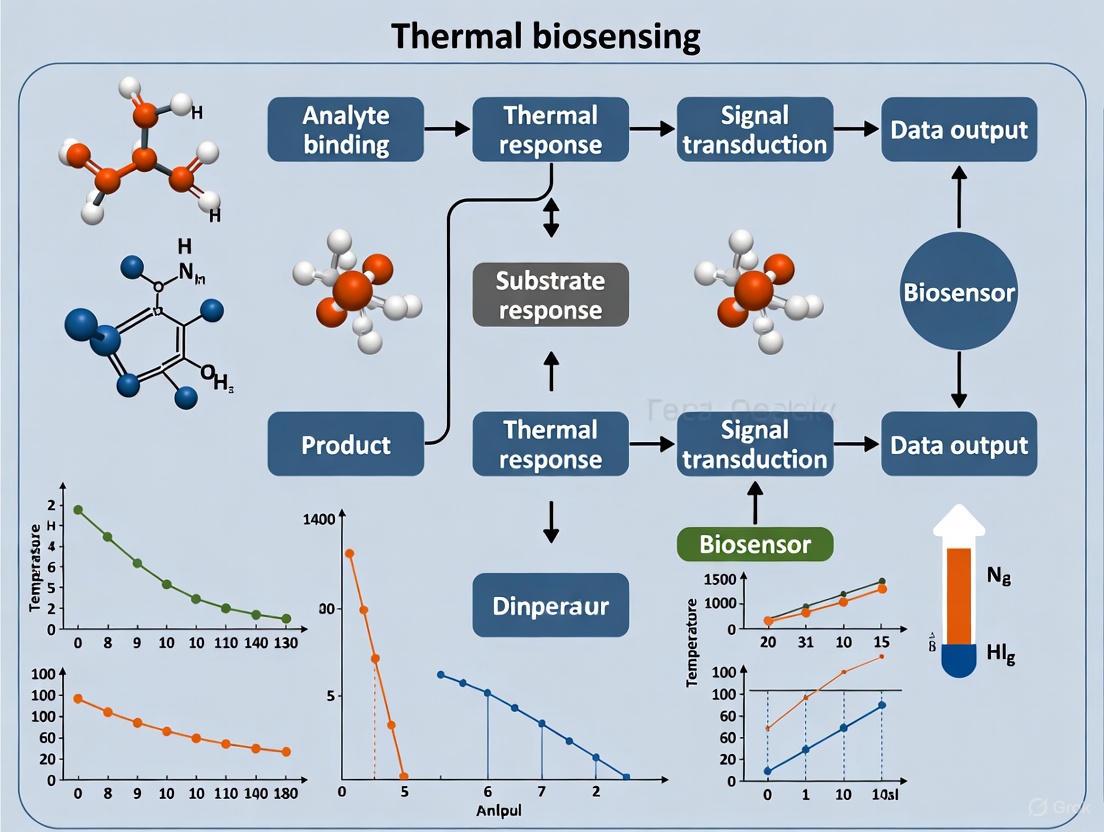
This article provides a comprehensive overview of thermal biosensors and their transformative role in fermentation and biomanufacturing processes.
Thermal Biosensors in Fermentation: Principles, Applications, and Real-Time Bioprocess Monitoring
Abstract
This article provides a comprehensive overview of thermal biosensors and their transformative role in fermentation and biomanufacturing processes. Tailored for researchers, scientists, and drug development professionals, it explores the foundational principles of thermal transduction, including the heat-transfer method (HTM), for monitoring biological reactions. It details methodological approaches for integrating these sensors into bioreactors to track key parameters like metabolite concentrations and cell viability in real-time. The content further addresses critical challenges such as sensor stability and signal interference, offering practical troubleshooting and optimization strategies. Finally, it validates the technology's performance against conventional methods and discusses its future potential in enabling intelligent, data-driven bioproduction for advanced therapeutics and bio-based products.
The Principles of Thermal Biosensing: From Calorimetry to Modern Heat-Transfer Methods
Thermal biosensors are a class of analytical devices that detect biological reactions by measuring the associated heat changes, or enthalpy changes. In the context of fermentation research, these sensors provide a non-invasive, label-free method for monitoring microbial activity and metabolic processes in real-time. The core principle relies on the fact that all biochemical reactions, including those in fermentation, are accompanied by either heat absorption (endothermic) or heat release (exothermic). By precisely measuring these thermal signatures, researchers can gain insights into microbial growth, substrate utilization, and product formation without the need for sampling or external labels. This direct transduction of biological events into measurable thermal signals makes thermal biosensing particularly valuable for monitoring fermentation processes, quality control in food microbiology, and pharmaceutical development [1] [2].
Fundamental Operating Principles
Thermodynamic Basis of Thermal Biosensing
The operational foundation of thermal biosensors is rooted in the first law of thermodynamics, which states that energy cannot be created or destroyed, only transferred or changed from one form to another. During biological reactions, the enthalpy change (ΔH) represents the heat transferred at constant pressure. In exothermic reactions, such as many metabolic processes, ΔH is negative as heat is released into the surroundings. Conversely, endothermic reactions absorb heat, resulting in a positive ΔH. Thermal biosensors function by detecting these minute temperature changes using highly sensitive thermistors or other temperature-sensing elements integrated into the measurement system. The measured thermal power is directly proportional to the reaction rate and the total heat produced or consumed provides information about the extent of the reaction [1].
Key Components of a Thermal Biosensor
A thermal biosensor system comprises several essential components that work in concert to detect and quantify biological reactions:
Bioreceptor Layer: This component provides specificity by incorporating biological elements such as enzymes, antibodies, DNA probes, or whole cells that selectively interact with the target analyte. In fermentation research, this could include receptors specific to microbial metabolites or cell surface markers.
Thermal Transducer: Typically consisting of thermistors or micro-fabricated temperature sensors, this component converts the heat generated or absorbed during the biological reaction into an electrical signal. Modern systems often use multiple temperature sensors to create temperature gradients and improve measurement accuracy.
Heat Sink/Reference System: A critical component that maintains a stable thermal reference point, allowing for differential measurements that compensate for ambient temperature fluctuations and non-specific binding events.
Signal Processing Electronics: This system amplifies, filters, and processes the raw electrical signals from the thermal transducer, converting them into meaningful thermal data that can be correlated with biological activity [3].
The integration of these components enables the detection of minute temperature changes as small as 10⁻⁵ °C, allowing for highly sensitive monitoring of biological reactions relevant to fermentation processes [1].
The Heat-Transfer Method (HTM) in Biosensing
HTM Fundamentals and Implementation
The Heat-Transfer Method (HTM) represents a significant advancement in thermal biosensing technology. This method employs temperature gradients and thermal currents to probe biomolecular interactions with remarkable sensitivity. The fundamental principle of HTM is rather straightforward: it requires a heat source and two thermometers positioned at different locations within the measurement chamber. When a biological interaction occurs, such as a substrate binding to an enzyme or an antigen-antibody complex formation, the local heat transfer properties change, which is detected by the differential temperature measurements between the two thermometers. This change in heat transfer resistance can be correlated to the concentration of the target analyte, enabling quantitative analysis of biological reactions [1].
In practice, HTM can be implemented with or without specific bioreceptors. Receptor-based applications make the system sensitive to an incredibly broad range of biotargets, including bacteria, virus particles, or DNA mutations. Receptor-free applications, particularly valuable in fermentation research, can monitor cell proliferation and evaluate the efficacy of antimicrobials at the cell-culture level. This flexibility makes HTM particularly suitable for diverse applications in medical diagnostics, food safety, and environmental monitoring, in addition to fermentation research [1].
Advantages of HTM in Fermentation Monitoring
The HTM approach offers several distinct advantages for fermentation research:
Label-free Detection: Unlike many optical methods, HTM does not require fluorescent or radioactive labeling, allowing natural monitoring of processes without potentially perturbing the system.
Versatility: The method can be applied to various sample types, including turbid or optically dense fermentation broths that would interfere with optical detection methods.
Real-time Monitoring: HTM enables continuous, real-time monitoring of fermentation processes, providing dynamic information about microbial growth and metabolic activity.
High Sensitivity: Modern HTM systems can detect incredibly low concentrations of analytes, making them suitable for monitoring subtle changes in fermentation processes [1].
Instrumentation and Methodologies
Thermal Biosensor Platforms for Fermentation Research
Various thermal biosensing platforms have been developed specifically for applications in fermentation and microbial ecology research:
Table 1: Thermal Biosensing Platforms in Fermentation Research
| Platform Type | Detection Principle | Application in Fermentation | Detection Time | References |
|---|---|---|---|---|
| Isothermal Microcalorimetry | Measures heat flow at constant temperature | Monitoring Lactobacillus plantarum activity | 4.7–18.6 hours | [2] |
| Heat-Transfer Method (HTM) | Measures changes in thermal resistance | Detection of bacteria, virus particles, DNA mutations | Real-time | [1] |
| Field-Effect Transistor-Based | Thermal detection via semiconductor properties | Real-time monitoring of microbial metabolites | Minutes to hours | [2] |
Experimental Protocol for Fermentation Monitoring
A standardized protocol for monitoring fermentation processes using thermal biosensing involves the following steps:
Sensor Preparation: Immobilize appropriate bioreceptors (e.g., enzymes, antibodies) or prepare receptor-free sensors on the thermal transducer surface. For general fermentation monitoring, receptor-free approaches are often sufficient.
Baseline Establishment: Introduce the growth medium or buffer solution to the sensor and allow the thermal signal to stabilize. Record the baseline temperature or heat transfer resistance for reference.
Sample Introduction: Inoculate the system with the microbial culture or introduce samples from an ongoing fermentation process. Maintain optimal environmental conditions (temperature, pH, oxygenation) throughout the measurement.
Continuous Monitoring: Record thermal signals continuously throughout the fermentation process. For isothermal microcalorimetry, maintain constant temperature and monitor heat flow. For HTM, monitor changes in heat transfer resistance.
Data Analysis: Correlate thermal signals with microbial activity, substrate consumption, or product formation using appropriate calibration curves or mathematical models.
Validation: Compare thermal biosensor data with conventional analytical methods (e.g., HPLC, cell counting) to validate the measurements [2].
This protocol enables real-time, non-invasive monitoring of fermentation processes, providing valuable insights into microbial kinetics and metabolic activity.
Research Reagent Solutions for Thermal Biosensing
The effective implementation of thermal biosensing in fermentation research requires specific reagents and materials tailored to detect relevant biological targets:
Table 2: Essential Research Reagents for Thermal Biosensing in Fermentation
| Reagent/Material | Function | Specific Application Examples |
|---|---|---|
| Specific Bioreceptors (Antibodies, Aptamers) | Molecular recognition elements that provide specificity for target analytes | Detection of specific microbial pathogens (Listeria spp., E. coli) in fermented products |
| Enzyme Substrates | React with specific enzymes to produce measurable heat signals | Monitoring enzymatic activity in fermentation broths (e.g., lactase activity in dairy fermentation) |
| Microbial Growth Media | Support microbial growth while compatible with thermal detection | Cultivation of starter cultures (Lactococcus, Lactobacillus) with minimal background thermal noise |
| Thermophilic Enzyme Panels | Heat-stable enzymes for high-temperature applications | Monitoring thermophilic fermentation processes |
| Nanoparticle-enhanced Reagents | Improve thermal signal amplification | Enhancing sensitivity for detecting low-abundance metabolites in complex fermentation matrices |
| Cell Membrane Permeabilizers | Facilitate intracellular metabolite detection | Monitoring internal metabolic processes during fermentation |
| Reference Buffer Systems | Provide stable thermal baselines | Correcting for non-specific thermal effects in complex fermentation media |
These reagents enable the precise detection and quantification of microbial activity and specific analytes in fermentation systems using thermal biosensing platforms [1] [2].
Applications in Fermentation Research
Thermal biosensors have demonstrated significant utility across various aspects of fermentation research and industrial biotechnology:
Monitoring Starter Culture Activity
Starter cultures, consisting of specific microorganisms such as Lactic Acid Bacteria (LAB) including Lactococcus and Lactobacillus species, are essential for initiating and controlling fermentation processes in dairy, meat, and beverage production. Thermal biosensors enable real-time monitoring of these cultures by detecting their metabolic heat production. For instance, isothermal microcalorimetry has been successfully employed to track Lactobacillus plantarum activity within 4.7–18.6 hours, ensuring optimal fermentation progress and consistent product quality. This rapid assessment allows for timely adjustments to fermentation parameters, preventing failed batches and maintaining production efficiency [2].
Pathogen Detection in Fermented Products
Despite the controlled nature of fermentation, pathogenic contamination remains a concern in food production. Thermal biosensors offer rapid detection capabilities for pathogens such as Listeria spp. and E. coli in fermented products. Electrochemical thermal biosensors can detect antimicrobial metabolites produced during competitive microbial interactions, providing an indirect method for monitoring pathogen suppression. This application is particularly valuable in cheese production, where LAB naturally compete with and suppress Listeria through bacteriocin production and pH reduction. The real-time monitoring capabilities of thermal biosensors enhance food safety protocols without disrupting the fermentation process [2].
Spoilage Monitoring and Quality Control
Thermal biosensors contribute significantly to quality control in fermentation processes by detecting spoilage microorganisms and their metabolites. For example, Quartz Crystal Microbalance (QCM) thermal sensors can detect biofilm formation by spoilage organisms through mass changes, while SPR-based thermal sensors identify quorum-sensing molecules that regulate spoilage pathways. This is particularly relevant in meat fermentation, where Pseudomonas-driven spoilage can be detected early through thermal monitoring of metabolic activity. Such early warning systems enable proactive quality management and reduce product loss [2].
Technological Integration and Future Perspectives
The integration of thermal biosensors with emerging technologies is expanding their capabilities in fermentation research:
The convergence of thermal biosensing with nanotechnology, CRISPR technology, artificial intelligence, and Internet of Things (IoT) systems is creating powerful platforms for advanced fermentation monitoring. Nanomaterials enhance thermal signal amplification, improving detection sensitivity for low-abundance metabolites. CRISPR systems provide unprecedented specificity in identifying target microbial sequences. AI algorithms process complex thermal data patterns to predict fermentation outcomes and optimize process parameters, while IoT connectivity enables real-time monitoring and control across distributed fermentation facilities. This integrated approach addresses current challenges related to complex food matrices, cost limitations, and the growing concern of antimicrobial resistance in fermentation systems [2].
Future developments in thermal biosensing for fermentation research are likely to focus on intelligent systems and wearable sensors that overcome existing barriers to adoption. While standardization and accessibility challenges remain, ongoing advancements position thermal biosensors as transformative tools that link microbial ecological insights to practical fermentation management solutions, ultimately leading to safer, higher-quality fermented products worldwide [2].
Performance Comparison with Other Biosensing Modalities
Thermal biosensors offer distinct advantages and limitations compared to other biosensing platforms commonly used in fermentation research:
Table 3: Comparison of Biosensing Platforms for Fermentation Monitoring
| Biosensor Type | Detection Principle | Advantages | Limitations | Fermentation Applications |
|---|---|---|---|---|
| Thermal | Enthalpy change detection | Label-free, works in turbid media, real-time monitoring | Lower specificity for complex analytes | Microbial activity monitoring, metabolic heat measurement |
| Electrochemical | Electron transfer measurement | High sensitivity, portable systems available | Requires electroactive species, interference from media | Pathogen detection, metabolite quantification |
| Optical (SPR) | Refractive index changes | High sensitivity, real-time binding kinetics | Sensitive to matrix effects, requires optical access | Protein interactions, biomarker detection |
| Piezoelectric (QCM) | Mass change detection | Label-free, real-time monitoring | Non-specific binding interference, viscosity sensitive | Biofilm formation, microbial adhesion studies |
| Lateral Flow Assays | Visual readout of binding events | Rapid, low-cost, point-of-use | Qualitative/semi-quantitative, limited multiplexing | Rapid pathogen screening, quality control checks |
This comparison highlights the complementary nature of different biosensing approaches and the specific niche where thermal biosensors provide unique value for fermentation research, particularly in scenarios requiring label-free detection in complex, optically dense matrices typical of fermentation broths [2].
Thermal biosensors, a class of analytical devices that translate biological interactions into measurable heat signals, are increasingly vital for monitoring and controlling fermentation processes. In the context of fermentation research, they provide a direct, label-free method to track microbial metabolism, enzyme activity, and analyte concentrations in real-time [4] [5]. Their operation is fundamentally based on the principle that most biological reactions, such as enzyme-substrate interactions or antigen-antibody binding, are accompanied by enthalpy changes [6]. By quantifying these exothermic or endothermic processes, thermal biosensors can deliver crucial quantitative data on the presence and concentration of specific biomolecules directly within the complex fermentation environment [4] [5]. This guide deconstructs the core components of a thermal biosensor, from its heat source to its transducer, providing fermentation researchers and drug development professionals with the technical knowledge to leverage this technology for enhanced process control and yield optimization.
Core Components of a Thermal Biosensor
A thermal biosensor is an integrated system where each component plays a critical role in ensuring accurate and reliable measurement. Its design aligns with the general architecture of all biosensors, which comprises a bioreceptor, a transducer, and associated electronics and display units [3]. The specific instantiation of these components in a thermal biosensor is as follows.
Bioreceptor: This is the biological recognition element immobilized on the sensor surface. It provides the selectivity to interact specifically with the target analyte of interest [3]. In fermentation, typical bioreceptors include:
- Enzymes: For sensing specific substrates (e.g., glucose, lactate) or inhibitors [4] [7].
- Antibodies or Aptamers: For detecting specific microbial cells, proteins, or toxins [5] [7].
- Whole Cells or Tissues: Utilizing metabolic pathways to sense a broad range of compounds [7]. Upon interaction with the analyte, the bioreceptor initiates a biochemical reaction that either releases or absorbs heat.
Thermal Transducer: This is the core of the sensor, responsible for converting the heat generated or absorbed by the bio-recognition event into an electrical signal [4] [5]. The most common devices used are:
- Thermistors: Resistive temperature devices whose electrical resistance changes predictably with temperature. They are highly sensitive and are often used in devices known as "enzyme thermistors" [4] [6].
- Thermocouples: Junctions of two dissimilar metals that generate a voltage proportional to the temperature difference between the measurement point and a reference point [5] [6].
- Resistive Temperature Detectors (RTDs): Sensors that use the predictable change in electrical resistance of metals (like platinum) with temperature [6]. The transducer is typically integrated into a setup that includes a heat source and a temperature-stabilized environment.
Heat Source and Thermal Management System: A controllable and stable heat source is essential for the operation of many thermal biosensor configurations. This system often involves a PID-controlled power resistor to maintain a specific base temperature or to generate a controlled temperature gradient [5]. Effective thermal insulation is critical to minimize heat dissipation to the environment, ensuring that the measured signal accurately reflects the reaction heat at the interface [5].
Signal Processing Electronics and Display: The small electrical signal from the transducer requires conditioning. This stage involves complex electronic circuitry for signal amplification, filtering to reduce noise, and conversion from analog to digital form [3]. The processed signal is then quantified and presented on a display unit—such as a liquid crystal display—in a user-interpretable format like numeric values, graphs, or images [3].
Table 1: Core Components of a Thermal Biosensor and Their Functions
| Component | Primary Function | Common Examples in Thermal Biosensors |
|---|---|---|
| Bioreceptor | Specific recognition and binding of the target analyte | Enzymes, antibodies, aptamers, whole cells [7] [3] |
| Thermal Transducer | Converts heat from the bioreaction into an electrical signal | Thermistor, Thermocouple, Resistive Temperature Detector (RTD) [4] [6] |
| Heat Source | Provides a stable and controlled thermal environment | PID-controlled power resistor, integrated heater [5] |
| Electronics | Conditions and processes the raw electrical signal | Amplifiers, filters, analog-to-digital converters [3] |
| Display | Presents the final quantitative result to the user | Liquid crystal display (LCD), computer interface, printer [3] |
Operational Principle: The Heat-Transfer Method (HTM)
A significant advancement in thermal biosensing is the Heat-Transfer Method (HTM), which does not primarily measure transient reaction enthalpy but instead monitors the persistent thermal interface resistance (Rth) between a solid sensor chip and the supernatant liquid [5]. This parameter responds strongly to molecular-scale changes at the solid-liquid interface, such as the binding of biomolecules or a change in the conformation of a surface layer.
The operational principle can be described by the following equation, adapted from the heat removal analysis in electronic components: Rth = (T1 - T2) / P [5] Where:
- Rth is the measured thermal resistance.
- T1 is the temperature of the chip, measured at its base.
- T2 is the temperature of the bulk liquid.
- P is the power supplied by the integrated heat source.
In practice, the chip surface is functionalized with a bioreceptor. The binding of target analytes (e.g., DNA, proteins, bacteria) to this surface layer alters the efficiency of heat transfer from the chip to the liquid. A classic example is the discrimination between double-stranded (ds) and single-stranded (ss) DNA: the dense, ordered ds-DNA layer has a relatively low Rth, while the more disordered, surface-covering random-coil structure of ss-DNA results in a higher Rth. This change is measurable as a step-like increase in the Rth value during thermal denaturation, with the inflection point corresponding to the DNA's melting temperature [5]. This principle has been successfully extended to detect proteins, neurotransmitters, viruses, and entire bacterial cells by functionalizing the chip with appropriate receptors like molecularly imprinted polymers (MIPs) or aptamers [5].
Figure 1: Schematic workflow of the Heat-Transfer Method (HTM) for biosensing.
Application in Fermentation Research
The integration of smart technologies, including advanced biosensors, is key to overcoming long-standing challenges in traditional fermentation, such as microbial variability, inconsistent product quality, and limited scalability [8]. Thermal biosensors contribute to this "smart fermentation" paradigm by enabling real-time, in-line monitoring of critical process parameters.
In fermentation research and control, thermal biosensors are particularly suited for:
- Monitoring Substrate and Metabolite Concentrations: Enzyme-based thermometric sensors can track the concentration of key compounds like glucose or lactate, providing direct insight into metabolic activity and pathway fluxes [4] [7].
- Ensuring Microbial Safety: They can be configured for the rapid detection of specific pathogenic bacteria (e.g., Listeria monocytogenes) or spoilage organisms, which is crucial for food and pharmaceutical fermentations [4] [9].
- Process Validation and Control: By providing quantitative, real-time data on analyte concentrations, thermal biosensors feed into control algorithms that can dynamically adjust nutrient feed, temperature, or pH to optimize yield and product quality [8] [7].
A significant advantage for fermentation processes is that thermal biosensors are generally insensitive to the optical and electrochemical properties of the sample [4]. This makes them robust against the turbidity, color, and complex composition of fermentation broths, where optical sensors might suffer from interference.
Table 2: Performance Characteristics of Biosensors Relevant to Fermentation
| Characteristic | Definition | Importance in Fermentation |
|---|---|---|
| Selectivity [3] | Ability to detect a specific analyte in a mixture. | Critical for tracking specific metabolites in a complex broth. |
| Sensitivity (LOD) [3] | Lowest concentration of analyte that can be reliably detected. | Enables early detection of contaminants or subtle metabolic shifts. |
| Reproducibility [3] | Ability to generate identical responses for repeated measurements. | Essential for reliable process monitoring and scale-up. |
| Stability [3] | Degree of susceptibility to ambient disturbances and signal drift. | Determines sensor longevity and reliability in long fermentation runs. |
| Response Time [6] | Speed at which the biosensor reacts to a concentration change. | Allows for real-time process control and rapid intervention. |
Experimental Protocol: Implementing a Thermal Biosensor
The following protocol outlines a generalized methodology for setting up and conducting an experiment using a thermal biosensor, such as an HTM platform, for detecting a specific analyte in a fermentation-relevant sample.
Aim: To detect and quantify a target analyte (e.g., a protein, bacterium, or DNA sequence) using the Heat-Transfer Method (HTM).
Materials and Reagents:
- HTM instrument with a sensor chip (e.g., gold, silicon, or diamond), integrated heater, and two thermocouples.
- Data acquisition system and computer with control software.
- Bioreceptor solution (e.g., antibody, aptamer, or molecularly imprinted polymer).
- Immobilization reagents (e.g., cross-linkers for gold surfaces: 11-Mercaptoundecanoic acid, N-(3-Dimethylaminopropyl)-N′-ethylcarbodiimide (EDC), N-Hydroxysuccinimide (NHS)).
- Analyte standards at known concentrations.
- Running buffer (e.g., Phosphate Buffered Saline - PBS).
- Test samples (e.g., clarified fermentation broth).
Procedure:
- Chip Functionalization:
- Clean the sensor chip according to manufacturer specifications.
- Immobilize the bioreceptor onto the chip surface. For a gold chip, this may involve creating a self-assembled monolayer (SAM) followed by activation with EDC/NHS to covalently bind protein-based receptors [5].
- Rinse the chip thoroughly with buffer to remove non-specifically bound receptors.
- Block the remaining active sites on the chip with an inert protein (e.g., Bovine Serum Albumin - BSA) to minimize non-specific binding in subsequent steps.
Instrument Calibration and Baseline Establishment:
- Assemble the sensor compartment, ensuring the functionalized chip and the T₂ thermocouple are correctly positioned [5].
- Fill the compartment with running buffer.
- Set the controller to maintain a stable base temperature (T₁). Apply a constant power (P) and allow the system to equilibrate.
- Record the stable T₂ temperature and calculate the baseline Rth value using Eq. (1).
Sample Measurement and Analyte Detection:
- Introduce the sample containing the target analyte into the sensor compartment.
- Continue monitoring T₁ and T₂ over time. The binding of the analyte to the surface-bound bioreceptor will change the thermal interface resistance.
- Observe the resulting shift in the Rth value. The magnitude of this change is often proportional to the concentration of the analyte [5].
Data Analysis:
- Plot the Rth values against time or analyte concentration.
- Generate a calibration curve using the analyte standards to enable quantitative determination of the target in unknown samples.
Chip Regeneration (Optional):
- Depending on the affinity of the interaction, the chip can often be regenerated for reuse by applying a solution that disrupts the analyte-bioreceptor binding (e.g., a low-pH buffer or a mild detergent), followed by re-equilibration with running buffer [5].
The Scientist's Toolkit: Essential Research Reagents and Materials
Table 3: Key Research Reagent Solutions for Thermal Biosensor Development
| Reagent/Material | Function | Application Note |
|---|---|---|
| Sensor Chip (Gold/Si/Diamond) | Solid support for immobilizing bioreceptors; part of the thermal transduction pathway. | Gold is preferred for surface plasmon resonance (SPR) and easy functionalization via thiol chemistry [5]. |
| Molecularly Imprinted Polymers (MIPs) | Synthetic, polymer-based bioreceptors with high stability for specific targets. | Used as robust artificial antibodies for detecting neurotransmitters, bacteria, or pollutants [5]. |
| Aptamers | Single-stranded DNA or RNA oligonucleotides that bind targets with high specificity. | Engineered to detect proteins at low concentrations; can be chemically synthesized and modified [5] [7]. |
| EDC/NHS Crosslinker Kit | Activates carboxyl groups on the sensor surface for covalent coupling to amine-containing bioreceptors. | Standard chemistry for immobilizing antibodies or enzymes on chip surfaces [5]. |
| Phosphate Buffered Saline (PBS) | Standard buffer for maintaining pH and ionic strength during experiments. | Used for diluting analytes, rinsing steps, and as a running buffer to maintain a consistent chemical environment [5]. |
Thermal biosensors represent a powerful and versatile tool for fermentation research. Their fundamental operating principle, based on the detection of heat changes or alterations in thermal resistance, provides a robust and direct method for monitoring biochemical events. Deconstructing the sensor into its essential components—the bioreceptor for specificity, the thermal transducer for signal conversion, the heat source for control, and the electronics for interpretation—provides a clear framework for their application. As the field of fermentation moves towards smarter, more data-driven processes enabled by the Internet of Things (IoT) and artificial intelligence (AI) [8], the integration of reliable, real-time sensory data from technologies like thermal biosensors will be indispensable. Their insensitivity to opaque and complex matrices makes them uniquely suited to overcome the challenges of traditional fermentation, paving the way for more consistent quality, improved safety, and enhanced scalability in the production of fermented foods, pharmaceuticals, and bio-based chemicals.
The Heat-Transfer Method (HTM) represents a significant advancement in thermal biosensing technology, functioning as a highly sensitive transducer that measures the interfacial thermal resistance (ITR) between a solid sensor chip and the adjacent liquid sample. Originally introduced in 2012 for DNA mutation analysis, HTM has evolved into a versatile platform for detecting diverse targets ranging from small molecules and viruses to whole cells in complex samples [10]. The fundamental operating principle involves applying a controlled temperature gradient across the solid-liquid interface and precisely measuring the thermal resistance (Rth), which is calculated as Rth = (T1 - T2)P⁻¹, where T1 represents the chip temperature, T2 is the temperature within the sample compartment, and P denotes the applied heating power [10]. This methodology enables researchers to probe biomolecular interactions without requiring complex receptor functionalization in many applications, as the presence of cells or molecules at the interface directly alters the measurable thermal transport properties.
Within fermentation research, thermal biosensors like HTM provide distinct advantages for real-time bioprocess monitoring. Traditional biosensors integrate biological recognition elements with physical transducers, combining enzymatic selectivity with analytical sensitivity to enable continuous monitoring in flow-injection mode [11]. The HTM platform extends these capabilities by allowing direct assessment of microbial presence, viability, and physiological status through changes in interfacial thermal properties, making it particularly valuable for optimizing fermentation processes, monitoring microbial metabolites, and ensuring culture viability in bioprocessing applications [11] [12].
Fundamental Principles of HTM Operation
Core Measurement Methodology
The HTM platform operates by establishing a precisely controlled thermal gradient across the interface between a sensor chip and the supernatant liquid. The primary measured parameter is the thermal resistance (Rth), which serves as a sensitive indicator of interfacial properties. The system typically incorporates a cylindrical sample compartment positioned above a polished sensor chip, with the chip temperature (T1) maintained at a defined setpoint using a power resistor system [10]. A critical innovation in modern HTM devices is the adjustable aspect ratio (Γ, height-to-diameter ratio) of the sample compartment, which can be systematically varied to influence temperature distribution and convective flows, thereby optimizing sensitivity for specific applications [10].
The thermal resistance measurement is exceptionally sensitive to nanoscale changes at the solid-liquid interface, including cell sedimentation, receptor-ligand binding, or molecular adsorption events. These interfacial alterations modify the heat transfer efficiency between the chip and supernatant, resulting in measurable Rth variations [10]. This sensitivity enables HTM to detect bacterial and human cells in complex samples and has been successfully implemented for identifying Noro and SARS-CoV-2 virus particles in bodily fluids when integrated with appropriate receptors [10].
Spontaneous Cell Detachment Phenomenon
A remarkable phenomenon observed in HTM systems is spontaneous cell detachment, wherein eukaryotic cells (including yeast and cancer cells) initially sediment onto a heated chip and then collectively detach after a sharply defined dwell time (td) [10]. This thermally driven effect occurs without external triggers and demonstrates high reproducibility with minimal variability. The detachment time td ranges between 10 minutes and 2 hours depending on chip temperature and cell type, and has been shown to be sensitive to cellular metabolic status, presence of nutrients, and cytotoxic compounds [10].
The underlying mechanism driving spontaneous cell detachment involves a complex interplay of several physical phenomena. Thermophoretic forces naturally drive particles and cells from warmer to cooler regions, while cell membrane protrusions (blebs) form on the heated side of cells through cytoskeletal reorganization [10]. Additional contributing factors may include Bernoulli forces from convective fluid movement and changes in Archimedes forces due to thermal expansion of cells upon chip contact, though modeling suggests the former may be too weak to directly lift sedimented cells [10]. The precise reason why detachment occurs only after a specific dwell time remains an active research question, though it appears connected to cumulative thermal effects on cellular structures and the surrounding microenvironment.
HTM Instrumentation and Experimental Design
HTM Sensing Device Configuration
Modern HTM devices feature sophisticated thermal control systems and adaptable sample compartments designed for precise thermal measurements. A typical device consists of a cylindrical sample compartment constructed from polyether ether ketone (PEEK) with a 16 mm diameter, positioned above a polished stainless steel sensor chip (22 mm diameter, 1.0 mm thickness) [10]. The chip is heated at its underside to a predefined temperature T1 using a power resistor combined with a copper disk to ensure homogeneous temperature distribution. The temperature T1 within the copper disk is monitored with an embedded thermocouple, while a second thermocouple measures temperature T2 at various points along the central axis of the sample compartment [10].
A key innovation in contemporary HTM systems is the variable aspect ratio capability, enabled by a piston-like top lid that can be vertically adjusted using a precision screw mechanism. This allows the inner height (hi) of the sample compartment to be regulated between 2.0 and 16.0 mm, corresponding to aspect ratios (Γ) between 0.125 and 1.0 [10]. This adjustability is crucial for optimizing thermal gradients and convective patterns for different experimental requirements. Sample inlet and outlet ports are strategically positioned approximately 2.5 mm above the chip surface to minimize sedimentation time, with their height adjustable between 0.5 and 6.0 mm via rotatable PEEK cylinders embedded in the upper device body [10].
Thermal Control and Measurement Specifications
The HTM measurement system employs custom-built electronic modules specifically designed for regulating and monitoring temperatures via closed-loop feedback systems [10]. These systems function as dual-channel voltage sources, providing precise thermal management throughout experiments. The thermal resistance Rth is continuously calculated from the measured temperature difference (T1 - T2) and applied power P, with data typically acquired at frequencies sufficient to capture dynamic interfacial processes.
To minimize heat loss and ensure measurement accuracy, the lower device body housing the copper disk and power resistor is designed with thermal insulation properties, while downward heat loss is further reduced by a press-fit Teflon disk (20.0 mm thickness) [10]. All device components are selected for chemical resilience and sterilizability, enabling applications across diverse biological and chemical contexts. The combination of precise thermal control, adaptable geometry, and robust construction makes modern HTM systems suitable for prolonged biological monitoring applications, including fermentation processes and drug efficacy studies.
HTM Applications in Fermentation Research
Monitoring Microbial Viability and Metabolic Status
HTM has demonstrated significant utility in fermentation research through its ability to monitor microbial viability and metabolic status in real-time. The spontaneous cell detachment phenomenon provides a quantitative metric (dwell time td) that varies with cellular physiology, enabling distinction between different yeast strains and monitoring their response to environmental conditions [10]. For Saccharomyces cerevisiae, a fundamental organism in fermentation processes, dwell time td decreases exponentially with increasing chip temperature and varies significantly depending on the metabolic status of the cells [10].
Notably, the presence of nutrients accelerates detachment in a concentration-dependent manner, suggesting the method's sensitivity to metabolic processes [10]. This capability is particularly valuable in fermentation monitoring, where microbial viability and metabolic activity directly impact process efficiency and product quality. Additionally, at lower chip temperatures (e.g., 25°C) and in the presence of nutrients, yeast cells exhibit sustained oscillations in the Rth signal with defined periodicity resembling glycolytic oscillations, providing insight into fundamental metabolic rhythms [10]. These measurements offer advantages over traditional fermentation monitoring approaches that often rely on sampling and offline analysis, which are labor-intensive and introduce delays in process control [11].
Antimicrobial Efficacy Assessment in Fermentation Context
HTM provides a valuable platform for evaluating antimicrobial compound efficacy against fermentation-relevant microorganisms, with direct applications in contamination control and culture management. Research has demonstrated that HTM can effectively measure the impact of antibiotics and antiseptics on yeast cultures, corroborating results from reference assays [10]. For example, Amphotericin B—an antifungal drug that binds to ergosterol in yeast cell membranes—produces measurable changes in detachment parameters when applied to yeast cultures [10] [12].
Similarly, antiseptics like povidone-iodine, which permeate cell walls and membranes to oxidize proteins, nucleic acids, and fatty acids, induce detectable alterations in thermal detachment behavior [10]. This application is particularly relevant in fermentation processes where microbial contamination can compromise product quality and safety, especially in dairy, meat, and plant-based fermentations that support diverse microbial ecosystems [12]. The method's ability to rapidly assess antimicrobial effects supports more efficient bioprocess optimization and contamination response strategies.
Table 1: HTM Applications in Fermentation Monitoring
| Application Area | Measured Parameters | Fermentation Relevance | Reference Organisms |
|---|---|---|---|
| Microbial Viability Assessment | Dwell time (td), Thermal resistance (Rth) oscillations | Real-time culture health monitoring | S. cerevisiae, Lactobacillus spp. [10] [12] |
| Strain Differentiation | Characteristic dwell times (td) | Starter culture selection and quality control | Yeast strains with different flocculation genes [10] |
| Metabolic Activity Monitoring | Nutrient-dependent td changes, Rth oscillations | Process optimization and endpoint determination | S. cerevisiae in glycolytic oscillations [10] |
| Antimicrobial Efficacy | Compound-induced td changes | Contamination control and preservation optimization | Yeast cultures with Amphotericin B, povidone-iodine [10] |
Experimental Protocols for Fermentation Monitoring
HTM Protocol for Yeast Culture Analysis in Fermentation Conditions
This protocol details the application of HTM for monitoring yeast cultures under conditions relevant to fermentation processes, enabling assessment of viability, metabolic status, and antimicrobial susceptibility.
Materials and Reagents:
- Yeast culture (e.g., Saccharomyces cerevisiae) in appropriate fermentation medium
- Sterile phosphate-buffered saline (PBS) for control measurements
- Antimicrobial compounds for efficacy testing (e.g., Amphotericin B)
- HTM device with variable aspect ratio compartment
- Temperature calibration standards
Procedure:
- Device Preparation: Sterilize the HTM sample compartment and sensor chip using appropriate methods (e.g., ethanol sterilization, UV treatment). Set the aspect ratio (Γ) to 0.5 unless specific experimental requirements dictate otherwise [10].
Temperature Calibration: Implement the desired chip temperature (T1), typically ranging from 25°C to 37°C for yeast cultures, using the closed-loop feedback system. Allow the system to stabilize until temperature variations are below ±0.1°C [10].
Sample Introduction: Inject yeast culture (approximately 1.5 mL for a 16 mm diameter compartment) through the sample inlet, ensuring minimal bubble formation. The initial cell concentration should be standardized (e.g., OD600 = 0.5) for comparative experiments [10].
Data Acquisition: Initiate continuous monitoring of thermal resistance (Rth) with a sampling frequency of at least 1 Hz. Record the baseline Rth value immediately after sample introduction and monitor subsequent changes [10].
Detachment Time Determination: For spontaneous detachment experiments, maintain constant T1 and record the dwell time (td) when a sharp decrease in Rth indicates collective cell detachment. Multiple replicates (n ≥ 3) are recommended for statistical significance [10].
Metabolic Activity Assessment: For monitoring metabolic oscillations, set T1 to 25°C and provide appropriate nutrients. Record Rth oscillations over several hours, noting periodicity and amplitude changes that reflect glycolytic activity [10].
Antimicrobial Testing: Introduce antimicrobial compounds at desired concentrations after establishing a stable Rth baseline. Monitor changes in td or Rth patterns compared to untreated controls [10].
Data Analysis: Calculate relevant parameters including baseline Rth, detachment magnitude (ΔRth), dwell time (td), and oscillation characteristics using appropriate computational methods.
Protocol for Fermentation Metabolite Monitoring
This protocol adapts HTM for monitoring specific fermentation metabolites through coupled enzyme systems, enabling real-time tracking of metabolic progress during fermentation processes.
Materials and Reagents:
- Fermentation broth samples (clarified by centrifugation or filtration)
- Enzyme thermistor modules with immobilized enzymes specific to target metabolites (e.g., glucose oxidase, lactate oxidase)
- Reference buffer solutions for calibration
- Flow-injection analysis (FIA) system with peristaltic pump
Procedure:
- System Setup: Connect the HTM device to a flow-injection analysis system with immobilized enzyme column. Maintain constant flow rate (typically 0.5-1.0 mL/min) using a peristaltic pump [11].
Enzyme Column Preparation: Immobilize appropriate oxidases (e.g., glucose oxidase for glucose monitoring) on solid supports within the enzyme thermistor module. Validate enzyme activity with standard solutions before sample analysis [11].
Calibration: Inject standard solutions of target metabolites at known concentrations (e.g., 0.1-10 mM glucose) to establish a calibration curve relating Rth changes to metabolite concentration [11].
Sample Analysis: Inject clarified fermentation broth samples into the FIA system. Record the transient Rth response as samples pass through the enzyme thermistor module [11].
Data Interpretation: Calculate metabolite concentrations from calibration curves. For continuous monitoring, establish automated sampling at defined intervals throughout the fermentation process [11].
Validation: Periodically validate HTM measurements with reference methods (e.g., HPLC) to ensure accuracy, particularly when analyzing complex fermentation matrices [11].
Quantitative Data Analysis in HTM Experiments
Key Parameters and Their Significance
HTM experiments generate quantitative data that require systematic analysis to extract biologically meaningful information. The table below summarizes critical parameters obtained from HTM measurements and their significance in fermentation research contexts.
Table 2: Key Quantitative Parameters in HTM Fermentation Monitoring
| Parameter | Definition | Significance in Fermentation Research | Typical Values/Units |
|---|---|---|---|
| Thermal Resistance (Rth) | Rth = (T1 - T2)P⁻¹ | Indicator of cell density and interface properties | 1-10 K/W [10] |
| Dwell Time (td) | Time between cell sedimentation and spontaneous detachment | Marker of cellular viability and metabolic status | 10 min - 2 h [10] |
| Detachment Magnitude (ΔRth) | Change in Rth during detachment event | Reflects proportion of detached cells | Varies with cell density [10] |
| Oscillation Period | Time between consecutive Rth peaks in metabolic oscillations | Indicator of glycolytic rhythm | Minutes to hours [10] |
| Temperature Coefficient | ∂(td)/∂T | Sensitivity to thermal conditions | Exponential decrease with T1 [10] |
Data Processing and Interpretation
Processing HTM data requires careful attention to signal characteristics and appropriate statistical approaches. Raw Rth data should initially be filtered to remove high-frequency noise while preserving meaningful biological signals, typically using low-pass digital filters with cutoff frequencies appropriate for the observed phenomena (e.g., 0.1 Hz for detachment events, 0.01 Hz for metabolic oscillations) [10]. Baseline drift, often resulting from gradual temperature equilibration or systemic changes, should be corrected using polynomial fitting or moving average subtraction [13].
For spontaneous detachment experiments, td is best determined through algorithmic detection of the point of maximum negative derivative in the Rth curve, followed by visual confirmation [10]. Metabolic oscillations require spectral analysis approaches such as Fast Fourier Transform (FFT) to identify dominant frequencies and their power distribution [10]. When comparing experimental conditions, statistical testing (e.g., t-tests for normally distributed data, Mann-Whitney U tests for non-parametric distributions) should be applied to td values and oscillation parameters to establish significance [13].
In fermentation monitoring applications, establishing correlations between HTM parameters and conventional metrics (e.g., cell density, viability, metabolite concentrations) strengthens the biological interpretation of thermal data. Multivariate analysis approaches may be valuable when multiple HTM parameters show concurrent changes in response to fermentation conditions [10] [12].
Research Reagent Solutions for HTM Experiments
Table 3: Essential Research Reagents and Materials for HTM in Fermentation Research
| Reagent/Material | Function/Application | Specifications/Notes |
|---|---|---|
| Polished Stainless Steel Chip | Sensor surface for thermal measurements | Alloy AISI 304, 22 mm diameter, 1.0 mm thickness; provides consistent thermal properties [10] |
| S. cerevisiae Cultures | Model fermentation organism | Various strains with different flocculation properties for method validation [10] |
| Amphotericin B | Antifungal agent for efficacy studies | Binds to ergosterol in yeast membranes; positive control for antimicrobial testing [10] |
| Povidone-iodine | Antiseptic for antimicrobial studies | Permeates cell walls to oxidize cellular components; alternative antimicrobial agent [10] |
| Lactobacillus Medium | Culture medium for lactic acid bacteria | Supports growth of bacteria relevant to dairy and meat fermentations [12] |
| Immobilized Enzyme Columns | Metabolite-specific detection | Oxidases (e.g., glucose oxidase, lactate oxidase) immobilized on solid supports [11] |
| Polyether Ether Ketone (PEEK) | Sample compartment material | Chemically resilient, sterilizable, low thermal conductivity [10] |
Visualization of HTM Experimental Workflow
The following diagram illustrates the key steps in a typical HTM experiment for fermentation monitoring:
HTM Fermentation Monitoring Workflow
This workflow outlines the standardized procedure for implementing HTM in fermentation research, highlighting the continuous monitoring capability and data analysis phases that support process optimization decisions.
The integration of HTM into fermentation research represents a significant advancement in bioprocess monitoring capabilities. As thermal biosensing technology continues to evolve, several promising directions emerge for enhancing HTM applications in industrial biotechnology. The combination of HTM with other sensing modalities—such as impedance spectroscopy and microgravimetry—could provide multidimensional characterization of microbial cultures, offering complementary data on electrical and mechanical properties alongside thermal parameters [10]. Additionally, the development of multi-array HTM systems enabling parallel monitoring of multiple cultures or conditions would significantly increase throughput for fermentation optimization and drug screening applications.
Advances in computational modeling and artificial intelligence are poised to enhance HTM data interpretation, potentially enabling prediction of fermentation outcomes from complex thermal signatures [12]. The integration of HTM systems into Internet of Things (IoT) frameworks could facilitate remote monitoring and control of fermentation processes, supporting the development of fully automated bioprocessing systems [12]. Furthermore, the application of HTM to novel fermentation systems, including non-conventional microbes and co-culture fermentations, represents an expanding frontier with significant potential for both fundamental research and industrial application.
In conclusion, the Heat-Transfer Method provides a powerful, label-free approach for probing biomolecular interactions and cellular responses through temperature gradients. Its application in fermentation research enables real-time monitoring of microbial viability, metabolic status, and antimicrobial susceptibility, addressing critical needs in bioprocess optimization and control. As the methodology continues to evolve and integrate with complementary technologies, HTM is positioned to make increasingly significant contributions to fermentation science and industrial biotechnology.
This technical guide provides an in-depth examination of three core performance metrics—sensitivity, dynamic range, and response time—for thermal biosensors operating within fermentation research environments. Thermal biosensors, particularly enzyme thermistors, function by detecting minute heat changes generated by biochemical reactions, combining the specificity of biological recognition elements with the sensitivity of thermal transducers. Within bioprocess monitoring, these sensors enable real-time, on-line analysis of critical parameters including penicillin, glucose, lactate, and sucrose concentrations during fermentation. This whitepaper details the operational principles, quantifiable performance characteristics, experimental validation methodologies, and implementation protocols essential for researchers and scientists engaged in optimizing bioprocesses for pharmaceutical development and industrial biotechnology.
Thermal biosensors represent a specialized class of biosensors that transduce biochemical information into a quantifiable thermal signal. The fundamental operating principle is based on the detection of heat changes (enthalpy variations) resulting from catalytic or affinity reactions involving a biologically active element [4]. In an enzyme thermistor (ET), one of the most established thermal biosensor formats, the heat generated or absorbed during an enzymatic reaction is measured with a precision thermistor [11]. This device typically consists of a small column containing an immobilized enzyme, through which the sample solution flows, housed within a thermally insulated environment to minimize heat loss. The temperature difference between the inlet and outlet of the column is measured, and this differential is directly proportional to the analyte concentration in the sample [4].
The integration of thermal biosensors into fermentation systems represents a significant advancement over traditional offline analysis methods. During bioprocessing, cells are subject to fluctuating nutrient levels, pH, and oxygen availability despite attempts to tightly regulate reactor conditions [7]. Thermal biosensors, when configured in a flow-injection analysis (FIA) system, allow for continuous, on-line monitoring of essential fermentation metabolites and substrates, including penicillin V, penicillin G, glucose, lactate, and sucrose [11]. This capability provides researchers with real-time data on process status, enabling immediate intervention and optimization, which leads to significant improvements in yield, productivity, and consistency for drug development and industrial bioprocessing applications.
Core Performance Metrics: Definitions and Significance
The performance and reliability of thermal biosensors in fermentation monitoring are characterized by three interdependent metrics. These metrics determine the sensor's suitability for specific applications and its overall analytical value.
Sensitivity: In the context of thermal biosensors, sensitivity refers to the magnitude of the temperature change (ΔT) measured per unit change in analyte concentration [4]. It is typically expressed in units of °C/mM or m°C/mM. High sensitivity enables the detection of low analyte concentrations, which is crucial for monitoring substrate depletion or product formation in fermentation broths. The sensitivity is influenced by factors including the enthalpy change (ΔH) of the biocatalytic reaction, the specific activity and amount of the immobilized enzyme, and the thermal characteristics of the flow system.
Dynamic Range: This metric defines the span of analyte concentrations over which the biosensor provides a usable response, bounded by the lower limit of detection (LOD) and the upper limit of quantification [7]. A wide dynamic range is essential for fermentation applications, as analyte concentrations can vary by several orders of magnitude throughout a bioprocess cycle. For instance, glucose concentration may start high and decrease progressively, requiring the sensor to remain operational across this entire concentration spectrum.
Response Time: Response time characterizes the speed at which a biosensor reaches its output signal after a change in analyte concentration [7]. In practice, it is often defined as the time required to reach 90% or 95% of the final steady-state signal following a step change in concentration. A fast response time is critical for real-time process monitoring and control, as it determines how quickly process deviations can be detected and corrected. In FIA systems incorporating thermal biosensors, assay times as low as 80 seconds have been achieved, even with sample pre-treatment steps [11].
Table 1: Key Performance Metrics for Thermal Biosensors in Fermentation Monitoring
| Performance Metric | Technical Definition | Significance in Fermentation Research | Typical Targets in Bioprocessing |
|---|---|---|---|
| Sensitivity | Measured temperature change (ΔT) per unit change in analyte concentration (e.g., °C/mM) | Determines the lowest detectable concentration of substrates/metabolites; crucial for identifying rate-limiting steps | Penicillin, Glucose, Lactate, Sucrose [11] |
| Dynamic Range | Concentration span between minimal and maximal detectable signals [7] | Ensures accurate measurement throughout the bioprocess as analyte levels fluctuate widely | Varies by analyte; must cover expected physiological or process ranges |
| Response Time | Time required to reach 90-95% of maximum signal after analyte exposure [7] | Enables real-time process monitoring and control; critical for fed-batch fermentation optimization | Assay times of 80 seconds reported for penicillin with FIA systems [11] |
Experimental Protocols for Metric Characterization
Sensitivity and Dynamic Range Determination
A standardized dose-response protocol is essential for characterizing the sensitivity and dynamic range of a thermal biosensor.
Protocol:
- System Calibration: Establish a stable baseline using the carrier buffer (e.g., phosphate buffer, pH 7.4) flowing through the enzyme thermistor at a constant rate (e.g., 0.5-1.5 mL/min).
- Sample Preparation: Prepare a series of standard solutions with known analyte concentrations spanning the expected physiological range (e.g., 0.1 mM to 50 mM for glucose).
- Measurement Sequence: Inject standard solutions in increasing order of concentration into the FIA system. For each concentration, record the steady-state temperature change (ΔT) measured by the thermistor.
- Data Analysis: Plot the measured ΔT against the corresponding analyte concentration. The sensitivity is determined from the slope of the linear portion of the dose-response curve. The dynamic range is identified as the concentration interval where the response is linear and reproducible.
- Limit of Detection (LOD) Calculation: The LOD is typically calculated as the analyte concentration yielding a signal equivalent to three times the standard deviation of the baseline noise.
Technical Considerations:
- A common challenge with oxidase-based sensors (e.g., glucose oxidase) is oxygen limitation at high substrate concentrations, which can reduce the linear dynamic range [11]. This can be mitigated by using oxygen-saturated buffers or incorporating an auxiliary oxygen reference electrode.
- The immobilization method and enzyme activity directly impact sensitivity. The enzyme column's activity should be checked regularly using a known standard to ensure consistent performance.
Response Time Assessment
Evaluating the dynamic performance, particularly the response time, is vital for applications requiring rapid feedback.
Protocol:
- System Setup: Configure the FIA system with the shortest possible tubing connections between the injection valve, enzyme column, and thermistor to minimize dead volume.
- Step Change Introduction: While the system is at baseline, introduce a sharp step-change in analyte concentration by switching from a blank carrier buffer to a buffer containing a high, but within-range, analyte concentration.
- Data Acquisition: Record the temperature signal at a high frequency (e.g., 10 Hz) from the moment of the switch until a new steady-state signal is established.
- Time Constant Calculation: The response time is typically reported as the time taken for the signal to rise from 10% to 90% of the total step change magnitude (T~10-90~). The system's time constant (τ) can also be derived by fitting the response curve to a first-order exponential model.
Technical Considerations:
- The overall response time is a combination of the intrinsic enzyme reaction kinetics, the diffusion time of the analyte into the immobilized enzyme matrix, and the hydraulic dispersion within the FIA system [7].
- For processes requiring very fast control, hybrid approaches that combine stable systems with faster-acting components may be necessary to improve overall performance [7].
The Scientist's Toolkit: Essential Research Reagents and Materials
The successful implementation of thermal biosensing in fermentation research relies on a specific set of reagents, materials, and instrumentation.
Table 2: Key Research Reagent Solutions for Thermal Biosensor Development
| Item/Category | Function/Description | Example Application in Fermentation |
|---|---|---|
| Immobilized Enzyme Column | Biorecognition element; catalyzes the reaction generating measurable heat | β-lactamase for penicillin G monitoring; Glucose oxidase for glucose sensing [11] |
| Flow-Injection Analysis (FIA) System | Automated sample handling; delivers samples/reagents to the sensor in a reproducible manner | Enables continuous on-line monitoring from bioreactors [11] |
| Thermistor/ Thermal Detector | Transducer; measures minute temperature changes from the enzymatic reaction | Paired thermistors at column entrance/exit measure differential temperature [4] |
| Biocompatible Tubing & Connectors | Forms a closed, sterile flow path for sample transport from bioreactor | Maintains aseptic conditions during extended fermentation runs |
| Standard Analytic Solutions | Used for sensor calibration and determination of sensitivity/dynamic range | Preparation of known penicillin/glucose concentrations for calibration curves |
Signaling Pathways and Workflow Visualization
The following diagrams illustrate the operational principle of a thermal biosensor and its integration into a fermentation monitoring workflow.
Thermal Biosensor Operating Principle
Fermentation Monitoring with Integrated Thermal Biosensor
The rigorous characterization of sensitivity, dynamic range, and response time is fundamental to deploying reliable thermal biosensors in fermentation research and development. These metrics collectively define the analytical capabilities and limitations of the biosensing system, guiding researchers in sensor selection, experimental design, and data interpretation. The integration of enzyme thermistors within FIA systems provides a robust platform for the on-line monitoring of critical bioprocess parameters, offering significant advantages in terms of automation, real-time data acquisition, and potential for feedback control. As the field advances, the ongoing refinement of these performance metrics, coupled with improved bioreceptor engineering and miniaturized thermal detection technologies, will further solidify the role of thermal biosensing in accelerating biopharmaceutical development and optimizing industrial-scale bioprocesses.
Implementing Thermal Biosensors for Real-Time Fermentation Monitoring and Control
The transition from laboratory-scale bioreactors to industrial-scale fermenters represents a critical, high-risk stage in bioprocess development. The primary challenge lies in maintaining optimal process performance and metabolic control amid changing physical and chemical environments at different scales. Within this framework, thermal biosensors provide a robust tool for real-time, in-line monitoring of key metabolic activities, offering unique advantages for process control and scale-up validation [14]. This technical guide outlines the integration of thermal biosensor data with advanced modeling approaches to create a systematic framework for successful bioprocess scale-up, specifically within the pharmaceutical and biotech sectors.
Fundamental Concepts: Bioreactors, Fermenters, and Thermal Biosensing
Distinguishing Bioreactors and Fermenters
While the terms are often used interchangeably, a functional distinction exists. A bioreactor is a versatile vessel supporting various biological processes, including cell cultures (mammalian, insect, plant) for products like vaccines and monoclonal antibodies [15]. A fermenter is typically applied to microbial cultivation (bacteria, yeast, fungi) for products like antibiotics, organic acids, and enzymes [15]. The scaling strategies discussed herein are applicable to both, though the examples focus on microbial fermentation.
Principles of Thermal Biosensors in Fermentation
Thermal biosensors, particularly enzyme thermistors, function by measuring the heat evolved or absorbed during biochemical reactions [14]. This heat is a universal product of metabolic processes, making thermal biosensors broadly applicable.
- Working Principle: The underlying principle is that all biological reactions involve enthalpy changes. The total heat (Q) released or absorbed is proportional to the total number of product molecules (np) and the molar enthalpy (ΔH) of the reaction, expressed as
Q = -n<sub>p</sub>ΔH[14]. This heat exchange causes a temperature change (ΔT) in the reaction medium, which is related to the system's heat capacity (Cp) byQ = C<sub>p</sub>ΔT[14]. - The Enzyme Thermistor Device: A standard configuration involves a small column packed with immobilized enzyme particles through which the sample stream flows. As the analyte contacts the enzyme, the catalytic reaction generates heat. A thermistor, a temperature-sensitive resistor, detects this change. The resulting signal is proportional to the analyte concentration [14]. This setup is incorporated into a fermentation system via a flow-injection analysis (FIA) loop that aseptically draws culture broth or filtrate.
Diagram: Operational workflow of an enzyme thermistor integrated into a fermentation line.
Scale-Up Challenges and Monitoring Solutions
Key Scale-Up Hurdles
The core challenge of scale-up is the non-linear change in critical environmental parameters as vessel volume increases. These changes can significantly alter microbial physiology and process productivity.
Table: Primary Scale-Up Challenges and Their Consequences
| Scale-Dependent Parameter | Laboratory Scale (1-10 L) | Industrial Scale (10,000+ L) | Impact on Bioprocess |
|---|---|---|---|
| Mixing Time | Short (Seconds) | Long (Minutes to Tens of Minutes) | Nutrient, pH, and temperature gradients; substrate inhibition. |
| Oxygen Mass Transfer (kLa) | Easily controlled and high. | Difficult to maintain; can become limiting. | Shift to anaerobic metabolism; reduced product yield. |
| Power Input/Volume | High | Lower (due to mechanical stress limits) | Reduced shear; affects mixing and mass transfer. |
| Heat Transfer | Efficient (Large surface area-to-volume) | Less efficient (Small surface area-to-volume) | Risk of localized overheating and enzyme denaturation. |
The Role of Thermal Biosensors in Scale-Up
Thermal biosensors address these challenges by providing direct, real-time insight into metabolic activity, which is a functional outcome of the physicochemical environment.
- Gradient Detection: By measuring metabolic heat output at different points in a fermenter (if multiple probes are used), thermal biosensors can help identify poorly mixed zones where metabolic activity is sub-optimal.
- Process Validation: A consistent metabolic heat profile between small and large scales is a strong indicator of equivalent physiological states, validating the scale-up strategy [14].
- Specific Analytics: Thermal biosensors have been successfully applied to monitor key fermentation metabolites, providing data for process control. Table: Example Analytics for Thermal Biosensors in Fermentation
| Analyte | Bioreceptor (Enzyme) | Application Context |
|---|---|---|
| Glucose | Glucose Oxidase | Saccharification process control, carbon source feeding [16]. |
| Lactate | Lactate Oxidase | Monitoring microbial metabolism and cell culture health [14]. |
| Ethanol | Alcohol Oxidase | Bioethanol production, fermentation progress [14]. |
| Penicillin | β-Lactamase | Antibiotic production monitoring [14]. |
| Glutamate | Glutamate Oxidase | Amino acid production [16]. |
Model-Driven Integration Strategies
A modern, rational scale-up strategy integrates real-time sensor data with mathematical models to predict and control large-scale performance.
Mechanistic Modeling Frameworks
Mechanistic models, derived from first principles, are invaluable for understanding the interactions between microbial kinetics and reactor physics [17].
- Unstructured Kinetic Models: These models treat the cell mass as a single entity and are useful for simulating overall bioreactor dynamics. They are often based on the Monod equation for substrate-limited growth and can be extended to include product formation (e.g., Luedeking-Piret model) and inhibition [17]. Table: Common Unstructured Kinetic Models for Fermentation
| Model Name | Mathematical Expression | Application Context |
|---|---|---|
| Monod | (\mu = \mu{max} \frac{S}{KS + S}) | Substrate-limited growth. |
| Haldane-Andrews | (\mu = \mu{max} \frac{S}{KS + S + S^2/K_i}) | Substrate-inhibited growth (e.g., phenol). |
| Contois | (\mu = \mu{max} \frac{S}{KS X + S}) | High-cell-density cultures where diffusion limits growth. |
| Luedeking-Piret | (\frac{dP}{dt} = \alpha \frac{dX}{dt} + \beta X) | Product formation (α: growth-associated, β: non-growth-associated). |
Legend: (\mu): Specific growth rate; (\mu_{max}): Max. specific growth rate; S: Substrate concentration; X: Biomass concentration; KS: Saturation constant; Ki: Inhibition constant; P: Product concentration.
Data-Driven and Hybrid Approaches
With the advent of big data and machine learning (ML), data-driven models have become powerful tools.
- Machine Learning (ML) Models: Algorithms like Artificial Neural Networks (ANNs) can learn complex, non-linear relationships between process parameters (inputs) and outcomes (outputs) directly from historical data, without requiring explicit mechanistic knowledge [17].
- Hybrid Modeling: This is the most powerful approach for scale-up. It combines the mechanistic understanding of kinetic and transport models with the pattern-recognition capability of ML. For instance, a mechanistic model can describe the overall reactor hydrodynamics, while an ML model, fed by real-time thermal biosensor data, corrects the prediction of the metabolic reaction rates [17].
Diagram: A hybrid modeling framework integrating sensor data and mechanistic knowledge for scale-up prediction.
Experimental Protocols for Scale-Up Validation
Protocol: Integrating a Thermal Biosensor for On-Line Metabolite Monitoring
This protocol details the setup for using an enzyme thermistor to monitor glucose in a fermentation broth [14].
Immobilization of Glucose Oxidase:
- Materials: Glucose oxidase (GOD), γ-aminopropyl triethoxysilanized controlled-pore glass (CPG) beads, glutaraldehyde, 0.1 M phosphate buffer (pH 7.0), 0.1 M triethanolamine.
- Procedure: Add desired units of GOD to 1 mL of activated CPG. Allow immobilization to proceed at 4°C for 12 hours with gentle mixing. Wash the preparation at least 10 times over a glass filter with phosphate buffer. Treat with triethanolamine for 1 hour to quench unreacted groups, then wash five more times before storage at 4°C or immediate packing into the column [14].
Biosensor Integration and Operation:
- Materials: 1 mL Delrin or Teflon column, Veco 41A28 thermistor (or equivalent), peristaltic pump, sample injection valve, data acquisition system.
- Assembly: Pack the immobilized enzyme column. Connect the column to the FIA system using a peristaltic pump to drive the carrier buffer (e.g., 0.1 M phosphate, pH 7.0). Position the thermistor in direct contact with the liquid stream exiting the enzyme column.
- Calibration: Inject standard glucose solutions (e.g., 0.1, 0.5, 1.0, 2.0 mM) through the system and record the peak temperature change (ΔT). Plot ΔT against concentration to create a calibration curve.
- Fermentation Monitoring: Connect the FIA system to the fermenter via a sterile flow cell or membrane module. Continuously draw broth (or filtrate) at a fixed flow rate (e.g., 1 mL/min) and inject samples at regular intervals (e.g., every 5-10 min) into the carrier stream flowing to the enzyme thermistor.
Protocol: Using Thermal Data to Validate Scale-Up via Hybrid Modeling
This methodology uses thermal biosensor output to calibrate a model for scaling a process from 10 L to 10,000 L.
Lab-Scale Data Collection:
- Run multiple 10 L fermentations, varying key parameters like agitation and aeration.
- Use the thermal biosensor to track metabolic heat output and key analyte concentrations.
- Measure offline variables (e.g., biomass, residual substrate) to correlate with thermal signals.
Model Construction and Calibration:
- Develop an unstructured kinetic model (e.g., using Monod and Luedeking-Piret equations) from the lab-scale data.
- Use Computational Fluid Dynamics (CFD) to model the large-scale fermenter's fluid flow and mixing.
- Train an ML model (e.g., an ANN) to predict the difference between the simple kinetic model's prediction and the actual thermal biosensor data, using operational parameters as inputs.
Scale-Up Prediction and Validation:
- Run the coupled CFD-Kinetic-Hybrid model to predict the metabolic performance and productivity in the 10,000 L vessel.
- Implement the predicted optimal process parameters (e.g., agitator speed, aeration rate) in the production-scale run.
- Validate the model by comparing the predicted thermal/metabolic profile with the actual data collected from the large-scale fermenter.
The Scientist's Toolkit: Essential Reagents and Materials
Table: Key Research Reagent Solutions for Thermal Biosensor-Integrated Fermentation
| Item | Function/Description | Example Use Case |
|---|---|---|
| Enzyme Thermistor Unit | Core device for calorimetric measurement; consists of immobilized enzyme column, thermistor, and flow cell. | General-purpose monitoring of metabolites like glucose, lactate, or ethanol [14]. |
| Immobilization Support Matrix | Solid support for enzyme immobilization (e.g., CPG beads, sepharose). Provides high surface area and stability. | Preparing reusable, stable enzyme columns for continuous operation [14]. |
| Glucose Oxidase (GOD) | Bioreceptor enzyme; catalyzes oxidation of β-D-glucose to gluconolactone and H₂O₂, releasing heat. | Specific monitoring and control of glucose levels in fermentation broth [14] [16]. |
| Lactate Oxidase | Bioreceptor enzyme; catalyzes oxidation of L-lactate to pyruvate and H₂O₂, releasing heat. | Monitoring lactate production in microbial or cell culture fermentations [14]. |
| Glutamate Oxidase | Bioreceptor enzyme for L-glutamic acid. | Monitoring and control in amino acid production processes [16]. |
| Peristaltic Pump & FIA System | Provides continuous, automated sampling and delivery of culture broth to the biosensor. | Enables real-time, on-line monitoring without manual intervention. |
| Computational Fluid Dynamics (CFD) Software | Models fluid flow, mixing, and mass transfer in bioreactors of different scales. | Predicting and resolving gradient formation in large-scale vessels [17]. |
In the field of fermentation research, monitoring metabolic activity is crucial for optimizing bioprocess efficiency and product yield. Metabolic activity refers to the dynamic biochemical processes within microbial cells, primarily characterized by substrate consumption and product formation. Thermal biosensors represent a powerful analytical technology that enables real-time, non-invasive tracking of these critical parameters by measuring the heat generated or absorbed during biochemical reactions [18]. All biological metabolism is accompanied by enthalpy changes, and thermal biosensors detect this heat signal as a direct proxy for microbial activity, making them exceptionally valuable for monitoring fermentation processes without requiring complex sample preparation [2] [18].
The working principle of thermal biosensors centers on their ability to measure the minute thermal changes resulting from metabolic activity. When microorganisms consume substrates (such as glucose or other carbon sources) and convert them into products (such as enzymes, organic acids, or pharmaceuticals), heat is either generated (exothermic reactions) or absorbed (endothermic reactions) [18]. Thermal biosensors employ highly sensitive thermistors or thermopiles to detect these temperature fluctuations, which are directly proportional to the rate of metabolic activity within the fermentation broth [2]. This direct detection method provides significant advantages over indirect measurement techniques, as it requires no labels or additional reagents and can function effectively in turbid media typical of industrial fermentation processes [18].
Principles and Design of Thermal Biosensors
Fundamental Operating Mechanism
Thermal biosensors operate on the principle of calorimetry, specifically designed to measure the heat effects of biochemical reactions in real-time. The core components include a thermal detection unit containing immobilized biological recognition elements (such as enzymes, antibodies, or whole cells), a signal transduction system that converts thermal changes into electrical signals, and a temperature-controlled environment to minimize external thermal noise [18]. When target metabolites interact with the biological recognition layer, the resulting biochemical reaction produces heat flow that the sensor detects with high precision [2] [18].
The thermal signal generated is directly proportional to the enthalpy change (ΔH) of the reaction and the molar concentration of the substrate or product being measured. This relationship follows the fundamental equation: q = -n × ΔH where q represents the heat measured, n is the number of moles of substrate consumed or product formed, and ΔH is the molar reaction enthalpy [18]. This direct proportionality allows researchers to quantitatively correlate thermal signals with metabolic rates, enabling precise monitoring of fermentation dynamics without the need for frequent sampling or complex analytical procedures.
Biosensor Classification and Thermal Detection Specificity
Biosensors are classified based on their transduction mechanism, with thermal biosensors representing a distinct category alongside electrochemical, optical, piezoelectric, and field-effect transistor-based sensors [2] [18]. While electrochemical biosensors dominate commercial applications for metabolite monitoring, thermal biosensors offer unique advantages for fermentation research due to their universal detection principle, as virtually all metabolic reactions involve enthalpy changes [18].
Table: Comparison of Biosensor Types for Metabolic Monitoring
| Biosensor Type | Detection Principle | Applications in Fermentation | Key Advantages |
|---|---|---|---|
| Thermal | Heat production/absorption | Real-time metabolic activity tracking | Universal detection, label-free |
| Electrochemical | Electron transfer | Glucose, lactate monitoring | High sensitivity, portability |
| Optical | Light absorption/emission | Biomass estimation, protein quantification | Multiplexing capabilities |
| Piezoelectric | Mass changes | Biofilm formation, viscosity | Extreme sensitivity to mass changes |
The specificity of thermal biosensors in fermentation monitoring is achieved through the biological recognition element immobilized on the thermal sensor surface. For substrate consumption tracking, oxidase enzymes (e.g., glucose oxidase) are commonly used, as their reactions with specific substrates generate significant heat outputs [18]. Similarly, for product formation monitoring, appropriate enzymes or antibodies that specifically bind to the target metabolite can be employed, with the binding energy released as measurable heat [18].
Experimental Protocols for Fermentation Monitoring
Sensor Preparation and Calibration
Materials Required:
- Thermal biosensor system with flow cell or immersion probe
- Biological recognition elements (enzymes, antibodies, or cells)
- Immobilization matrix (e.g., chitosan, alginate, or synthetic polymers)
- Standard solutions of target analytes (substrates and products)
- Sterile fermentation medium
- Data acquisition software
Procedure:
- Immobilization of Recognition Elements: Prepare a solution of the biological recognition element (e.g., glucose oxidase for glucose monitoring) in appropriate buffer. Activate the sensor surface according to manufacturer specifications. Apply the recognition element solution to the sensor surface and allow immobilization to proceed for 2-4 hours at 4°C. Rinse thoroughly with sterile buffer to remove unbound molecules [18].
Calibration Curve Generation: Prepare standard solutions of the target analyte across the expected concentration range (e.g., 0.1-10 mM for glucose). Inject each standard solution into the sensor system while recording the thermal response. Allow sufficient time between injections for signal baseline recovery. Plot the thermal signal (μV or Δ°C) against analyte concentration to generate a calibration curve. Determine the linear range, sensitivity, and detection limit of the sensor [19].
Sterilization and Integration: For in-line fermentation monitoring, sterilize the sensor assembly using appropriate methods (chemical sterilants, gamma radiation, or autoclaving if compatible). Aseptically integrate the sensor into the bioreactor vessel at a position ensuring good mixing and representative sampling. Connect to data acquisition systems [20].
Fermentation Setup with Continuous Thermal Monitoring
Materials Required:
- Bioreactor system with temperature, pH, and dissolved oxygen control
- Sterilized growth medium with defined carbon source
- Microbial inoculum (e.g., E. coli, S. cerevisiae, or specialized production strains)
- Thermal biosensors for target substrate and product
- Off-line analytical validation equipment (HPLC, spectrophotometer)
Procedure:
- Bioreactor Preparation: Add sterilized growth medium to the bioreactor vessel. Calitate and validate all standard probes (pH, DO, temperature). Introduce the thermal biosensor system according to the manufacturer's integration guidelines. Set process parameters to optimal values for the specific microorganism [21].
Inoculation and Baseline Establishment: Inoculate the bioreactor with actively growing microbial culture at appropriate cell density (typically 5-10% v/v). Begin monitoring with thermal biosensors immediately after inoculation. Record baseline thermal signals during the lag phase to establish reference values [21].
Continuous Monitoring and Sampling: Operate the fermentation process while continuously recording thermal biosensor signals throughout growth phases. Collect periodic samples for off-line validation using reference methods (e.g., HPLC for substrate and product quantification). Correlate thermal signals with analytical results to verify sensor accuracy [20] [21].
Data Analysis and Kinetic Parameter Calculation: Process thermal biosensor data to determine rates of substrate consumption and product formation. Calculate key kinetic parameters including specific growth rate (μ), substrate consumption rate (qs), and product formation rate (qp) using appropriate mathematical models [21].
Data Analysis and Kinetic Modeling
Quantitative Analysis of Metabolic Activity
Thermal biosensors generate continuous data streams that require appropriate processing to extract meaningful biological information. The raw thermal signal (typically in μV or Δ°C) is first converted to heat flow rate (J/s) using sensor-specific calibration factors. This heat flow rate is then related to metabolic reaction rates through stoichiometric equations and known enthalpy values [18].
Table: Kinetic Parameters Derived from Thermal Biosensor Data
| Parameter | Symbol | Calculation Method | Interpretation |
|---|---|---|---|
| Specific Growth Rate | μ | dX/Xdt from thermal biomass proxy | Microbial growth efficiency |
| Substrate Consumption Rate | qs | -dS/Xdt from substrate sensor | Nutrient utilization efficiency |
| Product Formation Rate | qp | dP/Xdt from product sensor | Metabolic pathway activity |
| Heat Yield Coefficient | YQ/X | ΔQ/ΔX from correlated data | Metabolic energy efficiency |
For accurate quantification, thermal biosensor data should be validated against conventional analytical methods. This involves periodic sampling and analysis using techniques such as HPLC for substrate and product concentration, spectrophotometric assays for biomass determination, and enzyme assays for specific metabolic activities [21]. The correlation between thermal signals and reference measurements establishes the reliability of the biosensor for specific fermentation applications.
Kinetic Modeling of Fermentation Processes
The data obtained from thermal biosensors facilitate the development and validation of kinetic models that describe fermentation dynamics. The most commonly applied models include:
Microbial Growth Kinetics: The modified Monod model adequately describes microbial growth in fermentation systems: μ = μmax × S / (Ks + S + S²/Ki) [21] where μ is the specific growth rate (h⁻¹), μmax is the maximum specific growth rate (h⁻¹), S is the substrate concentration (g/L), Ks is the saturation constant (g/L), and Ki is the inhibition constant (g/L). Thermal biosensors tracking biomass proxy signals provide continuous data for estimating these parameters [21].
Product Formation Kinetics: The Leudeking-Piret model effectively describes product formation patterns: dP/dt = α × dX/dt + β × X [21] where dP/dt is the product formation rate (g/L/h), dX/dt is the growth rate (g/L/h), X is the biomass concentration (g/L), and α and β are growth-associated and non-growth-associated product formation coefficients, respectively. Thermal biosensors specific to the target product provide the continuous data needed to determine these coefficients [21].
Substrate Consumption Kinetics: Substrate utilization is typically modeled as growth-dependent: -dS/dt = (1/YX/S) × dX/dt + m × X [21] where -dS/dt is the substrate consumption rate (g/L/h), YX/S is the biomass yield coefficient (g biomass/g substrate), and m is the maintenance coefficient (g substrate/g biomass/h). Thermal biosensors monitoring substrate depletion provide validation for this model [21].
The Scientist's Toolkit: Essential Research Reagents and Materials
Table: Key Research Reagent Solutions for Thermal Biosensor Applications
| Reagent/Material | Function | Application Specifics |
|---|---|---|
| Oxidase Enzymes | Biological recognition element | Specific substrate detection via enthalpy change |
| Immobilization Matrices | Sensor surface functionalization | Entrapment of biological elements while permitting substrate diffusion |
| Standard Analytic Solutions | Sensor calibration | Establishment of concentration-response relationships |
| Sterile Buffer Systems | Sample dilution and handling | Maintenance of biological activity during measurements |
| Reference Strains | Method validation | Generation of reproducible metabolic profiles |
| Thermostable Polymer Membranes | Sensor protection | Shielding from fouling in complex fermentation broths |
Visualization of Thermal Biosensor Operation and Data Integration
Thermal Biosensor Operation in Fermentation
Experimental Workflow for Metabolic Monitoring
Thermal biosensors provide researchers with a powerful tool for monitoring metabolic activity in fermentation processes through direct detection of enthalpy changes associated with substrate consumption and product formation. Their ability to provide real-time, non-invasive measurements makes them particularly valuable for optimizing bioprocess efficiency in pharmaceutical development and other biotechnology applications. As advances in nanotechnology and materials science continue to enhance the sensitivity and stability of thermal detection systems, these biosensors are poised to play an increasingly important role in the automation and intensification of industrial fermentation processes [2] [18]. The integration of thermal biosensor data with kinetic models and advanced process control strategies represents a promising direction for achieving unprecedented levels of precision in metabolic engineering and biomanufacturing.
Real-Time Profiling of Intracellular and Extracellular Metabolite Concentrations
In the field of fermentation research, the ability to monitor metabolic activity in real-time is crucial for optimizing bioprocess efficiency, yield, and consistency. Real-time profiling of both intracellular and extracellular metabolite concentrations provides researchers with unprecedented insight into cellular physiology and metabolic flux dynamics. While various biosensing technologies have been developed for this purpose, thermal biosensors represent a particularly powerful tool due to their ability to directly measure the heat changes resulting from biochemical reactions. This enthalpy change serves as a universal, label-free signal that can be correlated with metabolic activity and substrate utilization.
Intelligent biomanufacturing relies on three key technological systems: intelligent sensing, intelligent analysis, and intelligent control [22]. Thermal biosensors fall squarely within the "intelligent sensing" category, acting as the "eyes" of biological processes by enabling real-time, high-precision environmental monitoring. Unlike other biosensing approaches that may require specific fluorescent tags or genetic modifications, thermal biosensing leverages the fundamental thermodynamics of biological reactions, making it applicable to a wide range of metabolic processes without extensive customization.
The integration of thermal biosensors into fermentation monitoring systems represents a significant advancement over traditional offline sampling methods, which introduce delays that prevent true real-time process control. By providing immediate feedback on metabolic activity, these sensors enable researchers to make timely adjustments to fermentation parameters, ultimately leading to more robust and productive bioprocesses for pharmaceutical development and industrial biotechnology.
Fundamentals of Thermal Biosensing Technology
Working Principles of Thermal Biosensors
Thermal biosensors operate on the principle of detecting heat changes (enthalpy) generated or absorbed during biochemical reactions. When a metabolite interacts with its specific biological recognition element, the resulting reaction produces a quantifiable temperature change that can be correlated with metabolite concentration [18]. This detection mechanism provides several distinct advantages in fermentation monitoring:
- Label-free detection: No requirement for fluorescent tags or genetic modifications of the microbial system
- Universal signal: Heat generation is common to most biochemical reactions
- Real-time monitoring: Continuous measurement capability for dynamic process control
- Compatibility with complex media: Reduced susceptibility to optical interference in turbid fermentation broths
The fundamental structure of a thermal biosensor comprises three key components: a biological recognition element, a thermal transducer, and a signal processing unit. The biological recognition element (typically enzymes, whole cells, or tissue sections) provides specificity toward the target metabolite. The thermal transducer (commonly a thermistor or thermopile) converts the heat change into an electrical signal, which is then processed and correlated with metabolite concentration [18].
Classification and Configuration
Thermal biosensors can be classified based on their recognition elements and specific configurations:
Enzyme Thermistors represent the most common configuration, where immobilized enzymes serve as recognition elements. The temperature change resulting from substrate conversion is measured downstream of a small column containing the immobilized enzyme [18]. This setup is particularly useful for monitoring extracellular metabolites in fermentation broth.
Cell-Based Thermal Sensors utilize intact microorganisms with specific metabolic capabilities. The heat generated by cellular metabolism in response to target metabolites provides information about both metabolite presence and cellular physiological state [18].
The TELISA (Thermometric Enzyme-Linked Immunosorbent Assay) system combines immunological recognition with thermal detection, offering high specificity for larger molecules or those without convenient enzyme systems [18].
Table 1: Thermal Biosensor Configurations for Metabolite Monitoring
| Configuration | Recognition Element | Target Metabolites | Detection Limit | Response Time |
|---|---|---|---|---|
| Enzyme Thermistor | Immobilized enzyme | Glucose, lactate, ethanol, glutamine | 0.01-0.1 mM | 10-30 seconds |
| Cell-Based Sensor | Whole cells | Alcohols, organic acids, antibiotics | 0.1-1.0 mM | 1-5 minutes |
| TELISA | Antibodies | Proteins, peptides, hormones | 0.1-10 nM | 15-60 minutes |
Integration in Fermentation Monitoring Systems
System Architecture and Implementation
Implementing thermal biosensors for real-time metabolite profiling in fermentation systems requires careful integration with bioreactor platforms. A typical system architecture consists of several coordinated components:
Flow Injection Analysis (FIA) System: For extracellular metabolite monitoring, a FIA system with miniaturized sampling ports continuously draws small volumes of fermentation broth, directs them through the thermal biosensor unit, and returns or discards the analyzed sample [18]. This approach minimizes contamination risk while enabling frequent sampling.
In-line Probe Configurations: For intracellular metabolites, specialized probe designs incorporating cell disruption mechanisms (e.g., mild ultrasonication, electroporation) can be integrated to access cytoplasmic metabolites while maintaining cell viability for longitudinal studies.
Multi-analyte Monitoring: Advanced systems employ parallel thermal biosensor arrays with different biological recognition elements to simultaneously monitor multiple metabolites, providing a more comprehensive view of metabolic activity [18].
Data Integration Platform: The thermal signals are processed, converted to metabolite concentrations using appropriate calibration curves, and integrated with other process parameters (pH, dissolved oxygen, temperature) for comprehensive bioprocess analysis.
Technical Considerations for Fermentation Applications
Several technical factors must be addressed when implementing thermal biosensing in fermentation environments:
Thermal Compensation: Fermentation processes inherently generate heat from microbial activity and agitation, requiring sophisticated baseline correction and reference sensor systems to distinguish the specific signal from background thermal noise.
Sterilization Compatibility: Sensor components must withstand sterilization procedures (autoclaving, steam-in-place) or be designed as single-use, pre-sterilized modules to maintain aseptic conditions.
Fouling Mitigation: Membrane coatings or periodic cleaning cycles may be necessary to prevent biofilm formation or particulate accumulation on sensor surfaces during extended fermentations.
Calibration Stability: Regular calibration against reference standards is essential, particularly for long-term fermentations where enzyme activity or sensor sensitivity may drift.
Experimental Protocols for Metabolite Profiling
Protocol 1: Extracellular Metabolite Monitoring Using Enzyme Thermistors
This protocol details the implementation of enzyme thermistor systems for monitoring key extracellular metabolites in fermentation broth [18].
Materials and Reagents:
- Bioreactor with sampling port or flow-through cell
- Enzyme thermistor unit with temperature stabilization
- Peristaltic pump and tubing system (sterilizable)
- Immobilized enzyme columns (specific to target metabolites)
- Standard solutions for calibration (e.g., 0.1-10 mM glucose, lactate, etc.)
- Buffer solutions appropriate for enzyme activity (typically PBS, pH 7.4)
Procedure:
- System Setup: Connect the enzyme thermistor to the bioreactor via the flow-through system using sterilizable tubing. Install the appropriate immobilized enzyme column for the target metabolite.
- Calibration: Before fermentation initiation, perfuse standard solutions of known concentration through the system to establish a calibration curve of temperature change versus metabolite concentration.
- Baseline Establishment: Initiate fermentation and establish a stable baseline with continuous buffer flow until metabolic activity is detected.
- Continuous Monitoring: Switch to continuous sampling from the bioreactor at a flow rate of 0.5-1.0 mL/min. Record temperature changes at regular intervals (10-30 seconds).
- Data Processing: Convert temperature signals to concentration values using the established calibration curve. Apply necessary corrections for background thermal drift.
- Multi-analyte Monitoring: For simultaneous monitoring of multiple metabolites, incorporate a switching valve system to alternate between different enzyme columns or use parallel sensor arrangements.
Validation: Periodically validate measurements using offline analytical methods such as HPLC or enzymatic assay kits to ensure accuracy throughout the fermentation process.
Protocol 2: Intracellular Metabolite Profiling with Cell Disruption Systems
This protocol describes an integrated approach for near-real-time monitoring of intracellular metabolites using thermal biosensing coupled with controlled cell disruption [22].
Materials and Reagents:
- Bioreactor with integrated cell disruption system (e.g., mild ultrasonication chamber)
- Rapid quenching solution (cold methanol or specialized quenching buffers)
- Thermal biosensor array with appropriate recognition elements
- Microfiltration unit for cell debris removal
- Permeabilization agents (if using whole-cell biosensing approach)
Procedure:
- System Configuration: Integrate a continuous sampling line with a miniaturized cell disruption chamber upstream of the thermal biosensor array.
- Disruption Optimization: Prior to fermentation, optimize disruption parameters (ultrasonication intensity, duration) to achieve >90% cell disruption while minimizing metabolite degradation.
- Quenching Implementation: Incorporate rapid quenching immediately after sampling to arrest metabolic activity (within 1-2 seconds of sampling).
- Debris Removal: Direct the quenched and disrupted sample through a microfilter (0.2 μm) to remove cellular debris before analysis.
- Thermal Detection: Direct the clarified extract to the thermal biosensor array for metabolite quantification.
- Frequency Adjustment: Set sampling frequency based on metabolic turnover rates (typically every 2-5 minutes for central carbon metabolites).
Validation: Compare intracellular concentrations with offline methods such as LC-MS on manually sampled and quenched pellets to validate the integrated system.
Advanced Integration with Intelligent Bioprocessing
Integration with AI-Driven Analysis Systems
The true potential of thermal biosensing is realized when integrated within comprehensive intelligent biomanufacturing frameworks. These systems combine real-time sensing with advanced analytics for unprecedented process control [22]:
Intelligent Analysis Systems: Act as the "brain" of the operation, employing machine learning algorithms to identify patterns in thermal biosensor data that correlate with metabolic states or predict process outcomes. These systems can detect subtle changes in metabolic flux that may indicate substrate limitation, product inhibition, or physiological stress [22].
Dynamic Control Systems: Serve as the "commander" by using real-time thermal biosensor data to automatically adjust fermentation parameters (feed rates, agitation, aeration) to maintain optimal metabolic activity. For example, detecting a temperature spike from increased metabolic heat could trigger increased carbon source feeding to support growth [22].
Data Fusion Platforms: Integrate thermal biosensor data with other online measurements (pH, dissolved oxygen, off-gas analysis) to build comprehensive metabolic models that guide process optimization and scale-up.
High-Throughput Applications
Thermal biosensors have been adapted for high-throughput screening applications that accelerate strain development and bioprocess optimization:
Microtiter Plate Formats: Miniaturized thermal detection systems integrated with microbioreactor arrays enable parallel monitoring of multiple fermentation conditions or microbial strains [18].
Dynamic Metabolic Engineering: Integration of thermal biosensing with biosensor-enabled genetic circuits creates closed-loop systems that automatically regulate metabolic pathways based on real-time metabolite concentrations [23] [7].
Table 2: Performance Comparison of Metabolite Monitoring Technologies
| Technology | Measurement Principle | Temporal Resolution | Intracellular Access | Multi-analyte Capability | Implementation Complexity |
|---|---|---|---|---|---|
| Thermal Biosensing | Heat of reaction | Seconds to minutes | With disruption system | Moderate (with array) | Medium |
| Fluorescent Biosensors | Light emission/absorption | Seconds | Direct (with genetic encoding) | High (with multiplexing) | High (requires genetic modification) |
| Electrochemical Biosensors | Electron transfer | Seconds | Limited | Low to moderate | Low to medium |
| Offline Sampling (HPLC, MS) | Various | Hours | With quenching | Very high | High (manual intervention) |
| Raman Spectroscopy | Light scattering | Minutes | Limited | High | Very high |
The Scientist's Toolkit: Essential Research Reagents and Materials
Successful implementation of real-time metabolite profiling requires carefully selected reagents and materials optimized for thermal biosensing applications.
Table 3: Essential Research Reagents for Thermal Biosensor Applications
| Reagent/Material | Function | Specific Examples | Considerations |
|---|---|---|---|
| Biological Recognition Elements | Metabolite specificity | Immobilized oxidases, dehydrogenases, permeabilized whole cells | Stability, substrate specificity, Km values matched to expected concentration ranges |
| Immobilization Matrices | Enzyme/cell stabilization | Agarose beads, chitosan membranes, sol-gel matrices | Binding capacity, diffusion characteristics, mechanical stability |
| Buffer Systems | Maintain optimal reaction conditions | Phosphate buffers, HEPES, Tris | pH stability, ionic strength, compatibility with biological elements |
| Calibration Standards | Quantitative reference | Certified analyte standards in matrix-matched solutions | Concentration range covering expected biological levels |
| Membrane Filters | Sample clarification | Polyethersulfone, cellulose acetate membranes | Pore size (0.2-0.45 μm), low protein binding, chemical compatibility |
| Stabilizing Additives | Prolong sensor lifetime | BSA, glycerol, azide | Preservation of biological activity without interference |
Future Perspectives and Challenges
While thermal biosensors offer powerful capabilities for real-time metabolite monitoring in fermentation research, several challenges must be addressed to expand their applications:
Stability and Reliability: Biological recognition elements face stability limitations in industrial environments. Research directions include engineered enzymes with enhanced thermostability, synthetic biomimetic recognition elements, and improved immobilization techniques [18].
Integration and Standardization: Broader adoption requires standardized interfaces for integration with bioreactor systems and control software. Ongoing efforts focus on modular "plug-and-play" sensor architectures and communication protocols [18].
Multi-analyte Expansion: Current systems typically monitor a limited number of metabolites. Future developments aim to expand the metabolite coverage through multiplexed sensor arrays and combinatorial recognition approaches [22] [18].
Miniaturization and Scaling: Adaptation to microscale fermentation systems (microbioreactors, microfluidic devices) requires further miniaturization of thermal detection systems while maintaining sensitivity [18].
The convergence of thermal biosensing with artificial intelligence represents a particularly promising direction. AI-driven analysis of thermal biosensor data can identify subtle patterns that correlate with metabolic states or predict process outcomes, enabling more intelligent control of fermentation processes [22]. Furthermore, integration with other sensing modalities (optical, electrochemical) in hybrid sensor systems will provide more comprehensive metabolic insight while leveraging the unique advantages of thermal detection.
As these technological advances mature, thermal biosensors are poised to become increasingly central to intelligent biomanufacturing platforms, providing the real-time metabolic insight necessary for precise control of increasingly complex fermentation processes in pharmaceutical development and industrial biotechnology.
Application in High-Throughput Screening for Strain and Pathway Optimization
Thermal biosensors, often called enzyme thermistors, are analytical devices that combine the specificity of biological recognition elements with the sensitivity of thermal transducers. In the context of fermentation research, they function by measuring the minute heat changes generated by enzymatic reactions or microbial metabolic activity. This heat is a universal product of biochemical reactions, making thermal biosensors broadly applicable for monitoring diverse analytes without requiring optical transparency or chemical labels. The core principle relies on the fact that most enzymatic reactions are exothermic, with typical enthalpy changes ranging from -20 to -100 kJ mol⁻¹. When a substrate interacts with an immobilized enzyme on the biosensor, the released heat causes a temperature change—usually between 0.01°C and 0.05°C—which is measured by a thermal resistor and converted into an electrical signal proportional to the analyte concentration [11].
The integration of thermal biosensors into high-throughput screening (HTS) frameworks represents a significant advancement for metabolic engineering and bioprocess optimization. The growing bioeconomy, potentially worth $30 trillion by 2030, demands rapid development of high-performing manufacturing strains. The iterative Design–Build–Test–Learn (DBTL) cycle used in strain engineering requires sophisticated phenotyping tools at the "Test" stage to efficiently evaluate thousands of microbial variants [24]. Thermal biosensors fulfill this need by providing real-time, continuous analysis of key fermentation metabolites and substrates, including glucose, lactate, sucrose, and penicillin, directly from culture broths. This enables researchers to quickly identify top-performing strains and optimize metabolic pathways for enhanced production of target compounds [11].
Principles and Integration of Thermal Biosensing
Fundamental Operating Mechanism
The operational principle of thermal biosensors is calorimetric, detecting the heat generated or absorbed during biochemical reactions. A typical device consists of a small column containing the immobilized biological recognition element (such as an enzyme, cell receptor, or whole cell) in close contact with a highly sensitive thermal measurement system. As the sample solution passes through this column, the specific biochemical reaction occurs, releasing heat. A thermistor—a resistor whose resistance sharply decreases with rising temperature—detects this minute temperature change. The resulting signal is proportional to the substrate concentration in the sample [11].
A critical feature for reliable operation in complex media is the use of a differential measurement system. The instrument typically employs twin thermistors: one measures the temperature change in the active column containing the immobilized biocatalyst, while the other monitors a reference column without biological activity. This setup compensates for nonspecific heat effects from mixing, dilution, or viscous friction, ensuring high specificity to the target analyte's reaction. The entire apparatus is carefully insulated to minimize heat loss to the environment, maximizing measurement sensitivity [11].
Integration with High-Throughput Screening Platforms
For effective use in HTS, thermal biosensors are typically coupled with Flow-Injection Analysis (FIA) systems. This combination enables automated, continuous analysis of numerous samples with minimal manual intervention. The FIA system handles sample introduction and transport, while the thermal biosensor provides specific detection. This configuration allows for rapid sampling from microtiter plates or other multi-vessel cultivation systems, with measurement cycles as short as a few seconds per sample [11] [25].
The primary advantage in HTS contexts is the thermal biosensor's general detection principle. Unlike optical methods, it is unaffected by sample turbidity, color, or optical path length variations common in microbial cultures. This makes it particularly suitable for monitoring dense fermentation broths directly, reducing preprocessing requirements and increasing throughput. Furthermore, multiple enzyme columns can be arranged in parallel or series configurations to simultaneously monitor several analytes from a single sample, providing multidimensional phenotypic data crucial for evaluating engineered strains [11].
Table 1: Key Performance Metrics of Thermal Biosensors in Bioprocess Monitoring
| Analyte | Immobilized Biocatalyst | Application Context | Typical Assay Time | Detection Limit |
|---|---|---|---|---|
| Penicillin V/G | β-lactamase or Penicillin acylase | Fermentation monitoring | ~80 seconds | Not specified |
| Glucose | Glucose oxidase | Fermentation monitoring | Seconds to minutes | Not specified |
| Lactate | Lactate oxidase | Fermentation monitoring | Seconds to minutes | Not specified |
| Urea | Urease | Haemodialysis monitoring | Not specified | Not specified |
| Hydrogen Peroxide | Catalase | Milk sterilization control | Not specified | Not specified |
Experimental Protocols for High-Throughput Applications
Thermal Biosensor Setup for Metabolite Monitoring
This protocol details the configuration of a thermal biosensor system for continuous monitoring of key fermentation metabolites in a high-throughput screening context.
Materials Required:
- Enzyme thermistor unit with temperature control
- Immobilized enzyme columns (specific to target analytes)
- Peristaltic pump or automated liquid handler
- Data acquisition system
- Reference thermistor
- Insulated flow cells
Procedure:
- Enzyme Immobilization: Covalently immobilize the selected enzyme (e.g., glucose oxidase for glucose detection) onto a solid support such as controlled-pore glass or sepharose beads using cyanogen bromide or glutaraldehyde activation. Verify immobilization efficiency through activity assays [11].
System Calibration: Connect the immobilized enzyme column to the thermal biosensor flow system. Establish a baseline with buffer flow (0.1-1.0 mL/min). Inject standard solutions of known analyte concentrations to generate a calibration curve correlating temperature change to analyte concentration [11].
Sample Introduction: Integrate the thermal biosensor with an automated sampling system from microtiter plates or microfluidic cultivation devices. For continuous monitoring, use a flow-injection analysis approach with sample injection every 60-120 seconds [11] [25].
Signal Processing: Record the differential temperature signal between active and reference columns. Convert the peak signal (maximum temperature change) to concentration values using the established calibration curve. Apply smoothing algorithms to reduce noise in continuous monitoring applications.
Data Integration: Streamline the thermal biosensor output with other phenotypic data (e.g., optical density, fluorescence) into a centralized database for machine learning analysis in the DBTL cycle [24].
Microscale Fermentation Screening with Real-Time Monitoring
This protocol enables parallel evaluation of hundreds to thousands of microbial strains using thermal biosensors for metabolic profiling.
Materials Required:
- 96-well or 384-well microtiter plates with gas-permeable seals
- Automated liquid handling system
- Microplate reader for biomass quantification
- Integrated thermal biosensor with microfluidic interface
- Sterile growth medium
Procedure:
- Strain Inoculation: Using automated liquid handling, inoculate individual wells of microtiter plates with different engineered strains from your library. Include control strains in each plate for normalization [25].
Cultivation Conditions: Incubate plates with controlled temperature and shaking to maintain aerobic conditions. For anaerobic fermentations, use sealed plates with oxygen scavengers or specialized incubation systems.
Automated Sampling: Program an automated sampler to periodically withdraw small aliquots (5-50 µL) from each well and inject them into the thermal biosensor flow system. Minimize cross-contamination through appropriate washing cycles [25].
Multi-analyte Profiling: For comprehensive phenotyping, use multiple thermal biosensor channels with different immobilized enzymes (e.g., glucose oxidase, lactate oxidase) to monitor substrate consumption and product formation simultaneously.
Data Analysis: Normalize metabolite concentrations to biomass measurements (from optical density). Calculate consumption/production rates and yields to rank strain performance. Integrate data with genomic information to inform the next DBTL cycle [24].
Table 2: Research Reagent Solutions for Thermal Biosensor Applications
| Reagent/Material | Function/Purpose | Application Example | Considerations |
|---|---|---|---|
| Controlled-Pore Glass | Solid support for enzyme immobilization | Provides high surface area for biocatalyst attachment | Pore size affects enzyme loading and substrate diffusion |
| Cyanogen Bromide (CNBr) | Activation agent for immobilization support | Activates hydroxyl groups on support for covalent coupling | Requires careful handling due to toxicity |
| Glutaraldehyde | Cross-linking agent for enzyme immobilization | Stabilizes enzymes on solid supports | Concentration affects enzyme activity and stability |
| Specific Enzymes (Oxidases, etc.) | Biological recognition elements | Provides specificity for target analytes | Oxygen dependency may limit linear range for oxidases |
| Buffer Solutions (PBS, etc.) | Maintain optimal pH for enzymatic activity | Preserves enzyme activity during operation | Ionic strength affects thermal signal baseline |
| Standard Analytic Solutions | System calibration | Creates reference curve for quantification | Should match sample matrix to minimize background effects |
Applications in Strain and Pathway Optimization
Monitoring Metabolites in Industrial Fermentations
Thermal biosensors have been successfully implemented for monitoring key metabolites in various industrial fermentation processes. In penicillin fermentation, enzyme thermistors with immobilized β-lactamase have monitored penicillin G and V concentrations both in laboratory-scale fermentors and industrial production. The assay time was approximately 80 seconds even after accounting for sample preprocessing steps like dilution, centrifugation, and filtration. Similarly, glucose, sucrose, and lactate have been monitored in 5 L fermentors, with the thermal biosensor serving as an off-line analysis tool. The exceptional stability of certain immobilized enzymes, such as β-lactamase with its high activity retention, makes these systems suitable for prolonged fermentation monitoring spanning multiple days [11].
For pathway optimization, thermal biosensors enable real-time tracking of precursor and intermediate metabolites, providing insights into metabolic flux distributions in engineered strains. This is particularly valuable for evaluating the effects of genetic modifications introduced during the "Build" phase of the DBTL cycle. By correlating specific genetic changes with dynamic metabolite profiles, researchers can identify pathway bottlenecks and inform subsequent engineering strategies. This approach accelerates the optimization of complex pathways for producing valuable compounds, from bulk chemicals to pharmaceuticals [11] [24].
Characterization of Immobilized Biocatalysts
Beyond analytical applications, thermal biosensors themselves serve as valuable tools for characterizing immobilized biocatalysts used in industrial biotransformations. The excellent stereo- and enantioselectivity of certain immobilized enzymes makes them increasingly attractive for industrial organic chemistry. Thermal biosensors facilitate quantitative characterization of these preparations, enabling direct comparisons between different immobilization materials and procedures. This application provides critical data for optimizing enzyme performance under process conditions, including determinations of kinetic constants, pH and temperature optima, and operational stability [11].
This capability is particularly relevant for evaluating engineered enzymes created through protein engineering campaigns. As artificial intelligence and machine learning methods advance for protein design—such as using large language models to predict amino acid substitutions that preserve folding and function—the need for high-throughput characterization of enzyme variants grows correspondingly. Thermal biosensors integrated with automated sampling systems can rapidly screen thousands of enzyme variants for activity and stability, generating the high-quality datasets needed to train and refine predictive models in the "Learn" phase of the DBTL cycle [24].
Current Challenges and Future Perspectives
Technical Limitations and Solutions
Despite their advantages, thermal biosensors face several challenges in high-throughput screening applications. A common limitation when using oxidase-based detection is oxygen depletion during continuous monitoring, which reduces the linear dynamic range of measurements. This has been addressed by incorporating auxiliary reference electrodes or oxygen sensors to compensate for changing oxygen tensions in fermentation media. Additionally, determining the activity of immobilized enzymes in columns remains challenging, as most standard assays are designed for soluble enzymes. Development of standardized protocols for characterizing immobilized biocatalyst activity would enhance inter-laboratory reproducibility [11].
The growing integration of thermal biosensors with other analytical modalities creates opportunities for comprehensive phenotyping. Combining thermal detection with electrochemical or optical measurements provides complementary data streams that offer a more complete picture of cellular physiology. Furthermore, the emergence of microfluidic HTS platforms with embedded sensors enables unprecedented parallelization. Microfluidic devices can maintain controlled environmental conditions while performing rapid, sequential sampling from thousands of miniature cultivation chambers, perfectly complementing thermal biosensor capabilities [25].
Emerging Applications in Intelligent Biomanufacturing
The future of thermal biosensors in strain optimization lies in their integration with intelligent biomanufacturing systems. As synthetic biology progresses toward more predictable engineering of biological systems, the demand for rich, multi-dimensional phenotypic data increases. Thermal biosensors providing continuous, real-time metabolite data are poised to play a crucial role in generating the high-quality datasets needed to train machine learning models for predicting strain performance [24].
Looking ahead, the combination of thermal biosensors with nanotechnology, CRISPR-based biosensing, and artificial intelligence in Internet of Things (IoT) frameworks will enable increasingly sophisticated monitoring and control of bioprocesses. Wireless thermal biosensor networks could provide comprehensive, real-time mapping of metabolic states throughout industrial-scale fermentors, enabling dynamic control strategies that optimize productivity and yield. Although challenges in standardization and accessibility remain, thermal biosensors are well-positioned to revolutionize how we monitor and optimize microbial strains for biomanufacturing applications [11] [12] [24].
Thermal biosensors, often referred to as enzyme thermistors, are analytical devices that exploit the heat generated or absorbed during biochemical reactions to monitor process conditions in real time [26] [4]. This heat is a universal byproduct of biological interactions, making thermometric biosensors broadly applicable for monitoring enzymatic activity, substrate consumption, and metabolite production without the need for chemical labels [4] [11]. In the context of fermentation research and industrial bioprocessing, this capability provides a direct, non-invasive means to track critical process variables, enabling immediate feedback and automated control for optimizing yield, consistency, and efficiency in the production of pharmaceuticals, biologics, and other high-value products [11].
The fundamental principle underlying this technology is that all biochemical reactions are accompanied by enthalpy changes. In a typical setup, a biological recognition element (such as an immobilized enzyme) is integrated with a highly sensitive temperature transducer [26] [6]. When the target analyte in the process stream reacts with this element, the resulting heat change is detected and converted into an electrical signal proportional to the analyte's concentration [4]. This signal can be fed directly into a process control system, forming the core of a dynamic adjustment strategy.
Principles of Thermometric Measurement
Fundamental Thermodynamic Relationships
The operation of a thermal biosensor is governed by straightforward thermodynamic principles. The total heat (Q) released or absorbed during a reaction is directly proportional to the total number of product molecules (nₚ) formed and the molar enthalpy change (ΔH) of the reaction, as described by the equation Q = -nₚΔH [26]. This heat exchange causes a measurable temperature change (ΔT) in the immediate environment of the reaction, which is related to the heat capacity (Cₚ) of the system through the equation Q = CₚΔT [26]. By combining these relationships, the instrument can quantify analyte concentration based on the measured temperature shift, as the number of product molecules correlates directly with the amount of analyte consumed in the reaction.
Instrumentation and Core Components
A typical thermal biosensor system, configured for flow-injection analysis (FIA), consists of several key components that work in concert to achieve precise thermal measurement [26] [11]:
- Immobilized Enzyme Column: A small column, often made of Delrin or Teflon, is packed with a support material (such as controlled-pore glass, CPG) onto which enzymes are covalently immobilized. This creates a stable and reusable catalytic matrix through which the sample is passed.
- Thermistor: A thermistor (e.g., Veco Type 41A28) serves as the temperature transducer. These devices exhibit a high temperature coefficient (approximately -4% per Kelvin), allowing them to detect minute temperature changes with high sensitivity [26].
- Thermal Insulation: The enzyme column and thermistor are housed within an adiabatic chamber, such as a vacuum-insulated aluminum block, to minimize heat exchange with the external environment and isolate the signal from ambient fluctuations [26].
- Fluid Handling System: A peristaltic pump and injection valve work together to introduce the sample into a continuous buffer stream (the carrier), which transports it to the enzyme column in a reproducible and controlled manner [26].
Table 1: Core Components of a Thermal Biosensor (Enzyme Thermistor)
| Component | Material/Type | Primary Function |
|---|---|---|
| Enzyme Column | Delrin or Teflon | Houses the immobilized enzyme reactor |
| Thermistor | Veco Type 41A28 (10 kΩ at 25°C) | Measures minute temperature changes |
| Support Matrix | Controlled-Pore Glass (CPG) | Provides a high-surface-area scaffold for enzyme immobilization |
| Injection Valve | Rheodyne 5020 (6-port) | Introduces a precise sample volume (0.1-1.0 mL) into the carrier stream |
| Pump | Peristaltic Pump (e.g., LKB Varioperpex) | Maintains a constant, pulseless flow of the carrier buffer |
The following diagram illustrates the logical workflow and core components of a thermal biosensor system:
Integration for Automated Bioprocess Control
The On-Line Monitoring and Control Loop
Integrating a thermal biosensor into a bioprocess for automated control requires its configuration within an on-line sampling loop. This setup allows for continuous or semi-continuous monitoring without manual intervention. The standard methodology involves using a flow-injection analysis (FIA) system that is connected to the bioreactor via a sterile sampling module [11]. The sample is automatically withdrawn, optionally diluted or filtered, and then injected into the carrier stream flowing through the enzyme thermistor. The resulting thermal signal is converted into a concentration value for a key metabolite (e.g., glucose, lactate, or penicillin) and transmitted to the process control system in near real-time.
This data stream enables dynamic adjustment of key process parameters. For instance, upon detecting a rising lactate concentration, the control system can automatically modulate the feeding rate of a carbon source or adjust the agitation speed to improve oxygenation [11]. Similarly, the depletion of a primary substrate like glucose can trigger the activation of a feed pump to maintain optimal metabolic activity and productivity. This closed-loop control minimizes deviations from the setpoint and ensures the process operates within the optimal design space.
System Architecture for Automation
The architecture for an automated system based on thermal monitoring involves both hardware integration and software control logic, as visualized below:
Performance and Application Data
Thermal biosensors have been successfully validated for monitoring a wide range of analytes critical to fermentation and bioprocess control. Their performance is characterized by rapid response, high specificity, and sufficient sensitivity for industrial applications.
Table 2: Performance of Thermal Biosensors in Monitoring Key Fermentation Analytes
| Target Analyte | Immobilized Biocatalyst | Application Context | Reported Performance |
|---|---|---|---|
| Penicillin V/G | Penicillin Acylase / β-Lactamase | Antibiotic Fermentation | On-line monitoring in 5L fermentor; assay time ~80 seconds [11]. |
| Glucose | Glucose Oxidase | Microbial & Cell Culture | Widely used for substrate consumption tracking [26] [11]. |
| Lactate | Lactate Oxidase | Metabolite Tracking | Monitoring metabolic status in various fermentations [11]. |
| Urea | Urease | Medical Dialysis Monitoring | Principle demonstrated for personalized, on-line monitoring [11]. |
| Ethanol | Alcohol Oxidase | Beverage & Biofuel Fermentation | Determination of metabolites in fermentation broths [26]. |
The market for fermentation monitoring sensors, which includes thermal biosensors alongside pH, dissolved oxygen, and others, is projected to grow significantly, underscoring their industrial importance. This market is expected to reach an estimated value of $1,250 million by 2025, with a robust compound annual growth rate (CAGR) of 12.5% through 2033 [27]. The pharmaceutical sector is a major driver, given its stringent quality control requirements and the increasing production of complex biologics and vaccines that demand precise process control [27].
Detailed Experimental Protocol
Enzyme Immobilization on Controlled-Pore Glass (CPG)
A standard protocol for preparing the biosensor's biorecognition element is as follows [26]:
- Support Activation: Silanize CPG with γ-aminopropyl triethoxysilane to introduce amine groups onto its surface.
- Cross-linking: Activate the aminated CPG with glutaraldehyde.
- Enzyme Coupling: Add the desired enzyme (e.g., glucose oxidase, lactate oxidase) to the activated CPG. Allow the immobilization reaction to proceed for 12 hours at 4°C with gentle mixing.
- Washing and Blocking: Wash the preparation extensively over a glass filter with 0.1 M phosphate buffer. Subsequently, treat the immobilized enzyme matrix with 0.1 M triethanolamine for 1 hour to block any remaining active groups.
- Storage: After a final series of washes, the preparation can be stored at 4°C or packed directly into the sensor column.
On-Line Monitoring of a Fermentation Process
The following procedure outlines the steps for integrating a thermal biosensor for real-time, on-line monitoring [11]:
- System Setup and Calibration: Connect the thermal biosensor (e.g., Enzyme Thermistor) to the bioreactor via a sterile flow-injection analysis (FIA) system. Calibrate the sensor using standard solutions of the target analyte at known concentrations to establish a linear relationship between the peak-shaped thermal signal (ΔT) and concentration.
- Automated Sampling: Configure the system to automatically withdraw samples from the bioreactor at set intervals (e.g., every few minutes). The sample may be passed through a microdialysis probe or an in-line filter to remove cells and other particulates.
- Measurement and Analysis: The filtered sample is injected into the carrier buffer and pumped through the column of immobilized enzyme. The heat generated by the reaction is measured by the thermistor.
- Data Integration and Control: The converted concentration data is sent to the process control software (e.g., a Distributed Control System or PLC). The controller compares this value to the predefined setpoint.
- Dynamic Adjustment: Based on the control algorithm (e.g., PID), the system automatically adjusts process actuators, such as feed pumps, base/addition pumps, or heater/cooler valves, to maintain the desired process trajectory.
The Researcher's Toolkit: Essential Materials and Reagents
Successful implementation of thermal biosensing for bioprocess control relies on a set of specific reagents and instruments.
Table 3: Essential Research Reagents and Solutions for Thermal Biosensing
| Item | Function / Application | Example / Specification |
|---|---|---|
| Controlled-Pore Glass (CPG) | Support matrix for high-density enzyme immobilization. | γ-aminopropyl triethoxysilanized CPG [26]. |
| Glutaraldehyde | Cross-linking agent for covalent enzyme immobilization. | Used for activating aminated support surfaces [26]. |
| Enzymes (Oxidases, etc.) | Biological recognition element providing analyte specificity. | Glucose Oxidase, Lactate Oxidase, Urease, Penicillin Acylase [26] [11]. |
| Enzyme Thermistor Unit | Core instrument for thermal measurement. | Comprises adiabatic chamber, enzyme column, and thermistors [26]. |
| Peristaltic Pump & Flow System | Drives the carrier buffer and enables reproducible sample injection. | LKB Varioperpex pump; Rheodyne 5020 injection valve [26]. |
| Sterile Sampling Module | Allows for continuous, aseptic withdrawal of broth from the bioreactor. | In-line filter or microdialysis probe [11]. |
The field of thermal biosensing is evolving, with future developments focusing on miniaturization and the creation of micro-thermometric devices to reduce sample volume requirements and enhance portability [26]. The integration of multianalyte determination within a single device is another key research direction, which would provide a more holistic view of the bioprocess state [26]. Furthermore, the integration of thermal biosensors with Artificial Intelligence (AI) and Internet of Things (IoT) platforms is poised to enhance predictive process control, enabling real-time analytics and data-driven decision-making for unprecedented levels of automation and optimization in biomanufacturing [2] [27].
In conclusion, thermal biosensors provide a robust, label-free, and generally applicable platform for monitoring bioprocesses. Their ability to be integrated into automated on-line systems makes them powerful tools for enabling dynamic control. By translating specific biochemical reactions into actionable thermal data in real time, they close the loop between process analytics and control, thereby enhancing the efficiency, consistency, and yield of modern industrial fermentations.
Overcoming Practical Challenges: Ensuring Stability and Reliability in Complex Media
Addressing Sensor Fouling and Signal Drift in Dense Fermentation Broths
The real-time monitoring of industrial bioprocesses, such as fermentations for drug development, is critical for optimizing yield and ensuring product quality. Thermal biosensors, particularly enzyme thermistors, are powerful analytical tools that combine the selectivity of a biological recognition element with a transducer that measures the heat change (enthalpy) caused by a biochemical reaction [11] [28]. Their operation is based on a fundamental principle: most biological reactions, including enzymatic conversions and molecular binding events, are exothermic. By immobilizing a specific bioreceptor (e.g., an enzyme), the sensor can selectively catalyze a reaction involving the target analyte, and the associated heat release can be directly correlated to the analyte's concentration in the sample [16].
However, the practical application of these and other biosensors in industrial settings is severely hampered by two persistent issues: sensor fouling and signal drift. Dense fermentation broths are complex mixtures containing not only the target analyte but also various interfering components such as cell debris, extracellular polysaccharides, residual proteins, and pigments [29]. These substances can non-specifically adsorb onto the sensor surface, leading to fouling that physically blocks the active sensing sites and degrades performance. Simultaneously, signal drift—a gradual, non-specific change in the baseline signal over time—can be caused by factors like the slow diffusion of electrolytic ions into the sensing region, altering capacitance and threshold voltage, or by the inherent instability of the biological recognition element itself [30] [31]. This drift convolutes results and can falsely imply successful detection of a target analyte. This technical guide delves into the mechanisms of these challenges and presents current, advanced strategies to mitigate them, enabling more robust and reliable bioprocess monitoring.
Mechanisms of Fouling and Drift in Fermentation Environments
Sensor Fouling: Composition and Mechanisms
In fermentation broths, fouling is not a singular event but a process dominated by specific mechanisms and constituents. Research on clarifying 1,3-propanediol fermentation broths has shown that membrane filtration—a proxy for surface fouling on sensors—is primarily dominated by cake formation [29]. The main foulant was identified as proteinaceous substances. The following table summarizes the primary foulants and their impact in a typical fermentation broth.
Table 1: Primary Fouling Components in Fermentation Broths
| Foulant Type | Size Range | Primary Fouling Mechanism | Impact on Sensor |
|---|---|---|---|
| Proteins | 20 - 150 kDa | Cake formation, pore blocking, surface adsorption [29] | Reduces permeability, blocks active sites, increases response time. |
| Cell Debris | 0.5 - 5 μm | Cake formation, complete surface coverage [29] | Creates a diffusion barrier, physically shields the sensor surface. |
| Extracellular Polysaccharides | 10 - 300 kDa | Gel layer formation, concentration polarization [29] | Increases viscosity at the sensor-liquid interface, hinders mass transfer. |
The fouling process can be quantitatively analyzed using models like the Resistance-in-Series Model, which breaks down the total fouling resistance (R_t) into its components [29]:
- Total Resistance (
R_t): The overall resistance to flux, calculated from the permeate flux (J), transmembrane pressure (ΔP), and filtrate viscosity (μ). - Intrinsic Membrane Resistance (
R_m): The resistance of a clean, new membrane. - Fouling Layer Resistance (
R_f): The additional resistance formed during operation, composed of:- Reversible Fouling Resistance (
R_rf): From concentration polarization and cake fouling, removable by simple cleaning. - Irreversible Fouling Resistance (
R_irrf): From adsorption (R_a) on the surface or in pores and pore blocking (R_p), difficult to eliminate.
- Reversible Fouling Resistance (
Signal Drift: Origins and Consequences
Signal drift introduces a time-dependent error that compromises long-term measurement accuracy. In electrochemical and field-effect transistor (FET)-based biosensors, drift can originate from the slow diffusion of ions from the solution into the sensitive gate region, which alters the gate capacitance and the device's threshold voltage over time [30]. For thermal biosensors, drift may be linked to changes in the flow characteristics of the system or the gradual inactivation of the immobilized enzyme. Furthermore, as noted in amperometric biosensor studies, a common problem is the "lack of oxygen during the monitoring process, which decreases the linear, or dynamic, range of the probe," and "loss of sensitivity with time" are common issues that manifest as signal drift [11] [31]. This is particularly critical for oxidase-based enzymes that consume oxygen as a co-substrate.
Advanced Strategies for Mitigation
Overcoming Sensor Fouling
Advanced interface engineering is the most effective strategy to combat fouling.
Polymer Brush Coatings: A leading approach involves grafting non-fouling polymer brushes onto the sensor surface. A prominent example is the use of poly(oligo(ethylene glycol) methyl ether methacrylate) (POEGMA). This polymer brush interface creates a hydrated, biomimetic layer that sterically repels the non-specific adsorption of proteins and other biomolecules [30]. In the context of carbon nanotube-based BioFETs, this POEGMA layer was successfully used above the device into which antibodies were printed, enabling stable operation in undiluted, high-ionic-strength solutions like 1X PBS by preventing biofouling [30].
Material and Hydrodynamic Optimization: The choice of membrane material and operating conditions significantly impacts fouling. Studies on clarifying fermentation broths found that polyethersulfone (PES) membranes exhibited superior performance compared to polypropylene (PP) [29]. Furthermore, increasing the shear rate adjacent to the membrane surface (e.g., via stirring) did not change the fundamental pore fouling mechanism but was effective in "disrupting the reversible fouling layer and reducing the growth rate of the fouling layer" [29].
Compensating for Signal Drift
A multi-pronged approach is required to achieve signal stability.
Stable Measurement Configurations: For FET-based sensors, maximizing stability involves appropriate device passivation, using a stable electrical testing configuration, and enforcing a "rigorous testing methodology that relies on infrequent DC sweeps rather than static or AC measurements" [30]. Replacing bulky reference electrodes with integrated pseudo-reference electrodes (e.g., Palladium) also enhances robustness for point-of-care use [30].
Mathematical Drift Correction Algorithms: For sensors experiencing a gradual loss of sensitivity, mathematical post-processing offers a powerful solution. Multiplicative Drift Correction (MDC) is one such algorithm. It is based on the periodic measurement of a reference standard throughout an analysis sequence. An algorithm calculates a correction factor from a curve fitted to the reference responses, allowing for compensation of the sensor's ageing within a single sequence or between different days [31]. This method requires a high signal-to-noise ratio to avoid errors from inexact curve fitting.
Ensuring Cofactor Supply: For thermal biosensors using oxidase enzymes, ensuring a sufficient oxygen supply is critical to maintain linear range and prevent drift related to signal loss [11]. This can involve system design to optimize oxygen transfer or the use of an auxiliary reference electrode to compensate for changes in the broth media [11].
Table 2: Summary of Mitigation Strategies for Fouling and Drift
| Challenge | Strategy | Mechanism of Action | Key Example |
|---|---|---|---|
| Sensor Fouling | Polymer Brush Coating | Creates a hydrated, steric barrier that repels biomolecules. | Grafting POEGMA onto the sensor surface [30]. |
| Material Selection | Uses materials with inherent lower fouling propensity. | Using PES membranes over PP [29]. | |
| Hydrodynamic Control | Disrupts the formation and growth of the fouling layer. | Increasing shear rate at the sensor surface [29]. | |
| Signal Drift | Stable Measurement Design | Minimizes inherent sources of electrical or physical instability. | Using infrequent DC sweeps and stable pseudo-reference electrodes [30]. |
| Mathematical Correction | Algorithmically compensates for sensitivity loss over time. | Multiplicative Drift Correction (MDC) [31]. | |
| System Optimization | Maintains optimal conditions for the bioreceptor's function. | Ensuring oxygen supply for oxidase-based enzymes [11]. |
Experimental Protocols for Validation
Protocol: Evaluating Fouling Resistance Using a Resistance-in-Series Model
This protocol is adapted from studies on membrane fouling during fermentation broth clarification and can be applied to evaluate flat-surface sensors [29].
Objective: To quantitatively analyze the contribution of different fouling types (reversible and irreversible) on a sensor surface after exposure to a fermentation broth.
Materials:
- Fermentation broth (e.g., from K. pneumoniae for 1,3-PD production).
- Sensor module or a representative membrane (e.g., PES 100 kDa).
- Dead-end filtration cell with an adjustable stirrer.
- High-precision digital balance connected to a data acquisition system.
- Pressure source.
Method:
- Initial Water Flux (
J_0): Measure the pure water flux of the new, clean sensor/membrane at a defined transmembrane pressure (ΔP). - Broth Exposure: Introduce the fermentation broth into the cell. Conduct the filtration/measurement for a set duration while recording the permeate flux (
J) over time. - Post-Fouling Water Flux (
J_1): After broth exposure, carefully clean the sensor/membrane with pure water (simulating a standard cleaning protocol). Measure the pure water flux again. - Calculation of Resistances: Use the following formulas to calculate the respective resistances [29]:
R_t = ΔP / (μ × J)(Total resistance at the end of broth exposure)R_m = ΔP / (μ_0 × J_0)(Intrinsic resistance of the clean sensor)R_f = R_t - R_m(Total fouling resistance)R_irrf = ΔP / (μ_0 × J_1) - R_m(Irreversible fouling resistance)R_rf = R_f - R_irrf(Reversible fouling resistance)
Protocol: Implementing Multiplicative Drift Correction for a Biosensor
This protocol is based on work with amperometric biosensors for phenolic compounds and is applicable to sensors experiencing sensitivity loss [31].
Objective: To correct for the loss of sensor sensitivity over a measurement sequence using a reference standard.
Materials:
- Biosensor system (e.g., tyrosinase-modified electrode).
- Analyte samples (binary mixtures of catechol and 4-chlorophenol).
- Reference standard solution (a single phenol, e.g., catechol, at a fixed concentration).
Method:
- Sequence Design: Run an analysis sequence where the reference standard is measured at regular intervals (e.g., after every 3-5 analyte samples).
- Data Collection: Record the full dynamic response (e.g., the entire flow injection peak) for both the reference and the analyte samples.
- Correction Factor Calculation: For each point in the sequence, calculate a correction factor based on the reference measurements. The algorithm involves fitting a curve (e.g., linear or polynomial) to the responses of the reference standard over time. A multiplication factor is derived for each point in time to normalize the reference response to its initial value.
- Signal Correction: Apply the calculated multiplication factors to the responses of the analyte samples. This corrects for the systematic decrease in sensitivity.
The Scientist's Toolkit: Essential Reagents and Materials
Table 3: Key Research Reagent Solutions for Fouling and Drift Mitigation
| Item | Function/Benefit | Example Application |
|---|---|---|
| POEGMA Polymer | Forms a non-fouling polymer brush interface to prevent protein adsorption and biofouling. | Coating for BioFETs to enable sensing in undiluted biological solutions [30]. |
| PES Membrane (100 kDa) | Membrane material with high recovery of target molecules and excellent impurity removal. | Clarification of 1,3-PD fermentation broth; a model for fouling-resistant surfaces [29]. |
| Glutamate Oxidase | Enzyme for biorecognition in amperometric or thermal biosensors. | Immobilized on electrodes for specific detection of glutamate in fermentation processes [16]. |
| Nafion Polymer | Cation-exchange polymer used to modify electrodes to improve selectivity against interferents. | Coating on glutamate enzyme sensors to minimize electrochemical interferences [16]. |
| Mathematical Drift Correction Algorithm | Software-based approach to compensate for sensitivity loss without physical sensor modification. | Multiplicative Drift Correction for maintaining accuracy in long-term monitoring [31]. |
Visualizing the Fouling and Mitigation Workflow
Diagram 1: Fouling mechanisms and mitigation pathways.
Diagram 2: Signal drift causes and correction strategies.
Optimizing Immobilization Techniques for Bioreceptor Longevity and Activity
In the context of fermentation research, thermal biosensors, particularly enzyme thermistors, serve as powerful tools for the real-time monitoring of bioprocesses. Their function is based on a straightforward principle: they measure the minute heat changes (enthalpy) generated by specific biochemical reactions. This measurable heat is a universal signal, making thermal biosensors broadly applicable. The core of these devices is the bioreceptor, a biological recognition element such as an enzyme, which must be strategically immobilized onto a transducer surface. The choice of immobilization technique is not merely a procedural step; it is the pivotal factor determining the sensor's analytical performance, operational stability, and commercial viability. This technical guide provides an in-depth analysis of contemporary immobilization strategies, focusing on their direct impact on enhancing bioreceptor longevity and catalytic activity for robust thermal biosensing in fermentation environments.
Thermal Biosensors in Fermentation: Principles and Context
Thermal biosensors, often in the form of enzyme thermistors, combine the high selectivity of biological recognition with the general detection capability of calorimetry. During fermentation, these sensors facilitate continuous analysis in a flow-injection mode, allowing for the monitoring of key parameters such as substrate consumption and product formation [28].
The fundamental working principle is the detection of exothermic or endothermic heat changes resulting from the interaction between the immobilized bioreceptor and the target analyte in the fermentation broth. For example, the catalytic conversion of a substrate like glucose by its oxidase enzyme releases a quantifiable amount of heat. This heat is detected by a thermal resistor, and the signal is proportional to the analyte concentration [28]. The primary advantage of this mechanism is its independence from the optical properties of the sample, making it highly suitable for often turbid and complex fermentation media.
Foundational Immobilization Techniques for Bioreceptors
Immobilization refers to the confinement or localization of a bioreceptor (e.g., an enzyme) on or within a solid support, preserving its catalytic activity and preventing its loss into the solution. The chosen method directly influences the enzyme's orientation, stability, and accessibility to substrates.
The following table summarizes the core immobilization techniques, their mechanisms, and their key characteristics:
Table 1: Core Bioreceptor Immobilization Techniques
| Immobilization Technique | Mechanism of Attachment | Key Characteristics & Impact on Bioreceptor |
|---|---|---|
| Adsorption | Physical attachment via van der Waals forces, hydrophobic interactions, or ionic binding [32]. | - Pros: Simple procedure, low cost, no chemical modifiers needed.- Cons: Weak binding strength, prone to enzyme leakage/desorption under changing pH, ionic strength, or temperature [33] [32]. |
| Entrapment | Physical confinement within a porous polymer matrix or gel (e.g., silica, alginate, polymer films) [32]. | - Pros: Protects enzyme from microbial proteolysis and denaturation.- Cons: Can introduce significant diffusion barriers for the substrate and product, potentially slowing response time [33]. |
| Covalent Binding | Formation of stable covalent bonds between functional groups on the enzyme surface (e.g., amino, carboxyl) and reactive groups on the activated support [33] [34]. | - Pros: Very strong attachment, minimizes enzyme leakage, enhances operational stability, allows for controlled orientation.- Cons: Risk of enzyme denaturation if harsh chemicals are used, potential modification of the enzyme's active site [33]. |
| Cross-Linking | Enzymes are linked to each other using bi- or multi-functional reagents (e.g., glutaraldehyde), often forming aggregates [32]. | - Pros: High enzyme loading and stability.- Cons: Can reduce activity by blocking active sites; often used in combination with other methods (e.g., adsorption-cross-linking or covalent-cross-linking) rather than alone [33]. |
Advanced Nanomaterial Supports for Enhanced Immobilization
The integration of nanomaterials as immobilization matrices has revolutionized the design of biosensors. Their high surface-to-volume ratio, excellent electrical conductivity (beneficial for other transducer types), and tunable surface chemistry directly address key challenges in bioreceptor immobilization [33] [35].
Table 2: Advanced Nanomaterials for High-Performance Immobilization
| Nanomaterial Category | Specific Examples | Functional Advantages for Immobilization |
|---|---|---|
| Carbon-Based Nanomaterials | Carbon nanotubes, Graphene, Graphene nanoribbons (GNR) [33] [34] [35]. | - Large surface area for high enzyme loading.- Excellent chemical stability.- Facilitates electron transfer (in electrochemical modes). GNRs provide defined edges for efficient covalent anchoring [34]. |
| Metallic & Metal-Oxide Nanoparticles | Gold, silver, magnetite (Fe₃O₄) nanoparticles [33] [35]. | - Ease of surface functionalization (e.g., with thiols or carboxy groups).- Magnetic nanoparticles allow for easy retrieval and reusability of the immobilized enzyme [32]. |
| Metal-Organic Frameworks (MOFs) | Zeolitic imidazolate frameworks (ZIFs), UiO-66 [33] [32]. | - Ultra-high porosity and surface area.- Tunable pore sizes can be tailored to specific enzyme dimensions, balancing enzyme adsorption, electron transfer, and mass transfer [33] [32]. |
| Conductive Polymers | Polyaniline (PANI), Poly(3,4-ethylenedioxythiophene) polystyrene sulfonate (PEDOT:PSS) [33] [36]. | - Provide a biocompatible microenvironment for enzymes.- Allow for controlled deposition and film formation on electrodes.- Can be used to create responsive or "smart" matrices [33]. |
Detailed Experimental Protocol: Covalent Immobilization of Lactate Oxidase on Graphene Nanoribbons
The following protocol, adapted from a specific study on lactate biosensing, exemplifies a sophisticated covalent immobilization approach using diazonium chemistry, which can be readily adapted for thermal biosensor fabrication [34].
Objective: To covalently immobilize Lactate Oxidase (LOx) onto chevron-like Graphene Nanoribbons (GNR) modified on a solid support (e.g., a sensor chip or bead) for use in a thermal biosensor.
Principle: The method involves a diazotization-coupling reaction to first graft a carboxyphenyl film onto the GNR surface. The enzyme is then covalently linked to the exposed carboxylic groups via the formation of an amide bond.
Materials Required:
- Chevron-like Graphene Nanoribbons (GNR): Serve as the high-surface-area platform for immobilization [34].
- p-Aminobenzoic acid: Precursor for the diazonium salt.
- Sodium nitrite (NaNO₂) & Hydrochloric acid (HCl): For in-situ diazonium salt formation.
- Lactate Oxidase (LOx) enzyme: The target bioreceptor.
- Coupling Agents: 1-Ethyl-3-(3-dimethylaminopropyl)carbodiimide (EDC) and N-Hydroxysuccinimide (NHS). EDC activates carboxyl groups to form an amine-reactive O-acylisourea intermediate, while NHS stabilizes this intermediate, forming an NHS ester that efficiently reacts with primary amines on the enzyme to form a stable amide bond [34].
- Appropriate buffer solutions (e.g., phosphate buffer, pH 7.4).
Procedure:
- Support Modification: Deposit the GNRs onto the sensor surface (e.g., via drop-casting).
- Electrografting of Diazonium Salt:
- Prepare a solution of p-aminobenzoic acid in dilute HCl. Add NaNO₂ to this solution to generate the 4-carboxybenzenediazonium salt in situ.
- Immerse the GNR-modified sensor in this solution.
- Using electrochemical cycling (cyclic voltammetry) or controlled potential reduction, reduce the diazonium salt. This reaction grafts a layer of 4-carboxyphenyl groups directly onto the GNR surface, exposing carboxylic acid groups to the solution.
- Carboxyl Group Activation:
- Rinse the modified sensor.
- Incubate the sensor in a solution containing EDC and NHS for a defined period (e.g., 30-60 minutes). This step converts the surface carboxylic groups into amine-reactive NHS esters.
- Enzyme Immobilization:
- Rinse the activated surface to remove excess EDC/NHS.
- Immediately incubate the sensor in a solution of Lactate Oxidase in a suitable buffer (e.g., phosphate buffer, pH 7.4-8.0) for several hours. The primary amine groups (lysine residues) on the enzyme will nucleophilically attack the NHS esters, forming stable amide bonds.
- Post-Immobilization Processing:
- Rinse the biosensor thoroughly with buffer to remove any physically adsorbed (non-covalently bound) enzyme.
- The prepared biosensor can be stored in a suitable buffer at 4°C prior to use in the thermal biosensor assembly.
Visual Workflow of the Immobilization Process:
The Scientist's Toolkit: Essential Reagents for Immobilization
Table 3: Key Research Reagent Solutions for Bioreceptor Immobilization
| Reagent / Material | Function / Explanation |
|---|---|
| EDC & NHS | The standard carbodiimide crosslinker chemistry for activating carboxyl groups to form stable amide bonds with enzyme amine groups [34]. |
| Glutaraldehyde | A bifunctional crosslinking agent that reacts with amine groups, used for aggregating enzymes or creating cross-linked enzyme aggregates (CLEAs) [32]. |
| Nafion | A sulfonated tetrafluoroethylene-based polymer. Used as a permselective membrane to coat the sensor surface, reducing interference from anions (e.g., ascorbate, urate) in complex samples like fermentation broth [16]. |
| Polydimethylsiloxane (PDMS) | A biocompatible silicone elastomer widely used for fabricating microfluidic channels and sensor well arrays in lab-on-a-chip and wearable sensor designs [36]. |
| Aminosilanes (e.g., APTES) | Silane coupling agents used to functionalize glass, silica, or metal oxide surfaces with reactive primary amine groups, enabling subsequent covalent enzyme attachment. |
| Nitrocellulose Membranes | Used as a protective, combustible membrane in sensor arrays. Can be electrically decomposed to expose individual sensors on-demand, extending the overall operational lifetime of a sensor array system [36]. |
Optimizing bioreceptor immobilization is a critical endeavor for unlocking the full potential of thermal biosensors in fermentation research. While traditional methods provide a foundation, advanced strategies leveraging covalent chemistry and nanomaterial engineering offer significant gains in longevity, stability, and sensitivity. The move towards multi-enzyme systems for detecting a wider range of analytes and the exploration of nano-enzymes with their high stability present exciting future directions [33] [35]. Furthermore, innovations such as sensor arrays with on-demand activation mechanisms promise to solve long-standing challenges related to sensor fouling and limited operational lifespan in continuous monitoring scenarios [36]. As immobilization protocols become more refined and tailored to the specific demands of the fermentation environment, thermal biosensors will become even more indispensable, robust, and intelligent tools for advancing bioprocess control and optimization.
Managing Non-Specific Binding and Matrix Interference for Accurate Readings
In fermentation research, thermal biosensors operate by detecting the minute heat changes (enthalpy) generated by specific biomolecular interactions, such as enzyme-substrate reactions or metabolite binding. A significant challenge that compromises the accuracy of these quantitative readings is non-specific binding (NSB), where biomolecules adhere to the sensor surface without involving the specific target interaction, and matrix interference, where other components in the complex fermentation broth generate unrelated thermal signals or foul the sensor surface [18] [37]. These phenomena introduce background noise and signal drift, effectively masking the specific thermal signal of interest. For researchers relying on these sensors to monitor key fermentation parameters like metabolite concentrations, substrate consumption, or cell density in real-time, managing these artifacts is not merely a procedural step but a fundamental requirement for generating reliable, actionable data for process control and optimization [18] [2]. This guide provides an in-depth technical framework for overcoming these challenges, ensuring that thermal biosensors deliver on their promise of accurate and reliable monitoring within the demanding environment of fermentation research.
Core Principles and Challenges of Thermal Biosensors
Working Principle and Signal Transduction
Thermal biosensors belong to the class of calorimetric biosensors. Their operation is based on the foundational principle that all biochemical reactions involve a change in enthalpy, or heat. A typical thermal biosensor consists of a biorecognition element (e.g., an enzyme, whole cell, or aptamer) immobilized on a solid support, which is in thermal contact with a highly sensitive temperature transducer, such as a thermistor [18] [37]. When the target analyte from the fermentation broth comes into contact with this bioactive layer, the ensuing biochemical reaction releases or absorbs heat. This microcalorimetric change is detected by the transducer and converted into an electrical signal proportional to the analyte concentration. The primary advantage of this detection mechanism in fermentation is its label-free nature and its ability to operate directly in opaque and complex biological fluids, making it ideal for real-time, in-line monitoring of processes like microbial fermentation or cell culture [18] [2].
Fundamental Interference Challenges
The very features that make thermal biosensing powerful also make it susceptible to specific artifacts, primarily stemming from the non-specific and complex nature of fermentation matrices.
- Non-Specific Binding (NSB): This occurs when proteins, lipids, or other macromolecules present in the fermentation broth adsorb onto the biosensor surface through hydrophobic, ionic, or van der Waals interactions. This non-specific adsorption creates a thermal background by producing heat from non-target reactions and can also insulate the sensor, reducing its thermal conductivity and sensitivity [37]. In a fermentation broth rich in cellular debris and excreted proteins, NSB is a constant concern.
- Matrix Interference: Fermentation broths are a complex cocktail of nutrients, metabolites, salts, and cells. Components other than the target analyte can cause interference through several mechanisms:
- Non-Target Reactions: Other substrates may react with the biorecognition element or with contaminants on the sensor surface, generating confounding thermal signals [37].
- Fouling: The accumulation of cells, polysaccharides, or proteins on the sensor membrane can create a physical barrier, impeding analyte diffusion and dampening the thermal signal reaching the transducer [2].
- Thermal Instability: Fluctuations in the temperature of the fermenter itself, if not properly controlled, can introduce noise that dwarfs the specific thermal signal from the biorecognition event.
Table 1: Summary of Core Interference Challenges in Fermentation Monitoring
| Challenge Type | Source in Fermentation Broth | Impact on Thermal Signal |
|---|---|---|
| Non-Specific Binding | Adsorption of proteins, cellular debris, polysaccharides | Increased background signal, signal drift, reduced sensitivity |
| Chemical Interference | Non-target metabolites, salts, varying pH | False-positive signals, altered reaction enthalpy |
| Sensor Fouling | Cells, biofilms, precipitates | Reduced thermal conductivity, slowed response time |
Diagram 1: Interference impact on signal accuracy.
Experimental Protocols for Mitigation and Validation
A robust experimental strategy combines surface chemistry, sample preparation, and rigorous validation to ensure data integrity.
Surface Functionalization and Blocking Protocols
The first line of defense is engineering the sensor surface to minimize unwanted interactions.
Protocol: Covalent Immobilization with Polyethylene Glycol (PEG) Spacers
- Objective: To create a dense, hydrophilic layer that sterically hinders the approach of non-target macromolecules.
- Materials: Sensor chip with gold or oxide surface, thiol- or silane-based PEG reagents, biorecognition element (e.g., enzyme), standard buffer solutions (e.g., PBS, HEPES) [37].
- Methodology:
- Surface Cleaning: Clean the sensor surface rigorously with oxygen plasma or piranha solution (Caution: highly corrosive) to remove organic contaminants.
- Self-Assembled Monolayer (SAM) Formation: Incubate the sensor with a solution of alkanethiols (for gold) or alkoxysilanes (for oxide) terminated with a functional group (e.g., carboxyl, amine). A mixture of 90% hydroxyl-terminated and 10% carboxyl-terminated PEGylated thiols is highly effective [37].
- Biorecognition Element Immobilization: Activate the carboxyl groups on the surface using a standard EDC/NHS (1-Ethyl-3-(3-dimethylaminopropyl)carbodiimide / N-Hydroxysuccinimide) chemistry protocol. Subsequently, incubate with a solution of the biorecognition element (e.g., antibody, enzyme) containing primary amines to form stable amide bonds.
- Blocking: After immobilization, block any remaining activated esters and non-specific sites by incubating with a 1M ethanolamine solution (pH 8.5) and then a solution of a neutral, inert protein like Bovine Serum Albumin (BSA) or casein (1-2% w/v) for at least one hour [37].
Protocol: Validation of Surface Passivation via a Negative Control
- Objective: To quantitatively assess the effectiveness of the blocking step in reducing NSB.
- Methodology: After blocking, inject a sample of fermentation media or a complex buffer that is identical to your test sample but lacks the target analyte. Monitor the thermal signal response. A well-passivated surface will show a minimal, stable signal drift compared to the significant response of an unblocked surface. This signal level establishes the baseline noise floor for subsequent experiments [37].
Sample Preparation and Matrix Management
Sample pretreatment is often necessary to make the fermentation broth compatible with the biosensor.
- Protocol: Sample Clarification and Dilution
- Objective: To remove particulates and reduce the concentration of interferents without significantly diluting the analyte.
- Materials: Centrifuge, microfiltration units (0.22 µm or 0.45 µm pore size), appropriate dilution buffer.
- Methodology:
- Clarification: Centrifuge the fermentation broth sample at a high speed (e.g., 10,000 x g for 10 minutes) to pellet cells and large debris. Pass the supernatant through a syringe filter with a pore size of 0.22 µm or 0.45 µm to remove finer particulates and prevent sensor fouling [2].
- Dilution: Dilute the clarified supernatant with a suitable buffer (e.g., PBS). This step reduces the viscosity and the overall concentration of potential interferents, thereby mitigating matrix effects. The optimal dilution factor must be empirically determined by spiking a known concentration of analyte into the diluted matrix and assessing recovery. Aim for a recovery rate between 85-115% [37] [38].
Table 2: Summary of Key Mitigation Methodologies
| Methodology | Primary Function | Key Considerations for Fermentation |
|---|---|---|
| PEGylated Surfaces | Creates a hydrophilic, steric barrier to NSB | Stability over long-term exposure; resistance to biofilm formation |
| BSA/Ethanolamine Blocking | Saturates non-specific binding sites on sensor surface | Potential for introducing new contaminants; must be stable |
| Sample Filtration (0.22µm) | Removes cells and particulates to prevent fouling | Risk of analyte loss if it binds to filters; use low-protein-binding filters |
| Controlled Sample Dilution | Reduces concentration of interferents | Balance between minimizing matrix effects and maintaining detectable analyte levels |
Advanced Strategies and the Scientist's Toolkit
Advanced and Emerging Strategies
For persistent challenges, more sophisticated approaches are required.
- Differential Sensing: This powerful approach uses a dual-channel system. One channel contains the active biorecognition element, while the other is a reference channel with an inactivated element or a non-specific protein. The thermal signal from the reference channel, which captures all NSB and matrix effects, is electronically subtracted from the active channel's signal, yielding a output specific to the target analyte [37].
- Integration of AI and Data Processing: Machine learning (ML) algorithms, particularly support vector machines (SVM) and random forests (RF), can be trained to distinguish complex patterns in the thermal signal. They can filter out noise and correct for drift by learning from the baseline characteristics and control experiments, leading to more accurate concentration predictions despite the presence of interferents [39] [40].
- Nanomaterial-Enhanced Surfaces: The use of nanostructured materials or antifouling polymer brushes (e.g., zwitterionic polymers) can further increase the effectiveness of surface passivation. These materials create a more uniform and denser hydration layer that is extremely effective at repelling proteins and other biofoulants present in fermentation broth [41] [37].
The Scientist's Toolkit: Essential Research Reagents
The following table details key materials and their functions for developing robust thermal biosensor assays in fermentation environments.
Table 3: Essential Reagent Solutions for Interference Management
| Research Reagent / Material | Function / Explanation |
|---|---|
| EDC/NHS Crosslinkers | Activates carboxyl groups on sensor surfaces for covalent immobilization of biorecognition elements (e.g., enzymes, antibodies). |
| PEGylated Thiols/Silanes | Forms a self-assembled monolayer that provides a hydrophilic, steric barrier to dramatically reduce non-specific protein adsorption. |
| Bovine Serum Albumin (BSA) / Casein | Inert blocking proteins used to saturate any remaining non-specific binding sites on the sensor surface after immobilization. |
| Ethanolamine Hydrochloride | A small molecule used to quench (deactivate) excess NHS-esters on the sensor surface after covalent immobilization. |
| Zwitterionic Buffers (e.g., HEPES) | Provide a stable pH environment during surface modification and analysis, minimizing unwanted side-reactions compared to phosphate buffers. |
| Low-Protein-Binding Microfilters | Essential for clarifying fermentation broth without significant loss of the target analyte to the filter membrane itself. |
Diagram 2: Biosensor assay workflow for fermentation.
Effectively managing non-specific binding and matrix interference is a critical determinant for the successful application of thermal biosensors in fermentation research. A comprehensive strategy is required, one that integrates meticulous surface functionalization with PEGylated layers and effective blocking agents, combines it with practical sample preparation protocols like clarification and dilution, and leverages advanced techniques such as differential referencing and machine learning. By systematically implementing the protocols and utilizing the tools outlined in this guide, researchers can significantly enhance the signal-to-noise ratio of their thermal biosensing systems. This leads to highly accurate and reliable quantitative data, which is indispensable for the precise monitoring and control that underpins advanced, intelligent biomanufacturing processes.
Strategies for Calibration and Maintenance in Long-Term Bioprocesses
In biopharmaceutical manufacturing, the success of long-term bioprocesses hinges on the ability to maintain strict control over critical process parameters (CPPs) to ensure consistent product quality and yield. Minor inconsistencies in production can lead to compromised product quality, regulatory noncompliance, and potential danger to patients [42]. Within this heavily regulated environment, calibration and maintenance strategies transition from routine operational tasks to essential components of quality assurance and risk management. This is particularly crucial when employing advanced monitoring tools like thermal biosensors in fermentation research, where sensor drift or equipment failure can jeopardize process understanding and control. A robust strategy encompassing proactive maintenance and precise calibration is indispensable for sustaining the integrity of bioprocesses over extended durations, ensuring they operate within defined parameters to consistently produce safe and effective biologics [42] [43].
Foundations of a Proactive Maintenance Strategy
Moving beyond traditional reactive approaches, a proactive maintenance strategy anticipates and resolves potential equipment problems before they impact manufacturing. This philosophy prioritizes continual improvement and risk reduction by considering both the current condition and future performance of equipment [42].
The Five Key Benefits of Proactive Maintenance
Implementing a proactive approach offers significant advantages that directly contribute to the robustness of long-term bioprocesses [42]:
- Ensuring Compliance with Regulatory Requirements: Regulatory bodies like the FDA and EMA impose strict Good Manufacturing Practice (GMP) guidelines. Proactive maintenance, through regular inspections and documented activities, provides evidence that systems operate within necessary parameters, helping to avoid regulatory actions such as fines or product recalls [42].
- Detecting and Preventing Equipment Issues: Techniques such as vibration analysis, infrared imaging, and ultrasonic inspection are used to uncover early signs of wear or performance decline before failure occurs. For instance, infrared imaging can identify potential electrical failures, which is critical in an industry where unexpected downtime can be catastrophic [42].
- Minimizing Downtime and Maximizing Productivity: By identifying potential problems early and scheduling maintenance during production breaks, proactive maintenance prevents unexpected equipment failures, ensuring uninterrupted production and boosting overall operational efficiency [42].
- Enhancing Overall Product Quality: Keeping equipment in peak condition ensures that manufacturing processes function consistently as intended. This limits product variation and prevents issues like cross-contamination that could arise from leaks or equipment wear [42].
- Reducing Risks: A proactive strategy significantly mitigates risks associated with equipment failure, production delays, and compliance breaches. This not only protects against financial and reputational damage but can also lead to lower insurance premiums [42].
Implementing Proactive Maintenance: A Real-World Case
AstraZeneca's manufacturing facility in Mt. Vernon, Indiana, provides a compelling case study. The company underscored the distinction between daily maintenance tasks and a reliability-focused culture aimed at understanding and mitigating underlying equipment problems. Key to their success was investment in specialized training for advanced predictive technologies and a strong emphasis on root-cause analysis to prevent future occurrences rather than applying quick fixes [42].
Table: Comparison of Maintenance Strategies in Bioprocessing
| Feature | Reactive Maintenance (Run-to-Failure) | Preventive Maintenance (Time-Based) | Proactive Maintenance (Condition-Based) |
|---|---|---|---|
| Philosophy | Fix after failure | Prevent based on schedule | Predict and prevent based on condition |
| Cost Implication | High long-term costs from downtime | Moderate, but can involve unnecessary maintenance | Lower long-term costs through optimized scheduling |
| Impact on Downtime | High (unplanned) | Moderate (planned) | Low (minimized through planning) |
| Equipment Lifespan | Shortened | Standard | Prolonged |
| Data Dependency | Low | Low | High (relies on continuous monitoring data) |
Calibration Strategies for Long-Term Accuracy and Reliability
Calibration is the cornerstone of reliable data, which is the lifeblood of process control and optimization. In long-term bioprocesses, calibration accuracy is perpetually threatened by harsh conditions, including extreme temperatures, high humidity, vibration, and contamination [44].
Best Practices for Maintaining Calibration Accuracy
Adherence to the following best practices is critical for ensuring measurement integrity over extended periods [44]:
- Environmental Control and Stabilization: Instruments should be kept in a stable environment to mitigate the effects of temperature fluctuations and humidity. Using instruments made from temperature-stable materials and allowing for stabilization at operating temperature (pre-conditioning) are effective mitigation strategies.
- Protection from Vibration and Contamination: Equipment should be securely mounted and isolated from vibration sources using specialized pads or mounts. To prevent contamination from dust, instruments with appropriate Ingress Protection (IP)-rated enclosures should be used and maintained with a regular cleaning schedule.
- Strategic Calibration Intervals: In harsh conditions, standard annual calibration cycles may be insufficient. Calibration frequency should be increased (e.g., to semi-annual or quarterly) based on a risk assessment of the environmental impact on the instruments. On-site calibration can further reduce the risk of drift associated with transportation.
- Leveraging Advanced Technologies: The integration of smart sensors with Internet of Things (IoT) capabilities enables real-time monitoring and automatic adjustments for environmental changes. Automated calibration systems and predictive maintenance tools can perform regular calibrations and forecast drift, allowing for proactive intervention.
- Comprehensive Training and Documentation: Personnel must be trained in the importance of calibration and proper handling procedures. Meticulous record-keeping of all calibration activities, environmental conditions, and encountered issues is invaluable for troubleshooting and process improvement.
Automated Recalibration and Data Synchronization for Soft Sensors
Soft sensors, which use mathematical models to predict critical variables, are vital when direct hardware sensor measurement is impractical. However, their predictive performance can degrade over time due to biological variability or changes in raw materials, necessitating recalibration [45].
Innovative soft sensor concepts can now recalibrate automatically when prediction performance decreases. These systems select historical data sets from a data pool based on distance-based similarity criteria for recalibration. A significant challenge is that the most appropriate data sets are not always selected due to variances in process landmarks and length. Data synchronization methods like curve registration can align historical data with the current process, improving the selection accuracy. One study demonstrated that using curve registration as a preprocessing step improved prediction performance for biomass concentration by an average of 24% [45].
Diagram: Workflow for Automated Soft Sensor Recalibration. This process is triggered when prediction performance decreases, utilizing data synchronization and historical data to automatically recalibrate the model.
Table: Recommended Calibration Intervals for Key Bioprocess Sensors in Harsh Conditions
| Sensor Type | Standard Interval | Recommended Interval in Harsh Conditions | Key Environmental Threats |
|---|---|---|---|
| pH Probe | 3-6 months | 1-3 months | Chemical degradation, coating, reference poisoning |
| Dissolved Oxygen (DO) | 3-6 months | 1-3 months | Membrane fouling, temperature fluctuations |
| Thermal Biosensor | 6-12 months | 3-6 months | Enzyme column degradation, oxygen limitation |
| Pressure Transmitter | 12 months | 6 months | Vibration, shock, particulate matter |
| Conductivity Sensor | 6 months | 3 months | Coating, electrode corrosion |
The Scientist's Toolkit: Key Reagent and Material Solutions
The effective implementation of the strategies above relies on a suite of essential reagents and materials. The following table details key components used in the calibration, maintenance, and operation of bioprocess monitoring systems, with a specific focus on thermal biosensors.
Table: Essential Research Reagent Solutions for Bioprocess Monitoring and Maintenance
| Item | Function / Role | Application Context |
|---|---|---|
| Immobilized Enzyme Columns | Biological sensing element; provides selectivity for specific analytes (e.g., substrates, metabolites). | Core component of thermal biosensors (Enzyme Thermistors) for fermentation monitoring [11]. |
| PTM4 Trace Elements Solution | Supplies essential metals and nutrients for optimal cellular metabolism and recombinant protein production. | Used in defined media for P. pastoris cultivations, a common host in bioprocess development [45]. |
| Calibration Standard Solutions | Solutions with known, precise analyte concentrations used to establish sensor response curves. | Essential for calibrating pH, DO, and metabolite sensors (e.g., glucose, lactate) [46] [44]. |
| Catalase Enzyme | Immobilized catalyst used to measure hydrogen peroxide (H₂O₂) concentration by decomposing it. | Employed in thermal biosensors for on-line monitoring of H₂O₂ sterilization processes in food technology [11]. |
| β-Lactamase / Penicillin Acylase | Immobilized catalyst specific for the hydrolysis of penicillin. | Used in enzyme thermistor for monitoring penicillin V or G concentration in fermentations [11]. |
Integrating Thermal Biosensors into Fermentation Monitoring
Thermal biosensors, particularly enzyme thermistors (ET), perfectly exemplify a technology that benefits immensely from the rigorous calibration and maintenance strategies outlined previously. An ET is a biosensor that combines the selectivity of enzymes with the sensitivity of a thermal transducer. It measures the heat change (enthalpy) produced by a specific enzymatic reaction, which is proportional to the analyte concentration in the sample [11] [28].
Principles and Workflow of a Thermal Biosensor
The core principle involves passing a sample through a small column containing an immobilized enzyme. As the analyte contacts the enzyme, a reaction occurs, releasing heat. A thermistor, positioned close to the enzyme column, measures this temperature change. The system is typically operated in a flow-injection analysis (FIA) mode, allowing for continuous, on-line monitoring [11]. The sampling process is fully automated, minimizing human intervention and enabling real-time process evaluation [11].
Diagram: Operational Workflow of an Enzyme Thermistor. The sample is automatically introduced via a flow-injection system, reacts in the enzyme column, and the resulting heat is measured and converted into a concentration reading.
Applications, Challenges, and Maintenance Nuances
Thermal biosensors have been successfully used to monitor a wide range of substrates in fermentation processes, including glucose, sucrose, lactate, and penicillin [11]. Their application extends to monitoring organic substrates using immobilized microorganisms and even characterizing immobilized biocatalysts [11].
However, specific challenges must be managed through careful calibration and system design:
- Oxygen Limitation: For oxidase-based enzymes, a lack of oxygen can decrease the linear range of the probe. This can be compensated for by using an auxiliary reference electrode [11].
- Enzyme Activity Determination: Monitoring the activity of the immobilized enzyme column itself is critical, as degradation directly impacts measurement accuracy. Regular checks are a key part of the maintenance protocol [11].
- Integration with PAT: Thermal biosensors serve as powerful PAT tools. When their real-time data is fed into bioprocess control systems, it enables feedback loops for automated control of CPPs, such as automating culture feeding based on metabolite concentrations [46].
Table: Example Applications of Thermal Biosensors in Bioprocess Monitoring
| Analyte | Enzyme Used | Bioprocess Application | Reference |
|---|---|---|---|
| Penicillin V/G | β-Lactamase, Penicillin Acylase | Monitoring antibiotic production in industrial-scale fermentations. | [11] |
| Glucose | Glucose Oxidase | Tracking carbon source concentration in bacterial and mammalian cell cultures. | [11] |
| Lactate | Lactate Oxidase | Monitoring metabolic by-product in cell cultures, indicative of cell stress. | [11] |
| Urea | Urease | Monitoring haemodialysis treatments and specific enzyme-catalyzed syntheses. | [11] |
| Hydrogen Peroxide | Catalase | On-line monitoring of milk sterilization processes in food technology. | [11] |
The integrity of long-term bioprocesses is non-negotiable in the production of biopharmaceuticals. A comprehensive strategy that seamlessly integrates proactive maintenance, founded on condition monitoring and root-cause analysis, with rigorous calibration protocols, enhanced by automation and data synchronization, is essential for achieving this goal. As demonstrated by the application of thermal biosensors in fermentation, the reliability of even the most sophisticated monitoring technologies is entirely dependent on such a foundational framework. By adopting these strategies, researchers and drug development professionals can significantly enhance process understanding, ensure regulatory compliance, and consistently produce high-quality biologics, thereby fulfilling the industry's critical duty to patients.
The integration of biosensors into fermentation research represents a paradigm shift towards intelligent bioprocessing, enabling real-time monitoring and control of critical biochemical parameters. Within this domain, thermal biosensors occupy a unique niche, distinguished by their ability to directly transduce the heat generated or absorbed by biochemical reactions into a quantifiable electrical signal. The design of these sensors, however, is not a straightforward task; it is a delicate balancing act governed by three core, and often competing, engineering imperatives: sensitivity, robustness, and fabrication complexity. Achieving ultra-high sensitivity can compromise a sensor's resilience in the complex matrix of a fermentation broth, while designs promising great robustness may involve fabrication processes too complex for widespread adoption. This technical guide delves into the fundamental principles, trade-offs, and experimental methodologies that define the engineering of thermal biosensors, providing a framework for researchers to make informed design choices tailored to the demanding environment of fermentation research.
Fundamental Principles of Thermal Biosensors
Working Mechanism and Signal Transduction
Thermal biosensors operate on the principle of calorimetry, detecting the enthalpy change (heat flow) associated with a biochemical reaction. The core transduction element is a thermistor, a device whose electrical resistance changes predictably with temperature. When a target analyte (e.g., a substrate like glucose) interacts with an immobilized biorecognition element (e.g., an enzyme like glucose oxidase) on the sensor surface, the reaction either releases (exothermic) or absorbs (endothermic) heat. This minute temperature change in the immediate vicinity of the sensor is captured by the thermistor, generating an electrical signal proportional to the analyte concentration [2] [18].
The general workflow can be summarized as follows:
- Analyte Recognition: The target molecule in the fermentation broth binds to the specific bioreceptor immobilized on the sensor.
- Heat Generation/Absorption: The biochemical reaction proceeds, resulting in a net heat change (ΔH).
- Thermal Transduction: The generated heat diffuses to the thermistor, causing a localized temperature change (ΔT).
- Signal Conversion: The thermistor's resistance changes in response to ΔT, which is measured by an associated electronic circuit and converted into a digital readout.
Key Performance Metrics
The performance of a thermal biosensor is evaluated against several key metrics, which are directly influenced by its design:
- Sensitivity: The minimum detectable temperature change or the change in output signal per unit change in analyte concentration. In fermentation, high sensitivity is required to track metabolites often present at low concentrations.
- Robustness: The sensor's ability to maintain performance despite variations in the operational environment, such as fluctuations in background temperature, pressure, pH, or the presence of interferents in the complex fermentation matrix.
- Response Time: The speed at which the sensor reaches a stable output after exposure to the analyte. Critical for real-time process control.
- Limit of Detection (LoD): The lowest concentration of analyte that can be reliably distinguished from background noise.
- Stability & Lifetime: The sensor's operational longevity, which can be degraded by biofilm formation, enzyme denaturation, or physical fouling in long-term fermentations.
The Core Trade-offs in Design
The design of a thermal biosensor is an exercise in navigating a multi-dimensional constraint space. Optimizing for one parameter often necessitates concessions in another.
Sensitivity vs. Robustness
This is one of the most critical trade-offs. Enhancing sensitivity typically involves isolating the thermistor from its environment to reduce background thermal noise. This can be achieved through micro-fabricated thermal isolation structures (e.g., thin membranes or cantilevers) that create a low thermal mass path from the reaction site to the sensor. However, these delicate, isolated structures are inherently more vulnerable to mechanical stress, pressure changes, and chemical corrosion, thereby reducing the sensor's overall robustness and durability in a harsh fermentation bioreactor [18]. Conversely, a robustly packaged sensor with heavy shielding and large thermal mass will be less sensitive to minute thermal fluctuations from the reaction of interest.
Sensitivity vs. Fabrication Complexity
The pursuit of higher sensitivity often drives increased fabrication complexity. Standard thin-film thermistors offer moderate sensitivity. To achieve superior performance, designs may incorporate nanomaterials like graphene or carbon nanotubes, which exhibit high thermal conductivity and low thermal mass, or complex 3D structures to increase the surface area for bioreceptor immobilization and heat transfer. Integrating these nanomaterials or fabricating sophisticated 3D microstructures requires advanced techniques such as 3D bioprinting, chemical vapor deposition, or electron-beam lithography [47]. These processes are inherently more complex, costly, and less scalable than conventional microfabrication, potentially limiting their practical deployment.
Robustness vs. Fabrication Complexity
Improving robustness against environmental interferents can also add layers of complexity. A simple, planar sensor is easy to fabricate but exposed. To protect the biorecognition element from pH shifts or proteases, it may be necessary to encapsulate it within a stimuli-responsive hydrogel or a protective porous membrane. Similarly, ensuring mechanical robustness might require transfer printing the sensor onto a flexible, durable substrate like polyimide. Each additional material layer and fabrication step introduced to enhance robustness—such as spin-coating, layer-by-layer assembly, or precision lamination—adds to the overall fabrication complexity, cost, and potential points of failure [48].
Table 1: Quantitative Impact of Design Choices on Sensor Performance Trade-offs
| Design Choice | Impact on Sensitivity | Impact on Robustness | Impact on Fabrication Complexity |
|---|---|---|---|
| Use of Nanomaterials (e.g., Graphene) | Significant Increase (High surface area, thermal conductivity) | Potential Decrease (Can be mechanically fragile) | Significant Increase (Requires advanced deposition techniques) |
| Micro-fabricated Thermal Isolation | Significant Increase (Reduces thermal loss) | Significant Decrease (Creates fragile structures) | Moderate Increase (Requires cleanroom processing) |
| Protective Polymer Encapsulation | Moderate Decrease (Can impede analyte diffusion) | Significant Increase (Shields from interferents) | Moderate Increase (Adds coating and curing steps) |
| Flexible Substrate (e.g., Polyimide) | Minimal Impact | Significant Increase (Resists mechanical stress) | Moderate Increase (Requires specialized bonding/lithography) |
Experimental Protocols for Evaluation
To systematically evaluate these trade-offs, researchers employ standardized experimental protocols. The following methodology outlines a core experiment for characterizing a thermal biosensor's key performance metrics.
Protocol: Calorimetric Characterization of a Glucose Oxidase-Based Thermal Biosensor
1. Objective: To determine the sensitivity, limit of detection (LoD), dynamic range, and operational stability of a thermal biosensor functionalized with glucose oxidase for application in fermentation broth monitoring.
2. Research Reagent Solutions & Materials: Table 2: Essential Research Reagents and Materials
| Item | Function / Description |
|---|---|
| Glucose Oxidase (GOx) | Biorecognition element; catalyzes glucose oxidation, producing heat. |
| D-Glucose | Target analyte; substrate for the enzymatic reaction. |
| Phosphate Buffered Saline (PBS), 0.1 M, pH 7.4 | Standard buffer for initial calibration and dilution. |
| Simulated Fermentation Broth | Complex matrix containing salts, nutrients, and metabolites to test robustness. |
| Cross-linker (e.g., Glutaraldehyde) | For covalent immobilization of GOx onto the sensor surface. |
| Blocking Agent (e.g., BSA) | To passivate non-specific binding sites on the sensor surface. |
3. Methodology:
- Sensor Functionalization:
- Clean the sensor surface with oxygen plasma.
- Apply a layer of cross-linker solution to the thermistor area.
- Immobilize Glucose Oxidase by incubating the sensor in a GOx solution (e.g., 10 mg/mL in PBS) for 2 hours at 4°C.
- Rinse thoroughly with PBS to remove unbound enzyme.
- Block non-specific sites by incubating with a 1% BSA solution for 1 hour.
- Calibration and Sensitivity Measurement:
- Place the functionalized sensor in a temperature-controlled flow cell (±0.1°C).
- Perfuse with PBS buffer at a constant flow rate to establish a stable baseline.
- Inject a series of glucose standards in PBS (e.g., 0.01 mM, 0.1 mM, 1 mM, 10 mM).
- Record the peak thermal response (ΔT in mV or °C) for each concentration.
- Plot the dose-response curve (signal vs. concentration) and perform linear regression. The slope of the linear region defines the sensitivity.
- Limit of Detection (LoD) Determination:
- Calculate the standard deviation (σ) of the baseline signal from at least 20 measurements.
- The LoD is typically calculated as 3σ/S, where S is the sensitivity determined from the calibration curve.
- Robustness and Stability Test:
- Repeat the calibration procedure using a simulated fermentation broth as the matrix instead of PBS.
- Compare the sensitivity and signal-to-noise ratio (SNR) to the PBS-based results. A significant drop indicates matrix interference.
- Perform continuous operation over 24-72 hours, periodically measuring the response to a standard glucose concentration (e.g., 1 mM) to assess operational stability and signal drift.
Visualization of Sensor Design and Trade-offs
The following diagrams, created using the specified color palette, illustrate the core components of a thermal biosensor and the logical relationships governing the design trade-offs.
Diagram 1: Thermal biosensor components and signal pathway.
Diagram 2: Logical relationships and core trade-offs in sensor design.
The development of thermal biosensors for advanced fermentation research is fundamentally guided by the intricate interplay between sensitivity, robustness, and fabrication complexity. There is no single optimal design; rather, the ideal sensor is one whose parameters are carefully balanced against the specific requirements of the fermentation process it is intended to monitor. A pilot-scale research bioreactor might prioritize high sensitivity and tolerate higher complexity, while a sensor for large-scale, industrial biomanufacturing would likely emphasize robustness and simple, scalable fabrication above all else. Future advancements in nanomaterials science, additive manufacturing like 3D bioprinting [47], and data-driven design using artificial intelligence [18] [8] will continue to push the boundaries of this trade-off space, enabling a new generation of smarter, more resilient, and accessible biosensors that will further revolutionize the field of intelligent bio-manufacturing.
Benchmarking Performance: Thermal Biosensors vs. Electrochemical and Optical Methods
Transduction mechanisms form the core of biosensing technology, converting biological recognition events into quantifiable signals. Within fermentation research, the selection of an appropriate transduction mechanism is critical for monitoring process parameters, microbial activity, and product quality. This technical analysis provides a comprehensive comparison of predominant transduction methodologies—thermal, electrochemical, optical, and mechanical—with specific application to fermentation monitoring. The evaluation encompasses operational principles, quantitative performance metrics, and implementation protocols, offering researchers a structured framework for selecting optimal sensing strategies in bioprocessing and pharmaceutical development applications.
Biosensor transduction mechanisms fundamentally involve the conversion of biological or chemical information into a measurable analytical signal [49]. In fermentation research, this typically entails monitoring biological activities, substrate consumption, or product formation through various physical and chemical principles. The core components of any biosensing system include a biological recognition element and a transducer that converts the biorecognition event into a quantifiable output [50]. The evolution of transduction technologies has progressively shifted toward miniaturized, highly sensitive, and real-time monitoring capabilities essential for modern bioprocess optimization [51].
The growing emphasis on personalized medicine and point-of-care testing has accelerated development in biosensing technologies, with particular significance for pharmaceutical development where fermentation processes require precise control [50]. Recent bibliometric analyses indicate sustained growth in biosensors research, with emerging subdomains including synthetic biology, smartphone integration, fluorescent biosensors, and point-of-care testing gaining prominence [50]. Thermal biosensing, specifically, has emerged as a valuable methodology for fermentation monitoring due to its label-free detection capability and direct measurement of metabolic heat [52].
Classification and Principles of Transduction Mechanisms
Biosensing transduction mechanisms can be categorized according to the fundamental physical or chemical principles they exploit. Each mechanism offers distinct advantages and limitations for specific fermentation monitoring applications.
Thermal Transduction Mechanisms
Thermal biosensors operate by detecting enthalpy changes resulting from biochemical reactions [1]. These sensors measure the heat generated or absorbed during biological processes, providing a direct correlate of metabolic activity. In fermentation applications, thermal transduction typically utilizes the heat-transfer method (HTM), which employs temperature gradients and thermal currents to probe biomolecular interactions [1]. The fundamental principle involves a heat source and temperature sensors that detect variations caused by fermentation processes.
The simple operational concept of thermal biosensors—requiring essentially a heat source and two thermometers—enables detection of diverse targets including bacteria, virus particles, or DNA mutations when appropriate bioreceptors are incorporated [1]. Receptor-free HTM applications can monitor cell proliferation and evaluate antimicrobial efficacy at the cell-culture level, making them particularly valuable for fermentation quality control [1].
Electrochemical Transduction Mechanisms
Electrochemical transduction involves detecting electrical changes resulting from biological recognition events. This category encompasses amperometric, potentiometric, and impedimetric sensors that measure current, potential, or impedance changes, respectively [49]. Nanomaterials, particularly graphene, have dramatically enhanced electrochemical biosensor performance due to their exemplary electrical properties, mechanical flexibility, and biocompatibility [51]. Graphene's superior conductivity and large surface area make it ideal for developing sensitive electrochemical detection systems for fermentation monitoring [51].
Optical Transduction Mechanisms
Optical biosensors transduce biological recognition events into measurable optical signals, including fluorescence, absorption, reflectance, or Raman scattering [49]. Surface-enhanced Raman scattering (SERS) platforms offer intense plasmonic enhancement enabling powerful detection capabilities for biomarkers [41]. Terahertz (THz) surface plasmon resonance (SPR) optical biosensors represent advanced optical transduction systems with high phase sensitivity, achieving up to 3.1043×10^5 deg RIU^−1 in liquid sensing applications [41]. For fermentation monitoring, optical methods provide non-contact measurement capabilities suitable for sterile environments.
Mechanical Transduction Mechanisms
Mechanical biosensors detect physical changes, such as mass or viscosity, resulting from biological interactions. These typically utilize piezoelectric or surface acoustic wave principles where binding events alter resonant frequencies [49]. While less commonly applied to fermentation monitoring than other mechanisms, mechanical transduction offers specific advantages for detecting macromolecular formation or cellular adhesion in certain bioprocessing contexts.
Table 1: Comparative Analysis of Biosensor Transduction Mechanisms for Fermentation Monitoring
| Transduction Mechanism | Detection Principle | Key Advantages | Limitations | Representative Sensitivity | Fermentation Application Examples |
|---|---|---|---|---|---|
| Thermal | Measurement of enthalpy changes from biochemical reactions | Label-free detection; Broad applicability; Insensitive to optical properties | Lower specificity; Requires thermal insulation; Slow response in some configurations | Not quantitatively specified in sources | Monitoring yeast viability; Tracking lactic acid bacterial fermentation [52] |
| Electrochemical | Measurement of electrical changes (current, potential, impedance) | High sensitivity; Miniaturization capability; Portable instrumentation | Reference electrode requirement; Signal drift; Interference from electroactive species | Glucose detection: 95.12 ± 2.54 µA mM−1 cm−2 [41] | Enzyme-free glucose monitoring in fermentation broths [41] |
| Optical | Measurement of light properties (absorption, fluorescence, reflectance) | High sensitivity and specificity; Multiplexing capability; Remote sensing | Photobleaching; Light scattering; Complex instrumentation | SPR phase sensitivity: 3.1043×10^5 deg RIU−1 (liquid) [41] | SERS detection of metabolites; TIRF monitoring of microbial populations [41] [53] |
| Mechanical | Measurement of mass or viscosity changes | Label-free operation; Real-time monitoring; High specificity for mass changes | Non-specific binding; Complex fabrication; Temperature sensitivity | Not specified for fermentation contexts | Limited application in fermentation monitoring |
Thermal Biosensing in Fermentation Research
Fundamental Principles and Methodologies
Thermal biosensing in fermentation research utilizes thermodynamic sensors (TDS) to monitor heat flow changes during biochemical processes [52]. These sensors detect temperature gradients between two sensor elements that occur during fermentation, enabling the distinction of different process phases. The technology employs a simple yet effective principle: biological reactions inherent to fermentation processes generate or consume heat, which directly correlates with metabolic activity [52].
The heat-transfer method (HTM) represents the predominant thermal biosensing approach in modern fermentation monitoring. This method employs temperature gradients and thermal currents to probe biomolecular interactions, requiring essentially a heat source and two thermometers to detect diverse fermentation parameters [1]. The simplicity of this concept belies its sensitivity to an incredibly broad range of biotargets when appropriate bioreceptors are incorporated. For receptor-free applications, HTM can directly monitor cell proliferation and evaluate antimicrobial efficacy at the cell-culture level, providing valuable data for fermentation quality control [1].
Experimental Protocol for Fermentation Monitoring Using TDS
Objective: To monitor and characterize the fermentation process of pizza dough supplemented with edible insect flour using thermodynamic sensors.
Materials and Equipment:
- Thermodynamic sensors (TDS) with data acquisition system
- Dried yeast (Saccharomyces cerevisiae)
- Wheat flour with high gluten content
- Edible insect flour (Tenebrio molitor larvae)
- Fermentation chamber with temperature control
- Data recording software
Methodology:
- Prepare fermentation samples according to standardized recipes with varying insect flour concentrations (0%, 5%, 10%) while maintaining constant total mass [52].
- Activate yeast suspension in warm water (30°C) with beet sugar as nutrient source.
- Mix ingredients thoroughly and transfer to fermentation vessels equipped with TDS probes.
- Position TDS probes to ensure direct contact with the fermenting material while maintaining environmental isolation.
- Initiate data acquisition, recording temperature flow between sensor elements at regular intervals (e.g., 30 seconds).
- Maintain constant ambient temperature (25°C) throughout the monitoring period.
- Continue monitoring until fermentation completion, as indicated by stabilization of thermal profiles.
- Process raw thermal data to identify characteristic fermentation phases through distinctive thermal signatures.
Data Analysis:
- Plot temperature differential (ΔT) versus time to visualize fermentation progression
- Identify inflection points corresponding to initiation, active fermentation, and completion phases
- Compare thermal profiles across different substrate compositions
- Correlate thermal signatures with conventional fermentation metrics (gas production, pH changes)
This protocol successfully demonstrated the capability of TDS to distinguish specific fermentation phases, including initiation, active fermentation, and completion, across different substrate compositions in pizza dough production [52].
Diagram 1: Thermal biosensing fermentation workflow.
Comparative Performance Analysis
Sensitivity and Detection Limits
The sensitivity of transduction mechanisms varies significantly according to their operational principles and implementation. Thermal biosensors demonstrate sufficient sensitivity to distinguish fermentation phases in dough preparation, with studies successfully monitoring yeast activity in samples enriched with grape marc or flour from edible insects [52]. While specific detection limits for thermal sensors in fermentation applications were not quantitatively defined in the available literature, their ability to monitor progressive metabolic heat changes provides adequate sensitivity for most fermentation monitoring applications.
Electrochemical transduction mechanisms generally offer higher sensitivity for specific analytes, with glucose sensors achieving sensitivity of 95.12 ± 2.54 µA mM−1 cm−2 using nanostructured composite electrodes [41]. This high sensitivity enables detection of minute analyte concentrations essential for metabolic monitoring in fermentation processes.
Optical biosensors represent the most sensitive category, with terahertz SPR biosensors achieving phase sensitivity up to 3.1043×10^5 deg RIU−1 in liquid sensing applications [41]. SERS platforms utilizing spiky Au-Ag nanostars offer intense plasmonic enhancement due to their sharp-tipped morphology, enabling powerful detection capabilities for cancer biomarkers with limits of detection reaching 16.73 ng/mL for α-fetoprotein antigens [41].
Specificity and Interference Resistance
Specificity in biosensing is primarily determined by the biological recognition element rather than the transduction mechanism itself. However, different transduction methods exhibit varying susceptibility to environmental interference. Thermal biosensors measure the collective heat generation from all biochemical reactions occurring in the sample, making them less specific than other mechanisms [52]. This characteristic can be advantageous for monitoring overall metabolic activity but presents challenges for quantifying specific analytes in complex fermentation matrices.
Electrochemical biosensors achieve high specificity through appropriate biorecognition elements (enzymes, antibodies, aptamers) but remain susceptible to interference from electroactive compounds present in fermentation media [51]. Proper electrode modification and potential cycling techniques can mitigate these effects.
Optical biosensors provide excellent specificity through spectral discrimination, with techniques like SERS offering molecular fingerprinting capabilities [41]. Fluorescence-based methods can achieve exceptional specificity through wavelength selection, though they may suffer from background interference in turbid fermentation samples.
Implementation Complexity and Cost Considerations
The implementation complexity and associated costs of transduction mechanisms significantly influence their suitability for fermentation research applications. Thermal biosensing offers relatively simple implementation with TDS sensors described as low-cost solutions for fermentation monitoring [52]. The straightforward principle requiring primarily a heat source and temperature sensors contributes to this cost advantage.
Electrochemical systems balance moderate complexity with excellent performance, particularly with advancements in graphene-based electrodes that offer cost-effective manufacturing [51]. The integration of nanomaterials has dramatically enhanced performance while maintaining reasonable implementation costs.
Optical biosensors generally involve higher complexity and cost due to sophisticated instrumentation requirements [41]. TIRF microscopy, while powerful for single-molecule observations, requires specialized equipment making it less accessible for routine fermentation monitoring [53].
Table 2: Implementation Requirements for Biosensor Transduction Mechanisms
| Parameter | Thermal | Electrochemical | Optical | Mechanical |
|---|---|---|---|---|
| Instrumentation Complexity | Low | Moderate | High | High |
| Data Interpretation | Straightforward | Moderate | Complex | Complex |
| Sample Preparation Needs | Minimal | Moderate | Extensive | Moderate |
| Implementation Cost | Low | Low to Moderate | High | High |
| Operator Skill Requirements | Basic | Intermediate | Advanced | Advanced |
| Suitability for Continuous Monitoring | Excellent | Good | Moderate | Good |
Advanced Applications in Fermentation Research
Multi-Parameter Fermentation Monitoring
Advanced fermentation monitoring increasingly employs integrated sensing approaches combining multiple transduction mechanisms for comprehensive process characterization. The integration of different single-molecule techniques provides powerful means to extract critical information from signaling molecules involved in fermentation processes [53]. For instance, combining fluorescence correlation spectroscopy (FCS) with super-resolution radial fluctuations (SRRF) and total internal reflection fluorescence (TIRF) microscopy enables multi-parametric analysis of microbial behavior [53].
Thermal biosensors function effectively within integrated sensor arrays, complementing other transduction mechanisms by providing direct metabolic activity measurements. Recent developments in wearable sensors have demonstrated the feasibility of integrating different types of sensors (temperature, humidity, pressure, and strain) into single devices through microelectromechanical systems (MEMS) technology [49]. These multifunctional sensors present significant opportunities for advanced fermentation monitoring where multiple parameters require simultaneous tracking.
Real-Time Process Control Applications
Thermal biosensing enables real-time monitoring of fermentation processes, providing immediate data on metabolic activity essential for process control. Studies have demonstrated the use of thermodynamic sensors for more accurate characterization and adjustment of production processes for selected foods in the basic phase, potentially reducing costs for food production processes involving fermentation [52]. The ability to distinguish fermentation phases in real-time allows for precise intervention points, such as nutrient supplementation or temperature adjustments.
The application of trivial regulation at home in food production represents an innovative use of thermal biosensing to determine the course of the fermentation process [52]. This approach demonstrates the accessibility and practicality of thermal transduction for both industrial and small-scale fermentation applications. In brewing and viticulture, TDS find potential application as a control mechanism against the growth of unwanted microflora, expanding their utility beyond simple process monitoring to quality assurance [52].
Diagram 2: Integrated multi-transduction fermentation control.
Research Reagent Solutions for Thermal Biosensing in Fermentation
Table 3: Essential Research Reagents and Materials for Thermal Biosensing in Fermentation
| Reagent/Material | Function/Purpose | Specification Notes | Representative Application |
|---|---|---|---|
| Thermodynamic Sensors (TDS) | Measures temperature flow changes during fermentation | Requires dual sensor elements for differential measurement; Laboratory-constructed systems documented [52] | Phase detection in dough fermentation [52] |
| Saccharomyces cerevisiae | Model fermentation organism | Dried yeast strains; Specific strains selected for fermentation characteristics | Pizza dough fermentation studies [52] |
| Edible Insect Flour | Fermentation substrate modification | Tenebrio molitor larvae; Powder form; 0%, 5%, 10% incorporation rates | Alternative protein fermentation studies [52] |
| Wheat Flour | Standard fermentation substrate | High gluten content for optimal dough structure | Control experiments in fermentation monitoring [52] |
| Dopamine Hydrochloride | Precursor for polydopamine coatings | Oxidative polymerization creates melanin-like coatings for surface modification | Electrochemical sensor fabrication [41] |
| Graphene Nanostructures | Enhanced sensing electrode material | Superior conductivity, electrochemical stability, large surface area | Wearable fermentation monitoring systems [51] |
| Au-Ag Nanostars | SERS substrate for optical detection | Sharp-tipped morphology provides plasmonic enhancement | Alternative metabolite detection in fermentation [41] |
| Methylene Blue (MB) | Raman probe molecule | Evaluates SERS performance of nanostructures | Sensor calibration and validation [41] |
The comparative analysis of transduction mechanisms reveals distinctive profiles suited to different fermentation monitoring applications. Thermal biosensors offer simplicity, cost-effectiveness, and direct metabolic monitoring capabilities, making them particularly valuable for overall process tracking. Electrochemical systems provide superior sensitivity for specific analytes, while optical methods deliver exceptional specificity and detection limits. The selection of an appropriate transduction mechanism must consider specific fermentation parameters, required sensitivity, implementation constraints, and cost considerations. Future developments in nanomaterial integration and multi-parameter sensing platforms will further enhance the capabilities of thermal biosensing within comprehensive fermentation monitoring strategies, contributing to optimized bioprocessing in pharmaceutical and industrial applications.
In the precise domain of fermentation research, the real-time monitoring of critical process parameters is essential for optimizing yield, ensuring product quality, and maintaining process consistency. Thermal biosensors, a class of analytical devices that transduce biochemical reactions into measurable heat signals, have emerged as powerful tools for this purpose [11] [4]. These sensors combine the specificity of biological recognition elements with the universality of thermal transduction, allowing for the direct, label-free monitoring of substrates and metabolites in complex fermentation broths. Evaluating their analytical performance—specifically their sensitivity, specificity, and detection limits—is paramount for their successful application in research and development, particularly in pharmaceutical and biomanufacturing industries. This guide provides an in-depth technical examination of these key performance indicators, framed within the context of fermentation monitoring, to equip researchers and scientists with the knowledge to effectively deploy and critically assess thermal biosensing technologies.
Principles of Thermal Biosensing in Fermentation
Fundamental Operating Mechanism
Thermal biosensors, often referred to as enzyme thermistors or calorimetric biosensors, function on a foundational principle of biochemistry: most enzymatic reactions are accompanied by enthalpy changes, resulting in the evolution or absorption of heat [11] [4]. The core of a thermal biosensor is a thermistor, a device whose electrical resistance is highly sensitive to temperature. In a typical configuration, the biological recognition element, such as an immobilized enzyme, is placed in a small, thermally insulated column. When a sample solution from a fermentor is passed through this column, the target analyte (e.g., a substrate like glucose or penicillin) reacts with the enzyme, and the resulting heat change is detected by the thermistor [11]. This heat signal, often in the millidegree range, is directly proportional to the concentration of the analyte in the sample.
A key advantage in fermentation monitoring is the universal nature of the thermal signal. Unlike optical or electrochemical methods, the detection is not dependent on the optical or electrochemical properties of the analyte or the reaction medium. This makes thermal biosensors particularly robust against the often turbid and complex matrix of a fermentation broth [4].
Integration with Fermentation Systems
For bioprocess monitoring, thermal biosensors are typically operated in a flow-injection analysis (FIA) mode [11]. This setup allows for continuous, automated sampling from the bioreactor. The sample is withdrawn, often diluted or pre-treated, and injected into a carrier stream that flows through the enzyme thermistor. The FIA mode minimizes sample handling, reduces the risk of contamination, and provides rapid response times, enabling near real-time process control. The device's versatility allows for the monitoring of various metabolites, including penicillin V, penicillin G, glucose, lactate, and sucrose, by simply changing the immobilized enzyme in the column [11].
Table 1: Key Advantages and Challenges of Thermal Biosensors in Fermentation
| Aspect | Advantages | Challenges |
|---|---|---|
| Transduction Principle | Universal detector; independent of sample turbidity or optical properties [4]. | Signal can be affected by non-specific heat effects or fluctuations in the medium. |
| Integration & Automation | Suitable for on-line monitoring via Flow-Injection Analysis (FIA); automated and continuous [11]. | Requires a sampling system; can be complex to set up. |
| Selectivity | Inherent specificity provided by the immobilized enzyme or biological recognition element [11]. | Lack of oxygen (for oxidases) can limit the dynamic range; enzyme stability over time [11]. |
| Sensitivity | Can be highly sensitive with appropriate thermal insulation and sensitive thermistors. | Requires careful temperature control of the environment. |
Diagram 1: Core signaling pathway of a thermal biosensor, depicting the conversion of a biochemical reaction into a quantifiable electrical signal.
Core Analytical Performance Metrics
Sensitivity
In the context of thermal biosensors, sensitivity refers to the magnitude of the output signal change per unit change in analyte concentration. For a thermal biosensor, this is the change in temperature (ΔT) measured per unit change in the concentration of the target substrate (e.g., °C/mM) [11]. The sensitivity is influenced by several factors:
- Enzyme Activity: The specific activity and amount of the immobilized enzyme directly impact the heat generated per mole of converted substrate.
- Thermal Design: The efficiency of thermal insulation and the design of the flow cell determine how much of the reaction heat is captured by the thermistor and not lost to the surroundings.
- Flow Rate: In FIA systems, a lower flow rate allows for a longer residence time of the sample in the enzyme column, leading to more complete reaction and a larger heat pulse, thereby increasing sensitivity.
Specificity
Specificity is the sensor's ability to respond exclusively to the target analyte amidst other components in the sample matrix. For thermal biosensors, this is primarily conferred by the biological recognition element [11]. For instance, an immobilized β-lactamase enzyme will selectively catalyze the hydrolysis of penicillin, making the sensor specific for penicillin even in a complex fermentation medium containing myriad other compounds. The use of highly pure and specific enzymes, antibodies, or whole cells is therefore critical. Furthermore, incorporating a reference thermistor in a column without the enzyme or with an inactivated enzyme can compensate for non-specific heat effects from the broth media, such as variations in viscosity or salt content, thereby enhancing the effective specificity of the measurement [11].
Limit of Detection (LOD)
The Limit of Detection (LOD) is the lowest concentration of an analyte that can be reliably distinguished from a blank sample. It is a critical parameter for ensuring that a biosensor can detect analytes at the low concentrations relevant to process control. The LOD for a thermal biosensor is ultimately limited by the signal-to-noise ratio (S/N) [54]. The "signal" is the thermal response from the analyte reaction, while the "noise" comprises electronic noise in the thermistor and amplifier, as well as thermal fluctuations from the environment and the flowing liquid. Optimizing the biocomposite composition of the sensor, including the distribution of conductive particles and the amount of enzyme, has been demonstrated to improve the S/N ratio and achieve a lower LOD [54]. For example, one study optimized a graphite–epoxy–glucose oxidase biocomposite, achieving a low LOD and good sensitivity for glucose detection [54].
Quantitative Performance of Thermal Biosensors
The performance of thermal biosensors has been quantitatively demonstrated in various fermentation monitoring applications. The following table summarizes key performance data from research and application case studies.
Table 2: Analytical Performance of Thermal Biosensors in Fermentation and Related Applications
| Target Analyte | Biological Element | Detection Limit | Linear Range | Application Context | Citation |
|---|---|---|---|---|---|
| Penicillin V/G | β-lactamase / Penicillin Acylase | Not specified (Off-line assay time: 80s) | Not specified | Industrial-scale fermentation monitoring | [11] |
| Glucose | Glucose Oxidase | Achieved via S/N optimization | Not specified | Laboratory biosensor optimization study | [54] |
| Lactate | Lactate Oxidase | Not specified | Not specified | Fermentation monitoring in a 5L fermentor | [11] |
| Lactobacillus plantarum | Microbial Metabolism (Calorimetry) | 4.7 - 18.6 hours (detection time) | Not specified | Monitoring starter culture activity in food fermentation | [2] [12] |
| Urea | Urease | Feasibility demonstrated | Not specified | Medical monitoring (Haemodialysis) | [11] |
| Hydrogen Peroxide (H₂O₂) | Catalase | Not specified | Not specified | Food technology (milk sterilization monitoring) | [11] |
For context, the sensitivity of biosensors targeting other analytes, such as metal ions, can be extremely high. For instance, cadmium (Cd²⁺) detection using carbon nanotubes achieved an LOD of 2.2 pM, and lead (Pb²⁺) detection using DNAzymes reached 0.9 pM [55]. While these represent different sensing modalities, they illustrate the potential for high sensitivity in well-optimized systems.
Experimental Protocols for Performance Evaluation
Protocol for Determining Detection Limit and Sensitivity
This protocol outlines the standard procedure for establishing the calibration curve and calculating the LOD and sensitivity for a thermal biosensor.
1. Objective: To quantitatively determine the sensitivity and limit of detection (LOD) of a thermal biosensor for a specific analyte. 2. Materials:
- Thermal biosensor unit (e.g., enzyme thermistor with FIA system)
- Stock solutions of the target analyte at known, high purity
- Buffer solution (carrier stream)
- Data acquisition system
3. Procedure:
- Step 1: System Preparation. Equilibrate the biosensor by flowing the carrier buffer through the system until a stable baseline signal is achieved.
- Step 2: Calibration Curve Generation. Prepare a series of standard solutions of the analyte across a wide concentration range (e.g., from zero to beyond the expected maximum). In triplicate, inject a fixed volume of each standard solution into the carrier stream and record the peak height or area of the thermal signal.
- Step 3: Blank Measurement. Perform multiple injections (n ≥ 10) of the blank solution (buffer only) to determine the average baseline signal and its standard deviation (σ).
4. Data Analysis:
- Sensitivity: Plot the average peak signal (y-axis) against the analyte concentration (x-axis). The slope of the linear regression line of this calibration curve is the sensitivity of the biosensor.
- Limit of Detection (LOD): Calculate the LOD using the formula: LOD = 3.3σ / S, where σ is the standard deviation of the blank response and S is the sensitivity (slope) of the calibration curve [54].
Protocol for Assessing Specificity and Cross-Reactivity
1. Objective: To evaluate the specificity of the thermal biosensor by testing its response to potential interfering substances. 2. Materials:
- Thermal biosensor unit
- Stock solution of the target analyte
- Stock solutions of potential interferents likely present in the fermentation broth (e.g., other substrates, metabolites, salts) 3. Procedure:
- Step 1: Target Response. Record the sensor's signal for a standard concentration of the target analyte.
- Step 2: Interferent Response. Individually, inject solutions of potential interferents at concentrations equal to or higher than their expected maximum in the real sample.
- Step 3: Mixed Solution Response. Inject a solution containing the target analyte spiked with the potential interferents to check for any synergistic or antagonistic effects on the signal. 4. Data Analysis:
- Calculate the cross-reactivity for each interferent as: (Signal from Interferent / Signal from Target Analyte) × 100%, when both are at the same molar concentration. A low percentage indicates high specificity.
Diagram 2: Experimental workflow for determining the sensitivity and limit of detection (LOD) of a thermal biosensor.
The Scientist's Toolkit: Research Reagent Solutions
The development and operation of a thermal biosensor for fermentation research require a suite of specialized materials and reagents. The following table details key components and their functions.
Table 3: Essential Research Reagents and Materials for Thermal Biosensor Development
| Reagent/Material | Function/Description | Application Context |
|---|---|---|
| Immobilized Enzyme Columns | Biological recognition element; contains enzyme (e.g., glucose oxidase, β-lactamase) covalently bound or physically adsorbed to a solid support. | Specific detection of target substrates (glucose, penicillin) in the sample stream [11]. |
| Enzyme Thermistor Unit | The core transducer; consists of a thermally insulated chamber containing the enzyme column and one or more thermistors. | Measures the heat change from the enzymatic reaction [11] [4]. |
| Flow-Injection Analysis (FIA) System | Automation and fluid handling system; includes pumps, injection valves, and tubing. | Automates sample introduction and transport to the enzyme thermistor for on-line monitoring [11]. |
| Graphite-Epoxy Biocomposite | A conductive composite material used in some biosensor designs to form the transducer electrode with immobilized enzyme. | Provides a rigid, renewable sensing surface with the enzyme entrapped within the matrix [54]. |
| APTES (3-Aminopropyltriethoxysilane) | A silane coupling agent used for surface functionalization. | Creates an amine-terminated linker layer on sensor surfaces for subsequent immobilization of biomolecules [56]. |
| Buffer Solutions (e.g., PBS) | Provides a stable ionic strength and pH environment for the enzymatic reaction. | Used as the carrier stream in FIA and for dilution of samples and standards [11]. |
The rigorous evaluation of sensitivity, specificity, and detection limits is not merely an academic exercise but a fundamental requirement for the validation of thermal biosensors as reliable tools in fermentation research. Their ability to provide universal, label-free, and real-time data on critical process variables makes them invaluable for advancing intelligent bio-manufacturing. While challenges such as potential oxygen limitation for oxidase-based sensors and the need for robust enzyme immobilization remain, ongoing research focused on optimizing biocomposite materials, enhancing thermal isolation, and integrating with advanced data analytics continues to push the boundaries of their performance [11] [54] [18]. As the field moves towards greater automation and miniaturization, a deep understanding of these core analytical principles will empower scientists and drug development professionals to harness the full potential of thermal biosensors, thereby driving innovation and ensuring quality in bioprocess development.
Thermal biosensors represent a powerful class of analytical devices that combine the specificity of biological recognition with the sensitivity of thermal transducers. These instruments detect the minute heat changes generated by biochemical reactions, enabling researchers to monitor substrate concentrations in complex matrices like food and fermentation broths without extensive sample preparation. The core principle relies on the fact that most enzymatic reactions are exothermic, releasing heat in proportion to the molar enthalpy and the amount of substrate converted [11]. This phenomenon provides a universal detection parameter that can be monitored continuously, making thermal biosensors particularly valuable for bioprocess monitoring in fermentation research where real-time data is critical for process optimization and control [11].
Within fermentation systems, thermal biosensors, particularly enzyme thermistors (ET), have demonstrated remarkable capability in monitoring key analytes including penicillin, glucose, lactate, and sucrose [11]. Their robust design allows for integration into flow-injection analysis (FIA) systems, facilitating automated, on-line monitoring of fermentation processes with minimal operator intervention. This continuous analysis capability provides significant advantages over traditional offline methods like chromatography, which are labor-intensive and cannot provide real-time process data essential for dynamic control of fermentation parameters [11]. The technology's relevance to food matrix analysis stems from its ability to function reliably in turbid or colored samples where optical methods might fail, thereby offering a robust solution for complex food systems.
Principles of Thermal Biosensor Operation
Fundamental Working Mechanism
Thermal biosensors operate on the principle of calorimetry, detecting the heat produced or consumed during biological recognition events. The core sensing system typically consists of a temperature sensor (thermistor) integrated with an immobilized biocatalyst such as an enzyme, antibody, or whole cell [11]. When a sample containing the target analyte passes over the immobilized biological layer, a specific reaction occurs, generating heat. This heat change, often in the range of millidegrees Celsius, is detected by the thermistor and converted into an electrical signal proportional to the analyte concentration.
The general reaction heat (Q) can be quantified by the equation: Q = -ΔH · n · V Where ΔH is the molar reaction enthalpy (kJ/mol), n is the substrate conversion (mol), and V is the volume (L) [11]. This relationship forms the quantitative foundation for all thermal biosensing applications.
Instrumentation and Detection Systems
Modern thermal biosensor systems incorporate several key components optimized for sensitivity and stability:
- Immobilized Enzyme Columns: Biological recognition elements (enzymes) covalently bound to solid supports like controlled-pore glass or polymer beads to ensure stability and reusability [11].
- Thermal Detection Unit: Precision thermistors arranged in a Wheatstone bridge configuration to measure minute temperature changes with high accuracy.
- Flow-Injection Analysis (FIA) System: Automated sample handling that transports samples from the bioreactor to the detection unit with minimal dispersion [11].
- Reference Channel: An identical flow cell without biological activity to compensate for non-specific heat effects and background temperature fluctuations.
Recent advancements have introduced novel detection approaches, including infrared radiance temperature measurement. This innovative method uses infrared radiance rather than true temperature as the signal probe, converting immunoassays into infrared radiation temperature measurements detectable by scientific-grade infrared cameras or smartphone-based thermal cameras [57]. This approach provides enhanced portability and flexibility for field applications while maintaining excellent quantitative performance.
Case Study: Monitoring Penicillin Fermentation
The industrial-scale fermentation of penicillin V represents a classic application of thermal biosensors in bioprocess monitoring. The primary objective was to develop a robust, on-line method for quantifying penicillin V concentration throughout the fermentation process to replace labor-intensive offline assays [11]. This case study demonstrates the practical implementation of enzyme thermistor technology for monitoring a key pharmaceutical compound in a complex fermentation matrix.
Detailed Methodology
Biosensor Configuration and Immobilization Protocol
The experimental setup employed a specialized enzyme thermistor system with the following configuration:
- Biocatalyst: Penicillin acylase (E.C. 3.5.1.11) immobilized on controlled-pore glass beads via glutaraldehyde activation [11].
- Immobilization Procedure:
- Support Activation: Controlled-pore glass (mean pore diameter 70 nm) was silanized with γ-aminopropyltriethoxysilane (3% in acetone) for 24 hours at 40°C.
- Enzyme Coupling: The silanized support was activated with 2.5% glutaraldehyde in 0.1 M phosphate buffer (pH 7.0) for 1 hour at room temperature.
- Immobilization: Penicillin acylase solution (50 mg/mL in 0.1 M phosphate buffer, pH 7.0) was added to the activated support and gently stirred for 18 hours at 4°C.
- Washing and Storage: The immobilized enzyme preparation was washed extensively with buffer and stored at 4°C until use.
Flow-Injection Analysis System Parameters
- Sample Volume: 100 μL injected via automated sample loop
- Carrier Buffer: 0.1 M phosphate buffer, pH 7.0, degassed prior to use
- Flow Rate: 1.0 mL/min maintained by peristaltic pump
- Temperature Control: System maintained at 30°C ± 0.01°C by precision thermostat
- Reference Column: Contained immobilized bovine serum albumin to compensate for non-specific binding and matrix effects
Fermentation Monitoring Protocol
- Sample Collection: Automated sampling from 5 L fermentor at 30-minute intervals
- Sample Pretreatment: Centrifugation (10,000 × g, 5 minutes) and filtration (0.45 μm membrane) to remove microbial cells
- Dilution: Appropriate dilution in carrier buffer to remain within linear detection range
- Analysis: Injection into FIA-ET system with 80-second assay time per sample
- Data Acquisition: Temperature change recorded and converted to concentration via calibration curve
Performance Metrics and Results
The penicillin V monitoring system demonstrated exceptional performance characteristics throughout the fermentation process:
Table 1: Quantitative Performance Metrics for Penicillin V ET Monitoring
| Parameter | Value | Conditions |
|---|---|---|
| Linear Range | 0.1-10 mM | Penicillin V in fermentation broth |
| Detection Limit | 0.05 mM | Signal-to-noise ratio = 3 |
| Assay Time | 80 seconds | Per sample including regeneration |
| Correlation with HPLC | R² = 0.988 | Comparison with reference method |
| Operational Stability | >500 assays | Without significant activity loss |
| Relative Standard Deviation | <2.5% | Intra-day precision (n=10) |
The continuous monitoring capability allowed researchers to track the complete penicillin production profile, identifying optimal harvest times and detecting process deviations hours before traditional offline methods could provide results [11]. This real-time monitoring directly contributed to yield optimization and quality control in the industrial fermentation process.
Comparative Analysis with Alternative Detection Platforms
Thermal biosensors occupy a unique position within the landscape of analytical techniques for food and fermentation monitoring. The table below provides a systematic comparison of key technologies used for biomolecule detection in complex matrices:
Table 2: Comparison of Analytical Platforms for Food and Fermentation Monitoring
| Technique | Detection Principle | Applications in Food/Fermentation | Advantages | Limitations |
|---|---|---|---|---|
| Thermal Biosensors (ET) | Heat measurement from biological reactions | Penicillin, glucose, lactate, sucrose monitoring [11] | Universal detection; works in turbid samples; minimal sample prep | Moderate specificity dependent on biocatalyst; thermal interference possible |
| MALDI-TOF MS | Mass analysis of ionized molecules | Protein/peptide profiling in milk, cheeses, meat; lipid analysis in oils [58] | High molecular specificity; rapid profiling capability; high throughput | Complex sample preparation; matrix interference; quantitative challenges |
| Electrochemical Biosensors | Electron transfer in biological reactions | Glucose monitoring, pathogen detection [59] | High sensitivity; portability; low cost | Signal drift; mediator requirements; fouling in complex matrices |
| Capacitive Biosensors | Dielectric property changes | Glucose detection with temperature calibration [59] | Real-time detection; compact design; cost-effective | Limited multiplexing capability; interference from ionic species |
| Infrared Radiance Biosensors | Infrared radiance temperature changes | Human IgG detection (potential for food allergens) [57] | Non-contact measurement; portable smartphone integration | Emerging technology; limited validation in food matrices |
This comparative analysis highlights the distinctive advantage of thermal biosensors: their ability to provide universal detection independent of sample optical properties, which is particularly valuable for turbid fermentation broths and colored food matrices where optical methods face significant challenges.
The Scientist's Toolkit: Essential Research Reagents and Materials
Successful implementation of thermal biosensing for food and fermentation monitoring requires carefully selected reagents and materials. The following table details key components and their specific functions in experimental protocols:
Table 3: Essential Research Reagents and Materials for Thermal Biosensor Applications
| Reagent/Material | Specification/Grade | Function in Experimental Protocol |
|---|---|---|
| Controlled-Pore Glass | 70 nm mean pore diameter, 80-120 mesh | Support matrix for enzyme immobilization providing high surface area and mechanical stability [11] |
| γ-Aminopropyltriethoxysilane | ≥98% purity, molecular biology grade | Silanizing agent for introducing amino groups onto glass support surface [11] |
| Glutaraldehyde | 25% aqueous solution, electron microscopy grade | Crosslinking agent for covalent attachment of enzymes to activated supports [11] |
| Phosphate Buffer | 0.1 M, pH 7.0, molecular biology grade | Carrier solution and reaction medium maintaining optimal pH for enzymatic activity [11] |
| Penicillin Acylase | ≥50 U/mg protein, microbial source | Biological recognition element specifically hydrolyzing penicillin V to 6-APA and phenoxyacetic acid [11] |
| Polydimethylsiloxane (PDMS) | Medical grade, low viscosity | Microfluidic channel material for quantitative sample handling in modern sensor designs [59] |
| Gold Nanoparticles (AuNPs) | 20 nm diameter, citrate-stabilized | Signal amplification tags in infrared radiance biosensors [57] |
| Bovine Serum Albumin (BSA) | ≥98%, protease-free | Blocking agent for reducing non-specific binding in immunoaffinity configurations [57] |
These reagents form the foundation for robust thermal biosensor construction and operation, with specific grades chosen to ensure reproducibility and minimize interference in analytical measurements.
Implementation Workflow and Technical Considerations
The complete process for implementing thermal biosensing in fermentation monitoring involves multiple critical steps from system preparation to data interpretation, as visualized in the following workflow:
Critical Technical Considerations
Optimization of Operational Parameters
Successful implementation requires careful optimization of several key parameters:
- Temperature Control: Precise temperature stabilization (±0.01°C) is essential for detecting millidegree temperature changes against ambient fluctuations [11].
- Flow Rate Optimization: Balancing sufficient residence time for complete reaction with analysis throughput (typically 0.5-1.5 mL/min) [11].
- Oxygen Management: For oxidase-based systems, oxygen limitation can reduce linear range, requiring auxiliary oxygenation or reference systems [11].
- Matrix Effect Compensation: Use of reference columns with inactive enzyme or selective membranes to minimize interference from complex food matrices.
Limitations and Mitigation Strategies
While thermal biosensors offer significant advantages, several limitations require attention:
- Oxygen Dependency: Oxidase-based systems may suffer from oxygen limitations in oxygen-depleted samples. Mitigation includes incorporation of oxygen reservoirs or use of oxygen-independent enzymes [11].
- Thermal Interferences: Viscous samples or those with high thermal conductivity can cause baseline drift. Implementation of dual-channel reference systems effectively compensates for these effects [11].
- Enzyme Stability: Continuous operation requires stable immobilized enzyme preparations. Careful optimization of immobilization protocols and operating conditions extends functional lifetime to several weeks [11].
Thermal biosensors have proven exceptionally capable for detecting biomolecules in complex food matrices, particularly within fermentation research environments where real-time monitoring is essential. The case study on penicillin V fermentation monitoring demonstrates how this technology provides robust, continuous analysis with performance characteristics comparable to established offline methods while offering significant advantages in automation and speed. The universal detection principle enables application across diverse analyte classes from antibiotics to sugars and organic acids, making thermal biosensing a versatile platform for bioprocess optimization.
Future developments in this field are likely to focus on enhanced multiplexing capabilities, integration with artificial intelligence for predictive process control, and further miniaturization for portable applications. The emergence of infrared radiance-based detection [57] represents a particularly promising direction, potentially enabling non-contact thermal measurements with smartphone-based readout systems. As these technologies mature, thermal biosensors will continue to expand their role in fermentation research and food analysis, providing scientists with powerful tools for understanding and optimizing complex biological processes in real time.
Stability Assessment Against Real-World Non-Idealities and Temperature Fluctuations
In fermentation research, the precise and reliable monitoring of bioprocess parameters is paramount for ensuring product quality, yield, and consistency. Thermal biosensors, which transduce temperature changes or utilize temperature-sensitive biological elements, serve as critical tools in this domain. However, their performance is inherently susceptible to the non-ideal conditions of a bioreactor environment, including complex biological matrices, fluctuating pH, mechanical stresses, and most notably, temperature fluctuations. This guide provides a technical framework for assessing the stability of thermal biosensors against these real-world challenges, providing methodologies to quantify drift, characterize performance degradation, and establish protocols for robust sensor deployment in fermentation applications.
Fundamental Principles of Thermal Biosensors
Biosensors are analytical devices that integrate a biological recognition element with a physicochemical transducer to produce a measurable signal proportional to the concentration of a target analyte [37]. In the context of thermal biosensors, the primary principle of detection is thermometry, where the transducer measures heat changes.
- Biorecognition Element: This component provides specificity. In fermentation, this could be an enzyme (e.g., glucose oxidase), an antibody, a nucleic acid, or a whole cell that interacts with a target metabolite (e.g., glucose, lactate, ethanol) [37].
- Transducer: The thermal transducer detects the heat generated or absorbed during the biorecognition event. This is often a thermistor, a type of resistor whose electrical resistance changes predictably with temperature [60].
- Signal Processing: The transducer's output is converted into a calibrated reading, often requiring compensation for environmental non-idealities [37].
For fermentation research, a key application is monitoring metabolic activity. For instance, the enzymatic oxidation of glucose by glucose oxidase is an exothermic reaction. A thermal biosensor can detect this heat release, providing an indirect, real-time measurement of glucose concentration, a critical parameter in bioprocess control.
Key Stability Challenges in Non-Ideal Conditions
The stability of a thermal biosensor—its ability to maintain performance over time—is compromised by several factors present in fermentation environments.
- Temperature Fluctuations: Ambient temperature swings within a fermentation suite or heat generated by the bioreactor itself can introduce significant measurement drift in the sensor's electronics and its biological component [60].
- Biofouling: The accumulation of proteins, cells, and other biomolecules on the sensor surface insulates the thermal probe, dampening its response and reducing sensitivity. This is a primary cause of signal degradation in long-term fermentations [61].
- Matrix Effects: The complex and variable composition of fermentation broth (ionic strength, pH, viscosity) can alter the activity of the biorecognition element and the efficiency of heat transfer [37].
- Sensor Aging and Drift: Intrinsic aging of the thermistor materials, even in controlled conditions, leads to a gradual shift in resistance. Quantitative analysis based on models like Arrhenius indicates that temperature accelerates sensor aging, with one study finding an activation energy of 0.06 eV in the 10–35°C range [60].
Quantitative Stability Assessment Methodologies
A multi-dimensional stability evaluation strategy is essential for characterizing sensor performance. The following quantitative data, derived from stability tests on Negative Temperature Coefficient (NTC) thermistors, provides a benchmark for assessment [60].
Table 1: Impact of Pre-Treatment and Encapsulation on Sensor Drift
| Assessment Dimension | Experimental Condition | Key Quantitative Outcome | Impact on Stability |
|---|---|---|---|
| Annealing Treatment | ~140 hours at elevated temperature | Significantly reduced sensor drift rate; faster stabilization | Mitigates intrinsic material stresses from manufacturing |
| Thermal Shock Testing | 240 cycles (0–35°C range) | Glass-encapsulated: < 1 mK driftEpoxy-resin-encapsulated: < 10 mK drift | Quantifies robustness against rapid temperature shifts |
| Long-Term Drift | Constant temperature | Segmented linear pattern (fast initial drift, then stabilizes) | In Figure 3, sensor drift was calculated over 0–35°C after each annealing step [60] |
Table 2: Key Performance Metrics for Biosensor Stability Assessment
| Performance Metric | Definition | Stability Implications |
|---|---|---|
| Sensitivity | Change in sensor output per unit change in analyte concentration [61] | Degradation indicates fouling or enzyme inactivation. |
| Drift Rate | Change in signal output over time under constant conditions [60] | A lower drift rate signifies higher temporal stability. |
| Response Time | Time to reach a stable output upon analyte exposure [61] | Increases due to fouling or membrane degradation. |
| Limit of Detection (LOD) | The smallest detectable concentration above baseline noise [61] | Deterioration reduces the sensor's utility for low-concentration analytes. |
Experimental Protocols for Stability Testing
Protocol 1: Thermal Shock and Cycling Resistance
- Objective: To evaluate sensor robustness against rapid temperature changes mimicking reactor sterilization or process shifts.
- Methodology: Subject the sensor to repeated cycles between setpoints (e.g., 0°C and 35°C). The number of cycles (e.g., 240 tests) and the dwell time at each temperature should be documented [60].
- Data Analysis: Measure the drift in the sensor's baseline output (e.g., in mK) before and after the cycling regimen. Compare performance between different sensor encapsulations (e.g., glass vs. epoxy-resin) [60].
Protocol 2: Long-Term Drift Assessment in a Simulated Matrix
- Objective: To characterize the temporal stability and aging of the sensor in an environment that mimics fermentation broth.
- Methodology: Immerse the sensor in a relevant buffer or simulated broth matrix, maintaining a constant temperature (e.g., 30°C). Record the sensor output at regular intervals over an extended period (days to weeks).
- Data Analysis: Plot the baseline signal against time. The drift often follows a segmented linear pattern. The initial, faster drift rate and the subsequent, slower stabilized drift rate should be calculated and reported [60].
Protocol 3: Biofouling Resistance Evaluation
- Objective: To quantify the impact of biomolecule adsorption on sensor performance.
- Methodology: Expose the sensor to a solution containing proteins (e.g., BSA) or cells for a set period. Alternatively, perform a long-term test in a live, non-sterile fermentation.
- Data Analysis: Measure the change in sensitivity and response time before and after exposure. Strategies like antifouling coatings (e.g., zwitterionic polymers) can be evaluated for their efficacy in mitigating this performance loss [61].
The Scientist's Toolkit: Research Reagent Solutions
Table 3: Essential Materials for Sensor Development and Stability Testing
| Item | Function in Stability Assessment |
|---|---|
| NTC Thermistors | The core thermal transducer; select based on encapsulation type (e.g., glass for superior stability) [60]. |
| Glucose Oxidase (GOx) | A common enzyme for biorecognition in fermentation; its stability directly impacts sensor lifetime [61]. |
| Prussian Blue | An electron mediator used in electrochemical biosensors to enhance charge transfer and sensitivity [61]. |
| Zwitterionic Polymers | Applied as antifouling coatings to minimize nonspecific protein adsorption and biofouling [61]. |
| Conductive Polymers (e.g., PEDOT) | Used to coat working electrodes, enhancing charge transfer and enabling enzyme entrapment [61]. |
| Ag/AgCl Ink/Paste | Used to fabricate stable reference electrodes, which are crucial for accurate and reproducible measurements [61]. |
Signaling Pathways and Experimental Workflows
The following diagrams illustrate the core concepts of biosensor operation and the recommended workflow for systematic stability assessment.
The path to reliable data in fermentation research hinges on a rigorous, proactive approach to biosensor stability assessment. By implementing the described multi-dimensional testing strategy—encompassing thermal shock resistance, long-term drift analysis, and biofouling evaluation—researchers can quantitatively predict sensor performance in real-world non-ideal conditions. Adherence to detailed experimental protocols and a thorough understanding of the underlying stability challenges, as quantified in this guide, empower scientists to select appropriate sensors, define optimal calibration schedules, and ultimately, ensure the integrity of their bioprocess data and the quality of their pharmaceutical products.
The integration of thermal biosensors into industrial bioprocessing represents a significant advancement in real-time monitoring and control for fermentation research and drug development. These devices, which measure heat changes from biochemical reactions, offer unparalleled opportunities for optimizing the production of high-value pharmaceuticals. However, their journey from a laboratory prototype to a standardized, commercially viable tool is fraught with challenges related to standardization, scalability, and regulatory compliance. This whitepaper provides an in-depth technical guide to these hurdles, detailing experimental protocols, key reagents, and data presentation formats essential for researchers and scientists navigating the path to commercialization.
Thermal biosensors are analytical devices that detect biological molecules or interactions by measuring minute temperature changes—either heat release or absorption—caused by biochemical reactions [62]. The core component is often an enzyme thermistor (ET), which combines the selectivity of a biological sensing element with a physical thermal transducer [11]. In the context of fermentation, this allows for the continuous, on-line monitoring of key process variables such as substrate concentration and metabolic products, enabling real-time process optimization and superior product documentation compared to traditional off-line methods [11].
Core Technology and Operational Principles
Fundamental Working Principle
The operational principle of a thermal biosensor is calorimetric. When a target analyte (e.g., penicillin V) in a fermentation broth sample interacts with an immobilized enzyme (e.g., β-lactamase or penicillin V acylase), the ensuing reaction produces or consumes heat. This heat change is detected by a thermal sensor, typically a thermistor, and the signal is converted into a quantifiable analytical readout.
The general workflow involves several critical stages, as illustrated in the diagram below:
Figure 1: Workflow of a Thermal Biosensor System. The process begins with the introduction of a filtered fermentation broth sample into a Flow-Injection Analysis (FIA) system, which transports it to a column containing an immobilized enzyme. The ensuing reaction generates a heat signal that is transduced and processed for on-line monitoring [63] [11].
The Role of Flow-Injection Analysis (FIA)
A critical technological enabler for thermal biosensors in process environments is Flow-Injection Analysis (FIA). FIA allows for the continuous withdrawal and automated analysis of samples directly from the bioreactor [11]. Its main advantage is the minimization of response time, with measurements possible within seconds to minutes. Furthermore, FIA systems can be configured with parallel reference columns containing inactive enzyme to correct for non-specific heat effects from the complex fermentation matrix, thereby enhancing measurement accuracy [63].
Key Research Reagent Solutions
The successful implementation of a thermal biosensor relies on a suite of essential materials and reagents. The following table details these key components and their functions in a typical fermentation monitoring experiment.
Table 1: Essential Research Reagents and Materials for Thermal Biosensor-based Fermentation Monitoring
| Item | Function/Explanation | Example from Literature |
|---|---|---|
| Immobilized Enzyme | Biological recognition element; provides specificity to the target analyte. | Immobilized β-lactamase or penicillin V acylase for penicillin V detection [63]. |
| Enzyme Thermistor (ET) | The core transducer device; measures heat change from the enzymatic reaction. | Modified enzyme thermistor for split-flow analysis [63]. |
| Tangential Flow Filtration Unit | Provides continuous, sterile filtration of broth samples; prevents fouling of the biosensor. | Used in an external loop to filter samples during pilot-scale fermentations [63]. |
| Polypropylene Filtration Probe | Allows for direct, in-situ sampling from large-scale bioreactors. | Inserted into a 160 m³ bioreactor for sample withdrawal at 0.5 ml/min [63]. |
| Inactive Reference Column | Contains an identical but inactive enzyme preparation; used to correct for non-specific heat signals and matrix effects. | Critical for accurate measurement in complex fermentation broth [63]. |
| Software Control Platform | Provides instrument control, data acquisition, and real-time analysis. | Labtech Notebook software used for on-line monitoring control [63]. |
Experimental Protocols for Fermentation Monitoring
A landmark study demonstrating the on-line monitoring of penicillin V in production-scale fermentations provides a robust experimental protocol [63]. The methodology can be broken down into the following detailed steps:
- Sensor Preparation: An enzyme thermistor is configured for split-flow analysis. Two columns are prepared: one containing the active, immobilized enzyme (e.g., β-lactamase), and an identical reference column with inactivated enzyme.
- Sampling System Setup:
- For Pilot-Scale (0.5 m³): A tangential flow filtration unit is installed in a sterile external loop connected to the bioreactor. Broth is continuously filtered through this unit.
- For Production-Scale (160 m³): A polypropylene filtration probe is directly inserted into the bioreactor, and samples are withdrawn at a controlled rate of 0.5 ml/min.
- On-line Analysis: The filtered sample stream is directed by the FIA system, alternately passing through the active and reference enzyme columns. The heat generated in the active column is measured relative to the reference.
- Data Acquisition and Validation: The thermal signal is processed by dedicated software (e.g., Labtech Notebook). The resulting penicillin V concentration values are validated against off-line reference methods, such as High-Performance Liquid Chromatography (HPLC).
The logical flow of this experimental setup and data correction is summarized below:
Figure 2: Signal Correction Logic. The split-flow design allows for the subtraction of non-specific heat effects, yielding a net signal proportional to the target analyte's concentration [63].
Quantitative Performance Data
The performance of thermal biosensors in industrial environments has been quantitatively validated. The following table summarizes key performance metrics from a production-scale study, providing a benchmark for commercialization efforts.
Table 2: Quantitative Performance of Thermal Biosensors in Penicillin V Fermentation Monitoring
| Parameter | Performance Metric | Experimental Context |
|---|---|---|
| Bioreactor Scale | 0.5 m³ & 160 m³ | Production-scale fermentations at Novo Nordisk A/S [63]. |
| Assay Time | 80 seconds | Includes sample dilution, centrifugation, and filtration [63]. |
| Correlation with HPLC | 10% higher (β-lactamase) / Very good (Acylase) | On-line values compared to off-line HPLC analysis [63]. |
| Sampling Rate | 0.5 ml/min | Using a polypropylene probe in a 160 m³ reactor [63]. |
| Detection Limit (General) | ~10²–10⁴ CFU/mL | For bacterial pathogens using related biosensor strategies [64]. |
Standardization and Scalability Hurdles
The Standardization Challenge
A major hurdle for commercialization is the lack of universal standards, leading to performance variability. Key issues include:
- Enzyme Activity Determination: Difficulty in standardizing assays to determine the activity of immobilized enzymes across different production batches [11].
- Performance Requirements: Commercial viability depends on meeting stringent prerequisites for selectivity, sensitivity, signal linearity, reproducibility, and stability over a long operational life [65].
Scalability and Technical Bottlenecks
Transitioning from a laboratory instrument to a robust process-hardened tool presents several scalability challenges:
- Oxygen Limitation: When using oxidases, oxygen depletion in the reaction zone can reduce the linear dynamic range of the sensor [11].
- Sample Handling: Ensuring continuous, sterile, and representative sampling from large-scale (>100 m³) bioreactors without risking contamination is a significant engineering challenge [63].
- System Integration: Embedding the biosensor within a plant's existing process control and data infrastructure requires robust software and hardware interfaces.
The Regulatory Pathway
For drug development, regulatory compliance is paramount. Thermal biosensors used in pharmaceutical production must generate data that is reliable, reproducible, and auditable.
- Process Validation: The biosensor's output must be validated against established pharmacopeial methods (e.g., HPLC) to prove its accuracy and reliability for in-process controls [63].
- Data Integrity: The software controlling the on-line monitoring (e.g., Labtech Notebook) must comply with regulations like FDA's 21 CFR Part 11, ensuring electronic records are secure and trustworthy [63].
- Material Safety: All materials in contact with the product stream, such as immobilization matrices and membrane filters, must meet regulatory standards for safety and leachables.
Thermal biosensors have decisively proven their technical merit in real-world fermentation environments, offering the speed and automation necessary for advanced bioprocess control. The path to widespread commercialization, however, hinges on the systematic resolution of challenges in standardization, scalability, and regulatory acceptance. By adhering to rigorous experimental protocols, leveraging robust reagent systems, and designing for integration within highly regulated production environments, researchers and engineers can transform this powerful monitoring technology into a standard, indispensable tool for the efficient and quality-driven production of next-generation therapeutics.
Conclusion
Thermal biosensors represent a powerful and versatile tool for advancing fermentation science, offering a direct method to monitor the thermodynamic footprint of bioprocesses in real-time. By translating foundational principles into practical applications, they enable unprecedented control over metabolic pathways and product yields. While challenges in stability and integration with automated systems persist, ongoing innovations in materials science, nanotechnology, and data analytics are paving the way for more robust and intelligent sensors. The convergence of thermal biosensing with AI and machine learning promises to unlock fully autonomous, self-optimizing bioreactors, solidifying their role as a cornerstone technology for the next generation of intelligent bio-manufacturing in pharmaceuticals, biofuels, and sustainable chemical production.
References
- 1. 10 October 2025 Sensors Webinar | Thermal Biosensing ... [https://www.mdpi.com/about/announcements/13478]
- 2. Biosensors in Microbial Ecology: Revolutionizing Food ... [https://pmc.ncbi.nlm.nih.gov/articles/PMC12300841/]
- 3. Introduction to biosensors - PMC [https://pmc.ncbi.nlm.nih.gov/articles/PMC4986445/]
- 4. Thermometric Biosensors - an overview [https://www.sciencedirect.com/topics/engineering/thermometric-biosensors]
- 5. Bioanalytical sensors using the heat-transfer method HTM ... [https://pmc.ncbi.nlm.nih.gov/articles/PMC10690833/]
- 6. Thermometric Biosensors - (Biomedical Engineering II) [https://fiveable.me/key-terms/biomedical-engineering-ii/thermometric-biosensors]
- 7. Challenges and Opportunities in Smart Biosensing for ... [https://pmc.ncbi.nlm.nih.gov/articles/PMC12455640/]
- 8. Microbial Process Control in Traditional Fermented Foods [https://www.mdpi.com/2311-5637/11/6/323]
- 9. Biosensor for Bacterial Detection Through Color Change in ... [https://www.mdpi.com/2079-6374/15/8/551]
- 10. Spontaneous Cell Detachment from Temperature : Getting... Gradients [https://pmc.ncbi.nlm.nih.gov/articles/PMC12074233/]
- 11. The development and applications of thermal biosensors ... [https://www.sciencedirect.com/science/article/abs/pii/S0167779999013785]
- 12. Biosensors in Microbial Ecology: Revolutionizing Food ... [https://www.mdpi.com/2076-2607/13/7/1706]
- 13. 11 Summarising quantitative data | Scientific Research and ... [https://bookdown.org/pkaldunn/SRM-Textbook/SummariseQuantData.html]
- 14. Review Principles and applications of thermal biosensors [https://www.sciencedirect.com/science/article/abs/pii/S0956566301001245]
- 15. What is the difference between a fermenter and a bioreactor? [https://www.tecnic.eu/difference-between-a-fermenter-and-a-bioreactor/]
- 16. in Biosensors Applications | IntechOpen Fermentation [https://www.intechopen.com/chapters/52219]
- 17. Optimization and Scale-Up of Fermentation Processes Driven ... [https://pmc.ncbi.nlm.nih.gov/articles/PMC9495923/]
- 18. Recent advances in biosensors: structure, principles ... [https://www.sciencedirect.com/science/article/abs/pii/S1046202325001665]
- 19. Perspectives on systematic optimization of ultrasensitive ... [https://pubs.rsc.org/doi/d4tc02131b]
- 20. Practical monitoring technologies for cells and substrates ... [https://www.sciencedirect.com/science/article/abs/pii/S095816692100152X]
- 21. Growth, substrate consumption, and product formation ... [https://pmc.ncbi.nlm.nih.gov/articles/PMC6162195/]
- 22. 生物过程工程与智能生物制造 [http://old2022.bulletin.cas.cn/publish_article/2025/1/20250110.htm]
- 23. Advancing lignocellulosic conversion though biosensor ... [https://pubs.rsc.org/en/content/articlehtml/2025/gc/d5gc03618f]
- 24. Optimizing the strain engineering process for industrial-scale ... [https://pmc.ncbi.nlm.nih.gov/articles/PMC10548853/]
- 25. High-throughput screening for high-efficiency small ... [https://www.sciencedirect.com/science/article/pii/S1096717620301452]
- 26. Review Principles and applications of thermal biosensors [https://www.sciencedirect.com/science/article/pii/S0956566301001245]
- 27. Fermentation Monitoring Sensors Strategic Insights: Analysis ... [https://www.marketreportanalytics.com/reports/fermentation-monitoring-sensors-377249]
- 28. The development and applications of thermal biosensors ... [https://pubmed.ncbi.nlm.nih.gov/10557164/]
- 29. Fouling Mechanisms in the Clarification of 1,3-Propanediol ... [https://www.mdpi.com/2077-0375/15/9/276]
- 30. Addressing Signal Drift and Screening for Detection of ... [https://pmc.ncbi.nlm.nih.gov/articles/PMC12327215/]
- 31. Multivariate data analysis of dynamic amperometric ... [https://www.sciencedirect.com/science/article/abs/pii/S0039914004003807]
- 32. Enzyme immobilization advances: a key to unlocking ... [https://pubs.rsc.org/ja-jp/content/articlehtml/2025/gc/d5gc03388h]
- 33. Immobilization of Enzyme Electrochemical Biosensors and ... [https://pmc.ncbi.nlm.nih.gov/articles/PMC10526424/]
- 34. Lactate biosensing based on covalent immobilization of ... [https://www.sciencedirect.com/science/article/pii/S0003267022004226]
- 35. Immobilization of Enzyme Electrochemical Biosensors and ... [https://www.mdpi.com/2079-6374/13/9/886]
- 36. Energy-Efficient, On-Demand Activation of Biosensor ... [https://pmc.ncbi.nlm.nih.gov/articles/PMC9138492/]
- 37. A Closer Look at Biosensors: A Practical Tutorial for ... [https://www.spectroscopyonline.com/view/a-closer-look-at-biosensors-a-practical-tutorial-for-spectroscopists]
- 38. Advances in research on novel technologies for the ... [https://www.frontiersin.org/journals/pharmacology/articles/10.3389/fphar.2025.1658241/full]
- 39. The Role of Artificial Intelligence in Advancing Biosensor ... [https://pmc.ncbi.nlm.nih.gov/articles/PMC12392873/]
- 40. Emerging trends in AI-integrated optical biosensors for point ... [https://pubs.rsc.org/en/content/articlehtml/2025/cc/d5cc04899k]
- 41. Biosensors, Volume 15, Issue 9 (September 2025) [https://www.mdpi.com/2079-6374/15/9]
- 42. Proactive Maintenance: Five Ways It's Important in ... [https://www.bioprocessintl.com/facility-design-engineering/proactive-maintenance-five-ways-it-s-important-in-biomanufacturing]
- 43. Bioprocess Development, Control, and Optimization [https://www.hamiltoncompany.com/knowledge-base/article/bioprocess-development-control-and-optimization?srsltid=AfmBOoocs8x4qdNr4w5KJtgK_QYai54rnlRtPS-UOpeh4xQXJA3sEMru]
- 44. Best Practices for Maintaining Calibration Accuracy in Harsh ... [https://ips-us.com/best-practices-for-maintaining-calibration-accuracy-in-harsh-conditions/]
- 45. Data synchronization techniques and their impact on the ... [https://link.springer.com/article/10.1007/s12257-024-00120-7]
- 46. Bioprocess Optimization - Eppendorf Middle East & Africa [https://www.eppendorf.com/us-en/lab-academy/applied-industries/bioprocessing/production-of-antibodies-and-hormones/bioprocess-optimization/]
- 47. Bioinks and biofabrication techniques for biosensors ... [https://www.sciencedirect.com/science/article/pii/S2590006424002461]
- 48. The design, fabrication, and applications of flexible biosensing ... [https://pmc.ncbi.nlm.nih.gov/articles/PMC6310145/]
- 49. Recent advances and future prospects of wearable ... [https://www.sciencedirect.com/science/article/abs/pii/S1385894725035211]
- 50. Biosensors—Publication Trends and Knowledge Domain ... [https://pmc.ncbi.nlm.nih.gov/articles/PMC6603684/]
- 51. Wearable biosensors for health monitoring: advances in ... [https://pubs.rsc.org/en/content/articlehtml/2025/nh/d5nh00141b]
- 52. A Study on the Applicability of Thermodynamic Sensors ... [https://pmc.ncbi.nlm.nih.gov/articles/PMC8914819/]
- 53. Signal Transduction Mechanisms Quantitatively Observed ... [https://www.frontiersin.org/journals/physics/articles/10.3389/fphy.2022.855417/full]
- 54. Improvement of the detection limit for biosensors [https://www.sciencedirect.com/science/article/pii/S0026265X14002136]
- 55. Sensitivity limits of biosensors used for the detection ... [https://pmc.ncbi.nlm.nih.gov/articles/PMC6233349/]
- 56. Improvement of the optical cavity-based biosensor's limit ... [https://www.nature.com/articles/s41598-025-92151-0]
- 57. A biosensor based on a thermal camera using infrared ... [https://www.sciencedirect.com/science/article/abs/pii/S0039914022002491]
- 58. Biomolecular Profiling by MALDI-TOF Mass Spectrometry ... [https://pubmed.ncbi.nlm.nih.gov/36362416/]
- 59. Quantitative, Temperature-Calibrated and Real-Time Glucose ... [https://pmc.ncbi.nlm.nih.gov/articles/PMC8699495/]
- 60. Investigation of the stability of thermistor based sensors for ... [https://www.sciencedirect.com/science/article/abs/pii/S0263224125005226]
- 61. Recent Developments in Microneedle Biosensors for ... [https://www.mdpi.com/2072-666X/16/8/929]
- 62. What is Thermal ? Uses, How It Works & Top Companies... Biosensors [https://www.linkedin.com/pulse/what-thermal-biosensors-uses-how-works-top-companies-avodf]
- 63. Implementation of a thermal in a process environment... biosensor [https://pubmed.ncbi.nlm.nih.gov/1292520/]
- 64. Comparison of Biosensing Methods Based on Different ... [https://www.mdpi.com/2079-6374/12/12/1174]
- 65. Biosensors in food processing - PMC - PubMed Central [https://pmc.ncbi.nlm.nih.gov/articles/PMC3671056/]