Research Articles
Evaluating Long-Term Stability of Antifouling Biosensor Coatings: Strategies for Reliable Biomedical Applications
This article provides a comprehensive evaluation of long-term stability in antifouling biosensor coatings, a critical factor for reliable performance in biomedical diagnostics and drug development.
Smart Biosensors for Emerging Contaminants: Advanced Detection, Challenges, and Future Directions in Biomedical Research
Emerging contaminants (ECs)—including pharmaceuticals, pesticides, microplastics, and endocrine-disrupting chemicals—pose a significant threat to environmental and human health, driving the need for advanced monitoring solutions.
Bridging the Gap: A Critical Framework for Evaluating Biosensor Performance in Real Samples vs. Controlled Buffer
The translation of biosensor technology from research laboratories to clinical and field applications hinges on robust performance in complex, real-world matrices.
Antibody vs Aptamer Biosensors: A Comprehensive Analysis of Specificity and Clinical Applicability
This article provides a detailed comparative analysis of antibody and aptamer biosensors, focusing on the critical parameter of specificity for researchers and drug development professionals.
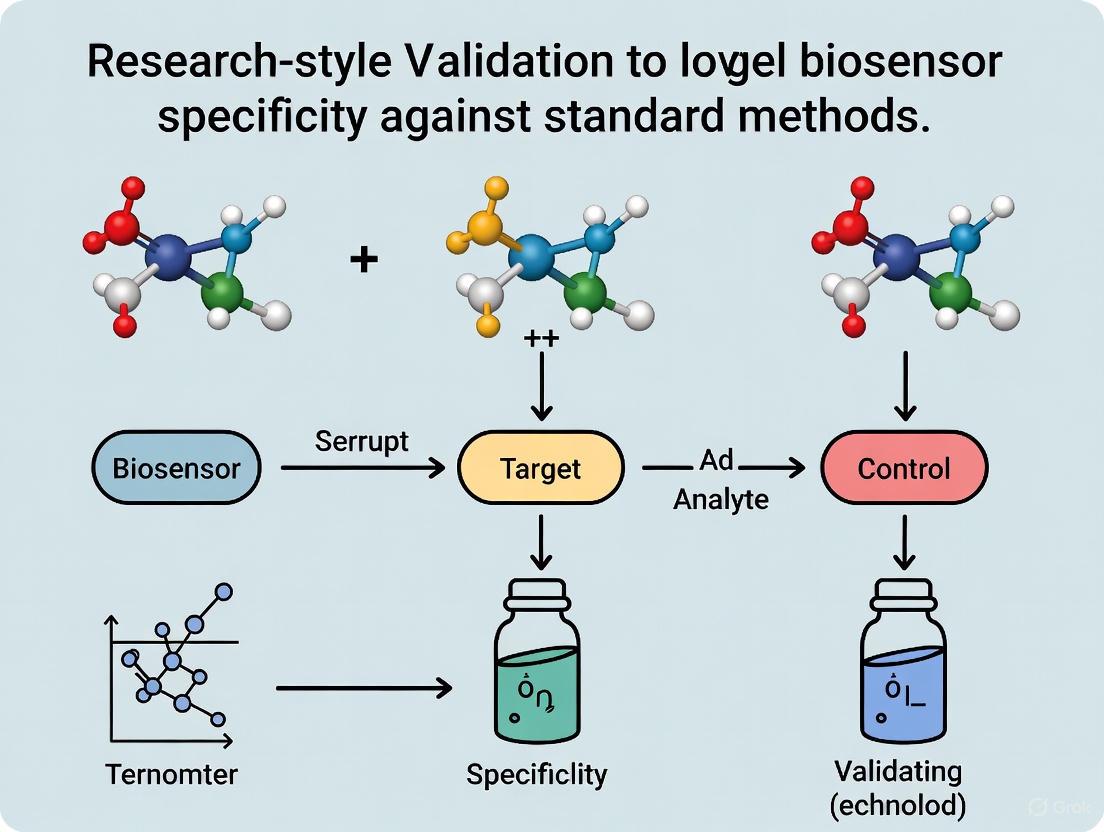
Validating Biosensor Specificity: Protocols, Challenges, and Future Directions Against Gold Standard Methods
This article provides a comprehensive guide for researchers and drug development professionals on validating the specificity of biosensors against established gold standard methods like ELISA and HPLC.
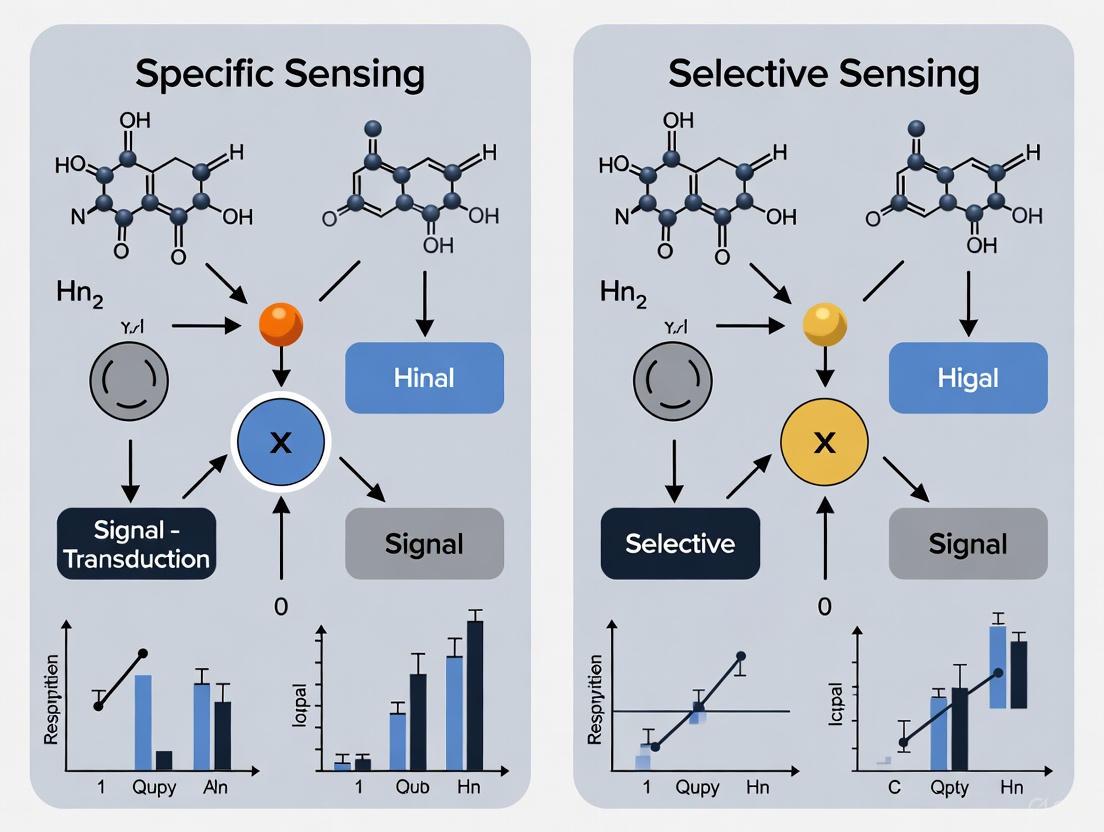
Specific vs. Selective Sensing: A Strategic Guide for Enhanced Drug Discovery and Development
This article provides a comprehensive comparison of specific and selective sensing approaches, crucial for researchers and professionals in drug development.
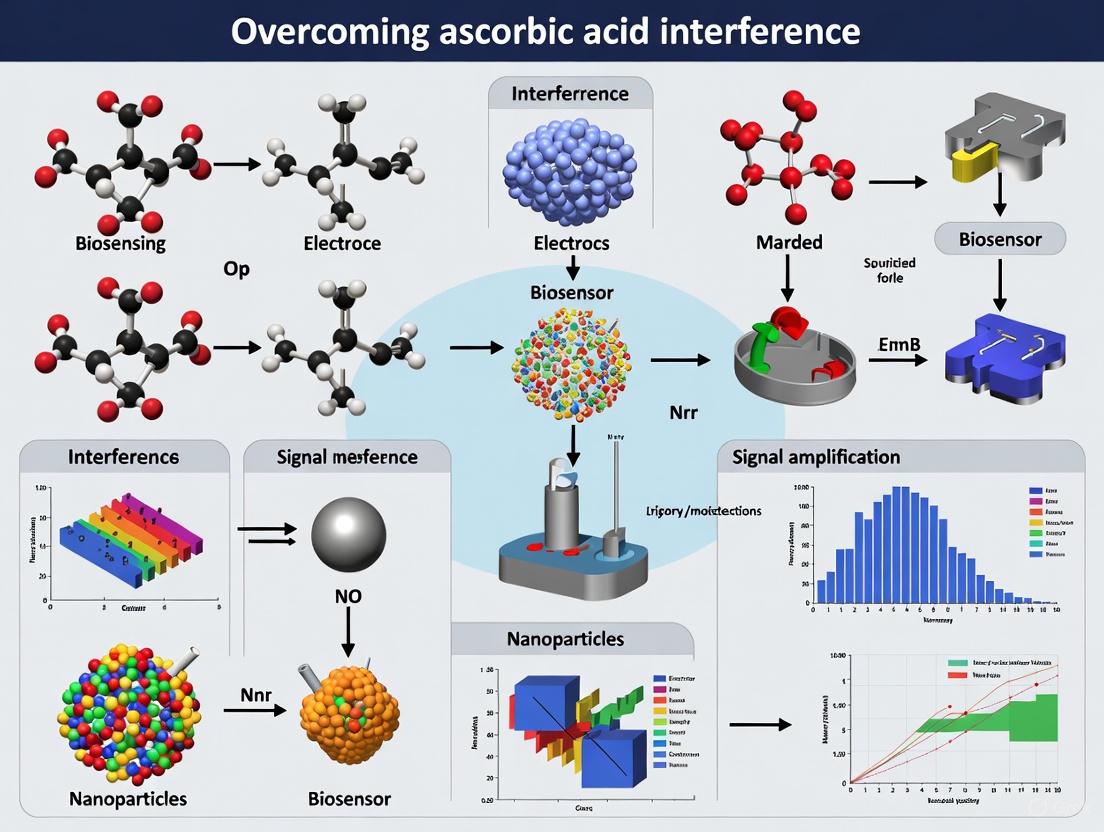
Strategies for Overcoming Ascorbic Acid Interference in Electrochemical Biosensing: From Mechanism to Application
This article provides a comprehensive analysis of ascorbic acid (AA) interference in biosensing, a critical challenge for researchers and drug development professionals working with electrochemical detection systems.
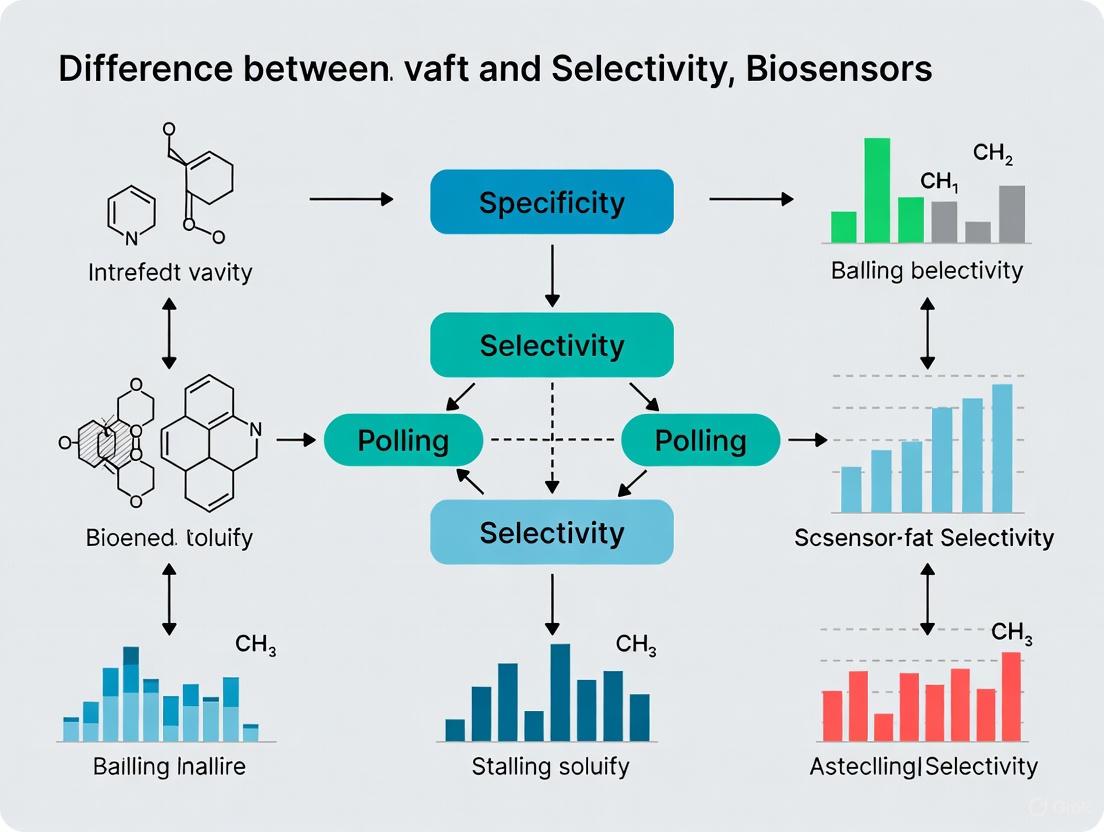
Specificity vs. Selectivity in Biosensors: A Foundational Guide for Research and Diagnostics
This article provides a comprehensive analysis of the critical yet often conflated concepts of specificity and selectivity in biosensors, tailored for researchers, scientists, and drug development professionals.
Machine Learning for Electrochemical Biosensor Drift Compensation: Algorithm Comparison and Implementation Strategies
This article provides a comprehensive comparison of drift compensation algorithms for electrochemical biosensors, addressing a critical challenge that limits their reliability in research and clinical applications.

Advanced Drift Correction Circuits for Urea Biosensors: A Comparative Analysis of Performance and Applications
Signal drift is a critical non-ideal effect that compromises the long-term accuracy and reliability of urea biosensors, particularly in clinical and research settings.